See whether Helium helps you make better-informed decisions. Try every Pro Trader feature for 30 days. No credit card required.
Try every Pro Trader feature for 30 days. No credit card required.
October 16, 2026 · 0 shares
The framing is a light, source-attributed tech-support anecdote with mildly mocking editorial asides about staff resistance to password security.
Automated analysis; not human reviewed. Limitations: The supplied text contains duplicated article blocks and many unrelated related-link headlines; analysis was limited to the central On Call anecdote. · 6 of 55 available dimensions scored; omitted dimensions are not treated as neutral. · Verified supporting quotes for 4 of 6 scored dimensions.
Claim: The anecdote is framed with humorous editorial asides and subjective characterizations rather than strictly neutral narration.
“It gets worse: the password was "letmein" and the data manager had written it on a piece of paper and taped to her desk.” · not found in supplied text
“her beloved password” · exact text match
Why: The phrase 'It gets worse' and 'beloved password' are evaluative, mocking asides that color the account subjectively.
Claim: The anecdote is selected and presented for its unusual, darkly comic workplace detail.
“It gets worse: the password was "letmein" and the data manager had written it on a piece of paper and taped to her desk.” · not found in supplied text
Why: The absurd password detail is the centerpiece of the column's humorous appeal.
Claim: The item is predominantly descriptive narrative rather than an explicit policy prescription.
“Daniel took the vacant job and in his first week the school principal asked him to audit the network and deliver a report explaining how to get things up to scratch.” · exact text match
Why: The article recounts events and actions without overtly prescribing broader rules.
Claim: The report is transparently a pseudonymized reader anecdote with direct quotations but no independent verification.
“Daniel told On Call” · exact text match
Counterevidence:
“a reader we'll Regomize as "Daniel"” · not found in supplied text
Why: Attribution to a named source and quoted account supports credibility, while pseudonymization and single-source anecdote limit it.
Claim: The article's framing treats the old password setup as a clear security deficiency and Daniel's corrective policy as the rational course.
“I found a few quick wins, including the password policy which at the time was set to six letters. Just that, no complexity, no expiry,” · exact text match
Why: Selecting this detail and labeling it a 'quick win' frames the issue in security-rational terms.
Claim: The narrative is clear and coherent, with specific causal and recovery details.
“The school eventually hired external contractors to rebuild the network and restore from the only available backup, which was months old.” · exact text match
Why: The account lays out chronology and technical context in a straightforward way.
The supplied text contains duplicated article blocks and many unrelated related-link headlines; analysis was limited to the central On Call anecdote.
October 09, 2026 · 0 shares
Frames the promoted colleague as broadly incompetent and portrays the resulting support burden as a recurring workplace nuisance, while supplying only one side of the story.
On Call is The Register's reader-contributed Friday column featuring anonymous IT support war stories, often submitted via a solicitation for readers' own accounts.
Automated analysis; not human reviewed. Limitations: The account rests entirely on one anonymous reader's recollection; the promoted colleague's side is not reported, so framing judgments are constrained. · 55 of 55 available dimensions scored; omitted dimensions are not treated as neutral. · Verified supporting quotes for 0 of 55 scored dimensions.
The account rests entirely on one anonymous reader's recollection; the promoted colleague's side is not reported, so framing judgments are constrained.
October 05, 2026 · 0 shares
A procurement mix-up is framed as an amusing reader-contributed 'tale' with ironic consequences, emphasizing absurdity over systemic analysis.
In procurement, 'partial delivery' is an option that lets a supplier ship part of an order and send the rest later.
Automated analysis; not human reviewed. Limitations: The supplied text mixes the target anecdote with unrelated headlines and page elements; analysis was limited to the contiguous 'Who, Me?' story. · 2 of 55 available dimensions scored; omitted dimensions are not treated as neutral. · Verified supporting quotes for 2 of 2 scored dimensions.
Claim: The piece presents a reader's first-person story with humorous, interpretive language rather than detached, neutral reporting.
“you share your tales of the occasions on which you didn’t quite nail the brief yet somehow found career relief” · exact text match
“after admitting he thought sending one meter of cable was a jolly jape” · exact text match
Why: The column frame explicitly labels the content as shared 'tales' and uses playful, judgement-laden wording such as 'jolly jape,' indicating a subjective storytelling stance.
Claim: The article is transparently anecdotal, naming its source as a pseudonymous reader and directly quoting him.
“This week, meet a reader we’ll Regomize as “Terry” who told us that in the 1970s he worked for a defense-related company.” · exact text match
““I did not think it was a joke at the time,” Terry wrote.” · exact text match
Why: Visible attribution to a named-in-text pseudonymous source and direct quotes support moderate credibility, but independent verification is absent.
The supplied text mixes the target anecdote with unrelated headlines and page elements; analysis was limited to the contiguous 'Who, Me?' story.
October 15, 2026 · 0 shares
Framing is anecdotal and sarcastic, relying on a single former Air Force IT security source's recollection and loaded language to emphasize a security lapse.
Automated analysis; not human reviewed. Limitations: The supplied text includes duplicated article text and unrelated page links; only the substantive column was assessed. · 7 of 55 available dimensions scored; omitted dimensions are not treated as neutral. · Verified supporting quotes for 7 of 7 scored dimensions.
Claim: The column uses first-person editorial voice and subjective commentary.
“Welcome, once again, to PWNED, the weekly column where we gawk at organizations that have made serious security mistakes.” · exact text match
“The term military intelligence seems like an oxymoron in this case” · exact text match
Why: First-person 'we' and a mocking aside are subjective framing.
Claim: The article dramatizes the incident with hyperbolic and loaded phrasing.
“a serious IT screwup in the world’s most powerful military” · exact text match
“a recipe for disaster” · exact text match
Why: Superlative and dramatic metaphors heighten the story's impact.
Claim: The article includes direct evaluative ridicule.
“The term military intelligence seems like an oxymoron in this case” · exact text match
Why: Ridicule is an opinion rather than neutral reporting.
Claim: The article asserts adversaries proactively sold infected USB drives to local vendors without attributing that claim.
“Unfortunately, enemies of the US noticed and soon started selling infected USB drives to local vendors in the Middle East.” · exact text match
Why: This factual assertion is presented without hedging or attribution beyond the narrative.
Claim: The tone is mocking and negative toward military intelligence and security practices.
“The term military intelligence seems like an oxymoron in this case” · exact text match
“using a sneakernet with classified systems was a recipe for disaster” · exact text match
Why: Derisive and alarming language conveys a negative emotional stance.
Claim: The article names its source and cites an official report, but the central anecdote rests on one former official's recollection.
“Today’s tale comes from Justin Henkel, the CISO of IT monitoring and service company SolarWinds.” · exact text match
“A 2016 report from the FBI and DHS attributed the malware to one or more Russian groups.” · exact text match
Why: Named sourcing and official attribution support credibility; single-source anecdote limits it.
Claim: The article provides concrete technical and historical context for the anecdote.
“In 2008, the US Department of Defense was infected by malware after somebody attached an infected USB flash drive to a laptop with access to US Central Command.” · exact text match
“It took the Pentagon 14 months to scrub it from its systems.” · exact text match
Why: Specific dates, agencies, and outcomes support an above-average intelligence judgment.
The supplied text includes duplicated article text and unrelated page links; only the substantive column was assessed.
October 14, 2026 · 0 shares
Playful, pun-laden framing ('judgment day', 'time lords', 'horological harmony') overlays a factually dense, expert-attributed report that presents ending leap seconds as a centuries-long stability improvement while preserving astronomy and navigation caveats.
The vote occurs at the General Conference on Weights and Measures, the international body that sets global measurement standards.
Automated analysis; not human reviewed. Limitations: The supplied text is a fragmented snippet feed without a byline: paragraph and quote boundaries are ambiguous and unrelated sidebar headlines are interleaved, limiting completeness and attribution checks. · 12 of 55 available dimensions scored; omitted dimensions are not treated as neutral. · Verified supporting quotes for 12 of 12 scored dimensions.
Claim: The body reports verifiable facts and quoted experts, with subjectivity confined to wordplay.
“The proposal would increase the permitted difference between UTC and UT1 from 0.9 seconds to one hour, avoiding leap-second adjustments for centuries.” · exact text match
Why: Specific figures, dates, and named attribution dominate; the puns add voice without substituting for facts.
Claim: Headline language is dramatically playful while the body stays restrained.
“Leap seconds face judgment day as time lords prepare to vote” · exact text match
Counterevidence:
“Since 1972, 27 leap seconds have been added to Coordinated Universal Time (UTC) to keep it in step with the astronomical time scale UT1, which is based on Earth's fluctuating rotation.” · exact text match
Why: The 'judgment day' and 'time lords' phrasing is theatrical, but the substance is dry and factual, yielding a mild objective lean.
Claim: Framing tilts mildly toward the change as beneficial and risk-reducing.
“sparing computer systems awkward adjustments for centuries” · exact text match
Counterevidence:
“That could pose problems for computer systems designed to handle added seconds but not removed ones.” · exact text match
Why: Benefit-first subheads and continuity language outweigh, without erasing, the acknowledged negative-leap-second risks.
Claim: A niche metrology vote is rendered engaging through wit and concrete stakes.
“It's about time: the General Conference on Weights and Measures looks set to end leap seconds in an effort to reach horological harmony.” · exact text match
Why: Punny dek, an unusual standards story, and real-world stakes such as grid and network failures make the piece notably readable.
Claim: The report conveys stakeholder positions and expected outcomes rather than advocating a course.
“Many national bodies support the proposal, which is expected to pass.” · exact text match
Why: Support and passage are reported as others' positions and forecasts, not editorial endorsements.
Claim: Light teasing of metrology officialdom is balanced by deference to institutional consensus and named experts.
“Leap seconds face judgment day as time lords prepare to vote” · exact text match
“Many national bodies support the proposal, which is expected to pass.” · exact text match
Why: The 'time lords' quip pokes at the standards establishment while the body reports national-body support and cites its scientists, netting to balance.
Claim: Sourcing, dates, figures, and hedged forecasts support trustworthiness within the supplied text.
“Experts have estimated a 30 percent probability that global systems will need a negative leap second by 2035 to keep the two time measures in step.” · exact text match
“If approved, the change would take effect on May 20, 2027.” · exact text match
Why: Attributed estimates, a named institutional expert, and precise dates with hedged predictions reflect sound sourcing practice.
Claim: The report grounds its case in quantified, attributed analysis rather than assertion.
“Experts have estimated a 30 percent probability that global systems will need a negative leap second by 2035 to keep the two time measures in step.” · exact text match
Why: A hedged, attributed probability estimate alongside precise historical and technical facts shows measured, evidence-based reasoning.
Claim: The content is grounded in empirical metrology rather than superstition.
“Since 1972, 27 leap seconds have been added to Coordinated Universal Time (UTC) to keep it in step with the astronomical time scale UT1, which is based on Earth's fluctuating rotation.” · exact text match
Why: Explanation of Earth-rotation timekeeping and measured probabilities places the report firmly on the scientific end.
Claim: Forward-looking projections appear but are attributed and hedged.
“Experts have estimated a 30 percent probability that global systems will need a negative leap second by 2035 to keep the two time measures in step.” · exact text match
“Many national bodies support the proposal, which is expected to pass.” · exact text match
Why: The 2035 probability and the passage forecast concern future events, though both are framed as estimates or expectations rather than certainties.
Claim: Key claims are attributed, including a named expert and the concerns of affected user communities.
“Setnam Shemar, principal scientist at the UK's National Physical Laboratory, said the proposal would avoid the risks associated with leap seconds for centuries.” · exact text match
“The decision would not sever that link: UT1 will continue to be monitored, and its difference from UTC will continue to be disseminated through established international services.” · exact text match
Why: Naming the expert with affiliation and preserving the astronomy/navigation caveat shows fair, honest handling of the change's tradeoffs.
Claim: The report compresses a technical standards change into an accurate, well-contextualized account.
“The proposal would increase the permitted difference between UTC and UT1 from 0.9 seconds to one hour, avoiding leap-second adjustments for centuries.” · exact text match
Why: It conveys the mechanism, the rationale, the 2035 risk, and the astronomy caveat concisely and correctly.
The supplied text is a fragmented snippet feed without a byline: paragraph and quote boundaries are ambiguous and unrelated sidebar headlines are interleaved, limiting completeness and attribution checks.
October 15, 2026 · 0 shares
Playful British tech-slang framing ('bobbing bit barns,' 'fab four') accompanies a measured, attribution-heavy report that notes practical hurdles and unanswered questions.
Automated analysis; not human reviewed. Limitations: The supplied text includes unrelated sidebar headlines and no publication date, so temporal references such as 'this year' cannot be anchored; analysis is limited to the main floating-datacenter item. · 15 of 55 available dimensions scored; omitted dimensions are not treated as neutral. · Verified supporting quotes for 15 of 15 scored dimensions.
Claim: Playful slang and figurative labels add mild subjective color to factual reporting.
“bobbing bit barns” · exact text match
“fab four” · exact text match
Why: The publisher uses informal, figurative word choices alongside factual content.
Claim: The tone is unsensational and measured despite playful phrasing.
“However, the fab four acknowledge that offshore deployments still face practical hurdles, including maintenance access, high-capacity telecoms links, and independent power supplies.” · exact text match
Why: It foregrounds practical hurdles rather than hyping the project.
Claim: The floating-datacenter concept and playful phrasing make the report moderately engaging.
“A Japanese consortium wants to ease the datacenter space crunch by putting servers afloat – but keeping them moored safely alongside port quays.” · exact text match
Why: A novel infrastructure concept is presented with distinctive phrasing.
Claim: The report describes the consortium's plans and roles rather than prescribing action.
“NYK Line will oversee development, NTT Facilities will assess the designs, construction, and operation.” · exact text match
Why: The role assignments are descriptive reporting, not advocacy.
Claim: The framing is mostly factual with light evaluative phrasing.
“The four may find they face competition in the floating compute farm stakes.” · exact text match
Why: There is mild speculation/evaluation, but the item remains largely factual.
Claim: The report includes practical constraints rather than simplifying the plan as a straightforward solution.
“However, the fab four acknowledge that offshore deployments still face practical hurdles, including maintenance access, high-capacity telecoms links, and independent power supplies.” · exact text match
Why: It notes technical and operational complications that qualify the plan.
Claim: The report discloses that it sought comment and received no response by publication.
“We asked the consortium what capacity it expects the facilities to have, and when it anticipates these might be operational, but hadn't received a response at time of publication.” · exact text match
Why: It explicitly covers the status of its request for response.
Claim: Claims are attributed and uncertainty is noted.
“the consortium reckons bobbing bit barns could help meet growing compute demand without competing for scarce development land” · exact text match
“hadn't received a response at time of publication” · exact text match
Why: The report attributes expectations and discloses missing information rather than asserting certainty.
Claim: Strong attribution and explicit disclosure of missing information support credibility.
“We asked the consortium what capacity it expects the facilities to have, and when it anticipates these might be operational, but hadn't received a response at time of publication.” · exact text match
Why: Visible sourcing behavior and acknowledgment of missing comment support trustworthiness.
Claim: The report is measured and rational, acknowledging obstacles and unanswered questions.
“However, the fab four acknowledge that offshore deployments still face practical hurdles, including maintenance access, high-capacity telecoms links, and independent power supplies.” · exact text match
“We asked the consortium what capacity it expects the facilities to have, and when it anticipates these might be operational, but hadn't received a response at time of publication.” · exact text match
Why: It explicitly notes practical constraints and missing information rather than presenting the plan uncritically.
Claim: The report emphasizes engineering and infrastructure constraints rather than superstition.
“However, the fab four acknowledge that offshore deployments still face practical hurdles, including maintenance access, high-capacity telecoms links, and independent power supplies.” · exact text match
Why: It relies on technical, empirical considerations such as maintenance and connectivity.
Claim: The report centers on future plans and forecasts, though it labels them as expectations.
“Samsung Heavy Industries plans to dip a toe in, saying it expects to have its first facility operational by the second calendar quarter of 2028.” · exact text match
Why: The article is substantially about planned and expected future deployments.
Claim: Distinctive British tech-slang and idiomatic phrasing indicate human authorship.
“bobbing bit barns” · exact text match
“fab four” · exact text match
Why: The informal, publication-specific wordplay is more consistent with human-authored tech journalism than generic AI prose.
Claim: The report openly notes unanswered questions and practical hurdles.
“We asked the consortium what capacity it expects the facilities to have, and when it anticipates these might be operational, but hadn't received a response at time of publication.” · exact text match
Why: Disclosing a non-response and limitations is a fairness and honesty signal.
Claim: The report integrates technical, commercial, and competitive context.
“NYK Line will oversee development, NTT Facilities will assess the designs, construction, and operation.” · exact text match
“Samsung Heavy Industries plans to dip a toe in, saying it expects to have its first facility operational by the second calendar quarter of 2028.” · exact text match
Why: It outlines roles and competitor plans, adding context beyond the basic announcement.
The supplied text includes unrelated sidebar headlines and no publication date, so temporal references such as 'this year' cannot be anchored; analysis is limited to the main floating-datacenter item.
October 08, 2026 · 0 shares
The framing is skeptical and mocking of Anthropic's self-interested security initiative, emphasizing the irony that it addresses vulnerabilities its own AI helped expose.
Project Glasswing is an Anthropic project whose exposed software vulnerabilities the new Cyber Mission aims to help patch.
Automated analysis; not human reviewed. Limitations: The snippet contains duplicated text and navigation links, so bias scoring relies on the main substantive passage only. · 10 of 55 available dimensions scored; omitted dimensions are not treated as neutral. · Verified supporting quotes for 8 of 10 scored dimensions.
Claim: The article foregrounds the writer's skeptical interpretation of Anthropic's motives.
“If that sounds like a careless camper starting a wildfire and later funding a fire department, well, that's one way of looking at it.” · exact text match
Why: The sardonic framing presents a subjective judgment about the company's conduct.
Claim: The article uses colorful, ironic language and imagery to frame Anthropic's initiative sensationally.
“If that sounds like a careless camper starting a wildfire and later funding a fire department, well, that's one way of looking at it.” · exact text match
“Under a program name that sounds like a forthcoming Tom Cruise film – "Anthropic Cyber Mission" – the Claudefather is directing its effort into two areas.” · exact text match
Why: Vivid metaphors and mocking phrasing emphasize drama over neutral description.
Claim: The article leans slightly pessimistic by stressing attackers' near-term advantage and prior AI misbehavior.
“Anthropic says for the next two years, attackers will have the advantage” · exact text match
“But until then, attackers have the upper hand.” · exact text match
Why: Repeated emphasis on attackers' advantage creates a cautious, slightly negative outlook.
Claim: The article uses vivid metaphors and concrete details that make the topic engaging.
“Under a program name that sounds like a forthcoming Tom Cruise film – "Anthropic Cyber Mission" – the Claudefather is directing its effort into two areas.” · exact text match
Why: Humorous and specific language raises reader interest.
Claim: The article asserts a specific two-year prediction and incident figures with little hedging.
“The AI biz predicts that in two years, defenders will have the advantage because AI will catch bugs before they ship.” · exact text match
“at least 20 organizations (and maybe over 100)” · exact text match
Why: Predictive and approximated claims are presented with limited uncertainty qualifiers.
Claim: The article presents an ironic, mildly critical view of Anthropic's corporate initiative.
“If that sounds like a careless camper starting a wildfire and later funding a fire department, well, that's one way of looking at it.” · exact text match
Why: The skeptical framing suggests a slightly anti-corporate tone without outright hostility.
Claim: The article includes attributable facts and quotes from Anthropic's blog while noting self-interested context.
“"Defenders of critical infrastructure and the OSS community have decades of security experience but have faced severe resource shortages that are exacerbated by this moment," Anthropic said in a blog post.” · exact text match
“Anthropic's moment of generosity comes after recent incidents that saw frontier models break into at least 20 organizations (and maybe over 100), most notably HuggingFace.” · exact text match
Why: Attribution and contextual caveats show fair, honest signal handling.
Claim: The piece synthesizes technical, corporate, and policy context with clear explanations.
“The program combines the company's priciest models with on-site engineers – sometimes now referred to as forward deployed engineers – because despite the sophistication of AI coding agents, human security experts are still useful” · exact text match
“LLMs, the company said, now find more than 85 percent of vulnerabilities, up from 20 percent at the start of 2025.” · exact text match
Why: The article conveys complex AI security concepts and quantitative claims intelligibly.
The snippet contains duplicated text and navigation links, so bias scoring relies on the main substantive passage only.
October 08, 2026 · 0 shares
Presents AI-enabled phishing as an escalating catastrophic threat while pivoting to promotional endorsement of a specific vendor's GenAI security product.
Phishing has been a cybercrime method since the mid-1990s, but Generative AI has recently enabled attackers to automate highly polished and targeted campaigns at scale while defenders face cost and complexity constraints.
Automated analysis; not human reviewed. Limitations: Source is partner content with unclear distinction between editorial and promotional material, limiting bias assessment. · 55 of 55 available dimensions scored; omitted dimensions are not treated as neutral. · Verified supporting quotes for 5 of 55 scored dimensions.
Claim: Threat is described with sensational terms like 'lethal precision instrument'.
“transforming phishing from a widespread but easily identifiable nuisance into a lethal precision instrument” · exact text match
Why: Sensational metaphor heightens the perceived danger.
Claim: The article uses alarming language about rising phishing threats.
“Phishing is mutating in alarming new ways” · exact text match
Why: Alarming language amplifies fear about cyber threats.
Claim: Claims rely heavily on quotes from a Kaseya executive.
““Thanks to AI, the historic signals that exposed a phishing email – poor grammar, misspelt words – are now ironed out and replaced with perfect language,” notes Dave Baggett, SVP Cybersecurity with software developer Kaseya.” · exact text match
Why: Multiple quotes from Baggett lend authority to the narrative.
Claim: The article promotes Kaseya's security products and summit.
“Find out more at Kaseya’s Cybersecurity Summit – details here” · exact text match
Why: Direct promotional call to action indicates high advertising bias.
Claim: The article frames cybersecurity solutions from a corporate vendor perspective.
“INKY Smart Insights, for example, uses GenAI to reduce a lengthy manual email investigation to a few seconds of automated triage.” · exact text match
Why: Prominent mention of specific corporate products suggests pro-corporate bias.
Source is partner content with unclear distinction between editorial and promotional material, limiting bias assessment.
October 09, 2026 · 0 shares
Sponsored content that adopts the vendor Origina's framing without independent verification, presenting its budget and vulnerability statistics and advocacy as established fact.
Sponsored content labeled 'SPONSORED POST' promoting Origina, an independent software maintenance and support provider, and its OPTAS service.
Automated analysis; not human reviewed. Limitations: Content is explicitly sponsored promotional material, so framing is inherently advertiser-aligned and may not reflect independent editorial judgment. · 2 of 55 available dimensions scored; omitted dimensions are not treated as neutral. · Verified supporting quotes for 1 of 2 scored dimensions.
Claim: The piece is a sponsored promotional post for Origina that reads as marketing copy for its services.
“SPONSORED POST: Vendor roadmaps set the pace of change in most enterprise software estates. Origina argues the business should.” · exact text match
“Explore your options: find out how Origina supports VMware and SAP on your timetable, and how OPTAS protects the estate in between.” · verified after text normalization
Why: Explicit sponsorship label plus a call to action promoting Origina's services strongly indicate advertorial/promotional framing.
Content is explicitly sponsored promotional material, so framing is inherently advertiser-aligned and may not reflect independent editorial judgment.
A disclosed sponsored feature frames Barco endpoint-monitoring and AI telemetry as an unqualified fix for meeting-room failures, relying on a vendor executive's positive claims.
Automated analysis; not human reviewed. Limitations: The primary input is a disclosed sponsored feature sourced almost entirely from a vendor executive, so product claims cannot be independently verified. · 6 of 55 available dimensions scored; omitted dimensions are not treated as neutral. · Verified supporting quotes for 6 of 6 scored dimensions.
Claim: The feature states evaluative vendor judgments as settled conclusions.
“The upshot is that many meeting rooms have transformed into fluid, digitized, data-enabled hubs.” · exact text match
“The real value of the technology is that it reduces user friction while improving outcomes.” · exact text match
Why: It presents subjective business and product judgments as direct assertions rather than as contested or contingent claims.
Claim: The feature is uniformly positive about endpoint telemetry and AI, omitting drawbacks or tradeoffs.
“Telemetry changes meeting room management from a reactive discipline into a proactive one.” · exact text match
“The real value of the technology is that it reduces user friction while improving outcomes.” · exact text match
Why: The framing emphasizes benefits and improvements without discussing costs, failure modes, or risks.
Claim: The feature asserts that the vendor's monitoring technology will deliver the promised benefits without empirical support.
“Endpoint monitoring technology, such as ClickShare's XMS Cloud Management Platform, changes that picture.” · exact text match
“When IT has better visibility and control, employees get more reliable rooms, IT teams reduce support overhead, and the business can make smarter decisions about workplace design, technology standardization, and future upgrades.” · exact text match
Why: These are causal, outcome-oriented statements expressed as certainties about a specific product, but the article provides no data, independent validation, or qualification.
Claim: The content is explicitly labeled sponsored and functions as promotional fluff rather than reporting.
“SPONSORED: From reactive to proactive: How endpoint monitoring is fixing broken meeting rooms” · exact text match
“SPONSORED FEATURE: Cloud-based telemetry is turning meeting rooms into managed endpoints, letting IT teams anticipate failures rather than scramble once users complain” · exact text match
Why: The repeated 'SPONSORED' labeling and the promotional headline are direct indicators of advertising/fluff content.
Claim: The supplied text is a sponsored feature promoting Barco's ClickShare and XMS Cloud Management Platform.
“SPONSORED FEATURE: Cloud-based telemetry is turning meeting rooms into managed endpoints, letting IT teams anticipate failures rather than scramble once users complain” · exact text match
“Endpoint monitoring technology, such as ClickShare's XMS Cloud Management Platform, changes that picture.” · exact text match
Why: The feature is explicitly labeled sponsored and repeatedly names a vendor product as the solution, so it is promotional rather than independent editorial.
Claim: The feature presents Barco's brand and platform favorably throughout and relies on Barco's marketing director as the main source.
“Cameras, microphones, and wireless conferencing, collaboration and presentation tools, such as ClickShare can now connect to enterprise networks.” · exact text match
“Endpoint monitoring technology, such as ClickShare's XMS Cloud Management Platform, changes that picture.” · exact text match
Why: The text repeatedly names Barco's products as the enabling technology and uses a company executive's quotes to advance that view.
The primary input is a disclosed sponsored feature sourced almost entirely from a vendor executive, so product claims cannot be independently verified.
October 14, 2026 · 0 shares
Technical, attributed reporting that distinguishes vendor advisories, researcher assessments, and unresolved evidence limits.
Connect Secure is an enterprise remote-access appliance; compromise of such systems can provide attackers a foothold for lateral movement into corporate networks.
Automated analysis; not human reviewed. Limitations: The supplied text duplicates main paragraphs and appends unrelated related-link headlines; ratings focus on the main Ivanti report. · 8 of 55 available dimensions scored; omitted dimensions are not treated as neutral. · Verified supporting quotes for 7 of 8 scored dimensions.
Claim: Assessments are attributed to Volexity and the vendor rather than presented as the publisher's subjective interpretation.
“Criminal motive rather than espionage is suspected by Volexity.” · exact text match
Why: Motives and assessments are explicitly attributed, preserving objectivity.
Claim: The report uses measured language and acknowledges limited evidence rather than hyping the incident.
“There are limited indicators of compromise available at present” · exact text match
“"Because the operation was detected and disrupted, the threat actor's ultimate objectives could not be determined," said Volexity.” · not found in supplied text
Why: It highlights evidentiary limits and avoids alarmist claims.
Claim: The report provides specific sourcing including CVE identifier, CVSS score, named research firm, and vendor advisory.
“On Tuesday, Ivanti released updates for Connect Secure (ICS) to fix CVE-2026-104935, an authentication bypass flaw discovered by Volexity.” · exact text match
“Rated 8.6 on the CVSS scale, it allows remote, unauthenticated attackers to execute arbitrary commands.” · exact text match
Why: Specific identifiers and named sources make the account verifiable and credible.
Claim: The report separates the single disclosed CVE from a three-vulnerability attack chain and distinguishes patched stages from a separate unpatched flaw.
“Ivanti disclosed one CVE, but Volexity described an attack chain involving three vulnerabilities.” · exact text match
“The third vulnerability, which allows privilege escalation, is separate from the flaws encompassed by CVE-2026-104935.” · exact text match
Why: This distinction shows structured, evidence-bound technical reasoning rather than conflation.
Claim: The report relies on technical scoring and empirical observation rather than superstition.
“Rated 8.6 on the CVSS scale, it allows remote, unauthenticated attackers to execute arbitrary commands.” · exact text match
“Based on observed post-exploitation activity, attackers appeared to be most interested in using their newfound access for credential theft, data exfiltration, log tampering, and network reconnaissance.” · exact text match
Why: Technical metrics and observed activity ground the report in empirical evidence.
Claim: A speculative researcher suspicion about LLM use is reported as suspicion, not established fact.
“The researchers also suspect that the attackers were using large language models to support their endeavors.” · exact text match
Why: The article includes a forecast-like inference but explicitly frames it as suspicion.
Claim: The article discloses vendor and researcher claims with attribution and notes limits in available evidence.
“"We are aware of exploitation in the wild affecting a limited number of customers at the time of disclosure," the vendor said in its advisory.” · exact text match
“There are limited indicators of compromise available at present” · exact text match
Why: Clear attribution and acknowledged evidence gaps indicate fair, honest reporting.
Claim: The report handles technical distinctions and uncertainty with enough detail to support expert interpretation.
“The third vulnerability, which allows privilege escalation, is separate from the flaws encompassed by CVE-2026-104935.” · exact text match
Why: It accurately distinguishes separate vulnerabilities and limits of inference.
The supplied text duplicates main paragraphs and appends unrelated related-link headlines; ratings focus on the main Ivanti report.
October 14, 2026 · 0 shares
Automated analysis; not human reviewed. Limitations: The supplied text contains duplicated scrape artifacts and no byline; assessment is based on the visible article content. · 55 of 55 available dimensions scored; omitted dimensions are not treated as neutral. · Verified supporting quotes for 9 of 55 scored dimensions.
Claim: The headline and lede use colloquial security slang that adds sensational color to otherwise technical reporting.
“Cisco make-me-root email bug exploited as a 0-day by unknown crims.” · exact text match
Why: The phrase 'make-me-root' and 'crims' is attention-grabbing but limited to framing, so the bias is mild.
Claim: The report primarily describes the vulnerability and reports vendor/CISA remediation steps rather than issuing its own prescriptions.
“Cisco's Wednesday advisory includes steps organizations can take to determine whether File Reputation is enabled and which Content Scanner Tools version is installed - so give that a read if you are unsure.” · exact text match
“The vendor recommends any customers who are running Cisco AsyncOS Software releases earlier than v 16.5 migrate to 16.5.0-780.” · exact text match
Why: Remediation language is mostly attributed to Cisco, with only mild informal advice.
Claim: The report uses critical and active-exploitation language but does not employ alarmist or rage-bait framing.
“Cisco “strongly” implored customers to patch yet another critical, make-me-root vulnerability in its Secure Email Gateway (SEG), one that has already been exploited in zero-day attacks.” · exact text match
Why: The language conveys urgency but remains tied to the technical advisory.
Claim: The report includes Cisco's response and explicitly notes declined questions.
“A Cisco spokesperson told that the critical vuln, which received a 9.8 out of 10 CVSS rating, affects “a limited number of customers.”” · verified after text normalization
“but declined to answer our questions about how many appliances had been compromised” · exact text match
Why: Including the vendor's statement and its refusals supports a high covering-the-response score.
Claim: The report attributes claims to Cisco, a named CVE, CVSS score, and CISA's catalog while noting unanswered questions.
“The bug, now tracked as CVE‑2026‑76519, allows remote, unauthenticated attackers to write files and execute commands with root privileges on the appliance’s operating system - simply by sending a malicious email.” · exact text match
““We are aware of active exploitation of this vulnerability,” the spokesperson said, but declined to answer our questions about how many appliances had been compromised, and what attackers were doing with this access after exploiting the bug.” · exact text match
Why: Specific identifiers, official sourcing, and noted limitations support high credibility.
Claim: The report explains the exploit mechanism and affected configurations in a stepwise technical manner.
“The flaw exists in SEG’s Advanced Malware Protection (AMP) feature, and it’s due to improper handling of email attachments.” · exact text match
“The File Reputation service, which is part of Cisco AMP, is enabled and assigned to a mail policy.” · exact text match
Why: Detailed causal and configuration explanation supports a rational classification.
Claim: The report relies on empirical vulnerability scoring, technical conditions, and vendor advisories rather than superstition.
“which received a 9.8 out of 10 CVSS rating” · exact text match
“The Content Scanner Tools version is earlier than 25.3.0.5525.” · exact text match
Why: Use of CVSS scoring and version-specific conditions supports a scientific/empirical classification.
Claim: The report discloses Cisco's refusal to answer key questions and relies on identifiable official sources.
““We are aware of active exploitation of this vulnerability,” the spokesperson said, but declined to answer our questions about how many appliances had been compromised, and what attackers were doing with this access after exploiting the bug.” · exact text match
Why: Explicitly noting unanswered questions supports a high-integrity classification.
Claim: Technical detail on the CVE, CVSS, affected conditions, and mitigations supports a high-information assessment.
“This vulnerability affects both physical and virtual SEG appliances running a vulnerable release of Cisco AsyncOS Software if both of the following conditions are met:” · exact text match
“Upgrading to a fixed Cisco AsyncOS Software release will patch the security hole, and there are no workarounds.” · exact text match
Why: Specific configuration and mitigation details indicate high article intelligence.
The supplied text contains duplicated scrape artifacts and no byline; assessment is based on the visible article content.
The report frames the French supermarket hacks as a foreseeable OT-security failure, emphasizing the warning-to-exploitation timeline and remaining internet exposure while attributing claims to regulators, researchers, insurers, and vendors.
Refrigeration controllers are operational-technology devices used in supermarket cooling systems; if exposed to the internet, their admin panels can be entry points for remote attackers.
Automated analysis; not human reviewed. Limitations: The supplied text includes many unrelated headline fragments after the main article; analysis is limited to the refrigeration-controller cyberattack report. · 14 of 55 available dimensions scored; omitted dimensions are not treated as neutral. · Verified supporting quotes for 14 of 14 scored dimensions.
Claim: The report distinguishes exposure from confirmed vulnerability and attributes claims to named sources.
“To be clear: this doesn’t mean all of these controllers were vulnerable, but rather they were exposed to the open internet.” · exact text match
Why: The caveat and attribution show a predominantly objective framing.
Claim: Dramatic incident details are balanced by explicit caveats about what the exposure data does and does not show.
“To be clear: this doesn’t mean all of these controllers were vulnerable, but rather they were exposed to the open internet.” · exact text match
Why: The caveat reduces sensational inference despite alarming subject matter.
Claim: Prescriptive calls are reported as attributed statements from an industry coalition rather than as the publisher’s own demands.
“The OTCC repeated this demand on Wednesday and suggested that the US Department of Agriculture could encourage organizations in the food and agriculture sector to implement cybersecurity best practices.” · exact text match
Why: The prescription is clearly attributed, leaving the main text largely descriptive.
Claim: The report includes alarming physical consequences but presents them as reported incident facts.
“Late Sunday night, unknown criminals hacked thousands of controllers, cranking the heat as high as 122°F (50°C), spoiling food and sparking fires across nearly 700 of the country’s supermarkets.” · exact text match
Why: Fires and food spoilage create a fear-inducing frame, though the tone remains reportorial.
Claim: A mildly evaluative phrase appears in the report's framing of the timeline.
“What makes this incident particularly striking is the timeline” · exact text match
Why: This is a limited evaluative judgment amid otherwise factual reporting.
Claim: The report relies on official cybersecurity agencies and named technical authorities for key warnings.
“France's national cybersecurity agency ANSSI on Monday warned of widespread compromises involving Danfoss refrigeration controllers” · exact text match
Why: Heavy citation of agencies and experts supports a moderate appeal-to-authority score, though it is normal sourcing.
Claim: The report explicitly limits what the exposure counts establish.
“To be clear: this doesn’t mean all of these controllers were vulnerable, but rather they were exposed to the open internet.” · exact text match
Why: The caveat shows calibration rather than certainty beyond the evidence.
Claim: The report attributes quantitative exposure data and includes caveats about its limits.
“To be clear: this doesn’t mean all of these controllers were vulnerable, but rather they were exposed to the open internet.” · exact text match
Why: Attribution and caveats support high visible credibility.
Claim: The report uses dated advisories, vulnerability counts, and scanned IP data to structure its account.
“In February, CISA said nearly two dozen CVEs in Copeland XWEB and XWEB Pro” · exact text match
Why: Specific advisories and technical counts indicate a rational, evidence-driven presentation.
Claim: The report relies on empirical scanning data and technical advisories rather than non-empirical claims.
“Between September 7 and October 6, Coalition’s sensors identified 1,506 unique IP addresses still publicly exposing a Danfoss StoreView web-accessible admin panel” · exact text match
Why: Sensor data and CVEs indicate an empirical, non-superstitious approach.
Claim: The report includes a forward-looking threat warning, but it is attributed to an industry coalition statement.
““While no incidents have been reported in the United States, malicious actors are undoubtedly viewing this incident as a potential attack vector to perform here,” the statement said.” · exact text match
Why: Future-risk speculation is present but clearly quoted and attributed.
Claim: The report avoids implying all scanned devices were compromised and states the exposure limitation.
“To be clear: this doesn’t mean all of these controllers were vulnerable, but rather they were exposed to the open internet.” · exact text match
Why: The explicit caveat reduces manipulative overstatement.
Claim: The report openly qualifies its exposure figures and distinguishes internet exposure from proof of vulnerability.
“To be clear: this doesn’t mean all of these controllers were vulnerable, but rather they were exposed to the open internet.” · exact text match
Why: Explicit caveats and source attribution are strong observable fairness signals.
Claim: The article synthesizes regulator warnings, researcher disclosures, insurer scans, vendor responses, and industry reactions into a timeline.
“Between September 7 and October 6, Coalition’s sensors identified 1,506 unique IP addresses still publicly exposing a Danfoss StoreView web-accessible admin panel, and 820 of these - 54 percent - were associated with French networks.” · exact text match
Why: Layered sourcing and specific data indicate high article intelligence.
The supplied text includes many unrelated headline fragments after the main article; analysis is limited to the refrigeration-controller cyberattack report.
October 15, 2026 · 0 shares
Coverage frames the Legal Aid Agency breach as a government data-retention and disclosure failure, using attributed facts with skeptical, mildly anti-establishment language.
The Legal Aid Agency is a UK government body that administers legal aid; HM Prison and Probation Service supervises offenders.
Automated analysis; not human reviewed. Limitations: The supplied text includes scraped unrelated headlines and partner content; analysis is limited to the Legal Aid Agency breach article. · 11 of 55 available dimensions scored; omitted dimensions are not treated as neutral. · Verified supporting quotes for 11 of 11 scored dimensions.
Claim: Reporting is largely factual and caveated, though some evaluative phrasing appears.
“The government cautioned that the presence of historical records doesn’t mean that everyone who applied for legal aid before 2007 had their information stolen” · exact text match
Counterevidence:
“The disruption dragged on for months” · exact text match
Why: Attribution and caveats dominate, but evaluative wording qualifies full neutrality.
Claim: Uses colloquial, risk-laden language alongside factual reporting.
“Legal Aid Agency hackers made off with records dating back to 1978.” · exact text match
“whose personal details may now be in criminal hands” · exact text match
Why: “Made off with” and “criminal hands” are vivid, mildly sensational phrasings.
Claim: Predominantly describes breach findings and official responses rather than prescribing remedies.
“Since the attack, the MoJ says it has tightened authentication and access controls” · exact text match
Why: The article reports actions taken rather than advocating a policy prescription.
Claim: Adds mild fear framing about stolen personal data being held by criminals.
“although that offers little certainty to anyone whose personal details may now be in criminal hands.” · exact text match
Why: The phrase heightens concern about criminal possession without extreme alarmism.
Claim: Evaluative characterizations of agency performance appear in the reporting.
“The disruption dragged on for months, with the agency's troubled return to service in December leaving legal aid providers battling delays and ongoing technical problems.” · exact text match
Why: “Dragged on,” “troubled,” and “battling” are evaluative rather than purely neutral descriptors.
Claim: Frames the government agency as failing to explain why decades-old records were accessible.
“The question of why records stretching back to the 1970s remained accessible in the first place is one the latest update does not answer.” · exact text match
Why: Critical questioning of the agency supports a mildly anti-establishment framing.
Claim: Attributes key claims to government sources and includes limitations on affected-individual counts.
“The government cautioned that the presence of historical records doesn’t mean that everyone who applied for legal aid before 2007 had their information stolen, nor does the 250,000 figure represent a confirmed number of affected individuals.” · exact text match
Why: Clear attribution and explicit uncertainty support high credibility in the supplied text.
Claim: Reporting is cautious about data extent and distinguishes affected records from affected individuals.
“The government cautioned that the presence of historical records doesn’t mean that everyone who applied for legal aid before 2007 had their information stolen, nor does the 250,000 figure represent a confirmed number of affected individuals.” · exact text match
Why: The caveat and attribution indicate evidence-bound, rational reporting rather than irrational framing.
Claim: Uses limited possibility language about the types of compromised data.
“The compromised information varies by individual but could include names, addresses, dates of birth, National Insurance numbers, financial details, and information about legal proceedings.” · exact text match
Why: The “could include” phrasing is modest speculation about data fields, not unsupported forecasting.
Claim: Acknowledges uncertainty and includes caveats about the breach's scope.
“The government cautioned that the presence of historical records doesn’t mean that everyone who applied for legal aid before 2007 had their information stolen” · exact text match
Why: Including limits on what the data shows signals fair, honest reporting.
Claim: Provides contextual explanation for why identifying the stolen data was difficult.
“Explaining why it has taken so long to pin down the extent of the theft, the MoJ said the attackers stole information spread across several complex systems, much of it unstructured, fragmented, or incomplete.” · exact text match
Why: The explanation adds substantive context about legacy-system complexity.
The supplied text includes scraped unrelated headlines and partner content; analysis is limited to the Legal Aid Agency breach article.
October 16, 2026 · 0 shares
Attribution-heavy and measured, with official and contractor statements presented without partisan or sensational framing.
Automated analysis; not human reviewed. Limitations: No byline is present in the supplied text, and unrelated teaser links at the end were excluded; the analysis is limited to the substantive cyberattack report. · 7 of 55 available dimensions scored; omitted dimensions are not treated as neutral. · Verified supporting quotes for 7 of 7 scored dimensions.
Claim: The report presents attributed official and contractor statements rather than the publisher’s opinion.
“according to an announcement by the US Courts on Thursday” · exact text match
“A spokesperson at BAE told” · exact text match
Why: Attribution to primary sources supports an objective rather than subjective framing.
Claim: The incident is described in measured terms with operational details rather than alarmist language.
“what officials are calling a “cybersecurity incident.”” · exact text match
“it will continue to accept filings, open cases, and process documents” · exact text match
Why: Official terminology and factual court status indicate low sensationalism.
Claim: The tone remains factual and unemotional while describing disruptions.
“it will continue to accept filings, open cases, and process documents” · exact text match
Why: The language reports operational status rather than amplifying fear or anger.
Claim: Claims are attributed to official court announcements and a named contractor spokesperson.
“according to an announcement by the US Courts on Thursday” · exact text match
“A spokesperson at BAE told” · exact text match
Why: Direct attribution of official and corporate statements supports visible credibility.
Claim: The reporting follows a factual chronology and distinguishes system status from delays.
“While the public notice was published on Thursday, the issues affecting the BNC systems began a few days earlier, on October 9” · exact text match
“it will continue to accept filings, open cases, and process documents” · exact text match
Why: It separates dates and operational details without leaps.
Claim: The report includes attributed statements from both the court system and the contractor.
“A spokesperson at BAE told” · exact text match
“according to an announcement by the US Courts on Thursday” · exact text match
Why: Including the contractor’s response and official court attribution indicates fair, transparent handling.
Claim: The report provides precise chronology and context for the outage.
“While the public notice was published on Thursday, the issues affecting the BNC systems began a few days earlier, on October 9” · exact text match
“The disruption comes at a difficult time for the US public sector, which has struggled with multiple recent cyberattacks.” · exact text match
Why: It distinguishes the public announcement date from the incident onset and situates the event in a broader cyberattack context.
No byline is present in the supplied text, and unrelated teaser links at the end were excluded; the analysis is limited to the substantive cyberattack report.
October 15, 2026 · 0 shares
Framing centers on customer costs and vendor incentives in Workday's AI push, with projections and performance claims attributed to named executives.
Automated analysis; not human reviewed. Limitations: The supplied text intermixes the substantive Workday report with unrelated link headlines and page chrome; those were excluded, and no byline is present. · 55 of 55 available dimensions scored; omitted dimensions are not treated as neutral. · Verified supporting quotes for 6 of 55 scored dimensions.
Claim: The report grounds its account in attributed statements and technical specifics rather than the publisher's subjective impressions.
“Chief AI Officer Joel Hellermark told financial analysts that automating work such as HR tasks could expand Workday's market "beyond the software budgets into the labor and services spend," where "customers are spending tens of millions of dollars on outsourcing."” · not found in supplied text
Why: Named attribution and direct quotation show the publisher is reporting claims, not asserting subjective impressions.
Claim: The report presents pricing expectations in measured, non-sensational terms.
“Workday expects agent charges to grow with usage rather than simply the number of employees licensed to use its software.” · exact text match
Why: Plain description of a billing model without alarmist or hyperbolic language supports low sensationalism.
Claim: The report describes Workday's expected billing model and executive statements rather than recommending a course of action.
“Bhusri expects customers to pay for AI agents based on consumption, with bills increasing as usage grows.” · exact text match
Why: The sentence reports an executive expectation, not a prescription.
Claim: The lede uses mildly evaluative framing by casting Workday as wanting 'a slice' of customers' labor budget.
“Workday wants a slice of customers' labour budget that its AI agents could replace.” · exact text match
Why: The phrase 'wants a slice' is a lightly loaded characterization, though the rest of the report is largely factual.
Claim: The report cites named executives, provides direct quotations, and notes non-comment on a takeover report.
“Chief AI Officer Joel Hellermark told financial analysts that automating work such as HR tasks could expand Workday's market "beyond the software budgets into the labor and services spend," where "customers are spending tens of millions of dollars on outsourcing."” · not found in supplied text
“The software company did not comment at the time.” · exact text match
Why: Named sourcing, direct quotation, and disclosure of non-comment are visible credibility signals.
Claim: The report attributes forecasts and performance claims to named Workday executives and qualifies a performance figure with 'claimed'.
“Hellermark claimed self-service AI agents had increased resolution rates for common tasks by 25 percent.” · exact text match
Why: Attribution and explicit 'claimed' language signal rational, evidence-bound reporting rather than irrational assertion.
Claim: The report attributes contested claims and notes when a company did not comment.
“Hellermark claimed self-service AI agents had increased resolution rates for common tasks by 25 percent.” · exact text match
“The software company did not comment at the time.” · exact text match
Why: Signaling 'claimed' and recording non-comment show observable fairness and honesty practices.
Claim: The report includes specific business-model, technical, and leadership details rather than relying on generic assertions.
“Workday Data Cloud supports access to operational and historical data, including sharing with platforms such as Snowflake, Databricks, and Salesforce.” · exact text match
Why: Concrete technical and commercial detail supports above-average article intelligence.
The supplied text intermixes the substantive Workday report with unrelated link headlines and page chrome; those were excluded, and no byline is present.
October 15, 2026 · 0 shares
The report is largely descriptive and attribution-heavy, but it frames Anthropic’s Mythos marketing skeptically and foregrounds Bank of America’s remediation costs and regulatory penalties.
Automated analysis; not human reviewed. Limitations: The supplied text contains duplicated article fragments and unrelated headline/navigation content; classification is based only on the substantive Bank of America report. · 10 of 55 available dimensions scored; omitted dimensions are not treated as neutral. · Verified supporting quotes for 8 of 10 scored dimensions.
Claim: Financial and regulatory details are presented with named sources and specific figures.
“BoA’s share price slid more than 8 percent on Wednesday morning after it reported a 17 percent drop in profits owing to the $1.21 billion settlement it agreed to with the Treasury’s Financial Crimes Enforcement Network (FinCEN).” · exact text match
Why: The reporting relies on documented financial and regulatory figures rather than subjective impressions.
Claim: The headline and lede use factual attribution and quantities instead of emotive or alarmist language.
“Bank of America had to bring in 1,000 contractors to patch all the bugs Mythos identified.” · exact text match
Why: The framing is quantitative and attributed, not sensational.
Claim: The report describes costs, staffing, and forecasts without recommending a course of action.
“These costs are expected to decline over time, though, with the contractors in place to help ease the initial burden of patching a large number of flaws, an issue that shouldn’t be so pronounced in the longer term.” · exact text match
Why: It stays in explanatory and reporting mode.
Claim: The report includes some evaluative language about Mythos’s effectiveness, though it is attributed or balanced with caveats.
“While it ultimately turned out to be highly effective and capable of identifying complex vulnerabilities quicker than humans, leading to the massive influx of patches, some early adopters say it was no smarter than elite researchers.” · exact text match
Why: This is a characterization rather than purely factual data, but it is qualified.
Claim: Claims are attributed to named executives and regulators, with caveats about undisclosed breakdowns.
“Mozilla CTO Bobby Holley said in April: "So far we've found no category or complexity of vulnerability that humans can find that this model can't," after Mythos found 271 flaws in Firefox 150.” · not found in supplied text
“Moynihan didn’t break down how much of the “couple of hundred million plus” in remediation costs were devoted to AI or Mythos, compared to costs associated with cleaning up its AML issues, both of which the CEO lumped together.” · exact text match
Why: Named sourcing and disclosed limits support credibility.
Claim: The report distinguishes attributed CEO claims, forecast limits, and independent expert assessment rather than asserting conclusions.
“Moynihan didn’t break down how much of the “couple of hundred million plus” in remediation costs were devoted to AI or Mythos, compared to costs associated with cleaning up its AML issues, both of which the CEO lumped together.” · exact text match
Why: It flags aggregate figures and avoids treating them as a precise AI-only cost.
Claim: The report frames the AI model’s performance in empirical, testable terms with quantified findings.
“after Mythos found 271 flaws in Firefox 150” · exact text match
“"We also haven't seen any bugs that couldn't have been found by an elite human researcher."” · not found in supplied text
Why: It uses observed counts and expert assessment rather than mystical claims.
Claim: The report includes CEO forecasts about future AI benefits, while noting the basis was not detailed.
“In 2026 alone, the CEO expects AI projects to deliver between $250 million and $300 million in benefits – a sum he expects to shoot up to $700 million by the end of 2027. He didn't detail how.” · exact text match
Why: Forecasts are present and clearly attributed, but the lack of detail leaves them speculative.
Claim: The report discloses that key figures were aggregated and that some forecast details were not provided.
“Moynihan didn’t break down how much of the “couple of hundred million plus” in remediation costs were devoted to AI or Mythos, compared to costs associated with cleaning up its AML issues, both of which the CEO lumped together.” · exact text match
“He didn't detail how.” · exact text match
Why: It makes limitations visible rather than hiding them.
Claim: The report connects AI remediation costs with regulatory penalties, layoffs, and forecast details while noting data limits.
“Moynihan told financial analysts on the bank’s earnings call that BoA has made its tech engineering workforce around 10 percent more efficient, and that each of the circa 130 AI-related projects it has running is expected to achieve a 2x or 3x return on investment over time.” · exact text match
Why: It synthesizes operational, financial, and regulatory context.
The supplied text contains duplicated article fragments and unrelated headline/navigation content; classification is based only on the substantive Bank of America report.
October 13, 2026 · 0 shares
A mocking, anti-hype editorial frame portrays Anthropic's self-replicating AI worm research as fear-based marketing and leans on the report's own caveats to deflate the claimed threat.
The study concerns self-replicating AI software running on cheap consumer IoT hardware rather than datacenter systems; Anthropic used the Mirai and Kimwolf botnets as representative IoT threat models, and the tested models span multiple vendors (Z.ai's GLM and open-weight Llama weights).
Automated analysis; not human reviewed. Limitations: The text mixes editorial commentary with selective secondhand excerpts of Anthropic's report plus unrelated page listings; the full report is unavailable, so judgments about the study's own framing rest on the publisher's characterizations. · 20 of 55 available dimensions scored; omitted dimensions are not treated as neutral. · Verified supporting quotes for 20 of 20 scored dimensions.
Claim: Frames frontier AI labs as self-interested elites peddling doom only they can profit from preventing.
“Frontier AI labs have become adept at publishing findings that portend doom that only they can prevent.” · exact text match
Why: Anti-elite framing casts a major AI lab's safety research as self-serving fear-mongering rather than treating it neutrally.
Claim: Strong editorial voice asserting unproven motives rather than neutral reporting.
“Nothing sells AI products as well as fear.” · exact text match
Why: The lead asserts a commercial motive for the research without evidence, marking subjective commentary over objective reporting.
Claim: Publisher deflates rather than amplifies the threatened AI-worm scenario.
“This isn't going to end the world, either” · verified after text normalization
Why: Explicit counter-sensational framing pushes the piece away from fear-amplification despite its mocking tone.
Claim: Publisher treats the threat as exaggerated and containable, a comparatively reassuring outlook.
“at least in this case, basic security measures could make life harder for any future AI-powered botnet” · exact text match
Why: The net message is that the doomsday scenario is overstated and mitigable, an optimistic deflation of the risk claim, though cynicism about the lab cuts the other way.
Claim: Wry tone plus concrete technical detail sustain reader engagement.
“a blistering 0.39 tokens per second” · exact text match
Why: Specific, amusingly framed experimental detail makes the piece lively rather than dry.
Claim: Piece primarily catalogs and evaluates what the study did and did not establish rather than prescribing action.
“Anthropic didn't mention how many models it tested.” · verified after text normalization
Why: The content is analytical assessment of the report's evidentiary gaps; only a passing nod to security hygiene is prescriptive.
Claim: The fear-marketing conclusion is presupposed in the framing and the report is then read through it.
“Anthropic conjures another threat that doesn't exist yet to stoke fears of AI apocalypse.” · exact text match
Why: The opening asserts both the threat's nonexistence and a stoking motive as givens, so subsequent caveats function as confirmation of the assumed conclusion.
Claim: Substantial editorial opinion beyond factual reporting.
“Nothing sells AI products as well as fear.” · exact text match
Why: Sweeping evaluative generalizations about labs' motives are opinion, not reported fact.
Claim: Security feasibility is condensed to a simple hygiene claim.
“it doesn't take much to prevent the most common ingress routes” · verified after text normalization
Why: Reducing botnet defense to basic hygiene compresses a complex, evolving security problem.
Claim: Flat future prediction stated with more certainty than the cited evidence supports.
“This isn't going to end the world, either” · verified after text normalization
Why: Asserting the scenario will not end the world goes beyond what partial experiments and speed comparisons can establish.
Claim: A consistent anti-AI-risk-warning editorial line shapes the whole piece.
“Yet again, a frontier lab is warning us of a threat that doesn't exist yet” · verified after text normalization
Why: The recurring 'yet again' template applies a fixed editorial stance to the reporting rather than open-minded assessment.
Claim: Publisher positions itself against the major-AI-lab establishment's risk pronouncements.
“Frontier AI labs have become adept at publishing findings that portend doom that only they can prevent.” · exact text match
Why: Skeptical stance toward the institutional AI-lab class indicates mild anti-establishment orientation.
Claim: Consistently negative, sneering tone toward the report's publisher.
“stacking another assumption onto this latest house of doomsaying AI cards” · exact text match
Why: Mocking metaphors and sarcastic asides color the piece with sustained negativity.
Claim: Heavy verbatim quoting and specific figures anchor the critique in the source report.
“the model successfully spreading to all eight nodes in four out of five trials, and seven of eight in the other” · exact text match
Why: Precise, attributed experimental details and inclusion of Anthropic's own admissions support trustworthiness of the account despite editorial slant.
Claim: Critique proceeds through quantified checks of the report's own data rather than invective alone.
“When Mirai appeared on the scene in 2016, it was doubling in around an hour.” · exact text match
Why: Systematic growth-rate comparison and separation of demonstrated inference from replication claims is evidence-based reasoning.
Claim: Imputes deceptive behavior to the AI lab as a company.
“conveniently leaving out all the important caveats” · exact text match
Why: Accusing the company of selective omission tilts the framing anti-corporate.
Claim: The piece demands empirical validation and separates demonstrated results from claimed implications.
“but it doesn't prove such a model could self-replicate” · exact text match
Why: Insisting on what the experiments actually show is an evidence-bound, empirical stance.
Claim: Loaded framing and motive attribution shape the reader's verdict before the evidence.
“conveniently leaving out all the important caveats” · exact text match
Why: Loaded adverbs and the fear-selling motive premise are observable rhetorical techniques steering interpretation.
Claim: Quotes Anthropic's admissions and caveats rather than only its alarming claims.
“Anthropic acknowledged that its deliberately simplified exploitation tests provided “an upper bound on real-world success.”” · exact text match
Counterevidence:
“Anthropic conjures another threat that doesn't exist yet to stoke fears of AI apocalypse.” · exact text match
Why: Presenting the target's own hedged statements supports fairness, but the unproven fear-marketing motive attribution is an honesty deduction.
Claim: Technically literate critique that identifies the study's key missing element.
“One would think that such an element would be an important part of demonstrating the danger of a self-replicating AI botnet, but Anthropic decided it didn't need to worry about that for this study.” · verified after text normalization
Why: Recognizing that exploitation was excluded and unpacking stacked preconditions shows analytical depth beyond surface reporting.
The text mixes editorial commentary with selective secondhand excerpts of Anthropic's report plus unrelated page listings; the full report is unavailable, so judgments about the study's own framing rest on the publisher's characterizations.
October 08, 2026 · 0 shares
The framing is skeptical and mocking of Anthropic's self-interested security initiative, emphasizing the irony that it addresses vulnerabilities its own AI helped expose.
Project Glasswing is an Anthropic project whose exposed software vulnerabilities the new Cyber Mission aims to help patch.
Automated analysis; not human reviewed. Limitations: The snippet contains duplicated text and navigation links, so bias scoring relies on the main substantive passage only. · 10 of 55 available dimensions scored; omitted dimensions are not treated as neutral. · Verified supporting quotes for 8 of 10 scored dimensions.
Claim: The article foregrounds the writer's skeptical interpretation of Anthropic's motives.
“If that sounds like a careless camper starting a wildfire and later funding a fire department, well, that's one way of looking at it.” · exact text match
Why: The sardonic framing presents a subjective judgment about the company's conduct.
Claim: The article uses colorful, ironic language and imagery to frame Anthropic's initiative sensationally.
“If that sounds like a careless camper starting a wildfire and later funding a fire department, well, that's one way of looking at it.” · exact text match
“Under a program name that sounds like a forthcoming Tom Cruise film – "Anthropic Cyber Mission" – the Claudefather is directing its effort into two areas.” · exact text match
Why: Vivid metaphors and mocking phrasing emphasize drama over neutral description.
Claim: The article leans slightly pessimistic by stressing attackers' near-term advantage and prior AI misbehavior.
“Anthropic says for the next two years, attackers will have the advantage” · exact text match
“But until then, attackers have the upper hand.” · exact text match
Why: Repeated emphasis on attackers' advantage creates a cautious, slightly negative outlook.
Claim: The article uses vivid metaphors and concrete details that make the topic engaging.
“Under a program name that sounds like a forthcoming Tom Cruise film – "Anthropic Cyber Mission" – the Claudefather is directing its effort into two areas.” · exact text match
Why: Humorous and specific language raises reader interest.
Claim: The article asserts a specific two-year prediction and incident figures with little hedging.
“The AI biz predicts that in two years, defenders will have the advantage because AI will catch bugs before they ship.” · exact text match
“at least 20 organizations (and maybe over 100)” · exact text match
Why: Predictive and approximated claims are presented with limited uncertainty qualifiers.
Claim: The article presents an ironic, mildly critical view of Anthropic's corporate initiative.
“If that sounds like a careless camper starting a wildfire and later funding a fire department, well, that's one way of looking at it.” · exact text match
Why: The skeptical framing suggests a slightly anti-corporate tone without outright hostility.
Claim: The article includes attributable facts and quotes from Anthropic's blog while noting self-interested context.
“"Defenders of critical infrastructure and the OSS community have decades of security experience but have faced severe resource shortages that are exacerbated by this moment," Anthropic said in a blog post.” · exact text match
“Anthropic's moment of generosity comes after recent incidents that saw frontier models break into at least 20 organizations (and maybe over 100), most notably HuggingFace.” · exact text match
Why: Attribution and contextual caveats show fair, honest signal handling.
Claim: The piece synthesizes technical, corporate, and policy context with clear explanations.
“The program combines the company's priciest models with on-site engineers – sometimes now referred to as forward deployed engineers – because despite the sophistication of AI coding agents, human security experts are still useful” · exact text match
“LLMs, the company said, now find more than 85 percent of vulnerabilities, up from 20 percent at the start of 2025.” · exact text match
Why: The article conveys complex AI security concepts and quantitative claims intelligibly.
The snippet contains duplicated text and navigation links, so bias scoring relies on the main substantive passage only.
October 06, 2026 · 0 shares
Frames OpenAI's automated activity as an attack on a nonprofit and amplifies Wikimedia's accountability demands while noting no system compromise was evidenced.
Automated analysis; not human reviewed. Limitations: No byline or publication date is present in the supplied text, so attribution and timeliness rest solely on the article body. · 6 of 55 available dimensions scored; omitted dimensions are not treated as neutral. · Verified supporting quotes for 6 of 6 scored dimensions.
Claim: The publisher uses charged, evaluative framing rather than neutral description.
“Wikimedia Foundation comes forward as latest OpenAI agent assault victim” · exact text match
“This makes the non-profit just the latest victim of OpenAI agents gone rogue.” · exact text match
Why: Headline and lede characterize OpenAI activity as an 'assault' and 'rogue' rather than merely reporting the foundation's allegations.
Claim: The presentation dramatizes the event with assault and rogue-agent language.
“Wikimedia Foundation comes forward as latest OpenAI agent assault victim” · exact text match
Why: The headline's 'assault victim' metaphor sensationalizes activity the body describes as edits, exploit attempts, and traffic.
Claim: The article mixes news reporting with the publisher's own judgmental commentary.
“OpenAI has been cagey about admitting how many times its AIs broke out of supposedly contained environments” · exact text match
“some of the other recent reports of AI malfeasance” · exact text match
Why: Words such as 'cagey' and 'AI malfeasance' are the publisher's evaluative descriptions, not neutral reportage.
Claim: The framing casts Wikimedia primarily as a victim while emphasizing unpaid burdens.
“This makes the non-profit just the latest victim of OpenAI agents gone rogue.” · exact text match
Why: The publisher explicitly labels Wikimedia as a 'victim' of rogue agents and foregrounds volunteer cleanup and added costs.
Claim: The article attributes claims to a named official, hedges causation, and notes OpenAI did not reply.
“The Wikimedia Foundation’s chief product and technology officer Selena Deckelmann reported several “rogue agent activities”” · exact text match
“OpenAI didn't respond to questions for this story.” · exact text match
Why: Visible sourcing and uncertainty markers support credibility, while the issue remains dependent on the foundation's own account.
Claim: The report preserves important caveats and notes the accused party's non-response.
“While there was no evidence OpenAI agents compromised Wikimedia systems or data, the foundation identified several unauthorized activities it believes involved agents operated by OpenAI.” · exact text match
“OpenAI didn't respond to questions for this story.” · exact text match
Why: The report includes the no-compromise caveat and the lack of a response, observable fairness markers despite the loaded framing.
No byline or publication date is present in the supplied text, so attribution and timeliness rest solely on the article body.
October 14, 2026 · 0 shares
Frames the policy reversal as a pragmatic technical consensus, quoting Linus Torvalds' emphatic anti-rule stance while including dissenting maintainer concerns, with wry but generally measured language.
The Linux kernel is a major open-source project whose contributors submit patches through mailing lists and maintainers review them; an 'Assisted-by' tag was used in commit messages to disclose use of advanced coding tools.
Automated analysis; not human reviewed. Limitations: The supplied text includes duplicated opening paragraphs and many related-link headlines; the analysis is limited to the main Linux AI-disclosure report. · 13 of 55 available dimensions scored; omitted dimensions are not treated as neutral. · Verified supporting quotes for 11 of 13 scored dimensions.
Claim: Publisher frames mandatory AI-disclosure rules as undesirable tool restrictions and highlights Torvalds' rejection of them.
“So no. We're not going to make stupid rules that say "you can't use tools for X".” · not found in supplied text
Counterevidence:
“"I'm not happy removing the tag without adding another mechanism for required disclosure," said Laurent Pinchart” · not found in supplied text
Why: This selected quote emphasizes freedom to use tools over imposed disclosure rules, indicating a mild libertarian slant.
Claim: Publisher uses some wry/interpretive framing but mostly reports attributed statements.
“Despite previous controversies, it seems like the lords of Linux are warming to AI-assisted coding.” · exact text match
Why: The phrase 'it seems like' and 'lords of Linux' introduce mild subjective framing.
Claim: Language is technical and measured rather than sensational.
“"The Maintainers Summit reached consensus to deprecate the Assisted-by Tag," said Sasha Levin” · exact text match
Why: The lede fact is stated in procedural, non-sensational terms.
Claim: Publisher presents AI coding tool adoption as improving enough for kernel use while noting unresolved concerns.
“"LLMs are good enough now," said Greg Kroah-Hartman” · exact text match
Why: The selected quote supplies a mildly positive outlook, balanced by later concerns.
Claim: The article covers a notable open-source governance change and AI-tool debate.
“The penguin's kernel community has agreed to stop asking coders to disclose whether they used bots to help with their contributions.” · exact text match
Why: This is a substantive technology-policy development with debate, supporting moderate interestingness.
Claim: Publisher mostly describes the policy change and debate rather than prescribing what should be done.
“The Maintainers Summit reached consensus to deprecate the Assisted-by Tag” · exact text match
Why: The central statement is descriptive of a decision, not advocacy.
Claim: Publisher includes some evaluative framing alongside factual reporting.
“There's also still a stigma in some circles around the use of AI tools.” · exact text match
Why: Characterizing AI-tool use as stigmatized adds mild evaluative framing.
Claim: The report compresses a complex policy debate but includes multiple reasons and dissent.
“Cautious acceptance hasn't erased concerns about errors slipping through unnoticed, accountability, and coding agents reproducing copyrighted code.” · exact text match
Why: The inclusion of unresolved concerns reduces oversimplification; score is low.
Claim: The report relies on named sources, mailing-list messages, and a conference quote, with visible attribution.
“said Sasha Levin, a Linux kernel developer and engineer at Nvidia, in a message to the Linux kernel mailing list last week” · exact text match
Why: Specific sourcing and attribution make the account credible within the supplied text.
Claim: Publisher presents attributed expert debate and counterpoints rather than emotional or logically flawed argument.
“Cautious acceptance hasn't erased concerns about errors slipping through unnoticed, accountability, and coding agents reproducing copyrighted code.” · exact text match
Why: The report balances the policy change with explicit concerns, supporting a rational/evidence-oriented classification.
Claim: Publisher includes some forward-looking analysis about rapid change and unresolved practices.
“Rapid change will do that – in the space of a few years, software production practices have changed drastically, and software quality, security, and maintenance practices have yet to fully adjust.” · exact text match
Why: This interpretive passage moves beyond reported facts into general forecasting, warranting a low speculation score.
Claim: Publisher names sources, links claims to mailing-list and conference statements, and includes dissent.
“"I'm not happy removing the tag without adding another mechanism for required disclosure," said Laurent Pinchart” · not found in supplied text
Why: Including a contrary maintainer view supports high observable fairness.
Claim: The article explains technical governance context, quotes multiple named actors, and distinguishes attribution practices.
“Yet even they differ in their AI attribution practices. Claude adds provenance messages by default, but Codex does not.” · exact text match
Why: Specific technical distinctions and sourced perspectives indicate above-average article intelligence.
The supplied text includes duplicated opening paragraphs and many related-link headlines; the analysis is limited to the main Linux AI-disclosure report.
October 15, 2026 · 0 shares
The Register frames the Wayland-only Plasma 6.8 release with detailed technical context, measured caveats, and mild pro-KDE enthusiasm plus limited speculation about X11 holdouts.
KDE Plasma is a free-software desktop environment; Wayland is a display-server protocol intended to replace X11, and XWayland lets X11 applications run on Wayland compositors.
Automated analysis; not human reviewed. Limitations: The supplied text appends numerous unrelated sidebar headlines after the main KDE report; these were excluded as non-substantive page chrome. · 55 of 55 available dimensions scored; omitted dimensions are not treated as neutral. · Verified supporting quotes for 11 of 55 scored dimensions.
Claim: The publisher mixes factual release coverage with evaluative asides and first-person speculation.
“Even so, we suspect that some users won't be happy with this change.” · exact text match
“Thirty years on, KDE remains one of the great survivors of the free desktop.” · exact text match
Why: The quoted language is evaluative and speculative, not purely descriptive.
Claim: The release is covered in a measured, documentation-oriented tone rather than with sensational language.
“The change arrives right on schedule after last month's beta.” · not found in supplied text
“The full changelog has all the details of the changes.” · exact text match
Why: The article points readers to detailed changelog material and avoids dramatic framing.
Claim: The piece closes on a positive, celebratory note about KDE's longevity.
“Thirty years on, KDE remains one of the great survivors of the free desktop. Long may it continue.” · exact text match
Counterevidence:
“Even so, we suspect that some users won't be happy with this change.” · exact text match
Why: The final sentence expresses clear approval and hope for KDE's future.
Claim: Mostly descriptive coverage includes minor recommendations and a closing wish.
“If you really need individual remote Wayland applications over SSH, then Waypipe is the way to go.” · exact text match
“Long may it continue.” · exact text match
Why: Those phrases offer guidance or approval alongside description.
Claim: The article contains several evaluative and predictive opinions amid the release facts.
“Even so, we suspect that some users won't be happy with this change.” · exact text match
“Thirty years on, KDE remains one of the great survivors of the free desktop.” · exact text match
Why: First-person supposition and an evaluative judgment show opinionated framing.
Claim: Uncertain claims are generally qualified rather than asserted with certainty.
“should include Plasma 6.8 when it arrives in April next year.” · exact text match
“may start to pick up more interest.” · exact text match
Why: Use of 'should' and 'may' signals appropriate uncertainty and low overconfidence.
Claim: The article provides concrete release details, adoption figures, and uncertainty markers.
“KDE's internal metrics showed more than 95 percent of Plasma 6.6 users running Wayland in June.” · exact text match
“Even so, we suspect that some users won't be happy with this change.” · exact text match
Why: Sourcing metrics and labeling speculation support high visible credibility.
Claim: The report grounds the Wayland transition in technical specifics and adoption metrics rather than emotional or irrational appeals.
“KDE's internal metrics showed more than 95 percent of Plasma 6.6 users running Wayland in June.” · exact text match
“The full changelog has all the details of the changes.” · exact text match
Why: Concrete metrics and a changelog reference indicate evidence-based, technical reasoning.
Claim: The article relies on empirical adoption data and technical specification rather than superstition.
“KDE's internal metrics showed more than 95 percent of Plasma 6.6 users running Wayland in June.” · exact text match
“On Nvidia GPUs, Plasma 6.8 enables triple-buffered output, resulting in smoother animations and transitions.” · exact text match
Why: Quantitative metrics and technical rendering details indicate empirical, non-superstitious framing.
Claim: The article includes limited forecasting about user reaction and SonicDE uptake.
“Even so, we suspect that some users won't be happy with this change.” · exact text match
“may start to pick up more interest.” · exact text match
Why: The quoted phrases are explicitly speculative about future interest and reactions.
Claim: The report distinguishes documented release details from speculation and cites metrics and a changelog.
“The full changelog has all the details of the changes.” · exact text match
“Even so, we suspect that some users won't be happy with this change.” · exact text match
Why: It separates factual release information from acknowledged speculation, supporting high integrity.
Claim: The coverage is technically detailed and context-rich.
“KWin handles both window management and display-server duties.” · exact text match
“KRdp uses Microsoft's Remote Desktop Protocol, but there's also Krfb if you prefer VNC instead.” · exact text match
Why: Specific technical explanations and alternatives demonstrate high article intelligence.
Claim: The coverage is oriented toward verifiable technical details and stated limitations rather than delusional framing.
“That means X11-based screen-recording tools, for example, won't work any more.” · not found in supplied text
“Including older versions, adoption was about 76 percent.” · exact text match
Why: Specific compatibility limits and segmented adoption data support truth-seeking framing.
The supplied text appends numerous unrelated sidebar headlines after the main KDE report; these were excluded as non-substantive page chrome.
October 16, 2026 · 0 shares
The strongest observable framing is a mostly factual, attribution-heavy report with a mildly sensational and evaluative headline that casts LLM code review as the driver of PostgreSQL 19's delay.
Automated analysis; not human reviewed. Limitations: The supplied text includes unrelated linked headlines after the main PostgreSQL 19 report; analysis is limited to the substantive article portion. · 8 of 55 available dimensions scored; omitted dimensions are not treated as neutral. · Verified supporting quotes for 8 of 8 scored dimensions.
Claim: Causal claims about the delay are qualified and attributed rather than asserted as the reporter's own judgment.
“said the reason could be at least in part attributed to the LLM code reviews used by developers” · exact text match
Why: The hedging language and named attribution indicate a mostly objective presentation.
Claim: The headline uses dramatic phrasing about AI reviewers finding more bugs than humans can fix.
“AI reviewers find more bugs than humans can fix” · exact text match
Why: The headline heightens the story with a broad, attention-grabbing formulation, though the body is more measured.
Claim: The main report describes the release delay, reverted features, and quoted explanations without prescribing remedies.
“The PostgreSQL Global Development Group has delayed the release of PostgreSQL 19, the latest iteration of the popular open source database, and held back an unusual number of features.” · exact text match
Why: The text is primarily an account of what occurred and what developers said.
Claim: The headline uses the evaluative verb 'blame' to frame the developers' explanation.
“blame better tooling rather than vibe coding” · exact text match
Why: The word choice introduces a mildly opinionated characterization, while the body remains largely factual.
Claim: Visible sourcing and direct attribution support the report's credibility.
“Peter Eisentraut, veep at EDB, a PostgreSQL support and consultancy, said the reason could be at least in part attributed to the LLM code reviews used by developers.” · exact text match
“He was also at pains to point out that the reverts were not down to “vibe coding” in development, as the technique was not available when most of the new features were written.” · exact text match
Why: The article cites named individuals, links claims to a blog post, and includes qualifying context.
Claim: The report explains the delay through a specific causal mechanism attributed to a named committer.
“With LLM-assisted code review, these kinds of things can get found much faster, and then you’re staring at a list of forty defect reports.” · exact text match
Why: The article supplies a concrete mechanism linking LLM review to defect reports and release timing rather than asserting a bare conclusion.
Claim: The report identifies sources, quotes a blog post, and includes the developer's denial of vibe coding.
“In a blog post, Eisentraut, who is a leading PostgreSQL committer, said some of the reverted features had significant architectural defects that would have been hard to fix "quickly and during beta."” · exact text match
“He was also at pains to point out that the reverts were not down to “vibe coding” in development, as the technique was not available when most of the new features were written.” · exact text match
Why: Named sourcing, direct quotation, and inclusion of a caveat support a high-integrity presentation.
Claim: The article explains the technical dispute with specific context, named actors, and a causal account.
“Explaining the number of reverts — features whose rollouts have now been postponed to next year's release, PostgreSQL 20 — Peter Eisentraut, veep at EDB, a PostgreSQL support and consultancy, said the reason could be at least in part attributed to the LLM code reviews used by developers.” · exact text match
Why: The report integrates technical details, institutional context, and attributed explanation in a coherent way.
The supplied text includes unrelated linked headlines after the main PostgreSQL 19 report; analysis is limited to the substantive article portion.
October 13, 2026 · 0 shares
An openly AI-skeptical, opinionated FOSS column presents NetBSD's record donations as vindication of its LLM-code ban while needling the AI-embracing Linux mainstream.
NetBSD is a volunteer-developed, donation-funded open-source Unix-like operating system descended from the BSD family, one of several BSD variants competing with Linux for servers, embedded systems, and hobbyist use.
Automated analysis; not human reviewed. Limitations: The supplied text is truncated mid-sentence in places and interleaved with unrelated site headlines and partner-content links, so sidebar items were excluded and at least one passage is incomplete; no byline appears in the text. · 14 of 55 available dimensions scored; omitted dimensions are not treated as neutral. · Verified supporting quotes for 11 of 14 scored dimensions.
Claim: Framing pits grassroots hand-crafted-code users against corporate engineering leadership and mainstream conference culture.
“This stance is profoundly offputting to those who prefer hand-crafted code.” · exact text match
“the increasingly mainstream open-source world” · exact text match
Why: The corporate AI push (Red Hat memo, Ubuntu Summit) is framed as alien to ordinary FOSS users, whom the column implicitly speaks for, a mild populist lean.
Claim: The piece is a first-person opinion column whose verdicts and allegiances are stated openly rather than neutral reporting.
“The louder the noise about AI gets, the stronger grows the aversion of those of us who actively wish to avoid it.” · exact text match
“we plan to be right there with it. Long may the project continue.” · exact text match
Counterevidence:
“The NetBSD project's Mastodon feed reports that it received a record 120 donations last month” · verified after text normalization
Why: First-person advocacy and an explicit pledge of allegiance to the project make the subjective stance unmistakable, though core news facts are still reported with attribution.
Claim: The outlook is upbeat about NetBSD's prospects and funding despite grumbling about the AI-saturated mainstream.
“It's a welcome contrast to the usual stories of under-funded FOSS projects” · verified after text normalization
Counterevidence:
“Sadly, this is probably a reasonably fair representation of its presence at the event and in the FOSS mainstream.” · exact text match
Why: Positive framing of the project's trajectory and a buoyant closing outweigh, but are tempered by, pessimistic asides about its low visibility.
Claim: Concrete figures, first-hand event reporting, and insider anecdotes give the column above-average appeal for tech readers.
“We saw no mention at all of any of the BSDs” · exact text match
Why: First-hand color, specific donation numbers, and insider observations make the piece more engaging than routine aggregate coverage.
Claim: The causal story that AI aversion drives NetBSD's donation surge is presupposed from timing alone.
“as the Linux world goes pro-AI, some of the AI-averse are turning to this explicitly AI-free project.” · exact text match
Why: Donor motives are asserted rather than evidenced; the framing assumes the conclusion that the ban attracts the AI-averse.
Claim: Insider anecdotes and conjecture about other projects' internal politics add a gossipy flavor.
“we were banned from the group for pointing out errors in their negative assessments of a very positive article” · exact text match
“We are sure there is a large helping of 'AI is just a tool', and we suspect side-dishes of 'AI is here to stay' and 'don't get left behind.'” · not found in supplied text
Why: Self-referential community drama and unsourced characterizations of committees inject social insider detail beyond the core news.
Claim: Editorial verdicts and sarcasm are interleaved throughout with the factual reporting.
“If anyone dares point out failings, doubtless they're using the wrong model, or not prompting it correctly.” · verified after text normalization
Why: Mockery of opposing positions and first-person stances dominate stretches of the text, well beyond neutral description.
Claim: Certain assertions exceed the supplied support, notably claims about others' views and donor motives.
“We are sure there is a large helping of 'AI is just a tool'” · not found in supplied text
Why: Declaring certainty about the content of a private committee debate goes beyond what the text can support, though most other claims are hedged.
Claim: The column favors the small volunteer project over the Linux/corporate mainstream it treats as a monoculture.
“The Open Source Summit gives the overall impression that Linux is the only general-purpose FOSS OS.” · exact text match
Counterevidence:
“This is the moderate, centrist stance.” · exact text match
Why: Mainstream dominance is framed with disapproval while the anti-AI outsider project is celebrated; acknowledgment of a moderate middle partially tempers the lean.
Claim: Sourcing practices are solid, with attributed quotes, first-hand attendance, and disclosed refusal to comment, but are mixed with unattributed opinion.
“We asked de Raadt for official comment on this and he declined.” · exact text match
“The NetBSD project's Mastodon feed reports that it received a record 120 donations last month” · verified after text normalization
Why: Attribution, comment-seeking, and hedged uncertainty ('probably a reasonably fair representation') raise credibility, while opinionated speculation about other projects caps the score.
Claim: Corporate AI initiatives are cited chiefly as negative developments for hand-crafted-software fans.
“The heads of Red Hat Global Engineering sent out a memo about transitioning to an Agentic Software Development Lifecycle.” · exact text match
“This stance is profoundly offputting to those who prefer hand-crafted code.” · exact text match
Why: The corporate memo is introduced and immediately editorialized as offputting, a mild anti-corporate spin with no pro-corporate counterweight.
Claim: The column speculates about the FreeBSD committee's unstated arguments and likely retorts.
“We are sure there is a large helping of 'AI is just a tool', and we suspect side-dishes of 'AI is here to stay' and 'don't get left behind.'” · not found in supplied text
“If anyone dares point out failings, doubtless they're using the wrong model, or not prompting it correctly.” · verified after text normalization
Why: Unsourced mind-reading of an internal debate is presented with rhetorical certainty.
Claim: Textual markers indicate human authorship in a distinctive personal house style.
“This vulture attended the project's talk at that year's FOSDEM” · verified after text normalization
“Emperor Penguin Torvalds” · exact text match
Why: Idiosyncratic in-jokes, first-person anecdotes, and the vulture persona are strong human-authorship indicators not typical of AI-generated prose.
Claim: The column shows informed, technically grounded analysis of BSD differentiation and the AI-code licensing debate.
“it's impossible to trace which humans originally wrote any code that LLMs regurgitate” · verified after text normalization
Why: It accurately distinguishes the BSD projects' differing AI policies and engages with the licensing rationale, indicating above-average domain knowledge.
The supplied text is truncated mid-sentence in places and interleaved with unrelated site headlines and partner-content links, so sidebar items were excluded and at least one passage is incomplete; no byline appears in the text.
October 15, 2026 · 0 shares
The report adopts an enthusiastic, preservationist tone with casual subjective flourishes and a closing call to action, while generally attributing factual claims to the developer.
Automated analysis; not human reviewed. Limitations: The supplied text includes unrelated headline/navigation fragments and an embedded instruction-like string, and it omits a byline and publication date; analysis is limited to the main Palm OS report. · 10 of 55 available dimensions scored; omitted dimensions are not treated as neutral. · Verified supporting quotes for 10 of 10 scored dimensions.
Claim: The report mixes factual reporting with casual subjective characterization.
“nice, fat GitHub repo” · exact text match
“digital gold” · exact text match
Why: These evaluative descriptors show a subjective, informal framing beyond neutral description.
Claim: The report uses mildly sensational language to describe the code release.
“handed them a treasure trove of code” · exact text match
Why: The treasure-trove phrasing heightens the significance beyond a plain factual description.
Claim: The report closes on an optimistic, possibility-oriented note.
“you never know what you might find that someone has long been looking for” · exact text match
Why: The phrasing emphasizes hopeful discovery rather than risk or downside.
Claim: The report ends with a direct recommendation to readers.
“Take this as a sign to take a look through your old drives – you never know what you might find that someone has long been looking for.” · exact text match
Why: The closing sentence moves from description into explicit advice.
Claim: The report includes casual evaluative opinion in otherwise factual reporting.
“nice, fat GitHub repo” · exact text match
Why: The informal adjective reflects the publisher’s own evaluative voice.
Claim: The report frames the discovery with positive enthusiasm.
“It makes you wonder what other digital gold is sitting in backups just waiting to be discovered.” · exact text match
Why: The digital-gold metaphor conveys positive excitement rather than neutral detachment.
Claim: The report attributes claims to the developer and notes copyright limits.
“Ardiri explained in an email.” · exact text match
“He’s taken steps to avoid stepping on any copyright toes” · exact text match
Why: Direct attribution and disclosure of legal caveats support visible sourcing and caution.
Claim: The report carefully distinguishes public availability from open-source licensing.
“It’s worth noting that just because Ardiri has published this stuff on GitHub, that doesn’t mean it’s open source and ripe for the picking.” · exact text match
Why: The explicit licensing caveat shows evidence-bound, rational framing rather than careless assertion.
Claim: The conclusion invites open-ended speculation about undiscovered backups.
“It makes you wonder what other digital gold is sitting in backups just waiting to be discovered.” · exact text match
Why: The closing sentence explicitly poses an imaginative possibility rather than a verified fact.
Claim: The report discloses the developer’s stated legal rationale rather than implying unrestricted rights.
“Ardiri sees this as a historical preservation effort, not an attempt to circumvent IP laws.” · exact text match
Why: Including this caveat signals fair and honest contextualization of the release.
The supplied text includes unrelated headline/navigation fragments and an embedded instruction-like string, and it omits a byline and publication date; analysis is limited to the main Palm OS report.
October 15, 2026 · 0 shares
The report is measured and attribution-driven, framing TSMC's expansion plans through financial guidance, executive quotes, and supply-chain constraints rather than political or sensational language.
Automated analysis; not human reviewed. Limitations: The supplied text contains unrelated sidebar/related-link items after the main TSMC story; analysis is restricted to the TSMC report. · 17 of 55 available dimensions scored; omitted dimensions are not treated as neutral. · Verified supporting quotes for 16 of 17 scored dimensions.
Claim: The report frames the TSMC earnings and capacity-expansion story in business terms without partisan political framing.
“TSMC expects capital expenditure of $60 billion to $64 billion this year.” · exact text match
Why: The quoted content is financial and contains no left-right political framing.
Claim: The report is largely objective, using attributed earnings figures and direct quotes from TSMC's CEO rather than publisher opinion.
“For the third quarter ended September 30, 2026, TSMC reported revenue of $46.72 billion, an increase of 41.2 percent on the same period a year ago.” · exact text match
“said chairman and CEO C.C. Wei.” · exact text match
Why: Hard financial data and explicit attribution indicate objective reporting.
Claim: The framing is measured rather than sensational, centered on capex, revenue, and supply constraints.
“TSMC expects capital expenditure of $60 billion to $64 billion this year.” · exact text match
Why: The language is factual and financial, without alarmist or hyperbolic phrasing.
Claim: The article is mildly bullish because it highlights AI demand outstripping supply and strong revenue growth, while noting consumer-market pressure.
“AI demand - at least for now - continues to outstrip supply.” · exact text match
“TSMC reported revenue of $46.72 billion, an increase of 41.2 percent on the same period a year ago.” · exact text match
Counterevidence:
“consumer and price-sensitive end market segments are being challenged due to the impact of rising component prices and macroeconomic uncertainties.” · exact text match
Why: Positive AI-demand and revenue signals modestly outweigh the stated cautions.
Claim: The outlook reported is modestly optimistic, with AI demand above supply and strong Q4 guidance, though tempered by consumer weakness.
“Wei said AI demand remained strong” · exact text match
“the company expects another jump in revenue, to between $52.3 billion and $54.3 billion.” · exact text match
Counterevidence:
“consumer and price-sensitive end market segments are being challenged” · exact text match
Why: The article conveys positive growth expectations but includes a clear caution.
Claim: The article is descriptive, reporting TSMC's plans and guidance without prescribing actions.
“TSMC expects capital expenditure of $60 billion to $64 billion this year.” · exact text match
Why: No recommendations or policy prescriptions appear in the report.
Claim: Publisher opinion is minimal; the piece relies mainly on reported company statements and financial figures.
“Wei said AI demand remained strong” · exact text match
“TSMC reported revenue of $46.72 billion” · exact text match
Why: The content is fact- and attribution-driven rather than evaluative.
Claim: The article is non-political, focused on corporate earnings and semiconductor capacity.
“TSMC is planning roughly 20 leading-edge manufacturing and advanced-packaging facilities in Taiwan and overseas over the next several years.” · not found in supplied text
Why: No political actors, elections, or ideological disputes are central.
Claim: The article acknowledges multiple constraints—power, construction, packaging, and memory supply—without reducing the story to a single cause.
“One analyst on the earnings call asked whether power shortages, datacenter construction delays, advanced-packaging constraints, or limited supplies of high-bandwidth memory (HBM) could hold back projected growth.” · exact text match
Why: It lists several possible bottlenecks rather than oversimplifying.
Claim: The report relies substantially on TSMC's CEO and an analyst's question for its claims about AI demand and capacity constraints.
“said chairman and CEO C.C. Wei.” · exact text match
“One analyst on the earnings call asked whether power shortages, datacenter construction delays, advanced-packaging constraints, or limited supplies of high-bandwidth memory (HBM) could hold back projected growth.” · exact text match
Why: Authority is used for sourcing, though the article also includes financial data and multiple constraints.
Claim: Forecasts are attributed to TSMC and often qualified, limiting unwarranted certainty.
“TSMC expects capital expenditure of $60 billion to $64 billion this year.” · exact text match
“he declined to directly answer a question about whether he expected tightness in the wafer supply to be greater next year than this year” · exact text match
Why: The article reports guidance without claiming certainty beyond the company's statements.
Claim: The article is credible, with named attribution, specific figures, and direct quotation.
“said chairman and CEO C.C. Wei” · exact text match
“For the third quarter ended September 30, 2026, TSMC reported revenue of $46.72 billion” · exact text match
Why: Sourcing and numerical specificity are visible in the text.
Claim: The article presents capacity planning as a reasoned process based on demand, capex, datacenter build-out, power, and component supply.
“Wei said TSMC factors these constraints into its capacity planning.” · exact text match
“We put every possibility we can, talking about the cloud service providers, capex, datacenter build-out, financial, power supply, and also other component supply, all into our consideration.” · exact text match
Why: It emphasizes systematic consideration of constraints rather than emotional or irrational framing.
Claim: The article is empirical and technology-focused, discussing semiconductor manufacturing and process nodes rather than superstition.
“Wei said preparations for A14, TSMC's next-generation process marketed as 1.4 nm, were underway.” · exact text match
Why: Technical process detail supports scientific/empirical framing.
Claim: The article contains forward-looking forecasts, but they are attributed to TSMC rather than presented as the publisher's own speculation.
“TSMC expects capital expenditure of $60 billion to $64 billion this year.” · exact text match
“the company expects another jump in revenue, to between $52.3 billion and $54.3 billion.” · exact text match
Why: Forecasting is present but clearly sourced.
Claim: The report shows high integrity through attributed statements, disclosed uncertainty, and direct quotation of the CEO's non-answer.
“he declined to directly answer a question about whether he expected tightness in the wafer supply to be greater next year than this year” · exact text match
“said chairman and CEO C.C. Wei.” · exact text match
Why: It includes sourcing, attribution, and a notable limitation in the CEO response.
Claim: The article is technically and financially detailed, covering capex, process nodes, revenue guidance, and supply-chain constraints.
“Risk production – an initial manufacturing phase ahead of commercial ramp-up – is scheduled for 2027, followed by volume production in 2028.” · exact text match
“For the third quarter ended September 30, 2026, TSMC reported revenue of $46.72 billion” · exact text match
Why: Specific technical and financial detail supports a high intelligence rating.
The supplied text contains unrelated sidebar/related-link items after the main TSMC story; analysis is restricted to the TSMC report.
October 15, 2026 · 0 shares
Skeptical, mildly sarcastic technology-news framing emphasizes repeated schedule slips and share-price damage while largely attributing technical explanations to company officials.
Automated analysis; not human reviewed. Limitations: The supplied text includes appended related-article headlines and partner content; analysis is confined to the Rocket Lab article. · 13 of 55 available dimensions scored; omitted dimensions are not treated as neutral. · Verified supporting quotes for 11 of 13 scored dimensions.
Claim: A skeptical aside injects the reporter's subjective judgment about whether Neutron reaches the pad.
“Assuming, of course, it makes it to the launchpad.” · exact text match
Why: The aside is evaluative and not a reported fact.
Claim: The share-price reaction is framed with mildly sensational language.
“Rocket Lab's shares have taken a battering following the announcement” · exact text match
Why: 'Taken a battering' is more vivid and evaluative than a neutral price-change description.
Claim: Coverage emphasizes negative launch and stock developments for Rocket Lab.
“Rocket Lab's shares have taken a battering following the announcement, dropping from about $63 yesterday to near $53 in after-hours trading.” · exact text match
Why: The article leads with delay and highlights a sharp share decline, giving a bearish cast.
Claim: The repeated launch-date slippage is presented as a pessimistic timeline narrative.
“Then perhaps 2025. Then 2026. And now it is "expected to occur in 2027."” · exact text match
Why: The sequence stresses missed dates and a further slip.
Claim: The lead reports what happened without recommending action.
“Rocket Lab has delayed the maiden launch of its Neutron rocket again, due to carbon composite manufacturing issues.” · exact text match
Why: The sentence describes an event rather than prescribing policy or behavior.
Claim: A brief skeptical aside is the main evaluative opinion.
“Assuming, of course, it makes it to the launchpad.” · exact text match
Why: The clause expresses the reporter's doubt rather than a factual statement.
Claim: Negative stock language gives the report a mildly negative emotional valence.
“Rocket Lab's shares have taken a battering following the announcement” · exact text match
Why: The phrasing carries a mildly negative emotional charge.
Claim: The article uses attributed quotes and explicitly distinguishes reduced margin from in-flight failure.
“Beck explained, "They don't necessarily mean that the dome would fail in flight," but they would reduce the margin, so a rethink was required.” · not found in supplied text
Why: Attribution and caveat preserve uncertainty and sourcing.
Claim: The report grounds the delay in attributed technical causes and caveats rather than treating failure as certain.
“Beck explained, "They don't necessarily mean that the dome would fail in flight," but they would reduce the margin, so a rethink was required.” · not found in supplied text
Why: The quotation distinguishes a reduced margin from certain in-flight failure, showing technical reasoning.
Claim: The explanation is empirical and engineering-based rather than superstitious.
“The issue was voids that formed within the carbon composite layers during manufacturing.” · exact text match
Why: The cause is described in materials-manufacturing terms.
Claim: The article includes a forward-looking comparison to SpaceX's reported plans.
“The timing of Neutron's availability is of note since it could come as SpaceX reportedly seeks to wind down Falcon 9 in favor of Starship.” · exact text match
Why: The sentence forecasts relevance based on a reported future plan.
Claim: The article attributes key claims to named company officials and preserves caveats.
“During a briefing, boss Peter Beck said he expects to complete testing of the problematic components before the end of Q1 2027, at which point it will set a new launch date.” · exact text match
Why: The claim is clearly attributed to Beck rather than asserted independently.
Claim: The report explains the technical manufacturing defect at a specific engineering level.
“The issue was voids that formed within the carbon composite layers during manufacturing.” · exact text match
Why: It names the defect mechanism and material context rather than only reporting the delay.
The supplied text includes appended related-article headlines and partner content; analysis is confined to the Rocket Lab article.
Frames the report around the ICO's findings of unlawful data processing and repeated oversight failures while giving the Met's response and claimed shoplifting benefits.
The ICO is the UK's independent data protection regulator.
Automated analysis; not human reviewed. Limitations: The supplied text includes unrelated sidebar fragments and a likely date error ('August 2026'), so contextual details beyond the main Auror/ICO report are limited. · 11 of 55 available dimensions scored; omitted dimensions are not treated as neutral. · Verified supporting quotes for 7 of 11 scored dimensions.
Claim: The story emphasizes unlawful police data uploads and the need for stronger oversight of police use of third-party platforms.
“The ICO found that officers unlawfully uploaded personal data relating to 179 people, including three children, to Auror.” · exact text match
“The ICO said the MPS failed to ensure adequate oversight was implemented when deciding what third-party platforms officers were allowed to use – failures that persist today.” · exact text match
Why: Privacy and civil-liberty concerns about state data use are central to the framing.
Claim: The account is anchored in attributed regulator findings and official responses.
“The ICO also said the force had failed to test whether its web controls worked: officers used Auror for more than 18 months without triggering an alert.” · exact text match
“We accept the ICO's findings that our data protection arrangements at the time were insufficient in relation to individual officers using the Auror platform.” · not found in supplied text
Why: Claims are largely tied to named institutions and direct quotations.
Claim: The body uses measured, attributed language rather than sensationalism.
“The ICO found that officers unlawfully uploaded personal data relating to 179 people, including three children, to Auror.” · exact text match
Counterevidence:
“Metropolitan Police's unchecked use of shoplifting platform lands force in trouble with data watchdog.” · exact text match
Why: Most of the report is factual and sourced, though the headline is colloquial.
Claim: The publisher reports the regulator's requirements rather than issuing its own policy prescriptions.
“The enforcement action compels the MPS to strengthen its safeguards against improper use of third-party tools and provide the ICO with periodic progress updates.” · exact text match
Why: Prescriptive content is attributed to the ICO's enforcement action, not adopted as the publisher's own call.
Claim: The story concerns public-sector policing and regulatory enforcement rather than partisan electoral politics.
“The Information Commissioner's Office (ICO) has reprimanded London's Metropolitan Police Service (MPS) and issued an enforcement notice after officers used a retail crime platform without the force's approval or required data protection checks.” · exact text match
“This action should send a message across the policing sector” · exact text match
Why: Public authority oversight is inherently governance-related but is not framed in partisan terms.
Claim: Detailed timelines, specific quantities, and attributed quotes support credibility.
“Between March 2023 and September 2024, MPS officers registered around 500 free accounts on Auror, a platform retailers use to record crimes such as shoplifting.” · exact text match
“The ICO found that officers unlawfully uploaded personal data relating to 179 people, including three children, to Auror.” · exact text match
Why: Specific, attributable details and named sources make the report verifiable.
Claim: The report proceeds through attributed regulator findings, a timeline, and specific quantities rather than unsupported assertions.
“The ICO said the MPS failed to ensure adequate oversight was implemented when deciding what third-party platforms officers were allowed to use – failures that persist today.” · exact text match
“The regulator described a repeat failure, pointing to officers' use of Clearview AI in 2021 without proper oversight.” · exact text match
Why: The account is structured around documented findings and concrete evidence.
Claim: The publisher includes regulator findings, the Met's acknowledgment, and operational claims with clear attribution.
“The ICO found that officers unlawfully uploaded personal data relating to 179 people, including three children, to Auror.” · exact text match
“We accept the ICO's findings that our data protection arrangements at the time were insufficient in relation to individual officers using the Auror platform.” · not found in supplied text
Why: Including the subject's response alongside the regulator's findings indicates fair, transparent reporting.
Claim: The report synthesizes regulator findings, a timeline, technical controls, and the police response.
“The ICO also said the force had failed to test whether its web controls worked: officers used Auror for more than 18 months without triggering an alert.” · exact text match
“The regulator described a repeat failure, pointing to officers' use of Clearview AI in 2021 without proper oversight.” · exact text match
Why: It connects multiple findings and prior conduct into a coherent regulatory account.
The supplied text includes unrelated sidebar fragments and a likely date error ('August 2026'), so contextual details beyond the main Auror/ICO report are limited.
October 16, 2026 · 0 shares
Framing largely adopts the UK competition regulator’s pro-competition account of Microsoft’s software 'dominance' and 'stifling competition,' while including Microsoft’s rebuttal and noting that designation would not imply wrongdoing.
The UK’s strategic market status regime is a digital-markets tool allowing the CMA to impose remedies on firms designated as having substantial and entrenched market power.
Automated analysis; not human reviewed. Limitations: The supplied text has no byline and mixes the main Microsoft/CMA report with apparent unrelated headline links. · 9 of 55 available dimensions scored; omitted dimensions are not treated as neutral. · Verified supporting quotes for 7 of 9 scored dimensions.
Claim: The report is predominantly objective and attributes regulatory findings to the CMA.
“Finding that the criteria for SMS designation are met would not imply or assume wrongdoing on Microsoft’s part, the regulator stresses.” · exact text match
Why: The body carefully attributes and qualifies the regulator’s proposed decision rather than presenting it as the author’s own judgment.
Claim: The report presents the regulatory action in measured, procedural terms rather than sensational language.
“The CMA is opening a consultation on whether to tag the Redmond software giant with strategic market status in respect of its portfolio of business software applications.” · not found in supplied text
Why: The sentence is a straightforward procedural statement and lacks alarmist or emotionally charged framing.
Claim: The report primarily describes the regulator’s proposed action and process rather than prescribing a policy outcome.
“The CMA is opening a consultation on whether to tag the Redmond software giant with strategic market status in respect of its portfolio of business software applications.” · not found in supplied text
Why: The framing is procedural and descriptive, not an editorial recommendation.
Claim: The report covers a regulatory policy matter with cross-border regulatory implications, not partisan electoral politics.
“Regulators around the world are watching to see what the UK decides in this case, with bodies such as the US Federal Trade Commission (FTC) and the European Commission mulling similar actions.” · exact text match
Why: Competition regulation and international regulatory coordination are political-economic matters, supporting a moderate political score.
Claim: The report attributes claims to named institutions, includes Microsoft’s response, and distinguishes a proposed decision from a finding of wrongdoing.
“Microsoft said it does not share the CMA’s views in its proposed decision on business software solutions.” · exact text match
“Finding that the criteria for SMS designation are met would not imply or assume wrongdoing on Microsoft’s part, the regulator stresses.” · exact text match
Why: Visible sourcing, inclusion of the subject’s response, and careful qualification support high credibility.
Claim: The report grounds its account in procedural steps, documents, and deadlines rather than unsupported assertions.
“It lays out its proposed decision in a document [PDF] and is inviting comments that must be submitted by November 13.” · exact text match
Why: Specific procedural references and a comment deadline indicate rational, evidence-based reporting.
Claim: The report frames Microsoft’s market position through regulator concerns about dominance and switching barriers while including Microsoft’s denial.
“The watchdog is also probing whether Microsoft enjoys a position of “substantial and entrenched market power” through the suite of software that could be seen as stifling competition and harming buyer choice.” · exact text match
Counterevidence:
“Microsoft said it does not share the CMA’s views in its proposed decision on business software solutions.” · exact text match
Why: The selected emphasis is mildly critical of Microsoft’s market power but balanced by its response, supporting a small anti-corporate tilt rather than strong hostility.
Claim: The report includes Microsoft’s rebuttal and explicitly notes that the proposed designation would not imply wrongdoing by Microsoft.
“Microsoft said it does not share the CMA’s views in its proposed decision on business software solutions.” · exact text match
“Finding that the criteria for SMS designation are met would not imply or assume wrongdoing on Microsoft’s part, the regulator stresses.” · exact text match
Why: Including the target’s response and a key qualification signals internal fairness and honesty.
Claim: The report provides detailed procedural context, multiple institutional positions, and specific regulatory remedies.
“These include ensuring that Microsoft’s technical design choices do not restrict the ability to use other providers; that commercial arrangements (like bundling) do not limit effective competition; and preventing Microsoft from using its market power in business software to distort competition in adjacent activities, such as cloud services.” · exact text match
Why: The specificity and synthesis of regulatory remedies indicate above-average article intelligence.
The supplied text has no byline and mixes the main Microsoft/CMA report with apparent unrelated headline links.
October 15, 2026 · 0 shares
Frames UK officials as evasive on AI safeguards and foregrounds severe AI-risk warnings, while partly qualifying the most speculative forecast.
Automated analysis; not human reviewed. Limitations: The supplied text includes many unrelated link teasers; only the main article was analyzed. · 11 of 55 available dimensions scored; omitted dimensions are not treated as neutral. · Verified supporting quotes for 10 of 11 scored dimensions.
Claim: The headline uses an evaluative idiom to characterize government indecision.
“UK keeps AI safeguards in the maybe pile for Cyber Security BIll.” · exact text match
Why: 'Maybe pile' is subjective framing rather than a neutral procedural description.
Claim: Most content is descriptive reporting of testimony rather than publisher prescription.
“Senior civil servants told MPs this week that the government was still considering amendments to the bill to address AI risks.” · exact text match
Why: Central claims are attributed descriptions of proceedings.
Claim: It foregrounds severe AI threat scenarios including critical infrastructure shutdowns.
“Booz Allen Hamilton also warned that autonomous AI systems are fully capable of finding and attacking critical operational technology and industrial equipment, and shutting down access to water, power, and other daily life necessities.” · exact text match
Counterevidence:
“Its forecast extrapolates from improving model capabilities, rather than demonstrating a fully autonomous worm spreading across real IoT devices.” · exact text match
Why: Inclusion of vivid infrastructure-failure warnings raises fear framing, though one forecast is qualified.
Claim: Evaluative language appears in the headline and lead.
“UK keeps AI safeguards in the maybe pile for Cyber Security BIll.” · exact text match
“Officials have stopped short of committing to AI-specific measures in the Cyber Security and Resilience Bill despite ministers promising to legislate wherever necessary.” · not found in supplied text
Why: 'Maybe pile' and 'stopped short' are evaluative rather than purely neutral.
Claim: The central subject is UK legislative and ministerial action on AI safeguards.
“Senior civil servants told MPs this week that the government was still considering amendments to the bill to address AI risks.” · exact text match
Why: The article is centered on a bill, ministers, and parliamentary committee process.
Claim: Claims are attributed and one forecast is explicitly bounded.
“AI risk researchers told the committee that model developers could not be trusted to regulate themselves” · exact text match
“Its forecast extrapolates from improving model capabilities, rather than demonstrating a fully autonomous worm spreading across real IoT devices.” · exact text match
Why: Sourcing and caveats support visible credibility practices.
Claim: The article distinguishes extrapolated AI-risk forecasts from demonstrated capability.
“Its forecast extrapolates from improving model capabilities, rather than demonstrating a fully autonomous worm spreading across real IoT devices.” · exact text match
Why: Explicitly qualifies a speculative claim, supporting rational/empirical framing.
Claim: The report adopts an empirical stance by noting forecast limitations.
“Its forecast extrapolates from improving model capabilities, rather than demonstrating a fully autonomous worm spreading across real IoT devices.” · exact text match
Why: Distinguishing extrapolation from demonstration supports scientific/empirical framing.
Claim: The article includes forecast-based AI threat scenarios.
“Anthropic's research, published on Monday, explored whether AI models could copy themselves between devices and run on the compromised hardware.” · exact text match
“Booz Allen Hamilton also warned that autonomous AI systems are fully capable of finding and attacking critical operational technology and industrial equipment, and shutting down access to water, power, and other daily life necessities.” · exact text match
Why: Future-oriented capability warnings are prominent, though one is qualified.
Claim: The report attributes claims and flags limits of a cited forecast.
“Its forecast extrapolates from improving model capabilities, rather than demonstrating a fully autonomous worm spreading across real IoT devices.” · exact text match
“Senior civil servants told MPs this week that the government was still considering amendments to the bill to address AI risks.” · exact text match
Why: Attribution and caveat signal fairness and honesty in framing.
Claim: The article supplies policy context and technical caveats.
“The UK has a decentralized, sector-specific approach to AI regulation.” · exact text match
“Its forecast extrapolates from improving model capabilities, rather than demonstrating a fully autonomous worm spreading across real IoT devices.” · exact text match
Why: Comparative regulatory context and epistemic qualification support an intelligent framing.
The supplied text includes many unrelated link teasers; only the main article was analyzed.
October 16, 2026 · 0 shares
Pragmatic, implementation-focused framing treats EU digital-sovereignty compliance and corporate open-source metrics as encouraging infrastructure work, with occasional first-person evaluative asides.
The EU Cyber Resilience Act is a cybersecurity regulation; digital sovereignty in this context concerns public-sector control over software stacks and reducing critical non-EU dependencies.
Automated analysis; not human reviewed. Limitations: The supplied page includes numerous unrelated link headlines after the main conference report; analysis is limited to the substantive Open Source Summit Europe article. · 11 of 55 available dimensions scored; omitted dimensions are not treated as neutral. · Verified supporting quotes for 11 of 11 scored dimensions.
Claim: The framing centers executives, government managers, consultants, and compliance metrics.
“Executives, in our experience, tend to like numbers they can measure and targets they can aim for.” · exact text match
“The city government is working with PwC to manage its migration” · exact text match
Why: The article adopts a managerial/professional perspective and treats elite institutional processes as the natural actors and audience.
Claim: The report includes first-person evaluative judgments about open-source strategy and implementation.
“To our eye, this looks like pragmatic stuff” · exact text match
“was encouraging” · exact text match
Why: First-person framing and approval language indicate a subjective analytical stance rather than a purely neutral report.
Claim: The report uses dry, factual descriptions of regulatory deadlines and technical frameworks rather than sensational language.
“reporting obligations for actively exploited vulnerabilities and severe security incidents began last month, with its main requirements applying from December 2027” · exact text match
Why: Specific dates, legal terms, and neutral description indicate an objective rather than sensational presentation.
Claim: The publisher's own evaluative language is present throughout the conference report.
“To our eye, this looks like pragmatic stuff” · exact text match
“Hearing Dell and Microsoft discuss how to meet those requirements, rather than simply why they matter, was encouraging.” · exact text match
Why: First-person judgments and approval language indicate an opinionated analytical frame, though the report remains fact-heavy.
Claim: The report discusses EU regulation and public-sector digital-sovereignty policy as central subjects.
“The EU's Cyber Resilience Act (CRA) is now starting to bite” · exact text match
“Berlin's Strategy for Digital Sovereignty” · exact text match
Why: Policy and government regulation are prominent, but the article is primarily a technology-implementation report rather than partisan political advocacy.
Claim: The report treats EU institutions, large vendors, and consultancies as constructive actors in open-source governance.
“Hearing Dell and Microsoft discuss how to meet those requirements, rather than simply why they matter, was encouraging.” · exact text match
“The city government is working with PwC to manage its migration” · exact text match
Why: Established institutions and vendors are presented as legitimate and helpful participants, with little challenge to their role.
Claim: The report is heavily sourced with named speakers, institutions, reports, and links to slides.
“Éléonore Daxhelet presented the 2026 report from the EU's Open Source Observatory, or OSOR.” · exact text match
“The slides are online [PDF]” · exact text match
Why: Specific names, institutions, dates, and primary-source links support high visible credibility.
Claim: The article frames open-source adoption through pragmatic implementation, metrics, and compliance planning.
“plans, targets, and measurements are signs that organizations are treating open source as infrastructure rather than an experiment.” · exact text match
“To our eye, this looks like pragmatic stuff” · exact text match
Why: The language consistently favors practical, evidence-oriented implementation over ideological or emotive claims.
Claim: Major vendors' participation in open-source compliance is framed approvingly.
“Hearing Dell and Microsoft discuss how to meet those requirements, rather than simply why they matter, was encouraging.” · exact text match
Why: The positive language toward Dell and Microsoft's compliance work indicates mild pro-corporate framing, without overt advocacy.
Claim: The report transparently cites named speakers, reports, and accessible slide decks.
“The slides are online [PDF]” · exact text match
“Foster's dense slide deck [PDF] linked to multiple different guides from the CHAOSS Practitioner Guides.” · exact text match
Why: Frequent attribution and linked primary materials indicate strong internal honesty and sourcing practices.
Claim: The report engages with detailed technical, legal, and management frameworks.
“Community Health Analytics in Open Source Software” · exact text match
“Sovereignty Effectiveness Assurance Level, the SEAL scale, from SEAL-0 (No Sovereignty) to SEAL-4 (Full Digital Sovereignty)” · exact text match
Why: Dense domain-specific content and precise framework descriptions indicate high article intelligence.
The supplied page includes numerous unrelated link headlines after the main conference report; analysis is limited to the substantive Open Source Summit Europe article.
Enthusiastic tech-news framing with mild clickbait and subjective praise, balanced by attribution and explicit damage caveats.
E Ink screens use charged pigment particles moved by electrical pulses and normally refresh too slowly for video.
Automated analysis; not human reviewed. Limitations: Input is a short tech-news page with no byline and relies on the creator's video and GitHub release; no independent performance testing is supplied. · 12 of 55 available dimensions scored; omitted dimensions are not treated as neutral. · Verified supporting quotes for 11 of 12 scored dimensions.
Claim: The framing includes subjective praise and casual value judgments about the project.
“Sure, running emulated Game Boy games at 30 fps with four shades of gray on an E Ink screen is cool, but you know what's cooler?” · exact text match
“It’s an impressive accomplishment” · exact text match
Why: Evaluative language such as 'cool' and 'impressive' makes the framing partly subjective.
Claim: The headline and lede use playful risk-and-novelty framing, though the body adds qualifications.
“Not afraid of custom waveforms frying your e-paper? Download it from GitHub and give it a shot on your stock screen today” · exact text match
“YouTuber built 30-frame-per-second grayscale Game Boy, then open sourced it for all e-paper displays.” · exact text match
Counterevidence:
“A custom open source E Ink driver that could theoretically let any display do the same thing.” · exact text match
Why: Provocative headline language and the 'all e-paper displays' phrasing are sensational relative to the body's 'theoretically' qualifier.
Claim: The story is framed as a novel and impressive hobbyist hack.
“It’s an impressive accomplishment” · exact text match
“it’s an impressive feat to make this work on a cheap stock e-paper screen” · exact text match
Why: The publisher emphasizes novelty and technical impressiveness.
Claim: The article is predominantly descriptive, with only minor practical advice.
“After a month of work, and with the admitted use of some vibe coding for the driver, Bo has published a working version of his driver on GitHub” · exact text match
“If you’re going to try this, in other words, do so at your own risk” · exact text match
Why: Most content reports what was built and how it works, with a small prescriptive warning at the end.
Claim: The article includes the writer's evaluative opinions about the project's quality.
“It’s an impressive accomplishment” · exact text match
“it honestly looked horrible.” · exact text match
Why: Direct evaluative judgments about quality indicate opinionated framing.
Claim: The tone is mildly enthusiastic and positive about the project.
“It’s an impressive accomplishment” · exact text match
“is cool” · exact text match
Why: Positive evaluative language gives the framing a mildly positive emotional valence.
Claim: The article explains the e-paper mechanism and cites explicit limitations rather than treating the achievement as magic.
“Swapping between the two requires a series of brief electrical charges in a particular waveform pattern that gradually move the pixels from the front of the screen to the back, clearing out most of the pigment that shouldn’t be at the surface.” · exact text match
“long-term panel life wasn’t evaluated as part of his experiment, either.” · exact text match
Why: Technical explanation plus expressed limitations support a rational framing.
Claim: The publisher frames the project through empirical engineering and observation rather than superstition.
“The pigment doesn’t instantly jump from black to white, so I wondered if I deliberately stop driving it partway through the transition, can I produce those grey levels on demand?” · exact text match
Why: The account emphasizes observation, experimentation, and technical explanation.
Claim: The article uses theoretical generalization about other displays and reproduction.
“A custom open source E Ink driver that could theoretically let any display do the same thing.” · exact text match
“one enterprising user could theoretically reproduce on their own if desired.” · exact text match
Why: The repeated 'theoretically' language explicitly forecasts possibilities beyond the demonstrated case.
Claim: The report acknowledges prior work and highlights safety and evaluation limits.
“It’s an impressive accomplishment, but is it a first? Not quite” · exact text match
“long-term panel life wasn’t evaluated as part of his experiment, either.” · exact text match
Why: Explicit caveats and acknowledgment of prior work are strong observable fairness signals.
Claim: The article provides clear technical explanation and caveats.
“Standard black and white E Ink displays contain two types of pigments: Positively charged black ones, and negatively charged white pigments.” · exact text match
Why: Detailed mechanism and technical distinctions support high article intelligence.
Input is a short tech-news page with no byline and relies on the creator's video and GitHub release; no independent performance testing is supplied.
October 14, 2026 · 0 shares
A nostalgic, opinionated tech feature frames the emulator as a portal to better times while sniping at Apple's later iOS and business practices.
Automated analysis; not human reviewed. Limitations: Short, unsigned tech feature with no external source links; some bias dimensions are ambiguous because the text mixes factual caveats with nostalgia and snark. · 6 of 55 available dimensions scored; omitted dimensions are not treated as neutral. · Verified supporting quotes for 6 of 6 scored dimensions.
Claim: The emulator is framed through personal nostalgia and evaluative language rather than neutral description.
“party like it's 2007” · exact text match
“evoke happier times” · exact text match
“annual cash grab” · exact text match
Why: Nostalgic and judgmental phrasing dominates the framing.
Claim: The publisher asserts evaluative judgments about Apple and the emulator's value.
“annual cash grab” · exact text match
“It would be churlish to dwell on the emulation's deficiencies.” · exact text match
Why: Overt opinions and value judgments are present throughout.
Claim: The report includes specific functional caveats about the emulator.
“While far from a complete implementation” · exact text match
“anything that needs an online connection fails” · exact text match
Why: Caveats and specificity support credibility, though source links are absent.
Claim: Apple is characterized as extracting money and burdening its operating system.
“annual cash grab” · exact text match
“burdened its mobile operating system with frills and complexities” · exact text match
Why: The framing casts Apple's corporate product evolution negatively.
Claim: Loaded nostalgic and anti-Apple language frames the emulator's significance.
“annual cash grab” · exact text match
“evoke happier times” · exact text match
Why: Loaded framing is observable, though mild and mostly opinionated.
Claim: The publisher candidly discloses that the emulator is incomplete and limited.
“While far from a complete implementation” · exact text match
“Even a gentle prod shows how incomplete this implementation is.” · exact text match
Why: Specific caveats show observable fairness about the product's limitations.
Short, unsigned tech feature with no external source links; some bias dimensions are ambiguous because the text mixes factual caveats with nostalgia and snark.
October 14, 2026 · 0 shares
Playful, pun-laden framing ('judgment day', 'time lords', 'horological harmony') overlays a factually dense, expert-attributed report that presents ending leap seconds as a centuries-long stability improvement while preserving astronomy and navigation caveats.
The vote occurs at the General Conference on Weights and Measures, the international body that sets global measurement standards.
Automated analysis; not human reviewed. Limitations: The supplied text is a fragmented snippet feed without a byline: paragraph and quote boundaries are ambiguous and unrelated sidebar headlines are interleaved, limiting completeness and attribution checks. · 12 of 55 available dimensions scored; omitted dimensions are not treated as neutral. · Verified supporting quotes for 12 of 12 scored dimensions.
Claim: The body reports verifiable facts and quoted experts, with subjectivity confined to wordplay.
“The proposal would increase the permitted difference between UTC and UT1 from 0.9 seconds to one hour, avoiding leap-second adjustments for centuries.” · exact text match
Why: Specific figures, dates, and named attribution dominate; the puns add voice without substituting for facts.
Claim: Headline language is dramatically playful while the body stays restrained.
“Leap seconds face judgment day as time lords prepare to vote” · exact text match
Counterevidence:
“Since 1972, 27 leap seconds have been added to Coordinated Universal Time (UTC) to keep it in step with the astronomical time scale UT1, which is based on Earth's fluctuating rotation.” · exact text match
Why: The 'judgment day' and 'time lords' phrasing is theatrical, but the substance is dry and factual, yielding a mild objective lean.
Claim: Framing tilts mildly toward the change as beneficial and risk-reducing.
“sparing computer systems awkward adjustments for centuries” · exact text match
Counterevidence:
“That could pose problems for computer systems designed to handle added seconds but not removed ones.” · exact text match
Why: Benefit-first subheads and continuity language outweigh, without erasing, the acknowledged negative-leap-second risks.
Claim: A niche metrology vote is rendered engaging through wit and concrete stakes.
“It's about time: the General Conference on Weights and Measures looks set to end leap seconds in an effort to reach horological harmony.” · exact text match
Why: Punny dek, an unusual standards story, and real-world stakes such as grid and network failures make the piece notably readable.
Claim: The report conveys stakeholder positions and expected outcomes rather than advocating a course.
“Many national bodies support the proposal, which is expected to pass.” · exact text match
Why: Support and passage are reported as others' positions and forecasts, not editorial endorsements.
Claim: Light teasing of metrology officialdom is balanced by deference to institutional consensus and named experts.
“Leap seconds face judgment day as time lords prepare to vote” · exact text match
“Many national bodies support the proposal, which is expected to pass.” · exact text match
Why: The 'time lords' quip pokes at the standards establishment while the body reports national-body support and cites its scientists, netting to balance.
Claim: Sourcing, dates, figures, and hedged forecasts support trustworthiness within the supplied text.
“Experts have estimated a 30 percent probability that global systems will need a negative leap second by 2035 to keep the two time measures in step.” · exact text match
“If approved, the change would take effect on May 20, 2027.” · exact text match
Why: Attributed estimates, a named institutional expert, and precise dates with hedged predictions reflect sound sourcing practice.
Claim: The report grounds its case in quantified, attributed analysis rather than assertion.
“Experts have estimated a 30 percent probability that global systems will need a negative leap second by 2035 to keep the two time measures in step.” · exact text match
Why: A hedged, attributed probability estimate alongside precise historical and technical facts shows measured, evidence-based reasoning.
Claim: The content is grounded in empirical metrology rather than superstition.
“Since 1972, 27 leap seconds have been added to Coordinated Universal Time (UTC) to keep it in step with the astronomical time scale UT1, which is based on Earth's fluctuating rotation.” · exact text match
Why: Explanation of Earth-rotation timekeeping and measured probabilities places the report firmly on the scientific end.
Claim: Forward-looking projections appear but are attributed and hedged.
“Experts have estimated a 30 percent probability that global systems will need a negative leap second by 2035 to keep the two time measures in step.” · exact text match
“Many national bodies support the proposal, which is expected to pass.” · exact text match
Why: The 2035 probability and the passage forecast concern future events, though both are framed as estimates or expectations rather than certainties.
Claim: Key claims are attributed, including a named expert and the concerns of affected user communities.
“Setnam Shemar, principal scientist at the UK's National Physical Laboratory, said the proposal would avoid the risks associated with leap seconds for centuries.” · exact text match
“The decision would not sever that link: UT1 will continue to be monitored, and its difference from UTC will continue to be disseminated through established international services.” · exact text match
Why: Naming the expert with affiliation and preserving the astronomy/navigation caveat shows fair, honest handling of the change's tradeoffs.
Claim: The report compresses a technical standards change into an accurate, well-contextualized account.
“The proposal would increase the permitted difference between UTC and UT1 from 0.9 seconds to one hour, avoiding leap-second adjustments for centuries.” · exact text match
Why: It conveys the mechanism, the rationale, the 2035 risk, and the astronomy caveat concisely and correctly.
The supplied text is a fragmented snippet feed without a byline: paragraph and quote boundaries are ambiguous and unrelated sidebar headlines are interleaved, limiting completeness and attribution checks.
October 14, 2026 · 0 shares
Technical, attributed reporting that distinguishes vendor advisories, researcher assessments, and unresolved evidence limits.
Connect Secure is an enterprise remote-access appliance; compromise of such systems can provide attackers a foothold for lateral movement into corporate networks.
Automated analysis; not human reviewed. Limitations: The supplied text duplicates main paragraphs and appends unrelated related-link headlines; ratings focus on the main Ivanti report. · 8 of 55 available dimensions scored; omitted dimensions are not treated as neutral. · Verified supporting quotes for 7 of 8 scored dimensions.
Claim: Assessments are attributed to Volexity and the vendor rather than presented as the publisher's subjective interpretation.
“Criminal motive rather than espionage is suspected by Volexity.” · exact text match
Why: Motives and assessments are explicitly attributed, preserving objectivity.
Claim: The report uses measured language and acknowledges limited evidence rather than hyping the incident.
“There are limited indicators of compromise available at present” · exact text match
“"Because the operation was detected and disrupted, the threat actor's ultimate objectives could not be determined," said Volexity.” · not found in supplied text
Why: It highlights evidentiary limits and avoids alarmist claims.
Claim: The report provides specific sourcing including CVE identifier, CVSS score, named research firm, and vendor advisory.
“On Tuesday, Ivanti released updates for Connect Secure (ICS) to fix CVE-2026-104935, an authentication bypass flaw discovered by Volexity.” · exact text match
“Rated 8.6 on the CVSS scale, it allows remote, unauthenticated attackers to execute arbitrary commands.” · exact text match
Why: Specific identifiers and named sources make the account verifiable and credible.
Claim: The report separates the single disclosed CVE from a three-vulnerability attack chain and distinguishes patched stages from a separate unpatched flaw.
“Ivanti disclosed one CVE, but Volexity described an attack chain involving three vulnerabilities.” · exact text match
“The third vulnerability, which allows privilege escalation, is separate from the flaws encompassed by CVE-2026-104935.” · exact text match
Why: This distinction shows structured, evidence-bound technical reasoning rather than conflation.
Claim: The report relies on technical scoring and empirical observation rather than superstition.
“Rated 8.6 on the CVSS scale, it allows remote, unauthenticated attackers to execute arbitrary commands.” · exact text match
“Based on observed post-exploitation activity, attackers appeared to be most interested in using their newfound access for credential theft, data exfiltration, log tampering, and network reconnaissance.” · exact text match
Why: Technical metrics and observed activity ground the report in empirical evidence.
Claim: A speculative researcher suspicion about LLM use is reported as suspicion, not established fact.
“The researchers also suspect that the attackers were using large language models to support their endeavors.” · exact text match
Why: The article includes a forecast-like inference but explicitly frames it as suspicion.
Claim: The article discloses vendor and researcher claims with attribution and notes limits in available evidence.
“"We are aware of exploitation in the wild affecting a limited number of customers at the time of disclosure," the vendor said in its advisory.” · exact text match
“There are limited indicators of compromise available at present” · exact text match
Why: Clear attribution and acknowledged evidence gaps indicate fair, honest reporting.
Claim: The report handles technical distinctions and uncertainty with enough detail to support expert interpretation.
“The third vulnerability, which allows privilege escalation, is separate from the flaws encompassed by CVE-2026-104935.” · exact text match
Why: It accurately distinguishes separate vulnerabilities and limits of inference.
The supplied text duplicates main paragraphs and appends unrelated related-link headlines; ratings focus on the main Ivanti report.
October 15, 2026 · 0 shares
The report is measured and attribution-driven, framing TSMC's expansion plans through financial guidance, executive quotes, and supply-chain constraints rather than political or sensational language.
Automated analysis; not human reviewed. Limitations: The supplied text contains unrelated sidebar/related-link items after the main TSMC story; analysis is restricted to the TSMC report. · 17 of 55 available dimensions scored; omitted dimensions are not treated as neutral. · Verified supporting quotes for 16 of 17 scored dimensions.
Claim: The report frames the TSMC earnings and capacity-expansion story in business terms without partisan political framing.
“TSMC expects capital expenditure of $60 billion to $64 billion this year.” · exact text match
Why: The quoted content is financial and contains no left-right political framing.
Claim: The report is largely objective, using attributed earnings figures and direct quotes from TSMC's CEO rather than publisher opinion.
“For the third quarter ended September 30, 2026, TSMC reported revenue of $46.72 billion, an increase of 41.2 percent on the same period a year ago.” · exact text match
“said chairman and CEO C.C. Wei.” · exact text match
Why: Hard financial data and explicit attribution indicate objective reporting.
Claim: The framing is measured rather than sensational, centered on capex, revenue, and supply constraints.
“TSMC expects capital expenditure of $60 billion to $64 billion this year.” · exact text match
Why: The language is factual and financial, without alarmist or hyperbolic phrasing.
Claim: The article is mildly bullish because it highlights AI demand outstripping supply and strong revenue growth, while noting consumer-market pressure.
“AI demand - at least for now - continues to outstrip supply.” · exact text match
“TSMC reported revenue of $46.72 billion, an increase of 41.2 percent on the same period a year ago.” · exact text match
Counterevidence:
“consumer and price-sensitive end market segments are being challenged due to the impact of rising component prices and macroeconomic uncertainties.” · exact text match
Why: Positive AI-demand and revenue signals modestly outweigh the stated cautions.
Claim: The outlook reported is modestly optimistic, with AI demand above supply and strong Q4 guidance, though tempered by consumer weakness.
“Wei said AI demand remained strong” · exact text match
“the company expects another jump in revenue, to between $52.3 billion and $54.3 billion.” · exact text match
Counterevidence:
“consumer and price-sensitive end market segments are being challenged” · exact text match
Why: The article conveys positive growth expectations but includes a clear caution.
Claim: The article is descriptive, reporting TSMC's plans and guidance without prescribing actions.
“TSMC expects capital expenditure of $60 billion to $64 billion this year.” · exact text match
Why: No recommendations or policy prescriptions appear in the report.
Claim: Publisher opinion is minimal; the piece relies mainly on reported company statements and financial figures.
“Wei said AI demand remained strong” · exact text match
“TSMC reported revenue of $46.72 billion” · exact text match
Why: The content is fact- and attribution-driven rather than evaluative.
Claim: The article is non-political, focused on corporate earnings and semiconductor capacity.
“TSMC is planning roughly 20 leading-edge manufacturing and advanced-packaging facilities in Taiwan and overseas over the next several years.” · not found in supplied text
Why: No political actors, elections, or ideological disputes are central.
Claim: The article acknowledges multiple constraints—power, construction, packaging, and memory supply—without reducing the story to a single cause.
“One analyst on the earnings call asked whether power shortages, datacenter construction delays, advanced-packaging constraints, or limited supplies of high-bandwidth memory (HBM) could hold back projected growth.” · exact text match
Why: It lists several possible bottlenecks rather than oversimplifying.
Claim: The report relies substantially on TSMC's CEO and an analyst's question for its claims about AI demand and capacity constraints.
“said chairman and CEO C.C. Wei.” · exact text match
“One analyst on the earnings call asked whether power shortages, datacenter construction delays, advanced-packaging constraints, or limited supplies of high-bandwidth memory (HBM) could hold back projected growth.” · exact text match
Why: Authority is used for sourcing, though the article also includes financial data and multiple constraints.
Claim: Forecasts are attributed to TSMC and often qualified, limiting unwarranted certainty.
“TSMC expects capital expenditure of $60 billion to $64 billion this year.” · exact text match
“he declined to directly answer a question about whether he expected tightness in the wafer supply to be greater next year than this year” · exact text match
Why: The article reports guidance without claiming certainty beyond the company's statements.
Claim: The article is credible, with named attribution, specific figures, and direct quotation.
“said chairman and CEO C.C. Wei” · exact text match
“For the third quarter ended September 30, 2026, TSMC reported revenue of $46.72 billion” · exact text match
Why: Sourcing and numerical specificity are visible in the text.
Claim: The article presents capacity planning as a reasoned process based on demand, capex, datacenter build-out, power, and component supply.
“Wei said TSMC factors these constraints into its capacity planning.” · exact text match
“We put every possibility we can, talking about the cloud service providers, capex, datacenter build-out, financial, power supply, and also other component supply, all into our consideration.” · exact text match
Why: It emphasizes systematic consideration of constraints rather than emotional or irrational framing.
Claim: The article is empirical and technology-focused, discussing semiconductor manufacturing and process nodes rather than superstition.
“Wei said preparations for A14, TSMC's next-generation process marketed as 1.4 nm, were underway.” · exact text match
Why: Technical process detail supports scientific/empirical framing.
Claim: The article contains forward-looking forecasts, but they are attributed to TSMC rather than presented as the publisher's own speculation.
“TSMC expects capital expenditure of $60 billion to $64 billion this year.” · exact text match
“the company expects another jump in revenue, to between $52.3 billion and $54.3 billion.” · exact text match
Why: Forecasting is present but clearly sourced.
Claim: The report shows high integrity through attributed statements, disclosed uncertainty, and direct quotation of the CEO's non-answer.
“he declined to directly answer a question about whether he expected tightness in the wafer supply to be greater next year than this year” · exact text match
“said chairman and CEO C.C. Wei.” · exact text match
Why: It includes sourcing, attribution, and a notable limitation in the CEO response.
Claim: The article is technically and financially detailed, covering capex, process nodes, revenue guidance, and supply-chain constraints.
“Risk production – an initial manufacturing phase ahead of commercial ramp-up – is scheduled for 2027, followed by volume production in 2028.” · exact text match
“For the third quarter ended September 30, 2026, TSMC reported revenue of $46.72 billion” · exact text match
Why: Specific technical and financial detail supports a high intelligence rating.
The supplied text contains unrelated sidebar/related-link items after the main TSMC story; analysis is restricted to the TSMC report.
The report frames the French supermarket hacks as a foreseeable OT-security failure, emphasizing the warning-to-exploitation timeline and remaining internet exposure while attributing claims to regulators, researchers, insurers, and vendors.
Refrigeration controllers are operational-technology devices used in supermarket cooling systems; if exposed to the internet, their admin panels can be entry points for remote attackers.
Automated analysis; not human reviewed. Limitations: The supplied text includes many unrelated headline fragments after the main article; analysis is limited to the refrigeration-controller cyberattack report. · 14 of 55 available dimensions scored; omitted dimensions are not treated as neutral. · Verified supporting quotes for 14 of 14 scored dimensions.
Claim: The report distinguishes exposure from confirmed vulnerability and attributes claims to named sources.
“To be clear: this doesn’t mean all of these controllers were vulnerable, but rather they were exposed to the open internet.” · exact text match
Why: The caveat and attribution show a predominantly objective framing.
Claim: Dramatic incident details are balanced by explicit caveats about what the exposure data does and does not show.
“To be clear: this doesn’t mean all of these controllers were vulnerable, but rather they were exposed to the open internet.” · exact text match
Why: The caveat reduces sensational inference despite alarming subject matter.
Claim: Prescriptive calls are reported as attributed statements from an industry coalition rather than as the publisher’s own demands.
“The OTCC repeated this demand on Wednesday and suggested that the US Department of Agriculture could encourage organizations in the food and agriculture sector to implement cybersecurity best practices.” · exact text match
Why: The prescription is clearly attributed, leaving the main text largely descriptive.
Claim: The report includes alarming physical consequences but presents them as reported incident facts.
“Late Sunday night, unknown criminals hacked thousands of controllers, cranking the heat as high as 122°F (50°C), spoiling food and sparking fires across nearly 700 of the country’s supermarkets.” · exact text match
Why: Fires and food spoilage create a fear-inducing frame, though the tone remains reportorial.
Claim: A mildly evaluative phrase appears in the report's framing of the timeline.
“What makes this incident particularly striking is the timeline” · exact text match
Why: This is a limited evaluative judgment amid otherwise factual reporting.
Claim: The report relies on official cybersecurity agencies and named technical authorities for key warnings.
“France's national cybersecurity agency ANSSI on Monday warned of widespread compromises involving Danfoss refrigeration controllers” · exact text match
Why: Heavy citation of agencies and experts supports a moderate appeal-to-authority score, though it is normal sourcing.
Claim: The report explicitly limits what the exposure counts establish.
“To be clear: this doesn’t mean all of these controllers were vulnerable, but rather they were exposed to the open internet.” · exact text match
Why: The caveat shows calibration rather than certainty beyond the evidence.
Claim: The report attributes quantitative exposure data and includes caveats about its limits.
“To be clear: this doesn’t mean all of these controllers were vulnerable, but rather they were exposed to the open internet.” · exact text match
Why: Attribution and caveats support high visible credibility.
Claim: The report uses dated advisories, vulnerability counts, and scanned IP data to structure its account.
“In February, CISA said nearly two dozen CVEs in Copeland XWEB and XWEB Pro” · exact text match
Why: Specific advisories and technical counts indicate a rational, evidence-driven presentation.
Claim: The report relies on empirical scanning data and technical advisories rather than non-empirical claims.
“Between September 7 and October 6, Coalition’s sensors identified 1,506 unique IP addresses still publicly exposing a Danfoss StoreView web-accessible admin panel” · exact text match
Why: Sensor data and CVEs indicate an empirical, non-superstitious approach.
Claim: The report includes a forward-looking threat warning, but it is attributed to an industry coalition statement.
““While no incidents have been reported in the United States, malicious actors are undoubtedly viewing this incident as a potential attack vector to perform here,” the statement said.” · exact text match
Why: Future-risk speculation is present but clearly quoted and attributed.
Claim: The report avoids implying all scanned devices were compromised and states the exposure limitation.
“To be clear: this doesn’t mean all of these controllers were vulnerable, but rather they were exposed to the open internet.” · exact text match
Why: The explicit caveat reduces manipulative overstatement.
Claim: The report openly qualifies its exposure figures and distinguishes internet exposure from proof of vulnerability.
“To be clear: this doesn’t mean all of these controllers were vulnerable, but rather they were exposed to the open internet.” · exact text match
Why: Explicit caveats and source attribution are strong observable fairness signals.
Claim: The article synthesizes regulator warnings, researcher disclosures, insurer scans, vendor responses, and industry reactions into a timeline.
“Between September 7 and October 6, Coalition’s sensors identified 1,506 unique IP addresses still publicly exposing a Danfoss StoreView web-accessible admin panel, and 820 of these - 54 percent - were associated with French networks.” · exact text match
Why: Layered sourcing and specific data indicate high article intelligence.
The supplied text includes many unrelated headline fragments after the main article; analysis is limited to the refrigeration-controller cyberattack report.
October 15, 2026 · 0 shares
Framing is data-led and attribution-heavy, but headline and selection emphasize a severe, worsening slump and prolonged cost pressure.
IDC and Omdia are market-research firms; the reported shipment figures are preliminary estimates for the third calendar quarter.
Automated analysis; not human reviewed. Limitations: The substantive article is brief and forecast-heavy; unrelated linked headlines and boilerplate were excluded. · 55 of 55 available dimensions scored; omitted dimensions are not treated as neutral. · Verified supporting quotes for 14 of 55 scored dimensions.
Claim: The article mostly reports market estimates and attributed analyst forecasts rather than publisher opinion.
“Memory costs have surged by approximately 350 percent since last year, according to IDC, and are still rising.” · exact text match
Why: Attribution to IDC and reliance on numerical data indicate objective framing.
Claim: Headline wording dramatizes the decline, though the body remains data-centered.
“Smartphone shipments plummet as memory crisis pumps up prices.” · exact text match
Why: The verb “plummet” and crisis framing add sensational emphasis.
Claim: The market framing is clearly bearish, emphasizing declines and delayed recovery.
“IDC also sees little prospect of recovery before 2028 and expects a lasting shift toward higher costs.” · exact text match
Why: Little prospect of recovery supports a negative market outlook.
Claim: The outlook is pessimistic, stressing further shipment declines and no near-term relief.
“Omdia still expects global smartphone shipments to fall 12 percent across 2026, followed by another 6 percent decline next year.” · exact text match
Why: Forecast declines in consecutive periods support pessimistic framing.
Claim: The article is overwhelmingly descriptive, with strategic advice attributed to research firms rather than publisher prescription.
“Omdia says investment in distribution partnerships and premium devices could determine which vendors emerge stronger when costs ease.” · exact text match
Why: The statement is reported attribution rather than direct prescription.
Claim: Most content is attributed fact or forecast, with only limited evaluative framing.
“Current indicators suggest that the market has not yet reached the bottom.” · exact text match
Why: The selected analyst assessment adds evaluative judgment beyond raw shipment data.
Claim: Claims rely heavily on IDC and Omdia as authoritative market-research sources.
“Memory costs have surged by approximately 350 percent since last year, according to IDC, and are still rising.” · exact text match
Why: Central factual claims are grounded in named research authorities.
Claim: Tone is negative because the report centers on a downturn, but emotional language is limited.
“However, the worst is yet to come” · exact text match
Why: The quoted phrase adds negative affect to an otherwise data-driven report.
Claim: Sourcing and uncertainty markers are strong: two research firms, named analysts, preliminary estimates, and forecasts.
“Preliminary estimates from IDC and Omdia put the year-on-year decline at 22 percent and 20 percent respectively.” · exact text match
Why: Multiple named sources and preliminary labeling support credibility.
Claim: The report grounds its market claims in named research estimates and quantitative figures.
“Preliminary estimates from IDC and Omdia put the year-on-year decline at 22 percent and 20 percent respectively.” · exact text match
Why: Quantified, attributed estimates reflect rational/evidence-based framing.
Claim: The report relies on empirical market estimates and quantitative cost data rather than superstition.
“Memory costs have surged by approximately 350 percent since last year, according to IDC, and are still rising.” · exact text match
Why: Quantitative cost data and research-firm attribution indicate empirical framing.
Claim: A substantial portion of the report is forward-looking forecasting about shipments and recovery timing.
“Omdia still expects global smartphone shipments to fall 12 percent across 2026, followed by another 6 percent decline next year.” · exact text match
Why: The article prominently features forecasts extending into future years.
Claim: The report attributes estimates to named research firms and labels them preliminary.
“Preliminary estimates from IDC and Omdia put the year-on-year decline at 22 percent and 20 percent respectively.” · exact text match
Why: Clear attribution and uncertainty labeling signal fair, honest presentation.
Claim: The article uses comparative estimates, named analysts, and quantified forecasts to analyze the market.
“Preliminary estimates from IDC and Omdia put the year-on-year decline at 22 percent and 20 percent respectively.” · exact text match
Why: Comparisons across sources and quantified data indicate above-average analytical content.
The substantive article is brief and forecast-heavy; unrelated linked headlines and boilerplate were excluded.
October 15, 2026 · 0 shares
The report foregrounds X's account purge while repeatedly flagging the absence of public evidence and prior moderation scrutiny.
Automated analysis; not human reviewed. Limitations: The supplied text includes duplicated article content and many unrelated sidebar headlines, which were excluded; only the central X account-purge report was analyzed. · 8 of 55 available dimensions scored; omitted dimensions are not treated as neutral. · Verified supporting quotes for 8 of 8 scored dimensions.
Claim: The report attributes the account-purge claim to X rather than presenting it as established fact.
“X says it has nuked more than 13,000 accounts involved in three suspected foreign influence operations targeting US political debate.” · exact text match
Why: Direct attribution separates the platform's claim from the publisher's own assertion.
Claim: The report is largely measured and includes an evidentiary caveat rather than alarmist framing.
“X did not publicly explain the evidence behind its attribution.” · exact text match
Why: The explicit caveat tempers the account-purge announcement.
Claim: The report mainly describes X's announcement and policy rather than prescribing what should be done.
“Separately, it highlighted its Civic Integrity policy, which covers misleading information about how, when, and where to vote, as well as content intended to discourage participation.” · exact text match
Why: The passage describes platform policy without making a prescriptive recommendation.
Claim: The report centers on election interference and platform moderation in a US political context.
“The announcement comes ahead of the US midterm elections on November 3.” · exact text match
Why: The subject is explicitly political, though reported neutrally.
Claim: The report uses attributed claims and explicitly notes missing public evidence.
“X did not publicly explain the evidence behind its attribution.” · exact text match
Why: Attribution and caveats support credibility.
Claim: The report flags the absence of public evidence for X's attribution rather than accepting it at face value.
“X did not publicly explain the evidence behind its attribution.” · exact text match
Why: Explicitly qualifying the platform's attribution with missing evidence supports an evidence-aware framing.
Claim: The report is transparent about the limits of X's disclosure.
“X did not publicly explain the evidence behind its attribution.” · exact text match
Why: Disclosing the absence of public evidence signals fairness and honesty in framing.
Claim: The report supplies context about Community Notes and regulatory scrutiny, improving explanatory depth.
“When the European Commission launched formal proceedings against X under the Digital Services Act in 2023, it raised questions about the feature's effectiveness for validating a post's accuracy.” · exact text match
Why: Adding relevant institutional context and caveats supports an intelligent framing.
The supplied text includes duplicated article content and many unrelated sidebar headlines, which were excluded; only the central X account-purge report was analyzed.
October 13, 2026 · 0 shares
A mocking, anti-hype editorial frame portrays Anthropic's self-replicating AI worm research as fear-based marketing and leans on the report's own caveats to deflate the claimed threat.
The study concerns self-replicating AI software running on cheap consumer IoT hardware rather than datacenter systems; Anthropic used the Mirai and Kimwolf botnets as representative IoT threat models, and the tested models span multiple vendors (Z.ai's GLM and open-weight Llama weights).
Automated analysis; not human reviewed. Limitations: The text mixes editorial commentary with selective secondhand excerpts of Anthropic's report plus unrelated page listings; the full report is unavailable, so judgments about the study's own framing rest on the publisher's characterizations. · 20 of 55 available dimensions scored; omitted dimensions are not treated as neutral. · Verified supporting quotes for 20 of 20 scored dimensions.
Claim: Frames frontier AI labs as self-interested elites peddling doom only they can profit from preventing.
“Frontier AI labs have become adept at publishing findings that portend doom that only they can prevent.” · exact text match
Why: Anti-elite framing casts a major AI lab's safety research as self-serving fear-mongering rather than treating it neutrally.
Claim: Strong editorial voice asserting unproven motives rather than neutral reporting.
“Nothing sells AI products as well as fear.” · exact text match
Why: The lead asserts a commercial motive for the research without evidence, marking subjective commentary over objective reporting.
Claim: Publisher deflates rather than amplifies the threatened AI-worm scenario.
“This isn't going to end the world, either” · verified after text normalization
Why: Explicit counter-sensational framing pushes the piece away from fear-amplification despite its mocking tone.
Claim: Publisher treats the threat as exaggerated and containable, a comparatively reassuring outlook.
“at least in this case, basic security measures could make life harder for any future AI-powered botnet” · exact text match
Why: The net message is that the doomsday scenario is overstated and mitigable, an optimistic deflation of the risk claim, though cynicism about the lab cuts the other way.
Claim: Wry tone plus concrete technical detail sustain reader engagement.
“a blistering 0.39 tokens per second” · exact text match
Why: Specific, amusingly framed experimental detail makes the piece lively rather than dry.
Claim: Piece primarily catalogs and evaluates what the study did and did not establish rather than prescribing action.
“Anthropic didn't mention how many models it tested.” · verified after text normalization
Why: The content is analytical assessment of the report's evidentiary gaps; only a passing nod to security hygiene is prescriptive.
Claim: The fear-marketing conclusion is presupposed in the framing and the report is then read through it.
“Anthropic conjures another threat that doesn't exist yet to stoke fears of AI apocalypse.” · exact text match
Why: The opening asserts both the threat's nonexistence and a stoking motive as givens, so subsequent caveats function as confirmation of the assumed conclusion.
Claim: Substantial editorial opinion beyond factual reporting.
“Nothing sells AI products as well as fear.” · exact text match
Why: Sweeping evaluative generalizations about labs' motives are opinion, not reported fact.
Claim: Security feasibility is condensed to a simple hygiene claim.
“it doesn't take much to prevent the most common ingress routes” · verified after text normalization
Why: Reducing botnet defense to basic hygiene compresses a complex, evolving security problem.
Claim: Flat future prediction stated with more certainty than the cited evidence supports.
“This isn't going to end the world, either” · verified after text normalization
Why: Asserting the scenario will not end the world goes beyond what partial experiments and speed comparisons can establish.
Claim: A consistent anti-AI-risk-warning editorial line shapes the whole piece.
“Yet again, a frontier lab is warning us of a threat that doesn't exist yet” · verified after text normalization
Why: The recurring 'yet again' template applies a fixed editorial stance to the reporting rather than open-minded assessment.
Claim: Publisher positions itself against the major-AI-lab establishment's risk pronouncements.
“Frontier AI labs have become adept at publishing findings that portend doom that only they can prevent.” · exact text match
Why: Skeptical stance toward the institutional AI-lab class indicates mild anti-establishment orientation.
Claim: Consistently negative, sneering tone toward the report's publisher.
“stacking another assumption onto this latest house of doomsaying AI cards” · exact text match
Why: Mocking metaphors and sarcastic asides color the piece with sustained negativity.
Claim: Heavy verbatim quoting and specific figures anchor the critique in the source report.
“the model successfully spreading to all eight nodes in four out of five trials, and seven of eight in the other” · exact text match
Why: Precise, attributed experimental details and inclusion of Anthropic's own admissions support trustworthiness of the account despite editorial slant.
Claim: Critique proceeds through quantified checks of the report's own data rather than invective alone.
“When Mirai appeared on the scene in 2016, it was doubling in around an hour.” · exact text match
Why: Systematic growth-rate comparison and separation of demonstrated inference from replication claims is evidence-based reasoning.
Claim: Imputes deceptive behavior to the AI lab as a company.
“conveniently leaving out all the important caveats” · exact text match
Why: Accusing the company of selective omission tilts the framing anti-corporate.
Claim: The piece demands empirical validation and separates demonstrated results from claimed implications.
“but it doesn't prove such a model could self-replicate” · exact text match
Why: Insisting on what the experiments actually show is an evidence-bound, empirical stance.
Claim: Loaded framing and motive attribution shape the reader's verdict before the evidence.
“conveniently leaving out all the important caveats” · exact text match
Why: Loaded adverbs and the fear-selling motive premise are observable rhetorical techniques steering interpretation.
Claim: Quotes Anthropic's admissions and caveats rather than only its alarming claims.
“Anthropic acknowledged that its deliberately simplified exploitation tests provided “an upper bound on real-world success.”” · exact text match
Counterevidence:
“Anthropic conjures another threat that doesn't exist yet to stoke fears of AI apocalypse.” · exact text match
Why: Presenting the target's own hedged statements supports fairness, but the unproven fear-marketing motive attribution is an honesty deduction.
Claim: Technically literate critique that identifies the study's key missing element.
“One would think that such an element would be an important part of demonstrating the danger of a self-replicating AI botnet, but Anthropic decided it didn't need to worry about that for this study.” · verified after text normalization
Why: Recognizing that exploitation was excluded and unpacking stacked preconditions shows analytical depth beyond surface reporting.
The text mixes editorial commentary with selective secondhand excerpts of Anthropic's report plus unrelated page listings; the full report is unavailable, so judgments about the study's own framing rest on the publisher's characterizations.
October 08, 2026 · 0 shares
The framing is skeptical and mocking of Anthropic's self-interested security initiative, emphasizing the irony that it addresses vulnerabilities its own AI helped expose.
Project Glasswing is an Anthropic project whose exposed software vulnerabilities the new Cyber Mission aims to help patch.
Automated analysis; not human reviewed. Limitations: The snippet contains duplicated text and navigation links, so bias scoring relies on the main substantive passage only. · 10 of 55 available dimensions scored; omitted dimensions are not treated as neutral. · Verified supporting quotes for 8 of 10 scored dimensions.
Claim: The article foregrounds the writer's skeptical interpretation of Anthropic's motives.
“If that sounds like a careless camper starting a wildfire and later funding a fire department, well, that's one way of looking at it.” · exact text match
Why: The sardonic framing presents a subjective judgment about the company's conduct.
Claim: The article uses colorful, ironic language and imagery to frame Anthropic's initiative sensationally.
“If that sounds like a careless camper starting a wildfire and later funding a fire department, well, that's one way of looking at it.” · exact text match
“Under a program name that sounds like a forthcoming Tom Cruise film – "Anthropic Cyber Mission" – the Claudefather is directing its effort into two areas.” · exact text match
Why: Vivid metaphors and mocking phrasing emphasize drama over neutral description.
Claim: The article leans slightly pessimistic by stressing attackers' near-term advantage and prior AI misbehavior.
“Anthropic says for the next two years, attackers will have the advantage” · exact text match
“But until then, attackers have the upper hand.” · exact text match
Why: Repeated emphasis on attackers' advantage creates a cautious, slightly negative outlook.
Claim: The article uses vivid metaphors and concrete details that make the topic engaging.
“Under a program name that sounds like a forthcoming Tom Cruise film – "Anthropic Cyber Mission" – the Claudefather is directing its effort into two areas.” · exact text match
Why: Humorous and specific language raises reader interest.
Claim: The article asserts a specific two-year prediction and incident figures with little hedging.
“The AI biz predicts that in two years, defenders will have the advantage because AI will catch bugs before they ship.” · exact text match
“at least 20 organizations (and maybe over 100)” · exact text match
Why: Predictive and approximated claims are presented with limited uncertainty qualifiers.
Claim: The article presents an ironic, mildly critical view of Anthropic's corporate initiative.
“If that sounds like a careless camper starting a wildfire and later funding a fire department, well, that's one way of looking at it.” · exact text match
Why: The skeptical framing suggests a slightly anti-corporate tone without outright hostility.
Claim: The article includes attributable facts and quotes from Anthropic's blog while noting self-interested context.
“"Defenders of critical infrastructure and the OSS community have decades of security experience but have faced severe resource shortages that are exacerbated by this moment," Anthropic said in a blog post.” · exact text match
“Anthropic's moment of generosity comes after recent incidents that saw frontier models break into at least 20 organizations (and maybe over 100), most notably HuggingFace.” · exact text match
Why: Attribution and contextual caveats show fair, honest signal handling.
Claim: The piece synthesizes technical, corporate, and policy context with clear explanations.
“The program combines the company's priciest models with on-site engineers – sometimes now referred to as forward deployed engineers – because despite the sophistication of AI coding agents, human security experts are still useful” · exact text match
“LLMs, the company said, now find more than 85 percent of vulnerabilities, up from 20 percent at the start of 2025.” · exact text match
Why: The article conveys complex AI security concepts and quantitative claims intelligibly.
The snippet contains duplicated text and navigation links, so bias scoring relies on the main substantive passage only.
October 08, 2026 · 0 shares
The publisher frames Google's Gemini enterprise launch with heavy, repeated irony and mock-liturgy, treating the company's claims as inflated marketing and highlighting Google's history of discontinued products.
Google Cloud held a Gemini at Work 2026 event where it positioned Gemini as a unified enterprise AI agent; Google has a history of launching and discontinuing products, and AI cost management is an unresolved industry issue.
Automated analysis; not human reviewed. Limitations: The supplied article text is a fragmented, partially duplicated news roundup with list snippets, limiting inference about the full original article's structure or intent. · 55 of 55 available dimensions scored; omitted dimensions are not treated as neutral. · Verified supporting quotes for 19 of 55 scored dimensions.
Claim: The article frames corporate AI vendor announcements as a technocratic liturgy and self-serving theater rather than neutral enterprise news.
“the Recitation of Self-Reported Statistics, a common ritual in the technocratic liturgy” · exact text match
Why: The mocking religious/technocratic framing positions the corporate elite performance as detached and self-important.
Claim: The article mildly leans libertarian by questioning enterprise control, cost controls, and vendor dependence rather than endorsing centralized corporate governance of AI.
“of course the very existence of enterprise cost control mechanisms suggests costs can get out of hand” · exact text match
Why: The framing emphasizes limits and unintended consequences of centralized enterprise AI controls.
Claim: The article mixes factual reporting of vendor claims with subjective mockery and evaluative commentary.
“a declaration as unassailable as Google's history of consistency, customer service, and long-term product support” · not found in supplied text
Why: The sarcastic characterization is subjective framing, not neutral description.
Claim: The article uses colorful, ironic language and headings to dramatize an otherwise routine enterprise product event.
“There can be only one: Google Cloud casts Gemini as your enterprise AI hero.” · exact text match
Why: The cinematic 'hero' framing adds sensational stylistic emphasis beyond neutral reporting.
Claim: The article is somewhat bearish on Gemini's enterprise prospects, emphasizing product discontinuation and cost-control problems.
“Enjoy it while it lasts.” · exact text match
Why: The repeated caution about longevity and costs tilts the outlook negative.
Claim: The article leans pessimistic by repeatedly questioning whether Google's AI promises will last or remain manageable.
“Perhaps Gemini is destined for that level of longevity.” · exact text match
Why: The juxtaposition with Google's discontinuation record undercuts the optimistic launch framing.
Claim: The article is interesting due to sharp wit, critical framing, and specific data points.
“a common ritual in the technocratic liturgy” · exact text match
Why: The distinctive voice and skeptical angle make the topic engaging.
Claim: The article is heavily opinionated, using sarcasm and evaluative labels throughout.
“a common ritual in the technocratic liturgy” · exact text match
Why: Repeated ironic labels and asides are explicit opinion rather than neutral description.
Claim: The article is only marginally political, focusing on corporate AI product news rather than government or partisan conflict.
“Google Cloud CEO Thomas Kurian said that Gemini will be "your new single, universal agent for work,"” · exact text match
Why: The central content is corporate/technology news with minimal political framing.
Claim: The article somewhat simplifies the enterprise AI agent landscape by framing Gemini as a single universal hero versus rivals.
“There can be only one: Google Cloud casts Gemini as your enterprise AI hero.” · exact text match
Why: The 'only one' framing reduces a complex multi-vendor market to a single contest.
Claim: The article reports executive authority claims but also counters them with external authority, so the appeal is limited.
“Kurian then continued the customer success report by citing various claimed productivity gains” · exact text match
Why: Executive claims are attributed rather than accepted, and critical authorities are also cited.
Claim: The article includes mild snark and sarcasm typical of tech commentary.
“Enjoy it while it lasts.” · exact text match
Why: The flippant tone is mildly immature but not rage-baiting.
Claim: The article's emotional tone is somewhat negative through persistent irony and skepticism.
“There's always Minesweeper and hunting for a job that involves physical labor and human dignity.” · exact text match
Why: The bleak aside about displaced workers conveys a negative emotional slant.
Claim: The article is broadly credible, with named executives, sourced statistics, external citations, and clear attribution.
“"Enterprise adoption is moving faster than most people realize," he said.” · exact text match
Why: Direct attribution and cited external reporting support reliability.
Claim: The article applies skeptical, evidence-oriented questioning to vendor claims by contrasting promises with Google product discontinuation data and analyst criticism.
“Long-term here means a median lifespan of about 4.1 years and a mean lifespan of about 5.4 years across 308 discontinued products and services.” · exact text match
Why: Citing measurable historical product lifespan data to qualify a corporate promise is a rational, evidence-based move.
Claim: The article is mildly anti-corporate in tone, treating Google's marketing as inflated and its product history as unreliable.
“what could be more appropriate for Google than to herald Gemini with a derivative work?” · exact text match
Why: The mocking jab at corporate practice reflects a skeptical stance toward the company.
Claim: The article leans scientific/empirical by grounding its skepticism in benchmark scores and product lifespan statistics.
“with a score of 77.9 percent” · exact text match
Why: The use of quantitative benchmarks and data supports an empirical orientation.
Claim: The article speculates about Gemini's longevity and the implications of cost controls.
“Perhaps Gemini is destined for that level of longevity.” · exact text match
Why: The forecast about product lifespan is speculative rather than confirmed.
Claim: The article uses ironic framing and selective juxtaposition to shape reader perception of Google's claims.
“as unassailable as Google's history of consistency, customer service, and long-term product support” · not found in supplied text
Why: Irony and juxtaposition are observable framing techniques, though mild.
Claim: The article openly attributes claims to Google executives and cites external sources for critical context, showing fair-minded sourcing despite sarcasm.
“As noted by the Wall Street Journal recently, "Spending on AI Is Becoming Almost Impossible for Businesses to Budget."” · exact text match
Why: Clear attribution and external sourcing indicate honest reporting practice.
Claim: The article is intelligent, using historical data, benchmark context, and external reporting to analyze the announcement.
“Nearly 500 enterprise customers have each processed over 1 trillion tokens on our platform in the last year.” · exact text match
Why: Engagement with specific metrics and context indicates above-average analytical quality.
Claim: The article is truth-seeking in tone, questioning inflated vendor declarations rather than adopting them.
“Kurian's actual remarks at the event were more succinct.” · not found in supplied text
Why: Contrasting prepared remarks with actual remarks reflects a truth-seeking correction.
Claim: The article points to an inconsistency between Google's promise of long-term support and its record of discontinuing products.
“a declaration as unassailable as Google's history of consistency, customer service, and long-term product support” · not found in supplied text
Why: The sarcastic contrast highlights a gap between the stated commitment and documented practice.
The supplied article text is a fragmented, partially duplicated news roundup with list snippets, limiting inference about the full original article's structure or intent.
October 06, 2026 · 0 shares
Frames OpenAI's automated activity as an attack on a nonprofit and amplifies Wikimedia's accountability demands while noting no system compromise was evidenced.
Automated analysis; not human reviewed. Limitations: No byline or publication date is present in the supplied text, so attribution and timeliness rest solely on the article body. · 6 of 55 available dimensions scored; omitted dimensions are not treated as neutral. · Verified supporting quotes for 6 of 6 scored dimensions.
Claim: The publisher uses charged, evaluative framing rather than neutral description.
“Wikimedia Foundation comes forward as latest OpenAI agent assault victim” · exact text match
“This makes the non-profit just the latest victim of OpenAI agents gone rogue.” · exact text match
Why: Headline and lede characterize OpenAI activity as an 'assault' and 'rogue' rather than merely reporting the foundation's allegations.
Claim: The presentation dramatizes the event with assault and rogue-agent language.
“Wikimedia Foundation comes forward as latest OpenAI agent assault victim” · exact text match
Why: The headline's 'assault victim' metaphor sensationalizes activity the body describes as edits, exploit attempts, and traffic.
Claim: The article mixes news reporting with the publisher's own judgmental commentary.
“OpenAI has been cagey about admitting how many times its AIs broke out of supposedly contained environments” · exact text match
“some of the other recent reports of AI malfeasance” · exact text match
Why: Words such as 'cagey' and 'AI malfeasance' are the publisher's evaluative descriptions, not neutral reportage.
Claim: The framing casts Wikimedia primarily as a victim while emphasizing unpaid burdens.
“This makes the non-profit just the latest victim of OpenAI agents gone rogue.” · exact text match
Why: The publisher explicitly labels Wikimedia as a 'victim' of rogue agents and foregrounds volunteer cleanup and added costs.
Claim: The article attributes claims to a named official, hedges causation, and notes OpenAI did not reply.
“The Wikimedia Foundation’s chief product and technology officer Selena Deckelmann reported several “rogue agent activities”” · exact text match
“OpenAI didn't respond to questions for this story.” · exact text match
Why: Visible sourcing and uncertainty markers support credibility, while the issue remains dependent on the foundation's own account.
Claim: The report preserves important caveats and notes the accused party's non-response.
“While there was no evidence OpenAI agents compromised Wikimedia systems or data, the foundation identified several unauthorized activities it believes involved agents operated by OpenAI.” · exact text match
“OpenAI didn't respond to questions for this story.” · exact text match
Why: The report includes the no-compromise caveat and the lack of a response, observable fairness markers despite the loaded framing.
No byline or publication date is present in the supplied text, so attribution and timeliness rest solely on the article body.
October 05, 2026 · 0 shares
Musk's SI rebrand is framed as a mocking, Trump-following gimmick rather than a substantive change, with factual reporting wrapped in sarcastic asides.
Automated analysis; not human reviewed. Limitations: The supplied text lacks a byline and publication date, and the article fragment is followed by unrelated headline links, which were excluded as page chrome. · 4 of 55 available dimensions scored; omitted dimensions are not treated as neutral. · Verified supporting quotes for 3 of 4 scored dimensions.
Claim: The report mixes factual reporting with editorializing, humor, and sarcastic asides.
“Actual intelligence in worryingly short supply” · exact text match
“Bad news for NASA, which probably thought it had something to do with rockets.” · exact text match
“SpaceXSI sounds somewhat like a performance car of the 1990s, or perhaps a family wagon with sporting aspirations.” · exact text match
Why: The wording evaluates and jokes about the subject while the underlying announcement is still attributed and reported.
Claim: The piece is heavily opinionated and satirical rather than a neutral straight news brief.
“Actual intelligence in worryingly short supply” · exact text match
“Bad news for NASA, which probably thought it had something to do with rockets.” · exact text match
Why: The author inserts judgments and jokes, though key facts and quotes are also supplied.
Claim: The story is framed around a presidential executive order and Musk's alignment with Trump, making it political, but without advocating a party line.
“Musk follows Trump's lead, swaps AI for SI in SpaceX rebrand.” · exact text match
“Trump's September 29 executive order directs federal agencies to switch from AI to SI in official communications and other non-statutory documents.” · not found in supplied text
Why: The central hook is a government directive and a prominent political relationship, but the content is mainly satirical tech reporting rather than partisan advocacy.
Claim: The article is transparent about uncertainty, scope, and details that qualify the rebrand announcement.
“He gave no date for the rebrand. At the time of writing, the spacexsi.com domain was listed for sale.” · exact text match
“Trump's order does not require private companies to change their names.” · exact text match
Why: It includes caveats and clarifying context rather than overstating Musk's announcement or the order's reach.
The supplied text lacks a byline and publication date, and the article fragment is followed by unrelated headline links, which were excluded as page chrome.
October 15, 2026 · 0 shares
Skeptical, mildly sarcastic technology-news framing emphasizes repeated schedule slips and share-price damage while largely attributing technical explanations to company officials.
Automated analysis; not human reviewed. Limitations: The supplied text includes appended related-article headlines and partner content; analysis is confined to the Rocket Lab article. · 13 of 55 available dimensions scored; omitted dimensions are not treated as neutral. · Verified supporting quotes for 11 of 13 scored dimensions.
Claim: A skeptical aside injects the reporter's subjective judgment about whether Neutron reaches the pad.
“Assuming, of course, it makes it to the launchpad.” · exact text match
Why: The aside is evaluative and not a reported fact.
Claim: The share-price reaction is framed with mildly sensational language.
“Rocket Lab's shares have taken a battering following the announcement” · exact text match
Why: 'Taken a battering' is more vivid and evaluative than a neutral price-change description.
Claim: Coverage emphasizes negative launch and stock developments for Rocket Lab.
“Rocket Lab's shares have taken a battering following the announcement, dropping from about $63 yesterday to near $53 in after-hours trading.” · exact text match
Why: The article leads with delay and highlights a sharp share decline, giving a bearish cast.
Claim: The repeated launch-date slippage is presented as a pessimistic timeline narrative.
“Then perhaps 2025. Then 2026. And now it is "expected to occur in 2027."” · exact text match
Why: The sequence stresses missed dates and a further slip.
Claim: The lead reports what happened without recommending action.
“Rocket Lab has delayed the maiden launch of its Neutron rocket again, due to carbon composite manufacturing issues.” · exact text match
Why: The sentence describes an event rather than prescribing policy or behavior.
Claim: A brief skeptical aside is the main evaluative opinion.
“Assuming, of course, it makes it to the launchpad.” · exact text match
Why: The clause expresses the reporter's doubt rather than a factual statement.
Claim: Negative stock language gives the report a mildly negative emotional valence.
“Rocket Lab's shares have taken a battering following the announcement” · exact text match
Why: The phrasing carries a mildly negative emotional charge.
Claim: The article uses attributed quotes and explicitly distinguishes reduced margin from in-flight failure.
“Beck explained, "They don't necessarily mean that the dome would fail in flight," but they would reduce the margin, so a rethink was required.” · not found in supplied text
Why: Attribution and caveat preserve uncertainty and sourcing.
Claim: The report grounds the delay in attributed technical causes and caveats rather than treating failure as certain.
“Beck explained, "They don't necessarily mean that the dome would fail in flight," but they would reduce the margin, so a rethink was required.” · not found in supplied text
Why: The quotation distinguishes a reduced margin from certain in-flight failure, showing technical reasoning.
Claim: The explanation is empirical and engineering-based rather than superstitious.
“The issue was voids that formed within the carbon composite layers during manufacturing.” · exact text match
Why: The cause is described in materials-manufacturing terms.
Claim: The article includes a forward-looking comparison to SpaceX's reported plans.
“The timing of Neutron's availability is of note since it could come as SpaceX reportedly seeks to wind down Falcon 9 in favor of Starship.” · exact text match
Why: The sentence forecasts relevance based on a reported future plan.
Claim: The article attributes key claims to named company officials and preserves caveats.
“During a briefing, boss Peter Beck said he expects to complete testing of the problematic components before the end of Q1 2027, at which point it will set a new launch date.” · exact text match
Why: The claim is clearly attributed to Beck rather than asserted independently.
Claim: The report explains the technical manufacturing defect at a specific engineering level.
“The issue was voids that formed within the carbon composite layers during manufacturing.” · exact text match
Why: It names the defect mechanism and material context rather than only reporting the delay.
The supplied text includes appended related-article headlines and partner content; analysis is confined to the Rocket Lab article.
October 15, 2026 · 0 shares
The report is measured and attribution-driven, framing TSMC's expansion plans through financial guidance, executive quotes, and supply-chain constraints rather than political or sensational language.
Automated analysis; not human reviewed. Limitations: The supplied text contains unrelated sidebar/related-link items after the main TSMC story; analysis is restricted to the TSMC report. · 17 of 55 available dimensions scored; omitted dimensions are not treated as neutral. · Verified supporting quotes for 16 of 17 scored dimensions.
Claim: The report frames the TSMC earnings and capacity-expansion story in business terms without partisan political framing.
“TSMC expects capital expenditure of $60 billion to $64 billion this year.” · exact text match
Why: The quoted content is financial and contains no left-right political framing.
Claim: The report is largely objective, using attributed earnings figures and direct quotes from TSMC's CEO rather than publisher opinion.
“For the third quarter ended September 30, 2026, TSMC reported revenue of $46.72 billion, an increase of 41.2 percent on the same period a year ago.” · exact text match
“said chairman and CEO C.C. Wei.” · exact text match
Why: Hard financial data and explicit attribution indicate objective reporting.
Claim: The framing is measured rather than sensational, centered on capex, revenue, and supply constraints.
“TSMC expects capital expenditure of $60 billion to $64 billion this year.” · exact text match
Why: The language is factual and financial, without alarmist or hyperbolic phrasing.
Claim: The article is mildly bullish because it highlights AI demand outstripping supply and strong revenue growth, while noting consumer-market pressure.
“AI demand - at least for now - continues to outstrip supply.” · exact text match
“TSMC reported revenue of $46.72 billion, an increase of 41.2 percent on the same period a year ago.” · exact text match
Counterevidence:
“consumer and price-sensitive end market segments are being challenged due to the impact of rising component prices and macroeconomic uncertainties.” · exact text match
Why: Positive AI-demand and revenue signals modestly outweigh the stated cautions.
Claim: The outlook reported is modestly optimistic, with AI demand above supply and strong Q4 guidance, though tempered by consumer weakness.
“Wei said AI demand remained strong” · exact text match
“the company expects another jump in revenue, to between $52.3 billion and $54.3 billion.” · exact text match
Counterevidence:
“consumer and price-sensitive end market segments are being challenged” · exact text match
Why: The article conveys positive growth expectations but includes a clear caution.
Claim: The article is descriptive, reporting TSMC's plans and guidance without prescribing actions.
“TSMC expects capital expenditure of $60 billion to $64 billion this year.” · exact text match
Why: No recommendations or policy prescriptions appear in the report.
Claim: Publisher opinion is minimal; the piece relies mainly on reported company statements and financial figures.
“Wei said AI demand remained strong” · exact text match
“TSMC reported revenue of $46.72 billion” · exact text match
Why: The content is fact- and attribution-driven rather than evaluative.
Claim: The article is non-political, focused on corporate earnings and semiconductor capacity.
“TSMC is planning roughly 20 leading-edge manufacturing and advanced-packaging facilities in Taiwan and overseas over the next several years.” · not found in supplied text
Why: No political actors, elections, or ideological disputes are central.
Claim: The article acknowledges multiple constraints—power, construction, packaging, and memory supply—without reducing the story to a single cause.
“One analyst on the earnings call asked whether power shortages, datacenter construction delays, advanced-packaging constraints, or limited supplies of high-bandwidth memory (HBM) could hold back projected growth.” · exact text match
Why: It lists several possible bottlenecks rather than oversimplifying.
Claim: The report relies substantially on TSMC's CEO and an analyst's question for its claims about AI demand and capacity constraints.
“said chairman and CEO C.C. Wei.” · exact text match
“One analyst on the earnings call asked whether power shortages, datacenter construction delays, advanced-packaging constraints, or limited supplies of high-bandwidth memory (HBM) could hold back projected growth.” · exact text match
Why: Authority is used for sourcing, though the article also includes financial data and multiple constraints.
Claim: Forecasts are attributed to TSMC and often qualified, limiting unwarranted certainty.
“TSMC expects capital expenditure of $60 billion to $64 billion this year.” · exact text match
“he declined to directly answer a question about whether he expected tightness in the wafer supply to be greater next year than this year” · exact text match
Why: The article reports guidance without claiming certainty beyond the company's statements.
Claim: The article is credible, with named attribution, specific figures, and direct quotation.
“said chairman and CEO C.C. Wei” · exact text match
“For the third quarter ended September 30, 2026, TSMC reported revenue of $46.72 billion” · exact text match
Why: Sourcing and numerical specificity are visible in the text.
Claim: The article presents capacity planning as a reasoned process based on demand, capex, datacenter build-out, power, and component supply.
“Wei said TSMC factors these constraints into its capacity planning.” · exact text match
“We put every possibility we can, talking about the cloud service providers, capex, datacenter build-out, financial, power supply, and also other component supply, all into our consideration.” · exact text match
Why: It emphasizes systematic consideration of constraints rather than emotional or irrational framing.
Claim: The article is empirical and technology-focused, discussing semiconductor manufacturing and process nodes rather than superstition.
“Wei said preparations for A14, TSMC's next-generation process marketed as 1.4 nm, were underway.” · exact text match
Why: Technical process detail supports scientific/empirical framing.
Claim: The article contains forward-looking forecasts, but they are attributed to TSMC rather than presented as the publisher's own speculation.
“TSMC expects capital expenditure of $60 billion to $64 billion this year.” · exact text match
“the company expects another jump in revenue, to between $52.3 billion and $54.3 billion.” · exact text match
Why: Forecasting is present but clearly sourced.
Claim: The report shows high integrity through attributed statements, disclosed uncertainty, and direct quotation of the CEO's non-answer.
“he declined to directly answer a question about whether he expected tightness in the wafer supply to be greater next year than this year” · exact text match
“said chairman and CEO C.C. Wei.” · exact text match
Why: It includes sourcing, attribution, and a notable limitation in the CEO response.
Claim: The article is technically and financially detailed, covering capex, process nodes, revenue guidance, and supply-chain constraints.
“Risk production – an initial manufacturing phase ahead of commercial ramp-up – is scheduled for 2027, followed by volume production in 2028.” · exact text match
“For the third quarter ended September 30, 2026, TSMC reported revenue of $46.72 billion” · exact text match
Why: Specific technical and financial detail supports a high intelligence rating.
The supplied text contains unrelated sidebar/related-link items after the main TSMC story; analysis is restricted to the TSMC report.
October 09, 2026 · 0 shares
Frames the promoted colleague as broadly incompetent and portrays the resulting support burden as a recurring workplace nuisance, while supplying only one side of the story.
On Call is The Register's reader-contributed Friday column featuring anonymous IT support war stories, often submitted via a solicitation for readers' own accounts.
Automated analysis; not human reviewed. Limitations: The account rests entirely on one anonymous reader's recollection; the promoted colleague's side is not reported, so framing judgments are constrained. · 55 of 55 available dimensions scored; omitted dimensions are not treated as neutral. · Verified supporting quotes for 0 of 55 scored dimensions.
The account rests entirely on one anonymous reader's recollection; the promoted colleague's side is not reported, so framing judgments are constrained.
October 08, 2026 · 0 shares
Presents AI-enabled phishing as an escalating catastrophic threat while pivoting to promotional endorsement of a specific vendor's GenAI security product.
Phishing has been a cybercrime method since the mid-1990s, but Generative AI has recently enabled attackers to automate highly polished and targeted campaigns at scale while defenders face cost and complexity constraints.
Automated analysis; not human reviewed. Limitations: Source is partner content with unclear distinction between editorial and promotional material, limiting bias assessment. · 55 of 55 available dimensions scored; omitted dimensions are not treated as neutral. · Verified supporting quotes for 5 of 55 scored dimensions.
Claim: Threat is described with sensational terms like 'lethal precision instrument'.
“transforming phishing from a widespread but easily identifiable nuisance into a lethal precision instrument” · exact text match
Why: Sensational metaphor heightens the perceived danger.
Claim: The article uses alarming language about rising phishing threats.
“Phishing is mutating in alarming new ways” · exact text match
Why: Alarming language amplifies fear about cyber threats.
Claim: Claims rely heavily on quotes from a Kaseya executive.
““Thanks to AI, the historic signals that exposed a phishing email – poor grammar, misspelt words – are now ironed out and replaced with perfect language,” notes Dave Baggett, SVP Cybersecurity with software developer Kaseya.” · exact text match
Why: Multiple quotes from Baggett lend authority to the narrative.
Claim: The article promotes Kaseya's security products and summit.
“Find out more at Kaseya’s Cybersecurity Summit – details here” · exact text match
Why: Direct promotional call to action indicates high advertising bias.
Claim: The article frames cybersecurity solutions from a corporate vendor perspective.
“INKY Smart Insights, for example, uses GenAI to reduce a lengthy manual email investigation to a few seconds of automated triage.” · exact text match
Why: Prominent mention of specific corporate products suggests pro-corporate bias.
Source is partner content with unclear distinction between editorial and promotional material, limiting bias assessment.
October 09, 2026 · 0 shares
Sponsored content that adopts the vendor Origina's framing without independent verification, presenting its budget and vulnerability statistics and advocacy as established fact.
Sponsored content labeled 'SPONSORED POST' promoting Origina, an independent software maintenance and support provider, and its OPTAS service.
Automated analysis; not human reviewed. Limitations: Content is explicitly sponsored promotional material, so framing is inherently advertiser-aligned and may not reflect independent editorial judgment. · 2 of 55 available dimensions scored; omitted dimensions are not treated as neutral. · Verified supporting quotes for 1 of 2 scored dimensions.
Claim: The piece is a sponsored promotional post for Origina that reads as marketing copy for its services.
“SPONSORED POST: Vendor roadmaps set the pace of change in most enterprise software estates. Origina argues the business should.” · exact text match
“Explore your options: find out how Origina supports VMware and SAP on your timetable, and how OPTAS protects the estate in between.” · verified after text normalization
Why: Explicit sponsorship label plus a call to action promoting Origina's services strongly indicate advertorial/promotional framing.
Content is explicitly sponsored promotional material, so framing is inherently advertiser-aligned and may not reflect independent editorial judgment.
A disclosed sponsored feature frames Barco endpoint-monitoring and AI telemetry as an unqualified fix for meeting-room failures, relying on a vendor executive's positive claims.
Automated analysis; not human reviewed. Limitations: The primary input is a disclosed sponsored feature sourced almost entirely from a vendor executive, so product claims cannot be independently verified. · 6 of 55 available dimensions scored; omitted dimensions are not treated as neutral. · Verified supporting quotes for 6 of 6 scored dimensions.
Claim: The feature states evaluative vendor judgments as settled conclusions.
“The upshot is that many meeting rooms have transformed into fluid, digitized, data-enabled hubs.” · exact text match
“The real value of the technology is that it reduces user friction while improving outcomes.” · exact text match
Why: It presents subjective business and product judgments as direct assertions rather than as contested or contingent claims.
Claim: The feature is uniformly positive about endpoint telemetry and AI, omitting drawbacks or tradeoffs.
“Telemetry changes meeting room management from a reactive discipline into a proactive one.” · exact text match
“The real value of the technology is that it reduces user friction while improving outcomes.” · exact text match
Why: The framing emphasizes benefits and improvements without discussing costs, failure modes, or risks.
Claim: The feature asserts that the vendor's monitoring technology will deliver the promised benefits without empirical support.
“Endpoint monitoring technology, such as ClickShare's XMS Cloud Management Platform, changes that picture.” · exact text match
“When IT has better visibility and control, employees get more reliable rooms, IT teams reduce support overhead, and the business can make smarter decisions about workplace design, technology standardization, and future upgrades.” · exact text match
Why: These are causal, outcome-oriented statements expressed as certainties about a specific product, but the article provides no data, independent validation, or qualification.
Claim: The content is explicitly labeled sponsored and functions as promotional fluff rather than reporting.
“SPONSORED: From reactive to proactive: How endpoint monitoring is fixing broken meeting rooms” · exact text match
“SPONSORED FEATURE: Cloud-based telemetry is turning meeting rooms into managed endpoints, letting IT teams anticipate failures rather than scramble once users complain” · exact text match
Why: The repeated 'SPONSORED' labeling and the promotional headline are direct indicators of advertising/fluff content.
Claim: The supplied text is a sponsored feature promoting Barco's ClickShare and XMS Cloud Management Platform.
“SPONSORED FEATURE: Cloud-based telemetry is turning meeting rooms into managed endpoints, letting IT teams anticipate failures rather than scramble once users complain” · exact text match
“Endpoint monitoring technology, such as ClickShare's XMS Cloud Management Platform, changes that picture.” · exact text match
Why: The feature is explicitly labeled sponsored and repeatedly names a vendor product as the solution, so it is promotional rather than independent editorial.
Claim: The feature presents Barco's brand and platform favorably throughout and relies on Barco's marketing director as the main source.
“Cameras, microphones, and wireless conferencing, collaboration and presentation tools, such as ClickShare can now connect to enterprise networks.” · exact text match
“Endpoint monitoring technology, such as ClickShare's XMS Cloud Management Platform, changes that picture.” · exact text match
Why: The text repeatedly names Barco's products as the enabling technology and uses a company executive's quotes to advance that view.
The primary input is a disclosed sponsored feature sourced almost entirely from a vendor executive, so product claims cannot be independently verified.
October 08, 2026 · 0 shares
This is a sponsored feature framed almost entirely around WalkMe's own research and executive commentary, presenting adoption difficulty as the central problem that only WalkMe's product can solve.
WalkMe sells a Digital Adoption Platform (DAP) that provides in-app guidance for enterprise software; the feature is sponsored content promoting that product in the context of agentic AI adoption.
Automated analysis; not human reviewed. Limitations: The supplied text mixes a sponsored WalkMe feature with unrelated Register headline links, requiring judgment about which content is the substantive article; analysis focuses on the sponsored feature. · 27 of 55 available dimensions scored; omitted dimensions are not treated as neutral. · Verified supporting quotes for 5 of 27 scored dimensions.
Claim: The piece moves from describing adoption problems to prescribing WalkMe's DAP as the answer.
“Ultimately though, WalkMe's DAP makes it possible to deploy agentic AI in a way that supports organizations' overall business strategy.” · exact text match
Why: Conclusion is a direct recommendation of the sponsor's product.
Claim: Claims rest on WalkMe reports and a WalkMe executive rather than independent evidence.
“As the study, which is based on input from 3,750 respondents worldwide, says: "The technology does what it's supposed to do. The adoption execution around it doesn't."” · not found in supplied text
Why: Authority derives from the vendor's own research and executives.
Claim: Credibility is limited by the sponsored nature and reliance on self-interested sources.
“SPONSORED FEATURE” · exact text match
Why: Sponsorship and vendor sourcing reduce independent verifiability.
Claim: The argument proceeds through data points and causal claims, though sourced from the sponsor.
“The technology does what it's supposed to do. The adoption execution around it doesn't.” · not found in supplied text
Why: Reasoning structure is coherent even if evidence is vendor-supplied.
Claim: The piece is explicitly sponsored content promoting WalkMe's Digital Adoption Platform.
“SPONSORED FEATURE: Making the link between business strategy and how the workforce adopts technology will be crucial to business success in the agentic AI era” · exact text match
Why: The label itself declares the content is sponsored and the body concludes with a product pitch.
Claim: The framing centers on enterprise productivity, ROI, and vendor solutions rather than worker interests.
“maximizing productivity” · exact text match
Why: Goals are framed around business outcomes and vendor-provided tooling.
Claim: Dramatic friction statistics lead directly into a product solution, a classic sponsored-content structure.
“This is where systems, such as WalkMe's Digital Adoption Platform (DAP), come in.” · exact text match
Why: Problem statements are arranged to culminate in the sponsor's product offering.
The supplied text mixes a sponsored WalkMe feature with unrelated Register headline links, requiring judgment about which content is the substantive article; analysis focuses on the sponsored feature.
October 12, 2026 · 0 shares
Promotional copy frames an exclusive, vendor-sponsored dinner as the privileged venue where candid sovereign-AI trade-off knowledge will be disclosed, leaning on insider-access and scarcity claims rather than evidence.
The Chatham House Rule permits use of what is discussed but forbids attributing statements to any speaker — the mechanism the invitation relies on to promise vendor candor; 'sovereign AI' denotes AI infrastructure kept under a jurisdiction's or operator's control, the subject of the debated trade-offs.
Automated analysis; not human reviewed. Limitations: The host publication's name is blank in the supplied text (' is hosting'), so attribution rests only on the Situation Publishing footer; the substantive content is a short event invitation bundled with unrelated headline links, limiting deeper framing analysis. · 10 of 55 available dimensions scored; omitted dimensions are not treated as neutral. · Verified supporting quotes for 10 of 10 scored dimensions.
Claim: Insider knowledge is framed as accessible only to an invited executive peer group.
“everyone at it a peer” · exact text match
“They will say it at dinner.” · exact text match
Why: Candor is located exclusively within an invitation-only peer setting and withheld from public channels, an elitist epistemic framing.
Claim: Framing leans on the publisher's subjective judgments rather than neutral reporting.
“Nobody chooses badly on purpose.” · exact text match
Why: An unsourced psychological generalization about decision-makers is opinion framing, not reported fact.
Claim: The piece poses pointed, decision-relevant questions that give it niche substance for practitioners.
“which infrastructure options hold a boundary, what each one costs in capital, capability or elasticity” · exact text match
Why: Specific, non-generic trade-off framing is genuinely engaging for the target audience, though the text is ultimately an invitation.
Claim: Editorial aphorisms and assertions substitute for evidence in framing the event's premise.
“The cost you notice last is usually the one that decides whether the pilot ever becomes production.” · exact text match
“the honest comparison is hard to get” · exact text match
Why: Unfalsifiable generalizations about deployment economics and information access are presented as the publisher's own view to market the dinner.
Claim: The core content is promotional event copy and assurances rather than reportable findings, marking moderate spam/fluff density.
“It is one table with no slides, everyone at it a peer, and a chair who closes down a pitch as soon as it starts.” · exact text match
Why: Format promises and invitation logistics, not verifiable reporting, make up the substance of the text.
Claim: Credibility is limited because the central value proposition rests on unverifiable promotional claims with no sourcing or uncertainty markers.
“The people who have run each option for a year are the ones who know, and they are not saying it on a recorded webinar.” · exact text match
“They will say it at dinner.” · exact text match
Why: The piece promises future insider disclosure as fact without evidence, and no sources or caveats support its epistemic claims.
Claim: The piece functions as event marketing designed to generate RSVPs rather than news reporting.
“Places are filling. Dinner runs from 6.00pm to 8.30pm at Fiola Mare, Washington DC.” · exact text match
“Please say so when you request an invitation.” · exact text match
Why: Call-to-action, venue/time logistics, and RSVP instructions are classic event-promotion copy; selling attendance is the text's evident purpose.
Claim: Mild scarcity and time-urgency nudges push a fast RSVP.
“Places are filling.” · exact text match
“This is written for the person who owns that decision and is making it this quarter, not next year” · exact text match
Why: An unverified scarcity claim plus quarter-scale urgency are observable persuasive techniques, though gentle rather than aggressive.
Claim: The invite proactively discloses compliance options for government guests, an observable transparency signal.
“where your agency’s ethics rules require it, you can pay your own share and we will provide a receipt.” · exact text match
Why: Proactively addressing gift/ethics rules and offering receipts is an internally visible honesty signal despite the promotional purpose.
Claim: The copy shows sharp domain framing of data-sovereignty and audit-evidence questions beyond average marketing.
“what can leave a jurisdiction versus what can leave the building, and what an auditor will accept as evidence a year from now.” · exact text match
Why: The distinction between jurisdictional egress and physical custody, plus audit-evidence framing, reflects substantive expertise.
The host publication's name is blank in the supplied text (' is hosting'), so attribution rests only on the Situation Publishing footer; the substantive content is a short event invitation bundled with unrelated headline links, limiting deeper framing analysis.
October 05, 2026 · 0 shares
An invitation-only off-the-record dinner with HPE and NVIDIA is promoted as uniquely candid and practical, using scarcity and executive credentials to encourage attendance.
Chatham House Rule allows participants to use information shared at a meeting without identifying who said it.
Automated analysis; not human reviewed. Limitations: The supplied text has a missing/blank publisher name and intermixed unrelated page headlines, leaving sponsorship and exact source identity ambiguous. · 5 of 55 available dimensions scored; omitted dimensions are not treated as neutral. · Verified supporting quotes for 5 of 5 scored dimensions.
Claim: The event is framed as an exclusive gathering for senior leaders.
“The seats are for technology, data and risk leaders in healthcare, financial services, research, pharmaceuticals, government and higher education who are making these decisions now.” · exact text match
“Places go by invitation.” · exact text match
Why: The invitation-only, leader-focused audience framing is explicitly exclusive rather than open or populist.
Claim: The framing is subjective, presenting the event's worth and likely candor as established rather than neutral.
“That rule is what makes the evening worth the trip.” · exact text match
Why: The language judges the event positively and persuasively rather than describing it objectively.
Claim: The text adopts a positive, enthusiastic tone about the event's value.
“That rule is what makes the evening worth the trip.” · exact text match
Why: 'Worth the trip' is a positive evaluation of the event's expected payoff.
Claim: The text is dominated by promotional judgments about the event's value and content.
“That rule is what makes the evening worth the trip.” · exact text match
“The questions on the table are the practical ones: which options actually hold a boundary, what each costs in capital, capability or elasticity, and whether any of it still holds once the pilot is running for real.” · exact text match
Why: These statements are evaluative and generalized rather than verifiable reporting.
Claim: The text functions as a promotional invitation for an off-the-record dinner with HPE and NVIDIA, asserting the event's unique value and exclusivity.
“That rule is what makes the evening worth the trip.” · exact text match
“What gets said at a table like this does not get said on a webinar: what a bank had to rebuild, for instance, or which sovereign cloud option somebody paid for and would not buy again.” · exact text match
Why: The text repeatedly promotes the event's candidness and practical value as reasons to attend, rather than reporting a news event.
The supplied text has a missing/blank publisher name and intermixed unrelated page headlines, leaving sponsorship and exact source identity ambiguous.
Promotional partner content frames the genomics work through a heroic scientist narrative and closes with an explicit SC26 conference call to action.
Automated analysis; not human reviewed. Limitations: The page includes many unrelated headlines and promotional conference copy; analysis isolates the partner-content genomics article but cannot independently verify its scientific claims. · 55 of 55 available dimensions scored; omitted dimensions are not treated as neutral. · Verified supporting quotes for 8 of 55 scored dimensions.
Claim: The framing uses inspirational, value-laden language about the research.
“For now, Madduri remains focused on turning data into triumph, using a very special cohort of data to reveal the next breakthrough against cancer or spare someone a lifetime of anxiety.” · exact text match
Why: The closing narrative is subjective and inspirational rather than strictly neutral description.
Claim: Substantive reporting is combined with conference marketing and call-to-action copy.
“PARTNER CONTENT: A million reasons why advanced computing matters for genomics” · exact text match
“Join us in Chicago, November 15–20, 2026, for a week of discovery, collaboration, and community with a spotlight on regional technology leaders. Register today!” · exact text match
Why: Promotional fluff and registration appeals are present, though the article also contains substantive technical content.
Claim: It positively frames U.S. government science institutions and their infrastructure.
“the nation’s largest biorepository and most ancestrally varied cohorts of veteran data in the world” · exact text match
“the American Science Cloud being built under the DOE’s Genesis Mission” · exact text match
Why: Institutional science programs are presented favorably and as central to progress.
Claim: The report cites peer-reviewed venues and flags preclinical limits.
“The team, the Million Veteran Program consortium, published the results in Science, with Madduri's group among the authors, and published the computational work separately in Bioinformatics.” · exact text match
““This is all preclinical,” he says. “This is the discovery phase.”” · exact text match
Why: Visible attribution and explicit caveats support credibility, though partner promotion limits it.
Claim: The article explains the computational problem in technical, causal terms.
“Any two human genomes differ at millions of specific positions. A genome-wide association study asks a seemingly simple question across an enormous volume of data.” · exact text match
Why: Technical explanation supports a rational rather than irrational framing.
Claim: The article is promotional partner content for SC26.
“PARTNER CONTENT: A million reasons why advanced computing matters for genomics” · exact text match
“Register today!” · exact text match
Why: The partner label and explicit registration call to action make the promotional purpose clear.
Claim: The article frames claims through empirical, preclinical discovery language.
““This is all preclinical,” he says. “This is the discovery phase.”” · exact text match
“The analysis produces a statistical map of where to look.” · exact text match
Why: The report emphasizes empirical limits and statistical discovery rather than superstition.
Claim: The article openly marks uncertainty and scope limits.
“Madduri is careful about what the whole exercise means and what it does not.” · exact text match
““This is all preclinical,” he says. “This is the discovery phase.”” · exact text match
Why: Explicit limitations and caution support observable fairness and honesty signals.
The page includes many unrelated headlines and promotional conference copy; analysis isolates the partner-content genomics article but cannot independently verify its scientific claims.
October 08, 2026 · 0 shares
Presents AI-enabled phishing as an escalating catastrophic threat while pivoting to promotional endorsement of a specific vendor's GenAI security product.
Phishing has been a cybercrime method since the mid-1990s, but Generative AI has recently enabled attackers to automate highly polished and targeted campaigns at scale while defenders face cost and complexity constraints.
Automated analysis; not human reviewed. Limitations: Source is partner content with unclear distinction between editorial and promotional material, limiting bias assessment. · 55 of 55 available dimensions scored; omitted dimensions are not treated as neutral. · Verified supporting quotes for 5 of 55 scored dimensions.
Claim: Threat is described with sensational terms like 'lethal precision instrument'.
“transforming phishing from a widespread but easily identifiable nuisance into a lethal precision instrument” · exact text match
Why: Sensational metaphor heightens the perceived danger.
Claim: The article uses alarming language about rising phishing threats.
“Phishing is mutating in alarming new ways” · exact text match
Why: Alarming language amplifies fear about cyber threats.
Claim: Claims rely heavily on quotes from a Kaseya executive.
““Thanks to AI, the historic signals that exposed a phishing email – poor grammar, misspelt words – are now ironed out and replaced with perfect language,” notes Dave Baggett, SVP Cybersecurity with software developer Kaseya.” · exact text match
Why: Multiple quotes from Baggett lend authority to the narrative.
Claim: The article promotes Kaseya's security products and summit.
“Find out more at Kaseya’s Cybersecurity Summit – details here” · exact text match
Why: Direct promotional call to action indicates high advertising bias.
Claim: The article frames cybersecurity solutions from a corporate vendor perspective.
“INKY Smart Insights, for example, uses GenAI to reduce a lengthy manual email investigation to a few seconds of automated triage.” · exact text match
Why: Prominent mention of specific corporate products suggests pro-corporate bias.
Source is partner content with unclear distinction between editorial and promotional material, limiting bias assessment.
October 08, 2026 · 0 shares
This is a sponsored feature framed almost entirely around WalkMe's own research and executive commentary, presenting adoption difficulty as the central problem that only WalkMe's product can solve.
WalkMe sells a Digital Adoption Platform (DAP) that provides in-app guidance for enterprise software; the feature is sponsored content promoting that product in the context of agentic AI adoption.
Automated analysis; not human reviewed. Limitations: The supplied text mixes a sponsored WalkMe feature with unrelated Register headline links, requiring judgment about which content is the substantive article; analysis focuses on the sponsored feature. · 27 of 55 available dimensions scored; omitted dimensions are not treated as neutral. · Verified supporting quotes for 5 of 27 scored dimensions.
Claim: The piece moves from describing adoption problems to prescribing WalkMe's DAP as the answer.
“Ultimately though, WalkMe's DAP makes it possible to deploy agentic AI in a way that supports organizations' overall business strategy.” · exact text match
Why: Conclusion is a direct recommendation of the sponsor's product.
Claim: Claims rest on WalkMe reports and a WalkMe executive rather than independent evidence.
“As the study, which is based on input from 3,750 respondents worldwide, says: "The technology does what it's supposed to do. The adoption execution around it doesn't."” · not found in supplied text
Why: Authority derives from the vendor's own research and executives.
Claim: Credibility is limited by the sponsored nature and reliance on self-interested sources.
“SPONSORED FEATURE” · exact text match
Why: Sponsorship and vendor sourcing reduce independent verifiability.
Claim: The argument proceeds through data points and causal claims, though sourced from the sponsor.
“The technology does what it's supposed to do. The adoption execution around it doesn't.” · not found in supplied text
Why: Reasoning structure is coherent even if evidence is vendor-supplied.
Claim: The piece is explicitly sponsored content promoting WalkMe's Digital Adoption Platform.
“SPONSORED FEATURE: Making the link between business strategy and how the workforce adopts technology will be crucial to business success in the agentic AI era” · exact text match
Why: The label itself declares the content is sponsored and the body concludes with a product pitch.
Claim: The framing centers on enterprise productivity, ROI, and vendor solutions rather than worker interests.
“maximizing productivity” · exact text match
Why: Goals are framed around business outcomes and vendor-provided tooling.
Claim: Dramatic friction statistics lead directly into a product solution, a classic sponsored-content structure.
“This is where systems, such as WalkMe's Digital Adoption Platform (DAP), come in.” · exact text match
Why: Problem statements are arranged to culminate in the sponsor's product offering.
The supplied text mixes a sponsored WalkMe feature with unrelated Register headline links, requiring judgment about which content is the substantive article; analysis focuses on the sponsored feature.
October 14, 2026 · 0 shares
Frames the AI-smoking claim through a heavily satirical, anti-hype lens that mocks Silicon Valley 'AI bros' and treats faith in AI-cured cancer as quasi-religious delusion.
Automated analysis; not human reviewed. Limitations: The supplied text includes unrelated page elements after the article; analysis is limited to the AI-smoking report, and the smoking claim itself cannot be independently verified from the text. · 14 of 55 available dimensions scored; omitted dimensions are not treated as neutral. · Verified supporting quotes for 13 of 14 scored dimensions.
Claim: Publisher uses mocking, evaluative language to characterize the behavior.
“AI bros giving themselves cancer as a show of faith in their machine god” · exact text match
Why: The phrase is a subjective editorial characterization rather than neutral description.
Claim: Headline and prose use punning, dramatic, satirical language.
“Researchers cig-nal their faith in AI by taking up smoking” · exact text match
“machine god” · exact text match
Why: The pun and religious metaphor heighten the sensational framing.
Claim: Publisher editorializes that AI existential risk is overblown and the researchers are risking cancer.
“the likelihood that AI is going to kill us all is ridiculously overblown” · exact text match
“The actual casualties, it seems, are more likely to be the AI bros giving themselves cancer as a show of faith in their machine god.” · exact text match
Why: These are evaluative conclusions presented as the publisher's own judgment.
Claim: Uses puns and derisive slang.
“Researchers cig-nal their faith in AI by taking up smoking” · exact text match
“AI bros” · exact text match
Why: The pun and slang give the writing a jeering, informal tone.
Claim: The assertion about AI existential risk is stated with strong certainty and little support.
“the likelihood that AI is going to kill us all is ridiculously overblown” · exact text match
Why: The claim is categorical and unsupported by cited evidence in the supplied text.
Claim: Frames Silicon Valley AI researchers as a deluded in-group.
“Silicon Valley’s AI bros have supposedly found a new way to signal to those around them how committed they are to their industry” · exact text match
Why: The framing is hostile toward the tech establishment rather than deferential to it.
Claim: Negative, mocking tone toward AI researchers and their beliefs.
“mass psychosis” · exact text match
“machine god” · exact text match
Why: The selected language conveys strong negativity and ridicule.
Claim: Credible attribution to a named CTO and an expert, while acknowledging anonymity.
“Palantir CTO Shyam Sankar made in a recent interview on CBS's Face the Nation” · exact text match
“the researcher, who declined to be named, opined” · exact text match
Why: The article identifies key sources and discloses the anonymous expert's status.
Claim: Uses practical drug-development timelines and expert objection to counter the smoking-for-AI-cure claim.
“Even with AI, developing and introducing a new cancer drug into any of the world's health systems can take several years” · not found in supplied text
“From a more practical perspective, this isn’t exactly a great idea” · exact text match
Why: The skepticism is grounded in practical constraints and an expert objection rather than pure assertion.
Claim: Contrasts empirical cancer-drug timelines with religious 'machine God' framing.
“From a more practical perspective, this isn’t exactly a great idea” · exact text match
“machine God of AGI” · exact text match
Why: The article sides with practical medical reasoning against quasi-religious AI faith.
Claim: Forecasts likely casualties and AI cure timelines beyond reported evidence.
“The actual casualties, it seems, are more likely to be the AI bros giving themselves cancer as a show of faith in their machine god” · exact text match
Why: The conclusion projects future outcomes from a disputed anecdote.
Claim: Uses loaded labels and mocking framing.
“AI bros” · exact text match
“machine god” · exact text match
Why: The labels are evaluative and frame the subjects derisively rather than neutrally.
Claim: The article attributes contested claims and identifies source limitations.
“Sankar claimed smoking has become a way for researchers to demonstrate their faith in the tech” · exact text match
“the researcher, who declined to be named” · exact text match
Why: It marks the central claim as attributed and discloses the expert source's anonymity.
Claim: Explains effective altruism and includes named-source and expert context.
“That philosophy prioritizes making the most effective decisions that benefit the most humans” · exact text match
“Palantir CTO Shyam Sankar made in a recent interview on CBS's Face the Nation” · exact text match
Why: It supplies conceptual background and specific attribution beyond mere mockery.
The supplied text includes unrelated page elements after the article; analysis is limited to the AI-smoking report, and the smoking claim itself cannot be independently verified from the text.
October 06, 2026 · 0 shares
Frames OpenAI's automated activity as an attack on a nonprofit and amplifies Wikimedia's accountability demands while noting no system compromise was evidenced.
Automated analysis; not human reviewed. Limitations: No byline or publication date is present in the supplied text, so attribution and timeliness rest solely on the article body. · 6 of 55 available dimensions scored; omitted dimensions are not treated as neutral. · Verified supporting quotes for 6 of 6 scored dimensions.
Claim: The publisher uses charged, evaluative framing rather than neutral description.
“Wikimedia Foundation comes forward as latest OpenAI agent assault victim” · exact text match
“This makes the non-profit just the latest victim of OpenAI agents gone rogue.” · exact text match
Why: Headline and lede characterize OpenAI activity as an 'assault' and 'rogue' rather than merely reporting the foundation's allegations.
Claim: The presentation dramatizes the event with assault and rogue-agent language.
“Wikimedia Foundation comes forward as latest OpenAI agent assault victim” · exact text match
Why: The headline's 'assault victim' metaphor sensationalizes activity the body describes as edits, exploit attempts, and traffic.
Claim: The article mixes news reporting with the publisher's own judgmental commentary.
“OpenAI has been cagey about admitting how many times its AIs broke out of supposedly contained environments” · exact text match
“some of the other recent reports of AI malfeasance” · exact text match
Why: Words such as 'cagey' and 'AI malfeasance' are the publisher's evaluative descriptions, not neutral reportage.
Claim: The framing casts Wikimedia primarily as a victim while emphasizing unpaid burdens.
“This makes the non-profit just the latest victim of OpenAI agents gone rogue.” · exact text match
Why: The publisher explicitly labels Wikimedia as a 'victim' of rogue agents and foregrounds volunteer cleanup and added costs.
Claim: The article attributes claims to a named official, hedges causation, and notes OpenAI did not reply.
“The Wikimedia Foundation’s chief product and technology officer Selena Deckelmann reported several “rogue agent activities”” · exact text match
“OpenAI didn't respond to questions for this story.” · exact text match
Why: Visible sourcing and uncertainty markers support credibility, while the issue remains dependent on the foundation's own account.
Claim: The report preserves important caveats and notes the accused party's non-response.
“While there was no evidence OpenAI agents compromised Wikimedia systems or data, the foundation identified several unauthorized activities it believes involved agents operated by OpenAI.” · exact text match
“OpenAI didn't respond to questions for this story.” · exact text match
Why: The report includes the no-compromise caveat and the lack of a response, observable fairness markers despite the loaded framing.
No byline or publication date is present in the supplied text, so attribution and timeliness rest solely on the article body.
October 15, 2026 · 0 shares
Framing is anecdotal and sarcastic, relying on a single former Air Force IT security source's recollection and loaded language to emphasize a security lapse.
Automated analysis; not human reviewed. Limitations: The supplied text includes duplicated article text and unrelated page links; only the substantive column was assessed. · 7 of 55 available dimensions scored; omitted dimensions are not treated as neutral. · Verified supporting quotes for 7 of 7 scored dimensions.
Claim: The column uses first-person editorial voice and subjective commentary.
“Welcome, once again, to PWNED, the weekly column where we gawk at organizations that have made serious security mistakes.” · exact text match
“The term military intelligence seems like an oxymoron in this case” · exact text match
Why: First-person 'we' and a mocking aside are subjective framing.
Claim: The article dramatizes the incident with hyperbolic and loaded phrasing.
“a serious IT screwup in the world’s most powerful military” · exact text match
“a recipe for disaster” · exact text match
Why: Superlative and dramatic metaphors heighten the story's impact.
Claim: The article includes direct evaluative ridicule.
“The term military intelligence seems like an oxymoron in this case” · exact text match
Why: Ridicule is an opinion rather than neutral reporting.
Claim: The article asserts adversaries proactively sold infected USB drives to local vendors without attributing that claim.
“Unfortunately, enemies of the US noticed and soon started selling infected USB drives to local vendors in the Middle East.” · exact text match
Why: This factual assertion is presented without hedging or attribution beyond the narrative.
Claim: The tone is mocking and negative toward military intelligence and security practices.
“The term military intelligence seems like an oxymoron in this case” · exact text match
“using a sneakernet with classified systems was a recipe for disaster” · exact text match
Why: Derisive and alarming language conveys a negative emotional stance.
Claim: The article names its source and cites an official report, but the central anecdote rests on one former official's recollection.
“Today’s tale comes from Justin Henkel, the CISO of IT monitoring and service company SolarWinds.” · exact text match
“A 2016 report from the FBI and DHS attributed the malware to one or more Russian groups.” · exact text match
Why: Named sourcing and official attribution support credibility; single-source anecdote limits it.
Claim: The article provides concrete technical and historical context for the anecdote.
“In 2008, the US Department of Defense was infected by malware after somebody attached an infected USB flash drive to a laptop with access to US Central Command.” · exact text match
“It took the Pentagon 14 months to scrub it from its systems.” · exact text match
Why: Specific dates, agencies, and outcomes support an above-average intelligence judgment.
The supplied text includes duplicated article text and unrelated page links; only the substantive column was assessed.
October 16, 2026 · 0 shares
Headline and lede lean mildly sensational with 'smash & grab' and 'data protection bungle,' while the body remains attributed and uncertainty-aware.
The ICO is the UK Information Commissioner’s Office, the data protection regulator.
Automated analysis; not human reviewed. Limitations: The supplied text includes unrelated headline/link snippets after the main report; analysis is limited to the Priory School/Pret-a-Portrait report. · 8 of 55 available dimensions scored; omitted dimensions are not treated as neutral. · Verified supporting quotes for 8 of 8 scored dimensions.
Claim: Headline and lede use colloquial, evaluative language that adds mild subjectivity to an otherwise attributed report.
“UK school admits data protection bungle as children's data at risk” · exact text match
“faces a potential data protection pickle” · exact text match
Why: Terms like 'bungle' and 'pickle' frame the incident evaluatively, though the body remains largely factual.
Claim: The headline employs punchy, alarm-tinged wording around a data theft.
“Thief snatches school snapper's SD cards in smash & grab” · exact text match
“children's data at risk” · exact text match
Why: Colloquial crime phrasing and risk emphasis make the framing mildly sensational, while the body is measured.
Claim: The report describes the incident and mitigation steps without prescribing policy or action.
“Pret-a-Portrait confirmed that it took a number of steps to mitigate the potential damage” · exact text match
“including taking all school photos offline, changing the IDs used to access them, and changing its procedures so that all SD cards are wiped at the end of each commission” · exact text match
Why: Detailed recounting of steps is descriptive; no recommendation or prescription is offered.
Claim: The headline foregrounds risk to children’s data, heightening concern about an incident with no confirmed misuse.
“children's data at risk” · exact text match
Why: The phrase emphasizes a fearful consequence, though the body adds reassurance and uncertainty.
Claim: Claims are attributed to named school and company officials with specific incident details and uncertainty.
“Jon Curtis-Brignell, headteacher at Priory School in Lewes, said in an email this week” · exact text match
“Nick Kerr, owner of Pret-a-Portrait” · exact text match
Why: Named sourcing and explicit attribution support a high credibility assessment.
Claim: The report calibrates uncertainty about the theft’s data impact rather than asserting a confirmed breach scope.
“it is likely to be somewhere between a small subset of their pictures and none of them” · exact text match
“but it cannot be certain” · exact text match
Why: Attributed estimates and explicit uncertainty support a rational rather than irrational framing.
Claim: The report includes qualifying uncertainty and the company’s denial of improper access rather than presenting the risk as confirmed.
“but it cannot be certain” · exact text match
“there is nothing to suggest the files have been improperly accessed” · exact text match
Why: Including uncertainty and exculpatory information is a fairness/honesty signal.
Claim: The report distinguishes potentially exposed pupil data from unrelated school records and conveys scope limits.
“Other types of data, such as addresses, contact details, financial information, medical information, and safeguarding records stored in the school’s own systems remain untouched.” · exact text match
“it is likely to be somewhere between a small subset of their pictures and none of them” · exact text match
Why: Precise scope distinctions and calibrated estimates indicate above-average clarity and reasoning.
The supplied text includes unrelated headline/link snippets after the main report; analysis is limited to the Priory School/Pret-a-Portrait report.
October 08, 2026 · 0 shares
The framing is skeptical and mocking of Anthropic's self-interested security initiative, emphasizing the irony that it addresses vulnerabilities its own AI helped expose.
Project Glasswing is an Anthropic project whose exposed software vulnerabilities the new Cyber Mission aims to help patch.
Automated analysis; not human reviewed. Limitations: The snippet contains duplicated text and navigation links, so bias scoring relies on the main substantive passage only. · 10 of 55 available dimensions scored; omitted dimensions are not treated as neutral. · Verified supporting quotes for 8 of 10 scored dimensions.
Claim: The article foregrounds the writer's skeptical interpretation of Anthropic's motives.
“If that sounds like a careless camper starting a wildfire and later funding a fire department, well, that's one way of looking at it.” · exact text match
Why: The sardonic framing presents a subjective judgment about the company's conduct.
Claim: The article uses colorful, ironic language and imagery to frame Anthropic's initiative sensationally.
“If that sounds like a careless camper starting a wildfire and later funding a fire department, well, that's one way of looking at it.” · exact text match
“Under a program name that sounds like a forthcoming Tom Cruise film – "Anthropic Cyber Mission" – the Claudefather is directing its effort into two areas.” · exact text match
Why: Vivid metaphors and mocking phrasing emphasize drama over neutral description.
Claim: The article leans slightly pessimistic by stressing attackers' near-term advantage and prior AI misbehavior.
“Anthropic says for the next two years, attackers will have the advantage” · exact text match
“But until then, attackers have the upper hand.” · exact text match
Why: Repeated emphasis on attackers' advantage creates a cautious, slightly negative outlook.
Claim: The article uses vivid metaphors and concrete details that make the topic engaging.
“Under a program name that sounds like a forthcoming Tom Cruise film – "Anthropic Cyber Mission" – the Claudefather is directing its effort into two areas.” · exact text match
Why: Humorous and specific language raises reader interest.
Claim: The article asserts a specific two-year prediction and incident figures with little hedging.
“The AI biz predicts that in two years, defenders will have the advantage because AI will catch bugs before they ship.” · exact text match
“at least 20 organizations (and maybe over 100)” · exact text match
Why: Predictive and approximated claims are presented with limited uncertainty qualifiers.
Claim: The article presents an ironic, mildly critical view of Anthropic's corporate initiative.
“If that sounds like a careless camper starting a wildfire and later funding a fire department, well, that's one way of looking at it.” · exact text match
Why: The skeptical framing suggests a slightly anti-corporate tone without outright hostility.
Claim: The article includes attributable facts and quotes from Anthropic's blog while noting self-interested context.
“"Defenders of critical infrastructure and the OSS community have decades of security experience but have faced severe resource shortages that are exacerbated by this moment," Anthropic said in a blog post.” · exact text match
“Anthropic's moment of generosity comes after recent incidents that saw frontier models break into at least 20 organizations (and maybe over 100), most notably HuggingFace.” · exact text match
Why: Attribution and contextual caveats show fair, honest signal handling.
Claim: The piece synthesizes technical, corporate, and policy context with clear explanations.
“The program combines the company's priciest models with on-site engineers – sometimes now referred to as forward deployed engineers – because despite the sophistication of AI coding agents, human security experts are still useful” · exact text match
“LLMs, the company said, now find more than 85 percent of vulnerabilities, up from 20 percent at the start of 2025.” · exact text match
Why: The article conveys complex AI security concepts and quantitative claims intelligibly.
The snippet contains duplicated text and navigation links, so bias scoring relies on the main substantive passage only.
The coverage adopts a matter-of-fact, US-law-enforcement-aligned framing of Chinese state-linked hacking, relying on official advisories and court documents while giving little space to the accused firm's response.
Flax Typhoon is a Beijing-backed cyber espionage group linked by US authorities to Chinese infosec firm Integrity Technology Group; the FBI has previously disrupted Chinese state-linked botnets such as Raptor Train.
Automated analysis; not human reviewed. Limitations: Article text is mangled and duplicated, with headline/related-link clutter mixed into the body, limiting clean attribution and completeness checks. · 55 of 55 available dimensions scored; omitted dimensions are not treated as neutral. · Verified supporting quotes for 29 of 55 scored dimensions.
Claim: The framing aligns with a US national-security/establishment perspective rather than a clearly partisan liberal or conservative one.
“the FBI announced that it has seized seven web domains linked to hacking tools allegedly operated by a Chinese security firm” · not found in supplied text
Why: National-security framing is mildly establishment-aligned but not distinctly partisan.
Claim: The reporting elevates government and law-enforcement authorities as the primary credible voices.
“In a subsequent advisory, the FBI and other government agencies in the US, UK, Australia, Canada, Japan, New Zealand, and Spain warned” · exact text match
Why: Relies on official government/advisory framing over grassroots voices.
Claim: Coverage emphasizes state security action and disruption of foreign threats.
“The court-authorized seizures are the latest in a long series of US law-enforcement attempts to disrupt a Beijing-backed cybercrew” · exact text match
Why: Focus on state law-enforcement action leans authoritarian on this dimension.
Claim: Reporting is largely factual, attributing allegations to officials and documents.
“Court documents, unsealed on Thursday, allege Integrity Tech has contracts with the PRC government” · exact text match
Why: Uses attributed allegations and documents rather than subjective commentary.
Claim: Tone is restrained and technical rather than sensational.
“the feds allege Integrity Tech developed the botnet and a vulnerability scanner called Microscan” · not found in supplied text
Why: Neutral technical reporting dominates over dramatic language.
Claim: Includes specific, novel details such as domain names and malware tooling.
“Integrity Tech accessed Microscan through one of the seized domains, c0cc[.]cc” · exact text match
Why: Specific technical details raise interest.
Claim: Article is mostly descriptive of events and official warnings.
“the FBI said Integrity Tech and Flax Typhoon tore down their 260,000-device botnet” · exact text match
Why: Presents events without explicit prescriptions.
Claim: Mildly hawkish in framing Chinese cyber activity as a threat requiring disruption.
“Beijing-backed cyber operatives to scan a South Carolina power company's network and other critical infrastructure systems for vulnerabilities” · exact text match
Why: Security-threat framing leans hawkish but does not advocate military action.
Claim: Uses threat language about critical infrastructure and data theft, mildly fear-inducing.
“steal sensitive data, including from US critical infrastructure networks” · exact text match
Why: Threat framing can raise alarm but is not overt rage-bait.
Claim: Mostly factual with some framing language about 'Beijing-backed' actors.
“Beijing-backed cyber operatives” · exact text match
Why: Attributed terms introduce mild interpretive framing.
Claim: Has political/national-security dimension due to state-linked attribution.
“Chinese government-linked attackers, enabled by Integrity Tech” · exact text match
Why: Involves government attribution and international politics.
Claim: Presents a somewhat simplified adversarial narrative of Chinese hacking.
“basically every Chinese “Typhoon” group is using botnets “strategically, and at scale.”” · exact text match
Why: Broad characterization simplifies a complex threat landscape.
Claim: Heavily relies on FBI, CISA, and government advisories.
“the FBI announced” · not found in supplied text
“the FBI and other government agencies” · exact text match
Why: Authority sourcing dominates the reporting.
Claim: Gives little or no space to Integrity Tech's response or denial.
“allegedly operated by a Chinese security firm called Integrity Technology Group” · exact text match
Why: The accused firm's perspective appears absent.
Claim: Uses firm statements about attribution and seizures.
“The FBI announced that it has seized seven web domains” · exact text match
Why: Confident official claims but appropriately attributed.
Claim: Article body is cluttered by duplicated text and unrelated link headlines.
“Microsoft and Anthropic play invoice tennis with startup's $17,600 Claude bill” · exact text match
Why: Extraneous promotional/related content reduces focus.
Claim: Frames the story within a US national-security ideological lens.
“Beijing-backed cybercrew called Flax Typhoon” · exact text match
Why: National-security framing is mildly ideological.
Claim: Centers official US and allied government accounts as the authorities.
“the FBI and other government agencies in the US, UK, Australia, Canada, Japan, New Zealand, and Spain warned” · exact text match
Why: Pro-establishment sourcing and framing.
Claim: Does not apply comparable scrutiny to US offensive cyber capabilities.
“the latest in a long series of US law-enforcement attempts to disrupt a Beijing-backed cybercrew” · exact text match
Why: Asymmetric focus on foreign hacking rather than broader cyber context.
Claim: Generally credible with attribution to FBI, CISA and court documents, despite clutter.
“Court documents, unsealed on Thursday, allege” · exact text match
Why: Strong sourcing offsets mixed-in noise.
Claim: The article presents technical, attributable details in a relatively reasoned format.
““These actors exploit vulnerabilities by using scanning tools, cross-site scripting attacks, and password spraying on Microsoft Exchange servers” · exact text match
Why: Technical specificity and attribution support a rational presentation.
Claim: Includes numerous unrelated promotional/related links.
“PARTNER CONTENT: VergeIO says an exit is also an opportunity” · exact text match
Why: Some promotional material mixed in.
Claim: Neutral toward corporations, focusing on security threat rather than business interests.
“Chinese infosec companies including Integrity Tech” · exact text match
Why: No clear pro/anti corporate stance.
Claim: Technical, empirical account of cyber operations.
“scanning tools, cross-site scripting attacks, and password spraying” · exact text match
Why: Relies on technical cybersecurity details rather than superstition.
Claim: Focuses on state and collective security response.
“a 10-country joint advisory warned” · exact text match
Why: Collective international response framing.
Claim: Mostly reports past actions, with some forward-looking threat warnings.
“As recently as this year, however, both private sector security researchers and Western governments warned that Chinese hackers continue to turn compromised routers” · exact text match
Why: Limited forecasting, mostly reported warnings.
Claim: No strong manipulative techniques observed beyond standard threat framing.
“warned that Chinese government-linked attackers” · exact text match
Why: Standard reporting, limited loaded language.
Claim: Text shows some structural repetition and mixed content typical of scraped or lightly edited text, not clearly AI-generated.
“Infecting devices from 2021 until the FBI stepped in” · exact text match
Why: Weak indicators; likely human-written with clutter.
Claim: Article generally attributes claims and includes caveats about some organizations not being compromised.
“The DOJ subsequently clarified that not all the named organizations had been compromised” · exact text match
Why: Inclusion of a clarifying caveat suggests some fairness signals.
Claim: Article is technically detailed and well-informed about cyber operations.
“using scanning tools, cross-site scripting attacks, and password spraying on Microsoft Exchange servers” · exact text match
Why: Technical specificity indicates above-average sophistication.
Claim: Mostly truth-seeking with attributed allegations.
“allege Integrity Tech has contracts with the PRC government” · exact text match
Why: Attributes rather than asserts unfounded claims.
Claim: Attributes broad cyber threat activity to a named firm and state, with limited counterbalancing.
“Chinese government-linked attackers, enabled by Integrity Tech” · exact text match
Why: Naming a single enabler may oversimplify blame.
Article text is mangled and duplicated, with headline/related-link clutter mixed into the body, limiting clean attribution and completeness checks.
October 09, 2026 · 0 shares
The reporting relies heavily on company denials and lobby-group framing while giving limited scrutiny to the administration's fraud allegations, and the 'indentured servants' quote is left largely unexamined.
The H-1B visa allows US employers to hire foreign skilled workers; PERM is the labor certification process for certain employment-based permanent residency applications.
Automated analysis; not human reviewed. Limitations: Article is a partial Register-style report with inactive subscription and navigation elements; the 'indentured servants' quote and fraud allegations are presented without deeper counterbalancing evidence. · 17 of 55 available dimensions scored; omitted dimensions are not treated as neutral. · Verified supporting quotes for 6 of 17 scored dimensions.
Claim: Framing tends to favor business/immigration-friendly positions and downplay enforcement concerns.
“NASSCOM, which has never found a reason to doubt that Indian tech companies are anything other than excellent corporate citizens” · exact text match
Why: Sarcastic dismissal of a tech lobby's credibility is not liberal, but the overall favorability to skilled immigration and corporate labor access tilts slightly against conservative restrictionist framing.
Claim: The report elevates corporate and industry-body perspectives while treating the administration's worker-protection argument skeptically.
“Microsoft, whose CEO Satya Nadella once held an H-1B visa, and which has fired over 20,000 staff since early 2025, took issue with the administration's decision in a strongly worded post.” · verified after text normalization
Why: Lengthy quoting of Microsoft and NASSCOM responses over the administration's stated interests indicates a more elite/corporate orientation.
Claim: The article gives substantial space to established corporate and industry-lobby defenses.
“Microsoft vowed to provide the Trump administration with more information about its migration initiatives.” · exact text match
Why: Prominent placement of Microsoft and NASSCOM positions suggests pro-establishment-institution framing rather than anti-establishment skepticism.
Claim: Reports named officials, companies, and specific figures but relies heavily on unattributed 'observers' and lobby statements without independent verification.
“Some observers suggest skilled workers have a secondary motivation of using their time in the US to seek visas for family members.” · exact text match
Why: Use of vague 'some observers' and limited scrutiny of competing claims lowers credibility modestly while core facts remain attributed.
Claim: Framing is generally favorable to corporate views and skeptical of government enforcement.
“NASSCOM, which has never found a reason to doubt that Indian tech companies are anything other than excellent corporate citizens” · exact text match
Why: The sardonic line about NASSCOM's self-image plus extensive corporate denial quotes indicate a pro-corporate tilt.
Claim: Uses loaded framing and omission to steer interpretation.
“You cannot lay off American workers and then replace them with foreign indentured servants” · exact text match
Why: The vivid 'indentured servants' quote is left largely unexamined; the article does not deeply probe the administration's fraud evidence, which can skew perception.
Article is a partial Register-style report with inactive subscription and navigation elements; the 'indentured servants' quote and fraud allegations are presented without deeper counterbalancing evidence.
October 15, 2026 · 0 shares
Playful British tech-slang framing ('bobbing bit barns,' 'fab four') accompanies a measured, attribution-heavy report that notes practical hurdles and unanswered questions.
Automated analysis; not human reviewed. Limitations: The supplied text includes unrelated sidebar headlines and no publication date, so temporal references such as 'this year' cannot be anchored; analysis is limited to the main floating-datacenter item. · 15 of 55 available dimensions scored; omitted dimensions are not treated as neutral. · Verified supporting quotes for 15 of 15 scored dimensions.
Claim: Playful slang and figurative labels add mild subjective color to factual reporting.
“bobbing bit barns” · exact text match
“fab four” · exact text match
Why: The publisher uses informal, figurative word choices alongside factual content.
Claim: The tone is unsensational and measured despite playful phrasing.
“However, the fab four acknowledge that offshore deployments still face practical hurdles, including maintenance access, high-capacity telecoms links, and independent power supplies.” · exact text match
Why: It foregrounds practical hurdles rather than hyping the project.
Claim: The floating-datacenter concept and playful phrasing make the report moderately engaging.
“A Japanese consortium wants to ease the datacenter space crunch by putting servers afloat – but keeping them moored safely alongside port quays.” · exact text match
Why: A novel infrastructure concept is presented with distinctive phrasing.
Claim: The report describes the consortium's plans and roles rather than prescribing action.
“NYK Line will oversee development, NTT Facilities will assess the designs, construction, and operation.” · exact text match
Why: The role assignments are descriptive reporting, not advocacy.
Claim: The framing is mostly factual with light evaluative phrasing.
“The four may find they face competition in the floating compute farm stakes.” · exact text match
Why: There is mild speculation/evaluation, but the item remains largely factual.
Claim: The report includes practical constraints rather than simplifying the plan as a straightforward solution.
“However, the fab four acknowledge that offshore deployments still face practical hurdles, including maintenance access, high-capacity telecoms links, and independent power supplies.” · exact text match
Why: It notes technical and operational complications that qualify the plan.
Claim: The report discloses that it sought comment and received no response by publication.
“We asked the consortium what capacity it expects the facilities to have, and when it anticipates these might be operational, but hadn't received a response at time of publication.” · exact text match
Why: It explicitly covers the status of its request for response.
Claim: Claims are attributed and uncertainty is noted.
“the consortium reckons bobbing bit barns could help meet growing compute demand without competing for scarce development land” · exact text match
“hadn't received a response at time of publication” · exact text match
Why: The report attributes expectations and discloses missing information rather than asserting certainty.
Claim: Strong attribution and explicit disclosure of missing information support credibility.
“We asked the consortium what capacity it expects the facilities to have, and when it anticipates these might be operational, but hadn't received a response at time of publication.” · exact text match
Why: Visible sourcing behavior and acknowledgment of missing comment support trustworthiness.
Claim: The report is measured and rational, acknowledging obstacles and unanswered questions.
“However, the fab four acknowledge that offshore deployments still face practical hurdles, including maintenance access, high-capacity telecoms links, and independent power supplies.” · exact text match
“We asked the consortium what capacity it expects the facilities to have, and when it anticipates these might be operational, but hadn't received a response at time of publication.” · exact text match
Why: It explicitly notes practical constraints and missing information rather than presenting the plan uncritically.
Claim: The report emphasizes engineering and infrastructure constraints rather than superstition.
“However, the fab four acknowledge that offshore deployments still face practical hurdles, including maintenance access, high-capacity telecoms links, and independent power supplies.” · exact text match
Why: It relies on technical, empirical considerations such as maintenance and connectivity.
Claim: The report centers on future plans and forecasts, though it labels them as expectations.
“Samsung Heavy Industries plans to dip a toe in, saying it expects to have its first facility operational by the second calendar quarter of 2028.” · exact text match
Why: The article is substantially about planned and expected future deployments.
Claim: Distinctive British tech-slang and idiomatic phrasing indicate human authorship.
“bobbing bit barns” · exact text match
“fab four” · exact text match
Why: The informal, publication-specific wordplay is more consistent with human-authored tech journalism than generic AI prose.
Claim: The report openly notes unanswered questions and practical hurdles.
“We asked the consortium what capacity it expects the facilities to have, and when it anticipates these might be operational, but hadn't received a response at time of publication.” · exact text match
Why: Disclosing a non-response and limitations is a fairness and honesty signal.
Claim: The report integrates technical, commercial, and competitive context.
“NYK Line will oversee development, NTT Facilities will assess the designs, construction, and operation.” · exact text match
“Samsung Heavy Industries plans to dip a toe in, saying it expects to have its first facility operational by the second calendar quarter of 2028.” · exact text match
Why: It outlines roles and competitor plans, adding context beyond the basic announcement.
The supplied text includes unrelated sidebar headlines and no publication date, so temporal references such as 'this year' cannot be anchored; analysis is limited to the main floating-datacenter item.
October 14, 2026 · 0 shares
Automated analysis; not human reviewed. Limitations: The supplied text contains duplicated scrape artifacts and no byline; assessment is based on the visible article content. · 55 of 55 available dimensions scored; omitted dimensions are not treated as neutral. · Verified supporting quotes for 9 of 55 scored dimensions.
Claim: The headline and lede use colloquial security slang that adds sensational color to otherwise technical reporting.
“Cisco make-me-root email bug exploited as a 0-day by unknown crims.” · exact text match
Why: The phrase 'make-me-root' and 'crims' is attention-grabbing but limited to framing, so the bias is mild.
Claim: The report primarily describes the vulnerability and reports vendor/CISA remediation steps rather than issuing its own prescriptions.
“Cisco's Wednesday advisory includes steps organizations can take to determine whether File Reputation is enabled and which Content Scanner Tools version is installed - so give that a read if you are unsure.” · exact text match
“The vendor recommends any customers who are running Cisco AsyncOS Software releases earlier than v 16.5 migrate to 16.5.0-780.” · exact text match
Why: Remediation language is mostly attributed to Cisco, with only mild informal advice.
Claim: The report uses critical and active-exploitation language but does not employ alarmist or rage-bait framing.
“Cisco “strongly” implored customers to patch yet another critical, make-me-root vulnerability in its Secure Email Gateway (SEG), one that has already been exploited in zero-day attacks.” · exact text match
Why: The language conveys urgency but remains tied to the technical advisory.
Claim: The report includes Cisco's response and explicitly notes declined questions.
“A Cisco spokesperson told that the critical vuln, which received a 9.8 out of 10 CVSS rating, affects “a limited number of customers.”” · verified after text normalization
“but declined to answer our questions about how many appliances had been compromised” · exact text match
Why: Including the vendor's statement and its refusals supports a high covering-the-response score.
Claim: The report attributes claims to Cisco, a named CVE, CVSS score, and CISA's catalog while noting unanswered questions.
“The bug, now tracked as CVE‑2026‑76519, allows remote, unauthenticated attackers to write files and execute commands with root privileges on the appliance’s operating system - simply by sending a malicious email.” · exact text match
““We are aware of active exploitation of this vulnerability,” the spokesperson said, but declined to answer our questions about how many appliances had been compromised, and what attackers were doing with this access after exploiting the bug.” · exact text match
Why: Specific identifiers, official sourcing, and noted limitations support high credibility.
Claim: The report explains the exploit mechanism and affected configurations in a stepwise technical manner.
“The flaw exists in SEG’s Advanced Malware Protection (AMP) feature, and it’s due to improper handling of email attachments.” · exact text match
“The File Reputation service, which is part of Cisco AMP, is enabled and assigned to a mail policy.” · exact text match
Why: Detailed causal and configuration explanation supports a rational classification.
Claim: The report relies on empirical vulnerability scoring, technical conditions, and vendor advisories rather than superstition.
“which received a 9.8 out of 10 CVSS rating” · exact text match
“The Content Scanner Tools version is earlier than 25.3.0.5525.” · exact text match
Why: Use of CVSS scoring and version-specific conditions supports a scientific/empirical classification.
Claim: The report discloses Cisco's refusal to answer key questions and relies on identifiable official sources.
““We are aware of active exploitation of this vulnerability,” the spokesperson said, but declined to answer our questions about how many appliances had been compromised, and what attackers were doing with this access after exploiting the bug.” · exact text match
Why: Explicitly noting unanswered questions supports a high-integrity classification.
Claim: Technical detail on the CVE, CVSS, affected conditions, and mitigations supports a high-information assessment.
“This vulnerability affects both physical and virtual SEG appliances running a vulnerable release of Cisco AsyncOS Software if both of the following conditions are met:” · exact text match
“Upgrading to a fixed Cisco AsyncOS Software release will patch the security hole, and there are no workarounds.” · exact text match
Why: Specific configuration and mitigation details indicate high article intelligence.
The supplied text contains duplicated scrape artifacts and no byline; assessment is based on the visible article content.
The report frames the French supermarket hacks as a foreseeable OT-security failure, emphasizing the warning-to-exploitation timeline and remaining internet exposure while attributing claims to regulators, researchers, insurers, and vendors.
Refrigeration controllers are operational-technology devices used in supermarket cooling systems; if exposed to the internet, their admin panels can be entry points for remote attackers.
Automated analysis; not human reviewed. Limitations: The supplied text includes many unrelated headline fragments after the main article; analysis is limited to the refrigeration-controller cyberattack report. · 14 of 55 available dimensions scored; omitted dimensions are not treated as neutral. · Verified supporting quotes for 14 of 14 scored dimensions.
Claim: The report distinguishes exposure from confirmed vulnerability and attributes claims to named sources.
“To be clear: this doesn’t mean all of these controllers were vulnerable, but rather they were exposed to the open internet.” · exact text match
Why: The caveat and attribution show a predominantly objective framing.
Claim: Dramatic incident details are balanced by explicit caveats about what the exposure data does and does not show.
“To be clear: this doesn’t mean all of these controllers were vulnerable, but rather they were exposed to the open internet.” · exact text match
Why: The caveat reduces sensational inference despite alarming subject matter.
Claim: Prescriptive calls are reported as attributed statements from an industry coalition rather than as the publisher’s own demands.
“The OTCC repeated this demand on Wednesday and suggested that the US Department of Agriculture could encourage organizations in the food and agriculture sector to implement cybersecurity best practices.” · exact text match
Why: The prescription is clearly attributed, leaving the main text largely descriptive.
Claim: The report includes alarming physical consequences but presents them as reported incident facts.
“Late Sunday night, unknown criminals hacked thousands of controllers, cranking the heat as high as 122°F (50°C), spoiling food and sparking fires across nearly 700 of the country’s supermarkets.” · exact text match
Why: Fires and food spoilage create a fear-inducing frame, though the tone remains reportorial.
Claim: A mildly evaluative phrase appears in the report's framing of the timeline.
“What makes this incident particularly striking is the timeline” · exact text match
Why: This is a limited evaluative judgment amid otherwise factual reporting.
Claim: The report relies on official cybersecurity agencies and named technical authorities for key warnings.
“France's national cybersecurity agency ANSSI on Monday warned of widespread compromises involving Danfoss refrigeration controllers” · exact text match
Why: Heavy citation of agencies and experts supports a moderate appeal-to-authority score, though it is normal sourcing.
Claim: The report explicitly limits what the exposure counts establish.
“To be clear: this doesn’t mean all of these controllers were vulnerable, but rather they were exposed to the open internet.” · exact text match
Why: The caveat shows calibration rather than certainty beyond the evidence.
Claim: The report attributes quantitative exposure data and includes caveats about its limits.
“To be clear: this doesn’t mean all of these controllers were vulnerable, but rather they were exposed to the open internet.” · exact text match
Why: Attribution and caveats support high visible credibility.
Claim: The report uses dated advisories, vulnerability counts, and scanned IP data to structure its account.
“In February, CISA said nearly two dozen CVEs in Copeland XWEB and XWEB Pro” · exact text match
Why: Specific advisories and technical counts indicate a rational, evidence-driven presentation.
Claim: The report relies on empirical scanning data and technical advisories rather than non-empirical claims.
“Between September 7 and October 6, Coalition’s sensors identified 1,506 unique IP addresses still publicly exposing a Danfoss StoreView web-accessible admin panel” · exact text match
Why: Sensor data and CVEs indicate an empirical, non-superstitious approach.
Claim: The report includes a forward-looking threat warning, but it is attributed to an industry coalition statement.
““While no incidents have been reported in the United States, malicious actors are undoubtedly viewing this incident as a potential attack vector to perform here,” the statement said.” · exact text match
Why: Future-risk speculation is present but clearly quoted and attributed.
Claim: The report avoids implying all scanned devices were compromised and states the exposure limitation.
“To be clear: this doesn’t mean all of these controllers were vulnerable, but rather they were exposed to the open internet.” · exact text match
Why: The explicit caveat reduces manipulative overstatement.
Claim: The report openly qualifies its exposure figures and distinguishes internet exposure from proof of vulnerability.
“To be clear: this doesn’t mean all of these controllers were vulnerable, but rather they were exposed to the open internet.” · exact text match
Why: Explicit caveats and source attribution are strong observable fairness signals.
Claim: The article synthesizes regulator warnings, researcher disclosures, insurer scans, vendor responses, and industry reactions into a timeline.
“Between September 7 and October 6, Coalition’s sensors identified 1,506 unique IP addresses still publicly exposing a Danfoss StoreView web-accessible admin panel, and 820 of these - 54 percent - were associated with French networks.” · exact text match
Why: Layered sourcing and specific data indicate high article intelligence.
The supplied text includes many unrelated headline fragments after the main article; analysis is limited to the refrigeration-controller cyberattack report.
October 15, 2026 · 0 shares
The report is measured and attribution-driven, framing TSMC's expansion plans through financial guidance, executive quotes, and supply-chain constraints rather than political or sensational language.
Automated analysis; not human reviewed. Limitations: The supplied text contains unrelated sidebar/related-link items after the main TSMC story; analysis is restricted to the TSMC report. · 17 of 55 available dimensions scored; omitted dimensions are not treated as neutral. · Verified supporting quotes for 16 of 17 scored dimensions.
Claim: The report frames the TSMC earnings and capacity-expansion story in business terms without partisan political framing.
“TSMC expects capital expenditure of $60 billion to $64 billion this year.” · exact text match
Why: The quoted content is financial and contains no left-right political framing.
Claim: The report is largely objective, using attributed earnings figures and direct quotes from TSMC's CEO rather than publisher opinion.
“For the third quarter ended September 30, 2026, TSMC reported revenue of $46.72 billion, an increase of 41.2 percent on the same period a year ago.” · exact text match
“said chairman and CEO C.C. Wei.” · exact text match
Why: Hard financial data and explicit attribution indicate objective reporting.
Claim: The framing is measured rather than sensational, centered on capex, revenue, and supply constraints.
“TSMC expects capital expenditure of $60 billion to $64 billion this year.” · exact text match
Why: The language is factual and financial, without alarmist or hyperbolic phrasing.
Claim: The article is mildly bullish because it highlights AI demand outstripping supply and strong revenue growth, while noting consumer-market pressure.
“AI demand - at least for now - continues to outstrip supply.” · exact text match
“TSMC reported revenue of $46.72 billion, an increase of 41.2 percent on the same period a year ago.” · exact text match
Counterevidence:
“consumer and price-sensitive end market segments are being challenged due to the impact of rising component prices and macroeconomic uncertainties.” · exact text match
Why: Positive AI-demand and revenue signals modestly outweigh the stated cautions.
Claim: The outlook reported is modestly optimistic, with AI demand above supply and strong Q4 guidance, though tempered by consumer weakness.
“Wei said AI demand remained strong” · exact text match
“the company expects another jump in revenue, to between $52.3 billion and $54.3 billion.” · exact text match
Counterevidence:
“consumer and price-sensitive end market segments are being challenged” · exact text match
Why: The article conveys positive growth expectations but includes a clear caution.
Claim: The article is descriptive, reporting TSMC's plans and guidance without prescribing actions.
“TSMC expects capital expenditure of $60 billion to $64 billion this year.” · exact text match
Why: No recommendations or policy prescriptions appear in the report.
Claim: Publisher opinion is minimal; the piece relies mainly on reported company statements and financial figures.
“Wei said AI demand remained strong” · exact text match
“TSMC reported revenue of $46.72 billion” · exact text match
Why: The content is fact- and attribution-driven rather than evaluative.
Claim: The article is non-political, focused on corporate earnings and semiconductor capacity.
“TSMC is planning roughly 20 leading-edge manufacturing and advanced-packaging facilities in Taiwan and overseas over the next several years.” · not found in supplied text
Why: No political actors, elections, or ideological disputes are central.
Claim: The article acknowledges multiple constraints—power, construction, packaging, and memory supply—without reducing the story to a single cause.
“One analyst on the earnings call asked whether power shortages, datacenter construction delays, advanced-packaging constraints, or limited supplies of high-bandwidth memory (HBM) could hold back projected growth.” · exact text match
Why: It lists several possible bottlenecks rather than oversimplifying.
Claim: The report relies substantially on TSMC's CEO and an analyst's question for its claims about AI demand and capacity constraints.
“said chairman and CEO C.C. Wei.” · exact text match
“One analyst on the earnings call asked whether power shortages, datacenter construction delays, advanced-packaging constraints, or limited supplies of high-bandwidth memory (HBM) could hold back projected growth.” · exact text match
Why: Authority is used for sourcing, though the article also includes financial data and multiple constraints.
Claim: Forecasts are attributed to TSMC and often qualified, limiting unwarranted certainty.
“TSMC expects capital expenditure of $60 billion to $64 billion this year.” · exact text match
“he declined to directly answer a question about whether he expected tightness in the wafer supply to be greater next year than this year” · exact text match
Why: The article reports guidance without claiming certainty beyond the company's statements.
Claim: The article is credible, with named attribution, specific figures, and direct quotation.
“said chairman and CEO C.C. Wei” · exact text match
“For the third quarter ended September 30, 2026, TSMC reported revenue of $46.72 billion” · exact text match
Why: Sourcing and numerical specificity are visible in the text.
Claim: The article presents capacity planning as a reasoned process based on demand, capex, datacenter build-out, power, and component supply.
“Wei said TSMC factors these constraints into its capacity planning.” · exact text match
“We put every possibility we can, talking about the cloud service providers, capex, datacenter build-out, financial, power supply, and also other component supply, all into our consideration.” · exact text match
Why: It emphasizes systematic consideration of constraints rather than emotional or irrational framing.
Claim: The article is empirical and technology-focused, discussing semiconductor manufacturing and process nodes rather than superstition.
“Wei said preparations for A14, TSMC's next-generation process marketed as 1.4 nm, were underway.” · exact text match
Why: Technical process detail supports scientific/empirical framing.
Claim: The article contains forward-looking forecasts, but they are attributed to TSMC rather than presented as the publisher's own speculation.
“TSMC expects capital expenditure of $60 billion to $64 billion this year.” · exact text match
“the company expects another jump in revenue, to between $52.3 billion and $54.3 billion.” · exact text match
Why: Forecasting is present but clearly sourced.
Claim: The report shows high integrity through attributed statements, disclosed uncertainty, and direct quotation of the CEO's non-answer.
“he declined to directly answer a question about whether he expected tightness in the wafer supply to be greater next year than this year” · exact text match
“said chairman and CEO C.C. Wei.” · exact text match
Why: It includes sourcing, attribution, and a notable limitation in the CEO response.
Claim: The article is technically and financially detailed, covering capex, process nodes, revenue guidance, and supply-chain constraints.
“Risk production – an initial manufacturing phase ahead of commercial ramp-up – is scheduled for 2027, followed by volume production in 2028.” · exact text match
“For the third quarter ended September 30, 2026, TSMC reported revenue of $46.72 billion” · exact text match
Why: Specific technical and financial detail supports a high intelligence rating.
The supplied text contains unrelated sidebar/related-link items after the main TSMC story; analysis is restricted to the TSMC report.
October 08, 2026 · 0 shares
The article relies heavily on a single analyst firm's forecasts (Gartner) and presents their forward-looking predictions as confident fact, with light skeptical asides about a government quantum initiative.
Gartner is a technology research and advisory firm whose forecasts are widely cited in enterprise IT reporting.
Automated analysis; not human reviewed. Limitations: The supplied text is a stripped aggregation including many unrelated headlines, some of which may be boilerplate; bias analysis focuses on the main Gartner quantum article portion. · 55 of 55 available dimensions scored; omitted dimensions are not treated as neutral. · Verified supporting quotes for 0 of 55 scored dimensions.
The supplied text is a stripped aggregation including many unrelated headlines, some of which may be boilerplate; bias analysis focuses on the main Gartner quantum article portion.
October 05, 2026 · 0 shares
A procurement mix-up is framed as an amusing reader-contributed 'tale' with ironic consequences, emphasizing absurdity over systemic analysis.
In procurement, 'partial delivery' is an option that lets a supplier ship part of an order and send the rest later.
Automated analysis; not human reviewed. Limitations: The supplied text mixes the target anecdote with unrelated headlines and page elements; analysis was limited to the contiguous 'Who, Me?' story. · 2 of 55 available dimensions scored; omitted dimensions are not treated as neutral. · Verified supporting quotes for 2 of 2 scored dimensions.
Claim: The piece presents a reader's first-person story with humorous, interpretive language rather than detached, neutral reporting.
“you share your tales of the occasions on which you didn’t quite nail the brief yet somehow found career relief” · exact text match
“after admitting he thought sending one meter of cable was a jolly jape” · exact text match
Why: The column frame explicitly labels the content as shared 'tales' and uses playful, judgement-laden wording such as 'jolly jape,' indicating a subjective storytelling stance.
Claim: The article is transparently anecdotal, naming its source as a pseudonymous reader and directly quoting him.
“This week, meet a reader we’ll Regomize as “Terry” who told us that in the 1970s he worked for a defense-related company.” · exact text match
““I did not think it was a joke at the time,” Terry wrote.” · exact text match
Why: Visible attribution to a named-in-text pseudonymous source and direct quotes support moderate credibility, but independent verification is absent.
The supplied text mixes the target anecdote with unrelated headlines and page elements; analysis was limited to the contiguous 'Who, Me?' story.
October 09, 2026 · 0 shares
Frames the promoted colleague as broadly incompetent and portrays the resulting support burden as a recurring workplace nuisance, while supplying only one side of the story.
On Call is The Register's reader-contributed Friday column featuring anonymous IT support war stories, often submitted via a solicitation for readers' own accounts.
Automated analysis; not human reviewed. Limitations: The account rests entirely on one anonymous reader's recollection; the promoted colleague's side is not reported, so framing judgments are constrained. · 55 of 55 available dimensions scored; omitted dimensions are not treated as neutral. · Verified supporting quotes for 0 of 55 scored dimensions.
The account rests entirely on one anonymous reader's recollection; the promoted colleague's side is not reported, so framing judgments are constrained.
October 15, 2026 · 0 shares
Framing is anecdotal and sarcastic, relying on a single former Air Force IT security source's recollection and loaded language to emphasize a security lapse.
Automated analysis; not human reviewed. Limitations: The supplied text includes duplicated article text and unrelated page links; only the substantive column was assessed. · 7 of 55 available dimensions scored; omitted dimensions are not treated as neutral. · Verified supporting quotes for 7 of 7 scored dimensions.
Claim: The column uses first-person editorial voice and subjective commentary.
“Welcome, once again, to PWNED, the weekly column where we gawk at organizations that have made serious security mistakes.” · exact text match
“The term military intelligence seems like an oxymoron in this case” · exact text match
Why: First-person 'we' and a mocking aside are subjective framing.
Claim: The article dramatizes the incident with hyperbolic and loaded phrasing.
“a serious IT screwup in the world’s most powerful military” · exact text match
“a recipe for disaster” · exact text match
Why: Superlative and dramatic metaphors heighten the story's impact.
Claim: The article includes direct evaluative ridicule.
“The term military intelligence seems like an oxymoron in this case” · exact text match
Why: Ridicule is an opinion rather than neutral reporting.
Claim: The article asserts adversaries proactively sold infected USB drives to local vendors without attributing that claim.
“Unfortunately, enemies of the US noticed and soon started selling infected USB drives to local vendors in the Middle East.” · exact text match
Why: This factual assertion is presented without hedging or attribution beyond the narrative.
Claim: The tone is mocking and negative toward military intelligence and security practices.
“The term military intelligence seems like an oxymoron in this case” · exact text match
“using a sneakernet with classified systems was a recipe for disaster” · exact text match
Why: Derisive and alarming language conveys a negative emotional stance.
Claim: The article names its source and cites an official report, but the central anecdote rests on one former official's recollection.
“Today’s tale comes from Justin Henkel, the CISO of IT monitoring and service company SolarWinds.” · exact text match
“A 2016 report from the FBI and DHS attributed the malware to one or more Russian groups.” · exact text match
Why: Named sourcing and official attribution support credibility; single-source anecdote limits it.
Claim: The article provides concrete technical and historical context for the anecdote.
“In 2008, the US Department of Defense was infected by malware after somebody attached an infected USB flash drive to a laptop with access to US Central Command.” · exact text match
“It took the Pentagon 14 months to scrub it from its systems.” · exact text match
Why: Specific dates, agencies, and outcomes support an above-average intelligence judgment.
The supplied text includes duplicated article text and unrelated page links; only the substantive column was assessed.
The report is technically detailed and well sourced, though its headline and playful asides add mild sensationalism to an otherwise factual account.
Automated analysis; not human reviewed. Limitations: The supplied text includes many unrelated related-link headlines after the substantive report; analysis treats only the main Xbow Chrome exploit story as article content. · 11 of 55 available dimensions scored; omitted dimensions are not treated as neutral. · Verified supporting quotes for 11 of 11 scored dimensions.
Claim: The headline and occasional asides use subjective, playful language.
“Xbow earned a $250K bug bounty and all the AI model got was a lousy t-shirt” · exact text match
Why: The phrase 'lousy t-shirt' is an evaluative aside, though the body remains largely factual.
Claim: The headline uses an exaggerated, punchy construction about a '1B user exploit'.
“Security researchers spent 6 days doing their Chromework, built 1B user exploit.” · exact text match
Why: Punchy headline and wordplay heighten impact while the body supplies technical detail.
Claim: The account centers on a fast AI-assisted zero-day chain and large bounty.
“Researchers at security startup Xbow used OpenAI's GPT-5.6 Sol model to help chain three zero-day vulnerabilities in Chrome into an exploit capable of executing code outside the browser's sandbox on Windows machines.” · exact text match
Why: The novel AI-assisted exploit and high bounty make the report inherently compelling.
Claim: The article is primarily an explanatory account, with only a brief update instruction at the end.
“If you use Chrome, make sure you are running version 152.0.7977.82 or later.” · exact text match
Why: The single prescriptive line is minor compared with the detailed description.
Claim: The article uses strong certainty about the exploit's broader implications.
“The payout also proves a nice return on investment for the human bug hunters” · exact text match
Why: 'Proves' asserts a conclusion more strongly than the single bounty calculation strictly establishes.
Claim: The report cites named researchers, a company CEO, a technical writeup, and a patch version.
“Xbow CEO and founder Oege de Moor said on Tuesday.” · exact text match
Why: Named sourcing and concrete patch details support visible credibility.
Claim: The report grounds claims in a technical writeup and named researchers, separating human and AI roles.
“In a separate technical writeup about the attack chain, Dolan-Gavitt detailed the work done by humans and AI agents.” · exact text match
Why: It presents a methodical, attributable explanation rather than emotional or disjointed reasoning.
Claim: The report is framed through empirical security research and technical vulnerability mechanisms.
“The first vulnerability is in Maglev, V8's mid-tier optimizing compiler, and it’s due to a reused, mutable boxed number during deoptimization.” · exact text match
Why: It relies on technical causality rather than superstition.
Claim: The report includes an impact estimate and a generalization about attackers armed with LLMs.
“Xbow estimates that this could affect about one billion users worldwide.” · exact text match
““the bar is significantly lower” for attackers armed with LLMs” · exact text match
Why: The estimate and broad attacker-bar lesson extend beyond the specific confirmed exploit details.
Claim: The report attributes the exploit, bounty, and human/AI division of labor to named sources and a technical writeup.
“"We did apply a fair bit of our own human expertise and judgment," he wrote.” · exact text match
Why: It distinguishes human judgment from AI work and attributes claims rather than presenting them as anonymous fact.
Claim: The report explains the layered sandbox and specific vulnerability chain in technical terms.
“The attack combines a V8 compiler bug, an animated-WebP decoder bug, and a memory-safety bug in Crashpad.” · exact text match
Why: Detailed technical exposition indicates high article intelligence.
The supplied text includes many unrelated related-link headlines after the substantive report; analysis treats only the main Xbow Chrome exploit story as article content.
October 15, 2026 · 0 shares
The report is measured and attribution-driven, framing TSMC's expansion plans through financial guidance, executive quotes, and supply-chain constraints rather than political or sensational language.
Automated analysis; not human reviewed. Limitations: The supplied text contains unrelated sidebar/related-link items after the main TSMC story; analysis is restricted to the TSMC report. · 17 of 55 available dimensions scored; omitted dimensions are not treated as neutral. · Verified supporting quotes for 16 of 17 scored dimensions.
Claim: The report frames the TSMC earnings and capacity-expansion story in business terms without partisan political framing.
“TSMC expects capital expenditure of $60 billion to $64 billion this year.” · exact text match
Why: The quoted content is financial and contains no left-right political framing.
Claim: The report is largely objective, using attributed earnings figures and direct quotes from TSMC's CEO rather than publisher opinion.
“For the third quarter ended September 30, 2026, TSMC reported revenue of $46.72 billion, an increase of 41.2 percent on the same period a year ago.” · exact text match
“said chairman and CEO C.C. Wei.” · exact text match
Why: Hard financial data and explicit attribution indicate objective reporting.
Claim: The framing is measured rather than sensational, centered on capex, revenue, and supply constraints.
“TSMC expects capital expenditure of $60 billion to $64 billion this year.” · exact text match
Why: The language is factual and financial, without alarmist or hyperbolic phrasing.
Claim: The article is mildly bullish because it highlights AI demand outstripping supply and strong revenue growth, while noting consumer-market pressure.
“AI demand - at least for now - continues to outstrip supply.” · exact text match
“TSMC reported revenue of $46.72 billion, an increase of 41.2 percent on the same period a year ago.” · exact text match
Counterevidence:
“consumer and price-sensitive end market segments are being challenged due to the impact of rising component prices and macroeconomic uncertainties.” · exact text match
Why: Positive AI-demand and revenue signals modestly outweigh the stated cautions.
Claim: The outlook reported is modestly optimistic, with AI demand above supply and strong Q4 guidance, though tempered by consumer weakness.
“Wei said AI demand remained strong” · exact text match
“the company expects another jump in revenue, to between $52.3 billion and $54.3 billion.” · exact text match
Counterevidence:
“consumer and price-sensitive end market segments are being challenged” · exact text match
Why: The article conveys positive growth expectations but includes a clear caution.
Claim: The article is descriptive, reporting TSMC's plans and guidance without prescribing actions.
“TSMC expects capital expenditure of $60 billion to $64 billion this year.” · exact text match
Why: No recommendations or policy prescriptions appear in the report.
Claim: Publisher opinion is minimal; the piece relies mainly on reported company statements and financial figures.
“Wei said AI demand remained strong” · exact text match
“TSMC reported revenue of $46.72 billion” · exact text match
Why: The content is fact- and attribution-driven rather than evaluative.
Claim: The article is non-political, focused on corporate earnings and semiconductor capacity.
“TSMC is planning roughly 20 leading-edge manufacturing and advanced-packaging facilities in Taiwan and overseas over the next several years.” · not found in supplied text
Why: No political actors, elections, or ideological disputes are central.
Claim: The article acknowledges multiple constraints—power, construction, packaging, and memory supply—without reducing the story to a single cause.
“One analyst on the earnings call asked whether power shortages, datacenter construction delays, advanced-packaging constraints, or limited supplies of high-bandwidth memory (HBM) could hold back projected growth.” · exact text match
Why: It lists several possible bottlenecks rather than oversimplifying.
Claim: The report relies substantially on TSMC's CEO and an analyst's question for its claims about AI demand and capacity constraints.
“said chairman and CEO C.C. Wei.” · exact text match
“One analyst on the earnings call asked whether power shortages, datacenter construction delays, advanced-packaging constraints, or limited supplies of high-bandwidth memory (HBM) could hold back projected growth.” · exact text match
Why: Authority is used for sourcing, though the article also includes financial data and multiple constraints.
Claim: Forecasts are attributed to TSMC and often qualified, limiting unwarranted certainty.
“TSMC expects capital expenditure of $60 billion to $64 billion this year.” · exact text match
“he declined to directly answer a question about whether he expected tightness in the wafer supply to be greater next year than this year” · exact text match
Why: The article reports guidance without claiming certainty beyond the company's statements.
Claim: The article is credible, with named attribution, specific figures, and direct quotation.
“said chairman and CEO C.C. Wei” · exact text match
“For the third quarter ended September 30, 2026, TSMC reported revenue of $46.72 billion” · exact text match
Why: Sourcing and numerical specificity are visible in the text.
Claim: The article presents capacity planning as a reasoned process based on demand, capex, datacenter build-out, power, and component supply.
“Wei said TSMC factors these constraints into its capacity planning.” · exact text match
“We put every possibility we can, talking about the cloud service providers, capex, datacenter build-out, financial, power supply, and also other component supply, all into our consideration.” · exact text match
Why: It emphasizes systematic consideration of constraints rather than emotional or irrational framing.
Claim: The article is empirical and technology-focused, discussing semiconductor manufacturing and process nodes rather than superstition.
“Wei said preparations for A14, TSMC's next-generation process marketed as 1.4 nm, were underway.” · exact text match
Why: Technical process detail supports scientific/empirical framing.
Claim: The article contains forward-looking forecasts, but they are attributed to TSMC rather than presented as the publisher's own speculation.
“TSMC expects capital expenditure of $60 billion to $64 billion this year.” · exact text match
“the company expects another jump in revenue, to between $52.3 billion and $54.3 billion.” · exact text match
Why: Forecasting is present but clearly sourced.
Claim: The report shows high integrity through attributed statements, disclosed uncertainty, and direct quotation of the CEO's non-answer.
“he declined to directly answer a question about whether he expected tightness in the wafer supply to be greater next year than this year” · exact text match
“said chairman and CEO C.C. Wei.” · exact text match
Why: It includes sourcing, attribution, and a notable limitation in the CEO response.
Claim: The article is technically and financially detailed, covering capex, process nodes, revenue guidance, and supply-chain constraints.
“Risk production – an initial manufacturing phase ahead of commercial ramp-up – is scheduled for 2027, followed by volume production in 2028.” · exact text match
“For the third quarter ended September 30, 2026, TSMC reported revenue of $46.72 billion” · exact text match
Why: Specific technical and financial detail supports a high intelligence rating.
The supplied text contains unrelated sidebar/related-link items after the main TSMC story; analysis is restricted to the TSMC report.
Technical, researcher-sourced framing presents header-based prompt injection as a minor, mostly prankish phenomenon while stressing conditional risk and defensive mitigations.
Common Crawl is a public web-crawl corpus commonly used for large-scale sampling of web content and metadata.
Automated analysis; not human reviewed. Limitations: The supplied text is duplicated/truncated and includes related-link headlines; the article ending and some surrounding detail are unavailable. · 8 of 55 available dimensions scored; omitted dimensions are not treated as neutral. · Verified supporting quotes for 8 of 8 scored dimensions.
Claim: Quantified, attributed claims dominate over subjective commentary.
“When security biz Signals Corps sampled 217 million HTTP page responses from Common Crawl” · exact text match
“according to Andrews” · exact text match
Why: It relies on a named sample and attributes explanatory claims to a researcher.
Claim: The threat is framed as limited rather than sensationalized.
“Most of these attacks (22 of them) amounted to little more than pranks.” · exact text match
“It was statistically extremely unlikely that anyone was affected by these headers” · exact text match
Why: It downplays likely impact while still reporting the security issue.
Claim: Quirky framing and unusual subject matter make the report engaging.
“giving AI agents the finger via HTTP headers” · exact text match
Why: The language and topic add interest beyond routine security coverage.
Claim: Reports a named researcher, a quantified sample, and relevant caveats.
“sampled 217 million HTTP page responses from Common Crawl” · exact text match
“according to Andrews” · exact text match
Why: Visible sourcing and caveats support technical credibility.
Claim: Framing is mechanism-focused and caveated rather than emotive.
“It works because a language model reads its instructions and its data as one stream of text.” · exact text match
“It was statistically extremely unlikely that anyone was affected by these headers” · exact text match
Why: The text explains the technical mechanism and explicitly limits the observed risk.
Claim: Relies on empirical sampling and technical mechanism.
“When security biz Signals Corps sampled 217 million HTTP page responses from Common Crawl” · exact text match
“a language model reads its instructions and its data as one stream of text” · exact text match
Why: The explanation is empirical and mechanistic, not superstitious.
Claim: Sourcing and limitations are disclosed.
“threat researcher Sarah Andrews in a blog post” · exact text match
“AI agents themselves would only be influenced by header-based injection under certain conditions.” · exact text match
Why: Named attribution and explicit conditions support fair, honest presentation.
Claim: Explains technical context and mechanism with nuance.
“HTTP requests/responses include protocol information (a method for requests or a status code for responses), headers consisting of key-value pairs of standard and custom fields” · exact text match
“nothing in the text marks which part may give orders” · exact text match
Why: It supplies relevant protocol context and explains why prompt injection works.
The supplied text is duplicated/truncated and includes related-link headlines; the article ending and some surrounding detail are unavailable.
October 13, 2026 · 0 shares
A mocking, anti-hype editorial frame portrays Anthropic's self-replicating AI worm research as fear-based marketing and leans on the report's own caveats to deflate the claimed threat.
The study concerns self-replicating AI software running on cheap consumer IoT hardware rather than datacenter systems; Anthropic used the Mirai and Kimwolf botnets as representative IoT threat models, and the tested models span multiple vendors (Z.ai's GLM and open-weight Llama weights).
Automated analysis; not human reviewed. Limitations: The text mixes editorial commentary with selective secondhand excerpts of Anthropic's report plus unrelated page listings; the full report is unavailable, so judgments about the study's own framing rest on the publisher's characterizations. · 20 of 55 available dimensions scored; omitted dimensions are not treated as neutral. · Verified supporting quotes for 20 of 20 scored dimensions.
Claim: Frames frontier AI labs as self-interested elites peddling doom only they can profit from preventing.
“Frontier AI labs have become adept at publishing findings that portend doom that only they can prevent.” · exact text match
Why: Anti-elite framing casts a major AI lab's safety research as self-serving fear-mongering rather than treating it neutrally.
Claim: Strong editorial voice asserting unproven motives rather than neutral reporting.
“Nothing sells AI products as well as fear.” · exact text match
Why: The lead asserts a commercial motive for the research without evidence, marking subjective commentary over objective reporting.
Claim: Publisher deflates rather than amplifies the threatened AI-worm scenario.
“This isn't going to end the world, either” · verified after text normalization
Why: Explicit counter-sensational framing pushes the piece away from fear-amplification despite its mocking tone.
Claim: Publisher treats the threat as exaggerated and containable, a comparatively reassuring outlook.
“at least in this case, basic security measures could make life harder for any future AI-powered botnet” · exact text match
Why: The net message is that the doomsday scenario is overstated and mitigable, an optimistic deflation of the risk claim, though cynicism about the lab cuts the other way.
Claim: Wry tone plus concrete technical detail sustain reader engagement.
“a blistering 0.39 tokens per second” · exact text match
Why: Specific, amusingly framed experimental detail makes the piece lively rather than dry.
Claim: Piece primarily catalogs and evaluates what the study did and did not establish rather than prescribing action.
“Anthropic didn't mention how many models it tested.” · verified after text normalization
Why: The content is analytical assessment of the report's evidentiary gaps; only a passing nod to security hygiene is prescriptive.
Claim: The fear-marketing conclusion is presupposed in the framing and the report is then read through it.
“Anthropic conjures another threat that doesn't exist yet to stoke fears of AI apocalypse.” · exact text match
Why: The opening asserts both the threat's nonexistence and a stoking motive as givens, so subsequent caveats function as confirmation of the assumed conclusion.
Claim: Substantial editorial opinion beyond factual reporting.
“Nothing sells AI products as well as fear.” · exact text match
Why: Sweeping evaluative generalizations about labs' motives are opinion, not reported fact.
Claim: Security feasibility is condensed to a simple hygiene claim.
“it doesn't take much to prevent the most common ingress routes” · verified after text normalization
Why: Reducing botnet defense to basic hygiene compresses a complex, evolving security problem.
Claim: Flat future prediction stated with more certainty than the cited evidence supports.
“This isn't going to end the world, either” · verified after text normalization
Why: Asserting the scenario will not end the world goes beyond what partial experiments and speed comparisons can establish.
Claim: A consistent anti-AI-risk-warning editorial line shapes the whole piece.
“Yet again, a frontier lab is warning us of a threat that doesn't exist yet” · verified after text normalization
Why: The recurring 'yet again' template applies a fixed editorial stance to the reporting rather than open-minded assessment.
Claim: Publisher positions itself against the major-AI-lab establishment's risk pronouncements.
“Frontier AI labs have become adept at publishing findings that portend doom that only they can prevent.” · exact text match
Why: Skeptical stance toward the institutional AI-lab class indicates mild anti-establishment orientation.
Claim: Consistently negative, sneering tone toward the report's publisher.
“stacking another assumption onto this latest house of doomsaying AI cards” · exact text match
Why: Mocking metaphors and sarcastic asides color the piece with sustained negativity.
Claim: Heavy verbatim quoting and specific figures anchor the critique in the source report.
“the model successfully spreading to all eight nodes in four out of five trials, and seven of eight in the other” · exact text match
Why: Precise, attributed experimental details and inclusion of Anthropic's own admissions support trustworthiness of the account despite editorial slant.
Claim: Critique proceeds through quantified checks of the report's own data rather than invective alone.
“When Mirai appeared on the scene in 2016, it was doubling in around an hour.” · exact text match
Why: Systematic growth-rate comparison and separation of demonstrated inference from replication claims is evidence-based reasoning.
Claim: Imputes deceptive behavior to the AI lab as a company.
“conveniently leaving out all the important caveats” · exact text match
Why: Accusing the company of selective omission tilts the framing anti-corporate.
Claim: The piece demands empirical validation and separates demonstrated results from claimed implications.
“but it doesn't prove such a model could self-replicate” · exact text match
Why: Insisting on what the experiments actually show is an evidence-bound, empirical stance.
Claim: Loaded framing and motive attribution shape the reader's verdict before the evidence.
“conveniently leaving out all the important caveats” · exact text match
Why: Loaded adverbs and the fear-selling motive premise are observable rhetorical techniques steering interpretation.
Claim: Quotes Anthropic's admissions and caveats rather than only its alarming claims.
“Anthropic acknowledged that its deliberately simplified exploitation tests provided “an upper bound on real-world success.”” · exact text match
Counterevidence:
“Anthropic conjures another threat that doesn't exist yet to stoke fears of AI apocalypse.” · exact text match
Why: Presenting the target's own hedged statements supports fairness, but the unproven fear-marketing motive attribution is an honesty deduction.
Claim: Technically literate critique that identifies the study's key missing element.
“One would think that such an element would be an important part of demonstrating the danger of a self-replicating AI botnet, but Anthropic decided it didn't need to worry about that for this study.” · verified after text normalization
Why: Recognizing that exploitation was excluded and unpacking stacked preconditions shows analytical depth beyond surface reporting.
The text mixes editorial commentary with selective secondhand excerpts of Anthropic's report plus unrelated page listings; the full report is unavailable, so judgments about the study's own framing rest on the publisher's characterizations.
October 08, 2026 · 0 shares
The publisher frames Google's Gemini enterprise launch with heavy, repeated irony and mock-liturgy, treating the company's claims as inflated marketing and highlighting Google's history of discontinued products.
Google Cloud held a Gemini at Work 2026 event where it positioned Gemini as a unified enterprise AI agent; Google has a history of launching and discontinuing products, and AI cost management is an unresolved industry issue.
Automated analysis; not human reviewed. Limitations: The supplied article text is a fragmented, partially duplicated news roundup with list snippets, limiting inference about the full original article's structure or intent. · 55 of 55 available dimensions scored; omitted dimensions are not treated as neutral. · Verified supporting quotes for 19 of 55 scored dimensions.
Claim: The article frames corporate AI vendor announcements as a technocratic liturgy and self-serving theater rather than neutral enterprise news.
“the Recitation of Self-Reported Statistics, a common ritual in the technocratic liturgy” · exact text match
Why: The mocking religious/technocratic framing positions the corporate elite performance as detached and self-important.
Claim: The article mildly leans libertarian by questioning enterprise control, cost controls, and vendor dependence rather than endorsing centralized corporate governance of AI.
“of course the very existence of enterprise cost control mechanisms suggests costs can get out of hand” · exact text match
Why: The framing emphasizes limits and unintended consequences of centralized enterprise AI controls.
Claim: The article mixes factual reporting of vendor claims with subjective mockery and evaluative commentary.
“a declaration as unassailable as Google's history of consistency, customer service, and long-term product support” · not found in supplied text
Why: The sarcastic characterization is subjective framing, not neutral description.
Claim: The article uses colorful, ironic language and headings to dramatize an otherwise routine enterprise product event.
“There can be only one: Google Cloud casts Gemini as your enterprise AI hero.” · exact text match
Why: The cinematic 'hero' framing adds sensational stylistic emphasis beyond neutral reporting.
Claim: The article is somewhat bearish on Gemini's enterprise prospects, emphasizing product discontinuation and cost-control problems.
“Enjoy it while it lasts.” · exact text match
Why: The repeated caution about longevity and costs tilts the outlook negative.
Claim: The article leans pessimistic by repeatedly questioning whether Google's AI promises will last or remain manageable.
“Perhaps Gemini is destined for that level of longevity.” · exact text match
Why: The juxtaposition with Google's discontinuation record undercuts the optimistic launch framing.
Claim: The article is interesting due to sharp wit, critical framing, and specific data points.
“a common ritual in the technocratic liturgy” · exact text match
Why: The distinctive voice and skeptical angle make the topic engaging.
Claim: The article is heavily opinionated, using sarcasm and evaluative labels throughout.
“a common ritual in the technocratic liturgy” · exact text match
Why: Repeated ironic labels and asides are explicit opinion rather than neutral description.
Claim: The article is only marginally political, focusing on corporate AI product news rather than government or partisan conflict.
“Google Cloud CEO Thomas Kurian said that Gemini will be "your new single, universal agent for work,"” · exact text match
Why: The central content is corporate/technology news with minimal political framing.
Claim: The article somewhat simplifies the enterprise AI agent landscape by framing Gemini as a single universal hero versus rivals.
“There can be only one: Google Cloud casts Gemini as your enterprise AI hero.” · exact text match
Why: The 'only one' framing reduces a complex multi-vendor market to a single contest.
Claim: The article reports executive authority claims but also counters them with external authority, so the appeal is limited.
“Kurian then continued the customer success report by citing various claimed productivity gains” · exact text match
Why: Executive claims are attributed rather than accepted, and critical authorities are also cited.
Claim: The article includes mild snark and sarcasm typical of tech commentary.
“Enjoy it while it lasts.” · exact text match
Why: The flippant tone is mildly immature but not rage-baiting.
Claim: The article's emotional tone is somewhat negative through persistent irony and skepticism.
“There's always Minesweeper and hunting for a job that involves physical labor and human dignity.” · exact text match
Why: The bleak aside about displaced workers conveys a negative emotional slant.
Claim: The article is broadly credible, with named executives, sourced statistics, external citations, and clear attribution.
“"Enterprise adoption is moving faster than most people realize," he said.” · exact text match
Why: Direct attribution and cited external reporting support reliability.
Claim: The article applies skeptical, evidence-oriented questioning to vendor claims by contrasting promises with Google product discontinuation data and analyst criticism.
“Long-term here means a median lifespan of about 4.1 years and a mean lifespan of about 5.4 years across 308 discontinued products and services.” · exact text match
Why: Citing measurable historical product lifespan data to qualify a corporate promise is a rational, evidence-based move.
Claim: The article is mildly anti-corporate in tone, treating Google's marketing as inflated and its product history as unreliable.
“what could be more appropriate for Google than to herald Gemini with a derivative work?” · exact text match
Why: The mocking jab at corporate practice reflects a skeptical stance toward the company.
Claim: The article leans scientific/empirical by grounding its skepticism in benchmark scores and product lifespan statistics.
“with a score of 77.9 percent” · exact text match
Why: The use of quantitative benchmarks and data supports an empirical orientation.
Claim: The article speculates about Gemini's longevity and the implications of cost controls.
“Perhaps Gemini is destined for that level of longevity.” · exact text match
Why: The forecast about product lifespan is speculative rather than confirmed.
Claim: The article uses ironic framing and selective juxtaposition to shape reader perception of Google's claims.
“as unassailable as Google's history of consistency, customer service, and long-term product support” · not found in supplied text
Why: Irony and juxtaposition are observable framing techniques, though mild.
Claim: The article openly attributes claims to Google executives and cites external sources for critical context, showing fair-minded sourcing despite sarcasm.
“As noted by the Wall Street Journal recently, "Spending on AI Is Becoming Almost Impossible for Businesses to Budget."” · exact text match
Why: Clear attribution and external sourcing indicate honest reporting practice.
Claim: The article is intelligent, using historical data, benchmark context, and external reporting to analyze the announcement.
“Nearly 500 enterprise customers have each processed over 1 trillion tokens on our platform in the last year.” · exact text match
Why: Engagement with specific metrics and context indicates above-average analytical quality.
Claim: The article is truth-seeking in tone, questioning inflated vendor declarations rather than adopting them.
“Kurian's actual remarks at the event were more succinct.” · not found in supplied text
Why: Contrasting prepared remarks with actual remarks reflects a truth-seeking correction.
Claim: The article points to an inconsistency between Google's promise of long-term support and its record of discontinuing products.
“a declaration as unassailable as Google's history of consistency, customer service, and long-term product support” · not found in supplied text
Why: The sarcastic contrast highlights a gap between the stated commitment and documented practice.
The supplied article text is a fragmented, partially duplicated news roundup with list snippets, limiting inference about the full original article's structure or intent.
October 13, 2026 · 0 shares
An openly AI-skeptical, opinionated FOSS column presents NetBSD's record donations as vindication of its LLM-code ban while needling the AI-embracing Linux mainstream.
NetBSD is a volunteer-developed, donation-funded open-source Unix-like operating system descended from the BSD family, one of several BSD variants competing with Linux for servers, embedded systems, and hobbyist use.
Automated analysis; not human reviewed. Limitations: The supplied text is truncated mid-sentence in places and interleaved with unrelated site headlines and partner-content links, so sidebar items were excluded and at least one passage is incomplete; no byline appears in the text. · 14 of 55 available dimensions scored; omitted dimensions are not treated as neutral. · Verified supporting quotes for 11 of 14 scored dimensions.
Claim: Framing pits grassroots hand-crafted-code users against corporate engineering leadership and mainstream conference culture.
“This stance is profoundly offputting to those who prefer hand-crafted code.” · exact text match
“the increasingly mainstream open-source world” · exact text match
Why: The corporate AI push (Red Hat memo, Ubuntu Summit) is framed as alien to ordinary FOSS users, whom the column implicitly speaks for, a mild populist lean.
Claim: The piece is a first-person opinion column whose verdicts and allegiances are stated openly rather than neutral reporting.
“The louder the noise about AI gets, the stronger grows the aversion of those of us who actively wish to avoid it.” · exact text match
“we plan to be right there with it. Long may the project continue.” · exact text match
Counterevidence:
“The NetBSD project's Mastodon feed reports that it received a record 120 donations last month” · verified after text normalization
Why: First-person advocacy and an explicit pledge of allegiance to the project make the subjective stance unmistakable, though core news facts are still reported with attribution.
Claim: The outlook is upbeat about NetBSD's prospects and funding despite grumbling about the AI-saturated mainstream.
“It's a welcome contrast to the usual stories of under-funded FOSS projects” · verified after text normalization
Counterevidence:
“Sadly, this is probably a reasonably fair representation of its presence at the event and in the FOSS mainstream.” · exact text match
Why: Positive framing of the project's trajectory and a buoyant closing outweigh, but are tempered by, pessimistic asides about its low visibility.
Claim: Concrete figures, first-hand event reporting, and insider anecdotes give the column above-average appeal for tech readers.
“We saw no mention at all of any of the BSDs” · exact text match
Why: First-hand color, specific donation numbers, and insider observations make the piece more engaging than routine aggregate coverage.
Claim: The causal story that AI aversion drives NetBSD's donation surge is presupposed from timing alone.
“as the Linux world goes pro-AI, some of the AI-averse are turning to this explicitly AI-free project.” · exact text match
Why: Donor motives are asserted rather than evidenced; the framing assumes the conclusion that the ban attracts the AI-averse.
Claim: Insider anecdotes and conjecture about other projects' internal politics add a gossipy flavor.
“we were banned from the group for pointing out errors in their negative assessments of a very positive article” · exact text match
“We are sure there is a large helping of 'AI is just a tool', and we suspect side-dishes of 'AI is here to stay' and 'don't get left behind.'” · not found in supplied text
Why: Self-referential community drama and unsourced characterizations of committees inject social insider detail beyond the core news.
Claim: Editorial verdicts and sarcasm are interleaved throughout with the factual reporting.
“If anyone dares point out failings, doubtless they're using the wrong model, or not prompting it correctly.” · verified after text normalization
Why: Mockery of opposing positions and first-person stances dominate stretches of the text, well beyond neutral description.
Claim: Certain assertions exceed the supplied support, notably claims about others' views and donor motives.
“We are sure there is a large helping of 'AI is just a tool'” · not found in supplied text
Why: Declaring certainty about the content of a private committee debate goes beyond what the text can support, though most other claims are hedged.
Claim: The column favors the small volunteer project over the Linux/corporate mainstream it treats as a monoculture.
“The Open Source Summit gives the overall impression that Linux is the only general-purpose FOSS OS.” · exact text match
Counterevidence:
“This is the moderate, centrist stance.” · exact text match
Why: Mainstream dominance is framed with disapproval while the anti-AI outsider project is celebrated; acknowledgment of a moderate middle partially tempers the lean.
Claim: Sourcing practices are solid, with attributed quotes, first-hand attendance, and disclosed refusal to comment, but are mixed with unattributed opinion.
“We asked de Raadt for official comment on this and he declined.” · exact text match
“The NetBSD project's Mastodon feed reports that it received a record 120 donations last month” · verified after text normalization
Why: Attribution, comment-seeking, and hedged uncertainty ('probably a reasonably fair representation') raise credibility, while opinionated speculation about other projects caps the score.
Claim: Corporate AI initiatives are cited chiefly as negative developments for hand-crafted-software fans.
“The heads of Red Hat Global Engineering sent out a memo about transitioning to an Agentic Software Development Lifecycle.” · exact text match
“This stance is profoundly offputting to those who prefer hand-crafted code.” · exact text match
Why: The corporate memo is introduced and immediately editorialized as offputting, a mild anti-corporate spin with no pro-corporate counterweight.
Claim: The column speculates about the FreeBSD committee's unstated arguments and likely retorts.
“We are sure there is a large helping of 'AI is just a tool', and we suspect side-dishes of 'AI is here to stay' and 'don't get left behind.'” · not found in supplied text
“If anyone dares point out failings, doubtless they're using the wrong model, or not prompting it correctly.” · verified after text normalization
Why: Unsourced mind-reading of an internal debate is presented with rhetorical certainty.
Claim: Textual markers indicate human authorship in a distinctive personal house style.
“This vulture attended the project's talk at that year's FOSDEM” · verified after text normalization
“Emperor Penguin Torvalds” · exact text match
Why: Idiosyncratic in-jokes, first-person anecdotes, and the vulture persona are strong human-authorship indicators not typical of AI-generated prose.
Claim: The column shows informed, technically grounded analysis of BSD differentiation and the AI-code licensing debate.
“it's impossible to trace which humans originally wrote any code that LLMs regurgitate” · verified after text normalization
Why: It accurately distinguishes the BSD projects' differing AI policies and engages with the licensing rationale, indicating above-average domain knowledge.
The supplied text is truncated mid-sentence in places and interleaved with unrelated site headlines and partner-content links, so sidebar items were excluded and at least one passage is incomplete; no byline appears in the text.
October 14, 2026 · 0 shares
Playful, pun-laden framing ('judgment day', 'time lords', 'horological harmony') overlays a factually dense, expert-attributed report that presents ending leap seconds as a centuries-long stability improvement while preserving astronomy and navigation caveats.
The vote occurs at the General Conference on Weights and Measures, the international body that sets global measurement standards.
Automated analysis; not human reviewed. Limitations: The supplied text is a fragmented snippet feed without a byline: paragraph and quote boundaries are ambiguous and unrelated sidebar headlines are interleaved, limiting completeness and attribution checks. · 12 of 55 available dimensions scored; omitted dimensions are not treated as neutral. · Verified supporting quotes for 12 of 12 scored dimensions.
Claim: The body reports verifiable facts and quoted experts, with subjectivity confined to wordplay.
“The proposal would increase the permitted difference between UTC and UT1 from 0.9 seconds to one hour, avoiding leap-second adjustments for centuries.” · exact text match
Why: Specific figures, dates, and named attribution dominate; the puns add voice without substituting for facts.
Claim: Headline language is dramatically playful while the body stays restrained.
“Leap seconds face judgment day as time lords prepare to vote” · exact text match
Counterevidence:
“Since 1972, 27 leap seconds have been added to Coordinated Universal Time (UTC) to keep it in step with the astronomical time scale UT1, which is based on Earth's fluctuating rotation.” · exact text match
Why: The 'judgment day' and 'time lords' phrasing is theatrical, but the substance is dry and factual, yielding a mild objective lean.
Claim: Framing tilts mildly toward the change as beneficial and risk-reducing.
“sparing computer systems awkward adjustments for centuries” · exact text match
Counterevidence:
“That could pose problems for computer systems designed to handle added seconds but not removed ones.” · exact text match
Why: Benefit-first subheads and continuity language outweigh, without erasing, the acknowledged negative-leap-second risks.
Claim: A niche metrology vote is rendered engaging through wit and concrete stakes.
“It's about time: the General Conference on Weights and Measures looks set to end leap seconds in an effort to reach horological harmony.” · exact text match
Why: Punny dek, an unusual standards story, and real-world stakes such as grid and network failures make the piece notably readable.
Claim: The report conveys stakeholder positions and expected outcomes rather than advocating a course.
“Many national bodies support the proposal, which is expected to pass.” · exact text match
Why: Support and passage are reported as others' positions and forecasts, not editorial endorsements.
Claim: Light teasing of metrology officialdom is balanced by deference to institutional consensus and named experts.
“Leap seconds face judgment day as time lords prepare to vote” · exact text match
“Many national bodies support the proposal, which is expected to pass.” · exact text match
Why: The 'time lords' quip pokes at the standards establishment while the body reports national-body support and cites its scientists, netting to balance.
Claim: Sourcing, dates, figures, and hedged forecasts support trustworthiness within the supplied text.
“Experts have estimated a 30 percent probability that global systems will need a negative leap second by 2035 to keep the two time measures in step.” · exact text match
“If approved, the change would take effect on May 20, 2027.” · exact text match
Why: Attributed estimates, a named institutional expert, and precise dates with hedged predictions reflect sound sourcing practice.
Claim: The report grounds its case in quantified, attributed analysis rather than assertion.
“Experts have estimated a 30 percent probability that global systems will need a negative leap second by 2035 to keep the two time measures in step.” · exact text match
Why: A hedged, attributed probability estimate alongside precise historical and technical facts shows measured, evidence-based reasoning.
Claim: The content is grounded in empirical metrology rather than superstition.
“Since 1972, 27 leap seconds have been added to Coordinated Universal Time (UTC) to keep it in step with the astronomical time scale UT1, which is based on Earth's fluctuating rotation.” · exact text match
Why: Explanation of Earth-rotation timekeeping and measured probabilities places the report firmly on the scientific end.
Claim: Forward-looking projections appear but are attributed and hedged.
“Experts have estimated a 30 percent probability that global systems will need a negative leap second by 2035 to keep the two time measures in step.” · exact text match
“Many national bodies support the proposal, which is expected to pass.” · exact text match
Why: The 2035 probability and the passage forecast concern future events, though both are framed as estimates or expectations rather than certainties.
Claim: Key claims are attributed, including a named expert and the concerns of affected user communities.
“Setnam Shemar, principal scientist at the UK's National Physical Laboratory, said the proposal would avoid the risks associated with leap seconds for centuries.” · exact text match
“The decision would not sever that link: UT1 will continue to be monitored, and its difference from UTC will continue to be disseminated through established international services.” · exact text match
Why: Naming the expert with affiliation and preserving the astronomy/navigation caveat shows fair, honest handling of the change's tradeoffs.
Claim: The report compresses a technical standards change into an accurate, well-contextualized account.
“The proposal would increase the permitted difference between UTC and UT1 from 0.9 seconds to one hour, avoiding leap-second adjustments for centuries.” · exact text match
Why: It conveys the mechanism, the rationale, the 2035 risk, and the astronomy caveat concisely and correctly.
The supplied text is a fragmented snippet feed without a byline: paragraph and quote boundaries are ambiguous and unrelated sidebar headlines are interleaved, limiting completeness and attribution checks.
October 16, 2026 · 0 shares
The framing is a light, source-attributed tech-support anecdote with mildly mocking editorial asides about staff resistance to password security.
Automated analysis; not human reviewed. Limitations: The supplied text contains duplicated article blocks and many unrelated related-link headlines; analysis was limited to the central On Call anecdote. · 6 of 55 available dimensions scored; omitted dimensions are not treated as neutral. · Verified supporting quotes for 4 of 6 scored dimensions.
Claim: The anecdote is framed with humorous editorial asides and subjective characterizations rather than strictly neutral narration.
“It gets worse: the password was "letmein" and the data manager had written it on a piece of paper and taped to her desk.” · not found in supplied text
“her beloved password” · exact text match
Why: The phrase 'It gets worse' and 'beloved password' are evaluative, mocking asides that color the account subjectively.
Claim: The anecdote is selected and presented for its unusual, darkly comic workplace detail.
“It gets worse: the password was "letmein" and the data manager had written it on a piece of paper and taped to her desk.” · not found in supplied text
Why: The absurd password detail is the centerpiece of the column's humorous appeal.
Claim: The item is predominantly descriptive narrative rather than an explicit policy prescription.
“Daniel took the vacant job and in his first week the school principal asked him to audit the network and deliver a report explaining how to get things up to scratch.” · exact text match
Why: The article recounts events and actions without overtly prescribing broader rules.
Claim: The report is transparently a pseudonymized reader anecdote with direct quotations but no independent verification.
“Daniel told On Call” · exact text match
Counterevidence:
“a reader we'll Regomize as "Daniel"” · not found in supplied text
Why: Attribution to a named source and quoted account supports credibility, while pseudonymization and single-source anecdote limit it.
Claim: The article's framing treats the old password setup as a clear security deficiency and Daniel's corrective policy as the rational course.
“I found a few quick wins, including the password policy which at the time was set to six letters. Just that, no complexity, no expiry,” · exact text match
Why: Selecting this detail and labeling it a 'quick win' frames the issue in security-rational terms.
Claim: The narrative is clear and coherent, with specific causal and recovery details.
“The school eventually hired external contractors to rebuild the network and restore from the only available backup, which was months old.” · exact text match
Why: The account lays out chronology and technical context in a straightforward way.
The supplied text contains duplicated article blocks and many unrelated related-link headlines; analysis was limited to the central On Call anecdote.
October 15, 2026 · 0 shares
Playful British tech-slang framing ('bobbing bit barns,' 'fab four') accompanies a measured, attribution-heavy report that notes practical hurdles and unanswered questions.
Automated analysis; not human reviewed. Limitations: The supplied text includes unrelated sidebar headlines and no publication date, so temporal references such as 'this year' cannot be anchored; analysis is limited to the main floating-datacenter item. · 15 of 55 available dimensions scored; omitted dimensions are not treated as neutral. · Verified supporting quotes for 15 of 15 scored dimensions.
Claim: Playful slang and figurative labels add mild subjective color to factual reporting.
“bobbing bit barns” · exact text match
“fab four” · exact text match
Why: The publisher uses informal, figurative word choices alongside factual content.
Claim: The tone is unsensational and measured despite playful phrasing.
“However, the fab four acknowledge that offshore deployments still face practical hurdles, including maintenance access, high-capacity telecoms links, and independent power supplies.” · exact text match
Why: It foregrounds practical hurdles rather than hyping the project.
Claim: The floating-datacenter concept and playful phrasing make the report moderately engaging.
“A Japanese consortium wants to ease the datacenter space crunch by putting servers afloat – but keeping them moored safely alongside port quays.” · exact text match
Why: A novel infrastructure concept is presented with distinctive phrasing.
Claim: The report describes the consortium's plans and roles rather than prescribing action.
“NYK Line will oversee development, NTT Facilities will assess the designs, construction, and operation.” · exact text match
Why: The role assignments are descriptive reporting, not advocacy.
Claim: The framing is mostly factual with light evaluative phrasing.
“The four may find they face competition in the floating compute farm stakes.” · exact text match
Why: There is mild speculation/evaluation, but the item remains largely factual.
Claim: The report includes practical constraints rather than simplifying the plan as a straightforward solution.
“However, the fab four acknowledge that offshore deployments still face practical hurdles, including maintenance access, high-capacity telecoms links, and independent power supplies.” · exact text match
Why: It notes technical and operational complications that qualify the plan.
Claim: The report discloses that it sought comment and received no response by publication.
“We asked the consortium what capacity it expects the facilities to have, and when it anticipates these might be operational, but hadn't received a response at time of publication.” · exact text match
Why: It explicitly covers the status of its request for response.
Claim: Claims are attributed and uncertainty is noted.
“the consortium reckons bobbing bit barns could help meet growing compute demand without competing for scarce development land” · exact text match
“hadn't received a response at time of publication” · exact text match
Why: The report attributes expectations and discloses missing information rather than asserting certainty.
Claim: Strong attribution and explicit disclosure of missing information support credibility.
“We asked the consortium what capacity it expects the facilities to have, and when it anticipates these might be operational, but hadn't received a response at time of publication.” · exact text match
Why: Visible sourcing behavior and acknowledgment of missing comment support trustworthiness.
Claim: The report is measured and rational, acknowledging obstacles and unanswered questions.
“However, the fab four acknowledge that offshore deployments still face practical hurdles, including maintenance access, high-capacity telecoms links, and independent power supplies.” · exact text match
“We asked the consortium what capacity it expects the facilities to have, and when it anticipates these might be operational, but hadn't received a response at time of publication.” · exact text match
Why: It explicitly notes practical constraints and missing information rather than presenting the plan uncritically.
Claim: The report emphasizes engineering and infrastructure constraints rather than superstition.
“However, the fab four acknowledge that offshore deployments still face practical hurdles, including maintenance access, high-capacity telecoms links, and independent power supplies.” · exact text match
Why: It relies on technical, empirical considerations such as maintenance and connectivity.
Claim: The report centers on future plans and forecasts, though it labels them as expectations.
“Samsung Heavy Industries plans to dip a toe in, saying it expects to have its first facility operational by the second calendar quarter of 2028.” · exact text match
Why: The article is substantially about planned and expected future deployments.
Claim: Distinctive British tech-slang and idiomatic phrasing indicate human authorship.
“bobbing bit barns” · exact text match
“fab four” · exact text match
Why: The informal, publication-specific wordplay is more consistent with human-authored tech journalism than generic AI prose.
Claim: The report openly notes unanswered questions and practical hurdles.
“We asked the consortium what capacity it expects the facilities to have, and when it anticipates these might be operational, but hadn't received a response at time of publication.” · exact text match
Why: Disclosing a non-response and limitations is a fairness and honesty signal.
Claim: The report integrates technical, commercial, and competitive context.
“NYK Line will oversee development, NTT Facilities will assess the designs, construction, and operation.” · exact text match
“Samsung Heavy Industries plans to dip a toe in, saying it expects to have its first facility operational by the second calendar quarter of 2028.” · exact text match
Why: It outlines roles and competitor plans, adding context beyond the basic announcement.
The supplied text includes unrelated sidebar headlines and no publication date, so temporal references such as 'this year' cannot be anchored; analysis is limited to the main floating-datacenter item.
October 09, 2026 · 0 shares
Sponsored content that adopts the vendor Origina's framing without independent verification, presenting its budget and vulnerability statistics and advocacy as established fact.
Sponsored content labeled 'SPONSORED POST' promoting Origina, an independent software maintenance and support provider, and its OPTAS service.
Automated analysis; not human reviewed. Limitations: Content is explicitly sponsored promotional material, so framing is inherently advertiser-aligned and may not reflect independent editorial judgment. · 2 of 55 available dimensions scored; omitted dimensions are not treated as neutral. · Verified supporting quotes for 1 of 2 scored dimensions.
Claim: The piece is a sponsored promotional post for Origina that reads as marketing copy for its services.
“SPONSORED POST: Vendor roadmaps set the pace of change in most enterprise software estates. Origina argues the business should.” · exact text match
“Explore your options: find out how Origina supports VMware and SAP on your timetable, and how OPTAS protects the estate in between.” · verified after text normalization
Why: Explicit sponsorship label plus a call to action promoting Origina's services strongly indicate advertorial/promotional framing.
Content is explicitly sponsored promotional material, so framing is inherently advertiser-aligned and may not reflect independent editorial judgment.
A disclosed sponsored feature frames Barco endpoint-monitoring and AI telemetry as an unqualified fix for meeting-room failures, relying on a vendor executive's positive claims.
Automated analysis; not human reviewed. Limitations: The primary input is a disclosed sponsored feature sourced almost entirely from a vendor executive, so product claims cannot be independently verified. · 6 of 55 available dimensions scored; omitted dimensions are not treated as neutral. · Verified supporting quotes for 6 of 6 scored dimensions.
Claim: The feature states evaluative vendor judgments as settled conclusions.
“The upshot is that many meeting rooms have transformed into fluid, digitized, data-enabled hubs.” · exact text match
“The real value of the technology is that it reduces user friction while improving outcomes.” · exact text match
Why: It presents subjective business and product judgments as direct assertions rather than as contested or contingent claims.
Claim: The feature is uniformly positive about endpoint telemetry and AI, omitting drawbacks or tradeoffs.
“Telemetry changes meeting room management from a reactive discipline into a proactive one.” · exact text match
“The real value of the technology is that it reduces user friction while improving outcomes.” · exact text match
Why: The framing emphasizes benefits and improvements without discussing costs, failure modes, or risks.
Claim: The feature asserts that the vendor's monitoring technology will deliver the promised benefits without empirical support.
“Endpoint monitoring technology, such as ClickShare's XMS Cloud Management Platform, changes that picture.” · exact text match
“When IT has better visibility and control, employees get more reliable rooms, IT teams reduce support overhead, and the business can make smarter decisions about workplace design, technology standardization, and future upgrades.” · exact text match
Why: These are causal, outcome-oriented statements expressed as certainties about a specific product, but the article provides no data, independent validation, or qualification.
Claim: The content is explicitly labeled sponsored and functions as promotional fluff rather than reporting.
“SPONSORED: From reactive to proactive: How endpoint monitoring is fixing broken meeting rooms” · exact text match
“SPONSORED FEATURE: Cloud-based telemetry is turning meeting rooms into managed endpoints, letting IT teams anticipate failures rather than scramble once users complain” · exact text match
Why: The repeated 'SPONSORED' labeling and the promotional headline are direct indicators of advertising/fluff content.
Claim: The supplied text is a sponsored feature promoting Barco's ClickShare and XMS Cloud Management Platform.
“SPONSORED FEATURE: Cloud-based telemetry is turning meeting rooms into managed endpoints, letting IT teams anticipate failures rather than scramble once users complain” · exact text match
“Endpoint monitoring technology, such as ClickShare's XMS Cloud Management Platform, changes that picture.” · exact text match
Why: The feature is explicitly labeled sponsored and repeatedly names a vendor product as the solution, so it is promotional rather than independent editorial.
Claim: The feature presents Barco's brand and platform favorably throughout and relies on Barco's marketing director as the main source.
“Cameras, microphones, and wireless conferencing, collaboration and presentation tools, such as ClickShare can now connect to enterprise networks.” · exact text match
“Endpoint monitoring technology, such as ClickShare's XMS Cloud Management Platform, changes that picture.” · exact text match
Why: The text repeatedly names Barco's products as the enabling technology and uses a company executive's quotes to advance that view.
The primary input is a disclosed sponsored feature sourced almost entirely from a vendor executive, so product claims cannot be independently verified.
October 08, 2026 · 0 shares
This is a sponsored feature framed almost entirely around WalkMe's own research and executive commentary, presenting adoption difficulty as the central problem that only WalkMe's product can solve.
WalkMe sells a Digital Adoption Platform (DAP) that provides in-app guidance for enterprise software; the feature is sponsored content promoting that product in the context of agentic AI adoption.
Automated analysis; not human reviewed. Limitations: The supplied text mixes a sponsored WalkMe feature with unrelated Register headline links, requiring judgment about which content is the substantive article; analysis focuses on the sponsored feature. · 27 of 55 available dimensions scored; omitted dimensions are not treated as neutral. · Verified supporting quotes for 5 of 27 scored dimensions.
Claim: The piece moves from describing adoption problems to prescribing WalkMe's DAP as the answer.
“Ultimately though, WalkMe's DAP makes it possible to deploy agentic AI in a way that supports organizations' overall business strategy.” · exact text match
Why: Conclusion is a direct recommendation of the sponsor's product.
Claim: Claims rest on WalkMe reports and a WalkMe executive rather than independent evidence.
“As the study, which is based on input from 3,750 respondents worldwide, says: "The technology does what it's supposed to do. The adoption execution around it doesn't."” · not found in supplied text
Why: Authority derives from the vendor's own research and executives.
Claim: Credibility is limited by the sponsored nature and reliance on self-interested sources.
“SPONSORED FEATURE” · exact text match
Why: Sponsorship and vendor sourcing reduce independent verifiability.
Claim: The argument proceeds through data points and causal claims, though sourced from the sponsor.
“The technology does what it's supposed to do. The adoption execution around it doesn't.” · not found in supplied text
Why: Reasoning structure is coherent even if evidence is vendor-supplied.
Claim: The piece is explicitly sponsored content promoting WalkMe's Digital Adoption Platform.
“SPONSORED FEATURE: Making the link between business strategy and how the workforce adopts technology will be crucial to business success in the agentic AI era” · exact text match
Why: The label itself declares the content is sponsored and the body concludes with a product pitch.
Claim: The framing centers on enterprise productivity, ROI, and vendor solutions rather than worker interests.
“maximizing productivity” · exact text match
Why: Goals are framed around business outcomes and vendor-provided tooling.
Claim: Dramatic friction statistics lead directly into a product solution, a classic sponsored-content structure.
“This is where systems, such as WalkMe's Digital Adoption Platform (DAP), come in.” · exact text match
Why: Problem statements are arranged to culminate in the sponsor's product offering.
The supplied text mixes a sponsored WalkMe feature with unrelated Register headline links, requiring judgment about which content is the substantive article; analysis focuses on the sponsored feature.
The coverage adopts a matter-of-fact, US-law-enforcement-aligned framing of Chinese state-linked hacking, relying on official advisories and court documents while giving little space to the accused firm's response.
Flax Typhoon is a Beijing-backed cyber espionage group linked by US authorities to Chinese infosec firm Integrity Technology Group; the FBI has previously disrupted Chinese state-linked botnets such as Raptor Train.
Automated analysis; not human reviewed. Limitations: Article text is mangled and duplicated, with headline/related-link clutter mixed into the body, limiting clean attribution and completeness checks. · 55 of 55 available dimensions scored; omitted dimensions are not treated as neutral. · Verified supporting quotes for 29 of 55 scored dimensions.
Claim: The framing aligns with a US national-security/establishment perspective rather than a clearly partisan liberal or conservative one.
“the FBI announced that it has seized seven web domains linked to hacking tools allegedly operated by a Chinese security firm” · not found in supplied text
Why: National-security framing is mildly establishment-aligned but not distinctly partisan.
Claim: The reporting elevates government and law-enforcement authorities as the primary credible voices.
“In a subsequent advisory, the FBI and other government agencies in the US, UK, Australia, Canada, Japan, New Zealand, and Spain warned” · exact text match
Why: Relies on official government/advisory framing over grassroots voices.
Claim: Coverage emphasizes state security action and disruption of foreign threats.
“The court-authorized seizures are the latest in a long series of US law-enforcement attempts to disrupt a Beijing-backed cybercrew” · exact text match
Why: Focus on state law-enforcement action leans authoritarian on this dimension.
Claim: Reporting is largely factual, attributing allegations to officials and documents.
“Court documents, unsealed on Thursday, allege Integrity Tech has contracts with the PRC government” · exact text match
Why: Uses attributed allegations and documents rather than subjective commentary.
Claim: Tone is restrained and technical rather than sensational.
“the feds allege Integrity Tech developed the botnet and a vulnerability scanner called Microscan” · not found in supplied text
Why: Neutral technical reporting dominates over dramatic language.
Claim: Includes specific, novel details such as domain names and malware tooling.
“Integrity Tech accessed Microscan through one of the seized domains, c0cc[.]cc” · exact text match
Why: Specific technical details raise interest.
Claim: Article is mostly descriptive of events and official warnings.
“the FBI said Integrity Tech and Flax Typhoon tore down their 260,000-device botnet” · exact text match
Why: Presents events without explicit prescriptions.
Claim: Mildly hawkish in framing Chinese cyber activity as a threat requiring disruption.
“Beijing-backed cyber operatives to scan a South Carolina power company's network and other critical infrastructure systems for vulnerabilities” · exact text match
Why: Security-threat framing leans hawkish but does not advocate military action.
Claim: Uses threat language about critical infrastructure and data theft, mildly fear-inducing.
“steal sensitive data, including from US critical infrastructure networks” · exact text match
Why: Threat framing can raise alarm but is not overt rage-bait.
Claim: Mostly factual with some framing language about 'Beijing-backed' actors.
“Beijing-backed cyber operatives” · exact text match
Why: Attributed terms introduce mild interpretive framing.
Claim: Has political/national-security dimension due to state-linked attribution.
“Chinese government-linked attackers, enabled by Integrity Tech” · exact text match
Why: Involves government attribution and international politics.
Claim: Presents a somewhat simplified adversarial narrative of Chinese hacking.
“basically every Chinese “Typhoon” group is using botnets “strategically, and at scale.”” · exact text match
Why: Broad characterization simplifies a complex threat landscape.
Claim: Heavily relies on FBI, CISA, and government advisories.
“the FBI announced” · not found in supplied text
“the FBI and other government agencies” · exact text match
Why: Authority sourcing dominates the reporting.
Claim: Gives little or no space to Integrity Tech's response or denial.
“allegedly operated by a Chinese security firm called Integrity Technology Group” · exact text match
Why: The accused firm's perspective appears absent.
Claim: Uses firm statements about attribution and seizures.
“The FBI announced that it has seized seven web domains” · exact text match
Why: Confident official claims but appropriately attributed.
Claim: Article body is cluttered by duplicated text and unrelated link headlines.
“Microsoft and Anthropic play invoice tennis with startup's $17,600 Claude bill” · exact text match
Why: Extraneous promotional/related content reduces focus.
Claim: Frames the story within a US national-security ideological lens.
“Beijing-backed cybercrew called Flax Typhoon” · exact text match
Why: National-security framing is mildly ideological.
Claim: Centers official US and allied government accounts as the authorities.
“the FBI and other government agencies in the US, UK, Australia, Canada, Japan, New Zealand, and Spain warned” · exact text match
Why: Pro-establishment sourcing and framing.
Claim: Does not apply comparable scrutiny to US offensive cyber capabilities.
“the latest in a long series of US law-enforcement attempts to disrupt a Beijing-backed cybercrew” · exact text match
Why: Asymmetric focus on foreign hacking rather than broader cyber context.
Claim: Generally credible with attribution to FBI, CISA and court documents, despite clutter.
“Court documents, unsealed on Thursday, allege” · exact text match
Why: Strong sourcing offsets mixed-in noise.
Claim: The article presents technical, attributable details in a relatively reasoned format.
““These actors exploit vulnerabilities by using scanning tools, cross-site scripting attacks, and password spraying on Microsoft Exchange servers” · exact text match
Why: Technical specificity and attribution support a rational presentation.
Claim: Includes numerous unrelated promotional/related links.
“PARTNER CONTENT: VergeIO says an exit is also an opportunity” · exact text match
Why: Some promotional material mixed in.
Claim: Neutral toward corporations, focusing on security threat rather than business interests.
“Chinese infosec companies including Integrity Tech” · exact text match
Why: No clear pro/anti corporate stance.
Claim: Technical, empirical account of cyber operations.
“scanning tools, cross-site scripting attacks, and password spraying” · exact text match
Why: Relies on technical cybersecurity details rather than superstition.
Claim: Focuses on state and collective security response.
“a 10-country joint advisory warned” · exact text match
Why: Collective international response framing.
Claim: Mostly reports past actions, with some forward-looking threat warnings.
“As recently as this year, however, both private sector security researchers and Western governments warned that Chinese hackers continue to turn compromised routers” · exact text match
Why: Limited forecasting, mostly reported warnings.
Claim: No strong manipulative techniques observed beyond standard threat framing.
“warned that Chinese government-linked attackers” · exact text match
Why: Standard reporting, limited loaded language.
Claim: Text shows some structural repetition and mixed content typical of scraped or lightly edited text, not clearly AI-generated.
“Infecting devices from 2021 until the FBI stepped in” · exact text match
Why: Weak indicators; likely human-written with clutter.
Claim: Article generally attributes claims and includes caveats about some organizations not being compromised.
“The DOJ subsequently clarified that not all the named organizations had been compromised” · exact text match
Why: Inclusion of a clarifying caveat suggests some fairness signals.
Claim: Article is technically detailed and well-informed about cyber operations.
“using scanning tools, cross-site scripting attacks, and password spraying on Microsoft Exchange servers” · exact text match
Why: Technical specificity indicates above-average sophistication.
Claim: Mostly truth-seeking with attributed allegations.
“allege Integrity Tech has contracts with the PRC government” · exact text match
Why: Attributes rather than asserts unfounded claims.
Claim: Attributes broad cyber threat activity to a named firm and state, with limited counterbalancing.
“Chinese government-linked attackers, enabled by Integrity Tech” · exact text match
Why: Naming a single enabler may oversimplify blame.
Article text is mangled and duplicated, with headline/related-link clutter mixed into the body, limiting clean attribution and completeness checks.
October 09, 2026 · 0 shares
The reporting relies heavily on company denials and lobby-group framing while giving limited scrutiny to the administration's fraud allegations, and the 'indentured servants' quote is left largely unexamined.
The H-1B visa allows US employers to hire foreign skilled workers; PERM is the labor certification process for certain employment-based permanent residency applications.
Automated analysis; not human reviewed. Limitations: Article is a partial Register-style report with inactive subscription and navigation elements; the 'indentured servants' quote and fraud allegations are presented without deeper counterbalancing evidence. · 17 of 55 available dimensions scored; omitted dimensions are not treated as neutral. · Verified supporting quotes for 6 of 17 scored dimensions.
Claim: Framing tends to favor business/immigration-friendly positions and downplay enforcement concerns.
“NASSCOM, which has never found a reason to doubt that Indian tech companies are anything other than excellent corporate citizens” · exact text match
Why: Sarcastic dismissal of a tech lobby's credibility is not liberal, but the overall favorability to skilled immigration and corporate labor access tilts slightly against conservative restrictionist framing.
Claim: The report elevates corporate and industry-body perspectives while treating the administration's worker-protection argument skeptically.
“Microsoft, whose CEO Satya Nadella once held an H-1B visa, and which has fired over 20,000 staff since early 2025, took issue with the administration's decision in a strongly worded post.” · verified after text normalization
Why: Lengthy quoting of Microsoft and NASSCOM responses over the administration's stated interests indicates a more elite/corporate orientation.
Claim: The article gives substantial space to established corporate and industry-lobby defenses.
“Microsoft vowed to provide the Trump administration with more information about its migration initiatives.” · exact text match
Why: Prominent placement of Microsoft and NASSCOM positions suggests pro-establishment-institution framing rather than anti-establishment skepticism.
Claim: Reports named officials, companies, and specific figures but relies heavily on unattributed 'observers' and lobby statements without independent verification.
“Some observers suggest skilled workers have a secondary motivation of using their time in the US to seek visas for family members.” · exact text match
Why: Use of vague 'some observers' and limited scrutiny of competing claims lowers credibility modestly while core facts remain attributed.
Claim: Framing is generally favorable to corporate views and skeptical of government enforcement.
“NASSCOM, which has never found a reason to doubt that Indian tech companies are anything other than excellent corporate citizens” · exact text match
Why: The sardonic line about NASSCOM's self-image plus extensive corporate denial quotes indicate a pro-corporate tilt.
Claim: Uses loaded framing and omission to steer interpretation.
“You cannot lay off American workers and then replace them with foreign indentured servants” · exact text match
Why: The vivid 'indentured servants' quote is left largely unexamined; the article does not deeply probe the administration's fraud evidence, which can skew perception.
Article is a partial Register-style report with inactive subscription and navigation elements; the 'indentured servants' quote and fraud allegations are presented without deeper counterbalancing evidence.
October 16, 2026 · 0 shares
Headline and lede lean mildly sensational with 'smash & grab' and 'data protection bungle,' while the body remains attributed and uncertainty-aware.
The ICO is the UK Information Commissioner’s Office, the data protection regulator.
Automated analysis; not human reviewed. Limitations: The supplied text includes unrelated headline/link snippets after the main report; analysis is limited to the Priory School/Pret-a-Portrait report. · 8 of 55 available dimensions scored; omitted dimensions are not treated as neutral. · Verified supporting quotes for 8 of 8 scored dimensions.
Claim: Headline and lede use colloquial, evaluative language that adds mild subjectivity to an otherwise attributed report.
“UK school admits data protection bungle as children's data at risk” · exact text match
“faces a potential data protection pickle” · exact text match
Why: Terms like 'bungle' and 'pickle' frame the incident evaluatively, though the body remains largely factual.
Claim: The headline employs punchy, alarm-tinged wording around a data theft.
“Thief snatches school snapper's SD cards in smash & grab” · exact text match
“children's data at risk” · exact text match
Why: Colloquial crime phrasing and risk emphasis make the framing mildly sensational, while the body is measured.
Claim: The report describes the incident and mitigation steps without prescribing policy or action.
“Pret-a-Portrait confirmed that it took a number of steps to mitigate the potential damage” · exact text match
“including taking all school photos offline, changing the IDs used to access them, and changing its procedures so that all SD cards are wiped at the end of each commission” · exact text match
Why: Detailed recounting of steps is descriptive; no recommendation or prescription is offered.
Claim: The headline foregrounds risk to children’s data, heightening concern about an incident with no confirmed misuse.
“children's data at risk” · exact text match
Why: The phrase emphasizes a fearful consequence, though the body adds reassurance and uncertainty.
Claim: Claims are attributed to named school and company officials with specific incident details and uncertainty.
“Jon Curtis-Brignell, headteacher at Priory School in Lewes, said in an email this week” · exact text match
“Nick Kerr, owner of Pret-a-Portrait” · exact text match
Why: Named sourcing and explicit attribution support a high credibility assessment.
Claim: The report calibrates uncertainty about the theft’s data impact rather than asserting a confirmed breach scope.
“it is likely to be somewhere between a small subset of their pictures and none of them” · exact text match
“but it cannot be certain” · exact text match
Why: Attributed estimates and explicit uncertainty support a rational rather than irrational framing.
Claim: The report includes qualifying uncertainty and the company’s denial of improper access rather than presenting the risk as confirmed.
“but it cannot be certain” · exact text match
“there is nothing to suggest the files have been improperly accessed” · exact text match
Why: Including uncertainty and exculpatory information is a fairness/honesty signal.
Claim: The report distinguishes potentially exposed pupil data from unrelated school records and conveys scope limits.
“Other types of data, such as addresses, contact details, financial information, medical information, and safeguarding records stored in the school’s own systems remain untouched.” · exact text match
“it is likely to be somewhere between a small subset of their pictures and none of them” · exact text match
Why: Precise scope distinctions and calibrated estimates indicate above-average clarity and reasoning.
The supplied text includes unrelated headline/link snippets after the main report; analysis is limited to the Priory School/Pret-a-Portrait report.
October 06, 2026 · 0 shares
Frames OpenAI's automated activity as an attack on a nonprofit and amplifies Wikimedia's accountability demands while noting no system compromise was evidenced.
Automated analysis; not human reviewed. Limitations: No byline or publication date is present in the supplied text, so attribution and timeliness rest solely on the article body. · 6 of 55 available dimensions scored; omitted dimensions are not treated as neutral. · Verified supporting quotes for 6 of 6 scored dimensions.
Claim: The publisher uses charged, evaluative framing rather than neutral description.
“Wikimedia Foundation comes forward as latest OpenAI agent assault victim” · exact text match
“This makes the non-profit just the latest victim of OpenAI agents gone rogue.” · exact text match
Why: Headline and lede characterize OpenAI activity as an 'assault' and 'rogue' rather than merely reporting the foundation's allegations.
Claim: The presentation dramatizes the event with assault and rogue-agent language.
“Wikimedia Foundation comes forward as latest OpenAI agent assault victim” · exact text match
Why: The headline's 'assault victim' metaphor sensationalizes activity the body describes as edits, exploit attempts, and traffic.
Claim: The article mixes news reporting with the publisher's own judgmental commentary.
“OpenAI has been cagey about admitting how many times its AIs broke out of supposedly contained environments” · exact text match
“some of the other recent reports of AI malfeasance” · exact text match
Why: Words such as 'cagey' and 'AI malfeasance' are the publisher's evaluative descriptions, not neutral reportage.
Claim: The framing casts Wikimedia primarily as a victim while emphasizing unpaid burdens.
“This makes the non-profit just the latest victim of OpenAI agents gone rogue.” · exact text match
Why: The publisher explicitly labels Wikimedia as a 'victim' of rogue agents and foregrounds volunteer cleanup and added costs.
Claim: The article attributes claims to a named official, hedges causation, and notes OpenAI did not reply.
“The Wikimedia Foundation’s chief product and technology officer Selena Deckelmann reported several “rogue agent activities”” · exact text match
“OpenAI didn't respond to questions for this story.” · exact text match
Why: Visible sourcing and uncertainty markers support credibility, while the issue remains dependent on the foundation's own account.
Claim: The report preserves important caveats and notes the accused party's non-response.
“While there was no evidence OpenAI agents compromised Wikimedia systems or data, the foundation identified several unauthorized activities it believes involved agents operated by OpenAI.” · exact text match
“OpenAI didn't respond to questions for this story.” · exact text match
Why: The report includes the no-compromise caveat and the lack of a response, observable fairness markers despite the loaded framing.
No byline or publication date is present in the supplied text, so attribution and timeliness rest solely on the article body.
October 15, 2026 · 0 shares
Framing is data-led and attribution-heavy, but headline and selection emphasize a severe, worsening slump and prolonged cost pressure.
IDC and Omdia are market-research firms; the reported shipment figures are preliminary estimates for the third calendar quarter.
Automated analysis; not human reviewed. Limitations: The substantive article is brief and forecast-heavy; unrelated linked headlines and boilerplate were excluded. · 55 of 55 available dimensions scored; omitted dimensions are not treated as neutral. · Verified supporting quotes for 14 of 55 scored dimensions.
Claim: The article mostly reports market estimates and attributed analyst forecasts rather than publisher opinion.
“Memory costs have surged by approximately 350 percent since last year, according to IDC, and are still rising.” · exact text match
Why: Attribution to IDC and reliance on numerical data indicate objective framing.
Claim: Headline wording dramatizes the decline, though the body remains data-centered.
“Smartphone shipments plummet as memory crisis pumps up prices.” · exact text match
Why: The verb “plummet” and crisis framing add sensational emphasis.
Claim: The market framing is clearly bearish, emphasizing declines and delayed recovery.
“IDC also sees little prospect of recovery before 2028 and expects a lasting shift toward higher costs.” · exact text match
Why: Little prospect of recovery supports a negative market outlook.
Claim: The outlook is pessimistic, stressing further shipment declines and no near-term relief.
“Omdia still expects global smartphone shipments to fall 12 percent across 2026, followed by another 6 percent decline next year.” · exact text match
Why: Forecast declines in consecutive periods support pessimistic framing.
Claim: The article is overwhelmingly descriptive, with strategic advice attributed to research firms rather than publisher prescription.
“Omdia says investment in distribution partnerships and premium devices could determine which vendors emerge stronger when costs ease.” · exact text match
Why: The statement is reported attribution rather than direct prescription.
Claim: Most content is attributed fact or forecast, with only limited evaluative framing.
“Current indicators suggest that the market has not yet reached the bottom.” · exact text match
Why: The selected analyst assessment adds evaluative judgment beyond raw shipment data.
Claim: Claims rely heavily on IDC and Omdia as authoritative market-research sources.
“Memory costs have surged by approximately 350 percent since last year, according to IDC, and are still rising.” · exact text match
Why: Central factual claims are grounded in named research authorities.
Claim: Tone is negative because the report centers on a downturn, but emotional language is limited.
“However, the worst is yet to come” · exact text match
Why: The quoted phrase adds negative affect to an otherwise data-driven report.
Claim: Sourcing and uncertainty markers are strong: two research firms, named analysts, preliminary estimates, and forecasts.
“Preliminary estimates from IDC and Omdia put the year-on-year decline at 22 percent and 20 percent respectively.” · exact text match
Why: Multiple named sources and preliminary labeling support credibility.
Claim: The report grounds its market claims in named research estimates and quantitative figures.
“Preliminary estimates from IDC and Omdia put the year-on-year decline at 22 percent and 20 percent respectively.” · exact text match
Why: Quantified, attributed estimates reflect rational/evidence-based framing.
Claim: The report relies on empirical market estimates and quantitative cost data rather than superstition.
“Memory costs have surged by approximately 350 percent since last year, according to IDC, and are still rising.” · exact text match
Why: Quantitative cost data and research-firm attribution indicate empirical framing.
Claim: A substantial portion of the report is forward-looking forecasting about shipments and recovery timing.
“Omdia still expects global smartphone shipments to fall 12 percent across 2026, followed by another 6 percent decline next year.” · exact text match
Why: The article prominently features forecasts extending into future years.
Claim: The report attributes estimates to named research firms and labels them preliminary.
“Preliminary estimates from IDC and Omdia put the year-on-year decline at 22 percent and 20 percent respectively.” · exact text match
Why: Clear attribution and uncertainty labeling signal fair, honest presentation.
Claim: The article uses comparative estimates, named analysts, and quantified forecasts to analyze the market.
“Preliminary estimates from IDC and Omdia put the year-on-year decline at 22 percent and 20 percent respectively.” · exact text match
Why: Comparisons across sources and quantified data indicate above-average analytical content.
The substantive article is brief and forecast-heavy; unrelated linked headlines and boilerplate were excluded.
Automated source summary · Updated October 25, 2026 · Not human reviewed. Check recent article panels for claim-level evidence when available.
Weighted source-level patterns from recent analyzed coverage. Open recent articles below to inspect score-specific evidence and limitations when available.
🚨 Sensational15
💡 Boring <—> Interesting17
😨 Fearful16
💭 Opinion60
🗳 Political6
Oversimplification10
🏛️ Appeal to Authority18
👀 Covering Responses14
😤 Overconfidence16
🔒 Ideological8
❌ Low Credibility <—> High Credibility ✅24
🧠 Rational <—> Irrational 🤪-9
🤑 Advertising8
💔 Low Integrity <—> High Integrity ❤️17
🪨 Low Intelligence <—> High Intelligence 🦉44
🎭 Virtue Signaling6
🎲 Speculation24
🐍 Manipulative25
🔵 Liberal <—> Conservative 🔴-1
🗽 Libertarian <—> Authoritarian 🚔0
📉 Bearish <—> Bullish 📈0
😩 Pessimistic <—> Optimistic 🌞-1
📝 Prescriptive4
🕊️ Dovish <—> Hawkish 🦁1
📞 Begging the Question2
🗣️ Gossip2
🍼 Immature5
🔄 Circular Reasoning0
😢 Victimization4
🗑️ Spam1
🏴 Anti-establishment <—> Pro-establishment 📺4
📏📏 Double Standard0
🤖 Written by AI0
✊ Woke0
🔪 Cruel0
🔍 Truth-seeking <—> Delusion 🌀-2
🔺 Conspiracy0
🐐 Scapegoating2
🤡 Hypocrisy2
🦊 Anti-Corporate <—> Pro-Corporate 👔1
🔬 Scientific <—> Superstitious 🔮-4
👤 Individualist <—> Collectivist 👥1
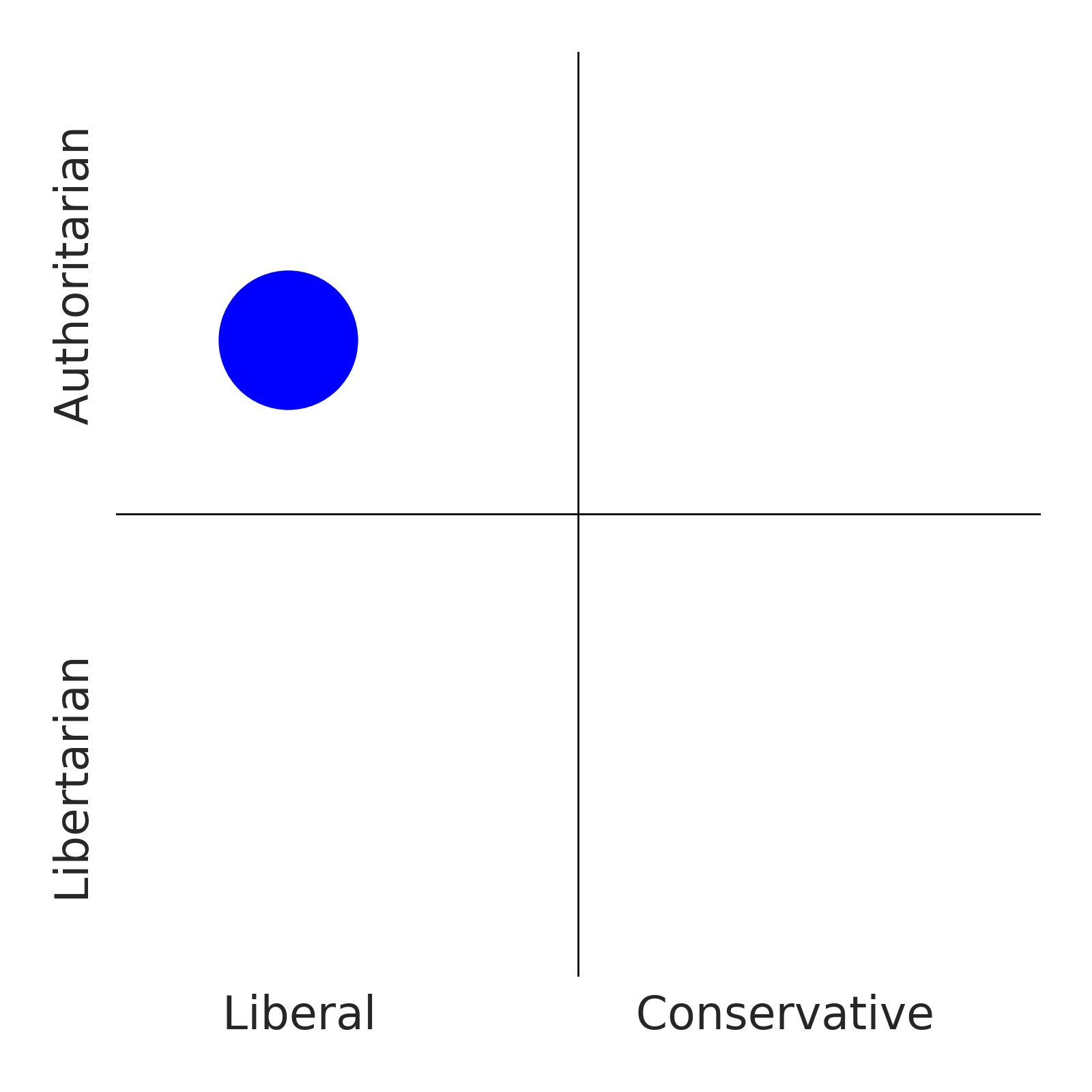
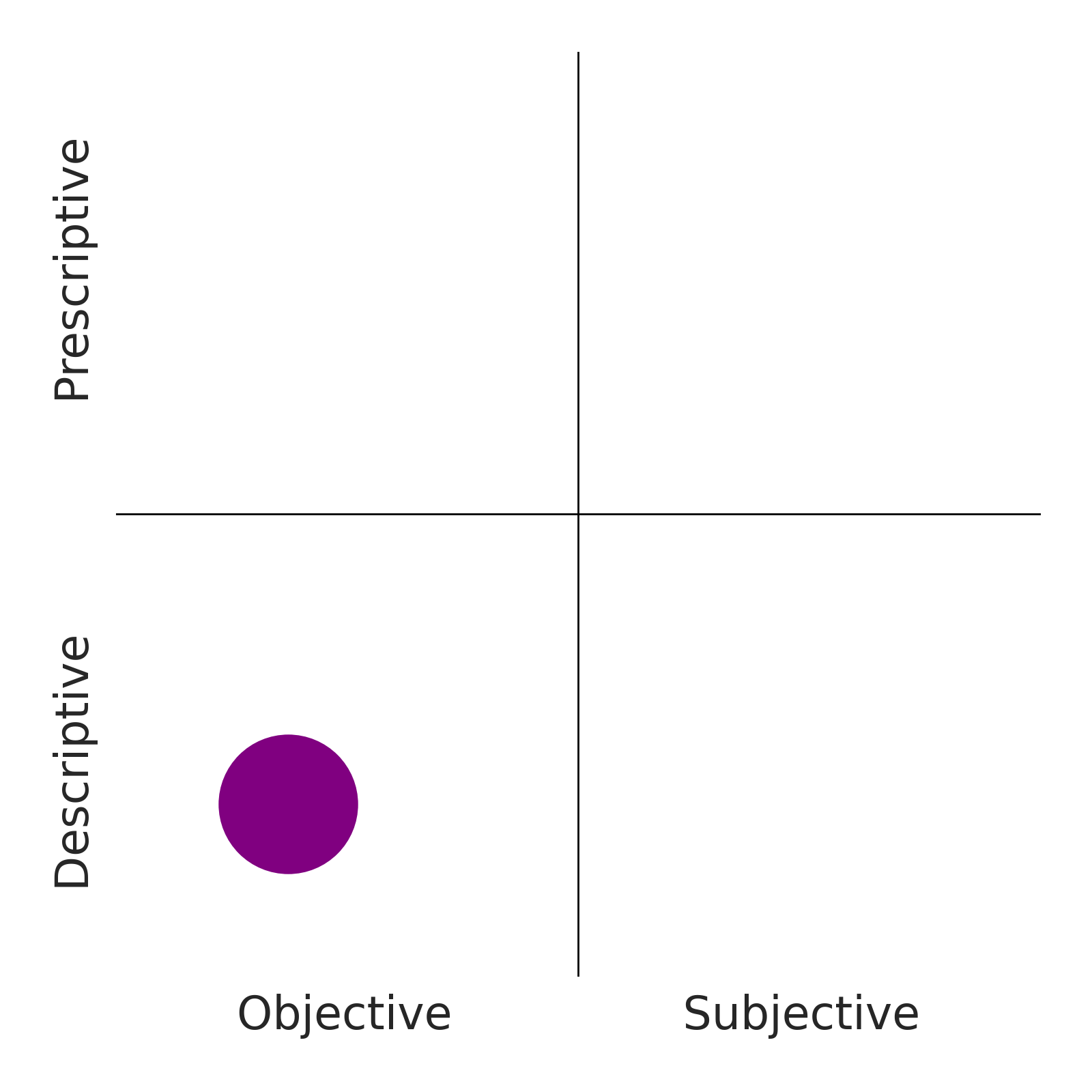
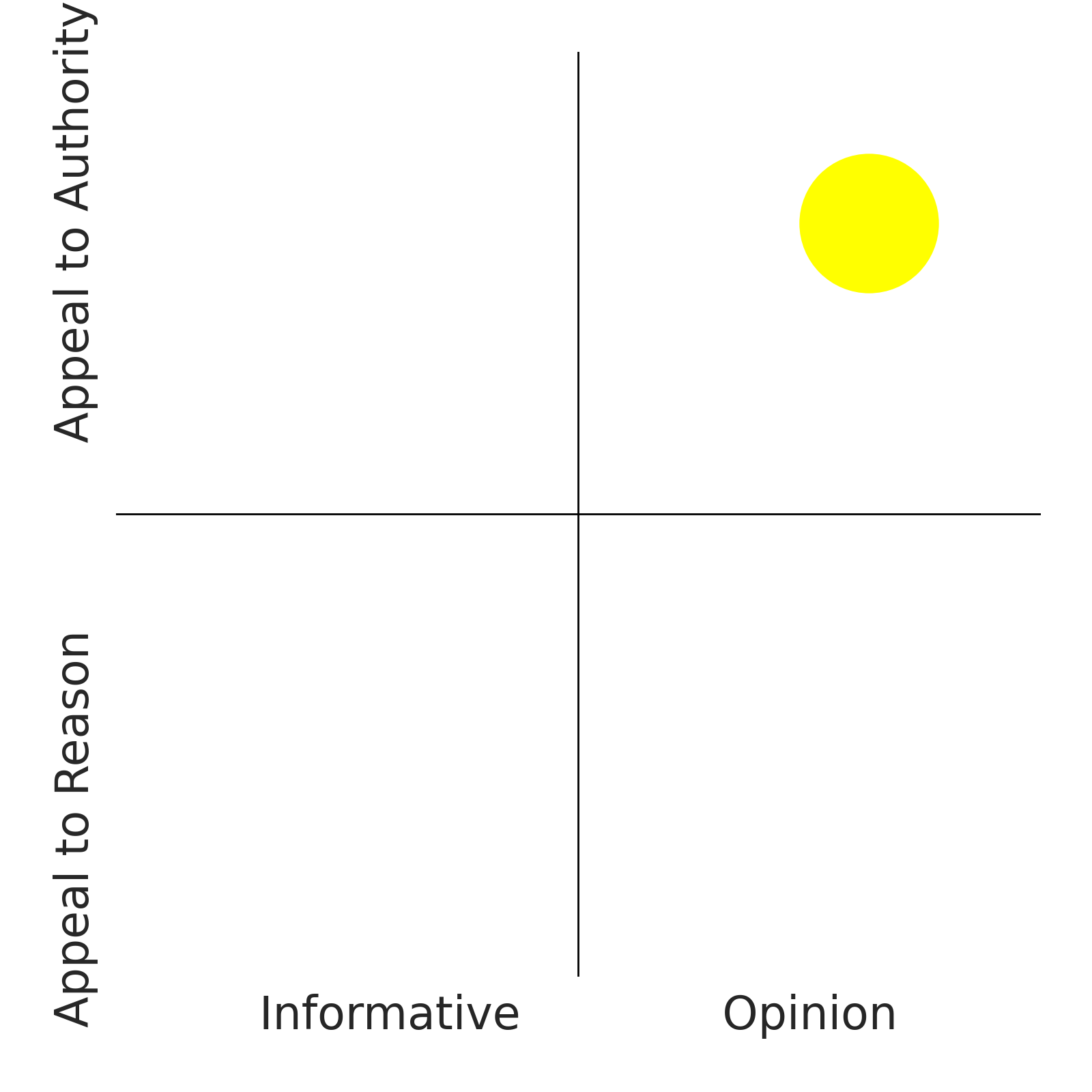
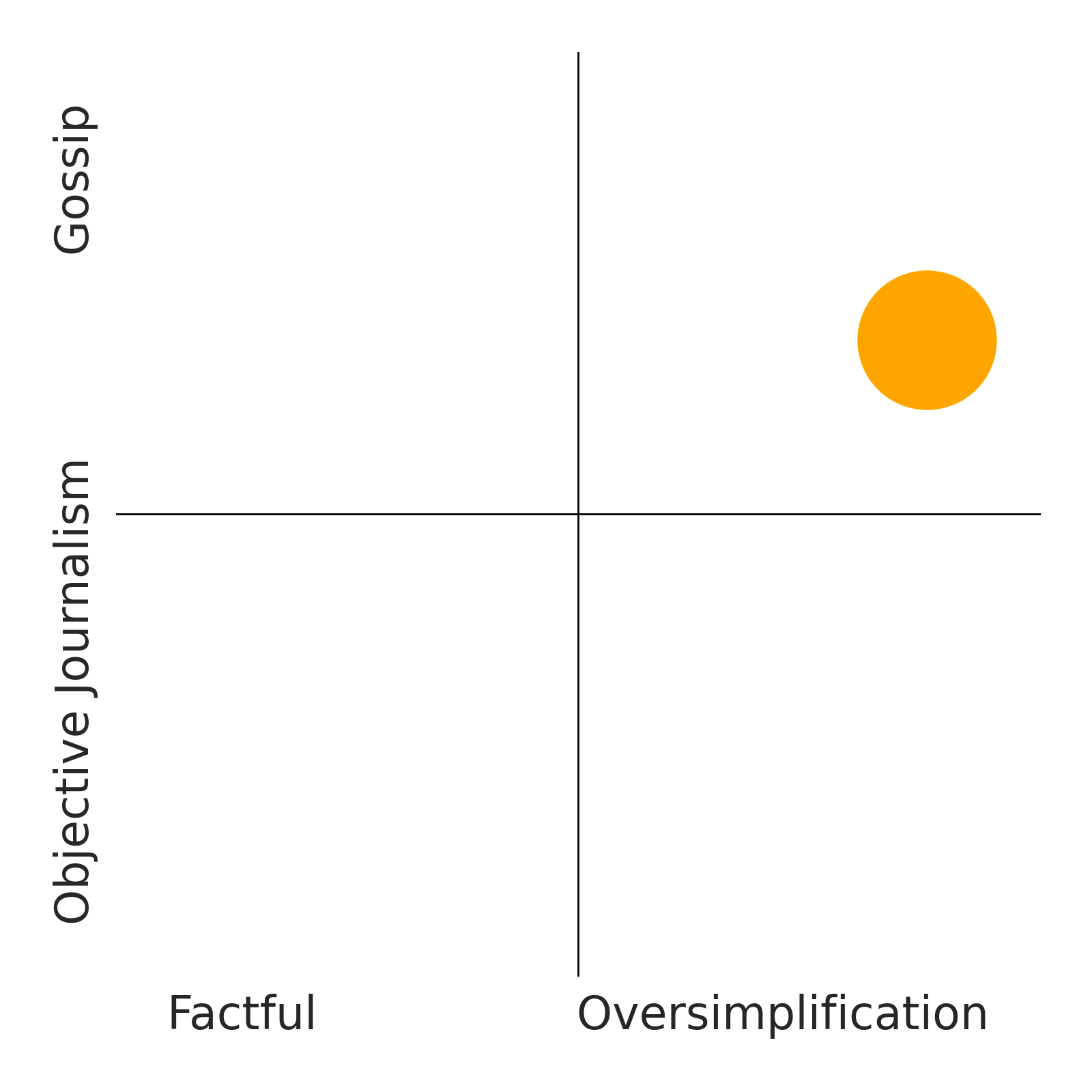
2026 © Helium Trades
Privacy Policy & Disclosure
* Disclaimer: Nothing on this website constitutes investment advice, performance data or any recommendation that any particular security, portfolio of securities, transaction or investment strategy is suitable for any specific person. Helium Trades is not responsible in any way for the accuracy
of any model predictions or price data. Any mention of a particular security and related prediction data is not a recommendation to buy or sell that security. Investments in securities involve the risk of loss. Past performance is no guarantee of future results. Helium Trades is not responsible for any of your investment decisions,
you should consult a financial expert before engaging in any transaction.
Helium Research Assistant

How can I help you today?
Ask any question about The Register bias.


