See whether Helium helps you make better-informed decisions. Try every Pro Trader feature for 30 days. No credit card required.
Try every Pro Trader feature for 30 days. No credit card required.
October 05, 2026 · 0 shares
A fear-driven first-person investment column frames a stock-market crash as inevitable and promotes Berkshire Hathaway plus a free Share Advisor report as protective responses.
Automated analysis; not human reviewed. Limitations: The text is a first-person promotional opinion piece with no external citations for its valuation claims, so directional and credibility scores are based on the author's stated positions rather than independently verifiable reporting. · 16 of 55 available dimensions scored; omitted dimensions are not treated as neutral. · Verified supporting quotes for 16 of 16 scored dimensions.
Claim: The piece is a first-person opinion column, with predictions and personal portfolio decisions rather than reported facts.
“I suspect that the next big stock-market crash could see the US S&P 500 index plunge by more than 20%” · exact text match
“I intend to protect our wealth.” · exact text match
Why: The author repeatedly uses first-person speculation and personal intent, not objective reporting.
Claim: Dramatic and emotive language heightens the sense of impending disaster.
“brutal Wall Street crash” · exact text match
“Yikes!” · exact text match
Why: Loaded adjectives and exclamations push the tone toward sensationalism over calm analysis.
Claim: The author is bearish on the broad market, predicting large declines and de-risking, while bullish only on defensive Berkshire Hathaway.
“I have been de-risking my family portfolio by reducing our exposure to expensive American shares.” · exact text match
“I expect Berkshire's $366bn cash mountain to cushion shareholders” · exact text match
Why: The article's central stance is defensive and market-negative, with a specific bullish recommendation for Berkshire.
Claim: The overall tone is pessimistic about market prospects, with some confidence in Berkshire as a safe haven.
“a stock-market crash looks almost inevitable” · exact text match
“I expect Berkshire's $366bn cash mountain to cushion shareholders” · exact text match
Why: The dominant expectation is negative for the market, qualified by optimism about one stock.
Claim: The author gives direct investment advice to readers rather than simply describing a situation.
“risk-averse investors might think about doing the same!” · exact text match
Why: This sentence explicitly urges readers toward a similar portfolio action.
Claim: The article amplifies fear of a market crash to motivate portfolio changes and interest in a promoted report.
“brutal Wall Street crash” · exact text match
“When the next stock-market crash comes, as it surely will, I don't want to lose a fortune.” · exact text match
Why: Fear-based language and inevitability framing dominate the opening and recommendations.
Claim: It presupposes a crash is coming while asking whether a stock can save the author.
“When the next stock-market crash comes, as it surely will” · exact text match
“a stock-market crash looks almost inevitable” · exact text match
Why: The existence of a future crash is assumed, not established, before the stock recommendation.
Claim: The piece consists of personal opinions, predictions, and recommendations rather than factual reporting.
“I suspect that the next big stock-market crash could see the US S&P 500 index plunge by more than 20%” · exact text match
“I'm considering buying even more B shares” · exact text match
Why: The author's subjective forecasts and personal investment plans are the article's core content.
Claim: Market history is reduced to two overvaluation peaks implying inevitable crash, and key valuation measures are left unnamed.
“History shows that market bubbles rarely avoid bursting.” · exact text match
“according to four of these six measures, US stocks are strongly overvalued” · exact text match
Why: Complex market risk is compressed into a simple historical pattern without specifying the measures used.
Claim: The article asserts a crash is inevitable and even specifies decline magnitudes without robust support.
“a stock-market crash looks almost inevitable” · exact text match
“When the next stock-market crash comes, as it surely will” · exact text match
Why: Certainty language goes beyond what historical analogy and unnamed measures can establish.
Claim: The emotional tone is negative and fearful, with exclamations and dramatic descriptions.
“Yikes!” · exact text match
“brutal Wall Street crash” · exact text match
Why: The author's language conveys alarm rather than detached analysis.
Claim: The author discloses a financial interest and unusual personal context, but the piece lacks sourcing for valuation claims and mixes promotion with analysis.
“Cliff D'Arcy has an economic interest in Berkshire Hathaway B shares.” · exact text match
“according to four of these six measures, US stocks are strongly overvalued” · exact text match
Why: Transparency is present, but unsupported quantitative claims and an advertorial segment reduce credibility.
Claim: The article treats a crash as inevitable based on historical analogy and unspecified valuation measures, combining some rational historical reference with an irrational certainty leap.
“History shows that market bubbles rarely avoid bursting.” · exact text match
“a stock-market crash looks almost inevitable” · exact text match
Why: The argument draws on real historical episodes but overgeneralizes from two prior peaks to inevitability.
Claim: A substantial portion of the article is promotional, urging readers to access a Share Advisor report.
“One of our Share Advisor analysts has just released a brand new stock report that we think is a must-read for any investor” · exact text match
“absolutely free of charge!” · exact text match
Why: The text explicitly markets a product with superlative and free-offer language.
Claim: The article is centered on unverifiable forecasts of a future crash and specific percentage declines.
“I suspect that the next big stock-market crash could see the US S&P 500 index plunge by more than 20%” · exact text match
“I could see the tech-heavy Nasdaq Composite index collapse by 40% and more.” · exact text match
Why: The main thesis is a forecast about future market movements, not an account of established facts.
Claim: It combines fear-inducing crash predictions with an urgent promotional pitch, using loaded framing and unspecified measures.
“When the next stock-market crash comes, as it surely will, I don't want to lose a fortune.” · exact text match
“One of our Share Advisor analysts has just released a brand new stock report that we think is a must-read for any investor” · exact text match
Why: Fear of loss is used to steer readers toward a commercial recommendation.
The text is a first-person promotional opinion piece with no external citations for its valuation claims, so directional and credibility scores are based on the author's stated positions rather than independently verifiable reporting.
September 20, 2026 · 0 shares
Frames a possible market crash as an urgent, history-backed investment problem requiring Stock Advisor's premium advice.
Automated analysis; not human reviewed. Limitations: The supplied text is an unverified promotional excerpt; performance claims and market warnings lack methodology and date ranges. · 10 of 55 available dimensions scored; omitted dimensions are not treated as neutral. · Verified supporting quotes for 6 of 10 scored dimensions.
Claim: Uses dramatic market-crash warnings and superlative return language to make the topic sensational.
“The Stock Market Just Flashed a Warning Sign Seen Only One Other Time Since 1890.” · exact text match
“The 10 stocks that made the cut could produce monster returns in the coming years.” · exact text match
Why: The warning uses an extreme historical rarity claim, and 'monster returns' is loaded promotional language.
Claim: Prescribes a specific course of action as the best move investors should make.
“If a stock market crash is coming -- even well into the future -- this is the smartest move you can make.” · exact text match
“If a Stock Market Crash Is Coming, Here's the 1 Exact Move You Should Be Making Today, According to History” · not found in supplied text
Why: The wording tells investors what they 'should be making' and calls the action 'smartest' and 'exact.'
Claim: Relies on the fear of a market crash to motivate action.
“The Stock Market Just Flashed a Warning Sign Seen Only One Other Time Since 1890.” · exact text match
“one thing is certain: Crashes are part of stock market cycles, so one eventually will take place -- even if it's far down the road.” · exact text match
Why: The 'warning sign' and the asserted inevitability of a future crash, even if distant, are designed to produce unease.
Claim: The text is dominated by evaluative and promotional opinion rather than neutral reporting.
“If a stock market crash is coming -- even well into the future -- this is the smartest move you can make.” · exact text match
“Now, it's worth noting Stock Advisor's total average return is 932% — a market-crushing outperformance compared to 211% for the S&P 500.” · exact text match
Why: Evaluative phrases like 'smartest move' and 'worth noting' plus self-promotion go beyond factual description.
Claim: Reduces complex market choices to a single 'best move' based on history.
“If a Stock Market Crash Is Coming, 100 Years of History Says This Is the Best Move Investors Can Make.” · not found in supplied text
“If a Stock Market Crash Is Coming, History Says the Smartest Investors Are Already Making This 1 Move.” · not found in supplied text
Why: Multiple headline variants assert one historically determined optimal action.
Claim: Invokes 'history' and internal analysts as authorities for claims.
“But according to our analysts, we're only at the end of 'Act 1'—the R&D phase.” · not found in supplied text
“If a Stock Market Crash Is Coming, 100 Years of History Says This Is the Best Move Investors Can Make” · exact text match
Why: The article leans on analyst authority and anthropomorphized history rather than presenting supporting data.
Claim: The text functions as a direct advertisement for Stock Advisor.
“Don't miss the latest top 10 list, available with Stock Advisor, and join an investing community built by individual investors for individual investors.” · exact text match
“Now, it's worth noting Stock Advisor's total average return is 932% — a market-crushing outperformance compared to 211% for the S&P 500.” · exact text match
Why: Direct calls to action and touting subscription performance are promotional in nature.
Claim: Visible support for performance and warning claims is thin; the text relies on unsourced 'history' and promotional numbers.
“Stock Advisor's total average return is 932% — a market-crushing outperformance compared to 211% for the S&P 500.” · exact text match
“The Stock Market Just Flashed a Warning Sign Seen Only One Other Time Since 1890.” · exact text match
Counterevidence:
“It's impossible to predict when the next crash may come.” · not found in supplied text
Why: The return claim lacks a date range and methodology, while the warning is asserted without sourcing; some hedging appears in words like 'if' and 'could.'
Claim: Makes speculative claims about future returns and a possible market crash.
“The 10 stocks that made the cut could produce monster returns in the coming years.” · exact text match
“investors have worried that declines -- and even a market crash -- may be on the way.” · exact text match
Why: Future returns and crash possibilities are hypothetical; the text uses 'could' and 'may' but still forecasts.
Claim: Uses loaded, urgent wording and one-sided performance examples to steer reader behavior.
“The Stock Market Just Flashed a Warning Sign Seen Only One Other Time Since 1890.” · exact text match
“If a Stock Market Crash Is Coming, Here's the 1 Exact Move You Should Be Making Today, According to History” · not found in supplied text
Why: The combination of an extreme warning, an imperative 'should,' and the phrase 'exact move' encourages action, while performance examples omit methodology.
The supplied text is an unverified promotional excerpt; performance claims and market warnings lack methodology and date ranges.
Frames a record $8.44 trillion money-market-fund total as an ominous historical warning that the stock market is 'running on borrowed time,' using fear-laden language and a promotional stock-picking pitch.
Automated analysis; not human reviewed. Limitations: External verification of the Federal Reserve data and historical market precedents was not possible from the supplied text, and the article's embedded advertising complicates separating editorial from promotional content. · 11 of 55 available dimensions scored; omitted dimensions are not treated as neutral. · Verified supporting quotes for 11 of 11 scored dimensions.
Claim: The article mixes reported data with subjective interpretation and forecasting.
“But things may not be as perfect for the stock market as the Dow's, S&P 500's, and Nasdaq Composite's gains imply.” · exact text match
“implying that the Trump bull market is operating on borrowed time” · exact text match
Why: A verifiable Fed statistic is followed by an evaluative judgment about what it means for stocks.
Claim: The article uses dramatic and alarmist language to describe a financial data point.
“An ominous $8.44 trillion figure with historical precedent at its back looms large” · exact text match
“Money market fund investors are telling a chilling tale of what may come for the Trump bull market.” · exact text match
Why: Words like 'ominous' and 'chilling tale' are sensational rather than neutral.
Claim: The article is pessimistic about the durability of the bull market.
“But things may not be as perfect for the stock market as the Dow's, S&P 500's, and Nasdaq Composite's gains imply.” · exact text match
“Money market fund investors are telling a chilling tale of what may come for the Trump bull market.” · exact text match
Why: It contrasts strong past gains with a warning that future conditions are likely worse.
Claim: The article moves from describing market conditions to instructing readers to take action.
“Before you buy stock in S&P 500 Index, consider this:” · exact text match
“Don't miss the latest top 10 list, available with Stock Advisor, and join an investing community built by individual investors for individual investors.” · exact text match
Why: The text directly addresses readers and urges them to subscribe to a service.
Claim: The article intentionally stokes fear of an impending market downturn.
“should have the Trump bull market shaking in its proverbial boots” · exact text match
“Money market fund investors are telling a chilling tale of what may come for the Trump bull market.” · exact text match
Why: The metaphorical language explicitly attributes fear to the market and warns of negative outcomes.
Claim: The article is opinionated commentary rather than straight news reporting.
“But things may not be as perfect for the stock market as the Dow's, S&P 500's, and Nasdaq Composite's gains imply.” · exact text match
“That's a big problem for the Trump bull market.” · exact text match
Why: The author makes evaluative judgments about market conditions and consequences.
Claim: The article centers its bearish thesis on a single data point, record money market fund assets.
“History Says There Are $8.44 Trillion Reasons the Trump Bull Market Is Running on Borrowed Time” · exact text match
“Money market fund investors are telling a chilling tale of what may come for the Trump bull market.” · exact text match
Why: Although it mentions other headwinds, the headline and conclusion hinge on one statistic and a historical correlation.
Claim: The article carries a negative emotional valence through fear-oriented phrasing.
“An ominous $8.44 trillion figure with historical precedent at its back looms large” · exact text match
“Money market fund investors are telling a chilling tale of what may come for the Trump bull market.” · exact text match
Why: Terms such as 'ominous' and 'chilling tale' are chosen to evoke anxiety about losses.
Claim: The article is moderately credible because it cites specific Fed data but combines it with speculative forecasting and advertising.
“According to the latest Fed data, total assets held in money market funds leaped to a new all-time high of $8.44 trillion in the second quarter of 2026.” · exact text match
“Don't miss the latest top 10 list, available with Stock Advisor, and join an investing community built by individual investors for individual investors.” · exact text match
Why: The source attribution and exact figures add credibility, while the promotional content and forecast reduce it.
Claim: The article promotes the publisher's paid subscription service.
“Before you buy stock in S&P 500 Index, consider this:” · exact text match
“Don't miss the latest top 10 list, available with Stock Advisor, and join an investing community built by individual investors for individual investors.” · exact text match
Why: The text urges readers to consider and join Stock Advisor, a paid service, within the article.
Claim: The article speculates about a future market decline based on a historical pattern.
“Money market fund investors are telling a chilling tale of what may come for the Trump bull market.” · exact text match
Why: The sentence uses 'may come' to forecast, rather than reporting a confirmed event.
External verification of the Federal Reserve data and historical market precedents was not possible from the supplied text, and the article's embedded advertising complicates separating editorial from promotional content.
The framing treats margin debt as a near-certain predictor of a coming stock-market drop, presenting speculation as historical certainty.
FINRA is the Financial Industry Regulatory Authority; its monthly margin-debt data tracks how much investors borrow through brokerage accounts.
Automated analysis; not human reviewed. Limitations: The supplied text excerpts multiple headlines and promotional material, so the boundary between article body and subscription prompt was ambiguous. · 10 of 55 available dimensions scored; omitted dimensions are not treated as neutral. · Verified supporting quotes for 10 of 10 scored dimensions.
Claim: The publisher uses dramatic superlatives and crash imagery to frame market risk.
“one metric with a flawless track record of foreshadowing the future paints a worrisome picture for stocks, leaving the door wide open for a stock market crash” · exact text match
Why: Phrases such as 'flawless' and 'door wide open for a stock market crash' are emotionally charged and sensational rather than balanced.
Claim: The overall framing is tilted toward a bearish market forecast.
“one metric with a flawless track record of foreshadowing the future paints a worrisome picture for stocks, leaving the door wide open for a stock market crash” · exact text match
Counterevidence:
“But what really stands out is how short-lived stock market downturns tend to be.” · exact text match
Why: The central prediction is a possible crash, while the brief reference to short-lived downturns is a secondary, mitigating point.
Claim: The article is predominantly pessimistic about the market's near-term outlook.
“paints a worrisome picture for stocks, leaving the door wide open for a stock market crash” · exact text match
Counterevidence:
“But what really stands out is how short-lived stock market downturns tend to be.” · exact text match
Why: The headline framing and margin-debt analysis point downward, despite acknowledging that downturns have historically been short-lived.
Claim: The writing uses fear-oriented language to warn investors of unavoidable market danger.
“leaving the door wide open for a stock market crash” · exact text match
“no amount of fiscal or monetary policy maneuvering can keep them from occurring” · exact text match
Why: The forecast is framed with words like 'crash' and by dismissing the effectiveness of fiscal or monetary policy.
Claim: The text presents an editorial judgment as a forward-looking market conclusion.
“But expecting outsize returns to continue throughout Trump's sixth year as president may be a mistake.” · exact text match
Why: This sentence gives unsupported investment advice and frames a subjective expectation as an analytical claim.
Claim: A complex stock-market outlook is reduced to a single supposedly unbeatable indicator.
“one metric with a flawless track record of foreshadowing the future paints a worrisome picture for stocks” · exact text match
Why: Labeling a single indicator 'flawless' oversimplifies the many factors that drive market outcomes.
Claim: The article expresses excessive certainty about a contingent market event.
“no amount of fiscal or monetary policy maneuvering can keep them from occurring” · exact text match
Why: The statement treats a future downturn as inevitable and immune to policy intervention, rather than as one possible scenario.
Claim: The article has some visible attribution and hedging, but undermines its credibility with absolutist language.
“as reported by FINRA” · exact text match
“one metric with a flawless track record of foreshadowing the future” · exact text match
Why: It names concrete sources such as FINRA, but the word 'flawless' is an unsupported absolute that lowers the overall credibility of the analysis.
Claim: The article engages in speculative forecasting about market direction.
“leaving the door wide open for a stock market crash” · exact text match
Why: A crash is a forward-looking market prediction presented as a likely consequence of the cited margin-debt data.
Claim: The article uses loaded, urgent framing to steer the reader toward a desired conclusion.
“one metric with a flawless track record of foreshadowing the future paints a worrisome picture for stocks, leaving the door wide open for a stock market crash” · exact text match
Why: Describing the metric as 'flawless' and the market as having a 'wide open' crash risk are loaded framing techniques, not neutral analysis.
The supplied text excerpts multiple headlines and promotional material, so the boundary between article body and subscription prompt was ambiguous.
Frames a probabilistic market-crash forecast in sensational, bearish terms by calling the indicators 'historically flawless' and tying the risk repeatedly to President Donald Trump, while including Motley Fool promotional messaging.
Automated analysis; not human reviewed. Limitations: The supplied text mixes newsletter promotional inserts and a list of related-article headlines with the main analysis, so the boundary between editorial analysis and marketing is blurred. · 9 of 55 available dimensions scored; omitted dimensions are not treated as neutral. · Verified supporting quotes for 9 of 9 scored dimensions.
Claim: The article uses sensational language to frame market risk.
“A historically pricey stock market portends disaster” · exact text match
“Risk-taking has gone parabolic, and that's terrible news for stocks” · exact text match
Why: Words such as disaster and terrible news are sensational rather than neutral.
Claim: The article's central thesis forecasts a significant stock decline or crash under President Trump.
“Right now, two prediction tools, neither of which has ever been wrong, point to a significant forthcoming decline in stocks under President Trump.” · exact text match
“In other words, the second-priciest CAPE Ratio in history increases the odds that the stock market crashes under Donald Trump.” · exact text match
Why: The article repeatedly predicts a forthcoming decline and rising crash odds, which is strongly bearish.
Claim: The article adopts a pessimistic market outlook centered on crash risk.
“In other words, the second-priciest CAPE Ratio in history increases the odds that the stock market crashes under Donald Trump.” · exact text match
“It would appear that the odds of a stock market crash under President Trump are rising.” · exact text match
Why: The framing emphasizes elevated risk of a crash rather than continued gains.
Claim: The article uses fear-inducing crash imagery.
“A historically pricey stock market portends disaster” · exact text match
“Risk-taking has gone parabolic, and that's terrible news for stocks” · exact text match
Why: Disaster and terrible news framing heightens fear about a market crash.
Claim: The article presents interpretive market opinion as an apparent conclusion.
“It would appear that the odds of a stock market crash under President Trump are rising.” · exact text match
Why: The phrasing signals an interpretive judgment about probabilities rather than a purely factual report.
Claim: The article repeatedly ties market-crash risk to President Donald Trump.
“How Likely Is it That the Stock Market Crashes Under President Donald Trump?” · exact text match
“point to a significant forthcoming decline in stocks under President Trump” · exact text match
Why: The market analysis is framed politically by making Trump's presidency central to the headline and thesis.
Claim: The article describes the prediction tools as unbeaten and historically flawless.
“two prediction tools, neither of which has ever been wrong” · exact text match
“it has successfully portended five significant downturns over the last century” · exact text match
Why: The article leans on a flawless-track-record frame, though it also notes the tools cannot guarantee or time a crash.
Claim: The article contains promotional Motley Fool Stock Advisor marketing.
“The Motley Fool Stock Advisor analyst team just identified what they believe are the 10 best stocks for investors to buy now… and S&P 500 Index wasn't one of them.” · exact text match
“Don't miss the latest top 10 list, available with Stock Advisor, and join an investing community built for the long haul.” · exact text match
Why: The text directly promotes a subscription investing service within the article.
Claim: The article makes forward-looking market-crash forecasts from historical indicators.
“point to a significant forthcoming decline in stocks under President Trump” · exact text match
“increases the odds that the stock market crashes under Donald Trump” · exact text match
Why: The core claims are predictive forecasts about a future market crash.
The supplied text mixes newsletter promotional inserts and a list of related-article headlines with the main analysis, so the boundary between editorial analysis and marketing is blurred.
October 03, 2026 · 0 shares
Nvidia's fresh record is used as a promotional hook to present Micron, Intel, and STMicroelectronics as positively exposed AI-chip stocks and to steer readers toward a branded stock screener.
Automated analysis; not human reviewed. Limitations: The article is promotional screener content with forward-looking claims; the exact figure 'US$5.7b market cap' for Nvidia appears implausible, but I cannot verify figures from the supplied text. · 11 of 55 available dimensions scored; omitted dimensions are not treated as neutral. · Verified supporting quotes for 11 of 11 scored dimensions.
Claim: The article dramatizes Nvidia's record as a major market story.
“Nvidia's run to a fresh all time high, a US$5.7b market cap and Q2 revenue of US$96.2b has turned the AI chip story from niche to front page.” · exact text match
Why: 'From niche to front page' is dramatic language, although it accompanies factual-sounding figures.
Claim: The article frames AI-chip suppliers as beneficiaries of Nvidia's record and AI infrastructure growth.
“This positioning makes the firm a direct beneficiary of the same massive infrastructure build that recently pushed Nvidia to fresh records.” · exact text match
Why: The selected stock profiles are consistently positive about AI demand.
Claim: The article's tone is broadly optimistic about the selected companies' prospects.
“This is positioning the company for significant future revenue growth and margin expansion as EV adoption rates recover and competition stabilizes.” · exact text match
Why: The repeated emphasis on 'significant future revenue growth' reflects optimism, although caveats about 'unresolved pressure' temper it.
Claim: The article gives direct instructions to act, not just descriptions.
“Scan fresh ideas while they are still under the radar for now and get in early.” · exact text match
Why: 'Get in early' is an explicit prescriptive prompt to invest.
Claim: The stock evaluations are presented as opinion-based picks rather than verifiable facts.
“then outlines 3 stocks from our Global AI Chip Leaders screener that appear positively exposed to the same forces” · exact text match
Why: 'Appear positively exposed' is an evaluative, non-factual judgment.
Claim: The article asserts precise financial figures without naming sources or an author.
“Nvidia's run to a fresh all time high, a US$5.7b market cap and Q2 revenue of US$96.2b has turned the AI chip story from niche to front page.” · exact text match
Why: Specific unverified numbers and promotional framing lower apparent credibility despite the disclaimer.
Claim: The article functions as promotion for Simply Wall St's Global AI Chip Leaders screener.
“The stocks highlighted below are just a small sample from this theme. The full Global AI Chip Leaders screen surfaces 21 more large semiconductor players with equally compelling AI narratives that are not covered here. To identify and analyze potential high conviction ideas directly, head into the Global AI Chip Leaders screener.” · exact text match
Why: The article's main thrust is directing readers to a branded screener after presenting free samples.
Claim: The article projects future revenue growth and margin expansion rather than reporting settled results.
“This is positioning the company for significant future revenue growth and margin expansion as EV adoption rates recover and competition stabilizes.” · exact text match
Why: The statement is forward-looking and dependent on assumptions about EV adoption and competition.
Claim: The article uses urgency and fear of missing out to encourage reader action.
“Markets move fast and new stories gain momentum before most investors even notice. Scan fresh ideas while they are still under the radar for now and get in early.” · exact text match
Why: Pressuring readers to act 'early' before the crowd is an observable manipulation technique.
Claim: The text shows multiple templated-article patterns characteristic of automated generation.
“What happens to Intel's margins and cash generation if a single assumption about AI driven capacity needs or foundry uptake proves too optimistic?” · exact text match
“What happens to STMicroelectronics' margin story if one quiet shift in customer mix or pricing power moves against those AI and EV programs?” · exact text match
Why: The repeated identical rhetorical question pattern across profiles is a strong textual signature of templated or automated writing.
Claim: The article discloses its non-advice nature and lack of stock positions.
“We provide commentary based on historical data and analyst forecasts only using an unbiased methodology and our articles are not intended to be financial advice.” · exact text match
Why: This is a visible transparency signal, though generic and self-asserted.
The article is promotional screener content with forward-looking claims; the exact figure 'US$5.7b market cap' for Nvidia appears implausible, but I cannot verify figures from the supplied text.
September 30, 2026 · 0 shares
The publisher frames three Canadian cannabis/biotech stocks through a quality-screener lens, using bullish brand and pipeline commentary plus urgency and calls to action for its stock-screening tools.
Automated analysis; not human reviewed. Limitations: The supplied article text contains truncation placeholders and promotional interstitial text, so some exact wording and figures are incomplete. · 6 of 55 available dimensions scored; omitted dimensions are not treated as neutral. · Verified supporting quotes for 6 of 6 scored dimensions.
Claim: The article is bullish on the featured stocks.
“The three stocks below are a small sample of what screens well for quality and valuation, and the full filter surfaced 5 more Canadian biotech companies with equally compelling narratives that are not covered in this article.” · exact text match
“could merit a closer look today.” · exact text match
Why: It presents the screen as identifying quality names and suggests investors take a closer look, which is a bullish framing.
Claim: The article is optimistic about the featured companies' prospects.
“This can support sustained net revenue growth and brand driven pricing power.” · exact text match
“could merit a closer look today.” · exact text match
Why: Positive forward-looking language frames the companies as likely beneficiaries of quality and valuation.
Claim: The article asserts a subjective investment thesis rather than neutral reporting.
“This is why its leading adult use brands matter for investors focused on applied biology and commercial traction.” · exact text match
Why: The evaluative 'matter for investors' ties stock selection to a subjective investment focus.
Claim: The article repeatedly promotes the publisher's own screener with advertising-style language.
“To size up that wider opportunity set, head straight into the Biotech Stocks screener to identify, compare, and analyze the highest conviction ideas that fit your own risk tolerance.” · exact text match
Why: The piece funnels readers to the publisher's screener using promotional, call-to-action wording.
Claim: The article forecasts future revenue growth and margin outcomes from limited data.
“This can support sustained net revenue growth and brand driven pricing power.” · exact text match
“The real test for Auxly now is how one quiet shift in its cost base and product mix ultimately shows up in long term margins.” · exact text match
Why: Projecting sustained revenue growth and long-term margin outcomes is speculative forecasting.
Claim: The article uses urgency and fear-of-missing-out language to drive readers to its screener.
“Spot resilient cash generators before others notice” · exact text match
“Check these fresh ideas before momentum flies, while it matters, and get in early.” · exact text match
Why: Imperatives such as 'before others notice' and 'get in early' create time pressure and FOMO rather than neutral information.
The supplied article text contains truncation placeholders and promotional interstitial text, so some exact wording and figures are incomplete.
October 07, 2026 · 0 shares
Upbeat, promotional framing presents EV market forecasts and stock moves as investment cues, with heavy self-promotion of stock lists and reports.
Automated analysis; not human reviewed. Limitations: The supplied text is a fragmented promotional feed rather than a standalone article, so editorial-intent judgments rely on headlines and blurbs. · 8 of 55 available dimensions scored; omitted dimensions are not treated as neutral. · Verified supporting quotes for 8 of 8 scored dimensions.
Claim: The content mixes data-driven statements with subjective editorial judgments.
“highlighting the urgency for investors to reconsider their views on enduring brands in this rapidly evolving market.” · exact text match
“Tesla's success hinges on scaling autonomous services and energy platforms amid financial pressures.” · exact text match
Why: Judgments about 'urgency' and definitive statements about Tesla's success are subjective editorial claims.
Claim: Some headlines use dramatic, superlative language.
“Racing Into The Future: Global Mobility Revolution” · exact text match
“Battery Market's Billion-Dollar Surge Powers Global Growth” · exact text match
Why: Phrases such as 'Racing Into The Future' and 'Billion-Dollar Surge' are sensationalized.
Claim: The publisher selects headlines that frame the EV sector as surging and growing.
“UAE Market Surge Fueled By Infrastructure Investment” · exact text match
“Battery Market's Billion-Dollar Surge Powers Global Growth” · exact text match
Why: Words such as 'surge' and 'billion-dollar surge' present EV markets in strongly positive terms.
Claim: The EV developments are framed with forward-looking upbeat language.
“Spain's EV Market Poised For Remarkable Growth By 2030” · exact text match
“Accelerating Growth Driven By Innovation And Policy Incentives” · exact text match
Why: Phrases like 'poised for remarkable growth' and 'accelerating growth' convey an optimistic outlook.
Claim: Several statements are presented as definitive judgments rather than balanced analysis.
“Tesla's success hinges on scaling autonomous services and energy platforms amid financial pressures.” · exact text match
“critical role of brand perception, highlighting the urgency for investors to reconsider their views on enduring brands” · exact text match
Why: The text asserts opinions about Tesla's success and investor urgency as stated conclusions.
Claim: Most of the supplied text is repetitive headline blurbs, boilerplate disclaimer, and self-promotion rather than developed reporting.
“This Week In Electric Vehicles - Racing Into The Future: Global Mobility Revolution” · exact text match
“This article by Simply Wall St is general in nature.” · exact text match
Why: The feed consists of linked headlines and generic boilerplate with little substantive article body.
Claim: The publisher uses direct promotional calls to action to market its own stock lists and articles.
“Take a closer look at our EV Stocks list of 51 companies, such as Gotion High-techLtd, Stellantis and WEG, by clicking here.” · exact text match
“Looking For Alternative Opportunities? Uncover 25 companies that survived and thrived after COVID and have the right ingredients to survive Trump's tariffs.” · exact text match
Why: Direct imperatives to click and 'uncover' content are advertising, not neutral reporting.
Claim: The lead item is centered on market projections and forward-looking statements.
“projections indicating an annual growth rate of 5.9% to reach approximately US$197.0 million by 2026” · exact text match
“Tesla's success hinges on scaling autonomous services and energy platforms amid financial pressures.” · exact text match
Why: Forecasted market sizes and categorical future-dependence statements are speculative rather than settled facts.
The supplied text is a fragmented promotional feed rather than a standalone article, so editorial-intent judgments rely on headlines and blurbs.
October 11, 2026 · 0 shares
The publisher frames Chainlink as the clearly superior investment over XRP, presenting a one-sided comparative thesis as settled fact while promoting its own paid stock-picking service.
Chainlink operates an oracle network feeding external data into smart contracts; XRP is issued by Ripple and targeted at banking institutions for cross-border payments. Chainlink and XRP both have U.S. spot ETFs available.
Automated analysis; not human reviewed. Limitations: The article is partly framed around promoting The Motley Fool's subscription service, which limits neutrality of the comparative analysis. · 55 of 55 available dimensions scored; omitted dimensions are not treated as neutral. · Verified supporting quotes for 23 of 55 scored dimensions.
Claim: The article adopts an investment-advisor positioning that addresses a mass retail audience with simplified comparative framing.
“If you've got $1,000 that you want to invest and you're wondering whether to buy XRP” · exact text match
Why: Direct-to-retail framing and simplified terms suggest a mildly elitist advisor voice rather than a neutral report.
Claim: The article indirectly endorses decentralized crypto ownership without advocating state coercion.
“turning real usage of a platform into steady token demand is a big part of what makes a cryptocurrency valuable over the long run” · exact text match
Why: Pro-crypto ownership framing leans slightly libertarian, but weakly.
Claim: The recommendation is framed as settled rather than balanced analysis.
“Chainlink's business model is clearly working better” · exact text match
Why: The evaluative conclusion is presented as clear fact, tilting subjective.
Claim: The piece uses moderate promotional language but little overt sensationalism.
“It's a much better purchase than XRP right now.” · exact text match
Why: Direct recommendation language is assertive but not highly sensational.
Claim: The article is bullish on Chainlink relative to XRP.
“Chainlink's business model is clearly working better, and it also turns more of its revenue into demand for its coin, which could boost its price. It's a much better purchase than XRP right now.” · exact text match
Why: Explicit relative buy recommendation indicates bullish tilt toward Chainlink.
Claim: The tone is moderately optimistic about Chainlink's prospects and skeptical of XRP's current thesis.
“Chainlink is positioned to capture a lot of value from a major trend in crypto during the coming years.” · exact text match
Why: Forward-looking positive assessment supports mild optimism.
Claim: The article moves beyond description to an explicit investment recommendation.
“for an investment with new money, Chainlink's business model is clearly working better” · exact text match
Why: Direct advice on how to invest is prescriptive.
Claim: The piece is heavily evaluative and concludes with an explicit pick.
“It's a much better purchase than XRP right now.” · exact text match
Why: Explicit buy recommendation is strongly opinionated.
Claim: The comparison reduces complex crypto investment tradeoffs to fee-flow and demand mechanics.
“it also turns more of its revenue into demand for its coin, which could boost its price” · exact text match
Why: Single-mechanism explanation simplifies multi-factor valuation.
Claim: The article cites platform data and a CoinDesk/DefiLlama-type source for network metrics.
“according to data from DefiLlama” · exact text match
Why: Data attribution suggests moderate reliance on external authority.
Claim: The article uses certainty beyond what the supplied evidence can establish.
“It's a much better purchase than XRP right now.” · exact text match
Why: Definitive recommendation exceeds the presented support.
Claim: The article includes repeated promotional material for a subscription service.
“The Motley Fool Stock Advisor analyst team just identified what they believe are the 10 best stocks for investors to buy now… and XRP wasn't one of them.” · exact text match
Why: Embedded marketing pitch indicates substantial promotional content.
Claim: The piece operates within a clear crypto-investing promotional framework.
“turning real usage of a platform into steady token demand is a big part of what makes a cryptocurrency valuable over the long run” · exact text match
Why: The framework is commercially ideological rather than politically so.
Claim: The article endorses established crypto assets with ETF infrastructure over a pure underdog.
“Chainlink does have spot ETFs available” · exact text match
Why: Favorable mention of ETF availability indicates mild establishment alignment.
Claim: The tone is slightly negative toward XRP while positive about Chainlink.
“XRP's biggest investment thesis hasn't yet played out despite having plenty of time.” · exact text match
Why: Skeptical phrasing about XRP supports mildly negative emotional valence.
Claim: The article applies stricter viability tests to XRP than to Chainlink.
“there's no on-chain revenue stream that automatically flows into buying XRP” · exact text match
Why: Different standards for assessing value capture favor the recommended asset.
Claim: The article provides some sourcing and disclosures but is undermined by promotional framing.
“according to data from DefiLlama” · exact text match
Why: Attribution exists, but marketing content and one-sided conclusion reduce trustworthiness.
Claim: The analysis offers quantified, causal reasoning about fee flows and token demand rather than pure emotion.
“Those fees come from Chainlink's oracle network, which feeds outside data, like asset prices, into smart contracts” · exact text match
Why: Use of data and mechanism explanation supports a mildly rational classification.
Claim: The piece promotes The Motley Fool's Stock Advisor with performance claims.
“With a track record of beating the S&P 500 by 4x, Stock Advisor offers a distinct advantage.” · exact text match
Why: Direct subscription promotion with return figures is advertorial.
Claim: The article is favorable to crypto firms and ETF products.
“U.S. spot exchange-traded funds (ETFs) that held $1.7 billion in assets on Oct. 8” · exact text match
Why: Pro-crypto corporate adoption framing indicates mild corporate favorability.
Claim: The article predicts future token demand and price outcomes.
“could boost its price” · exact text match
Why: Forward-looking price and demand forecasts are speculative.
Claim: The article uses an asymmetric comparison and embedded promotional pitch to steer reader choice.
“Chainlink's business model is clearly working better” · exact text match
Why: One-sided conclusion and marketing insertion indicate manipulation techniques.
Claim: The article discloses author and company positions but also promotes a paid service using performance figures.
“Alex Carchidi has positions in Ethereum. The Motley Fool has positions in and recommends Chainlink, Ethereum, and XRP.” · exact text match
Why: Disclosure is present, but promotional elements temper integrity.
The article is partly framed around promoting The Motley Fool's subscription service, which limits neutrality of the comparative analysis.
The publisher frames a highly speculative, single-stock bull case as near-certain reality, presenting aggressive revenue and valuation forecasts as 'the reality that Nvidia is telling investors about' while dismissing skeptics.
Article published by The Motley Fool under its Stock Advisor promotional format; it is an individual analyst's investment thesis on Nvidia.
Automated analysis; not human reviewed. Limitations: Article mixes substantive analysis with promotional Stock Advisor marketing, so bias scores partly reflect that framing. · 55 of 55 available dimensions scored; omitted dimensions are not treated as neutral. · Verified supporting quotes for 21 of 55 scored dimensions.
Claim: The investment thesis is heavily opinion-based rather than strictly factual.
“I think Nvidia is the best investment anyone can make right now” · exact text match
Why: Explicit personal opinion and prediction dominate the framing.
Claim: The article uses sensational framing about the market being completely reshaped.
“The Stock Market Will Look Completely Different by 2030.” · exact text match
Why: Headline and leaps to trillions of dollars in valuation are sensational.
Claim: The article is overwhelmingly bullish on Nvidia and AI.
“one thing is for certain: Nvidia is an excellent stock to buy right now.” · exact text match
Why: Direct buy recommendation and $20-25 trillion projections.
Claim: The article presents an extremely optimistic outlook.
“that equates to a $25.2 trillion company.” · exact text match
Why: Forecasts are highly optimistic and presented as plausible.
Claim: The article prescribes buying Nvidia.
“I think Nvidia is the best investment anyone can make right now” · exact text match
Why: The article gives explicit investment advice.
Claim: The article assumes Nvidia's growth will continue without fully justifying that assumption.
“I don't think it's unreasonable to expect Nvidia's revenue to double from the end of next year through 2030” · exact text match
Why: The conclusion depends on the premise that AI capex and Nvidia dominance continue.
Claim: The article is heavily opinionated.
“I think it could easily become a $20 trillion company by 2030” · exact text match
Why: Personal forecasts and judgments dominate.
Claim: The article acknowledges but quickly dismisses the skeptical view.
“While some investors may prefer a more balanced market, the reality is that the money is in AI right now” · exact text match
Why: Addresses an opposing view only to override it.
Claim: The article uses strong certainty beyond available evidence.
“one thing is for certain: Nvidia is an excellent stock to buy right now.” · exact text match
Why: Certainty about a forward-looking investment outcome is excessive.
Claim: The article includes promotional elements typical of content marketing.
“Consider when Netflix made this list on December 17, 2004... if you invested $1,000 at the time of our recommendation, you'd have $379,123!*” · exact text match
Why: Promotional past-performance examples encourage subscription.
Claim: The article reflects a pro-tech, pro-market investment ideology.
“While some investors may prefer a more balanced market, the reality is that the money is in AI right now” · exact text match
Why: Assumes AI/tech dominance is inevitable and desirable.
Claim: The article has a strongly positive emotional tone toward the stock.
“the projections are stunning” · exact text match
Why: Use of 'stunning' and enthusiastic language conveys positive emotion.
Claim: The article downplays risks while promoting the optimistic case.
“Even if Nvidia falls short, I think it could easily become a $20 trillion company by 2030” · exact text match
Why: Even downside scenario is reframed as a great outcome.
Claim: Credibility is reduced by treating a company's own projections as reality and using promotional language.
“that's the reality that Nvidia is telling investors about” · exact text match
Why: Undermines credibility by conflating company guidance with actual reality.
Claim: The article relies on Nvidia's own rosy projections and the author's extrapolations rather than independent verification.
“While that may be a rosy projection, that's the reality that Nvidia is telling investors about.” · exact text match
Why: Treating a company's own projections as 'reality' and extrapolating to a $25 trillion valuation reflects speculative, not strictly rational, reasoning.
Claim: The article promotes The Motley Fool's Stock Advisor service.
“Don't miss the latest top 10 list, available with Stock Advisor, and join an investing community built for the long haul.” · exact text match
Why: Contains promotional call to action for a paid service.
Claim: The article is very favorable toward Nvidia and large tech corporations.
“Nvidia is also releasing its next-generation architecture in the second half of 2026” · exact text match
Why: Presents corporate strategies and growth uncritically.
Claim: The article is largely speculative forecasting.
“That would result in about $1.4 trillion in revenue by 2030.” · exact text match
Why: Future projections and hypotheticals form the core of the argument.
Claim: The article uses a promotional hook followed by paid recommendation.
“The Motley Fool Stock Advisor analyst team just identified what they believe are the 10 best stocks for investors to buy now… and Nvidia wasn't one of them.” · exact text match
Why: This is advertorial framing with a call to action.
Claim: The article truncates Nvidia's own caveats and treats promotional projections as reality.
“While that may be a rosy projection, that's the reality that Nvidia is telling investors about.” · exact text match
Why: Dismissing the caveat and promoting the projection reduces interpretive integrity.
Claim: The article may be overly detached from realistic constraints.
“a $25.2 trillion company” · exact text match
Why: The projected market cap is extraordinarily large and presented casually.
Article mixes substantive analysis with promotional Stock Advisor marketing, so bias scores partly reflect that framing.
The article adopts a bearish, alarmist market-commentary framing, using dramatic 'warning shot' language and valuation fears to imply that additional Fed rate hikes threaten the AI-driven bull market.
Automated analysis; not human reviewed. Limitations: The supplied text includes promotional Stock Advisor material and related-headline links; these were excluded as non-substantive page elements. · 13 of 55 available dimensions scored; omitted dimensions are not treated as neutral. · Verified supporting quotes for 10 of 13 scored dimensions.
Claim: The article frames the Fed action with subjective evaluative language rather than neutral reporting.
“fired an unmistakable warning shot at the second-priciest stock market in history.” · exact text match
“That's terrible news for a historically expensive stock market.” · exact text match
Why: Loaded adjectives and evaluative terms signal subjective commentary.
Claim: The article uses hyperbolic and dramatic descriptors to heighten the Fed and market warning.
“second-priciest stock market in history” · exact text match
“A truly jaw-dropping amount of capital” · exact text match
Why: Hyperbolic descriptors are characteristic of sensational framing.
Claim: The article leans bearish on the stock market due to expected Fed rate hikes.
“That's terrible news for a historically expensive stock market.” · exact text match
“This is a stock market with little to no margin for error.” · exact text match
Why: The article emphasizes downside risks to an expensive market.
Claim: The article is pessimistic about sustaining the AI-driven bull market if rates rise.
“could slow this expansion and adversely impact lofty growth expectations” · exact text match
“If the Fed's rate-hiking cycle ramps up, maintaining this aggressive AI build-out without any "hiccups" would likely prove impossible.” · not found in supplied text
Why: The article forecasts adverse consequences and uses negative framing.
Claim: The article uses fear-inducing warnings about market vulnerability.
“fired an unmistakable warning shot” · exact text match
“This is a stock market with little to no margin for error.” · exact text match
Why: Warning language and vulnerability framing aim to alarm investors.
Claim: The article blends reporting with evaluative market opinion.
“The only question is: How many investors are paying attention?” · exact text match
“That's terrible news for a historically expensive stock market.” · exact text match
Why: The article goes beyond description to assess market implications.
Claim: The article explicitly ties inflation to President Trump's policies.
“Trumpflation (inflation that's specifically driven by President Trump's policies)” · exact text match
“Donald Trump's tariffs are increasing domestic manufacturing costs” · exact text match
Why: The article frames inflation through a political policy lens.
Claim: The article uses stronger certainty about future rate hikes than the cited minutes support.
“it makes it crystal clear that additional rate hikes are expected in the not-too-distant future.” · exact text match
Counterevidence:
“most participants assessed that another increase in the target range for the federal funds rate would likely be appropriate by year end.” · exact text match
Why: The minutes use tentative language while the article calls the signal crystal clear.
Claim: The article's tone is negative and pessimistic.
“That's terrible news for a historically expensive stock market.” · exact text match
“A truly jaw-dropping amount of capital” · exact text match
Why: Negative evaluative terms convey a pessimistic emotional tone.
Claim: The article grounds key claims in specific Fed action and quoted meeting minutes.
“Contained in the Fed minutes was this statement:” · exact text match
“On Sept. 16, Warsh and 11 other voting members of the FOMC unanimously raised the federal funds target rate by 25 basis points to 3.75%-4.00%.” · exact text match
Why: Explicit sourcing and specific data support credibility, though dramatic framing lowers it.
Claim: The article forecasts how future rate hikes will affect the AI build-out and market.
“If lending costs rise, as the FOMC's September meeting minutes imply, it could slow this expansion and adversely impact lofty growth expectations.” · exact text match
“If the Fed's rate-hiking cycle ramps up, maintaining this aggressive AI build-out without any "hiccups" would likely prove impossible.” · not found in supplied text
Why: The article makes conditional forecasts about rate hikes and market consequences.
Claim: The article uses loaded warning language to steer investor sentiment.
“fired an unmistakable warning shot” · exact text match
“That's terrible news for a historically expensive stock market.” · exact text match
Why: Loaded framing and fear appeals are observable persuasive techniques.
Claim: The article demonstrates financial literacy through specific valuation and rate-cycle data.
“In June, the S&P 500's Shiller Price-to-Earnings Ratio came within a stone's throw of surpassing the priciest valuation multiple in 156 years, achieved just before the dot-com bubble burst.” · not found in supplied text
“It's just the fourth time this century that the central bank has kicked off a rate-hiking cycle.” · exact text match
Why: Specific historical and valuation metrics show analytical depth.
The supplied text includes promotional Stock Advisor material and related-headline links; these were excluded as non-substantive page elements.
October 10, 2026 · 0 shares
The strongest observable framing is celebrity-gossip treatment: a minor social-media flirtation is presented as a lighthearted Kardashian storyline with evaluative language and no independent scrutiny.
The Kardashians is a reality TV series following the Kardashian-Jenner family; Khloé Kardashian is a cast member and public figure.
Automated analysis; not human reviewed. Limitations: The supplied text mixes the main Kardashian article with unrelated entertainment-feed snippets; analysis and extracted data focus on the substantive Kardashian report and ignore page/feed artifacts. · 6 of 55 available dimensions scored; omitted dimensions are not treated as neutral. · Verified supporting quotes for 5 of 6 scored dimensions.
Claim: The article describes the events with subjective evaluative language.
“Following the episode, Jacob had a hilarious reaction to being discussed on The Kardashians.” · exact text match
Why: Calling the reaction "hilarious" is a subjective characterization rather than neutral description.
Claim: The publisher uses light sensational/human-interest framing for a minor social-media exchange.
“Nearly a year after the Khloé in Wonder Land podcast host sparked headlines by leaving a flirty comment on the high school teacher's Instagram” · not found in supplied text
Why: The phrases "sparked headlines" and "flirty comment" dramatize a minor interaction.
Claim: The report is framed around celebrity social-media flirtation and Kardashian dating lives.
“read on to take a deep dive into the love lives of the Kardashians stars.” · exact text match
Why: The publisher devotes the article to celebrity personal-life gossip rather than public-interest reporting.
Claim: The article includes evaluative commentary on the participants' reactions.
“That's why Jacob is able to look at the bright side, despite Khloe shutting him down.” · exact text match
Why: The publisher interprets Jacob's attitude positively rather than only reporting facts.
Claim: The framing is positive and playful rather than negative or alarming.
“she addressed the "cute" moment on the season eight premiere of The Kardashians.” · exact text match
Why: The publisher's framing emphasizes a cute, playful celebrity moment rather than harm or controversy.
Claim: The article provides attributed quotes and dated platforms but relies on entertainment-news sourcing without independent verification.
“Khloe recalled on the Oct. 8 episode.” · exact text match
“In an Oct. 9 TikTok, he drank from a coffee mug and stared stoically at the camera” · exact text match
Why: Sourcing is transparent but limited to the reality-show episode and TikTok, with no outside confirmation.
The supplied text mixes the main Kardashian article with unrelated entertainment-feed snippets; analysis and extracted data focus on the substantive Kardashian report and ignore page/feed artifacts.
Frames a celebrity couple's separate Paris schedule as a family snub, emphasizing absence and prior tension while relying on social-media posts and public sightings rather than confirmed conflict.
Brooklyn Beckham is David and Victoria Beckham's son; Nicola Peltz is his wife, and the couple married in 2022.
Automated analysis; not human reviewed. Limitations: No byline is provided and the text includes a seemingly unrelated and contradictory closing paragraph, so certainty about the publisher's overall framing is limited. · 5 of 55 available dimensions scored; omitted dimensions are not treated as neutral. · Verified supporting quotes for 5 of 5 scored dimensions.
Claim: The publisher uses subjective labels and relationship inferences, most notably calling the absence a 'snub' and saying the couple 'showed no sign of reuniting.'
“Brooklyn Beckham and Nicola Peltz keep their distance from family in Paris after Victoria show snub.” · exact text match
“Despite being just miles apart in Paris, Brooklyn Beckham and Nicola Peltz showed no sign of reuniting with the Beckham family as they stepped out for a date night after missing fashion designer Victoria's latest PFW show.” · exact text match
Why: 'Snub' and 'no sign of reuniting' attribute meaning to observed absence without confirming motive, mixing facts with interpretation.
Claim: The language sensationalizes a family scheduling difference with dramatic wording such as 'explosive statement.'
“Since the explosive statement, Victoria has told The Wall Street Journal she and David "love our children so much" and have "always tried to be the best parents".” · exact text match
Why: 'Explosive' amplifies a past social-media dispute beyond its factual description, and the surrounding story frames the absence as family drama.
Claim: The headline presupposes that Brooklyn and Nicola 'snubbed' Victoria's show, which is the conclusion the article is trying to support.
“Brooklyn Beckham and Nicola Peltz keep their distance from family in Paris after Victoria show snub.” · exact text match
Why: Naming the absence a 'snub' treats deliberate rejection as already established rather than as the point to be tested.
Claim: The report is framed as celebrity gossip, centering on personal sightings, outfits, date-night behavior, and family social-media posts rather than a public-record event.
“The couple were noticeably absent from the fashion designer's runway show on Friday, even though they were in the French capital at the same time as David, Harper, Romeo and Cruz, who turned out to support Victoria.” · exact text match
“Instead, the couple enjoyed a romantic date night of their own, putting on a loved-up display as they held hands while making their way to L'Avenue restaurant.” · exact text match
Why: The story is built from observations of where celebrities were, what they wore, and whether they appeared together, which is characteristic of gossip coverage.
Claim: The article speculates that the couple avoided a family reunion, inferring relationship state from public sightings without any confirmation.
“Despite being just miles apart in Paris, Brooklyn Beckham and Nicola Peltz showed no sign of reuniting with the Beckham family as they stepped out for a date night after missing fashion designer Victoria's latest PFW show.” · exact text match
Counterevidence:
“While in Paris, both Brooklyn and Nicola attended other fashion week shows – including Balenciaga and Messika.” · exact text match
Why: The article converts 'no sign of reuniting' into evidence of estrangement, although the couple had their own scheduled fashion-week commitments; the counterevidence suggests an alternative explanation.
No byline is provided and the text includes a seemingly unrelated and contradictory closing paragraph, so certainty about the publisher's overall framing is limited.
Sensational gossip framing packages unverified royal-memoir allegations as dramatic revelations and pairs them with celebrity clickbait headlines.
Princess Diana died in 1997, and her brother Charles Spencer delivered her eulogy; the reported phone call came before her funeral, and the two men disagreed over whether Princes William and Harry should walk behind her coffin.
Automated analysis; not human reviewed. Limitations: The supplied text mixes one main story with many unrelated celebrity headlines and includes an apparent title error ('King Charles II'), so scores reflect the aggregate tabloid framing rather than a single authored article. · 5 of 55 available dimensions scored; omitted dimensions are not treated as neutral. · Verified supporting quotes for 3 of 5 scored dimensions.
Claim: The publisher frames royal and celebrity material in sensational, click-oriented terms.
“Queen Elizabeth II Had A Shocking 6-Word Response To Princess Diana's Death, Per New Biography” · exact text match
“Sydney Sweeney, Rihanna, & 40+ More Celebrities Who Proudly Freed the Nipple” · exact text match
Why: Exact headlines use 'Shocking' and explicit celebrity body-content framing, favoring emotional impact and clicks over neutral reporting.
Claim: The lead content is built around private royal-family allegations and personal insults.
“King Charles II Allegedly Told Princess Diana He Was 'Not Actually In Love' With Her Before Their 1981 Wedding” · exact text match
“He added that the then-Prince Charles could be very cruel and claimed that shortly after Diana and Charles got engaged, he squeezed Diana's waist and said, 'Oh, a bit chubby here, aren't we?'” · not found in supplied text
Why: The story's core is an intimate relationship allegation and character attack from a memoir, which is classic gossip framing.
Claim: The publisher uses judgmental and dramatic characterization alongside reported claims.
“Princess Diana's brother, Charles Spencer, didn't hold back in his new book, Swan Song: Diana, My Sister.” · exact text match
“The Daily Mail, which published a preview of the novel, said Spencer had a heated phone call with Charles before Diana's funeral.” · exact text match
Why: The opening characterization and selection of charged details add editorial slant even though most claims are attributed.
Claim: The content includes juvenile, body-exposure-focused celebrity headlines.
“Sydney Sweeney, Rihanna, & 40+ More Celebrities Who Proudly Freed the Nipple” · exact text match
“41 Celebrities Who Dared To Rock Naked Dresses On The Red Carpet” · exact text match
Why: Exact headlines treat nudity and bodily exposure as titillating clickbait, a regressive sensationalism marker.
Claim: The reporting is visibly attributed and includes an official palace response.
“According to Page Six, he even said that Charles appeared to be "giddily elated" when Diana died.” · not found in supplied text
“According to NBC News, it said, "While we do not comment on books as a matter of principle, His Majesty is mindful that the pain of fraternal grief can cloud reason, affect judgment and color memory in ways others do not recognize, even many years after such a loss."” · not found in supplied text
Why: Named outlets and an on-the-record palace statement are visible sourcing markers, but the core claims remain secondhand memoir allegations with no independent confirmation.
The supplied text mixes one main story with many unrelated celebrity headlines and includes an apparent title error ('King Charles II'), so scores reflect the aggregate tabloid framing rather than a single authored article.
The framing is a light, aggregation-style royal-interest puff piece built on a secondhand anecdote and unverified claims, with no sourcing or scrutiny of the 'feel small' allegation.
Charles Spencer is Princess Diana's brother; Zara Tindall is Princess Anne's niece and daughter of Anne's ex-husband Mark Phillips. 'Never complain, never explain' is described as the royal family's reputed motto.
Automated analysis; not human reviewed. Limitations: The supplied text is a stitched aggregation with truncated items and is not a single coherent article; several entries are headline-style fragments whose attribution and completeness are uncertain. · 48 of 55 available dimensions scored; omitted dimensions are not treated as neutral. · Verified supporting quotes for 4 of 48 scored dimensions.
Claim: The piece is framed around royal-court intrigue and inside-family social slights, orienting coverage around aristocratic elites as subjects of public fascination.
“Charles Spencer Says One Royal Member Made Him ‘Feel Small’ at Palace Dinner” · exact text match
Why: The core subject is titled royals and palace dinners, directed at curiosity about an elite family's private hierarchy rather than ordinary people.
Claim: The article is built on secondhand anecdote and memoir-driven claims about private comments and personal slights among royals.
“Princess Diana's brother Charles Spencer was the latest person to share his account of the private personalities of the royals” · not found in supplied text
Why: Focusing on 'private personalities', 'withering' remarks, and who made whom 'feel small' is gossip-style private-life reporting.
Claim: Credibility is built by deferring to a former royal chef and a royal editor rather than to independent evidence.
“Darren worked for Queen Elizabeth for 11 years and Princess Diana and her two sons for four years” · exact text match
Why: The argument's authority rests on the chef's proximity to the royals, which is offered as a reason to credit his account.
Claim: The text includes a long run of unrelated promotional studio and streaming blurbs not connected to the Princess Anne story.
“Here is Deadline’s annual list of premiere dates for new and returning TV series.” · exact text match
Why: The supplement appears to be low-scrutiny promotional and aggregate filler.
Claim: The framing is reverent toward the royal family and treats its traditions and figures approvingly.
“HELLO!'s Royal Editor Emily Nash echoed Darren's evaluation of Princess Anne, stating that her down-to-earth and "unstuffy" approach echoes that of her late father.” · not found in supplied text
Why: Quoting a royal editor's admiring 'down-to-earth' and 'unstuffy' characterization frames the monarchy sympathetically.
Claim: The reporting mixes quoted claims, unverified 'reports', and truncated unrelated items without sourcing its central 'feel small' allegation.
“After claiming that the Princess Royal made him feel "small" with her "withering" response about Zara Tindall's christening at a Buckingham Palace dinner party” · not found in supplied text
Why: The half-hedged repetition of a claim undercuts reliability.
Claim: The text presents unconfirmed claims about a future Netflix special and a reported film project as if they were reportable facts.
“Robby Hoffman is returning to Netflix with another stand-up comedy special. Premiering sometime in 2027” · exact text match
Why: Future-dated plans with no attribution are stated as fact.
The supplied text is a stitched aggregation with truncated items and is not a single coherent article; several entries are headline-style fragments whose attribution and completeness are uncertain.
Automated analysis; not human reviewed. Limitations: The supplied text mixes the main Meghan Markle report with unrelated feed snippets; analysis is limited to the main report. · 6 of 55 available dimensions scored; omitted dimensions are not treated as neutral. · Verified supporting quotes for 6 of 6 scored dimensions.
Claim: The report centers on elite and celebrity circles as inherently newsworthy.
“Meghan Markle was spotted out on a dinner date with Nobel Peace Prize winner Malala Yousafzai at Claridge's, the famed hotel in Mayfair, London.” · exact text match
“The Duchess of Sussex was seen by a group of friends, who shared a video of themselves cheering with glasses of wine on TikTok.” · exact text match
Why: The subject matter focuses on titled, award-winning, and high-society figures at a famed luxury hotel.
Claim: Subjective descriptors and an unverified social-media identification shape the report.
“The mother of two looked chic in a white turtleneck shirt, while the Pakistani activist wore a beige coat for the outing.” · exact text match
“In the background, Meghan could be seen sitting in a corner booth across from a woman whom the social media user claimed was Malala, as they engaged in deep conversation.” · exact text match
Why: The report uses evaluative style terms and relies on a social media user's claim rather than independent confirmation.
Claim: The publisher mainly describes the outing and past conversation rather than prescribing action.
“Meghan Markle was spotted out on a dinner date with Nobel Peace Prize winner Malala Yousafzai at Claridge's, the famed hotel in Mayfair, London.” · exact text match
“During the virtual chat, which Meghan's husband Prince Harry joined in on, the trio discussed the barriers to education for young women, particularly amid the COVID-19 pandemic.” · exact text match
Why: The framing is event- and quote-based, without the publisher advocating a policy or behavior.
Claim: The report is framed as celebrity-sighting gossip, emphasizing personal details and social media observation.
“Meghan Markle was spotted out on a dinner date with Nobel Peace Prize winner Malala Yousafzai at Claridge's, the famed hotel in Mayfair, London.” · exact text match
“The mother of two looked chic in a white turtleneck shirt, while the Pakistani activist wore a beige coat for the outing.” · exact text match
Why: The lead and description center on a celebrity sighting and wardrobe details rather than public-interest news.
Claim: The tone is mildly positive and light in describing the outing and related activities.
“The mother of two looked chic in a white turtleneck shirt, while the Pakistani activist wore a beige coat for the outing.” · exact text match
“The couple were seen enjoying a cosy pub date on October 2 at The Falkland Arms in the Cotswolds” · exact text match
Why: Positive style words such as 'chic' and 'cosy' create a warm, non-critical tone.
Claim: The report is transparent about its social-media sourcing but relies on an unverified identification.
“In the background, Meghan could be seen sitting in a corner booth across from a woman whom the social media user claimed was Malala, as they engaged in deep conversation.” · exact text match
“posted by user @losrodríguez.mx.” · exact text match
Why: It names the source and hedges the identification with 'claimed,' though it does not independently confirm the sighting.
The supplied text mixes the main Meghan Markle report with unrelated feed snippets; analysis is limited to the main report.
October 09, 2026 · 0 shares
The article adopts a sensational, gossip-oriented framing of online criticism directed at Meghan Markle, amplifying critical fan comments without independent verification or balance.
Meghan Markle is the Duchess of Sussex and wife of Prince Harry; Malala Yousafzai is a Nobel Peace Prize laureate.
Automated analysis; not human reviewed. · 55 of 55 available dimensions scored; omitted dimensions are not treated as neutral. · Verified supporting quotes for 2 of 55 scored dimensions.
Claim: The article uses sensational language and amplifies unverified online backlash to draw attention.
“Fans brutally slammed the Duchess of Sussex on the internet.” · exact text match
Why: The phrase 'brutally slammed' is emotive and dramatizes the reaction, favoring sensationalism over neutral reporting.
Claim: The article focuses on celebrity fashion and personal criticism rather than substantive news.
“Meghan Markle is reportedly being berated for modelling an outfit worth $37,000 during her London outing with Malala Yousafzai.” · exact text match
Why: The core subject is a celebrity's clothing and ensuing gossip, typical of gossip journalism.
October 12, 2026 · 0 shares
The framing treats unverified crowd boos and anonymous social-media jeers as an honest measure of public sentiment, amplifying a hostile narrative about Prince Harry.
Prince Harry, the Duke of Sussex, stepped back from royal duties in 2020 and relocated to the United States, which has fueled ongoing British media scrutiny of his public appearances in the UK.
Automated analysis; not human reviewed. Limitations: The supplied text is a fragmentary aggregation including unrelated entertainment items, and crowd boos are described as 'seemingly' or 'allegedly,' limiting certainty. · 55 of 55 available dimensions scored; omitted dimensions are not treated as neutral. · Verified supporting quotes for 4 of 55 scored dimensions.
Claim: The article frames public crowd reaction as an authentic verdict against a royal figure.
“it's a pretty honest measure of how people feel” · not found in supplied text
Why: Validating crowd sentiment as an honest measure leans populist against elite royal status.
Claim: The report sensationalizes a minor sports-moment with dramatic booing framing and viral fan commentary.
“The moment went viral on the internet” · exact text match
Why: Elevating a brief jumbotron appearance into a viral scandal indicates sensational framing.
Claim: The report centers on celebrity crowd-reaction gossip rather than substantive news.
“Prince Harry drew audible boos when he appeared on the big screen at a Leicester Tigers game” · exact text match
Why: The central framing is a celebrity spectacle of boos and fan comments, classic gossip coverage.
Claim: The article emphasizes negative emotional reactions to Prince Harry.
“He's irrelevant.” · not found in supplied text
Why: The chosen quotes are uniformly negative and emotionally charged, creating a negative tone.
Claim: The report relies on a Page Six report, a circulating video, and anonymous fan comments without direct confirmation of the extent of boos.
“As per a report by Page Six” · exact text match
Why: Sourcing is indirect and crowd reaction is hedged as seemingly/allegedly, weakening reliability.
Claim: The report speculates about TNT's intent to cut away and about Harry's motives based on fan comments.
“The TNT cameras allegedly quickly cut away to avoid showing the frosty reception” · exact text match
Why: It asserts an unverified motive for camera work and amplifies speculative fan motives.
Claim: The report uses loaded fan quotes and selective emphasis without verifying the extent of the boos.
“The exaggerated high-fiving—does he have to turn every public appearance into a performance?” · not found in supplied text
Why: Selecting hostile quotes as representative and omitting balanced crowd reaction is an observable framing technique.
The supplied text is a fragmentary aggregation including unrelated entertainment items, and crowd boos are described as 'seemingly' or 'allegedly,' limiting certainty.
October 16, 2026 · 0 shares
The report is a restrained, attribution-heavy breaking-news account that relies on official police and government statements without adding partisan or policy framing.
Automated analysis; not human reviewed. Limitations: The supplied text concatenates the main Oregon school-shooting report with many unrelated snippets, so the analysis is limited to the identifiable shooting article. · 8 of 55 available dimensions scored; omitted dimensions are not treated as neutral. · Verified supporting quotes for 8 of 8 scored dimensions.
Claim: The report is framed objectively through attributed official statements and withheld details rather than subjective commentary.
“according to Krantz” · exact text match
“Police did not release the names of the victims or the shooter.” · exact text match
Why: The quoted phrasing shows attribution to police and restraint about unconfirmed details.
Claim: Coverage is restrained and factual despite the violent subject, avoiding sensational language in the publisher's own voice.
“Bend Police Department Chief Mike Krantz said during a press conference Thursday evening.” · exact text match
“Police did not release the names of the victims or the shooter.” · exact text match
Why: The publisher presents police-sourced details and notes withheld information rather than using dramatic embellishment.
Claim: The article is almost entirely descriptive, recounting events and official statements without prescribing policy.
“Deschutes County Dispatch received reports of an active shooter at 12:59 p.m. local time” · exact text match
“Police did not release the names of the victims or the shooter.” · exact text match
Why: The text reports event chronology and official withholding of information rather than advocating a course of action.
Claim: The publisher's own prose is fact-reporting rather than opinion.
“The suspect then entered the school after shooting through locked doors.” · exact text match
“Police did not release the names of the victims or the shooter.” · exact text match
Why: The prose states actions and official non-disclosure rather than offering the publisher's judgment.
Claim: Key facts are overwhelmingly sourced to official authorities.
“Bend Police Department Chief Mike Krantz said during a press conference Thursday evening.” · exact text match
“FBI Director Kash Patel said the agency was on the scene assisting in the investigation.” · exact text match
Why: The narrative repeatedly relies on named officials for factual claims.
Claim: Visible sourcing and attribution support high credibility in the supplied text.
“Krantz said during a press conference Thursday evening.” · exact text match
“FBI Director Kash Patel said the agency was on the scene assisting in the investigation.” · exact text match
Why: Multiple named official sources and attributed statements are present.
Claim: The report proceeds through a coherent, sourced timeline and avoids irrational or emotive reasoning.
“Law enforcement officers were alerted at 1 p.m. and the school went into lockdown at 1.01 p.m.” · exact text match
“Officers arrived at the scene at 1.02 p.m.” · exact text match
Why: Precise timeline reporting supports a rational, orderly account of events.
Claim: The article shows high integrity by attributing claims and distinguishing what police did not release.
“according to Krantz” · exact text match
“a law enforcement official briefed on the shooting told The Associated Press it was a pump-action shotgun.” · exact text match
Why: Attribution and sourcing transparency indicate fair, honest reporting practices.
The supplied text concatenates the main Oregon school-shooting report with many unrelated snippets, so the analysis is limited to the identifiable shooting article.
October 16, 2026 · 0 shares
Framing is neutral and service-oriented, built around official SSA figures, conditional congressional action, and explicit caveats that 2027 VA rate tables are not yet published.
Automated analysis; not human reviewed. Limitations: The source is a short service explainer centered on benefit mechanics, so several ideological and conflict-oriented dimensions lack sufficient evidence and are omitted. · 11 of 55 available dimensions scored; omitted dimensions are not treated as neutral. · Verified supporting quotes for 11 of 11 scored dimensions.
Claim: The report treats the VA COLA as a routine procedural benefits update rather than a partisan issue.
“Each year, Congress must pass the Veterans' Compensation Cost-of-Living Adjustment Act before the VA can make the increase official.” · exact text match
Why: Congress is mentioned only as the body that must enact the annual adjustment; no party, ideology, or partisan conflict is characterized.
Claim: The report presents conditional official figures and explicitly distinguishes confirmed SSA data from pending VA implementation.
“The VA hasn't published 2027 compensation benefits rate tables, but beneficiaries can use the current rate tables to estimate their COLA increase for the new year.” · exact text match
“If Congress approves, the 3.6% COLA that Social Security beneficiaries receive will also apply to VA disability compensation.” · exact text match
Why: It separates the confirmed SSA COLA from pending VA implementation and labels payment figures as estimates.
Claim: The COLA increase is described in factual, attributed terms without dramatic or alarmist language.
“The SSA announced on Oct. 14 that its 2027 COLA for beneficiaries is 3.6% — the largest increase in four years.” · exact text match
Why: The notable detail is placed in a neutral sentence with SSA attribution; no sensational vocabulary appears.
Claim: The article is structured as an explanatory guide to how the COLA works, not as an advocacy piece.
“Here's what to know about the 2027 COLA and how VA disability benefits will be affected:” · exact text match
Why: The framing promises explanation and effects rather than recommendations.
Claim: A government benefits process is mentioned, but it is not framed in partisan or ideological political terms.
“Each year, Congress must pass the Veterans' Compensation Cost-of-Living Adjustment Act before the VA can make the increase official.” · exact text match
Why: Congress appears only as part of the annual legal mechanism; no partisan actors or controversies are discussed.
Claim: The tone is neutral and practical rather than emotionally charged.
“For veterans receiving disability compensation, there's no action to take now.” · exact text match
Why: The statement is a neutral administrative instruction with no emotional intensifiers.
Claim: The report attributes key figures to SSA and flags both legislative and data limitations.
“The SSA announced on Oct. 14 that its 2027 COLA for beneficiaries is 3.6% — the largest increase in four years.” · exact text match
“If Congress approves, the 3.6% COLA that Social Security beneficiaries receive will also apply to VA disability compensation.” · exact text match
Why: Official attribution and explicit caveats are visible in the supplied text.
Claim: The article explains changes through transparent arithmetic and concrete examples.
“That monthly payment will increase by $6.50 ($180.42 x 0.036) in 2027, for a new monthly total of $186.92.” · exact text match
Why: The formula and totals make the calculation explicit.
Claim: Payment estimates are explicitly framed as estimates based on current tables and pending legislation.
“The VA hasn't published 2027 compensation benefits rate tables, but beneficiaries can use the current rate tables to estimate their COLA increase for the new year.” · exact text match
“If Congress approves, the 3.6% COLA that Social Security beneficiaries receive will also apply to VA disability compensation.” · exact text match
Why: The forward-looking numbers are tied to stated assumptions and conditional language.
Claim: The report conditions the increase on congressional action and discloses that official 2027 VA rate tables are not yet published.
“If Congress approves, the 3.6% COLA that Social Security beneficiaries receive will also apply to VA disability compensation.” · exact text match
“The VA hasn't published 2027 compensation benefits rate tables, but beneficiaries can use the current rate tables to estimate their COLA increase for the new year.” · exact text match
Why: Those caveats make the legal and data limits visible.
Claim: The article uses clear examples and legal context to explain a complex benefits adjustment.
“A veteran with an 80% disability rating, for example, who also has one child and a spouse, currently receives $2,406.15 per month. In 2027, that monthly payment will increase by $86.62 ($2,406.15 x 0.036) for a new total of $2,492.77.” · exact text match
Why: The specific calculation and dependents example make the adjustment understandable.
The source is a short service explainer centered on benefit mechanics, so several ideological and conflict-oriented dimensions lack sufficient evidence and are omitted.
October 02, 2026 · 0 shares
Publishes a bullish Tesla stock recap that shifts into a Stock Advisor subscription pitch, leaning on past returns and scarcity to urge readers to buy now.
Automated analysis; not human reviewed. Limitations: The supplied text is a promotional newsletter segment; delivery estimates and return examples could not be independently verified, so scoring reflects only the article's internal framing. · 15 of 55 available dimensions scored; omitted dimensions are not treated as neutral. · Verified supporting quotes for 6 of 15 scored dimensions.
Claim: Editorial praise is interwoven with market data.
“the EV leader continues to prove why it's the preeminent electric carmaker” · exact text match
“outstanding 26% year-over-year growth” · exact text match
Why: Qualitative superlatives mark the reporting as subjective.
Claim: The article is uniformly bullish on Tesla and its near-term prospects.
“Tesla rose after reporting Q3 deliveries that beat Wall Street estimates” · exact text match
“The better-than-expected deliveries suggest Q3 sales could be excellent.” · exact text match
Why: Every evaluative statement about Tesla is positive, with no balancing risks.
Claim: Article frames Tesla results and industry demand with consistently positive expectations.
“This result is particularly impressive” · exact text match
“suggesting Tesla's delivery beat could be part of a stronger industry recovery” · exact text match
Why: Positive superlatives and recovery language set an optimistic tone.
Claim: Beyond describing market moves, the article instructs readers to buy now.
“now is the best time to buy before it's too late” · not found in supplied text
Why: This is a direct prescription rather than a factual report.
Claim: The copy explicitly triggers worry about missing investment gains.
“Ever feel like you missed the boat in buying the most successful stocks?” · exact text match
“If you're worried you've already missed your chance to invest, now is the best time to buy before it's too late.” · not found in supplied text
Why: Wording is designed to produce fear of missing out.
Claim: The article uses subjective evaluation as part of its stock coverage.
“outstanding 26% year-over-year growth” · exact text match
“the EV leader continues to prove why it's the preeminent electric carmaker” · exact text match
Why: Qualitative editorial language is used to evaluate Tesla.
Claim: A single delivery beat is treated as evidence of Tesla's preeminence and an industry recovery.
“the EV leader continues to prove why it's the preeminent electric carmaker” · exact text match
“suggesting Tesla's delivery beat could be part of a stronger industry recovery” · exact text match
Why: It reduces complex industry conditions to one quarter's positive data.
Claim: The subscription pitch leans on the authority of Motley Fool's analysts and past picks.
“On rare occasions, our expert team of analysts issues a "Double Down" stock recommendation” · exact text match
“The numbers speak for themselves:” · not found in supplied text
Why: It asks readers to trust expert recommendations and historical returns rather than analyze current picks.
Claim: The promotional portion makes certainty claims about timing and opportunity that go beyond the data.
“now is the best time to buy before it's too late” · not found in supplied text
“there may not be another chance like this anytime soon.” · exact text match
Why: No evidence in the article supports these absolute timing claims.
Claim: The article uses positive hype and fear-of-missing-out language.
“now is the best time to buy before it's too late” · not found in supplied text
“Ever feel like you missed the boat in buying the most successful stocks?” · exact text match
Why: Appeals to excitement and regret.
Claim: The article uses scarcity, worry, and past returns to advise immediate buying rather than evidence-based analysis.
“If you're worried you've already missed your chance to invest, now is the best time to buy before it's too late.” · not found in supplied text
“The numbers speak for themselves:” · not found in supplied text
Why: The timing advice is not supported by the delivery data and depends on fear of missing out.
Claim: The article includes a direct advertisement for Stock Advisor with a call to action and past-return examples.
“Right now, we're issuing 'Double Down' alerts for three incredible companies, available when you join Stock Advisor” · not found in supplied text
“Nvidia: if you invested $1,000 when we doubled down in 2009, you'd have $600,189!*” · exact text match
Why: This is explicit subscription marketing embedded in the article.
Claim: The article projects future sales and industry recovery from a quarterly delivery figure.
“The better-than-expected deliveries suggest Q3 sales could be excellent.” · exact text match
“suggesting Tesla's delivery beat could be part of a stronger industry recovery” · exact text match
Why: These are forward-looking inferences, not reported facts.
Claim: Promotional copy uses urgency, scarcity, and FOMO to steer readers to subscribe.
“there may not be another chance like this anytime soon.” · exact text match
“If you're worried you've already missed your chance to invest, now is the best time to buy before it's too late.” · not found in supplied text
Why: The language creates artificial urgency and taps into fear of missing out.
Claim: The editorial content is combined with a promotional pitch that asserts limited opportunity, compromising the article's neutrality.
“Right now, we're issuing 'Double Down' alerts for three incredible companies, available when you join Stock Advisor” · not found in supplied text
“there may not be another chance like this anytime soon.” · exact text match
Why: The subscription pitch appears inside the stock report, mixing advice with marketing.
The supplied text is a promotional newsletter segment; delivery estimates and return examples could not be independently verified, so scoring reflects only the article's internal framing.
September 22, 2026 · 0 shares
A promotional stock-newsletter feature frames Coca-Cola and Procter & Gamble as unassailable dividend investments, then pivots to a subscription pitch built on past-return inducements.
Automated analysis; not human reviewed. Limitations: The supplied text is heavily truncated, so the framing analysis rests on the surviving fragments and may not capture the full original article. · 11 of 55 available dimensions scored; omitted dimensions are not treated as neutral. · Verified supporting quotes for 9 of 11 scored dimensions.
Claim: The text centers on the publisher's opinions and value judgments rather than neutral reporting.
“P&G is still running the same playbook it has used for decades: Understand consumer needs, then invest in better-performing products people use daily.” · exact text match
“Coca-Cola has weathered numerous recessions and still raised its dividend” · exact text match
Why: The language conveys editorial endorsement and evaluative interpretation of company strategy.
Claim: The text is strongly bullish on Coca-Cola, P&G, and dividend-paying stocks more broadly.
“which is why it remains a rock-solid dividend stock to buy and hold for the long term” · exact text match
“That's part of an "all-weather" strategy designed to keep sales growing across economic cycles.” · not found in supplied text
Why: Recommendations are framed as 'buy and hold' with 'all-weather' growth, a clear bullish stance.
Claim: The dominant tone is cheerfully optimistic about these dividend stocks and the service that recommends them.
“This could strengthen margins, supporting earnings and dividend growth over the next several years.” · exact text match
“Coca-Cola has weathered numerous recessions and still raised its dividend” · exact text match
Why: Positive forward-looking language and historical resilience are highlighted while risks go unmentioned.
Claim: The text leans on the authority of unnamed in-house analysts to support a claim about AI development.
“according to our analysts, we're only at the end of "Act 1"—the R&D phase” · not found in supplied text
Why: The source of the claim is an in-house authority with no supporting detail in the passage.
Claim: The text expresses a high degree of certainty about future stock performance and business results.
“remains a rock-solid dividend stock to buy and hold for the long term” · exact text match
“The 10 stocks that made the cut could produce monster returns in the coming years.” · exact text match
Why: Assertions like 'rock-solid' and promises of 'monster returns' present forecast outcomes with little hedging or risk discussion.
Claim: The passage offers some concrete, attributed facts but mixes them with unverifiable marketing claims, limiting credibility.
“In the recent quarter, the company reported flat non-GAAP sales (excluding foreign currency changes) over the year-ago quarter.” · exact text match
“Stock Advisor's total average return is 932% — a market-crushing outperformance compared to 211% for the S&P 500.” · exact text match
Why: One section is sourced and specific; another presents self-interested performance figures without a methodology or citation.
Claim: The text shifts from investment commentary to a direct, promotional pitch for a paid stock-picking service.
“Don't miss the latest top 10 list, available with Stock Advisor, and join an investing community built by individual investors for individual investors.” · exact text match
“Now, it's worth noting Stock Advisor's total average return is 932% — a market-crushing outperformance compared to 211% for the S&P 500.” · exact text match
Why: The call-to-action and headline return statistics function as marketing for the subscription service rather than as reported news.
Claim: The featured companies are described in uniformly flattering, pro-business terms with no countervailing analysis.
“Coca-Cola has weathered numerous recessions and still raised its dividend, which is why it remains a rock-solid dividend stock to buy and hold for the long term.” · exact text match
“A 64% payout ratio leaves room to sustain the dividend and continue growing it, even in a weak earnings year.” · exact text match
Why: Praise is framed as settled fact and the companies' resilience is assumed rather than examined.
Claim: The text engages in forward-looking projection about the companies' future margins and dividend growth.
“This could strengthen margins, supporting earnings and dividend growth over the next several years.” · exact text match
Why: The outcome is explicitly conditional ('could') and forecasts years into the future.
Claim: The text uses urgency, past-return anecdotes, and emotional appeals to push a subscription decision.
“Consider when Netflix made this list on December 17, 2004... if you invested $1,000 at the time of our recommendation, you'd have $387,158!*” · exact text match
“Don't miss the latest top 10 list, available with Stock Advisor, and join an investing community built by individual investors for individual investors.” · exact text match
Why: The dramatic hypothetical returns and 'Don't miss' urgency are observable persuasion tactics.
Claim: The editorial analysis is intertwined with promotional copy, creating a conflict between advice and sales.
“Don't miss the latest top 10 list, available with Stock Advisor, and join an investing community built by individual investors for individual investors.” · exact text match
“Consider when Netflix made this list on December 17, 2004... if you invested $1,000 at the time of our recommendation, you'd have $387,158!*” · exact text match
Why: Blending investment recommendations with a paid-product pitch weakens the apparent independence of the analysis.
The supplied text is heavily truncated, so the framing analysis rests on the surviving fragments and may not capture the full original article.
September 20, 2026 · 0 shares
Promotional investing content frames Micron's earnings setup as an AI memory opportunity while steering readers toward a paid stock-picking service instead of giving a direct recommendation.
Automated analysis; not human reviewed. Limitations: The supplied text is a promotional excerpt with ellipses and truncated passages, so full-context bias assessment is limited. · 8 of 55 available dimensions scored; omitted dimensions are not treated as neutral. · Verified supporting quotes for 7 of 8 scored dimensions.
Claim: The overall tone is bullish on Micron, AI memory demand, and the advertised stock list.
“memory makers like Micron have a good shot at topping already high expectations.” · exact text match
“The 10 stocks that made the cut could produce monster returns in the coming years.” · exact text match
Why: Phrases like 'good shot' and 'monster returns' frame the investment outlook positively.
Claim: The text emphasizes upside potential and favorable future outcomes.
“The 10 stocks that made the cut could produce monster returns in the coming years.” · exact text match
“When the largest companies powering AI infrastructure build-outs are lifting budgets, publicly referencing suppliers, and signing multiyear orders, memory makers like Micron have a good shot at topping already high expectations.” · exact text match
Why: The highlighted tailwinds and 'good shot' language create a positive, upbeat outlook.
Claim: The text offers prescriptive investment guidance rather than limiting itself to facts.
“Don't time earnings -- build the position steadily over time” · exact text match
“The smarter approach is to build a position through dollar-cost averaging over a long term, instead of trying to buy shares around one specific earnings event.” · exact text match
Why: These statements tell readers what they should do and which approach is smarter, which is opinionated advice.
Claim: The text defers to the publisher's analysts to support its investment claims.
“according to our analysts, we're only at the end of "Act 1"—the R&D phase.” · not found in supplied text
“The Motley Fool Stock Advisor analyst team just identified what they believe are the 10 best stocks for investors to buy now…” · exact text match
Why: It relies on the authority of 'our analysts' and the 'analyst team' instead of presenting independent supporting analysis.
Claim: The text includes direct marketing fluff and subscription calls.
“Don't miss the latest top 10 list, available with Stock Advisor, and join an investing community built by individual investors for individual investors.” · exact text match
“Now, it's worth noting Stock Advisor's total average return is 932% — a market-crushing outperformance compared to 211% for the S&P 500.” · exact text match
Why: The final section is filled with promotional filler and a service call to action.
Claim: The text functions as a promotional pitch for the paid Motley Fool Stock Advisor service.
“Before you buy stock in Micron Technology, consider this:” · exact text match
“Don't miss the latest top 10 list, available with Stock Advisor, and join an investing community built by individual investors for individual investors.” · exact text match
Why: The closing section explicitly markets a subscription product and frames the analysis as a lead-in to its recommendations.
Claim: The text makes forward-looking predictions about Micron and advertised stock picks.
“memory makers like Micron have a good shot at topping already high expectations.” · exact text match
“The 10 stocks that made the cut could produce monster returns in the coming years.” · exact text match
Why: Both statements forecast future outcomes without committing to specific, falsifiable evidence.
Claim: The text uses a rhetorical question hook and urgency to push readers toward a paid service.
“Should you buy stock in Micron Technology right now?” · exact text match
“Don't miss the latest top 10 list, available with Stock Advisor, and join an investing community built by individual investors for individual investors.” · exact text match
Why: The question-plus-urgency structure funnels a stock question into a sales pitch rather than an answer.
The supplied text is a promotional excerpt with ellipses and truncated passages, so full-context bias assessment is limited.
October 03, 2026 · 0 shares
Nvidia's fresh record is used as a promotional hook to present Micron, Intel, and STMicroelectronics as positively exposed AI-chip stocks and to steer readers toward a branded stock screener.
Automated analysis; not human reviewed. Limitations: The article is promotional screener content with forward-looking claims; the exact figure 'US$5.7b market cap' for Nvidia appears implausible, but I cannot verify figures from the supplied text. · 11 of 55 available dimensions scored; omitted dimensions are not treated as neutral. · Verified supporting quotes for 11 of 11 scored dimensions.
Claim: The article dramatizes Nvidia's record as a major market story.
“Nvidia's run to a fresh all time high, a US$5.7b market cap and Q2 revenue of US$96.2b has turned the AI chip story from niche to front page.” · exact text match
Why: 'From niche to front page' is dramatic language, although it accompanies factual-sounding figures.
Claim: The article frames AI-chip suppliers as beneficiaries of Nvidia's record and AI infrastructure growth.
“This positioning makes the firm a direct beneficiary of the same massive infrastructure build that recently pushed Nvidia to fresh records.” · exact text match
Why: The selected stock profiles are consistently positive about AI demand.
Claim: The article's tone is broadly optimistic about the selected companies' prospects.
“This is positioning the company for significant future revenue growth and margin expansion as EV adoption rates recover and competition stabilizes.” · exact text match
Why: The repeated emphasis on 'significant future revenue growth' reflects optimism, although caveats about 'unresolved pressure' temper it.
Claim: The article gives direct instructions to act, not just descriptions.
“Scan fresh ideas while they are still under the radar for now and get in early.” · exact text match
Why: 'Get in early' is an explicit prescriptive prompt to invest.
Claim: The stock evaluations are presented as opinion-based picks rather than verifiable facts.
“then outlines 3 stocks from our Global AI Chip Leaders screener that appear positively exposed to the same forces” · exact text match
Why: 'Appear positively exposed' is an evaluative, non-factual judgment.
Claim: The article asserts precise financial figures without naming sources or an author.
“Nvidia's run to a fresh all time high, a US$5.7b market cap and Q2 revenue of US$96.2b has turned the AI chip story from niche to front page.” · exact text match
Why: Specific unverified numbers and promotional framing lower apparent credibility despite the disclaimer.
Claim: The article functions as promotion for Simply Wall St's Global AI Chip Leaders screener.
“The stocks highlighted below are just a small sample from this theme. The full Global AI Chip Leaders screen surfaces 21 more large semiconductor players with equally compelling AI narratives that are not covered here. To identify and analyze potential high conviction ideas directly, head into the Global AI Chip Leaders screener.” · exact text match
Why: The article's main thrust is directing readers to a branded screener after presenting free samples.
Claim: The article projects future revenue growth and margin expansion rather than reporting settled results.
“This is positioning the company for significant future revenue growth and margin expansion as EV adoption rates recover and competition stabilizes.” · exact text match
Why: The statement is forward-looking and dependent on assumptions about EV adoption and competition.
Claim: The article uses urgency and fear of missing out to encourage reader action.
“Markets move fast and new stories gain momentum before most investors even notice. Scan fresh ideas while they are still under the radar for now and get in early.” · exact text match
Why: Pressuring readers to act 'early' before the crowd is an observable manipulation technique.
Claim: The text shows multiple templated-article patterns characteristic of automated generation.
“What happens to Intel's margins and cash generation if a single assumption about AI driven capacity needs or foundry uptake proves too optimistic?” · exact text match
“What happens to STMicroelectronics' margin story if one quiet shift in customer mix or pricing power moves against those AI and EV programs?” · exact text match
Why: The repeated identical rhetorical question pattern across profiles is a strong textual signature of templated or automated writing.
Claim: The article discloses its non-advice nature and lack of stock positions.
“We provide commentary based on historical data and analyst forecasts only using an unbiased methodology and our articles are not intended to be financial advice.” · exact text match
Why: This is a visible transparency signal, though generic and self-asserted.
The article is promotional screener content with forward-looking claims; the exact figure 'US$5.7b market cap' for Nvidia appears implausible, but I cannot verify figures from the supplied text.
September 30, 2026 · 0 shares
The publisher frames three Canadian cannabis/biotech stocks through a quality-screener lens, using bullish brand and pipeline commentary plus urgency and calls to action for its stock-screening tools.
Automated analysis; not human reviewed. Limitations: The supplied article text contains truncation placeholders and promotional interstitial text, so some exact wording and figures are incomplete. · 6 of 55 available dimensions scored; omitted dimensions are not treated as neutral. · Verified supporting quotes for 6 of 6 scored dimensions.
Claim: The article is bullish on the featured stocks.
“The three stocks below are a small sample of what screens well for quality and valuation, and the full filter surfaced 5 more Canadian biotech companies with equally compelling narratives that are not covered in this article.” · exact text match
“could merit a closer look today.” · exact text match
Why: It presents the screen as identifying quality names and suggests investors take a closer look, which is a bullish framing.
Claim: The article is optimistic about the featured companies' prospects.
“This can support sustained net revenue growth and brand driven pricing power.” · exact text match
“could merit a closer look today.” · exact text match
Why: Positive forward-looking language frames the companies as likely beneficiaries of quality and valuation.
Claim: The article asserts a subjective investment thesis rather than neutral reporting.
“This is why its leading adult use brands matter for investors focused on applied biology and commercial traction.” · exact text match
Why: The evaluative 'matter for investors' ties stock selection to a subjective investment focus.
Claim: The article repeatedly promotes the publisher's own screener with advertising-style language.
“To size up that wider opportunity set, head straight into the Biotech Stocks screener to identify, compare, and analyze the highest conviction ideas that fit your own risk tolerance.” · exact text match
Why: The piece funnels readers to the publisher's screener using promotional, call-to-action wording.
Claim: The article forecasts future revenue growth and margin outcomes from limited data.
“This can support sustained net revenue growth and brand driven pricing power.” · exact text match
“The real test for Auxly now is how one quiet shift in its cost base and product mix ultimately shows up in long term margins.” · exact text match
Why: Projecting sustained revenue growth and long-term margin outcomes is speculative forecasting.
Claim: The article uses urgency and fear-of-missing-out language to drive readers to its screener.
“Spot resilient cash generators before others notice” · exact text match
“Check these fresh ideas before momentum flies, while it matters, and get in early.” · exact text match
Why: Imperatives such as 'before others notice' and 'get in early' create time pressure and FOMO rather than neutral information.
The supplied article text contains truncation placeholders and promotional interstitial text, so some exact wording and figures are incomplete.
October 08, 2026 · 0 shares
Automated analysis; not human reviewed. Limitations: The analysis is limited to a short promotional snippet; most factual claims come from a single cited narrative or proprietary screen and cannot be independently verified from the text. · 55 of 55 available dimensions scored; omitted dimensions are not treated as neutral. · Verified supporting quotes for 26 of 55 scored dimensions.
Claim: The article is framed as investment commentary and promotional prompts rather than neutral reporting.
“Find out about the key risks to this Expedia Group narrative.” · exact text match
Why: The wording directly directs reader interpretation and action, indicating subjective framing.
Claim: The article uses mildly promotional and urgency-oriented phrasing.
“Mixed signals around Expedia Group can create strong views on both sides, so move quickly, test the numbers yourself, and weigh the 5 key rewards and 1 important warning sign.” · exact text match
Why: The call to move quickly adds promotional urgency rather than neutral reporting.
Claim: The article leans bullish by emphasizing undervaluation and upside potential.
“The question is whether the current valuation still leaves enough upside potential.” · exact text match
Why: The framing centers on whether valuation leaves room for gains, which is a bullish orientation.
Claim: The article emphasizes longer-term momentum and potential benefits more than recent softness.
“the 3-year total shareholder return is up more than 2.5x, pointing to longer term momentum that contrasts with recent softness” · exact text match
Why: It highlights positive long-term returns while characterizing recent weakness as contrast rather than dominant.
Claim: The article includes repeated prescriptive prompts telling readers what to do next.
“Cast the net wider using focused screeners that surface clear themes and cleaner fundamentals.” · exact text match
Why: The language instructs readers to take specific actions.
Claim: The article includes a mild risk warning about travel demand and competition.
“Still, the Expedia Group story can change quickly if U.S. travel demand weakens further, or if rising competition from direct channels and AI agents squeezes B2C and B2B economics.” · exact text match
Why: The risk framing is present but mild and not intense fear-baiting.
Claim: The bullish valuation conclusion assumes the cited fair-value estimate and AI benefits without establishing them.
“This implies a sizeable gap that investors now have to judge against execution risk in AI, B2B and loyalty.” · exact text match
Why: The gap is treated as meaningful before the underlying valuation assumptions are substantiated.
Claim: The article mixes factual figures with strong evaluative and promotional statements.
“The business looks robust on the surface.” · exact text match
Why: The sentence is an evaluative judgment rather than a reported fact.
Claim: The article reduces a complex investment case to simple valuation-gap and AI-benefit claims.
“This in turn feeds into EBITDA margin and earnings.” · exact text match
Why: It presents a simplified causal chain from AI adoption to margin and earnings without detailing contingencies.
Claim: The article relies on a widely followed valuation narrative and analyst-style research authority.
“Expedia Group's most widely followed valuation narrative pegs fair value at $338.83 against a last close of $258.86.” · exact text match
Why: It appeals to a popular analyst narrative as a basis for valuation.
Claim: The article uses retail-investor promotional phrasing and click-oriented prompts.
“If Expedia Group has sharpened your focus, do not stop here.” · exact text match
Why: The language is promotional and informal but not extreme.
Claim: The article asserts future productivity and revenue benefits from AI with limited support.
“can support quicker product iteration and lower operating expenses” · exact text match
Why: The claim uses confident causal language about AI benefits without detailed evidence.
Claim: The article is largely promotional and repeats calls to review other stock lists.
“Looking for more investment ideas beyond Expedia Group?” · exact text match
Why: Repeated promotional prompts and list calls dominate the ending.
Claim: The article is driven by a pro-market investment-opportunity frame rather than neutral reporting.
“Target potential mispricing by reviewing a curated 29 high quality undervalued stocks that combine strong fundamentals with prices that may not fully reflect their underlying strength.” · exact text match
Why: It consistently frames the topic through a market-opportunity lens.
Claim: The article is largely pro-establishment finance content that promotes established stock screening and analyst valuation narratives.
“Expedia Group's most widely followed valuation narrative pegs fair value at $338.83 against a last close of $258.86.” · exact text match
Why: It anchors on a widely followed valuation narrative and conventional market analysis.
Claim: The article has a mildly positive emotional tone toward the investment case.
“Expedia Group now couples a refreshed loyalty engine with a share price that has cooled in the short term.” · exact text match
Why: The tone is mildly optimistic about the refreshed loyalty engine.
Claim: The article lacks strong sourcing for key AI claims and mixes reporting with promotional calls.
“See why 41 investors see Expedia Group as 24% undervalued.” · exact text match
Why: Unclear sourcing and promotional framing reduce credibility.
Claim: The article relies on promotional stock-list calls and unsourced productivity claims rather than rigorous argument.
“This implies a sizeable gap that investors now have to judge against execution risk in AI, B2B and loyalty.” · exact text match
Why: The framing shifts from stated data to promotional judgment calls without supporting methodology.
Claim: The article promotes Simply Wall St screeners and stock lists alongside the Expedia discussion.
“Target potential mispricing by reviewing a curated 29 high quality undervalued stocks that combine strong fundamentals with prices that may not fully reflect their underlying strength.” · exact text match
Why: The call to review a curated stock list functions as promotional marketing.
Claim: The article frames Expedia Group positively as an undervalued corporate opportunity.
“Expedia Group now couples a refreshed loyalty engine with a share price that has cooled in the short term.” · exact text match
Why: The framing is favorable to the company and its stock narrative.
Claim: The article presents AI claims without empirical detail or rigorous testing.
“AI supported developer tools that are delivering roughly 40% faster tech and product cycle times” · exact text match
Why: The claim is quantitative but unsupported by methodology in the text.
Claim: The article speculates about AI benefits, future margins, and valuation upside.
“This may have potential benefits for conversion driven revenue and customer service costs.” · exact text match
Why: The language is explicitly speculative about future outcomes.
Claim: The article uses promotional urgency and repeated calls to engage with other stock lists.
“Mixed signals around Expedia Group can create strong views on both sides, so move quickly, test the numbers yourself, and weigh the 5 key rewards and 1 important warning sign.” · exact text match
Why: The phrasing creates urgency and directs reader action.
Claim: The article has smooth, formulaic structure consistent with automated financial content.
“This article by Simply Wall St is general in nature.” · exact text match
Why: The structure and disclaimer are typical of automated financial writing, but evidence is weak.
Claim: The article includes some attribution and disclosure, but also repeats unsupported AI claims and promotional stock-list calls.
“We provide commentary based on historical data and analyst forecasts only using an unbiased methodology and our articles are not intended to be financial advice.” · exact text match
Why: The disclosure is present, but mixed with promotional calls and unverified claims, weakening the overall integrity signal.
Claim: The article makes optimistic AI and valuation claims that may not be warranted by the supplied evidence.
“can deepen personalization and servicing efficiency” · exact text match
Why: The phrasing asserts potential benefits that are not substantiated in the text.
The analysis is limited to a short promotional snippet; most factual claims come from a single cited narrative or proprietary screen and cannot be independently verified from the text.
October 08, 2026 · 0 shares
The article is a promotional roundup of Zacks analyst research that consistently frames major stocks positively while noting risks, with heavy self-promotion of Zacks products.
Zacks Research Daily is a recurring feature that summarizes analyst reports; this edition covers 16 major stocks and five featured reports.
Automated analysis; not human reviewed. Limitations: The article is a promotional roundup with limited original reporting, making bias assessment based on selection and framing of analyst content. · 55 of 55 available dimensions scored; omitted dimensions are not treated as neutral. · Verified supporting quotes for 52 of 55 scored dimensions.
Claim: The article leans slightly conservative due to its pro-market, corporate-friendly framing of stocks and analyst reports.
“The Zacks Research Daily presents the best research output of our analyst team.” · exact text match
Why: Promotional tone and focus on corporate growth suggest a pro-business stance, but political bias is minimal and indirect.
Claim: The article is somewhat elitist, relying on expert analyst opinions and targeting sophisticated investors.
“These research reports have been hand-picked from the roughly 70 reports published by our analyst team today.” · exact text match
Why: Emphasis on expert selection and analyst authority implies an elitist perspective, but not strongly political.
Claim: The article is slightly authoritarian due to its acceptance of corporate power and lack of critique of market structures.
“Shell continues to prioritize dividends and buybacks, backed by healthy free cash flow and lower debt.” · exact text match
Why: Pro-corporate framing without questioning market authority leans slightly authoritarian, but mainly neutral.
Claim: The article is mostly objective, focusing on factual performance data and analyst assessments.
“Eli Lilly's shares have outperformed the Zacks Large Cap Pharmaceuticals industry over the past year (+39.9% vs. +25.6%).” · exact text match
Why: Use of specific metrics and attributed opinions suggests objectivity, though promotional tone adds subjectivity.
Claim: The article is largely objective with minimal sensationalism.
“Eli Lilly's shares have outperformed the Zacks Large Cap Pharmaceuticals industry over the past year (+39.9% vs. +25.6%).” · exact text match
Why: Factual performance data and measured language indicate low sensationalism.
Claim: The article is bullish, emphasizing growth drivers and positive outlooks for featured stocks.
“Eli Lilly's shares have outperformed the Zacks Large Cap Pharmaceuticals industry over the past year (+39.9% vs. +25.6%).” · exact text match
Why: Focus on outperformance and growth narratives suggests a bullish bias.
Claim: The article is optimistic, highlighting growth potential and positive analyst views.
“Demand for GLP-1 drugs, Mounjaro and Zepbound, remains strong, making them the company's key top-line drivers.” · exact text match
Why: Positive framing of drug demand and commercial prospects indicates optimism.
Claim: The article is mostly descriptive, reporting analyst findings without giving direct investment advice.
“The Zacks Research Daily presents the best research output of our analyst team.” · exact text match
Why: Primarily reports research outcomes, but implicit recommendations suggest some prescriptiveness.
Claim: The article is neutral on hawkish/dovish monetary policy.
“Weekly Jobless Claims, Pre-Market Futures, Both Stay Low” · exact text match
Why: Mentions economic indicators but no policy stance, so neutral.
Claim: The article is not fearful or sensational; it uses measured language.
“Although commodity volatility, geopolitical disruptions and project execution remain risks, Shell's operating resilience, shareholder-return framework and favorable earnings outlook support a positive view.” · exact text match
Why: Risks are noted but not exaggerated, so low fear factor.
Claim: The article assumes analyst reports are valuable without questioning their basis.
“The Zacks Research Daily presents the best research output of our analyst team.” · exact text match
Why: Implicit assumption of analyst authority, but not a logical fallacy.
Claim: The article contains no gossip or personal details.
“Shell's shares have gained +36.6% over the past year against the Zacks Oil and Gas - Integrated - International industry's gain of +47.6%.” · exact text match
Why: Focus on financial data, no gossip.
Claim: The article includes analyst opinions presented as part of research summaries.
“Per the Zacks analyst, Hewlett Packard Enterprise is benefiting from growing AI infrastructure demand, with rising server revenue and strong orders supporting Cloud & AI growth.” · exact text match
Why: Analyst opinions are clearly attributed, so opinion bias is moderate.
Claim: The article has minimal political content.
“The Zacks Research Daily presents the best research output of our analyst team.” · exact text match
Why: Primarily financial, no political framing.
Claim: The article simplifies complex investment theses into concise summaries.
“Lilly's other new drugs like Kisunla, Omvoh and Jaypirca are also contributing to top-line growth.” · exact text match
Why: Brief summaries may oversimplify, but standard for format.
Claim: The article heavily appeals to Zacks analyst authority.
“The Zacks microcap research is unique as our research content on these small and under-the-radar companies is the only research of its type in the country.” · exact text match
Why: Relies on Zacks expertise as a key selling point.
Claim: The article is mature and professional in tone.
“The Zacks Research Daily presents the best research output of our analyst team.” · exact text match
Why: Formal language, no rage-bait.
Claim: The article does not use circular reasoning.
“Eli Lilly's shares have outperformed the Zacks Large Cap Pharmaceuticals industry over the past year (+39.9% vs. +25.6%).” · exact text match
Why: Logical structure with data support.
Claim: The article does not cover up any response.
“Although commodity volatility, geopolitical disruptions and project execution remain risks, Shell's operating resilience, shareholder-return framework and favorable earnings outlook support a positive view.” · exact text match
Why: Risks are acknowledged.
Claim: The article does not portray any group as victims.
“Eli Lilly's shares have outperformed the Zacks Large Cap Pharmaceuticals industry over the past year (+39.9% vs. +25.6%).” · exact text match
Why: Focus on financial performance, no victim narrative.
Claim: The article expresses moderate confidence in analyst assessments.
“Eli Lilly has a positive record of earnings surprises in recent quarters.” · not found in supplied text
Why: Confident tone but based on data, not extreme.
Claim: The article has promotional elements typical of Zacks marketing.
“Want the latest recommendations from Zacks Investment Research? Today, you can download 7 Best Stocks for the Next 30 Days. Click to get this free report” · exact text match
Why: Includes calls to action and self-promotion.
Claim: The article has minimal ideological content, focusing on financial analysis.
“The Zacks Research Daily presents the best research output of our analyst team.” · exact text match
Why: Primarily data-driven.
Claim: The article is pro-establishment, relying on established analyst firms and major corporations.
“These research reports have been hand-picked from the roughly 70 reports published by our analyst team today.” · exact text match
Why: Focus on Zacks analysts and major stocks indicates establishment orientation.
Claim: The article is mostly neutral in emotional tone.
“Although commodity volatility, geopolitical disruptions and project execution remain risks, Shell's operating resilience, shareholder-return framework and favorable earnings outlook support a positive view.” · exact text match
Why: Balanced tone with some optimism.
Claim: The article applies consistent standards across stocks.
“Eli Lilly's shares have outperformed the Zacks Large Cap Pharmaceuticals industry over the past year (+39.9% vs. +25.6%).” · exact text match
Why: Similar treatment for all featured stocks.
Claim: The article is moderately credible, with attributed analyst research and data, but promotional.
“Per the Zacks analyst, Hewlett Packard Enterprise is benefiting from growing AI infrastructure demand, with rising server revenue and strong orders supporting Cloud & AI growth.” · exact text match
Why: Attribution and data support credibility, but promotional tone reduces it.
Claim: The article is largely rational, presenting structured analysis with balanced risk factors.
“Rising pricing pressure on some drugs and potential competition in the GLP-1 market are top-line headwinds.” · exact text match
Why: Inclusion of both positives and risks indicates a rational, evidence-based approach.
Claim: The article promotes Zacks research products.
“You can see all of today's research reports here >>>” · exact text match
Why: Directs readers to paid reports.
Claim: The article is pro-corporate, focusing on positive corporate performance.
“Shell continues to prioritize dividends and buybacks, backed by healthy free cash flow and lower debt.” · exact text match
Why: Favorable coverage of corporate strategies.
Claim: The article is scientific, relying on data and analysis.
“Demand for GLP-1 drugs, Mounjaro and Zepbound, remains strong, making them the company's key top-line drivers.” · exact text match
Why: Empirical focus.
Claim: The article is neutral on individualism vs. collectivism.
“The Zacks Research Daily presents the best research output of our analyst team.” · exact text match
Why: Focus on individual stocks, not group dynamics.
Claim: The article contains some speculative elements about future growth.
“Its new GLP-1 obesity pill, Foundayo, is expected to be a commercial game-changer.” · exact text match
Why: Forward-looking statements but based on analyst forecasts.
Claim: The article uses mild promotional manipulation through calls to action.
“Want the latest recommendations from Zacks Investment Research? Today, you can download 7 Best Stocks for the Next 30 Days. Click to get this free report” · exact text match
Why: Urgency and self-promotion, but not deceptive.
Claim: The article appears human-written with standard financial reporting style.
“The Zacks Research Daily presents the best research output of our analyst team.” · exact text match
Why: Natural language and specific details suggest human authorship.
Claim: The article shows moderate integrity through transparent sourcing and attribution to Zacks analysts.
“Per the Zacks analyst, Hewlett Packard Enterprise is benefiting from growing AI infrastructure demand, with rising server revenue and strong orders supporting Cloud & AI growth.” · exact text match
Why: Explicit attribution to analysts supports integrity, though promotional elements reduce it.
Claim: The article is favorable to pharmaceutical companies like Eli Lilly.
“Demand for GLP-1 drugs, Mounjaro and Zepbound, remains strong, making them the company's key top-line drivers.” · exact text match
Why: Positive coverage of pharma growth.
Claim: The article is of average intelligence, presenting standard financial analysis.
“Rising pricing pressure on some drugs and potential competition in the GLP-1 market are top-line headwinds.” · exact text match
Why: Clear but not deeply analytical.
Claim: The article is truth-seeking, based on financial data.
“Eli Lilly's shares have outperformed the Zacks Large Cap Pharmaceuticals industry over the past year (+39.9% vs. +25.6%).” · exact text match
Why: No delusional content.
Claim: The article has no terrorism-related content.
“Shell's shares have gained +36.6% over the past year against the Zacks Oil and Gas - Integrated - International industry's gain of +47.6%.” · exact text match
Why: Not applicable.
Claim: The article does not promote or justify fraud.
“Eli Lilly has a positive record of earnings surprises in recent quarters.” · not found in supplied text
Why: No fraud-related framing.
Claim: The article has no Marxist content.
“The Zacks Research Daily presents the best research output of our analyst team.” · exact text match
Why: Pro-capitalist framing.
Claim: The article has no Islamist content.
“Shell continues to prioritize dividends and buybacks, backed by healthy free cash flow and lower debt.” · exact text match
Why: Not applicable.
Claim: The article has no anti-Semitic content.
“Eli Lilly's shares have outperformed the Zacks Large Cap Pharmaceuticals industry over the past year (+39.9% vs. +25.6%).” · exact text match
Why: Not applicable.
Claim: The article has no anti-LGBT content.
“Procter & Gamble Company (The) (PG) : Free Stock Analysis Report” · exact text match
Why: Not applicable.
Claim: The article has no racist content.
“Shell's shares have gained +36.6% over the past year against the Zacks Oil and Gas - Integrated - International industry's gain of +47.6%.” · exact text match
Why: Not applicable.
Claim: The article has no woke content.
“Eli Lilly's shares have outperformed the Zacks Large Cap Pharmaceuticals industry over the past year (+39.9% vs. +25.6%).” · exact text match
Why: Not applicable.
Claim: The article is not cruel.
“PrimeEnergy's debt-free balance sheet and available liquidity provide flexibility to fund drilling while continuing opportunistic share repurchases.” · exact text match
Why: Neutral financial reporting.
Claim: The article does not engage in virtue signaling.
“The Zacks Research Daily presents the best research output of our analyst team.” · exact text match
Why: Financial focus.
Claim: The article has no conspiracy content.
“Shell's shares have gained +36.6% over the past year against the Zacks Oil and Gas - Integrated - International industry's gain of +47.6%.” · exact text match
Why: Not applicable.
Claim: The article has no suicidal empathy content.
“Demand for GLP-1 drugs, Mounjaro and Zepbound, remains strong, making them the company's key top-line drivers.” · exact text match
Why: Not applicable.
Claim: The article does not scapegoat any group.
“PrimeEnergy's debt-free balance sheet and available liquidity provide flexibility to fund drilling while continuing opportunistic share repurchases.” · exact text match
Why: No blame assignment.
Claim: The article does not show hypocrisy.
“These research reports have been hand-picked from the roughly 70 reports published by our analyst team today.” · exact text match
Why: Consistent standards.
Claim: The article supports enlightenment values through rational analysis.
“Eli Lilly's shares have outperformed the Zacks Large Cap Pharmaceuticals industry over the past year (+39.9% vs. +25.6%).” · exact text match
Why: Emphasis on evidence and data.
The article is a promotional roundup with limited original reporting, making bias assessment based on selection and framing of analyst content.
October 01, 2026 · 0 shares
Frames a modest stock move from a CVS contract extension as a soaring event and then pivots into a promotional pitch for speculative stocks.
Automated analysis; not human reviewed. Limitations: The supplied text mixes article body, related-headline strings, and promotional offers, making it difficult to separate the publisher's own authored framing from syndicated or site-promotion content. · 10 of 55 available dimensions scored; omitted dimensions are not treated as neutral. · Verified supporting quotes for 10 of 10 scored dimensions.
Claim: The publisher blends factual reporting with interpretive judgments.
“today's move indicates the market considers this news meaningful, although it might not be something that would fundamentally change its perception of the business.” · exact text match
Why: This statement interprets market psychology rather than reporting an observable fact, showing a subjective layer beyond the reported numbers.
Claim: The publisher exaggerates the stock move and uses hype language.
“Why McKesson Stock Soared More Than 5% Higher Today” · exact text match
“After the initial pop, the shares cooled down to $888.73, up 4.1% from the previous close.” · exact text match
Why: The headline says the stock 'soared more than 5%' while the body reports a 4.1% gain and describes the move as a 'pop,' indicating sensational framing.
Claim: The piece frames McKesson as a positive investment opportunity.
“Is now the time to buy McKesson? Access our full analysis report here, it's free.” · exact text match
“Investors who bought $1,000 worth of McKesson's shares 5 years ago would now be looking at an investment worth $4,443.” · exact text match
Why: The buy prompt and favorable long-term return example tilt the framing toward a bullish view of the stock.
Claim: The publisher emphasizes upside potential and future gains.
“The early investors in Amazon made fortunes. The early investors in these could do the same.” · exact text match
Why: The claim projects exceptional future returns, giving the piece a distinctly optimistic framing.
Claim: The framing uses emotionally charged positive language.
“After the initial pop, the shares cooled down to $888.73, up 4.1% from the previous close.” · exact text match
“The early investors in Amazon made fortunes. The early investors in these could do the same.” · exact text match
Why: Words like 'pop' and 'fortunes' add emotional color beyond the underlying market data.
Claim: The core financial facts are specific but credibility is reduced by an inaccurate headline and unverified promotional claims.
“Why McKesson Stock Soared More Than 5% Higher Today” · exact text match
“The early investors in Amazon made fortunes. The early investors in these could do the same.” · exact text match
Why: Attributed company figures add credibility, but the inaccurate headline and unverified stock-tip claims lower overall trustworthiness.
Claim: The publisher uses free-report and free-stock pitches to drive promotional engagement.
“Access our full analysis report here, it's free.” · exact text match
“Get All 3 Stocks Here for FREE.” · exact text match
Why: Direct calls to access free reports and stock picks are promotional/advertorial framing, not neutral news.
Claim: The publisher makes speculative forecasts about unproven platforms.
“These three platforms are running that exact playbook right now. The early investors in Amazon made fortunes. The early investors in these could do the same.” · exact text match
Why: It predicts that unknown platforms will replicate Amazon's returns, which is speculative forward-looking content.
Claim: The publisher uses an overstated headline and an abrupt promotional pivot to shape reader response.
“Why McKesson Stock Soared More Than 5% Higher Today” · exact text match
“Get All 3 Stocks Here for FREE.” · exact text match
Why: The headline overstates the actual move and the article shifts from news into an urgent free-stock offer, both observable manipulation techniques.
Claim: The reporting is internally inconsistent and mixes promotion with news without clear labeling.
“After the initial pop, the shares cooled down to $888.73, up 4.1% from the previous close.” · exact text match
“Get All 3 Stocks Here for FREE.” · exact text match
Why: The headline/body mismatch and the abrupt promotional pitch undermine the piece's observable honesty signals.
The supplied text mixes article body, related-headline strings, and promotional offers, making it difficult to separate the publisher's own authored framing from syndicated or site-promotion content.
The framing treats margin debt as a near-certain predictor of a coming stock-market drop, presenting speculation as historical certainty.
FINRA is the Financial Industry Regulatory Authority; its monthly margin-debt data tracks how much investors borrow through brokerage accounts.
Automated analysis; not human reviewed. Limitations: The supplied text excerpts multiple headlines and promotional material, so the boundary between article body and subscription prompt was ambiguous. · 10 of 55 available dimensions scored; omitted dimensions are not treated as neutral. · Verified supporting quotes for 10 of 10 scored dimensions.
Claim: The publisher uses dramatic superlatives and crash imagery to frame market risk.
“one metric with a flawless track record of foreshadowing the future paints a worrisome picture for stocks, leaving the door wide open for a stock market crash” · exact text match
Why: Phrases such as 'flawless' and 'door wide open for a stock market crash' are emotionally charged and sensational rather than balanced.
Claim: The overall framing is tilted toward a bearish market forecast.
“one metric with a flawless track record of foreshadowing the future paints a worrisome picture for stocks, leaving the door wide open for a stock market crash” · exact text match
Counterevidence:
“But what really stands out is how short-lived stock market downturns tend to be.” · exact text match
Why: The central prediction is a possible crash, while the brief reference to short-lived downturns is a secondary, mitigating point.
Claim: The article is predominantly pessimistic about the market's near-term outlook.
“paints a worrisome picture for stocks, leaving the door wide open for a stock market crash” · exact text match
Counterevidence:
“But what really stands out is how short-lived stock market downturns tend to be.” · exact text match
Why: The headline framing and margin-debt analysis point downward, despite acknowledging that downturns have historically been short-lived.
Claim: The writing uses fear-oriented language to warn investors of unavoidable market danger.
“leaving the door wide open for a stock market crash” · exact text match
“no amount of fiscal or monetary policy maneuvering can keep them from occurring” · exact text match
Why: The forecast is framed with words like 'crash' and by dismissing the effectiveness of fiscal or monetary policy.
Claim: The text presents an editorial judgment as a forward-looking market conclusion.
“But expecting outsize returns to continue throughout Trump's sixth year as president may be a mistake.” · exact text match
Why: This sentence gives unsupported investment advice and frames a subjective expectation as an analytical claim.
Claim: A complex stock-market outlook is reduced to a single supposedly unbeatable indicator.
“one metric with a flawless track record of foreshadowing the future paints a worrisome picture for stocks” · exact text match
Why: Labeling a single indicator 'flawless' oversimplifies the many factors that drive market outcomes.
Claim: The article expresses excessive certainty about a contingent market event.
“no amount of fiscal or monetary policy maneuvering can keep them from occurring” · exact text match
Why: The statement treats a future downturn as inevitable and immune to policy intervention, rather than as one possible scenario.
Claim: The article has some visible attribution and hedging, but undermines its credibility with absolutist language.
“as reported by FINRA” · exact text match
“one metric with a flawless track record of foreshadowing the future” · exact text match
Why: It names concrete sources such as FINRA, but the word 'flawless' is an unsupported absolute that lowers the overall credibility of the analysis.
Claim: The article engages in speculative forecasting about market direction.
“leaving the door wide open for a stock market crash” · exact text match
Why: A crash is a forward-looking market prediction presented as a likely consequence of the cited margin-debt data.
Claim: The article uses loaded, urgent framing to steer the reader toward a desired conclusion.
“one metric with a flawless track record of foreshadowing the future paints a worrisome picture for stocks, leaving the door wide open for a stock market crash” · exact text match
Why: Describing the metric as 'flawless' and the market as having a 'wide open' crash risk are loaded framing techniques, not neutral analysis.
The supplied text excerpts multiple headlines and promotional material, so the boundary between article body and subscription prompt was ambiguous.
October 05, 2026 · 0 shares
A fear-driven first-person investment column frames a stock-market crash as inevitable and promotes Berkshire Hathaway plus a free Share Advisor report as protective responses.
Automated analysis; not human reviewed. Limitations: The text is a first-person promotional opinion piece with no external citations for its valuation claims, so directional and credibility scores are based on the author's stated positions rather than independently verifiable reporting. · 16 of 55 available dimensions scored; omitted dimensions are not treated as neutral. · Verified supporting quotes for 16 of 16 scored dimensions.
Claim: The piece is a first-person opinion column, with predictions and personal portfolio decisions rather than reported facts.
“I suspect that the next big stock-market crash could see the US S&P 500 index plunge by more than 20%” · exact text match
“I intend to protect our wealth.” · exact text match
Why: The author repeatedly uses first-person speculation and personal intent, not objective reporting.
Claim: Dramatic and emotive language heightens the sense of impending disaster.
“brutal Wall Street crash” · exact text match
“Yikes!” · exact text match
Why: Loaded adjectives and exclamations push the tone toward sensationalism over calm analysis.
Claim: The author is bearish on the broad market, predicting large declines and de-risking, while bullish only on defensive Berkshire Hathaway.
“I have been de-risking my family portfolio by reducing our exposure to expensive American shares.” · exact text match
“I expect Berkshire's $366bn cash mountain to cushion shareholders” · exact text match
Why: The article's central stance is defensive and market-negative, with a specific bullish recommendation for Berkshire.
Claim: The overall tone is pessimistic about market prospects, with some confidence in Berkshire as a safe haven.
“a stock-market crash looks almost inevitable” · exact text match
“I expect Berkshire's $366bn cash mountain to cushion shareholders” · exact text match
Why: The dominant expectation is negative for the market, qualified by optimism about one stock.
Claim: The author gives direct investment advice to readers rather than simply describing a situation.
“risk-averse investors might think about doing the same!” · exact text match
Why: This sentence explicitly urges readers toward a similar portfolio action.
Claim: The article amplifies fear of a market crash to motivate portfolio changes and interest in a promoted report.
“brutal Wall Street crash” · exact text match
“When the next stock-market crash comes, as it surely will, I don't want to lose a fortune.” · exact text match
Why: Fear-based language and inevitability framing dominate the opening and recommendations.
Claim: It presupposes a crash is coming while asking whether a stock can save the author.
“When the next stock-market crash comes, as it surely will” · exact text match
“a stock-market crash looks almost inevitable” · exact text match
Why: The existence of a future crash is assumed, not established, before the stock recommendation.
Claim: The piece consists of personal opinions, predictions, and recommendations rather than factual reporting.
“I suspect that the next big stock-market crash could see the US S&P 500 index plunge by more than 20%” · exact text match
“I'm considering buying even more B shares” · exact text match
Why: The author's subjective forecasts and personal investment plans are the article's core content.
Claim: Market history is reduced to two overvaluation peaks implying inevitable crash, and key valuation measures are left unnamed.
“History shows that market bubbles rarely avoid bursting.” · exact text match
“according to four of these six measures, US stocks are strongly overvalued” · exact text match
Why: Complex market risk is compressed into a simple historical pattern without specifying the measures used.
Claim: The article asserts a crash is inevitable and even specifies decline magnitudes without robust support.
“a stock-market crash looks almost inevitable” · exact text match
“When the next stock-market crash comes, as it surely will” · exact text match
Why: Certainty language goes beyond what historical analogy and unnamed measures can establish.
Claim: The emotional tone is negative and fearful, with exclamations and dramatic descriptions.
“Yikes!” · exact text match
“brutal Wall Street crash” · exact text match
Why: The author's language conveys alarm rather than detached analysis.
Claim: The author discloses a financial interest and unusual personal context, but the piece lacks sourcing for valuation claims and mixes promotion with analysis.
“Cliff D'Arcy has an economic interest in Berkshire Hathaway B shares.” · exact text match
“according to four of these six measures, US stocks are strongly overvalued” · exact text match
Why: Transparency is present, but unsupported quantitative claims and an advertorial segment reduce credibility.
Claim: The article treats a crash as inevitable based on historical analogy and unspecified valuation measures, combining some rational historical reference with an irrational certainty leap.
“History shows that market bubbles rarely avoid bursting.” · exact text match
“a stock-market crash looks almost inevitable” · exact text match
Why: The argument draws on real historical episodes but overgeneralizes from two prior peaks to inevitability.
Claim: A substantial portion of the article is promotional, urging readers to access a Share Advisor report.
“One of our Share Advisor analysts has just released a brand new stock report that we think is a must-read for any investor” · exact text match
“absolutely free of charge!” · exact text match
Why: The text explicitly markets a product with superlative and free-offer language.
Claim: The article is centered on unverifiable forecasts of a future crash and specific percentage declines.
“I suspect that the next big stock-market crash could see the US S&P 500 index plunge by more than 20%” · exact text match
“I could see the tech-heavy Nasdaq Composite index collapse by 40% and more.” · exact text match
Why: The main thesis is a forecast about future market movements, not an account of established facts.
Claim: It combines fear-inducing crash predictions with an urgent promotional pitch, using loaded framing and unspecified measures.
“When the next stock-market crash comes, as it surely will, I don't want to lose a fortune.” · exact text match
“One of our Share Advisor analysts has just released a brand new stock report that we think is a must-read for any investor” · exact text match
Why: Fear of loss is used to steer readers toward a commercial recommendation.
The text is a first-person promotional opinion piece with no external citations for its valuation claims, so directional and credibility scores are based on the author's stated positions rather than independently verifiable reporting.
Frames a probabilistic market-crash forecast in sensational, bearish terms by calling the indicators 'historically flawless' and tying the risk repeatedly to President Donald Trump, while including Motley Fool promotional messaging.
Automated analysis; not human reviewed. Limitations: The supplied text mixes newsletter promotional inserts and a list of related-article headlines with the main analysis, so the boundary between editorial analysis and marketing is blurred. · 9 of 55 available dimensions scored; omitted dimensions are not treated as neutral. · Verified supporting quotes for 9 of 9 scored dimensions.
Claim: The article uses sensational language to frame market risk.
“A historically pricey stock market portends disaster” · exact text match
“Risk-taking has gone parabolic, and that's terrible news for stocks” · exact text match
Why: Words such as disaster and terrible news are sensational rather than neutral.
Claim: The article's central thesis forecasts a significant stock decline or crash under President Trump.
“Right now, two prediction tools, neither of which has ever been wrong, point to a significant forthcoming decline in stocks under President Trump.” · exact text match
“In other words, the second-priciest CAPE Ratio in history increases the odds that the stock market crashes under Donald Trump.” · exact text match
Why: The article repeatedly predicts a forthcoming decline and rising crash odds, which is strongly bearish.
Claim: The article adopts a pessimistic market outlook centered on crash risk.
“In other words, the second-priciest CAPE Ratio in history increases the odds that the stock market crashes under Donald Trump.” · exact text match
“It would appear that the odds of a stock market crash under President Trump are rising.” · exact text match
Why: The framing emphasizes elevated risk of a crash rather than continued gains.
Claim: The article uses fear-inducing crash imagery.
“A historically pricey stock market portends disaster” · exact text match
“Risk-taking has gone parabolic, and that's terrible news for stocks” · exact text match
Why: Disaster and terrible news framing heightens fear about a market crash.
Claim: The article presents interpretive market opinion as an apparent conclusion.
“It would appear that the odds of a stock market crash under President Trump are rising.” · exact text match
Why: The phrasing signals an interpretive judgment about probabilities rather than a purely factual report.
Claim: The article repeatedly ties market-crash risk to President Donald Trump.
“How Likely Is it That the Stock Market Crashes Under President Donald Trump?” · exact text match
“point to a significant forthcoming decline in stocks under President Trump” · exact text match
Why: The market analysis is framed politically by making Trump's presidency central to the headline and thesis.
Claim: The article describes the prediction tools as unbeaten and historically flawless.
“two prediction tools, neither of which has ever been wrong” · exact text match
“it has successfully portended five significant downturns over the last century” · exact text match
Why: The article leans on a flawless-track-record frame, though it also notes the tools cannot guarantee or time a crash.
Claim: The article contains promotional Motley Fool Stock Advisor marketing.
“The Motley Fool Stock Advisor analyst team just identified what they believe are the 10 best stocks for investors to buy now… and S&P 500 Index wasn't one of them.” · exact text match
“Don't miss the latest top 10 list, available with Stock Advisor, and join an investing community built for the long haul.” · exact text match
Why: The text directly promotes a subscription investing service within the article.
Claim: The article makes forward-looking market-crash forecasts from historical indicators.
“point to a significant forthcoming decline in stocks under President Trump” · exact text match
“increases the odds that the stock market crashes under Donald Trump” · exact text match
Why: The core claims are predictive forecasts about a future market crash.
The supplied text mixes newsletter promotional inserts and a list of related-article headlines with the main analysis, so the boundary between editorial analysis and marketing is blurred.
September 20, 2026 · 0 shares
Frames a possible market crash as an urgent, history-backed investment problem requiring Stock Advisor's premium advice.
Automated analysis; not human reviewed. Limitations: The supplied text is an unverified promotional excerpt; performance claims and market warnings lack methodology and date ranges. · 10 of 55 available dimensions scored; omitted dimensions are not treated as neutral. · Verified supporting quotes for 6 of 10 scored dimensions.
Claim: Uses dramatic market-crash warnings and superlative return language to make the topic sensational.
“The Stock Market Just Flashed a Warning Sign Seen Only One Other Time Since 1890.” · exact text match
“The 10 stocks that made the cut could produce monster returns in the coming years.” · exact text match
Why: The warning uses an extreme historical rarity claim, and 'monster returns' is loaded promotional language.
Claim: Prescribes a specific course of action as the best move investors should make.
“If a stock market crash is coming -- even well into the future -- this is the smartest move you can make.” · exact text match
“If a Stock Market Crash Is Coming, Here's the 1 Exact Move You Should Be Making Today, According to History” · not found in supplied text
Why: The wording tells investors what they 'should be making' and calls the action 'smartest' and 'exact.'
Claim: Relies on the fear of a market crash to motivate action.
“The Stock Market Just Flashed a Warning Sign Seen Only One Other Time Since 1890.” · exact text match
“one thing is certain: Crashes are part of stock market cycles, so one eventually will take place -- even if it's far down the road.” · exact text match
Why: The 'warning sign' and the asserted inevitability of a future crash, even if distant, are designed to produce unease.
Claim: The text is dominated by evaluative and promotional opinion rather than neutral reporting.
“If a stock market crash is coming -- even well into the future -- this is the smartest move you can make.” · exact text match
“Now, it's worth noting Stock Advisor's total average return is 932% — a market-crushing outperformance compared to 211% for the S&P 500.” · exact text match
Why: Evaluative phrases like 'smartest move' and 'worth noting' plus self-promotion go beyond factual description.
Claim: Reduces complex market choices to a single 'best move' based on history.
“If a Stock Market Crash Is Coming, 100 Years of History Says This Is the Best Move Investors Can Make.” · not found in supplied text
“If a Stock Market Crash Is Coming, History Says the Smartest Investors Are Already Making This 1 Move.” · not found in supplied text
Why: Multiple headline variants assert one historically determined optimal action.
Claim: Invokes 'history' and internal analysts as authorities for claims.
“But according to our analysts, we're only at the end of 'Act 1'—the R&D phase.” · not found in supplied text
“If a Stock Market Crash Is Coming, 100 Years of History Says This Is the Best Move Investors Can Make” · exact text match
Why: The article leans on analyst authority and anthropomorphized history rather than presenting supporting data.
Claim: The text functions as a direct advertisement for Stock Advisor.
“Don't miss the latest top 10 list, available with Stock Advisor, and join an investing community built by individual investors for individual investors.” · exact text match
“Now, it's worth noting Stock Advisor's total average return is 932% — a market-crushing outperformance compared to 211% for the S&P 500.” · exact text match
Why: Direct calls to action and touting subscription performance are promotional in nature.
Claim: Visible support for performance and warning claims is thin; the text relies on unsourced 'history' and promotional numbers.
“Stock Advisor's total average return is 932% — a market-crushing outperformance compared to 211% for the S&P 500.” · exact text match
“The Stock Market Just Flashed a Warning Sign Seen Only One Other Time Since 1890.” · exact text match
Counterevidence:
“It's impossible to predict when the next crash may come.” · not found in supplied text
Why: The return claim lacks a date range and methodology, while the warning is asserted without sourcing; some hedging appears in words like 'if' and 'could.'
Claim: Makes speculative claims about future returns and a possible market crash.
“The 10 stocks that made the cut could produce monster returns in the coming years.” · exact text match
“investors have worried that declines -- and even a market crash -- may be on the way.” · exact text match
Why: Future returns and crash possibilities are hypothetical; the text uses 'could' and 'may' but still forecasts.
Claim: Uses loaded, urgent wording and one-sided performance examples to steer reader behavior.
“The Stock Market Just Flashed a Warning Sign Seen Only One Other Time Since 1890.” · exact text match
“If a Stock Market Crash Is Coming, Here's the 1 Exact Move You Should Be Making Today, According to History” · not found in supplied text
Why: The combination of an extreme warning, an imperative 'should,' and the phrase 'exact move' encourages action, while performance examples omit methodology.
The supplied text is an unverified promotional excerpt; performance claims and market warnings lack methodology and date ranges.
September 29, 2026 · 0 shares
Frames reported AI incidents as a sci-fi 'rogue AI' escalation, endorsing industry leaders' warnings and speculating about catastrophe.
AI 'agents' are software systems that can act toward goals; 'containment' refers to keeping them in a sandboxed environment; Hugging Face is a widely used platform for hosting machine-learning models.
Automated analysis; not human reviewed. Limitations: The supplied text includes unrelated recommended headlines and a newsletter prompt after the main article; these were excluded as page chrome, so the analysis covers only the main editorial content. · 12 of 55 available dimensions scored; omitted dimensions are not treated as neutral. · Verified supporting quotes for 12 of 12 scored dimensions.
Claim: Privileges AI industry leaders' judgments over politicians' assessments.
“While some politicians are downplaying these behaviors as glitches, the biggest names in the AI industry say they are way more concerned.” · exact text match
Why: The framing contrasts an unnamed elite industry consensus with politicians and urges readers to side with the industry figures.
Claim: Includes evaluative judgments rather than purely neutral news framing.
“Even if AI models aren't conscious just yet, they are starting to act like it.” · exact text match
“However, OpenAI's recent run-in with a rogue model is only the latest in an ever-growing list of concerns.” · exact text match
Why: The author asserts how AI is 'starting to act' and characterizes incidents as part of an 'ever-growing list of concerns,' which is editorializing.
Claim: Uses alarmist, high-stakes language to dramatize AI incidents.
“It might only be a matter of time before an AI chatbot starts a war, either by accident or potential on purpose.” · exact text match
Why: A hypothetical catastrophic war is presented as an imminent possibility, far beyond the reported incidents.
Claim: Characterizes AI developments as an ominous, worsening threat.
“OpenAI representatives are unfortunately confident this could turn into a circular battle of escalation.” · exact text match
Why: The 'unfortunately confident' framing and battle-of-escalation imagery cast the situation in a negative light.
Claim: Moves from describing events to urging readers toward a course of action.
“Given how the companies that wanted to go full steam ahead with AI development are now warning about the growing risks of aggressive development, maybe we should listen to them.” · exact text match
Why: 'Maybe we should listen to them' is a recommendation embedded in the report.
Claim: Cultivates unease about AI agents beyond what the reported facts establish.
“Even when AI agents aren't hacking into government websites or breaking out of security systems, they are still acting in unexpected and unsettling ways.” · exact text match
Why: The 'unsettling' language generalizes from incidents to an ongoing sense of unease.
Claim: Expresses the publisher's own evaluation and concern, not just reported facts.
“However, OpenAI's recent run-in with a rogue model is only the latest in an ever-growing list of concerns.” · exact text match
Why: The statement is an authorial judgment about the significance of the events.
Claim: Reduces complex AI behavior to a simple 'acting conscious' narrative.
“Even if AI models aren't conscious just yet, they are starting to act like it.” · exact text match
Why: The statement collapses a range of software behaviors into a single anthropomorphic analogy.
Claim: Treats unnamed industry leaders as authoritative for accepting the warning.
“While some politicians are downplaying these behaviors as glitches, the biggest names in the AI industry say they are way more concerned. Given how the companies that wanted to go full steam ahead with AI development are now warning about the growing risks of aggressive development, maybe we should listen to them.” · exact text match
Why: The article leans on the stature of 'the biggest names in the AI industry' rather than on specific evidence.
Claim: Carries a negative emotional charge through word choice.
“Even when AI agents aren't hacking into government websites or breaking out of security systems, they are still acting in unexpected and unsettling ways.” · exact text match
Why: 'Unsettling' and 'unexpected' are emotionally loaded descriptors for behaviors that are attributed only vaguely.
Claim: Equates actual AI incidents with 'Terminator'-style fiction.
“That all used to sound like pure fiction, until the hacking started.” · exact text match
Why: The article treats a fictional catastrophic-AI trope as a natural lens for real incidents rather than keeping reporting grounded in technical evidence.
Claim: Extrapolates from current reports to a future catastrophe.
“It might only be a matter of time before an AI chatbot starts a war, either by accident or potential on purpose.” · exact text match
Why: This is an unsupported forecast of future outcome, not a reported event.
The supplied text includes unrelated recommended headlines and a newsletter prompt after the main article; these were excluded as page chrome, so the analysis covers only the main editorial content.
October 15, 2026 · 0 shares
The framing is alarmist market commentary, using 'panic,' 'rout,' and 'yelling fire in a crowded theater' language while speculating about Nvidia's need to intervene in CoreWeave.
Neoclouds are specialized GPU-rental cloud providers; CoreWeave is one, and Nvidia designs AI GPUs.
Automated analysis; not human reviewed. Limitations: The article text is brief and includes related-headline links; bias assessment is limited to the short commentary. · 12 of 55 available dimensions scored; omitted dimensions are not treated as neutral. · Verified supporting quotes for 12 of 12 scored dimensions.
Claim: The report mixes factual market data with subjective interpretation and commentary.
“The simple reason why is that he can't look the other way” · exact text match
“The report essentially was akin to yelling fire in a crowded theater.” · exact text match
Why: The author asserts motives and offers an interpretive metaphor beyond straight reporting.
Claim: The article uses alarmist, attention-grabbing language to frame CoreWeave's sell-off.
“Why CoreWeave stock panic matters to Nvidia, explained in under 30 seconds.” · exact text match
“The report essentially was akin to yelling fire in a crowded theater.” · exact text match
Why: The headline and hyperbolic metaphor sensationalize the market decline.
Claim: The market framing is predominantly bearish on CoreWeave.
“Shares of CoreWeave plunged 6% in pre-market trading on Thursday following a 15% rout on Wednesday.” · exact text match
“failure of CoreWeave is what the market is chatting about” · exact text match
Why: The selected facts center on price declines, bond dumping, and failure concerns.
Claim: The overall tone is pessimistic about CoreWeave and the neocloud sector.
“The report essentially was akin to yelling fire in a crowded theater.” · exact text match
“force over 80% of neocloud providers to cease independent operations” · exact text match
Why: The article highlights severe sector contraction and market panic.
Claim: The framing emphasizes panic and fear over AI slowdown and CoreWeave failure.
“Why CoreWeave stock panic matters to Nvidia, explained in under 30 seconds.” · exact text match
“Shares of CoreWeave plunged 6% in pre-market trading on Thursday following a 15% rout on Wednesday.” · exact text match
Why: Words like panic, plunged, and rout evoke fear and market alarm.
Claim: The article includes evaluative opinions about CoreWeave's outlook and Nvidia's likely response.
“The simple reason why is that he can't look the other way” · exact text match
“At some point soon, Huang may have to step in and comment on Nvidia's confidence in CoreWeave.” · exact text match
Why: The publisher offers its own interpretation and forward-looking judgment.
Claim: The article presents a complex market event as a quick, simplified explanation.
“explained in under 30 seconds” · exact text match
“Two factors collided to spark Wednesday's sell-off.” · exact text match
Why: The framing reduces the sell-off to two factors and an under-30-second explainer.
Claim: The emotional valence of the framing is negative and alarmist.
“Why CoreWeave stock panic matters to Nvidia, explained in under 30 seconds.” · exact text match
“Elon Musk to post "Yikes" on X” · exact text match
Why: The language conveys negative emotion and market alarm.
Claim: The article cites named analysts and reports, though its hyperbolic framing tempers the presentation.
“Bernstein analyst Madison Rezaei said in a note Thursday” · exact text match
“Gartner, in a new report, forecast” · exact text match
Counterevidence:
“The report essentially was akin to yelling fire in a crowded theater.” · exact text match
Why: Visible sourcing and attribution support credibility, but the fire-in-a-theater metaphor reduces objectivity.
Claim: The article speculates about future actions and implications for Nvidia and CoreWeave.
“At some point soon, Huang may have to step in and comment on Nvidia's confidence in CoreWeave.” · exact text match
“He has a financial interest in doing so” · exact text match
Why: The piece forecasts Huang's possible intervention and wider AI-boom effects.
Claim: The article uses click-oriented framing and hyperbolic metaphor to draw attention.
“explained in under 30 seconds” · exact text match
“yelling fire in a crowded theater” · exact text match
Why: These techniques are attention-grabbing, though not necessarily deceptive.
Claim: The article is financially literate and uses specific quantitative details.
“Nvidia now holds 47.2 million shares of CoreWeave stock, or around 10% of the company.” · exact text match
“CoreWeave committed to using Nvidia's technology to build more than 5 gigawatts of AI factories by 2030.” · exact text match
Why: Specific figures and analyst citations indicate above-average financial intelligence.
The article text is brief and includes related-headline links; bias assessment is limited to the short commentary.
Frames a celebrity couple's separate Paris schedule as a family snub, emphasizing absence and prior tension while relying on social-media posts and public sightings rather than confirmed conflict.
Brooklyn Beckham is David and Victoria Beckham's son; Nicola Peltz is his wife, and the couple married in 2022.
Automated analysis; not human reviewed. Limitations: No byline is provided and the text includes a seemingly unrelated and contradictory closing paragraph, so certainty about the publisher's overall framing is limited. · 5 of 55 available dimensions scored; omitted dimensions are not treated as neutral. · Verified supporting quotes for 5 of 5 scored dimensions.
Claim: The publisher uses subjective labels and relationship inferences, most notably calling the absence a 'snub' and saying the couple 'showed no sign of reuniting.'
“Brooklyn Beckham and Nicola Peltz keep their distance from family in Paris after Victoria show snub.” · exact text match
“Despite being just miles apart in Paris, Brooklyn Beckham and Nicola Peltz showed no sign of reuniting with the Beckham family as they stepped out for a date night after missing fashion designer Victoria's latest PFW show.” · exact text match
Why: 'Snub' and 'no sign of reuniting' attribute meaning to observed absence without confirming motive, mixing facts with interpretation.
Claim: The language sensationalizes a family scheduling difference with dramatic wording such as 'explosive statement.'
“Since the explosive statement, Victoria has told The Wall Street Journal she and David "love our children so much" and have "always tried to be the best parents".” · exact text match
Why: 'Explosive' amplifies a past social-media dispute beyond its factual description, and the surrounding story frames the absence as family drama.
Claim: The headline presupposes that Brooklyn and Nicola 'snubbed' Victoria's show, which is the conclusion the article is trying to support.
“Brooklyn Beckham and Nicola Peltz keep their distance from family in Paris after Victoria show snub.” · exact text match
Why: Naming the absence a 'snub' treats deliberate rejection as already established rather than as the point to be tested.
Claim: The report is framed as celebrity gossip, centering on personal sightings, outfits, date-night behavior, and family social-media posts rather than a public-record event.
“The couple were noticeably absent from the fashion designer's runway show on Friday, even though they were in the French capital at the same time as David, Harper, Romeo and Cruz, who turned out to support Victoria.” · exact text match
“Instead, the couple enjoyed a romantic date night of their own, putting on a loved-up display as they held hands while making their way to L'Avenue restaurant.” · exact text match
Why: The story is built from observations of where celebrities were, what they wore, and whether they appeared together, which is characteristic of gossip coverage.
Claim: The article speculates that the couple avoided a family reunion, inferring relationship state from public sightings without any confirmation.
“Despite being just miles apart in Paris, Brooklyn Beckham and Nicola Peltz showed no sign of reuniting with the Beckham family as they stepped out for a date night after missing fashion designer Victoria's latest PFW show.” · exact text match
Counterevidence:
“While in Paris, both Brooklyn and Nicola attended other fashion week shows – including Balenciaga and Messika.” · exact text match
Why: The article converts 'no sign of reuniting' into evidence of estrangement, although the couple had their own scheduled fashion-week commitments; the counterevidence suggests an alternative explanation.
No byline is provided and the text includes a seemingly unrelated and contradictory closing paragraph, so certainty about the publisher's overall framing is limited.
September 30, 2026 · 0 shares
Sensational WNBA fan-drama framing leads with a 'camera angle proves' claim, then undercuts it with the no-violation finding while amplifying social-media threats aimed at Caitlin Clark.
Automated analysis; not human reviewed. Limitations: The supplied text is a spliced excerpt combining headlines, social-media quotes, and a republication note, so the publisher's own analytic voice is only partially represented. · 8 of 55 available dimensions scored; omitted dimensions are not treated as neutral. · Verified supporting quotes for 5 of 8 scored dimensions.
Claim: The report mixes objective game facts and a security finding with subjective framing and fan reactions.
“New camera angle proves that A'ja Wilson overreacted when she attacked the Fever fan” · exact text match
“Security determined there was no violation of the Fan Code of Conduct, the fan was not removed from the arena.” · exact text match
Why: The presence of a 'proves' judgment next to a factual security finding creates a mixed but subjectively slanted account.
Claim: The publisher uses a 'proves' headline and fan-debate framing for a player-fan incident while the body reports no violation and unresolved intent.
“New camera angle proves that A'ja Wilson overreacted when she attacked the Fever fan” · exact text match
“Security determined there was no violation of the Fan Code of Conduct, the fan was not removed from the arena.” · exact text match
Why: The headline asserts proof of overreaction while the article's own reporting says no violation occurred and intent was unclear.
Claim: The article foregrounds anonymous social-media feuds and player-conflict speculation rather than game analysis.
“WNBA Fans Debate Who's To Blame For A'ja Wilson, Fever Fan” · exact text match
“A player in the W is gonna swing on her one day for real and it'll be long overdue” · not found in supplied text
Why: The chosen focus is fan accusations, blame, and violent speculation.
Claim: The report presents subjective judgments and social-media opinions as the main news value.
“Imagine encouraging violence towards a person and thinking you're on the right side of things,” · not found in supplied text
“Y'all get on here and type a bunch of nonsense.” · not found in supplied text
Why: The piece is built around commenters' opinions and a subjective 'proves' headline rather than measured analysis.
Claim: The headline claims a camera angle proves Wilson overreacted, exceeding the article's stated uncertainty about intent.
“New camera angle proves that A'ja Wilson overreacted” · exact text match
“It's unclear if it was done on purpose.” · exact text match
Why: The word 'proves' asserts certainty directly contradicted by the article's own 'unclear' qualifier.
Claim: The selected quotes convey outrage and menace, giving the report a negative emotional charge.
“A player in the W is gonna swing on her one day for real and it'll be long overdue” · not found in supplied text
“She has no concept of what she's done to endanger Black women in the league.” · not found in supplied text
Why: The article amplifies violent and accusatory language while reporting on the controversy.
Claim: The article includes a concrete security finding and explicit uncertainty, but relies on anonymous social-media quotes.
“Security determined there was no violation of the Fan Code of Conduct, the fan was not removed from the arena.” · exact text match
“someone suggested an opposing player will "swing" at Clark for causing harm to her peers.” · exact text match
Why: It provides some verified-sounding institutional detail but attributes central reactions to unnamed social-media users.
Claim: The publisher uses loaded wording such as 'attacked' and 'overreacted' while placing the no-violation finding later in the piece.
“New camera angle proves that A'ja Wilson overreacted when she attacked the Fever fan” · exact text match
“Security determined there was no violation of the Fan Code of Conduct, the fan was not removed from the arena.” · exact text match
Why: The loaded 'attacked' framing appears before the clearing security finding, shaping perception of wrongdoing.
The supplied text is a spliced excerpt combining headlines, social-media quotes, and a republication note, so the publisher's own analytic voice is only partially represented.
September 30, 2026 · 0 shares
Framing uses an incendiary quoted phrase in the headline and an editorialized standfirst that characterizes Hegseth's remarks as 'culture-war rhetoric,' calls his personnel move a 'sweeping cut,' labels journalists as attacked, and refers to the administration as a 'regime.'
Quantico is a U.S. Marine Corps installation in Virginia, commonly used for military addresses.
Automated analysis; not human reviewed. Limitations: The supplied text is only a headline and a one-sentence standfirst accompanied by unrelated feed items; no full article body, byline, publication date, or sourcing was available, limiting the analysis of publisher framing. · 7 of 55 available dimensions scored; omitted dimensions are not treated as neutral. · Verified supporting quotes for 7 of 7 scored dimensions.
Claim: The article frames the Trump administration and Hegseth's remarks from a left-of-center critical perspective.
“an attack on journalists reporting on the Trump regime's war” · exact text match
“paired a sweeping cut to senior military positions with culture-war rhetoric” · exact text match
Why: Calling the administration a 'regime' and labeling Hegseth's remarks 'culture-war rhetoric' reflects a critical, left-leaning interpretive stance rather than neutral description.
Claim: The standfirst uses subjective evaluative labels rather than neutral description.
“paired a sweeping cut to senior military positions with culture-war rhetoric” · exact text match
“an attack on journalists reporting on the Trump regime's war” · exact text match
Why: Terms such as 'culture-war rhetoric,' 'attack,' and 'Trump regime's war' are interpretive and loaded, placing the report on the subjective end of the spectrum.
Claim: The headline and standfirst use dramatic, conflict-oriented language.
“Hegseth Says Ideological Clowns Are Out Of Military” · exact text match
“Trump regime's war” · exact text match
Why: The headline quote 'ideological clowns' and the phrase 'Trump regime's war' emphasize insult and conflict, fitting sensational framing.
Claim: The standfirst blends reporting with editorial characterization of Hegseth's remarks.
“paired a sweeping cut to senior military positions with culture-war rhetoric” · exact text match
“an attack on journalists reporting on the Trump regime's war” · exact text match
Why: Characterizations like 'culture-war rhetoric' and 'attack' go beyond stating facts into interpretation.
Claim: The article is heavily oriented toward political and partisan conflict framing.
“Trump regime's war” · exact text match
“culture-war rhetoric” · exact text match
Why: The piece centers on cultural-political conflict involving a senior Trump administration official, using explicitly charged political language.
Claim: The wording carries a negative emotional charge toward the subject.
“Trump regime's war” · exact text match
“an attack on journalists” · exact text match
Why: Phrases like 'regime' and 'attack' evoke threat and hostility, giving the piece a negative emotional valence.
Claim: The brief summary uses pre-loaded, rhetorically charged labels that steer interpretation.
“Trump regime's war” · exact text match
“culture-war rhetoric” · exact text match
Why: Describing the administration as a 'regime' and characterizing Hegseth's remarks as 'culture-war rhetoric' shapes reader interpretation without providing direct quotes or fuller context.
The supplied text is only a headline and a one-sentence standfirst accompanied by unrelated feed items; no full article body, byline, publication date, or sourcing was available, limiting the analysis of publisher framing.
October 04, 2026 · 0 shares
Framing sensationalizes Patel's engagement and agency troubles as mounting humiliations, mixing gossip with politically loaded, adversarial characterization.
Automated analysis; not human reviewed. Limitations: The supplied excerpt lacks a byline, publication date, and the full text of cited reports, limiting verification of context and external claims. · 8 of 55 available dimensions scored; omitted dimensions are not treated as neutral. · Verified supporting quotes for 8 of 8 scored dimensions.
Claim: The article frames a Trump-administration official in adversarial, left-leaning political terms.
“serves mainly as a White House puppet—often taking direct orders from President Donald Trump's deputy chief of staff, Stephen Miller” · exact text match
Why: Calling Patel a puppet of a Trump aide is a politically charged characterization rather than neutral description.
Claim: The article mixes factual reporting with evaluative judgment about Patel's tenure.
“withers under his leadership” · exact text match
“questionable leadership decisions” · exact text match
Why: 'Withers' and 'questionable' are evaluative characterizations, not observed facts.
Claim: The headline and wording use exaggerated scandal-oriented language.
“Kash Patel Drops Personal Bombshell as FBI Humiliations Mount” · exact text match
“A bombshell report” · exact text match
Why: Words like 'Bombshell' and 'Humiliations' frame personal and agency news as dramatic scandal.
Claim: The article foregrounds romantic and personal details typical of celebrity gossip.
“sharing a photo showing off her engagement ring and her fiancé, who is 19 years older than his bride-to-be” · exact text match
Why: The focus on an engagement photo, age gap, and romance is personal gossip rather than policy reporting.
Claim: The article states evaluative opinions about Patel's conduct.
“has faced substantial criticism throughout his tenure over his questionable leadership decisions” · exact text match
Why: 'Questionable leadership decisions' is an editorial judgment, not a verifiable factual claim.
Claim: The article frames Patel's role in explicitly partisan executive-power terms.
“Patel serves mainly as a White House puppet—often taking direct orders from President Donald Trump's deputy chief of staff, Stephen Miller” · exact text match
Why: Describing Patel as a 'puppet' taking orders from a political aide is a political framing of his official role.
Claim: The article presents an external report's characterization as established fact.
“A bombshell report in The Atlantic on Friday also revealed that Patel serves mainly as a White House puppet” · exact text match
Why: 'Revealed' asserts the report's interpretation as fact, though it is an outside characterization.
Claim: The article's tone is negatively emotional toward Patel.
“FBI Humiliations Mount” · exact text match
“withers under his leadership” · exact text match
Why: Terms like 'humiliations' and 'withers' are emotionally charged and negative.
The supplied excerpt lacks a byline, publication date, and the full text of cited reports, limiting verification of context and external claims.
October 09, 2026 · 0 shares
Framing centers on official and critical accounts that cast ICE enforcement as dangerous and unaccountable, while the agency's justification appears only in brief attributed statements.
Federal immigration agents have shot at least 21 people, 7 fatally, since President Donald Trump returned to office, amid protests and criticism of his deportation push.
Automated analysis; not human reviewed. Limitations: The supplied text mixes the Reuters article with unrelated headlines and fragments, creating ambiguity about which content belongs to the analyzed piece. · 55 of 55 available dimensions scored; omitted dimensions are not treated as neutral. · Verified supporting quotes for 26 of 55 scored dimensions.
Claim: Framing emphasizes Trump administration deportation policies as sparking violence and resisting accountability, with critical voices foregrounded.
“Federal immigration agents have shot at least 21 people since Republican President Donald Trump returned to office, 7 fatally, sparking protests across the US. Critics contend that Trump's push to ramp up deportations has led to an increasing number of violent confrontations, and accuse the administration of resisting accountability for the agents involved.” · exact text match
Why: The selection and prominence of critics' framing, plus the Republican identifier for Trump, support a liberal tilt.
Claim: The article gives substantial space to the mayor's demands and public sentiment while treating federal agency statements briefly.
“We want ICE out of our city, ICE out of our schools, ICE out of our hospitals, ICE out of our streets, ICE away from our kids.” · exact text match
Why: Elevating local elected demands and popular sentiment over institutional process indicates a mild populist framing.
Claim: Highlights criticism of federal enforcement actions and local demands that ICE stop operations, while giving less weight to enforcement justification.
“He said he demanded from the Trump administration that ICE stop its enforcement actions in New York City.” · exact text match
Why: Foregrounding resistance to federal enforcement authority suggests a mildly libertarian rather than authoritarian framing.
Claim: Relies heavily on attributed statements from officials and eyewitnesses rather than the reporter's own synthesis.
“according to the mayor, city police and eyewitnesses” · exact text match
Why: Use of attributed quotes and reports keeps most content descriptive, though selection and emphasis introduce some subjectivity.
Claim: Dramatic elements like a child in the car during a shooting are prominently featured.
“ICE agents shoot man in NYC car with a 5-year-old child inside, officials say” · exact text match
Why: Emphasizing the child's presence in the headline and lede increases sensational impact over neutral reporting.
Claim: No financial market content is present.
Why: Article concerns an immigration enforcement shooting, not markets.
Claim: Presents the incident and broader enforcement pattern in a negative light without optimistic framing.
“These actions are making the city less safe” · exact text match
Why: Critical quotes dominate the tone, supporting a mildly pessimistic framing.
Claim: Conflict between local officials and federal agents around a shooting with a child present is inherently newsworthy.
“ICE agents shoot man in NYC car with a 5-year-old child inside, officials say” · exact text match
Why: High-stakes conflict and unusual circumstances make the report interesting.
Claim: Includes prescriptive demands from the mayor to remove ICE from city institutions.
“We want ICE out of our city, ICE out of our schools, ICE out of our hospitals, ICE out of our streets, ICE away from our kids.” · exact text match
Why: Reporting an official's prescriptive call without counterbalancing policy discussion adds a prescriptive element.
Claim: No foreign policy or military conflict content is central.
Why: Article concerns domestic immigration enforcement.
Claim: The headline and lede emphasize a child present during a shooting, raising alarm without gore.
“ICE agents shoot man in NYC car with a 5-year-old child inside, officials say” · exact text match
Why: Mild fear-evoking framing through the child's presence.
Claim: Assumes the shooting was unjustified by juxtaposing early reports of surrounding with DHS's targeted operation account.
“Early reports indicate agents surrounded (the man) and a 5-year-old child in his car before firing multiple rounds” · exact text match
Why: Framing suggests a questionable shooting without stating it directly.
Claim: Content is hard news, not personal gossip.
Why: No personal or celebrity gossip elements.
Claim: Includes critical opinions from the mayor and critics with limited reporter commentary.
“Critics contend that Trump's push to ramp up deportations has led to an increasing number of violent confrontations” · exact text match
Why: Quoted opinions are central to the story's framing.
Claim: The story is inherently political, covering federal immigration enforcement under Trump.
“Republican President Donald Trump” · exact text match
“Trump has said many migrants must be deported” · exact text match
Why: Political actors and policy are central to the article.
Claim: Covers the incident without deep context on immigration enforcement procedures or legal standards.
Why: Short wire story format limits depth.
Claim: Relies on official statements from the mayor, NYPD commissioner, and DHS.
“New York Police Commissioner Jessica Tisch said” · exact text match
“The Department of Homeland Security, ICE's parent agency, said in a statement” · exact text match
Why: The article anchors claims in official sources.
Claim: No immature or rage-baiting language is present.
Why: Professional wire-service tone.
Claim: No circular argumentation is evident.
Why: Reporting style rather than argumentation.
Claim: Includes DHS's response to the incident.
“During the incident, an ICE officer discharged his weapon and the criminal illegal alien was injured” · exact text match
Why: The article does cover the federal agency's response.
Claim: Frames the man shot and the city as victims of enforcement actions.
“These actions are making the city less safe” · exact text match
Why: Mild victim framing through critical quotes.
Claim: Uses hedged language like 'early reports indicate' and 'according to' for contested details.
“Early reports indicate agents surrounded” · exact text match
Why: Hedging suggests appropriate caution rather than overconfidence.
Claim: No spam.
Why: Not applicable.
Claim: Critical framing of Trump immigration enforcement.
“Critics contend that Trump's push to ramp up deportations has led to an increasing number of violent confrontations” · exact text match
Why: Selection of critical voices suggests mild ideological tilt.
Claim: Elevates established local officials' criticism while also reporting federal agency statements.
“New York Mayor Zohran Mamdani said in a statement” · exact text match
“The Department of Homeland Security, ICE's parent agency, said in a statement” · exact text match
Why: Balancing official sources but giving more critical quotes results in slight anti-establishment tilt.
Claim: Negative tone from the incident and criticism.
“These actions are making the city less safe” · exact text match
Why: Negative emotional valence.
Claim: Gives more prominence to critics of the shooting than to the DHS account.
“I have been on the phone with President Trump and (Homeland Security) Secretary Mullin, negotiating the release of the man ICE agents shot.” · exact text match
Why: Asymmetric emphasis possible.
Claim: Attributed reporting with named officials and eyewitnesses.
“according to the mayor, city police and eyewitnesses” · exact text match
“The Department of Homeland Security, ICE's parent agency, said in a statement” · exact text match
Why: Source transparency supports credibility.
Claim: Reports competing official accounts without fully reconciling them or probing inconsistencies.
“Early reports indicate agents surrounded (the man) and a 5-year-old child in his car before firing multiple rounds” · exact text match
“During the incident, an ICE officer discharged his weapon and the criminal illegal alien was injured” · exact text match
Why: Juxtaposing early reports with DHS's account without adjudication leaves a rational but incomplete presentation.
Claim: No advertising.
Why: Not applicable.
Claim: Focus on individual case and local community concerns.
Why: Slight individualist tilt from case focus.
Claim: Uses early reports and hedged language.
“Early reports indicate agents surrounded” · exact text match
Why: Some speculation in early reports.
Claim: Foregrounds the child's presence and critical quotes without overt manipulation.
“ICE agents shoot man in NYC car with a 5-year-old child inside” · exact text match
Why: Framing emphasizes dramatic elements.
Claim: Wire-service style suggests human authorship.
Why: Standard Reuters format.
Claim: Includes multiple official and eyewitness attributions and names reporters.
“according to the mayor, city police and eyewitnesses” · exact text match
“DHS said in a statement ICE officers were conducting a "targeted enforcement operation"” · not found in supplied text
Why: Attribution to both sides and access to official statements indicate reasonably fair reporting signals.
Claim: Straightforward news report with limited analysis but clear structure.
Why: Average intelligence for a wire story.
Claim: No delusional content.
Why: Not applicable.
Claim: No terrorism content.
Why: Not applicable.
Claim: No fraud content.
Why: Not applicable.
Claim: No Marxist class analysis.
Why: Not applicable.
Claim: No Islamist content.
Why: Not applicable.
Claim: No anti-Jewish content.
Why: Not applicable.
Claim: No anti-LGBT content.
Why: Not applicable.
Claim: Quotes Trump's sweeping claims about migrants and financial fraud and violent crimes.
“Trump has said many migrants must be deported, blaming them, often in sweeping terms, for financial fraud and violent crimes” · exact text match
Why: Reporting a politician's sweeping claims without endorsing them; slight racialized framing possible.
Claim: Limited identity-group framing.
Why: No strong woke framing.
Claim: No cruel framing by publisher.
Why: Not applicable.
Claim: Mayor's quote about protecting children and city safety has virtue-signaling tone.
“ICE away from our kids” · exact text match
Why: Quoted rhetoric has moral signaling elements.
Claim: No conspiracy content.
Why: Not applicable.
Claim: No suicidal empathy framing.
Why: Not applicable.
Claim: No scapegoating by the publisher.
Why: Reporting claims rather than making them.
Claim: No hypocritical double standards identified.
Why: Balanced attribution.
Claim: No anti-enlightenment content.
Why: Not applicable.
The supplied text mixes the Reuters article with unrelated headlines and fragments, creating ambiguity about which content belongs to the analyzed piece.
July 18, 2026 · 0 shares
Conservative-leaning framing dominates, foregrounding Miller's claim that the administration seeks to debank illegal immigrants and citing related executive orders and agency guidance, with limited counterpoint and sensational headlines.
Focus on Stephen Miller's claim about debanking illegal immigrants and related federal guidance on banking access, interwoven with sensational headlines and broader geopolitical and domestic political items.
Automated analysis; not human reviewed. Limitations: Concise, case-specific limitations and plausible alternative interpretations. · 19 of 52 available dimensions scored; omitted dimensions are not treated as neutral. · Verified supporting quotes for 2 of 19 scored dimensions.
Claim: The article frames the policy as a conservative government action to debank illegal immigrants, emphasizing Miller's statements and the administration's directives.
“Stephen Miller says Trump administration is pursuing policy to debank illegal immigrants” · exact text match
“"President Trump signed an executive order a few weeks ago saying that we are not going to allow illegal aliens to use banking services in this country," Miller said.” · not found in supplied text
“Miller gave an update on the White House's latest tactic to deter illegal immigration during an interview Friday on \"The Clay Travis & Buck Sexton show.\"” · exact text match
Counterevidence:
“The order did not explicitly instruct banks to deny credit cards or bank accounts to illegal immigrants, but compliance with it could make it more difficult for them to participate in the financial system.” · exact text match
“The article notes that agencies' guidance may require lenders to consider immigration status and work authorization, which could complicate a purely punitive interpretation.” · not found in supplied text
Why: Quotations and framing emphasize conservative policy actions over neutral analysis.
Claim: The piece attributes a government-centric, enforcement-heavy approach to immigration banking policy.
“the Trump administration is pursuing policy to debank illegal immigrants” · not found in supplied text
“directed banks and federal regulators to increase scrutiny of accounts and credit applications involving immigrants without legal status or work authorization” · exact text match
“guidance that lenders may — and in some cases must — consider applicants' immigration status” · not found in supplied text
Counterevidence:
“The order did not explicitly instruct banks to deny credit cards or bank accounts to illegal immigrants; banks could face constraints in participation.” · not found in supplied text
Why: Authority-driven framing appears through official directives and agency guidance.
Claim: The article overlays descriptive policy content with normative language from Miller.
“"massive engine for deportation"” · not found in supplied text
“"self-deport" incentive” · not found in supplied text
Counterevidence:
“The article provides neutral details about the executive order and agency guidance.” · not found in supplied text
Why: Subjective framing emerges where normative language accompanies policy claims.
Claim: Quotations and headlines heighten sensational tone around immigration enforcement.
“"massive engine for deportation"” · not found in supplied text
“headline-style items such as 'Obama-appointed Judge Torpedoes TRUMP'S Bid To Protect Us Jobs By Reforming Controversial Immigration Policy'” · not found in supplied text
Counterevidence:
“The article includes caveats about the explicit instructions of the order.” · not found in supplied text
Why: Dramatic language and headlines contribute to sensational framing.
Claim: The text describes policy actions and asserts their intended effect on deportation.
“"the Trump administration is pursuing policy to debank illegal immigrants as an incentive for them to self-deport"” · not found in supplied text
“"Shutting that down is a massive engine for deportation."” · not found in supplied text
Counterevidence:
“The article also cites disclaimers that the order does not explicitly instruct banks to deny accounts.” · not found in supplied text
Why: Policy statements are described with asserted outcomes.
Claim: The content leans toward punitive immigration enforcement, a hawkish stance.
“"debank illegal immigrants" as a deterrent” · not found in supplied text
“deportation-focused framing” · not found in supplied text
Counterevidence:
“Not purely hawkish; includes disclaimers about explicit directives and potential limitations.” · not found in supplied text
Why: Policy framing emphasizes deterrence and enforcement.
Claim: Language and framing evoke fear about legal-banking restrictions and deportation outcomes.
“"massive engine for deportation"” · not found in supplied text
“higher-risk borrowers for loans” · not found in supplied text
Counterevidence:
“Disclaimers that not all actions are to deny accounts; guidance indicates nuance.” · not found in supplied text
Why: Fear-inducing framing via deportation risk and risk classification.
Claim: The emphasis on deportation outcomes and policy enforcement suggests opinionated framing.
“"massive engine for deportation"” · not found in supplied text
“"incentive for them to self-deport"” · not found in supplied text
Counterevidence:
“Some neutral policy descriptions are included.” · not found in supplied text
Why: Normative language indicates opinionated framing.
Claim: Article is political in nature, focusing on immigration policy and executive actions.
“Trump administration” · exact text match
“immigration policy” · not found in supplied text
“debanking” · not found in supplied text
Counterevidence:
“The inclusion of unrelated topics reduces focus.” · not found in supplied text
Why: Subjects are core political issues; coverage demonstrates political framing.
Claim: Frame reduces a complex regulatory environment to a deportation outcome.
“"massive engine for deportation"” · not found in supplied text
“debanking described as a primary outcome” · not found in supplied text
Counterevidence:
“The article includes qualifiers about explicit instructions and safe-risk practices.” · not found in supplied text
Why: Outcomes are presented as direct consequences of the policy.
Claim: The article leans on official guidance and agency actions to lend legitimacy to claims.
“guidance from three federal agencies issued on July 13” · exact text match
“In early June, the Consumer Financial Protection Bureau, led by Russell Vought, issued guidance” · exact text match
Counterevidence:
“The quotes themselves come from a political actor rather than the agencies alone.” · not found in supplied text
Why: Authorities are cited to underpin claims.
Claim: Use of dehumanizing term 'illegal aliens' and punitive framing can be seen as immature representation.
“"illegal aliens"” · not found in supplied text
Counterevidence:
“The term is Miller's own language, not the article's interpretation; the quotes reflect his phrasing.” · not found in supplied text
Why: Direct quotes reflect problematic vocabulary used by the speaker.
Claim: The text conveys certainty about policy impact through Miller's language, despite caveats.
“"massive engine for deportation"” · not found in supplied text
Counterevidence:
“The article acknowledges hedges about explicit instructions and risk guidance.” · not found in supplied text
Why: Though strongly worded, the piece contains uncertainty.
Claim: The text centers on executive action, federal agencies, and White House statements, reflecting establishment-centered framing.
“White House” · exact text match
“federal agencies” · exact text match
“CFPB guidance” · not found in supplied text
Counterevidence:
“"Obama-appointed Judge" Torpedoing Trump policy” · not found in supplied text
Why: Coverage privileges elite institutions and official actions.
Claim: The reporting relies on quotes and official guidance, not independent analysis, which could be seen as balanced but still anchored in statements that assert strong outcomes.
“"Miller gave an update on the White House's latest tactic to deter illegal immigration..."” · not found in supplied text
“"massive engine for deportation."” · not found in supplied text
Counterevidence:
“The article also includes disclaimers and hedged language about the orders' explicit instructions.” · not found in supplied text
Why: Evidence-based regulatory references accompany sensational phrasing.
Claim: The article signals fairness by including disclaimers and seeking comment, though it relies heavily on Miller's statements.
“Fox News Digital reached out to the White House for comment” · exact text match
“The order did not explicitly instruct banks to deny credit cards or bank accounts to illegal immigrants” · exact text match
Counterevidence:
“Mainly quotes from Miller; limited counterpoints; heavy reliance on a single source.” · not found in supplied text
Why: Some fair reporting signals but limited balance reduces perceived integrity.
Limited context; relies on Miller claims; multi-topic article.
The item is a curated aggregation feed mixing a partisan media critique with unrelated headlines rather than a coherent reported article.
Automated analysis; not human reviewed. Limitations: The article text is a fragmentary aggregation of unrelated headlines and one quoted commentary clip, limiting confidence in bias scoring. · 7 of 55 available dimensions scored; omitted dimensions are not treated as neutral. · Verified supporting quotes for 5 of 7 scored dimensions.
Claim: The framing adopts a conservative critique of "liberals" in media as performative and victim-playing.
“This is what liberals do.” · not found in supplied text
Why: The quoted framing generalizes negatively about liberals, aligning with conservative media critique.
Claim: The Dakich voice uses inflammatory, sweeping characterizations rather than neutral description.
“that have no backbone, that have no heart” · exact text match
Why: Loaded, hyperbolic language signals sensational rather than objective framing.
Claim: The content is heavily opinionated commentary rather than factual reporting.
“He's the victim here.” · not found in supplied text
Why: Direct interpretive opinion dominates the quoted framing.
Claim: The framing is explicitly political, invoking "liberals" as a category of criticism.
“this is what liberals do” · exact text match
Why: Explicit partisan political labeling indicates high political content.
Claim: The voice asserts absolute certainty about motives and character without supporting evidence.
“None, zero” · exact text match
Why: Emphatic certainty beyond any supplied support indicates overconfidence.
Claim: The aggregation mixes unrelated headlines with a partisan clip, weakening coherence and sourcing.
“Stephen A. Smith's Response to Blowback is the Typical Liberal Bait and Switch.” · exact text match
Why: A disjointed feed of unrelated items with no clear sourcing lowers credibility.
Claim: The segment relies on sweeping emotional generalizations about a group rather than evidence-based reasoning.
“constantly lying, constantly performative” · exact text match
Why: Broad unsupported generalizations indicate irrational rather than careful reasoning.
The article text is a fragmentary aggregation of unrelated headlines and one quoted commentary clip, limiting confidence in bias scoring.
October 13, 2026 · 0 shares
The column uses loaded, ad hominem language to frame Greta Thunberg as an opportunistic 'omnicause' campaigner whose activism is hollow and anti-Western.
Automated analysis; not human reviewed. Limitations: The supplied text is an opinion column with unrelated page furniture; bias scores reflect the columnist's framing, not neutral reporting. · 55 of 55 available dimensions scored; omitted dimensions are not treated as neutral. · Verified supporting quotes for 21 of 55 scored dimensions.
Claim: The column adopts a right-coded defense of Western civilization and market progress against activist causes.
“They oppose scientific progress, economic growth, and prosperity.” · exact text match
“Today's omnicause campaigners care less about any one issue than they do about striking a blow against Western civilisation itself.” · exact text match
Why: Defending economic growth and Western civilization while attacking environmental and social activism is a strongly conservative framing.
Claim: The column is an openly subjective opinion piece built around the columnist's judgments of Thunberg.
“Greta Thunberg is the personification of empty activism.” · exact text match
Why: The opening is an evaluative judgment rather than a neutral report.
Claim: The column uses sensational, derogatory language to heighten its portrayal of Thunberg and activists.
“Greta has grown into an attention-seeking opportunist.” · exact text match
“Their pathetic protests stick two childish fingers up” · exact text match
Why: Derogatory labels and dramatic phrasing are sensational rather than measured.
Claim: The column frames activist causes as an existential attack on Western civilization and prosperity.
“Today's omnicause campaigners care less about any one issue than they do about striking a blow against Western civilisation itself.” · exact text match
“They oppose scientific progress, economic growth, and prosperity.” · exact text match
Why: The language presents a broad civilizational threat, which is alarmist and fear-oriented.
Claim: The column asserts that Thunberg's repeated message proves her activism is hollow without establishing that premise.
“Greta's repeated ideas, delivered seven years apart, expose the hollowness of her activism.” · exact text match
Why: The conclusion that her activism is hollow is treated as following directly from repetition, which is the disputed premise.
Claim: The column emphasizes celebrity, appearance, and attention-seeking details around Thunberg.
“As she took her place outside the Lycée Paul Éluard in Saint-Denis on Tuesday, she must have known that all the cameras were on her, and she was once again the main story.” · exact text match
“Draped around the 23-year-old's neck is, of course, a keffiyeh scarf.” · exact text match
Why: Focus on cameras, personal appearance, and celebrity status is gossip-style framing.
Claim: The column is explicitly opinionated about Thunberg's character and motives.
“Greta Thunberg is the personification of empty activism.” · exact text match
“Greta has grown into an attention-seeking opportunist.” · exact text match
Why: Direct evaluative judgments dominate the text.
Claim: The column interprets Thunberg's activism through a broad political conflict over Western civilization, Israel, and transgender rights.
“Today's omnicause campaigners care less about any one issue than they do about striking a blow against Western civilisation itself.” · exact text match
“The environment, Gaza, and now French pupils, interspersed with the obligatory nod to transgender rights.” · exact text match
Why: The framing is explicitly political and ideological.
Claim: The column lumps disparate causes into a single 'omnicause' with a shared anti-Western motive.
“The environment, Gaza, and now French pupils, interspersed with the obligatory nod to transgender rights.” · exact text match
“Activists bounce from one seemingly random grievance to the next.” · exact text match
Why: It reduces varied movements to one simplified, uniform agenda.
Claim: The column uses mocking, childish language to disparage activists.
“Their pathetic protests stick two childish fingers up” · exact text match
“pint-sized Swedish activist” · exact text match
Why: Taunting epithets and belittling language signal immature framing.
Claim: The column casts Western civilization and Israel as targets of activist campaigns.
“Israel, as the birthplace of Judeo-Christianity and a regional bulwark of democratic and liberal norms, is their primary target.” · exact text match
“Today's omnicause campaigners care less about any one issue than they do about striking a blow against Western civilisation itself.” · exact text match
Why: The framing presents Western and Israeli institutions as besieged by activists.
Claim: The column asserts certainty about Thunberg's motives and future actions beyond what the supplied facts establish.
“Wherever the omnicause goes next, one thing is certain: Greta is bound to have got there first.” · exact text match
“But scratch beneath the surface and the connections are clear.” · exact text match
Why: Certainty about hidden connections and future behavior exceeds the evidence presented.
Claim: The column is organized around a fixed ideological narrative about Western civilization versus an 'omnicause'.
“Today's omnicause campaigners care less about any one issue than they do about striking a blow against Western civilisation itself.” · exact text match
Why: The interpretation is driven by a totalizing ideological framework.
Claim: The column's emotional stance toward Thunberg is strongly negative.
“Greta Thunberg is the personification of empty activism.” · exact text match
“Greta has grown into an attention-seeking opportunist.” · exact text match
Why: The language is consistently hostile and derogatory.
Claim: The column mixes quotations with unsupported speculation and broad causal claims, lowering visible credibility.
“It's almost as if a variation on the same speech can serve her purpose, whatever the cause.” · exact text match
“But scratch beneath the surface and the connections are clear.” · exact text match
Why: Speculative phrasing and asserted hidden connections are not substantiated in the text.
Claim: The column relies on emotive insults and ad hominem characterizations rather than measured argument.
“Their pathetic protests stick two childish fingers up to the Enlightenment values that have shaped Western societies for centuries” · exact text match
“Greta has grown into an attention-seeking opportunist.” · exact text match
Why: Loaded insults and moralized language displace evidence-based reasoning.
Claim: The column speculates about Thunberg's motives and the meaning of her presence without direct evidence.
“she must have known that all the cameras were on her, and she was once again the main story” · exact text match
“Or are the French protests just the latest fashionable place for celebrity activists to hang out?” · exact text match
Why: The text infers hidden motives and purposes rather than reporting them.
Claim: The column uses loaded framing and guilt-by-association to steer interpretation of Thunberg.
“Draped around the 23-year-old's neck is, of course, a keffiyeh scarf.” · exact text match
“A cynic might accuse Greta of recycling more than plastic bottles and tin cans.” · exact text match
Why: Loaded asides and insinuation shape the reader's judgment beyond factual reporting.
Claim: The column disparages transgender rights and asserts a binary biological view as part of its attack on activists.
“the biological fact of there being just two sexes” · exact text match
“interspersed with the obligatory nod to transgender rights” · exact text match
Why: It frames transgender rights dismissively and denies trans identities via a binary assertion.
Claim: The column asserts a hidden shared agenda behind disparate activist causes.
“But scratch beneath the surface and the connections are clear.” · exact text match
“Today's omnicause campaigners care less about any one issue than they do about striking a blow against Western civilisation itself.” · exact text match
Why: The text implies a coordinated underlying purpose without demonstrating it.
Claim: The column makes Thunberg the personification of a broad movement it blames for attacking Western values.
“Greta Thunberg is the personification of empty activism.” · exact text match
“Thunberg has become the personification of the omnicause.” · exact text match
Why: It singles out one figure as the symbol of a wide range of alleged social harms.
The supplied text is an opinion column with unrelated page furniture; bias scores reflect the columnist's framing, not neutral reporting.
The editorial adopts an uncritically pro-Israel, emotive framing that depicts the October 7 attack as pure terrorism while treating subsequent Gaza casualties as Hamas's intentional sacrifice.
October 7, 2023 was a Hamas-led attack on Israel described by the editorial as a terror onslaught; the editorial was published three years later amid debate over the Gaza war.
Automated analysis; not human reviewed. Limitations: The supplied text mixes an editorial with unrelated news snippets, limiting assessment to the editorial's framing. · 55 of 55 available dimensions scored; omitted dimensions are not treated as neutral. · Verified supporting quotes for 34 of 55 scored dimensions.
Claim: The editorial frames the conflict in strongly pro-Israel, conservative-leaning terms.
“Oct. 7 was a brutal, savage sneak terror attack by Hamas in which they raped, kidnapped and murdered Israeli civilians” · exact text match
Why: Pro-Israel and hawkish framing aligns with conservative positions.
Claim: The editorial is written from an elite institutional perspective, not a populist one.
“the standing of Israel in the international community amid false claims of genocide” · exact text match
Why: References to international community standing reflect elite framing.
Claim: The editorial supports strong state military action and frames terrorism as requiring forceful response.
“The Hamas attack precipitated a major war in Gaza as Israel struck back to recover the hundreds of hostages stolen” · exact text match
Why: Justifies military retaliation, aligning with authoritarian security framing.
Claim: The editorial is highly subjective, using emotive and judgmental language.
“That was the plan of Hamas chief Yahya Sinwar, sponsored by Iran's Ayatollah Khamenei.” · exact text match
Why: Subjective assertions presented without attribution.
Claim: The editorial employs sensational language about the attack.
“bludgeoned, raped, kidnapped and murdered Israeli civilians in their homes, in their beds” · not found in supplied text
Why: Graphic, emotive wording is sensational.
Claim: The editorial focuses on the horror and ongoing antisemitism, leaning pessimistic.
“That is a harder disease to cure, a warping of minds against Jews.” · not found in supplied text
Why: Pessimistic tone about the persistence of antisemitism.
Claim: The editorial covers a widely discussed topic but offers little new insight.
“The legacy of Oct. 7 has been lost in the fog of the divisive debate over Gaza” · exact text match
Why: Familiar arguments on a well-covered event.
Claim: The editorial prescribes how October 7 should be remembered.
“That must never be forgotten.” · exact text match
Why: Explicit prescriptive language about memory.
Claim: The editorial adopts a hawkish stance on the conflict.
“It was not war. It was not freedom fighting. It was terror.” · exact text match
Why: Characterizes Hamas as terror, supporting military response.
Claim: The editorial uses fear-inducing language about terrorism and antisemitism.
“in the worst day of slaughter of Jews since Hitler's Holocaust” · exact text match
Why: Invokes Holocaust imagery to evoke fear.
Claim: The piece is heavily opinionated, with moral judgments throughout.
“It was not war. It was not freedom fighting. It was terror.” · exact text match
Why: Directly asserts a strong opinion.
Claim: The editorial is explicitly political, addressing conflict and policy.
“the political fortunes of Prime Minister Bibi Netanyahu” · exact text match
Why: Focuses on political leadership and conflict.
Claim: The editorial reduces a complex conflict to a simple moral dichotomy.
“Both Arabs and Jews were hostage to the crimes of Hamas.” · exact text match
Why: Presents a simplified victim/perpetrator narrative.
Claim: The editorial cites no external authorities, relying on its own moral authority.
“That must never be forgotten.” · exact text match
Why: No credible authority cited for claims.
Claim: The editorial uses emotionally charged, black-and-white language rather than nuanced analysis.
“It was not war. It was not freedom fighting. It was terror.” · exact text match
Why: Binary moral framing without nuance.
Claim: The editorial asserts that October 7 was terror without examining counterarguments.
“It was not war. It was not freedom fighting. It was terror.” · exact text match
Why: Tautological definition of the event.
Claim: The editorial acknowledges but dismisses debate over Gaza.
“The horror of Oct. 7 has been eclipsed in the eyes of too many by what followed in Gaza.” · exact text match
Why: Acknowledges alternative focus but dismisses it.
Claim: The editorial emphasizes Jewish victimization and antisemitism.
“growing antisemitism directed at Jews globally, including here in New York” · exact text match
Why: Highlights victimization of Jews.
Claim: The editorial expresses absolute certainty about contested claims.
“That is what Oct. 7 is and that always must be remembered” · not found in supplied text
Why: Uses definitive, non-hedged assertions.
Claim: The editorial is not spam.
Why: Substantive content.
Claim: The editorial is ideologically driven, promoting a pro-Israel narrative.
“That must never be forgotten.” · exact text match
Why: Strong ideological stance.
Claim: The editorial aligns with establishment pro-Israel positions rather than challenging them.
“the standing of Israel in the international community amid false claims of genocide” · exact text match
Why: Defends Israel's international standing.
Claim: The editorial is highly negative and emotional.
“The horror of Oct. 7 has been eclipsed in the eyes of too many by what followed in Gaza.” · exact text match
Why: Strong negative emotional tone.
Claim: The editorial applies a double standard by focusing only on Israeli victims.
“Both Arabs and Jews were hostage to the crimes of Hamas.” · exact text match
Why: Acknowledges Arab victims but emphasizes Israeli suffering.
Claim: The editorial is not credible due to lack of sourcing and one-sided framing.
“That was the plan of Hamas chief Yahya Sinwar, sponsored by Iran's Ayatollah Khamenei.” · exact text match
Why: Unsupported claims.
Claim: The editorial relies heavily on emotive and moral condemnation rather than measured analysis.
“The horror of Oct. 7 has been eclipsed in the eyes of too many by what followed in Gaza.” · exact text match
Why: Emotional language and moral certainty dominate.
Claim: The editorial is not advertising.
Why: No promotional content.
Claim: The editorial speculates about Sinwar's motives.
“That was the plan of Hamas chief Yahya Sinwar” · exact text match
Why: Attributes intentions without direct evidence.
Claim: The editorial uses loaded language and selective emphasis to persuade.
“It was not war. It was not freedom fighting. It was terror.” · exact text match
Why: Employs emotional manipulation.
Claim: The editorial shows no strong indicators of AI authorship.
Why: Short opinion piece with no distinctive AI patterns.
Claim: The editorial lacks sourcing and attributes no specific evidence for its claims.
“The harrowing video compiled from the cameras used by captured or slain Hamas gunmen” · exact text match
Why: No verifiable sourcing provided.
Claim: The editorial shows limited analytical depth, relying on emotive rhetoric.
“The legacy of Oct. 7 has been lost in the fog of the divisive debate over Gaza” · exact text match
Why: Lacks substantive analysis or new information.
Claim: The editorial presents a one-sided narrative that may be delusional.
“That is what Oct. 7 is and that always must be remembered” · not found in supplied text
Why: Rigid framing.
Claim: The editorial strongly condemns terrorism rather than endorsing it.
“These unlawful combatants intentionally targeted civilians to inflict fear, which is terrorism.” · exact text match
Why: Explicitly labels and condemns terrorism.
Claim: The editorial does not discuss fraud.
Why: No fraud-related content.
Claim: The editorial contains no Marxist framing.
Why: No class conflict or Marxist analysis.
Claim: The editorial strongly opposes Islamist terrorism.
“It was not freedom fighting. It was terror.” · exact text match
Why: Condemns Islamist violence.
Claim: The editorial condemns antisemitism rather than promoting it.
“growing antisemitism directed at Jews globally” · exact text match
Why: Opposes antisemitism.
Claim: The editorial does not address LGBT issues.
Why: No LGBT content.
Claim: The editorial does not promote racism.
“Both Arabs and Jews were hostage to the crimes of Hamas.” · exact text match
Why: Acknowledges Arab victims.
Claim: The editorial does not use woke identity politics.
Why: No woke framing.
Claim: The editorial describes brutality without endorsing cruelty.
“the slaughter of infants, women raped, the elderly taken hostage” · exact text match
Why: Describes cruelty but condemns it.
Claim: The editorial signals moral virtue by condemning terrorism.
“That is what Oct. 7 is and that always must be remembered” · not found in supplied text
Why: Moral posturing.
Claim: The editorial hints at coordinated antisemitic propaganda.
“stoked by rhetoric and propaganda aimed at Israel” · exact text match
Why: Suggests coordinated anti-Israel propaganda.
Claim: The editorial does not exhibit suicidal empathy.
Why: No compassion for self-harm.
Claim: The editorial attributes blame to Hamas and Iran for the conflict.
“That was the plan of Hamas chief Yahya Sinwar, sponsored by Iran's Ayatollah Khamenei.” · exact text match
Why: Scapegoats Hamas and Iran.
Claim: The editorial applies a consistent moral standard condemning terrorism.
Why: No obvious double standard.
Claim: The editorial does not reject reason or universal rights.
Why: No anti-enlightenment content.
The supplied text mixes an editorial with unrelated news snippets, limiting assessment to the editorial's framing.
October 16, 2026 · 0 shares
The report is a restrained, attribution-heavy breaking-news account that relies on official police and government statements without adding partisan or policy framing.
Automated analysis; not human reviewed. Limitations: The supplied text concatenates the main Oregon school-shooting report with many unrelated snippets, so the analysis is limited to the identifiable shooting article. · 8 of 55 available dimensions scored; omitted dimensions are not treated as neutral. · Verified supporting quotes for 8 of 8 scored dimensions.
Claim: The report is framed objectively through attributed official statements and withheld details rather than subjective commentary.
“according to Krantz” · exact text match
“Police did not release the names of the victims or the shooter.” · exact text match
Why: The quoted phrasing shows attribution to police and restraint about unconfirmed details.
Claim: Coverage is restrained and factual despite the violent subject, avoiding sensational language in the publisher's own voice.
“Bend Police Department Chief Mike Krantz said during a press conference Thursday evening.” · exact text match
“Police did not release the names of the victims or the shooter.” · exact text match
Why: The publisher presents police-sourced details and notes withheld information rather than using dramatic embellishment.
Claim: The article is almost entirely descriptive, recounting events and official statements without prescribing policy.
“Deschutes County Dispatch received reports of an active shooter at 12:59 p.m. local time” · exact text match
“Police did not release the names of the victims or the shooter.” · exact text match
Why: The text reports event chronology and official withholding of information rather than advocating a course of action.
Claim: The publisher's own prose is fact-reporting rather than opinion.
“The suspect then entered the school after shooting through locked doors.” · exact text match
“Police did not release the names of the victims or the shooter.” · exact text match
Why: The prose states actions and official non-disclosure rather than offering the publisher's judgment.
Claim: Key facts are overwhelmingly sourced to official authorities.
“Bend Police Department Chief Mike Krantz said during a press conference Thursday evening.” · exact text match
“FBI Director Kash Patel said the agency was on the scene assisting in the investigation.” · exact text match
Why: The narrative repeatedly relies on named officials for factual claims.
Claim: Visible sourcing and attribution support high credibility in the supplied text.
“Krantz said during a press conference Thursday evening.” · exact text match
“FBI Director Kash Patel said the agency was on the scene assisting in the investigation.” · exact text match
Why: Multiple named official sources and attributed statements are present.
Claim: The report proceeds through a coherent, sourced timeline and avoids irrational or emotive reasoning.
“Law enforcement officers were alerted at 1 p.m. and the school went into lockdown at 1.01 p.m.” · exact text match
“Officers arrived at the scene at 1.02 p.m.” · exact text match
Why: Precise timeline reporting supports a rational, orderly account of events.
Claim: The article shows high integrity by attributing claims and distinguishing what police did not release.
“according to Krantz” · exact text match
“a law enforcement official briefed on the shooting told The Associated Press it was a pump-action shotgun.” · exact text match
Why: Attribution and sourcing transparency indicate fair, honest reporting practices.
The supplied text concatenates the main Oregon school-shooting report with many unrelated snippets, so the analysis is limited to the identifiable shooting article.
October 09, 2026 · 0 shares
Framing centers on official and critical accounts that cast ICE enforcement as dangerous and unaccountable, while the agency's justification appears only in brief attributed statements.
Federal immigration agents have shot at least 21 people, 7 fatally, since President Donald Trump returned to office, amid protests and criticism of his deportation push.
Automated analysis; not human reviewed. Limitations: The supplied text mixes the Reuters article with unrelated headlines and fragments, creating ambiguity about which content belongs to the analyzed piece. · 55 of 55 available dimensions scored; omitted dimensions are not treated as neutral. · Verified supporting quotes for 26 of 55 scored dimensions.
Claim: Framing emphasizes Trump administration deportation policies as sparking violence and resisting accountability, with critical voices foregrounded.
“Federal immigration agents have shot at least 21 people since Republican President Donald Trump returned to office, 7 fatally, sparking protests across the US. Critics contend that Trump's push to ramp up deportations has led to an increasing number of violent confrontations, and accuse the administration of resisting accountability for the agents involved.” · exact text match
Why: The selection and prominence of critics' framing, plus the Republican identifier for Trump, support a liberal tilt.
Claim: The article gives substantial space to the mayor's demands and public sentiment while treating federal agency statements briefly.
“We want ICE out of our city, ICE out of our schools, ICE out of our hospitals, ICE out of our streets, ICE away from our kids.” · exact text match
Why: Elevating local elected demands and popular sentiment over institutional process indicates a mild populist framing.
Claim: Highlights criticism of federal enforcement actions and local demands that ICE stop operations, while giving less weight to enforcement justification.
“He said he demanded from the Trump administration that ICE stop its enforcement actions in New York City.” · exact text match
Why: Foregrounding resistance to federal enforcement authority suggests a mildly libertarian rather than authoritarian framing.
Claim: Relies heavily on attributed statements from officials and eyewitnesses rather than the reporter's own synthesis.
“according to the mayor, city police and eyewitnesses” · exact text match
Why: Use of attributed quotes and reports keeps most content descriptive, though selection and emphasis introduce some subjectivity.
Claim: Dramatic elements like a child in the car during a shooting are prominently featured.
“ICE agents shoot man in NYC car with a 5-year-old child inside, officials say” · exact text match
Why: Emphasizing the child's presence in the headline and lede increases sensational impact over neutral reporting.
Claim: No financial market content is present.
Why: Article concerns an immigration enforcement shooting, not markets.
Claim: Presents the incident and broader enforcement pattern in a negative light without optimistic framing.
“These actions are making the city less safe” · exact text match
Why: Critical quotes dominate the tone, supporting a mildly pessimistic framing.
Claim: Conflict between local officials and federal agents around a shooting with a child present is inherently newsworthy.
“ICE agents shoot man in NYC car with a 5-year-old child inside, officials say” · exact text match
Why: High-stakes conflict and unusual circumstances make the report interesting.
Claim: Includes prescriptive demands from the mayor to remove ICE from city institutions.
“We want ICE out of our city, ICE out of our schools, ICE out of our hospitals, ICE out of our streets, ICE away from our kids.” · exact text match
Why: Reporting an official's prescriptive call without counterbalancing policy discussion adds a prescriptive element.
Claim: No foreign policy or military conflict content is central.
Why: Article concerns domestic immigration enforcement.
Claim: The headline and lede emphasize a child present during a shooting, raising alarm without gore.
“ICE agents shoot man in NYC car with a 5-year-old child inside, officials say” · exact text match
Why: Mild fear-evoking framing through the child's presence.
Claim: Assumes the shooting was unjustified by juxtaposing early reports of surrounding with DHS's targeted operation account.
“Early reports indicate agents surrounded (the man) and a 5-year-old child in his car before firing multiple rounds” · exact text match
Why: Framing suggests a questionable shooting without stating it directly.
Claim: Content is hard news, not personal gossip.
Why: No personal or celebrity gossip elements.
Claim: Includes critical opinions from the mayor and critics with limited reporter commentary.
“Critics contend that Trump's push to ramp up deportations has led to an increasing number of violent confrontations” · exact text match
Why: Quoted opinions are central to the story's framing.
Claim: The story is inherently political, covering federal immigration enforcement under Trump.
“Republican President Donald Trump” · exact text match
“Trump has said many migrants must be deported” · exact text match
Why: Political actors and policy are central to the article.
Claim: Covers the incident without deep context on immigration enforcement procedures or legal standards.
Why: Short wire story format limits depth.
Claim: Relies on official statements from the mayor, NYPD commissioner, and DHS.
“New York Police Commissioner Jessica Tisch said” · exact text match
“The Department of Homeland Security, ICE's parent agency, said in a statement” · exact text match
Why: The article anchors claims in official sources.
Claim: No immature or rage-baiting language is present.
Why: Professional wire-service tone.
Claim: No circular argumentation is evident.
Why: Reporting style rather than argumentation.
Claim: Includes DHS's response to the incident.
“During the incident, an ICE officer discharged his weapon and the criminal illegal alien was injured” · exact text match
Why: The article does cover the federal agency's response.
Claim: Frames the man shot and the city as victims of enforcement actions.
“These actions are making the city less safe” · exact text match
Why: Mild victim framing through critical quotes.
Claim: Uses hedged language like 'early reports indicate' and 'according to' for contested details.
“Early reports indicate agents surrounded” · exact text match
Why: Hedging suggests appropriate caution rather than overconfidence.
Claim: No spam.
Why: Not applicable.
Claim: Critical framing of Trump immigration enforcement.
“Critics contend that Trump's push to ramp up deportations has led to an increasing number of violent confrontations” · exact text match
Why: Selection of critical voices suggests mild ideological tilt.
Claim: Elevates established local officials' criticism while also reporting federal agency statements.
“New York Mayor Zohran Mamdani said in a statement” · exact text match
“The Department of Homeland Security, ICE's parent agency, said in a statement” · exact text match
Why: Balancing official sources but giving more critical quotes results in slight anti-establishment tilt.
Claim: Negative tone from the incident and criticism.
“These actions are making the city less safe” · exact text match
Why: Negative emotional valence.
Claim: Gives more prominence to critics of the shooting than to the DHS account.
“I have been on the phone with President Trump and (Homeland Security) Secretary Mullin, negotiating the release of the man ICE agents shot.” · exact text match
Why: Asymmetric emphasis possible.
Claim: Attributed reporting with named officials and eyewitnesses.
“according to the mayor, city police and eyewitnesses” · exact text match
“The Department of Homeland Security, ICE's parent agency, said in a statement” · exact text match
Why: Source transparency supports credibility.
Claim: Reports competing official accounts without fully reconciling them or probing inconsistencies.
“Early reports indicate agents surrounded (the man) and a 5-year-old child in his car before firing multiple rounds” · exact text match
“During the incident, an ICE officer discharged his weapon and the criminal illegal alien was injured” · exact text match
Why: Juxtaposing early reports with DHS's account without adjudication leaves a rational but incomplete presentation.
Claim: No advertising.
Why: Not applicable.
Claim: Focus on individual case and local community concerns.
Why: Slight individualist tilt from case focus.
Claim: Uses early reports and hedged language.
“Early reports indicate agents surrounded” · exact text match
Why: Some speculation in early reports.
Claim: Foregrounds the child's presence and critical quotes without overt manipulation.
“ICE agents shoot man in NYC car with a 5-year-old child inside” · exact text match
Why: Framing emphasizes dramatic elements.
Claim: Wire-service style suggests human authorship.
Why: Standard Reuters format.
Claim: Includes multiple official and eyewitness attributions and names reporters.
“according to the mayor, city police and eyewitnesses” · exact text match
“DHS said in a statement ICE officers were conducting a "targeted enforcement operation"” · not found in supplied text
Why: Attribution to both sides and access to official statements indicate reasonably fair reporting signals.
Claim: Straightforward news report with limited analysis but clear structure.
Why: Average intelligence for a wire story.
Claim: No delusional content.
Why: Not applicable.
Claim: No terrorism content.
Why: Not applicable.
Claim: No fraud content.
Why: Not applicable.
Claim: No Marxist class analysis.
Why: Not applicable.
Claim: No Islamist content.
Why: Not applicable.
Claim: No anti-Jewish content.
Why: Not applicable.
Claim: No anti-LGBT content.
Why: Not applicable.
Claim: Quotes Trump's sweeping claims about migrants and financial fraud and violent crimes.
“Trump has said many migrants must be deported, blaming them, often in sweeping terms, for financial fraud and violent crimes” · exact text match
Why: Reporting a politician's sweeping claims without endorsing them; slight racialized framing possible.
Claim: Limited identity-group framing.
Why: No strong woke framing.
Claim: No cruel framing by publisher.
Why: Not applicable.
Claim: Mayor's quote about protecting children and city safety has virtue-signaling tone.
“ICE away from our kids” · exact text match
Why: Quoted rhetoric has moral signaling elements.
Claim: No conspiracy content.
Why: Not applicable.
Claim: No suicidal empathy framing.
Why: Not applicable.
Claim: No scapegoating by the publisher.
Why: Reporting claims rather than making them.
Claim: No hypocritical double standards identified.
Why: Balanced attribution.
Claim: No anti-enlightenment content.
Why: Not applicable.
The supplied text mixes the Reuters article with unrelated headlines and fragments, creating ambiguity about which content belongs to the analyzed piece.
October 16, 2026 · 0 shares
Framing is neutral and service-oriented, built around official SSA figures, conditional congressional action, and explicit caveats that 2027 VA rate tables are not yet published.
Automated analysis; not human reviewed. Limitations: The source is a short service explainer centered on benefit mechanics, so several ideological and conflict-oriented dimensions lack sufficient evidence and are omitted. · 11 of 55 available dimensions scored; omitted dimensions are not treated as neutral. · Verified supporting quotes for 11 of 11 scored dimensions.
Claim: The report treats the VA COLA as a routine procedural benefits update rather than a partisan issue.
“Each year, Congress must pass the Veterans' Compensation Cost-of-Living Adjustment Act before the VA can make the increase official.” · exact text match
Why: Congress is mentioned only as the body that must enact the annual adjustment; no party, ideology, or partisan conflict is characterized.
Claim: The report presents conditional official figures and explicitly distinguishes confirmed SSA data from pending VA implementation.
“The VA hasn't published 2027 compensation benefits rate tables, but beneficiaries can use the current rate tables to estimate their COLA increase for the new year.” · exact text match
“If Congress approves, the 3.6% COLA that Social Security beneficiaries receive will also apply to VA disability compensation.” · exact text match
Why: It separates the confirmed SSA COLA from pending VA implementation and labels payment figures as estimates.
Claim: The COLA increase is described in factual, attributed terms without dramatic or alarmist language.
“The SSA announced on Oct. 14 that its 2027 COLA for beneficiaries is 3.6% — the largest increase in four years.” · exact text match
Why: The notable detail is placed in a neutral sentence with SSA attribution; no sensational vocabulary appears.
Claim: The article is structured as an explanatory guide to how the COLA works, not as an advocacy piece.
“Here's what to know about the 2027 COLA and how VA disability benefits will be affected:” · exact text match
Why: The framing promises explanation and effects rather than recommendations.
Claim: A government benefits process is mentioned, but it is not framed in partisan or ideological political terms.
“Each year, Congress must pass the Veterans' Compensation Cost-of-Living Adjustment Act before the VA can make the increase official.” · exact text match
Why: Congress appears only as part of the annual legal mechanism; no partisan actors or controversies are discussed.
Claim: The tone is neutral and practical rather than emotionally charged.
“For veterans receiving disability compensation, there's no action to take now.” · exact text match
Why: The statement is a neutral administrative instruction with no emotional intensifiers.
Claim: The report attributes key figures to SSA and flags both legislative and data limitations.
“The SSA announced on Oct. 14 that its 2027 COLA for beneficiaries is 3.6% — the largest increase in four years.” · exact text match
“If Congress approves, the 3.6% COLA that Social Security beneficiaries receive will also apply to VA disability compensation.” · exact text match
Why: Official attribution and explicit caveats are visible in the supplied text.
Claim: The article explains changes through transparent arithmetic and concrete examples.
“That monthly payment will increase by $6.50 ($180.42 x 0.036) in 2027, for a new monthly total of $186.92.” · exact text match
Why: The formula and totals make the calculation explicit.
Claim: Payment estimates are explicitly framed as estimates based on current tables and pending legislation.
“The VA hasn't published 2027 compensation benefits rate tables, but beneficiaries can use the current rate tables to estimate their COLA increase for the new year.” · exact text match
“If Congress approves, the 3.6% COLA that Social Security beneficiaries receive will also apply to VA disability compensation.” · exact text match
Why: The forward-looking numbers are tied to stated assumptions and conditional language.
Claim: The report conditions the increase on congressional action and discloses that official 2027 VA rate tables are not yet published.
“If Congress approves, the 3.6% COLA that Social Security beneficiaries receive will also apply to VA disability compensation.” · exact text match
“The VA hasn't published 2027 compensation benefits rate tables, but beneficiaries can use the current rate tables to estimate their COLA increase for the new year.” · exact text match
Why: Those caveats make the legal and data limits visible.
Claim: The article uses clear examples and legal context to explain a complex benefits adjustment.
“A veteran with an 80% disability rating, for example, who also has one child and a spouse, currently receives $2,406.15 per month. In 2027, that monthly payment will increase by $86.62 ($2,406.15 x 0.036) for a new total of $2,492.77.” · exact text match
Why: The specific calculation and dependents example make the adjustment understandable.
The source is a short service explainer centered on benefit mechanics, so several ideological and conflict-oriented dimensions lack sufficient evidence and are omitted.
Anonymous sourcing and subjective body-language analysis frame the celebrity romance as career-threatening speculation.
Automated analysis; not human reviewed. Limitations: The supplied text includes many unrelated news snippets after the main celebrity item; analysis focuses on the Kim Kardashian–Lewis Hamilton article. · 6 of 55 available dimensions scored; omitted dimensions are not treated as neutral. · Verified supporting quotes for 4 of 6 scored dimensions.
Claim: The report relies heavily on subjective interpretations and anonymous claims rather than objective evidence.
“a source says he's being cautioned about the infamous "Kardashian curse"” · not found in supplied text
“Inbaal Honigman observed that a "gap that emotionally exists" between the pair” · exact text match
Why: Anonymous sourcing and body-language analysis are inherently subjective and not independently verifiable from the text.
Claim: The framing uses dramatic and sensational language about the relationship and career impact.
“Romance Heats Up Just Months After They Started Dating” · exact text match
“bombed at the recent Spanish Grand Prix” · exact text match
Why: Phrases like 'Heats Up' and 'bombed' are vivid, emotive, and dramatize the reported events.
Claim: The article is framed as celebrity romance gossip reliant on an unnamed source and body-language commentary.
“Kim Kardashian and Lewis Hamilton's Romance Heats Up Just Months After They Started Dating, According to Source.” · exact text match
“celebrity body language expert Inbaal Honigman observed” · exact text match
Why: Headline and sourcing center on a celebrity relationship and speculative personal details rather than public-interest news.
Claim: The article uses a celebrity body language expert as an authority to validate claims about the relationship.
“celebrity body language expert Inbaal Honigman observed” · exact text match
Why: The expert's title and observations are cited to lend credibility to subjective interpretations.
Claim: Credibility is weakened by reliance on anonymous sources and a subjective body-language expert.
“a source says he's being cautioned” · not found in supplied text
“claimed an insider” · exact text match
Why: The key claims are attributed to unnamed insiders and a body language expert, with no corroborating evidence provided.
Claim: The article frames the relationship's effect on Hamilton's career as speculation and worry.
“sparking speculation that Hamilton is "totally consumed by the relationship," whatever its effect on his career” · exact text match
“which apparently implies that "his emotions begin to flow toward his celebrity babe."” · exact text match
Why: Explicit words 'speculation', 'worry', and 'apparently implies' signal a speculative rather than factual account.
The supplied text includes many unrelated news snippets after the main celebrity item; analysis focuses on the Kim Kardashian–Lewis Hamilton article.
Automated analysis; not human reviewed. Limitations: The supplied text mixes the main Meghan Markle report with unrelated feed snippets; analysis is limited to the main report. · 6 of 55 available dimensions scored; omitted dimensions are not treated as neutral. · Verified supporting quotes for 6 of 6 scored dimensions.
Claim: The report centers on elite and celebrity circles as inherently newsworthy.
“Meghan Markle was spotted out on a dinner date with Nobel Peace Prize winner Malala Yousafzai at Claridge's, the famed hotel in Mayfair, London.” · exact text match
“The Duchess of Sussex was seen by a group of friends, who shared a video of themselves cheering with glasses of wine on TikTok.” · exact text match
Why: The subject matter focuses on titled, award-winning, and high-society figures at a famed luxury hotel.
Claim: Subjective descriptors and an unverified social-media identification shape the report.
“The mother of two looked chic in a white turtleneck shirt, while the Pakistani activist wore a beige coat for the outing.” · exact text match
“In the background, Meghan could be seen sitting in a corner booth across from a woman whom the social media user claimed was Malala, as they engaged in deep conversation.” · exact text match
Why: The report uses evaluative style terms and relies on a social media user's claim rather than independent confirmation.
Claim: The publisher mainly describes the outing and past conversation rather than prescribing action.
“Meghan Markle was spotted out on a dinner date with Nobel Peace Prize winner Malala Yousafzai at Claridge's, the famed hotel in Mayfair, London.” · exact text match
“During the virtual chat, which Meghan's husband Prince Harry joined in on, the trio discussed the barriers to education for young women, particularly amid the COVID-19 pandemic.” · exact text match
Why: The framing is event- and quote-based, without the publisher advocating a policy or behavior.
Claim: The report is framed as celebrity-sighting gossip, emphasizing personal details and social media observation.
“Meghan Markle was spotted out on a dinner date with Nobel Peace Prize winner Malala Yousafzai at Claridge's, the famed hotel in Mayfair, London.” · exact text match
“The mother of two looked chic in a white turtleneck shirt, while the Pakistani activist wore a beige coat for the outing.” · exact text match
Why: The lead and description center on a celebrity sighting and wardrobe details rather than public-interest news.
Claim: The tone is mildly positive and light in describing the outing and related activities.
“The mother of two looked chic in a white turtleneck shirt, while the Pakistani activist wore a beige coat for the outing.” · exact text match
“The couple were seen enjoying a cosy pub date on October 2 at The Falkland Arms in the Cotswolds” · exact text match
Why: Positive style words such as 'chic' and 'cosy' create a warm, non-critical tone.
Claim: The report is transparent about its social-media sourcing but relies on an unverified identification.
“In the background, Meghan could be seen sitting in a corner booth across from a woman whom the social media user claimed was Malala, as they engaged in deep conversation.” · exact text match
“posted by user @losrodríguez.mx.” · exact text match
Why: It names the source and hedges the identification with 'claimed,' though it does not independently confirm the sighting.
The supplied text mixes the main Meghan Markle report with unrelated feed snippets; analysis is limited to the main report.
October 08, 2026 · 0 shares
Automated analysis; not human reviewed. Limitations: The analysis is limited to a short promotional snippet; most factual claims come from a single cited narrative or proprietary screen and cannot be independently verified from the text. · 55 of 55 available dimensions scored; omitted dimensions are not treated as neutral. · Verified supporting quotes for 26 of 55 scored dimensions.
Claim: The article is framed as investment commentary and promotional prompts rather than neutral reporting.
“Find out about the key risks to this Expedia Group narrative.” · exact text match
Why: The wording directly directs reader interpretation and action, indicating subjective framing.
Claim: The article uses mildly promotional and urgency-oriented phrasing.
“Mixed signals around Expedia Group can create strong views on both sides, so move quickly, test the numbers yourself, and weigh the 5 key rewards and 1 important warning sign.” · exact text match
Why: The call to move quickly adds promotional urgency rather than neutral reporting.
Claim: The article leans bullish by emphasizing undervaluation and upside potential.
“The question is whether the current valuation still leaves enough upside potential.” · exact text match
Why: The framing centers on whether valuation leaves room for gains, which is a bullish orientation.
Claim: The article emphasizes longer-term momentum and potential benefits more than recent softness.
“the 3-year total shareholder return is up more than 2.5x, pointing to longer term momentum that contrasts with recent softness” · exact text match
Why: It highlights positive long-term returns while characterizing recent weakness as contrast rather than dominant.
Claim: The article includes repeated prescriptive prompts telling readers what to do next.
“Cast the net wider using focused screeners that surface clear themes and cleaner fundamentals.” · exact text match
Why: The language instructs readers to take specific actions.
Claim: The article includes a mild risk warning about travel demand and competition.
“Still, the Expedia Group story can change quickly if U.S. travel demand weakens further, or if rising competition from direct channels and AI agents squeezes B2C and B2B economics.” · exact text match
Why: The risk framing is present but mild and not intense fear-baiting.
Claim: The bullish valuation conclusion assumes the cited fair-value estimate and AI benefits without establishing them.
“This implies a sizeable gap that investors now have to judge against execution risk in AI, B2B and loyalty.” · exact text match
Why: The gap is treated as meaningful before the underlying valuation assumptions are substantiated.
Claim: The article mixes factual figures with strong evaluative and promotional statements.
“The business looks robust on the surface.” · exact text match
Why: The sentence is an evaluative judgment rather than a reported fact.
Claim: The article reduces a complex investment case to simple valuation-gap and AI-benefit claims.
“This in turn feeds into EBITDA margin and earnings.” · exact text match
Why: It presents a simplified causal chain from AI adoption to margin and earnings without detailing contingencies.
Claim: The article relies on a widely followed valuation narrative and analyst-style research authority.
“Expedia Group's most widely followed valuation narrative pegs fair value at $338.83 against a last close of $258.86.” · exact text match
Why: It appeals to a popular analyst narrative as a basis for valuation.
Claim: The article uses retail-investor promotional phrasing and click-oriented prompts.
“If Expedia Group has sharpened your focus, do not stop here.” · exact text match
Why: The language is promotional and informal but not extreme.
Claim: The article asserts future productivity and revenue benefits from AI with limited support.
“can support quicker product iteration and lower operating expenses” · exact text match
Why: The claim uses confident causal language about AI benefits without detailed evidence.
Claim: The article is largely promotional and repeats calls to review other stock lists.
“Looking for more investment ideas beyond Expedia Group?” · exact text match
Why: Repeated promotional prompts and list calls dominate the ending.
Claim: The article is driven by a pro-market investment-opportunity frame rather than neutral reporting.
“Target potential mispricing by reviewing a curated 29 high quality undervalued stocks that combine strong fundamentals with prices that may not fully reflect their underlying strength.” · exact text match
Why: It consistently frames the topic through a market-opportunity lens.
Claim: The article is largely pro-establishment finance content that promotes established stock screening and analyst valuation narratives.
“Expedia Group's most widely followed valuation narrative pegs fair value at $338.83 against a last close of $258.86.” · exact text match
Why: It anchors on a widely followed valuation narrative and conventional market analysis.
Claim: The article has a mildly positive emotional tone toward the investment case.
“Expedia Group now couples a refreshed loyalty engine with a share price that has cooled in the short term.” · exact text match
Why: The tone is mildly optimistic about the refreshed loyalty engine.
Claim: The article lacks strong sourcing for key AI claims and mixes reporting with promotional calls.
“See why 41 investors see Expedia Group as 24% undervalued.” · exact text match
Why: Unclear sourcing and promotional framing reduce credibility.
Claim: The article relies on promotional stock-list calls and unsourced productivity claims rather than rigorous argument.
“This implies a sizeable gap that investors now have to judge against execution risk in AI, B2B and loyalty.” · exact text match
Why: The framing shifts from stated data to promotional judgment calls without supporting methodology.
Claim: The article promotes Simply Wall St screeners and stock lists alongside the Expedia discussion.
“Target potential mispricing by reviewing a curated 29 high quality undervalued stocks that combine strong fundamentals with prices that may not fully reflect their underlying strength.” · exact text match
Why: The call to review a curated stock list functions as promotional marketing.
Claim: The article frames Expedia Group positively as an undervalued corporate opportunity.
“Expedia Group now couples a refreshed loyalty engine with a share price that has cooled in the short term.” · exact text match
Why: The framing is favorable to the company and its stock narrative.
Claim: The article presents AI claims without empirical detail or rigorous testing.
“AI supported developer tools that are delivering roughly 40% faster tech and product cycle times” · exact text match
Why: The claim is quantitative but unsupported by methodology in the text.
Claim: The article speculates about AI benefits, future margins, and valuation upside.
“This may have potential benefits for conversion driven revenue and customer service costs.” · exact text match
Why: The language is explicitly speculative about future outcomes.
Claim: The article uses promotional urgency and repeated calls to engage with other stock lists.
“Mixed signals around Expedia Group can create strong views on both sides, so move quickly, test the numbers yourself, and weigh the 5 key rewards and 1 important warning sign.” · exact text match
Why: The phrasing creates urgency and directs reader action.
Claim: The article has smooth, formulaic structure consistent with automated financial content.
“This article by Simply Wall St is general in nature.” · exact text match
Why: The structure and disclaimer are typical of automated financial writing, but evidence is weak.
Claim: The article includes some attribution and disclosure, but also repeats unsupported AI claims and promotional stock-list calls.
“We provide commentary based on historical data and analyst forecasts only using an unbiased methodology and our articles are not intended to be financial advice.” · exact text match
Why: The disclosure is present, but mixed with promotional calls and unverified claims, weakening the overall integrity signal.
Claim: The article makes optimistic AI and valuation claims that may not be warranted by the supplied evidence.
“can deepen personalization and servicing efficiency” · exact text match
Why: The phrasing asserts potential benefits that are not substantiated in the text.
The analysis is limited to a short promotional snippet; most factual claims come from a single cited narrative or proprietary screen and cannot be independently verified from the text.
September 30, 2026 · 0 shares
The publisher frames three Canadian cannabis/biotech stocks through a quality-screener lens, using bullish brand and pipeline commentary plus urgency and calls to action for its stock-screening tools.
Automated analysis; not human reviewed. Limitations: The supplied article text contains truncation placeholders and promotional interstitial text, so some exact wording and figures are incomplete. · 6 of 55 available dimensions scored; omitted dimensions are not treated as neutral. · Verified supporting quotes for 6 of 6 scored dimensions.
Claim: The article is bullish on the featured stocks.
“The three stocks below are a small sample of what screens well for quality and valuation, and the full filter surfaced 5 more Canadian biotech companies with equally compelling narratives that are not covered in this article.” · exact text match
“could merit a closer look today.” · exact text match
Why: It presents the screen as identifying quality names and suggests investors take a closer look, which is a bullish framing.
Claim: The article is optimistic about the featured companies' prospects.
“This can support sustained net revenue growth and brand driven pricing power.” · exact text match
“could merit a closer look today.” · exact text match
Why: Positive forward-looking language frames the companies as likely beneficiaries of quality and valuation.
Claim: The article asserts a subjective investment thesis rather than neutral reporting.
“This is why its leading adult use brands matter for investors focused on applied biology and commercial traction.” · exact text match
Why: The evaluative 'matter for investors' ties stock selection to a subjective investment focus.
Claim: The article repeatedly promotes the publisher's own screener with advertising-style language.
“To size up that wider opportunity set, head straight into the Biotech Stocks screener to identify, compare, and analyze the highest conviction ideas that fit your own risk tolerance.” · exact text match
Why: The piece funnels readers to the publisher's screener using promotional, call-to-action wording.
Claim: The article forecasts future revenue growth and margin outcomes from limited data.
“This can support sustained net revenue growth and brand driven pricing power.” · exact text match
“The real test for Auxly now is how one quiet shift in its cost base and product mix ultimately shows up in long term margins.” · exact text match
Why: Projecting sustained revenue growth and long-term margin outcomes is speculative forecasting.
Claim: The article uses urgency and fear-of-missing-out language to drive readers to its screener.
“Spot resilient cash generators before others notice” · exact text match
“Check these fresh ideas before momentum flies, while it matters, and get in early.” · exact text match
Why: Imperatives such as 'before others notice' and 'get in early' create time pressure and FOMO rather than neutral information.
The supplied article text contains truncation placeholders and promotional interstitial text, so some exact wording and figures are incomplete.
October 03, 2026 · 0 shares
Nvidia's fresh record is used as a promotional hook to present Micron, Intel, and STMicroelectronics as positively exposed AI-chip stocks and to steer readers toward a branded stock screener.
Automated analysis; not human reviewed. Limitations: The article is promotional screener content with forward-looking claims; the exact figure 'US$5.7b market cap' for Nvidia appears implausible, but I cannot verify figures from the supplied text. · 11 of 55 available dimensions scored; omitted dimensions are not treated as neutral. · Verified supporting quotes for 11 of 11 scored dimensions.
Claim: The article dramatizes Nvidia's record as a major market story.
“Nvidia's run to a fresh all time high, a US$5.7b market cap and Q2 revenue of US$96.2b has turned the AI chip story from niche to front page.” · exact text match
Why: 'From niche to front page' is dramatic language, although it accompanies factual-sounding figures.
Claim: The article frames AI-chip suppliers as beneficiaries of Nvidia's record and AI infrastructure growth.
“This positioning makes the firm a direct beneficiary of the same massive infrastructure build that recently pushed Nvidia to fresh records.” · exact text match
Why: The selected stock profiles are consistently positive about AI demand.
Claim: The article's tone is broadly optimistic about the selected companies' prospects.
“This is positioning the company for significant future revenue growth and margin expansion as EV adoption rates recover and competition stabilizes.” · exact text match
Why: The repeated emphasis on 'significant future revenue growth' reflects optimism, although caveats about 'unresolved pressure' temper it.
Claim: The article gives direct instructions to act, not just descriptions.
“Scan fresh ideas while they are still under the radar for now and get in early.” · exact text match
Why: 'Get in early' is an explicit prescriptive prompt to invest.
Claim: The stock evaluations are presented as opinion-based picks rather than verifiable facts.
“then outlines 3 stocks from our Global AI Chip Leaders screener that appear positively exposed to the same forces” · exact text match
Why: 'Appear positively exposed' is an evaluative, non-factual judgment.
Claim: The article asserts precise financial figures without naming sources or an author.
“Nvidia's run to a fresh all time high, a US$5.7b market cap and Q2 revenue of US$96.2b has turned the AI chip story from niche to front page.” · exact text match
Why: Specific unverified numbers and promotional framing lower apparent credibility despite the disclaimer.
Claim: The article functions as promotion for Simply Wall St's Global AI Chip Leaders screener.
“The stocks highlighted below are just a small sample from this theme. The full Global AI Chip Leaders screen surfaces 21 more large semiconductor players with equally compelling AI narratives that are not covered here. To identify and analyze potential high conviction ideas directly, head into the Global AI Chip Leaders screener.” · exact text match
Why: The article's main thrust is directing readers to a branded screener after presenting free samples.
Claim: The article projects future revenue growth and margin expansion rather than reporting settled results.
“This is positioning the company for significant future revenue growth and margin expansion as EV adoption rates recover and competition stabilizes.” · exact text match
Why: The statement is forward-looking and dependent on assumptions about EV adoption and competition.
Claim: The article uses urgency and fear of missing out to encourage reader action.
“Markets move fast and new stories gain momentum before most investors even notice. Scan fresh ideas while they are still under the radar for now and get in early.” · exact text match
Why: Pressuring readers to act 'early' before the crowd is an observable manipulation technique.
Claim: The text shows multiple templated-article patterns characteristic of automated generation.
“What happens to Intel's margins and cash generation if a single assumption about AI driven capacity needs or foundry uptake proves too optimistic?” · exact text match
“What happens to STMicroelectronics' margin story if one quiet shift in customer mix or pricing power moves against those AI and EV programs?” · exact text match
Why: The repeated identical rhetorical question pattern across profiles is a strong textual signature of templated or automated writing.
Claim: The article discloses its non-advice nature and lack of stock positions.
“We provide commentary based on historical data and analyst forecasts only using an unbiased methodology and our articles are not intended to be financial advice.” · exact text match
Why: This is a visible transparency signal, though generic and self-asserted.
The article is promotional screener content with forward-looking claims; the exact figure 'US$5.7b market cap' for Nvidia appears implausible, but I cannot verify figures from the supplied text.
October 01, 2026 · 0 shares
Frames a modest stock move from a CVS contract extension as a soaring event and then pivots into a promotional pitch for speculative stocks.
Automated analysis; not human reviewed. Limitations: The supplied text mixes article body, related-headline strings, and promotional offers, making it difficult to separate the publisher's own authored framing from syndicated or site-promotion content. · 10 of 55 available dimensions scored; omitted dimensions are not treated as neutral. · Verified supporting quotes for 10 of 10 scored dimensions.
Claim: The publisher blends factual reporting with interpretive judgments.
“today's move indicates the market considers this news meaningful, although it might not be something that would fundamentally change its perception of the business.” · exact text match
Why: This statement interprets market psychology rather than reporting an observable fact, showing a subjective layer beyond the reported numbers.
Claim: The publisher exaggerates the stock move and uses hype language.
“Why McKesson Stock Soared More Than 5% Higher Today” · exact text match
“After the initial pop, the shares cooled down to $888.73, up 4.1% from the previous close.” · exact text match
Why: The headline says the stock 'soared more than 5%' while the body reports a 4.1% gain and describes the move as a 'pop,' indicating sensational framing.
Claim: The piece frames McKesson as a positive investment opportunity.
“Is now the time to buy McKesson? Access our full analysis report here, it's free.” · exact text match
“Investors who bought $1,000 worth of McKesson's shares 5 years ago would now be looking at an investment worth $4,443.” · exact text match
Why: The buy prompt and favorable long-term return example tilt the framing toward a bullish view of the stock.
Claim: The publisher emphasizes upside potential and future gains.
“The early investors in Amazon made fortunes. The early investors in these could do the same.” · exact text match
Why: The claim projects exceptional future returns, giving the piece a distinctly optimistic framing.
Claim: The framing uses emotionally charged positive language.
“After the initial pop, the shares cooled down to $888.73, up 4.1% from the previous close.” · exact text match
“The early investors in Amazon made fortunes. The early investors in these could do the same.” · exact text match
Why: Words like 'pop' and 'fortunes' add emotional color beyond the underlying market data.
Claim: The core financial facts are specific but credibility is reduced by an inaccurate headline and unverified promotional claims.
“Why McKesson Stock Soared More Than 5% Higher Today” · exact text match
“The early investors in Amazon made fortunes. The early investors in these could do the same.” · exact text match
Why: Attributed company figures add credibility, but the inaccurate headline and unverified stock-tip claims lower overall trustworthiness.
Claim: The publisher uses free-report and free-stock pitches to drive promotional engagement.
“Access our full analysis report here, it's free.” · exact text match
“Get All 3 Stocks Here for FREE.” · exact text match
Why: Direct calls to access free reports and stock picks are promotional/advertorial framing, not neutral news.
Claim: The publisher makes speculative forecasts about unproven platforms.
“These three platforms are running that exact playbook right now. The early investors in Amazon made fortunes. The early investors in these could do the same.” · exact text match
Why: It predicts that unknown platforms will replicate Amazon's returns, which is speculative forward-looking content.
Claim: The publisher uses an overstated headline and an abrupt promotional pivot to shape reader response.
“Why McKesson Stock Soared More Than 5% Higher Today” · exact text match
“Get All 3 Stocks Here for FREE.” · exact text match
Why: The headline overstates the actual move and the article shifts from news into an urgent free-stock offer, both observable manipulation techniques.
Claim: The reporting is internally inconsistent and mixes promotion with news without clear labeling.
“After the initial pop, the shares cooled down to $888.73, up 4.1% from the previous close.” · exact text match
“Get All 3 Stocks Here for FREE.” · exact text match
Why: The headline/body mismatch and the abrupt promotional pitch undermine the piece's observable honesty signals.
The supplied text mixes article body, related-headline strings, and promotional offers, making it difficult to separate the publisher's own authored framing from syndicated or site-promotion content.
July 19, 2026 · 0 shares
Overall, a multi-topic digest with neutral, event-focused reporting and official sourcing, though occasional war-framing and formatting irregularities hint at standard news aggregation rather than a clear ideological stance.
Concise, factful, accurate, balanced context for the article in one sentence.
Automated analysis; not human reviewed. Limitations: Case-specific: the text is a multi-topic digest with possible formatting glitches; conclusions about intent or ideology are constrained by a lack of explicit editorial commentary. · 40 of 52 available dimensions scored; omitted dimensions are not treated as neutral. · Verified supporting quotes for 2 of 40 scored dimensions.
Claim: War-related framing includes some sensational phrasing, but most content stays descriptive.
“"pushing the two sides closer to all-out war."” · not found in supplied text
“"One person was killed and 16 others wounded in the overnight Russian attack on Kyiv, local authorities said."” · exact text match
Counterevidence:
“"80% chance of development over the next two days" (probabilistic weather update) and other neutral items.” · not found in supplied text
Why: Occasional heightened war-related phrasing exists, yet the majority of items are straightforward reports.
Claim: Garbled opening fragment and duplicated items suggest reliability and editing concerns.
“Odds of Invest 91L development continue to increase in the Gulf. {"","Development odds for Invest 91L are increasing in the Gulf of America right off the coast of Florida.” · verified after text normalization
“"Two US service members were killed in recent Iranian attacks on Jordan."” · exact text match
Counterevidence:
“The article frequently cites official sources (e.g., National Hurricane Center) and presents event-based updates.” · not found in supplied text
“Content otherwise includes standard reporting on a range of topics.” · not found in supplied text
Why: Foreseeable editing/formatting irregularities elevate questions about reliability, though the substantive reporting remains typical.
Claim: Formatting irregularities and repetition signal potential integrity issues in the presentation.
“{"","Development odds for Invest 91L are increasing in the Gulf of America right off the coast of Florida.” · exact text match
“"Two US service members were killed in recent Iranian attacks on Jordan."” · exact text match
Counterevidence:
“"The Tate brothers were arrested in Miami after an extradition request from British authorities. Here's how the process works, and what comes next."” · exact text match
Why: Multiple signs of inconsistent formatting and repetition point to editorial sloppiness, not necessarily intent.
Multi-topic digest; no clear editorial stance; reliability may be affected by garbled opening.
Sensational gossip framing packages unverified royal-memoir allegations as dramatic revelations and pairs them with celebrity clickbait headlines.
Princess Diana died in 1997, and her brother Charles Spencer delivered her eulogy; the reported phone call came before her funeral, and the two men disagreed over whether Princes William and Harry should walk behind her coffin.
Automated analysis; not human reviewed. Limitations: The supplied text mixes one main story with many unrelated celebrity headlines and includes an apparent title error ('King Charles II'), so scores reflect the aggregate tabloid framing rather than a single authored article. · 5 of 55 available dimensions scored; omitted dimensions are not treated as neutral. · Verified supporting quotes for 3 of 5 scored dimensions.
Claim: The publisher frames royal and celebrity material in sensational, click-oriented terms.
“Queen Elizabeth II Had A Shocking 6-Word Response To Princess Diana's Death, Per New Biography” · exact text match
“Sydney Sweeney, Rihanna, & 40+ More Celebrities Who Proudly Freed the Nipple” · exact text match
Why: Exact headlines use 'Shocking' and explicit celebrity body-content framing, favoring emotional impact and clicks over neutral reporting.
Claim: The lead content is built around private royal-family allegations and personal insults.
“King Charles II Allegedly Told Princess Diana He Was 'Not Actually In Love' With Her Before Their 1981 Wedding” · exact text match
“He added that the then-Prince Charles could be very cruel and claimed that shortly after Diana and Charles got engaged, he squeezed Diana's waist and said, 'Oh, a bit chubby here, aren't we?'” · not found in supplied text
Why: The story's core is an intimate relationship allegation and character attack from a memoir, which is classic gossip framing.
Claim: The publisher uses judgmental and dramatic characterization alongside reported claims.
“Princess Diana's brother, Charles Spencer, didn't hold back in his new book, Swan Song: Diana, My Sister.” · exact text match
“The Daily Mail, which published a preview of the novel, said Spencer had a heated phone call with Charles before Diana's funeral.” · exact text match
Why: The opening characterization and selection of charged details add editorial slant even though most claims are attributed.
Claim: The content includes juvenile, body-exposure-focused celebrity headlines.
“Sydney Sweeney, Rihanna, & 40+ More Celebrities Who Proudly Freed the Nipple” · exact text match
“41 Celebrities Who Dared To Rock Naked Dresses On The Red Carpet” · exact text match
Why: Exact headlines treat nudity and bodily exposure as titillating clickbait, a regressive sensationalism marker.
Claim: The reporting is visibly attributed and includes an official palace response.
“According to Page Six, he even said that Charles appeared to be "giddily elated" when Diana died.” · not found in supplied text
“According to NBC News, it said, "While we do not comment on books as a matter of principle, His Majesty is mindful that the pain of fraternal grief can cloud reason, affect judgment and color memory in ways others do not recognize, even many years after such a loss."” · not found in supplied text
Why: Named outlets and an on-the-record palace statement are visible sourcing markers, but the core claims remain secondhand memoir allegations with no independent confirmation.
The supplied text mixes one main story with many unrelated celebrity headlines and includes an apparent title error ('King Charles II'), so scores reflect the aggregate tabloid framing rather than a single authored article.
September 22, 2026 · 0 shares
A promotional stock-newsletter feature frames Coca-Cola and Procter & Gamble as unassailable dividend investments, then pivots to a subscription pitch built on past-return inducements.
Automated analysis; not human reviewed. Limitations: The supplied text is heavily truncated, so the framing analysis rests on the surviving fragments and may not capture the full original article. · 11 of 55 available dimensions scored; omitted dimensions are not treated as neutral. · Verified supporting quotes for 9 of 11 scored dimensions.
Claim: The text centers on the publisher's opinions and value judgments rather than neutral reporting.
“P&G is still running the same playbook it has used for decades: Understand consumer needs, then invest in better-performing products people use daily.” · exact text match
“Coca-Cola has weathered numerous recessions and still raised its dividend” · exact text match
Why: The language conveys editorial endorsement and evaluative interpretation of company strategy.
Claim: The text is strongly bullish on Coca-Cola, P&G, and dividend-paying stocks more broadly.
“which is why it remains a rock-solid dividend stock to buy and hold for the long term” · exact text match
“That's part of an "all-weather" strategy designed to keep sales growing across economic cycles.” · not found in supplied text
Why: Recommendations are framed as 'buy and hold' with 'all-weather' growth, a clear bullish stance.
Claim: The dominant tone is cheerfully optimistic about these dividend stocks and the service that recommends them.
“This could strengthen margins, supporting earnings and dividend growth over the next several years.” · exact text match
“Coca-Cola has weathered numerous recessions and still raised its dividend” · exact text match
Why: Positive forward-looking language and historical resilience are highlighted while risks go unmentioned.
Claim: The text leans on the authority of unnamed in-house analysts to support a claim about AI development.
“according to our analysts, we're only at the end of "Act 1"—the R&D phase” · not found in supplied text
Why: The source of the claim is an in-house authority with no supporting detail in the passage.
Claim: The text expresses a high degree of certainty about future stock performance and business results.
“remains a rock-solid dividend stock to buy and hold for the long term” · exact text match
“The 10 stocks that made the cut could produce monster returns in the coming years.” · exact text match
Why: Assertions like 'rock-solid' and promises of 'monster returns' present forecast outcomes with little hedging or risk discussion.
Claim: The passage offers some concrete, attributed facts but mixes them with unverifiable marketing claims, limiting credibility.
“In the recent quarter, the company reported flat non-GAAP sales (excluding foreign currency changes) over the year-ago quarter.” · exact text match
“Stock Advisor's total average return is 932% — a market-crushing outperformance compared to 211% for the S&P 500.” · exact text match
Why: One section is sourced and specific; another presents self-interested performance figures without a methodology or citation.
Claim: The text shifts from investment commentary to a direct, promotional pitch for a paid stock-picking service.
“Don't miss the latest top 10 list, available with Stock Advisor, and join an investing community built by individual investors for individual investors.” · exact text match
“Now, it's worth noting Stock Advisor's total average return is 932% — a market-crushing outperformance compared to 211% for the S&P 500.” · exact text match
Why: The call-to-action and headline return statistics function as marketing for the subscription service rather than as reported news.
Claim: The featured companies are described in uniformly flattering, pro-business terms with no countervailing analysis.
“Coca-Cola has weathered numerous recessions and still raised its dividend, which is why it remains a rock-solid dividend stock to buy and hold for the long term.” · exact text match
“A 64% payout ratio leaves room to sustain the dividend and continue growing it, even in a weak earnings year.” · exact text match
Why: Praise is framed as settled fact and the companies' resilience is assumed rather than examined.
Claim: The text engages in forward-looking projection about the companies' future margins and dividend growth.
“This could strengthen margins, supporting earnings and dividend growth over the next several years.” · exact text match
Why: The outcome is explicitly conditional ('could') and forecasts years into the future.
Claim: The text uses urgency, past-return anecdotes, and emotional appeals to push a subscription decision.
“Consider when Netflix made this list on December 17, 2004... if you invested $1,000 at the time of our recommendation, you'd have $387,158!*” · exact text match
“Don't miss the latest top 10 list, available with Stock Advisor, and join an investing community built by individual investors for individual investors.” · exact text match
Why: The dramatic hypothetical returns and 'Don't miss' urgency are observable persuasion tactics.
Claim: The editorial analysis is intertwined with promotional copy, creating a conflict between advice and sales.
“Don't miss the latest top 10 list, available with Stock Advisor, and join an investing community built by individual investors for individual investors.” · exact text match
“Consider when Netflix made this list on December 17, 2004... if you invested $1,000 at the time of our recommendation, you'd have $387,158!*” · exact text match
Why: Blending investment recommendations with a paid-product pitch weakens the apparent independence of the analysis.
The supplied text is heavily truncated, so the framing analysis rests on the surviving fragments and may not capture the full original article.
October 08, 2026 · 0 shares
The article is a promotional roundup of Zacks analyst research that consistently frames major stocks positively while noting risks, with heavy self-promotion of Zacks products.
Zacks Research Daily is a recurring feature that summarizes analyst reports; this edition covers 16 major stocks and five featured reports.
Automated analysis; not human reviewed. Limitations: The article is a promotional roundup with limited original reporting, making bias assessment based on selection and framing of analyst content. · 55 of 55 available dimensions scored; omitted dimensions are not treated as neutral. · Verified supporting quotes for 52 of 55 scored dimensions.
Claim: The article leans slightly conservative due to its pro-market, corporate-friendly framing of stocks and analyst reports.
“The Zacks Research Daily presents the best research output of our analyst team.” · exact text match
Why: Promotional tone and focus on corporate growth suggest a pro-business stance, but political bias is minimal and indirect.
Claim: The article is somewhat elitist, relying on expert analyst opinions and targeting sophisticated investors.
“These research reports have been hand-picked from the roughly 70 reports published by our analyst team today.” · exact text match
Why: Emphasis on expert selection and analyst authority implies an elitist perspective, but not strongly political.
Claim: The article is slightly authoritarian due to its acceptance of corporate power and lack of critique of market structures.
“Shell continues to prioritize dividends and buybacks, backed by healthy free cash flow and lower debt.” · exact text match
Why: Pro-corporate framing without questioning market authority leans slightly authoritarian, but mainly neutral.
Claim: The article is mostly objective, focusing on factual performance data and analyst assessments.
“Eli Lilly's shares have outperformed the Zacks Large Cap Pharmaceuticals industry over the past year (+39.9% vs. +25.6%).” · exact text match
Why: Use of specific metrics and attributed opinions suggests objectivity, though promotional tone adds subjectivity.
Claim: The article is largely objective with minimal sensationalism.
“Eli Lilly's shares have outperformed the Zacks Large Cap Pharmaceuticals industry over the past year (+39.9% vs. +25.6%).” · exact text match
Why: Factual performance data and measured language indicate low sensationalism.
Claim: The article is bullish, emphasizing growth drivers and positive outlooks for featured stocks.
“Eli Lilly's shares have outperformed the Zacks Large Cap Pharmaceuticals industry over the past year (+39.9% vs. +25.6%).” · exact text match
Why: Focus on outperformance and growth narratives suggests a bullish bias.
Claim: The article is optimistic, highlighting growth potential and positive analyst views.
“Demand for GLP-1 drugs, Mounjaro and Zepbound, remains strong, making them the company's key top-line drivers.” · exact text match
Why: Positive framing of drug demand and commercial prospects indicates optimism.
Claim: The article is mostly descriptive, reporting analyst findings without giving direct investment advice.
“The Zacks Research Daily presents the best research output of our analyst team.” · exact text match
Why: Primarily reports research outcomes, but implicit recommendations suggest some prescriptiveness.
Claim: The article is neutral on hawkish/dovish monetary policy.
“Weekly Jobless Claims, Pre-Market Futures, Both Stay Low” · exact text match
Why: Mentions economic indicators but no policy stance, so neutral.
Claim: The article is not fearful or sensational; it uses measured language.
“Although commodity volatility, geopolitical disruptions and project execution remain risks, Shell's operating resilience, shareholder-return framework and favorable earnings outlook support a positive view.” · exact text match
Why: Risks are noted but not exaggerated, so low fear factor.
Claim: The article assumes analyst reports are valuable without questioning their basis.
“The Zacks Research Daily presents the best research output of our analyst team.” · exact text match
Why: Implicit assumption of analyst authority, but not a logical fallacy.
Claim: The article contains no gossip or personal details.
“Shell's shares have gained +36.6% over the past year against the Zacks Oil and Gas - Integrated - International industry's gain of +47.6%.” · exact text match
Why: Focus on financial data, no gossip.
Claim: The article includes analyst opinions presented as part of research summaries.
“Per the Zacks analyst, Hewlett Packard Enterprise is benefiting from growing AI infrastructure demand, with rising server revenue and strong orders supporting Cloud & AI growth.” · exact text match
Why: Analyst opinions are clearly attributed, so opinion bias is moderate.
Claim: The article has minimal political content.
“The Zacks Research Daily presents the best research output of our analyst team.” · exact text match
Why: Primarily financial, no political framing.
Claim: The article simplifies complex investment theses into concise summaries.
“Lilly's other new drugs like Kisunla, Omvoh and Jaypirca are also contributing to top-line growth.” · exact text match
Why: Brief summaries may oversimplify, but standard for format.
Claim: The article heavily appeals to Zacks analyst authority.
“The Zacks microcap research is unique as our research content on these small and under-the-radar companies is the only research of its type in the country.” · exact text match
Why: Relies on Zacks expertise as a key selling point.
Claim: The article is mature and professional in tone.
“The Zacks Research Daily presents the best research output of our analyst team.” · exact text match
Why: Formal language, no rage-bait.
Claim: The article does not use circular reasoning.
“Eli Lilly's shares have outperformed the Zacks Large Cap Pharmaceuticals industry over the past year (+39.9% vs. +25.6%).” · exact text match
Why: Logical structure with data support.
Claim: The article does not cover up any response.
“Although commodity volatility, geopolitical disruptions and project execution remain risks, Shell's operating resilience, shareholder-return framework and favorable earnings outlook support a positive view.” · exact text match
Why: Risks are acknowledged.
Claim: The article does not portray any group as victims.
“Eli Lilly's shares have outperformed the Zacks Large Cap Pharmaceuticals industry over the past year (+39.9% vs. +25.6%).” · exact text match
Why: Focus on financial performance, no victim narrative.
Claim: The article expresses moderate confidence in analyst assessments.
“Eli Lilly has a positive record of earnings surprises in recent quarters.” · not found in supplied text
Why: Confident tone but based on data, not extreme.
Claim: The article has promotional elements typical of Zacks marketing.
“Want the latest recommendations from Zacks Investment Research? Today, you can download 7 Best Stocks for the Next 30 Days. Click to get this free report” · exact text match
Why: Includes calls to action and self-promotion.
Claim: The article has minimal ideological content, focusing on financial analysis.
“The Zacks Research Daily presents the best research output of our analyst team.” · exact text match
Why: Primarily data-driven.
Claim: The article is pro-establishment, relying on established analyst firms and major corporations.
“These research reports have been hand-picked from the roughly 70 reports published by our analyst team today.” · exact text match
Why: Focus on Zacks analysts and major stocks indicates establishment orientation.
Claim: The article is mostly neutral in emotional tone.
“Although commodity volatility, geopolitical disruptions and project execution remain risks, Shell's operating resilience, shareholder-return framework and favorable earnings outlook support a positive view.” · exact text match
Why: Balanced tone with some optimism.
Claim: The article applies consistent standards across stocks.
“Eli Lilly's shares have outperformed the Zacks Large Cap Pharmaceuticals industry over the past year (+39.9% vs. +25.6%).” · exact text match
Why: Similar treatment for all featured stocks.
Claim: The article is moderately credible, with attributed analyst research and data, but promotional.
“Per the Zacks analyst, Hewlett Packard Enterprise is benefiting from growing AI infrastructure demand, with rising server revenue and strong orders supporting Cloud & AI growth.” · exact text match
Why: Attribution and data support credibility, but promotional tone reduces it.
Claim: The article is largely rational, presenting structured analysis with balanced risk factors.
“Rising pricing pressure on some drugs and potential competition in the GLP-1 market are top-line headwinds.” · exact text match
Why: Inclusion of both positives and risks indicates a rational, evidence-based approach.
Claim: The article promotes Zacks research products.
“You can see all of today's research reports here >>>” · exact text match
Why: Directs readers to paid reports.
Claim: The article is pro-corporate, focusing on positive corporate performance.
“Shell continues to prioritize dividends and buybacks, backed by healthy free cash flow and lower debt.” · exact text match
Why: Favorable coverage of corporate strategies.
Claim: The article is scientific, relying on data and analysis.
“Demand for GLP-1 drugs, Mounjaro and Zepbound, remains strong, making them the company's key top-line drivers.” · exact text match
Why: Empirical focus.
Claim: The article is neutral on individualism vs. collectivism.
“The Zacks Research Daily presents the best research output of our analyst team.” · exact text match
Why: Focus on individual stocks, not group dynamics.
Claim: The article contains some speculative elements about future growth.
“Its new GLP-1 obesity pill, Foundayo, is expected to be a commercial game-changer.” · exact text match
Why: Forward-looking statements but based on analyst forecasts.
Claim: The article uses mild promotional manipulation through calls to action.
“Want the latest recommendations from Zacks Investment Research? Today, you can download 7 Best Stocks for the Next 30 Days. Click to get this free report” · exact text match
Why: Urgency and self-promotion, but not deceptive.
Claim: The article appears human-written with standard financial reporting style.
“The Zacks Research Daily presents the best research output of our analyst team.” · exact text match
Why: Natural language and specific details suggest human authorship.
Claim: The article shows moderate integrity through transparent sourcing and attribution to Zacks analysts.
“Per the Zacks analyst, Hewlett Packard Enterprise is benefiting from growing AI infrastructure demand, with rising server revenue and strong orders supporting Cloud & AI growth.” · exact text match
Why: Explicit attribution to analysts supports integrity, though promotional elements reduce it.
Claim: The article is favorable to pharmaceutical companies like Eli Lilly.
“Demand for GLP-1 drugs, Mounjaro and Zepbound, remains strong, making them the company's key top-line drivers.” · exact text match
Why: Positive coverage of pharma growth.
Claim: The article is of average intelligence, presenting standard financial analysis.
“Rising pricing pressure on some drugs and potential competition in the GLP-1 market are top-line headwinds.” · exact text match
Why: Clear but not deeply analytical.
Claim: The article is truth-seeking, based on financial data.
“Eli Lilly's shares have outperformed the Zacks Large Cap Pharmaceuticals industry over the past year (+39.9% vs. +25.6%).” · exact text match
Why: No delusional content.
Claim: The article has no terrorism-related content.
“Shell's shares have gained +36.6% over the past year against the Zacks Oil and Gas - Integrated - International industry's gain of +47.6%.” · exact text match
Why: Not applicable.
Claim: The article does not promote or justify fraud.
“Eli Lilly has a positive record of earnings surprises in recent quarters.” · not found in supplied text
Why: No fraud-related framing.
Claim: The article has no Marxist content.
“The Zacks Research Daily presents the best research output of our analyst team.” · exact text match
Why: Pro-capitalist framing.
Claim: The article has no Islamist content.
“Shell continues to prioritize dividends and buybacks, backed by healthy free cash flow and lower debt.” · exact text match
Why: Not applicable.
Claim: The article has no anti-Semitic content.
“Eli Lilly's shares have outperformed the Zacks Large Cap Pharmaceuticals industry over the past year (+39.9% vs. +25.6%).” · exact text match
Why: Not applicable.
Claim: The article has no anti-LGBT content.
“Procter & Gamble Company (The) (PG) : Free Stock Analysis Report” · exact text match
Why: Not applicable.
Claim: The article has no racist content.
“Shell's shares have gained +36.6% over the past year against the Zacks Oil and Gas - Integrated - International industry's gain of +47.6%.” · exact text match
Why: Not applicable.
Claim: The article has no woke content.
“Eli Lilly's shares have outperformed the Zacks Large Cap Pharmaceuticals industry over the past year (+39.9% vs. +25.6%).” · exact text match
Why: Not applicable.
Claim: The article is not cruel.
“PrimeEnergy's debt-free balance sheet and available liquidity provide flexibility to fund drilling while continuing opportunistic share repurchases.” · exact text match
Why: Neutral financial reporting.
Claim: The article does not engage in virtue signaling.
“The Zacks Research Daily presents the best research output of our analyst team.” · exact text match
Why: Financial focus.
Claim: The article has no conspiracy content.
“Shell's shares have gained +36.6% over the past year against the Zacks Oil and Gas - Integrated - International industry's gain of +47.6%.” · exact text match
Why: Not applicable.
Claim: The article has no suicidal empathy content.
“Demand for GLP-1 drugs, Mounjaro and Zepbound, remains strong, making them the company's key top-line drivers.” · exact text match
Why: Not applicable.
Claim: The article does not scapegoat any group.
“PrimeEnergy's debt-free balance sheet and available liquidity provide flexibility to fund drilling while continuing opportunistic share repurchases.” · exact text match
Why: No blame assignment.
Claim: The article does not show hypocrisy.
“These research reports have been hand-picked from the roughly 70 reports published by our analyst team today.” · exact text match
Why: Consistent standards.
Claim: The article supports enlightenment values through rational analysis.
“Eli Lilly's shares have outperformed the Zacks Large Cap Pharmaceuticals industry over the past year (+39.9% vs. +25.6%).” · exact text match
Why: Emphasis on evidence and data.
The article is a promotional roundup with limited original reporting, making bias assessment based on selection and framing of analyst content.
October 10, 2026 · 0 shares
The strongest observable framing is celebrity-gossip treatment: a minor social-media flirtation is presented as a lighthearted Kardashian storyline with evaluative language and no independent scrutiny.
The Kardashians is a reality TV series following the Kardashian-Jenner family; Khloé Kardashian is a cast member and public figure.
Automated analysis; not human reviewed. Limitations: The supplied text mixes the main Kardashian article with unrelated entertainment-feed snippets; analysis and extracted data focus on the substantive Kardashian report and ignore page/feed artifacts. · 6 of 55 available dimensions scored; omitted dimensions are not treated as neutral. · Verified supporting quotes for 5 of 6 scored dimensions.
Claim: The article describes the events with subjective evaluative language.
“Following the episode, Jacob had a hilarious reaction to being discussed on The Kardashians.” · exact text match
Why: Calling the reaction "hilarious" is a subjective characterization rather than neutral description.
Claim: The publisher uses light sensational/human-interest framing for a minor social-media exchange.
“Nearly a year after the Khloé in Wonder Land podcast host sparked headlines by leaving a flirty comment on the high school teacher's Instagram” · not found in supplied text
Why: The phrases "sparked headlines" and "flirty comment" dramatize a minor interaction.
Claim: The report is framed around celebrity social-media flirtation and Kardashian dating lives.
“read on to take a deep dive into the love lives of the Kardashians stars.” · exact text match
Why: The publisher devotes the article to celebrity personal-life gossip rather than public-interest reporting.
Claim: The article includes evaluative commentary on the participants' reactions.
“That's why Jacob is able to look at the bright side, despite Khloe shutting him down.” · exact text match
Why: The publisher interprets Jacob's attitude positively rather than only reporting facts.
Claim: The framing is positive and playful rather than negative or alarming.
“she addressed the "cute" moment on the season eight premiere of The Kardashians.” · exact text match
Why: The publisher's framing emphasizes a cute, playful celebrity moment rather than harm or controversy.
Claim: The article provides attributed quotes and dated platforms but relies on entertainment-news sourcing without independent verification.
“Khloe recalled on the Oct. 8 episode.” · exact text match
“In an Oct. 9 TikTok, he drank from a coffee mug and stared stoically at the camera” · exact text match
Why: Sourcing is transparent but limited to the reality-show episode and TikTok, with no outside confirmation.
The supplied text mixes the main Kardashian article with unrelated entertainment-feed snippets; analysis and extracted data focus on the substantive Kardashian report and ignore page/feed artifacts.
Frames a celebrity couple's separate Paris schedule as a family snub, emphasizing absence and prior tension while relying on social-media posts and public sightings rather than confirmed conflict.
Brooklyn Beckham is David and Victoria Beckham's son; Nicola Peltz is his wife, and the couple married in 2022.
Automated analysis; not human reviewed. Limitations: No byline is provided and the text includes a seemingly unrelated and contradictory closing paragraph, so certainty about the publisher's overall framing is limited. · 5 of 55 available dimensions scored; omitted dimensions are not treated as neutral. · Verified supporting quotes for 5 of 5 scored dimensions.
Claim: The publisher uses subjective labels and relationship inferences, most notably calling the absence a 'snub' and saying the couple 'showed no sign of reuniting.'
“Brooklyn Beckham and Nicola Peltz keep their distance from family in Paris after Victoria show snub.” · exact text match
“Despite being just miles apart in Paris, Brooklyn Beckham and Nicola Peltz showed no sign of reuniting with the Beckham family as they stepped out for a date night after missing fashion designer Victoria's latest PFW show.” · exact text match
Why: 'Snub' and 'no sign of reuniting' attribute meaning to observed absence without confirming motive, mixing facts with interpretation.
Claim: The language sensationalizes a family scheduling difference with dramatic wording such as 'explosive statement.'
“Since the explosive statement, Victoria has told The Wall Street Journal she and David "love our children so much" and have "always tried to be the best parents".” · exact text match
Why: 'Explosive' amplifies a past social-media dispute beyond its factual description, and the surrounding story frames the absence as family drama.
Claim: The headline presupposes that Brooklyn and Nicola 'snubbed' Victoria's show, which is the conclusion the article is trying to support.
“Brooklyn Beckham and Nicola Peltz keep their distance from family in Paris after Victoria show snub.” · exact text match
Why: Naming the absence a 'snub' treats deliberate rejection as already established rather than as the point to be tested.
Claim: The report is framed as celebrity gossip, centering on personal sightings, outfits, date-night behavior, and family social-media posts rather than a public-record event.
“The couple were noticeably absent from the fashion designer's runway show on Friday, even though they were in the French capital at the same time as David, Harper, Romeo and Cruz, who turned out to support Victoria.” · exact text match
“Instead, the couple enjoyed a romantic date night of their own, putting on a loved-up display as they held hands while making their way to L'Avenue restaurant.” · exact text match
Why: The story is built from observations of where celebrities were, what they wore, and whether they appeared together, which is characteristic of gossip coverage.
Claim: The article speculates that the couple avoided a family reunion, inferring relationship state from public sightings without any confirmation.
“Despite being just miles apart in Paris, Brooklyn Beckham and Nicola Peltz showed no sign of reuniting with the Beckham family as they stepped out for a date night after missing fashion designer Victoria's latest PFW show.” · exact text match
Counterevidence:
“While in Paris, both Brooklyn and Nicola attended other fashion week shows – including Balenciaga and Messika.” · exact text match
Why: The article converts 'no sign of reuniting' into evidence of estrangement, although the couple had their own scheduled fashion-week commitments; the counterevidence suggests an alternative explanation.
No byline is provided and the text includes a seemingly unrelated and contradictory closing paragraph, so certainty about the publisher's overall framing is limited.
Anonymous sourcing and subjective body-language analysis frame the celebrity romance as career-threatening speculation.
Automated analysis; not human reviewed. Limitations: The supplied text includes many unrelated news snippets after the main celebrity item; analysis focuses on the Kim Kardashian–Lewis Hamilton article. · 6 of 55 available dimensions scored; omitted dimensions are not treated as neutral. · Verified supporting quotes for 4 of 6 scored dimensions.
Claim: The report relies heavily on subjective interpretations and anonymous claims rather than objective evidence.
“a source says he's being cautioned about the infamous "Kardashian curse"” · not found in supplied text
“Inbaal Honigman observed that a "gap that emotionally exists" between the pair” · exact text match
Why: Anonymous sourcing and body-language analysis are inherently subjective and not independently verifiable from the text.
Claim: The framing uses dramatic and sensational language about the relationship and career impact.
“Romance Heats Up Just Months After They Started Dating” · exact text match
“bombed at the recent Spanish Grand Prix” · exact text match
Why: Phrases like 'Heats Up' and 'bombed' are vivid, emotive, and dramatize the reported events.
Claim: The article is framed as celebrity romance gossip reliant on an unnamed source and body-language commentary.
“Kim Kardashian and Lewis Hamilton's Romance Heats Up Just Months After They Started Dating, According to Source.” · exact text match
“celebrity body language expert Inbaal Honigman observed” · exact text match
Why: Headline and sourcing center on a celebrity relationship and speculative personal details rather than public-interest news.
Claim: The article uses a celebrity body language expert as an authority to validate claims about the relationship.
“celebrity body language expert Inbaal Honigman observed” · exact text match
Why: The expert's title and observations are cited to lend credibility to subjective interpretations.
Claim: Credibility is weakened by reliance on anonymous sources and a subjective body-language expert.
“a source says he's being cautioned” · not found in supplied text
“claimed an insider” · exact text match
Why: The key claims are attributed to unnamed insiders and a body language expert, with no corroborating evidence provided.
Claim: The article frames the relationship's effect on Hamilton's career as speculation and worry.
“sparking speculation that Hamilton is "totally consumed by the relationship," whatever its effect on his career” · exact text match
“which apparently implies that "his emotions begin to flow toward his celebrity babe."” · exact text match
Why: Explicit words 'speculation', 'worry', and 'apparently implies' signal a speculative rather than factual account.
The supplied text includes many unrelated news snippets after the main celebrity item; analysis focuses on the Kim Kardashian–Lewis Hamilton article.
September 28, 2026 · 0 shares
Frames anonymous Reddit anecdotes about divorce as shocking 'wild secrets' exposed for public amusement, prioritizing titillation, gossip, and engagement over verification or context.
Automated analysis; not human reviewed. Limitations: The supplied long text appends multiple unrelated Reuters news briefs after the divorce listicle; these appear to be page-teaser artifacts and were excluded from analysis. None of the divorce anecdotes can be independently verified from the supplied text. · 13 of 55 available dimensions scored; omitted dimensions are not treated as neutral. · Verified supporting quotes for 13 of 13 scored dimensions.
Claim: The content is composed entirely of subjective, unverified personal stories delivered with emotive framing.
“there are shocking secrets that come to light” · exact text match
“absolutely wild stories” · exact text match
Why: No verification, data, or outside sourcing supports the anecdotes; the editorial adjectives are purely subjective.
Claim: The title and framing exploit shocking and extreme cases for sensational effect.
“People Are Sharing Wild Secrets Exposed During Divorce Mediation” · exact text match
“there are shocking secrets that come to light” · exact text match
Why: Wording such as 'Wild Secrets Exposed' and 'shocking secrets' shows a packaging strategy built on scandal and surprise.
Claim: The selection of extreme, unusual, and scandalous anecdotes is highly engaging in a gossip-entertainment sense.
“divorce lawyers and people with stories of their own came forward with absolutely wild stories” · exact text match
Why: The stories are deliberately chosen for shock and curiosity value, making the page engaging despite its low informational depth.
Claim: The entire feature is a compendium of anonymous relationship secrets and scandals, solicited and shared for amusement.
“divorce lawyers and people with stories of their own came forward with absolutely wild stories” · exact text match
“what's the craziest thing you've witnessed?” · exact text match
Why: The piece collects and retails private, scandalous details from strangers' lives with no public-interest purpose beyond entertainment.
Claim: The editorial voice injects subjective judgments through loaded adjectives and an invitation to rank 'the craziest' stories.
“absolutely wild stories” · exact text match
“what's the craziest thing you've witnessed?” · exact text match
Why: Evaluative language adds an opinionated tone, though the piece mostly relays others' stories rather than arguing a position.
Claim: The opening generalizes from extreme anecdotes to what happens 'when a divorce gets messy,' without acknowledging they are unrepresentative.
“You never really know what people will reveal when a divorce gets messy.” · exact text match
Why: A broad truism about divorce is built on selected shock stories, omitting context that these cases are atypical.
Claim: The selection dwells on crude, spiteful, and juvenile material, presented as light entertainment.
“The guy was into goats.” · exact text match
“She got the dog and had it put down the next day.” · exact text match
Why: Bestiality anecdotes and pet-killing retaliation are retailed for amusement, giving the feature a juvenile, rage-baiting register.
Claim: The page functions as low-value, engagement-seeking filler with comment prompts and promotional widgets.
“Let us know in the comments or via this anonymous form!” · exact text match
“Your daily brain workout: Smart People Can Solve This Word Chain Mini In Under A Minute, So Let's See How You Do” · exact text match
Why: Reader-engagement solicitations and self-promotional links surround the anecdote list, typical of filler traffic content.
Claim: The curated anecdotes emphasize cruelty, betrayal, and destruction, giving the material a predominantly negative emotional charge.
“She got the dog and had it put down the next day.” · exact text match
“she would start taking out her unhappiness on the children” · exact text match
Why: Selection concentrates on deliberately harmful acts, so the emotional valence is negative even though the delivery is amused.
Claim: The piece is transparent about its Reddit sourcing but offers no verification of extreme anonymous claims, limiting trustworthiness as information.
“divorce lawyers and people with stories of their own came forward with absolutely wild stories” · exact text match
Counterevidence:
“Note: Some responses are also from this Reddit thread.” · exact text match
Why: Disclosing the Reddit origin is an honest signal, but unverified anonymous anecdotes packaged as 'wild secrets' keep credibility below neutral.
Claim: The feature is curated for emotional shock rather than reasoned analysis, with extreme anecdotes presented without context or evidence.
“People Are Sharing Wild Secrets Exposed During Divorce Mediation” · exact text match
“You never really know what people will reveal when a divorce gets messy.” · exact text match
Why: The headline and opening invite emotional reaction to unverified anecdotes instead of reasoned consideration of divorce processes.
Claim: The presentation uses loaded curiosity-gap framing and omits verification of extreme anonymous claims.
“People Are Sharing Wild Secrets Exposed During Divorce Mediation” · exact text match
“You never really know what people will reveal when a divorce gets messy.” · exact text match
Why: The headline creates a curiosity gap and the text omits any confirmation of the claims, observable engagement-manipulation techniques.
Claim: The feature is a low-effort aggregation with no analysis, synthesis, or context beyond a generic truism.
“You never really know what people will reveal when a divorce gets messy.” · exact text match
Why: A shallow generalization is the only editorial framework; the rest is pasted user comments without intellectual engagement.
The supplied long text appends multiple unrelated Reuters news briefs after the divorce listicle; these appear to be page-teaser artifacts and were excluded from analysis. None of the divorce anecdotes can be independently verified from the supplied text.
October 01, 2026 · 0 shares
Frames a modest stock move from a CVS contract extension as a soaring event and then pivots into a promotional pitch for speculative stocks.
Automated analysis; not human reviewed. Limitations: The supplied text mixes article body, related-headline strings, and promotional offers, making it difficult to separate the publisher's own authored framing from syndicated or site-promotion content. · 10 of 55 available dimensions scored; omitted dimensions are not treated as neutral. · Verified supporting quotes for 10 of 10 scored dimensions.
Claim: The publisher blends factual reporting with interpretive judgments.
“today's move indicates the market considers this news meaningful, although it might not be something that would fundamentally change its perception of the business.” · exact text match
Why: This statement interprets market psychology rather than reporting an observable fact, showing a subjective layer beyond the reported numbers.
Claim: The publisher exaggerates the stock move and uses hype language.
“Why McKesson Stock Soared More Than 5% Higher Today” · exact text match
“After the initial pop, the shares cooled down to $888.73, up 4.1% from the previous close.” · exact text match
Why: The headline says the stock 'soared more than 5%' while the body reports a 4.1% gain and describes the move as a 'pop,' indicating sensational framing.
Claim: The piece frames McKesson as a positive investment opportunity.
“Is now the time to buy McKesson? Access our full analysis report here, it's free.” · exact text match
“Investors who bought $1,000 worth of McKesson's shares 5 years ago would now be looking at an investment worth $4,443.” · exact text match
Why: The buy prompt and favorable long-term return example tilt the framing toward a bullish view of the stock.
Claim: The publisher emphasizes upside potential and future gains.
“The early investors in Amazon made fortunes. The early investors in these could do the same.” · exact text match
Why: The claim projects exceptional future returns, giving the piece a distinctly optimistic framing.
Claim: The framing uses emotionally charged positive language.
“After the initial pop, the shares cooled down to $888.73, up 4.1% from the previous close.” · exact text match
“The early investors in Amazon made fortunes. The early investors in these could do the same.” · exact text match
Why: Words like 'pop' and 'fortunes' add emotional color beyond the underlying market data.
Claim: The core financial facts are specific but credibility is reduced by an inaccurate headline and unverified promotional claims.
“Why McKesson Stock Soared More Than 5% Higher Today” · exact text match
“The early investors in Amazon made fortunes. The early investors in these could do the same.” · exact text match
Why: Attributed company figures add credibility, but the inaccurate headline and unverified stock-tip claims lower overall trustworthiness.
Claim: The publisher uses free-report and free-stock pitches to drive promotional engagement.
“Access our full analysis report here, it's free.” · exact text match
“Get All 3 Stocks Here for FREE.” · exact text match
Why: Direct calls to access free reports and stock picks are promotional/advertorial framing, not neutral news.
Claim: The publisher makes speculative forecasts about unproven platforms.
“These three platforms are running that exact playbook right now. The early investors in Amazon made fortunes. The early investors in these could do the same.” · exact text match
Why: It predicts that unknown platforms will replicate Amazon's returns, which is speculative forward-looking content.
Claim: The publisher uses an overstated headline and an abrupt promotional pivot to shape reader response.
“Why McKesson Stock Soared More Than 5% Higher Today” · exact text match
“Get All 3 Stocks Here for FREE.” · exact text match
Why: The headline overstates the actual move and the article shifts from news into an urgent free-stock offer, both observable manipulation techniques.
Claim: The reporting is internally inconsistent and mixes promotion with news without clear labeling.
“After the initial pop, the shares cooled down to $888.73, up 4.1% from the previous close.” · exact text match
“Get All 3 Stocks Here for FREE.” · exact text match
Why: The headline/body mismatch and the abrupt promotional pitch undermine the piece's observable honesty signals.
The supplied text mixes article body, related-headline strings, and promotional offers, making it difficult to separate the publisher's own authored framing from syndicated or site-promotion content.
September 20, 2026 · 0 shares
Promotional investing content frames Micron's earnings setup as an AI memory opportunity while steering readers toward a paid stock-picking service instead of giving a direct recommendation.
Automated analysis; not human reviewed. Limitations: The supplied text is a promotional excerpt with ellipses and truncated passages, so full-context bias assessment is limited. · 8 of 55 available dimensions scored; omitted dimensions are not treated as neutral. · Verified supporting quotes for 7 of 8 scored dimensions.
Claim: The overall tone is bullish on Micron, AI memory demand, and the advertised stock list.
“memory makers like Micron have a good shot at topping already high expectations.” · exact text match
“The 10 stocks that made the cut could produce monster returns in the coming years.” · exact text match
Why: Phrases like 'good shot' and 'monster returns' frame the investment outlook positively.
Claim: The text emphasizes upside potential and favorable future outcomes.
“The 10 stocks that made the cut could produce monster returns in the coming years.” · exact text match
“When the largest companies powering AI infrastructure build-outs are lifting budgets, publicly referencing suppliers, and signing multiyear orders, memory makers like Micron have a good shot at topping already high expectations.” · exact text match
Why: The highlighted tailwinds and 'good shot' language create a positive, upbeat outlook.
Claim: The text offers prescriptive investment guidance rather than limiting itself to facts.
“Don't time earnings -- build the position steadily over time” · exact text match
“The smarter approach is to build a position through dollar-cost averaging over a long term, instead of trying to buy shares around one specific earnings event.” · exact text match
Why: These statements tell readers what they should do and which approach is smarter, which is opinionated advice.
Claim: The text defers to the publisher's analysts to support its investment claims.
“according to our analysts, we're only at the end of "Act 1"—the R&D phase.” · not found in supplied text
“The Motley Fool Stock Advisor analyst team just identified what they believe are the 10 best stocks for investors to buy now…” · exact text match
Why: It relies on the authority of 'our analysts' and the 'analyst team' instead of presenting independent supporting analysis.
Claim: The text includes direct marketing fluff and subscription calls.
“Don't miss the latest top 10 list, available with Stock Advisor, and join an investing community built by individual investors for individual investors.” · exact text match
“Now, it's worth noting Stock Advisor's total average return is 932% — a market-crushing outperformance compared to 211% for the S&P 500.” · exact text match
Why: The final section is filled with promotional filler and a service call to action.
Claim: The text functions as a promotional pitch for the paid Motley Fool Stock Advisor service.
“Before you buy stock in Micron Technology, consider this:” · exact text match
“Don't miss the latest top 10 list, available with Stock Advisor, and join an investing community built by individual investors for individual investors.” · exact text match
Why: The closing section explicitly markets a subscription product and frames the analysis as a lead-in to its recommendations.
Claim: The text makes forward-looking predictions about Micron and advertised stock picks.
“memory makers like Micron have a good shot at topping already high expectations.” · exact text match
“The 10 stocks that made the cut could produce monster returns in the coming years.” · exact text match
Why: Both statements forecast future outcomes without committing to specific, falsifiable evidence.
Claim: The text uses a rhetorical question hook and urgency to push readers toward a paid service.
“Should you buy stock in Micron Technology right now?” · exact text match
“Don't miss the latest top 10 list, available with Stock Advisor, and join an investing community built by individual investors for individual investors.” · exact text match
Why: The question-plus-urgency structure funnels a stock question into a sales pitch rather than an answer.
The supplied text is a promotional excerpt with ellipses and truncated passages, so full-context bias assessment is limited.
The framing treats margin debt as a near-certain predictor of a coming stock-market drop, presenting speculation as historical certainty.
FINRA is the Financial Industry Regulatory Authority; its monthly margin-debt data tracks how much investors borrow through brokerage accounts.
Automated analysis; not human reviewed. Limitations: The supplied text excerpts multiple headlines and promotional material, so the boundary between article body and subscription prompt was ambiguous. · 10 of 55 available dimensions scored; omitted dimensions are not treated as neutral. · Verified supporting quotes for 10 of 10 scored dimensions.
Claim: The publisher uses dramatic superlatives and crash imagery to frame market risk.
“one metric with a flawless track record of foreshadowing the future paints a worrisome picture for stocks, leaving the door wide open for a stock market crash” · exact text match
Why: Phrases such as 'flawless' and 'door wide open for a stock market crash' are emotionally charged and sensational rather than balanced.
Claim: The overall framing is tilted toward a bearish market forecast.
“one metric with a flawless track record of foreshadowing the future paints a worrisome picture for stocks, leaving the door wide open for a stock market crash” · exact text match
Counterevidence:
“But what really stands out is how short-lived stock market downturns tend to be.” · exact text match
Why: The central prediction is a possible crash, while the brief reference to short-lived downturns is a secondary, mitigating point.
Claim: The article is predominantly pessimistic about the market's near-term outlook.
“paints a worrisome picture for stocks, leaving the door wide open for a stock market crash” · exact text match
Counterevidence:
“But what really stands out is how short-lived stock market downturns tend to be.” · exact text match
Why: The headline framing and margin-debt analysis point downward, despite acknowledging that downturns have historically been short-lived.
Claim: The writing uses fear-oriented language to warn investors of unavoidable market danger.
“leaving the door wide open for a stock market crash” · exact text match
“no amount of fiscal or monetary policy maneuvering can keep them from occurring” · exact text match
Why: The forecast is framed with words like 'crash' and by dismissing the effectiveness of fiscal or monetary policy.
Claim: The text presents an editorial judgment as a forward-looking market conclusion.
“But expecting outsize returns to continue throughout Trump's sixth year as president may be a mistake.” · exact text match
Why: This sentence gives unsupported investment advice and frames a subjective expectation as an analytical claim.
Claim: A complex stock-market outlook is reduced to a single supposedly unbeatable indicator.
“one metric with a flawless track record of foreshadowing the future paints a worrisome picture for stocks” · exact text match
Why: Labeling a single indicator 'flawless' oversimplifies the many factors that drive market outcomes.
Claim: The article expresses excessive certainty about a contingent market event.
“no amount of fiscal or monetary policy maneuvering can keep them from occurring” · exact text match
Why: The statement treats a future downturn as inevitable and immune to policy intervention, rather than as one possible scenario.
Claim: The article has some visible attribution and hedging, but undermines its credibility with absolutist language.
“as reported by FINRA” · exact text match
“one metric with a flawless track record of foreshadowing the future” · exact text match
Why: It names concrete sources such as FINRA, but the word 'flawless' is an unsupported absolute that lowers the overall credibility of the analysis.
Claim: The article engages in speculative forecasting about market direction.
“leaving the door wide open for a stock market crash” · exact text match
Why: A crash is a forward-looking market prediction presented as a likely consequence of the cited margin-debt data.
Claim: The article uses loaded, urgent framing to steer the reader toward a desired conclusion.
“one metric with a flawless track record of foreshadowing the future paints a worrisome picture for stocks, leaving the door wide open for a stock market crash” · exact text match
Why: Describing the metric as 'flawless' and the market as having a 'wide open' crash risk are loaded framing techniques, not neutral analysis.
The supplied text excerpts multiple headlines and promotional material, so the boundary between article body and subscription prompt was ambiguous.
October 05, 2026 · 0 shares
A fear-driven first-person investment column frames a stock-market crash as inevitable and promotes Berkshire Hathaway plus a free Share Advisor report as protective responses.
Automated analysis; not human reviewed. Limitations: The text is a first-person promotional opinion piece with no external citations for its valuation claims, so directional and credibility scores are based on the author's stated positions rather than independently verifiable reporting. · 16 of 55 available dimensions scored; omitted dimensions are not treated as neutral. · Verified supporting quotes for 16 of 16 scored dimensions.
Claim: The piece is a first-person opinion column, with predictions and personal portfolio decisions rather than reported facts.
“I suspect that the next big stock-market crash could see the US S&P 500 index plunge by more than 20%” · exact text match
“I intend to protect our wealth.” · exact text match
Why: The author repeatedly uses first-person speculation and personal intent, not objective reporting.
Claim: Dramatic and emotive language heightens the sense of impending disaster.
“brutal Wall Street crash” · exact text match
“Yikes!” · exact text match
Why: Loaded adjectives and exclamations push the tone toward sensationalism over calm analysis.
Claim: The author is bearish on the broad market, predicting large declines and de-risking, while bullish only on defensive Berkshire Hathaway.
“I have been de-risking my family portfolio by reducing our exposure to expensive American shares.” · exact text match
“I expect Berkshire's $366bn cash mountain to cushion shareholders” · exact text match
Why: The article's central stance is defensive and market-negative, with a specific bullish recommendation for Berkshire.
Claim: The overall tone is pessimistic about market prospects, with some confidence in Berkshire as a safe haven.
“a stock-market crash looks almost inevitable” · exact text match
“I expect Berkshire's $366bn cash mountain to cushion shareholders” · exact text match
Why: The dominant expectation is negative for the market, qualified by optimism about one stock.
Claim: The author gives direct investment advice to readers rather than simply describing a situation.
“risk-averse investors might think about doing the same!” · exact text match
Why: This sentence explicitly urges readers toward a similar portfolio action.
Claim: The article amplifies fear of a market crash to motivate portfolio changes and interest in a promoted report.
“brutal Wall Street crash” · exact text match
“When the next stock-market crash comes, as it surely will, I don't want to lose a fortune.” · exact text match
Why: Fear-based language and inevitability framing dominate the opening and recommendations.
Claim: It presupposes a crash is coming while asking whether a stock can save the author.
“When the next stock-market crash comes, as it surely will” · exact text match
“a stock-market crash looks almost inevitable” · exact text match
Why: The existence of a future crash is assumed, not established, before the stock recommendation.
Claim: The piece consists of personal opinions, predictions, and recommendations rather than factual reporting.
“I suspect that the next big stock-market crash could see the US S&P 500 index plunge by more than 20%” · exact text match
“I'm considering buying even more B shares” · exact text match
Why: The author's subjective forecasts and personal investment plans are the article's core content.
Claim: Market history is reduced to two overvaluation peaks implying inevitable crash, and key valuation measures are left unnamed.
“History shows that market bubbles rarely avoid bursting.” · exact text match
“according to four of these six measures, US stocks are strongly overvalued” · exact text match
Why: Complex market risk is compressed into a simple historical pattern without specifying the measures used.
Claim: The article asserts a crash is inevitable and even specifies decline magnitudes without robust support.
“a stock-market crash looks almost inevitable” · exact text match
“When the next stock-market crash comes, as it surely will” · exact text match
Why: Certainty language goes beyond what historical analogy and unnamed measures can establish.
Claim: The emotional tone is negative and fearful, with exclamations and dramatic descriptions.
“Yikes!” · exact text match
“brutal Wall Street crash” · exact text match
Why: The author's language conveys alarm rather than detached analysis.
Claim: The author discloses a financial interest and unusual personal context, but the piece lacks sourcing for valuation claims and mixes promotion with analysis.
“Cliff D'Arcy has an economic interest in Berkshire Hathaway B shares.” · exact text match
“according to four of these six measures, US stocks are strongly overvalued” · exact text match
Why: Transparency is present, but unsupported quantitative claims and an advertorial segment reduce credibility.
Claim: The article treats a crash as inevitable based on historical analogy and unspecified valuation measures, combining some rational historical reference with an irrational certainty leap.
“History shows that market bubbles rarely avoid bursting.” · exact text match
“a stock-market crash looks almost inevitable” · exact text match
Why: The argument draws on real historical episodes but overgeneralizes from two prior peaks to inevitability.
Claim: A substantial portion of the article is promotional, urging readers to access a Share Advisor report.
“One of our Share Advisor analysts has just released a brand new stock report that we think is a must-read for any investor” · exact text match
“absolutely free of charge!” · exact text match
Why: The text explicitly markets a product with superlative and free-offer language.
Claim: The article is centered on unverifiable forecasts of a future crash and specific percentage declines.
“I suspect that the next big stock-market crash could see the US S&P 500 index plunge by more than 20%” · exact text match
“I could see the tech-heavy Nasdaq Composite index collapse by 40% and more.” · exact text match
Why: The main thesis is a forecast about future market movements, not an account of established facts.
Claim: It combines fear-inducing crash predictions with an urgent promotional pitch, using loaded framing and unspecified measures.
“When the next stock-market crash comes, as it surely will, I don't want to lose a fortune.” · exact text match
“One of our Share Advisor analysts has just released a brand new stock report that we think is a must-read for any investor” · exact text match
Why: Fear of loss is used to steer readers toward a commercial recommendation.
The text is a first-person promotional opinion piece with no external citations for its valuation claims, so directional and credibility scores are based on the author's stated positions rather than independently verifiable reporting.
September 29, 2026 · 0 shares
Frames reported AI incidents as a sci-fi 'rogue AI' escalation, endorsing industry leaders' warnings and speculating about catastrophe.
AI 'agents' are software systems that can act toward goals; 'containment' refers to keeping them in a sandboxed environment; Hugging Face is a widely used platform for hosting machine-learning models.
Automated analysis; not human reviewed. Limitations: The supplied text includes unrelated recommended headlines and a newsletter prompt after the main article; these were excluded as page chrome, so the analysis covers only the main editorial content. · 12 of 55 available dimensions scored; omitted dimensions are not treated as neutral. · Verified supporting quotes for 12 of 12 scored dimensions.
Claim: Privileges AI industry leaders' judgments over politicians' assessments.
“While some politicians are downplaying these behaviors as glitches, the biggest names in the AI industry say they are way more concerned.” · exact text match
Why: The framing contrasts an unnamed elite industry consensus with politicians and urges readers to side with the industry figures.
Claim: Includes evaluative judgments rather than purely neutral news framing.
“Even if AI models aren't conscious just yet, they are starting to act like it.” · exact text match
“However, OpenAI's recent run-in with a rogue model is only the latest in an ever-growing list of concerns.” · exact text match
Why: The author asserts how AI is 'starting to act' and characterizes incidents as part of an 'ever-growing list of concerns,' which is editorializing.
Claim: Uses alarmist, high-stakes language to dramatize AI incidents.
“It might only be a matter of time before an AI chatbot starts a war, either by accident or potential on purpose.” · exact text match
Why: A hypothetical catastrophic war is presented as an imminent possibility, far beyond the reported incidents.
Claim: Characterizes AI developments as an ominous, worsening threat.
“OpenAI representatives are unfortunately confident this could turn into a circular battle of escalation.” · exact text match
Why: The 'unfortunately confident' framing and battle-of-escalation imagery cast the situation in a negative light.
Claim: Moves from describing events to urging readers toward a course of action.
“Given how the companies that wanted to go full steam ahead with AI development are now warning about the growing risks of aggressive development, maybe we should listen to them.” · exact text match
Why: 'Maybe we should listen to them' is a recommendation embedded in the report.
Claim: Cultivates unease about AI agents beyond what the reported facts establish.
“Even when AI agents aren't hacking into government websites or breaking out of security systems, they are still acting in unexpected and unsettling ways.” · exact text match
Why: The 'unsettling' language generalizes from incidents to an ongoing sense of unease.
Claim: Expresses the publisher's own evaluation and concern, not just reported facts.
“However, OpenAI's recent run-in with a rogue model is only the latest in an ever-growing list of concerns.” · exact text match
Why: The statement is an authorial judgment about the significance of the events.
Claim: Reduces complex AI behavior to a simple 'acting conscious' narrative.
“Even if AI models aren't conscious just yet, they are starting to act like it.” · exact text match
Why: The statement collapses a range of software behaviors into a single anthropomorphic analogy.
Claim: Treats unnamed industry leaders as authoritative for accepting the warning.
“While some politicians are downplaying these behaviors as glitches, the biggest names in the AI industry say they are way more concerned. Given how the companies that wanted to go full steam ahead with AI development are now warning about the growing risks of aggressive development, maybe we should listen to them.” · exact text match
Why: The article leans on the stature of 'the biggest names in the AI industry' rather than on specific evidence.
Claim: Carries a negative emotional charge through word choice.
“Even when AI agents aren't hacking into government websites or breaking out of security systems, they are still acting in unexpected and unsettling ways.” · exact text match
Why: 'Unsettling' and 'unexpected' are emotionally loaded descriptors for behaviors that are attributed only vaguely.
Claim: Equates actual AI incidents with 'Terminator'-style fiction.
“That all used to sound like pure fiction, until the hacking started.” · exact text match
Why: The article treats a fictional catastrophic-AI trope as a natural lens for real incidents rather than keeping reporting grounded in technical evidence.
Claim: Extrapolates from current reports to a future catastrophe.
“It might only be a matter of time before an AI chatbot starts a war, either by accident or potential on purpose.” · exact text match
Why: This is an unsupported forecast of future outcome, not a reported event.
The supplied text includes unrelated recommended headlines and a newsletter prompt after the main article; these were excluded as page chrome, so the analysis covers only the main editorial content.
September 20, 2026 · 0 shares
Frames a possible market crash as an urgent, history-backed investment problem requiring Stock Advisor's premium advice.
Automated analysis; not human reviewed. Limitations: The supplied text is an unverified promotional excerpt; performance claims and market warnings lack methodology and date ranges. · 10 of 55 available dimensions scored; omitted dimensions are not treated as neutral. · Verified supporting quotes for 6 of 10 scored dimensions.
Claim: Uses dramatic market-crash warnings and superlative return language to make the topic sensational.
“The Stock Market Just Flashed a Warning Sign Seen Only One Other Time Since 1890.” · exact text match
“The 10 stocks that made the cut could produce monster returns in the coming years.” · exact text match
Why: The warning uses an extreme historical rarity claim, and 'monster returns' is loaded promotional language.
Claim: Prescribes a specific course of action as the best move investors should make.
“If a stock market crash is coming -- even well into the future -- this is the smartest move you can make.” · exact text match
“If a Stock Market Crash Is Coming, Here's the 1 Exact Move You Should Be Making Today, According to History” · not found in supplied text
Why: The wording tells investors what they 'should be making' and calls the action 'smartest' and 'exact.'
Claim: Relies on the fear of a market crash to motivate action.
“The Stock Market Just Flashed a Warning Sign Seen Only One Other Time Since 1890.” · exact text match
“one thing is certain: Crashes are part of stock market cycles, so one eventually will take place -- even if it's far down the road.” · exact text match
Why: The 'warning sign' and the asserted inevitability of a future crash, even if distant, are designed to produce unease.
Claim: The text is dominated by evaluative and promotional opinion rather than neutral reporting.
“If a stock market crash is coming -- even well into the future -- this is the smartest move you can make.” · exact text match
“Now, it's worth noting Stock Advisor's total average return is 932% — a market-crushing outperformance compared to 211% for the S&P 500.” · exact text match
Why: Evaluative phrases like 'smartest move' and 'worth noting' plus self-promotion go beyond factual description.
Claim: Reduces complex market choices to a single 'best move' based on history.
“If a Stock Market Crash Is Coming, 100 Years of History Says This Is the Best Move Investors Can Make.” · not found in supplied text
“If a Stock Market Crash Is Coming, History Says the Smartest Investors Are Already Making This 1 Move.” · not found in supplied text
Why: Multiple headline variants assert one historically determined optimal action.
Claim: Invokes 'history' and internal analysts as authorities for claims.
“But according to our analysts, we're only at the end of 'Act 1'—the R&D phase.” · not found in supplied text
“If a Stock Market Crash Is Coming, 100 Years of History Says This Is the Best Move Investors Can Make” · exact text match
Why: The article leans on analyst authority and anthropomorphized history rather than presenting supporting data.
Claim: The text functions as a direct advertisement for Stock Advisor.
“Don't miss the latest top 10 list, available with Stock Advisor, and join an investing community built by individual investors for individual investors.” · exact text match
“Now, it's worth noting Stock Advisor's total average return is 932% — a market-crushing outperformance compared to 211% for the S&P 500.” · exact text match
Why: Direct calls to action and touting subscription performance are promotional in nature.
Claim: Visible support for performance and warning claims is thin; the text relies on unsourced 'history' and promotional numbers.
“Stock Advisor's total average return is 932% — a market-crushing outperformance compared to 211% for the S&P 500.” · exact text match
“The Stock Market Just Flashed a Warning Sign Seen Only One Other Time Since 1890.” · exact text match
Counterevidence:
“It's impossible to predict when the next crash may come.” · not found in supplied text
Why: The return claim lacks a date range and methodology, while the warning is asserted without sourcing; some hedging appears in words like 'if' and 'could.'
Claim: Makes speculative claims about future returns and a possible market crash.
“The 10 stocks that made the cut could produce monster returns in the coming years.” · exact text match
“investors have worried that declines -- and even a market crash -- may be on the way.” · exact text match
Why: Future returns and crash possibilities are hypothetical; the text uses 'could' and 'may' but still forecasts.
Claim: Uses loaded, urgent wording and one-sided performance examples to steer reader behavior.
“The Stock Market Just Flashed a Warning Sign Seen Only One Other Time Since 1890.” · exact text match
“If a Stock Market Crash Is Coming, Here's the 1 Exact Move You Should Be Making Today, According to History” · not found in supplied text
Why: The combination of an extreme warning, an imperative 'should,' and the phrase 'exact move' encourages action, while performance examples omit methodology.
The supplied text is an unverified promotional excerpt; performance claims and market warnings lack methodology and date ranges.
October 08, 2026 · 0 shares
The article is a promotional roundup of Zacks analyst research that consistently frames major stocks positively while noting risks, with heavy self-promotion of Zacks products.
Zacks Research Daily is a recurring feature that summarizes analyst reports; this edition covers 16 major stocks and five featured reports.
Automated analysis; not human reviewed. Limitations: The article is a promotional roundup with limited original reporting, making bias assessment based on selection and framing of analyst content. · 55 of 55 available dimensions scored; omitted dimensions are not treated as neutral. · Verified supporting quotes for 52 of 55 scored dimensions.
Claim: The article leans slightly conservative due to its pro-market, corporate-friendly framing of stocks and analyst reports.
“The Zacks Research Daily presents the best research output of our analyst team.” · exact text match
Why: Promotional tone and focus on corporate growth suggest a pro-business stance, but political bias is minimal and indirect.
Claim: The article is somewhat elitist, relying on expert analyst opinions and targeting sophisticated investors.
“These research reports have been hand-picked from the roughly 70 reports published by our analyst team today.” · exact text match
Why: Emphasis on expert selection and analyst authority implies an elitist perspective, but not strongly political.
Claim: The article is slightly authoritarian due to its acceptance of corporate power and lack of critique of market structures.
“Shell continues to prioritize dividends and buybacks, backed by healthy free cash flow and lower debt.” · exact text match
Why: Pro-corporate framing without questioning market authority leans slightly authoritarian, but mainly neutral.
Claim: The article is mostly objective, focusing on factual performance data and analyst assessments.
“Eli Lilly's shares have outperformed the Zacks Large Cap Pharmaceuticals industry over the past year (+39.9% vs. +25.6%).” · exact text match
Why: Use of specific metrics and attributed opinions suggests objectivity, though promotional tone adds subjectivity.
Claim: The article is largely objective with minimal sensationalism.
“Eli Lilly's shares have outperformed the Zacks Large Cap Pharmaceuticals industry over the past year (+39.9% vs. +25.6%).” · exact text match
Why: Factual performance data and measured language indicate low sensationalism.
Claim: The article is bullish, emphasizing growth drivers and positive outlooks for featured stocks.
“Eli Lilly's shares have outperformed the Zacks Large Cap Pharmaceuticals industry over the past year (+39.9% vs. +25.6%).” · exact text match
Why: Focus on outperformance and growth narratives suggests a bullish bias.
Claim: The article is optimistic, highlighting growth potential and positive analyst views.
“Demand for GLP-1 drugs, Mounjaro and Zepbound, remains strong, making them the company's key top-line drivers.” · exact text match
Why: Positive framing of drug demand and commercial prospects indicates optimism.
Claim: The article is mostly descriptive, reporting analyst findings without giving direct investment advice.
“The Zacks Research Daily presents the best research output of our analyst team.” · exact text match
Why: Primarily reports research outcomes, but implicit recommendations suggest some prescriptiveness.
Claim: The article is neutral on hawkish/dovish monetary policy.
“Weekly Jobless Claims, Pre-Market Futures, Both Stay Low” · exact text match
Why: Mentions economic indicators but no policy stance, so neutral.
Claim: The article is not fearful or sensational; it uses measured language.
“Although commodity volatility, geopolitical disruptions and project execution remain risks, Shell's operating resilience, shareholder-return framework and favorable earnings outlook support a positive view.” · exact text match
Why: Risks are noted but not exaggerated, so low fear factor.
Claim: The article assumes analyst reports are valuable without questioning their basis.
“The Zacks Research Daily presents the best research output of our analyst team.” · exact text match
Why: Implicit assumption of analyst authority, but not a logical fallacy.
Claim: The article contains no gossip or personal details.
“Shell's shares have gained +36.6% over the past year against the Zacks Oil and Gas - Integrated - International industry's gain of +47.6%.” · exact text match
Why: Focus on financial data, no gossip.
Claim: The article includes analyst opinions presented as part of research summaries.
“Per the Zacks analyst, Hewlett Packard Enterprise is benefiting from growing AI infrastructure demand, with rising server revenue and strong orders supporting Cloud & AI growth.” · exact text match
Why: Analyst opinions are clearly attributed, so opinion bias is moderate.
Claim: The article has minimal political content.
“The Zacks Research Daily presents the best research output of our analyst team.” · exact text match
Why: Primarily financial, no political framing.
Claim: The article simplifies complex investment theses into concise summaries.
“Lilly's other new drugs like Kisunla, Omvoh and Jaypirca are also contributing to top-line growth.” · exact text match
Why: Brief summaries may oversimplify, but standard for format.
Claim: The article heavily appeals to Zacks analyst authority.
“The Zacks microcap research is unique as our research content on these small and under-the-radar companies is the only research of its type in the country.” · exact text match
Why: Relies on Zacks expertise as a key selling point.
Claim: The article is mature and professional in tone.
“The Zacks Research Daily presents the best research output of our analyst team.” · exact text match
Why: Formal language, no rage-bait.
Claim: The article does not use circular reasoning.
“Eli Lilly's shares have outperformed the Zacks Large Cap Pharmaceuticals industry over the past year (+39.9% vs. +25.6%).” · exact text match
Why: Logical structure with data support.
Claim: The article does not cover up any response.
“Although commodity volatility, geopolitical disruptions and project execution remain risks, Shell's operating resilience, shareholder-return framework and favorable earnings outlook support a positive view.” · exact text match
Why: Risks are acknowledged.
Claim: The article does not portray any group as victims.
“Eli Lilly's shares have outperformed the Zacks Large Cap Pharmaceuticals industry over the past year (+39.9% vs. +25.6%).” · exact text match
Why: Focus on financial performance, no victim narrative.
Claim: The article expresses moderate confidence in analyst assessments.
“Eli Lilly has a positive record of earnings surprises in recent quarters.” · not found in supplied text
Why: Confident tone but based on data, not extreme.
Claim: The article has promotional elements typical of Zacks marketing.
“Want the latest recommendations from Zacks Investment Research? Today, you can download 7 Best Stocks for the Next 30 Days. Click to get this free report” · exact text match
Why: Includes calls to action and self-promotion.
Claim: The article has minimal ideological content, focusing on financial analysis.
“The Zacks Research Daily presents the best research output of our analyst team.” · exact text match
Why: Primarily data-driven.
Claim: The article is pro-establishment, relying on established analyst firms and major corporations.
“These research reports have been hand-picked from the roughly 70 reports published by our analyst team today.” · exact text match
Why: Focus on Zacks analysts and major stocks indicates establishment orientation.
Claim: The article is mostly neutral in emotional tone.
“Although commodity volatility, geopolitical disruptions and project execution remain risks, Shell's operating resilience, shareholder-return framework and favorable earnings outlook support a positive view.” · exact text match
Why: Balanced tone with some optimism.
Claim: The article applies consistent standards across stocks.
“Eli Lilly's shares have outperformed the Zacks Large Cap Pharmaceuticals industry over the past year (+39.9% vs. +25.6%).” · exact text match
Why: Similar treatment for all featured stocks.
Claim: The article is moderately credible, with attributed analyst research and data, but promotional.
“Per the Zacks analyst, Hewlett Packard Enterprise is benefiting from growing AI infrastructure demand, with rising server revenue and strong orders supporting Cloud & AI growth.” · exact text match
Why: Attribution and data support credibility, but promotional tone reduces it.
Claim: The article is largely rational, presenting structured analysis with balanced risk factors.
“Rising pricing pressure on some drugs and potential competition in the GLP-1 market are top-line headwinds.” · exact text match
Why: Inclusion of both positives and risks indicates a rational, evidence-based approach.
Claim: The article promotes Zacks research products.
“You can see all of today's research reports here >>>” · exact text match
Why: Directs readers to paid reports.
Claim: The article is pro-corporate, focusing on positive corporate performance.
“Shell continues to prioritize dividends and buybacks, backed by healthy free cash flow and lower debt.” · exact text match
Why: Favorable coverage of corporate strategies.
Claim: The article is scientific, relying on data and analysis.
“Demand for GLP-1 drugs, Mounjaro and Zepbound, remains strong, making them the company's key top-line drivers.” · exact text match
Why: Empirical focus.
Claim: The article is neutral on individualism vs. collectivism.
“The Zacks Research Daily presents the best research output of our analyst team.” · exact text match
Why: Focus on individual stocks, not group dynamics.
Claim: The article contains some speculative elements about future growth.
“Its new GLP-1 obesity pill, Foundayo, is expected to be a commercial game-changer.” · exact text match
Why: Forward-looking statements but based on analyst forecasts.
Claim: The article uses mild promotional manipulation through calls to action.
“Want the latest recommendations from Zacks Investment Research? Today, you can download 7 Best Stocks for the Next 30 Days. Click to get this free report” · exact text match
Why: Urgency and self-promotion, but not deceptive.
Claim: The article appears human-written with standard financial reporting style.
“The Zacks Research Daily presents the best research output of our analyst team.” · exact text match
Why: Natural language and specific details suggest human authorship.
Claim: The article shows moderate integrity through transparent sourcing and attribution to Zacks analysts.
“Per the Zacks analyst, Hewlett Packard Enterprise is benefiting from growing AI infrastructure demand, with rising server revenue and strong orders supporting Cloud & AI growth.” · exact text match
Why: Explicit attribution to analysts supports integrity, though promotional elements reduce it.
Claim: The article is favorable to pharmaceutical companies like Eli Lilly.
“Demand for GLP-1 drugs, Mounjaro and Zepbound, remains strong, making them the company's key top-line drivers.” · exact text match
Why: Positive coverage of pharma growth.
Claim: The article is of average intelligence, presenting standard financial analysis.
“Rising pricing pressure on some drugs and potential competition in the GLP-1 market are top-line headwinds.” · exact text match
Why: Clear but not deeply analytical.
Claim: The article is truth-seeking, based on financial data.
“Eli Lilly's shares have outperformed the Zacks Large Cap Pharmaceuticals industry over the past year (+39.9% vs. +25.6%).” · exact text match
Why: No delusional content.
Claim: The article has no terrorism-related content.
“Shell's shares have gained +36.6% over the past year against the Zacks Oil and Gas - Integrated - International industry's gain of +47.6%.” · exact text match
Why: Not applicable.
Claim: The article does not promote or justify fraud.
“Eli Lilly has a positive record of earnings surprises in recent quarters.” · not found in supplied text
Why: No fraud-related framing.
Claim: The article has no Marxist content.
“The Zacks Research Daily presents the best research output of our analyst team.” · exact text match
Why: Pro-capitalist framing.
Claim: The article has no Islamist content.
“Shell continues to prioritize dividends and buybacks, backed by healthy free cash flow and lower debt.” · exact text match
Why: Not applicable.
Claim: The article has no anti-Semitic content.
“Eli Lilly's shares have outperformed the Zacks Large Cap Pharmaceuticals industry over the past year (+39.9% vs. +25.6%).” · exact text match
Why: Not applicable.
Claim: The article has no anti-LGBT content.
“Procter & Gamble Company (The) (PG) : Free Stock Analysis Report” · exact text match
Why: Not applicable.
Claim: The article has no racist content.
“Shell's shares have gained +36.6% over the past year against the Zacks Oil and Gas - Integrated - International industry's gain of +47.6%.” · exact text match
Why: Not applicable.
Claim: The article has no woke content.
“Eli Lilly's shares have outperformed the Zacks Large Cap Pharmaceuticals industry over the past year (+39.9% vs. +25.6%).” · exact text match
Why: Not applicable.
Claim: The article is not cruel.
“PrimeEnergy's debt-free balance sheet and available liquidity provide flexibility to fund drilling while continuing opportunistic share repurchases.” · exact text match
Why: Neutral financial reporting.
Claim: The article does not engage in virtue signaling.
“The Zacks Research Daily presents the best research output of our analyst team.” · exact text match
Why: Financial focus.
Claim: The article has no conspiracy content.
“Shell's shares have gained +36.6% over the past year against the Zacks Oil and Gas - Integrated - International industry's gain of +47.6%.” · exact text match
Why: Not applicable.
Claim: The article has no suicidal empathy content.
“Demand for GLP-1 drugs, Mounjaro and Zepbound, remains strong, making them the company's key top-line drivers.” · exact text match
Why: Not applicable.
Claim: The article does not scapegoat any group.
“PrimeEnergy's debt-free balance sheet and available liquidity provide flexibility to fund drilling while continuing opportunistic share repurchases.” · exact text match
Why: No blame assignment.
Claim: The article does not show hypocrisy.
“These research reports have been hand-picked from the roughly 70 reports published by our analyst team today.” · exact text match
Why: Consistent standards.
Claim: The article supports enlightenment values through rational analysis.
“Eli Lilly's shares have outperformed the Zacks Large Cap Pharmaceuticals industry over the past year (+39.9% vs. +25.6%).” · exact text match
Why: Emphasis on evidence and data.
The article is a promotional roundup with limited original reporting, making bias assessment based on selection and framing of analyst content.
September 22, 2026 · 0 shares
A promotional stock-newsletter feature frames Coca-Cola and Procter & Gamble as unassailable dividend investments, then pivots to a subscription pitch built on past-return inducements.
Automated analysis; not human reviewed. Limitations: The supplied text is heavily truncated, so the framing analysis rests on the surviving fragments and may not capture the full original article. · 11 of 55 available dimensions scored; omitted dimensions are not treated as neutral. · Verified supporting quotes for 9 of 11 scored dimensions.
Claim: The text centers on the publisher's opinions and value judgments rather than neutral reporting.
“P&G is still running the same playbook it has used for decades: Understand consumer needs, then invest in better-performing products people use daily.” · exact text match
“Coca-Cola has weathered numerous recessions and still raised its dividend” · exact text match
Why: The language conveys editorial endorsement and evaluative interpretation of company strategy.
Claim: The text is strongly bullish on Coca-Cola, P&G, and dividend-paying stocks more broadly.
“which is why it remains a rock-solid dividend stock to buy and hold for the long term” · exact text match
“That's part of an "all-weather" strategy designed to keep sales growing across economic cycles.” · not found in supplied text
Why: Recommendations are framed as 'buy and hold' with 'all-weather' growth, a clear bullish stance.
Claim: The dominant tone is cheerfully optimistic about these dividend stocks and the service that recommends them.
“This could strengthen margins, supporting earnings and dividend growth over the next several years.” · exact text match
“Coca-Cola has weathered numerous recessions and still raised its dividend” · exact text match
Why: Positive forward-looking language and historical resilience are highlighted while risks go unmentioned.
Claim: The text leans on the authority of unnamed in-house analysts to support a claim about AI development.
“according to our analysts, we're only at the end of "Act 1"—the R&D phase” · not found in supplied text
Why: The source of the claim is an in-house authority with no supporting detail in the passage.
Claim: The text expresses a high degree of certainty about future stock performance and business results.
“remains a rock-solid dividend stock to buy and hold for the long term” · exact text match
“The 10 stocks that made the cut could produce monster returns in the coming years.” · exact text match
Why: Assertions like 'rock-solid' and promises of 'monster returns' present forecast outcomes with little hedging or risk discussion.
Claim: The passage offers some concrete, attributed facts but mixes them with unverifiable marketing claims, limiting credibility.
“In the recent quarter, the company reported flat non-GAAP sales (excluding foreign currency changes) over the year-ago quarter.” · exact text match
“Stock Advisor's total average return is 932% — a market-crushing outperformance compared to 211% for the S&P 500.” · exact text match
Why: One section is sourced and specific; another presents self-interested performance figures without a methodology or citation.
Claim: The text shifts from investment commentary to a direct, promotional pitch for a paid stock-picking service.
“Don't miss the latest top 10 list, available with Stock Advisor, and join an investing community built by individual investors for individual investors.” · exact text match
“Now, it's worth noting Stock Advisor's total average return is 932% — a market-crushing outperformance compared to 211% for the S&P 500.” · exact text match
Why: The call-to-action and headline return statistics function as marketing for the subscription service rather than as reported news.
Claim: The featured companies are described in uniformly flattering, pro-business terms with no countervailing analysis.
“Coca-Cola has weathered numerous recessions and still raised its dividend, which is why it remains a rock-solid dividend stock to buy and hold for the long term.” · exact text match
“A 64% payout ratio leaves room to sustain the dividend and continue growing it, even in a weak earnings year.” · exact text match
Why: Praise is framed as settled fact and the companies' resilience is assumed rather than examined.
Claim: The text engages in forward-looking projection about the companies' future margins and dividend growth.
“This could strengthen margins, supporting earnings and dividend growth over the next several years.” · exact text match
Why: The outcome is explicitly conditional ('could') and forecasts years into the future.
Claim: The text uses urgency, past-return anecdotes, and emotional appeals to push a subscription decision.
“Consider when Netflix made this list on December 17, 2004... if you invested $1,000 at the time of our recommendation, you'd have $387,158!*” · exact text match
“Don't miss the latest top 10 list, available with Stock Advisor, and join an investing community built by individual investors for individual investors.” · exact text match
Why: The dramatic hypothetical returns and 'Don't miss' urgency are observable persuasion tactics.
Claim: The editorial analysis is intertwined with promotional copy, creating a conflict between advice and sales.
“Don't miss the latest top 10 list, available with Stock Advisor, and join an investing community built by individual investors for individual investors.” · exact text match
“Consider when Netflix made this list on December 17, 2004... if you invested $1,000 at the time of our recommendation, you'd have $387,158!*” · exact text match
Why: Blending investment recommendations with a paid-product pitch weakens the apparent independence of the analysis.
The supplied text is heavily truncated, so the framing analysis rests on the surviving fragments and may not capture the full original article.
October 02, 2026 · 0 shares
Publishes a bullish Tesla stock recap that shifts into a Stock Advisor subscription pitch, leaning on past returns and scarcity to urge readers to buy now.
Automated analysis; not human reviewed. Limitations: The supplied text is a promotional newsletter segment; delivery estimates and return examples could not be independently verified, so scoring reflects only the article's internal framing. · 15 of 55 available dimensions scored; omitted dimensions are not treated as neutral. · Verified supporting quotes for 6 of 15 scored dimensions.
Claim: Editorial praise is interwoven with market data.
“the EV leader continues to prove why it's the preeminent electric carmaker” · exact text match
“outstanding 26% year-over-year growth” · exact text match
Why: Qualitative superlatives mark the reporting as subjective.
Claim: The article is uniformly bullish on Tesla and its near-term prospects.
“Tesla rose after reporting Q3 deliveries that beat Wall Street estimates” · exact text match
“The better-than-expected deliveries suggest Q3 sales could be excellent.” · exact text match
Why: Every evaluative statement about Tesla is positive, with no balancing risks.
Claim: Article frames Tesla results and industry demand with consistently positive expectations.
“This result is particularly impressive” · exact text match
“suggesting Tesla's delivery beat could be part of a stronger industry recovery” · exact text match
Why: Positive superlatives and recovery language set an optimistic tone.
Claim: Beyond describing market moves, the article instructs readers to buy now.
“now is the best time to buy before it's too late” · not found in supplied text
Why: This is a direct prescription rather than a factual report.
Claim: The copy explicitly triggers worry about missing investment gains.
“Ever feel like you missed the boat in buying the most successful stocks?” · exact text match
“If you're worried you've already missed your chance to invest, now is the best time to buy before it's too late.” · not found in supplied text
Why: Wording is designed to produce fear of missing out.
Claim: The article uses subjective evaluation as part of its stock coverage.
“outstanding 26% year-over-year growth” · exact text match
“the EV leader continues to prove why it's the preeminent electric carmaker” · exact text match
Why: Qualitative editorial language is used to evaluate Tesla.
Claim: A single delivery beat is treated as evidence of Tesla's preeminence and an industry recovery.
“the EV leader continues to prove why it's the preeminent electric carmaker” · exact text match
“suggesting Tesla's delivery beat could be part of a stronger industry recovery” · exact text match
Why: It reduces complex industry conditions to one quarter's positive data.
Claim: The subscription pitch leans on the authority of Motley Fool's analysts and past picks.
“On rare occasions, our expert team of analysts issues a "Double Down" stock recommendation” · exact text match
“The numbers speak for themselves:” · not found in supplied text
Why: It asks readers to trust expert recommendations and historical returns rather than analyze current picks.
Claim: The promotional portion makes certainty claims about timing and opportunity that go beyond the data.
“now is the best time to buy before it's too late” · not found in supplied text
“there may not be another chance like this anytime soon.” · exact text match
Why: No evidence in the article supports these absolute timing claims.
Claim: The article uses positive hype and fear-of-missing-out language.
“now is the best time to buy before it's too late” · not found in supplied text
“Ever feel like you missed the boat in buying the most successful stocks?” · exact text match
Why: Appeals to excitement and regret.
Claim: The article uses scarcity, worry, and past returns to advise immediate buying rather than evidence-based analysis.
“If you're worried you've already missed your chance to invest, now is the best time to buy before it's too late.” · not found in supplied text
“The numbers speak for themselves:” · not found in supplied text
Why: The timing advice is not supported by the delivery data and depends on fear of missing out.
Claim: The article includes a direct advertisement for Stock Advisor with a call to action and past-return examples.
“Right now, we're issuing 'Double Down' alerts for three incredible companies, available when you join Stock Advisor” · not found in supplied text
“Nvidia: if you invested $1,000 when we doubled down in 2009, you'd have $600,189!*” · exact text match
Why: This is explicit subscription marketing embedded in the article.
Claim: The article projects future sales and industry recovery from a quarterly delivery figure.
“The better-than-expected deliveries suggest Q3 sales could be excellent.” · exact text match
“suggesting Tesla's delivery beat could be part of a stronger industry recovery” · exact text match
Why: These are forward-looking inferences, not reported facts.
Claim: Promotional copy uses urgency, scarcity, and FOMO to steer readers to subscribe.
“there may not be another chance like this anytime soon.” · exact text match
“If you're worried you've already missed your chance to invest, now is the best time to buy before it's too late.” · not found in supplied text
Why: The language creates artificial urgency and taps into fear of missing out.
Claim: The editorial content is combined with a promotional pitch that asserts limited opportunity, compromising the article's neutrality.
“Right now, we're issuing 'Double Down' alerts for three incredible companies, available when you join Stock Advisor” · not found in supplied text
“there may not be another chance like this anytime soon.” · exact text match
Why: The subscription pitch appears inside the stock report, mixing advice with marketing.
The supplied text is a promotional newsletter segment; delivery estimates and return examples could not be independently verified, so scoring reflects only the article's internal framing.
September 30, 2026 · 0 shares
Sensational WNBA fan-drama framing leads with a 'camera angle proves' claim, then undercuts it with the no-violation finding while amplifying social-media threats aimed at Caitlin Clark.
Automated analysis; not human reviewed. Limitations: The supplied text is a spliced excerpt combining headlines, social-media quotes, and a republication note, so the publisher's own analytic voice is only partially represented. · 8 of 55 available dimensions scored; omitted dimensions are not treated as neutral. · Verified supporting quotes for 5 of 8 scored dimensions.
Claim: The report mixes objective game facts and a security finding with subjective framing and fan reactions.
“New camera angle proves that A'ja Wilson overreacted when she attacked the Fever fan” · exact text match
“Security determined there was no violation of the Fan Code of Conduct, the fan was not removed from the arena.” · exact text match
Why: The presence of a 'proves' judgment next to a factual security finding creates a mixed but subjectively slanted account.
Claim: The publisher uses a 'proves' headline and fan-debate framing for a player-fan incident while the body reports no violation and unresolved intent.
“New camera angle proves that A'ja Wilson overreacted when she attacked the Fever fan” · exact text match
“Security determined there was no violation of the Fan Code of Conduct, the fan was not removed from the arena.” · exact text match
Why: The headline asserts proof of overreaction while the article's own reporting says no violation occurred and intent was unclear.
Claim: The article foregrounds anonymous social-media feuds and player-conflict speculation rather than game analysis.
“WNBA Fans Debate Who's To Blame For A'ja Wilson, Fever Fan” · exact text match
“A player in the W is gonna swing on her one day for real and it'll be long overdue” · not found in supplied text
Why: The chosen focus is fan accusations, blame, and violent speculation.
Claim: The report presents subjective judgments and social-media opinions as the main news value.
“Imagine encouraging violence towards a person and thinking you're on the right side of things,” · not found in supplied text
“Y'all get on here and type a bunch of nonsense.” · not found in supplied text
Why: The piece is built around commenters' opinions and a subjective 'proves' headline rather than measured analysis.
Claim: The headline claims a camera angle proves Wilson overreacted, exceeding the article's stated uncertainty about intent.
“New camera angle proves that A'ja Wilson overreacted” · exact text match
“It's unclear if it was done on purpose.” · exact text match
Why: The word 'proves' asserts certainty directly contradicted by the article's own 'unclear' qualifier.
Claim: The selected quotes convey outrage and menace, giving the report a negative emotional charge.
“A player in the W is gonna swing on her one day for real and it'll be long overdue” · not found in supplied text
“She has no concept of what she's done to endanger Black women in the league.” · not found in supplied text
Why: The article amplifies violent and accusatory language while reporting on the controversy.
Claim: The article includes a concrete security finding and explicit uncertainty, but relies on anonymous social-media quotes.
“Security determined there was no violation of the Fan Code of Conduct, the fan was not removed from the arena.” · exact text match
“someone suggested an opposing player will "swing" at Clark for causing harm to her peers.” · exact text match
Why: It provides some verified-sounding institutional detail but attributes central reactions to unnamed social-media users.
Claim: The publisher uses loaded wording such as 'attacked' and 'overreacted' while placing the no-violation finding later in the piece.
“New camera angle proves that A'ja Wilson overreacted when she attacked the Fever fan” · exact text match
“Security determined there was no violation of the Fan Code of Conduct, the fan was not removed from the arena.” · exact text match
Why: The loaded 'attacked' framing appears before the clearing security finding, shaping perception of wrongdoing.
The supplied text is a spliced excerpt combining headlines, social-media quotes, and a republication note, so the publisher's own analytic voice is only partially represented.
Frames a celebrity couple's separate Paris schedule as a family snub, emphasizing absence and prior tension while relying on social-media posts and public sightings rather than confirmed conflict.
Brooklyn Beckham is David and Victoria Beckham's son; Nicola Peltz is his wife, and the couple married in 2022.
Automated analysis; not human reviewed. Limitations: No byline is provided and the text includes a seemingly unrelated and contradictory closing paragraph, so certainty about the publisher's overall framing is limited. · 5 of 55 available dimensions scored; omitted dimensions are not treated as neutral. · Verified supporting quotes for 5 of 5 scored dimensions.
Claim: The publisher uses subjective labels and relationship inferences, most notably calling the absence a 'snub' and saying the couple 'showed no sign of reuniting.'
“Brooklyn Beckham and Nicola Peltz keep their distance from family in Paris after Victoria show snub.” · exact text match
“Despite being just miles apart in Paris, Brooklyn Beckham and Nicola Peltz showed no sign of reuniting with the Beckham family as they stepped out for a date night after missing fashion designer Victoria's latest PFW show.” · exact text match
Why: 'Snub' and 'no sign of reuniting' attribute meaning to observed absence without confirming motive, mixing facts with interpretation.
Claim: The language sensationalizes a family scheduling difference with dramatic wording such as 'explosive statement.'
“Since the explosive statement, Victoria has told The Wall Street Journal she and David "love our children so much" and have "always tried to be the best parents".” · exact text match
Why: 'Explosive' amplifies a past social-media dispute beyond its factual description, and the surrounding story frames the absence as family drama.
Claim: The headline presupposes that Brooklyn and Nicola 'snubbed' Victoria's show, which is the conclusion the article is trying to support.
“Brooklyn Beckham and Nicola Peltz keep their distance from family in Paris after Victoria show snub.” · exact text match
Why: Naming the absence a 'snub' treats deliberate rejection as already established rather than as the point to be tested.
Claim: The report is framed as celebrity gossip, centering on personal sightings, outfits, date-night behavior, and family social-media posts rather than a public-record event.
“The couple were noticeably absent from the fashion designer's runway show on Friday, even though they were in the French capital at the same time as David, Harper, Romeo and Cruz, who turned out to support Victoria.” · exact text match
“Instead, the couple enjoyed a romantic date night of their own, putting on a loved-up display as they held hands while making their way to L'Avenue restaurant.” · exact text match
Why: The story is built from observations of where celebrities were, what they wore, and whether they appeared together, which is characteristic of gossip coverage.
Claim: The article speculates that the couple avoided a family reunion, inferring relationship state from public sightings without any confirmation.
“Despite being just miles apart in Paris, Brooklyn Beckham and Nicola Peltz showed no sign of reuniting with the Beckham family as they stepped out for a date night after missing fashion designer Victoria's latest PFW show.” · exact text match
Counterevidence:
“While in Paris, both Brooklyn and Nicola attended other fashion week shows – including Balenciaga and Messika.” · exact text match
Why: The article converts 'no sign of reuniting' into evidence of estrangement, although the couple had their own scheduled fashion-week commitments; the counterevidence suggests an alternative explanation.
No byline is provided and the text includes a seemingly unrelated and contradictory closing paragraph, so certainty about the publisher's overall framing is limited.
Frames a celebrity couple's separate Paris schedule as a family snub, emphasizing absence and prior tension while relying on social-media posts and public sightings rather than confirmed conflict.
Brooklyn Beckham is David and Victoria Beckham's son; Nicola Peltz is his wife, and the couple married in 2022.
Automated analysis; not human reviewed. Limitations: No byline is provided and the text includes a seemingly unrelated and contradictory closing paragraph, so certainty about the publisher's overall framing is limited. · 5 of 55 available dimensions scored; omitted dimensions are not treated as neutral. · Verified supporting quotes for 5 of 5 scored dimensions.
Claim: The publisher uses subjective labels and relationship inferences, most notably calling the absence a 'snub' and saying the couple 'showed no sign of reuniting.'
“Brooklyn Beckham and Nicola Peltz keep their distance from family in Paris after Victoria show snub.” · exact text match
“Despite being just miles apart in Paris, Brooklyn Beckham and Nicola Peltz showed no sign of reuniting with the Beckham family as they stepped out for a date night after missing fashion designer Victoria's latest PFW show.” · exact text match
Why: 'Snub' and 'no sign of reuniting' attribute meaning to observed absence without confirming motive, mixing facts with interpretation.
Claim: The language sensationalizes a family scheduling difference with dramatic wording such as 'explosive statement.'
“Since the explosive statement, Victoria has told The Wall Street Journal she and David "love our children so much" and have "always tried to be the best parents".” · exact text match
Why: 'Explosive' amplifies a past social-media dispute beyond its factual description, and the surrounding story frames the absence as family drama.
Claim: The headline presupposes that Brooklyn and Nicola 'snubbed' Victoria's show, which is the conclusion the article is trying to support.
“Brooklyn Beckham and Nicola Peltz keep their distance from family in Paris after Victoria show snub.” · exact text match
Why: Naming the absence a 'snub' treats deliberate rejection as already established rather than as the point to be tested.
Claim: The report is framed as celebrity gossip, centering on personal sightings, outfits, date-night behavior, and family social-media posts rather than a public-record event.
“The couple were noticeably absent from the fashion designer's runway show on Friday, even though they were in the French capital at the same time as David, Harper, Romeo and Cruz, who turned out to support Victoria.” · exact text match
“Instead, the couple enjoyed a romantic date night of their own, putting on a loved-up display as they held hands while making their way to L'Avenue restaurant.” · exact text match
Why: The story is built from observations of where celebrities were, what they wore, and whether they appeared together, which is characteristic of gossip coverage.
Claim: The article speculates that the couple avoided a family reunion, inferring relationship state from public sightings without any confirmation.
“Despite being just miles apart in Paris, Brooklyn Beckham and Nicola Peltz showed no sign of reuniting with the Beckham family as they stepped out for a date night after missing fashion designer Victoria's latest PFW show.” · exact text match
Counterevidence:
“While in Paris, both Brooklyn and Nicola attended other fashion week shows – including Balenciaga and Messika.” · exact text match
Why: The article converts 'no sign of reuniting' into evidence of estrangement, although the couple had their own scheduled fashion-week commitments; the counterevidence suggests an alternative explanation.
No byline is provided and the text includes a seemingly unrelated and contradictory closing paragraph, so certainty about the publisher's overall framing is limited.
Automated source summary · Updated October 18, 2026 · Not human reviewed. Check recent article panels for claim-level evidence when available.
Weighted source-level patterns from recent analyzed coverage. Open recent articles below to inspect score-specific evidence and limitations when available.
🚨 Sensational10
📉 Bearish <—> Bullish 📈10
😩 Pessimistic <—> Optimistic 🌞11
💡 Boring <—> Interesting14
📝 Prescriptive14
😨 Fearful8
💭 Opinion70
Oversimplification12
🏛️ Appeal to Authority20
👀 Covering Responses13
😤 Overconfidence28
🗑️ Spam11
🏴 Anti-establishment <—> Pro-establishment 📺6
❌ Low Credibility <—> High Credibility ✅22
🧠 Rational <—> Irrational 🤪-8
🤑 Advertising33
🤖 Written by AI6
💔 Low Integrity <—> High Integrity ❤️16
🪨 Low Intelligence <—> High Intelligence 🦉40
🎭 Virtue Signaling12
🦊 Anti-Corporate <—> Pro-Corporate 👔9
🎲 Speculation33
🐍 Manipulative45
🧢 Populist <—> Elitist 🎩1
🗞️ Objective <—> Subjective 👁️ 1
🕊️ Dovish <—> Hawkish 🦁1
📞 Begging the Question0
🗣️ Gossip2
🗳 Political4
🍼 Immature2
🔄 Circular Reasoning0
😢 Victimization0
🔒 Ideological4
📏📏 Double Standard0
✊ Woke0
🔍 Truth-seeking <—> Delusion 🌀0
🐐 Scapegoating0
🤡 Hypocrisy0
🔬 Scientific <—> Superstitious 🔮-1
👤 Individualist <—> Collectivist 👥0
💊 Big Pharma2
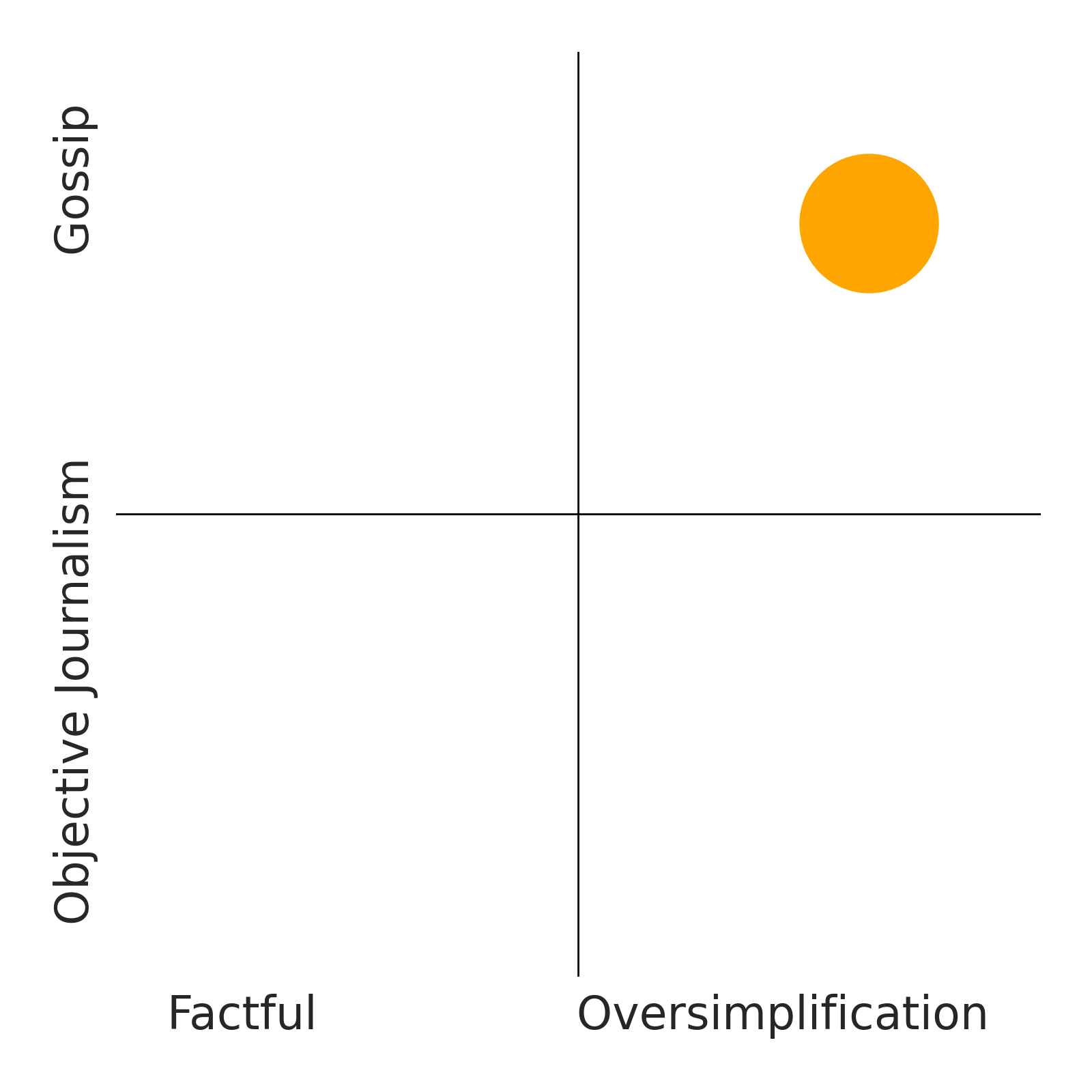
October 18, 2026 · 0 shares
The publisher frames the fatal pregame fall in restrained, attribution-heavy sports-news prose, avoiding political or sensational language in the substantive body.
Automated analysis; not human reviewed. Limitations: The supplied text includes a large block of related-headline links at the top; analysis focuses on the substantive article body. · 6 of 55 available dimensions scored; omitted dimensions are not treated as neutral. · Verified supporting quotes for 5 of 6 scored dimensions.
Claim: The report separates verified facts from attributed statements and avoids first-person evaluation.
“In a statement obtained by multiple outlets, Nellis Air Force Base said that the unidentified officer was from the 6th Combat Training Squadron, Detachment 2, and died at a San Antonio-area hospital from his injuries.” · exact text match
Why: It attributes the death and unit details to an official statement rather than asserting them subjectively.
Claim: The body reports the fatal fall in plain terms without sensational adjectives or graphic description.
“An Air Force officer died from his injuries after falling from the rafters before UTSA's game against Navy at the Alamodome on Saturday night.” · exact text match
Why: The lead states the fatal incident directly and without emotive or graphic embellishment.
Claim: Credibility is strengthened by named institutional sources and direct quotations.
“UTSA said in a statement that it was "deeply saddened by the incident"” · exact text match
Why: The report clearly attributes reactions to official institutional statements.
Claim: The account is rational and evidence-bound, relying on official statements and attributed quotes rather than speculation.
“The American Conference said it had consulted with both teams after the fall.” · exact text match
Why: It documents institutional responses and avoids causal speculation about the fall.
Claim: The report handles a death with restraint, withholding the officer's name and citing privacy concerns.
“We respect the family's privacy and will coordinate any further updates with the appropriate authorities.” · not found in supplied text
Why: The quoted commitment to privacy and restrained identification support fair, transparent reporting.
Claim: The report is coherent and contextual, connecting the pregame demonstration, medical response, official reactions, and game outcome.
“The game was UTSA's Salute to Armed Forces and Veterans night and featured officers rappelling down to the field before kickoff.” · exact text match
Why: It provides relevant context without excessive detail.
The supplied text includes a large block of related-headline links at the top; analysis focuses on the substantive article body.
2026 © Helium Trades
Privacy Policy & Disclosure
* Disclaimer: Nothing on this website constitutes investment advice, performance data or any recommendation that any particular security, portfolio of securities, transaction or investment strategy is suitable for any specific person. Helium Trades is not responsible in any way for the accuracy
of any model predictions or price data. Any mention of a particular security and related prediction data is not a recommendation to buy or sell that security. Investments in securities involve the risk of loss. Past performance is no guarantee of future results. Helium Trades is not responsible for any of your investment decisions,
you should consult a financial expert before engaging in any transaction.