See whether Helium helps you make better-informed decisions. Try every Pro Trader feature for 30 days. No credit card required.
Try every Pro Trader feature for 30 days. No credit card required.
October 31, 2026 · 0 shares
The reporting maintains a neutral, objective tone by presenting conflicting data points and framing the demonstrations as largely peaceful.
Automated analysis; not human reviewed.
Limitations: The article relies on stated claims from conflicting sources (interior ministry vs. organizers) without verifying either claim.
·
52 of 55 available dimensions scored; omitted dimensions are not treated as neutral.
·
Verified supporting quotes for 0 of 52 scored dimensions.
The article relies on stated claims from conflicting sources (interior ministry vs. organizers) without verifying either claim.
October 31, 2026 · 0 shares
The piece provides a balanced descriptive account of widespread French protests, detailing both the protesters' economic grievances and the resulting clashes with police.
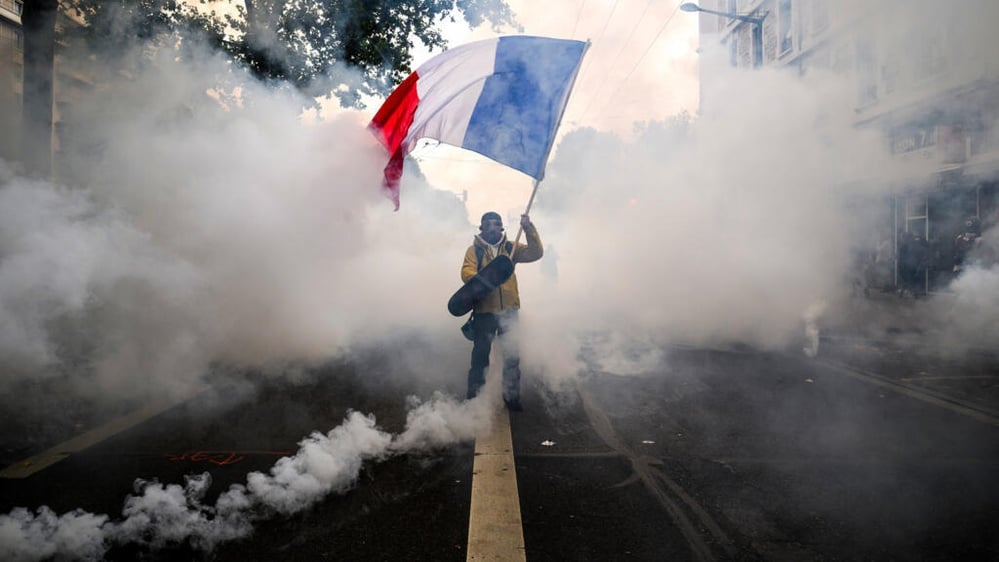
The protest movement, bringing together Yellow Vest activists, trade unions, and high school and university students, initially focused on the rising cost of living, inequality, and deteriorating learning conditions.
Automated analysis; not human reviewed.
·
55 of 55 available dimensions scored; omitted dimensions are not treated as neutral.
·
Verified supporting quotes for 0 of 55 scored dimensions.
October 28, 2026 · 0 shares
The analysis uses a measured, expert-sourced establishment lens that balances protester grievances with security concerns while foregrounding electoral risk from both political extremes.
Automated analysis; not human reviewed.
Limitations: The supplied text lacks a stated author and publication date and includes CFR boilerplate and a duplicated headline, limiting attribution and framing checks.
·
12 of 55 available dimensions scored; omitted dimensions are not treated as neutral.
·
Verified supporting quotes for 12 of 12 scored dimensions.
Claim: The analysis treats the far right and far left as symmetric electoral beneficiaries of the unrest.
“With the students’ concerns being eclipsed by scenes of violent riots, the far right’s law-and-order stance could propel it to victory for the first time in France’s modern history.
The far left, which is popular among young voters, could also benefit electorally from the student movement, setting up a contest between the two extremes.”
· exact text match
Why: Symmetrical framing of both extremes supports measured neutrality on the left-right dimension.
Claim: The text relies on attributed official data and named statements rather than unanchored opinion.
“On October 14, Lecornu stated that 937 police officers, 149 educational personnel, and 248 students had been injured” · exact text match
Why: Attributed official statements are objective reporting.
Claim: The prose is mostly measured but uses some dramatic framing around riots.
“with some experts calling them the worst riots in recent years” · exact text match
Why: Dramatic characterization is attributed and limited, supporting slight sensational framing.
Claim: The analysis emphasizes institutional strain and negative political consequences.
“the unrest has further eroded his credibility” · exact text match
“he is seen as a lame duck that has lost control of his country and connection to his people” · exact text match
Why: Negative assessments of government standing support pessimistic framing.
Claim: The text primarily describes events and electoral dynamics rather than prescribing policy.
“The protests have continued throughout October, affecting more than one thousand of France’s approximately 3,700 high schools and drawing hundreds of thousands of protesters.” · exact text match
Why: Descriptive event reporting supports a descriptive classification.
Claim: Expert opinion is incorporated to interpret electoral implications.
“The scenes of chaos appear to be helping the far right, Matthias Matthijs, a CFR senior fellow for Europe, explained.” · exact text match
Why: Attributed expert interpretation adds some opinion content.
Claim: The report is centrally focused on electoral and governmental politics.
“The student protests are poised to play a pivotal role in France’s presidential election” · exact text match
Why: Core focus on election dynamics supports high political bias.
Claim: The analysis leans on named CFR experts for interpretive claims.
“Matthias Matthijs, a CFR senior fellow for Europe, explained.” · exact text match
“Liana Fix, a senior fellow for Europe at CFR, explained” · exact text match
Why: Repeated citation of senior fellows as interpretive authorities supports an appeal-to-authority classification.
Claim: Credibility is supported by polling, official casualty figures, and named expert sources.
“A poll from October 7 found that 55 percent of French respondents supported the movement.” · exact text match
“On October 14, Lecornu stated that 937 police officers, 149 educational personnel, and 248 students had been injured” · exact text match
Why: Multiple attributed data points support high credibility.
Claim: The report grounds claims in polls, official statements, and quantified outcomes rather than unsupported assertion.
“A poll from October 7 found that 55 percent of French respondents supported the movement.” · exact text match
“Lecornu stated that 937 police officers, 149 educational personnel, and 248 students had been injured” · exact text match
Why: Frequent sourcing and quantified data support a rational or evidence-based classification.
Claim: The text forecasts electoral and protest trajectories beyond current facts.
“The student protests are poised to play a pivotal role in France’s presidential election” · exact text match
“the movement is unlikely to subside anytime soon.
Instead, experts say it will likely intensify.”
· exact text match
Why: Forward-looking forecasts support a speculative classification.
Claim: The report includes competing perspectives, polling data, and official statements with attribution.
“A poll from October 7 found that 55 percent of French respondents supported the movement.” · exact text match
“Matthias Matthijs, a CFR senior fellow for Europe, explained.” · exact text match
Why: Balanced sourcing and attribution indicate high integrity.
The supplied text lacks a stated author and publication date and includes CFR boilerplate and a duplicated headline, limiting attribution and framing checks.
October 31, 2026 · 0 shares
Attribution-heavy and largely balanced, with a slight populist tilt from vivid anti-elite protester grievances while violence is framed as a masked-rioter side element.
The 'gilets jaunes' (yellow vests) is a French anti-cost-of-living movement that emerged in 2018; the article references it among protest participants.
Automated analysis; not human reviewed.
Limitations: The supplied text is duplicated and mixed with unrelated page items, and no byline is present; analysis is limited to the identifiable protest report.
·
14 of 55 available dimensions scored; omitted dimensions are not treated as neutral.
·
Verified supporting quotes for 14 of 14 scored dimensions.
Claim: The report maintains a neutral political framing by pairing protester cost-of-living grievances with official security accounts.
“The marches brought together school students” · exact text match
“Police responded with tear gas and baton charges.” · exact text match
Why: The first quote reflects protest-grievance coverage, while the second records the police response; together they support measured neutrality rather than a clear left-right line.
Claim: A slight populist tilt appears in the prominence given to an anti-elite protester grievance, though official accounts are also present.
““The French economy is doing badly no matter what happens, because today we’re being run by a group of incompetents who juggle billions while families are struggling with a few cents,” said one protester on the Paris march, Jérôme Rodrigues.” · exact text match
Counterevidence:
““A hard core of several hundred rioters” was attacking police with projectiles including a Molotov cocktail, the Paris police prefecture said.” · exact text match
Why: The protester quote supplies an explicit people-versus-elite frame, but the police-prefecture account qualifies it by including official security framing.
Claim: The report presents protest activity and police public-order actions without endorsing either, yielding measured neutrality on state authority.
“The Paris protesters set off peacefully from the Porte de Bagnolet near the ring road” · exact text match
“Officers were “manoeuvring to restore public order”, it added.” · exact text match
Why: The first quote records peaceful protest, while the second gives the police rationale for action; together they support a neutral score.
Claim: The report is heavily attributional and keeps evaluative language limited by crediting contested claims to named sources.
“the interior ministry said” · exact text match
“French media reported” · exact text match
Why: Repeated source attribution supports an objective rather than subjective presentation.
Claim: Violence is described with concrete but attributed detail rather than escalating sensational rhetoric.
“at least one incendiary device was thrown at security forces, French media reported.” · exact text match
“Police responded with tear gas and baton charges.” · exact text match
Why: The details are alarming but remain attributed and factual, supporting an objective rather than sensational framing.
Claim: The report describes events and quoted demands without recommending policies or action.
“Clashes have erupted in Paris, Marseilles and other cities after tens of thousands of demonstrators” · exact text match
“Student protesters vowed to stage new secondary school and university blockades on Tuesday and Thursday.” · exact text match
Why: The article reports events and announced plans descriptively rather than prescribing policies.
Claim: The report includes factual but alarming details of street violence and police force that may heighten fear, without rage-baiting.
“at least one incendiary device was thrown at security forces, French media reported.” · exact text match
“widespread street violence and looting rocked numerous French cities” · exact text match
Why: The violence descriptions are vivid and potentially fear-inducing, but they remain factual and attributed.
Claim: The subject is explicitly political: nationwide protests over government policy and public services, with official responses by ministers and police.
“third wave of protests over the cost of living and deteriorating public services” · exact text match
“70,000 police and gendarmes, including elite units, would be deployed” · exact text match
Why: The report centrally concerns government policy, public services, and state security responses, supporting a high political-content score.
Claim: The report balances anti-government protest grievances with official ministry and police accounts, showing no clear pro- or anti-establishment editorial line.
“trade unions and gilets jaunes (yellow vests) protesters united in anger at the cost of living” · exact text match
““A hard core of several hundred rioters” was attacking police with projectiles including a Molotov cocktail, the Paris police prefecture said.” · exact text match
Why: The inclusion of both anti-government grievance and official security framing supports measured neutrality.
Claim: The tone is largely factual but the subject matter and wording carry a mild negative charge.
“widespread street violence and looting rocked numerous French cities” · exact text match
“one of the worst days of civil unrest in the country’s recent history” · exact text match
Why: The negative descriptors concern real unrest and are not emotive editorializing, but they do give the report a slightly negative emotional valence.
Claim: Visible sourcing, attribution, and uncertainty handling make the report highly credible within the supplied text.
“the interior ministry said” · exact text match
“the Paris police prefecture said” · exact text match
Why: The report credits crowd estimates and security claims to named institutional sources, supporting high credibility.
Claim: Claims are attributed and ordered chronologically rather than advanced through emotional or illogical leaps.
“About 320,000 people – down from an estimated 410,000 last weekend – took part in rallies around the country, the interior ministry said” · exact text match
“at least one incendiary device was thrown at security forces, French media reported.” · exact text match
Why: The report anchors contested estimates and violence claims to named sources, supporting a rational rather than irrational presentation.
Claim: The report shows fair, internally honest sourcing by attributing contested crowd and violence claims to officials, police, protesters, and media.
“the interior ministry said” · exact text match
“French media reported” · exact text match
Why: Visible attribution to multiple source types supports higher internal integrity within the supplied text.
Claim: The report is well organized and intelligent, combining crowd estimates, chronology, geographic spread, and named sources.
“About 320,000 people – down from an estimated 410,000 last weekend – took part in rallies around the country, the interior ministry said” · exact text match
“Protests also took place elsewhere in Europe.” · exact text match
Why: The article supplies comparative turnout figures and extends the frame to Europe, indicating above-average organization and context.
The supplied text is duplicated and mixed with unrelated page items, and no byline is present; analysis is limited to the identifiable protest report.
November 01, 2026 · 0 shares
The reporting emphasizes civil unrest, escalating governmental security measures, and instances of illegal conduct by protesters over the socio-economic grievances raised by the demonstrators.
Young people have been taking to the streets for weeks to protest inadequate staffing and equipment in schools.
Since mid-October, other groups have joined the demonstrations, mainly over the rising cost of living.
Automated analysis; not human reviewed.
·
55 of 55 available dimensions scored; omitted dimensions are not treated as neutral.
·
Verified supporting quotes for 0 of 55 scored dimensions.
November 01, 2026 · 0 shares
The reporting emphasizes civil unrest and anti-police actions, framing the events as widespread confrontations against public order amid significant political turbulence.
Automated analysis; not human reviewed.
·
55 of 55 available dimensions scored; omitted dimensions are not treated as neutral.
·
Verified supporting quotes for 0 of 55 scored dimensions.
October 29, 2026 · 0 shares
Frames the protests mainly through their strategic benefit to Marine Le Pen and the French far right, stressing disorder and centrist weakness while crediting official accounts that most demonstrations were peaceful.
Automated analysis; not human reviewed.
Limitations: Analysis is expert commentary; the claim that protests benefit Le Pen is supported by polling and interpretation, not demonstrated vote effects.
·
8 of 55 available dimensions scored; omitted dimensions are not treated as neutral.
·
Verified supporting quotes for 8 of 8 scored dimensions.
Claim: The text counters sensational images of riots by noting official assessments that most October 17 demonstrations were largely peaceful.
“most of the demonstrations on October 17 were largely peaceful, even according to French authorities.” · exact text match
Why: Explicitly qualifies alarming imagery with official data, reducing sensationalism.
Claim: The piece advances an evaluative conclusion about who benefits politically.
“The answer currently is the far right.” · exact text match
Why: Direct interpretive judgment beyond raw fact.
Claim: The report is centrally about electoral politics and government power.
“Six months out from the presidential election, several factors could still reshape the race.” · exact text match
Why: Core subject is election and political strategy.
Claim: The text cites polling, official assessments, and specific fiscal figures.
“latest polling has the presidential candidate of the far-right National Rally (RN) party well in the lead at over 32 percent” · exact text match
“most of the demonstrations on October 17 were largely peaceful, even according to French authorities.” · exact text match
Why: Visible sourcing and attribution support credibility.
Claim: The analysis qualifies dramatic imagery with official nuance rather than treating all protests as violent.
“But the picture is more nuanced: While images of riots dominated the headlines, most of the demonstrations on October 17 were largely peaceful, even according to French authorities.” · exact text match
Why: Shows evidence-based qualification of a dramatic narrative.
Claim: The text forecasts how upcoming events could reshape the presidential race.
“several factors could still reshape the race” · exact text match
Why: Explicit forward-looking uncertainty.
Claim: The text attributes violence to both far-left and far-right groups and notes official accounts of peaceful demonstrations.
“Much of the violence was attributed to smaller groups operating outside of the main marches, including both black-clad militants of the far-left and far-right activists that stoked clashes in several cities.” · exact text match
Why: Balanced attribution supports fairness.
Claim: The analysis incorporates nuance and multiple causal factors.
“But the picture is more nuanced: While images of riots dominated the headlines, most of the demonstrations on October 17 were largely peaceful, even according to French authorities.” · exact text match
Why: Nuanced qualification indicates analytical sophistication.
Analysis is expert commentary; the claim that protests benefit Le Pen is supported by polling and interpretation, not demonstrated vote effects.
October 28, 2026 · 0 shares
The analysis uses a measured, expert-sourced establishment lens that balances protester grievances with security concerns while foregrounding electoral risk from both political extremes.
Automated analysis; not human reviewed.
Limitations: The supplied text lacks a stated author and publication date and includes CFR boilerplate and a duplicated headline, limiting attribution and framing checks.
·
12 of 55 available dimensions scored; omitted dimensions are not treated as neutral.
·
Verified supporting quotes for 12 of 12 scored dimensions.
Claim: The analysis treats the far right and far left as symmetric electoral beneficiaries of the unrest.
“With the students’ concerns being eclipsed by scenes of violent riots, the far right’s law-and-order stance could propel it to victory for the first time in France’s modern history.
The far left, which is popular among young voters, could also benefit electorally from the student movement, setting up a contest between the two extremes.”
· exact text match
Why: Symmetrical framing of both extremes supports measured neutrality on the left-right dimension.
Claim: The text relies on attributed official data and named statements rather than unanchored opinion.
“On October 14, Lecornu stated that 937 police officers, 149 educational personnel, and 248 students had been injured” · exact text match
Why: Attributed official statements are objective reporting.
Claim: The prose is mostly measured but uses some dramatic framing around riots.
“with some experts calling them the worst riots in recent years” · exact text match
Why: Dramatic characterization is attributed and limited, supporting slight sensational framing.
Claim: The analysis emphasizes institutional strain and negative political consequences.
“the unrest has further eroded his credibility” · exact text match
“he is seen as a lame duck that has lost control of his country and connection to his people” · exact text match
Why: Negative assessments of government standing support pessimistic framing.
Claim: The text primarily describes events and electoral dynamics rather than prescribing policy.
“The protests have continued throughout October, affecting more than one thousand of France’s approximately 3,700 high schools and drawing hundreds of thousands of protesters.” · exact text match
Why: Descriptive event reporting supports a descriptive classification.
Claim: Expert opinion is incorporated to interpret electoral implications.
“The scenes of chaos appear to be helping the far right, Matthias Matthijs, a CFR senior fellow for Europe, explained.” · exact text match
Why: Attributed expert interpretation adds some opinion content.
Claim: The report is centrally focused on electoral and governmental politics.
“The student protests are poised to play a pivotal role in France’s presidential election” · exact text match
Why: Core focus on election dynamics supports high political bias.
Claim: The analysis leans on named CFR experts for interpretive claims.
“Matthias Matthijs, a CFR senior fellow for Europe, explained.” · exact text match
“Liana Fix, a senior fellow for Europe at CFR, explained” · exact text match
Why: Repeated citation of senior fellows as interpretive authorities supports an appeal-to-authority classification.
Claim: Credibility is supported by polling, official casualty figures, and named expert sources.
“A poll from October 7 found that 55 percent of French respondents supported the movement.” · exact text match
“On October 14, Lecornu stated that 937 police officers, 149 educational personnel, and 248 students had been injured” · exact text match
Why: Multiple attributed data points support high credibility.
Claim: The report grounds claims in polls, official statements, and quantified outcomes rather than unsupported assertion.
“A poll from October 7 found that 55 percent of French respondents supported the movement.” · exact text match
“Lecornu stated that 937 police officers, 149 educational personnel, and 248 students had been injured” · exact text match
Why: Frequent sourcing and quantified data support a rational or evidence-based classification.
Claim: The text forecasts electoral and protest trajectories beyond current facts.
“The student protests are poised to play a pivotal role in France’s presidential election” · exact text match
“the movement is unlikely to subside anytime soon.
Instead, experts say it will likely intensify.”
· exact text match
Why: Forward-looking forecasts support a speculative classification.
Claim: The report includes competing perspectives, polling data, and official statements with attribution.
“A poll from October 7 found that 55 percent of French respondents supported the movement.” · exact text match
“Matthias Matthijs, a CFR senior fellow for Europe, explained.” · exact text match
Why: Balanced sourcing and attribution indicate high integrity.
The supplied text lacks a stated author and publication date and includes CFR boilerplate and a duplicated headline, limiting attribution and framing checks.
October 28, 2026 · 0 shares
Frames the French protests as a popular challenge to EU austerity and fiscal orthodoxy, with charged language and named-source economic analysis.
Automated analysis; not human reviewed.
Limitations: Subscription and related-article text in the supplied excerpt was excluded; some evaluative framing is intertwined with reported facts.
·
22 of 55 available dimensions scored; omitted dimensions are not treated as neutral.
·
Verified supporting quotes for 22 of 22 scored dimensions.
Claim: Frames EU fiscal restraint as orthodox dogma while championing France’s social model and left-wing La France Insoumise against pro-business and fiscally conservative actors.
“European authorities want France’s next government to cut welfare.” · exact text match
Why: The opening presents welfare cuts as an external demand and aligns the report with defenders of the social model.
Claim: Positions protesters and national publics against EU technocratic elites and fiscal hawks.
“factions of the European Union’s technocratic elite” · exact text match
Why: The phrase frames EU policy actors as a technocratic elite distinct from ordinary protesters.
Claim: Evaluative language and prescriptive framing dominate over neutral description.
“reviled university selection platform Parcoursup” · exact text match
Why: Calling the platform 'reviled' embeds a strong evaluative judgment.
Claim: Charged crisis language heightens drama beyond neutral reporting.
“sending tremors in bond markets” · exact text match
Why: The metaphor dramatizes bond-market reaction.
Claim: Economic outlook is framed as stagnant, crisis-prone, and negative for French and EU prospects.
“a grim political economy of diminishing expectations” · exact text match
Why: The summary phrase explicitly characterizes the economic trajectory as grim.
Claim: Presents entrenched stagnation and fiscal strain as the likely trajectory.
“slow agony” · exact text match
Why: The quoted warning emphasizes prolonged economic decline.
Claim: Moves from describing protests to arguing that France needs a new economic deal and confrontation with EU budget rules.
“Many in France are arguing that the solution to the fiscal crisis requires a new economic deal in Europe.” · exact text match
Why: The report presents a policy prescription as the solution.
Claim: Interpretive judgments and ideological characterizations are pervasive.
“a grim political economy of diminishing expectations” · exact text match
Why: The description is an interpretive judgment rather than a neutral fact.
Claim: Centers electoral, budgetary, and EU governance conflict.
“For the April 18 first round of the presidential elections” · exact text match
Why: The report is structured around electoral and budget politics.
Claim: Tends to reduce complex EU fiscal disputes to a contest between austerity dogmas and social-model advocates.
“the same budget orthodoxies” · exact text match
Why: The 'orthodoxies' framing compresses complex fiscal debates into a binary.
Claim: Bolsters the argument through named economists, reports, and EU officials.
“said Sandro Gozi, a MEP” · exact text match
Why: The cited MEP lends authority to the critique of German budget policy.
Claim: Uses categorical assertions about future political confrontation.
“There’s not an off chance that France’s next president will have been elected on a program of confronting the existing EU setup.” · exact text match
Why: The double-negative phrasing asserts a future outcome with high certainty.
Claim: Economic events are consistently interpreted through a socialist and anti-austerity frame.
“European capitalism” · exact text match
Why: The phrase frames the crisis as systemic to European capitalism.
Claim: Criticizes EU fiscal orthodoxy and German-led austerity as establishment inertia.
“EU policymaking has a remarkable capacity to trudge on as if by inertia” · exact text match
Why: The phrase depicts established EU policymaking as inert and resistant to change.
Claim: Tone is consistently negative and alarmed about the economic and political trajectory.
“runaway fiscal crisis” · exact text match
Why: The phrase conveys alarm about fiscal deterioration.
Claim: Heavily sourced with named institutions and officials, though selection and framing are one-sided.
“said one adviser close to Enrico Letta” · exact text match
Why: Named sourcing supports credibility while the overall frame remains partisan.
Claim: Uses economic data and named reports and forecasts, though analysis is framed through an ideological protest-versus-austerity lens.
“according to the Organisation for Economic Co-operation and Development” · exact text match
Why: Named institutional forecasts support a generally analytical approach.
Claim: Advocates collective social protection and public spending over market-led retrenchment.
“rebuilding of the French social model” · exact text match
Why: The social model is presented as the desirable collective alternative.
Claim: Includes forecasts and speculative political scenarios about elections and EU confrontation.
“EU leaders should be wary of where the situation could turn if the French are pushed too far.” · exact text match
Why: The warning projects future political consequences beyond reported facts.
Claim: Loaded labels and asymmetric framing present austerity proponents as dogmatic while protesters are treated sympathetically.
“fiscal hawks” · exact text match
Why: The 'fiscal hawks' label carries a loaded characterization of budget-cut proponents.
Claim: Attributes key claims to named reports, economists, and officials while maintaining an openly partisan analytical frame.
“former Italian Premier Mario Draghi authored an influential report” · exact text match
Why: Named attribution supports transparency despite ideological framing.
Claim: Connects protest data, bond markets, EU budget talks, and electoral incentives in a structured analysis.
“The cost of serving French debt this year is estimated to exceed the education ministry’s operating budget.” · exact text match
Why: The debt-service comparison demonstrates substantive analytical linkage.
Subscription and related-article text in the supplied excerpt was excluded; some evaluative framing is intertwined with reported facts.
October 31, 2026 · 0 shares
Attribution-heavy and largely balanced, with a slight populist tilt from vivid anti-elite protester grievances while violence is framed as a masked-rioter side element.
The 'gilets jaunes' (yellow vests) is a French anti-cost-of-living movement that emerged in 2018; the article references it among protest participants.
Automated analysis; not human reviewed. Limitations: The supplied text is duplicated and mixed with unrelated page items, and no byline is present; analysis is limited to the identifiable protest report. · 14 of 55 available dimensions scored; omitted dimensions are not treated as neutral. · Verified supporting quotes for 14 of 14 scored dimensions.
Claim: The report maintains a neutral political framing by pairing protester cost-of-living grievances with official security accounts.
“The marches brought together school students” · exact text match
“Police responded with tear gas and baton charges.” · exact text match
Why: The first quote reflects protest-grievance coverage, while the second records the police response; together they support measured neutrality rather than a clear left-right line.
Claim: A slight populist tilt appears in the prominence given to an anti-elite protester grievance, though official accounts are also present.
““The French economy is doing badly no matter what happens, because today we’re being run by a group of incompetents who juggle billions while families are struggling with a few cents,” said one protester on the Paris march, Jérôme Rodrigues.” · exact text match
Counterevidence:
““A hard core of several hundred rioters” was attacking police with projectiles including a Molotov cocktail, the Paris police prefecture said.” · exact text match
Why: The protester quote supplies an explicit people-versus-elite frame, but the police-prefecture account qualifies it by including official security framing.
Claim: The report presents protest activity and police public-order actions without endorsing either, yielding measured neutrality on state authority.
“The Paris protesters set off peacefully from the Porte de Bagnolet near the ring road” · exact text match
“Officers were “manoeuvring to restore public order”, it added.” · exact text match
Why: The first quote records peaceful protest, while the second gives the police rationale for action; together they support a neutral score.
Claim: The report is heavily attributional and keeps evaluative language limited by crediting contested claims to named sources.
“the interior ministry said” · exact text match
“French media reported” · exact text match
Why: Repeated source attribution supports an objective rather than subjective presentation.
Claim: Violence is described with concrete but attributed detail rather than escalating sensational rhetoric.
“at least one incendiary device was thrown at security forces, French media reported.” · exact text match
“Police responded with tear gas and baton charges.” · exact text match
Why: The details are alarming but remain attributed and factual, supporting an objective rather than sensational framing.
Claim: The report describes events and quoted demands without recommending policies or action.
“Clashes have erupted in Paris, Marseilles and other cities after tens of thousands of demonstrators” · exact text match
“Student protesters vowed to stage new secondary school and university blockades on Tuesday and Thursday.” · exact text match
Why: The article reports events and announced plans descriptively rather than prescribing policies.
Claim: The report includes factual but alarming details of street violence and police force that may heighten fear, without rage-baiting.
“at least one incendiary device was thrown at security forces, French media reported.” · exact text match
“widespread street violence and looting rocked numerous French cities” · exact text match
Why: The violence descriptions are vivid and potentially fear-inducing, but they remain factual and attributed.
Claim: The subject is explicitly political: nationwide protests over government policy and public services, with official responses by ministers and police.
“third wave of protests over the cost of living and deteriorating public services” · exact text match
“70,000 police and gendarmes, including elite units, would be deployed” · exact text match
Why: The report centrally concerns government policy, public services, and state security responses, supporting a high political-content score.
Claim: The report balances anti-government protest grievances with official ministry and police accounts, showing no clear pro- or anti-establishment editorial line.
“trade unions and gilets jaunes (yellow vests) protesters united in anger at the cost of living” · exact text match
““A hard core of several hundred rioters” was attacking police with projectiles including a Molotov cocktail, the Paris police prefecture said.” · exact text match
Why: The inclusion of both anti-government grievance and official security framing supports measured neutrality.
Claim: The tone is largely factual but the subject matter and wording carry a mild negative charge.
“widespread street violence and looting rocked numerous French cities” · exact text match
“one of the worst days of civil unrest in the country’s recent history” · exact text match
Why: The negative descriptors concern real unrest and are not emotive editorializing, but they do give the report a slightly negative emotional valence.
Claim: Visible sourcing, attribution, and uncertainty handling make the report highly credible within the supplied text.
“the interior ministry said” · exact text match
“the Paris police prefecture said” · exact text match
Why: The report credits crowd estimates and security claims to named institutional sources, supporting high credibility.
Claim: Claims are attributed and ordered chronologically rather than advanced through emotional or illogical leaps.
“About 320,000 people – down from an estimated 410,000 last weekend – took part in rallies around the country, the interior ministry said” · exact text match
“at least one incendiary device was thrown at security forces, French media reported.” · exact text match
Why: The report anchors contested estimates and violence claims to named sources, supporting a rational rather than irrational presentation.
Claim: The report shows fair, internally honest sourcing by attributing contested crowd and violence claims to officials, police, protesters, and media.
“the interior ministry said” · exact text match
“French media reported” · exact text match
Why: Visible attribution to multiple source types supports higher internal integrity within the supplied text.
Claim: The report is well organized and intelligent, combining crowd estimates, chronology, geographic spread, and named sources.
“About 320,000 people – down from an estimated 410,000 last weekend – took part in rallies around the country, the interior ministry said” · exact text match
“Protests also took place elsewhere in Europe.” · exact text match
Why: The article supplies comparative turnout figures and extends the frame to Europe, indicating above-average organization and context.
The supplied text is duplicated and mixed with unrelated page items, and no byline is present; analysis is limited to the identifiable protest report.
October 31, 2026 · 0 shares
The reporting maintains a neutral, objective tone by presenting conflicting data points and framing the demonstrations as largely peaceful.
Automated analysis; not human reviewed. Limitations: The article relies on stated claims from conflicting sources (interior ministry vs. organizers) without verifying either claim. · 52 of 55 available dimensions scored; omitted dimensions are not treated as neutral. · Verified supporting quotes for 0 of 52 scored dimensions.
The article relies on stated claims from conflicting sources (interior ministry vs. organizers) without verifying either claim.
October 31, 2026 · 0 shares
The piece provides a balanced descriptive account of widespread French protests, detailing both the protesters' economic grievances and the resulting clashes with police.
The protest movement, bringing together Yellow Vest activists, trade unions, and high school and university students, initially focused on the rising cost of living, inequality, and deteriorating learning conditions.
Automated analysis; not human reviewed. · 55 of 55 available dimensions scored; omitted dimensions are not treated as neutral. · Verified supporting quotes for 0 of 55 scored dimensions.
November 01, 2026 · 0 shares
The reporting emphasizes civil unrest and anti-police actions, framing the events as widespread confrontations against public order amid significant political turbulence.
Automated analysis; not human reviewed. · 55 of 55 available dimensions scored; omitted dimensions are not treated as neutral. · Verified supporting quotes for 0 of 55 scored dimensions.
October 28, 2026 · 0 shares
Frames the French protests as a popular challenge to EU austerity and fiscal orthodoxy, with charged language and named-source economic analysis.
Automated analysis; not human reviewed. Limitations: Subscription and related-article text in the supplied excerpt was excluded; some evaluative framing is intertwined with reported facts. · 22 of 55 available dimensions scored; omitted dimensions are not treated as neutral. · Verified supporting quotes for 22 of 22 scored dimensions.
Claim: Frames EU fiscal restraint as orthodox dogma while championing France’s social model and left-wing La France Insoumise against pro-business and fiscally conservative actors.
“European authorities want France’s next government to cut welfare.” · exact text match
Why: The opening presents welfare cuts as an external demand and aligns the report with defenders of the social model.
Claim: Positions protesters and national publics against EU technocratic elites and fiscal hawks.
“factions of the European Union’s technocratic elite” · exact text match
Why: The phrase frames EU policy actors as a technocratic elite distinct from ordinary protesters.
Claim: Evaluative language and prescriptive framing dominate over neutral description.
“reviled university selection platform Parcoursup” · exact text match
Why: Calling the platform 'reviled' embeds a strong evaluative judgment.
Claim: Charged crisis language heightens drama beyond neutral reporting.
“sending tremors in bond markets” · exact text match
Why: The metaphor dramatizes bond-market reaction.
Claim: Economic outlook is framed as stagnant, crisis-prone, and negative for French and EU prospects.
“a grim political economy of diminishing expectations” · exact text match
Why: The summary phrase explicitly characterizes the economic trajectory as grim.
Claim: Presents entrenched stagnation and fiscal strain as the likely trajectory.
“slow agony” · exact text match
Why: The quoted warning emphasizes prolonged economic decline.
Claim: Moves from describing protests to arguing that France needs a new economic deal and confrontation with EU budget rules.
“Many in France are arguing that the solution to the fiscal crisis requires a new economic deal in Europe.” · exact text match
Why: The report presents a policy prescription as the solution.
Claim: Interpretive judgments and ideological characterizations are pervasive.
“a grim political economy of diminishing expectations” · exact text match
Why: The description is an interpretive judgment rather than a neutral fact.
Claim: Centers electoral, budgetary, and EU governance conflict.
“For the April 18 first round of the presidential elections” · exact text match
Why: The report is structured around electoral and budget politics.
Claim: Tends to reduce complex EU fiscal disputes to a contest between austerity dogmas and social-model advocates.
“the same budget orthodoxies” · exact text match
Why: The 'orthodoxies' framing compresses complex fiscal debates into a binary.
Claim: Bolsters the argument through named economists, reports, and EU officials.
“said Sandro Gozi, a MEP” · exact text match
Why: The cited MEP lends authority to the critique of German budget policy.
Claim: Uses categorical assertions about future political confrontation.
“There’s not an off chance that France’s next president will have been elected on a program of confronting the existing EU setup.” · exact text match
Why: The double-negative phrasing asserts a future outcome with high certainty.
Claim: Economic events are consistently interpreted through a socialist and anti-austerity frame.
“European capitalism” · exact text match
Why: The phrase frames the crisis as systemic to European capitalism.
Claim: Criticizes EU fiscal orthodoxy and German-led austerity as establishment inertia.
“EU policymaking has a remarkable capacity to trudge on as if by inertia” · exact text match
Why: The phrase depicts established EU policymaking as inert and resistant to change.
Claim: Tone is consistently negative and alarmed about the economic and political trajectory.
“runaway fiscal crisis” · exact text match
Why: The phrase conveys alarm about fiscal deterioration.
Claim: Heavily sourced with named institutions and officials, though selection and framing are one-sided.
“said one adviser close to Enrico Letta” · exact text match
Why: Named sourcing supports credibility while the overall frame remains partisan.
Claim: Uses economic data and named reports and forecasts, though analysis is framed through an ideological protest-versus-austerity lens.
“according to the Organisation for Economic Co-operation and Development” · exact text match
Why: Named institutional forecasts support a generally analytical approach.
Claim: Advocates collective social protection and public spending over market-led retrenchment.
“rebuilding of the French social model” · exact text match
Why: The social model is presented as the desirable collective alternative.
Claim: Includes forecasts and speculative political scenarios about elections and EU confrontation.
“EU leaders should be wary of where the situation could turn if the French are pushed too far.” · exact text match
Why: The warning projects future political consequences beyond reported facts.
Claim: Loaded labels and asymmetric framing present austerity proponents as dogmatic while protesters are treated sympathetically.
“fiscal hawks” · exact text match
Why: The 'fiscal hawks' label carries a loaded characterization of budget-cut proponents.
Claim: Attributes key claims to named reports, economists, and officials while maintaining an openly partisan analytical frame.
“former Italian Premier Mario Draghi authored an influential report” · exact text match
Why: Named attribution supports transparency despite ideological framing.
Claim: Connects protest data, bond markets, EU budget talks, and electoral incentives in a structured analysis.
“The cost of serving French debt this year is estimated to exceed the education ministry’s operating budget.” · exact text match
Why: The debt-service comparison demonstrates substantive analytical linkage.
Subscription and related-article text in the supplied excerpt was excluded; some evaluative framing is intertwined with reported facts.
October 29, 2026 · 0 shares
Frames the protests mainly through their strategic benefit to Marine Le Pen and the French far right, stressing disorder and centrist weakness while crediting official accounts that most demonstrations were peaceful.
Automated analysis; not human reviewed. Limitations: Analysis is expert commentary; the claim that protests benefit Le Pen is supported by polling and interpretation, not demonstrated vote effects. · 8 of 55 available dimensions scored; omitted dimensions are not treated as neutral. · Verified supporting quotes for 8 of 8 scored dimensions.
Claim: The text counters sensational images of riots by noting official assessments that most October 17 demonstrations were largely peaceful.
“most of the demonstrations on October 17 were largely peaceful, even according to French authorities.” · exact text match
Why: Explicitly qualifies alarming imagery with official data, reducing sensationalism.
Claim: The piece advances an evaluative conclusion about who benefits politically.
“The answer currently is the far right.” · exact text match
Why: Direct interpretive judgment beyond raw fact.
Claim: The report is centrally about electoral politics and government power.
“Six months out from the presidential election, several factors could still reshape the race.” · exact text match
Why: Core subject is election and political strategy.
Claim: The text cites polling, official assessments, and specific fiscal figures.
“latest polling has the presidential candidate of the far-right National Rally (RN) party well in the lead at over 32 percent” · exact text match
“most of the demonstrations on October 17 were largely peaceful, even according to French authorities.” · exact text match
Why: Visible sourcing and attribution support credibility.
Claim: The analysis qualifies dramatic imagery with official nuance rather than treating all protests as violent.
“But the picture is more nuanced: While images of riots dominated the headlines, most of the demonstrations on October 17 were largely peaceful, even according to French authorities.” · exact text match
Why: Shows evidence-based qualification of a dramatic narrative.
Claim: The text forecasts how upcoming events could reshape the presidential race.
“several factors could still reshape the race” · exact text match
Why: Explicit forward-looking uncertainty.
Claim: The text attributes violence to both far-left and far-right groups and notes official accounts of peaceful demonstrations.
“Much of the violence was attributed to smaller groups operating outside of the main marches, including both black-clad militants of the far-left and far-right activists that stoked clashes in several cities.” · exact text match
Why: Balanced attribution supports fairness.
Claim: The analysis incorporates nuance and multiple causal factors.
“But the picture is more nuanced: While images of riots dominated the headlines, most of the demonstrations on October 17 were largely peaceful, even according to French authorities.” · exact text match
Why: Nuanced qualification indicates analytical sophistication.
Analysis is expert commentary; the claim that protests benefit Le Pen is supported by polling and interpretation, not demonstrated vote effects.
October 28, 2026 · 0 shares
The analysis uses a measured, expert-sourced establishment lens that balances protester grievances with security concerns while foregrounding electoral risk from both political extremes.
Automated analysis; not human reviewed. Limitations: The supplied text lacks a stated author and publication date and includes CFR boilerplate and a duplicated headline, limiting attribution and framing checks. · 12 of 55 available dimensions scored; omitted dimensions are not treated as neutral. · Verified supporting quotes for 12 of 12 scored dimensions.
Claim: The analysis treats the far right and far left as symmetric electoral beneficiaries of the unrest.
“With the students’ concerns being eclipsed by scenes of violent riots, the far right’s law-and-order stance could propel it to victory for the first time in France’s modern history. The far left, which is popular among young voters, could also benefit electorally from the student movement, setting up a contest between the two extremes.” · exact text match
Why: Symmetrical framing of both extremes supports measured neutrality on the left-right dimension.
Claim: The text relies on attributed official data and named statements rather than unanchored opinion.
“On October 14, Lecornu stated that 937 police officers, 149 educational personnel, and 248 students had been injured” · exact text match
Why: Attributed official statements are objective reporting.
Claim: The prose is mostly measured but uses some dramatic framing around riots.
“with some experts calling them the worst riots in recent years” · exact text match
Why: Dramatic characterization is attributed and limited, supporting slight sensational framing.
Claim: The analysis emphasizes institutional strain and negative political consequences.
“the unrest has further eroded his credibility” · exact text match
“he is seen as a lame duck that has lost control of his country and connection to his people” · exact text match
Why: Negative assessments of government standing support pessimistic framing.
Claim: The text primarily describes events and electoral dynamics rather than prescribing policy.
“The protests have continued throughout October, affecting more than one thousand of France’s approximately 3,700 high schools and drawing hundreds of thousands of protesters.” · exact text match
Why: Descriptive event reporting supports a descriptive classification.
Claim: Expert opinion is incorporated to interpret electoral implications.
“The scenes of chaos appear to be helping the far right, Matthias Matthijs, a CFR senior fellow for Europe, explained.” · exact text match
Why: Attributed expert interpretation adds some opinion content.
Claim: The report is centrally focused on electoral and governmental politics.
“The student protests are poised to play a pivotal role in France’s presidential election” · exact text match
Why: Core focus on election dynamics supports high political bias.
Claim: The analysis leans on named CFR experts for interpretive claims.
“Matthias Matthijs, a CFR senior fellow for Europe, explained.” · exact text match
“Liana Fix, a senior fellow for Europe at CFR, explained” · exact text match
Why: Repeated citation of senior fellows as interpretive authorities supports an appeal-to-authority classification.
Claim: Credibility is supported by polling, official casualty figures, and named expert sources.
“A poll from October 7 found that 55 percent of French respondents supported the movement.” · exact text match
“On October 14, Lecornu stated that 937 police officers, 149 educational personnel, and 248 students had been injured” · exact text match
Why: Multiple attributed data points support high credibility.
Claim: The report grounds claims in polls, official statements, and quantified outcomes rather than unsupported assertion.
“A poll from October 7 found that 55 percent of French respondents supported the movement.” · exact text match
“Lecornu stated that 937 police officers, 149 educational personnel, and 248 students had been injured” · exact text match
Why: Frequent sourcing and quantified data support a rational or evidence-based classification.
Claim: The text forecasts electoral and protest trajectories beyond current facts.
“The student protests are poised to play a pivotal role in France’s presidential election” · exact text match
“the movement is unlikely to subside anytime soon. Instead, experts say it will likely intensify.” · exact text match
Why: Forward-looking forecasts support a speculative classification.
Claim: The report includes competing perspectives, polling data, and official statements with attribution.
“A poll from October 7 found that 55 percent of French respondents supported the movement.” · exact text match
“Matthias Matthijs, a CFR senior fellow for Europe, explained.” · exact text match
Why: Balanced sourcing and attribution indicate high integrity.
The supplied text lacks a stated author and publication date and includes CFR boilerplate and a duplicated headline, limiting attribution and framing checks.
Helium Bias
Story Blindspots
October 31, 2026 · 0 shares
The reporting maintains a neutral, objective tone by presenting conflicting data points and framing the demonstrations as largely peaceful.
Automated analysis; not human reviewed. Limitations: The article relies on stated claims from conflicting sources (interior ministry vs. organizers) without verifying either claim. · 52 of 55 available dimensions scored; omitted dimensions are not treated as neutral. · Verified supporting quotes for 0 of 52 scored dimensions.
The article relies on stated claims from conflicting sources (interior ministry vs. organizers) without verifying either claim.
October 31, 2026 · 0 shares
The piece provides a balanced descriptive account of widespread French protests, detailing both the protesters' economic grievances and the resulting clashes with police.
The protest movement, bringing together Yellow Vest activists, trade unions, and high school and university students, initially focused on the rising cost of living, inequality, and deteriorating learning conditions.
Automated analysis; not human reviewed. · 55 of 55 available dimensions scored; omitted dimensions are not treated as neutral. · Verified supporting quotes for 0 of 55 scored dimensions.
October 31, 2026 · 0 shares
Attribution-heavy and largely balanced, with a slight populist tilt from vivid anti-elite protester grievances while violence is framed as a masked-rioter side element.
The 'gilets jaunes' (yellow vests) is a French anti-cost-of-living movement that emerged in 2018; the article references it among protest participants.
Automated analysis; not human reviewed. Limitations: The supplied text is duplicated and mixed with unrelated page items, and no byline is present; analysis is limited to the identifiable protest report. · 14 of 55 available dimensions scored; omitted dimensions are not treated as neutral. · Verified supporting quotes for 14 of 14 scored dimensions.
Claim: The report maintains a neutral political framing by pairing protester cost-of-living grievances with official security accounts.
“The marches brought together school students” · exact text match
“Police responded with tear gas and baton charges.” · exact text match
Why: The first quote reflects protest-grievance coverage, while the second records the police response; together they support measured neutrality rather than a clear left-right line.
Claim: A slight populist tilt appears in the prominence given to an anti-elite protester grievance, though official accounts are also present.
““The French economy is doing badly no matter what happens, because today we’re being run by a group of incompetents who juggle billions while families are struggling with a few cents,” said one protester on the Paris march, Jérôme Rodrigues.” · exact text match
Counterevidence:
““A hard core of several hundred rioters” was attacking police with projectiles including a Molotov cocktail, the Paris police prefecture said.” · exact text match
Why: The protester quote supplies an explicit people-versus-elite frame, but the police-prefecture account qualifies it by including official security framing.
Claim: The report presents protest activity and police public-order actions without endorsing either, yielding measured neutrality on state authority.
“The Paris protesters set off peacefully from the Porte de Bagnolet near the ring road” · exact text match
“Officers were “manoeuvring to restore public order”, it added.” · exact text match
Why: The first quote records peaceful protest, while the second gives the police rationale for action; together they support a neutral score.
Claim: The report is heavily attributional and keeps evaluative language limited by crediting contested claims to named sources.
“the interior ministry said” · exact text match
“French media reported” · exact text match
Why: Repeated source attribution supports an objective rather than subjective presentation.
Claim: Violence is described with concrete but attributed detail rather than escalating sensational rhetoric.
“at least one incendiary device was thrown at security forces, French media reported.” · exact text match
“Police responded with tear gas and baton charges.” · exact text match
Why: The details are alarming but remain attributed and factual, supporting an objective rather than sensational framing.
Claim: The report describes events and quoted demands without recommending policies or action.
“Clashes have erupted in Paris, Marseilles and other cities after tens of thousands of demonstrators” · exact text match
“Student protesters vowed to stage new secondary school and university blockades on Tuesday and Thursday.” · exact text match
Why: The article reports events and announced plans descriptively rather than prescribing policies.
Claim: The report includes factual but alarming details of street violence and police force that may heighten fear, without rage-baiting.
“at least one incendiary device was thrown at security forces, French media reported.” · exact text match
“widespread street violence and looting rocked numerous French cities” · exact text match
Why: The violence descriptions are vivid and potentially fear-inducing, but they remain factual and attributed.
Claim: The subject is explicitly political: nationwide protests over government policy and public services, with official responses by ministers and police.
“third wave of protests over the cost of living and deteriorating public services” · exact text match
“70,000 police and gendarmes, including elite units, would be deployed” · exact text match
Why: The report centrally concerns government policy, public services, and state security responses, supporting a high political-content score.
Claim: The report balances anti-government protest grievances with official ministry and police accounts, showing no clear pro- or anti-establishment editorial line.
“trade unions and gilets jaunes (yellow vests) protesters united in anger at the cost of living” · exact text match
““A hard core of several hundred rioters” was attacking police with projectiles including a Molotov cocktail, the Paris police prefecture said.” · exact text match
Why: The inclusion of both anti-government grievance and official security framing supports measured neutrality.
Claim: The tone is largely factual but the subject matter and wording carry a mild negative charge.
“widespread street violence and looting rocked numerous French cities” · exact text match
“one of the worst days of civil unrest in the country’s recent history” · exact text match
Why: The negative descriptors concern real unrest and are not emotive editorializing, but they do give the report a slightly negative emotional valence.
Claim: Visible sourcing, attribution, and uncertainty handling make the report highly credible within the supplied text.
“the interior ministry said” · exact text match
“the Paris police prefecture said” · exact text match
Why: The report credits crowd estimates and security claims to named institutional sources, supporting high credibility.
Claim: Claims are attributed and ordered chronologically rather than advanced through emotional or illogical leaps.
“About 320,000 people – down from an estimated 410,000 last weekend – took part in rallies around the country, the interior ministry said” · exact text match
“at least one incendiary device was thrown at security forces, French media reported.” · exact text match
Why: The report anchors contested estimates and violence claims to named sources, supporting a rational rather than irrational presentation.
Claim: The report shows fair, internally honest sourcing by attributing contested crowd and violence claims to officials, police, protesters, and media.
“the interior ministry said” · exact text match
“French media reported” · exact text match
Why: Visible attribution to multiple source types supports higher internal integrity within the supplied text.
Claim: The report is well organized and intelligent, combining crowd estimates, chronology, geographic spread, and named sources.
“About 320,000 people – down from an estimated 410,000 last weekend – took part in rallies around the country, the interior ministry said” · exact text match
“Protests also took place elsewhere in Europe.” · exact text match
Why: The article supplies comparative turnout figures and extends the frame to Europe, indicating above-average organization and context.
The supplied text is duplicated and mixed with unrelated page items, and no byline is present; analysis is limited to the identifiable protest report.
October 31, 2026 · 0 shares
The reporting maintains a neutral, objective tone by presenting conflicting data points and framing the demonstrations as largely peaceful.
Automated analysis; not human reviewed. Limitations: The article relies on stated claims from conflicting sources (interior ministry vs. organizers) without verifying either claim. · 52 of 55 available dimensions scored; omitted dimensions are not treated as neutral. · Verified supporting quotes for 0 of 52 scored dimensions.
The article relies on stated claims from conflicting sources (interior ministry vs. organizers) without verifying either claim.
October 31, 2026 · 0 shares
Attribution-heavy and largely balanced, with a slight populist tilt from vivid anti-elite protester grievances while violence is framed as a masked-rioter side element.
The 'gilets jaunes' (yellow vests) is a French anti-cost-of-living movement that emerged in 2018; the article references it among protest participants.
Automated analysis; not human reviewed. Limitations: The supplied text is duplicated and mixed with unrelated page items, and no byline is present; analysis is limited to the identifiable protest report. · 14 of 55 available dimensions scored; omitted dimensions are not treated as neutral. · Verified supporting quotes for 14 of 14 scored dimensions.
Claim: The report maintains a neutral political framing by pairing protester cost-of-living grievances with official security accounts.
“The marches brought together school students” · exact text match
“Police responded with tear gas and baton charges.” · exact text match
Why: The first quote reflects protest-grievance coverage, while the second records the police response; together they support measured neutrality rather than a clear left-right line.
Claim: A slight populist tilt appears in the prominence given to an anti-elite protester grievance, though official accounts are also present.
““The French economy is doing badly no matter what happens, because today we’re being run by a group of incompetents who juggle billions while families are struggling with a few cents,” said one protester on the Paris march, Jérôme Rodrigues.” · exact text match
Counterevidence:
““A hard core of several hundred rioters” was attacking police with projectiles including a Molotov cocktail, the Paris police prefecture said.” · exact text match
Why: The protester quote supplies an explicit people-versus-elite frame, but the police-prefecture account qualifies it by including official security framing.
Claim: The report presents protest activity and police public-order actions without endorsing either, yielding measured neutrality on state authority.
“The Paris protesters set off peacefully from the Porte de Bagnolet near the ring road” · exact text match
“Officers were “manoeuvring to restore public order”, it added.” · exact text match
Why: The first quote records peaceful protest, while the second gives the police rationale for action; together they support a neutral score.
Claim: The report is heavily attributional and keeps evaluative language limited by crediting contested claims to named sources.
“the interior ministry said” · exact text match
“French media reported” · exact text match
Why: Repeated source attribution supports an objective rather than subjective presentation.
Claim: Violence is described with concrete but attributed detail rather than escalating sensational rhetoric.
“at least one incendiary device was thrown at security forces, French media reported.” · exact text match
“Police responded with tear gas and baton charges.” · exact text match
Why: The details are alarming but remain attributed and factual, supporting an objective rather than sensational framing.
Claim: The report describes events and quoted demands without recommending policies or action.
“Clashes have erupted in Paris, Marseilles and other cities after tens of thousands of demonstrators” · exact text match
“Student protesters vowed to stage new secondary school and university blockades on Tuesday and Thursday.” · exact text match
Why: The article reports events and announced plans descriptively rather than prescribing policies.
Claim: The report includes factual but alarming details of street violence and police force that may heighten fear, without rage-baiting.
“at least one incendiary device was thrown at security forces, French media reported.” · exact text match
“widespread street violence and looting rocked numerous French cities” · exact text match
Why: The violence descriptions are vivid and potentially fear-inducing, but they remain factual and attributed.
Claim: The subject is explicitly political: nationwide protests over government policy and public services, with official responses by ministers and police.
“third wave of protests over the cost of living and deteriorating public services” · exact text match
“70,000 police and gendarmes, including elite units, would be deployed” · exact text match
Why: The report centrally concerns government policy, public services, and state security responses, supporting a high political-content score.
Claim: The report balances anti-government protest grievances with official ministry and police accounts, showing no clear pro- or anti-establishment editorial line.
“trade unions and gilets jaunes (yellow vests) protesters united in anger at the cost of living” · exact text match
““A hard core of several hundred rioters” was attacking police with projectiles including a Molotov cocktail, the Paris police prefecture said.” · exact text match
Why: The inclusion of both anti-government grievance and official security framing supports measured neutrality.
Claim: The tone is largely factual but the subject matter and wording carry a mild negative charge.
“widespread street violence and looting rocked numerous French cities” · exact text match
“one of the worst days of civil unrest in the country’s recent history” · exact text match
Why: The negative descriptors concern real unrest and are not emotive editorializing, but they do give the report a slightly negative emotional valence.
Claim: Visible sourcing, attribution, and uncertainty handling make the report highly credible within the supplied text.
“the interior ministry said” · exact text match
“the Paris police prefecture said” · exact text match
Why: The report credits crowd estimates and security claims to named institutional sources, supporting high credibility.
Claim: Claims are attributed and ordered chronologically rather than advanced through emotional or illogical leaps.
“About 320,000 people – down from an estimated 410,000 last weekend – took part in rallies around the country, the interior ministry said” · exact text match
“at least one incendiary device was thrown at security forces, French media reported.” · exact text match
Why: The report anchors contested estimates and violence claims to named sources, supporting a rational rather than irrational presentation.
Claim: The report shows fair, internally honest sourcing by attributing contested crowd and violence claims to officials, police, protesters, and media.
“the interior ministry said” · exact text match
“French media reported” · exact text match
Why: Visible attribution to multiple source types supports higher internal integrity within the supplied text.
Claim: The report is well organized and intelligent, combining crowd estimates, chronology, geographic spread, and named sources.
“About 320,000 people – down from an estimated 410,000 last weekend – took part in rallies around the country, the interior ministry said” · exact text match
“Protests also took place elsewhere in Europe.” · exact text match
Why: The article supplies comparative turnout figures and extends the frame to Europe, indicating above-average organization and context.
The supplied text is duplicated and mixed with unrelated page items, and no byline is present; analysis is limited to the identifiable protest report.
October 29, 2026 · 0 shares
Frames the protests mainly through their strategic benefit to Marine Le Pen and the French far right, stressing disorder and centrist weakness while crediting official accounts that most demonstrations were peaceful.
Automated analysis; not human reviewed. Limitations: Analysis is expert commentary; the claim that protests benefit Le Pen is supported by polling and interpretation, not demonstrated vote effects. · 8 of 55 available dimensions scored; omitted dimensions are not treated as neutral. · Verified supporting quotes for 8 of 8 scored dimensions.
Claim: The text counters sensational images of riots by noting official assessments that most October 17 demonstrations were largely peaceful.
“most of the demonstrations on October 17 were largely peaceful, even according to French authorities.” · exact text match
Why: Explicitly qualifies alarming imagery with official data, reducing sensationalism.
Claim: The piece advances an evaluative conclusion about who benefits politically.
“The answer currently is the far right.” · exact text match
Why: Direct interpretive judgment beyond raw fact.
Claim: The report is centrally about electoral politics and government power.
“Six months out from the presidential election, several factors could still reshape the race.” · exact text match
Why: Core subject is election and political strategy.
Claim: The text cites polling, official assessments, and specific fiscal figures.
“latest polling has the presidential candidate of the far-right National Rally (RN) party well in the lead at over 32 percent” · exact text match
“most of the demonstrations on October 17 were largely peaceful, even according to French authorities.” · exact text match
Why: Visible sourcing and attribution support credibility.
Claim: The analysis qualifies dramatic imagery with official nuance rather than treating all protests as violent.
“But the picture is more nuanced: While images of riots dominated the headlines, most of the demonstrations on October 17 were largely peaceful, even according to French authorities.” · exact text match
Why: Shows evidence-based qualification of a dramatic narrative.
Claim: The text forecasts how upcoming events could reshape the presidential race.
“several factors could still reshape the race” · exact text match
Why: Explicit forward-looking uncertainty.
Claim: The text attributes violence to both far-left and far-right groups and notes official accounts of peaceful demonstrations.
“Much of the violence was attributed to smaller groups operating outside of the main marches, including both black-clad militants of the far-left and far-right activists that stoked clashes in several cities.” · exact text match
Why: Balanced attribution supports fairness.
Claim: The analysis incorporates nuance and multiple causal factors.
“But the picture is more nuanced: While images of riots dominated the headlines, most of the demonstrations on October 17 were largely peaceful, even according to French authorities.” · exact text match
Why: Nuanced qualification indicates analytical sophistication.
Analysis is expert commentary; the claim that protests benefit Le Pen is supported by polling and interpretation, not demonstrated vote effects.
October 31, 2026 · 0 shares
Attribution-heavy and largely balanced, with a slight populist tilt from vivid anti-elite protester grievances while violence is framed as a masked-rioter side element.
The 'gilets jaunes' (yellow vests) is a French anti-cost-of-living movement that emerged in 2018; the article references it among protest participants.
Automated analysis; not human reviewed. Limitations: The supplied text is duplicated and mixed with unrelated page items, and no byline is present; analysis is limited to the identifiable protest report. · 14 of 55 available dimensions scored; omitted dimensions are not treated as neutral. · Verified supporting quotes for 14 of 14 scored dimensions.
Claim: The report maintains a neutral political framing by pairing protester cost-of-living grievances with official security accounts.
“The marches brought together school students” · exact text match
“Police responded with tear gas and baton charges.” · exact text match
Why: The first quote reflects protest-grievance coverage, while the second records the police response; together they support measured neutrality rather than a clear left-right line.
Claim: A slight populist tilt appears in the prominence given to an anti-elite protester grievance, though official accounts are also present.
““The French economy is doing badly no matter what happens, because today we’re being run by a group of incompetents who juggle billions while families are struggling with a few cents,” said one protester on the Paris march, Jérôme Rodrigues.” · exact text match
Counterevidence:
““A hard core of several hundred rioters” was attacking police with projectiles including a Molotov cocktail, the Paris police prefecture said.” · exact text match
Why: The protester quote supplies an explicit people-versus-elite frame, but the police-prefecture account qualifies it by including official security framing.
Claim: The report presents protest activity and police public-order actions without endorsing either, yielding measured neutrality on state authority.
“The Paris protesters set off peacefully from the Porte de Bagnolet near the ring road” · exact text match
“Officers were “manoeuvring to restore public order”, it added.” · exact text match
Why: The first quote records peaceful protest, while the second gives the police rationale for action; together they support a neutral score.
Claim: The report is heavily attributional and keeps evaluative language limited by crediting contested claims to named sources.
“the interior ministry said” · exact text match
“French media reported” · exact text match
Why: Repeated source attribution supports an objective rather than subjective presentation.
Claim: Violence is described with concrete but attributed detail rather than escalating sensational rhetoric.
“at least one incendiary device was thrown at security forces, French media reported.” · exact text match
“Police responded with tear gas and baton charges.” · exact text match
Why: The details are alarming but remain attributed and factual, supporting an objective rather than sensational framing.
Claim: The report describes events and quoted demands without recommending policies or action.
“Clashes have erupted in Paris, Marseilles and other cities after tens of thousands of demonstrators” · exact text match
“Student protesters vowed to stage new secondary school and university blockades on Tuesday and Thursday.” · exact text match
Why: The article reports events and announced plans descriptively rather than prescribing policies.
Claim: The report includes factual but alarming details of street violence and police force that may heighten fear, without rage-baiting.
“at least one incendiary device was thrown at security forces, French media reported.” · exact text match
“widespread street violence and looting rocked numerous French cities” · exact text match
Why: The violence descriptions are vivid and potentially fear-inducing, but they remain factual and attributed.
Claim: The subject is explicitly political: nationwide protests over government policy and public services, with official responses by ministers and police.
“third wave of protests over the cost of living and deteriorating public services” · exact text match
“70,000 police and gendarmes, including elite units, would be deployed” · exact text match
Why: The report centrally concerns government policy, public services, and state security responses, supporting a high political-content score.
Claim: The report balances anti-government protest grievances with official ministry and police accounts, showing no clear pro- or anti-establishment editorial line.
“trade unions and gilets jaunes (yellow vests) protesters united in anger at the cost of living” · exact text match
““A hard core of several hundred rioters” was attacking police with projectiles including a Molotov cocktail, the Paris police prefecture said.” · exact text match
Why: The inclusion of both anti-government grievance and official security framing supports measured neutrality.
Claim: The tone is largely factual but the subject matter and wording carry a mild negative charge.
“widespread street violence and looting rocked numerous French cities” · exact text match
“one of the worst days of civil unrest in the country’s recent history” · exact text match
Why: The negative descriptors concern real unrest and are not emotive editorializing, but they do give the report a slightly negative emotional valence.
Claim: Visible sourcing, attribution, and uncertainty handling make the report highly credible within the supplied text.
“the interior ministry said” · exact text match
“the Paris police prefecture said” · exact text match
Why: The report credits crowd estimates and security claims to named institutional sources, supporting high credibility.
Claim: Claims are attributed and ordered chronologically rather than advanced through emotional or illogical leaps.
“About 320,000 people – down from an estimated 410,000 last weekend – took part in rallies around the country, the interior ministry said” · exact text match
“at least one incendiary device was thrown at security forces, French media reported.” · exact text match
Why: The report anchors contested estimates and violence claims to named sources, supporting a rational rather than irrational presentation.
Claim: The report shows fair, internally honest sourcing by attributing contested crowd and violence claims to officials, police, protesters, and media.
“the interior ministry said” · exact text match
“French media reported” · exact text match
Why: Visible attribution to multiple source types supports higher internal integrity within the supplied text.
Claim: The report is well organized and intelligent, combining crowd estimates, chronology, geographic spread, and named sources.
“About 320,000 people – down from an estimated 410,000 last weekend – took part in rallies around the country, the interior ministry said” · exact text match
“Protests also took place elsewhere in Europe.” · exact text match
Why: The article supplies comparative turnout figures and extends the frame to Europe, indicating above-average organization and context.
The supplied text is duplicated and mixed with unrelated page items, and no byline is present; analysis is limited to the identifiable protest report.
October 31, 2026 · 0 shares
The reporting maintains a neutral, objective tone by presenting conflicting data points and framing the demonstrations as largely peaceful.
Automated analysis; not human reviewed. Limitations: The article relies on stated claims from conflicting sources (interior ministry vs. organizers) without verifying either claim. · 52 of 55 available dimensions scored; omitted dimensions are not treated as neutral. · Verified supporting quotes for 0 of 52 scored dimensions.
The article relies on stated claims from conflicting sources (interior ministry vs. organizers) without verifying either claim.
October 31, 2026 · 0 shares
The piece provides a balanced descriptive account of widespread French protests, detailing both the protesters' economic grievances and the resulting clashes with police.
The protest movement, bringing together Yellow Vest activists, trade unions, and high school and university students, initially focused on the rising cost of living, inequality, and deteriorating learning conditions.
Automated analysis; not human reviewed. · 55 of 55 available dimensions scored; omitted dimensions are not treated as neutral. · Verified supporting quotes for 0 of 55 scored dimensions.
October 28, 2026 · 0 shares
The analysis uses a measured, expert-sourced establishment lens that balances protester grievances with security concerns while foregrounding electoral risk from both political extremes.
Automated analysis; not human reviewed. Limitations: The supplied text lacks a stated author and publication date and includes CFR boilerplate and a duplicated headline, limiting attribution and framing checks. · 12 of 55 available dimensions scored; omitted dimensions are not treated as neutral. · Verified supporting quotes for 12 of 12 scored dimensions.
Claim: The analysis treats the far right and far left as symmetric electoral beneficiaries of the unrest.
“With the students’ concerns being eclipsed by scenes of violent riots, the far right’s law-and-order stance could propel it to victory for the first time in France’s modern history. The far left, which is popular among young voters, could also benefit electorally from the student movement, setting up a contest between the two extremes.” · exact text match
Why: Symmetrical framing of both extremes supports measured neutrality on the left-right dimension.
Claim: The text relies on attributed official data and named statements rather than unanchored opinion.
“On October 14, Lecornu stated that 937 police officers, 149 educational personnel, and 248 students had been injured” · exact text match
Why: Attributed official statements are objective reporting.
Claim: The prose is mostly measured but uses some dramatic framing around riots.
“with some experts calling them the worst riots in recent years” · exact text match
Why: Dramatic characterization is attributed and limited, supporting slight sensational framing.
Claim: The analysis emphasizes institutional strain and negative political consequences.
“the unrest has further eroded his credibility” · exact text match
“he is seen as a lame duck that has lost control of his country and connection to his people” · exact text match
Why: Negative assessments of government standing support pessimistic framing.
Claim: The text primarily describes events and electoral dynamics rather than prescribing policy.
“The protests have continued throughout October, affecting more than one thousand of France’s approximately 3,700 high schools and drawing hundreds of thousands of protesters.” · exact text match
Why: Descriptive event reporting supports a descriptive classification.
Claim: Expert opinion is incorporated to interpret electoral implications.
“The scenes of chaos appear to be helping the far right, Matthias Matthijs, a CFR senior fellow for Europe, explained.” · exact text match
Why: Attributed expert interpretation adds some opinion content.
Claim: The report is centrally focused on electoral and governmental politics.
“The student protests are poised to play a pivotal role in France’s presidential election” · exact text match
Why: Core focus on election dynamics supports high political bias.
Claim: The analysis leans on named CFR experts for interpretive claims.
“Matthias Matthijs, a CFR senior fellow for Europe, explained.” · exact text match
“Liana Fix, a senior fellow for Europe at CFR, explained” · exact text match
Why: Repeated citation of senior fellows as interpretive authorities supports an appeal-to-authority classification.
Claim: Credibility is supported by polling, official casualty figures, and named expert sources.
“A poll from October 7 found that 55 percent of French respondents supported the movement.” · exact text match
“On October 14, Lecornu stated that 937 police officers, 149 educational personnel, and 248 students had been injured” · exact text match
Why: Multiple attributed data points support high credibility.
Claim: The report grounds claims in polls, official statements, and quantified outcomes rather than unsupported assertion.
“A poll from October 7 found that 55 percent of French respondents supported the movement.” · exact text match
“Lecornu stated that 937 police officers, 149 educational personnel, and 248 students had been injured” · exact text match
Why: Frequent sourcing and quantified data support a rational or evidence-based classification.
Claim: The text forecasts electoral and protest trajectories beyond current facts.
“The student protests are poised to play a pivotal role in France’s presidential election” · exact text match
“the movement is unlikely to subside anytime soon. Instead, experts say it will likely intensify.” · exact text match
Why: Forward-looking forecasts support a speculative classification.
Claim: The report includes competing perspectives, polling data, and official statements with attribution.
“A poll from October 7 found that 55 percent of French respondents supported the movement.” · exact text match
“Matthias Matthijs, a CFR senior fellow for Europe, explained.” · exact text match
Why: Balanced sourcing and attribution indicate high integrity.
The supplied text lacks a stated author and publication date and includes CFR boilerplate and a duplicated headline, limiting attribution and framing checks.
October 29, 2026 · 0 shares
Frames the protests mainly through their strategic benefit to Marine Le Pen and the French far right, stressing disorder and centrist weakness while crediting official accounts that most demonstrations were peaceful.
Automated analysis; not human reviewed. Limitations: Analysis is expert commentary; the claim that protests benefit Le Pen is supported by polling and interpretation, not demonstrated vote effects. · 8 of 55 available dimensions scored; omitted dimensions are not treated as neutral. · Verified supporting quotes for 8 of 8 scored dimensions.
Claim: The text counters sensational images of riots by noting official assessments that most October 17 demonstrations were largely peaceful.
“most of the demonstrations on October 17 were largely peaceful, even according to French authorities.” · exact text match
Why: Explicitly qualifies alarming imagery with official data, reducing sensationalism.
Claim: The piece advances an evaluative conclusion about who benefits politically.
“The answer currently is the far right.” · exact text match
Why: Direct interpretive judgment beyond raw fact.
Claim: The report is centrally about electoral politics and government power.
“Six months out from the presidential election, several factors could still reshape the race.” · exact text match
Why: Core subject is election and political strategy.
Claim: The text cites polling, official assessments, and specific fiscal figures.
“latest polling has the presidential candidate of the far-right National Rally (RN) party well in the lead at over 32 percent” · exact text match
“most of the demonstrations on October 17 were largely peaceful, even according to French authorities.” · exact text match
Why: Visible sourcing and attribution support credibility.
Claim: The analysis qualifies dramatic imagery with official nuance rather than treating all protests as violent.
“But the picture is more nuanced: While images of riots dominated the headlines, most of the demonstrations on October 17 were largely peaceful, even according to French authorities.” · exact text match
Why: Shows evidence-based qualification of a dramatic narrative.
Claim: The text forecasts how upcoming events could reshape the presidential race.
“several factors could still reshape the race” · exact text match
Why: Explicit forward-looking uncertainty.
Claim: The text attributes violence to both far-left and far-right groups and notes official accounts of peaceful demonstrations.
“Much of the violence was attributed to smaller groups operating outside of the main marches, including both black-clad militants of the far-left and far-right activists that stoked clashes in several cities.” · exact text match
Why: Balanced attribution supports fairness.
Claim: The analysis incorporates nuance and multiple causal factors.
“But the picture is more nuanced: While images of riots dominated the headlines, most of the demonstrations on October 17 were largely peaceful, even according to French authorities.” · exact text match
Why: Nuanced qualification indicates analytical sophistication.
Analysis is expert commentary; the claim that protests benefit Le Pen is supported by polling and interpretation, not demonstrated vote effects.
October 28, 2026 · 0 shares
The analysis uses a measured, expert-sourced establishment lens that balances protester grievances with security concerns while foregrounding electoral risk from both political extremes.
Automated analysis; not human reviewed. Limitations: The supplied text lacks a stated author and publication date and includes CFR boilerplate and a duplicated headline, limiting attribution and framing checks. · 12 of 55 available dimensions scored; omitted dimensions are not treated as neutral. · Verified supporting quotes for 12 of 12 scored dimensions.
Claim: The analysis treats the far right and far left as symmetric electoral beneficiaries of the unrest.
“With the students’ concerns being eclipsed by scenes of violent riots, the far right’s law-and-order stance could propel it to victory for the first time in France’s modern history. The far left, which is popular among young voters, could also benefit electorally from the student movement, setting up a contest between the two extremes.” · exact text match
Why: Symmetrical framing of both extremes supports measured neutrality on the left-right dimension.
Claim: The text relies on attributed official data and named statements rather than unanchored opinion.
“On October 14, Lecornu stated that 937 police officers, 149 educational personnel, and 248 students had been injured” · exact text match
Why: Attributed official statements are objective reporting.
Claim: The prose is mostly measured but uses some dramatic framing around riots.
“with some experts calling them the worst riots in recent years” · exact text match
Why: Dramatic characterization is attributed and limited, supporting slight sensational framing.
Claim: The analysis emphasizes institutional strain and negative political consequences.
“the unrest has further eroded his credibility” · exact text match
“he is seen as a lame duck that has lost control of his country and connection to his people” · exact text match
Why: Negative assessments of government standing support pessimistic framing.
Claim: The text primarily describes events and electoral dynamics rather than prescribing policy.
“The protests have continued throughout October, affecting more than one thousand of France’s approximately 3,700 high schools and drawing hundreds of thousands of protesters.” · exact text match
Why: Descriptive event reporting supports a descriptive classification.
Claim: Expert opinion is incorporated to interpret electoral implications.
“The scenes of chaos appear to be helping the far right, Matthias Matthijs, a CFR senior fellow for Europe, explained.” · exact text match
Why: Attributed expert interpretation adds some opinion content.
Claim: The report is centrally focused on electoral and governmental politics.
“The student protests are poised to play a pivotal role in France’s presidential election” · exact text match
Why: Core focus on election dynamics supports high political bias.
Claim: The analysis leans on named CFR experts for interpretive claims.
“Matthias Matthijs, a CFR senior fellow for Europe, explained.” · exact text match
“Liana Fix, a senior fellow for Europe at CFR, explained” · exact text match
Why: Repeated citation of senior fellows as interpretive authorities supports an appeal-to-authority classification.
Claim: Credibility is supported by polling, official casualty figures, and named expert sources.
“A poll from October 7 found that 55 percent of French respondents supported the movement.” · exact text match
“On October 14, Lecornu stated that 937 police officers, 149 educational personnel, and 248 students had been injured” · exact text match
Why: Multiple attributed data points support high credibility.
Claim: The report grounds claims in polls, official statements, and quantified outcomes rather than unsupported assertion.
“A poll from October 7 found that 55 percent of French respondents supported the movement.” · exact text match
“Lecornu stated that 937 police officers, 149 educational personnel, and 248 students had been injured” · exact text match
Why: Frequent sourcing and quantified data support a rational or evidence-based classification.
Claim: The text forecasts electoral and protest trajectories beyond current facts.
“The student protests are poised to play a pivotal role in France’s presidential election” · exact text match
“the movement is unlikely to subside anytime soon. Instead, experts say it will likely intensify.” · exact text match
Why: Forward-looking forecasts support a speculative classification.
Claim: The report includes competing perspectives, polling data, and official statements with attribution.
“A poll from October 7 found that 55 percent of French respondents supported the movement.” · exact text match
“Matthias Matthijs, a CFR senior fellow for Europe, explained.” · exact text match
Why: Balanced sourcing and attribution indicate high integrity.
The supplied text lacks a stated author and publication date and includes CFR boilerplate and a duplicated headline, limiting attribution and framing checks.
October 28, 2026 · 0 shares
Frames the French protests as a popular challenge to EU austerity and fiscal orthodoxy, with charged language and named-source economic analysis.
Automated analysis; not human reviewed. Limitations: Subscription and related-article text in the supplied excerpt was excluded; some evaluative framing is intertwined with reported facts. · 22 of 55 available dimensions scored; omitted dimensions are not treated as neutral. · Verified supporting quotes for 22 of 22 scored dimensions.
Claim: Frames EU fiscal restraint as orthodox dogma while championing France’s social model and left-wing La France Insoumise against pro-business and fiscally conservative actors.
“European authorities want France’s next government to cut welfare.” · exact text match
Why: The opening presents welfare cuts as an external demand and aligns the report with defenders of the social model.
Claim: Positions protesters and national publics against EU technocratic elites and fiscal hawks.
“factions of the European Union’s technocratic elite” · exact text match
Why: The phrase frames EU policy actors as a technocratic elite distinct from ordinary protesters.
Claim: Evaluative language and prescriptive framing dominate over neutral description.
“reviled university selection platform Parcoursup” · exact text match
Why: Calling the platform 'reviled' embeds a strong evaluative judgment.
Claim: Charged crisis language heightens drama beyond neutral reporting.
“sending tremors in bond markets” · exact text match
Why: The metaphor dramatizes bond-market reaction.
Claim: Economic outlook is framed as stagnant, crisis-prone, and negative for French and EU prospects.
“a grim political economy of diminishing expectations” · exact text match
Why: The summary phrase explicitly characterizes the economic trajectory as grim.
Claim: Presents entrenched stagnation and fiscal strain as the likely trajectory.
“slow agony” · exact text match
Why: The quoted warning emphasizes prolonged economic decline.
Claim: Moves from describing protests to arguing that France needs a new economic deal and confrontation with EU budget rules.
“Many in France are arguing that the solution to the fiscal crisis requires a new economic deal in Europe.” · exact text match
Why: The report presents a policy prescription as the solution.
Claim: Interpretive judgments and ideological characterizations are pervasive.
“a grim political economy of diminishing expectations” · exact text match
Why: The description is an interpretive judgment rather than a neutral fact.
Claim: Centers electoral, budgetary, and EU governance conflict.
“For the April 18 first round of the presidential elections” · exact text match
Why: The report is structured around electoral and budget politics.
Claim: Tends to reduce complex EU fiscal disputes to a contest between austerity dogmas and social-model advocates.
“the same budget orthodoxies” · exact text match
Why: The 'orthodoxies' framing compresses complex fiscal debates into a binary.
Claim: Bolsters the argument through named economists, reports, and EU officials.
“said Sandro Gozi, a MEP” · exact text match
Why: The cited MEP lends authority to the critique of German budget policy.
Claim: Uses categorical assertions about future political confrontation.
“There’s not an off chance that France’s next president will have been elected on a program of confronting the existing EU setup.” · exact text match
Why: The double-negative phrasing asserts a future outcome with high certainty.
Claim: Economic events are consistently interpreted through a socialist and anti-austerity frame.
“European capitalism” · exact text match
Why: The phrase frames the crisis as systemic to European capitalism.
Claim: Criticizes EU fiscal orthodoxy and German-led austerity as establishment inertia.
“EU policymaking has a remarkable capacity to trudge on as if by inertia” · exact text match
Why: The phrase depicts established EU policymaking as inert and resistant to change.
Claim: Tone is consistently negative and alarmed about the economic and political trajectory.
“runaway fiscal crisis” · exact text match
Why: The phrase conveys alarm about fiscal deterioration.
Claim: Heavily sourced with named institutions and officials, though selection and framing are one-sided.
“said one adviser close to Enrico Letta” · exact text match
Why: Named sourcing supports credibility while the overall frame remains partisan.
Claim: Uses economic data and named reports and forecasts, though analysis is framed through an ideological protest-versus-austerity lens.
“according to the Organisation for Economic Co-operation and Development” · exact text match
Why: Named institutional forecasts support a generally analytical approach.
Claim: Advocates collective social protection and public spending over market-led retrenchment.
“rebuilding of the French social model” · exact text match
Why: The social model is presented as the desirable collective alternative.
Claim: Includes forecasts and speculative political scenarios about elections and EU confrontation.
“EU leaders should be wary of where the situation could turn if the French are pushed too far.” · exact text match
Why: The warning projects future political consequences beyond reported facts.
Claim: Loaded labels and asymmetric framing present austerity proponents as dogmatic while protesters are treated sympathetically.
“fiscal hawks” · exact text match
Why: The 'fiscal hawks' label carries a loaded characterization of budget-cut proponents.
Claim: Attributes key claims to named reports, economists, and officials while maintaining an openly partisan analytical frame.
“former Italian Premier Mario Draghi authored an influential report” · exact text match
Why: Named attribution supports transparency despite ideological framing.
Claim: Connects protest data, bond markets, EU budget talks, and electoral incentives in a structured analysis.
“The cost of serving French debt this year is estimated to exceed the education ministry’s operating budget.” · exact text match
Why: The debt-service comparison demonstrates substantive analytical linkage.
Subscription and related-article text in the supplied excerpt was excluded; some evaluative framing is intertwined with reported facts.
October 31, 2026 · 0 shares
Attribution-heavy and largely balanced, with a slight populist tilt from vivid anti-elite protester grievances while violence is framed as a masked-rioter side element.
The 'gilets jaunes' (yellow vests) is a French anti-cost-of-living movement that emerged in 2018; the article references it among protest participants.
Automated analysis; not human reviewed. Limitations: The supplied text is duplicated and mixed with unrelated page items, and no byline is present; analysis is limited to the identifiable protest report. · 14 of 55 available dimensions scored; omitted dimensions are not treated as neutral. · Verified supporting quotes for 14 of 14 scored dimensions.
Claim: The report maintains a neutral political framing by pairing protester cost-of-living grievances with official security accounts.
“The marches brought together school students” · exact text match
“Police responded with tear gas and baton charges.” · exact text match
Why: The first quote reflects protest-grievance coverage, while the second records the police response; together they support measured neutrality rather than a clear left-right line.
Claim: A slight populist tilt appears in the prominence given to an anti-elite protester grievance, though official accounts are also present.
““The French economy is doing badly no matter what happens, because today we’re being run by a group of incompetents who juggle billions while families are struggling with a few cents,” said one protester on the Paris march, Jérôme Rodrigues.” · exact text match
Counterevidence:
““A hard core of several hundred rioters” was attacking police with projectiles including a Molotov cocktail, the Paris police prefecture said.” · exact text match
Why: The protester quote supplies an explicit people-versus-elite frame, but the police-prefecture account qualifies it by including official security framing.
Claim: The report presents protest activity and police public-order actions without endorsing either, yielding measured neutrality on state authority.
“The Paris protesters set off peacefully from the Porte de Bagnolet near the ring road” · exact text match
“Officers were “manoeuvring to restore public order”, it added.” · exact text match
Why: The first quote records peaceful protest, while the second gives the police rationale for action; together they support a neutral score.
Claim: The report is heavily attributional and keeps evaluative language limited by crediting contested claims to named sources.
“the interior ministry said” · exact text match
“French media reported” · exact text match
Why: Repeated source attribution supports an objective rather than subjective presentation.
Claim: Violence is described with concrete but attributed detail rather than escalating sensational rhetoric.
“at least one incendiary device was thrown at security forces, French media reported.” · exact text match
“Police responded with tear gas and baton charges.” · exact text match
Why: The details are alarming but remain attributed and factual, supporting an objective rather than sensational framing.
Claim: The report describes events and quoted demands without recommending policies or action.
“Clashes have erupted in Paris, Marseilles and other cities after tens of thousands of demonstrators” · exact text match
“Student protesters vowed to stage new secondary school and university blockades on Tuesday and Thursday.” · exact text match
Why: The article reports events and announced plans descriptively rather than prescribing policies.
Claim: The report includes factual but alarming details of street violence and police force that may heighten fear, without rage-baiting.
“at least one incendiary device was thrown at security forces, French media reported.” · exact text match
“widespread street violence and looting rocked numerous French cities” · exact text match
Why: The violence descriptions are vivid and potentially fear-inducing, but they remain factual and attributed.
Claim: The subject is explicitly political: nationwide protests over government policy and public services, with official responses by ministers and police.
“third wave of protests over the cost of living and deteriorating public services” · exact text match
“70,000 police and gendarmes, including elite units, would be deployed” · exact text match
Why: The report centrally concerns government policy, public services, and state security responses, supporting a high political-content score.
Claim: The report balances anti-government protest grievances with official ministry and police accounts, showing no clear pro- or anti-establishment editorial line.
“trade unions and gilets jaunes (yellow vests) protesters united in anger at the cost of living” · exact text match
““A hard core of several hundred rioters” was attacking police with projectiles including a Molotov cocktail, the Paris police prefecture said.” · exact text match
Why: The inclusion of both anti-government grievance and official security framing supports measured neutrality.
Claim: The tone is largely factual but the subject matter and wording carry a mild negative charge.
“widespread street violence and looting rocked numerous French cities” · exact text match
“one of the worst days of civil unrest in the country’s recent history” · exact text match
Why: The negative descriptors concern real unrest and are not emotive editorializing, but they do give the report a slightly negative emotional valence.
Claim: Visible sourcing, attribution, and uncertainty handling make the report highly credible within the supplied text.
“the interior ministry said” · exact text match
“the Paris police prefecture said” · exact text match
Why: The report credits crowd estimates and security claims to named institutional sources, supporting high credibility.
Claim: Claims are attributed and ordered chronologically rather than advanced through emotional or illogical leaps.
“About 320,000 people – down from an estimated 410,000 last weekend – took part in rallies around the country, the interior ministry said” · exact text match
“at least one incendiary device was thrown at security forces, French media reported.” · exact text match
Why: The report anchors contested estimates and violence claims to named sources, supporting a rational rather than irrational presentation.
Claim: The report shows fair, internally honest sourcing by attributing contested crowd and violence claims to officials, police, protesters, and media.
“the interior ministry said” · exact text match
“French media reported” · exact text match
Why: Visible attribution to multiple source types supports higher internal integrity within the supplied text.
Claim: The report is well organized and intelligent, combining crowd estimates, chronology, geographic spread, and named sources.
“About 320,000 people – down from an estimated 410,000 last weekend – took part in rallies around the country, the interior ministry said” · exact text match
“Protests also took place elsewhere in Europe.” · exact text match
Why: The article supplies comparative turnout figures and extends the frame to Europe, indicating above-average organization and context.
The supplied text is duplicated and mixed with unrelated page items, and no byline is present; analysis is limited to the identifiable protest report.
October 29, 2026 · 0 shares
Frames the protests mainly through their strategic benefit to Marine Le Pen and the French far right, stressing disorder and centrist weakness while crediting official accounts that most demonstrations were peaceful.
Automated analysis; not human reviewed. Limitations: Analysis is expert commentary; the claim that protests benefit Le Pen is supported by polling and interpretation, not demonstrated vote effects. · 8 of 55 available dimensions scored; omitted dimensions are not treated as neutral. · Verified supporting quotes for 8 of 8 scored dimensions.
Claim: The text counters sensational images of riots by noting official assessments that most October 17 demonstrations were largely peaceful.
“most of the demonstrations on October 17 were largely peaceful, even according to French authorities.” · exact text match
Why: Explicitly qualifies alarming imagery with official data, reducing sensationalism.
Claim: The piece advances an evaluative conclusion about who benefits politically.
“The answer currently is the far right.” · exact text match
Why: Direct interpretive judgment beyond raw fact.
Claim: The report is centrally about electoral politics and government power.
“Six months out from the presidential election, several factors could still reshape the race.” · exact text match
Why: Core subject is election and political strategy.
Claim: The text cites polling, official assessments, and specific fiscal figures.
“latest polling has the presidential candidate of the far-right National Rally (RN) party well in the lead at over 32 percent” · exact text match
“most of the demonstrations on October 17 were largely peaceful, even according to French authorities.” · exact text match
Why: Visible sourcing and attribution support credibility.
Claim: The analysis qualifies dramatic imagery with official nuance rather than treating all protests as violent.
“But the picture is more nuanced: While images of riots dominated the headlines, most of the demonstrations on October 17 were largely peaceful, even according to French authorities.” · exact text match
Why: Shows evidence-based qualification of a dramatic narrative.
Claim: The text forecasts how upcoming events could reshape the presidential race.
“several factors could still reshape the race” · exact text match
Why: Explicit forward-looking uncertainty.
Claim: The text attributes violence to both far-left and far-right groups and notes official accounts of peaceful demonstrations.
“Much of the violence was attributed to smaller groups operating outside of the main marches, including both black-clad militants of the far-left and far-right activists that stoked clashes in several cities.” · exact text match
Why: Balanced attribution supports fairness.
Claim: The analysis incorporates nuance and multiple causal factors.
“But the picture is more nuanced: While images of riots dominated the headlines, most of the demonstrations on October 17 were largely peaceful, even according to French authorities.” · exact text match
Why: Nuanced qualification indicates analytical sophistication.
Analysis is expert commentary; the claim that protests benefit Le Pen is supported by polling and interpretation, not demonstrated vote effects.
October 31, 2026 · 0 shares
The reporting maintains a neutral, objective tone by presenting conflicting data points and framing the demonstrations as largely peaceful.
Automated analysis; not human reviewed.
Limitations: The article relies on stated claims from conflicting sources (interior ministry vs. organizers) without verifying either claim.
·
52 of 55 available dimensions scored; omitted dimensions are not treated as neutral.
·
Verified supporting quotes for 0 of 52 scored dimensions.
The article relies on stated claims from conflicting sources (interior ministry vs. organizers) without verifying either claim.
October 31, 2026 · 0 shares
The piece provides a balanced descriptive account of widespread French protests, detailing both the protesters' economic grievances and the resulting clashes with police.
The protest movement, bringing together Yellow Vest activists, trade unions, and high school and university students, initially focused on the rising cost of living, inequality, and deteriorating learning conditions.
Automated analysis; not human reviewed.
·
55 of 55 available dimensions scored; omitted dimensions are not treated as neutral.
·
Verified supporting quotes for 0 of 55 scored dimensions.
October 31, 2026 · 0 shares
Attribution-heavy and largely balanced, with a slight populist tilt from vivid anti-elite protester grievances while violence is framed as a masked-rioter side element.
The 'gilets jaunes' (yellow vests) is a French anti-cost-of-living movement that emerged in 2018; the article references it among protest participants.
Automated analysis; not human reviewed.
Limitations: The supplied text is duplicated and mixed with unrelated page items, and no byline is present; analysis is limited to the identifiable protest report.
·
14 of 55 available dimensions scored; omitted dimensions are not treated as neutral.
·
Verified supporting quotes for 14 of 14 scored dimensions.
Claim: The report maintains a neutral political framing by pairing protester cost-of-living grievances with official security accounts.
“The marches brought together school students” · exact text match
“Police responded with tear gas and baton charges.” · exact text match
Why: The first quote reflects protest-grievance coverage, while the second records the police response; together they support measured neutrality rather than a clear left-right line.
Claim: A slight populist tilt appears in the prominence given to an anti-elite protester grievance, though official accounts are also present.
““The French economy is doing badly no matter what happens, because today we’re being run by a group of incompetents who juggle billions while families are struggling with a few cents,” said one protester on the Paris march, Jérôme Rodrigues.” · exact text match
Counterevidence:
““A hard core of several hundred rioters” was attacking police with projectiles including a Molotov cocktail, the Paris police prefecture said.” · exact text match
Why: The protester quote supplies an explicit people-versus-elite frame, but the police-prefecture account qualifies it by including official security framing.
Claim: The report presents protest activity and police public-order actions without endorsing either, yielding measured neutrality on state authority.
“The Paris protesters set off peacefully from the Porte de Bagnolet near the ring road” · exact text match
“Officers were “manoeuvring to restore public order”, it added.” · exact text match
Why: The first quote records peaceful protest, while the second gives the police rationale for action; together they support a neutral score.
Claim: The report is heavily attributional and keeps evaluative language limited by crediting contested claims to named sources.
“the interior ministry said” · exact text match
“French media reported” · exact text match
Why: Repeated source attribution supports an objective rather than subjective presentation.
Claim: Violence is described with concrete but attributed detail rather than escalating sensational rhetoric.
“at least one incendiary device was thrown at security forces, French media reported.” · exact text match
“Police responded with tear gas and baton charges.” · exact text match
Why: The details are alarming but remain attributed and factual, supporting an objective rather than sensational framing.
Claim: The report describes events and quoted demands without recommending policies or action.
“Clashes have erupted in Paris, Marseilles and other cities after tens of thousands of demonstrators” · exact text match
“Student protesters vowed to stage new secondary school and university blockades on Tuesday and Thursday.” · exact text match
Why: The article reports events and announced plans descriptively rather than prescribing policies.
Claim: The report includes factual but alarming details of street violence and police force that may heighten fear, without rage-baiting.
“at least one incendiary device was thrown at security forces, French media reported.” · exact text match
“widespread street violence and looting rocked numerous French cities” · exact text match
Why: The violence descriptions are vivid and potentially fear-inducing, but they remain factual and attributed.
Claim: The subject is explicitly political: nationwide protests over government policy and public services, with official responses by ministers and police.
“third wave of protests over the cost of living and deteriorating public services” · exact text match
“70,000 police and gendarmes, including elite units, would be deployed” · exact text match
Why: The report centrally concerns government policy, public services, and state security responses, supporting a high political-content score.
Claim: The report balances anti-government protest grievances with official ministry and police accounts, showing no clear pro- or anti-establishment editorial line.
“trade unions and gilets jaunes (yellow vests) protesters united in anger at the cost of living” · exact text match
““A hard core of several hundred rioters” was attacking police with projectiles including a Molotov cocktail, the Paris police prefecture said.” · exact text match
Why: The inclusion of both anti-government grievance and official security framing supports measured neutrality.
Claim: The tone is largely factual but the subject matter and wording carry a mild negative charge.
“widespread street violence and looting rocked numerous French cities” · exact text match
“one of the worst days of civil unrest in the country’s recent history” · exact text match
Why: The negative descriptors concern real unrest and are not emotive editorializing, but they do give the report a slightly negative emotional valence.
Claim: Visible sourcing, attribution, and uncertainty handling make the report highly credible within the supplied text.
“the interior ministry said” · exact text match
“the Paris police prefecture said” · exact text match
Why: The report credits crowd estimates and security claims to named institutional sources, supporting high credibility.
Claim: Claims are attributed and ordered chronologically rather than advanced through emotional or illogical leaps.
“About 320,000 people – down from an estimated 410,000 last weekend – took part in rallies around the country, the interior ministry said” · exact text match
“at least one incendiary device was thrown at security forces, French media reported.” · exact text match
Why: The report anchors contested estimates and violence claims to named sources, supporting a rational rather than irrational presentation.
Claim: The report shows fair, internally honest sourcing by attributing contested crowd and violence claims to officials, police, protesters, and media.
“the interior ministry said” · exact text match
“French media reported” · exact text match
Why: Visible attribution to multiple source types supports higher internal integrity within the supplied text.
Claim: The report is well organized and intelligent, combining crowd estimates, chronology, geographic spread, and named sources.
“About 320,000 people – down from an estimated 410,000 last weekend – took part in rallies around the country, the interior ministry said” · exact text match
“Protests also took place elsewhere in Europe.” · exact text match
Why: The article supplies comparative turnout figures and extends the frame to Europe, indicating above-average organization and context.
The supplied text is duplicated and mixed with unrelated page items, and no byline is present; analysis is limited to the identifiable protest report.
November 01, 2026 · 0 shares
The reporting emphasizes civil unrest, escalating governmental security measures, and instances of illegal conduct by protesters over the socio-economic grievances raised by the demonstrators.
Young people have been taking to the streets for weeks to protest inadequate staffing and equipment in schools.
Since mid-October, other groups have joined the demonstrations, mainly over the rising cost of living.
Automated analysis; not human reviewed.
·
55 of 55 available dimensions scored; omitted dimensions are not treated as neutral.
·
Verified supporting quotes for 0 of 55 scored dimensions.
November 01, 2026 · 0 shares
The reporting emphasizes civil unrest and anti-police actions, framing the events as widespread confrontations against public order amid significant political turbulence.
Automated analysis; not human reviewed.
·
55 of 55 available dimensions scored; omitted dimensions are not treated as neutral.
·
Verified supporting quotes for 0 of 55 scored dimensions.
October 31, 2026 · 0 shares
The reporting maintains a neutral, objective tone by presenting conflicting data points and framing the demonstrations as largely peaceful.
Automated analysis; not human reviewed.
Limitations: The article relies on stated claims from conflicting sources (interior ministry vs. organizers) without verifying either claim.
·
52 of 55 available dimensions scored; omitted dimensions are not treated as neutral.
·
Verified supporting quotes for 0 of 52 scored dimensions.
The article relies on stated claims from conflicting sources (interior ministry vs. organizers) without verifying either claim.
October 28, 2026 · 0 shares
The analysis uses a measured, expert-sourced establishment lens that balances protester grievances with security concerns while foregrounding electoral risk from both political extremes.
Automated analysis; not human reviewed.
Limitations: The supplied text lacks a stated author and publication date and includes CFR boilerplate and a duplicated headline, limiting attribution and framing checks.
·
12 of 55 available dimensions scored; omitted dimensions are not treated as neutral.
·
Verified supporting quotes for 12 of 12 scored dimensions.
Claim: The analysis treats the far right and far left as symmetric electoral beneficiaries of the unrest.
“With the students’ concerns being eclipsed by scenes of violent riots, the far right’s law-and-order stance could propel it to victory for the first time in France’s modern history.
The far left, which is popular among young voters, could also benefit electorally from the student movement, setting up a contest between the two extremes.”
· exact text match
Why: Symmetrical framing of both extremes supports measured neutrality on the left-right dimension.
Claim: The text relies on attributed official data and named statements rather than unanchored opinion.
“On October 14, Lecornu stated that 937 police officers, 149 educational personnel, and 248 students had been injured” · exact text match
Why: Attributed official statements are objective reporting.
Claim: The prose is mostly measured but uses some dramatic framing around riots.
“with some experts calling them the worst riots in recent years” · exact text match
Why: Dramatic characterization is attributed and limited, supporting slight sensational framing.
Claim: The analysis emphasizes institutional strain and negative political consequences.
“the unrest has further eroded his credibility” · exact text match
“he is seen as a lame duck that has lost control of his country and connection to his people” · exact text match
Why: Negative assessments of government standing support pessimistic framing.
Claim: The text primarily describes events and electoral dynamics rather than prescribing policy.
“The protests have continued throughout October, affecting more than one thousand of France’s approximately 3,700 high schools and drawing hundreds of thousands of protesters.” · exact text match
Why: Descriptive event reporting supports a descriptive classification.
Claim: Expert opinion is incorporated to interpret electoral implications.
“The scenes of chaos appear to be helping the far right, Matthias Matthijs, a CFR senior fellow for Europe, explained.” · exact text match
Why: Attributed expert interpretation adds some opinion content.
Claim: The report is centrally focused on electoral and governmental politics.
“The student protests are poised to play a pivotal role in France’s presidential election” · exact text match
Why: Core focus on election dynamics supports high political bias.
Claim: The analysis leans on named CFR experts for interpretive claims.
“Matthias Matthijs, a CFR senior fellow for Europe, explained.” · exact text match
“Liana Fix, a senior fellow for Europe at CFR, explained” · exact text match
Why: Repeated citation of senior fellows as interpretive authorities supports an appeal-to-authority classification.
Claim: Credibility is supported by polling, official casualty figures, and named expert sources.
“A poll from October 7 found that 55 percent of French respondents supported the movement.” · exact text match
“On October 14, Lecornu stated that 937 police officers, 149 educational personnel, and 248 students had been injured” · exact text match
Why: Multiple attributed data points support high credibility.
Claim: The report grounds claims in polls, official statements, and quantified outcomes rather than unsupported assertion.
“A poll from October 7 found that 55 percent of French respondents supported the movement.” · exact text match
“Lecornu stated that 937 police officers, 149 educational personnel, and 248 students had been injured” · exact text match
Why: Frequent sourcing and quantified data support a rational or evidence-based classification.
Claim: The text forecasts electoral and protest trajectories beyond current facts.
“The student protests are poised to play a pivotal role in France’s presidential election” · exact text match
“the movement is unlikely to subside anytime soon.
Instead, experts say it will likely intensify.”
· exact text match
Why: Forward-looking forecasts support a speculative classification.
Claim: The report includes competing perspectives, polling data, and official statements with attribution.
“A poll from October 7 found that 55 percent of French respondents supported the movement.” · exact text match
“Matthias Matthijs, a CFR senior fellow for Europe, explained.” · exact text match
Why: Balanced sourcing and attribution indicate high integrity.
The supplied text lacks a stated author and publication date and includes CFR boilerplate and a duplicated headline, limiting attribution and framing checks.
October 29, 2026 · 0 shares
Frames the protests mainly through their strategic benefit to Marine Le Pen and the French far right, stressing disorder and centrist weakness while crediting official accounts that most demonstrations were peaceful.
Automated analysis; not human reviewed.
Limitations: Analysis is expert commentary; the claim that protests benefit Le Pen is supported by polling and interpretation, not demonstrated vote effects.
·
8 of 55 available dimensions scored; omitted dimensions are not treated as neutral.
·
Verified supporting quotes for 8 of 8 scored dimensions.
Claim: The text counters sensational images of riots by noting official assessments that most October 17 demonstrations were largely peaceful.
“most of the demonstrations on October 17 were largely peaceful, even according to French authorities.” · exact text match
Why: Explicitly qualifies alarming imagery with official data, reducing sensationalism.
Claim: The piece advances an evaluative conclusion about who benefits politically.
“The answer currently is the far right.” · exact text match
Why: Direct interpretive judgment beyond raw fact.
Claim: The report is centrally about electoral politics and government power.
“Six months out from the presidential election, several factors could still reshape the race.” · exact text match
Why: Core subject is election and political strategy.
Claim: The text cites polling, official assessments, and specific fiscal figures.
“latest polling has the presidential candidate of the far-right National Rally (RN) party well in the lead at over 32 percent” · exact text match
“most of the demonstrations on October 17 were largely peaceful, even according to French authorities.” · exact text match
Why: Visible sourcing and attribution support credibility.
Claim: The analysis qualifies dramatic imagery with official nuance rather than treating all protests as violent.
“But the picture is more nuanced: While images of riots dominated the headlines, most of the demonstrations on October 17 were largely peaceful, even according to French authorities.” · exact text match
Why: Shows evidence-based qualification of a dramatic narrative.
Claim: The text forecasts how upcoming events could reshape the presidential race.
“several factors could still reshape the race” · exact text match
Why: Explicit forward-looking uncertainty.
Claim: The text attributes violence to both far-left and far-right groups and notes official accounts of peaceful demonstrations.
“Much of the violence was attributed to smaller groups operating outside of the main marches, including both black-clad militants of the far-left and far-right activists that stoked clashes in several cities.” · exact text match
Why: Balanced attribution supports fairness.
Claim: The analysis incorporates nuance and multiple causal factors.
“But the picture is more nuanced: While images of riots dominated the headlines, most of the demonstrations on October 17 were largely peaceful, even according to French authorities.” · exact text match
Why: Nuanced qualification indicates analytical sophistication.
Analysis is expert commentary; the claim that protests benefit Le Pen is supported by polling and interpretation, not demonstrated vote effects.
October 28, 2026 · 0 shares
Frames the French protests as a popular challenge to EU austerity and fiscal orthodoxy, with charged language and named-source economic analysis.
Automated analysis; not human reviewed.
Limitations: Subscription and related-article text in the supplied excerpt was excluded; some evaluative framing is intertwined with reported facts.
·
22 of 55 available dimensions scored; omitted dimensions are not treated as neutral.
·
Verified supporting quotes for 22 of 22 scored dimensions.
Claim: Frames EU fiscal restraint as orthodox dogma while championing France’s social model and left-wing La France Insoumise against pro-business and fiscally conservative actors.
“European authorities want France’s next government to cut welfare.” · exact text match
Why: The opening presents welfare cuts as an external demand and aligns the report with defenders of the social model.
Claim: Positions protesters and national publics against EU technocratic elites and fiscal hawks.
“factions of the European Union’s technocratic elite” · exact text match
Why: The phrase frames EU policy actors as a technocratic elite distinct from ordinary protesters.
Claim: Evaluative language and prescriptive framing dominate over neutral description.
“reviled university selection platform Parcoursup” · exact text match
Why: Calling the platform 'reviled' embeds a strong evaluative judgment.
Claim: Charged crisis language heightens drama beyond neutral reporting.
“sending tremors in bond markets” · exact text match
Why: The metaphor dramatizes bond-market reaction.
Claim: Economic outlook is framed as stagnant, crisis-prone, and negative for French and EU prospects.
“a grim political economy of diminishing expectations” · exact text match
Why: The summary phrase explicitly characterizes the economic trajectory as grim.
Claim: Presents entrenched stagnation and fiscal strain as the likely trajectory.
“slow agony” · exact text match
Why: The quoted warning emphasizes prolonged economic decline.
Claim: Moves from describing protests to arguing that France needs a new economic deal and confrontation with EU budget rules.
“Many in France are arguing that the solution to the fiscal crisis requires a new economic deal in Europe.” · exact text match
Why: The report presents a policy prescription as the solution.
Claim: Interpretive judgments and ideological characterizations are pervasive.
“a grim political economy of diminishing expectations” · exact text match
Why: The description is an interpretive judgment rather than a neutral fact.
Claim: Centers electoral, budgetary, and EU governance conflict.
“For the April 18 first round of the presidential elections” · exact text match
Why: The report is structured around electoral and budget politics.
Claim: Tends to reduce complex EU fiscal disputes to a contest between austerity dogmas and social-model advocates.
“the same budget orthodoxies” · exact text match
Why: The 'orthodoxies' framing compresses complex fiscal debates into a binary.
Claim: Bolsters the argument through named economists, reports, and EU officials.
“said Sandro Gozi, a MEP” · exact text match
Why: The cited MEP lends authority to the critique of German budget policy.
Claim: Uses categorical assertions about future political confrontation.
“There’s not an off chance that France’s next president will have been elected on a program of confronting the existing EU setup.” · exact text match
Why: The double-negative phrasing asserts a future outcome with high certainty.
Claim: Economic events are consistently interpreted through a socialist and anti-austerity frame.
“European capitalism” · exact text match
Why: The phrase frames the crisis as systemic to European capitalism.
Claim: Criticizes EU fiscal orthodoxy and German-led austerity as establishment inertia.
“EU policymaking has a remarkable capacity to trudge on as if by inertia” · exact text match
Why: The phrase depicts established EU policymaking as inert and resistant to change.
Claim: Tone is consistently negative and alarmed about the economic and political trajectory.
“runaway fiscal crisis” · exact text match
Why: The phrase conveys alarm about fiscal deterioration.
Claim: Heavily sourced with named institutions and officials, though selection and framing are one-sided.
“said one adviser close to Enrico Letta” · exact text match
Why: Named sourcing supports credibility while the overall frame remains partisan.
Claim: Uses economic data and named reports and forecasts, though analysis is framed through an ideological protest-versus-austerity lens.
“according to the Organisation for Economic Co-operation and Development” · exact text match
Why: Named institutional forecasts support a generally analytical approach.
Claim: Advocates collective social protection and public spending over market-led retrenchment.
“rebuilding of the French social model” · exact text match
Why: The social model is presented as the desirable collective alternative.
Claim: Includes forecasts and speculative political scenarios about elections and EU confrontation.
“EU leaders should be wary of where the situation could turn if the French are pushed too far.” · exact text match
Why: The warning projects future political consequences beyond reported facts.
Claim: Loaded labels and asymmetric framing present austerity proponents as dogmatic while protesters are treated sympathetically.
“fiscal hawks” · exact text match
Why: The 'fiscal hawks' label carries a loaded characterization of budget-cut proponents.
Claim: Attributes key claims to named reports, economists, and officials while maintaining an openly partisan analytical frame.
“former Italian Premier Mario Draghi authored an influential report” · exact text match
Why: Named attribution supports transparency despite ideological framing.
Claim: Connects protest data, bond markets, EU budget talks, and electoral incentives in a structured analysis.
“The cost of serving French debt this year is estimated to exceed the education ministry’s operating budget.” · exact text match
Why: The debt-service comparison demonstrates substantive analytical linkage.
Subscription and related-article text in the supplied excerpt was excluded; some evaluative framing is intertwined with reported facts.
November 01, 2026 · 0 shares
The reporting emphasizes civil unrest, escalating governmental security measures, and instances of illegal conduct by protesters over the socio-economic grievances raised by the demonstrators.
Young people have been taking to the streets for weeks to protest inadequate staffing and equipment in schools.
Since mid-October, other groups have joined the demonstrations, mainly over the rising cost of living.
Automated analysis; not human reviewed.
·
55 of 55 available dimensions scored; omitted dimensions are not treated as neutral.
·
Verified supporting quotes for 0 of 55 scored dimensions.
October 31, 2026 · 0 shares
Attribution-heavy and largely balanced, with a slight populist tilt from vivid anti-elite protester grievances while violence is framed as a masked-rioter side element.
The 'gilets jaunes' (yellow vests) is a French anti-cost-of-living movement that emerged in 2018; the article references it among protest participants.
Automated analysis; not human reviewed.
Limitations: The supplied text is duplicated and mixed with unrelated page items, and no byline is present; analysis is limited to the identifiable protest report.
·
14 of 55 available dimensions scored; omitted dimensions are not treated as neutral.
·
Verified supporting quotes for 14 of 14 scored dimensions.
Claim: The report maintains a neutral political framing by pairing protester cost-of-living grievances with official security accounts.
“The marches brought together school students” · exact text match
“Police responded with tear gas and baton charges.” · exact text match
Why: The first quote reflects protest-grievance coverage, while the second records the police response; together they support measured neutrality rather than a clear left-right line.
Claim: A slight populist tilt appears in the prominence given to an anti-elite protester grievance, though official accounts are also present.
““The French economy is doing badly no matter what happens, because today we’re being run by a group of incompetents who juggle billions while families are struggling with a few cents,” said one protester on the Paris march, Jérôme Rodrigues.” · exact text match
Counterevidence:
““A hard core of several hundred rioters” was attacking police with projectiles including a Molotov cocktail, the Paris police prefecture said.” · exact text match
Why: The protester quote supplies an explicit people-versus-elite frame, but the police-prefecture account qualifies it by including official security framing.
Claim: The report presents protest activity and police public-order actions without endorsing either, yielding measured neutrality on state authority.
“The Paris protesters set off peacefully from the Porte de Bagnolet near the ring road” · exact text match
“Officers were “manoeuvring to restore public order”, it added.” · exact text match
Why: The first quote records peaceful protest, while the second gives the police rationale for action; together they support a neutral score.
Claim: The report is heavily attributional and keeps evaluative language limited by crediting contested claims to named sources.
“the interior ministry said” · exact text match
“French media reported” · exact text match
Why: Repeated source attribution supports an objective rather than subjective presentation.
Claim: Violence is described with concrete but attributed detail rather than escalating sensational rhetoric.
“at least one incendiary device was thrown at security forces, French media reported.” · exact text match
“Police responded with tear gas and baton charges.” · exact text match
Why: The details are alarming but remain attributed and factual, supporting an objective rather than sensational framing.
Claim: The report describes events and quoted demands without recommending policies or action.
“Clashes have erupted in Paris, Marseilles and other cities after tens of thousands of demonstrators” · exact text match
“Student protesters vowed to stage new secondary school and university blockades on Tuesday and Thursday.” · exact text match
Why: The article reports events and announced plans descriptively rather than prescribing policies.
Claim: The report includes factual but alarming details of street violence and police force that may heighten fear, without rage-baiting.
“at least one incendiary device was thrown at security forces, French media reported.” · exact text match
“widespread street violence and looting rocked numerous French cities” · exact text match
Why: The violence descriptions are vivid and potentially fear-inducing, but they remain factual and attributed.
Claim: The subject is explicitly political: nationwide protests over government policy and public services, with official responses by ministers and police.
“third wave of protests over the cost of living and deteriorating public services” · exact text match
“70,000 police and gendarmes, including elite units, would be deployed” · exact text match
Why: The report centrally concerns government policy, public services, and state security responses, supporting a high political-content score.
Claim: The report balances anti-government protest grievances with official ministry and police accounts, showing no clear pro- or anti-establishment editorial line.
“trade unions and gilets jaunes (yellow vests) protesters united in anger at the cost of living” · exact text match
““A hard core of several hundred rioters” was attacking police with projectiles including a Molotov cocktail, the Paris police prefecture said.” · exact text match
Why: The inclusion of both anti-government grievance and official security framing supports measured neutrality.
Claim: The tone is largely factual but the subject matter and wording carry a mild negative charge.
“widespread street violence and looting rocked numerous French cities” · exact text match
“one of the worst days of civil unrest in the country’s recent history” · exact text match
Why: The negative descriptors concern real unrest and are not emotive editorializing, but they do give the report a slightly negative emotional valence.
Claim: Visible sourcing, attribution, and uncertainty handling make the report highly credible within the supplied text.
“the interior ministry said” · exact text match
“the Paris police prefecture said” · exact text match
Why: The report credits crowd estimates and security claims to named institutional sources, supporting high credibility.
Claim: Claims are attributed and ordered chronologically rather than advanced through emotional or illogical leaps.
“About 320,000 people – down from an estimated 410,000 last weekend – took part in rallies around the country, the interior ministry said” · exact text match
“at least one incendiary device was thrown at security forces, French media reported.” · exact text match
Why: The report anchors contested estimates and violence claims to named sources, supporting a rational rather than irrational presentation.
Claim: The report shows fair, internally honest sourcing by attributing contested crowd and violence claims to officials, police, protesters, and media.
“the interior ministry said” · exact text match
“French media reported” · exact text match
Why: Visible attribution to multiple source types supports higher internal integrity within the supplied text.
Claim: The report is well organized and intelligent, combining crowd estimates, chronology, geographic spread, and named sources.
“About 320,000 people – down from an estimated 410,000 last weekend – took part in rallies around the country, the interior ministry said” · exact text match
“Protests also took place elsewhere in Europe.” · exact text match
Why: The article supplies comparative turnout figures and extends the frame to Europe, indicating above-average organization and context.
The supplied text is duplicated and mixed with unrelated page items, and no byline is present; analysis is limited to the identifiable protest report.
October 28, 2026 · 0 shares
The analysis uses a measured, expert-sourced establishment lens that balances protester grievances with security concerns while foregrounding electoral risk from both political extremes.
Automated analysis; not human reviewed.
Limitations: The supplied text lacks a stated author and publication date and includes CFR boilerplate and a duplicated headline, limiting attribution and framing checks.
·
12 of 55 available dimensions scored; omitted dimensions are not treated as neutral.
·
Verified supporting quotes for 12 of 12 scored dimensions.
Claim: The analysis treats the far right and far left as symmetric electoral beneficiaries of the unrest.
“With the students’ concerns being eclipsed by scenes of violent riots, the far right’s law-and-order stance could propel it to victory for the first time in France’s modern history.
The far left, which is popular among young voters, could also benefit electorally from the student movement, setting up a contest between the two extremes.”
· exact text match
Why: Symmetrical framing of both extremes supports measured neutrality on the left-right dimension.
Claim: The text relies on attributed official data and named statements rather than unanchored opinion.
“On October 14, Lecornu stated that 937 police officers, 149 educational personnel, and 248 students had been injured” · exact text match
Why: Attributed official statements are objective reporting.
Claim: The prose is mostly measured but uses some dramatic framing around riots.
“with some experts calling them the worst riots in recent years” · exact text match
Why: Dramatic characterization is attributed and limited, supporting slight sensational framing.
Claim: The analysis emphasizes institutional strain and negative political consequences.
“the unrest has further eroded his credibility” · exact text match
“he is seen as a lame duck that has lost control of his country and connection to his people” · exact text match
Why: Negative assessments of government standing support pessimistic framing.
Claim: The text primarily describes events and electoral dynamics rather than prescribing policy.
“The protests have continued throughout October, affecting more than one thousand of France’s approximately 3,700 high schools and drawing hundreds of thousands of protesters.” · exact text match
Why: Descriptive event reporting supports a descriptive classification.
Claim: Expert opinion is incorporated to interpret electoral implications.
“The scenes of chaos appear to be helping the far right, Matthias Matthijs, a CFR senior fellow for Europe, explained.” · exact text match
Why: Attributed expert interpretation adds some opinion content.
Claim: The report is centrally focused on electoral and governmental politics.
“The student protests are poised to play a pivotal role in France’s presidential election” · exact text match
Why: Core focus on election dynamics supports high political bias.
Claim: The analysis leans on named CFR experts for interpretive claims.
“Matthias Matthijs, a CFR senior fellow for Europe, explained.” · exact text match
“Liana Fix, a senior fellow for Europe at CFR, explained” · exact text match
Why: Repeated citation of senior fellows as interpretive authorities supports an appeal-to-authority classification.
Claim: Credibility is supported by polling, official casualty figures, and named expert sources.
“A poll from October 7 found that 55 percent of French respondents supported the movement.” · exact text match
“On October 14, Lecornu stated that 937 police officers, 149 educational personnel, and 248 students had been injured” · exact text match
Why: Multiple attributed data points support high credibility.
Claim: The report grounds claims in polls, official statements, and quantified outcomes rather than unsupported assertion.
“A poll from October 7 found that 55 percent of French respondents supported the movement.” · exact text match
“Lecornu stated that 937 police officers, 149 educational personnel, and 248 students had been injured” · exact text match
Why: Frequent sourcing and quantified data support a rational or evidence-based classification.
Claim: The text forecasts electoral and protest trajectories beyond current facts.
“The student protests are poised to play a pivotal role in France’s presidential election” · exact text match
“the movement is unlikely to subside anytime soon.
Instead, experts say it will likely intensify.”
· exact text match
Why: Forward-looking forecasts support a speculative classification.
Claim: The report includes competing perspectives, polling data, and official statements with attribution.
“A poll from October 7 found that 55 percent of French respondents supported the movement.” · exact text match
“Matthias Matthijs, a CFR senior fellow for Europe, explained.” · exact text match
Why: Balanced sourcing and attribution indicate high integrity.
The supplied text lacks a stated author and publication date and includes CFR boilerplate and a duplicated headline, limiting attribution and framing checks.
October 31, 2026 · 0 shares
Attribution-heavy and largely balanced, with a slight populist tilt from vivid anti-elite protester grievances while violence is framed as a masked-rioter side element.
The 'gilets jaunes' (yellow vests) is a French anti-cost-of-living movement that emerged in 2018; the article references it among protest participants.
Automated analysis; not human reviewed.
Limitations: The supplied text is duplicated and mixed with unrelated page items, and no byline is present; analysis is limited to the identifiable protest report.
·
14 of 55 available dimensions scored; omitted dimensions are not treated as neutral.
·
Verified supporting quotes for 14 of 14 scored dimensions.
Claim: The report maintains a neutral political framing by pairing protester cost-of-living grievances with official security accounts.
“The marches brought together school students” · exact text match
“Police responded with tear gas and baton charges.” · exact text match
Why: The first quote reflects protest-grievance coverage, while the second records the police response; together they support measured neutrality rather than a clear left-right line.
Claim: A slight populist tilt appears in the prominence given to an anti-elite protester grievance, though official accounts are also present.
““The French economy is doing badly no matter what happens, because today we’re being run by a group of incompetents who juggle billions while families are struggling with a few cents,” said one protester on the Paris march, Jérôme Rodrigues.” · exact text match
Counterevidence:
““A hard core of several hundred rioters” was attacking police with projectiles including a Molotov cocktail, the Paris police prefecture said.” · exact text match
Why: The protester quote supplies an explicit people-versus-elite frame, but the police-prefecture account qualifies it by including official security framing.
Claim: The report presents protest activity and police public-order actions without endorsing either, yielding measured neutrality on state authority.
“The Paris protesters set off peacefully from the Porte de Bagnolet near the ring road” · exact text match
“Officers were “manoeuvring to restore public order”, it added.” · exact text match
Why: The first quote records peaceful protest, while the second gives the police rationale for action; together they support a neutral score.
Claim: The report is heavily attributional and keeps evaluative language limited by crediting contested claims to named sources.
“the interior ministry said” · exact text match
“French media reported” · exact text match
Why: Repeated source attribution supports an objective rather than subjective presentation.
Claim: Violence is described with concrete but attributed detail rather than escalating sensational rhetoric.
“at least one incendiary device was thrown at security forces, French media reported.” · exact text match
“Police responded with tear gas and baton charges.” · exact text match
Why: The details are alarming but remain attributed and factual, supporting an objective rather than sensational framing.
Claim: The report describes events and quoted demands without recommending policies or action.
“Clashes have erupted in Paris, Marseilles and other cities after tens of thousands of demonstrators” · exact text match
“Student protesters vowed to stage new secondary school and university blockades on Tuesday and Thursday.” · exact text match
Why: The article reports events and announced plans descriptively rather than prescribing policies.
Claim: The report includes factual but alarming details of street violence and police force that may heighten fear, without rage-baiting.
“at least one incendiary device was thrown at security forces, French media reported.” · exact text match
“widespread street violence and looting rocked numerous French cities” · exact text match
Why: The violence descriptions are vivid and potentially fear-inducing, but they remain factual and attributed.
Claim: The subject is explicitly political: nationwide protests over government policy and public services, with official responses by ministers and police.
“third wave of protests over the cost of living and deteriorating public services” · exact text match
“70,000 police and gendarmes, including elite units, would be deployed” · exact text match
Why: The report centrally concerns government policy, public services, and state security responses, supporting a high political-content score.
Claim: The report balances anti-government protest grievances with official ministry and police accounts, showing no clear pro- or anti-establishment editorial line.
“trade unions and gilets jaunes (yellow vests) protesters united in anger at the cost of living” · exact text match
““A hard core of several hundred rioters” was attacking police with projectiles including a Molotov cocktail, the Paris police prefecture said.” · exact text match
Why: The inclusion of both anti-government grievance and official security framing supports measured neutrality.
Claim: The tone is largely factual but the subject matter and wording carry a mild negative charge.
“widespread street violence and looting rocked numerous French cities” · exact text match
“one of the worst days of civil unrest in the country’s recent history” · exact text match
Why: The negative descriptors concern real unrest and are not emotive editorializing, but they do give the report a slightly negative emotional valence.
Claim: Visible sourcing, attribution, and uncertainty handling make the report highly credible within the supplied text.
“the interior ministry said” · exact text match
“the Paris police prefecture said” · exact text match
Why: The report credits crowd estimates and security claims to named institutional sources, supporting high credibility.
Claim: Claims are attributed and ordered chronologically rather than advanced through emotional or illogical leaps.
“About 320,000 people – down from an estimated 410,000 last weekend – took part in rallies around the country, the interior ministry said” · exact text match
“at least one incendiary device was thrown at security forces, French media reported.” · exact text match
Why: The report anchors contested estimates and violence claims to named sources, supporting a rational rather than irrational presentation.
Claim: The report shows fair, internally honest sourcing by attributing contested crowd and violence claims to officials, police, protesters, and media.
“the interior ministry said” · exact text match
“French media reported” · exact text match
Why: Visible attribution to multiple source types supports higher internal integrity within the supplied text.
Claim: The report is well organized and intelligent, combining crowd estimates, chronology, geographic spread, and named sources.
“About 320,000 people – down from an estimated 410,000 last weekend – took part in rallies around the country, the interior ministry said” · exact text match
“Protests also took place elsewhere in Europe.” · exact text match
Why: The article supplies comparative turnout figures and extends the frame to Europe, indicating above-average organization and context.
The supplied text is duplicated and mixed with unrelated page items, and no byline is present; analysis is limited to the identifiable protest report.
October 29, 2026 · 0 shares
Frames the protests mainly through their strategic benefit to Marine Le Pen and the French far right, stressing disorder and centrist weakness while crediting official accounts that most demonstrations were peaceful.
Automated analysis; not human reviewed. Limitations: Analysis is expert commentary; the claim that protests benefit Le Pen is supported by polling and interpretation, not demonstrated vote effects. · 8 of 55 available dimensions scored; omitted dimensions are not treated as neutral. · Verified supporting quotes for 8 of 8 scored dimensions.
Claim: The text counters sensational images of riots by noting official assessments that most October 17 demonstrations were largely peaceful.
“most of the demonstrations on October 17 were largely peaceful, even according to French authorities.” · exact text match
Why: Explicitly qualifies alarming imagery with official data, reducing sensationalism.
Claim: The piece advances an evaluative conclusion about who benefits politically.
“The answer currently is the far right.” · exact text match
Why: Direct interpretive judgment beyond raw fact.
Claim: The report is centrally about electoral politics and government power.
“Six months out from the presidential election, several factors could still reshape the race.” · exact text match
Why: Core subject is election and political strategy.
Claim: The text cites polling, official assessments, and specific fiscal figures.
“latest polling has the presidential candidate of the far-right National Rally (RN) party well in the lead at over 32 percent” · exact text match
“most of the demonstrations on October 17 were largely peaceful, even according to French authorities.” · exact text match
Why: Visible sourcing and attribution support credibility.
Claim: The analysis qualifies dramatic imagery with official nuance rather than treating all protests as violent.
“But the picture is more nuanced: While images of riots dominated the headlines, most of the demonstrations on October 17 were largely peaceful, even according to French authorities.” · exact text match
Why: Shows evidence-based qualification of a dramatic narrative.
Claim: The text forecasts how upcoming events could reshape the presidential race.
“several factors could still reshape the race” · exact text match
Why: Explicit forward-looking uncertainty.
Claim: The text attributes violence to both far-left and far-right groups and notes official accounts of peaceful demonstrations.
“Much of the violence was attributed to smaller groups operating outside of the main marches, including both black-clad militants of the far-left and far-right activists that stoked clashes in several cities.” · exact text match
Why: Balanced attribution supports fairness.
Claim: The analysis incorporates nuance and multiple causal factors.
“But the picture is more nuanced: While images of riots dominated the headlines, most of the demonstrations on October 17 were largely peaceful, even according to French authorities.” · exact text match
Why: Nuanced qualification indicates analytical sophistication.
Analysis is expert commentary; the claim that protests benefit Le Pen is supported by polling and interpretation, not demonstrated vote effects.
October 28, 2026 · 0 shares
Frames the French protests as a popular challenge to EU austerity and fiscal orthodoxy, with charged language and named-source economic analysis.
Automated analysis; not human reviewed. Limitations: Subscription and related-article text in the supplied excerpt was excluded; some evaluative framing is intertwined with reported facts. · 22 of 55 available dimensions scored; omitted dimensions are not treated as neutral. · Verified supporting quotes for 22 of 22 scored dimensions.
Claim: Frames EU fiscal restraint as orthodox dogma while championing France’s social model and left-wing La France Insoumise against pro-business and fiscally conservative actors.
“European authorities want France’s next government to cut welfare.” · exact text match
Why: The opening presents welfare cuts as an external demand and aligns the report with defenders of the social model.
Claim: Positions protesters and national publics against EU technocratic elites and fiscal hawks.
“factions of the European Union’s technocratic elite” · exact text match
Why: The phrase frames EU policy actors as a technocratic elite distinct from ordinary protesters.
Claim: Evaluative language and prescriptive framing dominate over neutral description.
“reviled university selection platform Parcoursup” · exact text match
Why: Calling the platform 'reviled' embeds a strong evaluative judgment.
Claim: Charged crisis language heightens drama beyond neutral reporting.
“sending tremors in bond markets” · exact text match
Why: The metaphor dramatizes bond-market reaction.
Claim: Economic outlook is framed as stagnant, crisis-prone, and negative for French and EU prospects.
“a grim political economy of diminishing expectations” · exact text match
Why: The summary phrase explicitly characterizes the economic trajectory as grim.
Claim: Presents entrenched stagnation and fiscal strain as the likely trajectory.
“slow agony” · exact text match
Why: The quoted warning emphasizes prolonged economic decline.
Claim: Moves from describing protests to arguing that France needs a new economic deal and confrontation with EU budget rules.
“Many in France are arguing that the solution to the fiscal crisis requires a new economic deal in Europe.” · exact text match
Why: The report presents a policy prescription as the solution.
Claim: Interpretive judgments and ideological characterizations are pervasive.
“a grim political economy of diminishing expectations” · exact text match
Why: The description is an interpretive judgment rather than a neutral fact.
Claim: Centers electoral, budgetary, and EU governance conflict.
“For the April 18 first round of the presidential elections” · exact text match
Why: The report is structured around electoral and budget politics.
Claim: Tends to reduce complex EU fiscal disputes to a contest between austerity dogmas and social-model advocates.
“the same budget orthodoxies” · exact text match
Why: The 'orthodoxies' framing compresses complex fiscal debates into a binary.
Claim: Bolsters the argument through named economists, reports, and EU officials.
“said Sandro Gozi, a MEP” · exact text match
Why: The cited MEP lends authority to the critique of German budget policy.
Claim: Uses categorical assertions about future political confrontation.
“There’s not an off chance that France’s next president will have been elected on a program of confronting the existing EU setup.” · exact text match
Why: The double-negative phrasing asserts a future outcome with high certainty.
Claim: Economic events are consistently interpreted through a socialist and anti-austerity frame.
“European capitalism” · exact text match
Why: The phrase frames the crisis as systemic to European capitalism.
Claim: Criticizes EU fiscal orthodoxy and German-led austerity as establishment inertia.
“EU policymaking has a remarkable capacity to trudge on as if by inertia” · exact text match
Why: The phrase depicts established EU policymaking as inert and resistant to change.
Claim: Tone is consistently negative and alarmed about the economic and political trajectory.
“runaway fiscal crisis” · exact text match
Why: The phrase conveys alarm about fiscal deterioration.
Claim: Heavily sourced with named institutions and officials, though selection and framing are one-sided.
“said one adviser close to Enrico Letta” · exact text match
Why: Named sourcing supports credibility while the overall frame remains partisan.
Claim: Uses economic data and named reports and forecasts, though analysis is framed through an ideological protest-versus-austerity lens.
“according to the Organisation for Economic Co-operation and Development” · exact text match
Why: Named institutional forecasts support a generally analytical approach.
Claim: Advocates collective social protection and public spending over market-led retrenchment.
“rebuilding of the French social model” · exact text match
Why: The social model is presented as the desirable collective alternative.
Claim: Includes forecasts and speculative political scenarios about elections and EU confrontation.
“EU leaders should be wary of where the situation could turn if the French are pushed too far.” · exact text match
Why: The warning projects future political consequences beyond reported facts.
Claim: Loaded labels and asymmetric framing present austerity proponents as dogmatic while protesters are treated sympathetically.
“fiscal hawks” · exact text match
Why: The 'fiscal hawks' label carries a loaded characterization of budget-cut proponents.
Claim: Attributes key claims to named reports, economists, and officials while maintaining an openly partisan analytical frame.
“former Italian Premier Mario Draghi authored an influential report” · exact text match
Why: Named attribution supports transparency despite ideological framing.
Claim: Connects protest data, bond markets, EU budget talks, and electoral incentives in a structured analysis.
“The cost of serving French debt this year is estimated to exceed the education ministry’s operating budget.” · exact text match
Why: The debt-service comparison demonstrates substantive analytical linkage.
Subscription and related-article text in the supplied excerpt was excluded; some evaluative framing is intertwined with reported facts.
October 31, 2026 · 0 shares
Attribution-heavy and largely balanced, with a slight populist tilt from vivid anti-elite protester grievances while violence is framed as a masked-rioter side element.
The 'gilets jaunes' (yellow vests) is a French anti-cost-of-living movement that emerged in 2018; the article references it among protest participants.
Automated analysis; not human reviewed. Limitations: The supplied text is duplicated and mixed with unrelated page items, and no byline is present; analysis is limited to the identifiable protest report. · 14 of 55 available dimensions scored; omitted dimensions are not treated as neutral. · Verified supporting quotes for 14 of 14 scored dimensions.
Claim: The report maintains a neutral political framing by pairing protester cost-of-living grievances with official security accounts.
“The marches brought together school students” · exact text match
“Police responded with tear gas and baton charges.” · exact text match
Why: The first quote reflects protest-grievance coverage, while the second records the police response; together they support measured neutrality rather than a clear left-right line.
Claim: A slight populist tilt appears in the prominence given to an anti-elite protester grievance, though official accounts are also present.
““The French economy is doing badly no matter what happens, because today we’re being run by a group of incompetents who juggle billions while families are struggling with a few cents,” said one protester on the Paris march, Jérôme Rodrigues.” · exact text match
Counterevidence:
““A hard core of several hundred rioters” was attacking police with projectiles including a Molotov cocktail, the Paris police prefecture said.” · exact text match
Why: The protester quote supplies an explicit people-versus-elite frame, but the police-prefecture account qualifies it by including official security framing.
Claim: The report presents protest activity and police public-order actions without endorsing either, yielding measured neutrality on state authority.
“The Paris protesters set off peacefully from the Porte de Bagnolet near the ring road” · exact text match
“Officers were “manoeuvring to restore public order”, it added.” · exact text match
Why: The first quote records peaceful protest, while the second gives the police rationale for action; together they support a neutral score.
Claim: The report is heavily attributional and keeps evaluative language limited by crediting contested claims to named sources.
“the interior ministry said” · exact text match
“French media reported” · exact text match
Why: Repeated source attribution supports an objective rather than subjective presentation.
Claim: Violence is described with concrete but attributed detail rather than escalating sensational rhetoric.
“at least one incendiary device was thrown at security forces, French media reported.” · exact text match
“Police responded with tear gas and baton charges.” · exact text match
Why: The details are alarming but remain attributed and factual, supporting an objective rather than sensational framing.
Claim: The report describes events and quoted demands without recommending policies or action.
“Clashes have erupted in Paris, Marseilles and other cities after tens of thousands of demonstrators” · exact text match
“Student protesters vowed to stage new secondary school and university blockades on Tuesday and Thursday.” · exact text match
Why: The article reports events and announced plans descriptively rather than prescribing policies.
Claim: The report includes factual but alarming details of street violence and police force that may heighten fear, without rage-baiting.
“at least one incendiary device was thrown at security forces, French media reported.” · exact text match
“widespread street violence and looting rocked numerous French cities” · exact text match
Why: The violence descriptions are vivid and potentially fear-inducing, but they remain factual and attributed.
Claim: The subject is explicitly political: nationwide protests over government policy and public services, with official responses by ministers and police.
“third wave of protests over the cost of living and deteriorating public services” · exact text match
“70,000 police and gendarmes, including elite units, would be deployed” · exact text match
Why: The report centrally concerns government policy, public services, and state security responses, supporting a high political-content score.
Claim: The report balances anti-government protest grievances with official ministry and police accounts, showing no clear pro- or anti-establishment editorial line.
“trade unions and gilets jaunes (yellow vests) protesters united in anger at the cost of living” · exact text match
““A hard core of several hundred rioters” was attacking police with projectiles including a Molotov cocktail, the Paris police prefecture said.” · exact text match
Why: The inclusion of both anti-government grievance and official security framing supports measured neutrality.
Claim: The tone is largely factual but the subject matter and wording carry a mild negative charge.
“widespread street violence and looting rocked numerous French cities” · exact text match
“one of the worst days of civil unrest in the country’s recent history” · exact text match
Why: The negative descriptors concern real unrest and are not emotive editorializing, but they do give the report a slightly negative emotional valence.
Claim: Visible sourcing, attribution, and uncertainty handling make the report highly credible within the supplied text.
“the interior ministry said” · exact text match
“the Paris police prefecture said” · exact text match
Why: The report credits crowd estimates and security claims to named institutional sources, supporting high credibility.
Claim: Claims are attributed and ordered chronologically rather than advanced through emotional or illogical leaps.
“About 320,000 people – down from an estimated 410,000 last weekend – took part in rallies around the country, the interior ministry said” · exact text match
“at least one incendiary device was thrown at security forces, French media reported.” · exact text match
Why: The report anchors contested estimates and violence claims to named sources, supporting a rational rather than irrational presentation.
Claim: The report shows fair, internally honest sourcing by attributing contested crowd and violence claims to officials, police, protesters, and media.
“the interior ministry said” · exact text match
“French media reported” · exact text match
Why: Visible attribution to multiple source types supports higher internal integrity within the supplied text.
Claim: The report is well organized and intelligent, combining crowd estimates, chronology, geographic spread, and named sources.
“About 320,000 people – down from an estimated 410,000 last weekend – took part in rallies around the country, the interior ministry said” · exact text match
“Protests also took place elsewhere in Europe.” · exact text match
Why: The article supplies comparative turnout figures and extends the frame to Europe, indicating above-average organization and context.
The supplied text is duplicated and mixed with unrelated page items, and no byline is present; analysis is limited to the identifiable protest report.

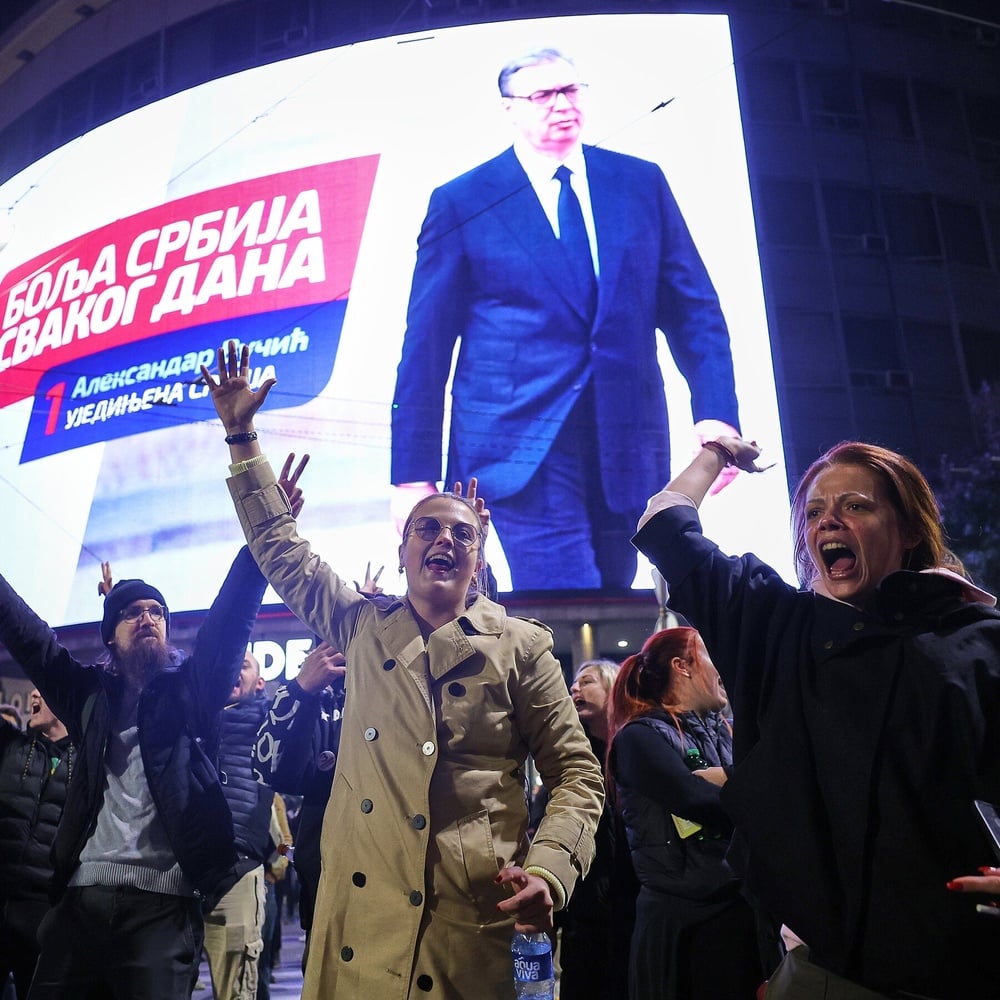
2026 © Helium Trades
Privacy Policy & Disclosure
* Disclaimer: Nothing on this website constitutes investment advice, performance data or any recommendation that any particular security, portfolio of securities, transaction or investment strategy is suitable for any specific person. Helium Trades is not responsible in any way for the accuracy
of any model predictions or price data. Any mention of a particular security and related prediction data is not a recommendation to buy or sell that security. Investments in securities involve the risk of loss. Past performance is no guarantee of future results. Helium Trades is not responsible for any of your investment decisions,
you should consult a financial expert before engaging in any transaction.
Helium Research Assistant

How can I help you today?
Ask any question about this page.


