See whether Helium helps you make better-informed decisions. Try every Pro Trader feature for 30 days. No credit card required.
Try every Pro Trader feature for 30 days. No credit card required.
October 16, 2026 · 0 shares
Loaded descriptors such as “militant Israeli settlers” and a causal link to Netanyahu’s right-wing government frame the violence critically, while victim testimony and attributed sourcing dominate the account.
Automated analysis; not human reviewed.
Limitations: The supplied text mixes the main news narrative with an embedded social-media post and unrelated headline links, and it lacks a byline; bias scoring is based on the main narrative only.
·
55 of 55 available dimensions scored; omitted dimensions are not treated as neutral.
·
Verified supporting quotes for 11 of 55 scored dimensions.
Claim: Critical framing of Israeli settlers and Netanyahu’s right-wing government gives the account a liberal-leaning valence.
“The settlers have been emboldened by the right-wing government of Prime Minister Benjamin Netanyahu” · exact text match
“Netanyahu has criticized the violence but has taken few steps to crack down” · exact text match
Counterevidence:
“Israel rejects this, viewing the territory as disputed rather than occupied.” · exact text match
Why: The report describes the settlers as emboldened by a right-wing government and faults its limited crackdown, a framing more often aligned with liberal criticism of Israeli policy.
Claim: Most factual assertions are tied to witnesses, medics, officials, or monitoring groups, though loaded descriptors remain.
“Reuters witnesses said” · exact text match
“Palestinian medics said two people were injured and taken to hospitals in the area of Ramallah” · exact text match
Why: Attribution reduces subjective assertion, but the use of terms such as 'militant' prevents a maximal objective score.
Claim: The report includes official non-response and Israeli legal rejection, tempering sensational framing.
“The Israeli military did not immediately respond to a request for comment.” · exact text match
“Israel rejects this, viewing the territory as disputed rather than occupied.” · exact text match
Why: Inclusion of non-response and the Israeli position counters one-sided sensationalism, though violent details remain prominent.
Claim: The text narrates events and context without explicit recommendations.
“Palestinian medics said two people were injured and taken to hospitals in the area of Ramallah.” · exact text match
“The Abu Falah attack followed a similar attack on Friday morning in the area of Turmus Ayya village” · exact text match
Why: The report remains reportorial and does not state policy prescriptions.
Claim: The report is explicitly framed around Israeli-Palestinian political conflict and government policy.
“The settlers have been emboldened by the right-wing government of Prime Minister Benjamin Netanyahu” · exact text match
“The West Bank is home to some 500,000 settlers and at least 3 million Palestinians.” · exact text match
Why: The subject is a political conflict involving state policy, settlements, and international legal status.
Claim: The account foregrounds Palestinian and journalist victimization through selected testimony.
“The settlers want to attack us and force us from our homes” · exact text match
Why: The article centers harmed villagers and an injured journalist, but the victimization reflects reported events rather than overt ideological framing.
Claim: Emotive victim testimony and injury details give the account a negative emotional valence.
“Her voice shook as she spoke and she had bandages over her left hand.” · exact text match
Why: Selected injury details evoke a negative emotional response but are embedded in factual reporting.
Claim: The report attributes observations and includes a non-response note from the military.
“Reuters witnesses said” · exact text match
“The Israeli military did not immediately respond to a request for comment.” · exact text match
Why: Visible sourcing and an attempt to obtain official comment support high credibility.
Claim: The account relies on attributed witness and monitoring-group evidence rather than unsupported inference.
“Reuters witnesses said” · exact text match
“according to Yesh Din, an Israeli settlements monitoring group” · exact text match
Why: Specific observations and statistics are tied to sources, supporting a rational/evidence-based classification.
Claim: The account includes attributed sourcing, a non-response note, and the Israeli government’s rejection of the legal characterization.
“The Israeli military did not immediately respond to a request for comment.” · exact text match
“Israel rejects this, viewing the territory as disputed rather than occupied.” · exact text match
Why: These visible fairness and attribution signals support high integrity.
Claim: The report supplies contextual figures and attributed sourcing.
“The West Bank is home to some 500,000 settlers and at least 3 million Palestinians.” · exact text match
“according to Yesh Din, an Israeli settlements monitoring group” · exact text match
Why: Context, statistics, and named attribution indicate above-average informational sophistication.
The supplied text mixes the main news narrative with an embedded social-media post and unrelated headline links, and it lacks a byline; bias scoring is based on the main narrative only.
October 16, 2026 · 0 shares
The report adopts a critical, victim-centered frame toward Israeli settler violence, using emotive testimony and systemic-impunity context while including the IDF response.
Automated analysis; not human reviewed.
Limitations: The supplied text mixes the main report with related-link headlines and snippets; I excluded those from analysis, but residual ambiguity remains about which paragraphs are article prose.
·
12 of 55 available dimensions scored; omitted dimensions are not treated as neutral.
·
Verified supporting quotes for 10 of 12 scored dimensions.
Claim: The report links settler violence to the policies of the right-wing Netanyahu government and criticizes its response.
“emboldened by the decisions and policies of the right-wing Netanyahu Government” · exact text match
“but has also tried to diminish the significance of it” · exact text match
Why: Critical framing of a right-wing Israeli government and its handling of settler violence leans against conservative/right-aligned framing.
Claim: The report is largely factual but incorporates selected emotive testimony that colors the account.
“"I don't know how a parent can raise such monsters," she said.” · not found in supplied text
Why: The emotive quote is attributed, but its selection adds subjective tone to otherwise factual reporting.
Claim: The report uses dramatic descriptions of violence and injury.
“She was beaten by settlers, who stole her camera and phone” · exact text match
“Some of the settlers set fire to the olive trees, sending smoke billowing across the area.” · exact text match
Why: Vivid descriptions of beating, theft, and burning add sensational impact while remaining factual.
Claim: The report includes critical evaluation of Israeli government rhetoric and accountability.
“Prime Minister Benjamin Netanyahu has condemned settler violence in the West Bank, but has also tried to diminish the significance of it by repeatedly claiming it is just a handful of individuals breaking the law.” · exact text match
Why: The framing characterizes the prime minister's statements as diminishing the violence, adding evaluative judgment.
Claim: The report is centrally concerned with state, military, and settlement policy in the occupied West Bank.
“The IDF and Israel Police are regularly criticised for failing to prosecute settlers for their offences, while insisting they are taking a firm stance against criminals.” · exact text match
Why: The subject matter and sources are inherently political and institutional.
Claim: The report relies on institutional authorities and organizations to establish the scale and significance of the violence.
“Humanitarian organisations, including the United Nations, have reported a surge in settler violence since October 2023” · exact text match
“Israeli organisation Yesh Din said there had been 170 attacks since late September when the olive harvest began.” · exact text match
Why: Use of UN and Yesh Din data supports claims through institutional authority.
Claim: The account foregrounds physical harm and emotional testimony from victims, especially the injured journalist.
“She was beaten by settlers, who stole her camera and phone” · exact text match
“Ms Levine told journalists in hospital, fighting back tears.” · exact text match
Why: Emphasis on the journalist's injuries and emotional state centers victim experience.
Claim: The report frames settler violence through a systemic critique of right-wing Israeli government policy.
“emboldened by the decisions and policies of the right-wing Netanyahu Government” · exact text match
“The IDF and Israel Police are regularly criticised for failing to prosecute settlers for their offences” · exact text match
Why: Linking violence to government policy and impunity introduces an ideological systemic frame.
Claim: The report's tone is strongly negative through descriptions of violence, tears, and outrage.
“fighting back tears” · exact text match
“"I don't know how a parent can raise such monsters," she said.” · not found in supplied text
Why: Negative emotional cues and loaded quoted language color the account.
Claim: The report is highly sourced and attributes contested claims to named actors.
“The IDF said it would examine "all circumstances surrounding the incident".” · exact text match
“Washington Post executive editor Matt Murray issued a note to staff about the attack.” · exact text match
Why: Named official statements and attributed testimony support high visible credibility.
Claim: The report attributes contested claims to named officials, organizations, and witnesses rather than presenting them as the publisher's own assertions.
“The IDF said it would examine "all circumstances surrounding the incident".” · exact text match
“Israeli organisation Yesh Din said there had been 170 attacks since late September when the olive harvest began.” · exact text match
Why: Multiple attributed sources and official responses indicate rational, evidence-bound reporting.
Claim: The report includes named sources, official responses, and attributed data.
“The IDF said it would examine "all circumstances surrounding the incident".” · exact text match
“Washington Post executive editor Matt Murray issued a note to staff about the attack.” · exact text match
Why: Inclusion of official statements and named actors signals high observable integrity.
The supplied text mixes the main report with related-link headlines and snippets; I excluded those from analysis, but residual ambiguity remains about which paragraphs are article prose.
October 16, 2026 · 0 shares
Loaded, victim-focused language frames Israeli settlers as violent aggressors and ties the violence surge to Netanyahu’s right-wing government.
Automated analysis; not human reviewed.
Limitations: The supplied text contains duplicated sections and promotional/consent boilerplate; scoring is based only on the substantive reporting.
·
11 of 55 available dimensions scored; omitted dimensions are not treated as neutral.
·
Verified supporting quotes for 11 of 11 scored dimensions.
Claim: The framing criticizes Israeli settlers and Netanyahu’s right-wing government while centering Palestinian victims, a left-leaning emphasis in Western coverage of the conflict.
“marauding settler gangs attacking farmers” · exact text match
“right-wing government of Prime Minister Benjamin Netanyahu” · exact text match
Counterevidence:
“Israel rejects this, viewing the territory as disputed rather than occupied.” · exact text match
Why: Loaded anti-settler language and explicit blame on a right-wing Israeli government align with liberal/pro-Palestinian framing.
Claim: The report uses evaluative descriptors rather than neutral ones to characterize the actors and events.
“marauding settler gangs” · exact text match
“valuable olive crops” · exact text match
Why: Words such as 'marauding' and 'valuable' convey evaluative judgment beyond bare description.
Claim: The headline and opening use dramatic, conflict-heightening language.
“Violence flares in West Bank as settler gangs torch cars and attack farmers during olive harvests.” · exact text match
“Tensions mount in the troubled West Bank” · exact text match
Why: Dramatic verbs and intensifying language ('flares,' 'torch,' 'Tensions mount') heighten the report's sensational tone.
Claim: The report emphasizes imminent violence, injury, and escalating attacks.
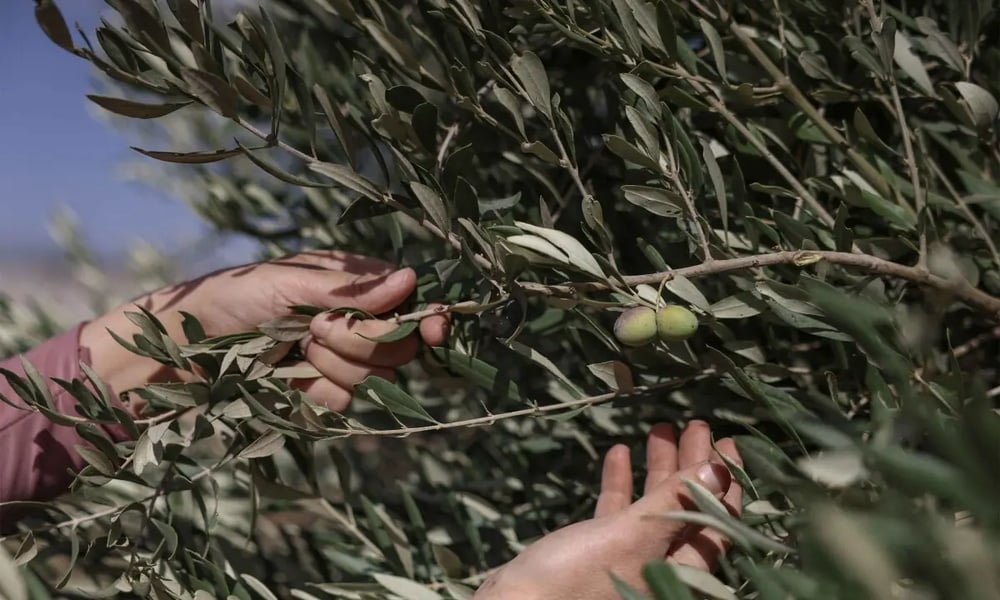
“Violence has broken out in West Bank villages with marauding settler gangs attacking farmers, torching cars and burning valuable olive crops.” · exact text match
“this year levels of settler violence have reached an all-time high” · exact text match
Why: Vivid descriptions of armed attacks and all-time-high violence evoke fear and urgency.
Claim: The report blends reported events with evaluative causal claims about settlers being emboldened and Netanyahu taking few steps.
“emboldened by the right-wing government of Prime Minister Benjamin Netanyahu” · exact text match
“Netanyahu has criticized the violence but has taken few steps to crack down” · exact text match
Why: These are interpretive judgments about political causation and responsiveness rather than strictly neutral description.
Claim: The report explicitly situates the violence within Israeli electoral politics and governance.
“Israel prepares for the most important elections in many years” · exact text match
“Israeli elections are taking place on October 27” · exact text match
Why: Direct references to elections, Netanyahu's term, and coalition politics make the report highly political.
Claim: The report foregrounds Palestinian and journalist victims of settler attacks.
“At least six people, including two elderly victims and a journalist were injured” · exact text match
“The settlers want to attack us and force us from our homes” · exact text match
Why: The selection and wording center physical harm and displacement threats against Palestinians.
Claim: The report carries a strongly negative emotional valence through violent, fearful imagery.
“marauding settler gangs attacking farmers, torching cars and burning valuable olive crops” · exact text match
“Palestinian youth flees tear gas” · exact text match
Why: Vivid harm-and-danger imagery produces a pronounced negative emotional charge.
Claim: The report shows substantial attribution and named sources, though some estimates and causal claims are unsourced or evaluative.
“United Nations officials say the past two weeks have already seen more attacks by violent Israeli settlers than during the entire harvest season last year.” · exact text match
“Israel rejects this, viewing the territory as disputed rather than occupied.” · exact text match
Counterevidence:
“It is feared the burning of olive trees and cars has caused hundreds of thousands of pounds worth of damage.” · exact text match
Why: Multiple attributed sources and inclusion of Israel's rejection support credibility, but unsourced fear-based damage estimates and loaded causal language qualify it.
Claim: The report includes speculation and unattributed estimates about damage and attackers.
“It is feared the burning of olive trees and cars has caused hundreds of thousands of pounds worth of damage.” · exact text match
“some were thought to have carried gas canisters” · exact text match
Why: Phrases such as 'It is feared' and 'were thought' present uncertain estimates rather than confirmed facts.
Claim: Loaded labels and dramatic framing are used to shape interpretation of the violence.
“marauding settler gangs” · exact text match
“masked and armed settlers attack Palestinian villagers” · exact text match
Why: The report uses emotive, morally charged descriptors that exceed neutral description, an observable framing technique.
The supplied text contains duplicated sections and promotional/consent boilerplate; scoring is based only on the substantive reporting.
October 16, 2026 · 0 shares
Loaded, victim-focused language frames Israeli settlers as violent aggressors and ties the violence surge to Netanyahu’s right-wing government.
Automated analysis; not human reviewed.
Limitations: The supplied text contains duplicated sections and promotional/consent boilerplate; scoring is based only on the substantive reporting.
·
11 of 55 available dimensions scored; omitted dimensions are not treated as neutral.
·
Verified supporting quotes for 11 of 11 scored dimensions.
Claim: The framing criticizes Israeli settlers and Netanyahu’s right-wing government while centering Palestinian victims, a left-leaning emphasis in Western coverage of the conflict.
“marauding settler gangs attacking farmers” · exact text match
“right-wing government of Prime Minister Benjamin Netanyahu” · exact text match
Counterevidence:
“Israel rejects this, viewing the territory as disputed rather than occupied.” · exact text match
Why: Loaded anti-settler language and explicit blame on a right-wing Israeli government align with liberal/pro-Palestinian framing.
Claim: The report uses evaluative descriptors rather than neutral ones to characterize the actors and events.
“marauding settler gangs” · exact text match
“valuable olive crops” · exact text match
Why: Words such as 'marauding' and 'valuable' convey evaluative judgment beyond bare description.
Claim: The headline and opening use dramatic, conflict-heightening language.
“Violence flares in West Bank as settler gangs torch cars and attack farmers during olive harvests.” · exact text match
“Tensions mount in the troubled West Bank” · exact text match
Why: Dramatic verbs and intensifying language ('flares,' 'torch,' 'Tensions mount') heighten the report's sensational tone.
Claim: The report emphasizes imminent violence, injury, and escalating attacks.
“Violence has broken out in West Bank villages with marauding settler gangs attacking farmers, torching cars and burning valuable olive crops.” · exact text match
“this year levels of settler violence have reached an all-time high” · exact text match
Why: Vivid descriptions of armed attacks and all-time-high violence evoke fear and urgency.
Claim: The report blends reported events with evaluative causal claims about settlers being emboldened and Netanyahu taking few steps.
“emboldened by the right-wing government of Prime Minister Benjamin Netanyahu” · exact text match
“Netanyahu has criticized the violence but has taken few steps to crack down” · exact text match
Why: These are interpretive judgments about political causation and responsiveness rather than strictly neutral description.
Claim: The report explicitly situates the violence within Israeli electoral politics and governance.
“Israel prepares for the most important elections in many years” · exact text match
“Israeli elections are taking place on October 27” · exact text match
Why: Direct references to elections, Netanyahu's term, and coalition politics make the report highly political.
Claim: The report foregrounds Palestinian and journalist victims of settler attacks.
“At least six people, including two elderly victims and a journalist were injured” · exact text match
“The settlers want to attack us and force us from our homes” · exact text match
Why: The selection and wording center physical harm and displacement threats against Palestinians.
Claim: The report carries a strongly negative emotional valence through violent, fearful imagery.
“marauding settler gangs attacking farmers, torching cars and burning valuable olive crops” · exact text match
“Palestinian youth flees tear gas” · exact text match
Why: Vivid harm-and-danger imagery produces a pronounced negative emotional charge.
Claim: The report shows substantial attribution and named sources, though some estimates and causal claims are unsourced or evaluative.
“United Nations officials say the past two weeks have already seen more attacks by violent Israeli settlers than during the entire harvest season last year.” · exact text match
“Israel rejects this, viewing the territory as disputed rather than occupied.” · exact text match
Counterevidence:
“It is feared the burning of olive trees and cars has caused hundreds of thousands of pounds worth of damage.” · exact text match
Why: Multiple attributed sources and inclusion of Israel's rejection support credibility, but unsourced fear-based damage estimates and loaded causal language qualify it.
Claim: The report includes speculation and unattributed estimates about damage and attackers.
“It is feared the burning of olive trees and cars has caused hundreds of thousands of pounds worth of damage.” · exact text match
“some were thought to have carried gas canisters” · exact text match
Why: Phrases such as 'It is feared' and 'were thought' present uncertain estimates rather than confirmed facts.
Claim: Loaded labels and dramatic framing are used to shape interpretation of the violence.
“marauding settler gangs” · exact text match
“masked and armed settlers attack Palestinian villagers” · exact text match
Why: The report uses emotive, morally charged descriptors that exceed neutral description, an observable framing technique.
The supplied text contains duplicated sections and promotional/consent boilerplate; scoring is based only on the substantive reporting.
October 15, 2026 · 0 shares
Frames the olive harvest through Palestinian victimization and election-driven settler impunity while briefly including Israeli military and victim accounts.
Automated analysis; not human reviewed.
Limitations: The supplied text appears to be a truncated AFP wire report with duplicated segments and no byline, so some omitted context and authorship cannot be assessed.
·
15 of 55 available dimensions scored; omitted dimensions are not treated as neutral.
·
Verified supporting quotes for 15 of 15 scored dimensions.
Claim: Uses left-leaning rights/legal framing by describing settlements as illegal and Netanyahu as governing with the far-right.
“in settlements and outposts illegal under international law.” · exact text match
“Netanyahu, who governs with the far-right, has ramped up approval of settlements.” · exact text match
Why: These descriptors align with a liberal internationalist critique of Israeli settlement policy.
Claim: Leads with a human-interest portrait and emotive testimony rather than a neutral summary.
“With a black eye and a bandage covering his face, Palestinian farmer Abdellatif Bazzari looks out at his rows of olive trees that are half harvested before the season has even started.” · exact text match
“Bazzari, who was injured in a raid on the fields by Israeli settlers that killed his cousin, is afraid to return to harvest the other half without some sort of army protection, fearing a new attack.” · exact text match
Counterevidence:
“The Israeli military said troops and border police forces were dispatched after reports of “rock hurling toward an Israeli civilian, who was injured”, referring to a settler.” · exact text match
Why: The narrative opening and personal testimony make the framing more subjective.
Claim: Headline and opening emphasize fear and graphic injury or death.
“Palestinians fear violent olive harvest ahead of Israeli elections.” · exact text match
“With a black eye and a bandage covering his face, Palestinian farmer Abdellatif Bazzari looks out at his rows of olive trees that are half harvested before the season has even started.” · exact text match
Why: Sensational emphasis is present but restrained by wire-style attribution.
Claim: Frames the harvest around feared escalation and violence.
“Palestinians fear violent olive harvest ahead of Israeli elections.” · exact text match
“With Israel heading to elections on Oct 27, some farmers believe the violence will escalate as Prime Minister Benjamin Netanyahu, locked in a tight race, seeks to shore up his right-wing base.” · exact text match
Why: The dominant forecast is negative, making the framing pessimistic.
Claim: Headline and lede foreground fear of violent attack.
“Palestinians fear violent olive harvest ahead of Israeli elections.” · exact text match
“Bazzari, who was injured in a raid on the fields by Israeli settlers that killed his cousin, is afraid to return to harvest the other half without some sort of army protection, fearing a new attack.” · exact text match
Why: Fear is the explicit emotional frame of the report.
Claim: Presents a farmer's causal claim about Netanyahu's electoral motives as a central explanatory thread.
“With Israel heading to elections on Oct 27, some farmers believe the violence will escalate as Prime Minister Benjamin Netanyahu, locked in a tight race, seeks to shore up his right-wing base.” · exact text match
Why: The attributed motive shapes the article's explanation, adding opinion-like framing.
Claim: Centers Israeli election politics and Netanyahu's coalition incentives.
“With Israel heading to elections on Oct 27, some farmers believe the violence will escalate as Prime Minister Benjamin Netanyahu, locked in a tight race, seeks to shore up his right-wing base.” · exact text match
“Netanyahu, who governs with the far-right, has ramped up approval of settlements.” · exact text match
Why: Election timing and coalition politics are central to the report's framing.
Claim: Foregrounds Palestinian injury, death, and fear as the central narrative.
“With a black eye and a bandage covering his face, Palestinian farmer Abdellatif Bazzari looks out at his rows of olive trees that are half harvested before the season has even started.” · exact text match
““My cousin bled to death right under this olive tree, irrigating the soil of Palestine with his blood,” Bazzari said, pointing to a tree in the field.” · exact text match
Why: The report's structure centers Palestinian victimization.
Claim: Frames the conflict through legal-illegality and far-right political labels.
“in settlements and outposts illegal under international law.” · exact text match
“Netanyahu, who governs with the far-right, has ramped up approval of settlements.” · exact text match
Why: These framing choices reflect a clear ideological and legal critique of Israeli policy.
Claim: Uses graphic, emotionally negative testimony and imagery.
““My cousin bled to death right under this olive tree, irrigating the soil of Palestine with his blood,” Bazzari said, pointing to a tree in the field.” · exact text match
“With a black eye and a bandage covering his face, Palestinian farmer Abdellatif Bazzari looks out at his rows of olive trees that are half harvested before the season has even started.” · exact text match
Why: The dominant emotional valence is strongly negative.
Claim: Uses named sources, official response, and statistical attribution.
“Settler attacks against Palestinians including beatings, vandalism and arson averaged six a day in the first half of the year, according to the United Nations.” · exact text match
“The Israeli military said troops and border police forces were dispatched after reports of “rock hurling toward an Israeli civilian, who was injured”, referring to a settler.” · exact text match
Why: Visible sourcing and inclusion of a response support moderate credibility.
Claim: Grounds key claims in named institutional data and attribution.
“Settler attacks against Palestinians including beatings, vandalism and arson averaged six a day in the first half of the year, according to the United Nations.” · exact text match
“In a report, Yesh Din said 25 per cent of all incidents occurred in the presence of the Israeli military.” · exact text match
Counterevidence:
““My cousin bled to death right under this olive tree, irrigating the soil of Palestine with his blood,” Bazzari said, pointing to a tree in the field.” · exact text match
Why: Evidence-based sourcing outweighs emotive framing, supporting a rational classification.
Claim: Includes forecasts that election politics will escalate violence.
“With Israel heading to elections on Oct 27, some farmers believe the violence will escalate as Prime Minister Benjamin Netanyahu, locked in a tight race, seeks to shore up his right-wing base.” · exact text match
“Bazzari, who was injured in a raid on the fields by Israeli settlers that killed his cousin, is afraid to return to harvest the other half without some sort of army protection, fearing a new attack.” · exact text match
Why: The report contains attributed speculation about future escalation.
Claim: Uses loaded descriptors and selected causal framing about election-driven impunity.
“Netanyahu, who governs with the far-right, has ramped up approval of settlements.” · exact text match
“Fatafta added that Israel’s electoral calendar brought added impunity to settlers whom Palestinians already complained were unrestrained.” · exact text match
Why: Loaded wording and a causal impunity frame are observable, though attribution limits the claim.
Claim: Includes the Israeli military's account and notes Israeli victims.
“The Israeli military said troops and border police forces were dispatched after reports of “rock hurling toward an Israeli civilian, who was injured”, referring to a settler.” · exact text match
“Israeli leaders also highlight violence against Israelis, including the shooting death of a settler by a Palestinian last month.” · exact text match
Why: Inclusion of a competing account and acknowledgment of Israeli victims supports moderate integrity.
The supplied text appears to be a truncated AFP wire report with duplicated segments and no byline, so some omitted context and authorship cannot be assessed.
October 16, 2026 · 0 shares
Loaded, victim-focused language frames Israeli settlers as violent aggressors and ties the violence surge to Netanyahu’s right-wing government.
Automated analysis; not human reviewed.
Limitations: The supplied text contains duplicated sections and promotional/consent boilerplate; scoring is based only on the substantive reporting.
·
11 of 55 available dimensions scored; omitted dimensions are not treated as neutral.
·
Verified supporting quotes for 11 of 11 scored dimensions.
Claim: The framing criticizes Israeli settlers and Netanyahu’s right-wing government while centering Palestinian victims, a left-leaning emphasis in Western coverage of the conflict.
“marauding settler gangs attacking farmers” · exact text match
“right-wing government of Prime Minister Benjamin Netanyahu” · exact text match
Counterevidence:
“Israel rejects this, viewing the territory as disputed rather than occupied.” · exact text match
Why: Loaded anti-settler language and explicit blame on a right-wing Israeli government align with liberal/pro-Palestinian framing.
Claim: The report uses evaluative descriptors rather than neutral ones to characterize the actors and events.
“marauding settler gangs” · exact text match
“valuable olive crops” · exact text match
Why: Words such as 'marauding' and 'valuable' convey evaluative judgment beyond bare description.
Claim: The headline and opening use dramatic, conflict-heightening language.
“Violence flares in West Bank as settler gangs torch cars and attack farmers during olive harvests.” · exact text match
“Tensions mount in the troubled West Bank” · exact text match
Why: Dramatic verbs and intensifying language ('flares,' 'torch,' 'Tensions mount') heighten the report's sensational tone.
Claim: The report emphasizes imminent violence, injury, and escalating attacks.
“Violence has broken out in West Bank villages with marauding settler gangs attacking farmers, torching cars and burning valuable olive crops.” · exact text match
“this year levels of settler violence have reached an all-time high” · exact text match
Why: Vivid descriptions of armed attacks and all-time-high violence evoke fear and urgency.
Claim: The report blends reported events with evaluative causal claims about settlers being emboldened and Netanyahu taking few steps.
“emboldened by the right-wing government of Prime Minister Benjamin Netanyahu” · exact text match
“Netanyahu has criticized the violence but has taken few steps to crack down” · exact text match
Why: These are interpretive judgments about political causation and responsiveness rather than strictly neutral description.
Claim: The report explicitly situates the violence within Israeli electoral politics and governance.
“Israel prepares for the most important elections in many years” · exact text match
“Israeli elections are taking place on October 27” · exact text match
Why: Direct references to elections, Netanyahu's term, and coalition politics make the report highly political.
Claim: The report foregrounds Palestinian and journalist victims of settler attacks.
“At least six people, including two elderly victims and a journalist were injured” · exact text match
“The settlers want to attack us and force us from our homes” · exact text match
Why: The selection and wording center physical harm and displacement threats against Palestinians.
Claim: The report carries a strongly negative emotional valence through violent, fearful imagery.
“marauding settler gangs attacking farmers, torching cars and burning valuable olive crops” · exact text match
“Palestinian youth flees tear gas” · exact text match
Why: Vivid harm-and-danger imagery produces a pronounced negative emotional charge.
Claim: The report shows substantial attribution and named sources, though some estimates and causal claims are unsourced or evaluative.
“United Nations officials say the past two weeks have already seen more attacks by violent Israeli settlers than during the entire harvest season last year.” · exact text match
“Israel rejects this, viewing the territory as disputed rather than occupied.” · exact text match
Counterevidence:
“It is feared the burning of olive trees and cars has caused hundreds of thousands of pounds worth of damage.” · exact text match
Why: Multiple attributed sources and inclusion of Israel's rejection support credibility, but unsourced fear-based damage estimates and loaded causal language qualify it.
Claim: The report includes speculation and unattributed estimates about damage and attackers.
“It is feared the burning of olive trees and cars has caused hundreds of thousands of pounds worth of damage.” · exact text match
“some were thought to have carried gas canisters” · exact text match
Why: Phrases such as 'It is feared' and 'were thought' present uncertain estimates rather than confirmed facts.
Claim: Loaded labels and dramatic framing are used to shape interpretation of the violence.
“marauding settler gangs” · exact text match
“masked and armed settlers attack Palestinian villagers” · exact text match
Why: The report uses emotive, morally charged descriptors that exceed neutral description, an observable framing technique.
The supplied text contains duplicated sections and promotional/consent boilerplate; scoring is based only on the substantive reporting.
October 14, 2026 · 0 shares
Sympathetic humanitarian framing attributes Gaza's near-total orchard destruction squarely to Israeli bulldozing and troop access bans while omitting any Israeli rationale or war-origin context, offset by careful attribution to named farmers, Reuters sourcing, and hedged official estimates.
The war referenced is the 2023–2025 Israel–Hamas conflict; the ceasefire mentioned ended major fighting roughly a year before the report, with Israeli forces holding positions inside Gaza.
Automated analysis; not human reviewed.
Limitations: The supplied text is a scrape with duplicated paragraphs and unrelated ARY sidebar headlines and no byline, so it is unclear how much reflects ARY's own framing versus the underlying Reuters report attributed to in the text.
·
15 of 55 available dimensions scored; omitted dimensions are not treated as neutral.
·
Verified supporting quotes for 8 of 15 scored dimensions.
Claim: Framing assigns agricultural destruction to Israel and presents Palestinian loss without any Israeli perspective or war-origin context.
“Gazans harvest dregs of olive groves bulldozed and cut off by Israel” · exact text match
Why: The headline and body attribute losses to Israeli actions while no Israeli rationale or mention of the war's origin appears, a mildly left-leaning humanitarian framing.
Claim: Reporting is largely attributed and factual with only mild literary coloring.
“Before the war, olives were the jewels of Gaza agriculture” · exact text match
“he told Reuters” · exact text match
Why: Named attribution and sourced estimates dominate, though evaluative phrases like 'jewels of Gaza agriculture' add subjective color.
Claim: Presentation stays measured despite the grim subject, with the headline's 'dregs' the main emotive touch.
“Gazans harvest dregs of olive groves bulldozed and cut off by Israel” · exact text match
Why: A mildly emotive headline sits over an otherwise restrained, attributed body.
Claim: Selection of detail emphasizes irreversible loss and hardship with little mitigation noted.
“Only around 20 or 30 trees are somehow still standing.” · not found in supplied text
“one of Gaza’s few remaining olive groves still serves as a sanctuary at harvest time” · not found in supplied text
Why: Nearly every detail catalogs loss; the surviving family harvest scene is the lone counterpoint.
Claim: Vivid, specific human detail makes the feature engaging.
“Barefoot boys climbed ladders to reach the higher branches.
Girls sat below sorting the olives from leaves and twigs.”
· exact text match
Why: Concrete scene-setting and human voices give the story strong narrative interest.
Claim: The piece reports conditions and figures without advocating any policy or action.
“They anticipate a harvest of about 5,000 tons of olives instead of the usual 40,000, producing only 700 tons of oil instead of 5,000.” · not found in supplied text
Why: Purely descriptive reporting with no prescriptions or calls to action.
Claim: Editorializing is limited to evaluative adjectives rather than argued opinion.
“Before the war, olives were the jewels of Gaza agriculture” · exact text match
Why: Occasional evaluative phrasing only slightly colors otherwise factual reporting.
Claim: The substantive content centers on Israeli military control and destruction in the Gaza conflict.
“guarded by Israeli troops who bar Palestinians from even entering two-thirds of the Gaza Strip” · not found in supplied text
Why: The core subject is the political-military situation's economic impact, though presented through a human-interest lens.
Claim: The tone is somber, built on imagery of ruin and loss.
“lifts a desiccated bough of a fallen olive tree and tosses it aside in the barren dirt” · exact text match
Why: Melancholy imagery and loss-focused selection create a mildly negative tone without lurid excess.
Claim: Sourcing is visible and specific: named interviewees, Reuters attribution, and authority estimates.
“he told Reuters” · exact text match
Why: Named, checkable sources and hedged estimates support above-average credibility within the supplied text.
Claim: Reporting rests on concrete figures, named sources, and hedged estimates rather than rhetoric.
“Gaza’s agriculture authorities estimate that of 2 million olive trees, barely 150,000 are still standing.” · not found in supplied text
Why: Quantified, attributed, hedged estimates support an evidence-based presentation.
Claim: Forward-looking harvest figures are attributed forecasts rather than asserted facts.
“They anticipate a harvest of about 5,000 tons of olives instead of the usual 40,000” · not found in supplied text
Why: Projections appear but are clearly attributed to authorities and hedged.
Claim: Causal framing in the headline is unaccompanied by any Israeli rationale or wider conflict context in the body.
“Gazans harvest dregs of olive groves bulldozed and cut off by Israel” · exact text match
Why: Material omission of war context alongside direct causal attribution shapes blame perception, a mild framing technique.
Claim: Claims are attributed to named individuals and authorities with hedged estimates.
“Gaza’s agriculture authorities estimate that of 2 million olive trees, barely 150,000 are still standing.” · not found in supplied text
Why: Consistent attribution and estimate-labeling are visible internal honesty signals.
Claim: The feature combines precise quantification with grounded human detail.
“Only around 20 or 30 trees are somehow still standing.” · not found in supplied text
Why: Balancing macro statistics with individual, concrete detail reflects skilled reporting.
The supplied text is a scrape with duplicated paragraphs and unrelated ARY sidebar headlines and no byline, so it is unclear how much reflects ARY's own framing versus the underlying Reuters report attributed to in the text.
October 16, 2026 · 0 shares
Loaded descriptors such as “militant Israeli settlers” and a causal link to Netanyahu’s right-wing government frame the violence critically, while victim testimony and attributed sourcing dominate the account.
Automated analysis; not human reviewed. Limitations: The supplied text mixes the main news narrative with an embedded social-media post and unrelated headline links, and it lacks a byline; bias scoring is based on the main narrative only. · 55 of 55 available dimensions scored; omitted dimensions are not treated as neutral. · Verified supporting quotes for 11 of 55 scored dimensions.
Claim: Critical framing of Israeli settlers and Netanyahu’s right-wing government gives the account a liberal-leaning valence.
“The settlers have been emboldened by the right-wing government of Prime Minister Benjamin Netanyahu” · exact text match
“Netanyahu has criticized the violence but has taken few steps to crack down” · exact text match
Counterevidence:
“Israel rejects this, viewing the territory as disputed rather than occupied.” · exact text match
Why: The report describes the settlers as emboldened by a right-wing government and faults its limited crackdown, a framing more often aligned with liberal criticism of Israeli policy.
Claim: Most factual assertions are tied to witnesses, medics, officials, or monitoring groups, though loaded descriptors remain.
“Reuters witnesses said” · exact text match
“Palestinian medics said two people were injured and taken to hospitals in the area of Ramallah” · exact text match
Why: Attribution reduces subjective assertion, but the use of terms such as 'militant' prevents a maximal objective score.
Claim: The report includes official non-response and Israeli legal rejection, tempering sensational framing.
“The Israeli military did not immediately respond to a request for comment.” · exact text match
“Israel rejects this, viewing the territory as disputed rather than occupied.” · exact text match
Why: Inclusion of non-response and the Israeli position counters one-sided sensationalism, though violent details remain prominent.
Claim: The text narrates events and context without explicit recommendations.
“Palestinian medics said two people were injured and taken to hospitals in the area of Ramallah.” · exact text match
“The Abu Falah attack followed a similar attack on Friday morning in the area of Turmus Ayya village” · exact text match
Why: The report remains reportorial and does not state policy prescriptions.
Claim: The report is explicitly framed around Israeli-Palestinian political conflict and government policy.
“The settlers have been emboldened by the right-wing government of Prime Minister Benjamin Netanyahu” · exact text match
“The West Bank is home to some 500,000 settlers and at least 3 million Palestinians.” · exact text match
Why: The subject is a political conflict involving state policy, settlements, and international legal status.
Claim: The account foregrounds Palestinian and journalist victimization through selected testimony.
“The settlers want to attack us and force us from our homes” · exact text match
Why: The article centers harmed villagers and an injured journalist, but the victimization reflects reported events rather than overt ideological framing.
Claim: Emotive victim testimony and injury details give the account a negative emotional valence.
“Her voice shook as she spoke and she had bandages over her left hand.” · exact text match
Why: Selected injury details evoke a negative emotional response but are embedded in factual reporting.
Claim: The report attributes observations and includes a non-response note from the military.
“Reuters witnesses said” · exact text match
“The Israeli military did not immediately respond to a request for comment.” · exact text match
Why: Visible sourcing and an attempt to obtain official comment support high credibility.
Claim: The account relies on attributed witness and monitoring-group evidence rather than unsupported inference.
“Reuters witnesses said” · exact text match
“according to Yesh Din, an Israeli settlements monitoring group” · exact text match
Why: Specific observations and statistics are tied to sources, supporting a rational/evidence-based classification.
Claim: The account includes attributed sourcing, a non-response note, and the Israeli government’s rejection of the legal characterization.
“The Israeli military did not immediately respond to a request for comment.” · exact text match
“Israel rejects this, viewing the territory as disputed rather than occupied.” · exact text match
Why: These visible fairness and attribution signals support high integrity.
Claim: The report supplies contextual figures and attributed sourcing.
“The West Bank is home to some 500,000 settlers and at least 3 million Palestinians.” · exact text match
“according to Yesh Din, an Israeli settlements monitoring group” · exact text match
Why: Context, statistics, and named attribution indicate above-average informational sophistication.
The supplied text mixes the main news narrative with an embedded social-media post and unrelated headline links, and it lacks a byline; bias scoring is based on the main narrative only.
October 16, 2026 · 0 shares
The report adopts a critical, victim-centered frame toward Israeli settler violence, using emotive testimony and systemic-impunity context while including the IDF response.
Automated analysis; not human reviewed. Limitations: The supplied text mixes the main report with related-link headlines and snippets; I excluded those from analysis, but residual ambiguity remains about which paragraphs are article prose. · 12 of 55 available dimensions scored; omitted dimensions are not treated as neutral. · Verified supporting quotes for 10 of 12 scored dimensions.
Claim: The report links settler violence to the policies of the right-wing Netanyahu government and criticizes its response.
“emboldened by the decisions and policies of the right-wing Netanyahu Government” · exact text match
“but has also tried to diminish the significance of it” · exact text match
Why: Critical framing of a right-wing Israeli government and its handling of settler violence leans against conservative/right-aligned framing.
Claim: The report is largely factual but incorporates selected emotive testimony that colors the account.
“"I don't know how a parent can raise such monsters," she said.” · not found in supplied text
Why: The emotive quote is attributed, but its selection adds subjective tone to otherwise factual reporting.
Claim: The report uses dramatic descriptions of violence and injury.
“She was beaten by settlers, who stole her camera and phone” · exact text match
“Some of the settlers set fire to the olive trees, sending smoke billowing across the area.” · exact text match
Why: Vivid descriptions of beating, theft, and burning add sensational impact while remaining factual.
Claim: The report includes critical evaluation of Israeli government rhetoric and accountability.
“Prime Minister Benjamin Netanyahu has condemned settler violence in the West Bank, but has also tried to diminish the significance of it by repeatedly claiming it is just a handful of individuals breaking the law.” · exact text match
Why: The framing characterizes the prime minister's statements as diminishing the violence, adding evaluative judgment.
Claim: The report is centrally concerned with state, military, and settlement policy in the occupied West Bank.
“The IDF and Israel Police are regularly criticised for failing to prosecute settlers for their offences, while insisting they are taking a firm stance against criminals.” · exact text match
Why: The subject matter and sources are inherently political and institutional.
Claim: The report relies on institutional authorities and organizations to establish the scale and significance of the violence.
“Humanitarian organisations, including the United Nations, have reported a surge in settler violence since October 2023” · exact text match
“Israeli organisation Yesh Din said there had been 170 attacks since late September when the olive harvest began.” · exact text match
Why: Use of UN and Yesh Din data supports claims through institutional authority.
Claim: The account foregrounds physical harm and emotional testimony from victims, especially the injured journalist.
“She was beaten by settlers, who stole her camera and phone” · exact text match
“Ms Levine told journalists in hospital, fighting back tears.” · exact text match
Why: Emphasis on the journalist's injuries and emotional state centers victim experience.
Claim: The report frames settler violence through a systemic critique of right-wing Israeli government policy.
“emboldened by the decisions and policies of the right-wing Netanyahu Government” · exact text match
“The IDF and Israel Police are regularly criticised for failing to prosecute settlers for their offences” · exact text match
Why: Linking violence to government policy and impunity introduces an ideological systemic frame.
Claim: The report's tone is strongly negative through descriptions of violence, tears, and outrage.
“fighting back tears” · exact text match
“"I don't know how a parent can raise such monsters," she said.” · not found in supplied text
Why: Negative emotional cues and loaded quoted language color the account.
Claim: The report is highly sourced and attributes contested claims to named actors.
“The IDF said it would examine "all circumstances surrounding the incident".” · exact text match
“Washington Post executive editor Matt Murray issued a note to staff about the attack.” · exact text match
Why: Named official statements and attributed testimony support high visible credibility.
Claim: The report attributes contested claims to named officials, organizations, and witnesses rather than presenting them as the publisher's own assertions.
“The IDF said it would examine "all circumstances surrounding the incident".” · exact text match
“Israeli organisation Yesh Din said there had been 170 attacks since late September when the olive harvest began.” · exact text match
Why: Multiple attributed sources and official responses indicate rational, evidence-bound reporting.
Claim: The report includes named sources, official responses, and attributed data.
“The IDF said it would examine "all circumstances surrounding the incident".” · exact text match
“Washington Post executive editor Matt Murray issued a note to staff about the attack.” · exact text match
Why: Inclusion of official statements and named actors signals high observable integrity.
The supplied text mixes the main report with related-link headlines and snippets; I excluded those from analysis, but residual ambiguity remains about which paragraphs are article prose.
The supplied snippet frames the event as an 'Israeli settler attack' and foregrounds a US journalist's injury, without attribution or fuller context.
The West Bank is a contested territory where Israeli settlements and Palestinian olive harvesting are often points of conflict.
Automated analysis; not human reviewed. Limitations: Supplied text is only a headline/fragment; no full article, sourcing, or author information is provided. · 2 of 55 available dimensions scored; omitted dimensions are not treated as neutral. · Verified supporting quotes for 2 of 2 scored dimensions.
Claim: The text describes an incident without recommending actions or policies.
“US journalist injured during Israeli settler attack on West Bank olive harvest” · exact text match
Why: The snippet reports an event and actors but contains no prescriptive or advocacy language.
Claim: The report is centered on the Israeli-Palestinian conflict and settler violence in the West Bank.
“Israeli settler attack on West Bank olive harvest” · exact text match
Why: The event is explicitly situated in a political conflict over West Bank land and settlements.
Supplied text is only a headline/fragment; no full article, sourcing, or author information is provided.
October 16, 2026 · 0 shares
Loaded, victim-focused language frames Israeli settlers as violent aggressors and ties the violence surge to Netanyahu’s right-wing government.
Automated analysis; not human reviewed. Limitations: The supplied text contains duplicated sections and promotional/consent boilerplate; scoring is based only on the substantive reporting. · 11 of 55 available dimensions scored; omitted dimensions are not treated as neutral. · Verified supporting quotes for 11 of 11 scored dimensions.
Claim: The framing criticizes Israeli settlers and Netanyahu’s right-wing government while centering Palestinian victims, a left-leaning emphasis in Western coverage of the conflict.
“marauding settler gangs attacking farmers” · exact text match
“right-wing government of Prime Minister Benjamin Netanyahu” · exact text match
Counterevidence:
“Israel rejects this, viewing the territory as disputed rather than occupied.” · exact text match
Why: Loaded anti-settler language and explicit blame on a right-wing Israeli government align with liberal/pro-Palestinian framing.
Claim: The report uses evaluative descriptors rather than neutral ones to characterize the actors and events.
“marauding settler gangs” · exact text match
“valuable olive crops” · exact text match
Why: Words such as 'marauding' and 'valuable' convey evaluative judgment beyond bare description.
Claim: The headline and opening use dramatic, conflict-heightening language.
“Violence flares in West Bank as settler gangs torch cars and attack farmers during olive harvests.” · exact text match
“Tensions mount in the troubled West Bank” · exact text match
Why: Dramatic verbs and intensifying language ('flares,' 'torch,' 'Tensions mount') heighten the report's sensational tone.
Claim: The report emphasizes imminent violence, injury, and escalating attacks.
“Violence has broken out in West Bank villages with marauding settler gangs attacking farmers, torching cars and burning valuable olive crops.” · exact text match
“this year levels of settler violence have reached an all-time high” · exact text match
Why: Vivid descriptions of armed attacks and all-time-high violence evoke fear and urgency.
Claim: The report blends reported events with evaluative causal claims about settlers being emboldened and Netanyahu taking few steps.
“emboldened by the right-wing government of Prime Minister Benjamin Netanyahu” · exact text match
“Netanyahu has criticized the violence but has taken few steps to crack down” · exact text match
Why: These are interpretive judgments about political causation and responsiveness rather than strictly neutral description.
Claim: The report explicitly situates the violence within Israeli electoral politics and governance.
“Israel prepares for the most important elections in many years” · exact text match
“Israeli elections are taking place on October 27” · exact text match
Why: Direct references to elections, Netanyahu's term, and coalition politics make the report highly political.
Claim: The report foregrounds Palestinian and journalist victims of settler attacks.
“At least six people, including two elderly victims and a journalist were injured” · exact text match
“The settlers want to attack us and force us from our homes” · exact text match
Why: The selection and wording center physical harm and displacement threats against Palestinians.
Claim: The report carries a strongly negative emotional valence through violent, fearful imagery.
“marauding settler gangs attacking farmers, torching cars and burning valuable olive crops” · exact text match
“Palestinian youth flees tear gas” · exact text match
Why: Vivid harm-and-danger imagery produces a pronounced negative emotional charge.
Claim: The report shows substantial attribution and named sources, though some estimates and causal claims are unsourced or evaluative.
“United Nations officials say the past two weeks have already seen more attacks by violent Israeli settlers than during the entire harvest season last year.” · exact text match
“Israel rejects this, viewing the territory as disputed rather than occupied.” · exact text match
Counterevidence:
“It is feared the burning of olive trees and cars has caused hundreds of thousands of pounds worth of damage.” · exact text match
Why: Multiple attributed sources and inclusion of Israel's rejection support credibility, but unsourced fear-based damage estimates and loaded causal language qualify it.
Claim: The report includes speculation and unattributed estimates about damage and attackers.
“It is feared the burning of olive trees and cars has caused hundreds of thousands of pounds worth of damage.” · exact text match
“some were thought to have carried gas canisters” · exact text match
Why: Phrases such as 'It is feared' and 'were thought' present uncertain estimates rather than confirmed facts.
Claim: Loaded labels and dramatic framing are used to shape interpretation of the violence.
“marauding settler gangs” · exact text match
“masked and armed settlers attack Palestinian villagers” · exact text match
Why: The report uses emotive, morally charged descriptors that exceed neutral description, an observable framing technique.
The supplied text contains duplicated sections and promotional/consent boilerplate; scoring is based only on the substantive reporting.
October 14, 2026 · 0 shares
Sympathetic humanitarian framing attributes Gaza's near-total orchard destruction squarely to Israeli bulldozing and troop access bans while omitting any Israeli rationale or war-origin context, offset by careful attribution to named farmers, Reuters sourcing, and hedged official estimates.
The war referenced is the 2023–2025 Israel–Hamas conflict; the ceasefire mentioned ended major fighting roughly a year before the report, with Israeli forces holding positions inside Gaza.
Automated analysis; not human reviewed. Limitations: The supplied text is a scrape with duplicated paragraphs and unrelated ARY sidebar headlines and no byline, so it is unclear how much reflects ARY's own framing versus the underlying Reuters report attributed to in the text. · 15 of 55 available dimensions scored; omitted dimensions are not treated as neutral. · Verified supporting quotes for 8 of 15 scored dimensions.
Claim: Framing assigns agricultural destruction to Israel and presents Palestinian loss without any Israeli perspective or war-origin context.
“Gazans harvest dregs of olive groves bulldozed and cut off by Israel” · exact text match
Why: The headline and body attribute losses to Israeli actions while no Israeli rationale or mention of the war's origin appears, a mildly left-leaning humanitarian framing.
Claim: Reporting is largely attributed and factual with only mild literary coloring.
“Before the war, olives were the jewels of Gaza agriculture” · exact text match
“he told Reuters” · exact text match
Why: Named attribution and sourced estimates dominate, though evaluative phrases like 'jewels of Gaza agriculture' add subjective color.
Claim: Presentation stays measured despite the grim subject, with the headline's 'dregs' the main emotive touch.
“Gazans harvest dregs of olive groves bulldozed and cut off by Israel” · exact text match
Why: A mildly emotive headline sits over an otherwise restrained, attributed body.
Claim: Selection of detail emphasizes irreversible loss and hardship with little mitigation noted.
“Only around 20 or 30 trees are somehow still standing.” · not found in supplied text
“one of Gaza’s few remaining olive groves still serves as a sanctuary at harvest time” · not found in supplied text
Why: Nearly every detail catalogs loss; the surviving family harvest scene is the lone counterpoint.
Claim: Vivid, specific human detail makes the feature engaging.
“Barefoot boys climbed ladders to reach the higher branches. Girls sat below sorting the olives from leaves and twigs.” · exact text match
Why: Concrete scene-setting and human voices give the story strong narrative interest.
Claim: The piece reports conditions and figures without advocating any policy or action.
“They anticipate a harvest of about 5,000 tons of olives instead of the usual 40,000, producing only 700 tons of oil instead of 5,000.” · not found in supplied text
Why: Purely descriptive reporting with no prescriptions or calls to action.
Claim: Editorializing is limited to evaluative adjectives rather than argued opinion.
“Before the war, olives were the jewels of Gaza agriculture” · exact text match
Why: Occasional evaluative phrasing only slightly colors otherwise factual reporting.
Claim: The substantive content centers on Israeli military control and destruction in the Gaza conflict.
“guarded by Israeli troops who bar Palestinians from even entering two-thirds of the Gaza Strip” · not found in supplied text
Why: The core subject is the political-military situation's economic impact, though presented through a human-interest lens.
Claim: The tone is somber, built on imagery of ruin and loss.
“lifts a desiccated bough of a fallen olive tree and tosses it aside in the barren dirt” · exact text match
Why: Melancholy imagery and loss-focused selection create a mildly negative tone without lurid excess.
Claim: Sourcing is visible and specific: named interviewees, Reuters attribution, and authority estimates.
“he told Reuters” · exact text match
Why: Named, checkable sources and hedged estimates support above-average credibility within the supplied text.
Claim: Reporting rests on concrete figures, named sources, and hedged estimates rather than rhetoric.
“Gaza’s agriculture authorities estimate that of 2 million olive trees, barely 150,000 are still standing.” · not found in supplied text
Why: Quantified, attributed, hedged estimates support an evidence-based presentation.
Claim: Forward-looking harvest figures are attributed forecasts rather than asserted facts.
“They anticipate a harvest of about 5,000 tons of olives instead of the usual 40,000” · not found in supplied text
Why: Projections appear but are clearly attributed to authorities and hedged.
Claim: Causal framing in the headline is unaccompanied by any Israeli rationale or wider conflict context in the body.
“Gazans harvest dregs of olive groves bulldozed and cut off by Israel” · exact text match
Why: Material omission of war context alongside direct causal attribution shapes blame perception, a mild framing technique.
Claim: Claims are attributed to named individuals and authorities with hedged estimates.
“Gaza’s agriculture authorities estimate that of 2 million olive trees, barely 150,000 are still standing.” · not found in supplied text
Why: Consistent attribution and estimate-labeling are visible internal honesty signals.
Claim: The feature combines precise quantification with grounded human detail.
“Only around 20 or 30 trees are somehow still standing.” · not found in supplied text
Why: Balancing macro statistics with individual, concrete detail reflects skilled reporting.
The supplied text is a scrape with duplicated paragraphs and unrelated ARY sidebar headlines and no byline, so it is unclear how much reflects ARY's own framing versus the underlying Reuters report attributed to in the text.
October 15, 2026 · 0 shares
Frames the olive harvest through Palestinian victimization and election-driven settler impunity while briefly including Israeli military and victim accounts.
Automated analysis; not human reviewed. Limitations: The supplied text appears to be a truncated AFP wire report with duplicated segments and no byline, so some omitted context and authorship cannot be assessed. · 15 of 55 available dimensions scored; omitted dimensions are not treated as neutral. · Verified supporting quotes for 15 of 15 scored dimensions.
Claim: Uses left-leaning rights/legal framing by describing settlements as illegal and Netanyahu as governing with the far-right.
“in settlements and outposts illegal under international law.” · exact text match
“Netanyahu, who governs with the far-right, has ramped up approval of settlements.” · exact text match
Why: These descriptors align with a liberal internationalist critique of Israeli settlement policy.
Claim: Leads with a human-interest portrait and emotive testimony rather than a neutral summary.
“With a black eye and a bandage covering his face, Palestinian farmer Abdellatif Bazzari looks out at his rows of olive trees that are half harvested before the season has even started.” · exact text match
“Bazzari, who was injured in a raid on the fields by Israeli settlers that killed his cousin, is afraid to return to harvest the other half without some sort of army protection, fearing a new attack.” · exact text match
Counterevidence:
“The Israeli military said troops and border police forces were dispatched after reports of “rock hurling toward an Israeli civilian, who was injured”, referring to a settler.” · exact text match
Why: The narrative opening and personal testimony make the framing more subjective.
Claim: Headline and opening emphasize fear and graphic injury or death.
“Palestinians fear violent olive harvest ahead of Israeli elections.” · exact text match
“With a black eye and a bandage covering his face, Palestinian farmer Abdellatif Bazzari looks out at his rows of olive trees that are half harvested before the season has even started.” · exact text match
Why: Sensational emphasis is present but restrained by wire-style attribution.
Claim: Frames the harvest around feared escalation and violence.
“Palestinians fear violent olive harvest ahead of Israeli elections.” · exact text match
“With Israel heading to elections on Oct 27, some farmers believe the violence will escalate as Prime Minister Benjamin Netanyahu, locked in a tight race, seeks to shore up his right-wing base.” · exact text match
Why: The dominant forecast is negative, making the framing pessimistic.
Claim: Headline and lede foreground fear of violent attack.
“Palestinians fear violent olive harvest ahead of Israeli elections.” · exact text match
“Bazzari, who was injured in a raid on the fields by Israeli settlers that killed his cousin, is afraid to return to harvest the other half without some sort of army protection, fearing a new attack.” · exact text match
Why: Fear is the explicit emotional frame of the report.
Claim: Presents a farmer's causal claim about Netanyahu's electoral motives as a central explanatory thread.
“With Israel heading to elections on Oct 27, some farmers believe the violence will escalate as Prime Minister Benjamin Netanyahu, locked in a tight race, seeks to shore up his right-wing base.” · exact text match
Why: The attributed motive shapes the article's explanation, adding opinion-like framing.
Claim: Centers Israeli election politics and Netanyahu's coalition incentives.
“With Israel heading to elections on Oct 27, some farmers believe the violence will escalate as Prime Minister Benjamin Netanyahu, locked in a tight race, seeks to shore up his right-wing base.” · exact text match
“Netanyahu, who governs with the far-right, has ramped up approval of settlements.” · exact text match
Why: Election timing and coalition politics are central to the report's framing.
Claim: Foregrounds Palestinian injury, death, and fear as the central narrative.
“With a black eye and a bandage covering his face, Palestinian farmer Abdellatif Bazzari looks out at his rows of olive trees that are half harvested before the season has even started.” · exact text match
““My cousin bled to death right under this olive tree, irrigating the soil of Palestine with his blood,” Bazzari said, pointing to a tree in the field.” · exact text match
Why: The report's structure centers Palestinian victimization.
Claim: Frames the conflict through legal-illegality and far-right political labels.
“in settlements and outposts illegal under international law.” · exact text match
“Netanyahu, who governs with the far-right, has ramped up approval of settlements.” · exact text match
Why: These framing choices reflect a clear ideological and legal critique of Israeli policy.
Claim: Uses graphic, emotionally negative testimony and imagery.
““My cousin bled to death right under this olive tree, irrigating the soil of Palestine with his blood,” Bazzari said, pointing to a tree in the field.” · exact text match
“With a black eye and a bandage covering his face, Palestinian farmer Abdellatif Bazzari looks out at his rows of olive trees that are half harvested before the season has even started.” · exact text match
Why: The dominant emotional valence is strongly negative.
Claim: Uses named sources, official response, and statistical attribution.
“Settler attacks against Palestinians including beatings, vandalism and arson averaged six a day in the first half of the year, according to the United Nations.” · exact text match
“The Israeli military said troops and border police forces were dispatched after reports of “rock hurling toward an Israeli civilian, who was injured”, referring to a settler.” · exact text match
Why: Visible sourcing and inclusion of a response support moderate credibility.
Claim: Grounds key claims in named institutional data and attribution.
“Settler attacks against Palestinians including beatings, vandalism and arson averaged six a day in the first half of the year, according to the United Nations.” · exact text match
“In a report, Yesh Din said 25 per cent of all incidents occurred in the presence of the Israeli military.” · exact text match
Counterevidence:
““My cousin bled to death right under this olive tree, irrigating the soil of Palestine with his blood,” Bazzari said, pointing to a tree in the field.” · exact text match
Why: Evidence-based sourcing outweighs emotive framing, supporting a rational classification.
Claim: Includes forecasts that election politics will escalate violence.
“With Israel heading to elections on Oct 27, some farmers believe the violence will escalate as Prime Minister Benjamin Netanyahu, locked in a tight race, seeks to shore up his right-wing base.” · exact text match
“Bazzari, who was injured in a raid on the fields by Israeli settlers that killed his cousin, is afraid to return to harvest the other half without some sort of army protection, fearing a new attack.” · exact text match
Why: The report contains attributed speculation about future escalation.
Claim: Uses loaded descriptors and selected causal framing about election-driven impunity.
“Netanyahu, who governs with the far-right, has ramped up approval of settlements.” · exact text match
“Fatafta added that Israel’s electoral calendar brought added impunity to settlers whom Palestinians already complained were unrestrained.” · exact text match
Why: Loaded wording and a causal impunity frame are observable, though attribution limits the claim.
Claim: Includes the Israeli military's account and notes Israeli victims.
“The Israeli military said troops and border police forces were dispatched after reports of “rock hurling toward an Israeli civilian, who was injured”, referring to a settler.” · exact text match
“Israeli leaders also highlight violence against Israelis, including the shooting death of a settler by a Palestinian last month.” · exact text match
Why: Inclusion of a competing account and acknowledgment of Israeli victims supports moderate integrity.
The supplied text appears to be a truncated AFP wire report with duplicated segments and no byline, so some omitted context and authorship cannot be assessed.
October 16, 2026 · 0 shares
Loaded, victim-focused language frames Israeli settlers as violent aggressors and ties the violence surge to Netanyahu’s right-wing government.
Automated analysis; not human reviewed. Limitations: The supplied text contains duplicated sections and promotional/consent boilerplate; scoring is based only on the substantive reporting. · 11 of 55 available dimensions scored; omitted dimensions are not treated as neutral. · Verified supporting quotes for 11 of 11 scored dimensions.
Claim: The framing criticizes Israeli settlers and Netanyahu’s right-wing government while centering Palestinian victims, a left-leaning emphasis in Western coverage of the conflict.
“marauding settler gangs attacking farmers” · exact text match
“right-wing government of Prime Minister Benjamin Netanyahu” · exact text match
Counterevidence:
“Israel rejects this, viewing the territory as disputed rather than occupied.” · exact text match
Why: Loaded anti-settler language and explicit blame on a right-wing Israeli government align with liberal/pro-Palestinian framing.
Claim: The report uses evaluative descriptors rather than neutral ones to characterize the actors and events.
“marauding settler gangs” · exact text match
“valuable olive crops” · exact text match
Why: Words such as 'marauding' and 'valuable' convey evaluative judgment beyond bare description.
Claim: The headline and opening use dramatic, conflict-heightening language.
“Violence flares in West Bank as settler gangs torch cars and attack farmers during olive harvests.” · exact text match
“Tensions mount in the troubled West Bank” · exact text match
Why: Dramatic verbs and intensifying language ('flares,' 'torch,' 'Tensions mount') heighten the report's sensational tone.
Claim: The report emphasizes imminent violence, injury, and escalating attacks.
“Violence has broken out in West Bank villages with marauding settler gangs attacking farmers, torching cars and burning valuable olive crops.” · exact text match
“this year levels of settler violence have reached an all-time high” · exact text match
Why: Vivid descriptions of armed attacks and all-time-high violence evoke fear and urgency.
Claim: The report blends reported events with evaluative causal claims about settlers being emboldened and Netanyahu taking few steps.
“emboldened by the right-wing government of Prime Minister Benjamin Netanyahu” · exact text match
“Netanyahu has criticized the violence but has taken few steps to crack down” · exact text match
Why: These are interpretive judgments about political causation and responsiveness rather than strictly neutral description.
Claim: The report explicitly situates the violence within Israeli electoral politics and governance.
“Israel prepares for the most important elections in many years” · exact text match
“Israeli elections are taking place on October 27” · exact text match
Why: Direct references to elections, Netanyahu's term, and coalition politics make the report highly political.
Claim: The report foregrounds Palestinian and journalist victims of settler attacks.
“At least six people, including two elderly victims and a journalist were injured” · exact text match
“The settlers want to attack us and force us from our homes” · exact text match
Why: The selection and wording center physical harm and displacement threats against Palestinians.
Claim: The report carries a strongly negative emotional valence through violent, fearful imagery.
“marauding settler gangs attacking farmers, torching cars and burning valuable olive crops” · exact text match
“Palestinian youth flees tear gas” · exact text match
Why: Vivid harm-and-danger imagery produces a pronounced negative emotional charge.
Claim: The report shows substantial attribution and named sources, though some estimates and causal claims are unsourced or evaluative.
“United Nations officials say the past two weeks have already seen more attacks by violent Israeli settlers than during the entire harvest season last year.” · exact text match
“Israel rejects this, viewing the territory as disputed rather than occupied.” · exact text match
Counterevidence:
“It is feared the burning of olive trees and cars has caused hundreds of thousands of pounds worth of damage.” · exact text match
Why: Multiple attributed sources and inclusion of Israel's rejection support credibility, but unsourced fear-based damage estimates and loaded causal language qualify it.
Claim: The report includes speculation and unattributed estimates about damage and attackers.
“It is feared the burning of olive trees and cars has caused hundreds of thousands of pounds worth of damage.” · exact text match
“some were thought to have carried gas canisters” · exact text match
Why: Phrases such as 'It is feared' and 'were thought' present uncertain estimates rather than confirmed facts.
Claim: Loaded labels and dramatic framing are used to shape interpretation of the violence.
“marauding settler gangs” · exact text match
“masked and armed settlers attack Palestinian villagers” · exact text match
Why: The report uses emotive, morally charged descriptors that exceed neutral description, an observable framing technique.
The supplied text contains duplicated sections and promotional/consent boilerplate; scoring is based only on the substantive reporting.
Gaza agricultural-collapse thread
October 14, 2026 · 0 shares
Sympathetic humanitarian framing attributes Gaza's near-total orchard destruction squarely to Israeli bulldozing and troop access bans while omitting any Israeli rationale or war-origin context, offset by careful attribution to named farmers, Reuters sourcing, and hedged official estimates.
The war referenced is the 2023–2025 Israel–Hamas conflict; the ceasefire mentioned ended major fighting roughly a year before the report, with Israeli forces holding positions inside Gaza.
Automated analysis; not human reviewed. Limitations: The supplied text is a scrape with duplicated paragraphs and unrelated ARY sidebar headlines and no byline, so it is unclear how much reflects ARY's own framing versus the underlying Reuters report attributed to in the text. · 15 of 55 available dimensions scored; omitted dimensions are not treated as neutral. · Verified supporting quotes for 8 of 15 scored dimensions.
Claim: Framing assigns agricultural destruction to Israel and presents Palestinian loss without any Israeli perspective or war-origin context.
“Gazans harvest dregs of olive groves bulldozed and cut off by Israel” · exact text match
Why: The headline and body attribute losses to Israeli actions while no Israeli rationale or mention of the war's origin appears, a mildly left-leaning humanitarian framing.
Claim: Reporting is largely attributed and factual with only mild literary coloring.
“Before the war, olives were the jewels of Gaza agriculture” · exact text match
“he told Reuters” · exact text match
Why: Named attribution and sourced estimates dominate, though evaluative phrases like 'jewels of Gaza agriculture' add subjective color.
Claim: Presentation stays measured despite the grim subject, with the headline's 'dregs' the main emotive touch.
“Gazans harvest dregs of olive groves bulldozed and cut off by Israel” · exact text match
Why: A mildly emotive headline sits over an otherwise restrained, attributed body.
Claim: Selection of detail emphasizes irreversible loss and hardship with little mitigation noted.
“Only around 20 or 30 trees are somehow still standing.” · not found in supplied text
“one of Gaza’s few remaining olive groves still serves as a sanctuary at harvest time” · not found in supplied text
Why: Nearly every detail catalogs loss; the surviving family harvest scene is the lone counterpoint.
Claim: Vivid, specific human detail makes the feature engaging.
“Barefoot boys climbed ladders to reach the higher branches. Girls sat below sorting the olives from leaves and twigs.” · exact text match
Why: Concrete scene-setting and human voices give the story strong narrative interest.
Claim: The piece reports conditions and figures without advocating any policy or action.
“They anticipate a harvest of about 5,000 tons of olives instead of the usual 40,000, producing only 700 tons of oil instead of 5,000.” · not found in supplied text
Why: Purely descriptive reporting with no prescriptions or calls to action.
Claim: Editorializing is limited to evaluative adjectives rather than argued opinion.
“Before the war, olives were the jewels of Gaza agriculture” · exact text match
Why: Occasional evaluative phrasing only slightly colors otherwise factual reporting.
Claim: The substantive content centers on Israeli military control and destruction in the Gaza conflict.
“guarded by Israeli troops who bar Palestinians from even entering two-thirds of the Gaza Strip” · not found in supplied text
Why: The core subject is the political-military situation's economic impact, though presented through a human-interest lens.
Claim: The tone is somber, built on imagery of ruin and loss.
“lifts a desiccated bough of a fallen olive tree and tosses it aside in the barren dirt” · exact text match
Why: Melancholy imagery and loss-focused selection create a mildly negative tone without lurid excess.
Claim: Sourcing is visible and specific: named interviewees, Reuters attribution, and authority estimates.
“he told Reuters” · exact text match
Why: Named, checkable sources and hedged estimates support above-average credibility within the supplied text.
Claim: Reporting rests on concrete figures, named sources, and hedged estimates rather than rhetoric.
“Gaza’s agriculture authorities estimate that of 2 million olive trees, barely 150,000 are still standing.” · not found in supplied text
Why: Quantified, attributed, hedged estimates support an evidence-based presentation.
Claim: Forward-looking harvest figures are attributed forecasts rather than asserted facts.
“They anticipate a harvest of about 5,000 tons of olives instead of the usual 40,000” · not found in supplied text
Why: Projections appear but are clearly attributed to authorities and hedged.
Claim: Causal framing in the headline is unaccompanied by any Israeli rationale or wider conflict context in the body.
“Gazans harvest dregs of olive groves bulldozed and cut off by Israel” · exact text match
Why: Material omission of war context alongside direct causal attribution shapes blame perception, a mild framing technique.
Claim: Claims are attributed to named individuals and authorities with hedged estimates.
“Gaza’s agriculture authorities estimate that of 2 million olive trees, barely 150,000 are still standing.” · not found in supplied text
Why: Consistent attribution and estimate-labeling are visible internal honesty signals.
Claim: The feature combines precise quantification with grounded human detail.
“Only around 20 or 30 trees are somehow still standing.” · not found in supplied text
Why: Balancing macro statistics with individual, concrete detail reflects skilled reporting.
The supplied text is a scrape with duplicated paragraphs and unrelated ARY sidebar headlines and no byline, so it is unclear how much reflects ARY's own framing versus the underlying Reuters report attributed to in the text.
Helium Bias
Story Blindspots
October 16, 2026 · 0 shares
The report adopts a critical, victim-centered frame toward Israeli settler violence, using emotive testimony and systemic-impunity context while including the IDF response.
Automated analysis; not human reviewed. Limitations: The supplied text mixes the main report with related-link headlines and snippets; I excluded those from analysis, but residual ambiguity remains about which paragraphs are article prose. · 12 of 55 available dimensions scored; omitted dimensions are not treated as neutral. · Verified supporting quotes for 10 of 12 scored dimensions.
Claim: The report links settler violence to the policies of the right-wing Netanyahu government and criticizes its response.
“emboldened by the decisions and policies of the right-wing Netanyahu Government” · exact text match
“but has also tried to diminish the significance of it” · exact text match
Why: Critical framing of a right-wing Israeli government and its handling of settler violence leans against conservative/right-aligned framing.
Claim: The report is largely factual but incorporates selected emotive testimony that colors the account.
“"I don't know how a parent can raise such monsters," she said.” · not found in supplied text
Why: The emotive quote is attributed, but its selection adds subjective tone to otherwise factual reporting.
Claim: The report uses dramatic descriptions of violence and injury.
“She was beaten by settlers, who stole her camera and phone” · exact text match
“Some of the settlers set fire to the olive trees, sending smoke billowing across the area.” · exact text match
Why: Vivid descriptions of beating, theft, and burning add sensational impact while remaining factual.
Claim: The report includes critical evaluation of Israeli government rhetoric and accountability.
“Prime Minister Benjamin Netanyahu has condemned settler violence in the West Bank, but has also tried to diminish the significance of it by repeatedly claiming it is just a handful of individuals breaking the law.” · exact text match
Why: The framing characterizes the prime minister's statements as diminishing the violence, adding evaluative judgment.
Claim: The report is centrally concerned with state, military, and settlement policy in the occupied West Bank.
“The IDF and Israel Police are regularly criticised for failing to prosecute settlers for their offences, while insisting they are taking a firm stance against criminals.” · exact text match
Why: The subject matter and sources are inherently political and institutional.
Claim: The report relies on institutional authorities and organizations to establish the scale and significance of the violence.
“Humanitarian organisations, including the United Nations, have reported a surge in settler violence since October 2023” · exact text match
“Israeli organisation Yesh Din said there had been 170 attacks since late September when the olive harvest began.” · exact text match
Why: Use of UN and Yesh Din data supports claims through institutional authority.
Claim: The account foregrounds physical harm and emotional testimony from victims, especially the injured journalist.
“She was beaten by settlers, who stole her camera and phone” · exact text match
“Ms Levine told journalists in hospital, fighting back tears.” · exact text match
Why: Emphasis on the journalist's injuries and emotional state centers victim experience.
Claim: The report frames settler violence through a systemic critique of right-wing Israeli government policy.
“emboldened by the decisions and policies of the right-wing Netanyahu Government” · exact text match
“The IDF and Israel Police are regularly criticised for failing to prosecute settlers for their offences” · exact text match
Why: Linking violence to government policy and impunity introduces an ideological systemic frame.
Claim: The report's tone is strongly negative through descriptions of violence, tears, and outrage.
“fighting back tears” · exact text match
“"I don't know how a parent can raise such monsters," she said.” · not found in supplied text
Why: Negative emotional cues and loaded quoted language color the account.
Claim: The report is highly sourced and attributes contested claims to named actors.
“The IDF said it would examine "all circumstances surrounding the incident".” · exact text match
“Washington Post executive editor Matt Murray issued a note to staff about the attack.” · exact text match
Why: Named official statements and attributed testimony support high visible credibility.
Claim: The report attributes contested claims to named officials, organizations, and witnesses rather than presenting them as the publisher's own assertions.
“The IDF said it would examine "all circumstances surrounding the incident".” · exact text match
“Israeli organisation Yesh Din said there had been 170 attacks since late September when the olive harvest began.” · exact text match
Why: Multiple attributed sources and official responses indicate rational, evidence-bound reporting.
Claim: The report includes named sources, official responses, and attributed data.
“The IDF said it would examine "all circumstances surrounding the incident".” · exact text match
“Washington Post executive editor Matt Murray issued a note to staff about the attack.” · exact text match
Why: Inclusion of official statements and named actors signals high observable integrity.
The supplied text mixes the main report with related-link headlines and snippets; I excluded those from analysis, but residual ambiguity remains about which paragraphs are article prose.
October 15, 2026 · 0 shares
Frames the olive harvest through Palestinian victimization and election-driven settler impunity while briefly including Israeli military and victim accounts.
Automated analysis; not human reviewed. Limitations: The supplied text appears to be a truncated AFP wire report with duplicated segments and no byline, so some omitted context and authorship cannot be assessed. · 15 of 55 available dimensions scored; omitted dimensions are not treated as neutral. · Verified supporting quotes for 15 of 15 scored dimensions.
Claim: Uses left-leaning rights/legal framing by describing settlements as illegal and Netanyahu as governing with the far-right.
“in settlements and outposts illegal under international law.” · exact text match
“Netanyahu, who governs with the far-right, has ramped up approval of settlements.” · exact text match
Why: These descriptors align with a liberal internationalist critique of Israeli settlement policy.
Claim: Leads with a human-interest portrait and emotive testimony rather than a neutral summary.
“With a black eye and a bandage covering his face, Palestinian farmer Abdellatif Bazzari looks out at his rows of olive trees that are half harvested before the season has even started.” · exact text match
“Bazzari, who was injured in a raid on the fields by Israeli settlers that killed his cousin, is afraid to return to harvest the other half without some sort of army protection, fearing a new attack.” · exact text match
Counterevidence:
“The Israeli military said troops and border police forces were dispatched after reports of “rock hurling toward an Israeli civilian, who was injured”, referring to a settler.” · exact text match
Why: The narrative opening and personal testimony make the framing more subjective.
Claim: Headline and opening emphasize fear and graphic injury or death.
“Palestinians fear violent olive harvest ahead of Israeli elections.” · exact text match
“With a black eye and a bandage covering his face, Palestinian farmer Abdellatif Bazzari looks out at his rows of olive trees that are half harvested before the season has even started.” · exact text match
Why: Sensational emphasis is present but restrained by wire-style attribution.
Claim: Frames the harvest around feared escalation and violence.
“Palestinians fear violent olive harvest ahead of Israeli elections.” · exact text match
“With Israel heading to elections on Oct 27, some farmers believe the violence will escalate as Prime Minister Benjamin Netanyahu, locked in a tight race, seeks to shore up his right-wing base.” · exact text match
Why: The dominant forecast is negative, making the framing pessimistic.
Claim: Headline and lede foreground fear of violent attack.
“Palestinians fear violent olive harvest ahead of Israeli elections.” · exact text match
“Bazzari, who was injured in a raid on the fields by Israeli settlers that killed his cousin, is afraid to return to harvest the other half without some sort of army protection, fearing a new attack.” · exact text match
Why: Fear is the explicit emotional frame of the report.
Claim: Presents a farmer's causal claim about Netanyahu's electoral motives as a central explanatory thread.
“With Israel heading to elections on Oct 27, some farmers believe the violence will escalate as Prime Minister Benjamin Netanyahu, locked in a tight race, seeks to shore up his right-wing base.” · exact text match
Why: The attributed motive shapes the article's explanation, adding opinion-like framing.
Claim: Centers Israeli election politics and Netanyahu's coalition incentives.
“With Israel heading to elections on Oct 27, some farmers believe the violence will escalate as Prime Minister Benjamin Netanyahu, locked in a tight race, seeks to shore up his right-wing base.” · exact text match
“Netanyahu, who governs with the far-right, has ramped up approval of settlements.” · exact text match
Why: Election timing and coalition politics are central to the report's framing.
Claim: Foregrounds Palestinian injury, death, and fear as the central narrative.
“With a black eye and a bandage covering his face, Palestinian farmer Abdellatif Bazzari looks out at his rows of olive trees that are half harvested before the season has even started.” · exact text match
““My cousin bled to death right under this olive tree, irrigating the soil of Palestine with his blood,” Bazzari said, pointing to a tree in the field.” · exact text match
Why: The report's structure centers Palestinian victimization.
Claim: Frames the conflict through legal-illegality and far-right political labels.
“in settlements and outposts illegal under international law.” · exact text match
“Netanyahu, who governs with the far-right, has ramped up approval of settlements.” · exact text match
Why: These framing choices reflect a clear ideological and legal critique of Israeli policy.
Claim: Uses graphic, emotionally negative testimony and imagery.
““My cousin bled to death right under this olive tree, irrigating the soil of Palestine with his blood,” Bazzari said, pointing to a tree in the field.” · exact text match
“With a black eye and a bandage covering his face, Palestinian farmer Abdellatif Bazzari looks out at his rows of olive trees that are half harvested before the season has even started.” · exact text match
Why: The dominant emotional valence is strongly negative.
Claim: Uses named sources, official response, and statistical attribution.
“Settler attacks against Palestinians including beatings, vandalism and arson averaged six a day in the first half of the year, according to the United Nations.” · exact text match
“The Israeli military said troops and border police forces were dispatched after reports of “rock hurling toward an Israeli civilian, who was injured”, referring to a settler.” · exact text match
Why: Visible sourcing and inclusion of a response support moderate credibility.
Claim: Grounds key claims in named institutional data and attribution.
“Settler attacks against Palestinians including beatings, vandalism and arson averaged six a day in the first half of the year, according to the United Nations.” · exact text match
“In a report, Yesh Din said 25 per cent of all incidents occurred in the presence of the Israeli military.” · exact text match
Counterevidence:
““My cousin bled to death right under this olive tree, irrigating the soil of Palestine with his blood,” Bazzari said, pointing to a tree in the field.” · exact text match
Why: Evidence-based sourcing outweighs emotive framing, supporting a rational classification.
Claim: Includes forecasts that election politics will escalate violence.
“With Israel heading to elections on Oct 27, some farmers believe the violence will escalate as Prime Minister Benjamin Netanyahu, locked in a tight race, seeks to shore up his right-wing base.” · exact text match
“Bazzari, who was injured in a raid on the fields by Israeli settlers that killed his cousin, is afraid to return to harvest the other half without some sort of army protection, fearing a new attack.” · exact text match
Why: The report contains attributed speculation about future escalation.
Claim: Uses loaded descriptors and selected causal framing about election-driven impunity.
“Netanyahu, who governs with the far-right, has ramped up approval of settlements.” · exact text match
“Fatafta added that Israel’s electoral calendar brought added impunity to settlers whom Palestinians already complained were unrestrained.” · exact text match
Why: Loaded wording and a causal impunity frame are observable, though attribution limits the claim.
Claim: Includes the Israeli military's account and notes Israeli victims.
“The Israeli military said troops and border police forces were dispatched after reports of “rock hurling toward an Israeli civilian, who was injured”, referring to a settler.” · exact text match
“Israeli leaders also highlight violence against Israelis, including the shooting death of a settler by a Palestinian last month.” · exact text match
Why: Inclusion of a competing account and acknowledgment of Israeli victims supports moderate integrity.
The supplied text appears to be a truncated AFP wire report with duplicated segments and no byline, so some omitted context and authorship cannot be assessed.
October 14, 2026 · 0 shares
Sympathetic humanitarian framing attributes Gaza's near-total orchard destruction squarely to Israeli bulldozing and troop access bans while omitting any Israeli rationale or war-origin context, offset by careful attribution to named farmers, Reuters sourcing, and hedged official estimates.
The war referenced is the 2023–2025 Israel–Hamas conflict; the ceasefire mentioned ended major fighting roughly a year before the report, with Israeli forces holding positions inside Gaza.
Automated analysis; not human reviewed. Limitations: The supplied text is a scrape with duplicated paragraphs and unrelated ARY sidebar headlines and no byline, so it is unclear how much reflects ARY's own framing versus the underlying Reuters report attributed to in the text. · 15 of 55 available dimensions scored; omitted dimensions are not treated as neutral. · Verified supporting quotes for 8 of 15 scored dimensions.
Claim: Framing assigns agricultural destruction to Israel and presents Palestinian loss without any Israeli perspective or war-origin context.
“Gazans harvest dregs of olive groves bulldozed and cut off by Israel” · exact text match
Why: The headline and body attribute losses to Israeli actions while no Israeli rationale or mention of the war's origin appears, a mildly left-leaning humanitarian framing.
Claim: Reporting is largely attributed and factual with only mild literary coloring.
“Before the war, olives were the jewels of Gaza agriculture” · exact text match
“he told Reuters” · exact text match
Why: Named attribution and sourced estimates dominate, though evaluative phrases like 'jewels of Gaza agriculture' add subjective color.
Claim: Presentation stays measured despite the grim subject, with the headline's 'dregs' the main emotive touch.
“Gazans harvest dregs of olive groves bulldozed and cut off by Israel” · exact text match
Why: A mildly emotive headline sits over an otherwise restrained, attributed body.
Claim: Selection of detail emphasizes irreversible loss and hardship with little mitigation noted.
“Only around 20 or 30 trees are somehow still standing.” · not found in supplied text
“one of Gaza’s few remaining olive groves still serves as a sanctuary at harvest time” · not found in supplied text
Why: Nearly every detail catalogs loss; the surviving family harvest scene is the lone counterpoint.
Claim: Vivid, specific human detail makes the feature engaging.
“Barefoot boys climbed ladders to reach the higher branches. Girls sat below sorting the olives from leaves and twigs.” · exact text match
Why: Concrete scene-setting and human voices give the story strong narrative interest.
Claim: The piece reports conditions and figures without advocating any policy or action.
“They anticipate a harvest of about 5,000 tons of olives instead of the usual 40,000, producing only 700 tons of oil instead of 5,000.” · not found in supplied text
Why: Purely descriptive reporting with no prescriptions or calls to action.
Claim: Editorializing is limited to evaluative adjectives rather than argued opinion.
“Before the war, olives were the jewels of Gaza agriculture” · exact text match
Why: Occasional evaluative phrasing only slightly colors otherwise factual reporting.
Claim: The substantive content centers on Israeli military control and destruction in the Gaza conflict.
“guarded by Israeli troops who bar Palestinians from even entering two-thirds of the Gaza Strip” · not found in supplied text
Why: The core subject is the political-military situation's economic impact, though presented through a human-interest lens.
Claim: The tone is somber, built on imagery of ruin and loss.
“lifts a desiccated bough of a fallen olive tree and tosses it aside in the barren dirt” · exact text match
Why: Melancholy imagery and loss-focused selection create a mildly negative tone without lurid excess.
Claim: Sourcing is visible and specific: named interviewees, Reuters attribution, and authority estimates.
“he told Reuters” · exact text match
Why: Named, checkable sources and hedged estimates support above-average credibility within the supplied text.
Claim: Reporting rests on concrete figures, named sources, and hedged estimates rather than rhetoric.
“Gaza’s agriculture authorities estimate that of 2 million olive trees, barely 150,000 are still standing.” · not found in supplied text
Why: Quantified, attributed, hedged estimates support an evidence-based presentation.
Claim: Forward-looking harvest figures are attributed forecasts rather than asserted facts.
“They anticipate a harvest of about 5,000 tons of olives instead of the usual 40,000” · not found in supplied text
Why: Projections appear but are clearly attributed to authorities and hedged.
Claim: Causal framing in the headline is unaccompanied by any Israeli rationale or wider conflict context in the body.
“Gazans harvest dregs of olive groves bulldozed and cut off by Israel” · exact text match
Why: Material omission of war context alongside direct causal attribution shapes blame perception, a mild framing technique.
Claim: Claims are attributed to named individuals and authorities with hedged estimates.
“Gaza’s agriculture authorities estimate that of 2 million olive trees, barely 150,000 are still standing.” · not found in supplied text
Why: Consistent attribution and estimate-labeling are visible internal honesty signals.
Claim: The feature combines precise quantification with grounded human detail.
“Only around 20 or 30 trees are somehow still standing.” · not found in supplied text
Why: Balancing macro statistics with individual, concrete detail reflects skilled reporting.
The supplied text is a scrape with duplicated paragraphs and unrelated ARY sidebar headlines and no byline, so it is unclear how much reflects ARY's own framing versus the underlying Reuters report attributed to in the text.
October 16, 2026 · 0 shares
Loaded descriptors such as “militant Israeli settlers” and a causal link to Netanyahu’s right-wing government frame the violence critically, while victim testimony and attributed sourcing dominate the account.
Automated analysis; not human reviewed. Limitations: The supplied text mixes the main news narrative with an embedded social-media post and unrelated headline links, and it lacks a byline; bias scoring is based on the main narrative only. · 55 of 55 available dimensions scored; omitted dimensions are not treated as neutral. · Verified supporting quotes for 11 of 55 scored dimensions.
Claim: Critical framing of Israeli settlers and Netanyahu’s right-wing government gives the account a liberal-leaning valence.
“The settlers have been emboldened by the right-wing government of Prime Minister Benjamin Netanyahu” · exact text match
“Netanyahu has criticized the violence but has taken few steps to crack down” · exact text match
Counterevidence:
“Israel rejects this, viewing the territory as disputed rather than occupied.” · exact text match
Why: The report describes the settlers as emboldened by a right-wing government and faults its limited crackdown, a framing more often aligned with liberal criticism of Israeli policy.
Claim: Most factual assertions are tied to witnesses, medics, officials, or monitoring groups, though loaded descriptors remain.
“Reuters witnesses said” · exact text match
“Palestinian medics said two people were injured and taken to hospitals in the area of Ramallah” · exact text match
Why: Attribution reduces subjective assertion, but the use of terms such as 'militant' prevents a maximal objective score.
Claim: The report includes official non-response and Israeli legal rejection, tempering sensational framing.
“The Israeli military did not immediately respond to a request for comment.” · exact text match
“Israel rejects this, viewing the territory as disputed rather than occupied.” · exact text match
Why: Inclusion of non-response and the Israeli position counters one-sided sensationalism, though violent details remain prominent.
Claim: The text narrates events and context without explicit recommendations.
“Palestinian medics said two people were injured and taken to hospitals in the area of Ramallah.” · exact text match
“The Abu Falah attack followed a similar attack on Friday morning in the area of Turmus Ayya village” · exact text match
Why: The report remains reportorial and does not state policy prescriptions.
Claim: The report is explicitly framed around Israeli-Palestinian political conflict and government policy.
“The settlers have been emboldened by the right-wing government of Prime Minister Benjamin Netanyahu” · exact text match
“The West Bank is home to some 500,000 settlers and at least 3 million Palestinians.” · exact text match
Why: The subject is a political conflict involving state policy, settlements, and international legal status.
Claim: The account foregrounds Palestinian and journalist victimization through selected testimony.
“The settlers want to attack us and force us from our homes” · exact text match
Why: The article centers harmed villagers and an injured journalist, but the victimization reflects reported events rather than overt ideological framing.
Claim: Emotive victim testimony and injury details give the account a negative emotional valence.
“Her voice shook as she spoke and she had bandages over her left hand.” · exact text match
Why: Selected injury details evoke a negative emotional response but are embedded in factual reporting.
Claim: The report attributes observations and includes a non-response note from the military.
“Reuters witnesses said” · exact text match
“The Israeli military did not immediately respond to a request for comment.” · exact text match
Why: Visible sourcing and an attempt to obtain official comment support high credibility.
Claim: The account relies on attributed witness and monitoring-group evidence rather than unsupported inference.
“Reuters witnesses said” · exact text match
“according to Yesh Din, an Israeli settlements monitoring group” · exact text match
Why: Specific observations and statistics are tied to sources, supporting a rational/evidence-based classification.
Claim: The account includes attributed sourcing, a non-response note, and the Israeli government’s rejection of the legal characterization.
“The Israeli military did not immediately respond to a request for comment.” · exact text match
“Israel rejects this, viewing the territory as disputed rather than occupied.” · exact text match
Why: These visible fairness and attribution signals support high integrity.
Claim: The report supplies contextual figures and attributed sourcing.
“The West Bank is home to some 500,000 settlers and at least 3 million Palestinians.” · exact text match
“according to Yesh Din, an Israeli settlements monitoring group” · exact text match
Why: Context, statistics, and named attribution indicate above-average informational sophistication.
The supplied text mixes the main news narrative with an embedded social-media post and unrelated headline links, and it lacks a byline; bias scoring is based on the main narrative only.
October 16, 2026 · 0 shares
The report adopts a critical, victim-centered frame toward Israeli settler violence, using emotive testimony and systemic-impunity context while including the IDF response.
Automated analysis; not human reviewed. Limitations: The supplied text mixes the main report with related-link headlines and snippets; I excluded those from analysis, but residual ambiguity remains about which paragraphs are article prose. · 12 of 55 available dimensions scored; omitted dimensions are not treated as neutral. · Verified supporting quotes for 10 of 12 scored dimensions.
Claim: The report links settler violence to the policies of the right-wing Netanyahu government and criticizes its response.
“emboldened by the decisions and policies of the right-wing Netanyahu Government” · exact text match
“but has also tried to diminish the significance of it” · exact text match
Why: Critical framing of a right-wing Israeli government and its handling of settler violence leans against conservative/right-aligned framing.
Claim: The report is largely factual but incorporates selected emotive testimony that colors the account.
“"I don't know how a parent can raise such monsters," she said.” · not found in supplied text
Why: The emotive quote is attributed, but its selection adds subjective tone to otherwise factual reporting.
Claim: The report uses dramatic descriptions of violence and injury.
“She was beaten by settlers, who stole her camera and phone” · exact text match
“Some of the settlers set fire to the olive trees, sending smoke billowing across the area.” · exact text match
Why: Vivid descriptions of beating, theft, and burning add sensational impact while remaining factual.
Claim: The report includes critical evaluation of Israeli government rhetoric and accountability.
“Prime Minister Benjamin Netanyahu has condemned settler violence in the West Bank, but has also tried to diminish the significance of it by repeatedly claiming it is just a handful of individuals breaking the law.” · exact text match
Why: The framing characterizes the prime minister's statements as diminishing the violence, adding evaluative judgment.
Claim: The report is centrally concerned with state, military, and settlement policy in the occupied West Bank.
“The IDF and Israel Police are regularly criticised for failing to prosecute settlers for their offences, while insisting they are taking a firm stance against criminals.” · exact text match
Why: The subject matter and sources are inherently political and institutional.
Claim: The report relies on institutional authorities and organizations to establish the scale and significance of the violence.
“Humanitarian organisations, including the United Nations, have reported a surge in settler violence since October 2023” · exact text match
“Israeli organisation Yesh Din said there had been 170 attacks since late September when the olive harvest began.” · exact text match
Why: Use of UN and Yesh Din data supports claims through institutional authority.
Claim: The account foregrounds physical harm and emotional testimony from victims, especially the injured journalist.
“She was beaten by settlers, who stole her camera and phone” · exact text match
“Ms Levine told journalists in hospital, fighting back tears.” · exact text match
Why: Emphasis on the journalist's injuries and emotional state centers victim experience.
Claim: The report frames settler violence through a systemic critique of right-wing Israeli government policy.
“emboldened by the decisions and policies of the right-wing Netanyahu Government” · exact text match
“The IDF and Israel Police are regularly criticised for failing to prosecute settlers for their offences” · exact text match
Why: Linking violence to government policy and impunity introduces an ideological systemic frame.
Claim: The report's tone is strongly negative through descriptions of violence, tears, and outrage.
“fighting back tears” · exact text match
“"I don't know how a parent can raise such monsters," she said.” · not found in supplied text
Why: Negative emotional cues and loaded quoted language color the account.
Claim: The report is highly sourced and attributes contested claims to named actors.
“The IDF said it would examine "all circumstances surrounding the incident".” · exact text match
“Washington Post executive editor Matt Murray issued a note to staff about the attack.” · exact text match
Why: Named official statements and attributed testimony support high visible credibility.
Claim: The report attributes contested claims to named officials, organizations, and witnesses rather than presenting them as the publisher's own assertions.
“The IDF said it would examine "all circumstances surrounding the incident".” · exact text match
“Israeli organisation Yesh Din said there had been 170 attacks since late September when the olive harvest began.” · exact text match
Why: Multiple attributed sources and official responses indicate rational, evidence-bound reporting.
Claim: The report includes named sources, official responses, and attributed data.
“The IDF said it would examine "all circumstances surrounding the incident".” · exact text match
“Washington Post executive editor Matt Murray issued a note to staff about the attack.” · exact text match
Why: Inclusion of official statements and named actors signals high observable integrity.
The supplied text mixes the main report with related-link headlines and snippets; I excluded those from analysis, but residual ambiguity remains about which paragraphs are article prose.
October 16, 2026 · 0 shares
Loaded descriptors such as “militant Israeli settlers” and a causal link to Netanyahu’s right-wing government frame the violence critically, while victim testimony and attributed sourcing dominate the account.
Automated analysis; not human reviewed. Limitations: The supplied text mixes the main news narrative with an embedded social-media post and unrelated headline links, and it lacks a byline; bias scoring is based on the main narrative only. · 55 of 55 available dimensions scored; omitted dimensions are not treated as neutral. · Verified supporting quotes for 11 of 55 scored dimensions.
Claim: Critical framing of Israeli settlers and Netanyahu’s right-wing government gives the account a liberal-leaning valence.
“The settlers have been emboldened by the right-wing government of Prime Minister Benjamin Netanyahu” · exact text match
“Netanyahu has criticized the violence but has taken few steps to crack down” · exact text match
Counterevidence:
“Israel rejects this, viewing the territory as disputed rather than occupied.” · exact text match
Why: The report describes the settlers as emboldened by a right-wing government and faults its limited crackdown, a framing more often aligned with liberal criticism of Israeli policy.
Claim: Most factual assertions are tied to witnesses, medics, officials, or monitoring groups, though loaded descriptors remain.
“Reuters witnesses said” · exact text match
“Palestinian medics said two people were injured and taken to hospitals in the area of Ramallah” · exact text match
Why: Attribution reduces subjective assertion, but the use of terms such as 'militant' prevents a maximal objective score.
Claim: The report includes official non-response and Israeli legal rejection, tempering sensational framing.
“The Israeli military did not immediately respond to a request for comment.” · exact text match
“Israel rejects this, viewing the territory as disputed rather than occupied.” · exact text match
Why: Inclusion of non-response and the Israeli position counters one-sided sensationalism, though violent details remain prominent.
Claim: The text narrates events and context without explicit recommendations.
“Palestinian medics said two people were injured and taken to hospitals in the area of Ramallah.” · exact text match
“The Abu Falah attack followed a similar attack on Friday morning in the area of Turmus Ayya village” · exact text match
Why: The report remains reportorial and does not state policy prescriptions.
Claim: The report is explicitly framed around Israeli-Palestinian political conflict and government policy.
“The settlers have been emboldened by the right-wing government of Prime Minister Benjamin Netanyahu” · exact text match
“The West Bank is home to some 500,000 settlers and at least 3 million Palestinians.” · exact text match
Why: The subject is a political conflict involving state policy, settlements, and international legal status.
Claim: The account foregrounds Palestinian and journalist victimization through selected testimony.
“The settlers want to attack us and force us from our homes” · exact text match
Why: The article centers harmed villagers and an injured journalist, but the victimization reflects reported events rather than overt ideological framing.
Claim: Emotive victim testimony and injury details give the account a negative emotional valence.
“Her voice shook as she spoke and she had bandages over her left hand.” · exact text match
Why: Selected injury details evoke a negative emotional response but are embedded in factual reporting.
Claim: The report attributes observations and includes a non-response note from the military.
“Reuters witnesses said” · exact text match
“The Israeli military did not immediately respond to a request for comment.” · exact text match
Why: Visible sourcing and an attempt to obtain official comment support high credibility.
Claim: The account relies on attributed witness and monitoring-group evidence rather than unsupported inference.
“Reuters witnesses said” · exact text match
“according to Yesh Din, an Israeli settlements monitoring group” · exact text match
Why: Specific observations and statistics are tied to sources, supporting a rational/evidence-based classification.
Claim: The account includes attributed sourcing, a non-response note, and the Israeli government’s rejection of the legal characterization.
“The Israeli military did not immediately respond to a request for comment.” · exact text match
“Israel rejects this, viewing the territory as disputed rather than occupied.” · exact text match
Why: These visible fairness and attribution signals support high integrity.
Claim: The report supplies contextual figures and attributed sourcing.
“The West Bank is home to some 500,000 settlers and at least 3 million Palestinians.” · exact text match
“according to Yesh Din, an Israeli settlements monitoring group” · exact text match
Why: Context, statistics, and named attribution indicate above-average informational sophistication.
The supplied text mixes the main news narrative with an embedded social-media post and unrelated headline links, and it lacks a byline; bias scoring is based on the main narrative only.
October 16, 2026 · 0 shares
The report adopts a critical, victim-centered frame toward Israeli settler violence, using emotive testimony and systemic-impunity context while including the IDF response.
Automated analysis; not human reviewed. Limitations: The supplied text mixes the main report with related-link headlines and snippets; I excluded those from analysis, but residual ambiguity remains about which paragraphs are article prose. · 12 of 55 available dimensions scored; omitted dimensions are not treated as neutral. · Verified supporting quotes for 10 of 12 scored dimensions.
Claim: The report links settler violence to the policies of the right-wing Netanyahu government and criticizes its response.
“emboldened by the decisions and policies of the right-wing Netanyahu Government” · exact text match
“but has also tried to diminish the significance of it” · exact text match
Why: Critical framing of a right-wing Israeli government and its handling of settler violence leans against conservative/right-aligned framing.
Claim: The report is largely factual but incorporates selected emotive testimony that colors the account.
“"I don't know how a parent can raise such monsters," she said.” · not found in supplied text
Why: The emotive quote is attributed, but its selection adds subjective tone to otherwise factual reporting.
Claim: The report uses dramatic descriptions of violence and injury.
“She was beaten by settlers, who stole her camera and phone” · exact text match
“Some of the settlers set fire to the olive trees, sending smoke billowing across the area.” · exact text match
Why: Vivid descriptions of beating, theft, and burning add sensational impact while remaining factual.
Claim: The report includes critical evaluation of Israeli government rhetoric and accountability.
“Prime Minister Benjamin Netanyahu has condemned settler violence in the West Bank, but has also tried to diminish the significance of it by repeatedly claiming it is just a handful of individuals breaking the law.” · exact text match
Why: The framing characterizes the prime minister's statements as diminishing the violence, adding evaluative judgment.
Claim: The report is centrally concerned with state, military, and settlement policy in the occupied West Bank.
“The IDF and Israel Police are regularly criticised for failing to prosecute settlers for their offences, while insisting they are taking a firm stance against criminals.” · exact text match
Why: The subject matter and sources are inherently political and institutional.
Claim: The report relies on institutional authorities and organizations to establish the scale and significance of the violence.
“Humanitarian organisations, including the United Nations, have reported a surge in settler violence since October 2023” · exact text match
“Israeli organisation Yesh Din said there had been 170 attacks since late September when the olive harvest began.” · exact text match
Why: Use of UN and Yesh Din data supports claims through institutional authority.
Claim: The account foregrounds physical harm and emotional testimony from victims, especially the injured journalist.
“She was beaten by settlers, who stole her camera and phone” · exact text match
“Ms Levine told journalists in hospital, fighting back tears.” · exact text match
Why: Emphasis on the journalist's injuries and emotional state centers victim experience.
Claim: The report frames settler violence through a systemic critique of right-wing Israeli government policy.
“emboldened by the decisions and policies of the right-wing Netanyahu Government” · exact text match
“The IDF and Israel Police are regularly criticised for failing to prosecute settlers for their offences” · exact text match
Why: Linking violence to government policy and impunity introduces an ideological systemic frame.
Claim: The report's tone is strongly negative through descriptions of violence, tears, and outrage.
“fighting back tears” · exact text match
“"I don't know how a parent can raise such monsters," she said.” · not found in supplied text
Why: Negative emotional cues and loaded quoted language color the account.
Claim: The report is highly sourced and attributes contested claims to named actors.
“The IDF said it would examine "all circumstances surrounding the incident".” · exact text match
“Washington Post executive editor Matt Murray issued a note to staff about the attack.” · exact text match
Why: Named official statements and attributed testimony support high visible credibility.
Claim: The report attributes contested claims to named officials, organizations, and witnesses rather than presenting them as the publisher's own assertions.
“The IDF said it would examine "all circumstances surrounding the incident".” · exact text match
“Israeli organisation Yesh Din said there had been 170 attacks since late September when the olive harvest began.” · exact text match
Why: Multiple attributed sources and official responses indicate rational, evidence-bound reporting.
Claim: The report includes named sources, official responses, and attributed data.
“The IDF said it would examine "all circumstances surrounding the incident".” · exact text match
“Washington Post executive editor Matt Murray issued a note to staff about the attack.” · exact text match
Why: Inclusion of official statements and named actors signals high observable integrity.
The supplied text mixes the main report with related-link headlines and snippets; I excluded those from analysis, but residual ambiguity remains about which paragraphs are article prose.
October 16, 2026 · 0 shares
Loaded, victim-focused language frames Israeli settlers as violent aggressors and ties the violence surge to Netanyahu’s right-wing government.
Automated analysis; not human reviewed. Limitations: The supplied text contains duplicated sections and promotional/consent boilerplate; scoring is based only on the substantive reporting. · 11 of 55 available dimensions scored; omitted dimensions are not treated as neutral. · Verified supporting quotes for 11 of 11 scored dimensions.
Claim: The framing criticizes Israeli settlers and Netanyahu’s right-wing government while centering Palestinian victims, a left-leaning emphasis in Western coverage of the conflict.
“marauding settler gangs attacking farmers” · exact text match
“right-wing government of Prime Minister Benjamin Netanyahu” · exact text match
Counterevidence:
“Israel rejects this, viewing the territory as disputed rather than occupied.” · exact text match
Why: Loaded anti-settler language and explicit blame on a right-wing Israeli government align with liberal/pro-Palestinian framing.
Claim: The report uses evaluative descriptors rather than neutral ones to characterize the actors and events.
“marauding settler gangs” · exact text match
“valuable olive crops” · exact text match
Why: Words such as 'marauding' and 'valuable' convey evaluative judgment beyond bare description.
Claim: The headline and opening use dramatic, conflict-heightening language.
“Violence flares in West Bank as settler gangs torch cars and attack farmers during olive harvests.” · exact text match
“Tensions mount in the troubled West Bank” · exact text match
Why: Dramatic verbs and intensifying language ('flares,' 'torch,' 'Tensions mount') heighten the report's sensational tone.
Claim: The report emphasizes imminent violence, injury, and escalating attacks.
“Violence has broken out in West Bank villages with marauding settler gangs attacking farmers, torching cars and burning valuable olive crops.” · exact text match
“this year levels of settler violence have reached an all-time high” · exact text match
Why: Vivid descriptions of armed attacks and all-time-high violence evoke fear and urgency.
Claim: The report blends reported events with evaluative causal claims about settlers being emboldened and Netanyahu taking few steps.
“emboldened by the right-wing government of Prime Minister Benjamin Netanyahu” · exact text match
“Netanyahu has criticized the violence but has taken few steps to crack down” · exact text match
Why: These are interpretive judgments about political causation and responsiveness rather than strictly neutral description.
Claim: The report explicitly situates the violence within Israeli electoral politics and governance.
“Israel prepares for the most important elections in many years” · exact text match
“Israeli elections are taking place on October 27” · exact text match
Why: Direct references to elections, Netanyahu's term, and coalition politics make the report highly political.
Claim: The report foregrounds Palestinian and journalist victims of settler attacks.
“At least six people, including two elderly victims and a journalist were injured” · exact text match
“The settlers want to attack us and force us from our homes” · exact text match
Why: The selection and wording center physical harm and displacement threats against Palestinians.
Claim: The report carries a strongly negative emotional valence through violent, fearful imagery.
“marauding settler gangs attacking farmers, torching cars and burning valuable olive crops” · exact text match
“Palestinian youth flees tear gas” · exact text match
Why: Vivid harm-and-danger imagery produces a pronounced negative emotional charge.
Claim: The report shows substantial attribution and named sources, though some estimates and causal claims are unsourced or evaluative.
“United Nations officials say the past two weeks have already seen more attacks by violent Israeli settlers than during the entire harvest season last year.” · exact text match
“Israel rejects this, viewing the territory as disputed rather than occupied.” · exact text match
Counterevidence:
“It is feared the burning of olive trees and cars has caused hundreds of thousands of pounds worth of damage.” · exact text match
Why: Multiple attributed sources and inclusion of Israel's rejection support credibility, but unsourced fear-based damage estimates and loaded causal language qualify it.
Claim: The report includes speculation and unattributed estimates about damage and attackers.
“It is feared the burning of olive trees and cars has caused hundreds of thousands of pounds worth of damage.” · exact text match
“some were thought to have carried gas canisters” · exact text match
Why: Phrases such as 'It is feared' and 'were thought' present uncertain estimates rather than confirmed facts.
Claim: Loaded labels and dramatic framing are used to shape interpretation of the violence.
“marauding settler gangs” · exact text match
“masked and armed settlers attack Palestinian villagers” · exact text match
Why: The report uses emotive, morally charged descriptors that exceed neutral description, an observable framing technique.
The supplied text contains duplicated sections and promotional/consent boilerplate; scoring is based only on the substantive reporting.
October 15, 2026 · 0 shares
Frames the olive harvest through Palestinian victimization and election-driven settler impunity while briefly including Israeli military and victim accounts.
Automated analysis; not human reviewed. Limitations: The supplied text appears to be a truncated AFP wire report with duplicated segments and no byline, so some omitted context and authorship cannot be assessed. · 15 of 55 available dimensions scored; omitted dimensions are not treated as neutral. · Verified supporting quotes for 15 of 15 scored dimensions.
Claim: Uses left-leaning rights/legal framing by describing settlements as illegal and Netanyahu as governing with the far-right.
“in settlements and outposts illegal under international law.” · exact text match
“Netanyahu, who governs with the far-right, has ramped up approval of settlements.” · exact text match
Why: These descriptors align with a liberal internationalist critique of Israeli settlement policy.
Claim: Leads with a human-interest portrait and emotive testimony rather than a neutral summary.
“With a black eye and a bandage covering his face, Palestinian farmer Abdellatif Bazzari looks out at his rows of olive trees that are half harvested before the season has even started.” · exact text match
“Bazzari, who was injured in a raid on the fields by Israeli settlers that killed his cousin, is afraid to return to harvest the other half without some sort of army protection, fearing a new attack.” · exact text match
Counterevidence:
“The Israeli military said troops and border police forces were dispatched after reports of “rock hurling toward an Israeli civilian, who was injured”, referring to a settler.” · exact text match
Why: The narrative opening and personal testimony make the framing more subjective.
Claim: Headline and opening emphasize fear and graphic injury or death.
“Palestinians fear violent olive harvest ahead of Israeli elections.” · exact text match
“With a black eye and a bandage covering his face, Palestinian farmer Abdellatif Bazzari looks out at his rows of olive trees that are half harvested before the season has even started.” · exact text match
Why: Sensational emphasis is present but restrained by wire-style attribution.
Claim: Frames the harvest around feared escalation and violence.
“Palestinians fear violent olive harvest ahead of Israeli elections.” · exact text match
“With Israel heading to elections on Oct 27, some farmers believe the violence will escalate as Prime Minister Benjamin Netanyahu, locked in a tight race, seeks to shore up his right-wing base.” · exact text match
Why: The dominant forecast is negative, making the framing pessimistic.
Claim: Headline and lede foreground fear of violent attack.
“Palestinians fear violent olive harvest ahead of Israeli elections.” · exact text match
“Bazzari, who was injured in a raid on the fields by Israeli settlers that killed his cousin, is afraid to return to harvest the other half without some sort of army protection, fearing a new attack.” · exact text match
Why: Fear is the explicit emotional frame of the report.
Claim: Presents a farmer's causal claim about Netanyahu's electoral motives as a central explanatory thread.
“With Israel heading to elections on Oct 27, some farmers believe the violence will escalate as Prime Minister Benjamin Netanyahu, locked in a tight race, seeks to shore up his right-wing base.” · exact text match
Why: The attributed motive shapes the article's explanation, adding opinion-like framing.
Claim: Centers Israeli election politics and Netanyahu's coalition incentives.
“With Israel heading to elections on Oct 27, some farmers believe the violence will escalate as Prime Minister Benjamin Netanyahu, locked in a tight race, seeks to shore up his right-wing base.” · exact text match
“Netanyahu, who governs with the far-right, has ramped up approval of settlements.” · exact text match
Why: Election timing and coalition politics are central to the report's framing.
Claim: Foregrounds Palestinian injury, death, and fear as the central narrative.
“With a black eye and a bandage covering his face, Palestinian farmer Abdellatif Bazzari looks out at his rows of olive trees that are half harvested before the season has even started.” · exact text match
““My cousin bled to death right under this olive tree, irrigating the soil of Palestine with his blood,” Bazzari said, pointing to a tree in the field.” · exact text match
Why: The report's structure centers Palestinian victimization.
Claim: Frames the conflict through legal-illegality and far-right political labels.
“in settlements and outposts illegal under international law.” · exact text match
“Netanyahu, who governs with the far-right, has ramped up approval of settlements.” · exact text match
Why: These framing choices reflect a clear ideological and legal critique of Israeli policy.
Claim: Uses graphic, emotionally negative testimony and imagery.
““My cousin bled to death right under this olive tree, irrigating the soil of Palestine with his blood,” Bazzari said, pointing to a tree in the field.” · exact text match
“With a black eye and a bandage covering his face, Palestinian farmer Abdellatif Bazzari looks out at his rows of olive trees that are half harvested before the season has even started.” · exact text match
Why: The dominant emotional valence is strongly negative.
Claim: Uses named sources, official response, and statistical attribution.
“Settler attacks against Palestinians including beatings, vandalism and arson averaged six a day in the first half of the year, according to the United Nations.” · exact text match
“The Israeli military said troops and border police forces were dispatched after reports of “rock hurling toward an Israeli civilian, who was injured”, referring to a settler.” · exact text match
Why: Visible sourcing and inclusion of a response support moderate credibility.
Claim: Grounds key claims in named institutional data and attribution.
“Settler attacks against Palestinians including beatings, vandalism and arson averaged six a day in the first half of the year, according to the United Nations.” · exact text match
“In a report, Yesh Din said 25 per cent of all incidents occurred in the presence of the Israeli military.” · exact text match
Counterevidence:
““My cousin bled to death right under this olive tree, irrigating the soil of Palestine with his blood,” Bazzari said, pointing to a tree in the field.” · exact text match
Why: Evidence-based sourcing outweighs emotive framing, supporting a rational classification.
Claim: Includes forecasts that election politics will escalate violence.
“With Israel heading to elections on Oct 27, some farmers believe the violence will escalate as Prime Minister Benjamin Netanyahu, locked in a tight race, seeks to shore up his right-wing base.” · exact text match
“Bazzari, who was injured in a raid on the fields by Israeli settlers that killed his cousin, is afraid to return to harvest the other half without some sort of army protection, fearing a new attack.” · exact text match
Why: The report contains attributed speculation about future escalation.
Claim: Uses loaded descriptors and selected causal framing about election-driven impunity.
“Netanyahu, who governs with the far-right, has ramped up approval of settlements.” · exact text match
“Fatafta added that Israel’s electoral calendar brought added impunity to settlers whom Palestinians already complained were unrestrained.” · exact text match
Why: Loaded wording and a causal impunity frame are observable, though attribution limits the claim.
Claim: Includes the Israeli military's account and notes Israeli victims.
“The Israeli military said troops and border police forces were dispatched after reports of “rock hurling toward an Israeli civilian, who was injured”, referring to a settler.” · exact text match
“Israeli leaders also highlight violence against Israelis, including the shooting death of a settler by a Palestinian last month.” · exact text match
Why: Inclusion of a competing account and acknowledgment of Israeli victims supports moderate integrity.
The supplied text appears to be a truncated AFP wire report with duplicated segments and no byline, so some omitted context and authorship cannot be assessed.
October 16, 2026 · 0 shares
Loaded, victim-focused language frames Israeli settlers as violent aggressors and ties the violence surge to Netanyahu’s right-wing government.
Automated analysis; not human reviewed. Limitations: The supplied text contains duplicated sections and promotional/consent boilerplate; scoring is based only on the substantive reporting. · 11 of 55 available dimensions scored; omitted dimensions are not treated as neutral. · Verified supporting quotes for 11 of 11 scored dimensions.
Claim: The framing criticizes Israeli settlers and Netanyahu’s right-wing government while centering Palestinian victims, a left-leaning emphasis in Western coverage of the conflict.
“marauding settler gangs attacking farmers” · exact text match
“right-wing government of Prime Minister Benjamin Netanyahu” · exact text match
Counterevidence:
“Israel rejects this, viewing the territory as disputed rather than occupied.” · exact text match
Why: Loaded anti-settler language and explicit blame on a right-wing Israeli government align with liberal/pro-Palestinian framing.
Claim: The report uses evaluative descriptors rather than neutral ones to characterize the actors and events.
“marauding settler gangs” · exact text match
“valuable olive crops” · exact text match
Why: Words such as 'marauding' and 'valuable' convey evaluative judgment beyond bare description.
Claim: The headline and opening use dramatic, conflict-heightening language.
“Violence flares in West Bank as settler gangs torch cars and attack farmers during olive harvests.” · exact text match
“Tensions mount in the troubled West Bank” · exact text match
Why: Dramatic verbs and intensifying language ('flares,' 'torch,' 'Tensions mount') heighten the report's sensational tone.
Claim: The report emphasizes imminent violence, injury, and escalating attacks.
“Violence has broken out in West Bank villages with marauding settler gangs attacking farmers, torching cars and burning valuable olive crops.” · exact text match
“this year levels of settler violence have reached an all-time high” · exact text match
Why: Vivid descriptions of armed attacks and all-time-high violence evoke fear and urgency.
Claim: The report blends reported events with evaluative causal claims about settlers being emboldened and Netanyahu taking few steps.
“emboldened by the right-wing government of Prime Minister Benjamin Netanyahu” · exact text match
“Netanyahu has criticized the violence but has taken few steps to crack down” · exact text match
Why: These are interpretive judgments about political causation and responsiveness rather than strictly neutral description.
Claim: The report explicitly situates the violence within Israeli electoral politics and governance.
“Israel prepares for the most important elections in many years” · exact text match
“Israeli elections are taking place on October 27” · exact text match
Why: Direct references to elections, Netanyahu's term, and coalition politics make the report highly political.
Claim: The report foregrounds Palestinian and journalist victims of settler attacks.
“At least six people, including two elderly victims and a journalist were injured” · exact text match
“The settlers want to attack us and force us from our homes” · exact text match
Why: The selection and wording center physical harm and displacement threats against Palestinians.
Claim: The report carries a strongly negative emotional valence through violent, fearful imagery.
“marauding settler gangs attacking farmers, torching cars and burning valuable olive crops” · exact text match
“Palestinian youth flees tear gas” · exact text match
Why: Vivid harm-and-danger imagery produces a pronounced negative emotional charge.
Claim: The report shows substantial attribution and named sources, though some estimates and causal claims are unsourced or evaluative.
“United Nations officials say the past two weeks have already seen more attacks by violent Israeli settlers than during the entire harvest season last year.” · exact text match
“Israel rejects this, viewing the territory as disputed rather than occupied.” · exact text match
Counterevidence:
“It is feared the burning of olive trees and cars has caused hundreds of thousands of pounds worth of damage.” · exact text match
Why: Multiple attributed sources and inclusion of Israel's rejection support credibility, but unsourced fear-based damage estimates and loaded causal language qualify it.
Claim: The report includes speculation and unattributed estimates about damage and attackers.
“It is feared the burning of olive trees and cars has caused hundreds of thousands of pounds worth of damage.” · exact text match
“some were thought to have carried gas canisters” · exact text match
Why: Phrases such as 'It is feared' and 'were thought' present uncertain estimates rather than confirmed facts.
Claim: Loaded labels and dramatic framing are used to shape interpretation of the violence.
“marauding settler gangs” · exact text match
“masked and armed settlers attack Palestinian villagers” · exact text match
Why: The report uses emotive, morally charged descriptors that exceed neutral description, an observable framing technique.
The supplied text contains duplicated sections and promotional/consent boilerplate; scoring is based only on the substantive reporting.
October 16, 2026 · 0 shares
Loaded descriptors such as “militant Israeli settlers” and a causal link to Netanyahu’s right-wing government frame the violence critically, while victim testimony and attributed sourcing dominate the account.
Automated analysis; not human reviewed. Limitations: The supplied text mixes the main news narrative with an embedded social-media post and unrelated headline links, and it lacks a byline; bias scoring is based on the main narrative only. · 55 of 55 available dimensions scored; omitted dimensions are not treated as neutral. · Verified supporting quotes for 11 of 55 scored dimensions.
Claim: Critical framing of Israeli settlers and Netanyahu’s right-wing government gives the account a liberal-leaning valence.
“The settlers have been emboldened by the right-wing government of Prime Minister Benjamin Netanyahu” · exact text match
“Netanyahu has criticized the violence but has taken few steps to crack down” · exact text match
Counterevidence:
“Israel rejects this, viewing the territory as disputed rather than occupied.” · exact text match
Why: The report describes the settlers as emboldened by a right-wing government and faults its limited crackdown, a framing more often aligned with liberal criticism of Israeli policy.
Claim: Most factual assertions are tied to witnesses, medics, officials, or monitoring groups, though loaded descriptors remain.
“Reuters witnesses said” · exact text match
“Palestinian medics said two people were injured and taken to hospitals in the area of Ramallah” · exact text match
Why: Attribution reduces subjective assertion, but the use of terms such as 'militant' prevents a maximal objective score.
Claim: The report includes official non-response and Israeli legal rejection, tempering sensational framing.
“The Israeli military did not immediately respond to a request for comment.” · exact text match
“Israel rejects this, viewing the territory as disputed rather than occupied.” · exact text match
Why: Inclusion of non-response and the Israeli position counters one-sided sensationalism, though violent details remain prominent.
Claim: The text narrates events and context without explicit recommendations.
“Palestinian medics said two people were injured and taken to hospitals in the area of Ramallah.” · exact text match
“The Abu Falah attack followed a similar attack on Friday morning in the area of Turmus Ayya village” · exact text match
Why: The report remains reportorial and does not state policy prescriptions.
Claim: The report is explicitly framed around Israeli-Palestinian political conflict and government policy.
“The settlers have been emboldened by the right-wing government of Prime Minister Benjamin Netanyahu” · exact text match
“The West Bank is home to some 500,000 settlers and at least 3 million Palestinians.” · exact text match
Why: The subject is a political conflict involving state policy, settlements, and international legal status.
Claim: The account foregrounds Palestinian and journalist victimization through selected testimony.
“The settlers want to attack us and force us from our homes” · exact text match
Why: The article centers harmed villagers and an injured journalist, but the victimization reflects reported events rather than overt ideological framing.
Claim: Emotive victim testimony and injury details give the account a negative emotional valence.
“Her voice shook as she spoke and she had bandages over her left hand.” · exact text match
Why: Selected injury details evoke a negative emotional response but are embedded in factual reporting.
Claim: The report attributes observations and includes a non-response note from the military.
“Reuters witnesses said” · exact text match
“The Israeli military did not immediately respond to a request for comment.” · exact text match
Why: Visible sourcing and an attempt to obtain official comment support high credibility.
Claim: The account relies on attributed witness and monitoring-group evidence rather than unsupported inference.
“Reuters witnesses said” · exact text match
“according to Yesh Din, an Israeli settlements monitoring group” · exact text match
Why: Specific observations and statistics are tied to sources, supporting a rational/evidence-based classification.
Claim: The account includes attributed sourcing, a non-response note, and the Israeli government’s rejection of the legal characterization.
“The Israeli military did not immediately respond to a request for comment.” · exact text match
“Israel rejects this, viewing the territory as disputed rather than occupied.” · exact text match
Why: These visible fairness and attribution signals support high integrity.
Claim: The report supplies contextual figures and attributed sourcing.
“The West Bank is home to some 500,000 settlers and at least 3 million Palestinians.” · exact text match
“according to Yesh Din, an Israeli settlements monitoring group” · exact text match
Why: Context, statistics, and named attribution indicate above-average informational sophistication.
The supplied text mixes the main news narrative with an embedded social-media post and unrelated headline links, and it lacks a byline; bias scoring is based on the main narrative only.
October 14, 2026 · 0 shares
Sympathetic humanitarian framing attributes Gaza's near-total orchard destruction squarely to Israeli bulldozing and troop access bans while omitting any Israeli rationale or war-origin context, offset by careful attribution to named farmers, Reuters sourcing, and hedged official estimates.
The war referenced is the 2023–2025 Israel–Hamas conflict; the ceasefire mentioned ended major fighting roughly a year before the report, with Israeli forces holding positions inside Gaza.
Automated analysis; not human reviewed. Limitations: The supplied text is a scrape with duplicated paragraphs and unrelated ARY sidebar headlines and no byline, so it is unclear how much reflects ARY's own framing versus the underlying Reuters report attributed to in the text. · 15 of 55 available dimensions scored; omitted dimensions are not treated as neutral. · Verified supporting quotes for 8 of 15 scored dimensions.
Claim: Framing assigns agricultural destruction to Israel and presents Palestinian loss without any Israeli perspective or war-origin context.
“Gazans harvest dregs of olive groves bulldozed and cut off by Israel” · exact text match
Why: The headline and body attribute losses to Israeli actions while no Israeli rationale or mention of the war's origin appears, a mildly left-leaning humanitarian framing.
Claim: Reporting is largely attributed and factual with only mild literary coloring.
“Before the war, olives were the jewels of Gaza agriculture” · exact text match
“he told Reuters” · exact text match
Why: Named attribution and sourced estimates dominate, though evaluative phrases like 'jewels of Gaza agriculture' add subjective color.
Claim: Presentation stays measured despite the grim subject, with the headline's 'dregs' the main emotive touch.
“Gazans harvest dregs of olive groves bulldozed and cut off by Israel” · exact text match
Why: A mildly emotive headline sits over an otherwise restrained, attributed body.
Claim: Selection of detail emphasizes irreversible loss and hardship with little mitigation noted.
“Only around 20 or 30 trees are somehow still standing.” · not found in supplied text
“one of Gaza’s few remaining olive groves still serves as a sanctuary at harvest time” · not found in supplied text
Why: Nearly every detail catalogs loss; the surviving family harvest scene is the lone counterpoint.
Claim: Vivid, specific human detail makes the feature engaging.
“Barefoot boys climbed ladders to reach the higher branches. Girls sat below sorting the olives from leaves and twigs.” · exact text match
Why: Concrete scene-setting and human voices give the story strong narrative interest.
Claim: The piece reports conditions and figures without advocating any policy or action.
“They anticipate a harvest of about 5,000 tons of olives instead of the usual 40,000, producing only 700 tons of oil instead of 5,000.” · not found in supplied text
Why: Purely descriptive reporting with no prescriptions or calls to action.
Claim: Editorializing is limited to evaluative adjectives rather than argued opinion.
“Before the war, olives were the jewels of Gaza agriculture” · exact text match
Why: Occasional evaluative phrasing only slightly colors otherwise factual reporting.
Claim: The substantive content centers on Israeli military control and destruction in the Gaza conflict.
“guarded by Israeli troops who bar Palestinians from even entering two-thirds of the Gaza Strip” · not found in supplied text
Why: The core subject is the political-military situation's economic impact, though presented through a human-interest lens.
Claim: The tone is somber, built on imagery of ruin and loss.
“lifts a desiccated bough of a fallen olive tree and tosses it aside in the barren dirt” · exact text match
Why: Melancholy imagery and loss-focused selection create a mildly negative tone without lurid excess.
Claim: Sourcing is visible and specific: named interviewees, Reuters attribution, and authority estimates.
“he told Reuters” · exact text match
Why: Named, checkable sources and hedged estimates support above-average credibility within the supplied text.
Claim: Reporting rests on concrete figures, named sources, and hedged estimates rather than rhetoric.
“Gaza’s agriculture authorities estimate that of 2 million olive trees, barely 150,000 are still standing.” · not found in supplied text
Why: Quantified, attributed, hedged estimates support an evidence-based presentation.
Claim: Forward-looking harvest figures are attributed forecasts rather than asserted facts.
“They anticipate a harvest of about 5,000 tons of olives instead of the usual 40,000” · not found in supplied text
Why: Projections appear but are clearly attributed to authorities and hedged.
Claim: Causal framing in the headline is unaccompanied by any Israeli rationale or wider conflict context in the body.
“Gazans harvest dregs of olive groves bulldozed and cut off by Israel” · exact text match
Why: Material omission of war context alongside direct causal attribution shapes blame perception, a mild framing technique.
Claim: Claims are attributed to named individuals and authorities with hedged estimates.
“Gaza’s agriculture authorities estimate that of 2 million olive trees, barely 150,000 are still standing.” · not found in supplied text
Why: Consistent attribution and estimate-labeling are visible internal honesty signals.
Claim: The feature combines precise quantification with grounded human detail.
“Only around 20 or 30 trees are somehow still standing.” · not found in supplied text
Why: Balancing macro statistics with individual, concrete detail reflects skilled reporting.
The supplied text is a scrape with duplicated paragraphs and unrelated ARY sidebar headlines and no byline, so it is unclear how much reflects ARY's own framing versus the underlying Reuters report attributed to in the text.
October 16, 2026 · 0 shares
Loaded descriptors such as “militant Israeli settlers” and a causal link to Netanyahu’s right-wing government frame the violence critically, while victim testimony and attributed sourcing dominate the account.
Automated analysis; not human reviewed.
Limitations: The supplied text mixes the main news narrative with an embedded social-media post and unrelated headline links, and it lacks a byline; bias scoring is based on the main narrative only.
·
55 of 55 available dimensions scored; omitted dimensions are not treated as neutral.
·
Verified supporting quotes for 11 of 55 scored dimensions.
Claim: Critical framing of Israeli settlers and Netanyahu’s right-wing government gives the account a liberal-leaning valence.
“The settlers have been emboldened by the right-wing government of Prime Minister Benjamin Netanyahu” · exact text match
“Netanyahu has criticized the violence but has taken few steps to crack down” · exact text match
Counterevidence:
“Israel rejects this, viewing the territory as disputed rather than occupied.” · exact text match
Why: The report describes the settlers as emboldened by a right-wing government and faults its limited crackdown, a framing more often aligned with liberal criticism of Israeli policy.
Claim: Most factual assertions are tied to witnesses, medics, officials, or monitoring groups, though loaded descriptors remain.
“Reuters witnesses said” · exact text match
“Palestinian medics said two people were injured and taken to hospitals in the area of Ramallah” · exact text match
Why: Attribution reduces subjective assertion, but the use of terms such as 'militant' prevents a maximal objective score.
Claim: The report includes official non-response and Israeli legal rejection, tempering sensational framing.
“The Israeli military did not immediately respond to a request for comment.” · exact text match
“Israel rejects this, viewing the territory as disputed rather than occupied.” · exact text match
Why: Inclusion of non-response and the Israeli position counters one-sided sensationalism, though violent details remain prominent.
Claim: The text narrates events and context without explicit recommendations.
“Palestinian medics said two people were injured and taken to hospitals in the area of Ramallah.” · exact text match
“The Abu Falah attack followed a similar attack on Friday morning in the area of Turmus Ayya village” · exact text match
Why: The report remains reportorial and does not state policy prescriptions.
Claim: The report is explicitly framed around Israeli-Palestinian political conflict and government policy.
“The settlers have been emboldened by the right-wing government of Prime Minister Benjamin Netanyahu” · exact text match
“The West Bank is home to some 500,000 settlers and at least 3 million Palestinians.” · exact text match
Why: The subject is a political conflict involving state policy, settlements, and international legal status.
Claim: The account foregrounds Palestinian and journalist victimization through selected testimony.
“The settlers want to attack us and force us from our homes” · exact text match
Why: The article centers harmed villagers and an injured journalist, but the victimization reflects reported events rather than overt ideological framing.
Claim: Emotive victim testimony and injury details give the account a negative emotional valence.
“Her voice shook as she spoke and she had bandages over her left hand.” · exact text match
Why: Selected injury details evoke a negative emotional response but are embedded in factual reporting.
Claim: The report attributes observations and includes a non-response note from the military.
“Reuters witnesses said” · exact text match
“The Israeli military did not immediately respond to a request for comment.” · exact text match
Why: Visible sourcing and an attempt to obtain official comment support high credibility.
Claim: The account relies on attributed witness and monitoring-group evidence rather than unsupported inference.
“Reuters witnesses said” · exact text match
“according to Yesh Din, an Israeli settlements monitoring group” · exact text match
Why: Specific observations and statistics are tied to sources, supporting a rational/evidence-based classification.
Claim: The account includes attributed sourcing, a non-response note, and the Israeli government’s rejection of the legal characterization.
“The Israeli military did not immediately respond to a request for comment.” · exact text match
“Israel rejects this, viewing the territory as disputed rather than occupied.” · exact text match
Why: These visible fairness and attribution signals support high integrity.
Claim: The report supplies contextual figures and attributed sourcing.
“The West Bank is home to some 500,000 settlers and at least 3 million Palestinians.” · exact text match
“according to Yesh Din, an Israeli settlements monitoring group” · exact text match
Why: Context, statistics, and named attribution indicate above-average informational sophistication.
The supplied text mixes the main news narrative with an embedded social-media post and unrelated headline links, and it lacks a byline; bias scoring is based on the main narrative only.
October 16, 2026 · 0 shares
The report adopts a critical, victim-centered frame toward Israeli settler violence, using emotive testimony and systemic-impunity context while including the IDF response.
Automated analysis; not human reviewed.
Limitations: The supplied text mixes the main report with related-link headlines and snippets; I excluded those from analysis, but residual ambiguity remains about which paragraphs are article prose.
·
12 of 55 available dimensions scored; omitted dimensions are not treated as neutral.
·
Verified supporting quotes for 10 of 12 scored dimensions.
Claim: The report links settler violence to the policies of the right-wing Netanyahu government and criticizes its response.
“emboldened by the decisions and policies of the right-wing Netanyahu Government” · exact text match
“but has also tried to diminish the significance of it” · exact text match
Why: Critical framing of a right-wing Israeli government and its handling of settler violence leans against conservative/right-aligned framing.
Claim: The report is largely factual but incorporates selected emotive testimony that colors the account.
“"I don't know how a parent can raise such monsters," she said.” · not found in supplied text
Why: The emotive quote is attributed, but its selection adds subjective tone to otherwise factual reporting.
Claim: The report uses dramatic descriptions of violence and injury.
“She was beaten by settlers, who stole her camera and phone” · exact text match
“Some of the settlers set fire to the olive trees, sending smoke billowing across the area.” · exact text match
Why: Vivid descriptions of beating, theft, and burning add sensational impact while remaining factual.
Claim: The report includes critical evaluation of Israeli government rhetoric and accountability.
“Prime Minister Benjamin Netanyahu has condemned settler violence in the West Bank, but has also tried to diminish the significance of it by repeatedly claiming it is just a handful of individuals breaking the law.” · exact text match
Why: The framing characterizes the prime minister's statements as diminishing the violence, adding evaluative judgment.
Claim: The report is centrally concerned with state, military, and settlement policy in the occupied West Bank.
“The IDF and Israel Police are regularly criticised for failing to prosecute settlers for their offences, while insisting they are taking a firm stance against criminals.” · exact text match
Why: The subject matter and sources are inherently political and institutional.
Claim: The report relies on institutional authorities and organizations to establish the scale and significance of the violence.
“Humanitarian organisations, including the United Nations, have reported a surge in settler violence since October 2023” · exact text match
“Israeli organisation Yesh Din said there had been 170 attacks since late September when the olive harvest began.” · exact text match
Why: Use of UN and Yesh Din data supports claims through institutional authority.
Claim: The account foregrounds physical harm and emotional testimony from victims, especially the injured journalist.
“She was beaten by settlers, who stole her camera and phone” · exact text match
“Ms Levine told journalists in hospital, fighting back tears.” · exact text match
Why: Emphasis on the journalist's injuries and emotional state centers victim experience.
Claim: The report frames settler violence through a systemic critique of right-wing Israeli government policy.
“emboldened by the decisions and policies of the right-wing Netanyahu Government” · exact text match
“The IDF and Israel Police are regularly criticised for failing to prosecute settlers for their offences” · exact text match
Why: Linking violence to government policy and impunity introduces an ideological systemic frame.
Claim: The report's tone is strongly negative through descriptions of violence, tears, and outrage.
“fighting back tears” · exact text match
“"I don't know how a parent can raise such monsters," she said.” · not found in supplied text
Why: Negative emotional cues and loaded quoted language color the account.
Claim: The report is highly sourced and attributes contested claims to named actors.
“The IDF said it would examine "all circumstances surrounding the incident".” · exact text match
“Washington Post executive editor Matt Murray issued a note to staff about the attack.” · exact text match
Why: Named official statements and attributed testimony support high visible credibility.
Claim: The report attributes contested claims to named officials, organizations, and witnesses rather than presenting them as the publisher's own assertions.
“The IDF said it would examine "all circumstances surrounding the incident".” · exact text match
“Israeli organisation Yesh Din said there had been 170 attacks since late September when the olive harvest began.” · exact text match
Why: Multiple attributed sources and official responses indicate rational, evidence-bound reporting.
Claim: The report includes named sources, official responses, and attributed data.
“The IDF said it would examine "all circumstances surrounding the incident".” · exact text match
“Washington Post executive editor Matt Murray issued a note to staff about the attack.” · exact text match
Why: Inclusion of official statements and named actors signals high observable integrity.
The supplied text mixes the main report with related-link headlines and snippets; I excluded those from analysis, but residual ambiguity remains about which paragraphs are article prose.
October 16, 2026 · 0 shares
Loaded, victim-focused language frames Israeli settlers as violent aggressors and ties the violence surge to Netanyahu’s right-wing government.
Automated analysis; not human reviewed.
Limitations: The supplied text contains duplicated sections and promotional/consent boilerplate; scoring is based only on the substantive reporting.
·
11 of 55 available dimensions scored; omitted dimensions are not treated as neutral.
·
Verified supporting quotes for 11 of 11 scored dimensions.
Claim: The framing criticizes Israeli settlers and Netanyahu’s right-wing government while centering Palestinian victims, a left-leaning emphasis in Western coverage of the conflict.
“marauding settler gangs attacking farmers” · exact text match
“right-wing government of Prime Minister Benjamin Netanyahu” · exact text match
Counterevidence:
“Israel rejects this, viewing the territory as disputed rather than occupied.” · exact text match
Why: Loaded anti-settler language and explicit blame on a right-wing Israeli government align with liberal/pro-Palestinian framing.
Claim: The report uses evaluative descriptors rather than neutral ones to characterize the actors and events.
“marauding settler gangs” · exact text match
“valuable olive crops” · exact text match
Why: Words such as 'marauding' and 'valuable' convey evaluative judgment beyond bare description.
Claim: The headline and opening use dramatic, conflict-heightening language.
“Violence flares in West Bank as settler gangs torch cars and attack farmers during olive harvests.” · exact text match
“Tensions mount in the troubled West Bank” · exact text match
Why: Dramatic verbs and intensifying language ('flares,' 'torch,' 'Tensions mount') heighten the report's sensational tone.
Claim: The report emphasizes imminent violence, injury, and escalating attacks.
“Violence has broken out in West Bank villages with marauding settler gangs attacking farmers, torching cars and burning valuable olive crops.” · exact text match
“this year levels of settler violence have reached an all-time high” · exact text match
Why: Vivid descriptions of armed attacks and all-time-high violence evoke fear and urgency.
Claim: The report blends reported events with evaluative causal claims about settlers being emboldened and Netanyahu taking few steps.
“emboldened by the right-wing government of Prime Minister Benjamin Netanyahu” · exact text match
“Netanyahu has criticized the violence but has taken few steps to crack down” · exact text match
Why: These are interpretive judgments about political causation and responsiveness rather than strictly neutral description.
Claim: The report explicitly situates the violence within Israeli electoral politics and governance.
“Israel prepares for the most important elections in many years” · exact text match
“Israeli elections are taking place on October 27” · exact text match
Why: Direct references to elections, Netanyahu's term, and coalition politics make the report highly political.
Claim: The report foregrounds Palestinian and journalist victims of settler attacks.
“At least six people, including two elderly victims and a journalist were injured” · exact text match
“The settlers want to attack us and force us from our homes” · exact text match
Why: The selection and wording center physical harm and displacement threats against Palestinians.
Claim: The report carries a strongly negative emotional valence through violent, fearful imagery.
“marauding settler gangs attacking farmers, torching cars and burning valuable olive crops” · exact text match
“Palestinian youth flees tear gas” · exact text match
Why: Vivid harm-and-danger imagery produces a pronounced negative emotional charge.
Claim: The report shows substantial attribution and named sources, though some estimates and causal claims are unsourced or evaluative.
“United Nations officials say the past two weeks have already seen more attacks by violent Israeli settlers than during the entire harvest season last year.” · exact text match
“Israel rejects this, viewing the territory as disputed rather than occupied.” · exact text match
Counterevidence:
“It is feared the burning of olive trees and cars has caused hundreds of thousands of pounds worth of damage.” · exact text match
Why: Multiple attributed sources and inclusion of Israel's rejection support credibility, but unsourced fear-based damage estimates and loaded causal language qualify it.
Claim: The report includes speculation and unattributed estimates about damage and attackers.
“It is feared the burning of olive trees and cars has caused hundreds of thousands of pounds worth of damage.” · exact text match
“some were thought to have carried gas canisters” · exact text match
Why: Phrases such as 'It is feared' and 'were thought' present uncertain estimates rather than confirmed facts.
Claim: Loaded labels and dramatic framing are used to shape interpretation of the violence.
“marauding settler gangs” · exact text match
“masked and armed settlers attack Palestinian villagers” · exact text match
Why: The report uses emotive, morally charged descriptors that exceed neutral description, an observable framing technique.
The supplied text contains duplicated sections and promotional/consent boilerplate; scoring is based only on the substantive reporting.
October 15, 2026 · 0 shares
Frames the olive harvest through Palestinian victimization and election-driven settler impunity while briefly including Israeli military and victim accounts.
Automated analysis; not human reviewed.
Limitations: The supplied text appears to be a truncated AFP wire report with duplicated segments and no byline, so some omitted context and authorship cannot be assessed.
·
15 of 55 available dimensions scored; omitted dimensions are not treated as neutral.
·
Verified supporting quotes for 15 of 15 scored dimensions.
Claim: Uses left-leaning rights/legal framing by describing settlements as illegal and Netanyahu as governing with the far-right.
“in settlements and outposts illegal under international law.” · exact text match
“Netanyahu, who governs with the far-right, has ramped up approval of settlements.” · exact text match
Why: These descriptors align with a liberal internationalist critique of Israeli settlement policy.
Claim: Leads with a human-interest portrait and emotive testimony rather than a neutral summary.
“With a black eye and a bandage covering his face, Palestinian farmer Abdellatif Bazzari looks out at his rows of olive trees that are half harvested before the season has even started.” · exact text match
“Bazzari, who was injured in a raid on the fields by Israeli settlers that killed his cousin, is afraid to return to harvest the other half without some sort of army protection, fearing a new attack.” · exact text match
Counterevidence:
“The Israeli military said troops and border police forces were dispatched after reports of “rock hurling toward an Israeli civilian, who was injured”, referring to a settler.” · exact text match
Why: The narrative opening and personal testimony make the framing more subjective.
Claim: Headline and opening emphasize fear and graphic injury or death.
“Palestinians fear violent olive harvest ahead of Israeli elections.” · exact text match
“With a black eye and a bandage covering his face, Palestinian farmer Abdellatif Bazzari looks out at his rows of olive trees that are half harvested before the season has even started.” · exact text match
Why: Sensational emphasis is present but restrained by wire-style attribution.
Claim: Frames the harvest around feared escalation and violence.
“Palestinians fear violent olive harvest ahead of Israeli elections.” · exact text match
“With Israel heading to elections on Oct 27, some farmers believe the violence will escalate as Prime Minister Benjamin Netanyahu, locked in a tight race, seeks to shore up his right-wing base.” · exact text match
Why: The dominant forecast is negative, making the framing pessimistic.
Claim: Headline and lede foreground fear of violent attack.
“Palestinians fear violent olive harvest ahead of Israeli elections.” · exact text match
“Bazzari, who was injured in a raid on the fields by Israeli settlers that killed his cousin, is afraid to return to harvest the other half without some sort of army protection, fearing a new attack.” · exact text match
Why: Fear is the explicit emotional frame of the report.
Claim: Presents a farmer's causal claim about Netanyahu's electoral motives as a central explanatory thread.
“With Israel heading to elections on Oct 27, some farmers believe the violence will escalate as Prime Minister Benjamin Netanyahu, locked in a tight race, seeks to shore up his right-wing base.” · exact text match
Why: The attributed motive shapes the article's explanation, adding opinion-like framing.
Claim: Centers Israeli election politics and Netanyahu's coalition incentives.
“With Israel heading to elections on Oct 27, some farmers believe the violence will escalate as Prime Minister Benjamin Netanyahu, locked in a tight race, seeks to shore up his right-wing base.” · exact text match
“Netanyahu, who governs with the far-right, has ramped up approval of settlements.” · exact text match
Why: Election timing and coalition politics are central to the report's framing.
Claim: Foregrounds Palestinian injury, death, and fear as the central narrative.
“With a black eye and a bandage covering his face, Palestinian farmer Abdellatif Bazzari looks out at his rows of olive trees that are half harvested before the season has even started.” · exact text match
““My cousin bled to death right under this olive tree, irrigating the soil of Palestine with his blood,” Bazzari said, pointing to a tree in the field.” · exact text match
Why: The report's structure centers Palestinian victimization.
Claim: Frames the conflict through legal-illegality and far-right political labels.
“in settlements and outposts illegal under international law.” · exact text match
“Netanyahu, who governs with the far-right, has ramped up approval of settlements.” · exact text match
Why: These framing choices reflect a clear ideological and legal critique of Israeli policy.
Claim: Uses graphic, emotionally negative testimony and imagery.
““My cousin bled to death right under this olive tree, irrigating the soil of Palestine with his blood,” Bazzari said, pointing to a tree in the field.” · exact text match
“With a black eye and a bandage covering his face, Palestinian farmer Abdellatif Bazzari looks out at his rows of olive trees that are half harvested before the season has even started.” · exact text match
Why: The dominant emotional valence is strongly negative.
Claim: Uses named sources, official response, and statistical attribution.
“Settler attacks against Palestinians including beatings, vandalism and arson averaged six a day in the first half of the year, according to the United Nations.” · exact text match
“The Israeli military said troops and border police forces were dispatched after reports of “rock hurling toward an Israeli civilian, who was injured”, referring to a settler.” · exact text match
Why: Visible sourcing and inclusion of a response support moderate credibility.
Claim: Grounds key claims in named institutional data and attribution.
“Settler attacks against Palestinians including beatings, vandalism and arson averaged six a day in the first half of the year, according to the United Nations.” · exact text match
“In a report, Yesh Din said 25 per cent of all incidents occurred in the presence of the Israeli military.” · exact text match
Counterevidence:
““My cousin bled to death right under this olive tree, irrigating the soil of Palestine with his blood,” Bazzari said, pointing to a tree in the field.” · exact text match
Why: Evidence-based sourcing outweighs emotive framing, supporting a rational classification.
Claim: Includes forecasts that election politics will escalate violence.
“With Israel heading to elections on Oct 27, some farmers believe the violence will escalate as Prime Minister Benjamin Netanyahu, locked in a tight race, seeks to shore up his right-wing base.” · exact text match
“Bazzari, who was injured in a raid on the fields by Israeli settlers that killed his cousin, is afraid to return to harvest the other half without some sort of army protection, fearing a new attack.” · exact text match
Why: The report contains attributed speculation about future escalation.
Claim: Uses loaded descriptors and selected causal framing about election-driven impunity.
“Netanyahu, who governs with the far-right, has ramped up approval of settlements.” · exact text match
“Fatafta added that Israel’s electoral calendar brought added impunity to settlers whom Palestinians already complained were unrestrained.” · exact text match
Why: Loaded wording and a causal impunity frame are observable, though attribution limits the claim.
Claim: Includes the Israeli military's account and notes Israeli victims.
“The Israeli military said troops and border police forces were dispatched after reports of “rock hurling toward an Israeli civilian, who was injured”, referring to a settler.” · exact text match
“Israeli leaders also highlight violence against Israelis, including the shooting death of a settler by a Palestinian last month.” · exact text match
Why: Inclusion of a competing account and acknowledgment of Israeli victims supports moderate integrity.
The supplied text appears to be a truncated AFP wire report with duplicated segments and no byline, so some omitted context and authorship cannot be assessed.
October 16, 2026 · 0 shares
Loaded, victim-focused language frames Israeli settlers as violent aggressors and ties the violence surge to Netanyahu’s right-wing government.
Automated analysis; not human reviewed.
Limitations: The supplied text contains duplicated sections and promotional/consent boilerplate; scoring is based only on the substantive reporting.
·
11 of 55 available dimensions scored; omitted dimensions are not treated as neutral.
·
Verified supporting quotes for 11 of 11 scored dimensions.
Claim: The framing criticizes Israeli settlers and Netanyahu’s right-wing government while centering Palestinian victims, a left-leaning emphasis in Western coverage of the conflict.
“marauding settler gangs attacking farmers” · exact text match
“right-wing government of Prime Minister Benjamin Netanyahu” · exact text match
Counterevidence:
“Israel rejects this, viewing the territory as disputed rather than occupied.” · exact text match
Why: Loaded anti-settler language and explicit blame on a right-wing Israeli government align with liberal/pro-Palestinian framing.
Claim: The report uses evaluative descriptors rather than neutral ones to characterize the actors and events.
“marauding settler gangs” · exact text match
“valuable olive crops” · exact text match
Why: Words such as 'marauding' and 'valuable' convey evaluative judgment beyond bare description.
Claim: The headline and opening use dramatic, conflict-heightening language.
“Violence flares in West Bank as settler gangs torch cars and attack farmers during olive harvests.” · exact text match
“Tensions mount in the troubled West Bank” · exact text match
Why: Dramatic verbs and intensifying language ('flares,' 'torch,' 'Tensions mount') heighten the report's sensational tone.
Claim: The report emphasizes imminent violence, injury, and escalating attacks.
“Violence has broken out in West Bank villages with marauding settler gangs attacking farmers, torching cars and burning valuable olive crops.” · exact text match
“this year levels of settler violence have reached an all-time high” · exact text match
Why: Vivid descriptions of armed attacks and all-time-high violence evoke fear and urgency.
Claim: The report blends reported events with evaluative causal claims about settlers being emboldened and Netanyahu taking few steps.
“emboldened by the right-wing government of Prime Minister Benjamin Netanyahu” · exact text match
“Netanyahu has criticized the violence but has taken few steps to crack down” · exact text match
Why: These are interpretive judgments about political causation and responsiveness rather than strictly neutral description.
Claim: The report explicitly situates the violence within Israeli electoral politics and governance.
“Israel prepares for the most important elections in many years” · exact text match
“Israeli elections are taking place on October 27” · exact text match
Why: Direct references to elections, Netanyahu's term, and coalition politics make the report highly political.
Claim: The report foregrounds Palestinian and journalist victims of settler attacks.
“At least six people, including two elderly victims and a journalist were injured” · exact text match
“The settlers want to attack us and force us from our homes” · exact text match
Why: The selection and wording center physical harm and displacement threats against Palestinians.
Claim: The report carries a strongly negative emotional valence through violent, fearful imagery.
“marauding settler gangs attacking farmers, torching cars and burning valuable olive crops” · exact text match
“Palestinian youth flees tear gas” · exact text match
Why: Vivid harm-and-danger imagery produces a pronounced negative emotional charge.
Claim: The report shows substantial attribution and named sources, though some estimates and causal claims are unsourced or evaluative.
“United Nations officials say the past two weeks have already seen more attacks by violent Israeli settlers than during the entire harvest season last year.” · exact text match
“Israel rejects this, viewing the territory as disputed rather than occupied.” · exact text match
Counterevidence:
“It is feared the burning of olive trees and cars has caused hundreds of thousands of pounds worth of damage.” · exact text match
Why: Multiple attributed sources and inclusion of Israel's rejection support credibility, but unsourced fear-based damage estimates and loaded causal language qualify it.
Claim: The report includes speculation and unattributed estimates about damage and attackers.
“It is feared the burning of olive trees and cars has caused hundreds of thousands of pounds worth of damage.” · exact text match
“some were thought to have carried gas canisters” · exact text match
Why: Phrases such as 'It is feared' and 'were thought' present uncertain estimates rather than confirmed facts.
Claim: Loaded labels and dramatic framing are used to shape interpretation of the violence.
“marauding settler gangs” · exact text match
“masked and armed settlers attack Palestinian villagers” · exact text match
Why: The report uses emotive, morally charged descriptors that exceed neutral description, an observable framing technique.
The supplied text contains duplicated sections and promotional/consent boilerplate; scoring is based only on the substantive reporting.
The headline uses the loaded, condemnatory label 'settler pogroms' and presents an escalation without visible sourcing or qualification.
Automated analysis; not human reviewed.
Limitations: Only a headline and truncated snippet are supplied; full sourcing, context, and article body are unavailable.
·
8 of 55 available dimensions scored; omitted dimensions are not treated as neutral.
·
Verified supporting quotes for 8 of 8 scored dimensions.
Claim: The headline frames the event with the loaded evaluative label 'settler pogroms.'
“Palestinian olive trees torched as settler pogroms escalate during harvest” · exact text match
Why: The term 'pogroms' is a strong moral characterization rather than a neutral description.
Claim: The headline uses sensational wording to describe the incident.
“Palestinian olive trees torched as settler pogroms escalate during harvest” · exact text match
Why: Words such as 'torched' and 'pogroms' heighten alarm and condemnation.
Claim: The headline uses fear-evoking language.
“torched as settler pogroms escalate” · exact text match
Why: 'Torched' and 'pogroms' signal violence and persecution.
Claim: The headline includes a strong evaluative opinion in its framing.
“settler pogroms” · exact text match
Why: The label 'pogroms' is a condemnatory characterization, not a neutral factual descriptor.
Claim: The headline frames an Israeli-Palestinian conflict episode as a political event.
“Palestinian olive trees torched as settler pogroms escalate during harvest” · exact text match
Why: It names Palestinian trees and settler actions amid an escalation, directly invoking a political conflict.
Claim: The headline foregrounds Palestinian victimization by settlers.
“Palestinian olive trees torched as settler pogroms escalate during harvest” · exact text match
Why: It centers Palestinian property destruction and labels settler actions as pogroms.
Claim: The headline's framing is strongly negative.
“torched as settler pogroms escalate” · exact text match
Why: The language evokes destruction and persecution, producing a negative emotional valence.
Claim: The headline uses a compressed, loaded characterization as its central framing.
“settler pogroms” · exact text match
Why: The charged label does visible framing work without qualifying evidence in the supplied text.
Only a headline and truncated snippet are supplied; full sourcing, context, and article body are unavailable.
The report frames the incidents with loaded pro-Palestinian terminology—'colonists,' 'steal,' and 'occupation forces'—and relies solely on local Palestinian sources without an Israeli response.
The West Bank has been under Israeli military occupation since 1967; olive harvesting is a major Palestinian agricultural activity, and settler-related violence often rises during the harvest season.
Automated analysis; not human reviewed.
Limitations: Only the short body paragraphs were treated as article content; the trailing list of headlines appears to be related-content furniture and was excluded.
·
55 of 55 available dimensions scored; omitted dimensions are not treated as neutral.
·
Verified supporting quotes for 13 of 55 scored dimensions.
Claim: The report adopts pro-Palestinian, left-coded framing by calling Israeli settlers 'colonists' and referring to 'Israeli occupation forces.'
“Colonists steal olive harvests in Nablus-area villages, overturn Palestinian vehicle.” · exact text match
“under the protection of Israeli occupation forces” · exact text match
Why: The headline and body use left-coded pro-Palestinian terms for Israeli settlers and forces.
Claim: Loaded evaluative wording and one-sided sourcing make the account subjective rather than neutral.
“Colonists steal olive harvests in Nablus-area villages, overturn Palestinian vehicle.” · exact text match
“Local sources reported that a group of colonists raided Palestinian-owned land in Aqraba and stole the olive harvest.” · exact text match
Why: The report uses partisan labels and relies on local sources without a balancing account.
Claim: The body reports events and outcomes without issuing recommendations.
“Local sources reported that a group of colonists raided Palestinian-owned land in Aqraba and stole the olive harvest.” · exact text match
“No injuries were reported.” · exact text match
Why: The text is largely descriptive and contains no explicit prescriptions.
Claim: The headline and phrasing embed evaluative language rather than neutral description.
“Colonists steal olive harvests in Nablus-area villages, overturn Palestinian vehicle.” · exact text match
“attacked and overturned a Palestinian vehicle” · exact text match
Why: Words such as 'steal' and 'attacked' present a strongly evaluative characterization.
Claim: The report is framed around the Israeli-Palestinian conflict using political terminology.
“under the protection of Israeli occupation forces” · exact text match
“Israeli colonists on Friday stole olives from Palestinian-owned land” · exact text match
Why: The account centrally concerns Israeli settler and military actions in the occupied West Bank.
Claim: The report gives a brief one-sided incident account without broader context or response.
“Local sources reported that a group of colonists raided Palestinian-owned land in Aqraba and stole the olive harvest.” · exact text match
“The sources added that colonists attacked a Palestinian vehicle in Qabalan and overturned it. No injuries were reported.” · exact text match
Why: The report presents the incidents succinctly and from a single perspective.
Claim: Only Palestinian local sources are cited; no Israeli response is included.
“Local sources reported” · exact text match
“The sources added” · exact text match
Why: The report relies exclusively on local sources and omits any Israeli account.
Claim: The account centers Palestinians as victims of Israeli settler actions.
“stole olives from Palestinian-owned land” · exact text match
“attacked and overturned a Palestinian vehicle” · exact text match
Why: The report emphasizes Palestinian property loss and attacks on a Palestinian vehicle.
Claim: The headline states theft as fact while the body attributes the account to local sources.
“Colonists steal olive harvests in Nablus-area villages, overturn Palestinian vehicle.” · exact text match
“Local sources reported” · exact text match
Why: The headline's certainty exceeds the attributed sourcing in the body.
Claim: The report uses a Palestinian nationalist/anti-occupation ideological frame.
“Colonists steal olive harvests in Nablus-area villages, overturn Palestinian vehicle.” · exact text match
“under the protection of Israeli occupation forces” · exact text match
Why: Terms such as 'colonists' and 'occupation forces' carry a clear ideological framing.
Claim: The report has a negative tone toward Israeli actions.
“attacked and overturned a Palestinian vehicle” · exact text match
“under the protection of Israeli occupation forces” · exact text match
Why: The language emphasizes attack and protection by occupation forces, producing a negative valence.
Claim: Loaded headline terms and one-sided sourcing create a strongly directional presentation.
“Colonists steal olive harvests in Nablus-area villages, overturn Palestinian vehicle.” · exact text match
“Local sources reported” · exact text match
Why: The combination of evaluative labels and exclusive local sourcing shapes the reader's interpretation.
Claim: The report relies on a single side and uses loaded terminology while attributing details to local sources.
“Local sources reported” · exact text match
“under the protection of Israeli occupation forces” · exact text match
Why: Attribution is present, but fairness is reduced by one-sided sourcing and partisan labels.
Only the short body paragraphs were treated as article content; the trailing list of headlines appears to be related-content furniture and was excluded.
Wire copy frames the incident in loaded pro-Palestinian terminology by calling settlers 'colonists' and rests entirely on anonymous local sources, presenting one side of a contested event without corroboration or the other party's account.
Beit Furik is a Palestinian town southeast of Nablus in the northern West Bank; under the Oslo Accords, 'Area B' denotes territory under Palestinian civil administration with Israeli security responsibility.
The autumn olive harvest in the West Bank is a period of recurring confrontations between Palestinian farmers and Israeli settlers, the typical backdrop for such incident briefs.
Automated analysis; not human reviewed.
Limitations: The feed supplies only a two-sentence brief plus unrelated navigation headlines; sourcing is solely anonymous 'local sources,' and the 'October 14, 2026' dateline may be erroneous or an archive artifact, so the underlying claims cannot be verified from the supplied text.
·
15 of 55 available dimensions scored; omitted dimensions are not treated as neutral.
·
Verified supporting quotes for 14 of 15 scored dimensions.
Claim: The loaded lexicon and one-side-only sourcing align the framing with left-coded anti-occupation positioning.
“Israeli colonists attacked Palestinian farmers in the lands of Beit Furik” · exact text match
Why: 'Colonists' is a politically charged alternative to the conventional neutral term 'settlers,' and the brief presents only the Palestinian account; conflict coverage maps imperfectly onto a left-right axis, hence moderate confidence.
Claim: The brief is largely descriptive but adopts editorially loaded terminology and relies on a single anonymous-source account.
“a group of colonists attacked Palestinians” · exact text match
“Local sources reported” · exact text match
Why: The word choice embeds a political characterization and the sole sourcing is anonymous, reducing objectivity despite the otherwise plain style.
Claim: The item is a plain factual brief without hyperbolic or alarming language.
“prevented them from picking olives and threw the olives they had already collected onto the ground” · exact text match
Why: Concrete, unadorned description of the incident with no amplifying or sensational wording.
Claim: A localized, low-depth incident brief of modest reader interest.
“prevented them from harvesting olives” · not found in supplied text
Why: A two-sentence wire item on a local harvest confrontation offers limited novelty or depth.
Claim: The item only reports events and contains no recommendation, judgment, or call to action.
“preventing them from harvesting olives” · exact text match
Why: Purely descriptive incident reporting with no prescriptive content.
Claim: The item is essentially factual, with the loaded term 'colonists' as the only opinion-laden element.
“a group of colonists attacked Palestinians” · exact text match
Why: No editorializing sentences; the terminology choice is the sole subjective element.
Claim: The content concerns the Israeli-Palestinian conflict, an inherently political subject.
“Israeli colonists attacked Palestinian farmers in the lands of Beit Furik” · exact text match
Why: A settler-farmer confrontation in occupied territory is core political-conflict news.
Claim: The incident is asserted as settled fact despite resting only on anonymous local sources.
“Israeli colonists attacked Palestinian farmers in the lands of Beit Furik on Wednesday, preventing them from harvesting olives” · exact text match
Why: The flat, unhedged assertion exceeds the evidentiary support of a single uncorroborated anonymous-source claim.
Claim: The item is the output of WAFA, the official Palestinian news agency, reflecting state-institutional positioning.
“RAMALLAH, October 14, 2026 (WAFA)” · exact text match
Why: An official agency dateline signals establishment sourcing whose content transmits the PA-aligned institutional narrative; classification rests partly on publisher identity known outside the text.
Claim: The prose is flat and unemotional despite describing a confrontation.
“threw the olives they had already collected onto the ground” · exact text match
Why: No emotive adjectives, exhortation, or affective framing appears in the brief.
Claim: Basic sourcing practices are visible but limited to anonymous attribution with no corroboration.
“Local sources reported” · exact text match
Why: A dated agency dateline and source attribution are present, but anonymity and absence of independent verification cap credibility.
Claim: The brief states a specific sourced claim without rhetorical excess, speculation, or fallacy.
“Israeli colonists attacked Palestinian farmers in the lands of Beit Furik on Wednesday” · exact text match
Why: Direct reporting of who, what, where, and when with no emotive or illogical reasoning.
Claim: Mild loaded framing and asymmetric single-side sourcing are the observable techniques.
“a group of colonists attacked Palestinians” · exact text match
“Local sources reported” · exact text match
Why: The charged term 'colonists' (vs. neutral 'settlers') plus exclusive reliance on Palestinian local sources constitutes loaded framing, though without urgency tactics or false dichotomy.
Claim: The brief attributes its account and gives precise specifics, but rests on a single anonymous source without corroboration.
“Local sources reported that a group of colonists attacked Palestinians east of al-Naqra Street, in Area B of Beit Furik” · exact text match
Why: Attribution and locational specificity are honesty signals, while anonymous single-source reporting on a contested incident caps the integrity reading.
Claim: A competent minimal wire brief conveying core facts without analysis or context.
“Local sources reported that a group of colonists attacked Palestinians east of al-Naqra Street, in Area B of Beit Furik” · exact text match
Why: It supplies who, what, where, and when at standard wire-brief level, with no added depth.
The feed supplies only a two-sentence brief plus unrelated navigation headlines; sourcing is solely anonymous 'local sources,' and the 'October 14, 2026' dateline may be erroneous or an archive artifact, so the underlying claims cannot be verified from the supplied text.
October 16, 2026 · 0 shares
The report adopts a critical, victim-centered frame toward Israeli settler violence, using emotive testimony and systemic-impunity context while including the IDF response.
Automated analysis; not human reviewed.
Limitations: The supplied text mixes the main report with related-link headlines and snippets; I excluded those from analysis, but residual ambiguity remains about which paragraphs are article prose.
·
12 of 55 available dimensions scored; omitted dimensions are not treated as neutral.
·
Verified supporting quotes for 10 of 12 scored dimensions.
Claim: The report links settler violence to the policies of the right-wing Netanyahu government and criticizes its response.
“emboldened by the decisions and policies of the right-wing Netanyahu Government” · exact text match
“but has also tried to diminish the significance of it” · exact text match
Why: Critical framing of a right-wing Israeli government and its handling of settler violence leans against conservative/right-aligned framing.
Claim: The report is largely factual but incorporates selected emotive testimony that colors the account.
“"I don't know how a parent can raise such monsters," she said.” · not found in supplied text
Why: The emotive quote is attributed, but its selection adds subjective tone to otherwise factual reporting.
Claim: The report uses dramatic descriptions of violence and injury.
“She was beaten by settlers, who stole her camera and phone” · exact text match
“Some of the settlers set fire to the olive trees, sending smoke billowing across the area.” · exact text match
Why: Vivid descriptions of beating, theft, and burning add sensational impact while remaining factual.
Claim: The report includes critical evaluation of Israeli government rhetoric and accountability.
“Prime Minister Benjamin Netanyahu has condemned settler violence in the West Bank, but has also tried to diminish the significance of it by repeatedly claiming it is just a handful of individuals breaking the law.” · exact text match
Why: The framing characterizes the prime minister's statements as diminishing the violence, adding evaluative judgment.
Claim: The report is centrally concerned with state, military, and settlement policy in the occupied West Bank.
“The IDF and Israel Police are regularly criticised for failing to prosecute settlers for their offences, while insisting they are taking a firm stance against criminals.” · exact text match
Why: The subject matter and sources are inherently political and institutional.
Claim: The report relies on institutional authorities and organizations to establish the scale and significance of the violence.
“Humanitarian organisations, including the United Nations, have reported a surge in settler violence since October 2023” · exact text match
“Israeli organisation Yesh Din said there had been 170 attacks since late September when the olive harvest began.” · exact text match
Why: Use of UN and Yesh Din data supports claims through institutional authority.
Claim: The account foregrounds physical harm and emotional testimony from victims, especially the injured journalist.
“She was beaten by settlers, who stole her camera and phone” · exact text match
“Ms Levine told journalists in hospital, fighting back tears.” · exact text match
Why: Emphasis on the journalist's injuries and emotional state centers victim experience.
Claim: The report frames settler violence through a systemic critique of right-wing Israeli government policy.
“emboldened by the decisions and policies of the right-wing Netanyahu Government” · exact text match
“The IDF and Israel Police are regularly criticised for failing to prosecute settlers for their offences” · exact text match
Why: Linking violence to government policy and impunity introduces an ideological systemic frame.
Claim: The report's tone is strongly negative through descriptions of violence, tears, and outrage.
“fighting back tears” · exact text match
“"I don't know how a parent can raise such monsters," she said.” · not found in supplied text
Why: Negative emotional cues and loaded quoted language color the account.
Claim: The report is highly sourced and attributes contested claims to named actors.
“The IDF said it would examine "all circumstances surrounding the incident".” · exact text match
“Washington Post executive editor Matt Murray issued a note to staff about the attack.” · exact text match
Why: Named official statements and attributed testimony support high visible credibility.
Claim: The report attributes contested claims to named officials, organizations, and witnesses rather than presenting them as the publisher's own assertions.
“The IDF said it would examine "all circumstances surrounding the incident".” · exact text match
“Israeli organisation Yesh Din said there had been 170 attacks since late September when the olive harvest began.” · exact text match
Why: Multiple attributed sources and official responses indicate rational, evidence-bound reporting.
Claim: The report includes named sources, official responses, and attributed data.
“The IDF said it would examine "all circumstances surrounding the incident".” · exact text match
“Washington Post executive editor Matt Murray issued a note to staff about the attack.” · exact text match
Why: Inclusion of official statements and named actors signals high observable integrity.
The supplied text mixes the main report with related-link headlines and snippets; I excluded those from analysis, but residual ambiguity remains about which paragraphs are article prose.
October 15, 2026 · 0 shares
Frames the olive harvest through Palestinian victimization and election-driven settler impunity while briefly including Israeli military and victim accounts.
Automated analysis; not human reviewed.
Limitations: The supplied text appears to be a truncated AFP wire report with duplicated segments and no byline, so some omitted context and authorship cannot be assessed.
·
15 of 55 available dimensions scored; omitted dimensions are not treated as neutral.
·
Verified supporting quotes for 15 of 15 scored dimensions.
Claim: Uses left-leaning rights/legal framing by describing settlements as illegal and Netanyahu as governing with the far-right.
“in settlements and outposts illegal under international law.” · exact text match
“Netanyahu, who governs with the far-right, has ramped up approval of settlements.” · exact text match
Why: These descriptors align with a liberal internationalist critique of Israeli settlement policy.
Claim: Leads with a human-interest portrait and emotive testimony rather than a neutral summary.
“With a black eye and a bandage covering his face, Palestinian farmer Abdellatif Bazzari looks out at his rows of olive trees that are half harvested before the season has even started.” · exact text match
“Bazzari, who was injured in a raid on the fields by Israeli settlers that killed his cousin, is afraid to return to harvest the other half without some sort of army protection, fearing a new attack.” · exact text match
Counterevidence:
“The Israeli military said troops and border police forces were dispatched after reports of “rock hurling toward an Israeli civilian, who was injured”, referring to a settler.” · exact text match
Why: The narrative opening and personal testimony make the framing more subjective.
Claim: Headline and opening emphasize fear and graphic injury or death.
“Palestinians fear violent olive harvest ahead of Israeli elections.” · exact text match
“With a black eye and a bandage covering his face, Palestinian farmer Abdellatif Bazzari looks out at his rows of olive trees that are half harvested before the season has even started.” · exact text match
Why: Sensational emphasis is present but restrained by wire-style attribution.
Claim: Frames the harvest around feared escalation and violence.
“Palestinians fear violent olive harvest ahead of Israeli elections.” · exact text match
“With Israel heading to elections on Oct 27, some farmers believe the violence will escalate as Prime Minister Benjamin Netanyahu, locked in a tight race, seeks to shore up his right-wing base.” · exact text match
Why: The dominant forecast is negative, making the framing pessimistic.
Claim: Headline and lede foreground fear of violent attack.
“Palestinians fear violent olive harvest ahead of Israeli elections.” · exact text match
“Bazzari, who was injured in a raid on the fields by Israeli settlers that killed his cousin, is afraid to return to harvest the other half without some sort of army protection, fearing a new attack.” · exact text match
Why: Fear is the explicit emotional frame of the report.
Claim: Presents a farmer's causal claim about Netanyahu's electoral motives as a central explanatory thread.
“With Israel heading to elections on Oct 27, some farmers believe the violence will escalate as Prime Minister Benjamin Netanyahu, locked in a tight race, seeks to shore up his right-wing base.” · exact text match
Why: The attributed motive shapes the article's explanation, adding opinion-like framing.
Claim: Centers Israeli election politics and Netanyahu's coalition incentives.
“With Israel heading to elections on Oct 27, some farmers believe the violence will escalate as Prime Minister Benjamin Netanyahu, locked in a tight race, seeks to shore up his right-wing base.” · exact text match
“Netanyahu, who governs with the far-right, has ramped up approval of settlements.” · exact text match
Why: Election timing and coalition politics are central to the report's framing.
Claim: Foregrounds Palestinian injury, death, and fear as the central narrative.
“With a black eye and a bandage covering his face, Palestinian farmer Abdellatif Bazzari looks out at his rows of olive trees that are half harvested before the season has even started.” · exact text match
““My cousin bled to death right under this olive tree, irrigating the soil of Palestine with his blood,” Bazzari said, pointing to a tree in the field.” · exact text match
Why: The report's structure centers Palestinian victimization.
Claim: Frames the conflict through legal-illegality and far-right political labels.
“in settlements and outposts illegal under international law.” · exact text match
“Netanyahu, who governs with the far-right, has ramped up approval of settlements.” · exact text match
Why: These framing choices reflect a clear ideological and legal critique of Israeli policy.
Claim: Uses graphic, emotionally negative testimony and imagery.
““My cousin bled to death right under this olive tree, irrigating the soil of Palestine with his blood,” Bazzari said, pointing to a tree in the field.” · exact text match
“With a black eye and a bandage covering his face, Palestinian farmer Abdellatif Bazzari looks out at his rows of olive trees that are half harvested before the season has even started.” · exact text match
Why: The dominant emotional valence is strongly negative.
Claim: Uses named sources, official response, and statistical attribution.
“Settler attacks against Palestinians including beatings, vandalism and arson averaged six a day in the first half of the year, according to the United Nations.” · exact text match
“The Israeli military said troops and border police forces were dispatched after reports of “rock hurling toward an Israeli civilian, who was injured”, referring to a settler.” · exact text match
Why: Visible sourcing and inclusion of a response support moderate credibility.
Claim: Grounds key claims in named institutional data and attribution.
“Settler attacks against Palestinians including beatings, vandalism and arson averaged six a day in the first half of the year, according to the United Nations.” · exact text match
“In a report, Yesh Din said 25 per cent of all incidents occurred in the presence of the Israeli military.” · exact text match
Counterevidence:
““My cousin bled to death right under this olive tree, irrigating the soil of Palestine with his blood,” Bazzari said, pointing to a tree in the field.” · exact text match
Why: Evidence-based sourcing outweighs emotive framing, supporting a rational classification.
Claim: Includes forecasts that election politics will escalate violence.
“With Israel heading to elections on Oct 27, some farmers believe the violence will escalate as Prime Minister Benjamin Netanyahu, locked in a tight race, seeks to shore up his right-wing base.” · exact text match
“Bazzari, who was injured in a raid on the fields by Israeli settlers that killed his cousin, is afraid to return to harvest the other half without some sort of army protection, fearing a new attack.” · exact text match
Why: The report contains attributed speculation about future escalation.
Claim: Uses loaded descriptors and selected causal framing about election-driven impunity.
“Netanyahu, who governs with the far-right, has ramped up approval of settlements.” · exact text match
“Fatafta added that Israel’s electoral calendar brought added impunity to settlers whom Palestinians already complained were unrestrained.” · exact text match
Why: Loaded wording and a causal impunity frame are observable, though attribution limits the claim.
Claim: Includes the Israeli military's account and notes Israeli victims.
“The Israeli military said troops and border police forces were dispatched after reports of “rock hurling toward an Israeli civilian, who was injured”, referring to a settler.” · exact text match
“Israeli leaders also highlight violence against Israelis, including the shooting death of a settler by a Palestinian last month.” · exact text match
Why: Inclusion of a competing account and acknowledgment of Israeli victims supports moderate integrity.
The supplied text appears to be a truncated AFP wire report with duplicated segments and no byline, so some omitted context and authorship cannot be assessed.
October 16, 2026 · 0 shares
Loaded descriptors such as “militant Israeli settlers” and a causal link to Netanyahu’s right-wing government frame the violence critically, while victim testimony and attributed sourcing dominate the account.
Automated analysis; not human reviewed.
Limitations: The supplied text mixes the main news narrative with an embedded social-media post and unrelated headline links, and it lacks a byline; bias scoring is based on the main narrative only.
·
55 of 55 available dimensions scored; omitted dimensions are not treated as neutral.
·
Verified supporting quotes for 11 of 55 scored dimensions.
Claim: Critical framing of Israeli settlers and Netanyahu’s right-wing government gives the account a liberal-leaning valence.
“The settlers have been emboldened by the right-wing government of Prime Minister Benjamin Netanyahu” · exact text match
“Netanyahu has criticized the violence but has taken few steps to crack down” · exact text match
Counterevidence:
“Israel rejects this, viewing the territory as disputed rather than occupied.” · exact text match
Why: The report describes the settlers as emboldened by a right-wing government and faults its limited crackdown, a framing more often aligned with liberal criticism of Israeli policy.
Claim: Most factual assertions are tied to witnesses, medics, officials, or monitoring groups, though loaded descriptors remain.
“Reuters witnesses said” · exact text match
“Palestinian medics said two people were injured and taken to hospitals in the area of Ramallah” · exact text match
Why: Attribution reduces subjective assertion, but the use of terms such as 'militant' prevents a maximal objective score.
Claim: The report includes official non-response and Israeli legal rejection, tempering sensational framing.
“The Israeli military did not immediately respond to a request for comment.” · exact text match
“Israel rejects this, viewing the territory as disputed rather than occupied.” · exact text match
Why: Inclusion of non-response and the Israeli position counters one-sided sensationalism, though violent details remain prominent.
Claim: The text narrates events and context without explicit recommendations.
“Palestinian medics said two people were injured and taken to hospitals in the area of Ramallah.” · exact text match
“The Abu Falah attack followed a similar attack on Friday morning in the area of Turmus Ayya village” · exact text match
Why: The report remains reportorial and does not state policy prescriptions.
Claim: The report is explicitly framed around Israeli-Palestinian political conflict and government policy.
“The settlers have been emboldened by the right-wing government of Prime Minister Benjamin Netanyahu” · exact text match
“The West Bank is home to some 500,000 settlers and at least 3 million Palestinians.” · exact text match
Why: The subject is a political conflict involving state policy, settlements, and international legal status.
Claim: The account foregrounds Palestinian and journalist victimization through selected testimony.
“The settlers want to attack us and force us from our homes” · exact text match
Why: The article centers harmed villagers and an injured journalist, but the victimization reflects reported events rather than overt ideological framing.
Claim: Emotive victim testimony and injury details give the account a negative emotional valence.
“Her voice shook as she spoke and she had bandages over her left hand.” · exact text match
Why: Selected injury details evoke a negative emotional response but are embedded in factual reporting.
Claim: The report attributes observations and includes a non-response note from the military.
“Reuters witnesses said” · exact text match
“The Israeli military did not immediately respond to a request for comment.” · exact text match
Why: Visible sourcing and an attempt to obtain official comment support high credibility.
Claim: The account relies on attributed witness and monitoring-group evidence rather than unsupported inference.
“Reuters witnesses said” · exact text match
“according to Yesh Din, an Israeli settlements monitoring group” · exact text match
Why: Specific observations and statistics are tied to sources, supporting a rational/evidence-based classification.
Claim: The account includes attributed sourcing, a non-response note, and the Israeli government’s rejection of the legal characterization.
“The Israeli military did not immediately respond to a request for comment.” · exact text match
“Israel rejects this, viewing the territory as disputed rather than occupied.” · exact text match
Why: These visible fairness and attribution signals support high integrity.
Claim: The report supplies contextual figures and attributed sourcing.
“The West Bank is home to some 500,000 settlers and at least 3 million Palestinians.” · exact text match
“according to Yesh Din, an Israeli settlements monitoring group” · exact text match
Why: Context, statistics, and named attribution indicate above-average informational sophistication.
The supplied text mixes the main news narrative with an embedded social-media post and unrelated headline links, and it lacks a byline; bias scoring is based on the main narrative only.
October 16, 2026 · 0 shares
The report adopts a critical, victim-centered frame toward Israeli settler violence, using emotive testimony and systemic-impunity context while including the IDF response.
Automated analysis; not human reviewed.
Limitations: The supplied text mixes the main report with related-link headlines and snippets; I excluded those from analysis, but residual ambiguity remains about which paragraphs are article prose.
·
12 of 55 available dimensions scored; omitted dimensions are not treated as neutral.
·
Verified supporting quotes for 10 of 12 scored dimensions.
Claim: The report links settler violence to the policies of the right-wing Netanyahu government and criticizes its response.
“emboldened by the decisions and policies of the right-wing Netanyahu Government” · exact text match
“but has also tried to diminish the significance of it” · exact text match
Why: Critical framing of a right-wing Israeli government and its handling of settler violence leans against conservative/right-aligned framing.
Claim: The report is largely factual but incorporates selected emotive testimony that colors the account.
“"I don't know how a parent can raise such monsters," she said.” · not found in supplied text
Why: The emotive quote is attributed, but its selection adds subjective tone to otherwise factual reporting.
Claim: The report uses dramatic descriptions of violence and injury.
“She was beaten by settlers, who stole her camera and phone” · exact text match
“Some of the settlers set fire to the olive trees, sending smoke billowing across the area.” · exact text match
Why: Vivid descriptions of beating, theft, and burning add sensational impact while remaining factual.
Claim: The report includes critical evaluation of Israeli government rhetoric and accountability.
“Prime Minister Benjamin Netanyahu has condemned settler violence in the West Bank, but has also tried to diminish the significance of it by repeatedly claiming it is just a handful of individuals breaking the law.” · exact text match
Why: The framing characterizes the prime minister's statements as diminishing the violence, adding evaluative judgment.
Claim: The report is centrally concerned with state, military, and settlement policy in the occupied West Bank.
“The IDF and Israel Police are regularly criticised for failing to prosecute settlers for their offences, while insisting they are taking a firm stance against criminals.” · exact text match
Why: The subject matter and sources are inherently political and institutional.
Claim: The report relies on institutional authorities and organizations to establish the scale and significance of the violence.
“Humanitarian organisations, including the United Nations, have reported a surge in settler violence since October 2023” · exact text match
“Israeli organisation Yesh Din said there had been 170 attacks since late September when the olive harvest began.” · exact text match
Why: Use of UN and Yesh Din data supports claims through institutional authority.
Claim: The account foregrounds physical harm and emotional testimony from victims, especially the injured journalist.
“She was beaten by settlers, who stole her camera and phone” · exact text match
“Ms Levine told journalists in hospital, fighting back tears.” · exact text match
Why: Emphasis on the journalist's injuries and emotional state centers victim experience.
Claim: The report frames settler violence through a systemic critique of right-wing Israeli government policy.
“emboldened by the decisions and policies of the right-wing Netanyahu Government” · exact text match
“The IDF and Israel Police are regularly criticised for failing to prosecute settlers for their offences” · exact text match
Why: Linking violence to government policy and impunity introduces an ideological systemic frame.
Claim: The report's tone is strongly negative through descriptions of violence, tears, and outrage.
“fighting back tears” · exact text match
“"I don't know how a parent can raise such monsters," she said.” · not found in supplied text
Why: Negative emotional cues and loaded quoted language color the account.
Claim: The report is highly sourced and attributes contested claims to named actors.
“The IDF said it would examine "all circumstances surrounding the incident".” · exact text match
“Washington Post executive editor Matt Murray issued a note to staff about the attack.” · exact text match
Why: Named official statements and attributed testimony support high visible credibility.
Claim: The report attributes contested claims to named officials, organizations, and witnesses rather than presenting them as the publisher's own assertions.
“The IDF said it would examine "all circumstances surrounding the incident".” · exact text match
“Israeli organisation Yesh Din said there had been 170 attacks since late September when the olive harvest began.” · exact text match
Why: Multiple attributed sources and official responses indicate rational, evidence-bound reporting.
Claim: The report includes named sources, official responses, and attributed data.
“The IDF said it would examine "all circumstances surrounding the incident".” · exact text match
“Washington Post executive editor Matt Murray issued a note to staff about the attack.” · exact text match
Why: Inclusion of official statements and named actors signals high observable integrity.
The supplied text mixes the main report with related-link headlines and snippets; I excluded those from analysis, but residual ambiguity remains about which paragraphs are article prose.
October 14, 2026 · 0 shares
Sympathetic humanitarian framing attributes Gaza's near-total orchard destruction squarely to Israeli bulldozing and troop access bans while omitting any Israeli rationale or war-origin context, offset by careful attribution to named farmers, Reuters sourcing, and hedged official estimates.
The war referenced is the 2023–2025 Israel–Hamas conflict; the ceasefire mentioned ended major fighting roughly a year before the report, with Israeli forces holding positions inside Gaza.
Automated analysis; not human reviewed.
Limitations: The supplied text is a scrape with duplicated paragraphs and unrelated ARY sidebar headlines and no byline, so it is unclear how much reflects ARY's own framing versus the underlying Reuters report attributed to in the text.
·
15 of 55 available dimensions scored; omitted dimensions are not treated as neutral.
·
Verified supporting quotes for 8 of 15 scored dimensions.
Claim: Framing assigns agricultural destruction to Israel and presents Palestinian loss without any Israeli perspective or war-origin context.
“Gazans harvest dregs of olive groves bulldozed and cut off by Israel” · exact text match
Why: The headline and body attribute losses to Israeli actions while no Israeli rationale or mention of the war's origin appears, a mildly left-leaning humanitarian framing.
Claim: Reporting is largely attributed and factual with only mild literary coloring.
“Before the war, olives were the jewels of Gaza agriculture” · exact text match
“he told Reuters” · exact text match
Why: Named attribution and sourced estimates dominate, though evaluative phrases like 'jewels of Gaza agriculture' add subjective color.
Claim: Presentation stays measured despite the grim subject, with the headline's 'dregs' the main emotive touch.
“Gazans harvest dregs of olive groves bulldozed and cut off by Israel” · exact text match
Why: A mildly emotive headline sits over an otherwise restrained, attributed body.
Claim: Selection of detail emphasizes irreversible loss and hardship with little mitigation noted.
“Only around 20 or 30 trees are somehow still standing.” · not found in supplied text
“one of Gaza’s few remaining olive groves still serves as a sanctuary at harvest time” · not found in supplied text
Why: Nearly every detail catalogs loss; the surviving family harvest scene is the lone counterpoint.
Claim: Vivid, specific human detail makes the feature engaging.
“Barefoot boys climbed ladders to reach the higher branches.
Girls sat below sorting the olives from leaves and twigs.”
· exact text match
Why: Concrete scene-setting and human voices give the story strong narrative interest.
Claim: The piece reports conditions and figures without advocating any policy or action.
“They anticipate a harvest of about 5,000 tons of olives instead of the usual 40,000, producing only 700 tons of oil instead of 5,000.” · not found in supplied text
Why: Purely descriptive reporting with no prescriptions or calls to action.
Claim: Editorializing is limited to evaluative adjectives rather than argued opinion.
“Before the war, olives were the jewels of Gaza agriculture” · exact text match
Why: Occasional evaluative phrasing only slightly colors otherwise factual reporting.
Claim: The substantive content centers on Israeli military control and destruction in the Gaza conflict.
“guarded by Israeli troops who bar Palestinians from even entering two-thirds of the Gaza Strip” · not found in supplied text
Why: The core subject is the political-military situation's economic impact, though presented through a human-interest lens.
Claim: The tone is somber, built on imagery of ruin and loss.
“lifts a desiccated bough of a fallen olive tree and tosses it aside in the barren dirt” · exact text match
Why: Melancholy imagery and loss-focused selection create a mildly negative tone without lurid excess.
Claim: Sourcing is visible and specific: named interviewees, Reuters attribution, and authority estimates.
“he told Reuters” · exact text match
Why: Named, checkable sources and hedged estimates support above-average credibility within the supplied text.
Claim: Reporting rests on concrete figures, named sources, and hedged estimates rather than rhetoric.
“Gaza’s agriculture authorities estimate that of 2 million olive trees, barely 150,000 are still standing.” · not found in supplied text
Why: Quantified, attributed, hedged estimates support an evidence-based presentation.
Claim: Forward-looking harvest figures are attributed forecasts rather than asserted facts.
“They anticipate a harvest of about 5,000 tons of olives instead of the usual 40,000” · not found in supplied text
Why: Projections appear but are clearly attributed to authorities and hedged.
Claim: Causal framing in the headline is unaccompanied by any Israeli rationale or wider conflict context in the body.
“Gazans harvest dregs of olive groves bulldozed and cut off by Israel” · exact text match
Why: Material omission of war context alongside direct causal attribution shapes blame perception, a mild framing technique.
Claim: Claims are attributed to named individuals and authorities with hedged estimates.
“Gaza’s agriculture authorities estimate that of 2 million olive trees, barely 150,000 are still standing.” · not found in supplied text
Why: Consistent attribution and estimate-labeling are visible internal honesty signals.
Claim: The feature combines precise quantification with grounded human detail.
“Only around 20 or 30 trees are somehow still standing.” · not found in supplied text
Why: Balancing macro statistics with individual, concrete detail reflects skilled reporting.
The supplied text is a scrape with duplicated paragraphs and unrelated ARY sidebar headlines and no byline, so it is unclear how much reflects ARY's own framing versus the underlying Reuters report attributed to in the text.
October 16, 2026 · 0 shares
Loaded descriptors such as “militant Israeli settlers” and a causal link to Netanyahu’s right-wing government frame the violence critically, while victim testimony and attributed sourcing dominate the account.
Automated analysis; not human reviewed.
Limitations: The supplied text mixes the main news narrative with an embedded social-media post and unrelated headline links, and it lacks a byline; bias scoring is based on the main narrative only.
·
55 of 55 available dimensions scored; omitted dimensions are not treated as neutral.
·
Verified supporting quotes for 11 of 55 scored dimensions.
Claim: Critical framing of Israeli settlers and Netanyahu’s right-wing government gives the account a liberal-leaning valence.
“The settlers have been emboldened by the right-wing government of Prime Minister Benjamin Netanyahu” · exact text match
“Netanyahu has criticized the violence but has taken few steps to crack down” · exact text match
Counterevidence:
“Israel rejects this, viewing the territory as disputed rather than occupied.” · exact text match
Why: The report describes the settlers as emboldened by a right-wing government and faults its limited crackdown, a framing more often aligned with liberal criticism of Israeli policy.
Claim: Most factual assertions are tied to witnesses, medics, officials, or monitoring groups, though loaded descriptors remain.
“Reuters witnesses said” · exact text match
“Palestinian medics said two people were injured and taken to hospitals in the area of Ramallah” · exact text match
Why: Attribution reduces subjective assertion, but the use of terms such as 'militant' prevents a maximal objective score.
Claim: The report includes official non-response and Israeli legal rejection, tempering sensational framing.
“The Israeli military did not immediately respond to a request for comment.” · exact text match
“Israel rejects this, viewing the territory as disputed rather than occupied.” · exact text match
Why: Inclusion of non-response and the Israeli position counters one-sided sensationalism, though violent details remain prominent.
Claim: The text narrates events and context without explicit recommendations.
“Palestinian medics said two people were injured and taken to hospitals in the area of Ramallah.” · exact text match
“The Abu Falah attack followed a similar attack on Friday morning in the area of Turmus Ayya village” · exact text match
Why: The report remains reportorial and does not state policy prescriptions.
Claim: The report is explicitly framed around Israeli-Palestinian political conflict and government policy.
“The settlers have been emboldened by the right-wing government of Prime Minister Benjamin Netanyahu” · exact text match
“The West Bank is home to some 500,000 settlers and at least 3 million Palestinians.” · exact text match
Why: The subject is a political conflict involving state policy, settlements, and international legal status.
Claim: The account foregrounds Palestinian and journalist victimization through selected testimony.
“The settlers want to attack us and force us from our homes” · exact text match
Why: The article centers harmed villagers and an injured journalist, but the victimization reflects reported events rather than overt ideological framing.
Claim: Emotive victim testimony and injury details give the account a negative emotional valence.
“Her voice shook as she spoke and she had bandages over her left hand.” · exact text match
Why: Selected injury details evoke a negative emotional response but are embedded in factual reporting.
Claim: The report attributes observations and includes a non-response note from the military.
“Reuters witnesses said” · exact text match
“The Israeli military did not immediately respond to a request for comment.” · exact text match
Why: Visible sourcing and an attempt to obtain official comment support high credibility.
Claim: The account relies on attributed witness and monitoring-group evidence rather than unsupported inference.
“Reuters witnesses said” · exact text match
“according to Yesh Din, an Israeli settlements monitoring group” · exact text match
Why: Specific observations and statistics are tied to sources, supporting a rational/evidence-based classification.
Claim: The account includes attributed sourcing, a non-response note, and the Israeli government’s rejection of the legal characterization.
“The Israeli military did not immediately respond to a request for comment.” · exact text match
“Israel rejects this, viewing the territory as disputed rather than occupied.” · exact text match
Why: These visible fairness and attribution signals support high integrity.
Claim: The report supplies contextual figures and attributed sourcing.
“The West Bank is home to some 500,000 settlers and at least 3 million Palestinians.” · exact text match
“according to Yesh Din, an Israeli settlements monitoring group” · exact text match
Why: Context, statistics, and named attribution indicate above-average informational sophistication.
The supplied text mixes the main news narrative with an embedded social-media post and unrelated headline links, and it lacks a byline; bias scoring is based on the main narrative only.
October 16, 2026 · 0 shares
Loaded, victim-focused language frames Israeli settlers as violent aggressors and ties the violence surge to Netanyahu’s right-wing government.
Automated analysis; not human reviewed.
Limitations: The supplied text contains duplicated sections and promotional/consent boilerplate; scoring is based only on the substantive reporting.
·
11 of 55 available dimensions scored; omitted dimensions are not treated as neutral.
·
Verified supporting quotes for 11 of 11 scored dimensions.
Claim: The framing criticizes Israeli settlers and Netanyahu’s right-wing government while centering Palestinian victims, a left-leaning emphasis in Western coverage of the conflict.
“marauding settler gangs attacking farmers” · exact text match
“right-wing government of Prime Minister Benjamin Netanyahu” · exact text match
Counterevidence:
“Israel rejects this, viewing the territory as disputed rather than occupied.” · exact text match
Why: Loaded anti-settler language and explicit blame on a right-wing Israeli government align with liberal/pro-Palestinian framing.
Claim: The report uses evaluative descriptors rather than neutral ones to characterize the actors and events.
“marauding settler gangs” · exact text match
“valuable olive crops” · exact text match
Why: Words such as 'marauding' and 'valuable' convey evaluative judgment beyond bare description.
Claim: The headline and opening use dramatic, conflict-heightening language.
“Violence flares in West Bank as settler gangs torch cars and attack farmers during olive harvests.” · exact text match
“Tensions mount in the troubled West Bank” · exact text match
Why: Dramatic verbs and intensifying language ('flares,' 'torch,' 'Tensions mount') heighten the report's sensational tone.
Claim: The report emphasizes imminent violence, injury, and escalating attacks.
“Violence has broken out in West Bank villages with marauding settler gangs attacking farmers, torching cars and burning valuable olive crops.” · exact text match
“this year levels of settler violence have reached an all-time high” · exact text match
Why: Vivid descriptions of armed attacks and all-time-high violence evoke fear and urgency.
Claim: The report blends reported events with evaluative causal claims about settlers being emboldened and Netanyahu taking few steps.
“emboldened by the right-wing government of Prime Minister Benjamin Netanyahu” · exact text match
“Netanyahu has criticized the violence but has taken few steps to crack down” · exact text match
Why: These are interpretive judgments about political causation and responsiveness rather than strictly neutral description.
Claim: The report explicitly situates the violence within Israeli electoral politics and governance.
“Israel prepares for the most important elections in many years” · exact text match
“Israeli elections are taking place on October 27” · exact text match
Why: Direct references to elections, Netanyahu's term, and coalition politics make the report highly political.
Claim: The report foregrounds Palestinian and journalist victims of settler attacks.
“At least six people, including two elderly victims and a journalist were injured” · exact text match
“The settlers want to attack us and force us from our homes” · exact text match
Why: The selection and wording center physical harm and displacement threats against Palestinians.
Claim: The report carries a strongly negative emotional valence through violent, fearful imagery.
“marauding settler gangs attacking farmers, torching cars and burning valuable olive crops” · exact text match
“Palestinian youth flees tear gas” · exact text match
Why: Vivid harm-and-danger imagery produces a pronounced negative emotional charge.
Claim: The report shows substantial attribution and named sources, though some estimates and causal claims are unsourced or evaluative.
“United Nations officials say the past two weeks have already seen more attacks by violent Israeli settlers than during the entire harvest season last year.” · exact text match
“Israel rejects this, viewing the territory as disputed rather than occupied.” · exact text match
Counterevidence:
“It is feared the burning of olive trees and cars has caused hundreds of thousands of pounds worth of damage.” · exact text match
Why: Multiple attributed sources and inclusion of Israel's rejection support credibility, but unsourced fear-based damage estimates and loaded causal language qualify it.
Claim: The report includes speculation and unattributed estimates about damage and attackers.
“It is feared the burning of olive trees and cars has caused hundreds of thousands of pounds worth of damage.” · exact text match
“some were thought to have carried gas canisters” · exact text match
Why: Phrases such as 'It is feared' and 'were thought' present uncertain estimates rather than confirmed facts.
Claim: Loaded labels and dramatic framing are used to shape interpretation of the violence.
“marauding settler gangs” · exact text match
“masked and armed settlers attack Palestinian villagers” · exact text match
Why: The report uses emotive, morally charged descriptors that exceed neutral description, an observable framing technique.
The supplied text contains duplicated sections and promotional/consent boilerplate; scoring is based only on the substantive reporting.
October 16, 2026 · 0 shares
Loaded, victim-focused language frames Israeli settlers as violent aggressors and ties the violence surge to Netanyahu’s right-wing government.
Automated analysis; not human reviewed. Limitations: The supplied text contains duplicated sections and promotional/consent boilerplate; scoring is based only on the substantive reporting. · 11 of 55 available dimensions scored; omitted dimensions are not treated as neutral. · Verified supporting quotes for 11 of 11 scored dimensions.
Claim: The framing criticizes Israeli settlers and Netanyahu’s right-wing government while centering Palestinian victims, a left-leaning emphasis in Western coverage of the conflict.
“marauding settler gangs attacking farmers” · exact text match
“right-wing government of Prime Minister Benjamin Netanyahu” · exact text match
Counterevidence:
“Israel rejects this, viewing the territory as disputed rather than occupied.” · exact text match
Why: Loaded anti-settler language and explicit blame on a right-wing Israeli government align with liberal/pro-Palestinian framing.
Claim: The report uses evaluative descriptors rather than neutral ones to characterize the actors and events.
“marauding settler gangs” · exact text match
“valuable olive crops” · exact text match
Why: Words such as 'marauding' and 'valuable' convey evaluative judgment beyond bare description.
Claim: The headline and opening use dramatic, conflict-heightening language.
“Violence flares in West Bank as settler gangs torch cars and attack farmers during olive harvests.” · exact text match
“Tensions mount in the troubled West Bank” · exact text match
Why: Dramatic verbs and intensifying language ('flares,' 'torch,' 'Tensions mount') heighten the report's sensational tone.
Claim: The report emphasizes imminent violence, injury, and escalating attacks.
“Violence has broken out in West Bank villages with marauding settler gangs attacking farmers, torching cars and burning valuable olive crops.” · exact text match
“this year levels of settler violence have reached an all-time high” · exact text match
Why: Vivid descriptions of armed attacks and all-time-high violence evoke fear and urgency.
Claim: The report blends reported events with evaluative causal claims about settlers being emboldened and Netanyahu taking few steps.
“emboldened by the right-wing government of Prime Minister Benjamin Netanyahu” · exact text match
“Netanyahu has criticized the violence but has taken few steps to crack down” · exact text match
Why: These are interpretive judgments about political causation and responsiveness rather than strictly neutral description.
Claim: The report explicitly situates the violence within Israeli electoral politics and governance.
“Israel prepares for the most important elections in many years” · exact text match
“Israeli elections are taking place on October 27” · exact text match
Why: Direct references to elections, Netanyahu's term, and coalition politics make the report highly political.
Claim: The report foregrounds Palestinian and journalist victims of settler attacks.
“At least six people, including two elderly victims and a journalist were injured” · exact text match
“The settlers want to attack us and force us from our homes” · exact text match
Why: The selection and wording center physical harm and displacement threats against Palestinians.
Claim: The report carries a strongly negative emotional valence through violent, fearful imagery.
“marauding settler gangs attacking farmers, torching cars and burning valuable olive crops” · exact text match
“Palestinian youth flees tear gas” · exact text match
Why: Vivid harm-and-danger imagery produces a pronounced negative emotional charge.
Claim: The report shows substantial attribution and named sources, though some estimates and causal claims are unsourced or evaluative.
“United Nations officials say the past two weeks have already seen more attacks by violent Israeli settlers than during the entire harvest season last year.” · exact text match
“Israel rejects this, viewing the territory as disputed rather than occupied.” · exact text match
Counterevidence:
“It is feared the burning of olive trees and cars has caused hundreds of thousands of pounds worth of damage.” · exact text match
Why: Multiple attributed sources and inclusion of Israel's rejection support credibility, but unsourced fear-based damage estimates and loaded causal language qualify it.
Claim: The report includes speculation and unattributed estimates about damage and attackers.
“It is feared the burning of olive trees and cars has caused hundreds of thousands of pounds worth of damage.” · exact text match
“some were thought to have carried gas canisters” · exact text match
Why: Phrases such as 'It is feared' and 'were thought' present uncertain estimates rather than confirmed facts.
Claim: Loaded labels and dramatic framing are used to shape interpretation of the violence.
“marauding settler gangs” · exact text match
“masked and armed settlers attack Palestinian villagers” · exact text match
Why: The report uses emotive, morally charged descriptors that exceed neutral description, an observable framing technique.
The supplied text contains duplicated sections and promotional/consent boilerplate; scoring is based only on the substantive reporting.
October 15, 2026 · 0 shares
Frames the olive harvest through Palestinian victimization and election-driven settler impunity while briefly including Israeli military and victim accounts.
Automated analysis; not human reviewed. Limitations: The supplied text appears to be a truncated AFP wire report with duplicated segments and no byline, so some omitted context and authorship cannot be assessed. · 15 of 55 available dimensions scored; omitted dimensions are not treated as neutral. · Verified supporting quotes for 15 of 15 scored dimensions.
Claim: Uses left-leaning rights/legal framing by describing settlements as illegal and Netanyahu as governing with the far-right.
“in settlements and outposts illegal under international law.” · exact text match
“Netanyahu, who governs with the far-right, has ramped up approval of settlements.” · exact text match
Why: These descriptors align with a liberal internationalist critique of Israeli settlement policy.
Claim: Leads with a human-interest portrait and emotive testimony rather than a neutral summary.
“With a black eye and a bandage covering his face, Palestinian farmer Abdellatif Bazzari looks out at his rows of olive trees that are half harvested before the season has even started.” · exact text match
“Bazzari, who was injured in a raid on the fields by Israeli settlers that killed his cousin, is afraid to return to harvest the other half without some sort of army protection, fearing a new attack.” · exact text match
Counterevidence:
“The Israeli military said troops and border police forces were dispatched after reports of “rock hurling toward an Israeli civilian, who was injured”, referring to a settler.” · exact text match
Why: The narrative opening and personal testimony make the framing more subjective.
Claim: Headline and opening emphasize fear and graphic injury or death.
“Palestinians fear violent olive harvest ahead of Israeli elections.” · exact text match
“With a black eye and a bandage covering his face, Palestinian farmer Abdellatif Bazzari looks out at his rows of olive trees that are half harvested before the season has even started.” · exact text match
Why: Sensational emphasis is present but restrained by wire-style attribution.
Claim: Frames the harvest around feared escalation and violence.
“Palestinians fear violent olive harvest ahead of Israeli elections.” · exact text match
“With Israel heading to elections on Oct 27, some farmers believe the violence will escalate as Prime Minister Benjamin Netanyahu, locked in a tight race, seeks to shore up his right-wing base.” · exact text match
Why: The dominant forecast is negative, making the framing pessimistic.
Claim: Headline and lede foreground fear of violent attack.
“Palestinians fear violent olive harvest ahead of Israeli elections.” · exact text match
“Bazzari, who was injured in a raid on the fields by Israeli settlers that killed his cousin, is afraid to return to harvest the other half without some sort of army protection, fearing a new attack.” · exact text match
Why: Fear is the explicit emotional frame of the report.
Claim: Presents a farmer's causal claim about Netanyahu's electoral motives as a central explanatory thread.
“With Israel heading to elections on Oct 27, some farmers believe the violence will escalate as Prime Minister Benjamin Netanyahu, locked in a tight race, seeks to shore up his right-wing base.” · exact text match
Why: The attributed motive shapes the article's explanation, adding opinion-like framing.
Claim: Centers Israeli election politics and Netanyahu's coalition incentives.
“With Israel heading to elections on Oct 27, some farmers believe the violence will escalate as Prime Minister Benjamin Netanyahu, locked in a tight race, seeks to shore up his right-wing base.” · exact text match
“Netanyahu, who governs with the far-right, has ramped up approval of settlements.” · exact text match
Why: Election timing and coalition politics are central to the report's framing.
Claim: Foregrounds Palestinian injury, death, and fear as the central narrative.
“With a black eye and a bandage covering his face, Palestinian farmer Abdellatif Bazzari looks out at his rows of olive trees that are half harvested before the season has even started.” · exact text match
““My cousin bled to death right under this olive tree, irrigating the soil of Palestine with his blood,” Bazzari said, pointing to a tree in the field.” · exact text match
Why: The report's structure centers Palestinian victimization.
Claim: Frames the conflict through legal-illegality and far-right political labels.
“in settlements and outposts illegal under international law.” · exact text match
“Netanyahu, who governs with the far-right, has ramped up approval of settlements.” · exact text match
Why: These framing choices reflect a clear ideological and legal critique of Israeli policy.
Claim: Uses graphic, emotionally negative testimony and imagery.
““My cousin bled to death right under this olive tree, irrigating the soil of Palestine with his blood,” Bazzari said, pointing to a tree in the field.” · exact text match
“With a black eye and a bandage covering his face, Palestinian farmer Abdellatif Bazzari looks out at his rows of olive trees that are half harvested before the season has even started.” · exact text match
Why: The dominant emotional valence is strongly negative.
Claim: Uses named sources, official response, and statistical attribution.
“Settler attacks against Palestinians including beatings, vandalism and arson averaged six a day in the first half of the year, according to the United Nations.” · exact text match
“The Israeli military said troops and border police forces were dispatched after reports of “rock hurling toward an Israeli civilian, who was injured”, referring to a settler.” · exact text match
Why: Visible sourcing and inclusion of a response support moderate credibility.
Claim: Grounds key claims in named institutional data and attribution.
“Settler attacks against Palestinians including beatings, vandalism and arson averaged six a day in the first half of the year, according to the United Nations.” · exact text match
“In a report, Yesh Din said 25 per cent of all incidents occurred in the presence of the Israeli military.” · exact text match
Counterevidence:
““My cousin bled to death right under this olive tree, irrigating the soil of Palestine with his blood,” Bazzari said, pointing to a tree in the field.” · exact text match
Why: Evidence-based sourcing outweighs emotive framing, supporting a rational classification.
Claim: Includes forecasts that election politics will escalate violence.
“With Israel heading to elections on Oct 27, some farmers believe the violence will escalate as Prime Minister Benjamin Netanyahu, locked in a tight race, seeks to shore up his right-wing base.” · exact text match
“Bazzari, who was injured in a raid on the fields by Israeli settlers that killed his cousin, is afraid to return to harvest the other half without some sort of army protection, fearing a new attack.” · exact text match
Why: The report contains attributed speculation about future escalation.
Claim: Uses loaded descriptors and selected causal framing about election-driven impunity.
“Netanyahu, who governs with the far-right, has ramped up approval of settlements.” · exact text match
“Fatafta added that Israel’s electoral calendar brought added impunity to settlers whom Palestinians already complained were unrestrained.” · exact text match
Why: Loaded wording and a causal impunity frame are observable, though attribution limits the claim.
Claim: Includes the Israeli military's account and notes Israeli victims.
“The Israeli military said troops and border police forces were dispatched after reports of “rock hurling toward an Israeli civilian, who was injured”, referring to a settler.” · exact text match
“Israeli leaders also highlight violence against Israelis, including the shooting death of a settler by a Palestinian last month.” · exact text match
Why: Inclusion of a competing account and acknowledgment of Israeli victims supports moderate integrity.
The supplied text appears to be a truncated AFP wire report with duplicated segments and no byline, so some omitted context and authorship cannot be assessed.
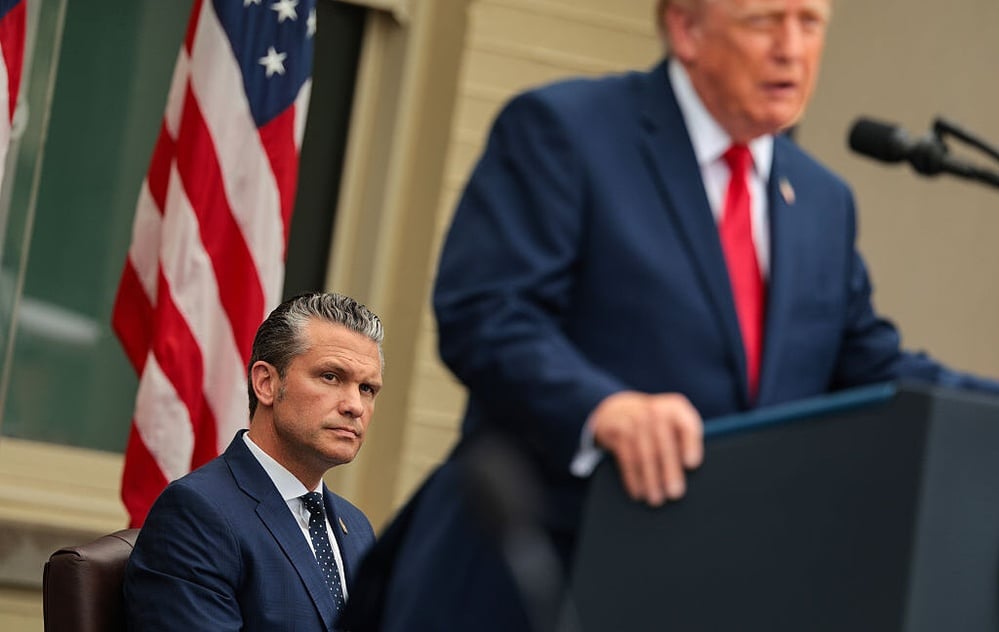
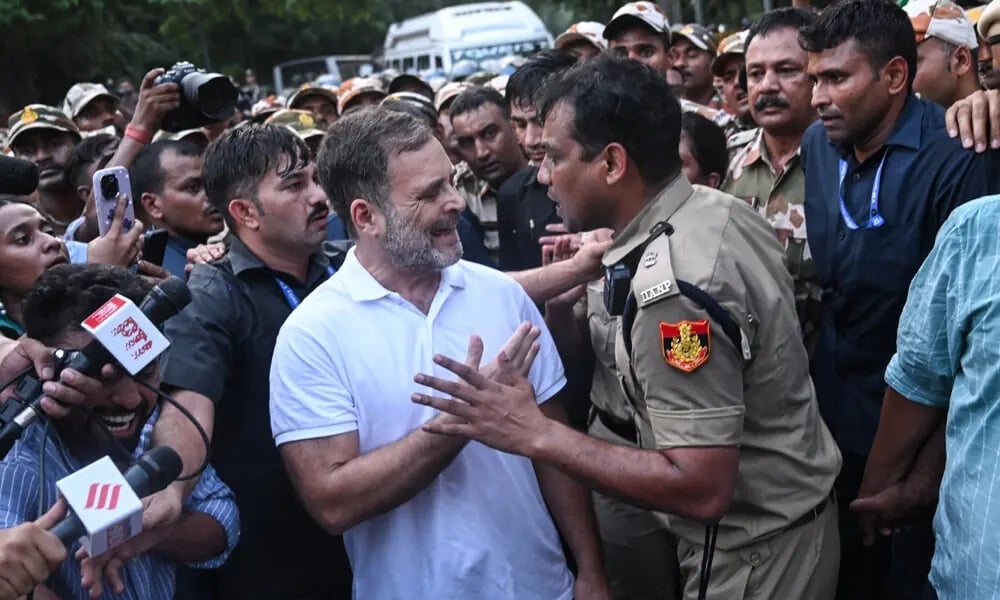

Click points to explore news by date. News sentiment ranges from -10 (very negative) to +10 (very positive) where 0 is neutral.
2026 © Helium Trades
Privacy Policy & Disclosure
* Disclaimer: Nothing on this website constitutes investment advice, performance data or any recommendation that any particular security, portfolio of securities, transaction or investment strategy is suitable for any specific person. Helium Trades is not responsible in any way for the accuracy
of any model predictions or price data. Any mention of a particular security and related prediction data is not a recommendation to buy or sell that security. Investments in securities involve the risk of loss. Past performance is no guarantee of future results. Helium Trades is not responsible for any of your investment decisions,
you should consult a financial expert before engaging in any transaction.
Helium Research Assistant

How can I help you today?
Ask any question about this page.


