See whether Helium helps you make better-informed decisions. Try every Pro Trader feature for 30 days. No credit card required.
Try every Pro Trader feature for 30 days. No credit card required.
The strongest observable feature is measured, attributed reporting that presents bipartisan criticism and official statements without editorializing.
Automated analysis; not human reviewed.
Limitations: The supplied text duplicates the article body and includes related-link fragments; no author byline is provided.
·
8 of 55 available dimensions scored; omitted dimensions are not treated as neutral.
·
Verified supporting quotes for 8 of 8 scored dimensions.
Claim: Coverage presents criticism from both parties without advancing a left-right position.
“prompted significant blowback from both Republicans and Democrats” · exact text match
“House Speaker Mike Johnson, R-La., voiced similar sentiments.” · exact text match
Why: Bipartisan criticism and a Republican critic are included, indicating no clear left-right framing.
Claim: Framing is predominantly factual and attributed rather than subjective commentary.
“The Pentagon has said Hasan’s execution is scheduled for Dec.
3.”
· exact text match
“Pentagon chief spokesperson Sean Parnell said Trump and Hegseth discussed the decision to drop the livestream plans before the president’s announcement on social media.” · exact text match
Why: The report states attributable facts and direct quotes without first-person judgment.
Claim: The text describes events and statements without prescribing policy.
“President Donald Trump said Thursday that the Pentagon will no longer livestream the firing squad execution of Fort Hood shooter Nidal Malik Hasan” · exact text match
“The Pentagon has said Hasan’s execution is scheduled for Dec.
3.”
· exact text match
Why: It reports official actions and schedules rather than urging a course of action.
Claim: The report centers on a politically contested government decision and bipartisan reaction.
“after the announcement faced bipartisan criticism” · exact text match
“prompted significant blowback from both Republicans and Democrats” · exact text match
Why: The subject is a presidential/Pentagon decision and political backlash.
Claim: The report includes contextual detail and uncertainty rather than flattening the issue.
“Hasan could seek a lengthy delay of his execution, though given his behaviour at trial, he may not want to.” · exact text match
“The U.S. military hasn’t executed a service member by firing squad since World War II.” · exact text match
Why: Procedural and historical context reduces oversimplification.
Claim: Credibility is supported by named officials and attributed quotations.
“Pentagon chief spokesperson Sean Parnell said Trump and Hegseth discussed the decision to drop the livestream plans before the president’s announcement on social media.” · exact text match
“Archbishop Paul S. Coakley saying the move was a “barbaric promotion of a culture of death and must be reconsidered.”” · exact text match
Why: Multiple named sources and direct quotes are present.
Claim: The report relies on attributed statements and procedural context rather than emotive argument.
“Pentagon chief spokesperson Sean Parnell said Trump and Hegseth discussed the decision to drop the livestream plans before the president’s announcement on social media.” · exact text match
“Hasan could seek a lengthy delay of his execution, though given his behaviour at trial, he may not want to.” · exact text match
Why: Named attribution and acknowledgment of possible delay show rational, non-emotive reporting.
Claim: The report includes multiple sides and direct attribution of official statements.
“prompted significant blowback from both Republicans and Democrats” · exact text match
“Archbishop Paul S. Coakley saying the move was a “barbaric promotion of a culture of death and must be reconsidered.”” · exact text match
Why: Inclusion of bipartisan criticism and a religious critic alongside administration statements signals fairness.
The supplied text duplicates the article body and includes related-link fragments; no author byline is provided.
October 15, 2026 · 0 shares
Attribution-heavy straight-news framing that reports Trump's reversal on livestreaming Hasan's execution through dueling quotes from the president, his administration, and retired officers, with no publisher endorsement of any side.
Automated analysis; not human reviewed.
Limitations: The text is a truncated scrape mixing the main report with related-link items; the original byline and fuller context are unavailable, and the causal link between mounting criticism and Trump's reversal is asserted without sourcing.
·
11 of 55 available dimensions scored; omitted dimensions are not treated as neutral.
·
Verified supporting quotes for 11 of 11 scored dimensions.
Claim: Publisher quotes both defenders and critics of the livestream without partisan framing.
“"I think streaming the execution for all to see might have been a strong deterrent for the World to witness how America deals with Terrorists and SCUM like Hasan," Trump said.” · exact text match
“"will taint the honor of the military that employs it, and a nation that allows it," 72 former officers said in a letter” · exact text match
Why: Opposing viewpoints are attributed to their speakers and the publisher's own sentences remain neutral reporting.
Claim: Roughly equal voice is given to Trump's blunt rhetoric and to retired officers' institutional criticism.
“Trump last Friday called Hasan "totally nuts"” · exact text match
“"will taint the honor of the military that employs it, and a nation that allows it," 72 former officers said in a letter” · exact text match
Why: Both registers appear as attributed quotes rather than as the publisher's own stance.
Claim: Nearly all claims carry attribution and the publisher adds no evaluative commentary.
“Trump said on Thursday that "many very good and well meaning people would rather not watch him die".” · exact text match
“Hasan fatally shot 13 unarmed US soldiers at a military base in Texas in 2009, injuring another 32.” · exact text match
Why: Characterizations are pinned to named speakers and core facts are stated as verifiable figures.
Claim: Coverage of a macabre topic stays plainly worded, with lurid language confined to attributed quotes.
“"He will die, as scheduled, by firing squad, but this event will not be streamed," the president added.” · exact text match
Counterevidence:
“"SCUM like Hasan," Trump said” · not found in supplied text
Why: The headline and body are factual; Trump's charged wording is quoted, not adopted or amplified by the publisher.
Claim: A first-in-decades military execution combined with a reversed livestream decision makes the story distinctive.
“His execution by firing squad will be the first military execution in more than 60 years.” · exact text match
“Trump had previously said he approved of showing online the death of the Fort Hood attacker, while Vice-President JD Vance cast doubt on whether it would happen and said he would not watch it.” · exact text match
Why: The novelty of the execution and the intra-administration reversal give the story unusual interest.
Claim: The text reports decisions, schedules, and reactions without advocating any course of action.
“The Pentagon announced last week it would execute Hasan on 3 December 2026 by firing squad.” · exact text match
“Trump said the execution can be viewed in person by the families of the victims.” · exact text match
Why: No recommendations or normative judgments appear in the publisher's own voice.
Claim: The subject is governmental decision-making over a death-penalty procedure involving the president, vice-president, and Pentagon.
“US President Donald Trump has called off plans to livestream the execution of former US army psychiatrist Nidal Hasan by firing squad.” · exact text match
“The Pentagon announced last week it would execute Hasan on 3 December 2026 by firing squad.” · exact text match
Why: The actors and decisions are inherently political, though the reporting itself carries no partisan slant.
Claim: The publisher's own wording is neutral while charged language stays inside attributed quotes.
“Hasan fatally shot 13 unarmed US soldiers at a military base in Texas in 2009, injuring another 32.” · exact text match
Counterevidence:
“"SCUM like Hasan," Trump said” · not found in supplied text
Why: The factual summary sentence is emotionally flat; the only inflammatory term appears within a quoted remark.
Claim: Direct quotes from multiple named officials plus specific dates and casualty figures anchor the report.
“The Pentagon announced last week it would execute Hasan on 3 December 2026 by firing squad.” · exact text match
“Hegseth then said the execution would be livestreamed for the public to watch” · exact text match
Why: Sourcing, attribution, and concrete verifiable details support trust in the supplied text.
Claim: All characterizations are attributed and opposing views are included.
“Trump last Friday called Hasan "totally nuts"” · exact text match
“"will taint the honor of the military that employs it, and a nation that allows it," 72 former officers said in a letter” · exact text match
Why: The report preserves critical voices alongside the administration's own, a visible fairness and honesty signal.
Claim: The report efficiently conveys chronology, competing viewpoints, and key facts in compact form.
“The Pentagon announced last week it would execute Hasan on 3 December 2026 by firing squad.” · exact text match
“Vice-President JD Vance cast doubt on whether it would happen and said he would not watch it.” · exact text match
Why: A complex multi-actor development is compressed into a coherent, attributed narrative.
The text is a truncated scrape mixing the main report with related-link items; the original byline and fuller context are unavailable, and the causal link between mounting criticism and Trump's reversal is asserted without sourcing.
October 15, 2026 · 0 shares
Publisher framing is largely factual and attribution-heavy but uses loaded descriptors such as 'controversial' and 'killing' when describing the execution.
Automated analysis; not human reviewed.
Limitations: The supplied text includes subscription/bookmark boilerplate and lacks a byline; analysis is limited to the substantive news content.
·
9 of 55 available dimensions scored; omitted dimensions are not treated as neutral.
·
Verified supporting quotes for 9 of 9 scored dimensions.
Claim: The publisher uses loaded terms that frame the execution skeptically.
“the controversial firing squad execution of the wheelchair-bound mass murderer” · exact text match
“Soon after the president allowed Hasan’s killing to move forward” · exact text match
Counterevidence:
“I absolutely support the sentence of death” · exact text match
Why: 'Controversial' and 'killing' tilt framing against the execution, though the article includes pro-death-sentence Republican voices.
Claim: Publisher prose includes evaluative descriptors rather than strictly neutral labels.
“the controversial firing squad execution of the wheelchair-bound mass murderer” · exact text match
“allowed Hasan’s killing to move forward” · exact text match
Why: Evaluative adjectives and verbs make the narration somewhat subjective.
Claim: The article uses sensational descriptors in its own narration.
“the controversial firing squad execution of the wheelchair-bound mass murderer” · exact text match
Why: 'Wheelchair-bound mass murderer' is a vivid, sensational descriptor rather than a neutral label.
Claim: Publisher voice contains some evaluative language amid otherwise reported quotes.
“the controversial firing squad execution” · exact text match
“allowed Hasan’s killing” · exact text match
Why: The framing language is evaluative, though most opinion is quoted from officials.
Claim: The report centers on a presidential decision and political reactions to execution policy.
“President Donald Trump announced Thursday.” · exact text match
“politicians from both sides of the political aisle” · exact text match
“Senator Mark Kelly, an Arizona Democrat, stated.” · exact text match
Why: The subject and sourcing are explicitly political.
Claim: The publisher's wording carries a negative emotional charge toward the execution.
“the controversial firing squad execution of the wheelchair-bound mass murderer” · exact text match
“allowed Hasan’s killing to move forward” · exact text match
Why: 'Mass murderer' and 'killing' produce negative affect, while stronger emotion appears in quotes.
Claim: The article provides specific facts and named attribution.
“A military jury convicted him of 45 counts of murder.” · exact text match
“Defense Secretary Pete Hegseth announced plans to livestream the event.” · exact text match
“Senator Thom Tillis, a North Carolina Republican and frequent Trump critic, noted.” · exact text match
Why: Concrete factual details and named sourcing support credibility.
Claim: The report is structured around attributed factual chronology rather than emotive argument.
“Hasan, a former Army major and psychiatrist, opened fire at the Texas base in 2009 before he was set to deploy to Afghanistan.
He killed 13 and wounded 32.”
· exact text match
“A military jury convicted him of 45 counts of murder.
In 2013, he was sentenced to death.”
· exact text match
Why: Specific dates, counts, and attributions support a rational/descriptive presentation.
Claim: The report attributes key claims and includes multiple political viewpoints.
“President Donald Trump announced Thursday.” · exact text match
“Democrats also blasted Hegseth for saying he would livestream the event.” · exact text match
“Rep.
Austin Scott, a Georgia Republican, posted on X soon after Hegseth announced his plans.”
· exact text match
Why: Direct attribution and inclusion of bipartisan criticism show strong observable fairness signals.
The supplied text includes subscription/bookmark boilerplate and lacks a byline; analysis is limited to the substantive news content.
The strongest observable feature is measured, attributed reporting that presents bipartisan criticism and official statements without editorializing.
Automated analysis; not human reviewed.
Limitations: The supplied text duplicates the article body and includes related-link fragments; no author byline is provided.
·
8 of 55 available dimensions scored; omitted dimensions are not treated as neutral.
·
Verified supporting quotes for 8 of 8 scored dimensions.
Claim: Coverage presents criticism from both parties without advancing a left-right position.
“prompted significant blowback from both Republicans and Democrats” · exact text match
“House Speaker Mike Johnson, R-La., voiced similar sentiments.” · exact text match
Why: Bipartisan criticism and a Republican critic are included, indicating no clear left-right framing.
Claim: Framing is predominantly factual and attributed rather than subjective commentary.
“The Pentagon has said Hasan’s execution is scheduled for Dec.
3.”
· exact text match
“Pentagon chief spokesperson Sean Parnell said Trump and Hegseth discussed the decision to drop the livestream plans before the president’s announcement on social media.” · exact text match
Why: The report states attributable facts and direct quotes without first-person judgment.
Claim: The text describes events and statements without prescribing policy.
“President Donald Trump said Thursday that the Pentagon will no longer livestream the firing squad execution of Fort Hood shooter Nidal Malik Hasan” · exact text match
“The Pentagon has said Hasan’s execution is scheduled for Dec.
3.”
· exact text match
Why: It reports official actions and schedules rather than urging a course of action.
Claim: The report centers on a politically contested government decision and bipartisan reaction.
“after the announcement faced bipartisan criticism” · exact text match
“prompted significant blowback from both Republicans and Democrats” · exact text match
Why: The subject is a presidential/Pentagon decision and political backlash.
Claim: The report includes contextual detail and uncertainty rather than flattening the issue.
“Hasan could seek a lengthy delay of his execution, though given his behaviour at trial, he may not want to.” · exact text match
“The U.S. military hasn’t executed a service member by firing squad since World War II.” · exact text match
Why: Procedural and historical context reduces oversimplification.
Claim: Credibility is supported by named officials and attributed quotations.
“Pentagon chief spokesperson Sean Parnell said Trump and Hegseth discussed the decision to drop the livestream plans before the president’s announcement on social media.” · exact text match
“Archbishop Paul S. Coakley saying the move was a “barbaric promotion of a culture of death and must be reconsidered.”” · exact text match
Why: Multiple named sources and direct quotes are present.
Claim: The report relies on attributed statements and procedural context rather than emotive argument.
“Pentagon chief spokesperson Sean Parnell said Trump and Hegseth discussed the decision to drop the livestream plans before the president’s announcement on social media.” · exact text match
“Hasan could seek a lengthy delay of his execution, though given his behaviour at trial, he may not want to.” · exact text match
Why: Named attribution and acknowledgment of possible delay show rational, non-emotive reporting.
Claim: The report includes multiple sides and direct attribution of official statements.
“prompted significant blowback from both Republicans and Democrats” · exact text match
“Archbishop Paul S. Coakley saying the move was a “barbaric promotion of a culture of death and must be reconsidered.”” · exact text match
Why: Inclusion of bipartisan criticism and a religious critic alongside administration statements signals fairness.
The supplied text duplicates the article body and includes related-link fragments; no author byline is provided.
October 15, 2026 · 0 shares
Publisher framing is largely factual and attribution-heavy but uses loaded descriptors such as 'controversial' and 'killing' when describing the execution.
Automated analysis; not human reviewed.
Limitations: The supplied text includes subscription/bookmark boilerplate and lacks a byline; analysis is limited to the substantive news content.
·
9 of 55 available dimensions scored; omitted dimensions are not treated as neutral.
·
Verified supporting quotes for 9 of 9 scored dimensions.
Claim: The publisher uses loaded terms that frame the execution skeptically.
“the controversial firing squad execution of the wheelchair-bound mass murderer” · exact text match
“Soon after the president allowed Hasan’s killing to move forward” · exact text match
Counterevidence:
“I absolutely support the sentence of death” · exact text match
Why: 'Controversial' and 'killing' tilt framing against the execution, though the article includes pro-death-sentence Republican voices.
Claim: Publisher prose includes evaluative descriptors rather than strictly neutral labels.
“the controversial firing squad execution of the wheelchair-bound mass murderer” · exact text match
“allowed Hasan’s killing to move forward” · exact text match
Why: Evaluative adjectives and verbs make the narration somewhat subjective.
Claim: The article uses sensational descriptors in its own narration.
“the controversial firing squad execution of the wheelchair-bound mass murderer” · exact text match
Why: 'Wheelchair-bound mass murderer' is a vivid, sensational descriptor rather than a neutral label.
Claim: Publisher voice contains some evaluative language amid otherwise reported quotes.
“the controversial firing squad execution” · exact text match
“allowed Hasan’s killing” · exact text match
Why: The framing language is evaluative, though most opinion is quoted from officials.
Claim: The report centers on a presidential decision and political reactions to execution policy.
“President Donald Trump announced Thursday.” · exact text match
“politicians from both sides of the political aisle” · exact text match
“Senator Mark Kelly, an Arizona Democrat, stated.” · exact text match
Why: The subject and sourcing are explicitly political.
Claim: The publisher's wording carries a negative emotional charge toward the execution.
“the controversial firing squad execution of the wheelchair-bound mass murderer” · exact text match
“allowed Hasan’s killing to move forward” · exact text match
Why: 'Mass murderer' and 'killing' produce negative affect, while stronger emotion appears in quotes.
Claim: The article provides specific facts and named attribution.
“A military jury convicted him of 45 counts of murder.” · exact text match
“Defense Secretary Pete Hegseth announced plans to livestream the event.” · exact text match
“Senator Thom Tillis, a North Carolina Republican and frequent Trump critic, noted.” · exact text match
Why: Concrete factual details and named sourcing support credibility.
Claim: The report is structured around attributed factual chronology rather than emotive argument.
“Hasan, a former Army major and psychiatrist, opened fire at the Texas base in 2009 before he was set to deploy to Afghanistan.
He killed 13 and wounded 32.”
· exact text match
“A military jury convicted him of 45 counts of murder.
In 2013, he was sentenced to death.”
· exact text match
Why: Specific dates, counts, and attributions support a rational/descriptive presentation.
Claim: The report attributes key claims and includes multiple political viewpoints.
“President Donald Trump announced Thursday.” · exact text match
“Democrats also blasted Hegseth for saying he would livestream the event.” · exact text match
“Rep.
Austin Scott, a Georgia Republican, posted on X soon after Hegseth announced his plans.”
· exact text match
Why: Direct attribution and inclusion of bipartisan criticism show strong observable fairness signals.
The supplied text includes subscription/bookmark boilerplate and lacks a byline; analysis is limited to the substantive news content.
October 14, 2026 · 0 shares
The article frames Hegseth’s livestream proposal as a dangerous public spectacle, using military, religious, legal, and conservative editorial authorities to argue that it would undermine justice, military restraint, and American credibility.
Automated analysis; not human reviewed.
Limitations: No byline is present in the supplied text, which is argumentative analysis including a subscription appeal and a reader comment; bias scores reflect the visible framing only.
·
18 of 55 available dimensions scored; omitted dimensions are not treated as neutral.
·
Verified supporting quotes for 17 of 18 scored dimensions.
Claim: The framing criticizes the Trump administration’s execution proposal by likening it to practices of authoritarian regimes and terrorist groups.
“Why would the United States, which has spent decades condemning public executions by authoritarian regimes and terrorist organizations, choose to stage one itself?” · exact text match
Why: The rhetorical comparison frames the proposal as a departure from liberal-internationalist norms, though the piece avoids explicit partisan labels.
Claim: The argument is anchored in military, religious, legal, and editorial-establishment authorities rather than popular sentiment.
“Retired Lt. Gen. Sean MacFarland, the former Fort Hood commander who approved Hasan’s death sentence in 2013, has called the plan to broadcast it “more of an act of vengeance than an act of justice.”” · exact text match
Why: Heavy reliance on retired generals, archbishops, senators, and editorial boards gives the piece an elite-institutional orientation.
Claim: The piece opposes extending state power into a public spectacle and stresses legal and ethical limits on military authority.
“They serve under a system that places legal and ethical limits on military power.” · not found in supplied text
Why: The argument emphasizes restraint and limits on state coercion rather than expanding authority.
Claim: The article is built around evaluative rhetorical questions and normative judgments about spectacle and American strength.
“And what does turning a judicial punishment into a global spectacle actually demonstrate about American strength?” · exact text match
Why: This is an explicitly argumentative, subjective framing rather than straight description.
Claim: The prose uses spectacle and global-audience framing but generally keeps the tone analytical.
“Why would the United States, which has spent decades condemning public executions by authoritarian regimes and terrorist organizations, choose to stage one itself?” · exact text match
Why: Heightened rhetorical framing is present, but it is restrained by detailed legal and historical analysis.
Claim: The article forecasts harm from the livestream and warns it could backfire.
“The most immediate danger is that the broadcast could achieve the opposite of what Hegseth intends.” · exact text match
Why: The dominant outlook is cautionary and pessimistic about the proposal’s consequences.
Claim: The article moves from description to a clear prescription against broadcasting the execution.
“The world’s most powerful democracy should not need to broadcast a man’s death to prove its strength.” · exact text match
Why: The closing line is explicitly normative and prescriptive.
Claim: The argument praises military restraint and warns that public execution would undermine the military’s moral standing.
“American military strength has never rested solely on the ability to defeat an enemy.
It also depends on the judgment, discipline and restraint that govern how that power is used.”
· exact text match
Why: Emphasis on restraint and legitimacy over raw coercive display leans dovish in this military-justice context.
Claim: The article raises fear of extremist propaganda and recruitment as a consequence of broadcasting the execution.
“a video of American soldiers shooting a paralyzed Muslim prisoner in a wheelchair could give extremist organizations something far more valuable than news of his execution: images they could manipulate, circulate, and use to recruit” · exact text match
Why: The recruitment/propaganda warning is a fear-based consequence frame, though stated as risk rather than certainty.
Claim: The central claims are normative evaluations of the proposal rather than neutral reporting.
“Hegseth’s proposal would erase that line.” · exact text match
Why: The article openly argues against the livestream and evaluates it as a moral and strategic mistake.
Claim: The report centers on a policy dispute involving the defense secretary and president.
“President Donald Trump initially told reporters he “absolutely” approved of the broadcast but has since acknowledged arguments for and against it, and said he will make the final decision.” · exact text match
Why: The subject is a high-level executive-branch policy and political controversy.
Claim: The argument draws heavily on named military, religious, legal, and editorial authorities.
“Retired Adm. William McRaven, the former head of US Special Operations Command who oversaw the raid that killed Osama bin Laden, made that case in The Atlantic.” · exact text match
Why: Multiple named authorities are used to support the critique.
Claim: The piece defends established military and legal norms against a disruptive political spectacle.
“The distinction between public and private was never about concealing the state’s power to impose the death penalty.
It was about separating the administration of justice from the public consumption of death.”
· exact text match
Why: It aligns with institutional norms and established authorities rather than anti-establishment critique.
Claim: The article attributes claims to named sources and reports and distinguishes fact from argument.
“CNN reported that Hegseth’s announcement caught senior military officials by surprise” · exact text match
Why: Attribution to CNN, named officials, and documents supports visible credibility.
Claim: The piece distinguishes lawful military punishment from combat killing and concedes a legitimate transparency argument.
“But killing an enemy in combat and publicly executing a prisoner already sentenced by a court are different exercises of state power.” · exact text match
Why: Explicit conceptual distinctions and concession of a counterargument indicate a rational-analytic frame.
Claim: It forecasts how extremist groups could use footage of the execution.
“could give extremist organizations something far more valuable than news of his execution: images they could manipulate, circulate, and use to recruit” · exact text match
Why: The claim is explicitly a possibility about future propaganda use.
Claim: The piece concedes a legitimate counterargument and separates opposition to the livestream from opposition to the death penalty.
“There is a legitimate argument for transparency in capital punishment, particularly after botched executions have raised questions about how governments carry out death sentences.” · exact text match
Why: Visible concession and distinction-making indicate fairness and epistemic care.
Claim: The piece uses historical comparison, legal distinction, and strategic argument to structure its case.
“But killing an enemy in combat and publicly executing a prisoner already sentenced by a court are different exercises of state power.” · exact text match
Why: The analysis is conceptually organized and addresses counterarguments.
No byline is present in the supplied text, which is argumentative analysis including a subscription appeal and a reader comment; bias scores reflect the visible framing only.
October 15, 2026 · 0 shares
Framing is mostly factual and attributed, but evaluative wording such as 'highly controversial' and foregrounded critical military voices give a mildly critical cast to the livestream plan.
Automated analysis; not human reviewed.
Limitations: The supplied text is duplicated and truncated mid-quote, so some context may be missing.
·
55 of 55 available dimensions scored; omitted dimensions are not treated as neutral.
·
Verified supporting quotes for 13 of 55 scored dimensions.
Claim: Critical framing of the Pentagon livestream plan and emphasis on the right-wing podcast venue give a slight anti-conservative slant.
“right-wing podcaster Jack Posobiec” · exact text match
“appalled by Hegseth’s announcement” · exact text match
Why: The ideological label and critical source selection mildly favor a liberal perspective.
Claim: Evaluative adjectives and critical source selection add mild subjectivity.
“highly controversial plans to livestream a firing squad execution” · exact text match
“appalled by Hegseth’s announcement” · exact text match
Why: The publisher uses an evaluative phrase and foregrounds a strongly critical reaction.
Claim: Graphic execution language and emotive quotes add mild sensational color.
“watch him get shot to death” · exact text match
“firing squad execution” · exact text match
Why: Graphic phrasing is present but largely factual or attributed.
Claim: The piece mainly describes events and attributed reactions rather than prescribing an outcome.
“Trump called off the Pentagon’s highly controversial plans” · exact text match
“As of Tuesday, the Department of Defense had backed the secretary” · exact text match
Why: The dominant mode is descriptive reporting of actions and statements.
Claim: Evaluative wording and critical quotes introduce mild opinion.
“highly controversial plans” · exact text match
“takes away everything America stands for” · exact text match
Why: Some loaded framing is present, though most claims are attributed.
Claim: The story centers on a Trump administration and Pentagon political decision.
“Trump supports the execution of Nidal Hasan” · exact text match
“55 percent majority of MAGA Republicans” · exact text match
Why: Political actors and partisan polling are central to the report.
Claim: Quoted harm language gives the report a mildly negative emotional valence.
“generational harm caused by allowing troops in uniform to stand in front of a man in a wheelchair and watch him get shot to death is irreparable” · exact text match
Why: Negative emotive language comes through a prominent quote.
Claim: Credible sourcing and direct quotation support reliability.
“an ABC News poll found 8 in 10 Americans were against the livestream” · exact text match
“Trump confirmed that Hasan “will die, as scheduled, by firing squad, but this event will not be streamed.”” · exact text match
Why: Multiple attributed sources and direct quotes reduce unsupported assertion.
Claim: The report grounds claims in poll data and attributed sourcing rather than unsupported assertion.
“an ABC News poll found 8 in 10 Americans were against the livestream” · exact text match
“sources close to Trump told CNN” · exact text match
Why: Polling and attributed sources support a rational presentation.
Claim: The report foregrounds hypothetical harms of broadcasting the execution.
“broadcasting the execution could super charge anti-American propaganda” · exact text match
“risked making it possible to identify them” · exact text match
Why: The piece includes forecasts about consequences and operational risks.
Claim: Evaluative framing and ideological labeling mildly shape reader interpretation.
“highly controversial plans to livestream a firing squad execution” · exact text match
“right-wing podcaster Jack Posobiec” · exact text match
Why: Loaded description and an ideological label are observable framing choices.
Claim: Key claims are attributed to named outlets, direct statements, and official actions.
“sources close to Trump told CNN” · exact text match
“On Truth Social, Trump confirmed” · exact text match
Why: Transparent attribution and inclusion of the subject's own statement support integrity.
Claim: The report distinguishes attributed insider claims from confirmed statements and provides institutional context.
“sources close to Trump told CNN” · exact text match
“On Truth Social, Trump confirmed” · exact text match
Why: Clear sourcing and context indicate above-average article intelligence.
The supplied text is duplicated and truncated mid-quote, so some context may be missing.
October 16, 2026 · 0 shares
The report amplifies anonymous insider criticism and Republican backlash to frame Hegseth's execution-streaming proposal as a leadership misstep and source of GOP discontent.
Automated analysis; not human reviewed.
Limitations: The article is a secondary report on an Atlantic story and relies heavily on anonymous officials, limiting independent verification of internal sentiment.
·
14 of 55 available dimensions scored; omitted dimensions are not treated as neutral.
·
Verified supporting quotes for 11 of 14 scored dimensions.
Claim: The report frames a Republican defense secretary's action as a leadership failure amid GOP frustration, with critical Republican voices foregrounded.
“GOP revolt brewing after Pete Hegseth blindsided his own inner circle: report.” · exact text match
“adding to Republican frustration over his leadership.” · exact text match
Counterevidence:
“though Trump has continued to back him.” · exact text match
Why: The selection and headline create negative framing of a conservative administration, though criticism is attributed and not explicitly ideological.
Claim: The report mixes attributed facts with anonymous insider characterizations.
“one official described the reaction to The Atlantic as "pretty universal revulsion."” · exact text match
“The episode could add fuel to discontent among Republicans already unhappy with Hegseth's performance” · not found in supplied text
Why: Insider characterizations and analysis make the framing more subjective than a bare event report.
Claim: The headline and selected quotes use dramatic conflict language.
“GOP revolt brewing after Pete Hegseth blindsided his own inner circle: report.” · exact text match
“Sen.
Thom Tillis (R-NC) called the idea "beyond disgusting."”
· exact text match
Why: Dramatic verbs and strong quotes heighten the story's impact.
Claim: The article reports events and reactions rather than advocating a policy position.
“The Atlantic reported Thursday.” · exact text match
“On Thursday, Trump announced the reversal on Truth Social.” · exact text match
Why: It is largely descriptive, with no explicit prescription.
Claim: The report highlights fears of propaganda and political damage.
“Military and intelligence officials worried the footage would hand the Islamic State a propaganda tool.” · exact text match
Why: It gives prominence to alarming security and political consequences, though these are attributed.
Claim: The report includes evaluative framing about Hegseth's performance and GOP discontent.
“The episode could add fuel to discontent among Republicans already unhappy with Hegseth's performance” · not found in supplied text
“The plan drew swift backlash inside the Trump administration” · exact text match
Why: It moves beyond event reporting into characterizations of leadership and party mood.
Claim: The article is centrally about Republican officials, the Trump administration, and electoral implications.
“GOP revolt brewing after Pete Hegseth blindsided his own inner circle: report.” · exact text match
“Republican lawmakers also phoned Trump and his aides” · exact text match
Why: Nearly all content is political conflict and electoral positioning.
Claim: The headline asserts a GOP revolt is brewing despite the body framing it as potential discontent.
“GOP revolt brewing after Pete Hegseth blindsided his own inner circle: report.” · exact text match
Counterevidence:
“The episode could add fuel to discontent among Republicans already unhappy with Hegseth's performance” · not found in supplied text
Why: The headline's certainty exceeds the body's 'could add fuel' framing.
Claim: The report centers institutional officials and lawmakers as the authoritative voice on the plan.
“The plan drew swift backlash inside the Trump administration, where one official described the reaction to The Atlantic as "pretty universal revulsion."” · exact text match
“Republican lawmakers also phoned Trump and his aides” · exact text match
Why: Established officials and legislators drive the account of the reversal.
Claim: The language and selected quotes convey strong negative affect.
“Sen.
Thom Tillis (R-NC) called the idea "beyond disgusting."”
· exact text match
“one official described the reaction to The Atlantic as "pretty universal revulsion."” · exact text match
Why: Negative emotional language is prominent, though partly quoted.
Claim: Sourcing is mostly attributed but includes anonymous insiders and a secondary Atlantic report.
“The Atlantic reported Thursday.” · exact text match
“Chief Pentagon spokesperson Sean Parnell said Trump and Hegseth spoke before the announcement and are "completely aligned."” · exact text match
Counterevidence:
“where one official described the reaction to The Atlantic as "pretty universal revulsion."” · exact text match
Why: Named sources and a response are present, but anonymous insiders reduce verifiability.
Claim: The report includes forecasts about political consequences and 2028 ambitions.
“The episode could add fuel to discontent among Republicans already unhappy with Hegseth's performance” · not found in supplied text
“Both men are reportedly weighing 2028 presidential runs.” · exact text match
Why: These are explicitly speculative or reported future-oriented claims beyond the immediate reversal.
Claim: The headline and insider quotes use loaded framing to heighten conflict.
“GOP revolt brewing after Pete Hegseth blindsided his own inner circle: report.” · exact text match
“one official described the reaction to The Atlantic as "pretty universal revulsion."” · exact text match
Why: Loaded 'revolt'/'blindsided' framing and anonymous 'universal revulsion' amplify the conflict narrative.
Claim: The report includes an administration response and attributed criticism, but relies on anonymous insiders.
“Chief Pentagon spokesperson Sean Parnell said Trump and Hegseth spoke before the announcement and are "completely aligned."” · exact text match
Counterevidence:
“where one official described the reaction to The Atlantic as "pretty universal revulsion."” · exact text match
Why: It gives space to the administration’s position, but much of the criticism is anonymously sourced.
The article is a secondary report on an Atlantic story and relies heavily on anonymous officials, limiting independent verification of internal sentiment.
October 15, 2026 · 0 shares
Attribution-heavy straight-news framing that reports Trump's reversal on livestreaming Hasan's execution through dueling quotes from the president, his administration, and retired officers, with no publisher endorsement of any side.
Automated analysis; not human reviewed.
Limitations: The text is a truncated scrape mixing the main report with related-link items; the original byline and fuller context are unavailable, and the causal link between mounting criticism and Trump's reversal is asserted without sourcing.
·
11 of 55 available dimensions scored; omitted dimensions are not treated as neutral.
·
Verified supporting quotes for 11 of 11 scored dimensions.
Claim: Publisher quotes both defenders and critics of the livestream without partisan framing.
“"I think streaming the execution for all to see might have been a strong deterrent for the World to witness how America deals with Terrorists and SCUM like Hasan," Trump said.” · exact text match
“"will taint the honor of the military that employs it, and a nation that allows it," 72 former officers said in a letter” · exact text match
Why: Opposing viewpoints are attributed to their speakers and the publisher's own sentences remain neutral reporting.
Claim: Roughly equal voice is given to Trump's blunt rhetoric and to retired officers' institutional criticism.
“Trump last Friday called Hasan "totally nuts"” · exact text match
“"will taint the honor of the military that employs it, and a nation that allows it," 72 former officers said in a letter” · exact text match
Why: Both registers appear as attributed quotes rather than as the publisher's own stance.
Claim: Nearly all claims carry attribution and the publisher adds no evaluative commentary.
“Trump said on Thursday that "many very good and well meaning people would rather not watch him die".” · exact text match
“Hasan fatally shot 13 unarmed US soldiers at a military base in Texas in 2009, injuring another 32.” · exact text match
Why: Characterizations are pinned to named speakers and core facts are stated as verifiable figures.
Claim: Coverage of a macabre topic stays plainly worded, with lurid language confined to attributed quotes.
“"He will die, as scheduled, by firing squad, but this event will not be streamed," the president added.” · exact text match
Counterevidence:
“"SCUM like Hasan," Trump said” · not found in supplied text
Why: The headline and body are factual; Trump's charged wording is quoted, not adopted or amplified by the publisher.
Claim: A first-in-decades military execution combined with a reversed livestream decision makes the story distinctive.
“His execution by firing squad will be the first military execution in more than 60 years.” · exact text match
“Trump had previously said he approved of showing online the death of the Fort Hood attacker, while Vice-President JD Vance cast doubt on whether it would happen and said he would not watch it.” · exact text match
Why: The novelty of the execution and the intra-administration reversal give the story unusual interest.
Claim: The text reports decisions, schedules, and reactions without advocating any course of action.
“The Pentagon announced last week it would execute Hasan on 3 December 2026 by firing squad.” · exact text match
“Trump said the execution can be viewed in person by the families of the victims.” · exact text match
Why: No recommendations or normative judgments appear in the publisher's own voice.
Claim: The subject is governmental decision-making over a death-penalty procedure involving the president, vice-president, and Pentagon.
“US President Donald Trump has called off plans to livestream the execution of former US army psychiatrist Nidal Hasan by firing squad.” · exact text match
“The Pentagon announced last week it would execute Hasan on 3 December 2026 by firing squad.” · exact text match
Why: The actors and decisions are inherently political, though the reporting itself carries no partisan slant.
Claim: The publisher's own wording is neutral while charged language stays inside attributed quotes.
“Hasan fatally shot 13 unarmed US soldiers at a military base in Texas in 2009, injuring another 32.” · exact text match
Counterevidence:
“"SCUM like Hasan," Trump said” · not found in supplied text
Why: The factual summary sentence is emotionally flat; the only inflammatory term appears within a quoted remark.
Claim: Direct quotes from multiple named officials plus specific dates and casualty figures anchor the report.
“The Pentagon announced last week it would execute Hasan on 3 December 2026 by firing squad.” · exact text match
“Hegseth then said the execution would be livestreamed for the public to watch” · exact text match
Why: Sourcing, attribution, and concrete verifiable details support trust in the supplied text.
Claim: All characterizations are attributed and opposing views are included.
“Trump last Friday called Hasan "totally nuts"” · exact text match
“"will taint the honor of the military that employs it, and a nation that allows it," 72 former officers said in a letter” · exact text match
Why: The report preserves critical voices alongside the administration's own, a visible fairness and honesty signal.
Claim: The report efficiently conveys chronology, competing viewpoints, and key facts in compact form.
“The Pentagon announced last week it would execute Hasan on 3 December 2026 by firing squad.” · exact text match
“Vice-President JD Vance cast doubt on whether it would happen and said he would not watch it.” · exact text match
Why: A complex multi-actor development is compressed into a coherent, attributed narrative.
The text is a truncated scrape mixing the main report with related-link items; the original byline and fuller context are unavailable, and the causal link between mounting criticism and Trump's reversal is asserted without sourcing.
October 15, 2026 · 0 shares
AFP's report is a fact-driven wire account that attributes the backlash and Trump's reversal to quoted statements and notes bipartisan and international opposition without taking sides.
Automated analysis; not human reviewed.
Limitations: The article is a short AFP wire report; some political fallout claims lack explicit sourcing.
·
13 of 55 available dimensions scored; omitted dimensions are not treated as neutral.
·
Verified supporting quotes for 13 of 13 scored dimensions.
Claim: The report does not favor either major US party and cites bipartisan opposition to the livestream.
“prompting outrage from both US Democratic and Republican politicians” · exact text match
Why: Bipartisan opposition and attributed quotes indicate no clear left-right framing.
Claim: The report lists institutional and political opponents alongside Trump's rationale without adopting a populist or elitist stance.
“prompting outrage from both US Democratic and Republican politicians, the Catholic Church, rights groups and the United Nations” · exact text match
Why: It cites a broad cross-section of elites and public actors without endorsing either perspective.
Claim: The report primarily attributes statements and avoids sustained subjective commentary.
“Hasan “will die, as scheduled, by firing squad, but this event will not be streamed”, Trump said in a post on his Truth Social platform.” · exact text match
Why: Direct attribution of the central quote supports an objective presentation.
Claim: The report is factual rather than sensational, with emotional language largely confined to attributed reactions.
“Trump scraps plan to livestream execution after backlash” · exact text match
Why: The headline states the development factually; stronger language like 'outrage' is attributed to opponents.
Claim: The report describes the cancellation and its political context without prescribing a policy outcome.
“The cancellation is a blow to Hegseth, who is already under fire over the stalemated Iran war and its fallout” · exact text match
Why: It offers descriptive political analysis rather than recommendations.
Claim: The report is mostly factual but includes brief evaluative framing about political impact.
“The cancellation is a blow to Hegseth” · exact text match
Why: The phrase 'a blow to Hegseth' is an interpretive assessment rather than a purely neutral fact.
Claim: The report is heavily focused on political actors, elections, and governing fallout.
“weighing on the Republican Party’s chances in upcoming midterm elections” · exact text match
Why: References to Trump, Hegseth, midterms, and political consequences indicate strong political framing.
Claim: The report centers on backlash and political reactions to the livestream plan.
“The move to livestream Nidal Hasan’s execution was widely opposed at home and abroad, prompting outrage from both US Democratic and Republican politicians, the Catholic Church, rights groups and the United Nations.” · exact text match
Why: The article emphasizes opposition and response as the main context for the cancellation.
Claim: The report demonstrates credibility through direct quotes, named actors, and specific dates.
“Trump said in a post on his Truth Social platform” · exact text match
Why: Clear attribution and verifiable details support a credible presentation.
Claim: The report relies on factual dates, locations, and historical comparisons rather than emotional or irrational reasoning.
“Hasan’s execution — scheduled for December 3 at Fort Hood, Texas, where he gunned down 13 people in 2009 — is set to be the first by a US military firing squad since 1945.” · exact text match
Why: Verifiable specifics and chronological context support a rational rather than irrational presentation.
Claim: The report includes an unattributed forecast about Republican midterm prospects.
“which are weighing on the Republican Party’s chances in upcoming midterm elections” · exact text match
Why: This is a speculative political impact claim not presented as a direct quote.
Claim: The report shows fair attribution and direct quotation of key actors.
“Hegseth said last week that “we’ll make sure that people are able to watch it, that it’s public”” · exact text match
Why: Quoting both Trump and Hegseth supports internal fairness and honesty signals.
Claim: The report provides relevant historical and procedural context for the execution.
“is set to be the first by a US military firing squad since 1945” · exact text match
Why: Historical comparison and specific scheduling details indicate above-average contextual intelligence.
The article is a short AFP wire report; some political fallout claims lack explicit sourcing.
October 15, 2026 · 0 shares
Attribution-heavy neutral framing keeps the strongest evaluative language in quoted voices while presenting the cancellation as a political and legal development.
Automated analysis; not human reviewed.
Limitations: The supplied text includes unrelated BBC teasers and aggregation artifacts; only the Hasan execution report was analyzed.
·
7 of 55 available dimensions scored; omitted dimensions are not treated as neutral.
·
Verified supporting quotes for 6 of 7 scored dimensions.
Claim: The publisher includes both UN criticism and Hegseth's defense without adopting either evaluation.
“The United Nations called the plans "abhorrent".” · exact text match
“US Defence Secretary Pete Hegseth defended his decision to air Hasan's execution online” · not found in supplied text
Why: Opposing evaluations are attributed and presented, supporting measured left-right neutrality.
Claim: The publisher attributes the harshest evaluative term to the UN rather than using it in its own voice.
“The United Nations called the plans "abhorrent".” · exact text match
Why: The strongest condemnation is quoted from an external actor, indicating attribution-driven objectivity.
Claim: The report describes the cancellation and legal procedure without recommending a policy outcome.
“Trump said the families of the victims can still view the execution in person if they wish.” · exact text match
“US military law requires that a military execution be approved by the US president.” · exact text match
Why: The text reports decisions and legal requirements rather than urging readers to support or oppose them.
Claim: The report centers a presidential decision and statutory military-execution procedure.
“US President Donald Trump has called off plans to livestream the execution of former US army psychiatrist Nidal Hasan by firing squad.” · exact text match
“US military law requires that a military execution be approved by the US president.” · exact text match
Why: The central actors and legal authority are political and institutional.
Claim: The report provides named sourcing and legal context for a contentious execution story.
“John Galligan, a lawyer for Hasan working primarily on civil issues, told the BBC” · exact text match
“US military law requires that a military execution be approved by the US president.” · exact text match
Why: Named attribution and procedural context support visible credibility signals.
Claim: The publisher attributes contested claims to named officials and a lawyer.
“the spokesman Sean Parnell said” · exact text match
“John Galligan, a lawyer for Hasan working primarily on civil issues, told the BBC” · exact text match
Why: Named sourcing and direct attribution are visible fairness and honesty signals.
Claim: The report supplies comparative execution data and legal procedure alongside official quotes.
“While there were more than 2,700 executions across 17 countries last year, only two nations carried them out publicly.” · exact text match
“US military law requires that a military execution be approved by the US president.” · exact text match
Why: The inclusion of comparative statistics and legal requirements indicates above-average explanatory context.
The supplied text includes unrelated BBC teasers and aggregation artifacts; only the Hasan execution report was analyzed.
The strongest observable feature is measured, attributed reporting that presents bipartisan criticism and official statements without editorializing.
Automated analysis; not human reviewed.
Limitations: The supplied text duplicates the article body and includes related-link fragments; no author byline is provided.
·
8 of 55 available dimensions scored; omitted dimensions are not treated as neutral.
·
Verified supporting quotes for 8 of 8 scored dimensions.
Claim: Coverage presents criticism from both parties without advancing a left-right position.
“prompted significant blowback from both Republicans and Democrats” · exact text match
“House Speaker Mike Johnson, R-La., voiced similar sentiments.” · exact text match
Why: Bipartisan criticism and a Republican critic are included, indicating no clear left-right framing.
Claim: Framing is predominantly factual and attributed rather than subjective commentary.
“The Pentagon has said Hasan’s execution is scheduled for Dec.
3.”
· exact text match
“Pentagon chief spokesperson Sean Parnell said Trump and Hegseth discussed the decision to drop the livestream plans before the president’s announcement on social media.” · exact text match
Why: The report states attributable facts and direct quotes without first-person judgment.
Claim: The text describes events and statements without prescribing policy.
“President Donald Trump said Thursday that the Pentagon will no longer livestream the firing squad execution of Fort Hood shooter Nidal Malik Hasan” · exact text match
“The Pentagon has said Hasan’s execution is scheduled for Dec.
3.”
· exact text match
Why: It reports official actions and schedules rather than urging a course of action.
Claim: The report centers on a politically contested government decision and bipartisan reaction.
“after the announcement faced bipartisan criticism” · exact text match
“prompted significant blowback from both Republicans and Democrats” · exact text match
Why: The subject is a presidential/Pentagon decision and political backlash.
Claim: The report includes contextual detail and uncertainty rather than flattening the issue.
“Hasan could seek a lengthy delay of his execution, though given his behaviour at trial, he may not want to.” · exact text match
“The U.S. military hasn’t executed a service member by firing squad since World War II.” · exact text match
Why: Procedural and historical context reduces oversimplification.
Claim: Credibility is supported by named officials and attributed quotations.
“Pentagon chief spokesperson Sean Parnell said Trump and Hegseth discussed the decision to drop the livestream plans before the president’s announcement on social media.” · exact text match
“Archbishop Paul S. Coakley saying the move was a “barbaric promotion of a culture of death and must be reconsidered.”” · exact text match
Why: Multiple named sources and direct quotes are present.
Claim: The report relies on attributed statements and procedural context rather than emotive argument.
“Pentagon chief spokesperson Sean Parnell said Trump and Hegseth discussed the decision to drop the livestream plans before the president’s announcement on social media.” · exact text match
“Hasan could seek a lengthy delay of his execution, though given his behaviour at trial, he may not want to.” · exact text match
Why: Named attribution and acknowledgment of possible delay show rational, non-emotive reporting.
Claim: The report includes multiple sides and direct attribution of official statements.
“prompted significant blowback from both Republicans and Democrats” · exact text match
“Archbishop Paul S. Coakley saying the move was a “barbaric promotion of a culture of death and must be reconsidered.”” · exact text match
Why: Inclusion of bipartisan criticism and a religious critic alongside administration statements signals fairness.
The supplied text duplicates the article body and includes related-link fragments; no author byline is provided.
October 13, 2026 · 0 shares
A tersely worded, neutrally attributed news brief whose only framing signals are presenting the execution and livestream plan as settled fact and characterizing the archbishop's statement as 'strongly worded.'
Automated analysis; not human reviewed.
Limitations: Only a headline-plus-lede brief is supplied, with duplicated text and an unrelated teaser line appended; Broglio's specific objections and any military response are unavailable, limiting framing assessment.
·
6 of 55 available dimensions scored; omitted dimensions are not treated as neutral.
·
Verified supporting quotes for 0 of 6 scored dimensions.
Only a headline-plus-lede brief is supplied, with duplicated text and an unrelated teaser line appended; Broglio's specific objections and any military response are unavailable, limiting framing assessment.
October 15, 2026 · 0 shares
The report is largely neutral and attributed, using official statements, CNN sourcing, and a poll to present bipartisan opposition without endorsing the execution or livestream.
Automated analysis; not human reviewed.
Limitations: The supplied text includes unrelated headlines and newsletter prompts after the report; analysis is limited to the substantive article content.
·
11 of 55 available dimensions scored; omitted dimensions are not treated as neutral.
·
Verified supporting quotes for 11 of 11 scored dimensions.
Claim: The report frames the livestream debate as bipartisan rather than along liberal-conservative lines.
“The plan to livestream the execution immediately faced bipartisan backlash” · exact text match
“80% of US adults, including 64% of Republicans, said the execution should not be livestreamed” · exact text match
Why: It cites opposition from both parties and a majority of Republicans, indicating no clear liberal or conservative framing.
Claim: The report presents the execution and livestream reversal without endorsing state authority or individual-liberty framing.
“He will die, as scheduled, by firing squad, but this event will not be streamed” · exact text match
“The plan to livestream the execution immediately faced bipartisan backlash” · exact text match
Why: It reports official action and public backlash neutrally, not advocating either authoritarian or libertarian positions.
Claim: The report is primarily factual and attributed, with little subjective commentary.
“Trump said Thursday that Fort Hood shooter Nidal Hasan's firing squad execution will not be livestreamed” · exact text match
“80% of US adults, including 64% of Republicans, said the execution should not be livestreamed” · exact text match
Why: Statements are attributed and a poll is cited, supporting an objective presentation.
Claim: The report uses measured language rather than sensational description of the execution.
“He will die, as scheduled, by firing squad, but this event will not be streamed” · exact text match
“The execution, which is scheduled for December 3 at Fort Hood, will be the US Army's first such execution” · exact text match
Why: It reports the method and schedule plainly without graphic or sensational language.
Claim: The report involves a notable reversal over livestreaming a rare military execution.
“reversing an announcement from the Pentagon last week” · exact text match
“will be the US Army's first such execution of a soldier since World War II” · exact text match
Why: The reversal and historical rarity make the report substantively interesting.
Claim: The report describes the decision and schedule rather than prescribing policy.
“Trump said Thursday that Fort Hood shooter Nidal Hasan's firing squad execution will not be livestreamed” · exact text match
“Trump added that the immediate families of the victims will be able to watch the execution in person” · exact text match
Why: It recounts what officials said and planned, not what should be done.
Claim: The report centers on a presidential decision and political backlash.
“President Donald Trump said Thursday that Fort Hood shooter Nidal Hasan's firing squad execution will not be livestreamed” · exact text match
“The plan to livestream the execution immediately faced bipartisan backlash” · exact text match
Why: The subject is a presidential action and political controversy, making the article highly political.
Claim: The report uses attributed official statements, CNN reporting, and poll data with appropriate caveats.
“CNN reported earlier this week that the president and his advisers were debating whether to call off plans to livestream the execution” · exact text match
“80% of US adults, including 64% of Republicans, said the execution should not be livestreamed in an ABC News/Washington Post/Ipsos poll released on Thursday.” · exact text match
Why: Named polling, attribution to CNN, and official quotes support high visible credibility.
Claim: The report relies on attributed official statements, sourced reporting, and poll data rather than emotional assertion.
“CNN reported earlier this week that the president and his advisers were debating whether to call off plans to livestream the execution” · exact text match
“sources familiar with the discussions said” · exact text match
Why: Attribution and sourcing support a rational/factual rather than irrational presentation.
Claim: The report attributes claims to named officials, CNN sourcing, and a poll.
“CNN reported earlier this week that the president and his advisers were debating whether to call off plans to livestream the execution” · exact text match
“sources familiar with the discussions said” · exact text match
Why: Visible sourcing and attribution indicate fair reporting practices in the supplied text.
Claim: The report includes relevant historical and procedural context for the execution.
“The execution, which is scheduled for December 3 at Fort Hood, will be the US Army's first such execution of a soldier since World War II and its first imposition of any death penalty on an armed service member in 65 years.” · exact text match
Why: Specific historical comparison and schedule details support an intelligent/contextual presentation.
The supplied text includes unrelated headlines and newsletter prompts after the report; analysis is limited to the substantive article content.
October 15, 2026 · 0 shares
Strongly left-leaning, anti-Trump framing uses loaded language about state violence and leans on polls and religious/military authorities to oppose the execution livestream.
Nidal Malik Hasan is a former U.S. Army officer convicted in the 2009 Fort Hood shooting and sentenced to death; the report concerns a proposed livestream of that execution.
Automated analysis; not human reviewed.
Limitations: The supplied text mixes the substantive execution-livestream report with unrelated headlines, navigation, and fundraising copy; only the execution-livestream article was analyzed.
·
21 of 55 available dimensions scored; omitted dimensions are not treated as neutral.
·
Verified supporting quotes for 21 of 21 scored dimensions.
Claim: Publisher frames the Trump administration as violent and highlights far-right support for the livestream.
“The Trump administration has reveled in imagery of state-perpetrated violence.” · exact text match
“during an interview with far right commentator Jack Posobiec” · exact text match
Why: Loaded anti-Trump characterization and the 'far right' label indicate a strongly liberal framing.
Claim: Opposition to capital punishment and public execution is framed through dignity and abolition.
“calling for the abolition of the death penalty altogether” · exact text match
Why: Abolitionist framing emphasizes limits on state punishment, a libertarian direction.
Claim: The report uses subjective, evaluative language about the administration rather than neutral description.
“The Trump administration has reveled in imagery of state-perpetrated violence.” · exact text match
Why: ‘Reveled’ is an evaluative characterization that signals subjective framing.
Claim: The coverage uses sensational comparisons such as snuff films and making light of killing.
“which have been likened to snuff films” · exact text match
“making light of killing.” · exact text match
Why: These vivid, provocative characterizations heighten sensational tone.
Claim: The report adopts a dark, pessimistic portrayal of the administration’s relationship to violence.
“The Trump administration has reveled in imagery of state-perpetrated violence.” · exact text match
Why: Focus on reveling in violence supports a pessimistic tone.
Claim: The headline and polling details present an unusual execution-livestream controversy.
“Trump Cancels Livestream of Firing Squad Execution After Fierce Backlash.” · exact text match
Why: Unusual premise and public-opinion detail make the story notable.
Claim: The report mostly describes events but includes an abolitionist prescription through the pope’s statement.
“Pope Leo put out a statement, meanwhile, calling for the abolition of the death penalty altogether.” · exact text match
Why: Quoted abolition advocacy introduces a prescriptive element.
Claim: The report highlights opposition to the death penalty and quotes an abolitionist appeal.
“The death penalty is inadmissible because it is an attack on the inviolability and dignity of the person” · exact text match
Why: Abolitionist moral framing is dovish on state violence.
Claim: The report uses alarming imagery of state violence and execution.
“The Trump administration has reveled in imagery of state-perpetrated violence.” · exact text match
Why: Alarming state-violence imagery raises fear-oriented tone.
Claim: The report advances a clear evaluative view of the administration’s violence imagery.
“The Trump administration has reveled in imagery of state-perpetrated violence.” · exact text match
Why: ‘Reveled’ is opinionated, not neutral reporting.
Claim: The story is framed through partisan and governmental conflict over a Trump administration policy.
“After Hegseth’s announcement, both Democrats and Republicans in Congress condemned the livestream idea.” · exact text match
Why: Congressional partisan reactions are central to the report.
Claim: Opposition is reinforced through statements by military, religious, and congressional authorities.
“The military’s archbishop put out a statement disapproving of the idea, saying that it would harm the reputation of the U.S. military.” · exact text match
“Pope Leo put out a statement, meanwhile, calling for the abolition of the death penalty altogether.” · exact text match
Why: Heavy reliance on authoritative voices to validate opposition.
Claim: The report consistently frames the issue through a progressive critique of state violence and Trump-era MAGA politics.
“The Trump administration has reveled in imagery of state-perpetrated violence.” · exact text match
“The only group that saw majority support of the livestream was among MAGA Republican men” · exact text match
Why: Selection and characterization align with an ideological critique.
Claim: The report conveys strong negative affect toward the administration and execution spectacle.
“The Trump administration has reveled in imagery of state-perpetrated violence.” · exact text match
Why: Negative evaluative language signals negative emotional valence.
Claim: The report cites a named poll and multiple attributed statements, while using strongly evaluative framing.
“polling by The Washington Post, ABC News, and Ipsos found that the idea of livestreaming an execution is extremely unpopular among the public” · exact text match
Why: Named sourcing supports credibility, but opinionated passages reduce confidence.
Claim: The report uses empirical polling and a deterrence claim but mixes them with emotionally loaded characterizations.
“Studies have repeatedly found no evidence that the death penalty acts as a deterrent to crime.” · exact text match
Why: Citing studies supports a rational framing, though loaded language elsewhere qualifies it.
Claim: The report invokes empirical research on deterrence.
“Studies have repeatedly found no evidence that the death penalty acts as a deterrent to crime.” · exact text match
Why: Citing studies indicates a scientific/empirical frame.
Claim: The report speculates about Vance’s motive for opposing the livestream.
“Vice President J.D. Vance, perhaps seeing the backlash, said that he would not personally watch it.” · exact text match
Why: ‘Perhaps seeing the backlash’ attributes an unconfirmed motive.
Claim: Loaded language and selective emphasis frame the administration as gratuitously violent.
“The Trump administration has reveled in imagery of state-perpetrated violence.” · exact text match
“The only group that saw majority support of the livestream was among MAGA Republican men” · exact text match
Why: Evaluative wording and group-focused emphasis are observable framing techniques.
Claim: The report includes named polling and bipartisan condemnation, but its sourcing is one-sided and evaluative.
“According to the poll, 80 percent of Americans say they oppose it, while only 18 percent said they are in support.” · exact text match
Why: Named poll data supports fairness, though loaded framing limits confidence.
Claim: The report integrates polling, official statements, and historical context in a coherent narrative.
“According to the poll, 80 percent of Americans say they oppose it, while only 18 percent said they are in support.” · exact text match
Why: Clear organization and data use indicate above-average article intelligence.
The supplied text mixes the substantive execution-livestream report with unrelated headlines, navigation, and fundraising copy; only the execution-livestream article was analyzed.
Anonymous-source reconstructions of President Trump's private remarks and deliberations dominate the reporting, lending an inside-gossip texture even as claims stay closely attributed and hedged.
Automated analysis; not human reviewed.
Limitations: Outlet names and bylines are redacted in the supplied text (e.g., 'told .'), core paragraphs are duplicated, and publisher identity rests only on the Cable News Network copyright footer, limiting attribution analysis.
·
12 of 55 available dimensions scored; omitted dimensions are not treated as neutral.
·
Verified supporting quotes for 12 of 12 scored dimensions.
Claim: The lead framing repeatedly emphasizes the president's unfamiliarity with his own administration's execution-livestream plan, a mildly unflattering angle sourced to anonymous officials.
“Trump having remarked privately that he did not initially know that Nidal Hasan was paralyzed from the waist down” · exact text match
“The president was not aware that Defense Secretary Pete Hegseth was announcing last week” · exact text match
Counterevidence:
“Trump was, however, firmly behind the decision to execute Hasan via firing squad” · exact text match
Why: Repeated 'he did not know' beats frame the president as out of the loop, a tilt against the subject; the piece still balances his firm support for the execution.
Claim: Claims about private deliberations are consistently attributed to named-role sources with hedged outcomes.
“two sources familiar with the discussions told .” · exact text match
“according to a source familiar with the discussions” · exact text match
Why: Multiple distinct attributions and hedged verbs ('may decide,' 'likely') indicate attribution-driven, low-subjectivity reporting.
Claim: The inherently lurid subject of broadcasting a firing squad execution is presented in plain procedural language without gore or hype.
“are debating whether to call off plans to livestream the firing squad execution” · exact text match
Why: Neutral, procedural phrasing around a graphic topic indicates restraint rather than sensational packaging.
Claim: Rare historical stakes amplify the story's newsworthiness.
“would be the US Army’s first such execution of a soldier since World War II and its first imposition of any death penalty on an armed service member in 65 years” · exact text match
Why: First-in-decades historical firsts combined with an unresolved broadcast decision make the story genuinely notable.
Claim: The report lays out competing considerations and a pending decision without advocating an outcome.
“There are two thoughts: Don’t show it and show it.” · exact text match
“The plan to livestream the execution has faced bipartisan backlash” · exact text match
Why: The piece reports options, outside reactions, and an unresolved decision rather than urging a course of action.
Claim: The core of the report is unnamed insiders recounting the president's private remarks and personal reactions.
“with Trump having remarked privately that he did not initially know that Nidal Hasan was paralyzed” · exact text match
“which made showing the execution publicly less palatable to the president” · exact text match
Why: Insider accounts of private impressions give the story a gossip-like texture even though the underlying policy decision is substantive.
Claim: Evaluative characterizations are attributed to sources rather than asserted by the publisher.
“pointed to Trump’s deep understanding of imagery as a key reason why he may decide to ditch plans for the livestream” · exact text match
Why: Judgments such as the president's 'deep understanding of imagery' are framed as a source's point, keeping publisher opinion minimal.
Claim: The subject matter centers on presidential and Pentagon decision-making over a military execution.
“President Donald Trump and his advisers are debating whether to call off plans to livestream the firing squad execution” · exact text match
Why: The actors and the decision are core governmental matters, though the piece avoids partisan argument.
Claim: Multiple attributions, an acknowledged non-response, and reference to prior reporting support visible sourcing practice.
“Hegseth’s office has not responded to additional requests for comment” · exact text match
“two sources familiar with the discussions told .” · exact text match
Why: The piece shows its sourcing structure and limits, but heavy anonymity prevents external verification of the central claims.
Claim: The report includes hedged forecasts about the pending decision and broadcast format.
“it will likely be cut before shots are fired” · exact text match
“why he may decide to ditch plans for the livestream” · exact text match
Why: Forward-looking claims are marked as likely or possible and sourced, constituting a mild speculative element.
Claim: The report discloses its sourcing limits and attempts to obtain official comment.
“Hegseth’s office has not responded to additional requests for comment” · exact text match
Why: Notifying readers of non-response and relying on attributed sourcing are visible honesty practices, though anonymity limits verification.
Claim: The report supplies decision timeline, historical context, crime facts, and the shooter's stated motive in compact form.
“would be the US Army’s first such execution of a soldier since World War II” · exact text match
“Hasan said he was targeting soldiers he was set to deploy with to Afghanistan” · exact text match
Why: Dense, relevant context across legal, historical, and motivational angles reflects solid reporting craft.
Outlet names and bylines are redacted in the supplied text (e.g., 'told .'), core paragraphs are duplicated, and publisher identity rests only on the Cable News Network copyright footer, limiting attribution analysis.
Unnamed insider sourcing dominates the framing, portraying the execution livestream plan as impulsively announced, caught officials off guard, and now faltering after the president learned of the shooter's paralysis.
Automated analysis; not human reviewed.
Limitations: The central claims rest entirely on anonymous CNN sourcing relayed second-hand; the underlying CNN report is not supplied, so the insiders' accounts cannot be independently checked.
·
10 of 55 available dimensions scored; omitted dimensions are not treated as neutral.
·
Verified supporting quotes for 8 of 10 scored dimensions.
Claim: The angle emphasizes the president being out of the loop and administration discord, a mildly unflattering frame for the political right.
“The president was not aware that Defence Secretary Pete Hegseth was announcing last week that the administration planned to let the public watch the execution” · exact text match
“people across the Pentagon and the Army were caught off guard” · exact text match
Counterevidence:
“Trump was, however, firmly behind the decision to execute Hasan via firing squad, multiple officials told CNN” · exact text match
Why: Unnamed-source details spotlight the president's ignorance and internal disorder, tilting the narrative against the administration even as Trump's quotes and defense of the execution itself are included.
Claim: Reporting is consistently attributed and hedged rather than asserting publisher opinion.
“two sources familiar with the discussions told CNN” · exact text match
“according to a source familiar with the discussions” · exact text match
Why: Nearly every claim is sourced to named actors, quoted statements, or quantified anonymous sources, with hedged forecasts like 'likely' preserved.
Claim: Despite the lurid subject of a broadcast execution, the treatment is procedural and restrained.
“Even if there is a broadcast of the event, the source said, it will likely be cut before shots are fired, in part, due to concerns that the moment could offer a propaganda opportunity for terrorist groups.” · exact text match
Why: The report conveys the execution through scheduling, policy deliberations, and sourced considerations rather than graphic or emotive language.
Claim: The story pairs a historically rare execution with an unusual livestream deliberation.
“would be the US Army's first such execution of a soldier since World War II and its first imposition of any death penalty on an armed service member in 65 years” · exact text match
Why: Historic firsts plus the unprecedented question of broadcasting an execution make the report unusually compelling.
Claim: The report presents competing considerations without advocating an outcome.
“There are two thoughts: Don't show it and show it.” · not found in supplied text
Why: Both the deterrence argument and the propaganda concern are relayed as quotes or source claims; the publisher offers no recommendation of its own.
Claim: The narrative leans on anonymous insider color about the president's private remarks and reactions.
“Trump having remarked privately that he did not initially know that Nidal Hasan was paralysed from the waist down” · exact text match
Why: Personal, unverifiable details of the president's private state of knowledge drive the story's angle, a gossipy feature of insider political reporting.
Claim: The subject centers on presidential decision-making, the defence secretary, and federal military execution policy.
“US President Donald Trump and his advisers are debating whether to call off plans to livestream the firing squad execution of the Fort Hood shooter” · exact text match
Why: The actors and stakes are core governmental and political matters, though the reporting itself stops short of partisan advocacy.
Claim: Claims are well-attributed and hedged, but the core claims rest on unnamed sources.
“two sources familiar with the discussions told CNN” · exact text match
“The White House on Tuesday referred CNN to the president's comments on Saturday” · not found in supplied text
Why: Consistent attribution, hedged language, and disclosure of non-response support reliability, while total reliance on anonymous sourcing for the central claims caps the score.
Claim: The report transparently discloses sourcing limits and non-responses.
“Hegseth's office has not responded to additional requests for comment” · exact text match
“CNN has previously reported” · exact text match
Why: Flagging the lack of response and distinguishing prior reporting from new sourcing are observable honesty practices.
Claim: The report is tightly structured and supplies rich, decision-relevant context.
“The execution, which is scheduled for 3 December at Fort Hood, would be the US Army's first such execution of a soldier since World War II and its first imposition of any death penalty on an armed service member in 65 years.” · exact text match
Why: It efficiently integrates sourcing, legal history, motive, schedule, and competing arguments without padding.
The central claims rest entirely on anonymous CNN sourcing relayed second-hand; the underlying CNN report is not supplied, so the insiders' accounts cannot be independently checked.
October 15, 2026 · 0 shares
Framing is mostly factual and attributed, but evaluative wording such as 'highly controversial' and foregrounded critical military voices give a mildly critical cast to the livestream plan.
Automated analysis; not human reviewed.
Limitations: The supplied text is duplicated and truncated mid-quote, so some context may be missing.
·
55 of 55 available dimensions scored; omitted dimensions are not treated as neutral.
·
Verified supporting quotes for 13 of 55 scored dimensions.
Claim: Critical framing of the Pentagon livestream plan and emphasis on the right-wing podcast venue give a slight anti-conservative slant.
“right-wing podcaster Jack Posobiec” · exact text match
“appalled by Hegseth’s announcement” · exact text match
Why: The ideological label and critical source selection mildly favor a liberal perspective.
Claim: Evaluative adjectives and critical source selection add mild subjectivity.
“highly controversial plans to livestream a firing squad execution” · exact text match
“appalled by Hegseth’s announcement” · exact text match
Why: The publisher uses an evaluative phrase and foregrounds a strongly critical reaction.
Claim: Graphic execution language and emotive quotes add mild sensational color.
“watch him get shot to death” · exact text match
“firing squad execution” · exact text match
Why: Graphic phrasing is present but largely factual or attributed.
Claim: The piece mainly describes events and attributed reactions rather than prescribing an outcome.
“Trump called off the Pentagon’s highly controversial plans” · exact text match
“As of Tuesday, the Department of Defense had backed the secretary” · exact text match
Why: The dominant mode is descriptive reporting of actions and statements.
Claim: Evaluative wording and critical quotes introduce mild opinion.
“highly controversial plans” · exact text match
“takes away everything America stands for” · exact text match
Why: Some loaded framing is present, though most claims are attributed.
Claim: The story centers on a Trump administration and Pentagon political decision.
“Trump supports the execution of Nidal Hasan” · exact text match
“55 percent majority of MAGA Republicans” · exact text match
Why: Political actors and partisan polling are central to the report.
Claim: Quoted harm language gives the report a mildly negative emotional valence.
“generational harm caused by allowing troops in uniform to stand in front of a man in a wheelchair and watch him get shot to death is irreparable” · exact text match
Why: Negative emotive language comes through a prominent quote.
Claim: Credible sourcing and direct quotation support reliability.
“an ABC News poll found 8 in 10 Americans were against the livestream” · exact text match
“Trump confirmed that Hasan “will die, as scheduled, by firing squad, but this event will not be streamed.”” · exact text match
Why: Multiple attributed sources and direct quotes reduce unsupported assertion.
Claim: The report grounds claims in poll data and attributed sourcing rather than unsupported assertion.
“an ABC News poll found 8 in 10 Americans were against the livestream” · exact text match
“sources close to Trump told CNN” · exact text match
Why: Polling and attributed sources support a rational presentation.
Claim: The report foregrounds hypothetical harms of broadcasting the execution.
“broadcasting the execution could super charge anti-American propaganda” · exact text match
“risked making it possible to identify them” · exact text match
Why: The piece includes forecasts about consequences and operational risks.
Claim: Evaluative framing and ideological labeling mildly shape reader interpretation.
“highly controversial plans to livestream a firing squad execution” · exact text match
“right-wing podcaster Jack Posobiec” · exact text match
Why: Loaded description and an ideological label are observable framing choices.
Claim: Key claims are attributed to named outlets, direct statements, and official actions.
“sources close to Trump told CNN” · exact text match
“On Truth Social, Trump confirmed” · exact text match
Why: Transparent attribution and inclusion of the subject's own statement support integrity.
Claim: The report distinguishes attributed insider claims from confirmed statements and provides institutional context.
“sources close to Trump told CNN” · exact text match
“On Truth Social, Trump confirmed” · exact text match
Why: Clear sourcing and context indicate above-average article intelligence.
The supplied text is duplicated and truncated mid-quote, so some context may be missing.
The strongest observable feature is measured, attributed reporting that presents bipartisan criticism and official statements without editorializing.
Automated analysis; not human reviewed.
Limitations: The supplied text duplicates the article body and includes related-link fragments; no author byline is provided.
·
8 of 55 available dimensions scored; omitted dimensions are not treated as neutral.
·
Verified supporting quotes for 8 of 8 scored dimensions.
Claim: Coverage presents criticism from both parties without advancing a left-right position.
“prompted significant blowback from both Republicans and Democrats” · exact text match
“House Speaker Mike Johnson, R-La., voiced similar sentiments.” · exact text match
Why: Bipartisan criticism and a Republican critic are included, indicating no clear left-right framing.
Claim: Framing is predominantly factual and attributed rather than subjective commentary.
“The Pentagon has said Hasan’s execution is scheduled for Dec.
3.”
· exact text match
“Pentagon chief spokesperson Sean Parnell said Trump and Hegseth discussed the decision to drop the livestream plans before the president’s announcement on social media.” · exact text match
Why: The report states attributable facts and direct quotes without first-person judgment.
Claim: The text describes events and statements without prescribing policy.
“President Donald Trump said Thursday that the Pentagon will no longer livestream the firing squad execution of Fort Hood shooter Nidal Malik Hasan” · exact text match
“The Pentagon has said Hasan’s execution is scheduled for Dec.
3.”
· exact text match
Why: It reports official actions and schedules rather than urging a course of action.
Claim: The report centers on a politically contested government decision and bipartisan reaction.
“after the announcement faced bipartisan criticism” · exact text match
“prompted significant blowback from both Republicans and Democrats” · exact text match
Why: The subject is a presidential/Pentagon decision and political backlash.
Claim: The report includes contextual detail and uncertainty rather than flattening the issue.
“Hasan could seek a lengthy delay of his execution, though given his behaviour at trial, he may not want to.” · exact text match
“The U.S. military hasn’t executed a service member by firing squad since World War II.” · exact text match
Why: Procedural and historical context reduces oversimplification.
Claim: Credibility is supported by named officials and attributed quotations.
“Pentagon chief spokesperson Sean Parnell said Trump and Hegseth discussed the decision to drop the livestream plans before the president’s announcement on social media.” · exact text match
“Archbishop Paul S. Coakley saying the move was a “barbaric promotion of a culture of death and must be reconsidered.”” · exact text match
Why: Multiple named sources and direct quotes are present.
Claim: The report relies on attributed statements and procedural context rather than emotive argument.
“Pentagon chief spokesperson Sean Parnell said Trump and Hegseth discussed the decision to drop the livestream plans before the president’s announcement on social media.” · exact text match
“Hasan could seek a lengthy delay of his execution, though given his behaviour at trial, he may not want to.” · exact text match
Why: Named attribution and acknowledgment of possible delay show rational, non-emotive reporting.
Claim: The report includes multiple sides and direct attribution of official statements.
“prompted significant blowback from both Republicans and Democrats” · exact text match
“Archbishop Paul S. Coakley saying the move was a “barbaric promotion of a culture of death and must be reconsidered.”” · exact text match
Why: Inclusion of bipartisan criticism and a religious critic alongside administration statements signals fairness.
The supplied text duplicates the article body and includes related-link fragments; no author byline is provided.
October 15, 2026 · 0 shares
Attribution-heavy straight-news framing that reports Trump's reversal on livestreaming Hasan's execution through dueling quotes from the president, his administration, and retired officers, with no publisher endorsement of any side.
Automated analysis; not human reviewed.
Limitations: The text is a truncated scrape mixing the main report with related-link items; the original byline and fuller context are unavailable, and the causal link between mounting criticism and Trump's reversal is asserted without sourcing.
·
11 of 55 available dimensions scored; omitted dimensions are not treated as neutral.
·
Verified supporting quotes for 11 of 11 scored dimensions.
Claim: Publisher quotes both defenders and critics of the livestream without partisan framing.
“"I think streaming the execution for all to see might have been a strong deterrent for the World to witness how America deals with Terrorists and SCUM like Hasan," Trump said.” · exact text match
“"will taint the honor of the military that employs it, and a nation that allows it," 72 former officers said in a letter” · exact text match
Why: Opposing viewpoints are attributed to their speakers and the publisher's own sentences remain neutral reporting.
Claim: Roughly equal voice is given to Trump's blunt rhetoric and to retired officers' institutional criticism.
“Trump last Friday called Hasan "totally nuts"” · exact text match
“"will taint the honor of the military that employs it, and a nation that allows it," 72 former officers said in a letter” · exact text match
Why: Both registers appear as attributed quotes rather than as the publisher's own stance.
Claim: Nearly all claims carry attribution and the publisher adds no evaluative commentary.
“Trump said on Thursday that "many very good and well meaning people would rather not watch him die".” · exact text match
“Hasan fatally shot 13 unarmed US soldiers at a military base in Texas in 2009, injuring another 32.” · exact text match
Why: Characterizations are pinned to named speakers and core facts are stated as verifiable figures.
Claim: Coverage of a macabre topic stays plainly worded, with lurid language confined to attributed quotes.
“"He will die, as scheduled, by firing squad, but this event will not be streamed," the president added.” · exact text match
Counterevidence:
“"SCUM like Hasan," Trump said” · not found in supplied text
Why: The headline and body are factual; Trump's charged wording is quoted, not adopted or amplified by the publisher.
Claim: A first-in-decades military execution combined with a reversed livestream decision makes the story distinctive.
“His execution by firing squad will be the first military execution in more than 60 years.” · exact text match
“Trump had previously said he approved of showing online the death of the Fort Hood attacker, while Vice-President JD Vance cast doubt on whether it would happen and said he would not watch it.” · exact text match
Why: The novelty of the execution and the intra-administration reversal give the story unusual interest.
Claim: The text reports decisions, schedules, and reactions without advocating any course of action.
“The Pentagon announced last week it would execute Hasan on 3 December 2026 by firing squad.” · exact text match
“Trump said the execution can be viewed in person by the families of the victims.” · exact text match
Why: No recommendations or normative judgments appear in the publisher's own voice.
Claim: The subject is governmental decision-making over a death-penalty procedure involving the president, vice-president, and Pentagon.
“US President Donald Trump has called off plans to livestream the execution of former US army psychiatrist Nidal Hasan by firing squad.” · exact text match
“The Pentagon announced last week it would execute Hasan on 3 December 2026 by firing squad.” · exact text match
Why: The actors and decisions are inherently political, though the reporting itself carries no partisan slant.
Claim: The publisher's own wording is neutral while charged language stays inside attributed quotes.
“Hasan fatally shot 13 unarmed US soldiers at a military base in Texas in 2009, injuring another 32.” · exact text match
Counterevidence:
“"SCUM like Hasan," Trump said” · not found in supplied text
Why: The factual summary sentence is emotionally flat; the only inflammatory term appears within a quoted remark.
Claim: Direct quotes from multiple named officials plus specific dates and casualty figures anchor the report.
“The Pentagon announced last week it would execute Hasan on 3 December 2026 by firing squad.” · exact text match
“Hegseth then said the execution would be livestreamed for the public to watch” · exact text match
Why: Sourcing, attribution, and concrete verifiable details support trust in the supplied text.
Claim: All characterizations are attributed and opposing views are included.
“Trump last Friday called Hasan "totally nuts"” · exact text match
“"will taint the honor of the military that employs it, and a nation that allows it," 72 former officers said in a letter” · exact text match
Why: The report preserves critical voices alongside the administration's own, a visible fairness and honesty signal.
Claim: The report efficiently conveys chronology, competing viewpoints, and key facts in compact form.
“The Pentagon announced last week it would execute Hasan on 3 December 2026 by firing squad.” · exact text match
“Vice-President JD Vance cast doubt on whether it would happen and said he would not watch it.” · exact text match
Why: A complex multi-actor development is compressed into a coherent, attributed narrative.
The text is a truncated scrape mixing the main report with related-link items; the original byline and fuller context are unavailable, and the causal link between mounting criticism and Trump's reversal is asserted without sourcing.
October 16, 2026 · 0 shares
The report amplifies anonymous insider criticism and Republican backlash to frame Hegseth's execution-streaming proposal as a leadership misstep and source of GOP discontent.
Automated analysis; not human reviewed.
Limitations: The article is a secondary report on an Atlantic story and relies heavily on anonymous officials, limiting independent verification of internal sentiment.
·
14 of 55 available dimensions scored; omitted dimensions are not treated as neutral.
·
Verified supporting quotes for 11 of 14 scored dimensions.
Claim: The report frames a Republican defense secretary's action as a leadership failure amid GOP frustration, with critical Republican voices foregrounded.
“GOP revolt brewing after Pete Hegseth blindsided his own inner circle: report.” · exact text match
“adding to Republican frustration over his leadership.” · exact text match
Counterevidence:
“though Trump has continued to back him.” · exact text match
Why: The selection and headline create negative framing of a conservative administration, though criticism is attributed and not explicitly ideological.
Claim: The report mixes attributed facts with anonymous insider characterizations.
“one official described the reaction to The Atlantic as "pretty universal revulsion."” · exact text match
“The episode could add fuel to discontent among Republicans already unhappy with Hegseth's performance” · not found in supplied text
Why: Insider characterizations and analysis make the framing more subjective than a bare event report.
Claim: The headline and selected quotes use dramatic conflict language.
“GOP revolt brewing after Pete Hegseth blindsided his own inner circle: report.” · exact text match
“Sen.
Thom Tillis (R-NC) called the idea "beyond disgusting."”
· exact text match
Why: Dramatic verbs and strong quotes heighten the story's impact.
Claim: The article reports events and reactions rather than advocating a policy position.
“The Atlantic reported Thursday.” · exact text match
“On Thursday, Trump announced the reversal on Truth Social.” · exact text match
Why: It is largely descriptive, with no explicit prescription.
Claim: The report highlights fears of propaganda and political damage.
“Military and intelligence officials worried the footage would hand the Islamic State a propaganda tool.” · exact text match
Why: It gives prominence to alarming security and political consequences, though these are attributed.
Claim: The report includes evaluative framing about Hegseth's performance and GOP discontent.
“The episode could add fuel to discontent among Republicans already unhappy with Hegseth's performance” · not found in supplied text
“The plan drew swift backlash inside the Trump administration” · exact text match
Why: It moves beyond event reporting into characterizations of leadership and party mood.
Claim: The article is centrally about Republican officials, the Trump administration, and electoral implications.
“GOP revolt brewing after Pete Hegseth blindsided his own inner circle: report.” · exact text match
“Republican lawmakers also phoned Trump and his aides” · exact text match
Why: Nearly all content is political conflict and electoral positioning.
Claim: The headline asserts a GOP revolt is brewing despite the body framing it as potential discontent.
“GOP revolt brewing after Pete Hegseth blindsided his own inner circle: report.” · exact text match
Counterevidence:
“The episode could add fuel to discontent among Republicans already unhappy with Hegseth's performance” · not found in supplied text
Why: The headline's certainty exceeds the body's 'could add fuel' framing.
Claim: The report centers institutional officials and lawmakers as the authoritative voice on the plan.
“The plan drew swift backlash inside the Trump administration, where one official described the reaction to The Atlantic as "pretty universal revulsion."” · exact text match
“Republican lawmakers also phoned Trump and his aides” · exact text match
Why: Established officials and legislators drive the account of the reversal.
Claim: The language and selected quotes convey strong negative affect.
“Sen.
Thom Tillis (R-NC) called the idea "beyond disgusting."”
· exact text match
“one official described the reaction to The Atlantic as "pretty universal revulsion."” · exact text match
Why: Negative emotional language is prominent, though partly quoted.
Claim: Sourcing is mostly attributed but includes anonymous insiders and a secondary Atlantic report.
“The Atlantic reported Thursday.” · exact text match
“Chief Pentagon spokesperson Sean Parnell said Trump and Hegseth spoke before the announcement and are "completely aligned."” · exact text match
Counterevidence:
“where one official described the reaction to The Atlantic as "pretty universal revulsion."” · exact text match
Why: Named sources and a response are present, but anonymous insiders reduce verifiability.
Claim: The report includes forecasts about political consequences and 2028 ambitions.
“The episode could add fuel to discontent among Republicans already unhappy with Hegseth's performance” · not found in supplied text
“Both men are reportedly weighing 2028 presidential runs.” · exact text match
Why: These are explicitly speculative or reported future-oriented claims beyond the immediate reversal.
Claim: The headline and insider quotes use loaded framing to heighten conflict.
“GOP revolt brewing after Pete Hegseth blindsided his own inner circle: report.” · exact text match
“one official described the reaction to The Atlantic as "pretty universal revulsion."” · exact text match
Why: Loaded 'revolt'/'blindsided' framing and anonymous 'universal revulsion' amplify the conflict narrative.
Claim: The report includes an administration response and attributed criticism, but relies on anonymous insiders.
“Chief Pentagon spokesperson Sean Parnell said Trump and Hegseth spoke before the announcement and are "completely aligned."” · exact text match
Counterevidence:
“where one official described the reaction to The Atlantic as "pretty universal revulsion."” · exact text match
Why: It gives space to the administration’s position, but much of the criticism is anonymously sourced.
The article is a secondary report on an Atlantic story and relies heavily on anonymous officials, limiting independent verification of internal sentiment.
The strongest observable feature is measured, attributed reporting that presents bipartisan criticism and official statements without editorializing.
Automated analysis; not human reviewed.
Limitations: The supplied text duplicates the article body and includes related-link fragments; no author byline is provided.
·
8 of 55 available dimensions scored; omitted dimensions are not treated as neutral.
·
Verified supporting quotes for 8 of 8 scored dimensions.
Claim: Coverage presents criticism from both parties without advancing a left-right position.
“prompted significant blowback from both Republicans and Democrats” · exact text match
“House Speaker Mike Johnson, R-La., voiced similar sentiments.” · exact text match
Why: Bipartisan criticism and a Republican critic are included, indicating no clear left-right framing.
Claim: Framing is predominantly factual and attributed rather than subjective commentary.
“The Pentagon has said Hasan’s execution is scheduled for Dec.
3.”
· exact text match
“Pentagon chief spokesperson Sean Parnell said Trump and Hegseth discussed the decision to drop the livestream plans before the president’s announcement on social media.” · exact text match
Why: The report states attributable facts and direct quotes without first-person judgment.
Claim: The text describes events and statements without prescribing policy.
“President Donald Trump said Thursday that the Pentagon will no longer livestream the firing squad execution of Fort Hood shooter Nidal Malik Hasan” · exact text match
“The Pentagon has said Hasan’s execution is scheduled for Dec.
3.”
· exact text match
Why: It reports official actions and schedules rather than urging a course of action.
Claim: The report centers on a politically contested government decision and bipartisan reaction.
“after the announcement faced bipartisan criticism” · exact text match
“prompted significant blowback from both Republicans and Democrats” · exact text match
Why: The subject is a presidential/Pentagon decision and political backlash.
Claim: The report includes contextual detail and uncertainty rather than flattening the issue.
“Hasan could seek a lengthy delay of his execution, though given his behaviour at trial, he may not want to.” · exact text match
“The U.S. military hasn’t executed a service member by firing squad since World War II.” · exact text match
Why: Procedural and historical context reduces oversimplification.
Claim: Credibility is supported by named officials and attributed quotations.
“Pentagon chief spokesperson Sean Parnell said Trump and Hegseth discussed the decision to drop the livestream plans before the president’s announcement on social media.” · exact text match
“Archbishop Paul S. Coakley saying the move was a “barbaric promotion of a culture of death and must be reconsidered.”” · exact text match
Why: Multiple named sources and direct quotes are present.
Claim: The report relies on attributed statements and procedural context rather than emotive argument.
“Pentagon chief spokesperson Sean Parnell said Trump and Hegseth discussed the decision to drop the livestream plans before the president’s announcement on social media.” · exact text match
“Hasan could seek a lengthy delay of his execution, though given his behaviour at trial, he may not want to.” · exact text match
Why: Named attribution and acknowledgment of possible delay show rational, non-emotive reporting.
Claim: The report includes multiple sides and direct attribution of official statements.
“prompted significant blowback from both Republicans and Democrats” · exact text match
“Archbishop Paul S. Coakley saying the move was a “barbaric promotion of a culture of death and must be reconsidered.”” · exact text match
Why: Inclusion of bipartisan criticism and a religious critic alongside administration statements signals fairness.
The supplied text duplicates the article body and includes related-link fragments; no author byline is provided.
October 15, 2026 · 0 shares
Attribution-heavy straight-news framing that reports Trump's reversal on livestreaming Hasan's execution through dueling quotes from the president, his administration, and retired officers, with no publisher endorsement of any side.
Automated analysis; not human reviewed. Limitations: The text is a truncated scrape mixing the main report with related-link items; the original byline and fuller context are unavailable, and the causal link between mounting criticism and Trump's reversal is asserted without sourcing. · 11 of 55 available dimensions scored; omitted dimensions are not treated as neutral. · Verified supporting quotes for 11 of 11 scored dimensions.
Claim: Publisher quotes both defenders and critics of the livestream without partisan framing.
“"I think streaming the execution for all to see might have been a strong deterrent for the World to witness how America deals with Terrorists and SCUM like Hasan," Trump said.” · exact text match
“"will taint the honor of the military that employs it, and a nation that allows it," 72 former officers said in a letter” · exact text match
Why: Opposing viewpoints are attributed to their speakers and the publisher's own sentences remain neutral reporting.
Claim: Roughly equal voice is given to Trump's blunt rhetoric and to retired officers' institutional criticism.
“Trump last Friday called Hasan "totally nuts"” · exact text match
“"will taint the honor of the military that employs it, and a nation that allows it," 72 former officers said in a letter” · exact text match
Why: Both registers appear as attributed quotes rather than as the publisher's own stance.
Claim: Nearly all claims carry attribution and the publisher adds no evaluative commentary.
“Trump said on Thursday that "many very good and well meaning people would rather not watch him die".” · exact text match
“Hasan fatally shot 13 unarmed US soldiers at a military base in Texas in 2009, injuring another 32.” · exact text match
Why: Characterizations are pinned to named speakers and core facts are stated as verifiable figures.
Claim: Coverage of a macabre topic stays plainly worded, with lurid language confined to attributed quotes.
“"He will die, as scheduled, by firing squad, but this event will not be streamed," the president added.” · exact text match
Counterevidence:
“"SCUM like Hasan," Trump said” · not found in supplied text
Why: The headline and body are factual; Trump's charged wording is quoted, not adopted or amplified by the publisher.
Claim: A first-in-decades military execution combined with a reversed livestream decision makes the story distinctive.
“His execution by firing squad will be the first military execution in more than 60 years.” · exact text match
“Trump had previously said he approved of showing online the death of the Fort Hood attacker, while Vice-President JD Vance cast doubt on whether it would happen and said he would not watch it.” · exact text match
Why: The novelty of the execution and the intra-administration reversal give the story unusual interest.
Claim: The text reports decisions, schedules, and reactions without advocating any course of action.
“The Pentagon announced last week it would execute Hasan on 3 December 2026 by firing squad.” · exact text match
“Trump said the execution can be viewed in person by the families of the victims.” · exact text match
Why: No recommendations or normative judgments appear in the publisher's own voice.
Claim: The subject is governmental decision-making over a death-penalty procedure involving the president, vice-president, and Pentagon.
“US President Donald Trump has called off plans to livestream the execution of former US army psychiatrist Nidal Hasan by firing squad.” · exact text match
“The Pentagon announced last week it would execute Hasan on 3 December 2026 by firing squad.” · exact text match
Why: The actors and decisions are inherently political, though the reporting itself carries no partisan slant.
Claim: The publisher's own wording is neutral while charged language stays inside attributed quotes.
“Hasan fatally shot 13 unarmed US soldiers at a military base in Texas in 2009, injuring another 32.” · exact text match
Counterevidence:
“"SCUM like Hasan," Trump said” · not found in supplied text
Why: The factual summary sentence is emotionally flat; the only inflammatory term appears within a quoted remark.
Claim: Direct quotes from multiple named officials plus specific dates and casualty figures anchor the report.
“The Pentagon announced last week it would execute Hasan on 3 December 2026 by firing squad.” · exact text match
“Hegseth then said the execution would be livestreamed for the public to watch” · exact text match
Why: Sourcing, attribution, and concrete verifiable details support trust in the supplied text.
Claim: All characterizations are attributed and opposing views are included.
“Trump last Friday called Hasan "totally nuts"” · exact text match
“"will taint the honor of the military that employs it, and a nation that allows it," 72 former officers said in a letter” · exact text match
Why: The report preserves critical voices alongside the administration's own, a visible fairness and honesty signal.
Claim: The report efficiently conveys chronology, competing viewpoints, and key facts in compact form.
“The Pentagon announced last week it would execute Hasan on 3 December 2026 by firing squad.” · exact text match
“Vice-President JD Vance cast doubt on whether it would happen and said he would not watch it.” · exact text match
Why: A complex multi-actor development is compressed into a coherent, attributed narrative.
The text is a truncated scrape mixing the main report with related-link items; the original byline and fuller context are unavailable, and the causal link between mounting criticism and Trump's reversal is asserted without sourcing.
October 15, 2026 · 0 shares
The report is largely neutral and attributed, using official statements, CNN sourcing, and a poll to present bipartisan opposition without endorsing the execution or livestream.
Automated analysis; not human reviewed. Limitations: The supplied text includes unrelated headlines and newsletter prompts after the report; analysis is limited to the substantive article content. · 11 of 55 available dimensions scored; omitted dimensions are not treated as neutral. · Verified supporting quotes for 11 of 11 scored dimensions.
Claim: The report frames the livestream debate as bipartisan rather than along liberal-conservative lines.
“The plan to livestream the execution immediately faced bipartisan backlash” · exact text match
“80% of US adults, including 64% of Republicans, said the execution should not be livestreamed” · exact text match
Why: It cites opposition from both parties and a majority of Republicans, indicating no clear liberal or conservative framing.
Claim: The report presents the execution and livestream reversal without endorsing state authority or individual-liberty framing.
“He will die, as scheduled, by firing squad, but this event will not be streamed” · exact text match
“The plan to livestream the execution immediately faced bipartisan backlash” · exact text match
Why: It reports official action and public backlash neutrally, not advocating either authoritarian or libertarian positions.
Claim: The report is primarily factual and attributed, with little subjective commentary.
“Trump said Thursday that Fort Hood shooter Nidal Hasan's firing squad execution will not be livestreamed” · exact text match
“80% of US adults, including 64% of Republicans, said the execution should not be livestreamed” · exact text match
Why: Statements are attributed and a poll is cited, supporting an objective presentation.
Claim: The report uses measured language rather than sensational description of the execution.
“He will die, as scheduled, by firing squad, but this event will not be streamed” · exact text match
“The execution, which is scheduled for December 3 at Fort Hood, will be the US Army's first such execution” · exact text match
Why: It reports the method and schedule plainly without graphic or sensational language.
Claim: The report involves a notable reversal over livestreaming a rare military execution.
“reversing an announcement from the Pentagon last week” · exact text match
“will be the US Army's first such execution of a soldier since World War II” · exact text match
Why: The reversal and historical rarity make the report substantively interesting.
Claim: The report describes the decision and schedule rather than prescribing policy.
“Trump said Thursday that Fort Hood shooter Nidal Hasan's firing squad execution will not be livestreamed” · exact text match
“Trump added that the immediate families of the victims will be able to watch the execution in person” · exact text match
Why: It recounts what officials said and planned, not what should be done.
Claim: The report centers on a presidential decision and political backlash.
“President Donald Trump said Thursday that Fort Hood shooter Nidal Hasan's firing squad execution will not be livestreamed” · exact text match
“The plan to livestream the execution immediately faced bipartisan backlash” · exact text match
Why: The subject is a presidential action and political controversy, making the article highly political.
Claim: The report uses attributed official statements, CNN reporting, and poll data with appropriate caveats.
“CNN reported earlier this week that the president and his advisers were debating whether to call off plans to livestream the execution” · exact text match
“80% of US adults, including 64% of Republicans, said the execution should not be livestreamed in an ABC News/Washington Post/Ipsos poll released on Thursday.” · exact text match
Why: Named polling, attribution to CNN, and official quotes support high visible credibility.
Claim: The report relies on attributed official statements, sourced reporting, and poll data rather than emotional assertion.
“CNN reported earlier this week that the president and his advisers were debating whether to call off plans to livestream the execution” · exact text match
“sources familiar with the discussions said” · exact text match
Why: Attribution and sourcing support a rational/factual rather than irrational presentation.
Claim: The report attributes claims to named officials, CNN sourcing, and a poll.
“CNN reported earlier this week that the president and his advisers were debating whether to call off plans to livestream the execution” · exact text match
“sources familiar with the discussions said” · exact text match
Why: Visible sourcing and attribution indicate fair reporting practices in the supplied text.
Claim: The report includes relevant historical and procedural context for the execution.
“The execution, which is scheduled for December 3 at Fort Hood, will be the US Army's first such execution of a soldier since World War II and its first imposition of any death penalty on an armed service member in 65 years.” · exact text match
Why: Specific historical comparison and schedule details support an intelligent/contextual presentation.
The supplied text includes unrelated headlines and newsletter prompts after the report; analysis is limited to the substantive article content.
October 15, 2026 · 0 shares
Framing is mostly factual and attributed, but evaluative wording such as 'highly controversial' and foregrounded critical military voices give a mildly critical cast to the livestream plan.
Automated analysis; not human reviewed. Limitations: The supplied text is duplicated and truncated mid-quote, so some context may be missing. · 55 of 55 available dimensions scored; omitted dimensions are not treated as neutral. · Verified supporting quotes for 13 of 55 scored dimensions.
Claim: Critical framing of the Pentagon livestream plan and emphasis on the right-wing podcast venue give a slight anti-conservative slant.
“right-wing podcaster Jack Posobiec” · exact text match
“appalled by Hegseth’s announcement” · exact text match
Why: The ideological label and critical source selection mildly favor a liberal perspective.
Claim: Evaluative adjectives and critical source selection add mild subjectivity.
“highly controversial plans to livestream a firing squad execution” · exact text match
“appalled by Hegseth’s announcement” · exact text match
Why: The publisher uses an evaluative phrase and foregrounds a strongly critical reaction.
Claim: Graphic execution language and emotive quotes add mild sensational color.
“watch him get shot to death” · exact text match
“firing squad execution” · exact text match
Why: Graphic phrasing is present but largely factual or attributed.
Claim: The piece mainly describes events and attributed reactions rather than prescribing an outcome.
“Trump called off the Pentagon’s highly controversial plans” · exact text match
“As of Tuesday, the Department of Defense had backed the secretary” · exact text match
Why: The dominant mode is descriptive reporting of actions and statements.
Claim: Evaluative wording and critical quotes introduce mild opinion.
“highly controversial plans” · exact text match
“takes away everything America stands for” · exact text match
Why: Some loaded framing is present, though most claims are attributed.
Claim: The story centers on a Trump administration and Pentagon political decision.
“Trump supports the execution of Nidal Hasan” · exact text match
“55 percent majority of MAGA Republicans” · exact text match
Why: Political actors and partisan polling are central to the report.
Claim: Quoted harm language gives the report a mildly negative emotional valence.
“generational harm caused by allowing troops in uniform to stand in front of a man in a wheelchair and watch him get shot to death is irreparable” · exact text match
Why: Negative emotive language comes through a prominent quote.
Claim: Credible sourcing and direct quotation support reliability.
“an ABC News poll found 8 in 10 Americans were against the livestream” · exact text match
“Trump confirmed that Hasan “will die, as scheduled, by firing squad, but this event will not be streamed.”” · exact text match
Why: Multiple attributed sources and direct quotes reduce unsupported assertion.
Claim: The report grounds claims in poll data and attributed sourcing rather than unsupported assertion.
“an ABC News poll found 8 in 10 Americans were against the livestream” · exact text match
“sources close to Trump told CNN” · exact text match
Why: Polling and attributed sources support a rational presentation.
Claim: The report foregrounds hypothetical harms of broadcasting the execution.
“broadcasting the execution could super charge anti-American propaganda” · exact text match
“risked making it possible to identify them” · exact text match
Why: The piece includes forecasts about consequences and operational risks.
Claim: Evaluative framing and ideological labeling mildly shape reader interpretation.
“highly controversial plans to livestream a firing squad execution” · exact text match
“right-wing podcaster Jack Posobiec” · exact text match
Why: Loaded description and an ideological label are observable framing choices.
Claim: Key claims are attributed to named outlets, direct statements, and official actions.
“sources close to Trump told CNN” · exact text match
“On Truth Social, Trump confirmed” · exact text match
Why: Transparent attribution and inclusion of the subject's own statement support integrity.
Claim: The report distinguishes attributed insider claims from confirmed statements and provides institutional context.
“sources close to Trump told CNN” · exact text match
“On Truth Social, Trump confirmed” · exact text match
Why: Clear sourcing and context indicate above-average article intelligence.
The supplied text is duplicated and truncated mid-quote, so some context may be missing.
The strongest observable feature is measured, attributed reporting that presents bipartisan criticism and official statements without editorializing.
Automated analysis; not human reviewed. Limitations: The supplied text duplicates the article body and includes related-link fragments; no author byline is provided. · 8 of 55 available dimensions scored; omitted dimensions are not treated as neutral. · Verified supporting quotes for 8 of 8 scored dimensions.
Claim: Coverage presents criticism from both parties without advancing a left-right position.
“prompted significant blowback from both Republicans and Democrats” · exact text match
“House Speaker Mike Johnson, R-La., voiced similar sentiments.” · exact text match
Why: Bipartisan criticism and a Republican critic are included, indicating no clear left-right framing.
Claim: Framing is predominantly factual and attributed rather than subjective commentary.
“The Pentagon has said Hasan’s execution is scheduled for Dec. 3.” · exact text match
“Pentagon chief spokesperson Sean Parnell said Trump and Hegseth discussed the decision to drop the livestream plans before the president’s announcement on social media.” · exact text match
Why: The report states attributable facts and direct quotes without first-person judgment.
Claim: The text describes events and statements without prescribing policy.
“President Donald Trump said Thursday that the Pentagon will no longer livestream the firing squad execution of Fort Hood shooter Nidal Malik Hasan” · exact text match
“The Pentagon has said Hasan’s execution is scheduled for Dec. 3.” · exact text match
Why: It reports official actions and schedules rather than urging a course of action.
Claim: The report centers on a politically contested government decision and bipartisan reaction.
“after the announcement faced bipartisan criticism” · exact text match
“prompted significant blowback from both Republicans and Democrats” · exact text match
Why: The subject is a presidential/Pentagon decision and political backlash.
Claim: The report includes contextual detail and uncertainty rather than flattening the issue.
“Hasan could seek a lengthy delay of his execution, though given his behaviour at trial, he may not want to.” · exact text match
“The U.S. military hasn’t executed a service member by firing squad since World War II.” · exact text match
Why: Procedural and historical context reduces oversimplification.
Claim: Credibility is supported by named officials and attributed quotations.
“Pentagon chief spokesperson Sean Parnell said Trump and Hegseth discussed the decision to drop the livestream plans before the president’s announcement on social media.” · exact text match
“Archbishop Paul S. Coakley saying the move was a “barbaric promotion of a culture of death and must be reconsidered.”” · exact text match
Why: Multiple named sources and direct quotes are present.
Claim: The report relies on attributed statements and procedural context rather than emotive argument.
“Pentagon chief spokesperson Sean Parnell said Trump and Hegseth discussed the decision to drop the livestream plans before the president’s announcement on social media.” · exact text match
“Hasan could seek a lengthy delay of his execution, though given his behaviour at trial, he may not want to.” · exact text match
Why: Named attribution and acknowledgment of possible delay show rational, non-emotive reporting.
Claim: The report includes multiple sides and direct attribution of official statements.
“prompted significant blowback from both Republicans and Democrats” · exact text match
“Archbishop Paul S. Coakley saying the move was a “barbaric promotion of a culture of death and must be reconsidered.”” · exact text match
Why: Inclusion of bipartisan criticism and a religious critic alongside administration statements signals fairness.
The supplied text duplicates the article body and includes related-link fragments; no author byline is provided.
October 16, 2026 · 0 shares
The report amplifies anonymous insider criticism and Republican backlash to frame Hegseth's execution-streaming proposal as a leadership misstep and source of GOP discontent.
Automated analysis; not human reviewed. Limitations: The article is a secondary report on an Atlantic story and relies heavily on anonymous officials, limiting independent verification of internal sentiment. · 14 of 55 available dimensions scored; omitted dimensions are not treated as neutral. · Verified supporting quotes for 11 of 14 scored dimensions.
Claim: The report frames a Republican defense secretary's action as a leadership failure amid GOP frustration, with critical Republican voices foregrounded.
“GOP revolt brewing after Pete Hegseth blindsided his own inner circle: report.” · exact text match
“adding to Republican frustration over his leadership.” · exact text match
Counterevidence:
“though Trump has continued to back him.” · exact text match
Why: The selection and headline create negative framing of a conservative administration, though criticism is attributed and not explicitly ideological.
Claim: The report mixes attributed facts with anonymous insider characterizations.
“one official described the reaction to The Atlantic as "pretty universal revulsion."” · exact text match
“The episode could add fuel to discontent among Republicans already unhappy with Hegseth's performance” · not found in supplied text
Why: Insider characterizations and analysis make the framing more subjective than a bare event report.
Claim: The headline and selected quotes use dramatic conflict language.
“GOP revolt brewing after Pete Hegseth blindsided his own inner circle: report.” · exact text match
“Sen. Thom Tillis (R-NC) called the idea "beyond disgusting."” · exact text match
Why: Dramatic verbs and strong quotes heighten the story's impact.
Claim: The article reports events and reactions rather than advocating a policy position.
“The Atlantic reported Thursday.” · exact text match
“On Thursday, Trump announced the reversal on Truth Social.” · exact text match
Why: It is largely descriptive, with no explicit prescription.
Claim: The report highlights fears of propaganda and political damage.
“Military and intelligence officials worried the footage would hand the Islamic State a propaganda tool.” · exact text match
Why: It gives prominence to alarming security and political consequences, though these are attributed.
Claim: The report includes evaluative framing about Hegseth's performance and GOP discontent.
“The episode could add fuel to discontent among Republicans already unhappy with Hegseth's performance” · not found in supplied text
“The plan drew swift backlash inside the Trump administration” · exact text match
Why: It moves beyond event reporting into characterizations of leadership and party mood.
Claim: The article is centrally about Republican officials, the Trump administration, and electoral implications.
“GOP revolt brewing after Pete Hegseth blindsided his own inner circle: report.” · exact text match
“Republican lawmakers also phoned Trump and his aides” · exact text match
Why: Nearly all content is political conflict and electoral positioning.
Claim: The headline asserts a GOP revolt is brewing despite the body framing it as potential discontent.
“GOP revolt brewing after Pete Hegseth blindsided his own inner circle: report.” · exact text match
Counterevidence:
“The episode could add fuel to discontent among Republicans already unhappy with Hegseth's performance” · not found in supplied text
Why: The headline's certainty exceeds the body's 'could add fuel' framing.
Claim: The report centers institutional officials and lawmakers as the authoritative voice on the plan.
“The plan drew swift backlash inside the Trump administration, where one official described the reaction to The Atlantic as "pretty universal revulsion."” · exact text match
“Republican lawmakers also phoned Trump and his aides” · exact text match
Why: Established officials and legislators drive the account of the reversal.
Claim: The language and selected quotes convey strong negative affect.
“Sen. Thom Tillis (R-NC) called the idea "beyond disgusting."” · exact text match
“one official described the reaction to The Atlantic as "pretty universal revulsion."” · exact text match
Why: Negative emotional language is prominent, though partly quoted.
Claim: Sourcing is mostly attributed but includes anonymous insiders and a secondary Atlantic report.
“The Atlantic reported Thursday.” · exact text match
“Chief Pentagon spokesperson Sean Parnell said Trump and Hegseth spoke before the announcement and are "completely aligned."” · exact text match
Counterevidence:
“where one official described the reaction to The Atlantic as "pretty universal revulsion."” · exact text match
Why: Named sources and a response are present, but anonymous insiders reduce verifiability.
Claim: The report includes forecasts about political consequences and 2028 ambitions.
“The episode could add fuel to discontent among Republicans already unhappy with Hegseth's performance” · not found in supplied text
“Both men are reportedly weighing 2028 presidential runs.” · exact text match
Why: These are explicitly speculative or reported future-oriented claims beyond the immediate reversal.
Claim: The headline and insider quotes use loaded framing to heighten conflict.
“GOP revolt brewing after Pete Hegseth blindsided his own inner circle: report.” · exact text match
“one official described the reaction to The Atlantic as "pretty universal revulsion."” · exact text match
Why: Loaded 'revolt'/'blindsided' framing and anonymous 'universal revulsion' amplify the conflict narrative.
Claim: The report includes an administration response and attributed criticism, but relies on anonymous insiders.
“Chief Pentagon spokesperson Sean Parnell said Trump and Hegseth spoke before the announcement and are "completely aligned."” · exact text match
Counterevidence:
“where one official described the reaction to The Atlantic as "pretty universal revulsion."” · exact text match
Why: It gives space to the administration’s position, but much of the criticism is anonymously sourced.
The article is a secondary report on an Atlantic story and relies heavily on anonymous officials, limiting independent verification of internal sentiment.
Critical framing of the execution-livestream plan is built through 'widely condemned' language and a roster of bipartisan, UN, and Catholic critics while retaining direct attribution and administration responses.
Automated analysis; not human reviewed. Limitations: The supplied text is a partial reprint with duplicated blocks and related-link headlines, and no author byline is present. · 14 of 55 available dimensions scored; omitted dimensions are not treated as neutral. · Verified supporting quotes for 11 of 14 scored dimensions.
Claim: The report frames the execution-livestream plan as widely condemned and highlights dictatorship comparisons, aligned modestly with liberal framing.
“widely condemned plan” · exact text match
“comparisons to dictatorships in Iran and Afghanistan” · exact text match
Why: Critical selection and evaluative language toward a Trump administration policy lean modestly liberal without explicit partisan advocacy.
Claim: The report emphasizes objections that a public execution spectacle is authoritarian.
“comparisons to dictatorships in Iran and Afghanistan” · exact text match
“It’s all part of Trump’s authoritarian takeover of the United States.” · exact text match
Why: The framing foregrounds state-spectacle and authoritarianism concerns, leaning libertarian.
Claim: The report uses evaluative descriptions such as “widely condemned” and “sweeping criticism” beyond neutral event reporting.
“widely condemned plan” · exact text match
“sweeping criticism” · exact text match
Why: These are publisher characterizations that frame the reaction as broad and negative.
Claim: Execution details and loaded quoted language add sensational emphasis to the report.
“barbaric promotion of a culture of death” · exact text match
“first in US history to be publicly broadcast” · exact text match
Why: The selection of vivid execution and condemnation language raises sensational tone modestly.
Claim: The report mainly describes the cancellation and reactions rather than prescribing a policy outcome.
“US president Donald Trump has shelved a widely condemned plan to livestream the execution” · exact text match
“The Pentagon did not immediately respond to a request for comment” · exact text match
Why: The text is event- and reaction-focused, with no explicit publisher recommendation.
Claim: The report centers on a contested Trump administration policy and official political reactions.
“US president Donald Trump has shelved a widely condemned plan to livestream the execution” · exact text match
“Many US lawmakers, from across the political spectrum, have come out and condemned the announcement” · exact text match
Why: The subject and sourcing are explicitly governmental and political.
Claim: The headline attributes cancellation directly to condemnation without exploring other possible factors.
“Trump cancels plan to livestream man’s execution following widespread condemnation” · exact text match
Why: Causal framing is compressed into a single headline claim.
Claim: Condemnation is reinforced through a sequence of institutional authorities.
“the United Nations’ office of the high commissioner for human rights warned” · exact text match
“the president of the US Conference of Catholic Bishops also condemned the Pentagon’s plan” · exact text match
Why: The structure relies heavily on authoritative bodies to establish criticism.
Claim: The report relies on named sources, direct quotes, and acknowledgment of unanswered requests.
“In an interview with Real America’s Voice, Hegseth said he supported the public execution” · exact text match
“Lisa Murkowski, a Republican from Alaska, said that there was “no need to livestream any execution, including this one”” · exact text match
Why: Visible sourcing and attribution support high credibility in the supplied text.
Claim: The report attributes reactions to named sources and notes that the Pentagon did not respond.
“The Pentagon did not immediately respond to a request for comment from the Guardian on Thursday about Trump’s announcement.” · exact text match
“Yassamin Ansari, the first Iranian American Democrat elected to the US Congress, wrote in a post on social media” · exact text match
Why: Named attribution, direct quotes, and acknowledgment of nonresponse show fair epistemic practice.
Claim: The report synthesizes a timeline of statements and reactions with clear attribution.
“Trump himself had made contrasting remarks in recent days on whether the live stream would happen.” · exact text match
“The Pentagon did not immediately respond to a request for comment” · exact text match
Why: It contextualizes shifting positions and includes response status, indicating above-average synthesis.
The supplied text is a partial reprint with duplicated blocks and related-link headlines, and no author byline is present.
October 15, 2026 · 0 shares
Attribution-heavy neutral framing keeps the strongest evaluative language in quoted voices while presenting the cancellation as a political and legal development.
Automated analysis; not human reviewed. Limitations: The supplied text includes unrelated BBC teasers and aggregation artifacts; only the Hasan execution report was analyzed. · 7 of 55 available dimensions scored; omitted dimensions are not treated as neutral. · Verified supporting quotes for 6 of 7 scored dimensions.
Claim: The publisher includes both UN criticism and Hegseth's defense without adopting either evaluation.
“The United Nations called the plans "abhorrent".” · exact text match
“US Defence Secretary Pete Hegseth defended his decision to air Hasan's execution online” · not found in supplied text
Why: Opposing evaluations are attributed and presented, supporting measured left-right neutrality.
Claim: The publisher attributes the harshest evaluative term to the UN rather than using it in its own voice.
“The United Nations called the plans "abhorrent".” · exact text match
Why: The strongest condemnation is quoted from an external actor, indicating attribution-driven objectivity.
Claim: The report describes the cancellation and legal procedure without recommending a policy outcome.
“Trump said the families of the victims can still view the execution in person if they wish.” · exact text match
“US military law requires that a military execution be approved by the US president.” · exact text match
Why: The text reports decisions and legal requirements rather than urging readers to support or oppose them.
Claim: The report centers a presidential decision and statutory military-execution procedure.
“US President Donald Trump has called off plans to livestream the execution of former US army psychiatrist Nidal Hasan by firing squad.” · exact text match
“US military law requires that a military execution be approved by the US president.” · exact text match
Why: The central actors and legal authority are political and institutional.
Claim: The report provides named sourcing and legal context for a contentious execution story.
“John Galligan, a lawyer for Hasan working primarily on civil issues, told the BBC” · exact text match
“US military law requires that a military execution be approved by the US president.” · exact text match
Why: Named attribution and procedural context support visible credibility signals.
Claim: The publisher attributes contested claims to named officials and a lawyer.
“the spokesman Sean Parnell said” · exact text match
“John Galligan, a lawyer for Hasan working primarily on civil issues, told the BBC” · exact text match
Why: Named sourcing and direct attribution are visible fairness and honesty signals.
Claim: The report supplies comparative execution data and legal procedure alongside official quotes.
“While there were more than 2,700 executions across 17 countries last year, only two nations carried them out publicly.” · exact text match
“US military law requires that a military execution be approved by the US president.” · exact text match
Why: The inclusion of comparative statistics and legal requirements indicates above-average explanatory context.
The supplied text includes unrelated BBC teasers and aggregation artifacts; only the Hasan execution report was analyzed.
Critical framing of the execution-livestream plan is built through 'widely condemned' language and a roster of bipartisan, UN, and Catholic critics while retaining direct attribution and administration responses.
Automated analysis; not human reviewed. Limitations: The supplied text is a partial reprint with duplicated blocks and related-link headlines, and no author byline is present. · 14 of 55 available dimensions scored; omitted dimensions are not treated as neutral. · Verified supporting quotes for 11 of 14 scored dimensions.
Claim: The report frames the execution-livestream plan as widely condemned and highlights dictatorship comparisons, aligned modestly with liberal framing.
“widely condemned plan” · exact text match
“comparisons to dictatorships in Iran and Afghanistan” · exact text match
Why: Critical selection and evaluative language toward a Trump administration policy lean modestly liberal without explicit partisan advocacy.
Claim: The report emphasizes objections that a public execution spectacle is authoritarian.
“comparisons to dictatorships in Iran and Afghanistan” · exact text match
“It’s all part of Trump’s authoritarian takeover of the United States.” · exact text match
Why: The framing foregrounds state-spectacle and authoritarianism concerns, leaning libertarian.
Claim: The report uses evaluative descriptions such as “widely condemned” and “sweeping criticism” beyond neutral event reporting.
“widely condemned plan” · exact text match
“sweeping criticism” · exact text match
Why: These are publisher characterizations that frame the reaction as broad and negative.
Claim: Execution details and loaded quoted language add sensational emphasis to the report.
“barbaric promotion of a culture of death” · exact text match
“first in US history to be publicly broadcast” · exact text match
Why: The selection of vivid execution and condemnation language raises sensational tone modestly.
Claim: The report mainly describes the cancellation and reactions rather than prescribing a policy outcome.
“US president Donald Trump has shelved a widely condemned plan to livestream the execution” · exact text match
“The Pentagon did not immediately respond to a request for comment” · exact text match
Why: The text is event- and reaction-focused, with no explicit publisher recommendation.
Claim: The report centers on a contested Trump administration policy and official political reactions.
“US president Donald Trump has shelved a widely condemned plan to livestream the execution” · exact text match
“Many US lawmakers, from across the political spectrum, have come out and condemned the announcement” · exact text match
Why: The subject and sourcing are explicitly governmental and political.
Claim: The headline attributes cancellation directly to condemnation without exploring other possible factors.
“Trump cancels plan to livestream man’s execution following widespread condemnation” · exact text match
Why: Causal framing is compressed into a single headline claim.
Claim: Condemnation is reinforced through a sequence of institutional authorities.
“the United Nations’ office of the high commissioner for human rights warned” · exact text match
“the president of the US Conference of Catholic Bishops also condemned the Pentagon’s plan” · exact text match
Why: The structure relies heavily on authoritative bodies to establish criticism.
Claim: The report relies on named sources, direct quotes, and acknowledgment of unanswered requests.
“In an interview with Real America’s Voice, Hegseth said he supported the public execution” · exact text match
“Lisa Murkowski, a Republican from Alaska, said that there was “no need to livestream any execution, including this one”” · exact text match
Why: Visible sourcing and attribution support high credibility in the supplied text.
Claim: The report attributes reactions to named sources and notes that the Pentagon did not respond.
“The Pentagon did not immediately respond to a request for comment from the Guardian on Thursday about Trump’s announcement.” · exact text match
“Yassamin Ansari, the first Iranian American Democrat elected to the US Congress, wrote in a post on social media” · exact text match
Why: Named attribution, direct quotes, and acknowledgment of nonresponse show fair epistemic practice.
Claim: The report synthesizes a timeline of statements and reactions with clear attribution.
“Trump himself had made contrasting remarks in recent days on whether the live stream would happen.” · exact text match
“The Pentagon did not immediately respond to a request for comment” · exact text match
Why: It contextualizes shifting positions and includes response status, indicating above-average synthesis.
The supplied text is a partial reprint with duplicated blocks and related-link headlines, and no author byline is present.
The strongest observable feature is measured, attributed reporting that presents bipartisan criticism and official statements without editorializing.
Automated analysis; not human reviewed. Limitations: The supplied text duplicates the article body and includes related-link fragments; no author byline is provided. · 8 of 55 available dimensions scored; omitted dimensions are not treated as neutral. · Verified supporting quotes for 8 of 8 scored dimensions.
Claim: Coverage presents criticism from both parties without advancing a left-right position.
“prompted significant blowback from both Republicans and Democrats” · exact text match
“House Speaker Mike Johnson, R-La., voiced similar sentiments.” · exact text match
Why: Bipartisan criticism and a Republican critic are included, indicating no clear left-right framing.
Claim: Framing is predominantly factual and attributed rather than subjective commentary.
“The Pentagon has said Hasan’s execution is scheduled for Dec. 3.” · exact text match
“Pentagon chief spokesperson Sean Parnell said Trump and Hegseth discussed the decision to drop the livestream plans before the president’s announcement on social media.” · exact text match
Why: The report states attributable facts and direct quotes without first-person judgment.
Claim: The text describes events and statements without prescribing policy.
“President Donald Trump said Thursday that the Pentagon will no longer livestream the firing squad execution of Fort Hood shooter Nidal Malik Hasan” · exact text match
“The Pentagon has said Hasan’s execution is scheduled for Dec. 3.” · exact text match
Why: It reports official actions and schedules rather than urging a course of action.
Claim: The report centers on a politically contested government decision and bipartisan reaction.
“after the announcement faced bipartisan criticism” · exact text match
“prompted significant blowback from both Republicans and Democrats” · exact text match
Why: The subject is a presidential/Pentagon decision and political backlash.
Claim: The report includes contextual detail and uncertainty rather than flattening the issue.
“Hasan could seek a lengthy delay of his execution, though given his behaviour at trial, he may not want to.” · exact text match
“The U.S. military hasn’t executed a service member by firing squad since World War II.” · exact text match
Why: Procedural and historical context reduces oversimplification.
Claim: Credibility is supported by named officials and attributed quotations.
“Pentagon chief spokesperson Sean Parnell said Trump and Hegseth discussed the decision to drop the livestream plans before the president’s announcement on social media.” · exact text match
“Archbishop Paul S. Coakley saying the move was a “barbaric promotion of a culture of death and must be reconsidered.”” · exact text match
Why: Multiple named sources and direct quotes are present.
Claim: The report relies on attributed statements and procedural context rather than emotive argument.
“Pentagon chief spokesperson Sean Parnell said Trump and Hegseth discussed the decision to drop the livestream plans before the president’s announcement on social media.” · exact text match
“Hasan could seek a lengthy delay of his execution, though given his behaviour at trial, he may not want to.” · exact text match
Why: Named attribution and acknowledgment of possible delay show rational, non-emotive reporting.
Claim: The report includes multiple sides and direct attribution of official statements.
“prompted significant blowback from both Republicans and Democrats” · exact text match
“Archbishop Paul S. Coakley saying the move was a “barbaric promotion of a culture of death and must be reconsidered.”” · exact text match
Why: Inclusion of bipartisan criticism and a religious critic alongside administration statements signals fairness.
The supplied text duplicates the article body and includes related-link fragments; no author byline is provided.
October 15, 2026 · 0 shares
Attribution-heavy straight-news framing that reports Trump's reversal on livestreaming Hasan's execution through dueling quotes from the president, his administration, and retired officers, with no publisher endorsement of any side.
Automated analysis; not human reviewed. Limitations: The text is a truncated scrape mixing the main report with related-link items; the original byline and fuller context are unavailable, and the causal link between mounting criticism and Trump's reversal is asserted without sourcing. · 11 of 55 available dimensions scored; omitted dimensions are not treated as neutral. · Verified supporting quotes for 11 of 11 scored dimensions.
Claim: Publisher quotes both defenders and critics of the livestream without partisan framing.
“"I think streaming the execution for all to see might have been a strong deterrent for the World to witness how America deals with Terrorists and SCUM like Hasan," Trump said.” · exact text match
“"will taint the honor of the military that employs it, and a nation that allows it," 72 former officers said in a letter” · exact text match
Why: Opposing viewpoints are attributed to their speakers and the publisher's own sentences remain neutral reporting.
Claim: Roughly equal voice is given to Trump's blunt rhetoric and to retired officers' institutional criticism.
“Trump last Friday called Hasan "totally nuts"” · exact text match
“"will taint the honor of the military that employs it, and a nation that allows it," 72 former officers said in a letter” · exact text match
Why: Both registers appear as attributed quotes rather than as the publisher's own stance.
Claim: Nearly all claims carry attribution and the publisher adds no evaluative commentary.
“Trump said on Thursday that "many very good and well meaning people would rather not watch him die".” · exact text match
“Hasan fatally shot 13 unarmed US soldiers at a military base in Texas in 2009, injuring another 32.” · exact text match
Why: Characterizations are pinned to named speakers and core facts are stated as verifiable figures.
Claim: Coverage of a macabre topic stays plainly worded, with lurid language confined to attributed quotes.
“"He will die, as scheduled, by firing squad, but this event will not be streamed," the president added.” · exact text match
Counterevidence:
“"SCUM like Hasan," Trump said” · not found in supplied text
Why: The headline and body are factual; Trump's charged wording is quoted, not adopted or amplified by the publisher.
Claim: A first-in-decades military execution combined with a reversed livestream decision makes the story distinctive.
“His execution by firing squad will be the first military execution in more than 60 years.” · exact text match
“Trump had previously said he approved of showing online the death of the Fort Hood attacker, while Vice-President JD Vance cast doubt on whether it would happen and said he would not watch it.” · exact text match
Why: The novelty of the execution and the intra-administration reversal give the story unusual interest.
Claim: The text reports decisions, schedules, and reactions without advocating any course of action.
“The Pentagon announced last week it would execute Hasan on 3 December 2026 by firing squad.” · exact text match
“Trump said the execution can be viewed in person by the families of the victims.” · exact text match
Why: No recommendations or normative judgments appear in the publisher's own voice.
Claim: The subject is governmental decision-making over a death-penalty procedure involving the president, vice-president, and Pentagon.
“US President Donald Trump has called off plans to livestream the execution of former US army psychiatrist Nidal Hasan by firing squad.” · exact text match
“The Pentagon announced last week it would execute Hasan on 3 December 2026 by firing squad.” · exact text match
Why: The actors and decisions are inherently political, though the reporting itself carries no partisan slant.
Claim: The publisher's own wording is neutral while charged language stays inside attributed quotes.
“Hasan fatally shot 13 unarmed US soldiers at a military base in Texas in 2009, injuring another 32.” · exact text match
Counterevidence:
“"SCUM like Hasan," Trump said” · not found in supplied text
Why: The factual summary sentence is emotionally flat; the only inflammatory term appears within a quoted remark.
Claim: Direct quotes from multiple named officials plus specific dates and casualty figures anchor the report.
“The Pentagon announced last week it would execute Hasan on 3 December 2026 by firing squad.” · exact text match
“Hegseth then said the execution would be livestreamed for the public to watch” · exact text match
Why: Sourcing, attribution, and concrete verifiable details support trust in the supplied text.
Claim: All characterizations are attributed and opposing views are included.
“Trump last Friday called Hasan "totally nuts"” · exact text match
“"will taint the honor of the military that employs it, and a nation that allows it," 72 former officers said in a letter” · exact text match
Why: The report preserves critical voices alongside the administration's own, a visible fairness and honesty signal.
Claim: The report efficiently conveys chronology, competing viewpoints, and key facts in compact form.
“The Pentagon announced last week it would execute Hasan on 3 December 2026 by firing squad.” · exact text match
“Vice-President JD Vance cast doubt on whether it would happen and said he would not watch it.” · exact text match
Why: A complex multi-actor development is compressed into a coherent, attributed narrative.
The text is a truncated scrape mixing the main report with related-link items; the original byline and fuller context are unavailable, and the causal link between mounting criticism and Trump's reversal is asserted without sourcing.
October 14, 2026 · 0 shares
The article frames Hegseth’s livestream proposal as a dangerous public spectacle, using military, religious, legal, and conservative editorial authorities to argue that it would undermine justice, military restraint, and American credibility.
Automated analysis; not human reviewed. Limitations: No byline is present in the supplied text, which is argumentative analysis including a subscription appeal and a reader comment; bias scores reflect the visible framing only. · 18 of 55 available dimensions scored; omitted dimensions are not treated as neutral. · Verified supporting quotes for 17 of 18 scored dimensions.
Claim: The framing criticizes the Trump administration’s execution proposal by likening it to practices of authoritarian regimes and terrorist groups.
“Why would the United States, which has spent decades condemning public executions by authoritarian regimes and terrorist organizations, choose to stage one itself?” · exact text match
Why: The rhetorical comparison frames the proposal as a departure from liberal-internationalist norms, though the piece avoids explicit partisan labels.
Claim: The argument is anchored in military, religious, legal, and editorial-establishment authorities rather than popular sentiment.
“Retired Lt. Gen. Sean MacFarland, the former Fort Hood commander who approved Hasan’s death sentence in 2013, has called the plan to broadcast it “more of an act of vengeance than an act of justice.”” · exact text match
Why: Heavy reliance on retired generals, archbishops, senators, and editorial boards gives the piece an elite-institutional orientation.
Claim: The piece opposes extending state power into a public spectacle and stresses legal and ethical limits on military authority.
“They serve under a system that places legal and ethical limits on military power.” · not found in supplied text
Why: The argument emphasizes restraint and limits on state coercion rather than expanding authority.
Claim: The article is built around evaluative rhetorical questions and normative judgments about spectacle and American strength.
“And what does turning a judicial punishment into a global spectacle actually demonstrate about American strength?” · exact text match
Why: This is an explicitly argumentative, subjective framing rather than straight description.
Claim: The prose uses spectacle and global-audience framing but generally keeps the tone analytical.
“Why would the United States, which has spent decades condemning public executions by authoritarian regimes and terrorist organizations, choose to stage one itself?” · exact text match
Why: Heightened rhetorical framing is present, but it is restrained by detailed legal and historical analysis.
Claim: The article forecasts harm from the livestream and warns it could backfire.
“The most immediate danger is that the broadcast could achieve the opposite of what Hegseth intends.” · exact text match
Why: The dominant outlook is cautionary and pessimistic about the proposal’s consequences.
Claim: The article moves from description to a clear prescription against broadcasting the execution.
“The world’s most powerful democracy should not need to broadcast a man’s death to prove its strength.” · exact text match
Why: The closing line is explicitly normative and prescriptive.
Claim: The argument praises military restraint and warns that public execution would undermine the military’s moral standing.
“American military strength has never rested solely on the ability to defeat an enemy. It also depends on the judgment, discipline and restraint that govern how that power is used.” · exact text match
Why: Emphasis on restraint and legitimacy over raw coercive display leans dovish in this military-justice context.
Claim: The article raises fear of extremist propaganda and recruitment as a consequence of broadcasting the execution.
“a video of American soldiers shooting a paralyzed Muslim prisoner in a wheelchair could give extremist organizations something far more valuable than news of his execution: images they could manipulate, circulate, and use to recruit” · exact text match
Why: The recruitment/propaganda warning is a fear-based consequence frame, though stated as risk rather than certainty.
Claim: The central claims are normative evaluations of the proposal rather than neutral reporting.
“Hegseth’s proposal would erase that line.” · exact text match
Why: The article openly argues against the livestream and evaluates it as a moral and strategic mistake.
Claim: The report centers on a policy dispute involving the defense secretary and president.
“President Donald Trump initially told reporters he “absolutely” approved of the broadcast but has since acknowledged arguments for and against it, and said he will make the final decision.” · exact text match
Why: The subject is a high-level executive-branch policy and political controversy.
Claim: The argument draws heavily on named military, religious, legal, and editorial authorities.
“Retired Adm. William McRaven, the former head of US Special Operations Command who oversaw the raid that killed Osama bin Laden, made that case in The Atlantic.” · exact text match
Why: Multiple named authorities are used to support the critique.
Claim: The piece defends established military and legal norms against a disruptive political spectacle.
“The distinction between public and private was never about concealing the state’s power to impose the death penalty. It was about separating the administration of justice from the public consumption of death.” · exact text match
Why: It aligns with institutional norms and established authorities rather than anti-establishment critique.
Claim: The article attributes claims to named sources and reports and distinguishes fact from argument.
“CNN reported that Hegseth’s announcement caught senior military officials by surprise” · exact text match
Why: Attribution to CNN, named officials, and documents supports visible credibility.
Claim: The piece distinguishes lawful military punishment from combat killing and concedes a legitimate transparency argument.
“But killing an enemy in combat and publicly executing a prisoner already sentenced by a court are different exercises of state power.” · exact text match
Why: Explicit conceptual distinctions and concession of a counterargument indicate a rational-analytic frame.
Claim: It forecasts how extremist groups could use footage of the execution.
“could give extremist organizations something far more valuable than news of his execution: images they could manipulate, circulate, and use to recruit” · exact text match
Why: The claim is explicitly a possibility about future propaganda use.
Claim: The piece concedes a legitimate counterargument and separates opposition to the livestream from opposition to the death penalty.
“There is a legitimate argument for transparency in capital punishment, particularly after botched executions have raised questions about how governments carry out death sentences.” · exact text match
Why: Visible concession and distinction-making indicate fairness and epistemic care.
Claim: The piece uses historical comparison, legal distinction, and strategic argument to structure its case.
“But killing an enemy in combat and publicly executing a prisoner already sentenced by a court are different exercises of state power.” · exact text match
Why: The analysis is conceptually organized and addresses counterarguments.
No byline is present in the supplied text, which is argumentative analysis including a subscription appeal and a reader comment; bias scores reflect the visible framing only.
October 16, 2026 · 0 shares
The report amplifies anonymous insider criticism and Republican backlash to frame Hegseth's execution-streaming proposal as a leadership misstep and source of GOP discontent.
Automated analysis; not human reviewed. Limitations: The article is a secondary report on an Atlantic story and relies heavily on anonymous officials, limiting independent verification of internal sentiment. · 14 of 55 available dimensions scored; omitted dimensions are not treated as neutral. · Verified supporting quotes for 11 of 14 scored dimensions.
Claim: The report frames a Republican defense secretary's action as a leadership failure amid GOP frustration, with critical Republican voices foregrounded.
“GOP revolt brewing after Pete Hegseth blindsided his own inner circle: report.” · exact text match
“adding to Republican frustration over his leadership.” · exact text match
Counterevidence:
“though Trump has continued to back him.” · exact text match
Why: The selection and headline create negative framing of a conservative administration, though criticism is attributed and not explicitly ideological.
Claim: The report mixes attributed facts with anonymous insider characterizations.
“one official described the reaction to The Atlantic as "pretty universal revulsion."” · exact text match
“The episode could add fuel to discontent among Republicans already unhappy with Hegseth's performance” · not found in supplied text
Why: Insider characterizations and analysis make the framing more subjective than a bare event report.
Claim: The headline and selected quotes use dramatic conflict language.
“GOP revolt brewing after Pete Hegseth blindsided his own inner circle: report.” · exact text match
“Sen. Thom Tillis (R-NC) called the idea "beyond disgusting."” · exact text match
Why: Dramatic verbs and strong quotes heighten the story's impact.
Claim: The article reports events and reactions rather than advocating a policy position.
“The Atlantic reported Thursday.” · exact text match
“On Thursday, Trump announced the reversal on Truth Social.” · exact text match
Why: It is largely descriptive, with no explicit prescription.
Claim: The report highlights fears of propaganda and political damage.
“Military and intelligence officials worried the footage would hand the Islamic State a propaganda tool.” · exact text match
Why: It gives prominence to alarming security and political consequences, though these are attributed.
Claim: The report includes evaluative framing about Hegseth's performance and GOP discontent.
“The episode could add fuel to discontent among Republicans already unhappy with Hegseth's performance” · not found in supplied text
“The plan drew swift backlash inside the Trump administration” · exact text match
Why: It moves beyond event reporting into characterizations of leadership and party mood.
Claim: The article is centrally about Republican officials, the Trump administration, and electoral implications.
“GOP revolt brewing after Pete Hegseth blindsided his own inner circle: report.” · exact text match
“Republican lawmakers also phoned Trump and his aides” · exact text match
Why: Nearly all content is political conflict and electoral positioning.
Claim: The headline asserts a GOP revolt is brewing despite the body framing it as potential discontent.
“GOP revolt brewing after Pete Hegseth blindsided his own inner circle: report.” · exact text match
Counterevidence:
“The episode could add fuel to discontent among Republicans already unhappy with Hegseth's performance” · not found in supplied text
Why: The headline's certainty exceeds the body's 'could add fuel' framing.
Claim: The report centers institutional officials and lawmakers as the authoritative voice on the plan.
“The plan drew swift backlash inside the Trump administration, where one official described the reaction to The Atlantic as "pretty universal revulsion."” · exact text match
“Republican lawmakers also phoned Trump and his aides” · exact text match
Why: Established officials and legislators drive the account of the reversal.
Claim: The language and selected quotes convey strong negative affect.
“Sen. Thom Tillis (R-NC) called the idea "beyond disgusting."” · exact text match
“one official described the reaction to The Atlantic as "pretty universal revulsion."” · exact text match
Why: Negative emotional language is prominent, though partly quoted.
Claim: Sourcing is mostly attributed but includes anonymous insiders and a secondary Atlantic report.
“The Atlantic reported Thursday.” · exact text match
“Chief Pentagon spokesperson Sean Parnell said Trump and Hegseth spoke before the announcement and are "completely aligned."” · exact text match
Counterevidence:
“where one official described the reaction to The Atlantic as "pretty universal revulsion."” · exact text match
Why: Named sources and a response are present, but anonymous insiders reduce verifiability.
Claim: The report includes forecasts about political consequences and 2028 ambitions.
“The episode could add fuel to discontent among Republicans already unhappy with Hegseth's performance” · not found in supplied text
“Both men are reportedly weighing 2028 presidential runs.” · exact text match
Why: These are explicitly speculative or reported future-oriented claims beyond the immediate reversal.
Claim: The headline and insider quotes use loaded framing to heighten conflict.
“GOP revolt brewing after Pete Hegseth blindsided his own inner circle: report.” · exact text match
“one official described the reaction to The Atlantic as "pretty universal revulsion."” · exact text match
Why: Loaded 'revolt'/'blindsided' framing and anonymous 'universal revulsion' amplify the conflict narrative.
Claim: The report includes an administration response and attributed criticism, but relies on anonymous insiders.
“Chief Pentagon spokesperson Sean Parnell said Trump and Hegseth spoke before the announcement and are "completely aligned."” · exact text match
Counterevidence:
“where one official described the reaction to The Atlantic as "pretty universal revulsion."” · exact text match
Why: It gives space to the administration’s position, but much of the criticism is anonymously sourced.
The article is a secondary report on an Atlantic story and relies heavily on anonymous officials, limiting independent verification of internal sentiment.
October 15, 2026 · 0 shares
Publisher framing is largely factual and attribution-heavy but uses loaded descriptors such as 'controversial' and 'killing' when describing the execution.
Automated analysis; not human reviewed. Limitations: The supplied text includes subscription/bookmark boilerplate and lacks a byline; analysis is limited to the substantive news content. · 9 of 55 available dimensions scored; omitted dimensions are not treated as neutral. · Verified supporting quotes for 9 of 9 scored dimensions.
Claim: The publisher uses loaded terms that frame the execution skeptically.
“the controversial firing squad execution of the wheelchair-bound mass murderer” · exact text match
“Soon after the president allowed Hasan’s killing to move forward” · exact text match
Counterevidence:
“I absolutely support the sentence of death” · exact text match
Why: 'Controversial' and 'killing' tilt framing against the execution, though the article includes pro-death-sentence Republican voices.
Claim: Publisher prose includes evaluative descriptors rather than strictly neutral labels.
“the controversial firing squad execution of the wheelchair-bound mass murderer” · exact text match
“allowed Hasan’s killing to move forward” · exact text match
Why: Evaluative adjectives and verbs make the narration somewhat subjective.
Claim: The article uses sensational descriptors in its own narration.
“the controversial firing squad execution of the wheelchair-bound mass murderer” · exact text match
Why: 'Wheelchair-bound mass murderer' is a vivid, sensational descriptor rather than a neutral label.
Claim: Publisher voice contains some evaluative language amid otherwise reported quotes.
“the controversial firing squad execution” · exact text match
“allowed Hasan’s killing” · exact text match
Why: The framing language is evaluative, though most opinion is quoted from officials.
Claim: The report centers on a presidential decision and political reactions to execution policy.
“President Donald Trump announced Thursday.” · exact text match
“politicians from both sides of the political aisle” · exact text match
“Senator Mark Kelly, an Arizona Democrat, stated.” · exact text match
Why: The subject and sourcing are explicitly political.
Claim: The publisher's wording carries a negative emotional charge toward the execution.
“the controversial firing squad execution of the wheelchair-bound mass murderer” · exact text match
“allowed Hasan’s killing to move forward” · exact text match
Why: 'Mass murderer' and 'killing' produce negative affect, while stronger emotion appears in quotes.
Claim: The article provides specific facts and named attribution.
“A military jury convicted him of 45 counts of murder.” · exact text match
“Defense Secretary Pete Hegseth announced plans to livestream the event.” · exact text match
“Senator Thom Tillis, a North Carolina Republican and frequent Trump critic, noted.” · exact text match
Why: Concrete factual details and named sourcing support credibility.
Claim: The report is structured around attributed factual chronology rather than emotive argument.
“Hasan, a former Army major and psychiatrist, opened fire at the Texas base in 2009 before he was set to deploy to Afghanistan. He killed 13 and wounded 32.” · exact text match
“A military jury convicted him of 45 counts of murder. In 2013, he was sentenced to death.” · exact text match
Why: Specific dates, counts, and attributions support a rational/descriptive presentation.
Claim: The report attributes key claims and includes multiple political viewpoints.
“President Donald Trump announced Thursday.” · exact text match
“Democrats also blasted Hegseth for saying he would livestream the event.” · exact text match
“Rep. Austin Scott, a Georgia Republican, posted on X soon after Hegseth announced his plans.” · exact text match
Why: Direct attribution and inclusion of bipartisan criticism show strong observable fairness signals.
The supplied text includes subscription/bookmark boilerplate and lacks a byline; analysis is limited to the substantive news content.
The strongest observable feature is measured, attributed reporting that presents bipartisan criticism and official statements without editorializing.
Automated analysis; not human reviewed. Limitations: The supplied text duplicates the article body and includes related-link fragments; no author byline is provided. · 8 of 55 available dimensions scored; omitted dimensions are not treated as neutral. · Verified supporting quotes for 8 of 8 scored dimensions.
Claim: Coverage presents criticism from both parties without advancing a left-right position.
“prompted significant blowback from both Republicans and Democrats” · exact text match
“House Speaker Mike Johnson, R-La., voiced similar sentiments.” · exact text match
Why: Bipartisan criticism and a Republican critic are included, indicating no clear left-right framing.
Claim: Framing is predominantly factual and attributed rather than subjective commentary.
“The Pentagon has said Hasan’s execution is scheduled for Dec. 3.” · exact text match
“Pentagon chief spokesperson Sean Parnell said Trump and Hegseth discussed the decision to drop the livestream plans before the president’s announcement on social media.” · exact text match
Why: The report states attributable facts and direct quotes without first-person judgment.
Claim: The text describes events and statements without prescribing policy.
“President Donald Trump said Thursday that the Pentagon will no longer livestream the firing squad execution of Fort Hood shooter Nidal Malik Hasan” · exact text match
“The Pentagon has said Hasan’s execution is scheduled for Dec. 3.” · exact text match
Why: It reports official actions and schedules rather than urging a course of action.
Claim: The report centers on a politically contested government decision and bipartisan reaction.
“after the announcement faced bipartisan criticism” · exact text match
“prompted significant blowback from both Republicans and Democrats” · exact text match
Why: The subject is a presidential/Pentagon decision and political backlash.
Claim: The report includes contextual detail and uncertainty rather than flattening the issue.
“Hasan could seek a lengthy delay of his execution, though given his behaviour at trial, he may not want to.” · exact text match
“The U.S. military hasn’t executed a service member by firing squad since World War II.” · exact text match
Why: Procedural and historical context reduces oversimplification.
Claim: Credibility is supported by named officials and attributed quotations.
“Pentagon chief spokesperson Sean Parnell said Trump and Hegseth discussed the decision to drop the livestream plans before the president’s announcement on social media.” · exact text match
“Archbishop Paul S. Coakley saying the move was a “barbaric promotion of a culture of death and must be reconsidered.”” · exact text match
Why: Multiple named sources and direct quotes are present.
Claim: The report relies on attributed statements and procedural context rather than emotive argument.
“Pentagon chief spokesperson Sean Parnell said Trump and Hegseth discussed the decision to drop the livestream plans before the president’s announcement on social media.” · exact text match
“Hasan could seek a lengthy delay of his execution, though given his behaviour at trial, he may not want to.” · exact text match
Why: Named attribution and acknowledgment of possible delay show rational, non-emotive reporting.
Claim: The report includes multiple sides and direct attribution of official statements.
“prompted significant blowback from both Republicans and Democrats” · exact text match
“Archbishop Paul S. Coakley saying the move was a “barbaric promotion of a culture of death and must be reconsidered.”” · exact text match
Why: Inclusion of bipartisan criticism and a religious critic alongside administration statements signals fairness.
The supplied text duplicates the article body and includes related-link fragments; no author byline is provided.
October 15, 2026 · 0 shares
Publisher framing is largely factual and attribution-heavy but uses loaded descriptors such as 'controversial' and 'killing' when describing the execution.
Automated analysis; not human reviewed. Limitations: The supplied text includes subscription/bookmark boilerplate and lacks a byline; analysis is limited to the substantive news content. · 9 of 55 available dimensions scored; omitted dimensions are not treated as neutral. · Verified supporting quotes for 9 of 9 scored dimensions.
Claim: The publisher uses loaded terms that frame the execution skeptically.
“the controversial firing squad execution of the wheelchair-bound mass murderer” · exact text match
“Soon after the president allowed Hasan’s killing to move forward” · exact text match
Counterevidence:
“I absolutely support the sentence of death” · exact text match
Why: 'Controversial' and 'killing' tilt framing against the execution, though the article includes pro-death-sentence Republican voices.
Claim: Publisher prose includes evaluative descriptors rather than strictly neutral labels.
“the controversial firing squad execution of the wheelchair-bound mass murderer” · exact text match
“allowed Hasan’s killing to move forward” · exact text match
Why: Evaluative adjectives and verbs make the narration somewhat subjective.
Claim: The article uses sensational descriptors in its own narration.
“the controversial firing squad execution of the wheelchair-bound mass murderer” · exact text match
Why: 'Wheelchair-bound mass murderer' is a vivid, sensational descriptor rather than a neutral label.
Claim: Publisher voice contains some evaluative language amid otherwise reported quotes.
“the controversial firing squad execution” · exact text match
“allowed Hasan’s killing” · exact text match
Why: The framing language is evaluative, though most opinion is quoted from officials.
Claim: The report centers on a presidential decision and political reactions to execution policy.
“President Donald Trump announced Thursday.” · exact text match
“politicians from both sides of the political aisle” · exact text match
“Senator Mark Kelly, an Arizona Democrat, stated.” · exact text match
Why: The subject and sourcing are explicitly political.
Claim: The publisher's wording carries a negative emotional charge toward the execution.
“the controversial firing squad execution of the wheelchair-bound mass murderer” · exact text match
“allowed Hasan’s killing to move forward” · exact text match
Why: 'Mass murderer' and 'killing' produce negative affect, while stronger emotion appears in quotes.
Claim: The article provides specific facts and named attribution.
“A military jury convicted him of 45 counts of murder.” · exact text match
“Defense Secretary Pete Hegseth announced plans to livestream the event.” · exact text match
“Senator Thom Tillis, a North Carolina Republican and frequent Trump critic, noted.” · exact text match
Why: Concrete factual details and named sourcing support credibility.
Claim: The report is structured around attributed factual chronology rather than emotive argument.
“Hasan, a former Army major and psychiatrist, opened fire at the Texas base in 2009 before he was set to deploy to Afghanistan. He killed 13 and wounded 32.” · exact text match
“A military jury convicted him of 45 counts of murder. In 2013, he was sentenced to death.” · exact text match
Why: Specific dates, counts, and attributions support a rational/descriptive presentation.
Claim: The report attributes key claims and includes multiple political viewpoints.
“President Donald Trump announced Thursday.” · exact text match
“Democrats also blasted Hegseth for saying he would livestream the event.” · exact text match
“Rep. Austin Scott, a Georgia Republican, posted on X soon after Hegseth announced his plans.” · exact text match
Why: Direct attribution and inclusion of bipartisan criticism show strong observable fairness signals.
The supplied text includes subscription/bookmark boilerplate and lacks a byline; analysis is limited to the substantive news content.
Helium Bias
October 15, 2026 · 0 shares
The brief report frames the canceled livestream as a 'widely condemned plan' and cites 'global condemnation' without named sources, while highlighting the condemned man's disability and firing-squad execution.
Automated analysis; not human reviewed. Limitations: Very short article; 'global condemnation' and 'widely condemned' are asserted without named sources, limiting verification of the scope of condemnation. · 7 of 55 available dimensions scored; omitted dimensions are not treated as neutral. · Verified supporting quotes for 7 of 7 scored dimensions.
Claim: Frames the canceled execution livestream through criticism of Trump and sympathy for the condemned man's disability.
“widely condemned plan” · exact text match
“disabled man” · exact text match
Why: The evaluative phrase 'widely condemned plan' and humanizing description 'disabled man' are commonly associated with liberal criticism of harsh punishment and Trump, though opposition to public executions is not exclusively liberal.
Claim: Mixes factual reporting with subjective characterizations of the plan and the condemned man.
“widely condemned plan” · exact text match
“disabled man” · exact text match
Why: The phrases add evaluative and human-interest coloring beyond neutral procedural description.
Claim: Uses vivid execution details in the headline and lede to heighten the story's drama.
“livestream the execution of a disabled man by firing squad” · exact text match
Why: The combination of 'livestream,' 'execution,' 'disabled man,' and 'firing squad' is graphically evocative and sensational relative to a plain report.
Claim: Reports the president's action and statement rather than prescribing a policy outcome.
“Trump has shelved a widely condemned plan” · exact text match
“The US president confirmed the execution” · exact text match
Why: The article primarily narrates what occurred and what Trump said, though 'widely condemned' adds evaluation.
Claim: Uses evaluative labels to characterize the plan and its reception without named sources.
“widely condemned plan” · exact text match
“following global condemnation” · exact text match
Why: The article asserts the plan was 'widely condemned' and faced 'global condemnation' as evaluative framing rather than attributing the condemnation to specific actors.
Claim: The report centers on a presidential decision about carrying out a federal execution.
“Trump cancels plan to livestream execution” · exact text match
“The US president confirmed the execution” · exact text match
Why: The subject is explicitly a political decision by the US president concerning execution policy.
Claim: Asserts broad, unnamed condemnation to create an impression of universal opposition.
“following global condemnation” · exact text match
“widely condemned plan” · exact text match
Why: The vague collective attribution 'global condemnation' and 'widely condemned' omits who condemned or how, which can amplify the appearance of consensus.
Very short article; 'global condemnation' and 'widely condemned' are asserted without named sources, limiting verification of the scope of condemnation.
October 15, 2026 · 0 shares
The framing is sensational and gossipy, using loaded reality-TV and execution imagery to dramatize a political-military controversy.
Automated analysis; not human reviewed. Limitations: Only a headline and subhead are supplied; the full article body, sourcing, and context are unavailable, limiting assessment. · 5 of 55 available dimensions scored; omitted dimensions are not treated as neutral. · Verified supporting quotes for 5 of 5 scored dimensions.
Claim: The headline uses loaded, evaluative wording rather than neutral description.
“How Pete Hegseth's Plan for a Reality-TV Execution Imploded.” · exact text match
Why: The phrase Reality-TV Execution Imploded is dramatic and evaluative, making the framing subjective.
Claim: The headline is highly sensational in phrasing and juxtaposition.
“Trump is fine with a military execution by firing squad, just not with putting it on YouTube” · exact text match
Why: The contrast between firing-squad execution and YouTube broadcast is dramatic and tabloid-style.
Claim: The framing emphasizes insider-plan collapse and personal reactions like a political gossip item.
“How Pete Hegseth's Plan for a Reality-TV Execution Imploded.” · exact text match
Why: Plan Imploded and the Trump reaction focus on political personalities and behind-the-scenes maneuvering.
Claim: The wording conveys an evaluative, opinionated characterization rather than a bare factual report.
“How Pete Hegseth's Plan for a Reality-TV Execution Imploded.” · exact text match
Why: Imploded and Reality-TV Execution are loaded characterizations.
Claim: The item is centrally political, organized around named political figures and military policy.
“How Pete Hegseth's Plan for a Reality-TV Execution Imploded.” · exact text match
Why: Pete Hegseth and Trump are political figures, and the reported subject is a military execution decision.
Only a headline and subhead are supplied; the full article body, sourcing, and context are unavailable, limiting assessment.
Anonymous-source reconstructions of President Trump's private remarks and deliberations dominate the reporting, lending an inside-gossip texture even as claims stay closely attributed and hedged.
Automated analysis; not human reviewed. Limitations: Outlet names and bylines are redacted in the supplied text (e.g., 'told .'), core paragraphs are duplicated, and publisher identity rests only on the Cable News Network copyright footer, limiting attribution analysis. · 12 of 55 available dimensions scored; omitted dimensions are not treated as neutral. · Verified supporting quotes for 12 of 12 scored dimensions.
Claim: The lead framing repeatedly emphasizes the president's unfamiliarity with his own administration's execution-livestream plan, a mildly unflattering angle sourced to anonymous officials.
“Trump having remarked privately that he did not initially know that Nidal Hasan was paralyzed from the waist down” · exact text match
“The president was not aware that Defense Secretary Pete Hegseth was announcing last week” · exact text match
Counterevidence:
“Trump was, however, firmly behind the decision to execute Hasan via firing squad” · exact text match
Why: Repeated 'he did not know' beats frame the president as out of the loop, a tilt against the subject; the piece still balances his firm support for the execution.
Claim: Claims about private deliberations are consistently attributed to named-role sources with hedged outcomes.
“two sources familiar with the discussions told .” · exact text match
“according to a source familiar with the discussions” · exact text match
Why: Multiple distinct attributions and hedged verbs ('may decide,' 'likely') indicate attribution-driven, low-subjectivity reporting.
Claim: The inherently lurid subject of broadcasting a firing squad execution is presented in plain procedural language without gore or hype.
“are debating whether to call off plans to livestream the firing squad execution” · exact text match
Why: Neutral, procedural phrasing around a graphic topic indicates restraint rather than sensational packaging.
Claim: Rare historical stakes amplify the story's newsworthiness.
“would be the US Army’s first such execution of a soldier since World War II and its first imposition of any death penalty on an armed service member in 65 years” · exact text match
Why: First-in-decades historical firsts combined with an unresolved broadcast decision make the story genuinely notable.
Claim: The report lays out competing considerations and a pending decision without advocating an outcome.
“There are two thoughts: Don’t show it and show it.” · exact text match
“The plan to livestream the execution has faced bipartisan backlash” · exact text match
Why: The piece reports options, outside reactions, and an unresolved decision rather than urging a course of action.
Claim: The core of the report is unnamed insiders recounting the president's private remarks and personal reactions.
“with Trump having remarked privately that he did not initially know that Nidal Hasan was paralyzed” · exact text match
“which made showing the execution publicly less palatable to the president” · exact text match
Why: Insider accounts of private impressions give the story a gossip-like texture even though the underlying policy decision is substantive.
Claim: Evaluative characterizations are attributed to sources rather than asserted by the publisher.
“pointed to Trump’s deep understanding of imagery as a key reason why he may decide to ditch plans for the livestream” · exact text match
Why: Judgments such as the president's 'deep understanding of imagery' are framed as a source's point, keeping publisher opinion minimal.
Claim: The subject matter centers on presidential and Pentagon decision-making over a military execution.
“President Donald Trump and his advisers are debating whether to call off plans to livestream the firing squad execution” · exact text match
Why: The actors and the decision are core governmental matters, though the piece avoids partisan argument.
Claim: Multiple attributions, an acknowledged non-response, and reference to prior reporting support visible sourcing practice.
“Hegseth’s office has not responded to additional requests for comment” · exact text match
“two sources familiar with the discussions told .” · exact text match
Why: The piece shows its sourcing structure and limits, but heavy anonymity prevents external verification of the central claims.
Claim: The report includes hedged forecasts about the pending decision and broadcast format.
“it will likely be cut before shots are fired” · exact text match
“why he may decide to ditch plans for the livestream” · exact text match
Why: Forward-looking claims are marked as likely or possible and sourced, constituting a mild speculative element.
Claim: The report discloses its sourcing limits and attempts to obtain official comment.
“Hegseth’s office has not responded to additional requests for comment” · exact text match
Why: Notifying readers of non-response and relying on attributed sourcing are visible honesty practices, though anonymity limits verification.
Claim: The report supplies decision timeline, historical context, crime facts, and the shooter's stated motive in compact form.
“would be the US Army’s first such execution of a soldier since World War II” · exact text match
“Hasan said he was targeting soldiers he was set to deploy with to Afghanistan” · exact text match
Why: Dense, relevant context across legal, historical, and motivational angles reflects solid reporting craft.
Outlet names and bylines are redacted in the supplied text (e.g., 'told .'), core paragraphs are duplicated, and publisher identity rests only on the Cable News Network copyright footer, limiting attribution analysis.
October 15, 2026 · 0 shares
Attribution-heavy straight-news framing that reports Trump's reversal on livestreaming Hasan's execution through dueling quotes from the president, his administration, and retired officers, with no publisher endorsement of any side.
Automated analysis; not human reviewed. Limitations: The text is a truncated scrape mixing the main report with related-link items; the original byline and fuller context are unavailable, and the causal link between mounting criticism and Trump's reversal is asserted without sourcing. · 11 of 55 available dimensions scored; omitted dimensions are not treated as neutral. · Verified supporting quotes for 11 of 11 scored dimensions.
Claim: Publisher quotes both defenders and critics of the livestream without partisan framing.
“"I think streaming the execution for all to see might have been a strong deterrent for the World to witness how America deals with Terrorists and SCUM like Hasan," Trump said.” · exact text match
“"will taint the honor of the military that employs it, and a nation that allows it," 72 former officers said in a letter” · exact text match
Why: Opposing viewpoints are attributed to their speakers and the publisher's own sentences remain neutral reporting.
Claim: Roughly equal voice is given to Trump's blunt rhetoric and to retired officers' institutional criticism.
“Trump last Friday called Hasan "totally nuts"” · exact text match
“"will taint the honor of the military that employs it, and a nation that allows it," 72 former officers said in a letter” · exact text match
Why: Both registers appear as attributed quotes rather than as the publisher's own stance.
Claim: Nearly all claims carry attribution and the publisher adds no evaluative commentary.
“Trump said on Thursday that "many very good and well meaning people would rather not watch him die".” · exact text match
“Hasan fatally shot 13 unarmed US soldiers at a military base in Texas in 2009, injuring another 32.” · exact text match
Why: Characterizations are pinned to named speakers and core facts are stated as verifiable figures.
Claim: Coverage of a macabre topic stays plainly worded, with lurid language confined to attributed quotes.
“"He will die, as scheduled, by firing squad, but this event will not be streamed," the president added.” · exact text match
Counterevidence:
“"SCUM like Hasan," Trump said” · not found in supplied text
Why: The headline and body are factual; Trump's charged wording is quoted, not adopted or amplified by the publisher.
Claim: A first-in-decades military execution combined with a reversed livestream decision makes the story distinctive.
“His execution by firing squad will be the first military execution in more than 60 years.” · exact text match
“Trump had previously said he approved of showing online the death of the Fort Hood attacker, while Vice-President JD Vance cast doubt on whether it would happen and said he would not watch it.” · exact text match
Why: The novelty of the execution and the intra-administration reversal give the story unusual interest.
Claim: The text reports decisions, schedules, and reactions without advocating any course of action.
“The Pentagon announced last week it would execute Hasan on 3 December 2026 by firing squad.” · exact text match
“Trump said the execution can be viewed in person by the families of the victims.” · exact text match
Why: No recommendations or normative judgments appear in the publisher's own voice.
Claim: The subject is governmental decision-making over a death-penalty procedure involving the president, vice-president, and Pentagon.
“US President Donald Trump has called off plans to livestream the execution of former US army psychiatrist Nidal Hasan by firing squad.” · exact text match
“The Pentagon announced last week it would execute Hasan on 3 December 2026 by firing squad.” · exact text match
Why: The actors and decisions are inherently political, though the reporting itself carries no partisan slant.
Claim: The publisher's own wording is neutral while charged language stays inside attributed quotes.
“Hasan fatally shot 13 unarmed US soldiers at a military base in Texas in 2009, injuring another 32.” · exact text match
Counterevidence:
“"SCUM like Hasan," Trump said” · not found in supplied text
Why: The factual summary sentence is emotionally flat; the only inflammatory term appears within a quoted remark.
Claim: Direct quotes from multiple named officials plus specific dates and casualty figures anchor the report.
“The Pentagon announced last week it would execute Hasan on 3 December 2026 by firing squad.” · exact text match
“Hegseth then said the execution would be livestreamed for the public to watch” · exact text match
Why: Sourcing, attribution, and concrete verifiable details support trust in the supplied text.
Claim: All characterizations are attributed and opposing views are included.
“Trump last Friday called Hasan "totally nuts"” · exact text match
“"will taint the honor of the military that employs it, and a nation that allows it," 72 former officers said in a letter” · exact text match
Why: The report preserves critical voices alongside the administration's own, a visible fairness and honesty signal.
Claim: The report efficiently conveys chronology, competing viewpoints, and key facts in compact form.
“The Pentagon announced last week it would execute Hasan on 3 December 2026 by firing squad.” · exact text match
“Vice-President JD Vance cast doubt on whether it would happen and said he would not watch it.” · exact text match
Why: A complex multi-actor development is compressed into a coherent, attributed narrative.
The text is a truncated scrape mixing the main report with related-link items; the original byline and fuller context are unavailable, and the causal link between mounting criticism and Trump's reversal is asserted without sourcing.
October 14, 2026 · 0 shares
A signed opinion column explicitly organized around outrage frames recent Trump administration actions as cumulative proof of American moral decay, relying on loaded diction ('strutted,' 'moral rot'), presupposed conclusions, and unsourced motive claims atop largely reported events.
The captured text is a partial, duplicated scrape interleaved with a browser-error notice and subscription boilerplate; the column carries no dateline, so event timing rests on internal references such as 'last Thursday' and 'the last week or so.'
Automated analysis; not human reviewed. Limitations: The source text is a corrupted scrape with duplicated paragraphs and a browser-error wrapper, and the column lacks a dateline, so event dates and some details cannot be independently anchored. · 24 of 55 available dimensions scored; omitted dimensions are not treated as neutral. · Verified supporting quotes for 24 of 24 scored dimensions.
Claim: The column takes a strongly left-liberal, anti-Trump stance.
“Trump's peacemaking claims are as dubious as any of the lies and distortions of fact that routinely pepper his public comments.” · verified after text normalization
“corruption is the defining characteristic of this administration” · exact text match
Why: Sweeping adversarial characterization of the sitting president combined with defense of liberal internationalist institutions marks a left-of-center polemic.
Claim: The column writes from a cosmopolitan elite vantage, championing experts and international institutions against populist crudeness.
“Pillay is far from unknown, especially for anyone who values international human rights.” · exact text match
Why: Frames institutional human-rights credentials as the marker of seriousness, implicitly distancing itself from the administration's populist style.
Claim: The column is an openly evaluative opinion piece dominated by personal judgment rather than neutral reporting.
“It is not clear whether Hegseth, a man who seems to take crudeness as a virtue, researched the history of state executions before going public with this plan.” · exact text match
Why: Speculative character judgment of a subject's virtues shows pervasive subjective framing.
Claim: The column uses heightened decay-and-rot language beyond neutral description.
“The most recent outrage is geopolitically minor but speaks just as powerfully to the moral rot in Washington.” · exact text match
Why: 'Moral rot' framing dramatizes each episode as evidence of civilizational decline.
Claim: The column is deeply pessimistic about the United States' direction.
“many are hoping that a United States that increasingly appears lost and valueless can rediscover what they have admired in it throughout much of its history before it is too late.” · exact text match
Why: Describes the U.S. as 'lost and valueless' with recovery framed as a fading hope before it is 'too late.'
Claim: The column is a well-crafted, multi-episode synthesis with literary flourish.
“Europeans may still share a proverbial bed with the United States, but it is hard to imagine that their dreams could be more different.” · exact text match
Why: Vivid metaphor and an ambitious cross-event argument make for engaging commentary.
Claim: The column overwhelmingly diagnoses and assigns blame rather than advocating concrete policies.
“both the Biden and Trump administrations have failed their ally Israel by neither forcefully condemning nor effectively restraining its military actions in Gaza that were hugely disproportionate and grossly indiscriminate” · exact text match
Why: Retrospective moral judgment dominates; remedies are only implied.
Claim: The column leans dovish, condemning disproportionate force and execution spectacle while accepting only defensive force.
“neither forcefully condemning nor effectively restraining its military actions in Gaza that were hugely disproportionate and grossly indiscriminate” · exact text match
Why: Condemns disproportionate and indiscriminate military action; treats Ukraine's infrastructure strikes solely as reprisals.
Claim: The column is explicitly organized around stoking outrage.
“From Hegseth's plans to Trump's theatrics, it's hard to know what to be most outraged about.” · verified after text normalization
Why: The framing question is what to be outraged about, and each episode is presented as a fresh outrage.
Claim: The column presupposes national decay and reads each incident as confirmation of it.
“If, taken together, things like these seem to bespeak U.S. decline, there is yet one more incident that does so even more loudly” · exact text match
Why: The title's conclusion is the organizing premise; episodes are marshaled as cumulative proof rather than tested against alternatives.
Claim: The column includes personal-scandal and lifestyle detail beyond policy substance.
“one of Trump's sons recently accepted a gift from a shadowy Russian oligarch to finance his lavish post-wedding party in the Caribbean” · verified after text normalization
Why: Wedding-party color and 'shadowy' characterization embellish the corruption argument anecdotally.
Claim: The column is an explicit first-person opinion essay.
“As I have written before, corruption is the defining characteristic of this administration” · exact text match
Why: First-person sweeping characterization marks the piece as commentary, not reporting.
Claim: The column's entire subject is U.S. politics and the Trump administration.
“Never has this been more apparent than in the wake of the last week or so's political news from the United States.” · verified after text normalization
Why: Self-describes as commentary on a week of U.S. political news, with electoral and partisan stakes throughout.
Claim: The column reduces varied events to a single corruption-and-decay label.
“corruption is the defining characteristic of this administration” · exact text match
Why: A single defining trait is asserted for an administration spanning execution policy, peace prizes, Russia policy, and an ambassador scandal.
Claim: The column asserts unverified motives and outcomes as fact.
“Worried that persistently high diesel and gasoline prices in the United States will imperil his party's chances in the upcoming midterm elections, Trump suspended sanctions on Moscow to hastily arrange a fuel delivery deal with Russian President Vladimir Putin.” · verified after text normalization
Why: The president's inner motive is stated as fact without sourcing.
Claim: The column advances a consistent liberal-internationalist moral ideology.
“where rules matter less and less and naked might is given precedence over considerations of what is principled, or right” · exact text match
Why: A universalist rules-based moral frame is applied uniformly across all episodes.
Claim: The column treats international institutions and norms as the legitimate order the U.S. is eroding.
“the United States attack on the ICC, like its hostility toward the U.N. and its rapidly eroding commitment to other global institutions and norms, is pushing the world in a dangerous direction” · exact text match
Why: Institutional loyalty is presented as the benchmark of good statecraft, a pro-establishment internationalist position.
Claim: The column's tone is intensely negative and contemptuous.
“Beyond the U.S. president's bottomless neediness and thirst for recognition” · verified after text normalization
Why: Contemptuous psychological characterization pervades the piece.
Claim: Visible sourcing and hedging exist but are undercut by unsourced motive claims and polemic certainty.
“The evidence against her, as first reported in the Wall Street Journal, includes text messages that seem to clearly point to a pay-to-play deal.” · exact text match
Why: A named source and hedged wording support moderate credibility within an otherwise one-sided advocacy piece.
Claim: The column builds an evidence-based, if polemical, case and flags some of its own inferences, keeping it modestly on the rational side.
“One can debate the label genocide, but to single out the ICC and Pillay is both self-defeating and immoral.” · exact text match
Counterevidence:
“Trump's peacemaking claims are as dubious as any of the lies and distortions of fact that routinely pepper his public comments.” · verified after text normalization
Why: It entertains a contested label and reasons across episodes, though absolute assertions about the president's honesty pull toward emotive polemic.
Claim: The column includes motive speculation, partly hedged as inference.
“One can only read between the lines in trying to discern the true motivations behind the timing of the newly announced U.S. sanctions against the ICC, but it appears to be retaliation for Pillay sharing information from the U.N. commission with the ICC” · exact text match
Why: Reads hidden motives 'between the lines,' though explicitly flagged as appearance rather than fact.
Claim: The column uses loaded, mocking framing that shapes perception before evaluation.
“The latest onslaught began with the spectacle of U.S. Defense Secretary Pete Hegseth, who strutted about last Thursday” · exact text match
Why: Derisive verbs ('onslaught,' 'spectacle,' 'strutted') pre-frame the subject's conduct as absurd and indecent.
Claim: The column preserves denials, cites named sources, and hedges motive inferences, though it also asserts some motives as fact.
“Guilfoyle claims her innocence. The evidence against her, as first reported in the Wall Street Journal, includes text messages that seem to clearly point to a pay-to-play deal.” · exact text match
Counterevidence:
“Worried that persistently high diesel and gasoline prices in the United States will imperil his party's chances in the upcoming midterm elections, Trump suspended sanctions on Moscow to hastily arrange a fuel delivery deal with Russian President Vladimir Putin.” · verified after text normalization
Why: Attribution and hedged inference coexist with unsourced mind-reading of the president's motives, yielding a modestly positive score.
Claim: The column shows historical and comparative erudition in constructing its argument.
“The U.S. military hasn't performed a public execution in 90 years, and the countries that continue to enact rituals like these, such as Iran and Afghanistan under the Taliban, head the list of nations that the United States has long routinely deplored as barbaric.” · verified after text normalization
Why: Historical-comparative contextualization reflects a sophisticated analytical frame despite its partisan bent.
The source text is a corrupted scrape with duplicated paragraphs and a browser-error wrapper, and the column lacks a dateline, so event dates and some details cannot be independently anchored.
October 15, 2026 · 0 shares
Strongly left-leaning, anti-Trump framing uses loaded language about state violence and leans on polls and religious/military authorities to oppose the execution livestream.
Nidal Malik Hasan is a former U.S. Army officer convicted in the 2009 Fort Hood shooting and sentenced to death; the report concerns a proposed livestream of that execution.
Automated analysis; not human reviewed. Limitations: The supplied text mixes the substantive execution-livestream report with unrelated headlines, navigation, and fundraising copy; only the execution-livestream article was analyzed. · 21 of 55 available dimensions scored; omitted dimensions are not treated as neutral. · Verified supporting quotes for 21 of 21 scored dimensions.
Claim: Publisher frames the Trump administration as violent and highlights far-right support for the livestream.
“The Trump administration has reveled in imagery of state-perpetrated violence.” · exact text match
“during an interview with far right commentator Jack Posobiec” · exact text match
Why: Loaded anti-Trump characterization and the 'far right' label indicate a strongly liberal framing.
Claim: Opposition to capital punishment and public execution is framed through dignity and abolition.
“calling for the abolition of the death penalty altogether” · exact text match
Why: Abolitionist framing emphasizes limits on state punishment, a libertarian direction.
Claim: The report uses subjective, evaluative language about the administration rather than neutral description.
“The Trump administration has reveled in imagery of state-perpetrated violence.” · exact text match
Why: ‘Reveled’ is an evaluative characterization that signals subjective framing.
Claim: The coverage uses sensational comparisons such as snuff films and making light of killing.
“which have been likened to snuff films” · exact text match
“making light of killing.” · exact text match
Why: These vivid, provocative characterizations heighten sensational tone.
Claim: The report adopts a dark, pessimistic portrayal of the administration’s relationship to violence.
“The Trump administration has reveled in imagery of state-perpetrated violence.” · exact text match
Why: Focus on reveling in violence supports a pessimistic tone.
Claim: The headline and polling details present an unusual execution-livestream controversy.
“Trump Cancels Livestream of Firing Squad Execution After Fierce Backlash.” · exact text match
Why: Unusual premise and public-opinion detail make the story notable.
Claim: The report mostly describes events but includes an abolitionist prescription through the pope’s statement.
“Pope Leo put out a statement, meanwhile, calling for the abolition of the death penalty altogether.” · exact text match
Why: Quoted abolition advocacy introduces a prescriptive element.
Claim: The report highlights opposition to the death penalty and quotes an abolitionist appeal.
“The death penalty is inadmissible because it is an attack on the inviolability and dignity of the person” · exact text match
Why: Abolitionist moral framing is dovish on state violence.
Claim: The report uses alarming imagery of state violence and execution.
“The Trump administration has reveled in imagery of state-perpetrated violence.” · exact text match
Why: Alarming state-violence imagery raises fear-oriented tone.
Claim: The report advances a clear evaluative view of the administration’s violence imagery.
“The Trump administration has reveled in imagery of state-perpetrated violence.” · exact text match
Why: ‘Reveled’ is opinionated, not neutral reporting.
Claim: The story is framed through partisan and governmental conflict over a Trump administration policy.
“After Hegseth’s announcement, both Democrats and Republicans in Congress condemned the livestream idea.” · exact text match
Why: Congressional partisan reactions are central to the report.
Claim: Opposition is reinforced through statements by military, religious, and congressional authorities.
“The military’s archbishop put out a statement disapproving of the idea, saying that it would harm the reputation of the U.S. military.” · exact text match
“Pope Leo put out a statement, meanwhile, calling for the abolition of the death penalty altogether.” · exact text match
Why: Heavy reliance on authoritative voices to validate opposition.
Claim: The report consistently frames the issue through a progressive critique of state violence and Trump-era MAGA politics.
“The Trump administration has reveled in imagery of state-perpetrated violence.” · exact text match
“The only group that saw majority support of the livestream was among MAGA Republican men” · exact text match
Why: Selection and characterization align with an ideological critique.
Claim: The report conveys strong negative affect toward the administration and execution spectacle.
“The Trump administration has reveled in imagery of state-perpetrated violence.” · exact text match
Why: Negative evaluative language signals negative emotional valence.
Claim: The report cites a named poll and multiple attributed statements, while using strongly evaluative framing.
“polling by The Washington Post, ABC News, and Ipsos found that the idea of livestreaming an execution is extremely unpopular among the public” · exact text match
Why: Named sourcing supports credibility, but opinionated passages reduce confidence.
Claim: The report uses empirical polling and a deterrence claim but mixes them with emotionally loaded characterizations.
“Studies have repeatedly found no evidence that the death penalty acts as a deterrent to crime.” · exact text match
Why: Citing studies supports a rational framing, though loaded language elsewhere qualifies it.
Claim: The report invokes empirical research on deterrence.
“Studies have repeatedly found no evidence that the death penalty acts as a deterrent to crime.” · exact text match
Why: Citing studies indicates a scientific/empirical frame.
Claim: The report speculates about Vance’s motive for opposing the livestream.
“Vice President J.D. Vance, perhaps seeing the backlash, said that he would not personally watch it.” · exact text match
Why: ‘Perhaps seeing the backlash’ attributes an unconfirmed motive.
Claim: Loaded language and selective emphasis frame the administration as gratuitously violent.
“The Trump administration has reveled in imagery of state-perpetrated violence.” · exact text match
“The only group that saw majority support of the livestream was among MAGA Republican men” · exact text match
Why: Evaluative wording and group-focused emphasis are observable framing techniques.
Claim: The report includes named polling and bipartisan condemnation, but its sourcing is one-sided and evaluative.
“According to the poll, 80 percent of Americans say they oppose it, while only 18 percent said they are in support.” · exact text match
Why: Named poll data supports fairness, though loaded framing limits confidence.
Claim: The report integrates polling, official statements, and historical context in a coherent narrative.
“According to the poll, 80 percent of Americans say they oppose it, while only 18 percent said they are in support.” · exact text match
Why: Clear organization and data use indicate above-average article intelligence.
The supplied text mixes the substantive execution-livestream report with unrelated headlines, navigation, and fundraising copy; only the execution-livestream article was analyzed.
Story Blindspots
October 16, 2026 · 0 shares
Frames the reversal as a response to 'fierce backlash' and a 'widely condemned' plan, using unsourced breadth-of-condemnation language while otherwise reporting the event tersely.
Automated analysis; not human reviewed. Limitations: Very short two-sentence brief with no named sourcing or full article context; bias scores have limited evidentiary basis. · 7 of 55 available dimensions scored; omitted dimensions are not treated as neutral. · Verified supporting quotes for 7 of 7 scored dimensions.
Claim: The report uses evaluative characterizations ('fierce backlash,' 'widely condemned') without attributing them.
“after fierce backlash” · exact text match
“reversing a widely condemned move” · exact text match
Why: These phrases assert breadth and intensity of criticism as description rather than sourced fact, making the framing partly subjective.
Claim: The report uses restrained wording overall but includes 'livestream execution' and 'fierce backlash' language.
“livestream the firing squad execution” · exact text match
“after fierce backlash” · exact text match
Why: Execution and backlash language heighten drama, though the report remains brief and mostly factual.
Claim: The text describes a cancellation and backlash without prescribing a policy response.
“canceled plans to livestream the firing squad execution” · exact text match
“reversing a widely condemned move” · exact text match
Why: It is overwhelmingly descriptive rather than advocacy.
Claim: The article embeds a mild evaluative judgment by calling the plan 'widely condemned.'
“reversing a widely condemned move” · exact text match
Why: That characterization is opinion-like without named sources, though most text reports an event.
Claim: The report centers on actions by the US president and defense secretary.
“US President Donald Trump” · exact text match
“Defence Secretary Pete Hegseth” · exact text match
Why: The event is framed through high-level political actors and a politically contentious policy.
Claim: The article asserts broad condemnation without supplying evidence for its scope.
“widely condemned” · exact text match
“fierce backlash” · exact text match
Why: The certainty about breadth and intensity exceeds the sourcing supplied in the text.
Claim: The text uses loaded, unsourced consensus language ('widely condemned,' 'fierce backlash').
“after fierce backlash” · exact text match
“widely condemned move” · exact text match
Why: Loaded characterization without attribution is an observable framing technique, though no explicit false dichotomy or urgency is present.
Very short two-sentence brief with no named sourcing or full article context; bias scores have limited evidentiary basis.
Unnamed insider sourcing dominates the framing, portraying the execution livestream plan as impulsively announced, caught officials off guard, and now faltering after the president learned of the shooter's paralysis.
Automated analysis; not human reviewed. Limitations: The central claims rest entirely on anonymous CNN sourcing relayed second-hand; the underlying CNN report is not supplied, so the insiders' accounts cannot be independently checked. · 10 of 55 available dimensions scored; omitted dimensions are not treated as neutral. · Verified supporting quotes for 8 of 10 scored dimensions.
Claim: The angle emphasizes the president being out of the loop and administration discord, a mildly unflattering frame for the political right.
“The president was not aware that Defence Secretary Pete Hegseth was announcing last week that the administration planned to let the public watch the execution” · exact text match
“people across the Pentagon and the Army were caught off guard” · exact text match
Counterevidence:
“Trump was, however, firmly behind the decision to execute Hasan via firing squad, multiple officials told CNN” · exact text match
Why: Unnamed-source details spotlight the president's ignorance and internal disorder, tilting the narrative against the administration even as Trump's quotes and defense of the execution itself are included.
Claim: Reporting is consistently attributed and hedged rather than asserting publisher opinion.
“two sources familiar with the discussions told CNN” · exact text match
“according to a source familiar with the discussions” · exact text match
Why: Nearly every claim is sourced to named actors, quoted statements, or quantified anonymous sources, with hedged forecasts like 'likely' preserved.
Claim: Despite the lurid subject of a broadcast execution, the treatment is procedural and restrained.
“Even if there is a broadcast of the event, the source said, it will likely be cut before shots are fired, in part, due to concerns that the moment could offer a propaganda opportunity for terrorist groups.” · exact text match
Why: The report conveys the execution through scheduling, policy deliberations, and sourced considerations rather than graphic or emotive language.
Claim: The story pairs a historically rare execution with an unusual livestream deliberation.
“would be the US Army's first such execution of a soldier since World War II and its first imposition of any death penalty on an armed service member in 65 years” · exact text match
Why: Historic firsts plus the unprecedented question of broadcasting an execution make the report unusually compelling.
Claim: The report presents competing considerations without advocating an outcome.
“There are two thoughts: Don't show it and show it.” · not found in supplied text
Why: Both the deterrence argument and the propaganda concern are relayed as quotes or source claims; the publisher offers no recommendation of its own.
Claim: The narrative leans on anonymous insider color about the president's private remarks and reactions.
“Trump having remarked privately that he did not initially know that Nidal Hasan was paralysed from the waist down” · exact text match
Why: Personal, unverifiable details of the president's private state of knowledge drive the story's angle, a gossipy feature of insider political reporting.
Claim: The subject centers on presidential decision-making, the defence secretary, and federal military execution policy.
“US President Donald Trump and his advisers are debating whether to call off plans to livestream the firing squad execution of the Fort Hood shooter” · exact text match
Why: The actors and stakes are core governmental and political matters, though the reporting itself stops short of partisan advocacy.
Claim: Claims are well-attributed and hedged, but the core claims rest on unnamed sources.
“two sources familiar with the discussions told CNN” · exact text match
“The White House on Tuesday referred CNN to the president's comments on Saturday” · not found in supplied text
Why: Consistent attribution, hedged language, and disclosure of non-response support reliability, while total reliance on anonymous sourcing for the central claims caps the score.
Claim: The report transparently discloses sourcing limits and non-responses.
“Hegseth's office has not responded to additional requests for comment” · exact text match
“CNN has previously reported” · exact text match
Why: Flagging the lack of response and distinguishing prior reporting from new sourcing are observable honesty practices.
Claim: The report is tightly structured and supplies rich, decision-relevant context.
“The execution, which is scheduled for 3 December at Fort Hood, would be the US Army's first such execution of a soldier since World War II and its first imposition of any death penalty on an armed service member in 65 years.” · exact text match
Why: It efficiently integrates sourcing, legal history, motive, schedule, and competing arguments without padding.
The central claims rest entirely on anonymous CNN sourcing relayed second-hand; the underlying CNN report is not supplied, so the insiders' accounts cannot be independently checked.
October 14, 2026 · 0 shares
A retired FBI official's opinion column condemns the Pentagon's execution livestream as reckless jihadist propaganda aid, deriding Defense Secretary Hegseth's 'macabre machismo' while conceding the firing squad execution itself is a legitimate consequence.
Automated analysis; not human reviewed. Limitations: Single-source opinion column: the propaganda-effect prediction is asserted without cited evidence, and only one quoted line represents Hegseth's stated rationale. · 25 of 55 available dimensions scored; omitted dimensions are not treated as neutral. · Verified supporting quotes for 24 of 25 scored dimensions.
Claim: The column derides a Trump-appointed defense secretary's decision with loaded personal language, indicating a moderate lean against the conservative administration's official.
“macabre machismo prompts him to stream Hasan's execution” · verified after text normalization
“like a viral TikTok teenage dance routine” · exact text match
Counterevidence:
“The Pentagon's plan unleashed intense bipartisan backlash and ethical debates” · verified after text normalization
Why: Mockery targets the conservative cabinet secretary, but the bipartisan framing and acceptance of the execution itself limit the partisan lean.
Claim: The argument leans on the author's senior national-security credentials against a populist-styled political decision.
“He is an FBI Assistant Director (retired); 25-year veteran Special Agent” · exact text match
Why: The judgment is framed from institutional expertise and insider experience, a mild elitist lean.
Claim: The column editorializes with motive attribution and derision rather than neutral reporting.
“macabre machismo prompts him to stream Hasan's execution” · verified after text normalization
“like a viral TikTok teenage dance routine” · exact text match
Why: Subjective characterization of an official's motives and snide comparisons are clear opinion framing.
Claim: Framing heightens drama with maximal language about the story's stakes.
“hands extremist networks an unprecedented propaganda tool” · exact text match
Why: 'Unprecedented' framing in the standfirst dramatizes the announcement beyond a neutral report of it.
Claim: The column forecasts harmful outcomes from the announced policy.
“likely inspiring other violent jihadists” · exact text match
Why: Predicting the decision will fuel terrorism is a pessimistic assessment of its effects.
Claim: The topic, an execution broadcast plan and its propaganda implications, is unusual and substantive.
“Hasan's looming death by a military firing squad marks an unprecedented modern event” · verified after text normalization
Why: A novel national-security controversy analyzed from claimed insider expertise.
Claim: The column argues against a specific government action rather than merely describing it.
“may have the opposite impact Hegseth seeks” · exact text match
“hands extremist networks an unprecedented propaganda tool” · exact text match
Why: The piece is built to persuade readers the livestream is a mistake, a prescriptive stance.
Claim: The column invokes the risk of inspiring jihadist violence as a warning.
“likely inspiring other violent jihadists” · exact text match
Why: A terrorism-risk warning is present but measured, not rage-baiting.
Claim: The contested claim that the broadcast will aid martyrdom is asserted as a direct consequence rather than demonstrated.
“thereby promoting Hasan's martyrdom and likely inspiring other violent jihadists” · verified after text normalization
Why: The piece presumes its central causal claim, presenting it as what the streaming does.
Claim: The text is an explicitly opinionated column with a one-sided stance.
“macabre machismo prompts him to stream Hasan's execution” · verified after text normalization
“may have the opposite impact Hegseth seeks” · exact text match
Why: Strong editorial judgments and predictions dominate over neutral reporting.
Claim: The subject is a cabinet secretary's policy decision, criticized in personal terms.
“U.S. Defense Secretary Pete Hegseth announced last week his plans to livestream the firing squad execution of former Army Major Nidal Hasan on December 3” · exact text match
Why: Directly about a government decision and its maker; moderate political content rather than electoral partisanship.
Claim: The column reduces the deterrence-versus-propaganda tradeoff to one predicted outcome while still acknowledging the deterrence rationale.
“Death by firing squad is certainly a powerful and permanent consequence” · exact text match
“may have the opposite impact Hegseth seeks” · exact text match
Why: A single causal chain drives the argument, but the concession keeps oversimplification minimal.
Claim: The column's persuasive weight rests on the author's FBI credentials rather than cited sources.
“He is an FBI Assistant Director (retired); 25-year veteran Special Agent” · exact text match
Why: Prominent credentials substitute for independent sourcing of the propaganda-effect claims.
Claim: Occasional snark targets the official rather than the argument.
“like a viral TikTok teenage dance routine” · exact text match
Why: Mockery is present but the piece remains broadly professional, not rage-baiting.
Claim: Causal predictions about martyrdom effects are stated as direct consequences without cited evidence.
“thereby promoting Hasan's martyrdom and likely inspiring other violent jihadists” · verified after text normalization
Why: 'Thereby' asserts an unproven causal chain with certainty beyond the supplied support.
Claim: Subscription promotions are embedded in the column.
“Never miss a show or column from Frank Figliuzzi. Become a Lincoln Loyal paid subscriber.” · exact text match
Why: Self-promotional interjections are present, though secondary to substantive content.
Claim: A veteran national-security insider frames a political appointee's move as dangerous to institutional counterterrorism concerns.
“He is an FBI Assistant Director (retired); 25-year veteran Special Agent” · exact text match
Why: The institutional-expertise voice and defense of counterterrorism orthodoxy indicate a mild pro-establishment lean.
Claim: The tone is negatively charged toward the decision-maker.
“macabre machismo” · exact text match
“like a viral TikTok teenage dance routine” · exact text match
Why: Contemptuous phrasing conveys negative affect within an otherwise analytical piece.
Claim: The column attributes official statements and recounts case facts specifically, though predictive claims lack sources.
“Hegseth justified his decision by stating that making the execution public ensures that people need to understand that there's serious consequences for these types of things” · not found in supplied text
“Hasan was sentenced to death after a court-martial established Hasan carefully planned the attack and researched jihad” · exact text match
Why: Attributed quotes and specific case details support credibility; unsourced predictions and absent independent sources hold the score moderate.
Claim: The core argument is a reasoned mechanism claim (broadcast aids extremist propaganda) that explicitly concedes the deterrence rationale before rebutting it.
“Death by firing squad is certainly a powerful and permanent consequence” · exact text match
“may have the opposite impact Hegseth seeks” · exact text match
Why: Conceding the opposing rationale and rebutting it with a causal mechanism indicates measured reasoning, held back from strongly rational by sarcastic framing.
Claim: The column includes explicit calls to subscribe to the author's products.
“Subscribe to his Substack.” · exact text match
Why: Promotional calls are present but the body remains informative rather than advertorial.
Claim: The column forecasts the broadcast's effects rather than reporting verified outcomes.
“likely inspiring other violent jihadists” · exact text match
“may have the opposite impact Hegseth seeks” · exact text match
Why: Multiple forward-looking claims about consequences dominate the analysis.
Claim: Loaded language and motive attribution steer the reader's judgment of the decision-maker.
“macabre machismo prompts him to stream Hasan's execution” · verified after text normalization
Counterevidence:
“Hegseth justified his decision by stating that making the execution public ensures that people need to understand that there's serious consequences for these types of things” · not found in supplied text
Why: Derisive motive framing steers interpretation, but quoting the official's stated rationale limits the manipulation score.
Claim: The column fairly presents the official's stated justification and bipartisan context before rebutting.
“people need to understand that there's serious consequences for these types of things” · verified after text normalization
Counterevidence:
“macabre machismo prompts him” · exact text match
Why: Including the decision-maker's own words supports fairness; the mocking motive attribution partially offsets it.
Claim: The column grounds its argument in specific case facts and a coherent mechanism.
“Hasan was sentenced to death after a court-martial established Hasan carefully planned the attack and researched jihad” · exact text match
Why: Detailed, accurate factual grounding supports an intelligible policy argument, though without independent sourcing.
Single-source opinion column: the propaganda-effect prediction is asserted without cited evidence, and only one quoted line represents Hegseth's stated rationale.
Anonymous-source reconstructions of President Trump's private remarks and deliberations dominate the reporting, lending an inside-gossip texture even as claims stay closely attributed and hedged.
Automated analysis; not human reviewed. Limitations: Outlet names and bylines are redacted in the supplied text (e.g., 'told .'), core paragraphs are duplicated, and publisher identity rests only on the Cable News Network copyright footer, limiting attribution analysis. · 12 of 55 available dimensions scored; omitted dimensions are not treated as neutral. · Verified supporting quotes for 12 of 12 scored dimensions.
Claim: The lead framing repeatedly emphasizes the president's unfamiliarity with his own administration's execution-livestream plan, a mildly unflattering angle sourced to anonymous officials.
“Trump having remarked privately that he did not initially know that Nidal Hasan was paralyzed from the waist down” · exact text match
“The president was not aware that Defense Secretary Pete Hegseth was announcing last week” · exact text match
Counterevidence:
“Trump was, however, firmly behind the decision to execute Hasan via firing squad” · exact text match
Why: Repeated 'he did not know' beats frame the president as out of the loop, a tilt against the subject; the piece still balances his firm support for the execution.
Claim: Claims about private deliberations are consistently attributed to named-role sources with hedged outcomes.
“two sources familiar with the discussions told .” · exact text match
“according to a source familiar with the discussions” · exact text match
Why: Multiple distinct attributions and hedged verbs ('may decide,' 'likely') indicate attribution-driven, low-subjectivity reporting.
Claim: The inherently lurid subject of broadcasting a firing squad execution is presented in plain procedural language without gore or hype.
“are debating whether to call off plans to livestream the firing squad execution” · exact text match
Why: Neutral, procedural phrasing around a graphic topic indicates restraint rather than sensational packaging.
Claim: Rare historical stakes amplify the story's newsworthiness.
“would be the US Army’s first such execution of a soldier since World War II and its first imposition of any death penalty on an armed service member in 65 years” · exact text match
Why: First-in-decades historical firsts combined with an unresolved broadcast decision make the story genuinely notable.
Claim: The report lays out competing considerations and a pending decision without advocating an outcome.
“There are two thoughts: Don’t show it and show it.” · exact text match
“The plan to livestream the execution has faced bipartisan backlash” · exact text match
Why: The piece reports options, outside reactions, and an unresolved decision rather than urging a course of action.
Claim: The core of the report is unnamed insiders recounting the president's private remarks and personal reactions.
“with Trump having remarked privately that he did not initially know that Nidal Hasan was paralyzed” · exact text match
“which made showing the execution publicly less palatable to the president” · exact text match
Why: Insider accounts of private impressions give the story a gossip-like texture even though the underlying policy decision is substantive.
Claim: Evaluative characterizations are attributed to sources rather than asserted by the publisher.
“pointed to Trump’s deep understanding of imagery as a key reason why he may decide to ditch plans for the livestream” · exact text match
Why: Judgments such as the president's 'deep understanding of imagery' are framed as a source's point, keeping publisher opinion minimal.
Claim: The subject matter centers on presidential and Pentagon decision-making over a military execution.
“President Donald Trump and his advisers are debating whether to call off plans to livestream the firing squad execution” · exact text match
Why: The actors and the decision are core governmental matters, though the piece avoids partisan argument.
Claim: Multiple attributions, an acknowledged non-response, and reference to prior reporting support visible sourcing practice.
“Hegseth’s office has not responded to additional requests for comment” · exact text match
“two sources familiar with the discussions told .” · exact text match
Why: The piece shows its sourcing structure and limits, but heavy anonymity prevents external verification of the central claims.
Claim: The report includes hedged forecasts about the pending decision and broadcast format.
“it will likely be cut before shots are fired” · exact text match
“why he may decide to ditch plans for the livestream” · exact text match
Why: Forward-looking claims are marked as likely or possible and sourced, constituting a mild speculative element.
Claim: The report discloses its sourcing limits and attempts to obtain official comment.
“Hegseth’s office has not responded to additional requests for comment” · exact text match
Why: Notifying readers of non-response and relying on attributed sourcing are visible honesty practices, though anonymity limits verification.
Claim: The report supplies decision timeline, historical context, crime facts, and the shooter's stated motive in compact form.
“would be the US Army’s first such execution of a soldier since World War II” · exact text match
“Hasan said he was targeting soldiers he was set to deploy with to Afghanistan” · exact text match
Why: Dense, relevant context across legal, historical, and motivational angles reflects solid reporting craft.
Outlet names and bylines are redacted in the supplied text (e.g., 'told .'), core paragraphs are duplicated, and publisher identity rests only on the Cable News Network copyright footer, limiting attribution analysis.
Unnamed insider sourcing dominates the framing, portraying the execution livestream plan as impulsively announced, caught officials off guard, and now faltering after the president learned of the shooter's paralysis.
Automated analysis; not human reviewed. Limitations: The central claims rest entirely on anonymous CNN sourcing relayed second-hand; the underlying CNN report is not supplied, so the insiders' accounts cannot be independently checked. · 10 of 55 available dimensions scored; omitted dimensions are not treated as neutral. · Verified supporting quotes for 8 of 10 scored dimensions.
Claim: The angle emphasizes the president being out of the loop and administration discord, a mildly unflattering frame for the political right.
“The president was not aware that Defence Secretary Pete Hegseth was announcing last week that the administration planned to let the public watch the execution” · exact text match
“people across the Pentagon and the Army were caught off guard” · exact text match
Counterevidence:
“Trump was, however, firmly behind the decision to execute Hasan via firing squad, multiple officials told CNN” · exact text match
Why: Unnamed-source details spotlight the president's ignorance and internal disorder, tilting the narrative against the administration even as Trump's quotes and defense of the execution itself are included.
Claim: Reporting is consistently attributed and hedged rather than asserting publisher opinion.
“two sources familiar with the discussions told CNN” · exact text match
“according to a source familiar with the discussions” · exact text match
Why: Nearly every claim is sourced to named actors, quoted statements, or quantified anonymous sources, with hedged forecasts like 'likely' preserved.
Claim: Despite the lurid subject of a broadcast execution, the treatment is procedural and restrained.
“Even if there is a broadcast of the event, the source said, it will likely be cut before shots are fired, in part, due to concerns that the moment could offer a propaganda opportunity for terrorist groups.” · exact text match
Why: The report conveys the execution through scheduling, policy deliberations, and sourced considerations rather than graphic or emotive language.
Claim: The story pairs a historically rare execution with an unusual livestream deliberation.
“would be the US Army's first such execution of a soldier since World War II and its first imposition of any death penalty on an armed service member in 65 years” · exact text match
Why: Historic firsts plus the unprecedented question of broadcasting an execution make the report unusually compelling.
Claim: The report presents competing considerations without advocating an outcome.
“There are two thoughts: Don't show it and show it.” · not found in supplied text
Why: Both the deterrence argument and the propaganda concern are relayed as quotes or source claims; the publisher offers no recommendation of its own.
Claim: The narrative leans on anonymous insider color about the president's private remarks and reactions.
“Trump having remarked privately that he did not initially know that Nidal Hasan was paralysed from the waist down” · exact text match
Why: Personal, unverifiable details of the president's private state of knowledge drive the story's angle, a gossipy feature of insider political reporting.
Claim: The subject centers on presidential decision-making, the defence secretary, and federal military execution policy.
“US President Donald Trump and his advisers are debating whether to call off plans to livestream the firing squad execution of the Fort Hood shooter” · exact text match
Why: The actors and stakes are core governmental and political matters, though the reporting itself stops short of partisan advocacy.
Claim: Claims are well-attributed and hedged, but the core claims rest on unnamed sources.
“two sources familiar with the discussions told CNN” · exact text match
“The White House on Tuesday referred CNN to the president's comments on Saturday” · not found in supplied text
Why: Consistent attribution, hedged language, and disclosure of non-response support reliability, while total reliance on anonymous sourcing for the central claims caps the score.
Claim: The report transparently discloses sourcing limits and non-responses.
“Hegseth's office has not responded to additional requests for comment” · exact text match
“CNN has previously reported” · exact text match
Why: Flagging the lack of response and distinguishing prior reporting from new sourcing are observable honesty practices.
Claim: The report is tightly structured and supplies rich, decision-relevant context.
“The execution, which is scheduled for 3 December at Fort Hood, would be the US Army's first such execution of a soldier since World War II and its first imposition of any death penalty on an armed service member in 65 years.” · exact text match
Why: It efficiently integrates sourcing, legal history, motive, schedule, and competing arguments without padding.
The central claims rest entirely on anonymous CNN sourcing relayed second-hand; the underlying CNN report is not supplied, so the insiders' accounts cannot be independently checked.
October 15, 2026 · 0 shares
AFP's report is a fact-driven wire account that attributes the backlash and Trump's reversal to quoted statements and notes bipartisan and international opposition without taking sides.
Automated analysis; not human reviewed. Limitations: The article is a short AFP wire report; some political fallout claims lack explicit sourcing. · 13 of 55 available dimensions scored; omitted dimensions are not treated as neutral. · Verified supporting quotes for 13 of 13 scored dimensions.
Claim: The report does not favor either major US party and cites bipartisan opposition to the livestream.
“prompting outrage from both US Democratic and Republican politicians” · exact text match
Why: Bipartisan opposition and attributed quotes indicate no clear left-right framing.
Claim: The report lists institutional and political opponents alongside Trump's rationale without adopting a populist or elitist stance.
“prompting outrage from both US Democratic and Republican politicians, the Catholic Church, rights groups and the United Nations” · exact text match
Why: It cites a broad cross-section of elites and public actors without endorsing either perspective.
Claim: The report primarily attributes statements and avoids sustained subjective commentary.
“Hasan “will die, as scheduled, by firing squad, but this event will not be streamed”, Trump said in a post on his Truth Social platform.” · exact text match
Why: Direct attribution of the central quote supports an objective presentation.
Claim: The report is factual rather than sensational, with emotional language largely confined to attributed reactions.
“Trump scraps plan to livestream execution after backlash” · exact text match
Why: The headline states the development factually; stronger language like 'outrage' is attributed to opponents.
Claim: The report describes the cancellation and its political context without prescribing a policy outcome.
“The cancellation is a blow to Hegseth, who is already under fire over the stalemated Iran war and its fallout” · exact text match
Why: It offers descriptive political analysis rather than recommendations.
Claim: The report is mostly factual but includes brief evaluative framing about political impact.
“The cancellation is a blow to Hegseth” · exact text match
Why: The phrase 'a blow to Hegseth' is an interpretive assessment rather than a purely neutral fact.
Claim: The report is heavily focused on political actors, elections, and governing fallout.
“weighing on the Republican Party’s chances in upcoming midterm elections” · exact text match
Why: References to Trump, Hegseth, midterms, and political consequences indicate strong political framing.
Claim: The report centers on backlash and political reactions to the livestream plan.
“The move to livestream Nidal Hasan’s execution was widely opposed at home and abroad, prompting outrage from both US Democratic and Republican politicians, the Catholic Church, rights groups and the United Nations.” · exact text match
Why: The article emphasizes opposition and response as the main context for the cancellation.
Claim: The report demonstrates credibility through direct quotes, named actors, and specific dates.
“Trump said in a post on his Truth Social platform” · exact text match
Why: Clear attribution and verifiable details support a credible presentation.
Claim: The report relies on factual dates, locations, and historical comparisons rather than emotional or irrational reasoning.
“Hasan’s execution — scheduled for December 3 at Fort Hood, Texas, where he gunned down 13 people in 2009 — is set to be the first by a US military firing squad since 1945.” · exact text match
Why: Verifiable specifics and chronological context support a rational rather than irrational presentation.
Claim: The report includes an unattributed forecast about Republican midterm prospects.
“which are weighing on the Republican Party’s chances in upcoming midterm elections” · exact text match
Why: This is a speculative political impact claim not presented as a direct quote.
Claim: The report shows fair attribution and direct quotation of key actors.
“Hegseth said last week that “we’ll make sure that people are able to watch it, that it’s public”” · exact text match
Why: Quoting both Trump and Hegseth supports internal fairness and honesty signals.
Claim: The report provides relevant historical and procedural context for the execution.
“is set to be the first by a US military firing squad since 1945” · exact text match
Why: Historical comparison and specific scheduling details indicate above-average contextual intelligence.
The article is a short AFP wire report; some political fallout claims lack explicit sourcing.
October 15, 2026 · 0 shares
Attribution-heavy straight-news framing that reports Trump's reversal on livestreaming Hasan's execution through dueling quotes from the president, his administration, and retired officers, with no publisher endorsement of any side.
Automated analysis; not human reviewed. Limitations: The text is a truncated scrape mixing the main report with related-link items; the original byline and fuller context are unavailable, and the causal link between mounting criticism and Trump's reversal is asserted without sourcing. · 11 of 55 available dimensions scored; omitted dimensions are not treated as neutral. · Verified supporting quotes for 11 of 11 scored dimensions.
Claim: Publisher quotes both defenders and critics of the livestream without partisan framing.
“"I think streaming the execution for all to see might have been a strong deterrent for the World to witness how America deals with Terrorists and SCUM like Hasan," Trump said.” · exact text match
“"will taint the honor of the military that employs it, and a nation that allows it," 72 former officers said in a letter” · exact text match
Why: Opposing viewpoints are attributed to their speakers and the publisher's own sentences remain neutral reporting.
Claim: Roughly equal voice is given to Trump's blunt rhetoric and to retired officers' institutional criticism.
“Trump last Friday called Hasan "totally nuts"” · exact text match
“"will taint the honor of the military that employs it, and a nation that allows it," 72 former officers said in a letter” · exact text match
Why: Both registers appear as attributed quotes rather than as the publisher's own stance.
Claim: Nearly all claims carry attribution and the publisher adds no evaluative commentary.
“Trump said on Thursday that "many very good and well meaning people would rather not watch him die".” · exact text match
“Hasan fatally shot 13 unarmed US soldiers at a military base in Texas in 2009, injuring another 32.” · exact text match
Why: Characterizations are pinned to named speakers and core facts are stated as verifiable figures.
Claim: Coverage of a macabre topic stays plainly worded, with lurid language confined to attributed quotes.
“"He will die, as scheduled, by firing squad, but this event will not be streamed," the president added.” · exact text match
Counterevidence:
“"SCUM like Hasan," Trump said” · not found in supplied text
Why: The headline and body are factual; Trump's charged wording is quoted, not adopted or amplified by the publisher.
Claim: A first-in-decades military execution combined with a reversed livestream decision makes the story distinctive.
“His execution by firing squad will be the first military execution in more than 60 years.” · exact text match
“Trump had previously said he approved of showing online the death of the Fort Hood attacker, while Vice-President JD Vance cast doubt on whether it would happen and said he would not watch it.” · exact text match
Why: The novelty of the execution and the intra-administration reversal give the story unusual interest.
Claim: The text reports decisions, schedules, and reactions without advocating any course of action.
“The Pentagon announced last week it would execute Hasan on 3 December 2026 by firing squad.” · exact text match
“Trump said the execution can be viewed in person by the families of the victims.” · exact text match
Why: No recommendations or normative judgments appear in the publisher's own voice.
Claim: The subject is governmental decision-making over a death-penalty procedure involving the president, vice-president, and Pentagon.
“US President Donald Trump has called off plans to livestream the execution of former US army psychiatrist Nidal Hasan by firing squad.” · exact text match
“The Pentagon announced last week it would execute Hasan on 3 December 2026 by firing squad.” · exact text match
Why: The actors and decisions are inherently political, though the reporting itself carries no partisan slant.
Claim: The publisher's own wording is neutral while charged language stays inside attributed quotes.
“Hasan fatally shot 13 unarmed US soldiers at a military base in Texas in 2009, injuring another 32.” · exact text match
Counterevidence:
“"SCUM like Hasan," Trump said” · not found in supplied text
Why: The factual summary sentence is emotionally flat; the only inflammatory term appears within a quoted remark.
Claim: Direct quotes from multiple named officials plus specific dates and casualty figures anchor the report.
“The Pentagon announced last week it would execute Hasan on 3 December 2026 by firing squad.” · exact text match
“Hegseth then said the execution would be livestreamed for the public to watch” · exact text match
Why: Sourcing, attribution, and concrete verifiable details support trust in the supplied text.
Claim: All characterizations are attributed and opposing views are included.
“Trump last Friday called Hasan "totally nuts"” · exact text match
“"will taint the honor of the military that employs it, and a nation that allows it," 72 former officers said in a letter” · exact text match
Why: The report preserves critical voices alongside the administration's own, a visible fairness and honesty signal.
Claim: The report efficiently conveys chronology, competing viewpoints, and key facts in compact form.
“The Pentagon announced last week it would execute Hasan on 3 December 2026 by firing squad.” · exact text match
“Vice-President JD Vance cast doubt on whether it would happen and said he would not watch it.” · exact text match
Why: A complex multi-actor development is compressed into a coherent, attributed narrative.
The text is a truncated scrape mixing the main report with related-link items; the original byline and fuller context are unavailable, and the causal link between mounting criticism and Trump's reversal is asserted without sourcing.
October 15, 2026 · 0 shares
The framing is largely straight-news, attributing the announcement and rationale to Trump and the Pentagon while using a mildly dramatic descriptor for Hasan.
Automated analysis; not human reviewed. Limitations: The supplied article text is truncated, including Trump’s quote, which limits assessment of complete framing, sourcing, and context. · 55 of 55 available dimensions scored; omitted dimensions are not treated as neutral. · Verified supporting quotes for 6 of 55 scored dimensions.
Claim: The report is mainly factual and attributed, with little evaluative narration.
“Trump said in a Truth Social post” · exact text match
Why: The sentence attributes the rationale to Trump rather than presenting it as the outlet’s own judgment.
Claim: The report uses a mildly dramatic descriptor while remaining largely factual.
“convicted mass killer's final moments” · exact text match
Why: The phrase adds dramatic emphasis, but it is tied to a factual description of Hasan’s conviction.
Claim: The text reports the decision and rationale without prescribing what should happen.
“Trump said in a Truth Social post that broadcasting the execution could serve as a powerful deterrent to terrorism” · exact text match
Why: The claim is reported as Trump’s statement rather than advanced as the outlet’s recommendation.
Claim: The report is mostly factual with limited evaluative language.
“Trump acknowledged that many Americans would rather not witness Hasan's death” · not found in supplied text
Why: The acknowledgment is attributed to Trump, reducing the outlet’s own opinion content.
Claim: The report centers on a presidential decision about a politically salient execution.
“President Donald Trump announced that the planned firing squad execution of convicted Fort Hood shooter Nidal Hasan will not be livestreamed” · exact text match
Why: The subject matter is explicitly presidential and concerns capital punishment policy.
Claim: The report provides attribution and notes the reversal, though the quote is truncated.
“Trump said in a Truth Social post” · exact text match
“reversing an earlier Pentagon announcement” · exact text match
Why: Named attribution and reference to prior official communication support credibility, while truncation limits full verification.
Claim: The report attributes key claims to named actors and notes the policy reversal.
“reversing an earlier Pentagon announcement” · exact text match
Why: Attribution and comparison with an earlier announcement support fair, transparent reporting.
The supplied article text is truncated, including Trump’s quote, which limits assessment of complete framing, sourcing, and context.
Anonymous-source reconstructions of President Trump's private remarks and deliberations dominate the reporting, lending an inside-gossip texture even as claims stay closely attributed and hedged.
Automated analysis; not human reviewed. Limitations: Outlet names and bylines are redacted in the supplied text (e.g., 'told .'), core paragraphs are duplicated, and publisher identity rests only on the Cable News Network copyright footer, limiting attribution analysis. · 12 of 55 available dimensions scored; omitted dimensions are not treated as neutral. · Verified supporting quotes for 12 of 12 scored dimensions.
Claim: The lead framing repeatedly emphasizes the president's unfamiliarity with his own administration's execution-livestream plan, a mildly unflattering angle sourced to anonymous officials.
“Trump having remarked privately that he did not initially know that Nidal Hasan was paralyzed from the waist down” · exact text match
“The president was not aware that Defense Secretary Pete Hegseth was announcing last week” · exact text match
Counterevidence:
“Trump was, however, firmly behind the decision to execute Hasan via firing squad” · exact text match
Why: Repeated 'he did not know' beats frame the president as out of the loop, a tilt against the subject; the piece still balances his firm support for the execution.
Claim: Claims about private deliberations are consistently attributed to named-role sources with hedged outcomes.
“two sources familiar with the discussions told .” · exact text match
“according to a source familiar with the discussions” · exact text match
Why: Multiple distinct attributions and hedged verbs ('may decide,' 'likely') indicate attribution-driven, low-subjectivity reporting.
Claim: The inherently lurid subject of broadcasting a firing squad execution is presented in plain procedural language without gore or hype.
“are debating whether to call off plans to livestream the firing squad execution” · exact text match
Why: Neutral, procedural phrasing around a graphic topic indicates restraint rather than sensational packaging.
Claim: Rare historical stakes amplify the story's newsworthiness.
“would be the US Army’s first such execution of a soldier since World War II and its first imposition of any death penalty on an armed service member in 65 years” · exact text match
Why: First-in-decades historical firsts combined with an unresolved broadcast decision make the story genuinely notable.
Claim: The report lays out competing considerations and a pending decision without advocating an outcome.
“There are two thoughts: Don’t show it and show it.” · exact text match
“The plan to livestream the execution has faced bipartisan backlash” · exact text match
Why: The piece reports options, outside reactions, and an unresolved decision rather than urging a course of action.
Claim: The core of the report is unnamed insiders recounting the president's private remarks and personal reactions.
“with Trump having remarked privately that he did not initially know that Nidal Hasan was paralyzed” · exact text match
“which made showing the execution publicly less palatable to the president” · exact text match
Why: Insider accounts of private impressions give the story a gossip-like texture even though the underlying policy decision is substantive.
Claim: Evaluative characterizations are attributed to sources rather than asserted by the publisher.
“pointed to Trump’s deep understanding of imagery as a key reason why he may decide to ditch plans for the livestream” · exact text match
Why: Judgments such as the president's 'deep understanding of imagery' are framed as a source's point, keeping publisher opinion minimal.
Claim: The subject matter centers on presidential and Pentagon decision-making over a military execution.
“President Donald Trump and his advisers are debating whether to call off plans to livestream the firing squad execution” · exact text match
Why: The actors and the decision are core governmental matters, though the piece avoids partisan argument.
Claim: Multiple attributions, an acknowledged non-response, and reference to prior reporting support visible sourcing practice.
“Hegseth’s office has not responded to additional requests for comment” · exact text match
“two sources familiar with the discussions told .” · exact text match
Why: The piece shows its sourcing structure and limits, but heavy anonymity prevents external verification of the central claims.
Claim: The report includes hedged forecasts about the pending decision and broadcast format.
“it will likely be cut before shots are fired” · exact text match
“why he may decide to ditch plans for the livestream” · exact text match
Why: Forward-looking claims are marked as likely or possible and sourced, constituting a mild speculative element.
Claim: The report discloses its sourcing limits and attempts to obtain official comment.
“Hegseth’s office has not responded to additional requests for comment” · exact text match
Why: Notifying readers of non-response and relying on attributed sourcing are visible honesty practices, though anonymity limits verification.
Claim: The report supplies decision timeline, historical context, crime facts, and the shooter's stated motive in compact form.
“would be the US Army’s first such execution of a soldier since World War II” · exact text match
“Hasan said he was targeting soldiers he was set to deploy with to Afghanistan” · exact text match
Why: Dense, relevant context across legal, historical, and motivational angles reflects solid reporting craft.
Outlet names and bylines are redacted in the supplied text (e.g., 'told .'), core paragraphs are duplicated, and publisher identity rests only on the Cable News Network copyright footer, limiting attribution analysis.
October 15, 2026 · 0 shares
Framing is mostly factual and attributed, but evaluative wording such as 'highly controversial' and foregrounded critical military voices give a mildly critical cast to the livestream plan.
Automated analysis; not human reviewed. Limitations: The supplied text is duplicated and truncated mid-quote, so some context may be missing. · 55 of 55 available dimensions scored; omitted dimensions are not treated as neutral. · Verified supporting quotes for 13 of 55 scored dimensions.
Claim: Critical framing of the Pentagon livestream plan and emphasis on the right-wing podcast venue give a slight anti-conservative slant.
“right-wing podcaster Jack Posobiec” · exact text match
“appalled by Hegseth’s announcement” · exact text match
Why: The ideological label and critical source selection mildly favor a liberal perspective.
Claim: Evaluative adjectives and critical source selection add mild subjectivity.
“highly controversial plans to livestream a firing squad execution” · exact text match
“appalled by Hegseth’s announcement” · exact text match
Why: The publisher uses an evaluative phrase and foregrounds a strongly critical reaction.
Claim: Graphic execution language and emotive quotes add mild sensational color.
“watch him get shot to death” · exact text match
“firing squad execution” · exact text match
Why: Graphic phrasing is present but largely factual or attributed.
Claim: The piece mainly describes events and attributed reactions rather than prescribing an outcome.
“Trump called off the Pentagon’s highly controversial plans” · exact text match
“As of Tuesday, the Department of Defense had backed the secretary” · exact text match
Why: The dominant mode is descriptive reporting of actions and statements.
Claim: Evaluative wording and critical quotes introduce mild opinion.
“highly controversial plans” · exact text match
“takes away everything America stands for” · exact text match
Why: Some loaded framing is present, though most claims are attributed.
Claim: The story centers on a Trump administration and Pentagon political decision.
“Trump supports the execution of Nidal Hasan” · exact text match
“55 percent majority of MAGA Republicans” · exact text match
Why: Political actors and partisan polling are central to the report.
Claim: Quoted harm language gives the report a mildly negative emotional valence.
“generational harm caused by allowing troops in uniform to stand in front of a man in a wheelchair and watch him get shot to death is irreparable” · exact text match
Why: Negative emotive language comes through a prominent quote.
Claim: Credible sourcing and direct quotation support reliability.
“an ABC News poll found 8 in 10 Americans were against the livestream” · exact text match
“Trump confirmed that Hasan “will die, as scheduled, by firing squad, but this event will not be streamed.”” · exact text match
Why: Multiple attributed sources and direct quotes reduce unsupported assertion.
Claim: The report grounds claims in poll data and attributed sourcing rather than unsupported assertion.
“an ABC News poll found 8 in 10 Americans were against the livestream” · exact text match
“sources close to Trump told CNN” · exact text match
Why: Polling and attributed sources support a rational presentation.
Claim: The report foregrounds hypothetical harms of broadcasting the execution.
“broadcasting the execution could super charge anti-American propaganda” · exact text match
“risked making it possible to identify them” · exact text match
Why: The piece includes forecasts about consequences and operational risks.
Claim: Evaluative framing and ideological labeling mildly shape reader interpretation.
“highly controversial plans to livestream a firing squad execution” · exact text match
“right-wing podcaster Jack Posobiec” · exact text match
Why: Loaded description and an ideological label are observable framing choices.
Claim: Key claims are attributed to named outlets, direct statements, and official actions.
“sources close to Trump told CNN” · exact text match
“On Truth Social, Trump confirmed” · exact text match
Why: Transparent attribution and inclusion of the subject's own statement support integrity.
Claim: The report distinguishes attributed insider claims from confirmed statements and provides institutional context.
“sources close to Trump told CNN” · exact text match
“On Truth Social, Trump confirmed” · exact text match
Why: Clear sourcing and context indicate above-average article intelligence.
The supplied text is duplicated and truncated mid-quote, so some context may be missing.
October 15, 2026 · 0 shares
The report is largely neutral and attributed, using official statements, CNN sourcing, and a poll to present bipartisan opposition without endorsing the execution or livestream.
Automated analysis; not human reviewed. Limitations: The supplied text includes unrelated headlines and newsletter prompts after the report; analysis is limited to the substantive article content. · 11 of 55 available dimensions scored; omitted dimensions are not treated as neutral. · Verified supporting quotes for 11 of 11 scored dimensions.
Claim: The report frames the livestream debate as bipartisan rather than along liberal-conservative lines.
“The plan to livestream the execution immediately faced bipartisan backlash” · exact text match
“80% of US adults, including 64% of Republicans, said the execution should not be livestreamed” · exact text match
Why: It cites opposition from both parties and a majority of Republicans, indicating no clear liberal or conservative framing.
Claim: The report presents the execution and livestream reversal without endorsing state authority or individual-liberty framing.
“He will die, as scheduled, by firing squad, but this event will not be streamed” · exact text match
“The plan to livestream the execution immediately faced bipartisan backlash” · exact text match
Why: It reports official action and public backlash neutrally, not advocating either authoritarian or libertarian positions.
Claim: The report is primarily factual and attributed, with little subjective commentary.
“Trump said Thursday that Fort Hood shooter Nidal Hasan's firing squad execution will not be livestreamed” · exact text match
“80% of US adults, including 64% of Republicans, said the execution should not be livestreamed” · exact text match
Why: Statements are attributed and a poll is cited, supporting an objective presentation.
Claim: The report uses measured language rather than sensational description of the execution.
“He will die, as scheduled, by firing squad, but this event will not be streamed” · exact text match
“The execution, which is scheduled for December 3 at Fort Hood, will be the US Army's first such execution” · exact text match
Why: It reports the method and schedule plainly without graphic or sensational language.
Claim: The report involves a notable reversal over livestreaming a rare military execution.
“reversing an announcement from the Pentagon last week” · exact text match
“will be the US Army's first such execution of a soldier since World War II” · exact text match
Why: The reversal and historical rarity make the report substantively interesting.
Claim: The report describes the decision and schedule rather than prescribing policy.
“Trump said Thursday that Fort Hood shooter Nidal Hasan's firing squad execution will not be livestreamed” · exact text match
“Trump added that the immediate families of the victims will be able to watch the execution in person” · exact text match
Why: It recounts what officials said and planned, not what should be done.
Claim: The report centers on a presidential decision and political backlash.
“President Donald Trump said Thursday that Fort Hood shooter Nidal Hasan's firing squad execution will not be livestreamed” · exact text match
“The plan to livestream the execution immediately faced bipartisan backlash” · exact text match
Why: The subject is a presidential action and political controversy, making the article highly political.
Claim: The report uses attributed official statements, CNN reporting, and poll data with appropriate caveats.
“CNN reported earlier this week that the president and his advisers were debating whether to call off plans to livestream the execution” · exact text match
“80% of US adults, including 64% of Republicans, said the execution should not be livestreamed in an ABC News/Washington Post/Ipsos poll released on Thursday.” · exact text match
Why: Named polling, attribution to CNN, and official quotes support high visible credibility.
Claim: The report relies on attributed official statements, sourced reporting, and poll data rather than emotional assertion.
“CNN reported earlier this week that the president and his advisers were debating whether to call off plans to livestream the execution” · exact text match
“sources familiar with the discussions said” · exact text match
Why: Attribution and sourcing support a rational/factual rather than irrational presentation.
Claim: The report attributes claims to named officials, CNN sourcing, and a poll.
“CNN reported earlier this week that the president and his advisers were debating whether to call off plans to livestream the execution” · exact text match
“sources familiar with the discussions said” · exact text match
Why: Visible sourcing and attribution indicate fair reporting practices in the supplied text.
Claim: The report includes relevant historical and procedural context for the execution.
“The execution, which is scheduled for December 3 at Fort Hood, will be the US Army's first such execution of a soldier since World War II and its first imposition of any death penalty on an armed service member in 65 years.” · exact text match
Why: Specific historical comparison and schedule details support an intelligent/contextual presentation.
The supplied text includes unrelated headlines and newsletter prompts after the report; analysis is limited to the substantive article content.
October 15, 2026 · 0 shares
Strongly left-leaning, anti-Trump framing uses loaded language about state violence and leans on polls and religious/military authorities to oppose the execution livestream.
Nidal Malik Hasan is a former U.S. Army officer convicted in the 2009 Fort Hood shooting and sentenced to death; the report concerns a proposed livestream of that execution.
Automated analysis; not human reviewed. Limitations: The supplied text mixes the substantive execution-livestream report with unrelated headlines, navigation, and fundraising copy; only the execution-livestream article was analyzed. · 21 of 55 available dimensions scored; omitted dimensions are not treated as neutral. · Verified supporting quotes for 21 of 21 scored dimensions.
Claim: Publisher frames the Trump administration as violent and highlights far-right support for the livestream.
“The Trump administration has reveled in imagery of state-perpetrated violence.” · exact text match
“during an interview with far right commentator Jack Posobiec” · exact text match
Why: Loaded anti-Trump characterization and the 'far right' label indicate a strongly liberal framing.
Claim: Opposition to capital punishment and public execution is framed through dignity and abolition.
“calling for the abolition of the death penalty altogether” · exact text match
Why: Abolitionist framing emphasizes limits on state punishment, a libertarian direction.
Claim: The report uses subjective, evaluative language about the administration rather than neutral description.
“The Trump administration has reveled in imagery of state-perpetrated violence.” · exact text match
Why: ‘Reveled’ is an evaluative characterization that signals subjective framing.
Claim: The coverage uses sensational comparisons such as snuff films and making light of killing.
“which have been likened to snuff films” · exact text match
“making light of killing.” · exact text match
Why: These vivid, provocative characterizations heighten sensational tone.
Claim: The report adopts a dark, pessimistic portrayal of the administration’s relationship to violence.
“The Trump administration has reveled in imagery of state-perpetrated violence.” · exact text match
Why: Focus on reveling in violence supports a pessimistic tone.
Claim: The headline and polling details present an unusual execution-livestream controversy.
“Trump Cancels Livestream of Firing Squad Execution After Fierce Backlash.” · exact text match
Why: Unusual premise and public-opinion detail make the story notable.
Claim: The report mostly describes events but includes an abolitionist prescription through the pope’s statement.
“Pope Leo put out a statement, meanwhile, calling for the abolition of the death penalty altogether.” · exact text match
Why: Quoted abolition advocacy introduces a prescriptive element.
Claim: The report highlights opposition to the death penalty and quotes an abolitionist appeal.
“The death penalty is inadmissible because it is an attack on the inviolability and dignity of the person” · exact text match
Why: Abolitionist moral framing is dovish on state violence.
Claim: The report uses alarming imagery of state violence and execution.
“The Trump administration has reveled in imagery of state-perpetrated violence.” · exact text match
Why: Alarming state-violence imagery raises fear-oriented tone.
Claim: The report advances a clear evaluative view of the administration’s violence imagery.
“The Trump administration has reveled in imagery of state-perpetrated violence.” · exact text match
Why: ‘Reveled’ is opinionated, not neutral reporting.
Claim: The story is framed through partisan and governmental conflict over a Trump administration policy.
“After Hegseth’s announcement, both Democrats and Republicans in Congress condemned the livestream idea.” · exact text match
Why: Congressional partisan reactions are central to the report.
Claim: Opposition is reinforced through statements by military, religious, and congressional authorities.
“The military’s archbishop put out a statement disapproving of the idea, saying that it would harm the reputation of the U.S. military.” · exact text match
“Pope Leo put out a statement, meanwhile, calling for the abolition of the death penalty altogether.” · exact text match
Why: Heavy reliance on authoritative voices to validate opposition.
Claim: The report consistently frames the issue through a progressive critique of state violence and Trump-era MAGA politics.
“The Trump administration has reveled in imagery of state-perpetrated violence.” · exact text match
“The only group that saw majority support of the livestream was among MAGA Republican men” · exact text match
Why: Selection and characterization align with an ideological critique.
Claim: The report conveys strong negative affect toward the administration and execution spectacle.
“The Trump administration has reveled in imagery of state-perpetrated violence.” · exact text match
Why: Negative evaluative language signals negative emotional valence.
Claim: The report cites a named poll and multiple attributed statements, while using strongly evaluative framing.
“polling by The Washington Post, ABC News, and Ipsos found that the idea of livestreaming an execution is extremely unpopular among the public” · exact text match
Why: Named sourcing supports credibility, but opinionated passages reduce confidence.
Claim: The report uses empirical polling and a deterrence claim but mixes them with emotionally loaded characterizations.
“Studies have repeatedly found no evidence that the death penalty acts as a deterrent to crime.” · exact text match
Why: Citing studies supports a rational framing, though loaded language elsewhere qualifies it.
Claim: The report invokes empirical research on deterrence.
“Studies have repeatedly found no evidence that the death penalty acts as a deterrent to crime.” · exact text match
Why: Citing studies indicates a scientific/empirical frame.
Claim: The report speculates about Vance’s motive for opposing the livestream.
“Vice President J.D. Vance, perhaps seeing the backlash, said that he would not personally watch it.” · exact text match
Why: ‘Perhaps seeing the backlash’ attributes an unconfirmed motive.
Claim: Loaded language and selective emphasis frame the administration as gratuitously violent.
“The Trump administration has reveled in imagery of state-perpetrated violence.” · exact text match
“The only group that saw majority support of the livestream was among MAGA Republican men” · exact text match
Why: Evaluative wording and group-focused emphasis are observable framing techniques.
Claim: The report includes named polling and bipartisan condemnation, but its sourcing is one-sided and evaluative.
“According to the poll, 80 percent of Americans say they oppose it, while only 18 percent said they are in support.” · exact text match
Why: Named poll data supports fairness, though loaded framing limits confidence.
Claim: The report integrates polling, official statements, and historical context in a coherent narrative.
“According to the poll, 80 percent of Americans say they oppose it, while only 18 percent said they are in support.” · exact text match
Why: Clear organization and data use indicate above-average article intelligence.
The supplied text mixes the substantive execution-livestream report with unrelated headlines, navigation, and fundraising copy; only the execution-livestream article was analyzed.
October 16, 2026 · 0 shares
The report amplifies anonymous insider criticism and Republican backlash to frame Hegseth's execution-streaming proposal as a leadership misstep and source of GOP discontent.
Automated analysis; not human reviewed. Limitations: The article is a secondary report on an Atlantic story and relies heavily on anonymous officials, limiting independent verification of internal sentiment. · 14 of 55 available dimensions scored; omitted dimensions are not treated as neutral. · Verified supporting quotes for 11 of 14 scored dimensions.
Claim: The report frames a Republican defense secretary's action as a leadership failure amid GOP frustration, with critical Republican voices foregrounded.
“GOP revolt brewing after Pete Hegseth blindsided his own inner circle: report.” · exact text match
“adding to Republican frustration over his leadership.” · exact text match
Counterevidence:
“though Trump has continued to back him.” · exact text match
Why: The selection and headline create negative framing of a conservative administration, though criticism is attributed and not explicitly ideological.
Claim: The report mixes attributed facts with anonymous insider characterizations.
“one official described the reaction to The Atlantic as "pretty universal revulsion."” · exact text match
“The episode could add fuel to discontent among Republicans already unhappy with Hegseth's performance” · not found in supplied text
Why: Insider characterizations and analysis make the framing more subjective than a bare event report.
Claim: The headline and selected quotes use dramatic conflict language.
“GOP revolt brewing after Pete Hegseth blindsided his own inner circle: report.” · exact text match
“Sen. Thom Tillis (R-NC) called the idea "beyond disgusting."” · exact text match
Why: Dramatic verbs and strong quotes heighten the story's impact.
Claim: The article reports events and reactions rather than advocating a policy position.
“The Atlantic reported Thursday.” · exact text match
“On Thursday, Trump announced the reversal on Truth Social.” · exact text match
Why: It is largely descriptive, with no explicit prescription.
Claim: The report highlights fears of propaganda and political damage.
“Military and intelligence officials worried the footage would hand the Islamic State a propaganda tool.” · exact text match
Why: It gives prominence to alarming security and political consequences, though these are attributed.
Claim: The report includes evaluative framing about Hegseth's performance and GOP discontent.
“The episode could add fuel to discontent among Republicans already unhappy with Hegseth's performance” · not found in supplied text
“The plan drew swift backlash inside the Trump administration” · exact text match
Why: It moves beyond event reporting into characterizations of leadership and party mood.
Claim: The article is centrally about Republican officials, the Trump administration, and electoral implications.
“GOP revolt brewing after Pete Hegseth blindsided his own inner circle: report.” · exact text match
“Republican lawmakers also phoned Trump and his aides” · exact text match
Why: Nearly all content is political conflict and electoral positioning.
Claim: The headline asserts a GOP revolt is brewing despite the body framing it as potential discontent.
“GOP revolt brewing after Pete Hegseth blindsided his own inner circle: report.” · exact text match
Counterevidence:
“The episode could add fuel to discontent among Republicans already unhappy with Hegseth's performance” · not found in supplied text
Why: The headline's certainty exceeds the body's 'could add fuel' framing.
Claim: The report centers institutional officials and lawmakers as the authoritative voice on the plan.
“The plan drew swift backlash inside the Trump administration, where one official described the reaction to The Atlantic as "pretty universal revulsion."” · exact text match
“Republican lawmakers also phoned Trump and his aides” · exact text match
Why: Established officials and legislators drive the account of the reversal.
Claim: The language and selected quotes convey strong negative affect.
“Sen. Thom Tillis (R-NC) called the idea "beyond disgusting."” · exact text match
“one official described the reaction to The Atlantic as "pretty universal revulsion."” · exact text match
Why: Negative emotional language is prominent, though partly quoted.
Claim: Sourcing is mostly attributed but includes anonymous insiders and a secondary Atlantic report.
“The Atlantic reported Thursday.” · exact text match
“Chief Pentagon spokesperson Sean Parnell said Trump and Hegseth spoke before the announcement and are "completely aligned."” · exact text match
Counterevidence:
“where one official described the reaction to The Atlantic as "pretty universal revulsion."” · exact text match
Why: Named sources and a response are present, but anonymous insiders reduce verifiability.
Claim: The report includes forecasts about political consequences and 2028 ambitions.
“The episode could add fuel to discontent among Republicans already unhappy with Hegseth's performance” · not found in supplied text
“Both men are reportedly weighing 2028 presidential runs.” · exact text match
Why: These are explicitly speculative or reported future-oriented claims beyond the immediate reversal.
Claim: The headline and insider quotes use loaded framing to heighten conflict.
“GOP revolt brewing after Pete Hegseth blindsided his own inner circle: report.” · exact text match
“one official described the reaction to The Atlantic as "pretty universal revulsion."” · exact text match
Why: Loaded 'revolt'/'blindsided' framing and anonymous 'universal revulsion' amplify the conflict narrative.
Claim: The report includes an administration response and attributed criticism, but relies on anonymous insiders.
“Chief Pentagon spokesperson Sean Parnell said Trump and Hegseth spoke before the announcement and are "completely aligned."” · exact text match
Counterevidence:
“where one official described the reaction to The Atlantic as "pretty universal revulsion."” · exact text match
Why: It gives space to the administration’s position, but much of the criticism is anonymously sourced.
The article is a secondary report on an Atlantic story and relies heavily on anonymous officials, limiting independent verification of internal sentiment.
October 15, 2026 · 0 shares
Framing is mostly factual and attributed, but evaluative wording such as 'highly controversial' and foregrounded critical military voices give a mildly critical cast to the livestream plan.
Automated analysis; not human reviewed. Limitations: The supplied text is duplicated and truncated mid-quote, so some context may be missing. · 55 of 55 available dimensions scored; omitted dimensions are not treated as neutral. · Verified supporting quotes for 13 of 55 scored dimensions.
Claim: Critical framing of the Pentagon livestream plan and emphasis on the right-wing podcast venue give a slight anti-conservative slant.
“right-wing podcaster Jack Posobiec” · exact text match
“appalled by Hegseth’s announcement” · exact text match
Why: The ideological label and critical source selection mildly favor a liberal perspective.
Claim: Evaluative adjectives and critical source selection add mild subjectivity.
“highly controversial plans to livestream a firing squad execution” · exact text match
“appalled by Hegseth’s announcement” · exact text match
Why: The publisher uses an evaluative phrase and foregrounds a strongly critical reaction.
Claim: Graphic execution language and emotive quotes add mild sensational color.
“watch him get shot to death” · exact text match
“firing squad execution” · exact text match
Why: Graphic phrasing is present but largely factual or attributed.
Claim: The piece mainly describes events and attributed reactions rather than prescribing an outcome.
“Trump called off the Pentagon’s highly controversial plans” · exact text match
“As of Tuesday, the Department of Defense had backed the secretary” · exact text match
Why: The dominant mode is descriptive reporting of actions and statements.
Claim: Evaluative wording and critical quotes introduce mild opinion.
“highly controversial plans” · exact text match
“takes away everything America stands for” · exact text match
Why: Some loaded framing is present, though most claims are attributed.
Claim: The story centers on a Trump administration and Pentagon political decision.
“Trump supports the execution of Nidal Hasan” · exact text match
“55 percent majority of MAGA Republicans” · exact text match
Why: Political actors and partisan polling are central to the report.
Claim: Quoted harm language gives the report a mildly negative emotional valence.
“generational harm caused by allowing troops in uniform to stand in front of a man in a wheelchair and watch him get shot to death is irreparable” · exact text match
Why: Negative emotive language comes through a prominent quote.
Claim: Credible sourcing and direct quotation support reliability.
“an ABC News poll found 8 in 10 Americans were against the livestream” · exact text match
“Trump confirmed that Hasan “will die, as scheduled, by firing squad, but this event will not be streamed.”” · exact text match
Why: Multiple attributed sources and direct quotes reduce unsupported assertion.
Claim: The report grounds claims in poll data and attributed sourcing rather than unsupported assertion.
“an ABC News poll found 8 in 10 Americans were against the livestream” · exact text match
“sources close to Trump told CNN” · exact text match
Why: Polling and attributed sources support a rational presentation.
Claim: The report foregrounds hypothetical harms of broadcasting the execution.
“broadcasting the execution could super charge anti-American propaganda” · exact text match
“risked making it possible to identify them” · exact text match
Why: The piece includes forecasts about consequences and operational risks.
Claim: Evaluative framing and ideological labeling mildly shape reader interpretation.
“highly controversial plans to livestream a firing squad execution” · exact text match
“right-wing podcaster Jack Posobiec” · exact text match
Why: Loaded description and an ideological label are observable framing choices.
Claim: Key claims are attributed to named outlets, direct statements, and official actions.
“sources close to Trump told CNN” · exact text match
“On Truth Social, Trump confirmed” · exact text match
Why: Transparent attribution and inclusion of the subject's own statement support integrity.
Claim: The report distinguishes attributed insider claims from confirmed statements and provides institutional context.
“sources close to Trump told CNN” · exact text match
“On Truth Social, Trump confirmed” · exact text match
Why: Clear sourcing and context indicate above-average article intelligence.
The supplied text is duplicated and truncated mid-quote, so some context may be missing.
October 15, 2026 · 0 shares
Attribution-heavy straight-news framing that reports Trump's reversal on livestreaming Hasan's execution through dueling quotes from the president, his administration, and retired officers, with no publisher endorsement of any side.
Automated analysis; not human reviewed. Limitations: The text is a truncated scrape mixing the main report with related-link items; the original byline and fuller context are unavailable, and the causal link between mounting criticism and Trump's reversal is asserted without sourcing. · 11 of 55 available dimensions scored; omitted dimensions are not treated as neutral. · Verified supporting quotes for 11 of 11 scored dimensions.
Claim: Publisher quotes both defenders and critics of the livestream without partisan framing.
“"I think streaming the execution for all to see might have been a strong deterrent for the World to witness how America deals with Terrorists and SCUM like Hasan," Trump said.” · exact text match
“"will taint the honor of the military that employs it, and a nation that allows it," 72 former officers said in a letter” · exact text match
Why: Opposing viewpoints are attributed to their speakers and the publisher's own sentences remain neutral reporting.
Claim: Roughly equal voice is given to Trump's blunt rhetoric and to retired officers' institutional criticism.
“Trump last Friday called Hasan "totally nuts"” · exact text match
“"will taint the honor of the military that employs it, and a nation that allows it," 72 former officers said in a letter” · exact text match
Why: Both registers appear as attributed quotes rather than as the publisher's own stance.
Claim: Nearly all claims carry attribution and the publisher adds no evaluative commentary.
“Trump said on Thursday that "many very good and well meaning people would rather not watch him die".” · exact text match
“Hasan fatally shot 13 unarmed US soldiers at a military base in Texas in 2009, injuring another 32.” · exact text match
Why: Characterizations are pinned to named speakers and core facts are stated as verifiable figures.
Claim: Coverage of a macabre topic stays plainly worded, with lurid language confined to attributed quotes.
“"He will die, as scheduled, by firing squad, but this event will not be streamed," the president added.” · exact text match
Counterevidence:
“"SCUM like Hasan," Trump said” · not found in supplied text
Why: The headline and body are factual; Trump's charged wording is quoted, not adopted or amplified by the publisher.
Claim: A first-in-decades military execution combined with a reversed livestream decision makes the story distinctive.
“His execution by firing squad will be the first military execution in more than 60 years.” · exact text match
“Trump had previously said he approved of showing online the death of the Fort Hood attacker, while Vice-President JD Vance cast doubt on whether it would happen and said he would not watch it.” · exact text match
Why: The novelty of the execution and the intra-administration reversal give the story unusual interest.
Claim: The text reports decisions, schedules, and reactions without advocating any course of action.
“The Pentagon announced last week it would execute Hasan on 3 December 2026 by firing squad.” · exact text match
“Trump said the execution can be viewed in person by the families of the victims.” · exact text match
Why: No recommendations or normative judgments appear in the publisher's own voice.
Claim: The subject is governmental decision-making over a death-penalty procedure involving the president, vice-president, and Pentagon.
“US President Donald Trump has called off plans to livestream the execution of former US army psychiatrist Nidal Hasan by firing squad.” · exact text match
“The Pentagon announced last week it would execute Hasan on 3 December 2026 by firing squad.” · exact text match
Why: The actors and decisions are inherently political, though the reporting itself carries no partisan slant.
Claim: The publisher's own wording is neutral while charged language stays inside attributed quotes.
“Hasan fatally shot 13 unarmed US soldiers at a military base in Texas in 2009, injuring another 32.” · exact text match
Counterevidence:
“"SCUM like Hasan," Trump said” · not found in supplied text
Why: The factual summary sentence is emotionally flat; the only inflammatory term appears within a quoted remark.
Claim: Direct quotes from multiple named officials plus specific dates and casualty figures anchor the report.
“The Pentagon announced last week it would execute Hasan on 3 December 2026 by firing squad.” · exact text match
“Hegseth then said the execution would be livestreamed for the public to watch” · exact text match
Why: Sourcing, attribution, and concrete verifiable details support trust in the supplied text.
Claim: All characterizations are attributed and opposing views are included.
“Trump last Friday called Hasan "totally nuts"” · exact text match
“"will taint the honor of the military that employs it, and a nation that allows it," 72 former officers said in a letter” · exact text match
Why: The report preserves critical voices alongside the administration's own, a visible fairness and honesty signal.
Claim: The report efficiently conveys chronology, competing viewpoints, and key facts in compact form.
“The Pentagon announced last week it would execute Hasan on 3 December 2026 by firing squad.” · exact text match
“Vice-President JD Vance cast doubt on whether it would happen and said he would not watch it.” · exact text match
Why: A complex multi-actor development is compressed into a coherent, attributed narrative.
The text is a truncated scrape mixing the main report with related-link items; the original byline and fuller context are unavailable, and the causal link between mounting criticism and Trump's reversal is asserted without sourcing.
The strongest observable feature is measured, attributed reporting that presents bipartisan criticism and official statements without editorializing.
Automated analysis; not human reviewed. Limitations: The supplied text duplicates the article body and includes related-link fragments; no author byline is provided. · 8 of 55 available dimensions scored; omitted dimensions are not treated as neutral. · Verified supporting quotes for 8 of 8 scored dimensions.
Claim: Coverage presents criticism from both parties without advancing a left-right position.
“prompted significant blowback from both Republicans and Democrats” · exact text match
“House Speaker Mike Johnson, R-La., voiced similar sentiments.” · exact text match
Why: Bipartisan criticism and a Republican critic are included, indicating no clear left-right framing.
Claim: Framing is predominantly factual and attributed rather than subjective commentary.
“The Pentagon has said Hasan’s execution is scheduled for Dec. 3.” · exact text match
“Pentagon chief spokesperson Sean Parnell said Trump and Hegseth discussed the decision to drop the livestream plans before the president’s announcement on social media.” · exact text match
Why: The report states attributable facts and direct quotes without first-person judgment.
Claim: The text describes events and statements without prescribing policy.
“President Donald Trump said Thursday that the Pentagon will no longer livestream the firing squad execution of Fort Hood shooter Nidal Malik Hasan” · exact text match
“The Pentagon has said Hasan’s execution is scheduled for Dec. 3.” · exact text match
Why: It reports official actions and schedules rather than urging a course of action.
Claim: The report centers on a politically contested government decision and bipartisan reaction.
“after the announcement faced bipartisan criticism” · exact text match
“prompted significant blowback from both Republicans and Democrats” · exact text match
Why: The subject is a presidential/Pentagon decision and political backlash.
Claim: The report includes contextual detail and uncertainty rather than flattening the issue.
“Hasan could seek a lengthy delay of his execution, though given his behaviour at trial, he may not want to.” · exact text match
“The U.S. military hasn’t executed a service member by firing squad since World War II.” · exact text match
Why: Procedural and historical context reduces oversimplification.
Claim: Credibility is supported by named officials and attributed quotations.
“Pentagon chief spokesperson Sean Parnell said Trump and Hegseth discussed the decision to drop the livestream plans before the president’s announcement on social media.” · exact text match
“Archbishop Paul S. Coakley saying the move was a “barbaric promotion of a culture of death and must be reconsidered.”” · exact text match
Why: Multiple named sources and direct quotes are present.
Claim: The report relies on attributed statements and procedural context rather than emotive argument.
“Pentagon chief spokesperson Sean Parnell said Trump and Hegseth discussed the decision to drop the livestream plans before the president’s announcement on social media.” · exact text match
“Hasan could seek a lengthy delay of his execution, though given his behaviour at trial, he may not want to.” · exact text match
Why: Named attribution and acknowledgment of possible delay show rational, non-emotive reporting.
Claim: The report includes multiple sides and direct attribution of official statements.
“prompted significant blowback from both Republicans and Democrats” · exact text match
“Archbishop Paul S. Coakley saying the move was a “barbaric promotion of a culture of death and must be reconsidered.”” · exact text match
Why: Inclusion of bipartisan criticism and a religious critic alongside administration statements signals fairness.
The supplied text duplicates the article body and includes related-link fragments; no author byline is provided.
October 15, 2026 · 0 shares
Publisher framing is largely factual and attribution-heavy but uses loaded descriptors such as 'controversial' and 'killing' when describing the execution.
Automated analysis; not human reviewed. Limitations: The supplied text includes subscription/bookmark boilerplate and lacks a byline; analysis is limited to the substantive news content. · 9 of 55 available dimensions scored; omitted dimensions are not treated as neutral. · Verified supporting quotes for 9 of 9 scored dimensions.
Claim: The publisher uses loaded terms that frame the execution skeptically.
“the controversial firing squad execution of the wheelchair-bound mass murderer” · exact text match
“Soon after the president allowed Hasan’s killing to move forward” · exact text match
Counterevidence:
“I absolutely support the sentence of death” · exact text match
Why: 'Controversial' and 'killing' tilt framing against the execution, though the article includes pro-death-sentence Republican voices.
Claim: Publisher prose includes evaluative descriptors rather than strictly neutral labels.
“the controversial firing squad execution of the wheelchair-bound mass murderer” · exact text match
“allowed Hasan’s killing to move forward” · exact text match
Why: Evaluative adjectives and verbs make the narration somewhat subjective.
Claim: The article uses sensational descriptors in its own narration.
“the controversial firing squad execution of the wheelchair-bound mass murderer” · exact text match
Why: 'Wheelchair-bound mass murderer' is a vivid, sensational descriptor rather than a neutral label.
Claim: Publisher voice contains some evaluative language amid otherwise reported quotes.
“the controversial firing squad execution” · exact text match
“allowed Hasan’s killing” · exact text match
Why: The framing language is evaluative, though most opinion is quoted from officials.
Claim: The report centers on a presidential decision and political reactions to execution policy.
“President Donald Trump announced Thursday.” · exact text match
“politicians from both sides of the political aisle” · exact text match
“Senator Mark Kelly, an Arizona Democrat, stated.” · exact text match
Why: The subject and sourcing are explicitly political.
Claim: The publisher's wording carries a negative emotional charge toward the execution.
“the controversial firing squad execution of the wheelchair-bound mass murderer” · exact text match
“allowed Hasan’s killing to move forward” · exact text match
Why: 'Mass murderer' and 'killing' produce negative affect, while stronger emotion appears in quotes.
Claim: The article provides specific facts and named attribution.
“A military jury convicted him of 45 counts of murder.” · exact text match
“Defense Secretary Pete Hegseth announced plans to livestream the event.” · exact text match
“Senator Thom Tillis, a North Carolina Republican and frequent Trump critic, noted.” · exact text match
Why: Concrete factual details and named sourcing support credibility.
Claim: The report is structured around attributed factual chronology rather than emotive argument.
“Hasan, a former Army major and psychiatrist, opened fire at the Texas base in 2009 before he was set to deploy to Afghanistan. He killed 13 and wounded 32.” · exact text match
“A military jury convicted him of 45 counts of murder. In 2013, he was sentenced to death.” · exact text match
Why: Specific dates, counts, and attributions support a rational/descriptive presentation.
Claim: The report attributes key claims and includes multiple political viewpoints.
“President Donald Trump announced Thursday.” · exact text match
“Democrats also blasted Hegseth for saying he would livestream the event.” · exact text match
“Rep. Austin Scott, a Georgia Republican, posted on X soon after Hegseth announced his plans.” · exact text match
Why: Direct attribution and inclusion of bipartisan criticism show strong observable fairness signals.
The supplied text includes subscription/bookmark boilerplate and lacks a byline; analysis is limited to the substantive news content.
October 14, 2026 · 0 shares
The article frames Hegseth’s livestream proposal as a dangerous public spectacle, using military, religious, legal, and conservative editorial authorities to argue that it would undermine justice, military restraint, and American credibility.
Automated analysis; not human reviewed. Limitations: No byline is present in the supplied text, which is argumentative analysis including a subscription appeal and a reader comment; bias scores reflect the visible framing only. · 18 of 55 available dimensions scored; omitted dimensions are not treated as neutral. · Verified supporting quotes for 17 of 18 scored dimensions.
Claim: The framing criticizes the Trump administration’s execution proposal by likening it to practices of authoritarian regimes and terrorist groups.
“Why would the United States, which has spent decades condemning public executions by authoritarian regimes and terrorist organizations, choose to stage one itself?” · exact text match
Why: The rhetorical comparison frames the proposal as a departure from liberal-internationalist norms, though the piece avoids explicit partisan labels.
Claim: The argument is anchored in military, religious, legal, and editorial-establishment authorities rather than popular sentiment.
“Retired Lt. Gen. Sean MacFarland, the former Fort Hood commander who approved Hasan’s death sentence in 2013, has called the plan to broadcast it “more of an act of vengeance than an act of justice.”” · exact text match
Why: Heavy reliance on retired generals, archbishops, senators, and editorial boards gives the piece an elite-institutional orientation.
Claim: The piece opposes extending state power into a public spectacle and stresses legal and ethical limits on military authority.
“They serve under a system that places legal and ethical limits on military power.” · not found in supplied text
Why: The argument emphasizes restraint and limits on state coercion rather than expanding authority.
Claim: The article is built around evaluative rhetorical questions and normative judgments about spectacle and American strength.
“And what does turning a judicial punishment into a global spectacle actually demonstrate about American strength?” · exact text match
Why: This is an explicitly argumentative, subjective framing rather than straight description.
Claim: The prose uses spectacle and global-audience framing but generally keeps the tone analytical.
“Why would the United States, which has spent decades condemning public executions by authoritarian regimes and terrorist organizations, choose to stage one itself?” · exact text match
Why: Heightened rhetorical framing is present, but it is restrained by detailed legal and historical analysis.
Claim: The article forecasts harm from the livestream and warns it could backfire.
“The most immediate danger is that the broadcast could achieve the opposite of what Hegseth intends.” · exact text match
Why: The dominant outlook is cautionary and pessimistic about the proposal’s consequences.
Claim: The article moves from description to a clear prescription against broadcasting the execution.
“The world’s most powerful democracy should not need to broadcast a man’s death to prove its strength.” · exact text match
Why: The closing line is explicitly normative and prescriptive.
Claim: The argument praises military restraint and warns that public execution would undermine the military’s moral standing.
“American military strength has never rested solely on the ability to defeat an enemy. It also depends on the judgment, discipline and restraint that govern how that power is used.” · exact text match
Why: Emphasis on restraint and legitimacy over raw coercive display leans dovish in this military-justice context.
Claim: The article raises fear of extremist propaganda and recruitment as a consequence of broadcasting the execution.
“a video of American soldiers shooting a paralyzed Muslim prisoner in a wheelchair could give extremist organizations something far more valuable than news of his execution: images they could manipulate, circulate, and use to recruit” · exact text match
Why: The recruitment/propaganda warning is a fear-based consequence frame, though stated as risk rather than certainty.
Claim: The central claims are normative evaluations of the proposal rather than neutral reporting.
“Hegseth’s proposal would erase that line.” · exact text match
Why: The article openly argues against the livestream and evaluates it as a moral and strategic mistake.
Claim: The report centers on a policy dispute involving the defense secretary and president.
“President Donald Trump initially told reporters he “absolutely” approved of the broadcast but has since acknowledged arguments for and against it, and said he will make the final decision.” · exact text match
Why: The subject is a high-level executive-branch policy and political controversy.
Claim: The argument draws heavily on named military, religious, legal, and editorial authorities.
“Retired Adm. William McRaven, the former head of US Special Operations Command who oversaw the raid that killed Osama bin Laden, made that case in The Atlantic.” · exact text match
Why: Multiple named authorities are used to support the critique.
Claim: The piece defends established military and legal norms against a disruptive political spectacle.
“The distinction between public and private was never about concealing the state’s power to impose the death penalty. It was about separating the administration of justice from the public consumption of death.” · exact text match
Why: It aligns with institutional norms and established authorities rather than anti-establishment critique.
Claim: The article attributes claims to named sources and reports and distinguishes fact from argument.
“CNN reported that Hegseth’s announcement caught senior military officials by surprise” · exact text match
Why: Attribution to CNN, named officials, and documents supports visible credibility.
Claim: The piece distinguishes lawful military punishment from combat killing and concedes a legitimate transparency argument.
“But killing an enemy in combat and publicly executing a prisoner already sentenced by a court are different exercises of state power.” · exact text match
Why: Explicit conceptual distinctions and concession of a counterargument indicate a rational-analytic frame.
Claim: It forecasts how extremist groups could use footage of the execution.
“could give extremist organizations something far more valuable than news of his execution: images they could manipulate, circulate, and use to recruit” · exact text match
Why: The claim is explicitly a possibility about future propaganda use.
Claim: The piece concedes a legitimate counterargument and separates opposition to the livestream from opposition to the death penalty.
“There is a legitimate argument for transparency in capital punishment, particularly after botched executions have raised questions about how governments carry out death sentences.” · exact text match
Why: Visible concession and distinction-making indicate fairness and epistemic care.
Claim: The piece uses historical comparison, legal distinction, and strategic argument to structure its case.
“But killing an enemy in combat and publicly executing a prisoner already sentenced by a court are different exercises of state power.” · exact text match
Why: The analysis is conceptually organized and addresses counterarguments.
No byline is present in the supplied text, which is argumentative analysis including a subscription appeal and a reader comment; bias scores reflect the visible framing only.
The strongest observable feature is measured, attributed reporting that presents bipartisan criticism and official statements without editorializing.
Automated analysis; not human reviewed. Limitations: The supplied text duplicates the article body and includes related-link fragments; no author byline is provided. · 8 of 55 available dimensions scored; omitted dimensions are not treated as neutral. · Verified supporting quotes for 8 of 8 scored dimensions.
Claim: Coverage presents criticism from both parties without advancing a left-right position.
“prompted significant blowback from both Republicans and Democrats” · exact text match
“House Speaker Mike Johnson, R-La., voiced similar sentiments.” · exact text match
Why: Bipartisan criticism and a Republican critic are included, indicating no clear left-right framing.
Claim: Framing is predominantly factual and attributed rather than subjective commentary.
“The Pentagon has said Hasan’s execution is scheduled for Dec. 3.” · exact text match
“Pentagon chief spokesperson Sean Parnell said Trump and Hegseth discussed the decision to drop the livestream plans before the president’s announcement on social media.” · exact text match
Why: The report states attributable facts and direct quotes without first-person judgment.
Claim: The text describes events and statements without prescribing policy.
“President Donald Trump said Thursday that the Pentagon will no longer livestream the firing squad execution of Fort Hood shooter Nidal Malik Hasan” · exact text match
“The Pentagon has said Hasan’s execution is scheduled for Dec. 3.” · exact text match
Why: It reports official actions and schedules rather than urging a course of action.
Claim: The report centers on a politically contested government decision and bipartisan reaction.
“after the announcement faced bipartisan criticism” · exact text match
“prompted significant blowback from both Republicans and Democrats” · exact text match
Why: The subject is a presidential/Pentagon decision and political backlash.
Claim: The report includes contextual detail and uncertainty rather than flattening the issue.
“Hasan could seek a lengthy delay of his execution, though given his behaviour at trial, he may not want to.” · exact text match
“The U.S. military hasn’t executed a service member by firing squad since World War II.” · exact text match
Why: Procedural and historical context reduces oversimplification.
Claim: Credibility is supported by named officials and attributed quotations.
“Pentagon chief spokesperson Sean Parnell said Trump and Hegseth discussed the decision to drop the livestream plans before the president’s announcement on social media.” · exact text match
“Archbishop Paul S. Coakley saying the move was a “barbaric promotion of a culture of death and must be reconsidered.”” · exact text match
Why: Multiple named sources and direct quotes are present.
Claim: The report relies on attributed statements and procedural context rather than emotive argument.
“Pentagon chief spokesperson Sean Parnell said Trump and Hegseth discussed the decision to drop the livestream plans before the president’s announcement on social media.” · exact text match
“Hasan could seek a lengthy delay of his execution, though given his behaviour at trial, he may not want to.” · exact text match
Why: Named attribution and acknowledgment of possible delay show rational, non-emotive reporting.
Claim: The report includes multiple sides and direct attribution of official statements.
“prompted significant blowback from both Republicans and Democrats” · exact text match
“Archbishop Paul S. Coakley saying the move was a “barbaric promotion of a culture of death and must be reconsidered.”” · exact text match
Why: Inclusion of bipartisan criticism and a religious critic alongside administration statements signals fairness.
The supplied text duplicates the article body and includes related-link fragments; no author byline is provided.
October 15, 2026 · 0 shares
Framing is mostly factual and attributed, but evaluative wording such as 'highly controversial' and foregrounded critical military voices give a mildly critical cast to the livestream plan.
Automated analysis; not human reviewed. Limitations: The supplied text is duplicated and truncated mid-quote, so some context may be missing. · 55 of 55 available dimensions scored; omitted dimensions are not treated as neutral. · Verified supporting quotes for 13 of 55 scored dimensions.
Claim: Critical framing of the Pentagon livestream plan and emphasis on the right-wing podcast venue give a slight anti-conservative slant.
“right-wing podcaster Jack Posobiec” · exact text match
“appalled by Hegseth’s announcement” · exact text match
Why: The ideological label and critical source selection mildly favor a liberal perspective.
Claim: Evaluative adjectives and critical source selection add mild subjectivity.
“highly controversial plans to livestream a firing squad execution” · exact text match
“appalled by Hegseth’s announcement” · exact text match
Why: The publisher uses an evaluative phrase and foregrounds a strongly critical reaction.
Claim: Graphic execution language and emotive quotes add mild sensational color.
“watch him get shot to death” · exact text match
“firing squad execution” · exact text match
Why: Graphic phrasing is present but largely factual or attributed.
Claim: The piece mainly describes events and attributed reactions rather than prescribing an outcome.
“Trump called off the Pentagon’s highly controversial plans” · exact text match
“As of Tuesday, the Department of Defense had backed the secretary” · exact text match
Why: The dominant mode is descriptive reporting of actions and statements.
Claim: Evaluative wording and critical quotes introduce mild opinion.
“highly controversial plans” · exact text match
“takes away everything America stands for” · exact text match
Why: Some loaded framing is present, though most claims are attributed.
Claim: The story centers on a Trump administration and Pentagon political decision.
“Trump supports the execution of Nidal Hasan” · exact text match
“55 percent majority of MAGA Republicans” · exact text match
Why: Political actors and partisan polling are central to the report.
Claim: Quoted harm language gives the report a mildly negative emotional valence.
“generational harm caused by allowing troops in uniform to stand in front of a man in a wheelchair and watch him get shot to death is irreparable” · exact text match
Why: Negative emotive language comes through a prominent quote.
Claim: Credible sourcing and direct quotation support reliability.
“an ABC News poll found 8 in 10 Americans were against the livestream” · exact text match
“Trump confirmed that Hasan “will die, as scheduled, by firing squad, but this event will not be streamed.”” · exact text match
Why: Multiple attributed sources and direct quotes reduce unsupported assertion.
Claim: The report grounds claims in poll data and attributed sourcing rather than unsupported assertion.
“an ABC News poll found 8 in 10 Americans were against the livestream” · exact text match
“sources close to Trump told CNN” · exact text match
Why: Polling and attributed sources support a rational presentation.
Claim: The report foregrounds hypothetical harms of broadcasting the execution.
“broadcasting the execution could super charge anti-American propaganda” · exact text match
“risked making it possible to identify them” · exact text match
Why: The piece includes forecasts about consequences and operational risks.
Claim: Evaluative framing and ideological labeling mildly shape reader interpretation.
“highly controversial plans to livestream a firing squad execution” · exact text match
“right-wing podcaster Jack Posobiec” · exact text match
Why: Loaded description and an ideological label are observable framing choices.
Claim: Key claims are attributed to named outlets, direct statements, and official actions.
“sources close to Trump told CNN” · exact text match
“On Truth Social, Trump confirmed” · exact text match
Why: Transparent attribution and inclusion of the subject's own statement support integrity.
Claim: The report distinguishes attributed insider claims from confirmed statements and provides institutional context.
“sources close to Trump told CNN” · exact text match
“On Truth Social, Trump confirmed” · exact text match
Why: Clear sourcing and context indicate above-average article intelligence.
The supplied text is duplicated and truncated mid-quote, so some context may be missing.
Unnamed insider sourcing dominates the framing, portraying the execution livestream plan as impulsively announced, caught officials off guard, and now faltering after the president learned of the shooter's paralysis.
Automated analysis; not human reviewed. Limitations: The central claims rest entirely on anonymous CNN sourcing relayed second-hand; the underlying CNN report is not supplied, so the insiders' accounts cannot be independently checked. · 10 of 55 available dimensions scored; omitted dimensions are not treated as neutral. · Verified supporting quotes for 8 of 10 scored dimensions.
Claim: The angle emphasizes the president being out of the loop and administration discord, a mildly unflattering frame for the political right.
“The president was not aware that Defence Secretary Pete Hegseth was announcing last week that the administration planned to let the public watch the execution” · exact text match
“people across the Pentagon and the Army were caught off guard” · exact text match
Counterevidence:
“Trump was, however, firmly behind the decision to execute Hasan via firing squad, multiple officials told CNN” · exact text match
Why: Unnamed-source details spotlight the president's ignorance and internal disorder, tilting the narrative against the administration even as Trump's quotes and defense of the execution itself are included.
Claim: Reporting is consistently attributed and hedged rather than asserting publisher opinion.
“two sources familiar with the discussions told CNN” · exact text match
“according to a source familiar with the discussions” · exact text match
Why: Nearly every claim is sourced to named actors, quoted statements, or quantified anonymous sources, with hedged forecasts like 'likely' preserved.
Claim: Despite the lurid subject of a broadcast execution, the treatment is procedural and restrained.
“Even if there is a broadcast of the event, the source said, it will likely be cut before shots are fired, in part, due to concerns that the moment could offer a propaganda opportunity for terrorist groups.” · exact text match
Why: The report conveys the execution through scheduling, policy deliberations, and sourced considerations rather than graphic or emotive language.
Claim: The story pairs a historically rare execution with an unusual livestream deliberation.
“would be the US Army's first such execution of a soldier since World War II and its first imposition of any death penalty on an armed service member in 65 years” · exact text match
Why: Historic firsts plus the unprecedented question of broadcasting an execution make the report unusually compelling.
Claim: The report presents competing considerations without advocating an outcome.
“There are two thoughts: Don't show it and show it.” · not found in supplied text
Why: Both the deterrence argument and the propaganda concern are relayed as quotes or source claims; the publisher offers no recommendation of its own.
Claim: The narrative leans on anonymous insider color about the president's private remarks and reactions.
“Trump having remarked privately that he did not initially know that Nidal Hasan was paralysed from the waist down” · exact text match
Why: Personal, unverifiable details of the president's private state of knowledge drive the story's angle, a gossipy feature of insider political reporting.
Claim: The subject centers on presidential decision-making, the defence secretary, and federal military execution policy.
“US President Donald Trump and his advisers are debating whether to call off plans to livestream the firing squad execution of the Fort Hood shooter” · exact text match
Why: The actors and stakes are core governmental and political matters, though the reporting itself stops short of partisan advocacy.
Claim: Claims are well-attributed and hedged, but the core claims rest on unnamed sources.
“two sources familiar with the discussions told CNN” · exact text match
“The White House on Tuesday referred CNN to the president's comments on Saturday” · not found in supplied text
Why: Consistent attribution, hedged language, and disclosure of non-response support reliability, while total reliance on anonymous sourcing for the central claims caps the score.
Claim: The report transparently discloses sourcing limits and non-responses.
“Hegseth's office has not responded to additional requests for comment” · exact text match
“CNN has previously reported” · exact text match
Why: Flagging the lack of response and distinguishing prior reporting from new sourcing are observable honesty practices.
Claim: The report is tightly structured and supplies rich, decision-relevant context.
“The execution, which is scheduled for 3 December at Fort Hood, would be the US Army's first such execution of a soldier since World War II and its first imposition of any death penalty on an armed service member in 65 years.” · exact text match
Why: It efficiently integrates sourcing, legal history, motive, schedule, and competing arguments without padding.
The central claims rest entirely on anonymous CNN sourcing relayed second-hand; the underlying CNN report is not supplied, so the insiders' accounts cannot be independently checked.
October 13, 2026 · 0 shares
A tersely worded, neutrally attributed news brief whose only framing signals are presenting the execution and livestream plan as settled fact and characterizing the archbishop's statement as 'strongly worded.'
Automated analysis; not human reviewed. Limitations: Only a headline-plus-lede brief is supplied, with duplicated text and an unrelated teaser line appended; Broglio's specific objections and any military response are unavailable, limiting framing assessment. · 6 of 55 available dimensions scored; omitted dimensions are not treated as neutral. · Verified supporting quotes for 0 of 6 scored dimensions.
Only a headline-plus-lede brief is supplied, with duplicated text and an unrelated teaser line appended; Broglio's specific objections and any military response are unavailable, limiting framing assessment.
October 11, 2026 · 0 shares
The excerpt frames Markwayne Mullin's defense of a public firing-squad execution as a bizarre, performative, and cruel expression of Trump-era 'American values,' using loaded language and one-sided critical reactions.
Automated analysis; not human reviewed. Limitations: Publisher identity and full article context are not supplied; framing is inferred from a short excerpt with social media reactions. · 15 of 55 available dimensions scored; omitted dimensions are not treated as neutral. · Verified supporting quotes for 11 of 15 scored dimensions.
Claim: The excerpt frames the Trump administration and Markwayne Mullin negatively from a left-leaning perspective.
“uncorked a bizarre defense of President Donald Trump's efforts to restore so-called "American values."” · not found in supplied text
Why: The loaded word 'bizarre' and scare quotes around 'American values' signal criticism of Trump-aligned figures.
Claim: The excerpt frames the administration's public execution plan and 'back in line' rhetoric as authoritarian overreach.
“He's restoring American values and bringing the American public where it should be, back in line.” · not found in supplied text
“American values include a prohibition on cruel and unusual punishment” · exact text match
Why: The selection juxtaposes authoritarian language with criticism of cruel punishment, suggesting an anti-authoritarian stance.
Claim: The excerpt relies on evaluative and opinionated characterizations rather than neutral description.
“bizarre defense” · exact text match
“Some American value” · exact text match
Why: Subjective labels and quoted judgments dominate the framing.
Claim: The excerpt uses sensational language and dramatic framing.
“Wow. Some value…” · exact text match
“A televised snuff film of an execution by firing squad” · exact text match
Why: The headline 'Wow' and the phrase 'snuff film' are highly sensational.
Claim: The excerpt uses strongly negative emotional framing.
“bizarre defense” · exact text match
“so dumb and so desperate” · exact text match
“snuff film” · exact text match
Why: The language evokes pessimism and condemnation of the administration.
Claim: The excerpt moves from description to prescriptive moral judgment about American values.
“American values include a prohibition on cruel and unusual punishment” · exact text match
Why: It presents a normative claim about what American values should prohibit.
Claim: The excerpt uses fear- and outrage-inducing imagery around the execution.
“shocks” · exact text match
“snuff film” · exact text match
“horrible killer in a wheelchair” · exact text match
Why: The framing emphasizes shocking and gruesome details to provoke alarm.
Claim: The excerpt is heavily opinionated, presenting critical judgments as central to the report.
“bizarre defense” · exact text match
“They are so dumb and so desperate to seem matcho” · exact text match
Why: Loaded evaluative terms and mocking quotes frame the event.
Claim: The excerpt is intensely political, centered on the Trump administration's values and a politically charged execution.
“Trump admin's 'American values'” · exact text match
“Trump administration's efforts to "restore American values."” · not found in supplied text
Why: The report is entirely about political actors and politically contested values.
Claim: The excerpt includes mocking, taunting language that is not measured.
“so dumb and so desperate to seem matcho” · exact text match
“Wow. Some value…” · exact text match
Why: The quoted reactions and headline adopt a jeering tone.
Claim: The excerpt frames the event through a clear ideological lens critical of Trump-aligned 'American values.'
“bizarre defense” · exact text match
“American values include a prohibition on cruel and unusual punishment” · exact text match
Why: The selection and framing align with a critical ideological position on the administration's values.
Claim: The excerpt uses strongly negative emotional framing.
“bizarre defense” · exact text match
“snuff film” · exact text match
“so dumb” · exact text match
Why: The language evokes shock, disgust, and ridicule.
Claim: The excerpt shows named sourcing and direct attribution but is weakened by loaded, one-sided framing.
“Mullin joined CBS News' Margaret Brennan on "Face the Nation,"” · not found in supplied text
“Defense Secretary Pete Hegseth confirmed last week that Hasan will be publicly executed by firing squad in December.” · not found in supplied text
Counterevidence:
“bizarre defense” · exact text match
Why: Attribution to CBS and named officials supports credibility, while the surrounding framing reduces neutrality.
Claim: The excerpt relies on emotionally charged characterizations rather than neutral analysis.
“bizarre defense” · exact text match
“Everything is performative” · exact text match
Why: The framing uses pejorative and dramatic language instead of measured reasoning.
Claim: The excerpt uses loaded framing and asymmetric selection of critical reactions to shape judgment.
“bizarre defense” · exact text match
“so dumb and so desperate to seem matcho” · exact text match
Why: Loaded descriptors and one-sided critical quotes steer readers toward condemnation.
Publisher identity and full article context are not supplied; framing is inferred from a short excerpt with social media reactions.
October 16, 2026 · 0 shares
Frames the reversal as a response to 'fierce backlash' and a 'widely condemned' plan, using unsourced breadth-of-condemnation language while otherwise reporting the event tersely.
Automated analysis; not human reviewed.
Limitations: Very short two-sentence brief with no named sourcing or full article context; bias scores have limited evidentiary basis.
·
7 of 55 available dimensions scored; omitted dimensions are not treated as neutral.
·
Verified supporting quotes for 7 of 7 scored dimensions.
Claim: The report uses evaluative characterizations ('fierce backlash,' 'widely condemned') without attributing them.
“after fierce backlash” · exact text match
“reversing a widely condemned move” · exact text match
Why: These phrases assert breadth and intensity of criticism as description rather than sourced fact, making the framing partly subjective.
Claim: The report uses restrained wording overall but includes 'livestream execution' and 'fierce backlash' language.
“livestream the firing squad execution” · exact text match
“after fierce backlash” · exact text match
Why: Execution and backlash language heighten drama, though the report remains brief and mostly factual.
Claim: The text describes a cancellation and backlash without prescribing a policy response.
“canceled plans to livestream the firing squad execution” · exact text match
“reversing a widely condemned move” · exact text match
Why: It is overwhelmingly descriptive rather than advocacy.
Claim: The article embeds a mild evaluative judgment by calling the plan 'widely condemned.'
“reversing a widely condemned move” · exact text match
Why: That characterization is opinion-like without named sources, though most text reports an event.
Claim: The report centers on actions by the US president and defense secretary.
“US President Donald Trump” · exact text match
“Defence Secretary Pete Hegseth” · exact text match
Why: The event is framed through high-level political actors and a politically contentious policy.
Claim: The article asserts broad condemnation without supplying evidence for its scope.
“widely condemned” · exact text match
“fierce backlash” · exact text match
Why: The certainty about breadth and intensity exceeds the sourcing supplied in the text.
Claim: The text uses loaded, unsourced consensus language ('widely condemned,' 'fierce backlash').
“after fierce backlash” · exact text match
“widely condemned move” · exact text match
Why: Loaded characterization without attribution is an observable framing technique, though no explicit false dichotomy or urgency is present.
Very short two-sentence brief with no named sourcing or full article context; bias scores have limited evidentiary basis.
October 15, 2026 · 0 shares
The brief report frames the canceled livestream as a 'widely condemned plan' and cites 'global condemnation' without named sources, while highlighting the condemned man's disability and firing-squad execution.
Automated analysis; not human reviewed.
Limitations: Very short article; 'global condemnation' and 'widely condemned' are asserted without named sources, limiting verification of the scope of condemnation.
·
7 of 55 available dimensions scored; omitted dimensions are not treated as neutral.
·
Verified supporting quotes for 7 of 7 scored dimensions.
Claim: Frames the canceled execution livestream through criticism of Trump and sympathy for the condemned man's disability.
“widely condemned plan” · exact text match
“disabled man” · exact text match
Why: The evaluative phrase 'widely condemned plan' and humanizing description 'disabled man' are commonly associated with liberal criticism of harsh punishment and Trump, though opposition to public executions is not exclusively liberal.
Claim: Mixes factual reporting with subjective characterizations of the plan and the condemned man.
“widely condemned plan” · exact text match
“disabled man” · exact text match
Why: The phrases add evaluative and human-interest coloring beyond neutral procedural description.
Claim: Uses vivid execution details in the headline and lede to heighten the story's drama.
“livestream the execution of a disabled man by firing squad” · exact text match
Why: The combination of 'livestream,' 'execution,' 'disabled man,' and 'firing squad' is graphically evocative and sensational relative to a plain report.
Claim: Reports the president's action and statement rather than prescribing a policy outcome.
“Trump has shelved a widely condemned plan” · exact text match
“The US president confirmed the execution” · exact text match
Why: The article primarily narrates what occurred and what Trump said, though 'widely condemned' adds evaluation.
Claim: Uses evaluative labels to characterize the plan and its reception without named sources.
“widely condemned plan” · exact text match
“following global condemnation” · exact text match
Why: The article asserts the plan was 'widely condemned' and faced 'global condemnation' as evaluative framing rather than attributing the condemnation to specific actors.
Claim: The report centers on a presidential decision about carrying out a federal execution.
“Trump cancels plan to livestream execution” · exact text match
“The US president confirmed the execution” · exact text match
Why: The subject is explicitly a political decision by the US president concerning execution policy.
Claim: Asserts broad, unnamed condemnation to create an impression of universal opposition.
“following global condemnation” · exact text match
“widely condemned plan” · exact text match
Why: The vague collective attribution 'global condemnation' and 'widely condemned' omits who condemned or how, which can amplify the appearance of consensus.
Very short article; 'global condemnation' and 'widely condemned' are asserted without named sources, limiting verification of the scope of condemnation.
Critical framing of the execution-livestream plan is built through 'widely condemned' language and a roster of bipartisan, UN, and Catholic critics while retaining direct attribution and administration responses.
Automated analysis; not human reviewed.
Limitations: The supplied text is a partial reprint with duplicated blocks and related-link headlines, and no author byline is present.
·
14 of 55 available dimensions scored; omitted dimensions are not treated as neutral.
·
Verified supporting quotes for 11 of 14 scored dimensions.
Claim: The report frames the execution-livestream plan as widely condemned and highlights dictatorship comparisons, aligned modestly with liberal framing.
“widely condemned plan” · exact text match
“comparisons to dictatorships in Iran and Afghanistan” · exact text match
Why: Critical selection and evaluative language toward a Trump administration policy lean modestly liberal without explicit partisan advocacy.
Claim: The report emphasizes objections that a public execution spectacle is authoritarian.
“comparisons to dictatorships in Iran and Afghanistan” · exact text match
“It’s all part of Trump’s authoritarian takeover of the United States.” · exact text match
Why: The framing foregrounds state-spectacle and authoritarianism concerns, leaning libertarian.
Claim: The report uses evaluative descriptions such as “widely condemned” and “sweeping criticism” beyond neutral event reporting.
“widely condemned plan” · exact text match
“sweeping criticism” · exact text match
Why: These are publisher characterizations that frame the reaction as broad and negative.
Claim: Execution details and loaded quoted language add sensational emphasis to the report.
“barbaric promotion of a culture of death” · exact text match
“first in US history to be publicly broadcast” · exact text match
Why: The selection of vivid execution and condemnation language raises sensational tone modestly.
Claim: The report mainly describes the cancellation and reactions rather than prescribing a policy outcome.
“US president Donald Trump has shelved a widely condemned plan to livestream the execution” · exact text match
“The Pentagon did not immediately respond to a request for comment” · exact text match
Why: The text is event- and reaction-focused, with no explicit publisher recommendation.
Claim: The report centers on a contested Trump administration policy and official political reactions.
“US president Donald Trump has shelved a widely condemned plan to livestream the execution” · exact text match
“Many US lawmakers, from across the political spectrum, have come out and condemned the announcement” · exact text match
Why: The subject and sourcing are explicitly governmental and political.
Claim: The headline attributes cancellation directly to condemnation without exploring other possible factors.
“Trump cancels plan to livestream man’s execution following widespread condemnation” · exact text match
Why: Causal framing is compressed into a single headline claim.
Claim: Condemnation is reinforced through a sequence of institutional authorities.
“the United Nations’ office of the high commissioner for human rights warned” · exact text match
“the president of the US Conference of Catholic Bishops also condemned the Pentagon’s plan” · exact text match
Why: The structure relies heavily on authoritative bodies to establish criticism.
Claim: The report relies on named sources, direct quotes, and acknowledgment of unanswered requests.
“In an interview with Real America’s Voice, Hegseth said he supported the public execution” · exact text match
“Lisa Murkowski, a Republican from Alaska, said that there was “no need to livestream any execution, including this one”” · exact text match
Why: Visible sourcing and attribution support high credibility in the supplied text.
Claim: The report attributes reactions to named sources and notes that the Pentagon did not respond.
“The Pentagon did not immediately respond to a request for comment from the Guardian on Thursday about Trump’s announcement.” · exact text match
“Yassamin Ansari, the first Iranian American Democrat elected to the US Congress, wrote in a post on social media” · exact text match
Why: Named attribution, direct quotes, and acknowledgment of nonresponse show fair epistemic practice.
Claim: The report synthesizes a timeline of statements and reactions with clear attribution.
“Trump himself had made contrasting remarks in recent days on whether the live stream would happen.” · exact text match
“The Pentagon did not immediately respond to a request for comment” · exact text match
Why: It contextualizes shifting positions and includes response status, indicating above-average synthesis.
The supplied text is a partial reprint with duplicated blocks and related-link headlines, and no author byline is present.
October 15, 2026 · 0 shares
AFP's report is a fact-driven wire account that attributes the backlash and Trump's reversal to quoted statements and notes bipartisan and international opposition without taking sides.
Automated analysis; not human reviewed.
Limitations: The article is a short AFP wire report; some political fallout claims lack explicit sourcing.
·
13 of 55 available dimensions scored; omitted dimensions are not treated as neutral.
·
Verified supporting quotes for 13 of 13 scored dimensions.
Claim: The report does not favor either major US party and cites bipartisan opposition to the livestream.
“prompting outrage from both US Democratic and Republican politicians” · exact text match
Why: Bipartisan opposition and attributed quotes indicate no clear left-right framing.
Claim: The report lists institutional and political opponents alongside Trump's rationale without adopting a populist or elitist stance.
“prompting outrage from both US Democratic and Republican politicians, the Catholic Church, rights groups and the United Nations” · exact text match
Why: It cites a broad cross-section of elites and public actors without endorsing either perspective.
Claim: The report primarily attributes statements and avoids sustained subjective commentary.
“Hasan “will die, as scheduled, by firing squad, but this event will not be streamed”, Trump said in a post on his Truth Social platform.” · exact text match
Why: Direct attribution of the central quote supports an objective presentation.
Claim: The report is factual rather than sensational, with emotional language largely confined to attributed reactions.
“Trump scraps plan to livestream execution after backlash” · exact text match
Why: The headline states the development factually; stronger language like 'outrage' is attributed to opponents.
Claim: The report describes the cancellation and its political context without prescribing a policy outcome.
“The cancellation is a blow to Hegseth, who is already under fire over the stalemated Iran war and its fallout” · exact text match
Why: It offers descriptive political analysis rather than recommendations.
Claim: The report is mostly factual but includes brief evaluative framing about political impact.
“The cancellation is a blow to Hegseth” · exact text match
Why: The phrase 'a blow to Hegseth' is an interpretive assessment rather than a purely neutral fact.
Claim: The report is heavily focused on political actors, elections, and governing fallout.
“weighing on the Republican Party’s chances in upcoming midterm elections” · exact text match
Why: References to Trump, Hegseth, midterms, and political consequences indicate strong political framing.
Claim: The report centers on backlash and political reactions to the livestream plan.
“The move to livestream Nidal Hasan’s execution was widely opposed at home and abroad, prompting outrage from both US Democratic and Republican politicians, the Catholic Church, rights groups and the United Nations.” · exact text match
Why: The article emphasizes opposition and response as the main context for the cancellation.
Claim: The report demonstrates credibility through direct quotes, named actors, and specific dates.
“Trump said in a post on his Truth Social platform” · exact text match
Why: Clear attribution and verifiable details support a credible presentation.
Claim: The report relies on factual dates, locations, and historical comparisons rather than emotional or irrational reasoning.
“Hasan’s execution — scheduled for December 3 at Fort Hood, Texas, where he gunned down 13 people in 2009 — is set to be the first by a US military firing squad since 1945.” · exact text match
Why: Verifiable specifics and chronological context support a rational rather than irrational presentation.
Claim: The report includes an unattributed forecast about Republican midterm prospects.
“which are weighing on the Republican Party’s chances in upcoming midterm elections” · exact text match
Why: This is a speculative political impact claim not presented as a direct quote.
Claim: The report shows fair attribution and direct quotation of key actors.
“Hegseth said last week that “we’ll make sure that people are able to watch it, that it’s public”” · exact text match
Why: Quoting both Trump and Hegseth supports internal fairness and honesty signals.
Claim: The report provides relevant historical and procedural context for the execution.
“is set to be the first by a US military firing squad since 1945” · exact text match
Why: Historical comparison and specific scheduling details indicate above-average contextual intelligence.
The article is a short AFP wire report; some political fallout claims lack explicit sourcing.
October 15, 2026 · 0 shares
The framing is sensational and gossipy, using loaded reality-TV and execution imagery to dramatize a political-military controversy.
Automated analysis; not human reviewed.
Limitations: Only a headline and subhead are supplied; the full article body, sourcing, and context are unavailable, limiting assessment.
·
5 of 55 available dimensions scored; omitted dimensions are not treated as neutral.
·
Verified supporting quotes for 5 of 5 scored dimensions.
Claim: The headline uses loaded, evaluative wording rather than neutral description.
“How Pete Hegseth's Plan for a Reality-TV Execution Imploded.” · exact text match
Why: The phrase Reality-TV Execution Imploded is dramatic and evaluative, making the framing subjective.
Claim: The headline is highly sensational in phrasing and juxtaposition.
“Trump is fine with a military execution by firing squad, just not with putting it on YouTube” · exact text match
Why: The contrast between firing-squad execution and YouTube broadcast is dramatic and tabloid-style.
Claim: The framing emphasizes insider-plan collapse and personal reactions like a political gossip item.
“How Pete Hegseth's Plan for a Reality-TV Execution Imploded.” · exact text match
Why: Plan Imploded and the Trump reaction focus on political personalities and behind-the-scenes maneuvering.
Claim: The wording conveys an evaluative, opinionated characterization rather than a bare factual report.
“How Pete Hegseth's Plan for a Reality-TV Execution Imploded.” · exact text match
Why: Imploded and Reality-TV Execution are loaded characterizations.
Claim: The item is centrally political, organized around named political figures and military policy.
“How Pete Hegseth's Plan for a Reality-TV Execution Imploded.” · exact text match
Why: Pete Hegseth and Trump are political figures, and the reported subject is a military execution decision.
Only a headline and subhead are supplied; the full article body, sourcing, and context are unavailable, limiting assessment.
October 16, 2026 · 0 shares
The report amplifies anonymous insider criticism and Republican backlash to frame Hegseth's execution-streaming proposal as a leadership misstep and source of GOP discontent.
Automated analysis; not human reviewed.
Limitations: The article is a secondary report on an Atlantic story and relies heavily on anonymous officials, limiting independent verification of internal sentiment.
·
14 of 55 available dimensions scored; omitted dimensions are not treated as neutral.
·
Verified supporting quotes for 11 of 14 scored dimensions.
Claim: The report frames a Republican defense secretary's action as a leadership failure amid GOP frustration, with critical Republican voices foregrounded.
“GOP revolt brewing after Pete Hegseth blindsided his own inner circle: report.” · exact text match
“adding to Republican frustration over his leadership.” · exact text match
Counterevidence:
“though Trump has continued to back him.” · exact text match
Why: The selection and headline create negative framing of a conservative administration, though criticism is attributed and not explicitly ideological.
Claim: The report mixes attributed facts with anonymous insider characterizations.
“one official described the reaction to The Atlantic as "pretty universal revulsion."” · exact text match
“The episode could add fuel to discontent among Republicans already unhappy with Hegseth's performance” · not found in supplied text
Why: Insider characterizations and analysis make the framing more subjective than a bare event report.
Claim: The headline and selected quotes use dramatic conflict language.
“GOP revolt brewing after Pete Hegseth blindsided his own inner circle: report.” · exact text match
“Sen.
Thom Tillis (R-NC) called the idea "beyond disgusting."”
· exact text match
Why: Dramatic verbs and strong quotes heighten the story's impact.
Claim: The article reports events and reactions rather than advocating a policy position.
“The Atlantic reported Thursday.” · exact text match
“On Thursday, Trump announced the reversal on Truth Social.” · exact text match
Why: It is largely descriptive, with no explicit prescription.
Claim: The report highlights fears of propaganda and political damage.
“Military and intelligence officials worried the footage would hand the Islamic State a propaganda tool.” · exact text match
Why: It gives prominence to alarming security and political consequences, though these are attributed.
Claim: The report includes evaluative framing about Hegseth's performance and GOP discontent.
“The episode could add fuel to discontent among Republicans already unhappy with Hegseth's performance” · not found in supplied text
“The plan drew swift backlash inside the Trump administration” · exact text match
Why: It moves beyond event reporting into characterizations of leadership and party mood.
Claim: The article is centrally about Republican officials, the Trump administration, and electoral implications.
“GOP revolt brewing after Pete Hegseth blindsided his own inner circle: report.” · exact text match
“Republican lawmakers also phoned Trump and his aides” · exact text match
Why: Nearly all content is political conflict and electoral positioning.
Claim: The headline asserts a GOP revolt is brewing despite the body framing it as potential discontent.
“GOP revolt brewing after Pete Hegseth blindsided his own inner circle: report.” · exact text match
Counterevidence:
“The episode could add fuel to discontent among Republicans already unhappy with Hegseth's performance” · not found in supplied text
Why: The headline's certainty exceeds the body's 'could add fuel' framing.
Claim: The report centers institutional officials and lawmakers as the authoritative voice on the plan.
“The plan drew swift backlash inside the Trump administration, where one official described the reaction to The Atlantic as "pretty universal revulsion."” · exact text match
“Republican lawmakers also phoned Trump and his aides” · exact text match
Why: Established officials and legislators drive the account of the reversal.
Claim: The language and selected quotes convey strong negative affect.
“Sen.
Thom Tillis (R-NC) called the idea "beyond disgusting."”
· exact text match
“one official described the reaction to The Atlantic as "pretty universal revulsion."” · exact text match
Why: Negative emotional language is prominent, though partly quoted.
Claim: Sourcing is mostly attributed but includes anonymous insiders and a secondary Atlantic report.
“The Atlantic reported Thursday.” · exact text match
“Chief Pentagon spokesperson Sean Parnell said Trump and Hegseth spoke before the announcement and are "completely aligned."” · exact text match
Counterevidence:
“where one official described the reaction to The Atlantic as "pretty universal revulsion."” · exact text match
Why: Named sources and a response are present, but anonymous insiders reduce verifiability.
Claim: The report includes forecasts about political consequences and 2028 ambitions.
“The episode could add fuel to discontent among Republicans already unhappy with Hegseth's performance” · not found in supplied text
“Both men are reportedly weighing 2028 presidential runs.” · exact text match
Why: These are explicitly speculative or reported future-oriented claims beyond the immediate reversal.
Claim: The headline and insider quotes use loaded framing to heighten conflict.
“GOP revolt brewing after Pete Hegseth blindsided his own inner circle: report.” · exact text match
“one official described the reaction to The Atlantic as "pretty universal revulsion."” · exact text match
Why: Loaded 'revolt'/'blindsided' framing and anonymous 'universal revulsion' amplify the conflict narrative.
Claim: The report includes an administration response and attributed criticism, but relies on anonymous insiders.
“Chief Pentagon spokesperson Sean Parnell said Trump and Hegseth spoke before the announcement and are "completely aligned."” · exact text match
Counterevidence:
“where one official described the reaction to The Atlantic as "pretty universal revulsion."” · exact text match
Why: It gives space to the administration’s position, but much of the criticism is anonymously sourced.
The article is a secondary report on an Atlantic story and relies heavily on anonymous officials, limiting independent verification of internal sentiment.
Anonymous-source reconstructions of President Trump's private remarks and deliberations dominate the reporting, lending an inside-gossip texture even as claims stay closely attributed and hedged.
Automated analysis; not human reviewed.
Limitations: Outlet names and bylines are redacted in the supplied text (e.g., 'told .'), core paragraphs are duplicated, and publisher identity rests only on the Cable News Network copyright footer, limiting attribution analysis.
·
12 of 55 available dimensions scored; omitted dimensions are not treated as neutral.
·
Verified supporting quotes for 12 of 12 scored dimensions.
Claim: The lead framing repeatedly emphasizes the president's unfamiliarity with his own administration's execution-livestream plan, a mildly unflattering angle sourced to anonymous officials.
“Trump having remarked privately that he did not initially know that Nidal Hasan was paralyzed from the waist down” · exact text match
“The president was not aware that Defense Secretary Pete Hegseth was announcing last week” · exact text match
Counterevidence:
“Trump was, however, firmly behind the decision to execute Hasan via firing squad” · exact text match
Why: Repeated 'he did not know' beats frame the president as out of the loop, a tilt against the subject; the piece still balances his firm support for the execution.
Claim: Claims about private deliberations are consistently attributed to named-role sources with hedged outcomes.
“two sources familiar with the discussions told .” · exact text match
“according to a source familiar with the discussions” · exact text match
Why: Multiple distinct attributions and hedged verbs ('may decide,' 'likely') indicate attribution-driven, low-subjectivity reporting.
Claim: The inherently lurid subject of broadcasting a firing squad execution is presented in plain procedural language without gore or hype.
“are debating whether to call off plans to livestream the firing squad execution” · exact text match
Why: Neutral, procedural phrasing around a graphic topic indicates restraint rather than sensational packaging.
Claim: Rare historical stakes amplify the story's newsworthiness.
“would be the US Army’s first such execution of a soldier since World War II and its first imposition of any death penalty on an armed service member in 65 years” · exact text match
Why: First-in-decades historical firsts combined with an unresolved broadcast decision make the story genuinely notable.
Claim: The report lays out competing considerations and a pending decision without advocating an outcome.
“There are two thoughts: Don’t show it and show it.” · exact text match
“The plan to livestream the execution has faced bipartisan backlash” · exact text match
Why: The piece reports options, outside reactions, and an unresolved decision rather than urging a course of action.
Claim: The core of the report is unnamed insiders recounting the president's private remarks and personal reactions.
“with Trump having remarked privately that he did not initially know that Nidal Hasan was paralyzed” · exact text match
“which made showing the execution publicly less palatable to the president” · exact text match
Why: Insider accounts of private impressions give the story a gossip-like texture even though the underlying policy decision is substantive.
Claim: Evaluative characterizations are attributed to sources rather than asserted by the publisher.
“pointed to Trump’s deep understanding of imagery as a key reason why he may decide to ditch plans for the livestream” · exact text match
Why: Judgments such as the president's 'deep understanding of imagery' are framed as a source's point, keeping publisher opinion minimal.
Claim: The subject matter centers on presidential and Pentagon decision-making over a military execution.
“President Donald Trump and his advisers are debating whether to call off plans to livestream the firing squad execution” · exact text match
Why: The actors and the decision are core governmental matters, though the piece avoids partisan argument.
Claim: Multiple attributions, an acknowledged non-response, and reference to prior reporting support visible sourcing practice.
“Hegseth’s office has not responded to additional requests for comment” · exact text match
“two sources familiar with the discussions told .” · exact text match
Why: The piece shows its sourcing structure and limits, but heavy anonymity prevents external verification of the central claims.
Claim: The report includes hedged forecasts about the pending decision and broadcast format.
“it will likely be cut before shots are fired” · exact text match
“why he may decide to ditch plans for the livestream” · exact text match
Why: Forward-looking claims are marked as likely or possible and sourced, constituting a mild speculative element.
Claim: The report discloses its sourcing limits and attempts to obtain official comment.
“Hegseth’s office has not responded to additional requests for comment” · exact text match
Why: Notifying readers of non-response and relying on attributed sourcing are visible honesty practices, though anonymity limits verification.
Claim: The report supplies decision timeline, historical context, crime facts, and the shooter's stated motive in compact form.
“would be the US Army’s first such execution of a soldier since World War II” · exact text match
“Hasan said he was targeting soldiers he was set to deploy with to Afghanistan” · exact text match
Why: Dense, relevant context across legal, historical, and motivational angles reflects solid reporting craft.
Outlet names and bylines are redacted in the supplied text (e.g., 'told .'), core paragraphs are duplicated, and publisher identity rests only on the Cable News Network copyright footer, limiting attribution analysis.
Unnamed insider sourcing dominates the framing, portraying the execution livestream plan as impulsively announced, caught officials off guard, and now faltering after the president learned of the shooter's paralysis.
Automated analysis; not human reviewed.
Limitations: The central claims rest entirely on anonymous CNN sourcing relayed second-hand; the underlying CNN report is not supplied, so the insiders' accounts cannot be independently checked.
·
10 of 55 available dimensions scored; omitted dimensions are not treated as neutral.
·
Verified supporting quotes for 8 of 10 scored dimensions.
Claim: The angle emphasizes the president being out of the loop and administration discord, a mildly unflattering frame for the political right.
“The president was not aware that Defence Secretary Pete Hegseth was announcing last week that the administration planned to let the public watch the execution” · exact text match
“people across the Pentagon and the Army were caught off guard” · exact text match
Counterevidence:
“Trump was, however, firmly behind the decision to execute Hasan via firing squad, multiple officials told CNN” · exact text match
Why: Unnamed-source details spotlight the president's ignorance and internal disorder, tilting the narrative against the administration even as Trump's quotes and defense of the execution itself are included.
Claim: Reporting is consistently attributed and hedged rather than asserting publisher opinion.
“two sources familiar with the discussions told CNN” · exact text match
“according to a source familiar with the discussions” · exact text match
Why: Nearly every claim is sourced to named actors, quoted statements, or quantified anonymous sources, with hedged forecasts like 'likely' preserved.
Claim: Despite the lurid subject of a broadcast execution, the treatment is procedural and restrained.
“Even if there is a broadcast of the event, the source said, it will likely be cut before shots are fired, in part, due to concerns that the moment could offer a propaganda opportunity for terrorist groups.” · exact text match
Why: The report conveys the execution through scheduling, policy deliberations, and sourced considerations rather than graphic or emotive language.
Claim: The story pairs a historically rare execution with an unusual livestream deliberation.
“would be the US Army's first such execution of a soldier since World War II and its first imposition of any death penalty on an armed service member in 65 years” · exact text match
Why: Historic firsts plus the unprecedented question of broadcasting an execution make the report unusually compelling.
Claim: The report presents competing considerations without advocating an outcome.
“There are two thoughts: Don't show it and show it.” · not found in supplied text
Why: Both the deterrence argument and the propaganda concern are relayed as quotes or source claims; the publisher offers no recommendation of its own.
Claim: The narrative leans on anonymous insider color about the president's private remarks and reactions.
“Trump having remarked privately that he did not initially know that Nidal Hasan was paralysed from the waist down” · exact text match
Why: Personal, unverifiable details of the president's private state of knowledge drive the story's angle, a gossipy feature of insider political reporting.
Claim: The subject centers on presidential decision-making, the defence secretary, and federal military execution policy.
“US President Donald Trump and his advisers are debating whether to call off plans to livestream the firing squad execution of the Fort Hood shooter” · exact text match
Why: The actors and stakes are core governmental and political matters, though the reporting itself stops short of partisan advocacy.
Claim: Claims are well-attributed and hedged, but the core claims rest on unnamed sources.
“two sources familiar with the discussions told CNN” · exact text match
“The White House on Tuesday referred CNN to the president's comments on Saturday” · not found in supplied text
Why: Consistent attribution, hedged language, and disclosure of non-response support reliability, while total reliance on anonymous sourcing for the central claims caps the score.
Claim: The report transparently discloses sourcing limits and non-responses.
“Hegseth's office has not responded to additional requests for comment” · exact text match
“CNN has previously reported” · exact text match
Why: Flagging the lack of response and distinguishing prior reporting from new sourcing are observable honesty practices.
Claim: The report is tightly structured and supplies rich, decision-relevant context.
“The execution, which is scheduled for 3 December at Fort Hood, would be the US Army's first such execution of a soldier since World War II and its first imposition of any death penalty on an armed service member in 65 years.” · exact text match
Why: It efficiently integrates sourcing, legal history, motive, schedule, and competing arguments without padding.
The central claims rest entirely on anonymous CNN sourcing relayed second-hand; the underlying CNN report is not supplied, so the insiders' accounts cannot be independently checked.
October 14, 2026 · 0 shares
A signed opinion column explicitly organized around outrage frames recent Trump administration actions as cumulative proof of American moral decay, relying on loaded diction ('strutted,' 'moral rot'), presupposed conclusions, and unsourced motive claims atop largely reported events.
The captured text is a partial, duplicated scrape interleaved with a browser-error notice and subscription boilerplate; the column carries no dateline, so event timing rests on internal references such as 'last Thursday' and 'the last week or so.'
Automated analysis; not human reviewed.
Limitations: The source text is a corrupted scrape with duplicated paragraphs and a browser-error wrapper, and the column lacks a dateline, so event dates and some details cannot be independently anchored.
·
24 of 55 available dimensions scored; omitted dimensions are not treated as neutral.
·
Verified supporting quotes for 24 of 24 scored dimensions.
Claim: The column takes a strongly left-liberal, anti-Trump stance.
“Trump's peacemaking claims are as dubious as any of the lies and distortions of fact that routinely pepper his public comments.” · verified after text normalization
“corruption is the defining characteristic of this administration” · exact text match
Why: Sweeping adversarial characterization of the sitting president combined with defense of liberal internationalist institutions marks a left-of-center polemic.
Claim: The column writes from a cosmopolitan elite vantage, championing experts and international institutions against populist crudeness.
“Pillay is far from unknown, especially for anyone who values international human rights.” · exact text match
Why: Frames institutional human-rights credentials as the marker of seriousness, implicitly distancing itself from the administration's populist style.
Claim: The column is an openly evaluative opinion piece dominated by personal judgment rather than neutral reporting.
“It is not clear whether Hegseth, a man who seems to take crudeness as a virtue, researched the history of state executions before going public with this plan.” · exact text match
Why: Speculative character judgment of a subject's virtues shows pervasive subjective framing.
Claim: The column uses heightened decay-and-rot language beyond neutral description.
“The most recent outrage is geopolitically minor but speaks just as powerfully to the moral rot in Washington.” · exact text match
Why: 'Moral rot' framing dramatizes each episode as evidence of civilizational decline.
Claim: The column is deeply pessimistic about the United States' direction.
“many are hoping that a United States that increasingly appears lost and valueless can rediscover what they have admired in it throughout much of its history before it is too late.” · exact text match
Why: Describes the U.S. as 'lost and valueless' with recovery framed as a fading hope before it is 'too late.'
Claim: The column is a well-crafted, multi-episode synthesis with literary flourish.
“Europeans may still share a proverbial bed with the United States, but it is hard to imagine that their dreams could be more different.” · exact text match
Why: Vivid metaphor and an ambitious cross-event argument make for engaging commentary.
Claim: The column overwhelmingly diagnoses and assigns blame rather than advocating concrete policies.
“both the Biden and Trump administrations have failed their ally Israel by neither forcefully condemning nor effectively restraining its military actions in Gaza that were hugely disproportionate and grossly indiscriminate” · exact text match
Why: Retrospective moral judgment dominates; remedies are only implied.
Claim: The column leans dovish, condemning disproportionate force and execution spectacle while accepting only defensive force.
“neither forcefully condemning nor effectively restraining its military actions in Gaza that were hugely disproportionate and grossly indiscriminate” · exact text match
Why: Condemns disproportionate and indiscriminate military action; treats Ukraine's infrastructure strikes solely as reprisals.
Claim: The column is explicitly organized around stoking outrage.
“From Hegseth's plans to Trump's theatrics, it's hard to know what to be most outraged about.” · verified after text normalization
Why: The framing question is what to be outraged about, and each episode is presented as a fresh outrage.
Claim: The column presupposes national decay and reads each incident as confirmation of it.
“If, taken together, things like these seem to bespeak U.S. decline, there is yet one more incident that does so even more loudly” · exact text match
Why: The title's conclusion is the organizing premise; episodes are marshaled as cumulative proof rather than tested against alternatives.
Claim: The column includes personal-scandal and lifestyle detail beyond policy substance.
“one of Trump's sons recently accepted a gift from a shadowy Russian oligarch to finance his lavish post-wedding party in the Caribbean” · verified after text normalization
Why: Wedding-party color and 'shadowy' characterization embellish the corruption argument anecdotally.
Claim: The column is an explicit first-person opinion essay.
“As I have written before, corruption is the defining characteristic of this administration” · exact text match
Why: First-person sweeping characterization marks the piece as commentary, not reporting.
Claim: The column's entire subject is U.S. politics and the Trump administration.
“Never has this been more apparent than in the wake of the last week or so's political news from the United States.” · verified after text normalization
Why: Self-describes as commentary on a week of U.S. political news, with electoral and partisan stakes throughout.
Claim: The column reduces varied events to a single corruption-and-decay label.
“corruption is the defining characteristic of this administration” · exact text match
Why: A single defining trait is asserted for an administration spanning execution policy, peace prizes, Russia policy, and an ambassador scandal.
Claim: The column asserts unverified motives and outcomes as fact.
“Worried that persistently high diesel and gasoline prices in the United States will imperil his party's chances in the upcoming midterm elections, Trump suspended sanctions on Moscow to hastily arrange a fuel delivery deal with Russian President Vladimir Putin.” · verified after text normalization
Why: The president's inner motive is stated as fact without sourcing.
Claim: The column advances a consistent liberal-internationalist moral ideology.
“where rules matter less and less and naked might is given precedence over considerations of what is principled, or right” · exact text match
Why: A universalist rules-based moral frame is applied uniformly across all episodes.
Claim: The column treats international institutions and norms as the legitimate order the U.S. is eroding.
“the United States attack on the ICC, like its hostility toward the U.N. and its rapidly eroding commitment to other global institutions and norms, is pushing the world in a dangerous direction” · exact text match
Why: Institutional loyalty is presented as the benchmark of good statecraft, a pro-establishment internationalist position.
Claim: The column's tone is intensely negative and contemptuous.
“Beyond the U.S. president's bottomless neediness and thirst for recognition” · verified after text normalization
Why: Contemptuous psychological characterization pervades the piece.
Claim: Visible sourcing and hedging exist but are undercut by unsourced motive claims and polemic certainty.
“The evidence against her, as first reported in the Wall Street Journal, includes text messages that seem to clearly point to a pay-to-play deal.” · exact text match
Why: A named source and hedged wording support moderate credibility within an otherwise one-sided advocacy piece.
Claim: The column builds an evidence-based, if polemical, case and flags some of its own inferences, keeping it modestly on the rational side.
“One can debate the label genocide, but to single out the ICC and Pillay is both self-defeating and immoral.” · exact text match
Counterevidence:
“Trump's peacemaking claims are as dubious as any of the lies and distortions of fact that routinely pepper his public comments.” · verified after text normalization
Why: It entertains a contested label and reasons across episodes, though absolute assertions about the president's honesty pull toward emotive polemic.
Claim: The column includes motive speculation, partly hedged as inference.
“One can only read between the lines in trying to discern the true motivations behind the timing of the newly announced U.S. sanctions against the ICC, but it appears to be retaliation for Pillay sharing information from the U.N. commission with the ICC” · exact text match
Why: Reads hidden motives 'between the lines,' though explicitly flagged as appearance rather than fact.
Claim: The column uses loaded, mocking framing that shapes perception before evaluation.
“The latest onslaught began with the spectacle of U.S. Defense Secretary Pete Hegseth, who strutted about last Thursday” · exact text match
Why: Derisive verbs ('onslaught,' 'spectacle,' 'strutted') pre-frame the subject's conduct as absurd and indecent.
Claim: The column preserves denials, cites named sources, and hedges motive inferences, though it also asserts some motives as fact.
“Guilfoyle claims her innocence.
The evidence against her, as first reported in the Wall Street Journal, includes text messages that seem to clearly point to a pay-to-play deal.”
· exact text match
Counterevidence:
“Worried that persistently high diesel and gasoline prices in the United States will imperil his party's chances in the upcoming midterm elections, Trump suspended sanctions on Moscow to hastily arrange a fuel delivery deal with Russian President Vladimir Putin.” · verified after text normalization
Why: Attribution and hedged inference coexist with unsourced mind-reading of the president's motives, yielding a modestly positive score.
Claim: The column shows historical and comparative erudition in constructing its argument.
“The U.S. military hasn't performed a public execution in 90 years, and the countries that continue to enact rituals like these, such as Iran and Afghanistan under the Taliban, head the list of nations that the United States has long routinely deplored as barbaric.” · verified after text normalization
Why: Historical-comparative contextualization reflects a sophisticated analytical frame despite its partisan bent.
The source text is a corrupted scrape with duplicated paragraphs and a browser-error wrapper, and the column lacks a dateline, so event dates and some details cannot be independently anchored.
October 15, 2026 · 0 shares
Strongly left-leaning, anti-Trump framing uses loaded language about state violence and leans on polls and religious/military authorities to oppose the execution livestream.
Nidal Malik Hasan is a former U.S. Army officer convicted in the 2009 Fort Hood shooting and sentenced to death; the report concerns a proposed livestream of that execution.
Automated analysis; not human reviewed.
Limitations: The supplied text mixes the substantive execution-livestream report with unrelated headlines, navigation, and fundraising copy; only the execution-livestream article was analyzed.
·
21 of 55 available dimensions scored; omitted dimensions are not treated as neutral.
·
Verified supporting quotes for 21 of 21 scored dimensions.
Claim: Publisher frames the Trump administration as violent and highlights far-right support for the livestream.
“The Trump administration has reveled in imagery of state-perpetrated violence.” · exact text match
“during an interview with far right commentator Jack Posobiec” · exact text match
Why: Loaded anti-Trump characterization and the 'far right' label indicate a strongly liberal framing.
Claim: Opposition to capital punishment and public execution is framed through dignity and abolition.
“calling for the abolition of the death penalty altogether” · exact text match
Why: Abolitionist framing emphasizes limits on state punishment, a libertarian direction.
Claim: The report uses subjective, evaluative language about the administration rather than neutral description.
“The Trump administration has reveled in imagery of state-perpetrated violence.” · exact text match
Why: ‘Reveled’ is an evaluative characterization that signals subjective framing.
Claim: The coverage uses sensational comparisons such as snuff films and making light of killing.
“which have been likened to snuff films” · exact text match
“making light of killing.” · exact text match
Why: These vivid, provocative characterizations heighten sensational tone.
Claim: The report adopts a dark, pessimistic portrayal of the administration’s relationship to violence.
“The Trump administration has reveled in imagery of state-perpetrated violence.” · exact text match
Why: Focus on reveling in violence supports a pessimistic tone.
Claim: The headline and polling details present an unusual execution-livestream controversy.
“Trump Cancels Livestream of Firing Squad Execution After Fierce Backlash.” · exact text match
Why: Unusual premise and public-opinion detail make the story notable.
Claim: The report mostly describes events but includes an abolitionist prescription through the pope’s statement.
“Pope Leo put out a statement, meanwhile, calling for the abolition of the death penalty altogether.” · exact text match
Why: Quoted abolition advocacy introduces a prescriptive element.
Claim: The report highlights opposition to the death penalty and quotes an abolitionist appeal.
“The death penalty is inadmissible because it is an attack on the inviolability and dignity of the person” · exact text match
Why: Abolitionist moral framing is dovish on state violence.
Claim: The report uses alarming imagery of state violence and execution.
“The Trump administration has reveled in imagery of state-perpetrated violence.” · exact text match
Why: Alarming state-violence imagery raises fear-oriented tone.
Claim: The report advances a clear evaluative view of the administration’s violence imagery.
“The Trump administration has reveled in imagery of state-perpetrated violence.” · exact text match
Why: ‘Reveled’ is opinionated, not neutral reporting.
Claim: The story is framed through partisan and governmental conflict over a Trump administration policy.
“After Hegseth’s announcement, both Democrats and Republicans in Congress condemned the livestream idea.” · exact text match
Why: Congressional partisan reactions are central to the report.
Claim: Opposition is reinforced through statements by military, religious, and congressional authorities.
“The military’s archbishop put out a statement disapproving of the idea, saying that it would harm the reputation of the U.S. military.” · exact text match
“Pope Leo put out a statement, meanwhile, calling for the abolition of the death penalty altogether.” · exact text match
Why: Heavy reliance on authoritative voices to validate opposition.
Claim: The report consistently frames the issue through a progressive critique of state violence and Trump-era MAGA politics.
“The Trump administration has reveled in imagery of state-perpetrated violence.” · exact text match
“The only group that saw majority support of the livestream was among MAGA Republican men” · exact text match
Why: Selection and characterization align with an ideological critique.
Claim: The report conveys strong negative affect toward the administration and execution spectacle.
“The Trump administration has reveled in imagery of state-perpetrated violence.” · exact text match
Why: Negative evaluative language signals negative emotional valence.
Claim: The report cites a named poll and multiple attributed statements, while using strongly evaluative framing.
“polling by The Washington Post, ABC News, and Ipsos found that the idea of livestreaming an execution is extremely unpopular among the public” · exact text match
Why: Named sourcing supports credibility, but opinionated passages reduce confidence.
Claim: The report uses empirical polling and a deterrence claim but mixes them with emotionally loaded characterizations.
“Studies have repeatedly found no evidence that the death penalty acts as a deterrent to crime.” · exact text match
Why: Citing studies supports a rational framing, though loaded language elsewhere qualifies it.
Claim: The report invokes empirical research on deterrence.
“Studies have repeatedly found no evidence that the death penalty acts as a deterrent to crime.” · exact text match
Why: Citing studies indicates a scientific/empirical frame.
Claim: The report speculates about Vance’s motive for opposing the livestream.
“Vice President J.D. Vance, perhaps seeing the backlash, said that he would not personally watch it.” · exact text match
Why: ‘Perhaps seeing the backlash’ attributes an unconfirmed motive.
Claim: Loaded language and selective emphasis frame the administration as gratuitously violent.
“The Trump administration has reveled in imagery of state-perpetrated violence.” · exact text match
“The only group that saw majority support of the livestream was among MAGA Republican men” · exact text match
Why: Evaluative wording and group-focused emphasis are observable framing techniques.
Claim: The report includes named polling and bipartisan condemnation, but its sourcing is one-sided and evaluative.
“According to the poll, 80 percent of Americans say they oppose it, while only 18 percent said they are in support.” · exact text match
Why: Named poll data supports fairness, though loaded framing limits confidence.
Claim: The report integrates polling, official statements, and historical context in a coherent narrative.
“According to the poll, 80 percent of Americans say they oppose it, while only 18 percent said they are in support.” · exact text match
Why: Clear organization and data use indicate above-average article intelligence.
The supplied text mixes the substantive execution-livestream report with unrelated headlines, navigation, and fundraising copy; only the execution-livestream article was analyzed.
October 11, 2026 · 0 shares
The excerpt frames Markwayne Mullin's defense of a public firing-squad execution as a bizarre, performative, and cruel expression of Trump-era 'American values,' using loaded language and one-sided critical reactions.
Automated analysis; not human reviewed.
Limitations: Publisher identity and full article context are not supplied; framing is inferred from a short excerpt with social media reactions.
·
15 of 55 available dimensions scored; omitted dimensions are not treated as neutral.
·
Verified supporting quotes for 11 of 15 scored dimensions.
Claim: The excerpt frames the Trump administration and Markwayne Mullin negatively from a left-leaning perspective.
“uncorked a bizarre defense of President Donald Trump's efforts to restore so-called "American values."” · not found in supplied text
Why: The loaded word 'bizarre' and scare quotes around 'American values' signal criticism of Trump-aligned figures.
Claim: The excerpt frames the administration's public execution plan and 'back in line' rhetoric as authoritarian overreach.
“He's restoring American values and bringing the American public where it should be, back in line.” · not found in supplied text
“American values include a prohibition on cruel and unusual punishment” · exact text match
Why: The selection juxtaposes authoritarian language with criticism of cruel punishment, suggesting an anti-authoritarian stance.
Claim: The excerpt relies on evaluative and opinionated characterizations rather than neutral description.
“bizarre defense” · exact text match
“Some American value” · exact text match
Why: Subjective labels and quoted judgments dominate the framing.
Claim: The excerpt uses sensational language and dramatic framing.
“Wow.
Some value…”
· exact text match
“A televised snuff film of an execution by firing squad” · exact text match
Why: The headline 'Wow' and the phrase 'snuff film' are highly sensational.
Claim: The excerpt uses strongly negative emotional framing.
“bizarre defense” · exact text match
“so dumb and so desperate” · exact text match
“snuff film” · exact text match
Why: The language evokes pessimism and condemnation of the administration.
Claim: The excerpt moves from description to prescriptive moral judgment about American values.
“American values include a prohibition on cruel and unusual punishment” · exact text match
Why: It presents a normative claim about what American values should prohibit.
Claim: The excerpt uses fear- and outrage-inducing imagery around the execution.
“shocks” · exact text match
“snuff film” · exact text match
“horrible killer in a wheelchair” · exact text match
Why: The framing emphasizes shocking and gruesome details to provoke alarm.
Claim: The excerpt is heavily opinionated, presenting critical judgments as central to the report.
“bizarre defense” · exact text match
“They are so dumb and so desperate to seem matcho” · exact text match
Why: Loaded evaluative terms and mocking quotes frame the event.
Claim: The excerpt is intensely political, centered on the Trump administration's values and a politically charged execution.
“Trump admin's 'American values'” · exact text match
“Trump administration's efforts to "restore American values."” · not found in supplied text
Why: The report is entirely about political actors and politically contested values.
Claim: The excerpt includes mocking, taunting language that is not measured.
“so dumb and so desperate to seem matcho” · exact text match
“Wow.
Some value…”
· exact text match
Why: The quoted reactions and headline adopt a jeering tone.
Claim: The excerpt frames the event through a clear ideological lens critical of Trump-aligned 'American values.'
“bizarre defense” · exact text match
“American values include a prohibition on cruel and unusual punishment” · exact text match
Why: The selection and framing align with a critical ideological position on the administration's values.
Claim: The excerpt uses strongly negative emotional framing.
“bizarre defense” · exact text match
“snuff film” · exact text match
“so dumb” · exact text match
Why: The language evokes shock, disgust, and ridicule.
Claim: The excerpt shows named sourcing and direct attribution but is weakened by loaded, one-sided framing.
“Mullin joined CBS News' Margaret Brennan on "Face the Nation,"” · not found in supplied text
“Defense Secretary Pete Hegseth confirmed last week that Hasan will be publicly executed by firing squad in December.” · not found in supplied text
Counterevidence:
“bizarre defense” · exact text match
Why: Attribution to CBS and named officials supports credibility, while the surrounding framing reduces neutrality.
Claim: The excerpt relies on emotionally charged characterizations rather than neutral analysis.
“bizarre defense” · exact text match
“Everything is performative” · exact text match
Why: The framing uses pejorative and dramatic language instead of measured reasoning.
Claim: The excerpt uses loaded framing and asymmetric selection of critical reactions to shape judgment.
“bizarre defense” · exact text match
“so dumb and so desperate to seem matcho” · exact text match
Why: Loaded descriptors and one-sided critical quotes steer readers toward condemnation.
Publisher identity and full article context are not supplied; framing is inferred from a short excerpt with social media reactions.
October 15, 2026 · 0 shares
The report is largely neutral and attributed, using official statements, CNN sourcing, and a poll to present bipartisan opposition without endorsing the execution or livestream.
Automated analysis; not human reviewed.
Limitations: The supplied text includes unrelated headlines and newsletter prompts after the report; analysis is limited to the substantive article content.
·
11 of 55 available dimensions scored; omitted dimensions are not treated as neutral.
·
Verified supporting quotes for 11 of 11 scored dimensions.
Claim: The report frames the livestream debate as bipartisan rather than along liberal-conservative lines.
“The plan to livestream the execution immediately faced bipartisan backlash” · exact text match
“80% of US adults, including 64% of Republicans, said the execution should not be livestreamed” · exact text match
Why: It cites opposition from both parties and a majority of Republicans, indicating no clear liberal or conservative framing.
Claim: The report presents the execution and livestream reversal without endorsing state authority or individual-liberty framing.
“He will die, as scheduled, by firing squad, but this event will not be streamed” · exact text match
“The plan to livestream the execution immediately faced bipartisan backlash” · exact text match
Why: It reports official action and public backlash neutrally, not advocating either authoritarian or libertarian positions.
Claim: The report is primarily factual and attributed, with little subjective commentary.
“Trump said Thursday that Fort Hood shooter Nidal Hasan's firing squad execution will not be livestreamed” · exact text match
“80% of US adults, including 64% of Republicans, said the execution should not be livestreamed” · exact text match
Why: Statements are attributed and a poll is cited, supporting an objective presentation.
Claim: The report uses measured language rather than sensational description of the execution.
“He will die, as scheduled, by firing squad, but this event will not be streamed” · exact text match
“The execution, which is scheduled for December 3 at Fort Hood, will be the US Army's first such execution” · exact text match
Why: It reports the method and schedule plainly without graphic or sensational language.
Claim: The report involves a notable reversal over livestreaming a rare military execution.
“reversing an announcement from the Pentagon last week” · exact text match
“will be the US Army's first such execution of a soldier since World War II” · exact text match
Why: The reversal and historical rarity make the report substantively interesting.
Claim: The report describes the decision and schedule rather than prescribing policy.
“Trump said Thursday that Fort Hood shooter Nidal Hasan's firing squad execution will not be livestreamed” · exact text match
“Trump added that the immediate families of the victims will be able to watch the execution in person” · exact text match
Why: It recounts what officials said and planned, not what should be done.
Claim: The report centers on a presidential decision and political backlash.
“President Donald Trump said Thursday that Fort Hood shooter Nidal Hasan's firing squad execution will not be livestreamed” · exact text match
“The plan to livestream the execution immediately faced bipartisan backlash” · exact text match
Why: The subject is a presidential action and political controversy, making the article highly political.
Claim: The report uses attributed official statements, CNN reporting, and poll data with appropriate caveats.
“CNN reported earlier this week that the president and his advisers were debating whether to call off plans to livestream the execution” · exact text match
“80% of US adults, including 64% of Republicans, said the execution should not be livestreamed in an ABC News/Washington Post/Ipsos poll released on Thursday.” · exact text match
Why: Named polling, attribution to CNN, and official quotes support high visible credibility.
Claim: The report relies on attributed official statements, sourced reporting, and poll data rather than emotional assertion.
“CNN reported earlier this week that the president and his advisers were debating whether to call off plans to livestream the execution” · exact text match
“sources familiar with the discussions said” · exact text match
Why: Attribution and sourcing support a rational/factual rather than irrational presentation.
Claim: The report attributes claims to named officials, CNN sourcing, and a poll.
“CNN reported earlier this week that the president and his advisers were debating whether to call off plans to livestream the execution” · exact text match
“sources familiar with the discussions said” · exact text match
Why: Visible sourcing and attribution indicate fair reporting practices in the supplied text.
Claim: The report includes relevant historical and procedural context for the execution.
“The execution, which is scheduled for December 3 at Fort Hood, will be the US Army's first such execution of a soldier since World War II and its first imposition of any death penalty on an armed service member in 65 years.” · exact text match
Why: Specific historical comparison and schedule details support an intelligent/contextual presentation.
The supplied text includes unrelated headlines and newsletter prompts after the report; analysis is limited to the substantive article content.
October 15, 2026 · 0 shares
Attribution-heavy neutral framing keeps the strongest evaluative language in quoted voices while presenting the cancellation as a political and legal development.
Automated analysis; not human reviewed.
Limitations: The supplied text includes unrelated BBC teasers and aggregation artifacts; only the Hasan execution report was analyzed.
·
7 of 55 available dimensions scored; omitted dimensions are not treated as neutral.
·
Verified supporting quotes for 6 of 7 scored dimensions.
Claim: The publisher includes both UN criticism and Hegseth's defense without adopting either evaluation.
“The United Nations called the plans "abhorrent".” · exact text match
“US Defence Secretary Pete Hegseth defended his decision to air Hasan's execution online” · not found in supplied text
Why: Opposing evaluations are attributed and presented, supporting measured left-right neutrality.
Claim: The publisher attributes the harshest evaluative term to the UN rather than using it in its own voice.
“The United Nations called the plans "abhorrent".” · exact text match
Why: The strongest condemnation is quoted from an external actor, indicating attribution-driven objectivity.
Claim: The report describes the cancellation and legal procedure without recommending a policy outcome.
“Trump said the families of the victims can still view the execution in person if they wish.” · exact text match
“US military law requires that a military execution be approved by the US president.” · exact text match
Why: The text reports decisions and legal requirements rather than urging readers to support or oppose them.
Claim: The report centers a presidential decision and statutory military-execution procedure.
“US President Donald Trump has called off plans to livestream the execution of former US army psychiatrist Nidal Hasan by firing squad.” · exact text match
“US military law requires that a military execution be approved by the US president.” · exact text match
Why: The central actors and legal authority are political and institutional.
Claim: The report provides named sourcing and legal context for a contentious execution story.
“John Galligan, a lawyer for Hasan working primarily on civil issues, told the BBC” · exact text match
“US military law requires that a military execution be approved by the US president.” · exact text match
Why: Named attribution and procedural context support visible credibility signals.
Claim: The publisher attributes contested claims to named officials and a lawyer.
“the spokesman Sean Parnell said” · exact text match
“John Galligan, a lawyer for Hasan working primarily on civil issues, told the BBC” · exact text match
Why: Named sourcing and direct attribution are visible fairness and honesty signals.
Claim: The report supplies comparative execution data and legal procedure alongside official quotes.
“While there were more than 2,700 executions across 17 countries last year, only two nations carried them out publicly.” · exact text match
“US military law requires that a military execution be approved by the US president.” · exact text match
Why: The inclusion of comparative statistics and legal requirements indicates above-average explanatory context.
The supplied text includes unrelated BBC teasers and aggregation artifacts; only the Hasan execution report was analyzed.
October 15, 2026 · 0 shares
Publisher framing is largely factual and attribution-heavy but uses loaded descriptors such as 'controversial' and 'killing' when describing the execution.
Automated analysis; not human reviewed.
Limitations: The supplied text includes subscription/bookmark boilerplate and lacks a byline; analysis is limited to the substantive news content.
·
9 of 55 available dimensions scored; omitted dimensions are not treated as neutral.
·
Verified supporting quotes for 9 of 9 scored dimensions.
Claim: The publisher uses loaded terms that frame the execution skeptically.
“the controversial firing squad execution of the wheelchair-bound mass murderer” · exact text match
“Soon after the president allowed Hasan’s killing to move forward” · exact text match
Counterevidence:
“I absolutely support the sentence of death” · exact text match
Why: 'Controversial' and 'killing' tilt framing against the execution, though the article includes pro-death-sentence Republican voices.
Claim: Publisher prose includes evaluative descriptors rather than strictly neutral labels.
“the controversial firing squad execution of the wheelchair-bound mass murderer” · exact text match
“allowed Hasan’s killing to move forward” · exact text match
Why: Evaluative adjectives and verbs make the narration somewhat subjective.
Claim: The article uses sensational descriptors in its own narration.
“the controversial firing squad execution of the wheelchair-bound mass murderer” · exact text match
Why: 'Wheelchair-bound mass murderer' is a vivid, sensational descriptor rather than a neutral label.
Claim: Publisher voice contains some evaluative language amid otherwise reported quotes.
“the controversial firing squad execution” · exact text match
“allowed Hasan’s killing” · exact text match
Why: The framing language is evaluative, though most opinion is quoted from officials.
Claim: The report centers on a presidential decision and political reactions to execution policy.
“President Donald Trump announced Thursday.” · exact text match
“politicians from both sides of the political aisle” · exact text match
“Senator Mark Kelly, an Arizona Democrat, stated.” · exact text match
Why: The subject and sourcing are explicitly political.
Claim: The publisher's wording carries a negative emotional charge toward the execution.
“the controversial firing squad execution of the wheelchair-bound mass murderer” · exact text match
“allowed Hasan’s killing to move forward” · exact text match
Why: 'Mass murderer' and 'killing' produce negative affect, while stronger emotion appears in quotes.
Claim: The article provides specific facts and named attribution.
“A military jury convicted him of 45 counts of murder.” · exact text match
“Defense Secretary Pete Hegseth announced plans to livestream the event.” · exact text match
“Senator Thom Tillis, a North Carolina Republican and frequent Trump critic, noted.” · exact text match
Why: Concrete factual details and named sourcing support credibility.
Claim: The report is structured around attributed factual chronology rather than emotive argument.
“Hasan, a former Army major and psychiatrist, opened fire at the Texas base in 2009 before he was set to deploy to Afghanistan.
He killed 13 and wounded 32.”
· exact text match
“A military jury convicted him of 45 counts of murder.
In 2013, he was sentenced to death.”
· exact text match
Why: Specific dates, counts, and attributions support a rational/descriptive presentation.
Claim: The report attributes key claims and includes multiple political viewpoints.
“President Donald Trump announced Thursday.” · exact text match
“Democrats also blasted Hegseth for saying he would livestream the event.” · exact text match
“Rep.
Austin Scott, a Georgia Republican, posted on X soon after Hegseth announced his plans.”
· exact text match
Why: Direct attribution and inclusion of bipartisan criticism show strong observable fairness signals.
The supplied text includes subscription/bookmark boilerplate and lacks a byline; analysis is limited to the substantive news content.
October 15, 2026 · 0 shares
Framing is mostly factual and attributed, but evaluative wording such as 'highly controversial' and foregrounded critical military voices give a mildly critical cast to the livestream plan.
Automated analysis; not human reviewed.
Limitations: The supplied text is duplicated and truncated mid-quote, so some context may be missing.
·
55 of 55 available dimensions scored; omitted dimensions are not treated as neutral.
·
Verified supporting quotes for 13 of 55 scored dimensions.
Claim: Critical framing of the Pentagon livestream plan and emphasis on the right-wing podcast venue give a slight anti-conservative slant.
“right-wing podcaster Jack Posobiec” · exact text match
“appalled by Hegseth’s announcement” · exact text match
Why: The ideological label and critical source selection mildly favor a liberal perspective.
Claim: Evaluative adjectives and critical source selection add mild subjectivity.
“highly controversial plans to livestream a firing squad execution” · exact text match
“appalled by Hegseth’s announcement” · exact text match
Why: The publisher uses an evaluative phrase and foregrounds a strongly critical reaction.
Claim: Graphic execution language and emotive quotes add mild sensational color.
“watch him get shot to death” · exact text match
“firing squad execution” · exact text match
Why: Graphic phrasing is present but largely factual or attributed.
Claim: The piece mainly describes events and attributed reactions rather than prescribing an outcome.
“Trump called off the Pentagon’s highly controversial plans” · exact text match
“As of Tuesday, the Department of Defense had backed the secretary” · exact text match
Why: The dominant mode is descriptive reporting of actions and statements.
Claim: Evaluative wording and critical quotes introduce mild opinion.
“highly controversial plans” · exact text match
“takes away everything America stands for” · exact text match
Why: Some loaded framing is present, though most claims are attributed.
Claim: The story centers on a Trump administration and Pentagon political decision.
“Trump supports the execution of Nidal Hasan” · exact text match
“55 percent majority of MAGA Republicans” · exact text match
Why: Political actors and partisan polling are central to the report.
Claim: Quoted harm language gives the report a mildly negative emotional valence.
“generational harm caused by allowing troops in uniform to stand in front of a man in a wheelchair and watch him get shot to death is irreparable” · exact text match
Why: Negative emotive language comes through a prominent quote.
Claim: Credible sourcing and direct quotation support reliability.
“an ABC News poll found 8 in 10 Americans were against the livestream” · exact text match
“Trump confirmed that Hasan “will die, as scheduled, by firing squad, but this event will not be streamed.”” · exact text match
Why: Multiple attributed sources and direct quotes reduce unsupported assertion.
Claim: The report grounds claims in poll data and attributed sourcing rather than unsupported assertion.
“an ABC News poll found 8 in 10 Americans were against the livestream” · exact text match
“sources close to Trump told CNN” · exact text match
Why: Polling and attributed sources support a rational presentation.
Claim: The report foregrounds hypothetical harms of broadcasting the execution.
“broadcasting the execution could super charge anti-American propaganda” · exact text match
“risked making it possible to identify them” · exact text match
Why: The piece includes forecasts about consequences and operational risks.
Claim: Evaluative framing and ideological labeling mildly shape reader interpretation.
“highly controversial plans to livestream a firing squad execution” · exact text match
“right-wing podcaster Jack Posobiec” · exact text match
Why: Loaded description and an ideological label are observable framing choices.
Claim: Key claims are attributed to named outlets, direct statements, and official actions.
“sources close to Trump told CNN” · exact text match
“On Truth Social, Trump confirmed” · exact text match
Why: Transparent attribution and inclusion of the subject's own statement support integrity.
Claim: The report distinguishes attributed insider claims from confirmed statements and provides institutional context.
“sources close to Trump told CNN” · exact text match
“On Truth Social, Trump confirmed” · exact text match
Why: Clear sourcing and context indicate above-average article intelligence.
The supplied text is duplicated and truncated mid-quote, so some context may be missing.
October 15, 2026 · 0 shares
AFP's report is a fact-driven wire account that attributes the backlash and Trump's reversal to quoted statements and notes bipartisan and international opposition without taking sides.
Automated analysis; not human reviewed.
Limitations: The article is a short AFP wire report; some political fallout claims lack explicit sourcing.
·
13 of 55 available dimensions scored; omitted dimensions are not treated as neutral.
·
Verified supporting quotes for 13 of 13 scored dimensions.
Claim: The report does not favor either major US party and cites bipartisan opposition to the livestream.
“prompting outrage from both US Democratic and Republican politicians” · exact text match
Why: Bipartisan opposition and attributed quotes indicate no clear left-right framing.
Claim: The report lists institutional and political opponents alongside Trump's rationale without adopting a populist or elitist stance.
“prompting outrage from both US Democratic and Republican politicians, the Catholic Church, rights groups and the United Nations” · exact text match
Why: It cites a broad cross-section of elites and public actors without endorsing either perspective.
Claim: The report primarily attributes statements and avoids sustained subjective commentary.
“Hasan “will die, as scheduled, by firing squad, but this event will not be streamed”, Trump said in a post on his Truth Social platform.” · exact text match
Why: Direct attribution of the central quote supports an objective presentation.
Claim: The report is factual rather than sensational, with emotional language largely confined to attributed reactions.
“Trump scraps plan to livestream execution after backlash” · exact text match
Why: The headline states the development factually; stronger language like 'outrage' is attributed to opponents.
Claim: The report describes the cancellation and its political context without prescribing a policy outcome.
“The cancellation is a blow to Hegseth, who is already under fire over the stalemated Iran war and its fallout” · exact text match
Why: It offers descriptive political analysis rather than recommendations.
Claim: The report is mostly factual but includes brief evaluative framing about political impact.
“The cancellation is a blow to Hegseth” · exact text match
Why: The phrase 'a blow to Hegseth' is an interpretive assessment rather than a purely neutral fact.
Claim: The report is heavily focused on political actors, elections, and governing fallout.
“weighing on the Republican Party’s chances in upcoming midterm elections” · exact text match
Why: References to Trump, Hegseth, midterms, and political consequences indicate strong political framing.
Claim: The report centers on backlash and political reactions to the livestream plan.
“The move to livestream Nidal Hasan’s execution was widely opposed at home and abroad, prompting outrage from both US Democratic and Republican politicians, the Catholic Church, rights groups and the United Nations.” · exact text match
Why: The article emphasizes opposition and response as the main context for the cancellation.
Claim: The report demonstrates credibility through direct quotes, named actors, and specific dates.
“Trump said in a post on his Truth Social platform” · exact text match
Why: Clear attribution and verifiable details support a credible presentation.
Claim: The report relies on factual dates, locations, and historical comparisons rather than emotional or irrational reasoning.
“Hasan’s execution — scheduled for December 3 at Fort Hood, Texas, where he gunned down 13 people in 2009 — is set to be the first by a US military firing squad since 1945.” · exact text match
Why: Verifiable specifics and chronological context support a rational rather than irrational presentation.
Claim: The report includes an unattributed forecast about Republican midterm prospects.
“which are weighing on the Republican Party’s chances in upcoming midterm elections” · exact text match
Why: This is a speculative political impact claim not presented as a direct quote.
Claim: The report shows fair attribution and direct quotation of key actors.
“Hegseth said last week that “we’ll make sure that people are able to watch it, that it’s public”” · exact text match
Why: Quoting both Trump and Hegseth supports internal fairness and honesty signals.
Claim: The report provides relevant historical and procedural context for the execution.
“is set to be the first by a US military firing squad since 1945” · exact text match
Why: Historical comparison and specific scheduling details indicate above-average contextual intelligence.
The article is a short AFP wire report; some political fallout claims lack explicit sourcing.
October 16, 2026 · 0 shares
Frames the reversal as a response to 'fierce backlash' and a 'widely condemned' plan, using unsourced breadth-of-condemnation language while otherwise reporting the event tersely.
Automated analysis; not human reviewed.
Limitations: Very short two-sentence brief with no named sourcing or full article context; bias scores have limited evidentiary basis.
·
7 of 55 available dimensions scored; omitted dimensions are not treated as neutral.
·
Verified supporting quotes for 7 of 7 scored dimensions.
Claim: The report uses evaluative characterizations ('fierce backlash,' 'widely condemned') without attributing them.
“after fierce backlash” · exact text match
“reversing a widely condemned move” · exact text match
Why: These phrases assert breadth and intensity of criticism as description rather than sourced fact, making the framing partly subjective.
Claim: The report uses restrained wording overall but includes 'livestream execution' and 'fierce backlash' language.
“livestream the firing squad execution” · exact text match
“after fierce backlash” · exact text match
Why: Execution and backlash language heighten drama, though the report remains brief and mostly factual.
Claim: The text describes a cancellation and backlash without prescribing a policy response.
“canceled plans to livestream the firing squad execution” · exact text match
“reversing a widely condemned move” · exact text match
Why: It is overwhelmingly descriptive rather than advocacy.
Claim: The article embeds a mild evaluative judgment by calling the plan 'widely condemned.'
“reversing a widely condemned move” · exact text match
Why: That characterization is opinion-like without named sources, though most text reports an event.
Claim: The report centers on actions by the US president and defense secretary.
“US President Donald Trump” · exact text match
“Defence Secretary Pete Hegseth” · exact text match
Why: The event is framed through high-level political actors and a politically contentious policy.
Claim: The article asserts broad condemnation without supplying evidence for its scope.
“widely condemned” · exact text match
“fierce backlash” · exact text match
Why: The certainty about breadth and intensity exceeds the sourcing supplied in the text.
Claim: The text uses loaded, unsourced consensus language ('widely condemned,' 'fierce backlash').
“after fierce backlash” · exact text match
“widely condemned move” · exact text match
Why: Loaded characterization without attribution is an observable framing technique, though no explicit false dichotomy or urgency is present.
Very short two-sentence brief with no named sourcing or full article context; bias scores have limited evidentiary basis.
October 14, 2026 · 0 shares
The article frames Hegseth’s livestream proposal as a dangerous public spectacle, using military, religious, legal, and conservative editorial authorities to argue that it would undermine justice, military restraint, and American credibility.
Automated analysis; not human reviewed.
Limitations: No byline is present in the supplied text, which is argumentative analysis including a subscription appeal and a reader comment; bias scores reflect the visible framing only.
·
18 of 55 available dimensions scored; omitted dimensions are not treated as neutral.
·
Verified supporting quotes for 17 of 18 scored dimensions.
Claim: The framing criticizes the Trump administration’s execution proposal by likening it to practices of authoritarian regimes and terrorist groups.
“Why would the United States, which has spent decades condemning public executions by authoritarian regimes and terrorist organizations, choose to stage one itself?” · exact text match
Why: The rhetorical comparison frames the proposal as a departure from liberal-internationalist norms, though the piece avoids explicit partisan labels.
Claim: The argument is anchored in military, religious, legal, and editorial-establishment authorities rather than popular sentiment.
“Retired Lt. Gen. Sean MacFarland, the former Fort Hood commander who approved Hasan’s death sentence in 2013, has called the plan to broadcast it “more of an act of vengeance than an act of justice.”” · exact text match
Why: Heavy reliance on retired generals, archbishops, senators, and editorial boards gives the piece an elite-institutional orientation.
Claim: The piece opposes extending state power into a public spectacle and stresses legal and ethical limits on military authority.
“They serve under a system that places legal and ethical limits on military power.” · not found in supplied text
Why: The argument emphasizes restraint and limits on state coercion rather than expanding authority.
Claim: The article is built around evaluative rhetorical questions and normative judgments about spectacle and American strength.
“And what does turning a judicial punishment into a global spectacle actually demonstrate about American strength?” · exact text match
Why: This is an explicitly argumentative, subjective framing rather than straight description.
Claim: The prose uses spectacle and global-audience framing but generally keeps the tone analytical.
“Why would the United States, which has spent decades condemning public executions by authoritarian regimes and terrorist organizations, choose to stage one itself?” · exact text match
Why: Heightened rhetorical framing is present, but it is restrained by detailed legal and historical analysis.
Claim: The article forecasts harm from the livestream and warns it could backfire.
“The most immediate danger is that the broadcast could achieve the opposite of what Hegseth intends.” · exact text match
Why: The dominant outlook is cautionary and pessimistic about the proposal’s consequences.
Claim: The article moves from description to a clear prescription against broadcasting the execution.
“The world’s most powerful democracy should not need to broadcast a man’s death to prove its strength.” · exact text match
Why: The closing line is explicitly normative and prescriptive.
Claim: The argument praises military restraint and warns that public execution would undermine the military’s moral standing.
“American military strength has never rested solely on the ability to defeat an enemy.
It also depends on the judgment, discipline and restraint that govern how that power is used.”
· exact text match
Why: Emphasis on restraint and legitimacy over raw coercive display leans dovish in this military-justice context.
Claim: The article raises fear of extremist propaganda and recruitment as a consequence of broadcasting the execution.
“a video of American soldiers shooting a paralyzed Muslim prisoner in a wheelchair could give extremist organizations something far more valuable than news of his execution: images they could manipulate, circulate, and use to recruit” · exact text match
Why: The recruitment/propaganda warning is a fear-based consequence frame, though stated as risk rather than certainty.
Claim: The central claims are normative evaluations of the proposal rather than neutral reporting.
“Hegseth’s proposal would erase that line.” · exact text match
Why: The article openly argues against the livestream and evaluates it as a moral and strategic mistake.
Claim: The report centers on a policy dispute involving the defense secretary and president.
“President Donald Trump initially told reporters he “absolutely” approved of the broadcast but has since acknowledged arguments for and against it, and said he will make the final decision.” · exact text match
Why: The subject is a high-level executive-branch policy and political controversy.
Claim: The argument draws heavily on named military, religious, legal, and editorial authorities.
“Retired Adm. William McRaven, the former head of US Special Operations Command who oversaw the raid that killed Osama bin Laden, made that case in The Atlantic.” · exact text match
Why: Multiple named authorities are used to support the critique.
Claim: The piece defends established military and legal norms against a disruptive political spectacle.
“The distinction between public and private was never about concealing the state’s power to impose the death penalty.
It was about separating the administration of justice from the public consumption of death.”
· exact text match
Why: It aligns with institutional norms and established authorities rather than anti-establishment critique.
Claim: The article attributes claims to named sources and reports and distinguishes fact from argument.
“CNN reported that Hegseth’s announcement caught senior military officials by surprise” · exact text match
Why: Attribution to CNN, named officials, and documents supports visible credibility.
Claim: The piece distinguishes lawful military punishment from combat killing and concedes a legitimate transparency argument.
“But killing an enemy in combat and publicly executing a prisoner already sentenced by a court are different exercises of state power.” · exact text match
Why: Explicit conceptual distinctions and concession of a counterargument indicate a rational-analytic frame.
Claim: It forecasts how extremist groups could use footage of the execution.
“could give extremist organizations something far more valuable than news of his execution: images they could manipulate, circulate, and use to recruit” · exact text match
Why: The claim is explicitly a possibility about future propaganda use.
Claim: The piece concedes a legitimate counterargument and separates opposition to the livestream from opposition to the death penalty.
“There is a legitimate argument for transparency in capital punishment, particularly after botched executions have raised questions about how governments carry out death sentences.” · exact text match
Why: Visible concession and distinction-making indicate fairness and epistemic care.
Claim: The piece uses historical comparison, legal distinction, and strategic argument to structure its case.
“But killing an enemy in combat and publicly executing a prisoner already sentenced by a court are different exercises of state power.” · exact text match
Why: The analysis is conceptually organized and addresses counterarguments.
No byline is present in the supplied text, which is argumentative analysis including a subscription appeal and a reader comment; bias scores reflect the visible framing only.
Critical framing of the execution-livestream plan is built through 'widely condemned' language and a roster of bipartisan, UN, and Catholic critics while retaining direct attribution and administration responses.
Automated analysis; not human reviewed.
Limitations: The supplied text is a partial reprint with duplicated blocks and related-link headlines, and no author byline is present.
·
14 of 55 available dimensions scored; omitted dimensions are not treated as neutral.
·
Verified supporting quotes for 11 of 14 scored dimensions.
Claim: The report frames the execution-livestream plan as widely condemned and highlights dictatorship comparisons, aligned modestly with liberal framing.
“widely condemned plan” · exact text match
“comparisons to dictatorships in Iran and Afghanistan” · exact text match
Why: Critical selection and evaluative language toward a Trump administration policy lean modestly liberal without explicit partisan advocacy.
Claim: The report emphasizes objections that a public execution spectacle is authoritarian.
“comparisons to dictatorships in Iran and Afghanistan” · exact text match
“It’s all part of Trump’s authoritarian takeover of the United States.” · exact text match
Why: The framing foregrounds state-spectacle and authoritarianism concerns, leaning libertarian.
Claim: The report uses evaluative descriptions such as “widely condemned” and “sweeping criticism” beyond neutral event reporting.
“widely condemned plan” · exact text match
“sweeping criticism” · exact text match
Why: These are publisher characterizations that frame the reaction as broad and negative.
Claim: Execution details and loaded quoted language add sensational emphasis to the report.
“barbaric promotion of a culture of death” · exact text match
“first in US history to be publicly broadcast” · exact text match
Why: The selection of vivid execution and condemnation language raises sensational tone modestly.
Claim: The report mainly describes the cancellation and reactions rather than prescribing a policy outcome.
“US president Donald Trump has shelved a widely condemned plan to livestream the execution” · exact text match
“The Pentagon did not immediately respond to a request for comment” · exact text match
Why: The text is event- and reaction-focused, with no explicit publisher recommendation.
Claim: The report centers on a contested Trump administration policy and official political reactions.
“US president Donald Trump has shelved a widely condemned plan to livestream the execution” · exact text match
“Many US lawmakers, from across the political spectrum, have come out and condemned the announcement” · exact text match
Why: The subject and sourcing are explicitly governmental and political.
Claim: The headline attributes cancellation directly to condemnation without exploring other possible factors.
“Trump cancels plan to livestream man’s execution following widespread condemnation” · exact text match
Why: Causal framing is compressed into a single headline claim.
Claim: Condemnation is reinforced through a sequence of institutional authorities.
“the United Nations’ office of the high commissioner for human rights warned” · exact text match
“the president of the US Conference of Catholic Bishops also condemned the Pentagon’s plan” · exact text match
Why: The structure relies heavily on authoritative bodies to establish criticism.
Claim: The report relies on named sources, direct quotes, and acknowledgment of unanswered requests.
“In an interview with Real America’s Voice, Hegseth said he supported the public execution” · exact text match
“Lisa Murkowski, a Republican from Alaska, said that there was “no need to livestream any execution, including this one”” · exact text match
Why: Visible sourcing and attribution support high credibility in the supplied text.
Claim: The report attributes reactions to named sources and notes that the Pentagon did not respond.
“The Pentagon did not immediately respond to a request for comment from the Guardian on Thursday about Trump’s announcement.” · exact text match
“Yassamin Ansari, the first Iranian American Democrat elected to the US Congress, wrote in a post on social media” · exact text match
Why: Named attribution, direct quotes, and acknowledgment of nonresponse show fair epistemic practice.
Claim: The report synthesizes a timeline of statements and reactions with clear attribution.
“Trump himself had made contrasting remarks in recent days on whether the live stream would happen.” · exact text match
“The Pentagon did not immediately respond to a request for comment” · exact text match
Why: It contextualizes shifting positions and includes response status, indicating above-average synthesis.
The supplied text is a partial reprint with duplicated blocks and related-link headlines, and no author byline is present.
October 15, 2026 · 0 shares
Framing is mostly factual and attributed, but evaluative wording such as 'highly controversial' and foregrounded critical military voices give a mildly critical cast to the livestream plan.
Automated analysis; not human reviewed. Limitations: The supplied text is duplicated and truncated mid-quote, so some context may be missing. · 55 of 55 available dimensions scored; omitted dimensions are not treated as neutral. · Verified supporting quotes for 13 of 55 scored dimensions.
Claim: Critical framing of the Pentagon livestream plan and emphasis on the right-wing podcast venue give a slight anti-conservative slant.
“right-wing podcaster Jack Posobiec” · exact text match
“appalled by Hegseth’s announcement” · exact text match
Why: The ideological label and critical source selection mildly favor a liberal perspective.
Claim: Evaluative adjectives and critical source selection add mild subjectivity.
“highly controversial plans to livestream a firing squad execution” · exact text match
“appalled by Hegseth’s announcement” · exact text match
Why: The publisher uses an evaluative phrase and foregrounds a strongly critical reaction.
Claim: Graphic execution language and emotive quotes add mild sensational color.
“watch him get shot to death” · exact text match
“firing squad execution” · exact text match
Why: Graphic phrasing is present but largely factual or attributed.
Claim: The piece mainly describes events and attributed reactions rather than prescribing an outcome.
“Trump called off the Pentagon’s highly controversial plans” · exact text match
“As of Tuesday, the Department of Defense had backed the secretary” · exact text match
Why: The dominant mode is descriptive reporting of actions and statements.
Claim: Evaluative wording and critical quotes introduce mild opinion.
“highly controversial plans” · exact text match
“takes away everything America stands for” · exact text match
Why: Some loaded framing is present, though most claims are attributed.
Claim: The story centers on a Trump administration and Pentagon political decision.
“Trump supports the execution of Nidal Hasan” · exact text match
“55 percent majority of MAGA Republicans” · exact text match
Why: Political actors and partisan polling are central to the report.
Claim: Quoted harm language gives the report a mildly negative emotional valence.
“generational harm caused by allowing troops in uniform to stand in front of a man in a wheelchair and watch him get shot to death is irreparable” · exact text match
Why: Negative emotive language comes through a prominent quote.
Claim: Credible sourcing and direct quotation support reliability.
“an ABC News poll found 8 in 10 Americans were against the livestream” · exact text match
“Trump confirmed that Hasan “will die, as scheduled, by firing squad, but this event will not be streamed.”” · exact text match
Why: Multiple attributed sources and direct quotes reduce unsupported assertion.
Claim: The report grounds claims in poll data and attributed sourcing rather than unsupported assertion.
“an ABC News poll found 8 in 10 Americans were against the livestream” · exact text match
“sources close to Trump told CNN” · exact text match
Why: Polling and attributed sources support a rational presentation.
Claim: The report foregrounds hypothetical harms of broadcasting the execution.
“broadcasting the execution could super charge anti-American propaganda” · exact text match
“risked making it possible to identify them” · exact text match
Why: The piece includes forecasts about consequences and operational risks.
Claim: Evaluative framing and ideological labeling mildly shape reader interpretation.
“highly controversial plans to livestream a firing squad execution” · exact text match
“right-wing podcaster Jack Posobiec” · exact text match
Why: Loaded description and an ideological label are observable framing choices.
Claim: Key claims are attributed to named outlets, direct statements, and official actions.
“sources close to Trump told CNN” · exact text match
“On Truth Social, Trump confirmed” · exact text match
Why: Transparent attribution and inclusion of the subject's own statement support integrity.
Claim: The report distinguishes attributed insider claims from confirmed statements and provides institutional context.
“sources close to Trump told CNN” · exact text match
“On Truth Social, Trump confirmed” · exact text match
Why: Clear sourcing and context indicate above-average article intelligence.
The supplied text is duplicated and truncated mid-quote, so some context may be missing.
October 15, 2026 · 0 shares
Strongly left-leaning, anti-Trump framing uses loaded language about state violence and leans on polls and religious/military authorities to oppose the execution livestream.
Nidal Malik Hasan is a former U.S. Army officer convicted in the 2009 Fort Hood shooting and sentenced to death; the report concerns a proposed livestream of that execution.
Automated analysis; not human reviewed. Limitations: The supplied text mixes the substantive execution-livestream report with unrelated headlines, navigation, and fundraising copy; only the execution-livestream article was analyzed. · 21 of 55 available dimensions scored; omitted dimensions are not treated as neutral. · Verified supporting quotes for 21 of 21 scored dimensions.
Claim: Publisher frames the Trump administration as violent and highlights far-right support for the livestream.
“The Trump administration has reveled in imagery of state-perpetrated violence.” · exact text match
“during an interview with far right commentator Jack Posobiec” · exact text match
Why: Loaded anti-Trump characterization and the 'far right' label indicate a strongly liberal framing.
Claim: Opposition to capital punishment and public execution is framed through dignity and abolition.
“calling for the abolition of the death penalty altogether” · exact text match
Why: Abolitionist framing emphasizes limits on state punishment, a libertarian direction.
Claim: The report uses subjective, evaluative language about the administration rather than neutral description.
“The Trump administration has reveled in imagery of state-perpetrated violence.” · exact text match
Why: ‘Reveled’ is an evaluative characterization that signals subjective framing.
Claim: The coverage uses sensational comparisons such as snuff films and making light of killing.
“which have been likened to snuff films” · exact text match
“making light of killing.” · exact text match
Why: These vivid, provocative characterizations heighten sensational tone.
Claim: The report adopts a dark, pessimistic portrayal of the administration’s relationship to violence.
“The Trump administration has reveled in imagery of state-perpetrated violence.” · exact text match
Why: Focus on reveling in violence supports a pessimistic tone.
Claim: The headline and polling details present an unusual execution-livestream controversy.
“Trump Cancels Livestream of Firing Squad Execution After Fierce Backlash.” · exact text match
Why: Unusual premise and public-opinion detail make the story notable.
Claim: The report mostly describes events but includes an abolitionist prescription through the pope’s statement.
“Pope Leo put out a statement, meanwhile, calling for the abolition of the death penalty altogether.” · exact text match
Why: Quoted abolition advocacy introduces a prescriptive element.
Claim: The report highlights opposition to the death penalty and quotes an abolitionist appeal.
“The death penalty is inadmissible because it is an attack on the inviolability and dignity of the person” · exact text match
Why: Abolitionist moral framing is dovish on state violence.
Claim: The report uses alarming imagery of state violence and execution.
“The Trump administration has reveled in imagery of state-perpetrated violence.” · exact text match
Why: Alarming state-violence imagery raises fear-oriented tone.
Claim: The report advances a clear evaluative view of the administration’s violence imagery.
“The Trump administration has reveled in imagery of state-perpetrated violence.” · exact text match
Why: ‘Reveled’ is opinionated, not neutral reporting.
Claim: The story is framed through partisan and governmental conflict over a Trump administration policy.
“After Hegseth’s announcement, both Democrats and Republicans in Congress condemned the livestream idea.” · exact text match
Why: Congressional partisan reactions are central to the report.
Claim: Opposition is reinforced through statements by military, religious, and congressional authorities.
“The military’s archbishop put out a statement disapproving of the idea, saying that it would harm the reputation of the U.S. military.” · exact text match
“Pope Leo put out a statement, meanwhile, calling for the abolition of the death penalty altogether.” · exact text match
Why: Heavy reliance on authoritative voices to validate opposition.
Claim: The report consistently frames the issue through a progressive critique of state violence and Trump-era MAGA politics.
“The Trump administration has reveled in imagery of state-perpetrated violence.” · exact text match
“The only group that saw majority support of the livestream was among MAGA Republican men” · exact text match
Why: Selection and characterization align with an ideological critique.
Claim: The report conveys strong negative affect toward the administration and execution spectacle.
“The Trump administration has reveled in imagery of state-perpetrated violence.” · exact text match
Why: Negative evaluative language signals negative emotional valence.
Claim: The report cites a named poll and multiple attributed statements, while using strongly evaluative framing.
“polling by The Washington Post, ABC News, and Ipsos found that the idea of livestreaming an execution is extremely unpopular among the public” · exact text match
Why: Named sourcing supports credibility, but opinionated passages reduce confidence.
Claim: The report uses empirical polling and a deterrence claim but mixes them with emotionally loaded characterizations.
“Studies have repeatedly found no evidence that the death penalty acts as a deterrent to crime.” · exact text match
Why: Citing studies supports a rational framing, though loaded language elsewhere qualifies it.
Claim: The report invokes empirical research on deterrence.
“Studies have repeatedly found no evidence that the death penalty acts as a deterrent to crime.” · exact text match
Why: Citing studies indicates a scientific/empirical frame.
Claim: The report speculates about Vance’s motive for opposing the livestream.
“Vice President J.D. Vance, perhaps seeing the backlash, said that he would not personally watch it.” · exact text match
Why: ‘Perhaps seeing the backlash’ attributes an unconfirmed motive.
Claim: Loaded language and selective emphasis frame the administration as gratuitously violent.
“The Trump administration has reveled in imagery of state-perpetrated violence.” · exact text match
“The only group that saw majority support of the livestream was among MAGA Republican men” · exact text match
Why: Evaluative wording and group-focused emphasis are observable framing techniques.
Claim: The report includes named polling and bipartisan condemnation, but its sourcing is one-sided and evaluative.
“According to the poll, 80 percent of Americans say they oppose it, while only 18 percent said they are in support.” · exact text match
Why: Named poll data supports fairness, though loaded framing limits confidence.
Claim: The report integrates polling, official statements, and historical context in a coherent narrative.
“According to the poll, 80 percent of Americans say they oppose it, while only 18 percent said they are in support.” · exact text match
Why: Clear organization and data use indicate above-average article intelligence.
The supplied text mixes the substantive execution-livestream report with unrelated headlines, navigation, and fundraising copy; only the execution-livestream article was analyzed.
Critical framing of the execution-livestream plan is built through 'widely condemned' language and a roster of bipartisan, UN, and Catholic critics while retaining direct attribution and administration responses.
Automated analysis; not human reviewed. Limitations: The supplied text is a partial reprint with duplicated blocks and related-link headlines, and no author byline is present. · 14 of 55 available dimensions scored; omitted dimensions are not treated as neutral. · Verified supporting quotes for 11 of 14 scored dimensions.
Claim: The report frames the execution-livestream plan as widely condemned and highlights dictatorship comparisons, aligned modestly with liberal framing.
“widely condemned plan” · exact text match
“comparisons to dictatorships in Iran and Afghanistan” · exact text match
Why: Critical selection and evaluative language toward a Trump administration policy lean modestly liberal without explicit partisan advocacy.
Claim: The report emphasizes objections that a public execution spectacle is authoritarian.
“comparisons to dictatorships in Iran and Afghanistan” · exact text match
“It’s all part of Trump’s authoritarian takeover of the United States.” · exact text match
Why: The framing foregrounds state-spectacle and authoritarianism concerns, leaning libertarian.
Claim: The report uses evaluative descriptions such as “widely condemned” and “sweeping criticism” beyond neutral event reporting.
“widely condemned plan” · exact text match
“sweeping criticism” · exact text match
Why: These are publisher characterizations that frame the reaction as broad and negative.
Claim: Execution details and loaded quoted language add sensational emphasis to the report.
“barbaric promotion of a culture of death” · exact text match
“first in US history to be publicly broadcast” · exact text match
Why: The selection of vivid execution and condemnation language raises sensational tone modestly.
Claim: The report mainly describes the cancellation and reactions rather than prescribing a policy outcome.
“US president Donald Trump has shelved a widely condemned plan to livestream the execution” · exact text match
“The Pentagon did not immediately respond to a request for comment” · exact text match
Why: The text is event- and reaction-focused, with no explicit publisher recommendation.
Claim: The report centers on a contested Trump administration policy and official political reactions.
“US president Donald Trump has shelved a widely condemned plan to livestream the execution” · exact text match
“Many US lawmakers, from across the political spectrum, have come out and condemned the announcement” · exact text match
Why: The subject and sourcing are explicitly governmental and political.
Claim: The headline attributes cancellation directly to condemnation without exploring other possible factors.
“Trump cancels plan to livestream man’s execution following widespread condemnation” · exact text match
Why: Causal framing is compressed into a single headline claim.
Claim: Condemnation is reinforced through a sequence of institutional authorities.
“the United Nations’ office of the high commissioner for human rights warned” · exact text match
“the president of the US Conference of Catholic Bishops also condemned the Pentagon’s plan” · exact text match
Why: The structure relies heavily on authoritative bodies to establish criticism.
Claim: The report relies on named sources, direct quotes, and acknowledgment of unanswered requests.
“In an interview with Real America’s Voice, Hegseth said he supported the public execution” · exact text match
“Lisa Murkowski, a Republican from Alaska, said that there was “no need to livestream any execution, including this one”” · exact text match
Why: Visible sourcing and attribution support high credibility in the supplied text.
Claim: The report attributes reactions to named sources and notes that the Pentagon did not respond.
“The Pentagon did not immediately respond to a request for comment from the Guardian on Thursday about Trump’s announcement.” · exact text match
“Yassamin Ansari, the first Iranian American Democrat elected to the US Congress, wrote in a post on social media” · exact text match
Why: Named attribution, direct quotes, and acknowledgment of nonresponse show fair epistemic practice.
Claim: The report synthesizes a timeline of statements and reactions with clear attribution.
“Trump himself had made contrasting remarks in recent days on whether the live stream would happen.” · exact text match
“The Pentagon did not immediately respond to a request for comment” · exact text match
Why: It contextualizes shifting positions and includes response status, indicating above-average synthesis.
The supplied text is a partial reprint with duplicated blocks and related-link headlines, and no author byline is present.
October 15, 2026 · 0 shares
The brief report is attribution-led and largely neutral, though the 'Inside Trump's choice' headline casts the cancellation as a deliberate presidential decision.
Automated analysis; not human reviewed. Limitations: The supplied text combines a headline/lead with unrelated video-page snippets; scoring is limited to the execution-livestream item. · 5 of 55 available dimensions scored; omitted dimensions are not treated as neutral. · Verified supporting quotes for 5 of 5 scored dimensions.
Claim: The brief reports the announcement and reversal without partisan or ideological language.
“President Donald Trump announced on Thursday that the firing squad execution of Fort Hood mass shooter Nidal Hasan in December will not be livestreamed, reversing the initial announcement by the Pentagon.” · exact text match
Why: No ideological characterization or partisan framing appears in the lead.
Claim: The lead presents the event as attributed fact rather than personal interpretation.
“President Donald Trump announced on Thursday that the firing squad execution of Fort Hood mass shooter Nidal Hasan in December will not be livestreamed, reversing the initial announcement by the Pentagon.” · exact text match
Why: The statement is framed around official announcements and a reporter's account.
Claim: The wording remains procedural and avoids graphic or emotive language, despite the execution subject.
“President Donald Trump announced on Thursday that the firing squad execution of Fort Hood mass shooter Nidal Hasan in December will not be livestreamed, reversing the initial announcement by the Pentagon.” · exact text match
Why: Terms like 'announced' and 'reversing' are neutral news verbs.
Claim: The report centers on a presidential decision and a Pentagon reversal, making it political news.
“President Donald Trump announced on Thursday that the firing squad execution of Fort Hood mass shooter Nidal Hasan in December will not be livestreamed, reversing the initial announcement by the Pentagon.” · exact text match
Why: The core actors and action are governmental and political.
Claim: The brief attributes the claim to named official actors and a reporter but offers no further sourcing.
“President Donald Trump announced on Thursday that the firing squad execution of Fort Hood mass shooter Nidal Hasan in December will not be livestreamed, reversing the initial announcement by the Pentagon.” · exact text match
Why: Attribution is visible, though sourcing is limited to the announcement/reversal framing.
The supplied text combines a headline/lead with unrelated video-page snippets; scoring is limited to the execution-livestream item.
Unnamed insider sourcing dominates the framing, portraying the execution livestream plan as impulsively announced, caught officials off guard, and now faltering after the president learned of the shooter's paralysis.
Automated analysis; not human reviewed. Limitations: The central claims rest entirely on anonymous CNN sourcing relayed second-hand; the underlying CNN report is not supplied, so the insiders' accounts cannot be independently checked. · 10 of 55 available dimensions scored; omitted dimensions are not treated as neutral. · Verified supporting quotes for 8 of 10 scored dimensions.
Claim: The angle emphasizes the president being out of the loop and administration discord, a mildly unflattering frame for the political right.
“The president was not aware that Defence Secretary Pete Hegseth was announcing last week that the administration planned to let the public watch the execution” · exact text match
“people across the Pentagon and the Army were caught off guard” · exact text match
Counterevidence:
“Trump was, however, firmly behind the decision to execute Hasan via firing squad, multiple officials told CNN” · exact text match
Why: Unnamed-source details spotlight the president's ignorance and internal disorder, tilting the narrative against the administration even as Trump's quotes and defense of the execution itself are included.
Claim: Reporting is consistently attributed and hedged rather than asserting publisher opinion.
“two sources familiar with the discussions told CNN” · exact text match
“according to a source familiar with the discussions” · exact text match
Why: Nearly every claim is sourced to named actors, quoted statements, or quantified anonymous sources, with hedged forecasts like 'likely' preserved.
Claim: Despite the lurid subject of a broadcast execution, the treatment is procedural and restrained.
“Even if there is a broadcast of the event, the source said, it will likely be cut before shots are fired, in part, due to concerns that the moment could offer a propaganda opportunity for terrorist groups.” · exact text match
Why: The report conveys the execution through scheduling, policy deliberations, and sourced considerations rather than graphic or emotive language.
Claim: The story pairs a historically rare execution with an unusual livestream deliberation.
“would be the US Army's first such execution of a soldier since World War II and its first imposition of any death penalty on an armed service member in 65 years” · exact text match
Why: Historic firsts plus the unprecedented question of broadcasting an execution make the report unusually compelling.
Claim: The report presents competing considerations without advocating an outcome.
“There are two thoughts: Don't show it and show it.” · not found in supplied text
Why: Both the deterrence argument and the propaganda concern are relayed as quotes or source claims; the publisher offers no recommendation of its own.
Claim: The narrative leans on anonymous insider color about the president's private remarks and reactions.
“Trump having remarked privately that he did not initially know that Nidal Hasan was paralysed from the waist down” · exact text match
Why: Personal, unverifiable details of the president's private state of knowledge drive the story's angle, a gossipy feature of insider political reporting.
Claim: The subject centers on presidential decision-making, the defence secretary, and federal military execution policy.
“US President Donald Trump and his advisers are debating whether to call off plans to livestream the firing squad execution of the Fort Hood shooter” · exact text match
Why: The actors and stakes are core governmental and political matters, though the reporting itself stops short of partisan advocacy.
Claim: Claims are well-attributed and hedged, but the core claims rest on unnamed sources.
“two sources familiar with the discussions told CNN” · exact text match
“The White House on Tuesday referred CNN to the president's comments on Saturday” · not found in supplied text
Why: Consistent attribution, hedged language, and disclosure of non-response support reliability, while total reliance on anonymous sourcing for the central claims caps the score.
Claim: The report transparently discloses sourcing limits and non-responses.
“Hegseth's office has not responded to additional requests for comment” · exact text match
“CNN has previously reported” · exact text match
Why: Flagging the lack of response and distinguishing prior reporting from new sourcing are observable honesty practices.
Claim: The report is tightly structured and supplies rich, decision-relevant context.
“The execution, which is scheduled for 3 December at Fort Hood, would be the US Army's first such execution of a soldier since World War II and its first imposition of any death penalty on an armed service member in 65 years.” · exact text match
Why: It efficiently integrates sourcing, legal history, motive, schedule, and competing arguments without padding.
The central claims rest entirely on anonymous CNN sourcing relayed second-hand; the underlying CNN report is not supplied, so the insiders' accounts cannot be independently checked.

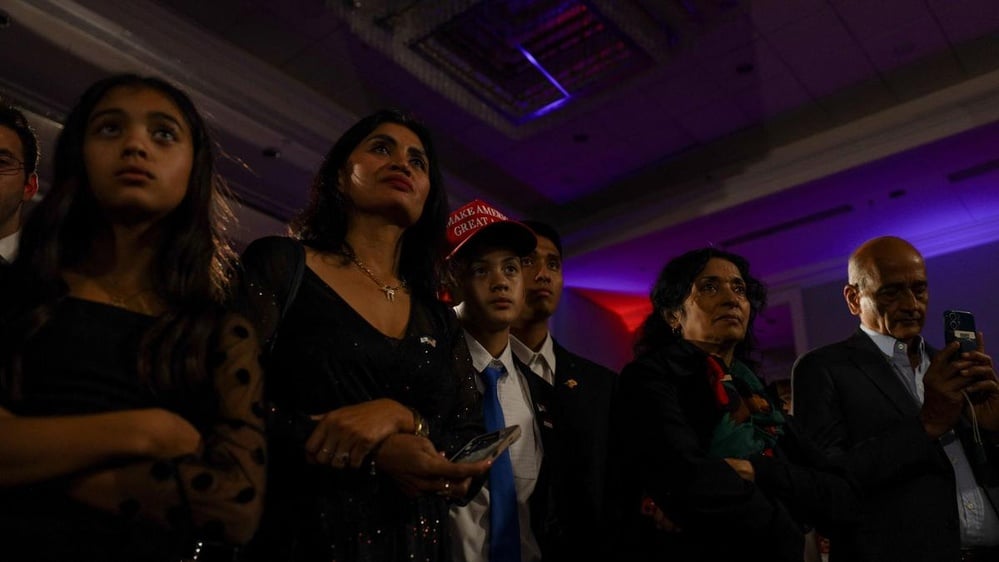

2026 © Helium Trades
Privacy Policy & Disclosure
* Disclaimer: Nothing on this website constitutes investment advice, performance data or any recommendation that any particular security, portfolio of securities, transaction or investment strategy is suitable for any specific person. Helium Trades is not responsible in any way for the accuracy
of any model predictions or price data. Any mention of a particular security and related prediction data is not a recommendation to buy or sell that security. Investments in securities involve the risk of loss. Past performance is no guarantee of future results. Helium Trades is not responsible for any of your investment decisions,
you should consult a financial expert before engaging in any transaction.
Helium Research Assistant

How can I help you today?
Ask any question about this page.


