See whether Helium helps you make better-informed decisions. Try every Pro Trader feature for 30 days. No credit card required.
Try every Pro Trader feature for 30 days. No credit card required.
The sample most often selects culture, luxury consumption, elite institutions, business, technology, and lifestyle: luxury hotels
August 03, 2026 · 0 shares
Promotes ultra-luxury, exclusive travel as aspirational, framing remoteness and privacy as the ultimate luxury with a tone of admiration and endorsement.
Automated analysis; not human reviewed. · 7 of 52 available dimensions scored; omitted dimensions are not treated as neutral. · Verified supporting quotes for 7 of 7 scored dimensions.
Claim: The article frames extreme exclusivity and high cost as desirable luxury attributes.
“The whole-property buyout, renting an entire island, lodge or wilderness estate for a single group, has gone from eccentric request to the way the upper echelon prefers to move, with a handful of private islands now quoting six figures a night for the privilege of turning everyone else away.” · exact text match
Why: Direct mention of 'six figures a night' and 'upper echelon' explicitly presents extreme wealth as normal and aspirational.
Claim: The article uses superlative and evocative language characteristic of subjective endorsement.
“The Most Spectacular Off-the-Grid Hotels, Where Privacy Is the Main Event.” · exact text match
“the most beautiful, hard-to-reach rooms on earth at the moment” · exact text match
Why: The headline and body repeatedly use subjective superlatives ('most spectacular', 'most beautiful') to describe the hotels, indicating a promotional rather than neutral stance.
Claim: The article employs sensational phrasing to heighten appeal.
“which is either the most theatrical hotel check-in on earth or simply the fastest way in.” · exact text match
“It is perhaps the most famous address on this list, and the hardest to fault.” · exact text match
Why: Phrases like 'most theatrical hotel check-in on earth' and 'hardest to fault' exaggerate uniqueness and perfection, characteristic of sensational framing.
Claim: The article expresses opinionated praise rather than neutral reporting.
“worth the trouble” · exact text match
“the most beautiful, hard-to-reach rooms on earth” · exact text match
Why: The editorializing phrases 'worth the trouble' and 'most beautiful' convey strong positive judgment, exceeding objective description.
Claim: The article evokes a strongly positive emotional response.
“the sense so much travel has misplaced—of having truly gone somewhere rather than merely relocated—comes flooding back.” · exact text match
Why: Language like 'flooding back' creates an emotional resonance, framing the experience as deeply fulfilling and desirable.
Claim: The article provides specific, verifiable details that support basic credibility.
“A Cambodian hotel leased a corridor of rainforest for the express purpose of keeping the chainsaws out.” · exact text match
“Fawn Bluff opens for its first full season this summer as an exclusive buyout on 340 acres of Homalco First Nation territory, with its proceeds funding a recovery center for the community in Campbell River.” · exact text match
Why: Specific factual claims (acreage, locations, conservation actions) are presented as true, but without independent verification; the article does not disclose sourcing or errors, hence moderate credibility.
Claim: The article functions as promotional content for luxury hotels.
“The 15 getaways that follow are the most beautiful, hard-to-reach rooms on earth at the moment, and the journey is the point.” · exact text match
Why: The entire article is a listicle designed to entice readers to these properties, using marketing-like language and detailed descriptions without critical appraisal.
August 24, 2026 · 0 shares
Promotional luxury-travel framing that packages high-priced remote seclusion as the ultimate status symbol.
Automated analysis; not human reviewed. Limitations: The supplied text does not disclose whether the featured ranches are paying advertisers, and property details were not independently verifiable. · 6 of 54 available dimensions scored; omitted dimensions are not treated as neutral. · Verified supporting quotes for 6 of 6 scored dimensions.
Claim: The piece frames high-priced private seclusion as a luxury status symbol.
“The Remote Luxury Ranches Making Western Seclusion a Status Symbol.” · exact text match
“some of life’s greatest luxuries are not defined by excess, but by access.” · exact text match
Why: The headline and lede explicitly tie seclusion and access to luxury and status, endorsing an exclusive travel experience.
Claim: The text relies on evaluative and emotional language rather than neutral, verifiable reporting.
“Most importantly, these exclusive ranches offer something not easily manufactured: space and seclusion in some of the most beautiful areas left in the U.S.” · exact text match
“the ultimate travel goal of 2026” · exact text match
Why: The writing is built on aesthetic judgments and superlatives, with no balancing data or critical perspective.
Claim: The piece presents the ranch experience in consistently positive, aspirational terms.
“fleeing the masses and immersing yourself in nature is, in today’s world, perhaps the greatest luxury—an act of self-care that might seem priceless, but will, in fact, cost you a pretty penny.” · exact text match
“reconnecting you with a core human experience that feels light-years away from where we’ve landed as a species.” · exact text match
Why: The feature celebrates the destinations as restorative and meaningful, with no negative or skeptical framing.
Claim: The feature includes direct recommendations telling readers what to choose and not miss.
“For a low-key, adults-only escape in the heart of Montana’s Bitterroot Valley, look no further than the Triple Creek Ranch.” · exact text match
“complimentary activities like guided forest walks, artisanal candle making and leatherworking shouldn’t be missed.” · exact text match
Why: Imperative phrasing and value judgments move the text from description toward prescription.
Claim: The piece is highly opinionated, presenting rankings and recommendations as definitive.
“The 5 Most Noteworthy, Remote Ranches in the Western U.S.” · exact text match
“These remote Western ranches turn solitude into the ultimate amenity, with private cabins, all-inclusive adventures and enough open land to make crowds feel theoretical.” · exact text match
Why: It asserts a ranked list and subjective judgments without presenting alternatives or evidence for its evaluations.
Claim: The prose is promotional, describing each property in marketing-style praise with no critical evaluation.
“Vermejo, a Ted Turner Reserve, is an all-inclusive oasis that spans alpine tundra, picturesque prairies and ponderosa pine forests.” · exact text match
“All-inclusive programming gives this scenic dude ranch a laid-back, distinctly Americana appeal” · exact text match
Why: Every property is described with unqualified superlatives and benefits, resembling destination marketing copy.
The supplied text does not disclose whether the featured ranches are paying advertisers, and property details were not independently verifiable.
August 24, 2026 · 0 shares
Frames luxury sports travel as a naturally growing expression of fandom, relying on provider-supplied growth statistics and promotional details rather than critical analysis.
Automated analysis; not human reviewed. Limitations: The main input limitation is reliance on the supplied excerpt and on company- and venue-provided demand figures without independent verification. · 6 of 54 available dimensions scored; omitted dimensions are not treated as neutral. · Verified supporting quotes for 4 of 6 scored dimensions.
Claim: The framing is oriented to affluent spectators, treating elevated luxury spending as the principal way fandom is evolving.
“Instead, it’s evolving, with dedicated, often wealthy spectators finding ways to enrich their fandom through elevated luxury experiences.” · exact text match
“There’s no denying the novel luxury that accompanies sports-related travel.” · not found in supplied text
Counterevidence:
“Across the sporting spectrum, rising costs are increasingly pricing traditional fans out of marquee moments.” · exact text match
Why: The report centers wealthy fans and premium services and calls luxury 'undeniable,' while only briefly acknowledging that ordinary fans are priced out.
Claim: The framing is bullish on the luxury sports-travel market, emphasizing sustained demand and rising spending.
“But despite the expense of attending (and even watching) live sporting events, fan enthusiasm hasn’t slowed. Instead, it’s evolving, with dedicated, often wealthy spectators finding ways to enrich their fandom through elevated luxury experiences.” · exact text match
“As demand continues to rise, already pricey premium travel is getting even more expensive.” · exact text match
Why: Rising prices and premium spending are framed as continued demand and enthusiasm rather than a warning about market strain.
Claim: The overall tone is optimistic about the growth and future accessibility of premium sports travel.
“But despite the expense of attending (and even watching) live sporting events, fan enthusiasm hasn’t slowed. Instead, it’s evolving, with dedicated, often wealthy spectators finding ways to enrich their fandom through elevated luxury experiences.” · exact text match
“Kossyfas hopes the eventual commercialization of eVTOLs—electric vertical takeoff and landing aircraft—will help democratize helicopter transportation.” · exact text match
Why: The article presents fandom's shift toward luxury as a positive evolution and includes a hopeful outlook on making helicopter travel more accessible.
Claim: The report is substantially sourced and attributed, supporting moderate credibility.
“XO reported a 31 percent year-over-year increase in travel between New York City and Cleveland” · exact text match
“86 percent of sports fans believe live professional sports are becoming a luxury experience, according to the 2026 YouGov sports survey.” · exact text match
Counterevidence:
“There’s no denying the novel luxury that accompanies sports-related travel.” · not found in supplied text
Why: Most figures are attributed to named companies, spokespeople, or surveys, but the promotional, unsupported claim about luxury tempers trust.
Claim: The writing is promotional, featuring rhetorical praise and specific service-launch plugs.
“There’s no denying the novel luxury that accompanies sports-related travel.” · not found in supplied text
“Next week, hoper is launching new services in New York in time for the U.S. Open Tennis Championships.” · exact text match
Why: The article combines unequivocal praise for luxury with announcements for specific travel providers, giving it an advertorial quality.
Claim: Corporate and venue expansions are reported favorably and without critical scrutiny.
“Formula One announced a new multiyear partnership with private aviation supplier Flexjet to support VIP attendees with a fleet of more than 340 private jets.” · exact text match
“It will host the 2026 Breeders’ Cup World Championships in October and debuted its newly constructed $100 million Paddock Building earlier this year to meet rising guest expectations.” · exact text match
Why: Partnerships and capital projects are presented as positive developments with no countervailing costs, risks, or criticism.
The main input limitation is reliance on the supplied excerpt and on company- and venue-provided demand figures without independent verification.
August 20, 2026 · 0 shares
Luca Piscazzi and his Michelin-starred Pelagos restaurant receive uniformly positive, promotional treatment, with luxury fine dining and the Michelin star system celebrated without critical perspective.
Automated analysis; not human reviewed. · 5 of 54 available dimensions scored; omitted dimensions are not treated as neutral. · Verified supporting quotes for 5 of 5 scored dimensions.
Claim: The article frames fine dining, Michelin recognition, and luxury hotel dining as elevated cultural achievements.
“Piscazzi has hopes of a second star in the future” · exact text match
Why: The article centers on Michelin-starred fine dining at a Four Seasons hotel property, repeatedly treating the Michelin star as a career milestone and omitting consideration of accessibility or broader food culture.
Claim: The article presents an unambiguously positive portrayal of the chef's trajectory and the restaurant's success.
“I just jump. And I like to change things often. I've always liked to change countries and find new challenges and work with new people.” · verified after text normalization
“He was successful in the end; in November 2021, mere months after opening, Pelagos earned its first star.” · exact text match
Why: The narrative emphasizes rapid success, minimal setbacks, and forward-looking ambition without presenting counterpoints or challenges beyond minor creative obstacles.
Claim: The article treats the Michelin Guide system and established luxury hospitality institutions as authoritative benchmarks of success.
“We were the first Michelin star in the south of Athens” · exact text match
“At the time, Athens was the only part of Greece featured in the Michelin Guide” · exact text match
Why: Michelin recognition is consistently framed as the definitive measure of success, and the article celebrates institutional prestige without questioning its validity.
Claim: The article demonstrates credible journalistic practice through specific, verifiable details and direct attributed quotes.
“Pelagos opened in May of 2021” · exact text match
“in November 2021, mere months after opening, Pelagos earned its first star” · exact text match
Why: Specific dates, prices, restaurant names, and extensive direct quotes from the chef support a fact-based reporting approach.
Claim: The piece functions as promotional or advertorial content for Pelagos restaurant and the broader luxury hotel brand.
“At Pelagos, guests can join the chef on his continuous journey of discovery.” · exact text match
“Piscazzi has elevated a hotel restaurant into something far more special, but something unique to the place.” · exact text match
Why: The article exclusively presents positive attributes of the restaurant and hotel, uses promotional language, and serves as destination marketing within a luxury lifestyle publication.
August 19, 2026 · 0 shares
Frames watchmakers' commercialization of graduation as a heartwarming generational tradition, relying on a single brand executive's quotes to advance the commercial narrative.
Automated analysis; not human reviewed. Limitations: The full URL, byline, and publication date are stripped from the source text, and one executive quotation appears truncated ('told .'), so reader expectations of publication context may not transfer to a different outlet's version. · 6 of 54 available dimensions scored; omitted dimensions are not treated as neutral. · Verified supporting quotes for 2 of 6 scored dimensions.
Claim: Generalizations about watch-buying psychology rest on a single corporate executive's quotes.
“Mechanical watches are often purchased in advance of a special occasion and are intended in part to commemorate the event—whether that is a graduation, a promotion or a wedding.” · not found in supplied text
Why: A quoted Nomos executive supplies the piece's empirical-sounding claims about customer motivation; the article offers no independent source, though the attribution is transparent.
Claim: The piece adopts a warm, nostalgic register toward the heirloom qualities of mechanical watches.
“Watches are wonderful reminders of a certain moment in life, which is why having it engraved is often important for our customers.” · exact text match
“it can also become more meaningful with time” · exact text match
Why: The chosen language ('wonderful reminders,' 'more meaningful with time') adds sentimental color that a purely clinical consumer piece would lack, though the overall tone remains measured.
Claim: The feature functions as a promotional vehicle for watch brands, listing product lines and prices with no critical distance.
“Current options range from around $1,000 into the mid-$3,000s, including a steel automatic Conquest at $2,400.” · exact text match
“The university models currently listed by Breitling are each priced at $3,900.” · exact text match
Counterevidence:
“Graduation is a moment many watch brands build entire collections around, but the tradition runs deeper than marketing.” · exact text match
Why: The piece's structure mirrors brand gift guides, moving brand-by-brand through price points and product features, though it maintains a token nod to the marketing angle, so it's promotional but not unambiguously a paid advertorial.
The full URL, byline, and publication date are stripped from the source text, and one executive quotation appears truncated ('told .'), so reader expectations of publication context may not transfer to a different outlet's version.
August 21, 2026 · 0 shares
The piece functions as a promotional vehicle that mirrors FEMSA's own corporate and curatorial messaging, presenting the collection's growth, scale, and institutional partnerships with consistent admiration and little critical distance.
Latin American modern and contemporary art has seen significant global market growth and institutional attention in recent years, though much of the region's art history remains underrepresented in major international museums.
Automated analysis; not human reviewed. Limitations: The text is a one-sided promotional feature; I cannot independently verify FEMSA's statistics, exhibition dates, or broader art-market claims, and I cannot determine whether any corrective reporting or corrections were later published. · 7 of 54 available dimensions scored; omitted dimensions are not treated as neutral. · Verified supporting quotes for 3 of 7 scored dimensions.
Claim: The reporting is measured and factual in tone, avoiding sensational or hyperbolic language.
“The exhibition at the Museo de Arte Contemporáneo de Monterrey (on view through August 30) was curated by Eugenia Braniff, Paulina Bravo and Beto Díaz Suárez, curators of the FEMSA Collection, with independent curator Adriana Melchor.” · not found in supplied text
Why: The narrative uses neutral, declarative language to describe events, with no emotionally charged vocabulary, despite the promotional subject matter.
Claim: The piece holds attention through concrete details about the collection's history and upcoming exhibitions.
“The FEMSA Collection has, since its founding in 1977, become a benchmark holding in Mexico and Latin America, providing visibility into an art scene that, until recently, remained largely underrepresented in international museum collections.” · not found in supplied text
Why: Offers specific, factual details about the collection's origins and scale, making it engaging for those interested in Latin American art.
Claim: The article esteems institutional recognition and pillars of the art establishment, framing international validation as inherently positive.
“FEMSA has, since its founding in 1977, become a benchmark holding in Mexico and Latin America, providing visibility into an art scene that, until recently, remained largely underrepresented in international museum collections.” · not found in supplied text
Why: The framing valorizes the collection's acceptance into and impact on established institutional and market structures without questioning them.
Claim: The article shows some high-quality sourcing but is undermined by a promotional, one-sided presentation.
“According to Braniff, who also has direct family ties to the collection, that first gift established the collaborative character that has guided it since.” · exact text match
Why: Proper attribution and named sources are used, but the text relies heavily on uncritical presentation of corporate/curatorial statements, limiting overall trustworthiness.
Claim: The article functions as promotion for FEMSA, including corporate statistics and favorable descriptions not essential to the art coverage.
“The company employs more than 392,000 people in 18 countries and is included in several major sustainability and ESG indices and rankings, to which its art collection and related initiatives contribute significantly.” · exact text match
Why: The inclusion of detailed corporate scale and ESG credentials reads like a company profile or press release, which is characteristic of advertising or advertorial content.
Claim: The publisher consistently frames FEMSA's corporate activities and collection in a glowing, favorable light without critical examination.
“The collection is part of FEMSA’s corporate sustainability division. Its staff reports not only on the collection’s growth but also on its social and cultural impact in the communities where the company operates.” · exact text match
Why: The article accepts at face value and reports positively on the corporation's own account of its social and cultural contributions, never probing into any negative externalities or motivations.
The text is a one-sided promotional feature; I cannot independently verify FEMSA's statistics, exhibition dates, or broader art-market claims, and I cannot determine whether any corrective reporting or corrections were later published.
August 24, 2026 · 0 shares
Frames Western art's market growth as a patriotic, nostalgic turn toward a romanticized frontier, with only occasional critical asides acknowledging stereotyped imagery.
The 250th anniversary of the U.S. Declaration of Independence occurs in 2026.
Automated analysis; not human reviewed. Limitations: The supplied text lacks a stated publication date and contains truncated source citations, limiting temporal and attribution precision. · 5 of 54 available dimensions scored; omitted dimensions are not treated as neutral. · Verified supporting quotes for 5 of 5 scored dimensions.
Claim: The article frames the Western art market as growing and record-setting.
“The market for Western Art is growing, she adds, particularly among a younger group of buyers—in their 40s and 50s—who find Western Art more affordable than contemporary art and have been intrigued by recent TV Westerns, such as Yellowstone and 1883 and Marshals.” · exact text match
“shattered expectations, setting five new artist records and making auction history by more than tripling the previous high for a single-owner Western art collection with a $84,122,305 total.” · exact text match
Why: The article repeatedly emphasizes growth, new buyers, and record auction totals.
Claim: The factual reporting is punctuated by evaluative commentary.
“The stereotypes just keep intruding.” · exact text match
Why: This aside goes beyond attributed reporting into editorial judgment, but it is isolated.
Claim: Market and definitional claims are frequently delegated to named auction-house authorities and dealers.
““The more action in the art, the more valuable,” according to Alissa Ford, vice president in charge of Western Art at Heritage Auctions.” · exact text match
Why: The market narrative leans on industry executives' judgments rather than independent market data.
Claim: The reporting is transparent about its sources and supports market statements with specific prices, dates, and named specialists.
“The record for a work by the artist was set earlier this year when Coming to the Call sold for $13,285,000.” · exact text match
Why: Uses specific verifiable sale figures and attributed expert statements, though it remains a market feature with some promotional language.
Claim: The account includes a negative sale outcome and an editorial acknowledgment of stereotyped imagery, suggesting internal fairness.
“where it underperformed.” · exact text match
“The stereotypes just keep intruding.” · exact text match
Why: Acknowledges underperformance and critical imagery rather than presenting only a bullish narrative.
The supplied text lacks a stated publication date and contains truncated source citations, limiting temporal and attribution precision.
August 07, 2026 · 0 shares
Promotes AI agents as an inevitable and beneficial shift in banking, urging banks to adopt secure permissioned infrastructure or risk losing customer relationships.
Automated analysis; not human reviewed. Limitations: The article is a single-author opinion piece from a company executive, which may introduce promotional bias not fully captured by the framing analysis. · 6 of 53 available dimensions scored; omitted dimensions are not treated as neutral. · Verified supporting quotes for 2 of 6 scored dimensions.
Claim: The article is highly opinionated, advocating a particular viewpoint rather than presenting balanced facts.
“The strategic implication is straightforward. If your services are not available as safe, permissioned, well-governed tools, your clients’ agents will route around you.” · not found in supplied text
“The banks that prepare for both sides will own the relationship.” · exact text match
Why: The article is structured as a persuasive argument with strong claims and recommendations, lacking counterarguments or neutral reporting.
Claim: The article supports the existing banking establishment by advocating for regulated institutions to adapt and retain control.
“The encouraging news for regulated institutions is that the working examples already share a governance model, and it’s one that banks will immediately recognize.” · exact text match
“For community and regional banks, the takeaway is not to chase autonomy or rush a flashy launch.” · exact text match
Why: The article positions regulated banks as the natural custodians of the agentic transition, reinforcing their role rather than disrupting it.
Claim: The article is pro-corporation, favoring the interests of banks and fintech companies.
“The banks that prepare for both sides will own the relationship.” · exact text match
“In an agent-driven economy, the institutions that make delegation safe will earn the most trust.” · exact text match
Why: The language focuses on corporate strategy and competitive advantage, implicitly endorsing the profit motive of financial institutions.
Claim: The article speculates about future developments and outcomes without strong evidence.
“The end state is a mesh: customers running trusted agents on their own devices, employees working alongside delegated agents and banks exposing a network of secure services and tools those agents can reach.” · exact text match
“And start planning for the day, sooner than most expect, when your customers arrive with an agent...” · not found in supplied text
Why: The text describes a 'future state' and makes predictions about customer behavior and industry evolution, which are speculative.
The article is a single-author opinion piece from a company executive, which may introduce promotional bias not fully captured by the framing analysis.
August 14, 2026 · 0 shares
A technology executive’s viewpoint is framed as a commercially consequential inevitability: the 'next phase' of AI will require data-rich personal context, and firms that build data-control architecture can turn that into a strategic moat.
Automated analysis; not human reviewed. Limitations: The input is a single-voice executive perspective with no byline, publisher date, external evidence, or independent counterarguments, so classification depends on the article’s own framing. · 7 of 54 available dimensions scored; omitted dimensions are not treated as neutral. · Verified supporting quotes for 7 of 7 scored dimensions.
Claim: The article states uncertain future developments as a matter of subjective projection and lens.
“The next phase will be marked by AI. agents that act proactively: identifying what a user needs and acting before the user explicitly asks.” · exact text match
Why: A future phase and its behavior are treated as settled, reflecting a subjective outlook rather than observed data.
Claim: The article is bullish on AI agents and on data-control, cloud/edge architecture as an advantage.
“Data control is becoming a product advantage and a question of who owns the relationship between A.I. and the customer.” · exact text match
Why: The piece conveys the view that companies can benefit from the data/control by building the right control architecture.
Claim: The article is heavily prescriptive, telling companies what they must do.
“As A.I. becomes more proactive and more deeply integrated into people’s lives, companies will need to think carefully about where intelligence should reside and how data should be governed.” · exact text match
Why: Directive language such as “will need to” makes the piece a recommendation rather than a neutral description.
Claim: The text is a named executive’s argumentative viewpoint rather than neutral reporting.
“Li makes the case for treating data architecture as a core product decision, not an afterthought to privacy or compliance.” · exact text match
“The companies that recognize this shift will be better positioned to build A.I. systems that customers and organizations are willing to trust.” · exact text match
Why: The piece explicitly presents one executive’s case using predictive and prescriptive language.
Claim: The article asserts decisive future competitive outcomes with certainty.
“In the next phase of A.I., competitive advantage will come not only from building more capable models but also from building the control layer that determines where each piece of intelligence and data should live.” · exact text match
Why: A strong prediction of the competitive future is offered without evidence or qualifiers.
Claim: The article interprets data primarily as a source of corporate competitive advantage and proprietary moat.
“Their customer information, proprietary processes and institutional knowledge give them an advantage that competitors can’t easily recreate.” · exact text match
Why: The core framing treats customer data and institutional knowledge as corporate assets to defend rather than broader privacy or public-policy concerns.
Claim: The article forecasts future AI agents and market shifts without empirical evidence.
“The next phase will be marked by AI. agents that act proactively: identifying what a user needs and acting before the user explicitly asks.” · exact text match
Why: The argument’s central premise is a speculative future milestone.
The input is a single-voice executive perspective with no byline, publisher date, external evidence, or independent counterarguments, so classification depends on the article’s own framing.
August 10, 2026 · 0 shares
Frames the $124 trillion wealth transfer as a trust transfer that financial firms must earn from younger generations, using proprietary and third-party research to support a prescriptive, pro-industry argument.
Automated analysis; not human reviewed. Limitations: The article is a contributed piece from a financial services executive, which may introduce a promotional bias; the cited statistics are from proprietary research (Thrivent) and third-party (McKinsey) but not independently verified. · 9 of 53 available dimensions scored; omitted dimensions are not treated as neutral. · Verified supporting quotes for 6 of 9 scored dimensions.
Claim: The article is more subjective than objective.
“The defining question isn’t how much wealth will transfer. It’s whether trust will transfer with it.” · not found in supplied text
Why: Frames the issue subjectively, focusing on trust rather than just factual reporting.
Claim: The article is cautiously optimistic about opportunities for firms that adapt.
“Those that combine expertise with genuine understanding will be best positioned to build relationships that last.” · exact text match
Why: Positive outlook for adaptable firms, though tempered by warnings.
Claim: The article prescribes actions for financial firms.
“firms cannot assume that managing one generation’s wealth entitles them to manage the next generation’s. They must earn that relationship.” · exact text match
Why: Uses imperative language ('must', 'cannot assume') to tell firms what to do.
Claim: The article is opinionated, presenting an argument rather than neutral reporting.
“We think of this as return on experience: financial success measured by growth and whether a financial strategy helps people feel more confident making difficult decisions...” · not found in supplied text
Why: Expresses a proprietary concept ('return on experience') and uses first-person plural.
Claim: The article cites authoritative research to support its arguments.
“McKinsey research found that the share of investors seeking holistic advice grew from 29 percent in 2018 to 52 percent in 2023.” · exact text match
Why: Cites McKinsey and World Economic Forum to bolster credibility.
Claim: The article is pro-establishment, advocating for the existing financial industry.
“The future will belong to financial services organizations that combine technology with the human understanding that turns information into trusted advice.” · exact text match
Why: Assumes the current structure of financial services is the vehicle for the future.
Claim: The article has moderate credibility due to transparent authorship but potential conflict of interest.
“Thrivent’s Terry Rasmussen argues” · verified after text normalization
Why: Attributed to a company executive, which introduces bias even though research is cited.
Claim: The article promotes Thrivent's viewpoint and services.
“Thrivent’s Terry Rasmussen argues” · verified after text normalization
“Recent Thrivent research found that 68 percent of Americans say it is very important that a financial advisor understands their goals...” · not found in supplied text
Why: Author is from Thrivent and cites proprietary research, positioning Thrivent as a thought leader.
Claim: The article assumes the financial services industry is legitimate and should adapt.
“The opportunity for the financial services industry is to provide perspective, context and personal understanding that information alone cannot.” · exact text match
Why: Frames the industry as having an opportunity, not questioning its role.
The article is a contributed piece from a financial services executive, which may introduce a promotional bias; the cited statistics are from proprietary research (Thrivent) and third-party (McKinsey) but not independently verified.
August 03, 2026 · 0 shares
Promotes ultra-luxury, exclusive travel as aspirational, framing remoteness and privacy as the ultimate luxury with a tone of admiration and endorsement.
Automated analysis; not human reviewed. · 7 of 52 available dimensions scored; omitted dimensions are not treated as neutral. · Verified supporting quotes for 7 of 7 scored dimensions.
Claim: The article frames extreme exclusivity and high cost as desirable luxury attributes.
“The whole-property buyout, renting an entire island, lodge or wilderness estate for a single group, has gone from eccentric request to the way the upper echelon prefers to move, with a handful of private islands now quoting six figures a night for the privilege of turning everyone else away.” · exact text match
Why: Direct mention of 'six figures a night' and 'upper echelon' explicitly presents extreme wealth as normal and aspirational.
Claim: The article uses superlative and evocative language characteristic of subjective endorsement.
“The Most Spectacular Off-the-Grid Hotels, Where Privacy Is the Main Event.” · exact text match
“the most beautiful, hard-to-reach rooms on earth at the moment” · exact text match
Why: The headline and body repeatedly use subjective superlatives ('most spectacular', 'most beautiful') to describe the hotels, indicating a promotional rather than neutral stance.
Claim: The article employs sensational phrasing to heighten appeal.
“which is either the most theatrical hotel check-in on earth or simply the fastest way in.” · exact text match
“It is perhaps the most famous address on this list, and the hardest to fault.” · exact text match
Why: Phrases like 'most theatrical hotel check-in on earth' and 'hardest to fault' exaggerate uniqueness and perfection, characteristic of sensational framing.
Claim: The article expresses opinionated praise rather than neutral reporting.
“worth the trouble” · exact text match
“the most beautiful, hard-to-reach rooms on earth” · exact text match
Why: The editorializing phrases 'worth the trouble' and 'most beautiful' convey strong positive judgment, exceeding objective description.
Claim: The article evokes a strongly positive emotional response.
“the sense so much travel has misplaced—of having truly gone somewhere rather than merely relocated—comes flooding back.” · exact text match
Why: Language like 'flooding back' creates an emotional resonance, framing the experience as deeply fulfilling and desirable.
Claim: The article provides specific, verifiable details that support basic credibility.
“A Cambodian hotel leased a corridor of rainforest for the express purpose of keeping the chainsaws out.” · exact text match
“Fawn Bluff opens for its first full season this summer as an exclusive buyout on 340 acres of Homalco First Nation territory, with its proceeds funding a recovery center for the community in Campbell River.” · exact text match
Why: Specific factual claims (acreage, locations, conservation actions) are presented as true, but without independent verification; the article does not disclose sourcing or errors, hence moderate credibility.
Claim: The article functions as promotional content for luxury hotels.
“The 15 getaways that follow are the most beautiful, hard-to-reach rooms on earth at the moment, and the journey is the point.” · exact text match
Why: The entire article is a listicle designed to entice readers to these properties, using marketing-like language and detailed descriptions without critical appraisal.
August 24, 2026 · 0 shares
Promotional luxury-travel framing that packages high-priced remote seclusion as the ultimate status symbol.
Automated analysis; not human reviewed. Limitations: The supplied text does not disclose whether the featured ranches are paying advertisers, and property details were not independently verifiable. · 6 of 54 available dimensions scored; omitted dimensions are not treated as neutral. · Verified supporting quotes for 6 of 6 scored dimensions.
Claim: The piece frames high-priced private seclusion as a luxury status symbol.
“The Remote Luxury Ranches Making Western Seclusion a Status Symbol.” · exact text match
“some of life’s greatest luxuries are not defined by excess, but by access.” · exact text match
Why: The headline and lede explicitly tie seclusion and access to luxury and status, endorsing an exclusive travel experience.
Claim: The text relies on evaluative and emotional language rather than neutral, verifiable reporting.
“Most importantly, these exclusive ranches offer something not easily manufactured: space and seclusion in some of the most beautiful areas left in the U.S.” · exact text match
“the ultimate travel goal of 2026” · exact text match
Why: The writing is built on aesthetic judgments and superlatives, with no balancing data or critical perspective.
Claim: The piece presents the ranch experience in consistently positive, aspirational terms.
“fleeing the masses and immersing yourself in nature is, in today’s world, perhaps the greatest luxury—an act of self-care that might seem priceless, but will, in fact, cost you a pretty penny.” · exact text match
“reconnecting you with a core human experience that feels light-years away from where we’ve landed as a species.” · exact text match
Why: The feature celebrates the destinations as restorative and meaningful, with no negative or skeptical framing.
Claim: The feature includes direct recommendations telling readers what to choose and not miss.
“For a low-key, adults-only escape in the heart of Montana’s Bitterroot Valley, look no further than the Triple Creek Ranch.” · exact text match
“complimentary activities like guided forest walks, artisanal candle making and leatherworking shouldn’t be missed.” · exact text match
Why: Imperative phrasing and value judgments move the text from description toward prescription.
Claim: The piece is highly opinionated, presenting rankings and recommendations as definitive.
“The 5 Most Noteworthy, Remote Ranches in the Western U.S.” · exact text match
“These remote Western ranches turn solitude into the ultimate amenity, with private cabins, all-inclusive adventures and enough open land to make crowds feel theoretical.” · exact text match
Why: It asserts a ranked list and subjective judgments without presenting alternatives or evidence for its evaluations.
Claim: The prose is promotional, describing each property in marketing-style praise with no critical evaluation.
“Vermejo, a Ted Turner Reserve, is an all-inclusive oasis that spans alpine tundra, picturesque prairies and ponderosa pine forests.” · exact text match
“All-inclusive programming gives this scenic dude ranch a laid-back, distinctly Americana appeal” · exact text match
Why: Every property is described with unqualified superlatives and benefits, resembling destination marketing copy.
The supplied text does not disclose whether the featured ranches are paying advertisers, and property details were not independently verifiable.
A promotional profile of Gibson Dunn's real estate group that celebrates its growth, specialization, and collaborative culture through extensive positive quotes, without critical perspective.
Automated analysis; not human reviewed. · 10 of 53 available dimensions scored; omitted dimensions are not treated as neutral. · Verified supporting quotes for 6 of 10 scored dimensions.
Claim: The article emphasizes the firm's elite status and sophisticated clientele, reflecting an elitist framing.
““They hire high-end, sophisticated lawyers for those other product types, and they do no less for real estate.”” · exact text match
Why: The article repeatedly highlights 'sophisticated' clients, 'complex' transactions, and the firm's unique expertise, positioning it as an elite service provider.
Claim: The article's framing is entirely subjective, celebrating the firm's capabilities without any balanced reporting.
“Gibson Dunn’s ability to handle deeply complex cases has led to a growth in demand for the firm’s services on all fronts, which in turn led to the recent hiring spree.” · exact text match
Why: The narrative is consistently positive, using superlatives and uncritical language, and fails to present any challenges or alternative perspectives.
Claim: The article is bullish on the firm's growth and the real estate market, projecting continued success.
“Sharf estimates that that number will rise to 'well over $500 million' this year.” · not found in supplied text
Why: The article celebrates growth, forecasts increased revenue, and uses optimistic language about the firm's prospects and market activity.
Claim: The article relies heavily on opinions from firm partners and a client, presenting them as authoritative without independent verification.
““There are plenty of law firms that are very good at representing users and developers of real estate,” said Sharf. “There are fewer firms that are really good at representing lenders, and far fewer for equity investors.”” · exact text match
Why: The article consists largely of quoted opinions from the firm's leaders and a client, with no counterarguments or external analysis, making it opinion-driven.
Claim: The article uses emotionally positive language to describe the firm's relationships and culture.
““They’re trusted friends and partners who live and die in your success with you.”” · not found in supplied text
Why: This quote from a client evokes strong positive emotion, and the overall tone is warm and admiring, contributing to a slight positive emotional bias.
Claim: The article provides specific numbers and attributed quotes, lending some credibility, but its promotional nature reduces overall trustworthiness.
“The real estate department at law firm Gibson Dunn has grown by 30 percent over the past two years, giving the group over 200 lawyers throughout 17 of the firm’s 23 offices worldwide, including in New York, Washington, D.C., Los Angeles, San Francisco and London, where the department has grown from six attorneys in 2021 to 21 today.” · exact text match
Why: The article includes concrete, attributable facts (growth percentages, transaction details) but does not verify them independently and omits any critical context, making it moderately credible.
Claim: The article is a promotional piece that presents Gibson Dunn in an exclusively positive light, resembling an advertorial.
““We do a lot of complicated transactions. It’s one of the things that distinguishes us from a lot of our competitors,” said Sharf, 63, who noted that institutional investors make up the largest aspect of the real estate group’s practice, followed closely by lenders and operators/developers.” · exact text match
Why: The article is built entirely around positive quotes from the firm's partners and a client, with no critical or independent viewpoints, and ends with a call to read the latest edition, indicating a promotional intent.
Claim: The article is pro-corporate, promoting a large law firm and its corporate clients.
““What they’re doing on the real estate side is no less sophisticated than what they’re doing on the corporate and more traditional sides of their business,” said Sharf.” · exact text match
Why: The piece is entirely favorable to a corporate law firm and its big-business clients, with no critical examination of corporate power or practices.
Claim: The article contains a forward-looking estimate attributed to a partner, which is a form of speculation.
“Sharf estimates that that number will rise to 'well over $500 million' this year.” · not found in supplied text
Why: The forecast is clearly attributed and qualifies as speculation, but it is a single instance and presented as an estimate.
Claim: The article omits any critical perspective or negative information, selectively presenting only positive quotes and facts.
“The article contains no quotes from critics, competitors, or independent experts, and no mention of any challenges or downsides.” · not found in supplied text
Why: By exclusively using positive sources and ignoring any potential drawbacks, the article employs a form of material omission that shapes reader perception favorably.
The dominant worldview is institutional, market-friendly, prestige-oriented, and managerial. Established systems—Michelin, auction houses, universities, banks, corporations, and museums—are usually treated as legitimate authorities or partners rather than objects of structural criticism
August 07, 2026 · 0 shares
Promotes AI agents as an inevitable and beneficial shift in banking, urging banks to adopt secure permissioned infrastructure or risk losing customer relationships.
Automated analysis; not human reviewed. Limitations: The article is a single-author opinion piece from a company executive, which may introduce promotional bias not fully captured by the framing analysis. · 6 of 53 available dimensions scored; omitted dimensions are not treated as neutral. · Verified supporting quotes for 2 of 6 scored dimensions.
Claim: The article is highly opinionated, advocating a particular viewpoint rather than presenting balanced facts.
“The strategic implication is straightforward. If your services are not available as safe, permissioned, well-governed tools, your clients’ agents will route around you.” · not found in supplied text
“The banks that prepare for both sides will own the relationship.” · exact text match
Why: The article is structured as a persuasive argument with strong claims and recommendations, lacking counterarguments or neutral reporting.
Claim: The article supports the existing banking establishment by advocating for regulated institutions to adapt and retain control.
“The encouraging news for regulated institutions is that the working examples already share a governance model, and it’s one that banks will immediately recognize.” · exact text match
“For community and regional banks, the takeaway is not to chase autonomy or rush a flashy launch.” · exact text match
Why: The article positions regulated banks as the natural custodians of the agentic transition, reinforcing their role rather than disrupting it.
Claim: The article is pro-corporation, favoring the interests of banks and fintech companies.
“The banks that prepare for both sides will own the relationship.” · exact text match
“In an agent-driven economy, the institutions that make delegation safe will earn the most trust.” · exact text match
Why: The language focuses on corporate strategy and competitive advantage, implicitly endorsing the profit motive of financial institutions.
Claim: The article speculates about future developments and outcomes without strong evidence.
“The end state is a mesh: customers running trusted agents on their own devices, employees working alongside delegated agents and banks exposing a network of secure services and tools those agents can reach.” · exact text match
“And start planning for the day, sooner than most expect, when your customers arrive with an agent...” · not found in supplied text
Why: The text describes a 'future state' and makes predictions about customer behavior and industry evolution, which are speculative.
The article is a single-author opinion piece from a company executive, which may introduce promotional bias not fully captured by the framing analysis.
August 21, 2026 · 0 shares
The piece functions as a promotional vehicle that mirrors FEMSA's own corporate and curatorial messaging, presenting the collection's growth, scale, and institutional partnerships with consistent admiration and little critical distance.
Latin American modern and contemporary art has seen significant global market growth and institutional attention in recent years, though much of the region's art history remains underrepresented in major international museums.
Automated analysis; not human reviewed. Limitations: The text is a one-sided promotional feature; I cannot independently verify FEMSA's statistics, exhibition dates, or broader art-market claims, and I cannot determine whether any corrective reporting or corrections were later published. · 7 of 54 available dimensions scored; omitted dimensions are not treated as neutral. · Verified supporting quotes for 3 of 7 scored dimensions.
Claim: The reporting is measured and factual in tone, avoiding sensational or hyperbolic language.
“The exhibition at the Museo de Arte Contemporáneo de Monterrey (on view through August 30) was curated by Eugenia Braniff, Paulina Bravo and Beto Díaz Suárez, curators of the FEMSA Collection, with independent curator Adriana Melchor.” · not found in supplied text
Why: The narrative uses neutral, declarative language to describe events, with no emotionally charged vocabulary, despite the promotional subject matter.
Claim: The piece holds attention through concrete details about the collection's history and upcoming exhibitions.
“The FEMSA Collection has, since its founding in 1977, become a benchmark holding in Mexico and Latin America, providing visibility into an art scene that, until recently, remained largely underrepresented in international museum collections.” · not found in supplied text
Why: Offers specific, factual details about the collection's origins and scale, making it engaging for those interested in Latin American art.
Claim: The article esteems institutional recognition and pillars of the art establishment, framing international validation as inherently positive.
“FEMSA has, since its founding in 1977, become a benchmark holding in Mexico and Latin America, providing visibility into an art scene that, until recently, remained largely underrepresented in international museum collections.” · not found in supplied text
Why: The framing valorizes the collection's acceptance into and impact on established institutional and market structures without questioning them.
Claim: The article shows some high-quality sourcing but is undermined by a promotional, one-sided presentation.
“According to Braniff, who also has direct family ties to the collection, that first gift established the collaborative character that has guided it since.” · exact text match
Why: Proper attribution and named sources are used, but the text relies heavily on uncritical presentation of corporate/curatorial statements, limiting overall trustworthiness.
Claim: The article functions as promotion for FEMSA, including corporate statistics and favorable descriptions not essential to the art coverage.
“The company employs more than 392,000 people in 18 countries and is included in several major sustainability and ESG indices and rankings, to which its art collection and related initiatives contribute significantly.” · exact text match
Why: The inclusion of detailed corporate scale and ESG credentials reads like a company profile or press release, which is characteristic of advertising or advertorial content.
Claim: The publisher consistently frames FEMSA's corporate activities and collection in a glowing, favorable light without critical examination.
“The collection is part of FEMSA’s corporate sustainability division. Its staff reports not only on the collection’s growth but also on its social and cultural impact in the communities where the company operates.” · exact text match
Why: The article accepts at face value and reports positively on the corporation's own account of its social and cultural contributions, never probing into any negative externalities or motivations.
The text is a one-sided promotional feature; I cannot independently verify FEMSA's statistics, exhibition dates, or broader art-market claims, and I cannot determine whether any corrective reporting or corrections were later published.
August 20, 2026 · 0 shares
Luca Piscazzi and his Michelin-starred Pelagos restaurant receive uniformly positive, promotional treatment, with luxury fine dining and the Michelin star system celebrated without critical perspective.
Automated analysis; not human reviewed. · 5 of 54 available dimensions scored; omitted dimensions are not treated as neutral. · Verified supporting quotes for 5 of 5 scored dimensions.
Claim: The article frames fine dining, Michelin recognition, and luxury hotel dining as elevated cultural achievements.
“Piscazzi has hopes of a second star in the future” · exact text match
Why: The article centers on Michelin-starred fine dining at a Four Seasons hotel property, repeatedly treating the Michelin star as a career milestone and omitting consideration of accessibility or broader food culture.
Claim: The article presents an unambiguously positive portrayal of the chef's trajectory and the restaurant's success.
“I just jump. And I like to change things often. I've always liked to change countries and find new challenges and work with new people.” · verified after text normalization
“He was successful in the end; in November 2021, mere months after opening, Pelagos earned its first star.” · exact text match
Why: The narrative emphasizes rapid success, minimal setbacks, and forward-looking ambition without presenting counterpoints or challenges beyond minor creative obstacles.
Claim: The article treats the Michelin Guide system and established luxury hospitality institutions as authoritative benchmarks of success.
“We were the first Michelin star in the south of Athens” · exact text match
“At the time, Athens was the only part of Greece featured in the Michelin Guide” · exact text match
Why: Michelin recognition is consistently framed as the definitive measure of success, and the article celebrates institutional prestige without questioning its validity.
Claim: The article demonstrates credible journalistic practice through specific, verifiable details and direct attributed quotes.
“Pelagos opened in May of 2021” · exact text match
“in November 2021, mere months after opening, Pelagos earned its first star” · exact text match
Why: Specific dates, prices, restaurant names, and extensive direct quotes from the chef support a fact-based reporting approach.
Claim: The piece functions as promotional or advertorial content for Pelagos restaurant and the broader luxury hotel brand.
“At Pelagos, guests can join the chef on his continuous journey of discovery.” · exact text match
“Piscazzi has elevated a hotel restaurant into something far more special, but something unique to the place.” · exact text match
Why: The article exclusively presents positive attributes of the restaurant and hotel, uses promotional language, and serves as destination marketing within a luxury lifestyle publication.
August 07, 2026 · 0 shares
Promotes AI agents as an inevitable and beneficial shift in banking, urging banks to adopt secure permissioned infrastructure or risk losing customer relationships.
Automated analysis; not human reviewed. Limitations: The article is a single-author opinion piece from a company executive, which may introduce promotional bias not fully captured by the framing analysis. · 6 of 53 available dimensions scored; omitted dimensions are not treated as neutral. · Verified supporting quotes for 2 of 6 scored dimensions.
Claim: The article is highly opinionated, advocating a particular viewpoint rather than presenting balanced facts.
“The strategic implication is straightforward. If your services are not available as safe, permissioned, well-governed tools, your clients’ agents will route around you.” · not found in supplied text
“The banks that prepare for both sides will own the relationship.” · exact text match
Why: The article is structured as a persuasive argument with strong claims and recommendations, lacking counterarguments or neutral reporting.
Claim: The article supports the existing banking establishment by advocating for regulated institutions to adapt and retain control.
“The encouraging news for regulated institutions is that the working examples already share a governance model, and it’s one that banks will immediately recognize.” · exact text match
“For community and regional banks, the takeaway is not to chase autonomy or rush a flashy launch.” · exact text match
Why: The article positions regulated banks as the natural custodians of the agentic transition, reinforcing their role rather than disrupting it.
Claim: The article is pro-corporation, favoring the interests of banks and fintech companies.
“The banks that prepare for both sides will own the relationship.” · exact text match
“In an agent-driven economy, the institutions that make delegation safe will earn the most trust.” · exact text match
Why: The language focuses on corporate strategy and competitive advantage, implicitly endorsing the profit motive of financial institutions.
Claim: The article speculates about future developments and outcomes without strong evidence.
“The end state is a mesh: customers running trusted agents on their own devices, employees working alongside delegated agents and banks exposing a network of secure services and tools those agents can reach.” · exact text match
“And start planning for the day, sooner than most expect, when your customers arrive with an agent...” · not found in supplied text
Why: The text describes a 'future state' and makes predictions about customer behavior and industry evolution, which are speculative.
The article is a single-author opinion piece from a company executive, which may introduce promotional bias not fully captured by the framing analysis.
August 14, 2026 · 0 shares
A technology executive’s viewpoint is framed as a commercially consequential inevitability: the 'next phase' of AI will require data-rich personal context, and firms that build data-control architecture can turn that into a strategic moat.
Automated analysis; not human reviewed. Limitations: The input is a single-voice executive perspective with no byline, publisher date, external evidence, or independent counterarguments, so classification depends on the article’s own framing. · 7 of 54 available dimensions scored; omitted dimensions are not treated as neutral. · Verified supporting quotes for 7 of 7 scored dimensions.
Claim: The article states uncertain future developments as a matter of subjective projection and lens.
“The next phase will be marked by AI. agents that act proactively: identifying what a user needs and acting before the user explicitly asks.” · exact text match
Why: A future phase and its behavior are treated as settled, reflecting a subjective outlook rather than observed data.
Claim: The article is bullish on AI agents and on data-control, cloud/edge architecture as an advantage.
“Data control is becoming a product advantage and a question of who owns the relationship between A.I. and the customer.” · exact text match
Why: The piece conveys the view that companies can benefit from the data/control by building the right control architecture.
Claim: The article is heavily prescriptive, telling companies what they must do.
“As A.I. becomes more proactive and more deeply integrated into people’s lives, companies will need to think carefully about where intelligence should reside and how data should be governed.” · exact text match
Why: Directive language such as “will need to” makes the piece a recommendation rather than a neutral description.
Claim: The text is a named executive’s argumentative viewpoint rather than neutral reporting.
“Li makes the case for treating data architecture as a core product decision, not an afterthought to privacy or compliance.” · exact text match
“The companies that recognize this shift will be better positioned to build A.I. systems that customers and organizations are willing to trust.” · exact text match
Why: The piece explicitly presents one executive’s case using predictive and prescriptive language.
Claim: The article asserts decisive future competitive outcomes with certainty.
“In the next phase of A.I., competitive advantage will come not only from building more capable models but also from building the control layer that determines where each piece of intelligence and data should live.” · exact text match
Why: A strong prediction of the competitive future is offered without evidence or qualifiers.
Claim: The article interprets data primarily as a source of corporate competitive advantage and proprietary moat.
“Their customer information, proprietary processes and institutional knowledge give them an advantage that competitors can’t easily recreate.” · exact text match
Why: The core framing treats customer data and institutional knowledge as corporate assets to defend rather than broader privacy or public-policy concerns.
Claim: The article forecasts future AI agents and market shifts without empirical evidence.
“The next phase will be marked by AI. agents that act proactively: identifying what a user needs and acting before the user explicitly asks.” · exact text match
Why: The argument’s central premise is a speculative future milestone.
The input is a single-voice executive perspective with no byline, publisher date, external evidence, or independent counterarguments, so classification depends on the article’s own framing.
August 19, 2026 · 0 shares
An institutional advocate presents Qatar's state-backed cultural investment as a patient, model-worthy exception to arts-funding cuts, celebrating institutional achievements while omitting tradeoffs.
Qatar is a hydrocarbon-rich Gulf state; Qatar Foundation's Education City is a state-linked higher-education initiative, and VCUarts Qatar is a U.S. university campus in Doha established as its first international partner.
Automated analysis; not human reviewed. Limitations: The supplied text is a signed advocacy/opinion essay by an institutional leader; no independent data or external disclosures about Qatar's costs, labor conditions, or counterarguments are provided. · 11 of 54 available dimensions scored; omitted dimensions are not treated as neutral. · Verified supporting quotes for 10 of 11 scored dimensions.
Claim: The essay frames cultural development as requiring expert-led institutions and international university partnerships rather than grassroots or popular expression.
“By inviting leading international universities to establish campuses in Doha, Qatar Foundation sought not simply to replicate education offered elsewhere, but to help build a knowledge society rooted in Qatar.” · exact text match
Why: The preferred agents are international universities, museums, and institutional ecosystems, a top-down, expert-oriented view.
Claim: The text is an explicitly argued personal and institutional opinion, not a detached report.
“Amir Berbić, dean of Virginia Commonwealth University School of the Arts in Qatar, argues that at a moment when many countries are reducing investment in the arts, Qatar offers a compelling counterexample” · exact text match
“Our collateral exhibition, “Aghrab Idrāk: Thresholds of Perception,” brought together work emerging from the research labs and a broad network of collaborators across the university and beyond.” · exact text match
Why: The framing is persuasive and evaluative, with first-person institutional ownership and explicit argumentation.
Claim: The essay depicts Qatar's cultural investment as producing lasting, broadly beneficial outcomes.
“Qatar offers a compelling counterexample: a recognition that the most enduring returns are often generated by investments whose full value cannot yet be quantified, but which ultimately reshape institutions, communities and the future itself.” · exact text match
“Perhaps the most meaningful result, however, is not any single building, exhibition or event. It is the emergence of generations of artists, designers, curators, educators and entrepreneurs who are increasingly shaping Qatar’s cultural life.” · exact text match
Why: Positive outcomes are asserted confidently and future returns are treated as assured.
Claim: The essay tells societies what cultural policy should require and warns against treating arts as discretionary.
“Cultural capacity is built over generations. It requires investment in education and research as well as exhibitions and buildings. It requires institutions capable of working together rather than operating in isolation.” · not found in supplied text
“As support for the arts is contracting elsewhere, the long view deserves attention.” · exact text match
Why: Repeated 'requires' statements prescribe policy, and the closing sentence urges action.
Claim: The text is a first-person argument for a specific cultural-investment model.
“Amir Berbić, dean of Virginia Commonwealth University School of the Arts in Qatar, argues that at a moment when many countries are reducing investment in the arts, Qatar offers a compelling counterexample” · exact text match
“Our collateral exhibition, “Aghrab Idrāk: Thresholds of Perception,” brought together work emerging from the research labs and a broad network of collaborators across the university and beyond.” · exact text match
Why: It argues a thesis and uses first-person institutional perspective rather than neutral reporting.
Claim: The essay attributes Qatar's cultural success to deliberate choice and patience, downplaying structural advantages and tradeoffs.
“Many countries possess financial resources. Fewer make the deliberate decision to invest them over decades in building cultural capacity.” · exact text match
Why: The stark contrast reduces complex funding choices to a binary of will versus lack of will.
Claim: The essay valorizes established institutions, international universities, and state-backed cultural bodies.
“It requires institutions capable of working together rather than operating in isolation.” · exact text match
“Qatar’s landmark cultural institutions, including the Museum of Islamic Art, the National Museum of Qatar, Mathaf: Arab Museum of Modern Art, a growing network of creative hubs, an ambitious public art program, and emerging international cultural anchors such as the Design Doha Biennale and, more recently, Art Basel Qatar.” · exact text match
Why: The preferred model is institutional permanence and partnership with established universities and art-world forums.
Claim: The essay makes a reasoned, non-alarmist argument for cultural investment.
“The ROI of the arts includes not only economic activity fueled by tourism and the growth of creative industries but also the development of a society’s capacity to generate ideas, interpret change and participate confidently in the production of knowledge.” · exact text match
Why: The argument is structured around consequence and capacity-building rather than fear or assertion.
Claim: The essay functions as promotional advocacy for Qatar and VCUarts Qatar's cultural brand.
“Against this backdrop, Qatar offers a compelling example of what sustained investment in culture can make possible.” · exact text match
“At VCUarts Qatar, this understanding has shaped a growing culture of creative research.” · exact text match
Why: It showcases Qatar's institutions, exhibitions, and research as success stories without independent evaluation.
Claim: The essay frames cultural value in terms of society-wide capacity, shared participation, and national knowledge production.
“But the deeper return is the development of a society’s capacity to generate ideas, interpret change and participate confidently in the production of knowledge and culture.” · exact text match
“It helps societies understand the meaning of transformation, negotiate continuity and change, and create a sense of shared participation in the future.” · exact text match
Why: The unit of value is society and national culture, not individual expression or market demand.
Claim: The essay speculates about long-term future returns that cannot yet be measured.
“A student educated today may become an artist, curator, teacher or institutional leader many years from now. A research collaboration may create methods or relationships whose importance cannot be predicted at the outset. A museum or public artwork may help define how future generations understand their shared past.” · exact text match
Why: The 'may become' projections are explicitly unquantifiable forecasts.
The supplied text is a signed advocacy/opinion essay by an institutional leader; no independent data or external disclosures about Qatar's costs, labor conditions, or counterarguments are provided.
August 24, 2026 · 0 shares
The profile frames Amanda Precourt’s Cookie Factory as a community-driven alternative to ego-driven private museums, foregrounding emotional and social value over financial or market logic.
Automated analysis; not human reviewed. Limitations: The supplied text is a single-profile feature built largely on the subject's self-presentation, limiting independent verification of claims. · 7 of 54 available dimensions scored; omitted dimensions are not treated as neutral. · Verified supporting quotes for 7 of 7 scored dimensions.
Claim: The framing treats community-oriented, noncommercial art spaces as preferable to elite private museums and market-driven collecting.
“Arts foundations and private museums are frequently ego projects, well-intentioned but there to showcase the breadth of the founder’s collection and build a legacy around their name.” · exact text match
Why: The publisher uses a generalized negative characterization of private museums and repeatedly emphasizes accessibility and community benefit, indicating an anti-elite cultural stance.
Claim: The profile blends reported facts with subjective editorial interpretation and sentimental description.
“When we meet Precourt at the St. Regis Aspen, it is clear that her highly sensitive and receptive nature has guided both her collecting and, later, the vision she developed for the space.” · exact text match
Why: This is an unverifiable interpretive assertion presented as journalistic observation, making the piece substantially subjective.
Claim: The article emphasizes hopeful outcomes, community belonging, and art as a redemptive force.
“Art saved me in so many ways that I want to save others through art.” · exact text match
“We’re creating a museum that can truly be a place to come and see your friends at any time” · exact text match
Why: Direct quotes and framing present the project and future as beneficial and emotionally fulfilling, with little critical or negative perspective.
Claim: The article includes editorial opinion and evaluative generalizations rather than confining itself to facts.
“Arts foundations and private museums are frequently ego projects, well-intentioned but there to showcase the breadth of the founder’s collection and build a legacy around their name.” · exact text match
Why: This sentence is a value judgment about an entire category of institutions, stated as if it were established fact.
Claim: The article reduces complex institutional motivations to a single ego-driven explanation for private museums.
“Arts foundations and private museums are frequently ego projects, well-intentioned but there to showcase the breadth of the founder’s collection and build a legacy around their name.” · exact text match
Why: It flattens diverse possible motives for private museums into one generalized critique without evidence or nuance.
Claim: The overall tone is strongly positive and emotionally charged, framing art and the founder's mission in redemptive terms.
“Art saved me in so many ways that I want to save others through art. So it’s like giving back.” · exact text match
Why: The quoted language expresses intense personal emotion and is used as the culminating justification for the institution.
Claim: The framing elevates collective community experience over individual ownership, legacy, and financial value.
“She describes Cookie Factory as a container where people from different artistic disciplines, neighborhoods and socioeconomic backgrounds can encounter one another.” · exact text match
Why: The article consistently emphasizes shared space and community bonds while explicitly rejecting personal aggrandizement and financial value as the basis of the project.
The supplied text is a single-profile feature built largely on the subject's self-presentation, limiting independent verification of claims.
August 07, 2026 · 0 shares
This interview with Museum Studio's CEO presents museum design as a noble, long-term endeavor and emphasizes authenticity and cultural value, reflecting a promotional and uncritical stance toward the subject.
Automated analysis; not human reviewed. Limitations: The article is an interview, making it inherently subjective; the promotional tone is evident but may be expected for the format. · 7 of 53 available dimensions scored; omitted dimensions are not treated as neutral. · Verified supporting quotes for 5 of 7 scored dimensions.
Claim: The article exhibits an elitist bias by emphasizing high-culture institutions and expertise.
“bringing together 65 French luxury maisons around the story of Franco-American friendship.” · exact text match
“Every project brings together curators, architects, scientists, historians, designers, filmmakers, educators and craftspeople.” · exact text match
Why: The article focuses on luxury brands and specialized expertise, and while it mentions accessibility, the overall framing is centered on elite cultural production.
Claim: The article heavily features the interviewee's opinions without fact-checking or alternative perspectives.
“I think what surprises people most is how long museums are designed to last.” · exact text match
“I actually think museums deserve much more credit than they sometimes receive.” · exact text match
Why: The article is primarily composed of the interviewee's personal opinions and beliefs, presented as expertise, with no opposing views.
Claim: The article relies heavily on the authority of the CEO and other experts without challenging their claims.
“I genuinely think I have one of the best jobs in the world.” · exact text match
“That's what makes the job so exciting: no two projects are ever the same.” · verified after text normalization
Why: The article is structured as a Q&A where the interviewee's statements are presented as authoritative, and the publisher does not provide counterpoints or independent verification.
Claim: The article supports established cultural institutions and traditional museum models.
“Museum Studio has collaborated with institutions including the Smithsonian, the British Museum and the Zayed National Museum.” · not found in supplied text
“We want to create institutions that people will still want to visit decades from now.” · not found in supplied text
Why: The article focuses on well-known, prestigious museums and advocates for long-term institutional sustainability, aligning with establishment values.
Claim: The article conveys a positive emotional tone, emphasizing passion and wonder in museum work.
“I genuinely think I have one of the best jobs in the world.” · exact text match
“Every project is a new adventure.” · exact text match
Why: The language used by both the interviewer and interviewee is consistently enthusiastic and positive, shaping a favorable emotional response.
Claim: The article functions as a promotional piece for Museum Studio, presenting its work uncritically and highlighting its successes.
“Museum Studio CEO Delphine de Canecaude has, in her own words, one of the best jobs in the world.” · exact text match
“No criticism or dissenting viewpoints are included; the questions are uniformly supportive.” · not found in supplied text
Why: The article is an interview that consistently praises Museum Studio's projects and philosophy, lacks any critical perspective, and includes a note about ad blocking, suggesting it is content that requires reader support.
Claim: The article favors corporate and luxury brand interests, portraying them as integral to cultural projects.
“bringing together 65 French luxury maisons around the story of Franco-American friendship.” · exact text match
“Museum Studio has also done strategic work for the V&A East and collaborated with institutions including the Smithsonian, the British Museum and the Zayed National Museum in the U.A.E.” · exact text match
Why: The article prominently features luxury brands and high-profile institutions, and discusses the economic value of museums without critical examination of corporate influence.
The article is an interview, making it inherently subjective; the promotional tone is evident but may be expected for the format.
There are meaningful counterexamples.
Reporting on Gaza foregrounds humanitarian hardship and aid inequality
August 01, 2026 · 0 shares
Sympathetically frames Gaza's humanitarian crisis through Palestinian resilience and criticism of aid distribution, adopting an advocacy-oriented stance.
Automated analysis; not human reviewed. Limitations: The article is an interview transcript; the publisher's framing is in selection and presentation, but the disclaimer separates publisher views from the interviewee's. · 9 of 52 available dimensions scored; omitted dimensions are not treated as neutral. · Verified supporting quotes for 5 of 9 scored dimensions.
Claim: Publisher frames Gaza coverage from a left-leaning perspective by presenting a sympathetic interview without counterpoint.
“FO Talks: Making Sense of What Life Is Like in Palestine Today” · exact text match
“The views expressed in this article/video are the author’s own and do not necessarily reflect Fair ’s editorial policy.” · exact text match
Why: The title and content focus solely on Palestinian experiences and criticism of aid distribution, with no mention of Israeli security concerns or Hamas, and the disclaimer underscores that these views are not necessarily the publisher's.
Claim: The article presents a subjective interview without independent verification.
“Abuward argues that access to aid often depends on personal connections” · exact text match
“The views expressed in this article/video are the author’s own and do not necessarily reflect Fair ’s editorial policy.” · exact text match
Why: The piece is structured as an interview where the interviewee states opinions and arguments, and the publisher explicitly disclaims endorsement.
Claim: The article contains numerous opinions from the interviewee.
“He contends that this trend stems from the disappearance of many traditional life paths” · exact text match
“He argues that rebuilding trust has become as important as providing material support.” · not found in supplied text
Why: Multiple passages use verbs like 'contends' and 'argues' to present the interviewee's viewpoints.
Claim: The article addresses a highly politicized conflict.
“FO Talks: Making Sense of What Life Is Like in Palestine Today” · exact text match
“Discussion of Gaza under war and criticism of aid distribution.” · not found in supplied text
Why: The topic of Gaza and the Israeli-Palestinian conflict is inherently political, and the article's framing engages with that politics.
Claim: The article emphasizes Palestinian suffering and victimization.
“Abuward describes severe essential resource shortages, unequal aid distribution and healthcare pressures” · exact text match
“The percentage of [dead] people... is [getting higher and higher] every time, day by day, moment by moment.” · exact text match
Why: The focus on shortages, deaths, and collapse of services highlights victimization, though resilience is also discussed.
Claim: The tone is somber and negative, focusing on hardship.
“Abuward paints a bleak picture of an overstretched healthcare system” · exact text match
“The crisis extends beyond hospitals.” · exact text match
Why: Descriptions of overwhelming conditions convey a negative emotional tone, but the article also includes resilience and innovation.
Claim: The article includes a disclaimer and names sources, enhancing credibility.
“The views expressed in this article/video are the author’s own and do not necessarily reflect Fair ’s editorial policy.” · exact text match
Why: Transparency about the separation of publisher views and the naming of the interviewer and interviewee support credibility.
Claim: The article highlights community-oriented resilience and collective solutions.
“creativity has emerged from necessity... Gazans routinely improvise practical solutions” · not found in supplied text
“help cultivate what he calls a 'leading generation' capable of rebuilding society” · not found in supplied text
Why: Emphasis on community innovation and collective rebuilding suggests a collectivist orientation.
Claim: The article discusses complex issues with nuance.
“The conversation then turns to the uneven distribution of resources inside Gaza... three broad social groups” · not found in supplied text
Why: The article presents a multi-faceted analysis including social stratification, healthcare challenges, and innovation.
The article is an interview transcript; the publisher's framing is in selection and presentation, but the disclaimer separates publisher views from the interviewee's.
Frames the disability service debate primarily through the worries and personal struggles of affected families and advocates.
Arkansas' Provider-Led Arkansas Shared Savings Entity (PASSE) program is a Medicaid managed care program for people with complex disabilities, launched in 2018. The Community and Employment Services (CES) waiver provides additional non-medical support but has a waitlist. The article reports on families' experiences with these programs.
Automated analysis; not human reviewed. · 1 of 53 available dimensions scored; omitted dimensions are not treated as neutral. · Verified supporting quotes for 0 of 1 scored dimensions.
Claim: The article primarily covers the reactions and worries of families and advocates rather than providing a neutral policy analysis.
“"Waitlist, policy changes stir worries among families of Arkansans with disabilities"” · exact text match
“"I'm continually telling parents to keep applying, because it's better to be on the list..." - Susan Roberts” · not found in supplied text
Why: The headline explicitly highlights 'worries among families,' and the article is built around emotional quotes from affected parents and an advocate, with limited counterbalance from officials.
Defunding a two-person, $275,000 environmental education office is portrayed as a disproportionate and ideologically driven mistake that harms educators, students, and partner organizations.
North Carolina's 2026-27 state budget process; the office had been repeatedly targeted for defunding in prior years.
Automated analysis; not human reviewed. · 5 of 53 available dimensions scored; omitted dimensions are not treated as neutral. · Verified supporting quotes for 5 of 5 scored dimensions.
Claim: The article frames the defunding as an ideologically driven mistake, using only critics of the cut and no supporting voices.
“I think it’s just the idea of educating young people to become environmentalists, even though that’s not exactly what happens,” Harrison said. “That’s the perception... and I feel like it’s a big mistake.”” · exact text match
Why: The sole quoted lawmaker is a Democrat who attributes the cut to ideological suspicion; no Republican or budget proponents are quoted to balance the narrative.
Claim: The article focuses heavily on a state budget decision and legislative politics.
“State Rep. Pricey Harrison, D-Greensboro, raised the office’s elimination on the House floor during debate over the budget, and said she has fought to protect its funding for years under both Republican and Democratic legislatures.” · exact text match
Why: The central subject is a political funding decision with partisan implications.
Claim: The article emphasizes the emotional and professional harm to the office’s staff, educators, and partners.
““It was like being punched in the stomach for me, frankly,” Tolley said. “It’s heartbreaking.”” · exact text match
Why: Quotes express personal distress, but the article primarily reports the program's practical consequences rather than over-victimizing.
Claim: The tone is mildly negative, conveying disappointment and frustration through quoted reactions.
““It’ll impact the smaller places that really rely on us to promote their programs,” Wiggins said, pointing to county nature centers and small museums.” · exact text match
Why: Emotional language is attributed to sources, not the publisher directly; the overall tone is factual but sympathetic.
Claim: The article provides multiple attributed quotes, specific figures, and historical context without evident distortion.
“Gov. Josh Stein signed the $34 billion 2026-27 state budget on July 7, cutting the $275,000 needed to keep the office running.” · exact text match
Why: Concrete numbers, dates, and named sources indicate careful reporting, though the framing is one-sided.
Neutral, document-driven framing with subtle emphasis on investigative uncertainty and police silence.
Automated analysis; not human reviewed. Limitations: Analysis relies on a single publisher's article about court documents with substantial redactions; no independent primary source documents were available for verification. · 14 of 54 available dimensions scored; omitted dimensions are not treated as neutral. · Verified supporting quotes for 13 of 14 scored dimensions.
Claim: The article is balanced between media and police perspectives in the document-release dispute without favoring a party.
“Police have been tight-lipped about the investigation in the more than six months since the shooting.” · exact text match
Why: It quotes institutional sources on both sides of the disclosure debate, yielding a neutral overall political stance.
Claim: The article is descriptive and factual rather than interpretive.
“The document says the investigation revealed Van Rootselaar "had mental health problems and was fascinated by firearms."” · verified after text normalization
Why: Information is consistently attributed to documents and officials with a neutral, unembellished tone.
Claim: The coverage is restrained and does not exploit the tragedy for drama.
“Eight people were killed in the shooting: six children and two adults.” · exact text match
Why: The facts are presented plainly without lurid or emotionally manipulative language.
Claim: The article contains sufficient new detail to retain reader interest.
“Recently released court documents are providing more insight into the events and subsequent investigation into the mass shooting in Tumbler Ridge in February.” · exact text match
Why: The investigative detail and novel AI-related angle give the story relevance beyond routine crime reporting.
Claim: The writing is entirely descriptive and makes no recommendations or calls to action.
“While heavily redacted, the pages of documents detail the confusion regarding how many shooters there could have been” · exact text match
Why: Each paragraph recounts document contents or statements rather than offering guidance or opinion.
Claim: The article is predominantly factual with only occasional mild editorializing.
“Police have been tight-lipped about the investigation in the more than six months since the shooting.” · exact text match
Why: The phrase 'tight-lipped' is a mildly judgmental characterization, but represents the extent of editorializing in an otherwise factual account.
Claim: The article is minimally political, focusing on process details rather than advocacy.
“He added if the information was prematurely disclosed it "would certainly be disseminated through various news outlets that would affect and influence the current ongoing criminal investigation, the coroner's inquest, and a potential public inquiry."” · verified after text normalization
Why: Discussion of public accountability and AI regulation is present but subordinated to neutral reportage.
Claim: The reporting relies on institutional sources (police documents, court filings, corporate statements) without independent verification.
“Black Press Media obtained the documents through the Dawson Creek court registry as a result.” · exact text match
Why: This reliance is inherent to document-based investigative reporting on legal proceedings, rather than an improper rhetorical appeal.
Claim: The article is carefully hedged and does not overstate what the documents show.
“The person reportedly advised there were two dead bodies and shotgun shells on the floor” · not found in supplied text
Why: Qualifiers such as 'reportedly' and reliance on 'the document says' keep claims at the level of hearsay where appropriate.
Claim: The article conveys a slightly negative emotional tone due solely to the gravity of the tragedy, but is otherwise unemotional.
“Eight people were killed in the shooting: six children and two adults.” · exact text match
Why: No attempt is made to manipulate readers' feelings, but the stark description of the deaths cannot avoid a negative emotional register.
Claim: The article demonstrates strong sourcing, transparency about redactions, and appropriate caveats.
“While much of the info is redacted, the person reportedly advised there were two dead bodies and shotgun shells on the floor” · exact text match
“"Based on what we could see at that time, the account was banned in June 2025. We did not identify credible and imminent planning that met our threshold to refer the matter to law enforcement."” · verified after text normalization
Why: Sources are named or clearly described, redactions are disclosed, and direct quotes are attributed to named officials.
Claim: The article uses precise attribution and avoids conflating speculation with verified fact.
“While much of the info is redacted, the person reportedly advised there were two dead bodies and shotgun shells on the floor and that the eldest child at the home was "armed and had left, and the mother and son were dead."” · verified after text normalization
“Paquin said he had reasonable grounds to believe the data from the accounts would provide evidence in the mass shooting.” · exact text match
Why: The report repeatedly qualifies statements as attributed or reported, and it clearly identifies when police or company officials made claims.
Claim: The article is well-structured and synthesizes complex legal and investigative information clearly.
“Hundreds of pages of information to obtain documents were released after a media consortium sought to have them released.” · exact text match
Why: Organizing the story around the confusion over the number of shooters helps readers grasp the key evidentiary and procedural points.
Claim: The article is truthful and reality-based, clearly distinguishing fact from allegation.
“The document says the investigation revealed Van Rootselaar "had mental health problems and was fascinated by firearms."” · verified after text normalization
Why: The piece carefully avoids speculation and attributes unverified claims to their sources.
Analysis relies on a single publisher's article about court documents with substantial redactions; no independent primary source documents were available for verification.
The article presents a balanced, evidence-based account of Republicans' shifting attacks on Roy Cooper, highlighting the contradiction without endorsing either side.
Automated analysis; not human reviewed. Limitations: The analysis is based solely on the provided article text, which is a single report; external verification of claims is not possible. · 2 of 54 available dimensions scored; omitted dimensions are not treated as neutral. · Verified supporting quotes for 0 of 2 scored dimensions.
Claim: The article maintains an objective tone, presenting both sides without editorializing.
“Republicans criticized Cooper for taking away the ability of people serving life sentences to seek parole.” · exact text match
“Whatley’s campaign said it’s Cooper, not Whatley, who’s on 'every side of the issue.'” · not found in supplied text
Why: The article reports criticisms and defenses from both campaigns, uses neutral language, and does not overtly favor either candidate.
Claim: The article demonstrates high credibility through direct quoting and attribution of sources.
“The successes President Trump has racked up on criminal justice reform in his first term stand in stark contrast to the decades Joe Biden has spent passing draconian legislation” · exact text match
“Cooper told the newspaper in 1993. 'It will not let them out on parole.'” · not found in supplied text
Why: The article relies on named sources, direct quotes, and references to official documents and news clippings, showing a fact-based reporting approach.
The analysis is based solely on the provided article text, which is a single report; external verification of claims is not possible.
August 27, 2026 · 0 shares
This profile relies on an extended interview with a Democratic incumbent, presenting his self-described positions and quoted attacks on opponents without an opposing perspective or independent fact-checking.
Auchincloss is the Democratic incumbent in Massachusetts's 4th District, first elected in 2020; he faces a primary challenge from Jason Poulos on Sept. 1. The Democratic primary includes DSA and left-wing challengers, and Massachusetts's economy is heavily tied to research and higher education ('Eds and Meds').
Automated analysis; not human reviewed. Limitations: Only the incumbent's interview is available; no opponent quotes, independent verification, or full context for the cited economic analysis.
Only the incumbent's interview is available; no opponent quotes, independent verification, or full context for the cited economic analysis.
A promotional press release framing classroom air purifier maintenance as a cost-saving, sustainable, and health-justified investment in durable equipment.
Automated analysis; not human reviewed. Limitations: The article is a corporate press release, making the promotional framing overt but limiting the ability to assess journalistic independence. · 10 of 53 available dimensions scored; omitted dimensions are not treated as neutral. · Verified supporting quotes for 9 of 10 scored dimensions.
Claim: The article presents the company's perspective as factual without opposing viewpoints.
“Austin Air Systems encourages schools to consider products engineered for long service lives, where replacing a filter can extend the value of an existing investment.” · exact text match
Why: The statement is a subjective recommendation framed as guidance, not balanced reporting.
Claim: The article is highly bullish on Austin Air Systems' products and the toolkit's value.
“durable systems designed for years of continuous operation” · exact text match
“providing a specific, proven level of filtration performance” · exact text match
Why: Positive descriptors emphasize reliability and performance, reflecting a bullish stance.
Claim: The article uses strong promotional language endorsing the company's approach.
“That's better for budgets, better for the environment, and better for creating healthier classrooms over the long term.” · exact text match
Why: The quote presents the company's opinion as an undisputed benefit, typical of marketing content.
Claim: The article cites the CDC and uses 'Medical Grade HEPA' to bolster credibility.
“According to the U.S. Centers for Disease Control and Prevention (CDC), approximately 6.7% of children, about 1 in 15, have asthma” · exact text match
“The Medical Grade HEPA filtration removes 99.97% of airborne particles down to 0.3 microns” · exact text match
Why: References to the CDC and medical-grade certification invoke authority to support the product's relevance.
Claim: The article asserts certainty about product performance beyond what the evidence supports.
“providing a specific, proven level of filtration performance” · exact text match
Why: The claim of 'proven' is made without referencing independent testing or conditions, implying certainty typical of marketing.
Claim: The article contains minimal substantive news beyond the product launch and is largely promotional.
“For more information about the Parent Teacher Toolkit, visit:” · exact text match
“Media ContactCompany Name: Austin Air Systems” · exact text match
Why: Standard press release structure with call-to-action and contact info, but not excessive repetition or flashy tactics.
Claim: The article uses positive emotional language to promote the toolkit.
“better for budgets, better for the environment, and better for creating healthier classrooms over the long term” · exact text match
Why: The repetitive 'better' phrasing creates a positive emotional resonance without nuance.
Claim: The article lacks journalistic impartiality and is a one-sided promotional piece.
“Austin Air Systems today announced the launch of its Parent Teacher Toolkit” · exact text match
“Rather than requiring volunteers to create campaigns from scratch, the toolkit includes educational materials, fundraising guidance, and ready-to-use resources” · exact text match
Why: As a press release, it serves the company's interest, reducing its credibility as an objective news source.
Claim: The article is a corporate press release promoting Austin Air Systems' products and toolkit.
“Austin Air Systems today announced the launch of its Parent Teacher Toolkit” · exact text match
“Austin Air Systems believes schools can benefit from investing in durable systems designed for years of continuous operation instead of replacing entire machines every few years.” · exact text match
Why: The entire text is a promotional announcement from the company, marketing its products and toolkit.
Claim: The article uses health statistics and sustainability framing to persuade readers.
“Indoor air quality continues to be an important consideration... according to the CDC... asthma” · not found in supplied text
“The toolkit also reflects a broader shift toward sustainability and responsible purchasing.” · exact text match
Why: These appeals are common in marketing and not strongly manipulative; they provide context but are selective.
The article is a corporate press release, making the promotional framing overt but limiting the ability to assess journalistic independence.
July 31, 2026 · 0 shares
Promotional travel feature using first-person narrative to highlight luxury, isolation, and unique amenities, with subjective praise and emotional appeal.
Automated analysis; not human reviewed. · 2 of 52 available dimensions scored; omitted dimensions are not treated as neutral. · Verified supporting quotes for 2 of 2 scored dimensions.
Claim: The article expresses strong positive opinions about the hotel's amenities and experience.
“excellent food, drink and service” · exact text match
“I highly recommend a visit to the spa” · exact text match
Why: Direct recommendations and value judgments are present throughout the text.
Claim: The article uses emotionally positive and evocative language to describe the experience.
“lulled by the hypnotic atmosphere” · exact text match
“the chance to disappear in the wilderness is practically the entire draw” · exact text match
Why: Emotionally charged descriptors convey a positive, inviting tone.
August 07, 2026 · 0 shares
This interview with Museum Studio's CEO presents museum design as a noble, long-term endeavor and emphasizes authenticity and cultural value, reflecting a promotional and uncritical stance toward the subject.
Automated analysis; not human reviewed. Limitations: The article is an interview, making it inherently subjective; the promotional tone is evident but may be expected for the format. · 7 of 53 available dimensions scored; omitted dimensions are not treated as neutral. · Verified supporting quotes for 5 of 7 scored dimensions.
Claim: The article exhibits an elitist bias by emphasizing high-culture institutions and expertise.
“bringing together 65 French luxury maisons around the story of Franco-American friendship.” · exact text match
“Every project brings together curators, architects, scientists, historians, designers, filmmakers, educators and craftspeople.” · exact text match
Why: The article focuses on luxury brands and specialized expertise, and while it mentions accessibility, the overall framing is centered on elite cultural production.
Claim: The article heavily features the interviewee's opinions without fact-checking or alternative perspectives.
“I think what surprises people most is how long museums are designed to last.” · exact text match
“I actually think museums deserve much more credit than they sometimes receive.” · exact text match
Why: The article is primarily composed of the interviewee's personal opinions and beliefs, presented as expertise, with no opposing views.
Claim: The article relies heavily on the authority of the CEO and other experts without challenging their claims.
“I genuinely think I have one of the best jobs in the world.” · exact text match
“That's what makes the job so exciting: no two projects are ever the same.” · verified after text normalization
Why: The article is structured as a Q&A where the interviewee's statements are presented as authoritative, and the publisher does not provide counterpoints or independent verification.
Claim: The article supports established cultural institutions and traditional museum models.
“Museum Studio has collaborated with institutions including the Smithsonian, the British Museum and the Zayed National Museum.” · not found in supplied text
“We want to create institutions that people will still want to visit decades from now.” · not found in supplied text
Why: The article focuses on well-known, prestigious museums and advocates for long-term institutional sustainability, aligning with establishment values.
Claim: The article conveys a positive emotional tone, emphasizing passion and wonder in museum work.
“I genuinely think I have one of the best jobs in the world.” · exact text match
“Every project is a new adventure.” · exact text match
Why: The language used by both the interviewer and interviewee is consistently enthusiastic and positive, shaping a favorable emotional response.
Claim: The article functions as a promotional piece for Museum Studio, presenting its work uncritically and highlighting its successes.
“Museum Studio CEO Delphine de Canecaude has, in her own words, one of the best jobs in the world.” · exact text match
“No criticism or dissenting viewpoints are included; the questions are uniformly supportive.” · not found in supplied text
Why: The article is an interview that consistently praises Museum Studio's projects and philosophy, lacks any critical perspective, and includes a note about ad blocking, suggesting it is content that requires reader support.
Claim: The article favors corporate and luxury brand interests, portraying them as integral to cultural projects.
“bringing together 65 French luxury maisons around the story of Franco-American friendship.” · exact text match
“Museum Studio has also done strategic work for the V&A East and collaborated with institutions including the Smithsonian, the British Museum and the Zayed National Museum in the U.A.E.” · exact text match
Why: The article prominently features luxury brands and high-profile institutions, and discusses the economic value of museums without critical examination of corporate influence.
The article is an interview, making it inherently subjective; the promotional tone is evident but may be expected for the format.
A jeweler’s first-person brand piece promotes bespoke and natural-diamond jewelry while framing a buying preference as a broad cultural shift toward future heirlooms.
Automated analysis; not human reviewed. Limitations: The content is a single-voice branded essay with no independent data, so the claimed market shift cannot be verified from this text. · 5 of 54 available dimensions scored; omitted dimensions are not treated as neutral. · Verified supporting quotes for 3 of 5 scored dimensions.
Claim: The piece is framed as personal first-person observation and judgment rather than neutral reporting.
“As a jeweler, I see that shift happening more and more.” · exact text match
Why: The central claim rests on the author's private, first-person observation; no independent or contrary data is supplied.
Claim: The essay frames heirloom jewelry in aspirational and positive terms.
“There is something increasingly meaningful about owning an object that is expected to outlive you.” · exact text match
Why: The phrase 'increasingly meaningful' conveys a positive, hopeful value stance.
Claim: The text moves from describing a trend to telling readers how to think about their own jewelry collections.
“That also changes the way we should think about building our own collections.” · not found in supplied text
Why: The use of 'should think about' directly instructs the reader rather than merely reporting.
Claim: The text advances personal beliefs and normative claims about inheritance, preservation, and meaning.
“It is also why I don’t believe inheriting jewelry creates an obligation to preserve it exactly as it was.” · exact text match
Why: The statement is an explicit personal opinion about what heirs should do, not an objective finding.
Claim: The piece functions as promotional content for a named jewelry business and its principal.
“Serpentine Jewels’ Ali Galgano explores how today's jewelry becomes tomorrow's heirlooms” · exact text match
“Many of the clients who come to me for important pieces tell me that the rarity of a natural diamond matters to them.” · not found in supplied text
Why: The text names the brand, positions the jeweler as an expert, and promotes natural diamond heritage in a way that supports the brand's commercial interests.
The content is a single-voice branded essay with no independent data, so the claimed market shift cannot be verified from this text.
August 21, 2026 · 0 shares
The piece functions as a promotional vehicle that mirrors FEMSA's own corporate and curatorial messaging, presenting the collection's growth, scale, and institutional partnerships with consistent admiration and little critical distance.
Latin American modern and contemporary art has seen significant global market growth and institutional attention in recent years, though much of the region's art history remains underrepresented in major international museums.
Automated analysis; not human reviewed. Limitations: The text is a one-sided promotional feature; I cannot independently verify FEMSA's statistics, exhibition dates, or broader art-market claims, and I cannot determine whether any corrective reporting or corrections were later published. · 7 of 54 available dimensions scored; omitted dimensions are not treated as neutral. · Verified supporting quotes for 3 of 7 scored dimensions.
Claim: The reporting is measured and factual in tone, avoiding sensational or hyperbolic language.
“The exhibition at the Museo de Arte Contemporáneo de Monterrey (on view through August 30) was curated by Eugenia Braniff, Paulina Bravo and Beto Díaz Suárez, curators of the FEMSA Collection, with independent curator Adriana Melchor.” · not found in supplied text
Why: The narrative uses neutral, declarative language to describe events, with no emotionally charged vocabulary, despite the promotional subject matter.
Claim: The piece holds attention through concrete details about the collection's history and upcoming exhibitions.
“The FEMSA Collection has, since its founding in 1977, become a benchmark holding in Mexico and Latin America, providing visibility into an art scene that, until recently, remained largely underrepresented in international museum collections.” · not found in supplied text
Why: Offers specific, factual details about the collection's origins and scale, making it engaging for those interested in Latin American art.
Claim: The article esteems institutional recognition and pillars of the art establishment, framing international validation as inherently positive.
“FEMSA has, since its founding in 1977, become a benchmark holding in Mexico and Latin America, providing visibility into an art scene that, until recently, remained largely underrepresented in international museum collections.” · not found in supplied text
Why: The framing valorizes the collection's acceptance into and impact on established institutional and market structures without questioning them.
Claim: The article shows some high-quality sourcing but is undermined by a promotional, one-sided presentation.
“According to Braniff, who also has direct family ties to the collection, that first gift established the collaborative character that has guided it since.” · exact text match
Why: Proper attribution and named sources are used, but the text relies heavily on uncritical presentation of corporate/curatorial statements, limiting overall trustworthiness.
Claim: The article functions as promotion for FEMSA, including corporate statistics and favorable descriptions not essential to the art coverage.
“The company employs more than 392,000 people in 18 countries and is included in several major sustainability and ESG indices and rankings, to which its art collection and related initiatives contribute significantly.” · exact text match
Why: The inclusion of detailed corporate scale and ESG credentials reads like a company profile or press release, which is characteristic of advertising or advertorial content.
Claim: The publisher consistently frames FEMSA's corporate activities and collection in a glowing, favorable light without critical examination.
“The collection is part of FEMSA’s corporate sustainability division. Its staff reports not only on the collection’s growth but also on its social and cultural impact in the communities where the company operates.” · exact text match
Why: The article accepts at face value and reports positively on the corporation's own account of its social and cultural contributions, never probing into any negative externalities or motivations.
The text is a one-sided promotional feature; I cannot independently verify FEMSA's statistics, exhibition dates, or broader art-market claims, and I cannot determine whether any corrective reporting or corrections were later published.
August 03, 2026 · 0 shares
Promotes ultra-luxury, exclusive travel as aspirational, framing remoteness and privacy as the ultimate luxury with a tone of admiration and endorsement.
Automated analysis; not human reviewed. · 7 of 52 available dimensions scored; omitted dimensions are not treated as neutral. · Verified supporting quotes for 7 of 7 scored dimensions.
Claim: The article frames extreme exclusivity and high cost as desirable luxury attributes.
“The whole-property buyout, renting an entire island, lodge or wilderness estate for a single group, has gone from eccentric request to the way the upper echelon prefers to move, with a handful of private islands now quoting six figures a night for the privilege of turning everyone else away.” · exact text match
Why: Direct mention of 'six figures a night' and 'upper echelon' explicitly presents extreme wealth as normal and aspirational.
Claim: The article uses superlative and evocative language characteristic of subjective endorsement.
“The Most Spectacular Off-the-Grid Hotels, Where Privacy Is the Main Event.” · exact text match
“the most beautiful, hard-to-reach rooms on earth at the moment” · exact text match
Why: The headline and body repeatedly use subjective superlatives ('most spectacular', 'most beautiful') to describe the hotels, indicating a promotional rather than neutral stance.
Claim: The article employs sensational phrasing to heighten appeal.
“which is either the most theatrical hotel check-in on earth or simply the fastest way in.” · exact text match
“It is perhaps the most famous address on this list, and the hardest to fault.” · exact text match
Why: Phrases like 'most theatrical hotel check-in on earth' and 'hardest to fault' exaggerate uniqueness and perfection, characteristic of sensational framing.
Claim: The article expresses opinionated praise rather than neutral reporting.
“worth the trouble” · exact text match
“the most beautiful, hard-to-reach rooms on earth” · exact text match
Why: The editorializing phrases 'worth the trouble' and 'most beautiful' convey strong positive judgment, exceeding objective description.
Claim: The article evokes a strongly positive emotional response.
“the sense so much travel has misplaced—of having truly gone somewhere rather than merely relocated—comes flooding back.” · exact text match
Why: Language like 'flooding back' creates an emotional resonance, framing the experience as deeply fulfilling and desirable.
Claim: The article provides specific, verifiable details that support basic credibility.
“A Cambodian hotel leased a corridor of rainforest for the express purpose of keeping the chainsaws out.” · exact text match
“Fawn Bluff opens for its first full season this summer as an exclusive buyout on 340 acres of Homalco First Nation territory, with its proceeds funding a recovery center for the community in Campbell River.” · exact text match
Why: Specific factual claims (acreage, locations, conservation actions) are presented as true, but without independent verification; the article does not disclose sourcing or errors, hence moderate credibility.
Claim: The article functions as promotional content for luxury hotels.
“The 15 getaways that follow are the most beautiful, hard-to-reach rooms on earth at the moment, and the journey is the point.” · exact text match
Why: The entire article is a listicle designed to entice readers to these properties, using marketing-like language and detailed descriptions without critical appraisal.
August 14, 2026 · 0 shares
The framing treats old-money and Gilded Age resort culture as an aspirational ideal, presenting Rhode Island's coastal towns as luxurious, status-laden summer destinations.
Automated analysis; not human reviewed. Limitations: The supplied text is a single promotional travel feature; commercial relationships, payment, and independent fact-checking cannot be observed. · 6 of 54 available dimensions scored; omitted dimensions are not treated as neutral. · Verified supporting quotes for 1 of 6 scored dimensions.
Claim: The framing elevates old-money wealth and social-class belonging to the primary marker of destination desirability.
“Summering in Newport was a signifier of belonging to a certain social class.” · exact text match
“If you’re looking for true old-money opulence, whether it’s of the gilded Bellevue variety or the sleepier, quieter luxury elsewhere on the coast, Rhode Island is still the state to see and be seen in the summertime.” · exact text match
Why: The prose turns old-money status and 'see and be seen' culture into positive selling points.
“A perfect Block Island summer day is spent biking along scenic coastal roads...” · not found in supplied text
“enjoy the best lobster roll in the state of Rhode Island (and I’ve tested many).” · exact text match
Why: The text alternates between fact-like historical claims and explicit personal opinionated commentary.
Claim: Every destination is described with uniformly positive, enthusiastic terms.
“A perfect off the coast summer day is spent...” · not found in supplied text
“a gloriously opulent yellow-shingled mansion” · exact text match
Why: The text mostly supplies admiration, privilege, and positive expectations, with no negative or critical aspects.
Claim: The piece is substantially shaped by evaluative claims, travel advice, and optimistic summaries.
“Better yet: splurge for a rental to truly experience a taste of island life.” · exact text match
“One can only describe it as one of the last if-you-know-you-know destinations in New England...” · not found in supplied text
Why: Travel recommendations and socially marked language such as 'if you know you know' express opinion rather than dispassionate reporting.
Claim: The prose is strongly positive in emotional register, presenting a serene and lavish ideal.
“While a summer afternoon evokes a feeling of sun-drenched laziness and seaside serenity...” · not found in supplied text
“a gloriously opulent yellow-shingled mansion” · exact text match
Why: Language such as sun-drenched, serenity, and gloriously, opulent makes positively emotionally felt and aspirational.
Claim: The article uses destination and hotel recommendations in a promotional, marketing-friendly tone.
“Stay at the Stone House Inn, a regal estate constructed as a private home in 1854, with 16 guest rooms.” · not found in supplied text
“Gardiner House is a newer entry to the luxury hotel market; it was founded by Newport summer residents inspired by the sumptuous interiors of their own family cottage, The Ledges.” · exact text match
Why: The text is structured around selected hotels and splurging with highly complimentary language, giving it a promotional quality.
The supplied text is a single promotional travel feature; commercial relationships, payment, and independent fact-checking cannot be observed.
August 11, 2026 · 0 shares
Frames the old-money social calendar as a tradition-bound, asset-maintenance-driven circuit that defines the established elite.
Automated analysis; not human reviewed. Limitations: The article is a feature, not a news report, which may limit its applicability to breaking news bias analysis. · 5 of 53 available dimensions scored; omitted dimensions are not treated as neutral. · Verified supporting quotes for 5 of 5 scored dimensions.
Claim: The article frames the old-money social calendar as exclusive and desirable.
“the events calendar that most will never see” · exact text match
“markers of being established” · exact text match
Why: The article repeatedly emphasizes the exclusivity and tradition of these events, using phrases like 'most will never see' and 'markers of being established', which imply an elitist perspective.
Claim: The article describes events without prescribing reader actions or opinions.
“The season runs year-round, but August is where it jams, so the tour opens at the track and follows the calendar through to spring.” · exact text match
Why: The sentence simply describes the calendar structure, without issuing a directive or value judgment.
Claim: The article portrays the old-money social calendar as a legitimate and enduring establishment.
“Leaving an impression is what makes these events longstanding traditions and markers of being established.” · exact text match
Why: The phrase 'markers of being established' directly associates these events with establishment status, and the article's overall tone is celebratory of tradition.
Claim: The article includes specific, verifiable details such as dollar amounts, dates, and numbers of beneficiaries.
“directed more than $22 million to regional healthcare” · exact text match
“raised over $4 million” · exact text match
“serving more than 15,000 New Yorkers” · exact text match
Why: The presence of precise figures and historical facts lends credibility to the reporting.
Claim: The article relies on factual, specific details without emotional or irrational appeals.
“The 75th edition brings the restored Sunbeam 1000 HP, which set a 203.79-mph land-speed record at Daytona in 1927.” · exact text match
Why: The article provides specific dates, amounts, and historical facts, demonstrating a rational, factual approach.
The article is a feature, not a news report, which may limit its applicability to breaking news bias analysis.
August 19, 2026 · 0 shares
Promotes exclusive-seeming sports as accessible and bookable, using a consumer-friendly guide tone with specific pricing and insider warmth.
A service-oriented guide providing recommendations and booking details for traditional East Coast sports activities, presented in a lifestyle feature.
Automated analysis; not human reviewed. Limitations: The analysis is based solely on the provided text; the article is a promotional guide, so the classification may be influenced by its commercial nature. · 6 of 54 available dimensions scored; omitted dimensions are not treated as neutral. · Verified supporting quotes for 4 of 6 scored dimensions.
Claim: The article conveys an optimistic and encouraging tone about the accessibility of these sports.
“Every place below offers adult outsiders a real lesson or public booking this fall.” · not found in supplied text
Why: The statement highlights a positive, welcoming outlook toward newcomers.
Claim: The article offers subjective recommendations and opinions about the sports.
“The clothes traveled into fashion collections perhaps because they effectively suggest inherited competence: someone taught you to tack or keep a shell level before breakfast.” · exact text match
Why: Expresses a personal, opinionated observation about why these sports are appealing.
Claim: The article endorses traditional, established sports and institutions, suggesting a pro-establishment stance.
“The clothes traveled into fashion collections perhaps because they effectively suggest inherited competence: someone taught you to tack or keep a shell level before breakfast.” · exact text match
Why: Associates the sports with a privileged heritage, treating them as desirable goals.
Claim: The article is credible due to specific, checkable facts and transparent sourcing.
“The $318 nonmember course covers six hours across Saturday and Sunday mornings.” · exact text match
Why: Offers concrete details that readers can verify, enhancing trustworthiness.
Claim: The article functions as free advertising for the listed businesses, promoting their services and prices.
“Its fall weekend sessions place no more than three students with an instructor aboard a J/7, a 23-foot keelboat with enough room to learn without feeling like a harbor tour. The $318 nonmember course covers six hours across Saturday and Sunday mornings.” · exact text match
Why: Provides promotional details and calls-to-action, effectively marketing services.
Claim: The article is transparent about costs and requirements, indicating high integrity.
“A private hour costs $120 for one rower or $180 for two.” · not found in supplied text
Why: Provides specific pricing details without hidden caveats.
The analysis is based solely on the provided text; the article is a promotional guide, so the classification may be influenced by its commercial nature.
August 14, 2026 · 0 shares
A technology executive’s viewpoint is framed as a commercially consequential inevitability: the 'next phase' of AI will require data-rich personal context, and firms that build data-control architecture can turn that into a strategic moat.
Automated analysis; not human reviewed. Limitations: The input is a single-voice executive perspective with no byline, publisher date, external evidence, or independent counterarguments, so classification depends on the article’s own framing. · 7 of 54 available dimensions scored; omitted dimensions are not treated as neutral. · Verified supporting quotes for 7 of 7 scored dimensions.
Claim: The article states uncertain future developments as a matter of subjective projection and lens.
“The next phase will be marked by AI. agents that act proactively: identifying what a user needs and acting before the user explicitly asks.” · exact text match
Why: A future phase and its behavior are treated as settled, reflecting a subjective outlook rather than observed data.
Claim: The article is bullish on AI agents and on data-control, cloud/edge architecture as an advantage.
“Data control is becoming a product advantage and a question of who owns the relationship between A.I. and the customer.” · exact text match
Why: The piece conveys the view that companies can benefit from the data/control by building the right control architecture.
Claim: The article is heavily prescriptive, telling companies what they must do.
“As A.I. becomes more proactive and more deeply integrated into people’s lives, companies will need to think carefully about where intelligence should reside and how data should be governed.” · exact text match
Why: Directive language such as “will need to” makes the piece a recommendation rather than a neutral description.
Claim: The text is a named executive’s argumentative viewpoint rather than neutral reporting.
“Li makes the case for treating data architecture as a core product decision, not an afterthought to privacy or compliance.” · exact text match
“The companies that recognize this shift will be better positioned to build A.I. systems that customers and organizations are willing to trust.” · exact text match
Why: The piece explicitly presents one executive’s case using predictive and prescriptive language.
Claim: The article asserts decisive future competitive outcomes with certainty.
“In the next phase of A.I., competitive advantage will come not only from building more capable models but also from building the control layer that determines where each piece of intelligence and data should live.” · exact text match
Why: A strong prediction of the competitive future is offered without evidence or qualifiers.
Claim: The article interprets data primarily as a source of corporate competitive advantage and proprietary moat.
“Their customer information, proprietary processes and institutional knowledge give them an advantage that competitors can’t easily recreate.” · exact text match
Why: The core framing treats customer data and institutional knowledge as corporate assets to defend rather than broader privacy or public-policy concerns.
Claim: The article forecasts future AI agents and market shifts without empirical evidence.
“The next phase will be marked by AI. agents that act proactively: identifying what a user needs and acting before the user explicitly asks.” · exact text match
Why: The argument’s central premise is a speculative future milestone.
The input is a single-voice executive perspective with no byline, publisher date, external evidence, or independent counterarguments, so classification depends on the article’s own framing.
A promotional profile of Gibson Dunn's real estate group that celebrates its growth, specialization, and collaborative culture through extensive positive quotes, without critical perspective.
Automated analysis; not human reviewed. · 10 of 53 available dimensions scored; omitted dimensions are not treated as neutral. · Verified supporting quotes for 6 of 10 scored dimensions.
Claim: The article emphasizes the firm's elite status and sophisticated clientele, reflecting an elitist framing.
““They hire high-end, sophisticated lawyers for those other product types, and they do no less for real estate.”” · exact text match
Why: The article repeatedly highlights 'sophisticated' clients, 'complex' transactions, and the firm's unique expertise, positioning it as an elite service provider.
Claim: The article's framing is entirely subjective, celebrating the firm's capabilities without any balanced reporting.
“Gibson Dunn’s ability to handle deeply complex cases has led to a growth in demand for the firm’s services on all fronts, which in turn led to the recent hiring spree.” · exact text match
Why: The narrative is consistently positive, using superlatives and uncritical language, and fails to present any challenges or alternative perspectives.
Claim: The article is bullish on the firm's growth and the real estate market, projecting continued success.
“Sharf estimates that that number will rise to 'well over $500 million' this year.” · not found in supplied text
Why: The article celebrates growth, forecasts increased revenue, and uses optimistic language about the firm's prospects and market activity.
Claim: The article relies heavily on opinions from firm partners and a client, presenting them as authoritative without independent verification.
““There are plenty of law firms that are very good at representing users and developers of real estate,” said Sharf. “There are fewer firms that are really good at representing lenders, and far fewer for equity investors.”” · exact text match
Why: The article consists largely of quoted opinions from the firm's leaders and a client, with no counterarguments or external analysis, making it opinion-driven.
Claim: The article uses emotionally positive language to describe the firm's relationships and culture.
““They’re trusted friends and partners who live and die in your success with you.”” · not found in supplied text
Why: This quote from a client evokes strong positive emotion, and the overall tone is warm and admiring, contributing to a slight positive emotional bias.
Claim: The article provides specific numbers and attributed quotes, lending some credibility, but its promotional nature reduces overall trustworthiness.
“The real estate department at law firm Gibson Dunn has grown by 30 percent over the past two years, giving the group over 200 lawyers throughout 17 of the firm’s 23 offices worldwide, including in New York, Washington, D.C., Los Angeles, San Francisco and London, where the department has grown from six attorneys in 2021 to 21 today.” · exact text match
Why: The article includes concrete, attributable facts (growth percentages, transaction details) but does not verify them independently and omits any critical context, making it moderately credible.
Claim: The article is a promotional piece that presents Gibson Dunn in an exclusively positive light, resembling an advertorial.
““We do a lot of complicated transactions. It’s one of the things that distinguishes us from a lot of our competitors,” said Sharf, 63, who noted that institutional investors make up the largest aspect of the real estate group’s practice, followed closely by lenders and operators/developers.” · exact text match
Why: The article is built entirely around positive quotes from the firm's partners and a client, with no critical or independent viewpoints, and ends with a call to read the latest edition, indicating a promotional intent.
Claim: The article is pro-corporate, promoting a large law firm and its corporate clients.
““What they’re doing on the real estate side is no less sophisticated than what they’re doing on the corporate and more traditional sides of their business,” said Sharf.” · exact text match
Why: The piece is entirely favorable to a corporate law firm and its big-business clients, with no critical examination of corporate power or practices.
Claim: The article contains a forward-looking estimate attributed to a partner, which is a form of speculation.
“Sharf estimates that that number will rise to 'well over $500 million' this year.” · not found in supplied text
Why: The forecast is clearly attributed and qualifies as speculation, but it is a single instance and presented as an estimate.
Claim: The article omits any critical perspective or negative information, selectively presenting only positive quotes and facts.
“The article contains no quotes from critics, competitors, or independent experts, and no mention of any challenges or downsides.” · not found in supplied text
Why: By exclusively using positive sources and ignoring any potential drawbacks, the article employs a form of material omission that shapes reader perception favorably.
August 24, 2026 · 0 shares
Frames Western art's market growth as a patriotic, nostalgic turn toward a romanticized frontier, with only occasional critical asides acknowledging stereotyped imagery.
The 250th anniversary of the U.S. Declaration of Independence occurs in 2026.
Automated analysis; not human reviewed. Limitations: The supplied text lacks a stated publication date and contains truncated source citations, limiting temporal and attribution precision. · 5 of 54 available dimensions scored; omitted dimensions are not treated as neutral. · Verified supporting quotes for 5 of 5 scored dimensions.
Claim: The article frames the Western art market as growing and record-setting.
“The market for Western Art is growing, she adds, particularly among a younger group of buyers—in their 40s and 50s—who find Western Art more affordable than contemporary art and have been intrigued by recent TV Westerns, such as Yellowstone and 1883 and Marshals.” · exact text match
“shattered expectations, setting five new artist records and making auction history by more than tripling the previous high for a single-owner Western art collection with a $84,122,305 total.” · exact text match
Why: The article repeatedly emphasizes growth, new buyers, and record auction totals.
Claim: The factual reporting is punctuated by evaluative commentary.
“The stereotypes just keep intruding.” · exact text match
Why: This aside goes beyond attributed reporting into editorial judgment, but it is isolated.
Claim: Market and definitional claims are frequently delegated to named auction-house authorities and dealers.
““The more action in the art, the more valuable,” according to Alissa Ford, vice president in charge of Western Art at Heritage Auctions.” · exact text match
Why: The market narrative leans on industry executives' judgments rather than independent market data.
Claim: The reporting is transparent about its sources and supports market statements with specific prices, dates, and named specialists.
“The record for a work by the artist was set earlier this year when Coming to the Call sold for $13,285,000.” · exact text match
Why: Uses specific verifiable sale figures and attributed expert statements, though it remains a market feature with some promotional language.
Claim: The account includes a negative sale outcome and an editorial acknowledgment of stereotyped imagery, suggesting internal fairness.
“where it underperformed.” · exact text match
“The stereotypes just keep intruding.” · exact text match
Why: Acknowledges underperformance and critical imagery rather than presenting only a bullish narrative.
The supplied text lacks a stated publication date and contains truncated source citations, limiting temporal and attribution precision.
A promotional profile of Gibson Dunn's real estate group that celebrates its growth, specialization, and collaborative culture through extensive positive quotes, without critical perspective.
Automated analysis; not human reviewed. · 10 of 53 available dimensions scored; omitted dimensions are not treated as neutral. · Verified supporting quotes for 6 of 10 scored dimensions.
Claim: The article emphasizes the firm's elite status and sophisticated clientele, reflecting an elitist framing.
““They hire high-end, sophisticated lawyers for those other product types, and they do no less for real estate.”” · exact text match
Why: The article repeatedly highlights 'sophisticated' clients, 'complex' transactions, and the firm's unique expertise, positioning it as an elite service provider.
Claim: The article's framing is entirely subjective, celebrating the firm's capabilities without any balanced reporting.
“Gibson Dunn’s ability to handle deeply complex cases has led to a growth in demand for the firm’s services on all fronts, which in turn led to the recent hiring spree.” · exact text match
Why: The narrative is consistently positive, using superlatives and uncritical language, and fails to present any challenges or alternative perspectives.
Claim: The article is bullish on the firm's growth and the real estate market, projecting continued success.
“Sharf estimates that that number will rise to 'well over $500 million' this year.” · not found in supplied text
Why: The article celebrates growth, forecasts increased revenue, and uses optimistic language about the firm's prospects and market activity.
Claim: The article relies heavily on opinions from firm partners and a client, presenting them as authoritative without independent verification.
““There are plenty of law firms that are very good at representing users and developers of real estate,” said Sharf. “There are fewer firms that are really good at representing lenders, and far fewer for equity investors.”” · exact text match
Why: The article consists largely of quoted opinions from the firm's leaders and a client, with no counterarguments or external analysis, making it opinion-driven.
Claim: The article uses emotionally positive language to describe the firm's relationships and culture.
““They’re trusted friends and partners who live and die in your success with you.”” · not found in supplied text
Why: This quote from a client evokes strong positive emotion, and the overall tone is warm and admiring, contributing to a slight positive emotional bias.
Claim: The article provides specific numbers and attributed quotes, lending some credibility, but its promotional nature reduces overall trustworthiness.
“The real estate department at law firm Gibson Dunn has grown by 30 percent over the past two years, giving the group over 200 lawyers throughout 17 of the firm’s 23 offices worldwide, including in New York, Washington, D.C., Los Angeles, San Francisco and London, where the department has grown from six attorneys in 2021 to 21 today.” · exact text match
Why: The article includes concrete, attributable facts (growth percentages, transaction details) but does not verify them independently and omits any critical context, making it moderately credible.
Claim: The article is a promotional piece that presents Gibson Dunn in an exclusively positive light, resembling an advertorial.
““We do a lot of complicated transactions. It’s one of the things that distinguishes us from a lot of our competitors,” said Sharf, 63, who noted that institutional investors make up the largest aspect of the real estate group’s practice, followed closely by lenders and operators/developers.” · exact text match
Why: The article is built entirely around positive quotes from the firm's partners and a client, with no critical or independent viewpoints, and ends with a call to read the latest edition, indicating a promotional intent.
Claim: The article is pro-corporate, promoting a large law firm and its corporate clients.
““What they’re doing on the real estate side is no less sophisticated than what they’re doing on the corporate and more traditional sides of their business,” said Sharf.” · exact text match
Why: The piece is entirely favorable to a corporate law firm and its big-business clients, with no critical examination of corporate power or practices.
Claim: The article contains a forward-looking estimate attributed to a partner, which is a form of speculation.
“Sharf estimates that that number will rise to 'well over $500 million' this year.” · not found in supplied text
Why: The forecast is clearly attributed and qualifies as speculation, but it is a single instance and presented as an estimate.
Claim: The article omits any critical perspective or negative information, selectively presenting only positive quotes and facts.
“The article contains no quotes from critics, competitors, or independent experts, and no mention of any challenges or downsides.” · not found in supplied text
Why: By exclusively using positive sources and ignoring any potential drawbacks, the article employs a form of material omission that shapes reader perception favorably.
August 24, 2026 · 0 shares
Frames luxury sports travel as a naturally growing expression of fandom, relying on provider-supplied growth statistics and promotional details rather than critical analysis.
Automated analysis; not human reviewed. Limitations: The main input limitation is reliance on the supplied excerpt and on company- and venue-provided demand figures without independent verification. · 6 of 54 available dimensions scored; omitted dimensions are not treated as neutral. · Verified supporting quotes for 4 of 6 scored dimensions.
Claim: The framing is oriented to affluent spectators, treating elevated luxury spending as the principal way fandom is evolving.
“Instead, it’s evolving, with dedicated, often wealthy spectators finding ways to enrich their fandom through elevated luxury experiences.” · exact text match
“There’s no denying the novel luxury that accompanies sports-related travel.” · not found in supplied text
Counterevidence:
“Across the sporting spectrum, rising costs are increasingly pricing traditional fans out of marquee moments.” · exact text match
Why: The report centers wealthy fans and premium services and calls luxury 'undeniable,' while only briefly acknowledging that ordinary fans are priced out.
Claim: The framing is bullish on the luxury sports-travel market, emphasizing sustained demand and rising spending.
“But despite the expense of attending (and even watching) live sporting events, fan enthusiasm hasn’t slowed. Instead, it’s evolving, with dedicated, often wealthy spectators finding ways to enrich their fandom through elevated luxury experiences.” · exact text match
“As demand continues to rise, already pricey premium travel is getting even more expensive.” · exact text match
Why: Rising prices and premium spending are framed as continued demand and enthusiasm rather than a warning about market strain.
Claim: The overall tone is optimistic about the growth and future accessibility of premium sports travel.
“But despite the expense of attending (and even watching) live sporting events, fan enthusiasm hasn’t slowed. Instead, it’s evolving, with dedicated, often wealthy spectators finding ways to enrich their fandom through elevated luxury experiences.” · exact text match
“Kossyfas hopes the eventual commercialization of eVTOLs—electric vertical takeoff and landing aircraft—will help democratize helicopter transportation.” · exact text match
Why: The article presents fandom's shift toward luxury as a positive evolution and includes a hopeful outlook on making helicopter travel more accessible.
Claim: The report is substantially sourced and attributed, supporting moderate credibility.
“XO reported a 31 percent year-over-year increase in travel between New York City and Cleveland” · exact text match
“86 percent of sports fans believe live professional sports are becoming a luxury experience, according to the 2026 YouGov sports survey.” · exact text match
Counterevidence:
“There’s no denying the novel luxury that accompanies sports-related travel.” · not found in supplied text
Why: Most figures are attributed to named companies, spokespeople, or surveys, but the promotional, unsupported claim about luxury tempers trust.
Claim: The writing is promotional, featuring rhetorical praise and specific service-launch plugs.
“There’s no denying the novel luxury that accompanies sports-related travel.” · not found in supplied text
“Next week, hoper is launching new services in New York in time for the U.S. Open Tennis Championships.” · exact text match
Why: The article combines unequivocal praise for luxury with announcements for specific travel providers, giving it an advertorial quality.
Claim: Corporate and venue expansions are reported favorably and without critical scrutiny.
“Formula One announced a new multiyear partnership with private aviation supplier Flexjet to support VIP attendees with a fleet of more than 340 private jets.” · exact text match
“It will host the 2026 Breeders’ Cup World Championships in October and debuted its newly constructed $100 million Paddock Building earlier this year to meet rising guest expectations.” · exact text match
Why: Partnerships and capital projects are presented as positive developments with no countervailing costs, risks, or criticism.
The main input limitation is reliance on the supplied excerpt and on company- and venue-provided demand figures without independent verification.
These patterns constitute observable soft propaganda techniques—glittering generalities, appeal to authority, aspiration, testimonial, and omission—but there is no evidence here of coordinated political propaganda.
Some advocacy pieces openly disclose their viewpoint
August 02, 2026 · 0 shares
Strongly critical of right-wing nationalism and AI-driven hate, framing identity politics as commodified and exploited by digital algorithms.
Automated analysis; not human reviewed. · 21 of 52 available dimensions scored; omitted dimensions are not treated as neutral. · Verified supporting quotes for 16 of 21 scored dimensions.
Claim: The article exhibits a strong liberal bias by criticizing right-wing nationalism, Hindu nationalism, and far-right politics.
“Today, extremist groups, nationalist ideologues and right-wing populists exploit it instead, manufacturing resentment to mobilize support.” · exact text match
Why: The quote directly targets right-wing populists and nationalists, indicating a liberal perspective.
Claim: The article shows a mild populist stance by criticizing capitalism and calling for curbing financial incentives.
“The commodification of hate is therefore a significant moral crisis, one that reflects the deep-rooted relationship between capitalism, identity politics and social media algorithms.” · exact text match
Why: Criticism of capitalism is a populist element, but not strongly anti-elite.
Claim: The article is highly subjective, as it presents a clear opinion and value judgments.
“The commodification of hate is therefore a significant moral crisis, one that reflects the deep-rooted relationship between capitalism, identity politics and social media algorithms.” · exact text match
Why: The statement is a value judgment, not an objective fact.
Claim: The article is not sensational; it maintains a serious and analytical tone.
“These incidents are not occurring in isolation. Rather, they are part of a larger political and cultural environment in which identity-based hatred has become normalized through digital ecosystems.” · not found in supplied text
Why: The tone is analytical and explanatory, not sensational.
Claim: The article is interesting due to its engaging analysis of current events.
“Algorithms of Hate: How AI Is Rewriting Identity Politics” · exact text match
Why: The topic is timely and relevant.
Claim: The article is strongly prescriptive, advocating for action to curb hate.
“Unless the financial incentives driving this hatred are curbed, extremism will continue to spread — and innocent people will continue to pay the price.” · exact text match
Why: The statement is a clear prescription for change.
Claim: The article uses a moderate level of fear by highlighting severe consequences of hate.
“This has severe consequences for the communities targeted, including accelerated growth in hate crimes, vandalism, online harassment and threats.” · exact text match
Why: The quote warns of serious outcomes, inducing concern.
Claim: The article is very opinionated, presenting a strong argument.
“The commodification of hate is therefore a significant moral crisis...” · not found in supplied text
Why: The entire article is a persuasive argument.
Claim: The article is highly political, focusing on identity politics and nationalism.
“Hate politics has become normalized through commodification.” · exact text match
Why: The central theme is political.
Claim: The article somewhat oversimplifies by attributing hate primarily to commodification and algorithms.
“Algorithms are designed to reward emotionally intensive content; viral posts generate more likes, shares, comments and outrages – the hate becomes part of the attention-generating economy.” · exact text match
Why: The explanation reduces complex causes to a single economic driver.
Claim: The article expresses certainty beyond its evidence by predicting future outcomes.
“Unless the financial incentives driving this hatred are curbed, extremism will continue to spread — and innocent people will continue to pay the price.” · exact text match
Why: The prediction is stated as fact without qualification.
Claim: The article is strongly ideological, advocating for a progressive view against right-wing nationalism and capitalism.
“Today, extremist groups, nationalist ideologues and right-wing populists exploit it instead, manufacturing resentment to mobilize support.” · exact text match
Why: The framing is consistently critical of right-wing ideology.
Claim: The article is anti-establishment, criticizing capitalism and political actors.
“The commodification of hate is therefore a significant moral crisis, one that reflects the deep-rooted relationship between capitalism, identity politics and social media algorithms.” · exact text match
Why: Criticism of capitalism is anti-establishment.
Claim: The article conveys a negative emotional tone, focusing on harm and crisis.
“The commodification of hate is therefore a significant moral crisis, one that reflects the deep-rooted relationship between capitalism, identity politics and social media algorithms.” · exact text match
Why: The word 'crisis' evokes negative emotion.
Claim: The article has high credibility due to specific examples and transparency.
“For example, influencers like Nick Fuentes are being investigated for how they are financially benefiting from spreading online extremism and hate-based identity narratives.” · exact text match
Why: Named sources and specific facts enhance credibility.
Claim: The article is moderately rational, using logical reasoning and citing specific examples.
“For example, influencers like Nick Fuentes are being investigated for how they are financially benefiting from spreading online extremism and hate-based identity narratives.” · exact text match
Why: The inclusion of a specific example supports logical argumentation, though the overall tone is opinionated.
Claim: The article shows a collectivist bias by emphasizing societal harm and collective responsibility.
“These incidents are not occurring in isolation. Rather, they are part of a larger political and cultural environment...” · not found in supplied text
Why: Focus on systemic rather than individual causes.
Claim: The article engages in speculation about future trends.
“Unless the financial incentives driving this hatred are curbed, extremism will continue to spread — and innocent people will continue to pay the price.” · exact text match
Why: The statement is a prediction about future outcomes.
Claim: The article demonstrates high integrity through transparency and attribution.
“The views expressed in this article are the author’s own and do not necessarily reflect Fair ’s editorial policy.” · exact text match
Why: The disclaimer shows transparency about the opinion nature.
Claim: The article exhibits a moderate woke bias by focusing on identity group dynamics and systemic critique.
“Identity politics has become a slippery term, often invoked without reference to its original meaning. It once amplified the marginalized voices and addressed historical grievances.” · not found in supplied text
Why: The article discusses identity politics in a sympathetic way, but also critiques its misuse.
August 07, 2026 · 0 shares
Argues that current age-verification laws are leading to invasive identity surveillance and that policymakers must adopt privacy-preserving proofs to avoid hard-wiring surveillance into the internet's foundation.
Age-verification laws are multiplying across democratic countries, but they are creating incompatible systems. The article is an opinion piece by Evin McMullen, a representative of Billions Network, a company focused on decentralized identity.
Automated analysis; not human reviewed. Limitations: The article is an opinion piece from a single contributor with a stated advocacy position (privacy-preserving proofs). The analysis relies on the author's framing rather than neutral reporting, so bias scores reflect the persuasive intent of the text. · 27 of 53 available dimensions scored; omitted dimensions are not treated as neutral. · Verified supporting quotes for 23 of 27 scored dimensions.
Claim: The article criticizes the U.S. approach (fragmented, invasive) and praises the EU's privacy-preserving model, aligning with a liberal privacy-protection stance.
“The U.S. is fragmenting the opposite way: roughly half its states now enforce age checks, most demanding a government ID or a face scan uploaded to each site, with the rules differing state by state.” · exact text match
“The E.U. is consolidating around a privacy-preserving model: its own age-verification app is designed so a user can prove they are over 18 without revealing anything else about themselves.” · exact text match
Why: The contrast between invasive U.S. fragmentation and privacy-preserving EU model shows a clear preference for the liberal privacy approach.
Claim: The article assumes the public is unaware ('sleepwalking') and appeals to technical expertise, suggesting a slightly elitist tone.
“We are sleepwalking toward the most invasive version of it, without noticing that there was ever a choice.” · exact text match
Why: The 'sleepwalking' metaphor implies the public is unaware, while the article advocates for a technical solution, but the overall tone is not strongly elitist.
Claim: The article strongly opposes government-mandated identity collection and advocates for privacy-preserving methods, reflecting a libertarian stance.
“The result is a growing archipelago of digital identity honeypots: centralized repositories of passports and face scans sitting on servers, waiting to be breached.” · exact text match
Why: The warning about centralized data repositories and the call for 'provable, private, portable' proofs indicate a strong preference for individual privacy over government or corporate data collection.
Claim: The article is an opinion piece that presents a subjective argument, though it includes objective facts.
“We are sleepwalking toward the most invasive version of it, without noticing that there was ever a choice.” · exact text match
Why: The phrasing 'sleepwalking' and 'without noticing' is subjective and evaluative, not objective reporting.
Claim: The article is analytical and avoids sensationalism, though it uses strong language.
“The debate is stuck on the wrong axis.” · exact text match
Why: The language is forceful but not sensational; it relies on reasoned argument rather than emotional exaggeration.
Claim: The article discusses a nuanced and timely topic with implications for digital identity and AI agents, making it interesting.
“The fight over age verification is therefore bigger than pornography or social media. Settle it by defaulting to ID uploads into centralized databases and honeypots, and we do not merely build a surveillance layer for the people logging in today; we set the template for how every A.I. agent proves itself tomorrow.” · exact text match
Why: The article connects age verification to broader AI agent identity, which is a novel and thought-provoking perspective.
Claim: The article is strongly prescriptive, urging policymakers to adopt a specific approach.
“Get it right, and we establish the framework—provable, private, portable—for the agent economy that follows. Get it wrong, and we hard-wire identity surveillance into the foundations of the internet, for people and machines alike.” · exact text match
Why: The article explicitly prescribes a course of action and warns of consequences, making it highly prescriptive.
Claim: The article uses fear of data breaches and surveillance to persuade, but not excessively.
“The result is a growing archipelago of digital identity honeypots: centralized repositories of passports and face scans sitting on servers, waiting to be breached.” · exact text match
Why: The warning about 'honeypots' waiting to be breached invokes fear, but it is grounded in a reasonable concern about data security.
Claim: The article is an opinion piece arguing a specific viewpoint, with strong evaluative language.
“We are sleepwalking toward the most invasive version of it, without noticing that there was ever a choice.” · exact text match
Why: The article is clearly an opinionated argument, not a neutral news report.
Claim: The article addresses a policy issue being debated in legislatures, making it political.
“On June 29, the U.S. House passed the Kids Internet and Digital Safety (KIDS) Act... The same week, E.U. negotiators held what was billed as the final trilogue on Chat Control 2.0” · not found in supplied text
Why: The article directly discusses legislation and regulatory choices, which is inherently political.
Claim: The article is nuanced and does not oversimplify the issue, though it simplifies some aspects.
“The regimes are diverging fast. The E.U. is consolidating around a privacy-preserving model... The U.S. is fragmenting the opposite way...” · not found in supplied text
Why: The article acknowledges complexity in the divergence of approaches, but it simplifies the choice as a binary between two models.
Claim: The article appeals to the EU's authority and technical expertise, but not excessively.
“The E.U. has grasped this.” · exact text match
Why: The article refers to the EU's approach as an example, but does not rely solely on authority; it also provides logical reasoning.
Claim: The article is confident in its predictions but does not present certainty beyond the evidence.
“Fragmentation does not average out to a reasonable outcome; it ratchets toward the most invasive option.” · exact text match
Why: The statement is presented as a likely outcome, but it is not overconfident; it acknowledges uncertainty elsewhere.
Claim: The article is driven by a privacy-focused ideology, but not dogmatically.
“Minimum disclosure, on a strict need-to-know basis.” · exact text match
Why: The article promotes a specific principle (minimum disclosure) that is a core tenet of privacy ideology, but it is not extreme.
Claim: The article is critical of the current U.S. policy approach, suggesting a slightly anti-establishment leaning.
“The U.S. is fragmenting the opposite way: roughly half its states now enforce age checks, most demanding a government ID or a face scan uploaded to each site, with the rules differing state by state.” · exact text match
Why: Criticism of U.S. fragmentation is not necessarily anti-establishment, but it challenges the current direction of policy.
Claim: The article conveys a negative emotional tone, primarily concern and fear about surveillance.
“We are sleepwalking toward the most invasive version of it, without noticing that there was ever a choice.” · exact text match
Why: The phrase 'sleepwalking' implies a sense of impending danger, contributing to a negative emotional framing.
Claim: The article cites specific legislative events and technical concepts, lending moderate credibility, though it is an opinion piece.
“On June 29, the U.S. House passed the Kids Internet and Digital Safety (KIDS) Act... A federal judge blocked Nebraska’s social media age verification law in June” · not found in supplied text
Why: The article provides verifiable factual references, but the overall argument is shaped by the author's viewpoint.
Claim: The article uses logical reasoning and evidence to argue its point, demonstrating a rational approach.
“To confirm that a visitor is over 18, a platform has to check the age and, usually, the identity of everyone who arrives, including adults.” · exact text match
Why: The article presents a logical chain of cause and effect, supported by cited legislation and technical distinctions.
Claim: The article is critical of a single vendor's market concentration, showing slight anti-corporate bias.
“A single vendor already reportedly powers age checks for around 60 percent of the websites that require them, a remarkable concentration of the world’s personal information that ought to alarm anyone who has watched a large-scale data breach unfold.” · exact text match
Why: The criticism of vendor concentration is a factual observation, but the tone is alarmist, indicating a slight anti-corporate stance.
Claim: The article relies on empirical reasoning and technical analysis, not superstition.
“Verifying a fact about someone and collecting their sensitive data are fundamentally different operations, and we have known how to separate them for years.” · exact text match
Why: The article uses technical distinctions and logical reasoning, consistent with a scientific/empirical approach.
Claim: The article advocates for individual privacy and against mass data collection, leaning individualist.
“Minimum disclosure, on a strict need-to-know basis.” · exact text match
Why: The emphasis on individual control over personal information aligns with individualist values.
Claim: The article speculates about future consequences of current policy choices, but bases it on current trends.
“Settle it by defaulting to ID uploads into centralized databases and honeypots, and we do not merely build a surveillance layer for the people logging in today; we set the template for how every A.I. agent proves itself tomorrow.” · exact text match
Why: The article makes a forecast about the future of AI agent identity, which is speculative but grounded in current developments.
Claim: The article uses persuasive framing but does not employ deceptive manipulation.
“We are sleepwalking toward the most invasive version of it, without noticing that there was ever a choice.” · exact text match
Why: The 'sleepwalking' metaphor is persuasive but not manipulative; it is a common rhetorical device.
Claim: The article appears to be written by a human, with natural style and nuanced argument.
“The article's structure and content show human-level reasoning and citation of specific events.” · not found in supplied text
Why: No strong indicators of AI generation; the prose is coherent and contextually aware.
Claim: The article is transparent about its advocacy and does not hide its viewpoint, indicating moderate integrity.
“The technology to do it the right way already exists. The only question is whether policymakers choose to write it into law before a more invasive model becomes the internet's default.” · verified after text normalization
Why: The article openly states its preferred outcome and does not misrepresent facts, but as an opinion piece it is not neutral.
Claim: The article demonstrates a high level of understanding of technical and policy nuances.
“Verifying a fact about someone and collecting their sensitive data are fundamentally different operations, and we have known how to separate them for years.” · exact text match
Why: The article makes a sophisticated distinction between verification and data collection, showing technical and conceptual depth.
Claim: The article is truth-seeking, aiming to inform and persuade based on evidence.
“The technology to do it the right way already exists.” · exact text match
Why: The article promotes a fact-based solution, indicating a desire for accurate understanding.
The article is an opinion piece from a single contributor with a stated advocacy position (privacy-preserving proofs). The analysis relies on the author's framing rather than neutral reporting, so bias scores reflect the persuasive intent of the text.
AI authorship is unproven and not strongly inferable. The records are summaries and bias annotations rather than complete articles.
Formulaic categorization across entries could reflect automated annotation, but does not establish AI-written journalism.
The reported typo or malformed phrase in one profile
August 21, 2026 · 0 shares
A warmly affirmative human-interest profile frames a young teacher's return to her alma mater as a redemptive, community-affirming arc, treating her embrace of 'school pride' as a personal victory.
Local-news profile of a first-year high school teacher in the Sarasota, Florida area, published as part of the paper's education/community coverage alongside other school-related briefs from the same week.
Automated analysis; not human reviewed. Limitations: The category list lacks 'Education' or 'Local News', so 'Trending' was chosen by elimination. The extracted text contains likely typos ('left lemur' for 'femur', 'lended') and truncated sidebar artifacts near the end, but the core biography is consistent. · 5 of 54 available dimensions scored; omitted dimensions are not treated as neutral. · Verified supporting quotes for 5 of 5 scored dimensions.
Claim: The profile uses narrative conventions (a dramatic lede, rhetorical emphasis, sentimental closure) that go beyond bare news reporting.
“The path to her college diploma and then to the classroom as a teacher was not without hardship.” · exact text match
Why: The sentence employs litotes and dramatic punctuation typical of feature writing; overall the piece remains descriptive news reporting with sourced quotes.
Claim: The narrative arc emphasizes determination and a satisfying resolution, containing no pessimistic or critical element.
“I never wavered on that end goal.” · exact text match
Why: The story's arc runs from adversity to achievement, with the subject's resolve framed as successful, yielding an upbeat tone.
Claim: Story choices cast the subject in a warmly positive light and end on an affirming note.
“Josie has all the makings of an excellent teacher.” · exact text match
“It did come full circle in a poetic way.” · exact text match
Why: The piece highlights perseverance, brotherly support, and a colleague's praise, generating a warm sentiment unobtainable from a neutral police-blotter style report, but far from saccharine.
Claim: The reporting follows standard journalistic practice with named sources, direct quotes, and transparent disclosure of a family relationship.
“Matthew Nemeth, Josie's younger brother, is a sophomore at Lakewood Ranch High School.” · exact text match
“Hall said Nemeth was a natural history student and was of his highest scoring students.” · exact text match
Why: All substantive claims are attributed to named or implicitly identified individuals, and the reporter openly flags a potential conflict of interest by noting the subject's brother attends the same school, supporting credibility without external fact-checking.
Claim: The text is human-written, as indicated by isolated, unsystematic typos and an incomplete headline.
“In 2024, Nemeth survived a severe car accident that left her with a broken left lemur” · exact text match
“Matthew has lended a hand to Josie” · exact text match
Why: Errors like 'left lemur' (intended 'femur') and 'lended a hand' are typical of human proofreading lapses and are the kind of unsystematic mistakes that large language models rarely produce.
The category list lacks 'Education' or 'Local News', so 'Trending' was chosen by elimination. The extracted text contains likely typos ('left lemur' for 'femur', 'lended') and truncated sidebar artifacts near the end, but the core biography is consistent.
Highest three: prestige/excellence
August 24, 2026 · 0 shares
Frames Western art's market growth as a patriotic, nostalgic turn toward a romanticized frontier, with only occasional critical asides acknowledging stereotyped imagery.
The 250th anniversary of the U.S. Declaration of Independence occurs in 2026.
Automated analysis; not human reviewed. Limitations: The supplied text lacks a stated publication date and contains truncated source citations, limiting temporal and attribution precision. · 5 of 54 available dimensions scored; omitted dimensions are not treated as neutral. · Verified supporting quotes for 5 of 5 scored dimensions.
Claim: The article frames the Western art market as growing and record-setting.
“The market for Western Art is growing, she adds, particularly among a younger group of buyers—in their 40s and 50s—who find Western Art more affordable than contemporary art and have been intrigued by recent TV Westerns, such as Yellowstone and 1883 and Marshals.” · exact text match
“shattered expectations, setting five new artist records and making auction history by more than tripling the previous high for a single-owner Western art collection with a $84,122,305 total.” · exact text match
Why: The article repeatedly emphasizes growth, new buyers, and record auction totals.
Claim: The factual reporting is punctuated by evaluative commentary.
“The stereotypes just keep intruding.” · exact text match
Why: This aside goes beyond attributed reporting into editorial judgment, but it is isolated.
Claim: Market and definitional claims are frequently delegated to named auction-house authorities and dealers.
““The more action in the art, the more valuable,” according to Alissa Ford, vice president in charge of Western Art at Heritage Auctions.” · exact text match
Why: The market narrative leans on industry executives' judgments rather than independent market data.
Claim: The reporting is transparent about its sources and supports market statements with specific prices, dates, and named specialists.
“The record for a work by the artist was set earlier this year when Coming to the Call sold for $13,285,000.” · exact text match
Why: Uses specific verifiable sale figures and attributed expert statements, though it remains a market feature with some promotional language.
Claim: The account includes a negative sale outcome and an editorial acknowledgment of stereotyped imagery, suggesting internal fairness.
“where it underperformed.” · exact text match
“The stereotypes just keep intruding.” · exact text match
Why: Acknowledges underperformance and critical imagery rather than presenting only a bullish narrative.
The supplied text lacks a stated publication date and contains truncated source citations, limiting temporal and attribution precision.
August 20, 2026 · 0 shares
Luca Piscazzi and his Michelin-starred Pelagos restaurant receive uniformly positive, promotional treatment, with luxury fine dining and the Michelin star system celebrated without critical perspective.
Automated analysis; not human reviewed. · 5 of 54 available dimensions scored; omitted dimensions are not treated as neutral. · Verified supporting quotes for 5 of 5 scored dimensions.
Claim: The article frames fine dining, Michelin recognition, and luxury hotel dining as elevated cultural achievements.
“Piscazzi has hopes of a second star in the future” · exact text match
Why: The article centers on Michelin-starred fine dining at a Four Seasons hotel property, repeatedly treating the Michelin star as a career milestone and omitting consideration of accessibility or broader food culture.
Claim: The article presents an unambiguously positive portrayal of the chef's trajectory and the restaurant's success.
“I just jump. And I like to change things often. I've always liked to change countries and find new challenges and work with new people.” · verified after text normalization
“He was successful in the end; in November 2021, mere months after opening, Pelagos earned its first star.” · exact text match
Why: The narrative emphasizes rapid success, minimal setbacks, and forward-looking ambition without presenting counterpoints or challenges beyond minor creative obstacles.
Claim: The article treats the Michelin Guide system and established luxury hospitality institutions as authoritative benchmarks of success.
“We were the first Michelin star in the south of Athens” · exact text match
“At the time, Athens was the only part of Greece featured in the Michelin Guide” · exact text match
Why: Michelin recognition is consistently framed as the definitive measure of success, and the article celebrates institutional prestige without questioning its validity.
Claim: The article demonstrates credible journalistic practice through specific, verifiable details and direct attributed quotes.
“Pelagos opened in May of 2021” · exact text match
“in November 2021, mere months after opening, Pelagos earned its first star” · exact text match
Why: Specific dates, prices, restaurant names, and extensive direct quotes from the chef support a fact-based reporting approach.
Claim: The piece functions as promotional or advertorial content for Pelagos restaurant and the broader luxury hotel brand.
“At Pelagos, guests can join the chef on his continuous journey of discovery.” · exact text match
“Piscazzi has elevated a hotel restaurant into something far more special, but something unique to the place.” · exact text match
Why: The article exclusively presents positive attributes of the restaurant and hotel, uses promotional language, and serves as destination marketing within a luxury lifestyle publication.
August 07, 2026 · 0 shares
Promotes AI agents as an inevitable and beneficial shift in banking, urging banks to adopt secure permissioned infrastructure or risk losing customer relationships.
Automated analysis; not human reviewed. Limitations: The article is a single-author opinion piece from a company executive, which may introduce promotional bias not fully captured by the framing analysis. · 6 of 53 available dimensions scored; omitted dimensions are not treated as neutral. · Verified supporting quotes for 2 of 6 scored dimensions.
Claim: The article is highly opinionated, advocating a particular viewpoint rather than presenting balanced facts.
“The strategic implication is straightforward. If your services are not available as safe, permissioned, well-governed tools, your clients’ agents will route around you.” · not found in supplied text
“The banks that prepare for both sides will own the relationship.” · exact text match
Why: The article is structured as a persuasive argument with strong claims and recommendations, lacking counterarguments or neutral reporting.
Claim: The article supports the existing banking establishment by advocating for regulated institutions to adapt and retain control.
“The encouraging news for regulated institutions is that the working examples already share a governance model, and it’s one that banks will immediately recognize.” · exact text match
“For community and regional banks, the takeaway is not to chase autonomy or rush a flashy launch.” · exact text match
Why: The article positions regulated banks as the natural custodians of the agentic transition, reinforcing their role rather than disrupting it.
Claim: The article is pro-corporation, favoring the interests of banks and fintech companies.
“The banks that prepare for both sides will own the relationship.” · exact text match
“In an agent-driven economy, the institutions that make delegation safe will earn the most trust.” · exact text match
Why: The language focuses on corporate strategy and competitive advantage, implicitly endorsing the profit motive of financial institutions.
Claim: The article speculates about future developments and outcomes without strong evidence.
“The end state is a mesh: customers running trusted agents on their own devices, employees working alongside delegated agents and banks exposing a network of secure services and tools those agents can reach.” · exact text match
“And start planning for the day, sooner than most expect, when your customers arrive with an agent...” · not found in supplied text
Why: The text describes a 'future state' and makes predictions about customer behavior and industry evolution, which are speculative.
The article is a single-author opinion piece from a company executive, which may introduce promotional bias not fully captured by the framing analysis.
August 14, 2026 · 0 shares
A technology executive’s viewpoint is framed as a commercially consequential inevitability: the 'next phase' of AI will require data-rich personal context, and firms that build data-control architecture can turn that into a strategic moat.
Automated analysis; not human reviewed. Limitations: The input is a single-voice executive perspective with no byline, publisher date, external evidence, or independent counterarguments, so classification depends on the article’s own framing. · 7 of 54 available dimensions scored; omitted dimensions are not treated as neutral. · Verified supporting quotes for 7 of 7 scored dimensions.
Claim: The article states uncertain future developments as a matter of subjective projection and lens.
“The next phase will be marked by AI. agents that act proactively: identifying what a user needs and acting before the user explicitly asks.” · exact text match
Why: A future phase and its behavior are treated as settled, reflecting a subjective outlook rather than observed data.
Claim: The article is bullish on AI agents and on data-control, cloud/edge architecture as an advantage.
“Data control is becoming a product advantage and a question of who owns the relationship between A.I. and the customer.” · exact text match
Why: The piece conveys the view that companies can benefit from the data/control by building the right control architecture.
Claim: The article is heavily prescriptive, telling companies what they must do.
“As A.I. becomes more proactive and more deeply integrated into people’s lives, companies will need to think carefully about where intelligence should reside and how data should be governed.” · exact text match
Why: Directive language such as “will need to” makes the piece a recommendation rather than a neutral description.
Claim: The text is a named executive’s argumentative viewpoint rather than neutral reporting.
“Li makes the case for treating data architecture as a core product decision, not an afterthought to privacy or compliance.” · exact text match
“The companies that recognize this shift will be better positioned to build A.I. systems that customers and organizations are willing to trust.” · exact text match
Why: The piece explicitly presents one executive’s case using predictive and prescriptive language.
Claim: The article asserts decisive future competitive outcomes with certainty.
“In the next phase of A.I., competitive advantage will come not only from building more capable models but also from building the control layer that determines where each piece of intelligence and data should live.” · exact text match
Why: A strong prediction of the competitive future is offered without evidence or qualifiers.
Claim: The article interprets data primarily as a source of corporate competitive advantage and proprietary moat.
“Their customer information, proprietary processes and institutional knowledge give them an advantage that competitors can’t easily recreate.” · exact text match
Why: The core framing treats customer data and institutional knowledge as corporate assets to defend rather than broader privacy or public-policy concerns.
Claim: The article forecasts future AI agents and market shifts without empirical evidence.
“The next phase will be marked by AI. agents that act proactively: identifying what a user needs and acting before the user explicitly asks.” · exact text match
Why: The argument’s central premise is a speculative future milestone.
The input is a single-voice executive perspective with no byline, publisher date, external evidence, or independent counterarguments, so classification depends on the article’s own framing.
August 19, 2026 · 0 shares
An institutional advocate presents Qatar's state-backed cultural investment as a patient, model-worthy exception to arts-funding cuts, celebrating institutional achievements while omitting tradeoffs.
Qatar is a hydrocarbon-rich Gulf state; Qatar Foundation's Education City is a state-linked higher-education initiative, and VCUarts Qatar is a U.S. university campus in Doha established as its first international partner.
Automated analysis; not human reviewed. Limitations: The supplied text is a signed advocacy/opinion essay by an institutional leader; no independent data or external disclosures about Qatar's costs, labor conditions, or counterarguments are provided. · 11 of 54 available dimensions scored; omitted dimensions are not treated as neutral. · Verified supporting quotes for 10 of 11 scored dimensions.
Claim: The essay frames cultural development as requiring expert-led institutions and international university partnerships rather than grassroots or popular expression.
“By inviting leading international universities to establish campuses in Doha, Qatar Foundation sought not simply to replicate education offered elsewhere, but to help build a knowledge society rooted in Qatar.” · exact text match
Why: The preferred agents are international universities, museums, and institutional ecosystems, a top-down, expert-oriented view.
Claim: The text is an explicitly argued personal and institutional opinion, not a detached report.
“Amir Berbić, dean of Virginia Commonwealth University School of the Arts in Qatar, argues that at a moment when many countries are reducing investment in the arts, Qatar offers a compelling counterexample” · exact text match
“Our collateral exhibition, “Aghrab Idrāk: Thresholds of Perception,” brought together work emerging from the research labs and a broad network of collaborators across the university and beyond.” · exact text match
Why: The framing is persuasive and evaluative, with first-person institutional ownership and explicit argumentation.
Claim: The essay depicts Qatar's cultural investment as producing lasting, broadly beneficial outcomes.
“Qatar offers a compelling counterexample: a recognition that the most enduring returns are often generated by investments whose full value cannot yet be quantified, but which ultimately reshape institutions, communities and the future itself.” · exact text match
“Perhaps the most meaningful result, however, is not any single building, exhibition or event. It is the emergence of generations of artists, designers, curators, educators and entrepreneurs who are increasingly shaping Qatar’s cultural life.” · exact text match
Why: Positive outcomes are asserted confidently and future returns are treated as assured.
Claim: The essay tells societies what cultural policy should require and warns against treating arts as discretionary.
“Cultural capacity is built over generations. It requires investment in education and research as well as exhibitions and buildings. It requires institutions capable of working together rather than operating in isolation.” · not found in supplied text
“As support for the arts is contracting elsewhere, the long view deserves attention.” · exact text match
Why: Repeated 'requires' statements prescribe policy, and the closing sentence urges action.
Claim: The text is a first-person argument for a specific cultural-investment model.
“Amir Berbić, dean of Virginia Commonwealth University School of the Arts in Qatar, argues that at a moment when many countries are reducing investment in the arts, Qatar offers a compelling counterexample” · exact text match
“Our collateral exhibition, “Aghrab Idrāk: Thresholds of Perception,” brought together work emerging from the research labs and a broad network of collaborators across the university and beyond.” · exact text match
Why: It argues a thesis and uses first-person institutional perspective rather than neutral reporting.
Claim: The essay attributes Qatar's cultural success to deliberate choice and patience, downplaying structural advantages and tradeoffs.
“Many countries possess financial resources. Fewer make the deliberate decision to invest them over decades in building cultural capacity.” · exact text match
Why: The stark contrast reduces complex funding choices to a binary of will versus lack of will.
Claim: The essay valorizes established institutions, international universities, and state-backed cultural bodies.
“It requires institutions capable of working together rather than operating in isolation.” · exact text match
“Qatar’s landmark cultural institutions, including the Museum of Islamic Art, the National Museum of Qatar, Mathaf: Arab Museum of Modern Art, a growing network of creative hubs, an ambitious public art program, and emerging international cultural anchors such as the Design Doha Biennale and, more recently, Art Basel Qatar.” · exact text match
Why: The preferred model is institutional permanence and partnership with established universities and art-world forums.
Claim: The essay makes a reasoned, non-alarmist argument for cultural investment.
“The ROI of the arts includes not only economic activity fueled by tourism and the growth of creative industries but also the development of a society’s capacity to generate ideas, interpret change and participate confidently in the production of knowledge.” · exact text match
Why: The argument is structured around consequence and capacity-building rather than fear or assertion.
Claim: The essay functions as promotional advocacy for Qatar and VCUarts Qatar's cultural brand.
“Against this backdrop, Qatar offers a compelling example of what sustained investment in culture can make possible.” · exact text match
“At VCUarts Qatar, this understanding has shaped a growing culture of creative research.” · exact text match
Why: It showcases Qatar's institutions, exhibitions, and research as success stories without independent evaluation.
Claim: The essay frames cultural value in terms of society-wide capacity, shared participation, and national knowledge production.
“But the deeper return is the development of a society’s capacity to generate ideas, interpret change and participate confidently in the production of knowledge and culture.” · exact text match
“It helps societies understand the meaning of transformation, negotiate continuity and change, and create a sense of shared participation in the future.” · exact text match
Why: The unit of value is society and national culture, not individual expression or market demand.
Claim: The essay speculates about long-term future returns that cannot yet be measured.
“A student educated today may become an artist, curator, teacher or institutional leader many years from now. A research collaboration may create methods or relationships whose importance cannot be predicted at the outset. A museum or public artwork may help define how future generations understand their shared past.” · exact text match
Why: The 'may become' projections are explicitly unquantifiable forecasts.
The supplied text is a signed advocacy/opinion essay by an institutional leader; no independent data or external disclosures about Qatar's costs, labor conditions, or counterarguments are provided.
August 24, 2026 · 0 shares
The profile frames Amanda Precourt’s Cookie Factory as a community-driven alternative to ego-driven private museums, foregrounding emotional and social value over financial or market logic.
Automated analysis; not human reviewed. Limitations: The supplied text is a single-profile feature built largely on the subject's self-presentation, limiting independent verification of claims. · 7 of 54 available dimensions scored; omitted dimensions are not treated as neutral. · Verified supporting quotes for 7 of 7 scored dimensions.
Claim: The framing treats community-oriented, noncommercial art spaces as preferable to elite private museums and market-driven collecting.
“Arts foundations and private museums are frequently ego projects, well-intentioned but there to showcase the breadth of the founder’s collection and build a legacy around their name.” · exact text match
Why: The publisher uses a generalized negative characterization of private museums and repeatedly emphasizes accessibility and community benefit, indicating an anti-elite cultural stance.
Claim: The profile blends reported facts with subjective editorial interpretation and sentimental description.
“When we meet Precourt at the St. Regis Aspen, it is clear that her highly sensitive and receptive nature has guided both her collecting and, later, the vision she developed for the space.” · exact text match
Why: This is an unverifiable interpretive assertion presented as journalistic observation, making the piece substantially subjective.
Claim: The article emphasizes hopeful outcomes, community belonging, and art as a redemptive force.
“Art saved me in so many ways that I want to save others through art.” · exact text match
“We’re creating a museum that can truly be a place to come and see your friends at any time” · exact text match
Why: Direct quotes and framing present the project and future as beneficial and emotionally fulfilling, with little critical or negative perspective.
Claim: The article includes editorial opinion and evaluative generalizations rather than confining itself to facts.
“Arts foundations and private museums are frequently ego projects, well-intentioned but there to showcase the breadth of the founder’s collection and build a legacy around their name.” · exact text match
Why: This sentence is a value judgment about an entire category of institutions, stated as if it were established fact.
Claim: The article reduces complex institutional motivations to a single ego-driven explanation for private museums.
“Arts foundations and private museums are frequently ego projects, well-intentioned but there to showcase the breadth of the founder’s collection and build a legacy around their name.” · exact text match
Why: It flattens diverse possible motives for private museums into one generalized critique without evidence or nuance.
Claim: The overall tone is strongly positive and emotionally charged, framing art and the founder's mission in redemptive terms.
“Art saved me in so many ways that I want to save others through art. So it’s like giving back.” · exact text match
Why: The quoted language expresses intense personal emotion and is used as the culminating justification for the institution.
Claim: The framing elevates collective community experience over individual ownership, legacy, and financial value.
“She describes Cookie Factory as a container where people from different artistic disciplines, neighborhoods and socioeconomic backgrounds can encounter one another.” · exact text match
Why: The article consistently emphasizes shared space and community bonds while explicitly rejecting personal aggrandizement and financial value as the basis of the project.
The supplied text is a single-profile feature built largely on the subject's self-presentation, limiting independent verification of claims.
August 03, 2026 · 0 shares
Promotes ultra-luxury, exclusive travel as aspirational, framing remoteness and privacy as the ultimate luxury with a tone of admiration and endorsement.
Automated analysis; not human reviewed. · 7 of 52 available dimensions scored; omitted dimensions are not treated as neutral. · Verified supporting quotes for 7 of 7 scored dimensions.
Claim: The article frames extreme exclusivity and high cost as desirable luxury attributes.
“The whole-property buyout, renting an entire island, lodge or wilderness estate for a single group, has gone from eccentric request to the way the upper echelon prefers to move, with a handful of private islands now quoting six figures a night for the privilege of turning everyone else away.” · exact text match
Why: Direct mention of 'six figures a night' and 'upper echelon' explicitly presents extreme wealth as normal and aspirational.
Claim: The article uses superlative and evocative language characteristic of subjective endorsement.
“The Most Spectacular Off-the-Grid Hotels, Where Privacy Is the Main Event.” · exact text match
“the most beautiful, hard-to-reach rooms on earth at the moment” · exact text match
Why: The headline and body repeatedly use subjective superlatives ('most spectacular', 'most beautiful') to describe the hotels, indicating a promotional rather than neutral stance.
Claim: The article employs sensational phrasing to heighten appeal.
“which is either the most theatrical hotel check-in on earth or simply the fastest way in.” · exact text match
“It is perhaps the most famous address on this list, and the hardest to fault.” · exact text match
Why: Phrases like 'most theatrical hotel check-in on earth' and 'hardest to fault' exaggerate uniqueness and perfection, characteristic of sensational framing.
Claim: The article expresses opinionated praise rather than neutral reporting.
“worth the trouble” · exact text match
“the most beautiful, hard-to-reach rooms on earth” · exact text match
Why: The editorializing phrases 'worth the trouble' and 'most beautiful' convey strong positive judgment, exceeding objective description.
Claim: The article evokes a strongly positive emotional response.
“the sense so much travel has misplaced—of having truly gone somewhere rather than merely relocated—comes flooding back.” · exact text match
Why: Language like 'flooding back' creates an emotional resonance, framing the experience as deeply fulfilling and desirable.
Claim: The article provides specific, verifiable details that support basic credibility.
“A Cambodian hotel leased a corridor of rainforest for the express purpose of keeping the chainsaws out.” · exact text match
“Fawn Bluff opens for its first full season this summer as an exclusive buyout on 340 acres of Homalco First Nation territory, with its proceeds funding a recovery center for the community in Campbell River.” · exact text match
Why: Specific factual claims (acreage, locations, conservation actions) are presented as true, but without independent verification; the article does not disclose sourcing or errors, hence moderate credibility.
Claim: The article functions as promotional content for luxury hotels.
“The 15 getaways that follow are the most beautiful, hard-to-reach rooms on earth at the moment, and the journey is the point.” · exact text match
Why: The entire article is a listicle designed to entice readers to these properties, using marketing-like language and detailed descriptions without critical appraisal.
August 14, 2026 · 0 shares
The framing treats old-money and Gilded Age resort culture as an aspirational ideal, presenting Rhode Island's coastal towns as luxurious, status-laden summer destinations.
Automated analysis; not human reviewed. Limitations: The supplied text is a single promotional travel feature; commercial relationships, payment, and independent fact-checking cannot be observed. · 6 of 54 available dimensions scored; omitted dimensions are not treated as neutral. · Verified supporting quotes for 1 of 6 scored dimensions.
Claim: The framing elevates old-money wealth and social-class belonging to the primary marker of destination desirability.
“Summering in Newport was a signifier of belonging to a certain social class.” · exact text match
“If you’re looking for true old-money opulence, whether it’s of the gilded Bellevue variety or the sleepier, quieter luxury elsewhere on the coast, Rhode Island is still the state to see and be seen in the summertime.” · exact text match
Why: The prose turns old-money status and 'see and be seen' culture into positive selling points.
“A perfect Block Island summer day is spent biking along scenic coastal roads...” · not found in supplied text
“enjoy the best lobster roll in the state of Rhode Island (and I’ve tested many).” · exact text match
Why: The text alternates between fact-like historical claims and explicit personal opinionated commentary.
Claim: Every destination is described with uniformly positive, enthusiastic terms.
“A perfect off the coast summer day is spent...” · not found in supplied text
“a gloriously opulent yellow-shingled mansion” · exact text match
Why: The text mostly supplies admiration, privilege, and positive expectations, with no negative or critical aspects.
Claim: The piece is substantially shaped by evaluative claims, travel advice, and optimistic summaries.
“Better yet: splurge for a rental to truly experience a taste of island life.” · exact text match
“One can only describe it as one of the last if-you-know-you-know destinations in New England...” · not found in supplied text
Why: Travel recommendations and socially marked language such as 'if you know you know' express opinion rather than dispassionate reporting.
Claim: The prose is strongly positive in emotional register, presenting a serene and lavish ideal.
“While a summer afternoon evokes a feeling of sun-drenched laziness and seaside serenity...” · not found in supplied text
“a gloriously opulent yellow-shingled mansion” · exact text match
Why: Language such as sun-drenched, serenity, and gloriously, opulent makes positively emotionally felt and aspirational.
Claim: The article uses destination and hotel recommendations in a promotional, marketing-friendly tone.
“Stay at the Stone House Inn, a regal estate constructed as a private home in 1854, with 16 guest rooms.” · not found in supplied text
“Gardiner House is a newer entry to the luxury hotel market; it was founded by Newport summer residents inspired by the sumptuous interiors of their own family cottage, The Ledges.” · exact text match
Why: The text is structured around selected hotels and splurging with highly complimentary language, giving it a promotional quality.
The supplied text is a single promotional travel feature; commercial relationships, payment, and independent fact-checking cannot be observed.
A promotional profile of Gibson Dunn's real estate group that celebrates its growth, specialization, and collaborative culture through extensive positive quotes, without critical perspective.
Automated analysis; not human reviewed. · 10 of 53 available dimensions scored; omitted dimensions are not treated as neutral. · Verified supporting quotes for 6 of 10 scored dimensions.
Claim: The article emphasizes the firm's elite status and sophisticated clientele, reflecting an elitist framing.
““They hire high-end, sophisticated lawyers for those other product types, and they do no less for real estate.”” · exact text match
Why: The article repeatedly highlights 'sophisticated' clients, 'complex' transactions, and the firm's unique expertise, positioning it as an elite service provider.
Claim: The article's framing is entirely subjective, celebrating the firm's capabilities without any balanced reporting.
“Gibson Dunn’s ability to handle deeply complex cases has led to a growth in demand for the firm’s services on all fronts, which in turn led to the recent hiring spree.” · exact text match
Why: The narrative is consistently positive, using superlatives and uncritical language, and fails to present any challenges or alternative perspectives.
Claim: The article is bullish on the firm's growth and the real estate market, projecting continued success.
“Sharf estimates that that number will rise to 'well over $500 million' this year.” · not found in supplied text
Why: The article celebrates growth, forecasts increased revenue, and uses optimistic language about the firm's prospects and market activity.
Claim: The article relies heavily on opinions from firm partners and a client, presenting them as authoritative without independent verification.
““There are plenty of law firms that are very good at representing users and developers of real estate,” said Sharf. “There are fewer firms that are really good at representing lenders, and far fewer for equity investors.”” · exact text match
Why: The article consists largely of quoted opinions from the firm's leaders and a client, with no counterarguments or external analysis, making it opinion-driven.
Claim: The article uses emotionally positive language to describe the firm's relationships and culture.
““They’re trusted friends and partners who live and die in your success with you.”” · not found in supplied text
Why: This quote from a client evokes strong positive emotion, and the overall tone is warm and admiring, contributing to a slight positive emotional bias.
Claim: The article provides specific numbers and attributed quotes, lending some credibility, but its promotional nature reduces overall trustworthiness.
“The real estate department at law firm Gibson Dunn has grown by 30 percent over the past two years, giving the group over 200 lawyers throughout 17 of the firm’s 23 offices worldwide, including in New York, Washington, D.C., Los Angeles, San Francisco and London, where the department has grown from six attorneys in 2021 to 21 today.” · exact text match
Why: The article includes concrete, attributable facts (growth percentages, transaction details) but does not verify them independently and omits any critical context, making it moderately credible.
Claim: The article is a promotional piece that presents Gibson Dunn in an exclusively positive light, resembling an advertorial.
““We do a lot of complicated transactions. It’s one of the things that distinguishes us from a lot of our competitors,” said Sharf, 63, who noted that institutional investors make up the largest aspect of the real estate group’s practice, followed closely by lenders and operators/developers.” · exact text match
Why: The article is built entirely around positive quotes from the firm's partners and a client, with no critical or independent viewpoints, and ends with a call to read the latest edition, indicating a promotional intent.
Claim: The article is pro-corporate, promoting a large law firm and its corporate clients.
““What they’re doing on the real estate side is no less sophisticated than what they’re doing on the corporate and more traditional sides of their business,” said Sharf.” · exact text match
Why: The piece is entirely favorable to a corporate law firm and its big-business clients, with no critical examination of corporate power or practices.
Claim: The article contains a forward-looking estimate attributed to a partner, which is a form of speculation.
“Sharf estimates that that number will rise to 'well over $500 million' this year.” · not found in supplied text
Why: The forecast is clearly attributed and qualifies as speculation, but it is a single instance and presented as an estimate.
Claim: The article omits any critical perspective or negative information, selectively presenting only positive quotes and facts.
“The article contains no quotes from critics, competitors, or independent experts, and no mention of any challenges or downsides.” · not found in supplied text
Why: By exclusively using positive sources and ignoring any potential drawbacks, the article employs a form of material omission that shapes reader perception favorably.
August 21, 2026 · 0 shares
The piece functions as a promotional vehicle that mirrors FEMSA's own corporate and curatorial messaging, presenting the collection's growth, scale, and institutional partnerships with consistent admiration and little critical distance.
Latin American modern and contemporary art has seen significant global market growth and institutional attention in recent years, though much of the region's art history remains underrepresented in major international museums.
Automated analysis; not human reviewed. Limitations: The text is a one-sided promotional feature; I cannot independently verify FEMSA's statistics, exhibition dates, or broader art-market claims, and I cannot determine whether any corrective reporting or corrections were later published. · 7 of 54 available dimensions scored; omitted dimensions are not treated as neutral. · Verified supporting quotes for 3 of 7 scored dimensions.
Claim: The reporting is measured and factual in tone, avoiding sensational or hyperbolic language.
“The exhibition at the Museo de Arte Contemporáneo de Monterrey (on view through August 30) was curated by Eugenia Braniff, Paulina Bravo and Beto Díaz Suárez, curators of the FEMSA Collection, with independent curator Adriana Melchor.” · not found in supplied text
Why: The narrative uses neutral, declarative language to describe events, with no emotionally charged vocabulary, despite the promotional subject matter.
Claim: The piece holds attention through concrete details about the collection's history and upcoming exhibitions.
“The FEMSA Collection has, since its founding in 1977, become a benchmark holding in Mexico and Latin America, providing visibility into an art scene that, until recently, remained largely underrepresented in international museum collections.” · not found in supplied text
Why: Offers specific, factual details about the collection's origins and scale, making it engaging for those interested in Latin American art.
Claim: The article esteems institutional recognition and pillars of the art establishment, framing international validation as inherently positive.
“FEMSA has, since its founding in 1977, become a benchmark holding in Mexico and Latin America, providing visibility into an art scene that, until recently, remained largely underrepresented in international museum collections.” · not found in supplied text
Why: The framing valorizes the collection's acceptance into and impact on established institutional and market structures without questioning them.
Claim: The article shows some high-quality sourcing but is undermined by a promotional, one-sided presentation.
“According to Braniff, who also has direct family ties to the collection, that first gift established the collaborative character that has guided it since.” · exact text match
Why: Proper attribution and named sources are used, but the text relies heavily on uncritical presentation of corporate/curatorial statements, limiting overall trustworthiness.
Claim: The article functions as promotion for FEMSA, including corporate statistics and favorable descriptions not essential to the art coverage.
“The company employs more than 392,000 people in 18 countries and is included in several major sustainability and ESG indices and rankings, to which its art collection and related initiatives contribute significantly.” · exact text match
Why: The inclusion of detailed corporate scale and ESG credentials reads like a company profile or press release, which is characteristic of advertising or advertorial content.
Claim: The publisher consistently frames FEMSA's corporate activities and collection in a glowing, favorable light without critical examination.
“The collection is part of FEMSA’s corporate sustainability division. Its staff reports not only on the collection’s growth but also on its social and cultural impact in the communities where the company operates.” · exact text match
Why: The article accepts at face value and reports positively on the corporation's own account of its social and cultural contributions, never probing into any negative externalities or motivations.
The text is a one-sided promotional feature; I cannot independently verify FEMSA's statistics, exhibition dates, or broader art-market claims, and I cannot determine whether any corrective reporting or corrections were later published.
August 24, 2026 · 0 shares
Frames luxury sports travel as a naturally growing expression of fandom, relying on provider-supplied growth statistics and promotional details rather than critical analysis.
Automated analysis; not human reviewed. Limitations: The main input limitation is reliance on the supplied excerpt and on company- and venue-provided demand figures without independent verification. · 6 of 54 available dimensions scored; omitted dimensions are not treated as neutral. · Verified supporting quotes for 4 of 6 scored dimensions.
Claim: The framing is oriented to affluent spectators, treating elevated luxury spending as the principal way fandom is evolving.
“Instead, it’s evolving, with dedicated, often wealthy spectators finding ways to enrich their fandom through elevated luxury experiences.” · exact text match
“There’s no denying the novel luxury that accompanies sports-related travel.” · not found in supplied text
Counterevidence:
“Across the sporting spectrum, rising costs are increasingly pricing traditional fans out of marquee moments.” · exact text match
Why: The report centers wealthy fans and premium services and calls luxury 'undeniable,' while only briefly acknowledging that ordinary fans are priced out.
Claim: The framing is bullish on the luxury sports-travel market, emphasizing sustained demand and rising spending.
“But despite the expense of attending (and even watching) live sporting events, fan enthusiasm hasn’t slowed. Instead, it’s evolving, with dedicated, often wealthy spectators finding ways to enrich their fandom through elevated luxury experiences.” · exact text match
“As demand continues to rise, already pricey premium travel is getting even more expensive.” · exact text match
Why: Rising prices and premium spending are framed as continued demand and enthusiasm rather than a warning about market strain.
Claim: The overall tone is optimistic about the growth and future accessibility of premium sports travel.
“But despite the expense of attending (and even watching) live sporting events, fan enthusiasm hasn’t slowed. Instead, it’s evolving, with dedicated, often wealthy spectators finding ways to enrich their fandom through elevated luxury experiences.” · exact text match
“Kossyfas hopes the eventual commercialization of eVTOLs—electric vertical takeoff and landing aircraft—will help democratize helicopter transportation.” · exact text match
Why: The article presents fandom's shift toward luxury as a positive evolution and includes a hopeful outlook on making helicopter travel more accessible.
Claim: The report is substantially sourced and attributed, supporting moderate credibility.
“XO reported a 31 percent year-over-year increase in travel between New York City and Cleveland” · exact text match
“86 percent of sports fans believe live professional sports are becoming a luxury experience, according to the 2026 YouGov sports survey.” · exact text match
Counterevidence:
“There’s no denying the novel luxury that accompanies sports-related travel.” · not found in supplied text
Why: Most figures are attributed to named companies, spokespeople, or surveys, but the promotional, unsupported claim about luxury tempers trust.
Claim: The writing is promotional, featuring rhetorical praise and specific service-launch plugs.
“There’s no denying the novel luxury that accompanies sports-related travel.” · not found in supplied text
“Next week, hoper is launching new services in New York in time for the U.S. Open Tennis Championships.” · exact text match
Why: The article combines unequivocal praise for luxury with announcements for specific travel providers, giving it an advertorial quality.
Claim: Corporate and venue expansions are reported favorably and without critical scrutiny.
“Formula One announced a new multiyear partnership with private aviation supplier Flexjet to support VIP attendees with a fleet of more than 340 private jets.” · exact text match
“It will host the 2026 Breeders’ Cup World Championships in October and debuted its newly constructed $100 million Paddock Building earlier this year to meet rising guest expectations.” · exact text match
Why: Partnerships and capital projects are presented as positive developments with no countervailing costs, risks, or criticism.
The main input limitation is reliance on the supplied excerpt and on company- and venue-provided demand figures without independent verification.
August 20, 2026 · 0 shares
Luca Piscazzi and his Michelin-starred Pelagos restaurant receive uniformly positive, promotional treatment, with luxury fine dining and the Michelin star system celebrated without critical perspective.
Automated analysis; not human reviewed. · 5 of 54 available dimensions scored; omitted dimensions are not treated as neutral. · Verified supporting quotes for 5 of 5 scored dimensions.
Claim: The article frames fine dining, Michelin recognition, and luxury hotel dining as elevated cultural achievements.
“Piscazzi has hopes of a second star in the future” · exact text match
Why: The article centers on Michelin-starred fine dining at a Four Seasons hotel property, repeatedly treating the Michelin star as a career milestone and omitting consideration of accessibility or broader food culture.
Claim: The article presents an unambiguously positive portrayal of the chef's trajectory and the restaurant's success.
“I just jump. And I like to change things often. I've always liked to change countries and find new challenges and work with new people.” · verified after text normalization
“He was successful in the end; in November 2021, mere months after opening, Pelagos earned its first star.” · exact text match
Why: The narrative emphasizes rapid success, minimal setbacks, and forward-looking ambition without presenting counterpoints or challenges beyond minor creative obstacles.
Claim: The article treats the Michelin Guide system and established luxury hospitality institutions as authoritative benchmarks of success.
“We were the first Michelin star in the south of Athens” · exact text match
“At the time, Athens was the only part of Greece featured in the Michelin Guide” · exact text match
Why: Michelin recognition is consistently framed as the definitive measure of success, and the article celebrates institutional prestige without questioning its validity.
Claim: The article demonstrates credible journalistic practice through specific, verifiable details and direct attributed quotes.
“Pelagos opened in May of 2021” · exact text match
“in November 2021, mere months after opening, Pelagos earned its first star” · exact text match
Why: Specific dates, prices, restaurant names, and extensive direct quotes from the chef support a fact-based reporting approach.
Claim: The piece functions as promotional or advertorial content for Pelagos restaurant and the broader luxury hotel brand.
“At Pelagos, guests can join the chef on his continuous journey of discovery.” · exact text match
“Piscazzi has elevated a hotel restaurant into something far more special, but something unique to the place.” · exact text match
Why: The article exclusively presents positive attributes of the restaurant and hotel, uses promotional language, and serves as destination marketing within a luxury lifestyle publication.
Topics: luxury travel and consumption, art and museums, auctions, restaurants, higher education, corporate law and finance, AI governance, technology, selected politics and public policy, humanitarian issues, and human-interest profiles
August 17, 2026 · 0 shares
Falling trust is framed as credible market feedback that colleges must answer through institutional reform, with corporate turnarounds as the yardstick.
Automated analysis; not human reviewed. Limitations: The supplied text is an opinion essay, and the analysis is limited to that text; its factual assertions, including the 2026 Gallup figure, cannot be independently verified. · 12 of 54 available dimensions scored; omitted dimensions are not treated as neutral. · Verified supporting quotes for 11 of 12 scored dimensions.
Claim: The piece is openly a personal advocacy essay, using first-person recommendations rather than neutral reporting.
“I’m not advocating that every institution needs a three-year degree, an employment guarantee or a wholesale rebrand. But I am encouraging institutions to correctly diagnose the challenge before defaulting to a one-size-fits-all strategy.” · exact text match
Why: First-person persuasion and explicit recommendations signal a subjective, opinionated register.
Claim: The overall outlook is hopeful, treating the trust crisis as an opportunity for reform and urging confidence and curiosity.
“Higher education should approach this moment with the same confidence and curiosity.” · exact text match
Why: The call to approach the moment with confidence and curiosity projects positive expectations about the ability to solve the problem.
Claim: The piece is heavily prescriptive, telling institutions what they must and should do.
“Institutions must not conflate expertise with infallibility.” · exact text match
Why: Direct 'must' instruction to institutions is prescriptive rather than descriptive.
Claim: The article advances an explicit thesis and recommends actions, making it strongly opinionated.
“I’m not advocating that every institution needs a three-year degree, an employment guarantee or a wholesale rebrand. But I am encouraging institutions to correctly diagnose the challenge before defaulting to a one-size-fits-all strategy.” · exact text match
Why: Open advocacy and first-person recommendation signal high opinion content.
Claim: The piece situates higher education's trust problem in a political context of scrutiny and perceived campus political agendas.
“With political scrutiny up and public trust down, many in the higher education space are struggling to manage their institutions’ reputations.” · exact text match
Why: It uses 'political scrutiny' as a background condition and references 'perceived political agendas' as part of the criticism, giving the issue a political dimension.
Claim: The argument leans on respected corporate leaders and companies as authoritative models for higher education.
“CVS provides perhaps the clearest credibility case study.” · exact text match
Why: The phrase 'clearest case study' grants CVS's example special persuasive authority rather than independently testing it.
Claim: The text shows visible sourcing, attribution, and epistemic caution, though it is an opinion essay.
“A 2026 Gallup survey found barely a third of Americans have high confidence in higher education, a drop from 57 percent a decade earlier.” · exact text match
Why: It attributes a specific statistic to a named survey and acknowledges uncertainty about an admired program, supporting visible credibility.
Claim: Frames public skepticism as observable feedback rather than a knowledge problem, relying on empirical signals to support the argument.
“when skepticism shows up not just in polls but in enrollment declines, spiking interest in alternative credentials and employers’ willingness to embrace other pathways to job skills, it isn’t a misunderstanding. It’s real-world feedback.” · exact text match
Why: The argument explicitly treats enrollment, employer behavior, and alternative credentials as evidence against the 'knowledge deficit' explanation, a rational-empirical move.
Claim: The piece promotes the value of hiring communications strategists and external advisers, the author's own professional role.
“Strategists should be engaged before major decisions are finalized, not called in afterward to make them more palatable.” · exact text match
Why: This is an observable endorsement of the author's professional function, not just analysis; it functions as a pitch for consulting services.
Claim: The piece treats successful businesses and business lessons as the model for higher education's recovery.
“But they are not exempt from a lesson every enduring business eventually learns: an important mission and a respected legacy don’t eliminate the need to listen and adapt.” · exact text match
Why: The repeated use of Microsoft, Walmart, and CVS as positive lessons signals a pro-corporate, managerial frame.
Claim: The text is internally honest and balanced, acknowledging uncertainty about a favored example.
“The guarantees are yet untested, and their credibility will depend on transparent implementation.” · exact text match
Why: Acknowledging that an admired program is unproven is an observable fairness and honesty signal.
Claim: The piece demonstrates conceptual sophistication by separating explanation, reframing, and genuine change rather than offering a single fix.
“Some value must be explained.” · exact text match
“Some things need to change.” · not found in supplied text
Why: This taxonomy and the careful qualification of examples indicate structured, nuanced reasoning.
The supplied text is an opinion essay, and the analysis is limited to that text; its factual assertions, including the 2026 Gallup figure, cannot be independently verified.
Defunding a two-person, $275,000 environmental education office is portrayed as a disproportionate and ideologically driven mistake that harms educators, students, and partner organizations.
North Carolina's 2026-27 state budget process; the office had been repeatedly targeted for defunding in prior years.
Automated analysis; not human reviewed. · 5 of 53 available dimensions scored; omitted dimensions are not treated as neutral. · Verified supporting quotes for 5 of 5 scored dimensions.
Claim: The article frames the defunding as an ideologically driven mistake, using only critics of the cut and no supporting voices.
“I think it’s just the idea of educating young people to become environmentalists, even though that’s not exactly what happens,” Harrison said. “That’s the perception... and I feel like it’s a big mistake.”” · exact text match
Why: The sole quoted lawmaker is a Democrat who attributes the cut to ideological suspicion; no Republican or budget proponents are quoted to balance the narrative.
Claim: The article focuses heavily on a state budget decision and legislative politics.
“State Rep. Pricey Harrison, D-Greensboro, raised the office’s elimination on the House floor during debate over the budget, and said she has fought to protect its funding for years under both Republican and Democratic legislatures.” · exact text match
Why: The central subject is a political funding decision with partisan implications.
Claim: The article emphasizes the emotional and professional harm to the office’s staff, educators, and partners.
““It was like being punched in the stomach for me, frankly,” Tolley said. “It’s heartbreaking.”” · exact text match
Why: Quotes express personal distress, but the article primarily reports the program's practical consequences rather than over-victimizing.
Claim: The tone is mildly negative, conveying disappointment and frustration through quoted reactions.
““It’ll impact the smaller places that really rely on us to promote their programs,” Wiggins said, pointing to county nature centers and small museums.” · exact text match
Why: Emotional language is attributed to sources, not the publisher directly; the overall tone is factual but sympathetic.
Claim: The article provides multiple attributed quotes, specific figures, and historical context without evident distortion.
“Gov. Josh Stein signed the $34 billion 2026-27 state budget on July 7, cutting the $275,000 needed to keep the office running.” · exact text match
Why: Concrete numbers, dates, and named sources indicate careful reporting, though the framing is one-sided.
August 01, 2026 · 0 shares
Sympathetically frames Gaza's humanitarian crisis through Palestinian resilience and criticism of aid distribution, adopting an advocacy-oriented stance.
Automated analysis; not human reviewed. Limitations: The article is an interview transcript; the publisher's framing is in selection and presentation, but the disclaimer separates publisher views from the interviewee's. · 9 of 52 available dimensions scored; omitted dimensions are not treated as neutral. · Verified supporting quotes for 5 of 9 scored dimensions.
Claim: Publisher frames Gaza coverage from a left-leaning perspective by presenting a sympathetic interview without counterpoint.
“FO Talks: Making Sense of What Life Is Like in Palestine Today” · exact text match
“The views expressed in this article/video are the author’s own and do not necessarily reflect Fair ’s editorial policy.” · exact text match
Why: The title and content focus solely on Palestinian experiences and criticism of aid distribution, with no mention of Israeli security concerns or Hamas, and the disclaimer underscores that these views are not necessarily the publisher's.
Claim: The article presents a subjective interview without independent verification.
“Abuward argues that access to aid often depends on personal connections” · exact text match
“The views expressed in this article/video are the author’s own and do not necessarily reflect Fair ’s editorial policy.” · exact text match
Why: The piece is structured as an interview where the interviewee states opinions and arguments, and the publisher explicitly disclaims endorsement.
Claim: The article contains numerous opinions from the interviewee.
“He contends that this trend stems from the disappearance of many traditional life paths” · exact text match
“He argues that rebuilding trust has become as important as providing material support.” · not found in supplied text
Why: Multiple passages use verbs like 'contends' and 'argues' to present the interviewee's viewpoints.
Claim: The article addresses a highly politicized conflict.
“FO Talks: Making Sense of What Life Is Like in Palestine Today” · exact text match
“Discussion of Gaza under war and criticism of aid distribution.” · not found in supplied text
Why: The topic of Gaza and the Israeli-Palestinian conflict is inherently political, and the article's framing engages with that politics.
Claim: The article emphasizes Palestinian suffering and victimization.
“Abuward describes severe essential resource shortages, unequal aid distribution and healthcare pressures” · exact text match
“The percentage of [dead] people... is [getting higher and higher] every time, day by day, moment by moment.” · exact text match
Why: The focus on shortages, deaths, and collapse of services highlights victimization, though resilience is also discussed.
Claim: The tone is somber and negative, focusing on hardship.
“Abuward paints a bleak picture of an overstretched healthcare system” · exact text match
“The crisis extends beyond hospitals.” · exact text match
Why: Descriptions of overwhelming conditions convey a negative emotional tone, but the article also includes resilience and innovation.
Claim: The article includes a disclaimer and names sources, enhancing credibility.
“The views expressed in this article/video are the author’s own and do not necessarily reflect Fair ’s editorial policy.” · exact text match
Why: Transparency about the separation of publisher views and the naming of the interviewer and interviewee support credibility.
Claim: The article highlights community-oriented resilience and collective solutions.
“creativity has emerged from necessity... Gazans routinely improvise practical solutions” · not found in supplied text
“help cultivate what he calls a 'leading generation' capable of rebuilding society” · not found in supplied text
Why: Emphasis on community innovation and collective rebuilding suggests a collectivist orientation.
Claim: The article discusses complex issues with nuance.
“The conversation then turns to the uneven distribution of resources inside Gaza... three broad social groups” · not found in supplied text
Why: The article presents a multi-faceted analysis including social stratification, healthcare challenges, and innovation.
The article is an interview transcript; the publisher's framing is in selection and presentation, but the disclaimer separates publisher views from the interviewee's.
August 10, 2026 · 0 shares
Frames the $124 trillion wealth transfer as a trust transfer that financial firms must earn from younger generations, using proprietary and third-party research to support a prescriptive, pro-industry argument.
Automated analysis; not human reviewed. Limitations: The article is a contributed piece from a financial services executive, which may introduce a promotional bias; the cited statistics are from proprietary research (Thrivent) and third-party (McKinsey) but not independently verified. · 9 of 53 available dimensions scored; omitted dimensions are not treated as neutral. · Verified supporting quotes for 6 of 9 scored dimensions.
Claim: The article is more subjective than objective.
“The defining question isn’t how much wealth will transfer. It’s whether trust will transfer with it.” · not found in supplied text
Why: Frames the issue subjectively, focusing on trust rather than just factual reporting.
Claim: The article is cautiously optimistic about opportunities for firms that adapt.
“Those that combine expertise with genuine understanding will be best positioned to build relationships that last.” · exact text match
Why: Positive outlook for adaptable firms, though tempered by warnings.
Claim: The article prescribes actions for financial firms.
“firms cannot assume that managing one generation’s wealth entitles them to manage the next generation’s. They must earn that relationship.” · exact text match
Why: Uses imperative language ('must', 'cannot assume') to tell firms what to do.
Claim: The article is opinionated, presenting an argument rather than neutral reporting.
“We think of this as return on experience: financial success measured by growth and whether a financial strategy helps people feel more confident making difficult decisions...” · not found in supplied text
Why: Expresses a proprietary concept ('return on experience') and uses first-person plural.
Claim: The article cites authoritative research to support its arguments.
“McKinsey research found that the share of investors seeking holistic advice grew from 29 percent in 2018 to 52 percent in 2023.” · exact text match
Why: Cites McKinsey and World Economic Forum to bolster credibility.
Claim: The article is pro-establishment, advocating for the existing financial industry.
“The future will belong to financial services organizations that combine technology with the human understanding that turns information into trusted advice.” · exact text match
Why: Assumes the current structure of financial services is the vehicle for the future.
Claim: The article has moderate credibility due to transparent authorship but potential conflict of interest.
“Thrivent’s Terry Rasmussen argues” · verified after text normalization
Why: Attributed to a company executive, which introduces bias even though research is cited.
Claim: The article promotes Thrivent's viewpoint and services.
“Thrivent’s Terry Rasmussen argues” · verified after text normalization
“Recent Thrivent research found that 68 percent of Americans say it is very important that a financial advisor understands their goals...” · not found in supplied text
Why: Author is from Thrivent and cites proprietary research, positioning Thrivent as a thought leader.
Claim: The article assumes the financial services industry is legitimate and should adapt.
“The opportunity for the financial services industry is to provide perspective, context and personal understanding that information alone cannot.” · exact text match
Why: Frames the industry as having an opportunity, not questioning its role.
The article is a contributed piece from a financial services executive, which may introduce a promotional bias; the cited statistics are from proprietary research (Thrivent) and third-party (McKinsey) but not independently verified.
Limitations: The sample is dated mainly August 2026, appears selected toward unusual or high-bias items, and cannot reveal stories the source did not publish.
Several records summarize rather than quote full articles, so conclusions about frequency and authorship remain approximate.
Automated source summary · Updated August 30, 2026 · Not human reviewed. Check recent article panels for claim-level evidence when available.
Weighted source-level patterns from recent analyzed coverage. Open recent articles below to inspect score-specific evidence and limitations when available.
🧢 Populist <—> Elitist 🎩7
🗞️ Objective <—> Subjective 👁️ 7
📉 Bearish <—> Bullish 📈10
😩 Pessimistic <—> Optimistic 🌞17
💡 Boring <—> Interesting21
📝 Prescriptive18
😨 Fearful6
💭 Opinion80
🗳 Political8
Oversimplification10
🏛️ Appeal to Authority20
👀 Covering Responses13
😤 Overconfidence16
🔒 Ideological12
🏴 Anti-establishment <—> Pro-establishment 📺10
❌ Low Credibility <—> High Credibility ✅26
🧠 Rational <—> Irrational 🤪-7
🤑 Advertising17
💔 Low Integrity <—> High Integrity ❤️20
🪨 Low Intelligence <—> High Intelligence 🦉48
✊ Woke15
🎭 Virtue Signaling30
🦊 Anti-Corporate <—> Pro-Corporate 👔7
🎲 Speculation22
🐍 Manipulative27
🔵 Liberal <—> Conservative 🔴-3
🗽 Libertarian <—> Authoritarian 🚔0
🚨 Sensational5
📞 Begging the Question0
🗣️ Gossip2
🍼 Immature1
🔄 Circular Reasoning0
😢 Victimization2
📏📏 Double Standard4
🔪 Cruel0
🔍 Truth-seeking <—> Delusion 🌀0
🔺 Conspiracy0
🐐 Scapegoating0
🤡 Hypocrisy0
🔬 Scientific <—> Superstitious 🔮-2
👤 Individualist <—> Collectivist 👥3
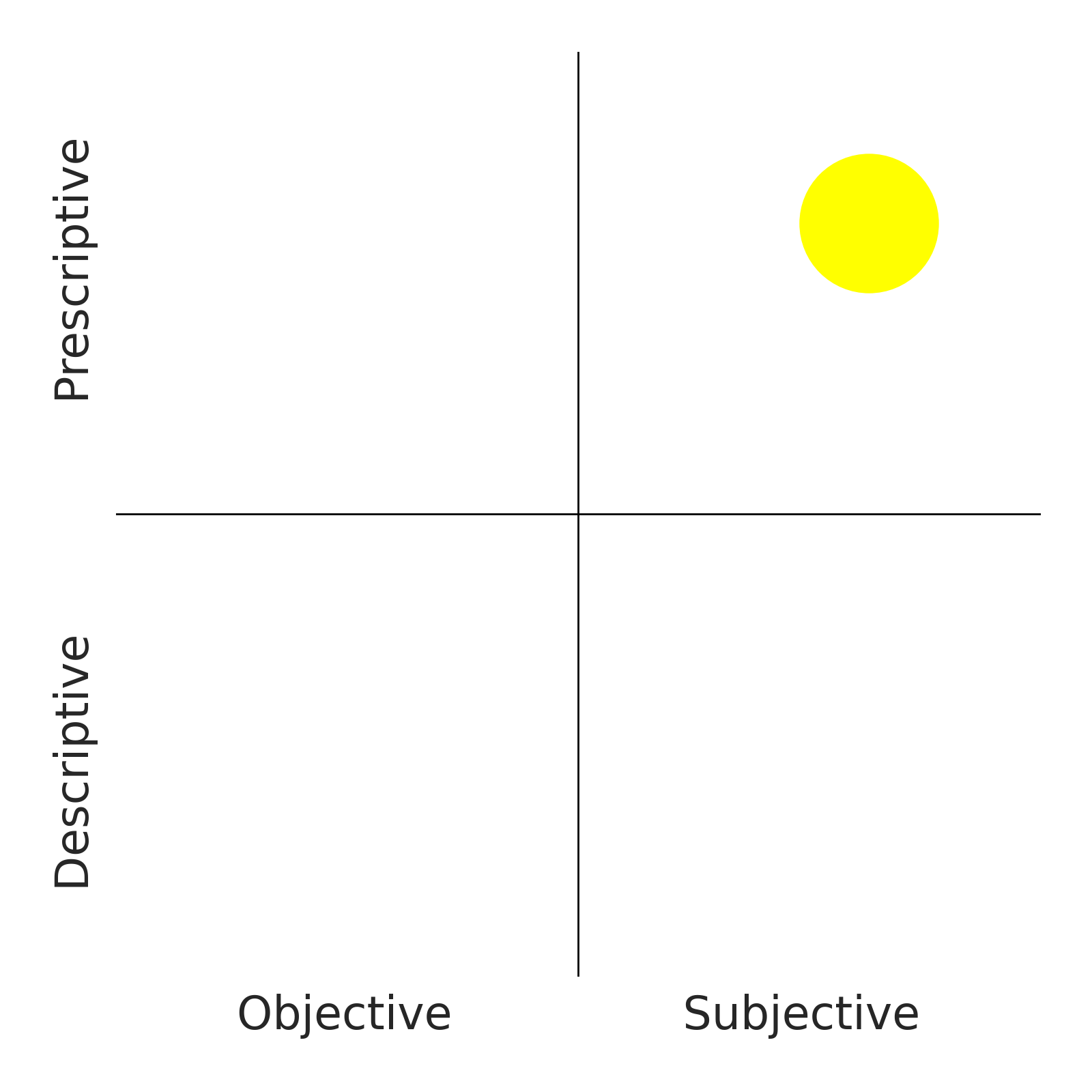
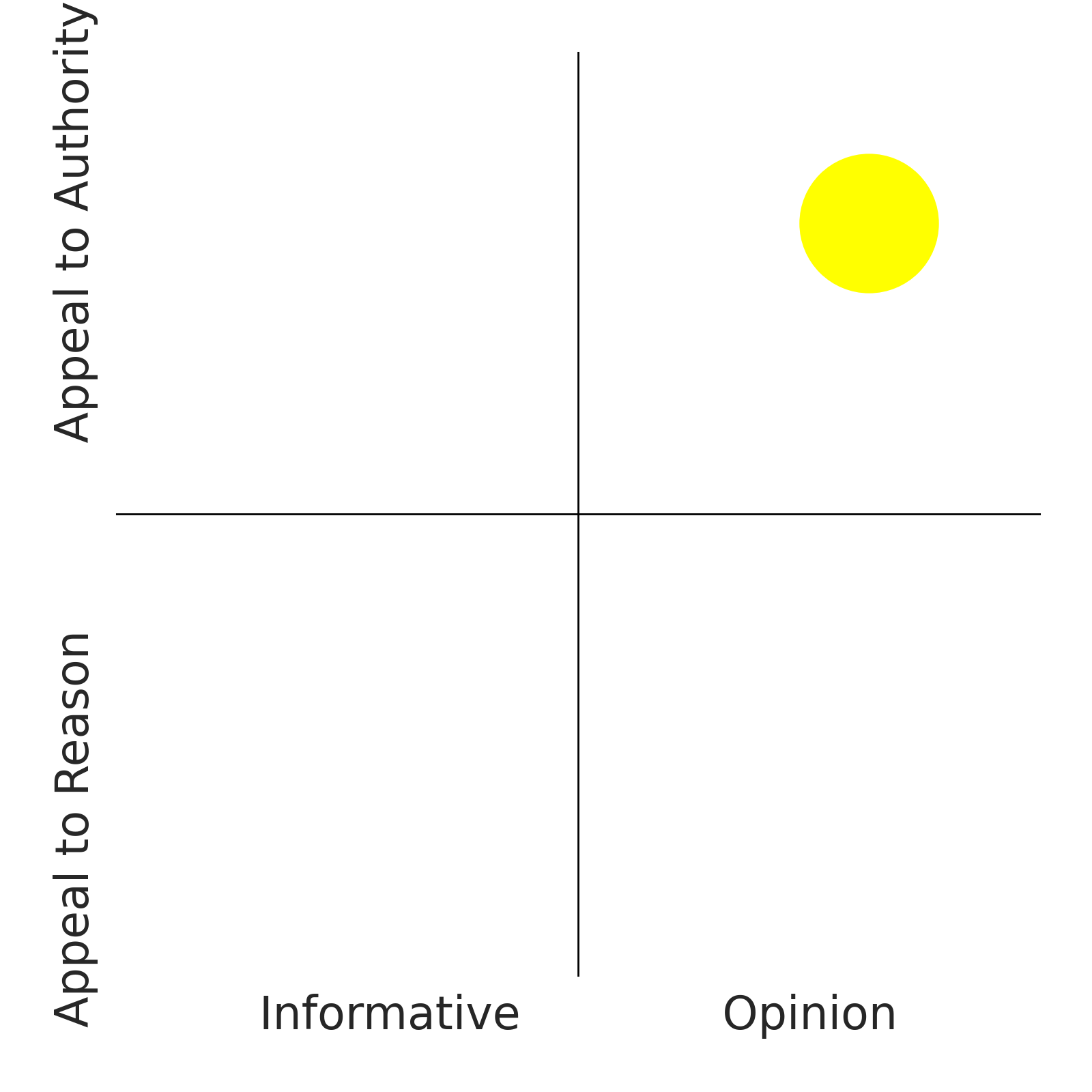
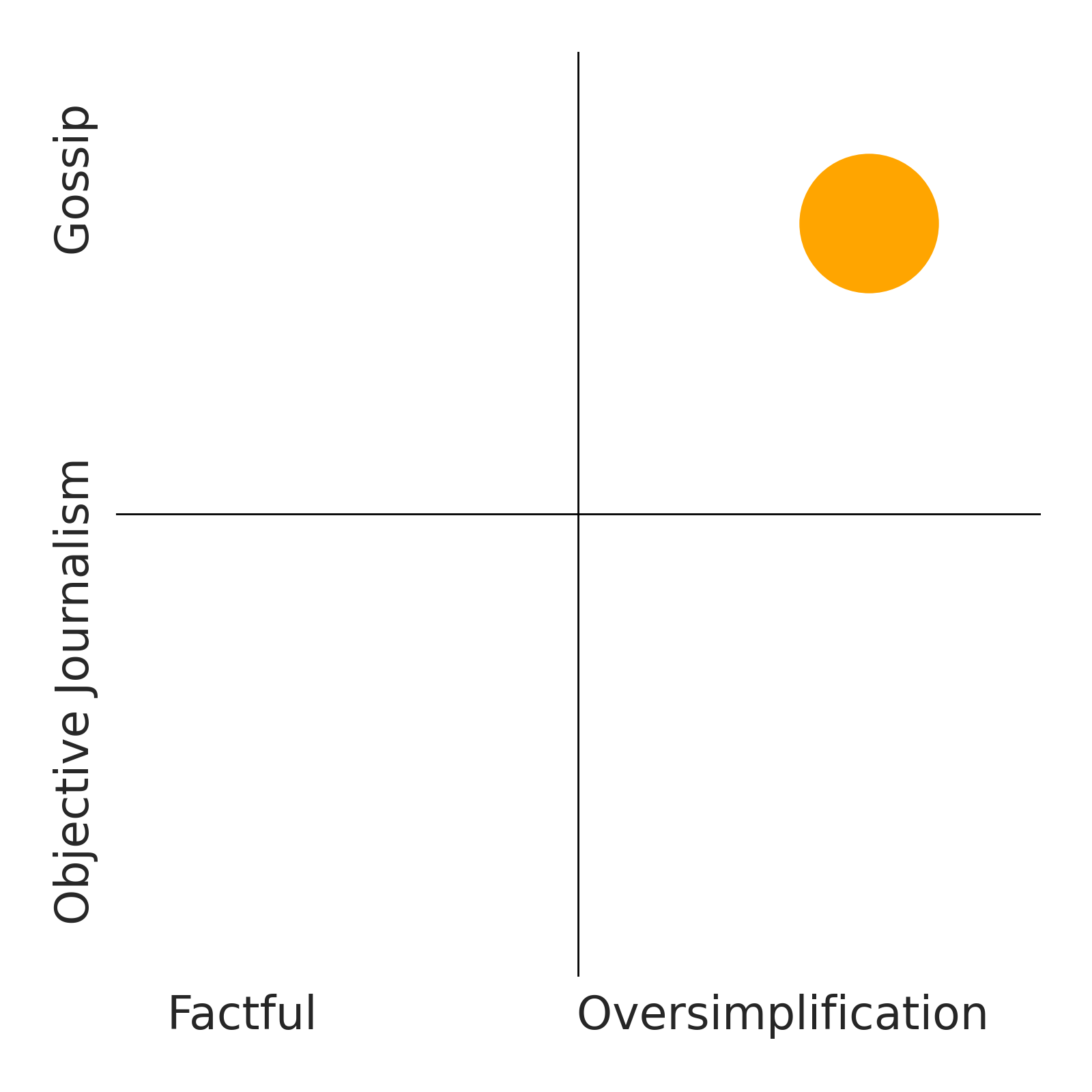
2026 © Helium Trades
Privacy Policy & Disclosure
* Disclaimer: Nothing on this website constitutes investment advice, performance data or any recommendation that any particular security, portfolio of securities, transaction or investment strategy is suitable for any specific person. Helium Trades is not responsible in any way for the accuracy
of any model predictions or price data. Any mention of a particular security and related prediction data is not a recommendation to buy or sell that security. Investments in securities involve the risk of loss. Past performance is no guarantee of future results. Helium Trades is not responsible for any of your investment decisions,
you should consult a financial expert before engaging in any transaction.
Helium Research Assistant

How can I help you today?
Ask any question about Observer bias.


