See whether Helium helps you make better-informed decisions. Try every Pro Trader feature for 30 days. No credit card required.
Try every Pro Trader feature for 30 days. No credit card required.
Overall framing: This source behaves like a high-volume commercial content feed optimized for clicks and retail/finance conversions rather than explanatory journalism.
The clearest hard evidence of monetization intent is that it pays for traffic on the keyword 'dividend stocks' [93], and its coverage skews toward high-intent finance and consumer-deal topics rather than sustained reporting.
Coverage patterns: A large share of the sample is thin retail product promotion — Walmart, Amazon, Macy's, and REI items with prices and anonymous testimonials (e.g., Walmart earrings at $18
October 23, 2026 · 0 shares
Promotional shopping-deal framing emphasizes a low price and a single positive customer testimonial while offering no independent product evaluation.
Automated analysis; not human reviewed. Limitations: The supplied text is an extremely short product-deal blurb, limiting substantive bias classification. · 4 of 55 available dimensions scored; omitted dimensions are not treated as neutral. · Verified supporting quotes for 4 of 4 scored dimensions.
Claim: The item foregrounds a subjective customer testimonial rather than objective product evaluation.
“I have not taken them off since I got them.” · exact text match
Why: The central supporting detail is a personal feeling about the earrings, not measured performance or independent testing.
Claim: The content is a short promotional product blurb rather than substantive reporting.
“Walmart's Swarovski hoop earrings that come in 3 colors are on sale for just $18.” · exact text match
Why: The entire supplied text consists of a retailer, product, colors, sale price, and a positive testimonial.
Claim: The selected testimonial gives the product promotion a positive emotional valence.
“I have not taken them off since I got them.” · exact text match
Why: The quote conveys enthusiastic personal attachment and is used as the item's only reported user experience.
Claim: The item reads as promotional shopping copy for a Walmart product.
“Walmart's Swarovski hoop earrings that come in 3 colors are on sale for just $18.” · exact text match
Why: It leads with the retailer and product and highlights a sale price with no independent evaluation or context.
The supplied text is an extremely short product-deal blurb, limiting substantive bias classification.
October 04, 2026 · 0 shares
Promotional framing that presents a single customer endorsement as an unqualified product recommendation.
Automated analysis; not human reviewed. Limitations: The supplied text is only a two-sentence promotional fragment, so most bias dimensions cannot be assessed; I inferred the promotional intent from the uniformly positive product language. · 5 of 55 available dimensions scored; omitted dimensions are not treated as neutral. · Verified supporting quotes for 5 of 5 scored dimensions.
Claim: A subjective customer opinion is presented as the headline claim.
“Amazon's $80 3-piece cushioned rocking patio set is 'incredibly relaxing'” · exact text match
Why: The headline asserts an evaluative judgment ('incredibly relaxing') as a factual characterization.
Claim: The content is minimal product fluff rather than substantive reporting.
“Amazon's $80 3-piece cushioned rocking patio set is 'incredibly relaxing'” · exact text match
Why: The text is a short promotional blurb with no news value.
Claim: The text provides no sourcing, attribution to a named reviewer, or verification for its promotional claims.
“It's the perfect spot to enjoy a morning cup of coffee or unwind in the evening.” · exact text match
Why: Credibility is limited by the absence of any sourcing, date, author, or evidence beyond an anonymous quote.
Claim: The entire text is a promotional plug for an Amazon product, using customer praise as marketing copy.
“Amazon's $80 3-piece cushioned rocking patio set is 'incredibly relaxing'” · exact text match
“It's the perfect spot to enjoy a morning cup of coffee or unwind in the evening.” · exact text match
Why: Every clause functions to sell the product; there is no informational or editorial content.
Claim: The framing favorably promotes a specific Amazon product without critical context.
“Amazon's $80 3-piece cushioned rocking patio set is 'incredibly relaxing'” · exact text match
Why: The publisher presents the product uncritically, acting as a sales channel for the corporate seller.
The supplied text is only a two-sentence promotional fragment, so most bias dimensions cannot be assessed; I inferred the promotional intent from the uniformly positive product language.
October 09, 2026 · 0 shares
Promotional product framing presents an unverified merchant price and marketing claim as a simple shopping tip without sourcing or critical context.
Automated analysis; not human reviewed. Limitations: The supplied text is only a brief promotional snippet, so there is little substantive content to assess beyond product marketing. · 9 of 55 available dimensions scored; omitted dimensions are not treated as neutral. · Verified supporting quotes for 6 of 9 scored dimensions.
Claim: The quoted positive product description is presented without sourcing or qualification.
“"Perfect patio set for a small area!"” · exact text match
Why: A definitive quality claim is asserted without indicating who evaluated it or on what basis.
Claim: The text is formatted as a short promotional deal post with little informational substance.
“Amazon has a 3-piece rocking chair patio set with 'comfortable' cushions for $60.” · exact text match
Why: It reads as affiliate-style shopping promotional fluff rather than reporting.
Claim: The post lacks sourcing, availability details, or verification for the price and product claims.
“Amazon has a 3-piece rocking chair patio set with 'comfortable' cushions for $60.” · exact text match
Why: No seller link, date, or source for the quoted quality claim is provided in the supplied text.
Claim: The text functions as promotional shopping content for an Amazon product.
“Amazon has a 3-piece rocking chair patio set with 'comfortable' cushions for $60.” · exact text match
Why: It highlights retailer, product, price, and a positive descriptor to encourage purchase interest.
Claim: The text uses a quoted positive phrase as an endorsement without attribution.
“"Perfect patio set for a small area!"” · exact text match
Why: The unattributed exclamatory quote functions as a persuasive framing device.
Claim: The content is a minimal product-deal blurb lacking context, sourcing, or analysis.
“Amazon has a 3-piece rocking chair patio set with 'comfortable' cushions for $60.” · exact text match
Why: The text offers only a product title, price, and promotional quote, with no substantive reporting.
The supplied text is only a brief promotional snippet, so there is little substantive content to assess beyond product marketing.
October 18, 2026 · 0 shares
Automated analysis; not human reviewed. Limitations: The supplied text is a single-sentence deal blurb with no sourcing, methodology, or independent product testing, limiting the evidentiary basis for most dimensions. · 12 of 55 available dimensions scored; omitted dimensions are not treated as neutral. · Verified supporting quotes for 12 of 12 scored dimensions.
Claim: The item is framed around a shopper's personal impression rather than measurable product attributes.
“"These are absolutely the most comfortable slippers I have ever owned," one shopper said.” · exact text match
Why: The only substantiation offered is a subjective testimonial.
Claim: Promotional language amplifies the deal without sensational claims about events.
“on sale for just $11” · exact text match
Why: 'Just' frames the price as an exceptional bargain, though the tone stays mild rather than alarming.
Claim: Content is a routine low-value promotional snippet with minimal information.
“on sale for just $11” · exact text match
Why: No narrative, analysis, or novelty beyond a price point and one quote.
Claim: The text features an evaluative superlative claim about comfort rather than neutral description.
“absolutely the most comfortable slippers I have ever owned” · exact text match
Why: An unattributed-to-publisher but uncritically featured superlative serves as opinion content.
Claim: Product value is reduced to a price and one enthusiastic quote with no comparison or testing.
“Walmart's fleece slippers with a terry cloth lining are on sale for just $11.” · exact text match
Why: No durability, fit, or alternatives are considered.
Claim: A superlative quality claim is presented without qualification or additional corroboration.
“"These are absolutely the most comfortable slippers I have ever owned," one shopper said.” · exact text match
Why: The certainty belongs to the quoted shopper, and it is relayed without hedging or independent support.
Claim: The text functions as thin commercial filler promoting a product.
“on sale for just $11” · exact text match
Why: Short promotional blurb with a buy-oriented price hook.
Claim: Tone is positive and affirming toward the product.
“absolutely the most comfortable slippers” · exact text match
Why: Enthusiastic testimonial language sets a favorable emotional valence.
Claim: No sourcing, testing, or provenance is provided for the quality claim.
“one shopper said” · exact text match
Why: Anonymous single testimonial with no verification limits trustworthiness.
Claim: The item is structured as product promotion around a retailer and price.
“Walmart's fleece slippers with a terry cloth lining are on sale for just $11.” · exact text match
Why: Retailer, product, and discount are the entire content, matching advertorial framing.
Claim: A loaded price modifier and cherry-picked testimonial push a purchase decision.
“on sale for just $11” · exact text match
Why: 'Just' plus an unverified superlative are persuasive framing techniques, though mild.
Claim: The item contains no analysis, context, or verification beyond a price and a quote.
“These are absolutely the most comfortable slippers I have ever owned” · exact text match
Why: Minimal reasoning or informational depth is present.
The supplied text is a single-sentence deal blurb with no sourcing, methodology, or independent product testing, limiting the evidentiary basis for most dimensions.
October 18, 2026 · 0 shares
Automated analysis; not human reviewed. Limitations: The supplied text is a two-sentence shopping blurb with no sourcing detail, so most dimensions rest on very little material. · 11 of 55 available dimensions scored; omitted dimensions are not treated as neutral. · Verified supporting quotes for 10 of 11 scored dimensions.
Claim: The item consists of an evaluative product judgment rather than verifiable reporting.
“REI's $67 adjustable hooded jacket is perfect for fall layering.” · exact text match
Why: The framing is an aesthetic/consumer value judgment presented without testing or criteria.
Claim: Superlative language is used to promote the product.
“It’s a phenomenal windbreaker either by itself or over warm layers.” · exact text match
Why: "Phenomenal" is a hype adjective rather than a measured description.
Claim: The content is almost entirely opinion and recommendation.
“perfect for fall layering” · exact text match
Why: No factual reporting beyond price and product type; the substance is an endorsement.
Claim: Certainty exceeds any support offered.
“is perfect for fall layering” · exact text match
Counterevidence:
“A quoted endorsement is attributed to an unnamed source rather than the publisher.” · not found in supplied text
Why: An absolute "perfect" claim is made with no evidence or comparison given.
Claim: Short promotional copy with little informational substance.
“perfect for fall layering” · exact text match
Why: The item is a promotional blurb lacking substantive reporting or context.
Claim: The tone is uniformly positive toward the product.
“phenomenal windbreaker” · exact text match
Why: Praise-laden wording conveys positive affect without balance.
Claim: Sourcing and verification signals are absent.
“It’s a phenomenal windbreaker either by itself or over warm layers.” · exact text match
Why: The only assessment is an unattributed quote with no testing methodology or named reviewer.
Claim: The text functions as product promotion.
“REI's $67 adjustable hooded jacket is perfect for fall layering. "It’s a phenomenal windbreaker either by itself or over warm layers."” · exact text match
Why: Price, product, and praise are combined in a format typical of shopping/advertorial copy.
Claim: Framing favorably promotes a specific retailer's merchandise.
“REI's $67 adjustable hooded jacket is perfect for fall layering.” · exact text match
Why: The retailer's product is presented in a wholly positive commercial light.
Claim: The content offers minimal analysis or information.
“REI's $67 adjustable hooded jacket is perfect for fall layering.” · exact text match
Why: Two sentences of praise with no reasoning, criteria, or comparisons.
The supplied text is a two-sentence shopping blurb with no sourcing detail, so most dimensions rest on very little material.
September 26, 2026 · 0 shares
Promotional framing markets a Walmart coffee table with unverified superlatives and an anonymous positive customer quote.
Automated analysis; not human reviewed. Limitations: The supplied text is a two-sentence promotional snippet with no sourcing or context; all classifications therefore rest on minimal textual evidence. · 13 of 55 available dimensions scored; omitted dimensions are not treated as neutral. · Verified supporting quotes for 13 of 13 scored dimensions.
Claim: Evaluative language and personal opinion dominate the brief text.
“elegant” · exact text match
“It's the perfect size for my small living room.” · exact text match
Why: The descriptors are matters of taste presented as definitive product attributes.
Claim: The copy presents an upbeat, favorable view of the product and its value.
“only $60” · exact text match
“It's the perfect size for my small living room.” · exact text match
Why: The price framing and satisfied-customer quote convey a favorable outlook on the purchase.
Claim: The content is a routine, low-novelty product blurb.
“Walmart's 'elegant' coffee table with tons of storage space is only $60” · exact text match
Why: A mundane consumer product pitch offers little beyond its promotional message.
Claim: Marketing praise is stated directly rather than attributed as opinion.
“elegant” · exact text match
“tons of storage space” · exact text match
Why: The favorable judgments are asserted as facts about the product without sourcing.
Claim: The assertion of 'tons of storage space' states certainty beyond any supplied evidence.
“tons of storage space” · exact text match
Why: The amount of storage is asserted as fact with no measurement, comparison, or verification.
Claim: The text is thin promotional fluff without substantive information.
“Walmart's 'elegant' coffee table with tons of storage space is only $60” · exact text match
Why: The entire content is a short, low-information marketing blurb.
Claim: The framing carries a uniformly positive emotional appeal.
“elegant” · exact text match
“It's the perfect size for my small living room.” · exact text match
Why: Praise and a satisfied-customer quote generate positive sentiment throughout.
Claim: Anonymous sourcing and unverified superlatives make the text weakly credible as information.
“tons of storage space” · exact text match
“It's the perfect size for my small living room.” · exact text match
Why: No named source supports the claims, and the customer quote is unattributed.
Claim: The text is promotional product copy rather than neutral or informative reporting.
“Walmart's 'elegant' coffee table with tons of storage space is only $60” · exact text match
“It's the perfect size for my small living room.” · exact text match
Why: Unverified superlatives, a price hook, and an anonymous customer endorsement are arranged to market the product.
Claim: The copy is favorable to Walmart by promoting one of its products positively.
“Walmart's 'elegant' coffee table with tons of storage space is only $60” · exact text match
Why: The text frames a Walmart product in uniformly positive terms, supporting the company's commercial interests.
Claim: Loaded positive framing and an anonymous testimonial are used to steer readers toward purchase.
“tons of storage space” · exact text match
“It's the perfect size for my small living room.” · exact text match
Why: Hyperbolic praise and an unverifiable customer quote function as observable persuasive techniques.
Claim: Marketing assertions are presented as facts without qualification.
“tons of storage space” · exact text match
Why: An unverified promotional claim is offered in declarative form rather than labeled as advertising.
Claim: The text provides minimal analytical, informational, or intellectual depth.
“Walmart's 'elegant' coffee table with tons of storage space is only $60” · exact text match
Why: The brief contains no analysis, context, or substantive detail beyond marketing praise.
The supplied text is a two-sentence promotional snippet with no sourcing or context; all classifications therefore rest on minimal textual evidence.
October 09, 2026 · 0 shares
Automated analysis; not human reviewed. Limitations: Only a two-sentence promotional blurb is supplied, so bias assessment is limited to that framing. · 6 of 55 available dimensions scored; omitted dimensions are not treated as neutral. · Verified supporting quotes for 6 of 6 scored dimensions.
Claim: The text uses promotional superlatives to heighten appeal.
“luxe vanity with over 1,700 perfect ratings” · exact text match
Why: Sensational marketing language presents the product in glowing terms.
Claim: The text issues a consumer purchase directive rather than describing events.
“Save 32% on the luxe vanity” · exact text match
Why: The imperative 'Save' prescribes an action to the reader.
Claim: The content is brief promotional fluff centered on a discount and social proof.
“Save 32% on the luxe vanity with over 1,700 perfect ratings.” · exact text match
Why: It consists of advertorial-style deal copy rather than substantive reporting.
Claim: The framing uses positive marketing adjectives and rating praise.
“luxe vanity with over 1,700 perfect ratings” · exact text match
Why: 'luxe' and 'perfect' convey positive affect toward the product.
Claim: The promotional claims are unsourced and lack attribution or uncertainty.
“over 1,700 perfect ratings” · exact text match
Why: The rating total is asserted without source or methodology, and no author or attribution is provided.
Claim: The text functions as a promotional advertisement for a Walmart product.
“Save 32% on the luxe vanity with over 1,700 perfect ratings.” · exact text match
Why: The imperative savings offer and product praise directly encourage purchase.
Only a two-sentence promotional blurb is supplied, so bias assessment is limited to that framing.
October 09, 2026 · 0 shares
Promotional shopping framing presents a product deal with unqualified consumer praise and no sourcing or critical context.
Automated analysis; not human reviewed. · 9 of 55 available dimensions scored; omitted dimensions are not treated as neutral. · Verified supporting quotes for 8 of 9 scored dimensions.
Claim: The article asserts unverified positive shopper sentiment as fact.
“Shoppers love that it's sturdy, sleek, and beautiful to look at.” · exact text match
Why: The unqualified praise is presented without supporting reviews, names, or data.
Claim: The article states product durability and shopper affection with certainty despite supplying no evidence.
“Shoppers love that it's sturdy, sleek, and beautiful to look at.” · exact text match
Why: No sourcing or uncertainty qualifiers accompany the strong claims.
Claim: The article functions as thin promotional deal content rather than substantive journalism.
“Walmart has a 6-drawer dresser that can hold up to 230 pounds for just $116.” · exact text match
Why: Its entire content is a brief advertisement-like product pitch.
Claim: The article uses positive consumer-affect language to make the product appealing.
“Shoppers love that it's sturdy, sleek, and beautiful to look at.” · exact text match
Why: Terms such as love, sleek, and beautiful create a positive emotional tone.
Claim: The article provides no sourcing, attribution, or verification for its consumer claims.
“Shoppers love that it's sturdy, sleek, and beautiful to look at.” · exact text match
Why: Absent named reviews, links, or data, the assertions are not externally verifiable from the text.
Claim: The article uses promotional product-deal framing that markets a Walmart dresser to readers.
“Walmart has a 6-drawer dresser that can hold up to 230 pounds for just $116.” · exact text match
Why: The text reads as a shopping promotion highlighting a low price and desirable features.
Claim: The article frames a Walmart product favorably without retailer criticism or alternatives.
“Walmart has a 6-drawer dresser that can hold up to 230 pounds for just $116.” · exact text match
Why: The promotional focus favors a major corporation's retail offering.
Claim: The article offers minimal informational substance beyond a price and two product attributes.
“Walmart has a 6-drawer dresser that can hold up to 230 pounds for just $116.” · exact text match
Why: It lacks analysis, context, sourcing, or comparison, making it low in analytical value.
October 09, 2026 · 0 shares
Frames Nvidia's AI infrastructure constraints as a competitive advantage, adopting a promotional, bullish tone based on a single investment-bank source.
Nvidia designs AI chips and related systems used in data centers.
Automated analysis; not human reviewed. Limitations: Based solely on a brief excerpt/teaser; limited sourcing and context. · 55 of 55 available dimensions scored; omitted dimensions are not treated as neutral. · Verified supporting quotes for 19 of 55 scored dimensions.
Claim: The article centers on Morgan Stanley's institutional analysis rather than ordinary people's concerns.
“Morgan Stanley thinks that tilts the AI race toward Nvidia.” · exact text match
Why: Relies exclusively on an elite investment-bank perspective.
Claim: The framing is interpretive, presenting a subjective claim as a key development.
“Nvidia's AI power problem is turning into its biggest edge.” · exact text match
Why: Metaphorical and evaluative language rather than neutral description.
Claim: Uses dramatic framing to heighten interest.
“Nvidia's AI power problem is turning into its biggest edge.” · exact text match
Why: Strong, attention-grabbing assertion without supporting evidence.
Claim: Positive for Nvidia.
“Morgan Stanley thinks that tilts the AI race toward Nvidia.” · exact text match
Why: Directly frames a competitive advantage for Nvidia.
Claim: Optimistic about Nvidia's prospects.
“turning into its biggest edge” · exact text match
Why: Positive framing of the company's position.
Claim: Assumes Nvidia benefits without explaining how.
“tilts the AI race toward Nvidia” · exact text match
Why: Unstated mechanism for why shortages help Nvidia.
Claim: Presents an investment opinion as a factual development.
“Nvidia's AI power problem is turning into its biggest edge.” · exact text match
Why: Evaluative claim blending opinion with reporting.
Claim: Reduces complex AI infrastructure dynamics to a single advantage.
“turning into its biggest edge” · exact text match
Why: Simplistic cause-and-effect without nuance.
Claim: Uses Morgan Stanley as the sole basis for the claim.
“Morgan Stanley thinks” · exact text match
Why: Relies on an institutional authority rather than independent evidence.
Claim: States a contested outcome with certainty.
“is turning into its biggest edge” · exact text match
Why: Presents an unfolding advantage as established.
Claim: Frames through a market-competitive lens.
“tilts the AI race toward Nvidia” · exact text match
Why: Implies a race/competition worldview.
Claim: Relies on a major financial institution's view.
“Morgan Stanley thinks” · exact text match
Why: Deference to establishment financial analysis.
Claim: Slightly positive tone toward Nvidia.
“biggest edge” · exact text match
Why: Positive connotation.
Claim: Limited sourcing and no independent verification.
“Morgan Stanley thinks” · exact text match
Why: Single unnamed source; no data.
Claim: The article presents a plausible market-based analysis with some unsupported reasoning.
“Data centers are running short on electricity and space, and Morgan Stanley thinks that tilts the AI race toward Nvidia.” · exact text match
Why: Offers a coherent cause-and-effect but no detailed data.
Claim: Promotional tone favors Nvidia.
“Nvidia's AI power problem is turning into its biggest edge.” · exact text match
Why: Positive framing of a company without critique.
Claim: Frames Nvidia favorably.
“turning into its biggest edge” · exact text match
Why: Highlights corporate advantage.
Claim: Speculates on future competitive dynamics.
“turning into its biggest edge” · exact text match
Why: Predictive framing.
Claim: Brief and accessible but not deeply analytical.
“Nvidia's AI power problem is turning into its biggest edge.” · exact text match
Why: Short take with limited substance.
Based solely on a brief excerpt/teaser; limited sourcing and context.
September 30, 2026 · 0 shares
The framing is promotional and authority-based, using Bank of America's endorsement and HPE's share-price jump to cast the investor day as a portfolio-relevant catalyst.
HPE is Hewlett Packard Enterprise, a publicly traded technology company; an investor day is a scheduled event where management presents strategy and financial outlook. Bank of America is an investment bank whose analyst ratings are often followed by investors.
Automated analysis; not human reviewed. Limitations: The supplied text is a short headline-style teaser; no full article body is present, so classifications rely on the teaser's framing and not on complete reported analysis. · 4 of 55 available dimensions scored; omitted dimensions are not treated as neutral. · Verified supporting quotes for 4 of 4 scored dimensions.
Claim: The investor day is labeled 'crucial' and the reader is addressed directly, adding dramatic urgency.
“before crucial investor day” · exact text match
“what it means for your portfolio.” · exact text match
Why: 'Crucial' is an evaluative intensifier and the direct-address hook adds drama.
Claim: The publisher frames HPE stock positively by leading with Bank of America's backing and noting the stock's strong year.
“Bank of America backs HPE stock” · exact text match
“HPE shares more than doubled this year.” · exact text match
Why: The verb 'backs' and the detail about more than doubling create a positive, opportunity-oriented tone, and the portfolio hook implies upside relevance.
Claim: The publisher relies on Bank of America's endorsement as the main reason for investor attention.
“Bank of America backs HPE stock” · exact text match
Why: The only substantive support cited for the stock is an investment bank's backing, with no independent analysis or data.
Claim: The text is forward-looking, promising analysis of Bank of America's expectations and portfolio implications.
“Here's what Bank of America is looking for, and what it means for your portfolio.” · exact text match
Why: The phrase frames the upcoming investor day as an event whose implications can be anticipated, rather than reporting settled outcomes.
The supplied text is a short headline-style teaser; no full article body is present, so classifications rely on the teaser's framing and not on complete reported analysis.
September 30, 2026 · 0 shares
Framing treats an undisclosed TSMC development as an imminent market-moving event, leaning on Wells Fargo's authority and speculative 'could' language to build interest.
TSMC is a major semiconductor foundry; Apple and Nvidia are significant chip buyers; Wells Fargo is a financial services firm whose analysts cover the semiconductor industry.
Automated analysis; not human reviewed. Limitations: The input is only a three-sentence teaser, so scalar classifications are based on framing language rather than a full article. · 6 of 55 available dimensions scored; omitted dimensions are not treated as neutral. · Verified supporting quotes for 6 of 6 scored dimensions.
Claim: The framing presents an interpretive forecast as a news statement, especially in the opening clause.
“TSMC's next move could ripple far beyond Apple, Nvidia.” · exact text match
Why: This is a subjective prediction about future market impact, not an observed fact.
Claim: The wording 'ripple far beyond' and 'rarely gets the spotlight' dramatizes a still-unknown development.
“TSMC's next move could ripple far beyond Apple, Nvidia.” · exact text match
“a corner of the chip market that rarely gets the spotlight.” · exact text match
Why: The language is vivid and attention-grabbing relative to the absence of concrete details.
Claim: The article frames the situation as an opportunity ('opening') for an overlooked market segment.
“Until then, it sees an opening for a corner of the chip market that rarely gets the spotlight.” · exact text match
Why: 'Sees an opening' conveys a positive/opportunistic outlook.
Claim: The article leads with a predictive opinion rather than a reported event.
“TSMC's next move could ripple far beyond Apple, Nvidia.” · exact text match
Why: The sentence is an assertion of likely consequences, not a statement of what has occurred.
Claim: The article's forward-looking conclusion rests on an unnamed Wells Fargo view rather than on reported evidence.
“Wells Fargo says more details are still coming. Until then, it sees an opening for a corner of the chip market that rarely gets the spotlight.” · exact text match
Why: The only cited source for the 'opening' is Wells Fargo, and the article provides no independent data or named analyst.
Claim: The article forecasts a ripple effect from TSMC's move and an opening in a chip segment, both unverified.
“TSMC's next move could ripple far beyond Apple, Nvidia.” · exact text match
“Until then, it sees an opening for a corner of the chip market that rarely gets the spotlight.” · exact text match
Why: 'Could ripple' and 'sees an opening' are predictive, not factual, and the article states details are still forthcoming.
The input is only a three-sentence teaser, so scalar classifications are based on framing language rather than a full article.
October 23, 2026 · 0 shares
The article frames market intelligence through the lens of institutional analyst projections and high-stakes financial forecasting.
Automated analysis; not human reviewed. · 55 of 55 available dimensions scored; omitted dimensions are not treated as neutral. · Verified supporting quotes for 0 of 55 scored dimensions.
September 26, 2026 · 0 shares
Framing relies on unverifiable superlatives and mystery rather than evidence to suggest an imminent major financial shift.
Automated analysis; not human reviewed. Limitations: The input is a two-sentence unsupported teaser, so scores rest on tone and assertion rather than reportorial content. · 4 of 55 available dimensions scored; omitted dimensions are not treated as neutral. · Verified supporting quotes for 4 of 4 scored dimensions.
Claim: The text uses superlative and mysterious language to characterize an unspecified financial transformation.
“The financial system's biggest transformation in a century is happening where no one is looking.” · exact text match
Why: The claim is framed as a dramatic, hidden, once-in-a-century event without any reported facts.
Claim: The text asserts an extraordinary superlative with certainty and no supporting evidence.
“The financial system's biggest transformation in a century is happening where no one is looking.” · exact text match
Why: The superlative 'biggest transformation in a century' is stated as fact while no evidence is supplied.
Claim: The text offers no source, attribution, or verifiable detail for its central claim.
“The financial system's biggest transformation in a century is happening where no one is looking.” · exact text match
Why: A major factual claim is presented with no named basis, leaving the visible evidentiary support near zero.
Claim: The text speculates about a hidden change without presenting facts, data, or sources.
“Something big is changing beneath the surface of global finance.” · exact text match
Why: The subject is an unnamed, unobservable 'something' characterized only as 'big' and 'changing'.
The input is a two-sentence unsupported teaser, so scores rest on tone and assertion rather than reportorial content.
September 26, 2026 · 0 shares
A vague, authority-backed teaser frames an unspecified financial warning as urgently important for every saver.
Automated analysis; not human reviewed. Limitations: The supplied text is only a two-sentence teaser; the warning's content and all corroborating details are absent, so broad dimensions are unassessable. · 7 of 55 available dimensions scored; omitted dimensions are not treated as neutral. · Verified supporting quotes for 7 of 7 scored dimensions.
Claim: The unspecified statement is characterized subjectively as 'stern' and as something readers 'need to hear.'
“stern warning” · exact text match
“every saver needs to hear” · exact text match
Why: The wording interprets the statement's tone and prescribes reader attention rather than reporting its content.
Claim: The teaser uses alarming language and urgency without providing the substance.
“stern warning” · exact text match
“every saver needs to hear” · exact text match
Why: The phrases dramatize an undescribed warning and demand attention, creating a sensational tone.
Claim: The text expresses an opinion that all savers need to hear the undisclosed remark.
“something that every saver needs to hear” · exact text match
Why: This is a subjective prescription presented without evidence.
Claim: The text elevates speakers by status ('most powerful financial voices') rather than by the merit of their statement.
“Three of America's most powerful financial voices” · exact text match
Why: Credibility is asserted through the speakers' power status, not through the content of what they said.
Claim: The passage is a content-free teaser that withholds the actual warning.
“something that every saver needs to hear” · exact text match
Why: It advertises importance but provides no substantive information, functioning as clickbait.
Claim: The claim is made without sourcing, quotes, or supporting detail.
“Kevin Warsh and the Fed send stern warning to Americans.” · exact text match
Why: The statement is a bare assertion with no named evidence for the warning's content or provenance.
Claim: The text creates urgency and relies on authority while omitting the warning's substance.
“stern warning” · exact text match
“every saver needs to hear” · exact text match
Why: The combination of alarming framing and missing specifics pressures the reader to engage for details.
The supplied text is only a two-sentence teaser; the warning's content and all corroborating details are absent, so broad dimensions are unassessable.
October 14, 2026 · 0 shares
Evaluative and teaser language—'bold' and 'a real catch for shareholders'—frames a Pentagon chip investment dramatically while withholding the catch.
Automated analysis; not human reviewed. Limitations: Only a two-sentence excerpt is available; the company, deal terms, and shareholder catch are unspecified, limiting confidence in framing assessments. · 55 of 55 available dimensions scored; omitted dimensions are not treated as neutral. · Verified supporting quotes for 4 of 55 scored dimensions.
Claim: The publisher frames the deal with subjective evaluative language rather than neutral description.
“U.S. making bold $1.5 billion investment in defense-critical chipmaker.” · exact text match
“The Pentagon's 30-year deal comes with a real catch for shareholders.” · exact text match
Why: 'bold' and 'real catch' are evaluative and teaser terms, not neutral factual descriptors.
Claim: The snippet uses dramatic, curiosity-inducing wording.
“U.S. making bold $1.5 billion investment in defense-critical chipmaker.” · exact text match
“The Pentagon's 30-year deal comes with a real catch for shareholders.” · exact text match
Why: The adjectives and promised 'catch' heighten drama and tease an undisclosed problem.
Claim: The headline's characterization of the investment as 'bold' is evaluative.
“U.S. making bold $1.5 billion investment in defense-critical chipmaker.” · exact text match
Why: Calling the investment 'bold' expresses a judgment rather than a neutral fact.
Claim: The headline withholds the promised catch while using it as a hook.
“The Pentagon's 30-year deal comes with a real catch for shareholders.” · exact text match
Why: The phrase promises material information—'a real catch'—without specifying it, creating a curiosity gap.
Only a two-sentence excerpt is available; the company, deal terms, and shareholder catch are unspecified, limiting confidence in framing assessments.
October 22, 2026 · 0 shares
Promotional financial teaser relies on superlatives and an unsourced future hint to attract investor attention.
Automated analysis; not human reviewed. Limitations: The supplied text is a very short promotional teaser with no sourcing, metrics, memo details, or explanation of the hinted development, limiting verification. · 14 of 55 available dimensions scored; omitted dimensions are not treated as neutral. · Verified supporting quotes for 14 of 14 scored dimensions.
Claim: The text is subjective and promotional rather than evidence-based.
“Elon Musk sends a strong memo to SpaceX and Tesla stock investors.” · exact text match
Why: 'strong memo' is an evaluative characterization rather than neutral reporting.
Claim: Superlative and teaser language heightens the framing.
“Now Musk is hinting at something even bigger.” · exact text match
Why: The phrase promises a major but unspecified development.
Claim: The framing is bullish for Tesla and SpaceX investors.
“SpaceX just posted its strongest quarter since going public.” · exact text match
Why: A record-quarter claim and an upcoming bigger hint favor a positive investor outlook.
Claim: The tone is optimistic about Musk's companies.
“SpaceX just posted its strongest quarter since going public.” · exact text match
Why: The strongest-quarter claim frames the company positively.
Claim: The text uses evaluative language rather than neutral reporting.
“Elon Musk sends a strong memo to SpaceX and Tesla stock investors.” · exact text match
Why: 'strong memo' is an evaluative characterization.
Claim: A record-quarter claim is stated as fact without supporting figures or sourcing.
“SpaceX just posted its strongest quarter since going public.” · exact text match
Why: The superlative claim is presented without metrics or attribution.
Claim: The text is a short, vague clickbait teaser.
“Now Musk is hinting at something even bigger.” · exact text match
Why: It withholds specifics while promising a major development.
Claim: Positive promotional wording frames the companies favorably.
“SpaceX just posted its strongest quarter since going public.” · exact text match
Why: 'strongest quarter' is positive framing.
Claim: The report lacks sourcing, metrics, and specifics for its central claims.
“SpaceX just posted its strongest quarter since going public.” · exact text match
Why: A superlative financial claim is asserted without attribution or figures.
Claim: The text is structured as an investor-targeted promotional teaser.
“Elon Musk sends a strong memo to SpaceX and Tesla stock investors.” · exact text match
Why: It directly addresses stock investors and promotes Musk-linked companies.
Claim: The framing favorably promotes Musk-linked corporations to investors.
“Elon Musk sends a strong memo to SpaceX and Tesla stock investors.” · exact text match
Why: It centers the companies and their investor audience.
Claim: The main hook is an unspecified future development rather than a reported fact.
“Now Musk is hinting at something even bigger.” · exact text match
Why: The statement forecasts significance without evidence or details.
Claim: Loaded wording and material omission create a promotional teaser effect.
“Elon Musk sends a strong memo to SpaceX and Tesla stock investors.” · exact text match
“Now Musk is hinting at something even bigger.” · exact text match
Why: It uses 'strong' and an unspecified 'something bigger' to attract interest without substance.
Claim: The item offers minimal analysis, consisting mainly of vague promotional assertions.
“Now Musk is hinting at something even bigger.” · exact text match
Why: No explanation, data, or context is supplied for the hinted development.
The supplied text is a very short promotional teaser with no sourcing, metrics, memo details, or explanation of the hinted development, limiting verification.
October 23, 2026 · 0 shares
The brief is neutral, objective, and descriptive, with no evaluative or sensational language.
Automated analysis; not human reviewed. Limitations: Only two sentences are supplied, with no sourcing or broader context, so many bias dimensions cannot be assessed. · 5 of 55 available dimensions scored; omitted dimensions are not treated as neutral. · Verified supporting quotes for 5 of 5 scored dimensions.
Claim: The report presents closures and employment effects as factual developments without subjective evaluation.
“Albertsons supermarket chain closes underperforming locations.” · exact text match
Why: The sentence states a corporate action in plain factual terms.
Claim: The language is matter-of-fact rather than sensational.
“Safeway will not lay off employees in its November 2026 closure.” · exact text match
Why: The phrasing is a neutral factual announcement with no dramatic or emotional wording.
Claim: The text describes planned corporate actions without prescribing what should happen.
“Albertsons supermarket chain closes underperforming locations.” · exact text match
Why: It reports a closure instead of recommending or demanding action.
Claim: The tone is neutral and unemotional.
“Safeway will not lay off employees in its November 2026 closure.” · exact text match
Why: The statement conveys a factual employment outcome without positive or negative emotional language.
Only two sentences are supplied, with no sourcing or broader context, so many bias dimensions cannot be assessed.
October 21, 2026 · 0 shares
Terse market-news framing centers BofA’s target hike and supply-driven pricing with clear attribution but minimal independent context or caveat.
Western Digital is a hard-drive/storage manufacturer; BofA’s figure is an analyst stock-price target issued before an earnings report.
Automated analysis; not human reviewed. Limitations: The supplied text is only two sentences and lacks methodology, sourcing detail, and full context, limiting confidence across dimensions. · 8 of 55 available dimensions scored; omitted dimensions are not treated as neutral. · Verified supporting quotes for 8 of 8 scored dimensions.
Claim: The brief reports an attributed analyst action rather than offering evaluative commentary.
“BofA lifts Western Digital target despite lower capacity outlook.” · exact text match
Why: Plain attribution to BofA and a stated supply-price condition support objective framing.
Claim: The wording is headline-style and non-sensational.
“BofA lifts Western Digital target despite lower capacity outlook.” · exact text match
Why: No alarmist or hyperbolic language is used.
Claim: The framing is mildly bullish because it highlights a raised target and high prices.
“Tight hard-drive supply is keeping prices high as BofA raises its target to $800 ahead of earnings.” · exact text match
Counterevidence:
“despite lower capacity outlook” · exact text match
Why: The central development is a target increase tied to favorable supply-price dynamics.
Claim: The text describes an analyst action rather than recommending an investment.
“BofA raises its target to $800 ahead of earnings.” · exact text match
Why: No prescriptive advice or recommendation is given.
Claim: The report reduces the development to a target hike and a supply-price assertion without supporting detail.
“Tight hard-drive supply is keeping prices high as BofA raises its target to $800 ahead of earnings.” · exact text match
Why: The two-sentence brief omits methodology, estimates, and fuller context.
Claim: Attribution to BofA is clear, but no source link, methodology, or independent confirmation is visible.
“BofA lifts Western Digital target despite lower capacity outlook.” · exact text match
Why: Named attribution supports moderate credibility while the lack of sourcing limits it.
Claim: The report attributes the target change and notes a countervailing capacity outlook without evident distortion.
“BofA lifts Western Digital target despite lower capacity outlook.” · exact text match
Why: Attribution and inclusion of the caveat support fair, if minimal, reporting.
Claim: The brief is low-context and relies on a single analyst action plus a supply-price assertion.
“Tight hard-drive supply is keeping prices high as BofA raises its target to $800 ahead of earnings.” · exact text match
Why: The supplied text is terse and lacks explanatory depth.
The supplied text is only two sentences and lacks methodology, sourcing detail, and full context, limiting confidence across dimensions.
October 09, 2026 · 0 shares
Neutral, headline-level framing juxtaposes a Qualcomm-Huawei deal with looming U.S. regulatory restrictions without evaluative or partisan language.
Automated analysis; not human reviewed. Limitations: Only a headline/snippet is supplied; no full article body, sourcing, or detailed context is available. · 5 of 55 available dimensions scored; omitted dimensions are not treated as neutral. · Verified supporting quotes for 5 of 5 scored dimensions.
Claim: The framing is predominantly objective, stating entities and regulatory context without evaluative commentary.
“Qualcomm-Huawei deal lands as U.S. tightens China tech rules.” · exact text match
Why: The headline reports a deal and policy action in neutral terms, with no subjective adjectives.
Claim: The wording is not sensational; it uses straightforward news language.
“Qualcomm and Huawei deepen ties, despite a looming FCC vote on rules that would restrict Chinese electronics.” · exact text match
Why: No hyperbolic, alarmist, or dramatic language appears in the supplied text.
Claim: The text is descriptive, not prescriptive.
“Qualcomm-Huawei deal lands as U.S. tightens China tech rules.” · exact text match
Why: It reports a deal and pending regulatory action without recommending policy.
Claim: The article's subject is political/regulatory, focusing on U.S. tech rules and an FCC vote.
“U.S. tightens China tech rules” · exact text match
“looming FCC vote on rules that would restrict Chinese electronics” · exact text match
Why: Government policy and FCC action are central to the reported development.
Claim: The supplied text uses factual, non-fallacious framing.
“Qualcomm and Huawei deepen ties, despite a looming FCC vote on rules that would restrict Chinese electronics.” · exact text match
Why: The sentence reports a development and regulatory context without logical fallacies or emotive reasoning.
Only a headline/snippet is supplied; no full article body, sourcing, or detailed context is available.
Framing/wording evidence: Recurring techniques observable in the records include appeal to authority (Cramer's 'steal'
September 30, 2026 · 0 shares
The framing packages Jim Cramer's bullish stock call as a bargain opportunity, using the quoted words 'steal' and 'absolute fave' and the unqualified descriptor 'everyone uses' to make the unnamed travel stock sound like a low-risk buy.
Automated analysis; not human reviewed. Limitations: The supplied text is a two-sentence excerpt with no ticker, date, or surrounding context, so the stock's identity and the 'Muse casualties' reference cannot be verified. · 4 of 55 available dimensions scored; omitted dimensions are not treated as neutral. · Verified supporting quotes for 4 of 4 scored dimensions.
Claim: The article's selection of Cramer's bullish language gives the overall framing a positive, buy-oriented tilt.
“is a 'steal'” · exact text match
“It may be my absolute fave of the Muse casualties” · exact text match
Why: Both quoted phrases frame the stock as an attractive bargain, despite the negative descriptor 'battered.'
Claim: The article leads with a quoted stock opinion from Jim Cramer as the headline, making the piece opinion-driven.
“Jim Cramer says battered travel stock everyone uses is a 'steal'.” · exact text match
“It may be my absolute fave of the Muse casualties” · exact text match
Why: The headline is built around Cramer's evaluative language ('steal', 'absolute fave') rather than verifiable data.
Claim: The article reduces investment judgment to a one-line assertion that the stock is a 'steal,' with no data, valuation, or reasoning.
“is a 'steal'” · exact text match
“It may be my absolute fave of the Muse casualties” · exact text match
Why: The stock is characterized with colloquial superlatives rather than analysis.
Claim: The article relies on Jim Cramer's status as a television stock commentator to give the claim weight, without adding independent evidence.
“Jim Cramer says battered travel stock everyone uses is a 'steal'.” · exact text match
Why: The only support offered for the stock call is Cramer's quoted endorsement.
The supplied text is a two-sentence excerpt with no ticker, date, or surrounding context, so the stock's identity and the 'Muse casualties' reference cannot be verified.
October 23, 2026 · 0 shares
The headline advances an unsourced, attention-grabbing Wall Street forecast, framing Google's chip as a potential $75 billion business and hidden Nvidia rival with dramatic, speculative language.
Nvidia is the dominant supplier of AI chips for data centers; Google designs its own custom AI chips (TPUs) and operates a large cloud business.
Automated analysis; not human reviewed. Limitations: The supplied text is only a headline and subhead, limiting evidence for most dimensions. · 9 of 55 available dimensions scored; omitted dimensions are not treated as neutral. · Verified supporting quotes for 9 of 9 scored dimensions.
Claim: The headline uses dramatic language to heighten impact.
“hiding inside Google” · exact text match
Why: The word 'hiding' adds a sensational, mystery-like framing.
Claim: The headline emphasizes a large upside opportunity.
“could become a $75 billion business” · exact text match
Why: The framing highlights a potential multi-billion-dollar success rather than risks.
Claim: The headline combines a large number and a rivalry to spark curiosity.
“new rival to Nvidia hiding inside Google” · exact text match
Why: The combination of a $75 billion forecast and a hidden rival is designed to be engaging.
Claim: The headline presents an interpretation or forecast rather than a factual event.
“could become a $75 billion business” · exact text match
Why: The claim is a prediction about potential value, not a reported occurrence.
Claim: The headline reduces a complex competitive situation to a simple hidden rivalry.
“new rival to Nvidia hiding inside Google” · exact text match
Why: It frames a complex market as a single hidden competitor without qualification.
Claim: The headline supports its claim by invoking Wall Street's authority.
“Wall Street sees” · exact text match
Why: The attribution to Wall Street functions as an unnamed authority backing the forecast.
Claim: The headline provides only a vague, unnamed source for its central claim.
“Wall Street sees” · exact text match
Why: No specific analyst, report, or methodology is cited for the $75 billion figure.
Claim: The headline's central claim is a forecast about future business value.
“could become a $75 billion business” · exact text match
Why: The phrase 'could become' presents a prediction rather than a confirmed fact.
Claim: The headline uses a curiosity-gap phrase to attract attention.
“hiding inside Google” · exact text match
Why: The phrase 'hiding inside Google' is a loaded framing device that creates intrigue.
The supplied text is only a headline and subhead, limiting evidence for most dimensions.
October 22, 2026 · 0 shares
Promotional teaser framing withholds the named retailer to create curiosity rather than substantiate a report.
Automated analysis; not human reviewed. Limitations: Only a three-sentence teaser is supplied; the unnamed retailer and any sourcing or substantive data are absent, limiting confidence. · 7 of 55 available dimensions scored; omitted dimensions are not treated as neutral. · Verified supporting quotes for 7 of 7 scored dimensions.
Claim: The wording uses a show-business metaphor to heighten retail-stock interest.
“The chain that stole the show wasn't either of them.” · exact text match
Why: The phrase 'stole the show' adds dramatic, attention-grabbing language.
Claim: The phrase 'stole the show' is an evaluative judgment rather than a reported metric.
“The chain that stole the show wasn't either of them.” · exact text match
Why: The text characterizes the unnamed chain with an evaluative metaphor.
Claim: The text asserts that a retailer 'stole the show' without naming it or providing evidence.
“The chain that stole the show wasn't either of them.” · exact text match
Why: Definite show-stealing language exceeds the supplied support.
Claim: The text functions as a hook that withholds the key retailer to drive further reading.
“The chain that stole the show wasn't either of them.” · exact text match
Why: The central subject is withheld in a curiosity-gap teaser.
Claim: The central subject is unnamed and no source or data is provided.
“The chain that stole the show wasn't either of them.” · exact text match
Why: The text lacks attribution and withholds the retailer it says was most important.
Claim: The text forecasts an October deal rush.
“Amazon and Walmart set the stage for October's deal rush.” · exact text match
Why: The 'deal rush' language is forward-looking and unsupported by data in the snippet.
Claim: The teaser omits the identity of the show-stealing chain.
“The chain that stole the show wasn't either of them.” · exact text match
Why: Material omission creates a curiosity gap around the central claim.
Only a three-sentence teaser is supplied; the unnamed retailer and any sourcing or substantive data are absent, limiting confidence.
September 26, 2026 · 0 shares
A vague, authority-backed teaser frames an unspecified financial warning as urgently important for every saver.
Automated analysis; not human reviewed. Limitations: The supplied text is only a two-sentence teaser; the warning's content and all corroborating details are absent, so broad dimensions are unassessable. · 7 of 55 available dimensions scored; omitted dimensions are not treated as neutral. · Verified supporting quotes for 7 of 7 scored dimensions.
Claim: The unspecified statement is characterized subjectively as 'stern' and as something readers 'need to hear.'
“stern warning” · exact text match
“every saver needs to hear” · exact text match
Why: The wording interprets the statement's tone and prescribes reader attention rather than reporting its content.
Claim: The teaser uses alarming language and urgency without providing the substance.
“stern warning” · exact text match
“every saver needs to hear” · exact text match
Why: The phrases dramatize an undescribed warning and demand attention, creating a sensational tone.
Claim: The text expresses an opinion that all savers need to hear the undisclosed remark.
“something that every saver needs to hear” · exact text match
Why: This is a subjective prescription presented without evidence.
Claim: The text elevates speakers by status ('most powerful financial voices') rather than by the merit of their statement.
“Three of America's most powerful financial voices” · exact text match
Why: Credibility is asserted through the speakers' power status, not through the content of what they said.
Claim: The passage is a content-free teaser that withholds the actual warning.
“something that every saver needs to hear” · exact text match
Why: It advertises importance but provides no substantive information, functioning as clickbait.
Claim: The claim is made without sourcing, quotes, or supporting detail.
“Kevin Warsh and the Fed send stern warning to Americans.” · exact text match
Why: The statement is a bare assertion with no named evidence for the warning's content or provenance.
Claim: The text creates urgency and relies on authority while omitting the warning's substance.
“stern warning” · exact text match
“every saver needs to hear” · exact text match
Why: The combination of alarming framing and missing specifics pressures the reader to engage for details.
The supplied text is only a two-sentence teaser; the warning's content and all corroborating details are absent, so broad dimensions are unassessable.
October 21, 2026 · 0 shares
A brief, headline-style consumer-price item that asserts a causal link between oil prices, last year's tariffs, and rising toy prices without citing data, sources, or magnitudes.
The text is a short excerpt; no price figures, data source, timeframe, or named tariffs are provided.
Automated analysis; not human reviewed. Limitations: Extremely short excerpt with no figures, sourcing, or named tariff measures, limiting confidence in causal and bias assessments. · 6 of 55 available dimensions scored; omitted dimensions are not treated as neutral. · Verified supporting quotes for 6 of 6 scored dimensions.
Claim: Framing uses escalation language about price movement rather than measured figures.
“Toy prices just jumped the most of any holiday category.” · exact text match
Why: 'Just jumped the most' is emphatic phrasing without magnitude or source, mildly sensational in tone.
Claim: The item is a very short, unelaborated price note.
“Holiday wish lists are getting written just as oil and last year's tariffs reach the toy aisle.” · exact text match
Why: Minimal detail and no data make the item low in novelty or depth.
Claim: The text is limited to describing price movement without advocating action.
“Toy prices just jumped the most of any holiday category.” · exact text match
Why: No recommendations or prescriptions are offered; content is purely descriptive.
Claim: Tariff policy is invoked as a driver of consumer prices, a policy-adjacent claim.
“last year's tariffs reach the toy aisle” · exact text match
Why: References trade policy only implicitly as a cost factor, mildly political framing.
Claim: No sources, data, or explicit attribution are supplied for the claims.
“Toy prices just jumped the most of any holiday category.” · exact text match
Why: Absence of sourcing or attribution limits verifiability, keeping credibility near neutral-low.
Claim: Causal attribution to oil and tariffs is asserted without data or sourcing.
“Holiday wish lists are getting written just as oil and last year's tariffs reach the toy aisle.” · exact text match
Why: The causal link is presented as given, with no figures or cited analysis.
Extremely short excerpt with no figures, sourcing, or named tariff measures, limiting confidence in causal and bias assessments.
October 08, 2026 · 0 shares
The brief report attributes a coming winter heating-cost spike to foreign wars without citing any source, data, or causal evidence, pairing a factual projection with a speculative geopolitical claim.
Automated analysis; not human reviewed. Limitations: The supplied text is only two sentences with no sourcing or verification details, limiting confident assessment. · 55 of 55 available dimensions scored; omitted dimensions are not treated as neutral. · Verified supporting quotes for 30 of 55 scored dimensions.
Claim: The framing emphasizes foreign wars as a cost borne by ordinary Americans, a theme often used in anti-interventionist and nationalist-leaning narratives.
“The wars in Iran and Ukraine are going to cost Americans big this winter.” · exact text match
Why: Elevating foreign conflicts as the cause of domestic economic pain aligns with a non-interventionist conservative frame rather than a straightforward market or policy explanation.
Claim: The report centers ordinary Americans' household costs against the impersonal costs of war, without elite or expert framing.
“Heating bills expected to jump by $1,000 in some U.S. states this winter.” · exact text match
Why: Direct focus on household financial pain is a populist-style cost-of-living framing.
Claim: The report mixes a projection with an interpretive causal claim rather than neutral presentation.
“The wars in Iran and Ukraine are going to cost Americans big this winter.” · exact text match
Why: The second sentence is an evaluative claim rather than a verifiable factual statement.
Claim: The $1,000 figure and 'cost Americans big' phrasing are alarmist and lack sourcing.
“Heating bills expected to jump by $1,000 in some U.S. states this winter.” · exact text match
Why: A large dollar figure combined with dramatic phrasing produces a sensational effect.
Claim: The text is largely descriptive but carries an implicit warning about foreign wars' costs.
“The wars in Iran and Ukraine are going to cost Americans big this winter.” · exact text match
Why: It states a consequence rather than directly prescribing policy, but the framing hints at a caution against involvement.
Claim: Foreign wars are framed as costly to Americans, an implicit preference for avoiding military involvement.
“The wars in Iran and Ukraine are going to cost Americans big this winter.” · exact text match
Why: Emphasizing war costs to U.S. households mildly supports a dovish posture.
Claim: The $1,000 jump and 'cost Americans big' language aim to alarm readers.
“Heating bills expected to jump by $1,000 in some U.S. states this winter.” · exact text match
Why: Large cost figures and dramatic phrasing are fear-inducing.
Claim: The cause of higher heating bills is asserted rather than demonstrated.
“The wars in Iran and Ukraine are going to cost Americans big this winter.” · exact text match
Why: The causal claim is presupposed without evidence or mechanism.
Claim: The second sentence reads as an assertion or opinion rather than reported fact.
“The wars in Iran and Ukraine are going to cost Americans big this winter.” · exact text match
Why: Unattributed predictive assertion functions as opinion.
Claim: The report ties domestic energy costs to foreign wars, a political framing.
“The wars in Iran and Ukraine are going to cost Americans big this winter.” · exact text match
Why: Linking war policy to household costs is inherently political.
Claim: A complex energy-price situation is reduced to a single war-based cause.
“The wars in Iran and Ukraine are going to cost Americans big this winter.” · exact text match
Why: Attributing heating-cost increases solely to wars omits other factors like weather, supply, and markets.
Claim: The brief, punchy framing and alarmist phrasing resemble low-effort sensational copy.
“The wars in Iran and Ukraine are going to cost Americans big this winter.” · exact text match
Why: Short, dramatic declarative sentences without sourcing suggest a less mature editorial style.
Claim: The war-cost claim functions as its own assertion without supporting reasoning.
“The wars in Iran and Ukraine are going to cost Americans big this winter.” · exact text match
Why: The causal claim is stated as given rather than argued.
Claim: Americans are cast as the ones paying for wars elsewhere.
“The wars in Iran and Ukraine are going to cost Americans big this winter.” · exact text match
Why: Framing Americans as bearing the burden of foreign conflicts leans toward victim framing.
Claim: The report states with certainty that heating bills will rise and wars will cost Americans, without hedging.
“The wars in Iran and Ukraine are going to cost Americans big this winter.” · exact text match
Why: Definitive predictive language exceeds the supplied evidence.
Claim: The text is extremely brief and lacks substantive sourcing or detail.
“Heating bills expected to jump by $1,000 in some U.S. states this winter.” · exact text match
Why: Very short, unelaborated content resembles low-value filler.
Claim: The framing reflects an anti-war, cost-of-intervention lens.
“The wars in Iran and Ukraine are going to cost Americans big this winter.” · exact text match
Why: The war-cost framing signals an ideological perspective.
Claim: The report frames U.S. foreign wars as a burden on Americans rather than defending official policy.
“The wars in Iran and Ukraine are going to cost Americans big this winter.” · exact text match
Why: Casting wars as domestic cost drivers runs against establishment-friendly war framing.
Claim: The language conveys a negative, alarming tone about winter costs.
“Heating bills expected to jump by $1,000 in some U.S. states this winter.” · exact text match
Why: Focus on large cost jumps and war burdens produces negative emotional valence.
Claim: A causal link between foreign wars and winter heating costs is asserted without data or mechanism.
“The wars in Iran and Ukraine are going to cost Americans big this winter.” · exact text match
Why: Unsupported causal assertion weakens rational argumentation.
Claim: No scientific evidence or data is cited for the heating-cost or war-cost claims.
“Heating bills expected to jump by $1,000 in some U.S. states this winter.” · exact text match
Why: Absence of empirical support weakens scientific grounding.
Claim: Focus on individual household costs rather than collective or systemic analysis.
“Heating bills expected to jump by $1,000 in some U.S. states this winter.” · exact text match
Why: Household-level cost framing is individualistic.
Claim: The report makes forward-looking predictions about winter costs and war impacts without sourcing.
“Heating bills expected to jump by $1,000 in some U.S. states this winter.” · exact text match
Why: Predictive claims about future costs are speculative.
Claim: A dramatic cost figure is paired with an unsupported causal claim, creating a misleading impression.
“The wars in Iran and Ukraine are going to cost Americans big this winter.” · exact text match
Why: Omitting evidence while asserting a causal link is a mild manipulative technique.
Claim: The text is extremely short and generic, offering weak AI-authorship signals.
“Heating bills expected to jump by $1,000 in some U.S. states this winter.” · exact text match
Why: Short, unadorned prose provides insufficient evidence for AI authorship.
Claim: No sourcing, attribution, or uncertainty qualifications are provided for either claim.
“Heating bills expected to jump by $1,000 in some U.S. states this winter.” · exact text match
Why: Absence of attribution or methodology weakens transparency signals.
Claim: The report offers no analysis, sourcing, or mechanism for its claims.
“Heating bills expected to jump by $1,000 in some U.S. states this winter.” · exact text match
Why: Bare assertions without elaboration or evidence indicate low analytical depth.
Claim: The causal claim about wars and heating bills is asserted without grounding.
“The wars in Iran and Ukraine are going to cost Americans big this winter.” · exact text match
Why: Unsupported causal assertion mildly leans away from truth-seeking but is not clearly delusional.
Claim: An unstated causal link between wars and household costs hints at a hidden-cost narrative.
“The wars in Iran and Ukraine are going to cost Americans big this winter.” · exact text match
Why: The unsupported causal claim has a mild conspiratorial flavor but is not explicit.
Claim: Foreign wars are singled out as the reason for Americans' cost increases.
“The wars in Iran and Ukraine are going to cost Americans big this winter.” · exact text match
Why: Attributing domestic economic pain to foreign wars blames outside actors.
The supplied text is only two sentences with no sourcing or verification details, limiting confident assessment.
October 18, 2026 · 0 shares
A thin, uncritical product-promotion blurb that asserts subjective marketing praise ('the perfect way to enjoy fall weather') as if it were a factual recommendation.
Automated analysis; not human reviewed. Limitations: Extremely short promotional snippet with no sourcing, byline, or substantive reporting, limiting reliable bias assessment on most dimensions. · 52 of 55 available dimensions scored; omitted dimensions are not treated as neutral. · Verified supporting quotes for 19 of 52 scored dimensions.
Claim: The framing is subjective promotional opinion rather than neutral description.
“is the perfect way to enjoy fall weather” · exact text match
Why: 'Perfect' is an evaluative judgment presented without support.
Claim: The tone is upbeat and encouraging about the product.
“the perfect way to enjoy fall weather” · exact text match
Why: Positive evaluative language frames the product favorably.
Claim: The content is a bare product blurb with minimal informational novelty.
“Walmart's $65 rocking chair patio set is the perfect way to enjoy fall weather.” · exact text match
Why: Single-sentence promotional content lacks depth or newsworthiness.
Claim: The recommendation assumes the conclusion that the set is ideal.
“is the perfect way to enjoy fall weather” · exact text match
Why: The 'perfect' verdict is asserted rather than established.
Claim: The text is evaluative opinion rather than neutral fact.
“is the perfect way to enjoy fall weather” · exact text match
Why: The core claim is an unsupported value judgment.
Claim: A complex purchasing decision is reduced to a single superlative.
“The three-piece set includes a table and two rocking chairs with cushions.” · exact text match
Why: No quality, durability, or comparison information is given.
Claim: Certainty about product quality exceeds any supplied support.
“is the perfect way to enjoy fall weather” · exact text match
Why: An absolute claim is made with no supporting evidence.
Claim: The text functions as thin product-promotion filler.
“Walmart's $65 rocking chair patio set is the perfect way to enjoy fall weather.” · exact text match
Why: Short promotional blurb with no reporting value.
Claim: The text promotes a major retailer's product uncritically.
“Walmart's $65 rocking chair patio set” · exact text match
Why: Framing centers on a large incumbent retailer's offering without critique.
Claim: Positive emotional appeal frames the product experience.
“the perfect way to enjoy fall weather” · exact text match
Why: Language appeals to enjoyment rather than product attributes.
Claim: No sourcing, byline, or verification of the quality claim is present.
“The three-piece set includes a table and two rocking chairs with cushions.” · exact text match
Why: Only bare product specs are verifiable; the evaluative claim is unattributed.
Claim: The text makes an unsubstantiated emotional/consumer appeal rather than reasoned argument.
“is the perfect way to enjoy fall weather” · exact text match
Why: A conclusory value judgment substitutes for any reasoning or criteria.
Claim: The piece reads as commercial promotion for a retailer's product.
“Walmart's $65 rocking chair patio set is the perfect way to enjoy fall weather.” · exact text match
Why: Single-product endorsement with price and features is advertorial in form.
Claim: The framing favorably promotes a large retailer's merchandise.
“Walmart's $65 rocking chair patio set” · exact text match
Why: Uncritical presentation of a corporation's product as an ideal purchase.
Claim: Evaluative superlative is used to steer purchasing without disclosed basis.
“is the perfect way to enjoy fall weather” · exact text match
Why: Loaded framing is observable, though limited to a single phrase.
Claim: Smooth, generic promotional phrasing suggests possible template or automated composition.
“Walmart's $65 rocking chair patio set is the perfect way to enjoy fall weather.” · exact text match
Why: Only weak stylistic indicators; too short to support a strong judgment.
Claim: No sourcing, disclosure of commercial relationship, or attributed evaluation is provided.
“The three-piece set includes a table and two rocking chairs with cushions.” · exact text match
Why: Bare product description with an unattributed superlative offers weak fairness/honesty signals.
Claim: The content is minimal, offering no analysis or context.
“is the perfect way to enjoy fall weather” · exact text match
Why: Two sentences of promotion contain little substantive information.
Claim: The claim is a mild consumer preference statement rather than a fabricated reality.
“is the perfect way to enjoy fall weather” · exact text match
Why: Promotional puffery, not truth-seeking or delusional content.
Extremely short promotional snippet with no sourcing, byline, or substantive reporting, limiting reliable bias assessment on most dimensions.
September 26, 2026 · 0 shares
Promotional framing markets a Walmart coffee table with unverified superlatives and an anonymous positive customer quote.
Automated analysis; not human reviewed. Limitations: The supplied text is a two-sentence promotional snippet with no sourcing or context; all classifications therefore rest on minimal textual evidence. · 13 of 55 available dimensions scored; omitted dimensions are not treated as neutral. · Verified supporting quotes for 13 of 13 scored dimensions.
Claim: Evaluative language and personal opinion dominate the brief text.
“elegant” · exact text match
“It's the perfect size for my small living room.” · exact text match
Why: The descriptors are matters of taste presented as definitive product attributes.
Claim: The copy presents an upbeat, favorable view of the product and its value.
“only $60” · exact text match
“It's the perfect size for my small living room.” · exact text match
Why: The price framing and satisfied-customer quote convey a favorable outlook on the purchase.
Claim: The content is a routine, low-novelty product blurb.
“Walmart's 'elegant' coffee table with tons of storage space is only $60” · exact text match
Why: A mundane consumer product pitch offers little beyond its promotional message.
Claim: Marketing praise is stated directly rather than attributed as opinion.
“elegant” · exact text match
“tons of storage space” · exact text match
Why: The favorable judgments are asserted as facts about the product without sourcing.
Claim: The assertion of 'tons of storage space' states certainty beyond any supplied evidence.
“tons of storage space” · exact text match
Why: The amount of storage is asserted as fact with no measurement, comparison, or verification.
Claim: The text is thin promotional fluff without substantive information.
“Walmart's 'elegant' coffee table with tons of storage space is only $60” · exact text match
Why: The entire content is a short, low-information marketing blurb.
Claim: The framing carries a uniformly positive emotional appeal.
“elegant” · exact text match
“It's the perfect size for my small living room.” · exact text match
Why: Praise and a satisfied-customer quote generate positive sentiment throughout.
Claim: Anonymous sourcing and unverified superlatives make the text weakly credible as information.
“tons of storage space” · exact text match
“It's the perfect size for my small living room.” · exact text match
Why: No named source supports the claims, and the customer quote is unattributed.
Claim: The text is promotional product copy rather than neutral or informative reporting.
“Walmart's 'elegant' coffee table with tons of storage space is only $60” · exact text match
“It's the perfect size for my small living room.” · exact text match
Why: Unverified superlatives, a price hook, and an anonymous customer endorsement are arranged to market the product.
Claim: The copy is favorable to Walmart by promoting one of its products positively.
“Walmart's 'elegant' coffee table with tons of storage space is only $60” · exact text match
Why: The text frames a Walmart product in uniformly positive terms, supporting the company's commercial interests.
Claim: Loaded positive framing and an anonymous testimonial are used to steer readers toward purchase.
“tons of storage space” · exact text match
“It's the perfect size for my small living room.” · exact text match
Why: Hyperbolic praise and an unverifiable customer quote function as observable persuasive techniques.
Claim: Marketing assertions are presented as facts without qualification.
“tons of storage space” · exact text match
Why: An unverified promotional claim is offered in declarative form rather than labeled as advertising.
Claim: The text provides minimal analytical, informational, or intellectual depth.
“Walmart's 'elegant' coffee table with tons of storage space is only $60” · exact text match
Why: The brief contains no analysis, context, or substantive detail beyond marketing praise.
The supplied text is a two-sentence promotional snippet with no sourcing or context; all classifications therefore rest on minimal textual evidence.
September 30, 2026 · 0 shares
The framing substitutes breathless superlatives ('staggering', 'unlike anything Wall Street has seen') for the actual figure, creating hype without information.
Automated analysis; not human reviewed. Limitations: Input is a two-sentence teaser with no named figure, source, or context, so classifications rest on the framing words alone. · 4 of 55 available dimensions scored; omitted dimensions are not treated as neutral. · Verified supporting quotes for 4 of 4 scored dimensions.
Claim: The text uses unqualified superlatives to characterize an unspecified financial figure.
“staggering AI bet” · exact text match
“unlike anything Wall Street has seen from an AI company” · exact text match
Why: Both quoted phrases are promotional hyperbole rather than neutral reporting.
Claim: The text injects subjective judgment through the word 'staggering.'
“staggering AI bet” · exact text match
Why: 'Staggering' is a value judgment, not a verifiable fact.
Claim: The text asserts a sweeping uniqueness claim without disclosing the underlying number or comparison basis.
“unlike anything Wall Street has seen from an AI company” · exact text match
Why: The claim of being unprecedented exceeds the supplied support, as no data or comparative basis is given.
Claim: The text provides no sourcing, attribution, or hedging for its central assertion.
“Anthropic's IPO filing reveals a staggering AI bet” · exact text match
Why: Visible credibility signals are absent: no source, no named number, and no uncertainty markers.
Input is a two-sentence teaser with no named figure, source, or context, so classifications rest on the framing words alone.
October 23, 2026 · 0 shares
The item uses promotional deal framing, pairing a low Walmart price and color availability with a single favorable customer testimonial and no independent verification.
Automated analysis; not human reviewed. Limitations: The article text is extremely short and consists of a product-deal blurb, so bias scoring is based only on this limited promotional excerpt. · 3 of 55 available dimensions scored; omitted dimensions are not treated as neutral. · Verified supporting quotes for 3 of 3 scored dimensions.
Claim: A subjective customer endorsement is presented as supporting evidence for the product.
“They're exactly what I was looking for — soft, basic sweats with nothing special or fancy” · exact text match
Why: The quoted statement is a personal preference used to frame the product positively rather than to establish an independently verified fact.
Claim: The item is low-substance promotional filler centered on a specific product deal.
“Walmart's fleece sweatpants that come in 5 colors are just $15.” · exact text match
Why: The entire text is a brief product pitch with no substantive reporting beyond price, colors, and a single testimonial.
Claim: The text is framed as a product promotion, using price, color availability, and a positive shopper quote to encourage interest in Walmart sweatpants.
“Walmart's fleece sweatpants that come in 5 colors are just $15.” · exact text match
“They're exactly what I was looking for — soft, basic sweats with nothing special or fancy” · exact text match
Why: The combination of a low price, retailer name, product feature, and favorable testimonial is classic advertorial framing.
The article text is extremely short and consists of a product-deal blurb, so bias scoring is based only on this limited promotional excerpt.
October 23, 2026 · 0 shares
Promotional framing centers on a $41 Amazon product, a large 5-star rating count, and a positive testimonial without caveats or independent verification.
Automated analysis; not human reviewed. Limitations: Analysis is limited to a very short promotional snippet with no named author, product name, or independent sourcing. · 6 of 55 available dimensions scored; omitted dimensions are not treated as neutral. · Verified supporting quotes for 6 of 6 scored dimensions.
Claim: The product benefit is supported mainly by a subjective testimonial.
“It really helps my muscles feel at ease, and it gives relief from soreness and tightness.” · exact text match
Why: The central claim is an unverified personal evaluation rather than objective evidence.
Claim: The selection foregrounds promotional opinion as support.
“It really helps my muscles feel at ease, and it gives relief from soreness and tightness.” · exact text match
Why: A positive user quote is used to frame the product's value.
Claim: The substantive content is thin advertising/fluff.
“Amazon is selling a heated massager with over 30,800 5-star ratings for $41.” · exact text match
Why: The snippet consists mainly of a sales pitch and a positive product quote.
Claim: Credibility signals are weak because the text relies on an unverified retailer listing and an anonymous testimonial.
“Amazon is selling a heated massager with over 30,800 5-star ratings for $41.” · exact text match
“It really helps my muscles feel at ease, and it gives relief from soreness and tightness.” · exact text match
Why: No named author, product name, methodology, or independent source is provided.
Claim: The text is promotional product copy rather than neutral reporting.
“Amazon is selling a heated massager with over 30,800 5-star ratings for $41.” · exact text match
“It really helps my muscles feel at ease, and it gives relief from soreness and tightness.” · exact text match
Why: It highlights a purchasable product, price, ratings, and a positive testimonial without neutral context.
Claim: The text uses social proof and a positive testimonial while providing no caveats or independent verification.
“Amazon is selling a heated massager with over 30,800 5-star ratings for $41.” · exact text match
“It really helps my muscles feel at ease, and it gives relief from soreness and tightness.” · exact text match
Why: The combination of high rating count and positive testimonial is persuasive marketing with material context omitted.
Analysis is limited to a very short promotional snippet with no named author, product name, or independent sourcing.
Reliability: Repeated records note absent sourcing, no attribution, and no data
September 30, 2026 · 0 shares
The framing substitutes breathless superlatives ('staggering', 'unlike anything Wall Street has seen') for the actual figure, creating hype without information.
Automated analysis; not human reviewed. Limitations: Input is a two-sentence teaser with no named figure, source, or context, so classifications rest on the framing words alone. · 4 of 55 available dimensions scored; omitted dimensions are not treated as neutral. · Verified supporting quotes for 4 of 4 scored dimensions.
Claim: The text uses unqualified superlatives to characterize an unspecified financial figure.
“staggering AI bet” · exact text match
“unlike anything Wall Street has seen from an AI company” · exact text match
Why: Both quoted phrases are promotional hyperbole rather than neutral reporting.
Claim: The text injects subjective judgment through the word 'staggering.'
“staggering AI bet” · exact text match
Why: 'Staggering' is a value judgment, not a verifiable fact.
Claim: The text asserts a sweeping uniqueness claim without disclosing the underlying number or comparison basis.
“unlike anything Wall Street has seen from an AI company” · exact text match
Why: The claim of being unprecedented exceeds the supplied support, as no data or comparative basis is given.
Claim: The text provides no sourcing, attribution, or hedging for its central assertion.
“Anthropic's IPO filing reveals a staggering AI bet” · exact text match
Why: Visible credibility signals are absent: no source, no named number, and no uncertainty markers.
Input is a two-sentence teaser with no named figure, source, or context, so classifications rest on the framing words alone.
October 21, 2026 · 0 shares
A brief, headline-style consumer-price item that asserts a causal link between oil prices, last year's tariffs, and rising toy prices without citing data, sources, or magnitudes.
The text is a short excerpt; no price figures, data source, timeframe, or named tariffs are provided.
Automated analysis; not human reviewed. Limitations: Extremely short excerpt with no figures, sourcing, or named tariff measures, limiting confidence in causal and bias assessments. · 6 of 55 available dimensions scored; omitted dimensions are not treated as neutral. · Verified supporting quotes for 6 of 6 scored dimensions.
Claim: Framing uses escalation language about price movement rather than measured figures.
“Toy prices just jumped the most of any holiday category.” · exact text match
Why: 'Just jumped the most' is emphatic phrasing without magnitude or source, mildly sensational in tone.
Claim: The item is a very short, unelaborated price note.
“Holiday wish lists are getting written just as oil and last year's tariffs reach the toy aisle.” · exact text match
Why: Minimal detail and no data make the item low in novelty or depth.
Claim: The text is limited to describing price movement without advocating action.
“Toy prices just jumped the most of any holiday category.” · exact text match
Why: No recommendations or prescriptions are offered; content is purely descriptive.
Claim: Tariff policy is invoked as a driver of consumer prices, a policy-adjacent claim.
“last year's tariffs reach the toy aisle” · exact text match
Why: References trade policy only implicitly as a cost factor, mildly political framing.
Claim: No sources, data, or explicit attribution are supplied for the claims.
“Toy prices just jumped the most of any holiday category.” · exact text match
Why: Absence of sourcing or attribution limits verifiability, keeping credibility near neutral-low.
Claim: Causal attribution to oil and tariffs is asserted without data or sourcing.
“Holiday wish lists are getting written just as oil and last year's tariffs reach the toy aisle.” · exact text match
Why: The causal link is presented as given, with no figures or cited analysis.
Extremely short excerpt with no figures, sourcing, or named tariff measures, limiting confidence in causal and bias assessments.
September 26, 2026 · 0 shares
Consumer-inconvenience framing dominates a vague, source-free report that leaves the coffee chain unnamed and supplies no context for the closures.
Automated analysis; not human reviewed. Limitations: The supplied text is only two short sentences with no named chain, source, date, or market detail, so classifications rely on wording and omissions rather than verified facts. · 3 of 55 available dimensions scored; omitted dimensions are not treated as neutral. · Verified supporting quotes for 3 of 3 scored dimensions.
Claim: The brief uses evaluative terms to characterize the chain and the closures' effect.
“A popular coffee chain” · exact text match
“leaving some customers with fewer convenient options” · exact text match
Why: 'Popular' and 'convenient' are subjective value judgments contained in an otherwise declarative news brief.
Claim: A multi-market corporate action is compressed into a single consumer-inconvenience note with no company, cause, or market context.
“Major coffee chain is closing 250 stores across North America” · exact text match
“leaving some customers with fewer convenient options” · exact text match
Why: Only the closure count and one convenience outcome are supplied, omitting the chain's identity, timeframe, locations, and reasons.
Claim: The precise closure figure is asserted without a named company, source, or documentation.
“Major coffee chain is closing 250 stores across North America” · exact text match
Why: The exact count of 250 stores cannot be verified from the supplied text because no attribution or identifying detail is visible.
The supplied text is only two short sentences with no named chain, source, date, or market detail, so classifications rely on wording and omissions rather than verified facts.
September 26, 2026 · 0 shares
A vague, authority-backed teaser frames an unspecified financial warning as urgently important for every saver.
Automated analysis; not human reviewed. Limitations: The supplied text is only a two-sentence teaser; the warning's content and all corroborating details are absent, so broad dimensions are unassessable. · 7 of 55 available dimensions scored; omitted dimensions are not treated as neutral. · Verified supporting quotes for 7 of 7 scored dimensions.
Claim: The unspecified statement is characterized subjectively as 'stern' and as something readers 'need to hear.'
“stern warning” · exact text match
“every saver needs to hear” · exact text match
Why: The wording interprets the statement's tone and prescribes reader attention rather than reporting its content.
Claim: The teaser uses alarming language and urgency without providing the substance.
“stern warning” · exact text match
“every saver needs to hear” · exact text match
Why: The phrases dramatize an undescribed warning and demand attention, creating a sensational tone.
Claim: The text expresses an opinion that all savers need to hear the undisclosed remark.
“something that every saver needs to hear” · exact text match
Why: This is a subjective prescription presented without evidence.
Claim: The text elevates speakers by status ('most powerful financial voices') rather than by the merit of their statement.
“Three of America's most powerful financial voices” · exact text match
Why: Credibility is asserted through the speakers' power status, not through the content of what they said.
Claim: The passage is a content-free teaser that withholds the actual warning.
“something that every saver needs to hear” · exact text match
Why: It advertises importance but provides no substantive information, functioning as clickbait.
Claim: The claim is made without sourcing, quotes, or supporting detail.
“Kevin Warsh and the Fed send stern warning to Americans.” · exact text match
Why: The statement is a bare assertion with no named evidence for the warning's content or provenance.
Claim: The text creates urgency and relies on authority while omitting the warning's substance.
“stern warning” · exact text match
“every saver needs to hear” · exact text match
Why: The combination of alarming framing and missing specifics pressures the reader to engage for details.
The supplied text is only a two-sentence teaser; the warning's content and all corroborating details are absent, so broad dimensions are unassessable.
AI authorship: A probabilistic but plausible hypothesis: highly templated, repetitive deal-copy structures, formulaic teaser headlines, near-identical framing across dozens of items
October 05, 2026 · 0 shares
Promotional framing presents an unverified “top-rated” label and a selected customer testimonial as purchase justification.
Automated analysis; not human reviewed. Limitations: Input is a two-sentence promotional snippet with no author, publisher, date, or surrounding context, limiting assessment of framing and sourcing. · 1 of 55 available dimensions scored; omitted dimensions are not treated as neutral. · Verified supporting quotes for 1 of 1 scored dimensions.
Claim: The text is an advertorial-style promotion for a Walmart product, using persuasive modifiers and a customer endorsement.
“Walmart's top-rated Swarovski hoop earrings are on sale for only $21 in 3 colors.” · exact text match
“They really sparkle in the light and look very expensive.” · exact text match
Why: The snippet is constructed to encourage purchase through an unverified "top-rated" label, a persuasive "only $21" price, and a selected positive customer testimonial.
Input is a two-sentence promotional snippet with no author, publisher, date, or surrounding context, limiting assessment of framing and sourcing.
October 23, 2026 · 0 shares
Promotional shopping-deal framing emphasizes a low price and a single positive customer testimonial while offering no independent product evaluation.
Automated analysis; not human reviewed. Limitations: The supplied text is an extremely short product-deal blurb, limiting substantive bias classification. · 4 of 55 available dimensions scored; omitted dimensions are not treated as neutral. · Verified supporting quotes for 4 of 4 scored dimensions.
Claim: The item foregrounds a subjective customer testimonial rather than objective product evaluation.
“I have not taken them off since I got them.” · exact text match
Why: The central supporting detail is a personal feeling about the earrings, not measured performance or independent testing.
Claim: The content is a short promotional product blurb rather than substantive reporting.
“Walmart's Swarovski hoop earrings that come in 3 colors are on sale for just $18.” · exact text match
Why: The entire supplied text consists of a retailer, product, colors, sale price, and a positive testimonial.
Claim: The selected testimonial gives the product promotion a positive emotional valence.
“I have not taken them off since I got them.” · exact text match
Why: The quote conveys enthusiastic personal attachment and is used as the item's only reported user experience.
Claim: The item reads as promotional shopping copy for a Walmart product.
“Walmart's Swarovski hoop earrings that come in 3 colors are on sale for just $18.” · exact text match
Why: It leads with the retailer and product and highlights a sale price with no independent evaluation or context.
The supplied text is an extremely short product-deal blurb, limiting substantive bias classification.
October 22, 2026 · 0 shares
The reporting maintains a strictly transactional and descriptive tone, presenting a retail sale with a single positive consumer testimonial.
Automated analysis; not human reviewed. · 53 of 55 available dimensions scored; omitted dimensions are not treated as neutral. · Verified supporting quotes for 0 of 53 scored dimensions.
Highest 3 values:
October 22, 2026 · 0 shares
Promotional financial teaser relies on superlatives and an unsourced future hint to attract investor attention.
Automated analysis; not human reviewed. Limitations: The supplied text is a very short promotional teaser with no sourcing, metrics, memo details, or explanation of the hinted development, limiting verification. · 14 of 55 available dimensions scored; omitted dimensions are not treated as neutral. · Verified supporting quotes for 14 of 14 scored dimensions.
Claim: The text is subjective and promotional rather than evidence-based.
“Elon Musk sends a strong memo to SpaceX and Tesla stock investors.” · exact text match
Why: 'strong memo' is an evaluative characterization rather than neutral reporting.
Claim: Superlative and teaser language heightens the framing.
“Now Musk is hinting at something even bigger.” · exact text match
Why: The phrase promises a major but unspecified development.
Claim: The framing is bullish for Tesla and SpaceX investors.
“SpaceX just posted its strongest quarter since going public.” · exact text match
Why: A record-quarter claim and an upcoming bigger hint favor a positive investor outlook.
Claim: The tone is optimistic about Musk's companies.
“SpaceX just posted its strongest quarter since going public.” · exact text match
Why: The strongest-quarter claim frames the company positively.
Claim: The text uses evaluative language rather than neutral reporting.
“Elon Musk sends a strong memo to SpaceX and Tesla stock investors.” · exact text match
Why: 'strong memo' is an evaluative characterization.
Claim: A record-quarter claim is stated as fact without supporting figures or sourcing.
“SpaceX just posted its strongest quarter since going public.” · exact text match
Why: The superlative claim is presented without metrics or attribution.
Claim: The text is a short, vague clickbait teaser.
“Now Musk is hinting at something even bigger.” · exact text match
Why: It withholds specifics while promising a major development.
Claim: Positive promotional wording frames the companies favorably.
“SpaceX just posted its strongest quarter since going public.” · exact text match
Why: 'strongest quarter' is positive framing.
Claim: The report lacks sourcing, metrics, and specifics for its central claims.
“SpaceX just posted its strongest quarter since going public.” · exact text match
Why: A superlative financial claim is asserted without attribution or figures.
Claim: The text is structured as an investor-targeted promotional teaser.
“Elon Musk sends a strong memo to SpaceX and Tesla stock investors.” · exact text match
Why: It directly addresses stock investors and promotes Musk-linked companies.
Claim: The framing favorably promotes Musk-linked corporations to investors.
“Elon Musk sends a strong memo to SpaceX and Tesla stock investors.” · exact text match
Why: It centers the companies and their investor audience.
Claim: The main hook is an unspecified future development rather than a reported fact.
“Now Musk is hinting at something even bigger.” · exact text match
Why: The statement forecasts significance without evidence or details.
Claim: Loaded wording and material omission create a promotional teaser effect.
“Elon Musk sends a strong memo to SpaceX and Tesla stock investors.” · exact text match
“Now Musk is hinting at something even bigger.” · exact text match
Why: It uses 'strong' and an unspecified 'something bigger' to attract interest without substance.
Claim: The item offers minimal analysis, consisting mainly of vague promotional assertions.
“Now Musk is hinting at something even bigger.” · exact text match
Why: No explanation, data, or context is supplied for the hinted development.
The supplied text is a very short promotional teaser with no sourcing, metrics, memo details, or explanation of the hinted development, limiting verification.
October 14, 2026 · 0 shares
Evaluative and teaser language—'bold' and 'a real catch for shareholders'—frames a Pentagon chip investment dramatically while withholding the catch.
Automated analysis; not human reviewed. Limitations: Only a two-sentence excerpt is available; the company, deal terms, and shareholder catch are unspecified, limiting confidence in framing assessments. · 55 of 55 available dimensions scored; omitted dimensions are not treated as neutral. · Verified supporting quotes for 4 of 55 scored dimensions.
Claim: The publisher frames the deal with subjective evaluative language rather than neutral description.
“U.S. making bold $1.5 billion investment in defense-critical chipmaker.” · exact text match
“The Pentagon's 30-year deal comes with a real catch for shareholders.” · exact text match
Why: 'bold' and 'real catch' are evaluative and teaser terms, not neutral factual descriptors.
Claim: The snippet uses dramatic, curiosity-inducing wording.
“U.S. making bold $1.5 billion investment in defense-critical chipmaker.” · exact text match
“The Pentagon's 30-year deal comes with a real catch for shareholders.” · exact text match
Why: The adjectives and promised 'catch' heighten drama and tease an undisclosed problem.
Claim: The headline's characterization of the investment as 'bold' is evaluative.
“U.S. making bold $1.5 billion investment in defense-critical chipmaker.” · exact text match
Why: Calling the investment 'bold' expresses a judgment rather than a neutral fact.
Claim: The headline withholds the promised catch while using it as a hook.
“The Pentagon's 30-year deal comes with a real catch for shareholders.” · exact text match
Why: The phrase promises material information—'a real catch'—without specifying it, creating a curiosity gap.
Only a two-sentence excerpt is available; the company, deal terms, and shareholder catch are unspecified, limiting confidence in framing assessments.
October 23, 2026 · 0 shares
Promotional shopping-deal framing emphasizes a low price and a single positive customer testimonial while offering no independent product evaluation.
Automated analysis; not human reviewed. Limitations: The supplied text is an extremely short product-deal blurb, limiting substantive bias classification. · 4 of 55 available dimensions scored; omitted dimensions are not treated as neutral. · Verified supporting quotes for 4 of 4 scored dimensions.
Claim: The item foregrounds a subjective customer testimonial rather than objective product evaluation.
“I have not taken them off since I got them.” · exact text match
Why: The central supporting detail is a personal feeling about the earrings, not measured performance or independent testing.
Claim: The content is a short promotional product blurb rather than substantive reporting.
“Walmart's Swarovski hoop earrings that come in 3 colors are on sale for just $18.” · exact text match
Why: The entire supplied text consists of a retailer, product, colors, sale price, and a positive testimonial.
Claim: The selected testimonial gives the product promotion a positive emotional valence.
“I have not taken them off since I got them.” · exact text match
Why: The quote conveys enthusiastic personal attachment and is used as the item's only reported user experience.
Claim: The item reads as promotional shopping copy for a Walmart product.
“Walmart's Swarovski hoop earrings that come in 3 colors are on sale for just $18.” · exact text match
Why: It leads with the retailer and product and highlights a sale price with no independent evaluation or context.
The supplied text is an extremely short product-deal blurb, limiting substantive bias classification.
October 21, 2026 · 0 shares
The content functions primarily as a direct product advertisement disguised within a news report.
Automated analysis; not human reviewed. · 3 of 55 available dimensions scored; omitted dimensions are not treated as neutral. · Verified supporting quotes for 0 of 3 scored dimensions.
October 08, 2026 · 0 shares
The brief report relies on an unverified, assertion-based claim about a surprising pricing move without citing any source or specific price detail.
GTA 6 is an upcoming video game release; the PS5 Pro is Sony's high-end PlayStation console model.
Automated analysis; not human reviewed. Limitations: Only a headline and one-sentence snippet are provided, so the specific price, sourcing, and context of the GameStop move cannot be verified. · 3 of 55 available dimensions scored; omitted dimensions are not treated as neutral. · Verified supporting quotes for 3 of 3 scored dimensions.
Claim: The report uses dramatic, emotionally charged language rather than neutral description.
“Shoppers looking for Sony’s most powerful PlayStation could be in for a heartbreak.” · exact text match
Why: The phrase 'heartbreak' is sensational and emotional for a routine pricing development.
Claim: The report states a surprising pricing move as established fact without any cited source or detail.
“GameStop makes surprising PS5 Pro pricing move before GTA 6 launch.” · exact text match
Why: A definitive 'makes' claim is presented with no named source, price figure, or attribution to support the certainty.
Claim: The report forecasts shopper disappointment about a pricing move without stating the actual price or evidence.
“Shoppers looking for Sony’s most powerful PlayStation could be in for a heartbreak.” · exact text match
Why: The 'could be in for a heartbreak' framing speculates about consumer reaction rather than reporting concrete facts.
Only a headline and one-sentence snippet are provided, so the specific price, sourcing, and context of the GameStop move cannot be verified.
October 23, 2026 · 0 shares
The headline advances an unsourced, attention-grabbing Wall Street forecast, framing Google's chip as a potential $75 billion business and hidden Nvidia rival with dramatic, speculative language.
Nvidia is the dominant supplier of AI chips for data centers; Google designs its own custom AI chips (TPUs) and operates a large cloud business.
Automated analysis; not human reviewed. Limitations: The supplied text is only a headline and subhead, limiting evidence for most dimensions. · 9 of 55 available dimensions scored; omitted dimensions are not treated as neutral. · Verified supporting quotes for 9 of 9 scored dimensions.
Claim: The headline uses dramatic language to heighten impact.
“hiding inside Google” · exact text match
Why: The word 'hiding' adds a sensational, mystery-like framing.
Claim: The headline emphasizes a large upside opportunity.
“could become a $75 billion business” · exact text match
Why: The framing highlights a potential multi-billion-dollar success rather than risks.
Claim: The headline combines a large number and a rivalry to spark curiosity.
“new rival to Nvidia hiding inside Google” · exact text match
Why: The combination of a $75 billion forecast and a hidden rival is designed to be engaging.
Claim: The headline presents an interpretation or forecast rather than a factual event.
“could become a $75 billion business” · exact text match
Why: The claim is a prediction about potential value, not a reported occurrence.
Claim: The headline reduces a complex competitive situation to a simple hidden rivalry.
“new rival to Nvidia hiding inside Google” · exact text match
Why: It frames a complex market as a single hidden competitor without qualification.
Claim: The headline supports its claim by invoking Wall Street's authority.
“Wall Street sees” · exact text match
Why: The attribution to Wall Street functions as an unnamed authority backing the forecast.
Claim: The headline provides only a vague, unnamed source for its central claim.
“Wall Street sees” · exact text match
Why: No specific analyst, report, or methodology is cited for the $75 billion figure.
Claim: The headline's central claim is a forecast about future business value.
“could become a $75 billion business” · exact text match
Why: The phrase 'could become' presents a prediction rather than a confirmed fact.
Claim: The headline uses a curiosity-gap phrase to attract attention.
“hiding inside Google” · exact text match
Why: The phrase 'hiding inside Google' is a loaded framing device that creates intrigue.
The supplied text is only a headline and subhead, limiting evidence for most dimensions.
October 22, 2026 · 0 shares
Uses a clickbait-style financial-stakes frame and an unsourced majority-buyer claim to make a speculative GTA 6 impact story sound concrete.
GTA 6 is an upcoming video game published by Take-Two Interactive, and the 'cheaper edition' refers to a lower-priced game edition.
Automated analysis; not human reviewed. Limitations: Only a headline/snippet is available, so many bias dimensions are omitted because the supplied text is too thin to support reliable classification. · 3 of 55 available dimensions scored; omitted dimensions are not treated as neutral. · Verified supporting quotes for 3 of 3 scored dimensions.
Claim: The headline uses a dramatic cost-and-cash-in frame rather than a neutral product or business update.
“GTA 6 sick days could cost employers as Take-Two cashes in.” · exact text match
Why: The phrase 'cashes in' and the sick-day cost hook add a sensational financial angle.
Claim: The majority-buyer behavior claim is stated flatly without attribution or qualification in the supplied text.
“most buyers are passing on the cheaper edition” · exact text match
Why: A broad buyer-behavior claim is presented as settled despite no visible sourcing.
Claim: The article forecasts future employer costs and market effects from an unreleased game.
“GTA 6 sick days could cost employers” · exact text match
Why: The claim is a forward-looking forecast about costs not yet observed.
Only a headline/snippet is available, so many bias dimensions are omitted because the supplied text is too thin to support reliable classification.
Lowest 3 values:
October 22, 2026 · 0 shares
Promotional financial teaser relies on superlatives and an unsourced future hint to attract investor attention.
Automated analysis; not human reviewed. Limitations: The supplied text is a very short promotional teaser with no sourcing, metrics, memo details, or explanation of the hinted development, limiting verification. · 14 of 55 available dimensions scored; omitted dimensions are not treated as neutral. · Verified supporting quotes for 14 of 14 scored dimensions.
Claim: The text is subjective and promotional rather than evidence-based.
“Elon Musk sends a strong memo to SpaceX and Tesla stock investors.” · exact text match
Why: 'strong memo' is an evaluative characterization rather than neutral reporting.
Claim: Superlative and teaser language heightens the framing.
“Now Musk is hinting at something even bigger.” · exact text match
Why: The phrase promises a major but unspecified development.
Claim: The framing is bullish for Tesla and SpaceX investors.
“SpaceX just posted its strongest quarter since going public.” · exact text match
Why: A record-quarter claim and an upcoming bigger hint favor a positive investor outlook.
Claim: The tone is optimistic about Musk's companies.
“SpaceX just posted its strongest quarter since going public.” · exact text match
Why: The strongest-quarter claim frames the company positively.
Claim: The text uses evaluative language rather than neutral reporting.
“Elon Musk sends a strong memo to SpaceX and Tesla stock investors.” · exact text match
Why: 'strong memo' is an evaluative characterization.
Claim: A record-quarter claim is stated as fact without supporting figures or sourcing.
“SpaceX just posted its strongest quarter since going public.” · exact text match
Why: The superlative claim is presented without metrics or attribution.
Claim: The text is a short, vague clickbait teaser.
“Now Musk is hinting at something even bigger.” · exact text match
Why: It withholds specifics while promising a major development.
Claim: Positive promotional wording frames the companies favorably.
“SpaceX just posted its strongest quarter since going public.” · exact text match
Why: 'strongest quarter' is positive framing.
Claim: The report lacks sourcing, metrics, and specifics for its central claims.
“SpaceX just posted its strongest quarter since going public.” · exact text match
Why: A superlative financial claim is asserted without attribution or figures.
Claim: The text is structured as an investor-targeted promotional teaser.
“Elon Musk sends a strong memo to SpaceX and Tesla stock investors.” · exact text match
Why: It directly addresses stock investors and promotes Musk-linked companies.
Claim: The framing favorably promotes Musk-linked corporations to investors.
“Elon Musk sends a strong memo to SpaceX and Tesla stock investors.” · exact text match
Why: It centers the companies and their investor audience.
Claim: The main hook is an unspecified future development rather than a reported fact.
“Now Musk is hinting at something even bigger.” · exact text match
Why: The statement forecasts significance without evidence or details.
Claim: Loaded wording and material omission create a promotional teaser effect.
“Elon Musk sends a strong memo to SpaceX and Tesla stock investors.” · exact text match
“Now Musk is hinting at something even bigger.” · exact text match
Why: It uses 'strong' and an unspecified 'something bigger' to attract interest without substance.
Claim: The item offers minimal analysis, consisting mainly of vague promotional assertions.
“Now Musk is hinting at something even bigger.” · exact text match
Why: No explanation, data, or context is supplied for the hinted development.
The supplied text is a very short promotional teaser with no sourcing, metrics, memo details, or explanation of the hinted development, limiting verification.
September 30, 2026 · 0 shares
The framing substitutes breathless superlatives ('staggering', 'unlike anything Wall Street has seen') for the actual figure, creating hype without information.
Automated analysis; not human reviewed. Limitations: Input is a two-sentence teaser with no named figure, source, or context, so classifications rest on the framing words alone. · 4 of 55 available dimensions scored; omitted dimensions are not treated as neutral. · Verified supporting quotes for 4 of 4 scored dimensions.
Claim: The text uses unqualified superlatives to characterize an unspecified financial figure.
“staggering AI bet” · exact text match
“unlike anything Wall Street has seen from an AI company” · exact text match
Why: Both quoted phrases are promotional hyperbole rather than neutral reporting.
Claim: The text injects subjective judgment through the word 'staggering.'
“staggering AI bet” · exact text match
Why: 'Staggering' is a value judgment, not a verifiable fact.
Claim: The text asserts a sweeping uniqueness claim without disclosing the underlying number or comparison basis.
“unlike anything Wall Street has seen from an AI company” · exact text match
Why: The claim of being unprecedented exceeds the supplied support, as no data or comparative basis is given.
Claim: The text provides no sourcing, attribution, or hedging for its central assertion.
“Anthropic's IPO filing reveals a staggering AI bet” · exact text match
Why: Visible credibility signals are absent: no source, no named number, and no uncertainty markers.
Input is a two-sentence teaser with no named figure, source, or context, so classifications rest on the framing words alone.
October 21, 2026 · 0 shares
A brief, headline-style consumer-price item that asserts a causal link between oil prices, last year's tariffs, and rising toy prices without citing data, sources, or magnitudes.
The text is a short excerpt; no price figures, data source, timeframe, or named tariffs are provided.
Automated analysis; not human reviewed. Limitations: Extremely short excerpt with no figures, sourcing, or named tariff measures, limiting confidence in causal and bias assessments. · 6 of 55 available dimensions scored; omitted dimensions are not treated as neutral. · Verified supporting quotes for 6 of 6 scored dimensions.
Claim: Framing uses escalation language about price movement rather than measured figures.
“Toy prices just jumped the most of any holiday category.” · exact text match
Why: 'Just jumped the most' is emphatic phrasing without magnitude or source, mildly sensational in tone.
Claim: The item is a very short, unelaborated price note.
“Holiday wish lists are getting written just as oil and last year's tariffs reach the toy aisle.” · exact text match
Why: Minimal detail and no data make the item low in novelty or depth.
Claim: The text is limited to describing price movement without advocating action.
“Toy prices just jumped the most of any holiday category.” · exact text match
Why: No recommendations or prescriptions are offered; content is purely descriptive.
Claim: Tariff policy is invoked as a driver of consumer prices, a policy-adjacent claim.
“last year's tariffs reach the toy aisle” · exact text match
Why: References trade policy only implicitly as a cost factor, mildly political framing.
Claim: No sources, data, or explicit attribution are supplied for the claims.
“Toy prices just jumped the most of any holiday category.” · exact text match
Why: Absence of sourcing or attribution limits verifiability, keeping credibility near neutral-low.
Claim: Causal attribution to oil and tariffs is asserted without data or sourcing.
“Holiday wish lists are getting written just as oil and last year's tariffs reach the toy aisle.” · exact text match
Why: The causal link is presented as given, with no figures or cited analysis.
Extremely short excerpt with no figures, sourcing, or named tariff measures, limiting confidence in causal and bias assessments.
October 14, 2026 · 0 shares
Evaluative and teaser language—'bold' and 'a real catch for shareholders'—frames a Pentagon chip investment dramatically while withholding the catch.
Automated analysis; not human reviewed. Limitations: Only a two-sentence excerpt is available; the company, deal terms, and shareholder catch are unspecified, limiting confidence in framing assessments. · 55 of 55 available dimensions scored; omitted dimensions are not treated as neutral. · Verified supporting quotes for 4 of 55 scored dimensions.
Claim: The publisher frames the deal with subjective evaluative language rather than neutral description.
“U.S. making bold $1.5 billion investment in defense-critical chipmaker.” · exact text match
“The Pentagon's 30-year deal comes with a real catch for shareholders.” · exact text match
Why: 'bold' and 'real catch' are evaluative and teaser terms, not neutral factual descriptors.
Claim: The snippet uses dramatic, curiosity-inducing wording.
“U.S. making bold $1.5 billion investment in defense-critical chipmaker.” · exact text match
“The Pentagon's 30-year deal comes with a real catch for shareholders.” · exact text match
Why: The adjectives and promised 'catch' heighten drama and tease an undisclosed problem.
Claim: The headline's characterization of the investment as 'bold' is evaluative.
“U.S. making bold $1.5 billion investment in defense-critical chipmaker.” · exact text match
Why: Calling the investment 'bold' expresses a judgment rather than a neutral fact.
Claim: The headline withholds the promised catch while using it as a hook.
“The Pentagon's 30-year deal comes with a real catch for shareholders.” · exact text match
Why: The phrase promises material information—'a real catch'—without specifying it, creating a curiosity gap.
Only a two-sentence excerpt is available; the company, deal terms, and shareholder catch are unspecified, limiting confidence in framing assessments.
October 08, 2026 · 0 shares
The brief report attributes a coming winter heating-cost spike to foreign wars without citing any source, data, or causal evidence, pairing a factual projection with a speculative geopolitical claim.
Automated analysis; not human reviewed. Limitations: The supplied text is only two sentences with no sourcing or verification details, limiting confident assessment. · 55 of 55 available dimensions scored; omitted dimensions are not treated as neutral. · Verified supporting quotes for 30 of 55 scored dimensions.
Claim: The framing emphasizes foreign wars as a cost borne by ordinary Americans, a theme often used in anti-interventionist and nationalist-leaning narratives.
“The wars in Iran and Ukraine are going to cost Americans big this winter.” · exact text match
Why: Elevating foreign conflicts as the cause of domestic economic pain aligns with a non-interventionist conservative frame rather than a straightforward market or policy explanation.
Claim: The report centers ordinary Americans' household costs against the impersonal costs of war, without elite or expert framing.
“Heating bills expected to jump by $1,000 in some U.S. states this winter.” · exact text match
Why: Direct focus on household financial pain is a populist-style cost-of-living framing.
Claim: The report mixes a projection with an interpretive causal claim rather than neutral presentation.
“The wars in Iran and Ukraine are going to cost Americans big this winter.” · exact text match
Why: The second sentence is an evaluative claim rather than a verifiable factual statement.
Claim: The $1,000 figure and 'cost Americans big' phrasing are alarmist and lack sourcing.
“Heating bills expected to jump by $1,000 in some U.S. states this winter.” · exact text match
Why: A large dollar figure combined with dramatic phrasing produces a sensational effect.
Claim: The text is largely descriptive but carries an implicit warning about foreign wars' costs.
“The wars in Iran and Ukraine are going to cost Americans big this winter.” · exact text match
Why: It states a consequence rather than directly prescribing policy, but the framing hints at a caution against involvement.
Claim: Foreign wars are framed as costly to Americans, an implicit preference for avoiding military involvement.
“The wars in Iran and Ukraine are going to cost Americans big this winter.” · exact text match
Why: Emphasizing war costs to U.S. households mildly supports a dovish posture.
Claim: The $1,000 jump and 'cost Americans big' language aim to alarm readers.
“Heating bills expected to jump by $1,000 in some U.S. states this winter.” · exact text match
Why: Large cost figures and dramatic phrasing are fear-inducing.
Claim: The cause of higher heating bills is asserted rather than demonstrated.
“The wars in Iran and Ukraine are going to cost Americans big this winter.” · exact text match
Why: The causal claim is presupposed without evidence or mechanism.
Claim: The second sentence reads as an assertion or opinion rather than reported fact.
“The wars in Iran and Ukraine are going to cost Americans big this winter.” · exact text match
Why: Unattributed predictive assertion functions as opinion.
Claim: The report ties domestic energy costs to foreign wars, a political framing.
“The wars in Iran and Ukraine are going to cost Americans big this winter.” · exact text match
Why: Linking war policy to household costs is inherently political.
Claim: A complex energy-price situation is reduced to a single war-based cause.
“The wars in Iran and Ukraine are going to cost Americans big this winter.” · exact text match
Why: Attributing heating-cost increases solely to wars omits other factors like weather, supply, and markets.
Claim: The brief, punchy framing and alarmist phrasing resemble low-effort sensational copy.
“The wars in Iran and Ukraine are going to cost Americans big this winter.” · exact text match
Why: Short, dramatic declarative sentences without sourcing suggest a less mature editorial style.
Claim: The war-cost claim functions as its own assertion without supporting reasoning.
“The wars in Iran and Ukraine are going to cost Americans big this winter.” · exact text match
Why: The causal claim is stated as given rather than argued.
Claim: Americans are cast as the ones paying for wars elsewhere.
“The wars in Iran and Ukraine are going to cost Americans big this winter.” · exact text match
Why: Framing Americans as bearing the burden of foreign conflicts leans toward victim framing.
Claim: The report states with certainty that heating bills will rise and wars will cost Americans, without hedging.
“The wars in Iran and Ukraine are going to cost Americans big this winter.” · exact text match
Why: Definitive predictive language exceeds the supplied evidence.
Claim: The text is extremely brief and lacks substantive sourcing or detail.
“Heating bills expected to jump by $1,000 in some U.S. states this winter.” · exact text match
Why: Very short, unelaborated content resembles low-value filler.
Claim: The framing reflects an anti-war, cost-of-intervention lens.
“The wars in Iran and Ukraine are going to cost Americans big this winter.” · exact text match
Why: The war-cost framing signals an ideological perspective.
Claim: The report frames U.S. foreign wars as a burden on Americans rather than defending official policy.
“The wars in Iran and Ukraine are going to cost Americans big this winter.” · exact text match
Why: Casting wars as domestic cost drivers runs against establishment-friendly war framing.
Claim: The language conveys a negative, alarming tone about winter costs.
“Heating bills expected to jump by $1,000 in some U.S. states this winter.” · exact text match
Why: Focus on large cost jumps and war burdens produces negative emotional valence.
Claim: A causal link between foreign wars and winter heating costs is asserted without data or mechanism.
“The wars in Iran and Ukraine are going to cost Americans big this winter.” · exact text match
Why: Unsupported causal assertion weakens rational argumentation.
Claim: No scientific evidence or data is cited for the heating-cost or war-cost claims.
“Heating bills expected to jump by $1,000 in some U.S. states this winter.” · exact text match
Why: Absence of empirical support weakens scientific grounding.
Claim: Focus on individual household costs rather than collective or systemic analysis.
“Heating bills expected to jump by $1,000 in some U.S. states this winter.” · exact text match
Why: Household-level cost framing is individualistic.
Claim: The report makes forward-looking predictions about winter costs and war impacts without sourcing.
“Heating bills expected to jump by $1,000 in some U.S. states this winter.” · exact text match
Why: Predictive claims about future costs are speculative.
Claim: A dramatic cost figure is paired with an unsupported causal claim, creating a misleading impression.
“The wars in Iran and Ukraine are going to cost Americans big this winter.” · exact text match
Why: Omitting evidence while asserting a causal link is a mild manipulative technique.
Claim: The text is extremely short and generic, offering weak AI-authorship signals.
“Heating bills expected to jump by $1,000 in some U.S. states this winter.” · exact text match
Why: Short, unadorned prose provides insufficient evidence for AI authorship.
Claim: No sourcing, attribution, or uncertainty qualifications are provided for either claim.
“Heating bills expected to jump by $1,000 in some U.S. states this winter.” · exact text match
Why: Absence of attribution or methodology weakens transparency signals.
Claim: The report offers no analysis, sourcing, or mechanism for its claims.
“Heating bills expected to jump by $1,000 in some U.S. states this winter.” · exact text match
Why: Bare assertions without elaboration or evidence indicate low analytical depth.
Claim: The causal claim about wars and heating bills is asserted without grounding.
“The wars in Iran and Ukraine are going to cost Americans big this winter.” · exact text match
Why: Unsupported causal assertion mildly leans away from truth-seeking but is not clearly delusional.
Claim: An unstated causal link between wars and household costs hints at a hidden-cost narrative.
“The wars in Iran and Ukraine are going to cost Americans big this winter.” · exact text match
Why: The unsupported causal claim has a mild conspiratorial flavor but is not explicit.
Claim: Foreign wars are singled out as the reason for Americans' cost increases.
“The wars in Iran and Ukraine are going to cost Americans big this winter.” · exact text match
Why: Attributing domestic economic pain to foreign wars blames outside actors.
The supplied text is only two sentences with no sourcing or verification details, limiting confident assessment.
October 09, 2026 · 0 shares
Frames Nike's accessibility strategy as a business misstep by asserting Jordans were made 'too easy to buy' without substantiating the causal claim.
Automated analysis; not human reviewed. Limitations: The article is only a two-sentence snippet with no sourcing, data, or full context, limiting reliable bias assessment. · 8 of 55 available dimensions scored; omitted dimensions are not treated as neutral. · Verified supporting quotes for 8 of 8 scored dimensions.
Claim: The framing asserts subjective causal and strategic judgments as settled.
“Nike made Jordans too easy to buy” · exact text match
Why: The verb 'made' presents an evaluative business judgment as fact without attribution or evidence.
Claim: Uses punchy, conflict-oriented phrasing rather than measured reporting.
“Bank of America sees deeper trouble in Jordan, Sportswear, and China” · exact text match
Why: 'Deeper trouble' is dramatic framing that emphasizes negative conflict over neutral description.
Claim: Contains evaluative judgments about Nike's strategy rather than neutral factual reporting.
“Nike made Jordans too easy to buy” · exact text match
Why: The phrase embeds an opinion that accessibility was a mistake.
Claim: Reduces Nike's challenges to a single accessibility mistake.
“Nike made Jordans too easy to buy, and Bank of America noticed.” · exact text match
Why: It compresses a multifaceted brand and market problem into one simple cause.
Claim: States strategic cause and effect with certainty beyond the supplied evidence.
“Nike made Jordans too easy to buy” · exact text match
Why: A complex sales and brand outcome is asserted as a direct, certain causal act.
Claim: Provides no sourcing, data, or link to the cited Bank of America analysis.
“Bank of America noticed” · exact text match
Why: Attribution is vague and no evidence supports the causal and forecast claims.
Claim: Forecasts deeper trouble without providing underlying data or model detail.
“Bank of America sees deeper trouble in Jordan, Sportswear, and China” · exact text match
Why: The claim is a forward-looking analyst view relayed without supporting figures or reasoning.
Claim: The text is a brief, unsupported assertion with limited analytical depth.
“Nike's running shoes are winning again, but Bank of America sees deeper trouble in Jordan, Sportswear, and China.” · exact text match
Why: It juxtaposes claims without explaining mechanisms, metrics, or context.
The article is only a two-sentence snippet with no sourcing, data, or full context, limiting reliable bias assessment.
October 08, 2026 · 0 shares
The brief report relies on an unverified, assertion-based claim about a surprising pricing move without citing any source or specific price detail.
GTA 6 is an upcoming video game release; the PS5 Pro is Sony's high-end PlayStation console model.
Automated analysis; not human reviewed. Limitations: Only a headline and one-sentence snippet are provided, so the specific price, sourcing, and context of the GameStop move cannot be verified. · 3 of 55 available dimensions scored; omitted dimensions are not treated as neutral. · Verified supporting quotes for 3 of 3 scored dimensions.
Claim: The report uses dramatic, emotionally charged language rather than neutral description.
“Shoppers looking for Sony’s most powerful PlayStation could be in for a heartbreak.” · exact text match
Why: The phrase 'heartbreak' is sensational and emotional for a routine pricing development.
Claim: The report states a surprising pricing move as established fact without any cited source or detail.
“GameStop makes surprising PS5 Pro pricing move before GTA 6 launch.” · exact text match
Why: A definitive 'makes' claim is presented with no named source, price figure, or attribution to support the certainty.
Claim: The report forecasts shopper disappointment about a pricing move without stating the actual price or evidence.
“Shoppers looking for Sony’s most powerful PlayStation could be in for a heartbreak.” · exact text match
Why: The 'could be in for a heartbreak' framing speculates about consumer reaction rather than reporting concrete facts.
Only a headline and one-sentence snippet are provided, so the specific price, sourcing, and context of the GameStop move cannot be verified.
October 18, 2026 · 0 shares
Automated analysis; not human reviewed. Limitations: The supplied text is a two-sentence shopping blurb with no sourcing detail, so most dimensions rest on very little material. · 11 of 55 available dimensions scored; omitted dimensions are not treated as neutral. · Verified supporting quotes for 10 of 11 scored dimensions.
Claim: The item consists of an evaluative product judgment rather than verifiable reporting.
“REI's $67 adjustable hooded jacket is perfect for fall layering.” · exact text match
Why: The framing is an aesthetic/consumer value judgment presented without testing or criteria.
Claim: Superlative language is used to promote the product.
“It’s a phenomenal windbreaker either by itself or over warm layers.” · exact text match
Why: "Phenomenal" is a hype adjective rather than a measured description.
Claim: The content is almost entirely opinion and recommendation.
“perfect for fall layering” · exact text match
Why: No factual reporting beyond price and product type; the substance is an endorsement.
Claim: Certainty exceeds any support offered.
“is perfect for fall layering” · exact text match
Counterevidence:
“A quoted endorsement is attributed to an unnamed source rather than the publisher.” · not found in supplied text
Why: An absolute "perfect" claim is made with no evidence or comparison given.
Claim: Short promotional copy with little informational substance.
“perfect for fall layering” · exact text match
Why: The item is a promotional blurb lacking substantive reporting or context.
Claim: The tone is uniformly positive toward the product.
“phenomenal windbreaker” · exact text match
Why: Praise-laden wording conveys positive affect without balance.
Claim: Sourcing and verification signals are absent.
“It’s a phenomenal windbreaker either by itself or over warm layers.” · exact text match
Why: The only assessment is an unattributed quote with no testing methodology or named reviewer.
Claim: The text functions as product promotion.
“REI's $67 adjustable hooded jacket is perfect for fall layering. "It’s a phenomenal windbreaker either by itself or over warm layers."” · exact text match
Why: Price, product, and praise are combined in a format typical of shopping/advertorial copy.
Claim: Framing favorably promotes a specific retailer's merchandise.
“REI's $67 adjustable hooded jacket is perfect for fall layering.” · exact text match
Why: The retailer's product is presented in a wholly positive commercial light.
Claim: The content offers minimal analysis or information.
“REI's $67 adjustable hooded jacket is perfect for fall layering.” · exact text match
Why: Two sentences of praise with no reasoning, criteria, or comparisons.
The supplied text is a two-sentence shopping blurb with no sourcing detail, so most dimensions rest on very little material.
The two-sentence snippet is framed as an uncritical retail promotion, using evaluative language like 'perfect' without sourcing or caveats.
Automated analysis; not human reviewed. Limitations: The supplied text is only a two-sentence promotional snippet, limiting evidence for most bias dimensions. · 7 of 55 available dimensions scored; omitted dimensions are not treated as neutral. · Verified supporting quotes for 7 of 7 scored dimensions.
Claim: The product description uses subjective evaluative language rather than neutral specification alone.
“perfect for DIY projects, snacks, and more” · exact text match
Why: The quoted phrase is an evaluative suitability claim rather than a purely factual product attribute.
Claim: The snippet includes an opinion-style endorsement of the product.
“perfect for DIY projects, snacks, and more” · exact text match
Why: 'Perfect' expresses an evaluative judgment about the product's usefulness.
Claim: Product suitability is asserted with absolute certainty.
“perfect for DIY projects, snacks, and more” · exact text match
Why: The absolute term 'perfect' presents an unqualified judgment beyond plain product description.
Claim: The content functions as promotional fluff for a retail product.
“Walmart is selling a $17 3-tier storage cart” · exact text match
Why: The text is a brief product pitch with no substantive reporting beyond promotional details.
Claim: No sourcing, caveats, or independent verification are provided for the product claims.
“perfect for DIY projects, snacks, and more” · exact text match
Why: The evaluative product claim is presented without attribution or qualifying evidence.
Claim: The item is an advertorial-style promotion of a Walmart product.
“Walmart is selling a $17 3-tier storage cart that's perfect for DIY projects, snacks, and more.” · exact text match
Why: The framing centers on a retailer's product and favorable use claims, matching promotional copy.
Claim: The snippet favorably frames a Walmart product offering.
“Walmart is selling a $17 3-tier storage cart that's perfect for DIY projects, snacks, and more.” · exact text match
Why: The retailer and its product are presented in positive promotional terms.
The supplied text is only a two-sentence promotional snippet, limiting evidence for most bias dimensions.
Automated source summary · Updated October 25, 2026 · Not human reviewed. Check recent article panels for claim-level evidence when available.
Weighted source-level patterns from recent analyzed coverage. Open recent articles below to inspect score-specific evidence and limitations when available.
🚨 Sensational20
💡 Boring <—> Interesting6
😨 Fearful6
💭 Opinion50
Oversimplification10
🏛️ Appeal to Authority8
😤 Overconfidence34
🗑️ Spam6
❌ Low Credibility <—> High Credibility ✅7
🤑 Advertising23
🪨 Low Intelligence <—> High Intelligence 🦉8
🎲 Speculation15
🐍 Manipulative27
🧢 Populist <—> Elitist 🎩0
🗞️ Objective <—> Subjective 👁️ 5
📉 Bearish <—> Bullish 📈4
😩 Pessimistic <—> Optimistic 🌞3
📝 Prescriptive2
🕊️ Dovish <—> Hawkish 🦁0
📞 Begging the Question0
🗳 Political2
👀 Covering Responses3
😢 Victimization0
🔒 Ideological0
🏴 Anti-establishment <—> Pro-establishment 📺2
🧠 Rational <—> Irrational 🤪-1
💔 Low Integrity <—> High Integrity ❤️3
🎭 Virtue Signaling0
🦊 Anti-Corporate <—> Pro-Corporate 👔5
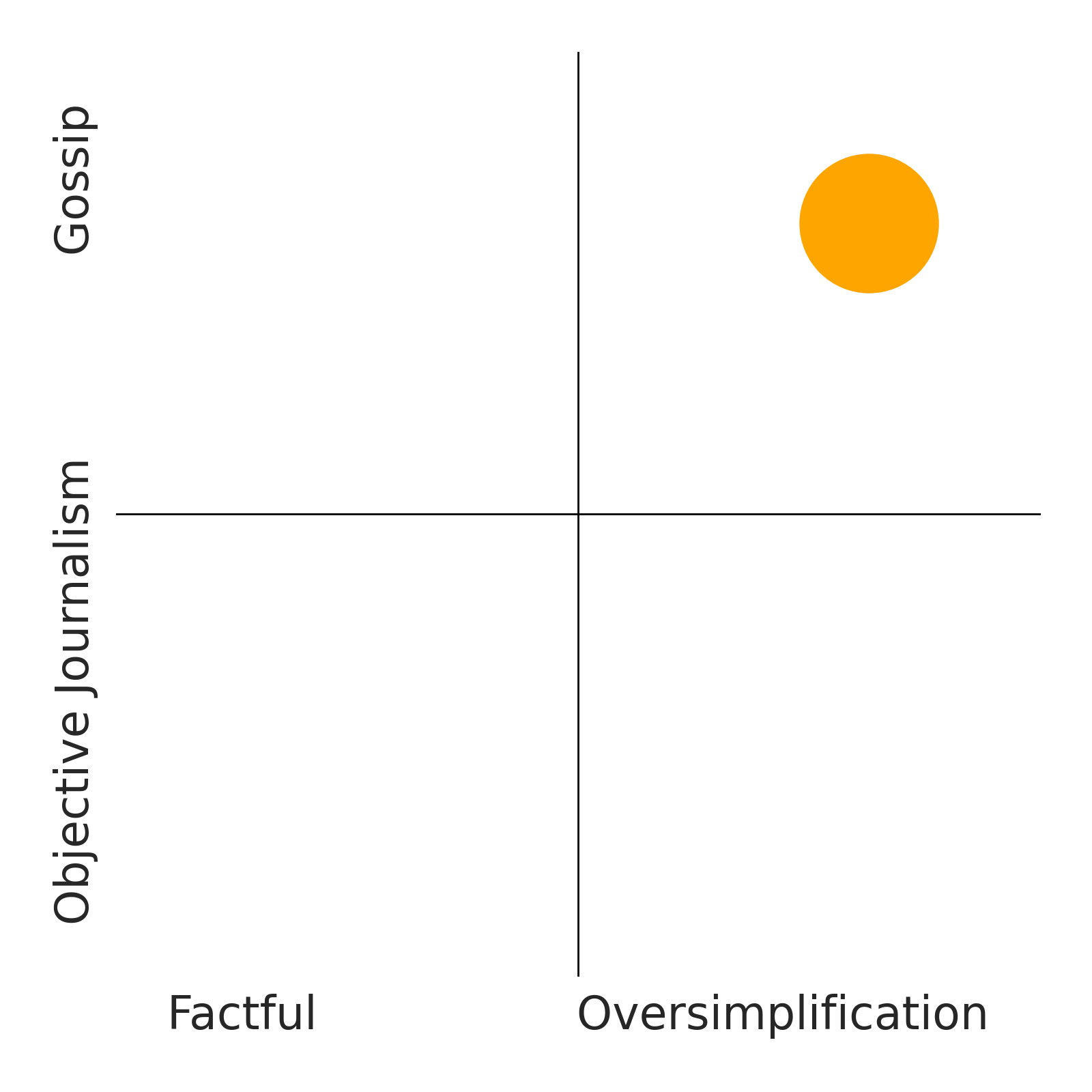
2026 © Helium Trades
Privacy Policy & Disclosure
* Disclaimer: Nothing on this website constitutes investment advice, performance data or any recommendation that any particular security, portfolio of securities, transaction or investment strategy is suitable for any specific person. Helium Trades is not responsible in any way for the accuracy
of any model predictions or price data. Any mention of a particular security and related prediction data is not a recommendation to buy or sell that security. Investments in securities involve the risk of loss. Past performance is no guarantee of future results. Helium Trades is not responsible for any of your investment decisions,
you should consult a financial expert before engaging in any transaction.
Helium Research Assistant

How can I help you today?
Ask any question about The Street bias.