See whether Helium helps you make better-informed decisions. Try every Pro Trader feature for 30 days. No credit card required.
Try every Pro Trader feature for 30 days. No credit card required.
November 25, 2026 · 0 shares
The report is largely neutral and procedurally focused, balancing the CAS ruling with Morocco's attributed challenge and explaining the limited scope of Swiss judicial review.
Helium Analysis
Limitations: The supplied text mixes the AFCON-CAS report with unrelated recommended-content snippets and page chrome; analysis is limited to the substantive AFCON portion.
·
7 of 56 available dimensions scored; omitted dimensions are not treated as neutral.
·
Verified supporting quotes for 7 of 7 scored dimensions.
Claim: The report attributes the arbitrator-contact allegation to the Royal Moroccan Football Federation rather than presenting it as established fact.
“In a statement, the Royal Moroccan Football Federation (FRMF) reported alleged contact between German arbitrator Ulrich Haas, a member of the panel, and the president of the Senegalese Football Federation two days before the ruling.” · exact text match
Why: The explicit attribution and 'alleged' framing indicate objective treatment.
Claim: The substantive report is predominantly sober and procedural, using only mild dramatic color.
“CAS found that the referee had committed no error of law by ordering the match to resume following the disturbances.” · exact text match
Counterevidence:
“The ruling marks another development in a long-running sporting saga full of twists and turns that will go down in African football history.” · exact text match
Why: The core language is legal and factual, while the 'twists and turns' phrase adds minor color.
Claim: The report primarily describes the ruling, the challenge, and legal deadlines rather than prescribing what should happen.
“The Moroccan federation has 30 days from notification of the arbitral award to file an appeal with the Swiss Federal Supreme Court, in accordance with Article 190(2) of the Swiss Federal Act on Private International Law.” · exact text match
Why: The language is explanatory and procedural, not advocacy for a preferred outcome.
Claim: The report uses named institutional sources and explicitly flags the arbitrator-contact claim as alleged.
“In a statement, the Royal Moroccan Football Federation (FRMF) reported alleged contact between German arbitrator Ulrich Haas, a member of the panel, and the president of the Senegalese Football Federation two days before the ruling.” · exact text match
“According to the CAS legal bulletin, Swiss law limits such challenges to five specific grounds” · exact text match
Why: Attribution to the FRMF, RFI, and CAS legal bulletin supports visible sourcing and caution.
Claim: The report explains legal reasoning and procedural constraints rather than relying on emotional or illogical assertions.
“According to the CAS legal bulletin, Swiss law limits such challenges to five specific grounds” · exact text match
Why: The inclusion of legal grounds and procedural review shows rational, evidence-bound exposition.
Claim: The report gives space to the CAS ruling, Morocco's announced challenge, and Morocco's attributed allegation, while noting limits on judicial review.
“Following the verdict, Morocco announced its intention to pursue all available legal remedies to challenge the decision.” · exact text match
“However, this court does not serve as an appellate body responsible for retrying the case.” · exact text match
Why: Including both the successful ruling and the losing party's challenge/concern, plus procedural limits, signals fair internal treatment.
Claim: The report provides clear legal and procedural context for a complex sports arbitration dispute.
“However, this court does not serve as an appellate body responsible for retrying the case.” · exact text match
Why: Explaining the limited scope of Swiss Federal Supreme Court review shows above-average explanatory intelligence.
The supplied text mixes the AFCON-CAS report with unrelated recommended-content snippets and page chrome; analysis is limited to the substantive AFCON portion.
November 25, 2026 · 0 shares
The report is predominantly neutral and attributional, stating the CAS outcome directly while labeling Morocco’s procedural objections as claims.
Helium Analysis
Limitations: Substantive text is a short sports report centered on Morocco’s statement; related-headline links were excluded, and no CAS or Senegalese federation response to the specific allegations is included.
·
5 of 56 available dimensions scored; omitted dimensions are not treated as neutral.
·
Verified supporting quotes for 5 of 5 scored dimensions.
Claim: The report presents the dispute through attributed statements and procedural facts rather than publisher commentary.
“Morocco have expressed dissatisfaction with the ruling, claiming that some of their key arguments were not adequately considered during the arbitration proceedings.” · exact text match
Why: The sentence marks the dissatisfaction and arguments as Morocco's claims, showing objective attribution rather than subjective endorsement.
Claim: The article reports the legal outcome and procedural dispute in measured, non-sensational language.
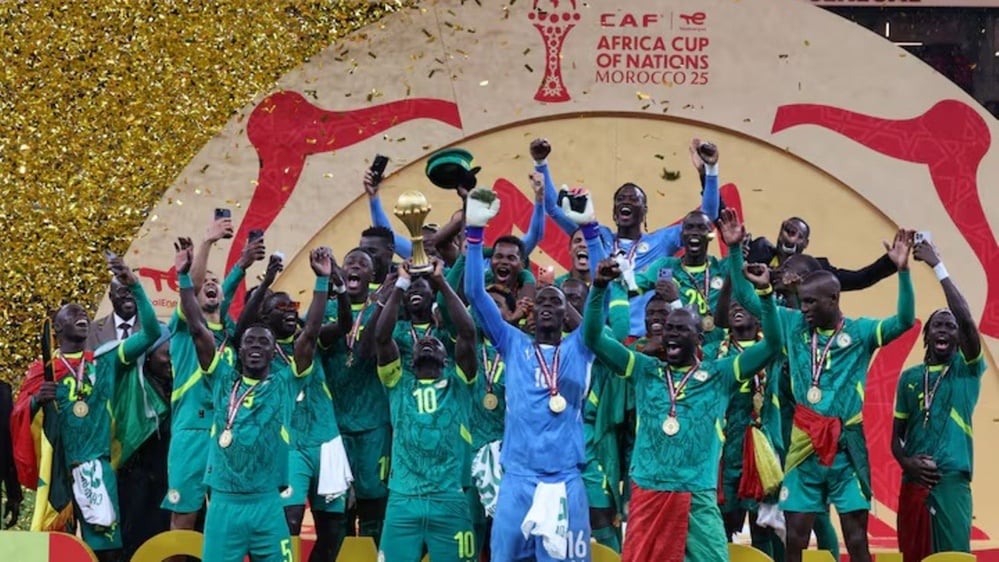
“CAS ruled on Tuesday, 24 November 2026, in Lausanne, Switzerland, in favour of the Senegalese Football Federation (FSF), overturning a decision by the Confederation of African Football (CAF) Appeals Committee to strip Senegal of the title and award it to Morocco.” · exact text match
Why: The sentence supplies dates, venue, parties, and procedural outcome in factual terms.
Claim: The report describes the ruling and dispute without prescribing a preferred outcome.
“The verdict restores Senegal as champions of the tournament and directs CAF to amend its official records to reflect the outcome.” · exact text match
Why: This is a straightforward description of the ruling's effect.
Claim: The report cites specific institutions, dates, and named actors, supporting credibility.
“CAS ruled on Tuesday, 24 November 2026, in Lausanne, Switzerland, in favour of the Senegalese Football Federation (FSF)” · exact text match
“The Moroccan federation specifically pointed to alleged communication between German arbitrator Ulrich Haas and the president of the Senegalese Football Federation 48 hours before the verdict was delivered.” · exact text match
Why: Specific dates, bodies, and an arbitrator are named, and contested claims are attributed.
Claim: Contested allegations are attributed to the FRMF and labeled as alleged, indicating fair handling.
“According to the FRMF, the alleged contact should have carried significant legal consequences and raised questions about confidence in the arbitration process.” · exact text match
Why: The wording attributes the contact claim to FRMF and calls it alleged, avoiding assertion by the publisher.
Substantive text is a short sports report centered on Morocco’s statement; related-headline links were excluded, and no CAS or Senegalese federation response to the specific allegations is included.
November 24, 2026 · 0 shares
Neutral, attributed legal-sports reporting centers the CAS ruling and procedural chronology without evident ideological or sensational framing.
Helium Analysis
Limitations: The supplied text includes unrelated headline links after the main AFCON report; the analysis treats only the AFCON report as substantive.
·
7 of 56 available dimensions scored; omitted dimensions are not treated as neutral.
·
Verified supporting quotes for 7 of 7 scored dimensions.
Claim: The report attributes the legal outcome and reasoning to CAS rather than presenting a subjective interpretation.
“The court unanimously upheld Senegal’s appeal, ruling that the referee’s decision was protected by the “field of play” doctrine and that regulations concerning permanently abandoned matches did not apply.” · exact text match
Why: The language is factual, court-attributed, and focused on legal doctrine rather than opinion.
Claim: The article reports the CAS ruling in measured legal terms without sensational language or emotional escalation.
“CAS ruled that the referee had the sole authority to decide whether to resume or abandon the match, upholding the original result.” · exact text match
Why: The sentence is calm, precise, and procedural, with no dramatic or lurid framing.
Claim: The article recounts the procedural chronology and does not prescribe what should happen beyond reporting the ruling.
“CAF’s appeals board had stripped Senegal of the title on March 17, declaring Morocco 3-0 winners after Senegalese players temporarily left the pitch in protest against a stoppage-time penalty awarded to the hosts.” · exact text match
Why: The statement describes past decisions and events without advocacy or prescription.
Claim: The report is credible in its visible sourcing and chronology, attributing specific claims and dates to named bodies and court proceedings.
“The ruling restores Senegal’s 1-0 victory over hosts Morocco in the final played in Rabat on Jan. 18, following months of legal proceedings over the controversial match.” · exact text match
Why: Specific dates, venues, and procedural history support the account's internal credibility.
Claim: The article explains the outcome through the court's stated reasoning about restart conditions and referee authority.
“The court said the referee’s decision to restart play demonstrated that the conditions for continuing the match had been met, as both teams had returned to the field and were willing to continue.” · exact text match
Why: It presents a reasoned legal rationale rather than irrational or emotive assertions.
Claim: The report provides specific institutional process details, dates, and attribution consistent with fair, transparent reporting.
“Senegal’s football federation appealed CAF’s decision to CAS on March 25, with a three-member panel hearing the case in Lausanne, Switzerland, on Oct.
8.”
· exact text match
Why: Named bodies, dates, and a panel hearing are visible fairness and transparency signals.
Claim: The article concisely synthesizes the legal holding and distinguishes the field-of-play doctrine from abandoned-match rules.
“The court unanimously upheld Senegal’s appeal, ruling that the referee’s decision was protected by the “field of play” doctrine and that regulations concerning permanently abandoned matches did not apply.” · exact text match
Why: It accurately frames the decisive legal distinction in a clear, informed manner.
The supplied text includes unrelated headline links after the main AFCON report; the analysis treats only the AFCON report as substantive.
November 24, 2026 · 0 shares
Neutral legal-sports framing attributes the reinstatement to a unanimous CAS ruling, quotes the court's reasoning, and includes Morocco's opposing regulatory argument.
Helium Analysis
Limitations: The supplied text includes unrelated linked headlines and an ad-blocker notice; analysis is limited to the Senegal/CAS report.
·
5 of 56 available dimensions scored; omitted dimensions are not treated as neutral.
·
Verified supporting quotes for 5 of 5 scored dimensions.
Claim: The report presents the CAS decision as an attributed legal ruling rather than subjective commentary.
“CAS ruled that the referee’s decision to resume the match after Senegal’s players temporarily left the pitch fell within his authority and was protected by the “field of play” doctrine.” · exact text match
Why: Uses attributed legal reasoning and neutral factual language, supporting an objective classification.
Claim: The report uses measured legal-sports language without sensational emphasis.
“In a unanimous ruling announced on Tuesday, the three-member CAS panel set aside the Confederation of African Football (CAF) Appeal Board’s decision and confirmed Senegal’s original 1-0 victory in the January 18 final in Rabat.” · exact text match
Why: The wording is factual and restrained, supporting a strongly objective rather than sensational score.
Claim: The report attributes key claims to the court, named officials, and directly quoted statements.
““The referee did not commit any error of law,” CAS Secretary General Matthieu Reeb said.” · exact text match
“In a unanimous ruling announced on Tuesday, the three-member CAS panel set aside the Confederation of African Football (CAF) Appeal Board’s decision and confirmed Senegal’s original 1-0 victory in the January 18 final in Rabat.” · exact text match
Why: Named institutions, direct quotation, and procedural detail support high visible credibility.
Claim: The report explains the outcome through cited regulatory interpretation and the panel's reasoning.
“The panel also said the referee’s decision was not arbitrary, despite the tense circumstances in which it was made.” · exact text match
“However, CAS ruled that the provisions apply when a referee permanently abandons a match, which did not happen in this case.” · exact text match
Why: The quoted reasoning is legal and evidence-based rather than irrational or emotive.
Claim: The report includes Morocco's opposing regulatory argument before explaining the CAS ruling.
“Morocco’s football federation had argued that Senegal’s walk-off breached Articles 82 and 84 of the Africa Cup of Nations regulations and that the match should have been awarded to Morocco.” · exact text match
“However, CAS ruled that the provisions apply when a referee permanently abandons a match, which did not happen in this case.” · exact text match
Why: Inclusion of the losing side's argument and the court's rationale signals observable fairness.
The supplied text includes unrelated linked headlines and an ad-blocker notice; analysis is limited to the Senegal/CAS report.
November 24, 2026 · 0 shares
Framing is factual and attribution-heavy, foregrounding CAS legal reasoning and balancing competing federation statements over sensational match narrative.
Helium Analysis
Limitations: The supplied text mixes substantive reporting with linked headline and video fragments; scoring excludes page chrome and non-substantive promos.
·
7 of 56 available dimensions scored; omitted dimensions are not treated as neutral.
·
Verified supporting quotes for 2 of 7 scored dimensions.
Claim: The report attributes the decisive legal conclusion to a CAS statement and quotes federation responses rather than asserting a reporter's view.
“A statement issued by Cas said the court considered that "the referee's decision to resume the match or to stop it fell definitively within his sole authority".” · not found in supplied text
Why: The core finding is presented through attributed official statements, not the publisher's opinion.
Claim: The report foregrounds procedural facts and uses limited sensational language despite describing a chaotic final.
“The result of the final stands and Senegal are now confirmed as Africa Cup of Nations (Afcon) 2025 winners.” · exact text match
Counterevidence:
“a chaotic final against host nation Morocco” · exact text match
Why: Some dramatic wording appears in background, but the dominant mode is factual and procedural.
Claim: The report's central conclusion is grounded in quoted CAS legal reasoning and procedural doctrine rather than emotional assertion.
“the referee's decision to resume the match or to stop it fell definitively within his sole authority” · not found in supplied text
Why: The decisive explanation is drawn from the arbitration panel's legal reasoning and quoted authority.
Claim: The report mostly reports past facts but includes forecasts of further legal challenges and lingering reputational damage.
“Despite Cas being the highest authority in sport, and its decision coming 10 months on from the final, there could yet be a further twist.” · exact text match
“But the debate and damage done to the reputation of African football is likely to linger for some time yet.” · exact text match
Why: These forward-looking statements support a low but nonzero speculation score.
Claim: The report includes and attributes the losing federation's challenge while also noting the denial of its allegation.
“Morocco's football federation (FRMF) expressed "surprise" at the ruling and added that it would "pursue all available legal avenues to challenge the decision".” · not found in supplied text
“Fall "categorically" denies that any such phone call ever took place.” · exact text match
Why: Including the opposing federation's claims and the denial shows observable fairness in the supplied text.
The supplied text mixes substantive reporting with linked headline and video fragments; scoring excludes page chrome and non-substantive promos.
November 25, 2026 · 0 shares
Neutral, legalistic sports reporting gives substantial attributed space to CAS reasoning, Senegal's response, and Morocco's challenge, with no evident ideological framing.
Helium Analysis
Limitations: The supplied text includes a duplicated opening paragraph and an unrelated newsletter promotion, but the substantive sports-law report remains available.
·
6 of 56 available dimensions scored; omitted dimensions are not treated as neutral.
·
Verified supporting quotes for 2 of 6 scored dimensions.
Claim: The report presents competing claims as attributed statements and sets out the court's reasoning without adopting either federation's viewpoint.
“The FRMF said in a statement that it will contest the decision, alleging there had been contact between its Senegalese counterpart and CAS arbitrator Ulrich Haas in the days leading up to the verdict.” · not found in supplied text
“However, an FSF spokesperson told Reuters: "That is false.
There was no telephone contact on Sunday or on any other day."”
· exact text match
Why: Claims from both federations are attributed and a denial is included, supporting an objective framing.
Claim: The report uses measured legal and procedural language rather than sensational or dramatized framing.
“CAS confirmed the result of the January 18 final in Rabat as 1-0 to Senegal.” · exact text match
“CAS said it had issued the full grounds to the parties on Tuesday and that the award will be published in due course unless confidentiality is requested.” · not found in supplied text
Why: The language is dry and procedural, with legal outcomes and publication details rather than emotional or dramatic emphasis.
Claim: The report primarily recounts the CAS ruling and the parties' statements rather than prescribing a preferred outcome.
“CAS confirmed the result of the January 18 final in Rabat as 1-0 to Senegal.” · exact text match
“The FRMF said in a statement that it will contest the decision, alleging there had been contact between its Senegalese counterpart and CAS arbitrator Ulrich Haas in the days leading up to the verdict.” · not found in supplied text
Why: The text is framed as a factual account of the ruling and attributed reactions, not as advocacy for what should happen.
Claim: The report grounds claims in named legal bodies, named officials, and attributed statements from both federations.
“The panel found that "the referee (Jean-Jacques Ndala of the Democratic Republic of Congo) did not commit any error of law", CAS Secretary General Matthieu Reeb said.” · exact text match
“The FRMF said in a statement that it will contest the decision, alleging there had been contact between its Senegalese counterpart and CAS arbitrator Ulrich Haas in the days leading up to the verdict.” · not found in supplied text
Why: Named sources, direct attribution, and inclusion of opposing statements support a high credibility classification.
Claim: The report explains the legal basis for the CAS ruling and attributes competing arguments rather than relying on emotional assertions.
“The panel found that "the referee (Jean-Jacques Ndala of the Democratic Republic of Congo) did not commit any error of law", CAS Secretary General Matthieu Reeb said.” · exact text match
“Those articles apply only when a referee calls off a match permanently, the panel said, so did not apply here.” · exact text match
Why: The article details the panel's legal reasoning and quoted findings, supporting a rational rather than irrational classification.
Claim: The report includes material counterclaims and denials, including the FSF's denial and CAS's denial of alleged improper contact.
“However, an FSF spokesperson told Reuters: "That is false.
There was no telephone contact on Sunday or on any other day."”
· exact text match
“CAS added: "Ulrich Haas strongly denies any direct contact at any moment with the parties involved in this procedure".” · exact text match
Why: Including direct denials alongside Morocco's allegation indicates fair and transparent handling of the dispute.
The supplied text includes a duplicated opening paragraph and an unrelated newsletter promotion, but the substantive sports-law report remains available.
November 24, 2026 · 0 shares
Neutral, attributed legal-sports reporting centers the CAS ruling and procedural chronology without evident ideological or sensational framing.
Helium Analysis
Limitations: The supplied text includes unrelated headline links after the main AFCON report; the analysis treats only the AFCON report as substantive.
·
7 of 56 available dimensions scored; omitted dimensions are not treated as neutral.
·
Verified supporting quotes for 7 of 7 scored dimensions.
Claim: The report attributes the legal outcome and reasoning to CAS rather than presenting a subjective interpretation.
“The court unanimously upheld Senegal’s appeal, ruling that the referee’s decision was protected by the “field of play” doctrine and that regulations concerning permanently abandoned matches did not apply.” · exact text match
Why: The language is factual, court-attributed, and focused on legal doctrine rather than opinion.
Claim: The article reports the CAS ruling in measured legal terms without sensational language or emotional escalation.
“CAS ruled that the referee had the sole authority to decide whether to resume or abandon the match, upholding the original result.” · exact text match
Why: The sentence is calm, precise, and procedural, with no dramatic or lurid framing.
Claim: The article recounts the procedural chronology and does not prescribe what should happen beyond reporting the ruling.
“CAF’s appeals board had stripped Senegal of the title on March 17, declaring Morocco 3-0 winners after Senegalese players temporarily left the pitch in protest against a stoppage-time penalty awarded to the hosts.” · exact text match
Why: The statement describes past decisions and events without advocacy or prescription.
Claim: The report is credible in its visible sourcing and chronology, attributing specific claims and dates to named bodies and court proceedings.
“The ruling restores Senegal’s 1-0 victory over hosts Morocco in the final played in Rabat on Jan. 18, following months of legal proceedings over the controversial match.” · exact text match
Why: Specific dates, venues, and procedural history support the account's internal credibility.
Claim: The article explains the outcome through the court's stated reasoning about restart conditions and referee authority.
“The court said the referee’s decision to restart play demonstrated that the conditions for continuing the match had been met, as both teams had returned to the field and were willing to continue.” · exact text match
Why: It presents a reasoned legal rationale rather than irrational or emotive assertions.
Claim: The report provides specific institutional process details, dates, and attribution consistent with fair, transparent reporting.
“Senegal’s football federation appealed CAF’s decision to CAS on March 25, with a three-member panel hearing the case in Lausanne, Switzerland, on Oct.
8.”
· exact text match
Why: Named bodies, dates, and a panel hearing are visible fairness and transparency signals.
Claim: The article concisely synthesizes the legal holding and distinguishes the field-of-play doctrine from abandoned-match rules.
“The court unanimously upheld Senegal’s appeal, ruling that the referee’s decision was protected by the “field of play” doctrine and that regulations concerning permanently abandoned matches did not apply.” · exact text match
Why: It accurately frames the decisive legal distinction in a clear, informed manner.
The supplied text includes unrelated headline links after the main AFCON report; the analysis treats only the AFCON report as substantive.
November 24, 2026 · 0 shares
Neutral legal-sports framing attributes the reinstatement to a unanimous CAS ruling, quotes the court's reasoning, and includes Morocco's opposing regulatory argument.
Helium Analysis
Limitations: The supplied text includes unrelated linked headlines and an ad-blocker notice; analysis is limited to the Senegal/CAS report.
·
5 of 56 available dimensions scored; omitted dimensions are not treated as neutral.
·
Verified supporting quotes for 5 of 5 scored dimensions.
Claim: The report presents the CAS decision as an attributed legal ruling rather than subjective commentary.
“CAS ruled that the referee’s decision to resume the match after Senegal’s players temporarily left the pitch fell within his authority and was protected by the “field of play” doctrine.” · exact text match
Why: Uses attributed legal reasoning and neutral factual language, supporting an objective classification.
Claim: The report uses measured legal-sports language without sensational emphasis.
“In a unanimous ruling announced on Tuesday, the three-member CAS panel set aside the Confederation of African Football (CAF) Appeal Board’s decision and confirmed Senegal’s original 1-0 victory in the January 18 final in Rabat.” · exact text match
Why: The wording is factual and restrained, supporting a strongly objective rather than sensational score.
Claim: The report attributes key claims to the court, named officials, and directly quoted statements.
““The referee did not commit any error of law,” CAS Secretary General Matthieu Reeb said.” · exact text match
“In a unanimous ruling announced on Tuesday, the three-member CAS panel set aside the Confederation of African Football (CAF) Appeal Board’s decision and confirmed Senegal’s original 1-0 victory in the January 18 final in Rabat.” · exact text match
Why: Named institutions, direct quotation, and procedural detail support high visible credibility.
Claim: The report explains the outcome through cited regulatory interpretation and the panel's reasoning.
“The panel also said the referee’s decision was not arbitrary, despite the tense circumstances in which it was made.” · exact text match
“However, CAS ruled that the provisions apply when a referee permanently abandons a match, which did not happen in this case.” · exact text match
Why: The quoted reasoning is legal and evidence-based rather than irrational or emotive.
Claim: The report includes Morocco's opposing regulatory argument before explaining the CAS ruling.
“Morocco’s football federation had argued that Senegal’s walk-off breached Articles 82 and 84 of the Africa Cup of Nations regulations and that the match should have been awarded to Morocco.” · exact text match
“However, CAS ruled that the provisions apply when a referee permanently abandons a match, which did not happen in this case.” · exact text match
Why: Inclusion of the losing side's argument and the court's rationale signals observable fairness.
The supplied text includes unrelated linked headlines and an ad-blocker notice; analysis is limited to the Senegal/CAS report.
November 24, 2026 · 0 shares
The report frames the CAS ruling as a legal reaffirmation of refereeing finality, using procedural rules and attributed findings rather than partisan or sensational language.
Helium Analysis
Limitations: The source text includes a block of unrelated headline links and an ad-blocker notice; these were treated as page chrome and excluded.
·
10 of 56 available dimensions scored; omitted dimensions are not treated as neutral.
·
Verified supporting quotes for 10 of 10 scored dimensions.
Claim: The report keeps to attributed court findings and procedural facts rather than subjective commentary.
““The CAS panel finds that the referee did not commit any error of law,” CAS Secretary General Matthieu Reeb said.” · exact text match
Why: The decisive statement is attributed to a named CAS official rather than presented as the reporter’s opinion.
Claim: Framing is factual and legalistic, without sensational wording.
“The players returned, Morocco missed the penalty and Senegal went on to score the winning goal in extra time.” · exact text match
Why: The match account is relayed in plain factual sequence.
Claim: The report describes the legal outcome and rules rather than prescribing what should happen.
“The Swiss-based court on Tuesday upheld Senegal’s appeal against a decision by the Confederation of African Football (CAF) to strip the country of the title and award Morocco a 3-0 victory.” · exact text match
Why: The statement reports what the court did, not an authorial recommendation.
Claim: The text is mainly factual and attributed, with no prominent authorial opinion.
““The CAS panel finds that the referee did not commit any error of law,” CAS Secretary General Matthieu Reeb said.” · exact text match
Why: The central finding is presented through a direct attribution.
Claim: The report includes legal nuance and a limiting principle rather than presenting a simplistic outcome.
“The principle does not mean that every match result is beyond challenge.” · exact text match
Why: The explicit caveat complicates a simple finality narrative.
Claim: Tone remains neutral and unemotional.
“The players returned, Morocco missed the penalty and Senegal went on to score the winning goal in extra time.” · exact text match
Why: The sequence is described without emotional or evaluative language.
Claim: The report attributes the ruling to CAS/CAF, quotes an official, cites governing rules, and acknowledges a relevant precedent and limiting principle.
““The CAS panel finds that the referee did not commit any error of law,” CAS Secretary General Matthieu Reeb said.” · exact text match
“The principle does not mean that every match result is beyond challenge.” · exact text match
Why: These features show visible sourcing, attribution, and uncertainty qualification.
Claim: The report explains the ruling through legal rules and attributed findings rather than emotive or illogical reasoning.
“Under Law 5 of the Laws of the Game, decisions by referees on facts connected with play, including the result of a match, are final.” · exact text match
Why: The passage shows the article grounding its account in the governing legal rule.
Claim: The report distinguishes the AFCON ruling from a match-manipulation precedent and notes no wrongdoing by the referee.
“There has been no suggestion of wrongdoing by Ndala in the AFCON final.” · exact text match
“The principle does not mean that every match result is beyond challenge.” · exact text match
Why: These passages show fairness and nuance by qualifying finality and avoiding insinuation against the referee.
Claim: The report coherently connects the match events, tournament rule, CAS finding, and precedent.
“Under Law 5 of the Laws of the Game, decisions by referees on facts connected with play, including the result of a match, are final.” · exact text match
Why: The legal principle is integrated into the factual account to explain the ruling.
The source text includes a block of unrelated headline links and an ad-blocker notice; these were treated as page chrome and excluded.
November 25, 2026 · 0 shares
The report is predominantly neutral and attributional, stating the CAS outcome directly while labeling Morocco’s procedural objections as claims.
Helium Analysis
Limitations: Substantive text is a short sports report centered on Morocco’s statement; related-headline links were excluded, and no CAS or Senegalese federation response to the specific allegations is included.
·
5 of 56 available dimensions scored; omitted dimensions are not treated as neutral.
·
Verified supporting quotes for 5 of 5 scored dimensions.
Claim: The report presents the dispute through attributed statements and procedural facts rather than publisher commentary.
“Morocco have expressed dissatisfaction with the ruling, claiming that some of their key arguments were not adequately considered during the arbitration proceedings.” · exact text match
Why: The sentence marks the dissatisfaction and arguments as Morocco's claims, showing objective attribution rather than subjective endorsement.
Claim: The article reports the legal outcome and procedural dispute in measured, non-sensational language.
“CAS ruled on Tuesday, 24 November 2026, in Lausanne, Switzerland, in favour of the Senegalese Football Federation (FSF), overturning a decision by the Confederation of African Football (CAF) Appeals Committee to strip Senegal of the title and award it to Morocco.” · exact text match
Why: The sentence supplies dates, venue, parties, and procedural outcome in factual terms.
Claim: The report describes the ruling and dispute without prescribing a preferred outcome.
“The verdict restores Senegal as champions of the tournament and directs CAF to amend its official records to reflect the outcome.” · exact text match
Why: This is a straightforward description of the ruling's effect.
Claim: The report cites specific institutions, dates, and named actors, supporting credibility.
“CAS ruled on Tuesday, 24 November 2026, in Lausanne, Switzerland, in favour of the Senegalese Football Federation (FSF)” · exact text match
“The Moroccan federation specifically pointed to alleged communication between German arbitrator Ulrich Haas and the president of the Senegalese Football Federation 48 hours before the verdict was delivered.” · exact text match
Why: Specific dates, bodies, and an arbitrator are named, and contested claims are attributed.
Claim: Contested allegations are attributed to the FRMF and labeled as alleged, indicating fair handling.
“According to the FRMF, the alleged contact should have carried significant legal consequences and raised questions about confidence in the arbitration process.” · exact text match
Why: The wording attributes the contact claim to FRMF and calls it alleged, avoiding assertion by the publisher.
Substantive text is a short sports report centered on Morocco’s statement; related-headline links were excluded, and no CAS or Senegalese federation response to the specific allegations is included.
Publisher framing is balanced and attribution-heavy, presenting the Moroccan federation's allegations and the Senegalese side's denial without adopting either claim as fact.
Helium Analysis
Limitations: The supplied article includes unrelated appended headline links, which were excluded from analysis.
·
6 of 56 available dimensions scored; omitted dimensions are not treated as neutral.
·
Verified supporting quotes for 6 of 6 scored dimensions.
Claim: The publisher attributes contested claims to named actors and reports the CAS outcome as a procedural finding rather than asserting a subjective interpretation.
“In a statement, the Moroccan federation alleged that German CAS arbitrator Ulrich Haas had communicated with Senegalese Football Federation (FSF) President Abdoulaye Fall 48 hours before the ruling, raising concerns about the integrity of the arbitration proceedings.” · exact text match
Why: The key allegation is explicitly attributed to a statement by the Moroccan federation.
Claim: The arbitration ruling is described in procedural and factual terms without sensational wording.
“The ruling reinstated Senegal's original 1-0 victory after extra time, with the CAS finding that the referee had sole authority to resume the match following Senegalese players' temporary walk-off in protest of a stoppage-time penalty.” · exact text match
Why: The sentence reports the ruling and its stated basis in neutral, factual language.
Claim: The report maintains a neutral emotional valence, presenting the dispute through attributed claims and a denial rather than emotive language.
“Earlier Tuesday, Morocco reportedly sought to delay the announcement of the ruling over the alleged phone call, while sources close to the Senegalese Football Federation denied that the conversation took place, according to French broadcaster RMC Sport.” · exact text match
Why: The sentence balances reported and alleged claims with an explicit denial and contains no emotive adjectives.
Claim: The report names the CAS, FRMF, FSF, arbitrator Ulrich Haas, and RMC Sport, and labels contested claims as alleged or reportedly.
“Earlier Tuesday, Morocco reportedly sought to delay the announcement of the ruling over the alleged phone call, while sources close to the Senegalese Football Federation denied that the conversation took place, according to French broadcaster RMC Sport.” · exact text match
Why: Named sources and uncertainty markers are visible credibility practices.
Claim: The account separates the Moroccan federation's allegation from the CAS ruling and includes a denial, supporting a rational rather than emotive presentation.
“In a statement, the Moroccan federation alleged that German CAS arbitrator Ulrich Haas had communicated with Senegalese Football Federation (FSF) President Abdoulaye Fall 48 hours before the ruling, raising concerns about the integrity of the arbitration proceedings.” · exact text match
“while sources close to the Senegalese Football Federation denied that the conversation took place” · exact text match
Why: The first quote attributes the contested claim, and the second shows the opposing denial was included.
Claim: The report gives the Senegalese side's denial alongside the Moroccan federation's allegation, an observable fairness signal.
“while sources close to the Senegalese Football Federation denied that the conversation took place” · exact text match
Why: Including the denied counterclaim counters a one-sided presentation.
The supplied article includes unrelated appended headline links, which were excluded from analysis.
November 25, 2026 · 0 shares
The report is largely neutral and procedurally focused, balancing the CAS ruling with Morocco's attributed challenge and explaining the limited scope of Swiss judicial review.
Helium Analysis
Limitations: The supplied text mixes the AFCON-CAS report with unrelated recommended-content snippets and page chrome; analysis is limited to the substantive AFCON portion.
·
7 of 56 available dimensions scored; omitted dimensions are not treated as neutral.
·
Verified supporting quotes for 7 of 7 scored dimensions.
Claim: The report attributes the arbitrator-contact allegation to the Royal Moroccan Football Federation rather than presenting it as established fact.
“In a statement, the Royal Moroccan Football Federation (FRMF) reported alleged contact between German arbitrator Ulrich Haas, a member of the panel, and the president of the Senegalese Football Federation two days before the ruling.” · exact text match
Why: The explicit attribution and 'alleged' framing indicate objective treatment.
Claim: The substantive report is predominantly sober and procedural, using only mild dramatic color.
“CAS found that the referee had committed no error of law by ordering the match to resume following the disturbances.” · exact text match
Counterevidence:
“The ruling marks another development in a long-running sporting saga full of twists and turns that will go down in African football history.” · exact text match
Why: The core language is legal and factual, while the 'twists and turns' phrase adds minor color.
Claim: The report primarily describes the ruling, the challenge, and legal deadlines rather than prescribing what should happen.
“The Moroccan federation has 30 days from notification of the arbitral award to file an appeal with the Swiss Federal Supreme Court, in accordance with Article 190(2) of the Swiss Federal Act on Private International Law.” · exact text match
Why: The language is explanatory and procedural, not advocacy for a preferred outcome.
Claim: The report uses named institutional sources and explicitly flags the arbitrator-contact claim as alleged.
“In a statement, the Royal Moroccan Football Federation (FRMF) reported alleged contact between German arbitrator Ulrich Haas, a member of the panel, and the president of the Senegalese Football Federation two days before the ruling.” · exact text match
“According to the CAS legal bulletin, Swiss law limits such challenges to five specific grounds” · exact text match
Why: Attribution to the FRMF, RFI, and CAS legal bulletin supports visible sourcing and caution.
Claim: The report explains legal reasoning and procedural constraints rather than relying on emotional or illogical assertions.
“According to the CAS legal bulletin, Swiss law limits such challenges to five specific grounds” · exact text match
Why: The inclusion of legal grounds and procedural review shows rational, evidence-bound exposition.
Claim: The report gives space to the CAS ruling, Morocco's announced challenge, and Morocco's attributed allegation, while noting limits on judicial review.
“Following the verdict, Morocco announced its intention to pursue all available legal remedies to challenge the decision.” · exact text match
“However, this court does not serve as an appellate body responsible for retrying the case.” · exact text match
Why: Including both the successful ruling and the losing party's challenge/concern, plus procedural limits, signals fair internal treatment.
Claim: The report provides clear legal and procedural context for a complex sports arbitration dispute.
“However, this court does not serve as an appellate body responsible for retrying the case.” · exact text match
Why: Explaining the limited scope of Swiss Federal Supreme Court review shows above-average explanatory intelligence.
The supplied text mixes the AFCON-CAS report with unrelated recommended-content snippets and page chrome; analysis is limited to the substantive AFCON portion.
November 25, 2026 · 0 shares
Neutral, legalistic sports reporting gives substantial attributed space to CAS reasoning, Senegal's response, and Morocco's challenge, with no evident ideological framing.
Helium Analysis
Limitations: The supplied text includes a duplicated opening paragraph and an unrelated newsletter promotion, but the substantive sports-law report remains available.
·
6 of 56 available dimensions scored; omitted dimensions are not treated as neutral.
·
Verified supporting quotes for 2 of 6 scored dimensions.
Claim: The report presents competing claims as attributed statements and sets out the court's reasoning without adopting either federation's viewpoint.
“The FRMF said in a statement that it will contest the decision, alleging there had been contact between its Senegalese counterpart and CAS arbitrator Ulrich Haas in the days leading up to the verdict.” · not found in supplied text
“However, an FSF spokesperson told Reuters: "That is false.
There was no telephone contact on Sunday or on any other day."”
· exact text match
Why: Claims from both federations are attributed and a denial is included, supporting an objective framing.
Claim: The report uses measured legal and procedural language rather than sensational or dramatized framing.
“CAS confirmed the result of the January 18 final in Rabat as 1-0 to Senegal.” · exact text match
“CAS said it had issued the full grounds to the parties on Tuesday and that the award will be published in due course unless confidentiality is requested.” · not found in supplied text
Why: The language is dry and procedural, with legal outcomes and publication details rather than emotional or dramatic emphasis.
Claim: The report primarily recounts the CAS ruling and the parties' statements rather than prescribing a preferred outcome.
“CAS confirmed the result of the January 18 final in Rabat as 1-0 to Senegal.” · exact text match
“The FRMF said in a statement that it will contest the decision, alleging there had been contact between its Senegalese counterpart and CAS arbitrator Ulrich Haas in the days leading up to the verdict.” · not found in supplied text
Why: The text is framed as a factual account of the ruling and attributed reactions, not as advocacy for what should happen.
Claim: The report grounds claims in named legal bodies, named officials, and attributed statements from both federations.
“The panel found that "the referee (Jean-Jacques Ndala of the Democratic Republic of Congo) did not commit any error of law", CAS Secretary General Matthieu Reeb said.” · exact text match
“The FRMF said in a statement that it will contest the decision, alleging there had been contact between its Senegalese counterpart and CAS arbitrator Ulrich Haas in the days leading up to the verdict.” · not found in supplied text
Why: Named sources, direct attribution, and inclusion of opposing statements support a high credibility classification.
Claim: The report explains the legal basis for the CAS ruling and attributes competing arguments rather than relying on emotional assertions.
“The panel found that "the referee (Jean-Jacques Ndala of the Democratic Republic of Congo) did not commit any error of law", CAS Secretary General Matthieu Reeb said.” · exact text match
“Those articles apply only when a referee calls off a match permanently, the panel said, so did not apply here.” · exact text match
Why: The article details the panel's legal reasoning and quoted findings, supporting a rational rather than irrational classification.
Claim: The report includes material counterclaims and denials, including the FSF's denial and CAS's denial of alleged improper contact.
“However, an FSF spokesperson told Reuters: "That is false.
There was no telephone contact on Sunday or on any other day."”
· exact text match
“CAS added: "Ulrich Haas strongly denies any direct contact at any moment with the parties involved in this procedure".” · exact text match
Why: Including direct denials alongside Morocco's allegation indicates fair and transparent handling of the dispute.
The supplied text includes a duplicated opening paragraph and an unrelated newsletter promotion, but the substantive sports-law report remains available.
November 25, 2026 · 0 shares
The report is largely neutral and procedurally focused, balancing the CAS ruling with Morocco's attributed challenge and explaining the limited scope of Swiss judicial review.
Helium Analysis Limitations: The supplied text mixes the AFCON-CAS report with unrelated recommended-content snippets and page chrome; analysis is limited to the substantive AFCON portion. · 7 of 56 available dimensions scored; omitted dimensions are not treated as neutral. · Verified supporting quotes for 7 of 7 scored dimensions.
Claim: The report attributes the arbitrator-contact allegation to the Royal Moroccan Football Federation rather than presenting it as established fact.
“In a statement, the Royal Moroccan Football Federation (FRMF) reported alleged contact between German arbitrator Ulrich Haas, a member of the panel, and the president of the Senegalese Football Federation two days before the ruling.” · exact text match
Why: The explicit attribution and 'alleged' framing indicate objective treatment.
Claim: The substantive report is predominantly sober and procedural, using only mild dramatic color.
“CAS found that the referee had committed no error of law by ordering the match to resume following the disturbances.” · exact text match
Counterevidence:
“The ruling marks another development in a long-running sporting saga full of twists and turns that will go down in African football history.” · exact text match
Why: The core language is legal and factual, while the 'twists and turns' phrase adds minor color.
Claim: The report primarily describes the ruling, the challenge, and legal deadlines rather than prescribing what should happen.
“The Moroccan federation has 30 days from notification of the arbitral award to file an appeal with the Swiss Federal Supreme Court, in accordance with Article 190(2) of the Swiss Federal Act on Private International Law.” · exact text match
Why: The language is explanatory and procedural, not advocacy for a preferred outcome.
Claim: The report uses named institutional sources and explicitly flags the arbitrator-contact claim as alleged.
“In a statement, the Royal Moroccan Football Federation (FRMF) reported alleged contact between German arbitrator Ulrich Haas, a member of the panel, and the president of the Senegalese Football Federation two days before the ruling.” · exact text match
“According to the CAS legal bulletin, Swiss law limits such challenges to five specific grounds” · exact text match
Why: Attribution to the FRMF, RFI, and CAS legal bulletin supports visible sourcing and caution.
Claim: The report explains legal reasoning and procedural constraints rather than relying on emotional or illogical assertions.
“According to the CAS legal bulletin, Swiss law limits such challenges to five specific grounds” · exact text match
Why: The inclusion of legal grounds and procedural review shows rational, evidence-bound exposition.
Claim: The report gives space to the CAS ruling, Morocco's announced challenge, and Morocco's attributed allegation, while noting limits on judicial review.
“Following the verdict, Morocco announced its intention to pursue all available legal remedies to challenge the decision.” · exact text match
“However, this court does not serve as an appellate body responsible for retrying the case.” · exact text match
Why: Including both the successful ruling and the losing party's challenge/concern, plus procedural limits, signals fair internal treatment.
Claim: The report provides clear legal and procedural context for a complex sports arbitration dispute.
“However, this court does not serve as an appellate body responsible for retrying the case.” · exact text match
Why: Explaining the limited scope of Swiss Federal Supreme Court review shows above-average explanatory intelligence.
The supplied text mixes the AFCON-CAS report with unrelated recommended-content snippets and page chrome; analysis is limited to the substantive AFCON portion.
November 24, 2026 · 0 shares
Neutral, attributed legal-sports reporting centers the CAS ruling and procedural chronology without evident ideological or sensational framing.
Helium Analysis Limitations: The supplied text includes unrelated headline links after the main AFCON report; the analysis treats only the AFCON report as substantive. · 7 of 56 available dimensions scored; omitted dimensions are not treated as neutral. · Verified supporting quotes for 7 of 7 scored dimensions.
Claim: The report attributes the legal outcome and reasoning to CAS rather than presenting a subjective interpretation.
“The court unanimously upheld Senegal’s appeal, ruling that the referee’s decision was protected by the “field of play” doctrine and that regulations concerning permanently abandoned matches did not apply.” · exact text match
Why: The language is factual, court-attributed, and focused on legal doctrine rather than opinion.
Claim: The article reports the CAS ruling in measured legal terms without sensational language or emotional escalation.
“CAS ruled that the referee had the sole authority to decide whether to resume or abandon the match, upholding the original result.” · exact text match
Why: The sentence is calm, precise, and procedural, with no dramatic or lurid framing.
Claim: The article recounts the procedural chronology and does not prescribe what should happen beyond reporting the ruling.
“CAF’s appeals board had stripped Senegal of the title on March 17, declaring Morocco 3-0 winners after Senegalese players temporarily left the pitch in protest against a stoppage-time penalty awarded to the hosts.” · exact text match
Why: The statement describes past decisions and events without advocacy or prescription.
Claim: The report is credible in its visible sourcing and chronology, attributing specific claims and dates to named bodies and court proceedings.
“The ruling restores Senegal’s 1-0 victory over hosts Morocco in the final played in Rabat on Jan. 18, following months of legal proceedings over the controversial match.” · exact text match
Why: Specific dates, venues, and procedural history support the account's internal credibility.
Claim: The article explains the outcome through the court's stated reasoning about restart conditions and referee authority.
“The court said the referee’s decision to restart play demonstrated that the conditions for continuing the match had been met, as both teams had returned to the field and were willing to continue.” · exact text match
Why: It presents a reasoned legal rationale rather than irrational or emotive assertions.
Claim: The report provides specific institutional process details, dates, and attribution consistent with fair, transparent reporting.
“Senegal’s football federation appealed CAF’s decision to CAS on March 25, with a three-member panel hearing the case in Lausanne, Switzerland, on Oct. 8.” · exact text match
Why: Named bodies, dates, and a panel hearing are visible fairness and transparency signals.
Claim: The article concisely synthesizes the legal holding and distinguishes the field-of-play doctrine from abandoned-match rules.
“The court unanimously upheld Senegal’s appeal, ruling that the referee’s decision was protected by the “field of play” doctrine and that regulations concerning permanently abandoned matches did not apply.” · exact text match
Why: It accurately frames the decisive legal distinction in a clear, informed manner.
The supplied text includes unrelated headline links after the main AFCON report; the analysis treats only the AFCON report as substantive.
November 24, 2026 · 0 shares
Neutral legal-sports framing attributes the reinstatement to a unanimous CAS ruling, quotes the court's reasoning, and includes Morocco's opposing regulatory argument.
Helium Analysis Limitations: The supplied text includes unrelated linked headlines and an ad-blocker notice; analysis is limited to the Senegal/CAS report. · 5 of 56 available dimensions scored; omitted dimensions are not treated as neutral. · Verified supporting quotes for 5 of 5 scored dimensions.
Claim: The report presents the CAS decision as an attributed legal ruling rather than subjective commentary.
“CAS ruled that the referee’s decision to resume the match after Senegal’s players temporarily left the pitch fell within his authority and was protected by the “field of play” doctrine.” · exact text match
Why: Uses attributed legal reasoning and neutral factual language, supporting an objective classification.
Claim: The report uses measured legal-sports language without sensational emphasis.
“In a unanimous ruling announced on Tuesday, the three-member CAS panel set aside the Confederation of African Football (CAF) Appeal Board’s decision and confirmed Senegal’s original 1-0 victory in the January 18 final in Rabat.” · exact text match
Why: The wording is factual and restrained, supporting a strongly objective rather than sensational score.
Claim: The report attributes key claims to the court, named officials, and directly quoted statements.
““The referee did not commit any error of law,” CAS Secretary General Matthieu Reeb said.” · exact text match
“In a unanimous ruling announced on Tuesday, the three-member CAS panel set aside the Confederation of African Football (CAF) Appeal Board’s decision and confirmed Senegal’s original 1-0 victory in the January 18 final in Rabat.” · exact text match
Why: Named institutions, direct quotation, and procedural detail support high visible credibility.
Claim: The report explains the outcome through cited regulatory interpretation and the panel's reasoning.
“The panel also said the referee’s decision was not arbitrary, despite the tense circumstances in which it was made.” · exact text match
“However, CAS ruled that the provisions apply when a referee permanently abandons a match, which did not happen in this case.” · exact text match
Why: The quoted reasoning is legal and evidence-based rather than irrational or emotive.
Claim: The report includes Morocco's opposing regulatory argument before explaining the CAS ruling.
“Morocco’s football federation had argued that Senegal’s walk-off breached Articles 82 and 84 of the Africa Cup of Nations regulations and that the match should have been awarded to Morocco.” · exact text match
“However, CAS ruled that the provisions apply when a referee permanently abandons a match, which did not happen in this case.” · exact text match
Why: Inclusion of the losing side's argument and the court's rationale signals observable fairness.
The supplied text includes unrelated linked headlines and an ad-blocker notice; analysis is limited to the Senegal/CAS report.
November 25, 2026 · 0 shares
Neutral, legalistic sports reporting gives substantial attributed space to CAS reasoning, Senegal's response, and Morocco's challenge, with no evident ideological framing.
Helium Analysis Limitations: The supplied text includes a duplicated opening paragraph and an unrelated newsletter promotion, but the substantive sports-law report remains available. · 6 of 56 available dimensions scored; omitted dimensions are not treated as neutral. · Verified supporting quotes for 2 of 6 scored dimensions.
Claim: The report presents competing claims as attributed statements and sets out the court's reasoning without adopting either federation's viewpoint.
“The FRMF said in a statement that it will contest the decision, alleging there had been contact between its Senegalese counterpart and CAS arbitrator Ulrich Haas in the days leading up to the verdict.” · not found in supplied text
“However, an FSF spokesperson told Reuters: "That is false. There was no telephone contact on Sunday or on any other day."” · exact text match
Why: Claims from both federations are attributed and a denial is included, supporting an objective framing.
Claim: The report uses measured legal and procedural language rather than sensational or dramatized framing.
“CAS confirmed the result of the January 18 final in Rabat as 1-0 to Senegal.” · exact text match
“CAS said it had issued the full grounds to the parties on Tuesday and that the award will be published in due course unless confidentiality is requested.” · not found in supplied text
Why: The language is dry and procedural, with legal outcomes and publication details rather than emotional or dramatic emphasis.
Claim: The report primarily recounts the CAS ruling and the parties' statements rather than prescribing a preferred outcome.
“CAS confirmed the result of the January 18 final in Rabat as 1-0 to Senegal.” · exact text match
“The FRMF said in a statement that it will contest the decision, alleging there had been contact between its Senegalese counterpart and CAS arbitrator Ulrich Haas in the days leading up to the verdict.” · not found in supplied text
Why: The text is framed as a factual account of the ruling and attributed reactions, not as advocacy for what should happen.
Claim: The report grounds claims in named legal bodies, named officials, and attributed statements from both federations.
“The panel found that "the referee (Jean-Jacques Ndala of the Democratic Republic of Congo) did not commit any error of law", CAS Secretary General Matthieu Reeb said.” · exact text match
“The FRMF said in a statement that it will contest the decision, alleging there had been contact between its Senegalese counterpart and CAS arbitrator Ulrich Haas in the days leading up to the verdict.” · not found in supplied text
Why: Named sources, direct attribution, and inclusion of opposing statements support a high credibility classification.
Claim: The report explains the legal basis for the CAS ruling and attributes competing arguments rather than relying on emotional assertions.
“The panel found that "the referee (Jean-Jacques Ndala of the Democratic Republic of Congo) did not commit any error of law", CAS Secretary General Matthieu Reeb said.” · exact text match
“Those articles apply only when a referee calls off a match permanently, the panel said, so did not apply here.” · exact text match
Why: The article details the panel's legal reasoning and quoted findings, supporting a rational rather than irrational classification.
Claim: The report includes material counterclaims and denials, including the FSF's denial and CAS's denial of alleged improper contact.
“However, an FSF spokesperson told Reuters: "That is false. There was no telephone contact on Sunday or on any other day."” · exact text match
“CAS added: "Ulrich Haas strongly denies any direct contact at any moment with the parties involved in this procedure".” · exact text match
Why: Including direct denials alongside Morocco's allegation indicates fair and transparent handling of the dispute.
The supplied text includes a duplicated opening paragraph and an unrelated newsletter promotion, but the substantive sports-law report remains available.
November 25, 2026 · 0 shares
The report is predominantly neutral and attributional, stating the CAS outcome directly while labeling Morocco’s procedural objections as claims.
Helium Analysis Limitations: Substantive text is a short sports report centered on Morocco’s statement; related-headline links were excluded, and no CAS or Senegalese federation response to the specific allegations is included. · 5 of 56 available dimensions scored; omitted dimensions are not treated as neutral. · Verified supporting quotes for 5 of 5 scored dimensions.
Claim: The report presents the dispute through attributed statements and procedural facts rather than publisher commentary.
“Morocco have expressed dissatisfaction with the ruling, claiming that some of their key arguments were not adequately considered during the arbitration proceedings.” · exact text match
Why: The sentence marks the dissatisfaction and arguments as Morocco's claims, showing objective attribution rather than subjective endorsement.
Claim: The article reports the legal outcome and procedural dispute in measured, non-sensational language.
“CAS ruled on Tuesday, 24 November 2026, in Lausanne, Switzerland, in favour of the Senegalese Football Federation (FSF), overturning a decision by the Confederation of African Football (CAF) Appeals Committee to strip Senegal of the title and award it to Morocco.” · exact text match
Why: The sentence supplies dates, venue, parties, and procedural outcome in factual terms.
Claim: The report describes the ruling and dispute without prescribing a preferred outcome.
“The verdict restores Senegal as champions of the tournament and directs CAF to amend its official records to reflect the outcome.” · exact text match
Why: This is a straightforward description of the ruling's effect.
Claim: The report cites specific institutions, dates, and named actors, supporting credibility.
“CAS ruled on Tuesday, 24 November 2026, in Lausanne, Switzerland, in favour of the Senegalese Football Federation (FSF)” · exact text match
“The Moroccan federation specifically pointed to alleged communication between German arbitrator Ulrich Haas and the president of the Senegalese Football Federation 48 hours before the verdict was delivered.” · exact text match
Why: Specific dates, bodies, and an arbitrator are named, and contested claims are attributed.
Claim: Contested allegations are attributed to the FRMF and labeled as alleged, indicating fair handling.
“According to the FRMF, the alleged contact should have carried significant legal consequences and raised questions about confidence in the arbitration process.” · exact text match
Why: The wording attributes the contact claim to FRMF and calls it alleged, avoiding assertion by the publisher.
Substantive text is a short sports report centered on Morocco’s statement; related-headline links were excluded, and no CAS or Senegalese federation response to the specific allegations is included.
Publisher framing is balanced and attribution-heavy, presenting the Moroccan federation's allegations and the Senegalese side's denial without adopting either claim as fact.
Helium Analysis Limitations: The supplied article includes unrelated appended headline links, which were excluded from analysis. · 6 of 56 available dimensions scored; omitted dimensions are not treated as neutral. · Verified supporting quotes for 6 of 6 scored dimensions.
Claim: The publisher attributes contested claims to named actors and reports the CAS outcome as a procedural finding rather than asserting a subjective interpretation.
“In a statement, the Moroccan federation alleged that German CAS arbitrator Ulrich Haas had communicated with Senegalese Football Federation (FSF) President Abdoulaye Fall 48 hours before the ruling, raising concerns about the integrity of the arbitration proceedings.” · exact text match
Why: The key allegation is explicitly attributed to a statement by the Moroccan federation.
Claim: The arbitration ruling is described in procedural and factual terms without sensational wording.
“The ruling reinstated Senegal's original 1-0 victory after extra time, with the CAS finding that the referee had sole authority to resume the match following Senegalese players' temporary walk-off in protest of a stoppage-time penalty.” · exact text match
Why: The sentence reports the ruling and its stated basis in neutral, factual language.
Claim: The report maintains a neutral emotional valence, presenting the dispute through attributed claims and a denial rather than emotive language.
“Earlier Tuesday, Morocco reportedly sought to delay the announcement of the ruling over the alleged phone call, while sources close to the Senegalese Football Federation denied that the conversation took place, according to French broadcaster RMC Sport.” · exact text match
Why: The sentence balances reported and alleged claims with an explicit denial and contains no emotive adjectives.
Claim: The report names the CAS, FRMF, FSF, arbitrator Ulrich Haas, and RMC Sport, and labels contested claims as alleged or reportedly.
“Earlier Tuesday, Morocco reportedly sought to delay the announcement of the ruling over the alleged phone call, while sources close to the Senegalese Football Federation denied that the conversation took place, according to French broadcaster RMC Sport.” · exact text match
Why: Named sources and uncertainty markers are visible credibility practices.
Claim: The account separates the Moroccan federation's allegation from the CAS ruling and includes a denial, supporting a rational rather than emotive presentation.
“In a statement, the Moroccan federation alleged that German CAS arbitrator Ulrich Haas had communicated with Senegalese Football Federation (FSF) President Abdoulaye Fall 48 hours before the ruling, raising concerns about the integrity of the arbitration proceedings.” · exact text match
“while sources close to the Senegalese Football Federation denied that the conversation took place” · exact text match
Why: The first quote attributes the contested claim, and the second shows the opposing denial was included.
Claim: The report gives the Senegalese side's denial alongside the Moroccan federation's allegation, an observable fairness signal.
“while sources close to the Senegalese Football Federation denied that the conversation took place” · exact text match
Why: Including the denied counterclaim counters a one-sided presentation.
The supplied article includes unrelated appended headline links, which were excluded from analysis.
November 25, 2026 · 0 shares
The report is largely neutral and procedurally focused, balancing the CAS ruling with Morocco's attributed challenge and explaining the limited scope of Swiss judicial review.
Helium Analysis Limitations: The supplied text mixes the AFCON-CAS report with unrelated recommended-content snippets and page chrome; analysis is limited to the substantive AFCON portion. · 7 of 56 available dimensions scored; omitted dimensions are not treated as neutral. · Verified supporting quotes for 7 of 7 scored dimensions.
Claim: The report attributes the arbitrator-contact allegation to the Royal Moroccan Football Federation rather than presenting it as established fact.
“In a statement, the Royal Moroccan Football Federation (FRMF) reported alleged contact between German arbitrator Ulrich Haas, a member of the panel, and the president of the Senegalese Football Federation two days before the ruling.” · exact text match
Why: The explicit attribution and 'alleged' framing indicate objective treatment.
Claim: The substantive report is predominantly sober and procedural, using only mild dramatic color.
“CAS found that the referee had committed no error of law by ordering the match to resume following the disturbances.” · exact text match
Counterevidence:
“The ruling marks another development in a long-running sporting saga full of twists and turns that will go down in African football history.” · exact text match
Why: The core language is legal and factual, while the 'twists and turns' phrase adds minor color.
Claim: The report primarily describes the ruling, the challenge, and legal deadlines rather than prescribing what should happen.
“The Moroccan federation has 30 days from notification of the arbitral award to file an appeal with the Swiss Federal Supreme Court, in accordance with Article 190(2) of the Swiss Federal Act on Private International Law.” · exact text match
Why: The language is explanatory and procedural, not advocacy for a preferred outcome.
Claim: The report uses named institutional sources and explicitly flags the arbitrator-contact claim as alleged.
“In a statement, the Royal Moroccan Football Federation (FRMF) reported alleged contact between German arbitrator Ulrich Haas, a member of the panel, and the president of the Senegalese Football Federation two days before the ruling.” · exact text match
“According to the CAS legal bulletin, Swiss law limits such challenges to five specific grounds” · exact text match
Why: Attribution to the FRMF, RFI, and CAS legal bulletin supports visible sourcing and caution.
Claim: The report explains legal reasoning and procedural constraints rather than relying on emotional or illogical assertions.
“According to the CAS legal bulletin, Swiss law limits such challenges to five specific grounds” · exact text match
Why: The inclusion of legal grounds and procedural review shows rational, evidence-bound exposition.
Claim: The report gives space to the CAS ruling, Morocco's announced challenge, and Morocco's attributed allegation, while noting limits on judicial review.
“Following the verdict, Morocco announced its intention to pursue all available legal remedies to challenge the decision.” · exact text match
“However, this court does not serve as an appellate body responsible for retrying the case.” · exact text match
Why: Including both the successful ruling and the losing party's challenge/concern, plus procedural limits, signals fair internal treatment.
Claim: The report provides clear legal and procedural context for a complex sports arbitration dispute.
“However, this court does not serve as an appellate body responsible for retrying the case.” · exact text match
Why: Explaining the limited scope of Swiss Federal Supreme Court review shows above-average explanatory intelligence.
The supplied text mixes the AFCON-CAS report with unrelated recommended-content snippets and page chrome; analysis is limited to the substantive AFCON portion.
November 25, 2026 · 0 shares
Neutral, legalistic sports reporting gives substantial attributed space to CAS reasoning, Senegal's response, and Morocco's challenge, with no evident ideological framing.
Helium Analysis Limitations: The supplied text includes a duplicated opening paragraph and an unrelated newsletter promotion, but the substantive sports-law report remains available. · 6 of 56 available dimensions scored; omitted dimensions are not treated as neutral. · Verified supporting quotes for 2 of 6 scored dimensions.
Claim: The report presents competing claims as attributed statements and sets out the court's reasoning without adopting either federation's viewpoint.
“The FRMF said in a statement that it will contest the decision, alleging there had been contact between its Senegalese counterpart and CAS arbitrator Ulrich Haas in the days leading up to the verdict.” · not found in supplied text
“However, an FSF spokesperson told Reuters: "That is false. There was no telephone contact on Sunday or on any other day."” · exact text match
Why: Claims from both federations are attributed and a denial is included, supporting an objective framing.
Claim: The report uses measured legal and procedural language rather than sensational or dramatized framing.
“CAS confirmed the result of the January 18 final in Rabat as 1-0 to Senegal.” · exact text match
“CAS said it had issued the full grounds to the parties on Tuesday and that the award will be published in due course unless confidentiality is requested.” · not found in supplied text
Why: The language is dry and procedural, with legal outcomes and publication details rather than emotional or dramatic emphasis.
Claim: The report primarily recounts the CAS ruling and the parties' statements rather than prescribing a preferred outcome.
“CAS confirmed the result of the January 18 final in Rabat as 1-0 to Senegal.” · exact text match
“The FRMF said in a statement that it will contest the decision, alleging there had been contact between its Senegalese counterpart and CAS arbitrator Ulrich Haas in the days leading up to the verdict.” · not found in supplied text
Why: The text is framed as a factual account of the ruling and attributed reactions, not as advocacy for what should happen.
Claim: The report grounds claims in named legal bodies, named officials, and attributed statements from both federations.
“The panel found that "the referee (Jean-Jacques Ndala of the Democratic Republic of Congo) did not commit any error of law", CAS Secretary General Matthieu Reeb said.” · exact text match
“The FRMF said in a statement that it will contest the decision, alleging there had been contact between its Senegalese counterpart and CAS arbitrator Ulrich Haas in the days leading up to the verdict.” · not found in supplied text
Why: Named sources, direct attribution, and inclusion of opposing statements support a high credibility classification.
Claim: The report explains the legal basis for the CAS ruling and attributes competing arguments rather than relying on emotional assertions.
“The panel found that "the referee (Jean-Jacques Ndala of the Democratic Republic of Congo) did not commit any error of law", CAS Secretary General Matthieu Reeb said.” · exact text match
“Those articles apply only when a referee calls off a match permanently, the panel said, so did not apply here.” · exact text match
Why: The article details the panel's legal reasoning and quoted findings, supporting a rational rather than irrational classification.
Claim: The report includes material counterclaims and denials, including the FSF's denial and CAS's denial of alleged improper contact.
“However, an FSF spokesperson told Reuters: "That is false. There was no telephone contact on Sunday or on any other day."” · exact text match
“CAS added: "Ulrich Haas strongly denies any direct contact at any moment with the parties involved in this procedure".” · exact text match
Why: Including direct denials alongside Morocco's allegation indicates fair and transparent handling of the dispute.
The supplied text includes a duplicated opening paragraph and an unrelated newsletter promotion, but the substantive sports-law report remains available.
Helium Bias
Story Blindspots
Publisher framing is balanced and attribution-heavy, presenting the Moroccan federation's allegations and the Senegalese side's denial without adopting either claim as fact.
Helium Analysis Limitations: The supplied article includes unrelated appended headline links, which were excluded from analysis. · 6 of 56 available dimensions scored; omitted dimensions are not treated as neutral. · Verified supporting quotes for 6 of 6 scored dimensions.
Claim: The publisher attributes contested claims to named actors and reports the CAS outcome as a procedural finding rather than asserting a subjective interpretation.
“In a statement, the Moroccan federation alleged that German CAS arbitrator Ulrich Haas had communicated with Senegalese Football Federation (FSF) President Abdoulaye Fall 48 hours before the ruling, raising concerns about the integrity of the arbitration proceedings.” · exact text match
Why: The key allegation is explicitly attributed to a statement by the Moroccan federation.
Claim: The arbitration ruling is described in procedural and factual terms without sensational wording.
“The ruling reinstated Senegal's original 1-0 victory after extra time, with the CAS finding that the referee had sole authority to resume the match following Senegalese players' temporary walk-off in protest of a stoppage-time penalty.” · exact text match
Why: The sentence reports the ruling and its stated basis in neutral, factual language.
Claim: The report maintains a neutral emotional valence, presenting the dispute through attributed claims and a denial rather than emotive language.
“Earlier Tuesday, Morocco reportedly sought to delay the announcement of the ruling over the alleged phone call, while sources close to the Senegalese Football Federation denied that the conversation took place, according to French broadcaster RMC Sport.” · exact text match
Why: The sentence balances reported and alleged claims with an explicit denial and contains no emotive adjectives.
Claim: The report names the CAS, FRMF, FSF, arbitrator Ulrich Haas, and RMC Sport, and labels contested claims as alleged or reportedly.
“Earlier Tuesday, Morocco reportedly sought to delay the announcement of the ruling over the alleged phone call, while sources close to the Senegalese Football Federation denied that the conversation took place, according to French broadcaster RMC Sport.” · exact text match
Why: Named sources and uncertainty markers are visible credibility practices.
Claim: The account separates the Moroccan federation's allegation from the CAS ruling and includes a denial, supporting a rational rather than emotive presentation.
“In a statement, the Moroccan federation alleged that German CAS arbitrator Ulrich Haas had communicated with Senegalese Football Federation (FSF) President Abdoulaye Fall 48 hours before the ruling, raising concerns about the integrity of the arbitration proceedings.” · exact text match
“while sources close to the Senegalese Football Federation denied that the conversation took place” · exact text match
Why: The first quote attributes the contested claim, and the second shows the opposing denial was included.
Claim: The report gives the Senegalese side's denial alongside the Moroccan federation's allegation, an observable fairness signal.
“while sources close to the Senegalese Football Federation denied that the conversation took place” · exact text match
Why: Including the denied counterclaim counters a one-sided presentation.
The supplied article includes unrelated appended headline links, which were excluded from analysis.
November 25, 2026 · 0 shares
Neutral, legalistic sports reporting gives substantial attributed space to CAS reasoning, Senegal's response, and Morocco's challenge, with no evident ideological framing.
Helium Analysis Limitations: The supplied text includes a duplicated opening paragraph and an unrelated newsletter promotion, but the substantive sports-law report remains available. · 6 of 56 available dimensions scored; omitted dimensions are not treated as neutral. · Verified supporting quotes for 2 of 6 scored dimensions.
Claim: The report presents competing claims as attributed statements and sets out the court's reasoning without adopting either federation's viewpoint.
“The FRMF said in a statement that it will contest the decision, alleging there had been contact between its Senegalese counterpart and CAS arbitrator Ulrich Haas in the days leading up to the verdict.” · not found in supplied text
“However, an FSF spokesperson told Reuters: "That is false. There was no telephone contact on Sunday or on any other day."” · exact text match
Why: Claims from both federations are attributed and a denial is included, supporting an objective framing.
Claim: The report uses measured legal and procedural language rather than sensational or dramatized framing.
“CAS confirmed the result of the January 18 final in Rabat as 1-0 to Senegal.” · exact text match
“CAS said it had issued the full grounds to the parties on Tuesday and that the award will be published in due course unless confidentiality is requested.” · not found in supplied text
Why: The language is dry and procedural, with legal outcomes and publication details rather than emotional or dramatic emphasis.
Claim: The report primarily recounts the CAS ruling and the parties' statements rather than prescribing a preferred outcome.
“CAS confirmed the result of the January 18 final in Rabat as 1-0 to Senegal.” · exact text match
“The FRMF said in a statement that it will contest the decision, alleging there had been contact between its Senegalese counterpart and CAS arbitrator Ulrich Haas in the days leading up to the verdict.” · not found in supplied text
Why: The text is framed as a factual account of the ruling and attributed reactions, not as advocacy for what should happen.
Claim: The report grounds claims in named legal bodies, named officials, and attributed statements from both federations.
“The panel found that "the referee (Jean-Jacques Ndala of the Democratic Republic of Congo) did not commit any error of law", CAS Secretary General Matthieu Reeb said.” · exact text match
“The FRMF said in a statement that it will contest the decision, alleging there had been contact between its Senegalese counterpart and CAS arbitrator Ulrich Haas in the days leading up to the verdict.” · not found in supplied text
Why: Named sources, direct attribution, and inclusion of opposing statements support a high credibility classification.
Claim: The report explains the legal basis for the CAS ruling and attributes competing arguments rather than relying on emotional assertions.
“The panel found that "the referee (Jean-Jacques Ndala of the Democratic Republic of Congo) did not commit any error of law", CAS Secretary General Matthieu Reeb said.” · exact text match
“Those articles apply only when a referee calls off a match permanently, the panel said, so did not apply here.” · exact text match
Why: The article details the panel's legal reasoning and quoted findings, supporting a rational rather than irrational classification.
Claim: The report includes material counterclaims and denials, including the FSF's denial and CAS's denial of alleged improper contact.
“However, an FSF spokesperson told Reuters: "That is false. There was no telephone contact on Sunday or on any other day."” · exact text match
“CAS added: "Ulrich Haas strongly denies any direct contact at any moment with the parties involved in this procedure".” · exact text match
Why: Including direct denials alongside Morocco's allegation indicates fair and transparent handling of the dispute.
The supplied text includes a duplicated opening paragraph and an unrelated newsletter promotion, but the substantive sports-law report remains available.
November 24, 2026 · 0 shares
Framing is procedural and institution-focused, treating the CAS ruling as a definitive legal resolution while largely avoiding emotive or partisan language.
Helium Analysis Limitations: No author byline or direct link to the CAS award is supplied; the analysis is limited to the visible news text. · 7 of 56 available dimensions scored; omitted dimensions are not treated as neutral. · Verified supporting quotes for 7 of 7 scored dimensions.
Claim: The report relies on attributed court reasoning and procedural facts rather than the reporter’s subjective interpretation.
“The court stated that it considered “the referee’s decision to resume the match or to stop it fell definitively within his sole authority.”” · exact text match
Counterevidence:
“The episode has been one of the most contentious in recent Afcon history.” · exact text match
Why: The decisive legal reasoning is directly attributed to the court, though mild evaluative language is present.
Claim: The report uses a measured, procedural tone rather than sensational language.
“A three-man panel heard the case behind closed doors in Lausanne on 8 October.” · exact text match
Counterevidence:
“The final itself was marked by high tension, a late penalty award that sparked Senegal’s temporary walk-off, and prolonged disruption before the match resumed and reached its conclusion in extra time.” · exact text match
Why: Procedural detail dominates, while some dramatic wording about the final qualifies but does not override the measured tone.
Claim: The report contains mild evaluative characterization of the dispute.
“The episode has been one of the most contentious in recent Afcon history.” · exact text match
Why: The phrase is an evaluative judgment beyond bare procedural facts, though limited.
Claim: The report shows high credibility through attributed court quotes and acknowledgment of missing official comment.
“The court stated that it considered “the referee’s decision to resume the match or to stop it fell definitively within his sole authority.”” · exact text match
“CAF has yet to issue an official comment on the decision.” · exact text match
Why: Sourcing the legal holding and flagging an absent response support visible credibility.
Claim: The report contains limited, clearly qualified speculation about future administrative responses.
“How CAF and the Moroccan federation formally respond in the coming days will determine the administrative and diplomatic aftermath” · exact text match
Why: Future consequences are explicitly framed as dependent on coming responses.
Claim: The report includes responses or silence from multiple parties without hostile characterization.
“CAF has yet to issue an official comment on the decision. However, its president, Patrice Motsepe, has repeatedly stated that the organisation will respect and adhere to any ruling from CAS. Morocco’s football federation, the FRMF, has also remained silent so far.” · exact text match
Why: Balanced inclusion of CAF, Motsepe, and FRMF supports fairness in framing.
Claim: The report includes a coherent explanatory takeaway about institutional authority.
“For African football more broadly, the case underscores the authority of match officials in managing extraordinary circumstances and the finality of CAS as the ultimate arbiter when federations challenge confederation decisions.” · exact text match
Why: This analytical summary supports a moderately high intelligence rating.
No author byline or direct link to the CAS award is supplied; the analysis is limited to the visible news text.
The report frames Senegal’s reinstatement in celebratory, vindication language—'VICTORY RESTORED,' 'rightful winners,' and 'winning fairly'—while treating Morocco’s technical-title award as an unjust outcome.
Helium Analysis Limitations: The supplied text includes duplicated paragraphs and login/fundraising boilerplate; no author byline is present, and some evaluative claims are unsourced. · 8 of 56 available dimensions scored; omitted dimensions are not treated as neutral. · Verified supporting quotes for 8 of 8 scored dimensions.
Claim: The report uses evaluative, non-neutral language to endorse Senegal’s reinstatement.
“reinstalled the Lions of Teranga as the rightful winners of Africa’s premier soccer tournament.” · exact text match
“Senegal ended up winning fairly, on the pitch.” · exact text match
Why: The wording moves beyond reporting the ruling to asserting fairness and rightful status.
Claim: The framing uses dramatic, capitalized language to heighten the significance of the ruling.
“VICTORY RESTORED: Senegal reinstated as African champions by Court of Arbitration for Sport.” · exact text match
Why: The all-caps headline and restoration language are sensational rather than neutral.
Claim: The report advances a preferred standard for when referee decisions should be final by warning against retrospective challenges.
“If the court had upheld CAF’s decision to strip Senegal, a slippery slope of refereeing decisions being challenged in retrospect may have been triggered” · exact text match
Why: The counterfactual warning prescribes finality for on-field decisions rather than just describing the ruling.
Claim: The report includes editorial judgments about the ruling’s effects and fairness.
“Senegal’s victory has strengthened the authority of referees and fortified their on-field decisions as supreme and binding.” · exact text match
Why: This is an evaluative claim about institutional effects, not merely a reported fact.
Claim: The prose uses celebratory and sympathetic language toward Senegal while casting Morocco’s expectation negatively.
“Although Senegal celebrated jubilantly during that historic moment in Rabat, and silenced the thousands of expectant Moroccans gathered at the stadium” · exact text match
“Unfortunately for the Moroccans, things did not play out this way, and Senegal ended up winning fairly, on the pitch.” · exact text match
Why: Jubilant, silenced, and unfortunately carry positive affect for Senegal and negative affect for Morocco.
Claim: The report supplies direct quotations, named arbitrators, dates, and legal reasoning, though it also contains unsourced evaluative assertions.
“After having examined the arguments raised by the Parties, the Arbitral Panel considered that the referee’s decision to resume the match or to stop it fell definitively within his sole authority.” · exact text match
Counterevidence:
“Senegal ended up winning fairly, on the pitch.” · exact text match
Why: Attribution and legal detail raise visible credibility, while editorial language limits it.
Claim: The report speculates about a counterfactual consequence of a different court outcome.
“If the court had upheld CAF’s decision to strip Senegal, a slippery slope of refereeing decisions being challenged in retrospect may have been triggered” · exact text match
Why: This is an explicitly hypothetical forecast of institutional consequences.
Claim: Loaded headline and evaluative framing present a preferred interpretation of the legal outcome.
“VICTORY RESTORED: Senegal reinstated as African champions by Court of Arbitration for Sport.” · exact text match
“which was then handed to losing finalists Morocco on a technicality” · exact text match
Why: The all-caps restoration headline and 'technicality' label steer interpretation rather than merely relay the ruling.
The supplied text includes duplicated paragraphs and login/fundraising boilerplate; no author byline is present, and some evaluative claims are unsourced.
November 24, 2026 · 0 shares
Coverage is measured and attribution-heavy, presenting the CAS ruling and both federations’ reactions in procedural legal-sports terms with only mild emotive color.
Helium Analysis Limitations: The supplied text includes unrelated footer/headline material and an internally puzzling Motsepe attribution, limiting confidence in the credibility score. · 7 of 56 available dimensions scored; omitted dimensions are not treated as neutral. · Verified supporting quotes for 7 of 7 scored dimensions.
Claim: The report uses attributed procedural facts and balances competing federation reactions rather than a personal viewpoint.
“The FSF immediately reacted with a social media post featuring a picture of the side lifting the trophy in January captioned with the phrase “again and always champions of Africa”.” · exact text match
“Morocco’s football federation (FRMF) issued a statement expressing its “surprise” at the ruling and added that it would “pursue all available legal avenues to challenge the decision”.” · exact text match
Why: Both parties' reactions are quoted, and the core assertions are attributed to CAS or federations.
Claim: The report is predominantly factual and procedural, with only mild emotive color.
“In a unanimous verdict, the Cas panel has effectively backed the decision by referee Jean-Jacques Ndala to restart the game after Senegal returned to the field and the match was played to a conclusion.” · exact text match
Counterevidence:
“chaotic final” · exact text match
Why: The article recounts the legal outcome in neutral terms; 'chaotic final' is a mild exception.
Claim: The report describes the ruling and reactions without recommending a course of action.
“The result of the final stands and Senegal are now confirmed as Africa Cup of Nations (Afcon) 2025 winners.” · exact text match
Why: The sentence states the legal outcome; no prescription or advocacy appears in the substantive report.
Claim: The report relies on named legal and football authorities but contains an apparent attribution inconsistency regarding Patrice Motsepe.
“A statement issued by Cas said the court considered that “the referee’s decision to resume the match or to stop it fell definitively within his sole authority”.” · exact text match
“Cas is yet to comment but its president Patrice Motsepe has repeatedly said that his organisation will respect and adhere to the Cas ruling.” · exact text match
Why: Official statements support the account, but the Motsepe sentence is internally confusing and slightly undermines confidence.
Claim: The report grounds its account in legal procedure and quoted court reasoning rather than emotional or speculative argument.
“A statement issued by Cas said the court considered that “the referee’s decision to resume the match or to stop it fell definitively within his sole authority”.” · exact text match
Why: The central claim is tied to an official legal statement and the procedural question of referee authority.
Claim: The report gives space to the winning side and the losing federation's objection, attributing each claim.
“The FSF immediately reacted with a social media post featuring a picture of the side lifting the trophy in January captioned with the phrase “again and always champions of Africa”.” · exact text match
“Morocco’s football federation (FRMF) issued a statement expressing its “surprise” at the ruling and added that it would “pursue all available legal avenues to challenge the decision”.” · exact text match
Why: Including Morocco's stated intention to challenge the ruling shows fairness in presenting the dispute.
Claim: The article clearly lays out the legal timeline, the CAS reasoning, and the parties' reactions.
“The court’s award overturns a previous decision which had stripped the West Africans of the title they won on the pitch during a chaotic final against host nation Morocco in January.” · exact text match
Why: The sequence and stakes are explained in a coherent, concise structure.
The supplied text includes unrelated footer/headline material and an internally puzzling Motsepe attribution, limiting confidence in the credibility score.
November 24, 2026 · 0 shares
Framing is procedural and institution-focused, treating the CAS ruling as a definitive legal resolution while largely avoiding emotive or partisan language.
Helium Analysis Limitations: No author byline or direct link to the CAS award is supplied; the analysis is limited to the visible news text. · 7 of 56 available dimensions scored; omitted dimensions are not treated as neutral. · Verified supporting quotes for 7 of 7 scored dimensions.
Claim: The report relies on attributed court reasoning and procedural facts rather than the reporter’s subjective interpretation.
“The court stated that it considered “the referee’s decision to resume the match or to stop it fell definitively within his sole authority.”” · exact text match
Counterevidence:
“The episode has been one of the most contentious in recent Afcon history.” · exact text match
Why: The decisive legal reasoning is directly attributed to the court, though mild evaluative language is present.
Claim: The report uses a measured, procedural tone rather than sensational language.
“A three-man panel heard the case behind closed doors in Lausanne on 8 October.” · exact text match
Counterevidence:
“The final itself was marked by high tension, a late penalty award that sparked Senegal’s temporary walk-off, and prolonged disruption before the match resumed and reached its conclusion in extra time.” · exact text match
Why: Procedural detail dominates, while some dramatic wording about the final qualifies but does not override the measured tone.
Claim: The report contains mild evaluative characterization of the dispute.
“The episode has been one of the most contentious in recent Afcon history.” · exact text match
Why: The phrase is an evaluative judgment beyond bare procedural facts, though limited.
Claim: The report shows high credibility through attributed court quotes and acknowledgment of missing official comment.
“The court stated that it considered “the referee’s decision to resume the match or to stop it fell definitively within his sole authority.”” · exact text match
“CAF has yet to issue an official comment on the decision.” · exact text match
Why: Sourcing the legal holding and flagging an absent response support visible credibility.
Claim: The report contains limited, clearly qualified speculation about future administrative responses.
“How CAF and the Moroccan federation formally respond in the coming days will determine the administrative and diplomatic aftermath” · exact text match
Why: Future consequences are explicitly framed as dependent on coming responses.
Claim: The report includes responses or silence from multiple parties without hostile characterization.
“CAF has yet to issue an official comment on the decision. However, its president, Patrice Motsepe, has repeatedly stated that the organisation will respect and adhere to any ruling from CAS. Morocco’s football federation, the FRMF, has also remained silent so far.” · exact text match
Why: Balanced inclusion of CAF, Motsepe, and FRMF supports fairness in framing.
Claim: The report includes a coherent explanatory takeaway about institutional authority.
“For African football more broadly, the case underscores the authority of match officials in managing extraordinary circumstances and the finality of CAS as the ultimate arbiter when federations challenge confederation decisions.” · exact text match
Why: This analytical summary supports a moderately high intelligence rating.
No author byline or direct link to the CAS award is supplied; the analysis is limited to the visible news text.
November 24, 2026 · 0 shares
Neutral, attributed legal-sports reporting centers the CAS ruling and procedural chronology without evident ideological or sensational framing.
Helium Analysis Limitations: The supplied text includes unrelated headline links after the main AFCON report; the analysis treats only the AFCON report as substantive. · 7 of 56 available dimensions scored; omitted dimensions are not treated as neutral. · Verified supporting quotes for 7 of 7 scored dimensions.
Claim: The report attributes the legal outcome and reasoning to CAS rather than presenting a subjective interpretation.
“The court unanimously upheld Senegal’s appeal, ruling that the referee’s decision was protected by the “field of play” doctrine and that regulations concerning permanently abandoned matches did not apply.” · exact text match
Why: The language is factual, court-attributed, and focused on legal doctrine rather than opinion.
Claim: The article reports the CAS ruling in measured legal terms without sensational language or emotional escalation.
“CAS ruled that the referee had the sole authority to decide whether to resume or abandon the match, upholding the original result.” · exact text match
Why: The sentence is calm, precise, and procedural, with no dramatic or lurid framing.
Claim: The article recounts the procedural chronology and does not prescribe what should happen beyond reporting the ruling.
“CAF’s appeals board had stripped Senegal of the title on March 17, declaring Morocco 3-0 winners after Senegalese players temporarily left the pitch in protest against a stoppage-time penalty awarded to the hosts.” · exact text match
Why: The statement describes past decisions and events without advocacy or prescription.
Claim: The report is credible in its visible sourcing and chronology, attributing specific claims and dates to named bodies and court proceedings.
“The ruling restores Senegal’s 1-0 victory over hosts Morocco in the final played in Rabat on Jan. 18, following months of legal proceedings over the controversial match.” · exact text match
Why: Specific dates, venues, and procedural history support the account's internal credibility.
Claim: The article explains the outcome through the court's stated reasoning about restart conditions and referee authority.
“The court said the referee’s decision to restart play demonstrated that the conditions for continuing the match had been met, as both teams had returned to the field and were willing to continue.” · exact text match
Why: It presents a reasoned legal rationale rather than irrational or emotive assertions.
Claim: The report provides specific institutional process details, dates, and attribution consistent with fair, transparent reporting.
“Senegal’s football federation appealed CAF’s decision to CAS on March 25, with a three-member panel hearing the case in Lausanne, Switzerland, on Oct. 8.” · exact text match
Why: Named bodies, dates, and a panel hearing are visible fairness and transparency signals.
Claim: The article concisely synthesizes the legal holding and distinguishes the field-of-play doctrine from abandoned-match rules.
“The court unanimously upheld Senegal’s appeal, ruling that the referee’s decision was protected by the “field of play” doctrine and that regulations concerning permanently abandoned matches did not apply.” · exact text match
Why: It accurately frames the decisive legal distinction in a clear, informed manner.
The supplied text includes unrelated headline links after the main AFCON report; the analysis treats only the AFCON report as substantive.
November 25, 2026 · 0 shares
Neutral, legalistic sports reporting gives substantial attributed space to CAS reasoning, Senegal's response, and Morocco's challenge, with no evident ideological framing.
Helium Analysis Limitations: The supplied text includes a duplicated opening paragraph and an unrelated newsletter promotion, but the substantive sports-law report remains available. · 6 of 56 available dimensions scored; omitted dimensions are not treated as neutral. · Verified supporting quotes for 2 of 6 scored dimensions.
Claim: The report presents competing claims as attributed statements and sets out the court's reasoning without adopting either federation's viewpoint.
“The FRMF said in a statement that it will contest the decision, alleging there had been contact between its Senegalese counterpart and CAS arbitrator Ulrich Haas in the days leading up to the verdict.” · not found in supplied text
“However, an FSF spokesperson told Reuters: "That is false. There was no telephone contact on Sunday or on any other day."” · exact text match
Why: Claims from both federations are attributed and a denial is included, supporting an objective framing.
Claim: The report uses measured legal and procedural language rather than sensational or dramatized framing.
“CAS confirmed the result of the January 18 final in Rabat as 1-0 to Senegal.” · exact text match
“CAS said it had issued the full grounds to the parties on Tuesday and that the award will be published in due course unless confidentiality is requested.” · not found in supplied text
Why: The language is dry and procedural, with legal outcomes and publication details rather than emotional or dramatic emphasis.
Claim: The report primarily recounts the CAS ruling and the parties' statements rather than prescribing a preferred outcome.
“CAS confirmed the result of the January 18 final in Rabat as 1-0 to Senegal.” · exact text match
“The FRMF said in a statement that it will contest the decision, alleging there had been contact between its Senegalese counterpart and CAS arbitrator Ulrich Haas in the days leading up to the verdict.” · not found in supplied text
Why: The text is framed as a factual account of the ruling and attributed reactions, not as advocacy for what should happen.
Claim: The report grounds claims in named legal bodies, named officials, and attributed statements from both federations.
“The panel found that "the referee (Jean-Jacques Ndala of the Democratic Republic of Congo) did not commit any error of law", CAS Secretary General Matthieu Reeb said.” · exact text match
“The FRMF said in a statement that it will contest the decision, alleging there had been contact between its Senegalese counterpart and CAS arbitrator Ulrich Haas in the days leading up to the verdict.” · not found in supplied text
Why: Named sources, direct attribution, and inclusion of opposing statements support a high credibility classification.
Claim: The report explains the legal basis for the CAS ruling and attributes competing arguments rather than relying on emotional assertions.
“The panel found that "the referee (Jean-Jacques Ndala of the Democratic Republic of Congo) did not commit any error of law", CAS Secretary General Matthieu Reeb said.” · exact text match
“Those articles apply only when a referee calls off a match permanently, the panel said, so did not apply here.” · exact text match
Why: The article details the panel's legal reasoning and quoted findings, supporting a rational rather than irrational classification.
Claim: The report includes material counterclaims and denials, including the FSF's denial and CAS's denial of alleged improper contact.
“However, an FSF spokesperson told Reuters: "That is false. There was no telephone contact on Sunday or on any other day."” · exact text match
“CAS added: "Ulrich Haas strongly denies any direct contact at any moment with the parties involved in this procedure".” · exact text match
Why: Including direct denials alongside Morocco's allegation indicates fair and transparent handling of the dispute.
The supplied text includes a duplicated opening paragraph and an unrelated newsletter promotion, but the substantive sports-law report remains available.
November 24, 2026 · 0 shares
Neutral legal-sports framing attributes the reinstatement to a unanimous CAS ruling, quotes the court's reasoning, and includes Morocco's opposing regulatory argument.
Helium Analysis Limitations: The supplied text includes unrelated linked headlines and an ad-blocker notice; analysis is limited to the Senegal/CAS report. · 5 of 56 available dimensions scored; omitted dimensions are not treated as neutral. · Verified supporting quotes for 5 of 5 scored dimensions.
Claim: The report presents the CAS decision as an attributed legal ruling rather than subjective commentary.
“CAS ruled that the referee’s decision to resume the match after Senegal’s players temporarily left the pitch fell within his authority and was protected by the “field of play” doctrine.” · exact text match
Why: Uses attributed legal reasoning and neutral factual language, supporting an objective classification.
Claim: The report uses measured legal-sports language without sensational emphasis.
“In a unanimous ruling announced on Tuesday, the three-member CAS panel set aside the Confederation of African Football (CAF) Appeal Board’s decision and confirmed Senegal’s original 1-0 victory in the January 18 final in Rabat.” · exact text match
Why: The wording is factual and restrained, supporting a strongly objective rather than sensational score.
Claim: The report attributes key claims to the court, named officials, and directly quoted statements.
““The referee did not commit any error of law,” CAS Secretary General Matthieu Reeb said.” · exact text match
“In a unanimous ruling announced on Tuesday, the three-member CAS panel set aside the Confederation of African Football (CAF) Appeal Board’s decision and confirmed Senegal’s original 1-0 victory in the January 18 final in Rabat.” · exact text match
Why: Named institutions, direct quotation, and procedural detail support high visible credibility.
Claim: The report explains the outcome through cited regulatory interpretation and the panel's reasoning.
“The panel also said the referee’s decision was not arbitrary, despite the tense circumstances in which it was made.” · exact text match
“However, CAS ruled that the provisions apply when a referee permanently abandons a match, which did not happen in this case.” · exact text match
Why: The quoted reasoning is legal and evidence-based rather than irrational or emotive.
Claim: The report includes Morocco's opposing regulatory argument before explaining the CAS ruling.
“Morocco’s football federation had argued that Senegal’s walk-off breached Articles 82 and 84 of the Africa Cup of Nations regulations and that the match should have been awarded to Morocco.” · exact text match
“However, CAS ruled that the provisions apply when a referee permanently abandons a match, which did not happen in this case.” · exact text match
Why: Inclusion of the losing side's argument and the court's rationale signals observable fairness.
The supplied text includes unrelated linked headlines and an ad-blocker notice; analysis is limited to the Senegal/CAS report.
November 24, 2026 · 0 shares
The report frames the CAS ruling as a legal reaffirmation of refereeing finality, using procedural rules and attributed findings rather than partisan or sensational language.
Helium Analysis Limitations: The source text includes a block of unrelated headline links and an ad-blocker notice; these were treated as page chrome and excluded. · 10 of 56 available dimensions scored; omitted dimensions are not treated as neutral. · Verified supporting quotes for 10 of 10 scored dimensions.
Claim: The report keeps to attributed court findings and procedural facts rather than subjective commentary.
““The CAS panel finds that the referee did not commit any error of law,” CAS Secretary General Matthieu Reeb said.” · exact text match
Why: The decisive statement is attributed to a named CAS official rather than presented as the reporter’s opinion.
Claim: Framing is factual and legalistic, without sensational wording.
“The players returned, Morocco missed the penalty and Senegal went on to score the winning goal in extra time.” · exact text match
Why: The match account is relayed in plain factual sequence.
Claim: The report describes the legal outcome and rules rather than prescribing what should happen.
“The Swiss-based court on Tuesday upheld Senegal’s appeal against a decision by the Confederation of African Football (CAF) to strip the country of the title and award Morocco a 3-0 victory.” · exact text match
Why: The statement reports what the court did, not an authorial recommendation.
Claim: The text is mainly factual and attributed, with no prominent authorial opinion.
““The CAS panel finds that the referee did not commit any error of law,” CAS Secretary General Matthieu Reeb said.” · exact text match
Why: The central finding is presented through a direct attribution.
Claim: The report includes legal nuance and a limiting principle rather than presenting a simplistic outcome.
“The principle does not mean that every match result is beyond challenge.” · exact text match
Why: The explicit caveat complicates a simple finality narrative.
Claim: Tone remains neutral and unemotional.
“The players returned, Morocco missed the penalty and Senegal went on to score the winning goal in extra time.” · exact text match
Why: The sequence is described without emotional or evaluative language.
Claim: The report attributes the ruling to CAS/CAF, quotes an official, cites governing rules, and acknowledges a relevant precedent and limiting principle.
““The CAS panel finds that the referee did not commit any error of law,” CAS Secretary General Matthieu Reeb said.” · exact text match
“The principle does not mean that every match result is beyond challenge.” · exact text match
Why: These features show visible sourcing, attribution, and uncertainty qualification.
Claim: The report explains the ruling through legal rules and attributed findings rather than emotive or illogical reasoning.
“Under Law 5 of the Laws of the Game, decisions by referees on facts connected with play, including the result of a match, are final.” · exact text match
Why: The passage shows the article grounding its account in the governing legal rule.
Claim: The report distinguishes the AFCON ruling from a match-manipulation precedent and notes no wrongdoing by the referee.
“There has been no suggestion of wrongdoing by Ndala in the AFCON final.” · exact text match
“The principle does not mean that every match result is beyond challenge.” · exact text match
Why: These passages show fairness and nuance by qualifying finality and avoiding insinuation against the referee.
Claim: The report coherently connects the match events, tournament rule, CAS finding, and precedent.
“Under Law 5 of the Laws of the Game, decisions by referees on facts connected with play, including the result of a match, are final.” · exact text match
Why: The legal principle is integrated into the factual account to explain the ruling.
The source text includes a block of unrelated headline links and an ad-blocker notice; these were treated as page chrome and excluded.
November 25, 2026 · 0 shares
The report is predominantly neutral and attributional, stating the CAS outcome directly while labeling Morocco’s procedural objections as claims.
Helium Analysis Limitations: Substantive text is a short sports report centered on Morocco’s statement; related-headline links were excluded, and no CAS or Senegalese federation response to the specific allegations is included. · 5 of 56 available dimensions scored; omitted dimensions are not treated as neutral. · Verified supporting quotes for 5 of 5 scored dimensions.
Claim: The report presents the dispute through attributed statements and procedural facts rather than publisher commentary.
“Morocco have expressed dissatisfaction with the ruling, claiming that some of their key arguments were not adequately considered during the arbitration proceedings.” · exact text match
Why: The sentence marks the dissatisfaction and arguments as Morocco's claims, showing objective attribution rather than subjective endorsement.
Claim: The article reports the legal outcome and procedural dispute in measured, non-sensational language.
“CAS ruled on Tuesday, 24 November 2026, in Lausanne, Switzerland, in favour of the Senegalese Football Federation (FSF), overturning a decision by the Confederation of African Football (CAF) Appeals Committee to strip Senegal of the title and award it to Morocco.” · exact text match
Why: The sentence supplies dates, venue, parties, and procedural outcome in factual terms.
Claim: The report describes the ruling and dispute without prescribing a preferred outcome.
“The verdict restores Senegal as champions of the tournament and directs CAF to amend its official records to reflect the outcome.” · exact text match
Why: This is a straightforward description of the ruling's effect.
Claim: The report cites specific institutions, dates, and named actors, supporting credibility.
“CAS ruled on Tuesday, 24 November 2026, in Lausanne, Switzerland, in favour of the Senegalese Football Federation (FSF)” · exact text match
“The Moroccan federation specifically pointed to alleged communication between German arbitrator Ulrich Haas and the president of the Senegalese Football Federation 48 hours before the verdict was delivered.” · exact text match
Why: Specific dates, bodies, and an arbitrator are named, and contested claims are attributed.
Claim: Contested allegations are attributed to the FRMF and labeled as alleged, indicating fair handling.
“According to the FRMF, the alleged contact should have carried significant legal consequences and raised questions about confidence in the arbitration process.” · exact text match
Why: The wording attributes the contact claim to FRMF and calls it alleged, avoiding assertion by the publisher.
Substantive text is a short sports report centered on Morocco’s statement; related-headline links were excluded, and no CAS or Senegalese federation response to the specific allegations is included.
Publisher framing is balanced and attribution-heavy, presenting the Moroccan federation's allegations and the Senegalese side's denial without adopting either claim as fact.
Helium Analysis Limitations: The supplied article includes unrelated appended headline links, which were excluded from analysis. · 6 of 56 available dimensions scored; omitted dimensions are not treated as neutral. · Verified supporting quotes for 6 of 6 scored dimensions.
Claim: The publisher attributes contested claims to named actors and reports the CAS outcome as a procedural finding rather than asserting a subjective interpretation.
“In a statement, the Moroccan federation alleged that German CAS arbitrator Ulrich Haas had communicated with Senegalese Football Federation (FSF) President Abdoulaye Fall 48 hours before the ruling, raising concerns about the integrity of the arbitration proceedings.” · exact text match
Why: The key allegation is explicitly attributed to a statement by the Moroccan federation.
Claim: The arbitration ruling is described in procedural and factual terms without sensational wording.
“The ruling reinstated Senegal's original 1-0 victory after extra time, with the CAS finding that the referee had sole authority to resume the match following Senegalese players' temporary walk-off in protest of a stoppage-time penalty.” · exact text match
Why: The sentence reports the ruling and its stated basis in neutral, factual language.
Claim: The report maintains a neutral emotional valence, presenting the dispute through attributed claims and a denial rather than emotive language.
“Earlier Tuesday, Morocco reportedly sought to delay the announcement of the ruling over the alleged phone call, while sources close to the Senegalese Football Federation denied that the conversation took place, according to French broadcaster RMC Sport.” · exact text match
Why: The sentence balances reported and alleged claims with an explicit denial and contains no emotive adjectives.
Claim: The report names the CAS, FRMF, FSF, arbitrator Ulrich Haas, and RMC Sport, and labels contested claims as alleged or reportedly.
“Earlier Tuesday, Morocco reportedly sought to delay the announcement of the ruling over the alleged phone call, while sources close to the Senegalese Football Federation denied that the conversation took place, according to French broadcaster RMC Sport.” · exact text match
Why: Named sources and uncertainty markers are visible credibility practices.
Claim: The account separates the Moroccan federation's allegation from the CAS ruling and includes a denial, supporting a rational rather than emotive presentation.
“In a statement, the Moroccan federation alleged that German CAS arbitrator Ulrich Haas had communicated with Senegalese Football Federation (FSF) President Abdoulaye Fall 48 hours before the ruling, raising concerns about the integrity of the arbitration proceedings.” · exact text match
“while sources close to the Senegalese Football Federation denied that the conversation took place” · exact text match
Why: The first quote attributes the contested claim, and the second shows the opposing denial was included.
Claim: The report gives the Senegalese side's denial alongside the Moroccan federation's allegation, an observable fairness signal.
“while sources close to the Senegalese Football Federation denied that the conversation took place” · exact text match
Why: Including the denied counterclaim counters a one-sided presentation.
The supplied article includes unrelated appended headline links, which were excluded from analysis.
November 25, 2026 · 0 shares
Neutral, legalistic sports reporting gives substantial attributed space to CAS reasoning, Senegal's response, and Morocco's challenge, with no evident ideological framing.
Helium Analysis Limitations: The supplied text includes a duplicated opening paragraph and an unrelated newsletter promotion, but the substantive sports-law report remains available. · 6 of 56 available dimensions scored; omitted dimensions are not treated as neutral. · Verified supporting quotes for 2 of 6 scored dimensions.
Claim: The report presents competing claims as attributed statements and sets out the court's reasoning without adopting either federation's viewpoint.
“The FRMF said in a statement that it will contest the decision, alleging there had been contact between its Senegalese counterpart and CAS arbitrator Ulrich Haas in the days leading up to the verdict.” · not found in supplied text
“However, an FSF spokesperson told Reuters: "That is false. There was no telephone contact on Sunday or on any other day."” · exact text match
Why: Claims from both federations are attributed and a denial is included, supporting an objective framing.
Claim: The report uses measured legal and procedural language rather than sensational or dramatized framing.
“CAS confirmed the result of the January 18 final in Rabat as 1-0 to Senegal.” · exact text match
“CAS said it had issued the full grounds to the parties on Tuesday and that the award will be published in due course unless confidentiality is requested.” · not found in supplied text
Why: The language is dry and procedural, with legal outcomes and publication details rather than emotional or dramatic emphasis.
Claim: The report primarily recounts the CAS ruling and the parties' statements rather than prescribing a preferred outcome.
“CAS confirmed the result of the January 18 final in Rabat as 1-0 to Senegal.” · exact text match
“The FRMF said in a statement that it will contest the decision, alleging there had been contact between its Senegalese counterpart and CAS arbitrator Ulrich Haas in the days leading up to the verdict.” · not found in supplied text
Why: The text is framed as a factual account of the ruling and attributed reactions, not as advocacy for what should happen.
Claim: The report grounds claims in named legal bodies, named officials, and attributed statements from both federations.
“The panel found that "the referee (Jean-Jacques Ndala of the Democratic Republic of Congo) did not commit any error of law", CAS Secretary General Matthieu Reeb said.” · exact text match
“The FRMF said in a statement that it will contest the decision, alleging there had been contact between its Senegalese counterpart and CAS arbitrator Ulrich Haas in the days leading up to the verdict.” · not found in supplied text
Why: Named sources, direct attribution, and inclusion of opposing statements support a high credibility classification.
Claim: The report explains the legal basis for the CAS ruling and attributes competing arguments rather than relying on emotional assertions.
“The panel found that "the referee (Jean-Jacques Ndala of the Democratic Republic of Congo) did not commit any error of law", CAS Secretary General Matthieu Reeb said.” · exact text match
“Those articles apply only when a referee calls off a match permanently, the panel said, so did not apply here.” · exact text match
Why: The article details the panel's legal reasoning and quoted findings, supporting a rational rather than irrational classification.
Claim: The report includes material counterclaims and denials, including the FSF's denial and CAS's denial of alleged improper contact.
“However, an FSF spokesperson told Reuters: "That is false. There was no telephone contact on Sunday or on any other day."” · exact text match
“CAS added: "Ulrich Haas strongly denies any direct contact at any moment with the parties involved in this procedure".” · exact text match
Why: Including direct denials alongside Morocco's allegation indicates fair and transparent handling of the dispute.
The supplied text includes a duplicated opening paragraph and an unrelated newsletter promotion, but the substantive sports-law report remains available.
November 25, 2026 · 0 shares
The report is predominantly neutral and attributional, stating the CAS outcome directly while labeling Morocco’s procedural objections as claims.
Helium Analysis Limitations: Substantive text is a short sports report centered on Morocco’s statement; related-headline links were excluded, and no CAS or Senegalese federation response to the specific allegations is included. · 5 of 56 available dimensions scored; omitted dimensions are not treated as neutral. · Verified supporting quotes for 5 of 5 scored dimensions.
Claim: The report presents the dispute through attributed statements and procedural facts rather than publisher commentary.
“Morocco have expressed dissatisfaction with the ruling, claiming that some of their key arguments were not adequately considered during the arbitration proceedings.” · exact text match
Why: The sentence marks the dissatisfaction and arguments as Morocco's claims, showing objective attribution rather than subjective endorsement.
Claim: The article reports the legal outcome and procedural dispute in measured, non-sensational language.
“CAS ruled on Tuesday, 24 November 2026, in Lausanne, Switzerland, in favour of the Senegalese Football Federation (FSF), overturning a decision by the Confederation of African Football (CAF) Appeals Committee to strip Senegal of the title and award it to Morocco.” · exact text match
Why: The sentence supplies dates, venue, parties, and procedural outcome in factual terms.
Claim: The report describes the ruling and dispute without prescribing a preferred outcome.
“The verdict restores Senegal as champions of the tournament and directs CAF to amend its official records to reflect the outcome.” · exact text match
Why: This is a straightforward description of the ruling's effect.
Claim: The report cites specific institutions, dates, and named actors, supporting credibility.
“CAS ruled on Tuesday, 24 November 2026, in Lausanne, Switzerland, in favour of the Senegalese Football Federation (FSF)” · exact text match
“The Moroccan federation specifically pointed to alleged communication between German arbitrator Ulrich Haas and the president of the Senegalese Football Federation 48 hours before the verdict was delivered.” · exact text match
Why: Specific dates, bodies, and an arbitrator are named, and contested claims are attributed.
Claim: Contested allegations are attributed to the FRMF and labeled as alleged, indicating fair handling.
“According to the FRMF, the alleged contact should have carried significant legal consequences and raised questions about confidence in the arbitration process.” · exact text match
Why: The wording attributes the contact claim to FRMF and calls it alleged, avoiding assertion by the publisher.
Substantive text is a short sports report centered on Morocco’s statement; related-headline links were excluded, and no CAS or Senegalese federation response to the specific allegations is included.
November 25, 2026 · 0 shares
The report is predominantly neutral and attributional, presenting Morocco’s legal challenge and Senegal’s response while flagging an unverified communication as alleged.
Helium Analysis Limitations: The supplied text includes unrelated Kenyan headline links after the sports report and no direct CAS ruling document, so contested process claims are assessed only as attributed. · 4 of 56 available dimensions scored; omitted dimensions are not treated as neutral. · Verified supporting quotes for 4 of 4 scored dimensions.
Claim: The report keeps to attributed statements and does not adopt either federation’s viewpoint as its own.
“Morocco argues the decision ignored recent IFAB and FIFA guidance on players leaving the field without referee permission, which it says should carry disciplinary penalties.” · exact text match
“Following the CAS decision, the Senegalese Football Federation welcomed the outcome, stating it affirmed the result achieved on the field” · exact text match
Why: Both sides are presented through attributed claims, with no first-person or evaluative language.
Claim: The report uses procedural, factual language rather than sensational or emotive emphasis.
“meaning CAF’s forfeiture rule did not apply.” · exact text match
Why: The wording is dry and procedural, focused on the ruling’s legal basis.
Claim: The report is credible in its supplied form because it names the institutions and attributes contested claims to the relevant federations.
“CAS overturned the Confederation of African Football’s (CAF) Appeal Board decision” · exact text match
Why: Specific institutions and procedural details are supplied, though no direct ruling document is included.
Claim: The report presents competing claims fairly and flags an unverified communication as alleged.
“citing alleged communication between German judge Ulrich Haas and Senegal’s federation president before the ruling.” · exact text match
“Following the CAS decision, the Senegalese Football Federation welcomed the outcome, stating it affirmed the result achieved on the field” · exact text match
Why: The use of alleged and inclusion of Senegal’s welcoming statement show fairness and epistemic caution.
The supplied text includes unrelated Kenyan headline links after the sports report and no direct CAS ruling document, so contested process claims are assessed only as attributed.
November 25, 2026 · 0 shares
The report is largely neutral and procedurally focused, balancing the CAS ruling with Morocco's attributed challenge and explaining the limited scope of Swiss judicial review.
Helium Analysis Limitations: The supplied text mixes the AFCON-CAS report with unrelated recommended-content snippets and page chrome; analysis is limited to the substantive AFCON portion. · 7 of 56 available dimensions scored; omitted dimensions are not treated as neutral. · Verified supporting quotes for 7 of 7 scored dimensions.
Claim: The report attributes the arbitrator-contact allegation to the Royal Moroccan Football Federation rather than presenting it as established fact.
“In a statement, the Royal Moroccan Football Federation (FRMF) reported alleged contact between German arbitrator Ulrich Haas, a member of the panel, and the president of the Senegalese Football Federation two days before the ruling.” · exact text match
Why: The explicit attribution and 'alleged' framing indicate objective treatment.
Claim: The substantive report is predominantly sober and procedural, using only mild dramatic color.
“CAS found that the referee had committed no error of law by ordering the match to resume following the disturbances.” · exact text match
Counterevidence:
“The ruling marks another development in a long-running sporting saga full of twists and turns that will go down in African football history.” · exact text match
Why: The core language is legal and factual, while the 'twists and turns' phrase adds minor color.
Claim: The report primarily describes the ruling, the challenge, and legal deadlines rather than prescribing what should happen.
“The Moroccan federation has 30 days from notification of the arbitral award to file an appeal with the Swiss Federal Supreme Court, in accordance with Article 190(2) of the Swiss Federal Act on Private International Law.” · exact text match
Why: The language is explanatory and procedural, not advocacy for a preferred outcome.
Claim: The report uses named institutional sources and explicitly flags the arbitrator-contact claim as alleged.
“In a statement, the Royal Moroccan Football Federation (FRMF) reported alleged contact between German arbitrator Ulrich Haas, a member of the panel, and the president of the Senegalese Football Federation two days before the ruling.” · exact text match
“According to the CAS legal bulletin, Swiss law limits such challenges to five specific grounds” · exact text match
Why: Attribution to the FRMF, RFI, and CAS legal bulletin supports visible sourcing and caution.
Claim: The report explains legal reasoning and procedural constraints rather than relying on emotional or illogical assertions.
“According to the CAS legal bulletin, Swiss law limits such challenges to five specific grounds” · exact text match
Why: The inclusion of legal grounds and procedural review shows rational, evidence-bound exposition.
Claim: The report gives space to the CAS ruling, Morocco's announced challenge, and Morocco's attributed allegation, while noting limits on judicial review.
“Following the verdict, Morocco announced its intention to pursue all available legal remedies to challenge the decision.” · exact text match
“However, this court does not serve as an appellate body responsible for retrying the case.” · exact text match
Why: Including both the successful ruling and the losing party's challenge/concern, plus procedural limits, signals fair internal treatment.
Claim: The report provides clear legal and procedural context for a complex sports arbitration dispute.
“However, this court does not serve as an appellate body responsible for retrying the case.” · exact text match
Why: Explaining the limited scope of Swiss Federal Supreme Court review shows above-average explanatory intelligence.
The supplied text mixes the AFCON-CAS report with unrelated recommended-content snippets and page chrome; analysis is limited to the substantive AFCON portion.
November 25, 2026 · 0 shares
Neutral, legalistic sports reporting gives substantial attributed space to CAS reasoning, Senegal's response, and Morocco's challenge, with no evident ideological framing.
Helium Analysis Limitations: The supplied text includes a duplicated opening paragraph and an unrelated newsletter promotion, but the substantive sports-law report remains available. · 6 of 56 available dimensions scored; omitted dimensions are not treated as neutral. · Verified supporting quotes for 2 of 6 scored dimensions.
Claim: The report presents competing claims as attributed statements and sets out the court's reasoning without adopting either federation's viewpoint.
“The FRMF said in a statement that it will contest the decision, alleging there had been contact between its Senegalese counterpart and CAS arbitrator Ulrich Haas in the days leading up to the verdict.” · not found in supplied text
“However, an FSF spokesperson told Reuters: "That is false. There was no telephone contact on Sunday or on any other day."” · exact text match
Why: Claims from both federations are attributed and a denial is included, supporting an objective framing.
Claim: The report uses measured legal and procedural language rather than sensational or dramatized framing.
“CAS confirmed the result of the January 18 final in Rabat as 1-0 to Senegal.” · exact text match
“CAS said it had issued the full grounds to the parties on Tuesday and that the award will be published in due course unless confidentiality is requested.” · not found in supplied text
Why: The language is dry and procedural, with legal outcomes and publication details rather than emotional or dramatic emphasis.
Claim: The report primarily recounts the CAS ruling and the parties' statements rather than prescribing a preferred outcome.
“CAS confirmed the result of the January 18 final in Rabat as 1-0 to Senegal.” · exact text match
“The FRMF said in a statement that it will contest the decision, alleging there had been contact between its Senegalese counterpart and CAS arbitrator Ulrich Haas in the days leading up to the verdict.” · not found in supplied text
Why: The text is framed as a factual account of the ruling and attributed reactions, not as advocacy for what should happen.
Claim: The report grounds claims in named legal bodies, named officials, and attributed statements from both federations.
“The panel found that "the referee (Jean-Jacques Ndala of the Democratic Republic of Congo) did not commit any error of law", CAS Secretary General Matthieu Reeb said.” · exact text match
“The FRMF said in a statement that it will contest the decision, alleging there had been contact between its Senegalese counterpart and CAS arbitrator Ulrich Haas in the days leading up to the verdict.” · not found in supplied text
Why: Named sources, direct attribution, and inclusion of opposing statements support a high credibility classification.
Claim: The report explains the legal basis for the CAS ruling and attributes competing arguments rather than relying on emotional assertions.
“The panel found that "the referee (Jean-Jacques Ndala of the Democratic Republic of Congo) did not commit any error of law", CAS Secretary General Matthieu Reeb said.” · exact text match
“Those articles apply only when a referee calls off a match permanently, the panel said, so did not apply here.” · exact text match
Why: The article details the panel's legal reasoning and quoted findings, supporting a rational rather than irrational classification.
Claim: The report includes material counterclaims and denials, including the FSF's denial and CAS's denial of alleged improper contact.
“However, an FSF spokesperson told Reuters: "That is false. There was no telephone contact on Sunday or on any other day."” · exact text match
“CAS added: "Ulrich Haas strongly denies any direct contact at any moment with the parties involved in this procedure".” · exact text match
Why: Including direct denials alongside Morocco's allegation indicates fair and transparent handling of the dispute.
The supplied text includes a duplicated opening paragraph and an unrelated newsletter promotion, but the substantive sports-law report remains available.
November 25, 2026 · 0 shares
The report is predominantly neutral and attributional, presenting Morocco’s legal challenge and Senegal’s response while flagging an unverified communication as alleged.
Helium Analysis Limitations: The supplied text includes unrelated Kenyan headline links after the sports report and no direct CAS ruling document, so contested process claims are assessed only as attributed. · 4 of 56 available dimensions scored; omitted dimensions are not treated as neutral. · Verified supporting quotes for 4 of 4 scored dimensions.
Claim: The report keeps to attributed statements and does not adopt either federation’s viewpoint as its own.
“Morocco argues the decision ignored recent IFAB and FIFA guidance on players leaving the field without referee permission, which it says should carry disciplinary penalties.” · exact text match
“Following the CAS decision, the Senegalese Football Federation welcomed the outcome, stating it affirmed the result achieved on the field” · exact text match
Why: Both sides are presented through attributed claims, with no first-person or evaluative language.
Claim: The report uses procedural, factual language rather than sensational or emotive emphasis.
“meaning CAF’s forfeiture rule did not apply.” · exact text match
Why: The wording is dry and procedural, focused on the ruling’s legal basis.
Claim: The report is credible in its supplied form because it names the institutions and attributes contested claims to the relevant federations.
“CAS overturned the Confederation of African Football’s (CAF) Appeal Board decision” · exact text match
Why: Specific institutions and procedural details are supplied, though no direct ruling document is included.
Claim: The report presents competing claims fairly and flags an unverified communication as alleged.
“citing alleged communication between German judge Ulrich Haas and Senegal’s federation president before the ruling.” · exact text match
“Following the CAS decision, the Senegalese Football Federation welcomed the outcome, stating it affirmed the result achieved on the field” · exact text match
Why: The use of alleged and inclusion of Senegal’s welcoming statement show fairness and epistemic caution.
The supplied text includes unrelated Kenyan headline links after the sports report and no direct CAS ruling document, so contested process claims are assessed only as attributed.
November 24, 2026 · 0 shares
Neutral legal-sports framing attributes the reinstatement to a unanimous CAS ruling, quotes the court's reasoning, and includes Morocco's opposing regulatory argument.
Helium Analysis Limitations: The supplied text includes unrelated linked headlines and an ad-blocker notice; analysis is limited to the Senegal/CAS report. · 5 of 56 available dimensions scored; omitted dimensions are not treated as neutral. · Verified supporting quotes for 5 of 5 scored dimensions.
Claim: The report presents the CAS decision as an attributed legal ruling rather than subjective commentary.
“CAS ruled that the referee’s decision to resume the match after Senegal’s players temporarily left the pitch fell within his authority and was protected by the “field of play” doctrine.” · exact text match
Why: Uses attributed legal reasoning and neutral factual language, supporting an objective classification.
Claim: The report uses measured legal-sports language without sensational emphasis.
“In a unanimous ruling announced on Tuesday, the three-member CAS panel set aside the Confederation of African Football (CAF) Appeal Board’s decision and confirmed Senegal’s original 1-0 victory in the January 18 final in Rabat.” · exact text match
Why: The wording is factual and restrained, supporting a strongly objective rather than sensational score.
Claim: The report attributes key claims to the court, named officials, and directly quoted statements.
““The referee did not commit any error of law,” CAS Secretary General Matthieu Reeb said.” · exact text match
“In a unanimous ruling announced on Tuesday, the three-member CAS panel set aside the Confederation of African Football (CAF) Appeal Board’s decision and confirmed Senegal’s original 1-0 victory in the January 18 final in Rabat.” · exact text match
Why: Named institutions, direct quotation, and procedural detail support high visible credibility.
Claim: The report explains the outcome through cited regulatory interpretation and the panel's reasoning.
“The panel also said the referee’s decision was not arbitrary, despite the tense circumstances in which it was made.” · exact text match
“However, CAS ruled that the provisions apply when a referee permanently abandons a match, which did not happen in this case.” · exact text match
Why: The quoted reasoning is legal and evidence-based rather than irrational or emotive.
Claim: The report includes Morocco's opposing regulatory argument before explaining the CAS ruling.
“Morocco’s football federation had argued that Senegal’s walk-off breached Articles 82 and 84 of the Africa Cup of Nations regulations and that the match should have been awarded to Morocco.” · exact text match
“However, CAS ruled that the provisions apply when a referee permanently abandons a match, which did not happen in this case.” · exact text match
Why: Inclusion of the losing side's argument and the court's rationale signals observable fairness.
The supplied text includes unrelated linked headlines and an ad-blocker notice; analysis is limited to the Senegal/CAS report.
November 24, 2026 · 0 shares
Framing is factual and attribution-heavy, foregrounding CAS legal reasoning and balancing competing federation statements over sensational match narrative.
Helium Analysis Limitations: The supplied text mixes substantive reporting with linked headline and video fragments; scoring excludes page chrome and non-substantive promos. · 7 of 56 available dimensions scored; omitted dimensions are not treated as neutral. · Verified supporting quotes for 2 of 7 scored dimensions.
Claim: The report attributes the decisive legal conclusion to a CAS statement and quotes federation responses rather than asserting a reporter's view.
“A statement issued by Cas said the court considered that "the referee's decision to resume the match or to stop it fell definitively within his sole authority".” · not found in supplied text
Why: The core finding is presented through attributed official statements, not the publisher's opinion.
Claim: The report foregrounds procedural facts and uses limited sensational language despite describing a chaotic final.
“The result of the final stands and Senegal are now confirmed as Africa Cup of Nations (Afcon) 2025 winners.” · exact text match
Counterevidence:
“a chaotic final against host nation Morocco” · exact text match
Why: Some dramatic wording appears in background, but the dominant mode is factual and procedural.
Claim: The report's central conclusion is grounded in quoted CAS legal reasoning and procedural doctrine rather than emotional assertion.
“the referee's decision to resume the match or to stop it fell definitively within his sole authority” · not found in supplied text
Why: The decisive explanation is drawn from the arbitration panel's legal reasoning and quoted authority.
Claim: The report mostly reports past facts but includes forecasts of further legal challenges and lingering reputational damage.
“Despite Cas being the highest authority in sport, and its decision coming 10 months on from the final, there could yet be a further twist.” · exact text match
“But the debate and damage done to the reputation of African football is likely to linger for some time yet.” · exact text match
Why: These forward-looking statements support a low but nonzero speculation score.
Claim: The report includes and attributes the losing federation's challenge while also noting the denial of its allegation.
“Morocco's football federation (FRMF) expressed "surprise" at the ruling and added that it would "pursue all available legal avenues to challenge the decision".” · not found in supplied text
“Fall "categorically" denies that any such phone call ever took place.” · exact text match
Why: Including the opposing federation's claims and the denial shows observable fairness in the supplied text.
The supplied text mixes substantive reporting with linked headline and video fragments; scoring excludes page chrome and non-substantive promos.
The report frames Senegal’s reinstatement in celebratory, vindication language—'VICTORY RESTORED,' 'rightful winners,' and 'winning fairly'—while treating Morocco’s technical-title award as an unjust outcome.
Helium Analysis Limitations: The supplied text includes duplicated paragraphs and login/fundraising boilerplate; no author byline is present, and some evaluative claims are unsourced. · 8 of 56 available dimensions scored; omitted dimensions are not treated as neutral. · Verified supporting quotes for 8 of 8 scored dimensions.
Claim: The report uses evaluative, non-neutral language to endorse Senegal’s reinstatement.
“reinstalled the Lions of Teranga as the rightful winners of Africa’s premier soccer tournament.” · exact text match
“Senegal ended up winning fairly, on the pitch.” · exact text match
Why: The wording moves beyond reporting the ruling to asserting fairness and rightful status.
Claim: The framing uses dramatic, capitalized language to heighten the significance of the ruling.
“VICTORY RESTORED: Senegal reinstated as African champions by Court of Arbitration for Sport.” · exact text match
Why: The all-caps headline and restoration language are sensational rather than neutral.
Claim: The report advances a preferred standard for when referee decisions should be final by warning against retrospective challenges.
“If the court had upheld CAF’s decision to strip Senegal, a slippery slope of refereeing decisions being challenged in retrospect may have been triggered” · exact text match
Why: The counterfactual warning prescribes finality for on-field decisions rather than just describing the ruling.
Claim: The report includes editorial judgments about the ruling’s effects and fairness.
“Senegal’s victory has strengthened the authority of referees and fortified their on-field decisions as supreme and binding.” · exact text match
Why: This is an evaluative claim about institutional effects, not merely a reported fact.
Claim: The prose uses celebratory and sympathetic language toward Senegal while casting Morocco’s expectation negatively.
“Although Senegal celebrated jubilantly during that historic moment in Rabat, and silenced the thousands of expectant Moroccans gathered at the stadium” · exact text match
“Unfortunately for the Moroccans, things did not play out this way, and Senegal ended up winning fairly, on the pitch.” · exact text match
Why: Jubilant, silenced, and unfortunately carry positive affect for Senegal and negative affect for Morocco.
Claim: The report supplies direct quotations, named arbitrators, dates, and legal reasoning, though it also contains unsourced evaluative assertions.
“After having examined the arguments raised by the Parties, the Arbitral Panel considered that the referee’s decision to resume the match or to stop it fell definitively within his sole authority.” · exact text match
Counterevidence:
“Senegal ended up winning fairly, on the pitch.” · exact text match
Why: Attribution and legal detail raise visible credibility, while editorial language limits it.
Claim: The report speculates about a counterfactual consequence of a different court outcome.
“If the court had upheld CAF’s decision to strip Senegal, a slippery slope of refereeing decisions being challenged in retrospect may have been triggered” · exact text match
Why: This is an explicitly hypothetical forecast of institutional consequences.
Claim: Loaded headline and evaluative framing present a preferred interpretation of the legal outcome.
“VICTORY RESTORED: Senegal reinstated as African champions by Court of Arbitration for Sport.” · exact text match
“which was then handed to losing finalists Morocco on a technicality” · exact text match
Why: The all-caps restoration headline and 'technicality' label steer interpretation rather than merely relay the ruling.
The supplied text includes duplicated paragraphs and login/fundraising boilerplate; no author byline is present, and some evaluative claims are unsourced.
November 24, 2026 · 0 shares
Framing is factual and attribution-heavy, foregrounding CAS legal reasoning and balancing competing federation statements over sensational match narrative.
Helium Analysis Limitations: The supplied text mixes substantive reporting with linked headline and video fragments; scoring excludes page chrome and non-substantive promos. · 7 of 56 available dimensions scored; omitted dimensions are not treated as neutral. · Verified supporting quotes for 2 of 7 scored dimensions.
Claim: The report attributes the decisive legal conclusion to a CAS statement and quotes federation responses rather than asserting a reporter's view.
“A statement issued by Cas said the court considered that "the referee's decision to resume the match or to stop it fell definitively within his sole authority".” · not found in supplied text
Why: The core finding is presented through attributed official statements, not the publisher's opinion.
Claim: The report foregrounds procedural facts and uses limited sensational language despite describing a chaotic final.
“The result of the final stands and Senegal are now confirmed as Africa Cup of Nations (Afcon) 2025 winners.” · exact text match
Counterevidence:
“a chaotic final against host nation Morocco” · exact text match
Why: Some dramatic wording appears in background, but the dominant mode is factual and procedural.
Claim: The report's central conclusion is grounded in quoted CAS legal reasoning and procedural doctrine rather than emotional assertion.
“the referee's decision to resume the match or to stop it fell definitively within his sole authority” · not found in supplied text
Why: The decisive explanation is drawn from the arbitration panel's legal reasoning and quoted authority.
Claim: The report mostly reports past facts but includes forecasts of further legal challenges and lingering reputational damage.
“Despite Cas being the highest authority in sport, and its decision coming 10 months on from the final, there could yet be a further twist.” · exact text match
“But the debate and damage done to the reputation of African football is likely to linger for some time yet.” · exact text match
Why: These forward-looking statements support a low but nonzero speculation score.
Claim: The report includes and attributes the losing federation's challenge while also noting the denial of its allegation.
“Morocco's football federation (FRMF) expressed "surprise" at the ruling and added that it would "pursue all available legal avenues to challenge the decision".” · not found in supplied text
“Fall "categorically" denies that any such phone call ever took place.” · exact text match
Why: Including the opposing federation's claims and the denial shows observable fairness in the supplied text.
The supplied text mixes substantive reporting with linked headline and video fragments; scoring excludes page chrome and non-substantive promos.
November 24, 2026 · 0 shares
Framing is factual and attribution-heavy, foregrounding CAS legal reasoning and balancing competing federation statements over sensational match narrative.
Helium Analysis
Limitations: The supplied text mixes substantive reporting with linked headline and video fragments; scoring excludes page chrome and non-substantive promos.
·
7 of 56 available dimensions scored; omitted dimensions are not treated as neutral.
·
Verified supporting quotes for 2 of 7 scored dimensions.
Claim: The report attributes the decisive legal conclusion to a CAS statement and quotes federation responses rather than asserting a reporter's view.
“A statement issued by Cas said the court considered that "the referee's decision to resume the match or to stop it fell definitively within his sole authority".” · not found in supplied text
Why: The core finding is presented through attributed official statements, not the publisher's opinion.
Claim: The report foregrounds procedural facts and uses limited sensational language despite describing a chaotic final.
“The result of the final stands and Senegal are now confirmed as Africa Cup of Nations (Afcon) 2025 winners.” · exact text match
Counterevidence:
“a chaotic final against host nation Morocco” · exact text match
Why: Some dramatic wording appears in background, but the dominant mode is factual and procedural.
Claim: The report's central conclusion is grounded in quoted CAS legal reasoning and procedural doctrine rather than emotional assertion.
“the referee's decision to resume the match or to stop it fell definitively within his sole authority” · not found in supplied text
Why: The decisive explanation is drawn from the arbitration panel's legal reasoning and quoted authority.
Claim: The report mostly reports past facts but includes forecasts of further legal challenges and lingering reputational damage.
“Despite Cas being the highest authority in sport, and its decision coming 10 months on from the final, there could yet be a further twist.” · exact text match
“But the debate and damage done to the reputation of African football is likely to linger for some time yet.” · exact text match
Why: These forward-looking statements support a low but nonzero speculation score.
Claim: The report includes and attributes the losing federation's challenge while also noting the denial of its allegation.
“Morocco's football federation (FRMF) expressed "surprise" at the ruling and added that it would "pursue all available legal avenues to challenge the decision".” · not found in supplied text
“Fall "categorically" denies that any such phone call ever took place.” · exact text match
Why: Including the opposing federation's claims and the denial shows observable fairness in the supplied text.
The supplied text mixes substantive reporting with linked headline and video fragments; scoring excludes page chrome and non-substantive promos.
November 24, 2026 · 0 shares
Coverage is measured and attribution-heavy, presenting the CAS ruling and both federations’ reactions in procedural legal-sports terms with only mild emotive color.
Helium Analysis
Limitations: The supplied text includes unrelated footer/headline material and an internally puzzling Motsepe attribution, limiting confidence in the credibility score.
·
7 of 56 available dimensions scored; omitted dimensions are not treated as neutral.
·
Verified supporting quotes for 7 of 7 scored dimensions.
Claim: The report uses attributed procedural facts and balances competing federation reactions rather than a personal viewpoint.
“The FSF immediately reacted with a social media post featuring a picture of the side lifting the trophy in January captioned with the phrase “again and always champions of Africa”.” · exact text match
“Morocco’s football federation (FRMF) issued a statement expressing its “surprise” at the ruling and added that it would “pursue all available legal avenues to challenge the decision”.” · exact text match
Why: Both parties' reactions are quoted, and the core assertions are attributed to CAS or federations.
Claim: The report is predominantly factual and procedural, with only mild emotive color.
“In a unanimous verdict, the Cas panel has effectively backed the decision by referee Jean-Jacques Ndala to restart the game after Senegal returned to the field and the match was played to a conclusion.” · exact text match
Counterevidence:
“chaotic final” · exact text match
Why: The article recounts the legal outcome in neutral terms; 'chaotic final' is a mild exception.
Claim: The report describes the ruling and reactions without recommending a course of action.
“The result of the final stands and Senegal are now confirmed as Africa Cup of Nations (Afcon) 2025 winners.” · exact text match
Why: The sentence states the legal outcome; no prescription or advocacy appears in the substantive report.
Claim: The report relies on named legal and football authorities but contains an apparent attribution inconsistency regarding Patrice Motsepe.
“A statement issued by Cas said the court considered that “the referee’s decision to resume the match or to stop it fell definitively within his sole authority”.” · exact text match
“Cas is yet to comment but its president Patrice Motsepe has repeatedly said that his organisation will respect and adhere to the Cas ruling.” · exact text match
Why: Official statements support the account, but the Motsepe sentence is internally confusing and slightly undermines confidence.
Claim: The report grounds its account in legal procedure and quoted court reasoning rather than emotional or speculative argument.
“A statement issued by Cas said the court considered that “the referee’s decision to resume the match or to stop it fell definitively within his sole authority”.” · exact text match
Why: The central claim is tied to an official legal statement and the procedural question of referee authority.
Claim: The report gives space to the winning side and the losing federation's objection, attributing each claim.
“The FSF immediately reacted with a social media post featuring a picture of the side lifting the trophy in January captioned with the phrase “again and always champions of Africa”.” · exact text match
“Morocco’s football federation (FRMF) issued a statement expressing its “surprise” at the ruling and added that it would “pursue all available legal avenues to challenge the decision”.” · exact text match
Why: Including Morocco's stated intention to challenge the ruling shows fairness in presenting the dispute.
Claim: The article clearly lays out the legal timeline, the CAS reasoning, and the parties' reactions.
“The court’s award overturns a previous decision which had stripped the West Africans of the title they won on the pitch during a chaotic final against host nation Morocco in January.” · exact text match
Why: The sequence and stakes are explained in a coherent, concise structure.
The supplied text includes unrelated footer/headline material and an internally puzzling Motsepe attribution, limiting confidence in the credibility score.
November 25, 2026 · 0 shares
Neutral, legalistic sports reporting gives substantial attributed space to CAS reasoning, Senegal's response, and Morocco's challenge, with no evident ideological framing.
Helium Analysis
Limitations: The supplied text includes a duplicated opening paragraph and an unrelated newsletter promotion, but the substantive sports-law report remains available.
·
6 of 56 available dimensions scored; omitted dimensions are not treated as neutral.
·
Verified supporting quotes for 2 of 6 scored dimensions.
Claim: The report presents competing claims as attributed statements and sets out the court's reasoning without adopting either federation's viewpoint.
“The FRMF said in a statement that it will contest the decision, alleging there had been contact between its Senegalese counterpart and CAS arbitrator Ulrich Haas in the days leading up to the verdict.” · not found in supplied text
“However, an FSF spokesperson told Reuters: "That is false.
There was no telephone contact on Sunday or on any other day."”
· exact text match
Why: Claims from both federations are attributed and a denial is included, supporting an objective framing.
Claim: The report uses measured legal and procedural language rather than sensational or dramatized framing.
“CAS confirmed the result of the January 18 final in Rabat as 1-0 to Senegal.” · exact text match
“CAS said it had issued the full grounds to the parties on Tuesday and that the award will be published in due course unless confidentiality is requested.” · not found in supplied text
Why: The language is dry and procedural, with legal outcomes and publication details rather than emotional or dramatic emphasis.
Claim: The report primarily recounts the CAS ruling and the parties' statements rather than prescribing a preferred outcome.
“CAS confirmed the result of the January 18 final in Rabat as 1-0 to Senegal.” · exact text match
“The FRMF said in a statement that it will contest the decision, alleging there had been contact between its Senegalese counterpart and CAS arbitrator Ulrich Haas in the days leading up to the verdict.” · not found in supplied text
Why: The text is framed as a factual account of the ruling and attributed reactions, not as advocacy for what should happen.
Claim: The report grounds claims in named legal bodies, named officials, and attributed statements from both federations.
“The panel found that "the referee (Jean-Jacques Ndala of the Democratic Republic of Congo) did not commit any error of law", CAS Secretary General Matthieu Reeb said.” · exact text match
“The FRMF said in a statement that it will contest the decision, alleging there had been contact between its Senegalese counterpart and CAS arbitrator Ulrich Haas in the days leading up to the verdict.” · not found in supplied text
Why: Named sources, direct attribution, and inclusion of opposing statements support a high credibility classification.
Claim: The report explains the legal basis for the CAS ruling and attributes competing arguments rather than relying on emotional assertions.
“The panel found that "the referee (Jean-Jacques Ndala of the Democratic Republic of Congo) did not commit any error of law", CAS Secretary General Matthieu Reeb said.” · exact text match
“Those articles apply only when a referee calls off a match permanently, the panel said, so did not apply here.” · exact text match
Why: The article details the panel's legal reasoning and quoted findings, supporting a rational rather than irrational classification.
Claim: The report includes material counterclaims and denials, including the FSF's denial and CAS's denial of alleged improper contact.
“However, an FSF spokesperson told Reuters: "That is false.
There was no telephone contact on Sunday or on any other day."”
· exact text match
“CAS added: "Ulrich Haas strongly denies any direct contact at any moment with the parties involved in this procedure".” · exact text match
Why: Including direct denials alongside Morocco's allegation indicates fair and transparent handling of the dispute.
The supplied text includes a duplicated opening paragraph and an unrelated newsletter promotion, but the substantive sports-law report remains available.
The report frames Senegal’s reinstatement in celebratory, vindication language—'VICTORY RESTORED,' 'rightful winners,' and 'winning fairly'—while treating Morocco’s technical-title award as an unjust outcome.
Helium Analysis
Limitations: The supplied text includes duplicated paragraphs and login/fundraising boilerplate; no author byline is present, and some evaluative claims are unsourced.
·
8 of 56 available dimensions scored; omitted dimensions are not treated as neutral.
·
Verified supporting quotes for 8 of 8 scored dimensions.
Claim: The report uses evaluative, non-neutral language to endorse Senegal’s reinstatement.
“reinstalled the Lions of Teranga as the rightful winners of Africa’s premier soccer tournament.” · exact text match
“Senegal ended up winning fairly, on the pitch.” · exact text match
Why: The wording moves beyond reporting the ruling to asserting fairness and rightful status.
Claim: The framing uses dramatic, capitalized language to heighten the significance of the ruling.
“VICTORY RESTORED: Senegal reinstated as African champions by Court of Arbitration for Sport.” · exact text match
Why: The all-caps headline and restoration language are sensational rather than neutral.
Claim: The report advances a preferred standard for when referee decisions should be final by warning against retrospective challenges.
“If the court had upheld CAF’s decision to strip Senegal, a slippery slope of refereeing decisions being challenged in retrospect may have been triggered” · exact text match
Why: The counterfactual warning prescribes finality for on-field decisions rather than just describing the ruling.
Claim: The report includes editorial judgments about the ruling’s effects and fairness.
“Senegal’s victory has strengthened the authority of referees and fortified their on-field decisions as supreme and binding.” · exact text match
Why: This is an evaluative claim about institutional effects, not merely a reported fact.
Claim: The prose uses celebratory and sympathetic language toward Senegal while casting Morocco’s expectation negatively.
“Although Senegal celebrated jubilantly during that historic moment in Rabat, and silenced the thousands of expectant Moroccans gathered at the stadium” · exact text match
“Unfortunately for the Moroccans, things did not play out this way, and Senegal ended up winning fairly, on the pitch.” · exact text match
Why: Jubilant, silenced, and unfortunately carry positive affect for Senegal and negative affect for Morocco.
Claim: The report supplies direct quotations, named arbitrators, dates, and legal reasoning, though it also contains unsourced evaluative assertions.
“After having examined the arguments raised by the Parties, the Arbitral Panel considered that the referee’s decision to resume the match or to stop it fell definitively within his sole authority.” · exact text match
Counterevidence:
“Senegal ended up winning fairly, on the pitch.” · exact text match
Why: Attribution and legal detail raise visible credibility, while editorial language limits it.
Claim: The report speculates about a counterfactual consequence of a different court outcome.
“If the court had upheld CAF’s decision to strip Senegal, a slippery slope of refereeing decisions being challenged in retrospect may have been triggered” · exact text match
Why: This is an explicitly hypothetical forecast of institutional consequences.
Claim: Loaded headline and evaluative framing present a preferred interpretation of the legal outcome.
“VICTORY RESTORED: Senegal reinstated as African champions by Court of Arbitration for Sport.” · exact text match
“which was then handed to losing finalists Morocco on a technicality” · exact text match
Why: The all-caps restoration headline and 'technicality' label steer interpretation rather than merely relay the ruling.
The supplied text includes duplicated paragraphs and login/fundraising boilerplate; no author byline is present, and some evaluative claims are unsourced.
November 24, 2026 · 0 shares
Framing is procedural and institution-focused, treating the CAS ruling as a definitive legal resolution while largely avoiding emotive or partisan language.
Helium Analysis
Limitations: No author byline or direct link to the CAS award is supplied; the analysis is limited to the visible news text.
·
7 of 56 available dimensions scored; omitted dimensions are not treated as neutral.
·
Verified supporting quotes for 7 of 7 scored dimensions.
Claim: The report relies on attributed court reasoning and procedural facts rather than the reporter’s subjective interpretation.
“The court stated that it considered “the referee’s decision to resume the match or to stop it fell definitively within his sole authority.”” · exact text match
Counterevidence:
“The episode has been one of the most contentious in recent Afcon history.” · exact text match
Why: The decisive legal reasoning is directly attributed to the court, though mild evaluative language is present.
Claim: The report uses a measured, procedural tone rather than sensational language.
“A three-man panel heard the case behind closed doors in Lausanne on 8 October.” · exact text match
Counterevidence:
“The final itself was marked by high tension, a late penalty award that sparked Senegal’s temporary walk-off, and prolonged disruption before the match resumed and reached its conclusion in extra time.” · exact text match
Why: Procedural detail dominates, while some dramatic wording about the final qualifies but does not override the measured tone.
Claim: The report contains mild evaluative characterization of the dispute.
“The episode has been one of the most contentious in recent Afcon history.” · exact text match
Why: The phrase is an evaluative judgment beyond bare procedural facts, though limited.
Claim: The report shows high credibility through attributed court quotes and acknowledgment of missing official comment.
“The court stated that it considered “the referee’s decision to resume the match or to stop it fell definitively within his sole authority.”” · exact text match
“CAF has yet to issue an official comment on the decision.” · exact text match
Why: Sourcing the legal holding and flagging an absent response support visible credibility.
Claim: The report contains limited, clearly qualified speculation about future administrative responses.
“How CAF and the Moroccan federation formally respond in the coming days will determine the administrative and diplomatic aftermath” · exact text match
Why: Future consequences are explicitly framed as dependent on coming responses.
Claim: The report includes responses or silence from multiple parties without hostile characterization.
“CAF has yet to issue an official comment on the decision.
However, its president, Patrice Motsepe, has repeatedly stated that the organisation will respect and adhere to any ruling from CAS. Morocco’s football federation, the FRMF, has also remained silent so far.”
· exact text match
Why: Balanced inclusion of CAF, Motsepe, and FRMF supports fairness in framing.
Claim: The report includes a coherent explanatory takeaway about institutional authority.
“For African football more broadly, the case underscores the authority of match officials in managing extraordinary circumstances and the finality of CAS as the ultimate arbiter when federations challenge confederation decisions.” · exact text match
Why: This analytical summary supports a moderately high intelligence rating.
No author byline or direct link to the CAS award is supplied; the analysis is limited to the visible news text.
November 25, 2026 · 0 shares
The report is largely neutral and procedurally focused, balancing the CAS ruling with Morocco's attributed challenge and explaining the limited scope of Swiss judicial review.
Helium Analysis
Limitations: The supplied text mixes the AFCON-CAS report with unrelated recommended-content snippets and page chrome; analysis is limited to the substantive AFCON portion.
·
7 of 56 available dimensions scored; omitted dimensions are not treated as neutral.
·
Verified supporting quotes for 7 of 7 scored dimensions.
Claim: The report attributes the arbitrator-contact allegation to the Royal Moroccan Football Federation rather than presenting it as established fact.
“In a statement, the Royal Moroccan Football Federation (FRMF) reported alleged contact between German arbitrator Ulrich Haas, a member of the panel, and the president of the Senegalese Football Federation two days before the ruling.” · exact text match
Why: The explicit attribution and 'alleged' framing indicate objective treatment.
Claim: The substantive report is predominantly sober and procedural, using only mild dramatic color.
“CAS found that the referee had committed no error of law by ordering the match to resume following the disturbances.” · exact text match
Counterevidence:
“The ruling marks another development in a long-running sporting saga full of twists and turns that will go down in African football history.” · exact text match
Why: The core language is legal and factual, while the 'twists and turns' phrase adds minor color.
Claim: The report primarily describes the ruling, the challenge, and legal deadlines rather than prescribing what should happen.
“The Moroccan federation has 30 days from notification of the arbitral award to file an appeal with the Swiss Federal Supreme Court, in accordance with Article 190(2) of the Swiss Federal Act on Private International Law.” · exact text match
Why: The language is explanatory and procedural, not advocacy for a preferred outcome.
Claim: The report uses named institutional sources and explicitly flags the arbitrator-contact claim as alleged.
“In a statement, the Royal Moroccan Football Federation (FRMF) reported alleged contact between German arbitrator Ulrich Haas, a member of the panel, and the president of the Senegalese Football Federation two days before the ruling.” · exact text match
“According to the CAS legal bulletin, Swiss law limits such challenges to five specific grounds” · exact text match
Why: Attribution to the FRMF, RFI, and CAS legal bulletin supports visible sourcing and caution.
Claim: The report explains legal reasoning and procedural constraints rather than relying on emotional or illogical assertions.
“According to the CAS legal bulletin, Swiss law limits such challenges to five specific grounds” · exact text match
Why: The inclusion of legal grounds and procedural review shows rational, evidence-bound exposition.
Claim: The report gives space to the CAS ruling, Morocco's announced challenge, and Morocco's attributed allegation, while noting limits on judicial review.
“Following the verdict, Morocco announced its intention to pursue all available legal remedies to challenge the decision.” · exact text match
“However, this court does not serve as an appellate body responsible for retrying the case.” · exact text match
Why: Including both the successful ruling and the losing party's challenge/concern, plus procedural limits, signals fair internal treatment.
Claim: The report provides clear legal and procedural context for a complex sports arbitration dispute.
“However, this court does not serve as an appellate body responsible for retrying the case.” · exact text match
Why: Explaining the limited scope of Swiss Federal Supreme Court review shows above-average explanatory intelligence.
The supplied text mixes the AFCON-CAS report with unrelated recommended-content snippets and page chrome; analysis is limited to the substantive AFCON portion.
The report frames Senegal’s reinstatement in celebratory, vindication language—'VICTORY RESTORED,' 'rightful winners,' and 'winning fairly'—while treating Morocco’s technical-title award as an unjust outcome.
Helium Analysis
Limitations: The supplied text includes duplicated paragraphs and login/fundraising boilerplate; no author byline is present, and some evaluative claims are unsourced.
·
8 of 56 available dimensions scored; omitted dimensions are not treated as neutral.
·
Verified supporting quotes for 8 of 8 scored dimensions.
Claim: The report uses evaluative, non-neutral language to endorse Senegal’s reinstatement.
“reinstalled the Lions of Teranga as the rightful winners of Africa’s premier soccer tournament.” · exact text match
“Senegal ended up winning fairly, on the pitch.” · exact text match
Why: The wording moves beyond reporting the ruling to asserting fairness and rightful status.
Claim: The framing uses dramatic, capitalized language to heighten the significance of the ruling.
“VICTORY RESTORED: Senegal reinstated as African champions by Court of Arbitration for Sport.” · exact text match
Why: The all-caps headline and restoration language are sensational rather than neutral.
Claim: The report advances a preferred standard for when referee decisions should be final by warning against retrospective challenges.
“If the court had upheld CAF’s decision to strip Senegal, a slippery slope of refereeing decisions being challenged in retrospect may have been triggered” · exact text match
Why: The counterfactual warning prescribes finality for on-field decisions rather than just describing the ruling.
Claim: The report includes editorial judgments about the ruling’s effects and fairness.
“Senegal’s victory has strengthened the authority of referees and fortified their on-field decisions as supreme and binding.” · exact text match
Why: This is an evaluative claim about institutional effects, not merely a reported fact.
Claim: The prose uses celebratory and sympathetic language toward Senegal while casting Morocco’s expectation negatively.
“Although Senegal celebrated jubilantly during that historic moment in Rabat, and silenced the thousands of expectant Moroccans gathered at the stadium” · exact text match
“Unfortunately for the Moroccans, things did not play out this way, and Senegal ended up winning fairly, on the pitch.” · exact text match
Why: Jubilant, silenced, and unfortunately carry positive affect for Senegal and negative affect for Morocco.
Claim: The report supplies direct quotations, named arbitrators, dates, and legal reasoning, though it also contains unsourced evaluative assertions.
“After having examined the arguments raised by the Parties, the Arbitral Panel considered that the referee’s decision to resume the match or to stop it fell definitively within his sole authority.” · exact text match
Counterevidence:
“Senegal ended up winning fairly, on the pitch.” · exact text match
Why: Attribution and legal detail raise visible credibility, while editorial language limits it.
Claim: The report speculates about a counterfactual consequence of a different court outcome.
“If the court had upheld CAF’s decision to strip Senegal, a slippery slope of refereeing decisions being challenged in retrospect may have been triggered” · exact text match
Why: This is an explicitly hypothetical forecast of institutional consequences.
Claim: Loaded headline and evaluative framing present a preferred interpretation of the legal outcome.
“VICTORY RESTORED: Senegal reinstated as African champions by Court of Arbitration for Sport.” · exact text match
“which was then handed to losing finalists Morocco on a technicality” · exact text match
Why: The all-caps restoration headline and 'technicality' label steer interpretation rather than merely relay the ruling.
The supplied text includes duplicated paragraphs and login/fundraising boilerplate; no author byline is present, and some evaluative claims are unsourced.
Publisher framing is balanced and attribution-heavy, presenting the Moroccan federation's allegations and the Senegalese side's denial without adopting either claim as fact.
Helium Analysis
Limitations: The supplied article includes unrelated appended headline links, which were excluded from analysis.
·
6 of 56 available dimensions scored; omitted dimensions are not treated as neutral.
·
Verified supporting quotes for 6 of 6 scored dimensions.
Claim: The publisher attributes contested claims to named actors and reports the CAS outcome as a procedural finding rather than asserting a subjective interpretation.
“In a statement, the Moroccan federation alleged that German CAS arbitrator Ulrich Haas had communicated with Senegalese Football Federation (FSF) President Abdoulaye Fall 48 hours before the ruling, raising concerns about the integrity of the arbitration proceedings.” · exact text match
Why: The key allegation is explicitly attributed to a statement by the Moroccan federation.
Claim: The arbitration ruling is described in procedural and factual terms without sensational wording.
“The ruling reinstated Senegal's original 1-0 victory after extra time, with the CAS finding that the referee had sole authority to resume the match following Senegalese players' temporary walk-off in protest of a stoppage-time penalty.” · exact text match
Why: The sentence reports the ruling and its stated basis in neutral, factual language.
Claim: The report maintains a neutral emotional valence, presenting the dispute through attributed claims and a denial rather than emotive language.
“Earlier Tuesday, Morocco reportedly sought to delay the announcement of the ruling over the alleged phone call, while sources close to the Senegalese Football Federation denied that the conversation took place, according to French broadcaster RMC Sport.” · exact text match
Why: The sentence balances reported and alleged claims with an explicit denial and contains no emotive adjectives.
Claim: The report names the CAS, FRMF, FSF, arbitrator Ulrich Haas, and RMC Sport, and labels contested claims as alleged or reportedly.
“Earlier Tuesday, Morocco reportedly sought to delay the announcement of the ruling over the alleged phone call, while sources close to the Senegalese Football Federation denied that the conversation took place, according to French broadcaster RMC Sport.” · exact text match
Why: Named sources and uncertainty markers are visible credibility practices.
Claim: The account separates the Moroccan federation's allegation from the CAS ruling and includes a denial, supporting a rational rather than emotive presentation.
“In a statement, the Moroccan federation alleged that German CAS arbitrator Ulrich Haas had communicated with Senegalese Football Federation (FSF) President Abdoulaye Fall 48 hours before the ruling, raising concerns about the integrity of the arbitration proceedings.” · exact text match
“while sources close to the Senegalese Football Federation denied that the conversation took place” · exact text match
Why: The first quote attributes the contested claim, and the second shows the opposing denial was included.
Claim: The report gives the Senegalese side's denial alongside the Moroccan federation's allegation, an observable fairness signal.
“while sources close to the Senegalese Football Federation denied that the conversation took place” · exact text match
Why: Including the denied counterclaim counters a one-sided presentation.
The supplied article includes unrelated appended headline links, which were excluded from analysis.
November 24, 2026 · 0 shares
Neutral, attributed legal-sports reporting centers the CAS ruling and procedural chronology without evident ideological or sensational framing.
Helium Analysis
Limitations: The supplied text includes unrelated headline links after the main AFCON report; the analysis treats only the AFCON report as substantive.
·
7 of 56 available dimensions scored; omitted dimensions are not treated as neutral.
·
Verified supporting quotes for 7 of 7 scored dimensions.
Claim: The report attributes the legal outcome and reasoning to CAS rather than presenting a subjective interpretation.
“The court unanimously upheld Senegal’s appeal, ruling that the referee’s decision was protected by the “field of play” doctrine and that regulations concerning permanently abandoned matches did not apply.” · exact text match
Why: The language is factual, court-attributed, and focused on legal doctrine rather than opinion.
Claim: The article reports the CAS ruling in measured legal terms without sensational language or emotional escalation.
“CAS ruled that the referee had the sole authority to decide whether to resume or abandon the match, upholding the original result.” · exact text match
Why: The sentence is calm, precise, and procedural, with no dramatic or lurid framing.
Claim: The article recounts the procedural chronology and does not prescribe what should happen beyond reporting the ruling.
“CAF’s appeals board had stripped Senegal of the title on March 17, declaring Morocco 3-0 winners after Senegalese players temporarily left the pitch in protest against a stoppage-time penalty awarded to the hosts.” · exact text match
Why: The statement describes past decisions and events without advocacy or prescription.
Claim: The report is credible in its visible sourcing and chronology, attributing specific claims and dates to named bodies and court proceedings.
“The ruling restores Senegal’s 1-0 victory over hosts Morocco in the final played in Rabat on Jan. 18, following months of legal proceedings over the controversial match.” · exact text match
Why: Specific dates, venues, and procedural history support the account's internal credibility.
Claim: The article explains the outcome through the court's stated reasoning about restart conditions and referee authority.
“The court said the referee’s decision to restart play demonstrated that the conditions for continuing the match had been met, as both teams had returned to the field and were willing to continue.” · exact text match
Why: It presents a reasoned legal rationale rather than irrational or emotive assertions.
Claim: The report provides specific institutional process details, dates, and attribution consistent with fair, transparent reporting.
“Senegal’s football federation appealed CAF’s decision to CAS on March 25, with a three-member panel hearing the case in Lausanne, Switzerland, on Oct.
8.”
· exact text match
Why: Named bodies, dates, and a panel hearing are visible fairness and transparency signals.
Claim: The article concisely synthesizes the legal holding and distinguishes the field-of-play doctrine from abandoned-match rules.
“The court unanimously upheld Senegal’s appeal, ruling that the referee’s decision was protected by the “field of play” doctrine and that regulations concerning permanently abandoned matches did not apply.” · exact text match
Why: It accurately frames the decisive legal distinction in a clear, informed manner.
The supplied text includes unrelated headline links after the main AFCON report; the analysis treats only the AFCON report as substantive.
November 24, 2026 · 0 shares
Coverage is measured and attribution-heavy, presenting the CAS ruling and both federations’ reactions in procedural legal-sports terms with only mild emotive color.
Helium Analysis
Limitations: The supplied text includes unrelated footer/headline material and an internally puzzling Motsepe attribution, limiting confidence in the credibility score.
·
7 of 56 available dimensions scored; omitted dimensions are not treated as neutral.
·
Verified supporting quotes for 7 of 7 scored dimensions.
Claim: The report uses attributed procedural facts and balances competing federation reactions rather than a personal viewpoint.
“The FSF immediately reacted with a social media post featuring a picture of the side lifting the trophy in January captioned with the phrase “again and always champions of Africa”.” · exact text match
“Morocco’s football federation (FRMF) issued a statement expressing its “surprise” at the ruling and added that it would “pursue all available legal avenues to challenge the decision”.” · exact text match
Why: Both parties' reactions are quoted, and the core assertions are attributed to CAS or federations.
Claim: The report is predominantly factual and procedural, with only mild emotive color.
“In a unanimous verdict, the Cas panel has effectively backed the decision by referee Jean-Jacques Ndala to restart the game after Senegal returned to the field and the match was played to a conclusion.” · exact text match
Counterevidence:
“chaotic final” · exact text match
Why: The article recounts the legal outcome in neutral terms; 'chaotic final' is a mild exception.
Claim: The report describes the ruling and reactions without recommending a course of action.
“The result of the final stands and Senegal are now confirmed as Africa Cup of Nations (Afcon) 2025 winners.” · exact text match
Why: The sentence states the legal outcome; no prescription or advocacy appears in the substantive report.
Claim: The report relies on named legal and football authorities but contains an apparent attribution inconsistency regarding Patrice Motsepe.
“A statement issued by Cas said the court considered that “the referee’s decision to resume the match or to stop it fell definitively within his sole authority”.” · exact text match
“Cas is yet to comment but its president Patrice Motsepe has repeatedly said that his organisation will respect and adhere to the Cas ruling.” · exact text match
Why: Official statements support the account, but the Motsepe sentence is internally confusing and slightly undermines confidence.
Claim: The report grounds its account in legal procedure and quoted court reasoning rather than emotional or speculative argument.
“A statement issued by Cas said the court considered that “the referee’s decision to resume the match or to stop it fell definitively within his sole authority”.” · exact text match
Why: The central claim is tied to an official legal statement and the procedural question of referee authority.
Claim: The report gives space to the winning side and the losing federation's objection, attributing each claim.
“The FSF immediately reacted with a social media post featuring a picture of the side lifting the trophy in January captioned with the phrase “again and always champions of Africa”.” · exact text match
“Morocco’s football federation (FRMF) issued a statement expressing its “surprise” at the ruling and added that it would “pursue all available legal avenues to challenge the decision”.” · exact text match
Why: Including Morocco's stated intention to challenge the ruling shows fairness in presenting the dispute.
Claim: The article clearly lays out the legal timeline, the CAS reasoning, and the parties' reactions.
“The court’s award overturns a previous decision which had stripped the West Africans of the title they won on the pitch during a chaotic final against host nation Morocco in January.” · exact text match
Why: The sequence and stakes are explained in a coherent, concise structure.
The supplied text includes unrelated footer/headline material and an internally puzzling Motsepe attribution, limiting confidence in the credibility score.
November 24, 2026 · 0 shares
Framing is factual and attribution-heavy, foregrounding CAS legal reasoning and balancing competing federation statements over sensational match narrative.
Helium Analysis
Limitations: The supplied text mixes substantive reporting with linked headline and video fragments; scoring excludes page chrome and non-substantive promos.
·
7 of 56 available dimensions scored; omitted dimensions are not treated as neutral.
·
Verified supporting quotes for 2 of 7 scored dimensions.
Claim: The report attributes the decisive legal conclusion to a CAS statement and quotes federation responses rather than asserting a reporter's view.
“A statement issued by Cas said the court considered that "the referee's decision to resume the match or to stop it fell definitively within his sole authority".” · not found in supplied text
Why: The core finding is presented through attributed official statements, not the publisher's opinion.
Claim: The report foregrounds procedural facts and uses limited sensational language despite describing a chaotic final.
“The result of the final stands and Senegal are now confirmed as Africa Cup of Nations (Afcon) 2025 winners.” · exact text match
Counterevidence:
“a chaotic final against host nation Morocco” · exact text match
Why: Some dramatic wording appears in background, but the dominant mode is factual and procedural.
Claim: The report's central conclusion is grounded in quoted CAS legal reasoning and procedural doctrine rather than emotional assertion.
“the referee's decision to resume the match or to stop it fell definitively within his sole authority” · not found in supplied text
Why: The decisive explanation is drawn from the arbitration panel's legal reasoning and quoted authority.
Claim: The report mostly reports past facts but includes forecasts of further legal challenges and lingering reputational damage.
“Despite Cas being the highest authority in sport, and its decision coming 10 months on from the final, there could yet be a further twist.” · exact text match
“But the debate and damage done to the reputation of African football is likely to linger for some time yet.” · exact text match
Why: These forward-looking statements support a low but nonzero speculation score.
Claim: The report includes and attributes the losing federation's challenge while also noting the denial of its allegation.
“Morocco's football federation (FRMF) expressed "surprise" at the ruling and added that it would "pursue all available legal avenues to challenge the decision".” · not found in supplied text
“Fall "categorically" denies that any such phone call ever took place.” · exact text match
Why: Including the opposing federation's claims and the denial shows observable fairness in the supplied text.
The supplied text mixes substantive reporting with linked headline and video fragments; scoring excludes page chrome and non-substantive promos.
November 25, 2026 · 0 shares
No substantive article content was supplied, leaving publisher framing unassessable.
Helium Analysis Limitations: Only a headline/hashtag block and channel-access prompt are present; no article body, sourcing, or details are supplied.
Only a headline/hashtag block and channel-access prompt are present; no article body, sourcing, or details are supplied.
A bare video headline reports a decisive CAS ruling as fact, without supporting details or qualification beyond naming the court.
AFCON is the Africa Cup of Nations; CAS is the Court of Arbitration for Sport.
Helium Analysis
Limitations: Only a one-line video headline is supplied; the date format is ambiguous and most factual details cannot be independently assessed.
·
56 of 56 available dimensions scored; omitted dimensions are not treated as neutral.
·
Verified supporting quotes for 7 of 56 scored dimensions.
Claim: The headline presents a legal outcome in factual terms without evaluative language.
“Senegal reinstated as AFCON winners over Morocco by CAS ruling.” · exact text match
Why: The wording attributes the result to a CAS ruling and contains no subjective adjectives or personal judgment.
Claim: The headline is plainly stated and not sensationalized.
“Senegal reinstated as AFCON winners over Morocco by CAS ruling.” · exact text match
Why: It uses no dramatic, urgent, or emotionally charged language.
Claim: The headline is purely descriptive and does not prescribe action.
“Senegal reinstated as AFCON winners over Morocco by CAS ruling.” · exact text match
Why: It describes the reported outcome without telling readers what should be done or believed.
Claim: The headline is factual rather than opinionated.
“Senegal reinstated as AFCON winners over Morocco by CAS ruling.” · exact text match
Why: It reports an attributed ruling and does not express a viewpoint or recommendation.
Claim: The headline is non-political.
“Senegal reinstated as AFCON winners over Morocco by CAS ruling.” · exact text match
Why: It concerns a sports governing-body ruling, not political actors or policy.
Claim: The headline carries neutral emotional valence.
“Senegal reinstated as AFCON winners over Morocco by CAS ruling.” · exact text match
Why: The statement reports a ruling without positive or negative emotional coloring.
Only a one-line video headline is supplied; the date format is ambiguous and most factual details cannot be independently assessed.
November 24, 2026 · 0 shares
Framing is procedural and institution-focused, treating the CAS ruling as a definitive legal resolution while largely avoiding emotive or partisan language.
Helium Analysis
Limitations: No author byline or direct link to the CAS award is supplied; the analysis is limited to the visible news text.
·
7 of 56 available dimensions scored; omitted dimensions are not treated as neutral.
·
Verified supporting quotes for 7 of 7 scored dimensions.
Claim: The report relies on attributed court reasoning and procedural facts rather than the reporter’s subjective interpretation.
“The court stated that it considered “the referee’s decision to resume the match or to stop it fell definitively within his sole authority.”” · exact text match
Counterevidence:
“The episode has been one of the most contentious in recent Afcon history.” · exact text match
Why: The decisive legal reasoning is directly attributed to the court, though mild evaluative language is present.
Claim: The report uses a measured, procedural tone rather than sensational language.
“A three-man panel heard the case behind closed doors in Lausanne on 8 October.” · exact text match
Counterevidence:
“The final itself was marked by high tension, a late penalty award that sparked Senegal’s temporary walk-off, and prolonged disruption before the match resumed and reached its conclusion in extra time.” · exact text match
Why: Procedural detail dominates, while some dramatic wording about the final qualifies but does not override the measured tone.
Claim: The report contains mild evaluative characterization of the dispute.
“The episode has been one of the most contentious in recent Afcon history.” · exact text match
Why: The phrase is an evaluative judgment beyond bare procedural facts, though limited.
Claim: The report shows high credibility through attributed court quotes and acknowledgment of missing official comment.
“The court stated that it considered “the referee’s decision to resume the match or to stop it fell definitively within his sole authority.”” · exact text match
“CAF has yet to issue an official comment on the decision.” · exact text match
Why: Sourcing the legal holding and flagging an absent response support visible credibility.
Claim: The report contains limited, clearly qualified speculation about future administrative responses.
“How CAF and the Moroccan federation formally respond in the coming days will determine the administrative and diplomatic aftermath” · exact text match
Why: Future consequences are explicitly framed as dependent on coming responses.
Claim: The report includes responses or silence from multiple parties without hostile characterization.
“CAF has yet to issue an official comment on the decision.
However, its president, Patrice Motsepe, has repeatedly stated that the organisation will respect and adhere to any ruling from CAS. Morocco’s football federation, the FRMF, has also remained silent so far.”
· exact text match
Why: Balanced inclusion of CAF, Motsepe, and FRMF supports fairness in framing.
Claim: The report includes a coherent explanatory takeaway about institutional authority.
“For African football more broadly, the case underscores the authority of match officials in managing extraordinary circumstances and the finality of CAS as the ultimate arbiter when federations challenge confederation decisions.” · exact text match
Why: This analytical summary supports a moderately high intelligence rating.
No author byline or direct link to the CAS award is supplied; the analysis is limited to the visible news text.

Click points to explore news by date. News sentiment ranges from -10 (very negative) to +10 (very positive) where 0 is neutral.
2026 © Helium Trades
Privacy Policy & Disclosure
* Disclaimer: Nothing on this website constitutes investment advice, performance data or any recommendation that any particular security, portfolio of securities, transaction or investment strategy is suitable for any specific person. Helium Trades is not responsible in any way for the accuracy
of any model predictions or price data. Any mention of a particular security and related prediction data is not a recommendation to buy or sell that security. Investments in securities involve the risk of loss. Past performance is no guarantee of future results. Helium Trades is not responsible for any of your investment decisions,
you should consult a financial expert before engaging in any transaction.
Helium Research Assistant

How can I help you today?
Ask any question about this page.


