See whether Helium helps you make better-informed decisions. Try every Pro Trader feature for 30 days. No credit card required.
Try every Pro Trader feature for 30 days. No credit card required.
November 23, 2026 · 0 shares
The report frames the summit failure through pro-phaseout officials and advocates, using evaluative language about fossil-fuel-backed carbon capture while giving limited space to oil producers.
A “cover decision” is the overarching formal outcome text of a UN climate COP; consensus among parties is needed for adoption.
Helium Analysis
Limitations: The supplied text includes repeated related-link fragments and a truncated opening; analysis focuses on the substantive COP31 report.
·
8 of 56 available dimensions scored; omitted dimensions are not treated as neutral.
·
Verified supporting quotes for 8 of 8 scored dimensions.
Claim: Publisher wording frames fossil-fuel-backed carbon capture skeptically and gives prominence to pro-phaseout officials, producing a mild pro-climate-action tilt.
“The text also drew criticism for calling for wider use of carbon capture, a costly technology backed by the fossil fuel industry.” · exact text match
Counterevidence:
““We believe that climate change requires all solutions on the table,” said Mohammad Ayoub, a Saudi climate negotiator.” · exact text match
Why: The evaluative phrase “costly” and industry association cast a fossil-fuel-backed solution negatively, though a Saudi counterquote is included.
Claim: The report emphasizes failure, missed opportunity, and doubts about UN climate negotiations.
“The outcome recalled the failure to reach a deal at the 2009 Copenhagen climate summit and raised fresh questions about the effectiveness of UN climate negotiations.” · exact text match
Counterevidence:
“China voiced disappointment on Monday but said the transition to cleaner energy was “irreversible.”” · exact text match
Why: The selected language frames the result as a setback and questions the process, while the China quote adds a qualified note.
Claim: The report is centrally concerned with multilateral political negotiation and state positions.
“COP31 UN climate summit in Turkey ended without an overarching agreement, with negotiators deadlocked over whether to address the phaseout of fossil fuels.” · exact text match
Why: The subject is a UN political summit and governmental bargaining over policy language.
Claim: Negative emotional reactions—anger, frustration, disappointment—are foregrounded in the report.
“Climate advocates expressed anger on Monday after the COP31 UN climate summit in Turkey ended without an overarching agreement” · exact text match
““I share the very profound frustration of all those who expected governments to rise to the moment the climate crisis demands,” Guterres said in a statement.” · exact text match
Why: The lead and a prominent quote emphasize strong negative feeling, though most emotion is attributed to named actors.
Claim: The report provides specific procedural details and named-source attribution.
“Turkish Environment Minister Murat Kurum, the COP31 president, brought the talks to a close more than 49 hours after they were scheduled to end.” · exact text match
“Australian Climate Minister Chris Bowen, who chaired the negotiations, said he had been unable to bridge differences among nearly 200 countries.” · exact text match
Why: Concrete timelines, named officials, and attributed statements support credibility in the supplied text.
Claim: The report uses mildly negative framing toward the fossil-fuel industry in describing carbon capture.
“The text also drew criticism for calling for wider use of carbon capture, a costly technology backed by the fossil fuel industry.” · exact text match
Why: Calling the technology “costly” and tying it to industry backing casts a fossil-fuel corporate solution skeptically.
Claim: The report adopts an empirical/scientific frame on climate risk, citing scientists and the IPCC.
“Scientists expect warming to exceed that threshold within a few years as efforts to cut emissions fall short.” · exact text match
“Disagreements over the work of the Intergovernmental Panel on Climate Change also spilled into the talks” · exact text match
Why: Reference to scientific forecasts and the IPCC supports a scientific rather than superstitious framing.
Claim: The report uses named attribution and presents positions from opposing blocs.
“Australian Climate Minister Chris Bowen, who chaired the negotiations, said he had been unable to bridge differences among nearly 200 countries.” · exact text match
“The European Union and Saudi Arabia clashed over the pace of the transition away from coal, oil and gas.” · exact text match
Why: Named officials and direct attribution, plus inclusion of EU and Saudi positions, indicate internal fairness and sourcing.
The supplied text includes repeated related-link fragments and a truncated opening; analysis focuses on the substantive COP31 report.
November 22, 2026 · 0 shares
The report frames the collapse around the omission of fossil-fuel language, foregrounding EU and climate-vulnerable nations’ objections while giving only brief rationale for Saudi, Russian, and Indian resistance.
Helium Analysis
Limitations: Unrelated subscriber sidebar links are present in the supplied text and were excluded as page chrome.
·
18 of 56 available dimensions scored; omitted dimensions are not treated as neutral.
·
Verified supporting quotes for 18 of 18 scored dimensions.
Claim: The report foregrounds pro-climate-action objections to a draft that omitted fossil-fuel language.
“The latest draft agreement, released on Sunday, had set out proposed measures for countries to accelerate climate action, but the 12-page document drew immediate criticism over its failure to mention a move away from fossil fuels, a key demand of the E.U. and other nations.” · exact text match
Counterevidence:
“Countries like Saudi Arabia, Russia and India have pushed back on including any reference to the words in the text, amid concerns that phasing out fossil fuels, central to their economies, could pose a financial risk.” · exact text match
Why: This framing links a valid agreement to fossil-fuel phase-out language, a position associated with liberal climate policy, though the article also includes opposing states’ rationale.
Claim: The report maintains a largely objective, attributed narrative.
“International climate talks in Turkey broke down Sunday after the European Union and other nations rejected a draft agreement that had cut all references to fossil fuels.” · exact text match
Why: The lead states the event and actor actions with attribution rather than personal judgment.
Claim: The report is mostly factual, with limited sensational language despite the dramatic headline.
“The conference officially ended on Friday without an agreement.” · exact text match
Counterevidence:
“COP31 climate talks break down after angry dispute over fossil fuels.” · exact text match
Why: Plain procedural language outweighs the headline’s 'angry dispute' phrasing.
Claim: The article’s selection emphasizes failure and disappointment.
“United Nations Secretary-General António Guterres said he was “deeply disappointed that COP31 has ended without consensus on an overarching outcome.”” · exact text match
Why: Prominent negative assessments frame the outcome pessimistically, though they are attributed quotes.
Claim: The report includes notable procedural and historical details.
“The talks were the longest in COP history, surpassing the delay in negotiations at COP25 in Madrid.” · exact text match
Why: Specific superlative and historical comparison add informational interest.
Claim: The article is primarily descriptive of negotiations rather than prescribing a policy outcome.
“The conference officially ended on Friday without an agreement.” · exact text match
Why: Procedural description dominates; prescriptions appear only in attributed quotes.
Claim: The report uses existential-risk framing tied to sea-level rise.
“Panama also rejected the deal, saying it didn’t go far enough, as did the Marshall Islands, a low-lying Pacific nation that faces an existential threat from sea-level rise.” · exact text match
Why: Existential-threat language raises fear appeal, though it is brief and factual in context.
Claim: The report’s own wording describes the draft as failing to meet a key demand.
“The latest draft agreement, released on Sunday, had set out proposed measures for countries to accelerate climate action, but the 12-page document drew immediate criticism over its failure to mention a move away from fossil fuels, a key demand of the E.U. and other nations.” · exact text match
Why: 'Failure' and 'key demand' frame the draft evaluatively, though criticism is attributed.
Claim: The subject is an international political negotiation.
“COP31 climate talks break down after angry dispute over fossil fuels.” · exact text match
Why: The headline and report center on diplomatic conflict and government positions.
Claim: The report relies on UN and ministerial authority.
“United Nations Secretary-General António Guterres said he was “deeply disappointed that COP31 has ended without consensus on an overarching outcome.”” · exact text match
Why: Elevated official sources structure the response, indicating a mild pro-establishment sourcing pattern.
Claim: The report’s tone is somewhat negative because it centers on breakdown and anger.
“COP31 climate talks break down after angry dispute over fossil fuels.” · exact text match
Why: Negative event framing supports a slight negative emotional valence.
Claim: The report uses named officials and on-record quotes with procedural detail.
“Chris Bowen, COP31’s president of negotiations, told reporters that there were “unbridgeable red lines” in the discussions.” · exact text match
Why: Named sourcing and direct quotation support high observable credibility.
Claim: The account is structured around attributed official statements and procedural facts rather than emotive assertion.
“COP31 President Murat Kurum said Sunday that there would be no new climate agreement draft after a fourth draft was rejected.” · exact text match
Why: Named attribution and procedural specificity indicate rational, evidence-bound reporting.
Claim: The report aligns with mainstream climate-science framing on warming impacts.
“As warming goes beyond 1.5 C, the impacts of climate change, including extreme heat and other weather events, are expected to ramp up significantly.” · exact text match
Why: Empirical climate-impact claims support a scientific rather than superstitious orientation.
Claim: The report briefly notes possible next steps without forecasting outcomes.
“As the talks break down, Kurum could choose to convene a follow-up meeting or delay decisions until next year’s conference, hosted by Ethiopia.” · exact text match
Why: Future options are mentioned, but limited and attributed to procedural possibilities.
Claim: The text shows human-journalist markers, including an author bio and named on-record reporting.
“Freddie Clayton is a freelance journalist based in London.” · exact text match
Why: Byline and specific reporting reduce likelihood of AI authorship, though prose alone cannot prove it.
Claim: The report includes the stated rationale of countries opposing fossil-fuel language.
“Countries like Saudi Arabia, Russia and India have pushed back on including any reference to the words in the text, amid concerns that phasing out fossil fuels, central to their economies, could pose a financial risk.” · exact text match
Why: Including opposing rationale is a fairness signal, supporting high integrity.
Claim: The report provides context for the fossil-fuel language dispute.
“The latest draft started by “recalling the United Arab Emirates Consensus in its entirety,” a reference to COP28 in the UAE, where countries agreed for the first time to “transition away” from fossil fuels in energy systems.” · exact text match
Why: Explaining the COP28 reference shows contextual sophistication.
Unrelated subscriber sidebar links are present in the supplied text and were excluded as page chrome.
November 22, 2026 · 0 shares
The report frames the collapse as a factual consequence of competing red lines over fossil-fuel language, carbon capture, and climate finance, attributing contested claims to delegates and a FOX Business-reviewed draft.
Helium Analysis
Limitations: The supplied page includes unrelated market/navigation headlines and no byline; the analysis relies only on the substantive climate-summit report.
·
10 of 56 available dimensions scored; omitted dimensions are not treated as neutral.
·
Verified supporting quotes for 10 of 10 scored dimensions.
Claim: The report includes attributed positions from both EU climate-transition advocates and Saudi carbon-removal supporters without editorial endorsement.
“Irish Environment Minister Darragh O’Brien called it "unconscionable" to back a climate deal with no reference to transitioning away from fossil fuels.” · exact text match
“A Saudi representative who backed the carbon-removal language reportedly told the plenary he was surprised by the resistance to the technology.” · exact text match
Why: Balanced inclusion of opposing climate-policy positions supports measured neutrality on the left-right dimension.
Claim: The report relies on attributed statements and document review rather than subjective authorial assertion.
“Turkish COP31 President Murat Kurum told delegates at the closing plenary that there was no consensus and no further text would be offered.” · exact text match
“An unedited Nov. 19 presidency draft reviewed by FOX Business made no explicit mention of fossil fuels, oil, coal or natural gas, referencing only the 2023 Dubai climate summit outcome.” · exact text match
Why: Named attribution and sourced draft description are strong objective indicators.
Claim: The summit collapse is reported in neutral, factual terms.
“collapsed on Sunday after the European Union and several other nations rejected a final draft agreement” · exact text match
Why: Straight factual language without sensational adjectives supports low sensationalism.
Claim: The text primarily describes positions and procedural outcomes rather than recommending action.
“Turkish COP31 President Murat Kurum told delegates at the closing plenary that there was no consensus and no further text would be offered.” · exact text match
Why: The narrative reports events and attributed demands without publisher prescriptions.
Claim: The story is centered on intergovernmental climate negotiations and official political positions.
“Delegates in Antalya failed to reach a consensus after two days of overtime, marking the first UN climate summit without an overarching agreement since Copenhagen in 2009” · exact text match
Why: Focus on delegates, ministers, and a UN policy deadlock supports high political content.
Claim: Emotive terms appear only in attributed quotes, while the surrounding prose is neutral.
“Irish Environment Minister Darragh O’Brien called it "unconscionable" to back a climate deal with no reference to transitioning away from fossil fuels.” · exact text match
“Australia’s COP31 president of negotiations, Chris Bowen, called the outcome "very disappointing," pointing to unresolved disputes over fuels and climate finance.” · exact text match
Why: Attribution of emotional language without publisher endorsement supports measured emotional neutrality.
Claim: Visible sourcing includes a reviewed draft, named officials, and hedged attribution for unconfirmed statements.
“An unedited Nov. 19 presidency draft reviewed by FOX Business made no explicit mention of fossil fuels, oil, coal or natural gas, referencing only the 2023 Dubai climate summit outcome.” · exact text match
“A Saudi representative who backed the carbon-removal language reportedly told the plenary he was surprised by the resistance to the technology.” · exact text match
Why: Document sourcing and cautious attribution support high visible credibility, not external fact-checking.
Claim: The report explains the failure through specific disputes over draft text, finance, and procedure.
“At the heart of the breakdown was the agreement's omission of fossil fuels.” · exact text match
Why: Causal explanation and detailed policy facts support rational framing.
Claim: The report hedges unverified statements and notes seeking comment from involved parties.
“A Saudi representative who backed the carbon-removal language reportedly told the plenary he was surprised by the resistance to the technology.” · exact text match
“FOX Business reached out to the UNFCCC and the COP31 media team for comment.” · exact text match
Why: Cautious attribution and comment outreach are fairness and honesty signals.
Claim: The report provides a structured causal account with specific policy details and competing positions.
“At the heart of the breakdown was the agreement's omission of fossil fuels.” · exact text match
Why: Clear explanation and specific details support above-average article intelligence.
The supplied page includes unrelated market/navigation headlines and no byline; the analysis relies only on the substantive climate-summit report.
November 20, 2026 · 0 shares
The report uses a largely factual, attribution-heavy frame that treats the omission of fossil-fuel language and carbon-capture reliance as central disputes while giving limited space to pro-fossil-fuel rationales.
UN climate summits generally operate by consensus, so individual states or blocs can block or weaken final agreements.
Helium Analysis
Limitations: The supplied text mixes the COP31 article with unrelated headline links and repeated fragments, so extraction is limited to the clearly identifiable COP31 report.
·
7 of 56 available dimensions scored; omitted dimensions are not treated as neutral.
·
Verified supporting quotes for 7 of 7 scored dimensions.
Claim: The report mildly foregrounds environmental/pro-phaseout framing by presenting fossil-fuel omission and carbon capture as central problems, while including limited opposing rationale.
“Critics say the technology allows polluters to keep burning fossil fuels.” · exact text match
“We want to see the references to false solutions removed.” · exact text match
Counterevidence:
“Saudi Arabia and other major oil producers have resisted reopening the issue.” · exact text match
Why: Critical green voices are quoted and the draft’s omission of fossil fuels is treated as a key split, but the article also reports oil-producer resistance, keeping the lean mild.
Claim: The report is predominantly factual and attribution-driven rather than subjective.
“Brazil’s national secretary for climate change, Aloisio Lopes Pereira de Melo, told reporters hours before the summit was due to end.” · exact text match
“A European Union official, speaking on condition of anonymity, told Agence France-Presse that the latest draft was “not acceptable and not ambitious enough.”” · exact text match
Why: Direct quotations and named or attributed officials carry the claims, with little first-person or evaluative narration.
Claim: The report avoids sensationalism, using measured procedural and attributed language.
“Negotiators from nearly 200 countries were still seeking a compromise after two weeks of talks in the Turkish Mediterranean city of Antalya.” · exact text match
“The meeting could stretch into the weekend.” · exact text match
Why: The prose is procedural and does not use hyperbolic or alarmist phrasing in the publisher’s own voice.
Claim: The report is centrally about international political negotiations among states and officials over a draft agreement.
“The UN’s COP31 climate talks were set to run past Friday’s deadline as countries remained divided over a draft agreement that makes no mention of fossil fuels” · exact text match
“Negotiators from nearly 200 countries were still seeking a compromise after two weeks of talks in the Turkish Mediterranean city of Antalya.” · exact text match
Why: Country blocs, ministers, and a UN process dominate the article’s subject matter.
Claim: The supplied text is broadly credible, with direct quotes, named sources, and AFP attribution.
“Panama’s environment minister, Juan Carlos Navarro, said “the COP can still be saved” if the deal addresses the fossil fuel phaseout and defends climate science.” · exact text match
“A European Union official, speaking on condition of anonymity, told Agence France-Presse that the latest draft was “not acceptable and not ambitious enough.”” · exact text match
Why: Visible sourcing and attribution support credibility, though anonymous sourcing and summary of draft texts leave some uncertainty.
Claim: The report treats mainstream climate science and IPCC benchmarks as reference points rather than superstition.
“The draft also expresses “deep concern” that global warming is on course to exceed the 1.5°C limit that countries agreed to pursue under the 2015 Paris Agreement.” · exact text match
“Countries remain divided over when the UN’s Intergovernmental Panel on Climate Change should publish its next reports.” · exact text match
Why: The article invokes IPCC reports and the 1.5°C Paris threshold as factual benchmarks for the negotiation.
Claim: The report shows visible sourcing and attribution, including named officials and an anonymized EU official cited via AFP.
“Panama’s environment minister, Juan Carlos Navarro, said “the COP can still be saved” if the deal addresses the fossil fuel phaseout and defends climate science.” · exact text match
“A European Union official, speaking on condition of anonymity, told Agence France-Presse that the latest draft was “not acceptable and not ambitious enough.”” · exact text match
Why: Multiple named sources and clear attribution support fairness, though anonymity and reliance on paraphrased drafts limit certainty.
The supplied text mixes the COP31 article with unrelated headline links and repeated fragments, so extraction is limited to the clearly identifiable COP31 report.
November 20, 2026 · 0 shares
The report is largely factual and attributed, but its selection of EU and environmental-group warnings frames the draft’s omission of fossil fuels as a climate-policy failure.
COP summits aim to produce a consensus cover decision among nearly 200 countries, so objections from major oil and gas producers can block or weaken draft language.
Helium Analysis
Limitations: The supplied text includes duplicated article fragments and related-link headlines; analysis is limited to the substantive COP31 report.
·
11 of 56 available dimensions scored; omitted dimensions are not treated as neutral.
·
Verified supporting quotes for 11 of 11 scored dimensions.
Claim: The report’s selection and wording emphasize pro-climate-action criticism of fossil-fuel producers and the US withdrawal.
“EU warns COP31 risks turning into a ‘fossil summit’ as critical climate commitments are omitted from the draft deal.” · exact text match
“The United States, the largest historical emitter, is absent for a second year after President Donald Trump ended climate cooperation.” · exact text match
Why: These selected warnings and the negative framing of US withdrawal align with liberal environmental priorities.
Claim: The report is predominantly objective, relying on attributed statements and named sources rather than the publisher’s own evaluative assertions.
“A third draft is expected on Saturday, the AFP news agency reported.” · exact text match
“The European Union said the draft “risks turning this climate COP into a fossil summit”.” · exact text match
Why: Attribution to AFP and the EU shows a factual, sourced presentation.
Claim: The lead and headline are factual and measured, without sensationalized language by the publisher.
“The COP31 climate summit has gone into overtime as nearly 200 countries remain deadlocked over a draft deal that no longer mentions fossil fuels.” · exact text match
Why: The lead is a straightforward factual summary; dramatic phrases are quoted from actors.
Claim: The article’s selection emphasizes failure, delay, and insufficient climate action.
““This has been the worst COP ever,” said Mohamed Adow, director of the think tank Power Shift Africa.” · exact text match
“A UN report last month found the world is set to pass the 1.5-degree-Celsius (2.7F) warming limit set under the 2015 Paris Agreement.” · exact text match
Why: The highlighted quotes and findings convey a negative outlook on the summit and climate trajectory.
Claim: The article primarily describes negotiations and quoted positions rather than prescribing an outcome in its own voice.
“The two-week talks in Antalya, Turkiye, were due to end on Friday, when a late closing session approved some technical matters, but not the wider political deal.” · exact text match
Why: The passage reports events and process rather than issuing publisher prescriptions.
Claim: The article is centrally about international climate policy negotiations and political actors.
“The COP31 climate summit has gone into overtime as nearly 200 countries remain deadlocked over a draft deal that no longer mentions fossil fuels.” · exact text match
Why: The core subject is a political negotiation among countries.
Claim: The report conveys a negative tone about the summit through selected quotes and framing.
““This has been the worst COP ever,” said Mohamed Adow, director of the think tank Power Shift Africa.” · exact text match
Why: Negative emotional language is quoted and highlighted in the article.
Claim: The report is credible in its supplied form, with multiple named sources and attributed claims.
“A third draft is expected on Saturday, the AFP news agency reported.” · exact text match
““It is not acceptable to have a COP or a cover document that does not even mention fossil fuels, and we simply will not put up with it,” Panama’s environment minister, Juan Carlos Navarro, told a news conference.” · exact text match
Why: Named attribution and direct quotes support credibility.
Claim: The article relies on climate-science findings and empirical framing rather than superstition.
“A UN report last month found the world is set to pass the 1.5-degree-Celsius (2.7F) warming limit set under the 2015 Paris Agreement.” · exact text match
Why: The article cites a scientific UN report and warming threshold.
Claim: The report visibly attributes claims to named officials, organizations, and a wire service.
“A third draft is expected on Saturday, the AFP news agency reported.” · exact text match
““We didn’t come here to beg,” said Ghana’s environment minister, Zanetor Agyeman-Rawlings.” · exact text match
Why: Clear sourcing and direct attribution support a high-integrity presentation.
Claim: The report provides coherent context and causal explanation for the draft changes.
“An opening draft from cohost and lead negotiator Australia on Monday called for a faster phase-out of fossil fuels.
A slimmer version on Thursday removed every mention of them after Saudi Arabia and other major oil and gas producers objected.”
· exact text match
Why: The passage clearly links the draft revisions to producer objections.
The supplied text includes duplicated article fragments and related-link headlines; analysis is limited to the substantive COP31 report.
November 22, 2026 · 0 shares
The report frames the collapse as a factual consequence of competing red lines over fossil-fuel language, carbon capture, and climate finance, attributing contested claims to delegates and a FOX Business-reviewed draft.
Helium Analysis
Limitations: The supplied page includes unrelated market/navigation headlines and no byline; the analysis relies only on the substantive climate-summit report.
·
10 of 56 available dimensions scored; omitted dimensions are not treated as neutral.
·
Verified supporting quotes for 10 of 10 scored dimensions.
Claim: The report includes attributed positions from both EU climate-transition advocates and Saudi carbon-removal supporters without editorial endorsement.
“Irish Environment Minister Darragh O’Brien called it "unconscionable" to back a climate deal with no reference to transitioning away from fossil fuels.” · exact text match
“A Saudi representative who backed the carbon-removal language reportedly told the plenary he was surprised by the resistance to the technology.” · exact text match
Why: Balanced inclusion of opposing climate-policy positions supports measured neutrality on the left-right dimension.
Claim: The report relies on attributed statements and document review rather than subjective authorial assertion.
“Turkish COP31 President Murat Kurum told delegates at the closing plenary that there was no consensus and no further text would be offered.” · exact text match
“An unedited Nov. 19 presidency draft reviewed by FOX Business made no explicit mention of fossil fuels, oil, coal or natural gas, referencing only the 2023 Dubai climate summit outcome.” · exact text match
Why: Named attribution and sourced draft description are strong objective indicators.
Claim: The summit collapse is reported in neutral, factual terms.
“collapsed on Sunday after the European Union and several other nations rejected a final draft agreement” · exact text match
Why: Straight factual language without sensational adjectives supports low sensationalism.
Claim: The text primarily describes positions and procedural outcomes rather than recommending action.
“Turkish COP31 President Murat Kurum told delegates at the closing plenary that there was no consensus and no further text would be offered.” · exact text match
Why: The narrative reports events and attributed demands without publisher prescriptions.
Claim: The story is centered on intergovernmental climate negotiations and official political positions.
“Delegates in Antalya failed to reach a consensus after two days of overtime, marking the first UN climate summit without an overarching agreement since Copenhagen in 2009” · exact text match
Why: Focus on delegates, ministers, and a UN policy deadlock supports high political content.
Claim: Emotive terms appear only in attributed quotes, while the surrounding prose is neutral.
“Irish Environment Minister Darragh O’Brien called it "unconscionable" to back a climate deal with no reference to transitioning away from fossil fuels.” · exact text match
“Australia’s COP31 president of negotiations, Chris Bowen, called the outcome "very disappointing," pointing to unresolved disputes over fuels and climate finance.” · exact text match
Why: Attribution of emotional language without publisher endorsement supports measured emotional neutrality.
Claim: Visible sourcing includes a reviewed draft, named officials, and hedged attribution for unconfirmed statements.
“An unedited Nov. 19 presidency draft reviewed by FOX Business made no explicit mention of fossil fuels, oil, coal or natural gas, referencing only the 2023 Dubai climate summit outcome.” · exact text match
“A Saudi representative who backed the carbon-removal language reportedly told the plenary he was surprised by the resistance to the technology.” · exact text match
Why: Document sourcing and cautious attribution support high visible credibility, not external fact-checking.
Claim: The report explains the failure through specific disputes over draft text, finance, and procedure.
“At the heart of the breakdown was the agreement's omission of fossil fuels.” · exact text match
Why: Causal explanation and detailed policy facts support rational framing.
Claim: The report hedges unverified statements and notes seeking comment from involved parties.
“A Saudi representative who backed the carbon-removal language reportedly told the plenary he was surprised by the resistance to the technology.” · exact text match
“FOX Business reached out to the UNFCCC and the COP31 media team for comment.” · exact text match
Why: Cautious attribution and comment outreach are fairness and honesty signals.
Claim: The report provides a structured causal account with specific policy details and competing positions.
“At the heart of the breakdown was the agreement's omission of fossil fuels.” · exact text match
Why: Clear explanation and specific details support above-average article intelligence.
The supplied page includes unrelated market/navigation headlines and no byline; the analysis relies only on the substantive climate-summit report.
The publisher frames the COP31 draft through a Pacific/SIDS climate-justice lens, treating the omission of fossil-fuel phaseout and delay of finance baselines as a glaring failure while crediting procedural gains.
Helium Analysis
Limitations: The supplied text is a single strongly evaluative climate-policy report; dimensions not clearly grounded in its environmental, political, or epistemic framing were omitted as unsupported.
·
18 of 56 available dimensions scored; omitted dimensions are not treated as neutral.
·
Verified supporting quotes for 18 of 18 scored dimensions.
Claim: The report’s climate-justice framing aligns with liberal environmental priorities.
“reaffirm developed countries’ obligations under Article 9 of the Paris Agreement” · exact text match
“places the heaviest burden of climate inaction squarely back on the islands fighting to stay above water” · exact text match
Why: The emphasis on developed-country obligations and vulnerable-island burden reflects a left-leaning climate-justice frame.
Claim: Evaluative language frames the draft’s omissions as failures.
“Conspicuously absent from the 94 paragraphs is any direct call to phase out or transition away from coal, oil, and gas a glaring omission” · exact text match
“bittersweet balance sheet” · exact text match
Why: The quoted phrases are the publisher’s own evaluative characterizations, not neutral description.
Claim: The report uses vivid survival imagery to heighten the draft’s stakes.
“islands fighting to stay above water” · exact text match
“the world is entering dangerous territory” · exact text match
Why: These are dramatic formulations beyond neutral procedural reporting.
Claim: The report’s overall assessment of the draft is pessimistic for vulnerable nations.
“leaves the Pacific with a bittersweet balance sheet” · exact text match
“places the heaviest burden of climate inaction squarely back on the islands fighting to stay above water” · exact text match
Why: The framing emphasizes unmet needs and burdens rather than optimism.
Claim: The report moves from describing the draft to prescribing what it should have done on fossil fuels and finance.
“Yet by sidestepping an explicit fossil fuel phaseout and pushing concrete adaptation finance baselines to 2027, the draft places the heaviest burden of climate inaction squarely back on the islands fighting to stay above water.” · exact text match
Why: This is a normative judgment about the draft’s adequacy, not merely a description.
Claim: The report uses alarming climate-risk language to frame the draft’s implications.
“the world is entering dangerous territory” · exact text match
“risks irreversible impacts on human and natural systems” · exact text match
Why: Language of danger and irreversibility is fear-heightening.
Claim: Evaluative judgments are interwoven with reporting of the draft.
“Conspicuously absent from the 94 paragraphs is any direct call to phase out or transition away from coal, oil, and gas a glaring omission” · exact text match
“bittersweet balance sheet” · exact text match
Why: Pejorative and evaluative phrases show opinionated framing.
Claim: The report is centrally about political negotiation and governance.
“the text reveals its sharpest political compromise” · exact text match
Why: The article analyzes COP31 negotiation dynamics and political tradeoffs.
Claim: The report frames Pacific islands primarily as burdened victims of inadequate climate action.
“places the heaviest burden of climate inaction squarely back on the islands fighting to stay above water” · exact text match
Why: The burden-shifting language emphasizes victimhood and vulnerability.
Claim: The report advances an environmental-climate-justice framework that treats fossil-fuel phaseout as a survival imperative.
“Conspicuously absent from the 94 paragraphs is any direct call to phase out or transition away from coal, oil, and gas a glaring omission for Pacific nations that view fossil fuel phaseout as non-negotiable for survival” · exact text match
Why: The framing adopts a strong environmentalist premise as the baseline for judging the draft.
Claim: The report’s emotional valence is negative and urgent about climate risk and inaction.
“the world is entering dangerous territory” · exact text match
“islands fighting to stay above water” · exact text match
Why: The language conveys alarm and urgency.
Claim: The report grounds claims in specific paragraph references and official climate-finance estimates.
“Paragraphs 9 through 13 reaffirm the Paris Agreement goal of holding global warming well below 2 degrees Celsius and pursuing efforts to limit it to 1.5 degrees Celsius” · exact text match
“By formally enshrining the UNEP Adaptation Gap Report 2026 estimate of USD 305 billion needed annually for adaptation up to 2035” · exact text match
Why: Specific attribution to draft paragraphs and UN figures supports internal credibility.
Claim: The report grounds its analysis in specific paragraph citations and quantitative UN estimates.
“By formally enshrining the UNEP Adaptation Gap Report 2026 estimate of USD 305 billion needed annually for adaptation up to 2035 alongside trillions in broader implementation needs” · exact text match
“Paragraphs 9 through 13 reaffirm the Paris Agreement goal of holding global warming well below 2 degrees Celsius and pursuing efforts to limit it to 1.5 degrees Celsius” · exact text match
Why: Detailed textual and numerical sourcing supports a rational/evidence-based classification.
Claim: Climate science and UN estimates anchor the report’s diagnosis.
“At the centre of the text’s scientific framing is an explicit admission that the world is entering dangerous territory” · exact text match
“UNEP Adaptation Gap Report 2026 estimate of USD 305 billion” · exact text match
Why: Explicit scientific framing and empirical estimates place it toward the scientific pole.
Claim: The report emphasizes collective global obligations and cooperation over unilateral or market-based approaches.
“reaffirm developed countries’ obligations under Article 9 of the Paris Agreement” · exact text match
“global cooperation to increase the share of electricity in total final energy consumption to 35 per cent by 2035” · exact text match
Why: Collective international obligations and cooperation are central to the framing.
Claim: Loaded evaluative language sharpens the draft’s shortcomings.
“Conspicuously absent from the 94 paragraphs is any direct call to phase out or transition away from coal, oil, and gas” · exact text match
“places the heaviest burden of climate inaction squarely back on the islands fighting to stay above water” · exact text match
Why: The wording uses loaded framing to guide judgment about the draft’s adequacy.
Claim: The report acknowledges operational gains alongside criticism of the draft.
“For Small Island Developing States (SIDS), there are nonetheless critical operational gains embedded in the finance and implementation sections.” · exact text match
Why: Including countervailing gains supports an internal fairness signal, though the overall frame remains advocacy-oriented.
Claim: The analysis is detailed, structured, and uses specific textual and quantitative evidence.
“This single paragraph captures the fundamental arithmetic confronting Fiji, Tuvalu, and developing countries across the Global South.” · exact text match
Why: The article synthesizes paragraph-level provisions and financial estimates into a coherent argument.
The supplied text is a single strongly evaluative climate-policy report; dimensions not clearly grounded in its environmental, political, or epistemic framing were omitted as unsupported.
November 23, 2026 · 0 shares
The report frames the summit failure through pro-phaseout officials and advocates, using evaluative language about fossil-fuel-backed carbon capture while giving limited space to oil producers.
A “cover decision” is the overarching formal outcome text of a UN climate COP; consensus among parties is needed for adoption.
Helium Analysis
Limitations: The supplied text includes repeated related-link fragments and a truncated opening; analysis focuses on the substantive COP31 report.
·
8 of 56 available dimensions scored; omitted dimensions are not treated as neutral.
·
Verified supporting quotes for 8 of 8 scored dimensions.
Claim: Publisher wording frames fossil-fuel-backed carbon capture skeptically and gives prominence to pro-phaseout officials, producing a mild pro-climate-action tilt.
“The text also drew criticism for calling for wider use of carbon capture, a costly technology backed by the fossil fuel industry.” · exact text match
Counterevidence:
““We believe that climate change requires all solutions on the table,” said Mohammad Ayoub, a Saudi climate negotiator.” · exact text match
Why: The evaluative phrase “costly” and industry association cast a fossil-fuel-backed solution negatively, though a Saudi counterquote is included.
Claim: The report emphasizes failure, missed opportunity, and doubts about UN climate negotiations.
“The outcome recalled the failure to reach a deal at the 2009 Copenhagen climate summit and raised fresh questions about the effectiveness of UN climate negotiations.” · exact text match
Counterevidence:
“China voiced disappointment on Monday but said the transition to cleaner energy was “irreversible.”” · exact text match
Why: The selected language frames the result as a setback and questions the process, while the China quote adds a qualified note.
Claim: The report is centrally concerned with multilateral political negotiation and state positions.
“COP31 UN climate summit in Turkey ended without an overarching agreement, with negotiators deadlocked over whether to address the phaseout of fossil fuels.” · exact text match
Why: The subject is a UN political summit and governmental bargaining over policy language.
Claim: Negative emotional reactions—anger, frustration, disappointment—are foregrounded in the report.
“Climate advocates expressed anger on Monday after the COP31 UN climate summit in Turkey ended without an overarching agreement” · exact text match
““I share the very profound frustration of all those who expected governments to rise to the moment the climate crisis demands,” Guterres said in a statement.” · exact text match
Why: The lead and a prominent quote emphasize strong negative feeling, though most emotion is attributed to named actors.
Claim: The report provides specific procedural details and named-source attribution.
“Turkish Environment Minister Murat Kurum, the COP31 president, brought the talks to a close more than 49 hours after they were scheduled to end.” · exact text match
“Australian Climate Minister Chris Bowen, who chaired the negotiations, said he had been unable to bridge differences among nearly 200 countries.” · exact text match
Why: Concrete timelines, named officials, and attributed statements support credibility in the supplied text.
Claim: The report uses mildly negative framing toward the fossil-fuel industry in describing carbon capture.
“The text also drew criticism for calling for wider use of carbon capture, a costly technology backed by the fossil fuel industry.” · exact text match
Why: Calling the technology “costly” and tying it to industry backing casts a fossil-fuel corporate solution skeptically.
Claim: The report adopts an empirical/scientific frame on climate risk, citing scientists and the IPCC.
“Scientists expect warming to exceed that threshold within a few years as efforts to cut emissions fall short.” · exact text match
“Disagreements over the work of the Intergovernmental Panel on Climate Change also spilled into the talks” · exact text match
Why: Reference to scientific forecasts and the IPCC supports a scientific rather than superstitious framing.
Claim: The report uses named attribution and presents positions from opposing blocs.
“Australian Climate Minister Chris Bowen, who chaired the negotiations, said he had been unable to bridge differences among nearly 200 countries.” · exact text match
“The European Union and Saudi Arabia clashed over the pace of the transition away from coal, oil and gas.” · exact text match
Why: Named officials and direct attribution, plus inclusion of EU and Saudi positions, indicate internal fairness and sourcing.
The supplied text includes repeated related-link fragments and a truncated opening; analysis focuses on the substantive COP31 report.
November 22, 2026 · 0 shares
The report frames the collapse around the omission of fossil-fuel language, foregrounding EU and climate-vulnerable nations’ objections while giving only brief rationale for Saudi, Russian, and Indian resistance.
Helium Analysis
Limitations: Unrelated subscriber sidebar links are present in the supplied text and were excluded as page chrome.
·
18 of 56 available dimensions scored; omitted dimensions are not treated as neutral.
·
Verified supporting quotes for 18 of 18 scored dimensions.
Claim: The report foregrounds pro-climate-action objections to a draft that omitted fossil-fuel language.
“The latest draft agreement, released on Sunday, had set out proposed measures for countries to accelerate climate action, but the 12-page document drew immediate criticism over its failure to mention a move away from fossil fuels, a key demand of the E.U. and other nations.” · exact text match
Counterevidence:
“Countries like Saudi Arabia, Russia and India have pushed back on including any reference to the words in the text, amid concerns that phasing out fossil fuels, central to their economies, could pose a financial risk.” · exact text match
Why: This framing links a valid agreement to fossil-fuel phase-out language, a position associated with liberal climate policy, though the article also includes opposing states’ rationale.
Claim: The report maintains a largely objective, attributed narrative.
“International climate talks in Turkey broke down Sunday after the European Union and other nations rejected a draft agreement that had cut all references to fossil fuels.” · exact text match
Why: The lead states the event and actor actions with attribution rather than personal judgment.
Claim: The report is mostly factual, with limited sensational language despite the dramatic headline.
“The conference officially ended on Friday without an agreement.” · exact text match
Counterevidence:
“COP31 climate talks break down after angry dispute over fossil fuels.” · exact text match
Why: Plain procedural language outweighs the headline’s 'angry dispute' phrasing.
Claim: The article’s selection emphasizes failure and disappointment.
“United Nations Secretary-General António Guterres said he was “deeply disappointed that COP31 has ended without consensus on an overarching outcome.”” · exact text match
Why: Prominent negative assessments frame the outcome pessimistically, though they are attributed quotes.
Claim: The report includes notable procedural and historical details.
“The talks were the longest in COP history, surpassing the delay in negotiations at COP25 in Madrid.” · exact text match
Why: Specific superlative and historical comparison add informational interest.
Claim: The article is primarily descriptive of negotiations rather than prescribing a policy outcome.
“The conference officially ended on Friday without an agreement.” · exact text match
Why: Procedural description dominates; prescriptions appear only in attributed quotes.
Claim: The report uses existential-risk framing tied to sea-level rise.
“Panama also rejected the deal, saying it didn’t go far enough, as did the Marshall Islands, a low-lying Pacific nation that faces an existential threat from sea-level rise.” · exact text match
Why: Existential-threat language raises fear appeal, though it is brief and factual in context.
Claim: The report’s own wording describes the draft as failing to meet a key demand.
“The latest draft agreement, released on Sunday, had set out proposed measures for countries to accelerate climate action, but the 12-page document drew immediate criticism over its failure to mention a move away from fossil fuels, a key demand of the E.U. and other nations.” · exact text match
Why: 'Failure' and 'key demand' frame the draft evaluatively, though criticism is attributed.
Claim: The subject is an international political negotiation.
“COP31 climate talks break down after angry dispute over fossil fuels.” · exact text match
Why: The headline and report center on diplomatic conflict and government positions.
Claim: The report relies on UN and ministerial authority.
“United Nations Secretary-General António Guterres said he was “deeply disappointed that COP31 has ended without consensus on an overarching outcome.”” · exact text match
Why: Elevated official sources structure the response, indicating a mild pro-establishment sourcing pattern.
Claim: The report’s tone is somewhat negative because it centers on breakdown and anger.
“COP31 climate talks break down after angry dispute over fossil fuels.” · exact text match
Why: Negative event framing supports a slight negative emotional valence.
Claim: The report uses named officials and on-record quotes with procedural detail.
“Chris Bowen, COP31’s president of negotiations, told reporters that there were “unbridgeable red lines” in the discussions.” · exact text match
Why: Named sourcing and direct quotation support high observable credibility.
Claim: The account is structured around attributed official statements and procedural facts rather than emotive assertion.
“COP31 President Murat Kurum said Sunday that there would be no new climate agreement draft after a fourth draft was rejected.” · exact text match
Why: Named attribution and procedural specificity indicate rational, evidence-bound reporting.
Claim: The report aligns with mainstream climate-science framing on warming impacts.
“As warming goes beyond 1.5 C, the impacts of climate change, including extreme heat and other weather events, are expected to ramp up significantly.” · exact text match
Why: Empirical climate-impact claims support a scientific rather than superstitious orientation.
Claim: The report briefly notes possible next steps without forecasting outcomes.
“As the talks break down, Kurum could choose to convene a follow-up meeting or delay decisions until next year’s conference, hosted by Ethiopia.” · exact text match
Why: Future options are mentioned, but limited and attributed to procedural possibilities.
Claim: The text shows human-journalist markers, including an author bio and named on-record reporting.
“Freddie Clayton is a freelance journalist based in London.” · exact text match
Why: Byline and specific reporting reduce likelihood of AI authorship, though prose alone cannot prove it.
Claim: The report includes the stated rationale of countries opposing fossil-fuel language.
“Countries like Saudi Arabia, Russia and India have pushed back on including any reference to the words in the text, amid concerns that phasing out fossil fuels, central to their economies, could pose a financial risk.” · exact text match
Why: Including opposing rationale is a fairness signal, supporting high integrity.
Claim: The report provides context for the fossil-fuel language dispute.
“The latest draft started by “recalling the United Arab Emirates Consensus in its entirety,” a reference to COP28 in the UAE, where countries agreed for the first time to “transition away” from fossil fuels in energy systems.” · exact text match
Why: Explaining the COP28 reference shows contextual sophistication.
Unrelated subscriber sidebar links are present in the supplied text and were excluded as page chrome.
November 22, 2026 · 0 shares
The report frames the collapse as a factual consequence of competing red lines over fossil-fuel language, carbon capture, and climate finance, attributing contested claims to delegates and a FOX Business-reviewed draft.
Helium Analysis
Limitations: The supplied page includes unrelated market/navigation headlines and no byline; the analysis relies only on the substantive climate-summit report.
·
10 of 56 available dimensions scored; omitted dimensions are not treated as neutral.
·
Verified supporting quotes for 10 of 10 scored dimensions.
Claim: The report includes attributed positions from both EU climate-transition advocates and Saudi carbon-removal supporters without editorial endorsement.
“Irish Environment Minister Darragh O’Brien called it "unconscionable" to back a climate deal with no reference to transitioning away from fossil fuels.” · exact text match
“A Saudi representative who backed the carbon-removal language reportedly told the plenary he was surprised by the resistance to the technology.” · exact text match
Why: Balanced inclusion of opposing climate-policy positions supports measured neutrality on the left-right dimension.
Claim: The report relies on attributed statements and document review rather than subjective authorial assertion.
“Turkish COP31 President Murat Kurum told delegates at the closing plenary that there was no consensus and no further text would be offered.” · exact text match
“An unedited Nov. 19 presidency draft reviewed by FOX Business made no explicit mention of fossil fuels, oil, coal or natural gas, referencing only the 2023 Dubai climate summit outcome.” · exact text match
Why: Named attribution and sourced draft description are strong objective indicators.
Claim: The summit collapse is reported in neutral, factual terms.
“collapsed on Sunday after the European Union and several other nations rejected a final draft agreement” · exact text match
Why: Straight factual language without sensational adjectives supports low sensationalism.
Claim: The text primarily describes positions and procedural outcomes rather than recommending action.
“Turkish COP31 President Murat Kurum told delegates at the closing plenary that there was no consensus and no further text would be offered.” · exact text match
Why: The narrative reports events and attributed demands without publisher prescriptions.
Claim: The story is centered on intergovernmental climate negotiations and official political positions.
“Delegates in Antalya failed to reach a consensus after two days of overtime, marking the first UN climate summit without an overarching agreement since Copenhagen in 2009” · exact text match
Why: Focus on delegates, ministers, and a UN policy deadlock supports high political content.
Claim: Emotive terms appear only in attributed quotes, while the surrounding prose is neutral.
“Irish Environment Minister Darragh O’Brien called it "unconscionable" to back a climate deal with no reference to transitioning away from fossil fuels.” · exact text match
“Australia’s COP31 president of negotiations, Chris Bowen, called the outcome "very disappointing," pointing to unresolved disputes over fuels and climate finance.” · exact text match
Why: Attribution of emotional language without publisher endorsement supports measured emotional neutrality.
Claim: Visible sourcing includes a reviewed draft, named officials, and hedged attribution for unconfirmed statements.
“An unedited Nov. 19 presidency draft reviewed by FOX Business made no explicit mention of fossil fuels, oil, coal or natural gas, referencing only the 2023 Dubai climate summit outcome.” · exact text match
“A Saudi representative who backed the carbon-removal language reportedly told the plenary he was surprised by the resistance to the technology.” · exact text match
Why: Document sourcing and cautious attribution support high visible credibility, not external fact-checking.
Claim: The report explains the failure through specific disputes over draft text, finance, and procedure.
“At the heart of the breakdown was the agreement's omission of fossil fuels.” · exact text match
Why: Causal explanation and detailed policy facts support rational framing.
Claim: The report hedges unverified statements and notes seeking comment from involved parties.
“A Saudi representative who backed the carbon-removal language reportedly told the plenary he was surprised by the resistance to the technology.” · exact text match
“FOX Business reached out to the UNFCCC and the COP31 media team for comment.” · exact text match
Why: Cautious attribution and comment outreach are fairness and honesty signals.
Claim: The report provides a structured causal account with specific policy details and competing positions.
“At the heart of the breakdown was the agreement's omission of fossil fuels.” · exact text match
Why: Clear explanation and specific details support above-average article intelligence.
The supplied page includes unrelated market/navigation headlines and no byline; the analysis relies only on the substantive climate-summit report.
November 22, 2026 · 0 shares
The climate-negotiation coverage frames the COP31 collapse through an alarmist, pro-action lens, using loaded language to criticize oil-producing holdouts and emphasize catastrophic warming risks.
Helium Analysis
Limitations: The supplied text mixes a climate-negotiation article with unrelated Mehr News headlines and site boilerplate; analysis is limited to the climate-negotiation content.
·
25 of 56 available dimensions scored; omitted dimensions are not treated as neutral.
·
Verified supporting quotes for 25 of 25 scored dimensions.
Claim: The coverage aligns with environmentalist/left-of-center priorities by treating failure to mention fossil fuels as central and noting Trump's withdrawal from international climate action.
“stunning failure of leadership at a time when the climate crisis is accelerating” · exact text match
“under President Donald Trump, has pulled out of international climate action” · exact text match
Why: Publisher narration adopts climate-action framing and negatively contextualizes the Trump withdrawal, though it chiefly reports official statements.
Claim: The article centers expert, UN, and ministerial authority rather than populist grievance.
“Experts criticized the conference as a stunning failure of leadership” · exact text match
“A sobering recent UN report confirmed” · exact text match
Why: Relies on expert and institutional voices to frame the negotiations, with little populist framing.
Claim: The framing favors global collective action and financial support over a neutral treatment of sovereignty and market choice.
“including language that the world would need to move away from fossil fuels” · exact text match
“increasing financial support for countries already grappling with climate catastrophes” · exact text match
Why: The subject is a top-down UN deal involving coordinated fossil-fuel transition and finance, but the article does not explicitly advocate mandates.
Claim: Publisher narration uses evaluative labels rather than purely neutral description.
“hold the dubious honor of being the longest COP in history” · exact text match
“stunning failure of leadership” · exact text match
Why: Loaded phrasing and judgments shape the account.
Claim: Sensational and alarmist language heightens the stakes.
“worst ever COP” · exact text match
“potentially catastrophic 2.8 degrees” · exact text match
Why: Quoted and narrated phrases use dramatic, high-stakes descriptors.
Claim: The article's dominant tone is pessimistic about climate progress and future warming.
“the climate crisis is accelerating with increasingly deadly consequences” · exact text match
“the world will overshoot its target of limiting global warming to 1.5 degrees Celsius” · exact text match
Why: Focuses on failure, overshoot, and severe consequences.
Claim: Beyond describing the collapse, the article endorses urgent action through quoted prescriptions.
“its collapse needs to be a wakeup call for the world” · exact text match
“the world would need to move away from fossil fuels” · exact text match
Why: Includes normative calls and policy direction.
Claim: The framing emphasizes catastrophic and deadly climate consequences.
“increasingly deadly consequences” · exact text match
“potentially catastrophic 2.8 degrees” · exact text match
Why: Uses fear-inducing language about climate harm.
Claim: The article includes clear evaluative judgments about the conference.
“hold the dubious honor of being the longest COP in history” · exact text match
“worst ever COP” · exact text match
Why: Substantial opinionated phrasing beyond neutral reporting.
Claim: The report is centrally about international climate politics and national positions.
“UN climate talks break down over bitter disagreements on fossil fuels” · exact text match
“under President Donald Trump, has pulled out of international climate action” · exact text match
Why: Focuses on negotiations, state positions, and political withdrawal.
Claim: The account frames the dispute as a clear contest between climate action and oil-rich obstruction.
“The breaking point was over the very cause of climate change itself: fossil fuels” · exact text match
“oil-rich nations pushing back” · exact text match
Why: Condenses complex negotiations into a fossil-fuel blocker narrative.
Claim: The article leans on named experts, UN reports, and ministers to establish credibility.
“Experts criticized the conference as a stunning failure of leadership” · exact text match
“said Mohamed Adow, director of the energy think tank Power Shift Africa, CNN reported” · exact text match
Why: Authority citations are prominent in framing the failure.
Claim: Climate-vulnerable countries are presented as the harmed party in the negotiations.
“increasing financial support for countries already grappling with climate catastrophes” · exact text match
“most climate-vulnerable countries” · exact text match
Why: Uses vulnerability framing to interpret the talks.
Claim: The article uses confident declarative language for forecasts and outcomes.
“A sobering recent UN report confirmed the world will overshoot its target” · exact text match
“it is clear that there are parties in this hall who oppose this text” · exact text match
Why: Certainty is stronger than the underlying forecast and negotiation complexity strictly support, though some is quoted.
Claim: The coverage is shaped by an environmentalist policy framework.
“the world would need to move away from fossil fuels” · exact text match
“the climate crisis is accelerating” · exact text match
Why: Policy assumptions and framing follow a coherent climate-action ideology.
Claim: The article generally validates international climate institutions and expert consensus while criticizing the failure of the conference.
“Experts criticized the conference as a stunning failure of leadership” · exact text match
“A sobering recent UN report confirmed” · exact text match
Why: Pro-establishment in its reliance on UN/expert authority, though it criticizes the outcome.
Claim: The article's emotional valence is strongly negative.
“stunning failure of leadership” · exact text match
“increasingly deadly consequences” · exact text match
Why: Language conveys failure, danger, and catastrophe.
Claim: The article provides named sources and quotes but uses loaded framing and some mixed-source material.
“COP31 president Murat Kurum acknowledged support was not there to gavel through the pact” · exact text match
“A sobering recent UN report confirmed” · exact text match
Why: Attribution supports credibility, though evaluative language and mixed text reduce neutrality.
Claim: The report is largely evidence-based but uses evaluative adjectives and catastrophic framing.
“A sobering recent UN report confirmed the world will overshoot its target” · exact text match
“potentially catastrophic 2.8 degrees” · exact text match
Why: Contains attributed data and named sources, yet the adjectives and framing lean away from neutral rationality.
Claim: The report relies on climate science and UN assessments rather than superstition.
“A sobering recent UN report confirmed the world will overshoot its target” · exact text match
“limiting global warming to 1.5 degrees Celsius above pre-industrial levels” · exact text match
Why: Scientific authority and quantitative warming thresholds frame the report.
Claim: The framing favors collective global climate action and financial transfers over individualist or market-based framing.
“increasing financial support for countries already grappling with climate catastrophes” · exact text match
“the world would need to move away from fossil fuels” · exact text match
Why: Collective international obligations and support are central.
Claim: The article includes forecasts about future warming under current policies.
“On current policies temperatures are expected to rise to a potentially catastrophic 2.8 degrees” · exact text match
“the world will overshoot its target of limiting global warming to 1.5 degrees Celsius” · exact text match
Why: Future-oriented climate projections are a key part of the account.
Claim: Loaded wording and a stark good-versus-obstruction frame shape reader interpretation.
“hold the dubious honor of being the longest COP in history” · exact text match
“The breaking point was over the very cause of climate change itself: fossil fuels” · exact text match
Why: Uses evaluative language and simplification, though mostly through attributed reporting.
Claim: The report attributes claims to named sources and documents, though it also uses loaded narration.
“said Mohamed Adow, director of the energy think tank Power Shift Africa, CNN reported” · exact text match
“COP31 president Murat Kurum acknowledged support was not there to gavel through the pact” · exact text match
Why: Visible sourcing and direct quotations support integrity, notwithstanding biased adjectives.
Claim: The article attributes the collapse chiefly to oil-rich states resisting fossil-fuel language.
“Russia and Saudi Arabia sought to keep fossil fuels out of the document” · exact text match
“oil-rich nations pushing back” · exact text match
Why: Singles out fossil-fuel producers as the obstacle, though it also cites broad divisions.
The supplied text mixes a climate-negotiation article with unrelated Mehr News headlines and site boilerplate; analysis is limited to the climate-negotiation content.
November 23, 2026 · 0 shares
Largely attributed summit reporting treats the absence of explicit fossil-fuel language as a central failure and amplifies climate-advocate criticism, while including Saudi and Russian counterpoints.
Helium Analysis
Limitations: The report is short and heavily quote-based, so some framing judgments have limited evidence and quoted advocacy is not treated as the publisher's own position.
·
12 of 56 available dimensions scored; omitted dimensions are not treated as neutral.
·
Verified supporting quotes for 12 of 12 scored dimensions.
Claim: The report's own framing presents fossil-fuel omission as a central failure, consistent with pro-climate-action liberal framing.
“did not mention “fossil fuels”, the main cause of global warming” · exact text match
Counterevidence:
“Saudi Arabia's delegate, Mohammad Ayoub, said Arab countries had negotiated “in good faith”” · exact text match
Why: The unattributed assertion that fossil fuels are the main cause and the framing of their omission as failure lean slightly pro-climate-action; the Saudi quote qualifies certainty.
Claim: Key factual claims are attributed to named sources rather than rendered as unqualified opinion.
“according to the BBC” · exact text match
“according to the UN” · exact text match
Why: Attribution supports an objective/attributed style, though some evaluative quotes are included.
Claim: The report uses measured, attributed language rather than sensational prose.
“according to the BBC” · exact text match
“There was some progress” · exact text match
Why: The tone is largely factual and balanced despite dramatic quoted terms, so it is more objective than sensational.
Claim: The report highlights a historically unusual collapse of a COP main declaration.
“It is the first time since the 2009 Copenhagen summit that the main declaration of one of these conferences has collapsed in this way.” · exact text match
Why: The first-since-2009 collapse is a substantive novelty that raises newsworthiness.
Claim: The text describes negotiations and quotes actors' prescriptions rather than issuing its own.
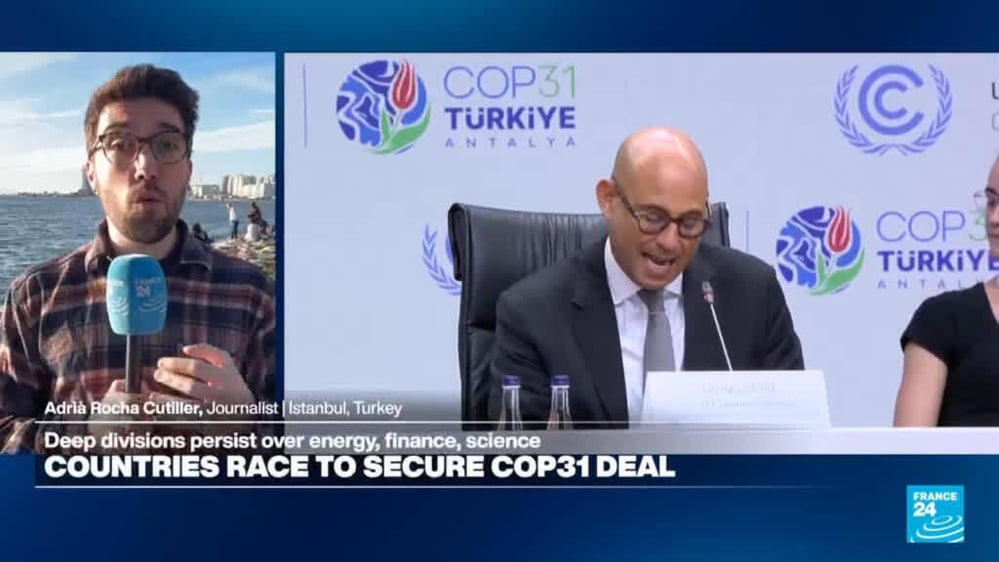
“UN climate chief Simon Stiell said he would seek advice on reforming a consensus-based process that “fell short” on Sunday.” · exact text match
Why: The article reports and quotes proposed reforms but does not itself prescribe policy.
Claim: The report is centrally about a political negotiation among states and international officials.
“deep divisions between countries over fossil fuels and finance for the poorest” · exact text match
“The European Union, Pacific island states and others rejected the text.” · exact text match
Why: Focus and sourcing are overwhelmingly on government positions and UN politics.
Claim: Negative and positive elements are both reported, and emotional wording is attributed to actors rather than adopted by the publisher.
“There was some progress” · exact text match
““deeply disappointed”” · exact text match
Why: The mixed content and attributed emotional language support a neutral emotional presentation.
Claim: Named attribution, multiple perspectives, and explicit uncertainty support high credibility.
“according to the BBC” · exact text match
“according to the UN” · exact text match
“There was some progress” · exact text match
Why: Visible sourcing and balanced camps are credibility signals; the short report limits fuller assessment.
Claim: The report relies on attributed facts and quantified projections rather than emotional assertion.
“according to the BBC” · exact text match
“according to the UN” · exact text match
Why: Attribution and quantification support a rational/empirical presentation.
Claim: The report uses an attributed scientific projection about warming rather than superstition.
“the planet is heading for warming of about 2.8C by 2100, according to the UN” · exact text match
Why: The climate-warming claim is framed through a UN projection, indicating empirical/scientific orientation.
Claim: The report attributes claims and includes competing state positions, indicating high internal fairness.
“Saudi Arabia's delegate, Mohammad Ayoub, said Arab countries had negotiated “in good faith”” · exact text match
“The European Union, Pacific island states and others rejected the text.” · exact text match
Why: Balanced inclusion of opposing camps and direct attribution are observable integrity signals.
Claim: The report includes procedural detail and explains competing positions.
“An earlier draft mentioned them six times, which was unacceptable to oil-producing countries.” · exact text match
Why: This specificity indicates above-average explanatory detail.
The report is short and heavily quote-based, so some framing judgments have limited evidence and quoted advocacy is not treated as the publisher's own position.
November 19, 2026 · 0 shares
Frames the revised draft as a retreat on climate ambition by foregrounding removed fossil-fuel and finance language while including official defenses.
Helium Analysis
Limitations: No byline is provided in the supplied excerpt, and the text includes newsletter/accessibility boilerplate.
·
56 of 56 available dimensions scored; omitted dimensions are not treated as neutral.
·
Verified supporting quotes for 9 of 56 scored dimensions.
Claim: The headline and lead frame the removal of fossil-fuel language as a setback for climate ambition, a framing more aligned with liberal environmental priorities.
“Fossil fuel limits cut from latest draft of UN climate deal.” · exact text match
Counterevidence:
“I do not think we are taking a step back.” · exact text match
Why: The headline's 'cut' and focus on removed limits signal a critical posture toward weakening climate commitments, though official defenses are included.
Claim: Some publisher wording uses evaluative verbs that slightly color procedural changes as losses.
“Climate negotiators stripped out any reference to ending the use of fossil fuels” · exact text match
Counterevidence:
“The revised deal, which is not expected to be the final version” · exact text match
Why: 'Stripped out' is a loaded way to describe a draft edit; the caution that the deal is not final limits subjectivity.
Claim: The article is predominantly descriptive, reporting draft changes and quoted reactions rather than advocating a policy outcome.
“dropped or weakened language on several of the conference's central issues” · exact text match
Why: Most content describes the draft and attributed positions; prescriptive language is largely absent.
Claim: The report is centrally concerned with political negotiations over a UN climate deal.
“Climate negotiators stripped out any reference to ending the use of fossil fuels in a slimmed-down draft deal text published on Thursday” · exact text match
Why: The subject is an explicit multilateral political negotiation.
Claim: The report reflects a mild environmental-advocacy ideological frame by measuring the draft against climate ambition.
“Fossil fuel limits cut from latest draft of UN climate deal.” · exact text match
Why: The framing prioritizes climate ambition as a benchmark, but attribution and official defenses limit ideological intensity.
Claim: The report's tone is mildly negative toward the revised draft, emphasizing removed or weakened commitments.
“dropped or weakened language on several of the conference's central issues” · exact text match
Why: 'Weakened' and the focus on removals give a mildly negative valence without strong emotional language.
Claim: The report is well attributed and includes named sources with differing views.
“said Mohamed Adow” · exact text match
“Australia's COP31 negotiating president Chris Bowen” · not found in supplied text
Why: Named attribution and inclusion of critic and official perspectives support high credibility.
Claim: The report treats climate science and warming thresholds as reference points.
“scientists say would be needed to bring temperatures back” · exact text match
Why: Reliance on scientific claims and temperature thresholds indicates a scientific rather than superstitious orientation.
Claim: The report includes both critical and official defenses of the revised draft.
“This new text has gone backwards from the one released earlier in the week” · exact text match
“Turkey and Australia, which are sharing leadership of the conference, defended this decision” · exact text match
Why: Balancing critic and defender perspectives indicates internal fairness.
Claim: The report provides contextual and nuanced coverage of the draft, past COP commitments, and competing positions.
“Nations had agreed at COP28 in 2023 to transition away from fossil fuels” · exact text match
Why: Contextualizing the draft against prior commitments and including multiple perspectives demonstrates high article intelligence.
No byline is provided in the supplied excerpt, and the text includes newsletter/accessibility boilerplate.
November 20, 2026 · 0 shares
The report is largely factual and attributed, but its selection of EU and environmental-group warnings frames the draft’s omission of fossil fuels as a climate-policy failure.
COP summits aim to produce a consensus cover decision among nearly 200 countries, so objections from major oil and gas producers can block or weaken draft language.
Helium Analysis
Limitations: The supplied text includes duplicated article fragments and related-link headlines; analysis is limited to the substantive COP31 report.
·
11 of 56 available dimensions scored; omitted dimensions are not treated as neutral.
·
Verified supporting quotes for 11 of 11 scored dimensions.
Claim: The report’s selection and wording emphasize pro-climate-action criticism of fossil-fuel producers and the US withdrawal.
“EU warns COP31 risks turning into a ‘fossil summit’ as critical climate commitments are omitted from the draft deal.” · exact text match
“The United States, the largest historical emitter, is absent for a second year after President Donald Trump ended climate cooperation.” · exact text match
Why: These selected warnings and the negative framing of US withdrawal align with liberal environmental priorities.
Claim: The report is predominantly objective, relying on attributed statements and named sources rather than the publisher’s own evaluative assertions.
“A third draft is expected on Saturday, the AFP news agency reported.” · exact text match
“The European Union said the draft “risks turning this climate COP into a fossil summit”.” · exact text match
Why: Attribution to AFP and the EU shows a factual, sourced presentation.
Claim: The lead and headline are factual and measured, without sensationalized language by the publisher.
“The COP31 climate summit has gone into overtime as nearly 200 countries remain deadlocked over a draft deal that no longer mentions fossil fuels.” · exact text match
Why: The lead is a straightforward factual summary; dramatic phrases are quoted from actors.
Claim: The article’s selection emphasizes failure, delay, and insufficient climate action.
““This has been the worst COP ever,” said Mohamed Adow, director of the think tank Power Shift Africa.” · exact text match
“A UN report last month found the world is set to pass the 1.5-degree-Celsius (2.7F) warming limit set under the 2015 Paris Agreement.” · exact text match
Why: The highlighted quotes and findings convey a negative outlook on the summit and climate trajectory.
Claim: The article primarily describes negotiations and quoted positions rather than prescribing an outcome in its own voice.
“The two-week talks in Antalya, Turkiye, were due to end on Friday, when a late closing session approved some technical matters, but not the wider political deal.” · exact text match
Why: The passage reports events and process rather than issuing publisher prescriptions.
Claim: The article is centrally about international climate policy negotiations and political actors.
“The COP31 climate summit has gone into overtime as nearly 200 countries remain deadlocked over a draft deal that no longer mentions fossil fuels.” · exact text match
Why: The core subject is a political negotiation among countries.
Claim: The report conveys a negative tone about the summit through selected quotes and framing.
““This has been the worst COP ever,” said Mohamed Adow, director of the think tank Power Shift Africa.” · exact text match
Why: Negative emotional language is quoted and highlighted in the article.
Claim: The report is credible in its supplied form, with multiple named sources and attributed claims.
“A third draft is expected on Saturday, the AFP news agency reported.” · exact text match
““It is not acceptable to have a COP or a cover document that does not even mention fossil fuels, and we simply will not put up with it,” Panama’s environment minister, Juan Carlos Navarro, told a news conference.” · exact text match
Why: Named attribution and direct quotes support credibility.
Claim: The article relies on climate-science findings and empirical framing rather than superstition.
“A UN report last month found the world is set to pass the 1.5-degree-Celsius (2.7F) warming limit set under the 2015 Paris Agreement.” · exact text match
Why: The article cites a scientific UN report and warming threshold.
Claim: The report visibly attributes claims to named officials, organizations, and a wire service.
“A third draft is expected on Saturday, the AFP news agency reported.” · exact text match
““We didn’t come here to beg,” said Ghana’s environment minister, Zanetor Agyeman-Rawlings.” · exact text match
Why: Clear sourcing and direct attribution support a high-integrity presentation.
Claim: The report provides coherent context and causal explanation for the draft changes.
“An opening draft from cohost and lead negotiator Australia on Monday called for a faster phase-out of fossil fuels.
A slimmer version on Thursday removed every mention of them after Saudi Arabia and other major oil and gas producers objected.”
· exact text match
Why: The passage clearly links the draft revisions to producer objections.
The supplied text includes duplicated article fragments and related-link headlines; analysis is limited to the substantive COP31 report.
November 21, 2026 · 0 shares
Restrained, attribution-heavy summary framing presents COP31 deadlock through reported demands and frustrations without editorial prescription.
Helium Analysis
Limitations: Short summary with no byline and limited sourcing; several framing dimensions cannot be confidently assessed.
·
4 of 56 available dimensions scored; omitted dimensions are not treated as neutral.
·
Verified supporting quotes for 4 of 4 scored dimensions.
Claim: The report presents the COP31 dispute through neutral, attributed descriptions rather than subjective evaluation.
“Negotiators are also split over a proposed global electrification target, carbon capture and the future of UN climate science reports.” · exact text match
Why: The sentence reports a negotiated split without evaluative language.
Claim: The report uses restrained language to describe the stalled talks rather than sensational framing.
“COP31 climate talks in Turkey have gone into overtime, with deep divisions over fossil fuels, climate finance and global warming targets delaying an agreement.” · exact text match
Why: The wording is factual and measured; 'deep divisions' is conflict-reporting but not hyperbolic.
Claim: The text describes negotiating positions and disputes without prescribing a policy outcome.
“Negotiators are also split over a proposed global electrification target, carbon capture and the future of UN climate science reports.” · exact text match
Why: It reports disagreement over proposals rather than recommending one.
Claim: The content is centrally about intergovernmental climate negotiations and political disagreement.
“COP31 climate talks in Turkey have gone into overtime, with deep divisions over fossil fuels, climate finance and global warming targets delaying an agreement.” · exact text match
Why: The subject is a multilateral political negotiation over policy targets and finance.
Short summary with no byline and limited sourcing; several framing dimensions cannot be confidently assessed.
November 23, 2026 · 0 shares
Coverage is a neutral, attributed account of the deadlock, balancing EU and developing-country positions while treating the failure to adopt the main political decision as the central outcome.
UN climate summits seek consensus decisions, and a 'cover decision' is the overarching political outcome intended to frame and connect more technical COP decisions.
Helium Analysis
Limitations: The supplied article text is duplicated and truncated at the end, limiting completeness; the central reported outcome remains clear.
·
9 of 56 available dimensions scored; omitted dimensions are not treated as neutral.
·
Verified supporting quotes for 9 of 9 scored dimensions.
Claim: The report presents EU and developing-country positions without endorsing either as the correct outcome.
“The European Union and other countries rejected the final proposal, arguing that it did not provide a clear commitment to transitioning away from fossil fuels.” · exact text match
“Developing countries, meanwhile, pressed for stronger and more predictable financing to help vulnerable communities adapt to the effects of climate change.” · exact text match
Why: The report gives space to both major blocs' stated reasons for disagreement without explicit ideological endorsement.
Claim: The report presents verifiable outcome and attributed positions rather than subjective commentary.
“The summit ended without agreement on the proposed overarching political outcome, known as the Antalya Pact, after countries failed to bridge big differences over fossil fuels, climate finance and support for vulnerable nations.” · exact text match
Why: The statement is factual and attribution-based, reporting the outcome and disputed issues directly.
Claim: Procedural language dominates rather than sensational rhetoric.
“Kurum struck the gavel at the closing plenary on Sunday, November 22, bringing the conference to an end after negotiations extended two days beyond its scheduled November 20 conclusion.” · exact text match
Why: The closing is reported in neutral procedural terms with specific dates and actions.
Claim: The report describes the failure and next steps without prescribing a policy remedy.
“The summit ended without agreement on the proposed overarching political outcome, known as the Antalya Pact, after countries failed to bridge big differences over fossil fuels, climate finance and support for vulnerable nations.” · exact text match
Why: The passage states the outcome descriptively rather than urging a course of action.
Claim: The report is centrally about a UN political negotiation and national positions.
“The summit ended without agreement on the proposed overarching political outcome, known as the Antalya Pact, after countries failed to bridge big differences over fossil fuels, climate finance and support for vulnerable nations.” · exact text match
Why: Focuses on intergovernmental negotiation and policy disagreements, making the content highly political.
Claim: The report provides specific dates, named officials, and attributed positions.
“Kurum struck the gavel at the closing plenary on Sunday, November 22, bringing the conference to an end after negotiations extended two days beyond its scheduled November 20 conclusion.” · exact text match
Why: Specific procedural and temporal details support observable credibility.
Claim: Negotiation outcome is reported through attributed statements and procedural facts rather than emotive or fallacious reasoning.
“Addressing delegates, he acknowledged the failure to reach consensus, leaving the outcome of the negotiations to the judgment of the international community.” · exact text match
Why: The passage attributes the acknowledgment to the summit president and avoids unsupported causal claims.
Claim: The report balances EU and developing-country explanations for the deadlock.
“The European Union and other countries rejected the final proposal, arguing that it did not provide a clear commitment to transitioning away from fossil fuels.” · exact text match
“Developing countries, meanwhile, pressed for stronger and more predictable financing to help vulnerable communities adapt to the effects of climate change.” · exact text match
Why: Presents both sides' positions without caricature, supporting observable fairness.
Claim: The report clearly structures the deadlock, its causes, partial agreements, and next steps.
“Although negotiators reached agreement on some related decisions, the failure to adopt the main political cover decision exposed divisions among participating countries and raised fresh concerns about the pace of international climate action.” · exact text match
Why: Synthesizes partial agreement and the main failure in a coherent causal statement.
The supplied article text is duplicated and truncated at the end, limiting completeness; the central reported outcome remains clear.
November 22, 2026 · 0 shares
The report frames the collapse around the omission of fossil-fuel language, foregrounding EU and climate-vulnerable nations’ objections while giving only brief rationale for Saudi, Russian, and Indian resistance.
Helium Analysis
Limitations: Unrelated subscriber sidebar links are present in the supplied text and were excluded as page chrome.
·
18 of 56 available dimensions scored; omitted dimensions are not treated as neutral.
·
Verified supporting quotes for 18 of 18 scored dimensions.
Claim: The report foregrounds pro-climate-action objections to a draft that omitted fossil-fuel language.
“The latest draft agreement, released on Sunday, had set out proposed measures for countries to accelerate climate action, but the 12-page document drew immediate criticism over its failure to mention a move away from fossil fuels, a key demand of the E.U. and other nations.” · exact text match
Counterevidence:
“Countries like Saudi Arabia, Russia and India have pushed back on including any reference to the words in the text, amid concerns that phasing out fossil fuels, central to their economies, could pose a financial risk.” · exact text match
Why: This framing links a valid agreement to fossil-fuel phase-out language, a position associated with liberal climate policy, though the article also includes opposing states’ rationale.
Claim: The report maintains a largely objective, attributed narrative.
“International climate talks in Turkey broke down Sunday after the European Union and other nations rejected a draft agreement that had cut all references to fossil fuels.” · exact text match
Why: The lead states the event and actor actions with attribution rather than personal judgment.
Claim: The report is mostly factual, with limited sensational language despite the dramatic headline.
“The conference officially ended on Friday without an agreement.” · exact text match
Counterevidence:
“COP31 climate talks break down after angry dispute over fossil fuels.” · exact text match
Why: Plain procedural language outweighs the headline’s 'angry dispute' phrasing.
Claim: The article’s selection emphasizes failure and disappointment.
“United Nations Secretary-General António Guterres said he was “deeply disappointed that COP31 has ended without consensus on an overarching outcome.”” · exact text match
Why: Prominent negative assessments frame the outcome pessimistically, though they are attributed quotes.
Claim: The report includes notable procedural and historical details.
“The talks were the longest in COP history, surpassing the delay in negotiations at COP25 in Madrid.” · exact text match
Why: Specific superlative and historical comparison add informational interest.
Claim: The article is primarily descriptive of negotiations rather than prescribing a policy outcome.
“The conference officially ended on Friday without an agreement.” · exact text match
Why: Procedural description dominates; prescriptions appear only in attributed quotes.
Claim: The report uses existential-risk framing tied to sea-level rise.
“Panama also rejected the deal, saying it didn’t go far enough, as did the Marshall Islands, a low-lying Pacific nation that faces an existential threat from sea-level rise.” · exact text match
Why: Existential-threat language raises fear appeal, though it is brief and factual in context.
Claim: The report’s own wording describes the draft as failing to meet a key demand.
“The latest draft agreement, released on Sunday, had set out proposed measures for countries to accelerate climate action, but the 12-page document drew immediate criticism over its failure to mention a move away from fossil fuels, a key demand of the E.U. and other nations.” · exact text match
Why: 'Failure' and 'key demand' frame the draft evaluatively, though criticism is attributed.
Claim: The subject is an international political negotiation.
“COP31 climate talks break down after angry dispute over fossil fuels.” · exact text match
Why: The headline and report center on diplomatic conflict and government positions.
Claim: The report relies on UN and ministerial authority.
“United Nations Secretary-General António Guterres said he was “deeply disappointed that COP31 has ended without consensus on an overarching outcome.”” · exact text match
Why: Elevated official sources structure the response, indicating a mild pro-establishment sourcing pattern.
Claim: The report’s tone is somewhat negative because it centers on breakdown and anger.
“COP31 climate talks break down after angry dispute over fossil fuels.” · exact text match
Why: Negative event framing supports a slight negative emotional valence.
Claim: The report uses named officials and on-record quotes with procedural detail.
“Chris Bowen, COP31’s president of negotiations, told reporters that there were “unbridgeable red lines” in the discussions.” · exact text match
Why: Named sourcing and direct quotation support high observable credibility.
Claim: The account is structured around attributed official statements and procedural facts rather than emotive assertion.
“COP31 President Murat Kurum said Sunday that there would be no new climate agreement draft after a fourth draft was rejected.” · exact text match
Why: Named attribution and procedural specificity indicate rational, evidence-bound reporting.
Claim: The report aligns with mainstream climate-science framing on warming impacts.
“As warming goes beyond 1.5 C, the impacts of climate change, including extreme heat and other weather events, are expected to ramp up significantly.” · exact text match
Why: Empirical climate-impact claims support a scientific rather than superstitious orientation.
Claim: The report briefly notes possible next steps without forecasting outcomes.
“As the talks break down, Kurum could choose to convene a follow-up meeting or delay decisions until next year’s conference, hosted by Ethiopia.” · exact text match
Why: Future options are mentioned, but limited and attributed to procedural possibilities.
Claim: The text shows human-journalist markers, including an author bio and named on-record reporting.
“Freddie Clayton is a freelance journalist based in London.” · exact text match
Why: Byline and specific reporting reduce likelihood of AI authorship, though prose alone cannot prove it.
Claim: The report includes the stated rationale of countries opposing fossil-fuel language.
“Countries like Saudi Arabia, Russia and India have pushed back on including any reference to the words in the text, amid concerns that phasing out fossil fuels, central to their economies, could pose a financial risk.” · exact text match
Why: Including opposing rationale is a fairness signal, supporting high integrity.
Claim: The report provides context for the fossil-fuel language dispute.
“The latest draft started by “recalling the United Arab Emirates Consensus in its entirety,” a reference to COP28 in the UAE, where countries agreed for the first time to “transition away” from fossil fuels in energy systems.” · exact text match
Why: Explaining the COP28 reference shows contextual sophistication.
Unrelated subscriber sidebar links are present in the supplied text and were excluded as page chrome.
November 23, 2026 · 0 shares
Largely attributed summit reporting treats the absence of explicit fossil-fuel language as a central failure and amplifies climate-advocate criticism, while including Saudi and Russian counterpoints.
Helium Analysis
Limitations: The report is short and heavily quote-based, so some framing judgments have limited evidence and quoted advocacy is not treated as the publisher's own position.
·
12 of 56 available dimensions scored; omitted dimensions are not treated as neutral.
·
Verified supporting quotes for 12 of 12 scored dimensions.
Claim: The report's own framing presents fossil-fuel omission as a central failure, consistent with pro-climate-action liberal framing.
“did not mention “fossil fuels”, the main cause of global warming” · exact text match
Counterevidence:
“Saudi Arabia's delegate, Mohammad Ayoub, said Arab countries had negotiated “in good faith”” · exact text match
Why: The unattributed assertion that fossil fuels are the main cause and the framing of their omission as failure lean slightly pro-climate-action; the Saudi quote qualifies certainty.
Claim: Key factual claims are attributed to named sources rather than rendered as unqualified opinion.
“according to the BBC” · exact text match
“according to the UN” · exact text match
Why: Attribution supports an objective/attributed style, though some evaluative quotes are included.
Claim: The report uses measured, attributed language rather than sensational prose.
“according to the BBC” · exact text match
“There was some progress” · exact text match
Why: The tone is largely factual and balanced despite dramatic quoted terms, so it is more objective than sensational.
Claim: The report highlights a historically unusual collapse of a COP main declaration.
“It is the first time since the 2009 Copenhagen summit that the main declaration of one of these conferences has collapsed in this way.” · exact text match
Why: The first-since-2009 collapse is a substantive novelty that raises newsworthiness.
Claim: The text describes negotiations and quotes actors' prescriptions rather than issuing its own.
“UN climate chief Simon Stiell said he would seek advice on reforming a consensus-based process that “fell short” on Sunday.” · exact text match
Why: The article reports and quotes proposed reforms but does not itself prescribe policy.
Claim: The report is centrally about a political negotiation among states and international officials.
“deep divisions between countries over fossil fuels and finance for the poorest” · exact text match
“The European Union, Pacific island states and others rejected the text.” · exact text match
Why: Focus and sourcing are overwhelmingly on government positions and UN politics.
Claim: Negative and positive elements are both reported, and emotional wording is attributed to actors rather than adopted by the publisher.
“There was some progress” · exact text match
““deeply disappointed”” · exact text match
Why: The mixed content and attributed emotional language support a neutral emotional presentation.
Claim: Named attribution, multiple perspectives, and explicit uncertainty support high credibility.
“according to the BBC” · exact text match
“according to the UN” · exact text match
“There was some progress” · exact text match
Why: Visible sourcing and balanced camps are credibility signals; the short report limits fuller assessment.
Claim: The report relies on attributed facts and quantified projections rather than emotional assertion.
“according to the BBC” · exact text match
“according to the UN” · exact text match
Why: Attribution and quantification support a rational/empirical presentation.
Claim: The report uses an attributed scientific projection about warming rather than superstition.
“the planet is heading for warming of about 2.8C by 2100, according to the UN” · exact text match
Why: The climate-warming claim is framed through a UN projection, indicating empirical/scientific orientation.
Claim: The report attributes claims and includes competing state positions, indicating high internal fairness.
“Saudi Arabia's delegate, Mohammad Ayoub, said Arab countries had negotiated “in good faith”” · exact text match
“The European Union, Pacific island states and others rejected the text.” · exact text match
Why: Balanced inclusion of opposing camps and direct attribution are observable integrity signals.
Claim: The report includes procedural detail and explains competing positions.
“An earlier draft mentioned them six times, which was unacceptable to oil-producing countries.” · exact text match
Why: This specificity indicates above-average explanatory detail.
The report is short and heavily quote-based, so some framing judgments have limited evidence and quoted advocacy is not treated as the publisher's own position.
November 22, 2026 · 0 shares
The report frames the collapse around the omission of fossil-fuel language, foregrounding EU and climate-vulnerable nations’ objections while giving only brief rationale for Saudi, Russian, and Indian resistance.
Helium Analysis
Limitations: Unrelated subscriber sidebar links are present in the supplied text and were excluded as page chrome.
·
18 of 56 available dimensions scored; omitted dimensions are not treated as neutral.
·
Verified supporting quotes for 18 of 18 scored dimensions.
Claim: The report foregrounds pro-climate-action objections to a draft that omitted fossil-fuel language.
“The latest draft agreement, released on Sunday, had set out proposed measures for countries to accelerate climate action, but the 12-page document drew immediate criticism over its failure to mention a move away from fossil fuels, a key demand of the E.U. and other nations.” · exact text match
Counterevidence:
“Countries like Saudi Arabia, Russia and India have pushed back on including any reference to the words in the text, amid concerns that phasing out fossil fuels, central to their economies, could pose a financial risk.” · exact text match
Why: This framing links a valid agreement to fossil-fuel phase-out language, a position associated with liberal climate policy, though the article also includes opposing states’ rationale.
Claim: The report maintains a largely objective, attributed narrative.
“International climate talks in Turkey broke down Sunday after the European Union and other nations rejected a draft agreement that had cut all references to fossil fuels.” · exact text match
Why: The lead states the event and actor actions with attribution rather than personal judgment.
Claim: The report is mostly factual, with limited sensational language despite the dramatic headline.
“The conference officially ended on Friday without an agreement.” · exact text match
Counterevidence:
“COP31 climate talks break down after angry dispute over fossil fuels.” · exact text match
Why: Plain procedural language outweighs the headline’s 'angry dispute' phrasing.
Claim: The article’s selection emphasizes failure and disappointment.
“United Nations Secretary-General António Guterres said he was “deeply disappointed that COP31 has ended without consensus on an overarching outcome.”” · exact text match
Why: Prominent negative assessments frame the outcome pessimistically, though they are attributed quotes.
Claim: The report includes notable procedural and historical details.
“The talks were the longest in COP history, surpassing the delay in negotiations at COP25 in Madrid.” · exact text match
Why: Specific superlative and historical comparison add informational interest.
Claim: The article is primarily descriptive of negotiations rather than prescribing a policy outcome.
“The conference officially ended on Friday without an agreement.” · exact text match
Why: Procedural description dominates; prescriptions appear only in attributed quotes.
Claim: The report uses existential-risk framing tied to sea-level rise.
“Panama also rejected the deal, saying it didn’t go far enough, as did the Marshall Islands, a low-lying Pacific nation that faces an existential threat from sea-level rise.” · exact text match
Why: Existential-threat language raises fear appeal, though it is brief and factual in context.
Claim: The report’s own wording describes the draft as failing to meet a key demand.
“The latest draft agreement, released on Sunday, had set out proposed measures for countries to accelerate climate action, but the 12-page document drew immediate criticism over its failure to mention a move away from fossil fuels, a key demand of the E.U. and other nations.” · exact text match
Why: 'Failure' and 'key demand' frame the draft evaluatively, though criticism is attributed.
Claim: The subject is an international political negotiation.
“COP31 climate talks break down after angry dispute over fossil fuels.” · exact text match
Why: The headline and report center on diplomatic conflict and government positions.
Claim: The report relies on UN and ministerial authority.
“United Nations Secretary-General António Guterres said he was “deeply disappointed that COP31 has ended without consensus on an overarching outcome.”” · exact text match
Why: Elevated official sources structure the response, indicating a mild pro-establishment sourcing pattern.
Claim: The report’s tone is somewhat negative because it centers on breakdown and anger.
“COP31 climate talks break down after angry dispute over fossil fuels.” · exact text match
Why: Negative event framing supports a slight negative emotional valence.
Claim: The report uses named officials and on-record quotes with procedural detail.
“Chris Bowen, COP31’s president of negotiations, told reporters that there were “unbridgeable red lines” in the discussions.” · exact text match
Why: Named sourcing and direct quotation support high observable credibility.
Claim: The account is structured around attributed official statements and procedural facts rather than emotive assertion.
“COP31 President Murat Kurum said Sunday that there would be no new climate agreement draft after a fourth draft was rejected.” · exact text match
Why: Named attribution and procedural specificity indicate rational, evidence-bound reporting.
Claim: The report aligns with mainstream climate-science framing on warming impacts.
“As warming goes beyond 1.5 C, the impacts of climate change, including extreme heat and other weather events, are expected to ramp up significantly.” · exact text match
Why: Empirical climate-impact claims support a scientific rather than superstitious orientation.
Claim: The report briefly notes possible next steps without forecasting outcomes.
“As the talks break down, Kurum could choose to convene a follow-up meeting or delay decisions until next year’s conference, hosted by Ethiopia.” · exact text match
Why: Future options are mentioned, but limited and attributed to procedural possibilities.
Claim: The text shows human-journalist markers, including an author bio and named on-record reporting.
“Freddie Clayton is a freelance journalist based in London.” · exact text match
Why: Byline and specific reporting reduce likelihood of AI authorship, though prose alone cannot prove it.
Claim: The report includes the stated rationale of countries opposing fossil-fuel language.
“Countries like Saudi Arabia, Russia and India have pushed back on including any reference to the words in the text, amid concerns that phasing out fossil fuels, central to their economies, could pose a financial risk.” · exact text match
Why: Including opposing rationale is a fairness signal, supporting high integrity.
Claim: The report provides context for the fossil-fuel language dispute.
“The latest draft started by “recalling the United Arab Emirates Consensus in its entirety,” a reference to COP28 in the UAE, where countries agreed for the first time to “transition away” from fossil fuels in energy systems.” · exact text match
Why: Explaining the COP28 reference shows contextual sophistication.
Unrelated subscriber sidebar links are present in the supplied text and were excluded as page chrome.
November 23, 2026 · 0 shares
Coverage is a neutral, attributed account of the deadlock, balancing EU and developing-country positions while treating the failure to adopt the main political decision as the central outcome.
UN climate summits seek consensus decisions, and a 'cover decision' is the overarching political outcome intended to frame and connect more technical COP decisions.
Helium Analysis
Limitations: The supplied article text is duplicated and truncated at the end, limiting completeness; the central reported outcome remains clear.
·
9 of 56 available dimensions scored; omitted dimensions are not treated as neutral.
·
Verified supporting quotes for 9 of 9 scored dimensions.
Claim: The report presents EU and developing-country positions without endorsing either as the correct outcome.
“The European Union and other countries rejected the final proposal, arguing that it did not provide a clear commitment to transitioning away from fossil fuels.” · exact text match
“Developing countries, meanwhile, pressed for stronger and more predictable financing to help vulnerable communities adapt to the effects of climate change.” · exact text match
Why: The report gives space to both major blocs' stated reasons for disagreement without explicit ideological endorsement.
Claim: The report presents verifiable outcome and attributed positions rather than subjective commentary.
“The summit ended without agreement on the proposed overarching political outcome, known as the Antalya Pact, after countries failed to bridge big differences over fossil fuels, climate finance and support for vulnerable nations.” · exact text match
Why: The statement is factual and attribution-based, reporting the outcome and disputed issues directly.
Claim: Procedural language dominates rather than sensational rhetoric.
“Kurum struck the gavel at the closing plenary on Sunday, November 22, bringing the conference to an end after negotiations extended two days beyond its scheduled November 20 conclusion.” · exact text match
Why: The closing is reported in neutral procedural terms with specific dates and actions.
Claim: The report describes the failure and next steps without prescribing a policy remedy.
“The summit ended without agreement on the proposed overarching political outcome, known as the Antalya Pact, after countries failed to bridge big differences over fossil fuels, climate finance and support for vulnerable nations.” · exact text match
Why: The passage states the outcome descriptively rather than urging a course of action.
Claim: The report is centrally about a UN political negotiation and national positions.
“The summit ended without agreement on the proposed overarching political outcome, known as the Antalya Pact, after countries failed to bridge big differences over fossil fuels, climate finance and support for vulnerable nations.” · exact text match
Why: Focuses on intergovernmental negotiation and policy disagreements, making the content highly political.
Claim: The report provides specific dates, named officials, and attributed positions.
“Kurum struck the gavel at the closing plenary on Sunday, November 22, bringing the conference to an end after negotiations extended two days beyond its scheduled November 20 conclusion.” · exact text match
Why: Specific procedural and temporal details support observable credibility.
Claim: Negotiation outcome is reported through attributed statements and procedural facts rather than emotive or fallacious reasoning.
“Addressing delegates, he acknowledged the failure to reach consensus, leaving the outcome of the negotiations to the judgment of the international community.” · exact text match
Why: The passage attributes the acknowledgment to the summit president and avoids unsupported causal claims.
Claim: The report balances EU and developing-country explanations for the deadlock.
“The European Union and other countries rejected the final proposal, arguing that it did not provide a clear commitment to transitioning away from fossil fuels.” · exact text match
“Developing countries, meanwhile, pressed for stronger and more predictable financing to help vulnerable communities adapt to the effects of climate change.” · exact text match
Why: Presents both sides' positions without caricature, supporting observable fairness.
Claim: The report clearly structures the deadlock, its causes, partial agreements, and next steps.
“Although negotiators reached agreement on some related decisions, the failure to adopt the main political cover decision exposed divisions among participating countries and raised fresh concerns about the pace of international climate action.” · exact text match
Why: Synthesizes partial agreement and the main failure in a coherent causal statement.
The supplied article text is duplicated and truncated at the end, limiting completeness; the central reported outcome remains clear.
November 22, 2026 · 0 shares
The report adopts a climate-action frame, treating the omission of fossil fuels as the central failure while attributing contested positions to named officials and institutions.
Helium Analysis
Limitations: The supplied text includes interspersed related-link headlines and CBC boilerplate; the analysis is limited to the substantive article paragraphs.
·
8 of 56 available dimensions scored; omitted dimensions are not treated as neutral.
·
Verified supporting quotes for 8 of 8 scored dimensions.
Claim: The report frames the failure around insufficient action on fossil fuels and climate financing.
“nor any further attempts to rein in the main human drivers of the climate crisis” · exact text match
“despite scientific consensus that they drive global warming” · exact text match
Why: This wording adopts environmental/climate-action priorities that typically align with liberal positioning, while still quoting opposing officials.
Claim: The report attributes contested statements to named or institutional actors rather than presenting them as the publisher's own.
“said a joint European Union statement” · exact text match
“Kurum voiced his disagreement with the decision” · exact text match
Why: The use of attribution and inclusion of dissent supports an objective rather than subjective framing.
Claim: The report mainly describes the collapse and quotes demands from actors rather than issuing its own prescriptions.
“The annual summit requires consensus when finalizing agreements.” · exact text match
“Multiple members said the proposed agreement didn't go far enough” · exact text match
Why: Procedural explanation and attributed demands are descriptive, not publisher-authored advocacy.
Claim: The report concerns an explicit multilateral political negotiation over climate policy.
“member states to negotiate — and ideally commit to — climate policies” · exact text match
“The annual summit requires consensus when finalizing agreements.” · exact text match
Why: The subject and framing are inherently political/institutional, though the report is not partisan in tone.
Claim: The report uses named attribution and hedged language for contested claims, supporting visible credibility.
“reportedly lobbied to leave out mentions of fossil fuels” · exact text match
“said a joint European Union statement” · exact text match
Why: Attribution to specific statements and hedging on lobbying claims indicate sourcing and epistemic caution.
Claim: The report relies on procedural and scientific claims rather than irrational argument.
“The annual summit requires consensus when finalizing agreements.” · exact text match
“despite scientific consensus that they drive global warming” · exact text match
Why: It explains the consensus rule and cites scientific consensus, indicating rational/evidence-oriented framing.
Claim: The report treats climate science as an empirical baseline for evaluating the talks.
“despite scientific consensus that they drive global warming” · exact text match
“the UN's environmental body in October confirmed the rise in global temperature was set to exceed 1.5 C” · exact text match
Why: References to scientific consensus and UN climate findings support an empirical/scientific rather than superstitious framing.
Claim: The report attributes disputed lobbying claims cautiously and includes competing official voices.
“Oil-producing nations like Saudi Arabia reportedly lobbied to leave out mentions of fossil fuels” · exact text match
“Kurum voiced his disagreement with the decision” · exact text match
Why: Hedged attribution ('reportedly') and inclusion of a dissenting conference president are fairness/honesty signals.
The supplied text includes interspersed related-link headlines and CBC boilerplate; the analysis is limited to the substantive article paragraphs.
November 23, 2026 · 0 shares
The report frames the summit failure through pro-phaseout officials and advocates, using evaluative language about fossil-fuel-backed carbon capture while giving limited space to oil producers.
A “cover decision” is the overarching formal outcome text of a UN climate COP; consensus among parties is needed for adoption.
Helium Analysis Limitations: The supplied text includes repeated related-link fragments and a truncated opening; analysis focuses on the substantive COP31 report. · 8 of 56 available dimensions scored; omitted dimensions are not treated as neutral. · Verified supporting quotes for 8 of 8 scored dimensions.
Claim: Publisher wording frames fossil-fuel-backed carbon capture skeptically and gives prominence to pro-phaseout officials, producing a mild pro-climate-action tilt.
“The text also drew criticism for calling for wider use of carbon capture, a costly technology backed by the fossil fuel industry.” · exact text match
Counterevidence:
““We believe that climate change requires all solutions on the table,” said Mohammad Ayoub, a Saudi climate negotiator.” · exact text match
Why: The evaluative phrase “costly” and industry association cast a fossil-fuel-backed solution negatively, though a Saudi counterquote is included.
Claim: The report emphasizes failure, missed opportunity, and doubts about UN climate negotiations.
“The outcome recalled the failure to reach a deal at the 2009 Copenhagen climate summit and raised fresh questions about the effectiveness of UN climate negotiations.” · exact text match
Counterevidence:
“China voiced disappointment on Monday but said the transition to cleaner energy was “irreversible.”” · exact text match
Why: The selected language frames the result as a setback and questions the process, while the China quote adds a qualified note.
Claim: The report is centrally concerned with multilateral political negotiation and state positions.
“COP31 UN climate summit in Turkey ended without an overarching agreement, with negotiators deadlocked over whether to address the phaseout of fossil fuels.” · exact text match
Why: The subject is a UN political summit and governmental bargaining over policy language.
Claim: Negative emotional reactions—anger, frustration, disappointment—are foregrounded in the report.
“Climate advocates expressed anger on Monday after the COP31 UN climate summit in Turkey ended without an overarching agreement” · exact text match
““I share the very profound frustration of all those who expected governments to rise to the moment the climate crisis demands,” Guterres said in a statement.” · exact text match
Why: The lead and a prominent quote emphasize strong negative feeling, though most emotion is attributed to named actors.
Claim: The report provides specific procedural details and named-source attribution.
“Turkish Environment Minister Murat Kurum, the COP31 president, brought the talks to a close more than 49 hours after they were scheduled to end.” · exact text match
“Australian Climate Minister Chris Bowen, who chaired the negotiations, said he had been unable to bridge differences among nearly 200 countries.” · exact text match
Why: Concrete timelines, named officials, and attributed statements support credibility in the supplied text.
Claim: The report uses mildly negative framing toward the fossil-fuel industry in describing carbon capture.
“The text also drew criticism for calling for wider use of carbon capture, a costly technology backed by the fossil fuel industry.” · exact text match
Why: Calling the technology “costly” and tying it to industry backing casts a fossil-fuel corporate solution skeptically.
Claim: The report adopts an empirical/scientific frame on climate risk, citing scientists and the IPCC.
“Scientists expect warming to exceed that threshold within a few years as efforts to cut emissions fall short.” · exact text match
“Disagreements over the work of the Intergovernmental Panel on Climate Change also spilled into the talks” · exact text match
Why: Reference to scientific forecasts and the IPCC supports a scientific rather than superstitious framing.
Claim: The report uses named attribution and presents positions from opposing blocs.
“Australian Climate Minister Chris Bowen, who chaired the negotiations, said he had been unable to bridge differences among nearly 200 countries.” · exact text match
“The European Union and Saudi Arabia clashed over the pace of the transition away from coal, oil and gas.” · exact text match
Why: Named officials and direct attribution, plus inclusion of EU and Saudi positions, indicate internal fairness and sourcing.
The supplied text includes repeated related-link fragments and a truncated opening; analysis focuses on the substantive COP31 report.
November 22, 2026 · 0 shares
The report frames the collapse around the omission of fossil-fuel language, foregrounding EU and climate-vulnerable nations’ objections while giving only brief rationale for Saudi, Russian, and Indian resistance.
Helium Analysis Limitations: Unrelated subscriber sidebar links are present in the supplied text and were excluded as page chrome. · 18 of 56 available dimensions scored; omitted dimensions are not treated as neutral. · Verified supporting quotes for 18 of 18 scored dimensions.
Claim: The report foregrounds pro-climate-action objections to a draft that omitted fossil-fuel language.
“The latest draft agreement, released on Sunday, had set out proposed measures for countries to accelerate climate action, but the 12-page document drew immediate criticism over its failure to mention a move away from fossil fuels, a key demand of the E.U. and other nations.” · exact text match
Counterevidence:
“Countries like Saudi Arabia, Russia and India have pushed back on including any reference to the words in the text, amid concerns that phasing out fossil fuels, central to their economies, could pose a financial risk.” · exact text match
Why: This framing links a valid agreement to fossil-fuel phase-out language, a position associated with liberal climate policy, though the article also includes opposing states’ rationale.
Claim: The report maintains a largely objective, attributed narrative.
“International climate talks in Turkey broke down Sunday after the European Union and other nations rejected a draft agreement that had cut all references to fossil fuels.” · exact text match
Why: The lead states the event and actor actions with attribution rather than personal judgment.
Claim: The report is mostly factual, with limited sensational language despite the dramatic headline.
“The conference officially ended on Friday without an agreement.” · exact text match
Counterevidence:
“COP31 climate talks break down after angry dispute over fossil fuels.” · exact text match
Why: Plain procedural language outweighs the headline’s 'angry dispute' phrasing.
Claim: The article’s selection emphasizes failure and disappointment.
“United Nations Secretary-General António Guterres said he was “deeply disappointed that COP31 has ended without consensus on an overarching outcome.”” · exact text match
Why: Prominent negative assessments frame the outcome pessimistically, though they are attributed quotes.
Claim: The report includes notable procedural and historical details.
“The talks were the longest in COP history, surpassing the delay in negotiations at COP25 in Madrid.” · exact text match
Why: Specific superlative and historical comparison add informational interest.
Claim: The article is primarily descriptive of negotiations rather than prescribing a policy outcome.
“The conference officially ended on Friday without an agreement.” · exact text match
Why: Procedural description dominates; prescriptions appear only in attributed quotes.
Claim: The report uses existential-risk framing tied to sea-level rise.
“Panama also rejected the deal, saying it didn’t go far enough, as did the Marshall Islands, a low-lying Pacific nation that faces an existential threat from sea-level rise.” · exact text match
Why: Existential-threat language raises fear appeal, though it is brief and factual in context.
Claim: The report’s own wording describes the draft as failing to meet a key demand.
“The latest draft agreement, released on Sunday, had set out proposed measures for countries to accelerate climate action, but the 12-page document drew immediate criticism over its failure to mention a move away from fossil fuels, a key demand of the E.U. and other nations.” · exact text match
Why: 'Failure' and 'key demand' frame the draft evaluatively, though criticism is attributed.
Claim: The subject is an international political negotiation.
“COP31 climate talks break down after angry dispute over fossil fuels.” · exact text match
Why: The headline and report center on diplomatic conflict and government positions.
Claim: The report relies on UN and ministerial authority.
“United Nations Secretary-General António Guterres said he was “deeply disappointed that COP31 has ended without consensus on an overarching outcome.”” · exact text match
Why: Elevated official sources structure the response, indicating a mild pro-establishment sourcing pattern.
Claim: The report’s tone is somewhat negative because it centers on breakdown and anger.
“COP31 climate talks break down after angry dispute over fossil fuels.” · exact text match
Why: Negative event framing supports a slight negative emotional valence.
Claim: The report uses named officials and on-record quotes with procedural detail.
“Chris Bowen, COP31’s president of negotiations, told reporters that there were “unbridgeable red lines” in the discussions.” · exact text match
Why: Named sourcing and direct quotation support high observable credibility.
Claim: The account is structured around attributed official statements and procedural facts rather than emotive assertion.
“COP31 President Murat Kurum said Sunday that there would be no new climate agreement draft after a fourth draft was rejected.” · exact text match
Why: Named attribution and procedural specificity indicate rational, evidence-bound reporting.
Claim: The report aligns with mainstream climate-science framing on warming impacts.
“As warming goes beyond 1.5 C, the impacts of climate change, including extreme heat and other weather events, are expected to ramp up significantly.” · exact text match
Why: Empirical climate-impact claims support a scientific rather than superstitious orientation.
Claim: The report briefly notes possible next steps without forecasting outcomes.
“As the talks break down, Kurum could choose to convene a follow-up meeting or delay decisions until next year’s conference, hosted by Ethiopia.” · exact text match
Why: Future options are mentioned, but limited and attributed to procedural possibilities.
Claim: The text shows human-journalist markers, including an author bio and named on-record reporting.
“Freddie Clayton is a freelance journalist based in London.” · exact text match
Why: Byline and specific reporting reduce likelihood of AI authorship, though prose alone cannot prove it.
Claim: The report includes the stated rationale of countries opposing fossil-fuel language.
“Countries like Saudi Arabia, Russia and India have pushed back on including any reference to the words in the text, amid concerns that phasing out fossil fuels, central to their economies, could pose a financial risk.” · exact text match
Why: Including opposing rationale is a fairness signal, supporting high integrity.
Claim: The report provides context for the fossil-fuel language dispute.
“The latest draft started by “recalling the United Arab Emirates Consensus in its entirety,” a reference to COP28 in the UAE, where countries agreed for the first time to “transition away” from fossil fuels in energy systems.” · exact text match
Why: Explaining the COP28 reference shows contextual sophistication.
Unrelated subscriber sidebar links are present in the supplied text and were excluded as page chrome.
November 22, 2026 · 0 shares
The report frames the collapse as a factual consequence of competing red lines over fossil-fuel language, carbon capture, and climate finance, attributing contested claims to delegates and a FOX Business-reviewed draft.
Helium Analysis Limitations: The supplied page includes unrelated market/navigation headlines and no byline; the analysis relies only on the substantive climate-summit report. · 10 of 56 available dimensions scored; omitted dimensions are not treated as neutral. · Verified supporting quotes for 10 of 10 scored dimensions.
Claim: The report includes attributed positions from both EU climate-transition advocates and Saudi carbon-removal supporters without editorial endorsement.
“Irish Environment Minister Darragh O’Brien called it "unconscionable" to back a climate deal with no reference to transitioning away from fossil fuels.” · exact text match
“A Saudi representative who backed the carbon-removal language reportedly told the plenary he was surprised by the resistance to the technology.” · exact text match
Why: Balanced inclusion of opposing climate-policy positions supports measured neutrality on the left-right dimension.
Claim: The report relies on attributed statements and document review rather than subjective authorial assertion.
“Turkish COP31 President Murat Kurum told delegates at the closing plenary that there was no consensus and no further text would be offered.” · exact text match
“An unedited Nov. 19 presidency draft reviewed by FOX Business made no explicit mention of fossil fuels, oil, coal or natural gas, referencing only the 2023 Dubai climate summit outcome.” · exact text match
Why: Named attribution and sourced draft description are strong objective indicators.
Claim: The summit collapse is reported in neutral, factual terms.
“collapsed on Sunday after the European Union and several other nations rejected a final draft agreement” · exact text match
Why: Straight factual language without sensational adjectives supports low sensationalism.
Claim: The text primarily describes positions and procedural outcomes rather than recommending action.
“Turkish COP31 President Murat Kurum told delegates at the closing plenary that there was no consensus and no further text would be offered.” · exact text match
Why: The narrative reports events and attributed demands without publisher prescriptions.
Claim: The story is centered on intergovernmental climate negotiations and official political positions.
“Delegates in Antalya failed to reach a consensus after two days of overtime, marking the first UN climate summit without an overarching agreement since Copenhagen in 2009” · exact text match
Why: Focus on delegates, ministers, and a UN policy deadlock supports high political content.
Claim: Emotive terms appear only in attributed quotes, while the surrounding prose is neutral.
“Irish Environment Minister Darragh O’Brien called it "unconscionable" to back a climate deal with no reference to transitioning away from fossil fuels.” · exact text match
“Australia’s COP31 president of negotiations, Chris Bowen, called the outcome "very disappointing," pointing to unresolved disputes over fuels and climate finance.” · exact text match
Why: Attribution of emotional language without publisher endorsement supports measured emotional neutrality.
Claim: Visible sourcing includes a reviewed draft, named officials, and hedged attribution for unconfirmed statements.
“An unedited Nov. 19 presidency draft reviewed by FOX Business made no explicit mention of fossil fuels, oil, coal or natural gas, referencing only the 2023 Dubai climate summit outcome.” · exact text match
“A Saudi representative who backed the carbon-removal language reportedly told the plenary he was surprised by the resistance to the technology.” · exact text match
Why: Document sourcing and cautious attribution support high visible credibility, not external fact-checking.
Claim: The report explains the failure through specific disputes over draft text, finance, and procedure.
“At the heart of the breakdown was the agreement's omission of fossil fuels.” · exact text match
Why: Causal explanation and detailed policy facts support rational framing.
Claim: The report hedges unverified statements and notes seeking comment from involved parties.
“A Saudi representative who backed the carbon-removal language reportedly told the plenary he was surprised by the resistance to the technology.” · exact text match
“FOX Business reached out to the UNFCCC and the COP31 media team for comment.” · exact text match
Why: Cautious attribution and comment outreach are fairness and honesty signals.
Claim: The report provides a structured causal account with specific policy details and competing positions.
“At the heart of the breakdown was the agreement's omission of fossil fuels.” · exact text match
Why: Clear explanation and specific details support above-average article intelligence.
The supplied page includes unrelated market/navigation headlines and no byline; the analysis relies only on the substantive climate-summit report.
November 23, 2026 · 0 shares
Coverage is a neutral, attributed account of the deadlock, balancing EU and developing-country positions while treating the failure to adopt the main political decision as the central outcome.
UN climate summits seek consensus decisions, and a 'cover decision' is the overarching political outcome intended to frame and connect more technical COP decisions.
Helium Analysis Limitations: The supplied article text is duplicated and truncated at the end, limiting completeness; the central reported outcome remains clear. · 9 of 56 available dimensions scored; omitted dimensions are not treated as neutral. · Verified supporting quotes for 9 of 9 scored dimensions.
Claim: The report presents EU and developing-country positions without endorsing either as the correct outcome.
“The European Union and other countries rejected the final proposal, arguing that it did not provide a clear commitment to transitioning away from fossil fuels.” · exact text match
“Developing countries, meanwhile, pressed for stronger and more predictable financing to help vulnerable communities adapt to the effects of climate change.” · exact text match
Why: The report gives space to both major blocs' stated reasons for disagreement without explicit ideological endorsement.
Claim: The report presents verifiable outcome and attributed positions rather than subjective commentary.
“The summit ended without agreement on the proposed overarching political outcome, known as the Antalya Pact, after countries failed to bridge big differences over fossil fuels, climate finance and support for vulnerable nations.” · exact text match
Why: The statement is factual and attribution-based, reporting the outcome and disputed issues directly.
Claim: Procedural language dominates rather than sensational rhetoric.
“Kurum struck the gavel at the closing plenary on Sunday, November 22, bringing the conference to an end after negotiations extended two days beyond its scheduled November 20 conclusion.” · exact text match
Why: The closing is reported in neutral procedural terms with specific dates and actions.
Claim: The report describes the failure and next steps without prescribing a policy remedy.
“The summit ended without agreement on the proposed overarching political outcome, known as the Antalya Pact, after countries failed to bridge big differences over fossil fuels, climate finance and support for vulnerable nations.” · exact text match
Why: The passage states the outcome descriptively rather than urging a course of action.
Claim: The report is centrally about a UN political negotiation and national positions.
“The summit ended without agreement on the proposed overarching political outcome, known as the Antalya Pact, after countries failed to bridge big differences over fossil fuels, climate finance and support for vulnerable nations.” · exact text match
Why: Focuses on intergovernmental negotiation and policy disagreements, making the content highly political.
Claim: The report provides specific dates, named officials, and attributed positions.
“Kurum struck the gavel at the closing plenary on Sunday, November 22, bringing the conference to an end after negotiations extended two days beyond its scheduled November 20 conclusion.” · exact text match
Why: Specific procedural and temporal details support observable credibility.
Claim: Negotiation outcome is reported through attributed statements and procedural facts rather than emotive or fallacious reasoning.
“Addressing delegates, he acknowledged the failure to reach consensus, leaving the outcome of the negotiations to the judgment of the international community.” · exact text match
Why: The passage attributes the acknowledgment to the summit president and avoids unsupported causal claims.
Claim: The report balances EU and developing-country explanations for the deadlock.
“The European Union and other countries rejected the final proposal, arguing that it did not provide a clear commitment to transitioning away from fossil fuels.” · exact text match
“Developing countries, meanwhile, pressed for stronger and more predictable financing to help vulnerable communities adapt to the effects of climate change.” · exact text match
Why: Presents both sides' positions without caricature, supporting observable fairness.
Claim: The report clearly structures the deadlock, its causes, partial agreements, and next steps.
“Although negotiators reached agreement on some related decisions, the failure to adopt the main political cover decision exposed divisions among participating countries and raised fresh concerns about the pace of international climate action.” · exact text match
Why: Synthesizes partial agreement and the main failure in a coherent causal statement.
The supplied article text is duplicated and truncated at the end, limiting completeness; the central reported outcome remains clear.
The publisher frames the COP31 draft through a Pacific/SIDS climate-justice lens, treating the omission of fossil-fuel phaseout and delay of finance baselines as a glaring failure while crediting procedural gains.
Helium Analysis Limitations: The supplied text is a single strongly evaluative climate-policy report; dimensions not clearly grounded in its environmental, political, or epistemic framing were omitted as unsupported. · 18 of 56 available dimensions scored; omitted dimensions are not treated as neutral. · Verified supporting quotes for 18 of 18 scored dimensions.
Claim: The report’s climate-justice framing aligns with liberal environmental priorities.
“reaffirm developed countries’ obligations under Article 9 of the Paris Agreement” · exact text match
“places the heaviest burden of climate inaction squarely back on the islands fighting to stay above water” · exact text match
Why: The emphasis on developed-country obligations and vulnerable-island burden reflects a left-leaning climate-justice frame.
Claim: Evaluative language frames the draft’s omissions as failures.
“Conspicuously absent from the 94 paragraphs is any direct call to phase out or transition away from coal, oil, and gas a glaring omission” · exact text match
“bittersweet balance sheet” · exact text match
Why: The quoted phrases are the publisher’s own evaluative characterizations, not neutral description.
Claim: The report uses vivid survival imagery to heighten the draft’s stakes.
“islands fighting to stay above water” · exact text match
“the world is entering dangerous territory” · exact text match
Why: These are dramatic formulations beyond neutral procedural reporting.
Claim: The report’s overall assessment of the draft is pessimistic for vulnerable nations.
“leaves the Pacific with a bittersweet balance sheet” · exact text match
“places the heaviest burden of climate inaction squarely back on the islands fighting to stay above water” · exact text match
Why: The framing emphasizes unmet needs and burdens rather than optimism.
Claim: The report moves from describing the draft to prescribing what it should have done on fossil fuels and finance.
“Yet by sidestepping an explicit fossil fuel phaseout and pushing concrete adaptation finance baselines to 2027, the draft places the heaviest burden of climate inaction squarely back on the islands fighting to stay above water.” · exact text match
Why: This is a normative judgment about the draft’s adequacy, not merely a description.
Claim: The report uses alarming climate-risk language to frame the draft’s implications.
“the world is entering dangerous territory” · exact text match
“risks irreversible impacts on human and natural systems” · exact text match
Why: Language of danger and irreversibility is fear-heightening.
Claim: Evaluative judgments are interwoven with reporting of the draft.
“Conspicuously absent from the 94 paragraphs is any direct call to phase out or transition away from coal, oil, and gas a glaring omission” · exact text match
“bittersweet balance sheet” · exact text match
Why: Pejorative and evaluative phrases show opinionated framing.
Claim: The report is centrally about political negotiation and governance.
“the text reveals its sharpest political compromise” · exact text match
Why: The article analyzes COP31 negotiation dynamics and political tradeoffs.
Claim: The report frames Pacific islands primarily as burdened victims of inadequate climate action.
“places the heaviest burden of climate inaction squarely back on the islands fighting to stay above water” · exact text match
Why: The burden-shifting language emphasizes victimhood and vulnerability.
Claim: The report advances an environmental-climate-justice framework that treats fossil-fuel phaseout as a survival imperative.
“Conspicuously absent from the 94 paragraphs is any direct call to phase out or transition away from coal, oil, and gas a glaring omission for Pacific nations that view fossil fuel phaseout as non-negotiable for survival” · exact text match
Why: The framing adopts a strong environmentalist premise as the baseline for judging the draft.
Claim: The report’s emotional valence is negative and urgent about climate risk and inaction.
“the world is entering dangerous territory” · exact text match
“islands fighting to stay above water” · exact text match
Why: The language conveys alarm and urgency.
Claim: The report grounds claims in specific paragraph references and official climate-finance estimates.
“Paragraphs 9 through 13 reaffirm the Paris Agreement goal of holding global warming well below 2 degrees Celsius and pursuing efforts to limit it to 1.5 degrees Celsius” · exact text match
“By formally enshrining the UNEP Adaptation Gap Report 2026 estimate of USD 305 billion needed annually for adaptation up to 2035” · exact text match
Why: Specific attribution to draft paragraphs and UN figures supports internal credibility.
Claim: The report grounds its analysis in specific paragraph citations and quantitative UN estimates.
“By formally enshrining the UNEP Adaptation Gap Report 2026 estimate of USD 305 billion needed annually for adaptation up to 2035 alongside trillions in broader implementation needs” · exact text match
“Paragraphs 9 through 13 reaffirm the Paris Agreement goal of holding global warming well below 2 degrees Celsius and pursuing efforts to limit it to 1.5 degrees Celsius” · exact text match
Why: Detailed textual and numerical sourcing supports a rational/evidence-based classification.
Claim: Climate science and UN estimates anchor the report’s diagnosis.
“At the centre of the text’s scientific framing is an explicit admission that the world is entering dangerous territory” · exact text match
“UNEP Adaptation Gap Report 2026 estimate of USD 305 billion” · exact text match
Why: Explicit scientific framing and empirical estimates place it toward the scientific pole.
Claim: The report emphasizes collective global obligations and cooperation over unilateral or market-based approaches.
“reaffirm developed countries’ obligations under Article 9 of the Paris Agreement” · exact text match
“global cooperation to increase the share of electricity in total final energy consumption to 35 per cent by 2035” · exact text match
Why: Collective international obligations and cooperation are central to the framing.
Claim: Loaded evaluative language sharpens the draft’s shortcomings.
“Conspicuously absent from the 94 paragraphs is any direct call to phase out or transition away from coal, oil, and gas” · exact text match
“places the heaviest burden of climate inaction squarely back on the islands fighting to stay above water” · exact text match
Why: The wording uses loaded framing to guide judgment about the draft’s adequacy.
Claim: The report acknowledges operational gains alongside criticism of the draft.
“For Small Island Developing States (SIDS), there are nonetheless critical operational gains embedded in the finance and implementation sections.” · exact text match
Why: Including countervailing gains supports an internal fairness signal, though the overall frame remains advocacy-oriented.
Claim: The analysis is detailed, structured, and uses specific textual and quantitative evidence.
“This single paragraph captures the fundamental arithmetic confronting Fiji, Tuvalu, and developing countries across the Global South.” · exact text match
Why: The article synthesizes paragraph-level provisions and financial estimates into a coherent argument.
The supplied text is a single strongly evaluative climate-policy report; dimensions not clearly grounded in its environmental, political, or epistemic framing were omitted as unsupported.
November 22, 2026 · 0 shares
The report frames the collapse as a factual consequence of competing red lines over fossil-fuel language, carbon capture, and climate finance, attributing contested claims to delegates and a FOX Business-reviewed draft.
Helium Analysis Limitations: The supplied page includes unrelated market/navigation headlines and no byline; the analysis relies only on the substantive climate-summit report. · 10 of 56 available dimensions scored; omitted dimensions are not treated as neutral. · Verified supporting quotes for 10 of 10 scored dimensions.
Claim: The report includes attributed positions from both EU climate-transition advocates and Saudi carbon-removal supporters without editorial endorsement.
“Irish Environment Minister Darragh O’Brien called it "unconscionable" to back a climate deal with no reference to transitioning away from fossil fuels.” · exact text match
“A Saudi representative who backed the carbon-removal language reportedly told the plenary he was surprised by the resistance to the technology.” · exact text match
Why: Balanced inclusion of opposing climate-policy positions supports measured neutrality on the left-right dimension.
Claim: The report relies on attributed statements and document review rather than subjective authorial assertion.
“Turkish COP31 President Murat Kurum told delegates at the closing plenary that there was no consensus and no further text would be offered.” · exact text match
“An unedited Nov. 19 presidency draft reviewed by FOX Business made no explicit mention of fossil fuels, oil, coal or natural gas, referencing only the 2023 Dubai climate summit outcome.” · exact text match
Why: Named attribution and sourced draft description are strong objective indicators.
Claim: The summit collapse is reported in neutral, factual terms.
“collapsed on Sunday after the European Union and several other nations rejected a final draft agreement” · exact text match
Why: Straight factual language without sensational adjectives supports low sensationalism.
Claim: The text primarily describes positions and procedural outcomes rather than recommending action.
“Turkish COP31 President Murat Kurum told delegates at the closing plenary that there was no consensus and no further text would be offered.” · exact text match
Why: The narrative reports events and attributed demands without publisher prescriptions.
Claim: The story is centered on intergovernmental climate negotiations and official political positions.
“Delegates in Antalya failed to reach a consensus after two days of overtime, marking the first UN climate summit without an overarching agreement since Copenhagen in 2009” · exact text match
Why: Focus on delegates, ministers, and a UN policy deadlock supports high political content.
Claim: Emotive terms appear only in attributed quotes, while the surrounding prose is neutral.
“Irish Environment Minister Darragh O’Brien called it "unconscionable" to back a climate deal with no reference to transitioning away from fossil fuels.” · exact text match
“Australia’s COP31 president of negotiations, Chris Bowen, called the outcome "very disappointing," pointing to unresolved disputes over fuels and climate finance.” · exact text match
Why: Attribution of emotional language without publisher endorsement supports measured emotional neutrality.
Claim: Visible sourcing includes a reviewed draft, named officials, and hedged attribution for unconfirmed statements.
“An unedited Nov. 19 presidency draft reviewed by FOX Business made no explicit mention of fossil fuels, oil, coal or natural gas, referencing only the 2023 Dubai climate summit outcome.” · exact text match
“A Saudi representative who backed the carbon-removal language reportedly told the plenary he was surprised by the resistance to the technology.” · exact text match
Why: Document sourcing and cautious attribution support high visible credibility, not external fact-checking.
Claim: The report explains the failure through specific disputes over draft text, finance, and procedure.
“At the heart of the breakdown was the agreement's omission of fossil fuels.” · exact text match
Why: Causal explanation and detailed policy facts support rational framing.
Claim: The report hedges unverified statements and notes seeking comment from involved parties.
“A Saudi representative who backed the carbon-removal language reportedly told the plenary he was surprised by the resistance to the technology.” · exact text match
“FOX Business reached out to the UNFCCC and the COP31 media team for comment.” · exact text match
Why: Cautious attribution and comment outreach are fairness and honesty signals.
Claim: The report provides a structured causal account with specific policy details and competing positions.
“At the heart of the breakdown was the agreement's omission of fossil fuels.” · exact text match
Why: Clear explanation and specific details support above-average article intelligence.
The supplied page includes unrelated market/navigation headlines and no byline; the analysis relies only on the substantive climate-summit report.
November 19, 2026 · 0 shares
Frames the revised draft as a retreat on climate ambition by foregrounding removed fossil-fuel and finance language while including official defenses.
Helium Analysis Limitations: No byline is provided in the supplied excerpt, and the text includes newsletter/accessibility boilerplate. · 56 of 56 available dimensions scored; omitted dimensions are not treated as neutral. · Verified supporting quotes for 9 of 56 scored dimensions.
Claim: The headline and lead frame the removal of fossil-fuel language as a setback for climate ambition, a framing more aligned with liberal environmental priorities.
“Fossil fuel limits cut from latest draft of UN climate deal.” · exact text match
Counterevidence:
“I do not think we are taking a step back.” · exact text match
Why: The headline's 'cut' and focus on removed limits signal a critical posture toward weakening climate commitments, though official defenses are included.
Claim: Some publisher wording uses evaluative verbs that slightly color procedural changes as losses.
“Climate negotiators stripped out any reference to ending the use of fossil fuels” · exact text match
Counterevidence:
“The revised deal, which is not expected to be the final version” · exact text match
Why: 'Stripped out' is a loaded way to describe a draft edit; the caution that the deal is not final limits subjectivity.
Claim: The article is predominantly descriptive, reporting draft changes and quoted reactions rather than advocating a policy outcome.
“dropped or weakened language on several of the conference's central issues” · exact text match
Why: Most content describes the draft and attributed positions; prescriptive language is largely absent.
Claim: The report is centrally concerned with political negotiations over a UN climate deal.
“Climate negotiators stripped out any reference to ending the use of fossil fuels in a slimmed-down draft deal text published on Thursday” · exact text match
Why: The subject is an explicit multilateral political negotiation.
Claim: The report reflects a mild environmental-advocacy ideological frame by measuring the draft against climate ambition.
“Fossil fuel limits cut from latest draft of UN climate deal.” · exact text match
Why: The framing prioritizes climate ambition as a benchmark, but attribution and official defenses limit ideological intensity.
Claim: The report's tone is mildly negative toward the revised draft, emphasizing removed or weakened commitments.
“dropped or weakened language on several of the conference's central issues” · exact text match
Why: 'Weakened' and the focus on removals give a mildly negative valence without strong emotional language.
Claim: The report is well attributed and includes named sources with differing views.
“said Mohamed Adow” · exact text match
“Australia's COP31 negotiating president Chris Bowen” · not found in supplied text
Why: Named attribution and inclusion of critic and official perspectives support high credibility.
Claim: The report treats climate science and warming thresholds as reference points.
“scientists say would be needed to bring temperatures back” · exact text match
Why: Reliance on scientific claims and temperature thresholds indicates a scientific rather than superstitious orientation.
Claim: The report includes both critical and official defenses of the revised draft.
“This new text has gone backwards from the one released earlier in the week” · exact text match
“Turkey and Australia, which are sharing leadership of the conference, defended this decision” · exact text match
Why: Balancing critic and defender perspectives indicates internal fairness.
Claim: The report provides contextual and nuanced coverage of the draft, past COP commitments, and competing positions.
“Nations had agreed at COP28 in 2023 to transition away from fossil fuels” · exact text match
Why: Contextualizing the draft against prior commitments and including multiple perspectives demonstrates high article intelligence.
No byline is provided in the supplied excerpt, and the text includes newsletter/accessibility boilerplate.
November 23, 2026 · 0 shares
The report frames the summit failure through pro-phaseout officials and advocates, using evaluative language about fossil-fuel-backed carbon capture while giving limited space to oil producers.
A “cover decision” is the overarching formal outcome text of a UN climate COP; consensus among parties is needed for adoption.
Helium Analysis Limitations: The supplied text includes repeated related-link fragments and a truncated opening; analysis focuses on the substantive COP31 report. · 8 of 56 available dimensions scored; omitted dimensions are not treated as neutral. · Verified supporting quotes for 8 of 8 scored dimensions.
Claim: Publisher wording frames fossil-fuel-backed carbon capture skeptically and gives prominence to pro-phaseout officials, producing a mild pro-climate-action tilt.
“The text also drew criticism for calling for wider use of carbon capture, a costly technology backed by the fossil fuel industry.” · exact text match
Counterevidence:
““We believe that climate change requires all solutions on the table,” said Mohammad Ayoub, a Saudi climate negotiator.” · exact text match
Why: The evaluative phrase “costly” and industry association cast a fossil-fuel-backed solution negatively, though a Saudi counterquote is included.
Claim: The report emphasizes failure, missed opportunity, and doubts about UN climate negotiations.
“The outcome recalled the failure to reach a deal at the 2009 Copenhagen climate summit and raised fresh questions about the effectiveness of UN climate negotiations.” · exact text match
Counterevidence:
“China voiced disappointment on Monday but said the transition to cleaner energy was “irreversible.”” · exact text match
Why: The selected language frames the result as a setback and questions the process, while the China quote adds a qualified note.
Claim: The report is centrally concerned with multilateral political negotiation and state positions.
“COP31 UN climate summit in Turkey ended without an overarching agreement, with negotiators deadlocked over whether to address the phaseout of fossil fuels.” · exact text match
Why: The subject is a UN political summit and governmental bargaining over policy language.
Claim: Negative emotional reactions—anger, frustration, disappointment—are foregrounded in the report.
“Climate advocates expressed anger on Monday after the COP31 UN climate summit in Turkey ended without an overarching agreement” · exact text match
““I share the very profound frustration of all those who expected governments to rise to the moment the climate crisis demands,” Guterres said in a statement.” · exact text match
Why: The lead and a prominent quote emphasize strong negative feeling, though most emotion is attributed to named actors.
Claim: The report provides specific procedural details and named-source attribution.
“Turkish Environment Minister Murat Kurum, the COP31 president, brought the talks to a close more than 49 hours after they were scheduled to end.” · exact text match
“Australian Climate Minister Chris Bowen, who chaired the negotiations, said he had been unable to bridge differences among nearly 200 countries.” · exact text match
Why: Concrete timelines, named officials, and attributed statements support credibility in the supplied text.
Claim: The report uses mildly negative framing toward the fossil-fuel industry in describing carbon capture.
“The text also drew criticism for calling for wider use of carbon capture, a costly technology backed by the fossil fuel industry.” · exact text match
Why: Calling the technology “costly” and tying it to industry backing casts a fossil-fuel corporate solution skeptically.
Claim: The report adopts an empirical/scientific frame on climate risk, citing scientists and the IPCC.
“Scientists expect warming to exceed that threshold within a few years as efforts to cut emissions fall short.” · exact text match
“Disagreements over the work of the Intergovernmental Panel on Climate Change also spilled into the talks” · exact text match
Why: Reference to scientific forecasts and the IPCC supports a scientific rather than superstitious framing.
Claim: The report uses named attribution and presents positions from opposing blocs.
“Australian Climate Minister Chris Bowen, who chaired the negotiations, said he had been unable to bridge differences among nearly 200 countries.” · exact text match
“The European Union and Saudi Arabia clashed over the pace of the transition away from coal, oil and gas.” · exact text match
Why: Named officials and direct attribution, plus inclusion of EU and Saudi positions, indicate internal fairness and sourcing.
The supplied text includes repeated related-link fragments and a truncated opening; analysis focuses on the substantive COP31 report.
November 22, 2026 · 0 shares
The report frames the collapse around the omission of fossil-fuel language, foregrounding EU and climate-vulnerable nations’ objections while giving only brief rationale for Saudi, Russian, and Indian resistance.
Helium Analysis Limitations: Unrelated subscriber sidebar links are present in the supplied text and were excluded as page chrome. · 18 of 56 available dimensions scored; omitted dimensions are not treated as neutral. · Verified supporting quotes for 18 of 18 scored dimensions.
Claim: The report foregrounds pro-climate-action objections to a draft that omitted fossil-fuel language.
“The latest draft agreement, released on Sunday, had set out proposed measures for countries to accelerate climate action, but the 12-page document drew immediate criticism over its failure to mention a move away from fossil fuels, a key demand of the E.U. and other nations.” · exact text match
Counterevidence:
“Countries like Saudi Arabia, Russia and India have pushed back on including any reference to the words in the text, amid concerns that phasing out fossil fuels, central to their economies, could pose a financial risk.” · exact text match
Why: This framing links a valid agreement to fossil-fuel phase-out language, a position associated with liberal climate policy, though the article also includes opposing states’ rationale.
Claim: The report maintains a largely objective, attributed narrative.
“International climate talks in Turkey broke down Sunday after the European Union and other nations rejected a draft agreement that had cut all references to fossil fuels.” · exact text match
Why: The lead states the event and actor actions with attribution rather than personal judgment.
Claim: The report is mostly factual, with limited sensational language despite the dramatic headline.
“The conference officially ended on Friday without an agreement.” · exact text match
Counterevidence:
“COP31 climate talks break down after angry dispute over fossil fuels.” · exact text match
Why: Plain procedural language outweighs the headline’s 'angry dispute' phrasing.
Claim: The article’s selection emphasizes failure and disappointment.
“United Nations Secretary-General António Guterres said he was “deeply disappointed that COP31 has ended without consensus on an overarching outcome.”” · exact text match
Why: Prominent negative assessments frame the outcome pessimistically, though they are attributed quotes.
Claim: The report includes notable procedural and historical details.
“The talks were the longest in COP history, surpassing the delay in negotiations at COP25 in Madrid.” · exact text match
Why: Specific superlative and historical comparison add informational interest.
Claim: The article is primarily descriptive of negotiations rather than prescribing a policy outcome.
“The conference officially ended on Friday without an agreement.” · exact text match
Why: Procedural description dominates; prescriptions appear only in attributed quotes.
Claim: The report uses existential-risk framing tied to sea-level rise.
“Panama also rejected the deal, saying it didn’t go far enough, as did the Marshall Islands, a low-lying Pacific nation that faces an existential threat from sea-level rise.” · exact text match
Why: Existential-threat language raises fear appeal, though it is brief and factual in context.
Claim: The report’s own wording describes the draft as failing to meet a key demand.
“The latest draft agreement, released on Sunday, had set out proposed measures for countries to accelerate climate action, but the 12-page document drew immediate criticism over its failure to mention a move away from fossil fuels, a key demand of the E.U. and other nations.” · exact text match
Why: 'Failure' and 'key demand' frame the draft evaluatively, though criticism is attributed.
Claim: The subject is an international political negotiation.
“COP31 climate talks break down after angry dispute over fossil fuels.” · exact text match
Why: The headline and report center on diplomatic conflict and government positions.
Claim: The report relies on UN and ministerial authority.
“United Nations Secretary-General António Guterres said he was “deeply disappointed that COP31 has ended without consensus on an overarching outcome.”” · exact text match
Why: Elevated official sources structure the response, indicating a mild pro-establishment sourcing pattern.
Claim: The report’s tone is somewhat negative because it centers on breakdown and anger.
“COP31 climate talks break down after angry dispute over fossil fuels.” · exact text match
Why: Negative event framing supports a slight negative emotional valence.
Claim: The report uses named officials and on-record quotes with procedural detail.
“Chris Bowen, COP31’s president of negotiations, told reporters that there were “unbridgeable red lines” in the discussions.” · exact text match
Why: Named sourcing and direct quotation support high observable credibility.
Claim: The account is structured around attributed official statements and procedural facts rather than emotive assertion.
“COP31 President Murat Kurum said Sunday that there would be no new climate agreement draft after a fourth draft was rejected.” · exact text match
Why: Named attribution and procedural specificity indicate rational, evidence-bound reporting.
Claim: The report aligns with mainstream climate-science framing on warming impacts.
“As warming goes beyond 1.5 C, the impacts of climate change, including extreme heat and other weather events, are expected to ramp up significantly.” · exact text match
Why: Empirical climate-impact claims support a scientific rather than superstitious orientation.
Claim: The report briefly notes possible next steps without forecasting outcomes.
“As the talks break down, Kurum could choose to convene a follow-up meeting or delay decisions until next year’s conference, hosted by Ethiopia.” · exact text match
Why: Future options are mentioned, but limited and attributed to procedural possibilities.
Claim: The text shows human-journalist markers, including an author bio and named on-record reporting.
“Freddie Clayton is a freelance journalist based in London.” · exact text match
Why: Byline and specific reporting reduce likelihood of AI authorship, though prose alone cannot prove it.
Claim: The report includes the stated rationale of countries opposing fossil-fuel language.
“Countries like Saudi Arabia, Russia and India have pushed back on including any reference to the words in the text, amid concerns that phasing out fossil fuels, central to their economies, could pose a financial risk.” · exact text match
Why: Including opposing rationale is a fairness signal, supporting high integrity.
Claim: The report provides context for the fossil-fuel language dispute.
“The latest draft started by “recalling the United Arab Emirates Consensus in its entirety,” a reference to COP28 in the UAE, where countries agreed for the first time to “transition away” from fossil fuels in energy systems.” · exact text match
Why: Explaining the COP28 reference shows contextual sophistication.
Unrelated subscriber sidebar links are present in the supplied text and were excluded as page chrome.
November 22, 2026 · 0 shares
The climate-negotiation coverage frames the COP31 collapse through an alarmist, pro-action lens, using loaded language to criticize oil-producing holdouts and emphasize catastrophic warming risks.
Helium Analysis Limitations: The supplied text mixes a climate-negotiation article with unrelated Mehr News headlines and site boilerplate; analysis is limited to the climate-negotiation content. · 25 of 56 available dimensions scored; omitted dimensions are not treated as neutral. · Verified supporting quotes for 25 of 25 scored dimensions.
Claim: The coverage aligns with environmentalist/left-of-center priorities by treating failure to mention fossil fuels as central and noting Trump's withdrawal from international climate action.
“stunning failure of leadership at a time when the climate crisis is accelerating” · exact text match
“under President Donald Trump, has pulled out of international climate action” · exact text match
Why: Publisher narration adopts climate-action framing and negatively contextualizes the Trump withdrawal, though it chiefly reports official statements.
Claim: The article centers expert, UN, and ministerial authority rather than populist grievance.
“Experts criticized the conference as a stunning failure of leadership” · exact text match
“A sobering recent UN report confirmed” · exact text match
Why: Relies on expert and institutional voices to frame the negotiations, with little populist framing.
Claim: The framing favors global collective action and financial support over a neutral treatment of sovereignty and market choice.
“including language that the world would need to move away from fossil fuels” · exact text match
“increasing financial support for countries already grappling with climate catastrophes” · exact text match
Why: The subject is a top-down UN deal involving coordinated fossil-fuel transition and finance, but the article does not explicitly advocate mandates.
Claim: Publisher narration uses evaluative labels rather than purely neutral description.
“hold the dubious honor of being the longest COP in history” · exact text match
“stunning failure of leadership” · exact text match
Why: Loaded phrasing and judgments shape the account.
Claim: Sensational and alarmist language heightens the stakes.
“worst ever COP” · exact text match
“potentially catastrophic 2.8 degrees” · exact text match
Why: Quoted and narrated phrases use dramatic, high-stakes descriptors.
Claim: The article's dominant tone is pessimistic about climate progress and future warming.
“the climate crisis is accelerating with increasingly deadly consequences” · exact text match
“the world will overshoot its target of limiting global warming to 1.5 degrees Celsius” · exact text match
Why: Focuses on failure, overshoot, and severe consequences.
Claim: Beyond describing the collapse, the article endorses urgent action through quoted prescriptions.
“its collapse needs to be a wakeup call for the world” · exact text match
“the world would need to move away from fossil fuels” · exact text match
Why: Includes normative calls and policy direction.
Claim: The framing emphasizes catastrophic and deadly climate consequences.
“increasingly deadly consequences” · exact text match
“potentially catastrophic 2.8 degrees” · exact text match
Why: Uses fear-inducing language about climate harm.
Claim: The article includes clear evaluative judgments about the conference.
“hold the dubious honor of being the longest COP in history” · exact text match
“worst ever COP” · exact text match
Why: Substantial opinionated phrasing beyond neutral reporting.
Claim: The report is centrally about international climate politics and national positions.
“UN climate talks break down over bitter disagreements on fossil fuels” · exact text match
“under President Donald Trump, has pulled out of international climate action” · exact text match
Why: Focuses on negotiations, state positions, and political withdrawal.
Claim: The account frames the dispute as a clear contest between climate action and oil-rich obstruction.
“The breaking point was over the very cause of climate change itself: fossil fuels” · exact text match
“oil-rich nations pushing back” · exact text match
Why: Condenses complex negotiations into a fossil-fuel blocker narrative.
Claim: The article leans on named experts, UN reports, and ministers to establish credibility.
“Experts criticized the conference as a stunning failure of leadership” · exact text match
“said Mohamed Adow, director of the energy think tank Power Shift Africa, CNN reported” · exact text match
Why: Authority citations are prominent in framing the failure.
Claim: Climate-vulnerable countries are presented as the harmed party in the negotiations.
“increasing financial support for countries already grappling with climate catastrophes” · exact text match
“most climate-vulnerable countries” · exact text match
Why: Uses vulnerability framing to interpret the talks.
Claim: The article uses confident declarative language for forecasts and outcomes.
“A sobering recent UN report confirmed the world will overshoot its target” · exact text match
“it is clear that there are parties in this hall who oppose this text” · exact text match
Why: Certainty is stronger than the underlying forecast and negotiation complexity strictly support, though some is quoted.
Claim: The coverage is shaped by an environmentalist policy framework.
“the world would need to move away from fossil fuels” · exact text match
“the climate crisis is accelerating” · exact text match
Why: Policy assumptions and framing follow a coherent climate-action ideology.
Claim: The article generally validates international climate institutions and expert consensus while criticizing the failure of the conference.
“Experts criticized the conference as a stunning failure of leadership” · exact text match
“A sobering recent UN report confirmed” · exact text match
Why: Pro-establishment in its reliance on UN/expert authority, though it criticizes the outcome.
Claim: The article's emotional valence is strongly negative.
“stunning failure of leadership” · exact text match
“increasingly deadly consequences” · exact text match
Why: Language conveys failure, danger, and catastrophe.
Claim: The article provides named sources and quotes but uses loaded framing and some mixed-source material.
“COP31 president Murat Kurum acknowledged support was not there to gavel through the pact” · exact text match
“A sobering recent UN report confirmed” · exact text match
Why: Attribution supports credibility, though evaluative language and mixed text reduce neutrality.
Claim: The report is largely evidence-based but uses evaluative adjectives and catastrophic framing.
“A sobering recent UN report confirmed the world will overshoot its target” · exact text match
“potentially catastrophic 2.8 degrees” · exact text match
Why: Contains attributed data and named sources, yet the adjectives and framing lean away from neutral rationality.
Claim: The report relies on climate science and UN assessments rather than superstition.
“A sobering recent UN report confirmed the world will overshoot its target” · exact text match
“limiting global warming to 1.5 degrees Celsius above pre-industrial levels” · exact text match
Why: Scientific authority and quantitative warming thresholds frame the report.
Claim: The framing favors collective global climate action and financial transfers over individualist or market-based framing.
“increasing financial support for countries already grappling with climate catastrophes” · exact text match
“the world would need to move away from fossil fuels” · exact text match
Why: Collective international obligations and support are central.
Claim: The article includes forecasts about future warming under current policies.
“On current policies temperatures are expected to rise to a potentially catastrophic 2.8 degrees” · exact text match
“the world will overshoot its target of limiting global warming to 1.5 degrees Celsius” · exact text match
Why: Future-oriented climate projections are a key part of the account.
Claim: Loaded wording and a stark good-versus-obstruction frame shape reader interpretation.
“hold the dubious honor of being the longest COP in history” · exact text match
“The breaking point was over the very cause of climate change itself: fossil fuels” · exact text match
Why: Uses evaluative language and simplification, though mostly through attributed reporting.
Claim: The report attributes claims to named sources and documents, though it also uses loaded narration.
“said Mohamed Adow, director of the energy think tank Power Shift Africa, CNN reported” · exact text match
“COP31 president Murat Kurum acknowledged support was not there to gavel through the pact” · exact text match
Why: Visible sourcing and direct quotations support integrity, notwithstanding biased adjectives.
Claim: The article attributes the collapse chiefly to oil-rich states resisting fossil-fuel language.
“Russia and Saudi Arabia sought to keep fossil fuels out of the document” · exact text match
“oil-rich nations pushing back” · exact text match
Why: Singles out fossil-fuel producers as the obstacle, though it also cites broad divisions.
The supplied text mixes a climate-negotiation article with unrelated Mehr News headlines and site boilerplate; analysis is limited to the climate-negotiation content.
November 23, 2026 · 0 shares
Largely attributed summit reporting treats the absence of explicit fossil-fuel language as a central failure and amplifies climate-advocate criticism, while including Saudi and Russian counterpoints.
Helium Analysis Limitations: The report is short and heavily quote-based, so some framing judgments have limited evidence and quoted advocacy is not treated as the publisher's own position. · 12 of 56 available dimensions scored; omitted dimensions are not treated as neutral. · Verified supporting quotes for 12 of 12 scored dimensions.
Claim: The report's own framing presents fossil-fuel omission as a central failure, consistent with pro-climate-action liberal framing.
“did not mention “fossil fuels”, the main cause of global warming” · exact text match
Counterevidence:
“Saudi Arabia's delegate, Mohammad Ayoub, said Arab countries had negotiated “in good faith”” · exact text match
Why: The unattributed assertion that fossil fuels are the main cause and the framing of their omission as failure lean slightly pro-climate-action; the Saudi quote qualifies certainty.
Claim: Key factual claims are attributed to named sources rather than rendered as unqualified opinion.
“according to the BBC” · exact text match
“according to the UN” · exact text match
Why: Attribution supports an objective/attributed style, though some evaluative quotes are included.
Claim: The report uses measured, attributed language rather than sensational prose.
“according to the BBC” · exact text match
“There was some progress” · exact text match
Why: The tone is largely factual and balanced despite dramatic quoted terms, so it is more objective than sensational.
Claim: The report highlights a historically unusual collapse of a COP main declaration.
“It is the first time since the 2009 Copenhagen summit that the main declaration of one of these conferences has collapsed in this way.” · exact text match
Why: The first-since-2009 collapse is a substantive novelty that raises newsworthiness.
Claim: The text describes negotiations and quotes actors' prescriptions rather than issuing its own.
“UN climate chief Simon Stiell said he would seek advice on reforming a consensus-based process that “fell short” on Sunday.” · exact text match
Why: The article reports and quotes proposed reforms but does not itself prescribe policy.
Claim: The report is centrally about a political negotiation among states and international officials.
“deep divisions between countries over fossil fuels and finance for the poorest” · exact text match
“The European Union, Pacific island states and others rejected the text.” · exact text match
Why: Focus and sourcing are overwhelmingly on government positions and UN politics.
Claim: Negative and positive elements are both reported, and emotional wording is attributed to actors rather than adopted by the publisher.
“There was some progress” · exact text match
““deeply disappointed”” · exact text match
Why: The mixed content and attributed emotional language support a neutral emotional presentation.
Claim: Named attribution, multiple perspectives, and explicit uncertainty support high credibility.
“according to the BBC” · exact text match
“according to the UN” · exact text match
“There was some progress” · exact text match
Why: Visible sourcing and balanced camps are credibility signals; the short report limits fuller assessment.
Claim: The report relies on attributed facts and quantified projections rather than emotional assertion.
“according to the BBC” · exact text match
“according to the UN” · exact text match
Why: Attribution and quantification support a rational/empirical presentation.
Claim: The report uses an attributed scientific projection about warming rather than superstition.
“the planet is heading for warming of about 2.8C by 2100, according to the UN” · exact text match
Why: The climate-warming claim is framed through a UN projection, indicating empirical/scientific orientation.
Claim: The report attributes claims and includes competing state positions, indicating high internal fairness.
“Saudi Arabia's delegate, Mohammad Ayoub, said Arab countries had negotiated “in good faith”” · exact text match
“The European Union, Pacific island states and others rejected the text.” · exact text match
Why: Balanced inclusion of opposing camps and direct attribution are observable integrity signals.
Claim: The report includes procedural detail and explains competing positions.
“An earlier draft mentioned them six times, which was unacceptable to oil-producing countries.” · exact text match
Why: This specificity indicates above-average explanatory detail.
The report is short and heavily quote-based, so some framing judgments have limited evidence and quoted advocacy is not treated as the publisher's own position.
November 22, 2026 · 0 shares
The climate-negotiation coverage frames the COP31 collapse through an alarmist, pro-action lens, using loaded language to criticize oil-producing holdouts and emphasize catastrophic warming risks.
Helium Analysis Limitations: The supplied text mixes a climate-negotiation article with unrelated Mehr News headlines and site boilerplate; analysis is limited to the climate-negotiation content. · 25 of 56 available dimensions scored; omitted dimensions are not treated as neutral. · Verified supporting quotes for 25 of 25 scored dimensions.
Claim: The coverage aligns with environmentalist/left-of-center priorities by treating failure to mention fossil fuels as central and noting Trump's withdrawal from international climate action.
“stunning failure of leadership at a time when the climate crisis is accelerating” · exact text match
“under President Donald Trump, has pulled out of international climate action” · exact text match
Why: Publisher narration adopts climate-action framing and negatively contextualizes the Trump withdrawal, though it chiefly reports official statements.
Claim: The article centers expert, UN, and ministerial authority rather than populist grievance.
“Experts criticized the conference as a stunning failure of leadership” · exact text match
“A sobering recent UN report confirmed” · exact text match
Why: Relies on expert and institutional voices to frame the negotiations, with little populist framing.
Claim: The framing favors global collective action and financial support over a neutral treatment of sovereignty and market choice.
“including language that the world would need to move away from fossil fuels” · exact text match
“increasing financial support for countries already grappling with climate catastrophes” · exact text match
Why: The subject is a top-down UN deal involving coordinated fossil-fuel transition and finance, but the article does not explicitly advocate mandates.
Claim: Publisher narration uses evaluative labels rather than purely neutral description.
“hold the dubious honor of being the longest COP in history” · exact text match
“stunning failure of leadership” · exact text match
Why: Loaded phrasing and judgments shape the account.
Claim: Sensational and alarmist language heightens the stakes.
“worst ever COP” · exact text match
“potentially catastrophic 2.8 degrees” · exact text match
Why: Quoted and narrated phrases use dramatic, high-stakes descriptors.
Claim: The article's dominant tone is pessimistic about climate progress and future warming.
“the climate crisis is accelerating with increasingly deadly consequences” · exact text match
“the world will overshoot its target of limiting global warming to 1.5 degrees Celsius” · exact text match
Why: Focuses on failure, overshoot, and severe consequences.
Claim: Beyond describing the collapse, the article endorses urgent action through quoted prescriptions.
“its collapse needs to be a wakeup call for the world” · exact text match
“the world would need to move away from fossil fuels” · exact text match
Why: Includes normative calls and policy direction.
Claim: The framing emphasizes catastrophic and deadly climate consequences.
“increasingly deadly consequences” · exact text match
“potentially catastrophic 2.8 degrees” · exact text match
Why: Uses fear-inducing language about climate harm.
Claim: The article includes clear evaluative judgments about the conference.
“hold the dubious honor of being the longest COP in history” · exact text match
“worst ever COP” · exact text match
Why: Substantial opinionated phrasing beyond neutral reporting.
Claim: The report is centrally about international climate politics and national positions.
“UN climate talks break down over bitter disagreements on fossil fuels” · exact text match
“under President Donald Trump, has pulled out of international climate action” · exact text match
Why: Focuses on negotiations, state positions, and political withdrawal.
Claim: The account frames the dispute as a clear contest between climate action and oil-rich obstruction.
“The breaking point was over the very cause of climate change itself: fossil fuels” · exact text match
“oil-rich nations pushing back” · exact text match
Why: Condenses complex negotiations into a fossil-fuel blocker narrative.
Claim: The article leans on named experts, UN reports, and ministers to establish credibility.
“Experts criticized the conference as a stunning failure of leadership” · exact text match
“said Mohamed Adow, director of the energy think tank Power Shift Africa, CNN reported” · exact text match
Why: Authority citations are prominent in framing the failure.
Claim: Climate-vulnerable countries are presented as the harmed party in the negotiations.
“increasing financial support for countries already grappling with climate catastrophes” · exact text match
“most climate-vulnerable countries” · exact text match
Why: Uses vulnerability framing to interpret the talks.
Claim: The article uses confident declarative language for forecasts and outcomes.
“A sobering recent UN report confirmed the world will overshoot its target” · exact text match
“it is clear that there are parties in this hall who oppose this text” · exact text match
Why: Certainty is stronger than the underlying forecast and negotiation complexity strictly support, though some is quoted.
Claim: The coverage is shaped by an environmentalist policy framework.
“the world would need to move away from fossil fuels” · exact text match
“the climate crisis is accelerating” · exact text match
Why: Policy assumptions and framing follow a coherent climate-action ideology.
Claim: The article generally validates international climate institutions and expert consensus while criticizing the failure of the conference.
“Experts criticized the conference as a stunning failure of leadership” · exact text match
“A sobering recent UN report confirmed” · exact text match
Why: Pro-establishment in its reliance on UN/expert authority, though it criticizes the outcome.
Claim: The article's emotional valence is strongly negative.
“stunning failure of leadership” · exact text match
“increasingly deadly consequences” · exact text match
Why: Language conveys failure, danger, and catastrophe.
Claim: The article provides named sources and quotes but uses loaded framing and some mixed-source material.
“COP31 president Murat Kurum acknowledged support was not there to gavel through the pact” · exact text match
“A sobering recent UN report confirmed” · exact text match
Why: Attribution supports credibility, though evaluative language and mixed text reduce neutrality.
Claim: The report is largely evidence-based but uses evaluative adjectives and catastrophic framing.
“A sobering recent UN report confirmed the world will overshoot its target” · exact text match
“potentially catastrophic 2.8 degrees” · exact text match
Why: Contains attributed data and named sources, yet the adjectives and framing lean away from neutral rationality.
Claim: The report relies on climate science and UN assessments rather than superstition.
“A sobering recent UN report confirmed the world will overshoot its target” · exact text match
“limiting global warming to 1.5 degrees Celsius above pre-industrial levels” · exact text match
Why: Scientific authority and quantitative warming thresholds frame the report.
Claim: The framing favors collective global climate action and financial transfers over individualist or market-based framing.
“increasing financial support for countries already grappling with climate catastrophes” · exact text match
“the world would need to move away from fossil fuels” · exact text match
Why: Collective international obligations and support are central.
Claim: The article includes forecasts about future warming under current policies.
“On current policies temperatures are expected to rise to a potentially catastrophic 2.8 degrees” · exact text match
“the world will overshoot its target of limiting global warming to 1.5 degrees Celsius” · exact text match
Why: Future-oriented climate projections are a key part of the account.
Claim: Loaded wording and a stark good-versus-obstruction frame shape reader interpretation.
“hold the dubious honor of being the longest COP in history” · exact text match
“The breaking point was over the very cause of climate change itself: fossil fuels” · exact text match
Why: Uses evaluative language and simplification, though mostly through attributed reporting.
Claim: The report attributes claims to named sources and documents, though it also uses loaded narration.
“said Mohamed Adow, director of the energy think tank Power Shift Africa, CNN reported” · exact text match
“COP31 president Murat Kurum acknowledged support was not there to gavel through the pact” · exact text match
Why: Visible sourcing and direct quotations support integrity, notwithstanding biased adjectives.
Claim: The article attributes the collapse chiefly to oil-rich states resisting fossil-fuel language.
“Russia and Saudi Arabia sought to keep fossil fuels out of the document” · exact text match
“oil-rich nations pushing back” · exact text match
Why: Singles out fossil-fuel producers as the obstacle, though it also cites broad divisions.
The supplied text mixes a climate-negotiation article with unrelated Mehr News headlines and site boilerplate; analysis is limited to the climate-negotiation content.
November 20, 2026 · 0 shares
The report is largely factual and attributed, but its selection of EU and environmental-group warnings frames the draft’s omission of fossil fuels as a climate-policy failure.
COP summits aim to produce a consensus cover decision among nearly 200 countries, so objections from major oil and gas producers can block or weaken draft language.
Helium Analysis Limitations: The supplied text includes duplicated article fragments and related-link headlines; analysis is limited to the substantive COP31 report. · 11 of 56 available dimensions scored; omitted dimensions are not treated as neutral. · Verified supporting quotes for 11 of 11 scored dimensions.
Claim: The report’s selection and wording emphasize pro-climate-action criticism of fossil-fuel producers and the US withdrawal.
“EU warns COP31 risks turning into a ‘fossil summit’ as critical climate commitments are omitted from the draft deal.” · exact text match
“The United States, the largest historical emitter, is absent for a second year after President Donald Trump ended climate cooperation.” · exact text match
Why: These selected warnings and the negative framing of US withdrawal align with liberal environmental priorities.
Claim: The report is predominantly objective, relying on attributed statements and named sources rather than the publisher’s own evaluative assertions.
“A third draft is expected on Saturday, the AFP news agency reported.” · exact text match
“The European Union said the draft “risks turning this climate COP into a fossil summit”.” · exact text match
Why: Attribution to AFP and the EU shows a factual, sourced presentation.
Claim: The lead and headline are factual and measured, without sensationalized language by the publisher.
“The COP31 climate summit has gone into overtime as nearly 200 countries remain deadlocked over a draft deal that no longer mentions fossil fuels.” · exact text match
Why: The lead is a straightforward factual summary; dramatic phrases are quoted from actors.
Claim: The article’s selection emphasizes failure, delay, and insufficient climate action.
““This has been the worst COP ever,” said Mohamed Adow, director of the think tank Power Shift Africa.” · exact text match
“A UN report last month found the world is set to pass the 1.5-degree-Celsius (2.7F) warming limit set under the 2015 Paris Agreement.” · exact text match
Why: The highlighted quotes and findings convey a negative outlook on the summit and climate trajectory.
Claim: The article primarily describes negotiations and quoted positions rather than prescribing an outcome in its own voice.
“The two-week talks in Antalya, Turkiye, were due to end on Friday, when a late closing session approved some technical matters, but not the wider political deal.” · exact text match
Why: The passage reports events and process rather than issuing publisher prescriptions.
Claim: The article is centrally about international climate policy negotiations and political actors.
“The COP31 climate summit has gone into overtime as nearly 200 countries remain deadlocked over a draft deal that no longer mentions fossil fuels.” · exact text match
Why: The core subject is a political negotiation among countries.
Claim: The report conveys a negative tone about the summit through selected quotes and framing.
““This has been the worst COP ever,” said Mohamed Adow, director of the think tank Power Shift Africa.” · exact text match
Why: Negative emotional language is quoted and highlighted in the article.
Claim: The report is credible in its supplied form, with multiple named sources and attributed claims.
“A third draft is expected on Saturday, the AFP news agency reported.” · exact text match
““It is not acceptable to have a COP or a cover document that does not even mention fossil fuels, and we simply will not put up with it,” Panama’s environment minister, Juan Carlos Navarro, told a news conference.” · exact text match
Why: Named attribution and direct quotes support credibility.
Claim: The article relies on climate-science findings and empirical framing rather than superstition.
“A UN report last month found the world is set to pass the 1.5-degree-Celsius (2.7F) warming limit set under the 2015 Paris Agreement.” · exact text match
Why: The article cites a scientific UN report and warming threshold.
Claim: The report visibly attributes claims to named officials, organizations, and a wire service.
“A third draft is expected on Saturday, the AFP news agency reported.” · exact text match
““We didn’t come here to beg,” said Ghana’s environment minister, Zanetor Agyeman-Rawlings.” · exact text match
Why: Clear sourcing and direct attribution support a high-integrity presentation.
Claim: The report provides coherent context and causal explanation for the draft changes.
“An opening draft from cohost and lead negotiator Australia on Monday called for a faster phase-out of fossil fuels. A slimmer version on Thursday removed every mention of them after Saudi Arabia and other major oil and gas producers objected.” · exact text match
Why: The passage clearly links the draft revisions to producer objections.
The supplied text includes duplicated article fragments and related-link headlines; analysis is limited to the substantive COP31 report.
November 23, 2026 · 0 shares
Largely attributed summit reporting treats the absence of explicit fossil-fuel language as a central failure and amplifies climate-advocate criticism, while including Saudi and Russian counterpoints.
Helium Analysis Limitations: The report is short and heavily quote-based, so some framing judgments have limited evidence and quoted advocacy is not treated as the publisher's own position. · 12 of 56 available dimensions scored; omitted dimensions are not treated as neutral. · Verified supporting quotes for 12 of 12 scored dimensions.
Claim: The report's own framing presents fossil-fuel omission as a central failure, consistent with pro-climate-action liberal framing.
“did not mention “fossil fuels”, the main cause of global warming” · exact text match
Counterevidence:
“Saudi Arabia's delegate, Mohammad Ayoub, said Arab countries had negotiated “in good faith”” · exact text match
Why: The unattributed assertion that fossil fuels are the main cause and the framing of their omission as failure lean slightly pro-climate-action; the Saudi quote qualifies certainty.
Claim: Key factual claims are attributed to named sources rather than rendered as unqualified opinion.
“according to the BBC” · exact text match
“according to the UN” · exact text match
Why: Attribution supports an objective/attributed style, though some evaluative quotes are included.
Claim: The report uses measured, attributed language rather than sensational prose.
“according to the BBC” · exact text match
“There was some progress” · exact text match
Why: The tone is largely factual and balanced despite dramatic quoted terms, so it is more objective than sensational.
Claim: The report highlights a historically unusual collapse of a COP main declaration.
“It is the first time since the 2009 Copenhagen summit that the main declaration of one of these conferences has collapsed in this way.” · exact text match
Why: The first-since-2009 collapse is a substantive novelty that raises newsworthiness.
Claim: The text describes negotiations and quotes actors' prescriptions rather than issuing its own.
“UN climate chief Simon Stiell said he would seek advice on reforming a consensus-based process that “fell short” on Sunday.” · exact text match
Why: The article reports and quotes proposed reforms but does not itself prescribe policy.
Claim: The report is centrally about a political negotiation among states and international officials.
“deep divisions between countries over fossil fuels and finance for the poorest” · exact text match
“The European Union, Pacific island states and others rejected the text.” · exact text match
Why: Focus and sourcing are overwhelmingly on government positions and UN politics.
Claim: Negative and positive elements are both reported, and emotional wording is attributed to actors rather than adopted by the publisher.
“There was some progress” · exact text match
““deeply disappointed”” · exact text match
Why: The mixed content and attributed emotional language support a neutral emotional presentation.
Claim: Named attribution, multiple perspectives, and explicit uncertainty support high credibility.
“according to the BBC” · exact text match
“according to the UN” · exact text match
“There was some progress” · exact text match
Why: Visible sourcing and balanced camps are credibility signals; the short report limits fuller assessment.
Claim: The report relies on attributed facts and quantified projections rather than emotional assertion.
“according to the BBC” · exact text match
“according to the UN” · exact text match
Why: Attribution and quantification support a rational/empirical presentation.
Claim: The report uses an attributed scientific projection about warming rather than superstition.
“the planet is heading for warming of about 2.8C by 2100, according to the UN” · exact text match
Why: The climate-warming claim is framed through a UN projection, indicating empirical/scientific orientation.
Claim: The report attributes claims and includes competing state positions, indicating high internal fairness.
“Saudi Arabia's delegate, Mohammad Ayoub, said Arab countries had negotiated “in good faith”” · exact text match
“The European Union, Pacific island states and others rejected the text.” · exact text match
Why: Balanced inclusion of opposing camps and direct attribution are observable integrity signals.
Claim: The report includes procedural detail and explains competing positions.
“An earlier draft mentioned them six times, which was unacceptable to oil-producing countries.” · exact text match
Why: This specificity indicates above-average explanatory detail.
The report is short and heavily quote-based, so some framing judgments have limited evidence and quoted advocacy is not treated as the publisher's own position.
EU and Climate-Ambitious Coalition
November 22, 2026 · 0 shares
The report frames the collapse around the omission of fossil-fuel language, foregrounding EU and climate-vulnerable nations’ objections while giving only brief rationale for Saudi, Russian, and Indian resistance.
Helium Analysis Limitations: Unrelated subscriber sidebar links are present in the supplied text and were excluded as page chrome. · 18 of 56 available dimensions scored; omitted dimensions are not treated as neutral. · Verified supporting quotes for 18 of 18 scored dimensions.
Claim: The report foregrounds pro-climate-action objections to a draft that omitted fossil-fuel language.
“The latest draft agreement, released on Sunday, had set out proposed measures for countries to accelerate climate action, but the 12-page document drew immediate criticism over its failure to mention a move away from fossil fuels, a key demand of the E.U. and other nations.” · exact text match
Counterevidence:
“Countries like Saudi Arabia, Russia and India have pushed back on including any reference to the words in the text, amid concerns that phasing out fossil fuels, central to their economies, could pose a financial risk.” · exact text match
Why: This framing links a valid agreement to fossil-fuel phase-out language, a position associated with liberal climate policy, though the article also includes opposing states’ rationale.
Claim: The report maintains a largely objective, attributed narrative.
“International climate talks in Turkey broke down Sunday after the European Union and other nations rejected a draft agreement that had cut all references to fossil fuels.” · exact text match
Why: The lead states the event and actor actions with attribution rather than personal judgment.
Claim: The report is mostly factual, with limited sensational language despite the dramatic headline.
“The conference officially ended on Friday without an agreement.” · exact text match
Counterevidence:
“COP31 climate talks break down after angry dispute over fossil fuels.” · exact text match
Why: Plain procedural language outweighs the headline’s 'angry dispute' phrasing.
Claim: The article’s selection emphasizes failure and disappointment.
“United Nations Secretary-General António Guterres said he was “deeply disappointed that COP31 has ended without consensus on an overarching outcome.”” · exact text match
Why: Prominent negative assessments frame the outcome pessimistically, though they are attributed quotes.
Claim: The report includes notable procedural and historical details.
“The talks were the longest in COP history, surpassing the delay in negotiations at COP25 in Madrid.” · exact text match
Why: Specific superlative and historical comparison add informational interest.
Claim: The article is primarily descriptive of negotiations rather than prescribing a policy outcome.
“The conference officially ended on Friday without an agreement.” · exact text match
Why: Procedural description dominates; prescriptions appear only in attributed quotes.
Claim: The report uses existential-risk framing tied to sea-level rise.
“Panama also rejected the deal, saying it didn’t go far enough, as did the Marshall Islands, a low-lying Pacific nation that faces an existential threat from sea-level rise.” · exact text match
Why: Existential-threat language raises fear appeal, though it is brief and factual in context.
Claim: The report’s own wording describes the draft as failing to meet a key demand.
“The latest draft agreement, released on Sunday, had set out proposed measures for countries to accelerate climate action, but the 12-page document drew immediate criticism over its failure to mention a move away from fossil fuels, a key demand of the E.U. and other nations.” · exact text match
Why: 'Failure' and 'key demand' frame the draft evaluatively, though criticism is attributed.
Claim: The subject is an international political negotiation.
“COP31 climate talks break down after angry dispute over fossil fuels.” · exact text match
Why: The headline and report center on diplomatic conflict and government positions.
Claim: The report relies on UN and ministerial authority.
“United Nations Secretary-General António Guterres said he was “deeply disappointed that COP31 has ended without consensus on an overarching outcome.”” · exact text match
Why: Elevated official sources structure the response, indicating a mild pro-establishment sourcing pattern.
Claim: The report’s tone is somewhat negative because it centers on breakdown and anger.
“COP31 climate talks break down after angry dispute over fossil fuels.” · exact text match
Why: Negative event framing supports a slight negative emotional valence.
Claim: The report uses named officials and on-record quotes with procedural detail.
“Chris Bowen, COP31’s president of negotiations, told reporters that there were “unbridgeable red lines” in the discussions.” · exact text match
Why: Named sourcing and direct quotation support high observable credibility.
Claim: The account is structured around attributed official statements and procedural facts rather than emotive assertion.
“COP31 President Murat Kurum said Sunday that there would be no new climate agreement draft after a fourth draft was rejected.” · exact text match
Why: Named attribution and procedural specificity indicate rational, evidence-bound reporting.
Claim: The report aligns with mainstream climate-science framing on warming impacts.
“As warming goes beyond 1.5 C, the impacts of climate change, including extreme heat and other weather events, are expected to ramp up significantly.” · exact text match
Why: Empirical climate-impact claims support a scientific rather than superstitious orientation.
Claim: The report briefly notes possible next steps without forecasting outcomes.
“As the talks break down, Kurum could choose to convene a follow-up meeting or delay decisions until next year’s conference, hosted by Ethiopia.” · exact text match
Why: Future options are mentioned, but limited and attributed to procedural possibilities.
Claim: The text shows human-journalist markers, including an author bio and named on-record reporting.
“Freddie Clayton is a freelance journalist based in London.” · exact text match
Why: Byline and specific reporting reduce likelihood of AI authorship, though prose alone cannot prove it.
Claim: The report includes the stated rationale of countries opposing fossil-fuel language.
“Countries like Saudi Arabia, Russia and India have pushed back on including any reference to the words in the text, amid concerns that phasing out fossil fuels, central to their economies, could pose a financial risk.” · exact text match
Why: Including opposing rationale is a fairness signal, supporting high integrity.
Claim: The report provides context for the fossil-fuel language dispute.
“The latest draft started by “recalling the United Arab Emirates Consensus in its entirety,” a reference to COP28 in the UAE, where countries agreed for the first time to “transition away” from fossil fuels in energy systems.” · exact text match
Why: Explaining the COP28 reference shows contextual sophistication.
Unrelated subscriber sidebar links are present in the supplied text and were excluded as page chrome.
November 22, 2026 · 0 shares
The report frames the collapse as a factual consequence of competing red lines over fossil-fuel language, carbon capture, and climate finance, attributing contested claims to delegates and a FOX Business-reviewed draft.
Helium Analysis Limitations: The supplied page includes unrelated market/navigation headlines and no byline; the analysis relies only on the substantive climate-summit report. · 10 of 56 available dimensions scored; omitted dimensions are not treated as neutral. · Verified supporting quotes for 10 of 10 scored dimensions.
Claim: The report includes attributed positions from both EU climate-transition advocates and Saudi carbon-removal supporters without editorial endorsement.
“Irish Environment Minister Darragh O’Brien called it "unconscionable" to back a climate deal with no reference to transitioning away from fossil fuels.” · exact text match
“A Saudi representative who backed the carbon-removal language reportedly told the plenary he was surprised by the resistance to the technology.” · exact text match
Why: Balanced inclusion of opposing climate-policy positions supports measured neutrality on the left-right dimension.
Claim: The report relies on attributed statements and document review rather than subjective authorial assertion.
“Turkish COP31 President Murat Kurum told delegates at the closing plenary that there was no consensus and no further text would be offered.” · exact text match
“An unedited Nov. 19 presidency draft reviewed by FOX Business made no explicit mention of fossil fuels, oil, coal or natural gas, referencing only the 2023 Dubai climate summit outcome.” · exact text match
Why: Named attribution and sourced draft description are strong objective indicators.
Claim: The summit collapse is reported in neutral, factual terms.
“collapsed on Sunday after the European Union and several other nations rejected a final draft agreement” · exact text match
Why: Straight factual language without sensational adjectives supports low sensationalism.
Claim: The text primarily describes positions and procedural outcomes rather than recommending action.
“Turkish COP31 President Murat Kurum told delegates at the closing plenary that there was no consensus and no further text would be offered.” · exact text match
Why: The narrative reports events and attributed demands without publisher prescriptions.
Claim: The story is centered on intergovernmental climate negotiations and official political positions.
“Delegates in Antalya failed to reach a consensus after two days of overtime, marking the first UN climate summit without an overarching agreement since Copenhagen in 2009” · exact text match
Why: Focus on delegates, ministers, and a UN policy deadlock supports high political content.
Claim: Emotive terms appear only in attributed quotes, while the surrounding prose is neutral.
“Irish Environment Minister Darragh O’Brien called it "unconscionable" to back a climate deal with no reference to transitioning away from fossil fuels.” · exact text match
“Australia’s COP31 president of negotiations, Chris Bowen, called the outcome "very disappointing," pointing to unresolved disputes over fuels and climate finance.” · exact text match
Why: Attribution of emotional language without publisher endorsement supports measured emotional neutrality.
Claim: Visible sourcing includes a reviewed draft, named officials, and hedged attribution for unconfirmed statements.
“An unedited Nov. 19 presidency draft reviewed by FOX Business made no explicit mention of fossil fuels, oil, coal or natural gas, referencing only the 2023 Dubai climate summit outcome.” · exact text match
“A Saudi representative who backed the carbon-removal language reportedly told the plenary he was surprised by the resistance to the technology.” · exact text match
Why: Document sourcing and cautious attribution support high visible credibility, not external fact-checking.
Claim: The report explains the failure through specific disputes over draft text, finance, and procedure.
“At the heart of the breakdown was the agreement's omission of fossil fuels.” · exact text match
Why: Causal explanation and detailed policy facts support rational framing.
Claim: The report hedges unverified statements and notes seeking comment from involved parties.
“A Saudi representative who backed the carbon-removal language reportedly told the plenary he was surprised by the resistance to the technology.” · exact text match
“FOX Business reached out to the UNFCCC and the COP31 media team for comment.” · exact text match
Why: Cautious attribution and comment outreach are fairness and honesty signals.
Claim: The report provides a structured causal account with specific policy details and competing positions.
“At the heart of the breakdown was the agreement's omission of fossil fuels.” · exact text match
Why: Clear explanation and specific details support above-average article intelligence.
The supplied page includes unrelated market/navigation headlines and no byline; the analysis relies only on the substantive climate-summit report.
November 23, 2026 · 0 shares
The report frames the summit failure through pro-phaseout officials and advocates, using evaluative language about fossil-fuel-backed carbon capture while giving limited space to oil producers.
A “cover decision” is the overarching formal outcome text of a UN climate COP; consensus among parties is needed for adoption.
Helium Analysis Limitations: The supplied text includes repeated related-link fragments and a truncated opening; analysis focuses on the substantive COP31 report. · 8 of 56 available dimensions scored; omitted dimensions are not treated as neutral. · Verified supporting quotes for 8 of 8 scored dimensions.
Claim: Publisher wording frames fossil-fuel-backed carbon capture skeptically and gives prominence to pro-phaseout officials, producing a mild pro-climate-action tilt.
“The text also drew criticism for calling for wider use of carbon capture, a costly technology backed by the fossil fuel industry.” · exact text match
Counterevidence:
““We believe that climate change requires all solutions on the table,” said Mohammad Ayoub, a Saudi climate negotiator.” · exact text match
Why: The evaluative phrase “costly” and industry association cast a fossil-fuel-backed solution negatively, though a Saudi counterquote is included.
Claim: The report emphasizes failure, missed opportunity, and doubts about UN climate negotiations.
“The outcome recalled the failure to reach a deal at the 2009 Copenhagen climate summit and raised fresh questions about the effectiveness of UN climate negotiations.” · exact text match
Counterevidence:
“China voiced disappointment on Monday but said the transition to cleaner energy was “irreversible.”” · exact text match
Why: The selected language frames the result as a setback and questions the process, while the China quote adds a qualified note.
Claim: The report is centrally concerned with multilateral political negotiation and state positions.
“COP31 UN climate summit in Turkey ended without an overarching agreement, with negotiators deadlocked over whether to address the phaseout of fossil fuels.” · exact text match
Why: The subject is a UN political summit and governmental bargaining over policy language.
Claim: Negative emotional reactions—anger, frustration, disappointment—are foregrounded in the report.
“Climate advocates expressed anger on Monday after the COP31 UN climate summit in Turkey ended without an overarching agreement” · exact text match
““I share the very profound frustration of all those who expected governments to rise to the moment the climate crisis demands,” Guterres said in a statement.” · exact text match
Why: The lead and a prominent quote emphasize strong negative feeling, though most emotion is attributed to named actors.
Claim: The report provides specific procedural details and named-source attribution.
“Turkish Environment Minister Murat Kurum, the COP31 president, brought the talks to a close more than 49 hours after they were scheduled to end.” · exact text match
“Australian Climate Minister Chris Bowen, who chaired the negotiations, said he had been unable to bridge differences among nearly 200 countries.” · exact text match
Why: Concrete timelines, named officials, and attributed statements support credibility in the supplied text.
Claim: The report uses mildly negative framing toward the fossil-fuel industry in describing carbon capture.
“The text also drew criticism for calling for wider use of carbon capture, a costly technology backed by the fossil fuel industry.” · exact text match
Why: Calling the technology “costly” and tying it to industry backing casts a fossil-fuel corporate solution skeptically.
Claim: The report adopts an empirical/scientific frame on climate risk, citing scientists and the IPCC.
“Scientists expect warming to exceed that threshold within a few years as efforts to cut emissions fall short.” · exact text match
“Disagreements over the work of the Intergovernmental Panel on Climate Change also spilled into the talks” · exact text match
Why: Reference to scientific forecasts and the IPCC supports a scientific rather than superstitious framing.
Claim: The report uses named attribution and presents positions from opposing blocs.
“Australian Climate Minister Chris Bowen, who chaired the negotiations, said he had been unable to bridge differences among nearly 200 countries.” · exact text match
“The European Union and Saudi Arabia clashed over the pace of the transition away from coal, oil and gas.” · exact text match
Why: Named officials and direct attribution, plus inclusion of EU and Saudi positions, indicate internal fairness and sourcing.
The supplied text includes repeated related-link fragments and a truncated opening; analysis focuses on the substantive COP31 report.
November 22, 2026 · 0 shares
The headline foregrounds an activist slogan against fossil-fuel 'greenwashing' while the body reports the collapse in brief, event-focused terms.
Helium Analysis Limitations: The supplied text is only a short social-media/news snippet with limited sourcing and no full article, so bias judgments rely on headline and brief summary wording. · 8 of 56 available dimensions scored; omitted dimensions are not treated as neutral. · Verified supporting quotes for 5 of 8 scored dimensions.
Claim: The headline selects an environmental-activist phrase accusing a COP of 'greenwashing' fossil fuels, giving the framing a slight liberal/environmental tilt.
“No to a 'COP that greenwashes fossil fuels'” · exact text match
Why: The quoted phrase echoes environmental-left criticism of fossil-fuel legitimization, though the body is largely neutral.
Claim: The headline leads with a subjective activist slogan rather than neutral event wording.
“No to a 'COP that greenwashes fossil fuels'” · exact text match
Why: The phrase is evaluative and not a neutral factual description, though the following sentences are factual.
Claim: The headline uses 'collapse' with a protest slogan, adding mild dramatic emphasis to an otherwise factual report.
“climate talks collapse” · exact text match
Why: 'Collapse' is factually referential but carries dramatic weight, and the slogan adds emotive framing.
Claim: The headline incorporates an evaluative slogan, while the body mostly reports events.
“No to a 'COP that greenwashes fossil fuels'” · exact text match
Why: The slogan expresses an opinion about fossil-fuel greenwashing; the remaining text is factual.
Claim: The report centers on UN climate negotiations and an EU walkout from a draft deal, both political processes.
“UN climate talks collapsed as COP31 presidents Turkey and Australia failed to secure consensus” · exact text match
“The EU and others walked out after rejecting a final draft deal.” · exact text match
Why: International climate negotiations and bloc walkouts are inherently political.
The supplied text is only a short social-media/news snippet with limited sourcing and no full article, so bias judgments rely on headline and brief summary wording.
November 21, 2026 · 0 shares
Coverage foregrounds a pro-fossil-fuel-phase-out coalition and adaptation-finance demands, using dramatic 'fight' and 'rebellion' wording while keeping most claims attributed to ministers or anonymous negotiators.
The 1.5C threshold is the Paris Agreement global warming limit; adaptation finance funds climate-impact measures in developing countries.
Helium Analysis Limitations: The supplied text is fragmented and includes unrelated BBC promotional links; no byline or full draft text is available. · 13 of 56 available dimensions scored; omitted dimensions are not treated as neutral. · Verified supporting quotes for 13 of 13 scored dimensions.
Claim: The report frames the stalled agreement around pro-phase-out demands and adaptation funding, lightly favoring environmental-action priorities.
“In a late intervention on Friday, a group of countries led by France and Panama pushed back against the draft agreement which included no reference to reducing the world's demand for fossil fuels.” · exact text match
Why: Foregrounding the omission of fossil-fuel demand reduction and the coalition seeking to restore it gives a mild pro-climate-action lean, though the report also includes Australia's implementation-focused pushback.
Claim: The report is predominantly descriptive and attribution-based.
“The BBC understands that a number of other EU nations were asked to join the rebellion but declined, considering it unhelpful to negotiations.” · exact text match
Why: Use of attributed sourcing and direct quotes keeps the text largely objective, despite some dramatic wording in the headline.
Claim: Headline and wording add mild dramatic framing to a factual deadlock report.
“Fight over fossil fuels leaves COP31 climate talks in deadlock.” · exact text match
Why: 'Fight' and 'deadlock' are vivid but still anchored to the reported negotiation impasse; sensationalism is limited.
Claim: The article is overwhelmingly descriptive of negotiations rather than prescriptive.
“A new and potentially final agreement is expected to be published on Saturday.” · exact text match
Why: It reports expected developments and positions without the publisher prescribing policy.
Claim: Publisher-authored prose is largely factual, with limited evaluative language.
“In a late intervention on Friday, a group of countries led by France and Panama pushed back against the draft agreement which included no reference to reducing the world's demand for fossil fuels.” · exact text match
Why: The sentence reports an action and the draft's content; evaluative framing appears mainly in quotes and vivid headline wording.
Claim: The report is thoroughly political in subject and sourcing.
“Negotiations at the COP31 UN climate summit in Turkey are in deadlock, having run through the night, as countries remain unable to agree on a new global climate deal.” · exact text match
Why: The central event is a multilateral political negotiation involving ministers and country blocs.
Claim: The tone is mildly negative due to deadlock and missed climate goals.
“Negotiations at the COP31 UN climate summit in Turkey are in deadlock, having run through the night, as countries remain unable to agree on a new global climate deal.” · exact text match
Why: The focus on stalemate and overnight failure gives a negative valence without emotive outrage.
Claim: Visible sourcing, attribution, and caveats support credibility.
“It is understood that one proposal is to keep fossil fuels off the table in exchange for Saudi Arabia and other petro-states signing up to a pledge for 35% of their power to come from electricity by 2035.” · exact text match
Why: The report distinguishes known facts, anonymous understandings, and attributed quotes, though anonymous sourcing limits certainty.
Claim: The article is largely rational, with attributed claims and explanatory context.
“The BBC understands that a number of other EU nations were asked to join the rebellion but declined, considering it unhelpful to negotiations.” · exact text match
Why: Use of sourcing and explanation of positions supports a rational presentation.
Claim: The report relies on climate-science framing and empirical warnings rather than superstition.
“Beyond this point scientists warn, external that millions more people will be exposed to sea level rise and extreme heat.” · exact text match
Why: It cites scientific warnings and the 1.5C threshold, placing it on the scientific/empirical side.
Claim: The report includes limited forecasting about the next draft and possible deal terms.
“A new and potentially final agreement is expected to be published on Saturday.” · exact text match
Why: The future publication and possible compromise are presented as expectations, but most content is current negotiation reporting.
Claim: The report shows fair, attributed sourcing and includes pushback against the main phase-out push.
“But Chris Bowen, Australia's climate change and energy minister who is leading negotiations, pushed back.” · exact text match
Why: Inclusion of an opposing implementation-focused argument and clear attribution support high integrity.
Claim: The report explains the dispute with relevant technical and political context.
“She took aim at several references in the text to carbon capture, use and storage - the technology that takes emissions when they are released and stores them underground - as a licence for other countries to keep burning oil and gas.” · exact text match
Why: It explains carbon capture technology and rival negotiation positions, indicating above-average article intelligence.
The supplied text is fragmented and includes unrelated BBC promotional links; no byline or full draft text is available.
November 22, 2026 · 0 shares
The climate-negotiation coverage frames the COP31 collapse through an alarmist, pro-action lens, using loaded language to criticize oil-producing holdouts and emphasize catastrophic warming risks.
Helium Analysis Limitations: The supplied text mixes a climate-negotiation article with unrelated Mehr News headlines and site boilerplate; analysis is limited to the climate-negotiation content. · 25 of 56 available dimensions scored; omitted dimensions are not treated as neutral. · Verified supporting quotes for 25 of 25 scored dimensions.
Claim: The coverage aligns with environmentalist/left-of-center priorities by treating failure to mention fossil fuels as central and noting Trump's withdrawal from international climate action.
“stunning failure of leadership at a time when the climate crisis is accelerating” · exact text match
“under President Donald Trump, has pulled out of international climate action” · exact text match
Why: Publisher narration adopts climate-action framing and negatively contextualizes the Trump withdrawal, though it chiefly reports official statements.
Claim: The article centers expert, UN, and ministerial authority rather than populist grievance.
“Experts criticized the conference as a stunning failure of leadership” · exact text match
“A sobering recent UN report confirmed” · exact text match
Why: Relies on expert and institutional voices to frame the negotiations, with little populist framing.
Claim: The framing favors global collective action and financial support over a neutral treatment of sovereignty and market choice.
“including language that the world would need to move away from fossil fuels” · exact text match
“increasing financial support for countries already grappling with climate catastrophes” · exact text match
Why: The subject is a top-down UN deal involving coordinated fossil-fuel transition and finance, but the article does not explicitly advocate mandates.
Claim: Publisher narration uses evaluative labels rather than purely neutral description.
“hold the dubious honor of being the longest COP in history” · exact text match
“stunning failure of leadership” · exact text match
Why: Loaded phrasing and judgments shape the account.
Claim: Sensational and alarmist language heightens the stakes.
“worst ever COP” · exact text match
“potentially catastrophic 2.8 degrees” · exact text match
Why: Quoted and narrated phrases use dramatic, high-stakes descriptors.
Claim: The article's dominant tone is pessimistic about climate progress and future warming.
“the climate crisis is accelerating with increasingly deadly consequences” · exact text match
“the world will overshoot its target of limiting global warming to 1.5 degrees Celsius” · exact text match
Why: Focuses on failure, overshoot, and severe consequences.
Claim: Beyond describing the collapse, the article endorses urgent action through quoted prescriptions.
“its collapse needs to be a wakeup call for the world” · exact text match
“the world would need to move away from fossil fuels” · exact text match
Why: Includes normative calls and policy direction.
Claim: The framing emphasizes catastrophic and deadly climate consequences.
“increasingly deadly consequences” · exact text match
“potentially catastrophic 2.8 degrees” · exact text match
Why: Uses fear-inducing language about climate harm.
Claim: The article includes clear evaluative judgments about the conference.
“hold the dubious honor of being the longest COP in history” · exact text match
“worst ever COP” · exact text match
Why: Substantial opinionated phrasing beyond neutral reporting.
Claim: The report is centrally about international climate politics and national positions.
“UN climate talks break down over bitter disagreements on fossil fuels” · exact text match
“under President Donald Trump, has pulled out of international climate action” · exact text match
Why: Focuses on negotiations, state positions, and political withdrawal.
Claim: The account frames the dispute as a clear contest between climate action and oil-rich obstruction.
“The breaking point was over the very cause of climate change itself: fossil fuels” · exact text match
“oil-rich nations pushing back” · exact text match
Why: Condenses complex negotiations into a fossil-fuel blocker narrative.
Claim: The article leans on named experts, UN reports, and ministers to establish credibility.
“Experts criticized the conference as a stunning failure of leadership” · exact text match
“said Mohamed Adow, director of the energy think tank Power Shift Africa, CNN reported” · exact text match
Why: Authority citations are prominent in framing the failure.
Claim: Climate-vulnerable countries are presented as the harmed party in the negotiations.
“increasing financial support for countries already grappling with climate catastrophes” · exact text match
“most climate-vulnerable countries” · exact text match
Why: Uses vulnerability framing to interpret the talks.
Claim: The article uses confident declarative language for forecasts and outcomes.
“A sobering recent UN report confirmed the world will overshoot its target” · exact text match
“it is clear that there are parties in this hall who oppose this text” · exact text match
Why: Certainty is stronger than the underlying forecast and negotiation complexity strictly support, though some is quoted.
Claim: The coverage is shaped by an environmentalist policy framework.
“the world would need to move away from fossil fuels” · exact text match
“the climate crisis is accelerating” · exact text match
Why: Policy assumptions and framing follow a coherent climate-action ideology.
Claim: The article generally validates international climate institutions and expert consensus while criticizing the failure of the conference.
“Experts criticized the conference as a stunning failure of leadership” · exact text match
“A sobering recent UN report confirmed” · exact text match
Why: Pro-establishment in its reliance on UN/expert authority, though it criticizes the outcome.
Claim: The article's emotional valence is strongly negative.
“stunning failure of leadership” · exact text match
“increasingly deadly consequences” · exact text match
Why: Language conveys failure, danger, and catastrophe.
Claim: The article provides named sources and quotes but uses loaded framing and some mixed-source material.
“COP31 president Murat Kurum acknowledged support was not there to gavel through the pact” · exact text match
“A sobering recent UN report confirmed” · exact text match
Why: Attribution supports credibility, though evaluative language and mixed text reduce neutrality.
Claim: The report is largely evidence-based but uses evaluative adjectives and catastrophic framing.
“A sobering recent UN report confirmed the world will overshoot its target” · exact text match
“potentially catastrophic 2.8 degrees” · exact text match
Why: Contains attributed data and named sources, yet the adjectives and framing lean away from neutral rationality.
Claim: The report relies on climate science and UN assessments rather than superstition.
“A sobering recent UN report confirmed the world will overshoot its target” · exact text match
“limiting global warming to 1.5 degrees Celsius above pre-industrial levels” · exact text match
Why: Scientific authority and quantitative warming thresholds frame the report.
Claim: The framing favors collective global climate action and financial transfers over individualist or market-based framing.
“increasing financial support for countries already grappling with climate catastrophes” · exact text match
“the world would need to move away from fossil fuels” · exact text match
Why: Collective international obligations and support are central.
Claim: The article includes forecasts about future warming under current policies.
“On current policies temperatures are expected to rise to a potentially catastrophic 2.8 degrees” · exact text match
“the world will overshoot its target of limiting global warming to 1.5 degrees Celsius” · exact text match
Why: Future-oriented climate projections are a key part of the account.
Claim: Loaded wording and a stark good-versus-obstruction frame shape reader interpretation.
“hold the dubious honor of being the longest COP in history” · exact text match
“The breaking point was over the very cause of climate change itself: fossil fuels” · exact text match
Why: Uses evaluative language and simplification, though mostly through attributed reporting.
Claim: The report attributes claims to named sources and documents, though it also uses loaded narration.
“said Mohamed Adow, director of the energy think tank Power Shift Africa, CNN reported” · exact text match
“COP31 president Murat Kurum acknowledged support was not there to gavel through the pact” · exact text match
Why: Visible sourcing and direct quotations support integrity, notwithstanding biased adjectives.
Claim: The article attributes the collapse chiefly to oil-rich states resisting fossil-fuel language.
“Russia and Saudi Arabia sought to keep fossil fuels out of the document” · exact text match
“oil-rich nations pushing back” · exact text match
Why: Singles out fossil-fuel producers as the obstacle, though it also cites broad divisions.
The supplied text mixes a climate-negotiation article with unrelated Mehr News headlines and site boilerplate; analysis is limited to the climate-negotiation content.
Saudi Arabia, Russia and Petro-States
November 22, 2026 · 0 shares
The report frames the collapse around the omission of fossil-fuel language, foregrounding EU and climate-vulnerable nations’ objections while giving only brief rationale for Saudi, Russian, and Indian resistance.
Helium Analysis Limitations: Unrelated subscriber sidebar links are present in the supplied text and were excluded as page chrome. · 18 of 56 available dimensions scored; omitted dimensions are not treated as neutral. · Verified supporting quotes for 18 of 18 scored dimensions.
Claim: The report foregrounds pro-climate-action objections to a draft that omitted fossil-fuel language.
“The latest draft agreement, released on Sunday, had set out proposed measures for countries to accelerate climate action, but the 12-page document drew immediate criticism over its failure to mention a move away from fossil fuels, a key demand of the E.U. and other nations.” · exact text match
Counterevidence:
“Countries like Saudi Arabia, Russia and India have pushed back on including any reference to the words in the text, amid concerns that phasing out fossil fuels, central to their economies, could pose a financial risk.” · exact text match
Why: This framing links a valid agreement to fossil-fuel phase-out language, a position associated with liberal climate policy, though the article also includes opposing states’ rationale.
Claim: The report maintains a largely objective, attributed narrative.
“International climate talks in Turkey broke down Sunday after the European Union and other nations rejected a draft agreement that had cut all references to fossil fuels.” · exact text match
Why: The lead states the event and actor actions with attribution rather than personal judgment.
Claim: The report is mostly factual, with limited sensational language despite the dramatic headline.
“The conference officially ended on Friday without an agreement.” · exact text match
Counterevidence:
“COP31 climate talks break down after angry dispute over fossil fuels.” · exact text match
Why: Plain procedural language outweighs the headline’s 'angry dispute' phrasing.
Claim: The article’s selection emphasizes failure and disappointment.
“United Nations Secretary-General António Guterres said he was “deeply disappointed that COP31 has ended without consensus on an overarching outcome.”” · exact text match
Why: Prominent negative assessments frame the outcome pessimistically, though they are attributed quotes.
Claim: The report includes notable procedural and historical details.
“The talks were the longest in COP history, surpassing the delay in negotiations at COP25 in Madrid.” · exact text match
Why: Specific superlative and historical comparison add informational interest.
Claim: The article is primarily descriptive of negotiations rather than prescribing a policy outcome.
“The conference officially ended on Friday without an agreement.” · exact text match
Why: Procedural description dominates; prescriptions appear only in attributed quotes.
Claim: The report uses existential-risk framing tied to sea-level rise.
“Panama also rejected the deal, saying it didn’t go far enough, as did the Marshall Islands, a low-lying Pacific nation that faces an existential threat from sea-level rise.” · exact text match
Why: Existential-threat language raises fear appeal, though it is brief and factual in context.
Claim: The report’s own wording describes the draft as failing to meet a key demand.
“The latest draft agreement, released on Sunday, had set out proposed measures for countries to accelerate climate action, but the 12-page document drew immediate criticism over its failure to mention a move away from fossil fuels, a key demand of the E.U. and other nations.” · exact text match
Why: 'Failure' and 'key demand' frame the draft evaluatively, though criticism is attributed.
Claim: The subject is an international political negotiation.
“COP31 climate talks break down after angry dispute over fossil fuels.” · exact text match
Why: The headline and report center on diplomatic conflict and government positions.
Claim: The report relies on UN and ministerial authority.
“United Nations Secretary-General António Guterres said he was “deeply disappointed that COP31 has ended without consensus on an overarching outcome.”” · exact text match
Why: Elevated official sources structure the response, indicating a mild pro-establishment sourcing pattern.
Claim: The report’s tone is somewhat negative because it centers on breakdown and anger.
“COP31 climate talks break down after angry dispute over fossil fuels.” · exact text match
Why: Negative event framing supports a slight negative emotional valence.
Claim: The report uses named officials and on-record quotes with procedural detail.
“Chris Bowen, COP31’s president of negotiations, told reporters that there were “unbridgeable red lines” in the discussions.” · exact text match
Why: Named sourcing and direct quotation support high observable credibility.
Claim: The account is structured around attributed official statements and procedural facts rather than emotive assertion.
“COP31 President Murat Kurum said Sunday that there would be no new climate agreement draft after a fourth draft was rejected.” · exact text match
Why: Named attribution and procedural specificity indicate rational, evidence-bound reporting.
Claim: The report aligns with mainstream climate-science framing on warming impacts.
“As warming goes beyond 1.5 C, the impacts of climate change, including extreme heat and other weather events, are expected to ramp up significantly.” · exact text match
Why: Empirical climate-impact claims support a scientific rather than superstitious orientation.
Claim: The report briefly notes possible next steps without forecasting outcomes.
“As the talks break down, Kurum could choose to convene a follow-up meeting or delay decisions until next year’s conference, hosted by Ethiopia.” · exact text match
Why: Future options are mentioned, but limited and attributed to procedural possibilities.
Claim: The text shows human-journalist markers, including an author bio and named on-record reporting.
“Freddie Clayton is a freelance journalist based in London.” · exact text match
Why: Byline and specific reporting reduce likelihood of AI authorship, though prose alone cannot prove it.
Claim: The report includes the stated rationale of countries opposing fossil-fuel language.
“Countries like Saudi Arabia, Russia and India have pushed back on including any reference to the words in the text, amid concerns that phasing out fossil fuels, central to their economies, could pose a financial risk.” · exact text match
Why: Including opposing rationale is a fairness signal, supporting high integrity.
Claim: The report provides context for the fossil-fuel language dispute.
“The latest draft started by “recalling the United Arab Emirates Consensus in its entirety,” a reference to COP28 in the UAE, where countries agreed for the first time to “transition away” from fossil fuels in energy systems.” · exact text match
Why: Explaining the COP28 reference shows contextual sophistication.
Unrelated subscriber sidebar links are present in the supplied text and were excluded as page chrome.
November 22, 2026 · 0 shares
The climate-negotiation coverage frames the COP31 collapse through an alarmist, pro-action lens, using loaded language to criticize oil-producing holdouts and emphasize catastrophic warming risks.
Helium Analysis Limitations: The supplied text mixes a climate-negotiation article with unrelated Mehr News headlines and site boilerplate; analysis is limited to the climate-negotiation content. · 25 of 56 available dimensions scored; omitted dimensions are not treated as neutral. · Verified supporting quotes for 25 of 25 scored dimensions.
Claim: The coverage aligns with environmentalist/left-of-center priorities by treating failure to mention fossil fuels as central and noting Trump's withdrawal from international climate action.
“stunning failure of leadership at a time when the climate crisis is accelerating” · exact text match
“under President Donald Trump, has pulled out of international climate action” · exact text match
Why: Publisher narration adopts climate-action framing and negatively contextualizes the Trump withdrawal, though it chiefly reports official statements.
Claim: The article centers expert, UN, and ministerial authority rather than populist grievance.
“Experts criticized the conference as a stunning failure of leadership” · exact text match
“A sobering recent UN report confirmed” · exact text match
Why: Relies on expert and institutional voices to frame the negotiations, with little populist framing.
Claim: The framing favors global collective action and financial support over a neutral treatment of sovereignty and market choice.
“including language that the world would need to move away from fossil fuels” · exact text match
“increasing financial support for countries already grappling with climate catastrophes” · exact text match
Why: The subject is a top-down UN deal involving coordinated fossil-fuel transition and finance, but the article does not explicitly advocate mandates.
Claim: Publisher narration uses evaluative labels rather than purely neutral description.
“hold the dubious honor of being the longest COP in history” · exact text match
“stunning failure of leadership” · exact text match
Why: Loaded phrasing and judgments shape the account.
Claim: Sensational and alarmist language heightens the stakes.
“worst ever COP” · exact text match
“potentially catastrophic 2.8 degrees” · exact text match
Why: Quoted and narrated phrases use dramatic, high-stakes descriptors.
Claim: The article's dominant tone is pessimistic about climate progress and future warming.
“the climate crisis is accelerating with increasingly deadly consequences” · exact text match
“the world will overshoot its target of limiting global warming to 1.5 degrees Celsius” · exact text match
Why: Focuses on failure, overshoot, and severe consequences.
Claim: Beyond describing the collapse, the article endorses urgent action through quoted prescriptions.
“its collapse needs to be a wakeup call for the world” · exact text match
“the world would need to move away from fossil fuels” · exact text match
Why: Includes normative calls and policy direction.
Claim: The framing emphasizes catastrophic and deadly climate consequences.
“increasingly deadly consequences” · exact text match
“potentially catastrophic 2.8 degrees” · exact text match
Why: Uses fear-inducing language about climate harm.
Claim: The article includes clear evaluative judgments about the conference.
“hold the dubious honor of being the longest COP in history” · exact text match
“worst ever COP” · exact text match
Why: Substantial opinionated phrasing beyond neutral reporting.
Claim: The report is centrally about international climate politics and national positions.
“UN climate talks break down over bitter disagreements on fossil fuels” · exact text match
“under President Donald Trump, has pulled out of international climate action” · exact text match
Why: Focuses on negotiations, state positions, and political withdrawal.
Claim: The account frames the dispute as a clear contest between climate action and oil-rich obstruction.
“The breaking point was over the very cause of climate change itself: fossil fuels” · exact text match
“oil-rich nations pushing back” · exact text match
Why: Condenses complex negotiations into a fossil-fuel blocker narrative.
Claim: The article leans on named experts, UN reports, and ministers to establish credibility.
“Experts criticized the conference as a stunning failure of leadership” · exact text match
“said Mohamed Adow, director of the energy think tank Power Shift Africa, CNN reported” · exact text match
Why: Authority citations are prominent in framing the failure.
Claim: Climate-vulnerable countries are presented as the harmed party in the negotiations.
“increasing financial support for countries already grappling with climate catastrophes” · exact text match
“most climate-vulnerable countries” · exact text match
Why: Uses vulnerability framing to interpret the talks.
Claim: The article uses confident declarative language for forecasts and outcomes.
“A sobering recent UN report confirmed the world will overshoot its target” · exact text match
“it is clear that there are parties in this hall who oppose this text” · exact text match
Why: Certainty is stronger than the underlying forecast and negotiation complexity strictly support, though some is quoted.
Claim: The coverage is shaped by an environmentalist policy framework.
“the world would need to move away from fossil fuels” · exact text match
“the climate crisis is accelerating” · exact text match
Why: Policy assumptions and framing follow a coherent climate-action ideology.
Claim: The article generally validates international climate institutions and expert consensus while criticizing the failure of the conference.
“Experts criticized the conference as a stunning failure of leadership” · exact text match
“A sobering recent UN report confirmed” · exact text match
Why: Pro-establishment in its reliance on UN/expert authority, though it criticizes the outcome.
Claim: The article's emotional valence is strongly negative.
“stunning failure of leadership” · exact text match
“increasingly deadly consequences” · exact text match
Why: Language conveys failure, danger, and catastrophe.
Claim: The article provides named sources and quotes but uses loaded framing and some mixed-source material.
“COP31 president Murat Kurum acknowledged support was not there to gavel through the pact” · exact text match
“A sobering recent UN report confirmed” · exact text match
Why: Attribution supports credibility, though evaluative language and mixed text reduce neutrality.
Claim: The report is largely evidence-based but uses evaluative adjectives and catastrophic framing.
“A sobering recent UN report confirmed the world will overshoot its target” · exact text match
“potentially catastrophic 2.8 degrees” · exact text match
Why: Contains attributed data and named sources, yet the adjectives and framing lean away from neutral rationality.
Claim: The report relies on climate science and UN assessments rather than superstition.
“A sobering recent UN report confirmed the world will overshoot its target” · exact text match
“limiting global warming to 1.5 degrees Celsius above pre-industrial levels” · exact text match
Why: Scientific authority and quantitative warming thresholds frame the report.
Claim: The framing favors collective global climate action and financial transfers over individualist or market-based framing.
“increasing financial support for countries already grappling with climate catastrophes” · exact text match
“the world would need to move away from fossil fuels” · exact text match
Why: Collective international obligations and support are central.
Claim: The article includes forecasts about future warming under current policies.
“On current policies temperatures are expected to rise to a potentially catastrophic 2.8 degrees” · exact text match
“the world will overshoot its target of limiting global warming to 1.5 degrees Celsius” · exact text match
Why: Future-oriented climate projections are a key part of the account.
Claim: Loaded wording and a stark good-versus-obstruction frame shape reader interpretation.
“hold the dubious honor of being the longest COP in history” · exact text match
“The breaking point was over the very cause of climate change itself: fossil fuels” · exact text match
Why: Uses evaluative language and simplification, though mostly through attributed reporting.
Claim: The report attributes claims to named sources and documents, though it also uses loaded narration.
“said Mohamed Adow, director of the energy think tank Power Shift Africa, CNN reported” · exact text match
“COP31 president Murat Kurum acknowledged support was not there to gavel through the pact” · exact text match
Why: Visible sourcing and direct quotations support integrity, notwithstanding biased adjectives.
Claim: The article attributes the collapse chiefly to oil-rich states resisting fossil-fuel language.
“Russia and Saudi Arabia sought to keep fossil fuels out of the document” · exact text match
“oil-rich nations pushing back” · exact text match
Why: Singles out fossil-fuel producers as the obstacle, though it also cites broad divisions.
The supplied text mixes a climate-negotiation article with unrelated Mehr News headlines and site boilerplate; analysis is limited to the climate-negotiation content.
November 23, 2026 · 0 shares
Largely attributed summit reporting treats the absence of explicit fossil-fuel language as a central failure and amplifies climate-advocate criticism, while including Saudi and Russian counterpoints.
Helium Analysis Limitations: The report is short and heavily quote-based, so some framing judgments have limited evidence and quoted advocacy is not treated as the publisher's own position. · 12 of 56 available dimensions scored; omitted dimensions are not treated as neutral. · Verified supporting quotes for 12 of 12 scored dimensions.
Claim: The report's own framing presents fossil-fuel omission as a central failure, consistent with pro-climate-action liberal framing.
“did not mention “fossil fuels”, the main cause of global warming” · exact text match
Counterevidence:
“Saudi Arabia's delegate, Mohammad Ayoub, said Arab countries had negotiated “in good faith”” · exact text match
Why: The unattributed assertion that fossil fuels are the main cause and the framing of their omission as failure lean slightly pro-climate-action; the Saudi quote qualifies certainty.
Claim: Key factual claims are attributed to named sources rather than rendered as unqualified opinion.
“according to the BBC” · exact text match
“according to the UN” · exact text match
Why: Attribution supports an objective/attributed style, though some evaluative quotes are included.
Claim: The report uses measured, attributed language rather than sensational prose.
“according to the BBC” · exact text match
“There was some progress” · exact text match
Why: The tone is largely factual and balanced despite dramatic quoted terms, so it is more objective than sensational.
Claim: The report highlights a historically unusual collapse of a COP main declaration.
“It is the first time since the 2009 Copenhagen summit that the main declaration of one of these conferences has collapsed in this way.” · exact text match
Why: The first-since-2009 collapse is a substantive novelty that raises newsworthiness.
Claim: The text describes negotiations and quotes actors' prescriptions rather than issuing its own.
“UN climate chief Simon Stiell said he would seek advice on reforming a consensus-based process that “fell short” on Sunday.” · exact text match
Why: The article reports and quotes proposed reforms but does not itself prescribe policy.
Claim: The report is centrally about a political negotiation among states and international officials.
“deep divisions between countries over fossil fuels and finance for the poorest” · exact text match
“The European Union, Pacific island states and others rejected the text.” · exact text match
Why: Focus and sourcing are overwhelmingly on government positions and UN politics.
Claim: Negative and positive elements are both reported, and emotional wording is attributed to actors rather than adopted by the publisher.
“There was some progress” · exact text match
““deeply disappointed”” · exact text match
Why: The mixed content and attributed emotional language support a neutral emotional presentation.
Claim: Named attribution, multiple perspectives, and explicit uncertainty support high credibility.
“according to the BBC” · exact text match
“according to the UN” · exact text match
“There was some progress” · exact text match
Why: Visible sourcing and balanced camps are credibility signals; the short report limits fuller assessment.
Claim: The report relies on attributed facts and quantified projections rather than emotional assertion.
“according to the BBC” · exact text match
“according to the UN” · exact text match
Why: Attribution and quantification support a rational/empirical presentation.
Claim: The report uses an attributed scientific projection about warming rather than superstition.
“the planet is heading for warming of about 2.8C by 2100, according to the UN” · exact text match
Why: The climate-warming claim is framed through a UN projection, indicating empirical/scientific orientation.
Claim: The report attributes claims and includes competing state positions, indicating high internal fairness.
“Saudi Arabia's delegate, Mohammad Ayoub, said Arab countries had negotiated “in good faith”” · exact text match
“The European Union, Pacific island states and others rejected the text.” · exact text match
Why: Balanced inclusion of opposing camps and direct attribution are observable integrity signals.
Claim: The report includes procedural detail and explains competing positions.
“An earlier draft mentioned them six times, which was unacceptable to oil-producing countries.” · exact text match
Why: This specificity indicates above-average explanatory detail.
The report is short and heavily quote-based, so some framing judgments have limited evidence and quoted advocacy is not treated as the publisher's own position.
November 22, 2026 · 0 shares
The report adopts a climate-action frame, treating the omission of fossil fuels as the central failure while attributing contested positions to named officials and institutions.
Helium Analysis Limitations: The supplied text includes interspersed related-link headlines and CBC boilerplate; the analysis is limited to the substantive article paragraphs. · 8 of 56 available dimensions scored; omitted dimensions are not treated as neutral. · Verified supporting quotes for 8 of 8 scored dimensions.
Claim: The report frames the failure around insufficient action on fossil fuels and climate financing.
“nor any further attempts to rein in the main human drivers of the climate crisis” · exact text match
“despite scientific consensus that they drive global warming” · exact text match
Why: This wording adopts environmental/climate-action priorities that typically align with liberal positioning, while still quoting opposing officials.
Claim: The report attributes contested statements to named or institutional actors rather than presenting them as the publisher's own.
“said a joint European Union statement” · exact text match
“Kurum voiced his disagreement with the decision” · exact text match
Why: The use of attribution and inclusion of dissent supports an objective rather than subjective framing.
Claim: The report mainly describes the collapse and quotes demands from actors rather than issuing its own prescriptions.
“The annual summit requires consensus when finalizing agreements.” · exact text match
“Multiple members said the proposed agreement didn't go far enough” · exact text match
Why: Procedural explanation and attributed demands are descriptive, not publisher-authored advocacy.
Claim: The report concerns an explicit multilateral political negotiation over climate policy.
“member states to negotiate — and ideally commit to — climate policies” · exact text match
“The annual summit requires consensus when finalizing agreements.” · exact text match
Why: The subject and framing are inherently political/institutional, though the report is not partisan in tone.
Claim: The report uses named attribution and hedged language for contested claims, supporting visible credibility.
“reportedly lobbied to leave out mentions of fossil fuels” · exact text match
“said a joint European Union statement” · exact text match
Why: Attribution to specific statements and hedging on lobbying claims indicate sourcing and epistemic caution.
Claim: The report relies on procedural and scientific claims rather than irrational argument.
“The annual summit requires consensus when finalizing agreements.” · exact text match
“despite scientific consensus that they drive global warming” · exact text match
Why: It explains the consensus rule and cites scientific consensus, indicating rational/evidence-oriented framing.
Claim: The report treats climate science as an empirical baseline for evaluating the talks.
“despite scientific consensus that they drive global warming” · exact text match
“the UN's environmental body in October confirmed the rise in global temperature was set to exceed 1.5 C” · exact text match
Why: References to scientific consensus and UN climate findings support an empirical/scientific rather than superstitious framing.
Claim: The report attributes disputed lobbying claims cautiously and includes competing official voices.
“Oil-producing nations like Saudi Arabia reportedly lobbied to leave out mentions of fossil fuels” · exact text match
“Kurum voiced his disagreement with the decision” · exact text match
Why: Hedged attribution ('reportedly') and inclusion of a dissenting conference president are fairness/honesty signals.
The supplied text includes interspersed related-link headlines and CBC boilerplate; the analysis is limited to the substantive article paragraphs.
November 22, 2026 · 0 shares
The report frames the collapse as a factual consequence of competing red lines over fossil-fuel language, carbon capture, and climate finance, attributing contested claims to delegates and a FOX Business-reviewed draft.
Helium Analysis Limitations: The supplied page includes unrelated market/navigation headlines and no byline; the analysis relies only on the substantive climate-summit report. · 10 of 56 available dimensions scored; omitted dimensions are not treated as neutral. · Verified supporting quotes for 10 of 10 scored dimensions.
Claim: The report includes attributed positions from both EU climate-transition advocates and Saudi carbon-removal supporters without editorial endorsement.
“Irish Environment Minister Darragh O’Brien called it "unconscionable" to back a climate deal with no reference to transitioning away from fossil fuels.” · exact text match
“A Saudi representative who backed the carbon-removal language reportedly told the plenary he was surprised by the resistance to the technology.” · exact text match
Why: Balanced inclusion of opposing climate-policy positions supports measured neutrality on the left-right dimension.
Claim: The report relies on attributed statements and document review rather than subjective authorial assertion.
“Turkish COP31 President Murat Kurum told delegates at the closing plenary that there was no consensus and no further text would be offered.” · exact text match
“An unedited Nov. 19 presidency draft reviewed by FOX Business made no explicit mention of fossil fuels, oil, coal or natural gas, referencing only the 2023 Dubai climate summit outcome.” · exact text match
Why: Named attribution and sourced draft description are strong objective indicators.
Claim: The summit collapse is reported in neutral, factual terms.
“collapsed on Sunday after the European Union and several other nations rejected a final draft agreement” · exact text match
Why: Straight factual language without sensational adjectives supports low sensationalism.
Claim: The text primarily describes positions and procedural outcomes rather than recommending action.
“Turkish COP31 President Murat Kurum told delegates at the closing plenary that there was no consensus and no further text would be offered.” · exact text match
Why: The narrative reports events and attributed demands without publisher prescriptions.
Claim: The story is centered on intergovernmental climate negotiations and official political positions.
“Delegates in Antalya failed to reach a consensus after two days of overtime, marking the first UN climate summit without an overarching agreement since Copenhagen in 2009” · exact text match
Why: Focus on delegates, ministers, and a UN policy deadlock supports high political content.
Claim: Emotive terms appear only in attributed quotes, while the surrounding prose is neutral.
“Irish Environment Minister Darragh O’Brien called it "unconscionable" to back a climate deal with no reference to transitioning away from fossil fuels.” · exact text match
“Australia’s COP31 president of negotiations, Chris Bowen, called the outcome "very disappointing," pointing to unresolved disputes over fuels and climate finance.” · exact text match
Why: Attribution of emotional language without publisher endorsement supports measured emotional neutrality.
Claim: Visible sourcing includes a reviewed draft, named officials, and hedged attribution for unconfirmed statements.
“An unedited Nov. 19 presidency draft reviewed by FOX Business made no explicit mention of fossil fuels, oil, coal or natural gas, referencing only the 2023 Dubai climate summit outcome.” · exact text match
“A Saudi representative who backed the carbon-removal language reportedly told the plenary he was surprised by the resistance to the technology.” · exact text match
Why: Document sourcing and cautious attribution support high visible credibility, not external fact-checking.
Claim: The report explains the failure through specific disputes over draft text, finance, and procedure.
“At the heart of the breakdown was the agreement's omission of fossil fuels.” · exact text match
Why: Causal explanation and detailed policy facts support rational framing.
Claim: The report hedges unverified statements and notes seeking comment from involved parties.
“A Saudi representative who backed the carbon-removal language reportedly told the plenary he was surprised by the resistance to the technology.” · exact text match
“FOX Business reached out to the UNFCCC and the COP31 media team for comment.” · exact text match
Why: Cautious attribution and comment outreach are fairness and honesty signals.
Claim: The report provides a structured causal account with specific policy details and competing positions.
“At the heart of the breakdown was the agreement's omission of fossil fuels.” · exact text match
Why: Clear explanation and specific details support above-average article intelligence.
The supplied page includes unrelated market/navigation headlines and no byline; the analysis relies only on the substantive climate-summit report.
November 23, 2026 · 0 shares
Largely attributed summit reporting treats the absence of explicit fossil-fuel language as a central failure and amplifies climate-advocate criticism, while including Saudi and Russian counterpoints.
Helium Analysis Limitations: The report is short and heavily quote-based, so some framing judgments have limited evidence and quoted advocacy is not treated as the publisher's own position. · 12 of 56 available dimensions scored; omitted dimensions are not treated as neutral. · Verified supporting quotes for 12 of 12 scored dimensions.
Claim: The report's own framing presents fossil-fuel omission as a central failure, consistent with pro-climate-action liberal framing.
“did not mention “fossil fuels”, the main cause of global warming” · exact text match
Counterevidence:
“Saudi Arabia's delegate, Mohammad Ayoub, said Arab countries had negotiated “in good faith”” · exact text match
Why: The unattributed assertion that fossil fuels are the main cause and the framing of their omission as failure lean slightly pro-climate-action; the Saudi quote qualifies certainty.
Claim: Key factual claims are attributed to named sources rather than rendered as unqualified opinion.
“according to the BBC” · exact text match
“according to the UN” · exact text match
Why: Attribution supports an objective/attributed style, though some evaluative quotes are included.
Claim: The report uses measured, attributed language rather than sensational prose.
“according to the BBC” · exact text match
“There was some progress” · exact text match
Why: The tone is largely factual and balanced despite dramatic quoted terms, so it is more objective than sensational.
Claim: The report highlights a historically unusual collapse of a COP main declaration.
“It is the first time since the 2009 Copenhagen summit that the main declaration of one of these conferences has collapsed in this way.” · exact text match
Why: The first-since-2009 collapse is a substantive novelty that raises newsworthiness.
Claim: The text describes negotiations and quotes actors' prescriptions rather than issuing its own.
“UN climate chief Simon Stiell said he would seek advice on reforming a consensus-based process that “fell short” on Sunday.” · exact text match
Why: The article reports and quotes proposed reforms but does not itself prescribe policy.
Claim: The report is centrally about a political negotiation among states and international officials.
“deep divisions between countries over fossil fuels and finance for the poorest” · exact text match
“The European Union, Pacific island states and others rejected the text.” · exact text match
Why: Focus and sourcing are overwhelmingly on government positions and UN politics.
Claim: Negative and positive elements are both reported, and emotional wording is attributed to actors rather than adopted by the publisher.
“There was some progress” · exact text match
““deeply disappointed”” · exact text match
Why: The mixed content and attributed emotional language support a neutral emotional presentation.
Claim: Named attribution, multiple perspectives, and explicit uncertainty support high credibility.
“according to the BBC” · exact text match
“according to the UN” · exact text match
“There was some progress” · exact text match
Why: Visible sourcing and balanced camps are credibility signals; the short report limits fuller assessment.
Claim: The report relies on attributed facts and quantified projections rather than emotional assertion.
“according to the BBC” · exact text match
“according to the UN” · exact text match
Why: Attribution and quantification support a rational/empirical presentation.
Claim: The report uses an attributed scientific projection about warming rather than superstition.
“the planet is heading for warming of about 2.8C by 2100, according to the UN” · exact text match
Why: The climate-warming claim is framed through a UN projection, indicating empirical/scientific orientation.
Claim: The report attributes claims and includes competing state positions, indicating high internal fairness.
“Saudi Arabia's delegate, Mohammad Ayoub, said Arab countries had negotiated “in good faith”” · exact text match
“The European Union, Pacific island states and others rejected the text.” · exact text match
Why: Balanced inclusion of opposing camps and direct attribution are observable integrity signals.
Claim: The report includes procedural detail and explains competing positions.
“An earlier draft mentioned them six times, which was unacceptable to oil-producing countries.” · exact text match
Why: This specificity indicates above-average explanatory detail.
The report is short and heavily quote-based, so some framing judgments have limited evidence and quoted advocacy is not treated as the publisher's own position.
Developing Nations and African Group
November 21, 2026 · 0 shares
Coverage foregrounds a pro-fossil-fuel-phase-out coalition and adaptation-finance demands, using dramatic 'fight' and 'rebellion' wording while keeping most claims attributed to ministers or anonymous negotiators.
The 1.5C threshold is the Paris Agreement global warming limit; adaptation finance funds climate-impact measures in developing countries.
Helium Analysis Limitations: The supplied text is fragmented and includes unrelated BBC promotional links; no byline or full draft text is available. · 13 of 56 available dimensions scored; omitted dimensions are not treated as neutral. · Verified supporting quotes for 13 of 13 scored dimensions.
Claim: The report frames the stalled agreement around pro-phase-out demands and adaptation funding, lightly favoring environmental-action priorities.
“In a late intervention on Friday, a group of countries led by France and Panama pushed back against the draft agreement which included no reference to reducing the world's demand for fossil fuels.” · exact text match
Why: Foregrounding the omission of fossil-fuel demand reduction and the coalition seeking to restore it gives a mild pro-climate-action lean, though the report also includes Australia's implementation-focused pushback.
Claim: The report is predominantly descriptive and attribution-based.
“The BBC understands that a number of other EU nations were asked to join the rebellion but declined, considering it unhelpful to negotiations.” · exact text match
Why: Use of attributed sourcing and direct quotes keeps the text largely objective, despite some dramatic wording in the headline.
Claim: Headline and wording add mild dramatic framing to a factual deadlock report.
“Fight over fossil fuels leaves COP31 climate talks in deadlock.” · exact text match
Why: 'Fight' and 'deadlock' are vivid but still anchored to the reported negotiation impasse; sensationalism is limited.
Claim: The article is overwhelmingly descriptive of negotiations rather than prescriptive.
“A new and potentially final agreement is expected to be published on Saturday.” · exact text match
Why: It reports expected developments and positions without the publisher prescribing policy.
Claim: Publisher-authored prose is largely factual, with limited evaluative language.
“In a late intervention on Friday, a group of countries led by France and Panama pushed back against the draft agreement which included no reference to reducing the world's demand for fossil fuels.” · exact text match
Why: The sentence reports an action and the draft's content; evaluative framing appears mainly in quotes and vivid headline wording.
Claim: The report is thoroughly political in subject and sourcing.
“Negotiations at the COP31 UN climate summit in Turkey are in deadlock, having run through the night, as countries remain unable to agree on a new global climate deal.” · exact text match
Why: The central event is a multilateral political negotiation involving ministers and country blocs.
Claim: The tone is mildly negative due to deadlock and missed climate goals.
“Negotiations at the COP31 UN climate summit in Turkey are in deadlock, having run through the night, as countries remain unable to agree on a new global climate deal.” · exact text match
Why: The focus on stalemate and overnight failure gives a negative valence without emotive outrage.
Claim: Visible sourcing, attribution, and caveats support credibility.
“It is understood that one proposal is to keep fossil fuels off the table in exchange for Saudi Arabia and other petro-states signing up to a pledge for 35% of their power to come from electricity by 2035.” · exact text match
Why: The report distinguishes known facts, anonymous understandings, and attributed quotes, though anonymous sourcing limits certainty.
Claim: The article is largely rational, with attributed claims and explanatory context.
“The BBC understands that a number of other EU nations were asked to join the rebellion but declined, considering it unhelpful to negotiations.” · exact text match
Why: Use of sourcing and explanation of positions supports a rational presentation.
Claim: The report relies on climate-science framing and empirical warnings rather than superstition.
“Beyond this point scientists warn, external that millions more people will be exposed to sea level rise and extreme heat.” · exact text match
Why: It cites scientific warnings and the 1.5C threshold, placing it on the scientific/empirical side.
Claim: The report includes limited forecasting about the next draft and possible deal terms.
“A new and potentially final agreement is expected to be published on Saturday.” · exact text match
Why: The future publication and possible compromise are presented as expectations, but most content is current negotiation reporting.
Claim: The report shows fair, attributed sourcing and includes pushback against the main phase-out push.
“But Chris Bowen, Australia's climate change and energy minister who is leading negotiations, pushed back.” · exact text match
Why: Inclusion of an opposing implementation-focused argument and clear attribution support high integrity.
Claim: The report explains the dispute with relevant technical and political context.
“She took aim at several references in the text to carbon capture, use and storage - the technology that takes emissions when they are released and stores them underground - as a licence for other countries to keep burning oil and gas.” · exact text match
Why: It explains carbon capture technology and rival negotiation positions, indicating above-average article intelligence.
The supplied text is fragmented and includes unrelated BBC promotional links; no byline or full draft text is available.
November 19, 2026 · 0 shares
Frames the revised draft as a retreat on climate ambition by foregrounding removed fossil-fuel and finance language while including official defenses.
Helium Analysis Limitations: No byline is provided in the supplied excerpt, and the text includes newsletter/accessibility boilerplate. · 56 of 56 available dimensions scored; omitted dimensions are not treated as neutral. · Verified supporting quotes for 9 of 56 scored dimensions.
Claim: The headline and lead frame the removal of fossil-fuel language as a setback for climate ambition, a framing more aligned with liberal environmental priorities.
“Fossil fuel limits cut from latest draft of UN climate deal.” · exact text match
Counterevidence:
“I do not think we are taking a step back.” · exact text match
Why: The headline's 'cut' and focus on removed limits signal a critical posture toward weakening climate commitments, though official defenses are included.
Claim: Some publisher wording uses evaluative verbs that slightly color procedural changes as losses.
“Climate negotiators stripped out any reference to ending the use of fossil fuels” · exact text match
Counterevidence:
“The revised deal, which is not expected to be the final version” · exact text match
Why: 'Stripped out' is a loaded way to describe a draft edit; the caution that the deal is not final limits subjectivity.
Claim: The article is predominantly descriptive, reporting draft changes and quoted reactions rather than advocating a policy outcome.
“dropped or weakened language on several of the conference's central issues” · exact text match
Why: Most content describes the draft and attributed positions; prescriptive language is largely absent.
Claim: The report is centrally concerned with political negotiations over a UN climate deal.
“Climate negotiators stripped out any reference to ending the use of fossil fuels in a slimmed-down draft deal text published on Thursday” · exact text match
Why: The subject is an explicit multilateral political negotiation.
Claim: The report reflects a mild environmental-advocacy ideological frame by measuring the draft against climate ambition.
“Fossil fuel limits cut from latest draft of UN climate deal.” · exact text match
Why: The framing prioritizes climate ambition as a benchmark, but attribution and official defenses limit ideological intensity.
Claim: The report's tone is mildly negative toward the revised draft, emphasizing removed or weakened commitments.
“dropped or weakened language on several of the conference's central issues” · exact text match
Why: 'Weakened' and the focus on removals give a mildly negative valence without strong emotional language.
Claim: The report is well attributed and includes named sources with differing views.
“said Mohamed Adow” · exact text match
“Australia's COP31 negotiating president Chris Bowen” · not found in supplied text
Why: Named attribution and inclusion of critic and official perspectives support high credibility.
Claim: The report treats climate science and warming thresholds as reference points.
“scientists say would be needed to bring temperatures back” · exact text match
Why: Reliance on scientific claims and temperature thresholds indicates a scientific rather than superstitious orientation.
Claim: The report includes both critical and official defenses of the revised draft.
“This new text has gone backwards from the one released earlier in the week” · exact text match
“Turkey and Australia, which are sharing leadership of the conference, defended this decision” · exact text match
Why: Balancing critic and defender perspectives indicates internal fairness.
Claim: The report provides contextual and nuanced coverage of the draft, past COP commitments, and competing positions.
“Nations had agreed at COP28 in 2023 to transition away from fossil fuels” · exact text match
Why: Contextualizing the draft against prior commitments and including multiple perspectives demonstrates high article intelligence.
No byline is provided in the supplied excerpt, and the text includes newsletter/accessibility boilerplate.
November 23, 2026 · 0 shares
Largely attributed summit reporting treats the absence of explicit fossil-fuel language as a central failure and amplifies climate-advocate criticism, while including Saudi and Russian counterpoints.
Helium Analysis Limitations: The report is short and heavily quote-based, so some framing judgments have limited evidence and quoted advocacy is not treated as the publisher's own position. · 12 of 56 available dimensions scored; omitted dimensions are not treated as neutral. · Verified supporting quotes for 12 of 12 scored dimensions.
Claim: The report's own framing presents fossil-fuel omission as a central failure, consistent with pro-climate-action liberal framing.
“did not mention “fossil fuels”, the main cause of global warming” · exact text match
Counterevidence:
“Saudi Arabia's delegate, Mohammad Ayoub, said Arab countries had negotiated “in good faith”” · exact text match
Why: The unattributed assertion that fossil fuels are the main cause and the framing of their omission as failure lean slightly pro-climate-action; the Saudi quote qualifies certainty.
Claim: Key factual claims are attributed to named sources rather than rendered as unqualified opinion.
“according to the BBC” · exact text match
“according to the UN” · exact text match
Why: Attribution supports an objective/attributed style, though some evaluative quotes are included.
Claim: The report uses measured, attributed language rather than sensational prose.
“according to the BBC” · exact text match
“There was some progress” · exact text match
Why: The tone is largely factual and balanced despite dramatic quoted terms, so it is more objective than sensational.
Claim: The report highlights a historically unusual collapse of a COP main declaration.
“It is the first time since the 2009 Copenhagen summit that the main declaration of one of these conferences has collapsed in this way.” · exact text match
Why: The first-since-2009 collapse is a substantive novelty that raises newsworthiness.
Claim: The text describes negotiations and quotes actors' prescriptions rather than issuing its own.
“UN climate chief Simon Stiell said he would seek advice on reforming a consensus-based process that “fell short” on Sunday.” · exact text match
Why: The article reports and quotes proposed reforms but does not itself prescribe policy.
Claim: The report is centrally about a political negotiation among states and international officials.
“deep divisions between countries over fossil fuels and finance for the poorest” · exact text match
“The European Union, Pacific island states and others rejected the text.” · exact text match
Why: Focus and sourcing are overwhelmingly on government positions and UN politics.
Claim: Negative and positive elements are both reported, and emotional wording is attributed to actors rather than adopted by the publisher.
“There was some progress” · exact text match
““deeply disappointed”” · exact text match
Why: The mixed content and attributed emotional language support a neutral emotional presentation.
Claim: Named attribution, multiple perspectives, and explicit uncertainty support high credibility.
“according to the BBC” · exact text match
“according to the UN” · exact text match
“There was some progress” · exact text match
Why: Visible sourcing and balanced camps are credibility signals; the short report limits fuller assessment.
Claim: The report relies on attributed facts and quantified projections rather than emotional assertion.
“according to the BBC” · exact text match
“according to the UN” · exact text match
Why: Attribution and quantification support a rational/empirical presentation.
Claim: The report uses an attributed scientific projection about warming rather than superstition.
“the planet is heading for warming of about 2.8C by 2100, according to the UN” · exact text match
Why: The climate-warming claim is framed through a UN projection, indicating empirical/scientific orientation.
Claim: The report attributes claims and includes competing state positions, indicating high internal fairness.
“Saudi Arabia's delegate, Mohammad Ayoub, said Arab countries had negotiated “in good faith”” · exact text match
“The European Union, Pacific island states and others rejected the text.” · exact text match
Why: Balanced inclusion of opposing camps and direct attribution are observable integrity signals.
Claim: The report includes procedural detail and explains competing positions.
“An earlier draft mentioned them six times, which was unacceptable to oil-producing countries.” · exact text match
Why: This specificity indicates above-average explanatory detail.
The report is short and heavily quote-based, so some framing judgments have limited evidence and quoted advocacy is not treated as the publisher's own position.
November 21, 2026 · 0 shares
Restrained, attribution-heavy summary framing presents COP31 deadlock through reported demands and frustrations without editorial prescription.
Helium Analysis Limitations: Short summary with no byline and limited sourcing; several framing dimensions cannot be confidently assessed. · 4 of 56 available dimensions scored; omitted dimensions are not treated as neutral. · Verified supporting quotes for 4 of 4 scored dimensions.
Claim: The report presents the COP31 dispute through neutral, attributed descriptions rather than subjective evaluation.
“Negotiators are also split over a proposed global electrification target, carbon capture and the future of UN climate science reports.” · exact text match
Why: The sentence reports a negotiated split without evaluative language.
Claim: The report uses restrained language to describe the stalled talks rather than sensational framing.
“COP31 climate talks in Turkey have gone into overtime, with deep divisions over fossil fuels, climate finance and global warming targets delaying an agreement.” · exact text match
Why: The wording is factual and measured; 'deep divisions' is conflict-reporting but not hyperbolic.
Claim: The text describes negotiating positions and disputes without prescribing a policy outcome.
“Negotiators are also split over a proposed global electrification target, carbon capture and the future of UN climate science reports.” · exact text match
Why: It reports disagreement over proposals rather than recommending one.
Claim: The content is centrally about intergovernmental climate negotiations and political disagreement.
“COP31 climate talks in Turkey have gone into overtime, with deep divisions over fossil fuels, climate finance and global warming targets delaying an agreement.” · exact text match
Why: The subject is a multilateral political negotiation over policy targets and finance.
Short summary with no byline and limited sourcing; several framing dimensions cannot be confidently assessed.
November 20, 2026 · 0 shares
The report uses a largely factual, attribution-heavy frame that treats the omission of fossil-fuel language and carbon-capture reliance as central disputes while giving limited space to pro-fossil-fuel rationales.
UN climate summits generally operate by consensus, so individual states or blocs can block or weaken final agreements.
Helium Analysis Limitations: The supplied text mixes the COP31 article with unrelated headline links and repeated fragments, so extraction is limited to the clearly identifiable COP31 report. · 7 of 56 available dimensions scored; omitted dimensions are not treated as neutral. · Verified supporting quotes for 7 of 7 scored dimensions.
Claim: The report mildly foregrounds environmental/pro-phaseout framing by presenting fossil-fuel omission and carbon capture as central problems, while including limited opposing rationale.
“Critics say the technology allows polluters to keep burning fossil fuels.” · exact text match
“We want to see the references to false solutions removed.” · exact text match
Counterevidence:
“Saudi Arabia and other major oil producers have resisted reopening the issue.” · exact text match
Why: Critical green voices are quoted and the draft’s omission of fossil fuels is treated as a key split, but the article also reports oil-producer resistance, keeping the lean mild.
Claim: The report is predominantly factual and attribution-driven rather than subjective.
“Brazil’s national secretary for climate change, Aloisio Lopes Pereira de Melo, told reporters hours before the summit was due to end.” · exact text match
“A European Union official, speaking on condition of anonymity, told Agence France-Presse that the latest draft was “not acceptable and not ambitious enough.”” · exact text match
Why: Direct quotations and named or attributed officials carry the claims, with little first-person or evaluative narration.
Claim: The report avoids sensationalism, using measured procedural and attributed language.
“Negotiators from nearly 200 countries were still seeking a compromise after two weeks of talks in the Turkish Mediterranean city of Antalya.” · exact text match
“The meeting could stretch into the weekend.” · exact text match
Why: The prose is procedural and does not use hyperbolic or alarmist phrasing in the publisher’s own voice.
Claim: The report is centrally about international political negotiations among states and officials over a draft agreement.
“The UN’s COP31 climate talks were set to run past Friday’s deadline as countries remained divided over a draft agreement that makes no mention of fossil fuels” · exact text match
“Negotiators from nearly 200 countries were still seeking a compromise after two weeks of talks in the Turkish Mediterranean city of Antalya.” · exact text match
Why: Country blocs, ministers, and a UN process dominate the article’s subject matter.
Claim: The supplied text is broadly credible, with direct quotes, named sources, and AFP attribution.
“Panama’s environment minister, Juan Carlos Navarro, said “the COP can still be saved” if the deal addresses the fossil fuel phaseout and defends climate science.” · exact text match
“A European Union official, speaking on condition of anonymity, told Agence France-Presse that the latest draft was “not acceptable and not ambitious enough.”” · exact text match
Why: Visible sourcing and attribution support credibility, though anonymous sourcing and summary of draft texts leave some uncertainty.
Claim: The report treats mainstream climate science and IPCC benchmarks as reference points rather than superstition.
“The draft also expresses “deep concern” that global warming is on course to exceed the 1.5°C limit that countries agreed to pursue under the 2015 Paris Agreement.” · exact text match
“Countries remain divided over when the UN’s Intergovernmental Panel on Climate Change should publish its next reports.” · exact text match
Why: The article invokes IPCC reports and the 1.5°C Paris threshold as factual benchmarks for the negotiation.
Claim: The report shows visible sourcing and attribution, including named officials and an anonymized EU official cited via AFP.
“Panama’s environment minister, Juan Carlos Navarro, said “the COP can still be saved” if the deal addresses the fossil fuel phaseout and defends climate science.” · exact text match
“A European Union official, speaking on condition of anonymity, told Agence France-Presse that the latest draft was “not acceptable and not ambitious enough.”” · exact text match
Why: Multiple named sources and clear attribution support fairness, though anonymity and reliance on paraphrased drafts limit certainty.
The supplied text mixes the COP31 article with unrelated headline links and repeated fragments, so extraction is limited to the clearly identifiable COP31 report.
November 23, 2026 · 0 shares
Largely attributed summit reporting treats the absence of explicit fossil-fuel language as a central failure and amplifies climate-advocate criticism, while including Saudi and Russian counterpoints.
Helium Analysis Limitations: The report is short and heavily quote-based, so some framing judgments have limited evidence and quoted advocacy is not treated as the publisher's own position. · 12 of 56 available dimensions scored; omitted dimensions are not treated as neutral. · Verified supporting quotes for 12 of 12 scored dimensions.
Claim: The report's own framing presents fossil-fuel omission as a central failure, consistent with pro-climate-action liberal framing.
“did not mention “fossil fuels”, the main cause of global warming” · exact text match
Counterevidence:
“Saudi Arabia's delegate, Mohammad Ayoub, said Arab countries had negotiated “in good faith”” · exact text match
Why: The unattributed assertion that fossil fuels are the main cause and the framing of their omission as failure lean slightly pro-climate-action; the Saudi quote qualifies certainty.
Claim: Key factual claims are attributed to named sources rather than rendered as unqualified opinion.
“according to the BBC” · exact text match
“according to the UN” · exact text match
Why: Attribution supports an objective/attributed style, though some evaluative quotes are included.
Claim: The report uses measured, attributed language rather than sensational prose.
“according to the BBC” · exact text match
“There was some progress” · exact text match
Why: The tone is largely factual and balanced despite dramatic quoted terms, so it is more objective than sensational.
Claim: The report highlights a historically unusual collapse of a COP main declaration.
“It is the first time since the 2009 Copenhagen summit that the main declaration of one of these conferences has collapsed in this way.” · exact text match
Why: The first-since-2009 collapse is a substantive novelty that raises newsworthiness.
Claim: The text describes negotiations and quotes actors' prescriptions rather than issuing its own.
“UN climate chief Simon Stiell said he would seek advice on reforming a consensus-based process that “fell short” on Sunday.” · exact text match
Why: The article reports and quotes proposed reforms but does not itself prescribe policy.
Claim: The report is centrally about a political negotiation among states and international officials.
“deep divisions between countries over fossil fuels and finance for the poorest” · exact text match
“The European Union, Pacific island states and others rejected the text.” · exact text match
Why: Focus and sourcing are overwhelmingly on government positions and UN politics.
Claim: Negative and positive elements are both reported, and emotional wording is attributed to actors rather than adopted by the publisher.
“There was some progress” · exact text match
““deeply disappointed”” · exact text match
Why: The mixed content and attributed emotional language support a neutral emotional presentation.
Claim: Named attribution, multiple perspectives, and explicit uncertainty support high credibility.
“according to the BBC” · exact text match
“according to the UN” · exact text match
“There was some progress” · exact text match
Why: Visible sourcing and balanced camps are credibility signals; the short report limits fuller assessment.
Claim: The report relies on attributed facts and quantified projections rather than emotional assertion.
“according to the BBC” · exact text match
“according to the UN” · exact text match
Why: Attribution and quantification support a rational/empirical presentation.
Claim: The report uses an attributed scientific projection about warming rather than superstition.
“the planet is heading for warming of about 2.8C by 2100, according to the UN” · exact text match
Why: The climate-warming claim is framed through a UN projection, indicating empirical/scientific orientation.
Claim: The report attributes claims and includes competing state positions, indicating high internal fairness.
“Saudi Arabia's delegate, Mohammad Ayoub, said Arab countries had negotiated “in good faith”” · exact text match
“The European Union, Pacific island states and others rejected the text.” · exact text match
Why: Balanced inclusion of opposing camps and direct attribution are observable integrity signals.
Claim: The report includes procedural detail and explains competing positions.
“An earlier draft mentioned them six times, which was unacceptable to oil-producing countries.” · exact text match
Why: This specificity indicates above-average explanatory detail.
The report is short and heavily quote-based, so some framing judgments have limited evidence and quoted advocacy is not treated as the publisher's own position.
COP Presidency (Turkey/Australia) and UN
November 19, 2026 · 0 shares
Frames the revised draft as a retreat on climate ambition by foregrounding removed fossil-fuel and finance language while including official defenses.
Helium Analysis Limitations: No byline is provided in the supplied excerpt, and the text includes newsletter/accessibility boilerplate. · 56 of 56 available dimensions scored; omitted dimensions are not treated as neutral. · Verified supporting quotes for 9 of 56 scored dimensions.
Claim: The headline and lead frame the removal of fossil-fuel language as a setback for climate ambition, a framing more aligned with liberal environmental priorities.
“Fossil fuel limits cut from latest draft of UN climate deal.” · exact text match
Counterevidence:
“I do not think we are taking a step back.” · exact text match
Why: The headline's 'cut' and focus on removed limits signal a critical posture toward weakening climate commitments, though official defenses are included.
Claim: Some publisher wording uses evaluative verbs that slightly color procedural changes as losses.
“Climate negotiators stripped out any reference to ending the use of fossil fuels” · exact text match
Counterevidence:
“The revised deal, which is not expected to be the final version” · exact text match
Why: 'Stripped out' is a loaded way to describe a draft edit; the caution that the deal is not final limits subjectivity.
Claim: The article is predominantly descriptive, reporting draft changes and quoted reactions rather than advocating a policy outcome.
“dropped or weakened language on several of the conference's central issues” · exact text match
Why: Most content describes the draft and attributed positions; prescriptive language is largely absent.
Claim: The report is centrally concerned with political negotiations over a UN climate deal.
“Climate negotiators stripped out any reference to ending the use of fossil fuels in a slimmed-down draft deal text published on Thursday” · exact text match
Why: The subject is an explicit multilateral political negotiation.
Claim: The report reflects a mild environmental-advocacy ideological frame by measuring the draft against climate ambition.
“Fossil fuel limits cut from latest draft of UN climate deal.” · exact text match
Why: The framing prioritizes climate ambition as a benchmark, but attribution and official defenses limit ideological intensity.
Claim: The report's tone is mildly negative toward the revised draft, emphasizing removed or weakened commitments.
“dropped or weakened language on several of the conference's central issues” · exact text match
Why: 'Weakened' and the focus on removals give a mildly negative valence without strong emotional language.
Claim: The report is well attributed and includes named sources with differing views.
“said Mohamed Adow” · exact text match
“Australia's COP31 negotiating president Chris Bowen” · not found in supplied text
Why: Named attribution and inclusion of critic and official perspectives support high credibility.
Claim: The report treats climate science and warming thresholds as reference points.
“scientists say would be needed to bring temperatures back” · exact text match
Why: Reliance on scientific claims and temperature thresholds indicates a scientific rather than superstitious orientation.
Claim: The report includes both critical and official defenses of the revised draft.
“This new text has gone backwards from the one released earlier in the week” · exact text match
“Turkey and Australia, which are sharing leadership of the conference, defended this decision” · exact text match
Why: Balancing critic and defender perspectives indicates internal fairness.
Claim: The report provides contextual and nuanced coverage of the draft, past COP commitments, and competing positions.
“Nations had agreed at COP28 in 2023 to transition away from fossil fuels” · exact text match
Why: Contextualizing the draft against prior commitments and including multiple perspectives demonstrates high article intelligence.
No byline is provided in the supplied excerpt, and the text includes newsletter/accessibility boilerplate.
November 21, 2026 · 0 shares
Coverage foregrounds a pro-fossil-fuel-phase-out coalition and adaptation-finance demands, using dramatic 'fight' and 'rebellion' wording while keeping most claims attributed to ministers or anonymous negotiators.
The 1.5C threshold is the Paris Agreement global warming limit; adaptation finance funds climate-impact measures in developing countries.
Helium Analysis Limitations: The supplied text is fragmented and includes unrelated BBC promotional links; no byline or full draft text is available. · 13 of 56 available dimensions scored; omitted dimensions are not treated as neutral. · Verified supporting quotes for 13 of 13 scored dimensions.
Claim: The report frames the stalled agreement around pro-phase-out demands and adaptation funding, lightly favoring environmental-action priorities.
“In a late intervention on Friday, a group of countries led by France and Panama pushed back against the draft agreement which included no reference to reducing the world's demand for fossil fuels.” · exact text match
Why: Foregrounding the omission of fossil-fuel demand reduction and the coalition seeking to restore it gives a mild pro-climate-action lean, though the report also includes Australia's implementation-focused pushback.
Claim: The report is predominantly descriptive and attribution-based.
“The BBC understands that a number of other EU nations were asked to join the rebellion but declined, considering it unhelpful to negotiations.” · exact text match
Why: Use of attributed sourcing and direct quotes keeps the text largely objective, despite some dramatic wording in the headline.
Claim: Headline and wording add mild dramatic framing to a factual deadlock report.
“Fight over fossil fuels leaves COP31 climate talks in deadlock.” · exact text match
Why: 'Fight' and 'deadlock' are vivid but still anchored to the reported negotiation impasse; sensationalism is limited.
Claim: The article is overwhelmingly descriptive of negotiations rather than prescriptive.
“A new and potentially final agreement is expected to be published on Saturday.” · exact text match
Why: It reports expected developments and positions without the publisher prescribing policy.
Claim: Publisher-authored prose is largely factual, with limited evaluative language.
“In a late intervention on Friday, a group of countries led by France and Panama pushed back against the draft agreement which included no reference to reducing the world's demand for fossil fuels.” · exact text match
Why: The sentence reports an action and the draft's content; evaluative framing appears mainly in quotes and vivid headline wording.
Claim: The report is thoroughly political in subject and sourcing.
“Negotiations at the COP31 UN climate summit in Turkey are in deadlock, having run through the night, as countries remain unable to agree on a new global climate deal.” · exact text match
Why: The central event is a multilateral political negotiation involving ministers and country blocs.
Claim: The tone is mildly negative due to deadlock and missed climate goals.
“Negotiations at the COP31 UN climate summit in Turkey are in deadlock, having run through the night, as countries remain unable to agree on a new global climate deal.” · exact text match
Why: The focus on stalemate and overnight failure gives a negative valence without emotive outrage.
Claim: Visible sourcing, attribution, and caveats support credibility.
“It is understood that one proposal is to keep fossil fuels off the table in exchange for Saudi Arabia and other petro-states signing up to a pledge for 35% of their power to come from electricity by 2035.” · exact text match
Why: The report distinguishes known facts, anonymous understandings, and attributed quotes, though anonymous sourcing limits certainty.
Claim: The article is largely rational, with attributed claims and explanatory context.
“The BBC understands that a number of other EU nations were asked to join the rebellion but declined, considering it unhelpful to negotiations.” · exact text match
Why: Use of sourcing and explanation of positions supports a rational presentation.
Claim: The report relies on climate-science framing and empirical warnings rather than superstition.
“Beyond this point scientists warn, external that millions more people will be exposed to sea level rise and extreme heat.” · exact text match
Why: It cites scientific warnings and the 1.5C threshold, placing it on the scientific/empirical side.
Claim: The report includes limited forecasting about the next draft and possible deal terms.
“A new and potentially final agreement is expected to be published on Saturday.” · exact text match
Why: The future publication and possible compromise are presented as expectations, but most content is current negotiation reporting.
Claim: The report shows fair, attributed sourcing and includes pushback against the main phase-out push.
“But Chris Bowen, Australia's climate change and energy minister who is leading negotiations, pushed back.” · exact text match
Why: Inclusion of an opposing implementation-focused argument and clear attribution support high integrity.
Claim: The report explains the dispute with relevant technical and political context.
“She took aim at several references in the text to carbon capture, use and storage - the technology that takes emissions when they are released and stores them underground - as a licence for other countries to keep burning oil and gas.” · exact text match
Why: It explains carbon capture technology and rival negotiation positions, indicating above-average article intelligence.
The supplied text is fragmented and includes unrelated BBC promotional links; no byline or full draft text is available.
November 22, 2026 · 0 shares
The report frames the collapse as a factual consequence of competing red lines over fossil-fuel language, carbon capture, and climate finance, attributing contested claims to delegates and a FOX Business-reviewed draft.
Helium Analysis Limitations: The supplied page includes unrelated market/navigation headlines and no byline; the analysis relies only on the substantive climate-summit report. · 10 of 56 available dimensions scored; omitted dimensions are not treated as neutral. · Verified supporting quotes for 10 of 10 scored dimensions.
Claim: The report includes attributed positions from both EU climate-transition advocates and Saudi carbon-removal supporters without editorial endorsement.
“Irish Environment Minister Darragh O’Brien called it "unconscionable" to back a climate deal with no reference to transitioning away from fossil fuels.” · exact text match
“A Saudi representative who backed the carbon-removal language reportedly told the plenary he was surprised by the resistance to the technology.” · exact text match
Why: Balanced inclusion of opposing climate-policy positions supports measured neutrality on the left-right dimension.
Claim: The report relies on attributed statements and document review rather than subjective authorial assertion.
“Turkish COP31 President Murat Kurum told delegates at the closing plenary that there was no consensus and no further text would be offered.” · exact text match
“An unedited Nov. 19 presidency draft reviewed by FOX Business made no explicit mention of fossil fuels, oil, coal or natural gas, referencing only the 2023 Dubai climate summit outcome.” · exact text match
Why: Named attribution and sourced draft description are strong objective indicators.
Claim: The summit collapse is reported in neutral, factual terms.
“collapsed on Sunday after the European Union and several other nations rejected a final draft agreement” · exact text match
Why: Straight factual language without sensational adjectives supports low sensationalism.
Claim: The text primarily describes positions and procedural outcomes rather than recommending action.
“Turkish COP31 President Murat Kurum told delegates at the closing plenary that there was no consensus and no further text would be offered.” · exact text match
Why: The narrative reports events and attributed demands without publisher prescriptions.
Claim: The story is centered on intergovernmental climate negotiations and official political positions.
“Delegates in Antalya failed to reach a consensus after two days of overtime, marking the first UN climate summit without an overarching agreement since Copenhagen in 2009” · exact text match
Why: Focus on delegates, ministers, and a UN policy deadlock supports high political content.
Claim: Emotive terms appear only in attributed quotes, while the surrounding prose is neutral.
“Irish Environment Minister Darragh O’Brien called it "unconscionable" to back a climate deal with no reference to transitioning away from fossil fuels.” · exact text match
“Australia’s COP31 president of negotiations, Chris Bowen, called the outcome "very disappointing," pointing to unresolved disputes over fuels and climate finance.” · exact text match
Why: Attribution of emotional language without publisher endorsement supports measured emotional neutrality.
Claim: Visible sourcing includes a reviewed draft, named officials, and hedged attribution for unconfirmed statements.
“An unedited Nov. 19 presidency draft reviewed by FOX Business made no explicit mention of fossil fuels, oil, coal or natural gas, referencing only the 2023 Dubai climate summit outcome.” · exact text match
“A Saudi representative who backed the carbon-removal language reportedly told the plenary he was surprised by the resistance to the technology.” · exact text match
Why: Document sourcing and cautious attribution support high visible credibility, not external fact-checking.
Claim: The report explains the failure through specific disputes over draft text, finance, and procedure.
“At the heart of the breakdown was the agreement's omission of fossil fuels.” · exact text match
Why: Causal explanation and detailed policy facts support rational framing.
Claim: The report hedges unverified statements and notes seeking comment from involved parties.
“A Saudi representative who backed the carbon-removal language reportedly told the plenary he was surprised by the resistance to the technology.” · exact text match
“FOX Business reached out to the UNFCCC and the COP31 media team for comment.” · exact text match
Why: Cautious attribution and comment outreach are fairness and honesty signals.
Claim: The report provides a structured causal account with specific policy details and competing positions.
“At the heart of the breakdown was the agreement's omission of fossil fuels.” · exact text match
Why: Clear explanation and specific details support above-average article intelligence.
The supplied page includes unrelated market/navigation headlines and no byline; the analysis relies only on the substantive climate-summit report.
November 23, 2026 · 0 shares
The report frames the summit failure through pro-phaseout officials and advocates, using evaluative language about fossil-fuel-backed carbon capture while giving limited space to oil producers.
A “cover decision” is the overarching formal outcome text of a UN climate COP; consensus among parties is needed for adoption.
Helium Analysis Limitations: The supplied text includes repeated related-link fragments and a truncated opening; analysis focuses on the substantive COP31 report. · 8 of 56 available dimensions scored; omitted dimensions are not treated as neutral. · Verified supporting quotes for 8 of 8 scored dimensions.
Claim: Publisher wording frames fossil-fuel-backed carbon capture skeptically and gives prominence to pro-phaseout officials, producing a mild pro-climate-action tilt.
“The text also drew criticism for calling for wider use of carbon capture, a costly technology backed by the fossil fuel industry.” · exact text match
Counterevidence:
““We believe that climate change requires all solutions on the table,” said Mohammad Ayoub, a Saudi climate negotiator.” · exact text match
Why: The evaluative phrase “costly” and industry association cast a fossil-fuel-backed solution negatively, though a Saudi counterquote is included.
Claim: The report emphasizes failure, missed opportunity, and doubts about UN climate negotiations.
“The outcome recalled the failure to reach a deal at the 2009 Copenhagen climate summit and raised fresh questions about the effectiveness of UN climate negotiations.” · exact text match
Counterevidence:
“China voiced disappointment on Monday but said the transition to cleaner energy was “irreversible.”” · exact text match
Why: The selected language frames the result as a setback and questions the process, while the China quote adds a qualified note.
Claim: The report is centrally concerned with multilateral political negotiation and state positions.
“COP31 UN climate summit in Turkey ended without an overarching agreement, with negotiators deadlocked over whether to address the phaseout of fossil fuels.” · exact text match
Why: The subject is a UN political summit and governmental bargaining over policy language.
Claim: Negative emotional reactions—anger, frustration, disappointment—are foregrounded in the report.
“Climate advocates expressed anger on Monday after the COP31 UN climate summit in Turkey ended without an overarching agreement” · exact text match
““I share the very profound frustration of all those who expected governments to rise to the moment the climate crisis demands,” Guterres said in a statement.” · exact text match
Why: The lead and a prominent quote emphasize strong negative feeling, though most emotion is attributed to named actors.
Claim: The report provides specific procedural details and named-source attribution.
“Turkish Environment Minister Murat Kurum, the COP31 president, brought the talks to a close more than 49 hours after they were scheduled to end.” · exact text match
“Australian Climate Minister Chris Bowen, who chaired the negotiations, said he had been unable to bridge differences among nearly 200 countries.” · exact text match
Why: Concrete timelines, named officials, and attributed statements support credibility in the supplied text.
Claim: The report uses mildly negative framing toward the fossil-fuel industry in describing carbon capture.
“The text also drew criticism for calling for wider use of carbon capture, a costly technology backed by the fossil fuel industry.” · exact text match
Why: Calling the technology “costly” and tying it to industry backing casts a fossil-fuel corporate solution skeptically.
Claim: The report adopts an empirical/scientific frame on climate risk, citing scientists and the IPCC.
“Scientists expect warming to exceed that threshold within a few years as efforts to cut emissions fall short.” · exact text match
“Disagreements over the work of the Intergovernmental Panel on Climate Change also spilled into the talks” · exact text match
Why: Reference to scientific forecasts and the IPCC supports a scientific rather than superstitious framing.
Claim: The report uses named attribution and presents positions from opposing blocs.
“Australian Climate Minister Chris Bowen, who chaired the negotiations, said he had been unable to bridge differences among nearly 200 countries.” · exact text match
“The European Union and Saudi Arabia clashed over the pace of the transition away from coal, oil and gas.” · exact text match
Why: Named officials and direct attribution, plus inclusion of EU and Saudi positions, indicate internal fairness and sourcing.
The supplied text includes repeated related-link fragments and a truncated opening; analysis focuses on the substantive COP31 report.
November 23, 2026 · 0 shares
Largely attributed summit reporting treats the absence of explicit fossil-fuel language as a central failure and amplifies climate-advocate criticism, while including Saudi and Russian counterpoints.
Helium Analysis Limitations: The report is short and heavily quote-based, so some framing judgments have limited evidence and quoted advocacy is not treated as the publisher's own position. · 12 of 56 available dimensions scored; omitted dimensions are not treated as neutral. · Verified supporting quotes for 12 of 12 scored dimensions.
Claim: The report's own framing presents fossil-fuel omission as a central failure, consistent with pro-climate-action liberal framing.
“did not mention “fossil fuels”, the main cause of global warming” · exact text match
Counterevidence:
“Saudi Arabia's delegate, Mohammad Ayoub, said Arab countries had negotiated “in good faith”” · exact text match
Why: The unattributed assertion that fossil fuels are the main cause and the framing of their omission as failure lean slightly pro-climate-action; the Saudi quote qualifies certainty.
Claim: Key factual claims are attributed to named sources rather than rendered as unqualified opinion.
“according to the BBC” · exact text match
“according to the UN” · exact text match
Why: Attribution supports an objective/attributed style, though some evaluative quotes are included.
Claim: The report uses measured, attributed language rather than sensational prose.
“according to the BBC” · exact text match
“There was some progress” · exact text match
Why: The tone is largely factual and balanced despite dramatic quoted terms, so it is more objective than sensational.
Claim: The report highlights a historically unusual collapse of a COP main declaration.
“It is the first time since the 2009 Copenhagen summit that the main declaration of one of these conferences has collapsed in this way.” · exact text match
Why: The first-since-2009 collapse is a substantive novelty that raises newsworthiness.
Claim: The text describes negotiations and quotes actors' prescriptions rather than issuing its own.
“UN climate chief Simon Stiell said he would seek advice on reforming a consensus-based process that “fell short” on Sunday.” · exact text match
Why: The article reports and quotes proposed reforms but does not itself prescribe policy.
Claim: The report is centrally about a political negotiation among states and international officials.
“deep divisions between countries over fossil fuels and finance for the poorest” · exact text match
“The European Union, Pacific island states and others rejected the text.” · exact text match
Why: Focus and sourcing are overwhelmingly on government positions and UN politics.
Claim: Negative and positive elements are both reported, and emotional wording is attributed to actors rather than adopted by the publisher.
“There was some progress” · exact text match
““deeply disappointed”” · exact text match
Why: The mixed content and attributed emotional language support a neutral emotional presentation.
Claim: Named attribution, multiple perspectives, and explicit uncertainty support high credibility.
“according to the BBC” · exact text match
“according to the UN” · exact text match
“There was some progress” · exact text match
Why: Visible sourcing and balanced camps are credibility signals; the short report limits fuller assessment.
Claim: The report relies on attributed facts and quantified projections rather than emotional assertion.
“according to the BBC” · exact text match
“according to the UN” · exact text match
Why: Attribution and quantification support a rational/empirical presentation.
Claim: The report uses an attributed scientific projection about warming rather than superstition.
“the planet is heading for warming of about 2.8C by 2100, according to the UN” · exact text match
Why: The climate-warming claim is framed through a UN projection, indicating empirical/scientific orientation.
Claim: The report attributes claims and includes competing state positions, indicating high internal fairness.
“Saudi Arabia's delegate, Mohammad Ayoub, said Arab countries had negotiated “in good faith”” · exact text match
“The European Union, Pacific island states and others rejected the text.” · exact text match
Why: Balanced inclusion of opposing camps and direct attribution are observable integrity signals.
Claim: The report includes procedural detail and explains competing positions.
“An earlier draft mentioned them six times, which was unacceptable to oil-producing countries.” · exact text match
Why: This specificity indicates above-average explanatory detail.
The report is short and heavily quote-based, so some framing judgments have limited evidence and quoted advocacy is not treated as the publisher's own position.
November 22, 2026 · 0 shares
The report frames the collapse around the omission of fossil-fuel language, foregrounding EU and climate-vulnerable nations’ objections while giving only brief rationale for Saudi, Russian, and Indian resistance.
Helium Analysis Limitations: Unrelated subscriber sidebar links are present in the supplied text and were excluded as page chrome. · 18 of 56 available dimensions scored; omitted dimensions are not treated as neutral. · Verified supporting quotes for 18 of 18 scored dimensions.
Claim: The report foregrounds pro-climate-action objections to a draft that omitted fossil-fuel language.
“The latest draft agreement, released on Sunday, had set out proposed measures for countries to accelerate climate action, but the 12-page document drew immediate criticism over its failure to mention a move away from fossil fuels, a key demand of the E.U. and other nations.” · exact text match
Counterevidence:
“Countries like Saudi Arabia, Russia and India have pushed back on including any reference to the words in the text, amid concerns that phasing out fossil fuels, central to their economies, could pose a financial risk.” · exact text match
Why: This framing links a valid agreement to fossil-fuel phase-out language, a position associated with liberal climate policy, though the article also includes opposing states’ rationale.
Claim: The report maintains a largely objective, attributed narrative.
“International climate talks in Turkey broke down Sunday after the European Union and other nations rejected a draft agreement that had cut all references to fossil fuels.” · exact text match
Why: The lead states the event and actor actions with attribution rather than personal judgment.
Claim: The report is mostly factual, with limited sensational language despite the dramatic headline.
“The conference officially ended on Friday without an agreement.” · exact text match
Counterevidence:
“COP31 climate talks break down after angry dispute over fossil fuels.” · exact text match
Why: Plain procedural language outweighs the headline’s 'angry dispute' phrasing.
Claim: The article’s selection emphasizes failure and disappointment.
“United Nations Secretary-General António Guterres said he was “deeply disappointed that COP31 has ended without consensus on an overarching outcome.”” · exact text match
Why: Prominent negative assessments frame the outcome pessimistically, though they are attributed quotes.
Claim: The report includes notable procedural and historical details.
“The talks were the longest in COP history, surpassing the delay in negotiations at COP25 in Madrid.” · exact text match
Why: Specific superlative and historical comparison add informational interest.
Claim: The article is primarily descriptive of negotiations rather than prescribing a policy outcome.
“The conference officially ended on Friday without an agreement.” · exact text match
Why: Procedural description dominates; prescriptions appear only in attributed quotes.
Claim: The report uses existential-risk framing tied to sea-level rise.
“Panama also rejected the deal, saying it didn’t go far enough, as did the Marshall Islands, a low-lying Pacific nation that faces an existential threat from sea-level rise.” · exact text match
Why: Existential-threat language raises fear appeal, though it is brief and factual in context.
Claim: The report’s own wording describes the draft as failing to meet a key demand.
“The latest draft agreement, released on Sunday, had set out proposed measures for countries to accelerate climate action, but the 12-page document drew immediate criticism over its failure to mention a move away from fossil fuels, a key demand of the E.U. and other nations.” · exact text match
Why: 'Failure' and 'key demand' frame the draft evaluatively, though criticism is attributed.
Claim: The subject is an international political negotiation.
“COP31 climate talks break down after angry dispute over fossil fuels.” · exact text match
Why: The headline and report center on diplomatic conflict and government positions.
Claim: The report relies on UN and ministerial authority.
“United Nations Secretary-General António Guterres said he was “deeply disappointed that COP31 has ended without consensus on an overarching outcome.”” · exact text match
Why: Elevated official sources structure the response, indicating a mild pro-establishment sourcing pattern.
Claim: The report’s tone is somewhat negative because it centers on breakdown and anger.
“COP31 climate talks break down after angry dispute over fossil fuels.” · exact text match
Why: Negative event framing supports a slight negative emotional valence.
Claim: The report uses named officials and on-record quotes with procedural detail.
“Chris Bowen, COP31’s president of negotiations, told reporters that there were “unbridgeable red lines” in the discussions.” · exact text match
Why: Named sourcing and direct quotation support high observable credibility.
Claim: The account is structured around attributed official statements and procedural facts rather than emotive assertion.
“COP31 President Murat Kurum said Sunday that there would be no new climate agreement draft after a fourth draft was rejected.” · exact text match
Why: Named attribution and procedural specificity indicate rational, evidence-bound reporting.
Claim: The report aligns with mainstream climate-science framing on warming impacts.
“As warming goes beyond 1.5 C, the impacts of climate change, including extreme heat and other weather events, are expected to ramp up significantly.” · exact text match
Why: Empirical climate-impact claims support a scientific rather than superstitious orientation.
Claim: The report briefly notes possible next steps without forecasting outcomes.
“As the talks break down, Kurum could choose to convene a follow-up meeting or delay decisions until next year’s conference, hosted by Ethiopia.” · exact text match
Why: Future options are mentioned, but limited and attributed to procedural possibilities.
Claim: The text shows human-journalist markers, including an author bio and named on-record reporting.
“Freddie Clayton is a freelance journalist based in London.” · exact text match
Why: Byline and specific reporting reduce likelihood of AI authorship, though prose alone cannot prove it.
Claim: The report includes the stated rationale of countries opposing fossil-fuel language.
“Countries like Saudi Arabia, Russia and India have pushed back on including any reference to the words in the text, amid concerns that phasing out fossil fuels, central to their economies, could pose a financial risk.” · exact text match
Why: Including opposing rationale is a fairness signal, supporting high integrity.
Claim: The report provides context for the fossil-fuel language dispute.
“The latest draft started by “recalling the United Arab Emirates Consensus in its entirety,” a reference to COP28 in the UAE, where countries agreed for the first time to “transition away” from fossil fuels in energy systems.” · exact text match
Why: Explaining the COP28 reference shows contextual sophistication.
Unrelated subscriber sidebar links are present in the supplied text and were excluded as page chrome.
Climate Skeptics / Energy Realists
November 22, 2026 · 0 shares
The climate-negotiation coverage frames the COP31 collapse through an alarmist, pro-action lens, using loaded language to criticize oil-producing holdouts and emphasize catastrophic warming risks.
Helium Analysis Limitations: The supplied text mixes a climate-negotiation article with unrelated Mehr News headlines and site boilerplate; analysis is limited to the climate-negotiation content. · 25 of 56 available dimensions scored; omitted dimensions are not treated as neutral. · Verified supporting quotes for 25 of 25 scored dimensions.
Claim: The coverage aligns with environmentalist/left-of-center priorities by treating failure to mention fossil fuels as central and noting Trump's withdrawal from international climate action.
“stunning failure of leadership at a time when the climate crisis is accelerating” · exact text match
“under President Donald Trump, has pulled out of international climate action” · exact text match
Why: Publisher narration adopts climate-action framing and negatively contextualizes the Trump withdrawal, though it chiefly reports official statements.
Claim: The article centers expert, UN, and ministerial authority rather than populist grievance.
“Experts criticized the conference as a stunning failure of leadership” · exact text match
“A sobering recent UN report confirmed” · exact text match
Why: Relies on expert and institutional voices to frame the negotiations, with little populist framing.
Claim: The framing favors global collective action and financial support over a neutral treatment of sovereignty and market choice.
“including language that the world would need to move away from fossil fuels” · exact text match
“increasing financial support for countries already grappling with climate catastrophes” · exact text match
Why: The subject is a top-down UN deal involving coordinated fossil-fuel transition and finance, but the article does not explicitly advocate mandates.
Claim: Publisher narration uses evaluative labels rather than purely neutral description.
“hold the dubious honor of being the longest COP in history” · exact text match
“stunning failure of leadership” · exact text match
Why: Loaded phrasing and judgments shape the account.
Claim: Sensational and alarmist language heightens the stakes.
“worst ever COP” · exact text match
“potentially catastrophic 2.8 degrees” · exact text match
Why: Quoted and narrated phrases use dramatic, high-stakes descriptors.
Claim: The article's dominant tone is pessimistic about climate progress and future warming.
“the climate crisis is accelerating with increasingly deadly consequences” · exact text match
“the world will overshoot its target of limiting global warming to 1.5 degrees Celsius” · exact text match
Why: Focuses on failure, overshoot, and severe consequences.
Claim: Beyond describing the collapse, the article endorses urgent action through quoted prescriptions.
“its collapse needs to be a wakeup call for the world” · exact text match
“the world would need to move away from fossil fuels” · exact text match
Why: Includes normative calls and policy direction.
Claim: The framing emphasizes catastrophic and deadly climate consequences.
“increasingly deadly consequences” · exact text match
“potentially catastrophic 2.8 degrees” · exact text match
Why: Uses fear-inducing language about climate harm.
Claim: The article includes clear evaluative judgments about the conference.
“hold the dubious honor of being the longest COP in history” · exact text match
“worst ever COP” · exact text match
Why: Substantial opinionated phrasing beyond neutral reporting.
Claim: The report is centrally about international climate politics and national positions.
“UN climate talks break down over bitter disagreements on fossil fuels” · exact text match
“under President Donald Trump, has pulled out of international climate action” · exact text match
Why: Focuses on negotiations, state positions, and political withdrawal.
Claim: The account frames the dispute as a clear contest between climate action and oil-rich obstruction.
“The breaking point was over the very cause of climate change itself: fossil fuels” · exact text match
“oil-rich nations pushing back” · exact text match
Why: Condenses complex negotiations into a fossil-fuel blocker narrative.
Claim: The article leans on named experts, UN reports, and ministers to establish credibility.
“Experts criticized the conference as a stunning failure of leadership” · exact text match
“said Mohamed Adow, director of the energy think tank Power Shift Africa, CNN reported” · exact text match
Why: Authority citations are prominent in framing the failure.
Claim: Climate-vulnerable countries are presented as the harmed party in the negotiations.
“increasing financial support for countries already grappling with climate catastrophes” · exact text match
“most climate-vulnerable countries” · exact text match
Why: Uses vulnerability framing to interpret the talks.
Claim: The article uses confident declarative language for forecasts and outcomes.
“A sobering recent UN report confirmed the world will overshoot its target” · exact text match
“it is clear that there are parties in this hall who oppose this text” · exact text match
Why: Certainty is stronger than the underlying forecast and negotiation complexity strictly support, though some is quoted.
Claim: The coverage is shaped by an environmentalist policy framework.
“the world would need to move away from fossil fuels” · exact text match
“the climate crisis is accelerating” · exact text match
Why: Policy assumptions and framing follow a coherent climate-action ideology.
Claim: The article generally validates international climate institutions and expert consensus while criticizing the failure of the conference.
“Experts criticized the conference as a stunning failure of leadership” · exact text match
“A sobering recent UN report confirmed” · exact text match
Why: Pro-establishment in its reliance on UN/expert authority, though it criticizes the outcome.
Claim: The article's emotional valence is strongly negative.
“stunning failure of leadership” · exact text match
“increasingly deadly consequences” · exact text match
Why: Language conveys failure, danger, and catastrophe.
Claim: The article provides named sources and quotes but uses loaded framing and some mixed-source material.
“COP31 president Murat Kurum acknowledged support was not there to gavel through the pact” · exact text match
“A sobering recent UN report confirmed” · exact text match
Why: Attribution supports credibility, though evaluative language and mixed text reduce neutrality.
Claim: The report is largely evidence-based but uses evaluative adjectives and catastrophic framing.
“A sobering recent UN report confirmed the world will overshoot its target” · exact text match
“potentially catastrophic 2.8 degrees” · exact text match
Why: Contains attributed data and named sources, yet the adjectives and framing lean away from neutral rationality.
Claim: The report relies on climate science and UN assessments rather than superstition.
“A sobering recent UN report confirmed the world will overshoot its target” · exact text match
“limiting global warming to 1.5 degrees Celsius above pre-industrial levels” · exact text match
Why: Scientific authority and quantitative warming thresholds frame the report.
Claim: The framing favors collective global climate action and financial transfers over individualist or market-based framing.
“increasing financial support for countries already grappling with climate catastrophes” · exact text match
“the world would need to move away from fossil fuels” · exact text match
Why: Collective international obligations and support are central.
Claim: The article includes forecasts about future warming under current policies.
“On current policies temperatures are expected to rise to a potentially catastrophic 2.8 degrees” · exact text match
“the world will overshoot its target of limiting global warming to 1.5 degrees Celsius” · exact text match
Why: Future-oriented climate projections are a key part of the account.
Claim: Loaded wording and a stark good-versus-obstruction frame shape reader interpretation.
“hold the dubious honor of being the longest COP in history” · exact text match
“The breaking point was over the very cause of climate change itself: fossil fuels” · exact text match
Why: Uses evaluative language and simplification, though mostly through attributed reporting.
Claim: The report attributes claims to named sources and documents, though it also uses loaded narration.
“said Mohamed Adow, director of the energy think tank Power Shift Africa, CNN reported” · exact text match
“COP31 president Murat Kurum acknowledged support was not there to gavel through the pact” · exact text match
Why: Visible sourcing and direct quotations support integrity, notwithstanding biased adjectives.
Claim: The article attributes the collapse chiefly to oil-rich states resisting fossil-fuel language.
“Russia and Saudi Arabia sought to keep fossil fuels out of the document” · exact text match
“oil-rich nations pushing back” · exact text match
Why: Singles out fossil-fuel producers as the obstacle, though it also cites broad divisions.
The supplied text mixes a climate-negotiation article with unrelated Mehr News headlines and site boilerplate; analysis is limited to the climate-negotiation content.
November 22, 2026 · 0 shares
The report frames the collapse around the omission of fossil-fuel language, foregrounding EU and climate-vulnerable nations’ objections while giving only brief rationale for Saudi, Russian, and Indian resistance.
Helium Analysis Limitations: Unrelated subscriber sidebar links are present in the supplied text and were excluded as page chrome. · 18 of 56 available dimensions scored; omitted dimensions are not treated as neutral. · Verified supporting quotes for 18 of 18 scored dimensions.
Claim: The report foregrounds pro-climate-action objections to a draft that omitted fossil-fuel language.
“The latest draft agreement, released on Sunday, had set out proposed measures for countries to accelerate climate action, but the 12-page document drew immediate criticism over its failure to mention a move away from fossil fuels, a key demand of the E.U. and other nations.” · exact text match
Counterevidence:
“Countries like Saudi Arabia, Russia and India have pushed back on including any reference to the words in the text, amid concerns that phasing out fossil fuels, central to their economies, could pose a financial risk.” · exact text match
Why: This framing links a valid agreement to fossil-fuel phase-out language, a position associated with liberal climate policy, though the article also includes opposing states’ rationale.
Claim: The report maintains a largely objective, attributed narrative.
“International climate talks in Turkey broke down Sunday after the European Union and other nations rejected a draft agreement that had cut all references to fossil fuels.” · exact text match
Why: The lead states the event and actor actions with attribution rather than personal judgment.
Claim: The report is mostly factual, with limited sensational language despite the dramatic headline.
“The conference officially ended on Friday without an agreement.” · exact text match
Counterevidence:
“COP31 climate talks break down after angry dispute over fossil fuels.” · exact text match
Why: Plain procedural language outweighs the headline’s 'angry dispute' phrasing.
Claim: The article’s selection emphasizes failure and disappointment.
“United Nations Secretary-General António Guterres said he was “deeply disappointed that COP31 has ended without consensus on an overarching outcome.”” · exact text match
Why: Prominent negative assessments frame the outcome pessimistically, though they are attributed quotes.
Claim: The report includes notable procedural and historical details.
“The talks were the longest in COP history, surpassing the delay in negotiations at COP25 in Madrid.” · exact text match
Why: Specific superlative and historical comparison add informational interest.
Claim: The article is primarily descriptive of negotiations rather than prescribing a policy outcome.
“The conference officially ended on Friday without an agreement.” · exact text match
Why: Procedural description dominates; prescriptions appear only in attributed quotes.
Claim: The report uses existential-risk framing tied to sea-level rise.
“Panama also rejected the deal, saying it didn’t go far enough, as did the Marshall Islands, a low-lying Pacific nation that faces an existential threat from sea-level rise.” · exact text match
Why: Existential-threat language raises fear appeal, though it is brief and factual in context.
Claim: The report’s own wording describes the draft as failing to meet a key demand.
“The latest draft agreement, released on Sunday, had set out proposed measures for countries to accelerate climate action, but the 12-page document drew immediate criticism over its failure to mention a move away from fossil fuels, a key demand of the E.U. and other nations.” · exact text match
Why: 'Failure' and 'key demand' frame the draft evaluatively, though criticism is attributed.
Claim: The subject is an international political negotiation.
“COP31 climate talks break down after angry dispute over fossil fuels.” · exact text match
Why: The headline and report center on diplomatic conflict and government positions.
Claim: The report relies on UN and ministerial authority.
“United Nations Secretary-General António Guterres said he was “deeply disappointed that COP31 has ended without consensus on an overarching outcome.”” · exact text match
Why: Elevated official sources structure the response, indicating a mild pro-establishment sourcing pattern.
Claim: The report’s tone is somewhat negative because it centers on breakdown and anger.
“COP31 climate talks break down after angry dispute over fossil fuels.” · exact text match
Why: Negative event framing supports a slight negative emotional valence.
Claim: The report uses named officials and on-record quotes with procedural detail.
“Chris Bowen, COP31’s president of negotiations, told reporters that there were “unbridgeable red lines” in the discussions.” · exact text match
Why: Named sourcing and direct quotation support high observable credibility.
Claim: The account is structured around attributed official statements and procedural facts rather than emotive assertion.
“COP31 President Murat Kurum said Sunday that there would be no new climate agreement draft after a fourth draft was rejected.” · exact text match
Why: Named attribution and procedural specificity indicate rational, evidence-bound reporting.
Claim: The report aligns with mainstream climate-science framing on warming impacts.
“As warming goes beyond 1.5 C, the impacts of climate change, including extreme heat and other weather events, are expected to ramp up significantly.” · exact text match
Why: Empirical climate-impact claims support a scientific rather than superstitious orientation.
Claim: The report briefly notes possible next steps without forecasting outcomes.
“As the talks break down, Kurum could choose to convene a follow-up meeting or delay decisions until next year’s conference, hosted by Ethiopia.” · exact text match
Why: Future options are mentioned, but limited and attributed to procedural possibilities.
Claim: The text shows human-journalist markers, including an author bio and named on-record reporting.
“Freddie Clayton is a freelance journalist based in London.” · exact text match
Why: Byline and specific reporting reduce likelihood of AI authorship, though prose alone cannot prove it.
Claim: The report includes the stated rationale of countries opposing fossil-fuel language.
“Countries like Saudi Arabia, Russia and India have pushed back on including any reference to the words in the text, amid concerns that phasing out fossil fuels, central to their economies, could pose a financial risk.” · exact text match
Why: Including opposing rationale is a fairness signal, supporting high integrity.
Claim: The report provides context for the fossil-fuel language dispute.
“The latest draft started by “recalling the United Arab Emirates Consensus in its entirety,” a reference to COP28 in the UAE, where countries agreed for the first time to “transition away” from fossil fuels in energy systems.” · exact text match
Why: Explaining the COP28 reference shows contextual sophistication.
Unrelated subscriber sidebar links are present in the supplied text and were excluded as page chrome.
Helium Bias
Story Blindspots
November 23, 2026 · 0 shares
Coverage is a neutral, attributed account of the deadlock, balancing EU and developing-country positions while treating the failure to adopt the main political decision as the central outcome.
UN climate summits seek consensus decisions, and a 'cover decision' is the overarching political outcome intended to frame and connect more technical COP decisions.
Helium Analysis Limitations: The supplied article text is duplicated and truncated at the end, limiting completeness; the central reported outcome remains clear. · 9 of 56 available dimensions scored; omitted dimensions are not treated as neutral. · Verified supporting quotes for 9 of 9 scored dimensions.
Claim: The report presents EU and developing-country positions without endorsing either as the correct outcome.
“The European Union and other countries rejected the final proposal, arguing that it did not provide a clear commitment to transitioning away from fossil fuels.” · exact text match
“Developing countries, meanwhile, pressed for stronger and more predictable financing to help vulnerable communities adapt to the effects of climate change.” · exact text match
Why: The report gives space to both major blocs' stated reasons for disagreement without explicit ideological endorsement.
Claim: The report presents verifiable outcome and attributed positions rather than subjective commentary.
“The summit ended without agreement on the proposed overarching political outcome, known as the Antalya Pact, after countries failed to bridge big differences over fossil fuels, climate finance and support for vulnerable nations.” · exact text match
Why: The statement is factual and attribution-based, reporting the outcome and disputed issues directly.
Claim: Procedural language dominates rather than sensational rhetoric.
“Kurum struck the gavel at the closing plenary on Sunday, November 22, bringing the conference to an end after negotiations extended two days beyond its scheduled November 20 conclusion.” · exact text match
Why: The closing is reported in neutral procedural terms with specific dates and actions.
Claim: The report describes the failure and next steps without prescribing a policy remedy.
“The summit ended without agreement on the proposed overarching political outcome, known as the Antalya Pact, after countries failed to bridge big differences over fossil fuels, climate finance and support for vulnerable nations.” · exact text match
Why: The passage states the outcome descriptively rather than urging a course of action.
Claim: The report is centrally about a UN political negotiation and national positions.
“The summit ended without agreement on the proposed overarching political outcome, known as the Antalya Pact, after countries failed to bridge big differences over fossil fuels, climate finance and support for vulnerable nations.” · exact text match
Why: Focuses on intergovernmental negotiation and policy disagreements, making the content highly political.
Claim: The report provides specific dates, named officials, and attributed positions.
“Kurum struck the gavel at the closing plenary on Sunday, November 22, bringing the conference to an end after negotiations extended two days beyond its scheduled November 20 conclusion.” · exact text match
Why: Specific procedural and temporal details support observable credibility.
Claim: Negotiation outcome is reported through attributed statements and procedural facts rather than emotive or fallacious reasoning.
“Addressing delegates, he acknowledged the failure to reach consensus, leaving the outcome of the negotiations to the judgment of the international community.” · exact text match
Why: The passage attributes the acknowledgment to the summit president and avoids unsupported causal claims.
Claim: The report balances EU and developing-country explanations for the deadlock.
“The European Union and other countries rejected the final proposal, arguing that it did not provide a clear commitment to transitioning away from fossil fuels.” · exact text match
“Developing countries, meanwhile, pressed for stronger and more predictable financing to help vulnerable communities adapt to the effects of climate change.” · exact text match
Why: Presents both sides' positions without caricature, supporting observable fairness.
Claim: The report clearly structures the deadlock, its causes, partial agreements, and next steps.
“Although negotiators reached agreement on some related decisions, the failure to adopt the main political cover decision exposed divisions among participating countries and raised fresh concerns about the pace of international climate action.” · exact text match
Why: Synthesizes partial agreement and the main failure in a coherent causal statement.
The supplied article text is duplicated and truncated at the end, limiting completeness; the central reported outcome remains clear.
November 22, 2026 · 0 shares
The report frames the collapse around the omission of fossil-fuel language, foregrounding EU and climate-vulnerable nations’ objections while giving only brief rationale for Saudi, Russian, and Indian resistance.
Helium Analysis Limitations: Unrelated subscriber sidebar links are present in the supplied text and were excluded as page chrome. · 18 of 56 available dimensions scored; omitted dimensions are not treated as neutral. · Verified supporting quotes for 18 of 18 scored dimensions.
Claim: The report foregrounds pro-climate-action objections to a draft that omitted fossil-fuel language.
“The latest draft agreement, released on Sunday, had set out proposed measures for countries to accelerate climate action, but the 12-page document drew immediate criticism over its failure to mention a move away from fossil fuels, a key demand of the E.U. and other nations.” · exact text match
Counterevidence:
“Countries like Saudi Arabia, Russia and India have pushed back on including any reference to the words in the text, amid concerns that phasing out fossil fuels, central to their economies, could pose a financial risk.” · exact text match
Why: This framing links a valid agreement to fossil-fuel phase-out language, a position associated with liberal climate policy, though the article also includes opposing states’ rationale.
Claim: The report maintains a largely objective, attributed narrative.
“International climate talks in Turkey broke down Sunday after the European Union and other nations rejected a draft agreement that had cut all references to fossil fuels.” · exact text match
Why: The lead states the event and actor actions with attribution rather than personal judgment.
Claim: The report is mostly factual, with limited sensational language despite the dramatic headline.
“The conference officially ended on Friday without an agreement.” · exact text match
Counterevidence:
“COP31 climate talks break down after angry dispute over fossil fuels.” · exact text match
Why: Plain procedural language outweighs the headline’s 'angry dispute' phrasing.
Claim: The article’s selection emphasizes failure and disappointment.
“United Nations Secretary-General António Guterres said he was “deeply disappointed that COP31 has ended without consensus on an overarching outcome.”” · exact text match
Why: Prominent negative assessments frame the outcome pessimistically, though they are attributed quotes.
Claim: The report includes notable procedural and historical details.
“The talks were the longest in COP history, surpassing the delay in negotiations at COP25 in Madrid.” · exact text match
Why: Specific superlative and historical comparison add informational interest.
Claim: The article is primarily descriptive of negotiations rather than prescribing a policy outcome.
“The conference officially ended on Friday without an agreement.” · exact text match
Why: Procedural description dominates; prescriptions appear only in attributed quotes.
Claim: The report uses existential-risk framing tied to sea-level rise.
“Panama also rejected the deal, saying it didn’t go far enough, as did the Marshall Islands, a low-lying Pacific nation that faces an existential threat from sea-level rise.” · exact text match
Why: Existential-threat language raises fear appeal, though it is brief and factual in context.
Claim: The report’s own wording describes the draft as failing to meet a key demand.
“The latest draft agreement, released on Sunday, had set out proposed measures for countries to accelerate climate action, but the 12-page document drew immediate criticism over its failure to mention a move away from fossil fuels, a key demand of the E.U. and other nations.” · exact text match
Why: 'Failure' and 'key demand' frame the draft evaluatively, though criticism is attributed.
Claim: The subject is an international political negotiation.
“COP31 climate talks break down after angry dispute over fossil fuels.” · exact text match
Why: The headline and report center on diplomatic conflict and government positions.
Claim: The report relies on UN and ministerial authority.
“United Nations Secretary-General António Guterres said he was “deeply disappointed that COP31 has ended without consensus on an overarching outcome.”” · exact text match
Why: Elevated official sources structure the response, indicating a mild pro-establishment sourcing pattern.
Claim: The report’s tone is somewhat negative because it centers on breakdown and anger.
“COP31 climate talks break down after angry dispute over fossil fuels.” · exact text match
Why: Negative event framing supports a slight negative emotional valence.
Claim: The report uses named officials and on-record quotes with procedural detail.
“Chris Bowen, COP31’s president of negotiations, told reporters that there were “unbridgeable red lines” in the discussions.” · exact text match
Why: Named sourcing and direct quotation support high observable credibility.
Claim: The account is structured around attributed official statements and procedural facts rather than emotive assertion.
“COP31 President Murat Kurum said Sunday that there would be no new climate agreement draft after a fourth draft was rejected.” · exact text match
Why: Named attribution and procedural specificity indicate rational, evidence-bound reporting.
Claim: The report aligns with mainstream climate-science framing on warming impacts.
“As warming goes beyond 1.5 C, the impacts of climate change, including extreme heat and other weather events, are expected to ramp up significantly.” · exact text match
Why: Empirical climate-impact claims support a scientific rather than superstitious orientation.
Claim: The report briefly notes possible next steps without forecasting outcomes.
“As the talks break down, Kurum could choose to convene a follow-up meeting or delay decisions until next year’s conference, hosted by Ethiopia.” · exact text match
Why: Future options are mentioned, but limited and attributed to procedural possibilities.
Claim: The text shows human-journalist markers, including an author bio and named on-record reporting.
“Freddie Clayton is a freelance journalist based in London.” · exact text match
Why: Byline and specific reporting reduce likelihood of AI authorship, though prose alone cannot prove it.
Claim: The report includes the stated rationale of countries opposing fossil-fuel language.
“Countries like Saudi Arabia, Russia and India have pushed back on including any reference to the words in the text, amid concerns that phasing out fossil fuels, central to their economies, could pose a financial risk.” · exact text match
Why: Including opposing rationale is a fairness signal, supporting high integrity.
Claim: The report provides context for the fossil-fuel language dispute.
“The latest draft started by “recalling the United Arab Emirates Consensus in its entirety,” a reference to COP28 in the UAE, where countries agreed for the first time to “transition away” from fossil fuels in energy systems.” · exact text match
Why: Explaining the COP28 reference shows contextual sophistication.
Unrelated subscriber sidebar links are present in the supplied text and were excluded as page chrome.
November 20, 2026 · 0 shares
The report uses a largely factual, attribution-heavy frame that treats the omission of fossil-fuel language and carbon-capture reliance as central disputes while giving limited space to pro-fossil-fuel rationales.
UN climate summits generally operate by consensus, so individual states or blocs can block or weaken final agreements.
Helium Analysis Limitations: The supplied text mixes the COP31 article with unrelated headline links and repeated fragments, so extraction is limited to the clearly identifiable COP31 report. · 7 of 56 available dimensions scored; omitted dimensions are not treated as neutral. · Verified supporting quotes for 7 of 7 scored dimensions.
Claim: The report mildly foregrounds environmental/pro-phaseout framing by presenting fossil-fuel omission and carbon capture as central problems, while including limited opposing rationale.
“Critics say the technology allows polluters to keep burning fossil fuels.” · exact text match
“We want to see the references to false solutions removed.” · exact text match
Counterevidence:
“Saudi Arabia and other major oil producers have resisted reopening the issue.” · exact text match
Why: Critical green voices are quoted and the draft’s omission of fossil fuels is treated as a key split, but the article also reports oil-producer resistance, keeping the lean mild.
Claim: The report is predominantly factual and attribution-driven rather than subjective.
“Brazil’s national secretary for climate change, Aloisio Lopes Pereira de Melo, told reporters hours before the summit was due to end.” · exact text match
“A European Union official, speaking on condition of anonymity, told Agence France-Presse that the latest draft was “not acceptable and not ambitious enough.”” · exact text match
Why: Direct quotations and named or attributed officials carry the claims, with little first-person or evaluative narration.
Claim: The report avoids sensationalism, using measured procedural and attributed language.
“Negotiators from nearly 200 countries were still seeking a compromise after two weeks of talks in the Turkish Mediterranean city of Antalya.” · exact text match
“The meeting could stretch into the weekend.” · exact text match
Why: The prose is procedural and does not use hyperbolic or alarmist phrasing in the publisher’s own voice.
Claim: The report is centrally about international political negotiations among states and officials over a draft agreement.
“The UN’s COP31 climate talks were set to run past Friday’s deadline as countries remained divided over a draft agreement that makes no mention of fossil fuels” · exact text match
“Negotiators from nearly 200 countries were still seeking a compromise after two weeks of talks in the Turkish Mediterranean city of Antalya.” · exact text match
Why: Country blocs, ministers, and a UN process dominate the article’s subject matter.
Claim: The supplied text is broadly credible, with direct quotes, named sources, and AFP attribution.
“Panama’s environment minister, Juan Carlos Navarro, said “the COP can still be saved” if the deal addresses the fossil fuel phaseout and defends climate science.” · exact text match
“A European Union official, speaking on condition of anonymity, told Agence France-Presse that the latest draft was “not acceptable and not ambitious enough.”” · exact text match
Why: Visible sourcing and attribution support credibility, though anonymous sourcing and summary of draft texts leave some uncertainty.
Claim: The report treats mainstream climate science and IPCC benchmarks as reference points rather than superstition.
“The draft also expresses “deep concern” that global warming is on course to exceed the 1.5°C limit that countries agreed to pursue under the 2015 Paris Agreement.” · exact text match
“Countries remain divided over when the UN’s Intergovernmental Panel on Climate Change should publish its next reports.” · exact text match
Why: The article invokes IPCC reports and the 1.5°C Paris threshold as factual benchmarks for the negotiation.
Claim: The report shows visible sourcing and attribution, including named officials and an anonymized EU official cited via AFP.
“Panama’s environment minister, Juan Carlos Navarro, said “the COP can still be saved” if the deal addresses the fossil fuel phaseout and defends climate science.” · exact text match
“A European Union official, speaking on condition of anonymity, told Agence France-Presse that the latest draft was “not acceptable and not ambitious enough.”” · exact text match
Why: Multiple named sources and clear attribution support fairness, though anonymity and reliance on paraphrased drafts limit certainty.
The supplied text mixes the COP31 article with unrelated headline links and repeated fragments, so extraction is limited to the clearly identifiable COP31 report.
November 19, 2026 · 0 shares
Frames the revised draft as a retreat on climate ambition by foregrounding removed fossil-fuel and finance language while including official defenses.
Helium Analysis Limitations: No byline is provided in the supplied excerpt, and the text includes newsletter/accessibility boilerplate. · 56 of 56 available dimensions scored; omitted dimensions are not treated as neutral. · Verified supporting quotes for 9 of 56 scored dimensions.
Claim: The headline and lead frame the removal of fossil-fuel language as a setback for climate ambition, a framing more aligned with liberal environmental priorities.
“Fossil fuel limits cut from latest draft of UN climate deal.” · exact text match
Counterevidence:
“I do not think we are taking a step back.” · exact text match
Why: The headline's 'cut' and focus on removed limits signal a critical posture toward weakening climate commitments, though official defenses are included.
Claim: Some publisher wording uses evaluative verbs that slightly color procedural changes as losses.
“Climate negotiators stripped out any reference to ending the use of fossil fuels” · exact text match
Counterevidence:
“The revised deal, which is not expected to be the final version” · exact text match
Why: 'Stripped out' is a loaded way to describe a draft edit; the caution that the deal is not final limits subjectivity.
Claim: The article is predominantly descriptive, reporting draft changes and quoted reactions rather than advocating a policy outcome.
“dropped or weakened language on several of the conference's central issues” · exact text match
Why: Most content describes the draft and attributed positions; prescriptive language is largely absent.
Claim: The report is centrally concerned with political negotiations over a UN climate deal.
“Climate negotiators stripped out any reference to ending the use of fossil fuels in a slimmed-down draft deal text published on Thursday” · exact text match
Why: The subject is an explicit multilateral political negotiation.
Claim: The report reflects a mild environmental-advocacy ideological frame by measuring the draft against climate ambition.
“Fossil fuel limits cut from latest draft of UN climate deal.” · exact text match
Why: The framing prioritizes climate ambition as a benchmark, but attribution and official defenses limit ideological intensity.
Claim: The report's tone is mildly negative toward the revised draft, emphasizing removed or weakened commitments.
“dropped or weakened language on several of the conference's central issues” · exact text match
Why: 'Weakened' and the focus on removals give a mildly negative valence without strong emotional language.
Claim: The report is well attributed and includes named sources with differing views.
“said Mohamed Adow” · exact text match
“Australia's COP31 negotiating president Chris Bowen” · not found in supplied text
Why: Named attribution and inclusion of critic and official perspectives support high credibility.
Claim: The report treats climate science and warming thresholds as reference points.
“scientists say would be needed to bring temperatures back” · exact text match
Why: Reliance on scientific claims and temperature thresholds indicates a scientific rather than superstitious orientation.
Claim: The report includes both critical and official defenses of the revised draft.
“This new text has gone backwards from the one released earlier in the week” · exact text match
“Turkey and Australia, which are sharing leadership of the conference, defended this decision” · exact text match
Why: Balancing critic and defender perspectives indicates internal fairness.
Claim: The report provides contextual and nuanced coverage of the draft, past COP commitments, and competing positions.
“Nations had agreed at COP28 in 2023 to transition away from fossil fuels” · exact text match
Why: Contextualizing the draft against prior commitments and including multiple perspectives demonstrates high article intelligence.
No byline is provided in the supplied excerpt, and the text includes newsletter/accessibility boilerplate.
November 20, 2026 · 0 shares
The report uses a largely factual, attribution-heavy frame that treats the omission of fossil-fuel language and carbon-capture reliance as central disputes while giving limited space to pro-fossil-fuel rationales.
UN climate summits generally operate by consensus, so individual states or blocs can block or weaken final agreements.
Helium Analysis Limitations: The supplied text mixes the COP31 article with unrelated headline links and repeated fragments, so extraction is limited to the clearly identifiable COP31 report. · 7 of 56 available dimensions scored; omitted dimensions are not treated as neutral. · Verified supporting quotes for 7 of 7 scored dimensions.
Claim: The report mildly foregrounds environmental/pro-phaseout framing by presenting fossil-fuel omission and carbon capture as central problems, while including limited opposing rationale.
“Critics say the technology allows polluters to keep burning fossil fuels.” · exact text match
“We want to see the references to false solutions removed.” · exact text match
Counterevidence:
“Saudi Arabia and other major oil producers have resisted reopening the issue.” · exact text match
Why: Critical green voices are quoted and the draft’s omission of fossil fuels is treated as a key split, but the article also reports oil-producer resistance, keeping the lean mild.
Claim: The report is predominantly factual and attribution-driven rather than subjective.
“Brazil’s national secretary for climate change, Aloisio Lopes Pereira de Melo, told reporters hours before the summit was due to end.” · exact text match
“A European Union official, speaking on condition of anonymity, told Agence France-Presse that the latest draft was “not acceptable and not ambitious enough.”” · exact text match
Why: Direct quotations and named or attributed officials carry the claims, with little first-person or evaluative narration.
Claim: The report avoids sensationalism, using measured procedural and attributed language.
“Negotiators from nearly 200 countries were still seeking a compromise after two weeks of talks in the Turkish Mediterranean city of Antalya.” · exact text match
“The meeting could stretch into the weekend.” · exact text match
Why: The prose is procedural and does not use hyperbolic or alarmist phrasing in the publisher’s own voice.
Claim: The report is centrally about international political negotiations among states and officials over a draft agreement.
“The UN’s COP31 climate talks were set to run past Friday’s deadline as countries remained divided over a draft agreement that makes no mention of fossil fuels” · exact text match
“Negotiators from nearly 200 countries were still seeking a compromise after two weeks of talks in the Turkish Mediterranean city of Antalya.” · exact text match
Why: Country blocs, ministers, and a UN process dominate the article’s subject matter.
Claim: The supplied text is broadly credible, with direct quotes, named sources, and AFP attribution.
“Panama’s environment minister, Juan Carlos Navarro, said “the COP can still be saved” if the deal addresses the fossil fuel phaseout and defends climate science.” · exact text match
“A European Union official, speaking on condition of anonymity, told Agence France-Presse that the latest draft was “not acceptable and not ambitious enough.”” · exact text match
Why: Visible sourcing and attribution support credibility, though anonymous sourcing and summary of draft texts leave some uncertainty.
Claim: The report treats mainstream climate science and IPCC benchmarks as reference points rather than superstition.
“The draft also expresses “deep concern” that global warming is on course to exceed the 1.5°C limit that countries agreed to pursue under the 2015 Paris Agreement.” · exact text match
“Countries remain divided over when the UN’s Intergovernmental Panel on Climate Change should publish its next reports.” · exact text match
Why: The article invokes IPCC reports and the 1.5°C Paris threshold as factual benchmarks for the negotiation.
Claim: The report shows visible sourcing and attribution, including named officials and an anonymized EU official cited via AFP.
“Panama’s environment minister, Juan Carlos Navarro, said “the COP can still be saved” if the deal addresses the fossil fuel phaseout and defends climate science.” · exact text match
“A European Union official, speaking on condition of anonymity, told Agence France-Presse that the latest draft was “not acceptable and not ambitious enough.”” · exact text match
Why: Multiple named sources and clear attribution support fairness, though anonymity and reliance on paraphrased drafts limit certainty.
The supplied text mixes the COP31 article with unrelated headline links and repeated fragments, so extraction is limited to the clearly identifiable COP31 report.
November 22, 2026 · 0 shares
The report frames the collapse around the omission of fossil-fuel language, foregrounding EU and climate-vulnerable nations’ objections while giving only brief rationale for Saudi, Russian, and Indian resistance.
Helium Analysis Limitations: Unrelated subscriber sidebar links are present in the supplied text and were excluded as page chrome. · 18 of 56 available dimensions scored; omitted dimensions are not treated as neutral. · Verified supporting quotes for 18 of 18 scored dimensions.
Claim: The report foregrounds pro-climate-action objections to a draft that omitted fossil-fuel language.
“The latest draft agreement, released on Sunday, had set out proposed measures for countries to accelerate climate action, but the 12-page document drew immediate criticism over its failure to mention a move away from fossil fuels, a key demand of the E.U. and other nations.” · exact text match
Counterevidence:
“Countries like Saudi Arabia, Russia and India have pushed back on including any reference to the words in the text, amid concerns that phasing out fossil fuels, central to their economies, could pose a financial risk.” · exact text match
Why: This framing links a valid agreement to fossil-fuel phase-out language, a position associated with liberal climate policy, though the article also includes opposing states’ rationale.
Claim: The report maintains a largely objective, attributed narrative.
“International climate talks in Turkey broke down Sunday after the European Union and other nations rejected a draft agreement that had cut all references to fossil fuels.” · exact text match
Why: The lead states the event and actor actions with attribution rather than personal judgment.
Claim: The report is mostly factual, with limited sensational language despite the dramatic headline.
“The conference officially ended on Friday without an agreement.” · exact text match
Counterevidence:
“COP31 climate talks break down after angry dispute over fossil fuels.” · exact text match
Why: Plain procedural language outweighs the headline’s 'angry dispute' phrasing.
Claim: The article’s selection emphasizes failure and disappointment.
“United Nations Secretary-General António Guterres said he was “deeply disappointed that COP31 has ended without consensus on an overarching outcome.”” · exact text match
Why: Prominent negative assessments frame the outcome pessimistically, though they are attributed quotes.
Claim: The report includes notable procedural and historical details.
“The talks were the longest in COP history, surpassing the delay in negotiations at COP25 in Madrid.” · exact text match
Why: Specific superlative and historical comparison add informational interest.
Claim: The article is primarily descriptive of negotiations rather than prescribing a policy outcome.
“The conference officially ended on Friday without an agreement.” · exact text match
Why: Procedural description dominates; prescriptions appear only in attributed quotes.
Claim: The report uses existential-risk framing tied to sea-level rise.
“Panama also rejected the deal, saying it didn’t go far enough, as did the Marshall Islands, a low-lying Pacific nation that faces an existential threat from sea-level rise.” · exact text match
Why: Existential-threat language raises fear appeal, though it is brief and factual in context.
Claim: The report’s own wording describes the draft as failing to meet a key demand.
“The latest draft agreement, released on Sunday, had set out proposed measures for countries to accelerate climate action, but the 12-page document drew immediate criticism over its failure to mention a move away from fossil fuels, a key demand of the E.U. and other nations.” · exact text match
Why: 'Failure' and 'key demand' frame the draft evaluatively, though criticism is attributed.
Claim: The subject is an international political negotiation.
“COP31 climate talks break down after angry dispute over fossil fuels.” · exact text match
Why: The headline and report center on diplomatic conflict and government positions.
Claim: The report relies on UN and ministerial authority.
“United Nations Secretary-General António Guterres said he was “deeply disappointed that COP31 has ended without consensus on an overarching outcome.”” · exact text match
Why: Elevated official sources structure the response, indicating a mild pro-establishment sourcing pattern.
Claim: The report’s tone is somewhat negative because it centers on breakdown and anger.
“COP31 climate talks break down after angry dispute over fossil fuels.” · exact text match
Why: Negative event framing supports a slight negative emotional valence.
Claim: The report uses named officials and on-record quotes with procedural detail.
“Chris Bowen, COP31’s president of negotiations, told reporters that there were “unbridgeable red lines” in the discussions.” · exact text match
Why: Named sourcing and direct quotation support high observable credibility.
Claim: The account is structured around attributed official statements and procedural facts rather than emotive assertion.
“COP31 President Murat Kurum said Sunday that there would be no new climate agreement draft after a fourth draft was rejected.” · exact text match
Why: Named attribution and procedural specificity indicate rational, evidence-bound reporting.
Claim: The report aligns with mainstream climate-science framing on warming impacts.
“As warming goes beyond 1.5 C, the impacts of climate change, including extreme heat and other weather events, are expected to ramp up significantly.” · exact text match
Why: Empirical climate-impact claims support a scientific rather than superstitious orientation.
Claim: The report briefly notes possible next steps without forecasting outcomes.
“As the talks break down, Kurum could choose to convene a follow-up meeting or delay decisions until next year’s conference, hosted by Ethiopia.” · exact text match
Why: Future options are mentioned, but limited and attributed to procedural possibilities.
Claim: The text shows human-journalist markers, including an author bio and named on-record reporting.
“Freddie Clayton is a freelance journalist based in London.” · exact text match
Why: Byline and specific reporting reduce likelihood of AI authorship, though prose alone cannot prove it.
Claim: The report includes the stated rationale of countries opposing fossil-fuel language.
“Countries like Saudi Arabia, Russia and India have pushed back on including any reference to the words in the text, amid concerns that phasing out fossil fuels, central to their economies, could pose a financial risk.” · exact text match
Why: Including opposing rationale is a fairness signal, supporting high integrity.
Claim: The report provides context for the fossil-fuel language dispute.
“The latest draft started by “recalling the United Arab Emirates Consensus in its entirety,” a reference to COP28 in the UAE, where countries agreed for the first time to “transition away” from fossil fuels in energy systems.” · exact text match
Why: Explaining the COP28 reference shows contextual sophistication.
Unrelated subscriber sidebar links are present in the supplied text and were excluded as page chrome.
November 19, 2026 · 0 shares
Frames the revised draft as a retreat on climate ambition by foregrounding removed fossil-fuel and finance language while including official defenses.
Helium Analysis Limitations: No byline is provided in the supplied excerpt, and the text includes newsletter/accessibility boilerplate. · 56 of 56 available dimensions scored; omitted dimensions are not treated as neutral. · Verified supporting quotes for 9 of 56 scored dimensions.
Claim: The headline and lead frame the removal of fossil-fuel language as a setback for climate ambition, a framing more aligned with liberal environmental priorities.
“Fossil fuel limits cut from latest draft of UN climate deal.” · exact text match
Counterevidence:
“I do not think we are taking a step back.” · exact text match
Why: The headline's 'cut' and focus on removed limits signal a critical posture toward weakening climate commitments, though official defenses are included.
Claim: Some publisher wording uses evaluative verbs that slightly color procedural changes as losses.
“Climate negotiators stripped out any reference to ending the use of fossil fuels” · exact text match
Counterevidence:
“The revised deal, which is not expected to be the final version” · exact text match
Why: 'Stripped out' is a loaded way to describe a draft edit; the caution that the deal is not final limits subjectivity.
Claim: The article is predominantly descriptive, reporting draft changes and quoted reactions rather than advocating a policy outcome.
“dropped or weakened language on several of the conference's central issues” · exact text match
Why: Most content describes the draft and attributed positions; prescriptive language is largely absent.
Claim: The report is centrally concerned with political negotiations over a UN climate deal.
“Climate negotiators stripped out any reference to ending the use of fossil fuels in a slimmed-down draft deal text published on Thursday” · exact text match
Why: The subject is an explicit multilateral political negotiation.
Claim: The report reflects a mild environmental-advocacy ideological frame by measuring the draft against climate ambition.
“Fossil fuel limits cut from latest draft of UN climate deal.” · exact text match
Why: The framing prioritizes climate ambition as a benchmark, but attribution and official defenses limit ideological intensity.
Claim: The report's tone is mildly negative toward the revised draft, emphasizing removed or weakened commitments.
“dropped or weakened language on several of the conference's central issues” · exact text match
Why: 'Weakened' and the focus on removals give a mildly negative valence without strong emotional language.
Claim: The report is well attributed and includes named sources with differing views.
“said Mohamed Adow” · exact text match
“Australia's COP31 negotiating president Chris Bowen” · not found in supplied text
Why: Named attribution and inclusion of critic and official perspectives support high credibility.
Claim: The report treats climate science and warming thresholds as reference points.
“scientists say would be needed to bring temperatures back” · exact text match
Why: Reliance on scientific claims and temperature thresholds indicates a scientific rather than superstitious orientation.
Claim: The report includes both critical and official defenses of the revised draft.
“This new text has gone backwards from the one released earlier in the week” · exact text match
“Turkey and Australia, which are sharing leadership of the conference, defended this decision” · exact text match
Why: Balancing critic and defender perspectives indicates internal fairness.
Claim: The report provides contextual and nuanced coverage of the draft, past COP commitments, and competing positions.
“Nations had agreed at COP28 in 2023 to transition away from fossil fuels” · exact text match
Why: Contextualizing the draft against prior commitments and including multiple perspectives demonstrates high article intelligence.
No byline is provided in the supplied excerpt, and the text includes newsletter/accessibility boilerplate.
November 22, 2026 · 0 shares
The report frames the collapse around the omission of fossil-fuel language, foregrounding EU and climate-vulnerable nations’ objections while giving only brief rationale for Saudi, Russian, and Indian resistance.
Helium Analysis Limitations: Unrelated subscriber sidebar links are present in the supplied text and were excluded as page chrome. · 18 of 56 available dimensions scored; omitted dimensions are not treated as neutral. · Verified supporting quotes for 18 of 18 scored dimensions.
Claim: The report foregrounds pro-climate-action objections to a draft that omitted fossil-fuel language.
“The latest draft agreement, released on Sunday, had set out proposed measures for countries to accelerate climate action, but the 12-page document drew immediate criticism over its failure to mention a move away from fossil fuels, a key demand of the E.U. and other nations.” · exact text match
Counterevidence:
“Countries like Saudi Arabia, Russia and India have pushed back on including any reference to the words in the text, amid concerns that phasing out fossil fuels, central to their economies, could pose a financial risk.” · exact text match
Why: This framing links a valid agreement to fossil-fuel phase-out language, a position associated with liberal climate policy, though the article also includes opposing states’ rationale.
Claim: The report maintains a largely objective, attributed narrative.
“International climate talks in Turkey broke down Sunday after the European Union and other nations rejected a draft agreement that had cut all references to fossil fuels.” · exact text match
Why: The lead states the event and actor actions with attribution rather than personal judgment.
Claim: The report is mostly factual, with limited sensational language despite the dramatic headline.
“The conference officially ended on Friday without an agreement.” · exact text match
Counterevidence:
“COP31 climate talks break down after angry dispute over fossil fuels.” · exact text match
Why: Plain procedural language outweighs the headline’s 'angry dispute' phrasing.
Claim: The article’s selection emphasizes failure and disappointment.
“United Nations Secretary-General António Guterres said he was “deeply disappointed that COP31 has ended without consensus on an overarching outcome.”” · exact text match
Why: Prominent negative assessments frame the outcome pessimistically, though they are attributed quotes.
Claim: The report includes notable procedural and historical details.
“The talks were the longest in COP history, surpassing the delay in negotiations at COP25 in Madrid.” · exact text match
Why: Specific superlative and historical comparison add informational interest.
Claim: The article is primarily descriptive of negotiations rather than prescribing a policy outcome.
“The conference officially ended on Friday without an agreement.” · exact text match
Why: Procedural description dominates; prescriptions appear only in attributed quotes.
Claim: The report uses existential-risk framing tied to sea-level rise.
“Panama also rejected the deal, saying it didn’t go far enough, as did the Marshall Islands, a low-lying Pacific nation that faces an existential threat from sea-level rise.” · exact text match
Why: Existential-threat language raises fear appeal, though it is brief and factual in context.
Claim: The report’s own wording describes the draft as failing to meet a key demand.
“The latest draft agreement, released on Sunday, had set out proposed measures for countries to accelerate climate action, but the 12-page document drew immediate criticism over its failure to mention a move away from fossil fuels, a key demand of the E.U. and other nations.” · exact text match
Why: 'Failure' and 'key demand' frame the draft evaluatively, though criticism is attributed.
Claim: The subject is an international political negotiation.
“COP31 climate talks break down after angry dispute over fossil fuels.” · exact text match
Why: The headline and report center on diplomatic conflict and government positions.
Claim: The report relies on UN and ministerial authority.
“United Nations Secretary-General António Guterres said he was “deeply disappointed that COP31 has ended without consensus on an overarching outcome.”” · exact text match
Why: Elevated official sources structure the response, indicating a mild pro-establishment sourcing pattern.
Claim: The report’s tone is somewhat negative because it centers on breakdown and anger.
“COP31 climate talks break down after angry dispute over fossil fuels.” · exact text match
Why: Negative event framing supports a slight negative emotional valence.
Claim: The report uses named officials and on-record quotes with procedural detail.
“Chris Bowen, COP31’s president of negotiations, told reporters that there were “unbridgeable red lines” in the discussions.” · exact text match
Why: Named sourcing and direct quotation support high observable credibility.
Claim: The account is structured around attributed official statements and procedural facts rather than emotive assertion.
“COP31 President Murat Kurum said Sunday that there would be no new climate agreement draft after a fourth draft was rejected.” · exact text match
Why: Named attribution and procedural specificity indicate rational, evidence-bound reporting.
Claim: The report aligns with mainstream climate-science framing on warming impacts.
“As warming goes beyond 1.5 C, the impacts of climate change, including extreme heat and other weather events, are expected to ramp up significantly.” · exact text match
Why: Empirical climate-impact claims support a scientific rather than superstitious orientation.
Claim: The report briefly notes possible next steps without forecasting outcomes.
“As the talks break down, Kurum could choose to convene a follow-up meeting or delay decisions until next year’s conference, hosted by Ethiopia.” · exact text match
Why: Future options are mentioned, but limited and attributed to procedural possibilities.
Claim: The text shows human-journalist markers, including an author bio and named on-record reporting.
“Freddie Clayton is a freelance journalist based in London.” · exact text match
Why: Byline and specific reporting reduce likelihood of AI authorship, though prose alone cannot prove it.
Claim: The report includes the stated rationale of countries opposing fossil-fuel language.
“Countries like Saudi Arabia, Russia and India have pushed back on including any reference to the words in the text, amid concerns that phasing out fossil fuels, central to their economies, could pose a financial risk.” · exact text match
Why: Including opposing rationale is a fairness signal, supporting high integrity.
Claim: The report provides context for the fossil-fuel language dispute.
“The latest draft started by “recalling the United Arab Emirates Consensus in its entirety,” a reference to COP28 in the UAE, where countries agreed for the first time to “transition away” from fossil fuels in energy systems.” · exact text match
Why: Explaining the COP28 reference shows contextual sophistication.
Unrelated subscriber sidebar links are present in the supplied text and were excluded as page chrome.
November 23, 2026 · 0 shares
The report frames the summit failure through pro-phaseout officials and advocates, using evaluative language about fossil-fuel-backed carbon capture while giving limited space to oil producers.
A “cover decision” is the overarching formal outcome text of a UN climate COP; consensus among parties is needed for adoption.
Helium Analysis Limitations: The supplied text includes repeated related-link fragments and a truncated opening; analysis focuses on the substantive COP31 report. · 8 of 56 available dimensions scored; omitted dimensions are not treated as neutral. · Verified supporting quotes for 8 of 8 scored dimensions.
Claim: Publisher wording frames fossil-fuel-backed carbon capture skeptically and gives prominence to pro-phaseout officials, producing a mild pro-climate-action tilt.
“The text also drew criticism for calling for wider use of carbon capture, a costly technology backed by the fossil fuel industry.” · exact text match
Counterevidence:
““We believe that climate change requires all solutions on the table,” said Mohammad Ayoub, a Saudi climate negotiator.” · exact text match
Why: The evaluative phrase “costly” and industry association cast a fossil-fuel-backed solution negatively, though a Saudi counterquote is included.
Claim: The report emphasizes failure, missed opportunity, and doubts about UN climate negotiations.
“The outcome recalled the failure to reach a deal at the 2009 Copenhagen climate summit and raised fresh questions about the effectiveness of UN climate negotiations.” · exact text match
Counterevidence:
“China voiced disappointment on Monday but said the transition to cleaner energy was “irreversible.”” · exact text match
Why: The selected language frames the result as a setback and questions the process, while the China quote adds a qualified note.
Claim: The report is centrally concerned with multilateral political negotiation and state positions.
“COP31 UN climate summit in Turkey ended without an overarching agreement, with negotiators deadlocked over whether to address the phaseout of fossil fuels.” · exact text match
Why: The subject is a UN political summit and governmental bargaining over policy language.
Claim: Negative emotional reactions—anger, frustration, disappointment—are foregrounded in the report.
“Climate advocates expressed anger on Monday after the COP31 UN climate summit in Turkey ended without an overarching agreement” · exact text match
““I share the very profound frustration of all those who expected governments to rise to the moment the climate crisis demands,” Guterres said in a statement.” · exact text match
Why: The lead and a prominent quote emphasize strong negative feeling, though most emotion is attributed to named actors.
Claim: The report provides specific procedural details and named-source attribution.
“Turkish Environment Minister Murat Kurum, the COP31 president, brought the talks to a close more than 49 hours after they were scheduled to end.” · exact text match
“Australian Climate Minister Chris Bowen, who chaired the negotiations, said he had been unable to bridge differences among nearly 200 countries.” · exact text match
Why: Concrete timelines, named officials, and attributed statements support credibility in the supplied text.
Claim: The report uses mildly negative framing toward the fossil-fuel industry in describing carbon capture.
“The text also drew criticism for calling for wider use of carbon capture, a costly technology backed by the fossil fuel industry.” · exact text match
Why: Calling the technology “costly” and tying it to industry backing casts a fossil-fuel corporate solution skeptically.
Claim: The report adopts an empirical/scientific frame on climate risk, citing scientists and the IPCC.
“Scientists expect warming to exceed that threshold within a few years as efforts to cut emissions fall short.” · exact text match
“Disagreements over the work of the Intergovernmental Panel on Climate Change also spilled into the talks” · exact text match
Why: Reference to scientific forecasts and the IPCC supports a scientific rather than superstitious framing.
Claim: The report uses named attribution and presents positions from opposing blocs.
“Australian Climate Minister Chris Bowen, who chaired the negotiations, said he had been unable to bridge differences among nearly 200 countries.” · exact text match
“The European Union and Saudi Arabia clashed over the pace of the transition away from coal, oil and gas.” · exact text match
Why: Named officials and direct attribution, plus inclusion of EU and Saudi positions, indicate internal fairness and sourcing.
The supplied text includes repeated related-link fragments and a truncated opening; analysis focuses on the substantive COP31 report.
November 22, 2026 · 0 shares
The climate-negotiation coverage frames the COP31 collapse through an alarmist, pro-action lens, using loaded language to criticize oil-producing holdouts and emphasize catastrophic warming risks.
Helium Analysis Limitations: The supplied text mixes a climate-negotiation article with unrelated Mehr News headlines and site boilerplate; analysis is limited to the climate-negotiation content. · 25 of 56 available dimensions scored; omitted dimensions are not treated as neutral. · Verified supporting quotes for 25 of 25 scored dimensions.
Claim: The coverage aligns with environmentalist/left-of-center priorities by treating failure to mention fossil fuels as central and noting Trump's withdrawal from international climate action.
“stunning failure of leadership at a time when the climate crisis is accelerating” · exact text match
“under President Donald Trump, has pulled out of international climate action” · exact text match
Why: Publisher narration adopts climate-action framing and negatively contextualizes the Trump withdrawal, though it chiefly reports official statements.
Claim: The article centers expert, UN, and ministerial authority rather than populist grievance.
“Experts criticized the conference as a stunning failure of leadership” · exact text match
“A sobering recent UN report confirmed” · exact text match
Why: Relies on expert and institutional voices to frame the negotiations, with little populist framing.
Claim: The framing favors global collective action and financial support over a neutral treatment of sovereignty and market choice.
“including language that the world would need to move away from fossil fuels” · exact text match
“increasing financial support for countries already grappling with climate catastrophes” · exact text match
Why: The subject is a top-down UN deal involving coordinated fossil-fuel transition and finance, but the article does not explicitly advocate mandates.
Claim: Publisher narration uses evaluative labels rather than purely neutral description.
“hold the dubious honor of being the longest COP in history” · exact text match
“stunning failure of leadership” · exact text match
Why: Loaded phrasing and judgments shape the account.
Claim: Sensational and alarmist language heightens the stakes.
“worst ever COP” · exact text match
“potentially catastrophic 2.8 degrees” · exact text match
Why: Quoted and narrated phrases use dramatic, high-stakes descriptors.
Claim: The article's dominant tone is pessimistic about climate progress and future warming.
“the climate crisis is accelerating with increasingly deadly consequences” · exact text match
“the world will overshoot its target of limiting global warming to 1.5 degrees Celsius” · exact text match
Why: Focuses on failure, overshoot, and severe consequences.
Claim: Beyond describing the collapse, the article endorses urgent action through quoted prescriptions.
“its collapse needs to be a wakeup call for the world” · exact text match
“the world would need to move away from fossil fuels” · exact text match
Why: Includes normative calls and policy direction.
Claim: The framing emphasizes catastrophic and deadly climate consequences.
“increasingly deadly consequences” · exact text match
“potentially catastrophic 2.8 degrees” · exact text match
Why: Uses fear-inducing language about climate harm.
Claim: The article includes clear evaluative judgments about the conference.
“hold the dubious honor of being the longest COP in history” · exact text match
“worst ever COP” · exact text match
Why: Substantial opinionated phrasing beyond neutral reporting.
Claim: The report is centrally about international climate politics and national positions.
“UN climate talks break down over bitter disagreements on fossil fuels” · exact text match
“under President Donald Trump, has pulled out of international climate action” · exact text match
Why: Focuses on negotiations, state positions, and political withdrawal.
Claim: The account frames the dispute as a clear contest between climate action and oil-rich obstruction.
“The breaking point was over the very cause of climate change itself: fossil fuels” · exact text match
“oil-rich nations pushing back” · exact text match
Why: Condenses complex negotiations into a fossil-fuel blocker narrative.
Claim: The article leans on named experts, UN reports, and ministers to establish credibility.
“Experts criticized the conference as a stunning failure of leadership” · exact text match
“said Mohamed Adow, director of the energy think tank Power Shift Africa, CNN reported” · exact text match
Why: Authority citations are prominent in framing the failure.
Claim: Climate-vulnerable countries are presented as the harmed party in the negotiations.
“increasing financial support for countries already grappling with climate catastrophes” · exact text match
“most climate-vulnerable countries” · exact text match
Why: Uses vulnerability framing to interpret the talks.
Claim: The article uses confident declarative language for forecasts and outcomes.
“A sobering recent UN report confirmed the world will overshoot its target” · exact text match
“it is clear that there are parties in this hall who oppose this text” · exact text match
Why: Certainty is stronger than the underlying forecast and negotiation complexity strictly support, though some is quoted.
Claim: The coverage is shaped by an environmentalist policy framework.
“the world would need to move away from fossil fuels” · exact text match
“the climate crisis is accelerating” · exact text match
Why: Policy assumptions and framing follow a coherent climate-action ideology.
Claim: The article generally validates international climate institutions and expert consensus while criticizing the failure of the conference.
“Experts criticized the conference as a stunning failure of leadership” · exact text match
“A sobering recent UN report confirmed” · exact text match
Why: Pro-establishment in its reliance on UN/expert authority, though it criticizes the outcome.
Claim: The article's emotional valence is strongly negative.
“stunning failure of leadership” · exact text match
“increasingly deadly consequences” · exact text match
Why: Language conveys failure, danger, and catastrophe.
Claim: The article provides named sources and quotes but uses loaded framing and some mixed-source material.
“COP31 president Murat Kurum acknowledged support was not there to gavel through the pact” · exact text match
“A sobering recent UN report confirmed” · exact text match
Why: Attribution supports credibility, though evaluative language and mixed text reduce neutrality.
Claim: The report is largely evidence-based but uses evaluative adjectives and catastrophic framing.
“A sobering recent UN report confirmed the world will overshoot its target” · exact text match
“potentially catastrophic 2.8 degrees” · exact text match
Why: Contains attributed data and named sources, yet the adjectives and framing lean away from neutral rationality.
Claim: The report relies on climate science and UN assessments rather than superstition.
“A sobering recent UN report confirmed the world will overshoot its target” · exact text match
“limiting global warming to 1.5 degrees Celsius above pre-industrial levels” · exact text match
Why: Scientific authority and quantitative warming thresholds frame the report.
Claim: The framing favors collective global climate action and financial transfers over individualist or market-based framing.
“increasing financial support for countries already grappling with climate catastrophes” · exact text match
“the world would need to move away from fossil fuels” · exact text match
Why: Collective international obligations and support are central.
Claim: The article includes forecasts about future warming under current policies.
“On current policies temperatures are expected to rise to a potentially catastrophic 2.8 degrees” · exact text match
“the world will overshoot its target of limiting global warming to 1.5 degrees Celsius” · exact text match
Why: Future-oriented climate projections are a key part of the account.
Claim: Loaded wording and a stark good-versus-obstruction frame shape reader interpretation.
“hold the dubious honor of being the longest COP in history” · exact text match
“The breaking point was over the very cause of climate change itself: fossil fuels” · exact text match
Why: Uses evaluative language and simplification, though mostly through attributed reporting.
Claim: The report attributes claims to named sources and documents, though it also uses loaded narration.
“said Mohamed Adow, director of the energy think tank Power Shift Africa, CNN reported” · exact text match
“COP31 president Murat Kurum acknowledged support was not there to gavel through the pact” · exact text match
Why: Visible sourcing and direct quotations support integrity, notwithstanding biased adjectives.
Claim: The article attributes the collapse chiefly to oil-rich states resisting fossil-fuel language.
“Russia and Saudi Arabia sought to keep fossil fuels out of the document” · exact text match
“oil-rich nations pushing back” · exact text match
Why: Singles out fossil-fuel producers as the obstacle, though it also cites broad divisions.
The supplied text mixes a climate-negotiation article with unrelated Mehr News headlines and site boilerplate; analysis is limited to the climate-negotiation content.
November 22, 2026 · 0 shares
The report frames the collapse as a factual consequence of competing red lines over fossil-fuel language, carbon capture, and climate finance, attributing contested claims to delegates and a FOX Business-reviewed draft.
Helium Analysis Limitations: The supplied page includes unrelated market/navigation headlines and no byline; the analysis relies only on the substantive climate-summit report. · 10 of 56 available dimensions scored; omitted dimensions are not treated as neutral. · Verified supporting quotes for 10 of 10 scored dimensions.
Claim: The report includes attributed positions from both EU climate-transition advocates and Saudi carbon-removal supporters without editorial endorsement.
“Irish Environment Minister Darragh O’Brien called it "unconscionable" to back a climate deal with no reference to transitioning away from fossil fuels.” · exact text match
“A Saudi representative who backed the carbon-removal language reportedly told the plenary he was surprised by the resistance to the technology.” · exact text match
Why: Balanced inclusion of opposing climate-policy positions supports measured neutrality on the left-right dimension.
Claim: The report relies on attributed statements and document review rather than subjective authorial assertion.
“Turkish COP31 President Murat Kurum told delegates at the closing plenary that there was no consensus and no further text would be offered.” · exact text match
“An unedited Nov. 19 presidency draft reviewed by FOX Business made no explicit mention of fossil fuels, oil, coal or natural gas, referencing only the 2023 Dubai climate summit outcome.” · exact text match
Why: Named attribution and sourced draft description are strong objective indicators.
Claim: The summit collapse is reported in neutral, factual terms.
“collapsed on Sunday after the European Union and several other nations rejected a final draft agreement” · exact text match
Why: Straight factual language without sensational adjectives supports low sensationalism.
Claim: The text primarily describes positions and procedural outcomes rather than recommending action.
“Turkish COP31 President Murat Kurum told delegates at the closing plenary that there was no consensus and no further text would be offered.” · exact text match
Why: The narrative reports events and attributed demands without publisher prescriptions.
Claim: The story is centered on intergovernmental climate negotiations and official political positions.
“Delegates in Antalya failed to reach a consensus after two days of overtime, marking the first UN climate summit without an overarching agreement since Copenhagen in 2009” · exact text match
Why: Focus on delegates, ministers, and a UN policy deadlock supports high political content.
Claim: Emotive terms appear only in attributed quotes, while the surrounding prose is neutral.
“Irish Environment Minister Darragh O’Brien called it "unconscionable" to back a climate deal with no reference to transitioning away from fossil fuels.” · exact text match
“Australia’s COP31 president of negotiations, Chris Bowen, called the outcome "very disappointing," pointing to unresolved disputes over fuels and climate finance.” · exact text match
Why: Attribution of emotional language without publisher endorsement supports measured emotional neutrality.
Claim: Visible sourcing includes a reviewed draft, named officials, and hedged attribution for unconfirmed statements.
“An unedited Nov. 19 presidency draft reviewed by FOX Business made no explicit mention of fossil fuels, oil, coal or natural gas, referencing only the 2023 Dubai climate summit outcome.” · exact text match
“A Saudi representative who backed the carbon-removal language reportedly told the plenary he was surprised by the resistance to the technology.” · exact text match
Why: Document sourcing and cautious attribution support high visible credibility, not external fact-checking.
Claim: The report explains the failure through specific disputes over draft text, finance, and procedure.
“At the heart of the breakdown was the agreement's omission of fossil fuels.” · exact text match
Why: Causal explanation and detailed policy facts support rational framing.
Claim: The report hedges unverified statements and notes seeking comment from involved parties.
“A Saudi representative who backed the carbon-removal language reportedly told the plenary he was surprised by the resistance to the technology.” · exact text match
“FOX Business reached out to the UNFCCC and the COP31 media team for comment.” · exact text match
Why: Cautious attribution and comment outreach are fairness and honesty signals.
Claim: The report provides a structured causal account with specific policy details and competing positions.
“At the heart of the breakdown was the agreement's omission of fossil fuels.” · exact text match
Why: Clear explanation and specific details support above-average article intelligence.
The supplied page includes unrelated market/navigation headlines and no byline; the analysis relies only on the substantive climate-summit report.
The publisher frames the COP31 draft through a Pacific/SIDS climate-justice lens, treating the omission of fossil-fuel phaseout and delay of finance baselines as a glaring failure while crediting procedural gains.
Helium Analysis Limitations: The supplied text is a single strongly evaluative climate-policy report; dimensions not clearly grounded in its environmental, political, or epistemic framing were omitted as unsupported. · 18 of 56 available dimensions scored; omitted dimensions are not treated as neutral. · Verified supporting quotes for 18 of 18 scored dimensions.
Claim: The report’s climate-justice framing aligns with liberal environmental priorities.
“reaffirm developed countries’ obligations under Article 9 of the Paris Agreement” · exact text match
“places the heaviest burden of climate inaction squarely back on the islands fighting to stay above water” · exact text match
Why: The emphasis on developed-country obligations and vulnerable-island burden reflects a left-leaning climate-justice frame.
Claim: Evaluative language frames the draft’s omissions as failures.
“Conspicuously absent from the 94 paragraphs is any direct call to phase out or transition away from coal, oil, and gas a glaring omission” · exact text match
“bittersweet balance sheet” · exact text match
Why: The quoted phrases are the publisher’s own evaluative characterizations, not neutral description.
Claim: The report uses vivid survival imagery to heighten the draft’s stakes.
“islands fighting to stay above water” · exact text match
“the world is entering dangerous territory” · exact text match
Why: These are dramatic formulations beyond neutral procedural reporting.
Claim: The report’s overall assessment of the draft is pessimistic for vulnerable nations.
“leaves the Pacific with a bittersweet balance sheet” · exact text match
“places the heaviest burden of climate inaction squarely back on the islands fighting to stay above water” · exact text match
Why: The framing emphasizes unmet needs and burdens rather than optimism.
Claim: The report moves from describing the draft to prescribing what it should have done on fossil fuels and finance.
“Yet by sidestepping an explicit fossil fuel phaseout and pushing concrete adaptation finance baselines to 2027, the draft places the heaviest burden of climate inaction squarely back on the islands fighting to stay above water.” · exact text match
Why: This is a normative judgment about the draft’s adequacy, not merely a description.
Claim: The report uses alarming climate-risk language to frame the draft’s implications.
“the world is entering dangerous territory” · exact text match
“risks irreversible impacts on human and natural systems” · exact text match
Why: Language of danger and irreversibility is fear-heightening.
Claim: Evaluative judgments are interwoven with reporting of the draft.
“Conspicuously absent from the 94 paragraphs is any direct call to phase out or transition away from coal, oil, and gas a glaring omission” · exact text match
“bittersweet balance sheet” · exact text match
Why: Pejorative and evaluative phrases show opinionated framing.
Claim: The report is centrally about political negotiation and governance.
“the text reveals its sharpest political compromise” · exact text match
Why: The article analyzes COP31 negotiation dynamics and political tradeoffs.
Claim: The report frames Pacific islands primarily as burdened victims of inadequate climate action.
“places the heaviest burden of climate inaction squarely back on the islands fighting to stay above water” · exact text match
Why: The burden-shifting language emphasizes victimhood and vulnerability.
Claim: The report advances an environmental-climate-justice framework that treats fossil-fuel phaseout as a survival imperative.
“Conspicuously absent from the 94 paragraphs is any direct call to phase out or transition away from coal, oil, and gas a glaring omission for Pacific nations that view fossil fuel phaseout as non-negotiable for survival” · exact text match
Why: The framing adopts a strong environmentalist premise as the baseline for judging the draft.
Claim: The report’s emotional valence is negative and urgent about climate risk and inaction.
“the world is entering dangerous territory” · exact text match
“islands fighting to stay above water” · exact text match
Why: The language conveys alarm and urgency.
Claim: The report grounds claims in specific paragraph references and official climate-finance estimates.
“Paragraphs 9 through 13 reaffirm the Paris Agreement goal of holding global warming well below 2 degrees Celsius and pursuing efforts to limit it to 1.5 degrees Celsius” · exact text match
“By formally enshrining the UNEP Adaptation Gap Report 2026 estimate of USD 305 billion needed annually for adaptation up to 2035” · exact text match
Why: Specific attribution to draft paragraphs and UN figures supports internal credibility.
Claim: The report grounds its analysis in specific paragraph citations and quantitative UN estimates.
“By formally enshrining the UNEP Adaptation Gap Report 2026 estimate of USD 305 billion needed annually for adaptation up to 2035 alongside trillions in broader implementation needs” · exact text match
“Paragraphs 9 through 13 reaffirm the Paris Agreement goal of holding global warming well below 2 degrees Celsius and pursuing efforts to limit it to 1.5 degrees Celsius” · exact text match
Why: Detailed textual and numerical sourcing supports a rational/evidence-based classification.
Claim: Climate science and UN estimates anchor the report’s diagnosis.
“At the centre of the text’s scientific framing is an explicit admission that the world is entering dangerous territory” · exact text match
“UNEP Adaptation Gap Report 2026 estimate of USD 305 billion” · exact text match
Why: Explicit scientific framing and empirical estimates place it toward the scientific pole.
Claim: The report emphasizes collective global obligations and cooperation over unilateral or market-based approaches.
“reaffirm developed countries’ obligations under Article 9 of the Paris Agreement” · exact text match
“global cooperation to increase the share of electricity in total final energy consumption to 35 per cent by 2035” · exact text match
Why: Collective international obligations and cooperation are central to the framing.
Claim: Loaded evaluative language sharpens the draft’s shortcomings.
“Conspicuously absent from the 94 paragraphs is any direct call to phase out or transition away from coal, oil, and gas” · exact text match
“places the heaviest burden of climate inaction squarely back on the islands fighting to stay above water” · exact text match
Why: The wording uses loaded framing to guide judgment about the draft’s adequacy.
Claim: The report acknowledges operational gains alongside criticism of the draft.
“For Small Island Developing States (SIDS), there are nonetheless critical operational gains embedded in the finance and implementation sections.” · exact text match
Why: Including countervailing gains supports an internal fairness signal, though the overall frame remains advocacy-oriented.
Claim: The analysis is detailed, structured, and uses specific textual and quantitative evidence.
“This single paragraph captures the fundamental arithmetic confronting Fiji, Tuvalu, and developing countries across the Global South.” · exact text match
Why: The article synthesizes paragraph-level provisions and financial estimates into a coherent argument.
The supplied text is a single strongly evaluative climate-policy report; dimensions not clearly grounded in its environmental, political, or epistemic framing were omitted as unsupported.
November 23, 2026 · 0 shares
Largely attributed summit reporting treats the absence of explicit fossil-fuel language as a central failure and amplifies climate-advocate criticism, while including Saudi and Russian counterpoints.
Helium Analysis Limitations: The report is short and heavily quote-based, so some framing judgments have limited evidence and quoted advocacy is not treated as the publisher's own position. · 12 of 56 available dimensions scored; omitted dimensions are not treated as neutral. · Verified supporting quotes for 12 of 12 scored dimensions.
Claim: The report's own framing presents fossil-fuel omission as a central failure, consistent with pro-climate-action liberal framing.
“did not mention “fossil fuels”, the main cause of global warming” · exact text match
Counterevidence:
“Saudi Arabia's delegate, Mohammad Ayoub, said Arab countries had negotiated “in good faith”” · exact text match
Why: The unattributed assertion that fossil fuels are the main cause and the framing of their omission as failure lean slightly pro-climate-action; the Saudi quote qualifies certainty.
Claim: Key factual claims are attributed to named sources rather than rendered as unqualified opinion.
“according to the BBC” · exact text match
“according to the UN” · exact text match
Why: Attribution supports an objective/attributed style, though some evaluative quotes are included.
Claim: The report uses measured, attributed language rather than sensational prose.
“according to the BBC” · exact text match
“There was some progress” · exact text match
Why: The tone is largely factual and balanced despite dramatic quoted terms, so it is more objective than sensational.
Claim: The report highlights a historically unusual collapse of a COP main declaration.
“It is the first time since the 2009 Copenhagen summit that the main declaration of one of these conferences has collapsed in this way.” · exact text match
Why: The first-since-2009 collapse is a substantive novelty that raises newsworthiness.
Claim: The text describes negotiations and quotes actors' prescriptions rather than issuing its own.
“UN climate chief Simon Stiell said he would seek advice on reforming a consensus-based process that “fell short” on Sunday.” · exact text match
Why: The article reports and quotes proposed reforms but does not itself prescribe policy.
Claim: The report is centrally about a political negotiation among states and international officials.
“deep divisions between countries over fossil fuels and finance for the poorest” · exact text match
“The European Union, Pacific island states and others rejected the text.” · exact text match
Why: Focus and sourcing are overwhelmingly on government positions and UN politics.
Claim: Negative and positive elements are both reported, and emotional wording is attributed to actors rather than adopted by the publisher.
“There was some progress” · exact text match
““deeply disappointed”” · exact text match
Why: The mixed content and attributed emotional language support a neutral emotional presentation.
Claim: Named attribution, multiple perspectives, and explicit uncertainty support high credibility.
“according to the BBC” · exact text match
“according to the UN” · exact text match
“There was some progress” · exact text match
Why: Visible sourcing and balanced camps are credibility signals; the short report limits fuller assessment.
Claim: The report relies on attributed facts and quantified projections rather than emotional assertion.
“according to the BBC” · exact text match
“according to the UN” · exact text match
Why: Attribution and quantification support a rational/empirical presentation.
Claim: The report uses an attributed scientific projection about warming rather than superstition.
“the planet is heading for warming of about 2.8C by 2100, according to the UN” · exact text match
Why: The climate-warming claim is framed through a UN projection, indicating empirical/scientific orientation.
Claim: The report attributes claims and includes competing state positions, indicating high internal fairness.
“Saudi Arabia's delegate, Mohammad Ayoub, said Arab countries had negotiated “in good faith”” · exact text match
“The European Union, Pacific island states and others rejected the text.” · exact text match
Why: Balanced inclusion of opposing camps and direct attribution are observable integrity signals.
Claim: The report includes procedural detail and explains competing positions.
“An earlier draft mentioned them six times, which was unacceptable to oil-producing countries.” · exact text match
Why: This specificity indicates above-average explanatory detail.
The report is short and heavily quote-based, so some framing judgments have limited evidence and quoted advocacy is not treated as the publisher's own position.
November 22, 2026 · 0 shares
The climate-negotiation coverage frames the COP31 collapse through an alarmist, pro-action lens, using loaded language to criticize oil-producing holdouts and emphasize catastrophic warming risks.
Helium Analysis Limitations: The supplied text mixes a climate-negotiation article with unrelated Mehr News headlines and site boilerplate; analysis is limited to the climate-negotiation content. · 25 of 56 available dimensions scored; omitted dimensions are not treated as neutral. · Verified supporting quotes for 25 of 25 scored dimensions.
Claim: The coverage aligns with environmentalist/left-of-center priorities by treating failure to mention fossil fuels as central and noting Trump's withdrawal from international climate action.
“stunning failure of leadership at a time when the climate crisis is accelerating” · exact text match
“under President Donald Trump, has pulled out of international climate action” · exact text match
Why: Publisher narration adopts climate-action framing and negatively contextualizes the Trump withdrawal, though it chiefly reports official statements.
Claim: The article centers expert, UN, and ministerial authority rather than populist grievance.
“Experts criticized the conference as a stunning failure of leadership” · exact text match
“A sobering recent UN report confirmed” · exact text match
Why: Relies on expert and institutional voices to frame the negotiations, with little populist framing.
Claim: The framing favors global collective action and financial support over a neutral treatment of sovereignty and market choice.
“including language that the world would need to move away from fossil fuels” · exact text match
“increasing financial support for countries already grappling with climate catastrophes” · exact text match
Why: The subject is a top-down UN deal involving coordinated fossil-fuel transition and finance, but the article does not explicitly advocate mandates.
Claim: Publisher narration uses evaluative labels rather than purely neutral description.
“hold the dubious honor of being the longest COP in history” · exact text match
“stunning failure of leadership” · exact text match
Why: Loaded phrasing and judgments shape the account.
Claim: Sensational and alarmist language heightens the stakes.
“worst ever COP” · exact text match
“potentially catastrophic 2.8 degrees” · exact text match
Why: Quoted and narrated phrases use dramatic, high-stakes descriptors.
Claim: The article's dominant tone is pessimistic about climate progress and future warming.
“the climate crisis is accelerating with increasingly deadly consequences” · exact text match
“the world will overshoot its target of limiting global warming to 1.5 degrees Celsius” · exact text match
Why: Focuses on failure, overshoot, and severe consequences.
Claim: Beyond describing the collapse, the article endorses urgent action through quoted prescriptions.
“its collapse needs to be a wakeup call for the world” · exact text match
“the world would need to move away from fossil fuels” · exact text match
Why: Includes normative calls and policy direction.
Claim: The framing emphasizes catastrophic and deadly climate consequences.
“increasingly deadly consequences” · exact text match
“potentially catastrophic 2.8 degrees” · exact text match
Why: Uses fear-inducing language about climate harm.
Claim: The article includes clear evaluative judgments about the conference.
“hold the dubious honor of being the longest COP in history” · exact text match
“worst ever COP” · exact text match
Why: Substantial opinionated phrasing beyond neutral reporting.
Claim: The report is centrally about international climate politics and national positions.
“UN climate talks break down over bitter disagreements on fossil fuels” · exact text match
“under President Donald Trump, has pulled out of international climate action” · exact text match
Why: Focuses on negotiations, state positions, and political withdrawal.
Claim: The account frames the dispute as a clear contest between climate action and oil-rich obstruction.
“The breaking point was over the very cause of climate change itself: fossil fuels” · exact text match
“oil-rich nations pushing back” · exact text match
Why: Condenses complex negotiations into a fossil-fuel blocker narrative.
Claim: The article leans on named experts, UN reports, and ministers to establish credibility.
“Experts criticized the conference as a stunning failure of leadership” · exact text match
“said Mohamed Adow, director of the energy think tank Power Shift Africa, CNN reported” · exact text match
Why: Authority citations are prominent in framing the failure.
Claim: Climate-vulnerable countries are presented as the harmed party in the negotiations.
“increasing financial support for countries already grappling with climate catastrophes” · exact text match
“most climate-vulnerable countries” · exact text match
Why: Uses vulnerability framing to interpret the talks.
Claim: The article uses confident declarative language for forecasts and outcomes.
“A sobering recent UN report confirmed the world will overshoot its target” · exact text match
“it is clear that there are parties in this hall who oppose this text” · exact text match
Why: Certainty is stronger than the underlying forecast and negotiation complexity strictly support, though some is quoted.
Claim: The coverage is shaped by an environmentalist policy framework.
“the world would need to move away from fossil fuels” · exact text match
“the climate crisis is accelerating” · exact text match
Why: Policy assumptions and framing follow a coherent climate-action ideology.
Claim: The article generally validates international climate institutions and expert consensus while criticizing the failure of the conference.
“Experts criticized the conference as a stunning failure of leadership” · exact text match
“A sobering recent UN report confirmed” · exact text match
Why: Pro-establishment in its reliance on UN/expert authority, though it criticizes the outcome.
Claim: The article's emotional valence is strongly negative.
“stunning failure of leadership” · exact text match
“increasingly deadly consequences” · exact text match
Why: Language conveys failure, danger, and catastrophe.
Claim: The article provides named sources and quotes but uses loaded framing and some mixed-source material.
“COP31 president Murat Kurum acknowledged support was not there to gavel through the pact” · exact text match
“A sobering recent UN report confirmed” · exact text match
Why: Attribution supports credibility, though evaluative language and mixed text reduce neutrality.
Claim: The report is largely evidence-based but uses evaluative adjectives and catastrophic framing.
“A sobering recent UN report confirmed the world will overshoot its target” · exact text match
“potentially catastrophic 2.8 degrees” · exact text match
Why: Contains attributed data and named sources, yet the adjectives and framing lean away from neutral rationality.
Claim: The report relies on climate science and UN assessments rather than superstition.
“A sobering recent UN report confirmed the world will overshoot its target” · exact text match
“limiting global warming to 1.5 degrees Celsius above pre-industrial levels” · exact text match
Why: Scientific authority and quantitative warming thresholds frame the report.
Claim: The framing favors collective global climate action and financial transfers over individualist or market-based framing.
“increasing financial support for countries already grappling with climate catastrophes” · exact text match
“the world would need to move away from fossil fuels” · exact text match
Why: Collective international obligations and support are central.
Claim: The article includes forecasts about future warming under current policies.
“On current policies temperatures are expected to rise to a potentially catastrophic 2.8 degrees” · exact text match
“the world will overshoot its target of limiting global warming to 1.5 degrees Celsius” · exact text match
Why: Future-oriented climate projections are a key part of the account.
Claim: Loaded wording and a stark good-versus-obstruction frame shape reader interpretation.
“hold the dubious honor of being the longest COP in history” · exact text match
“The breaking point was over the very cause of climate change itself: fossil fuels” · exact text match
Why: Uses evaluative language and simplification, though mostly through attributed reporting.
Claim: The report attributes claims to named sources and documents, though it also uses loaded narration.
“said Mohamed Adow, director of the energy think tank Power Shift Africa, CNN reported” · exact text match
“COP31 president Murat Kurum acknowledged support was not there to gavel through the pact” · exact text match
Why: Visible sourcing and direct quotations support integrity, notwithstanding biased adjectives.
Claim: The article attributes the collapse chiefly to oil-rich states resisting fossil-fuel language.
“Russia and Saudi Arabia sought to keep fossil fuels out of the document” · exact text match
“oil-rich nations pushing back” · exact text match
Why: Singles out fossil-fuel producers as the obstacle, though it also cites broad divisions.
The supplied text mixes a climate-negotiation article with unrelated Mehr News headlines and site boilerplate; analysis is limited to the climate-negotiation content.
November 20, 2026 · 0 shares
The report uses a largely factual, attribution-heavy frame that treats the omission of fossil-fuel language and carbon-capture reliance as central disputes while giving limited space to pro-fossil-fuel rationales.
UN climate summits generally operate by consensus, so individual states or blocs can block or weaken final agreements.
Helium Analysis Limitations: The supplied text mixes the COP31 article with unrelated headline links and repeated fragments, so extraction is limited to the clearly identifiable COP31 report. · 7 of 56 available dimensions scored; omitted dimensions are not treated as neutral. · Verified supporting quotes for 7 of 7 scored dimensions.
Claim: The report mildly foregrounds environmental/pro-phaseout framing by presenting fossil-fuel omission and carbon capture as central problems, while including limited opposing rationale.
“Critics say the technology allows polluters to keep burning fossil fuels.” · exact text match
“We want to see the references to false solutions removed.” · exact text match
Counterevidence:
“Saudi Arabia and other major oil producers have resisted reopening the issue.” · exact text match
Why: Critical green voices are quoted and the draft’s omission of fossil fuels is treated as a key split, but the article also reports oil-producer resistance, keeping the lean mild.
Claim: The report is predominantly factual and attribution-driven rather than subjective.
“Brazil’s national secretary for climate change, Aloisio Lopes Pereira de Melo, told reporters hours before the summit was due to end.” · exact text match
“A European Union official, speaking on condition of anonymity, told Agence France-Presse that the latest draft was “not acceptable and not ambitious enough.”” · exact text match
Why: Direct quotations and named or attributed officials carry the claims, with little first-person or evaluative narration.
Claim: The report avoids sensationalism, using measured procedural and attributed language.
“Negotiators from nearly 200 countries were still seeking a compromise after two weeks of talks in the Turkish Mediterranean city of Antalya.” · exact text match
“The meeting could stretch into the weekend.” · exact text match
Why: The prose is procedural and does not use hyperbolic or alarmist phrasing in the publisher’s own voice.
Claim: The report is centrally about international political negotiations among states and officials over a draft agreement.
“The UN’s COP31 climate talks were set to run past Friday’s deadline as countries remained divided over a draft agreement that makes no mention of fossil fuels” · exact text match
“Negotiators from nearly 200 countries were still seeking a compromise after two weeks of talks in the Turkish Mediterranean city of Antalya.” · exact text match
Why: Country blocs, ministers, and a UN process dominate the article’s subject matter.
Claim: The supplied text is broadly credible, with direct quotes, named sources, and AFP attribution.
“Panama’s environment minister, Juan Carlos Navarro, said “the COP can still be saved” if the deal addresses the fossil fuel phaseout and defends climate science.” · exact text match
“A European Union official, speaking on condition of anonymity, told Agence France-Presse that the latest draft was “not acceptable and not ambitious enough.”” · exact text match
Why: Visible sourcing and attribution support credibility, though anonymous sourcing and summary of draft texts leave some uncertainty.
Claim: The report treats mainstream climate science and IPCC benchmarks as reference points rather than superstition.
“The draft also expresses “deep concern” that global warming is on course to exceed the 1.5°C limit that countries agreed to pursue under the 2015 Paris Agreement.” · exact text match
“Countries remain divided over when the UN’s Intergovernmental Panel on Climate Change should publish its next reports.” · exact text match
Why: The article invokes IPCC reports and the 1.5°C Paris threshold as factual benchmarks for the negotiation.
Claim: The report shows visible sourcing and attribution, including named officials and an anonymized EU official cited via AFP.
“Panama’s environment minister, Juan Carlos Navarro, said “the COP can still be saved” if the deal addresses the fossil fuel phaseout and defends climate science.” · exact text match
“A European Union official, speaking on condition of anonymity, told Agence France-Presse that the latest draft was “not acceptable and not ambitious enough.”” · exact text match
Why: Multiple named sources and clear attribution support fairness, though anonymity and reliance on paraphrased drafts limit certainty.
The supplied text mixes the COP31 article with unrelated headline links and repeated fragments, so extraction is limited to the clearly identifiable COP31 report.
November 23, 2026 · 0 shares
The report frames the summit failure through pro-phaseout officials and advocates, using evaluative language about fossil-fuel-backed carbon capture while giving limited space to oil producers.
A “cover decision” is the overarching formal outcome text of a UN climate COP; consensus among parties is needed for adoption.
Helium Analysis Limitations: The supplied text includes repeated related-link fragments and a truncated opening; analysis focuses on the substantive COP31 report. · 8 of 56 available dimensions scored; omitted dimensions are not treated as neutral. · Verified supporting quotes for 8 of 8 scored dimensions.
Claim: Publisher wording frames fossil-fuel-backed carbon capture skeptically and gives prominence to pro-phaseout officials, producing a mild pro-climate-action tilt.
“The text also drew criticism for calling for wider use of carbon capture, a costly technology backed by the fossil fuel industry.” · exact text match
Counterevidence:
““We believe that climate change requires all solutions on the table,” said Mohammad Ayoub, a Saudi climate negotiator.” · exact text match
Why: The evaluative phrase “costly” and industry association cast a fossil-fuel-backed solution negatively, though a Saudi counterquote is included.
Claim: The report emphasizes failure, missed opportunity, and doubts about UN climate negotiations.
“The outcome recalled the failure to reach a deal at the 2009 Copenhagen climate summit and raised fresh questions about the effectiveness of UN climate negotiations.” · exact text match
Counterevidence:
“China voiced disappointment on Monday but said the transition to cleaner energy was “irreversible.”” · exact text match
Why: The selected language frames the result as a setback and questions the process, while the China quote adds a qualified note.
Claim: The report is centrally concerned with multilateral political negotiation and state positions.
“COP31 UN climate summit in Turkey ended without an overarching agreement, with negotiators deadlocked over whether to address the phaseout of fossil fuels.” · exact text match
Why: The subject is a UN political summit and governmental bargaining over policy language.
Claim: Negative emotional reactions—anger, frustration, disappointment—are foregrounded in the report.
“Climate advocates expressed anger on Monday after the COP31 UN climate summit in Turkey ended without an overarching agreement” · exact text match
““I share the very profound frustration of all those who expected governments to rise to the moment the climate crisis demands,” Guterres said in a statement.” · exact text match
Why: The lead and a prominent quote emphasize strong negative feeling, though most emotion is attributed to named actors.
Claim: The report provides specific procedural details and named-source attribution.
“Turkish Environment Minister Murat Kurum, the COP31 president, brought the talks to a close more than 49 hours after they were scheduled to end.” · exact text match
“Australian Climate Minister Chris Bowen, who chaired the negotiations, said he had been unable to bridge differences among nearly 200 countries.” · exact text match
Why: Concrete timelines, named officials, and attributed statements support credibility in the supplied text.
Claim: The report uses mildly negative framing toward the fossil-fuel industry in describing carbon capture.
“The text also drew criticism for calling for wider use of carbon capture, a costly technology backed by the fossil fuel industry.” · exact text match
Why: Calling the technology “costly” and tying it to industry backing casts a fossil-fuel corporate solution skeptically.
Claim: The report adopts an empirical/scientific frame on climate risk, citing scientists and the IPCC.
“Scientists expect warming to exceed that threshold within a few years as efforts to cut emissions fall short.” · exact text match
“Disagreements over the work of the Intergovernmental Panel on Climate Change also spilled into the talks” · exact text match
Why: Reference to scientific forecasts and the IPCC supports a scientific rather than superstitious framing.
Claim: The report uses named attribution and presents positions from opposing blocs.
“Australian Climate Minister Chris Bowen, who chaired the negotiations, said he had been unable to bridge differences among nearly 200 countries.” · exact text match
“The European Union and Saudi Arabia clashed over the pace of the transition away from coal, oil and gas.” · exact text match
Why: Named officials and direct attribution, plus inclusion of EU and Saudi positions, indicate internal fairness and sourcing.
The supplied text includes repeated related-link fragments and a truncated opening; analysis focuses on the substantive COP31 report.
November 23, 2026 · 0 shares
Coverage is a neutral, attributed account of the deadlock, balancing EU and developing-country positions while treating the failure to adopt the main political decision as the central outcome.
UN climate summits seek consensus decisions, and a 'cover decision' is the overarching political outcome intended to frame and connect more technical COP decisions.
Helium Analysis Limitations: The supplied article text is duplicated and truncated at the end, limiting completeness; the central reported outcome remains clear. · 9 of 56 available dimensions scored; omitted dimensions are not treated as neutral. · Verified supporting quotes for 9 of 9 scored dimensions.
Claim: The report presents EU and developing-country positions without endorsing either as the correct outcome.
“The European Union and other countries rejected the final proposal, arguing that it did not provide a clear commitment to transitioning away from fossil fuels.” · exact text match
“Developing countries, meanwhile, pressed for stronger and more predictable financing to help vulnerable communities adapt to the effects of climate change.” · exact text match
Why: The report gives space to both major blocs' stated reasons for disagreement without explicit ideological endorsement.
Claim: The report presents verifiable outcome and attributed positions rather than subjective commentary.
“The summit ended without agreement on the proposed overarching political outcome, known as the Antalya Pact, after countries failed to bridge big differences over fossil fuels, climate finance and support for vulnerable nations.” · exact text match
Why: The statement is factual and attribution-based, reporting the outcome and disputed issues directly.
Claim: Procedural language dominates rather than sensational rhetoric.
“Kurum struck the gavel at the closing plenary on Sunday, November 22, bringing the conference to an end after negotiations extended two days beyond its scheduled November 20 conclusion.” · exact text match
Why: The closing is reported in neutral procedural terms with specific dates and actions.
Claim: The report describes the failure and next steps without prescribing a policy remedy.
“The summit ended without agreement on the proposed overarching political outcome, known as the Antalya Pact, after countries failed to bridge big differences over fossil fuels, climate finance and support for vulnerable nations.” · exact text match
Why: The passage states the outcome descriptively rather than urging a course of action.
Claim: The report is centrally about a UN political negotiation and national positions.
“The summit ended without agreement on the proposed overarching political outcome, known as the Antalya Pact, after countries failed to bridge big differences over fossil fuels, climate finance and support for vulnerable nations.” · exact text match
Why: Focuses on intergovernmental negotiation and policy disagreements, making the content highly political.
Claim: The report provides specific dates, named officials, and attributed positions.
“Kurum struck the gavel at the closing plenary on Sunday, November 22, bringing the conference to an end after negotiations extended two days beyond its scheduled November 20 conclusion.” · exact text match
Why: Specific procedural and temporal details support observable credibility.
Claim: Negotiation outcome is reported through attributed statements and procedural facts rather than emotive or fallacious reasoning.
“Addressing delegates, he acknowledged the failure to reach consensus, leaving the outcome of the negotiations to the judgment of the international community.” · exact text match
Why: The passage attributes the acknowledgment to the summit president and avoids unsupported causal claims.
Claim: The report balances EU and developing-country explanations for the deadlock.
“The European Union and other countries rejected the final proposal, arguing that it did not provide a clear commitment to transitioning away from fossil fuels.” · exact text match
“Developing countries, meanwhile, pressed for stronger and more predictable financing to help vulnerable communities adapt to the effects of climate change.” · exact text match
Why: Presents both sides' positions without caricature, supporting observable fairness.
Claim: The report clearly structures the deadlock, its causes, partial agreements, and next steps.
“Although negotiators reached agreement on some related decisions, the failure to adopt the main political cover decision exposed divisions among participating countries and raised fresh concerns about the pace of international climate action.” · exact text match
Why: Synthesizes partial agreement and the main failure in a coherent causal statement.
The supplied article text is duplicated and truncated at the end, limiting completeness; the central reported outcome remains clear.
November 22, 2026 · 0 shares
The report frames the collapse around the omission of fossil-fuel language, foregrounding EU and climate-vulnerable nations’ objections while giving only brief rationale for Saudi, Russian, and Indian resistance.
Helium Analysis Limitations: Unrelated subscriber sidebar links are present in the supplied text and were excluded as page chrome. · 18 of 56 available dimensions scored; omitted dimensions are not treated as neutral. · Verified supporting quotes for 18 of 18 scored dimensions.
Claim: The report foregrounds pro-climate-action objections to a draft that omitted fossil-fuel language.
“The latest draft agreement, released on Sunday, had set out proposed measures for countries to accelerate climate action, but the 12-page document drew immediate criticism over its failure to mention a move away from fossil fuels, a key demand of the E.U. and other nations.” · exact text match
Counterevidence:
“Countries like Saudi Arabia, Russia and India have pushed back on including any reference to the words in the text, amid concerns that phasing out fossil fuels, central to their economies, could pose a financial risk.” · exact text match
Why: This framing links a valid agreement to fossil-fuel phase-out language, a position associated with liberal climate policy, though the article also includes opposing states’ rationale.
Claim: The report maintains a largely objective, attributed narrative.
“International climate talks in Turkey broke down Sunday after the European Union and other nations rejected a draft agreement that had cut all references to fossil fuels.” · exact text match
Why: The lead states the event and actor actions with attribution rather than personal judgment.
Claim: The report is mostly factual, with limited sensational language despite the dramatic headline.
“The conference officially ended on Friday without an agreement.” · exact text match
Counterevidence:
“COP31 climate talks break down after angry dispute over fossil fuels.” · exact text match
Why: Plain procedural language outweighs the headline’s 'angry dispute' phrasing.
Claim: The article’s selection emphasizes failure and disappointment.
“United Nations Secretary-General António Guterres said he was “deeply disappointed that COP31 has ended without consensus on an overarching outcome.”” · exact text match
Why: Prominent negative assessments frame the outcome pessimistically, though they are attributed quotes.
Claim: The report includes notable procedural and historical details.
“The talks were the longest in COP history, surpassing the delay in negotiations at COP25 in Madrid.” · exact text match
Why: Specific superlative and historical comparison add informational interest.
Claim: The article is primarily descriptive of negotiations rather than prescribing a policy outcome.
“The conference officially ended on Friday without an agreement.” · exact text match
Why: Procedural description dominates; prescriptions appear only in attributed quotes.
Claim: The report uses existential-risk framing tied to sea-level rise.
“Panama also rejected the deal, saying it didn’t go far enough, as did the Marshall Islands, a low-lying Pacific nation that faces an existential threat from sea-level rise.” · exact text match
Why: Existential-threat language raises fear appeal, though it is brief and factual in context.
Claim: The report’s own wording describes the draft as failing to meet a key demand.
“The latest draft agreement, released on Sunday, had set out proposed measures for countries to accelerate climate action, but the 12-page document drew immediate criticism over its failure to mention a move away from fossil fuels, a key demand of the E.U. and other nations.” · exact text match
Why: 'Failure' and 'key demand' frame the draft evaluatively, though criticism is attributed.
Claim: The subject is an international political negotiation.
“COP31 climate talks break down after angry dispute over fossil fuels.” · exact text match
Why: The headline and report center on diplomatic conflict and government positions.
Claim: The report relies on UN and ministerial authority.
“United Nations Secretary-General António Guterres said he was “deeply disappointed that COP31 has ended without consensus on an overarching outcome.”” · exact text match
Why: Elevated official sources structure the response, indicating a mild pro-establishment sourcing pattern.
Claim: The report’s tone is somewhat negative because it centers on breakdown and anger.
“COP31 climate talks break down after angry dispute over fossil fuels.” · exact text match
Why: Negative event framing supports a slight negative emotional valence.
Claim: The report uses named officials and on-record quotes with procedural detail.
“Chris Bowen, COP31’s president of negotiations, told reporters that there were “unbridgeable red lines” in the discussions.” · exact text match
Why: Named sourcing and direct quotation support high observable credibility.
Claim: The account is structured around attributed official statements and procedural facts rather than emotive assertion.
“COP31 President Murat Kurum said Sunday that there would be no new climate agreement draft after a fourth draft was rejected.” · exact text match
Why: Named attribution and procedural specificity indicate rational, evidence-bound reporting.
Claim: The report aligns with mainstream climate-science framing on warming impacts.
“As warming goes beyond 1.5 C, the impacts of climate change, including extreme heat and other weather events, are expected to ramp up significantly.” · exact text match
Why: Empirical climate-impact claims support a scientific rather than superstitious orientation.
Claim: The report briefly notes possible next steps without forecasting outcomes.
“As the talks break down, Kurum could choose to convene a follow-up meeting or delay decisions until next year’s conference, hosted by Ethiopia.” · exact text match
Why: Future options are mentioned, but limited and attributed to procedural possibilities.
Claim: The text shows human-journalist markers, including an author bio and named on-record reporting.
“Freddie Clayton is a freelance journalist based in London.” · exact text match
Why: Byline and specific reporting reduce likelihood of AI authorship, though prose alone cannot prove it.
Claim: The report includes the stated rationale of countries opposing fossil-fuel language.
“Countries like Saudi Arabia, Russia and India have pushed back on including any reference to the words in the text, amid concerns that phasing out fossil fuels, central to their economies, could pose a financial risk.” · exact text match
Why: Including opposing rationale is a fairness signal, supporting high integrity.
Claim: The report provides context for the fossil-fuel language dispute.
“The latest draft started by “recalling the United Arab Emirates Consensus in its entirety,” a reference to COP28 in the UAE, where countries agreed for the first time to “transition away” from fossil fuels in energy systems.” · exact text match
Why: Explaining the COP28 reference shows contextual sophistication.
Unrelated subscriber sidebar links are present in the supplied text and were excluded as page chrome.
November 22, 2026 · 0 shares
The headline foregrounds an activist slogan against fossil-fuel 'greenwashing' while the body reports the collapse in brief, event-focused terms.
Helium Analysis
Limitations: The supplied text is only a short social-media/news snippet with limited sourcing and no full article, so bias judgments rely on headline and brief summary wording.
·
8 of 56 available dimensions scored; omitted dimensions are not treated as neutral.
·
Verified supporting quotes for 5 of 8 scored dimensions.
Claim: The headline selects an environmental-activist phrase accusing a COP of 'greenwashing' fossil fuels, giving the framing a slight liberal/environmental tilt.
“No to a 'COP that greenwashes fossil fuels'” · exact text match
Why: The quoted phrase echoes environmental-left criticism of fossil-fuel legitimization, though the body is largely neutral.
Claim: The headline leads with a subjective activist slogan rather than neutral event wording.
“No to a 'COP that greenwashes fossil fuels'” · exact text match
Why: The phrase is evaluative and not a neutral factual description, though the following sentences are factual.
Claim: The headline uses 'collapse' with a protest slogan, adding mild dramatic emphasis to an otherwise factual report.
“climate talks collapse” · exact text match
Why: 'Collapse' is factually referential but carries dramatic weight, and the slogan adds emotive framing.
Claim: The headline incorporates an evaluative slogan, while the body mostly reports events.
“No to a 'COP that greenwashes fossil fuels'” · exact text match
Why: The slogan expresses an opinion about fossil-fuel greenwashing; the remaining text is factual.
Claim: The report centers on UN climate negotiations and an EU walkout from a draft deal, both political processes.
“UN climate talks collapsed as COP31 presidents Turkey and Australia failed to secure consensus” · exact text match
“The EU and others walked out after rejecting a final draft deal.” · exact text match
Why: International climate negotiations and bloc walkouts are inherently political.
The supplied text is only a short social-media/news snippet with limited sourcing and no full article, so bias judgments rely on headline and brief summary wording.
November 22, 2026 · 0 shares
The report adopts a climate-action frame, treating the omission of fossil fuels as the central failure while attributing contested positions to named officials and institutions.
Helium Analysis
Limitations: The supplied text includes interspersed related-link headlines and CBC boilerplate; the analysis is limited to the substantive article paragraphs.
·
8 of 56 available dimensions scored; omitted dimensions are not treated as neutral.
·
Verified supporting quotes for 8 of 8 scored dimensions.
Claim: The report frames the failure around insufficient action on fossil fuels and climate financing.
“nor any further attempts to rein in the main human drivers of the climate crisis” · exact text match
“despite scientific consensus that they drive global warming” · exact text match
Why: This wording adopts environmental/climate-action priorities that typically align with liberal positioning, while still quoting opposing officials.
Claim: The report attributes contested statements to named or institutional actors rather than presenting them as the publisher's own.
“said a joint European Union statement” · exact text match
“Kurum voiced his disagreement with the decision” · exact text match
Why: The use of attribution and inclusion of dissent supports an objective rather than subjective framing.
Claim: The report mainly describes the collapse and quotes demands from actors rather than issuing its own prescriptions.
“The annual summit requires consensus when finalizing agreements.” · exact text match
“Multiple members said the proposed agreement didn't go far enough” · exact text match
Why: Procedural explanation and attributed demands are descriptive, not publisher-authored advocacy.
Claim: The report concerns an explicit multilateral political negotiation over climate policy.
“member states to negotiate — and ideally commit to — climate policies” · exact text match
“The annual summit requires consensus when finalizing agreements.” · exact text match
Why: The subject and framing are inherently political/institutional, though the report is not partisan in tone.
Claim: The report uses named attribution and hedged language for contested claims, supporting visible credibility.
“reportedly lobbied to leave out mentions of fossil fuels” · exact text match
“said a joint European Union statement” · exact text match
Why: Attribution to specific statements and hedging on lobbying claims indicate sourcing and epistemic caution.
Claim: The report relies on procedural and scientific claims rather than irrational argument.
“The annual summit requires consensus when finalizing agreements.” · exact text match
“despite scientific consensus that they drive global warming” · exact text match
Why: It explains the consensus rule and cites scientific consensus, indicating rational/evidence-oriented framing.
Claim: The report treats climate science as an empirical baseline for evaluating the talks.
“despite scientific consensus that they drive global warming” · exact text match
“the UN's environmental body in October confirmed the rise in global temperature was set to exceed 1.5 C” · exact text match
Why: References to scientific consensus and UN climate findings support an empirical/scientific rather than superstitious framing.
Claim: The report attributes disputed lobbying claims cautiously and includes competing official voices.
“Oil-producing nations like Saudi Arabia reportedly lobbied to leave out mentions of fossil fuels” · exact text match
“Kurum voiced his disagreement with the decision” · exact text match
Why: Hedged attribution ('reportedly') and inclusion of a dissenting conference president are fairness/honesty signals.
The supplied text includes interspersed related-link headlines and CBC boilerplate; the analysis is limited to the substantive article paragraphs.
November 22, 2026 · 0 shares
Frames the COP31 collapse chiefly through climate-action advocates' criticism that the deal was inadequate for omitting fossil fuels, while asserting a scientific consensus without identifying its source.
UN climate summits aim to produce agreement among participating countries, so a collapse with no deal leaves no final negotiated text.
Helium Analysis
Limitations: The supplied article is only a one-paragraph CBC video description with vague sourcing; no named negotiators or scientific body are identified, limiting confidence.
·
6 of 56 available dimensions scored; omitted dimensions are not treated as neutral.
·
Verified supporting quotes for 6 of 6 scored dimensions.
Claim: The report frames the failed COP31 deal through climate-action expectations, emphasizing fossil-fuel omission and the gravity of the climate crisis.
“didn't go far enough to match the gravity of the climate crisis” · exact text match
“despite scientific consensus that they drive global warming” · exact text match
Why: These phrases select and emphasize a pro-climate-action standard for judging the agreement.
Claim: The report is mostly objective, attributing evaluative criticism to members and stating the factual outcome.
“Multiple members said the proposed agreement didn't go far enough to match the gravity of the climate crisis” · exact text match
“Climate talks collapsed on Sunday at COP31 in Turkey, ending the longest UN climate summit ever with no deal.” · exact text match
Why: Evaluative language is attributed, while the central outcome is presented factually.
Claim: The report centers a UN climate-policy negotiation and its political failure.
“Climate talks collapsed on Sunday at COP31 in Turkey, ending the longest UN climate summit ever with no deal.” · exact text match
Why: The subject is an international political negotiation over climate policy.
Claim: The report grounds the dispute in an empirical claim about fossil fuels and scientific consensus.
“despite scientific consensus that they drive global warming” · exact text match
Why: It invokes empirical consensus rather than irrational or supernatural claims.
Claim: The report aligns with scientific consensus on fossil fuels driving global warming.
“despite scientific consensus that they drive global warming” · exact text match
Why: It explicitly relies on scientific consensus rather than superstition.
Claim: The report attributes the evaluative criticism to multiple members rather than presenting it as the reporter's own conclusion.
“Multiple members said the proposed agreement didn't go far enough to match the gravity of the climate crisis” · exact text match
Why: Attribution signals fair handling, though unnamed sourcing limits the strength of the signal.
The supplied article is only a one-paragraph CBC video description with vague sourcing; no named negotiators or scientific body are identified, limiting confidence.
November 21, 2026 · 0 shares
Restrained, attribution-heavy summary framing presents COP31 deadlock through reported demands and frustrations without editorial prescription.
Helium Analysis
Limitations: Short summary with no byline and limited sourcing; several framing dimensions cannot be confidently assessed.
·
4 of 56 available dimensions scored; omitted dimensions are not treated as neutral.
·
Verified supporting quotes for 4 of 4 scored dimensions.
Claim: The report presents the COP31 dispute through neutral, attributed descriptions rather than subjective evaluation.
“Negotiators are also split over a proposed global electrification target, carbon capture and the future of UN climate science reports.” · exact text match
Why: The sentence reports a negotiated split without evaluative language.
Claim: The report uses restrained language to describe the stalled talks rather than sensational framing.
“COP31 climate talks in Turkey have gone into overtime, with deep divisions over fossil fuels, climate finance and global warming targets delaying an agreement.” · exact text match
Why: The wording is factual and measured; 'deep divisions' is conflict-reporting but not hyperbolic.
Claim: The text describes negotiating positions and disputes without prescribing a policy outcome.
“Negotiators are also split over a proposed global electrification target, carbon capture and the future of UN climate science reports.” · exact text match
Why: It reports disagreement over proposals rather than recommending one.
Claim: The content is centrally about intergovernmental climate negotiations and political disagreement.
“COP31 climate talks in Turkey have gone into overtime, with deep divisions over fossil fuels, climate finance and global warming targets delaying an agreement.” · exact text match
Why: The subject is a multilateral political negotiation over policy targets and finance.
Short summary with no byline and limited sourcing; several framing dimensions cannot be confidently assessed.
November 20, 2026 · 0 shares
The report is largely factual and attributed, but its selection of EU and environmental-group warnings frames the draft’s omission of fossil fuels as a climate-policy failure.
COP summits aim to produce a consensus cover decision among nearly 200 countries, so objections from major oil and gas producers can block or weaken draft language.
Helium Analysis
Limitations: The supplied text includes duplicated article fragments and related-link headlines; analysis is limited to the substantive COP31 report.
·
11 of 56 available dimensions scored; omitted dimensions are not treated as neutral.
·
Verified supporting quotes for 11 of 11 scored dimensions.
Claim: The report’s selection and wording emphasize pro-climate-action criticism of fossil-fuel producers and the US withdrawal.
“EU warns COP31 risks turning into a ‘fossil summit’ as critical climate commitments are omitted from the draft deal.” · exact text match
“The United States, the largest historical emitter, is absent for a second year after President Donald Trump ended climate cooperation.” · exact text match
Why: These selected warnings and the negative framing of US withdrawal align with liberal environmental priorities.
Claim: The report is predominantly objective, relying on attributed statements and named sources rather than the publisher’s own evaluative assertions.
“A third draft is expected on Saturday, the AFP news agency reported.” · exact text match
“The European Union said the draft “risks turning this climate COP into a fossil summit”.” · exact text match
Why: Attribution to AFP and the EU shows a factual, sourced presentation.
Claim: The lead and headline are factual and measured, without sensationalized language by the publisher.
“The COP31 climate summit has gone into overtime as nearly 200 countries remain deadlocked over a draft deal that no longer mentions fossil fuels.” · exact text match
Why: The lead is a straightforward factual summary; dramatic phrases are quoted from actors.
Claim: The article’s selection emphasizes failure, delay, and insufficient climate action.
““This has been the worst COP ever,” said Mohamed Adow, director of the think tank Power Shift Africa.” · exact text match
“A UN report last month found the world is set to pass the 1.5-degree-Celsius (2.7F) warming limit set under the 2015 Paris Agreement.” · exact text match
Why: The highlighted quotes and findings convey a negative outlook on the summit and climate trajectory.
Claim: The article primarily describes negotiations and quoted positions rather than prescribing an outcome in its own voice.
“The two-week talks in Antalya, Turkiye, were due to end on Friday, when a late closing session approved some technical matters, but not the wider political deal.” · exact text match
Why: The passage reports events and process rather than issuing publisher prescriptions.
Claim: The article is centrally about international climate policy negotiations and political actors.
“The COP31 climate summit has gone into overtime as nearly 200 countries remain deadlocked over a draft deal that no longer mentions fossil fuels.” · exact text match
Why: The core subject is a political negotiation among countries.
Claim: The report conveys a negative tone about the summit through selected quotes and framing.
““This has been the worst COP ever,” said Mohamed Adow, director of the think tank Power Shift Africa.” · exact text match
Why: Negative emotional language is quoted and highlighted in the article.
Claim: The report is credible in its supplied form, with multiple named sources and attributed claims.
“A third draft is expected on Saturday, the AFP news agency reported.” · exact text match
““It is not acceptable to have a COP or a cover document that does not even mention fossil fuels, and we simply will not put up with it,” Panama’s environment minister, Juan Carlos Navarro, told a news conference.” · exact text match
Why: Named attribution and direct quotes support credibility.
Claim: The article relies on climate-science findings and empirical framing rather than superstition.
“A UN report last month found the world is set to pass the 1.5-degree-Celsius (2.7F) warming limit set under the 2015 Paris Agreement.” · exact text match
Why: The article cites a scientific UN report and warming threshold.
Claim: The report visibly attributes claims to named officials, organizations, and a wire service.
“A third draft is expected on Saturday, the AFP news agency reported.” · exact text match
““We didn’t come here to beg,” said Ghana’s environment minister, Zanetor Agyeman-Rawlings.” · exact text match
Why: Clear sourcing and direct attribution support a high-integrity presentation.
Claim: The report provides coherent context and causal explanation for the draft changes.
“An opening draft from cohost and lead negotiator Australia on Monday called for a faster phase-out of fossil fuels.
A slimmer version on Thursday removed every mention of them after Saudi Arabia and other major oil and gas producers objected.”
· exact text match
Why: The passage clearly links the draft revisions to producer objections.
The supplied text includes duplicated article fragments and related-link headlines; analysis is limited to the substantive COP31 report.
November 23, 2026 · 0 shares
Largely attributed summit reporting treats the absence of explicit fossil-fuel language as a central failure and amplifies climate-advocate criticism, while including Saudi and Russian counterpoints.
Helium Analysis
Limitations: The report is short and heavily quote-based, so some framing judgments have limited evidence and quoted advocacy is not treated as the publisher's own position.
·
12 of 56 available dimensions scored; omitted dimensions are not treated as neutral.
·
Verified supporting quotes for 12 of 12 scored dimensions.
Claim: The report's own framing presents fossil-fuel omission as a central failure, consistent with pro-climate-action liberal framing.
“did not mention “fossil fuels”, the main cause of global warming” · exact text match
Counterevidence:
“Saudi Arabia's delegate, Mohammad Ayoub, said Arab countries had negotiated “in good faith”” · exact text match
Why: The unattributed assertion that fossil fuels are the main cause and the framing of their omission as failure lean slightly pro-climate-action; the Saudi quote qualifies certainty.
Claim: Key factual claims are attributed to named sources rather than rendered as unqualified opinion.
“according to the BBC” · exact text match
“according to the UN” · exact text match
Why: Attribution supports an objective/attributed style, though some evaluative quotes are included.
Claim: The report uses measured, attributed language rather than sensational prose.
“according to the BBC” · exact text match
“There was some progress” · exact text match
Why: The tone is largely factual and balanced despite dramatic quoted terms, so it is more objective than sensational.
Claim: The report highlights a historically unusual collapse of a COP main declaration.
“It is the first time since the 2009 Copenhagen summit that the main declaration of one of these conferences has collapsed in this way.” · exact text match
Why: The first-since-2009 collapse is a substantive novelty that raises newsworthiness.
Claim: The text describes negotiations and quotes actors' prescriptions rather than issuing its own.
“UN climate chief Simon Stiell said he would seek advice on reforming a consensus-based process that “fell short” on Sunday.” · exact text match
Why: The article reports and quotes proposed reforms but does not itself prescribe policy.
Claim: The report is centrally about a political negotiation among states and international officials.
“deep divisions between countries over fossil fuels and finance for the poorest” · exact text match
“The European Union, Pacific island states and others rejected the text.” · exact text match
Why: Focus and sourcing are overwhelmingly on government positions and UN politics.
Claim: Negative and positive elements are both reported, and emotional wording is attributed to actors rather than adopted by the publisher.
“There was some progress” · exact text match
““deeply disappointed”” · exact text match
Why: The mixed content and attributed emotional language support a neutral emotional presentation.
Claim: Named attribution, multiple perspectives, and explicit uncertainty support high credibility.
“according to the BBC” · exact text match
“according to the UN” · exact text match
“There was some progress” · exact text match
Why: Visible sourcing and balanced camps are credibility signals; the short report limits fuller assessment.
Claim: The report relies on attributed facts and quantified projections rather than emotional assertion.
“according to the BBC” · exact text match
“according to the UN” · exact text match
Why: Attribution and quantification support a rational/empirical presentation.
Claim: The report uses an attributed scientific projection about warming rather than superstition.
“the planet is heading for warming of about 2.8C by 2100, according to the UN” · exact text match
Why: The climate-warming claim is framed through a UN projection, indicating empirical/scientific orientation.
Claim: The report attributes claims and includes competing state positions, indicating high internal fairness.
“Saudi Arabia's delegate, Mohammad Ayoub, said Arab countries had negotiated “in good faith”” · exact text match
“The European Union, Pacific island states and others rejected the text.” · exact text match
Why: Balanced inclusion of opposing camps and direct attribution are observable integrity signals.
Claim: The report includes procedural detail and explains competing positions.
“An earlier draft mentioned them six times, which was unacceptable to oil-producing countries.” · exact text match
Why: This specificity indicates above-average explanatory detail.
The report is short and heavily quote-based, so some framing judgments have limited evidence and quoted advocacy is not treated as the publisher's own position.
November 21, 2026 · 0 shares
Coverage foregrounds a pro-fossil-fuel-phase-out coalition and adaptation-finance demands, using dramatic 'fight' and 'rebellion' wording while keeping most claims attributed to ministers or anonymous negotiators.
The 1.5C threshold is the Paris Agreement global warming limit; adaptation finance funds climate-impact measures in developing countries.
Helium Analysis
Limitations: The supplied text is fragmented and includes unrelated BBC promotional links; no byline or full draft text is available.
·
13 of 56 available dimensions scored; omitted dimensions are not treated as neutral.
·
Verified supporting quotes for 13 of 13 scored dimensions.
Claim: The report frames the stalled agreement around pro-phase-out demands and adaptation funding, lightly favoring environmental-action priorities.
“In a late intervention on Friday, a group of countries led by France and Panama pushed back against the draft agreement which included no reference to reducing the world's demand for fossil fuels.” · exact text match
Why: Foregrounding the omission of fossil-fuel demand reduction and the coalition seeking to restore it gives a mild pro-climate-action lean, though the report also includes Australia's implementation-focused pushback.
Claim: The report is predominantly descriptive and attribution-based.
“The BBC understands that a number of other EU nations were asked to join the rebellion but declined, considering it unhelpful to negotiations.” · exact text match
Why: Use of attributed sourcing and direct quotes keeps the text largely objective, despite some dramatic wording in the headline.
Claim: Headline and wording add mild dramatic framing to a factual deadlock report.
“Fight over fossil fuels leaves COP31 climate talks in deadlock.” · exact text match
Why: 'Fight' and 'deadlock' are vivid but still anchored to the reported negotiation impasse; sensationalism is limited.
Claim: The article is overwhelmingly descriptive of negotiations rather than prescriptive.
“A new and potentially final agreement is expected to be published on Saturday.” · exact text match
Why: It reports expected developments and positions without the publisher prescribing policy.
Claim: Publisher-authored prose is largely factual, with limited evaluative language.
“In a late intervention on Friday, a group of countries led by France and Panama pushed back against the draft agreement which included no reference to reducing the world's demand for fossil fuels.” · exact text match
Why: The sentence reports an action and the draft's content; evaluative framing appears mainly in quotes and vivid headline wording.
Claim: The report is thoroughly political in subject and sourcing.
“Negotiations at the COP31 UN climate summit in Turkey are in deadlock, having run through the night, as countries remain unable to agree on a new global climate deal.” · exact text match
Why: The central event is a multilateral political negotiation involving ministers and country blocs.
Claim: The tone is mildly negative due to deadlock and missed climate goals.
“Negotiations at the COP31 UN climate summit in Turkey are in deadlock, having run through the night, as countries remain unable to agree on a new global climate deal.” · exact text match
Why: The focus on stalemate and overnight failure gives a negative valence without emotive outrage.
Claim: Visible sourcing, attribution, and caveats support credibility.
“It is understood that one proposal is to keep fossil fuels off the table in exchange for Saudi Arabia and other petro-states signing up to a pledge for 35% of their power to come from electricity by 2035.” · exact text match
Why: The report distinguishes known facts, anonymous understandings, and attributed quotes, though anonymous sourcing limits certainty.
Claim: The article is largely rational, with attributed claims and explanatory context.
“The BBC understands that a number of other EU nations were asked to join the rebellion but declined, considering it unhelpful to negotiations.” · exact text match
Why: Use of sourcing and explanation of positions supports a rational presentation.
Claim: The report relies on climate-science framing and empirical warnings rather than superstition.
“Beyond this point scientists warn, external that millions more people will be exposed to sea level rise and extreme heat.” · exact text match
Why: It cites scientific warnings and the 1.5C threshold, placing it on the scientific/empirical side.
Claim: The report includes limited forecasting about the next draft and possible deal terms.
“A new and potentially final agreement is expected to be published on Saturday.” · exact text match
Why: The future publication and possible compromise are presented as expectations, but most content is current negotiation reporting.
Claim: The report shows fair, attributed sourcing and includes pushback against the main phase-out push.
“But Chris Bowen, Australia's climate change and energy minister who is leading negotiations, pushed back.” · exact text match
Why: Inclusion of an opposing implementation-focused argument and clear attribution support high integrity.
Claim: The report explains the dispute with relevant technical and political context.
“She took aim at several references in the text to carbon capture, use and storage - the technology that takes emissions when they are released and stores them underground - as a licence for other countries to keep burning oil and gas.” · exact text match
Why: It explains carbon capture technology and rival negotiation positions, indicating above-average article intelligence.
The supplied text is fragmented and includes unrelated BBC promotional links; no byline or full draft text is available.
November 22, 2026 · 0 shares
The report frames the collapse as a factual consequence of competing red lines over fossil-fuel language, carbon capture, and climate finance, attributing contested claims to delegates and a FOX Business-reviewed draft.
Helium Analysis
Limitations: The supplied page includes unrelated market/navigation headlines and no byline; the analysis relies only on the substantive climate-summit report.
·
10 of 56 available dimensions scored; omitted dimensions are not treated as neutral.
·
Verified supporting quotes for 10 of 10 scored dimensions.
Claim: The report includes attributed positions from both EU climate-transition advocates and Saudi carbon-removal supporters without editorial endorsement.
“Irish Environment Minister Darragh O’Brien called it "unconscionable" to back a climate deal with no reference to transitioning away from fossil fuels.” · exact text match
“A Saudi representative who backed the carbon-removal language reportedly told the plenary he was surprised by the resistance to the technology.” · exact text match
Why: Balanced inclusion of opposing climate-policy positions supports measured neutrality on the left-right dimension.
Claim: The report relies on attributed statements and document review rather than subjective authorial assertion.
“Turkish COP31 President Murat Kurum told delegates at the closing plenary that there was no consensus and no further text would be offered.” · exact text match
“An unedited Nov. 19 presidency draft reviewed by FOX Business made no explicit mention of fossil fuels, oil, coal or natural gas, referencing only the 2023 Dubai climate summit outcome.” · exact text match
Why: Named attribution and sourced draft description are strong objective indicators.
Claim: The summit collapse is reported in neutral, factual terms.
“collapsed on Sunday after the European Union and several other nations rejected a final draft agreement” · exact text match
Why: Straight factual language without sensational adjectives supports low sensationalism.
Claim: The text primarily describes positions and procedural outcomes rather than recommending action.
“Turkish COP31 President Murat Kurum told delegates at the closing plenary that there was no consensus and no further text would be offered.” · exact text match
Why: The narrative reports events and attributed demands without publisher prescriptions.
Claim: The story is centered on intergovernmental climate negotiations and official political positions.
“Delegates in Antalya failed to reach a consensus after two days of overtime, marking the first UN climate summit without an overarching agreement since Copenhagen in 2009” · exact text match
Why: Focus on delegates, ministers, and a UN policy deadlock supports high political content.
Claim: Emotive terms appear only in attributed quotes, while the surrounding prose is neutral.
“Irish Environment Minister Darragh O’Brien called it "unconscionable" to back a climate deal with no reference to transitioning away from fossil fuels.” · exact text match
“Australia’s COP31 president of negotiations, Chris Bowen, called the outcome "very disappointing," pointing to unresolved disputes over fuels and climate finance.” · exact text match
Why: Attribution of emotional language without publisher endorsement supports measured emotional neutrality.
Claim: Visible sourcing includes a reviewed draft, named officials, and hedged attribution for unconfirmed statements.
“An unedited Nov. 19 presidency draft reviewed by FOX Business made no explicit mention of fossil fuels, oil, coal or natural gas, referencing only the 2023 Dubai climate summit outcome.” · exact text match
“A Saudi representative who backed the carbon-removal language reportedly told the plenary he was surprised by the resistance to the technology.” · exact text match
Why: Document sourcing and cautious attribution support high visible credibility, not external fact-checking.
Claim: The report explains the failure through specific disputes over draft text, finance, and procedure.
“At the heart of the breakdown was the agreement's omission of fossil fuels.” · exact text match
Why: Causal explanation and detailed policy facts support rational framing.
Claim: The report hedges unverified statements and notes seeking comment from involved parties.
“A Saudi representative who backed the carbon-removal language reportedly told the plenary he was surprised by the resistance to the technology.” · exact text match
“FOX Business reached out to the UNFCCC and the COP31 media team for comment.” · exact text match
Why: Cautious attribution and comment outreach are fairness and honesty signals.
Claim: The report provides a structured causal account with specific policy details and competing positions.
“At the heart of the breakdown was the agreement's omission of fossil fuels.” · exact text match
Why: Clear explanation and specific details support above-average article intelligence.
The supplied page includes unrelated market/navigation headlines and no byline; the analysis relies only on the substantive climate-summit report.
November 22, 2026 · 0 shares
The climate-negotiation coverage frames the COP31 collapse through an alarmist, pro-action lens, using loaded language to criticize oil-producing holdouts and emphasize catastrophic warming risks.
Helium Analysis
Limitations: The supplied text mixes a climate-negotiation article with unrelated Mehr News headlines and site boilerplate; analysis is limited to the climate-negotiation content.
·
25 of 56 available dimensions scored; omitted dimensions are not treated as neutral.
·
Verified supporting quotes for 25 of 25 scored dimensions.
Claim: The coverage aligns with environmentalist/left-of-center priorities by treating failure to mention fossil fuels as central and noting Trump's withdrawal from international climate action.
“stunning failure of leadership at a time when the climate crisis is accelerating” · exact text match
“under President Donald Trump, has pulled out of international climate action” · exact text match
Why: Publisher narration adopts climate-action framing and negatively contextualizes the Trump withdrawal, though it chiefly reports official statements.
Claim: The article centers expert, UN, and ministerial authority rather than populist grievance.
“Experts criticized the conference as a stunning failure of leadership” · exact text match
“A sobering recent UN report confirmed” · exact text match
Why: Relies on expert and institutional voices to frame the negotiations, with little populist framing.
Claim: The framing favors global collective action and financial support over a neutral treatment of sovereignty and market choice.
“including language that the world would need to move away from fossil fuels” · exact text match
“increasing financial support for countries already grappling with climate catastrophes” · exact text match
Why: The subject is a top-down UN deal involving coordinated fossil-fuel transition and finance, but the article does not explicitly advocate mandates.
Claim: Publisher narration uses evaluative labels rather than purely neutral description.
“hold the dubious honor of being the longest COP in history” · exact text match
“stunning failure of leadership” · exact text match
Why: Loaded phrasing and judgments shape the account.
Claim: Sensational and alarmist language heightens the stakes.
“worst ever COP” · exact text match
“potentially catastrophic 2.8 degrees” · exact text match
Why: Quoted and narrated phrases use dramatic, high-stakes descriptors.
Claim: The article's dominant tone is pessimistic about climate progress and future warming.
“the climate crisis is accelerating with increasingly deadly consequences” · exact text match
“the world will overshoot its target of limiting global warming to 1.5 degrees Celsius” · exact text match
Why: Focuses on failure, overshoot, and severe consequences.
Claim: Beyond describing the collapse, the article endorses urgent action through quoted prescriptions.
“its collapse needs to be a wakeup call for the world” · exact text match
“the world would need to move away from fossil fuels” · exact text match
Why: Includes normative calls and policy direction.
Claim: The framing emphasizes catastrophic and deadly climate consequences.
“increasingly deadly consequences” · exact text match
“potentially catastrophic 2.8 degrees” · exact text match
Why: Uses fear-inducing language about climate harm.
Claim: The article includes clear evaluative judgments about the conference.
“hold the dubious honor of being the longest COP in history” · exact text match
“worst ever COP” · exact text match
Why: Substantial opinionated phrasing beyond neutral reporting.
Claim: The report is centrally about international climate politics and national positions.
“UN climate talks break down over bitter disagreements on fossil fuels” · exact text match
“under President Donald Trump, has pulled out of international climate action” · exact text match
Why: Focuses on negotiations, state positions, and political withdrawal.
Claim: The account frames the dispute as a clear contest between climate action and oil-rich obstruction.
“The breaking point was over the very cause of climate change itself: fossil fuels” · exact text match
“oil-rich nations pushing back” · exact text match
Why: Condenses complex negotiations into a fossil-fuel blocker narrative.
Claim: The article leans on named experts, UN reports, and ministers to establish credibility.
“Experts criticized the conference as a stunning failure of leadership” · exact text match
“said Mohamed Adow, director of the energy think tank Power Shift Africa, CNN reported” · exact text match
Why: Authority citations are prominent in framing the failure.
Claim: Climate-vulnerable countries are presented as the harmed party in the negotiations.
“increasing financial support for countries already grappling with climate catastrophes” · exact text match
“most climate-vulnerable countries” · exact text match
Why: Uses vulnerability framing to interpret the talks.
Claim: The article uses confident declarative language for forecasts and outcomes.
“A sobering recent UN report confirmed the world will overshoot its target” · exact text match
“it is clear that there are parties in this hall who oppose this text” · exact text match
Why: Certainty is stronger than the underlying forecast and negotiation complexity strictly support, though some is quoted.
Claim: The coverage is shaped by an environmentalist policy framework.
“the world would need to move away from fossil fuels” · exact text match
“the climate crisis is accelerating” · exact text match
Why: Policy assumptions and framing follow a coherent climate-action ideology.
Claim: The article generally validates international climate institutions and expert consensus while criticizing the failure of the conference.
“Experts criticized the conference as a stunning failure of leadership” · exact text match
“A sobering recent UN report confirmed” · exact text match
Why: Pro-establishment in its reliance on UN/expert authority, though it criticizes the outcome.
Claim: The article's emotional valence is strongly negative.
“stunning failure of leadership” · exact text match
“increasingly deadly consequences” · exact text match
Why: Language conveys failure, danger, and catastrophe.
Claim: The article provides named sources and quotes but uses loaded framing and some mixed-source material.
“COP31 president Murat Kurum acknowledged support was not there to gavel through the pact” · exact text match
“A sobering recent UN report confirmed” · exact text match
Why: Attribution supports credibility, though evaluative language and mixed text reduce neutrality.
Claim: The report is largely evidence-based but uses evaluative adjectives and catastrophic framing.
“A sobering recent UN report confirmed the world will overshoot its target” · exact text match
“potentially catastrophic 2.8 degrees” · exact text match
Why: Contains attributed data and named sources, yet the adjectives and framing lean away from neutral rationality.
Claim: The report relies on climate science and UN assessments rather than superstition.
“A sobering recent UN report confirmed the world will overshoot its target” · exact text match
“limiting global warming to 1.5 degrees Celsius above pre-industrial levels” · exact text match
Why: Scientific authority and quantitative warming thresholds frame the report.
Claim: The framing favors collective global climate action and financial transfers over individualist or market-based framing.
“increasing financial support for countries already grappling with climate catastrophes” · exact text match
“the world would need to move away from fossil fuels” · exact text match
Why: Collective international obligations and support are central.
Claim: The article includes forecasts about future warming under current policies.
“On current policies temperatures are expected to rise to a potentially catastrophic 2.8 degrees” · exact text match
“the world will overshoot its target of limiting global warming to 1.5 degrees Celsius” · exact text match
Why: Future-oriented climate projections are a key part of the account.
Claim: Loaded wording and a stark good-versus-obstruction frame shape reader interpretation.
“hold the dubious honor of being the longest COP in history” · exact text match
“The breaking point was over the very cause of climate change itself: fossil fuels” · exact text match
Why: Uses evaluative language and simplification, though mostly through attributed reporting.
Claim: The report attributes claims to named sources and documents, though it also uses loaded narration.
“said Mohamed Adow, director of the energy think tank Power Shift Africa, CNN reported” · exact text match
“COP31 president Murat Kurum acknowledged support was not there to gavel through the pact” · exact text match
Why: Visible sourcing and direct quotations support integrity, notwithstanding biased adjectives.
Claim: The article attributes the collapse chiefly to oil-rich states resisting fossil-fuel language.
“Russia and Saudi Arabia sought to keep fossil fuels out of the document” · exact text match
“oil-rich nations pushing back” · exact text match
Why: Singles out fossil-fuel producers as the obstacle, though it also cites broad divisions.
The supplied text mixes a climate-negotiation article with unrelated Mehr News headlines and site boilerplate; analysis is limited to the climate-negotiation content.
November 23, 2026 · 0 shares
Largely attributed summit reporting treats the absence of explicit fossil-fuel language as a central failure and amplifies climate-advocate criticism, while including Saudi and Russian counterpoints.
Helium Analysis
Limitations: The report is short and heavily quote-based, so some framing judgments have limited evidence and quoted advocacy is not treated as the publisher's own position.
·
12 of 56 available dimensions scored; omitted dimensions are not treated as neutral.
·
Verified supporting quotes for 12 of 12 scored dimensions.
Claim: The report's own framing presents fossil-fuel omission as a central failure, consistent with pro-climate-action liberal framing.
“did not mention “fossil fuels”, the main cause of global warming” · exact text match
Counterevidence:
“Saudi Arabia's delegate, Mohammad Ayoub, said Arab countries had negotiated “in good faith”” · exact text match
Why: The unattributed assertion that fossil fuels are the main cause and the framing of their omission as failure lean slightly pro-climate-action; the Saudi quote qualifies certainty.
Claim: Key factual claims are attributed to named sources rather than rendered as unqualified opinion.
“according to the BBC” · exact text match
“according to the UN” · exact text match
Why: Attribution supports an objective/attributed style, though some evaluative quotes are included.
Claim: The report uses measured, attributed language rather than sensational prose.
“according to the BBC” · exact text match
“There was some progress” · exact text match
Why: The tone is largely factual and balanced despite dramatic quoted terms, so it is more objective than sensational.
Claim: The report highlights a historically unusual collapse of a COP main declaration.
“It is the first time since the 2009 Copenhagen summit that the main declaration of one of these conferences has collapsed in this way.” · exact text match
Why: The first-since-2009 collapse is a substantive novelty that raises newsworthiness.
Claim: The text describes negotiations and quotes actors' prescriptions rather than issuing its own.
“UN climate chief Simon Stiell said he would seek advice on reforming a consensus-based process that “fell short” on Sunday.” · exact text match
Why: The article reports and quotes proposed reforms but does not itself prescribe policy.
Claim: The report is centrally about a political negotiation among states and international officials.
“deep divisions between countries over fossil fuels and finance for the poorest” · exact text match
“The European Union, Pacific island states and others rejected the text.” · exact text match
Why: Focus and sourcing are overwhelmingly on government positions and UN politics.
Claim: Negative and positive elements are both reported, and emotional wording is attributed to actors rather than adopted by the publisher.
“There was some progress” · exact text match
““deeply disappointed”” · exact text match
Why: The mixed content and attributed emotional language support a neutral emotional presentation.
Claim: Named attribution, multiple perspectives, and explicit uncertainty support high credibility.
“according to the BBC” · exact text match
“according to the UN” · exact text match
“There was some progress” · exact text match
Why: Visible sourcing and balanced camps are credibility signals; the short report limits fuller assessment.
Claim: The report relies on attributed facts and quantified projections rather than emotional assertion.
“according to the BBC” · exact text match
“according to the UN” · exact text match
Why: Attribution and quantification support a rational/empirical presentation.
Claim: The report uses an attributed scientific projection about warming rather than superstition.
“the planet is heading for warming of about 2.8C by 2100, according to the UN” · exact text match
Why: The climate-warming claim is framed through a UN projection, indicating empirical/scientific orientation.
Claim: The report attributes claims and includes competing state positions, indicating high internal fairness.
“Saudi Arabia's delegate, Mohammad Ayoub, said Arab countries had negotiated “in good faith”” · exact text match
“The European Union, Pacific island states and others rejected the text.” · exact text match
Why: Balanced inclusion of opposing camps and direct attribution are observable integrity signals.
Claim: The report includes procedural detail and explains competing positions.
“An earlier draft mentioned them six times, which was unacceptable to oil-producing countries.” · exact text match
Why: This specificity indicates above-average explanatory detail.
The report is short and heavily quote-based, so some framing judgments have limited evidence and quoted advocacy is not treated as the publisher's own position.
November 22, 2026 · 0 shares
The report frames the collapse around the omission of fossil-fuel language, foregrounding EU and climate-vulnerable nations’ objections while giving only brief rationale for Saudi, Russian, and Indian resistance.
Helium Analysis
Limitations: Unrelated subscriber sidebar links are present in the supplied text and were excluded as page chrome.
·
18 of 56 available dimensions scored; omitted dimensions are not treated as neutral.
·
Verified supporting quotes for 18 of 18 scored dimensions.
Claim: The report foregrounds pro-climate-action objections to a draft that omitted fossil-fuel language.
“The latest draft agreement, released on Sunday, had set out proposed measures for countries to accelerate climate action, but the 12-page document drew immediate criticism over its failure to mention a move away from fossil fuels, a key demand of the E.U. and other nations.” · exact text match
Counterevidence:
“Countries like Saudi Arabia, Russia and India have pushed back on including any reference to the words in the text, amid concerns that phasing out fossil fuels, central to their economies, could pose a financial risk.” · exact text match
Why: This framing links a valid agreement to fossil-fuel phase-out language, a position associated with liberal climate policy, though the article also includes opposing states’ rationale.
Claim: The report maintains a largely objective, attributed narrative.
“International climate talks in Turkey broke down Sunday after the European Union and other nations rejected a draft agreement that had cut all references to fossil fuels.” · exact text match
Why: The lead states the event and actor actions with attribution rather than personal judgment.
Claim: The report is mostly factual, with limited sensational language despite the dramatic headline.
“The conference officially ended on Friday without an agreement.” · exact text match
Counterevidence:
“COP31 climate talks break down after angry dispute over fossil fuels.” · exact text match
Why: Plain procedural language outweighs the headline’s 'angry dispute' phrasing.
Claim: The article’s selection emphasizes failure and disappointment.
“United Nations Secretary-General António Guterres said he was “deeply disappointed that COP31 has ended without consensus on an overarching outcome.”” · exact text match
Why: Prominent negative assessments frame the outcome pessimistically, though they are attributed quotes.
Claim: The report includes notable procedural and historical details.
“The talks were the longest in COP history, surpassing the delay in negotiations at COP25 in Madrid.” · exact text match
Why: Specific superlative and historical comparison add informational interest.
Claim: The article is primarily descriptive of negotiations rather than prescribing a policy outcome.
“The conference officially ended on Friday without an agreement.” · exact text match
Why: Procedural description dominates; prescriptions appear only in attributed quotes.
Claim: The report uses existential-risk framing tied to sea-level rise.
“Panama also rejected the deal, saying it didn’t go far enough, as did the Marshall Islands, a low-lying Pacific nation that faces an existential threat from sea-level rise.” · exact text match
Why: Existential-threat language raises fear appeal, though it is brief and factual in context.
Claim: The report’s own wording describes the draft as failing to meet a key demand.
“The latest draft agreement, released on Sunday, had set out proposed measures for countries to accelerate climate action, but the 12-page document drew immediate criticism over its failure to mention a move away from fossil fuels, a key demand of the E.U. and other nations.” · exact text match
Why: 'Failure' and 'key demand' frame the draft evaluatively, though criticism is attributed.
Claim: The subject is an international political negotiation.
“COP31 climate talks break down after angry dispute over fossil fuels.” · exact text match
Why: The headline and report center on diplomatic conflict and government positions.
Claim: The report relies on UN and ministerial authority.
“United Nations Secretary-General António Guterres said he was “deeply disappointed that COP31 has ended without consensus on an overarching outcome.”” · exact text match
Why: Elevated official sources structure the response, indicating a mild pro-establishment sourcing pattern.
Claim: The report’s tone is somewhat negative because it centers on breakdown and anger.
“COP31 climate talks break down after angry dispute over fossil fuels.” · exact text match
Why: Negative event framing supports a slight negative emotional valence.
Claim: The report uses named officials and on-record quotes with procedural detail.
“Chris Bowen, COP31’s president of negotiations, told reporters that there were “unbridgeable red lines” in the discussions.” · exact text match
Why: Named sourcing and direct quotation support high observable credibility.
Claim: The account is structured around attributed official statements and procedural facts rather than emotive assertion.
“COP31 President Murat Kurum said Sunday that there would be no new climate agreement draft after a fourth draft was rejected.” · exact text match
Why: Named attribution and procedural specificity indicate rational, evidence-bound reporting.
Claim: The report aligns with mainstream climate-science framing on warming impacts.
“As warming goes beyond 1.5 C, the impacts of climate change, including extreme heat and other weather events, are expected to ramp up significantly.” · exact text match
Why: Empirical climate-impact claims support a scientific rather than superstitious orientation.
Claim: The report briefly notes possible next steps without forecasting outcomes.
“As the talks break down, Kurum could choose to convene a follow-up meeting or delay decisions until next year’s conference, hosted by Ethiopia.” · exact text match
Why: Future options are mentioned, but limited and attributed to procedural possibilities.
Claim: The text shows human-journalist markers, including an author bio and named on-record reporting.
“Freddie Clayton is a freelance journalist based in London.” · exact text match
Why: Byline and specific reporting reduce likelihood of AI authorship, though prose alone cannot prove it.
Claim: The report includes the stated rationale of countries opposing fossil-fuel language.
“Countries like Saudi Arabia, Russia and India have pushed back on including any reference to the words in the text, amid concerns that phasing out fossil fuels, central to their economies, could pose a financial risk.” · exact text match
Why: Including opposing rationale is a fairness signal, supporting high integrity.
Claim: The report provides context for the fossil-fuel language dispute.
“The latest draft started by “recalling the United Arab Emirates Consensus in its entirety,” a reference to COP28 in the UAE, where countries agreed for the first time to “transition away” from fossil fuels in energy systems.” · exact text match
Why: Explaining the COP28 reference shows contextual sophistication.
Unrelated subscriber sidebar links are present in the supplied text and were excluded as page chrome.
November 20, 2026 · 0 shares
The report is largely factual and attributed, but its selection of EU and environmental-group warnings frames the draft’s omission of fossil fuels as a climate-policy failure.
COP summits aim to produce a consensus cover decision among nearly 200 countries, so objections from major oil and gas producers can block or weaken draft language.
Helium Analysis
Limitations: The supplied text includes duplicated article fragments and related-link headlines; analysis is limited to the substantive COP31 report.
·
11 of 56 available dimensions scored; omitted dimensions are not treated as neutral.
·
Verified supporting quotes for 11 of 11 scored dimensions.
Claim: The report’s selection and wording emphasize pro-climate-action criticism of fossil-fuel producers and the US withdrawal.
“EU warns COP31 risks turning into a ‘fossil summit’ as critical climate commitments are omitted from the draft deal.” · exact text match
“The United States, the largest historical emitter, is absent for a second year after President Donald Trump ended climate cooperation.” · exact text match
Why: These selected warnings and the negative framing of US withdrawal align with liberal environmental priorities.
Claim: The report is predominantly objective, relying on attributed statements and named sources rather than the publisher’s own evaluative assertions.
“A third draft is expected on Saturday, the AFP news agency reported.” · exact text match
“The European Union said the draft “risks turning this climate COP into a fossil summit”.” · exact text match
Why: Attribution to AFP and the EU shows a factual, sourced presentation.
Claim: The lead and headline are factual and measured, without sensationalized language by the publisher.
“The COP31 climate summit has gone into overtime as nearly 200 countries remain deadlocked over a draft deal that no longer mentions fossil fuels.” · exact text match
Why: The lead is a straightforward factual summary; dramatic phrases are quoted from actors.
Claim: The article’s selection emphasizes failure, delay, and insufficient climate action.
““This has been the worst COP ever,” said Mohamed Adow, director of the think tank Power Shift Africa.” · exact text match
“A UN report last month found the world is set to pass the 1.5-degree-Celsius (2.7F) warming limit set under the 2015 Paris Agreement.” · exact text match
Why: The highlighted quotes and findings convey a negative outlook on the summit and climate trajectory.
Claim: The article primarily describes negotiations and quoted positions rather than prescribing an outcome in its own voice.
“The two-week talks in Antalya, Turkiye, were due to end on Friday, when a late closing session approved some technical matters, but not the wider political deal.” · exact text match
Why: The passage reports events and process rather than issuing publisher prescriptions.
Claim: The article is centrally about international climate policy negotiations and political actors.
“The COP31 climate summit has gone into overtime as nearly 200 countries remain deadlocked over a draft deal that no longer mentions fossil fuels.” · exact text match
Why: The core subject is a political negotiation among countries.
Claim: The report conveys a negative tone about the summit through selected quotes and framing.
““This has been the worst COP ever,” said Mohamed Adow, director of the think tank Power Shift Africa.” · exact text match
Why: Negative emotional language is quoted and highlighted in the article.
Claim: The report is credible in its supplied form, with multiple named sources and attributed claims.
“A third draft is expected on Saturday, the AFP news agency reported.” · exact text match
““It is not acceptable to have a COP or a cover document that does not even mention fossil fuels, and we simply will not put up with it,” Panama’s environment minister, Juan Carlos Navarro, told a news conference.” · exact text match
Why: Named attribution and direct quotes support credibility.
Claim: The article relies on climate-science findings and empirical framing rather than superstition.
“A UN report last month found the world is set to pass the 1.5-degree-Celsius (2.7F) warming limit set under the 2015 Paris Agreement.” · exact text match
Why: The article cites a scientific UN report and warming threshold.
Claim: The report visibly attributes claims to named officials, organizations, and a wire service.
“A third draft is expected on Saturday, the AFP news agency reported.” · exact text match
““We didn’t come here to beg,” said Ghana’s environment minister, Zanetor Agyeman-Rawlings.” · exact text match
Why: Clear sourcing and direct attribution support a high-integrity presentation.
Claim: The report provides coherent context and causal explanation for the draft changes.
“An opening draft from cohost and lead negotiator Australia on Monday called for a faster phase-out of fossil fuels.
A slimmer version on Thursday removed every mention of them after Saudi Arabia and other major oil and gas producers objected.”
· exact text match
Why: The passage clearly links the draft revisions to producer objections.
The supplied text includes duplicated article fragments and related-link headlines; analysis is limited to the substantive COP31 report.
November 22, 2026 · 0 shares
The report frames the collapse around the omission of fossil-fuel language, foregrounding EU and climate-vulnerable nations’ objections while giving only brief rationale for Saudi, Russian, and Indian resistance.
Helium Analysis
Limitations: Unrelated subscriber sidebar links are present in the supplied text and were excluded as page chrome.
·
18 of 56 available dimensions scored; omitted dimensions are not treated as neutral.
·
Verified supporting quotes for 18 of 18 scored dimensions.
Claim: The report foregrounds pro-climate-action objections to a draft that omitted fossil-fuel language.
“The latest draft agreement, released on Sunday, had set out proposed measures for countries to accelerate climate action, but the 12-page document drew immediate criticism over its failure to mention a move away from fossil fuels, a key demand of the E.U. and other nations.” · exact text match
Counterevidence:
“Countries like Saudi Arabia, Russia and India have pushed back on including any reference to the words in the text, amid concerns that phasing out fossil fuels, central to their economies, could pose a financial risk.” · exact text match
Why: This framing links a valid agreement to fossil-fuel phase-out language, a position associated with liberal climate policy, though the article also includes opposing states’ rationale.
Claim: The report maintains a largely objective, attributed narrative.
“International climate talks in Turkey broke down Sunday after the European Union and other nations rejected a draft agreement that had cut all references to fossil fuels.” · exact text match
Why: The lead states the event and actor actions with attribution rather than personal judgment.
Claim: The report is mostly factual, with limited sensational language despite the dramatic headline.
“The conference officially ended on Friday without an agreement.” · exact text match
Counterevidence:
“COP31 climate talks break down after angry dispute over fossil fuels.” · exact text match
Why: Plain procedural language outweighs the headline’s 'angry dispute' phrasing.
Claim: The article’s selection emphasizes failure and disappointment.
“United Nations Secretary-General António Guterres said he was “deeply disappointed that COP31 has ended without consensus on an overarching outcome.”” · exact text match
Why: Prominent negative assessments frame the outcome pessimistically, though they are attributed quotes.
Claim: The report includes notable procedural and historical details.
“The talks were the longest in COP history, surpassing the delay in negotiations at COP25 in Madrid.” · exact text match
Why: Specific superlative and historical comparison add informational interest.
Claim: The article is primarily descriptive of negotiations rather than prescribing a policy outcome.
“The conference officially ended on Friday without an agreement.” · exact text match
Why: Procedural description dominates; prescriptions appear only in attributed quotes.
Claim: The report uses existential-risk framing tied to sea-level rise.
“Panama also rejected the deal, saying it didn’t go far enough, as did the Marshall Islands, a low-lying Pacific nation that faces an existential threat from sea-level rise.” · exact text match
Why: Existential-threat language raises fear appeal, though it is brief and factual in context.
Claim: The report’s own wording describes the draft as failing to meet a key demand.
“The latest draft agreement, released on Sunday, had set out proposed measures for countries to accelerate climate action, but the 12-page document drew immediate criticism over its failure to mention a move away from fossil fuels, a key demand of the E.U. and other nations.” · exact text match
Why: 'Failure' and 'key demand' frame the draft evaluatively, though criticism is attributed.
Claim: The subject is an international political negotiation.
“COP31 climate talks break down after angry dispute over fossil fuels.” · exact text match
Why: The headline and report center on diplomatic conflict and government positions.
Claim: The report relies on UN and ministerial authority.
“United Nations Secretary-General António Guterres said he was “deeply disappointed that COP31 has ended without consensus on an overarching outcome.”” · exact text match
Why: Elevated official sources structure the response, indicating a mild pro-establishment sourcing pattern.
Claim: The report’s tone is somewhat negative because it centers on breakdown and anger.
“COP31 climate talks break down after angry dispute over fossil fuels.” · exact text match
Why: Negative event framing supports a slight negative emotional valence.
Claim: The report uses named officials and on-record quotes with procedural detail.
“Chris Bowen, COP31’s president of negotiations, told reporters that there were “unbridgeable red lines” in the discussions.” · exact text match
Why: Named sourcing and direct quotation support high observable credibility.
Claim: The account is structured around attributed official statements and procedural facts rather than emotive assertion.
“COP31 President Murat Kurum said Sunday that there would be no new climate agreement draft after a fourth draft was rejected.” · exact text match
Why: Named attribution and procedural specificity indicate rational, evidence-bound reporting.
Claim: The report aligns with mainstream climate-science framing on warming impacts.
“As warming goes beyond 1.5 C, the impacts of climate change, including extreme heat and other weather events, are expected to ramp up significantly.” · exact text match
Why: Empirical climate-impact claims support a scientific rather than superstitious orientation.
Claim: The report briefly notes possible next steps without forecasting outcomes.
“As the talks break down, Kurum could choose to convene a follow-up meeting or delay decisions until next year’s conference, hosted by Ethiopia.” · exact text match
Why: Future options are mentioned, but limited and attributed to procedural possibilities.
Claim: The text shows human-journalist markers, including an author bio and named on-record reporting.
“Freddie Clayton is a freelance journalist based in London.” · exact text match
Why: Byline and specific reporting reduce likelihood of AI authorship, though prose alone cannot prove it.
Claim: The report includes the stated rationale of countries opposing fossil-fuel language.
“Countries like Saudi Arabia, Russia and India have pushed back on including any reference to the words in the text, amid concerns that phasing out fossil fuels, central to their economies, could pose a financial risk.” · exact text match
Why: Including opposing rationale is a fairness signal, supporting high integrity.
Claim: The report provides context for the fossil-fuel language dispute.
“The latest draft started by “recalling the United Arab Emirates Consensus in its entirety,” a reference to COP28 in the UAE, where countries agreed for the first time to “transition away” from fossil fuels in energy systems.” · exact text match
Why: Explaining the COP28 reference shows contextual sophistication.
Unrelated subscriber sidebar links are present in the supplied text and were excluded as page chrome.
November 22, 2026 · 0 shares
The climate-negotiation coverage frames the COP31 collapse through an alarmist, pro-action lens, using loaded language to criticize oil-producing holdouts and emphasize catastrophic warming risks.
Helium Analysis Limitations: The supplied text mixes a climate-negotiation article with unrelated Mehr News headlines and site boilerplate; analysis is limited to the climate-negotiation content. · 25 of 56 available dimensions scored; omitted dimensions are not treated as neutral. · Verified supporting quotes for 25 of 25 scored dimensions.
Claim: The coverage aligns with environmentalist/left-of-center priorities by treating failure to mention fossil fuels as central and noting Trump's withdrawal from international climate action.
“stunning failure of leadership at a time when the climate crisis is accelerating” · exact text match
“under President Donald Trump, has pulled out of international climate action” · exact text match
Why: Publisher narration adopts climate-action framing and negatively contextualizes the Trump withdrawal, though it chiefly reports official statements.
Claim: The article centers expert, UN, and ministerial authority rather than populist grievance.
“Experts criticized the conference as a stunning failure of leadership” · exact text match
“A sobering recent UN report confirmed” · exact text match
Why: Relies on expert and institutional voices to frame the negotiations, with little populist framing.
Claim: The framing favors global collective action and financial support over a neutral treatment of sovereignty and market choice.
“including language that the world would need to move away from fossil fuels” · exact text match
“increasing financial support for countries already grappling with climate catastrophes” · exact text match
Why: The subject is a top-down UN deal involving coordinated fossil-fuel transition and finance, but the article does not explicitly advocate mandates.
Claim: Publisher narration uses evaluative labels rather than purely neutral description.
“hold the dubious honor of being the longest COP in history” · exact text match
“stunning failure of leadership” · exact text match
Why: Loaded phrasing and judgments shape the account.
Claim: Sensational and alarmist language heightens the stakes.
“worst ever COP” · exact text match
“potentially catastrophic 2.8 degrees” · exact text match
Why: Quoted and narrated phrases use dramatic, high-stakes descriptors.
Claim: The article's dominant tone is pessimistic about climate progress and future warming.
“the climate crisis is accelerating with increasingly deadly consequences” · exact text match
“the world will overshoot its target of limiting global warming to 1.5 degrees Celsius” · exact text match
Why: Focuses on failure, overshoot, and severe consequences.
Claim: Beyond describing the collapse, the article endorses urgent action through quoted prescriptions.
“its collapse needs to be a wakeup call for the world” · exact text match
“the world would need to move away from fossil fuels” · exact text match
Why: Includes normative calls and policy direction.
Claim: The framing emphasizes catastrophic and deadly climate consequences.
“increasingly deadly consequences” · exact text match
“potentially catastrophic 2.8 degrees” · exact text match
Why: Uses fear-inducing language about climate harm.
Claim: The article includes clear evaluative judgments about the conference.
“hold the dubious honor of being the longest COP in history” · exact text match
“worst ever COP” · exact text match
Why: Substantial opinionated phrasing beyond neutral reporting.
Claim: The report is centrally about international climate politics and national positions.
“UN climate talks break down over bitter disagreements on fossil fuels” · exact text match
“under President Donald Trump, has pulled out of international climate action” · exact text match
Why: Focuses on negotiations, state positions, and political withdrawal.
Claim: The account frames the dispute as a clear contest between climate action and oil-rich obstruction.
“The breaking point was over the very cause of climate change itself: fossil fuels” · exact text match
“oil-rich nations pushing back” · exact text match
Why: Condenses complex negotiations into a fossil-fuel blocker narrative.
Claim: The article leans on named experts, UN reports, and ministers to establish credibility.
“Experts criticized the conference as a stunning failure of leadership” · exact text match
“said Mohamed Adow, director of the energy think tank Power Shift Africa, CNN reported” · exact text match
Why: Authority citations are prominent in framing the failure.
Claim: Climate-vulnerable countries are presented as the harmed party in the negotiations.
“increasing financial support for countries already grappling with climate catastrophes” · exact text match
“most climate-vulnerable countries” · exact text match
Why: Uses vulnerability framing to interpret the talks.
Claim: The article uses confident declarative language for forecasts and outcomes.
“A sobering recent UN report confirmed the world will overshoot its target” · exact text match
“it is clear that there are parties in this hall who oppose this text” · exact text match
Why: Certainty is stronger than the underlying forecast and negotiation complexity strictly support, though some is quoted.
Claim: The coverage is shaped by an environmentalist policy framework.
“the world would need to move away from fossil fuels” · exact text match
“the climate crisis is accelerating” · exact text match
Why: Policy assumptions and framing follow a coherent climate-action ideology.
Claim: The article generally validates international climate institutions and expert consensus while criticizing the failure of the conference.
“Experts criticized the conference as a stunning failure of leadership” · exact text match
“A sobering recent UN report confirmed” · exact text match
Why: Pro-establishment in its reliance on UN/expert authority, though it criticizes the outcome.
Claim: The article's emotional valence is strongly negative.
“stunning failure of leadership” · exact text match
“increasingly deadly consequences” · exact text match
Why: Language conveys failure, danger, and catastrophe.
Claim: The article provides named sources and quotes but uses loaded framing and some mixed-source material.
“COP31 president Murat Kurum acknowledged support was not there to gavel through the pact” · exact text match
“A sobering recent UN report confirmed” · exact text match
Why: Attribution supports credibility, though evaluative language and mixed text reduce neutrality.
Claim: The report is largely evidence-based but uses evaluative adjectives and catastrophic framing.
“A sobering recent UN report confirmed the world will overshoot its target” · exact text match
“potentially catastrophic 2.8 degrees” · exact text match
Why: Contains attributed data and named sources, yet the adjectives and framing lean away from neutral rationality.
Claim: The report relies on climate science and UN assessments rather than superstition.
“A sobering recent UN report confirmed the world will overshoot its target” · exact text match
“limiting global warming to 1.5 degrees Celsius above pre-industrial levels” · exact text match
Why: Scientific authority and quantitative warming thresholds frame the report.
Claim: The framing favors collective global climate action and financial transfers over individualist or market-based framing.
“increasing financial support for countries already grappling with climate catastrophes” · exact text match
“the world would need to move away from fossil fuels” · exact text match
Why: Collective international obligations and support are central.
Claim: The article includes forecasts about future warming under current policies.
“On current policies temperatures are expected to rise to a potentially catastrophic 2.8 degrees” · exact text match
“the world will overshoot its target of limiting global warming to 1.5 degrees Celsius” · exact text match
Why: Future-oriented climate projections are a key part of the account.
Claim: Loaded wording and a stark good-versus-obstruction frame shape reader interpretation.
“hold the dubious honor of being the longest COP in history” · exact text match
“The breaking point was over the very cause of climate change itself: fossil fuels” · exact text match
Why: Uses evaluative language and simplification, though mostly through attributed reporting.
Claim: The report attributes claims to named sources and documents, though it also uses loaded narration.
“said Mohamed Adow, director of the energy think tank Power Shift Africa, CNN reported” · exact text match
“COP31 president Murat Kurum acknowledged support was not there to gavel through the pact” · exact text match
Why: Visible sourcing and direct quotations support integrity, notwithstanding biased adjectives.
Claim: The article attributes the collapse chiefly to oil-rich states resisting fossil-fuel language.
“Russia and Saudi Arabia sought to keep fossil fuels out of the document” · exact text match
“oil-rich nations pushing back” · exact text match
Why: Singles out fossil-fuel producers as the obstacle, though it also cites broad divisions.
The supplied text mixes a climate-negotiation article with unrelated Mehr News headlines and site boilerplate; analysis is limited to the climate-negotiation content.

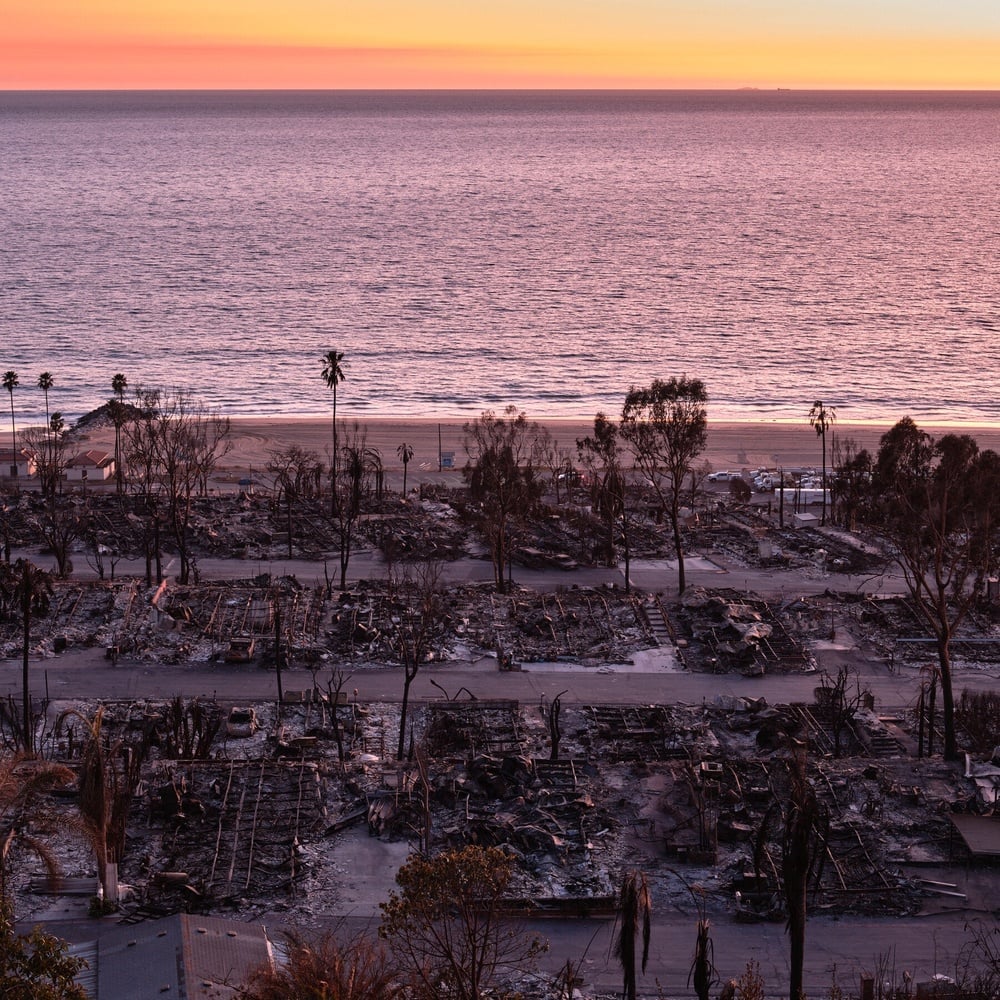

Click points to explore news by date. News sentiment ranges from -10 (very negative) to +10 (very positive) where 0 is neutral.
2026 © Helium Trades
Privacy Policy & Disclosure
* Disclaimer: Nothing on this website constitutes investment advice, performance data or any recommendation that any particular security, portfolio of securities, transaction or investment strategy is suitable for any specific person. Helium Trades is not responsible in any way for the accuracy
of any model predictions or price data. Any mention of a particular security and related prediction data is not a recommendation to buy or sell that security. Investments in securities involve the risk of loss. Past performance is no guarantee of future results. Helium Trades is not responsible for any of your investment decisions,
you should consult a financial expert before engaging in any transaction.
Helium Research Assistant

How can I help you today?
Ask any question about this page.