See whether Helium helps you make better-informed decisions. Try every Pro Trader feature for 30 days. No credit card required.
Try every Pro Trader feature for 30 days. No credit card required.
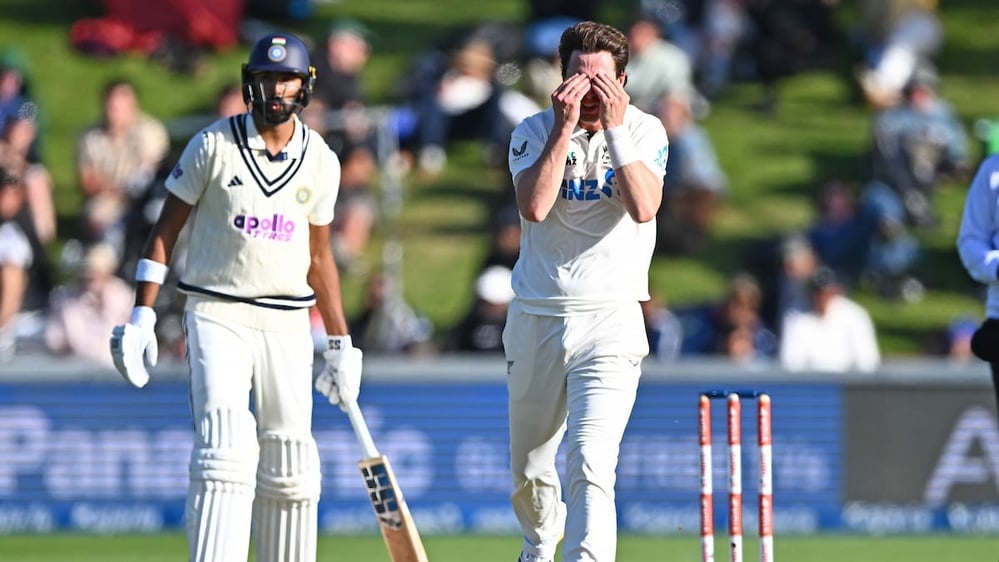
November 18, 2026 · 0 shares
Presents a brief, factual sports preview that casts the series as important because World Test Championship points are at stake while using otherwise neutral language.
Helium Analysis
Limitations: The supplied article content is only a very brief sports preview with unrelated headline links and boilerplate, limiting assessment of broader framing.
·
6 of 56 available dimensions scored; omitted dimensions are not treated as neutral.
·
Verified supporting quotes for 6 of 6 scored dimensions.
Claim: The report is predominantly factual about the series schedule and participants, with only light evaluative framing.
“New Zealand’s two-game test series against India gets under way at the Basin Reserve on Thursday.” · exact text match
Counterevidence:
“Crucial World Test Championship points at stake.” · exact text match
Why: The statement is a neutral factual schedule; 'Crucial' in the opening adds only mild subjective emphasis.
Claim: The text avoids sensational language and presents the scheduled sports event in measured terms.
“New Zealand’s two-game test series against India gets under way at the Basin Reserve on Thursday.” · exact text match
Counterevidence:
“Crucial World Test Championship points at stake.” · exact text match
Why: There is no sensational or alarmist wording; the only emphasis is the stakes phrase.
Claim: The content is descriptive—a series preview—without prescribing actions or outcomes.
“Cricket writer Adrian Seconi previews the series.” · exact text match
Why: It describes a forthcoming series preview rather than making recommendations.
Claim: The tone is neutral and informational rather than emotionally charged.
“New Zealand’s two-game test series against India gets under way at the Basin Reserve on Thursday.” · exact text match
Why: The sentence is flatly factual with no emotional language.
Claim: The brief report is attributed to a named cricket writer and specifies venue and timing.
“Cricket writer Adrian Seconi previews the series.” · exact text match
“New Zealand’s two-game test series against India gets under way at the Basin Reserve on Thursday.” · exact text match
Why: Attribution plus specific venue/timing supports credibility, but limited content prevents a high score.
Claim: The item transparently identifies the preview's author and gives specific event details without evident deception.
“Cricket writer Adrian Seconi previews the series.” · exact text match
Why: The named attribution and concrete event details are fairness/honesty signals, though the text is very short.
The supplied article content is only a very brief sports preview with unrelated headline links and boilerplate, limiting assessment of broader framing.
November 18, 2026 · 0 shares
Largely factual match reporting is colored by mild New Zealand-centric sports drama, especially in 'horror start,' 'reeling,' and 'resurrect.'
Helium Analysis
Limitations: The supplied content is a short live sports report with limited substantive text; most ideological and political bias dimensions are not applicable.
·
2 of 56 available dimensions scored; omitted dimensions are not treated as neutral.
·
Verified supporting quotes for 2 of 2 scored dimensions.
Claim: The report uses evaluative sports language alongside score-based facts, tilting slightly subjective.
“After a horror start to the test series, the Black Caps have fought back on day one against India at the Basin Reserve, grinding their way to 243 for 5.” · exact text match
Why: Factual scoreline is paired with evaluative terms like 'horror start' and 'grinding their way', indicating mild subjective framing.
Claim: The report uses mild dramatic phrasing to frame New Zealand's collapse and recovery.
“Devon Conway, Daryl Mitchell, Rachin Ravindra and Tom Blundell all fell cheaply to leave the Kiwis reeling.” · exact text match
“However, Henry Nicholls and Glenn Phillips combined to resurrect the innings, combining for an unbeaten 173 run partnership to bring their side right back into the contest.” · exact text match
Why: Terms such as 'reeling' and 'resurrect' are mild dramatic descriptors, though the surrounding content remains statistical match reporting.
The supplied content is a short live sports report with limited substantive text; most ideological and political bias dimensions are not applicable.
November 19, 2026 · 0 shares
Pro-New Zealand sports narration uses celebratory, evaluative language to cast Nicholls and Phillips' stand as a heroic rescue while retaining match statistics and some acknowledgment of luck.
Helium Analysis
Limitations: Bias assessment is limited to a sports match report; many political or ideological dimensions are non-applicable rather than scored neutral.
·
5 of 56 available dimensions scored; omitted dimensions are not treated as neutral.
·
Verified supporting quotes for 5 of 5 scored dimensions.
Claim: The report evaluates Nicholls' innings and character in subjective terms.
“what is easily his best innings for New Zealand” · exact text match
“few can rival the character he showed” · exact text match
Why: These are evaluative judgments rather than neutral descriptions of play.
Claim: Dramatic language heightens the match narrative.
“rescued New Zealand from a perilous position” · exact text match
“scythed through New Zealand’s top order” · exact text match
Why: Vivid verbs and dramatic framing present the cricket action sensationally, though still tied to match facts.
Claim: Player assessments go beyond factual reporting into opinion.
“what is easily his best innings for New Zealand” · exact text match
“the perfect foil for Nicholls” · exact text match
Why: Subjective rankings and characterizations are presented as assessments.
Claim: The narrative is positively disposed toward the New Zealand fightback and crowd reaction.
“the Basin Reserve rose as one to celebrate his century” · exact text match
“the perfect foil for Nicholls” · exact text match
Why: Celebratory and favorable language signals positive emotional framing toward the home side.
Claim: The report anchors its narrative in specific match statistics and acknowledges luck.
“New Zealand 243-5 (Nicholls 113 not out, Phillips 94 not out; Bumrah 3-52)” · exact text match
“Nicholls’ innings wasn’t chanceless” · exact text match
Why: Concrete scorecard data and admission of chances support credibility, though evaluative framing remains.
Bias assessment is limited to a sports match report; many political or ideological dimensions are non-applicable rather than scored neutral.
November 18, 2026 · 0 shares
Largely factual match reporting is colored by mild New Zealand-centric sports drama, especially in 'horror start,' 'reeling,' and 'resurrect.'
Helium Analysis
Limitations: The supplied content is a short live sports report with limited substantive text; most ideological and political bias dimensions are not applicable.
·
2 of 56 available dimensions scored; omitted dimensions are not treated as neutral.
·
Verified supporting quotes for 2 of 2 scored dimensions.
Claim: The report uses evaluative sports language alongside score-based facts, tilting slightly subjective.
“After a horror start to the test series, the Black Caps have fought back on day one against India at the Basin Reserve, grinding their way to 243 for 5.” · exact text match
Why: Factual scoreline is paired with evaluative terms like 'horror start' and 'grinding their way', indicating mild subjective framing.
Claim: The report uses mild dramatic phrasing to frame New Zealand's collapse and recovery.
“Devon Conway, Daryl Mitchell, Rachin Ravindra and Tom Blundell all fell cheaply to leave the Kiwis reeling.” · exact text match
“However, Henry Nicholls and Glenn Phillips combined to resurrect the innings, combining for an unbeaten 173 run partnership to bring their side right back into the contest.” · exact text match
Why: Terms such as 'reeling' and 'resurrect' are mild dramatic descriptors, though the surrounding content remains statistical match reporting.
The supplied content is a short live sports report with limited substantive text; most ideological and political bias dimensions are not applicable.
November 21, 2026 · 0 shares
Score-driven sports reporting frames India as dominant while giving New Zealand's late wicket and day-four task balanced, mildly home-team-positive notice.
Helium Analysis
Limitations: The supplied text is a short scraped sports report with unrelated headlines and newsletter boilerplate; no byline or sourcing details are present.
·
9 of 56 available dimensions scored; omitted dimensions are not treated as neutral.
·
Verified supporting quotes for 9 of 9 scored dimensions.
Claim: The report presents match developments through concrete scores and dismissals rather than subjective commentary.
“After posting 368, the Black Caps struggled for wickets on day three, as a century to KL Rahul and Shubman Gill's 98 powered India to a 118-run lead.” · exact text match
Why: Concrete run totals, wickets, and player scores dominate the report, with little evaluative framing.
Claim: The report uses sober match-report language rather than sensational or exaggerated framing.
“Duffy clean-bowled Indian skipper Shubman Gill in the final over of the day to deny him a century, after India dominated the Kiwi bowlers to get to stumps at 488/4.” · exact text match
Why: The lead is built from scoreline and dismissal facts, not dramatic or alarming language.
Claim: The article describes the state of play and does not prescribe actions or policies.
“New Zealand have plenty to do on day four, with play resuming at 11am Sunday.” · exact text match
Why: The closest evaluative line is a description of sporting task and schedule, not a recommendation.
Claim: Mostly factual score reporting with minor evaluative sports language.
“India dominated the Kiwi bowlers to get to stumps at 488/4.” · exact text match
Why: 'Dominated' is an evaluative characterization but is tied directly to the scoreline.
Claim: There is mild positive framing toward New Zealand's late success but overall neutral valence.
“Fast bowler Jacob Duffy has given the Black Caps a late reason to smile, after a tough day in the field, with India building a substantial first-innings lead at the Basin Reserve test.” · exact text match
Counterevidence:
“India dominated the Kiwi bowlers to get to stumps at 488/4.” · exact text match
Why: The phrase 'reason to smile' adds mild positive color for New Zealand while the report remains score-driven.
Claim: The report supplies specific, internally consistent match details but no explicit sourcing or byline.
“Duffy clean-bowled Indian skipper Shubman Gill in the final over of the day to deny him a century, after India dominated the Kiwi bowlers to get to stumps at 488/4.” · exact text match
Why: Detailed score and dismissal information supports credibility, though the supplied text lacks sourcing cues.
Claim: The report is grounded in observable match statistics and developments rather than irrational claims.
“Rahul was dismissed for 136 by Nathan Smith, while Kyle Jamieson and Matt Henry also claimed a wicket each, as Rishabh Pant finished unbeaten on 55.” · exact text match
Why: Player scores and dismissals are the basis of the account, with no speculative or illogical reasoning.
Claim: The report distributes factual credit and detail to both teams.
“Rahul was dismissed for 136 by Nathan Smith, while Kyle Jamieson and Matt Henry also claimed a wicket each, as Rishabh Pant finished unbeaten on 55.” · exact text match
Why: Specific performance details are provided for Indian and New Zealand players without evident distortion.
Claim: The report is concise and organized around key match facts.
“After posting 368, the Black Caps struggled for wickets on day three, as a century to KL Rahul and Shubman Gill's 98 powered India to a 118-run lead.” · exact text match
Why: It clearly links prior score, day-three play, individual milestones, and the resulting lead.
The supplied text is a short scraped sports report with unrelated headlines and newsletter boilerplate; no byline or sourcing details are present.
November 21, 2026 · 0 shares
The report is largely factual and score-driven, with mild home-team framing visible in phrases such as 'Black Caps on back foot' and 'a late reason to smile'.
Test cricket is played over up to five days with two innings per side, which is necessary to interpret the day-three score and first-innings lead.
Helium Analysis
Limitations: The supplied page contains duplicated and unrelated headline/teaser text around the cricket report; analysis is limited to the substantive match report.
·
8 of 56 available dimensions scored; omitted dimensions are not treated as neutral.
·
Verified supporting quotes for 8 of 8 scored dimensions.
Claim: The report is predominantly factual and score-driven, though its headline and scene-setting use mild subjective framing.
“After posting 368, the Black Caps struggled for wickets on day three, as a century to KL Rahul and Shubman Gill's 98 powered India to a 118-run lead.” · exact text match
Counterevidence:
“Black Caps on back foot as India dominate day three in Wellington.” · exact text match
Why: The central passage reports concrete match events and figures with minimal evaluative language.
Claim: The report uses restrained, statistics-based language rather than sensational description.
“Rahul was dismissed for 136 by Nathan Smith, while Kyle Jamieson and Matt Henry also claimed a wicket each, as Rishabh Pant finished unbeaten on 55.” · exact text match
Why: Specific scores and dismissals dominate, with no dramatic or hyperbolic phrasing in the passage.
Claim: The report is overwhelmingly descriptive, focused on what occurred rather than prescribing actions or outcomes.
“Rahul was dismissed for 136 by Nathan Smith, while Kyle Jamieson and Matt Henry also claimed a wicket each, as Rishabh Pant finished unbeaten on 55.” · exact text match
Why: The passage recounts match events and statistics without recommending or demanding any action.
Claim: The tone is mildly negative about New Zealand's match position, but it remains largely neutral and balanced by a late positive note.
“Fast bowler Jacob Duffy has given the Black Caps a late reason to smile, after a tough day in the field, with India building a substantial first-innings lead at the Basin Reserve Test.” · exact text match
Why: The phrase 'tough day' carries mild negative valence, while 'late reason to smile' balances it, supporting a slight negative emotional lean rather than strong emotion.
Claim: The report provides specific, internally consistent scorelines and named player outcomes that support its visible credibility.
“Duffy clean-bowled Indian skipper Shubman Gill in the final over of the day to deny him a century, after India dominated the Kiwi bowlers to get to stumps at 488/4.” · exact text match
Why: Concrete figures and named players are stated consistently, though the supplied text lacks external sourcing or correction information.
Claim: The report's framing is rationally grounded in observable match events and scorelines.
“Duffy clean-bowled Indian skipper Shubman Gill in the final over of the day to deny him a century, after India dominated the Kiwi bowlers to get to stumps at 488/4.” · exact text match
Why: It presents a coherent cricket narrative tied to specific, checkable events rather than irrational assertions.
Claim: The report acknowledges both India's dominance and New Zealand's late success, showing a balanced account of the day's play.
“Fast bowler Jacob Duffy has given the Black Caps a late reason to smile, after a tough day in the field, with India building a substantial first-innings lead at the Basin Reserve Test.” · exact text match
Why: The same sentence notes New Zealand's difficult day and India's substantial lead while also crediting Duffy's late wicket, indicating internal fairness.
Claim: The writing is clear and organized, though it remains a straightforward match report rather than a deeply analytical piece.
“After posting 368, the Black Caps struggled for wickets on day three, as a century to KL Rahul and Shubman Gill's 98 powered India to a 118-run lead.” · exact text match
Why: The sentence efficiently summarizes the day's key developments with standard sports-reporting clarity.
The supplied page contains duplicated and unrelated headline/teaser text around the cricket report; analysis is limited to the substantive match report.
November 21, 2026 · 0 shares
Predominantly factual, descriptive milestone reporting with mild celebratory sports language and no evident political or ideological framing.
The World Test Championship is an international Test cricket competition.
Helium Analysis
Limitations: Only a truncated headline-and-lead snippet was supplied; byline and full body are unavailable.
·
3 of 56 available dimensions scored; omitted dimensions are not treated as neutral.
·
Verified supporting quotes for 3 of 3 scored dimensions.
Claim: The report presents the milestone primarily as a factual record with limited evaluative sports language.
“he became the nation’s first player to complete 3000 runs in World Test Championship history” · exact text match
Counterevidence:
“smashed a strong 98” · exact text match
Why: The core claim is stated as a statistical record, while 'strong' and 'smashed' add mild subjectivity.
Claim: The report presents the milestone with factual match details rather than sensational language.
“Gill achieved the feat during the first Test of the two-match series against New Zealand at Basin Reserve here Saturday” · exact text match
Counterevidence:
“smashed a strong 98” · exact text match
Why: Concrete match details dominate, with only mild vivid sports phrasing.
Claim: The report describes a completed sporting event and milestone without prescribing action.
“Gill achieved the feat during the first Test of the two-match series against New Zealand at Basin Reserve here Saturday as he smashed a strong 98.” · exact text match
Why: The sentence reports what happened; no policy or behavioral recommendation is present.
Only a truncated headline-and-lead snippet was supplied; byline and full body are unavailable.
Frames New Zealand’s day-three bowling workload as a potentially costly injury-management issue through hedged but concern-driven forecasting.
Helium Analysis
Limitations: The supplied text includes duplicated article blocks and unrelated promotional/listing material, but the core sports report is sufficiently present for classification.
·
6 of 56 available dimensions scored; omitted dimensions are not treated as neutral.
·
Verified supporting quotes for 6 of 6 scored dimensions.
Claim: The framing goes beyond neutral match reporting by evaluating the workload as a potentially serious future problem.
“A tough day in the dirt could cost the Black Caps’ bowling attack much more than the chance to push for victory against India in Wellington.” · exact text match
“the context of New Zealand’s upcoming schedule does leave serious room for concern.” · exact text match
Why: Subjective evaluative and forecasting language frames the match around future risk.
Claim: The headline and lead use mildly dramatic warning language about future consequences.
“Why bowlers' day three struggles could cost New Zealand far beyond Basin Reserve test.” · exact text match
“could come back to bite them.” · exact text match
Why: Warning-oriented phrasing heightens stakes beyond plain reporting.
Claim: The article emphasizes New Zealand's vulnerable position and potential future costs rather than optimism.
“the Black Caps find themselves on the back foot” · exact text match
“could come back to bite them.” · exact text match
Counterevidence:
“While the Black Caps escaping with a draw is by no means out of the question” · exact text match
Why: The tone is cautionary and risk-focused, though it notes a draw remains possible.
Claim: The report includes evaluative sports commentary and predictions alongside factual reporting.
“Of all New Zealand’s fast bowlers, O’Rourke is arguably the most exciting.” · exact text match
“does leave serious room for concern.” · exact text match
Why: The publisher's own text makes evaluative judgments beyond flat attribution.
Claim: The article grounds its analysis in specific match statistics, injury histories and direct quotes from the bowling coach.
“claimed just three wickets in 86 overs” · exact text match
““Time will tell,” Oram said.” · exact text match
Why: Visible sourcing and quantified match details support credibility, though the piece remains an analytical sports report.
Claim: The article forecasts injury and selection consequences that it does not establish as fact.
“And if injury management is truly front of mind, at least one – if not both – of the pair could be forced to sit out in Christchurch next week as a result.” · exact text match
““Time will tell,” Oram said.” · exact text match
Why: Uses conditional language and an explicit time-will-tell quote to discuss future possibilities.
The supplied text includes duplicated article blocks and unrelated promotional/listing material, but the core sports report is sufficiently present for classification.
November 19, 2026 · 0 shares
Pro-New Zealand sports narration uses celebratory, evaluative language to cast Nicholls and Phillips' stand as a heroic rescue while retaining match statistics and some acknowledgment of luck.
Helium Analysis Limitations: Bias assessment is limited to a sports match report; many political or ideological dimensions are non-applicable rather than scored neutral. · 5 of 56 available dimensions scored; omitted dimensions are not treated as neutral. · Verified supporting quotes for 5 of 5 scored dimensions.
Claim: The report evaluates Nicholls' innings and character in subjective terms.
“what is easily his best innings for New Zealand” · exact text match
“few can rival the character he showed” · exact text match
Why: These are evaluative judgments rather than neutral descriptions of play.
Claim: Dramatic language heightens the match narrative.
“rescued New Zealand from a perilous position” · exact text match
“scythed through New Zealand’s top order” · exact text match
Why: Vivid verbs and dramatic framing present the cricket action sensationally, though still tied to match facts.
Claim: Player assessments go beyond factual reporting into opinion.
“what is easily his best innings for New Zealand” · exact text match
“the perfect foil for Nicholls” · exact text match
Why: Subjective rankings and characterizations are presented as assessments.
Claim: The narrative is positively disposed toward the New Zealand fightback and crowd reaction.
“the Basin Reserve rose as one to celebrate his century” · exact text match
“the perfect foil for Nicholls” · exact text match
Why: Celebratory and favorable language signals positive emotional framing toward the home side.
Claim: The report anchors its narrative in specific match statistics and acknowledges luck.
“New Zealand 243-5 (Nicholls 113 not out, Phillips 94 not out; Bumrah 3-52)” · exact text match
“Nicholls’ innings wasn’t chanceless” · exact text match
Why: Concrete scorecard data and admission of chances support credibility, though evaluative framing remains.
Bias assessment is limited to a sports match report; many political or ideological dimensions are non-applicable rather than scored neutral.
November 18, 2026 · 0 shares
Largely factual match reporting is colored by mild New Zealand-centric sports drama, especially in 'horror start,' 'reeling,' and 'resurrect.'
Helium Analysis Limitations: The supplied content is a short live sports report with limited substantive text; most ideological and political bias dimensions are not applicable. · 2 of 56 available dimensions scored; omitted dimensions are not treated as neutral. · Verified supporting quotes for 2 of 2 scored dimensions.
Claim: The report uses evaluative sports language alongside score-based facts, tilting slightly subjective.
“After a horror start to the test series, the Black Caps have fought back on day one against India at the Basin Reserve, grinding their way to 243 for 5.” · exact text match
Why: Factual scoreline is paired with evaluative terms like 'horror start' and 'grinding their way', indicating mild subjective framing.
Claim: The report uses mild dramatic phrasing to frame New Zealand's collapse and recovery.
“Devon Conway, Daryl Mitchell, Rachin Ravindra and Tom Blundell all fell cheaply to leave the Kiwis reeling.” · exact text match
“However, Henry Nicholls and Glenn Phillips combined to resurrect the innings, combining for an unbeaten 173 run partnership to bring their side right back into the contest.” · exact text match
Why: Terms such as 'reeling' and 'resurrect' are mild dramatic descriptors, though the surrounding content remains statistical match reporting.
The supplied content is a short live sports report with limited substantive text; most ideological and political bias dimensions are not applicable.
November 21, 2026 · 0 shares
Score-driven sports reporting frames India as dominant while giving New Zealand's late wicket and day-four task balanced, mildly home-team-positive notice.
Helium Analysis Limitations: The supplied text is a short scraped sports report with unrelated headlines and newsletter boilerplate; no byline or sourcing details are present. · 9 of 56 available dimensions scored; omitted dimensions are not treated as neutral. · Verified supporting quotes for 9 of 9 scored dimensions.
Claim: The report presents match developments through concrete scores and dismissals rather than subjective commentary.
“After posting 368, the Black Caps struggled for wickets on day three, as a century to KL Rahul and Shubman Gill's 98 powered India to a 118-run lead.” · exact text match
Why: Concrete run totals, wickets, and player scores dominate the report, with little evaluative framing.
Claim: The report uses sober match-report language rather than sensational or exaggerated framing.
“Duffy clean-bowled Indian skipper Shubman Gill in the final over of the day to deny him a century, after India dominated the Kiwi bowlers to get to stumps at 488/4.” · exact text match
Why: The lead is built from scoreline and dismissal facts, not dramatic or alarming language.
Claim: The article describes the state of play and does not prescribe actions or policies.
“New Zealand have plenty to do on day four, with play resuming at 11am Sunday.” · exact text match
Why: The closest evaluative line is a description of sporting task and schedule, not a recommendation.
Claim: Mostly factual score reporting with minor evaluative sports language.
“India dominated the Kiwi bowlers to get to stumps at 488/4.” · exact text match
Why: 'Dominated' is an evaluative characterization but is tied directly to the scoreline.
Claim: There is mild positive framing toward New Zealand's late success but overall neutral valence.
“Fast bowler Jacob Duffy has given the Black Caps a late reason to smile, after a tough day in the field, with India building a substantial first-innings lead at the Basin Reserve test.” · exact text match
Counterevidence:
“India dominated the Kiwi bowlers to get to stumps at 488/4.” · exact text match
Why: The phrase 'reason to smile' adds mild positive color for New Zealand while the report remains score-driven.
Claim: The report supplies specific, internally consistent match details but no explicit sourcing or byline.
“Duffy clean-bowled Indian skipper Shubman Gill in the final over of the day to deny him a century, after India dominated the Kiwi bowlers to get to stumps at 488/4.” · exact text match
Why: Detailed score and dismissal information supports credibility, though the supplied text lacks sourcing cues.
Claim: The report is grounded in observable match statistics and developments rather than irrational claims.
“Rahul was dismissed for 136 by Nathan Smith, while Kyle Jamieson and Matt Henry also claimed a wicket each, as Rishabh Pant finished unbeaten on 55.” · exact text match
Why: Player scores and dismissals are the basis of the account, with no speculative or illogical reasoning.
Claim: The report distributes factual credit and detail to both teams.
“Rahul was dismissed for 136 by Nathan Smith, while Kyle Jamieson and Matt Henry also claimed a wicket each, as Rishabh Pant finished unbeaten on 55.” · exact text match
Why: Specific performance details are provided for Indian and New Zealand players without evident distortion.
Claim: The report is concise and organized around key match facts.
“After posting 368, the Black Caps struggled for wickets on day three, as a century to KL Rahul and Shubman Gill's 98 powered India to a 118-run lead.” · exact text match
Why: It clearly links prior score, day-three play, individual milestones, and the resulting lead.
The supplied text is a short scraped sports report with unrelated headlines and newsletter boilerplate; no byline or sourcing details are present.
November 21, 2026 · 0 shares
The report is largely factual and score-driven, with mild home-team framing visible in phrases such as 'Black Caps on back foot' and 'a late reason to smile'.
Test cricket is played over up to five days with two innings per side, which is necessary to interpret the day-three score and first-innings lead.
Helium Analysis Limitations: The supplied page contains duplicated and unrelated headline/teaser text around the cricket report; analysis is limited to the substantive match report. · 8 of 56 available dimensions scored; omitted dimensions are not treated as neutral. · Verified supporting quotes for 8 of 8 scored dimensions.
Claim: The report is predominantly factual and score-driven, though its headline and scene-setting use mild subjective framing.
“After posting 368, the Black Caps struggled for wickets on day three, as a century to KL Rahul and Shubman Gill's 98 powered India to a 118-run lead.” · exact text match
Counterevidence:
“Black Caps on back foot as India dominate day three in Wellington.” · exact text match
Why: The central passage reports concrete match events and figures with minimal evaluative language.
Claim: The report uses restrained, statistics-based language rather than sensational description.
“Rahul was dismissed for 136 by Nathan Smith, while Kyle Jamieson and Matt Henry also claimed a wicket each, as Rishabh Pant finished unbeaten on 55.” · exact text match
Why: Specific scores and dismissals dominate, with no dramatic or hyperbolic phrasing in the passage.
Claim: The report is overwhelmingly descriptive, focused on what occurred rather than prescribing actions or outcomes.
“Rahul was dismissed for 136 by Nathan Smith, while Kyle Jamieson and Matt Henry also claimed a wicket each, as Rishabh Pant finished unbeaten on 55.” · exact text match
Why: The passage recounts match events and statistics without recommending or demanding any action.
Claim: The tone is mildly negative about New Zealand's match position, but it remains largely neutral and balanced by a late positive note.
“Fast bowler Jacob Duffy has given the Black Caps a late reason to smile, after a tough day in the field, with India building a substantial first-innings lead at the Basin Reserve Test.” · exact text match
Why: The phrase 'tough day' carries mild negative valence, while 'late reason to smile' balances it, supporting a slight negative emotional lean rather than strong emotion.
Claim: The report provides specific, internally consistent scorelines and named player outcomes that support its visible credibility.
“Duffy clean-bowled Indian skipper Shubman Gill in the final over of the day to deny him a century, after India dominated the Kiwi bowlers to get to stumps at 488/4.” · exact text match
Why: Concrete figures and named players are stated consistently, though the supplied text lacks external sourcing or correction information.
Claim: The report's framing is rationally grounded in observable match events and scorelines.
“Duffy clean-bowled Indian skipper Shubman Gill in the final over of the day to deny him a century, after India dominated the Kiwi bowlers to get to stumps at 488/4.” · exact text match
Why: It presents a coherent cricket narrative tied to specific, checkable events rather than irrational assertions.
Claim: The report acknowledges both India's dominance and New Zealand's late success, showing a balanced account of the day's play.
“Fast bowler Jacob Duffy has given the Black Caps a late reason to smile, after a tough day in the field, with India building a substantial first-innings lead at the Basin Reserve Test.” · exact text match
Why: The same sentence notes New Zealand's difficult day and India's substantial lead while also crediting Duffy's late wicket, indicating internal fairness.
Claim: The writing is clear and organized, though it remains a straightforward match report rather than a deeply analytical piece.
“After posting 368, the Black Caps struggled for wickets on day three, as a century to KL Rahul and Shubman Gill's 98 powered India to a 118-run lead.” · exact text match
Why: The sentence efficiently summarizes the day's key developments with standard sports-reporting clarity.
The supplied page contains duplicated and unrelated headline/teaser text around the cricket report; analysis is limited to the substantive match report.
November 21, 2026 · 0 shares
Predominantly factual, descriptive milestone reporting with mild celebratory sports language and no evident political or ideological framing.
The World Test Championship is an international Test cricket competition.
Helium Analysis Limitations: Only a truncated headline-and-lead snippet was supplied; byline and full body are unavailable. · 3 of 56 available dimensions scored; omitted dimensions are not treated as neutral. · Verified supporting quotes for 3 of 3 scored dimensions.
Claim: The report presents the milestone primarily as a factual record with limited evaluative sports language.
“he became the nation’s first player to complete 3000 runs in World Test Championship history” · exact text match
Counterevidence:
“smashed a strong 98” · exact text match
Why: The core claim is stated as a statistical record, while 'strong' and 'smashed' add mild subjectivity.
Claim: The report presents the milestone with factual match details rather than sensational language.
“Gill achieved the feat during the first Test of the two-match series against New Zealand at Basin Reserve here Saturday” · exact text match
Counterevidence:
“smashed a strong 98” · exact text match
Why: Concrete match details dominate, with only mild vivid sports phrasing.
Claim: The report describes a completed sporting event and milestone without prescribing action.
“Gill achieved the feat during the first Test of the two-match series against New Zealand at Basin Reserve here Saturday as he smashed a strong 98.” · exact text match
Why: The sentence reports what happened; no policy or behavioral recommendation is present.
Only a truncated headline-and-lead snippet was supplied; byline and full body are unavailable.
Frames New Zealand’s day-three bowling workload as a potentially costly injury-management issue through hedged but concern-driven forecasting.
Helium Analysis Limitations: The supplied text includes duplicated article blocks and unrelated promotional/listing material, but the core sports report is sufficiently present for classification. · 6 of 56 available dimensions scored; omitted dimensions are not treated as neutral. · Verified supporting quotes for 6 of 6 scored dimensions.
Claim: The framing goes beyond neutral match reporting by evaluating the workload as a potentially serious future problem.
“A tough day in the dirt could cost the Black Caps’ bowling attack much more than the chance to push for victory against India in Wellington.” · exact text match
“the context of New Zealand’s upcoming schedule does leave serious room for concern.” · exact text match
Why: Subjective evaluative and forecasting language frames the match around future risk.
Claim: The headline and lead use mildly dramatic warning language about future consequences.
“Why bowlers' day three struggles could cost New Zealand far beyond Basin Reserve test.” · exact text match
“could come back to bite them.” · exact text match
Why: Warning-oriented phrasing heightens stakes beyond plain reporting.
Claim: The article emphasizes New Zealand's vulnerable position and potential future costs rather than optimism.
“the Black Caps find themselves on the back foot” · exact text match
“could come back to bite them.” · exact text match
Counterevidence:
“While the Black Caps escaping with a draw is by no means out of the question” · exact text match
Why: The tone is cautionary and risk-focused, though it notes a draw remains possible.
Claim: The report includes evaluative sports commentary and predictions alongside factual reporting.
“Of all New Zealand’s fast bowlers, O’Rourke is arguably the most exciting.” · exact text match
“does leave serious room for concern.” · exact text match
Why: The publisher's own text makes evaluative judgments beyond flat attribution.
Claim: The article grounds its analysis in specific match statistics, injury histories and direct quotes from the bowling coach.
“claimed just three wickets in 86 overs” · exact text match
““Time will tell,” Oram said.” · exact text match
Why: Visible sourcing and quantified match details support credibility, though the piece remains an analytical sports report.
Claim: The article forecasts injury and selection consequences that it does not establish as fact.
“And if injury management is truly front of mind, at least one – if not both – of the pair could be forced to sit out in Christchurch next week as a result.” · exact text match
““Time will tell,” Oram said.” · exact text match
Why: Uses conditional language and an explicit time-will-tell quote to discuss future possibilities.
The supplied text includes duplicated article blocks and unrelated promotional/listing material, but the core sports report is sufficiently present for classification.
Helium Bias
Story Blindspots
November 21, 2026 · 0 shares
The report is largely factual and score-driven, with mild home-team framing visible in phrases such as 'Black Caps on back foot' and 'a late reason to smile'.
Test cricket is played over up to five days with two innings per side, which is necessary to interpret the day-three score and first-innings lead.
Helium Analysis Limitations: The supplied page contains duplicated and unrelated headline/teaser text around the cricket report; analysis is limited to the substantive match report. · 8 of 56 available dimensions scored; omitted dimensions are not treated as neutral. · Verified supporting quotes for 8 of 8 scored dimensions.
Claim: The report is predominantly factual and score-driven, though its headline and scene-setting use mild subjective framing.
“After posting 368, the Black Caps struggled for wickets on day three, as a century to KL Rahul and Shubman Gill's 98 powered India to a 118-run lead.” · exact text match
Counterevidence:
“Black Caps on back foot as India dominate day three in Wellington.” · exact text match
Why: The central passage reports concrete match events and figures with minimal evaluative language.
Claim: The report uses restrained, statistics-based language rather than sensational description.
“Rahul was dismissed for 136 by Nathan Smith, while Kyle Jamieson and Matt Henry also claimed a wicket each, as Rishabh Pant finished unbeaten on 55.” · exact text match
Why: Specific scores and dismissals dominate, with no dramatic or hyperbolic phrasing in the passage.
Claim: The report is overwhelmingly descriptive, focused on what occurred rather than prescribing actions or outcomes.
“Rahul was dismissed for 136 by Nathan Smith, while Kyle Jamieson and Matt Henry also claimed a wicket each, as Rishabh Pant finished unbeaten on 55.” · exact text match
Why: The passage recounts match events and statistics without recommending or demanding any action.
Claim: The tone is mildly negative about New Zealand's match position, but it remains largely neutral and balanced by a late positive note.
“Fast bowler Jacob Duffy has given the Black Caps a late reason to smile, after a tough day in the field, with India building a substantial first-innings lead at the Basin Reserve Test.” · exact text match
Why: The phrase 'tough day' carries mild negative valence, while 'late reason to smile' balances it, supporting a slight negative emotional lean rather than strong emotion.
Claim: The report provides specific, internally consistent scorelines and named player outcomes that support its visible credibility.
“Duffy clean-bowled Indian skipper Shubman Gill in the final over of the day to deny him a century, after India dominated the Kiwi bowlers to get to stumps at 488/4.” · exact text match
Why: Concrete figures and named players are stated consistently, though the supplied text lacks external sourcing or correction information.
Claim: The report's framing is rationally grounded in observable match events and scorelines.
“Duffy clean-bowled Indian skipper Shubman Gill in the final over of the day to deny him a century, after India dominated the Kiwi bowlers to get to stumps at 488/4.” · exact text match
Why: It presents a coherent cricket narrative tied to specific, checkable events rather than irrational assertions.
Claim: The report acknowledges both India's dominance and New Zealand's late success, showing a balanced account of the day's play.
“Fast bowler Jacob Duffy has given the Black Caps a late reason to smile, after a tough day in the field, with India building a substantial first-innings lead at the Basin Reserve Test.” · exact text match
Why: The same sentence notes New Zealand's difficult day and India's substantial lead while also crediting Duffy's late wicket, indicating internal fairness.
Claim: The writing is clear and organized, though it remains a straightforward match report rather than a deeply analytical piece.
“After posting 368, the Black Caps struggled for wickets on day three, as a century to KL Rahul and Shubman Gill's 98 powered India to a 118-run lead.” · exact text match
Why: The sentence efficiently summarizes the day's key developments with standard sports-reporting clarity.
The supplied page contains duplicated and unrelated headline/teaser text around the cricket report; analysis is limited to the substantive match report.
Frames New Zealand’s day-three bowling workload as a potentially costly injury-management issue through hedged but concern-driven forecasting.
Helium Analysis Limitations: The supplied text includes duplicated article blocks and unrelated promotional/listing material, but the core sports report is sufficiently present for classification. · 6 of 56 available dimensions scored; omitted dimensions are not treated as neutral. · Verified supporting quotes for 6 of 6 scored dimensions.
Claim: The framing goes beyond neutral match reporting by evaluating the workload as a potentially serious future problem.
“A tough day in the dirt could cost the Black Caps’ bowling attack much more than the chance to push for victory against India in Wellington.” · exact text match
“the context of New Zealand’s upcoming schedule does leave serious room for concern.” · exact text match
Why: Subjective evaluative and forecasting language frames the match around future risk.
Claim: The headline and lead use mildly dramatic warning language about future consequences.
“Why bowlers' day three struggles could cost New Zealand far beyond Basin Reserve test.” · exact text match
“could come back to bite them.” · exact text match
Why: Warning-oriented phrasing heightens stakes beyond plain reporting.
Claim: The article emphasizes New Zealand's vulnerable position and potential future costs rather than optimism.
“the Black Caps find themselves on the back foot” · exact text match
“could come back to bite them.” · exact text match
Counterevidence:
“While the Black Caps escaping with a draw is by no means out of the question” · exact text match
Why: The tone is cautionary and risk-focused, though it notes a draw remains possible.
Claim: The report includes evaluative sports commentary and predictions alongside factual reporting.
“Of all New Zealand’s fast bowlers, O’Rourke is arguably the most exciting.” · exact text match
“does leave serious room for concern.” · exact text match
Why: The publisher's own text makes evaluative judgments beyond flat attribution.
Claim: The article grounds its analysis in specific match statistics, injury histories and direct quotes from the bowling coach.
“claimed just three wickets in 86 overs” · exact text match
““Time will tell,” Oram said.” · exact text match
Why: Visible sourcing and quantified match details support credibility, though the piece remains an analytical sports report.
Claim: The article forecasts injury and selection consequences that it does not establish as fact.
“And if injury management is truly front of mind, at least one – if not both – of the pair could be forced to sit out in Christchurch next week as a result.” · exact text match
““Time will tell,” Oram said.” · exact text match
Why: Uses conditional language and an explicit time-will-tell quote to discuss future possibilities.
The supplied text includes duplicated article blocks and unrelated promotional/listing material, but the core sports report is sufficiently present for classification.
November 21, 2026 · 0 shares
Score-driven sports reporting frames India as dominant while giving New Zealand's late wicket and day-four task balanced, mildly home-team-positive notice.
Helium Analysis Limitations: The supplied text is a short scraped sports report with unrelated headlines and newsletter boilerplate; no byline or sourcing details are present. · 9 of 56 available dimensions scored; omitted dimensions are not treated as neutral. · Verified supporting quotes for 9 of 9 scored dimensions.
Claim: The report presents match developments through concrete scores and dismissals rather than subjective commentary.
“After posting 368, the Black Caps struggled for wickets on day three, as a century to KL Rahul and Shubman Gill's 98 powered India to a 118-run lead.” · exact text match
Why: Concrete run totals, wickets, and player scores dominate the report, with little evaluative framing.
Claim: The report uses sober match-report language rather than sensational or exaggerated framing.
“Duffy clean-bowled Indian skipper Shubman Gill in the final over of the day to deny him a century, after India dominated the Kiwi bowlers to get to stumps at 488/4.” · exact text match
Why: The lead is built from scoreline and dismissal facts, not dramatic or alarming language.
Claim: The article describes the state of play and does not prescribe actions or policies.
“New Zealand have plenty to do on day four, with play resuming at 11am Sunday.” · exact text match
Why: The closest evaluative line is a description of sporting task and schedule, not a recommendation.
Claim: Mostly factual score reporting with minor evaluative sports language.
“India dominated the Kiwi bowlers to get to stumps at 488/4.” · exact text match
Why: 'Dominated' is an evaluative characterization but is tied directly to the scoreline.
Claim: There is mild positive framing toward New Zealand's late success but overall neutral valence.
“Fast bowler Jacob Duffy has given the Black Caps a late reason to smile, after a tough day in the field, with India building a substantial first-innings lead at the Basin Reserve test.” · exact text match
Counterevidence:
“India dominated the Kiwi bowlers to get to stumps at 488/4.” · exact text match
Why: The phrase 'reason to smile' adds mild positive color for New Zealand while the report remains score-driven.
Claim: The report supplies specific, internally consistent match details but no explicit sourcing or byline.
“Duffy clean-bowled Indian skipper Shubman Gill in the final over of the day to deny him a century, after India dominated the Kiwi bowlers to get to stumps at 488/4.” · exact text match
Why: Detailed score and dismissal information supports credibility, though the supplied text lacks sourcing cues.
Claim: The report is grounded in observable match statistics and developments rather than irrational claims.
“Rahul was dismissed for 136 by Nathan Smith, while Kyle Jamieson and Matt Henry also claimed a wicket each, as Rishabh Pant finished unbeaten on 55.” · exact text match
Why: Player scores and dismissals are the basis of the account, with no speculative or illogical reasoning.
Claim: The report distributes factual credit and detail to both teams.
“Rahul was dismissed for 136 by Nathan Smith, while Kyle Jamieson and Matt Henry also claimed a wicket each, as Rishabh Pant finished unbeaten on 55.” · exact text match
Why: Specific performance details are provided for Indian and New Zealand players without evident distortion.
Claim: The report is concise and organized around key match facts.
“After posting 368, the Black Caps struggled for wickets on day three, as a century to KL Rahul and Shubman Gill's 98 powered India to a 118-run lead.” · exact text match
Why: It clearly links prior score, day-three play, individual milestones, and the resulting lead.
The supplied text is a short scraped sports report with unrelated headlines and newsletter boilerplate; no byline or sourcing details are present.
November 21, 2026 · 0 shares
The report is largely factual and score-driven, with mild home-team framing visible in phrases such as 'Black Caps on back foot' and 'a late reason to smile'.
Test cricket is played over up to five days with two innings per side, which is necessary to interpret the day-three score and first-innings lead.
Helium Analysis Limitations: The supplied page contains duplicated and unrelated headline/teaser text around the cricket report; analysis is limited to the substantive match report. · 8 of 56 available dimensions scored; omitted dimensions are not treated as neutral. · Verified supporting quotes for 8 of 8 scored dimensions.
Claim: The report is predominantly factual and score-driven, though its headline and scene-setting use mild subjective framing.
“After posting 368, the Black Caps struggled for wickets on day three, as a century to KL Rahul and Shubman Gill's 98 powered India to a 118-run lead.” · exact text match
Counterevidence:
“Black Caps on back foot as India dominate day three in Wellington.” · exact text match
Why: The central passage reports concrete match events and figures with minimal evaluative language.
Claim: The report uses restrained, statistics-based language rather than sensational description.
“Rahul was dismissed for 136 by Nathan Smith, while Kyle Jamieson and Matt Henry also claimed a wicket each, as Rishabh Pant finished unbeaten on 55.” · exact text match
Why: Specific scores and dismissals dominate, with no dramatic or hyperbolic phrasing in the passage.
Claim: The report is overwhelmingly descriptive, focused on what occurred rather than prescribing actions or outcomes.
“Rahul was dismissed for 136 by Nathan Smith, while Kyle Jamieson and Matt Henry also claimed a wicket each, as Rishabh Pant finished unbeaten on 55.” · exact text match
Why: The passage recounts match events and statistics without recommending or demanding any action.
Claim: The tone is mildly negative about New Zealand's match position, but it remains largely neutral and balanced by a late positive note.
“Fast bowler Jacob Duffy has given the Black Caps a late reason to smile, after a tough day in the field, with India building a substantial first-innings lead at the Basin Reserve Test.” · exact text match
Why: The phrase 'tough day' carries mild negative valence, while 'late reason to smile' balances it, supporting a slight negative emotional lean rather than strong emotion.
Claim: The report provides specific, internally consistent scorelines and named player outcomes that support its visible credibility.
“Duffy clean-bowled Indian skipper Shubman Gill in the final over of the day to deny him a century, after India dominated the Kiwi bowlers to get to stumps at 488/4.” · exact text match
Why: Concrete figures and named players are stated consistently, though the supplied text lacks external sourcing or correction information.
Claim: The report's framing is rationally grounded in observable match events and scorelines.
“Duffy clean-bowled Indian skipper Shubman Gill in the final over of the day to deny him a century, after India dominated the Kiwi bowlers to get to stumps at 488/4.” · exact text match
Why: It presents a coherent cricket narrative tied to specific, checkable events rather than irrational assertions.
Claim: The report acknowledges both India's dominance and New Zealand's late success, showing a balanced account of the day's play.
“Fast bowler Jacob Duffy has given the Black Caps a late reason to smile, after a tough day in the field, with India building a substantial first-innings lead at the Basin Reserve Test.” · exact text match
Why: The same sentence notes New Zealand's difficult day and India's substantial lead while also crediting Duffy's late wicket, indicating internal fairness.
Claim: The writing is clear and organized, though it remains a straightforward match report rather than a deeply analytical piece.
“After posting 368, the Black Caps struggled for wickets on day three, as a century to KL Rahul and Shubman Gill's 98 powered India to a 118-run lead.” · exact text match
Why: The sentence efficiently summarizes the day's key developments with standard sports-reporting clarity.
The supplied page contains duplicated and unrelated headline/teaser text around the cricket report; analysis is limited to the substantive match report.
Frames New Zealand’s day-three bowling workload as a potentially costly injury-management issue through hedged but concern-driven forecasting.
Helium Analysis Limitations: The supplied text includes duplicated article blocks and unrelated promotional/listing material, but the core sports report is sufficiently present for classification. · 6 of 56 available dimensions scored; omitted dimensions are not treated as neutral. · Verified supporting quotes for 6 of 6 scored dimensions.
Claim: The framing goes beyond neutral match reporting by evaluating the workload as a potentially serious future problem.
“A tough day in the dirt could cost the Black Caps’ bowling attack much more than the chance to push for victory against India in Wellington.” · exact text match
“the context of New Zealand’s upcoming schedule does leave serious room for concern.” · exact text match
Why: Subjective evaluative and forecasting language frames the match around future risk.
Claim: The headline and lead use mildly dramatic warning language about future consequences.
“Why bowlers' day three struggles could cost New Zealand far beyond Basin Reserve test.” · exact text match
“could come back to bite them.” · exact text match
Why: Warning-oriented phrasing heightens stakes beyond plain reporting.
Claim: The article emphasizes New Zealand's vulnerable position and potential future costs rather than optimism.
“the Black Caps find themselves on the back foot” · exact text match
“could come back to bite them.” · exact text match
Counterevidence:
“While the Black Caps escaping with a draw is by no means out of the question” · exact text match
Why: The tone is cautionary and risk-focused, though it notes a draw remains possible.
Claim: The report includes evaluative sports commentary and predictions alongside factual reporting.
“Of all New Zealand’s fast bowlers, O’Rourke is arguably the most exciting.” · exact text match
“does leave serious room for concern.” · exact text match
Why: The publisher's own text makes evaluative judgments beyond flat attribution.
Claim: The article grounds its analysis in specific match statistics, injury histories and direct quotes from the bowling coach.
“claimed just three wickets in 86 overs” · exact text match
““Time will tell,” Oram said.” · exact text match
Why: Visible sourcing and quantified match details support credibility, though the piece remains an analytical sports report.
Claim: The article forecasts injury and selection consequences that it does not establish as fact.
“And if injury management is truly front of mind, at least one – if not both – of the pair could be forced to sit out in Christchurch next week as a result.” · exact text match
““Time will tell,” Oram said.” · exact text match
Why: Uses conditional language and an explicit time-will-tell quote to discuss future possibilities.
The supplied text includes duplicated article blocks and unrelated promotional/listing material, but the core sports report is sufficiently present for classification.
November 21, 2026 · 0 shares
Predominantly factual, descriptive milestone reporting with mild celebratory sports language and no evident political or ideological framing.
The World Test Championship is an international Test cricket competition.
Helium Analysis Limitations: Only a truncated headline-and-lead snippet was supplied; byline and full body are unavailable. · 3 of 56 available dimensions scored; omitted dimensions are not treated as neutral. · Verified supporting quotes for 3 of 3 scored dimensions.
Claim: The report presents the milestone primarily as a factual record with limited evaluative sports language.
“he became the nation’s first player to complete 3000 runs in World Test Championship history” · exact text match
Counterevidence:
“smashed a strong 98” · exact text match
Why: The core claim is stated as a statistical record, while 'strong' and 'smashed' add mild subjectivity.
Claim: The report presents the milestone with factual match details rather than sensational language.
“Gill achieved the feat during the first Test of the two-match series against New Zealand at Basin Reserve here Saturday” · exact text match
Counterevidence:
“smashed a strong 98” · exact text match
Why: Concrete match details dominate, with only mild vivid sports phrasing.
Claim: The report describes a completed sporting event and milestone without prescribing action.
“Gill achieved the feat during the first Test of the two-match series against New Zealand at Basin Reserve here Saturday as he smashed a strong 98.” · exact text match
Why: The sentence reports what happened; no policy or behavioral recommendation is present.
Only a truncated headline-and-lead snippet was supplied; byline and full body are unavailable.
November 19, 2026 · 0 shares
Pro-New Zealand sports narration uses celebratory, evaluative language to cast Nicholls and Phillips' stand as a heroic rescue while retaining match statistics and some acknowledgment of luck.
Helium Analysis
Limitations: Bias assessment is limited to a sports match report; many political or ideological dimensions are non-applicable rather than scored neutral.
·
5 of 56 available dimensions scored; omitted dimensions are not treated as neutral.
·
Verified supporting quotes for 5 of 5 scored dimensions.
Claim: The report evaluates Nicholls' innings and character in subjective terms.
“what is easily his best innings for New Zealand” · exact text match
“few can rival the character he showed” · exact text match
Why: These are evaluative judgments rather than neutral descriptions of play.
Claim: Dramatic language heightens the match narrative.
“rescued New Zealand from a perilous position” · exact text match
“scythed through New Zealand’s top order” · exact text match
Why: Vivid verbs and dramatic framing present the cricket action sensationally, though still tied to match facts.
Claim: Player assessments go beyond factual reporting into opinion.
“what is easily his best innings for New Zealand” · exact text match
“the perfect foil for Nicholls” · exact text match
Why: Subjective rankings and characterizations are presented as assessments.
Claim: The narrative is positively disposed toward the New Zealand fightback and crowd reaction.
“the Basin Reserve rose as one to celebrate his century” · exact text match
“the perfect foil for Nicholls” · exact text match
Why: Celebratory and favorable language signals positive emotional framing toward the home side.
Claim: The report anchors its narrative in specific match statistics and acknowledges luck.
“New Zealand 243-5 (Nicholls 113 not out, Phillips 94 not out; Bumrah 3-52)” · exact text match
“Nicholls’ innings wasn’t chanceless” · exact text match
Why: Concrete scorecard data and admission of chances support credibility, though evaluative framing remains.
Bias assessment is limited to a sports match report; many political or ideological dimensions are non-applicable rather than scored neutral.
November 18, 2026 · 0 shares
Largely factual match reporting is colored by mild New Zealand-centric sports drama, especially in 'horror start,' 'reeling,' and 'resurrect.'
Helium Analysis
Limitations: The supplied content is a short live sports report with limited substantive text; most ideological and political bias dimensions are not applicable.
·
2 of 56 available dimensions scored; omitted dimensions are not treated as neutral.
·
Verified supporting quotes for 2 of 2 scored dimensions.
Claim: The report uses evaluative sports language alongside score-based facts, tilting slightly subjective.
“After a horror start to the test series, the Black Caps have fought back on day one against India at the Basin Reserve, grinding their way to 243 for 5.” · exact text match
Why: Factual scoreline is paired with evaluative terms like 'horror start' and 'grinding their way', indicating mild subjective framing.
Claim: The report uses mild dramatic phrasing to frame New Zealand's collapse and recovery.
“Devon Conway, Daryl Mitchell, Rachin Ravindra and Tom Blundell all fell cheaply to leave the Kiwis reeling.” · exact text match
“However, Henry Nicholls and Glenn Phillips combined to resurrect the innings, combining for an unbeaten 173 run partnership to bring their side right back into the contest.” · exact text match
Why: Terms such as 'reeling' and 'resurrect' are mild dramatic descriptors, though the surrounding content remains statistical match reporting.
The supplied content is a short live sports report with limited substantive text; most ideological and political bias dimensions are not applicable.
November 21, 2026 · 0 shares
Score-driven sports reporting frames India as dominant while giving New Zealand's late wicket and day-four task balanced, mildly home-team-positive notice.
Helium Analysis
Limitations: The supplied text is a short scraped sports report with unrelated headlines and newsletter boilerplate; no byline or sourcing details are present.
·
9 of 56 available dimensions scored; omitted dimensions are not treated as neutral.
·
Verified supporting quotes for 9 of 9 scored dimensions.
Claim: The report presents match developments through concrete scores and dismissals rather than subjective commentary.
“After posting 368, the Black Caps struggled for wickets on day three, as a century to KL Rahul and Shubman Gill's 98 powered India to a 118-run lead.” · exact text match
Why: Concrete run totals, wickets, and player scores dominate the report, with little evaluative framing.
Claim: The report uses sober match-report language rather than sensational or exaggerated framing.
“Duffy clean-bowled Indian skipper Shubman Gill in the final over of the day to deny him a century, after India dominated the Kiwi bowlers to get to stumps at 488/4.” · exact text match
Why: The lead is built from scoreline and dismissal facts, not dramatic or alarming language.
Claim: The article describes the state of play and does not prescribe actions or policies.
“New Zealand have plenty to do on day four, with play resuming at 11am Sunday.” · exact text match
Why: The closest evaluative line is a description of sporting task and schedule, not a recommendation.
Claim: Mostly factual score reporting with minor evaluative sports language.
“India dominated the Kiwi bowlers to get to stumps at 488/4.” · exact text match
Why: 'Dominated' is an evaluative characterization but is tied directly to the scoreline.
Claim: There is mild positive framing toward New Zealand's late success but overall neutral valence.
“Fast bowler Jacob Duffy has given the Black Caps a late reason to smile, after a tough day in the field, with India building a substantial first-innings lead at the Basin Reserve test.” · exact text match
Counterevidence:
“India dominated the Kiwi bowlers to get to stumps at 488/4.” · exact text match
Why: The phrase 'reason to smile' adds mild positive color for New Zealand while the report remains score-driven.
Claim: The report supplies specific, internally consistent match details but no explicit sourcing or byline.
“Duffy clean-bowled Indian skipper Shubman Gill in the final over of the day to deny him a century, after India dominated the Kiwi bowlers to get to stumps at 488/4.” · exact text match
Why: Detailed score and dismissal information supports credibility, though the supplied text lacks sourcing cues.
Claim: The report is grounded in observable match statistics and developments rather than irrational claims.
“Rahul was dismissed for 136 by Nathan Smith, while Kyle Jamieson and Matt Henry also claimed a wicket each, as Rishabh Pant finished unbeaten on 55.” · exact text match
Why: Player scores and dismissals are the basis of the account, with no speculative or illogical reasoning.
Claim: The report distributes factual credit and detail to both teams.
“Rahul was dismissed for 136 by Nathan Smith, while Kyle Jamieson and Matt Henry also claimed a wicket each, as Rishabh Pant finished unbeaten on 55.” · exact text match
Why: Specific performance details are provided for Indian and New Zealand players without evident distortion.
Claim: The report is concise and organized around key match facts.
“After posting 368, the Black Caps struggled for wickets on day three, as a century to KL Rahul and Shubman Gill's 98 powered India to a 118-run lead.” · exact text match
Why: It clearly links prior score, day-three play, individual milestones, and the resulting lead.
The supplied text is a short scraped sports report with unrelated headlines and newsletter boilerplate; no byline or sourcing details are present.
November 21, 2026 · 0 shares
The report is largely factual and score-driven, with mild home-team framing visible in phrases such as 'Black Caps on back foot' and 'a late reason to smile'.
Test cricket is played over up to five days with two innings per side, which is necessary to interpret the day-three score and first-innings lead.
Helium Analysis
Limitations: The supplied page contains duplicated and unrelated headline/teaser text around the cricket report; analysis is limited to the substantive match report.
·
8 of 56 available dimensions scored; omitted dimensions are not treated as neutral.
·
Verified supporting quotes for 8 of 8 scored dimensions.
Claim: The report is predominantly factual and score-driven, though its headline and scene-setting use mild subjective framing.
“After posting 368, the Black Caps struggled for wickets on day three, as a century to KL Rahul and Shubman Gill's 98 powered India to a 118-run lead.” · exact text match
Counterevidence:
“Black Caps on back foot as India dominate day three in Wellington.” · exact text match
Why: The central passage reports concrete match events and figures with minimal evaluative language.
Claim: The report uses restrained, statistics-based language rather than sensational description.
“Rahul was dismissed for 136 by Nathan Smith, while Kyle Jamieson and Matt Henry also claimed a wicket each, as Rishabh Pant finished unbeaten on 55.” · exact text match
Why: Specific scores and dismissals dominate, with no dramatic or hyperbolic phrasing in the passage.
Claim: The report is overwhelmingly descriptive, focused on what occurred rather than prescribing actions or outcomes.
“Rahul was dismissed for 136 by Nathan Smith, while Kyle Jamieson and Matt Henry also claimed a wicket each, as Rishabh Pant finished unbeaten on 55.” · exact text match
Why: The passage recounts match events and statistics without recommending or demanding any action.
Claim: The tone is mildly negative about New Zealand's match position, but it remains largely neutral and balanced by a late positive note.
“Fast bowler Jacob Duffy has given the Black Caps a late reason to smile, after a tough day in the field, with India building a substantial first-innings lead at the Basin Reserve Test.” · exact text match
Why: The phrase 'tough day' carries mild negative valence, while 'late reason to smile' balances it, supporting a slight negative emotional lean rather than strong emotion.
Claim: The report provides specific, internally consistent scorelines and named player outcomes that support its visible credibility.
“Duffy clean-bowled Indian skipper Shubman Gill in the final over of the day to deny him a century, after India dominated the Kiwi bowlers to get to stumps at 488/4.” · exact text match
Why: Concrete figures and named players are stated consistently, though the supplied text lacks external sourcing or correction information.
Claim: The report's framing is rationally grounded in observable match events and scorelines.
“Duffy clean-bowled Indian skipper Shubman Gill in the final over of the day to deny him a century, after India dominated the Kiwi bowlers to get to stumps at 488/4.” · exact text match
Why: It presents a coherent cricket narrative tied to specific, checkable events rather than irrational assertions.
Claim: The report acknowledges both India's dominance and New Zealand's late success, showing a balanced account of the day's play.
“Fast bowler Jacob Duffy has given the Black Caps a late reason to smile, after a tough day in the field, with India building a substantial first-innings lead at the Basin Reserve Test.” · exact text match
Why: The same sentence notes New Zealand's difficult day and India's substantial lead while also crediting Duffy's late wicket, indicating internal fairness.
Claim: The writing is clear and organized, though it remains a straightforward match report rather than a deeply analytical piece.
“After posting 368, the Black Caps struggled for wickets on day three, as a century to KL Rahul and Shubman Gill's 98 powered India to a 118-run lead.” · exact text match
Why: The sentence efficiently summarizes the day's key developments with standard sports-reporting clarity.
The supplied page contains duplicated and unrelated headline/teaser text around the cricket report; analysis is limited to the substantive match report.
November 21, 2026 · 0 shares
Predominantly factual, descriptive milestone reporting with mild celebratory sports language and no evident political or ideological framing.
The World Test Championship is an international Test cricket competition.
Helium Analysis
Limitations: Only a truncated headline-and-lead snippet was supplied; byline and full body are unavailable.
·
3 of 56 available dimensions scored; omitted dimensions are not treated as neutral.
·
Verified supporting quotes for 3 of 3 scored dimensions.
Claim: The report presents the milestone primarily as a factual record with limited evaluative sports language.
“he became the nation’s first player to complete 3000 runs in World Test Championship history” · exact text match
Counterevidence:
“smashed a strong 98” · exact text match
Why: The core claim is stated as a statistical record, while 'strong' and 'smashed' add mild subjectivity.
Claim: The report presents the milestone with factual match details rather than sensational language.
“Gill achieved the feat during the first Test of the two-match series against New Zealand at Basin Reserve here Saturday” · exact text match
Counterevidence:
“smashed a strong 98” · exact text match
Why: Concrete match details dominate, with only mild vivid sports phrasing.
Claim: The report describes a completed sporting event and milestone without prescribing action.
“Gill achieved the feat during the first Test of the two-match series against New Zealand at Basin Reserve here Saturday as he smashed a strong 98.” · exact text match
Why: The sentence reports what happened; no policy or behavioral recommendation is present.
Only a truncated headline-and-lead snippet was supplied; byline and full body are unavailable.
Frames New Zealand’s day-three bowling workload as a potentially costly injury-management issue through hedged but concern-driven forecasting.
Helium Analysis
Limitations: The supplied text includes duplicated article blocks and unrelated promotional/listing material, but the core sports report is sufficiently present for classification.
·
6 of 56 available dimensions scored; omitted dimensions are not treated as neutral.
·
Verified supporting quotes for 6 of 6 scored dimensions.
Claim: The framing goes beyond neutral match reporting by evaluating the workload as a potentially serious future problem.
“A tough day in the dirt could cost the Black Caps’ bowling attack much more than the chance to push for victory against India in Wellington.” · exact text match
“the context of New Zealand’s upcoming schedule does leave serious room for concern.” · exact text match
Why: Subjective evaluative and forecasting language frames the match around future risk.
Claim: The headline and lead use mildly dramatic warning language about future consequences.
“Why bowlers' day three struggles could cost New Zealand far beyond Basin Reserve test.” · exact text match
“could come back to bite them.” · exact text match
Why: Warning-oriented phrasing heightens stakes beyond plain reporting.
Claim: The article emphasizes New Zealand's vulnerable position and potential future costs rather than optimism.
“the Black Caps find themselves on the back foot” · exact text match
“could come back to bite them.” · exact text match
Counterevidence:
“While the Black Caps escaping with a draw is by no means out of the question” · exact text match
Why: The tone is cautionary and risk-focused, though it notes a draw remains possible.
Claim: The report includes evaluative sports commentary and predictions alongside factual reporting.
“Of all New Zealand’s fast bowlers, O’Rourke is arguably the most exciting.” · exact text match
“does leave serious room for concern.” · exact text match
Why: The publisher's own text makes evaluative judgments beyond flat attribution.
Claim: The article grounds its analysis in specific match statistics, injury histories and direct quotes from the bowling coach.
“claimed just three wickets in 86 overs” · exact text match
““Time will tell,” Oram said.” · exact text match
Why: Visible sourcing and quantified match details support credibility, though the piece remains an analytical sports report.
Claim: The article forecasts injury and selection consequences that it does not establish as fact.
“And if injury management is truly front of mind, at least one – if not both – of the pair could be forced to sit out in Christchurch next week as a result.” · exact text match
““Time will tell,” Oram said.” · exact text match
Why: Uses conditional language and an explicit time-will-tell quote to discuss future possibilities.
The supplied text includes duplicated article blocks and unrelated promotional/listing material, but the core sports report is sufficiently present for classification.
Frames New Zealand’s day-three bowling workload as a potentially costly injury-management issue through hedged but concern-driven forecasting.
Helium Analysis
Limitations: The supplied text includes duplicated article blocks and unrelated promotional/listing material, but the core sports report is sufficiently present for classification.
·
6 of 56 available dimensions scored; omitted dimensions are not treated as neutral.
·
Verified supporting quotes for 6 of 6 scored dimensions.
Claim: The framing goes beyond neutral match reporting by evaluating the workload as a potentially serious future problem.
“A tough day in the dirt could cost the Black Caps’ bowling attack much more than the chance to push for victory against India in Wellington.” · exact text match
“the context of New Zealand’s upcoming schedule does leave serious room for concern.” · exact text match
Why: Subjective evaluative and forecasting language frames the match around future risk.
Claim: The headline and lead use mildly dramatic warning language about future consequences.
“Why bowlers' day three struggles could cost New Zealand far beyond Basin Reserve test.” · exact text match
“could come back to bite them.” · exact text match
Why: Warning-oriented phrasing heightens stakes beyond plain reporting.
Claim: The article emphasizes New Zealand's vulnerable position and potential future costs rather than optimism.
“the Black Caps find themselves on the back foot” · exact text match
“could come back to bite them.” · exact text match
Counterevidence:
“While the Black Caps escaping with a draw is by no means out of the question” · exact text match
Why: The tone is cautionary and risk-focused, though it notes a draw remains possible.
Claim: The report includes evaluative sports commentary and predictions alongside factual reporting.
“Of all New Zealand’s fast bowlers, O’Rourke is arguably the most exciting.” · exact text match
“does leave serious room for concern.” · exact text match
Why: The publisher's own text makes evaluative judgments beyond flat attribution.
Claim: The article grounds its analysis in specific match statistics, injury histories and direct quotes from the bowling coach.
“claimed just three wickets in 86 overs” · exact text match
““Time will tell,” Oram said.” · exact text match
Why: Visible sourcing and quantified match details support credibility, though the piece remains an analytical sports report.
Claim: The article forecasts injury and selection consequences that it does not establish as fact.
“And if injury management is truly front of mind, at least one – if not both – of the pair could be forced to sit out in Christchurch next week as a result.” · exact text match
““Time will tell,” Oram said.” · exact text match
Why: Uses conditional language and an explicit time-will-tell quote to discuss future possibilities.
The supplied text includes duplicated article blocks and unrelated promotional/listing material, but the core sports report is sufficiently present for classification.
November 20, 2026 · 0 shares
The publisher frames the cricket update as a host-side comeback narrative, using mild evaluative language ('onslaught', 'slick') while otherwise staying a concise factual report.
Helium Analysis
Limitations: The supplied article is only a two-sentence sports snippet, limiting assessment of broader publisher framing.
·
1 of 56 available dimensions scored; omitted dimensions are not treated as neutral.
·
Verified supporting quotes for 1 of 1 scored dimensions.
Claim: The report uses evaluative and metaphorical sports language rather than purely neutral description.
“quelled India's onslaught” · exact text match
“slick Tom Blundell catch” · exact text match
Why: The metaphor 'onslaught' and evaluative adjective 'slick' frame the cricket action subjectively.
The supplied article is only a two-sentence sports snippet, limiting assessment of broader publisher framing.
November 21, 2026 · 0 shares
The report is largely factual and score-driven, with mild home-team framing visible in phrases such as 'Black Caps on back foot' and 'a late reason to smile'.
Test cricket is played over up to five days with two innings per side, which is necessary to interpret the day-three score and first-innings lead.
Helium Analysis
Limitations: The supplied page contains duplicated and unrelated headline/teaser text around the cricket report; analysis is limited to the substantive match report.
·
8 of 56 available dimensions scored; omitted dimensions are not treated as neutral.
·
Verified supporting quotes for 8 of 8 scored dimensions.
Claim: The report is predominantly factual and score-driven, though its headline and scene-setting use mild subjective framing.
“After posting 368, the Black Caps struggled for wickets on day three, as a century to KL Rahul and Shubman Gill's 98 powered India to a 118-run lead.” · exact text match
Counterevidence:
“Black Caps on back foot as India dominate day three in Wellington.” · exact text match
Why: The central passage reports concrete match events and figures with minimal evaluative language.
Claim: The report uses restrained, statistics-based language rather than sensational description.
“Rahul was dismissed for 136 by Nathan Smith, while Kyle Jamieson and Matt Henry also claimed a wicket each, as Rishabh Pant finished unbeaten on 55.” · exact text match
Why: Specific scores and dismissals dominate, with no dramatic or hyperbolic phrasing in the passage.
Claim: The report is overwhelmingly descriptive, focused on what occurred rather than prescribing actions or outcomes.
“Rahul was dismissed for 136 by Nathan Smith, while Kyle Jamieson and Matt Henry also claimed a wicket each, as Rishabh Pant finished unbeaten on 55.” · exact text match
Why: The passage recounts match events and statistics without recommending or demanding any action.
Claim: The tone is mildly negative about New Zealand's match position, but it remains largely neutral and balanced by a late positive note.
“Fast bowler Jacob Duffy has given the Black Caps a late reason to smile, after a tough day in the field, with India building a substantial first-innings lead at the Basin Reserve Test.” · exact text match
Why: The phrase 'tough day' carries mild negative valence, while 'late reason to smile' balances it, supporting a slight negative emotional lean rather than strong emotion.
Claim: The report provides specific, internally consistent scorelines and named player outcomes that support its visible credibility.
“Duffy clean-bowled Indian skipper Shubman Gill in the final over of the day to deny him a century, after India dominated the Kiwi bowlers to get to stumps at 488/4.” · exact text match
Why: Concrete figures and named players are stated consistently, though the supplied text lacks external sourcing or correction information.
Claim: The report's framing is rationally grounded in observable match events and scorelines.
“Duffy clean-bowled Indian skipper Shubman Gill in the final over of the day to deny him a century, after India dominated the Kiwi bowlers to get to stumps at 488/4.” · exact text match
Why: It presents a coherent cricket narrative tied to specific, checkable events rather than irrational assertions.
Claim: The report acknowledges both India's dominance and New Zealand's late success, showing a balanced account of the day's play.
“Fast bowler Jacob Duffy has given the Black Caps a late reason to smile, after a tough day in the field, with India building a substantial first-innings lead at the Basin Reserve Test.” · exact text match
Why: The same sentence notes New Zealand's difficult day and India's substantial lead while also crediting Duffy's late wicket, indicating internal fairness.
Claim: The writing is clear and organized, though it remains a straightforward match report rather than a deeply analytical piece.
“After posting 368, the Black Caps struggled for wickets on day three, as a century to KL Rahul and Shubman Gill's 98 powered India to a 118-run lead.” · exact text match
Why: The sentence efficiently summarizes the day's key developments with standard sports-reporting clarity.
The supplied page contains duplicated and unrelated headline/teaser text around the cricket report; analysis is limited to the substantive match report.
Frames New Zealand’s day-three bowling workload as a potentially costly injury-management issue through hedged but concern-driven forecasting.
Helium Analysis
Limitations: The supplied text includes duplicated article blocks and unrelated promotional/listing material, but the core sports report is sufficiently present for classification.
·
6 of 56 available dimensions scored; omitted dimensions are not treated as neutral.
·
Verified supporting quotes for 6 of 6 scored dimensions.
Claim: The framing goes beyond neutral match reporting by evaluating the workload as a potentially serious future problem.
“A tough day in the dirt could cost the Black Caps’ bowling attack much more than the chance to push for victory against India in Wellington.” · exact text match
“the context of New Zealand’s upcoming schedule does leave serious room for concern.” · exact text match
Why: Subjective evaluative and forecasting language frames the match around future risk.
Claim: The headline and lead use mildly dramatic warning language about future consequences.
“Why bowlers' day three struggles could cost New Zealand far beyond Basin Reserve test.” · exact text match
“could come back to bite them.” · exact text match
Why: Warning-oriented phrasing heightens stakes beyond plain reporting.
Claim: The article emphasizes New Zealand's vulnerable position and potential future costs rather than optimism.
“the Black Caps find themselves on the back foot” · exact text match
“could come back to bite them.” · exact text match
Counterevidence:
“While the Black Caps escaping with a draw is by no means out of the question” · exact text match
Why: The tone is cautionary and risk-focused, though it notes a draw remains possible.
Claim: The report includes evaluative sports commentary and predictions alongside factual reporting.
“Of all New Zealand’s fast bowlers, O’Rourke is arguably the most exciting.” · exact text match
“does leave serious room for concern.” · exact text match
Why: The publisher's own text makes evaluative judgments beyond flat attribution.
Claim: The article grounds its analysis in specific match statistics, injury histories and direct quotes from the bowling coach.
“claimed just three wickets in 86 overs” · exact text match
““Time will tell,” Oram said.” · exact text match
Why: Visible sourcing and quantified match details support credibility, though the piece remains an analytical sports report.
Claim: The article forecasts injury and selection consequences that it does not establish as fact.
“And if injury management is truly front of mind, at least one – if not both – of the pair could be forced to sit out in Christchurch next week as a result.” · exact text match
““Time will tell,” Oram said.” · exact text match
Why: Uses conditional language and an explicit time-will-tell quote to discuss future possibilities.
The supplied text includes duplicated article blocks and unrelated promotional/listing material, but the core sports report is sufficiently present for classification.
November 18, 2026 · 0 shares
Largely factual match reporting is colored by mild New Zealand-centric sports drama, especially in 'horror start,' 'reeling,' and 'resurrect.'
Helium Analysis Limitations: The supplied content is a short live sports report with limited substantive text; most ideological and political bias dimensions are not applicable. · 2 of 56 available dimensions scored; omitted dimensions are not treated as neutral. · Verified supporting quotes for 2 of 2 scored dimensions.
Claim: The report uses evaluative sports language alongside score-based facts, tilting slightly subjective.
“After a horror start to the test series, the Black Caps have fought back on day one against India at the Basin Reserve, grinding their way to 243 for 5.” · exact text match
Why: Factual scoreline is paired with evaluative terms like 'horror start' and 'grinding their way', indicating mild subjective framing.
Claim: The report uses mild dramatic phrasing to frame New Zealand's collapse and recovery.
“Devon Conway, Daryl Mitchell, Rachin Ravindra and Tom Blundell all fell cheaply to leave the Kiwis reeling.” · exact text match
“However, Henry Nicholls and Glenn Phillips combined to resurrect the innings, combining for an unbeaten 173 run partnership to bring their side right back into the contest.” · exact text match
Why: Terms such as 'reeling' and 'resurrect' are mild dramatic descriptors, though the surrounding content remains statistical match reporting.
The supplied content is a short live sports report with limited substantive text; most ideological and political bias dimensions are not applicable.
November 21, 2026 · 0 shares
Score-driven sports reporting frames India as dominant while giving New Zealand's late wicket and day-four task balanced, mildly home-team-positive notice.
Helium Analysis Limitations: The supplied text is a short scraped sports report with unrelated headlines and newsletter boilerplate; no byline or sourcing details are present. · 9 of 56 available dimensions scored; omitted dimensions are not treated as neutral. · Verified supporting quotes for 9 of 9 scored dimensions.
Claim: The report presents match developments through concrete scores and dismissals rather than subjective commentary.
“After posting 368, the Black Caps struggled for wickets on day three, as a century to KL Rahul and Shubman Gill's 98 powered India to a 118-run lead.” · exact text match
Why: Concrete run totals, wickets, and player scores dominate the report, with little evaluative framing.
Claim: The report uses sober match-report language rather than sensational or exaggerated framing.
“Duffy clean-bowled Indian skipper Shubman Gill in the final over of the day to deny him a century, after India dominated the Kiwi bowlers to get to stumps at 488/4.” · exact text match
Why: The lead is built from scoreline and dismissal facts, not dramatic or alarming language.
Claim: The article describes the state of play and does not prescribe actions or policies.
“New Zealand have plenty to do on day four, with play resuming at 11am Sunday.” · exact text match
Why: The closest evaluative line is a description of sporting task and schedule, not a recommendation.
Claim: Mostly factual score reporting with minor evaluative sports language.
“India dominated the Kiwi bowlers to get to stumps at 488/4.” · exact text match
Why: 'Dominated' is an evaluative characterization but is tied directly to the scoreline.
Claim: There is mild positive framing toward New Zealand's late success but overall neutral valence.
“Fast bowler Jacob Duffy has given the Black Caps a late reason to smile, after a tough day in the field, with India building a substantial first-innings lead at the Basin Reserve test.” · exact text match
Counterevidence:
“India dominated the Kiwi bowlers to get to stumps at 488/4.” · exact text match
Why: The phrase 'reason to smile' adds mild positive color for New Zealand while the report remains score-driven.
Claim: The report supplies specific, internally consistent match details but no explicit sourcing or byline.
“Duffy clean-bowled Indian skipper Shubman Gill in the final over of the day to deny him a century, after India dominated the Kiwi bowlers to get to stumps at 488/4.” · exact text match
Why: Detailed score and dismissal information supports credibility, though the supplied text lacks sourcing cues.
Claim: The report is grounded in observable match statistics and developments rather than irrational claims.
“Rahul was dismissed for 136 by Nathan Smith, while Kyle Jamieson and Matt Henry also claimed a wicket each, as Rishabh Pant finished unbeaten on 55.” · exact text match
Why: Player scores and dismissals are the basis of the account, with no speculative or illogical reasoning.
Claim: The report distributes factual credit and detail to both teams.
“Rahul was dismissed for 136 by Nathan Smith, while Kyle Jamieson and Matt Henry also claimed a wicket each, as Rishabh Pant finished unbeaten on 55.” · exact text match
Why: Specific performance details are provided for Indian and New Zealand players without evident distortion.
Claim: The report is concise and organized around key match facts.
“After posting 368, the Black Caps struggled for wickets on day three, as a century to KL Rahul and Shubman Gill's 98 powered India to a 118-run lead.” · exact text match
Why: It clearly links prior score, day-three play, individual milestones, and the resulting lead.
The supplied text is a short scraped sports report with unrelated headlines and newsletter boilerplate; no byline or sourcing details are present.
Frames New Zealand’s day-three bowling workload as a potentially costly injury-management issue through hedged but concern-driven forecasting.
Helium Analysis Limitations: The supplied text includes duplicated article blocks and unrelated promotional/listing material, but the core sports report is sufficiently present for classification. · 6 of 56 available dimensions scored; omitted dimensions are not treated as neutral. · Verified supporting quotes for 6 of 6 scored dimensions.
Claim: The framing goes beyond neutral match reporting by evaluating the workload as a potentially serious future problem.
“A tough day in the dirt could cost the Black Caps’ bowling attack much more than the chance to push for victory against India in Wellington.” · exact text match
“the context of New Zealand’s upcoming schedule does leave serious room for concern.” · exact text match
Why: Subjective evaluative and forecasting language frames the match around future risk.
Claim: The headline and lead use mildly dramatic warning language about future consequences.
“Why bowlers' day three struggles could cost New Zealand far beyond Basin Reserve test.” · exact text match
“could come back to bite them.” · exact text match
Why: Warning-oriented phrasing heightens stakes beyond plain reporting.
Claim: The article emphasizes New Zealand's vulnerable position and potential future costs rather than optimism.
“the Black Caps find themselves on the back foot” · exact text match
“could come back to bite them.” · exact text match
Counterevidence:
“While the Black Caps escaping with a draw is by no means out of the question” · exact text match
Why: The tone is cautionary and risk-focused, though it notes a draw remains possible.
Claim: The report includes evaluative sports commentary and predictions alongside factual reporting.
“Of all New Zealand’s fast bowlers, O’Rourke is arguably the most exciting.” · exact text match
“does leave serious room for concern.” · exact text match
Why: The publisher's own text makes evaluative judgments beyond flat attribution.
Claim: The article grounds its analysis in specific match statistics, injury histories and direct quotes from the bowling coach.
“claimed just three wickets in 86 overs” · exact text match
““Time will tell,” Oram said.” · exact text match
Why: Visible sourcing and quantified match details support credibility, though the piece remains an analytical sports report.
Claim: The article forecasts injury and selection consequences that it does not establish as fact.
“And if injury management is truly front of mind, at least one – if not both – of the pair could be forced to sit out in Christchurch next week as a result.” · exact text match
““Time will tell,” Oram said.” · exact text match
Why: Uses conditional language and an explicit time-will-tell quote to discuss future possibilities.
The supplied text includes duplicated article blocks and unrelated promotional/listing material, but the core sports report is sufficiently present for classification.

Click points to explore news by date. News sentiment ranges from -10 (very negative) to +10 (very positive) where 0 is neutral.
2026 © Helium Trades
Privacy Policy & Disclosure
* Disclaimer: Nothing on this website constitutes investment advice, performance data or any recommendation that any particular security, portfolio of securities, transaction or investment strategy is suitable for any specific person. Helium Trades is not responsible in any way for the accuracy
of any model predictions or price data. Any mention of a particular security and related prediction data is not a recommendation to buy or sell that security. Investments in securities involve the risk of loss. Past performance is no guarantee of future results. Helium Trades is not responsible for any of your investment decisions,
you should consult a financial expert before engaging in any transaction.
Helium Research Assistant

How can I help you today?
Ask any question about this page.


