See whether Helium helps you make better-informed decisions. Try every Pro Trader feature for 30 days. No credit card required.
Try every Pro Trader feature for 30 days. No credit card required.
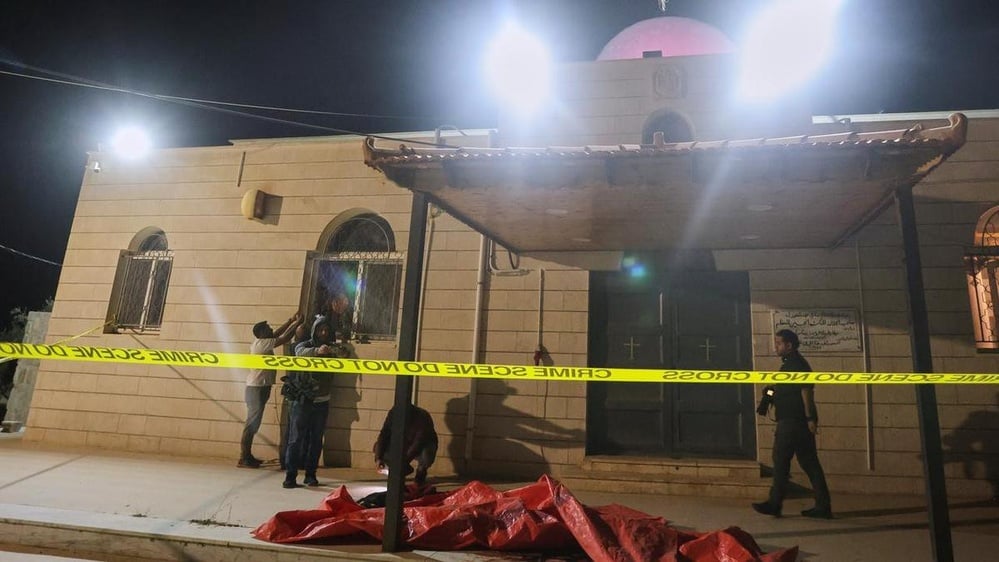
Framing is attribution-heavy and official-source-centered, presenting the attack chiefly through government condolences and condemnation.
Automated analysis; not human reviewed.
Limitations: Article text includes duplicated sentences and CNA promotional/navigation boilerplate; casualty date is inconsistent between body (Oct 23) and photo caption (Oct 24, 2026).
·
55 of 55 available dimensions scored; omitted dimensions are not treated as neutral.
·
Verified supporting quotes for 4 of 55 scored dimensions.
Claim: The report attributes statements to named officials and separates quoted reaction from narration.
“In a separate letter to his Jordanian counterpart Jafar Hassan, Mr Wong described the attack as an act of terrorism.” · exact text match
Why: Named attribution and quoted wording indicate mostly objective reporting.
Claim: Publisher narration uses factual casualty and manhunt language rather than sensational description.
“Gunmen killed at least nine people and injured about 40 others on Friday (Oct 23)” · exact text match
Counterevidence:
“deeply shocked by the horrific attack” · exact text match
Why: Emotional terms appear inside attributed quotes, not the publisher’s own narration.
Claim: The article reports official statements and responses rather than prescribing policy.
“Jordan's King Abdullah II vowed a forceful response, saying the attack would be met with the "harshest retaliation".” · not found in supplied text
Why: Statements and official actions are described rather than advocated.
Claim: The report is framed around political leaders’ official reactions to a terrorism incident.
“President Tharman Shanmugaratnam and Prime Minister Lawrence Wong have expressed their condolences over a deadly attack at a church in Jordan” · exact text match
Why: The central content is official political response to a security incident.
Claim: The report relies heavily on statements from national leaders to convey condemnation and context.
“In a letter to Jordan's King Abdullah II, dated Oct 26, President Tharman said he was "deeply shocked by the horrific attack"” · not found in supplied text
Why: Authority statements are the main basis for the reported reaction.
Claim: The account centers official government statements and royal responses without non-official voices.
“In a letter to Jordan's King Abdullah II, dated Oct 26, President Tharman said” · not found in supplied text
Why: Official leaders supply nearly all reaction and context in the report.
Claim: Credibility is supported by named officials, specific dates, and attributed quotations.
“Prime Minister Jafar Hassan also declared three days of national mourning, with flags flown at half-mast over government and public institutions.” · exact text match
Why: Specific, attributable details are provided for the reported responses.
Article text includes duplicated sentences and CNA promotional/navigation boilerplate; casualty date is inconsistent between body (Oct 23) and photo caption (Oct 24, 2026).
October 26, 2026 · 0 shares
Framing is restrained and attribution-heavy, relying on state television and the Public Security Directorate while explicitly noting unresolved suspect affiliations and the absence of a claim of responsibility.
Automated analysis; not human reviewed.
Limitations: The supplied text is a short wire-style report with boilerplate and a linked headline, limiting assessment to limited prose and no byline.
·
55 of 55 available dimensions scored; omitted dimensions are not treated as neutral.
·
Verified supporting quotes for 6 of 55 scored dimensions.
Claim: Attribution to state media and official statements dominates over subjective narration.
“state television reported on Monday (Oct 26).” · exact text match
“The Public Security Directorate did not identify the suspects' affiliation or say whether they belonged to any militant group.” · exact text match
Why: The report repeatedly attributes claims and notes what officials did not disclose.
Claim: The report includes caveats and avoids dramatic embellishment.
“but it was too early to determine whether they had links to known groups inside or outside Jordan.” · exact text match
Why: Uncertainty is explicitly noted rather than sensationalized.
Claim: Government and security governance are central to the report's framing.
“Interior Minister Mazen al-Faraya said on Monday authorities were reviewing the circumstances that led young people towards extremism and would hold accountable anyone found to have participated in the attack.” · exact text match
Why: The article foregrounds official political and security responses to the attack.
Claim: The report frames Jordan through its US alliance and official security response.
“an attack on a church in the US-allied country” · exact text match
“King Abdullah, a US partner in the fight against Islamist militant groups, has ordered security forces to respond with an "iron fist"” · exact text match
Why: Official alliance framing is present but largely attributed context rather than explicit advocacy.
Claim: Sourcing is attributed to state television and official directorate statements, with uncertainties noted.
“state television reported on Monday (Oct 26).” · exact text match
“the directorate said in a statement carried on state media.” · exact text match
Why: Visible attribution and caveats support credibility in the supplied text.
Claim: The report discloses unresolved attribution and lack of a claim of responsibility.
“There has been no claim of responsibility.” · exact text match
“The Public Security Directorate did not identify the suspects' affiliation or say whether they belonged to any militant group.” · exact text match
Why: Disclosing these gaps signals fair and transparent reporting.
The supplied text is a short wire-style report with boilerplate and a linked headline, limiting assessment to limited prose and no byline.
October 25, 2026 · 0 shares
Frames a deadly church attack through victim testimony, official mourning, and cross-religious solidarity.
Automated analysis; not human reviewed.
Limitations: The supplied text contains duplicated blocks and unrelated related-link headlines; analysis is confined to the main funeral report.
·
55 of 55 available dimensions scored; omitted dimensions are not treated as neutral.
·
Verified supporting quotes for 55 of 55 scored dimensions.
Claim: No clear left-right ideological framing is evident in the funeral report.
“Thousands of mourners have gathered for the funerals of eight of the victims of a deadly attack on a church in southern Jordan” · exact text match
Why: The text reports an attack and mourning without partisan-left or partisan-right framing.
Claim: The report does not adopt a clear populist or elitist stance.
“Prime Minister Hassan attended the service alongside government ministers and senior military and civilian officials” · exact text match
Why: Official sources are present, but the report does not frame politics around people-versus-elites themes.
Claim: No clear libertarian or authoritarian policy stance is advanced.
“King Abdullah, who visited some of the wounded in hospital on Friday, has promised a forceful response” · exact text match
Why: Official security response is reported, but the text does not advocate a governing philosophy.
Claim: Reports events through attributed facts and witness testimony rather than publisher opinion.
“The burials on Sunday were beside St George’s Greek Orthodox Church in the village of Hamoud” · exact text match
“who told the Reuters news agency from her nearby home that she sheltered behind a pillar as gunfire erupted” · exact text match
Why: Concrete events and attributed testimony support an objective classification.
Claim: Includes mildly vivid emotional detail but does not adopt sensational or lurid framing.
“people screamed” · exact text match
“Church workers were cleaning away blood as villagers prepared to bury the dead.” · exact text match
Why: Vivid human detail adds slight sensational coloring while reporting remains restrained.
Claim: No financial-market direction is present.
“Nine people were killed and dozens wounded in a rare attack on Jordan’s Christian minority” · exact text match
Why: The article concerns an attack and funerals, not markets or investment outlook.
Claim: The tone is neither broadly optimistic nor pessimistic beyond the gravity of the attack.
“The violence has also drawn expressions of solidarity across religious lines.” · exact text match
Why: Grim events are balanced with solidarity examples, without a general outlook claim.
Claim: The report carries moderate human-interest and security interest.
“Thousands of mourners have gathered for the funerals of eight of the victims” · exact text match
Why: Funeral mourning and an ongoing manhunt give the report moderate interest.
Claim: Describes events and responses without prescribing policy or action.
“The burials on Sunday were beside St George’s Greek Orthodox Church in the village of Hamoud” · exact text match
“King Abdullah, who visited some of the wounded in hospital on Friday, has promised a forceful response” · exact text match
Why: Reporting of events and official statements is descriptive, not prescriptive.
Claim: Reports a promised forceful response without endorsing a hawkish or dovish posture.
“has promised a forceful response and the assailants are still being sought” · exact text match
Why: Security response is attributed, not advocated by the publisher.
Claim: Contains distressing attack details but does not use fear-baiting or alarmist escalation.
“people screamed” · exact text match
“bullet holes remained in the walls and wooden pews, and windows had been shattered” · exact text match
Why: Distress is reported factually rather than amplified for fear.
Claim: The report does not rely on circular assertions to establish its claims.
“Officials say they have not established whether the attackers were connected to an armed group” · exact text match
Why: It explicitly leaves an open question unresolved rather than reasoning in a circle.
Claim: The report is not gossip-oriented.
“The burials on Sunday were beside St George’s Greek Orthodox Church in the village of Hamoud” · exact text match
Why: Content concerns a public attack and official response, not private gossip.
Claim: Publisher opinion is largely absent from the report.
“who told the Reuters news agency from her nearby home” · exact text match
Why: Statements are attributed to witnesses, officials, and agencies.
Claim: Frames the attack partly through government, security, and diplomatic responses.
“Prime Minister Hassan attended the service alongside government ministers and senior military and civilian officials” · exact text match
“King Abdullah, who visited some of the wounded in hospital on Friday, has promised a forceful response” · exact text match
Why: Central official responses make the report substantially political in framing.
Claim: Preserves nuance by noting unresolved responsibility and cross-religious impact.
“Officials say they have not established whether the attackers were connected to an armed group and no organisation has claimed responsibility.” · exact text match
Why: The report avoids reducing the attack to a settled motive or actor.
Claim: Uses official and religious authorities as sources but not as sole proof of contested claims.
“Father Yohanna Hamati told AFP that about 170 to 200 people were at the church for Friday’s funeral when firing began outside.” · exact text match
Why: Authorities are cited for testimony, while responsibility remains explicitly unresolved.
Claim: The report is not immature or rage-baiting.
“The mourning reached Washington, DC, on Sunday, where members of the Jordanian community lit candles outside their country’s embassy.” · exact text match
Why: Sober funeral and solidarity coverage lacks immature framing.
Claim: Does not use circular reasoning.
“Officials say they have not established whether the attackers were connected to an armed group” · exact text match
Why: Claims are attributed rather than restated as their own support.
Claim: The report does not appear to cover up or distort an institutional response.
“Officials say they have not established whether the attackers were connected to an armed group and no organisation has claimed responsibility.” · exact text match
Why: It discloses the limits of the official investigation.
Claim: Centers the report on mourners and victims of the attack.
“Thousands of mourners have gathered for the funerals of eight of the victims of a deadly attack on a church” · exact text match
“Church workers were cleaning away blood as villagers prepared to bury the dead.” · exact text match
Why: Victim- and mourner-centered framing is prominent, though appropriate to an attack report.
Claim: Does not assert certainty beyond the reported evidence.
“Officials say they have not established whether the attackers were connected to an armed group” · exact text match
Why: Explicit uncertainty limits overconfident framing.
Claim: No spam or promotional fluff is present in the main report.
“The burials on Sunday were beside St George’s Greek Orthodox Church in the village of Hamoud” · exact text match
Why: The main text is news reporting, not advertising or filler.
Claim: The report is not organized around a strong ideology.
“The burials on Sunday were beside St George’s Greek Orthodox Church in the village of Hamoud” · exact text match
Why: Event reporting and attribution dominate over ideological framing.
Claim: Gives prominent place to state and official voices, creating a mild pro-establishment sourcing tilt.
“Prime Minister Hassan attended the service alongside government ministers and senior military and civilian officials, according to Jordan’s state news agency, Petra.” · exact text match
Why: Official attendance and state-agency sourcing elevate establishment perspectives.
Claim: Conveys a subdued negative emotional tone through grief and eyewitness detail.
“people screamed” · exact text match
““Assem, Assem, my darling, answer me,” she recalled calling to him.” · exact text match
Why: Grief and distress details produce a negative emotional cast without overt emoting.
Claim: No double standard is evident in treatment of the attack and mourners.
“Muslims were among those wounded.” · exact text match
Why: The report includes cross-religious victims and solidarity without differential blame.
Claim: Demonstrates credible reporting through multiple named agencies, witness attribution, and explicit uncertainty.
“who told the Reuters news agency” · exact text match
“Officials say they have not established whether the attackers were connected to an armed group and no organisation has claimed responsibility.” · exact text match
Why: Attribution and acknowledged limits support high visible credibility.
Claim: Shows cautious, attributed reasoning by noting official uncertainty and sourcing claims to agencies.
“Officials say they have not established whether the attackers were connected to an armed group and no organisation has claimed responsibility.” · exact text match
“according to Jordan’s state news agency, Petra” · exact text match
Why: Uncertainty and explicit attribution indicate rational rather than irrational framing.
Claim: No advertorial or promotional framing is present.
“Thousands of mourners have gathered for the funerals of eight of the victims” · exact text match
Why: The report is not marketing a product or service.
Claim: No strong independent AI-authorship indicators are evident in the main report.
“according to Jordan’s state news agency, Petra” · exact text match
Why: The text reads as standard agency-based news, but this remains a weak probabilistic judgment.
Claim: Uses transparent attribution and acknowledges unresolved facts.
“according to Jordan’s state news agency, Petra” · exact text match
“Officials say they have not established whether the attackers were connected to an armed group and no organisation has claimed responsibility.” · exact text match
Why: Clear sourcing and stated uncertainty signal high integrity.
Claim: Provides coherent context and nuance about the attack and its communal setting.
“Christians account for about 3 percent of Jordan’s largely Muslim population and AFP reported that Muslims were among those wounded.” · exact text match
“Officials say they have not established whether the attackers were connected to an armed group and no organisation has claimed responsibility.” · exact text match
Why: Context and uncertainty improve informational sophistication.
Claim: Condemns the attack rather than expressing sympathy for the attackers.
“Jordanian authorities have described the attack as “extremist terrorism”.” · exact text match
Why: The framing treats the shooting as terrorism and does not sanitize it.
Claim: No fraud-normalizing framing is present.
“Officials say they have not established whether the attackers were connected to an armed group” · exact text match
Why: The report concerns violence and investigation, not deceptive gain.
Claim: No Marxist class-conflict framing is present.
“Christians account for about 3 percent of Jordan’s largely Muslim population” · exact text match
Why: The text discusses religious community and mourning, not class analysis.
Claim: No Islamist political advocacy is present.
“Muslims were among those wounded.” · exact text match
Why: Muslim participation in mourning is reported without endorsing Islamist governance.
Claim: No anti-Jewish framing is present.
“Christians account for about 3 percent of Jordan’s largely Muslim population” · exact text match
Why: The report concerns a church attack and interfaith solidarity, not anti-Jewish claims.
Claim: No anti-LGBT framing is present.
“The violence has also drawn expressions of solidarity across religious lines.” · exact text match
Why: Sexual orientation and LGBT issues are not discussed.
Claim: No racist framing is present.
“Young volunteers visited a hospital in Karak with flowers and a message reading, “Our loss is one”.” · exact text match
Why: The report emphasizes cross-religious solidarity rather than group denigration.
Claim: No identity-power framing or prescriptive identity remedies are present.
“Christians account for about 3 percent of Jordan’s largely Muslim population” · exact text match
Why: Religious minority context is factual, without woke ideological framing.
Claim: No cruel or immoral framing is present.
“Thousands of citizens also participated in the funeral procession, Petra said.” · exact text match
Why: The report treats victims and mourners with gravity.
Claim: Interfaith solidarity is quoted as reported sentiment rather than publisher self-praise.
““We make no distinction between Muslim and Christian,” he told AFP.” · exact text match
Why: Solidarity statements are attributed to named figures.
Claim: No conspiratorial framing is promoted.
“Officials say they have not established whether the attackers were connected to an armed group and no organisation has claimed responsibility.” · exact text match
Why: The report notes unknown responsibility rather than advancing a conspiracy.
Claim: No compassion framing accepts severe foreseeable self-harm.
“King Abdullah, who visited some of the wounded in hospital on Friday, has promised a forceful response” · exact text match
Why: The report covers mourning and security response without a self-harm tradeoff.
Claim: No scapegoating of a group is present.
“Officials say they have not established whether the attackers were connected to an armed group” · exact text match
Why: Responsibility is left unresolved rather than assigned to a collective group.
Claim: No incompatible standards are visibly applied to comparable cases.
“The violence has also drawn expressions of solidarity across religious lines.” · exact text match
Why: The report treats victims and mourners consistently.
Claim: No rejection of reason, evidence, or pluralism is present.
“Officials say they have not established whether the attackers were connected to an armed group” · exact text match
Why: The text explicitly notes evidentiary limits and reports pluralistic solidarity.
The supplied text contains duplicated blocks and unrelated related-link headlines; analysis is confined to the main funeral report.
October 24, 2026 · 0 shares
The report is largely neutral and attribution-driven, centering official security-response statements while explicitly noting that attacker affiliations and responsibility remain unconfirmed.
Automated analysis; not human reviewed.
Limitations: The supplied text has no author byline or publication date and includes appended related-link headlines beyond the main report; analysis excludes those chrome elements.
·
55 of 55 available dimensions scored; omitted dimensions are not treated as neutral.
·
Verified supporting quotes for 8 of 55 scored dimensions.
Claim: The report is mostly objective and attribution-based, with factual descriptions and quoted statements rather than publisher opinion.
“the royal court has said” · exact text match
“There was no immediate claim of responsibility” · exact text match
Why: Attribution to institutions and explicit uncertainty indicate objective framing.
Claim: The report's strongest emotive language is confined to attributed quotes, while headline and main copy remain largely factual.
““A massacre, a massacre in every sense of the word,” said Tarek Ammarin” · exact text match
“deadly church attack” · exact text match
Why: Attributed emotive language does not by itself indicate publisher sensationalism, and the headline uses factual wording.
Claim: The report describes official actions and statements rather than prescribing policy or behavior.
“King Abdullah has ordered security forces to respond firmly and pursue those behind a church attack” · exact text match
Why: The statement reports an order by the king, not the publisher's recommendation.
Claim: The report is political in subject matter, focusing on a royal security order and official responses to a deadly attack.
“King Abdullah has ordered security forces to respond firmly” · exact text match
“Prime Minister Jafar Hassan said on X” · exact text match
Why: State leadership and security response are central, making the content political, but not partisan.
Claim: The report centers official state response and frames the king as a security partner, though it does not overtly endorse the monarchy.
“King Abdullah, a US partner in the fight against violent armed groups in the region, visited Karak hours after the attack” · exact text match
Why: This is a notable pro-establishment contextual framing, but the overall report remains mostly attributional.
Claim: The report conveys a negative emotional tone through the attack and attributed quotes of grief and condemnation.
““A massacre, a massacre in every sense of the word,” said Tarek Ammarin” · exact text match
“what he called a “wicked” attack” · exact text match
Why: Negative event details and emotive quotations give a negative emotional valence, though they are attributed.
Claim: The report shows strong sourcing and uncertainty disclosure, including attribution to the royal court, US embassy, Petra, and Reuters and a caveat on attacker links.
“according to the US embassy in Amman” · exact text match
“too early to determine whether they had links to known groups inside or outside Jordan” · exact text match
Why: Named/institutional attribution and explicit uncertainty support high credibility.
Claim: The report includes unresolved elements, such as no immediate claim and unsettled attacker affiliations, and does not present official claims as confirmed fact.
“There was no immediate claim of responsibility” · exact text match
“Authorities said they were still searching for the attackers, adding that it was too early to determine whether they had links to known groups” · exact text match
Why: Inclusion of uncertainty and lack of a claim indicates fair, honest reporting.
The supplied text has no author byline or publication date and includes appended related-link headlines beyond the main report; analysis excludes those chrome elements.
October 26, 2026 · 0 shares
A straight wire-style report that attributes nearly every claim to state media or Jordanian security officials and adopts official 'terrorist' and 'iron fist' framing largely through quotation rather than independent verification.
Jordan is described as a relatively stable, US-allied Middle Eastern state where such attacks on its Christian minority are highly unusual, though authorities say they have foiled several Islamist militant plots over the years.
Automated analysis; not human reviewed.
Limitations: The supplied text includes scraped login and subscription boilerplate along with some duplicated paragraphs, but the core wire copy is intact and analyzable.
·
9 of 55 available dimensions scored; omitted dimensions are not treated as neutral.
·
Verified supporting quotes for 8 of 9 scored dimensions.
Claim: The report is built almost entirely on attributed official and state-media statements rather than the writer's own interpretation.
“the directorate said in a statement published on state media” · exact text match
Why: Heavy attribution to named official sources signals an objective, fact-reporting stance.
Claim: Coverage is measured and procedural, without sensational adjectives or graphic dramatization.
“Witnesses said the shooting lasted several minutes.” · exact text match
Why: Plain factual description rather than emotive or sensational language.
Claim: Security-force counterterror framing is presented, mildly favoring a hawkish posture.
“King Abdullah, a US partner in the fight against Islamist militant groups, has ordered security forces to respond with an "iron fist"” · exact text match
Why: The 'iron fist' and 'fight against Islamist militant groups' framing is quoted but consistently frames the security response positively.
Claim: The story centers on state security policy and counterterrorism governance.
“Interior Minister Mazen al-Faraya said authorities were reviewing the circumstances that led young people towards extremism” · exact text match
Why: Focus on government security response makes it a political/security story.
Claim: The account leans on official state and security sources without countervailing voices.
“Jordan's Public Security Directorate said the suspects were located while hiding in an abandoned house in Karak.” · exact text match
Why: Narrative is anchored in official government statements.
Claim: The tone is neutral and unemotional.
“No security personnel were injured, and a number of firearms and ammunition were found in the suspects' possession.” · exact text match
Why: Matter-of-fact reporting of facts without affective language.
Claim: Credibility is supported by clear attribution, named officials, and noted absence of a claim of responsibility.
“There has been no claim of responsibility.” · exact text match
Why: Explicit sourcing and acknowledgment of unknowns support credibility.
Claim: The report is fair in including official statements and noting what is not known.
“The Public Security Directorate did not name the suspects or publicly identify possible affiliations with any Islamist militant groups.” · exact text match
Why: Transparently flagging missing information reflects honest reporting.
The supplied text includes scraped login and subscription boilerplate along with some duplicated paragraphs, but the core wire copy is intact and analyzable.
The report frames the incident through official Jordanian statements and security-force action, using authorities' 'terrorist act' language while noting that no group has claimed responsibility.
Automated analysis; not human reviewed.
Limitations: The report relies on official statements and does not independently verify suspect responsibility or affiliations.
·
10 of 55 available dimensions scored; omitted dimensions are not treated as neutral.
·
Verified supporting quotes for 9 of 10 scored dimensions.
Claim: The report attributes key developments to officials and security forces.
“Officials said the arrests took place following a dawn shootout with the armed men” · exact text match
Why: Attribution to named or official sources supports an objective framing.
Claim: Violence is reported through attributed official statements and factual casualty figures.
“Officials said the arrests took place following a dawn shootout” · exact text match
“nine people were killed and around 40 more injured” · exact text match
Why: The wording is factual and avoids emotive or sensational language.
Claim: The report primarily describes an event and official responses rather than prescribing policy.
“Three men have been arrested in Jordan in connection with an attack on a Greek Orthodox church last week.” · exact text match
Why: The sentence is descriptive and reports an event without publisher advocacy.
Claim: The report centers on state security, royal authority, and official response.
“King Abdullah II of Jordan had ordered authorities to respond with an 'iron fist' against anyone attempting to undermine the unity of the Jordanian people.” · not found in supplied text
Why: The focus on royal direction and security response makes the story political.
Claim: Key claims are supported mainly by official statements.
“said Jordanian Interior Minister Mazen Al-Faraya in a phone interview with state broadcaster Al-Mamlaka on Monday” · exact text match
Why: The report leans on ministerial and royal authority for its account.
Claim: The report frames Jordan in favorable establishment terms as a stable US ally.
“a relatively stable middle-eastern state which is a close ally of the United States and which maintains diplomatic and military relations with neighboring Israel” · exact text match
Why: This contextual description presents Jordan positively through its Western alliance relationships.
Claim: The report uses attribution and acknowledges unresolved responsibility.
“Officials said the arrests took place following a dawn shootout” · exact text match
“There has been no claim of responsibility for Friday's deadly attack” · exact text match
Why: Attribution and caveats about what is unknown support credibility.
Claim: The report includes an explicit epistemic caveat about responsibility and affiliations.
“There has been no claim of responsibility for Friday's deadly attack” · exact text match
Why: The caveat shows restraint rather than rushing to attribute the attack.
Claim: The report discloses limits on responsibility and suspect identification.
“There has been no claim of responsibility for Friday's deadly attack” · exact text match
“Jordan's Public Security Directorate has not named the suspects” · exact text match
Why: Explicitly noting what is not known signals fair and transparent reporting.
Claim: The report supplies relevant regional context alongside the immediate event.
“Attacks on Christian minorities are very rare in Jordan, a relatively stable middle-eastern state” · exact text match
Why: This context aids interpretation of the attack's significance.
The report relies on official statements and does not independently verify suspect responsibility or affiliations.
October 24, 2026 · 0 shares
Straightforward official-attribution reporting centers government condemnations and casualty figures while explicitly noting that attackers and motive remain unidentified.
Automated analysis; not human reviewed.
Limitations: The supplied text is a very short, no-byline report based entirely on official statements, and page artifacts such as “advertisements” and a bracketed list appear in the text; attacker identity and motive remain explicitly unknown.
·
6 of 55 available dimensions scored; omitted dimensions are not treated as neutral.
·
Verified supporting quotes for 6 of 6 scored dimensions.
Claim: The report attributes casualty figures and the terrorism characterization to Jordanian authorities.
“according to Jordanian authorities” · exact text match
“Jordanian authorities have described the shooting as a terrorist attack.” · exact text match
Why: Both incident details and the “terrorist attack” label are explicitly sourced to officials rather than asserted independently.
Claim: The report presents the attack in measured, factual terms without graphic or emotive embellishment.
“Eight people were killed and dozens wounded after gunmen opened fire Friday during a funeral at a church in Hmoud village, about 90 kilometers south of Amman, according to Jordanian authorities.” · exact text match
Why: Casualty, location, and timing details are provided in a straightforward attributed sentence.
Claim: The publisher reports condemnations and official responses without issuing its own recommendations.
“Somalia condemned a deadly attack on a Greek Orthodox church in Jordan’s Karak governorate, expressing solidarity with the Jordanian government and families of the victims.” · exact text match
Why: The sentence describes a diplomatic action and statement rather than prescribing policy.
Claim: The report uses clear attribution to official sources and includes a limitation about unresolved details.
“Health officials said at least 40 people were wounded, with dozens still receiving treatment Saturday.” · exact text match
“Authorities have not publicly identified the attackers or announced a motive.” · exact text match
Why: Numbers are tied to named categories of officials, and the report transparently notes unknown motive and attacker identity.
Claim: The report flags unresolved questions about attacker identity and motive instead of speculating.
“Authorities have not publicly identified the attackers or announced a motive.” · exact text match
Why: Explicitly noting unknown facts demonstrates restraint and rational epistemic practice.
Claim: The report distinguishes official claims from established fact and acknowledges what is not publicly known.
“Jordanian authorities have described the shooting as a terrorist attack.” · exact text match
“Authorities have not publicly identified the attackers or announced a motive.” · exact text match
Why: It attributes the terrorism label and explicitly states the absence of public attacker identity or motive information.
The supplied text is a very short, no-byline report based entirely on official statements, and page artifacts such as “advertisements” and a bracketed list appear in the text; attacker identity and motive remain explicitly unknown.
October 25, 2026 · 0 shares
Frames a deadly church attack through victim testimony, official mourning, and cross-religious solidarity.
Automated analysis; not human reviewed.
Limitations: The supplied text contains duplicated blocks and unrelated related-link headlines; analysis is confined to the main funeral report.
·
55 of 55 available dimensions scored; omitted dimensions are not treated as neutral.
·
Verified supporting quotes for 55 of 55 scored dimensions.
Claim: No clear left-right ideological framing is evident in the funeral report.
“Thousands of mourners have gathered for the funerals of eight of the victims of a deadly attack on a church in southern Jordan” · exact text match
Why: The text reports an attack and mourning without partisan-left or partisan-right framing.
Claim: The report does not adopt a clear populist or elitist stance.
“Prime Minister Hassan attended the service alongside government ministers and senior military and civilian officials” · exact text match
Why: Official sources are present, but the report does not frame politics around people-versus-elites themes.
Claim: No clear libertarian or authoritarian policy stance is advanced.
“King Abdullah, who visited some of the wounded in hospital on Friday, has promised a forceful response” · exact text match
Why: Official security response is reported, but the text does not advocate a governing philosophy.
Claim: Reports events through attributed facts and witness testimony rather than publisher opinion.
“The burials on Sunday were beside St George’s Greek Orthodox Church in the village of Hamoud” · exact text match
“who told the Reuters news agency from her nearby home that she sheltered behind a pillar as gunfire erupted” · exact text match
Why: Concrete events and attributed testimony support an objective classification.
Claim: Includes mildly vivid emotional detail but does not adopt sensational or lurid framing.
“people screamed” · exact text match
“Church workers were cleaning away blood as villagers prepared to bury the dead.” · exact text match
Why: Vivid human detail adds slight sensational coloring while reporting remains restrained.
Claim: No financial-market direction is present.
“Nine people were killed and dozens wounded in a rare attack on Jordan’s Christian minority” · exact text match
Why: The article concerns an attack and funerals, not markets or investment outlook.
Claim: The tone is neither broadly optimistic nor pessimistic beyond the gravity of the attack.
“The violence has also drawn expressions of solidarity across religious lines.” · exact text match
Why: Grim events are balanced with solidarity examples, without a general outlook claim.
Claim: The report carries moderate human-interest and security interest.
“Thousands of mourners have gathered for the funerals of eight of the victims” · exact text match
Why: Funeral mourning and an ongoing manhunt give the report moderate interest.
Claim: Describes events and responses without prescribing policy or action.
“The burials on Sunday were beside St George’s Greek Orthodox Church in the village of Hamoud” · exact text match
“King Abdullah, who visited some of the wounded in hospital on Friday, has promised a forceful response” · exact text match
Why: Reporting of events and official statements is descriptive, not prescriptive.
Claim: Reports a promised forceful response without endorsing a hawkish or dovish posture.
“has promised a forceful response and the assailants are still being sought” · exact text match
Why: Security response is attributed, not advocated by the publisher.
Claim: Contains distressing attack details but does not use fear-baiting or alarmist escalation.
“people screamed” · exact text match
“bullet holes remained in the walls and wooden pews, and windows had been shattered” · exact text match
Why: Distress is reported factually rather than amplified for fear.
Claim: The report does not rely on circular assertions to establish its claims.
“Officials say they have not established whether the attackers were connected to an armed group” · exact text match
Why: It explicitly leaves an open question unresolved rather than reasoning in a circle.
Claim: The report is not gossip-oriented.
“The burials on Sunday were beside St George’s Greek Orthodox Church in the village of Hamoud” · exact text match
Why: Content concerns a public attack and official response, not private gossip.
Claim: Publisher opinion is largely absent from the report.
“who told the Reuters news agency from her nearby home” · exact text match
Why: Statements are attributed to witnesses, officials, and agencies.
Claim: Frames the attack partly through government, security, and diplomatic responses.
“Prime Minister Hassan attended the service alongside government ministers and senior military and civilian officials” · exact text match
“King Abdullah, who visited some of the wounded in hospital on Friday, has promised a forceful response” · exact text match
Why: Central official responses make the report substantially political in framing.
Claim: Preserves nuance by noting unresolved responsibility and cross-religious impact.
“Officials say they have not established whether the attackers were connected to an armed group and no organisation has claimed responsibility.” · exact text match
Why: The report avoids reducing the attack to a settled motive or actor.
Claim: Uses official and religious authorities as sources but not as sole proof of contested claims.
“Father Yohanna Hamati told AFP that about 170 to 200 people were at the church for Friday’s funeral when firing began outside.” · exact text match
Why: Authorities are cited for testimony, while responsibility remains explicitly unresolved.
Claim: The report is not immature or rage-baiting.
“The mourning reached Washington, DC, on Sunday, where members of the Jordanian community lit candles outside their country’s embassy.” · exact text match
Why: Sober funeral and solidarity coverage lacks immature framing.
Claim: Does not use circular reasoning.
“Officials say they have not established whether the attackers were connected to an armed group” · exact text match
Why: Claims are attributed rather than restated as their own support.
Claim: The report does not appear to cover up or distort an institutional response.
“Officials say they have not established whether the attackers were connected to an armed group and no organisation has claimed responsibility.” · exact text match
Why: It discloses the limits of the official investigation.
Claim: Centers the report on mourners and victims of the attack.
“Thousands of mourners have gathered for the funerals of eight of the victims of a deadly attack on a church” · exact text match
“Church workers were cleaning away blood as villagers prepared to bury the dead.” · exact text match
Why: Victim- and mourner-centered framing is prominent, though appropriate to an attack report.
Claim: Does not assert certainty beyond the reported evidence.
“Officials say they have not established whether the attackers were connected to an armed group” · exact text match
Why: Explicit uncertainty limits overconfident framing.
Claim: No spam or promotional fluff is present in the main report.
“The burials on Sunday were beside St George’s Greek Orthodox Church in the village of Hamoud” · exact text match
Why: The main text is news reporting, not advertising or filler.
Claim: The report is not organized around a strong ideology.
“The burials on Sunday were beside St George’s Greek Orthodox Church in the village of Hamoud” · exact text match
Why: Event reporting and attribution dominate over ideological framing.
Claim: Gives prominent place to state and official voices, creating a mild pro-establishment sourcing tilt.
“Prime Minister Hassan attended the service alongside government ministers and senior military and civilian officials, according to Jordan’s state news agency, Petra.” · exact text match
Why: Official attendance and state-agency sourcing elevate establishment perspectives.
Claim: Conveys a subdued negative emotional tone through grief and eyewitness detail.
“people screamed” · exact text match
““Assem, Assem, my darling, answer me,” she recalled calling to him.” · exact text match
Why: Grief and distress details produce a negative emotional cast without overt emoting.
Claim: No double standard is evident in treatment of the attack and mourners.
“Muslims were among those wounded.” · exact text match
Why: The report includes cross-religious victims and solidarity without differential blame.
Claim: Demonstrates credible reporting through multiple named agencies, witness attribution, and explicit uncertainty.
“who told the Reuters news agency” · exact text match
“Officials say they have not established whether the attackers were connected to an armed group and no organisation has claimed responsibility.” · exact text match
Why: Attribution and acknowledged limits support high visible credibility.
Claim: Shows cautious, attributed reasoning by noting official uncertainty and sourcing claims to agencies.
“Officials say they have not established whether the attackers were connected to an armed group and no organisation has claimed responsibility.” · exact text match
“according to Jordan’s state news agency, Petra” · exact text match
Why: Uncertainty and explicit attribution indicate rational rather than irrational framing.
Claim: No advertorial or promotional framing is present.
“Thousands of mourners have gathered for the funerals of eight of the victims” · exact text match
Why: The report is not marketing a product or service.
Claim: No strong independent AI-authorship indicators are evident in the main report.
“according to Jordan’s state news agency, Petra” · exact text match
Why: The text reads as standard agency-based news, but this remains a weak probabilistic judgment.
Claim: Uses transparent attribution and acknowledges unresolved facts.
“according to Jordan’s state news agency, Petra” · exact text match
“Officials say they have not established whether the attackers were connected to an armed group and no organisation has claimed responsibility.” · exact text match
Why: Clear sourcing and stated uncertainty signal high integrity.
Claim: Provides coherent context and nuance about the attack and its communal setting.
“Christians account for about 3 percent of Jordan’s largely Muslim population and AFP reported that Muslims were among those wounded.” · exact text match
“Officials say they have not established whether the attackers were connected to an armed group and no organisation has claimed responsibility.” · exact text match
Why: Context and uncertainty improve informational sophistication.
Claim: Condemns the attack rather than expressing sympathy for the attackers.
“Jordanian authorities have described the attack as “extremist terrorism”.” · exact text match
Why: The framing treats the shooting as terrorism and does not sanitize it.
Claim: No fraud-normalizing framing is present.
“Officials say they have not established whether the attackers were connected to an armed group” · exact text match
Why: The report concerns violence and investigation, not deceptive gain.
Claim: No Marxist class-conflict framing is present.
“Christians account for about 3 percent of Jordan’s largely Muslim population” · exact text match
Why: The text discusses religious community and mourning, not class analysis.
Claim: No Islamist political advocacy is present.
“Muslims were among those wounded.” · exact text match
Why: Muslim participation in mourning is reported without endorsing Islamist governance.
Claim: No anti-Jewish framing is present.
“Christians account for about 3 percent of Jordan’s largely Muslim population” · exact text match
Why: The report concerns a church attack and interfaith solidarity, not anti-Jewish claims.
Claim: No anti-LGBT framing is present.
“The violence has also drawn expressions of solidarity across religious lines.” · exact text match
Why: Sexual orientation and LGBT issues are not discussed.
Claim: No racist framing is present.
“Young volunteers visited a hospital in Karak with flowers and a message reading, “Our loss is one”.” · exact text match
Why: The report emphasizes cross-religious solidarity rather than group denigration.
Claim: No identity-power framing or prescriptive identity remedies are present.
“Christians account for about 3 percent of Jordan’s largely Muslim population” · exact text match
Why: Religious minority context is factual, without woke ideological framing.
Claim: No cruel or immoral framing is present.
“Thousands of citizens also participated in the funeral procession, Petra said.” · exact text match
Why: The report treats victims and mourners with gravity.
Claim: Interfaith solidarity is quoted as reported sentiment rather than publisher self-praise.
““We make no distinction between Muslim and Christian,” he told AFP.” · exact text match
Why: Solidarity statements are attributed to named figures.
Claim: No conspiratorial framing is promoted.
“Officials say they have not established whether the attackers were connected to an armed group and no organisation has claimed responsibility.” · exact text match
Why: The report notes unknown responsibility rather than advancing a conspiracy.
Claim: No compassion framing accepts severe foreseeable self-harm.
“King Abdullah, who visited some of the wounded in hospital on Friday, has promised a forceful response” · exact text match
Why: The report covers mourning and security response without a self-harm tradeoff.
Claim: No scapegoating of a group is present.
“Officials say they have not established whether the attackers were connected to an armed group” · exact text match
Why: Responsibility is left unresolved rather than assigned to a collective group.
Claim: No incompatible standards are visibly applied to comparable cases.
“The violence has also drawn expressions of solidarity across religious lines.” · exact text match
Why: The report treats victims and mourners consistently.
Claim: No rejection of reason, evidence, or pluralism is present.
“Officials say they have not established whether the attackers were connected to an armed group” · exact text match
Why: The text explicitly notes evidentiary limits and reports pluralistic solidarity.
The supplied text contains duplicated blocks and unrelated related-link headlines; analysis is confined to the main funeral report.
October 26, 2026 · 0 shares
Framing is restrained and attribution-heavy, relying on state television and the Public Security Directorate while explicitly noting unresolved suspect affiliations and the absence of a claim of responsibility.
Automated analysis; not human reviewed.
Limitations: The supplied text is a short wire-style report with boilerplate and a linked headline, limiting assessment to limited prose and no byline.
·
55 of 55 available dimensions scored; omitted dimensions are not treated as neutral.
·
Verified supporting quotes for 6 of 55 scored dimensions.
Claim: Attribution to state media and official statements dominates over subjective narration.
“state television reported on Monday (Oct 26).” · exact text match
“The Public Security Directorate did not identify the suspects' affiliation or say whether they belonged to any militant group.” · exact text match
Why: The report repeatedly attributes claims and notes what officials did not disclose.
Claim: The report includes caveats and avoids dramatic embellishment.
“but it was too early to determine whether they had links to known groups inside or outside Jordan.” · exact text match
Why: Uncertainty is explicitly noted rather than sensationalized.
Claim: Government and security governance are central to the report's framing.
“Interior Minister Mazen al-Faraya said on Monday authorities were reviewing the circumstances that led young people towards extremism and would hold accountable anyone found to have participated in the attack.” · exact text match
Why: The article foregrounds official political and security responses to the attack.
Claim: The report frames Jordan through its US alliance and official security response.
“an attack on a church in the US-allied country” · exact text match
“King Abdullah, a US partner in the fight against Islamist militant groups, has ordered security forces to respond with an "iron fist"” · exact text match
Why: Official alliance framing is present but largely attributed context rather than explicit advocacy.
Claim: Sourcing is attributed to state television and official directorate statements, with uncertainties noted.
“state television reported on Monday (Oct 26).” · exact text match
“the directorate said in a statement carried on state media.” · exact text match
Why: Visible attribution and caveats support credibility in the supplied text.
Claim: The report discloses unresolved attribution and lack of a claim of responsibility.
“There has been no claim of responsibility.” · exact text match
“The Public Security Directorate did not identify the suspects' affiliation or say whether they belonged to any militant group.” · exact text match
Why: Disclosing these gaps signals fair and transparent reporting.
The supplied text is a short wire-style report with boilerplate and a linked headline, limiting assessment to limited prose and no byline.
October 26, 2026 · 0 shares
The report leans on Jordanian state media and official security statements, framing the attack and crackdown through an official 'extremist terrorism' lens with little independent corroboration.
Automated analysis; not human reviewed.
Limitations: The text is a short wire-style report dependent on Jordanian state media and official statements, with no independent sourcing visible.
·
55 of 55 available dimensions scored; omitted dimensions are not treated as neutral.
·
Verified supporting quotes for 8 of 55 scored dimensions.
Claim: Key claims are attributed to state television and the Public Security Directorate rather than presented as the outlet's own conclusions.
“state television reported” · exact text match
“the directorate said in a statement published on state media” · exact text match
Why: Heavy attribution to named official sources supports strongly objective framing.
Claim: The report uses restrained, factual language for a deadly attack rather than emotive or sensational prose.
“also wounded 40 others” · exact text match
“that killed nine people” · exact text match
Why: Casualty figures are stated plainly without sensational adjectives or dramatic embellishment.
Claim: The only evaluative label is attributed to authorities, not adopted as the outlet's own voice.
“Jordanian authorities have said the violence was carried out by "extremist terrorists."” · exact text match
Why: The terrorism characterization is quoted and attributed, keeping publisher opinion limited.
Claim: The report is framed around state security policy and royal direction in response to terrorism.
“King Abdullah, a U.S. partner in the fight against Islamist militant groups, has ordered security forces to respond with an "iron fist"” · exact text match
Why: Official political-security responses are central to the article's framing.
Claim: The account leans heavily on Jordanian state media and official security statements for the central facts.
“state television reported” · exact text match
“the directorate said in a statement published on state media” · exact text match
Why: Core claims are sourced to official authorities without independent corroboration in the text.
Claim: The report provides clear attribution to state media and official statements but relies on a single official channel.
“state television reported” · exact text match
“the directorate said in a statement published on state media” · exact text match
Why: Visible sourcing supports credibility, though official-source dependence limits independent verification.
Claim: The report is organized around concrete, attributed incident details rather than emotive or speculative reasoning.
“No security personnel were injured, it said, and a number of firearms and ammunition were found in the suspects' possession.” · exact text match
Why: Concrete operational details and attribution indicate rational, factual presentation.
Claim: The report openly notes limits in official information about the suspects.
“The Public Security Directorate did not name the suspects or publicly identify possible affiliations with any Islamist militant groups.” · exact text match
Why: Explicitly acknowledging unknown suspect affiliations signals fair, transparent reporting.
The text is a short wire-style report dependent on Jordanian state media and official statements, with no independent sourcing visible.
October 26, 2026 · 0 shares
Neutral, attribution-heavy reporting centers official security statements, a witness account, and verified footage while avoiding editorializing.
Automated analysis; not human reviewed.
Limitations: The supplied text includes unrelated promotional headlines that were excluded; analysis is limited to the main report.
·
14 of 55 available dimensions scored; omitted dimensions are not treated as neutral.
·
Verified supporting quotes for 12 of 14 scored dimensions.
Claim: The report does not adopt a clear left-right ideological stance on the attack or official response.
“No group has yet claimed it was behind Friday's attack by gunmen on a funeral at St George's Greek Orthodox Church in the village of Hmoud” · exact text match
Why: The text reports the facts and official responses without left-right framing.
Claim: Framing leans slightly toward official state institutions and royal authority.
“King Abdullah II praised security forces for chasing the suspects "to the very end".” · exact text match
Why: The report prominently includes royal and ministerial reactions to security operations.
Claim: The report notes security-force and state punitive responses without endorsing a broader authoritarian program.
“Interior Minister Mazen al-Faraya said authorities would hold to account anyone involved in the attack” · exact text match
Why: State security action is central but reported as official response to an attack.
Claim: The report keeps to attributed statements and verified footage rather than adopting a subjective viewpoint.
“The Public Security Directorate (PSD) said the unnamed "terrorists" were located before dawn inside an abandoned house in Karak governorate, south of the capital, Amman.” · exact text match
Why: Key claims are attributed to named institutions rather than presented as the reporter's opinion.
Claim: Violent events are reported in restrained terms without sensational emphasis.
“Jordanian security forces have arrested three armed men suspected of a shooting attack at a church last week that killed nine Christians and injured 34 other people, officials say.” · exact text match
Why: The lede states casualties and arrests factually with attribution.
Claim: The report describes events and official statements without prescribing policy.
“Interior Minister Mazen al-Faraya said authorities would hold to account anyone involved in the attack” · exact text match
Why: Official prescriptions are quoted as statements, not adopted as the publisher's recommendation.
Claim: Political and state-security framing is present through royal and ministerial reactions.
“King Abdullah II praised security forces for chasing the suspects "to the very end".” · exact text match
Why: Prominent official political reactions shape the report's framing.
Claim: Key developments rely on official authorities for confirmation.
“The Public Security Directorate (PSD) said the unnamed "terrorists" were located before dawn inside an abandoned house in Karak governorate, south of the capital, Amman.” · exact text match
“Interior Minister Mazen al-Faraya said authorities would hold to account anyone involved in the attack” · exact text match
Why: Security and ministerial statements carry the main factual claims.
Claim: Certainty is generally limited to attributed official statements and verified footage.
“Verified CCTV footage from Friday showed three men holding guns approaching and firing on St George's church.” · exact text match
Why: The report qualifies responsibility by noting no claim had been made.
Claim: Emotional content is limited to restrained victim and witness detail rather than heightened emotional narration.
“One man who was at the church told BBC Arabic that the attack lasted around 15 minutes.” · exact text match
Why: Witness detail is quoted soberly and not amplified with emotive language.
Claim: Reporting is factual and avoids speculative or irrational claims.
“No group has yet claimed it was behind Friday's attack by gunmen on a funeral at St George's Greek Orthodox Church in the village of Hmoud” · exact text match
Why: Uncertainty about responsibility is explicitly preserved rather than filled with speculation.
Claim: Sourcing is transparent and claims are attributed to officials, witnesses, and verified footage.
“Verified CCTV footage from Friday showed three men holding guns approaching and firing on St George's church.” · exact text match
Why: The report distinguishes verified footage from attributed official and witness accounts.
The supplied text includes unrelated promotional headlines that were excluded; analysis is limited to the main report.
October 26, 2026 · 0 shares
Attribution-heavy wire reporting that consistently hedges Jordan's claims and flags missing Syrian comment or coordination details, with no evaluative or emotive framing.
Jordan conducted the strikes after a deadly church attack in Jordan the previous week, which Amman linked to militant groups based in southern Syria; the status of Jordanian-Syrian coordination is unstated.
Automated analysis; not human reviewed.
Limitations: Very short wire item with a single attributed source and no independent detail or follow-up, limiting verifiable substance.
·
25 of 55 available dimensions scored; omitted dimensions are not treated as neutral.
·
Verified supporting quotes for 25 of 25 scored dimensions.
Claim: The report carries no left-right ideological framing.
“Jordan said on Monday its air force struck what it described as militant hideouts in southern Syria” · exact text match
Why: The text is purely a military/security development with no partisan or ideological valence.
Claim: No populist or elite-oriented framing is present.
“There was no immediate comment from Syrian authorities” · exact text match
Why: The report attributes statements to state actors without populist or elite appeal.
Claim: Military action is reported without normative endorsement.
“its air force struck what it described as militant hideouts” · exact text match
Why: Coverage of state military action is descriptive, with attribution limiting any statist lean.
Claim: The account is attribution-based and explicitly flags unknowns.
“what it described as militant hideouts” · exact text match
“it was not clear if the strikes were carried out after coordination with Damascus” · exact text match
Why: Claims are sourced to Jordan and open questions are stated rather than resolved.
Claim: No emotive or sensational language is used.
“There was no immediate comment from Syrian authorities” · exact text match
Why: The prose is flat and procedural, even for a deadly attack and air strikes.
Claim: Tone is neither optimistic nor pessimistic.
“Jordan said on Monday its air force struck what it described as militant hideouts in southern Syria” · exact text match
Why: No evaluative tone is expressed about the outcome or prospects.
Claim: The report is a short, low-detail wire brief.
“There was no immediate comment from Syrian authorities” · exact text match
Why: Few specifics beyond the core strike claim.
Claim: The item is strictly descriptive with no recommendations.
“There was no immediate comment from Syrian authorities and it was not clear if the strikes were carried out after coordination with Damascus.” · exact text match
Why: No policy prescription or normative judgment appears.
Claim: The content is geopolitical and state-action focused.
“Jordan said on Monday its air force struck what it described as militant hideouts in southern Syria” · exact text match
Why: Subject matter is interstate security and military action.
Claim: The brief item omits much context and detail about the attack and strikes.
“last week's deadly church attack” · exact text match
Why: No casualty figures, locations, or scope of strikes are given.
Claim: Facts rest on Jordanian official statements quoted as such.
“Jordan said on Monday its air force struck what it described as militant hideouts” · exact text match
Why: Claims are attributed to a state authority without independent corroboration.
Claim: The missing Syrian response is explicitly disclosed but not pursued.
“There was no immediate comment from Syrian authorities” · exact text match
Why: Omission of the other side is flagged, though no further pursuit is evident.
Claim: Certainty is held in check by explicit hedging.
“it was not clear if the strikes were carried out after coordination with Damascus” · exact text match
Why: Key factual gaps are acknowledged instead of asserted over.
Claim: Article body is not promotional; promotional text appears only as page chrome.
“Oct 26 (Reuters) - Jordan said on Monday its air force struck” · exact text match
Why: Core content is substantive news rather than fluff.
Claim: Tone is neutral to slightly negative in topic but unemotional.
“last week's deadly church attack” · exact text match
Why: The only affect-laden term is factual description of the attack.
Claim: Sourcing is attributed to Reuters reporting with named reporter and editor.
“(Reporting by Jehad Abu ShalbakEditing by Nick Zieminski)” · exact text match
Why: Standard wire attribution and hedging support reliability.
Claim: Reporting is factual and hedged rather than emotive or illogical.
“it was not clear if the strikes were carried out after coordination with Damascus” · exact text match
Why: Uncertainty is explicitly acknowledged rather than resolved by assertion.
Claim: The report is empirical and attributive, with no supernatural framing.
“after determining that the attackers behind last week's deadly church attack were linked to "terrorist groups"” · exact text match
Why: Claims are presented as official determinations, not mystical claims.
Claim: Speculation is minimal and confined to noted unknowns.
“it was not clear if the strikes were carried out after coordination with Damascus” · exact text match
Why: The article identifies uncertainty instead of forecasting.
Claim: Plain wire-style prose with standard structure.
“Oct 26 (Reuters) - Jordan said on Monday its air force struck” · exact text match
Why: Too short to indicate AI authorship; conventional style fits agency copy.
Claim: The report transparently attributes the justification and notes the absent response.
“after determining that the attackers behind last week's deadly church attack were linked to "terrorist groups" operating there” · exact text match
“There was no immediate comment from Syrian authorities” · exact text match
Why: Attribution, hedging, and acknowledgment of a missing side signal fair handling.
Claim: The item is clear and precise but brief.
“(Reporting by Jehad Abu ShalbakEditing by Nick Zieminski)” · exact text match
Why: Compact news copy with modest substantive depth.
Claim: Uncertainty is flagged rather than asserted away.
“There was no immediate comment from Syrian authorities” · exact text match
Why: The text avoids asserting unverified details as settled.
Very short wire item with a single attributed source and no independent detail or follow-up, limiting verifiable substance.
October 27, 2026 · 0 shares
Framing is largely neutral and attributed, pairing Jordan's official account of strikes on 'militant hideouts' with Syria's conflicting account and reported civilian deaths.
Automated analysis; not human reviewed.
Limitations: The supplied report is brief and relies on official statements; strike details and suspect affiliations are not independently verified in the text.
·
10 of 55 available dimensions scored; omitted dimensions are not treated as neutral.
·
Verified supporting quotes for 5 of 10 scored dimensions.
Claim: The report attributes competing accounts rather than asserting one narrative as fact.
“But Syria gave a different account, saying it had launched an investigation into the Jordanian attacks.” · exact text match
“A health official told Syria's state news agency that at least five civilians, including women and children, were killed as a result of strikes carried out by Jordan, Reuters reported.” · exact text match
Why: It presents both Jordanian and Syrian accounts with explicit attribution, supporting an objective framing.
Claim: The presentation is factual and avoids sensational language despite covering a deadly attack and military strikes.
“A health official told Syria's state news agency that at least five civilians, including women and children, were killed as a result of strikes carried out by Jordan, Reuters reported.” · exact text match
Why: Casualty information is stated in measured, attributed terms rather than dramatic or emotive language.
Claim: The report centers on state security, royal authority, and government responses to a terrorist attack.
“King Abdullah II of Jordan had ordered authorities to respond with an "iron fist" against anyone attempting to undermine the unity of the Jordanian people.” · exact text match
Why: The content is predominantly about governmental and security decision-making, making it highly political in subject matter.
Claim: Credibility is supported by multiple attributed sources and acknowledgment of unresolved attribution.
“But Syria gave a different account, saying it had launched an investigation into the Jordanian attacks.” · exact text match
“There has been no claim of responsibility for Friday's deadly attack” · exact text match
Why: The text cites Jordanian forces, Syrian state media via Reuters, and explicitly notes the lack of a claim of responsibility.
Claim: The report includes balancing information and notes the absence of a claim of responsibility.
“But Syria gave a different account, saying it had launched an investigation into the Jordanian attacks.” · exact text match
“There has been no claim of responsibility for Friday's deadly attack” · exact text match
Why: Including a conflicting account and noting missing attribution are observable fairness signals.
The supplied report is brief and relies on official statements; strike details and suspect affiliations are not independently verified in the text.
A single-source attribution to the Syrian government carries the entire report, with civilian casualties ('women and children') foregrounded and no other party's account or context supplied.
Jordan conducted airstrikes in Syria following a deadly church attack reported the previous week; the supplied text does not identify the attack's location, perpetrator, or Jordan's official statement.
Automated analysis; not human reviewed.
Limitations: The supplied text is a two-sentence fragment polluted with platform boilerplate; the church attack's location, perpetrator, and Jordan's own statement are absent, so most framing dimensions cannot be assessed.
·
1 of 55 available dimensions scored; omitted dimensions are not treated as neutral.
·
Verified supporting quotes for 1 of 1 scored dimensions.
Claim: The brief report states the strike and death toll in flat, non-emotive wording with explicit attribution rather than dramatized language.
“Five people, including women and children, were killed, the Syrian government said” · exact text match
Why: Neutral verbs and source attribution, with no sensational adjectives, indicate a restrained rather than dramatized register, though the extremely short text limits certainty.
The supplied text is a two-sentence fragment polluted with platform boilerplate; the church attack's location, perpetrator, and Jordan's own statement are absent, so most framing dimensions cannot be assessed.
October 24, 2026 · 0 shares
The reporting strictly adheres to stating factual events and official statements, maintaining a neutral and purely informational stance.
Automated analysis; not human reviewed.
·
55 of 55 available dimensions scored; omitted dimensions are not treated as neutral.
·
Verified supporting quotes for 0 of 55 scored dimensions.
Framing is attribution-heavy and official-source-centered, presenting the attack chiefly through government condolences and condemnation.
Automated analysis; not human reviewed. Limitations: Article text includes duplicated sentences and CNA promotional/navigation boilerplate; casualty date is inconsistent between body (Oct 23) and photo caption (Oct 24, 2026). · 55 of 55 available dimensions scored; omitted dimensions are not treated as neutral. · Verified supporting quotes for 4 of 55 scored dimensions.
Claim: The report attributes statements to named officials and separates quoted reaction from narration.
“In a separate letter to his Jordanian counterpart Jafar Hassan, Mr Wong described the attack as an act of terrorism.” · exact text match
Why: Named attribution and quoted wording indicate mostly objective reporting.
Claim: Publisher narration uses factual casualty and manhunt language rather than sensational description.
“Gunmen killed at least nine people and injured about 40 others on Friday (Oct 23)” · exact text match
Counterevidence:
“deeply shocked by the horrific attack” · exact text match
Why: Emotional terms appear inside attributed quotes, not the publisher’s own narration.
Claim: The article reports official statements and responses rather than prescribing policy.
“Jordan's King Abdullah II vowed a forceful response, saying the attack would be met with the "harshest retaliation".” · not found in supplied text
Why: Statements and official actions are described rather than advocated.
Claim: The report is framed around political leaders’ official reactions to a terrorism incident.
“President Tharman Shanmugaratnam and Prime Minister Lawrence Wong have expressed their condolences over a deadly attack at a church in Jordan” · exact text match
Why: The central content is official political response to a security incident.
Claim: The report relies heavily on statements from national leaders to convey condemnation and context.
“In a letter to Jordan's King Abdullah II, dated Oct 26, President Tharman said he was "deeply shocked by the horrific attack"” · not found in supplied text
Why: Authority statements are the main basis for the reported reaction.
Claim: The account centers official government statements and royal responses without non-official voices.
“In a letter to Jordan's King Abdullah II, dated Oct 26, President Tharman said” · not found in supplied text
Why: Official leaders supply nearly all reaction and context in the report.
Claim: Credibility is supported by named officials, specific dates, and attributed quotations.
“Prime Minister Jafar Hassan also declared three days of national mourning, with flags flown at half-mast over government and public institutions.” · exact text match
Why: Specific, attributable details are provided for the reported responses.
Article text includes duplicated sentences and CNA promotional/navigation boilerplate; casualty date is inconsistent between body (Oct 23) and photo caption (Oct 24, 2026).
October 26, 2026 · 0 shares
Framing is restrained and attribution-heavy, relying on state television and the Public Security Directorate while explicitly noting unresolved suspect affiliations and the absence of a claim of responsibility.
Automated analysis; not human reviewed. Limitations: The supplied text is a short wire-style report with boilerplate and a linked headline, limiting assessment to limited prose and no byline. · 55 of 55 available dimensions scored; omitted dimensions are not treated as neutral. · Verified supporting quotes for 6 of 55 scored dimensions.
Claim: Attribution to state media and official statements dominates over subjective narration.
“state television reported on Monday (Oct 26).” · exact text match
“The Public Security Directorate did not identify the suspects' affiliation or say whether they belonged to any militant group.” · exact text match
Why: The report repeatedly attributes claims and notes what officials did not disclose.
Claim: The report includes caveats and avoids dramatic embellishment.
“but it was too early to determine whether they had links to known groups inside or outside Jordan.” · exact text match
Why: Uncertainty is explicitly noted rather than sensationalized.
Claim: Government and security governance are central to the report's framing.
“Interior Minister Mazen al-Faraya said on Monday authorities were reviewing the circumstances that led young people towards extremism and would hold accountable anyone found to have participated in the attack.” · exact text match
Why: The article foregrounds official political and security responses to the attack.
Claim: The report frames Jordan through its US alliance and official security response.
“an attack on a church in the US-allied country” · exact text match
“King Abdullah, a US partner in the fight against Islamist militant groups, has ordered security forces to respond with an "iron fist"” · exact text match
Why: Official alliance framing is present but largely attributed context rather than explicit advocacy.
Claim: Sourcing is attributed to state television and official directorate statements, with uncertainties noted.
“state television reported on Monday (Oct 26).” · exact text match
“the directorate said in a statement carried on state media.” · exact text match
Why: Visible attribution and caveats support credibility in the supplied text.
Claim: The report discloses unresolved attribution and lack of a claim of responsibility.
“There has been no claim of responsibility.” · exact text match
“The Public Security Directorate did not identify the suspects' affiliation or say whether they belonged to any militant group.” · exact text match
Why: Disclosing these gaps signals fair and transparent reporting.
The supplied text is a short wire-style report with boilerplate and a linked headline, limiting assessment to limited prose and no byline.
October 24, 2026 · 0 shares
The report is largely neutral and attribution-driven, centering official security-response statements while explicitly noting that attacker affiliations and responsibility remain unconfirmed.
Automated analysis; not human reviewed. Limitations: The supplied text has no author byline or publication date and includes appended related-link headlines beyond the main report; analysis excludes those chrome elements. · 55 of 55 available dimensions scored; omitted dimensions are not treated as neutral. · Verified supporting quotes for 8 of 55 scored dimensions.
Claim: The report is mostly objective and attribution-based, with factual descriptions and quoted statements rather than publisher opinion.
“the royal court has said” · exact text match
“There was no immediate claim of responsibility” · exact text match
Why: Attribution to institutions and explicit uncertainty indicate objective framing.
Claim: The report's strongest emotive language is confined to attributed quotes, while headline and main copy remain largely factual.
““A massacre, a massacre in every sense of the word,” said Tarek Ammarin” · exact text match
“deadly church attack” · exact text match
Why: Attributed emotive language does not by itself indicate publisher sensationalism, and the headline uses factual wording.
Claim: The report describes official actions and statements rather than prescribing policy or behavior.
“King Abdullah has ordered security forces to respond firmly and pursue those behind a church attack” · exact text match
Why: The statement reports an order by the king, not the publisher's recommendation.
Claim: The report is political in subject matter, focusing on a royal security order and official responses to a deadly attack.
“King Abdullah has ordered security forces to respond firmly” · exact text match
“Prime Minister Jafar Hassan said on X” · exact text match
Why: State leadership and security response are central, making the content political, but not partisan.
Claim: The report centers official state response and frames the king as a security partner, though it does not overtly endorse the monarchy.
“King Abdullah, a US partner in the fight against violent armed groups in the region, visited Karak hours after the attack” · exact text match
Why: This is a notable pro-establishment contextual framing, but the overall report remains mostly attributional.
Claim: The report conveys a negative emotional tone through the attack and attributed quotes of grief and condemnation.
““A massacre, a massacre in every sense of the word,” said Tarek Ammarin” · exact text match
“what he called a “wicked” attack” · exact text match
Why: Negative event details and emotive quotations give a negative emotional valence, though they are attributed.
Claim: The report shows strong sourcing and uncertainty disclosure, including attribution to the royal court, US embassy, Petra, and Reuters and a caveat on attacker links.
“according to the US embassy in Amman” · exact text match
“too early to determine whether they had links to known groups inside or outside Jordan” · exact text match
Why: Named/institutional attribution and explicit uncertainty support high credibility.
Claim: The report includes unresolved elements, such as no immediate claim and unsettled attacker affiliations, and does not present official claims as confirmed fact.
“There was no immediate claim of responsibility” · exact text match
“Authorities said they were still searching for the attackers, adding that it was too early to determine whether they had links to known groups” · exact text match
Why: Inclusion of uncertainty and lack of a claim indicates fair, honest reporting.
The supplied text has no author byline or publication date and includes appended related-link headlines beyond the main report; analysis excludes those chrome elements.
October 24, 2026 · 0 shares
Straightforward official-attribution reporting centers government condemnations and casualty figures while explicitly noting that attackers and motive remain unidentified.
Automated analysis; not human reviewed. Limitations: The supplied text is a very short, no-byline report based entirely on official statements, and page artifacts such as “advertisements” and a bracketed list appear in the text; attacker identity and motive remain explicitly unknown. · 6 of 55 available dimensions scored; omitted dimensions are not treated as neutral. · Verified supporting quotes for 6 of 6 scored dimensions.
Claim: The report attributes casualty figures and the terrorism characterization to Jordanian authorities.
“according to Jordanian authorities” · exact text match
“Jordanian authorities have described the shooting as a terrorist attack.” · exact text match
Why: Both incident details and the “terrorist attack” label are explicitly sourced to officials rather than asserted independently.
Claim: The report presents the attack in measured, factual terms without graphic or emotive embellishment.
“Eight people were killed and dozens wounded after gunmen opened fire Friday during a funeral at a church in Hmoud village, about 90 kilometers south of Amman, according to Jordanian authorities.” · exact text match
Why: Casualty, location, and timing details are provided in a straightforward attributed sentence.
Claim: The publisher reports condemnations and official responses without issuing its own recommendations.
“Somalia condemned a deadly attack on a Greek Orthodox church in Jordan’s Karak governorate, expressing solidarity with the Jordanian government and families of the victims.” · exact text match
Why: The sentence describes a diplomatic action and statement rather than prescribing policy.
Claim: The report uses clear attribution to official sources and includes a limitation about unresolved details.
“Health officials said at least 40 people were wounded, with dozens still receiving treatment Saturday.” · exact text match
“Authorities have not publicly identified the attackers or announced a motive.” · exact text match
Why: Numbers are tied to named categories of officials, and the report transparently notes unknown motive and attacker identity.
Claim: The report flags unresolved questions about attacker identity and motive instead of speculating.
“Authorities have not publicly identified the attackers or announced a motive.” · exact text match
Why: Explicitly noting unknown facts demonstrates restraint and rational epistemic practice.
Claim: The report distinguishes official claims from established fact and acknowledges what is not publicly known.
“Jordanian authorities have described the shooting as a terrorist attack.” · exact text match
“Authorities have not publicly identified the attackers or announced a motive.” · exact text match
Why: It attributes the terrorism label and explicitly states the absence of public attacker identity or motive information.
The supplied text is a very short, no-byline report based entirely on official statements, and page artifacts such as “advertisements” and a bracketed list appear in the text; attacker identity and motive remain explicitly unknown.
October 26, 2026 · 0 shares
Framing is restrained and attribution-heavy, relying on state television and the Public Security Directorate while explicitly noting unresolved suspect affiliations and the absence of a claim of responsibility.
Automated analysis; not human reviewed. Limitations: The supplied text is a short wire-style report with boilerplate and a linked headline, limiting assessment to limited prose and no byline. · 55 of 55 available dimensions scored; omitted dimensions are not treated as neutral. · Verified supporting quotes for 6 of 55 scored dimensions.
Claim: Attribution to state media and official statements dominates over subjective narration.
“state television reported on Monday (Oct 26).” · exact text match
“The Public Security Directorate did not identify the suspects' affiliation or say whether they belonged to any militant group.” · exact text match
Why: The report repeatedly attributes claims and notes what officials did not disclose.
Claim: The report includes caveats and avoids dramatic embellishment.
“but it was too early to determine whether they had links to known groups inside or outside Jordan.” · exact text match
Why: Uncertainty is explicitly noted rather than sensationalized.
Claim: Government and security governance are central to the report's framing.
“Interior Minister Mazen al-Faraya said on Monday authorities were reviewing the circumstances that led young people towards extremism and would hold accountable anyone found to have participated in the attack.” · exact text match
Why: The article foregrounds official political and security responses to the attack.
Claim: The report frames Jordan through its US alliance and official security response.
“an attack on a church in the US-allied country” · exact text match
“King Abdullah, a US partner in the fight against Islamist militant groups, has ordered security forces to respond with an "iron fist"” · exact text match
Why: Official alliance framing is present but largely attributed context rather than explicit advocacy.
Claim: Sourcing is attributed to state television and official directorate statements, with uncertainties noted.
“state television reported on Monday (Oct 26).” · exact text match
“the directorate said in a statement carried on state media.” · exact text match
Why: Visible attribution and caveats support credibility in the supplied text.
Claim: The report discloses unresolved attribution and lack of a claim of responsibility.
“There has been no claim of responsibility.” · exact text match
“The Public Security Directorate did not identify the suspects' affiliation or say whether they belonged to any militant group.” · exact text match
Why: Disclosing these gaps signals fair and transparent reporting.
The supplied text is a short wire-style report with boilerplate and a linked headline, limiting assessment to limited prose and no byline.
October 26, 2026 · 0 shares
The report leans on Jordanian state media and official security statements, framing the attack and crackdown through an official 'extremist terrorism' lens with little independent corroboration.
Automated analysis; not human reviewed. Limitations: The text is a short wire-style report dependent on Jordanian state media and official statements, with no independent sourcing visible. · 55 of 55 available dimensions scored; omitted dimensions are not treated as neutral. · Verified supporting quotes for 8 of 55 scored dimensions.
Claim: Key claims are attributed to state television and the Public Security Directorate rather than presented as the outlet's own conclusions.
“state television reported” · exact text match
“the directorate said in a statement published on state media” · exact text match
Why: Heavy attribution to named official sources supports strongly objective framing.
Claim: The report uses restrained, factual language for a deadly attack rather than emotive or sensational prose.
“also wounded 40 others” · exact text match
“that killed nine people” · exact text match
Why: Casualty figures are stated plainly without sensational adjectives or dramatic embellishment.
Claim: The only evaluative label is attributed to authorities, not adopted as the outlet's own voice.
“Jordanian authorities have said the violence was carried out by "extremist terrorists."” · exact text match
Why: The terrorism characterization is quoted and attributed, keeping publisher opinion limited.
Claim: The report is framed around state security policy and royal direction in response to terrorism.
“King Abdullah, a U.S. partner in the fight against Islamist militant groups, has ordered security forces to respond with an "iron fist"” · exact text match
Why: Official political-security responses are central to the article's framing.
Claim: The account leans heavily on Jordanian state media and official security statements for the central facts.
“state television reported” · exact text match
“the directorate said in a statement published on state media” · exact text match
Why: Core claims are sourced to official authorities without independent corroboration in the text.
Claim: The report provides clear attribution to state media and official statements but relies on a single official channel.
“state television reported” · exact text match
“the directorate said in a statement published on state media” · exact text match
Why: Visible sourcing supports credibility, though official-source dependence limits independent verification.
Claim: The report is organized around concrete, attributed incident details rather than emotive or speculative reasoning.
“No security personnel were injured, it said, and a number of firearms and ammunition were found in the suspects' possession.” · exact text match
Why: Concrete operational details and attribution indicate rational, factual presentation.
Claim: The report openly notes limits in official information about the suspects.
“The Public Security Directorate did not name the suspects or publicly identify possible affiliations with any Islamist militant groups.” · exact text match
Why: Explicitly acknowledging unknown suspect affiliations signals fair, transparent reporting.
The text is a short wire-style report dependent on Jordanian state media and official statements, with no independent sourcing visible.
October 26, 2026 · 0 shares
Neutral, attribution-heavy reporting centers official security statements, a witness account, and verified footage while avoiding editorializing.
Automated analysis; not human reviewed. Limitations: The supplied text includes unrelated promotional headlines that were excluded; analysis is limited to the main report. · 14 of 55 available dimensions scored; omitted dimensions are not treated as neutral. · Verified supporting quotes for 12 of 14 scored dimensions.
Claim: The report does not adopt a clear left-right ideological stance on the attack or official response.
“No group has yet claimed it was behind Friday's attack by gunmen on a funeral at St George's Greek Orthodox Church in the village of Hmoud” · exact text match
Why: The text reports the facts and official responses without left-right framing.
Claim: Framing leans slightly toward official state institutions and royal authority.
“King Abdullah II praised security forces for chasing the suspects "to the very end".” · exact text match
Why: The report prominently includes royal and ministerial reactions to security operations.
Claim: The report notes security-force and state punitive responses without endorsing a broader authoritarian program.
“Interior Minister Mazen al-Faraya said authorities would hold to account anyone involved in the attack” · exact text match
Why: State security action is central but reported as official response to an attack.
Claim: The report keeps to attributed statements and verified footage rather than adopting a subjective viewpoint.
“The Public Security Directorate (PSD) said the unnamed "terrorists" were located before dawn inside an abandoned house in Karak governorate, south of the capital, Amman.” · exact text match
Why: Key claims are attributed to named institutions rather than presented as the reporter's opinion.
Claim: Violent events are reported in restrained terms without sensational emphasis.
“Jordanian security forces have arrested three armed men suspected of a shooting attack at a church last week that killed nine Christians and injured 34 other people, officials say.” · exact text match
Why: The lede states casualties and arrests factually with attribution.
Claim: The report describes events and official statements without prescribing policy.
“Interior Minister Mazen al-Faraya said authorities would hold to account anyone involved in the attack” · exact text match
Why: Official prescriptions are quoted as statements, not adopted as the publisher's recommendation.
Claim: Political and state-security framing is present through royal and ministerial reactions.
“King Abdullah II praised security forces for chasing the suspects "to the very end".” · exact text match
Why: Prominent official political reactions shape the report's framing.
Claim: Key developments rely on official authorities for confirmation.
“The Public Security Directorate (PSD) said the unnamed "terrorists" were located before dawn inside an abandoned house in Karak governorate, south of the capital, Amman.” · exact text match
“Interior Minister Mazen al-Faraya said authorities would hold to account anyone involved in the attack” · exact text match
Why: Security and ministerial statements carry the main factual claims.
Claim: Certainty is generally limited to attributed official statements and verified footage.
“Verified CCTV footage from Friday showed three men holding guns approaching and firing on St George's church.” · exact text match
Why: The report qualifies responsibility by noting no claim had been made.
Claim: Emotional content is limited to restrained victim and witness detail rather than heightened emotional narration.
“One man who was at the church told BBC Arabic that the attack lasted around 15 minutes.” · exact text match
Why: Witness detail is quoted soberly and not amplified with emotive language.
Claim: Reporting is factual and avoids speculative or irrational claims.
“No group has yet claimed it was behind Friday's attack by gunmen on a funeral at St George's Greek Orthodox Church in the village of Hmoud” · exact text match
Why: Uncertainty about responsibility is explicitly preserved rather than filled with speculation.
Claim: Sourcing is transparent and claims are attributed to officials, witnesses, and verified footage.
“Verified CCTV footage from Friday showed three men holding guns approaching and firing on St George's church.” · exact text match
Why: The report distinguishes verified footage from attributed official and witness accounts.
The supplied text includes unrelated promotional headlines that were excluded; analysis is limited to the main report.
October 26, 2026 · 0 shares
Attribution-heavy wire reporting that consistently hedges Jordan's claims and flags missing Syrian comment or coordination details, with no evaluative or emotive framing.
Jordan conducted the strikes after a deadly church attack in Jordan the previous week, which Amman linked to militant groups based in southern Syria; the status of Jordanian-Syrian coordination is unstated.
Automated analysis; not human reviewed. Limitations: Very short wire item with a single attributed source and no independent detail or follow-up, limiting verifiable substance. · 25 of 55 available dimensions scored; omitted dimensions are not treated as neutral. · Verified supporting quotes for 25 of 25 scored dimensions.
Claim: The report carries no left-right ideological framing.
“Jordan said on Monday its air force struck what it described as militant hideouts in southern Syria” · exact text match
Why: The text is purely a military/security development with no partisan or ideological valence.
Claim: No populist or elite-oriented framing is present.
“There was no immediate comment from Syrian authorities” · exact text match
Why: The report attributes statements to state actors without populist or elite appeal.
Claim: Military action is reported without normative endorsement.
“its air force struck what it described as militant hideouts” · exact text match
Why: Coverage of state military action is descriptive, with attribution limiting any statist lean.
Claim: The account is attribution-based and explicitly flags unknowns.
“what it described as militant hideouts” · exact text match
“it was not clear if the strikes were carried out after coordination with Damascus” · exact text match
Why: Claims are sourced to Jordan and open questions are stated rather than resolved.
Claim: No emotive or sensational language is used.
“There was no immediate comment from Syrian authorities” · exact text match
Why: The prose is flat and procedural, even for a deadly attack and air strikes.
Claim: Tone is neither optimistic nor pessimistic.
“Jordan said on Monday its air force struck what it described as militant hideouts in southern Syria” · exact text match
Why: No evaluative tone is expressed about the outcome or prospects.
Claim: The report is a short, low-detail wire brief.
“There was no immediate comment from Syrian authorities” · exact text match
Why: Few specifics beyond the core strike claim.
Claim: The item is strictly descriptive with no recommendations.
“There was no immediate comment from Syrian authorities and it was not clear if the strikes were carried out after coordination with Damascus.” · exact text match
Why: No policy prescription or normative judgment appears.
Claim: The content is geopolitical and state-action focused.
“Jordan said on Monday its air force struck what it described as militant hideouts in southern Syria” · exact text match
Why: Subject matter is interstate security and military action.
Claim: The brief item omits much context and detail about the attack and strikes.
“last week's deadly church attack” · exact text match
Why: No casualty figures, locations, or scope of strikes are given.
Claim: Facts rest on Jordanian official statements quoted as such.
“Jordan said on Monday its air force struck what it described as militant hideouts” · exact text match
Why: Claims are attributed to a state authority without independent corroboration.
Claim: The missing Syrian response is explicitly disclosed but not pursued.
“There was no immediate comment from Syrian authorities” · exact text match
Why: Omission of the other side is flagged, though no further pursuit is evident.
Claim: Certainty is held in check by explicit hedging.
“it was not clear if the strikes were carried out after coordination with Damascus” · exact text match
Why: Key factual gaps are acknowledged instead of asserted over.
Claim: Article body is not promotional; promotional text appears only as page chrome.
“Oct 26 (Reuters) - Jordan said on Monday its air force struck” · exact text match
Why: Core content is substantive news rather than fluff.
Claim: Tone is neutral to slightly negative in topic but unemotional.
“last week's deadly church attack” · exact text match
Why: The only affect-laden term is factual description of the attack.
Claim: Sourcing is attributed to Reuters reporting with named reporter and editor.
“(Reporting by Jehad Abu ShalbakEditing by Nick Zieminski)” · exact text match
Why: Standard wire attribution and hedging support reliability.
Claim: Reporting is factual and hedged rather than emotive or illogical.
“it was not clear if the strikes were carried out after coordination with Damascus” · exact text match
Why: Uncertainty is explicitly acknowledged rather than resolved by assertion.
Claim: The report is empirical and attributive, with no supernatural framing.
“after determining that the attackers behind last week's deadly church attack were linked to "terrorist groups"” · exact text match
Why: Claims are presented as official determinations, not mystical claims.
Claim: Speculation is minimal and confined to noted unknowns.
“it was not clear if the strikes were carried out after coordination with Damascus” · exact text match
Why: The article identifies uncertainty instead of forecasting.
Claim: Plain wire-style prose with standard structure.
“Oct 26 (Reuters) - Jordan said on Monday its air force struck” · exact text match
Why: Too short to indicate AI authorship; conventional style fits agency copy.
Claim: The report transparently attributes the justification and notes the absent response.
“after determining that the attackers behind last week's deadly church attack were linked to "terrorist groups" operating there” · exact text match
“There was no immediate comment from Syrian authorities” · exact text match
Why: Attribution, hedging, and acknowledgment of a missing side signal fair handling.
Claim: The item is clear and precise but brief.
“(Reporting by Jehad Abu ShalbakEditing by Nick Zieminski)” · exact text match
Why: Compact news copy with modest substantive depth.
Claim: Uncertainty is flagged rather than asserted away.
“There was no immediate comment from Syrian authorities” · exact text match
Why: The text avoids asserting unverified details as settled.
Very short wire item with a single attributed source and no independent detail or follow-up, limiting verifiable substance.
October 27, 2026 · 0 shares
Framing is largely neutral and attributed, pairing Jordan's official account of strikes on 'militant hideouts' with Syria's conflicting account and reported civilian deaths.
Automated analysis; not human reviewed. Limitations: The supplied report is brief and relies on official statements; strike details and suspect affiliations are not independently verified in the text. · 10 of 55 available dimensions scored; omitted dimensions are not treated as neutral. · Verified supporting quotes for 5 of 10 scored dimensions.
Claim: The report attributes competing accounts rather than asserting one narrative as fact.
“But Syria gave a different account, saying it had launched an investigation into the Jordanian attacks.” · exact text match
“A health official told Syria's state news agency that at least five civilians, including women and children, were killed as a result of strikes carried out by Jordan, Reuters reported.” · exact text match
Why: It presents both Jordanian and Syrian accounts with explicit attribution, supporting an objective framing.
Claim: The presentation is factual and avoids sensational language despite covering a deadly attack and military strikes.
“A health official told Syria's state news agency that at least five civilians, including women and children, were killed as a result of strikes carried out by Jordan, Reuters reported.” · exact text match
Why: Casualty information is stated in measured, attributed terms rather than dramatic or emotive language.
Claim: The report centers on state security, royal authority, and government responses to a terrorist attack.
“King Abdullah II of Jordan had ordered authorities to respond with an "iron fist" against anyone attempting to undermine the unity of the Jordanian people.” · exact text match
Why: The content is predominantly about governmental and security decision-making, making it highly political in subject matter.
Claim: Credibility is supported by multiple attributed sources and acknowledgment of unresolved attribution.
“But Syria gave a different account, saying it had launched an investigation into the Jordanian attacks.” · exact text match
“There has been no claim of responsibility for Friday's deadly attack” · exact text match
Why: The text cites Jordanian forces, Syrian state media via Reuters, and explicitly notes the lack of a claim of responsibility.
Claim: The report includes balancing information and notes the absence of a claim of responsibility.
“But Syria gave a different account, saying it had launched an investigation into the Jordanian attacks.” · exact text match
“There has been no claim of responsibility for Friday's deadly attack” · exact text match
Why: Including a conflicting account and noting missing attribution are observable fairness signals.
The supplied report is brief and relies on official statements; strike details and suspect affiliations are not independently verified in the text.
A single-source attribution to the Syrian government carries the entire report, with civilian casualties ('women and children') foregrounded and no other party's account or context supplied.
Jordan conducted airstrikes in Syria following a deadly church attack reported the previous week; the supplied text does not identify the attack's location, perpetrator, or Jordan's official statement.
Automated analysis; not human reviewed. Limitations: The supplied text is a two-sentence fragment polluted with platform boilerplate; the church attack's location, perpetrator, and Jordan's own statement are absent, so most framing dimensions cannot be assessed. · 1 of 55 available dimensions scored; omitted dimensions are not treated as neutral. · Verified supporting quotes for 1 of 1 scored dimensions.
Claim: The brief report states the strike and death toll in flat, non-emotive wording with explicit attribution rather than dramatized language.
“Five people, including women and children, were killed, the Syrian government said” · exact text match
Why: Neutral verbs and source attribution, with no sensational adjectives, indicate a restrained rather than dramatized register, though the extremely short text limits certainty.
The supplied text is a two-sentence fragment polluted with platform boilerplate; the church attack's location, perpetrator, and Jordan's own statement are absent, so most framing dimensions cannot be assessed.
Helium Bias
Story Blindspots
October 26, 2026 · 0 shares
A straight wire-style report that attributes nearly every claim to state media or Jordanian security officials and adopts official 'terrorist' and 'iron fist' framing largely through quotation rather than independent verification.
Jordan is described as a relatively stable, US-allied Middle Eastern state where such attacks on its Christian minority are highly unusual, though authorities say they have foiled several Islamist militant plots over the years.
Automated analysis; not human reviewed. Limitations: The supplied text includes scraped login and subscription boilerplate along with some duplicated paragraphs, but the core wire copy is intact and analyzable. · 9 of 55 available dimensions scored; omitted dimensions are not treated as neutral. · Verified supporting quotes for 8 of 9 scored dimensions.
Claim: The report is built almost entirely on attributed official and state-media statements rather than the writer's own interpretation.
“the directorate said in a statement published on state media” · exact text match
Why: Heavy attribution to named official sources signals an objective, fact-reporting stance.
Claim: Coverage is measured and procedural, without sensational adjectives or graphic dramatization.
“Witnesses said the shooting lasted several minutes.” · exact text match
Why: Plain factual description rather than emotive or sensational language.
Claim: Security-force counterterror framing is presented, mildly favoring a hawkish posture.
“King Abdullah, a US partner in the fight against Islamist militant groups, has ordered security forces to respond with an "iron fist"” · exact text match
Why: The 'iron fist' and 'fight against Islamist militant groups' framing is quoted but consistently frames the security response positively.
Claim: The story centers on state security policy and counterterrorism governance.
“Interior Minister Mazen al-Faraya said authorities were reviewing the circumstances that led young people towards extremism” · exact text match
Why: Focus on government security response makes it a political/security story.
Claim: The account leans on official state and security sources without countervailing voices.
“Jordan's Public Security Directorate said the suspects were located while hiding in an abandoned house in Karak.” · exact text match
Why: Narrative is anchored in official government statements.
Claim: The tone is neutral and unemotional.
“No security personnel were injured, and a number of firearms and ammunition were found in the suspects' possession.” · exact text match
Why: Matter-of-fact reporting of facts without affective language.
Claim: Credibility is supported by clear attribution, named officials, and noted absence of a claim of responsibility.
“There has been no claim of responsibility.” · exact text match
Why: Explicit sourcing and acknowledgment of unknowns support credibility.
Claim: The report is fair in including official statements and noting what is not known.
“The Public Security Directorate did not name the suspects or publicly identify possible affiliations with any Islamist militant groups.” · exact text match
Why: Transparently flagging missing information reflects honest reporting.
The supplied text includes scraped login and subscription boilerplate along with some duplicated paragraphs, but the core wire copy is intact and analyzable.
October 26, 2026 · 0 shares
Framing is restrained and attribution-heavy, relying on state television and the Public Security Directorate while explicitly noting unresolved suspect affiliations and the absence of a claim of responsibility.
Automated analysis; not human reviewed. Limitations: The supplied text is a short wire-style report with boilerplate and a linked headline, limiting assessment to limited prose and no byline. · 55 of 55 available dimensions scored; omitted dimensions are not treated as neutral. · Verified supporting quotes for 6 of 55 scored dimensions.
Claim: Attribution to state media and official statements dominates over subjective narration.
“state television reported on Monday (Oct 26).” · exact text match
“The Public Security Directorate did not identify the suspects' affiliation or say whether they belonged to any militant group.” · exact text match
Why: The report repeatedly attributes claims and notes what officials did not disclose.
Claim: The report includes caveats and avoids dramatic embellishment.
“but it was too early to determine whether they had links to known groups inside or outside Jordan.” · exact text match
Why: Uncertainty is explicitly noted rather than sensationalized.
Claim: Government and security governance are central to the report's framing.
“Interior Minister Mazen al-Faraya said on Monday authorities were reviewing the circumstances that led young people towards extremism and would hold accountable anyone found to have participated in the attack.” · exact text match
Why: The article foregrounds official political and security responses to the attack.
Claim: The report frames Jordan through its US alliance and official security response.
“an attack on a church in the US-allied country” · exact text match
“King Abdullah, a US partner in the fight against Islamist militant groups, has ordered security forces to respond with an "iron fist"” · exact text match
Why: Official alliance framing is present but largely attributed context rather than explicit advocacy.
Claim: Sourcing is attributed to state television and official directorate statements, with uncertainties noted.
“state television reported on Monday (Oct 26).” · exact text match
“the directorate said in a statement carried on state media.” · exact text match
Why: Visible attribution and caveats support credibility in the supplied text.
Claim: The report discloses unresolved attribution and lack of a claim of responsibility.
“There has been no claim of responsibility.” · exact text match
“The Public Security Directorate did not identify the suspects' affiliation or say whether they belonged to any militant group.” · exact text match
Why: Disclosing these gaps signals fair and transparent reporting.
The supplied text is a short wire-style report with boilerplate and a linked headline, limiting assessment to limited prose and no byline.
October 24, 2026 · 0 shares
The reporting strictly adheres to stating factual events and official statements, maintaining a neutral and purely informational stance.
Automated analysis; not human reviewed. · 55 of 55 available dimensions scored; omitted dimensions are not treated as neutral. · Verified supporting quotes for 0 of 55 scored dimensions.
October 24, 2026 · 0 shares
Straightforward official-attribution reporting centers government condemnations and casualty figures while explicitly noting that attackers and motive remain unidentified.
Automated analysis; not human reviewed. Limitations: The supplied text is a very short, no-byline report based entirely on official statements, and page artifacts such as “advertisements” and a bracketed list appear in the text; attacker identity and motive remain explicitly unknown. · 6 of 55 available dimensions scored; omitted dimensions are not treated as neutral. · Verified supporting quotes for 6 of 6 scored dimensions.
Claim: The report attributes casualty figures and the terrorism characterization to Jordanian authorities.
“according to Jordanian authorities” · exact text match
“Jordanian authorities have described the shooting as a terrorist attack.” · exact text match
Why: Both incident details and the “terrorist attack” label are explicitly sourced to officials rather than asserted independently.
Claim: The report presents the attack in measured, factual terms without graphic or emotive embellishment.
“Eight people were killed and dozens wounded after gunmen opened fire Friday during a funeral at a church in Hmoud village, about 90 kilometers south of Amman, according to Jordanian authorities.” · exact text match
Why: Casualty, location, and timing details are provided in a straightforward attributed sentence.
Claim: The publisher reports condemnations and official responses without issuing its own recommendations.
“Somalia condemned a deadly attack on a Greek Orthodox church in Jordan’s Karak governorate, expressing solidarity with the Jordanian government and families of the victims.” · exact text match
Why: The sentence describes a diplomatic action and statement rather than prescribing policy.
Claim: The report uses clear attribution to official sources and includes a limitation about unresolved details.
“Health officials said at least 40 people were wounded, with dozens still receiving treatment Saturday.” · exact text match
“Authorities have not publicly identified the attackers or announced a motive.” · exact text match
Why: Numbers are tied to named categories of officials, and the report transparently notes unknown motive and attacker identity.
Claim: The report flags unresolved questions about attacker identity and motive instead of speculating.
“Authorities have not publicly identified the attackers or announced a motive.” · exact text match
Why: Explicitly noting unknown facts demonstrates restraint and rational epistemic practice.
Claim: The report distinguishes official claims from established fact and acknowledges what is not publicly known.
“Jordanian authorities have described the shooting as a terrorist attack.” · exact text match
“Authorities have not publicly identified the attackers or announced a motive.” · exact text match
Why: It attributes the terrorism label and explicitly states the absence of public attacker identity or motive information.
The supplied text is a very short, no-byline report based entirely on official statements, and page artifacts such as “advertisements” and a bracketed list appear in the text; attacker identity and motive remain explicitly unknown.
October 26, 2026 · 0 shares
Neutral, attribution-heavy reporting centers official security statements, a witness account, and verified footage while avoiding editorializing.
Automated analysis; not human reviewed. Limitations: The supplied text includes unrelated promotional headlines that were excluded; analysis is limited to the main report. · 14 of 55 available dimensions scored; omitted dimensions are not treated as neutral. · Verified supporting quotes for 12 of 14 scored dimensions.
Claim: The report does not adopt a clear left-right ideological stance on the attack or official response.
“No group has yet claimed it was behind Friday's attack by gunmen on a funeral at St George's Greek Orthodox Church in the village of Hmoud” · exact text match
Why: The text reports the facts and official responses without left-right framing.
Claim: Framing leans slightly toward official state institutions and royal authority.
“King Abdullah II praised security forces for chasing the suspects "to the very end".” · exact text match
Why: The report prominently includes royal and ministerial reactions to security operations.
Claim: The report notes security-force and state punitive responses without endorsing a broader authoritarian program.
“Interior Minister Mazen al-Faraya said authorities would hold to account anyone involved in the attack” · exact text match
Why: State security action is central but reported as official response to an attack.
Claim: The report keeps to attributed statements and verified footage rather than adopting a subjective viewpoint.
“The Public Security Directorate (PSD) said the unnamed "terrorists" were located before dawn inside an abandoned house in Karak governorate, south of the capital, Amman.” · exact text match
Why: Key claims are attributed to named institutions rather than presented as the reporter's opinion.
Claim: Violent events are reported in restrained terms without sensational emphasis.
“Jordanian security forces have arrested three armed men suspected of a shooting attack at a church last week that killed nine Christians and injured 34 other people, officials say.” · exact text match
Why: The lede states casualties and arrests factually with attribution.
Claim: The report describes events and official statements without prescribing policy.
“Interior Minister Mazen al-Faraya said authorities would hold to account anyone involved in the attack” · exact text match
Why: Official prescriptions are quoted as statements, not adopted as the publisher's recommendation.
Claim: Political and state-security framing is present through royal and ministerial reactions.
“King Abdullah II praised security forces for chasing the suspects "to the very end".” · exact text match
Why: Prominent official political reactions shape the report's framing.
Claim: Key developments rely on official authorities for confirmation.
“The Public Security Directorate (PSD) said the unnamed "terrorists" were located before dawn inside an abandoned house in Karak governorate, south of the capital, Amman.” · exact text match
“Interior Minister Mazen al-Faraya said authorities would hold to account anyone involved in the attack” · exact text match
Why: Security and ministerial statements carry the main factual claims.
Claim: Certainty is generally limited to attributed official statements and verified footage.
“Verified CCTV footage from Friday showed three men holding guns approaching and firing on St George's church.” · exact text match
Why: The report qualifies responsibility by noting no claim had been made.
Claim: Emotional content is limited to restrained victim and witness detail rather than heightened emotional narration.
“One man who was at the church told BBC Arabic that the attack lasted around 15 minutes.” · exact text match
Why: Witness detail is quoted soberly and not amplified with emotive language.
Claim: Reporting is factual and avoids speculative or irrational claims.
“No group has yet claimed it was behind Friday's attack by gunmen on a funeral at St George's Greek Orthodox Church in the village of Hmoud” · exact text match
Why: Uncertainty about responsibility is explicitly preserved rather than filled with speculation.
Claim: Sourcing is transparent and claims are attributed to officials, witnesses, and verified footage.
“Verified CCTV footage from Friday showed three men holding guns approaching and firing on St George's church.” · exact text match
Why: The report distinguishes verified footage from attributed official and witness accounts.
The supplied text includes unrelated promotional headlines that were excluded; analysis is limited to the main report.
A single-source attribution to the Syrian government carries the entire report, with civilian casualties ('women and children') foregrounded and no other party's account or context supplied.
Jordan conducted airstrikes in Syria following a deadly church attack reported the previous week; the supplied text does not identify the attack's location, perpetrator, or Jordan's official statement.
Automated analysis; not human reviewed. Limitations: The supplied text is a two-sentence fragment polluted with platform boilerplate; the church attack's location, perpetrator, and Jordan's own statement are absent, so most framing dimensions cannot be assessed. · 1 of 55 available dimensions scored; omitted dimensions are not treated as neutral. · Verified supporting quotes for 1 of 1 scored dimensions.
Claim: The brief report states the strike and death toll in flat, non-emotive wording with explicit attribution rather than dramatized language.
“Five people, including women and children, were killed, the Syrian government said” · exact text match
Why: Neutral verbs and source attribution, with no sensational adjectives, indicate a restrained rather than dramatized register, though the extremely short text limits certainty.
The supplied text is a two-sentence fragment polluted with platform boilerplate; the church attack's location, perpetrator, and Jordan's own statement are absent, so most framing dimensions cannot be assessed.
October 26, 2026 · 0 shares
Framing is restrained and attribution-heavy, relying on state television and the Public Security Directorate while explicitly noting unresolved suspect affiliations and the absence of a claim of responsibility.
Automated analysis; not human reviewed. Limitations: The supplied text is a short wire-style report with boilerplate and a linked headline, limiting assessment to limited prose and no byline. · 55 of 55 available dimensions scored; omitted dimensions are not treated as neutral. · Verified supporting quotes for 6 of 55 scored dimensions.
Claim: Attribution to state media and official statements dominates over subjective narration.
“state television reported on Monday (Oct 26).” · exact text match
“The Public Security Directorate did not identify the suspects' affiliation or say whether they belonged to any militant group.” · exact text match
Why: The report repeatedly attributes claims and notes what officials did not disclose.
Claim: The report includes caveats and avoids dramatic embellishment.
“but it was too early to determine whether they had links to known groups inside or outside Jordan.” · exact text match
Why: Uncertainty is explicitly noted rather than sensationalized.
Claim: Government and security governance are central to the report's framing.
“Interior Minister Mazen al-Faraya said on Monday authorities were reviewing the circumstances that led young people towards extremism and would hold accountable anyone found to have participated in the attack.” · exact text match
Why: The article foregrounds official political and security responses to the attack.
Claim: The report frames Jordan through its US alliance and official security response.
“an attack on a church in the US-allied country” · exact text match
“King Abdullah, a US partner in the fight against Islamist militant groups, has ordered security forces to respond with an "iron fist"” · exact text match
Why: Official alliance framing is present but largely attributed context rather than explicit advocacy.
Claim: Sourcing is attributed to state television and official directorate statements, with uncertainties noted.
“state television reported on Monday (Oct 26).” · exact text match
“the directorate said in a statement carried on state media.” · exact text match
Why: Visible attribution and caveats support credibility in the supplied text.
Claim: The report discloses unresolved attribution and lack of a claim of responsibility.
“There has been no claim of responsibility.” · exact text match
“The Public Security Directorate did not identify the suspects' affiliation or say whether they belonged to any militant group.” · exact text match
Why: Disclosing these gaps signals fair and transparent reporting.
The supplied text is a short wire-style report with boilerplate and a linked headline, limiting assessment to limited prose and no byline.
October 26, 2026 · 0 shares
A straight wire-style report that attributes nearly every claim to state media or Jordanian security officials and adopts official 'terrorist' and 'iron fist' framing largely through quotation rather than independent verification.
Jordan is described as a relatively stable, US-allied Middle Eastern state where such attacks on its Christian minority are highly unusual, though authorities say they have foiled several Islamist militant plots over the years.
Automated analysis; not human reviewed. Limitations: The supplied text includes scraped login and subscription boilerplate along with some duplicated paragraphs, but the core wire copy is intact and analyzable. · 9 of 55 available dimensions scored; omitted dimensions are not treated as neutral. · Verified supporting quotes for 8 of 9 scored dimensions.
Claim: The report is built almost entirely on attributed official and state-media statements rather than the writer's own interpretation.
“the directorate said in a statement published on state media” · exact text match
Why: Heavy attribution to named official sources signals an objective, fact-reporting stance.
Claim: Coverage is measured and procedural, without sensational adjectives or graphic dramatization.
“Witnesses said the shooting lasted several minutes.” · exact text match
Why: Plain factual description rather than emotive or sensational language.
Claim: Security-force counterterror framing is presented, mildly favoring a hawkish posture.
“King Abdullah, a US partner in the fight against Islamist militant groups, has ordered security forces to respond with an "iron fist"” · exact text match
Why: The 'iron fist' and 'fight against Islamist militant groups' framing is quoted but consistently frames the security response positively.
Claim: The story centers on state security policy and counterterrorism governance.
“Interior Minister Mazen al-Faraya said authorities were reviewing the circumstances that led young people towards extremism” · exact text match
Why: Focus on government security response makes it a political/security story.
Claim: The account leans on official state and security sources without countervailing voices.
“Jordan's Public Security Directorate said the suspects were located while hiding in an abandoned house in Karak.” · exact text match
Why: Narrative is anchored in official government statements.
Claim: The tone is neutral and unemotional.
“No security personnel were injured, and a number of firearms and ammunition were found in the suspects' possession.” · exact text match
Why: Matter-of-fact reporting of facts without affective language.
Claim: Credibility is supported by clear attribution, named officials, and noted absence of a claim of responsibility.
“There has been no claim of responsibility.” · exact text match
Why: Explicit sourcing and acknowledgment of unknowns support credibility.
Claim: The report is fair in including official statements and noting what is not known.
“The Public Security Directorate did not name the suspects or publicly identify possible affiliations with any Islamist militant groups.” · exact text match
Why: Transparently flagging missing information reflects honest reporting.
The supplied text includes scraped login and subscription boilerplate along with some duplicated paragraphs, but the core wire copy is intact and analyzable.
October 26, 2026 · 0 shares
Neutral, attribution-heavy reporting centers official security statements, a witness account, and verified footage while avoiding editorializing.
Automated analysis; not human reviewed. Limitations: The supplied text includes unrelated promotional headlines that were excluded; analysis is limited to the main report. · 14 of 55 available dimensions scored; omitted dimensions are not treated as neutral. · Verified supporting quotes for 12 of 14 scored dimensions.
Claim: The report does not adopt a clear left-right ideological stance on the attack or official response.
“No group has yet claimed it was behind Friday's attack by gunmen on a funeral at St George's Greek Orthodox Church in the village of Hmoud” · exact text match
Why: The text reports the facts and official responses without left-right framing.
Claim: Framing leans slightly toward official state institutions and royal authority.
“King Abdullah II praised security forces for chasing the suspects "to the very end".” · exact text match
Why: The report prominently includes royal and ministerial reactions to security operations.
Claim: The report notes security-force and state punitive responses without endorsing a broader authoritarian program.
“Interior Minister Mazen al-Faraya said authorities would hold to account anyone involved in the attack” · exact text match
Why: State security action is central but reported as official response to an attack.
Claim: The report keeps to attributed statements and verified footage rather than adopting a subjective viewpoint.
“The Public Security Directorate (PSD) said the unnamed "terrorists" were located before dawn inside an abandoned house in Karak governorate, south of the capital, Amman.” · exact text match
Why: Key claims are attributed to named institutions rather than presented as the reporter's opinion.
Claim: Violent events are reported in restrained terms without sensational emphasis.
“Jordanian security forces have arrested three armed men suspected of a shooting attack at a church last week that killed nine Christians and injured 34 other people, officials say.” · exact text match
Why: The lede states casualties and arrests factually with attribution.
Claim: The report describes events and official statements without prescribing policy.
“Interior Minister Mazen al-Faraya said authorities would hold to account anyone involved in the attack” · exact text match
Why: Official prescriptions are quoted as statements, not adopted as the publisher's recommendation.
Claim: Political and state-security framing is present through royal and ministerial reactions.
“King Abdullah II praised security forces for chasing the suspects "to the very end".” · exact text match
Why: Prominent official political reactions shape the report's framing.
Claim: Key developments rely on official authorities for confirmation.
“The Public Security Directorate (PSD) said the unnamed "terrorists" were located before dawn inside an abandoned house in Karak governorate, south of the capital, Amman.” · exact text match
“Interior Minister Mazen al-Faraya said authorities would hold to account anyone involved in the attack” · exact text match
Why: Security and ministerial statements carry the main factual claims.
Claim: Certainty is generally limited to attributed official statements and verified footage.
“Verified CCTV footage from Friday showed three men holding guns approaching and firing on St George's church.” · exact text match
Why: The report qualifies responsibility by noting no claim had been made.
Claim: Emotional content is limited to restrained victim and witness detail rather than heightened emotional narration.
“One man who was at the church told BBC Arabic that the attack lasted around 15 minutes.” · exact text match
Why: Witness detail is quoted soberly and not amplified with emotive language.
Claim: Reporting is factual and avoids speculative or irrational claims.
“No group has yet claimed it was behind Friday's attack by gunmen on a funeral at St George's Greek Orthodox Church in the village of Hmoud” · exact text match
Why: Uncertainty about responsibility is explicitly preserved rather than filled with speculation.
Claim: Sourcing is transparent and claims are attributed to officials, witnesses, and verified footage.
“Verified CCTV footage from Friday showed three men holding guns approaching and firing on St George's church.” · exact text match
Why: The report distinguishes verified footage from attributed official and witness accounts.
The supplied text includes unrelated promotional headlines that were excluded; analysis is limited to the main report.
October 26, 2026 · 0 shares
Attribution-heavy wire reporting that consistently hedges Jordan's claims and flags missing Syrian comment or coordination details, with no evaluative or emotive framing.
Jordan conducted the strikes after a deadly church attack in Jordan the previous week, which Amman linked to militant groups based in southern Syria; the status of Jordanian-Syrian coordination is unstated.
Automated analysis; not human reviewed. Limitations: Very short wire item with a single attributed source and no independent detail or follow-up, limiting verifiable substance. · 25 of 55 available dimensions scored; omitted dimensions are not treated as neutral. · Verified supporting quotes for 25 of 25 scored dimensions.
Claim: The report carries no left-right ideological framing.
“Jordan said on Monday its air force struck what it described as militant hideouts in southern Syria” · exact text match
Why: The text is purely a military/security development with no partisan or ideological valence.
Claim: No populist or elite-oriented framing is present.
“There was no immediate comment from Syrian authorities” · exact text match
Why: The report attributes statements to state actors without populist or elite appeal.
Claim: Military action is reported without normative endorsement.
“its air force struck what it described as militant hideouts” · exact text match
Why: Coverage of state military action is descriptive, with attribution limiting any statist lean.
Claim: The account is attribution-based and explicitly flags unknowns.
“what it described as militant hideouts” · exact text match
“it was not clear if the strikes were carried out after coordination with Damascus” · exact text match
Why: Claims are sourced to Jordan and open questions are stated rather than resolved.
Claim: No emotive or sensational language is used.
“There was no immediate comment from Syrian authorities” · exact text match
Why: The prose is flat and procedural, even for a deadly attack and air strikes.
Claim: Tone is neither optimistic nor pessimistic.
“Jordan said on Monday its air force struck what it described as militant hideouts in southern Syria” · exact text match
Why: No evaluative tone is expressed about the outcome or prospects.
Claim: The report is a short, low-detail wire brief.
“There was no immediate comment from Syrian authorities” · exact text match
Why: Few specifics beyond the core strike claim.
Claim: The item is strictly descriptive with no recommendations.
“There was no immediate comment from Syrian authorities and it was not clear if the strikes were carried out after coordination with Damascus.” · exact text match
Why: No policy prescription or normative judgment appears.
Claim: The content is geopolitical and state-action focused.
“Jordan said on Monday its air force struck what it described as militant hideouts in southern Syria” · exact text match
Why: Subject matter is interstate security and military action.
Claim: The brief item omits much context and detail about the attack and strikes.
“last week's deadly church attack” · exact text match
Why: No casualty figures, locations, or scope of strikes are given.
Claim: Facts rest on Jordanian official statements quoted as such.
“Jordan said on Monday its air force struck what it described as militant hideouts” · exact text match
Why: Claims are attributed to a state authority without independent corroboration.
Claim: The missing Syrian response is explicitly disclosed but not pursued.
“There was no immediate comment from Syrian authorities” · exact text match
Why: Omission of the other side is flagged, though no further pursuit is evident.
Claim: Certainty is held in check by explicit hedging.
“it was not clear if the strikes were carried out after coordination with Damascus” · exact text match
Why: Key factual gaps are acknowledged instead of asserted over.
Claim: Article body is not promotional; promotional text appears only as page chrome.
“Oct 26 (Reuters) - Jordan said on Monday its air force struck” · exact text match
Why: Core content is substantive news rather than fluff.
Claim: Tone is neutral to slightly negative in topic but unemotional.
“last week's deadly church attack” · exact text match
Why: The only affect-laden term is factual description of the attack.
Claim: Sourcing is attributed to Reuters reporting with named reporter and editor.
“(Reporting by Jehad Abu ShalbakEditing by Nick Zieminski)” · exact text match
Why: Standard wire attribution and hedging support reliability.
Claim: Reporting is factual and hedged rather than emotive or illogical.
“it was not clear if the strikes were carried out after coordination with Damascus” · exact text match
Why: Uncertainty is explicitly acknowledged rather than resolved by assertion.
Claim: The report is empirical and attributive, with no supernatural framing.
“after determining that the attackers behind last week's deadly church attack were linked to "terrorist groups"” · exact text match
Why: Claims are presented as official determinations, not mystical claims.
Claim: Speculation is minimal and confined to noted unknowns.
“it was not clear if the strikes were carried out after coordination with Damascus” · exact text match
Why: The article identifies uncertainty instead of forecasting.
Claim: Plain wire-style prose with standard structure.
“Oct 26 (Reuters) - Jordan said on Monday its air force struck” · exact text match
Why: Too short to indicate AI authorship; conventional style fits agency copy.
Claim: The report transparently attributes the justification and notes the absent response.
“after determining that the attackers behind last week's deadly church attack were linked to "terrorist groups" operating there” · exact text match
“There was no immediate comment from Syrian authorities” · exact text match
Why: Attribution, hedging, and acknowledgment of a missing side signal fair handling.
Claim: The item is clear and precise but brief.
“(Reporting by Jehad Abu ShalbakEditing by Nick Zieminski)” · exact text match
Why: Compact news copy with modest substantive depth.
Claim: Uncertainty is flagged rather than asserted away.
“There was no immediate comment from Syrian authorities” · exact text match
Why: The text avoids asserting unverified details as settled.
Very short wire item with a single attributed source and no independent detail or follow-up, limiting verifiable substance.
October 27, 2026 · 0 shares
Framing is largely neutral and attributed, pairing Jordan's official account of strikes on 'militant hideouts' with Syria's conflicting account and reported civilian deaths.
Automated analysis; not human reviewed. Limitations: The supplied report is brief and relies on official statements; strike details and suspect affiliations are not independently verified in the text. · 10 of 55 available dimensions scored; omitted dimensions are not treated as neutral. · Verified supporting quotes for 5 of 10 scored dimensions.
Claim: The report attributes competing accounts rather than asserting one narrative as fact.
“But Syria gave a different account, saying it had launched an investigation into the Jordanian attacks.” · exact text match
“A health official told Syria's state news agency that at least five civilians, including women and children, were killed as a result of strikes carried out by Jordan, Reuters reported.” · exact text match
Why: It presents both Jordanian and Syrian accounts with explicit attribution, supporting an objective framing.
Claim: The presentation is factual and avoids sensational language despite covering a deadly attack and military strikes.
“A health official told Syria's state news agency that at least five civilians, including women and children, were killed as a result of strikes carried out by Jordan, Reuters reported.” · exact text match
Why: Casualty information is stated in measured, attributed terms rather than dramatic or emotive language.
Claim: The report centers on state security, royal authority, and government responses to a terrorist attack.
“King Abdullah II of Jordan had ordered authorities to respond with an "iron fist" against anyone attempting to undermine the unity of the Jordanian people.” · exact text match
Why: The content is predominantly about governmental and security decision-making, making it highly political in subject matter.
Claim: Credibility is supported by multiple attributed sources and acknowledgment of unresolved attribution.
“But Syria gave a different account, saying it had launched an investigation into the Jordanian attacks.” · exact text match
“There has been no claim of responsibility for Friday's deadly attack” · exact text match
Why: The text cites Jordanian forces, Syrian state media via Reuters, and explicitly notes the lack of a claim of responsibility.
Claim: The report includes balancing information and notes the absence of a claim of responsibility.
“But Syria gave a different account, saying it had launched an investigation into the Jordanian attacks.” · exact text match
“There has been no claim of responsibility for Friday's deadly attack” · exact text match
Why: Including a conflicting account and noting missing attribution are observable fairness signals.
The supplied report is brief and relies on official statements; strike details and suspect affiliations are not independently verified in the text.
October 24, 2026 · 0 shares
Neutral, official-source-driven wire reporting frames the church shooting as a terrorist attack by extremists while noting the absence of a claim and unresolved investigation details.
Automated analysis; not human reviewed. Limitations: Substantive text appears to be syndicated Reuters copy with Al-Monitor boilerplate; publisher-specific framing cannot be cleanly separated from the wire report. · 10 of 55 available dimensions scored; omitted dimensions are not treated as neutral. · Verified supporting quotes for 10 of 10 scored dimensions.
Claim: The report is predominantly factual and attributed rather than subjective.
“Security was stepped up at malls, foreign embassies and other locations across Jordan on Saturday, the US embassy in Amman said” · exact text match
“Authorities said they were still searching for the attackers” · exact text match
Why: The framing relies on official attribution and concrete events, with no evident authorial opinion.
Claim: The report uses restrained, factual language rather than sensational language despite the deadly attack.
“Seven people were killed and 40 were injured” · exact text match
“There was no immediate claim of responsibility.” · exact text match
Why: Casualty and security details are stated plainly, without publisher-added dramatic language.
Claim: The report describes events and official responses without prescribing policy or behavior.
“Security was stepped up at malls, foreign embassies and other locations across Jordan on Saturday” · exact text match
“Authorities said they were still searching for the attackers” · exact text match
Why: The content is descriptive reporting of security measures and investigation status, not an argument for action.
Claim: The report includes geopolitical and governmental framing around a security incident.
“Jordan has been among the US allies in the Middle East to be hit by Iranian attacks this year after the US and Israel launched strikes against Iran in February.” · exact text match
“Prime Minister Jafar Hassan said in a post on X” · exact text match
Why: The inclusion of U.S./Iran/Israel context and official political statements gives the article moderate political content.
Claim: The article relies heavily on statements from security officials, the U.S. embassy, the prime minister, and the king.
“the head of Jordan's Public Security Directorate said” · exact text match
“Prime Minister Jafar Hassan said in a post on X” · exact text match
Why: Authority statements are central to the account, but they are attributed rather than used as an argumentative appeal.
Claim: The report largely relays the Jordanian and U.S. official framing of the attack and response.
“a deadly assault on a church that authorities described as a terrorist attack by extremists” · exact text match
“the US embassy in Amman said” · exact text match
Why: Official accounts structure the report, though the article also notes the absence of a claim and ongoing investigation, which limits the pro-establishment score.
Claim: The article is credible in its supplied text due to attribution to named officials, a wire-service byline, and acknowledgment of unresolved facts.
“HAMOUD, Jordan, Oct 24 (Reuters)” · exact text match
“There was no immediate claim of responsibility.” · exact text match
Why: Wire attribution and explicit uncertainty support high visible credibility.
Claim: The report presents the attack and response through attributed official statements and avoids emotive editorializing.
“the head of Jordan's Public Security Directorate said” · exact text match
“There was no immediate claim of responsibility.” · exact text match
Why: Attribution and acknowledgment of missing claim support a rational, evidence-bound presentation.
Claim: The report shows high internal fairness through sourcing, attribution, and explicit uncertainty.
“the head of Jordan's Public Security Directorate said” · exact text match
“it was too early to determine whether they had links to known groups inside or outside Jordan.” · exact text match
Why: Official claims are attributed and unresolved details are flagged, supporting an integrity-positive classification.
Claim: The report is coherent, sourced, and provides relevant context without excessive speculation.
“Such attacks are rare in Jordan, although authorities in the US-allied kingdom say they have repeatedly foiled plots by Islamist militants in recent years.” · exact text match
“Authorities said they were still searching for the attackers, adding it was too early to determine whether they had links to known groups inside or outside Jordan.” · exact text match
Why: Clear organization, relevant background, and calibrated uncertainty indicate high article intelligence.
Substantive text appears to be syndicated Reuters copy with Al-Monitor boilerplate; publisher-specific framing cannot be cleanly separated from the wire report.
October 24, 2026 · 0 shares
The report is largely factual and official-source-driven, framing the shooting through Jordanian and US security terminology as a terrorist act by extremists while noting that links to known groups remain undetermined.
Automated analysis; not human reviewed. Limitations: Brief report with no byline and some unrelated link text; sourcing is mostly official statements. · 5 of 55 available dimensions scored; omitted dimensions are not treated as neutral. · Verified supporting quotes for 4 of 5 scored dimensions.
Claim: The report attributes key facts and uncertainty to named institutional sources.
“the head of Jordan's Public Security Directorate said” · exact text match
“it was too early to determine whether they had links to known groups inside or outside Jordan” · exact text match
Why: Attribution and explicit uncertainty indicate an objective, non-subjective presentation.
Claim: Violent events are reported in measured, factual terms rather than heightened or emotive prose.
“Seven people were killed and 40 were injured on Friday when gunmen opened fire continuously for several minutes during a funeral at the Greek Orthodox church in Karak governorate” · exact text match
Why: The casualty and shooting details are factual and attributed, with little sensational language.
Claim: The report centers official political leaders and US-alliance security framing.
“Prime Minister Jafar Hassan said in a post on X” · exact text match
“Jordan's King Abdullah, a major US partner in the fight against militant Islamist groups” · not found in supplied text
Why: Political leaders and alliance context are central to the report, making the content substantially political.
Claim: The report adopts official security terminology and highlights Jordan's US alliance.
“authorities describe as a terrorist act by extremists” · exact text match
“a major US partner in the fight against militant Islamist groups” · exact text match
Why: Official characterizations and alliance framing align the report with establishment security perspectives.
Claim: The report provides named institutional sourcing and explicitly flags unresolved questions.
“the head of Jordan's Public Security Directorate said” · exact text match
“it was too early to determine whether they had links to known groups inside or outside Jordan” · exact text match
Why: Attribution and stated uncertainty are visible credibility signals.
Brief report with no byline and some unrelated link text; sourcing is mostly official statements.
October 24, 2026 · 0 shares
The report is largely neutral and attribution-driven, centering official security-response statements while explicitly noting that attacker affiliations and responsibility remain unconfirmed.
Automated analysis; not human reviewed. Limitations: The supplied text has no author byline or publication date and includes appended related-link headlines beyond the main report; analysis excludes those chrome elements. · 55 of 55 available dimensions scored; omitted dimensions are not treated as neutral. · Verified supporting quotes for 8 of 55 scored dimensions.
Claim: The report is mostly objective and attribution-based, with factual descriptions and quoted statements rather than publisher opinion.
“the royal court has said” · exact text match
“There was no immediate claim of responsibility” · exact text match
Why: Attribution to institutions and explicit uncertainty indicate objective framing.
Claim: The report's strongest emotive language is confined to attributed quotes, while headline and main copy remain largely factual.
““A massacre, a massacre in every sense of the word,” said Tarek Ammarin” · exact text match
“deadly church attack” · exact text match
Why: Attributed emotive language does not by itself indicate publisher sensationalism, and the headline uses factual wording.
Claim: The report describes official actions and statements rather than prescribing policy or behavior.
“King Abdullah has ordered security forces to respond firmly and pursue those behind a church attack” · exact text match
Why: The statement reports an order by the king, not the publisher's recommendation.
Claim: The report is political in subject matter, focusing on a royal security order and official responses to a deadly attack.
“King Abdullah has ordered security forces to respond firmly” · exact text match
“Prime Minister Jafar Hassan said on X” · exact text match
Why: State leadership and security response are central, making the content political, but not partisan.
Claim: The report centers official state response and frames the king as a security partner, though it does not overtly endorse the monarchy.
“King Abdullah, a US partner in the fight against violent armed groups in the region, visited Karak hours after the attack” · exact text match
Why: This is a notable pro-establishment contextual framing, but the overall report remains mostly attributional.
Claim: The report conveys a negative emotional tone through the attack and attributed quotes of grief and condemnation.
““A massacre, a massacre in every sense of the word,” said Tarek Ammarin” · exact text match
“what he called a “wicked” attack” · exact text match
Why: Negative event details and emotive quotations give a negative emotional valence, though they are attributed.
Claim: The report shows strong sourcing and uncertainty disclosure, including attribution to the royal court, US embassy, Petra, and Reuters and a caveat on attacker links.
“according to the US embassy in Amman” · exact text match
“too early to determine whether they had links to known groups inside or outside Jordan” · exact text match
Why: Named/institutional attribution and explicit uncertainty support high credibility.
Claim: The report includes unresolved elements, such as no immediate claim and unsettled attacker affiliations, and does not present official claims as confirmed fact.
“There was no immediate claim of responsibility” · exact text match
“Authorities said they were still searching for the attackers, adding that it was too early to determine whether they had links to known groups” · exact text match
Why: Inclusion of uncertainty and lack of a claim indicates fair, honest reporting.
The supplied text has no author byline or publication date and includes appended related-link headlines beyond the main report; analysis excludes those chrome elements.
October 24, 2026 · 0 shares
Straightforward official-attribution reporting centers government condemnations and casualty figures while explicitly noting that attackers and motive remain unidentified.
Automated analysis; not human reviewed. Limitations: The supplied text is a very short, no-byline report based entirely on official statements, and page artifacts such as “advertisements” and a bracketed list appear in the text; attacker identity and motive remain explicitly unknown. · 6 of 55 available dimensions scored; omitted dimensions are not treated as neutral. · Verified supporting quotes for 6 of 6 scored dimensions.
Claim: The report attributes casualty figures and the terrorism characterization to Jordanian authorities.
“according to Jordanian authorities” · exact text match
“Jordanian authorities have described the shooting as a terrorist attack.” · exact text match
Why: Both incident details and the “terrorist attack” label are explicitly sourced to officials rather than asserted independently.
Claim: The report presents the attack in measured, factual terms without graphic or emotive embellishment.
“Eight people were killed and dozens wounded after gunmen opened fire Friday during a funeral at a church in Hmoud village, about 90 kilometers south of Amman, according to Jordanian authorities.” · exact text match
Why: Casualty, location, and timing details are provided in a straightforward attributed sentence.
Claim: The publisher reports condemnations and official responses without issuing its own recommendations.
“Somalia condemned a deadly attack on a Greek Orthodox church in Jordan’s Karak governorate, expressing solidarity with the Jordanian government and families of the victims.” · exact text match
Why: The sentence describes a diplomatic action and statement rather than prescribing policy.
Claim: The report uses clear attribution to official sources and includes a limitation about unresolved details.
“Health officials said at least 40 people were wounded, with dozens still receiving treatment Saturday.” · exact text match
“Authorities have not publicly identified the attackers or announced a motive.” · exact text match
Why: Numbers are tied to named categories of officials, and the report transparently notes unknown motive and attacker identity.
Claim: The report flags unresolved questions about attacker identity and motive instead of speculating.
“Authorities have not publicly identified the attackers or announced a motive.” · exact text match
Why: Explicitly noting unknown facts demonstrates restraint and rational epistemic practice.
Claim: The report distinguishes official claims from established fact and acknowledges what is not publicly known.
“Jordanian authorities have described the shooting as a terrorist attack.” · exact text match
“Authorities have not publicly identified the attackers or announced a motive.” · exact text match
Why: It attributes the terrorism label and explicitly states the absence of public attacker identity or motive information.
The supplied text is a very short, no-byline report based entirely on official statements, and page artifacts such as “advertisements” and a bracketed list appear in the text; attacker identity and motive remain explicitly unknown.
October 26, 2026 · 0 shares
Framing is restrained and attribution-heavy, relying on state television and the Public Security Directorate while explicitly noting unresolved suspect affiliations and the absence of a claim of responsibility.
Automated analysis; not human reviewed. Limitations: The supplied text is a short wire-style report with boilerplate and a linked headline, limiting assessment to limited prose and no byline. · 55 of 55 available dimensions scored; omitted dimensions are not treated as neutral. · Verified supporting quotes for 6 of 55 scored dimensions.
Claim: Attribution to state media and official statements dominates over subjective narration.
“state television reported on Monday (Oct 26).” · exact text match
“The Public Security Directorate did not identify the suspects' affiliation or say whether they belonged to any militant group.” · exact text match
Why: The report repeatedly attributes claims and notes what officials did not disclose.
Claim: The report includes caveats and avoids dramatic embellishment.
“but it was too early to determine whether they had links to known groups inside or outside Jordan.” · exact text match
Why: Uncertainty is explicitly noted rather than sensationalized.
Claim: Government and security governance are central to the report's framing.
“Interior Minister Mazen al-Faraya said on Monday authorities were reviewing the circumstances that led young people towards extremism and would hold accountable anyone found to have participated in the attack.” · exact text match
Why: The article foregrounds official political and security responses to the attack.
Claim: The report frames Jordan through its US alliance and official security response.
“an attack on a church in the US-allied country” · exact text match
“King Abdullah, a US partner in the fight against Islamist militant groups, has ordered security forces to respond with an "iron fist"” · exact text match
Why: Official alliance framing is present but largely attributed context rather than explicit advocacy.
Claim: Sourcing is attributed to state television and official directorate statements, with uncertainties noted.
“state television reported on Monday (Oct 26).” · exact text match
“the directorate said in a statement carried on state media.” · exact text match
Why: Visible attribution and caveats support credibility in the supplied text.
Claim: The report discloses unresolved attribution and lack of a claim of responsibility.
“There has been no claim of responsibility.” · exact text match
“The Public Security Directorate did not identify the suspects' affiliation or say whether they belonged to any militant group.” · exact text match
Why: Disclosing these gaps signals fair and transparent reporting.
The supplied text is a short wire-style report with boilerplate and a linked headline, limiting assessment to limited prose and no byline.
October 25, 2026 · 0 shares
Frames a deadly church attack through victim testimony, official mourning, and cross-religious solidarity.
Automated analysis; not human reviewed. Limitations: The supplied text contains duplicated blocks and unrelated related-link headlines; analysis is confined to the main funeral report. · 55 of 55 available dimensions scored; omitted dimensions are not treated as neutral. · Verified supporting quotes for 55 of 55 scored dimensions.
Claim: No clear left-right ideological framing is evident in the funeral report.
“Thousands of mourners have gathered for the funerals of eight of the victims of a deadly attack on a church in southern Jordan” · exact text match
Why: The text reports an attack and mourning without partisan-left or partisan-right framing.
Claim: The report does not adopt a clear populist or elitist stance.
“Prime Minister Hassan attended the service alongside government ministers and senior military and civilian officials” · exact text match
Why: Official sources are present, but the report does not frame politics around people-versus-elites themes.
Claim: No clear libertarian or authoritarian policy stance is advanced.
“King Abdullah, who visited some of the wounded in hospital on Friday, has promised a forceful response” · exact text match
Why: Official security response is reported, but the text does not advocate a governing philosophy.
Claim: Reports events through attributed facts and witness testimony rather than publisher opinion.
“The burials on Sunday were beside St George’s Greek Orthodox Church in the village of Hamoud” · exact text match
“who told the Reuters news agency from her nearby home that she sheltered behind a pillar as gunfire erupted” · exact text match
Why: Concrete events and attributed testimony support an objective classification.
Claim: Includes mildly vivid emotional detail but does not adopt sensational or lurid framing.
“people screamed” · exact text match
“Church workers were cleaning away blood as villagers prepared to bury the dead.” · exact text match
Why: Vivid human detail adds slight sensational coloring while reporting remains restrained.
Claim: No financial-market direction is present.
“Nine people were killed and dozens wounded in a rare attack on Jordan’s Christian minority” · exact text match
Why: The article concerns an attack and funerals, not markets or investment outlook.
Claim: The tone is neither broadly optimistic nor pessimistic beyond the gravity of the attack.
“The violence has also drawn expressions of solidarity across religious lines.” · exact text match
Why: Grim events are balanced with solidarity examples, without a general outlook claim.
Claim: The report carries moderate human-interest and security interest.
“Thousands of mourners have gathered for the funerals of eight of the victims” · exact text match
Why: Funeral mourning and an ongoing manhunt give the report moderate interest.
Claim: Describes events and responses without prescribing policy or action.
“The burials on Sunday were beside St George’s Greek Orthodox Church in the village of Hamoud” · exact text match
“King Abdullah, who visited some of the wounded in hospital on Friday, has promised a forceful response” · exact text match
Why: Reporting of events and official statements is descriptive, not prescriptive.
Claim: Reports a promised forceful response without endorsing a hawkish or dovish posture.
“has promised a forceful response and the assailants are still being sought” · exact text match
Why: Security response is attributed, not advocated by the publisher.
Claim: Contains distressing attack details but does not use fear-baiting or alarmist escalation.
“people screamed” · exact text match
“bullet holes remained in the walls and wooden pews, and windows had been shattered” · exact text match
Why: Distress is reported factually rather than amplified for fear.
Claim: The report does not rely on circular assertions to establish its claims.
“Officials say they have not established whether the attackers were connected to an armed group” · exact text match
Why: It explicitly leaves an open question unresolved rather than reasoning in a circle.
Claim: The report is not gossip-oriented.
“The burials on Sunday were beside St George’s Greek Orthodox Church in the village of Hamoud” · exact text match
Why: Content concerns a public attack and official response, not private gossip.
Claim: Publisher opinion is largely absent from the report.
“who told the Reuters news agency from her nearby home” · exact text match
Why: Statements are attributed to witnesses, officials, and agencies.
Claim: Frames the attack partly through government, security, and diplomatic responses.
“Prime Minister Hassan attended the service alongside government ministers and senior military and civilian officials” · exact text match
“King Abdullah, who visited some of the wounded in hospital on Friday, has promised a forceful response” · exact text match
Why: Central official responses make the report substantially political in framing.
Claim: Preserves nuance by noting unresolved responsibility and cross-religious impact.
“Officials say they have not established whether the attackers were connected to an armed group and no organisation has claimed responsibility.” · exact text match
Why: The report avoids reducing the attack to a settled motive or actor.
Claim: Uses official and religious authorities as sources but not as sole proof of contested claims.
“Father Yohanna Hamati told AFP that about 170 to 200 people were at the church for Friday’s funeral when firing began outside.” · exact text match
Why: Authorities are cited for testimony, while responsibility remains explicitly unresolved.
Claim: The report is not immature or rage-baiting.
“The mourning reached Washington, DC, on Sunday, where members of the Jordanian community lit candles outside their country’s embassy.” · exact text match
Why: Sober funeral and solidarity coverage lacks immature framing.
Claim: Does not use circular reasoning.
“Officials say they have not established whether the attackers were connected to an armed group” · exact text match
Why: Claims are attributed rather than restated as their own support.
Claim: The report does not appear to cover up or distort an institutional response.
“Officials say they have not established whether the attackers were connected to an armed group and no organisation has claimed responsibility.” · exact text match
Why: It discloses the limits of the official investigation.
Claim: Centers the report on mourners and victims of the attack.
“Thousands of mourners have gathered for the funerals of eight of the victims of a deadly attack on a church” · exact text match
“Church workers were cleaning away blood as villagers prepared to bury the dead.” · exact text match
Why: Victim- and mourner-centered framing is prominent, though appropriate to an attack report.
Claim: Does not assert certainty beyond the reported evidence.
“Officials say they have not established whether the attackers were connected to an armed group” · exact text match
Why: Explicit uncertainty limits overconfident framing.
Claim: No spam or promotional fluff is present in the main report.
“The burials on Sunday were beside St George’s Greek Orthodox Church in the village of Hamoud” · exact text match
Why: The main text is news reporting, not advertising or filler.
Claim: The report is not organized around a strong ideology.
“The burials on Sunday were beside St George’s Greek Orthodox Church in the village of Hamoud” · exact text match
Why: Event reporting and attribution dominate over ideological framing.
Claim: Gives prominent place to state and official voices, creating a mild pro-establishment sourcing tilt.
“Prime Minister Hassan attended the service alongside government ministers and senior military and civilian officials, according to Jordan’s state news agency, Petra.” · exact text match
Why: Official attendance and state-agency sourcing elevate establishment perspectives.
Claim: Conveys a subdued negative emotional tone through grief and eyewitness detail.
“people screamed” · exact text match
““Assem, Assem, my darling, answer me,” she recalled calling to him.” · exact text match
Why: Grief and distress details produce a negative emotional cast without overt emoting.
Claim: No double standard is evident in treatment of the attack and mourners.
“Muslims were among those wounded.” · exact text match
Why: The report includes cross-religious victims and solidarity without differential blame.
Claim: Demonstrates credible reporting through multiple named agencies, witness attribution, and explicit uncertainty.
“who told the Reuters news agency” · exact text match
“Officials say they have not established whether the attackers were connected to an armed group and no organisation has claimed responsibility.” · exact text match
Why: Attribution and acknowledged limits support high visible credibility.
Claim: Shows cautious, attributed reasoning by noting official uncertainty and sourcing claims to agencies.
“Officials say they have not established whether the attackers were connected to an armed group and no organisation has claimed responsibility.” · exact text match
“according to Jordan’s state news agency, Petra” · exact text match
Why: Uncertainty and explicit attribution indicate rational rather than irrational framing.
Claim: No advertorial or promotional framing is present.
“Thousands of mourners have gathered for the funerals of eight of the victims” · exact text match
Why: The report is not marketing a product or service.
Claim: No strong independent AI-authorship indicators are evident in the main report.
“according to Jordan’s state news agency, Petra” · exact text match
Why: The text reads as standard agency-based news, but this remains a weak probabilistic judgment.
Claim: Uses transparent attribution and acknowledges unresolved facts.
“according to Jordan’s state news agency, Petra” · exact text match
“Officials say they have not established whether the attackers were connected to an armed group and no organisation has claimed responsibility.” · exact text match
Why: Clear sourcing and stated uncertainty signal high integrity.
Claim: Provides coherent context and nuance about the attack and its communal setting.
“Christians account for about 3 percent of Jordan’s largely Muslim population and AFP reported that Muslims were among those wounded.” · exact text match
“Officials say they have not established whether the attackers were connected to an armed group and no organisation has claimed responsibility.” · exact text match
Why: Context and uncertainty improve informational sophistication.
Claim: Condemns the attack rather than expressing sympathy for the attackers.
“Jordanian authorities have described the attack as “extremist terrorism”.” · exact text match
Why: The framing treats the shooting as terrorism and does not sanitize it.
Claim: No fraud-normalizing framing is present.
“Officials say they have not established whether the attackers were connected to an armed group” · exact text match
Why: The report concerns violence and investigation, not deceptive gain.
Claim: No Marxist class-conflict framing is present.
“Christians account for about 3 percent of Jordan’s largely Muslim population” · exact text match
Why: The text discusses religious community and mourning, not class analysis.
Claim: No Islamist political advocacy is present.
“Muslims were among those wounded.” · exact text match
Why: Muslim participation in mourning is reported without endorsing Islamist governance.
Claim: No anti-Jewish framing is present.
“Christians account for about 3 percent of Jordan’s largely Muslim population” · exact text match
Why: The report concerns a church attack and interfaith solidarity, not anti-Jewish claims.
Claim: No anti-LGBT framing is present.
“The violence has also drawn expressions of solidarity across religious lines.” · exact text match
Why: Sexual orientation and LGBT issues are not discussed.
Claim: No racist framing is present.
“Young volunteers visited a hospital in Karak with flowers and a message reading, “Our loss is one”.” · exact text match
Why: The report emphasizes cross-religious solidarity rather than group denigration.
Claim: No identity-power framing or prescriptive identity remedies are present.
“Christians account for about 3 percent of Jordan’s largely Muslim population” · exact text match
Why: Religious minority context is factual, without woke ideological framing.
Claim: No cruel or immoral framing is present.
“Thousands of citizens also participated in the funeral procession, Petra said.” · exact text match
Why: The report treats victims and mourners with gravity.
Claim: Interfaith solidarity is quoted as reported sentiment rather than publisher self-praise.
““We make no distinction between Muslim and Christian,” he told AFP.” · exact text match
Why: Solidarity statements are attributed to named figures.
Claim: No conspiratorial framing is promoted.
“Officials say they have not established whether the attackers were connected to an armed group and no organisation has claimed responsibility.” · exact text match
Why: The report notes unknown responsibility rather than advancing a conspiracy.
Claim: No compassion framing accepts severe foreseeable self-harm.
“King Abdullah, who visited some of the wounded in hospital on Friday, has promised a forceful response” · exact text match
Why: The report covers mourning and security response without a self-harm tradeoff.
Claim: No scapegoating of a group is present.
“Officials say they have not established whether the attackers were connected to an armed group” · exact text match
Why: Responsibility is left unresolved rather than assigned to a collective group.
Claim: No incompatible standards are visibly applied to comparable cases.
“The violence has also drawn expressions of solidarity across religious lines.” · exact text match
Why: The report treats victims and mourners consistently.
Claim: No rejection of reason, evidence, or pluralism is present.
“Officials say they have not established whether the attackers were connected to an armed group” · exact text match
Why: The text explicitly notes evidentiary limits and reports pluralistic solidarity.
The supplied text contains duplicated blocks and unrelated related-link headlines; analysis is confined to the main funeral report.
October 26, 2026 · 0 shares
Neutral, attribution-heavy reporting centers official security statements, a witness account, and verified footage while avoiding editorializing.
Automated analysis; not human reviewed. Limitations: The supplied text includes unrelated promotional headlines that were excluded; analysis is limited to the main report. · 14 of 55 available dimensions scored; omitted dimensions are not treated as neutral. · Verified supporting quotes for 12 of 14 scored dimensions.
Claim: The report does not adopt a clear left-right ideological stance on the attack or official response.
“No group has yet claimed it was behind Friday's attack by gunmen on a funeral at St George's Greek Orthodox Church in the village of Hmoud” · exact text match
Why: The text reports the facts and official responses without left-right framing.
Claim: Framing leans slightly toward official state institutions and royal authority.
“King Abdullah II praised security forces for chasing the suspects "to the very end".” · exact text match
Why: The report prominently includes royal and ministerial reactions to security operations.
Claim: The report notes security-force and state punitive responses without endorsing a broader authoritarian program.
“Interior Minister Mazen al-Faraya said authorities would hold to account anyone involved in the attack” · exact text match
Why: State security action is central but reported as official response to an attack.
Claim: The report keeps to attributed statements and verified footage rather than adopting a subjective viewpoint.
“The Public Security Directorate (PSD) said the unnamed "terrorists" were located before dawn inside an abandoned house in Karak governorate, south of the capital, Amman.” · exact text match
Why: Key claims are attributed to named institutions rather than presented as the reporter's opinion.
Claim: Violent events are reported in restrained terms without sensational emphasis.
“Jordanian security forces have arrested three armed men suspected of a shooting attack at a church last week that killed nine Christians and injured 34 other people, officials say.” · exact text match
Why: The lede states casualties and arrests factually with attribution.
Claim: The report describes events and official statements without prescribing policy.
“Interior Minister Mazen al-Faraya said authorities would hold to account anyone involved in the attack” · exact text match
Why: Official prescriptions are quoted as statements, not adopted as the publisher's recommendation.
Claim: Political and state-security framing is present through royal and ministerial reactions.
“King Abdullah II praised security forces for chasing the suspects "to the very end".” · exact text match
Why: Prominent official political reactions shape the report's framing.
Claim: Key developments rely on official authorities for confirmation.
“The Public Security Directorate (PSD) said the unnamed "terrorists" were located before dawn inside an abandoned house in Karak governorate, south of the capital, Amman.” · exact text match
“Interior Minister Mazen al-Faraya said authorities would hold to account anyone involved in the attack” · exact text match
Why: Security and ministerial statements carry the main factual claims.
Claim: Certainty is generally limited to attributed official statements and verified footage.
“Verified CCTV footage from Friday showed three men holding guns approaching and firing on St George's church.” · exact text match
Why: The report qualifies responsibility by noting no claim had been made.
Claim: Emotional content is limited to restrained victim and witness detail rather than heightened emotional narration.
“One man who was at the church told BBC Arabic that the attack lasted around 15 minutes.” · exact text match
Why: Witness detail is quoted soberly and not amplified with emotive language.
Claim: Reporting is factual and avoids speculative or irrational claims.
“No group has yet claimed it was behind Friday's attack by gunmen on a funeral at St George's Greek Orthodox Church in the village of Hmoud” · exact text match
Why: Uncertainty about responsibility is explicitly preserved rather than filled with speculation.
Claim: Sourcing is transparent and claims are attributed to officials, witnesses, and verified footage.
“Verified CCTV footage from Friday showed three men holding guns approaching and firing on St George's church.” · exact text match
Why: The report distinguishes verified footage from attributed official and witness accounts.
The supplied text includes unrelated promotional headlines that were excluded; analysis is limited to the main report.
October 26, 2026 · 0 shares
Framing is restrained and attribution-heavy, relying on state television and the Public Security Directorate while explicitly noting unresolved suspect affiliations and the absence of a claim of responsibility.
Automated analysis; not human reviewed. Limitations: The supplied text is a short wire-style report with boilerplate and a linked headline, limiting assessment to limited prose and no byline. · 55 of 55 available dimensions scored; omitted dimensions are not treated as neutral. · Verified supporting quotes for 6 of 55 scored dimensions.
Claim: Attribution to state media and official statements dominates over subjective narration.
“state television reported on Monday (Oct 26).” · exact text match
“The Public Security Directorate did not identify the suspects' affiliation or say whether they belonged to any militant group.” · exact text match
Why: The report repeatedly attributes claims and notes what officials did not disclose.
Claim: The report includes caveats and avoids dramatic embellishment.
“but it was too early to determine whether they had links to known groups inside or outside Jordan.” · exact text match
Why: Uncertainty is explicitly noted rather than sensationalized.
Claim: Government and security governance are central to the report's framing.
“Interior Minister Mazen al-Faraya said on Monday authorities were reviewing the circumstances that led young people towards extremism and would hold accountable anyone found to have participated in the attack.” · exact text match
Why: The article foregrounds official political and security responses to the attack.
Claim: The report frames Jordan through its US alliance and official security response.
“an attack on a church in the US-allied country” · exact text match
“King Abdullah, a US partner in the fight against Islamist militant groups, has ordered security forces to respond with an "iron fist"” · exact text match
Why: Official alliance framing is present but largely attributed context rather than explicit advocacy.
Claim: Sourcing is attributed to state television and official directorate statements, with uncertainties noted.
“state television reported on Monday (Oct 26).” · exact text match
“the directorate said in a statement carried on state media.” · exact text match
Why: Visible attribution and caveats support credibility in the supplied text.
Claim: The report discloses unresolved attribution and lack of a claim of responsibility.
“There has been no claim of responsibility.” · exact text match
“The Public Security Directorate did not identify the suspects' affiliation or say whether they belonged to any militant group.” · exact text match
Why: Disclosing these gaps signals fair and transparent reporting.
The supplied text is a short wire-style report with boilerplate and a linked headline, limiting assessment to limited prose and no byline.
October 27, 2026 · 0 shares
Framing is largely neutral and attributed, pairing Jordan's official account of strikes on 'militant hideouts' with Syria's conflicting account and reported civilian deaths.
Automated analysis; not human reviewed. Limitations: The supplied report is brief and relies on official statements; strike details and suspect affiliations are not independently verified in the text. · 10 of 55 available dimensions scored; omitted dimensions are not treated as neutral. · Verified supporting quotes for 5 of 10 scored dimensions.
Claim: The report attributes competing accounts rather than asserting one narrative as fact.
“But Syria gave a different account, saying it had launched an investigation into the Jordanian attacks.” · exact text match
“A health official told Syria's state news agency that at least five civilians, including women and children, were killed as a result of strikes carried out by Jordan, Reuters reported.” · exact text match
Why: It presents both Jordanian and Syrian accounts with explicit attribution, supporting an objective framing.
Claim: The presentation is factual and avoids sensational language despite covering a deadly attack and military strikes.
“A health official told Syria's state news agency that at least five civilians, including women and children, were killed as a result of strikes carried out by Jordan, Reuters reported.” · exact text match
Why: Casualty information is stated in measured, attributed terms rather than dramatic or emotive language.
Claim: The report centers on state security, royal authority, and government responses to a terrorist attack.
“King Abdullah II of Jordan had ordered authorities to respond with an "iron fist" against anyone attempting to undermine the unity of the Jordanian people.” · exact text match
Why: The content is predominantly about governmental and security decision-making, making it highly political in subject matter.
Claim: Credibility is supported by multiple attributed sources and acknowledgment of unresolved attribution.
“But Syria gave a different account, saying it had launched an investigation into the Jordanian attacks.” · exact text match
“There has been no claim of responsibility for Friday's deadly attack” · exact text match
Why: The text cites Jordanian forces, Syrian state media via Reuters, and explicitly notes the lack of a claim of responsibility.
Claim: The report includes balancing information and notes the absence of a claim of responsibility.
“But Syria gave a different account, saying it had launched an investigation into the Jordanian attacks.” · exact text match
“There has been no claim of responsibility for Friday's deadly attack” · exact text match
Why: Including a conflicting account and noting missing attribution are observable fairness signals.
The supplied report is brief and relies on official statements; strike details and suspect affiliations are not independently verified in the text.
A single-source attribution to the Syrian government carries the entire report, with civilian casualties ('women and children') foregrounded and no other party's account or context supplied.
Jordan conducted airstrikes in Syria following a deadly church attack reported the previous week; the supplied text does not identify the attack's location, perpetrator, or Jordan's official statement.
Automated analysis; not human reviewed. Limitations: The supplied text is a two-sentence fragment polluted with platform boilerplate; the church attack's location, perpetrator, and Jordan's own statement are absent, so most framing dimensions cannot be assessed. · 1 of 55 available dimensions scored; omitted dimensions are not treated as neutral. · Verified supporting quotes for 1 of 1 scored dimensions.
Claim: The brief report states the strike and death toll in flat, non-emotive wording with explicit attribution rather than dramatized language.
“Five people, including women and children, were killed, the Syrian government said” · exact text match
Why: Neutral verbs and source attribution, with no sensational adjectives, indicate a restrained rather than dramatized register, though the extremely short text limits certainty.
The supplied text is a two-sentence fragment polluted with platform boilerplate; the church attack's location, perpetrator, and Jordan's own statement are absent, so most framing dimensions cannot be assessed.
October 26, 2026 · 0 shares
A straight wire-style report that attributes nearly every claim to state media or Jordanian security officials and adopts official 'terrorist' and 'iron fist' framing largely through quotation rather than independent verification.
Jordan is described as a relatively stable, US-allied Middle Eastern state where such attacks on its Christian minority are highly unusual, though authorities say they have foiled several Islamist militant plots over the years.
Automated analysis; not human reviewed.
Limitations: The supplied text includes scraped login and subscription boilerplate along with some duplicated paragraphs, but the core wire copy is intact and analyzable.
·
9 of 55 available dimensions scored; omitted dimensions are not treated as neutral.
·
Verified supporting quotes for 8 of 9 scored dimensions.
Claim: The report is built almost entirely on attributed official and state-media statements rather than the writer's own interpretation.
“the directorate said in a statement published on state media” · exact text match
Why: Heavy attribution to named official sources signals an objective, fact-reporting stance.
Claim: Coverage is measured and procedural, without sensational adjectives or graphic dramatization.
“Witnesses said the shooting lasted several minutes.” · exact text match
Why: Plain factual description rather than emotive or sensational language.
Claim: Security-force counterterror framing is presented, mildly favoring a hawkish posture.
“King Abdullah, a US partner in the fight against Islamist militant groups, has ordered security forces to respond with an "iron fist"” · exact text match
Why: The 'iron fist' and 'fight against Islamist militant groups' framing is quoted but consistently frames the security response positively.
Claim: The story centers on state security policy and counterterrorism governance.
“Interior Minister Mazen al-Faraya said authorities were reviewing the circumstances that led young people towards extremism” · exact text match
Why: Focus on government security response makes it a political/security story.
Claim: The account leans on official state and security sources without countervailing voices.
“Jordan's Public Security Directorate said the suspects were located while hiding in an abandoned house in Karak.” · exact text match
Why: Narrative is anchored in official government statements.
Claim: The tone is neutral and unemotional.
“No security personnel were injured, and a number of firearms and ammunition were found in the suspects' possession.” · exact text match
Why: Matter-of-fact reporting of facts without affective language.
Claim: Credibility is supported by clear attribution, named officials, and noted absence of a claim of responsibility.
“There has been no claim of responsibility.” · exact text match
Why: Explicit sourcing and acknowledgment of unknowns support credibility.
Claim: The report is fair in including official statements and noting what is not known.
“The Public Security Directorate did not name the suspects or publicly identify possible affiliations with any Islamist militant groups.” · exact text match
Why: Transparently flagging missing information reflects honest reporting.
The supplied text includes scraped login and subscription boilerplate along with some duplicated paragraphs, but the core wire copy is intact and analyzable.
October 26, 2026 · 0 shares
Neutral, attribution-heavy reporting centers official security statements, a witness account, and verified footage while avoiding editorializing.
Automated analysis; not human reviewed.
Limitations: The supplied text includes unrelated promotional headlines that were excluded; analysis is limited to the main report.
·
14 of 55 available dimensions scored; omitted dimensions are not treated as neutral.
·
Verified supporting quotes for 12 of 14 scored dimensions.
Claim: The report does not adopt a clear left-right ideological stance on the attack or official response.
“No group has yet claimed it was behind Friday's attack by gunmen on a funeral at St George's Greek Orthodox Church in the village of Hmoud” · exact text match
Why: The text reports the facts and official responses without left-right framing.
Claim: Framing leans slightly toward official state institutions and royal authority.
“King Abdullah II praised security forces for chasing the suspects "to the very end".” · exact text match
Why: The report prominently includes royal and ministerial reactions to security operations.
Claim: The report notes security-force and state punitive responses without endorsing a broader authoritarian program.
“Interior Minister Mazen al-Faraya said authorities would hold to account anyone involved in the attack” · exact text match
Why: State security action is central but reported as official response to an attack.
Claim: The report keeps to attributed statements and verified footage rather than adopting a subjective viewpoint.
“The Public Security Directorate (PSD) said the unnamed "terrorists" were located before dawn inside an abandoned house in Karak governorate, south of the capital, Amman.” · exact text match
Why: Key claims are attributed to named institutions rather than presented as the reporter's opinion.
Claim: Violent events are reported in restrained terms without sensational emphasis.
“Jordanian security forces have arrested three armed men suspected of a shooting attack at a church last week that killed nine Christians and injured 34 other people, officials say.” · exact text match
Why: The lede states casualties and arrests factually with attribution.
Claim: The report describes events and official statements without prescribing policy.
“Interior Minister Mazen al-Faraya said authorities would hold to account anyone involved in the attack” · exact text match
Why: Official prescriptions are quoted as statements, not adopted as the publisher's recommendation.
Claim: Political and state-security framing is present through royal and ministerial reactions.
“King Abdullah II praised security forces for chasing the suspects "to the very end".” · exact text match
Why: Prominent official political reactions shape the report's framing.
Claim: Key developments rely on official authorities for confirmation.
“The Public Security Directorate (PSD) said the unnamed "terrorists" were located before dawn inside an abandoned house in Karak governorate, south of the capital, Amman.” · exact text match
“Interior Minister Mazen al-Faraya said authorities would hold to account anyone involved in the attack” · exact text match
Why: Security and ministerial statements carry the main factual claims.
Claim: Certainty is generally limited to attributed official statements and verified footage.
“Verified CCTV footage from Friday showed three men holding guns approaching and firing on St George's church.” · exact text match
Why: The report qualifies responsibility by noting no claim had been made.
Claim: Emotional content is limited to restrained victim and witness detail rather than heightened emotional narration.
“One man who was at the church told BBC Arabic that the attack lasted around 15 minutes.” · exact text match
Why: Witness detail is quoted soberly and not amplified with emotive language.
Claim: Reporting is factual and avoids speculative or irrational claims.
“No group has yet claimed it was behind Friday's attack by gunmen on a funeral at St George's Greek Orthodox Church in the village of Hmoud” · exact text match
Why: Uncertainty about responsibility is explicitly preserved rather than filled with speculation.
Claim: Sourcing is transparent and claims are attributed to officials, witnesses, and verified footage.
“Verified CCTV footage from Friday showed three men holding guns approaching and firing on St George's church.” · exact text match
Why: The report distinguishes verified footage from attributed official and witness accounts.
The supplied text includes unrelated promotional headlines that were excluded; analysis is limited to the main report.
October 24, 2026 · 0 shares
The report is largely neutral and attribution-driven, centering official security-response statements while explicitly noting that attacker affiliations and responsibility remain unconfirmed.
Automated analysis; not human reviewed.
Limitations: The supplied text has no author byline or publication date and includes appended related-link headlines beyond the main report; analysis excludes those chrome elements.
·
55 of 55 available dimensions scored; omitted dimensions are not treated as neutral.
·
Verified supporting quotes for 8 of 55 scored dimensions.
Claim: The report is mostly objective and attribution-based, with factual descriptions and quoted statements rather than publisher opinion.
“the royal court has said” · exact text match
“There was no immediate claim of responsibility” · exact text match
Why: Attribution to institutions and explicit uncertainty indicate objective framing.
Claim: The report's strongest emotive language is confined to attributed quotes, while headline and main copy remain largely factual.
““A massacre, a massacre in every sense of the word,” said Tarek Ammarin” · exact text match
“deadly church attack” · exact text match
Why: Attributed emotive language does not by itself indicate publisher sensationalism, and the headline uses factual wording.
Claim: The report describes official actions and statements rather than prescribing policy or behavior.
“King Abdullah has ordered security forces to respond firmly and pursue those behind a church attack” · exact text match
Why: The statement reports an order by the king, not the publisher's recommendation.
Claim: The report is political in subject matter, focusing on a royal security order and official responses to a deadly attack.
“King Abdullah has ordered security forces to respond firmly” · exact text match
“Prime Minister Jafar Hassan said on X” · exact text match
Why: State leadership and security response are central, making the content political, but not partisan.
Claim: The report centers official state response and frames the king as a security partner, though it does not overtly endorse the monarchy.
“King Abdullah, a US partner in the fight against violent armed groups in the region, visited Karak hours after the attack” · exact text match
Why: This is a notable pro-establishment contextual framing, but the overall report remains mostly attributional.
Claim: The report conveys a negative emotional tone through the attack and attributed quotes of grief and condemnation.
““A massacre, a massacre in every sense of the word,” said Tarek Ammarin” · exact text match
“what he called a “wicked” attack” · exact text match
Why: Negative event details and emotive quotations give a negative emotional valence, though they are attributed.
Claim: The report shows strong sourcing and uncertainty disclosure, including attribution to the royal court, US embassy, Petra, and Reuters and a caveat on attacker links.
“according to the US embassy in Amman” · exact text match
“too early to determine whether they had links to known groups inside or outside Jordan” · exact text match
Why: Named/institutional attribution and explicit uncertainty support high credibility.
Claim: The report includes unresolved elements, such as no immediate claim and unsettled attacker affiliations, and does not present official claims as confirmed fact.
“There was no immediate claim of responsibility” · exact text match
“Authorities said they were still searching for the attackers, adding that it was too early to determine whether they had links to known groups” · exact text match
Why: Inclusion of uncertainty and lack of a claim indicates fair, honest reporting.
The supplied text has no author byline or publication date and includes appended related-link headlines beyond the main report; analysis excludes those chrome elements.
October 26, 2026 · 0 shares
Attribution-heavy wire reporting that consistently hedges Jordan's claims and flags missing Syrian comment or coordination details, with no evaluative or emotive framing.
Jordan conducted the strikes after a deadly church attack in Jordan the previous week, which Amman linked to militant groups based in southern Syria; the status of Jordanian-Syrian coordination is unstated.
Automated analysis; not human reviewed.
Limitations: Very short wire item with a single attributed source and no independent detail or follow-up, limiting verifiable substance.
·
25 of 55 available dimensions scored; omitted dimensions are not treated as neutral.
·
Verified supporting quotes for 25 of 25 scored dimensions.
Claim: The report carries no left-right ideological framing.
“Jordan said on Monday its air force struck what it described as militant hideouts in southern Syria” · exact text match
Why: The text is purely a military/security development with no partisan or ideological valence.
Claim: No populist or elite-oriented framing is present.
“There was no immediate comment from Syrian authorities” · exact text match
Why: The report attributes statements to state actors without populist or elite appeal.
Claim: Military action is reported without normative endorsement.
“its air force struck what it described as militant hideouts” · exact text match
Why: Coverage of state military action is descriptive, with attribution limiting any statist lean.
Claim: The account is attribution-based and explicitly flags unknowns.
“what it described as militant hideouts” · exact text match
“it was not clear if the strikes were carried out after coordination with Damascus” · exact text match
Why: Claims are sourced to Jordan and open questions are stated rather than resolved.
Claim: No emotive or sensational language is used.
“There was no immediate comment from Syrian authorities” · exact text match
Why: The prose is flat and procedural, even for a deadly attack and air strikes.
Claim: Tone is neither optimistic nor pessimistic.
“Jordan said on Monday its air force struck what it described as militant hideouts in southern Syria” · exact text match
Why: No evaluative tone is expressed about the outcome or prospects.
Claim: The report is a short, low-detail wire brief.
“There was no immediate comment from Syrian authorities” · exact text match
Why: Few specifics beyond the core strike claim.
Claim: The item is strictly descriptive with no recommendations.
“There was no immediate comment from Syrian authorities and it was not clear if the strikes were carried out after coordination with Damascus.” · exact text match
Why: No policy prescription or normative judgment appears.
Claim: The content is geopolitical and state-action focused.
“Jordan said on Monday its air force struck what it described as militant hideouts in southern Syria” · exact text match
Why: Subject matter is interstate security and military action.
Claim: The brief item omits much context and detail about the attack and strikes.
“last week's deadly church attack” · exact text match
Why: No casualty figures, locations, or scope of strikes are given.
Claim: Facts rest on Jordanian official statements quoted as such.
“Jordan said on Monday its air force struck what it described as militant hideouts” · exact text match
Why: Claims are attributed to a state authority without independent corroboration.
Claim: The missing Syrian response is explicitly disclosed but not pursued.
“There was no immediate comment from Syrian authorities” · exact text match
Why: Omission of the other side is flagged, though no further pursuit is evident.
Claim: Certainty is held in check by explicit hedging.
“it was not clear if the strikes were carried out after coordination with Damascus” · exact text match
Why: Key factual gaps are acknowledged instead of asserted over.
Claim: Article body is not promotional; promotional text appears only as page chrome.
“Oct 26 (Reuters) - Jordan said on Monday its air force struck” · exact text match
Why: Core content is substantive news rather than fluff.
Claim: Tone is neutral to slightly negative in topic but unemotional.
“last week's deadly church attack” · exact text match
Why: The only affect-laden term is factual description of the attack.
Claim: Sourcing is attributed to Reuters reporting with named reporter and editor.
“(Reporting by Jehad Abu ShalbakEditing by Nick Zieminski)” · exact text match
Why: Standard wire attribution and hedging support reliability.
Claim: Reporting is factual and hedged rather than emotive or illogical.
“it was not clear if the strikes were carried out after coordination with Damascus” · exact text match
Why: Uncertainty is explicitly acknowledged rather than resolved by assertion.
Claim: The report is empirical and attributive, with no supernatural framing.
“after determining that the attackers behind last week's deadly church attack were linked to "terrorist groups"” · exact text match
Why: Claims are presented as official determinations, not mystical claims.
Claim: Speculation is minimal and confined to noted unknowns.
“it was not clear if the strikes were carried out after coordination with Damascus” · exact text match
Why: The article identifies uncertainty instead of forecasting.
Claim: Plain wire-style prose with standard structure.
“Oct 26 (Reuters) - Jordan said on Monday its air force struck” · exact text match
Why: Too short to indicate AI authorship; conventional style fits agency copy.
Claim: The report transparently attributes the justification and notes the absent response.
“after determining that the attackers behind last week's deadly church attack were linked to "terrorist groups" operating there” · exact text match
“There was no immediate comment from Syrian authorities” · exact text match
Why: Attribution, hedging, and acknowledgment of a missing side signal fair handling.
Claim: The item is clear and precise but brief.
“(Reporting by Jehad Abu ShalbakEditing by Nick Zieminski)” · exact text match
Why: Compact news copy with modest substantive depth.
Claim: Uncertainty is flagged rather than asserted away.
“There was no immediate comment from Syrian authorities” · exact text match
Why: The text avoids asserting unverified details as settled.
Very short wire item with a single attributed source and no independent detail or follow-up, limiting verifiable substance.
October 26, 2026 · 0 shares
Framing is restrained and attribution-heavy, relying on state television and the Public Security Directorate while explicitly noting unresolved suspect affiliations and the absence of a claim of responsibility.
Automated analysis; not human reviewed.
Limitations: The supplied text is a short wire-style report with boilerplate and a linked headline, limiting assessment to limited prose and no byline.
·
55 of 55 available dimensions scored; omitted dimensions are not treated as neutral.
·
Verified supporting quotes for 6 of 55 scored dimensions.
Claim: Attribution to state media and official statements dominates over subjective narration.
“state television reported on Monday (Oct 26).” · exact text match
“The Public Security Directorate did not identify the suspects' affiliation or say whether they belonged to any militant group.” · exact text match
Why: The report repeatedly attributes claims and notes what officials did not disclose.
Claim: The report includes caveats and avoids dramatic embellishment.
“but it was too early to determine whether they had links to known groups inside or outside Jordan.” · exact text match
Why: Uncertainty is explicitly noted rather than sensationalized.
Claim: Government and security governance are central to the report's framing.
“Interior Minister Mazen al-Faraya said on Monday authorities were reviewing the circumstances that led young people towards extremism and would hold accountable anyone found to have participated in the attack.” · exact text match
Why: The article foregrounds official political and security responses to the attack.
Claim: The report frames Jordan through its US alliance and official security response.
“an attack on a church in the US-allied country” · exact text match
“King Abdullah, a US partner in the fight against Islamist militant groups, has ordered security forces to respond with an "iron fist"” · exact text match
Why: Official alliance framing is present but largely attributed context rather than explicit advocacy.
Claim: Sourcing is attributed to state television and official directorate statements, with uncertainties noted.
“state television reported on Monday (Oct 26).” · exact text match
“the directorate said in a statement carried on state media.” · exact text match
Why: Visible attribution and caveats support credibility in the supplied text.
Claim: The report discloses unresolved attribution and lack of a claim of responsibility.
“There has been no claim of responsibility.” · exact text match
“The Public Security Directorate did not identify the suspects' affiliation or say whether they belonged to any militant group.” · exact text match
Why: Disclosing these gaps signals fair and transparent reporting.
The supplied text is a short wire-style report with boilerplate and a linked headline, limiting assessment to limited prose and no byline.
The report frames the incident through official Jordanian statements and security-force action, using authorities' 'terrorist act' language while noting that no group has claimed responsibility.
Automated analysis; not human reviewed.
Limitations: The report relies on official statements and does not independently verify suspect responsibility or affiliations.
·
10 of 55 available dimensions scored; omitted dimensions are not treated as neutral.
·
Verified supporting quotes for 9 of 10 scored dimensions.
Claim: The report attributes key developments to officials and security forces.
“Officials said the arrests took place following a dawn shootout with the armed men” · exact text match
Why: Attribution to named or official sources supports an objective framing.
Claim: Violence is reported through attributed official statements and factual casualty figures.
“Officials said the arrests took place following a dawn shootout” · exact text match
“nine people were killed and around 40 more injured” · exact text match
Why: The wording is factual and avoids emotive or sensational language.
Claim: The report primarily describes an event and official responses rather than prescribing policy.
“Three men have been arrested in Jordan in connection with an attack on a Greek Orthodox church last week.” · exact text match
Why: The sentence is descriptive and reports an event without publisher advocacy.
Claim: The report centers on state security, royal authority, and official response.
“King Abdullah II of Jordan had ordered authorities to respond with an 'iron fist' against anyone attempting to undermine the unity of the Jordanian people.” · not found in supplied text
Why: The focus on royal direction and security response makes the story political.
Claim: Key claims are supported mainly by official statements.
“said Jordanian Interior Minister Mazen Al-Faraya in a phone interview with state broadcaster Al-Mamlaka on Monday” · exact text match
Why: The report leans on ministerial and royal authority for its account.
Claim: The report frames Jordan in favorable establishment terms as a stable US ally.
“a relatively stable middle-eastern state which is a close ally of the United States and which maintains diplomatic and military relations with neighboring Israel” · exact text match
Why: This contextual description presents Jordan positively through its Western alliance relationships.
Claim: The report uses attribution and acknowledges unresolved responsibility.
“Officials said the arrests took place following a dawn shootout” · exact text match
“There has been no claim of responsibility for Friday's deadly attack” · exact text match
Why: Attribution and caveats about what is unknown support credibility.
Claim: The report includes an explicit epistemic caveat about responsibility and affiliations.
“There has been no claim of responsibility for Friday's deadly attack” · exact text match
Why: The caveat shows restraint rather than rushing to attribute the attack.
Claim: The report discloses limits on responsibility and suspect identification.
“There has been no claim of responsibility for Friday's deadly attack” · exact text match
“Jordan's Public Security Directorate has not named the suspects” · exact text match
Why: Explicitly noting what is not known signals fair and transparent reporting.
Claim: The report supplies relevant regional context alongside the immediate event.
“Attacks on Christian minorities are very rare in Jordan, a relatively stable middle-eastern state” · exact text match
Why: This context aids interpretation of the attack's significance.
The report relies on official statements and does not independently verify suspect responsibility or affiliations.
A single-source attribution to the Syrian government carries the entire report, with civilian casualties ('women and children') foregrounded and no other party's account or context supplied.
Jordan conducted airstrikes in Syria following a deadly church attack reported the previous week; the supplied text does not identify the attack's location, perpetrator, or Jordan's official statement.
Automated analysis; not human reviewed.
Limitations: The supplied text is a two-sentence fragment polluted with platform boilerplate; the church attack's location, perpetrator, and Jordan's own statement are absent, so most framing dimensions cannot be assessed.
·
1 of 55 available dimensions scored; omitted dimensions are not treated as neutral.
·
Verified supporting quotes for 1 of 1 scored dimensions.
Claim: The brief report states the strike and death toll in flat, non-emotive wording with explicit attribution rather than dramatized language.
“Five people, including women and children, were killed, the Syrian government said” · exact text match
Why: Neutral verbs and source attribution, with no sensational adjectives, indicate a restrained rather than dramatized register, though the extremely short text limits certainty.
The supplied text is a two-sentence fragment polluted with platform boilerplate; the church attack's location, perpetrator, and Jordan's own statement are absent, so most framing dimensions cannot be assessed.
October 27, 2026 · 0 shares
Framing is largely neutral and attributed, pairing Jordan's official account of strikes on 'militant hideouts' with Syria's conflicting account and reported civilian deaths.
Automated analysis; not human reviewed.
Limitations: The supplied report is brief and relies on official statements; strike details and suspect affiliations are not independently verified in the text.
·
10 of 55 available dimensions scored; omitted dimensions are not treated as neutral.
·
Verified supporting quotes for 5 of 10 scored dimensions.
Claim: The report attributes competing accounts rather than asserting one narrative as fact.
“But Syria gave a different account, saying it had launched an investigation into the Jordanian attacks.” · exact text match
“A health official told Syria's state news agency that at least five civilians, including women and children, were killed as a result of strikes carried out by Jordan, Reuters reported.” · exact text match
Why: It presents both Jordanian and Syrian accounts with explicit attribution, supporting an objective framing.
Claim: The presentation is factual and avoids sensational language despite covering a deadly attack and military strikes.
“A health official told Syria's state news agency that at least five civilians, including women and children, were killed as a result of strikes carried out by Jordan, Reuters reported.” · exact text match
Why: Casualty information is stated in measured, attributed terms rather than dramatic or emotive language.
Claim: The report centers on state security, royal authority, and government responses to a terrorist attack.
“King Abdullah II of Jordan had ordered authorities to respond with an "iron fist" against anyone attempting to undermine the unity of the Jordanian people.” · exact text match
Why: The content is predominantly about governmental and security decision-making, making it highly political in subject matter.
Claim: Credibility is supported by multiple attributed sources and acknowledgment of unresolved attribution.
“But Syria gave a different account, saying it had launched an investigation into the Jordanian attacks.” · exact text match
“There has been no claim of responsibility for Friday's deadly attack” · exact text match
Why: The text cites Jordanian forces, Syrian state media via Reuters, and explicitly notes the lack of a claim of responsibility.
Claim: The report includes balancing information and notes the absence of a claim of responsibility.
“But Syria gave a different account, saying it had launched an investigation into the Jordanian attacks.” · exact text match
“There has been no claim of responsibility for Friday's deadly attack” · exact text match
Why: Including a conflicting account and noting missing attribution are observable fairness signals.
The supplied report is brief and relies on official statements; strike details and suspect affiliations are not independently verified in the text.
October 24, 2026 · 0 shares
Official-diplomatic framing centers condemnation, solidarity, and security-response language, attributing the account to named officials while offering little independent perspective.
Automated analysis; not human reviewed.
Limitations: The supplied article text is short and contains truncated repetitions and related-link snippets, so the analysis is limited to the visible report.
·
7 of 55 available dimensions scored; omitted dimensions are not treated as neutral.
·
Verified supporting quotes for 7 of 7 scored dimensions.
Claim: The report attributes the diplomatic call to named officials and states attack details in factual, non-evaluative prose.
“Iraqi Foreign Minister Fuad Hussein held a telephone conversation on Friday, October 23, 2026” · exact text match
“The attack left at least seven people dead and dozens wounded” · exact text match
Why: Both statements report attributed events and casualty figures without the publisher's own evaluative commentary.
Claim: The article's presentation of the attack is restrained, using casualty and security-response details rather than sensational language.
“The attack left at least seven people dead and dozens wounded, prompting heightened security deployments and an active manhunt by Jordanian security agencies.” · exact text match
Why: The wording is factual and measured; it does not employ graphic, hyperbolic, or emotionally manipulative phrasing.
Claim: The article describes the official call and attack rather than prescribing a policy or action.
“During the call, Hussein conveyed Iraq’s full solidarity with the Hashemite Kingdom of Jordan in confronting terrorism and violent extremism.” · exact text match
Why: The quoted sentence reports an official position and does not urge readers or governments to adopt a course of action.
Claim: The central subject is foreign-affairs diplomacy and counterterrorism response involving Iraqi and Jordanian officials.
“Iraqi Foreign Minister Fuad Hussein held a telephone conversation on Friday, October 23, 2026, with Jordan’s Deputy Prime Minister and Minister of Foreign Affairs and Expatriates, Ayman Safadi” · exact text match
Why: A foreign-minister call and official condemnation are explicitly political/diplomatic content.
Claim: The report names officials, gives a specific date and location, and uses cautious casualty wording.
“Iraqi Foreign Minister Fuad Hussein held a telephone conversation on Friday, October 23, 2026” · exact text match
“The attack left at least seven people dead and dozens wounded” · exact text match
Why: Attribution to named officials and 'at least' casualty phrasing provide visible sourcing and uncertainty signals.
Claim: The report presents a coherent sequence connecting the shooting to the diplomatic outreach and security response.
“The diplomatic outreach followed a shooting incident earlier on Friday” · exact text match
Why: It supplies a logical temporal link between the attack and the call without fallacious or emotive reasoning.
Claim: The report avoids overstating perpetrator identity or exact fatalities.
“unidentified gunmen” · exact text match
“at least seven people dead” · exact text match
Why: Cautious descriptors about unknown attackers and minimum death toll support internal fairness and honesty signals.
The supplied article text is short and contains truncated repetitions and related-link snippets, so the analysis is limited to the visible report.
October 24, 2026 · 0 shares
Straightforward official-attribution reporting centers government condemnations and casualty figures while explicitly noting that attackers and motive remain unidentified.
Automated analysis; not human reviewed.
Limitations: The supplied text is a very short, no-byline report based entirely on official statements, and page artifacts such as “advertisements” and a bracketed list appear in the text; attacker identity and motive remain explicitly unknown.
·
6 of 55 available dimensions scored; omitted dimensions are not treated as neutral.
·
Verified supporting quotes for 6 of 6 scored dimensions.
Claim: The report attributes casualty figures and the terrorism characterization to Jordanian authorities.
“according to Jordanian authorities” · exact text match
“Jordanian authorities have described the shooting as a terrorist attack.” · exact text match
Why: Both incident details and the “terrorist attack” label are explicitly sourced to officials rather than asserted independently.
Claim: The report presents the attack in measured, factual terms without graphic or emotive embellishment.
“Eight people were killed and dozens wounded after gunmen opened fire Friday during a funeral at a church in Hmoud village, about 90 kilometers south of Amman, according to Jordanian authorities.” · exact text match
Why: Casualty, location, and timing details are provided in a straightforward attributed sentence.
Claim: The publisher reports condemnations and official responses without issuing its own recommendations.
“Somalia condemned a deadly attack on a Greek Orthodox church in Jordan’s Karak governorate, expressing solidarity with the Jordanian government and families of the victims.” · exact text match
Why: The sentence describes a diplomatic action and statement rather than prescribing policy.
Claim: The report uses clear attribution to official sources and includes a limitation about unresolved details.
“Health officials said at least 40 people were wounded, with dozens still receiving treatment Saturday.” · exact text match
“Authorities have not publicly identified the attackers or announced a motive.” · exact text match
Why: Numbers are tied to named categories of officials, and the report transparently notes unknown motive and attacker identity.
Claim: The report flags unresolved questions about attacker identity and motive instead of speculating.
“Authorities have not publicly identified the attackers or announced a motive.” · exact text match
Why: Explicitly noting unknown facts demonstrates restraint and rational epistemic practice.
Claim: The report distinguishes official claims from established fact and acknowledges what is not publicly known.
“Jordanian authorities have described the shooting as a terrorist attack.” · exact text match
“Authorities have not publicly identified the attackers or announced a motive.” · exact text match
Why: It attributes the terrorism label and explicitly states the absence of public attacker identity or motive information.
The supplied text is a very short, no-byline report based entirely on official statements, and page artifacts such as “advertisements” and a bracketed list appear in the text; attacker identity and motive remain explicitly unknown.
Framing is attribution-heavy and official-source-centered, presenting the attack chiefly through government condolences and condemnation.
Automated analysis; not human reviewed.
Limitations: Article text includes duplicated sentences and CNA promotional/navigation boilerplate; casualty date is inconsistent between body (Oct 23) and photo caption (Oct 24, 2026).
·
55 of 55 available dimensions scored; omitted dimensions are not treated as neutral.
·
Verified supporting quotes for 4 of 55 scored dimensions.
Claim: The report attributes statements to named officials and separates quoted reaction from narration.
“In a separate letter to his Jordanian counterpart Jafar Hassan, Mr Wong described the attack as an act of terrorism.” · exact text match
Why: Named attribution and quoted wording indicate mostly objective reporting.
Claim: Publisher narration uses factual casualty and manhunt language rather than sensational description.
“Gunmen killed at least nine people and injured about 40 others on Friday (Oct 23)” · exact text match
Counterevidence:
“deeply shocked by the horrific attack” · exact text match
Why: Emotional terms appear inside attributed quotes, not the publisher’s own narration.
Claim: The article reports official statements and responses rather than prescribing policy.
“Jordan's King Abdullah II vowed a forceful response, saying the attack would be met with the "harshest retaliation".” · not found in supplied text
Why: Statements and official actions are described rather than advocated.
Claim: The report is framed around political leaders’ official reactions to a terrorism incident.
“President Tharman Shanmugaratnam and Prime Minister Lawrence Wong have expressed their condolences over a deadly attack at a church in Jordan” · exact text match
Why: The central content is official political response to a security incident.
Claim: The report relies heavily on statements from national leaders to convey condemnation and context.
“In a letter to Jordan's King Abdullah II, dated Oct 26, President Tharman said he was "deeply shocked by the horrific attack"” · not found in supplied text
Why: Authority statements are the main basis for the reported reaction.
Claim: The account centers official government statements and royal responses without non-official voices.
“In a letter to Jordan's King Abdullah II, dated Oct 26, President Tharman said” · not found in supplied text
Why: Official leaders supply nearly all reaction and context in the report.
Claim: Credibility is supported by named officials, specific dates, and attributed quotations.
“Prime Minister Jafar Hassan also declared three days of national mourning, with flags flown at half-mast over government and public institutions.” · exact text match
Why: Specific, attributable details are provided for the reported responses.
Article text includes duplicated sentences and CNA promotional/navigation boilerplate; casualty date is inconsistent between body (Oct 23) and photo caption (Oct 24, 2026).
October 26, 2026 · 0 shares
Official condolences dominate, framed as unequivocal condemnation of terrorism and solidarity with Jordan, with emotive official quotes and limited independent sourcing beyond state TV.
Automated analysis; not human reviewed.
Limitations: The supplied text is a brief diplomatic report built mainly on official statements, limiting assessment of independent verification and non-official perspectives.
·
55 of 55 available dimensions scored; omitted dimensions are not treated as neutral.
·
Verified supporting quotes for 8 of 55 scored dimensions.
Claim: Arrest information is explicitly attributed to state TV, indicating objective reporting practice.
“Three people have been arrested over the attack, state TV reported.” · exact text match
Why: The report attributes a key security claim to a source rather than asserting it independently.
Claim: Emotive language is largely confined to attributed official quotes rather than the report's own narration.
“President Tharman said he was shocked by the horrific attack” · exact text match
Counterevidence:
“Gunmen fired for several minutes in broad daylight during a funeral service” · exact text match
Why: The report includes vivid factual detail but places the strongest emotive wording in indirect official speech.
Claim: The report endorses Jordan’s fight against terror and opposition to religious extremism.
“Singapore stands firmly with Jordan in opposing terrorism and religious extremism” · exact text match
Why: This is a mild hawkish foreign-policy stance framed through official condemnation and solidarity.
Claim: The report concerns official diplomatic condolences and statements by heads of government.
“President Tharman Shanmugaratnam and Prime Minister Lawrence Wong sent their condolences to Jordan’s leaders on Oct 26” · exact text match
Why: The central action is a political-diplomatic response by national leaders.
Claim: The report centers official government leaders and their formal letters as the principal voices.
“In a letter to Jordan’s King Abdullah II, President Tharman said he was shocked by the horrific attack” · exact text match
Why: The framing relies on official state actors without non-official perspectives.
Claim: The report presents the attack through negative emotive official language such as shocked and senseless.
“President Tharman said he was shocked by the horrific attack” · exact text match
“Singapore strongly condemns this senseless act of violence.” · exact text match
Why: The selected quotes convey strongly negative emotional framing toward the attack.
Claim: The report names officials and attributes arrest information to state TV, supporting visible sourcing.
“Three people have been arrested over the attack, state TV reported.” · exact text match
Why: Named attribution and sourcing are present for the central condolence and arrest claims.
Claim: The report attributes claims to named officials and state TV and avoids unsupported assertions.
“Three people have been arrested over the attack, state TV reported.” · exact text match
Why: Attribution to named officials and state TV provides visible sourcing for central claims.
The supplied text is a brief diplomatic report built mainly on official statements, limiting assessment of independent verification and non-official perspectives.
October 26, 2026 · 0 shares
Framing is limited to a terse, official-attributed security brief that adopts the coalition's own terms ('militant hideouts,' 'massacre') and relays military damage claims without independent sourcing or scrutiny of civilian harm.
Jordan borders southern Syria, where the strikes reportedly took place, giving Jordan a direct security interest in militant activity along that frontier.
Automated analysis; not human reviewed.
Limitations: Only a headline-length excerpt is supplied, so attribution depth, sourcing, and nuance cannot be assessed beyond what the snippet states.
·
6 of 55 available dimensions scored; omitted dimensions are not treated as neutral.
·
Verified supporting quotes for 6 of 6 scored dimensions.
Claim: Wording leans on charged descriptors rather than purely neutral terms.
“Jordan strikes militant hideouts in Syria after deadly church attack” · exact text match
Counterevidence:
“saying those responsible for Friday's church massacre were linked to the groups struck” · exact text match
Why: 'Hideouts' and 'deadly' are evocative labels, though the piece remains largely a factual brief.
Claim: The item foregrounds a deadly attack and retaliatory strikes, an alarm-oriented frame.
“deadly church attack kills nine” · exact text match
Why: Security-threat emphasis present, though no explicit fear appeals or rage-baiting.
Claim: The report concerns state military action and cross-border security, a political-security matter.
“Jordanian air force targets militant positions in southern Syria” · exact text match
Why: Subject matter is state use of force and security policy.
Claim: Official Jordanian and military claims are relayed without any independent verification or critical framing.
“military reports militants killed and wounded and equipment destroyed” · exact text match
Why: State/military statements are passed through as the account of events.
Claim: The framing emphasizes lethality and victimization in a negative register.
“deadly church attack kills nine” · exact text match
Why: Emphasis on death toll and a church 'massacre' carries negative valence.
Claim: Claims are attributed to Jordanian statements and military reports rather than asserted outright.
“saying those responsible for Friday's church massacre were linked to the groups struck” · exact text match
Why: Clear attribution to official sources, but no independent confirmation is offered in the excerpt.
Only a headline-length excerpt is supplied, so attribution depth, sourcing, and nuance cannot be assessed beyond what the snippet states.
October 23, 2026 · 0 shares
The item is largely neutral and attribution-driven, conveying the UN condemnation through named official statements with little independent framing.
Automated analysis; not human reviewed.
Limitations: The supplied text is brief and mixed with unrelated headline links; assessment is limited to the main UN condemnation item.
·
4 of 55 available dimensions scored; omitted dimensions are not treated as neutral.
·
Verified supporting quotes for 4 of 4 scored dimensions.
Claim: The report is primarily attribution-based and avoids independent interpretive framing.
“his spokesman Stephane Dujarric said on Friday” · exact text match
“Dujarric told reporters.” · exact text match
Why: Named attribution and direct quotation dominate the short report, with little publisher commentary.
Claim: The publisher's own wording remains factual and restrained rather than sensationalized.
“killed seven people and injured many others” · exact text match
“Dujarric said Guterres called for those responsible for the attack to be identified and held accountable.” · exact text match
Why: The report states casualties and official calls plainly without publisher-added alarmism.
Claim: The report centers on an official UN political response to a terrorist attack.
“UN Secretary-General Antonio Guterres strongly condemned a terrorist attack” · exact text match
“called for those responsible for the attack to be identified and held accountable” · exact text match
Why: The item's substance is a UN secretary-general's condemnation and accountability demand, making it politically framed international news.
Claim: The report is transparently sourced to a named UN spokesman and preserves direct quotations.
“his spokesman Stephane Dujarric said on Friday” · exact text match
“Dujarric told reporters.” · exact text match
Why: Named sourcing and direct quotation provide visible attribution for the reported condemnation and details.
The supplied text is brief and mixed with unrelated headline links; assessment is limited to the main UN condemnation item.
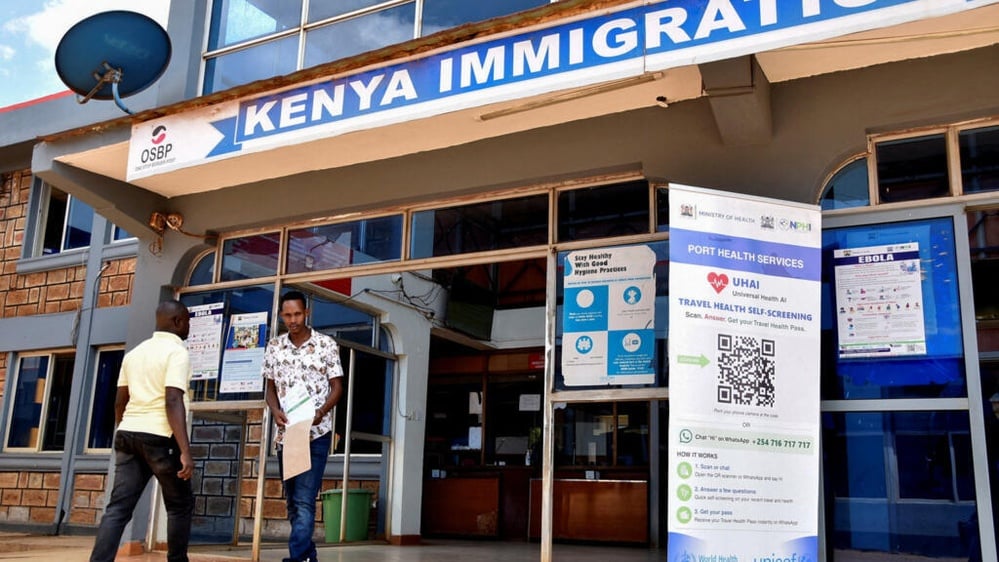
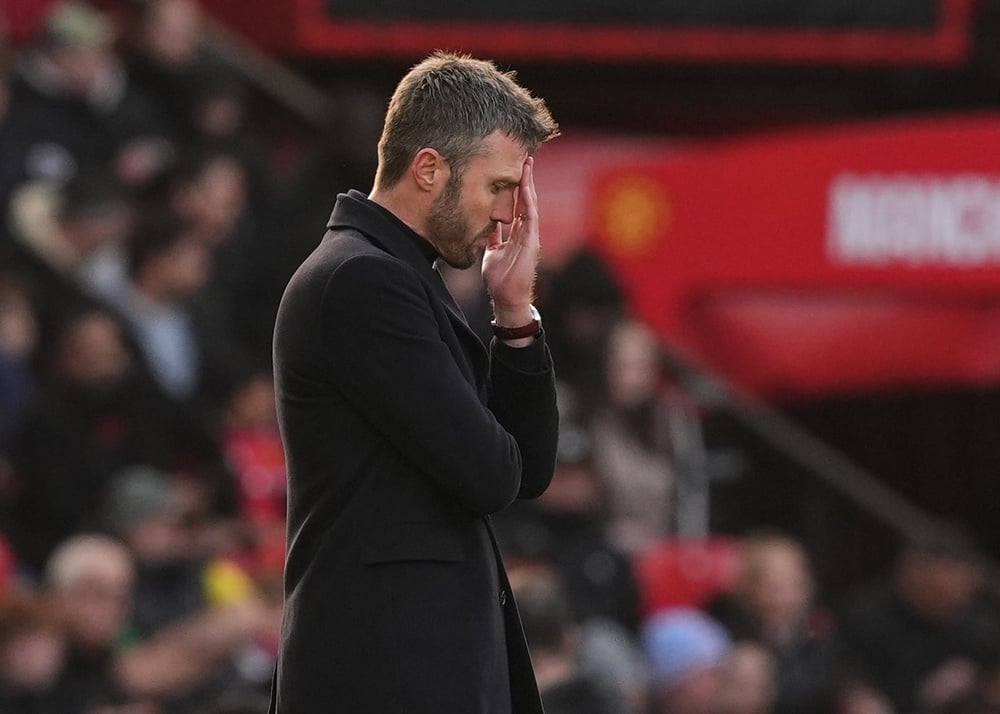

2026 © Helium Trades
Privacy Policy & Disclosure
* Disclaimer: Nothing on this website constitutes investment advice, performance data or any recommendation that any particular security, portfolio of securities, transaction or investment strategy is suitable for any specific person. Helium Trades is not responsible in any way for the accuracy
of any model predictions or price data. Any mention of a particular security and related prediction data is not a recommendation to buy or sell that security. Investments in securities involve the risk of loss. Past performance is no guarantee of future results. Helium Trades is not responsible for any of your investment decisions,
you should consult a financial expert before engaging in any transaction.
Helium Research Assistant

How can I help you today?
Ask any question about this page.


