See whether Helium helps you make better-informed decisions. Try every Pro Trader feature for 30 days. No credit card required.
Try every Pro Trader feature for 30 days. No credit card required.
November 09, 2026 · 0 shares
Publisher framing is strongly sympathetic to official climate-action appeals, foregrounding government and UN calls for faster finance and adaptation while omitting skeptical or cost-focused perspectives.
Automated analysis; not human reviewed.
Limitations: The supplied text is a scraped excerpt with related-link fragments and no visible byline; bias scores are limited to the visible substantive article.
·
13 of 55 available dimensions scored; omitted dimensions are not treated as neutral.
·
Verified supporting quotes for 13 of 13 scored dimensions.
Claim: The article frames climate finance and vulnerable-nation fairness as priorities, aligning with progressive climate policy.
“with greater focus on climate finance, adaptation, resilience and the transition to clean energy” · exact text match
“vulnerable communities continue to pay the highest price for a crisis they have contributed least to” · exact text match
Why: The selected framing emphasizes redistributive climate finance and vulnerability, with no conservative or market-skeptical counterpoint.
Claim: The report centers government ministers and UN officials as the authoritative voices.
“Australia’s Minister for Climate Change and Energy and President of Negotiations, Chris Bowen, said” · exact text match
“United Nations Climate Change Executive Secretary, Simon Stiell, said” · exact text match
Why: Official and international-institutional sources dominate, with no grassroots or dissenting voices.
Claim: The article includes evaluative characterizations of official messages and regional importance.
“One of his strongest messages was on the unequal access to climate finance” · exact text match
“The Pacific has also been given an important place in the COP31 process” · exact text match
Why: The publisher uses evaluative framing rather than purely descriptive attribution.
Claim: The article reports official prescriptions for faster climate action as central takeaways.
“Bowen said countries must keep the 1.5-degree Celsius temperature target within reach” · exact text match
“COP31 must make progress across its negotiations” · exact text match
Why: The framing emphasizes what countries must do, though mostly through attributed quotes.
Claim: The article uses moderate risk and threat framing about climate impacts to motivate action.
“warning that delays in addressing climate change are increasing risks to lives, communities, economies, and the environment” · exact text match
“communities continue to face rising sea levels, stronger climate-related hazards and growing threats to food and water security” · exact text match
Why: The language highlights serious risks and vulnerabilities, though in a measured policy-reporting tone.
Claim: The content is centrally about international climate negotiations and government policy commitments.
“He said COP31 must make progress across its negotiations, including the global goal on adaptation, the just transition mechanism, climate finance, and stronger mitigation action.” · exact text match
“Australia’s Minister for Climate Change and Energy” · exact text match
Why: The article focuses on COP negotiations and ministerial positions, making it highly political.
Claim: Claims about climate risks and needed action rest heavily on government and UN authority figures.
“Speaking at the official opening of the 31st Conference of the Parties (COP31) in Antalya, Türkiye, Australia’s Minister for Climate Change and Energy and President of Negotiations, Chris Bowen, said” · exact text match
“United Nations Climate Change Executive Secretary, Simon Stiell, said” · exact text match
Why: The report presents official statements as the main basis for its claims without independent analysis.
Claim: The article emphasizes vulnerable nations and communities as bearing disproportionate climate harms.
“vulnerable communities continue to pay the highest price for a crisis they have contributed least to” · exact text match
“For Pacific Island countries, the negotiations on climate finance, adaptation and resilience are particularly important as communities continue to face rising sea levels” · exact text match
Why: Victimhood framing is present but attributed to officials and tied to policy concerns.
Claim: The article is oriented toward established international climate-governance institutions and official processes.
“United Nations Climate Change Executive Secretary, Simon Stiell, said” · exact text match
“under a new partnership arrangement between Türkiye and Australia” · exact text match
Why: UN and government authorities frame the issue; no anti-establishment perspective appears.
Claim: The article provides named sources, direct quotes, dates, and procedural detail supporting verifiability.
“COP31 is being held in Antalya from 9 to 20 November 2026” · exact text match
“The arrangement follows an agreement reached at COP30 in Brazil in November 2025” · exact text match
Why: Specific dates, named officials, and attributed quotes indicate solid reporting practices in the supplied text.
Claim: The article adopts scientific climate targets and energy-technology claims as its factual baseline.
“keep the 1.5-degree Celsius temperature target within reach” · exact text match
“renewable energy, modern electricity grids, energy storage” · exact text match
Why: Climate-science and energy-technology framing is dominant; no superstitious claims appear.
Claim: The article frames climate action as requiring collective international goals, finance, and mechanisms.
“countries must keep the 1.5-degree Celsius temperature target within reach” · exact text match
“including the global goal on adaptation, the just transition mechanism, climate finance, and stronger mitigation action” · exact text match
Why: The solutions are presented as coordinated collective action rather than individual or market-led measures.
Claim: The report attributes claims to named officials and provides specific conference details.
“Australia’s Minister for Climate Change and Energy and President of Negotiations, Chris Bowen, said” · exact text match
“COP31 is being held in Antalya from 9 to 20 November 2026” · exact text match
Why: Named sourcing and specific dates support transparency; no evident deceptive framing appears.
The supplied text is a scraped excerpt with related-link fragments and no visible byline; bias scores are limited to the visible substantive article.
November 09, 2026 · 0 shares
Frames COP31 as a high-stakes UN-led climate crisis summit, amplifying official calls for emissions cuts and finance while relying on institutional and activist voices and disaster language.
Automated analysis; not human reviewed.
Limitations: No byline is present, and the supplied text includes duplicated scraped paragraphs and site boilerplate; this limits authorship and some contextual verification.
·
18 of 55 available dimensions scored; omitted dimensions are not treated as neutral.
·
Verified supporting quotes for 13 of 18 scored dimensions.
Claim: The report foregrounds UN and Greenpeace calls for faster emissions cuts and climate finance, while labeling Trump 'climate-sceptic' and noting his absence.
“The UN secretary-general urged leaders to "get serious by cutting emissions faster, accelerating a just transition from fossil fuels and delivering the finance and protection vulnerable countries need".” · exact text match
“But climate diplomacy is still missing a major player as climate-sceptic US President Donald Trump has not sent officials to COP31.” · exact text match
Why: These selections align with environmental-action priorities and cast the leading US conservative climate opponent as an outsider, though the claims are attributed and the event is a UN summit.
Claim: The report frames the summit mainly through UN, EU, Greenpeace, and ministerial officials rather than ordinary citizens or populist actors.
“The COP31 climate talks kicked off on Monday (Nov 9) with an early fight over money as the UN's chief urged world leaders to "get serious" about tackling the crisis after a year of devastating weather extremes.” · not found in supplied text
“A senior European Union official warned last week that there would be "no political will" for extra funding pledges at COP31.” · exact text match
Why: The centrality of international officials and NGO delegates gives the report an elite-institutional focus.
Claim: Most claims are attributed to named or identified actors and presented as reported statements or observed proceedings.
“"We have entered a new age of climate extremes," Guterres said in a statement.” · exact text match
Why: Direct attribution of the central claim indicates an objective, reported framing rather than overt subjectivity.
Claim: The report uses emotive disaster and crisis language in its own setup and framing.
“The summit comes after a year of punishing heatwaves in Europe, major wildfires in Indonesia and catastrophic floods in Nepal, with an exceptionally strong El Nino weather phenomenon fuelling more climate chaos.” · exact text match
Why: 'Punishing', 'catastrophic', and 'climate chaos' heighten the report's alarm beyond dry description.
Claim: The report frames COP31 prospects and the long-term climate trajectory pessimistically.
“Observers expect few major breakthroughs at COP31 as countries grapple with an oil price shock and geopolitical tensions fuelled by the US war with Iran and Russia's conflict in Ukraine.” · exact text match
“The long-term climate outlook is bleak: the United Nations warned in September that global temperatures were on course to exceed 1.5°C above pre-industrial levels, breaching the most ambitious threshold set by the Paris Agreement.” · exact text match
Why: Expectations of few breakthroughs and a 'bleak' outlook establish a pessimistic tone about outcomes.
Claim: The report mainly describes proceedings, proposals, and quoted urgings rather than issuing its own prescriptions.
“Turkey is inviting countries to join a voluntary "electrification" pledge to raise the share of global energy demand met by electricity from around 20 per cent today to 35 per cent by 2035.” · exact text match
Why: The framing reports the pledge as an initiative rather than endorsing or demanding it.
Claim: Climate impacts and summit stakes are framed with fear-inducing disaster language.
“The summit comes after a year of punishing heatwaves in Europe, major wildfires in Indonesia and catastrophic floods in Nepal, with an exceptionally strong El Nino weather phenomenon fuelling more climate chaos.” · exact text match
“The long-term climate outlook is bleak” · exact text match
Why: Disaster language and a 'bleak' forecast heighten fear, though the tone remains reportorial.
Claim: The report concerns a UN climate negotiation summit and disputes among governments over finance, fossil fuels, and attendance.
“The COP31 climate talks kicked off on Monday (Nov 9) with an early fight over money as the UN's chief urged world leaders to "get serious" about tackling the crisis after a year of devastating weather extremes.” · not found in supplied text
Why: The subject is explicitly international political negotiation and government policy.
Claim: The report leans on UN, EU, Greenpeace, and ministerial authorities to establish significance and outlook.
“A senior European Union official warned last week that there would be "no political will" for extra funding pledges at COP31.” · exact text match
“The United Nations warned in September that global temperatures were on course to exceed 1.5°C above pre-industrial levels” · not found in supplied text
Why: Institutional authorities are repeatedly used as the basis for claims, without much independent challenge in the supplied text.
Claim: The report treats the UN-led COP process and official negotiators as the central, legitimate forum for addressing climate change.
“The COP31 climate talks kicked off on Monday (Nov 9) with an early fight over money as the UN's chief urged world leaders to "get serious" about tackling the crisis after a year of devastating weather extremes.” · not found in supplied text
Why: The opening and structure center establishment institutions and their authority.
Claim: The report's tone is predominantly negative about climate extremes and the summit's prospects.
“The long-term climate outlook is bleak” · exact text match
“Observers expect few major breakthroughs at COP31” · exact text match
Why: Negative framing dominates the emotional register, though it remains measured.
Claim: The report is heavily attributed and includes context, multiple institutional perspectives, and uncertainty about outcomes.
“A senior European Union official warned last week that there would be "no political will" for extra funding pledges at COP31.” · exact text match
“Observers expect few major breakthroughs at COP31 as countries grapple with an oil price shock and geopolitical tensions fuelled by the US war with Iran and Russia's conflict in Ukraine.” · exact text match
Why: Named sources, direct quotations, and explicit expectations/context support high credibility.
Claim: The report provides procedural context and attributed explanations for the finance dispute rather than relying on emotional assertion alone.
“Under UN climate agreements, developed countries, which are historically responsible for most greenhouse gas emissions, have provided financial support to help developing nations adapt to climate impacts and transition to cleaner energy.” · exact text match
Why: Explaining the finance dispute's institutional background is a rational, explanatory framing choice.
Claim: The report adopts scientific/empirical climate framing, including a UN warning about global temperature thresholds.
“The United Nations warned in September that global temperatures were on course to exceed 1.5°C above pre-industrial levels, breaching the most ambitious threshold set by the Paris Agreement.” · not found in supplied text
Why: Reliance on quantified climate projections and the Paris threshold indicates a scientific rather than superstitious framing.
Claim: The report emphasizes collective UN agreements and wealthy-to-poor climate finance transfers.
“Under UN climate agreements, developed countries, which are historically responsible for most greenhouse gas emissions, have provided financial support to help developing nations adapt to climate impacts and transition to cleaner energy.” · exact text match
Why: Collective international obligations and financial transfers are central to the framing.
Claim: The report includes attributed forecasts and expectations about COP31 outcomes and future warming.
“Observers expect few major breakthroughs at COP31” · exact text match
“global temperatures were on course to exceed 1.5°C above pre-industrial levels” · exact text match
Why: Forecasts are present but explicitly attributed, so speculative framing is limited.
Claim: The report notes both a negotiating demand and what was ultimately included or excluded from the agenda, indicating fair presentation.
“The "climate finance work programme" was ultimately included in the agenda.” · exact text match
“But that point was not made a standalone agenda item.” · exact text match
Why: Including both inclusions and omissions supports an above-neutral integrity assessment.
Claim: The report supplies procedural context and explains institutional arrangements behind the summit.
“Turkey is presiding over COP31, with Australia leading negotiations under an unusual arrangement that settled a dispute over who would host the conference but raised concerns over how it would work.” · exact text match
“Under UN climate agreements, developed countries, which are historically responsible for most greenhouse gas emissions, have provided financial support to help developing nations adapt to climate impacts and transition to cleaner energy.” · exact text match
Why: Explanatory context and specificity about arrangements support an above-average intelligence assessment.
No byline is present, and the supplied text includes duplicated scraped paragraphs and site boilerplate; this limits authorship and some contextual verification.
November 09, 2026 · 0 shares
Balanced, attribution-driven reporting presents Turkiye’s electrification pledge alongside climate-advocate criticism and fossil-fuel-producer positions without endorsing either side.
Automated analysis; not human reviewed.
Limitations: The supplied text repeats the main article and appends unrelated headline links; analysis is limited to the substantive COP31 report.
·
10 of 55 available dimensions scored; omitted dimensions are not treated as neutral.
·
Verified supporting quotes for 10 of 10 scored dimensions.
Claim: The report does not adopt a left-right partisan frame and gives space to both climate-advocate and fossil-fuel-producer positions.
“However, climate advocates have criticised the pledge, arguing it does not require that additional electricity come from low-carbon sources.” · exact text match
“Many oil and gas producing countries, including Saudi Arabia, argue that fossil fuels can form a substantial part of the global energy mix, provided they are paired with technologies that reduce or capture emissions.” · exact text match
Why: Both environmental critics and fossil-fuel producers are reported without publisher endorsement, supporting a neutral left-right classification.
Claim: The report separates attributed claims and counterclaims rather than asserting a subjective judgment.
“Turkiye says the “35 by 35” will speed up the shift to renewable sources of energy while strengthening energy security.” · exact text match
“However, climate advocates have criticised the pledge, arguing it does not require that additional electricity come from low-carbon sources.” · exact text match
Why: Official claims are attributed to Turkiye and balanced by attributed criticism, supporting an objective classification.
Claim: The report uses measured, policy-focused language rather than sensational or alarmist framing.
“This has set up a debate on whether electrification alone should count as climate progress.” · exact text match
“Electricity currently accounts for about one-fifth of global total final energy consumption, according to the International Energy Agency.” · exact text match
Why: The language is measured and factual, with no sensational adjectives or alarmist framing, supporting a strongly objective classification.
Claim: The report describes the pledge and surrounding debate without prescribing a policy outcome.
“Turkiye has said it would centre electrification on the COP31 agenda, launching the non-binding 35-by-35 Global Electrification Pledge, which aims to make electricity account for at least 35 percent of global energy demand by 2035.” · exact text match
“This has set up a debate on whether electrification alone should count as climate progress.” · exact text match
Why: The text reports aims and disagreement rather than advocating a course of action, supporting a descriptive classification.
Claim: The report is mostly factual but incorporates attributed opinions from officials and advocates.
“Turkiye says the “35 by 35” will speed up the shift to renewable sources of energy while strengthening energy security.” · exact text match
“However, climate advocates have criticised the pledge, arguing it does not require that additional electricity come from low-carbon sources.” · exact text match
Why: Opinions are clearly attributed and balanced, so opinion content is present but low.
Claim: The report is centrally about international climate policy, state energy strategies, and war-related energy disruption.
“The United Nations climate conference COP31 is set to open on Monday in Antalya, Turkiye, against the backdrop of the US-led war on Iran, which has underscored the world’s attachment to fossil fuels.” · exact text match
“US President Donald Trump has encouraged policies maximising oil, gas, and coal production to address the Middle East disruptions.” · exact text match
Why: The subject matter and cited actors are explicitly political and geopolitical, supporting a high political-content score.
Claim: The report names sources and institutions and attributes claims to specific actors.
“Electricity currently accounts for about one-fifth of global total final energy consumption, according to the International Energy Agency.” · exact text match
““This year’s energy crisis has shocked us… everyone now understands that energy that you import is energy that you do not control,” the COP31 president and Turkiye’s environment minister, Murat Kurum, said on Thursday.” · exact text match
Why: Use of named institutions, named officials, and direct quotation supports high credibility in the supplied text.
Claim: The report relies on attributed data and structured comparison rather than emotive assertion.
“Electricity currently accounts for about one-fifth of global total final energy consumption, according to the International Energy Agency.” · exact text match
“This has set up a debate on whether electrification alone should count as climate progress.” · exact text match
Why: Use of an IEA statistic and explicit framing of a debate support a rational, evidence-oriented classification.
Claim: The report includes criticism and opposing views rather than presenting only the official COP31 position.
“However, climate advocates have criticised the pledge, arguing it does not require that additional electricity come from low-carbon sources.” · exact text match
“Many oil and gas producing countries, including Saudi Arabia, argue that fossil fuels can form a substantial part of the global energy mix, provided they are paired with technologies that reduce or capture emissions.” · exact text match
Why: Inclusion of contrary perspectives and attribution supports high observed integrity.
Claim: The report synthesizes policy aims, an IEA baseline, criticism, and geopolitical energy context within a short article.
“Electricity currently accounts for about one-fifth of global total final energy consumption, according to the International Energy Agency.” · exact text match
“Many oil and gas producing countries, including Saudi Arabia, argue that fossil fuels can form a substantial part of the global energy mix, provided they are paired with technologies that reduce or capture emissions.” · exact text match
Why: Compact inclusion of baseline data, policy target, criticism, and opposing producer view supports a high intelligence rating.
The supplied text repeats the main article and appends unrelated headline links; analysis is limited to the substantive COP31 report.
November 10, 2026 · 0 shares
Climate-action urgency and institutional sourcing dominate the framing, with mostly attributed claims and limited but explicit counterpoint on the electrification pledge.
Automated analysis; not human reviewed.
Limitations: No author byline is present, and the supplied text includes unrelated related-link headlines; scores reflect only the main COP31 report.
·
15 of 55 available dimensions scored; omitted dimensions are not treated as neutral.
·
Verified supporting quotes for 15 of 15 scored dimensions.
Claim: The report foregrounds urgent climate action and negatively frames fossil-fuel reliance while centering UN-led policy responses.
“UN Climate Change Executive Secretary Simon Stiell said at the opening of the event on Turkey’s Mediterranean coast, adding that progress so far was “nowhere near fast enough.”” · exact text match
““This year’s fossil fuel cost chaos has delivered a global shockwave, hitting households hard and spreading inflation like a cancer,” he said.” · exact text match
Why: This selection treats accelerated climate action as necessary and gives prominence to institutional climate warnings and negative fossil-fuel framing, a generally liberal/center-left orientation.
Claim: Factual attribution dominates over evaluative commentary.
“A report by the United Nations Environment Programme published in October said” · exact text match
Why: The article repeatedly attributes climate claims to reports and officials, supporting an objective presentation.
Claim: The report is largely factual and attributed, although it uses some dramatic disaster language.
“a glacier collapse in Nepal that triggered a catastrophic flood killing more than 1,450 people, with thousands still missing.” · exact text match
Why: The dramatic wording is tied to a concrete death toll, and most claims are attributed, making the piece more objective than sensational.
Claim: The report uses urgency and disaster framing, but grounds it in reported events and official warnings.
“worsening climate-driven disasters” · exact text match
Why: Disaster and urgency language raises the fear quotient, though it is not extreme or unattributed.
Claim: The report includes some explanatory or evaluative framing alongside factual reporting.
“Theoretically, such a goal could help reduce planet-warming emissions by speeding the global shift away from fossil fuel-powered vehicles, furnaces, boilers, cooking stoves, and other greenhouse gas-emitting equipment.” · exact text match
Why: The word 'Theoretically' introduces an explanatory judgment rather than a purely factual statement.
Claim: The report is centrally about international climate policy, summit negotiations, and government pledges.
“Leaders of the COP31 climate summit urged the world” · exact text match
Why: The subject matter and framing are explicitly political and policy-oriented.
Claim: Official UN and national-government voices dominate the sourcing and framing.
“UN Climate Change Executive Secretary Simon Stiell said at the opening of the event on Turkey’s Mediterranean coast” · exact text match
Why: Centering UN officials and government leaders indicates a pro-establishment orientation.
Claim: The report carries a mildly negative emotional valence through disaster and cost language.
““This year’s fossil fuel cost chaos has delivered a global shockwave, hitting households hard and spreading inflation like a cancer,” he said.” · exact text match
Why: The selected metaphor is strongly negative, though it is attributed to a quoted official.
Claim: The report uses named reports, attributed officials, and countervailing criticism.
“A report by the United Nations Environment Programme published in October said” · exact text match
“climate advocates have criticised the pledge because it” · exact text match
Why: Transparent sourcing and inclusion of criticism support high credibility.
Claim: The report grounds claims in attributed UN reports and named officials rather than unsupported assertion.
“driven by a powerful El Nino, a UN report showed on Monday.” · exact text match
Why: Attribution to a UN report supports an evidence-based, rational presentation.
Claim: Climate claims are grounded in UN scientific reports and data rather than superstition.
“A report by the United Nations Environment Programme published in October said” · exact text match
“driven by a powerful El Nino, a UN report showed on Monday.” · exact text match
Why: Reliance on scientific reports and empirical data indicates a strongly scientific orientation.
Claim: The framing emphasizes coordinated global action through multilateral institutions.
“said he hoped the conference would show the world that multilateralism works.” · exact text match
Why: Foregrounding multilateralism indicates a moderate collectivist orientation.
Claim: The report includes forward-looking goals and theoretical effects.
“Theoretically, such a goal could help reduce planet-warming emissions” · exact text match
Why: Future targets and theoretical language introduce moderate speculation.
Claim: The report includes criticism of the summit's central pledge and attributes major claims.
“But climate advocates have criticised the pledge because it” · exact text match
Why: Including countervailing criticism and named attribution indicates fairness and high integrity.
Claim: The report incorporates policy nuance and counterpoint rather than a single advocacy line.
“setting up an early fight over whether electrification alone should count as climate progress.” · exact text match
Why: Distinguishing electrification from low-carbon power and including criticism indicates above-average analytical quality.
No author byline is present, and the supplied text includes unrelated related-link headlines; scores reflect only the main COP31 report.
November 09, 2026 · 0 shares
Predominantly wire-style and attribution-heavy coverage frames COP31 through official climate-action urgency and financing disputes while giving minimal space to climate-skeptic perspectives beyond noting Trump’s absence.
Automated analysis; not human reviewed.
Limitations: The supplied text includes duplicated sidebar headlines and a truncated lead line, so extraction focuses on the identifiable COP31 article; author attribution is unavailable.
·
9 of 55 available dimensions scored; omitted dimensions are not treated as neutral.
·
Verified supporting quotes for 9 of 9 scored dimensions.
Claim: The report is structured around attributed statements and observable conference details rather than publisher opinion.
““We have entered a new age of climate extremes,” Guterres said in a statement.” · exact text match
“A senior European Union official warned last week that there would be “no political will” for additional funding pledges at COP31.” · exact text match
Why: Quotes and official warnings are explicitly attributed, keeping the account largely descriptive.
Claim: The report mostly uses plain procedural and sourced language, with occasional crisis adjectives such as 'devastating'.
“The opening ceremony began an hour and a half late, with no explanation given for the delay.” · exact text match
Counterevidence:
“after a year of devastating weather extremes” · exact text match
Why: The overall presentation is measured, but the lead includes some dramatic climate phrasing.
Claim: The report primarily describes the conference and attributed calls rather than issuing its own policy prescriptions.
“The COP31 climate talks opened Monday in the Turkish city of Antalya with an early dispute over money” · exact text match
“He urged leaders to “get serious by cutting emissions faster, accelerating a just transition from fossil fuels and delivering the finance and protection vulnerable countries need.”” · exact text match
Why: Calls for action are quoted from Guterres, not advanced in the publisher's own voice.
Claim: The report is heavily framed by governmental, electoral, and international-policy actors.
“A major player remains absent from the talks: US President Donald Trump, a climate change skeptic, has not sent administration officials to COP31.” · exact text match
“A US congressional delegation will attend, however, with Democrats buoyed by their historic victory in last week’s midterm elections.” · exact text match
Why: It centers heads of state, party politics, and UN negotiations.
Claim: The report uses named and described sourcing, direct quotes, and contextual detail to support its account.
“Guterres said in a statement.” · exact text match
“A source familiar with the talks said the “climate work programme” would be included in the agenda.” · exact text match
Why: Visible attribution and sourcing support credibility, though the anonymous source limits full verification.
Claim: The report separates attributed claims from factual narration and signals uncertain outcomes.
“A source familiar with the talks said the “climate work programme” would be included in the agenda.” · exact text match
“Observers expect few major breakthroughs” · exact text match
Why: It uses described sourcing and acknowledges expected limits rather than presenting speculation as certainty.
Claim: The report relies on meteorological data and scientific warnings rather than superstition or pseudoscience.
“the UN’s World Meteorological Organization released a report showing that 2026 had continued a streak of exceptional global temperatures, melting ice and rising sea levels.” · exact text match
“The UN warned in September that global temperatures were on course to exceed 1.5 degrees Celsius above preindustrial levels” · exact text match
Why: It grounds climate claims in named scientific and UN assessments.
Claim: The report includes some forecasts and expectations about likely outcomes.
“Observers expect few major breakthroughs as countries grapple with an oil price shock and geopolitical tensions” · exact text match
“The initiative could become a source of friction.” · exact text match
Why: These are clearly framed as expectations or possibilities, but they remain speculative elements.
Claim: The report attributes claims to named officials and an anonymous source and includes competing positions.
“A senior European Union official warned last week that there would be “no political will” for additional funding pledges at COP31.” · exact text match
“Poorer countries say the sums remain insufficient.” · exact text match
Why: Including funding skepticism and developing-country complaints shows internal fairness and attribution.
The supplied text includes duplicated sidebar headlines and a truncated lead line, so extraction focuses on the identifiable COP31 article; author attribution is unavailable.
November 10, 2026 · 0 shares
The report frames COP31 through UN and climate-advocacy warnings about a 'new age of climate extremes' and insufficient finance, while maintaining mostly descriptive sourcing and a pessimistic outlook.
Automated analysis; not human reviewed.
Limitations: The supplied text concatenates the COP31 report with unrelated Taiwan news snippets; bias scoring is limited to the identifiable COP31 article.
·
55 of 55 available dimensions scored; omitted dimensions are not treated as neutral.
·
Verified supporting quotes for 15 of 55 scored dimensions.
Claim: The report adopts climate-action framing by treating developed countries as historically responsible for emissions and by describing extreme weather as devastating.
“developed countries, which are historically responsible for most greenhouse gas emissions, have provided financial support to help developing nations adapt to climate impacts and transition to cleaner energy” · exact text match
“after a year of devastating weather extremes” · exact text match
Why: These passages foreground historical emissions responsibility and climate-finance obligations, aligning with liberal environmental priorities.
Claim: The report focuses on UN officials, ministers, and international negotiators rather than ordinary citizens.
“UN Secretary-General Antonio Guterres made his plea” · exact text match
“COP31 president Murat Kurum, who is also Turkey’s environment minister” · exact text match
Why: The sourcing and subjects are predominantly elite institutional actors.
Claim: The report is mostly descriptive but includes evaluative language about the climate outlook.
“The long-term climate outlook is bleak.” · exact text match
Why: 'Bleak' is an evaluative characterization rather than a purely neutral fact statement.
Claim: The report emphasizes bleak climate projections and low expectations for the summit.
“Observers expect few major breakthroughs at COP31” · exact text match
“The long-term climate outlook is bleak.” · exact text match
Why: Both quotes frame the conference and climate trajectory in pessimistic terms.
Claim: The report uses alarming language about weather extremes, though not in a rage-baiting register.
“devastating weather extremes” · exact text match
“climate chaos” · exact text match
Why: The language is alarming but remains within conventional climate-reporting tone.
Claim: The report is mostly factual but includes a evaluative characterization of the climate outlook.
“The long-term climate outlook is bleak.” · exact text match
Why: The word 'bleak' adds an evaluative judgment to otherwise sourced reporting.
Claim: The report centers on international climate negotiations and financing disputes, making it heavily political.
“Negotiators late on Sunday were locked in discussions over demands by developing nations to include items on climate finance in the official agenda.” · exact text match
Why: The central event is a multilateral political negotiation over climate finance and agenda inclusion.
Claim: The report treats the UN-led COP process as the central legitimate forum for addressing climate policy.
“UN Secretary-General Antonio Guterres made his plea as thousands of participants descended on a sprawling expo center” · exact text match
Why: The framing centers established international institutions and official processes.
Claim: The report uses negatively valenced language about weather and climate outcomes.
“after a year of devastating weather extremes” · exact text match
“catastrophic floods in Nepal” · exact text match
Why: Words like 'devastating' and 'catastrophic' give the coverage a negative emotional tone.
Claim: The report provides named attribution, direct quotes, and specific institutional findings.
“The UN in September said that global temperatures were on course to exceed 1.5°C above preindustrial levels” · exact text match
“said Jasper Inventor, head of Greenpeace’s COP31 delegation.” · exact text match
Why: Specific attribution to UN findings and named sources supports credibility.
Claim: The report is largely evidence-bound, attributing claims to UN findings and named sources rather than asserting them without support.
“The UN in September said that global temperatures were on course to exceed 1.5°C above preindustrial levels” · exact text match
“said Jasper Inventor, head of Greenpeace’s COP31 delegation.” · exact text match
Why: Attribution to a UN finding and a named Greenpeace official shows reliance on sourced, verifiable claims.
Claim: The report relies on climate-science projections rather than superstitious or anti-empirical claims.
“The UN in September said that global temperatures were on course to exceed 1.5°C above preindustrial levels” · exact text match
Why: Citing a quantified temperature threshold from the UN reflects scientific/empirical framing.
Claim: The report includes forecasts and expectations about future climate and summit outcomes.
“Observers expect few major breakthroughs at COP31” · exact text match
“The UN in September said that global temperatures were on course to exceed 1.5°C above preindustrial levels” · exact text match
Why: These statements project future developments beyond the immediate event.
Claim: The report includes qualifying details and opposing institutional positions, showing fair-minded handling of the agenda disputes.
“However, that point was not made a standalone agenda item.” · exact text match
“A senior EU official last week said that there would be “no political will” for extra funding pledges at COP31.” · exact text match
Why: It acknowledges a demand that was not granted and includes an EU official's skeptical stance, balancing advocacy voices.
Claim: The report is coherent, sourced, and analytically structured around the summit's disputes and context.
“Negotiators late on Sunday were locked in discussions over demands by developing nations to include items on climate finance in the official agenda.” · exact text match
Why: The article organizes complex negotiations and background clearly.
The supplied text concatenates the COP31 report with unrelated Taiwan news snippets; bias scoring is limited to the identifiable COP31 article.
November 12, 2026 · 0 shares
Frames COP31 climate policy through Guterres’s pro-transition, pro-UN advocacy, presenting fossil-fuel interests as obstructionist while omitting industry or skeptical responses.
Automated analysis; not human reviewed.
Limitations: The supplied text reports Guterres’s COP31 speech without an industry response or independent sourcing, so bias scores reflect a one-sided but attributed news report.
·
18 of 55 available dimensions scored; omitted dimensions are not treated as neutral.
·
Verified supporting quotes for 18 of 18 scored dimensions.
Claim: The report favorably frames expanded climate action, fossil-fuel phase-out, and climate finance.
“urging governments to accelerate the transition away from coal, oil and gas” · exact text match
“predictable climate finance, affordable clean-energy technologies and stronger international support for adaptation” · exact text match
Why: These are commonly associated with liberal/green policy priorities, though the text is reporting Guterres’s speech.
Claim: The report frames climate action through elite international institutions and government leaders.
“Addressing the leaders' summit at the 31st UN Climate Change Conference (COP31) in Antalya on Wednesday” · exact text match
“Guterres urged governments” · exact text match
Why: The perspective is top-down and technocratic rather than populist.
Claim: The report centers government-directed energy transition and international policy commitments.
“urging governments to accelerate the transition away from coal, oil and gas” · exact text match
“Guterres urged governments to confront their dependence on fossil fuels” · exact text match
Why: It favors collective policy action over market/individual discretion, but does not advocate coercive enforcement.
Claim: Most claims are attributed to Guterres, though the report adopts his policy framing.
“Guterres warned that current national climate commitments fall significantly short” · exact text match
Why: Attribution makes the report relatively objective, but the selection is one-sided.
Claim: The report uses sober, attributed figures rather than sensational language.
“He said global emissions need to decline by approximately 6% annually” · exact text match
Why: Quantitative phrasing and attribution support an objective score.
Claim: The report emphasizes shortfalls and severe climate risks, yielding a pessimistic tone.
“world could face warming of more than 2.5 degrees Celsius by the end of the century” · exact text match
“Such a trajectory would intensify extreme heat, floods, droughts, sea-level rise and other climate-related disasters” · exact text match
Why: Warnings of inadequate pledges and disaster impacts dominate the framing.
Claim: The report moves beyond description into prescriptive claims about what transition policy must include.
“A just transition must recognize differences in countries' economic capacities and development needs” · exact text match
“For Bangladesh and other developing countries, the global transition away from fossil fuels must be accompanied by predictable climate finance” · exact text match
Why: These sentences state normative requirements rather than only reporting a speech.
Claim: The report conveys urgency through climate-disaster warnings.
“Such a trajectory would intensify extreme heat, floods, droughts, sea-level rise and other climate-related disasters” · exact text match
“placing vulnerable populations at greater risk” · exact text match
Why: Disaster impacts are listed to heighten concern, though they are attributed to Guterres.
Claim: The report includes publisher-level prescriptive language about what a just transition must do.
“A just transition must recognize differences in countries' economic capacities and development needs” · exact text match
Why: The sentence states a normative requirement rather than only reporting a speech.
Claim: The report is centrally about international climate policy and government action.
“urging governments to accelerate the transition away from coal, oil and gas” · exact text match
“As negotiations continue in Antalya” · exact text match
Why: Government policy, summit negotiations, and international commitments are the core subject.
Claim: The report treats UN leadership and COP31 processes as central, legitimate authorities.
“United Nations Secretary-General António Guterres has criticized the influence of the fossil fuel industry” · exact text match
“His intervention has renewed pressure on governments at COP31” · exact text match
Why: The framing is aligned with establishment international-governance institutions.
Claim: The report provides direct quotes and attributed figures but lacks independent sourcing or balancing voices.
““Fossil fuels must go the way of the dinosaurs,” he told world leaders.” · exact text match
“He said global emissions need to decline by approximately 6% annually” · exact text match
Why: Attribution supports credibility; one-sidedness limits it.
Claim: The report relies on quantitative emissions and warming claims in a measured tone.
“global emissions need to decline by approximately 6% annually” · exact text match
“world could face warming of more than 2.5 degrees Celsius” · exact text match
Why: Evidence-based, attributed figures support a rational rather than irrational framing.
Claim: The report's framing is critical of fossil-fuel corporate interests.
“Guterres accused fossil fuel interests of distorting climate science, delaying policy decisions and weakening accountability.” · exact text match
Why: The accusation against industry is highlighted, with no corporate response included.
Claim: The report relies on climate-science metrics and projections.
“global emissions need to decline by approximately 6% annually” · exact text match
“world could face warming of more than 2.5 degrees Celsius” · exact text match
Why: Scientific emissions and warming figures are central to the framing.
Claim: The report emphasizes collective international burden-sharing.
“developing economies need adequate financing, technology and international cooperation” · exact text match
“A just transition must recognize differences in countries' economic capacities and development needs” · exact text match
Why: It stresses government cooperation and support for vulnerable economies over individual/market solutions.
Claim: The report includes a hedged long-range warming projection.
“world could face warming of more than 2.5 degrees Celsius by the end of the century” · exact text match
Why: The forecast is explicitly attributed and uses 'could', supporting only mild speculation.
Claim: The report uses direct quotes and clearly attributes claims to Guterres.
““Fossil fuels must go the way of the dinosaurs,” he told world leaders.” · exact text match
Why: Attribution and verbatim quotation support internal fairness/honesty, though balance is limited.
The supplied text reports Guterres’s COP31 speech without an industry response or independent sourcing, so bias scores reflect a one-sided but attributed news report.
November 09, 2026 · 0 shares
Predominantly wire-style and attribution-heavy coverage frames COP31 through official climate-action urgency and financing disputes while giving minimal space to climate-skeptic perspectives beyond noting Trump’s absence.
Automated analysis; not human reviewed.
Limitations: The supplied text includes duplicated sidebar headlines and a truncated lead line, so extraction focuses on the identifiable COP31 article; author attribution is unavailable.
·
9 of 55 available dimensions scored; omitted dimensions are not treated as neutral.
·
Verified supporting quotes for 9 of 9 scored dimensions.
Claim: The report is structured around attributed statements and observable conference details rather than publisher opinion.
““We have entered a new age of climate extremes,” Guterres said in a statement.” · exact text match
“A senior European Union official warned last week that there would be “no political will” for additional funding pledges at COP31.” · exact text match
Why: Quotes and official warnings are explicitly attributed, keeping the account largely descriptive.
Claim: The report mostly uses plain procedural and sourced language, with occasional crisis adjectives such as 'devastating'.
“The opening ceremony began an hour and a half late, with no explanation given for the delay.” · exact text match
Counterevidence:
“after a year of devastating weather extremes” · exact text match
Why: The overall presentation is measured, but the lead includes some dramatic climate phrasing.
Claim: The report primarily describes the conference and attributed calls rather than issuing its own policy prescriptions.
“The COP31 climate talks opened Monday in the Turkish city of Antalya with an early dispute over money” · exact text match
“He urged leaders to “get serious by cutting emissions faster, accelerating a just transition from fossil fuels and delivering the finance and protection vulnerable countries need.”” · exact text match
Why: Calls for action are quoted from Guterres, not advanced in the publisher's own voice.
Claim: The report is heavily framed by governmental, electoral, and international-policy actors.
“A major player remains absent from the talks: US President Donald Trump, a climate change skeptic, has not sent administration officials to COP31.” · exact text match
“A US congressional delegation will attend, however, with Democrats buoyed by their historic victory in last week’s midterm elections.” · exact text match
Why: It centers heads of state, party politics, and UN negotiations.
Claim: The report uses named and described sourcing, direct quotes, and contextual detail to support its account.
“Guterres said in a statement.” · exact text match
“A source familiar with the talks said the “climate work programme” would be included in the agenda.” · exact text match
Why: Visible attribution and sourcing support credibility, though the anonymous source limits full verification.
Claim: The report separates attributed claims from factual narration and signals uncertain outcomes.
“A source familiar with the talks said the “climate work programme” would be included in the agenda.” · exact text match
“Observers expect few major breakthroughs” · exact text match
Why: It uses described sourcing and acknowledges expected limits rather than presenting speculation as certainty.
Claim: The report relies on meteorological data and scientific warnings rather than superstition or pseudoscience.
“the UN’s World Meteorological Organization released a report showing that 2026 had continued a streak of exceptional global temperatures, melting ice and rising sea levels.” · exact text match
“The UN warned in September that global temperatures were on course to exceed 1.5 degrees Celsius above preindustrial levels” · exact text match
Why: It grounds climate claims in named scientific and UN assessments.
Claim: The report includes some forecasts and expectations about likely outcomes.
“Observers expect few major breakthroughs as countries grapple with an oil price shock and geopolitical tensions” · exact text match
“The initiative could become a source of friction.” · exact text match
Why: These are clearly framed as expectations or possibilities, but they remain speculative elements.
Claim: The report attributes claims to named officials and an anonymous source and includes competing positions.
“A senior European Union official warned last week that there would be “no political will” for additional funding pledges at COP31.” · exact text match
“Poorer countries say the sums remain insufficient.” · exact text match
Why: Including funding skepticism and developing-country complaints shows internal fairness and attribution.
The supplied text includes duplicated sidebar headlines and a truncated lead line, so extraction focuses on the identifiable COP31 article; author attribution is unavailable.
November 09, 2026 · 0 shares
Strongly frames the WMO findings as a climate emergency and amplifies progressive calls for rapid fossil-fuel phaseout, corporate accountability, and global climate finance.
Automated analysis; not human reviewed.
Limitations: The supplied text is heavily duplicated and includes unrelated headlines and fundraising boilerplate; only the WMO/COP31 article segment was analyzed.
·
22 of 55 available dimensions scored; omitted dimensions are not treated as neutral.
·
Verified supporting quotes for 21 of 22 scored dimensions.
Claim: The publisher frames climate policy through a progressive lens by amplifying calls for a just transition from fossil fuels and emissions cuts.
“The Earth is hurtling deeper into a climate emergency” · exact text match
“Advocacy groups warned that world leaders must commit to phase out fossil fuels, finance a just transition to a post-carbon economy” · exact text match
Why: Alarmist environmental framing plus explicit just-transition advocacy aligns with left/progressive climate politics.
Claim: The framing is not one-directionally populist or elitist; it cites UN experts while also attacking corporate power.
“according to a report released Monday by the World Meteorological Organization” · exact text match
“break the stranglehold of corporate power over political decision-making” · exact text match
Why: Institutional authority and anti-corporate populist rhetoric are both present, supporting a measured neutral score.
Claim: The article amplifies prescriptions for state-directed fossil-fuel phaseout and public investment.
“Governments must stop fossil fuel expansion, plan a fair phaseout of existing production, and invest public money in renewable energy and economic diversification.” · exact text match
Why: Explicit calls for government economic planning and public investment lean toward state-directed policy.
Claim: The narration mixes attributed WMO data with subjective alarmist language and normative advocacy.
“The Earth is hurtling deeper into a climate emergency” · exact text match
“tipping points leading to hellish feedback loops and a “hothouse Earth.”” · exact text match
Why: Loaded metaphors and evaluative language go beyond neutral reporting of the WMO findings.
Claim: The publisher uses dramatic, fear-heightening language to present the climate findings.
“The Earth is hurtling deeper into a climate emergency” · exact text match
“leading to hellish feedback loops and a “hothouse Earth.”” · exact text match
Why: Terms like hurtling, hellish, and hothouse Earth are sensational rather than measured.
Claim: The article's framing is strongly pessimistic about climate trajectories and impacts.
“The Earth is hurtling deeper into a climate emergency” · exact text match
“the risks of catastrophic and potentially irreversible climate impacts increase substantially” · exact text match
Why: Catastrophic and irreversible risk language foregrounds a pessimistic outlook.
Claim: The report is used to support explicit policy prescriptions, not just describe climate conditions.
“Leaders must get serious by cutting emissions faster, accelerating a just transition from fossil fuels, and delivering the finance and protection vulnerable countries need” · exact text match
“Governments must stop fossil fuel expansion, plan a fair phaseout of existing production, and invest public money in renewable energy and economic diversification.” · exact text match
Why: Both quoted passages explicitly prescribe government actions.
Claim: The framing uses emergency and existential danger language likely to induce fear.
“The Earth is hurtling deeper into a climate emergency” · exact text match
“end the fossil fuel era before it ends us” · exact text match
Why: Emergency, catastrophe, and before it ends us language heightens fear.
Claim: The article blends factual reporting with evaluative and advocacy-oriented assertions.
“The Earth is hurtling deeper into a climate emergency” · exact text match
“The climate crisis is not a failure of knowledge, but a failure of political courage” · exact text match
Why: Evaluative claims and quoted advocacy are woven into the factual report.
Claim: The article treats the climate report as a basis for contested political and economic policy demands.
“finance a just transition to a post-carbon economy” · exact text match
“break the stranglehold of corporate power over political decision-making” · exact text match
Why: Fossil-fuel phaseout, corporate power, and climate finance are political and policy conflicts.
Claim: The article leans on UN, WMO, and advocacy-group authorities to validate its climate and policy claims.
“according to a report released Monday by the World Meteorological Organization” · exact text match
“WMO Secretary General Celeste Saulo said in the report” · exact text match
Why: The report's claims are repeatedly grounded in institutional authority and named officials.
Claim: The article emphasizes that vulnerable and least-responsible populations suffer disproportionate climate harms.
“those least responsible are suffering first and worst” · exact text match
“COP31 must deliver collective action that reflects this profound injustice” · exact text match
Why: The framing centers harmed-victim groups and injustice.
Claim: The article organizes the climate report around a progressive-green ideological framework of corporate blame and just transition.
“break the stranglehold of corporate power over political decision-making” · exact text match
“accelerating a just transition from fossil fuels” · exact text match
Why: These are signature ideological prescriptions rather than neutral description.
Claim: The article's emotional tone is strongly negative and alarmed.
“The Earth is hurtling deeper into a climate emergency” · exact text match
“The climate crisis is not a failure of knowledge, but a failure of political courage” · exact text match
Why: Emergency and accusatory language produce a negative emotional charge.
Claim: Credibility is supported by named institutions, report attribution, and quoted officials, despite one-sided policy amplification.
“according to a report released Monday by the World Meteorological Organization” · exact text match
“WMO Secretary General Celeste Saulo said in the report” · exact text match
Why: Visible sourcing and attribution raise credibility, though advocacy selection limits neutrality.
Claim: The report is largely evidence-based but uses some emotionally charged, alarmist language.
“global average surface temperature for January – September 2026 was about 1.47°C above the preindustrial average” · exact text match
“The Earth is hurtling deeper into a climate emergency” · exact text match
Why: Specific observational data coexist with dramatic framing, yielding a slightly rational but not perfectly neutral score.
Claim: The publisher frames corporate and fossil-fuel interests as obstacles to climate action.
“break the stranglehold of corporate power over political decision-making” · exact text match
“avoid confronting their fossil fuel industry allies” · exact text match
Why: Directly critical framing of corporate power and fossil-fuel allies indicates anti-corporate bias.
Claim: The article is strongly grounded in scientific-report data and empirical measurement rather than superstition.
“global average surface temperature for January – September 2026 was about 1.47°C above the preindustrial average” · exact text match
“The imbalance reached its highest level since monitoring began” · exact text match
Why: Specific observational metrics support a scientific/empirical orientation.
Claim: The article favors collective, state-mediated global action over individual or market solutions.
“No country can confront this crisis alone.” · exact text match
“Governments must stop fossil fuel expansion, plan a fair phaseout of existing production, and invest public money in renewable energy and economic diversification.” · exact text match
Why: Collective action and public investment prescriptions point collectivist.
Claim: The article includes forecasts about 2026 records and El Niño effects extending into 2027.
“2026 is on track to be one of the four hottest years ever recorded” · not found in supplied text
“will continue to fuel high temperatures and extreme weather into 2027” · exact text match
Why: Forward-looking projections are present but attributed to the WMO report.
Claim: The publisher uses loaded emergency framing and selects only pro-phaseout voices, with no opposing policy perspective.
“The Earth is hurtling deeper into a climate emergency” · exact text match
“The world is not running out of climate warnings.
It is running out of excuses”
· exact text match
Why: Loaded wording and one-sided policy selection are observable framing techniques, though they may be consistent with advocacy journalism.
Claim: Credibility is supported by named institutions, report attribution, and quoted officials, despite one-sided advocacy.
“according to a report released Monday by the World Meteorological Organization” · exact text match
“WMO Secretary General Celeste Saulo said in the report” · exact text match
Why: Visible sourcing and attribution indicate reasonable integrity, though selective advocacy limits neutrality.
The supplied text is heavily duplicated and includes unrelated headlines and fundraising boilerplate; only the WMO/COP31 article segment was analyzed.
November 10, 2026 · 0 shares
Climate-action urgency and institutional sourcing dominate the framing, with mostly attributed claims and limited but explicit counterpoint on the electrification pledge.
Automated analysis; not human reviewed.
Limitations: No author byline is present, and the supplied text includes unrelated related-link headlines; scores reflect only the main COP31 report.
·
15 of 55 available dimensions scored; omitted dimensions are not treated as neutral.
·
Verified supporting quotes for 15 of 15 scored dimensions.
Claim: The report foregrounds urgent climate action and negatively frames fossil-fuel reliance while centering UN-led policy responses.
“UN Climate Change Executive Secretary Simon Stiell said at the opening of the event on Turkey’s Mediterranean coast, adding that progress so far was “nowhere near fast enough.”” · exact text match
““This year’s fossil fuel cost chaos has delivered a global shockwave, hitting households hard and spreading inflation like a cancer,” he said.” · exact text match
Why: This selection treats accelerated climate action as necessary and gives prominence to institutional climate warnings and negative fossil-fuel framing, a generally liberal/center-left orientation.
Claim: Factual attribution dominates over evaluative commentary.
“A report by the United Nations Environment Programme published in October said” · exact text match
Why: The article repeatedly attributes climate claims to reports and officials, supporting an objective presentation.
Claim: The report is largely factual and attributed, although it uses some dramatic disaster language.
“a glacier collapse in Nepal that triggered a catastrophic flood killing more than 1,450 people, with thousands still missing.” · exact text match
Why: The dramatic wording is tied to a concrete death toll, and most claims are attributed, making the piece more objective than sensational.
Claim: The report uses urgency and disaster framing, but grounds it in reported events and official warnings.
“worsening climate-driven disasters” · exact text match
Why: Disaster and urgency language raises the fear quotient, though it is not extreme or unattributed.
Claim: The report includes some explanatory or evaluative framing alongside factual reporting.
“Theoretically, such a goal could help reduce planet-warming emissions by speeding the global shift away from fossil fuel-powered vehicles, furnaces, boilers, cooking stoves, and other greenhouse gas-emitting equipment.” · exact text match
Why: The word 'Theoretically' introduces an explanatory judgment rather than a purely factual statement.
Claim: The report is centrally about international climate policy, summit negotiations, and government pledges.
“Leaders of the COP31 climate summit urged the world” · exact text match
Why: The subject matter and framing are explicitly political and policy-oriented.
Claim: Official UN and national-government voices dominate the sourcing and framing.
“UN Climate Change Executive Secretary Simon Stiell said at the opening of the event on Turkey’s Mediterranean coast” · exact text match
Why: Centering UN officials and government leaders indicates a pro-establishment orientation.
Claim: The report carries a mildly negative emotional valence through disaster and cost language.
““This year’s fossil fuel cost chaos has delivered a global shockwave, hitting households hard and spreading inflation like a cancer,” he said.” · exact text match
Why: The selected metaphor is strongly negative, though it is attributed to a quoted official.
Claim: The report uses named reports, attributed officials, and countervailing criticism.
“A report by the United Nations Environment Programme published in October said” · exact text match
“climate advocates have criticised the pledge because it” · exact text match
Why: Transparent sourcing and inclusion of criticism support high credibility.
Claim: The report grounds claims in attributed UN reports and named officials rather than unsupported assertion.
“driven by a powerful El Nino, a UN report showed on Monday.” · exact text match
Why: Attribution to a UN report supports an evidence-based, rational presentation.
Claim: Climate claims are grounded in UN scientific reports and data rather than superstition.
“A report by the United Nations Environment Programme published in October said” · exact text match
“driven by a powerful El Nino, a UN report showed on Monday.” · exact text match
Why: Reliance on scientific reports and empirical data indicates a strongly scientific orientation.
Claim: The framing emphasizes coordinated global action through multilateral institutions.
“said he hoped the conference would show the world that multilateralism works.” · exact text match
Why: Foregrounding multilateralism indicates a moderate collectivist orientation.
Claim: The report includes forward-looking goals and theoretical effects.
“Theoretically, such a goal could help reduce planet-warming emissions” · exact text match
Why: Future targets and theoretical language introduce moderate speculation.
Claim: The report includes criticism of the summit's central pledge and attributes major claims.
“But climate advocates have criticised the pledge because it” · exact text match
Why: Including countervailing criticism and named attribution indicates fairness and high integrity.
Claim: The report incorporates policy nuance and counterpoint rather than a single advocacy line.
“setting up an early fight over whether electrification alone should count as climate progress.” · exact text match
Why: Distinguishing electrification from low-carbon power and including criticism indicates above-average analytical quality.
No author byline is present, and the supplied text includes unrelated related-link headlines; scores reflect only the main COP31 report.
Frames Trump’s climate stance as scornful obstruction and Democratic midterm gains as a hopeful turning point, using evaluative and dramatic language while citing named experts and a UN report.
Automated analysis; not human reviewed.
Limitations: The supplied text appears to describe a speculative or future political scenario, and no author byline is present.
·
24 of 55 available dimensions scored; omitted dimensions are not treated as neutral.
·
Verified supporting quotes for 24 of 24 scored dimensions.
Claim: The article frames Democratic electoral success as hopeful and Trump’s climate policy as obstruction.
“Democrats’ crushing win in the US midterm elections has delivered a timely shot of optimism” · exact text match
“Trump’s active support of fossil fuels, evisceration of pollution limits and throttling of clean energy projects has caused the US to become an outlier among wealthy countries” · exact text match
Why: The selection and evaluative framing align with liberal climate-action priorities and Democratic electoral fortunes.
Claim: Centers congressional, UN, and expert voices rather than ordinary citizens.
“about 20 members of the US Congress heading to the summit” · exact text match
“according to Susan Biniaz, a former longtime climate negotiator for the US at Cop.” · exact text match
Why: The article’s sources and actors are predominantly institutional and expert elites.
Claim: Frames expanded government and international climate action as necessary.
“widespread state-based action to shift away from fossil fuels will be possible” · exact text match
“Democrats will dominate the budget process” · exact text match
Why: The article treats collective governmental action as the appropriate response to climate policy.
Claim: Uses evaluative characterizations of political events.
“Democrats’ crushing win” · exact text match
“timely shot of optimism” · exact text match
Why: These are subjective judgments rather than neutral descriptions.
Claim: Employs dramatic language about political and climate stakes.
“stunning success” · exact text match
“Trump dark ages” · exact text match
Why: Dramatic phrasing heightens the story’s stakes beyond neutral reporting.
Claim: Emphasizes renewed hope and Democratic momentum despite climate warnings.
“moment of renewed hope” · exact text match
“I’m certainly more optimistic” · exact text match
Why: The article foregrounds optimism about a post-Trump turn.
Claim: Moves from reporting to calls for lawmakers to act.
“They have to do more than hold the line – this was a sweeping mandate for change” · exact text match
“responsible lawmakers have to recognize that” · exact text match
Why: The article includes explicit prescriptions for Democratic lawmakers.
Claim: Highlights climate calamities and damage.
“escalating heatwaves, floods, droughts and other calamities” · exact text match
“locking in turmoil for people, wildlife and ecosystems” · exact text match
Why: The article stresses severe climate risks but does not use rage-baiting.
Claim: Frequently uses evaluative labels.
“scornful dismissal” · exact text match
“crushing win” · exact text match
Why: These labels convey the publisher’s evaluative stance rather than neutral description.
Claim: Frames the report around partisan electoral conflict.
“Democrats’ crushing win” · exact text match
“Trump’s Republicans” · exact text match
Why: The story is structured around US partisan control and electoral implications.
Claim: Presents Trump as primary cause of US climate outlier status.
“Trump’s active support of fossil fuels, evisceration of pollution limits and throttling of clean energy projects has caused the US to become an outlier among wealthy countries” · exact text match
Why: The causal framing is compressed around Trump’s policies without broader nuance.
Claim: Relies on experts and reports for authority.
“a recent UN report found” · exact text match
“according to Susan Biniaz, a former longtime climate negotiator for the US at Cop.” · exact text match
Why: The article leans on institutional and expert authority to support its framing.
Claim: Includes a White House statement but mostly presents one side.
““This summit rejects reality by failing to acknowledge that extremist climate policies are destroying countries around the world,” a White House official said” · exact text match
Why: An administration response is included, but the surrounding framing remains largely one-sided.
Claim: Predicts a post-Trump turn with limited hedging.
“should provide such a fillip” · exact text match
“This marks the beginning of the end of the Trump era” · exact text match
Why: The article gives confident forward-looking framing about political momentum.
Claim: Organizes the story around a climate-policy ideological conflict.
“Trump era of climate obstruction” · exact text match
“renewed hope” · exact text match
Why: The narrative is structured by a clear climate-policy ideological divide.
Claim: Aligns with congressional Democrats and UN climate institutions.
“about 20 members of the US Congress heading to the summit” · exact text match
“UN climate talks” · exact text match
Why: The framing favors established international climate institutions and Democratic institutional actors.
Claim: Predominantly negative toward Trump with hopeful Democratic framing.
“scornful dismissal” · exact text match
“moment of renewed hope” · exact text match
Why: The emotional valence is mixed but leans negative toward Trump and positive toward Democrats.
Claim: Named sources and an attributed report support credibility, though framing is one-sided.
“a recent UN report found” · exact text match
“according to Susan Biniaz, a former longtime climate negotiator for the US at Cop.” · exact text match
Why: Visible sourcing and attribution raise credibility despite evaluative framing.
Claim: Uses a UN report and expert warnings but also emotive evaluative language.
“a recent UN report found” · exact text match
“Trump dark ages” · exact text match
Why: Evidence-based reporting is mixed with charged characterizations, making the framing mostly but not purely rational.
Claim: Defers to climate science and UN findings.
“Scientists have warned, repeatedly” · exact text match
“a recent UN report found” · exact text match
Why: The article consistently relies on scientific and institutional climate evidence.
Claim: Frames climate action as collective international and state effort.
“almost every other country in the world sends delegations to the talks” · exact text match
“widespread state-based action to shift away from fossil fuels will be possible” · exact text match
Why: The article emphasizes collective governmental and international action.
Claim: Forecasts Democratic actions and a post-Trump return.
“hopefully paves the way for a Democratic president in two years” · exact text match
“will likely reverse funding cuts to environmental programs” · exact text match
Why: The article includes forward-looking political and policy predictions.
Claim: Uses loaded framing such as “snub” and “insane.”
“The snub is so severe” · exact text match
“it is insane” · exact text match
Why: Loaded wording shapes interpretation beyond neutral reporting.
Claim: Attributes claims to named sources and includes an administration statement.
“a White House official said” · exact text match
“according to Susan Biniaz, a former longtime climate negotiator for the US at Cop.” · exact text match
Why: Named attribution and inclusion of an opposing statement support observable fairness.
The supplied text appears to describe a speculative or future political scenario, and no author byline is present.
Frames COP31 primarily through the absence of G7 and European leaders, using expert warnings to present high-level attendance as essential to ambitious climate diplomacy.
Automated analysis; not human reviewed.
Limitations: The supplied text includes unrelated headline fragments and vague sourcing ('informed sources'), and some names/titles may be unreliable; analysis is limited to the text as given.
·
16 of 55 available dimensions scored; omitted dimensions are not treated as neutral.
·
Verified supporting quotes for 16 of 16 scored dimensions.
Claim: The article frames climate action as a pressing government responsibility.
“amid growing pressure on governments to take serious action” · exact text match
Why: Pro-climate-action framing modestly aligns with liberal environmental priorities.
Claim: The article centers credentialed climate-diplomacy experts and EU officials.
“Cosima Cassel, an expert in climate diplomacy, expressed her regret” · exact text match
“Chiara Martinelli, Director of European Affairs at the Climate Action Network, warned” · exact text match
Why: Expert and institutional voices carry the article's evaluative weight.
Claim: The article uses evaluative metaphor about the summit's atmosphere.
“has cast a shadow over the summit's opening momentum” · exact text match
Why: Metaphorical framing adds subjective interpretation beyond neutral reporting.
Claim: The article uses heightened language about environmental conditions.
“unprecedented environmental challenges” · exact text match
“has cast a shadow over the summit's opening momentum” · exact text match
Why: Elevated wording mildly sensationalizes the stakes.
Claim: The article frames the summit's prospects negatively because of leader absences.
“warned of the repercussions of this absence on the European Union's negotiating position” · exact text match
“has cast a shadow over the summit's opening momentum” · exact text match
Why: Warnings and shadow metaphor emphasize a pessimistic outlook.
Claim: The article includes a prescriptive call for European unity.
“she emphasized the urgent need for Europe to appear as a strong and unified bloc” · exact text match
Why: Quoted prescription is presented as a needed course of action.
Claim: The article uses warning language about consequences of absences.
“warned of the repercussions of this absence” · exact text match
Why: Warning framing mildly raises fear about summit failure.
Claim: The article is centrally about international climate policy and EU negotiating power.
“aim to formulate international policies to combat climate change” · exact text match
“European Union's negotiating position” · exact text match
Why: The subject is explicitly political and diplomatic.
Claim: The article relies on named experts and officials to support its concerns.
“Cosima Cassel, an expert in climate diplomacy” · exact text match
“Chiara Martinelli, Director of European Affairs at the Climate Action Network” · exact text match
Why: Expert credentials are used to validate the critique.
Claim: The article treats multilateral summit institutions and EU representation as central and legitimate.
“aim to formulate international policies to combat climate change” · exact text match
“European Commission President Ursula von der Leyen to represent the Union” · exact text match
Why: Institutional processes are the assumed framework for addressing climate change.
Claim: The article conveys regret and concern about leader absences.
“expressed her regret over the failure of key European leaders to attend” · exact text match
“warned of the repercussions of this absence” · exact text match
Why: Negative emotional language is present but attributed to sources.
Claim: The article includes official justifications and named expert attributions.
“The French government justified Macron's absence by citing his engagement in the historic Armistice Day commemorations” · exact text match
“Cosima Cassel, an expert in climate diplomacy” · exact text match
Why: Attribution and official explanations support credibility, though vague sourcing remains.
Claim: The article emphasizes collective international and European action.
“formulate international policies to combat climate change” · exact text match
“strong and unified bloc” · exact text match
Why: Collective bloc coordination is framed as necessary.
Claim: The article speculates about effects of absences on summit outcomes.
“could affect the conference's ability to reach binding and ambitious agreements” · exact text match
Why: Forecasting language about consequences is present.
Claim: The article presents official justifications and named sources but also vague sourcing.
“The French government justified Macron's absence by citing his engagement in the historic Armistice Day commemorations” · exact text match
“In statements reported by informed sources” · exact text match
Why: Fair attribution is mixed with unnamed sourcing.
Claim: The article offers causal analysis linking absences to negotiating capacity.
“Sources indicated that this decline in high-level diplomatic representation could affect the conference's ability to reach binding and ambitious agreements on emission reductions.” · exact text match
Why: It connects attendance patterns to diplomatic outcomes in a structured way.
The supplied text includes unrelated headline fragments and vague sourcing ('informed sources'), and some names/titles may be unreliable; analysis is limited to the text as given.
November 09, 2026 · 0 shares
Predominantly wire-style and attribution-heavy coverage frames COP31 through official climate-action urgency and financing disputes while giving minimal space to climate-skeptic perspectives beyond noting Trump’s absence.
Automated analysis; not human reviewed.
Limitations: The supplied text includes duplicated sidebar headlines and a truncated lead line, so extraction focuses on the identifiable COP31 article; author attribution is unavailable.
·
9 of 55 available dimensions scored; omitted dimensions are not treated as neutral.
·
Verified supporting quotes for 9 of 9 scored dimensions.
Claim: The report is structured around attributed statements and observable conference details rather than publisher opinion.
““We have entered a new age of climate extremes,” Guterres said in a statement.” · exact text match
“A senior European Union official warned last week that there would be “no political will” for additional funding pledges at COP31.” · exact text match
Why: Quotes and official warnings are explicitly attributed, keeping the account largely descriptive.
Claim: The report mostly uses plain procedural and sourced language, with occasional crisis adjectives such as 'devastating'.
“The opening ceremony began an hour and a half late, with no explanation given for the delay.” · exact text match
Counterevidence:
“after a year of devastating weather extremes” · exact text match
Why: The overall presentation is measured, but the lead includes some dramatic climate phrasing.
Claim: The report primarily describes the conference and attributed calls rather than issuing its own policy prescriptions.
“The COP31 climate talks opened Monday in the Turkish city of Antalya with an early dispute over money” · exact text match
“He urged leaders to “get serious by cutting emissions faster, accelerating a just transition from fossil fuels and delivering the finance and protection vulnerable countries need.”” · exact text match
Why: Calls for action are quoted from Guterres, not advanced in the publisher's own voice.
Claim: The report is heavily framed by governmental, electoral, and international-policy actors.
“A major player remains absent from the talks: US President Donald Trump, a climate change skeptic, has not sent administration officials to COP31.” · exact text match
“A US congressional delegation will attend, however, with Democrats buoyed by their historic victory in last week’s midterm elections.” · exact text match
Why: It centers heads of state, party politics, and UN negotiations.
Claim: The report uses named and described sourcing, direct quotes, and contextual detail to support its account.
“Guterres said in a statement.” · exact text match
“A source familiar with the talks said the “climate work programme” would be included in the agenda.” · exact text match
Why: Visible attribution and sourcing support credibility, though the anonymous source limits full verification.
Claim: The report separates attributed claims from factual narration and signals uncertain outcomes.
“A source familiar with the talks said the “climate work programme” would be included in the agenda.” · exact text match
“Observers expect few major breakthroughs” · exact text match
Why: It uses described sourcing and acknowledges expected limits rather than presenting speculation as certainty.
Claim: The report relies on meteorological data and scientific warnings rather than superstition or pseudoscience.
“the UN’s World Meteorological Organization released a report showing that 2026 had continued a streak of exceptional global temperatures, melting ice and rising sea levels.” · exact text match
“The UN warned in September that global temperatures were on course to exceed 1.5 degrees Celsius above preindustrial levels” · exact text match
Why: It grounds climate claims in named scientific and UN assessments.
Claim: The report includes some forecasts and expectations about likely outcomes.
“Observers expect few major breakthroughs as countries grapple with an oil price shock and geopolitical tensions” · exact text match
“The initiative could become a source of friction.” · exact text match
Why: These are clearly framed as expectations or possibilities, but they remain speculative elements.
Claim: The report attributes claims to named officials and an anonymous source and includes competing positions.
“A senior European Union official warned last week that there would be “no political will” for additional funding pledges at COP31.” · exact text match
“Poorer countries say the sums remain insufficient.” · exact text match
Why: Including funding skepticism and developing-country complaints shows internal fairness and attribution.
The supplied text includes duplicated sidebar headlines and a truncated lead line, so extraction focuses on the identifiable COP31 article; author attribution is unavailable.
November 10, 2026 · 0 shares
The report frames COP31 through UN and climate-advocacy warnings about a 'new age of climate extremes' and insufficient finance, while maintaining mostly descriptive sourcing and a pessimistic outlook.
Automated analysis; not human reviewed.
Limitations: The supplied text concatenates the COP31 report with unrelated Taiwan news snippets; bias scoring is limited to the identifiable COP31 article.
·
55 of 55 available dimensions scored; omitted dimensions are not treated as neutral.
·
Verified supporting quotes for 15 of 55 scored dimensions.
Claim: The report adopts climate-action framing by treating developed countries as historically responsible for emissions and by describing extreme weather as devastating.
“developed countries, which are historically responsible for most greenhouse gas emissions, have provided financial support to help developing nations adapt to climate impacts and transition to cleaner energy” · exact text match
“after a year of devastating weather extremes” · exact text match
Why: These passages foreground historical emissions responsibility and climate-finance obligations, aligning with liberal environmental priorities.
Claim: The report focuses on UN officials, ministers, and international negotiators rather than ordinary citizens.
“UN Secretary-General Antonio Guterres made his plea” · exact text match
“COP31 president Murat Kurum, who is also Turkey’s environment minister” · exact text match
Why: The sourcing and subjects are predominantly elite institutional actors.
Claim: The report is mostly descriptive but includes evaluative language about the climate outlook.
“The long-term climate outlook is bleak.” · exact text match
Why: 'Bleak' is an evaluative characterization rather than a purely neutral fact statement.
Claim: The report emphasizes bleak climate projections and low expectations for the summit.
“Observers expect few major breakthroughs at COP31” · exact text match
“The long-term climate outlook is bleak.” · exact text match
Why: Both quotes frame the conference and climate trajectory in pessimistic terms.
Claim: The report uses alarming language about weather extremes, though not in a rage-baiting register.
“devastating weather extremes” · exact text match
“climate chaos” · exact text match
Why: The language is alarming but remains within conventional climate-reporting tone.
Claim: The report is mostly factual but includes a evaluative characterization of the climate outlook.
“The long-term climate outlook is bleak.” · exact text match
Why: The word 'bleak' adds an evaluative judgment to otherwise sourced reporting.
Claim: The report centers on international climate negotiations and financing disputes, making it heavily political.
“Negotiators late on Sunday were locked in discussions over demands by developing nations to include items on climate finance in the official agenda.” · exact text match
Why: The central event is a multilateral political negotiation over climate finance and agenda inclusion.
Claim: The report treats the UN-led COP process as the central legitimate forum for addressing climate policy.
“UN Secretary-General Antonio Guterres made his plea as thousands of participants descended on a sprawling expo center” · exact text match
Why: The framing centers established international institutions and official processes.
Claim: The report uses negatively valenced language about weather and climate outcomes.
“after a year of devastating weather extremes” · exact text match
“catastrophic floods in Nepal” · exact text match
Why: Words like 'devastating' and 'catastrophic' give the coverage a negative emotional tone.
Claim: The report provides named attribution, direct quotes, and specific institutional findings.
“The UN in September said that global temperatures were on course to exceed 1.5°C above preindustrial levels” · exact text match
“said Jasper Inventor, head of Greenpeace’s COP31 delegation.” · exact text match
Why: Specific attribution to UN findings and named sources supports credibility.
Claim: The report is largely evidence-bound, attributing claims to UN findings and named sources rather than asserting them without support.
“The UN in September said that global temperatures were on course to exceed 1.5°C above preindustrial levels” · exact text match
“said Jasper Inventor, head of Greenpeace’s COP31 delegation.” · exact text match
Why: Attribution to a UN finding and a named Greenpeace official shows reliance on sourced, verifiable claims.
Claim: The report relies on climate-science projections rather than superstitious or anti-empirical claims.
“The UN in September said that global temperatures were on course to exceed 1.5°C above preindustrial levels” · exact text match
Why: Citing a quantified temperature threshold from the UN reflects scientific/empirical framing.
Claim: The report includes forecasts and expectations about future climate and summit outcomes.
“Observers expect few major breakthroughs at COP31” · exact text match
“The UN in September said that global temperatures were on course to exceed 1.5°C above preindustrial levels” · exact text match
Why: These statements project future developments beyond the immediate event.
Claim: The report includes qualifying details and opposing institutional positions, showing fair-minded handling of the agenda disputes.
“However, that point was not made a standalone agenda item.” · exact text match
“A senior EU official last week said that there would be “no political will” for extra funding pledges at COP31.” · exact text match
Why: It acknowledges a demand that was not granted and includes an EU official's skeptical stance, balancing advocacy voices.
Claim: The report is coherent, sourced, and analytically structured around the summit's disputes and context.
“Negotiators late on Sunday were locked in discussions over demands by developing nations to include items on climate finance in the official agenda.” · exact text match
Why: The article organizes complex negotiations and background clearly.
The supplied text concatenates the COP31 report with unrelated Taiwan news snippets; bias scoring is limited to the identifiable COP31 article.
November 09, 2026 · 0 shares
Predominantly wire-style and attribution-heavy coverage frames COP31 through official climate-action urgency and financing disputes while giving minimal space to climate-skeptic perspectives beyond noting Trump’s absence.
Automated analysis; not human reviewed. Limitations: The supplied text includes duplicated sidebar headlines and a truncated lead line, so extraction focuses on the identifiable COP31 article; author attribution is unavailable. · 9 of 55 available dimensions scored; omitted dimensions are not treated as neutral. · Verified supporting quotes for 9 of 9 scored dimensions.
Claim: The report is structured around attributed statements and observable conference details rather than publisher opinion.
““We have entered a new age of climate extremes,” Guterres said in a statement.” · exact text match
“A senior European Union official warned last week that there would be “no political will” for additional funding pledges at COP31.” · exact text match
Why: Quotes and official warnings are explicitly attributed, keeping the account largely descriptive.
Claim: The report mostly uses plain procedural and sourced language, with occasional crisis adjectives such as 'devastating'.
“The opening ceremony began an hour and a half late, with no explanation given for the delay.” · exact text match
Counterevidence:
“after a year of devastating weather extremes” · exact text match
Why: The overall presentation is measured, but the lead includes some dramatic climate phrasing.
Claim: The report primarily describes the conference and attributed calls rather than issuing its own policy prescriptions.
“The COP31 climate talks opened Monday in the Turkish city of Antalya with an early dispute over money” · exact text match
“He urged leaders to “get serious by cutting emissions faster, accelerating a just transition from fossil fuels and delivering the finance and protection vulnerable countries need.”” · exact text match
Why: Calls for action are quoted from Guterres, not advanced in the publisher's own voice.
Claim: The report is heavily framed by governmental, electoral, and international-policy actors.
“A major player remains absent from the talks: US President Donald Trump, a climate change skeptic, has not sent administration officials to COP31.” · exact text match
“A US congressional delegation will attend, however, with Democrats buoyed by their historic victory in last week’s midterm elections.” · exact text match
Why: It centers heads of state, party politics, and UN negotiations.
Claim: The report uses named and described sourcing, direct quotes, and contextual detail to support its account.
“Guterres said in a statement.” · exact text match
“A source familiar with the talks said the “climate work programme” would be included in the agenda.” · exact text match
Why: Visible attribution and sourcing support credibility, though the anonymous source limits full verification.
Claim: The report separates attributed claims from factual narration and signals uncertain outcomes.
“A source familiar with the talks said the “climate work programme” would be included in the agenda.” · exact text match
“Observers expect few major breakthroughs” · exact text match
Why: It uses described sourcing and acknowledges expected limits rather than presenting speculation as certainty.
Claim: The report relies on meteorological data and scientific warnings rather than superstition or pseudoscience.
“the UN’s World Meteorological Organization released a report showing that 2026 had continued a streak of exceptional global temperatures, melting ice and rising sea levels.” · exact text match
“The UN warned in September that global temperatures were on course to exceed 1.5 degrees Celsius above preindustrial levels” · exact text match
Why: It grounds climate claims in named scientific and UN assessments.
Claim: The report includes some forecasts and expectations about likely outcomes.
“Observers expect few major breakthroughs as countries grapple with an oil price shock and geopolitical tensions” · exact text match
“The initiative could become a source of friction.” · exact text match
Why: These are clearly framed as expectations or possibilities, but they remain speculative elements.
Claim: The report attributes claims to named officials and an anonymous source and includes competing positions.
“A senior European Union official warned last week that there would be “no political will” for additional funding pledges at COP31.” · exact text match
“Poorer countries say the sums remain insufficient.” · exact text match
Why: Including funding skepticism and developing-country complaints shows internal fairness and attribution.
The supplied text includes duplicated sidebar headlines and a truncated lead line, so extraction focuses on the identifiable COP31 article; author attribution is unavailable.
November 09, 2026 · 0 shares
Publisher framing is strongly sympathetic to official climate-action appeals, foregrounding government and UN calls for faster finance and adaptation while omitting skeptical or cost-focused perspectives.
Automated analysis; not human reviewed. Limitations: The supplied text is a scraped excerpt with related-link fragments and no visible byline; bias scores are limited to the visible substantive article. · 13 of 55 available dimensions scored; omitted dimensions are not treated as neutral. · Verified supporting quotes for 13 of 13 scored dimensions.
Claim: The article frames climate finance and vulnerable-nation fairness as priorities, aligning with progressive climate policy.
“with greater focus on climate finance, adaptation, resilience and the transition to clean energy” · exact text match
“vulnerable communities continue to pay the highest price for a crisis they have contributed least to” · exact text match
Why: The selected framing emphasizes redistributive climate finance and vulnerability, with no conservative or market-skeptical counterpoint.
Claim: The report centers government ministers and UN officials as the authoritative voices.
“Australia’s Minister for Climate Change and Energy and President of Negotiations, Chris Bowen, said” · exact text match
“United Nations Climate Change Executive Secretary, Simon Stiell, said” · exact text match
Why: Official and international-institutional sources dominate, with no grassroots or dissenting voices.
Claim: The article includes evaluative characterizations of official messages and regional importance.
“One of his strongest messages was on the unequal access to climate finance” · exact text match
“The Pacific has also been given an important place in the COP31 process” · exact text match
Why: The publisher uses evaluative framing rather than purely descriptive attribution.
Claim: The article reports official prescriptions for faster climate action as central takeaways.
“Bowen said countries must keep the 1.5-degree Celsius temperature target within reach” · exact text match
“COP31 must make progress across its negotiations” · exact text match
Why: The framing emphasizes what countries must do, though mostly through attributed quotes.
Claim: The article uses moderate risk and threat framing about climate impacts to motivate action.
“warning that delays in addressing climate change are increasing risks to lives, communities, economies, and the environment” · exact text match
“communities continue to face rising sea levels, stronger climate-related hazards and growing threats to food and water security” · exact text match
Why: The language highlights serious risks and vulnerabilities, though in a measured policy-reporting tone.
Claim: The content is centrally about international climate negotiations and government policy commitments.
“He said COP31 must make progress across its negotiations, including the global goal on adaptation, the just transition mechanism, climate finance, and stronger mitigation action.” · exact text match
“Australia’s Minister for Climate Change and Energy” · exact text match
Why: The article focuses on COP negotiations and ministerial positions, making it highly political.
Claim: Claims about climate risks and needed action rest heavily on government and UN authority figures.
“Speaking at the official opening of the 31st Conference of the Parties (COP31) in Antalya, Türkiye, Australia’s Minister for Climate Change and Energy and President of Negotiations, Chris Bowen, said” · exact text match
“United Nations Climate Change Executive Secretary, Simon Stiell, said” · exact text match
Why: The report presents official statements as the main basis for its claims without independent analysis.
Claim: The article emphasizes vulnerable nations and communities as bearing disproportionate climate harms.
“vulnerable communities continue to pay the highest price for a crisis they have contributed least to” · exact text match
“For Pacific Island countries, the negotiations on climate finance, adaptation and resilience are particularly important as communities continue to face rising sea levels” · exact text match
Why: Victimhood framing is present but attributed to officials and tied to policy concerns.
Claim: The article is oriented toward established international climate-governance institutions and official processes.
“United Nations Climate Change Executive Secretary, Simon Stiell, said” · exact text match
“under a new partnership arrangement between Türkiye and Australia” · exact text match
Why: UN and government authorities frame the issue; no anti-establishment perspective appears.
Claim: The article provides named sources, direct quotes, dates, and procedural detail supporting verifiability.
“COP31 is being held in Antalya from 9 to 20 November 2026” · exact text match
“The arrangement follows an agreement reached at COP30 in Brazil in November 2025” · exact text match
Why: Specific dates, named officials, and attributed quotes indicate solid reporting practices in the supplied text.
Claim: The article adopts scientific climate targets and energy-technology claims as its factual baseline.
“keep the 1.5-degree Celsius temperature target within reach” · exact text match
“renewable energy, modern electricity grids, energy storage” · exact text match
Why: Climate-science and energy-technology framing is dominant; no superstitious claims appear.
Claim: The article frames climate action as requiring collective international goals, finance, and mechanisms.
“countries must keep the 1.5-degree Celsius temperature target within reach” · exact text match
“including the global goal on adaptation, the just transition mechanism, climate finance, and stronger mitigation action” · exact text match
Why: The solutions are presented as coordinated collective action rather than individual or market-led measures.
Claim: The report attributes claims to named officials and provides specific conference details.
“Australia’s Minister for Climate Change and Energy and President of Negotiations, Chris Bowen, said” · exact text match
“COP31 is being held in Antalya from 9 to 20 November 2026” · exact text match
Why: Named sourcing and specific dates support transparency; no evident deceptive framing appears.
The supplied text is a scraped excerpt with related-link fragments and no visible byline; bias scores are limited to the visible substantive article.
November 10, 2026 · 0 shares
The report frames COP31 through UN and climate-advocacy warnings about a 'new age of climate extremes' and insufficient finance, while maintaining mostly descriptive sourcing and a pessimistic outlook.
Automated analysis; not human reviewed. Limitations: The supplied text concatenates the COP31 report with unrelated Taiwan news snippets; bias scoring is limited to the identifiable COP31 article. · 55 of 55 available dimensions scored; omitted dimensions are not treated as neutral. · Verified supporting quotes for 15 of 55 scored dimensions.
Claim: The report adopts climate-action framing by treating developed countries as historically responsible for emissions and by describing extreme weather as devastating.
“developed countries, which are historically responsible for most greenhouse gas emissions, have provided financial support to help developing nations adapt to climate impacts and transition to cleaner energy” · exact text match
“after a year of devastating weather extremes” · exact text match
Why: These passages foreground historical emissions responsibility and climate-finance obligations, aligning with liberal environmental priorities.
Claim: The report focuses on UN officials, ministers, and international negotiators rather than ordinary citizens.
“UN Secretary-General Antonio Guterres made his plea” · exact text match
“COP31 president Murat Kurum, who is also Turkey’s environment minister” · exact text match
Why: The sourcing and subjects are predominantly elite institutional actors.
Claim: The report is mostly descriptive but includes evaluative language about the climate outlook.
“The long-term climate outlook is bleak.” · exact text match
Why: 'Bleak' is an evaluative characterization rather than a purely neutral fact statement.
Claim: The report emphasizes bleak climate projections and low expectations for the summit.
“Observers expect few major breakthroughs at COP31” · exact text match
“The long-term climate outlook is bleak.” · exact text match
Why: Both quotes frame the conference and climate trajectory in pessimistic terms.
Claim: The report uses alarming language about weather extremes, though not in a rage-baiting register.
“devastating weather extremes” · exact text match
“climate chaos” · exact text match
Why: The language is alarming but remains within conventional climate-reporting tone.
Claim: The report is mostly factual but includes a evaluative characterization of the climate outlook.
“The long-term climate outlook is bleak.” · exact text match
Why: The word 'bleak' adds an evaluative judgment to otherwise sourced reporting.
Claim: The report centers on international climate negotiations and financing disputes, making it heavily political.
“Negotiators late on Sunday were locked in discussions over demands by developing nations to include items on climate finance in the official agenda.” · exact text match
Why: The central event is a multilateral political negotiation over climate finance and agenda inclusion.
Claim: The report treats the UN-led COP process as the central legitimate forum for addressing climate policy.
“UN Secretary-General Antonio Guterres made his plea as thousands of participants descended on a sprawling expo center” · exact text match
Why: The framing centers established international institutions and official processes.
Claim: The report uses negatively valenced language about weather and climate outcomes.
“after a year of devastating weather extremes” · exact text match
“catastrophic floods in Nepal” · exact text match
Why: Words like 'devastating' and 'catastrophic' give the coverage a negative emotional tone.
Claim: The report provides named attribution, direct quotes, and specific institutional findings.
“The UN in September said that global temperatures were on course to exceed 1.5°C above preindustrial levels” · exact text match
“said Jasper Inventor, head of Greenpeace’s COP31 delegation.” · exact text match
Why: Specific attribution to UN findings and named sources supports credibility.
Claim: The report is largely evidence-bound, attributing claims to UN findings and named sources rather than asserting them without support.
“The UN in September said that global temperatures were on course to exceed 1.5°C above preindustrial levels” · exact text match
“said Jasper Inventor, head of Greenpeace’s COP31 delegation.” · exact text match
Why: Attribution to a UN finding and a named Greenpeace official shows reliance on sourced, verifiable claims.
Claim: The report relies on climate-science projections rather than superstitious or anti-empirical claims.
“The UN in September said that global temperatures were on course to exceed 1.5°C above preindustrial levels” · exact text match
Why: Citing a quantified temperature threshold from the UN reflects scientific/empirical framing.
Claim: The report includes forecasts and expectations about future climate and summit outcomes.
“Observers expect few major breakthroughs at COP31” · exact text match
“The UN in September said that global temperatures were on course to exceed 1.5°C above preindustrial levels” · exact text match
Why: These statements project future developments beyond the immediate event.
Claim: The report includes qualifying details and opposing institutional positions, showing fair-minded handling of the agenda disputes.
“However, that point was not made a standalone agenda item.” · exact text match
“A senior EU official last week said that there would be “no political will” for extra funding pledges at COP31.” · exact text match
Why: It acknowledges a demand that was not granted and includes an EU official's skeptical stance, balancing advocacy voices.
Claim: The report is coherent, sourced, and analytically structured around the summit's disputes and context.
“Negotiators late on Sunday were locked in discussions over demands by developing nations to include items on climate finance in the official agenda.” · exact text match
Why: The article organizes complex negotiations and background clearly.
The supplied text concatenates the COP31 report with unrelated Taiwan news snippets; bias scoring is limited to the identifiable COP31 article.
November 09, 2026 · 0 shares
Frames COP31 as a high-stakes UN-led climate crisis summit, amplifying official calls for emissions cuts and finance while relying on institutional and activist voices and disaster language.
Automated analysis; not human reviewed. Limitations: No byline is present, and the supplied text includes duplicated scraped paragraphs and site boilerplate; this limits authorship and some contextual verification. · 18 of 55 available dimensions scored; omitted dimensions are not treated as neutral. · Verified supporting quotes for 13 of 18 scored dimensions.
Claim: The report foregrounds UN and Greenpeace calls for faster emissions cuts and climate finance, while labeling Trump 'climate-sceptic' and noting his absence.
“The UN secretary-general urged leaders to "get serious by cutting emissions faster, accelerating a just transition from fossil fuels and delivering the finance and protection vulnerable countries need".” · exact text match
“But climate diplomacy is still missing a major player as climate-sceptic US President Donald Trump has not sent officials to COP31.” · exact text match
Why: These selections align with environmental-action priorities and cast the leading US conservative climate opponent as an outsider, though the claims are attributed and the event is a UN summit.
Claim: The report frames the summit mainly through UN, EU, Greenpeace, and ministerial officials rather than ordinary citizens or populist actors.
“The COP31 climate talks kicked off on Monday (Nov 9) with an early fight over money as the UN's chief urged world leaders to "get serious" about tackling the crisis after a year of devastating weather extremes.” · not found in supplied text
“A senior European Union official warned last week that there would be "no political will" for extra funding pledges at COP31.” · exact text match
Why: The centrality of international officials and NGO delegates gives the report an elite-institutional focus.
Claim: Most claims are attributed to named or identified actors and presented as reported statements or observed proceedings.
“"We have entered a new age of climate extremes," Guterres said in a statement.” · exact text match
Why: Direct attribution of the central claim indicates an objective, reported framing rather than overt subjectivity.
Claim: The report uses emotive disaster and crisis language in its own setup and framing.
“The summit comes after a year of punishing heatwaves in Europe, major wildfires in Indonesia and catastrophic floods in Nepal, with an exceptionally strong El Nino weather phenomenon fuelling more climate chaos.” · exact text match
Why: 'Punishing', 'catastrophic', and 'climate chaos' heighten the report's alarm beyond dry description.
Claim: The report frames COP31 prospects and the long-term climate trajectory pessimistically.
“Observers expect few major breakthroughs at COP31 as countries grapple with an oil price shock and geopolitical tensions fuelled by the US war with Iran and Russia's conflict in Ukraine.” · exact text match
“The long-term climate outlook is bleak: the United Nations warned in September that global temperatures were on course to exceed 1.5°C above pre-industrial levels, breaching the most ambitious threshold set by the Paris Agreement.” · exact text match
Why: Expectations of few breakthroughs and a 'bleak' outlook establish a pessimistic tone about outcomes.
Claim: The report mainly describes proceedings, proposals, and quoted urgings rather than issuing its own prescriptions.
“Turkey is inviting countries to join a voluntary "electrification" pledge to raise the share of global energy demand met by electricity from around 20 per cent today to 35 per cent by 2035.” · exact text match
Why: The framing reports the pledge as an initiative rather than endorsing or demanding it.
Claim: Climate impacts and summit stakes are framed with fear-inducing disaster language.
“The summit comes after a year of punishing heatwaves in Europe, major wildfires in Indonesia and catastrophic floods in Nepal, with an exceptionally strong El Nino weather phenomenon fuelling more climate chaos.” · exact text match
“The long-term climate outlook is bleak” · exact text match
Why: Disaster language and a 'bleak' forecast heighten fear, though the tone remains reportorial.
Claim: The report concerns a UN climate negotiation summit and disputes among governments over finance, fossil fuels, and attendance.
“The COP31 climate talks kicked off on Monday (Nov 9) with an early fight over money as the UN's chief urged world leaders to "get serious" about tackling the crisis after a year of devastating weather extremes.” · not found in supplied text
Why: The subject is explicitly international political negotiation and government policy.
Claim: The report leans on UN, EU, Greenpeace, and ministerial authorities to establish significance and outlook.
“A senior European Union official warned last week that there would be "no political will" for extra funding pledges at COP31.” · exact text match
“The United Nations warned in September that global temperatures were on course to exceed 1.5°C above pre-industrial levels” · not found in supplied text
Why: Institutional authorities are repeatedly used as the basis for claims, without much independent challenge in the supplied text.
Claim: The report treats the UN-led COP process and official negotiators as the central, legitimate forum for addressing climate change.
“The COP31 climate talks kicked off on Monday (Nov 9) with an early fight over money as the UN's chief urged world leaders to "get serious" about tackling the crisis after a year of devastating weather extremes.” · not found in supplied text
Why: The opening and structure center establishment institutions and their authority.
Claim: The report's tone is predominantly negative about climate extremes and the summit's prospects.
“The long-term climate outlook is bleak” · exact text match
“Observers expect few major breakthroughs at COP31” · exact text match
Why: Negative framing dominates the emotional register, though it remains measured.
Claim: The report is heavily attributed and includes context, multiple institutional perspectives, and uncertainty about outcomes.
“A senior European Union official warned last week that there would be "no political will" for extra funding pledges at COP31.” · exact text match
“Observers expect few major breakthroughs at COP31 as countries grapple with an oil price shock and geopolitical tensions fuelled by the US war with Iran and Russia's conflict in Ukraine.” · exact text match
Why: Named sources, direct quotations, and explicit expectations/context support high credibility.
Claim: The report provides procedural context and attributed explanations for the finance dispute rather than relying on emotional assertion alone.
“Under UN climate agreements, developed countries, which are historically responsible for most greenhouse gas emissions, have provided financial support to help developing nations adapt to climate impacts and transition to cleaner energy.” · exact text match
Why: Explaining the finance dispute's institutional background is a rational, explanatory framing choice.
Claim: The report adopts scientific/empirical climate framing, including a UN warning about global temperature thresholds.
“The United Nations warned in September that global temperatures were on course to exceed 1.5°C above pre-industrial levels, breaching the most ambitious threshold set by the Paris Agreement.” · not found in supplied text
Why: Reliance on quantified climate projections and the Paris threshold indicates a scientific rather than superstitious framing.
Claim: The report emphasizes collective UN agreements and wealthy-to-poor climate finance transfers.
“Under UN climate agreements, developed countries, which are historically responsible for most greenhouse gas emissions, have provided financial support to help developing nations adapt to climate impacts and transition to cleaner energy.” · exact text match
Why: Collective international obligations and financial transfers are central to the framing.
Claim: The report includes attributed forecasts and expectations about COP31 outcomes and future warming.
“Observers expect few major breakthroughs at COP31” · exact text match
“global temperatures were on course to exceed 1.5°C above pre-industrial levels” · exact text match
Why: Forecasts are present but explicitly attributed, so speculative framing is limited.
Claim: The report notes both a negotiating demand and what was ultimately included or excluded from the agenda, indicating fair presentation.
“The "climate finance work programme" was ultimately included in the agenda.” · exact text match
“But that point was not made a standalone agenda item.” · exact text match
Why: Including both inclusions and omissions supports an above-neutral integrity assessment.
Claim: The report supplies procedural context and explains institutional arrangements behind the summit.
“Turkey is presiding over COP31, with Australia leading negotiations under an unusual arrangement that settled a dispute over who would host the conference but raised concerns over how it would work.” · exact text match
“Under UN climate agreements, developed countries, which are historically responsible for most greenhouse gas emissions, have provided financial support to help developing nations adapt to climate impacts and transition to cleaner energy.” · exact text match
Why: Explanatory context and specificity about arrangements support an above-average intelligence assessment.
No byline is present, and the supplied text includes duplicated scraped paragraphs and site boilerplate; this limits authorship and some contextual verification.
November 09, 2026 · 0 shares
Strongly frames the WMO findings as a climate emergency and amplifies progressive calls for rapid fossil-fuel phaseout, corporate accountability, and global climate finance.
Automated analysis; not human reviewed. Limitations: The supplied text is heavily duplicated and includes unrelated headlines and fundraising boilerplate; only the WMO/COP31 article segment was analyzed. · 22 of 55 available dimensions scored; omitted dimensions are not treated as neutral. · Verified supporting quotes for 21 of 22 scored dimensions.
Claim: The publisher frames climate policy through a progressive lens by amplifying calls for a just transition from fossil fuels and emissions cuts.
“The Earth is hurtling deeper into a climate emergency” · exact text match
“Advocacy groups warned that world leaders must commit to phase out fossil fuels, finance a just transition to a post-carbon economy” · exact text match
Why: Alarmist environmental framing plus explicit just-transition advocacy aligns with left/progressive climate politics.
Claim: The framing is not one-directionally populist or elitist; it cites UN experts while also attacking corporate power.
“according to a report released Monday by the World Meteorological Organization” · exact text match
“break the stranglehold of corporate power over political decision-making” · exact text match
Why: Institutional authority and anti-corporate populist rhetoric are both present, supporting a measured neutral score.
Claim: The article amplifies prescriptions for state-directed fossil-fuel phaseout and public investment.
“Governments must stop fossil fuel expansion, plan a fair phaseout of existing production, and invest public money in renewable energy and economic diversification.” · exact text match
Why: Explicit calls for government economic planning and public investment lean toward state-directed policy.
Claim: The narration mixes attributed WMO data with subjective alarmist language and normative advocacy.
“The Earth is hurtling deeper into a climate emergency” · exact text match
“tipping points leading to hellish feedback loops and a “hothouse Earth.”” · exact text match
Why: Loaded metaphors and evaluative language go beyond neutral reporting of the WMO findings.
Claim: The publisher uses dramatic, fear-heightening language to present the climate findings.
“The Earth is hurtling deeper into a climate emergency” · exact text match
“leading to hellish feedback loops and a “hothouse Earth.”” · exact text match
Why: Terms like hurtling, hellish, and hothouse Earth are sensational rather than measured.
Claim: The article's framing is strongly pessimistic about climate trajectories and impacts.
“The Earth is hurtling deeper into a climate emergency” · exact text match
“the risks of catastrophic and potentially irreversible climate impacts increase substantially” · exact text match
Why: Catastrophic and irreversible risk language foregrounds a pessimistic outlook.
Claim: The report is used to support explicit policy prescriptions, not just describe climate conditions.
“Leaders must get serious by cutting emissions faster, accelerating a just transition from fossil fuels, and delivering the finance and protection vulnerable countries need” · exact text match
“Governments must stop fossil fuel expansion, plan a fair phaseout of existing production, and invest public money in renewable energy and economic diversification.” · exact text match
Why: Both quoted passages explicitly prescribe government actions.
Claim: The framing uses emergency and existential danger language likely to induce fear.
“The Earth is hurtling deeper into a climate emergency” · exact text match
“end the fossil fuel era before it ends us” · exact text match
Why: Emergency, catastrophe, and before it ends us language heightens fear.
Claim: The article blends factual reporting with evaluative and advocacy-oriented assertions.
“The Earth is hurtling deeper into a climate emergency” · exact text match
“The climate crisis is not a failure of knowledge, but a failure of political courage” · exact text match
Why: Evaluative claims and quoted advocacy are woven into the factual report.
Claim: The article treats the climate report as a basis for contested political and economic policy demands.
“finance a just transition to a post-carbon economy” · exact text match
“break the stranglehold of corporate power over political decision-making” · exact text match
Why: Fossil-fuel phaseout, corporate power, and climate finance are political and policy conflicts.
Claim: The article leans on UN, WMO, and advocacy-group authorities to validate its climate and policy claims.
“according to a report released Monday by the World Meteorological Organization” · exact text match
“WMO Secretary General Celeste Saulo said in the report” · exact text match
Why: The report's claims are repeatedly grounded in institutional authority and named officials.
Claim: The article emphasizes that vulnerable and least-responsible populations suffer disproportionate climate harms.
“those least responsible are suffering first and worst” · exact text match
“COP31 must deliver collective action that reflects this profound injustice” · exact text match
Why: The framing centers harmed-victim groups and injustice.
Claim: The article organizes the climate report around a progressive-green ideological framework of corporate blame and just transition.
“break the stranglehold of corporate power over political decision-making” · exact text match
“accelerating a just transition from fossil fuels” · exact text match
Why: These are signature ideological prescriptions rather than neutral description.
Claim: The article's emotional tone is strongly negative and alarmed.
“The Earth is hurtling deeper into a climate emergency” · exact text match
“The climate crisis is not a failure of knowledge, but a failure of political courage” · exact text match
Why: Emergency and accusatory language produce a negative emotional charge.
Claim: Credibility is supported by named institutions, report attribution, and quoted officials, despite one-sided policy amplification.
“according to a report released Monday by the World Meteorological Organization” · exact text match
“WMO Secretary General Celeste Saulo said in the report” · exact text match
Why: Visible sourcing and attribution raise credibility, though advocacy selection limits neutrality.
Claim: The report is largely evidence-based but uses some emotionally charged, alarmist language.
“global average surface temperature for January – September 2026 was about 1.47°C above the preindustrial average” · exact text match
“The Earth is hurtling deeper into a climate emergency” · exact text match
Why: Specific observational data coexist with dramatic framing, yielding a slightly rational but not perfectly neutral score.
Claim: The publisher frames corporate and fossil-fuel interests as obstacles to climate action.
“break the stranglehold of corporate power over political decision-making” · exact text match
“avoid confronting their fossil fuel industry allies” · exact text match
Why: Directly critical framing of corporate power and fossil-fuel allies indicates anti-corporate bias.
Claim: The article is strongly grounded in scientific-report data and empirical measurement rather than superstition.
“global average surface temperature for January – September 2026 was about 1.47°C above the preindustrial average” · exact text match
“The imbalance reached its highest level since monitoring began” · exact text match
Why: Specific observational metrics support a scientific/empirical orientation.
Claim: The article favors collective, state-mediated global action over individual or market solutions.
“No country can confront this crisis alone.” · exact text match
“Governments must stop fossil fuel expansion, plan a fair phaseout of existing production, and invest public money in renewable energy and economic diversification.” · exact text match
Why: Collective action and public investment prescriptions point collectivist.
Claim: The article includes forecasts about 2026 records and El Niño effects extending into 2027.
“2026 is on track to be one of the four hottest years ever recorded” · not found in supplied text
“will continue to fuel high temperatures and extreme weather into 2027” · exact text match
Why: Forward-looking projections are present but attributed to the WMO report.
Claim: The publisher uses loaded emergency framing and selects only pro-phaseout voices, with no opposing policy perspective.
“The Earth is hurtling deeper into a climate emergency” · exact text match
“The world is not running out of climate warnings. It is running out of excuses” · exact text match
Why: Loaded wording and one-sided policy selection are observable framing techniques, though they may be consistent with advocacy journalism.
Claim: Credibility is supported by named institutions, report attribution, and quoted officials, despite one-sided advocacy.
“according to a report released Monday by the World Meteorological Organization” · exact text match
“WMO Secretary General Celeste Saulo said in the report” · exact text match
Why: Visible sourcing and attribution indicate reasonable integrity, though selective advocacy limits neutrality.
The supplied text is heavily duplicated and includes unrelated headlines and fundraising boilerplate; only the WMO/COP31 article segment was analyzed.
November 10, 2026 · 0 shares
Climate-action urgency and institutional sourcing dominate the framing, with mostly attributed claims and limited but explicit counterpoint on the electrification pledge.
Automated analysis; not human reviewed. Limitations: No author byline is present, and the supplied text includes unrelated related-link headlines; scores reflect only the main COP31 report. · 15 of 55 available dimensions scored; omitted dimensions are not treated as neutral. · Verified supporting quotes for 15 of 15 scored dimensions.
Claim: The report foregrounds urgent climate action and negatively frames fossil-fuel reliance while centering UN-led policy responses.
“UN Climate Change Executive Secretary Simon Stiell said at the opening of the event on Turkey’s Mediterranean coast, adding that progress so far was “nowhere near fast enough.”” · exact text match
““This year’s fossil fuel cost chaos has delivered a global shockwave, hitting households hard and spreading inflation like a cancer,” he said.” · exact text match
Why: This selection treats accelerated climate action as necessary and gives prominence to institutional climate warnings and negative fossil-fuel framing, a generally liberal/center-left orientation.
Claim: Factual attribution dominates over evaluative commentary.
“A report by the United Nations Environment Programme published in October said” · exact text match
Why: The article repeatedly attributes climate claims to reports and officials, supporting an objective presentation.
Claim: The report is largely factual and attributed, although it uses some dramatic disaster language.
“a glacier collapse in Nepal that triggered a catastrophic flood killing more than 1,450 people, with thousands still missing.” · exact text match
Why: The dramatic wording is tied to a concrete death toll, and most claims are attributed, making the piece more objective than sensational.
Claim: The report uses urgency and disaster framing, but grounds it in reported events and official warnings.
“worsening climate-driven disasters” · exact text match
Why: Disaster and urgency language raises the fear quotient, though it is not extreme or unattributed.
Claim: The report includes some explanatory or evaluative framing alongside factual reporting.
“Theoretically, such a goal could help reduce planet-warming emissions by speeding the global shift away from fossil fuel-powered vehicles, furnaces, boilers, cooking stoves, and other greenhouse gas-emitting equipment.” · exact text match
Why: The word 'Theoretically' introduces an explanatory judgment rather than a purely factual statement.
Claim: The report is centrally about international climate policy, summit negotiations, and government pledges.
“Leaders of the COP31 climate summit urged the world” · exact text match
Why: The subject matter and framing are explicitly political and policy-oriented.
Claim: Official UN and national-government voices dominate the sourcing and framing.
“UN Climate Change Executive Secretary Simon Stiell said at the opening of the event on Turkey’s Mediterranean coast” · exact text match
Why: Centering UN officials and government leaders indicates a pro-establishment orientation.
Claim: The report carries a mildly negative emotional valence through disaster and cost language.
““This year’s fossil fuel cost chaos has delivered a global shockwave, hitting households hard and spreading inflation like a cancer,” he said.” · exact text match
Why: The selected metaphor is strongly negative, though it is attributed to a quoted official.
Claim: The report uses named reports, attributed officials, and countervailing criticism.
“A report by the United Nations Environment Programme published in October said” · exact text match
“climate advocates have criticised the pledge because it” · exact text match
Why: Transparent sourcing and inclusion of criticism support high credibility.
Claim: The report grounds claims in attributed UN reports and named officials rather than unsupported assertion.
“driven by a powerful El Nino, a UN report showed on Monday.” · exact text match
Why: Attribution to a UN report supports an evidence-based, rational presentation.
Claim: Climate claims are grounded in UN scientific reports and data rather than superstition.
“A report by the United Nations Environment Programme published in October said” · exact text match
“driven by a powerful El Nino, a UN report showed on Monday.” · exact text match
Why: Reliance on scientific reports and empirical data indicates a strongly scientific orientation.
Claim: The framing emphasizes coordinated global action through multilateral institutions.
“said he hoped the conference would show the world that multilateralism works.” · exact text match
Why: Foregrounding multilateralism indicates a moderate collectivist orientation.
Claim: The report includes forward-looking goals and theoretical effects.
“Theoretically, such a goal could help reduce planet-warming emissions” · exact text match
Why: Future targets and theoretical language introduce moderate speculation.
Claim: The report includes criticism of the summit's central pledge and attributes major claims.
“But climate advocates have criticised the pledge because it” · exact text match
Why: Including countervailing criticism and named attribution indicates fairness and high integrity.
Claim: The report incorporates policy nuance and counterpoint rather than a single advocacy line.
“setting up an early fight over whether electrification alone should count as climate progress.” · exact text match
Why: Distinguishing electrification from low-carbon power and including criticism indicates above-average analytical quality.
No author byline is present, and the supplied text includes unrelated related-link headlines; scores reflect only the main COP31 report.
November 09, 2026 · 0 shares
Balanced, attribution-driven reporting presents Turkiye’s electrification pledge alongside climate-advocate criticism and fossil-fuel-producer positions without endorsing either side.
Automated analysis; not human reviewed. Limitations: The supplied text repeats the main article and appends unrelated headline links; analysis is limited to the substantive COP31 report. · 10 of 55 available dimensions scored; omitted dimensions are not treated as neutral. · Verified supporting quotes for 10 of 10 scored dimensions.
Claim: The report does not adopt a left-right partisan frame and gives space to both climate-advocate and fossil-fuel-producer positions.
“However, climate advocates have criticised the pledge, arguing it does not require that additional electricity come from low-carbon sources.” · exact text match
“Many oil and gas producing countries, including Saudi Arabia, argue that fossil fuels can form a substantial part of the global energy mix, provided they are paired with technologies that reduce or capture emissions.” · exact text match
Why: Both environmental critics and fossil-fuel producers are reported without publisher endorsement, supporting a neutral left-right classification.
Claim: The report separates attributed claims and counterclaims rather than asserting a subjective judgment.
“Turkiye says the “35 by 35” will speed up the shift to renewable sources of energy while strengthening energy security.” · exact text match
“However, climate advocates have criticised the pledge, arguing it does not require that additional electricity come from low-carbon sources.” · exact text match
Why: Official claims are attributed to Turkiye and balanced by attributed criticism, supporting an objective classification.
Claim: The report uses measured, policy-focused language rather than sensational or alarmist framing.
“This has set up a debate on whether electrification alone should count as climate progress.” · exact text match
“Electricity currently accounts for about one-fifth of global total final energy consumption, according to the International Energy Agency.” · exact text match
Why: The language is measured and factual, with no sensational adjectives or alarmist framing, supporting a strongly objective classification.
Claim: The report describes the pledge and surrounding debate without prescribing a policy outcome.
“Turkiye has said it would centre electrification on the COP31 agenda, launching the non-binding 35-by-35 Global Electrification Pledge, which aims to make electricity account for at least 35 percent of global energy demand by 2035.” · exact text match
“This has set up a debate on whether electrification alone should count as climate progress.” · exact text match
Why: The text reports aims and disagreement rather than advocating a course of action, supporting a descriptive classification.
Claim: The report is mostly factual but incorporates attributed opinions from officials and advocates.
“Turkiye says the “35 by 35” will speed up the shift to renewable sources of energy while strengthening energy security.” · exact text match
“However, climate advocates have criticised the pledge, arguing it does not require that additional electricity come from low-carbon sources.” · exact text match
Why: Opinions are clearly attributed and balanced, so opinion content is present but low.
Claim: The report is centrally about international climate policy, state energy strategies, and war-related energy disruption.
“The United Nations climate conference COP31 is set to open on Monday in Antalya, Turkiye, against the backdrop of the US-led war on Iran, which has underscored the world’s attachment to fossil fuels.” · exact text match
“US President Donald Trump has encouraged policies maximising oil, gas, and coal production to address the Middle East disruptions.” · exact text match
Why: The subject matter and cited actors are explicitly political and geopolitical, supporting a high political-content score.
Claim: The report names sources and institutions and attributes claims to specific actors.
“Electricity currently accounts for about one-fifth of global total final energy consumption, according to the International Energy Agency.” · exact text match
““This year’s energy crisis has shocked us… everyone now understands that energy that you import is energy that you do not control,” the COP31 president and Turkiye’s environment minister, Murat Kurum, said on Thursday.” · exact text match
Why: Use of named institutions, named officials, and direct quotation supports high credibility in the supplied text.
Claim: The report relies on attributed data and structured comparison rather than emotive assertion.
“Electricity currently accounts for about one-fifth of global total final energy consumption, according to the International Energy Agency.” · exact text match
“This has set up a debate on whether electrification alone should count as climate progress.” · exact text match
Why: Use of an IEA statistic and explicit framing of a debate support a rational, evidence-oriented classification.
Claim: The report includes criticism and opposing views rather than presenting only the official COP31 position.
“However, climate advocates have criticised the pledge, arguing it does not require that additional electricity come from low-carbon sources.” · exact text match
“Many oil and gas producing countries, including Saudi Arabia, argue that fossil fuels can form a substantial part of the global energy mix, provided they are paired with technologies that reduce or capture emissions.” · exact text match
Why: Inclusion of contrary perspectives and attribution supports high observed integrity.
Claim: The report synthesizes policy aims, an IEA baseline, criticism, and geopolitical energy context within a short article.
“Electricity currently accounts for about one-fifth of global total final energy consumption, according to the International Energy Agency.” · exact text match
“Many oil and gas producing countries, including Saudi Arabia, argue that fossil fuels can form a substantial part of the global energy mix, provided they are paired with technologies that reduce or capture emissions.” · exact text match
Why: Compact inclusion of baseline data, policy target, criticism, and opposing producer view supports a high intelligence rating.
The supplied text repeats the main article and appends unrelated headline links; analysis is limited to the substantive COP31 report.
November 10, 2026 · 0 shares
Climate-action urgency and institutional sourcing dominate the framing, with mostly attributed claims and limited but explicit counterpoint on the electrification pledge.
Automated analysis; not human reviewed. Limitations: No author byline is present, and the supplied text includes unrelated related-link headlines; scores reflect only the main COP31 report. · 15 of 55 available dimensions scored; omitted dimensions are not treated as neutral. · Verified supporting quotes for 15 of 15 scored dimensions.
Claim: The report foregrounds urgent climate action and negatively frames fossil-fuel reliance while centering UN-led policy responses.
“UN Climate Change Executive Secretary Simon Stiell said at the opening of the event on Turkey’s Mediterranean coast, adding that progress so far was “nowhere near fast enough.”” · exact text match
““This year’s fossil fuel cost chaos has delivered a global shockwave, hitting households hard and spreading inflation like a cancer,” he said.” · exact text match
Why: This selection treats accelerated climate action as necessary and gives prominence to institutional climate warnings and negative fossil-fuel framing, a generally liberal/center-left orientation.
Claim: Factual attribution dominates over evaluative commentary.
“A report by the United Nations Environment Programme published in October said” · exact text match
Why: The article repeatedly attributes climate claims to reports and officials, supporting an objective presentation.
Claim: The report is largely factual and attributed, although it uses some dramatic disaster language.
“a glacier collapse in Nepal that triggered a catastrophic flood killing more than 1,450 people, with thousands still missing.” · exact text match
Why: The dramatic wording is tied to a concrete death toll, and most claims are attributed, making the piece more objective than sensational.
Claim: The report uses urgency and disaster framing, but grounds it in reported events and official warnings.
“worsening climate-driven disasters” · exact text match
Why: Disaster and urgency language raises the fear quotient, though it is not extreme or unattributed.
Claim: The report includes some explanatory or evaluative framing alongside factual reporting.
“Theoretically, such a goal could help reduce planet-warming emissions by speeding the global shift away from fossil fuel-powered vehicles, furnaces, boilers, cooking stoves, and other greenhouse gas-emitting equipment.” · exact text match
Why: The word 'Theoretically' introduces an explanatory judgment rather than a purely factual statement.
Claim: The report is centrally about international climate policy, summit negotiations, and government pledges.
“Leaders of the COP31 climate summit urged the world” · exact text match
Why: The subject matter and framing are explicitly political and policy-oriented.
Claim: Official UN and national-government voices dominate the sourcing and framing.
“UN Climate Change Executive Secretary Simon Stiell said at the opening of the event on Turkey’s Mediterranean coast” · exact text match
Why: Centering UN officials and government leaders indicates a pro-establishment orientation.
Claim: The report carries a mildly negative emotional valence through disaster and cost language.
““This year’s fossil fuel cost chaos has delivered a global shockwave, hitting households hard and spreading inflation like a cancer,” he said.” · exact text match
Why: The selected metaphor is strongly negative, though it is attributed to a quoted official.
Claim: The report uses named reports, attributed officials, and countervailing criticism.
“A report by the United Nations Environment Programme published in October said” · exact text match
“climate advocates have criticised the pledge because it” · exact text match
Why: Transparent sourcing and inclusion of criticism support high credibility.
Claim: The report grounds claims in attributed UN reports and named officials rather than unsupported assertion.
“driven by a powerful El Nino, a UN report showed on Monday.” · exact text match
Why: Attribution to a UN report supports an evidence-based, rational presentation.
Claim: Climate claims are grounded in UN scientific reports and data rather than superstition.
“A report by the United Nations Environment Programme published in October said” · exact text match
“driven by a powerful El Nino, a UN report showed on Monday.” · exact text match
Why: Reliance on scientific reports and empirical data indicates a strongly scientific orientation.
Claim: The framing emphasizes coordinated global action through multilateral institutions.
“said he hoped the conference would show the world that multilateralism works.” · exact text match
Why: Foregrounding multilateralism indicates a moderate collectivist orientation.
Claim: The report includes forward-looking goals and theoretical effects.
“Theoretically, such a goal could help reduce planet-warming emissions” · exact text match
Why: Future targets and theoretical language introduce moderate speculation.
Claim: The report includes criticism of the summit's central pledge and attributes major claims.
“But climate advocates have criticised the pledge because it” · exact text match
Why: Including countervailing criticism and named attribution indicates fairness and high integrity.
Claim: The report incorporates policy nuance and counterpoint rather than a single advocacy line.
“setting up an early fight over whether electrification alone should count as climate progress.” · exact text match
Why: Distinguishing electrification from low-carbon power and including criticism indicates above-average analytical quality.
No author byline is present, and the supplied text includes unrelated related-link headlines; scores reflect only the main COP31 report.
November 09, 2026 · 0 shares
Institution-focused, largely factual coverage of COP31's agenda and official warnings, with mild crisis framing from references to deadly weather and energy disruption.
Automated analysis; not human reviewed. Limitations: The supplied text includes unrelated sidebar headlines; analysis is limited to the COP31 article paragraphs. · 7 of 55 available dimensions scored; omitted dimensions are not treated as neutral. · Verified supporting quotes for 7 of 7 scored dimensions.
Claim: The report is predominantly factual and attributed, with limited subjective evaluation.
“UN climate chief Simon Stiell warned that progress remained “nowhere near far enough or fair enough”” · exact text match
Counterevidence:
“a year marked by deadly heatwaves and devastating floods” · exact text match
Why: Most content reports plans and attributed warnings, though emotive descriptors add mild subjective coloring.
Claim: The report avoids sensational language and presents the summit's agenda factually.
“the summit focuses on cutting emissions, expanding electrification, reducing methane and building more resilient cities.” · exact text match
Why: It lists agenda items and dates without dramatic flourishes.
Claim: The article describes negotiations and expected topics rather than prescribing policy outcomes.
“Climate finance for developing countries and the role of natural gas are expected to dominate negotiations.” · exact text match
Why: The sentence reports expectations about talks; no publisher recommendation is stated.
Claim: The report frames the summit against severe climate impacts and energy disruption.
“a year marked by deadly heatwaves and devastating floods” · exact text match
“with the war in Iran effectively closing the Strait of Hormuz and driving up fuel and fertiliser prices” · exact text match
Why: These contextual details create a sense of crisis, though the tone remains factual.
Claim: The report centers on international climate negotiations and government leaders.
“Climate finance for developing countries and the role of natural gas are expected to dominate negotiations.” · exact text match
“with world leaders due to meet on 11 and 12 November” · exact text match
Why: The subject is a UN policy summit involving governments and finance.
Claim: The report uses named officials, attributed quotes, and specific dates/figures.
“UN climate chief Simon Stiell warned that progress remained “nowhere near far enough or fair enough”” · exact text match
“More than 90,000 participants are anticipated, with world leaders due to meet on 11 and 12 November.” · exact text match
Why: Named attribution and concrete scheduling/estimate support credibility.
Claim: The report includes expectations and forecasts about the negotiations and attendance.
“Climate finance for developing countries and the role of natural gas are expected to dominate negotiations.” · exact text match
“More than 90,000 participants are anticipated” · exact text match
Why: Future-oriented language is present but limited and attributed as expectation.
The supplied text includes unrelated sidebar headlines; analysis is limited to the COP31 article paragraphs.
Frames Trump’s climate stance as scornful obstruction and Democratic midterm gains as a hopeful turning point, using evaluative and dramatic language while citing named experts and a UN report.
Automated analysis; not human reviewed. Limitations: The supplied text appears to describe a speculative or future political scenario, and no author byline is present. · 24 of 55 available dimensions scored; omitted dimensions are not treated as neutral. · Verified supporting quotes for 24 of 24 scored dimensions.
Claim: The article frames Democratic electoral success as hopeful and Trump’s climate policy as obstruction.
“Democrats’ crushing win in the US midterm elections has delivered a timely shot of optimism” · exact text match
“Trump’s active support of fossil fuels, evisceration of pollution limits and throttling of clean energy projects has caused the US to become an outlier among wealthy countries” · exact text match
Why: The selection and evaluative framing align with liberal climate-action priorities and Democratic electoral fortunes.
Claim: Centers congressional, UN, and expert voices rather than ordinary citizens.
“about 20 members of the US Congress heading to the summit” · exact text match
“according to Susan Biniaz, a former longtime climate negotiator for the US at Cop.” · exact text match
Why: The article’s sources and actors are predominantly institutional and expert elites.
Claim: Frames expanded government and international climate action as necessary.
“widespread state-based action to shift away from fossil fuels will be possible” · exact text match
“Democrats will dominate the budget process” · exact text match
Why: The article treats collective governmental action as the appropriate response to climate policy.
Claim: Uses evaluative characterizations of political events.
“Democrats’ crushing win” · exact text match
“timely shot of optimism” · exact text match
Why: These are subjective judgments rather than neutral descriptions.
Claim: Employs dramatic language about political and climate stakes.
“stunning success” · exact text match
“Trump dark ages” · exact text match
Why: Dramatic phrasing heightens the story’s stakes beyond neutral reporting.
Claim: Emphasizes renewed hope and Democratic momentum despite climate warnings.
“moment of renewed hope” · exact text match
“I’m certainly more optimistic” · exact text match
Why: The article foregrounds optimism about a post-Trump turn.
Claim: Moves from reporting to calls for lawmakers to act.
“They have to do more than hold the line – this was a sweeping mandate for change” · exact text match
“responsible lawmakers have to recognize that” · exact text match
Why: The article includes explicit prescriptions for Democratic lawmakers.
Claim: Highlights climate calamities and damage.
“escalating heatwaves, floods, droughts and other calamities” · exact text match
“locking in turmoil for people, wildlife and ecosystems” · exact text match
Why: The article stresses severe climate risks but does not use rage-baiting.
Claim: Frequently uses evaluative labels.
“scornful dismissal” · exact text match
“crushing win” · exact text match
Why: These labels convey the publisher’s evaluative stance rather than neutral description.
Claim: Frames the report around partisan electoral conflict.
“Democrats’ crushing win” · exact text match
“Trump’s Republicans” · exact text match
Why: The story is structured around US partisan control and electoral implications.
Claim: Presents Trump as primary cause of US climate outlier status.
“Trump’s active support of fossil fuels, evisceration of pollution limits and throttling of clean energy projects has caused the US to become an outlier among wealthy countries” · exact text match
Why: The causal framing is compressed around Trump’s policies without broader nuance.
Claim: Relies on experts and reports for authority.
“a recent UN report found” · exact text match
“according to Susan Biniaz, a former longtime climate negotiator for the US at Cop.” · exact text match
Why: The article leans on institutional and expert authority to support its framing.
Claim: Includes a White House statement but mostly presents one side.
““This summit rejects reality by failing to acknowledge that extremist climate policies are destroying countries around the world,” a White House official said” · exact text match
Why: An administration response is included, but the surrounding framing remains largely one-sided.
Claim: Predicts a post-Trump turn with limited hedging.
“should provide such a fillip” · exact text match
“This marks the beginning of the end of the Trump era” · exact text match
Why: The article gives confident forward-looking framing about political momentum.
Claim: Organizes the story around a climate-policy ideological conflict.
“Trump era of climate obstruction” · exact text match
“renewed hope” · exact text match
Why: The narrative is structured by a clear climate-policy ideological divide.
Claim: Aligns with congressional Democrats and UN climate institutions.
“about 20 members of the US Congress heading to the summit” · exact text match
“UN climate talks” · exact text match
Why: The framing favors established international climate institutions and Democratic institutional actors.
Claim: Predominantly negative toward Trump with hopeful Democratic framing.
“scornful dismissal” · exact text match
“moment of renewed hope” · exact text match
Why: The emotional valence is mixed but leans negative toward Trump and positive toward Democrats.
Claim: Named sources and an attributed report support credibility, though framing is one-sided.
“a recent UN report found” · exact text match
“according to Susan Biniaz, a former longtime climate negotiator for the US at Cop.” · exact text match
Why: Visible sourcing and attribution raise credibility despite evaluative framing.
Claim: Uses a UN report and expert warnings but also emotive evaluative language.
“a recent UN report found” · exact text match
“Trump dark ages” · exact text match
Why: Evidence-based reporting is mixed with charged characterizations, making the framing mostly but not purely rational.
Claim: Defers to climate science and UN findings.
“Scientists have warned, repeatedly” · exact text match
“a recent UN report found” · exact text match
Why: The article consistently relies on scientific and institutional climate evidence.
Claim: Frames climate action as collective international and state effort.
“almost every other country in the world sends delegations to the talks” · exact text match
“widespread state-based action to shift away from fossil fuels will be possible” · exact text match
Why: The article emphasizes collective governmental and international action.
Claim: Forecasts Democratic actions and a post-Trump return.
“hopefully paves the way for a Democratic president in two years” · exact text match
“will likely reverse funding cuts to environmental programs” · exact text match
Why: The article includes forward-looking political and policy predictions.
Claim: Uses loaded framing such as “snub” and “insane.”
“The snub is so severe” · exact text match
“it is insane” · exact text match
Why: Loaded wording shapes interpretation beyond neutral reporting.
Claim: Attributes claims to named sources and includes an administration statement.
“a White House official said” · exact text match
“according to Susan Biniaz, a former longtime climate negotiator for the US at Cop.” · exact text match
Why: Named attribution and inclusion of an opposing statement support observable fairness.
The supplied text appears to describe a speculative or future political scenario, and no author byline is present.
November 09, 2026 · 0 shares
Predominantly wire-style and attribution-heavy coverage frames COP31 through official climate-action urgency and financing disputes while giving minimal space to climate-skeptic perspectives beyond noting Trump’s absence.
Automated analysis; not human reviewed. Limitations: The supplied text includes duplicated sidebar headlines and a truncated lead line, so extraction focuses on the identifiable COP31 article; author attribution is unavailable. · 9 of 55 available dimensions scored; omitted dimensions are not treated as neutral. · Verified supporting quotes for 9 of 9 scored dimensions.
Claim: The report is structured around attributed statements and observable conference details rather than publisher opinion.
““We have entered a new age of climate extremes,” Guterres said in a statement.” · exact text match
“A senior European Union official warned last week that there would be “no political will” for additional funding pledges at COP31.” · exact text match
Why: Quotes and official warnings are explicitly attributed, keeping the account largely descriptive.
Claim: The report mostly uses plain procedural and sourced language, with occasional crisis adjectives such as 'devastating'.
“The opening ceremony began an hour and a half late, with no explanation given for the delay.” · exact text match
Counterevidence:
“after a year of devastating weather extremes” · exact text match
Why: The overall presentation is measured, but the lead includes some dramatic climate phrasing.
Claim: The report primarily describes the conference and attributed calls rather than issuing its own policy prescriptions.
“The COP31 climate talks opened Monday in the Turkish city of Antalya with an early dispute over money” · exact text match
“He urged leaders to “get serious by cutting emissions faster, accelerating a just transition from fossil fuels and delivering the finance and protection vulnerable countries need.”” · exact text match
Why: Calls for action are quoted from Guterres, not advanced in the publisher's own voice.
Claim: The report is heavily framed by governmental, electoral, and international-policy actors.
“A major player remains absent from the talks: US President Donald Trump, a climate change skeptic, has not sent administration officials to COP31.” · exact text match
“A US congressional delegation will attend, however, with Democrats buoyed by their historic victory in last week’s midterm elections.” · exact text match
Why: It centers heads of state, party politics, and UN negotiations.
Claim: The report uses named and described sourcing, direct quotes, and contextual detail to support its account.
“Guterres said in a statement.” · exact text match
“A source familiar with the talks said the “climate work programme” would be included in the agenda.” · exact text match
Why: Visible attribution and sourcing support credibility, though the anonymous source limits full verification.
Claim: The report separates attributed claims from factual narration and signals uncertain outcomes.
“A source familiar with the talks said the “climate work programme” would be included in the agenda.” · exact text match
“Observers expect few major breakthroughs” · exact text match
Why: It uses described sourcing and acknowledges expected limits rather than presenting speculation as certainty.
Claim: The report relies on meteorological data and scientific warnings rather than superstition or pseudoscience.
“the UN’s World Meteorological Organization released a report showing that 2026 had continued a streak of exceptional global temperatures, melting ice and rising sea levels.” · exact text match
“The UN warned in September that global temperatures were on course to exceed 1.5 degrees Celsius above preindustrial levels” · exact text match
Why: It grounds climate claims in named scientific and UN assessments.
Claim: The report includes some forecasts and expectations about likely outcomes.
“Observers expect few major breakthroughs as countries grapple with an oil price shock and geopolitical tensions” · exact text match
“The initiative could become a source of friction.” · exact text match
Why: These are clearly framed as expectations or possibilities, but they remain speculative elements.
Claim: The report attributes claims to named officials and an anonymous source and includes competing positions.
“A senior European Union official warned last week that there would be “no political will” for additional funding pledges at COP31.” · exact text match
“Poorer countries say the sums remain insufficient.” · exact text match
Why: Including funding skepticism and developing-country complaints shows internal fairness and attribution.
The supplied text includes duplicated sidebar headlines and a truncated lead line, so extraction focuses on the identifiable COP31 article; author attribution is unavailable.
Helium Bias
November 06, 2026 · 0 shares
The compilation frames climate action as an urgent multilateral imperative, centering expert, UN, and information-integrity institutions while criticizing fossil-fuel shifts and disinformation.
Automated analysis; not human reviewed. Limitations: The supplied text is a CFR compilation of separately authored think-tank commentaries with a disclaimer that the publisher takes no institutional positions, so some ideological signals may reflect selected contributors rather than a single editorial voice. · 17 of 55 available dimensions scored; omitted dimensions are not treated as neutral. · Verified supporting quotes for 17 of 17 scored dimensions.
Claim: The framing favors climate-action politics and criticizes the Trump administration’s fossil-fuel shift.
“The United States, however, took a different path, shifting federal policy to favor fossil fuels under President Donald Trump.” · exact text match
Why: This critical contrast aligns with liberal climate priorities.
Claim: The text centers expert-led multilateral and information-integrity institutions as solutions.
“The GIIICC serves as a global convening function to provide funding and support for traditional journalists, researchers, and trusted community messengers in order to promote healthier information ecosystems.” · exact text match
Why: It privileges expert and institutional coordination over populist or decentralized approaches.
Claim: The text calls for multilateral oversight and governance of climate interventions.
“This issue can no longer remain in the shadows; it requires immediate multilateral action to oversee experimentation and manage any potential usage.” · exact text match
Why: Advocacy for supranational oversight indicates a more authoritarian than libertarian orientation.
Claim: The compilation includes subjective judgments and value-laden characterization alongside reported facts.
“The good news is that those issues are already spurring significant action to address climate change today—namely through the Global Initiative for Information Integrity on Climate Change (GIIICC) and similar governance agreements aimed at combating the scourge of climate disinformation.” · exact text match
Why: The terms 'good news' and 'scourge' frame the issue evaluatively.
Claim: The text moves from description to explicit prescriptions for accelerated climate action.
“It is time to honor past promises to prevent the rise of temperatures to catastrophic levels.” · exact text match
Why: This directly urges a course of action rather than only describing events.
Claim: The text emphasizes unpreparedness and catastrophic climate risk.
“The world is unprepared for these record-breaking events that cut across boundaries and exceed prior experience.” · exact text match
Why: This warning language raises fear but remains analytical rather than rage-bait.
Claim: The compilation presents an explicit thesis about the political causes of climate policy failure.
“That governments continue to fall short of the required action is instead a political problem fanned by the flames of disinformation and polarization.” · exact text match
Why: It asserts a causal political judgment as the explanation for policy failure.
Claim: The content is centrally about UN climate negotiations and government policy.
“COP31, the UN climate conference, begins in Turkey on November 9.” · exact text match
Why: The subject is explicitly international political governance.
Claim: The text advances a coherent climate-multilateralist ideological framework.
“but also for the continuation of the weakening liberal international order.” · exact text match
Why: Explicitly tying climate governance to a liberal international order shows strong ideological framing.
Claim: The text defends core multilateral institutions and the liberal international order.
“The UN Framework Convention on Climate Change and its Paris Agreement remain an essential shared decision-making forum.” · exact text match
Why: Strong endorsement of established multilateral frameworks indicates pro-establishment framing.
Claim: The text is transparent about authorship limits and supports claims with expert and quantitative attribution.
“This work represents the views solely of the author(s). The Council on Foreign Relations is an independent, nonpartisan membership organization, think tank, and publisher, and takes no institutional positions on matters of policy.” · exact text match
Why: Clear attribution and disclaimers support credibility, though sourcing for some figures is omitted.
Claim: The analysis relies heavily on quantitative evidence and policy discussion rather than emotive assertion.
“Total global solar capacity in 2025 was over ten times greater than it was in 2015 and has grown by more than four times what the International Energy Agency predicted in 2015.” · exact text match
Why: Specific data and comparison support a rational/empirical framing.
Claim: The article is grounded in scientific and empirical claims about energy and emissions.
“Total global solar capacity in 2025 was over ten times greater than it was in 2015 and has grown by more than four times what the International Energy Agency predicted in 2015.” · exact text match
Why: Empirical data and scientific authority dominate over superstition.
Claim: The text prioritizes collective multilateral action over individual or market-only responses.
“the painstaking work of multilateral negotiation on shared responsibilities and collective action cannot be abandoned—it must be defended.” · exact text match
Why: It explicitly defends collective action and shared responsibilities.
Claim: The text includes attributed forecasts about future energy and climate conditions.
“Meteorologists expect the 2026–27 El Niño to spread weather and temperature extremes across the globe.” · exact text match
Why: Forecasts are present but mostly attributed, warranting a moderate speculation score.
Claim: The publication includes a clear disclaimer and distinguishes author views from institutional positions.
“This work represents the views solely of the author(s). The Council on Foreign Relations is an independent, nonpartisan membership organization, think tank, and publisher, and takes no institutional positions on matters of policy.” · exact text match
Why: Transparent attribution and disclaimers are fairness and honesty signals.
Claim: The compilation synthesizes data, policy trends, and institutional analysis.
“Solar photovoltaic (PV) adoption is expected to account for almost 80 percent of growth in renewable electricity capacity worldwide and, in 2025, solar PVs accounted for over one-quarter of energy demand growth.” · exact text match
Why: Specific quantitative synthesis supports high article intelligence.
The supplied text is a CFR compilation of separately authored think-tank commentaries with a disclaimer that the publisher takes no institutional positions, so some ideological signals may reflect selected contributors rather than a single editorial voice.
Story Blindspots
November 12, 2026 · 0 shares
Frames COP31 climate policy through Guterres’s pro-transition, pro-UN advocacy, presenting fossil-fuel interests as obstructionist while omitting industry or skeptical responses.
Automated analysis; not human reviewed. Limitations: The supplied text reports Guterres’s COP31 speech without an industry response or independent sourcing, so bias scores reflect a one-sided but attributed news report. · 18 of 55 available dimensions scored; omitted dimensions are not treated as neutral. · Verified supporting quotes for 18 of 18 scored dimensions.
Claim: The report favorably frames expanded climate action, fossil-fuel phase-out, and climate finance.
“urging governments to accelerate the transition away from coal, oil and gas” · exact text match
“predictable climate finance, affordable clean-energy technologies and stronger international support for adaptation” · exact text match
Why: These are commonly associated with liberal/green policy priorities, though the text is reporting Guterres’s speech.
Claim: The report frames climate action through elite international institutions and government leaders.
“Addressing the leaders' summit at the 31st UN Climate Change Conference (COP31) in Antalya on Wednesday” · exact text match
“Guterres urged governments” · exact text match
Why: The perspective is top-down and technocratic rather than populist.
Claim: The report centers government-directed energy transition and international policy commitments.
“urging governments to accelerate the transition away from coal, oil and gas” · exact text match
“Guterres urged governments to confront their dependence on fossil fuels” · exact text match
Why: It favors collective policy action over market/individual discretion, but does not advocate coercive enforcement.
Claim: Most claims are attributed to Guterres, though the report adopts his policy framing.
“Guterres warned that current national climate commitments fall significantly short” · exact text match
Why: Attribution makes the report relatively objective, but the selection is one-sided.
Claim: The report uses sober, attributed figures rather than sensational language.
“He said global emissions need to decline by approximately 6% annually” · exact text match
Why: Quantitative phrasing and attribution support an objective score.
Claim: The report emphasizes shortfalls and severe climate risks, yielding a pessimistic tone.
“world could face warming of more than 2.5 degrees Celsius by the end of the century” · exact text match
“Such a trajectory would intensify extreme heat, floods, droughts, sea-level rise and other climate-related disasters” · exact text match
Why: Warnings of inadequate pledges and disaster impacts dominate the framing.
Claim: The report moves beyond description into prescriptive claims about what transition policy must include.
“A just transition must recognize differences in countries' economic capacities and development needs” · exact text match
“For Bangladesh and other developing countries, the global transition away from fossil fuels must be accompanied by predictable climate finance” · exact text match
Why: These sentences state normative requirements rather than only reporting a speech.
Claim: The report conveys urgency through climate-disaster warnings.
“Such a trajectory would intensify extreme heat, floods, droughts, sea-level rise and other climate-related disasters” · exact text match
“placing vulnerable populations at greater risk” · exact text match
Why: Disaster impacts are listed to heighten concern, though they are attributed to Guterres.
Claim: The report includes publisher-level prescriptive language about what a just transition must do.
“A just transition must recognize differences in countries' economic capacities and development needs” · exact text match
Why: The sentence states a normative requirement rather than only reporting a speech.
Claim: The report is centrally about international climate policy and government action.
“urging governments to accelerate the transition away from coal, oil and gas” · exact text match
“As negotiations continue in Antalya” · exact text match
Why: Government policy, summit negotiations, and international commitments are the core subject.
Claim: The report treats UN leadership and COP31 processes as central, legitimate authorities.
“United Nations Secretary-General António Guterres has criticized the influence of the fossil fuel industry” · exact text match
“His intervention has renewed pressure on governments at COP31” · exact text match
Why: The framing is aligned with establishment international-governance institutions.
Claim: The report provides direct quotes and attributed figures but lacks independent sourcing or balancing voices.
““Fossil fuels must go the way of the dinosaurs,” he told world leaders.” · exact text match
“He said global emissions need to decline by approximately 6% annually” · exact text match
Why: Attribution supports credibility; one-sidedness limits it.
Claim: The report relies on quantitative emissions and warming claims in a measured tone.
“global emissions need to decline by approximately 6% annually” · exact text match
“world could face warming of more than 2.5 degrees Celsius” · exact text match
Why: Evidence-based, attributed figures support a rational rather than irrational framing.
Claim: The report's framing is critical of fossil-fuel corporate interests.
“Guterres accused fossil fuel interests of distorting climate science, delaying policy decisions and weakening accountability.” · exact text match
Why: The accusation against industry is highlighted, with no corporate response included.
Claim: The report relies on climate-science metrics and projections.
“global emissions need to decline by approximately 6% annually” · exact text match
“world could face warming of more than 2.5 degrees Celsius” · exact text match
Why: Scientific emissions and warming figures are central to the framing.
Claim: The report emphasizes collective international burden-sharing.
“developing economies need adequate financing, technology and international cooperation” · exact text match
“A just transition must recognize differences in countries' economic capacities and development needs” · exact text match
Why: It stresses government cooperation and support for vulnerable economies over individual/market solutions.
Claim: The report includes a hedged long-range warming projection.
“world could face warming of more than 2.5 degrees Celsius by the end of the century” · exact text match
Why: The forecast is explicitly attributed and uses 'could', supporting only mild speculation.
Claim: The report uses direct quotes and clearly attributes claims to Guterres.
““Fossil fuels must go the way of the dinosaurs,” he told world leaders.” · exact text match
Why: Attribution and verbatim quotation support internal fairness/honesty, though balance is limited.
The supplied text reports Guterres’s COP31 speech without an industry response or independent sourcing, so bias scores reflect a one-sided but attributed news report.
Frames COP31 primarily through the absence of G7 and European leaders, using expert warnings to present high-level attendance as essential to ambitious climate diplomacy.
Automated analysis; not human reviewed. Limitations: The supplied text includes unrelated headline fragments and vague sourcing ('informed sources'), and some names/titles may be unreliable; analysis is limited to the text as given. · 16 of 55 available dimensions scored; omitted dimensions are not treated as neutral. · Verified supporting quotes for 16 of 16 scored dimensions.
Claim: The article frames climate action as a pressing government responsibility.
“amid growing pressure on governments to take serious action” · exact text match
Why: Pro-climate-action framing modestly aligns with liberal environmental priorities.
Claim: The article centers credentialed climate-diplomacy experts and EU officials.
“Cosima Cassel, an expert in climate diplomacy, expressed her regret” · exact text match
“Chiara Martinelli, Director of European Affairs at the Climate Action Network, warned” · exact text match
Why: Expert and institutional voices carry the article's evaluative weight.
Claim: The article uses evaluative metaphor about the summit's atmosphere.
“has cast a shadow over the summit's opening momentum” · exact text match
Why: Metaphorical framing adds subjective interpretation beyond neutral reporting.
Claim: The article uses heightened language about environmental conditions.
“unprecedented environmental challenges” · exact text match
“has cast a shadow over the summit's opening momentum” · exact text match
Why: Elevated wording mildly sensationalizes the stakes.
Claim: The article frames the summit's prospects negatively because of leader absences.
“warned of the repercussions of this absence on the European Union's negotiating position” · exact text match
“has cast a shadow over the summit's opening momentum” · exact text match
Why: Warnings and shadow metaphor emphasize a pessimistic outlook.
Claim: The article includes a prescriptive call for European unity.
“she emphasized the urgent need for Europe to appear as a strong and unified bloc” · exact text match
Why: Quoted prescription is presented as a needed course of action.
Claim: The article uses warning language about consequences of absences.
“warned of the repercussions of this absence” · exact text match
Why: Warning framing mildly raises fear about summit failure.
Claim: The article is centrally about international climate policy and EU negotiating power.
“aim to formulate international policies to combat climate change” · exact text match
“European Union's negotiating position” · exact text match
Why: The subject is explicitly political and diplomatic.
Claim: The article relies on named experts and officials to support its concerns.
“Cosima Cassel, an expert in climate diplomacy” · exact text match
“Chiara Martinelli, Director of European Affairs at the Climate Action Network” · exact text match
Why: Expert credentials are used to validate the critique.
Claim: The article treats multilateral summit institutions and EU representation as central and legitimate.
“aim to formulate international policies to combat climate change” · exact text match
“European Commission President Ursula von der Leyen to represent the Union” · exact text match
Why: Institutional processes are the assumed framework for addressing climate change.
Claim: The article conveys regret and concern about leader absences.
“expressed her regret over the failure of key European leaders to attend” · exact text match
“warned of the repercussions of this absence” · exact text match
Why: Negative emotional language is present but attributed to sources.
Claim: The article includes official justifications and named expert attributions.
“The French government justified Macron's absence by citing his engagement in the historic Armistice Day commemorations” · exact text match
“Cosima Cassel, an expert in climate diplomacy” · exact text match
Why: Attribution and official explanations support credibility, though vague sourcing remains.
Claim: The article emphasizes collective international and European action.
“formulate international policies to combat climate change” · exact text match
“strong and unified bloc” · exact text match
Why: Collective bloc coordination is framed as necessary.
Claim: The article speculates about effects of absences on summit outcomes.
“could affect the conference's ability to reach binding and ambitious agreements” · exact text match
Why: Forecasting language about consequences is present.
Claim: The article presents official justifications and named sources but also vague sourcing.
“The French government justified Macron's absence by citing his engagement in the historic Armistice Day commemorations” · exact text match
“In statements reported by informed sources” · exact text match
Why: Fair attribution is mixed with unnamed sourcing.
Claim: The article offers causal analysis linking absences to negotiating capacity.
“Sources indicated that this decline in high-level diplomatic representation could affect the conference's ability to reach binding and ambitious agreements on emission reductions.” · exact text match
Why: It connects attendance patterns to diplomatic outcomes in a structured way.
The supplied text includes unrelated headline fragments and vague sourcing ('informed sources'), and some names/titles may be unreliable; analysis is limited to the text as given.
November 09, 2026 · 0 shares
Strongly frames the WMO findings as a climate emergency and amplifies progressive calls for rapid fossil-fuel phaseout, corporate accountability, and global climate finance.
Automated analysis; not human reviewed. Limitations: The supplied text is heavily duplicated and includes unrelated headlines and fundraising boilerplate; only the WMO/COP31 article segment was analyzed. · 22 of 55 available dimensions scored; omitted dimensions are not treated as neutral. · Verified supporting quotes for 21 of 22 scored dimensions.
Claim: The publisher frames climate policy through a progressive lens by amplifying calls for a just transition from fossil fuels and emissions cuts.
“The Earth is hurtling deeper into a climate emergency” · exact text match
“Advocacy groups warned that world leaders must commit to phase out fossil fuels, finance a just transition to a post-carbon economy” · exact text match
Why: Alarmist environmental framing plus explicit just-transition advocacy aligns with left/progressive climate politics.
Claim: The framing is not one-directionally populist or elitist; it cites UN experts while also attacking corporate power.
“according to a report released Monday by the World Meteorological Organization” · exact text match
“break the stranglehold of corporate power over political decision-making” · exact text match
Why: Institutional authority and anti-corporate populist rhetoric are both present, supporting a measured neutral score.
Claim: The article amplifies prescriptions for state-directed fossil-fuel phaseout and public investment.
“Governments must stop fossil fuel expansion, plan a fair phaseout of existing production, and invest public money in renewable energy and economic diversification.” · exact text match
Why: Explicit calls for government economic planning and public investment lean toward state-directed policy.
Claim: The narration mixes attributed WMO data with subjective alarmist language and normative advocacy.
“The Earth is hurtling deeper into a climate emergency” · exact text match
“tipping points leading to hellish feedback loops and a “hothouse Earth.”” · exact text match
Why: Loaded metaphors and evaluative language go beyond neutral reporting of the WMO findings.
Claim: The publisher uses dramatic, fear-heightening language to present the climate findings.
“The Earth is hurtling deeper into a climate emergency” · exact text match
“leading to hellish feedback loops and a “hothouse Earth.”” · exact text match
Why: Terms like hurtling, hellish, and hothouse Earth are sensational rather than measured.
Claim: The article's framing is strongly pessimistic about climate trajectories and impacts.
“The Earth is hurtling deeper into a climate emergency” · exact text match
“the risks of catastrophic and potentially irreversible climate impacts increase substantially” · exact text match
Why: Catastrophic and irreversible risk language foregrounds a pessimistic outlook.
Claim: The report is used to support explicit policy prescriptions, not just describe climate conditions.
“Leaders must get serious by cutting emissions faster, accelerating a just transition from fossil fuels, and delivering the finance and protection vulnerable countries need” · exact text match
“Governments must stop fossil fuel expansion, plan a fair phaseout of existing production, and invest public money in renewable energy and economic diversification.” · exact text match
Why: Both quoted passages explicitly prescribe government actions.
Claim: The framing uses emergency and existential danger language likely to induce fear.
“The Earth is hurtling deeper into a climate emergency” · exact text match
“end the fossil fuel era before it ends us” · exact text match
Why: Emergency, catastrophe, and before it ends us language heightens fear.
Claim: The article blends factual reporting with evaluative and advocacy-oriented assertions.
“The Earth is hurtling deeper into a climate emergency” · exact text match
“The climate crisis is not a failure of knowledge, but a failure of political courage” · exact text match
Why: Evaluative claims and quoted advocacy are woven into the factual report.
Claim: The article treats the climate report as a basis for contested political and economic policy demands.
“finance a just transition to a post-carbon economy” · exact text match
“break the stranglehold of corporate power over political decision-making” · exact text match
Why: Fossil-fuel phaseout, corporate power, and climate finance are political and policy conflicts.
Claim: The article leans on UN, WMO, and advocacy-group authorities to validate its climate and policy claims.
“according to a report released Monday by the World Meteorological Organization” · exact text match
“WMO Secretary General Celeste Saulo said in the report” · exact text match
Why: The report's claims are repeatedly grounded in institutional authority and named officials.
Claim: The article emphasizes that vulnerable and least-responsible populations suffer disproportionate climate harms.
“those least responsible are suffering first and worst” · exact text match
“COP31 must deliver collective action that reflects this profound injustice” · exact text match
Why: The framing centers harmed-victim groups and injustice.
Claim: The article organizes the climate report around a progressive-green ideological framework of corporate blame and just transition.
“break the stranglehold of corporate power over political decision-making” · exact text match
“accelerating a just transition from fossil fuels” · exact text match
Why: These are signature ideological prescriptions rather than neutral description.
Claim: The article's emotional tone is strongly negative and alarmed.
“The Earth is hurtling deeper into a climate emergency” · exact text match
“The climate crisis is not a failure of knowledge, but a failure of political courage” · exact text match
Why: Emergency and accusatory language produce a negative emotional charge.
Claim: Credibility is supported by named institutions, report attribution, and quoted officials, despite one-sided policy amplification.
“according to a report released Monday by the World Meteorological Organization” · exact text match
“WMO Secretary General Celeste Saulo said in the report” · exact text match
Why: Visible sourcing and attribution raise credibility, though advocacy selection limits neutrality.
Claim: The report is largely evidence-based but uses some emotionally charged, alarmist language.
“global average surface temperature for January – September 2026 was about 1.47°C above the preindustrial average” · exact text match
“The Earth is hurtling deeper into a climate emergency” · exact text match
Why: Specific observational data coexist with dramatic framing, yielding a slightly rational but not perfectly neutral score.
Claim: The publisher frames corporate and fossil-fuel interests as obstacles to climate action.
“break the stranglehold of corporate power over political decision-making” · exact text match
“avoid confronting their fossil fuel industry allies” · exact text match
Why: Directly critical framing of corporate power and fossil-fuel allies indicates anti-corporate bias.
Claim: The article is strongly grounded in scientific-report data and empirical measurement rather than superstition.
“global average surface temperature for January – September 2026 was about 1.47°C above the preindustrial average” · exact text match
“The imbalance reached its highest level since monitoring began” · exact text match
Why: Specific observational metrics support a scientific/empirical orientation.
Claim: The article favors collective, state-mediated global action over individual or market solutions.
“No country can confront this crisis alone.” · exact text match
“Governments must stop fossil fuel expansion, plan a fair phaseout of existing production, and invest public money in renewable energy and economic diversification.” · exact text match
Why: Collective action and public investment prescriptions point collectivist.
Claim: The article includes forecasts about 2026 records and El Niño effects extending into 2027.
“2026 is on track to be one of the four hottest years ever recorded” · not found in supplied text
“will continue to fuel high temperatures and extreme weather into 2027” · exact text match
Why: Forward-looking projections are present but attributed to the WMO report.
Claim: The publisher uses loaded emergency framing and selects only pro-phaseout voices, with no opposing policy perspective.
“The Earth is hurtling deeper into a climate emergency” · exact text match
“The world is not running out of climate warnings. It is running out of excuses” · exact text match
Why: Loaded wording and one-sided policy selection are observable framing techniques, though they may be consistent with advocacy journalism.
Claim: Credibility is supported by named institutions, report attribution, and quoted officials, despite one-sided advocacy.
“according to a report released Monday by the World Meteorological Organization” · exact text match
“WMO Secretary General Celeste Saulo said in the report” · exact text match
Why: Visible sourcing and attribution indicate reasonable integrity, though selective advocacy limits neutrality.
The supplied text is heavily duplicated and includes unrelated headlines and fundraising boilerplate; only the WMO/COP31 article segment was analyzed.
November 10, 2026 · 0 shares
Climate-action urgency and institutional sourcing dominate the framing, with mostly attributed claims and limited but explicit counterpoint on the electrification pledge.
Automated analysis; not human reviewed. Limitations: No author byline is present, and the supplied text includes unrelated related-link headlines; scores reflect only the main COP31 report. · 15 of 55 available dimensions scored; omitted dimensions are not treated as neutral. · Verified supporting quotes for 15 of 15 scored dimensions.
Claim: The report foregrounds urgent climate action and negatively frames fossil-fuel reliance while centering UN-led policy responses.
“UN Climate Change Executive Secretary Simon Stiell said at the opening of the event on Turkey’s Mediterranean coast, adding that progress so far was “nowhere near fast enough.”” · exact text match
““This year’s fossil fuel cost chaos has delivered a global shockwave, hitting households hard and spreading inflation like a cancer,” he said.” · exact text match
Why: This selection treats accelerated climate action as necessary and gives prominence to institutional climate warnings and negative fossil-fuel framing, a generally liberal/center-left orientation.
Claim: Factual attribution dominates over evaluative commentary.
“A report by the United Nations Environment Programme published in October said” · exact text match
Why: The article repeatedly attributes climate claims to reports and officials, supporting an objective presentation.
Claim: The report is largely factual and attributed, although it uses some dramatic disaster language.
“a glacier collapse in Nepal that triggered a catastrophic flood killing more than 1,450 people, with thousands still missing.” · exact text match
Why: The dramatic wording is tied to a concrete death toll, and most claims are attributed, making the piece more objective than sensational.
Claim: The report uses urgency and disaster framing, but grounds it in reported events and official warnings.
“worsening climate-driven disasters” · exact text match
Why: Disaster and urgency language raises the fear quotient, though it is not extreme or unattributed.
Claim: The report includes some explanatory or evaluative framing alongside factual reporting.
“Theoretically, such a goal could help reduce planet-warming emissions by speeding the global shift away from fossil fuel-powered vehicles, furnaces, boilers, cooking stoves, and other greenhouse gas-emitting equipment.” · exact text match
Why: The word 'Theoretically' introduces an explanatory judgment rather than a purely factual statement.
Claim: The report is centrally about international climate policy, summit negotiations, and government pledges.
“Leaders of the COP31 climate summit urged the world” · exact text match
Why: The subject matter and framing are explicitly political and policy-oriented.
Claim: Official UN and national-government voices dominate the sourcing and framing.
“UN Climate Change Executive Secretary Simon Stiell said at the opening of the event on Turkey’s Mediterranean coast” · exact text match
Why: Centering UN officials and government leaders indicates a pro-establishment orientation.
Claim: The report carries a mildly negative emotional valence through disaster and cost language.
““This year’s fossil fuel cost chaos has delivered a global shockwave, hitting households hard and spreading inflation like a cancer,” he said.” · exact text match
Why: The selected metaphor is strongly negative, though it is attributed to a quoted official.
Claim: The report uses named reports, attributed officials, and countervailing criticism.
“A report by the United Nations Environment Programme published in October said” · exact text match
“climate advocates have criticised the pledge because it” · exact text match
Why: Transparent sourcing and inclusion of criticism support high credibility.
Claim: The report grounds claims in attributed UN reports and named officials rather than unsupported assertion.
“driven by a powerful El Nino, a UN report showed on Monday.” · exact text match
Why: Attribution to a UN report supports an evidence-based, rational presentation.
Claim: Climate claims are grounded in UN scientific reports and data rather than superstition.
“A report by the United Nations Environment Programme published in October said” · exact text match
“driven by a powerful El Nino, a UN report showed on Monday.” · exact text match
Why: Reliance on scientific reports and empirical data indicates a strongly scientific orientation.
Claim: The framing emphasizes coordinated global action through multilateral institutions.
“said he hoped the conference would show the world that multilateralism works.” · exact text match
Why: Foregrounding multilateralism indicates a moderate collectivist orientation.
Claim: The report includes forward-looking goals and theoretical effects.
“Theoretically, such a goal could help reduce planet-warming emissions” · exact text match
Why: Future targets and theoretical language introduce moderate speculation.
Claim: The report includes criticism of the summit's central pledge and attributes major claims.
“But climate advocates have criticised the pledge because it” · exact text match
Why: Including countervailing criticism and named attribution indicates fairness and high integrity.
Claim: The report incorporates policy nuance and counterpoint rather than a single advocacy line.
“setting up an early fight over whether electrification alone should count as climate progress.” · exact text match
Why: Distinguishing electrification from low-carbon power and including criticism indicates above-average analytical quality.
No author byline is present, and the supplied text includes unrelated related-link headlines; scores reflect only the main COP31 report.
November 09, 2026 · 0 shares
Predominantly wire-style and attribution-heavy coverage frames COP31 through official climate-action urgency and financing disputes while giving minimal space to climate-skeptic perspectives beyond noting Trump’s absence.
Automated analysis; not human reviewed. Limitations: The supplied text includes duplicated sidebar headlines and a truncated lead line, so extraction focuses on the identifiable COP31 article; author attribution is unavailable. · 9 of 55 available dimensions scored; omitted dimensions are not treated as neutral. · Verified supporting quotes for 9 of 9 scored dimensions.
Claim: The report is structured around attributed statements and observable conference details rather than publisher opinion.
““We have entered a new age of climate extremes,” Guterres said in a statement.” · exact text match
“A senior European Union official warned last week that there would be “no political will” for additional funding pledges at COP31.” · exact text match
Why: Quotes and official warnings are explicitly attributed, keeping the account largely descriptive.
Claim: The report mostly uses plain procedural and sourced language, with occasional crisis adjectives such as 'devastating'.
“The opening ceremony began an hour and a half late, with no explanation given for the delay.” · exact text match
Counterevidence:
“after a year of devastating weather extremes” · exact text match
Why: The overall presentation is measured, but the lead includes some dramatic climate phrasing.
Claim: The report primarily describes the conference and attributed calls rather than issuing its own policy prescriptions.
“The COP31 climate talks opened Monday in the Turkish city of Antalya with an early dispute over money” · exact text match
“He urged leaders to “get serious by cutting emissions faster, accelerating a just transition from fossil fuels and delivering the finance and protection vulnerable countries need.”” · exact text match
Why: Calls for action are quoted from Guterres, not advanced in the publisher's own voice.
Claim: The report is heavily framed by governmental, electoral, and international-policy actors.
“A major player remains absent from the talks: US President Donald Trump, a climate change skeptic, has not sent administration officials to COP31.” · exact text match
“A US congressional delegation will attend, however, with Democrats buoyed by their historic victory in last week’s midterm elections.” · exact text match
Why: It centers heads of state, party politics, and UN negotiations.
Claim: The report uses named and described sourcing, direct quotes, and contextual detail to support its account.
“Guterres said in a statement.” · exact text match
“A source familiar with the talks said the “climate work programme” would be included in the agenda.” · exact text match
Why: Visible attribution and sourcing support credibility, though the anonymous source limits full verification.
Claim: The report separates attributed claims from factual narration and signals uncertain outcomes.
“A source familiar with the talks said the “climate work programme” would be included in the agenda.” · exact text match
“Observers expect few major breakthroughs” · exact text match
Why: It uses described sourcing and acknowledges expected limits rather than presenting speculation as certainty.
Claim: The report relies on meteorological data and scientific warnings rather than superstition or pseudoscience.
“the UN’s World Meteorological Organization released a report showing that 2026 had continued a streak of exceptional global temperatures, melting ice and rising sea levels.” · exact text match
“The UN warned in September that global temperatures were on course to exceed 1.5 degrees Celsius above preindustrial levels” · exact text match
Why: It grounds climate claims in named scientific and UN assessments.
Claim: The report includes some forecasts and expectations about likely outcomes.
“Observers expect few major breakthroughs as countries grapple with an oil price shock and geopolitical tensions” · exact text match
“The initiative could become a source of friction.” · exact text match
Why: These are clearly framed as expectations or possibilities, but they remain speculative elements.
Claim: The report attributes claims to named officials and an anonymous source and includes competing positions.
“A senior European Union official warned last week that there would be “no political will” for additional funding pledges at COP31.” · exact text match
“Poorer countries say the sums remain insufficient.” · exact text match
Why: Including funding skepticism and developing-country complaints shows internal fairness and attribution.
The supplied text includes duplicated sidebar headlines and a truncated lead line, so extraction focuses on the identifiable COP31 article; author attribution is unavailable.
November 10, 2026 · 0 shares
The report frames COP31 through UN and climate-advocacy warnings about a 'new age of climate extremes' and insufficient finance, while maintaining mostly descriptive sourcing and a pessimistic outlook.
Automated analysis; not human reviewed. Limitations: The supplied text concatenates the COP31 report with unrelated Taiwan news snippets; bias scoring is limited to the identifiable COP31 article. · 55 of 55 available dimensions scored; omitted dimensions are not treated as neutral. · Verified supporting quotes for 15 of 55 scored dimensions.
Claim: The report adopts climate-action framing by treating developed countries as historically responsible for emissions and by describing extreme weather as devastating.
“developed countries, which are historically responsible for most greenhouse gas emissions, have provided financial support to help developing nations adapt to climate impacts and transition to cleaner energy” · exact text match
“after a year of devastating weather extremes” · exact text match
Why: These passages foreground historical emissions responsibility and climate-finance obligations, aligning with liberal environmental priorities.
Claim: The report focuses on UN officials, ministers, and international negotiators rather than ordinary citizens.
“UN Secretary-General Antonio Guterres made his plea” · exact text match
“COP31 president Murat Kurum, who is also Turkey’s environment minister” · exact text match
Why: The sourcing and subjects are predominantly elite institutional actors.
Claim: The report is mostly descriptive but includes evaluative language about the climate outlook.
“The long-term climate outlook is bleak.” · exact text match
Why: 'Bleak' is an evaluative characterization rather than a purely neutral fact statement.
Claim: The report emphasizes bleak climate projections and low expectations for the summit.
“Observers expect few major breakthroughs at COP31” · exact text match
“The long-term climate outlook is bleak.” · exact text match
Why: Both quotes frame the conference and climate trajectory in pessimistic terms.
Claim: The report uses alarming language about weather extremes, though not in a rage-baiting register.
“devastating weather extremes” · exact text match
“climate chaos” · exact text match
Why: The language is alarming but remains within conventional climate-reporting tone.
Claim: The report is mostly factual but includes a evaluative characterization of the climate outlook.
“The long-term climate outlook is bleak.” · exact text match
Why: The word 'bleak' adds an evaluative judgment to otherwise sourced reporting.
Claim: The report centers on international climate negotiations and financing disputes, making it heavily political.
“Negotiators late on Sunday were locked in discussions over demands by developing nations to include items on climate finance in the official agenda.” · exact text match
Why: The central event is a multilateral political negotiation over climate finance and agenda inclusion.
Claim: The report treats the UN-led COP process as the central legitimate forum for addressing climate policy.
“UN Secretary-General Antonio Guterres made his plea as thousands of participants descended on a sprawling expo center” · exact text match
Why: The framing centers established international institutions and official processes.
Claim: The report uses negatively valenced language about weather and climate outcomes.
“after a year of devastating weather extremes” · exact text match
“catastrophic floods in Nepal” · exact text match
Why: Words like 'devastating' and 'catastrophic' give the coverage a negative emotional tone.
Claim: The report provides named attribution, direct quotes, and specific institutional findings.
“The UN in September said that global temperatures were on course to exceed 1.5°C above preindustrial levels” · exact text match
“said Jasper Inventor, head of Greenpeace’s COP31 delegation.” · exact text match
Why: Specific attribution to UN findings and named sources supports credibility.
Claim: The report is largely evidence-bound, attributing claims to UN findings and named sources rather than asserting them without support.
“The UN in September said that global temperatures were on course to exceed 1.5°C above preindustrial levels” · exact text match
“said Jasper Inventor, head of Greenpeace’s COP31 delegation.” · exact text match
Why: Attribution to a UN finding and a named Greenpeace official shows reliance on sourced, verifiable claims.
Claim: The report relies on climate-science projections rather than superstitious or anti-empirical claims.
“The UN in September said that global temperatures were on course to exceed 1.5°C above preindustrial levels” · exact text match
Why: Citing a quantified temperature threshold from the UN reflects scientific/empirical framing.
Claim: The report includes forecasts and expectations about future climate and summit outcomes.
“Observers expect few major breakthroughs at COP31” · exact text match
“The UN in September said that global temperatures were on course to exceed 1.5°C above preindustrial levels” · exact text match
Why: These statements project future developments beyond the immediate event.
Claim: The report includes qualifying details and opposing institutional positions, showing fair-minded handling of the agenda disputes.
“However, that point was not made a standalone agenda item.” · exact text match
“A senior EU official last week said that there would be “no political will” for extra funding pledges at COP31.” · exact text match
Why: It acknowledges a demand that was not granted and includes an EU official's skeptical stance, balancing advocacy voices.
Claim: The report is coherent, sourced, and analytically structured around the summit's disputes and context.
“Negotiators late on Sunday were locked in discussions over demands by developing nations to include items on climate finance in the official agenda.” · exact text match
Why: The article organizes complex negotiations and background clearly.
The supplied text concatenates the COP31 report with unrelated Taiwan news snippets; bias scoring is limited to the identifiable COP31 article.
November 09, 2026 · 0 shares
Balanced, attribution-driven reporting presents Turkiye’s electrification pledge alongside climate-advocate criticism and fossil-fuel-producer positions without endorsing either side.
Automated analysis; not human reviewed. Limitations: The supplied text repeats the main article and appends unrelated headline links; analysis is limited to the substantive COP31 report. · 10 of 55 available dimensions scored; omitted dimensions are not treated as neutral. · Verified supporting quotes for 10 of 10 scored dimensions.
Claim: The report does not adopt a left-right partisan frame and gives space to both climate-advocate and fossil-fuel-producer positions.
“However, climate advocates have criticised the pledge, arguing it does not require that additional electricity come from low-carbon sources.” · exact text match
“Many oil and gas producing countries, including Saudi Arabia, argue that fossil fuels can form a substantial part of the global energy mix, provided they are paired with technologies that reduce or capture emissions.” · exact text match
Why: Both environmental critics and fossil-fuel producers are reported without publisher endorsement, supporting a neutral left-right classification.
Claim: The report separates attributed claims and counterclaims rather than asserting a subjective judgment.
“Turkiye says the “35 by 35” will speed up the shift to renewable sources of energy while strengthening energy security.” · exact text match
“However, climate advocates have criticised the pledge, arguing it does not require that additional electricity come from low-carbon sources.” · exact text match
Why: Official claims are attributed to Turkiye and balanced by attributed criticism, supporting an objective classification.
Claim: The report uses measured, policy-focused language rather than sensational or alarmist framing.
“This has set up a debate on whether electrification alone should count as climate progress.” · exact text match
“Electricity currently accounts for about one-fifth of global total final energy consumption, according to the International Energy Agency.” · exact text match
Why: The language is measured and factual, with no sensational adjectives or alarmist framing, supporting a strongly objective classification.
Claim: The report describes the pledge and surrounding debate without prescribing a policy outcome.
“Turkiye has said it would centre electrification on the COP31 agenda, launching the non-binding 35-by-35 Global Electrification Pledge, which aims to make electricity account for at least 35 percent of global energy demand by 2035.” · exact text match
“This has set up a debate on whether electrification alone should count as climate progress.” · exact text match
Why: The text reports aims and disagreement rather than advocating a course of action, supporting a descriptive classification.
Claim: The report is mostly factual but incorporates attributed opinions from officials and advocates.
“Turkiye says the “35 by 35” will speed up the shift to renewable sources of energy while strengthening energy security.” · exact text match
“However, climate advocates have criticised the pledge, arguing it does not require that additional electricity come from low-carbon sources.” · exact text match
Why: Opinions are clearly attributed and balanced, so opinion content is present but low.
Claim: The report is centrally about international climate policy, state energy strategies, and war-related energy disruption.
“The United Nations climate conference COP31 is set to open on Monday in Antalya, Turkiye, against the backdrop of the US-led war on Iran, which has underscored the world’s attachment to fossil fuels.” · exact text match
“US President Donald Trump has encouraged policies maximising oil, gas, and coal production to address the Middle East disruptions.” · exact text match
Why: The subject matter and cited actors are explicitly political and geopolitical, supporting a high political-content score.
Claim: The report names sources and institutions and attributes claims to specific actors.
“Electricity currently accounts for about one-fifth of global total final energy consumption, according to the International Energy Agency.” · exact text match
““This year’s energy crisis has shocked us… everyone now understands that energy that you import is energy that you do not control,” the COP31 president and Turkiye’s environment minister, Murat Kurum, said on Thursday.” · exact text match
Why: Use of named institutions, named officials, and direct quotation supports high credibility in the supplied text.
Claim: The report relies on attributed data and structured comparison rather than emotive assertion.
“Electricity currently accounts for about one-fifth of global total final energy consumption, according to the International Energy Agency.” · exact text match
“This has set up a debate on whether electrification alone should count as climate progress.” · exact text match
Why: Use of an IEA statistic and explicit framing of a debate support a rational, evidence-oriented classification.
Claim: The report includes criticism and opposing views rather than presenting only the official COP31 position.
“However, climate advocates have criticised the pledge, arguing it does not require that additional electricity come from low-carbon sources.” · exact text match
“Many oil and gas producing countries, including Saudi Arabia, argue that fossil fuels can form a substantial part of the global energy mix, provided they are paired with technologies that reduce or capture emissions.” · exact text match
Why: Inclusion of contrary perspectives and attribution supports high observed integrity.
Claim: The report synthesizes policy aims, an IEA baseline, criticism, and geopolitical energy context within a short article.
“Electricity currently accounts for about one-fifth of global total final energy consumption, according to the International Energy Agency.” · exact text match
“Many oil and gas producing countries, including Saudi Arabia, argue that fossil fuels can form a substantial part of the global energy mix, provided they are paired with technologies that reduce or capture emissions.” · exact text match
Why: Compact inclusion of baseline data, policy target, criticism, and opposing producer view supports a high intelligence rating.
The supplied text repeats the main article and appends unrelated headline links; analysis is limited to the substantive COP31 report.
November 09, 2026 · 0 shares
Presents a restrained, calendar-style preview with attributed forecasts and little explicit evaluative or partisan framing.
Automated analysis; not human reviewed. Limitations: The input is a brief events calendar with several headline-only entries, limiting support for stronger bias classifications. · 6 of 55 available dimensions scored; omitted dimensions are not treated as neutral. · Verified supporting quotes for 6 of 6 scored dimensions.
Claim: The report is predominantly objective, presenting scheduled events and attributed data with minimal subjective evaluation.
“The Philippines releases third-quarter gross domestic product data, with analysts warning the economy will still miss its full-year 2026 growth target.” · exact text match
“The COP31 climate conference runs through Nov. 20 in Antalya, Turkey, as the world reckons with another year of global warming-linked disasters” · exact text match
Why: These passages provide event and data details and attribute the forecast; evaluative language is limited.
Claim: The article uses restrained, calendar-style language rather than sensational framing.
“Southeast Asian leaders will descend on Manila for the start of the ASEAN Summit, which will run into next week.” · exact text match
“China reports trade figures for October, as the country's rising exports draw scrutiny from global partners wary of their industries being swamped.” · exact text match
Why: The passages are largely factual scheduling and trade descriptions; 'descend' and 'swamped' are mildly vivid but not dominant.
Claim: The lineup is overwhelmingly descriptive, listing scheduled events and data without prescribing policy outcomes.
“Sri Lankan President Anura Kumara Dissanayake will present the South Asian nation's budget for 2027 in parliament.” · exact text match
“The Indonesian Palm Oil Conference 2026, an annual two-day palm oil market outlook event, kicks off in the world's largest producer.” · exact text match
Why: Both quotes describe what will happen or is scheduled, with no explicit recommendation or advocacy.
Claim: Political events and alliances are a central part of the roundup.
“Southeast Asian leaders will gather in Manila for the annual ASEAN Summit to address pressing security and economic priorities.” · exact text match
“Nearly 690,000 voters in Malaysia's Malacca state are eligible to elect a new 28-seat assembly, which will test the country's shifting political alliances ahead of the next general election.” · exact text match
Why: The article prominently previews summits, elections, and regional security issues, making political content substantial.
Claim: The report shows visible attribution and appropriately framed forecasts, supporting credibility.
“with analysts warning the economy will still miss its full-year 2026 growth target” · exact text match
“U.N. scientists recently confirming that humanity will overshoot the Paris climate agreement's most ambitious target of limiting warming to 1.5 C beyond preindustrial levels” · exact text match
Why: Forecasts and scientific claims are attributed, and the calendar format avoids unsupported assertions.
Claim: The report is structured around verifiable dates, data releases, and attributed forecasts rather than unsupported assertions.
“Data: China inflation, Taiwan trade, Bangladesh inflation” · exact text match
“with analysts warning the economy will still miss its full-year 2026 growth target” · exact text match
Why: The quoted material lists concrete data items and explicitly attributes the growth warning to analysts.
The input is a brief events calendar with several headline-only entries, limiting support for stronger bias classifications.
November 09, 2026 · 0 shares
Balanced, attribution-driven reporting presents Turkiye’s electrification pledge alongside climate-advocate criticism and fossil-fuel-producer positions without endorsing either side.
Automated analysis; not human reviewed. Limitations: The supplied text repeats the main article and appends unrelated headline links; analysis is limited to the substantive COP31 report. · 10 of 55 available dimensions scored; omitted dimensions are not treated as neutral. · Verified supporting quotes for 10 of 10 scored dimensions.
Claim: The report does not adopt a left-right partisan frame and gives space to both climate-advocate and fossil-fuel-producer positions.
“However, climate advocates have criticised the pledge, arguing it does not require that additional electricity come from low-carbon sources.” · exact text match
“Many oil and gas producing countries, including Saudi Arabia, argue that fossil fuels can form a substantial part of the global energy mix, provided they are paired with technologies that reduce or capture emissions.” · exact text match
Why: Both environmental critics and fossil-fuel producers are reported without publisher endorsement, supporting a neutral left-right classification.
Claim: The report separates attributed claims and counterclaims rather than asserting a subjective judgment.
“Turkiye says the “35 by 35” will speed up the shift to renewable sources of energy while strengthening energy security.” · exact text match
“However, climate advocates have criticised the pledge, arguing it does not require that additional electricity come from low-carbon sources.” · exact text match
Why: Official claims are attributed to Turkiye and balanced by attributed criticism, supporting an objective classification.
Claim: The report uses measured, policy-focused language rather than sensational or alarmist framing.
“This has set up a debate on whether electrification alone should count as climate progress.” · exact text match
“Electricity currently accounts for about one-fifth of global total final energy consumption, according to the International Energy Agency.” · exact text match
Why: The language is measured and factual, with no sensational adjectives or alarmist framing, supporting a strongly objective classification.
Claim: The report describes the pledge and surrounding debate without prescribing a policy outcome.
“Turkiye has said it would centre electrification on the COP31 agenda, launching the non-binding 35-by-35 Global Electrification Pledge, which aims to make electricity account for at least 35 percent of global energy demand by 2035.” · exact text match
“This has set up a debate on whether electrification alone should count as climate progress.” · exact text match
Why: The text reports aims and disagreement rather than advocating a course of action, supporting a descriptive classification.
Claim: The report is mostly factual but incorporates attributed opinions from officials and advocates.
“Turkiye says the “35 by 35” will speed up the shift to renewable sources of energy while strengthening energy security.” · exact text match
“However, climate advocates have criticised the pledge, arguing it does not require that additional electricity come from low-carbon sources.” · exact text match
Why: Opinions are clearly attributed and balanced, so opinion content is present but low.
Claim: The report is centrally about international climate policy, state energy strategies, and war-related energy disruption.
“The United Nations climate conference COP31 is set to open on Monday in Antalya, Turkiye, against the backdrop of the US-led war on Iran, which has underscored the world’s attachment to fossil fuels.” · exact text match
“US President Donald Trump has encouraged policies maximising oil, gas, and coal production to address the Middle East disruptions.” · exact text match
Why: The subject matter and cited actors are explicitly political and geopolitical, supporting a high political-content score.
Claim: The report names sources and institutions and attributes claims to specific actors.
“Electricity currently accounts for about one-fifth of global total final energy consumption, according to the International Energy Agency.” · exact text match
““This year’s energy crisis has shocked us… everyone now understands that energy that you import is energy that you do not control,” the COP31 president and Turkiye’s environment minister, Murat Kurum, said on Thursday.” · exact text match
Why: Use of named institutions, named officials, and direct quotation supports high credibility in the supplied text.
Claim: The report relies on attributed data and structured comparison rather than emotive assertion.
“Electricity currently accounts for about one-fifth of global total final energy consumption, according to the International Energy Agency.” · exact text match
“This has set up a debate on whether electrification alone should count as climate progress.” · exact text match
Why: Use of an IEA statistic and explicit framing of a debate support a rational, evidence-oriented classification.
Claim: The report includes criticism and opposing views rather than presenting only the official COP31 position.
“However, climate advocates have criticised the pledge, arguing it does not require that additional electricity come from low-carbon sources.” · exact text match
“Many oil and gas producing countries, including Saudi Arabia, argue that fossil fuels can form a substantial part of the global energy mix, provided they are paired with technologies that reduce or capture emissions.” · exact text match
Why: Inclusion of contrary perspectives and attribution supports high observed integrity.
Claim: The report synthesizes policy aims, an IEA baseline, criticism, and geopolitical energy context within a short article.
“Electricity currently accounts for about one-fifth of global total final energy consumption, according to the International Energy Agency.” · exact text match
“Many oil and gas producing countries, including Saudi Arabia, argue that fossil fuels can form a substantial part of the global energy mix, provided they are paired with technologies that reduce or capture emissions.” · exact text match
Why: Compact inclusion of baseline data, policy target, criticism, and opposing producer view supports a high intelligence rating.
The supplied text repeats the main article and appends unrelated headline links; analysis is limited to the substantive COP31 report.
November 09, 2026 · 0 shares
Predominantly wire-style and attribution-heavy coverage frames COP31 through official climate-action urgency and financing disputes while giving minimal space to climate-skeptic perspectives beyond noting Trump’s absence.
Automated analysis; not human reviewed. Limitations: The supplied text includes duplicated sidebar headlines and a truncated lead line, so extraction focuses on the identifiable COP31 article; author attribution is unavailable. · 9 of 55 available dimensions scored; omitted dimensions are not treated as neutral. · Verified supporting quotes for 9 of 9 scored dimensions.
Claim: The report is structured around attributed statements and observable conference details rather than publisher opinion.
““We have entered a new age of climate extremes,” Guterres said in a statement.” · exact text match
“A senior European Union official warned last week that there would be “no political will” for additional funding pledges at COP31.” · exact text match
Why: Quotes and official warnings are explicitly attributed, keeping the account largely descriptive.
Claim: The report mostly uses plain procedural and sourced language, with occasional crisis adjectives such as 'devastating'.
“The opening ceremony began an hour and a half late, with no explanation given for the delay.” · exact text match
Counterevidence:
“after a year of devastating weather extremes” · exact text match
Why: The overall presentation is measured, but the lead includes some dramatic climate phrasing.
Claim: The report primarily describes the conference and attributed calls rather than issuing its own policy prescriptions.
“The COP31 climate talks opened Monday in the Turkish city of Antalya with an early dispute over money” · exact text match
“He urged leaders to “get serious by cutting emissions faster, accelerating a just transition from fossil fuels and delivering the finance and protection vulnerable countries need.”” · exact text match
Why: Calls for action are quoted from Guterres, not advanced in the publisher's own voice.
Claim: The report is heavily framed by governmental, electoral, and international-policy actors.
“A major player remains absent from the talks: US President Donald Trump, a climate change skeptic, has not sent administration officials to COP31.” · exact text match
“A US congressional delegation will attend, however, with Democrats buoyed by their historic victory in last week’s midterm elections.” · exact text match
Why: It centers heads of state, party politics, and UN negotiations.
Claim: The report uses named and described sourcing, direct quotes, and contextual detail to support its account.
“Guterres said in a statement.” · exact text match
“A source familiar with the talks said the “climate work programme” would be included in the agenda.” · exact text match
Why: Visible attribution and sourcing support credibility, though the anonymous source limits full verification.
Claim: The report separates attributed claims from factual narration and signals uncertain outcomes.
“A source familiar with the talks said the “climate work programme” would be included in the agenda.” · exact text match
“Observers expect few major breakthroughs” · exact text match
Why: It uses described sourcing and acknowledges expected limits rather than presenting speculation as certainty.
Claim: The report relies on meteorological data and scientific warnings rather than superstition or pseudoscience.
“the UN’s World Meteorological Organization released a report showing that 2026 had continued a streak of exceptional global temperatures, melting ice and rising sea levels.” · exact text match
“The UN warned in September that global temperatures were on course to exceed 1.5 degrees Celsius above preindustrial levels” · exact text match
Why: It grounds climate claims in named scientific and UN assessments.
Claim: The report includes some forecasts and expectations about likely outcomes.
“Observers expect few major breakthroughs as countries grapple with an oil price shock and geopolitical tensions” · exact text match
“The initiative could become a source of friction.” · exact text match
Why: These are clearly framed as expectations or possibilities, but they remain speculative elements.
Claim: The report attributes claims to named officials and an anonymous source and includes competing positions.
“A senior European Union official warned last week that there would be “no political will” for additional funding pledges at COP31.” · exact text match
“Poorer countries say the sums remain insufficient.” · exact text match
Why: Including funding skepticism and developing-country complaints shows internal fairness and attribution.
The supplied text includes duplicated sidebar headlines and a truncated lead line, so extraction focuses on the identifiable COP31 article; author attribution is unavailable.
November 10, 2026 · 0 shares
Climate-action urgency and institutional sourcing dominate the framing, with mostly attributed claims and limited but explicit counterpoint on the electrification pledge.
Automated analysis; not human reviewed. Limitations: No author byline is present, and the supplied text includes unrelated related-link headlines; scores reflect only the main COP31 report. · 15 of 55 available dimensions scored; omitted dimensions are not treated as neutral. · Verified supporting quotes for 15 of 15 scored dimensions.
Claim: The report foregrounds urgent climate action and negatively frames fossil-fuel reliance while centering UN-led policy responses.
“UN Climate Change Executive Secretary Simon Stiell said at the opening of the event on Turkey’s Mediterranean coast, adding that progress so far was “nowhere near fast enough.”” · exact text match
““This year’s fossil fuel cost chaos has delivered a global shockwave, hitting households hard and spreading inflation like a cancer,” he said.” · exact text match
Why: This selection treats accelerated climate action as necessary and gives prominence to institutional climate warnings and negative fossil-fuel framing, a generally liberal/center-left orientation.
Claim: Factual attribution dominates over evaluative commentary.
“A report by the United Nations Environment Programme published in October said” · exact text match
Why: The article repeatedly attributes climate claims to reports and officials, supporting an objective presentation.
Claim: The report is largely factual and attributed, although it uses some dramatic disaster language.
“a glacier collapse in Nepal that triggered a catastrophic flood killing more than 1,450 people, with thousands still missing.” · exact text match
Why: The dramatic wording is tied to a concrete death toll, and most claims are attributed, making the piece more objective than sensational.
Claim: The report uses urgency and disaster framing, but grounds it in reported events and official warnings.
“worsening climate-driven disasters” · exact text match
Why: Disaster and urgency language raises the fear quotient, though it is not extreme or unattributed.
Claim: The report includes some explanatory or evaluative framing alongside factual reporting.
“Theoretically, such a goal could help reduce planet-warming emissions by speeding the global shift away from fossil fuel-powered vehicles, furnaces, boilers, cooking stoves, and other greenhouse gas-emitting equipment.” · exact text match
Why: The word 'Theoretically' introduces an explanatory judgment rather than a purely factual statement.
Claim: The report is centrally about international climate policy, summit negotiations, and government pledges.
“Leaders of the COP31 climate summit urged the world” · exact text match
Why: The subject matter and framing are explicitly political and policy-oriented.
Claim: Official UN and national-government voices dominate the sourcing and framing.
“UN Climate Change Executive Secretary Simon Stiell said at the opening of the event on Turkey’s Mediterranean coast” · exact text match
Why: Centering UN officials and government leaders indicates a pro-establishment orientation.
Claim: The report carries a mildly negative emotional valence through disaster and cost language.
““This year’s fossil fuel cost chaos has delivered a global shockwave, hitting households hard and spreading inflation like a cancer,” he said.” · exact text match
Why: The selected metaphor is strongly negative, though it is attributed to a quoted official.
Claim: The report uses named reports, attributed officials, and countervailing criticism.
“A report by the United Nations Environment Programme published in October said” · exact text match
“climate advocates have criticised the pledge because it” · exact text match
Why: Transparent sourcing and inclusion of criticism support high credibility.
Claim: The report grounds claims in attributed UN reports and named officials rather than unsupported assertion.
“driven by a powerful El Nino, a UN report showed on Monday.” · exact text match
Why: Attribution to a UN report supports an evidence-based, rational presentation.
Claim: Climate claims are grounded in UN scientific reports and data rather than superstition.
“A report by the United Nations Environment Programme published in October said” · exact text match
“driven by a powerful El Nino, a UN report showed on Monday.” · exact text match
Why: Reliance on scientific reports and empirical data indicates a strongly scientific orientation.
Claim: The framing emphasizes coordinated global action through multilateral institutions.
“said he hoped the conference would show the world that multilateralism works.” · exact text match
Why: Foregrounding multilateralism indicates a moderate collectivist orientation.
Claim: The report includes forward-looking goals and theoretical effects.
“Theoretically, such a goal could help reduce planet-warming emissions” · exact text match
Why: Future targets and theoretical language introduce moderate speculation.
Claim: The report includes criticism of the summit's central pledge and attributes major claims.
“But climate advocates have criticised the pledge because it” · exact text match
Why: Including countervailing criticism and named attribution indicates fairness and high integrity.
Claim: The report incorporates policy nuance and counterpoint rather than a single advocacy line.
“setting up an early fight over whether electrification alone should count as climate progress.” · exact text match
Why: Distinguishing electrification from low-carbon power and including criticism indicates above-average analytical quality.
No author byline is present, and the supplied text includes unrelated related-link headlines; scores reflect only the main COP31 report.
Frames Trump’s climate stance as scornful obstruction and Democratic midterm gains as a hopeful turning point, using evaluative and dramatic language while citing named experts and a UN report.
Automated analysis; not human reviewed. Limitations: The supplied text appears to describe a speculative or future political scenario, and no author byline is present. · 24 of 55 available dimensions scored; omitted dimensions are not treated as neutral. · Verified supporting quotes for 24 of 24 scored dimensions.
Claim: The article frames Democratic electoral success as hopeful and Trump’s climate policy as obstruction.
“Democrats’ crushing win in the US midterm elections has delivered a timely shot of optimism” · exact text match
“Trump’s active support of fossil fuels, evisceration of pollution limits and throttling of clean energy projects has caused the US to become an outlier among wealthy countries” · exact text match
Why: The selection and evaluative framing align with liberal climate-action priorities and Democratic electoral fortunes.
Claim: Centers congressional, UN, and expert voices rather than ordinary citizens.
“about 20 members of the US Congress heading to the summit” · exact text match
“according to Susan Biniaz, a former longtime climate negotiator for the US at Cop.” · exact text match
Why: The article’s sources and actors are predominantly institutional and expert elites.
Claim: Frames expanded government and international climate action as necessary.
“widespread state-based action to shift away from fossil fuels will be possible” · exact text match
“Democrats will dominate the budget process” · exact text match
Why: The article treats collective governmental action as the appropriate response to climate policy.
Claim: Uses evaluative characterizations of political events.
“Democrats’ crushing win” · exact text match
“timely shot of optimism” · exact text match
Why: These are subjective judgments rather than neutral descriptions.
Claim: Employs dramatic language about political and climate stakes.
“stunning success” · exact text match
“Trump dark ages” · exact text match
Why: Dramatic phrasing heightens the story’s stakes beyond neutral reporting.
Claim: Emphasizes renewed hope and Democratic momentum despite climate warnings.
“moment of renewed hope” · exact text match
“I’m certainly more optimistic” · exact text match
Why: The article foregrounds optimism about a post-Trump turn.
Claim: Moves from reporting to calls for lawmakers to act.
“They have to do more than hold the line – this was a sweeping mandate for change” · exact text match
“responsible lawmakers have to recognize that” · exact text match
Why: The article includes explicit prescriptions for Democratic lawmakers.
Claim: Highlights climate calamities and damage.
“escalating heatwaves, floods, droughts and other calamities” · exact text match
“locking in turmoil for people, wildlife and ecosystems” · exact text match
Why: The article stresses severe climate risks but does not use rage-baiting.
Claim: Frequently uses evaluative labels.
“scornful dismissal” · exact text match
“crushing win” · exact text match
Why: These labels convey the publisher’s evaluative stance rather than neutral description.
Claim: Frames the report around partisan electoral conflict.
“Democrats’ crushing win” · exact text match
“Trump’s Republicans” · exact text match
Why: The story is structured around US partisan control and electoral implications.
Claim: Presents Trump as primary cause of US climate outlier status.
“Trump’s active support of fossil fuels, evisceration of pollution limits and throttling of clean energy projects has caused the US to become an outlier among wealthy countries” · exact text match
Why: The causal framing is compressed around Trump’s policies without broader nuance.
Claim: Relies on experts and reports for authority.
“a recent UN report found” · exact text match
“according to Susan Biniaz, a former longtime climate negotiator for the US at Cop.” · exact text match
Why: The article leans on institutional and expert authority to support its framing.
Claim: Includes a White House statement but mostly presents one side.
““This summit rejects reality by failing to acknowledge that extremist climate policies are destroying countries around the world,” a White House official said” · exact text match
Why: An administration response is included, but the surrounding framing remains largely one-sided.
Claim: Predicts a post-Trump turn with limited hedging.
“should provide such a fillip” · exact text match
“This marks the beginning of the end of the Trump era” · exact text match
Why: The article gives confident forward-looking framing about political momentum.
Claim: Organizes the story around a climate-policy ideological conflict.
“Trump era of climate obstruction” · exact text match
“renewed hope” · exact text match
Why: The narrative is structured by a clear climate-policy ideological divide.
Claim: Aligns with congressional Democrats and UN climate institutions.
“about 20 members of the US Congress heading to the summit” · exact text match
“UN climate talks” · exact text match
Why: The framing favors established international climate institutions and Democratic institutional actors.
Claim: Predominantly negative toward Trump with hopeful Democratic framing.
“scornful dismissal” · exact text match
“moment of renewed hope” · exact text match
Why: The emotional valence is mixed but leans negative toward Trump and positive toward Democrats.
Claim: Named sources and an attributed report support credibility, though framing is one-sided.
“a recent UN report found” · exact text match
“according to Susan Biniaz, a former longtime climate negotiator for the US at Cop.” · exact text match
Why: Visible sourcing and attribution raise credibility despite evaluative framing.
Claim: Uses a UN report and expert warnings but also emotive evaluative language.
“a recent UN report found” · exact text match
“Trump dark ages” · exact text match
Why: Evidence-based reporting is mixed with charged characterizations, making the framing mostly but not purely rational.
Claim: Defers to climate science and UN findings.
“Scientists have warned, repeatedly” · exact text match
“a recent UN report found” · exact text match
Why: The article consistently relies on scientific and institutional climate evidence.
Claim: Frames climate action as collective international and state effort.
“almost every other country in the world sends delegations to the talks” · exact text match
“widespread state-based action to shift away from fossil fuels will be possible” · exact text match
Why: The article emphasizes collective governmental and international action.
Claim: Forecasts Democratic actions and a post-Trump return.
“hopefully paves the way for a Democratic president in two years” · exact text match
“will likely reverse funding cuts to environmental programs” · exact text match
Why: The article includes forward-looking political and policy predictions.
Claim: Uses loaded framing such as “snub” and “insane.”
“The snub is so severe” · exact text match
“it is insane” · exact text match
Why: Loaded wording shapes interpretation beyond neutral reporting.
Claim: Attributes claims to named sources and includes an administration statement.
“a White House official said” · exact text match
“according to Susan Biniaz, a former longtime climate negotiator for the US at Cop.” · exact text match
Why: Named attribution and inclusion of an opposing statement support observable fairness.
The supplied text appears to describe a speculative or future political scenario, and no author byline is present.
November 09, 2026 · 0 shares
Predominantly wire-style and attribution-heavy coverage frames COP31 through official climate-action urgency and financing disputes while giving minimal space to climate-skeptic perspectives beyond noting Trump’s absence.
Automated analysis; not human reviewed. Limitations: The supplied text includes duplicated sidebar headlines and a truncated lead line, so extraction focuses on the identifiable COP31 article; author attribution is unavailable. · 9 of 55 available dimensions scored; omitted dimensions are not treated as neutral. · Verified supporting quotes for 9 of 9 scored dimensions.
Claim: The report is structured around attributed statements and observable conference details rather than publisher opinion.
““We have entered a new age of climate extremes,” Guterres said in a statement.” · exact text match
“A senior European Union official warned last week that there would be “no political will” for additional funding pledges at COP31.” · exact text match
Why: Quotes and official warnings are explicitly attributed, keeping the account largely descriptive.
Claim: The report mostly uses plain procedural and sourced language, with occasional crisis adjectives such as 'devastating'.
“The opening ceremony began an hour and a half late, with no explanation given for the delay.” · exact text match
Counterevidence:
“after a year of devastating weather extremes” · exact text match
Why: The overall presentation is measured, but the lead includes some dramatic climate phrasing.
Claim: The report primarily describes the conference and attributed calls rather than issuing its own policy prescriptions.
“The COP31 climate talks opened Monday in the Turkish city of Antalya with an early dispute over money” · exact text match
“He urged leaders to “get serious by cutting emissions faster, accelerating a just transition from fossil fuels and delivering the finance and protection vulnerable countries need.”” · exact text match
Why: Calls for action are quoted from Guterres, not advanced in the publisher's own voice.
Claim: The report is heavily framed by governmental, electoral, and international-policy actors.
“A major player remains absent from the talks: US President Donald Trump, a climate change skeptic, has not sent administration officials to COP31.” · exact text match
“A US congressional delegation will attend, however, with Democrats buoyed by their historic victory in last week’s midterm elections.” · exact text match
Why: It centers heads of state, party politics, and UN negotiations.
Claim: The report uses named and described sourcing, direct quotes, and contextual detail to support its account.
“Guterres said in a statement.” · exact text match
“A source familiar with the talks said the “climate work programme” would be included in the agenda.” · exact text match
Why: Visible attribution and sourcing support credibility, though the anonymous source limits full verification.
Claim: The report separates attributed claims from factual narration and signals uncertain outcomes.
“A source familiar with the talks said the “climate work programme” would be included in the agenda.” · exact text match
“Observers expect few major breakthroughs” · exact text match
Why: It uses described sourcing and acknowledges expected limits rather than presenting speculation as certainty.
Claim: The report relies on meteorological data and scientific warnings rather than superstition or pseudoscience.
“the UN’s World Meteorological Organization released a report showing that 2026 had continued a streak of exceptional global temperatures, melting ice and rising sea levels.” · exact text match
“The UN warned in September that global temperatures were on course to exceed 1.5 degrees Celsius above preindustrial levels” · exact text match
Why: It grounds climate claims in named scientific and UN assessments.
Claim: The report includes some forecasts and expectations about likely outcomes.
“Observers expect few major breakthroughs as countries grapple with an oil price shock and geopolitical tensions” · exact text match
“The initiative could become a source of friction.” · exact text match
Why: These are clearly framed as expectations or possibilities, but they remain speculative elements.
Claim: The report attributes claims to named officials and an anonymous source and includes competing positions.
“A senior European Union official warned last week that there would be “no political will” for additional funding pledges at COP31.” · exact text match
“Poorer countries say the sums remain insufficient.” · exact text match
Why: Including funding skepticism and developing-country complaints shows internal fairness and attribution.
The supplied text includes duplicated sidebar headlines and a truncated lead line, so extraction focuses on the identifiable COP31 article; author attribution is unavailable.
November 12, 2026 · 0 shares
Frames COP31 climate policy through Guterres’s pro-transition, pro-UN advocacy, presenting fossil-fuel interests as obstructionist while omitting industry or skeptical responses.
Automated analysis; not human reviewed. Limitations: The supplied text reports Guterres’s COP31 speech without an industry response or independent sourcing, so bias scores reflect a one-sided but attributed news report. · 18 of 55 available dimensions scored; omitted dimensions are not treated as neutral. · Verified supporting quotes for 18 of 18 scored dimensions.
Claim: The report favorably frames expanded climate action, fossil-fuel phase-out, and climate finance.
“urging governments to accelerate the transition away from coal, oil and gas” · exact text match
“predictable climate finance, affordable clean-energy technologies and stronger international support for adaptation” · exact text match
Why: These are commonly associated with liberal/green policy priorities, though the text is reporting Guterres’s speech.
Claim: The report frames climate action through elite international institutions and government leaders.
“Addressing the leaders' summit at the 31st UN Climate Change Conference (COP31) in Antalya on Wednesday” · exact text match
“Guterres urged governments” · exact text match
Why: The perspective is top-down and technocratic rather than populist.
Claim: The report centers government-directed energy transition and international policy commitments.
“urging governments to accelerate the transition away from coal, oil and gas” · exact text match
“Guterres urged governments to confront their dependence on fossil fuels” · exact text match
Why: It favors collective policy action over market/individual discretion, but does not advocate coercive enforcement.
Claim: Most claims are attributed to Guterres, though the report adopts his policy framing.
“Guterres warned that current national climate commitments fall significantly short” · exact text match
Why: Attribution makes the report relatively objective, but the selection is one-sided.
Claim: The report uses sober, attributed figures rather than sensational language.
“He said global emissions need to decline by approximately 6% annually” · exact text match
Why: Quantitative phrasing and attribution support an objective score.
Claim: The report emphasizes shortfalls and severe climate risks, yielding a pessimistic tone.
“world could face warming of more than 2.5 degrees Celsius by the end of the century” · exact text match
“Such a trajectory would intensify extreme heat, floods, droughts, sea-level rise and other climate-related disasters” · exact text match
Why: Warnings of inadequate pledges and disaster impacts dominate the framing.
Claim: The report moves beyond description into prescriptive claims about what transition policy must include.
“A just transition must recognize differences in countries' economic capacities and development needs” · exact text match
“For Bangladesh and other developing countries, the global transition away from fossil fuels must be accompanied by predictable climate finance” · exact text match
Why: These sentences state normative requirements rather than only reporting a speech.
Claim: The report conveys urgency through climate-disaster warnings.
“Such a trajectory would intensify extreme heat, floods, droughts, sea-level rise and other climate-related disasters” · exact text match
“placing vulnerable populations at greater risk” · exact text match
Why: Disaster impacts are listed to heighten concern, though they are attributed to Guterres.
Claim: The report includes publisher-level prescriptive language about what a just transition must do.
“A just transition must recognize differences in countries' economic capacities and development needs” · exact text match
Why: The sentence states a normative requirement rather than only reporting a speech.
Claim: The report is centrally about international climate policy and government action.
“urging governments to accelerate the transition away from coal, oil and gas” · exact text match
“As negotiations continue in Antalya” · exact text match
Why: Government policy, summit negotiations, and international commitments are the core subject.
Claim: The report treats UN leadership and COP31 processes as central, legitimate authorities.
“United Nations Secretary-General António Guterres has criticized the influence of the fossil fuel industry” · exact text match
“His intervention has renewed pressure on governments at COP31” · exact text match
Why: The framing is aligned with establishment international-governance institutions.
Claim: The report provides direct quotes and attributed figures but lacks independent sourcing or balancing voices.
““Fossil fuels must go the way of the dinosaurs,” he told world leaders.” · exact text match
“He said global emissions need to decline by approximately 6% annually” · exact text match
Why: Attribution supports credibility; one-sidedness limits it.
Claim: The report relies on quantitative emissions and warming claims in a measured tone.
“global emissions need to decline by approximately 6% annually” · exact text match
“world could face warming of more than 2.5 degrees Celsius” · exact text match
Why: Evidence-based, attributed figures support a rational rather than irrational framing.
Claim: The report's framing is critical of fossil-fuel corporate interests.
“Guterres accused fossil fuel interests of distorting climate science, delaying policy decisions and weakening accountability.” · exact text match
Why: The accusation against industry is highlighted, with no corporate response included.
Claim: The report relies on climate-science metrics and projections.
“global emissions need to decline by approximately 6% annually” · exact text match
“world could face warming of more than 2.5 degrees Celsius” · exact text match
Why: Scientific emissions and warming figures are central to the framing.
Claim: The report emphasizes collective international burden-sharing.
“developing economies need adequate financing, technology and international cooperation” · exact text match
“A just transition must recognize differences in countries' economic capacities and development needs” · exact text match
Why: It stresses government cooperation and support for vulnerable economies over individual/market solutions.
Claim: The report includes a hedged long-range warming projection.
“world could face warming of more than 2.5 degrees Celsius by the end of the century” · exact text match
Why: The forecast is explicitly attributed and uses 'could', supporting only mild speculation.
Claim: The report uses direct quotes and clearly attributes claims to Guterres.
““Fossil fuels must go the way of the dinosaurs,” he told world leaders.” · exact text match
Why: Attribution and verbatim quotation support internal fairness/honesty, though balance is limited.
The supplied text reports Guterres’s COP31 speech without an industry response or independent sourcing, so bias scores reflect a one-sided but attributed news report.
Frames COP31 primarily through the absence of G7 and European leaders, using expert warnings to present high-level attendance as essential to ambitious climate diplomacy.
Automated analysis; not human reviewed. Limitations: The supplied text includes unrelated headline fragments and vague sourcing ('informed sources'), and some names/titles may be unreliable; analysis is limited to the text as given. · 16 of 55 available dimensions scored; omitted dimensions are not treated as neutral. · Verified supporting quotes for 16 of 16 scored dimensions.
Claim: The article frames climate action as a pressing government responsibility.
“amid growing pressure on governments to take serious action” · exact text match
Why: Pro-climate-action framing modestly aligns with liberal environmental priorities.
Claim: The article centers credentialed climate-diplomacy experts and EU officials.
“Cosima Cassel, an expert in climate diplomacy, expressed her regret” · exact text match
“Chiara Martinelli, Director of European Affairs at the Climate Action Network, warned” · exact text match
Why: Expert and institutional voices carry the article's evaluative weight.
Claim: The article uses evaluative metaphor about the summit's atmosphere.
“has cast a shadow over the summit's opening momentum” · exact text match
Why: Metaphorical framing adds subjective interpretation beyond neutral reporting.
Claim: The article uses heightened language about environmental conditions.
“unprecedented environmental challenges” · exact text match
“has cast a shadow over the summit's opening momentum” · exact text match
Why: Elevated wording mildly sensationalizes the stakes.
Claim: The article frames the summit's prospects negatively because of leader absences.
“warned of the repercussions of this absence on the European Union's negotiating position” · exact text match
“has cast a shadow over the summit's opening momentum” · exact text match
Why: Warnings and shadow metaphor emphasize a pessimistic outlook.
Claim: The article includes a prescriptive call for European unity.
“she emphasized the urgent need for Europe to appear as a strong and unified bloc” · exact text match
Why: Quoted prescription is presented as a needed course of action.
Claim: The article uses warning language about consequences of absences.
“warned of the repercussions of this absence” · exact text match
Why: Warning framing mildly raises fear about summit failure.
Claim: The article is centrally about international climate policy and EU negotiating power.
“aim to formulate international policies to combat climate change” · exact text match
“European Union's negotiating position” · exact text match
Why: The subject is explicitly political and diplomatic.
Claim: The article relies on named experts and officials to support its concerns.
“Cosima Cassel, an expert in climate diplomacy” · exact text match
“Chiara Martinelli, Director of European Affairs at the Climate Action Network” · exact text match
Why: Expert credentials are used to validate the critique.
Claim: The article treats multilateral summit institutions and EU representation as central and legitimate.
“aim to formulate international policies to combat climate change” · exact text match
“European Commission President Ursula von der Leyen to represent the Union” · exact text match
Why: Institutional processes are the assumed framework for addressing climate change.
Claim: The article conveys regret and concern about leader absences.
“expressed her regret over the failure of key European leaders to attend” · exact text match
“warned of the repercussions of this absence” · exact text match
Why: Negative emotional language is present but attributed to sources.
Claim: The article includes official justifications and named expert attributions.
“The French government justified Macron's absence by citing his engagement in the historic Armistice Day commemorations” · exact text match
“Cosima Cassel, an expert in climate diplomacy” · exact text match
Why: Attribution and official explanations support credibility, though vague sourcing remains.
Claim: The article emphasizes collective international and European action.
“formulate international policies to combat climate change” · exact text match
“strong and unified bloc” · exact text match
Why: Collective bloc coordination is framed as necessary.
Claim: The article speculates about effects of absences on summit outcomes.
“could affect the conference's ability to reach binding and ambitious agreements” · exact text match
Why: Forecasting language about consequences is present.
Claim: The article presents official justifications and named sources but also vague sourcing.
“The French government justified Macron's absence by citing his engagement in the historic Armistice Day commemorations” · exact text match
“In statements reported by informed sources” · exact text match
Why: Fair attribution is mixed with unnamed sourcing.
Claim: The article offers causal analysis linking absences to negotiating capacity.
“Sources indicated that this decline in high-level diplomatic representation could affect the conference's ability to reach binding and ambitious agreements on emission reductions.” · exact text match
Why: It connects attendance patterns to diplomatic outcomes in a structured way.
The supplied text includes unrelated headline fragments and vague sourcing ('informed sources'), and some names/titles may be unreliable; analysis is limited to the text as given.
November 09, 2026 · 0 shares
Balanced, attribution-driven reporting presents Turkiye’s electrification pledge alongside climate-advocate criticism and fossil-fuel-producer positions without endorsing either side.
Automated analysis; not human reviewed. Limitations: The supplied text repeats the main article and appends unrelated headline links; analysis is limited to the substantive COP31 report. · 10 of 55 available dimensions scored; omitted dimensions are not treated as neutral. · Verified supporting quotes for 10 of 10 scored dimensions.
Claim: The report does not adopt a left-right partisan frame and gives space to both climate-advocate and fossil-fuel-producer positions.
“However, climate advocates have criticised the pledge, arguing it does not require that additional electricity come from low-carbon sources.” · exact text match
“Many oil and gas producing countries, including Saudi Arabia, argue that fossil fuels can form a substantial part of the global energy mix, provided they are paired with technologies that reduce or capture emissions.” · exact text match
Why: Both environmental critics and fossil-fuel producers are reported without publisher endorsement, supporting a neutral left-right classification.
Claim: The report separates attributed claims and counterclaims rather than asserting a subjective judgment.
“Turkiye says the “35 by 35” will speed up the shift to renewable sources of energy while strengthening energy security.” · exact text match
“However, climate advocates have criticised the pledge, arguing it does not require that additional electricity come from low-carbon sources.” · exact text match
Why: Official claims are attributed to Turkiye and balanced by attributed criticism, supporting an objective classification.
Claim: The report uses measured, policy-focused language rather than sensational or alarmist framing.
“This has set up a debate on whether electrification alone should count as climate progress.” · exact text match
“Electricity currently accounts for about one-fifth of global total final energy consumption, according to the International Energy Agency.” · exact text match
Why: The language is measured and factual, with no sensational adjectives or alarmist framing, supporting a strongly objective classification.
Claim: The report describes the pledge and surrounding debate without prescribing a policy outcome.
“Turkiye has said it would centre electrification on the COP31 agenda, launching the non-binding 35-by-35 Global Electrification Pledge, which aims to make electricity account for at least 35 percent of global energy demand by 2035.” · exact text match
“This has set up a debate on whether electrification alone should count as climate progress.” · exact text match
Why: The text reports aims and disagreement rather than advocating a course of action, supporting a descriptive classification.
Claim: The report is mostly factual but incorporates attributed opinions from officials and advocates.
“Turkiye says the “35 by 35” will speed up the shift to renewable sources of energy while strengthening energy security.” · exact text match
“However, climate advocates have criticised the pledge, arguing it does not require that additional electricity come from low-carbon sources.” · exact text match
Why: Opinions are clearly attributed and balanced, so opinion content is present but low.
Claim: The report is centrally about international climate policy, state energy strategies, and war-related energy disruption.
“The United Nations climate conference COP31 is set to open on Monday in Antalya, Turkiye, against the backdrop of the US-led war on Iran, which has underscored the world’s attachment to fossil fuels.” · exact text match
“US President Donald Trump has encouraged policies maximising oil, gas, and coal production to address the Middle East disruptions.” · exact text match
Why: The subject matter and cited actors are explicitly political and geopolitical, supporting a high political-content score.
Claim: The report names sources and institutions and attributes claims to specific actors.
“Electricity currently accounts for about one-fifth of global total final energy consumption, according to the International Energy Agency.” · exact text match
““This year’s energy crisis has shocked us… everyone now understands that energy that you import is energy that you do not control,” the COP31 president and Turkiye’s environment minister, Murat Kurum, said on Thursday.” · exact text match
Why: Use of named institutions, named officials, and direct quotation supports high credibility in the supplied text.
Claim: The report relies on attributed data and structured comparison rather than emotive assertion.
“Electricity currently accounts for about one-fifth of global total final energy consumption, according to the International Energy Agency.” · exact text match
“This has set up a debate on whether electrification alone should count as climate progress.” · exact text match
Why: Use of an IEA statistic and explicit framing of a debate support a rational, evidence-oriented classification.
Claim: The report includes criticism and opposing views rather than presenting only the official COP31 position.
“However, climate advocates have criticised the pledge, arguing it does not require that additional electricity come from low-carbon sources.” · exact text match
“Many oil and gas producing countries, including Saudi Arabia, argue that fossil fuels can form a substantial part of the global energy mix, provided they are paired with technologies that reduce or capture emissions.” · exact text match
Why: Inclusion of contrary perspectives and attribution supports high observed integrity.
Claim: The report synthesizes policy aims, an IEA baseline, criticism, and geopolitical energy context within a short article.
“Electricity currently accounts for about one-fifth of global total final energy consumption, according to the International Energy Agency.” · exact text match
“Many oil and gas producing countries, including Saudi Arabia, argue that fossil fuels can form a substantial part of the global energy mix, provided they are paired with technologies that reduce or capture emissions.” · exact text match
Why: Compact inclusion of baseline data, policy target, criticism, and opposing producer view supports a high intelligence rating.
The supplied text repeats the main article and appends unrelated headline links; analysis is limited to the substantive COP31 report.
November 09, 2026 · 0 shares
Predominantly wire-style and attribution-heavy coverage frames COP31 through official climate-action urgency and financing disputes while giving minimal space to climate-skeptic perspectives beyond noting Trump’s absence.
Automated analysis; not human reviewed. Limitations: The supplied text includes duplicated sidebar headlines and a truncated lead line, so extraction focuses on the identifiable COP31 article; author attribution is unavailable. · 9 of 55 available dimensions scored; omitted dimensions are not treated as neutral. · Verified supporting quotes for 9 of 9 scored dimensions.
Claim: The report is structured around attributed statements and observable conference details rather than publisher opinion.
““We have entered a new age of climate extremes,” Guterres said in a statement.” · exact text match
“A senior European Union official warned last week that there would be “no political will” for additional funding pledges at COP31.” · exact text match
Why: Quotes and official warnings are explicitly attributed, keeping the account largely descriptive.
Claim: The report mostly uses plain procedural and sourced language, with occasional crisis adjectives such as 'devastating'.
“The opening ceremony began an hour and a half late, with no explanation given for the delay.” · exact text match
Counterevidence:
“after a year of devastating weather extremes” · exact text match
Why: The overall presentation is measured, but the lead includes some dramatic climate phrasing.
Claim: The report primarily describes the conference and attributed calls rather than issuing its own policy prescriptions.
“The COP31 climate talks opened Monday in the Turkish city of Antalya with an early dispute over money” · exact text match
“He urged leaders to “get serious by cutting emissions faster, accelerating a just transition from fossil fuels and delivering the finance and protection vulnerable countries need.”” · exact text match
Why: Calls for action are quoted from Guterres, not advanced in the publisher's own voice.
Claim: The report is heavily framed by governmental, electoral, and international-policy actors.
“A major player remains absent from the talks: US President Donald Trump, a climate change skeptic, has not sent administration officials to COP31.” · exact text match
“A US congressional delegation will attend, however, with Democrats buoyed by their historic victory in last week’s midterm elections.” · exact text match
Why: It centers heads of state, party politics, and UN negotiations.
Claim: The report uses named and described sourcing, direct quotes, and contextual detail to support its account.
“Guterres said in a statement.” · exact text match
“A source familiar with the talks said the “climate work programme” would be included in the agenda.” · exact text match
Why: Visible attribution and sourcing support credibility, though the anonymous source limits full verification.
Claim: The report separates attributed claims from factual narration and signals uncertain outcomes.
“A source familiar with the talks said the “climate work programme” would be included in the agenda.” · exact text match
“Observers expect few major breakthroughs” · exact text match
Why: It uses described sourcing and acknowledges expected limits rather than presenting speculation as certainty.
Claim: The report relies on meteorological data and scientific warnings rather than superstition or pseudoscience.
“the UN’s World Meteorological Organization released a report showing that 2026 had continued a streak of exceptional global temperatures, melting ice and rising sea levels.” · exact text match
“The UN warned in September that global temperatures were on course to exceed 1.5 degrees Celsius above preindustrial levels” · exact text match
Why: It grounds climate claims in named scientific and UN assessments.
Claim: The report includes some forecasts and expectations about likely outcomes.
“Observers expect few major breakthroughs as countries grapple with an oil price shock and geopolitical tensions” · exact text match
“The initiative could become a source of friction.” · exact text match
Why: These are clearly framed as expectations or possibilities, but they remain speculative elements.
Claim: The report attributes claims to named officials and an anonymous source and includes competing positions.
“A senior European Union official warned last week that there would be “no political will” for additional funding pledges at COP31.” · exact text match
“Poorer countries say the sums remain insufficient.” · exact text match
Why: Including funding skepticism and developing-country complaints shows internal fairness and attribution.
The supplied text includes duplicated sidebar headlines and a truncated lead line, so extraction focuses on the identifiable COP31 article; author attribution is unavailable.
November 10, 2026 · 0 shares
The report frames COP31 through UN and climate-advocacy warnings about a 'new age of climate extremes' and insufficient finance, while maintaining mostly descriptive sourcing and a pessimistic outlook.
Automated analysis; not human reviewed. Limitations: The supplied text concatenates the COP31 report with unrelated Taiwan news snippets; bias scoring is limited to the identifiable COP31 article. · 55 of 55 available dimensions scored; omitted dimensions are not treated as neutral. · Verified supporting quotes for 15 of 55 scored dimensions.
Claim: The report adopts climate-action framing by treating developed countries as historically responsible for emissions and by describing extreme weather as devastating.
“developed countries, which are historically responsible for most greenhouse gas emissions, have provided financial support to help developing nations adapt to climate impacts and transition to cleaner energy” · exact text match
“after a year of devastating weather extremes” · exact text match
Why: These passages foreground historical emissions responsibility and climate-finance obligations, aligning with liberal environmental priorities.
Claim: The report focuses on UN officials, ministers, and international negotiators rather than ordinary citizens.
“UN Secretary-General Antonio Guterres made his plea” · exact text match
“COP31 president Murat Kurum, who is also Turkey’s environment minister” · exact text match
Why: The sourcing and subjects are predominantly elite institutional actors.
Claim: The report is mostly descriptive but includes evaluative language about the climate outlook.
“The long-term climate outlook is bleak.” · exact text match
Why: 'Bleak' is an evaluative characterization rather than a purely neutral fact statement.
Claim: The report emphasizes bleak climate projections and low expectations for the summit.
“Observers expect few major breakthroughs at COP31” · exact text match
“The long-term climate outlook is bleak.” · exact text match
Why: Both quotes frame the conference and climate trajectory in pessimistic terms.
Claim: The report uses alarming language about weather extremes, though not in a rage-baiting register.
“devastating weather extremes” · exact text match
“climate chaos” · exact text match
Why: The language is alarming but remains within conventional climate-reporting tone.
Claim: The report is mostly factual but includes a evaluative characterization of the climate outlook.
“The long-term climate outlook is bleak.” · exact text match
Why: The word 'bleak' adds an evaluative judgment to otherwise sourced reporting.
Claim: The report centers on international climate negotiations and financing disputes, making it heavily political.
“Negotiators late on Sunday were locked in discussions over demands by developing nations to include items on climate finance in the official agenda.” · exact text match
Why: The central event is a multilateral political negotiation over climate finance and agenda inclusion.
Claim: The report treats the UN-led COP process as the central legitimate forum for addressing climate policy.
“UN Secretary-General Antonio Guterres made his plea as thousands of participants descended on a sprawling expo center” · exact text match
Why: The framing centers established international institutions and official processes.
Claim: The report uses negatively valenced language about weather and climate outcomes.
“after a year of devastating weather extremes” · exact text match
“catastrophic floods in Nepal” · exact text match
Why: Words like 'devastating' and 'catastrophic' give the coverage a negative emotional tone.
Claim: The report provides named attribution, direct quotes, and specific institutional findings.
“The UN in September said that global temperatures were on course to exceed 1.5°C above preindustrial levels” · exact text match
“said Jasper Inventor, head of Greenpeace’s COP31 delegation.” · exact text match
Why: Specific attribution to UN findings and named sources supports credibility.
Claim: The report is largely evidence-bound, attributing claims to UN findings and named sources rather than asserting them without support.
“The UN in September said that global temperatures were on course to exceed 1.5°C above preindustrial levels” · exact text match
“said Jasper Inventor, head of Greenpeace’s COP31 delegation.” · exact text match
Why: Attribution to a UN finding and a named Greenpeace official shows reliance on sourced, verifiable claims.
Claim: The report relies on climate-science projections rather than superstitious or anti-empirical claims.
“The UN in September said that global temperatures were on course to exceed 1.5°C above preindustrial levels” · exact text match
Why: Citing a quantified temperature threshold from the UN reflects scientific/empirical framing.
Claim: The report includes forecasts and expectations about future climate and summit outcomes.
“Observers expect few major breakthroughs at COP31” · exact text match
“The UN in September said that global temperatures were on course to exceed 1.5°C above preindustrial levels” · exact text match
Why: These statements project future developments beyond the immediate event.
Claim: The report includes qualifying details and opposing institutional positions, showing fair-minded handling of the agenda disputes.
“However, that point was not made a standalone agenda item.” · exact text match
“A senior EU official last week said that there would be “no political will” for extra funding pledges at COP31.” · exact text match
Why: It acknowledges a demand that was not granted and includes an EU official's skeptical stance, balancing advocacy voices.
Claim: The report is coherent, sourced, and analytically structured around the summit's disputes and context.
“Negotiators late on Sunday were locked in discussions over demands by developing nations to include items on climate finance in the official agenda.” · exact text match
Why: The article organizes complex negotiations and background clearly.
The supplied text concatenates the COP31 report with unrelated Taiwan news snippets; bias scoring is limited to the identifiable COP31 article.
November 09, 2026 · 0 shares
Frames COP31 as a high-stakes UN-led climate crisis summit, amplifying official calls for emissions cuts and finance while relying on institutional and activist voices and disaster language.
Automated analysis; not human reviewed.
Limitations: No byline is present, and the supplied text includes duplicated scraped paragraphs and site boilerplate; this limits authorship and some contextual verification.
·
18 of 55 available dimensions scored; omitted dimensions are not treated as neutral.
·
Verified supporting quotes for 13 of 18 scored dimensions.
Claim: The report foregrounds UN and Greenpeace calls for faster emissions cuts and climate finance, while labeling Trump 'climate-sceptic' and noting his absence.
“The UN secretary-general urged leaders to "get serious by cutting emissions faster, accelerating a just transition from fossil fuels and delivering the finance and protection vulnerable countries need".” · exact text match
“But climate diplomacy is still missing a major player as climate-sceptic US President Donald Trump has not sent officials to COP31.” · exact text match
Why: These selections align with environmental-action priorities and cast the leading US conservative climate opponent as an outsider, though the claims are attributed and the event is a UN summit.
Claim: The report frames the summit mainly through UN, EU, Greenpeace, and ministerial officials rather than ordinary citizens or populist actors.
“The COP31 climate talks kicked off on Monday (Nov 9) with an early fight over money as the UN's chief urged world leaders to "get serious" about tackling the crisis after a year of devastating weather extremes.” · not found in supplied text
“A senior European Union official warned last week that there would be "no political will" for extra funding pledges at COP31.” · exact text match
Why: The centrality of international officials and NGO delegates gives the report an elite-institutional focus.
Claim: Most claims are attributed to named or identified actors and presented as reported statements or observed proceedings.
“"We have entered a new age of climate extremes," Guterres said in a statement.” · exact text match
Why: Direct attribution of the central claim indicates an objective, reported framing rather than overt subjectivity.
Claim: The report uses emotive disaster and crisis language in its own setup and framing.
“The summit comes after a year of punishing heatwaves in Europe, major wildfires in Indonesia and catastrophic floods in Nepal, with an exceptionally strong El Nino weather phenomenon fuelling more climate chaos.” · exact text match
Why: 'Punishing', 'catastrophic', and 'climate chaos' heighten the report's alarm beyond dry description.
Claim: The report frames COP31 prospects and the long-term climate trajectory pessimistically.
“Observers expect few major breakthroughs at COP31 as countries grapple with an oil price shock and geopolitical tensions fuelled by the US war with Iran and Russia's conflict in Ukraine.” · exact text match
“The long-term climate outlook is bleak: the United Nations warned in September that global temperatures were on course to exceed 1.5°C above pre-industrial levels, breaching the most ambitious threshold set by the Paris Agreement.” · exact text match
Why: Expectations of few breakthroughs and a 'bleak' outlook establish a pessimistic tone about outcomes.
Claim: The report mainly describes proceedings, proposals, and quoted urgings rather than issuing its own prescriptions.
“Turkey is inviting countries to join a voluntary "electrification" pledge to raise the share of global energy demand met by electricity from around 20 per cent today to 35 per cent by 2035.” · exact text match
Why: The framing reports the pledge as an initiative rather than endorsing or demanding it.
Claim: Climate impacts and summit stakes are framed with fear-inducing disaster language.
“The summit comes after a year of punishing heatwaves in Europe, major wildfires in Indonesia and catastrophic floods in Nepal, with an exceptionally strong El Nino weather phenomenon fuelling more climate chaos.” · exact text match
“The long-term climate outlook is bleak” · exact text match
Why: Disaster language and a 'bleak' forecast heighten fear, though the tone remains reportorial.
Claim: The report concerns a UN climate negotiation summit and disputes among governments over finance, fossil fuels, and attendance.
“The COP31 climate talks kicked off on Monday (Nov 9) with an early fight over money as the UN's chief urged world leaders to "get serious" about tackling the crisis after a year of devastating weather extremes.” · not found in supplied text
Why: The subject is explicitly international political negotiation and government policy.
Claim: The report leans on UN, EU, Greenpeace, and ministerial authorities to establish significance and outlook.
“A senior European Union official warned last week that there would be "no political will" for extra funding pledges at COP31.” · exact text match
“The United Nations warned in September that global temperatures were on course to exceed 1.5°C above pre-industrial levels” · not found in supplied text
Why: Institutional authorities are repeatedly used as the basis for claims, without much independent challenge in the supplied text.
Claim: The report treats the UN-led COP process and official negotiators as the central, legitimate forum for addressing climate change.
“The COP31 climate talks kicked off on Monday (Nov 9) with an early fight over money as the UN's chief urged world leaders to "get serious" about tackling the crisis after a year of devastating weather extremes.” · not found in supplied text
Why: The opening and structure center establishment institutions and their authority.
Claim: The report's tone is predominantly negative about climate extremes and the summit's prospects.
“The long-term climate outlook is bleak” · exact text match
“Observers expect few major breakthroughs at COP31” · exact text match
Why: Negative framing dominates the emotional register, though it remains measured.
Claim: The report is heavily attributed and includes context, multiple institutional perspectives, and uncertainty about outcomes.
“A senior European Union official warned last week that there would be "no political will" for extra funding pledges at COP31.” · exact text match
“Observers expect few major breakthroughs at COP31 as countries grapple with an oil price shock and geopolitical tensions fuelled by the US war with Iran and Russia's conflict in Ukraine.” · exact text match
Why: Named sources, direct quotations, and explicit expectations/context support high credibility.
Claim: The report provides procedural context and attributed explanations for the finance dispute rather than relying on emotional assertion alone.
“Under UN climate agreements, developed countries, which are historically responsible for most greenhouse gas emissions, have provided financial support to help developing nations adapt to climate impacts and transition to cleaner energy.” · exact text match
Why: Explaining the finance dispute's institutional background is a rational, explanatory framing choice.
Claim: The report adopts scientific/empirical climate framing, including a UN warning about global temperature thresholds.
“The United Nations warned in September that global temperatures were on course to exceed 1.5°C above pre-industrial levels, breaching the most ambitious threshold set by the Paris Agreement.” · not found in supplied text
Why: Reliance on quantified climate projections and the Paris threshold indicates a scientific rather than superstitious framing.
Claim: The report emphasizes collective UN agreements and wealthy-to-poor climate finance transfers.
“Under UN climate agreements, developed countries, which are historically responsible for most greenhouse gas emissions, have provided financial support to help developing nations adapt to climate impacts and transition to cleaner energy.” · exact text match
Why: Collective international obligations and financial transfers are central to the framing.
Claim: The report includes attributed forecasts and expectations about COP31 outcomes and future warming.
“Observers expect few major breakthroughs at COP31” · exact text match
“global temperatures were on course to exceed 1.5°C above pre-industrial levels” · exact text match
Why: Forecasts are present but explicitly attributed, so speculative framing is limited.
Claim: The report notes both a negotiating demand and what was ultimately included or excluded from the agenda, indicating fair presentation.
“The "climate finance work programme" was ultimately included in the agenda.” · exact text match
“But that point was not made a standalone agenda item.” · exact text match
Why: Including both inclusions and omissions supports an above-neutral integrity assessment.
Claim: The report supplies procedural context and explains institutional arrangements behind the summit.
“Turkey is presiding over COP31, with Australia leading negotiations under an unusual arrangement that settled a dispute over who would host the conference but raised concerns over how it would work.” · exact text match
“Under UN climate agreements, developed countries, which are historically responsible for most greenhouse gas emissions, have provided financial support to help developing nations adapt to climate impacts and transition to cleaner energy.” · exact text match
Why: Explanatory context and specificity about arrangements support an above-average intelligence assessment.
No byline is present, and the supplied text includes duplicated scraped paragraphs and site boilerplate; this limits authorship and some contextual verification.
November 10, 2026 · 0 shares
The report frames COP31 through UN and climate-advocacy warnings about a 'new age of climate extremes' and insufficient finance, while maintaining mostly descriptive sourcing and a pessimistic outlook.
Automated analysis; not human reviewed.
Limitations: The supplied text concatenates the COP31 report with unrelated Taiwan news snippets; bias scoring is limited to the identifiable COP31 article.
·
55 of 55 available dimensions scored; omitted dimensions are not treated as neutral.
·
Verified supporting quotes for 15 of 55 scored dimensions.
Claim: The report adopts climate-action framing by treating developed countries as historically responsible for emissions and by describing extreme weather as devastating.
“developed countries, which are historically responsible for most greenhouse gas emissions, have provided financial support to help developing nations adapt to climate impacts and transition to cleaner energy” · exact text match
“after a year of devastating weather extremes” · exact text match
Why: These passages foreground historical emissions responsibility and climate-finance obligations, aligning with liberal environmental priorities.
Claim: The report focuses on UN officials, ministers, and international negotiators rather than ordinary citizens.
“UN Secretary-General Antonio Guterres made his plea” · exact text match
“COP31 president Murat Kurum, who is also Turkey’s environment minister” · exact text match
Why: The sourcing and subjects are predominantly elite institutional actors.
Claim: The report is mostly descriptive but includes evaluative language about the climate outlook.
“The long-term climate outlook is bleak.” · exact text match
Why: 'Bleak' is an evaluative characterization rather than a purely neutral fact statement.
Claim: The report emphasizes bleak climate projections and low expectations for the summit.
“Observers expect few major breakthroughs at COP31” · exact text match
“The long-term climate outlook is bleak.” · exact text match
Why: Both quotes frame the conference and climate trajectory in pessimistic terms.
Claim: The report uses alarming language about weather extremes, though not in a rage-baiting register.
“devastating weather extremes” · exact text match
“climate chaos” · exact text match
Why: The language is alarming but remains within conventional climate-reporting tone.
Claim: The report is mostly factual but includes a evaluative characterization of the climate outlook.
“The long-term climate outlook is bleak.” · exact text match
Why: The word 'bleak' adds an evaluative judgment to otherwise sourced reporting.
Claim: The report centers on international climate negotiations and financing disputes, making it heavily political.
“Negotiators late on Sunday were locked in discussions over demands by developing nations to include items on climate finance in the official agenda.” · exact text match
Why: The central event is a multilateral political negotiation over climate finance and agenda inclusion.
Claim: The report treats the UN-led COP process as the central legitimate forum for addressing climate policy.
“UN Secretary-General Antonio Guterres made his plea as thousands of participants descended on a sprawling expo center” · exact text match
Why: The framing centers established international institutions and official processes.
Claim: The report uses negatively valenced language about weather and climate outcomes.
“after a year of devastating weather extremes” · exact text match
“catastrophic floods in Nepal” · exact text match
Why: Words like 'devastating' and 'catastrophic' give the coverage a negative emotional tone.
Claim: The report provides named attribution, direct quotes, and specific institutional findings.
“The UN in September said that global temperatures were on course to exceed 1.5°C above preindustrial levels” · exact text match
“said Jasper Inventor, head of Greenpeace’s COP31 delegation.” · exact text match
Why: Specific attribution to UN findings and named sources supports credibility.
Claim: The report is largely evidence-bound, attributing claims to UN findings and named sources rather than asserting them without support.
“The UN in September said that global temperatures were on course to exceed 1.5°C above preindustrial levels” · exact text match
“said Jasper Inventor, head of Greenpeace’s COP31 delegation.” · exact text match
Why: Attribution to a UN finding and a named Greenpeace official shows reliance on sourced, verifiable claims.
Claim: The report relies on climate-science projections rather than superstitious or anti-empirical claims.
“The UN in September said that global temperatures were on course to exceed 1.5°C above preindustrial levels” · exact text match
Why: Citing a quantified temperature threshold from the UN reflects scientific/empirical framing.
Claim: The report includes forecasts and expectations about future climate and summit outcomes.
“Observers expect few major breakthroughs at COP31” · exact text match
“The UN in September said that global temperatures were on course to exceed 1.5°C above preindustrial levels” · exact text match
Why: These statements project future developments beyond the immediate event.
Claim: The report includes qualifying details and opposing institutional positions, showing fair-minded handling of the agenda disputes.
“However, that point was not made a standalone agenda item.” · exact text match
“A senior EU official last week said that there would be “no political will” for extra funding pledges at COP31.” · exact text match
Why: It acknowledges a demand that was not granted and includes an EU official's skeptical stance, balancing advocacy voices.
Claim: The report is coherent, sourced, and analytically structured around the summit's disputes and context.
“Negotiators late on Sunday were locked in discussions over demands by developing nations to include items on climate finance in the official agenda.” · exact text match
Why: The article organizes complex negotiations and background clearly.
The supplied text concatenates the COP31 report with unrelated Taiwan news snippets; bias scoring is limited to the identifiable COP31 article.
November 09, 2026 · 0 shares
Strongly frames the WMO findings as a climate emergency and amplifies progressive calls for rapid fossil-fuel phaseout, corporate accountability, and global climate finance.
Automated analysis; not human reviewed.
Limitations: The supplied text is heavily duplicated and includes unrelated headlines and fundraising boilerplate; only the WMO/COP31 article segment was analyzed.
·
22 of 55 available dimensions scored; omitted dimensions are not treated as neutral.
·
Verified supporting quotes for 21 of 22 scored dimensions.
Claim: The publisher frames climate policy through a progressive lens by amplifying calls for a just transition from fossil fuels and emissions cuts.
“The Earth is hurtling deeper into a climate emergency” · exact text match
“Advocacy groups warned that world leaders must commit to phase out fossil fuels, finance a just transition to a post-carbon economy” · exact text match
Why: Alarmist environmental framing plus explicit just-transition advocacy aligns with left/progressive climate politics.
Claim: The framing is not one-directionally populist or elitist; it cites UN experts while also attacking corporate power.
“according to a report released Monday by the World Meteorological Organization” · exact text match
“break the stranglehold of corporate power over political decision-making” · exact text match
Why: Institutional authority and anti-corporate populist rhetoric are both present, supporting a measured neutral score.
Claim: The article amplifies prescriptions for state-directed fossil-fuel phaseout and public investment.
“Governments must stop fossil fuel expansion, plan a fair phaseout of existing production, and invest public money in renewable energy and economic diversification.” · exact text match
Why: Explicit calls for government economic planning and public investment lean toward state-directed policy.
Claim: The narration mixes attributed WMO data with subjective alarmist language and normative advocacy.
“The Earth is hurtling deeper into a climate emergency” · exact text match
“tipping points leading to hellish feedback loops and a “hothouse Earth.”” · exact text match
Why: Loaded metaphors and evaluative language go beyond neutral reporting of the WMO findings.
Claim: The publisher uses dramatic, fear-heightening language to present the climate findings.
“The Earth is hurtling deeper into a climate emergency” · exact text match
“leading to hellish feedback loops and a “hothouse Earth.”” · exact text match
Why: Terms like hurtling, hellish, and hothouse Earth are sensational rather than measured.
Claim: The article's framing is strongly pessimistic about climate trajectories and impacts.
“The Earth is hurtling deeper into a climate emergency” · exact text match
“the risks of catastrophic and potentially irreversible climate impacts increase substantially” · exact text match
Why: Catastrophic and irreversible risk language foregrounds a pessimistic outlook.
Claim: The report is used to support explicit policy prescriptions, not just describe climate conditions.
“Leaders must get serious by cutting emissions faster, accelerating a just transition from fossil fuels, and delivering the finance and protection vulnerable countries need” · exact text match
“Governments must stop fossil fuel expansion, plan a fair phaseout of existing production, and invest public money in renewable energy and economic diversification.” · exact text match
Why: Both quoted passages explicitly prescribe government actions.
Claim: The framing uses emergency and existential danger language likely to induce fear.
“The Earth is hurtling deeper into a climate emergency” · exact text match
“end the fossil fuel era before it ends us” · exact text match
Why: Emergency, catastrophe, and before it ends us language heightens fear.
Claim: The article blends factual reporting with evaluative and advocacy-oriented assertions.
“The Earth is hurtling deeper into a climate emergency” · exact text match
“The climate crisis is not a failure of knowledge, but a failure of political courage” · exact text match
Why: Evaluative claims and quoted advocacy are woven into the factual report.
Claim: The article treats the climate report as a basis for contested political and economic policy demands.
“finance a just transition to a post-carbon economy” · exact text match
“break the stranglehold of corporate power over political decision-making” · exact text match
Why: Fossil-fuel phaseout, corporate power, and climate finance are political and policy conflicts.
Claim: The article leans on UN, WMO, and advocacy-group authorities to validate its climate and policy claims.
“according to a report released Monday by the World Meteorological Organization” · exact text match
“WMO Secretary General Celeste Saulo said in the report” · exact text match
Why: The report's claims are repeatedly grounded in institutional authority and named officials.
Claim: The article emphasizes that vulnerable and least-responsible populations suffer disproportionate climate harms.
“those least responsible are suffering first and worst” · exact text match
“COP31 must deliver collective action that reflects this profound injustice” · exact text match
Why: The framing centers harmed-victim groups and injustice.
Claim: The article organizes the climate report around a progressive-green ideological framework of corporate blame and just transition.
“break the stranglehold of corporate power over political decision-making” · exact text match
“accelerating a just transition from fossil fuels” · exact text match
Why: These are signature ideological prescriptions rather than neutral description.
Claim: The article's emotional tone is strongly negative and alarmed.
“The Earth is hurtling deeper into a climate emergency” · exact text match
“The climate crisis is not a failure of knowledge, but a failure of political courage” · exact text match
Why: Emergency and accusatory language produce a negative emotional charge.
Claim: Credibility is supported by named institutions, report attribution, and quoted officials, despite one-sided policy amplification.
“according to a report released Monday by the World Meteorological Organization” · exact text match
“WMO Secretary General Celeste Saulo said in the report” · exact text match
Why: Visible sourcing and attribution raise credibility, though advocacy selection limits neutrality.
Claim: The report is largely evidence-based but uses some emotionally charged, alarmist language.
“global average surface temperature for January – September 2026 was about 1.47°C above the preindustrial average” · exact text match
“The Earth is hurtling deeper into a climate emergency” · exact text match
Why: Specific observational data coexist with dramatic framing, yielding a slightly rational but not perfectly neutral score.
Claim: The publisher frames corporate and fossil-fuel interests as obstacles to climate action.
“break the stranglehold of corporate power over political decision-making” · exact text match
“avoid confronting their fossil fuel industry allies” · exact text match
Why: Directly critical framing of corporate power and fossil-fuel allies indicates anti-corporate bias.
Claim: The article is strongly grounded in scientific-report data and empirical measurement rather than superstition.
“global average surface temperature for January – September 2026 was about 1.47°C above the preindustrial average” · exact text match
“The imbalance reached its highest level since monitoring began” · exact text match
Why: Specific observational metrics support a scientific/empirical orientation.
Claim: The article favors collective, state-mediated global action over individual or market solutions.
“No country can confront this crisis alone.” · exact text match
“Governments must stop fossil fuel expansion, plan a fair phaseout of existing production, and invest public money in renewable energy and economic diversification.” · exact text match
Why: Collective action and public investment prescriptions point collectivist.
Claim: The article includes forecasts about 2026 records and El Niño effects extending into 2027.
“2026 is on track to be one of the four hottest years ever recorded” · not found in supplied text
“will continue to fuel high temperatures and extreme weather into 2027” · exact text match
Why: Forward-looking projections are present but attributed to the WMO report.
Claim: The publisher uses loaded emergency framing and selects only pro-phaseout voices, with no opposing policy perspective.
“The Earth is hurtling deeper into a climate emergency” · exact text match
“The world is not running out of climate warnings.
It is running out of excuses”
· exact text match
Why: Loaded wording and one-sided policy selection are observable framing techniques, though they may be consistent with advocacy journalism.
Claim: Credibility is supported by named institutions, report attribution, and quoted officials, despite one-sided advocacy.
“according to a report released Monday by the World Meteorological Organization” · exact text match
“WMO Secretary General Celeste Saulo said in the report” · exact text match
Why: Visible sourcing and attribution indicate reasonable integrity, though selective advocacy limits neutrality.
The supplied text is heavily duplicated and includes unrelated headlines and fundraising boilerplate; only the WMO/COP31 article segment was analyzed.
Frames COP31 primarily through the absence of G7 and European leaders, using expert warnings to present high-level attendance as essential to ambitious climate diplomacy.
Automated analysis; not human reviewed.
Limitations: The supplied text includes unrelated headline fragments and vague sourcing ('informed sources'), and some names/titles may be unreliable; analysis is limited to the text as given.
·
16 of 55 available dimensions scored; omitted dimensions are not treated as neutral.
·
Verified supporting quotes for 16 of 16 scored dimensions.
Claim: The article frames climate action as a pressing government responsibility.
“amid growing pressure on governments to take serious action” · exact text match
Why: Pro-climate-action framing modestly aligns with liberal environmental priorities.
Claim: The article centers credentialed climate-diplomacy experts and EU officials.
“Cosima Cassel, an expert in climate diplomacy, expressed her regret” · exact text match
“Chiara Martinelli, Director of European Affairs at the Climate Action Network, warned” · exact text match
Why: Expert and institutional voices carry the article's evaluative weight.
Claim: The article uses evaluative metaphor about the summit's atmosphere.
“has cast a shadow over the summit's opening momentum” · exact text match
Why: Metaphorical framing adds subjective interpretation beyond neutral reporting.
Claim: The article uses heightened language about environmental conditions.
“unprecedented environmental challenges” · exact text match
“has cast a shadow over the summit's opening momentum” · exact text match
Why: Elevated wording mildly sensationalizes the stakes.
Claim: The article frames the summit's prospects negatively because of leader absences.
“warned of the repercussions of this absence on the European Union's negotiating position” · exact text match
“has cast a shadow over the summit's opening momentum” · exact text match
Why: Warnings and shadow metaphor emphasize a pessimistic outlook.
Claim: The article includes a prescriptive call for European unity.
“she emphasized the urgent need for Europe to appear as a strong and unified bloc” · exact text match
Why: Quoted prescription is presented as a needed course of action.
Claim: The article uses warning language about consequences of absences.
“warned of the repercussions of this absence” · exact text match
Why: Warning framing mildly raises fear about summit failure.
Claim: The article is centrally about international climate policy and EU negotiating power.
“aim to formulate international policies to combat climate change” · exact text match
“European Union's negotiating position” · exact text match
Why: The subject is explicitly political and diplomatic.
Claim: The article relies on named experts and officials to support its concerns.
“Cosima Cassel, an expert in climate diplomacy” · exact text match
“Chiara Martinelli, Director of European Affairs at the Climate Action Network” · exact text match
Why: Expert credentials are used to validate the critique.
Claim: The article treats multilateral summit institutions and EU representation as central and legitimate.
“aim to formulate international policies to combat climate change” · exact text match
“European Commission President Ursula von der Leyen to represent the Union” · exact text match
Why: Institutional processes are the assumed framework for addressing climate change.
Claim: The article conveys regret and concern about leader absences.
“expressed her regret over the failure of key European leaders to attend” · exact text match
“warned of the repercussions of this absence” · exact text match
Why: Negative emotional language is present but attributed to sources.
Claim: The article includes official justifications and named expert attributions.
“The French government justified Macron's absence by citing his engagement in the historic Armistice Day commemorations” · exact text match
“Cosima Cassel, an expert in climate diplomacy” · exact text match
Why: Attribution and official explanations support credibility, though vague sourcing remains.
Claim: The article emphasizes collective international and European action.
“formulate international policies to combat climate change” · exact text match
“strong and unified bloc” · exact text match
Why: Collective bloc coordination is framed as necessary.
Claim: The article speculates about effects of absences on summit outcomes.
“could affect the conference's ability to reach binding and ambitious agreements” · exact text match
Why: Forecasting language about consequences is present.
Claim: The article presents official justifications and named sources but also vague sourcing.
“The French government justified Macron's absence by citing his engagement in the historic Armistice Day commemorations” · exact text match
“In statements reported by informed sources” · exact text match
Why: Fair attribution is mixed with unnamed sourcing.
Claim: The article offers causal analysis linking absences to negotiating capacity.
“Sources indicated that this decline in high-level diplomatic representation could affect the conference's ability to reach binding and ambitious agreements on emission reductions.” · exact text match
Why: It connects attendance patterns to diplomatic outcomes in a structured way.
The supplied text includes unrelated headline fragments and vague sourcing ('informed sources'), and some names/titles may be unreliable; analysis is limited to the text as given.
Frames Trump’s climate stance as scornful obstruction and Democratic midterm gains as a hopeful turning point, using evaluative and dramatic language while citing named experts and a UN report.
Automated analysis; not human reviewed.
Limitations: The supplied text appears to describe a speculative or future political scenario, and no author byline is present.
·
24 of 55 available dimensions scored; omitted dimensions are not treated as neutral.
·
Verified supporting quotes for 24 of 24 scored dimensions.
Claim: The article frames Democratic electoral success as hopeful and Trump’s climate policy as obstruction.
“Democrats’ crushing win in the US midterm elections has delivered a timely shot of optimism” · exact text match
“Trump’s active support of fossil fuels, evisceration of pollution limits and throttling of clean energy projects has caused the US to become an outlier among wealthy countries” · exact text match
Why: The selection and evaluative framing align with liberal climate-action priorities and Democratic electoral fortunes.
Claim: Centers congressional, UN, and expert voices rather than ordinary citizens.
“about 20 members of the US Congress heading to the summit” · exact text match
“according to Susan Biniaz, a former longtime climate negotiator for the US at Cop.” · exact text match
Why: The article’s sources and actors are predominantly institutional and expert elites.
Claim: Frames expanded government and international climate action as necessary.
“widespread state-based action to shift away from fossil fuels will be possible” · exact text match
“Democrats will dominate the budget process” · exact text match
Why: The article treats collective governmental action as the appropriate response to climate policy.
Claim: Uses evaluative characterizations of political events.
“Democrats’ crushing win” · exact text match
“timely shot of optimism” · exact text match
Why: These are subjective judgments rather than neutral descriptions.
Claim: Employs dramatic language about political and climate stakes.
“stunning success” · exact text match
“Trump dark ages” · exact text match
Why: Dramatic phrasing heightens the story’s stakes beyond neutral reporting.
Claim: Emphasizes renewed hope and Democratic momentum despite climate warnings.
“moment of renewed hope” · exact text match
“I’m certainly more optimistic” · exact text match
Why: The article foregrounds optimism about a post-Trump turn.
Claim: Moves from reporting to calls for lawmakers to act.
“They have to do more than hold the line – this was a sweeping mandate for change” · exact text match
“responsible lawmakers have to recognize that” · exact text match
Why: The article includes explicit prescriptions for Democratic lawmakers.
Claim: Highlights climate calamities and damage.
“escalating heatwaves, floods, droughts and other calamities” · exact text match
“locking in turmoil for people, wildlife and ecosystems” · exact text match
Why: The article stresses severe climate risks but does not use rage-baiting.
Claim: Frequently uses evaluative labels.
“scornful dismissal” · exact text match
“crushing win” · exact text match
Why: These labels convey the publisher’s evaluative stance rather than neutral description.
Claim: Frames the report around partisan electoral conflict.
“Democrats’ crushing win” · exact text match
“Trump’s Republicans” · exact text match
Why: The story is structured around US partisan control and electoral implications.
Claim: Presents Trump as primary cause of US climate outlier status.
“Trump’s active support of fossil fuels, evisceration of pollution limits and throttling of clean energy projects has caused the US to become an outlier among wealthy countries” · exact text match
Why: The causal framing is compressed around Trump’s policies without broader nuance.
Claim: Relies on experts and reports for authority.
“a recent UN report found” · exact text match
“according to Susan Biniaz, a former longtime climate negotiator for the US at Cop.” · exact text match
Why: The article leans on institutional and expert authority to support its framing.
Claim: Includes a White House statement but mostly presents one side.
““This summit rejects reality by failing to acknowledge that extremist climate policies are destroying countries around the world,” a White House official said” · exact text match
Why: An administration response is included, but the surrounding framing remains largely one-sided.
Claim: Predicts a post-Trump turn with limited hedging.
“should provide such a fillip” · exact text match
“This marks the beginning of the end of the Trump era” · exact text match
Why: The article gives confident forward-looking framing about political momentum.
Claim: Organizes the story around a climate-policy ideological conflict.
“Trump era of climate obstruction” · exact text match
“renewed hope” · exact text match
Why: The narrative is structured by a clear climate-policy ideological divide.
Claim: Aligns with congressional Democrats and UN climate institutions.
“about 20 members of the US Congress heading to the summit” · exact text match
“UN climate talks” · exact text match
Why: The framing favors established international climate institutions and Democratic institutional actors.
Claim: Predominantly negative toward Trump with hopeful Democratic framing.
“scornful dismissal” · exact text match
“moment of renewed hope” · exact text match
Why: The emotional valence is mixed but leans negative toward Trump and positive toward Democrats.
Claim: Named sources and an attributed report support credibility, though framing is one-sided.
“a recent UN report found” · exact text match
“according to Susan Biniaz, a former longtime climate negotiator for the US at Cop.” · exact text match
Why: Visible sourcing and attribution raise credibility despite evaluative framing.
Claim: Uses a UN report and expert warnings but also emotive evaluative language.
“a recent UN report found” · exact text match
“Trump dark ages” · exact text match
Why: Evidence-based reporting is mixed with charged characterizations, making the framing mostly but not purely rational.
Claim: Defers to climate science and UN findings.
“Scientists have warned, repeatedly” · exact text match
“a recent UN report found” · exact text match
Why: The article consistently relies on scientific and institutional climate evidence.
Claim: Frames climate action as collective international and state effort.
“almost every other country in the world sends delegations to the talks” · exact text match
“widespread state-based action to shift away from fossil fuels will be possible” · exact text match
Why: The article emphasizes collective governmental and international action.
Claim: Forecasts Democratic actions and a post-Trump return.
“hopefully paves the way for a Democratic president in two years” · exact text match
“will likely reverse funding cuts to environmental programs” · exact text match
Why: The article includes forward-looking political and policy predictions.
Claim: Uses loaded framing such as “snub” and “insane.”
“The snub is so severe” · exact text match
“it is insane” · exact text match
Why: Loaded wording shapes interpretation beyond neutral reporting.
Claim: Attributes claims to named sources and includes an administration statement.
“a White House official said” · exact text match
“according to Susan Biniaz, a former longtime climate negotiator for the US at Cop.” · exact text match
Why: Named attribution and inclusion of an opposing statement support observable fairness.
The supplied text appears to describe a speculative or future political scenario, and no author byline is present.
Framing is official and descriptive, presenting the meeting through Turkish government statements and cooperation claims without independent scrutiny.
Automated analysis; not human reviewed.
Limitations: The text is a short official-readout news item with limited independent sourcing, so bias scores rest on a narrow evidentiary base.
·
55 of 55 available dimensions scored; omitted dimensions are not treated as neutral.
·
Verified supporting quotes for 10 of 55 scored dimensions.
Claim: The report is predominantly objective, relying on attributed statements and meeting facts.
“The meeting focused on Türkiye-Bangladesh relations and regional issues, the Turkish Communications Directorate said.” · exact text match
Why: It reports attributed facts rather than subjective commentary.
Claim: The report is measured and non-sensational.
“Erdogan said Türkiye and Bangladesh would benefit from continuing to take steps to expand cooperation in various fields, particularly trade and the defense industry.” · exact text match
Why: The language is plain and official, without sensational phrasing.
Claim: The report is descriptive, recounting the meeting and statements without prescribing policy.
“The meeting focused on Türkiye-Bangladesh relations and regional issues, the Turkish Communications Directorate said.” · exact text match
Why: It describes what occurred and what officials said rather than advocating action.
Claim: The report is political and diplomatic in subject matter.
“Turkish President Recep Tayyip Erdogan met Tuesday with Bangladesh’s Prime Minister Tarique Rahman on the sidelines of COP31” · exact text match
Why: It covers a meeting between heads of government and bilateral relations.
Claim: The report relies on an official government readout without critical or opposition voices.
“the Turkish Communications Directorate said” · exact text match
“Erdogan said” · exact text match
Why: The framing is built around official government statements and priorities.
Claim: The report has visible attribution and named officials, supporting credibility.
“the Turkish Communications Directorate said” · exact text match
“Foreign Minister Hakan Fidan and Akif Cagatay Kilic, the president’s chief foreign policy and security adviser” · exact text match
Why: It cites an official source and names attendees, though it lacks independent sourcing.
Claim: The report is factual and attributed rather than irrational or emotive.
“The meeting focused on Türkiye-Bangladesh relations and regional issues, the Turkish Communications Directorate said.” · exact text match
Why: It presents attributed meeting details without emotive or illogical framing.
Claim: The report references climate science and adaptation topics in a factual manner.
“Noting that Bangladesh is feeling the effects of climate change closely, Erdogan said addressing the country's needs for projects in such areas such as flood management and resilient infrastructure is among the key topics of the COP31 climate conference.” · exact text match
Why: It discusses climate impacts and infrastructure needs without superstitious framing.
Claim: The report shows fair attribution by naming the official source for meeting details.
“The meeting focused on Türkiye-Bangladesh relations and regional issues, the Turkish Communications Directorate said.” · exact text match
Why: It attributes claims to a named official source rather than presenting them as the publisher's own assertions.
Claim: The report is straightforward and intelligible.
“The meeting focused on Türkiye-Bangladesh relations and regional issues, the Turkish Communications Directorate said.” · exact text match
Why: It presents clear, organized factual information.
The text is a short official-readout news item with limited independent sourcing, so bias scores rest on a narrow evidentiary base.
November 10, 2026 · 0 shares
Frames the meeting through an official Turkish government readout, emphasizing cooperation and regional stability without independent sourcing.
Automated analysis; not human reviewed.
Limitations: The article is a short official-readout news brief; bias assessment is limited by minimal independent sourcing and no full transcript.
·
55 of 55 available dimensions scored; omitted dimensions are not treated as neutral.
·
Verified supporting quotes for 55 of 55 scored dimensions.
Claim: The report does not use left-right ideological framing.
“The meeting focused on relations between Türkiye and Ethiopia, as well as regional issues, the Turkish Communications Directorate said.” · exact text match
Why: The content is diplomatic and regional, with no liberal or conservative ideological cues.
Claim: The report centers on a meeting of national leaders and senior officials rather than populist framing.
“The meeting also included Cabinet ministers and other top officials, including Foreign Minister Hakan Fidan” · exact text match
Why: The selection emphasizes elite diplomatic actors and official channels.
Claim: The report does not advocate state control or coercive policy.
“Erdogan said Türkiye would continue taking steps to advance cooperation with Ethiopia in various fields, particularly trade and investment.” · exact text match
Why: The focus is voluntary bilateral cooperation and investment, not coercive authority.
Claim: The report largely relays official statements rather than offering the publisher's own evaluative commentary.
“the Turkish Communications Directorate said” · exact text match
Why: Attribution to a named official source keeps the framing descriptive.
Claim: The report uses neutral diplomatic-reporting language rather than sensational descriptors.
“Turkish President Recep Tayyip Erdogan met Tuesday with Ethiopian Prime Minister Abiy Ahmed Ali on the sidelines of COP31” · exact text match
Why: The language is plain and event-focused, with no alarmist or dramatic wording.
Claim: The report does not frame the meeting in market-bullish or bearish terms.
“He also reaffirmed Türkiye's continued support for peace and stability in Ethiopia's region.” · exact text match
Why: The cooperation language is diplomatic, not financial-market commentary.
Claim: The report leans mildly positive by emphasizing cooperation and stability.
“Erdogan said Türkiye would continue taking steps to advance cooperation with Ethiopia in various fields, particularly trade and investment.” · exact text match
Why: The selected statements focus on continued cooperation and support rather than problems.
Claim: The report is a routine diplomatic readout with limited narrative detail.
“The meeting focused on relations between Türkiye and Ethiopia, as well as regional issues, the Turkish Communications Directorate said.” · exact text match
Why: It is a short official meeting brief rather than an in-depth or distinctive report.
Claim: The report describes the meeting and official statements without prescribing policy.
“The meeting focused on relations between Türkiye and Ethiopia, as well as regional issues, the Turkish Communications Directorate said.” · exact text match
Why: It reports what was discussed rather than advocating a course of action.
Claim: The report emphasizes peace and stability rather than military or confrontational framing.
“He also reaffirmed Türkiye's continued support for peace and stability in Ethiopia's region.” · exact text match
Why: The selected language is diplomatic and stability-oriented.
Claim: The report does not use fear-based or rage-baiting language.
“Erdogan and Abiy discuss bilateral ties and regional issues” · exact text match
Why: The tone is calm and diplomatic.
Claim: The report does not rely on circular argumentation.
“The meeting focused on relations between Türkiye and Ethiopia, as well as regional issues, the Turkish Communications Directorate said.” · exact text match
Why: It reports attributed statements rather than arguing a thesis.
Claim: The report is not gossip-oriented.
“Turkish President Recep Tayyip Erdogan met Tuesday with Ethiopian Prime Minister Abiy Ahmed Ali on the sidelines of COP31” · exact text match
Why: It covers an official diplomatic meeting, not personal or sensational gossip.
Claim: The report is mostly fact-relay with minimal publisher opinion.
“the Turkish Communications Directorate said” · exact text match
Why: Most claims are attributed to an official source rather than presented as the publisher's opinion.
Claim: The report is centered on a meeting between heads of government and regional political issues.
“Turkish President Recep Tayyip Erdogan met Tuesday with Ethiopian Prime Minister Abiy Ahmed Ali on the sidelines of COP31” · exact text match
Why: The subject matter is explicitly political and diplomatic.
Claim: The report is a brief readout that simplifies the meeting into a few official themes.
“The meeting focused on relations between Türkiye and Ethiopia, as well as regional issues, the Turkish Communications Directorate said.” · exact text match
Why: It summarizes a diplomatic meeting without detailed context or competing accounts.
Claim: The report relies on official government authority for its account of the meeting.
“the Turkish Communications Directorate said” · exact text match
Why: The main factual basis is a named official institution.
Claim: The report uses mature diplomatic language.
“He also reaffirmed Türkiye's continued support for peace and stability in Ethiopia's region.” · exact text match
Why: The tone is formal and policy-oriented.
Claim: The report does not present circular reasoning.
“Erdogan said Türkiye would continue taking steps to advance cooperation with Ethiopia in various fields, particularly trade and investment.” · exact text match
Why: It relays attributed statements rather than constructing a logical argument.
Claim: The report does not indicate a response from an opposing or independent party.
“the Turkish Communications Directorate said” · exact text match
Why: Only the Turkish official account is included, with no balancing response.
Claim: The report does not frame any party as a victim.
“He also reaffirmed Türkiye's continued support for peace and stability in Ethiopia's region.” · exact text match
Why: The language is cooperative and stability-focused rather than grievance-based.
Claim: The report states the meeting and official positions without excessive certainty beyond the source.
“the Turkish Communications Directorate said” · exact text match
Why: Claims are tied to an official readout rather than broader unsupported assertions.
Claim: The substantive article is not promotional spam.
“Turkish President Recep Tayyip Erdogan met Tuesday with Ethiopian Prime Minister Abiy Ahmed Ali on the sidelines of COP31” · exact text match
Why: The main content is a concise news report; unrelated link headlines are ignored as page chrome.
Claim: The report is largely free of explicit ideological framing.
“The meeting focused on relations between Türkiye and Ethiopia, as well as regional issues, the Turkish Communications Directorate said.” · exact text match
Why: It relays a diplomatic meeting without a clear ideological agenda.
Claim: Frames the meeting through official Turkish government statements without independent voices.
“the Turkish Communications Directorate said” · exact text match
“Erdogan said Türkiye would continue taking steps to advance cooperation with Ethiopia in various fields, particularly trade and investment.” · exact text match
Why: The report relies on government readout language and presidential statements, presenting the official view as the account of the meeting.
Claim: The report is mildly positive in tone but not emotionally charged.
“He also reaffirmed Türkiye's continued support for peace and stability in Ethiopia's region.” · exact text match
Why: The selected language is favorable but restrained.
Claim: The report does not present a visible double standard.
“Erdogan and Abiy discuss bilateral ties and regional issues” · exact text match
Why: It covers one bilateral meeting without contrasting treatment of comparable cases.
Claim: Claims are attributed to a named official source, though only one institutional perspective is present.
“The meeting focused on relations between Türkiye and Ethiopia, as well as regional issues, the Turkish Communications Directorate said.” · exact text match
Why: Named attribution supports credibility, while the single-source official readout limits independent verification.
Claim: The report presents the meeting in a factual, procedural manner without emotional or irrational appeals.
“Erdogan and Abiy discuss bilateral ties and regional issues” · exact text match
Why: The framing is matter-of-fact and avoids emotive language.
Claim: The report is not advertorial for a commercial product.
“The meeting focused on relations between Türkiye and Ethiopia, as well as regional issues, the Turkish Communications Directorate said.” · exact text match
Why: It reports a diplomatic meeting, not marketing content.
Claim: The report contains little speculation beyond reporting planned cooperation.
“Erdogan said Türkiye would continue taking steps to advance cooperation with Ethiopia in various fields, particularly trade and investment.” · exact text match
Why: The stated cooperation is attributed to the president rather than forecast by the publisher.
Claim: The report uses straightforward attribution without strong manipulative techniques.
“the Turkish Communications Directorate said” · exact text match
Why: It is an official readout with limited framing devices.
Claim: The report reads like a short human-written news brief.
“Turkish President Recep Tayyip Erdogan met Tuesday with Ethiopian Prime Minister Abiy Ahmed Ali on the sidelines of COP31” · exact text match
Why: The prose is conventional and concise, but no strong independent AI indicators are present.
Claim: The report attributes claims to an official source and avoids overt distortion.
“the Turkish Communications Directorate said” · exact text match
Why: Named attribution is a visible fairness signal, though only one official perspective is provided.
Claim: The report is a straightforward news brief with limited analysis.
“The meeting focused on relations between Türkiye and Ethiopia, as well as regional issues, the Turkish Communications Directorate said.” · exact text match
Why: It conveys basic facts clearly but offers little depth.
Claim: The report does not endorse or sanitize terrorism.
“Erdogan and Abiy discuss bilateral ties and regional issues” · exact text match
Why: No terrorism-related endorsement or justification appears.
Claim: The report does not normalize or justify fraud.
“The meeting focused on relations between Türkiye and Ethiopia, as well as regional issues, the Turkish Communications Directorate said.” · exact text match
Why: The content concerns diplomacy and investment cooperation, not deceptive gain.
Claim: The report does not use Marxist class-conflict or anti-capitalist framing.
“Erdogan said Türkiye would continue taking steps to advance cooperation with Ethiopia in various fields, particularly trade and investment.” · exact text match
Why: It emphasizes trade and investment cooperation rather than class analysis.
Claim: The report does not advocate Islamist political governance.
“The meeting focused on relations between Türkiye and Ethiopia, as well as regional issues, the Turkish Communications Directorate said.” · exact text match
Why: Religion or Islamist ideology is not discussed.
Claim: The report contains no anti-Jewish framing.
“Erdogan and Abiy discuss bilateral ties and regional issues” · exact text match
Why: No Jewish-related content appears.
Claim: The report contains no anti-LGBT framing.
“The meeting focused on relations between Türkiye and Ethiopia, as well as regional issues, the Turkish Communications Directorate said.” · exact text match
Why: LGBT issues are absent.
Claim: The report contains no racial generalization or dehumanization.
“Turkish President Recep Tayyip Erdogan met Tuesday with Ethiopian Prime Minister Abiy Ahmed Ali on the sidelines of COP31” · exact text match
Why: It reports a diplomatic meeting without racial framing.
Claim: The report does not use identity-politics or differential moral standards.
“The meeting focused on relations between Türkiye and Ethiopia, as well as regional issues, the Turkish Communications Directorate said.” · exact text match
Why: Identity-group power framing is absent.
Claim: The report does not contain cruel or immoral framing.
“He also reaffirmed Türkiye's continued support for peace and stability in Ethiopia's region.” · exact text match
Why: The tone is cooperative and stability-oriented.
Claim: The report does not use faux virtue-signaling language.
“Erdogan said Türkiye would continue taking steps to advance cooperation with Ethiopia in various fields, particularly trade and investment.” · exact text match
Why: The statements are diplomatic and policy-focused.
Claim: The report contains no conspiratorial framing.
“the Turkish Communications Directorate said” · exact text match
Why: It is an official meeting readout without conspiracy claims.
Claim: The report does not advocate compassion that ignores severe self-harm tradeoffs.
“The meeting focused on relations between Türkiye and Ethiopia, as well as regional issues, the Turkish Communications Directorate said.” · exact text match
Why: It concerns diplomatic cooperation, not self-harm tradeoffs.
Claim: The report does not blame a group or actor for problems.
“He also reaffirmed Türkiye's continued support for peace and stability in Ethiopia's region.” · exact text match
Why: No scapegoating language appears.
Claim: The report does not apply visibly incompatible standards to comparable cases.
“Erdogan said Türkiye would continue taking steps to advance cooperation with Ethiopia in various fields, particularly trade and investment.” · exact text match
Why: It covers a single diplomatic meeting without comparative double standards.
Claim: The report does not reject reason, evidence, or pluralism.
“the Turkish Communications Directorate said” · exact text match
Why: It relies on official attribution rather than anti-rational framing.
The article is a short official-readout news brief; bias assessment is limited by minimal independent sourcing and no full transcript.
November 09, 2026 · 0 shares
Institution-focused, largely factual coverage of COP31's agenda and official warnings, with mild crisis framing from references to deadly weather and energy disruption.
Automated analysis; not human reviewed.
Limitations: The supplied text includes unrelated sidebar headlines; analysis is limited to the COP31 article paragraphs.
·
7 of 55 available dimensions scored; omitted dimensions are not treated as neutral.
·
Verified supporting quotes for 7 of 7 scored dimensions.
Claim: The report is predominantly factual and attributed, with limited subjective evaluation.
“UN climate chief Simon Stiell warned that progress remained “nowhere near far enough or fair enough”” · exact text match
Counterevidence:
“a year marked by deadly heatwaves and devastating floods” · exact text match
Why: Most content reports plans and attributed warnings, though emotive descriptors add mild subjective coloring.
Claim: The report avoids sensational language and presents the summit's agenda factually.
“the summit focuses on cutting emissions, expanding electrification, reducing methane and building more resilient cities.” · exact text match
Why: It lists agenda items and dates without dramatic flourishes.
Claim: The article describes negotiations and expected topics rather than prescribing policy outcomes.
“Climate finance for developing countries and the role of natural gas are expected to dominate negotiations.” · exact text match
Why: The sentence reports expectations about talks; no publisher recommendation is stated.
Claim: The report frames the summit against severe climate impacts and energy disruption.
“a year marked by deadly heatwaves and devastating floods” · exact text match
“with the war in Iran effectively closing the Strait of Hormuz and driving up fuel and fertiliser prices” · exact text match
Why: These contextual details create a sense of crisis, though the tone remains factual.
Claim: The report centers on international climate negotiations and government leaders.
“Climate finance for developing countries and the role of natural gas are expected to dominate negotiations.” · exact text match
“with world leaders due to meet on 11 and 12 November” · exact text match
Why: The subject is a UN policy summit involving governments and finance.
Claim: The report uses named officials, attributed quotes, and specific dates/figures.
“UN climate chief Simon Stiell warned that progress remained “nowhere near far enough or fair enough”” · exact text match
“More than 90,000 participants are anticipated, with world leaders due to meet on 11 and 12 November.” · exact text match
Why: Named attribution and concrete scheduling/estimate support credibility.
Claim: The report includes expectations and forecasts about the negotiations and attendance.
“Climate finance for developing countries and the role of natural gas are expected to dominate negotiations.” · exact text match
“More than 90,000 participants are anticipated” · exact text match
Why: Future-oriented language is present but limited and attributed as expectation.
The supplied text includes unrelated sidebar headlines; analysis is limited to the COP31 article paragraphs.
November 09, 2026 · 0 shares
Balanced, attribution-driven reporting presents Turkiye’s electrification pledge alongside climate-advocate criticism and fossil-fuel-producer positions without endorsing either side.
Automated analysis; not human reviewed.
Limitations: The supplied text repeats the main article and appends unrelated headline links; analysis is limited to the substantive COP31 report.
·
10 of 55 available dimensions scored; omitted dimensions are not treated as neutral.
·
Verified supporting quotes for 10 of 10 scored dimensions.
Claim: The report does not adopt a left-right partisan frame and gives space to both climate-advocate and fossil-fuel-producer positions.
“However, climate advocates have criticised the pledge, arguing it does not require that additional electricity come from low-carbon sources.” · exact text match
“Many oil and gas producing countries, including Saudi Arabia, argue that fossil fuels can form a substantial part of the global energy mix, provided they are paired with technologies that reduce or capture emissions.” · exact text match
Why: Both environmental critics and fossil-fuel producers are reported without publisher endorsement, supporting a neutral left-right classification.
Claim: The report separates attributed claims and counterclaims rather than asserting a subjective judgment.
“Turkiye says the “35 by 35” will speed up the shift to renewable sources of energy while strengthening energy security.” · exact text match
“However, climate advocates have criticised the pledge, arguing it does not require that additional electricity come from low-carbon sources.” · exact text match
Why: Official claims are attributed to Turkiye and balanced by attributed criticism, supporting an objective classification.
Claim: The report uses measured, policy-focused language rather than sensational or alarmist framing.
“This has set up a debate on whether electrification alone should count as climate progress.” · exact text match
“Electricity currently accounts for about one-fifth of global total final energy consumption, according to the International Energy Agency.” · exact text match
Why: The language is measured and factual, with no sensational adjectives or alarmist framing, supporting a strongly objective classification.
Claim: The report describes the pledge and surrounding debate without prescribing a policy outcome.
“Turkiye has said it would centre electrification on the COP31 agenda, launching the non-binding 35-by-35 Global Electrification Pledge, which aims to make electricity account for at least 35 percent of global energy demand by 2035.” · exact text match
“This has set up a debate on whether electrification alone should count as climate progress.” · exact text match
Why: The text reports aims and disagreement rather than advocating a course of action, supporting a descriptive classification.
Claim: The report is mostly factual but incorporates attributed opinions from officials and advocates.
“Turkiye says the “35 by 35” will speed up the shift to renewable sources of energy while strengthening energy security.” · exact text match
“However, climate advocates have criticised the pledge, arguing it does not require that additional electricity come from low-carbon sources.” · exact text match
Why: Opinions are clearly attributed and balanced, so opinion content is present but low.
Claim: The report is centrally about international climate policy, state energy strategies, and war-related energy disruption.
“The United Nations climate conference COP31 is set to open on Monday in Antalya, Turkiye, against the backdrop of the US-led war on Iran, which has underscored the world’s attachment to fossil fuels.” · exact text match
“US President Donald Trump has encouraged policies maximising oil, gas, and coal production to address the Middle East disruptions.” · exact text match
Why: The subject matter and cited actors are explicitly political and geopolitical, supporting a high political-content score.
Claim: The report names sources and institutions and attributes claims to specific actors.
“Electricity currently accounts for about one-fifth of global total final energy consumption, according to the International Energy Agency.” · exact text match
““This year’s energy crisis has shocked us… everyone now understands that energy that you import is energy that you do not control,” the COP31 president and Turkiye’s environment minister, Murat Kurum, said on Thursday.” · exact text match
Why: Use of named institutions, named officials, and direct quotation supports high credibility in the supplied text.
Claim: The report relies on attributed data and structured comparison rather than emotive assertion.
“Electricity currently accounts for about one-fifth of global total final energy consumption, according to the International Energy Agency.” · exact text match
“This has set up a debate on whether electrification alone should count as climate progress.” · exact text match
Why: Use of an IEA statistic and explicit framing of a debate support a rational, evidence-oriented classification.
Claim: The report includes criticism and opposing views rather than presenting only the official COP31 position.
“However, climate advocates have criticised the pledge, arguing it does not require that additional electricity come from low-carbon sources.” · exact text match
“Many oil and gas producing countries, including Saudi Arabia, argue that fossil fuels can form a substantial part of the global energy mix, provided they are paired with technologies that reduce or capture emissions.” · exact text match
Why: Inclusion of contrary perspectives and attribution supports high observed integrity.
Claim: The report synthesizes policy aims, an IEA baseline, criticism, and geopolitical energy context within a short article.
“Electricity currently accounts for about one-fifth of global total final energy consumption, according to the International Energy Agency.” · exact text match
“Many oil and gas producing countries, including Saudi Arabia, argue that fossil fuels can form a substantial part of the global energy mix, provided they are paired with technologies that reduce or capture emissions.” · exact text match
Why: Compact inclusion of baseline data, policy target, criticism, and opposing producer view supports a high intelligence rating.
The supplied text repeats the main article and appends unrelated headline links; analysis is limited to the substantive COP31 report.
November 10, 2026 · 0 shares
Climate-action urgency and institutional sourcing dominate the framing, with mostly attributed claims and limited but explicit counterpoint on the electrification pledge.
Automated analysis; not human reviewed.
Limitations: No author byline is present, and the supplied text includes unrelated related-link headlines; scores reflect only the main COP31 report.
·
15 of 55 available dimensions scored; omitted dimensions are not treated as neutral.
·
Verified supporting quotes for 15 of 15 scored dimensions.
Claim: The report foregrounds urgent climate action and negatively frames fossil-fuel reliance while centering UN-led policy responses.
“UN Climate Change Executive Secretary Simon Stiell said at the opening of the event on Turkey’s Mediterranean coast, adding that progress so far was “nowhere near fast enough.”” · exact text match
““This year’s fossil fuel cost chaos has delivered a global shockwave, hitting households hard and spreading inflation like a cancer,” he said.” · exact text match
Why: This selection treats accelerated climate action as necessary and gives prominence to institutional climate warnings and negative fossil-fuel framing, a generally liberal/center-left orientation.
Claim: Factual attribution dominates over evaluative commentary.
“A report by the United Nations Environment Programme published in October said” · exact text match
Why: The article repeatedly attributes climate claims to reports and officials, supporting an objective presentation.
Claim: The report is largely factual and attributed, although it uses some dramatic disaster language.
“a glacier collapse in Nepal that triggered a catastrophic flood killing more than 1,450 people, with thousands still missing.” · exact text match
Why: The dramatic wording is tied to a concrete death toll, and most claims are attributed, making the piece more objective than sensational.
Claim: The report uses urgency and disaster framing, but grounds it in reported events and official warnings.
“worsening climate-driven disasters” · exact text match
Why: Disaster and urgency language raises the fear quotient, though it is not extreme or unattributed.
Claim: The report includes some explanatory or evaluative framing alongside factual reporting.
“Theoretically, such a goal could help reduce planet-warming emissions by speeding the global shift away from fossil fuel-powered vehicles, furnaces, boilers, cooking stoves, and other greenhouse gas-emitting equipment.” · exact text match
Why: The word 'Theoretically' introduces an explanatory judgment rather than a purely factual statement.
Claim: The report is centrally about international climate policy, summit negotiations, and government pledges.
“Leaders of the COP31 climate summit urged the world” · exact text match
Why: The subject matter and framing are explicitly political and policy-oriented.
Claim: Official UN and national-government voices dominate the sourcing and framing.
“UN Climate Change Executive Secretary Simon Stiell said at the opening of the event on Turkey’s Mediterranean coast” · exact text match
Why: Centering UN officials and government leaders indicates a pro-establishment orientation.
Claim: The report carries a mildly negative emotional valence through disaster and cost language.
““This year’s fossil fuel cost chaos has delivered a global shockwave, hitting households hard and spreading inflation like a cancer,” he said.” · exact text match
Why: The selected metaphor is strongly negative, though it is attributed to a quoted official.
Claim: The report uses named reports, attributed officials, and countervailing criticism.
“A report by the United Nations Environment Programme published in October said” · exact text match
“climate advocates have criticised the pledge because it” · exact text match
Why: Transparent sourcing and inclusion of criticism support high credibility.
Claim: The report grounds claims in attributed UN reports and named officials rather than unsupported assertion.
“driven by a powerful El Nino, a UN report showed on Monday.” · exact text match
Why: Attribution to a UN report supports an evidence-based, rational presentation.
Claim: Climate claims are grounded in UN scientific reports and data rather than superstition.
“A report by the United Nations Environment Programme published in October said” · exact text match
“driven by a powerful El Nino, a UN report showed on Monday.” · exact text match
Why: Reliance on scientific reports and empirical data indicates a strongly scientific orientation.
Claim: The framing emphasizes coordinated global action through multilateral institutions.
“said he hoped the conference would show the world that multilateralism works.” · exact text match
Why: Foregrounding multilateralism indicates a moderate collectivist orientation.
Claim: The report includes forward-looking goals and theoretical effects.
“Theoretically, such a goal could help reduce planet-warming emissions” · exact text match
Why: Future targets and theoretical language introduce moderate speculation.
Claim: The report includes criticism of the summit's central pledge and attributes major claims.
“But climate advocates have criticised the pledge because it” · exact text match
Why: Including countervailing criticism and named attribution indicates fairness and high integrity.
Claim: The report incorporates policy nuance and counterpoint rather than a single advocacy line.
“setting up an early fight over whether electrification alone should count as climate progress.” · exact text match
Why: Distinguishing electrification from low-carbon power and including criticism indicates above-average analytical quality.
No author byline is present, and the supplied text includes unrelated related-link headlines; scores reflect only the main COP31 report.
November 06, 2026 · 0 shares
The publisher frames the COP31 report as one-sided climate advocacy, foregrounding Pacific activists' demands for fossil-fuel phaseout and climate finance without counterbalancing views.
COP31 is the 31st UN climate conference; the 1.5°C threshold is an internationally recognized warming limit associated with the Paris Agreement.
Automated analysis; not human reviewed.
Limitations: The supplied text is largely a one-sided advocacy statement from the Pacific Islands Climate Action Network and lacks independent reporting or opposing viewpoints.
·
15 of 55 available dimensions scored; omitted dimensions are not treated as neutral.
·
Verified supporting quotes for 15 of 15 scored dimensions.
Claim: The article foregrounds a climate-advocacy agenda centered on fossil-fuel phaseout and climate finance.
“The network calls for an end to false solutions, the phaseout of fossil fuels, protection from extractive industries, the defense of the living planet and recognition that some losses caused by climate change can never be reduced to a monetary value.” · exact text match
Why: This is a publisher-level selection of environmental policy demands commonly associated with left-leaning climate advocacy.
Claim: The report is framed through advocacy language and normative demands rather than neutral description.
“The network calls for an end to false solutions, the phaseout of fossil fuels, protection from extractive industries, the defense of the living planet and recognition that some losses caused by climate change can never be reduced to a monetary value.” · exact text match
Why: Terms such as false solutions and the living planet are evaluative and prescriptive.
Claim: The lead uses dramatic survival language to intensify the stakes of COP31.
“the future of the 1.5°C survival threshold and the credibility of global climate action will be tested.” · exact text match
Why: The phrase survival threshold is heightened framing, though not tabloid-level sensationalism.
Claim: The article is organized around a list of policy demands rather than merely describing events.
“The network calls for an end to false solutions, the phaseout of fossil fuels, protection from extractive industries, the defense of the living planet and recognition that some losses caused by climate change can never be reduced to a monetary value.” · exact text match
Why: The quoted sentence is an explicit set of prescriptions for governments.
Claim: The article stresses existential climate stakes and irreversible losses.
“the future of the 1.5°C survival threshold and the credibility of global climate action will be tested.” · exact text match
Why: Survival threshold raises fear of catastrophic consequences, though the tone remains policy-focused.
Claim: The article primarily relays advocacy demands and evaluative claims rather than neutral reporting.
“The network calls for an end to false solutions, the phaseout of fossil fuels, protection from extractive industries, the defense of the living planet and recognition that some losses caused by climate change can never be reduced to a monetary value.” · exact text match
Why: The core content is a normative call to action, not a detached account of competing positions.
Claim: The article is centrally about governmental climate policy and international negotiations.
“the Pacific Islands Climate Action Network is calling on governments to carry the commitments made on Pacific shores into the negotiating rooms” · exact text match
Why: The reported development explicitly targets government commitments and COP31 negotiations.
Claim: The article bolsters its demands by citing science, international forums, and an ICJ advisory opinion.
“The Pacific’s expectations are reinforced by the outcomes of the 55th Pacific Islands Forum Leaders Meeting in Palau, the Pacific-hosted Pre-COP31 and the International Court of Justice’s Advisory Opinion on the obligations of states in respect of climate change.” · exact text match
Why: It treats institutional and legal authority as reinforcing the network's agenda.
Claim: Pacific communities are framed as suffering climate impacts despite contributing least to the crisis.
“particularly those facing escalating climate impacts despite contributing the least to the crisis.” · exact text match
Why: The explicit least-contribution framing presents the communities as wronged victims of others' emissions.
Claim: The article advances a coherent environmental-advocacy framework with prescribed policy conclusions.
“The network calls for an end to false solutions, the phaseout of fossil fuels, protection from extractive industries, the defense of the living planet and recognition that some losses caused by climate change can never be reduced to a monetary value.” · exact text match
Why: The core framing organizes climate policy around an anti-extractive, anti-fossil-fuel demand set.
Claim: The article reinforces its demands by invoking established international institutions and processes.
“The Pacific’s expectations are reinforced by the outcomes of the 55th Pacific Islands Forum Leaders Meeting in Palau, the Pacific-hosted Pre-COP31 and the International Court of Justice’s Advisory Opinion on the obligations of states in respect of climate change.” · exact text match
Why: This reliance on forums, UN processes, and an ICJ opinion signals orientation toward established institutional authority.
Claim: The article carries a negative emotional charge about climate loss and urgency.
“We are deeply concerned by the growing willingness to treat exceeding 1.5°C as an acceptable pathway.” · exact text match
Why: The quoted concern and surrounding loss language convey negative affect, though the article is not overtly hysterical.
Claim: The article identifies named sources and attributes quoted statements clearly.
“Sindra Sharma, international policy lead at the Pacific Islands Climate Action Network” · exact text match
“James Viernes, principal advisor for strategy and regional affairs.” · exact text match
Why: Visible attribution supports credibility, but the one-sided advocacy format limits it.
Claim: The article positions its demands as grounded in science.
“We need urgent action to keep 1.5°C within reach, a just and equitable phaseout of fossil fuels and decisions grounded in the best available science” · exact text match
Why: The explicit appeal to best available science makes the dimension relevant on the scientific side.
Claim: The article uses the loaded term false solutions without defining or contrasting it.
“The network calls for an end to false solutions, the phaseout of fossil fuels, protection from extractive industries, the defense of the living planet and recognition that some losses caused by climate change can never be reduced to a monetary value.” · exact text match
Why: The undefined pejorative false solutions is a loaded framing device, though the text remains straightforward advocacy.
The supplied text is largely a one-sided advocacy statement from the Pacific Islands Climate Action Network and lacks independent reporting or opposing viewpoints.
November 09, 2026 · 0 shares
Strongly frames the WMO findings as a climate emergency and amplifies progressive calls for rapid fossil-fuel phaseout, corporate accountability, and global climate finance.
Automated analysis; not human reviewed.
Limitations: The supplied text is heavily duplicated and includes unrelated headlines and fundraising boilerplate; only the WMO/COP31 article segment was analyzed.
·
22 of 55 available dimensions scored; omitted dimensions are not treated as neutral.
·
Verified supporting quotes for 21 of 22 scored dimensions.
Claim: The publisher frames climate policy through a progressive lens by amplifying calls for a just transition from fossil fuels and emissions cuts.
“The Earth is hurtling deeper into a climate emergency” · exact text match
“Advocacy groups warned that world leaders must commit to phase out fossil fuels, finance a just transition to a post-carbon economy” · exact text match
Why: Alarmist environmental framing plus explicit just-transition advocacy aligns with left/progressive climate politics.
Claim: The framing is not one-directionally populist or elitist; it cites UN experts while also attacking corporate power.
“according to a report released Monday by the World Meteorological Organization” · exact text match
“break the stranglehold of corporate power over political decision-making” · exact text match
Why: Institutional authority and anti-corporate populist rhetoric are both present, supporting a measured neutral score.
Claim: The article amplifies prescriptions for state-directed fossil-fuel phaseout and public investment.
“Governments must stop fossil fuel expansion, plan a fair phaseout of existing production, and invest public money in renewable energy and economic diversification.” · exact text match
Why: Explicit calls for government economic planning and public investment lean toward state-directed policy.
Claim: The narration mixes attributed WMO data with subjective alarmist language and normative advocacy.
“The Earth is hurtling deeper into a climate emergency” · exact text match
“tipping points leading to hellish feedback loops and a “hothouse Earth.”” · exact text match
Why: Loaded metaphors and evaluative language go beyond neutral reporting of the WMO findings.
Claim: The publisher uses dramatic, fear-heightening language to present the climate findings.
“The Earth is hurtling deeper into a climate emergency” · exact text match
“leading to hellish feedback loops and a “hothouse Earth.”” · exact text match
Why: Terms like hurtling, hellish, and hothouse Earth are sensational rather than measured.
Claim: The article's framing is strongly pessimistic about climate trajectories and impacts.
“The Earth is hurtling deeper into a climate emergency” · exact text match
“the risks of catastrophic and potentially irreversible climate impacts increase substantially” · exact text match
Why: Catastrophic and irreversible risk language foregrounds a pessimistic outlook.
Claim: The report is used to support explicit policy prescriptions, not just describe climate conditions.
“Leaders must get serious by cutting emissions faster, accelerating a just transition from fossil fuels, and delivering the finance and protection vulnerable countries need” · exact text match
“Governments must stop fossil fuel expansion, plan a fair phaseout of existing production, and invest public money in renewable energy and economic diversification.” · exact text match
Why: Both quoted passages explicitly prescribe government actions.
Claim: The framing uses emergency and existential danger language likely to induce fear.
“The Earth is hurtling deeper into a climate emergency” · exact text match
“end the fossil fuel era before it ends us” · exact text match
Why: Emergency, catastrophe, and before it ends us language heightens fear.
Claim: The article blends factual reporting with evaluative and advocacy-oriented assertions.
“The Earth is hurtling deeper into a climate emergency” · exact text match
“The climate crisis is not a failure of knowledge, but a failure of political courage” · exact text match
Why: Evaluative claims and quoted advocacy are woven into the factual report.
Claim: The article treats the climate report as a basis for contested political and economic policy demands.
“finance a just transition to a post-carbon economy” · exact text match
“break the stranglehold of corporate power over political decision-making” · exact text match
Why: Fossil-fuel phaseout, corporate power, and climate finance are political and policy conflicts.
Claim: The article leans on UN, WMO, and advocacy-group authorities to validate its climate and policy claims.
“according to a report released Monday by the World Meteorological Organization” · exact text match
“WMO Secretary General Celeste Saulo said in the report” · exact text match
Why: The report's claims are repeatedly grounded in institutional authority and named officials.
Claim: The article emphasizes that vulnerable and least-responsible populations suffer disproportionate climate harms.
“those least responsible are suffering first and worst” · exact text match
“COP31 must deliver collective action that reflects this profound injustice” · exact text match
Why: The framing centers harmed-victim groups and injustice.
Claim: The article organizes the climate report around a progressive-green ideological framework of corporate blame and just transition.
“break the stranglehold of corporate power over political decision-making” · exact text match
“accelerating a just transition from fossil fuels” · exact text match
Why: These are signature ideological prescriptions rather than neutral description.
Claim: The article's emotional tone is strongly negative and alarmed.
“The Earth is hurtling deeper into a climate emergency” · exact text match
“The climate crisis is not a failure of knowledge, but a failure of political courage” · exact text match
Why: Emergency and accusatory language produce a negative emotional charge.
Claim: Credibility is supported by named institutions, report attribution, and quoted officials, despite one-sided policy amplification.
“according to a report released Monday by the World Meteorological Organization” · exact text match
“WMO Secretary General Celeste Saulo said in the report” · exact text match
Why: Visible sourcing and attribution raise credibility, though advocacy selection limits neutrality.
Claim: The report is largely evidence-based but uses some emotionally charged, alarmist language.
“global average surface temperature for January – September 2026 was about 1.47°C above the preindustrial average” · exact text match
“The Earth is hurtling deeper into a climate emergency” · exact text match
Why: Specific observational data coexist with dramatic framing, yielding a slightly rational but not perfectly neutral score.
Claim: The publisher frames corporate and fossil-fuel interests as obstacles to climate action.
“break the stranglehold of corporate power over political decision-making” · exact text match
“avoid confronting their fossil fuel industry allies” · exact text match
Why: Directly critical framing of corporate power and fossil-fuel allies indicates anti-corporate bias.
Claim: The article is strongly grounded in scientific-report data and empirical measurement rather than superstition.
“global average surface temperature for January – September 2026 was about 1.47°C above the preindustrial average” · exact text match
“The imbalance reached its highest level since monitoring began” · exact text match
Why: Specific observational metrics support a scientific/empirical orientation.
Claim: The article favors collective, state-mediated global action over individual or market solutions.
“No country can confront this crisis alone.” · exact text match
“Governments must stop fossil fuel expansion, plan a fair phaseout of existing production, and invest public money in renewable energy and economic diversification.” · exact text match
Why: Collective action and public investment prescriptions point collectivist.
Claim: The article includes forecasts about 2026 records and El Niño effects extending into 2027.
“2026 is on track to be one of the four hottest years ever recorded” · not found in supplied text
“will continue to fuel high temperatures and extreme weather into 2027” · exact text match
Why: Forward-looking projections are present but attributed to the WMO report.
Claim: The publisher uses loaded emergency framing and selects only pro-phaseout voices, with no opposing policy perspective.
“The Earth is hurtling deeper into a climate emergency” · exact text match
“The world is not running out of climate warnings.
It is running out of excuses”
· exact text match
Why: Loaded wording and one-sided policy selection are observable framing techniques, though they may be consistent with advocacy journalism.
Claim: Credibility is supported by named institutions, report attribution, and quoted officials, despite one-sided advocacy.
“according to a report released Monday by the World Meteorological Organization” · exact text match
“WMO Secretary General Celeste Saulo said in the report” · exact text match
Why: Visible sourcing and attribution indicate reasonable integrity, though selective advocacy limits neutrality.
The supplied text is heavily duplicated and includes unrelated headlines and fundraising boilerplate; only the WMO/COP31 article segment was analyzed.
November 10, 2026 · 0 shares
Institutional, event-listing framing that reports the pavilion's schedule and participants uncritically, with no scrutiny of climate-finance claims or outcomes.
COP31 is the 31st Conference of the Parties to the UN Framework Convention on Climate Change; the League of Arab States is a regional organization of Arab countries, and the Global Carbon Council is a carbon-crediting body.
Automated analysis; not human reviewed.
Limitations: The text is a short state-agency event notice with no evaluative reporting, so several dimensions rest on limited evidence.
·
23 of 55 available dimensions scored; omitted dimensions are not treated as neutral.
·
Verified supporting quotes for 21 of 23 scored dimensions.
Claim: Framing centers on elite institutions, international organizations and financial bodies as the actors driving climate action.
“in partnership with the Global Carbon Council and with the participation of Arab countries, international organisations, financial institutions and the private sector” · exact text match
Why: Legitimacy and agency are attributed to institutional and financial elites rather than ordinary citizens.
Claim: The report is composed of verifiable logistical facts about dates, venue and participants.
“ANTALYA, 10th November, 2026 (WAM) -- The League of Arab States today opened the Arab Climate Pavilion at the 31st Conference of the Parties to the United Nations Framework Convention on Climate Change (COP31), being held in Antalya, Türkiye” · exact text match
Why: Specific attributable facts dominate over evaluative language.
Claim: Tone is flat and administrative, with no dramatization or sensational language.
“The event addressed the long-term environmental impacts of armed conflicts.” · exact text match
Why: Even conflict-related content is stated in measured, non-sensational terms.
Claim: Framing is mildly forward-looking and constructive about climate action and finance.
“translating commitments into projects that are financeable and ready for implementation” · exact text match
Why: Emphasis on implementable projects conveys a mildly positive outlook, though it is attributed to discussions.
Claim: Content is routine conference logistics with limited novelty or stakes.
“will host 84 events over 10 working days” · exact text match
Why: Event-count and schedule detail is low-salience administrative information.
Claim: The report largely describes activities, with only mild prescriptive framing about turning commitments into projects.
“Discussions focused on integrating food systems into national climate plans” · exact text match
Why: Prescription is limited and attributed to panel discussions rather than the publisher.
Claim: No fear-inducing or alarmist language is used.
“The event addressed the long-term environmental impacts of armed conflicts.” · exact text match
Why: Environmental harm is noted factually without alarmist framing.
Claim: The text is almost entirely factual reporting of events and participants.
“The first day's activities concluded with a panel discussion held in cooperation with the Green Climate Fund and KPMG” · exact text match
Why: Statements are descriptive of proceedings rather than evaluative commentary.
Claim: The subject is a UN climate conference and intergovernmental initiative.
“the 31st Conference of the Parties to the United Nations Framework Convention on Climate Change (COP31)” · exact text match
Why: The reported event is inherently a multilateral political process.
Claim: Climate action is presented as a matter of hosting events and preparing financeable projects.
“translating commitments into projects that are financeable and ready for implementation” · exact text match
Why: Complex policy challenges are compressed into event and financing language.
Claim: Credibility is established by naming UN bodies, the Green Climate Fund and KPMG.
“with experts from the United Nations, the United Nations Economic and Social Commission for Western Asia (ESCWA), the Green Climate Fund and the League of Arab States” · exact text match
Why: Institutional names are used as the basis for the event's significance.
Claim: Claims are limited to scheduled activities and stated participants, matching the available support.
“will host 84 events over 10 working days” · exact text match
Why: Assertions are logistical and attributed, not predictive certainty.
Claim: The account is framed around official institutions and multilateral processes presented favorably.
“in partnership with the Global Carbon Council and with the participation of Arab countries, international organisations, financial institutions and the private sector” · exact text match
Why: Institutional partners are listed approvingly without any critical scrutiny.
Claim: Participants and partners are named and claims are limited to verifiable event details.
“with the participation of the Kuwait Environment Protection Society” · exact text match
Why: Specific named sources support verifiability, though no independent scrutiny is offered.
Claim: Reporting is procedural and factual, listing events and participants without emotive or irrational appeals.
“The pavilion, which will run until 20th November, will host 84 events over 10 working days” · exact text match
Why: Content is a neutral schedule of activities rather than affect-driven argument.
Claim: Private-sector and accounting firms are included as legitimate partners in climate finance.
“a panel discussion held in cooperation with the Green Climate Fund and KPMG” · exact text match
Why: Corporate participation is presented neutrally and approvingly.
Claim: Solutions are framed as collective, nationally coordinated climate planning.
“integrating food systems into national climate plans” · exact text match
Why: Emphasis falls on collective national and multilateral action.
Claim: The text reports scheduled and past events rather than forecasts.
“The pavilion also hosted an event marking 25 years since the establishment of the International Day for Preventing the Exploitation of the Environment in War and Armed Conflict” · exact text match
Why: Content is retrospective and logistical, with minimal forecasting.
Claim: No deceptive urgency, false dichotomy or loaded framing is observable.
“The event addressed the long-term environmental impacts of armed conflicts.” · exact text match
Why: Language is plain and declarative.
Claim: Sources and participants are named explicitly with no evident distortion.
“with experts from the United Nations, the United Nations Economic and Social Commission for Western Asia (ESCWA), the Green Climate Fund and the League of Arab States” · exact text match
Why: Clear attribution of participants supports observable fairness, though the text is promotional in scope.
Claim: The report is competently organized but limited to listing events and participants.
“addressing food security and agriculture, health, energy, transport, resilient cities, climate finance, education, youth, innovation and sustainable development” · exact text match
Why: Clear structure and specificity, but no analysis or context.
The text is a short state-agency event notice with no evaluative reporting, so several dimensions rest on limited evidence.
November 12, 2026 · 0 shares
Frames COP31 climate policy through Guterres’s pro-transition, pro-UN advocacy, presenting fossil-fuel interests as obstructionist while omitting industry or skeptical responses.
Automated analysis; not human reviewed.
Limitations: The supplied text reports Guterres’s COP31 speech without an industry response or independent sourcing, so bias scores reflect a one-sided but attributed news report.
·
18 of 55 available dimensions scored; omitted dimensions are not treated as neutral.
·
Verified supporting quotes for 18 of 18 scored dimensions.
Claim: The report favorably frames expanded climate action, fossil-fuel phase-out, and climate finance.
“urging governments to accelerate the transition away from coal, oil and gas” · exact text match
“predictable climate finance, affordable clean-energy technologies and stronger international support for adaptation” · exact text match
Why: These are commonly associated with liberal/green policy priorities, though the text is reporting Guterres’s speech.
Claim: The report frames climate action through elite international institutions and government leaders.
“Addressing the leaders' summit at the 31st UN Climate Change Conference (COP31) in Antalya on Wednesday” · exact text match
“Guterres urged governments” · exact text match
Why: The perspective is top-down and technocratic rather than populist.
Claim: The report centers government-directed energy transition and international policy commitments.
“urging governments to accelerate the transition away from coal, oil and gas” · exact text match
“Guterres urged governments to confront their dependence on fossil fuels” · exact text match
Why: It favors collective policy action over market/individual discretion, but does not advocate coercive enforcement.
Claim: Most claims are attributed to Guterres, though the report adopts his policy framing.
“Guterres warned that current national climate commitments fall significantly short” · exact text match
Why: Attribution makes the report relatively objective, but the selection is one-sided.
Claim: The report uses sober, attributed figures rather than sensational language.
“He said global emissions need to decline by approximately 6% annually” · exact text match
Why: Quantitative phrasing and attribution support an objective score.
Claim: The report emphasizes shortfalls and severe climate risks, yielding a pessimistic tone.
“world could face warming of more than 2.5 degrees Celsius by the end of the century” · exact text match
“Such a trajectory would intensify extreme heat, floods, droughts, sea-level rise and other climate-related disasters” · exact text match
Why: Warnings of inadequate pledges and disaster impacts dominate the framing.
Claim: The report moves beyond description into prescriptive claims about what transition policy must include.
“A just transition must recognize differences in countries' economic capacities and development needs” · exact text match
“For Bangladesh and other developing countries, the global transition away from fossil fuels must be accompanied by predictable climate finance” · exact text match
Why: These sentences state normative requirements rather than only reporting a speech.
Claim: The report conveys urgency through climate-disaster warnings.
“Such a trajectory would intensify extreme heat, floods, droughts, sea-level rise and other climate-related disasters” · exact text match
“placing vulnerable populations at greater risk” · exact text match
Why: Disaster impacts are listed to heighten concern, though they are attributed to Guterres.
Claim: The report includes publisher-level prescriptive language about what a just transition must do.
“A just transition must recognize differences in countries' economic capacities and development needs” · exact text match
Why: The sentence states a normative requirement rather than only reporting a speech.
Claim: The report is centrally about international climate policy and government action.
“urging governments to accelerate the transition away from coal, oil and gas” · exact text match
“As negotiations continue in Antalya” · exact text match
Why: Government policy, summit negotiations, and international commitments are the core subject.
Claim: The report treats UN leadership and COP31 processes as central, legitimate authorities.
“United Nations Secretary-General António Guterres has criticized the influence of the fossil fuel industry” · exact text match
“His intervention has renewed pressure on governments at COP31” · exact text match
Why: The framing is aligned with establishment international-governance institutions.
Claim: The report provides direct quotes and attributed figures but lacks independent sourcing or balancing voices.
““Fossil fuels must go the way of the dinosaurs,” he told world leaders.” · exact text match
“He said global emissions need to decline by approximately 6% annually” · exact text match
Why: Attribution supports credibility; one-sidedness limits it.
Claim: The report relies on quantitative emissions and warming claims in a measured tone.
“global emissions need to decline by approximately 6% annually” · exact text match
“world could face warming of more than 2.5 degrees Celsius” · exact text match
Why: Evidence-based, attributed figures support a rational rather than irrational framing.
Claim: The report's framing is critical of fossil-fuel corporate interests.
“Guterres accused fossil fuel interests of distorting climate science, delaying policy decisions and weakening accountability.” · exact text match
Why: The accusation against industry is highlighted, with no corporate response included.
Claim: The report relies on climate-science metrics and projections.
“global emissions need to decline by approximately 6% annually” · exact text match
“world could face warming of more than 2.5 degrees Celsius” · exact text match
Why: Scientific emissions and warming figures are central to the framing.
Claim: The report emphasizes collective international burden-sharing.
“developing economies need adequate financing, technology and international cooperation” · exact text match
“A just transition must recognize differences in countries' economic capacities and development needs” · exact text match
Why: It stresses government cooperation and support for vulnerable economies over individual/market solutions.
Claim: The report includes a hedged long-range warming projection.
“world could face warming of more than 2.5 degrees Celsius by the end of the century” · exact text match
Why: The forecast is explicitly attributed and uses 'could', supporting only mild speculation.
Claim: The report uses direct quotes and clearly attributes claims to Guterres.
““Fossil fuels must go the way of the dinosaurs,” he told world leaders.” · exact text match
Why: Attribution and verbatim quotation support internal fairness/honesty, though balance is limited.
The supplied text reports Guterres’s COP31 speech without an industry response or independent sourcing, so bias scores reflect a one-sided but attributed news report.
November 09, 2026 · 0 shares
Presents a restrained, calendar-style preview with attributed forecasts and little explicit evaluative or partisan framing.
Automated analysis; not human reviewed.
Limitations: The input is a brief events calendar with several headline-only entries, limiting support for stronger bias classifications.
·
6 of 55 available dimensions scored; omitted dimensions are not treated as neutral.
·
Verified supporting quotes for 6 of 6 scored dimensions.
Claim: The report is predominantly objective, presenting scheduled events and attributed data with minimal subjective evaluation.
“The Philippines releases third-quarter gross domestic product data, with analysts warning the economy will still miss its full-year 2026 growth target.” · exact text match
“The COP31 climate conference runs through Nov. 20 in Antalya, Turkey, as the world reckons with another year of global warming-linked disasters” · exact text match
Why: These passages provide event and data details and attribute the forecast; evaluative language is limited.
Claim: The article uses restrained, calendar-style language rather than sensational framing.
“Southeast Asian leaders will descend on Manila for the start of the ASEAN Summit, which will run into next week.” · exact text match
“China reports trade figures for October, as the country's rising exports draw scrutiny from global partners wary of their industries being swamped.” · exact text match
Why: The passages are largely factual scheduling and trade descriptions; 'descend' and 'swamped' are mildly vivid but not dominant.
Claim: The lineup is overwhelmingly descriptive, listing scheduled events and data without prescribing policy outcomes.
“Sri Lankan President Anura Kumara Dissanayake will present the South Asian nation's budget for 2027 in parliament.” · exact text match
“The Indonesian Palm Oil Conference 2026, an annual two-day palm oil market outlook event, kicks off in the world's largest producer.” · exact text match
Why: Both quotes describe what will happen or is scheduled, with no explicit recommendation or advocacy.
Claim: Political events and alliances are a central part of the roundup.
“Southeast Asian leaders will gather in Manila for the annual ASEAN Summit to address pressing security and economic priorities.” · exact text match
“Nearly 690,000 voters in Malaysia's Malacca state are eligible to elect a new 28-seat assembly, which will test the country's shifting political alliances ahead of the next general election.” · exact text match
Why: The article prominently previews summits, elections, and regional security issues, making political content substantial.
Claim: The report shows visible attribution and appropriately framed forecasts, supporting credibility.
“with analysts warning the economy will still miss its full-year 2026 growth target” · exact text match
“U.N. scientists recently confirming that humanity will overshoot the Paris climate agreement's most ambitious target of limiting warming to 1.5 C beyond preindustrial levels” · exact text match
Why: Forecasts and scientific claims are attributed, and the calendar format avoids unsupported assertions.
Claim: The report is structured around verifiable dates, data releases, and attributed forecasts rather than unsupported assertions.
“Data: China inflation, Taiwan trade, Bangladesh inflation” · exact text match
“with analysts warning the economy will still miss its full-year 2026 growth target” · exact text match
Why: The quoted material lists concrete data items and explicitly attributes the growth warning to analysts.
The input is a brief events calendar with several headline-only entries, limiting support for stronger bias classifications.
November 09, 2026 · 0 shares
Strongly frames the WMO findings as a climate emergency and amplifies progressive calls for rapid fossil-fuel phaseout, corporate accountability, and global climate finance.
Automated analysis; not human reviewed. Limitations: The supplied text is heavily duplicated and includes unrelated headlines and fundraising boilerplate; only the WMO/COP31 article segment was analyzed. · 22 of 55 available dimensions scored; omitted dimensions are not treated as neutral. · Verified supporting quotes for 21 of 22 scored dimensions.
Claim: The publisher frames climate policy through a progressive lens by amplifying calls for a just transition from fossil fuels and emissions cuts.
“The Earth is hurtling deeper into a climate emergency” · exact text match
“Advocacy groups warned that world leaders must commit to phase out fossil fuels, finance a just transition to a post-carbon economy” · exact text match
Why: Alarmist environmental framing plus explicit just-transition advocacy aligns with left/progressive climate politics.
Claim: The framing is not one-directionally populist or elitist; it cites UN experts while also attacking corporate power.
“according to a report released Monday by the World Meteorological Organization” · exact text match
“break the stranglehold of corporate power over political decision-making” · exact text match
Why: Institutional authority and anti-corporate populist rhetoric are both present, supporting a measured neutral score.
Claim: The article amplifies prescriptions for state-directed fossil-fuel phaseout and public investment.
“Governments must stop fossil fuel expansion, plan a fair phaseout of existing production, and invest public money in renewable energy and economic diversification.” · exact text match
Why: Explicit calls for government economic planning and public investment lean toward state-directed policy.
Claim: The narration mixes attributed WMO data with subjective alarmist language and normative advocacy.
“The Earth is hurtling deeper into a climate emergency” · exact text match
“tipping points leading to hellish feedback loops and a “hothouse Earth.”” · exact text match
Why: Loaded metaphors and evaluative language go beyond neutral reporting of the WMO findings.
Claim: The publisher uses dramatic, fear-heightening language to present the climate findings.
“The Earth is hurtling deeper into a climate emergency” · exact text match
“leading to hellish feedback loops and a “hothouse Earth.”” · exact text match
Why: Terms like hurtling, hellish, and hothouse Earth are sensational rather than measured.
Claim: The article's framing is strongly pessimistic about climate trajectories and impacts.
“The Earth is hurtling deeper into a climate emergency” · exact text match
“the risks of catastrophic and potentially irreversible climate impacts increase substantially” · exact text match
Why: Catastrophic and irreversible risk language foregrounds a pessimistic outlook.
Claim: The report is used to support explicit policy prescriptions, not just describe climate conditions.
“Leaders must get serious by cutting emissions faster, accelerating a just transition from fossil fuels, and delivering the finance and protection vulnerable countries need” · exact text match
“Governments must stop fossil fuel expansion, plan a fair phaseout of existing production, and invest public money in renewable energy and economic diversification.” · exact text match
Why: Both quoted passages explicitly prescribe government actions.
Claim: The framing uses emergency and existential danger language likely to induce fear.
“The Earth is hurtling deeper into a climate emergency” · exact text match
“end the fossil fuel era before it ends us” · exact text match
Why: Emergency, catastrophe, and before it ends us language heightens fear.
Claim: The article blends factual reporting with evaluative and advocacy-oriented assertions.
“The Earth is hurtling deeper into a climate emergency” · exact text match
“The climate crisis is not a failure of knowledge, but a failure of political courage” · exact text match
Why: Evaluative claims and quoted advocacy are woven into the factual report.
Claim: The article treats the climate report as a basis for contested political and economic policy demands.
“finance a just transition to a post-carbon economy” · exact text match
“break the stranglehold of corporate power over political decision-making” · exact text match
Why: Fossil-fuel phaseout, corporate power, and climate finance are political and policy conflicts.
Claim: The article leans on UN, WMO, and advocacy-group authorities to validate its climate and policy claims.
“according to a report released Monday by the World Meteorological Organization” · exact text match
“WMO Secretary General Celeste Saulo said in the report” · exact text match
Why: The report's claims are repeatedly grounded in institutional authority and named officials.
Claim: The article emphasizes that vulnerable and least-responsible populations suffer disproportionate climate harms.
“those least responsible are suffering first and worst” · exact text match
“COP31 must deliver collective action that reflects this profound injustice” · exact text match
Why: The framing centers harmed-victim groups and injustice.
Claim: The article organizes the climate report around a progressive-green ideological framework of corporate blame and just transition.
“break the stranglehold of corporate power over political decision-making” · exact text match
“accelerating a just transition from fossil fuels” · exact text match
Why: These are signature ideological prescriptions rather than neutral description.
Claim: The article's emotional tone is strongly negative and alarmed.
“The Earth is hurtling deeper into a climate emergency” · exact text match
“The climate crisis is not a failure of knowledge, but a failure of political courage” · exact text match
Why: Emergency and accusatory language produce a negative emotional charge.
Claim: Credibility is supported by named institutions, report attribution, and quoted officials, despite one-sided policy amplification.
“according to a report released Monday by the World Meteorological Organization” · exact text match
“WMO Secretary General Celeste Saulo said in the report” · exact text match
Why: Visible sourcing and attribution raise credibility, though advocacy selection limits neutrality.
Claim: The report is largely evidence-based but uses some emotionally charged, alarmist language.
“global average surface temperature for January – September 2026 was about 1.47°C above the preindustrial average” · exact text match
“The Earth is hurtling deeper into a climate emergency” · exact text match
Why: Specific observational data coexist with dramatic framing, yielding a slightly rational but not perfectly neutral score.
Claim: The publisher frames corporate and fossil-fuel interests as obstacles to climate action.
“break the stranglehold of corporate power over political decision-making” · exact text match
“avoid confronting their fossil fuel industry allies” · exact text match
Why: Directly critical framing of corporate power and fossil-fuel allies indicates anti-corporate bias.
Claim: The article is strongly grounded in scientific-report data and empirical measurement rather than superstition.
“global average surface temperature for January – September 2026 was about 1.47°C above the preindustrial average” · exact text match
“The imbalance reached its highest level since monitoring began” · exact text match
Why: Specific observational metrics support a scientific/empirical orientation.
Claim: The article favors collective, state-mediated global action over individual or market solutions.
“No country can confront this crisis alone.” · exact text match
“Governments must stop fossil fuel expansion, plan a fair phaseout of existing production, and invest public money in renewable energy and economic diversification.” · exact text match
Why: Collective action and public investment prescriptions point collectivist.
Claim: The article includes forecasts about 2026 records and El Niño effects extending into 2027.
“2026 is on track to be one of the four hottest years ever recorded” · not found in supplied text
“will continue to fuel high temperatures and extreme weather into 2027” · exact text match
Why: Forward-looking projections are present but attributed to the WMO report.
Claim: The publisher uses loaded emergency framing and selects only pro-phaseout voices, with no opposing policy perspective.
“The Earth is hurtling deeper into a climate emergency” · exact text match
“The world is not running out of climate warnings. It is running out of excuses” · exact text match
Why: Loaded wording and one-sided policy selection are observable framing techniques, though they may be consistent with advocacy journalism.
Claim: Credibility is supported by named institutions, report attribution, and quoted officials, despite one-sided advocacy.
“according to a report released Monday by the World Meteorological Organization” · exact text match
“WMO Secretary General Celeste Saulo said in the report” · exact text match
Why: Visible sourcing and attribution indicate reasonable integrity, though selective advocacy limits neutrality.
The supplied text is heavily duplicated and includes unrelated headlines and fundraising boilerplate; only the WMO/COP31 article segment was analyzed.
November 12, 2026 · 0 shares
Frames COP31 climate policy through Guterres’s pro-transition, pro-UN advocacy, presenting fossil-fuel interests as obstructionist while omitting industry or skeptical responses.
Automated analysis; not human reviewed. Limitations: The supplied text reports Guterres’s COP31 speech without an industry response or independent sourcing, so bias scores reflect a one-sided but attributed news report. · 18 of 55 available dimensions scored; omitted dimensions are not treated as neutral. · Verified supporting quotes for 18 of 18 scored dimensions.
Claim: The report favorably frames expanded climate action, fossil-fuel phase-out, and climate finance.
“urging governments to accelerate the transition away from coal, oil and gas” · exact text match
“predictable climate finance, affordable clean-energy technologies and stronger international support for adaptation” · exact text match
Why: These are commonly associated with liberal/green policy priorities, though the text is reporting Guterres’s speech.
Claim: The report frames climate action through elite international institutions and government leaders.
“Addressing the leaders' summit at the 31st UN Climate Change Conference (COP31) in Antalya on Wednesday” · exact text match
“Guterres urged governments” · exact text match
Why: The perspective is top-down and technocratic rather than populist.
Claim: The report centers government-directed energy transition and international policy commitments.
“urging governments to accelerate the transition away from coal, oil and gas” · exact text match
“Guterres urged governments to confront their dependence on fossil fuels” · exact text match
Why: It favors collective policy action over market/individual discretion, but does not advocate coercive enforcement.
Claim: Most claims are attributed to Guterres, though the report adopts his policy framing.
“Guterres warned that current national climate commitments fall significantly short” · exact text match
Why: Attribution makes the report relatively objective, but the selection is one-sided.
Claim: The report uses sober, attributed figures rather than sensational language.
“He said global emissions need to decline by approximately 6% annually” · exact text match
Why: Quantitative phrasing and attribution support an objective score.
Claim: The report emphasizes shortfalls and severe climate risks, yielding a pessimistic tone.
“world could face warming of more than 2.5 degrees Celsius by the end of the century” · exact text match
“Such a trajectory would intensify extreme heat, floods, droughts, sea-level rise and other climate-related disasters” · exact text match
Why: Warnings of inadequate pledges and disaster impacts dominate the framing.
Claim: The report moves beyond description into prescriptive claims about what transition policy must include.
“A just transition must recognize differences in countries' economic capacities and development needs” · exact text match
“For Bangladesh and other developing countries, the global transition away from fossil fuels must be accompanied by predictable climate finance” · exact text match
Why: These sentences state normative requirements rather than only reporting a speech.
Claim: The report conveys urgency through climate-disaster warnings.
“Such a trajectory would intensify extreme heat, floods, droughts, sea-level rise and other climate-related disasters” · exact text match
“placing vulnerable populations at greater risk” · exact text match
Why: Disaster impacts are listed to heighten concern, though they are attributed to Guterres.
Claim: The report includes publisher-level prescriptive language about what a just transition must do.
“A just transition must recognize differences in countries' economic capacities and development needs” · exact text match
Why: The sentence states a normative requirement rather than only reporting a speech.
Claim: The report is centrally about international climate policy and government action.
“urging governments to accelerate the transition away from coal, oil and gas” · exact text match
“As negotiations continue in Antalya” · exact text match
Why: Government policy, summit negotiations, and international commitments are the core subject.
Claim: The report treats UN leadership and COP31 processes as central, legitimate authorities.
“United Nations Secretary-General António Guterres has criticized the influence of the fossil fuel industry” · exact text match
“His intervention has renewed pressure on governments at COP31” · exact text match
Why: The framing is aligned with establishment international-governance institutions.
Claim: The report provides direct quotes and attributed figures but lacks independent sourcing or balancing voices.
““Fossil fuels must go the way of the dinosaurs,” he told world leaders.” · exact text match
“He said global emissions need to decline by approximately 6% annually” · exact text match
Why: Attribution supports credibility; one-sidedness limits it.
Claim: The report relies on quantitative emissions and warming claims in a measured tone.
“global emissions need to decline by approximately 6% annually” · exact text match
“world could face warming of more than 2.5 degrees Celsius” · exact text match
Why: Evidence-based, attributed figures support a rational rather than irrational framing.
Claim: The report's framing is critical of fossil-fuel corporate interests.
“Guterres accused fossil fuel interests of distorting climate science, delaying policy decisions and weakening accountability.” · exact text match
Why: The accusation against industry is highlighted, with no corporate response included.
Claim: The report relies on climate-science metrics and projections.
“global emissions need to decline by approximately 6% annually” · exact text match
“world could face warming of more than 2.5 degrees Celsius” · exact text match
Why: Scientific emissions and warming figures are central to the framing.
Claim: The report emphasizes collective international burden-sharing.
“developing economies need adequate financing, technology and international cooperation” · exact text match
“A just transition must recognize differences in countries' economic capacities and development needs” · exact text match
Why: It stresses government cooperation and support for vulnerable economies over individual/market solutions.
Claim: The report includes a hedged long-range warming projection.
“world could face warming of more than 2.5 degrees Celsius by the end of the century” · exact text match
Why: The forecast is explicitly attributed and uses 'could', supporting only mild speculation.
Claim: The report uses direct quotes and clearly attributes claims to Guterres.
““Fossil fuels must go the way of the dinosaurs,” he told world leaders.” · exact text match
Why: Attribution and verbatim quotation support internal fairness/honesty, though balance is limited.
The supplied text reports Guterres’s COP31 speech without an industry response or independent sourcing, so bias scores reflect a one-sided but attributed news report.
Frames Trump’s climate stance as scornful obstruction and Democratic midterm gains as a hopeful turning point, using evaluative and dramatic language while citing named experts and a UN report.
Automated analysis; not human reviewed. Limitations: The supplied text appears to describe a speculative or future political scenario, and no author byline is present. · 24 of 55 available dimensions scored; omitted dimensions are not treated as neutral. · Verified supporting quotes for 24 of 24 scored dimensions.
Claim: The article frames Democratic electoral success as hopeful and Trump’s climate policy as obstruction.
“Democrats’ crushing win in the US midterm elections has delivered a timely shot of optimism” · exact text match
“Trump’s active support of fossil fuels, evisceration of pollution limits and throttling of clean energy projects has caused the US to become an outlier among wealthy countries” · exact text match
Why: The selection and evaluative framing align with liberal climate-action priorities and Democratic electoral fortunes.
Claim: Centers congressional, UN, and expert voices rather than ordinary citizens.
“about 20 members of the US Congress heading to the summit” · exact text match
“according to Susan Biniaz, a former longtime climate negotiator for the US at Cop.” · exact text match
Why: The article’s sources and actors are predominantly institutional and expert elites.
Claim: Frames expanded government and international climate action as necessary.
“widespread state-based action to shift away from fossil fuels will be possible” · exact text match
“Democrats will dominate the budget process” · exact text match
Why: The article treats collective governmental action as the appropriate response to climate policy.
Claim: Uses evaluative characterizations of political events.
“Democrats’ crushing win” · exact text match
“timely shot of optimism” · exact text match
Why: These are subjective judgments rather than neutral descriptions.
Claim: Employs dramatic language about political and climate stakes.
“stunning success” · exact text match
“Trump dark ages” · exact text match
Why: Dramatic phrasing heightens the story’s stakes beyond neutral reporting.
Claim: Emphasizes renewed hope and Democratic momentum despite climate warnings.
“moment of renewed hope” · exact text match
“I’m certainly more optimistic” · exact text match
Why: The article foregrounds optimism about a post-Trump turn.
Claim: Moves from reporting to calls for lawmakers to act.
“They have to do more than hold the line – this was a sweeping mandate for change” · exact text match
“responsible lawmakers have to recognize that” · exact text match
Why: The article includes explicit prescriptions for Democratic lawmakers.
Claim: Highlights climate calamities and damage.
“escalating heatwaves, floods, droughts and other calamities” · exact text match
“locking in turmoil for people, wildlife and ecosystems” · exact text match
Why: The article stresses severe climate risks but does not use rage-baiting.
Claim: Frequently uses evaluative labels.
“scornful dismissal” · exact text match
“crushing win” · exact text match
Why: These labels convey the publisher’s evaluative stance rather than neutral description.
Claim: Frames the report around partisan electoral conflict.
“Democrats’ crushing win” · exact text match
“Trump’s Republicans” · exact text match
Why: The story is structured around US partisan control and electoral implications.
Claim: Presents Trump as primary cause of US climate outlier status.
“Trump’s active support of fossil fuels, evisceration of pollution limits and throttling of clean energy projects has caused the US to become an outlier among wealthy countries” · exact text match
Why: The causal framing is compressed around Trump’s policies without broader nuance.
Claim: Relies on experts and reports for authority.
“a recent UN report found” · exact text match
“according to Susan Biniaz, a former longtime climate negotiator for the US at Cop.” · exact text match
Why: The article leans on institutional and expert authority to support its framing.
Claim: Includes a White House statement but mostly presents one side.
““This summit rejects reality by failing to acknowledge that extremist climate policies are destroying countries around the world,” a White House official said” · exact text match
Why: An administration response is included, but the surrounding framing remains largely one-sided.
Claim: Predicts a post-Trump turn with limited hedging.
“should provide such a fillip” · exact text match
“This marks the beginning of the end of the Trump era” · exact text match
Why: The article gives confident forward-looking framing about political momentum.
Claim: Organizes the story around a climate-policy ideological conflict.
“Trump era of climate obstruction” · exact text match
“renewed hope” · exact text match
Why: The narrative is structured by a clear climate-policy ideological divide.
Claim: Aligns with congressional Democrats and UN climate institutions.
“about 20 members of the US Congress heading to the summit” · exact text match
“UN climate talks” · exact text match
Why: The framing favors established international climate institutions and Democratic institutional actors.
Claim: Predominantly negative toward Trump with hopeful Democratic framing.
“scornful dismissal” · exact text match
“moment of renewed hope” · exact text match
Why: The emotional valence is mixed but leans negative toward Trump and positive toward Democrats.
Claim: Named sources and an attributed report support credibility, though framing is one-sided.
“a recent UN report found” · exact text match
“according to Susan Biniaz, a former longtime climate negotiator for the US at Cop.” · exact text match
Why: Visible sourcing and attribution raise credibility despite evaluative framing.
Claim: Uses a UN report and expert warnings but also emotive evaluative language.
“a recent UN report found” · exact text match
“Trump dark ages” · exact text match
Why: Evidence-based reporting is mixed with charged characterizations, making the framing mostly but not purely rational.
Claim: Defers to climate science and UN findings.
“Scientists have warned, repeatedly” · exact text match
“a recent UN report found” · exact text match
Why: The article consistently relies on scientific and institutional climate evidence.
Claim: Frames climate action as collective international and state effort.
“almost every other country in the world sends delegations to the talks” · exact text match
“widespread state-based action to shift away from fossil fuels will be possible” · exact text match
Why: The article emphasizes collective governmental and international action.
Claim: Forecasts Democratic actions and a post-Trump return.
“hopefully paves the way for a Democratic president in two years” · exact text match
“will likely reverse funding cuts to environmental programs” · exact text match
Why: The article includes forward-looking political and policy predictions.
Claim: Uses loaded framing such as “snub” and “insane.”
“The snub is so severe” · exact text match
“it is insane” · exact text match
Why: Loaded wording shapes interpretation beyond neutral reporting.
Claim: Attributes claims to named sources and includes an administration statement.
“a White House official said” · exact text match
“according to Susan Biniaz, a former longtime climate negotiator for the US at Cop.” · exact text match
Why: Named attribution and inclusion of an opposing statement support observable fairness.
The supplied text appears to describe a speculative or future political scenario, and no author byline is present.
Frames COP31 primarily through the absence of G7 and European leaders, using expert warnings to present high-level attendance as essential to ambitious climate diplomacy.
Automated analysis; not human reviewed. Limitations: The supplied text includes unrelated headline fragments and vague sourcing ('informed sources'), and some names/titles may be unreliable; analysis is limited to the text as given. · 16 of 55 available dimensions scored; omitted dimensions are not treated as neutral. · Verified supporting quotes for 16 of 16 scored dimensions.
Claim: The article frames climate action as a pressing government responsibility.
“amid growing pressure on governments to take serious action” · exact text match
Why: Pro-climate-action framing modestly aligns with liberal environmental priorities.
Claim: The article centers credentialed climate-diplomacy experts and EU officials.
“Cosima Cassel, an expert in climate diplomacy, expressed her regret” · exact text match
“Chiara Martinelli, Director of European Affairs at the Climate Action Network, warned” · exact text match
Why: Expert and institutional voices carry the article's evaluative weight.
Claim: The article uses evaluative metaphor about the summit's atmosphere.
“has cast a shadow over the summit's opening momentum” · exact text match
Why: Metaphorical framing adds subjective interpretation beyond neutral reporting.
Claim: The article uses heightened language about environmental conditions.
“unprecedented environmental challenges” · exact text match
“has cast a shadow over the summit's opening momentum” · exact text match
Why: Elevated wording mildly sensationalizes the stakes.
Claim: The article frames the summit's prospects negatively because of leader absences.
“warned of the repercussions of this absence on the European Union's negotiating position” · exact text match
“has cast a shadow over the summit's opening momentum” · exact text match
Why: Warnings and shadow metaphor emphasize a pessimistic outlook.
Claim: The article includes a prescriptive call for European unity.
“she emphasized the urgent need for Europe to appear as a strong and unified bloc” · exact text match
Why: Quoted prescription is presented as a needed course of action.
Claim: The article uses warning language about consequences of absences.
“warned of the repercussions of this absence” · exact text match
Why: Warning framing mildly raises fear about summit failure.
Claim: The article is centrally about international climate policy and EU negotiating power.
“aim to formulate international policies to combat climate change” · exact text match
“European Union's negotiating position” · exact text match
Why: The subject is explicitly political and diplomatic.
Claim: The article relies on named experts and officials to support its concerns.
“Cosima Cassel, an expert in climate diplomacy” · exact text match
“Chiara Martinelli, Director of European Affairs at the Climate Action Network” · exact text match
Why: Expert credentials are used to validate the critique.
Claim: The article treats multilateral summit institutions and EU representation as central and legitimate.
“aim to formulate international policies to combat climate change” · exact text match
“European Commission President Ursula von der Leyen to represent the Union” · exact text match
Why: Institutional processes are the assumed framework for addressing climate change.
Claim: The article conveys regret and concern about leader absences.
“expressed her regret over the failure of key European leaders to attend” · exact text match
“warned of the repercussions of this absence” · exact text match
Why: Negative emotional language is present but attributed to sources.
Claim: The article includes official justifications and named expert attributions.
“The French government justified Macron's absence by citing his engagement in the historic Armistice Day commemorations” · exact text match
“Cosima Cassel, an expert in climate diplomacy” · exact text match
Why: Attribution and official explanations support credibility, though vague sourcing remains.
Claim: The article emphasizes collective international and European action.
“formulate international policies to combat climate change” · exact text match
“strong and unified bloc” · exact text match
Why: Collective bloc coordination is framed as necessary.
Claim: The article speculates about effects of absences on summit outcomes.
“could affect the conference's ability to reach binding and ambitious agreements” · exact text match
Why: Forecasting language about consequences is present.
Claim: The article presents official justifications and named sources but also vague sourcing.
“The French government justified Macron's absence by citing his engagement in the historic Armistice Day commemorations” · exact text match
“In statements reported by informed sources” · exact text match
Why: Fair attribution is mixed with unnamed sourcing.
Claim: The article offers causal analysis linking absences to negotiating capacity.
“Sources indicated that this decline in high-level diplomatic representation could affect the conference's ability to reach binding and ambitious agreements on emission reductions.” · exact text match
Why: It connects attendance patterns to diplomatic outcomes in a structured way.
The supplied text includes unrelated headline fragments and vague sourcing ('informed sources'), and some names/titles may be unreliable; analysis is limited to the text as given.
November 10, 2026 · 0 shares
Climate-action urgency and institutional sourcing dominate the framing, with mostly attributed claims and limited but explicit counterpoint on the electrification pledge.
Automated analysis; not human reviewed. Limitations: No author byline is present, and the supplied text includes unrelated related-link headlines; scores reflect only the main COP31 report. · 15 of 55 available dimensions scored; omitted dimensions are not treated as neutral. · Verified supporting quotes for 15 of 15 scored dimensions.
Claim: The report foregrounds urgent climate action and negatively frames fossil-fuel reliance while centering UN-led policy responses.
“UN Climate Change Executive Secretary Simon Stiell said at the opening of the event on Turkey’s Mediterranean coast, adding that progress so far was “nowhere near fast enough.”” · exact text match
““This year’s fossil fuel cost chaos has delivered a global shockwave, hitting households hard and spreading inflation like a cancer,” he said.” · exact text match
Why: This selection treats accelerated climate action as necessary and gives prominence to institutional climate warnings and negative fossil-fuel framing, a generally liberal/center-left orientation.
Claim: Factual attribution dominates over evaluative commentary.
“A report by the United Nations Environment Programme published in October said” · exact text match
Why: The article repeatedly attributes climate claims to reports and officials, supporting an objective presentation.
Claim: The report is largely factual and attributed, although it uses some dramatic disaster language.
“a glacier collapse in Nepal that triggered a catastrophic flood killing more than 1,450 people, with thousands still missing.” · exact text match
Why: The dramatic wording is tied to a concrete death toll, and most claims are attributed, making the piece more objective than sensational.
Claim: The report uses urgency and disaster framing, but grounds it in reported events and official warnings.
“worsening climate-driven disasters” · exact text match
Why: Disaster and urgency language raises the fear quotient, though it is not extreme or unattributed.
Claim: The report includes some explanatory or evaluative framing alongside factual reporting.
“Theoretically, such a goal could help reduce planet-warming emissions by speeding the global shift away from fossil fuel-powered vehicles, furnaces, boilers, cooking stoves, and other greenhouse gas-emitting equipment.” · exact text match
Why: The word 'Theoretically' introduces an explanatory judgment rather than a purely factual statement.
Claim: The report is centrally about international climate policy, summit negotiations, and government pledges.
“Leaders of the COP31 climate summit urged the world” · exact text match
Why: The subject matter and framing are explicitly political and policy-oriented.
Claim: Official UN and national-government voices dominate the sourcing and framing.
“UN Climate Change Executive Secretary Simon Stiell said at the opening of the event on Turkey’s Mediterranean coast” · exact text match
Why: Centering UN officials and government leaders indicates a pro-establishment orientation.
Claim: The report carries a mildly negative emotional valence through disaster and cost language.
““This year’s fossil fuel cost chaos has delivered a global shockwave, hitting households hard and spreading inflation like a cancer,” he said.” · exact text match
Why: The selected metaphor is strongly negative, though it is attributed to a quoted official.
Claim: The report uses named reports, attributed officials, and countervailing criticism.
“A report by the United Nations Environment Programme published in October said” · exact text match
“climate advocates have criticised the pledge because it” · exact text match
Why: Transparent sourcing and inclusion of criticism support high credibility.
Claim: The report grounds claims in attributed UN reports and named officials rather than unsupported assertion.
“driven by a powerful El Nino, a UN report showed on Monday.” · exact text match
Why: Attribution to a UN report supports an evidence-based, rational presentation.
Claim: Climate claims are grounded in UN scientific reports and data rather than superstition.
“A report by the United Nations Environment Programme published in October said” · exact text match
“driven by a powerful El Nino, a UN report showed on Monday.” · exact text match
Why: Reliance on scientific reports and empirical data indicates a strongly scientific orientation.
Claim: The framing emphasizes coordinated global action through multilateral institutions.
“said he hoped the conference would show the world that multilateralism works.” · exact text match
Why: Foregrounding multilateralism indicates a moderate collectivist orientation.
Claim: The report includes forward-looking goals and theoretical effects.
“Theoretically, such a goal could help reduce planet-warming emissions” · exact text match
Why: Future targets and theoretical language introduce moderate speculation.
Claim: The report includes criticism of the summit's central pledge and attributes major claims.
“But climate advocates have criticised the pledge because it” · exact text match
Why: Including countervailing criticism and named attribution indicates fairness and high integrity.
Claim: The report incorporates policy nuance and counterpoint rather than a single advocacy line.
“setting up an early fight over whether electrification alone should count as climate progress.” · exact text match
Why: Distinguishing electrification from low-carbon power and including criticism indicates above-average analytical quality.
No author byline is present, and the supplied text includes unrelated related-link headlines; scores reflect only the main COP31 report.
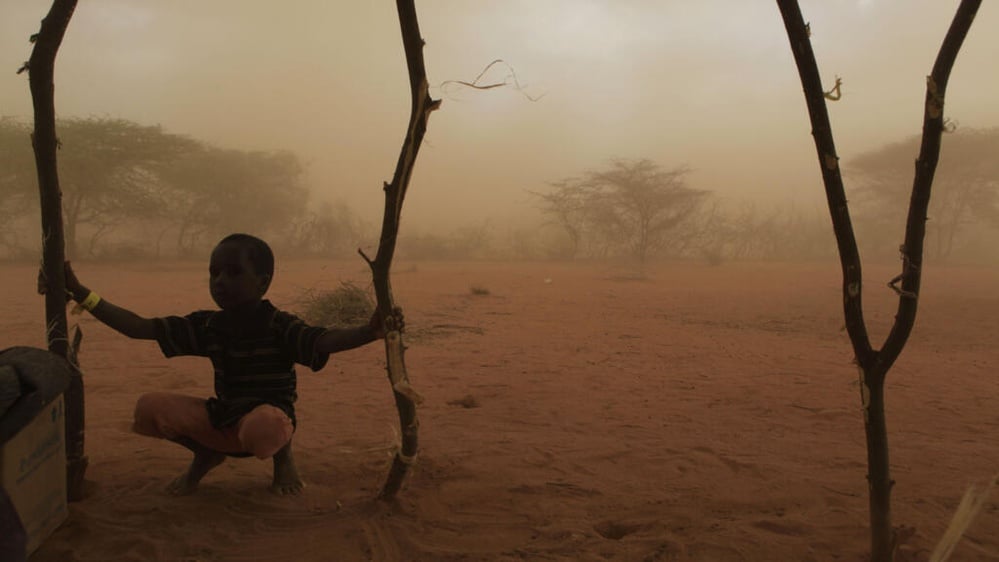

2026 © Helium Trades
Privacy Policy & Disclosure
* Disclaimer: Nothing on this website constitutes investment advice, performance data or any recommendation that any particular security, portfolio of securities, transaction or investment strategy is suitable for any specific person. Helium Trades is not responsible in any way for the accuracy
of any model predictions or price data. Any mention of a particular security and related prediction data is not a recommendation to buy or sell that security. Investments in securities involve the risk of loss. Past performance is no guarantee of future results. Helium Trades is not responsible for any of your investment decisions,
you should consult a financial expert before engaging in any transaction.
Helium Research Assistant

How can I help you today?
Ask any question about this page.


