See whether Helium helps you make better-informed decisions. Try every Pro Trader feature for 30 days. No credit card required.
Try every Pro Trader feature for 30 days. No credit card required.
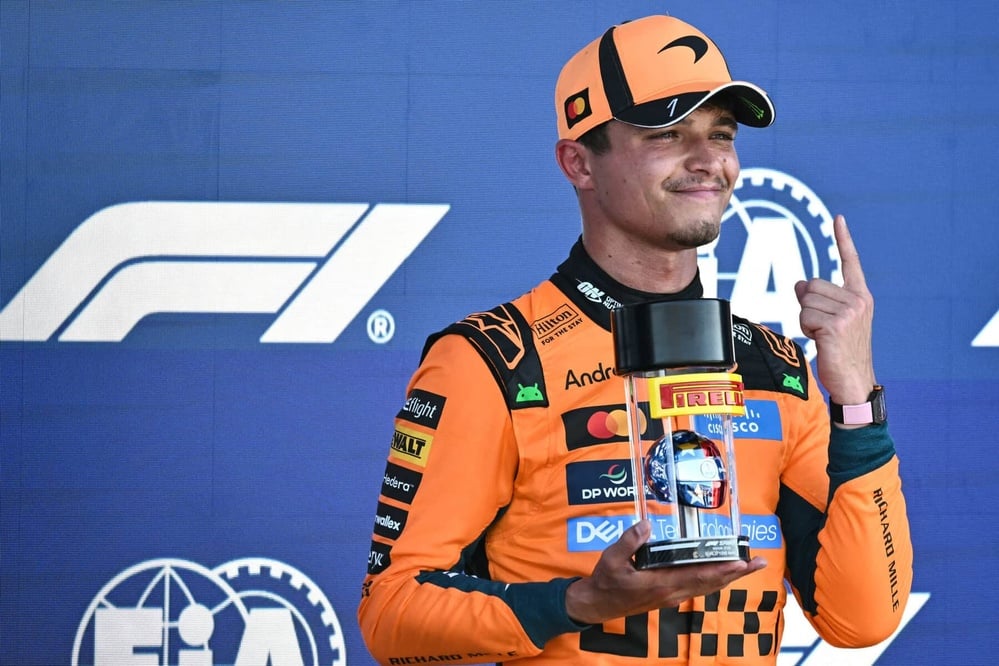
Straightforward sports-results reporting uses mostly neutral factual detail and attributed driver quotes, with occasional celebratory adjectives such as "spectacular" and "bravura".
The Sao Paulo Grand Prix is a Formula One race; the constructors' championship is awarded to the top team over the season.
Automated analysis; not human reviewed.
Limitations: The supplied text includes internally ambiguous race details (e.g., "20th pole" versus "pole-sitter Norris") and no byline or official results source.
·
7 of 55 available dimensions scored; omitted dimensions are not treated as neutral.
·
Verified supporting quotes for 6 of 7 scored dimensions.
Claim: The report is predominantly objective, relying on measurable race positions, lap numbers, gaps, and attributed quotes rather than personal interpretation.
“The 26-year-old outgoing 2025 world champion came home 14.6 seconds clear of Red Bull's four-time champion Max Verstappen and Isack Hadjar to record his 14th career victory and the 50th podium.” · exact text match
Counterevidence:
“as Mercedes clinched the constructors' championship and a famous title double.” · exact text match
Why: Specific measurable details and direct attribution dominate the report.
Claim: The report leans objective rather than sensational, although it uses occasional dramatic adjectives.
“The 26-year-old outgoing 2025 world champion came home 14.6 seconds clear of Red Bull's four-time champion Max Verstappen and Isack Hadjar to record his 14th career victory and the 50th podium.” · exact text match
Counterevidence:
“The race began with a spectacular opening lap as Antonelli, with an excellent start, led into the Senna Esses as Norris struggled from his 20th pole and Lawson moved up to third in the Curva do Sol.” · exact text match
Why: The core account is factual and detailed; the wording is not predominantly sensational.
Claim: The article is almost entirely descriptive, recounting events without prescribing behavior or policy.
“Verstappen started from 21st on the grid and delivered another bravura drive while George Russell finished fourth, after starting fifth and spinning in the pitlane, for Mercedes ahead of teammate Kimi Antonelli, who finished fifth, seven days after becoming the youngest champion.” · exact text match
Why: The text describes race outcomes and quotes rather than advocating actions.
Claim: The article is mostly factual, with limited evaluative language.
“as Mercedes clinched the constructors' championship and a famous title double.” · exact text match
“delivered another bravura drive” · exact text match
Why: A few evaluative adjectives appear, but they do not dominate the factual race report.
Claim: Credibility is moderate: the report provides specific race details and direct attributed quotes, but lacks a byline or formal results source and contains some internally ambiguous phrasing.
“Verstappen said: "It was a challenging race! The first laps were so important."” · not found in supplied text
Counterevidence:
“as Norris struggled from his 20th pole” · exact text match
Why: Named attribution and detailed results support credibility, while missing sourcing and ambiguity limit it.
Claim: The account is largely rational and chronological, though some phrasing is internally ambiguous.
“On lap 50, Norris pitted again, returning third behind McLaren teammate Oscar Piastri, who let him by, before he took second when Hadjar pitted on lap 51, leaving the 2025 champion 7.4 seconds behind his successor.” · exact text match
Counterevidence:
“as Norris struggled from his 20th pole” · exact text match
Why: The race is explained through causal lap-by-lap events, with limited irrational framing.
Claim: The report is reasonably intelligent, integrating lap-by-lap chronology, tyre strategy, and direct quotes.
“By lap six, Norris had recovered to pass Liam Lawson while Antonelli was 5.1 seconds clear and instructed to keep his tyres cool.” · exact text match
Why: It handles a complex race narrative with specific timing and strategic details.
The supplied text includes internally ambiguous race details (e.g., "20th pole" versus "pole-sitter Norris") and no byline or official results source.
November 08, 2026 · 0 shares
Celebratory, analytically narrated sports commentary frames Norris as virtually impeccable and the race as a dramatic test, while attributing key claims to team principals and drivers.
Automated analysis; not human reviewed.
Limitations: No byline is present; related-link and page fragments in the supplied text were excluded.
·
10 of 55 available dimensions scored; omitted dimensions are not treated as neutral.
·
Verified supporting quotes for 9 of 10 scored dimensions.
Claim: The report uses evaluative language to characterize Norris's performance rather than staying strictly neutral.
“he provided a performance that served as a reminder that he has been one of the drivers of the year” · exact text match
Why: The phrasing is an evaluative assessment of driver quality.
Claim: The prose uses dramatic, mythic imagery to heighten the race narrative.
“when Verstappen appears to have descended from the Gods” · exact text match
“Interlagos did what it often can, and threw everything at the drivers.” · exact text match
Why: The imagery is more heightened than neutral results reporting.
Claim: The report is framed as a notable, dramatic performance that overshadows a strong rival comeback.
“It says a lot for Norris' performance that it overshadowed Verstappen's drive from 21st on the grid to finish second.” · exact text match
Why: The comparison heightens narrative interest around Norris's win.
Claim: The text is predominantly descriptive and does not prescribe actions.
“The race started on a wet track, which dried progressively.
There was more rain at the end.”
· exact text match
Why: It narrates conditions and events without advocacy.
Claim: The report includes the reporter's own evaluative judgments about driver performance.
“Norris was virtually impeccable.” · exact text match
Why: This sentence is an evaluative opinion rather than a neutral factual statement.
Claim: The framing is positive and celebratory toward Norris's performance.
“Norris was virtually impeccable.” · exact text match
Why: The language conveys an admiring tone.
Claim: The report attributes key claims to named team principals and drivers and includes specific race details.
“Norris was fine, McLaren team principal Andrea Stella confirmed shortly afterwards” · exact text match
Why: Named confirmation and direct sourcing support credibility.
Claim: The report builds a causal, chronologically specific account of the race.
“Stopping for slick tyres a lap before Antonelli cut a seven-second deficit to nothing” · exact text match
Why: Concrete sequencing and causal explanation support a rational account.
Claim: The report includes rival drivers' attributed explanations that qualify the win narrative.
“We need to understand if something broke on the car, some kind of aero loss or whatever, because this was not normal.” · not found in supplied text
Why: Including this caveat signals fair, non-deceptive reporting.
Claim: The report integrates technical setup, track conditions, and strategy into a coherent analysis.
“the combination in Sao Paulo of some new parts, the circuit characteristics suiting them, and Norris excelling in the wet in qualifying and race, put him back in the game.” · exact text match
Why: This synthesis reflects knowledgeable Formula 1 analysis.
No byline is present; related-link and page fragments in the supplied text were excluded.
November 09, 2026 · 0 shares
The report uses neutral, factual sports-reporting language with no evaluative or sensational framing.
Automated analysis; not human reviewed.
Limitations: The article is an extremely brief sports brief with no named author or sourcing, limiting bias assessment to tone and framing.
·
5 of 55 available dimensions scored; omitted dimensions are not treated as neutral.
·
Verified supporting quotes for 5 of 5 scored dimensions.
Claim: The report is composed of plain race-result facts without subjective commentary.
“Norris had his second consecutive victory in Brazil after a race he led for 47 of 71 laps on Sunday.” · exact text match
Why: The sentence reports verifiable race details and uses no evaluative or interpretive language.
Claim: The report uses neutral, non-sensational wording.
“McLaren's Norris wins Sao Paulo F1 Grand Prix.” · exact text match
Why: The headline states the result plainly without dramatic or emotional language.
Claim: The article is purely descriptive and offers no prescriptions.
“McLaren's Norris wins Sao Paulo F1 Grand Prix.” · exact text match
Why: It reports an outcome without recommending actions or policies.
Claim: The article has no positive or negative emotional valence.
“Norris had his second consecutive victory in Brazil after a race he led for 47 of 71 laps on Sunday.” · exact text match
Why: The report is neutral and does not use emotionally charged language.
Claim: The report presents a coherent, factual race account without irrational framing.
“The Red Bulls of Max Verstappen and Isack Hadjar completed the podium.” · exact text match
Why: The ordering and podium detail are stated as straightforward race results.
The article is an extremely brief sports brief with no named author or sourcing, limiting bias assessment to tone and framing.
Straightforward sports-results reporting uses mostly neutral factual detail and attributed driver quotes, with occasional celebratory adjectives such as "spectacular" and "bravura".
The Sao Paulo Grand Prix is a Formula One race; the constructors' championship is awarded to the top team over the season.
Automated analysis; not human reviewed.
Limitations: The supplied text includes internally ambiguous race details (e.g., "20th pole" versus "pole-sitter Norris") and no byline or official results source.
·
7 of 55 available dimensions scored; omitted dimensions are not treated as neutral.
·
Verified supporting quotes for 6 of 7 scored dimensions.
Claim: The report is predominantly objective, relying on measurable race positions, lap numbers, gaps, and attributed quotes rather than personal interpretation.
“The 26-year-old outgoing 2025 world champion came home 14.6 seconds clear of Red Bull's four-time champion Max Verstappen and Isack Hadjar to record his 14th career victory and the 50th podium.” · exact text match
Counterevidence:
“as Mercedes clinched the constructors' championship and a famous title double.” · exact text match
Why: Specific measurable details and direct attribution dominate the report.
Claim: The report leans objective rather than sensational, although it uses occasional dramatic adjectives.
“The 26-year-old outgoing 2025 world champion came home 14.6 seconds clear of Red Bull's four-time champion Max Verstappen and Isack Hadjar to record his 14th career victory and the 50th podium.” · exact text match
Counterevidence:
“The race began with a spectacular opening lap as Antonelli, with an excellent start, led into the Senna Esses as Norris struggled from his 20th pole and Lawson moved up to third in the Curva do Sol.” · exact text match
Why: The core account is factual and detailed; the wording is not predominantly sensational.
Claim: The article is almost entirely descriptive, recounting events without prescribing behavior or policy.
“Verstappen started from 21st on the grid and delivered another bravura drive while George Russell finished fourth, after starting fifth and spinning in the pitlane, for Mercedes ahead of teammate Kimi Antonelli, who finished fifth, seven days after becoming the youngest champion.” · exact text match
Why: The text describes race outcomes and quotes rather than advocating actions.
Claim: The article is mostly factual, with limited evaluative language.
“as Mercedes clinched the constructors' championship and a famous title double.” · exact text match
“delivered another bravura drive” · exact text match
Why: A few evaluative adjectives appear, but they do not dominate the factual race report.
Claim: Credibility is moderate: the report provides specific race details and direct attributed quotes, but lacks a byline or formal results source and contains some internally ambiguous phrasing.
“Verstappen said: "It was a challenging race! The first laps were so important."” · not found in supplied text
Counterevidence:
“as Norris struggled from his 20th pole” · exact text match
Why: Named attribution and detailed results support credibility, while missing sourcing and ambiguity limit it.
Claim: The account is largely rational and chronological, though some phrasing is internally ambiguous.
“On lap 50, Norris pitted again, returning third behind McLaren teammate Oscar Piastri, who let him by, before he took second when Hadjar pitted on lap 51, leaving the 2025 champion 7.4 seconds behind his successor.” · exact text match
Counterevidence:
“as Norris struggled from his 20th pole” · exact text match
Why: The race is explained through causal lap-by-lap events, with limited irrational framing.
Claim: The report is reasonably intelligent, integrating lap-by-lap chronology, tyre strategy, and direct quotes.
“By lap six, Norris had recovered to pass Liam Lawson while Antonelli was 5.1 seconds clear and instructed to keep his tyres cool.” · exact text match
Why: It handles a complex race narrative with specific timing and strategic details.
The supplied text includes internally ambiguous race details (e.g., "20th pole" versus "pole-sitter Norris") and no byline or official results source.
November 07, 2026 · 0 shares
Framing is mostly factual and descriptive sports reporting, with mild subjective praise for Norris and Lawson and no strong sensational or ideological language.
Formula 1 qualifying sets the initial starting order, but grid penalties for additional power unit components can demote drivers from their qualifying positions.
Automated analysis; not human reviewed.
Limitations: The supplied text omits the full qualifying results table it references, has no author byline, and includes promotional boilerplate; grid-order details beyond the named drivers cannot be verified.
·
8 of 55 available dimensions scored; omitted dimensions are not treated as neutral.
·
Verified supporting quotes for 4 of 8 scored dimensions.
Claim: Publisher framing is predominantly objective and results-focused, with limited subjective evaluation.
“Lando Norris netted arguably one of the best pole positions of his F1 career, given the treacherous conditions that dominated São Paulo Grand Prix qualifying.” · exact text match
“Although George Russell set the second-fastest time at Interlagos, he is one of several drivers who face a grid penalty for taking on new power unit components, and he will line up seventh.” · exact text match
Why: Most claims report qualifying times, penalties, and grid slots; the evaluative phrase 'arguably one of the best' is a limited subjective element.
Claim: The framing is largely non-sensational, prioritizing factual results and mild evaluative descriptors over dramatic or emotional language.
“George Russell set the second-fastest time at Interlagos” · exact text match
“Ferrari's Lewis Hamilton and Max Verstappen in his Red Bull will start at the back of the grid due to PU penalties.” · exact text match
Why: Plain reporting of times and penalties dominates; no urgency, shock, or fear language is present.
Claim: The article is strongly descriptive, reporting qualifying outcomes and grid penalties without prescriptive recommendations.
“It means Kimi Antonelli will join Norris on the front row” · exact text match
“Ferrari's Lewis Hamilton and Max Verstappen in his Red Bull will start at the back of the grid due to PU penalties.” · exact text match
Why: The text describes what happened and the resulting grid order; it does not advocate actions or policies.
Claim: The article includes limited evaluative opinion language amid mostly factual reporting.
“Lando Norris netted arguably one of the best pole positions of his F1 career” · exact text match
“Liam Lawson, with his future on the line, delivered a stellar performance for Racing Bulls.” · exact text match
Why: These phrases express subjective judgment, but they are brief and do not overwhelm the results reporting.
The supplied text omits the full qualifying results table it references, has no author byline, and includes promotional boilerplate; grid-order details beyond the named drivers cannot be verified.
November 08, 2026 · 0 shares
The report is largely neutral, results-driven sports coverage that relies on direct quotations and precise timing, with only mild evaluative descriptors such as 'brave and well-judged'.
Formula One qualifying determines the starting grid for the Sao Paulo Grand Prix at Interlagos; grid penalties for power-unit changes can demote drivers after qualifying.
Automated analysis; not human reviewed.
Limitations: Some unrelated headline/snippet material appears interleaved in the supplied text; analysis relies on the substantive Formula One report.
·
6 of 55 available dimensions scored; omitted dimensions are not treated as neutral.
·
Verified supporting quotes for 6 of 6 scored dimensions.
Claim: The report is predominantly factual and source-attributed, with only mild evaluative language.
“The 26-year-old Briton outpaced Mercedes’ George Russell by 0.204 seconds to claim his third consecutive pole at Interlagos in a storm-hit session that lasted two-and-a-half hours.” · exact text match
Counterevidence:
“with a brave and well-judged drive” · exact text match
Why: Numeric results and attributed quotes anchor the account, while 'brave and well-judged' is a limited subjective descriptor.
Claim: Coverage is low-sensation, presenting factual race details rather than dramatic hype.
“Charles Leclerc was fourth for Ferrari but also faces a penalty of 10 places for taking a new engine.” · exact text match
Why: The sentence reports a result and penalty in plain terms without hyperbole.
Claim: The report is descriptive, listing results, penalties, and attributed comments without prescribing actions or outcomes.
“Charles Leclerc was fourth for Ferrari but also faces a penalty of 10 places for taking a new engine.” · exact text match
Why: The sentence records a qualifying result and penalty as fact rather than recommending or evaluating an action.
Claim: Credibility is strengthened by named sources, precise timing, and direct quotations.
“The 26-year-old Briton outpaced Mercedes’ George Russell by 0.204 seconds to claim his third consecutive pole at Interlagos in a storm-hit session that lasted two-and-a-half hours.” · exact text match
Why: Specific times, names, and attributions provide verifiable detail in the supplied text.
Claim: The report includes specific attributions and a contrary driver quote, indicating fair and transparent reporting.
“Russell was disappointed not to take pole after being told by Mercedes to ease off on his final push lap.” · exact text match
““Congrats to Lando, but it was definitely my pole lap. We should have finished the lap.”” · exact text match
Why: Including Russell’s dissenting view alongside Norris’s pole account supports fairness and transparency.
Claim: The report is coherent and information-dense, though limited to standard sports reporting.
“The 26-year-old Briton outpaced Mercedes’ George Russell by 0.204 seconds to claim his third consecutive pole at Interlagos in a storm-hit session that lasted two-and-a-half hours.” · exact text match
Why: Clear structure, precise results, and quotations indicate competent but not analytical reporting.
Some unrelated headline/snippet material appears interleaved in the supplied text; analysis relies on the substantive Formula One report.
November 08, 2026 · 0 shares
The framing is largely descriptive and technical, relying on named driver quotes and Pirelli data while using mild narrative color such as 'saviour' and 'welcome surprise'.
Qualifying determines the starting grid for the Sao Paulo Grand Prix, and wet-weather sessions can be delayed or restarted by race control for safety.
Automated analysis; not human reviewed.
Limitations: The supplied text includes related-link and newsletter fragments; bias scoring is limited to the substantive qualifying report.
·
9 of 55 available dimensions scored; omitted dimensions are not treated as neutral.
·
Verified supporting quotes for 8 of 9 scored dimensions.
Claim: The report is mostly descriptive but includes evaluative framing.
“it was a welcome surprise to see the session reopened” · exact text match
Why: The phrase adds a mild evaluative judgment to an otherwise descriptive race report.
Claim: Mild dramatic language is used but not sustained sensationalism.
“a saviour arrived when a break in the clouds emerged” · exact text match
Why: The wording is colorful but isolated within a technical account.
Claim: The lede and driver quotes add narrative interest.
“One hour, 23 minutes.
You could've squeezed most of a football match into the rain delay”
· exact text match
Why: The opening comparison and driver reactions make the technical report more engaging.
Claim: The article primarily describes events and driver approaches rather than prescribing actions.
“The approach through Q1 was, initially, simply about trying to set clean laps and hope that the progression of the circuit and the tyres would yield a lap-on-lap improvement.” · exact text match
Why: The passage describes what drivers did rather than advocating what should be done.
Claim: Evaluative comments are present but limited.
“it was a welcome surprise to see the session reopened” · exact text match
“it's small wonder why race control takes a more tentative approach” · not found in supplied text
Why: These phrases express the author's judgment while most of the article remains factual and quote-driven.
Claim: The report attributes technical data to Pirelli and quotes multiple named drivers.
“according to Pirelli, around 85 litres of water per second” · exact text match
“Carlos Sainz reckoned that it was a "punchy" call from the FIA” · exact text match
Why: Named sourcing and attributed technical figures support credibility in the supplied text.
Claim: The article explains wet-tyre and aquaplaning dynamics in technical terms.
“Aquaplaning, where the tyre struggles to break the surface tension of the water on-track, was nonetheless prevalent” · exact text match
Why: The report uses causal, technical explanation rather than emotional or irrational framing.
Claim: There is limited forward-looking speculation about Sunday weather and setup choices.
“where inclement weather is expected to play a role once again” · exact text match
“does anyone risk a pit-lane start for a set-up change?” · exact text match
Why: The article briefly forecasts race-day conditions and raises a setup question without asserting outcomes.
Claim: Technical explanation and structured session analysis indicate above-average article intelligence.
“Aquaplaning, where the tyre struggles to break the surface tension of the water on-track, was nonetheless prevalent” · exact text match
Why: The article explains tyre and track dynamics in a structured, informed manner.
The supplied text includes related-link and newsletter fragments; bias scoring is limited to the substantive qualifying report.
November 08, 2026 · 0 shares
Celebratory, analytically narrated sports commentary frames Norris as virtually impeccable and the race as a dramatic test, while attributing key claims to team principals and drivers.
Automated analysis; not human reviewed.
Limitations: No byline is present; related-link and page fragments in the supplied text were excluded.
·
10 of 55 available dimensions scored; omitted dimensions are not treated as neutral.
·
Verified supporting quotes for 9 of 10 scored dimensions.
Claim: The report uses evaluative language to characterize Norris's performance rather than staying strictly neutral.
“he provided a performance that served as a reminder that he has been one of the drivers of the year” · exact text match
Why: The phrasing is an evaluative assessment of driver quality.
Claim: The prose uses dramatic, mythic imagery to heighten the race narrative.
“when Verstappen appears to have descended from the Gods” · exact text match
“Interlagos did what it often can, and threw everything at the drivers.” · exact text match
Why: The imagery is more heightened than neutral results reporting.
Claim: The report is framed as a notable, dramatic performance that overshadows a strong rival comeback.
“It says a lot for Norris' performance that it overshadowed Verstappen's drive from 21st on the grid to finish second.” · exact text match
Why: The comparison heightens narrative interest around Norris's win.
Claim: The text is predominantly descriptive and does not prescribe actions.
“The race started on a wet track, which dried progressively.
There was more rain at the end.”
· exact text match
Why: It narrates conditions and events without advocacy.
Claim: The report includes the reporter's own evaluative judgments about driver performance.
“Norris was virtually impeccable.” · exact text match
Why: This sentence is an evaluative opinion rather than a neutral factual statement.
Claim: The framing is positive and celebratory toward Norris's performance.
“Norris was virtually impeccable.” · exact text match
Why: The language conveys an admiring tone.
Claim: The report attributes key claims to named team principals and drivers and includes specific race details.
“Norris was fine, McLaren team principal Andrea Stella confirmed shortly afterwards” · exact text match
Why: Named confirmation and direct sourcing support credibility.
Claim: The report builds a causal, chronologically specific account of the race.
“Stopping for slick tyres a lap before Antonelli cut a seven-second deficit to nothing” · exact text match
Why: Concrete sequencing and causal explanation support a rational account.
Claim: The report includes rival drivers' attributed explanations that qualify the win narrative.
“We need to understand if something broke on the car, some kind of aero loss or whatever, because this was not normal.” · not found in supplied text
Why: Including this caveat signals fair, non-deceptive reporting.
Claim: The report integrates technical setup, track conditions, and strategy into a coherent analysis.
“the combination in Sao Paulo of some new parts, the circuit characteristics suiting them, and Norris excelling in the wet in qualifying and race, put him back in the game.” · exact text match
Why: This synthesis reflects knowledgeable Formula 1 analysis.
No byline is present; related-link and page fragments in the supplied text were excluded.
Straightforward sports-results reporting uses mostly neutral factual detail and attributed driver quotes, with occasional celebratory adjectives such as "spectacular" and "bravura".
The Sao Paulo Grand Prix is a Formula One race; the constructors' championship is awarded to the top team over the season.
Automated analysis; not human reviewed.
Limitations: The supplied text includes internally ambiguous race details (e.g., "20th pole" versus "pole-sitter Norris") and no byline or official results source.
·
7 of 55 available dimensions scored; omitted dimensions are not treated as neutral.
·
Verified supporting quotes for 6 of 7 scored dimensions.
Claim: The report is predominantly objective, relying on measurable race positions, lap numbers, gaps, and attributed quotes rather than personal interpretation.
“The 26-year-old outgoing 2025 world champion came home 14.6 seconds clear of Red Bull's four-time champion Max Verstappen and Isack Hadjar to record his 14th career victory and the 50th podium.” · exact text match
Counterevidence:
“as Mercedes clinched the constructors' championship and a famous title double.” · exact text match
Why: Specific measurable details and direct attribution dominate the report.
Claim: The report leans objective rather than sensational, although it uses occasional dramatic adjectives.
“The 26-year-old outgoing 2025 world champion came home 14.6 seconds clear of Red Bull's four-time champion Max Verstappen and Isack Hadjar to record his 14th career victory and the 50th podium.” · exact text match
Counterevidence:
“The race began with a spectacular opening lap as Antonelli, with an excellent start, led into the Senna Esses as Norris struggled from his 20th pole and Lawson moved up to third in the Curva do Sol.” · exact text match
Why: The core account is factual and detailed; the wording is not predominantly sensational.
Claim: The article is almost entirely descriptive, recounting events without prescribing behavior or policy.
“Verstappen started from 21st on the grid and delivered another bravura drive while George Russell finished fourth, after starting fifth and spinning in the pitlane, for Mercedes ahead of teammate Kimi Antonelli, who finished fifth, seven days after becoming the youngest champion.” · exact text match
Why: The text describes race outcomes and quotes rather than advocating actions.
Claim: The article is mostly factual, with limited evaluative language.
“as Mercedes clinched the constructors' championship and a famous title double.” · exact text match
“delivered another bravura drive” · exact text match
Why: A few evaluative adjectives appear, but they do not dominate the factual race report.
Claim: Credibility is moderate: the report provides specific race details and direct attributed quotes, but lacks a byline or formal results source and contains some internally ambiguous phrasing.
“Verstappen said: "It was a challenging race! The first laps were so important."” · not found in supplied text
Counterevidence:
“as Norris struggled from his 20th pole” · exact text match
Why: Named attribution and detailed results support credibility, while missing sourcing and ambiguity limit it.
Claim: The account is largely rational and chronological, though some phrasing is internally ambiguous.
“On lap 50, Norris pitted again, returning third behind McLaren teammate Oscar Piastri, who let him by, before he took second when Hadjar pitted on lap 51, leaving the 2025 champion 7.4 seconds behind his successor.” · exact text match
Counterevidence:
“as Norris struggled from his 20th pole” · exact text match
Why: The race is explained through causal lap-by-lap events, with limited irrational framing.
Claim: The report is reasonably intelligent, integrating lap-by-lap chronology, tyre strategy, and direct quotes.
“By lap six, Norris had recovered to pass Liam Lawson while Antonelli was 5.1 seconds clear and instructed to keep his tyres cool.” · exact text match
Why: It handles a complex race narrative with specific timing and strategic details.
The supplied text includes internally ambiguous race details (e.g., "20th pole" versus "pole-sitter Norris") and no byline or official results source.
November 08, 2026 · 0 shares
Celebratory, analytically narrated sports commentary frames Norris as virtually impeccable and the race as a dramatic test, while attributing key claims to team principals and drivers.
Automated analysis; not human reviewed.
Limitations: No byline is present; related-link and page fragments in the supplied text were excluded.
·
10 of 55 available dimensions scored; omitted dimensions are not treated as neutral.
·
Verified supporting quotes for 9 of 10 scored dimensions.
Claim: The report uses evaluative language to characterize Norris's performance rather than staying strictly neutral.
“he provided a performance that served as a reminder that he has been one of the drivers of the year” · exact text match
Why: The phrasing is an evaluative assessment of driver quality.
Claim: The prose uses dramatic, mythic imagery to heighten the race narrative.
“when Verstappen appears to have descended from the Gods” · exact text match
“Interlagos did what it often can, and threw everything at the drivers.” · exact text match
Why: The imagery is more heightened than neutral results reporting.
Claim: The report is framed as a notable, dramatic performance that overshadows a strong rival comeback.
“It says a lot for Norris' performance that it overshadowed Verstappen's drive from 21st on the grid to finish second.” · exact text match
Why: The comparison heightens narrative interest around Norris's win.
Claim: The text is predominantly descriptive and does not prescribe actions.
“The race started on a wet track, which dried progressively.
There was more rain at the end.”
· exact text match
Why: It narrates conditions and events without advocacy.
Claim: The report includes the reporter's own evaluative judgments about driver performance.
“Norris was virtually impeccable.” · exact text match
Why: This sentence is an evaluative opinion rather than a neutral factual statement.
Claim: The framing is positive and celebratory toward Norris's performance.
“Norris was virtually impeccable.” · exact text match
Why: The language conveys an admiring tone.
Claim: The report attributes key claims to named team principals and drivers and includes specific race details.
“Norris was fine, McLaren team principal Andrea Stella confirmed shortly afterwards” · exact text match
Why: Named confirmation and direct sourcing support credibility.
Claim: The report builds a causal, chronologically specific account of the race.
“Stopping for slick tyres a lap before Antonelli cut a seven-second deficit to nothing” · exact text match
Why: Concrete sequencing and causal explanation support a rational account.
Claim: The report includes rival drivers' attributed explanations that qualify the win narrative.
“We need to understand if something broke on the car, some kind of aero loss or whatever, because this was not normal.” · not found in supplied text
Why: Including this caveat signals fair, non-deceptive reporting.
Claim: The report integrates technical setup, track conditions, and strategy into a coherent analysis.
“the combination in Sao Paulo of some new parts, the circuit characteristics suiting them, and Norris excelling in the wet in qualifying and race, put him back in the game.” · exact text match
Why: This synthesis reflects knowledgeable Formula 1 analysis.
No byline is present; related-link and page fragments in the supplied text were excluded.
November 07, 2026 · 0 shares
Frames the contract extension through official F1 and Sao Paulo government voices, emphasizing fan passion and claimed economic benefits with little independent scrutiny.
Automated analysis; not human reviewed.
Limitations: No byline or publication date is present, and the economic-impact figure is an organizer claim rather than independently verified data.
·
8 of 55 available dimensions scored; omitted dimensions are not treated as neutral.
·
Verified supporting quotes for 8 of 8 scored dimensions.
Claim: The report's core claims are stated as attributed developments rather than publisher opinion.
“The Brazilian Grand Prix will remain on the Formula 1 calendar until at least 2035 after stakeholders agreed a five-year contract extension.” · exact text match
Why: The lede is a factual, stakeholder-attributed statement rather than subjective commentary.
Claim: The article uses neutral, factual language without sensational or emotional escalation.
“The Brazilian Grand Prix will remain on the Formula 1 calendar until at least 2035 after stakeholders agreed a five-year contract extension.” · exact text match
Why: The language is plain contract-news phrasing rather than sensational framing.
Claim: The report highlights positive economic and fan outcomes from the contract extension.
“It boosts the economy, creates jobs, strengthens tourism and raises our city’s international profile,” · exact text match
Why: A prominent official quote emphasizes benefits, giving the article a favorable, optimistic framing.
Claim: The article describes the deal and reactions without prescribing actions.
“The Brazilian Grand Prix will remain on the Formula 1 calendar until at least 2035 after stakeholders agreed a five-year contract extension.” · exact text match
Why: The framing is descriptive rather than advisory or policy-prescriptive.
Claim: The article gives a platform to official F1 and Sao Paulo government voices supporting the extension.
“said F1 president and CEO Stefano Domenicali” · exact text match
“Sao Paulo mayor Ricardo Nunes hailed the economic return of the event on the local economy” · exact text match
Why: Official stakeholders dominate the quoted assessments, producing an establishment-aligned account.
Claim: The report includes named sources, specific figures, and attribution for estimated impact.
“said F1 president and CEO Stefano Domenicali” · exact text match
“Organisers claimed last year's running of the event, which attracted 303,000 fans, delivered an economic impact of R$2.3 billion for Sao Paulo.” · exact text match
Why: Named officials, exact attendance, and explicit attribution of the economic-impact estimate support credibility.
Claim: The article attributes an economic-impact estimate to organizers rather than presenting it as independently verified fact.
“Organisers claimed last year's running of the event, which attracted 303,000 fans, delivered an economic impact of R$2.3 billion for Sao Paulo.” · exact text match
Why: Explicit attribution and use of "claimed" indicate a rational, evidence-aware reporting approach.
Claim: The article distinguishes organizer claims from verified facts.
“Organisers claimed last year's running of the event, which attracted 303,000 fans, delivered an economic impact of R$2.3 billion for Sao Paulo.” · exact text match
Why: The word "claimed" properly attributes an estimate and signals epistemic caution.
No byline or publication date is present, and the economic-impact figure is an organizer claim rather than independently verified data.
November 08, 2026 · 0 shares
Celebratory, analytically narrated sports commentary frames Norris as virtually impeccable and the race as a dramatic test, while attributing key claims to team principals and drivers.
Automated analysis; not human reviewed.
Limitations: No byline is present; related-link and page fragments in the supplied text were excluded.
·
10 of 55 available dimensions scored; omitted dimensions are not treated as neutral.
·
Verified supporting quotes for 9 of 10 scored dimensions.
Claim: The report uses evaluative language to characterize Norris's performance rather than staying strictly neutral.
“he provided a performance that served as a reminder that he has been one of the drivers of the year” · exact text match
Why: The phrasing is an evaluative assessment of driver quality.
Claim: The prose uses dramatic, mythic imagery to heighten the race narrative.
“when Verstappen appears to have descended from the Gods” · exact text match
“Interlagos did what it often can, and threw everything at the drivers.” · exact text match
Why: The imagery is more heightened than neutral results reporting.
Claim: The report is framed as a notable, dramatic performance that overshadows a strong rival comeback.
“It says a lot for Norris' performance that it overshadowed Verstappen's drive from 21st on the grid to finish second.” · exact text match
Why: The comparison heightens narrative interest around Norris's win.
Claim: The text is predominantly descriptive and does not prescribe actions.
“The race started on a wet track, which dried progressively.
There was more rain at the end.”
· exact text match
Why: It narrates conditions and events without advocacy.
Claim: The report includes the reporter's own evaluative judgments about driver performance.
“Norris was virtually impeccable.” · exact text match
Why: This sentence is an evaluative opinion rather than a neutral factual statement.
Claim: The framing is positive and celebratory toward Norris's performance.
“Norris was virtually impeccable.” · exact text match
Why: The language conveys an admiring tone.
Claim: The report attributes key claims to named team principals and drivers and includes specific race details.
“Norris was fine, McLaren team principal Andrea Stella confirmed shortly afterwards” · exact text match
Why: Named confirmation and direct sourcing support credibility.
Claim: The report builds a causal, chronologically specific account of the race.
“Stopping for slick tyres a lap before Antonelli cut a seven-second deficit to nothing” · exact text match
Why: Concrete sequencing and causal explanation support a rational account.
Claim: The report includes rival drivers' attributed explanations that qualify the win narrative.
“We need to understand if something broke on the car, some kind of aero loss or whatever, because this was not normal.” · not found in supplied text
Why: Including this caveat signals fair, non-deceptive reporting.
Claim: The report integrates technical setup, track conditions, and strategy into a coherent analysis.
“the combination in Sao Paulo of some new parts, the circuit characteristics suiting them, and Norris excelling in the wet in qualifying and race, put him back in the game.” · exact text match
Why: This synthesis reflects knowledgeable Formula 1 analysis.
No byline is present; related-link and page fragments in the supplied text were excluded.
Straightforward sports-results reporting uses mostly neutral factual detail and attributed driver quotes, with occasional celebratory adjectives such as "spectacular" and "bravura".
The Sao Paulo Grand Prix is a Formula One race; the constructors' championship is awarded to the top team over the season.
Automated analysis; not human reviewed. Limitations: The supplied text includes internally ambiguous race details (e.g., "20th pole" versus "pole-sitter Norris") and no byline or official results source. · 7 of 55 available dimensions scored; omitted dimensions are not treated as neutral. · Verified supporting quotes for 6 of 7 scored dimensions.
Claim: The report is predominantly objective, relying on measurable race positions, lap numbers, gaps, and attributed quotes rather than personal interpretation.
“The 26-year-old outgoing 2025 world champion came home 14.6 seconds clear of Red Bull's four-time champion Max Verstappen and Isack Hadjar to record his 14th career victory and the 50th podium.” · exact text match
Counterevidence:
“as Mercedes clinched the constructors' championship and a famous title double.” · exact text match
Why: Specific measurable details and direct attribution dominate the report.
Claim: The report leans objective rather than sensational, although it uses occasional dramatic adjectives.
“The 26-year-old outgoing 2025 world champion came home 14.6 seconds clear of Red Bull's four-time champion Max Verstappen and Isack Hadjar to record his 14th career victory and the 50th podium.” · exact text match
Counterevidence:
“The race began with a spectacular opening lap as Antonelli, with an excellent start, led into the Senna Esses as Norris struggled from his 20th pole and Lawson moved up to third in the Curva do Sol.” · exact text match
Why: The core account is factual and detailed; the wording is not predominantly sensational.
Claim: The article is almost entirely descriptive, recounting events without prescribing behavior or policy.
“Verstappen started from 21st on the grid and delivered another bravura drive while George Russell finished fourth, after starting fifth and spinning in the pitlane, for Mercedes ahead of teammate Kimi Antonelli, who finished fifth, seven days after becoming the youngest champion.” · exact text match
Why: The text describes race outcomes and quotes rather than advocating actions.
Claim: The article is mostly factual, with limited evaluative language.
“as Mercedes clinched the constructors' championship and a famous title double.” · exact text match
“delivered another bravura drive” · exact text match
Why: A few evaluative adjectives appear, but they do not dominate the factual race report.
Claim: Credibility is moderate: the report provides specific race details and direct attributed quotes, but lacks a byline or formal results source and contains some internally ambiguous phrasing.
“Verstappen said: "It was a challenging race! The first laps were so important."” · not found in supplied text
Counterevidence:
“as Norris struggled from his 20th pole” · exact text match
Why: Named attribution and detailed results support credibility, while missing sourcing and ambiguity limit it.
Claim: The account is largely rational and chronological, though some phrasing is internally ambiguous.
“On lap 50, Norris pitted again, returning third behind McLaren teammate Oscar Piastri, who let him by, before he took second when Hadjar pitted on lap 51, leaving the 2025 champion 7.4 seconds behind his successor.” · exact text match
Counterevidence:
“as Norris struggled from his 20th pole” · exact text match
Why: The race is explained through causal lap-by-lap events, with limited irrational framing.
Claim: The report is reasonably intelligent, integrating lap-by-lap chronology, tyre strategy, and direct quotes.
“By lap six, Norris had recovered to pass Liam Lawson while Antonelli was 5.1 seconds clear and instructed to keep his tyres cool.” · exact text match
Why: It handles a complex race narrative with specific timing and strategic details.
The supplied text includes internally ambiguous race details (e.g., "20th pole" versus "pole-sitter Norris") and no byline or official results source.
November 08, 2026 · 0 shares
Celebratory, analytically narrated sports commentary frames Norris as virtually impeccable and the race as a dramatic test, while attributing key claims to team principals and drivers.
Automated analysis; not human reviewed. Limitations: No byline is present; related-link and page fragments in the supplied text were excluded. · 10 of 55 available dimensions scored; omitted dimensions are not treated as neutral. · Verified supporting quotes for 9 of 10 scored dimensions.
Claim: The report uses evaluative language to characterize Norris's performance rather than staying strictly neutral.
“he provided a performance that served as a reminder that he has been one of the drivers of the year” · exact text match
Why: The phrasing is an evaluative assessment of driver quality.
Claim: The prose uses dramatic, mythic imagery to heighten the race narrative.
“when Verstappen appears to have descended from the Gods” · exact text match
“Interlagos did what it often can, and threw everything at the drivers.” · exact text match
Why: The imagery is more heightened than neutral results reporting.
Claim: The report is framed as a notable, dramatic performance that overshadows a strong rival comeback.
“It says a lot for Norris' performance that it overshadowed Verstappen's drive from 21st on the grid to finish second.” · exact text match
Why: The comparison heightens narrative interest around Norris's win.
Claim: The text is predominantly descriptive and does not prescribe actions.
“The race started on a wet track, which dried progressively. There was more rain at the end.” · exact text match
Why: It narrates conditions and events without advocacy.
Claim: The report includes the reporter's own evaluative judgments about driver performance.
“Norris was virtually impeccable.” · exact text match
Why: This sentence is an evaluative opinion rather than a neutral factual statement.
Claim: The framing is positive and celebratory toward Norris's performance.
“Norris was virtually impeccable.” · exact text match
Why: The language conveys an admiring tone.
Claim: The report attributes key claims to named team principals and drivers and includes specific race details.
“Norris was fine, McLaren team principal Andrea Stella confirmed shortly afterwards” · exact text match
Why: Named confirmation and direct sourcing support credibility.
Claim: The report builds a causal, chronologically specific account of the race.
“Stopping for slick tyres a lap before Antonelli cut a seven-second deficit to nothing” · exact text match
Why: Concrete sequencing and causal explanation support a rational account.
Claim: The report includes rival drivers' attributed explanations that qualify the win narrative.
“We need to understand if something broke on the car, some kind of aero loss or whatever, because this was not normal.” · not found in supplied text
Why: Including this caveat signals fair, non-deceptive reporting.
Claim: The report integrates technical setup, track conditions, and strategy into a coherent analysis.
“the combination in Sao Paulo of some new parts, the circuit characteristics suiting them, and Norris excelling in the wet in qualifying and race, put him back in the game.” · exact text match
Why: This synthesis reflects knowledgeable Formula 1 analysis.
No byline is present; related-link and page fragments in the supplied text were excluded.
November 09, 2026 · 0 shares
The report uses neutral, factual sports-reporting language with no evaluative or sensational framing.
Automated analysis; not human reviewed. Limitations: The article is an extremely brief sports brief with no named author or sourcing, limiting bias assessment to tone and framing. · 5 of 55 available dimensions scored; omitted dimensions are not treated as neutral. · Verified supporting quotes for 5 of 5 scored dimensions.
Claim: The report is composed of plain race-result facts without subjective commentary.
“Norris had his second consecutive victory in Brazil after a race he led for 47 of 71 laps on Sunday.” · exact text match
Why: The sentence reports verifiable race details and uses no evaluative or interpretive language.
Claim: The report uses neutral, non-sensational wording.
“McLaren's Norris wins Sao Paulo F1 Grand Prix.” · exact text match
Why: The headline states the result plainly without dramatic or emotional language.
Claim: The article is purely descriptive and offers no prescriptions.
“McLaren's Norris wins Sao Paulo F1 Grand Prix.” · exact text match
Why: It reports an outcome without recommending actions or policies.
Claim: The article has no positive or negative emotional valence.
“Norris had his second consecutive victory in Brazil after a race he led for 47 of 71 laps on Sunday.” · exact text match
Why: The report is neutral and does not use emotionally charged language.
Claim: The report presents a coherent, factual race account without irrational framing.
“The Red Bulls of Max Verstappen and Isack Hadjar completed the podium.” · exact text match
Why: The ordering and podium detail are stated as straightforward race results.
The article is an extremely brief sports brief with no named author or sourcing, limiting bias assessment to tone and framing.
Straightforward sports-results reporting uses mostly neutral factual detail and attributed driver quotes, with occasional celebratory adjectives such as "spectacular" and "bravura".
The Sao Paulo Grand Prix is a Formula One race; the constructors' championship is awarded to the top team over the season.
Automated analysis; not human reviewed. Limitations: The supplied text includes internally ambiguous race details (e.g., "20th pole" versus "pole-sitter Norris") and no byline or official results source. · 7 of 55 available dimensions scored; omitted dimensions are not treated as neutral. · Verified supporting quotes for 6 of 7 scored dimensions.
Claim: The report is predominantly objective, relying on measurable race positions, lap numbers, gaps, and attributed quotes rather than personal interpretation.
“The 26-year-old outgoing 2025 world champion came home 14.6 seconds clear of Red Bull's four-time champion Max Verstappen and Isack Hadjar to record his 14th career victory and the 50th podium.” · exact text match
Counterevidence:
“as Mercedes clinched the constructors' championship and a famous title double.” · exact text match
Why: Specific measurable details and direct attribution dominate the report.
Claim: The report leans objective rather than sensational, although it uses occasional dramatic adjectives.
“The 26-year-old outgoing 2025 world champion came home 14.6 seconds clear of Red Bull's four-time champion Max Verstappen and Isack Hadjar to record his 14th career victory and the 50th podium.” · exact text match
Counterevidence:
“The race began with a spectacular opening lap as Antonelli, with an excellent start, led into the Senna Esses as Norris struggled from his 20th pole and Lawson moved up to third in the Curva do Sol.” · exact text match
Why: The core account is factual and detailed; the wording is not predominantly sensational.
Claim: The article is almost entirely descriptive, recounting events without prescribing behavior or policy.
“Verstappen started from 21st on the grid and delivered another bravura drive while George Russell finished fourth, after starting fifth and spinning in the pitlane, for Mercedes ahead of teammate Kimi Antonelli, who finished fifth, seven days after becoming the youngest champion.” · exact text match
Why: The text describes race outcomes and quotes rather than advocating actions.
Claim: The article is mostly factual, with limited evaluative language.
“as Mercedes clinched the constructors' championship and a famous title double.” · exact text match
“delivered another bravura drive” · exact text match
Why: A few evaluative adjectives appear, but they do not dominate the factual race report.
Claim: Credibility is moderate: the report provides specific race details and direct attributed quotes, but lacks a byline or formal results source and contains some internally ambiguous phrasing.
“Verstappen said: "It was a challenging race! The first laps were so important."” · not found in supplied text
Counterevidence:
“as Norris struggled from his 20th pole” · exact text match
Why: Named attribution and detailed results support credibility, while missing sourcing and ambiguity limit it.
Claim: The account is largely rational and chronological, though some phrasing is internally ambiguous.
“On lap 50, Norris pitted again, returning third behind McLaren teammate Oscar Piastri, who let him by, before he took second when Hadjar pitted on lap 51, leaving the 2025 champion 7.4 seconds behind his successor.” · exact text match
Counterevidence:
“as Norris struggled from his 20th pole” · exact text match
Why: The race is explained through causal lap-by-lap events, with limited irrational framing.
Claim: The report is reasonably intelligent, integrating lap-by-lap chronology, tyre strategy, and direct quotes.
“By lap six, Norris had recovered to pass Liam Lawson while Antonelli was 5.1 seconds clear and instructed to keep his tyres cool.” · exact text match
Why: It handles a complex race narrative with specific timing and strategic details.
The supplied text includes internally ambiguous race details (e.g., "20th pole" versus "pole-sitter Norris") and no byline or official results source.
November 08, 2026 · 0 shares
Celebratory, analytically narrated sports commentary frames Norris as virtually impeccable and the race as a dramatic test, while attributing key claims to team principals and drivers.
Automated analysis; not human reviewed. Limitations: No byline is present; related-link and page fragments in the supplied text were excluded. · 10 of 55 available dimensions scored; omitted dimensions are not treated as neutral. · Verified supporting quotes for 9 of 10 scored dimensions.
Claim: The report uses evaluative language to characterize Norris's performance rather than staying strictly neutral.
“he provided a performance that served as a reminder that he has been one of the drivers of the year” · exact text match
Why: The phrasing is an evaluative assessment of driver quality.
Claim: The prose uses dramatic, mythic imagery to heighten the race narrative.
“when Verstappen appears to have descended from the Gods” · exact text match
“Interlagos did what it often can, and threw everything at the drivers.” · exact text match
Why: The imagery is more heightened than neutral results reporting.
Claim: The report is framed as a notable, dramatic performance that overshadows a strong rival comeback.
“It says a lot for Norris' performance that it overshadowed Verstappen's drive from 21st on the grid to finish second.” · exact text match
Why: The comparison heightens narrative interest around Norris's win.
Claim: The text is predominantly descriptive and does not prescribe actions.
“The race started on a wet track, which dried progressively. There was more rain at the end.” · exact text match
Why: It narrates conditions and events without advocacy.
Claim: The report includes the reporter's own evaluative judgments about driver performance.
“Norris was virtually impeccable.” · exact text match
Why: This sentence is an evaluative opinion rather than a neutral factual statement.
Claim: The framing is positive and celebratory toward Norris's performance.
“Norris was virtually impeccable.” · exact text match
Why: The language conveys an admiring tone.
Claim: The report attributes key claims to named team principals and drivers and includes specific race details.
“Norris was fine, McLaren team principal Andrea Stella confirmed shortly afterwards” · exact text match
Why: Named confirmation and direct sourcing support credibility.
Claim: The report builds a causal, chronologically specific account of the race.
“Stopping for slick tyres a lap before Antonelli cut a seven-second deficit to nothing” · exact text match
Why: Concrete sequencing and causal explanation support a rational account.
Claim: The report includes rival drivers' attributed explanations that qualify the win narrative.
“We need to understand if something broke on the car, some kind of aero loss or whatever, because this was not normal.” · not found in supplied text
Why: Including this caveat signals fair, non-deceptive reporting.
Claim: The report integrates technical setup, track conditions, and strategy into a coherent analysis.
“the combination in Sao Paulo of some new parts, the circuit characteristics suiting them, and Norris excelling in the wet in qualifying and race, put him back in the game.” · exact text match
Why: This synthesis reflects knowledgeable Formula 1 analysis.
No byline is present; related-link and page fragments in the supplied text were excluded.
November 07, 2026 · 0 shares
Straight results-based sports reporting with mild positive color around Antonelli's championship form and Ferrari's internal discipline.
Automated analysis; not human reviewed. Limitations: The supplied text includes duplicated snippets and a truncated Vasseur quote; the core sports report remains clear. · 4 of 55 available dimensions scored; omitted dimensions are not treated as neutral. · Verified supporting quotes for 4 of 4 scored dimensions.
Claim: The report occasionally interprets a driver's emotional state rather than only reporting observable facts.
“The new champion was clearly revelling in his chance to shine in Brazil” · exact text match
Counterevidence:
“He clocked one minute and 10.763 seconds to outpace the 26-year-old Briton by 0.253 seconds.” · not found in supplied text
Why: Most content is factual, but this line presents an inferred emotional state as evident.
Claim: Results are presented with precise times and gaps rather than sensational language.
“He clocked 1:10.763 to outpace nearest rival Norris, who was fastest in FP1, by two-tenths” · exact text match
Why: The core reporting uses measured, specific timing details rather than sensational phrasing.
Claim: The prose uses mildly positive framing for Antonelli.
“found his rhythm immediately at the Interlagos circuit” · exact text match
Why: The phrase casts his session positively, though the overall tone remains restrained.
Claim: The report uses direct attribution and precise measurements.
“They need to respect each other," said Vasseur.” · exact text match
“He clocked 1:10.763 to outpace nearest rival Norris” · exact text match
Why: Named sources, direct quotes, and exact times support visible credibility in the supplied text.
The supplied text includes duplicated snippets and a truncated Vasseur quote; the core sports report remains clear.
November 08, 2026 · 0 shares
The framing is largely descriptive and technical, relying on named driver quotes and Pirelli data while using mild narrative color such as 'saviour' and 'welcome surprise'.
Qualifying determines the starting grid for the Sao Paulo Grand Prix, and wet-weather sessions can be delayed or restarted by race control for safety.
Automated analysis; not human reviewed. Limitations: The supplied text includes related-link and newsletter fragments; bias scoring is limited to the substantive qualifying report. · 9 of 55 available dimensions scored; omitted dimensions are not treated as neutral. · Verified supporting quotes for 8 of 9 scored dimensions.
Claim: The report is mostly descriptive but includes evaluative framing.
“it was a welcome surprise to see the session reopened” · exact text match
Why: The phrase adds a mild evaluative judgment to an otherwise descriptive race report.
Claim: Mild dramatic language is used but not sustained sensationalism.
“a saviour arrived when a break in the clouds emerged” · exact text match
Why: The wording is colorful but isolated within a technical account.
Claim: The lede and driver quotes add narrative interest.
“One hour, 23 minutes. You could've squeezed most of a football match into the rain delay” · exact text match
Why: The opening comparison and driver reactions make the technical report more engaging.
Claim: The article primarily describes events and driver approaches rather than prescribing actions.
“The approach through Q1 was, initially, simply about trying to set clean laps and hope that the progression of the circuit and the tyres would yield a lap-on-lap improvement.” · exact text match
Why: The passage describes what drivers did rather than advocating what should be done.
Claim: Evaluative comments are present but limited.
“it was a welcome surprise to see the session reopened” · exact text match
“it's small wonder why race control takes a more tentative approach” · not found in supplied text
Why: These phrases express the author's judgment while most of the article remains factual and quote-driven.
Claim: The report attributes technical data to Pirelli and quotes multiple named drivers.
“according to Pirelli, around 85 litres of water per second” · exact text match
“Carlos Sainz reckoned that it was a "punchy" call from the FIA” · exact text match
Why: Named sourcing and attributed technical figures support credibility in the supplied text.
Claim: The article explains wet-tyre and aquaplaning dynamics in technical terms.
“Aquaplaning, where the tyre struggles to break the surface tension of the water on-track, was nonetheless prevalent” · exact text match
Why: The report uses causal, technical explanation rather than emotional or irrational framing.
Claim: There is limited forward-looking speculation about Sunday weather and setup choices.
“where inclement weather is expected to play a role once again” · exact text match
“does anyone risk a pit-lane start for a set-up change?” · exact text match
Why: The article briefly forecasts race-day conditions and raises a setup question without asserting outcomes.
Claim: Technical explanation and structured session analysis indicate above-average article intelligence.
“Aquaplaning, where the tyre struggles to break the surface tension of the water on-track, was nonetheless prevalent” · exact text match
Why: The article explains tyre and track dynamics in a structured, informed manner.
The supplied text includes related-link and newsletter fragments; bias scoring is limited to the substantive qualifying report.
November 07, 2026 · 0 shares
Frames the contract extension through official F1 and Sao Paulo government voices, emphasizing fan passion and claimed economic benefits with little independent scrutiny.
Automated analysis; not human reviewed. Limitations: No byline or publication date is present, and the economic-impact figure is an organizer claim rather than independently verified data. · 8 of 55 available dimensions scored; omitted dimensions are not treated as neutral. · Verified supporting quotes for 8 of 8 scored dimensions.
Claim: The report's core claims are stated as attributed developments rather than publisher opinion.
“The Brazilian Grand Prix will remain on the Formula 1 calendar until at least 2035 after stakeholders agreed a five-year contract extension.” · exact text match
Why: The lede is a factual, stakeholder-attributed statement rather than subjective commentary.
Claim: The article uses neutral, factual language without sensational or emotional escalation.
“The Brazilian Grand Prix will remain on the Formula 1 calendar until at least 2035 after stakeholders agreed a five-year contract extension.” · exact text match
Why: The language is plain contract-news phrasing rather than sensational framing.
Claim: The report highlights positive economic and fan outcomes from the contract extension.
“It boosts the economy, creates jobs, strengthens tourism and raises our city’s international profile,” · exact text match
Why: A prominent official quote emphasizes benefits, giving the article a favorable, optimistic framing.
Claim: The article describes the deal and reactions without prescribing actions.
“The Brazilian Grand Prix will remain on the Formula 1 calendar until at least 2035 after stakeholders agreed a five-year contract extension.” · exact text match
Why: The framing is descriptive rather than advisory or policy-prescriptive.
Claim: The article gives a platform to official F1 and Sao Paulo government voices supporting the extension.
“said F1 president and CEO Stefano Domenicali” · exact text match
“Sao Paulo mayor Ricardo Nunes hailed the economic return of the event on the local economy” · exact text match
Why: Official stakeholders dominate the quoted assessments, producing an establishment-aligned account.
Claim: The report includes named sources, specific figures, and attribution for estimated impact.
“said F1 president and CEO Stefano Domenicali” · exact text match
“Organisers claimed last year's running of the event, which attracted 303,000 fans, delivered an economic impact of R$2.3 billion for Sao Paulo.” · exact text match
Why: Named officials, exact attendance, and explicit attribution of the economic-impact estimate support credibility.
Claim: The article attributes an economic-impact estimate to organizers rather than presenting it as independently verified fact.
“Organisers claimed last year's running of the event, which attracted 303,000 fans, delivered an economic impact of R$2.3 billion for Sao Paulo.” · exact text match
Why: Explicit attribution and use of "claimed" indicate a rational, evidence-aware reporting approach.
Claim: The article distinguishes organizer claims from verified facts.
“Organisers claimed last year's running of the event, which attracted 303,000 fans, delivered an economic impact of R$2.3 billion for Sao Paulo.” · exact text match
Why: The word "claimed" properly attributes an estimate and signals epistemic caution.
No byline or publication date is present, and the economic-impact figure is an organizer claim rather than independently verified data.
Helium Bias
Story Blindspots
November 07, 2026 · 0 shares
Frames the contract extension through official F1 and Sao Paulo government voices, emphasizing fan passion and claimed economic benefits with little independent scrutiny.
Automated analysis; not human reviewed. Limitations: No byline or publication date is present, and the economic-impact figure is an organizer claim rather than independently verified data. · 8 of 55 available dimensions scored; omitted dimensions are not treated as neutral. · Verified supporting quotes for 8 of 8 scored dimensions.
Claim: The report's core claims are stated as attributed developments rather than publisher opinion.
“The Brazilian Grand Prix will remain on the Formula 1 calendar until at least 2035 after stakeholders agreed a five-year contract extension.” · exact text match
Why: The lede is a factual, stakeholder-attributed statement rather than subjective commentary.
Claim: The article uses neutral, factual language without sensational or emotional escalation.
“The Brazilian Grand Prix will remain on the Formula 1 calendar until at least 2035 after stakeholders agreed a five-year contract extension.” · exact text match
Why: The language is plain contract-news phrasing rather than sensational framing.
Claim: The report highlights positive economic and fan outcomes from the contract extension.
“It boosts the economy, creates jobs, strengthens tourism and raises our city’s international profile,” · exact text match
Why: A prominent official quote emphasizes benefits, giving the article a favorable, optimistic framing.
Claim: The article describes the deal and reactions without prescribing actions.
“The Brazilian Grand Prix will remain on the Formula 1 calendar until at least 2035 after stakeholders agreed a five-year contract extension.” · exact text match
Why: The framing is descriptive rather than advisory or policy-prescriptive.
Claim: The article gives a platform to official F1 and Sao Paulo government voices supporting the extension.
“said F1 president and CEO Stefano Domenicali” · exact text match
“Sao Paulo mayor Ricardo Nunes hailed the economic return of the event on the local economy” · exact text match
Why: Official stakeholders dominate the quoted assessments, producing an establishment-aligned account.
Claim: The report includes named sources, specific figures, and attribution for estimated impact.
“said F1 president and CEO Stefano Domenicali” · exact text match
“Organisers claimed last year's running of the event, which attracted 303,000 fans, delivered an economic impact of R$2.3 billion for Sao Paulo.” · exact text match
Why: Named officials, exact attendance, and explicit attribution of the economic-impact estimate support credibility.
Claim: The article attributes an economic-impact estimate to organizers rather than presenting it as independently verified fact.
“Organisers claimed last year's running of the event, which attracted 303,000 fans, delivered an economic impact of R$2.3 billion for Sao Paulo.” · exact text match
Why: Explicit attribution and use of "claimed" indicate a rational, evidence-aware reporting approach.
Claim: The article distinguishes organizer claims from verified facts.
“Organisers claimed last year's running of the event, which attracted 303,000 fans, delivered an economic impact of R$2.3 billion for Sao Paulo.” · exact text match
Why: The word "claimed" properly attributes an estimate and signals epistemic caution.
No byline or publication date is present, and the economic-impact figure is an organizer claim rather than independently verified data.
November 08, 2026 · 0 shares
Celebratory, analytically narrated sports commentary frames Norris as virtually impeccable and the race as a dramatic test, while attributing key claims to team principals and drivers.
Automated analysis; not human reviewed. Limitations: No byline is present; related-link and page fragments in the supplied text were excluded. · 10 of 55 available dimensions scored; omitted dimensions are not treated as neutral. · Verified supporting quotes for 9 of 10 scored dimensions.
Claim: The report uses evaluative language to characterize Norris's performance rather than staying strictly neutral.
“he provided a performance that served as a reminder that he has been one of the drivers of the year” · exact text match
Why: The phrasing is an evaluative assessment of driver quality.
Claim: The prose uses dramatic, mythic imagery to heighten the race narrative.
“when Verstappen appears to have descended from the Gods” · exact text match
“Interlagos did what it often can, and threw everything at the drivers.” · exact text match
Why: The imagery is more heightened than neutral results reporting.
Claim: The report is framed as a notable, dramatic performance that overshadows a strong rival comeback.
“It says a lot for Norris' performance that it overshadowed Verstappen's drive from 21st on the grid to finish second.” · exact text match
Why: The comparison heightens narrative interest around Norris's win.
Claim: The text is predominantly descriptive and does not prescribe actions.
“The race started on a wet track, which dried progressively. There was more rain at the end.” · exact text match
Why: It narrates conditions and events without advocacy.
Claim: The report includes the reporter's own evaluative judgments about driver performance.
“Norris was virtually impeccable.” · exact text match
Why: This sentence is an evaluative opinion rather than a neutral factual statement.
Claim: The framing is positive and celebratory toward Norris's performance.
“Norris was virtually impeccable.” · exact text match
Why: The language conveys an admiring tone.
Claim: The report attributes key claims to named team principals and drivers and includes specific race details.
“Norris was fine, McLaren team principal Andrea Stella confirmed shortly afterwards” · exact text match
Why: Named confirmation and direct sourcing support credibility.
Claim: The report builds a causal, chronologically specific account of the race.
“Stopping for slick tyres a lap before Antonelli cut a seven-second deficit to nothing” · exact text match
Why: Concrete sequencing and causal explanation support a rational account.
Claim: The report includes rival drivers' attributed explanations that qualify the win narrative.
“We need to understand if something broke on the car, some kind of aero loss or whatever, because this was not normal.” · not found in supplied text
Why: Including this caveat signals fair, non-deceptive reporting.
Claim: The report integrates technical setup, track conditions, and strategy into a coherent analysis.
“the combination in Sao Paulo of some new parts, the circuit characteristics suiting them, and Norris excelling in the wet in qualifying and race, put him back in the game.” · exact text match
Why: This synthesis reflects knowledgeable Formula 1 analysis.
No byline is present; related-link and page fragments in the supplied text were excluded.
November 10, 2026 · 0 shares
Neutral, attributed wire-style reporting relies on official statements and concrete logistics details without evaluative or political framing.
Rafah is a border crossing between Egypt and the Gaza Strip; El Arish is in Egypt's North Sinai governorate.
Automated analysis; not human reviewed. Limitations: The supplied text is a short, attributed brief with no byline and limited context, so bias scoring relies on a small sample of neutral wording. · 6 of 55 available dimensions scored; omitted dimensions are not treated as neutral. · Verified supporting quotes for 6 of 6 scored dimensions.
Claim: The report uses attributed, factual language rather than evaluative or subjective framing.
“The North Sinai governorate said on its Facebook page that the visit included a tour of the Rafah border crossing and the Egyptian Red Crescent's aid warehouses in El Arish.” · exact text match
Why: The central assertion is attributed to a named official source and describes concrete events without subjective evaluation.
Claim: The report presents the visit in a dry, non-sensational manner.
“Hamilton was briefed on how humanitarian and relief aid is prepared and coordinated before being sent to the Gaza Strip.” · exact text match
Why: The description is procedural and factual, with no dramatic or sensational language.
Claim: The article describes the visit and Hamilton's background without prescribing actions or advocating a response.
“In 2021, he founded Mission 44, a charity aimed at supporting young people and improving access to education and employment opportunities.” · exact text match
Why: The background is presented descriptively, with no recommendation or advocacy.
Claim: The report maintains a neutral emotional tone.
“Hamilton was briefed on how humanitarian and relief aid is prepared and coordinated before being sent to the Gaza Strip.” · exact text match
Why: The quoted sentence is factual and contains no positive or negative emotional coloring.
Claim: The report has moderate credibility signals through named attribution and specific details, though it is brief and lacks a byline.
“The North Sinai governorate said on its Facebook page that the visit included a tour of the Rafah border crossing and the Egyptian Red Crescent's aid warehouses in El Arish.” · exact text match
Why: Specific sourcing and concrete details support credibility, but the short brief limits fuller assessment.
Claim: The report is organized around attributed facts rather than emotional or irrational appeals.
“The North Sinai governorate said on its Facebook page that the visit included a tour of the Rafah border crossing and the Egyptian Red Crescent's aid warehouses in El Arish.” · exact text match
Why: Concrete sourcing and logistical details support a rational, factual presentation.
The supplied text is a short, attributed brief with no byline and limited context, so bias scoring relies on a small sample of neutral wording.
November 08, 2026 · 0 shares
Celebratory, analytically narrated sports commentary frames Norris as virtually impeccable and the race as a dramatic test, while attributing key claims to team principals and drivers.
Automated analysis; not human reviewed. Limitations: No byline is present; related-link and page fragments in the supplied text were excluded. · 10 of 55 available dimensions scored; omitted dimensions are not treated as neutral. · Verified supporting quotes for 9 of 10 scored dimensions.
Claim: The report uses evaluative language to characterize Norris's performance rather than staying strictly neutral.
“he provided a performance that served as a reminder that he has been one of the drivers of the year” · exact text match
Why: The phrasing is an evaluative assessment of driver quality.
Claim: The prose uses dramatic, mythic imagery to heighten the race narrative.
“when Verstappen appears to have descended from the Gods” · exact text match
“Interlagos did what it often can, and threw everything at the drivers.” · exact text match
Why: The imagery is more heightened than neutral results reporting.
Claim: The report is framed as a notable, dramatic performance that overshadows a strong rival comeback.
“It says a lot for Norris' performance that it overshadowed Verstappen's drive from 21st on the grid to finish second.” · exact text match
Why: The comparison heightens narrative interest around Norris's win.
Claim: The text is predominantly descriptive and does not prescribe actions.
“The race started on a wet track, which dried progressively. There was more rain at the end.” · exact text match
Why: It narrates conditions and events without advocacy.
Claim: The report includes the reporter's own evaluative judgments about driver performance.
“Norris was virtually impeccable.” · exact text match
Why: This sentence is an evaluative opinion rather than a neutral factual statement.
Claim: The framing is positive and celebratory toward Norris's performance.
“Norris was virtually impeccable.” · exact text match
Why: The language conveys an admiring tone.
Claim: The report attributes key claims to named team principals and drivers and includes specific race details.
“Norris was fine, McLaren team principal Andrea Stella confirmed shortly afterwards” · exact text match
Why: Named confirmation and direct sourcing support credibility.
Claim: The report builds a causal, chronologically specific account of the race.
“Stopping for slick tyres a lap before Antonelli cut a seven-second deficit to nothing” · exact text match
Why: Concrete sequencing and causal explanation support a rational account.
Claim: The report includes rival drivers' attributed explanations that qualify the win narrative.
“We need to understand if something broke on the car, some kind of aero loss or whatever, because this was not normal.” · not found in supplied text
Why: Including this caveat signals fair, non-deceptive reporting.
Claim: The report integrates technical setup, track conditions, and strategy into a coherent analysis.
“the combination in Sao Paulo of some new parts, the circuit characteristics suiting them, and Norris excelling in the wet in qualifying and race, put him back in the game.” · exact text match
Why: This synthesis reflects knowledgeable Formula 1 analysis.
No byline is present; related-link and page fragments in the supplied text were excluded.
Straightforward sports-results reporting uses mostly neutral factual detail and attributed driver quotes, with occasional celebratory adjectives such as "spectacular" and "bravura".
The Sao Paulo Grand Prix is a Formula One race; the constructors' championship is awarded to the top team over the season.
Automated analysis; not human reviewed. Limitations: The supplied text includes internally ambiguous race details (e.g., "20th pole" versus "pole-sitter Norris") and no byline or official results source. · 7 of 55 available dimensions scored; omitted dimensions are not treated as neutral. · Verified supporting quotes for 6 of 7 scored dimensions.
Claim: The report is predominantly objective, relying on measurable race positions, lap numbers, gaps, and attributed quotes rather than personal interpretation.
“The 26-year-old outgoing 2025 world champion came home 14.6 seconds clear of Red Bull's four-time champion Max Verstappen and Isack Hadjar to record his 14th career victory and the 50th podium.” · exact text match
Counterevidence:
“as Mercedes clinched the constructors' championship and a famous title double.” · exact text match
Why: Specific measurable details and direct attribution dominate the report.
Claim: The report leans objective rather than sensational, although it uses occasional dramatic adjectives.
“The 26-year-old outgoing 2025 world champion came home 14.6 seconds clear of Red Bull's four-time champion Max Verstappen and Isack Hadjar to record his 14th career victory and the 50th podium.” · exact text match
Counterevidence:
“The race began with a spectacular opening lap as Antonelli, with an excellent start, led into the Senna Esses as Norris struggled from his 20th pole and Lawson moved up to third in the Curva do Sol.” · exact text match
Why: The core account is factual and detailed; the wording is not predominantly sensational.
Claim: The article is almost entirely descriptive, recounting events without prescribing behavior or policy.
“Verstappen started from 21st on the grid and delivered another bravura drive while George Russell finished fourth, after starting fifth and spinning in the pitlane, for Mercedes ahead of teammate Kimi Antonelli, who finished fifth, seven days after becoming the youngest champion.” · exact text match
Why: The text describes race outcomes and quotes rather than advocating actions.
Claim: The article is mostly factual, with limited evaluative language.
“as Mercedes clinched the constructors' championship and a famous title double.” · exact text match
“delivered another bravura drive” · exact text match
Why: A few evaluative adjectives appear, but they do not dominate the factual race report.
Claim: Credibility is moderate: the report provides specific race details and direct attributed quotes, but lacks a byline or formal results source and contains some internally ambiguous phrasing.
“Verstappen said: "It was a challenging race! The first laps were so important."” · not found in supplied text
Counterevidence:
“as Norris struggled from his 20th pole” · exact text match
Why: Named attribution and detailed results support credibility, while missing sourcing and ambiguity limit it.
Claim: The account is largely rational and chronological, though some phrasing is internally ambiguous.
“On lap 50, Norris pitted again, returning third behind McLaren teammate Oscar Piastri, who let him by, before he took second when Hadjar pitted on lap 51, leaving the 2025 champion 7.4 seconds behind his successor.” · exact text match
Counterevidence:
“as Norris struggled from his 20th pole” · exact text match
Why: The race is explained through causal lap-by-lap events, with limited irrational framing.
Claim: The report is reasonably intelligent, integrating lap-by-lap chronology, tyre strategy, and direct quotes.
“By lap six, Norris had recovered to pass Liam Lawson while Antonelli was 5.1 seconds clear and instructed to keep his tyres cool.” · exact text match
Why: It handles a complex race narrative with specific timing and strategic details.
The supplied text includes internally ambiguous race details (e.g., "20th pole" versus "pole-sitter Norris") and no byline or official results source.
November 08, 2026 · 0 shares
Celebratory, analytically narrated sports commentary frames Norris as virtually impeccable and the race as a dramatic test, while attributing key claims to team principals and drivers.
Automated analysis; not human reviewed. Limitations: No byline is present; related-link and page fragments in the supplied text were excluded. · 10 of 55 available dimensions scored; omitted dimensions are not treated as neutral. · Verified supporting quotes for 9 of 10 scored dimensions.
Claim: The report uses evaluative language to characterize Norris's performance rather than staying strictly neutral.
“he provided a performance that served as a reminder that he has been one of the drivers of the year” · exact text match
Why: The phrasing is an evaluative assessment of driver quality.
Claim: The prose uses dramatic, mythic imagery to heighten the race narrative.
“when Verstappen appears to have descended from the Gods” · exact text match
“Interlagos did what it often can, and threw everything at the drivers.” · exact text match
Why: The imagery is more heightened than neutral results reporting.
Claim: The report is framed as a notable, dramatic performance that overshadows a strong rival comeback.
“It says a lot for Norris' performance that it overshadowed Verstappen's drive from 21st on the grid to finish second.” · exact text match
Why: The comparison heightens narrative interest around Norris's win.
Claim: The text is predominantly descriptive and does not prescribe actions.
“The race started on a wet track, which dried progressively. There was more rain at the end.” · exact text match
Why: It narrates conditions and events without advocacy.
Claim: The report includes the reporter's own evaluative judgments about driver performance.
“Norris was virtually impeccable.” · exact text match
Why: This sentence is an evaluative opinion rather than a neutral factual statement.
Claim: The framing is positive and celebratory toward Norris's performance.
“Norris was virtually impeccable.” · exact text match
Why: The language conveys an admiring tone.
Claim: The report attributes key claims to named team principals and drivers and includes specific race details.
“Norris was fine, McLaren team principal Andrea Stella confirmed shortly afterwards” · exact text match
Why: Named confirmation and direct sourcing support credibility.
Claim: The report builds a causal, chronologically specific account of the race.
“Stopping for slick tyres a lap before Antonelli cut a seven-second deficit to nothing” · exact text match
Why: Concrete sequencing and causal explanation support a rational account.
Claim: The report includes rival drivers' attributed explanations that qualify the win narrative.
“We need to understand if something broke on the car, some kind of aero loss or whatever, because this was not normal.” · not found in supplied text
Why: Including this caveat signals fair, non-deceptive reporting.
Claim: The report integrates technical setup, track conditions, and strategy into a coherent analysis.
“the combination in Sao Paulo of some new parts, the circuit characteristics suiting them, and Norris excelling in the wet in qualifying and race, put him back in the game.” · exact text match
Why: This synthesis reflects knowledgeable Formula 1 analysis.
No byline is present; related-link and page fragments in the supplied text were excluded.
November 08, 2026 · 0 shares
The framing is largely descriptive and technical, relying on named driver quotes and Pirelli data while using mild narrative color such as 'saviour' and 'welcome surprise'.
Qualifying determines the starting grid for the Sao Paulo Grand Prix, and wet-weather sessions can be delayed or restarted by race control for safety.
Automated analysis; not human reviewed. Limitations: The supplied text includes related-link and newsletter fragments; bias scoring is limited to the substantive qualifying report. · 9 of 55 available dimensions scored; omitted dimensions are not treated as neutral. · Verified supporting quotes for 8 of 9 scored dimensions.
Claim: The report is mostly descriptive but includes evaluative framing.
“it was a welcome surprise to see the session reopened” · exact text match
Why: The phrase adds a mild evaluative judgment to an otherwise descriptive race report.
Claim: Mild dramatic language is used but not sustained sensationalism.
“a saviour arrived when a break in the clouds emerged” · exact text match
Why: The wording is colorful but isolated within a technical account.
Claim: The lede and driver quotes add narrative interest.
“One hour, 23 minutes. You could've squeezed most of a football match into the rain delay” · exact text match
Why: The opening comparison and driver reactions make the technical report more engaging.
Claim: The article primarily describes events and driver approaches rather than prescribing actions.
“The approach through Q1 was, initially, simply about trying to set clean laps and hope that the progression of the circuit and the tyres would yield a lap-on-lap improvement.” · exact text match
Why: The passage describes what drivers did rather than advocating what should be done.
Claim: Evaluative comments are present but limited.
“it was a welcome surprise to see the session reopened” · exact text match
“it's small wonder why race control takes a more tentative approach” · not found in supplied text
Why: These phrases express the author's judgment while most of the article remains factual and quote-driven.
Claim: The report attributes technical data to Pirelli and quotes multiple named drivers.
“according to Pirelli, around 85 litres of water per second” · exact text match
“Carlos Sainz reckoned that it was a "punchy" call from the FIA” · exact text match
Why: Named sourcing and attributed technical figures support credibility in the supplied text.
Claim: The article explains wet-tyre and aquaplaning dynamics in technical terms.
“Aquaplaning, where the tyre struggles to break the surface tension of the water on-track, was nonetheless prevalent” · exact text match
Why: The report uses causal, technical explanation rather than emotional or irrational framing.
Claim: There is limited forward-looking speculation about Sunday weather and setup choices.
“where inclement weather is expected to play a role once again” · exact text match
“does anyone risk a pit-lane start for a set-up change?” · exact text match
Why: The article briefly forecasts race-day conditions and raises a setup question without asserting outcomes.
Claim: Technical explanation and structured session analysis indicate above-average article intelligence.
“Aquaplaning, where the tyre struggles to break the surface tension of the water on-track, was nonetheless prevalent” · exact text match
Why: The article explains tyre and track dynamics in a structured, informed manner.
The supplied text includes related-link and newsletter fragments; bias scoring is limited to the substantive qualifying report.
November 08, 2026 · 0 shares
Celebratory, analytically narrated sports commentary frames Norris as virtually impeccable and the race as a dramatic test, while attributing key claims to team principals and drivers.
Automated analysis; not human reviewed.
Limitations: No byline is present; related-link and page fragments in the supplied text were excluded.
·
10 of 55 available dimensions scored; omitted dimensions are not treated as neutral.
·
Verified supporting quotes for 9 of 10 scored dimensions.
Claim: The report uses evaluative language to characterize Norris's performance rather than staying strictly neutral.
“he provided a performance that served as a reminder that he has been one of the drivers of the year” · exact text match
Why: The phrasing is an evaluative assessment of driver quality.
Claim: The prose uses dramatic, mythic imagery to heighten the race narrative.
“when Verstappen appears to have descended from the Gods” · exact text match
“Interlagos did what it often can, and threw everything at the drivers.” · exact text match
Why: The imagery is more heightened than neutral results reporting.
Claim: The report is framed as a notable, dramatic performance that overshadows a strong rival comeback.
“It says a lot for Norris' performance that it overshadowed Verstappen's drive from 21st on the grid to finish second.” · exact text match
Why: The comparison heightens narrative interest around Norris's win.
Claim: The text is predominantly descriptive and does not prescribe actions.
“The race started on a wet track, which dried progressively.
There was more rain at the end.”
· exact text match
Why: It narrates conditions and events without advocacy.
Claim: The report includes the reporter's own evaluative judgments about driver performance.
“Norris was virtually impeccable.” · exact text match
Why: This sentence is an evaluative opinion rather than a neutral factual statement.
Claim: The framing is positive and celebratory toward Norris's performance.
“Norris was virtually impeccable.” · exact text match
Why: The language conveys an admiring tone.
Claim: The report attributes key claims to named team principals and drivers and includes specific race details.
“Norris was fine, McLaren team principal Andrea Stella confirmed shortly afterwards” · exact text match
Why: Named confirmation and direct sourcing support credibility.
Claim: The report builds a causal, chronologically specific account of the race.
“Stopping for slick tyres a lap before Antonelli cut a seven-second deficit to nothing” · exact text match
Why: Concrete sequencing and causal explanation support a rational account.
Claim: The report includes rival drivers' attributed explanations that qualify the win narrative.
“We need to understand if something broke on the car, some kind of aero loss or whatever, because this was not normal.” · not found in supplied text
Why: Including this caveat signals fair, non-deceptive reporting.
Claim: The report integrates technical setup, track conditions, and strategy into a coherent analysis.
“the combination in Sao Paulo of some new parts, the circuit characteristics suiting them, and Norris excelling in the wet in qualifying and race, put him back in the game.” · exact text match
Why: This synthesis reflects knowledgeable Formula 1 analysis.
No byline is present; related-link and page fragments in the supplied text were excluded.
November 09, 2026 · 0 shares
The report uses neutral, factual sports-reporting language with no evaluative or sensational framing.
Automated analysis; not human reviewed.
Limitations: The article is an extremely brief sports brief with no named author or sourcing, limiting bias assessment to tone and framing.
·
5 of 55 available dimensions scored; omitted dimensions are not treated as neutral.
·
Verified supporting quotes for 5 of 5 scored dimensions.
Claim: The report is composed of plain race-result facts without subjective commentary.
“Norris had his second consecutive victory in Brazil after a race he led for 47 of 71 laps on Sunday.” · exact text match
Why: The sentence reports verifiable race details and uses no evaluative or interpretive language.
Claim: The report uses neutral, non-sensational wording.
“McLaren's Norris wins Sao Paulo F1 Grand Prix.” · exact text match
Why: The headline states the result plainly without dramatic or emotional language.
Claim: The article is purely descriptive and offers no prescriptions.
“McLaren's Norris wins Sao Paulo F1 Grand Prix.” · exact text match
Why: It reports an outcome without recommending actions or policies.
Claim: The article has no positive or negative emotional valence.
“Norris had his second consecutive victory in Brazil after a race he led for 47 of 71 laps on Sunday.” · exact text match
Why: The report is neutral and does not use emotionally charged language.
Claim: The report presents a coherent, factual race account without irrational framing.
“The Red Bulls of Max Verstappen and Isack Hadjar completed the podium.” · exact text match
Why: The ordering and podium detail are stated as straightforward race results.
The article is an extremely brief sports brief with no named author or sourcing, limiting bias assessment to tone and framing.
Straightforward sports-results reporting uses mostly neutral factual detail and attributed driver quotes, with occasional celebratory adjectives such as "spectacular" and "bravura".
The Sao Paulo Grand Prix is a Formula One race; the constructors' championship is awarded to the top team over the season.
Automated analysis; not human reviewed.
Limitations: The supplied text includes internally ambiguous race details (e.g., "20th pole" versus "pole-sitter Norris") and no byline or official results source.
·
7 of 55 available dimensions scored; omitted dimensions are not treated as neutral.
·
Verified supporting quotes for 6 of 7 scored dimensions.
Claim: The report is predominantly objective, relying on measurable race positions, lap numbers, gaps, and attributed quotes rather than personal interpretation.
“The 26-year-old outgoing 2025 world champion came home 14.6 seconds clear of Red Bull's four-time champion Max Verstappen and Isack Hadjar to record his 14th career victory and the 50th podium.” · exact text match
Counterevidence:
“as Mercedes clinched the constructors' championship and a famous title double.” · exact text match
Why: Specific measurable details and direct attribution dominate the report.
Claim: The report leans objective rather than sensational, although it uses occasional dramatic adjectives.
“The 26-year-old outgoing 2025 world champion came home 14.6 seconds clear of Red Bull's four-time champion Max Verstappen and Isack Hadjar to record his 14th career victory and the 50th podium.” · exact text match
Counterevidence:
“The race began with a spectacular opening lap as Antonelli, with an excellent start, led into the Senna Esses as Norris struggled from his 20th pole and Lawson moved up to third in the Curva do Sol.” · exact text match
Why: The core account is factual and detailed; the wording is not predominantly sensational.
Claim: The article is almost entirely descriptive, recounting events without prescribing behavior or policy.
“Verstappen started from 21st on the grid and delivered another bravura drive while George Russell finished fourth, after starting fifth and spinning in the pitlane, for Mercedes ahead of teammate Kimi Antonelli, who finished fifth, seven days after becoming the youngest champion.” · exact text match
Why: The text describes race outcomes and quotes rather than advocating actions.
Claim: The article is mostly factual, with limited evaluative language.
“as Mercedes clinched the constructors' championship and a famous title double.” · exact text match
“delivered another bravura drive” · exact text match
Why: A few evaluative adjectives appear, but they do not dominate the factual race report.
Claim: Credibility is moderate: the report provides specific race details and direct attributed quotes, but lacks a byline or formal results source and contains some internally ambiguous phrasing.
“Verstappen said: "It was a challenging race! The first laps were so important."” · not found in supplied text
Counterevidence:
“as Norris struggled from his 20th pole” · exact text match
Why: Named attribution and detailed results support credibility, while missing sourcing and ambiguity limit it.
Claim: The account is largely rational and chronological, though some phrasing is internally ambiguous.
“On lap 50, Norris pitted again, returning third behind McLaren teammate Oscar Piastri, who let him by, before he took second when Hadjar pitted on lap 51, leaving the 2025 champion 7.4 seconds behind his successor.” · exact text match
Counterevidence:
“as Norris struggled from his 20th pole” · exact text match
Why: The race is explained through causal lap-by-lap events, with limited irrational framing.
Claim: The report is reasonably intelligent, integrating lap-by-lap chronology, tyre strategy, and direct quotes.
“By lap six, Norris had recovered to pass Liam Lawson while Antonelli was 5.1 seconds clear and instructed to keep his tyres cool.” · exact text match
Why: It handles a complex race narrative with specific timing and strategic details.
The supplied text includes internally ambiguous race details (e.g., "20th pole" versus "pole-sitter Norris") and no byline or official results source.
November 07, 2026 · 0 shares
Frames the contract extension through official F1 and Sao Paulo government voices, emphasizing fan passion and claimed economic benefits with little independent scrutiny.
Automated analysis; not human reviewed.
Limitations: No byline or publication date is present, and the economic-impact figure is an organizer claim rather than independently verified data.
·
8 of 55 available dimensions scored; omitted dimensions are not treated as neutral.
·
Verified supporting quotes for 8 of 8 scored dimensions.
Claim: The report's core claims are stated as attributed developments rather than publisher opinion.
“The Brazilian Grand Prix will remain on the Formula 1 calendar until at least 2035 after stakeholders agreed a five-year contract extension.” · exact text match
Why: The lede is a factual, stakeholder-attributed statement rather than subjective commentary.
Claim: The article uses neutral, factual language without sensational or emotional escalation.
“The Brazilian Grand Prix will remain on the Formula 1 calendar until at least 2035 after stakeholders agreed a five-year contract extension.” · exact text match
Why: The language is plain contract-news phrasing rather than sensational framing.
Claim: The report highlights positive economic and fan outcomes from the contract extension.
“It boosts the economy, creates jobs, strengthens tourism and raises our city’s international profile,” · exact text match
Why: A prominent official quote emphasizes benefits, giving the article a favorable, optimistic framing.
Claim: The article describes the deal and reactions without prescribing actions.
“The Brazilian Grand Prix will remain on the Formula 1 calendar until at least 2035 after stakeholders agreed a five-year contract extension.” · exact text match
Why: The framing is descriptive rather than advisory or policy-prescriptive.
Claim: The article gives a platform to official F1 and Sao Paulo government voices supporting the extension.
“said F1 president and CEO Stefano Domenicali” · exact text match
“Sao Paulo mayor Ricardo Nunes hailed the economic return of the event on the local economy” · exact text match
Why: Official stakeholders dominate the quoted assessments, producing an establishment-aligned account.
Claim: The report includes named sources, specific figures, and attribution for estimated impact.
“said F1 president and CEO Stefano Domenicali” · exact text match
“Organisers claimed last year's running of the event, which attracted 303,000 fans, delivered an economic impact of R$2.3 billion for Sao Paulo.” · exact text match
Why: Named officials, exact attendance, and explicit attribution of the economic-impact estimate support credibility.
Claim: The article attributes an economic-impact estimate to organizers rather than presenting it as independently verified fact.
“Organisers claimed last year's running of the event, which attracted 303,000 fans, delivered an economic impact of R$2.3 billion for Sao Paulo.” · exact text match
Why: Explicit attribution and use of "claimed" indicate a rational, evidence-aware reporting approach.
Claim: The article distinguishes organizer claims from verified facts.
“Organisers claimed last year's running of the event, which attracted 303,000 fans, delivered an economic impact of R$2.3 billion for Sao Paulo.” · exact text match
Why: The word "claimed" properly attributes an estimate and signals epistemic caution.
No byline or publication date is present, and the economic-impact figure is an organizer claim rather than independently verified data.
November 08, 2026 · 0 shares
The framing is largely descriptive and technical, relying on named driver quotes and Pirelli data while using mild narrative color such as 'saviour' and 'welcome surprise'.
Qualifying determines the starting grid for the Sao Paulo Grand Prix, and wet-weather sessions can be delayed or restarted by race control for safety.
Automated analysis; not human reviewed.
Limitations: The supplied text includes related-link and newsletter fragments; bias scoring is limited to the substantive qualifying report.
·
9 of 55 available dimensions scored; omitted dimensions are not treated as neutral.
·
Verified supporting quotes for 8 of 9 scored dimensions.
Claim: The report is mostly descriptive but includes evaluative framing.
“it was a welcome surprise to see the session reopened” · exact text match
Why: The phrase adds a mild evaluative judgment to an otherwise descriptive race report.
Claim: Mild dramatic language is used but not sustained sensationalism.
“a saviour arrived when a break in the clouds emerged” · exact text match
Why: The wording is colorful but isolated within a technical account.
Claim: The lede and driver quotes add narrative interest.
“One hour, 23 minutes.
You could've squeezed most of a football match into the rain delay”
· exact text match
Why: The opening comparison and driver reactions make the technical report more engaging.
Claim: The article primarily describes events and driver approaches rather than prescribing actions.
“The approach through Q1 was, initially, simply about trying to set clean laps and hope that the progression of the circuit and the tyres would yield a lap-on-lap improvement.” · exact text match
Why: The passage describes what drivers did rather than advocating what should be done.
Claim: Evaluative comments are present but limited.
“it was a welcome surprise to see the session reopened” · exact text match
“it's small wonder why race control takes a more tentative approach” · not found in supplied text
Why: These phrases express the author's judgment while most of the article remains factual and quote-driven.
Claim: The report attributes technical data to Pirelli and quotes multiple named drivers.
“according to Pirelli, around 85 litres of water per second” · exact text match
“Carlos Sainz reckoned that it was a "punchy" call from the FIA” · exact text match
Why: Named sourcing and attributed technical figures support credibility in the supplied text.
Claim: The article explains wet-tyre and aquaplaning dynamics in technical terms.
“Aquaplaning, where the tyre struggles to break the surface tension of the water on-track, was nonetheless prevalent” · exact text match
Why: The report uses causal, technical explanation rather than emotional or irrational framing.
Claim: There is limited forward-looking speculation about Sunday weather and setup choices.
“where inclement weather is expected to play a role once again” · exact text match
“does anyone risk a pit-lane start for a set-up change?” · exact text match
Why: The article briefly forecasts race-day conditions and raises a setup question without asserting outcomes.
Claim: Technical explanation and structured session analysis indicate above-average article intelligence.
“Aquaplaning, where the tyre struggles to break the surface tension of the water on-track, was nonetheless prevalent” · exact text match
Why: The article explains tyre and track dynamics in a structured, informed manner.
The supplied text includes related-link and newsletter fragments; bias scoring is limited to the substantive qualifying report.
November 08, 2026 · 0 shares
Celebratory, analytically narrated sports commentary frames Norris as virtually impeccable and the race as a dramatic test, while attributing key claims to team principals and drivers.
Automated analysis; not human reviewed.
Limitations: No byline is present; related-link and page fragments in the supplied text were excluded.
·
10 of 55 available dimensions scored; omitted dimensions are not treated as neutral.
·
Verified supporting quotes for 9 of 10 scored dimensions.
Claim: The report uses evaluative language to characterize Norris's performance rather than staying strictly neutral.
“he provided a performance that served as a reminder that he has been one of the drivers of the year” · exact text match
Why: The phrasing is an evaluative assessment of driver quality.
Claim: The prose uses dramatic, mythic imagery to heighten the race narrative.
“when Verstappen appears to have descended from the Gods” · exact text match
“Interlagos did what it often can, and threw everything at the drivers.” · exact text match
Why: The imagery is more heightened than neutral results reporting.
Claim: The report is framed as a notable, dramatic performance that overshadows a strong rival comeback.
“It says a lot for Norris' performance that it overshadowed Verstappen's drive from 21st on the grid to finish second.” · exact text match
Why: The comparison heightens narrative interest around Norris's win.
Claim: The text is predominantly descriptive and does not prescribe actions.
“The race started on a wet track, which dried progressively.
There was more rain at the end.”
· exact text match
Why: It narrates conditions and events without advocacy.
Claim: The report includes the reporter's own evaluative judgments about driver performance.
“Norris was virtually impeccable.” · exact text match
Why: This sentence is an evaluative opinion rather than a neutral factual statement.
Claim: The framing is positive and celebratory toward Norris's performance.
“Norris was virtually impeccable.” · exact text match
Why: The language conveys an admiring tone.
Claim: The report attributes key claims to named team principals and drivers and includes specific race details.
“Norris was fine, McLaren team principal Andrea Stella confirmed shortly afterwards” · exact text match
Why: Named confirmation and direct sourcing support credibility.
Claim: The report builds a causal, chronologically specific account of the race.
“Stopping for slick tyres a lap before Antonelli cut a seven-second deficit to nothing” · exact text match
Why: Concrete sequencing and causal explanation support a rational account.
Claim: The report includes rival drivers' attributed explanations that qualify the win narrative.
“We need to understand if something broke on the car, some kind of aero loss or whatever, because this was not normal.” · not found in supplied text
Why: Including this caveat signals fair, non-deceptive reporting.
Claim: The report integrates technical setup, track conditions, and strategy into a coherent analysis.
“the combination in Sao Paulo of some new parts, the circuit characteristics suiting them, and Norris excelling in the wet in qualifying and race, put him back in the game.” · exact text match
Why: This synthesis reflects knowledgeable Formula 1 analysis.
No byline is present; related-link and page fragments in the supplied text were excluded.
November 07, 2026 · 0 shares
Straight results-based sports reporting with mild positive color around Antonelli's championship form and Ferrari's internal discipline.
Automated analysis; not human reviewed.
Limitations: The supplied text includes duplicated snippets and a truncated Vasseur quote; the core sports report remains clear.
·
4 of 55 available dimensions scored; omitted dimensions are not treated as neutral.
·
Verified supporting quotes for 4 of 4 scored dimensions.
Claim: The report occasionally interprets a driver's emotional state rather than only reporting observable facts.
“The new champion was clearly revelling in his chance to shine in Brazil” · exact text match
Counterevidence:
“He clocked one minute and 10.763 seconds to outpace the 26-year-old Briton by 0.253 seconds.” · not found in supplied text
Why: Most content is factual, but this line presents an inferred emotional state as evident.
Claim: Results are presented with precise times and gaps rather than sensational language.
“He clocked 1:10.763 to outpace nearest rival Norris, who was fastest in FP1, by two-tenths” · exact text match
Why: The core reporting uses measured, specific timing details rather than sensational phrasing.
Claim: The prose uses mildly positive framing for Antonelli.
“found his rhythm immediately at the Interlagos circuit” · exact text match
Why: The phrase casts his session positively, though the overall tone remains restrained.
Claim: The report uses direct attribution and precise measurements.
“They need to respect each other," said Vasseur.” · exact text match
“He clocked 1:10.763 to outpace nearest rival Norris” · exact text match
Why: Named sources, direct quotes, and exact times support visible credibility in the supplied text.
The supplied text includes duplicated snippets and a truncated Vasseur quote; the core sports report remains clear.
November 10, 2026 · 0 shares
Neutral, attributed wire-style reporting relies on official statements and concrete logistics details without evaluative or political framing.
Rafah is a border crossing between Egypt and the Gaza Strip; El Arish is in Egypt's North Sinai governorate.
Automated analysis; not human reviewed.
Limitations: The supplied text is a short, attributed brief with no byline and limited context, so bias scoring relies on a small sample of neutral wording.
·
6 of 55 available dimensions scored; omitted dimensions are not treated as neutral.
·
Verified supporting quotes for 6 of 6 scored dimensions.
Claim: The report uses attributed, factual language rather than evaluative or subjective framing.
“The North Sinai governorate said on its Facebook page that the visit included a tour of the Rafah border crossing and the Egyptian Red Crescent's aid warehouses in El Arish.” · exact text match
Why: The central assertion is attributed to a named official source and describes concrete events without subjective evaluation.
Claim: The report presents the visit in a dry, non-sensational manner.
“Hamilton was briefed on how humanitarian and relief aid is prepared and coordinated before being sent to the Gaza Strip.” · exact text match
Why: The description is procedural and factual, with no dramatic or sensational language.
Claim: The article describes the visit and Hamilton's background without prescribing actions or advocating a response.
“In 2021, he founded Mission 44, a charity aimed at supporting young people and improving access to education and employment opportunities.” · exact text match
Why: The background is presented descriptively, with no recommendation or advocacy.
Claim: The report maintains a neutral emotional tone.
“Hamilton was briefed on how humanitarian and relief aid is prepared and coordinated before being sent to the Gaza Strip.” · exact text match
Why: The quoted sentence is factual and contains no positive or negative emotional coloring.
Claim: The report has moderate credibility signals through named attribution and specific details, though it is brief and lacks a byline.
“The North Sinai governorate said on its Facebook page that the visit included a tour of the Rafah border crossing and the Egyptian Red Crescent's aid warehouses in El Arish.” · exact text match
Why: Specific sourcing and concrete details support credibility, but the short brief limits fuller assessment.
Claim: The report is organized around attributed facts rather than emotional or irrational appeals.
“The North Sinai governorate said on its Facebook page that the visit included a tour of the Rafah border crossing and the Egyptian Red Crescent's aid warehouses in El Arish.” · exact text match
Why: Concrete sourcing and logistical details support a rational, factual presentation.
The supplied text is a short, attributed brief with no byline and limited context, so bias scoring relies on a small sample of neutral wording.
November 08, 2026 · 0 shares
Celebratory, analytically narrated sports commentary frames Norris as virtually impeccable and the race as a dramatic test, while attributing key claims to team principals and drivers.
Automated analysis; not human reviewed. Limitations: No byline is present; related-link and page fragments in the supplied text were excluded. · 10 of 55 available dimensions scored; omitted dimensions are not treated as neutral. · Verified supporting quotes for 9 of 10 scored dimensions.
Claim: The report uses evaluative language to characterize Norris's performance rather than staying strictly neutral.
“he provided a performance that served as a reminder that he has been one of the drivers of the year” · exact text match
Why: The phrasing is an evaluative assessment of driver quality.
Claim: The prose uses dramatic, mythic imagery to heighten the race narrative.
“when Verstappen appears to have descended from the Gods” · exact text match
“Interlagos did what it often can, and threw everything at the drivers.” · exact text match
Why: The imagery is more heightened than neutral results reporting.
Claim: The report is framed as a notable, dramatic performance that overshadows a strong rival comeback.
“It says a lot for Norris' performance that it overshadowed Verstappen's drive from 21st on the grid to finish second.” · exact text match
Why: The comparison heightens narrative interest around Norris's win.
Claim: The text is predominantly descriptive and does not prescribe actions.
“The race started on a wet track, which dried progressively. There was more rain at the end.” · exact text match
Why: It narrates conditions and events without advocacy.
Claim: The report includes the reporter's own evaluative judgments about driver performance.
“Norris was virtually impeccable.” · exact text match
Why: This sentence is an evaluative opinion rather than a neutral factual statement.
Claim: The framing is positive and celebratory toward Norris's performance.
“Norris was virtually impeccable.” · exact text match
Why: The language conveys an admiring tone.
Claim: The report attributes key claims to named team principals and drivers and includes specific race details.
“Norris was fine, McLaren team principal Andrea Stella confirmed shortly afterwards” · exact text match
Why: Named confirmation and direct sourcing support credibility.
Claim: The report builds a causal, chronologically specific account of the race.
“Stopping for slick tyres a lap before Antonelli cut a seven-second deficit to nothing” · exact text match
Why: Concrete sequencing and causal explanation support a rational account.
Claim: The report includes rival drivers' attributed explanations that qualify the win narrative.
“We need to understand if something broke on the car, some kind of aero loss or whatever, because this was not normal.” · not found in supplied text
Why: Including this caveat signals fair, non-deceptive reporting.
Claim: The report integrates technical setup, track conditions, and strategy into a coherent analysis.
“the combination in Sao Paulo of some new parts, the circuit characteristics suiting them, and Norris excelling in the wet in qualifying and race, put him back in the game.” · exact text match
Why: This synthesis reflects knowledgeable Formula 1 analysis.
No byline is present; related-link and page fragments in the supplied text were excluded.
November 07, 2026 · 0 shares
Frames the contract extension through official F1 and Sao Paulo government voices, emphasizing fan passion and claimed economic benefits with little independent scrutiny.
Automated analysis; not human reviewed. Limitations: No byline or publication date is present, and the economic-impact figure is an organizer claim rather than independently verified data. · 8 of 55 available dimensions scored; omitted dimensions are not treated as neutral. · Verified supporting quotes for 8 of 8 scored dimensions.
Claim: The report's core claims are stated as attributed developments rather than publisher opinion.
“The Brazilian Grand Prix will remain on the Formula 1 calendar until at least 2035 after stakeholders agreed a five-year contract extension.” · exact text match
Why: The lede is a factual, stakeholder-attributed statement rather than subjective commentary.
Claim: The article uses neutral, factual language without sensational or emotional escalation.
“The Brazilian Grand Prix will remain on the Formula 1 calendar until at least 2035 after stakeholders agreed a five-year contract extension.” · exact text match
Why: The language is plain contract-news phrasing rather than sensational framing.
Claim: The report highlights positive economic and fan outcomes from the contract extension.
“It boosts the economy, creates jobs, strengthens tourism and raises our city’s international profile,” · exact text match
Why: A prominent official quote emphasizes benefits, giving the article a favorable, optimistic framing.
Claim: The article describes the deal and reactions without prescribing actions.
“The Brazilian Grand Prix will remain on the Formula 1 calendar until at least 2035 after stakeholders agreed a five-year contract extension.” · exact text match
Why: The framing is descriptive rather than advisory or policy-prescriptive.
Claim: The article gives a platform to official F1 and Sao Paulo government voices supporting the extension.
“said F1 president and CEO Stefano Domenicali” · exact text match
“Sao Paulo mayor Ricardo Nunes hailed the economic return of the event on the local economy” · exact text match
Why: Official stakeholders dominate the quoted assessments, producing an establishment-aligned account.
Claim: The report includes named sources, specific figures, and attribution for estimated impact.
“said F1 president and CEO Stefano Domenicali” · exact text match
“Organisers claimed last year's running of the event, which attracted 303,000 fans, delivered an economic impact of R$2.3 billion for Sao Paulo.” · exact text match
Why: Named officials, exact attendance, and explicit attribution of the economic-impact estimate support credibility.
Claim: The article attributes an economic-impact estimate to organizers rather than presenting it as independently verified fact.
“Organisers claimed last year's running of the event, which attracted 303,000 fans, delivered an economic impact of R$2.3 billion for Sao Paulo.” · exact text match
Why: Explicit attribution and use of "claimed" indicate a rational, evidence-aware reporting approach.
Claim: The article distinguishes organizer claims from verified facts.
“Organisers claimed last year's running of the event, which attracted 303,000 fans, delivered an economic impact of R$2.3 billion for Sao Paulo.” · exact text match
Why: The word "claimed" properly attributes an estimate and signals epistemic caution.
No byline or publication date is present, and the economic-impact figure is an organizer claim rather than independently verified data.
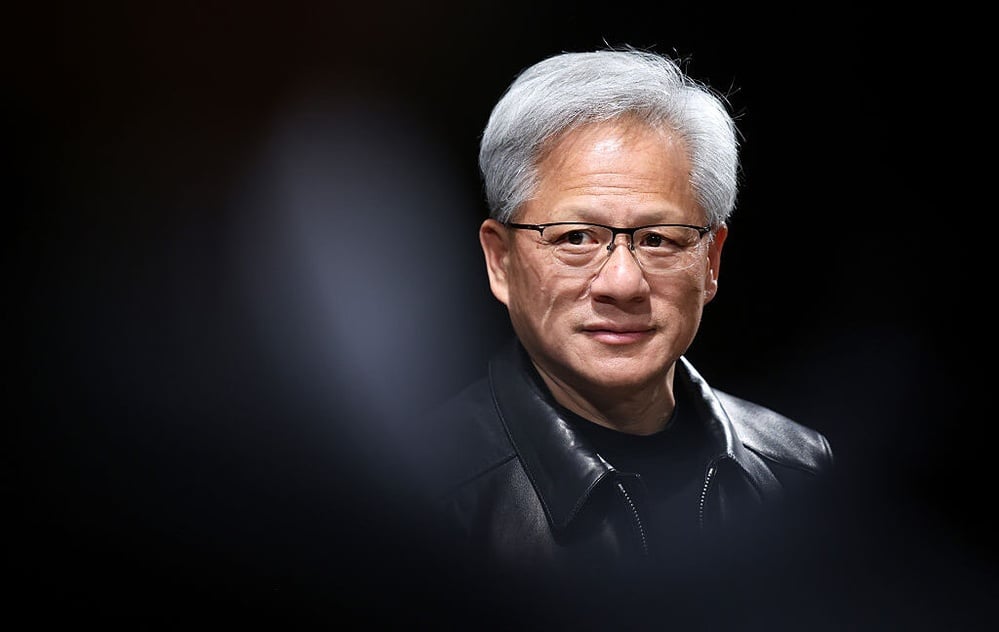
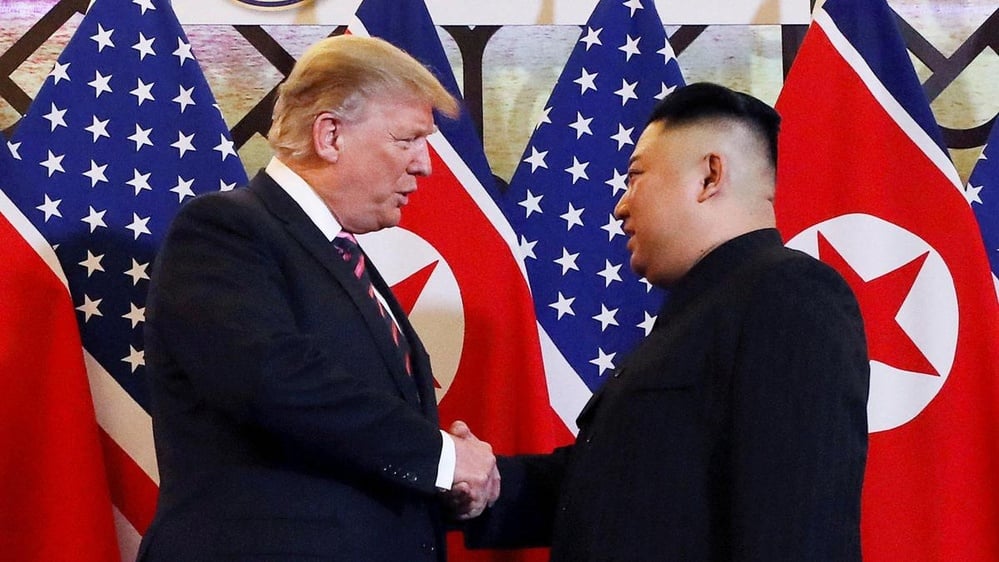

2026 © Helium Trades
Privacy Policy & Disclosure
* Disclaimer: Nothing on this website constitutes investment advice, performance data or any recommendation that any particular security, portfolio of securities, transaction or investment strategy is suitable for any specific person. Helium Trades is not responsible in any way for the accuracy
of any model predictions or price data. Any mention of a particular security and related prediction data is not a recommendation to buy or sell that security. Investments in securities involve the risk of loss. Past performance is no guarantee of future results. Helium Trades is not responsible for any of your investment decisions,
you should consult a financial expert before engaging in any transaction.
Helium Research Assistant

How can I help you today?
Ask any question about this page.


