See whether Helium helps you make better-informed decisions. Try every Pro Trader feature for 30 days. No credit card required.
Try every Pro Trader feature for 30 days. No credit card required.
November 09, 2026 · 0 shares
Framing is measured and attribution-heavy, presenting the spying allegations as unconfirmed claims under investigation rather than established fact.
Automated analysis; not human reviewed.
Limitations: The underlying New York Times report and intelligence findings are not reproduced, so assessments rely on the supplied Reuters framing.
·
9 of 55 available dimensions scored; omitted dimensions are not treated as neutral.
·
Verified supporting quotes for 9 of 9 scored dimensions.
Claim: The report relies on attributed statements and allegations rather than the publisher's subjective judgment.
“Nvidia NVDA.O said on Sunday its board was probing whether CEO Jensen Huang had been the target of a foreign intelligence effort, after a media report alleged he had a close relationship with a Chinese businesswoman who passed information to Beijing.” · exact text match
Why: The central claims are attributed to Nvidia and a media report, with 'alleged' marking uncertainty.
Claim: The report uses measured, non-sensational language for a story involving spying and a CEO affair.
“The company said on Sunday that while its board had no reason to believe that either US national security or Nvidia secrets were compromised, its inquiry would examine all available information.” · exact text match
Why: The language is cautious and corporate-investigation focused rather than lurid.
Claim: The report is descriptive, recounting investigation and reactions without prescribing a course of action.
“Nvidia NVDA.O said on Sunday its board was probing whether CEO Jensen Huang had been the target of a foreign intelligence effort” · exact text match
Why: The sentence reports an action and allegation; no policy prescription or normative demand is made.
Claim: The report's framing is substantially political, involving the US president, Congress, national security, and China policy.
“US President Donald Trump said on Sunday he had not spoken to Huang about the allegations, but called him a fine person.” · exact text match
Why: The story incorporates direct presidential comment and congressional national-security scrutiny, making it highly political in content.
Claim: The report is highly sourced and uses attribution and uncertainty markers appropriate to an investigation.
“The New York Times reported last month that Huang had a relationship with Alice Huang, an unrelated former executive of Singapore-based company Megaspeed, who US authorities investigated and concluded was a Chinese intelligence asset.” · exact text match
“The company said on Sunday that while its board had no reason to believe that either US national security or Nvidia secrets were compromised, its inquiry would examine all available information.” · exact text match
Why: Key allegations are tied to named reporting and authorities, while the board's language is separately quoted.
Claim: The report is rationally organized, presenting attributed claims, company responses, analyst assessments, and market context.
“The company said on Sunday that while its board had no reason to believe that either US national security or Nvidia secrets were compromised, its inquiry would examine all available information.” · exact text match
Why: It balances allegation with company response and avoids unsupported leaps.
Claim: The report includes some forward-looking speculation about stock and leadership consequences, largely attributed to analysts.
“The developments are likely to pressure the chipmaker's stock, which has already fallen sharply amid worries about the AI boom's sustainability, and may also raise questions about Huang's future at the helm of the company he co-founded, analysts said.” · exact text match
Why: Terms like 'likely' and 'may' project consequences beyond confirmed facts, though the sentence is attributed to analysts.
Claim: The report demonstrates high visible integrity through attribution, response attempts, and cautious wording.
“China’s foreign ministry did not immediately respond to a Reuters request for comment.” · exact text match
“Megaspeed did not respond immediately to a request for comment outside business hours.” · exact text match
Why: It seeks comment from relevant parties and discloses non-response, alongside attributed claims.
Claim: The report synthesizes corporate governance, national-security, political, and market dimensions coherently.
“The developments are likely to pressure the chipmaker's stock, which has already fallen sharply amid worries about the AI boom's sustainability, and may also raise questions about Huang's future at the helm of the company he co-founded, analysts said.” · exact text match
Why: It connects the investigation to market and leadership consequences while attributing the assessment to analysts.
The underlying New York Times report and intelligence findings are not reproduced, so assessments rely on the supplied Reuters framing.
November 08, 2026 · 0 shares
Largely measured, attribution-heavy reporting that repeatedly credits claims to newspapers, intelligence sources, and officials while giving space to Nvidia's and China's denials, though the headline and framing foreground a foreign-spy national-security threat.
Automated analysis; not human reviewed.
Limitations: The supplied text has garbled outlet names and appended unrelated subscription headlines, and key sourcing rests on anonymous or newspaper-reported intelligence claims that cannot be verified from the text.
·
11 of 55 available dimensions scored; omitted dimensions are not treated as neutral.
·
Verified supporting quotes for 9 of 11 scored dimensions.
Claim: The article balances Republican national-security criticism with Trump's praise of Huang and China's denial, showing no clear ideological direction.
“"I think he’s an honorable guy," the president said.” · verified after text normalization
“"the so-called Chinese spy allegation is unsubstantiated.
It is nothing but smears against China."”
· verified after text normalization
Why: Symmetrical inclusion of partisan and foreign official voices supports a neutral score.
Claim: Framing centers on corporate boards, intelligence agencies, cabinet officials, and billionaires rather than ordinary people.
“A committee of independent directors, assisted by outside independent counsel, will oversee the investigation.” · exact text match
Why: Elite institutional actors dominate the narrative, mildly tilting elitist.
Claim: The report foregrounds national-security surveillance and congressional scrutiny of a private business relationship.
“Recent reports raise significant national security concerns regarding the PRC’s access to sensitive U.S. technology and information” · exact text match
Why: Security-state framing is present but reported rather than endorsed.
Claim: The piece is built from attributed statements and documented figures rather than the reporter's judgments.
“A person familiar with the matter told News late Sunday that U.S. intelligence agencies had determined that Alice Huang was a Chinese spy” · verified after text normalization
Why: Heavy attribution and quoted statements indicate objective presentation.
Claim: The headline and lead emphasize a spy targeting a famous CEO, though the body is measured.
“Nvidia opens investigation after CEO Jensen Huang was targeted by Chinese intelligence.” · exact text match
Why: Dramatic spy framing in the headline is partly offset by restrained body text.
Claim: The article pairs a scandal with strong company performance and presidential support, avoiding a clear valence.
“Nvidia is the world’s second-largest publicly traded company as of Friday, worth nearly $4.5 trillion.” · exact text match
Why: Mixed positive and negative elements support a neutral score.
Claim: The article reports events and statements without recommending actions.
“The NVIDIA Board is initiating an independent investigation in light of recent reporting” · exact text match
Why: No prescriptive advocacy appears; content is descriptive.
Claim: National-security and China-threat framing is present but reported rather than advocated.
“its top-tier products are mostly restricted from being sold to customers in China because of national security fears” · exact text match
Why: Security framing tilts mildly hawkish without editorial endorsement.
Claim: Claims are attributed to named newspapers, officials, and company statements rather than asserted emotionally.
“The New York Times and the Financial Times reported that Alice Huang, a Chinese citizen whose Singapore-based company was buying Nvidia’s advanced chips, had been under surveillance by U.S. intelligence agencies.” · exact text match
Why: Consistent sourcing and attribution indicate rational, evidence-oriented presentation.
Claim: The article includes the company's denial, the CEO's admission, China's rebuttal, and sourcing caveats.
“the company said it "has no reason to believe that either national security or NVIDIA secrets were compromised"” · not found in supplied text
Why: Inclusion of exculpatory and contrary statements signals fair, honest presentation.
The supplied text has garbled outlet names and appended unrelated subscription headlines, and key sourcing rests on anonymous or newspaper-reported intelligence claims that cannot be verified from the text.
November 09, 2026 · 0 shares
The framing is largely measured and attribution-heavy but foregrounds a national-security and political-establishment lens, giving prominence to official intelligence claims and congressional alarm while also quoting denials.
Automated analysis; not human reviewed.
Limitations: The supplied text contains duplicated blocks and appears truncated/repeated, so the full article structure and any omitted passages are uncertain.
·
8 of 55 available dimensions scored; omitted dimensions are not treated as neutral.
·
Verified supporting quotes for 8 of 8 scored dimensions.
Claim: The report mostly attributes claims to named sources, documents, or official statements rather than presenting the publisher’s own subjective interpretation.
“The company’s board said in a statement on Sunday that, while it has no reason to believe that either US national security or Nvidia secrets were compromised, its inquiry will examine all available information.” · exact text match
Why: The central development is reported through attributed company statements and documented reporting.
Claim: The report presents the espionage allegation in restrained, procedural language rather than sensationalized terms.
“The company’s board said in a statement on Sunday that, while it has no reason to believe that either US national security or Nvidia secrets were compromised, its inquiry will examine all available information.” · exact text match
Why: The language is measured and procedural, avoiding dramatic characterization of the alleged intelligence episode.
Claim: The report is overwhelmingly descriptive, recounting statements and reported findings without prescribing policy or action.
“The company’s board said in a statement on Sunday that, while it has no reason to believe that either US national security or Nvidia secrets were compromised, its inquiry will examine all available information.” · exact text match
Why: The article reports what actors said and did; it does not advocate a course of action.
Claim: The report foregrounds political officials and national-security institutions in its framing of the Nvidia investigation.
“Republican lawmakers have expressed more alarm, asking Huang to give the House foreign affairs and intelligence committees a closed-door briefing next week” · exact text match
Why: The central conflict is presented through congressional and executive-branch reactions, making the story heavily political in framing.
Claim: Official intelligence determinations and congressional security concerns are presented as central and credible elements of the story.
“Those officials have determined that she was acting as a Chinese intelligence asset, passing commercial information to Beijing, the New York Times reported, citing unnamed sources.” · exact text match
Counterevidence:
““I haven’t heard he’s done anything wrong,” Trump said.
“He dealt with somebody.
But, you know, so does everybody else.””
· exact text match
Why: The article gives significant prominence to unnamed official intelligence conclusions and congressional alarm, tilting the framing toward establishment security institutions.
Claim: The report attributes contested claims to named outlets and official sources and notes a missing response.
“Those officials have determined that she was acting as a Chinese intelligence asset, passing commercial information to Beijing, the New York Times reported, citing unnamed sources.” · exact text match
“Nvidia did not immediately respond to a request for comment on the Axios report.” · exact text match
Why: Including the company’s non-response and attributing allegations to the Times and Axios are visible credibility practices.
Claim: The report relies on attributed reporting, official statements, and a cited memo rather than emotional or illogical appeals.
“The Times reported on Sunday that a memo drafted by US secretary of state Marco Rubio circulated among top policymakers in the Trump administration last spring, citing intelligence that the businesswoman who had a relationship with Nvidia’s chief executive was a spy for China’s ministry of state security.” · exact text match
Why: The reporting is structured around sourced claims and official documents, supporting a rational style.
Claim: The report gives space to the company’s statement and confidence in Huang alongside the allegations, supporting a fairness signal.
““The Board prioritizes US national and economic security, which is paramount to the interests of NVIDIA and its shareholders,” the company said.
“The Board has confidence in Jensen and his leadership team and will provide further updates as appropriate.””
· exact text match
Why: It includes Nvidia’s board statement and confidence in Huang alongside the allegations, indicating internal fairness.
The supplied text contains duplicated blocks and appears truncated/repeated, so the full article structure and any omitted passages are uncertain.
November 08, 2026 · 0 shares
Largely measured, attribution-heavy reporting that repeatedly credits claims to newspapers, intelligence sources, and officials while giving space to Nvidia's and China's denials, though the headline and framing foreground a foreign-spy national-security threat.
Automated analysis; not human reviewed.
Limitations: The supplied text has garbled outlet names and appended unrelated subscription headlines, and key sourcing rests on anonymous or newspaper-reported intelligence claims that cannot be verified from the text.
·
11 of 55 available dimensions scored; omitted dimensions are not treated as neutral.
·
Verified supporting quotes for 9 of 11 scored dimensions.
Claim: The article balances Republican national-security criticism with Trump's praise of Huang and China's denial, showing no clear ideological direction.
“"I think he’s an honorable guy," the president said.” · verified after text normalization
“"the so-called Chinese spy allegation is unsubstantiated.
It is nothing but smears against China."”
· verified after text normalization
Why: Symmetrical inclusion of partisan and foreign official voices supports a neutral score.
Claim: Framing centers on corporate boards, intelligence agencies, cabinet officials, and billionaires rather than ordinary people.
“A committee of independent directors, assisted by outside independent counsel, will oversee the investigation.” · exact text match
Why: Elite institutional actors dominate the narrative, mildly tilting elitist.
Claim: The report foregrounds national-security surveillance and congressional scrutiny of a private business relationship.
“Recent reports raise significant national security concerns regarding the PRC’s access to sensitive U.S. technology and information” · exact text match
Why: Security-state framing is present but reported rather than endorsed.
Claim: The piece is built from attributed statements and documented figures rather than the reporter's judgments.
“A person familiar with the matter told News late Sunday that U.S. intelligence agencies had determined that Alice Huang was a Chinese spy” · verified after text normalization
Why: Heavy attribution and quoted statements indicate objective presentation.
Claim: The headline and lead emphasize a spy targeting a famous CEO, though the body is measured.
“Nvidia opens investigation after CEO Jensen Huang was targeted by Chinese intelligence.” · exact text match
Why: Dramatic spy framing in the headline is partly offset by restrained body text.
Claim: The article pairs a scandal with strong company performance and presidential support, avoiding a clear valence.
“Nvidia is the world’s second-largest publicly traded company as of Friday, worth nearly $4.5 trillion.” · exact text match
Why: Mixed positive and negative elements support a neutral score.
Claim: The article reports events and statements without recommending actions.
“The NVIDIA Board is initiating an independent investigation in light of recent reporting” · exact text match
Why: No prescriptive advocacy appears; content is descriptive.
Claim: National-security and China-threat framing is present but reported rather than advocated.
“its top-tier products are mostly restricted from being sold to customers in China because of national security fears” · exact text match
Why: Security framing tilts mildly hawkish without editorial endorsement.
Claim: Claims are attributed to named newspapers, officials, and company statements rather than asserted emotionally.
“The New York Times and the Financial Times reported that Alice Huang, a Chinese citizen whose Singapore-based company was buying Nvidia’s advanced chips, had been under surveillance by U.S. intelligence agencies.” · exact text match
Why: Consistent sourcing and attribution indicate rational, evidence-oriented presentation.
Claim: The article includes the company's denial, the CEO's admission, China's rebuttal, and sourcing caveats.
“the company said it "has no reason to believe that either national security or NVIDIA secrets were compromised"” · not found in supplied text
Why: Inclusion of exculpatory and contrary statements signals fair, honest presentation.
The supplied text has garbled outlet names and appended unrelated subscription headlines, and key sourcing rests on anonymous or newspaper-reported intelligence claims that cannot be verified from the text.
November 06, 2026 · 0 shares
Dramatic espionage framing—centered on a 'Chinese spy plot'—is relayed chiefly through a single attributed outlet, with limited independent verification.
Automated analysis; not human reviewed.
Limitations: The supplied text is a short, repeated aggregation of NYT-sourced claims with no independent reporting or full article body.
·
5 of 55 available dimensions scored; omitted dimensions are not treated as neutral.
·
Verified supporting quotes for 5 of 5 scored dimensions.
Claim: The presentation is mostly source-attributed but retains a subjective, sensational phrase in its framing.
“Nvidia’s CEO is reportedly the target of a ‘Chinese spy plot’” · exact text match
Counterevidence:
“according to The New York Times.” · exact text match
Why: The quoted 'spy plot' phrase introduces a value-laden framing into an otherwise attributed report.
Claim: Uses dramatic espionage language and a headline-style 'spy plot' phrase to frame the allegation.
“China reportedly recruited AI exec to spy on Jensen Huang.” · exact text match
“Nvidia’s CEO is reportedly the target of a ‘Chinese spy plot’” · exact text match
Counterevidence:
“according to The New York Times.” · exact text match
Why: The 'spy plot' and 'spy on' wording heightens drama beyond a neutral report of an allegation, though attribution limits it.
Claim: The report adopts threatening espionage framing that may evoke fear about Chinese intelligence targeting U.S. AI leadership.
“China reportedly recruited AI exec to spy on Jensen Huang.” · exact text match
“Nvidia’s CEO is reportedly the target of a ‘Chinese spy plot’” · exact text match
Why: The 'spy' and 'spy plot' phrasing presents a threatening national-security scenario, though it is attributed.
Claim: The story is framed around U.S. national-security politics, including presidential and congressional involvement.
“President Trump, who is friendly with Jensen Huang, was briefed last year about the relationship, but didn’t take any action.” · exact text match
“Yesterday, three House committees asked Jensen Huang to appear for a joint, closed-door briefing on his “interactions” with Alice Huang.” · exact text match
Why: These details center political actors and official responses, making the report substantially political.
Claim: Credibility is moderately supported by explicit attribution to The New York Times and by distinguishing new from prior reporting, but the account relies on a single outlet.
“according to The New York Times.” · exact text match
“Last week, the NYT reported that Jensen Huang was seen as the target of a “Chinese spy plot” and shared details about Alice Huang and Jensen Huang’s relationship, but the information that China’s MSS had recruited her is new.” · exact text match
Why: The text clearly attributes claims and marks what is new, while lacking independent corroboration.
The supplied text is a short, repeated aggregation of NYT-sourced claims with no independent reporting or full article body.
Coverage frames an alleged CEO affair and Chinese spy suspicion as a sensational, gossip-adjacent illustration of escalating U.S. economic warfare, leaning on anonymous-source reports and a causal headline.
Automated analysis; not human reviewed.
Limitations: The supplied text includes truncated/duplicated headline fragments and an unclear antecedent for one denial quote, limiting certainty about some attributions.
·
6 of 55 available dimensions scored; omitted dimensions are not treated as neutral.
·
Verified supporting quotes for 6 of 6 scored dimensions.
Claim: The headline combines an affair and suspected Chinese spy to dramatize the Nvidia investigation.
“Nvidia CEO Jensen Huang's affair with a suspected Chinese spy shows why.” · exact text match
Why: The phrase uses personal scandal and espionage suspicion in a dramatic causal headline.
Claim: The report includes intimate marital apology details tied to a CEO scandal.
“I was unfaithful to my wife.
My actions hurt her and our children.
There is no excuse for what I did. I am deeply sorry”
· exact text match
Why: Quoting a CEO’s apology for infidelity and family harm is personal scandal material.
Claim: The report is framed through U.S.-China intelligence conflict and national-security institutions.
“U.S. officials believe Alice Huang was recruited by China’s Ministry of State Security, sources told the FT” · exact text match
Why: The central allegation concerns foreign intelligence and state security, making the framing highly political.
Claim: The headline states the affair ‘shows why’ the Pentagon is escalating, presenting a causal link as established.
“Nvidia CEO Jensen Huang's affair with a suspected Chinese spy shows why.” · exact text match
Why: The causal certainty in ‘shows why’ exceeds the attributed and alleged nature of the underlying reports.
Claim: The report relies on anonymous-source accounts of planned espionage and sabotage programs.
“Sources told the Washington Post that the Pentagon is planning a spying program” · exact text match
Why: Planned covert programs are attributed to unnamed sources rather than confirmed public records.
Claim: The lead links an alleged spy affair to Pentagon economic warfare as a loaded causal illustration.
“The Pentagon is reportedly ramping up economic warfare and espionage.
Nvidia CEO Jensen Huang's affair with a suspected Chinese spy shows why.”
· exact text match
Why: The framing asserts a connection between separate reported developments without establishing causality in the body.
The supplied text includes truncated/duplicated headline fragments and an unclear antecedent for one denial quote, limiting certainty about some attributions.
Framing foregrounds a CEO affair and a 'suspected Chinese spy' label with limited sourcing beyond an Axios byline and an email reference, producing a terse, sensational effect.
Automated analysis; not human reviewed.
Limitations: The supplied text is a very short item, apparently a social-media or aggregation snippet with no full article body, limiting contextual bias assessment.
·
4 of 55 available dimensions scored; omitted dimensions are not treated as neutral.
·
Verified supporting quotes for 4 of 4 scored dimensions.
Claim: The item pairs a CEO affair admission with a 'suspected Chinese spy' descriptor, giving the report a dramatic, sensational cast.
“Nvidia CEO Jensen Huang admitted to having a romantic relationship with a suspected Chinese spy in a message to his company.” · exact text match
Why: The affair-plus-spy framing is dramatic and tabloid-like, supporting a moderately sensational score.
Claim: The item reports statements and events without prescribing a course of action.
“says he fell short of his duties to Nvidia's board, shareholders, and employees” · exact text match
Why: It describes what Huang said rather than advocating a policy or action, placing it on the descriptive end.
Claim: The central report is about a CEO's personal affair and romantic relationship.
“Jensen Huang admits an affair” · exact text match
Why: Focusing on a personal relationship and affair as the lead makes the item highly gossip-oriented.
Claim: The partner is identified only as a 'suspected Chinese spy' without supporting detail in the supplied text.
“a suspected Chinese spy” · exact text match
Why: The key descriptor is explicitly a suspicion and lacks supporting evidence here, making the framing speculative.
The supplied text is a very short item, apparently a social-media or aggregation snippet with no full article body, limiting contextual bias assessment.
November 09, 2026 · 0 shares
Publisher framing is mostly attribution-driven straight news, though it foregrounds a CEO's personal affair and a presidential reaction to a national-security allegation.
Automated analysis; not human reviewed.
Limitations: The supplied text lacks a byline and includes repeated promotional tagline fragments; the analysis excludes those page-chrome elements.
·
4 of 55 available dimensions scored; omitted dimensions are not treated as neutral.
·
Verified supporting quotes for 4 of 4 scored dimensions.
Claim: The central spy-plot allegation is explicitly attributed to The New York Times and US intelligence rather than asserted as the publisher's own finding.
“Late last month, The New York Times reported that US intelligence agencies had concluded that Huang was the target of a Chinese spy plot.” · exact text match
Why: Explicit attribution of contested claims to named sources indicates an objective reporting style.
Claim: The headline and lede foreground Huang's extramarital affair.
“Trump Backs Jensen Huang After Nvidia CEO Confirmed His Affair.” · exact text match
Why: Personal infidelity is prominent in the headline, though the article connects it to a security investigation.
Claim: The article centers a presidential reaction and a Washington policy debate.
“President Donald Trump backed Nvidia CEO Jensen Huang on Sunday after Huang said he had been unfaithful to his wife with a woman US intelligence reportedly suspects was a Chinese spy.” · exact text match
“Huang has become an increasingly influential voice in Washington's debate over chip-export restrictions on China.” · exact text match
Why: The report's subject matter is explicitly political and national-security-related.
Claim: The report names its source for the spy-plot allegation and notes that Nvidia was asked for comment.
“Late last month, The New York Times reported that US intelligence agencies had concluded that Huang was the target of a Chinese spy plot.” · exact text match
“Nvidia did not immediately respond to a request for comment.” · exact text match
Why: Named sourcing, attributed allegations, and a response attempt are visible credibility signals.
The supplied text lacks a byline and includes repeated promotional tagline fragments; the analysis excludes those page-chrome elements.
November 09, 2026 · 0 shares
The headline foregrounds Beijing's quoted 'smear campaign' denial while the body also notes Nvidia's independent board investigation, yielding a largely attributed but political/security-framed account.
Automated analysis; not human reviewed.
Limitations: Short report; the underlying sourcing for the espionage allegations is not described.
·
5 of 55 available dimensions scored; omitted dimensions are not treated as neutral.
·
Verified supporting quotes for 5 of 5 scored dimensions.
Claim: The publisher attributes the denial to China's Foreign Ministry rather than asserting the allegations are false.
“Foreign ministry spokesperson Guo Jiakun stated that these claims are unfounded and baseless.” · exact text match
Counterevidence:
“'Baseless smear campaign': China denies spying charge targeting Nvidia CEO.” · exact text match
Why: The loaded phrase appears in the headline, but the body attributes the denial to an official spokesperson.
Claim: The report presents the investigation in factual, non-sensational terms.
“Nvidia's board has initiated an independent investigation into reports of a foreign intelligence operation.” · exact text match
Counterevidence:
“'Baseless smear campaign': China denies spying charge targeting Nvidia CEO.” · exact text match
Why: The body is measured, though the headline uses a quoted dramatic denial phrase.
Claim: The article reports actions and statements without advocating a policy response.
“Nvidia's board has initiated an independent investigation into reports of a foreign intelligence operation.” · exact text match
Why: It describes a board investigation and official denial, with no prescriptive language.
Claim: The report is explicitly political/security-related, concerning a foreign ministry denial and intelligence allegations.
“China has rejected allegations of espionage involving Nvidia CEO Jensen Huang, labeling them as a smear campaign.” · exact text match
Why: Foreign ministry involvement and espionage charges make the topic highly political.
Claim: The report names an official spokesperson and a board investigation, but leaves the underlying espionage reports vague.
“Foreign ministry spokesperson Guo Jiakun stated that these claims are unfounded and baseless.” · exact text match
Counterevidence:
“reports of a foreign intelligence operation” · exact text match
Why: Named attribution supports credibility; uncited reports limit it.
Short report; the underlying sourcing for the espionage allegations is not described.
November 09, 2026 · 0 shares
Publisher framing is neutral and attributional, balancing China’s denial with attributed U.S. intelligence claims and an expert’s call for evidence.
Automated analysis; not human reviewed.
·
55 of 55 available dimensions scored; omitted dimensions are not treated as neutral.
·
Verified supporting quotes for 52 of 55 scored dimensions.
Claim: The article does not use domestic left-right ideological framing; its focus is China-U.S. technology and espionage allegations.
“China denied on Monday (November 9, 2026) there was a spy plot attempt to ensnare Nvidia CEO Jensen Huang, calling the spying allegations unsubstantiated and a smear campaign against Beijing.” · exact text match
Why: The content is geopolitical and factual rather than liberal or conservative ideological framing.
Claim: The report does not adopt a populist or elitist stance; it quotes official and expert actors in a factual manner.
““The key questions are whether he was aware of any espionage activities and whether any confidential or strategically sensitive information was compromised,” said George Chen, a partner and chair of digital practice at The Asia Group, a Washington-based consultancy.” · exact text match
Why: Institutional and expert voices are reported without populist or elitist advocacy.
Claim: The report describes export controls and official denials without advocating libertarian or authoritarian policy.
“Previously, Mr. Huang also lobbied Mr. Trump to sell the less-advanced H20 chips, which were designed for the Chinese market while complying with U.S. export restrictions.” · exact text match
Why: Policy restrictions are reported descriptively, not framed as a libertarian or authoritarian argument.
Claim: The report keeps contested claims attributed and includes a caution that key questions require evidence rather than speculation.
““Those questions require evidence rather than speculation,” he added in written comments.” · exact text match
Why: Attribution and evidence-focused language indicate objective rather than subjective reporting.
Claim: The report uses procedural, factual language rather than alarmist or sensational treatment.
“Nvidia said on Sunday (November 8) that the company would launch an investigation into the case.” · exact text match
Why: The wording is factual and restrained rather than dramatic.
Claim: The article does not frame Nvidia or chip markets in bullish or bearish investment terms.
“Nvidia is one of the world’s most valuable publicly traded companies, alongside Apple and Microsoft.” · exact text match
Why: The company valuation reference is contextual and not market forecasting.
Claim: The article reports uncertainty and allegations without an optimistic or pessimistic outlook.
“However, it is uncertain if Beijing would allow Chinese companies to buy these chips en masse.” · exact text match
Why: The tone is neutral and explicitly uncertain rather than optimistic or pessimistic.
Claim: The article contains notable public-interest elements involving Nvidia, espionage claims, and U.S.-China technology policy.
“The chips company CEO is at the center of a controversy over whether he drove sales of advanced computer chips to China, in spite of U.S. tech restrictions aimed at limiting China’s ability to access these advanced technologies.” · not found in supplied text
Why: The subject matter is consequential and newsworthy, though the scoring of interest is secondary to factual reporting.
Claim: The article describes the denial, allegations, and investigation without prescribing a course of action.
“Nvidia said on Sunday (November 8) that the company would launch an investigation into the case.” · exact text match
Why: The report is descriptive and lacks policy prescriptions or directives.
Claim: The report does not frame the espionage allegation or chip restrictions in dovish or hawkish advocacy terms.
“China denied on Monday (November 9, 2026) there was a spy plot attempt to ensnare Nvidia CEO Jensen Huang, calling the spying allegations unsubstantiated and a smear campaign against Beijing.” · exact text match
Why: The geopolitics are reported descriptively, not as a call for confrontation or conciliation.
Claim: The article reports espionage allegations in restrained terms rather than fear-baiting.
““Those questions require evidence rather than speculation,” he added in written comments.” · exact text match
Why: The report emphasizes evidence and uncertainty instead of alarmist framing.
Claim: The article does not assume the conclusion that Huang or China engaged in espionage.
“China denied on Monday (November 9, 2026) there was a spy plot attempt to ensnare Nvidia CEO Jensen Huang, calling the spying allegations unsubstantiated and a smear campaign against Beijing.” · exact text match
Why: The contested allegation is reported as an allegation rather than accepted as established fact.
Claim: The affair is mentioned as reported context rather than as gossip-driven framing.
“Nvidia said on Sunday (November 8) that the company would launch an investigation into the case. Mr. Huang did not name the person in the extramarital affair.” · exact text match
Why: The personal detail is tied to the investigation and reported with restraint.
Claim: The report favors factual attribution over publisher opinion.
“Mr. Huang has acknowledged to the Nvidia board that he had been intimate with a business executive who U.S. intelligence determined was gathering information for Beijing, according to The New York Times.” · exact text match
Why: The statement is attributed to a named source rather than presented as the publisher’s opinion.
Claim: The article is centrally about U.S.-China espionage allegations and semiconductor export politics.
“China denied on Monday (November 9, 2026) there was a spy plot attempt to ensnare Nvidia CEO Jensen Huang, calling the spying allegations unsubstantiated and a smear campaign against Beijing.” · exact text match
“Mr. Huang had pushed to loosen chip sales restrictions to China in recent years, successfully lobbying U.S. President Donald Trump to allow his company to sell H200 chips this year.” · exact text match
Why: The core subject combines espionage claims, export restrictions, and presidential lobbying.
Claim: The report includes contextual nuance about chip models and uncertainty over Chinese purchases.
“While those chips are not Nvidia's most cutting-edge models, they are still advanced.” · exact text match
“However, it is uncertain if Beijing would allow Chinese companies to buy these chips en masse.” · exact text match
Why: It distinguishes chip capabilities and flags uncertainty rather than oversimplifying.
Claim: The article quotes authorities but does not rely on them as dispositive proof of the espionage claim.
““Those questions require evidence rather than speculation,” he added in written comments.” · exact text match
Why: Expert commentary is used to caution against speculation, not to assert the claim without evidence.
Claim: The report handles the affair and spy allegation maturely, without mocking or rage-baiting.
“Nvidia said on Sunday (November 8) that the company would launch an investigation into the case.” · exact text match
Why: The tone is procedural and restrained.
Claim: The report does not argue in a circular manner; it presents distinct claims and denials.
“China denied on Monday (November 9, 2026) there was a spy plot attempt to ensnare Nvidia CEO Jensen Huang, calling the spying allegations unsubstantiated and a smear campaign against Beijing.” · exact text match
Why: The structure separates allegation, denial, and evidence questions.
Claim: The report gives China’s official response and state-media reaction.
“Chinese media have largely focused on Huang admitting to the affair and state media outlets have mainly echoed the official government line.” · exact text match
Why: The response is explicitly covered, not omitted.
Claim: The article does not frame any party as a victim beyond reporting the allegations and denials.
“China denied on Monday (November 9, 2026) there was a spy plot attempt to ensnare Nvidia CEO Jensen Huang, calling the spying allegations unsubstantiated and a smear campaign against Beijing.” · exact text match
Why: The language reports claims of being smeared without endorsing a victim narrative.
Claim: The article explicitly notes uncertainty and that key questions require evidence rather than speculation.
““Those questions require evidence rather than speculation,” he added in written comments.” · exact text match
“However, it is uncertain if Beijing would allow Chinese companies to buy these chips en masse.” · exact text match
Why: The report’s certainty is calibrated to supplied evidence.
Claim: The article is substantive reporting, not spam or promotional fluff.
“The chips company CEO is at the center of a controversy over whether he drove sales of advanced computer chips to China, in spite of U.S. tech restrictions aimed at limiting China’s ability to access these advanced technologies.” · not found in supplied text
Why: The content is news reporting rather than spam.
Claim: The report is not organized around a rigid ideological framework.
“However, it is uncertain if Beijing would allow Chinese companies to buy these chips en masse.” · exact text match
Why: It presents claims and uncertainty rather than an ideological argument.
Claim: The article reports official Chinese and U.S.-derived claims without clearly favoring or opposing established institutions.
“China had previously denied the New York Times report that said Mr. Huang had developed a close relationship with a Chinese citizen named Alice Huang, who ran a company that faced claims of smuggling advanced chips into China, and that she was a spy for Beijing.” · exact text match
Why: Official claims are reported as claims, not endorsed or rejected.
Claim: The report's tone is neutral and does not lean positive or negative.
“Nvidia said on Sunday (November 8) that the company would launch an investigation into the case.” · exact text match
Why: The wording is procedural and balanced, with no evaluative valence.
Claim: The article reports both the allegation and the denial without an observable double standard.
“China denied on Monday (November 9, 2026) there was a spy plot attempt to ensnare Nvidia CEO Jensen Huang, calling the spying allegations unsubstantiated and a smear campaign against Beijing.” · exact text match
“Mr. Huang has acknowledged to the Nvidia board that he had been intimate with a business executive who U.S. intelligence determined was gathering information for Beijing, according to The New York Times.” · exact text match
Why: Both sides of the contested claim are included with attribution.
Claim: The report uses named sources, attribution, and explicit uncertainty to support its account.
““The key questions are whether he was aware of any espionage activities and whether any confidential or strategically sensitive information was compromised,” said George Chen, a partner and chair of digital practice at The Asia Group, a Washington-based consultancy.” · exact text match
“However, it is uncertain if Beijing would allow Chinese companies to buy these chips en masse.” · exact text match
Why: Named sourcing and explicit uncertainty support high credibility.
Claim: The article flags uncertainty and calls for evidence rather than asserting the spy claim as proven.
“However, it is uncertain if Beijing would allow Chinese companies to buy these chips en masse.” · exact text match
““Those questions require evidence rather than speculation,” he added in written comments.” · exact text match
Why: Explicit uncertainty and evidence-based caution support a rational rather than irrational framing.
Claim: The article is not advertorial or promotional for Nvidia.
“Nvidia said on Sunday (November 8) that the company would launch an investigation into the case.” · exact text match
Why: Company information is reported in a news context, not as marketing.
Claim: The supplied text does not show strong independent indicators of AI authorship.
“Published - November 09, 2026 03:04 pm IST - BANGKOK” · exact text match
Why: There is insufficient evidence for an AI-authorship classification; the visible text is ordinary news copy.
Claim: The report includes both the U.S. intelligence-derived allegation and China’s denial, attributing contested claims.
“Mr. Huang has acknowledged to the Nvidia board that he had been intimate with a business executive who U.S. intelligence determined was gathering information for Beijing, according to The New York Times.” · exact text match
““The so-called Chinese spy allegation is unsubstantiated.
It is nothing but smears against China,” Ministry of Foreign Affairs spokesperson Guo Jiakun said on Monday (November 9, 2026).”
· exact text match
Why: Presenting both the allegation and the denial with attribution supports fairness and honesty.
Claim: The report provides relevant context about Nvidia's chip-lobbying history and distinguishes advanced from less-advanced models.
“While those chips are not Nvidia's most cutting-edge models, they are still advanced.” · exact text match
“Previously, Mr. Huang also lobbied Mr. Trump to sell the less-advanced H20 chips, which were designed for the Chinese market while complying with U.S. export restrictions.” · exact text match
Why: Nuanced technical and policy context supports a high intelligence score.
Claim: The article does not endorse or justify terrorism or intentional violence.
“China denied on Monday (November 9, 2026) there was a spy plot attempt to ensnare Nvidia CEO Jensen Huang, calling the spying allegations unsubstantiated and a smear campaign against Beijing.” · exact text match
Why: Espionage allegations are not terrorism advocacy or justification.
Claim: The article reports allegations of chip smuggling and espionage without normalizing or justifying fraud.
“China had previously denied the New York Times report that said Mr. Huang had developed a close relationship with a Chinese citizen named Alice Huang, who ran a company that faced claims of smuggling advanced chips into China, and that she was a spy for Beijing.” · exact text match
Why: Smuggling claims are reported as allegations, not endorsed.
Claim: The article contains no class-conflict, worker-ownership, or Marxist framing.
“Nvidia is one of the world’s most valuable publicly traded companies, alongside Apple and Microsoft.” · exact text match
Why: The report focuses on corporate and geopolitical facts, not Marxist analysis.
Claim: The article does not discuss Islamism or advocate Islamist political goals.
“China denied on Monday (November 9, 2026) there was a spy plot attempt to ensnare Nvidia CEO Jensen Huang, calling the spying allegations unsubstantiated and a smear campaign against Beijing.” · exact text match
Why: The content is unrelated to Islamist ideology.
Claim: The article contains no anti-Jewish generalization, collective blame, or conspiracy claims.
“China denied on Monday (November 9, 2026) there was a spy plot attempt to ensnare Nvidia CEO Jensen Huang, calling the spying allegations unsubstantiated and a smear campaign against Beijing.” · exact text match
Why: The article does not address Jewish people or use antisemitic tropes.
Claim: The article contains no negative generalization about LGBT people or denial of equal rights.
“Nvidia said on Sunday (November 8) that the company would launch an investigation into the case.” · exact text match
Why: The content is unrelated to LGBT issues.
Claim: The article contains no racial generalization, dehumanization, or collective blame.
“China had previously denied the New York Times report that said Mr. Huang had developed a close relationship with a Chinese citizen named Alice Huang, who ran a company that faced claims of smuggling advanced chips into China, and that she was a spy for Beijing.” · exact text match
Why: Nationality and citizenship are reported factually, not as racial bias.
Claim: The article contains no identity-group power framing or prescriptive institutional remedies.
“China denied on Monday (November 9, 2026) there was a spy plot attempt to ensnare Nvidia CEO Jensen Huang, calling the spying allegations unsubstantiated and a smear campaign against Beijing.” · exact text match
Why: The content is geopolitical and corporate, not identity-politics framing.
Claim: The article does not endorse cruelty or immoral treatment.
“Nvidia said on Sunday (November 8) that the company would launch an investigation into the case.” · exact text match
Why: The report is factual and does not celebrate harm.
Claim: The article does not use faux virtue signaling or moral exhibition.
“Nvidia said on Sunday (November 8) that the company would launch an investigation into the case.” · exact text match
Why: The reporting is procedural and factual.
Claim: The article reports a spy allegation as a contested claim rather than promoting conspiratorial thinking.
““The so-called Chinese spy allegation is unsubstantiated.
It is nothing but smears against China,” Ministry of Foreign Affairs spokesperson Guo Jiakun said on Monday (November 9, 2026).”
· exact text match
Why: The espionage claim is attributed and disputed, not endorsed as a conspiracy narrative.
Claim: The article contains no compassion-based advocacy that ignores severe self-harm tradeoffs.
“Nvidia said on Sunday (November 8) that the company would launch an investigation into the case.” · exact text match
Why: The content is unrelated to such tradeoffs.
Claim: The article does not make a group a scapegoat for the controversy.
“China had previously denied the New York Times report that said Mr. Huang had developed a close relationship with a Chinese citizen named Alice Huang, who ran a company that faced claims of smuggling advanced chips into China, and that she was a spy for Beijing.” · exact text match
Why: The claims are attributed to named reports and officials, not generalized to a group.
Claim: The article does not apply incompatible standards to comparable cases.
“China denied on Monday (November 9, 2026) there was a spy plot attempt to ensnare Nvidia CEO Jensen Huang, calling the spying allegations unsubstantiated and a smear campaign against Beijing.” · exact text match
Why: The report presents allegation and denial without an observable double standard.
Claim: The article does not reject reason, evidence, or pluralism; it explicitly calls for evidence.
““Those questions require evidence rather than speculation,” he added in written comments.” · exact text match
Why: The report’s framing supports evidentiary reasoning.
Coverage foregrounds Chinese state-media denials and an 'anti-China script' counter-narrative before later detailing U.S. intelligence allegations, while keeping attribution and a mildly tabloid focus on the CEO's affair.
Automated analysis; not human reviewed.
Limitations: The supplied text is a short aggregation with repeated 'Also Read' links; selection/ordering judgments rest on limited article text and no independent verification.
·
5 of 55 available dimensions scored; omitted dimensions are not treated as neutral.
·
Verified supporting quotes for 4 of 5 scored dimensions.
Claim: The lead heightens drama by pairing a CEO's affair with an alleged spy and describing a media 'hit back.'
“China's state-run newspaper denies Beijing's link to Nvidia CEO Jensen Huang's affair with alleged spy.” · exact text match
“A Chinese newspaper on Monday hit back at American media” · exact text match
Why: The affair-spy juxtaposition and 'hit back' language are mildly sensational, though the body is mostly attributed reporting.
Claim: The report gives prominence to Huang's admitted extramarital affair and personal apology.
“the Nvidia chief acknowledged having an affair and apologised to his family and company staff” · exact text match
“Nvidia CEO Jensen Huang's acknowledgement of extramarital affair” · exact text match
Why: Affair and apology details are included, but the main focus remains espionage and official denials, so gossip framing is limited.
Claim: The story is framed primarily through U.S.-China geopolitical tensions and official state responses.
“whenever bilateral ties between the US and China show signs of recovery” · exact text match
“China's foreign ministry spokesman Guo Jiakun said” · not found in supplied text
Why: The central conflict and quotes are organized around bilateral relations, official denial, and espionage, making political framing dominant.
Claim: Contested claims are attributed to named outlets, officials, and company statements, with both denial and allegation included.
“according to AFP” · exact text match
“The NYT had reported last month” · exact text match
Why: Visible attribution and inclusion of opposing claims increase credibility, though the aggregation lacks independent verification.
Claim: The report relays unproven espionage claims and a source's forecast of disruptive consequences.
“The NYT had reported last month that US intelligence officials concluded” · exact text match
“It also warned that an "anti-China script" could disrupt normal tech and trade exchanges” · exact text match
Why: The article centers on unproven spy allegations and a source's forecast of disruptive effects, although it attributes them rather than asserting them.
The supplied text is a short aggregation with repeated 'Also Read' links; selection/ordering judgments rest on limited article text and no independent verification.
November 09, 2026 · 0 shares
Framing centers on a personal affair and Chinese espionage allegation, while the phrase 'why he ignored earlier intelligence warnings' presupposes Trump ignored warnings and presents his defense in a brief, thinly sourced report.
Automated analysis; not human reviewed.
Limitations: The supplied text is a very brief, possibly aggregated snippet with related-headline links and no full article context, limiting assessment of many dimensions.
·
3 of 55 available dimensions scored; omitted dimensions are not treated as neutral.
·
Verified supporting quotes for 3 of 3 scored dimensions.
Claim: The report foregrounds a CEO's admitted affair and suspected espionage, adding a personal-scandal dimension.
“who admitted to an affair with a woman suspected of spying for China” · exact text match
Why: The affair detail is a personal scandal element, though it is tied to a serious espionage allegation.
Claim: The item is framed as a political controversy involving President Trump's response to intelligence warnings.
“Asked why he ignored earlier intelligence warnings, President Trump called Huang an ‘honourable guy’ who probably had an explanation.” · exact text match
Why: The central quote and setup focus on Trump's conduct and justification, making the story explicitly political.
Claim: The phrasing 'why he ignored earlier intelligence warnings' presupposes that Trump ignored warnings rather than asking whether he did.
“Asked why he ignored earlier intelligence warnings” · exact text match
Why: This is a loaded presupposition embedded in the question, an observable framing technique.
The supplied text is a very brief, possibly aggregated snippet with related-headline links and no full article context, limiting assessment of many dimensions.
November 09, 2026 · 0 shares
Publisher framing is mostly attribution-driven straight news, though it foregrounds a CEO's personal affair and a presidential reaction to a national-security allegation.
Automated analysis; not human reviewed.
Limitations: The supplied text lacks a byline and includes repeated promotional tagline fragments; the analysis excludes those page-chrome elements.
·
4 of 55 available dimensions scored; omitted dimensions are not treated as neutral.
·
Verified supporting quotes for 4 of 4 scored dimensions.
Claim: The central spy-plot allegation is explicitly attributed to The New York Times and US intelligence rather than asserted as the publisher's own finding.
“Late last month, The New York Times reported that US intelligence agencies had concluded that Huang was the target of a Chinese spy plot.” · exact text match
Why: Explicit attribution of contested claims to named sources indicates an objective reporting style.
Claim: The headline and lede foreground Huang's extramarital affair.
“Trump Backs Jensen Huang After Nvidia CEO Confirmed His Affair.” · exact text match
Why: Personal infidelity is prominent in the headline, though the article connects it to a security investigation.
Claim: The article centers a presidential reaction and a Washington policy debate.
“President Donald Trump backed Nvidia CEO Jensen Huang on Sunday after Huang said he had been unfaithful to his wife with a woman US intelligence reportedly suspects was a Chinese spy.” · exact text match
“Huang has become an increasingly influential voice in Washington's debate over chip-export restrictions on China.” · exact text match
Why: The report's subject matter is explicitly political and national-security-related.
Claim: The report names its source for the spy-plot allegation and notes that Nvidia was asked for comment.
“Late last month, The New York Times reported that US intelligence agencies had concluded that Huang was the target of a Chinese spy plot.” · exact text match
“Nvidia did not immediately respond to a request for comment.” · exact text match
Why: Named sourcing, attributed allegations, and a response attempt are visible credibility signals.
The supplied text lacks a byline and includes repeated promotional tagline fragments; the analysis excludes those page-chrome elements.
November 06, 2026 · 0 shares
The report maintains a largely neutral, attribution-heavy frame, pairing Republican lawmakers' China-espionage concerns with Nvidia's denial and internal-inspection findings.
Automated analysis; not human reviewed.
Limitations: The supplied text is duplicated and includes page boilerplate; no byline is present, limiting attribution and extraction.
·
14 of 55 available dimensions scored; omitted dimensions are not treated as neutral.
·
Verified supporting quotes for 14 of 14 scored dimensions.
Claim: The framing is ideologically balanced, juxtaposing Republican national-security concerns with Nvidia's rejection of the claims.
““Recent reports raise significant national security concerns regarding the People’s Republic of China’s access to sensitive US technology and information,”” · exact text match
“Nvidia has rejected the claims” · exact text match
Why: Both official security concerns and the company's denial are presented without publisher endorsement.
Claim: The report centers official congressional and corporate statements without populist or anti-elite framing.
“Top Republican lawmakers have asked Jensen Huang to appear before Congress to answer questions” · exact text match
“Nvidia has rejected the claims” · exact text match
Why: Institutional actors are reported neutrally rather than framed as elites against ordinary people.
Claim: The report does not endorse expanded state authority; it describes a congressional request and Nvidia's response.
“Top Republican lawmakers have asked Jensen Huang to appear before Congress to answer questions” · exact text match
“Nvidia has rejected the claims” · exact text match
Why: State scrutiny is reported as an event, not advocated.
Claim: The account stays objective by attributing contested claims and avoiding the publisher's own evaluative language.
“The New York Times last week wrote that US intelligence officials believed Huang had been the target of a Chinese spy operation.” · exact text match
“said people familiar with the matter” · exact text match
Why: Contested intelligence and findings are attributed to external sources.
Claim: Potentially sensational espionage material is presented with measured, qualified language.
“an alleged Chinese intelligence asset” · exact text match
“Nvidia has rejected the claims” · exact text match
Why: Use of 'alleged' and inclusion of denial reduce sensational framing.
Claim: The text is descriptive, reporting a congressional request and responses rather than prescribing policy.
“Top Republican lawmakers have asked Jensen Huang to appear before Congress to answer questions” · exact text match
“Nvidia has rejected the claims” · exact text match
Why: It narrates events and positions without advocacy.
Claim: The article is substantively political, centered on congressional national-security oversight.
“Top Republican lawmakers have asked Jensen Huang to appear before Congress to answer questions” · exact text match
“The chairs of the House committees on China, foreign affairs, and intelligence wrote to Huang this week” · exact text match
Why: Political institutions and national-security oversight are the core subject.
Claim: Certainty is kept low by qualifiers and attribution around the espionage claim.
“US intelligence officials believed Huang had been the target of a Chinese spy operation.” · exact text match
“an alleged Chinese intelligence asset” · exact text match
Why: The report uses 'believed' and 'alleged' rather than asserting the allegation as fact.
Claim: Credibility is high due to named officials, attributed NYT reporting, company statements, and sourced internal findings.
“The New York Times last week wrote that US intelligence officials believed Huang had been the target of a Chinese spy operation.” · exact text match
“said people familiar with the matter” · exact text match
Why: Visible sourcing and attribution support trustworthiness.
Claim: The report is evidence-bound, attributing espionage concerns to US intelligence officials via The New York Times and including Nvidia's denial.
“The New York Times last week wrote that US intelligence officials believed Huang had been the target of a Chinese spy operation.” · exact text match
“Nvidia has rejected the claims” · exact text match
Why: Claims are sourced and contested rather than asserted irrationally.
Claim: Speculation is limited and explicitly attributed to intelligence beliefs and congressional concerns.
“US intelligence officials believed Huang had been the target of a Chinese spy operation.” · exact text match
“The lawmakers said they wanted Huang to discuss the security protocols Nvidia had in place” · exact text match
Why: Speculative security implications are reported as external claims, not publisher forecasts.
Claim: The report shows high integrity by attributing allegations and giving Nvidia's denial and internal-inspection findings.
“The New York Times last week wrote that US intelligence officials believed Huang had been the target of a Chinese spy operation.” · exact text match
“Nvidia launched its own unannounced on-site inspections at Megaspeed in Singapore when it became aware of the US concerns, but the internal probe found no evidence of its chips being diverted into China, said people familiar with the matter.” · exact text match
Why: Multiple attributions and counterclaims are visible.
Claim: The article supplies detailed context, including prior Megaspeed scrutiny, Nvidia's internal probe, and a related smuggling case.
“The US has previously scrutinized Megaspeed, founded in 2023 as a spin-off from a Chinese gaming company, for potential chip smuggling, although no charges followed.” · exact text match
“Earlier this year Wally Liaw, a co-founder of Supermicro, one of Nvidia’s key supply chain partners, was arrested in the US and charged with smuggling Nvidia chips into China.” · exact text match
Why: Detailed background and related evidence indicate above-average article intelligence.
The supplied text is duplicated and includes page boilerplate; no byline is present, limiting attribution and extraction.
November 06, 2026 · 0 shares
Hedged attribution ('alleged,' 'reportedly') and a named New York Times source temper the espionage headline.
Automated analysis; not human reviewed.
Limitations: The substantive article text is truncated after 'had a,' limiting full verification of the reported New York Times finding; page chrome was excluded.
·
5 of 55 available dimensions scored; omitted dimensions are not treated as neutral.
·
Verified supporting quotes for 5 of 5 scored dimensions.
Claim: The article attributes the spy allegation rather than asserting it as established fact.
“reportedly identified as a Chinese spy” · exact text match
“The New York Times reported last month” · exact text match
Why: The use of 'reportedly' and a named external source signals factual, attributed reporting rather than subjective assertion.
Claim: The headline uses espionage language, but the supplied wording immediately qualifies it with 'alleged' and 'reportedly.'
“Alleged Chinese Spy Plot” · exact text match
“reportedly identified as a Chinese spy” · exact text match
Why: The spy-plot theme is present but qualified, leaning objective rather than strongly sensational.
Claim: The report centers on congressional action and a national-security allegation.
“Leaders of three U.S. House committees have summoned Nvidia CEO Jensen Huang to a closed-door briefing” · exact text match
Why: The lead describes a congressional summons, making the story explicitly political.
Claim: The brief cites a named outside outlet and uses hedged attribution for the spy allegation.
“The New York Times reported last month” · exact text match
“reportedly identified as a Chinese spy” · exact text match
Why: Visible sourcing and hedging are credibility signals in the supplied text.
Claim: The report avoids presenting the unconfirmed spy identification as fact.
“reportedly identified as a Chinese spy” · exact text match
Why: Qualifying the allegation supports fairness and honesty in presentation.
The substantive article text is truncated after 'had a,' limiting full verification of the reported New York Times finding; page chrome was excluded.
November 09, 2026 · 0 shares
Coverage is measured and attribution-heavy, framing the Nvidia probe as a market-moving disclosure while explicitly attributing the spying report to The New York Times and including China's denial.
Automated analysis; not human reviewed.
Limitations: The supplied text is duplicated and includes unrelated appended headlines, so extraction focuses on the repeated business-news body.
·
11 of 55 available dimensions scored; omitted dimensions are not treated as neutral.
·
Verified supporting quotes for 11 of 11 scored dimensions.
Claim: The report is largely attribution-based but includes isolated evaluative market language.
“Huang acknowledged that he had been intimate with a business executive who, according to The New York Times, U.S. intelligence determined was gathering information for China.” · exact text match
Counterevidence:
“Shares of Trump Media were hammered last week after disastrous midterm elections for the GOP.” · exact text match
Why: Most claims are sourced and hedged, though 'hammered' and 'disastrous' add subjectivity.
Claim: Market data and disclosures are reported without sustained sensationalism, though some colorful verbs appear.
“Futures for the S&P 500 climbed 0.7% on Monday, while those for the Dow Jones Industrial Average gained 1%. Nasdaq futures added 0.4%.” · exact text match
Counterevidence:
“Shares of Trump Media were hammered last week after disastrous midterm elections for the GOP.” · exact text match
Why: Core copy is numeric and measured; minor sensational wording is present.
Claim: The report describes market levels and disclosures without recommending action.
“Brent crude oil, the international standard, dropped 3.6% to $94.76 per barrel.
U.S. benchmark crude fell 3.1% to $88.05 per barrel.”
· exact text match
Why: Quantitative market description with no prescriptive advice.
Claim: Mostly factual market copy includes isolated evaluative descriptors.
“Shares of Trump Media were hammered last week after disastrous midterm elections for the GOP.” · exact text match
Why: The terms 'hammered' and 'disastrous' introduce mild opinionated framing.
Claim: Political figures and elections appear in the market report but remain secondary.
“with President Donald Trump set to meet Qatari Prime Minister Sheikh Mohammed bin Abdulrahman Al Thani at the White House on Monday.” · exact text match
Why: Political officials are mentioned, but coverage is organized around markets and energy.
Claim: The report uses clear sourcing and uncertainty markers around a sensitive allegation.
“who may have been the “target of a foreign intelligence effort.”” · exact text match
“China’s Foreign Ministry has denied any spying allegations.” · exact text match
Why: Hedged language and denial support high credibility.
Claim: The market move is attributed to Nvidia's disclosure rather than asserted as the publisher's own causal conclusion.
“Shares of Nvidia slid before the opening bell Monday after Nvidia said it was opening an investigation into reports that CEO Jensen Huang was the target of a foreign intelligence effort.” · exact text match
Why: Attribution and conditional wording indicate rational, evidence-linked reporting.
Claim: The report includes limited forward-looking market forecasting.
“New data on inflation may also move markets this week.” · exact text match
Why: Mild forecasting language is present but not dominant.
Claim: The central allegation is attributed to named sources and paired with an official denial.
“Huang acknowledged that he had been intimate with a business executive who, according to The New York Times, U.S. intelligence determined was gathering information for China.” · exact text match
“China’s Foreign Ministry has denied any spying allegations.” · exact text match
Why: Attribution, hedging, and inclusion of denial are strong integrity signals.
Claim: The report distinguishes the CEO's acknowledged relationship from the attributed intelligence finding.
“Huang acknowledged that he had been intimate with a business executive who, according to The New York Times, U.S. intelligence determined was gathering information for China.” · exact text match
Why: Clear separation of acknowledgment and attributed allegation reflects above-average analytical care.
The supplied text is duplicated and includes unrelated appended headlines, so extraction focuses on the repeated business-news body.
November 09, 2026 · 0 shares
The framing is largely measured and attribution-heavy but foregrounds a national-security and political-establishment lens, giving prominence to official intelligence claims and congressional alarm while also quoting denials.
Automated analysis; not human reviewed.
Limitations: The supplied text contains duplicated blocks and appears truncated/repeated, so the full article structure and any omitted passages are uncertain.
·
8 of 55 available dimensions scored; omitted dimensions are not treated as neutral.
·
Verified supporting quotes for 8 of 8 scored dimensions.
Claim: The report mostly attributes claims to named sources, documents, or official statements rather than presenting the publisher’s own subjective interpretation.
“The company’s board said in a statement on Sunday that, while it has no reason to believe that either US national security or Nvidia secrets were compromised, its inquiry will examine all available information.” · exact text match
Why: The central development is reported through attributed company statements and documented reporting.
Claim: The report presents the espionage allegation in restrained, procedural language rather than sensationalized terms.
“The company’s board said in a statement on Sunday that, while it has no reason to believe that either US national security or Nvidia secrets were compromised, its inquiry will examine all available information.” · exact text match
Why: The language is measured and procedural, avoiding dramatic characterization of the alleged intelligence episode.
Claim: The report is overwhelmingly descriptive, recounting statements and reported findings without prescribing policy or action.
“The company’s board said in a statement on Sunday that, while it has no reason to believe that either US national security or Nvidia secrets were compromised, its inquiry will examine all available information.” · exact text match
Why: The article reports what actors said and did; it does not advocate a course of action.
Claim: The report foregrounds political officials and national-security institutions in its framing of the Nvidia investigation.
“Republican lawmakers have expressed more alarm, asking Huang to give the House foreign affairs and intelligence committees a closed-door briefing next week” · exact text match
Why: The central conflict is presented through congressional and executive-branch reactions, making the story heavily political in framing.
Claim: Official intelligence determinations and congressional security concerns are presented as central and credible elements of the story.
“Those officials have determined that she was acting as a Chinese intelligence asset, passing commercial information to Beijing, the New York Times reported, citing unnamed sources.” · exact text match
Counterevidence:
““I haven’t heard he’s done anything wrong,” Trump said.
“He dealt with somebody.
But, you know, so does everybody else.””
· exact text match
Why: The article gives significant prominence to unnamed official intelligence conclusions and congressional alarm, tilting the framing toward establishment security institutions.
Claim: The report attributes contested claims to named outlets and official sources and notes a missing response.
“Those officials have determined that she was acting as a Chinese intelligence asset, passing commercial information to Beijing, the New York Times reported, citing unnamed sources.” · exact text match
“Nvidia did not immediately respond to a request for comment on the Axios report.” · exact text match
Why: Including the company’s non-response and attributing allegations to the Times and Axios are visible credibility practices.
Claim: The report relies on attributed reporting, official statements, and a cited memo rather than emotional or illogical appeals.
“The Times reported on Sunday that a memo drafted by US secretary of state Marco Rubio circulated among top policymakers in the Trump administration last spring, citing intelligence that the businesswoman who had a relationship with Nvidia’s chief executive was a spy for China’s ministry of state security.” · exact text match
Why: The reporting is structured around sourced claims and official documents, supporting a rational style.
Claim: The report gives space to the company’s statement and confidence in Huang alongside the allegations, supporting a fairness signal.
““The Board prioritizes US national and economic security, which is paramount to the interests of NVIDIA and its shareholders,” the company said.
“The Board has confidence in Jensen and his leadership team and will provide further updates as appropriate.””
· exact text match
Why: It includes Nvidia’s board statement and confidence in Huang alongside the allegations, indicating internal fairness.
The supplied text contains duplicated blocks and appears truncated/repeated, so the full article structure and any omitted passages are uncertain.
November 08, 2026 · 0 shares
The report is largely attribution-heavy and measured, but it foregrounds an admitted extramarital affair and a Chinese espionage allegation, producing a scandal-and-national-security frame.
Automated analysis; not human reviewed.
Limitations: Article text includes duplicated lead and appended related-link boilerplate; analysis is limited to the substantive Nvidia report.
·
6 of 55 available dimensions scored; omitted dimensions are not treated as neutral.
·
Verified supporting quotes for 4 of 6 scored dimensions.
Claim: The article presents both Democratic and Republican reactions without editorial endorsement.
““For months, bipartisan members of Congress have raised concerns about NVIDIA’s advanced AI chips going to China,” Democratic Senator Elizabeth Warren wrote in a statement.” · exact text match
““It is vital that Congress determines the extent to which US national security has been placed at risk,” Republicans John Moolenaar, Brian Mast and Rick Crawford said in a statement.” · exact text match
Why: Quotes from both parties are included without publisher commentary, supporting a neutral score.
Claim: The report relies on attributed statements and official documents rather than publisher opinion.
“In an announcement on Sunday, Nvidia said the probe would be conducted by a “committee of independent directors” with outside counsel.” · exact text match
“The Chinese Embassy in Washington, DC, has denied any allegations of spying in the case.” · exact text match
Why: Attribution to Nvidia and the embassy shows objective, source-based reporting.
Claim: The report details the CEO’s admitted extramarital relationship and personal scandal.
“In an email to Nvidia staff on Sunday, Huang had admitted to having an extramarital relationship.” · exact text match
““I was unfaithful to my wife.
My actions hurt her and our children.
There is no excuse for what I did,” Huang said.”
· not found in supplied text
Why: Personal relationship details are foregrounded, supporting a moderate gossip-bias score.
Claim: The article is centrally about congressional, national-security, and presidential politics.
“The report spurred fierce bipartisan backlash in the US Congress in the aftermath of the report.” · not found in supplied text
“Huang has also been closely working with US President Donald Trump since the Republican leader returned to office in 2025.” · exact text match
Why: Congressional reaction and Trump administration context make the report highly political.
Claim: The report includes official denials, board statements, and attributed claims from The New York Times and lawmakers.
““While the board has no reason to believe that either national security or Nvidia secrets were compromised, the board’s inquiry will examine all available information,” Nvidia’s board of directors said.” · exact text match
“The Chinese Embassy in Washington, DC, has denied any allegations of spying in the case.” · exact text match
Why: Inclusion of denial and board caveats supports high credibility.
Claim: The report includes exculpatory and denying statements alongside the allegations.
““While the board has no reason to believe that either national security or Nvidia secrets were compromised, the board’s inquiry will examine all available information,” Nvidia’s board of directors said.” · exact text match
“The Chinese Embassy in Washington, DC, has denied any allegations of spying in the case.” · exact text match
Why: Balanced inclusion of denial and board confidence supports higher integrity.
Article text includes duplicated lead and appended related-link boilerplate; analysis is limited to the substantive Nvidia report.
November 09, 2026 · 0 shares
Framing is measured and attribution-heavy, presenting the spying allegations as unconfirmed claims under investigation rather than established fact.
Automated analysis; not human reviewed. Limitations: The underlying New York Times report and intelligence findings are not reproduced, so assessments rely on the supplied Reuters framing. · 9 of 55 available dimensions scored; omitted dimensions are not treated as neutral. · Verified supporting quotes for 9 of 9 scored dimensions.
Claim: The report relies on attributed statements and allegations rather than the publisher's subjective judgment.
“Nvidia NVDA.O said on Sunday its board was probing whether CEO Jensen Huang had been the target of a foreign intelligence effort, after a media report alleged he had a close relationship with a Chinese businesswoman who passed information to Beijing.” · exact text match
Why: The central claims are attributed to Nvidia and a media report, with 'alleged' marking uncertainty.
Claim: The report uses measured, non-sensational language for a story involving spying and a CEO affair.
“The company said on Sunday that while its board had no reason to believe that either US national security or Nvidia secrets were compromised, its inquiry would examine all available information.” · exact text match
Why: The language is cautious and corporate-investigation focused rather than lurid.
Claim: The report is descriptive, recounting investigation and reactions without prescribing a course of action.
“Nvidia NVDA.O said on Sunday its board was probing whether CEO Jensen Huang had been the target of a foreign intelligence effort” · exact text match
Why: The sentence reports an action and allegation; no policy prescription or normative demand is made.
Claim: The report's framing is substantially political, involving the US president, Congress, national security, and China policy.
“US President Donald Trump said on Sunday he had not spoken to Huang about the allegations, but called him a fine person.” · exact text match
Why: The story incorporates direct presidential comment and congressional national-security scrutiny, making it highly political in content.
Claim: The report is highly sourced and uses attribution and uncertainty markers appropriate to an investigation.
“The New York Times reported last month that Huang had a relationship with Alice Huang, an unrelated former executive of Singapore-based company Megaspeed, who US authorities investigated and concluded was a Chinese intelligence asset.” · exact text match
“The company said on Sunday that while its board had no reason to believe that either US national security or Nvidia secrets were compromised, its inquiry would examine all available information.” · exact text match
Why: Key allegations are tied to named reporting and authorities, while the board's language is separately quoted.
Claim: The report is rationally organized, presenting attributed claims, company responses, analyst assessments, and market context.
“The company said on Sunday that while its board had no reason to believe that either US national security or Nvidia secrets were compromised, its inquiry would examine all available information.” · exact text match
Why: It balances allegation with company response and avoids unsupported leaps.
Claim: The report includes some forward-looking speculation about stock and leadership consequences, largely attributed to analysts.
“The developments are likely to pressure the chipmaker's stock, which has already fallen sharply amid worries about the AI boom's sustainability, and may also raise questions about Huang's future at the helm of the company he co-founded, analysts said.” · exact text match
Why: Terms like 'likely' and 'may' project consequences beyond confirmed facts, though the sentence is attributed to analysts.
Claim: The report demonstrates high visible integrity through attribution, response attempts, and cautious wording.
“China’s foreign ministry did not immediately respond to a Reuters request for comment.” · exact text match
“Megaspeed did not respond immediately to a request for comment outside business hours.” · exact text match
Why: It seeks comment from relevant parties and discloses non-response, alongside attributed claims.
Claim: The report synthesizes corporate governance, national-security, political, and market dimensions coherently.
“The developments are likely to pressure the chipmaker's stock, which has already fallen sharply amid worries about the AI boom's sustainability, and may also raise questions about Huang's future at the helm of the company he co-founded, analysts said.” · exact text match
Why: It connects the investigation to market and leadership consequences while attributing the assessment to analysts.
The underlying New York Times report and intelligence findings are not reproduced, so assessments rely on the supplied Reuters framing.
November 09, 2026 · 0 shares
The framing is largely measured and attribution-heavy but foregrounds a national-security and political-establishment lens, giving prominence to official intelligence claims and congressional alarm while also quoting denials.
Automated analysis; not human reviewed. Limitations: The supplied text contains duplicated blocks and appears truncated/repeated, so the full article structure and any omitted passages are uncertain. · 8 of 55 available dimensions scored; omitted dimensions are not treated as neutral. · Verified supporting quotes for 8 of 8 scored dimensions.
Claim: The report mostly attributes claims to named sources, documents, or official statements rather than presenting the publisher’s own subjective interpretation.
“The company’s board said in a statement on Sunday that, while it has no reason to believe that either US national security or Nvidia secrets were compromised, its inquiry will examine all available information.” · exact text match
Why: The central development is reported through attributed company statements and documented reporting.
Claim: The report presents the espionage allegation in restrained, procedural language rather than sensationalized terms.
“The company’s board said in a statement on Sunday that, while it has no reason to believe that either US national security or Nvidia secrets were compromised, its inquiry will examine all available information.” · exact text match
Why: The language is measured and procedural, avoiding dramatic characterization of the alleged intelligence episode.
Claim: The report is overwhelmingly descriptive, recounting statements and reported findings without prescribing policy or action.
“The company’s board said in a statement on Sunday that, while it has no reason to believe that either US national security or Nvidia secrets were compromised, its inquiry will examine all available information.” · exact text match
Why: The article reports what actors said and did; it does not advocate a course of action.
Claim: The report foregrounds political officials and national-security institutions in its framing of the Nvidia investigation.
“Republican lawmakers have expressed more alarm, asking Huang to give the House foreign affairs and intelligence committees a closed-door briefing next week” · exact text match
Why: The central conflict is presented through congressional and executive-branch reactions, making the story heavily political in framing.
Claim: Official intelligence determinations and congressional security concerns are presented as central and credible elements of the story.
“Those officials have determined that she was acting as a Chinese intelligence asset, passing commercial information to Beijing, the New York Times reported, citing unnamed sources.” · exact text match
Counterevidence:
““I haven’t heard he’s done anything wrong,” Trump said. “He dealt with somebody. But, you know, so does everybody else.”” · exact text match
Why: The article gives significant prominence to unnamed official intelligence conclusions and congressional alarm, tilting the framing toward establishment security institutions.
Claim: The report attributes contested claims to named outlets and official sources and notes a missing response.
“Those officials have determined that she was acting as a Chinese intelligence asset, passing commercial information to Beijing, the New York Times reported, citing unnamed sources.” · exact text match
“Nvidia did not immediately respond to a request for comment on the Axios report.” · exact text match
Why: Including the company’s non-response and attributing allegations to the Times and Axios are visible credibility practices.
Claim: The report relies on attributed reporting, official statements, and a cited memo rather than emotional or illogical appeals.
“The Times reported on Sunday that a memo drafted by US secretary of state Marco Rubio circulated among top policymakers in the Trump administration last spring, citing intelligence that the businesswoman who had a relationship with Nvidia’s chief executive was a spy for China’s ministry of state security.” · exact text match
Why: The reporting is structured around sourced claims and official documents, supporting a rational style.
Claim: The report gives space to the company’s statement and confidence in Huang alongside the allegations, supporting a fairness signal.
““The Board prioritizes US national and economic security, which is paramount to the interests of NVIDIA and its shareholders,” the company said. “The Board has confidence in Jensen and his leadership team and will provide further updates as appropriate.”” · exact text match
Why: It includes Nvidia’s board statement and confidence in Huang alongside the allegations, indicating internal fairness.
The supplied text contains duplicated blocks and appears truncated/repeated, so the full article structure and any omitted passages are uncertain.
November 08, 2026 · 0 shares
The report is largely attribution-heavy and measured, but it foregrounds an admitted extramarital affair and a Chinese espionage allegation, producing a scandal-and-national-security frame.
Automated analysis; not human reviewed. Limitations: Article text includes duplicated lead and appended related-link boilerplate; analysis is limited to the substantive Nvidia report. · 6 of 55 available dimensions scored; omitted dimensions are not treated as neutral. · Verified supporting quotes for 4 of 6 scored dimensions.
Claim: The article presents both Democratic and Republican reactions without editorial endorsement.
““For months, bipartisan members of Congress have raised concerns about NVIDIA’s advanced AI chips going to China,” Democratic Senator Elizabeth Warren wrote in a statement.” · exact text match
““It is vital that Congress determines the extent to which US national security has been placed at risk,” Republicans John Moolenaar, Brian Mast and Rick Crawford said in a statement.” · exact text match
Why: Quotes from both parties are included without publisher commentary, supporting a neutral score.
Claim: The report relies on attributed statements and official documents rather than publisher opinion.
“In an announcement on Sunday, Nvidia said the probe would be conducted by a “committee of independent directors” with outside counsel.” · exact text match
“The Chinese Embassy in Washington, DC, has denied any allegations of spying in the case.” · exact text match
Why: Attribution to Nvidia and the embassy shows objective, source-based reporting.
Claim: The report details the CEO’s admitted extramarital relationship and personal scandal.
“In an email to Nvidia staff on Sunday, Huang had admitted to having an extramarital relationship.” · exact text match
““I was unfaithful to my wife. My actions hurt her and our children. There is no excuse for what I did,” Huang said.” · not found in supplied text
Why: Personal relationship details are foregrounded, supporting a moderate gossip-bias score.
Claim: The article is centrally about congressional, national-security, and presidential politics.
“The report spurred fierce bipartisan backlash in the US Congress in the aftermath of the report.” · not found in supplied text
“Huang has also been closely working with US President Donald Trump since the Republican leader returned to office in 2025.” · exact text match
Why: Congressional reaction and Trump administration context make the report highly political.
Claim: The report includes official denials, board statements, and attributed claims from The New York Times and lawmakers.
““While the board has no reason to believe that either national security or Nvidia secrets were compromised, the board’s inquiry will examine all available information,” Nvidia’s board of directors said.” · exact text match
“The Chinese Embassy in Washington, DC, has denied any allegations of spying in the case.” · exact text match
Why: Inclusion of denial and board caveats supports high credibility.
Claim: The report includes exculpatory and denying statements alongside the allegations.
““While the board has no reason to believe that either national security or Nvidia secrets were compromised, the board’s inquiry will examine all available information,” Nvidia’s board of directors said.” · exact text match
“The Chinese Embassy in Washington, DC, has denied any allegations of spying in the case.” · exact text match
Why: Balanced inclusion of denial and board confidence supports higher integrity.
Article text includes duplicated lead and appended related-link boilerplate; analysis is limited to the substantive Nvidia report.
November 06, 2026 · 0 shares
Dramatic espionage framing—centered on a 'Chinese spy plot'—is relayed chiefly through a single attributed outlet, with limited independent verification.
Automated analysis; not human reviewed. Limitations: The supplied text is a short, repeated aggregation of NYT-sourced claims with no independent reporting or full article body. · 5 of 55 available dimensions scored; omitted dimensions are not treated as neutral. · Verified supporting quotes for 5 of 5 scored dimensions.
Claim: The presentation is mostly source-attributed but retains a subjective, sensational phrase in its framing.
“Nvidia’s CEO is reportedly the target of a ‘Chinese spy plot’” · exact text match
Counterevidence:
“according to The New York Times.” · exact text match
Why: The quoted 'spy plot' phrase introduces a value-laden framing into an otherwise attributed report.
Claim: Uses dramatic espionage language and a headline-style 'spy plot' phrase to frame the allegation.
“China reportedly recruited AI exec to spy on Jensen Huang.” · exact text match
“Nvidia’s CEO is reportedly the target of a ‘Chinese spy plot’” · exact text match
Counterevidence:
“according to The New York Times.” · exact text match
Why: The 'spy plot' and 'spy on' wording heightens drama beyond a neutral report of an allegation, though attribution limits it.
Claim: The report adopts threatening espionage framing that may evoke fear about Chinese intelligence targeting U.S. AI leadership.
“China reportedly recruited AI exec to spy on Jensen Huang.” · exact text match
“Nvidia’s CEO is reportedly the target of a ‘Chinese spy plot’” · exact text match
Why: The 'spy' and 'spy plot' phrasing presents a threatening national-security scenario, though it is attributed.
Claim: The story is framed around U.S. national-security politics, including presidential and congressional involvement.
“President Trump, who is friendly with Jensen Huang, was briefed last year about the relationship, but didn’t take any action.” · exact text match
“Yesterday, three House committees asked Jensen Huang to appear for a joint, closed-door briefing on his “interactions” with Alice Huang.” · exact text match
Why: These details center political actors and official responses, making the report substantially political.
Claim: Credibility is moderately supported by explicit attribution to The New York Times and by distinguishing new from prior reporting, but the account relies on a single outlet.
“according to The New York Times.” · exact text match
“Last week, the NYT reported that Jensen Huang was seen as the target of a “Chinese spy plot” and shared details about Alice Huang and Jensen Huang’s relationship, but the information that China’s MSS had recruited her is new.” · exact text match
Why: The text clearly attributes claims and marks what is new, while lacking independent corroboration.
The supplied text is a short, repeated aggregation of NYT-sourced claims with no independent reporting or full article body.
Coverage frames an alleged CEO affair and Chinese spy suspicion as a sensational, gossip-adjacent illustration of escalating U.S. economic warfare, leaning on anonymous-source reports and a causal headline.
Automated analysis; not human reviewed. Limitations: The supplied text includes truncated/duplicated headline fragments and an unclear antecedent for one denial quote, limiting certainty about some attributions. · 6 of 55 available dimensions scored; omitted dimensions are not treated as neutral. · Verified supporting quotes for 6 of 6 scored dimensions.
Claim: The headline combines an affair and suspected Chinese spy to dramatize the Nvidia investigation.
“Nvidia CEO Jensen Huang's affair with a suspected Chinese spy shows why.” · exact text match
Why: The phrase uses personal scandal and espionage suspicion in a dramatic causal headline.
Claim: The report includes intimate marital apology details tied to a CEO scandal.
“I was unfaithful to my wife. My actions hurt her and our children. There is no excuse for what I did. I am deeply sorry” · exact text match
Why: Quoting a CEO’s apology for infidelity and family harm is personal scandal material.
Claim: The report is framed through U.S.-China intelligence conflict and national-security institutions.
“U.S. officials believe Alice Huang was recruited by China’s Ministry of State Security, sources told the FT” · exact text match
Why: The central allegation concerns foreign intelligence and state security, making the framing highly political.
Claim: The headline states the affair ‘shows why’ the Pentagon is escalating, presenting a causal link as established.
“Nvidia CEO Jensen Huang's affair with a suspected Chinese spy shows why.” · exact text match
Why: The causal certainty in ‘shows why’ exceeds the attributed and alleged nature of the underlying reports.
Claim: The report relies on anonymous-source accounts of planned espionage and sabotage programs.
“Sources told the Washington Post that the Pentagon is planning a spying program” · exact text match
Why: Planned covert programs are attributed to unnamed sources rather than confirmed public records.
Claim: The lead links an alleged spy affair to Pentagon economic warfare as a loaded causal illustration.
“The Pentagon is reportedly ramping up economic warfare and espionage. Nvidia CEO Jensen Huang's affair with a suspected Chinese spy shows why.” · exact text match
Why: The framing asserts a connection between separate reported developments without establishing causality in the body.
The supplied text includes truncated/duplicated headline fragments and an unclear antecedent for one denial quote, limiting certainty about some attributions.
November 06, 2026 · 0 shares
The report maintains a largely neutral, attribution-heavy frame, pairing Republican lawmakers' China-espionage concerns with Nvidia's denial and internal-inspection findings.
Automated analysis; not human reviewed. Limitations: The supplied text is duplicated and includes page boilerplate; no byline is present, limiting attribution and extraction. · 14 of 55 available dimensions scored; omitted dimensions are not treated as neutral. · Verified supporting quotes for 14 of 14 scored dimensions.
Claim: The framing is ideologically balanced, juxtaposing Republican national-security concerns with Nvidia's rejection of the claims.
““Recent reports raise significant national security concerns regarding the People’s Republic of China’s access to sensitive US technology and information,”” · exact text match
“Nvidia has rejected the claims” · exact text match
Why: Both official security concerns and the company's denial are presented without publisher endorsement.
Claim: The report centers official congressional and corporate statements without populist or anti-elite framing.
“Top Republican lawmakers have asked Jensen Huang to appear before Congress to answer questions” · exact text match
“Nvidia has rejected the claims” · exact text match
Why: Institutional actors are reported neutrally rather than framed as elites against ordinary people.
Claim: The report does not endorse expanded state authority; it describes a congressional request and Nvidia's response.
“Top Republican lawmakers have asked Jensen Huang to appear before Congress to answer questions” · exact text match
“Nvidia has rejected the claims” · exact text match
Why: State scrutiny is reported as an event, not advocated.
Claim: The account stays objective by attributing contested claims and avoiding the publisher's own evaluative language.
“The New York Times last week wrote that US intelligence officials believed Huang had been the target of a Chinese spy operation.” · exact text match
“said people familiar with the matter” · exact text match
Why: Contested intelligence and findings are attributed to external sources.
Claim: Potentially sensational espionage material is presented with measured, qualified language.
“an alleged Chinese intelligence asset” · exact text match
“Nvidia has rejected the claims” · exact text match
Why: Use of 'alleged' and inclusion of denial reduce sensational framing.
Claim: The text is descriptive, reporting a congressional request and responses rather than prescribing policy.
“Top Republican lawmakers have asked Jensen Huang to appear before Congress to answer questions” · exact text match
“Nvidia has rejected the claims” · exact text match
Why: It narrates events and positions without advocacy.
Claim: The article is substantively political, centered on congressional national-security oversight.
“Top Republican lawmakers have asked Jensen Huang to appear before Congress to answer questions” · exact text match
“The chairs of the House committees on China, foreign affairs, and intelligence wrote to Huang this week” · exact text match
Why: Political institutions and national-security oversight are the core subject.
Claim: Certainty is kept low by qualifiers and attribution around the espionage claim.
“US intelligence officials believed Huang had been the target of a Chinese spy operation.” · exact text match
“an alleged Chinese intelligence asset” · exact text match
Why: The report uses 'believed' and 'alleged' rather than asserting the allegation as fact.
Claim: Credibility is high due to named officials, attributed NYT reporting, company statements, and sourced internal findings.
“The New York Times last week wrote that US intelligence officials believed Huang had been the target of a Chinese spy operation.” · exact text match
“said people familiar with the matter” · exact text match
Why: Visible sourcing and attribution support trustworthiness.
Claim: The report is evidence-bound, attributing espionage concerns to US intelligence officials via The New York Times and including Nvidia's denial.
“The New York Times last week wrote that US intelligence officials believed Huang had been the target of a Chinese spy operation.” · exact text match
“Nvidia has rejected the claims” · exact text match
Why: Claims are sourced and contested rather than asserted irrationally.
Claim: Speculation is limited and explicitly attributed to intelligence beliefs and congressional concerns.
“US intelligence officials believed Huang had been the target of a Chinese spy operation.” · exact text match
“The lawmakers said they wanted Huang to discuss the security protocols Nvidia had in place” · exact text match
Why: Speculative security implications are reported as external claims, not publisher forecasts.
Claim: The report shows high integrity by attributing allegations and giving Nvidia's denial and internal-inspection findings.
“The New York Times last week wrote that US intelligence officials believed Huang had been the target of a Chinese spy operation.” · exact text match
“Nvidia launched its own unannounced on-site inspections at Megaspeed in Singapore when it became aware of the US concerns, but the internal probe found no evidence of its chips being diverted into China, said people familiar with the matter.” · exact text match
Why: Multiple attributions and counterclaims are visible.
Claim: The article supplies detailed context, including prior Megaspeed scrutiny, Nvidia's internal probe, and a related smuggling case.
“The US has previously scrutinized Megaspeed, founded in 2023 as a spin-off from a Chinese gaming company, for potential chip smuggling, although no charges followed.” · exact text match
“Earlier this year Wally Liaw, a co-founder of Supermicro, one of Nvidia’s key supply chain partners, was arrested in the US and charged with smuggling Nvidia chips into China.” · exact text match
Why: Detailed background and related evidence indicate above-average article intelligence.
The supplied text is duplicated and includes page boilerplate; no byline is present, limiting attribution and extraction.
Framing foregrounds a CEO affair and a 'suspected Chinese spy' label with limited sourcing beyond an Axios byline and an email reference, producing a terse, sensational effect.
Automated analysis; not human reviewed. Limitations: The supplied text is a very short item, apparently a social-media or aggregation snippet with no full article body, limiting contextual bias assessment. · 4 of 55 available dimensions scored; omitted dimensions are not treated as neutral. · Verified supporting quotes for 4 of 4 scored dimensions.
Claim: The item pairs a CEO affair admission with a 'suspected Chinese spy' descriptor, giving the report a dramatic, sensational cast.
“Nvidia CEO Jensen Huang admitted to having a romantic relationship with a suspected Chinese spy in a message to his company.” · exact text match
Why: The affair-plus-spy framing is dramatic and tabloid-like, supporting a moderately sensational score.
Claim: The item reports statements and events without prescribing a course of action.
“says he fell short of his duties to Nvidia's board, shareholders, and employees” · exact text match
Why: It describes what Huang said rather than advocating a policy or action, placing it on the descriptive end.
Claim: The central report is about a CEO's personal affair and romantic relationship.
“Jensen Huang admits an affair” · exact text match
Why: Focusing on a personal relationship and affair as the lead makes the item highly gossip-oriented.
Claim: The partner is identified only as a 'suspected Chinese spy' without supporting detail in the supplied text.
“a suspected Chinese spy” · exact text match
Why: The key descriptor is explicitly a suspicion and lacks supporting evidence here, making the framing speculative.
The supplied text is a very short item, apparently a social-media or aggregation snippet with no full article body, limiting contextual bias assessment.
November 09, 2026 · 0 shares
Publisher framing is mostly attribution-driven straight news, though it foregrounds a CEO's personal affair and a presidential reaction to a national-security allegation.
Automated analysis; not human reviewed. Limitations: The supplied text lacks a byline and includes repeated promotional tagline fragments; the analysis excludes those page-chrome elements. · 4 of 55 available dimensions scored; omitted dimensions are not treated as neutral. · Verified supporting quotes for 4 of 4 scored dimensions.
Claim: The central spy-plot allegation is explicitly attributed to The New York Times and US intelligence rather than asserted as the publisher's own finding.
“Late last month, The New York Times reported that US intelligence agencies had concluded that Huang was the target of a Chinese spy plot.” · exact text match
Why: Explicit attribution of contested claims to named sources indicates an objective reporting style.
Claim: The headline and lede foreground Huang's extramarital affair.
“Trump Backs Jensen Huang After Nvidia CEO Confirmed His Affair.” · exact text match
Why: Personal infidelity is prominent in the headline, though the article connects it to a security investigation.
Claim: The article centers a presidential reaction and a Washington policy debate.
“President Donald Trump backed Nvidia CEO Jensen Huang on Sunday after Huang said he had been unfaithful to his wife with a woman US intelligence reportedly suspects was a Chinese spy.” · exact text match
“Huang has become an increasingly influential voice in Washington's debate over chip-export restrictions on China.” · exact text match
Why: The report's subject matter is explicitly political and national-security-related.
Claim: The report names its source for the spy-plot allegation and notes that Nvidia was asked for comment.
“Late last month, The New York Times reported that US intelligence agencies had concluded that Huang was the target of a Chinese spy plot.” · exact text match
“Nvidia did not immediately respond to a request for comment.” · exact text match
Why: Named sourcing, attributed allegations, and a response attempt are visible credibility signals.
The supplied text lacks a byline and includes repeated promotional tagline fragments; the analysis excludes those page-chrome elements.
November 09, 2026 · 0 shares
Framing centers on a personal affair and Chinese espionage allegation, while the phrase 'why he ignored earlier intelligence warnings' presupposes Trump ignored warnings and presents his defense in a brief, thinly sourced report.
Automated analysis; not human reviewed. Limitations: The supplied text is a very brief, possibly aggregated snippet with related-headline links and no full article context, limiting assessment of many dimensions. · 3 of 55 available dimensions scored; omitted dimensions are not treated as neutral. · Verified supporting quotes for 3 of 3 scored dimensions.
Claim: The report foregrounds a CEO's admitted affair and suspected espionage, adding a personal-scandal dimension.
“who admitted to an affair with a woman suspected of spying for China” · exact text match
Why: The affair detail is a personal scandal element, though it is tied to a serious espionage allegation.
Claim: The item is framed as a political controversy involving President Trump's response to intelligence warnings.
“Asked why he ignored earlier intelligence warnings, President Trump called Huang an ‘honourable guy’ who probably had an explanation.” · exact text match
Why: The central quote and setup focus on Trump's conduct and justification, making the story explicitly political.
Claim: The phrasing 'why he ignored earlier intelligence warnings' presupposes that Trump ignored warnings rather than asking whether he did.
“Asked why he ignored earlier intelligence warnings” · exact text match
Why: This is a loaded presupposition embedded in the question, an observable framing technique.
The supplied text is a very brief, possibly aggregated snippet with related-headline links and no full article context, limiting assessment of many dimensions.
November 08, 2026 · 0 shares
Largely measured, attribution-heavy reporting that repeatedly credits claims to newspapers, intelligence sources, and officials while giving space to Nvidia's and China's denials, though the headline and framing foreground a foreign-spy national-security threat.
Automated analysis; not human reviewed. Limitations: The supplied text has garbled outlet names and appended unrelated subscription headlines, and key sourcing rests on anonymous or newspaper-reported intelligence claims that cannot be verified from the text. · 11 of 55 available dimensions scored; omitted dimensions are not treated as neutral. · Verified supporting quotes for 9 of 11 scored dimensions.
Claim: The article balances Republican national-security criticism with Trump's praise of Huang and China's denial, showing no clear ideological direction.
“"I think he’s an honorable guy," the president said.” · verified after text normalization
“"the so-called Chinese spy allegation is unsubstantiated. It is nothing but smears against China."” · verified after text normalization
Why: Symmetrical inclusion of partisan and foreign official voices supports a neutral score.
Claim: Framing centers on corporate boards, intelligence agencies, cabinet officials, and billionaires rather than ordinary people.
“A committee of independent directors, assisted by outside independent counsel, will oversee the investigation.” · exact text match
Why: Elite institutional actors dominate the narrative, mildly tilting elitist.
Claim: The report foregrounds national-security surveillance and congressional scrutiny of a private business relationship.
“Recent reports raise significant national security concerns regarding the PRC’s access to sensitive U.S. technology and information” · exact text match
Why: Security-state framing is present but reported rather than endorsed.
Claim: The piece is built from attributed statements and documented figures rather than the reporter's judgments.
“A person familiar with the matter told News late Sunday that U.S. intelligence agencies had determined that Alice Huang was a Chinese spy” · verified after text normalization
Why: Heavy attribution and quoted statements indicate objective presentation.
Claim: The headline and lead emphasize a spy targeting a famous CEO, though the body is measured.
“Nvidia opens investigation after CEO Jensen Huang was targeted by Chinese intelligence.” · exact text match
Why: Dramatic spy framing in the headline is partly offset by restrained body text.
Claim: The article pairs a scandal with strong company performance and presidential support, avoiding a clear valence.
“Nvidia is the world’s second-largest publicly traded company as of Friday, worth nearly $4.5 trillion.” · exact text match
Why: Mixed positive and negative elements support a neutral score.
Claim: The article reports events and statements without recommending actions.
“The NVIDIA Board is initiating an independent investigation in light of recent reporting” · exact text match
Why: No prescriptive advocacy appears; content is descriptive.
Claim: National-security and China-threat framing is present but reported rather than advocated.
“its top-tier products are mostly restricted from being sold to customers in China because of national security fears” · exact text match
Why: Security framing tilts mildly hawkish without editorial endorsement.
Claim: Claims are attributed to named newspapers, officials, and company statements rather than asserted emotionally.
“The New York Times and the Financial Times reported that Alice Huang, a Chinese citizen whose Singapore-based company was buying Nvidia’s advanced chips, had been under surveillance by U.S. intelligence agencies.” · exact text match
Why: Consistent sourcing and attribution indicate rational, evidence-oriented presentation.
Claim: The article includes the company's denial, the CEO's admission, China's rebuttal, and sourcing caveats.
“the company said it "has no reason to believe that either national security or NVIDIA secrets were compromised"” · not found in supplied text
Why: Inclusion of exculpatory and contrary statements signals fair, honest presentation.
The supplied text has garbled outlet names and appended unrelated subscription headlines, and key sourcing rests on anonymous or newspaper-reported intelligence claims that cannot be verified from the text.
November 06, 2026 · 0 shares
The report maintains a largely neutral, attribution-heavy frame, pairing Republican lawmakers' China-espionage concerns with Nvidia's denial and internal-inspection findings.
Automated analysis; not human reviewed. Limitations: The supplied text is duplicated and includes page boilerplate; no byline is present, limiting attribution and extraction. · 14 of 55 available dimensions scored; omitted dimensions are not treated as neutral. · Verified supporting quotes for 14 of 14 scored dimensions.
Claim: The framing is ideologically balanced, juxtaposing Republican national-security concerns with Nvidia's rejection of the claims.
““Recent reports raise significant national security concerns regarding the People’s Republic of China’s access to sensitive US technology and information,”” · exact text match
“Nvidia has rejected the claims” · exact text match
Why: Both official security concerns and the company's denial are presented without publisher endorsement.
Claim: The report centers official congressional and corporate statements without populist or anti-elite framing.
“Top Republican lawmakers have asked Jensen Huang to appear before Congress to answer questions” · exact text match
“Nvidia has rejected the claims” · exact text match
Why: Institutional actors are reported neutrally rather than framed as elites against ordinary people.
Claim: The report does not endorse expanded state authority; it describes a congressional request and Nvidia's response.
“Top Republican lawmakers have asked Jensen Huang to appear before Congress to answer questions” · exact text match
“Nvidia has rejected the claims” · exact text match
Why: State scrutiny is reported as an event, not advocated.
Claim: The account stays objective by attributing contested claims and avoiding the publisher's own evaluative language.
“The New York Times last week wrote that US intelligence officials believed Huang had been the target of a Chinese spy operation.” · exact text match
“said people familiar with the matter” · exact text match
Why: Contested intelligence and findings are attributed to external sources.
Claim: Potentially sensational espionage material is presented with measured, qualified language.
“an alleged Chinese intelligence asset” · exact text match
“Nvidia has rejected the claims” · exact text match
Why: Use of 'alleged' and inclusion of denial reduce sensational framing.
Claim: The text is descriptive, reporting a congressional request and responses rather than prescribing policy.
“Top Republican lawmakers have asked Jensen Huang to appear before Congress to answer questions” · exact text match
“Nvidia has rejected the claims” · exact text match
Why: It narrates events and positions without advocacy.
Claim: The article is substantively political, centered on congressional national-security oversight.
“Top Republican lawmakers have asked Jensen Huang to appear before Congress to answer questions” · exact text match
“The chairs of the House committees on China, foreign affairs, and intelligence wrote to Huang this week” · exact text match
Why: Political institutions and national-security oversight are the core subject.
Claim: Certainty is kept low by qualifiers and attribution around the espionage claim.
“US intelligence officials believed Huang had been the target of a Chinese spy operation.” · exact text match
“an alleged Chinese intelligence asset” · exact text match
Why: The report uses 'believed' and 'alleged' rather than asserting the allegation as fact.
Claim: Credibility is high due to named officials, attributed NYT reporting, company statements, and sourced internal findings.
“The New York Times last week wrote that US intelligence officials believed Huang had been the target of a Chinese spy operation.” · exact text match
“said people familiar with the matter” · exact text match
Why: Visible sourcing and attribution support trustworthiness.
Claim: The report is evidence-bound, attributing espionage concerns to US intelligence officials via The New York Times and including Nvidia's denial.
“The New York Times last week wrote that US intelligence officials believed Huang had been the target of a Chinese spy operation.” · exact text match
“Nvidia has rejected the claims” · exact text match
Why: Claims are sourced and contested rather than asserted irrationally.
Claim: Speculation is limited and explicitly attributed to intelligence beliefs and congressional concerns.
“US intelligence officials believed Huang had been the target of a Chinese spy operation.” · exact text match
“The lawmakers said they wanted Huang to discuss the security protocols Nvidia had in place” · exact text match
Why: Speculative security implications are reported as external claims, not publisher forecasts.
Claim: The report shows high integrity by attributing allegations and giving Nvidia's denial and internal-inspection findings.
“The New York Times last week wrote that US intelligence officials believed Huang had been the target of a Chinese spy operation.” · exact text match
“Nvidia launched its own unannounced on-site inspections at Megaspeed in Singapore when it became aware of the US concerns, but the internal probe found no evidence of its chips being diverted into China, said people familiar with the matter.” · exact text match
Why: Multiple attributions and counterclaims are visible.
Claim: The article supplies detailed context, including prior Megaspeed scrutiny, Nvidia's internal probe, and a related smuggling case.
“The US has previously scrutinized Megaspeed, founded in 2023 as a spin-off from a Chinese gaming company, for potential chip smuggling, although no charges followed.” · exact text match
“Earlier this year Wally Liaw, a co-founder of Supermicro, one of Nvidia’s key supply chain partners, was arrested in the US and charged with smuggling Nvidia chips into China.” · exact text match
Why: Detailed background and related evidence indicate above-average article intelligence.
The supplied text is duplicated and includes page boilerplate; no byline is present, limiting attribution and extraction.
November 06, 2026 · 0 shares
Hedged attribution ('alleged,' 'reportedly') and a named New York Times source temper the espionage headline.
Automated analysis; not human reviewed. Limitations: The substantive article text is truncated after 'had a,' limiting full verification of the reported New York Times finding; page chrome was excluded. · 5 of 55 available dimensions scored; omitted dimensions are not treated as neutral. · Verified supporting quotes for 5 of 5 scored dimensions.
Claim: The article attributes the spy allegation rather than asserting it as established fact.
“reportedly identified as a Chinese spy” · exact text match
“The New York Times reported last month” · exact text match
Why: The use of 'reportedly' and a named external source signals factual, attributed reporting rather than subjective assertion.
Claim: The headline uses espionage language, but the supplied wording immediately qualifies it with 'alleged' and 'reportedly.'
“Alleged Chinese Spy Plot” · exact text match
“reportedly identified as a Chinese spy” · exact text match
Why: The spy-plot theme is present but qualified, leaning objective rather than strongly sensational.
Claim: The report centers on congressional action and a national-security allegation.
“Leaders of three U.S. House committees have summoned Nvidia CEO Jensen Huang to a closed-door briefing” · exact text match
Why: The lead describes a congressional summons, making the story explicitly political.
Claim: The brief cites a named outside outlet and uses hedged attribution for the spy allegation.
“The New York Times reported last month” · exact text match
“reportedly identified as a Chinese spy” · exact text match
Why: Visible sourcing and hedging are credibility signals in the supplied text.
Claim: The report avoids presenting the unconfirmed spy identification as fact.
“reportedly identified as a Chinese spy” · exact text match
Why: Qualifying the allegation supports fairness and honesty in presentation.
The substantive article text is truncated after 'had a,' limiting full verification of the reported New York Times finding; page chrome was excluded.
November 09, 2026 · 0 shares
Coverage is measured and attribution-heavy, framing the Nvidia probe as a market-moving disclosure while explicitly attributing the spying report to The New York Times and including China's denial.
Automated analysis; not human reviewed. Limitations: The supplied text is duplicated and includes unrelated appended headlines, so extraction focuses on the repeated business-news body. · 11 of 55 available dimensions scored; omitted dimensions are not treated as neutral. · Verified supporting quotes for 11 of 11 scored dimensions.
Claim: The report is largely attribution-based but includes isolated evaluative market language.
“Huang acknowledged that he had been intimate with a business executive who, according to The New York Times, U.S. intelligence determined was gathering information for China.” · exact text match
Counterevidence:
“Shares of Trump Media were hammered last week after disastrous midterm elections for the GOP.” · exact text match
Why: Most claims are sourced and hedged, though 'hammered' and 'disastrous' add subjectivity.
Claim: Market data and disclosures are reported without sustained sensationalism, though some colorful verbs appear.
“Futures for the S&P 500 climbed 0.7% on Monday, while those for the Dow Jones Industrial Average gained 1%. Nasdaq futures added 0.4%.” · exact text match
Counterevidence:
“Shares of Trump Media were hammered last week after disastrous midterm elections for the GOP.” · exact text match
Why: Core copy is numeric and measured; minor sensational wording is present.
Claim: The report describes market levels and disclosures without recommending action.
“Brent crude oil, the international standard, dropped 3.6% to $94.76 per barrel. U.S. benchmark crude fell 3.1% to $88.05 per barrel.” · exact text match
Why: Quantitative market description with no prescriptive advice.
Claim: Mostly factual market copy includes isolated evaluative descriptors.
“Shares of Trump Media were hammered last week after disastrous midterm elections for the GOP.” · exact text match
Why: The terms 'hammered' and 'disastrous' introduce mild opinionated framing.
Claim: Political figures and elections appear in the market report but remain secondary.
“with President Donald Trump set to meet Qatari Prime Minister Sheikh Mohammed bin Abdulrahman Al Thani at the White House on Monday.” · exact text match
Why: Political officials are mentioned, but coverage is organized around markets and energy.
Claim: The report uses clear sourcing and uncertainty markers around a sensitive allegation.
“who may have been the “target of a foreign intelligence effort.”” · exact text match
“China’s Foreign Ministry has denied any spying allegations.” · exact text match
Why: Hedged language and denial support high credibility.
Claim: The market move is attributed to Nvidia's disclosure rather than asserted as the publisher's own causal conclusion.
“Shares of Nvidia slid before the opening bell Monday after Nvidia said it was opening an investigation into reports that CEO Jensen Huang was the target of a foreign intelligence effort.” · exact text match
Why: Attribution and conditional wording indicate rational, evidence-linked reporting.
Claim: The report includes limited forward-looking market forecasting.
“New data on inflation may also move markets this week.” · exact text match
Why: Mild forecasting language is present but not dominant.
Claim: The central allegation is attributed to named sources and paired with an official denial.
“Huang acknowledged that he had been intimate with a business executive who, according to The New York Times, U.S. intelligence determined was gathering information for China.” · exact text match
“China’s Foreign Ministry has denied any spying allegations.” · exact text match
Why: Attribution, hedging, and inclusion of denial are strong integrity signals.
Claim: The report distinguishes the CEO's acknowledged relationship from the attributed intelligence finding.
“Huang acknowledged that he had been intimate with a business executive who, according to The New York Times, U.S. intelligence determined was gathering information for China.” · exact text match
Why: Clear separation of acknowledgment and attributed allegation reflects above-average analytical care.
The supplied text is duplicated and includes unrelated appended headlines, so extraction focuses on the repeated business-news body.
National-Security Hawks / House Republicans
November 06, 2026 · 0 shares
The report maintains a largely neutral, attribution-heavy frame, pairing Republican lawmakers' China-espionage concerns with Nvidia's denial and internal-inspection findings.
Automated analysis; not human reviewed. Limitations: The supplied text is duplicated and includes page boilerplate; no byline is present, limiting attribution and extraction. · 14 of 55 available dimensions scored; omitted dimensions are not treated as neutral. · Verified supporting quotes for 14 of 14 scored dimensions.
Claim: The framing is ideologically balanced, juxtaposing Republican national-security concerns with Nvidia's rejection of the claims.
““Recent reports raise significant national security concerns regarding the People’s Republic of China’s access to sensitive US technology and information,”” · exact text match
“Nvidia has rejected the claims” · exact text match
Why: Both official security concerns and the company's denial are presented without publisher endorsement.
Claim: The report centers official congressional and corporate statements without populist or anti-elite framing.
“Top Republican lawmakers have asked Jensen Huang to appear before Congress to answer questions” · exact text match
“Nvidia has rejected the claims” · exact text match
Why: Institutional actors are reported neutrally rather than framed as elites against ordinary people.
Claim: The report does not endorse expanded state authority; it describes a congressional request and Nvidia's response.
“Top Republican lawmakers have asked Jensen Huang to appear before Congress to answer questions” · exact text match
“Nvidia has rejected the claims” · exact text match
Why: State scrutiny is reported as an event, not advocated.
Claim: The account stays objective by attributing contested claims and avoiding the publisher's own evaluative language.
“The New York Times last week wrote that US intelligence officials believed Huang had been the target of a Chinese spy operation.” · exact text match
“said people familiar with the matter” · exact text match
Why: Contested intelligence and findings are attributed to external sources.
Claim: Potentially sensational espionage material is presented with measured, qualified language.
“an alleged Chinese intelligence asset” · exact text match
“Nvidia has rejected the claims” · exact text match
Why: Use of 'alleged' and inclusion of denial reduce sensational framing.
Claim: The text is descriptive, reporting a congressional request and responses rather than prescribing policy.
“Top Republican lawmakers have asked Jensen Huang to appear before Congress to answer questions” · exact text match
“Nvidia has rejected the claims” · exact text match
Why: It narrates events and positions without advocacy.
Claim: The article is substantively political, centered on congressional national-security oversight.
“Top Republican lawmakers have asked Jensen Huang to appear before Congress to answer questions” · exact text match
“The chairs of the House committees on China, foreign affairs, and intelligence wrote to Huang this week” · exact text match
Why: Political institutions and national-security oversight are the core subject.
Claim: Certainty is kept low by qualifiers and attribution around the espionage claim.
“US intelligence officials believed Huang had been the target of a Chinese spy operation.” · exact text match
“an alleged Chinese intelligence asset” · exact text match
Why: The report uses 'believed' and 'alleged' rather than asserting the allegation as fact.
Claim: Credibility is high due to named officials, attributed NYT reporting, company statements, and sourced internal findings.
“The New York Times last week wrote that US intelligence officials believed Huang had been the target of a Chinese spy operation.” · exact text match
“said people familiar with the matter” · exact text match
Why: Visible sourcing and attribution support trustworthiness.
Claim: The report is evidence-bound, attributing espionage concerns to US intelligence officials via The New York Times and including Nvidia's denial.
“The New York Times last week wrote that US intelligence officials believed Huang had been the target of a Chinese spy operation.” · exact text match
“Nvidia has rejected the claims” · exact text match
Why: Claims are sourced and contested rather than asserted irrationally.
Claim: Speculation is limited and explicitly attributed to intelligence beliefs and congressional concerns.
“US intelligence officials believed Huang had been the target of a Chinese spy operation.” · exact text match
“The lawmakers said they wanted Huang to discuss the security protocols Nvidia had in place” · exact text match
Why: Speculative security implications are reported as external claims, not publisher forecasts.
Claim: The report shows high integrity by attributing allegations and giving Nvidia's denial and internal-inspection findings.
“The New York Times last week wrote that US intelligence officials believed Huang had been the target of a Chinese spy operation.” · exact text match
“Nvidia launched its own unannounced on-site inspections at Megaspeed in Singapore when it became aware of the US concerns, but the internal probe found no evidence of its chips being diverted into China, said people familiar with the matter.” · exact text match
Why: Multiple attributions and counterclaims are visible.
Claim: The article supplies detailed context, including prior Megaspeed scrutiny, Nvidia's internal probe, and a related smuggling case.
“The US has previously scrutinized Megaspeed, founded in 2023 as a spin-off from a Chinese gaming company, for potential chip smuggling, although no charges followed.” · exact text match
“Earlier this year Wally Liaw, a co-founder of Supermicro, one of Nvidia’s key supply chain partners, was arrested in the US and charged with smuggling Nvidia chips into China.” · exact text match
Why: Detailed background and related evidence indicate above-average article intelligence.
The supplied text is duplicated and includes page boilerplate; no byline is present, limiting attribution and extraction.
November 06, 2026 · 0 shares
Hedged attribution ('alleged,' 'reportedly') and a named New York Times source temper the espionage headline.
Automated analysis; not human reviewed. Limitations: The substantive article text is truncated after 'had a,' limiting full verification of the reported New York Times finding; page chrome was excluded. · 5 of 55 available dimensions scored; omitted dimensions are not treated as neutral. · Verified supporting quotes for 5 of 5 scored dimensions.
Claim: The article attributes the spy allegation rather than asserting it as established fact.
“reportedly identified as a Chinese spy” · exact text match
“The New York Times reported last month” · exact text match
Why: The use of 'reportedly' and a named external source signals factual, attributed reporting rather than subjective assertion.
Claim: The headline uses espionage language, but the supplied wording immediately qualifies it with 'alleged' and 'reportedly.'
“Alleged Chinese Spy Plot” · exact text match
“reportedly identified as a Chinese spy” · exact text match
Why: The spy-plot theme is present but qualified, leaning objective rather than strongly sensational.
Claim: The report centers on congressional action and a national-security allegation.
“Leaders of three U.S. House committees have summoned Nvidia CEO Jensen Huang to a closed-door briefing” · exact text match
Why: The lead describes a congressional summons, making the story explicitly political.
Claim: The brief cites a named outside outlet and uses hedged attribution for the spy allegation.
“The New York Times reported last month” · exact text match
“reportedly identified as a Chinese spy” · exact text match
Why: Visible sourcing and hedging are credibility signals in the supplied text.
Claim: The report avoids presenting the unconfirmed spy identification as fact.
“reportedly identified as a Chinese spy” · exact text match
Why: Qualifying the allegation supports fairness and honesty in presentation.
The substantive article text is truncated after 'had a,' limiting full verification of the reported New York Times finding; page chrome was excluded.
November 09, 2026 · 0 shares
The framing is largely measured and attribution-heavy but foregrounds a national-security and political-establishment lens, giving prominence to official intelligence claims and congressional alarm while also quoting denials.
Automated analysis; not human reviewed. Limitations: The supplied text contains duplicated blocks and appears truncated/repeated, so the full article structure and any omitted passages are uncertain. · 8 of 55 available dimensions scored; omitted dimensions are not treated as neutral. · Verified supporting quotes for 8 of 8 scored dimensions.
Claim: The report mostly attributes claims to named sources, documents, or official statements rather than presenting the publisher’s own subjective interpretation.
“The company’s board said in a statement on Sunday that, while it has no reason to believe that either US national security or Nvidia secrets were compromised, its inquiry will examine all available information.” · exact text match
Why: The central development is reported through attributed company statements and documented reporting.
Claim: The report presents the espionage allegation in restrained, procedural language rather than sensationalized terms.
“The company’s board said in a statement on Sunday that, while it has no reason to believe that either US national security or Nvidia secrets were compromised, its inquiry will examine all available information.” · exact text match
Why: The language is measured and procedural, avoiding dramatic characterization of the alleged intelligence episode.
Claim: The report is overwhelmingly descriptive, recounting statements and reported findings without prescribing policy or action.
“The company’s board said in a statement on Sunday that, while it has no reason to believe that either US national security or Nvidia secrets were compromised, its inquiry will examine all available information.” · exact text match
Why: The article reports what actors said and did; it does not advocate a course of action.
Claim: The report foregrounds political officials and national-security institutions in its framing of the Nvidia investigation.
“Republican lawmakers have expressed more alarm, asking Huang to give the House foreign affairs and intelligence committees a closed-door briefing next week” · exact text match
Why: The central conflict is presented through congressional and executive-branch reactions, making the story heavily political in framing.
Claim: Official intelligence determinations and congressional security concerns are presented as central and credible elements of the story.
“Those officials have determined that she was acting as a Chinese intelligence asset, passing commercial information to Beijing, the New York Times reported, citing unnamed sources.” · exact text match
Counterevidence:
““I haven’t heard he’s done anything wrong,” Trump said. “He dealt with somebody. But, you know, so does everybody else.”” · exact text match
Why: The article gives significant prominence to unnamed official intelligence conclusions and congressional alarm, tilting the framing toward establishment security institutions.
Claim: The report attributes contested claims to named outlets and official sources and notes a missing response.
“Those officials have determined that she was acting as a Chinese intelligence asset, passing commercial information to Beijing, the New York Times reported, citing unnamed sources.” · exact text match
“Nvidia did not immediately respond to a request for comment on the Axios report.” · exact text match
Why: Including the company’s non-response and attributing allegations to the Times and Axios are visible credibility practices.
Claim: The report relies on attributed reporting, official statements, and a cited memo rather than emotional or illogical appeals.
“The Times reported on Sunday that a memo drafted by US secretary of state Marco Rubio circulated among top policymakers in the Trump administration last spring, citing intelligence that the businesswoman who had a relationship with Nvidia’s chief executive was a spy for China’s ministry of state security.” · exact text match
Why: The reporting is structured around sourced claims and official documents, supporting a rational style.
Claim: The report gives space to the company’s statement and confidence in Huang alongside the allegations, supporting a fairness signal.
““The Board prioritizes US national and economic security, which is paramount to the interests of NVIDIA and its shareholders,” the company said. “The Board has confidence in Jensen and his leadership team and will provide further updates as appropriate.”” · exact text match
Why: It includes Nvidia’s board statement and confidence in Huang alongside the allegations, indicating internal fairness.
The supplied text contains duplicated blocks and appears truncated/repeated, so the full article structure and any omitted passages are uncertain.
Nvidia / Corporate Governance Defense
November 06, 2026 · 0 shares
The report maintains a largely neutral, attribution-heavy frame, pairing Republican lawmakers' China-espionage concerns with Nvidia's denial and internal-inspection findings.
Automated analysis; not human reviewed. Limitations: The supplied text is duplicated and includes page boilerplate; no byline is present, limiting attribution and extraction. · 14 of 55 available dimensions scored; omitted dimensions are not treated as neutral. · Verified supporting quotes for 14 of 14 scored dimensions.
Claim: The framing is ideologically balanced, juxtaposing Republican national-security concerns with Nvidia's rejection of the claims.
““Recent reports raise significant national security concerns regarding the People’s Republic of China’s access to sensitive US technology and information,”” · exact text match
“Nvidia has rejected the claims” · exact text match
Why: Both official security concerns and the company's denial are presented without publisher endorsement.
Claim: The report centers official congressional and corporate statements without populist or anti-elite framing.
“Top Republican lawmakers have asked Jensen Huang to appear before Congress to answer questions” · exact text match
“Nvidia has rejected the claims” · exact text match
Why: Institutional actors are reported neutrally rather than framed as elites against ordinary people.
Claim: The report does not endorse expanded state authority; it describes a congressional request and Nvidia's response.
“Top Republican lawmakers have asked Jensen Huang to appear before Congress to answer questions” · exact text match
“Nvidia has rejected the claims” · exact text match
Why: State scrutiny is reported as an event, not advocated.
Claim: The account stays objective by attributing contested claims and avoiding the publisher's own evaluative language.
“The New York Times last week wrote that US intelligence officials believed Huang had been the target of a Chinese spy operation.” · exact text match
“said people familiar with the matter” · exact text match
Why: Contested intelligence and findings are attributed to external sources.
Claim: Potentially sensational espionage material is presented with measured, qualified language.
“an alleged Chinese intelligence asset” · exact text match
“Nvidia has rejected the claims” · exact text match
Why: Use of 'alleged' and inclusion of denial reduce sensational framing.
Claim: The text is descriptive, reporting a congressional request and responses rather than prescribing policy.
“Top Republican lawmakers have asked Jensen Huang to appear before Congress to answer questions” · exact text match
“Nvidia has rejected the claims” · exact text match
Why: It narrates events and positions without advocacy.
Claim: The article is substantively political, centered on congressional national-security oversight.
“Top Republican lawmakers have asked Jensen Huang to appear before Congress to answer questions” · exact text match
“The chairs of the House committees on China, foreign affairs, and intelligence wrote to Huang this week” · exact text match
Why: Political institutions and national-security oversight are the core subject.
Claim: Certainty is kept low by qualifiers and attribution around the espionage claim.
“US intelligence officials believed Huang had been the target of a Chinese spy operation.” · exact text match
“an alleged Chinese intelligence asset” · exact text match
Why: The report uses 'believed' and 'alleged' rather than asserting the allegation as fact.
Claim: Credibility is high due to named officials, attributed NYT reporting, company statements, and sourced internal findings.
“The New York Times last week wrote that US intelligence officials believed Huang had been the target of a Chinese spy operation.” · exact text match
“said people familiar with the matter” · exact text match
Why: Visible sourcing and attribution support trustworthiness.
Claim: The report is evidence-bound, attributing espionage concerns to US intelligence officials via The New York Times and including Nvidia's denial.
“The New York Times last week wrote that US intelligence officials believed Huang had been the target of a Chinese spy operation.” · exact text match
“Nvidia has rejected the claims” · exact text match
Why: Claims are sourced and contested rather than asserted irrationally.
Claim: Speculation is limited and explicitly attributed to intelligence beliefs and congressional concerns.
“US intelligence officials believed Huang had been the target of a Chinese spy operation.” · exact text match
“The lawmakers said they wanted Huang to discuss the security protocols Nvidia had in place” · exact text match
Why: Speculative security implications are reported as external claims, not publisher forecasts.
Claim: The report shows high integrity by attributing allegations and giving Nvidia's denial and internal-inspection findings.
“The New York Times last week wrote that US intelligence officials believed Huang had been the target of a Chinese spy operation.” · exact text match
“Nvidia launched its own unannounced on-site inspections at Megaspeed in Singapore when it became aware of the US concerns, but the internal probe found no evidence of its chips being diverted into China, said people familiar with the matter.” · exact text match
Why: Multiple attributions and counterclaims are visible.
Claim: The article supplies detailed context, including prior Megaspeed scrutiny, Nvidia's internal probe, and a related smuggling case.
“The US has previously scrutinized Megaspeed, founded in 2023 as a spin-off from a Chinese gaming company, for potential chip smuggling, although no charges followed.” · exact text match
“Earlier this year Wally Liaw, a co-founder of Supermicro, one of Nvidia’s key supply chain partners, was arrested in the US and charged with smuggling Nvidia chips into China.” · exact text match
Why: Detailed background and related evidence indicate above-average article intelligence.
The supplied text is duplicated and includes page boilerplate; no byline is present, limiting attribution and extraction.
November 09, 2026 · 0 shares
The framing is largely measured and attribution-heavy but foregrounds a national-security and political-establishment lens, giving prominence to official intelligence claims and congressional alarm while also quoting denials.
Automated analysis; not human reviewed. Limitations: The supplied text contains duplicated blocks and appears truncated/repeated, so the full article structure and any omitted passages are uncertain. · 8 of 55 available dimensions scored; omitted dimensions are not treated as neutral. · Verified supporting quotes for 8 of 8 scored dimensions.
Claim: The report mostly attributes claims to named sources, documents, or official statements rather than presenting the publisher’s own subjective interpretation.
“The company’s board said in a statement on Sunday that, while it has no reason to believe that either US national security or Nvidia secrets were compromised, its inquiry will examine all available information.” · exact text match
Why: The central development is reported through attributed company statements and documented reporting.
Claim: The report presents the espionage allegation in restrained, procedural language rather than sensationalized terms.
“The company’s board said in a statement on Sunday that, while it has no reason to believe that either US national security or Nvidia secrets were compromised, its inquiry will examine all available information.” · exact text match
Why: The language is measured and procedural, avoiding dramatic characterization of the alleged intelligence episode.
Claim: The report is overwhelmingly descriptive, recounting statements and reported findings without prescribing policy or action.
“The company’s board said in a statement on Sunday that, while it has no reason to believe that either US national security or Nvidia secrets were compromised, its inquiry will examine all available information.” · exact text match
Why: The article reports what actors said and did; it does not advocate a course of action.
Claim: The report foregrounds political officials and national-security institutions in its framing of the Nvidia investigation.
“Republican lawmakers have expressed more alarm, asking Huang to give the House foreign affairs and intelligence committees a closed-door briefing next week” · exact text match
Why: The central conflict is presented through congressional and executive-branch reactions, making the story heavily political in framing.
Claim: Official intelligence determinations and congressional security concerns are presented as central and credible elements of the story.
“Those officials have determined that she was acting as a Chinese intelligence asset, passing commercial information to Beijing, the New York Times reported, citing unnamed sources.” · exact text match
Counterevidence:
““I haven’t heard he’s done anything wrong,” Trump said. “He dealt with somebody. But, you know, so does everybody else.”” · exact text match
Why: The article gives significant prominence to unnamed official intelligence conclusions and congressional alarm, tilting the framing toward establishment security institutions.
Claim: The report attributes contested claims to named outlets and official sources and notes a missing response.
“Those officials have determined that she was acting as a Chinese intelligence asset, passing commercial information to Beijing, the New York Times reported, citing unnamed sources.” · exact text match
“Nvidia did not immediately respond to a request for comment on the Axios report.” · exact text match
Why: Including the company’s non-response and attributing allegations to the Times and Axios are visible credibility practices.
Claim: The report relies on attributed reporting, official statements, and a cited memo rather than emotional or illogical appeals.
“The Times reported on Sunday that a memo drafted by US secretary of state Marco Rubio circulated among top policymakers in the Trump administration last spring, citing intelligence that the businesswoman who had a relationship with Nvidia’s chief executive was a spy for China’s ministry of state security.” · exact text match
Why: The reporting is structured around sourced claims and official documents, supporting a rational style.
Claim: The report gives space to the company’s statement and confidence in Huang alongside the allegations, supporting a fairness signal.
““The Board prioritizes US national and economic security, which is paramount to the interests of NVIDIA and its shareholders,” the company said. “The Board has confidence in Jensen and his leadership team and will provide further updates as appropriate.”” · exact text match
Why: It includes Nvidia’s board statement and confidence in Huang alongside the allegations, indicating internal fairness.
The supplied text contains duplicated blocks and appears truncated/repeated, so the full article structure and any omitted passages are uncertain.
November 08, 2026 · 0 shares
The report is largely attribution-heavy and measured, but it foregrounds an admitted extramarital affair and a Chinese espionage allegation, producing a scandal-and-national-security frame.
Automated analysis; not human reviewed. Limitations: Article text includes duplicated lead and appended related-link boilerplate; analysis is limited to the substantive Nvidia report. · 6 of 55 available dimensions scored; omitted dimensions are not treated as neutral. · Verified supporting quotes for 4 of 6 scored dimensions.
Claim: The article presents both Democratic and Republican reactions without editorial endorsement.
““For months, bipartisan members of Congress have raised concerns about NVIDIA’s advanced AI chips going to China,” Democratic Senator Elizabeth Warren wrote in a statement.” · exact text match
““It is vital that Congress determines the extent to which US national security has been placed at risk,” Republicans John Moolenaar, Brian Mast and Rick Crawford said in a statement.” · exact text match
Why: Quotes from both parties are included without publisher commentary, supporting a neutral score.
Claim: The report relies on attributed statements and official documents rather than publisher opinion.
“In an announcement on Sunday, Nvidia said the probe would be conducted by a “committee of independent directors” with outside counsel.” · exact text match
“The Chinese Embassy in Washington, DC, has denied any allegations of spying in the case.” · exact text match
Why: Attribution to Nvidia and the embassy shows objective, source-based reporting.
Claim: The report details the CEO’s admitted extramarital relationship and personal scandal.
“In an email to Nvidia staff on Sunday, Huang had admitted to having an extramarital relationship.” · exact text match
““I was unfaithful to my wife. My actions hurt her and our children. There is no excuse for what I did,” Huang said.” · not found in supplied text
Why: Personal relationship details are foregrounded, supporting a moderate gossip-bias score.
Claim: The article is centrally about congressional, national-security, and presidential politics.
“The report spurred fierce bipartisan backlash in the US Congress in the aftermath of the report.” · not found in supplied text
“Huang has also been closely working with US President Donald Trump since the Republican leader returned to office in 2025.” · exact text match
Why: Congressional reaction and Trump administration context make the report highly political.
Claim: The report includes official denials, board statements, and attributed claims from The New York Times and lawmakers.
““While the board has no reason to believe that either national security or Nvidia secrets were compromised, the board’s inquiry will examine all available information,” Nvidia’s board of directors said.” · exact text match
“The Chinese Embassy in Washington, DC, has denied any allegations of spying in the case.” · exact text match
Why: Inclusion of denial and board caveats supports high credibility.
Claim: The report includes exculpatory and denying statements alongside the allegations.
““While the board has no reason to believe that either national security or Nvidia secrets were compromised, the board’s inquiry will examine all available information,” Nvidia’s board of directors said.” · exact text match
“The Chinese Embassy in Washington, DC, has denied any allegations of spying in the case.” · exact text match
Why: Balanced inclusion of denial and board confidence supports higher integrity.
Article text includes duplicated lead and appended related-link boilerplate; analysis is limited to the substantive Nvidia report.
November 06, 2026 · 0 shares
The report maintains a largely neutral, attribution-heavy frame, pairing Republican lawmakers' China-espionage concerns with Nvidia's denial and internal-inspection findings.
Automated analysis; not human reviewed. Limitations: The supplied text is duplicated and includes page boilerplate; no byline is present, limiting attribution and extraction. · 14 of 55 available dimensions scored; omitted dimensions are not treated as neutral. · Verified supporting quotes for 14 of 14 scored dimensions.
Claim: The framing is ideologically balanced, juxtaposing Republican national-security concerns with Nvidia's rejection of the claims.
““Recent reports raise significant national security concerns regarding the People’s Republic of China’s access to sensitive US technology and information,”” · exact text match
“Nvidia has rejected the claims” · exact text match
Why: Both official security concerns and the company's denial are presented without publisher endorsement.
Claim: The report centers official congressional and corporate statements without populist or anti-elite framing.
“Top Republican lawmakers have asked Jensen Huang to appear before Congress to answer questions” · exact text match
“Nvidia has rejected the claims” · exact text match
Why: Institutional actors are reported neutrally rather than framed as elites against ordinary people.
Claim: The report does not endorse expanded state authority; it describes a congressional request and Nvidia's response.
“Top Republican lawmakers have asked Jensen Huang to appear before Congress to answer questions” · exact text match
“Nvidia has rejected the claims” · exact text match
Why: State scrutiny is reported as an event, not advocated.
Claim: The account stays objective by attributing contested claims and avoiding the publisher's own evaluative language.
“The New York Times last week wrote that US intelligence officials believed Huang had been the target of a Chinese spy operation.” · exact text match
“said people familiar with the matter” · exact text match
Why: Contested intelligence and findings are attributed to external sources.
Claim: Potentially sensational espionage material is presented with measured, qualified language.
“an alleged Chinese intelligence asset” · exact text match
“Nvidia has rejected the claims” · exact text match
Why: Use of 'alleged' and inclusion of denial reduce sensational framing.
Claim: The text is descriptive, reporting a congressional request and responses rather than prescribing policy.
“Top Republican lawmakers have asked Jensen Huang to appear before Congress to answer questions” · exact text match
“Nvidia has rejected the claims” · exact text match
Why: It narrates events and positions without advocacy.
Claim: The article is substantively political, centered on congressional national-security oversight.
“Top Republican lawmakers have asked Jensen Huang to appear before Congress to answer questions” · exact text match
“The chairs of the House committees on China, foreign affairs, and intelligence wrote to Huang this week” · exact text match
Why: Political institutions and national-security oversight are the core subject.
Claim: Certainty is kept low by qualifiers and attribution around the espionage claim.
“US intelligence officials believed Huang had been the target of a Chinese spy operation.” · exact text match
“an alleged Chinese intelligence asset” · exact text match
Why: The report uses 'believed' and 'alleged' rather than asserting the allegation as fact.
Claim: Credibility is high due to named officials, attributed NYT reporting, company statements, and sourced internal findings.
“The New York Times last week wrote that US intelligence officials believed Huang had been the target of a Chinese spy operation.” · exact text match
“said people familiar with the matter” · exact text match
Why: Visible sourcing and attribution support trustworthiness.
Claim: The report is evidence-bound, attributing espionage concerns to US intelligence officials via The New York Times and including Nvidia's denial.
“The New York Times last week wrote that US intelligence officials believed Huang had been the target of a Chinese spy operation.” · exact text match
“Nvidia has rejected the claims” · exact text match
Why: Claims are sourced and contested rather than asserted irrationally.
Claim: Speculation is limited and explicitly attributed to intelligence beliefs and congressional concerns.
“US intelligence officials believed Huang had been the target of a Chinese spy operation.” · exact text match
“The lawmakers said they wanted Huang to discuss the security protocols Nvidia had in place” · exact text match
Why: Speculative security implications are reported as external claims, not publisher forecasts.
Claim: The report shows high integrity by attributing allegations and giving Nvidia's denial and internal-inspection findings.
“The New York Times last week wrote that US intelligence officials believed Huang had been the target of a Chinese spy operation.” · exact text match
“Nvidia launched its own unannounced on-site inspections at Megaspeed in Singapore when it became aware of the US concerns, but the internal probe found no evidence of its chips being diverted into China, said people familiar with the matter.” · exact text match
Why: Multiple attributions and counterclaims are visible.
Claim: The article supplies detailed context, including prior Megaspeed scrutiny, Nvidia's internal probe, and a related smuggling case.
“The US has previously scrutinized Megaspeed, founded in 2023 as a spin-off from a Chinese gaming company, for potential chip smuggling, although no charges followed.” · exact text match
“Earlier this year Wally Liaw, a co-founder of Supermicro, one of Nvidia’s key supply chain partners, was arrested in the US and charged with smuggling Nvidia chips into China.” · exact text match
Why: Detailed background and related evidence indicate above-average article intelligence.
The supplied text is duplicated and includes page boilerplate; no byline is present, limiting attribution and extraction.
November 08, 2026 · 0 shares
Largely measured, attribution-heavy reporting that repeatedly credits claims to newspapers, intelligence sources, and officials while giving space to Nvidia's and China's denials, though the headline and framing foreground a foreign-spy national-security threat.
Automated analysis; not human reviewed. Limitations: The supplied text has garbled outlet names and appended unrelated subscription headlines, and key sourcing rests on anonymous or newspaper-reported intelligence claims that cannot be verified from the text. · 11 of 55 available dimensions scored; omitted dimensions are not treated as neutral. · Verified supporting quotes for 9 of 11 scored dimensions.
Claim: The article balances Republican national-security criticism with Trump's praise of Huang and China's denial, showing no clear ideological direction.
“"I think he’s an honorable guy," the president said.” · verified after text normalization
“"the so-called Chinese spy allegation is unsubstantiated. It is nothing but smears against China."” · verified after text normalization
Why: Symmetrical inclusion of partisan and foreign official voices supports a neutral score.
Claim: Framing centers on corporate boards, intelligence agencies, cabinet officials, and billionaires rather than ordinary people.
“A committee of independent directors, assisted by outside independent counsel, will oversee the investigation.” · exact text match
Why: Elite institutional actors dominate the narrative, mildly tilting elitist.
Claim: The report foregrounds national-security surveillance and congressional scrutiny of a private business relationship.
“Recent reports raise significant national security concerns regarding the PRC’s access to sensitive U.S. technology and information” · exact text match
Why: Security-state framing is present but reported rather than endorsed.
Claim: The piece is built from attributed statements and documented figures rather than the reporter's judgments.
“A person familiar with the matter told News late Sunday that U.S. intelligence agencies had determined that Alice Huang was a Chinese spy” · verified after text normalization
Why: Heavy attribution and quoted statements indicate objective presentation.
Claim: The headline and lead emphasize a spy targeting a famous CEO, though the body is measured.
“Nvidia opens investigation after CEO Jensen Huang was targeted by Chinese intelligence.” · exact text match
Why: Dramatic spy framing in the headline is partly offset by restrained body text.
Claim: The article pairs a scandal with strong company performance and presidential support, avoiding a clear valence.
“Nvidia is the world’s second-largest publicly traded company as of Friday, worth nearly $4.5 trillion.” · exact text match
Why: Mixed positive and negative elements support a neutral score.
Claim: The article reports events and statements without recommending actions.
“The NVIDIA Board is initiating an independent investigation in light of recent reporting” · exact text match
Why: No prescriptive advocacy appears; content is descriptive.
Claim: National-security and China-threat framing is present but reported rather than advocated.
“its top-tier products are mostly restricted from being sold to customers in China because of national security fears” · exact text match
Why: Security framing tilts mildly hawkish without editorial endorsement.
Claim: Claims are attributed to named newspapers, officials, and company statements rather than asserted emotionally.
“The New York Times and the Financial Times reported that Alice Huang, a Chinese citizen whose Singapore-based company was buying Nvidia’s advanced chips, had been under surveillance by U.S. intelligence agencies.” · exact text match
Why: Consistent sourcing and attribution indicate rational, evidence-oriented presentation.
Claim: The article includes the company's denial, the CEO's admission, China's rebuttal, and sourcing caveats.
“the company said it "has no reason to believe that either national security or NVIDIA secrets were compromised"” · not found in supplied text
Why: Inclusion of exculpatory and contrary statements signals fair, honest presentation.
The supplied text has garbled outlet names and appended unrelated subscription headlines, and key sourcing rests on anonymous or newspaper-reported intelligence claims that cannot be verified from the text.
November 09, 2026 · 0 shares
Framing is measured and attribution-heavy, presenting the spying allegations as unconfirmed claims under investigation rather than established fact.
Automated analysis; not human reviewed. Limitations: The underlying New York Times report and intelligence findings are not reproduced, so assessments rely on the supplied Reuters framing. · 9 of 55 available dimensions scored; omitted dimensions are not treated as neutral. · Verified supporting quotes for 9 of 9 scored dimensions.
Claim: The report relies on attributed statements and allegations rather than the publisher's subjective judgment.
“Nvidia NVDA.O said on Sunday its board was probing whether CEO Jensen Huang had been the target of a foreign intelligence effort, after a media report alleged he had a close relationship with a Chinese businesswoman who passed information to Beijing.” · exact text match
Why: The central claims are attributed to Nvidia and a media report, with 'alleged' marking uncertainty.
Claim: The report uses measured, non-sensational language for a story involving spying and a CEO affair.
“The company said on Sunday that while its board had no reason to believe that either US national security or Nvidia secrets were compromised, its inquiry would examine all available information.” · exact text match
Why: The language is cautious and corporate-investigation focused rather than lurid.
Claim: The report is descriptive, recounting investigation and reactions without prescribing a course of action.
“Nvidia NVDA.O said on Sunday its board was probing whether CEO Jensen Huang had been the target of a foreign intelligence effort” · exact text match
Why: The sentence reports an action and allegation; no policy prescription or normative demand is made.
Claim: The report's framing is substantially political, involving the US president, Congress, national security, and China policy.
“US President Donald Trump said on Sunday he had not spoken to Huang about the allegations, but called him a fine person.” · exact text match
Why: The story incorporates direct presidential comment and congressional national-security scrutiny, making it highly political in content.
Claim: The report is highly sourced and uses attribution and uncertainty markers appropriate to an investigation.
“The New York Times reported last month that Huang had a relationship with Alice Huang, an unrelated former executive of Singapore-based company Megaspeed, who US authorities investigated and concluded was a Chinese intelligence asset.” · exact text match
“The company said on Sunday that while its board had no reason to believe that either US national security or Nvidia secrets were compromised, its inquiry would examine all available information.” · exact text match
Why: Key allegations are tied to named reporting and authorities, while the board's language is separately quoted.
Claim: The report is rationally organized, presenting attributed claims, company responses, analyst assessments, and market context.
“The company said on Sunday that while its board had no reason to believe that either US national security or Nvidia secrets were compromised, its inquiry would examine all available information.” · exact text match
Why: It balances allegation with company response and avoids unsupported leaps.
Claim: The report includes some forward-looking speculation about stock and leadership consequences, largely attributed to analysts.
“The developments are likely to pressure the chipmaker's stock, which has already fallen sharply amid worries about the AI boom's sustainability, and may also raise questions about Huang's future at the helm of the company he co-founded, analysts said.” · exact text match
Why: Terms like 'likely' and 'may' project consequences beyond confirmed facts, though the sentence is attributed to analysts.
Claim: The report demonstrates high visible integrity through attribution, response attempts, and cautious wording.
“China’s foreign ministry did not immediately respond to a Reuters request for comment.” · exact text match
“Megaspeed did not respond immediately to a request for comment outside business hours.” · exact text match
Why: It seeks comment from relevant parties and discloses non-response, alongside attributed claims.
Claim: The report synthesizes corporate governance, national-security, political, and market dimensions coherently.
“The developments are likely to pressure the chipmaker's stock, which has already fallen sharply amid worries about the AI boom's sustainability, and may also raise questions about Huang's future at the helm of the company he co-founded, analysts said.” · exact text match
Why: It connects the investigation to market and leadership consequences while attributing the assessment to analysts.
The underlying New York Times report and intelligence findings are not reproduced, so assessments rely on the supplied Reuters framing.
Chinese Government / State Media
November 09, 2026 · 0 shares
The headline foregrounds Beijing's quoted 'smear campaign' denial while the body also notes Nvidia's independent board investigation, yielding a largely attributed but political/security-framed account.
Automated analysis; not human reviewed. Limitations: Short report; the underlying sourcing for the espionage allegations is not described. · 5 of 55 available dimensions scored; omitted dimensions are not treated as neutral. · Verified supporting quotes for 5 of 5 scored dimensions.
Claim: The publisher attributes the denial to China's Foreign Ministry rather than asserting the allegations are false.
“Foreign ministry spokesperson Guo Jiakun stated that these claims are unfounded and baseless.” · exact text match
Counterevidence:
“'Baseless smear campaign': China denies spying charge targeting Nvidia CEO.” · exact text match
Why: The loaded phrase appears in the headline, but the body attributes the denial to an official spokesperson.
Claim: The report presents the investigation in factual, non-sensational terms.
“Nvidia's board has initiated an independent investigation into reports of a foreign intelligence operation.” · exact text match
Counterevidence:
“'Baseless smear campaign': China denies spying charge targeting Nvidia CEO.” · exact text match
Why: The body is measured, though the headline uses a quoted dramatic denial phrase.
Claim: The article reports actions and statements without advocating a policy response.
“Nvidia's board has initiated an independent investigation into reports of a foreign intelligence operation.” · exact text match
Why: It describes a board investigation and official denial, with no prescriptive language.
Claim: The report is explicitly political/security-related, concerning a foreign ministry denial and intelligence allegations.
“China has rejected allegations of espionage involving Nvidia CEO Jensen Huang, labeling them as a smear campaign.” · exact text match
Why: Foreign ministry involvement and espionage charges make the topic highly political.
Claim: The report names an official spokesperson and a board investigation, but leaves the underlying espionage reports vague.
“Foreign ministry spokesperson Guo Jiakun stated that these claims are unfounded and baseless.” · exact text match
Counterevidence:
“reports of a foreign intelligence operation” · exact text match
Why: Named attribution supports credibility; uncited reports limit it.
Short report; the underlying sourcing for the espionage allegations is not described.
November 09, 2026 · 0 shares
Publisher framing is neutral and attributional, balancing China’s denial with attributed U.S. intelligence claims and an expert’s call for evidence.
Automated analysis; not human reviewed. · 55 of 55 available dimensions scored; omitted dimensions are not treated as neutral. · Verified supporting quotes for 52 of 55 scored dimensions.
Claim: The article does not use domestic left-right ideological framing; its focus is China-U.S. technology and espionage allegations.
“China denied on Monday (November 9, 2026) there was a spy plot attempt to ensnare Nvidia CEO Jensen Huang, calling the spying allegations unsubstantiated and a smear campaign against Beijing.” · exact text match
Why: The content is geopolitical and factual rather than liberal or conservative ideological framing.
Claim: The report does not adopt a populist or elitist stance; it quotes official and expert actors in a factual manner.
““The key questions are whether he was aware of any espionage activities and whether any confidential or strategically sensitive information was compromised,” said George Chen, a partner and chair of digital practice at The Asia Group, a Washington-based consultancy.” · exact text match
Why: Institutional and expert voices are reported without populist or elitist advocacy.
Claim: The report describes export controls and official denials without advocating libertarian or authoritarian policy.
“Previously, Mr. Huang also lobbied Mr. Trump to sell the less-advanced H20 chips, which were designed for the Chinese market while complying with U.S. export restrictions.” · exact text match
Why: Policy restrictions are reported descriptively, not framed as a libertarian or authoritarian argument.
Claim: The report keeps contested claims attributed and includes a caution that key questions require evidence rather than speculation.
““Those questions require evidence rather than speculation,” he added in written comments.” · exact text match
Why: Attribution and evidence-focused language indicate objective rather than subjective reporting.
Claim: The report uses procedural, factual language rather than alarmist or sensational treatment.
“Nvidia said on Sunday (November 8) that the company would launch an investigation into the case.” · exact text match
Why: The wording is factual and restrained rather than dramatic.
Claim: The article does not frame Nvidia or chip markets in bullish or bearish investment terms.
“Nvidia is one of the world’s most valuable publicly traded companies, alongside Apple and Microsoft.” · exact text match
Why: The company valuation reference is contextual and not market forecasting.
Claim: The article reports uncertainty and allegations without an optimistic or pessimistic outlook.
“However, it is uncertain if Beijing would allow Chinese companies to buy these chips en masse.” · exact text match
Why: The tone is neutral and explicitly uncertain rather than optimistic or pessimistic.
Claim: The article contains notable public-interest elements involving Nvidia, espionage claims, and U.S.-China technology policy.
“The chips company CEO is at the center of a controversy over whether he drove sales of advanced computer chips to China, in spite of U.S. tech restrictions aimed at limiting China’s ability to access these advanced technologies.” · not found in supplied text
Why: The subject matter is consequential and newsworthy, though the scoring of interest is secondary to factual reporting.
Claim: The article describes the denial, allegations, and investigation without prescribing a course of action.
“Nvidia said on Sunday (November 8) that the company would launch an investigation into the case.” · exact text match
Why: The report is descriptive and lacks policy prescriptions or directives.
Claim: The report does not frame the espionage allegation or chip restrictions in dovish or hawkish advocacy terms.
“China denied on Monday (November 9, 2026) there was a spy plot attempt to ensnare Nvidia CEO Jensen Huang, calling the spying allegations unsubstantiated and a smear campaign against Beijing.” · exact text match
Why: The geopolitics are reported descriptively, not as a call for confrontation or conciliation.
Claim: The article reports espionage allegations in restrained terms rather than fear-baiting.
““Those questions require evidence rather than speculation,” he added in written comments.” · exact text match
Why: The report emphasizes evidence and uncertainty instead of alarmist framing.
Claim: The article does not assume the conclusion that Huang or China engaged in espionage.
“China denied on Monday (November 9, 2026) there was a spy plot attempt to ensnare Nvidia CEO Jensen Huang, calling the spying allegations unsubstantiated and a smear campaign against Beijing.” · exact text match
Why: The contested allegation is reported as an allegation rather than accepted as established fact.
Claim: The affair is mentioned as reported context rather than as gossip-driven framing.
“Nvidia said on Sunday (November 8) that the company would launch an investigation into the case. Mr. Huang did not name the person in the extramarital affair.” · exact text match
Why: The personal detail is tied to the investigation and reported with restraint.
Claim: The report favors factual attribution over publisher opinion.
“Mr. Huang has acknowledged to the Nvidia board that he had been intimate with a business executive who U.S. intelligence determined was gathering information for Beijing, according to The New York Times.” · exact text match
Why: The statement is attributed to a named source rather than presented as the publisher’s opinion.
Claim: The article is centrally about U.S.-China espionage allegations and semiconductor export politics.
“China denied on Monday (November 9, 2026) there was a spy plot attempt to ensnare Nvidia CEO Jensen Huang, calling the spying allegations unsubstantiated and a smear campaign against Beijing.” · exact text match
“Mr. Huang had pushed to loosen chip sales restrictions to China in recent years, successfully lobbying U.S. President Donald Trump to allow his company to sell H200 chips this year.” · exact text match
Why: The core subject combines espionage claims, export restrictions, and presidential lobbying.
Claim: The report includes contextual nuance about chip models and uncertainty over Chinese purchases.
“While those chips are not Nvidia's most cutting-edge models, they are still advanced.” · exact text match
“However, it is uncertain if Beijing would allow Chinese companies to buy these chips en masse.” · exact text match
Why: It distinguishes chip capabilities and flags uncertainty rather than oversimplifying.
Claim: The article quotes authorities but does not rely on them as dispositive proof of the espionage claim.
““Those questions require evidence rather than speculation,” he added in written comments.” · exact text match
Why: Expert commentary is used to caution against speculation, not to assert the claim without evidence.
Claim: The report handles the affair and spy allegation maturely, without mocking or rage-baiting.
“Nvidia said on Sunday (November 8) that the company would launch an investigation into the case.” · exact text match
Why: The tone is procedural and restrained.
Claim: The report does not argue in a circular manner; it presents distinct claims and denials.
“China denied on Monday (November 9, 2026) there was a spy plot attempt to ensnare Nvidia CEO Jensen Huang, calling the spying allegations unsubstantiated and a smear campaign against Beijing.” · exact text match
Why: The structure separates allegation, denial, and evidence questions.
Claim: The report gives China’s official response and state-media reaction.
“Chinese media have largely focused on Huang admitting to the affair and state media outlets have mainly echoed the official government line.” · exact text match
Why: The response is explicitly covered, not omitted.
Claim: The article does not frame any party as a victim beyond reporting the allegations and denials.
“China denied on Monday (November 9, 2026) there was a spy plot attempt to ensnare Nvidia CEO Jensen Huang, calling the spying allegations unsubstantiated and a smear campaign against Beijing.” · exact text match
Why: The language reports claims of being smeared without endorsing a victim narrative.
Claim: The article explicitly notes uncertainty and that key questions require evidence rather than speculation.
““Those questions require evidence rather than speculation,” he added in written comments.” · exact text match
“However, it is uncertain if Beijing would allow Chinese companies to buy these chips en masse.” · exact text match
Why: The report’s certainty is calibrated to supplied evidence.
Claim: The article is substantive reporting, not spam or promotional fluff.
“The chips company CEO is at the center of a controversy over whether he drove sales of advanced computer chips to China, in spite of U.S. tech restrictions aimed at limiting China’s ability to access these advanced technologies.” · not found in supplied text
Why: The content is news reporting rather than spam.
Claim: The report is not organized around a rigid ideological framework.
“However, it is uncertain if Beijing would allow Chinese companies to buy these chips en masse.” · exact text match
Why: It presents claims and uncertainty rather than an ideological argument.
Claim: The article reports official Chinese and U.S.-derived claims without clearly favoring or opposing established institutions.
“China had previously denied the New York Times report that said Mr. Huang had developed a close relationship with a Chinese citizen named Alice Huang, who ran a company that faced claims of smuggling advanced chips into China, and that she was a spy for Beijing.” · exact text match
Why: Official claims are reported as claims, not endorsed or rejected.
Claim: The report's tone is neutral and does not lean positive or negative.
“Nvidia said on Sunday (November 8) that the company would launch an investigation into the case.” · exact text match
Why: The wording is procedural and balanced, with no evaluative valence.
Claim: The article reports both the allegation and the denial without an observable double standard.
“China denied on Monday (November 9, 2026) there was a spy plot attempt to ensnare Nvidia CEO Jensen Huang, calling the spying allegations unsubstantiated and a smear campaign against Beijing.” · exact text match
“Mr. Huang has acknowledged to the Nvidia board that he had been intimate with a business executive who U.S. intelligence determined was gathering information for Beijing, according to The New York Times.” · exact text match
Why: Both sides of the contested claim are included with attribution.
Claim: The report uses named sources, attribution, and explicit uncertainty to support its account.
““The key questions are whether he was aware of any espionage activities and whether any confidential or strategically sensitive information was compromised,” said George Chen, a partner and chair of digital practice at The Asia Group, a Washington-based consultancy.” · exact text match
“However, it is uncertain if Beijing would allow Chinese companies to buy these chips en masse.” · exact text match
Why: Named sourcing and explicit uncertainty support high credibility.
Claim: The article flags uncertainty and calls for evidence rather than asserting the spy claim as proven.
“However, it is uncertain if Beijing would allow Chinese companies to buy these chips en masse.” · exact text match
““Those questions require evidence rather than speculation,” he added in written comments.” · exact text match
Why: Explicit uncertainty and evidence-based caution support a rational rather than irrational framing.
Claim: The article is not advertorial or promotional for Nvidia.
“Nvidia said on Sunday (November 8) that the company would launch an investigation into the case.” · exact text match
Why: Company information is reported in a news context, not as marketing.
Claim: The supplied text does not show strong independent indicators of AI authorship.
“Published - November 09, 2026 03:04 pm IST - BANGKOK” · exact text match
Why: There is insufficient evidence for an AI-authorship classification; the visible text is ordinary news copy.
Claim: The report includes both the U.S. intelligence-derived allegation and China’s denial, attributing contested claims.
“Mr. Huang has acknowledged to the Nvidia board that he had been intimate with a business executive who U.S. intelligence determined was gathering information for Beijing, according to The New York Times.” · exact text match
““The so-called Chinese spy allegation is unsubstantiated. It is nothing but smears against China,” Ministry of Foreign Affairs spokesperson Guo Jiakun said on Monday (November 9, 2026).” · exact text match
Why: Presenting both the allegation and the denial with attribution supports fairness and honesty.
Claim: The report provides relevant context about Nvidia's chip-lobbying history and distinguishes advanced from less-advanced models.
“While those chips are not Nvidia's most cutting-edge models, they are still advanced.” · exact text match
“Previously, Mr. Huang also lobbied Mr. Trump to sell the less-advanced H20 chips, which were designed for the Chinese market while complying with U.S. export restrictions.” · exact text match
Why: Nuanced technical and policy context supports a high intelligence score.
Claim: The article does not endorse or justify terrorism or intentional violence.
“China denied on Monday (November 9, 2026) there was a spy plot attempt to ensnare Nvidia CEO Jensen Huang, calling the spying allegations unsubstantiated and a smear campaign against Beijing.” · exact text match
Why: Espionage allegations are not terrorism advocacy or justification.
Claim: The article reports allegations of chip smuggling and espionage without normalizing or justifying fraud.
“China had previously denied the New York Times report that said Mr. Huang had developed a close relationship with a Chinese citizen named Alice Huang, who ran a company that faced claims of smuggling advanced chips into China, and that she was a spy for Beijing.” · exact text match
Why: Smuggling claims are reported as allegations, not endorsed.
Claim: The article contains no class-conflict, worker-ownership, or Marxist framing.
“Nvidia is one of the world’s most valuable publicly traded companies, alongside Apple and Microsoft.” · exact text match
Why: The report focuses on corporate and geopolitical facts, not Marxist analysis.
Claim: The article does not discuss Islamism or advocate Islamist political goals.
“China denied on Monday (November 9, 2026) there was a spy plot attempt to ensnare Nvidia CEO Jensen Huang, calling the spying allegations unsubstantiated and a smear campaign against Beijing.” · exact text match
Why: The content is unrelated to Islamist ideology.
Claim: The article contains no anti-Jewish generalization, collective blame, or conspiracy claims.
“China denied on Monday (November 9, 2026) there was a spy plot attempt to ensnare Nvidia CEO Jensen Huang, calling the spying allegations unsubstantiated and a smear campaign against Beijing.” · exact text match
Why: The article does not address Jewish people or use antisemitic tropes.
Claim: The article contains no negative generalization about LGBT people or denial of equal rights.
“Nvidia said on Sunday (November 8) that the company would launch an investigation into the case.” · exact text match
Why: The content is unrelated to LGBT issues.
Claim: The article contains no racial generalization, dehumanization, or collective blame.
“China had previously denied the New York Times report that said Mr. Huang had developed a close relationship with a Chinese citizen named Alice Huang, who ran a company that faced claims of smuggling advanced chips into China, and that she was a spy for Beijing.” · exact text match
Why: Nationality and citizenship are reported factually, not as racial bias.
Claim: The article contains no identity-group power framing or prescriptive institutional remedies.
“China denied on Monday (November 9, 2026) there was a spy plot attempt to ensnare Nvidia CEO Jensen Huang, calling the spying allegations unsubstantiated and a smear campaign against Beijing.” · exact text match
Why: The content is geopolitical and corporate, not identity-politics framing.
Claim: The article does not endorse cruelty or immoral treatment.
“Nvidia said on Sunday (November 8) that the company would launch an investigation into the case.” · exact text match
Why: The report is factual and does not celebrate harm.
Claim: The article does not use faux virtue signaling or moral exhibition.
“Nvidia said on Sunday (November 8) that the company would launch an investigation into the case.” · exact text match
Why: The reporting is procedural and factual.
Claim: The article reports a spy allegation as a contested claim rather than promoting conspiratorial thinking.
““The so-called Chinese spy allegation is unsubstantiated. It is nothing but smears against China,” Ministry of Foreign Affairs spokesperson Guo Jiakun said on Monday (November 9, 2026).” · exact text match
Why: The espionage claim is attributed and disputed, not endorsed as a conspiracy narrative.
Claim: The article contains no compassion-based advocacy that ignores severe self-harm tradeoffs.
“Nvidia said on Sunday (November 8) that the company would launch an investigation into the case.” · exact text match
Why: The content is unrelated to such tradeoffs.
Claim: The article does not make a group a scapegoat for the controversy.
“China had previously denied the New York Times report that said Mr. Huang had developed a close relationship with a Chinese citizen named Alice Huang, who ran a company that faced claims of smuggling advanced chips into China, and that she was a spy for Beijing.” · exact text match
Why: The claims are attributed to named reports and officials, not generalized to a group.
Claim: The article does not apply incompatible standards to comparable cases.
“China denied on Monday (November 9, 2026) there was a spy plot attempt to ensnare Nvidia CEO Jensen Huang, calling the spying allegations unsubstantiated and a smear campaign against Beijing.” · exact text match
Why: The report presents allegation and denial without an observable double standard.
Claim: The article does not reject reason, evidence, or pluralism; it explicitly calls for evidence.
““Those questions require evidence rather than speculation,” he added in written comments.” · exact text match
Why: The report’s framing supports evidentiary reasoning.
Coverage foregrounds Chinese state-media denials and an 'anti-China script' counter-narrative before later detailing U.S. intelligence allegations, while keeping attribution and a mildly tabloid focus on the CEO's affair.
Automated analysis; not human reviewed. Limitations: The supplied text is a short aggregation with repeated 'Also Read' links; selection/ordering judgments rest on limited article text and no independent verification. · 5 of 55 available dimensions scored; omitted dimensions are not treated as neutral. · Verified supporting quotes for 4 of 5 scored dimensions.
Claim: The lead heightens drama by pairing a CEO's affair with an alleged spy and describing a media 'hit back.'
“China's state-run newspaper denies Beijing's link to Nvidia CEO Jensen Huang's affair with alleged spy.” · exact text match
“A Chinese newspaper on Monday hit back at American media” · exact text match
Why: The affair-spy juxtaposition and 'hit back' language are mildly sensational, though the body is mostly attributed reporting.
Claim: The report gives prominence to Huang's admitted extramarital affair and personal apology.
“the Nvidia chief acknowledged having an affair and apologised to his family and company staff” · exact text match
“Nvidia CEO Jensen Huang's acknowledgement of extramarital affair” · exact text match
Why: Affair and apology details are included, but the main focus remains espionage and official denials, so gossip framing is limited.
Claim: The story is framed primarily through U.S.-China geopolitical tensions and official state responses.
“whenever bilateral ties between the US and China show signs of recovery” · exact text match
“China's foreign ministry spokesman Guo Jiakun said” · not found in supplied text
Why: The central conflict and quotes are organized around bilateral relations, official denial, and espionage, making political framing dominant.
Claim: Contested claims are attributed to named outlets, officials, and company statements, with both denial and allegation included.
“according to AFP” · exact text match
“The NYT had reported last month” · exact text match
Why: Visible attribution and inclusion of opposing claims increase credibility, though the aggregation lacks independent verification.
Claim: The report relays unproven espionage claims and a source's forecast of disruptive consequences.
“The NYT had reported last month that US intelligence officials concluded” · exact text match
“It also warned that an "anti-China script" could disrupt normal tech and trade exchanges” · exact text match
Why: The article centers on unproven spy allegations and a source's forecast of disruptive effects, although it attributes them rather than asserting them.
The supplied text is a short aggregation with repeated 'Also Read' links; selection/ordering judgments rest on limited article text and no independent verification.
November 09, 2026 · 0 shares
Publisher framing is neutral and attributional, balancing China’s denial with attributed U.S. intelligence claims and an expert’s call for evidence.
Automated analysis; not human reviewed. · 55 of 55 available dimensions scored; omitted dimensions are not treated as neutral. · Verified supporting quotes for 52 of 55 scored dimensions.
Claim: The article does not use domestic left-right ideological framing; its focus is China-U.S. technology and espionage allegations.
“China denied on Monday (November 9, 2026) there was a spy plot attempt to ensnare Nvidia CEO Jensen Huang, calling the spying allegations unsubstantiated and a smear campaign against Beijing.” · exact text match
Why: The content is geopolitical and factual rather than liberal or conservative ideological framing.
Claim: The report does not adopt a populist or elitist stance; it quotes official and expert actors in a factual manner.
““The key questions are whether he was aware of any espionage activities and whether any confidential or strategically sensitive information was compromised,” said George Chen, a partner and chair of digital practice at The Asia Group, a Washington-based consultancy.” · exact text match
Why: Institutional and expert voices are reported without populist or elitist advocacy.
Claim: The report describes export controls and official denials without advocating libertarian or authoritarian policy.
“Previously, Mr. Huang also lobbied Mr. Trump to sell the less-advanced H20 chips, which were designed for the Chinese market while complying with U.S. export restrictions.” · exact text match
Why: Policy restrictions are reported descriptively, not framed as a libertarian or authoritarian argument.
Claim: The report keeps contested claims attributed and includes a caution that key questions require evidence rather than speculation.
““Those questions require evidence rather than speculation,” he added in written comments.” · exact text match
Why: Attribution and evidence-focused language indicate objective rather than subjective reporting.
Claim: The report uses procedural, factual language rather than alarmist or sensational treatment.
“Nvidia said on Sunday (November 8) that the company would launch an investigation into the case.” · exact text match
Why: The wording is factual and restrained rather than dramatic.
Claim: The article does not frame Nvidia or chip markets in bullish or bearish investment terms.
“Nvidia is one of the world’s most valuable publicly traded companies, alongside Apple and Microsoft.” · exact text match
Why: The company valuation reference is contextual and not market forecasting.
Claim: The article reports uncertainty and allegations without an optimistic or pessimistic outlook.
“However, it is uncertain if Beijing would allow Chinese companies to buy these chips en masse.” · exact text match
Why: The tone is neutral and explicitly uncertain rather than optimistic or pessimistic.
Claim: The article contains notable public-interest elements involving Nvidia, espionage claims, and U.S.-China technology policy.
“The chips company CEO is at the center of a controversy over whether he drove sales of advanced computer chips to China, in spite of U.S. tech restrictions aimed at limiting China’s ability to access these advanced technologies.” · not found in supplied text
Why: The subject matter is consequential and newsworthy, though the scoring of interest is secondary to factual reporting.
Claim: The article describes the denial, allegations, and investigation without prescribing a course of action.
“Nvidia said on Sunday (November 8) that the company would launch an investigation into the case.” · exact text match
Why: The report is descriptive and lacks policy prescriptions or directives.
Claim: The report does not frame the espionage allegation or chip restrictions in dovish or hawkish advocacy terms.
“China denied on Monday (November 9, 2026) there was a spy plot attempt to ensnare Nvidia CEO Jensen Huang, calling the spying allegations unsubstantiated and a smear campaign against Beijing.” · exact text match
Why: The geopolitics are reported descriptively, not as a call for confrontation or conciliation.
Claim: The article reports espionage allegations in restrained terms rather than fear-baiting.
““Those questions require evidence rather than speculation,” he added in written comments.” · exact text match
Why: The report emphasizes evidence and uncertainty instead of alarmist framing.
Claim: The article does not assume the conclusion that Huang or China engaged in espionage.
“China denied on Monday (November 9, 2026) there was a spy plot attempt to ensnare Nvidia CEO Jensen Huang, calling the spying allegations unsubstantiated and a smear campaign against Beijing.” · exact text match
Why: The contested allegation is reported as an allegation rather than accepted as established fact.
Claim: The affair is mentioned as reported context rather than as gossip-driven framing.
“Nvidia said on Sunday (November 8) that the company would launch an investigation into the case. Mr. Huang did not name the person in the extramarital affair.” · exact text match
Why: The personal detail is tied to the investigation and reported with restraint.
Claim: The report favors factual attribution over publisher opinion.
“Mr. Huang has acknowledged to the Nvidia board that he had been intimate with a business executive who U.S. intelligence determined was gathering information for Beijing, according to The New York Times.” · exact text match
Why: The statement is attributed to a named source rather than presented as the publisher’s opinion.
Claim: The article is centrally about U.S.-China espionage allegations and semiconductor export politics.
“China denied on Monday (November 9, 2026) there was a spy plot attempt to ensnare Nvidia CEO Jensen Huang, calling the spying allegations unsubstantiated and a smear campaign against Beijing.” · exact text match
“Mr. Huang had pushed to loosen chip sales restrictions to China in recent years, successfully lobbying U.S. President Donald Trump to allow his company to sell H200 chips this year.” · exact text match
Why: The core subject combines espionage claims, export restrictions, and presidential lobbying.
Claim: The report includes contextual nuance about chip models and uncertainty over Chinese purchases.
“While those chips are not Nvidia's most cutting-edge models, they are still advanced.” · exact text match
“However, it is uncertain if Beijing would allow Chinese companies to buy these chips en masse.” · exact text match
Why: It distinguishes chip capabilities and flags uncertainty rather than oversimplifying.
Claim: The article quotes authorities but does not rely on them as dispositive proof of the espionage claim.
““Those questions require evidence rather than speculation,” he added in written comments.” · exact text match
Why: Expert commentary is used to caution against speculation, not to assert the claim without evidence.
Claim: The report handles the affair and spy allegation maturely, without mocking or rage-baiting.
“Nvidia said on Sunday (November 8) that the company would launch an investigation into the case.” · exact text match
Why: The tone is procedural and restrained.
Claim: The report does not argue in a circular manner; it presents distinct claims and denials.
“China denied on Monday (November 9, 2026) there was a spy plot attempt to ensnare Nvidia CEO Jensen Huang, calling the spying allegations unsubstantiated and a smear campaign against Beijing.” · exact text match
Why: The structure separates allegation, denial, and evidence questions.
Claim: The report gives China’s official response and state-media reaction.
“Chinese media have largely focused on Huang admitting to the affair and state media outlets have mainly echoed the official government line.” · exact text match
Why: The response is explicitly covered, not omitted.
Claim: The article does not frame any party as a victim beyond reporting the allegations and denials.
“China denied on Monday (November 9, 2026) there was a spy plot attempt to ensnare Nvidia CEO Jensen Huang, calling the spying allegations unsubstantiated and a smear campaign against Beijing.” · exact text match
Why: The language reports claims of being smeared without endorsing a victim narrative.
Claim: The article explicitly notes uncertainty and that key questions require evidence rather than speculation.
““Those questions require evidence rather than speculation,” he added in written comments.” · exact text match
“However, it is uncertain if Beijing would allow Chinese companies to buy these chips en masse.” · exact text match
Why: The report’s certainty is calibrated to supplied evidence.
Claim: The article is substantive reporting, not spam or promotional fluff.
“The chips company CEO is at the center of a controversy over whether he drove sales of advanced computer chips to China, in spite of U.S. tech restrictions aimed at limiting China’s ability to access these advanced technologies.” · not found in supplied text
Why: The content is news reporting rather than spam.
Claim: The report is not organized around a rigid ideological framework.
“However, it is uncertain if Beijing would allow Chinese companies to buy these chips en masse.” · exact text match
Why: It presents claims and uncertainty rather than an ideological argument.
Claim: The article reports official Chinese and U.S.-derived claims without clearly favoring or opposing established institutions.
“China had previously denied the New York Times report that said Mr. Huang had developed a close relationship with a Chinese citizen named Alice Huang, who ran a company that faced claims of smuggling advanced chips into China, and that she was a spy for Beijing.” · exact text match
Why: Official claims are reported as claims, not endorsed or rejected.
Claim: The report's tone is neutral and does not lean positive or negative.
“Nvidia said on Sunday (November 8) that the company would launch an investigation into the case.” · exact text match
Why: The wording is procedural and balanced, with no evaluative valence.
Claim: The article reports both the allegation and the denial without an observable double standard.
“China denied on Monday (November 9, 2026) there was a spy plot attempt to ensnare Nvidia CEO Jensen Huang, calling the spying allegations unsubstantiated and a smear campaign against Beijing.” · exact text match
“Mr. Huang has acknowledged to the Nvidia board that he had been intimate with a business executive who U.S. intelligence determined was gathering information for Beijing, according to The New York Times.” · exact text match
Why: Both sides of the contested claim are included with attribution.
Claim: The report uses named sources, attribution, and explicit uncertainty to support its account.
““The key questions are whether he was aware of any espionage activities and whether any confidential or strategically sensitive information was compromised,” said George Chen, a partner and chair of digital practice at The Asia Group, a Washington-based consultancy.” · exact text match
“However, it is uncertain if Beijing would allow Chinese companies to buy these chips en masse.” · exact text match
Why: Named sourcing and explicit uncertainty support high credibility.
Claim: The article flags uncertainty and calls for evidence rather than asserting the spy claim as proven.
“However, it is uncertain if Beijing would allow Chinese companies to buy these chips en masse.” · exact text match
““Those questions require evidence rather than speculation,” he added in written comments.” · exact text match
Why: Explicit uncertainty and evidence-based caution support a rational rather than irrational framing.
Claim: The article is not advertorial or promotional for Nvidia.
“Nvidia said on Sunday (November 8) that the company would launch an investigation into the case.” · exact text match
Why: Company information is reported in a news context, not as marketing.
Claim: The supplied text does not show strong independent indicators of AI authorship.
“Published - November 09, 2026 03:04 pm IST - BANGKOK” · exact text match
Why: There is insufficient evidence for an AI-authorship classification; the visible text is ordinary news copy.
Claim: The report includes both the U.S. intelligence-derived allegation and China’s denial, attributing contested claims.
“Mr. Huang has acknowledged to the Nvidia board that he had been intimate with a business executive who U.S. intelligence determined was gathering information for Beijing, according to The New York Times.” · exact text match
““The so-called Chinese spy allegation is unsubstantiated. It is nothing but smears against China,” Ministry of Foreign Affairs spokesperson Guo Jiakun said on Monday (November 9, 2026).” · exact text match
Why: Presenting both the allegation and the denial with attribution supports fairness and honesty.
Claim: The report provides relevant context about Nvidia's chip-lobbying history and distinguishes advanced from less-advanced models.
“While those chips are not Nvidia's most cutting-edge models, they are still advanced.” · exact text match
“Previously, Mr. Huang also lobbied Mr. Trump to sell the less-advanced H20 chips, which were designed for the Chinese market while complying with U.S. export restrictions.” · exact text match
Why: Nuanced technical and policy context supports a high intelligence score.
Claim: The article does not endorse or justify terrorism or intentional violence.
“China denied on Monday (November 9, 2026) there was a spy plot attempt to ensnare Nvidia CEO Jensen Huang, calling the spying allegations unsubstantiated and a smear campaign against Beijing.” · exact text match
Why: Espionage allegations are not terrorism advocacy or justification.
Claim: The article reports allegations of chip smuggling and espionage without normalizing or justifying fraud.
“China had previously denied the New York Times report that said Mr. Huang had developed a close relationship with a Chinese citizen named Alice Huang, who ran a company that faced claims of smuggling advanced chips into China, and that she was a spy for Beijing.” · exact text match
Why: Smuggling claims are reported as allegations, not endorsed.
Claim: The article contains no class-conflict, worker-ownership, or Marxist framing.
“Nvidia is one of the world’s most valuable publicly traded companies, alongside Apple and Microsoft.” · exact text match
Why: The report focuses on corporate and geopolitical facts, not Marxist analysis.
Claim: The article does not discuss Islamism or advocate Islamist political goals.
“China denied on Monday (November 9, 2026) there was a spy plot attempt to ensnare Nvidia CEO Jensen Huang, calling the spying allegations unsubstantiated and a smear campaign against Beijing.” · exact text match
Why: The content is unrelated to Islamist ideology.
Claim: The article contains no anti-Jewish generalization, collective blame, or conspiracy claims.
“China denied on Monday (November 9, 2026) there was a spy plot attempt to ensnare Nvidia CEO Jensen Huang, calling the spying allegations unsubstantiated and a smear campaign against Beijing.” · exact text match
Why: The article does not address Jewish people or use antisemitic tropes.
Claim: The article contains no negative generalization about LGBT people or denial of equal rights.
“Nvidia said on Sunday (November 8) that the company would launch an investigation into the case.” · exact text match
Why: The content is unrelated to LGBT issues.
Claim: The article contains no racial generalization, dehumanization, or collective blame.
“China had previously denied the New York Times report that said Mr. Huang had developed a close relationship with a Chinese citizen named Alice Huang, who ran a company that faced claims of smuggling advanced chips into China, and that she was a spy for Beijing.” · exact text match
Why: Nationality and citizenship are reported factually, not as racial bias.
Claim: The article contains no identity-group power framing or prescriptive institutional remedies.
“China denied on Monday (November 9, 2026) there was a spy plot attempt to ensnare Nvidia CEO Jensen Huang, calling the spying allegations unsubstantiated and a smear campaign against Beijing.” · exact text match
Why: The content is geopolitical and corporate, not identity-politics framing.
Claim: The article does not endorse cruelty or immoral treatment.
“Nvidia said on Sunday (November 8) that the company would launch an investigation into the case.” · exact text match
Why: The report is factual and does not celebrate harm.
Claim: The article does not use faux virtue signaling or moral exhibition.
“Nvidia said on Sunday (November 8) that the company would launch an investigation into the case.” · exact text match
Why: The reporting is procedural and factual.
Claim: The article reports a spy allegation as a contested claim rather than promoting conspiratorial thinking.
““The so-called Chinese spy allegation is unsubstantiated. It is nothing but smears against China,” Ministry of Foreign Affairs spokesperson Guo Jiakun said on Monday (November 9, 2026).” · exact text match
Why: The espionage claim is attributed and disputed, not endorsed as a conspiracy narrative.
Claim: The article contains no compassion-based advocacy that ignores severe self-harm tradeoffs.
“Nvidia said on Sunday (November 8) that the company would launch an investigation into the case.” · exact text match
Why: The content is unrelated to such tradeoffs.
Claim: The article does not make a group a scapegoat for the controversy.
“China had previously denied the New York Times report that said Mr. Huang had developed a close relationship with a Chinese citizen named Alice Huang, who ran a company that faced claims of smuggling advanced chips into China, and that she was a spy for Beijing.” · exact text match
Why: The claims are attributed to named reports and officials, not generalized to a group.
Claim: The article does not apply incompatible standards to comparable cases.
“China denied on Monday (November 9, 2026) there was a spy plot attempt to ensnare Nvidia CEO Jensen Huang, calling the spying allegations unsubstantiated and a smear campaign against Beijing.” · exact text match
Why: The report presents allegation and denial without an observable double standard.
Claim: The article does not reject reason, evidence, or pluralism; it explicitly calls for evidence.
““Those questions require evidence rather than speculation,” he added in written comments.” · exact text match
Why: The report’s framing supports evidentiary reasoning.
Trump / White House
November 09, 2026 · 0 shares
Framing centers on a personal affair and Chinese espionage allegation, while the phrase 'why he ignored earlier intelligence warnings' presupposes Trump ignored warnings and presents his defense in a brief, thinly sourced report.
Automated analysis; not human reviewed. Limitations: The supplied text is a very brief, possibly aggregated snippet with related-headline links and no full article context, limiting assessment of many dimensions. · 3 of 55 available dimensions scored; omitted dimensions are not treated as neutral. · Verified supporting quotes for 3 of 3 scored dimensions.
Claim: The report foregrounds a CEO's admitted affair and suspected espionage, adding a personal-scandal dimension.
“who admitted to an affair with a woman suspected of spying for China” · exact text match
Why: The affair detail is a personal scandal element, though it is tied to a serious espionage allegation.
Claim: The item is framed as a political controversy involving President Trump's response to intelligence warnings.
“Asked why he ignored earlier intelligence warnings, President Trump called Huang an ‘honourable guy’ who probably had an explanation.” · exact text match
Why: The central quote and setup focus on Trump's conduct and justification, making the story explicitly political.
Claim: The phrasing 'why he ignored earlier intelligence warnings' presupposes that Trump ignored warnings rather than asking whether he did.
“Asked why he ignored earlier intelligence warnings” · exact text match
Why: This is a loaded presupposition embedded in the question, an observable framing technique.
The supplied text is a very brief, possibly aggregated snippet with related-headline links and no full article context, limiting assessment of many dimensions.
November 08, 2026 · 0 shares
Largely measured, attribution-heavy reporting that repeatedly credits claims to newspapers, intelligence sources, and officials while giving space to Nvidia's and China's denials, though the headline and framing foreground a foreign-spy national-security threat.
Automated analysis; not human reviewed. Limitations: The supplied text has garbled outlet names and appended unrelated subscription headlines, and key sourcing rests on anonymous or newspaper-reported intelligence claims that cannot be verified from the text. · 11 of 55 available dimensions scored; omitted dimensions are not treated as neutral. · Verified supporting quotes for 9 of 11 scored dimensions.
Claim: The article balances Republican national-security criticism with Trump's praise of Huang and China's denial, showing no clear ideological direction.
“"I think he’s an honorable guy," the president said.” · verified after text normalization
“"the so-called Chinese spy allegation is unsubstantiated. It is nothing but smears against China."” · verified after text normalization
Why: Symmetrical inclusion of partisan and foreign official voices supports a neutral score.
Claim: Framing centers on corporate boards, intelligence agencies, cabinet officials, and billionaires rather than ordinary people.
“A committee of independent directors, assisted by outside independent counsel, will oversee the investigation.” · exact text match
Why: Elite institutional actors dominate the narrative, mildly tilting elitist.
Claim: The report foregrounds national-security surveillance and congressional scrutiny of a private business relationship.
“Recent reports raise significant national security concerns regarding the PRC’s access to sensitive U.S. technology and information” · exact text match
Why: Security-state framing is present but reported rather than endorsed.
Claim: The piece is built from attributed statements and documented figures rather than the reporter's judgments.
“A person familiar with the matter told News late Sunday that U.S. intelligence agencies had determined that Alice Huang was a Chinese spy” · verified after text normalization
Why: Heavy attribution and quoted statements indicate objective presentation.
Claim: The headline and lead emphasize a spy targeting a famous CEO, though the body is measured.
“Nvidia opens investigation after CEO Jensen Huang was targeted by Chinese intelligence.” · exact text match
Why: Dramatic spy framing in the headline is partly offset by restrained body text.
Claim: The article pairs a scandal with strong company performance and presidential support, avoiding a clear valence.
“Nvidia is the world’s second-largest publicly traded company as of Friday, worth nearly $4.5 trillion.” · exact text match
Why: Mixed positive and negative elements support a neutral score.
Claim: The article reports events and statements without recommending actions.
“The NVIDIA Board is initiating an independent investigation in light of recent reporting” · exact text match
Why: No prescriptive advocacy appears; content is descriptive.
Claim: National-security and China-threat framing is present but reported rather than advocated.
“its top-tier products are mostly restricted from being sold to customers in China because of national security fears” · exact text match
Why: Security framing tilts mildly hawkish without editorial endorsement.
Claim: Claims are attributed to named newspapers, officials, and company statements rather than asserted emotionally.
“The New York Times and the Financial Times reported that Alice Huang, a Chinese citizen whose Singapore-based company was buying Nvidia’s advanced chips, had been under surveillance by U.S. intelligence agencies.” · exact text match
Why: Consistent sourcing and attribution indicate rational, evidence-oriented presentation.
Claim: The article includes the company's denial, the CEO's admission, China's rebuttal, and sourcing caveats.
“the company said it "has no reason to believe that either national security or NVIDIA secrets were compromised"” · not found in supplied text
Why: Inclusion of exculpatory and contrary statements signals fair, honest presentation.
The supplied text has garbled outlet names and appended unrelated subscription headlines, and key sourcing rests on anonymous or newspaper-reported intelligence claims that cannot be verified from the text.
November 09, 2026 · 0 shares
Publisher framing is mostly attribution-driven straight news, though it foregrounds a CEO's personal affair and a presidential reaction to a national-security allegation.
Automated analysis; not human reviewed. Limitations: The supplied text lacks a byline and includes repeated promotional tagline fragments; the analysis excludes those page-chrome elements. · 4 of 55 available dimensions scored; omitted dimensions are not treated as neutral. · Verified supporting quotes for 4 of 4 scored dimensions.
Claim: The central spy-plot allegation is explicitly attributed to The New York Times and US intelligence rather than asserted as the publisher's own finding.
“Late last month, The New York Times reported that US intelligence agencies had concluded that Huang was the target of a Chinese spy plot.” · exact text match
Why: Explicit attribution of contested claims to named sources indicates an objective reporting style.
Claim: The headline and lede foreground Huang's extramarital affair.
“Trump Backs Jensen Huang After Nvidia CEO Confirmed His Affair.” · exact text match
Why: Personal infidelity is prominent in the headline, though the article connects it to a security investigation.
Claim: The article centers a presidential reaction and a Washington policy debate.
“President Donald Trump backed Nvidia CEO Jensen Huang on Sunday after Huang said he had been unfaithful to his wife with a woman US intelligence reportedly suspects was a Chinese spy.” · exact text match
“Huang has become an increasingly influential voice in Washington's debate over chip-export restrictions on China.” · exact text match
Why: The report's subject matter is explicitly political and national-security-related.
Claim: The report names its source for the spy-plot allegation and notes that Nvidia was asked for comment.
“Late last month, The New York Times reported that US intelligence agencies had concluded that Huang was the target of a Chinese spy plot.” · exact text match
“Nvidia did not immediately respond to a request for comment.” · exact text match
Why: Named sourcing, attributed allegations, and a response attempt are visible credibility signals.
The supplied text lacks a byline and includes repeated promotional tagline fragments; the analysis excludes those page-chrome elements.
November 09, 2026 · 0 shares
Framing is measured and attribution-heavy, presenting the spying allegations as unconfirmed claims under investigation rather than established fact.
Automated analysis; not human reviewed. Limitations: The underlying New York Times report and intelligence findings are not reproduced, so assessments rely on the supplied Reuters framing. · 9 of 55 available dimensions scored; omitted dimensions are not treated as neutral. · Verified supporting quotes for 9 of 9 scored dimensions.
Claim: The report relies on attributed statements and allegations rather than the publisher's subjective judgment.
“Nvidia NVDA.O said on Sunday its board was probing whether CEO Jensen Huang had been the target of a foreign intelligence effort, after a media report alleged he had a close relationship with a Chinese businesswoman who passed information to Beijing.” · exact text match
Why: The central claims are attributed to Nvidia and a media report, with 'alleged' marking uncertainty.
Claim: The report uses measured, non-sensational language for a story involving spying and a CEO affair.
“The company said on Sunday that while its board had no reason to believe that either US national security or Nvidia secrets were compromised, its inquiry would examine all available information.” · exact text match
Why: The language is cautious and corporate-investigation focused rather than lurid.
Claim: The report is descriptive, recounting investigation and reactions without prescribing a course of action.
“Nvidia NVDA.O said on Sunday its board was probing whether CEO Jensen Huang had been the target of a foreign intelligence effort” · exact text match
Why: The sentence reports an action and allegation; no policy prescription or normative demand is made.
Claim: The report's framing is substantially political, involving the US president, Congress, national security, and China policy.
“US President Donald Trump said on Sunday he had not spoken to Huang about the allegations, but called him a fine person.” · exact text match
Why: The story incorporates direct presidential comment and congressional national-security scrutiny, making it highly political in content.
Claim: The report is highly sourced and uses attribution and uncertainty markers appropriate to an investigation.
“The New York Times reported last month that Huang had a relationship with Alice Huang, an unrelated former executive of Singapore-based company Megaspeed, who US authorities investigated and concluded was a Chinese intelligence asset.” · exact text match
“The company said on Sunday that while its board had no reason to believe that either US national security or Nvidia secrets were compromised, its inquiry would examine all available information.” · exact text match
Why: Key allegations are tied to named reporting and authorities, while the board's language is separately quoted.
Claim: The report is rationally organized, presenting attributed claims, company responses, analyst assessments, and market context.
“The company said on Sunday that while its board had no reason to believe that either US national security or Nvidia secrets were compromised, its inquiry would examine all available information.” · exact text match
Why: It balances allegation with company response and avoids unsupported leaps.
Claim: The report includes some forward-looking speculation about stock and leadership consequences, largely attributed to analysts.
“The developments are likely to pressure the chipmaker's stock, which has already fallen sharply amid worries about the AI boom's sustainability, and may also raise questions about Huang's future at the helm of the company he co-founded, analysts said.” · exact text match
Why: Terms like 'likely' and 'may' project consequences beyond confirmed facts, though the sentence is attributed to analysts.
Claim: The report demonstrates high visible integrity through attribution, response attempts, and cautious wording.
“China’s foreign ministry did not immediately respond to a Reuters request for comment.” · exact text match
“Megaspeed did not respond immediately to a request for comment outside business hours.” · exact text match
Why: It seeks comment from relevant parties and discloses non-response, alongside attributed claims.
Claim: The report synthesizes corporate governance, national-security, political, and market dimensions coherently.
“The developments are likely to pressure the chipmaker's stock, which has already fallen sharply amid worries about the AI boom's sustainability, and may also raise questions about Huang's future at the helm of the company he co-founded, analysts said.” · exact text match
Why: It connects the investigation to market and leadership consequences while attributing the assessment to analysts.
The underlying New York Times report and intelligence findings are not reproduced, so assessments rely on the supplied Reuters framing.
November 09, 2026 · 0 shares
The framing is largely measured and attribution-heavy but foregrounds a national-security and political-establishment lens, giving prominence to official intelligence claims and congressional alarm while also quoting denials.
Automated analysis; not human reviewed. Limitations: The supplied text contains duplicated blocks and appears truncated/repeated, so the full article structure and any omitted passages are uncertain. · 8 of 55 available dimensions scored; omitted dimensions are not treated as neutral. · Verified supporting quotes for 8 of 8 scored dimensions.
Claim: The report mostly attributes claims to named sources, documents, or official statements rather than presenting the publisher’s own subjective interpretation.
“The company’s board said in a statement on Sunday that, while it has no reason to believe that either US national security or Nvidia secrets were compromised, its inquiry will examine all available information.” · exact text match
Why: The central development is reported through attributed company statements and documented reporting.
Claim: The report presents the espionage allegation in restrained, procedural language rather than sensationalized terms.
“The company’s board said in a statement on Sunday that, while it has no reason to believe that either US national security or Nvidia secrets were compromised, its inquiry will examine all available information.” · exact text match
Why: The language is measured and procedural, avoiding dramatic characterization of the alleged intelligence episode.
Claim: The report is overwhelmingly descriptive, recounting statements and reported findings without prescribing policy or action.
“The company’s board said in a statement on Sunday that, while it has no reason to believe that either US national security or Nvidia secrets were compromised, its inquiry will examine all available information.” · exact text match
Why: The article reports what actors said and did; it does not advocate a course of action.
Claim: The report foregrounds political officials and national-security institutions in its framing of the Nvidia investigation.
“Republican lawmakers have expressed more alarm, asking Huang to give the House foreign affairs and intelligence committees a closed-door briefing next week” · exact text match
Why: The central conflict is presented through congressional and executive-branch reactions, making the story heavily political in framing.
Claim: Official intelligence determinations and congressional security concerns are presented as central and credible elements of the story.
“Those officials have determined that she was acting as a Chinese intelligence asset, passing commercial information to Beijing, the New York Times reported, citing unnamed sources.” · exact text match
Counterevidence:
““I haven’t heard he’s done anything wrong,” Trump said. “He dealt with somebody. But, you know, so does everybody else.”” · exact text match
Why: The article gives significant prominence to unnamed official intelligence conclusions and congressional alarm, tilting the framing toward establishment security institutions.
Claim: The report attributes contested claims to named outlets and official sources and notes a missing response.
“Those officials have determined that she was acting as a Chinese intelligence asset, passing commercial information to Beijing, the New York Times reported, citing unnamed sources.” · exact text match
“Nvidia did not immediately respond to a request for comment on the Axios report.” · exact text match
Why: Including the company’s non-response and attributing allegations to the Times and Axios are visible credibility practices.
Claim: The report relies on attributed reporting, official statements, and a cited memo rather than emotional or illogical appeals.
“The Times reported on Sunday that a memo drafted by US secretary of state Marco Rubio circulated among top policymakers in the Trump administration last spring, citing intelligence that the businesswoman who had a relationship with Nvidia’s chief executive was a spy for China’s ministry of state security.” · exact text match
Why: The reporting is structured around sourced claims and official documents, supporting a rational style.
Claim: The report gives space to the company’s statement and confidence in Huang alongside the allegations, supporting a fairness signal.
““The Board prioritizes US national and economic security, which is paramount to the interests of NVIDIA and its shareholders,” the company said. “The Board has confidence in Jensen and his leadership team and will provide further updates as appropriate.”” · exact text match
Why: It includes Nvidia’s board statement and confidence in Huang alongside the allegations, indicating internal fairness.
The supplied text contains duplicated blocks and appears truncated/repeated, so the full article structure and any omitted passages are uncertain.
November 09, 2026 · 0 shares
Publisher framing is neutral and attributional, balancing China’s denial with attributed U.S. intelligence claims and an expert’s call for evidence.
Automated analysis; not human reviewed. · 55 of 55 available dimensions scored; omitted dimensions are not treated as neutral. · Verified supporting quotes for 52 of 55 scored dimensions.
Claim: The article does not use domestic left-right ideological framing; its focus is China-U.S. technology and espionage allegations.
“China denied on Monday (November 9, 2026) there was a spy plot attempt to ensnare Nvidia CEO Jensen Huang, calling the spying allegations unsubstantiated and a smear campaign against Beijing.” · exact text match
Why: The content is geopolitical and factual rather than liberal or conservative ideological framing.
Claim: The report does not adopt a populist or elitist stance; it quotes official and expert actors in a factual manner.
““The key questions are whether he was aware of any espionage activities and whether any confidential or strategically sensitive information was compromised,” said George Chen, a partner and chair of digital practice at The Asia Group, a Washington-based consultancy.” · exact text match
Why: Institutional and expert voices are reported without populist or elitist advocacy.
Claim: The report describes export controls and official denials without advocating libertarian or authoritarian policy.
“Previously, Mr. Huang also lobbied Mr. Trump to sell the less-advanced H20 chips, which were designed for the Chinese market while complying with U.S. export restrictions.” · exact text match
Why: Policy restrictions are reported descriptively, not framed as a libertarian or authoritarian argument.
Claim: The report keeps contested claims attributed and includes a caution that key questions require evidence rather than speculation.
““Those questions require evidence rather than speculation,” he added in written comments.” · exact text match
Why: Attribution and evidence-focused language indicate objective rather than subjective reporting.
Claim: The report uses procedural, factual language rather than alarmist or sensational treatment.
“Nvidia said on Sunday (November 8) that the company would launch an investigation into the case.” · exact text match
Why: The wording is factual and restrained rather than dramatic.
Claim: The article does not frame Nvidia or chip markets in bullish or bearish investment terms.
“Nvidia is one of the world’s most valuable publicly traded companies, alongside Apple and Microsoft.” · exact text match
Why: The company valuation reference is contextual and not market forecasting.
Claim: The article reports uncertainty and allegations without an optimistic or pessimistic outlook.
“However, it is uncertain if Beijing would allow Chinese companies to buy these chips en masse.” · exact text match
Why: The tone is neutral and explicitly uncertain rather than optimistic or pessimistic.
Claim: The article contains notable public-interest elements involving Nvidia, espionage claims, and U.S.-China technology policy.
“The chips company CEO is at the center of a controversy over whether he drove sales of advanced computer chips to China, in spite of U.S. tech restrictions aimed at limiting China’s ability to access these advanced technologies.” · not found in supplied text
Why: The subject matter is consequential and newsworthy, though the scoring of interest is secondary to factual reporting.
Claim: The article describes the denial, allegations, and investigation without prescribing a course of action.
“Nvidia said on Sunday (November 8) that the company would launch an investigation into the case.” · exact text match
Why: The report is descriptive and lacks policy prescriptions or directives.
Claim: The report does not frame the espionage allegation or chip restrictions in dovish or hawkish advocacy terms.
“China denied on Monday (November 9, 2026) there was a spy plot attempt to ensnare Nvidia CEO Jensen Huang, calling the spying allegations unsubstantiated and a smear campaign against Beijing.” · exact text match
Why: The geopolitics are reported descriptively, not as a call for confrontation or conciliation.
Claim: The article reports espionage allegations in restrained terms rather than fear-baiting.
““Those questions require evidence rather than speculation,” he added in written comments.” · exact text match
Why: The report emphasizes evidence and uncertainty instead of alarmist framing.
Claim: The article does not assume the conclusion that Huang or China engaged in espionage.
“China denied on Monday (November 9, 2026) there was a spy plot attempt to ensnare Nvidia CEO Jensen Huang, calling the spying allegations unsubstantiated and a smear campaign against Beijing.” · exact text match
Why: The contested allegation is reported as an allegation rather than accepted as established fact.
Claim: The affair is mentioned as reported context rather than as gossip-driven framing.
“Nvidia said on Sunday (November 8) that the company would launch an investigation into the case. Mr. Huang did not name the person in the extramarital affair.” · exact text match
Why: The personal detail is tied to the investigation and reported with restraint.
Claim: The report favors factual attribution over publisher opinion.
“Mr. Huang has acknowledged to the Nvidia board that he had been intimate with a business executive who U.S. intelligence determined was gathering information for Beijing, according to The New York Times.” · exact text match
Why: The statement is attributed to a named source rather than presented as the publisher’s opinion.
Claim: The article is centrally about U.S.-China espionage allegations and semiconductor export politics.
“China denied on Monday (November 9, 2026) there was a spy plot attempt to ensnare Nvidia CEO Jensen Huang, calling the spying allegations unsubstantiated and a smear campaign against Beijing.” · exact text match
“Mr. Huang had pushed to loosen chip sales restrictions to China in recent years, successfully lobbying U.S. President Donald Trump to allow his company to sell H200 chips this year.” · exact text match
Why: The core subject combines espionage claims, export restrictions, and presidential lobbying.
Claim: The report includes contextual nuance about chip models and uncertainty over Chinese purchases.
“While those chips are not Nvidia's most cutting-edge models, they are still advanced.” · exact text match
“However, it is uncertain if Beijing would allow Chinese companies to buy these chips en masse.” · exact text match
Why: It distinguishes chip capabilities and flags uncertainty rather than oversimplifying.
Claim: The article quotes authorities but does not rely on them as dispositive proof of the espionage claim.
““Those questions require evidence rather than speculation,” he added in written comments.” · exact text match
Why: Expert commentary is used to caution against speculation, not to assert the claim without evidence.
Claim: The report handles the affair and spy allegation maturely, without mocking or rage-baiting.
“Nvidia said on Sunday (November 8) that the company would launch an investigation into the case.” · exact text match
Why: The tone is procedural and restrained.
Claim: The report does not argue in a circular manner; it presents distinct claims and denials.
“China denied on Monday (November 9, 2026) there was a spy plot attempt to ensnare Nvidia CEO Jensen Huang, calling the spying allegations unsubstantiated and a smear campaign against Beijing.” · exact text match
Why: The structure separates allegation, denial, and evidence questions.
Claim: The report gives China’s official response and state-media reaction.
“Chinese media have largely focused on Huang admitting to the affair and state media outlets have mainly echoed the official government line.” · exact text match
Why: The response is explicitly covered, not omitted.
Claim: The article does not frame any party as a victim beyond reporting the allegations and denials.
“China denied on Monday (November 9, 2026) there was a spy plot attempt to ensnare Nvidia CEO Jensen Huang, calling the spying allegations unsubstantiated and a smear campaign against Beijing.” · exact text match
Why: The language reports claims of being smeared without endorsing a victim narrative.
Claim: The article explicitly notes uncertainty and that key questions require evidence rather than speculation.
““Those questions require evidence rather than speculation,” he added in written comments.” · exact text match
“However, it is uncertain if Beijing would allow Chinese companies to buy these chips en masse.” · exact text match
Why: The report’s certainty is calibrated to supplied evidence.
Claim: The article is substantive reporting, not spam or promotional fluff.
“The chips company CEO is at the center of a controversy over whether he drove sales of advanced computer chips to China, in spite of U.S. tech restrictions aimed at limiting China’s ability to access these advanced technologies.” · not found in supplied text
Why: The content is news reporting rather than spam.
Claim: The report is not organized around a rigid ideological framework.
“However, it is uncertain if Beijing would allow Chinese companies to buy these chips en masse.” · exact text match
Why: It presents claims and uncertainty rather than an ideological argument.
Claim: The article reports official Chinese and U.S.-derived claims without clearly favoring or opposing established institutions.
“China had previously denied the New York Times report that said Mr. Huang had developed a close relationship with a Chinese citizen named Alice Huang, who ran a company that faced claims of smuggling advanced chips into China, and that she was a spy for Beijing.” · exact text match
Why: Official claims are reported as claims, not endorsed or rejected.
Claim: The report's tone is neutral and does not lean positive or negative.
“Nvidia said on Sunday (November 8) that the company would launch an investigation into the case.” · exact text match
Why: The wording is procedural and balanced, with no evaluative valence.
Claim: The article reports both the allegation and the denial without an observable double standard.
“China denied on Monday (November 9, 2026) there was a spy plot attempt to ensnare Nvidia CEO Jensen Huang, calling the spying allegations unsubstantiated and a smear campaign against Beijing.” · exact text match
“Mr. Huang has acknowledged to the Nvidia board that he had been intimate with a business executive who U.S. intelligence determined was gathering information for Beijing, according to The New York Times.” · exact text match
Why: Both sides of the contested claim are included with attribution.
Claim: The report uses named sources, attribution, and explicit uncertainty to support its account.
““The key questions are whether he was aware of any espionage activities and whether any confidential or strategically sensitive information was compromised,” said George Chen, a partner and chair of digital practice at The Asia Group, a Washington-based consultancy.” · exact text match
“However, it is uncertain if Beijing would allow Chinese companies to buy these chips en masse.” · exact text match
Why: Named sourcing and explicit uncertainty support high credibility.
Claim: The article flags uncertainty and calls for evidence rather than asserting the spy claim as proven.
“However, it is uncertain if Beijing would allow Chinese companies to buy these chips en masse.” · exact text match
““Those questions require evidence rather than speculation,” he added in written comments.” · exact text match
Why: Explicit uncertainty and evidence-based caution support a rational rather than irrational framing.
Claim: The article is not advertorial or promotional for Nvidia.
“Nvidia said on Sunday (November 8) that the company would launch an investigation into the case.” · exact text match
Why: Company information is reported in a news context, not as marketing.
Claim: The supplied text does not show strong independent indicators of AI authorship.
“Published - November 09, 2026 03:04 pm IST - BANGKOK” · exact text match
Why: There is insufficient evidence for an AI-authorship classification; the visible text is ordinary news copy.
Claim: The report includes both the U.S. intelligence-derived allegation and China’s denial, attributing contested claims.
“Mr. Huang has acknowledged to the Nvidia board that he had been intimate with a business executive who U.S. intelligence determined was gathering information for Beijing, according to The New York Times.” · exact text match
““The so-called Chinese spy allegation is unsubstantiated. It is nothing but smears against China,” Ministry of Foreign Affairs spokesperson Guo Jiakun said on Monday (November 9, 2026).” · exact text match
Why: Presenting both the allegation and the denial with attribution supports fairness and honesty.
Claim: The report provides relevant context about Nvidia's chip-lobbying history and distinguishes advanced from less-advanced models.
“While those chips are not Nvidia's most cutting-edge models, they are still advanced.” · exact text match
“Previously, Mr. Huang also lobbied Mr. Trump to sell the less-advanced H20 chips, which were designed for the Chinese market while complying with U.S. export restrictions.” · exact text match
Why: Nuanced technical and policy context supports a high intelligence score.
Claim: The article does not endorse or justify terrorism or intentional violence.
“China denied on Monday (November 9, 2026) there was a spy plot attempt to ensnare Nvidia CEO Jensen Huang, calling the spying allegations unsubstantiated and a smear campaign against Beijing.” · exact text match
Why: Espionage allegations are not terrorism advocacy or justification.
Claim: The article reports allegations of chip smuggling and espionage without normalizing or justifying fraud.
“China had previously denied the New York Times report that said Mr. Huang had developed a close relationship with a Chinese citizen named Alice Huang, who ran a company that faced claims of smuggling advanced chips into China, and that she was a spy for Beijing.” · exact text match
Why: Smuggling claims are reported as allegations, not endorsed.
Claim: The article contains no class-conflict, worker-ownership, or Marxist framing.
“Nvidia is one of the world’s most valuable publicly traded companies, alongside Apple and Microsoft.” · exact text match
Why: The report focuses on corporate and geopolitical facts, not Marxist analysis.
Claim: The article does not discuss Islamism or advocate Islamist political goals.
“China denied on Monday (November 9, 2026) there was a spy plot attempt to ensnare Nvidia CEO Jensen Huang, calling the spying allegations unsubstantiated and a smear campaign against Beijing.” · exact text match
Why: The content is unrelated to Islamist ideology.
Claim: The article contains no anti-Jewish generalization, collective blame, or conspiracy claims.
“China denied on Monday (November 9, 2026) there was a spy plot attempt to ensnare Nvidia CEO Jensen Huang, calling the spying allegations unsubstantiated and a smear campaign against Beijing.” · exact text match
Why: The article does not address Jewish people or use antisemitic tropes.
Claim: The article contains no negative generalization about LGBT people or denial of equal rights.
“Nvidia said on Sunday (November 8) that the company would launch an investigation into the case.” · exact text match
Why: The content is unrelated to LGBT issues.
Claim: The article contains no racial generalization, dehumanization, or collective blame.
“China had previously denied the New York Times report that said Mr. Huang had developed a close relationship with a Chinese citizen named Alice Huang, who ran a company that faced claims of smuggling advanced chips into China, and that she was a spy for Beijing.” · exact text match
Why: Nationality and citizenship are reported factually, not as racial bias.
Claim: The article contains no identity-group power framing or prescriptive institutional remedies.
“China denied on Monday (November 9, 2026) there was a spy plot attempt to ensnare Nvidia CEO Jensen Huang, calling the spying allegations unsubstantiated and a smear campaign against Beijing.” · exact text match
Why: The content is geopolitical and corporate, not identity-politics framing.
Claim: The article does not endorse cruelty or immoral treatment.
“Nvidia said on Sunday (November 8) that the company would launch an investigation into the case.” · exact text match
Why: The report is factual and does not celebrate harm.
Claim: The article does not use faux virtue signaling or moral exhibition.
“Nvidia said on Sunday (November 8) that the company would launch an investigation into the case.” · exact text match
Why: The reporting is procedural and factual.
Claim: The article reports a spy allegation as a contested claim rather than promoting conspiratorial thinking.
““The so-called Chinese spy allegation is unsubstantiated. It is nothing but smears against China,” Ministry of Foreign Affairs spokesperson Guo Jiakun said on Monday (November 9, 2026).” · exact text match
Why: The espionage claim is attributed and disputed, not endorsed as a conspiracy narrative.
Claim: The article contains no compassion-based advocacy that ignores severe self-harm tradeoffs.
“Nvidia said on Sunday (November 8) that the company would launch an investigation into the case.” · exact text match
Why: The content is unrelated to such tradeoffs.
Claim: The article does not make a group a scapegoat for the controversy.
“China had previously denied the New York Times report that said Mr. Huang had developed a close relationship with a Chinese citizen named Alice Huang, who ran a company that faced claims of smuggling advanced chips into China, and that she was a spy for Beijing.” · exact text match
Why: The claims are attributed to named reports and officials, not generalized to a group.
Claim: The article does not apply incompatible standards to comparable cases.
“China denied on Monday (November 9, 2026) there was a spy plot attempt to ensnare Nvidia CEO Jensen Huang, calling the spying allegations unsubstantiated and a smear campaign against Beijing.” · exact text match
Why: The report presents allegation and denial without an observable double standard.
Claim: The article does not reject reason, evidence, or pluralism; it explicitly calls for evidence.
““Those questions require evidence rather than speculation,” he added in written comments.” · exact text match
Why: The report’s framing supports evidentiary reasoning.
Markets / Investors
November 09, 2026 · 0 shares
Coverage is measured and attribution-heavy, framing the Nvidia probe as a market-moving disclosure while explicitly attributing the spying report to The New York Times and including China's denial.
Automated analysis; not human reviewed. Limitations: The supplied text is duplicated and includes unrelated appended headlines, so extraction focuses on the repeated business-news body. · 11 of 55 available dimensions scored; omitted dimensions are not treated as neutral. · Verified supporting quotes for 11 of 11 scored dimensions.
Claim: The report is largely attribution-based but includes isolated evaluative market language.
“Huang acknowledged that he had been intimate with a business executive who, according to The New York Times, U.S. intelligence determined was gathering information for China.” · exact text match
Counterevidence:
“Shares of Trump Media were hammered last week after disastrous midterm elections for the GOP.” · exact text match
Why: Most claims are sourced and hedged, though 'hammered' and 'disastrous' add subjectivity.
Claim: Market data and disclosures are reported without sustained sensationalism, though some colorful verbs appear.
“Futures for the S&P 500 climbed 0.7% on Monday, while those for the Dow Jones Industrial Average gained 1%. Nasdaq futures added 0.4%.” · exact text match
Counterevidence:
“Shares of Trump Media were hammered last week after disastrous midterm elections for the GOP.” · exact text match
Why: Core copy is numeric and measured; minor sensational wording is present.
Claim: The report describes market levels and disclosures without recommending action.
“Brent crude oil, the international standard, dropped 3.6% to $94.76 per barrel. U.S. benchmark crude fell 3.1% to $88.05 per barrel.” · exact text match
Why: Quantitative market description with no prescriptive advice.
Claim: Mostly factual market copy includes isolated evaluative descriptors.
“Shares of Trump Media were hammered last week after disastrous midterm elections for the GOP.” · exact text match
Why: The terms 'hammered' and 'disastrous' introduce mild opinionated framing.
Claim: Political figures and elections appear in the market report but remain secondary.
“with President Donald Trump set to meet Qatari Prime Minister Sheikh Mohammed bin Abdulrahman Al Thani at the White House on Monday.” · exact text match
Why: Political officials are mentioned, but coverage is organized around markets and energy.
Claim: The report uses clear sourcing and uncertainty markers around a sensitive allegation.
“who may have been the “target of a foreign intelligence effort.”” · exact text match
“China’s Foreign Ministry has denied any spying allegations.” · exact text match
Why: Hedged language and denial support high credibility.
Claim: The market move is attributed to Nvidia's disclosure rather than asserted as the publisher's own causal conclusion.
“Shares of Nvidia slid before the opening bell Monday after Nvidia said it was opening an investigation into reports that CEO Jensen Huang was the target of a foreign intelligence effort.” · exact text match
Why: Attribution and conditional wording indicate rational, evidence-linked reporting.
Claim: The report includes limited forward-looking market forecasting.
“New data on inflation may also move markets this week.” · exact text match
Why: Mild forecasting language is present but not dominant.
Claim: The central allegation is attributed to named sources and paired with an official denial.
“Huang acknowledged that he had been intimate with a business executive who, according to The New York Times, U.S. intelligence determined was gathering information for China.” · exact text match
“China’s Foreign Ministry has denied any spying allegations.” · exact text match
Why: Attribution, hedging, and inclusion of denial are strong integrity signals.
Claim: The report distinguishes the CEO's acknowledged relationship from the attributed intelligence finding.
“Huang acknowledged that he had been intimate with a business executive who, according to The New York Times, U.S. intelligence determined was gathering information for China.” · exact text match
Why: Clear separation of acknowledgment and attributed allegation reflects above-average analytical care.
The supplied text is duplicated and includes unrelated appended headlines, so extraction focuses on the repeated business-news body.
November 09, 2026 · 0 shares
Framing is measured and attribution-heavy, presenting the spying allegations as unconfirmed claims under investigation rather than established fact.
Automated analysis; not human reviewed. Limitations: The underlying New York Times report and intelligence findings are not reproduced, so assessments rely on the supplied Reuters framing. · 9 of 55 available dimensions scored; omitted dimensions are not treated as neutral. · Verified supporting quotes for 9 of 9 scored dimensions.
Claim: The report relies on attributed statements and allegations rather than the publisher's subjective judgment.
“Nvidia NVDA.O said on Sunday its board was probing whether CEO Jensen Huang had been the target of a foreign intelligence effort, after a media report alleged he had a close relationship with a Chinese businesswoman who passed information to Beijing.” · exact text match
Why: The central claims are attributed to Nvidia and a media report, with 'alleged' marking uncertainty.
Claim: The report uses measured, non-sensational language for a story involving spying and a CEO affair.
“The company said on Sunday that while its board had no reason to believe that either US national security or Nvidia secrets were compromised, its inquiry would examine all available information.” · exact text match
Why: The language is cautious and corporate-investigation focused rather than lurid.
Claim: The report is descriptive, recounting investigation and reactions without prescribing a course of action.
“Nvidia NVDA.O said on Sunday its board was probing whether CEO Jensen Huang had been the target of a foreign intelligence effort” · exact text match
Why: The sentence reports an action and allegation; no policy prescription or normative demand is made.
Claim: The report's framing is substantially political, involving the US president, Congress, national security, and China policy.
“US President Donald Trump said on Sunday he had not spoken to Huang about the allegations, but called him a fine person.” · exact text match
Why: The story incorporates direct presidential comment and congressional national-security scrutiny, making it highly political in content.
Claim: The report is highly sourced and uses attribution and uncertainty markers appropriate to an investigation.
“The New York Times reported last month that Huang had a relationship with Alice Huang, an unrelated former executive of Singapore-based company Megaspeed, who US authorities investigated and concluded was a Chinese intelligence asset.” · exact text match
“The company said on Sunday that while its board had no reason to believe that either US national security or Nvidia secrets were compromised, its inquiry would examine all available information.” · exact text match
Why: Key allegations are tied to named reporting and authorities, while the board's language is separately quoted.
Claim: The report is rationally organized, presenting attributed claims, company responses, analyst assessments, and market context.
“The company said on Sunday that while its board had no reason to believe that either US national security or Nvidia secrets were compromised, its inquiry would examine all available information.” · exact text match
Why: It balances allegation with company response and avoids unsupported leaps.
Claim: The report includes some forward-looking speculation about stock and leadership consequences, largely attributed to analysts.
“The developments are likely to pressure the chipmaker's stock, which has already fallen sharply amid worries about the AI boom's sustainability, and may also raise questions about Huang's future at the helm of the company he co-founded, analysts said.” · exact text match
Why: Terms like 'likely' and 'may' project consequences beyond confirmed facts, though the sentence is attributed to analysts.
Claim: The report demonstrates high visible integrity through attribution, response attempts, and cautious wording.
“China’s foreign ministry did not immediately respond to a Reuters request for comment.” · exact text match
“Megaspeed did not respond immediately to a request for comment outside business hours.” · exact text match
Why: It seeks comment from relevant parties and discloses non-response, alongside attributed claims.
Claim: The report synthesizes corporate governance, national-security, political, and market dimensions coherently.
“The developments are likely to pressure the chipmaker's stock, which has already fallen sharply amid worries about the AI boom's sustainability, and may also raise questions about Huang's future at the helm of the company he co-founded, analysts said.” · exact text match
Why: It connects the investigation to market and leadership consequences while attributing the assessment to analysts.
The underlying New York Times report and intelligence findings are not reproduced, so assessments rely on the supplied Reuters framing.
Frames a billionaire’s market loss as a mildly ironic consequence of Democratic election victories, directly tying the sell-off to expected Democratic constraints on data-centre construction.
Automated analysis; not human reviewed. Limitations: The supplied text interleaves the main report with duplicated headline snippets and related-link headlines; analysis used the main reported paragraphs. · 6 of 55 available dimensions scored; omitted dimensions are not treated as neutral. · Verified supporting quotes for 6 of 6 scored dimensions.
Claim: The framing gives a mildly negative valence to Democratic election victories by tying them to billionaire losses.
“JENSEN Huang got an expensive taste of the US Democratic Party’s newfound political power on Thursday (Nov 5).” · exact text match
“The Nvidia CEO’s net worth fell by US$15.1 billion to US$150.9 billion as stocks tumbled following Democrats’ sweeping victories in Wednesday’s elections.” · exact text match
Counterevidence:
“Expectations that a Democrat-controlled House and Senate will work to constrain construction of data centres – a critical component of AI infrastructure – helped drive shares of semiconductor makers and suppliers of computing power lower.” · exact text match
Why: The wording connects Democratic success to financial loss, a mild right-leaning/anti-Democrat framing, though the body attributes the move to policy expectations.
Claim: Subjective, figurative language is used to characterize the wealth loss.
“JENSEN Huang got an expensive taste of the US Democratic Party’s newfound political power on Thursday (Nov 5).” · exact text match
Why: The phrase 'got an expensive taste' is evaluative and figurative rather than purely factual.
Claim: The report emphasizes declines and losses in AI-linked stocks and billionaire wealth.
“The Nvidia CEO’s net worth fell by US$15.1 billion to US$150.9 billion as stocks tumbled following Democrats’ sweeping victories in Wednesday’s elections.” · exact text match
“Nvidia tumbled 9.3 per cent, the most since January 2025, while SpaceX fell 9 per cent and Oracle dropped 6.9 per cent.” · exact text match
Why: The selection and wording center on sharp market losses, giving the report a bearish tone.
Claim: The article reports market movements and expectations without advocating a policy response.
“Expectations that a Democrat-controlled House and Senate will work to constrain construction of data centres – a critical component of AI infrastructure – helped drive shares of semiconductor makers and suppliers of computing power lower.” · exact text match
Why: It describes expected policy effects and market reactions rather than prescribing action.
Claim: The article frames the market sell-off through Democratic election victories and expected Democratic policy constraints.
“The Nvidia CEO’s net worth fell by US$15.1 billion to US$150.9 billion as stocks tumbled following Democrats’ sweeping victories in Wednesday’s elections.” · exact text match
“Expectations that a Democrat-controlled House and Senate will work to constrain construction of data centres – a critical component of AI infrastructure – helped drive shares of semiconductor makers and suppliers of computing power lower.” · exact text match
Why: The report explicitly links the financial development to partisan election results and expected Democratic policy constraints.
Claim: Specific figures and a named index source support the reported wealth changes.
“The loss dropped him to 13th on the Bloomberg Billionaires Index from ninth.” · exact text match
“The 500 people on the wealth index lost a collective US$185 billion on Thursday, the 14th-biggest one-day rout since Bloomberg began its ranking in 2012.” · exact text match
Why: Precise figures and Bloomberg attribution provide visible sourcing and specificity.
The supplied text interleaves the main report with duplicated headline snippets and related-link headlines; analysis used the main reported paragraphs.
November 09, 2026 · 0 shares
Framing is measured and attribution-heavy, presenting the spying allegations as unconfirmed claims under investigation rather than established fact.
Automated analysis; not human reviewed. Limitations: The underlying New York Times report and intelligence findings are not reproduced, so assessments rely on the supplied Reuters framing. · 9 of 55 available dimensions scored; omitted dimensions are not treated as neutral. · Verified supporting quotes for 9 of 9 scored dimensions.
Claim: The report relies on attributed statements and allegations rather than the publisher's subjective judgment.
“Nvidia NVDA.O said on Sunday its board was probing whether CEO Jensen Huang had been the target of a foreign intelligence effort, after a media report alleged he had a close relationship with a Chinese businesswoman who passed information to Beijing.” · exact text match
Why: The central claims are attributed to Nvidia and a media report, with 'alleged' marking uncertainty.
Claim: The report uses measured, non-sensational language for a story involving spying and a CEO affair.
“The company said on Sunday that while its board had no reason to believe that either US national security or Nvidia secrets were compromised, its inquiry would examine all available information.” · exact text match
Why: The language is cautious and corporate-investigation focused rather than lurid.
Claim: The report is descriptive, recounting investigation and reactions without prescribing a course of action.
“Nvidia NVDA.O said on Sunday its board was probing whether CEO Jensen Huang had been the target of a foreign intelligence effort” · exact text match
Why: The sentence reports an action and allegation; no policy prescription or normative demand is made.
Claim: The report's framing is substantially political, involving the US president, Congress, national security, and China policy.
“US President Donald Trump said on Sunday he had not spoken to Huang about the allegations, but called him a fine person.” · exact text match
Why: The story incorporates direct presidential comment and congressional national-security scrutiny, making it highly political in content.
Claim: The report is highly sourced and uses attribution and uncertainty markers appropriate to an investigation.
“The New York Times reported last month that Huang had a relationship with Alice Huang, an unrelated former executive of Singapore-based company Megaspeed, who US authorities investigated and concluded was a Chinese intelligence asset.” · exact text match
“The company said on Sunday that while its board had no reason to believe that either US national security or Nvidia secrets were compromised, its inquiry would examine all available information.” · exact text match
Why: Key allegations are tied to named reporting and authorities, while the board's language is separately quoted.
Claim: The report is rationally organized, presenting attributed claims, company responses, analyst assessments, and market context.
“The company said on Sunday that while its board had no reason to believe that either US national security or Nvidia secrets were compromised, its inquiry would examine all available information.” · exact text match
Why: It balances allegation with company response and avoids unsupported leaps.
Claim: The report includes some forward-looking speculation about stock and leadership consequences, largely attributed to analysts.
“The developments are likely to pressure the chipmaker's stock, which has already fallen sharply amid worries about the AI boom's sustainability, and may also raise questions about Huang's future at the helm of the company he co-founded, analysts said.” · exact text match
Why: Terms like 'likely' and 'may' project consequences beyond confirmed facts, though the sentence is attributed to analysts.
Claim: The report demonstrates high visible integrity through attribution, response attempts, and cautious wording.
“China’s foreign ministry did not immediately respond to a Reuters request for comment.” · exact text match
“Megaspeed did not respond immediately to a request for comment outside business hours.” · exact text match
Why: It seeks comment from relevant parties and discloses non-response, alongside attributed claims.
Claim: The report synthesizes corporate governance, national-security, political, and market dimensions coherently.
“The developments are likely to pressure the chipmaker's stock, which has already fallen sharply amid worries about the AI boom's sustainability, and may also raise questions about Huang's future at the helm of the company he co-founded, analysts said.” · exact text match
Why: It connects the investigation to market and leadership consequences while attributing the assessment to analysts.
The underlying New York Times report and intelligence findings are not reproduced, so assessments rely on the supplied Reuters framing.
November 09, 2026 · 0 shares
Coverage is measured and attribution-heavy, framing the Nvidia probe as a market-moving disclosure while explicitly attributing the spying report to The New York Times and including China's denial.
Automated analysis; not human reviewed. Limitations: The supplied text is duplicated and includes unrelated appended headlines, so extraction focuses on the repeated business-news body. · 11 of 55 available dimensions scored; omitted dimensions are not treated as neutral. · Verified supporting quotes for 11 of 11 scored dimensions.
Claim: The report is largely attribution-based but includes isolated evaluative market language.
“Huang acknowledged that he had been intimate with a business executive who, according to The New York Times, U.S. intelligence determined was gathering information for China.” · exact text match
Counterevidence:
“Shares of Trump Media were hammered last week after disastrous midterm elections for the GOP.” · exact text match
Why: Most claims are sourced and hedged, though 'hammered' and 'disastrous' add subjectivity.
Claim: Market data and disclosures are reported without sustained sensationalism, though some colorful verbs appear.
“Futures for the S&P 500 climbed 0.7% on Monday, while those for the Dow Jones Industrial Average gained 1%. Nasdaq futures added 0.4%.” · exact text match
Counterevidence:
“Shares of Trump Media were hammered last week after disastrous midterm elections for the GOP.” · exact text match
Why: Core copy is numeric and measured; minor sensational wording is present.
Claim: The report describes market levels and disclosures without recommending action.
“Brent crude oil, the international standard, dropped 3.6% to $94.76 per barrel. U.S. benchmark crude fell 3.1% to $88.05 per barrel.” · exact text match
Why: Quantitative market description with no prescriptive advice.
Claim: Mostly factual market copy includes isolated evaluative descriptors.
“Shares of Trump Media were hammered last week after disastrous midterm elections for the GOP.” · exact text match
Why: The terms 'hammered' and 'disastrous' introduce mild opinionated framing.
Claim: Political figures and elections appear in the market report but remain secondary.
“with President Donald Trump set to meet Qatari Prime Minister Sheikh Mohammed bin Abdulrahman Al Thani at the White House on Monday.” · exact text match
Why: Political officials are mentioned, but coverage is organized around markets and energy.
Claim: The report uses clear sourcing and uncertainty markers around a sensitive allegation.
“who may have been the “target of a foreign intelligence effort.”” · exact text match
“China’s Foreign Ministry has denied any spying allegations.” · exact text match
Why: Hedged language and denial support high credibility.
Claim: The market move is attributed to Nvidia's disclosure rather than asserted as the publisher's own causal conclusion.
“Shares of Nvidia slid before the opening bell Monday after Nvidia said it was opening an investigation into reports that CEO Jensen Huang was the target of a foreign intelligence effort.” · exact text match
Why: Attribution and conditional wording indicate rational, evidence-linked reporting.
Claim: The report includes limited forward-looking market forecasting.
“New data on inflation may also move markets this week.” · exact text match
Why: Mild forecasting language is present but not dominant.
Claim: The central allegation is attributed to named sources and paired with an official denial.
“Huang acknowledged that he had been intimate with a business executive who, according to The New York Times, U.S. intelligence determined was gathering information for China.” · exact text match
“China’s Foreign Ministry has denied any spying allegations.” · exact text match
Why: Attribution, hedging, and inclusion of denial are strong integrity signals.
Claim: The report distinguishes the CEO's acknowledged relationship from the attributed intelligence finding.
“Huang acknowledged that he had been intimate with a business executive who, according to The New York Times, U.S. intelligence determined was gathering information for China.” · exact text match
Why: Clear separation of acknowledgment and attributed allegation reflects above-average analytical care.
The supplied text is duplicated and includes unrelated appended headlines, so extraction focuses on the repeated business-news body.
Skeptics of the Espionage Narrative
November 09, 2026 · 0 shares
Publisher framing is neutral and attributional, balancing China’s denial with attributed U.S. intelligence claims and an expert’s call for evidence.
Automated analysis; not human reviewed. · 55 of 55 available dimensions scored; omitted dimensions are not treated as neutral. · Verified supporting quotes for 52 of 55 scored dimensions.
Claim: The article does not use domestic left-right ideological framing; its focus is China-U.S. technology and espionage allegations.
“China denied on Monday (November 9, 2026) there was a spy plot attempt to ensnare Nvidia CEO Jensen Huang, calling the spying allegations unsubstantiated and a smear campaign against Beijing.” · exact text match
Why: The content is geopolitical and factual rather than liberal or conservative ideological framing.
Claim: The report does not adopt a populist or elitist stance; it quotes official and expert actors in a factual manner.
““The key questions are whether he was aware of any espionage activities and whether any confidential or strategically sensitive information was compromised,” said George Chen, a partner and chair of digital practice at The Asia Group, a Washington-based consultancy.” · exact text match
Why: Institutional and expert voices are reported without populist or elitist advocacy.
Claim: The report describes export controls and official denials without advocating libertarian or authoritarian policy.
“Previously, Mr. Huang also lobbied Mr. Trump to sell the less-advanced H20 chips, which were designed for the Chinese market while complying with U.S. export restrictions.” · exact text match
Why: Policy restrictions are reported descriptively, not framed as a libertarian or authoritarian argument.
Claim: The report keeps contested claims attributed and includes a caution that key questions require evidence rather than speculation.
““Those questions require evidence rather than speculation,” he added in written comments.” · exact text match
Why: Attribution and evidence-focused language indicate objective rather than subjective reporting.
Claim: The report uses procedural, factual language rather than alarmist or sensational treatment.
“Nvidia said on Sunday (November 8) that the company would launch an investigation into the case.” · exact text match
Why: The wording is factual and restrained rather than dramatic.
Claim: The article does not frame Nvidia or chip markets in bullish or bearish investment terms.
“Nvidia is one of the world’s most valuable publicly traded companies, alongside Apple and Microsoft.” · exact text match
Why: The company valuation reference is contextual and not market forecasting.
Claim: The article reports uncertainty and allegations without an optimistic or pessimistic outlook.
“However, it is uncertain if Beijing would allow Chinese companies to buy these chips en masse.” · exact text match
Why: The tone is neutral and explicitly uncertain rather than optimistic or pessimistic.
Claim: The article contains notable public-interest elements involving Nvidia, espionage claims, and U.S.-China technology policy.
“The chips company CEO is at the center of a controversy over whether he drove sales of advanced computer chips to China, in spite of U.S. tech restrictions aimed at limiting China’s ability to access these advanced technologies.” · not found in supplied text
Why: The subject matter is consequential and newsworthy, though the scoring of interest is secondary to factual reporting.
Claim: The article describes the denial, allegations, and investigation without prescribing a course of action.
“Nvidia said on Sunday (November 8) that the company would launch an investigation into the case.” · exact text match
Why: The report is descriptive and lacks policy prescriptions or directives.
Claim: The report does not frame the espionage allegation or chip restrictions in dovish or hawkish advocacy terms.
“China denied on Monday (November 9, 2026) there was a spy plot attempt to ensnare Nvidia CEO Jensen Huang, calling the spying allegations unsubstantiated and a smear campaign against Beijing.” · exact text match
Why: The geopolitics are reported descriptively, not as a call for confrontation or conciliation.
Claim: The article reports espionage allegations in restrained terms rather than fear-baiting.
““Those questions require evidence rather than speculation,” he added in written comments.” · exact text match
Why: The report emphasizes evidence and uncertainty instead of alarmist framing.
Claim: The article does not assume the conclusion that Huang or China engaged in espionage.
“China denied on Monday (November 9, 2026) there was a spy plot attempt to ensnare Nvidia CEO Jensen Huang, calling the spying allegations unsubstantiated and a smear campaign against Beijing.” · exact text match
Why: The contested allegation is reported as an allegation rather than accepted as established fact.
Claim: The affair is mentioned as reported context rather than as gossip-driven framing.
“Nvidia said on Sunday (November 8) that the company would launch an investigation into the case. Mr. Huang did not name the person in the extramarital affair.” · exact text match
Why: The personal detail is tied to the investigation and reported with restraint.
Claim: The report favors factual attribution over publisher opinion.
“Mr. Huang has acknowledged to the Nvidia board that he had been intimate with a business executive who U.S. intelligence determined was gathering information for Beijing, according to The New York Times.” · exact text match
Why: The statement is attributed to a named source rather than presented as the publisher’s opinion.
Claim: The article is centrally about U.S.-China espionage allegations and semiconductor export politics.
“China denied on Monday (November 9, 2026) there was a spy plot attempt to ensnare Nvidia CEO Jensen Huang, calling the spying allegations unsubstantiated and a smear campaign against Beijing.” · exact text match
“Mr. Huang had pushed to loosen chip sales restrictions to China in recent years, successfully lobbying U.S. President Donald Trump to allow his company to sell H200 chips this year.” · exact text match
Why: The core subject combines espionage claims, export restrictions, and presidential lobbying.
Claim: The report includes contextual nuance about chip models and uncertainty over Chinese purchases.
“While those chips are not Nvidia's most cutting-edge models, they are still advanced.” · exact text match
“However, it is uncertain if Beijing would allow Chinese companies to buy these chips en masse.” · exact text match
Why: It distinguishes chip capabilities and flags uncertainty rather than oversimplifying.
Claim: The article quotes authorities but does not rely on them as dispositive proof of the espionage claim.
““Those questions require evidence rather than speculation,” he added in written comments.” · exact text match
Why: Expert commentary is used to caution against speculation, not to assert the claim without evidence.
Claim: The report handles the affair and spy allegation maturely, without mocking or rage-baiting.
“Nvidia said on Sunday (November 8) that the company would launch an investigation into the case.” · exact text match
Why: The tone is procedural and restrained.
Claim: The report does not argue in a circular manner; it presents distinct claims and denials.
“China denied on Monday (November 9, 2026) there was a spy plot attempt to ensnare Nvidia CEO Jensen Huang, calling the spying allegations unsubstantiated and a smear campaign against Beijing.” · exact text match
Why: The structure separates allegation, denial, and evidence questions.
Claim: The report gives China’s official response and state-media reaction.
“Chinese media have largely focused on Huang admitting to the affair and state media outlets have mainly echoed the official government line.” · exact text match
Why: The response is explicitly covered, not omitted.
Claim: The article does not frame any party as a victim beyond reporting the allegations and denials.
“China denied on Monday (November 9, 2026) there was a spy plot attempt to ensnare Nvidia CEO Jensen Huang, calling the spying allegations unsubstantiated and a smear campaign against Beijing.” · exact text match
Why: The language reports claims of being smeared without endorsing a victim narrative.
Claim: The article explicitly notes uncertainty and that key questions require evidence rather than speculation.
““Those questions require evidence rather than speculation,” he added in written comments.” · exact text match
“However, it is uncertain if Beijing would allow Chinese companies to buy these chips en masse.” · exact text match
Why: The report’s certainty is calibrated to supplied evidence.
Claim: The article is substantive reporting, not spam or promotional fluff.
“The chips company CEO is at the center of a controversy over whether he drove sales of advanced computer chips to China, in spite of U.S. tech restrictions aimed at limiting China’s ability to access these advanced technologies.” · not found in supplied text
Why: The content is news reporting rather than spam.
Claim: The report is not organized around a rigid ideological framework.
“However, it is uncertain if Beijing would allow Chinese companies to buy these chips en masse.” · exact text match
Why: It presents claims and uncertainty rather than an ideological argument.
Claim: The article reports official Chinese and U.S.-derived claims without clearly favoring or opposing established institutions.
“China had previously denied the New York Times report that said Mr. Huang had developed a close relationship with a Chinese citizen named Alice Huang, who ran a company that faced claims of smuggling advanced chips into China, and that she was a spy for Beijing.” · exact text match
Why: Official claims are reported as claims, not endorsed or rejected.
Claim: The report's tone is neutral and does not lean positive or negative.
“Nvidia said on Sunday (November 8) that the company would launch an investigation into the case.” · exact text match
Why: The wording is procedural and balanced, with no evaluative valence.
Claim: The article reports both the allegation and the denial without an observable double standard.
“China denied on Monday (November 9, 2026) there was a spy plot attempt to ensnare Nvidia CEO Jensen Huang, calling the spying allegations unsubstantiated and a smear campaign against Beijing.” · exact text match
“Mr. Huang has acknowledged to the Nvidia board that he had been intimate with a business executive who U.S. intelligence determined was gathering information for Beijing, according to The New York Times.” · exact text match
Why: Both sides of the contested claim are included with attribution.
Claim: The report uses named sources, attribution, and explicit uncertainty to support its account.
““The key questions are whether he was aware of any espionage activities and whether any confidential or strategically sensitive information was compromised,” said George Chen, a partner and chair of digital practice at The Asia Group, a Washington-based consultancy.” · exact text match
“However, it is uncertain if Beijing would allow Chinese companies to buy these chips en masse.” · exact text match
Why: Named sourcing and explicit uncertainty support high credibility.
Claim: The article flags uncertainty and calls for evidence rather than asserting the spy claim as proven.
“However, it is uncertain if Beijing would allow Chinese companies to buy these chips en masse.” · exact text match
““Those questions require evidence rather than speculation,” he added in written comments.” · exact text match
Why: Explicit uncertainty and evidence-based caution support a rational rather than irrational framing.
Claim: The article is not advertorial or promotional for Nvidia.
“Nvidia said on Sunday (November 8) that the company would launch an investigation into the case.” · exact text match
Why: Company information is reported in a news context, not as marketing.
Claim: The supplied text does not show strong independent indicators of AI authorship.
“Published - November 09, 2026 03:04 pm IST - BANGKOK” · exact text match
Why: There is insufficient evidence for an AI-authorship classification; the visible text is ordinary news copy.
Claim: The report includes both the U.S. intelligence-derived allegation and China’s denial, attributing contested claims.
“Mr. Huang has acknowledged to the Nvidia board that he had been intimate with a business executive who U.S. intelligence determined was gathering information for Beijing, according to The New York Times.” · exact text match
““The so-called Chinese spy allegation is unsubstantiated. It is nothing but smears against China,” Ministry of Foreign Affairs spokesperson Guo Jiakun said on Monday (November 9, 2026).” · exact text match
Why: Presenting both the allegation and the denial with attribution supports fairness and honesty.
Claim: The report provides relevant context about Nvidia's chip-lobbying history and distinguishes advanced from less-advanced models.
“While those chips are not Nvidia's most cutting-edge models, they are still advanced.” · exact text match
“Previously, Mr. Huang also lobbied Mr. Trump to sell the less-advanced H20 chips, which were designed for the Chinese market while complying with U.S. export restrictions.” · exact text match
Why: Nuanced technical and policy context supports a high intelligence score.
Claim: The article does not endorse or justify terrorism or intentional violence.
“China denied on Monday (November 9, 2026) there was a spy plot attempt to ensnare Nvidia CEO Jensen Huang, calling the spying allegations unsubstantiated and a smear campaign against Beijing.” · exact text match
Why: Espionage allegations are not terrorism advocacy or justification.
Claim: The article reports allegations of chip smuggling and espionage without normalizing or justifying fraud.
“China had previously denied the New York Times report that said Mr. Huang had developed a close relationship with a Chinese citizen named Alice Huang, who ran a company that faced claims of smuggling advanced chips into China, and that she was a spy for Beijing.” · exact text match
Why: Smuggling claims are reported as allegations, not endorsed.
Claim: The article contains no class-conflict, worker-ownership, or Marxist framing.
“Nvidia is one of the world’s most valuable publicly traded companies, alongside Apple and Microsoft.” · exact text match
Why: The report focuses on corporate and geopolitical facts, not Marxist analysis.
Claim: The article does not discuss Islamism or advocate Islamist political goals.
“China denied on Monday (November 9, 2026) there was a spy plot attempt to ensnare Nvidia CEO Jensen Huang, calling the spying allegations unsubstantiated and a smear campaign against Beijing.” · exact text match
Why: The content is unrelated to Islamist ideology.
Claim: The article contains no anti-Jewish generalization, collective blame, or conspiracy claims.
“China denied on Monday (November 9, 2026) there was a spy plot attempt to ensnare Nvidia CEO Jensen Huang, calling the spying allegations unsubstantiated and a smear campaign against Beijing.” · exact text match
Why: The article does not address Jewish people or use antisemitic tropes.
Claim: The article contains no negative generalization about LGBT people or denial of equal rights.
“Nvidia said on Sunday (November 8) that the company would launch an investigation into the case.” · exact text match
Why: The content is unrelated to LGBT issues.
Claim: The article contains no racial generalization, dehumanization, or collective blame.
“China had previously denied the New York Times report that said Mr. Huang had developed a close relationship with a Chinese citizen named Alice Huang, who ran a company that faced claims of smuggling advanced chips into China, and that she was a spy for Beijing.” · exact text match
Why: Nationality and citizenship are reported factually, not as racial bias.
Claim: The article contains no identity-group power framing or prescriptive institutional remedies.
“China denied on Monday (November 9, 2026) there was a spy plot attempt to ensnare Nvidia CEO Jensen Huang, calling the spying allegations unsubstantiated and a smear campaign against Beijing.” · exact text match
Why: The content is geopolitical and corporate, not identity-politics framing.
Claim: The article does not endorse cruelty or immoral treatment.
“Nvidia said on Sunday (November 8) that the company would launch an investigation into the case.” · exact text match
Why: The report is factual and does not celebrate harm.
Claim: The article does not use faux virtue signaling or moral exhibition.
“Nvidia said on Sunday (November 8) that the company would launch an investigation into the case.” · exact text match
Why: The reporting is procedural and factual.
Claim: The article reports a spy allegation as a contested claim rather than promoting conspiratorial thinking.
““The so-called Chinese spy allegation is unsubstantiated. It is nothing but smears against China,” Ministry of Foreign Affairs spokesperson Guo Jiakun said on Monday (November 9, 2026).” · exact text match
Why: The espionage claim is attributed and disputed, not endorsed as a conspiracy narrative.
Claim: The article contains no compassion-based advocacy that ignores severe self-harm tradeoffs.
“Nvidia said on Sunday (November 8) that the company would launch an investigation into the case.” · exact text match
Why: The content is unrelated to such tradeoffs.
Claim: The article does not make a group a scapegoat for the controversy.
“China had previously denied the New York Times report that said Mr. Huang had developed a close relationship with a Chinese citizen named Alice Huang, who ran a company that faced claims of smuggling advanced chips into China, and that she was a spy for Beijing.” · exact text match
Why: The claims are attributed to named reports and officials, not generalized to a group.
Claim: The article does not apply incompatible standards to comparable cases.
“China denied on Monday (November 9, 2026) there was a spy plot attempt to ensnare Nvidia CEO Jensen Huang, calling the spying allegations unsubstantiated and a smear campaign against Beijing.” · exact text match
Why: The report presents allegation and denial without an observable double standard.
Claim: The article does not reject reason, evidence, or pluralism; it explicitly calls for evidence.
““Those questions require evidence rather than speculation,” he added in written comments.” · exact text match
Why: The report’s framing supports evidentiary reasoning.
November 06, 2026 · 0 shares
Dramatic espionage framing—centered on a 'Chinese spy plot'—is relayed chiefly through a single attributed outlet, with limited independent verification.
Automated analysis; not human reviewed. Limitations: The supplied text is a short, repeated aggregation of NYT-sourced claims with no independent reporting or full article body. · 5 of 55 available dimensions scored; omitted dimensions are not treated as neutral. · Verified supporting quotes for 5 of 5 scored dimensions.
Claim: The presentation is mostly source-attributed but retains a subjective, sensational phrase in its framing.
“Nvidia’s CEO is reportedly the target of a ‘Chinese spy plot’” · exact text match
Counterevidence:
“according to The New York Times.” · exact text match
Why: The quoted 'spy plot' phrase introduces a value-laden framing into an otherwise attributed report.
Claim: Uses dramatic espionage language and a headline-style 'spy plot' phrase to frame the allegation.
“China reportedly recruited AI exec to spy on Jensen Huang.” · exact text match
“Nvidia’s CEO is reportedly the target of a ‘Chinese spy plot’” · exact text match
Counterevidence:
“according to The New York Times.” · exact text match
Why: The 'spy plot' and 'spy on' wording heightens drama beyond a neutral report of an allegation, though attribution limits it.
Claim: The report adopts threatening espionage framing that may evoke fear about Chinese intelligence targeting U.S. AI leadership.
“China reportedly recruited AI exec to spy on Jensen Huang.” · exact text match
“Nvidia’s CEO is reportedly the target of a ‘Chinese spy plot’” · exact text match
Why: The 'spy' and 'spy plot' phrasing presents a threatening national-security scenario, though it is attributed.
Claim: The story is framed around U.S. national-security politics, including presidential and congressional involvement.
“President Trump, who is friendly with Jensen Huang, was briefed last year about the relationship, but didn’t take any action.” · exact text match
“Yesterday, three House committees asked Jensen Huang to appear for a joint, closed-door briefing on his “interactions” with Alice Huang.” · exact text match
Why: These details center political actors and official responses, making the report substantially political.
Claim: Credibility is moderately supported by explicit attribution to The New York Times and by distinguishing new from prior reporting, but the account relies on a single outlet.
“according to The New York Times.” · exact text match
“Last week, the NYT reported that Jensen Huang was seen as the target of a “Chinese spy plot” and shared details about Alice Huang and Jensen Huang’s relationship, but the information that China’s MSS had recruited her is new.” · exact text match
Why: The text clearly attributes claims and marks what is new, while lacking independent corroboration.
The supplied text is a short, repeated aggregation of NYT-sourced claims with no independent reporting or full article body.
November 09, 2026 · 0 shares
The framing is largely measured and attribution-heavy but foregrounds a national-security and political-establishment lens, giving prominence to official intelligence claims and congressional alarm while also quoting denials.
Automated analysis; not human reviewed. Limitations: The supplied text contains duplicated blocks and appears truncated/repeated, so the full article structure and any omitted passages are uncertain. · 8 of 55 available dimensions scored; omitted dimensions are not treated as neutral. · Verified supporting quotes for 8 of 8 scored dimensions.
Claim: The report mostly attributes claims to named sources, documents, or official statements rather than presenting the publisher’s own subjective interpretation.
“The company’s board said in a statement on Sunday that, while it has no reason to believe that either US national security or Nvidia secrets were compromised, its inquiry will examine all available information.” · exact text match
Why: The central development is reported through attributed company statements and documented reporting.
Claim: The report presents the espionage allegation in restrained, procedural language rather than sensationalized terms.
“The company’s board said in a statement on Sunday that, while it has no reason to believe that either US national security or Nvidia secrets were compromised, its inquiry will examine all available information.” · exact text match
Why: The language is measured and procedural, avoiding dramatic characterization of the alleged intelligence episode.
Claim: The report is overwhelmingly descriptive, recounting statements and reported findings without prescribing policy or action.
“The company’s board said in a statement on Sunday that, while it has no reason to believe that either US national security or Nvidia secrets were compromised, its inquiry will examine all available information.” · exact text match
Why: The article reports what actors said and did; it does not advocate a course of action.
Claim: The report foregrounds political officials and national-security institutions in its framing of the Nvidia investigation.
“Republican lawmakers have expressed more alarm, asking Huang to give the House foreign affairs and intelligence committees a closed-door briefing next week” · exact text match
Why: The central conflict is presented through congressional and executive-branch reactions, making the story heavily political in framing.
Claim: Official intelligence determinations and congressional security concerns are presented as central and credible elements of the story.
“Those officials have determined that she was acting as a Chinese intelligence asset, passing commercial information to Beijing, the New York Times reported, citing unnamed sources.” · exact text match
Counterevidence:
““I haven’t heard he’s done anything wrong,” Trump said. “He dealt with somebody. But, you know, so does everybody else.”” · exact text match
Why: The article gives significant prominence to unnamed official intelligence conclusions and congressional alarm, tilting the framing toward establishment security institutions.
Claim: The report attributes contested claims to named outlets and official sources and notes a missing response.
“Those officials have determined that she was acting as a Chinese intelligence asset, passing commercial information to Beijing, the New York Times reported, citing unnamed sources.” · exact text match
“Nvidia did not immediately respond to a request for comment on the Axios report.” · exact text match
Why: Including the company’s non-response and attributing allegations to the Times and Axios are visible credibility practices.
Claim: The report relies on attributed reporting, official statements, and a cited memo rather than emotional or illogical appeals.
“The Times reported on Sunday that a memo drafted by US secretary of state Marco Rubio circulated among top policymakers in the Trump administration last spring, citing intelligence that the businesswoman who had a relationship with Nvidia’s chief executive was a spy for China’s ministry of state security.” · exact text match
Why: The reporting is structured around sourced claims and official documents, supporting a rational style.
Claim: The report gives space to the company’s statement and confidence in Huang alongside the allegations, supporting a fairness signal.
““The Board prioritizes US national and economic security, which is paramount to the interests of NVIDIA and its shareholders,” the company said. “The Board has confidence in Jensen and his leadership team and will provide further updates as appropriate.”” · exact text match
Why: It includes Nvidia’s board statement and confidence in Huang alongside the allegations, indicating internal fairness.
The supplied text contains duplicated blocks and appears truncated/repeated, so the full article structure and any omitted passages are uncertain.
Coverage foregrounds Chinese state-media denials and an 'anti-China script' counter-narrative before later detailing U.S. intelligence allegations, while keeping attribution and a mildly tabloid focus on the CEO's affair.
Automated analysis; not human reviewed. Limitations: The supplied text is a short aggregation with repeated 'Also Read' links; selection/ordering judgments rest on limited article text and no independent verification. · 5 of 55 available dimensions scored; omitted dimensions are not treated as neutral. · Verified supporting quotes for 4 of 5 scored dimensions.
Claim: The lead heightens drama by pairing a CEO's affair with an alleged spy and describing a media 'hit back.'
“China's state-run newspaper denies Beijing's link to Nvidia CEO Jensen Huang's affair with alleged spy.” · exact text match
“A Chinese newspaper on Monday hit back at American media” · exact text match
Why: The affair-spy juxtaposition and 'hit back' language are mildly sensational, though the body is mostly attributed reporting.
Claim: The report gives prominence to Huang's admitted extramarital affair and personal apology.
“the Nvidia chief acknowledged having an affair and apologised to his family and company staff” · exact text match
“Nvidia CEO Jensen Huang's acknowledgement of extramarital affair” · exact text match
Why: Affair and apology details are included, but the main focus remains espionage and official denials, so gossip framing is limited.
Claim: The story is framed primarily through U.S.-China geopolitical tensions and official state responses.
“whenever bilateral ties between the US and China show signs of recovery” · exact text match
“China's foreign ministry spokesman Guo Jiakun said” · not found in supplied text
Why: The central conflict and quotes are organized around bilateral relations, official denial, and espionage, making political framing dominant.
Claim: Contested claims are attributed to named outlets, officials, and company statements, with both denial and allegation included.
“according to AFP” · exact text match
“The NYT had reported last month” · exact text match
Why: Visible attribution and inclusion of opposing claims increase credibility, though the aggregation lacks independent verification.
Claim: The report relays unproven espionage claims and a source's forecast of disruptive consequences.
“The NYT had reported last month that US intelligence officials concluded” · exact text match
“It also warned that an "anti-China script" could disrupt normal tech and trade exchanges” · exact text match
Why: The article centers on unproven spy allegations and a source's forecast of disruptive effects, although it attributes them rather than asserting them.
The supplied text is a short aggregation with repeated 'Also Read' links; selection/ordering judgments rest on limited article text and no independent verification.
Helium Bias
Story Blindspots
November 06, 2026 · 0 shares
Dramatic espionage framing—centered on a 'Chinese spy plot'—is relayed chiefly through a single attributed outlet, with limited independent verification.
Automated analysis; not human reviewed. Limitations: The supplied text is a short, repeated aggregation of NYT-sourced claims with no independent reporting or full article body. · 5 of 55 available dimensions scored; omitted dimensions are not treated as neutral. · Verified supporting quotes for 5 of 5 scored dimensions.
Claim: The presentation is mostly source-attributed but retains a subjective, sensational phrase in its framing.
“Nvidia’s CEO is reportedly the target of a ‘Chinese spy plot’” · exact text match
Counterevidence:
“according to The New York Times.” · exact text match
Why: The quoted 'spy plot' phrase introduces a value-laden framing into an otherwise attributed report.
Claim: Uses dramatic espionage language and a headline-style 'spy plot' phrase to frame the allegation.
“China reportedly recruited AI exec to spy on Jensen Huang.” · exact text match
“Nvidia’s CEO is reportedly the target of a ‘Chinese spy plot’” · exact text match
Counterevidence:
“according to The New York Times.” · exact text match
Why: The 'spy plot' and 'spy on' wording heightens drama beyond a neutral report of an allegation, though attribution limits it.
Claim: The report adopts threatening espionage framing that may evoke fear about Chinese intelligence targeting U.S. AI leadership.
“China reportedly recruited AI exec to spy on Jensen Huang.” · exact text match
“Nvidia’s CEO is reportedly the target of a ‘Chinese spy plot’” · exact text match
Why: The 'spy' and 'spy plot' phrasing presents a threatening national-security scenario, though it is attributed.
Claim: The story is framed around U.S. national-security politics, including presidential and congressional involvement.
“President Trump, who is friendly with Jensen Huang, was briefed last year about the relationship, but didn’t take any action.” · exact text match
“Yesterday, three House committees asked Jensen Huang to appear for a joint, closed-door briefing on his “interactions” with Alice Huang.” · exact text match
Why: These details center political actors and official responses, making the report substantially political.
Claim: Credibility is moderately supported by explicit attribution to The New York Times and by distinguishing new from prior reporting, but the account relies on a single outlet.
“according to The New York Times.” · exact text match
“Last week, the NYT reported that Jensen Huang was seen as the target of a “Chinese spy plot” and shared details about Alice Huang and Jensen Huang’s relationship, but the information that China’s MSS had recruited her is new.” · exact text match
Why: The text clearly attributes claims and marks what is new, while lacking independent corroboration.
The supplied text is a short, repeated aggregation of NYT-sourced claims with no independent reporting or full article body.
November 08, 2026 · 0 shares
Largely measured, attribution-heavy reporting that repeatedly credits claims to newspapers, intelligence sources, and officials while giving space to Nvidia's and China's denials, though the headline and framing foreground a foreign-spy national-security threat.
Automated analysis; not human reviewed. Limitations: The supplied text has garbled outlet names and appended unrelated subscription headlines, and key sourcing rests on anonymous or newspaper-reported intelligence claims that cannot be verified from the text. · 11 of 55 available dimensions scored; omitted dimensions are not treated as neutral. · Verified supporting quotes for 9 of 11 scored dimensions.
Claim: The article balances Republican national-security criticism with Trump's praise of Huang and China's denial, showing no clear ideological direction.
“"I think he’s an honorable guy," the president said.” · verified after text normalization
“"the so-called Chinese spy allegation is unsubstantiated. It is nothing but smears against China."” · verified after text normalization
Why: Symmetrical inclusion of partisan and foreign official voices supports a neutral score.
Claim: Framing centers on corporate boards, intelligence agencies, cabinet officials, and billionaires rather than ordinary people.
“A committee of independent directors, assisted by outside independent counsel, will oversee the investigation.” · exact text match
Why: Elite institutional actors dominate the narrative, mildly tilting elitist.
Claim: The report foregrounds national-security surveillance and congressional scrutiny of a private business relationship.
“Recent reports raise significant national security concerns regarding the PRC’s access to sensitive U.S. technology and information” · exact text match
Why: Security-state framing is present but reported rather than endorsed.
Claim: The piece is built from attributed statements and documented figures rather than the reporter's judgments.
“A person familiar with the matter told News late Sunday that U.S. intelligence agencies had determined that Alice Huang was a Chinese spy” · verified after text normalization
Why: Heavy attribution and quoted statements indicate objective presentation.
Claim: The headline and lead emphasize a spy targeting a famous CEO, though the body is measured.
“Nvidia opens investigation after CEO Jensen Huang was targeted by Chinese intelligence.” · exact text match
Why: Dramatic spy framing in the headline is partly offset by restrained body text.
Claim: The article pairs a scandal with strong company performance and presidential support, avoiding a clear valence.
“Nvidia is the world’s second-largest publicly traded company as of Friday, worth nearly $4.5 trillion.” · exact text match
Why: Mixed positive and negative elements support a neutral score.
Claim: The article reports events and statements without recommending actions.
“The NVIDIA Board is initiating an independent investigation in light of recent reporting” · exact text match
Why: No prescriptive advocacy appears; content is descriptive.
Claim: National-security and China-threat framing is present but reported rather than advocated.
“its top-tier products are mostly restricted from being sold to customers in China because of national security fears” · exact text match
Why: Security framing tilts mildly hawkish without editorial endorsement.
Claim: Claims are attributed to named newspapers, officials, and company statements rather than asserted emotionally.
“The New York Times and the Financial Times reported that Alice Huang, a Chinese citizen whose Singapore-based company was buying Nvidia’s advanced chips, had been under surveillance by U.S. intelligence agencies.” · exact text match
Why: Consistent sourcing and attribution indicate rational, evidence-oriented presentation.
Claim: The article includes the company's denial, the CEO's admission, China's rebuttal, and sourcing caveats.
“the company said it "has no reason to believe that either national security or NVIDIA secrets were compromised"” · not found in supplied text
Why: Inclusion of exculpatory and contrary statements signals fair, honest presentation.
The supplied text has garbled outlet names and appended unrelated subscription headlines, and key sourcing rests on anonymous or newspaper-reported intelligence claims that cannot be verified from the text.
November 09, 2026 · 0 shares
The framing is largely measured and attribution-heavy but foregrounds a national-security and political-establishment lens, giving prominence to official intelligence claims and congressional alarm while also quoting denials.
Automated analysis; not human reviewed. Limitations: The supplied text contains duplicated blocks and appears truncated/repeated, so the full article structure and any omitted passages are uncertain. · 8 of 55 available dimensions scored; omitted dimensions are not treated as neutral. · Verified supporting quotes for 8 of 8 scored dimensions.
Claim: The report mostly attributes claims to named sources, documents, or official statements rather than presenting the publisher’s own subjective interpretation.
“The company’s board said in a statement on Sunday that, while it has no reason to believe that either US national security or Nvidia secrets were compromised, its inquiry will examine all available information.” · exact text match
Why: The central development is reported through attributed company statements and documented reporting.
Claim: The report presents the espionage allegation in restrained, procedural language rather than sensationalized terms.
“The company’s board said in a statement on Sunday that, while it has no reason to believe that either US national security or Nvidia secrets were compromised, its inquiry will examine all available information.” · exact text match
Why: The language is measured and procedural, avoiding dramatic characterization of the alleged intelligence episode.
Claim: The report is overwhelmingly descriptive, recounting statements and reported findings without prescribing policy or action.
“The company’s board said in a statement on Sunday that, while it has no reason to believe that either US national security or Nvidia secrets were compromised, its inquiry will examine all available information.” · exact text match
Why: The article reports what actors said and did; it does not advocate a course of action.
Claim: The report foregrounds political officials and national-security institutions in its framing of the Nvidia investigation.
“Republican lawmakers have expressed more alarm, asking Huang to give the House foreign affairs and intelligence committees a closed-door briefing next week” · exact text match
Why: The central conflict is presented through congressional and executive-branch reactions, making the story heavily political in framing.
Claim: Official intelligence determinations and congressional security concerns are presented as central and credible elements of the story.
“Those officials have determined that she was acting as a Chinese intelligence asset, passing commercial information to Beijing, the New York Times reported, citing unnamed sources.” · exact text match
Counterevidence:
““I haven’t heard he’s done anything wrong,” Trump said. “He dealt with somebody. But, you know, so does everybody else.”” · exact text match
Why: The article gives significant prominence to unnamed official intelligence conclusions and congressional alarm, tilting the framing toward establishment security institutions.
Claim: The report attributes contested claims to named outlets and official sources and notes a missing response.
“Those officials have determined that she was acting as a Chinese intelligence asset, passing commercial information to Beijing, the New York Times reported, citing unnamed sources.” · exact text match
“Nvidia did not immediately respond to a request for comment on the Axios report.” · exact text match
Why: Including the company’s non-response and attributing allegations to the Times and Axios are visible credibility practices.
Claim: The report relies on attributed reporting, official statements, and a cited memo rather than emotional or illogical appeals.
“The Times reported on Sunday that a memo drafted by US secretary of state Marco Rubio circulated among top policymakers in the Trump administration last spring, citing intelligence that the businesswoman who had a relationship with Nvidia’s chief executive was a spy for China’s ministry of state security.” · exact text match
Why: The reporting is structured around sourced claims and official documents, supporting a rational style.
Claim: The report gives space to the company’s statement and confidence in Huang alongside the allegations, supporting a fairness signal.
““The Board prioritizes US national and economic security, which is paramount to the interests of NVIDIA and its shareholders,” the company said. “The Board has confidence in Jensen and his leadership team and will provide further updates as appropriate.”” · exact text match
Why: It includes Nvidia’s board statement and confidence in Huang alongside the allegations, indicating internal fairness.
The supplied text contains duplicated blocks and appears truncated/repeated, so the full article structure and any omitted passages are uncertain.
A sparse headline pairs a government probe with an espionage allegation, qualifying only the spy status as 'alleged' while leaving the claimed ties and sourcing unelaborated.
Automated analysis; not human reviewed. Limitations: Only a repeated headline/social snippet is supplied; no article body, named source, or agency is available, limiting confidence in framing and credibility judgments. · 55 of 55 available dimensions scored; omitted dimensions are not treated as neutral. · Verified supporting quotes for 3 of 55 scored dimensions.
Claim: The framing gains a sensational edge from an espionage allegation in a sparse headline.
“alleged Chinese spy” · exact text match
Why: The phrase 'alleged Chinese spy' introduces a dramatic espionage element, though 'alleged' qualifies it.
Claim: The text reports a planned probe without advocating a course of action.
“US govt to probe Nvidia CEO Jensen Huang's ties with alleged Chinese spy from S'pore-based company” · exact text match
Why: The statement describes an investigation rather than prescribing policy or action.
Claim: The snippet centers a U.S. government investigation and alleged foreign espionage, making the subject political/security-oriented.
“US govt to probe” · exact text match
Why: Government investigation and espionage allegations are inherently political-security matters.
Only a repeated headline/social snippet is supplied; no article body, named source, or agency is available, limiting confidence in framing and credibility judgments.
November 09, 2026 · 0 shares
Framing is measured and attribution-heavy, presenting the spying allegations as unconfirmed claims under investigation rather than established fact.
Automated analysis; not human reviewed. Limitations: The underlying New York Times report and intelligence findings are not reproduced, so assessments rely on the supplied Reuters framing. · 9 of 55 available dimensions scored; omitted dimensions are not treated as neutral. · Verified supporting quotes for 9 of 9 scored dimensions.
Claim: The report relies on attributed statements and allegations rather than the publisher's subjective judgment.
“Nvidia NVDA.O said on Sunday its board was probing whether CEO Jensen Huang had been the target of a foreign intelligence effort, after a media report alleged he had a close relationship with a Chinese businesswoman who passed information to Beijing.” · exact text match
Why: The central claims are attributed to Nvidia and a media report, with 'alleged' marking uncertainty.
Claim: The report uses measured, non-sensational language for a story involving spying and a CEO affair.
“The company said on Sunday that while its board had no reason to believe that either US national security or Nvidia secrets were compromised, its inquiry would examine all available information.” · exact text match
Why: The language is cautious and corporate-investigation focused rather than lurid.
Claim: The report is descriptive, recounting investigation and reactions without prescribing a course of action.
“Nvidia NVDA.O said on Sunday its board was probing whether CEO Jensen Huang had been the target of a foreign intelligence effort” · exact text match
Why: The sentence reports an action and allegation; no policy prescription or normative demand is made.
Claim: The report's framing is substantially political, involving the US president, Congress, national security, and China policy.
“US President Donald Trump said on Sunday he had not spoken to Huang about the allegations, but called him a fine person.” · exact text match
Why: The story incorporates direct presidential comment and congressional national-security scrutiny, making it highly political in content.
Claim: The report is highly sourced and uses attribution and uncertainty markers appropriate to an investigation.
“The New York Times reported last month that Huang had a relationship with Alice Huang, an unrelated former executive of Singapore-based company Megaspeed, who US authorities investigated and concluded was a Chinese intelligence asset.” · exact text match
“The company said on Sunday that while its board had no reason to believe that either US national security or Nvidia secrets were compromised, its inquiry would examine all available information.” · exact text match
Why: Key allegations are tied to named reporting and authorities, while the board's language is separately quoted.
Claim: The report is rationally organized, presenting attributed claims, company responses, analyst assessments, and market context.
“The company said on Sunday that while its board had no reason to believe that either US national security or Nvidia secrets were compromised, its inquiry would examine all available information.” · exact text match
Why: It balances allegation with company response and avoids unsupported leaps.
Claim: The report includes some forward-looking speculation about stock and leadership consequences, largely attributed to analysts.
“The developments are likely to pressure the chipmaker's stock, which has already fallen sharply amid worries about the AI boom's sustainability, and may also raise questions about Huang's future at the helm of the company he co-founded, analysts said.” · exact text match
Why: Terms like 'likely' and 'may' project consequences beyond confirmed facts, though the sentence is attributed to analysts.
Claim: The report demonstrates high visible integrity through attribution, response attempts, and cautious wording.
“China’s foreign ministry did not immediately respond to a Reuters request for comment.” · exact text match
“Megaspeed did not respond immediately to a request for comment outside business hours.” · exact text match
Why: It seeks comment from relevant parties and discloses non-response, alongside attributed claims.
Claim: The report synthesizes corporate governance, national-security, political, and market dimensions coherently.
“The developments are likely to pressure the chipmaker's stock, which has already fallen sharply amid worries about the AI boom's sustainability, and may also raise questions about Huang's future at the helm of the company he co-founded, analysts said.” · exact text match
Why: It connects the investigation to market and leadership consequences while attributing the assessment to analysts.
The underlying New York Times report and intelligence findings are not reproduced, so assessments rely on the supplied Reuters framing.
November 09, 2026 · 0 shares
Coverage is measured and attribution-heavy, framing the Nvidia probe as a market-moving disclosure while explicitly attributing the spying report to The New York Times and including China's denial.
Automated analysis; not human reviewed. Limitations: The supplied text is duplicated and includes unrelated appended headlines, so extraction focuses on the repeated business-news body. · 11 of 55 available dimensions scored; omitted dimensions are not treated as neutral. · Verified supporting quotes for 11 of 11 scored dimensions.
Claim: The report is largely attribution-based but includes isolated evaluative market language.
“Huang acknowledged that he had been intimate with a business executive who, according to The New York Times, U.S. intelligence determined was gathering information for China.” · exact text match
Counterevidence:
“Shares of Trump Media were hammered last week after disastrous midterm elections for the GOP.” · exact text match
Why: Most claims are sourced and hedged, though 'hammered' and 'disastrous' add subjectivity.
Claim: Market data and disclosures are reported without sustained sensationalism, though some colorful verbs appear.
“Futures for the S&P 500 climbed 0.7% on Monday, while those for the Dow Jones Industrial Average gained 1%. Nasdaq futures added 0.4%.” · exact text match
Counterevidence:
“Shares of Trump Media were hammered last week after disastrous midterm elections for the GOP.” · exact text match
Why: Core copy is numeric and measured; minor sensational wording is present.
Claim: The report describes market levels and disclosures without recommending action.
“Brent crude oil, the international standard, dropped 3.6% to $94.76 per barrel. U.S. benchmark crude fell 3.1% to $88.05 per barrel.” · exact text match
Why: Quantitative market description with no prescriptive advice.
Claim: Mostly factual market copy includes isolated evaluative descriptors.
“Shares of Trump Media were hammered last week after disastrous midterm elections for the GOP.” · exact text match
Why: The terms 'hammered' and 'disastrous' introduce mild opinionated framing.
Claim: Political figures and elections appear in the market report but remain secondary.
“with President Donald Trump set to meet Qatari Prime Minister Sheikh Mohammed bin Abdulrahman Al Thani at the White House on Monday.” · exact text match
Why: Political officials are mentioned, but coverage is organized around markets and energy.
Claim: The report uses clear sourcing and uncertainty markers around a sensitive allegation.
“who may have been the “target of a foreign intelligence effort.”” · exact text match
“China’s Foreign Ministry has denied any spying allegations.” · exact text match
Why: Hedged language and denial support high credibility.
Claim: The market move is attributed to Nvidia's disclosure rather than asserted as the publisher's own causal conclusion.
“Shares of Nvidia slid before the opening bell Monday after Nvidia said it was opening an investigation into reports that CEO Jensen Huang was the target of a foreign intelligence effort.” · exact text match
Why: Attribution and conditional wording indicate rational, evidence-linked reporting.
Claim: The report includes limited forward-looking market forecasting.
“New data on inflation may also move markets this week.” · exact text match
Why: Mild forecasting language is present but not dominant.
Claim: The central allegation is attributed to named sources and paired with an official denial.
“Huang acknowledged that he had been intimate with a business executive who, according to The New York Times, U.S. intelligence determined was gathering information for China.” · exact text match
“China’s Foreign Ministry has denied any spying allegations.” · exact text match
Why: Attribution, hedging, and inclusion of denial are strong integrity signals.
Claim: The report distinguishes the CEO's acknowledged relationship from the attributed intelligence finding.
“Huang acknowledged that he had been intimate with a business executive who, according to The New York Times, U.S. intelligence determined was gathering information for China.” · exact text match
Why: Clear separation of acknowledgment and attributed allegation reflects above-average analytical care.
The supplied text is duplicated and includes unrelated appended headlines, so extraction focuses on the repeated business-news body.
Framing foregrounds a CEO affair and a 'suspected Chinese spy' label with limited sourcing beyond an Axios byline and an email reference, producing a terse, sensational effect.
Automated analysis; not human reviewed. Limitations: The supplied text is a very short item, apparently a social-media or aggregation snippet with no full article body, limiting contextual bias assessment. · 4 of 55 available dimensions scored; omitted dimensions are not treated as neutral. · Verified supporting quotes for 4 of 4 scored dimensions.
Claim: The item pairs a CEO affair admission with a 'suspected Chinese spy' descriptor, giving the report a dramatic, sensational cast.
“Nvidia CEO Jensen Huang admitted to having a romantic relationship with a suspected Chinese spy in a message to his company.” · exact text match
Why: The affair-plus-spy framing is dramatic and tabloid-like, supporting a moderately sensational score.
Claim: The item reports statements and events without prescribing a course of action.
“says he fell short of his duties to Nvidia's board, shareholders, and employees” · exact text match
Why: It describes what Huang said rather than advocating a policy or action, placing it on the descriptive end.
Claim: The central report is about a CEO's personal affair and romantic relationship.
“Jensen Huang admits an affair” · exact text match
Why: Focusing on a personal relationship and affair as the lead makes the item highly gossip-oriented.
Claim: The partner is identified only as a 'suspected Chinese spy' without supporting detail in the supplied text.
“a suspected Chinese spy” · exact text match
Why: The key descriptor is explicitly a suspicion and lacks supporting evidence here, making the framing speculative.
The supplied text is a very short item, apparently a social-media or aggregation snippet with no full article body, limiting contextual bias assessment.
November 09, 2026 · 0 shares
Publisher framing is mostly attribution-driven straight news, though it foregrounds a CEO's personal affair and a presidential reaction to a national-security allegation.
Automated analysis; not human reviewed. Limitations: The supplied text lacks a byline and includes repeated promotional tagline fragments; the analysis excludes those page-chrome elements. · 4 of 55 available dimensions scored; omitted dimensions are not treated as neutral. · Verified supporting quotes for 4 of 4 scored dimensions.
Claim: The central spy-plot allegation is explicitly attributed to The New York Times and US intelligence rather than asserted as the publisher's own finding.
“Late last month, The New York Times reported that US intelligence agencies had concluded that Huang was the target of a Chinese spy plot.” · exact text match
Why: Explicit attribution of contested claims to named sources indicates an objective reporting style.
Claim: The headline and lede foreground Huang's extramarital affair.
“Trump Backs Jensen Huang After Nvidia CEO Confirmed His Affair.” · exact text match
Why: Personal infidelity is prominent in the headline, though the article connects it to a security investigation.
Claim: The article centers a presidential reaction and a Washington policy debate.
“President Donald Trump backed Nvidia CEO Jensen Huang on Sunday after Huang said he had been unfaithful to his wife with a woman US intelligence reportedly suspects was a Chinese spy.” · exact text match
“Huang has become an increasingly influential voice in Washington's debate over chip-export restrictions on China.” · exact text match
Why: The report's subject matter is explicitly political and national-security-related.
Claim: The report names its source for the spy-plot allegation and notes that Nvidia was asked for comment.
“Late last month, The New York Times reported that US intelligence agencies had concluded that Huang was the target of a Chinese spy plot.” · exact text match
“Nvidia did not immediately respond to a request for comment.” · exact text match
Why: Named sourcing, attributed allegations, and a response attempt are visible credibility signals.
The supplied text lacks a byline and includes repeated promotional tagline fragments; the analysis excludes those page-chrome elements.
November 06, 2026 · 0 shares
Dramatic espionage framing—centered on a 'Chinese spy plot'—is relayed chiefly through a single attributed outlet, with limited independent verification.
Automated analysis; not human reviewed. Limitations: The supplied text is a short, repeated aggregation of NYT-sourced claims with no independent reporting or full article body. · 5 of 55 available dimensions scored; omitted dimensions are not treated as neutral. · Verified supporting quotes for 5 of 5 scored dimensions.
Claim: The presentation is mostly source-attributed but retains a subjective, sensational phrase in its framing.
“Nvidia’s CEO is reportedly the target of a ‘Chinese spy plot’” · exact text match
Counterevidence:
“according to The New York Times.” · exact text match
Why: The quoted 'spy plot' phrase introduces a value-laden framing into an otherwise attributed report.
Claim: Uses dramatic espionage language and a headline-style 'spy plot' phrase to frame the allegation.
“China reportedly recruited AI exec to spy on Jensen Huang.” · exact text match
“Nvidia’s CEO is reportedly the target of a ‘Chinese spy plot’” · exact text match
Counterevidence:
“according to The New York Times.” · exact text match
Why: The 'spy plot' and 'spy on' wording heightens drama beyond a neutral report of an allegation, though attribution limits it.
Claim: The report adopts threatening espionage framing that may evoke fear about Chinese intelligence targeting U.S. AI leadership.
“China reportedly recruited AI exec to spy on Jensen Huang.” · exact text match
“Nvidia’s CEO is reportedly the target of a ‘Chinese spy plot’” · exact text match
Why: The 'spy' and 'spy plot' phrasing presents a threatening national-security scenario, though it is attributed.
Claim: The story is framed around U.S. national-security politics, including presidential and congressional involvement.
“President Trump, who is friendly with Jensen Huang, was briefed last year about the relationship, but didn’t take any action.” · exact text match
“Yesterday, three House committees asked Jensen Huang to appear for a joint, closed-door briefing on his “interactions” with Alice Huang.” · exact text match
Why: These details center political actors and official responses, making the report substantially political.
Claim: Credibility is moderately supported by explicit attribution to The New York Times and by distinguishing new from prior reporting, but the account relies on a single outlet.
“according to The New York Times.” · exact text match
“Last week, the NYT reported that Jensen Huang was seen as the target of a “Chinese spy plot” and shared details about Alice Huang and Jensen Huang’s relationship, but the information that China’s MSS had recruited her is new.” · exact text match
Why: The text clearly attributes claims and marks what is new, while lacking independent corroboration.
The supplied text is a short, repeated aggregation of NYT-sourced claims with no independent reporting or full article body.
November 09, 2026 · 0 shares
Publisher framing is neutral and attributional, balancing China’s denial with attributed U.S. intelligence claims and an expert’s call for evidence.
Automated analysis; not human reviewed. · 55 of 55 available dimensions scored; omitted dimensions are not treated as neutral. · Verified supporting quotes for 52 of 55 scored dimensions.
Claim: The article does not use domestic left-right ideological framing; its focus is China-U.S. technology and espionage allegations.
“China denied on Monday (November 9, 2026) there was a spy plot attempt to ensnare Nvidia CEO Jensen Huang, calling the spying allegations unsubstantiated and a smear campaign against Beijing.” · exact text match
Why: The content is geopolitical and factual rather than liberal or conservative ideological framing.
Claim: The report does not adopt a populist or elitist stance; it quotes official and expert actors in a factual manner.
““The key questions are whether he was aware of any espionage activities and whether any confidential or strategically sensitive information was compromised,” said George Chen, a partner and chair of digital practice at The Asia Group, a Washington-based consultancy.” · exact text match
Why: Institutional and expert voices are reported without populist or elitist advocacy.
Claim: The report describes export controls and official denials without advocating libertarian or authoritarian policy.
“Previously, Mr. Huang also lobbied Mr. Trump to sell the less-advanced H20 chips, which were designed for the Chinese market while complying with U.S. export restrictions.” · exact text match
Why: Policy restrictions are reported descriptively, not framed as a libertarian or authoritarian argument.
Claim: The report keeps contested claims attributed and includes a caution that key questions require evidence rather than speculation.
““Those questions require evidence rather than speculation,” he added in written comments.” · exact text match
Why: Attribution and evidence-focused language indicate objective rather than subjective reporting.
Claim: The report uses procedural, factual language rather than alarmist or sensational treatment.
“Nvidia said on Sunday (November 8) that the company would launch an investigation into the case.” · exact text match
Why: The wording is factual and restrained rather than dramatic.
Claim: The article does not frame Nvidia or chip markets in bullish or bearish investment terms.
“Nvidia is one of the world’s most valuable publicly traded companies, alongside Apple and Microsoft.” · exact text match
Why: The company valuation reference is contextual and not market forecasting.
Claim: The article reports uncertainty and allegations without an optimistic or pessimistic outlook.
“However, it is uncertain if Beijing would allow Chinese companies to buy these chips en masse.” · exact text match
Why: The tone is neutral and explicitly uncertain rather than optimistic or pessimistic.
Claim: The article contains notable public-interest elements involving Nvidia, espionage claims, and U.S.-China technology policy.
“The chips company CEO is at the center of a controversy over whether he drove sales of advanced computer chips to China, in spite of U.S. tech restrictions aimed at limiting China’s ability to access these advanced technologies.” · not found in supplied text
Why: The subject matter is consequential and newsworthy, though the scoring of interest is secondary to factual reporting.
Claim: The article describes the denial, allegations, and investigation without prescribing a course of action.
“Nvidia said on Sunday (November 8) that the company would launch an investigation into the case.” · exact text match
Why: The report is descriptive and lacks policy prescriptions or directives.
Claim: The report does not frame the espionage allegation or chip restrictions in dovish or hawkish advocacy terms.
“China denied on Monday (November 9, 2026) there was a spy plot attempt to ensnare Nvidia CEO Jensen Huang, calling the spying allegations unsubstantiated and a smear campaign against Beijing.” · exact text match
Why: The geopolitics are reported descriptively, not as a call for confrontation or conciliation.
Claim: The article reports espionage allegations in restrained terms rather than fear-baiting.
““Those questions require evidence rather than speculation,” he added in written comments.” · exact text match
Why: The report emphasizes evidence and uncertainty instead of alarmist framing.
Claim: The article does not assume the conclusion that Huang or China engaged in espionage.
“China denied on Monday (November 9, 2026) there was a spy plot attempt to ensnare Nvidia CEO Jensen Huang, calling the spying allegations unsubstantiated and a smear campaign against Beijing.” · exact text match
Why: The contested allegation is reported as an allegation rather than accepted as established fact.
Claim: The affair is mentioned as reported context rather than as gossip-driven framing.
“Nvidia said on Sunday (November 8) that the company would launch an investigation into the case. Mr. Huang did not name the person in the extramarital affair.” · exact text match
Why: The personal detail is tied to the investigation and reported with restraint.
Claim: The report favors factual attribution over publisher opinion.
“Mr. Huang has acknowledged to the Nvidia board that he had been intimate with a business executive who U.S. intelligence determined was gathering information for Beijing, according to The New York Times.” · exact text match
Why: The statement is attributed to a named source rather than presented as the publisher’s opinion.
Claim: The article is centrally about U.S.-China espionage allegations and semiconductor export politics.
“China denied on Monday (November 9, 2026) there was a spy plot attempt to ensnare Nvidia CEO Jensen Huang, calling the spying allegations unsubstantiated and a smear campaign against Beijing.” · exact text match
“Mr. Huang had pushed to loosen chip sales restrictions to China in recent years, successfully lobbying U.S. President Donald Trump to allow his company to sell H200 chips this year.” · exact text match
Why: The core subject combines espionage claims, export restrictions, and presidential lobbying.
Claim: The report includes contextual nuance about chip models and uncertainty over Chinese purchases.
“While those chips are not Nvidia's most cutting-edge models, they are still advanced.” · exact text match
“However, it is uncertain if Beijing would allow Chinese companies to buy these chips en masse.” · exact text match
Why: It distinguishes chip capabilities and flags uncertainty rather than oversimplifying.
Claim: The article quotes authorities but does not rely on them as dispositive proof of the espionage claim.
““Those questions require evidence rather than speculation,” he added in written comments.” · exact text match
Why: Expert commentary is used to caution against speculation, not to assert the claim without evidence.
Claim: The report handles the affair and spy allegation maturely, without mocking or rage-baiting.
“Nvidia said on Sunday (November 8) that the company would launch an investigation into the case.” · exact text match
Why: The tone is procedural and restrained.
Claim: The report does not argue in a circular manner; it presents distinct claims and denials.
“China denied on Monday (November 9, 2026) there was a spy plot attempt to ensnare Nvidia CEO Jensen Huang, calling the spying allegations unsubstantiated and a smear campaign against Beijing.” · exact text match
Why: The structure separates allegation, denial, and evidence questions.
Claim: The report gives China’s official response and state-media reaction.
“Chinese media have largely focused on Huang admitting to the affair and state media outlets have mainly echoed the official government line.” · exact text match
Why: The response is explicitly covered, not omitted.
Claim: The article does not frame any party as a victim beyond reporting the allegations and denials.
“China denied on Monday (November 9, 2026) there was a spy plot attempt to ensnare Nvidia CEO Jensen Huang, calling the spying allegations unsubstantiated and a smear campaign against Beijing.” · exact text match
Why: The language reports claims of being smeared without endorsing a victim narrative.
Claim: The article explicitly notes uncertainty and that key questions require evidence rather than speculation.
““Those questions require evidence rather than speculation,” he added in written comments.” · exact text match
“However, it is uncertain if Beijing would allow Chinese companies to buy these chips en masse.” · exact text match
Why: The report’s certainty is calibrated to supplied evidence.
Claim: The article is substantive reporting, not spam or promotional fluff.
“The chips company CEO is at the center of a controversy over whether he drove sales of advanced computer chips to China, in spite of U.S. tech restrictions aimed at limiting China’s ability to access these advanced technologies.” · not found in supplied text
Why: The content is news reporting rather than spam.
Claim: The report is not organized around a rigid ideological framework.
“However, it is uncertain if Beijing would allow Chinese companies to buy these chips en masse.” · exact text match
Why: It presents claims and uncertainty rather than an ideological argument.
Claim: The article reports official Chinese and U.S.-derived claims without clearly favoring or opposing established institutions.
“China had previously denied the New York Times report that said Mr. Huang had developed a close relationship with a Chinese citizen named Alice Huang, who ran a company that faced claims of smuggling advanced chips into China, and that she was a spy for Beijing.” · exact text match
Why: Official claims are reported as claims, not endorsed or rejected.
Claim: The report's tone is neutral and does not lean positive or negative.
“Nvidia said on Sunday (November 8) that the company would launch an investigation into the case.” · exact text match
Why: The wording is procedural and balanced, with no evaluative valence.
Claim: The article reports both the allegation and the denial without an observable double standard.
“China denied on Monday (November 9, 2026) there was a spy plot attempt to ensnare Nvidia CEO Jensen Huang, calling the spying allegations unsubstantiated and a smear campaign against Beijing.” · exact text match
“Mr. Huang has acknowledged to the Nvidia board that he had been intimate with a business executive who U.S. intelligence determined was gathering information for Beijing, according to The New York Times.” · exact text match
Why: Both sides of the contested claim are included with attribution.
Claim: The report uses named sources, attribution, and explicit uncertainty to support its account.
““The key questions are whether he was aware of any espionage activities and whether any confidential or strategically sensitive information was compromised,” said George Chen, a partner and chair of digital practice at The Asia Group, a Washington-based consultancy.” · exact text match
“However, it is uncertain if Beijing would allow Chinese companies to buy these chips en masse.” · exact text match
Why: Named sourcing and explicit uncertainty support high credibility.
Claim: The article flags uncertainty and calls for evidence rather than asserting the spy claim as proven.
“However, it is uncertain if Beijing would allow Chinese companies to buy these chips en masse.” · exact text match
““Those questions require evidence rather than speculation,” he added in written comments.” · exact text match
Why: Explicit uncertainty and evidence-based caution support a rational rather than irrational framing.
Claim: The article is not advertorial or promotional for Nvidia.
“Nvidia said on Sunday (November 8) that the company would launch an investigation into the case.” · exact text match
Why: Company information is reported in a news context, not as marketing.
Claim: The supplied text does not show strong independent indicators of AI authorship.
“Published - November 09, 2026 03:04 pm IST - BANGKOK” · exact text match
Why: There is insufficient evidence for an AI-authorship classification; the visible text is ordinary news copy.
Claim: The report includes both the U.S. intelligence-derived allegation and China’s denial, attributing contested claims.
“Mr. Huang has acknowledged to the Nvidia board that he had been intimate with a business executive who U.S. intelligence determined was gathering information for Beijing, according to The New York Times.” · exact text match
““The so-called Chinese spy allegation is unsubstantiated. It is nothing but smears against China,” Ministry of Foreign Affairs spokesperson Guo Jiakun said on Monday (November 9, 2026).” · exact text match
Why: Presenting both the allegation and the denial with attribution supports fairness and honesty.
Claim: The report provides relevant context about Nvidia's chip-lobbying history and distinguishes advanced from less-advanced models.
“While those chips are not Nvidia's most cutting-edge models, they are still advanced.” · exact text match
“Previously, Mr. Huang also lobbied Mr. Trump to sell the less-advanced H20 chips, which were designed for the Chinese market while complying with U.S. export restrictions.” · exact text match
Why: Nuanced technical and policy context supports a high intelligence score.
Claim: The article does not endorse or justify terrorism or intentional violence.
“China denied on Monday (November 9, 2026) there was a spy plot attempt to ensnare Nvidia CEO Jensen Huang, calling the spying allegations unsubstantiated and a smear campaign against Beijing.” · exact text match
Why: Espionage allegations are not terrorism advocacy or justification.
Claim: The article reports allegations of chip smuggling and espionage without normalizing or justifying fraud.
“China had previously denied the New York Times report that said Mr. Huang had developed a close relationship with a Chinese citizen named Alice Huang, who ran a company that faced claims of smuggling advanced chips into China, and that she was a spy for Beijing.” · exact text match
Why: Smuggling claims are reported as allegations, not endorsed.
Claim: The article contains no class-conflict, worker-ownership, or Marxist framing.
“Nvidia is one of the world’s most valuable publicly traded companies, alongside Apple and Microsoft.” · exact text match
Why: The report focuses on corporate and geopolitical facts, not Marxist analysis.
Claim: The article does not discuss Islamism or advocate Islamist political goals.
“China denied on Monday (November 9, 2026) there was a spy plot attempt to ensnare Nvidia CEO Jensen Huang, calling the spying allegations unsubstantiated and a smear campaign against Beijing.” · exact text match
Why: The content is unrelated to Islamist ideology.
Claim: The article contains no anti-Jewish generalization, collective blame, or conspiracy claims.
“China denied on Monday (November 9, 2026) there was a spy plot attempt to ensnare Nvidia CEO Jensen Huang, calling the spying allegations unsubstantiated and a smear campaign against Beijing.” · exact text match
Why: The article does not address Jewish people or use antisemitic tropes.
Claim: The article contains no negative generalization about LGBT people or denial of equal rights.
“Nvidia said on Sunday (November 8) that the company would launch an investigation into the case.” · exact text match
Why: The content is unrelated to LGBT issues.
Claim: The article contains no racial generalization, dehumanization, or collective blame.
“China had previously denied the New York Times report that said Mr. Huang had developed a close relationship with a Chinese citizen named Alice Huang, who ran a company that faced claims of smuggling advanced chips into China, and that she was a spy for Beijing.” · exact text match
Why: Nationality and citizenship are reported factually, not as racial bias.
Claim: The article contains no identity-group power framing or prescriptive institutional remedies.
“China denied on Monday (November 9, 2026) there was a spy plot attempt to ensnare Nvidia CEO Jensen Huang, calling the spying allegations unsubstantiated and a smear campaign against Beijing.” · exact text match
Why: The content is geopolitical and corporate, not identity-politics framing.
Claim: The article does not endorse cruelty or immoral treatment.
“Nvidia said on Sunday (November 8) that the company would launch an investigation into the case.” · exact text match
Why: The report is factual and does not celebrate harm.
Claim: The article does not use faux virtue signaling or moral exhibition.
“Nvidia said on Sunday (November 8) that the company would launch an investigation into the case.” · exact text match
Why: The reporting is procedural and factual.
Claim: The article reports a spy allegation as a contested claim rather than promoting conspiratorial thinking.
““The so-called Chinese spy allegation is unsubstantiated. It is nothing but smears against China,” Ministry of Foreign Affairs spokesperson Guo Jiakun said on Monday (November 9, 2026).” · exact text match
Why: The espionage claim is attributed and disputed, not endorsed as a conspiracy narrative.
Claim: The article contains no compassion-based advocacy that ignores severe self-harm tradeoffs.
“Nvidia said on Sunday (November 8) that the company would launch an investigation into the case.” · exact text match
Why: The content is unrelated to such tradeoffs.
Claim: The article does not make a group a scapegoat for the controversy.
“China had previously denied the New York Times report that said Mr. Huang had developed a close relationship with a Chinese citizen named Alice Huang, who ran a company that faced claims of smuggling advanced chips into China, and that she was a spy for Beijing.” · exact text match
Why: The claims are attributed to named reports and officials, not generalized to a group.
Claim: The article does not apply incompatible standards to comparable cases.
“China denied on Monday (November 9, 2026) there was a spy plot attempt to ensnare Nvidia CEO Jensen Huang, calling the spying allegations unsubstantiated and a smear campaign against Beijing.” · exact text match
Why: The report presents allegation and denial without an observable double standard.
Claim: The article does not reject reason, evidence, or pluralism; it explicitly calls for evidence.
““Those questions require evidence rather than speculation,” he added in written comments.” · exact text match
Why: The report’s framing supports evidentiary reasoning.
November 09, 2026 · 0 shares
The framing is largely measured and attribution-heavy but foregrounds a national-security and political-establishment lens, giving prominence to official intelligence claims and congressional alarm while also quoting denials.
Automated analysis; not human reviewed. Limitations: The supplied text contains duplicated blocks and appears truncated/repeated, so the full article structure and any omitted passages are uncertain. · 8 of 55 available dimensions scored; omitted dimensions are not treated as neutral. · Verified supporting quotes for 8 of 8 scored dimensions.
Claim: The report mostly attributes claims to named sources, documents, or official statements rather than presenting the publisher’s own subjective interpretation.
“The company’s board said in a statement on Sunday that, while it has no reason to believe that either US national security or Nvidia secrets were compromised, its inquiry will examine all available information.” · exact text match
Why: The central development is reported through attributed company statements and documented reporting.
Claim: The report presents the espionage allegation in restrained, procedural language rather than sensationalized terms.
“The company’s board said in a statement on Sunday that, while it has no reason to believe that either US national security or Nvidia secrets were compromised, its inquiry will examine all available information.” · exact text match
Why: The language is measured and procedural, avoiding dramatic characterization of the alleged intelligence episode.
Claim: The report is overwhelmingly descriptive, recounting statements and reported findings without prescribing policy or action.
“The company’s board said in a statement on Sunday that, while it has no reason to believe that either US national security or Nvidia secrets were compromised, its inquiry will examine all available information.” · exact text match
Why: The article reports what actors said and did; it does not advocate a course of action.
Claim: The report foregrounds political officials and national-security institutions in its framing of the Nvidia investigation.
“Republican lawmakers have expressed more alarm, asking Huang to give the House foreign affairs and intelligence committees a closed-door briefing next week” · exact text match
Why: The central conflict is presented through congressional and executive-branch reactions, making the story heavily political in framing.
Claim: Official intelligence determinations and congressional security concerns are presented as central and credible elements of the story.
“Those officials have determined that she was acting as a Chinese intelligence asset, passing commercial information to Beijing, the New York Times reported, citing unnamed sources.” · exact text match
Counterevidence:
““I haven’t heard he’s done anything wrong,” Trump said. “He dealt with somebody. But, you know, so does everybody else.”” · exact text match
Why: The article gives significant prominence to unnamed official intelligence conclusions and congressional alarm, tilting the framing toward establishment security institutions.
Claim: The report attributes contested claims to named outlets and official sources and notes a missing response.
“Those officials have determined that she was acting as a Chinese intelligence asset, passing commercial information to Beijing, the New York Times reported, citing unnamed sources.” · exact text match
“Nvidia did not immediately respond to a request for comment on the Axios report.” · exact text match
Why: Including the company’s non-response and attributing allegations to the Times and Axios are visible credibility practices.
Claim: The report relies on attributed reporting, official statements, and a cited memo rather than emotional or illogical appeals.
“The Times reported on Sunday that a memo drafted by US secretary of state Marco Rubio circulated among top policymakers in the Trump administration last spring, citing intelligence that the businesswoman who had a relationship with Nvidia’s chief executive was a spy for China’s ministry of state security.” · exact text match
Why: The reporting is structured around sourced claims and official documents, supporting a rational style.
Claim: The report gives space to the company’s statement and confidence in Huang alongside the allegations, supporting a fairness signal.
““The Board prioritizes US national and economic security, which is paramount to the interests of NVIDIA and its shareholders,” the company said. “The Board has confidence in Jensen and his leadership team and will provide further updates as appropriate.”” · exact text match
Why: It includes Nvidia’s board statement and confidence in Huang alongside the allegations, indicating internal fairness.
The supplied text contains duplicated blocks and appears truncated/repeated, so the full article structure and any omitted passages are uncertain.
November 08, 2026 · 0 shares
The report is largely attribution-heavy and measured, but it foregrounds an admitted extramarital affair and a Chinese espionage allegation, producing a scandal-and-national-security frame.
Automated analysis; not human reviewed. Limitations: Article text includes duplicated lead and appended related-link boilerplate; analysis is limited to the substantive Nvidia report. · 6 of 55 available dimensions scored; omitted dimensions are not treated as neutral. · Verified supporting quotes for 4 of 6 scored dimensions.
Claim: The article presents both Democratic and Republican reactions without editorial endorsement.
““For months, bipartisan members of Congress have raised concerns about NVIDIA’s advanced AI chips going to China,” Democratic Senator Elizabeth Warren wrote in a statement.” · exact text match
““It is vital that Congress determines the extent to which US national security has been placed at risk,” Republicans John Moolenaar, Brian Mast and Rick Crawford said in a statement.” · exact text match
Why: Quotes from both parties are included without publisher commentary, supporting a neutral score.
Claim: The report relies on attributed statements and official documents rather than publisher opinion.
“In an announcement on Sunday, Nvidia said the probe would be conducted by a “committee of independent directors” with outside counsel.” · exact text match
“The Chinese Embassy in Washington, DC, has denied any allegations of spying in the case.” · exact text match
Why: Attribution to Nvidia and the embassy shows objective, source-based reporting.
Claim: The report details the CEO’s admitted extramarital relationship and personal scandal.
“In an email to Nvidia staff on Sunday, Huang had admitted to having an extramarital relationship.” · exact text match
““I was unfaithful to my wife. My actions hurt her and our children. There is no excuse for what I did,” Huang said.” · not found in supplied text
Why: Personal relationship details are foregrounded, supporting a moderate gossip-bias score.
Claim: The article is centrally about congressional, national-security, and presidential politics.
“The report spurred fierce bipartisan backlash in the US Congress in the aftermath of the report.” · not found in supplied text
“Huang has also been closely working with US President Donald Trump since the Republican leader returned to office in 2025.” · exact text match
Why: Congressional reaction and Trump administration context make the report highly political.
Claim: The report includes official denials, board statements, and attributed claims from The New York Times and lawmakers.
““While the board has no reason to believe that either national security or Nvidia secrets were compromised, the board’s inquiry will examine all available information,” Nvidia’s board of directors said.” · exact text match
“The Chinese Embassy in Washington, DC, has denied any allegations of spying in the case.” · exact text match
Why: Inclusion of denial and board caveats supports high credibility.
Claim: The report includes exculpatory and denying statements alongside the allegations.
““While the board has no reason to believe that either national security or Nvidia secrets were compromised, the board’s inquiry will examine all available information,” Nvidia’s board of directors said.” · exact text match
“The Chinese Embassy in Washington, DC, has denied any allegations of spying in the case.” · exact text match
Why: Balanced inclusion of denial and board confidence supports higher integrity.
Article text includes duplicated lead and appended related-link boilerplate; analysis is limited to the substantive Nvidia report.
November 09, 2026 · 0 shares
Coverage is measured and attribution-heavy, framing the Nvidia probe as a market-moving disclosure while explicitly attributing the spying report to The New York Times and including China's denial.
Automated analysis; not human reviewed. Limitations: The supplied text is duplicated and includes unrelated appended headlines, so extraction focuses on the repeated business-news body. · 11 of 55 available dimensions scored; omitted dimensions are not treated as neutral. · Verified supporting quotes for 11 of 11 scored dimensions.
Claim: The report is largely attribution-based but includes isolated evaluative market language.
“Huang acknowledged that he had been intimate with a business executive who, according to The New York Times, U.S. intelligence determined was gathering information for China.” · exact text match
Counterevidence:
“Shares of Trump Media were hammered last week after disastrous midterm elections for the GOP.” · exact text match
Why: Most claims are sourced and hedged, though 'hammered' and 'disastrous' add subjectivity.
Claim: Market data and disclosures are reported without sustained sensationalism, though some colorful verbs appear.
“Futures for the S&P 500 climbed 0.7% on Monday, while those for the Dow Jones Industrial Average gained 1%. Nasdaq futures added 0.4%.” · exact text match
Counterevidence:
“Shares of Trump Media were hammered last week after disastrous midterm elections for the GOP.” · exact text match
Why: Core copy is numeric and measured; minor sensational wording is present.
Claim: The report describes market levels and disclosures without recommending action.
“Brent crude oil, the international standard, dropped 3.6% to $94.76 per barrel. U.S. benchmark crude fell 3.1% to $88.05 per barrel.” · exact text match
Why: Quantitative market description with no prescriptive advice.
Claim: Mostly factual market copy includes isolated evaluative descriptors.
“Shares of Trump Media were hammered last week after disastrous midterm elections for the GOP.” · exact text match
Why: The terms 'hammered' and 'disastrous' introduce mild opinionated framing.
Claim: Political figures and elections appear in the market report but remain secondary.
“with President Donald Trump set to meet Qatari Prime Minister Sheikh Mohammed bin Abdulrahman Al Thani at the White House on Monday.” · exact text match
Why: Political officials are mentioned, but coverage is organized around markets and energy.
Claim: The report uses clear sourcing and uncertainty markers around a sensitive allegation.
“who may have been the “target of a foreign intelligence effort.”” · exact text match
“China’s Foreign Ministry has denied any spying allegations.” · exact text match
Why: Hedged language and denial support high credibility.
Claim: The market move is attributed to Nvidia's disclosure rather than asserted as the publisher's own causal conclusion.
“Shares of Nvidia slid before the opening bell Monday after Nvidia said it was opening an investigation into reports that CEO Jensen Huang was the target of a foreign intelligence effort.” · exact text match
Why: Attribution and conditional wording indicate rational, evidence-linked reporting.
Claim: The report includes limited forward-looking market forecasting.
“New data on inflation may also move markets this week.” · exact text match
Why: Mild forecasting language is present but not dominant.
Claim: The central allegation is attributed to named sources and paired with an official denial.
“Huang acknowledged that he had been intimate with a business executive who, according to The New York Times, U.S. intelligence determined was gathering information for China.” · exact text match
“China’s Foreign Ministry has denied any spying allegations.” · exact text match
Why: Attribution, hedging, and inclusion of denial are strong integrity signals.
Claim: The report distinguishes the CEO's acknowledged relationship from the attributed intelligence finding.
“Huang acknowledged that he had been intimate with a business executive who, according to The New York Times, U.S. intelligence determined was gathering information for China.” · exact text match
Why: Clear separation of acknowledgment and attributed allegation reflects above-average analytical care.
The supplied text is duplicated and includes unrelated appended headlines, so extraction focuses on the repeated business-news body.
November 09, 2026 · 0 shares
Framing is measured and attribution-heavy, presenting the spying allegations as unconfirmed claims under investigation rather than established fact.
Automated analysis; not human reviewed. Limitations: The underlying New York Times report and intelligence findings are not reproduced, so assessments rely on the supplied Reuters framing. · 9 of 55 available dimensions scored; omitted dimensions are not treated as neutral. · Verified supporting quotes for 9 of 9 scored dimensions.
Claim: The report relies on attributed statements and allegations rather than the publisher's subjective judgment.
“Nvidia NVDA.O said on Sunday its board was probing whether CEO Jensen Huang had been the target of a foreign intelligence effort, after a media report alleged he had a close relationship with a Chinese businesswoman who passed information to Beijing.” · exact text match
Why: The central claims are attributed to Nvidia and a media report, with 'alleged' marking uncertainty.
Claim: The report uses measured, non-sensational language for a story involving spying and a CEO affair.
“The company said on Sunday that while its board had no reason to believe that either US national security or Nvidia secrets were compromised, its inquiry would examine all available information.” · exact text match
Why: The language is cautious and corporate-investigation focused rather than lurid.
Claim: The report is descriptive, recounting investigation and reactions without prescribing a course of action.
“Nvidia NVDA.O said on Sunday its board was probing whether CEO Jensen Huang had been the target of a foreign intelligence effort” · exact text match
Why: The sentence reports an action and allegation; no policy prescription or normative demand is made.
Claim: The report's framing is substantially political, involving the US president, Congress, national security, and China policy.
“US President Donald Trump said on Sunday he had not spoken to Huang about the allegations, but called him a fine person.” · exact text match
Why: The story incorporates direct presidential comment and congressional national-security scrutiny, making it highly political in content.
Claim: The report is highly sourced and uses attribution and uncertainty markers appropriate to an investigation.
“The New York Times reported last month that Huang had a relationship with Alice Huang, an unrelated former executive of Singapore-based company Megaspeed, who US authorities investigated and concluded was a Chinese intelligence asset.” · exact text match
“The company said on Sunday that while its board had no reason to believe that either US national security or Nvidia secrets were compromised, its inquiry would examine all available information.” · exact text match
Why: Key allegations are tied to named reporting and authorities, while the board's language is separately quoted.
Claim: The report is rationally organized, presenting attributed claims, company responses, analyst assessments, and market context.
“The company said on Sunday that while its board had no reason to believe that either US national security or Nvidia secrets were compromised, its inquiry would examine all available information.” · exact text match
Why: It balances allegation with company response and avoids unsupported leaps.
Claim: The report includes some forward-looking speculation about stock and leadership consequences, largely attributed to analysts.
“The developments are likely to pressure the chipmaker's stock, which has already fallen sharply amid worries about the AI boom's sustainability, and may also raise questions about Huang's future at the helm of the company he co-founded, analysts said.” · exact text match
Why: Terms like 'likely' and 'may' project consequences beyond confirmed facts, though the sentence is attributed to analysts.
Claim: The report demonstrates high visible integrity through attribution, response attempts, and cautious wording.
“China’s foreign ministry did not immediately respond to a Reuters request for comment.” · exact text match
“Megaspeed did not respond immediately to a request for comment outside business hours.” · exact text match
Why: It seeks comment from relevant parties and discloses non-response, alongside attributed claims.
Claim: The report synthesizes corporate governance, national-security, political, and market dimensions coherently.
“The developments are likely to pressure the chipmaker's stock, which has already fallen sharply amid worries about the AI boom's sustainability, and may also raise questions about Huang's future at the helm of the company he co-founded, analysts said.” · exact text match
Why: It connects the investigation to market and leadership consequences while attributing the assessment to analysts.
The underlying New York Times report and intelligence findings are not reproduced, so assessments rely on the supplied Reuters framing.
November 08, 2026 · 0 shares
The report is largely attribution-heavy and measured, but it foregrounds an admitted extramarital affair and a Chinese espionage allegation, producing a scandal-and-national-security frame.
Automated analysis; not human reviewed. Limitations: Article text includes duplicated lead and appended related-link boilerplate; analysis is limited to the substantive Nvidia report. · 6 of 55 available dimensions scored; omitted dimensions are not treated as neutral. · Verified supporting quotes for 4 of 6 scored dimensions.
Claim: The article presents both Democratic and Republican reactions without editorial endorsement.
““For months, bipartisan members of Congress have raised concerns about NVIDIA’s advanced AI chips going to China,” Democratic Senator Elizabeth Warren wrote in a statement.” · exact text match
““It is vital that Congress determines the extent to which US national security has been placed at risk,” Republicans John Moolenaar, Brian Mast and Rick Crawford said in a statement.” · exact text match
Why: Quotes from both parties are included without publisher commentary, supporting a neutral score.
Claim: The report relies on attributed statements and official documents rather than publisher opinion.
“In an announcement on Sunday, Nvidia said the probe would be conducted by a “committee of independent directors” with outside counsel.” · exact text match
“The Chinese Embassy in Washington, DC, has denied any allegations of spying in the case.” · exact text match
Why: Attribution to Nvidia and the embassy shows objective, source-based reporting.
Claim: The report details the CEO’s admitted extramarital relationship and personal scandal.
“In an email to Nvidia staff on Sunday, Huang had admitted to having an extramarital relationship.” · exact text match
““I was unfaithful to my wife. My actions hurt her and our children. There is no excuse for what I did,” Huang said.” · not found in supplied text
Why: Personal relationship details are foregrounded, supporting a moderate gossip-bias score.
Claim: The article is centrally about congressional, national-security, and presidential politics.
“The report spurred fierce bipartisan backlash in the US Congress in the aftermath of the report.” · not found in supplied text
“Huang has also been closely working with US President Donald Trump since the Republican leader returned to office in 2025.” · exact text match
Why: Congressional reaction and Trump administration context make the report highly political.
Claim: The report includes official denials, board statements, and attributed claims from The New York Times and lawmakers.
““While the board has no reason to believe that either national security or Nvidia secrets were compromised, the board’s inquiry will examine all available information,” Nvidia’s board of directors said.” · exact text match
“The Chinese Embassy in Washington, DC, has denied any allegations of spying in the case.” · exact text match
Why: Inclusion of denial and board caveats supports high credibility.
Claim: The report includes exculpatory and denying statements alongside the allegations.
““While the board has no reason to believe that either national security or Nvidia secrets were compromised, the board’s inquiry will examine all available information,” Nvidia’s board of directors said.” · exact text match
“The Chinese Embassy in Washington, DC, has denied any allegations of spying in the case.” · exact text match
Why: Balanced inclusion of denial and board confidence supports higher integrity.
Article text includes duplicated lead and appended related-link boilerplate; analysis is limited to the substantive Nvidia report.
November 08, 2026 · 0 shares
Largely measured, attribution-heavy reporting that repeatedly credits claims to newspapers, intelligence sources, and officials while giving space to Nvidia's and China's denials, though the headline and framing foreground a foreign-spy national-security threat.
Automated analysis; not human reviewed. Limitations: The supplied text has garbled outlet names and appended unrelated subscription headlines, and key sourcing rests on anonymous or newspaper-reported intelligence claims that cannot be verified from the text. · 11 of 55 available dimensions scored; omitted dimensions are not treated as neutral. · Verified supporting quotes for 9 of 11 scored dimensions.
Claim: The article balances Republican national-security criticism with Trump's praise of Huang and China's denial, showing no clear ideological direction.
“"I think he’s an honorable guy," the president said.” · verified after text normalization
“"the so-called Chinese spy allegation is unsubstantiated. It is nothing but smears against China."” · verified after text normalization
Why: Symmetrical inclusion of partisan and foreign official voices supports a neutral score.
Claim: Framing centers on corporate boards, intelligence agencies, cabinet officials, and billionaires rather than ordinary people.
“A committee of independent directors, assisted by outside independent counsel, will oversee the investigation.” · exact text match
Why: Elite institutional actors dominate the narrative, mildly tilting elitist.
Claim: The report foregrounds national-security surveillance and congressional scrutiny of a private business relationship.
“Recent reports raise significant national security concerns regarding the PRC’s access to sensitive U.S. technology and information” · exact text match
Why: Security-state framing is present but reported rather than endorsed.
Claim: The piece is built from attributed statements and documented figures rather than the reporter's judgments.
“A person familiar with the matter told News late Sunday that U.S. intelligence agencies had determined that Alice Huang was a Chinese spy” · verified after text normalization
Why: Heavy attribution and quoted statements indicate objective presentation.
Claim: The headline and lead emphasize a spy targeting a famous CEO, though the body is measured.
“Nvidia opens investigation after CEO Jensen Huang was targeted by Chinese intelligence.” · exact text match
Why: Dramatic spy framing in the headline is partly offset by restrained body text.
Claim: The article pairs a scandal with strong company performance and presidential support, avoiding a clear valence.
“Nvidia is the world’s second-largest publicly traded company as of Friday, worth nearly $4.5 trillion.” · exact text match
Why: Mixed positive and negative elements support a neutral score.
Claim: The article reports events and statements without recommending actions.
“The NVIDIA Board is initiating an independent investigation in light of recent reporting” · exact text match
Why: No prescriptive advocacy appears; content is descriptive.
Claim: National-security and China-threat framing is present but reported rather than advocated.
“its top-tier products are mostly restricted from being sold to customers in China because of national security fears” · exact text match
Why: Security framing tilts mildly hawkish without editorial endorsement.
Claim: Claims are attributed to named newspapers, officials, and company statements rather than asserted emotionally.
“The New York Times and the Financial Times reported that Alice Huang, a Chinese citizen whose Singapore-based company was buying Nvidia’s advanced chips, had been under surveillance by U.S. intelligence agencies.” · exact text match
Why: Consistent sourcing and attribution indicate rational, evidence-oriented presentation.
Claim: The article includes the company's denial, the CEO's admission, China's rebuttal, and sourcing caveats.
“the company said it "has no reason to believe that either national security or NVIDIA secrets were compromised"” · not found in supplied text
Why: Inclusion of exculpatory and contrary statements signals fair, honest presentation.
The supplied text has garbled outlet names and appended unrelated subscription headlines, and key sourcing rests on anonymous or newspaper-reported intelligence claims that cannot be verified from the text.
November 09, 2026 · 0 shares
Framing is measured and attribution-heavy, presenting the spying allegations as unconfirmed claims under investigation rather than established fact.
Automated analysis; not human reviewed. Limitations: The underlying New York Times report and intelligence findings are not reproduced, so assessments rely on the supplied Reuters framing. · 9 of 55 available dimensions scored; omitted dimensions are not treated as neutral. · Verified supporting quotes for 9 of 9 scored dimensions.
Claim: The report relies on attributed statements and allegations rather than the publisher's subjective judgment.
“Nvidia NVDA.O said on Sunday its board was probing whether CEO Jensen Huang had been the target of a foreign intelligence effort, after a media report alleged he had a close relationship with a Chinese businesswoman who passed information to Beijing.” · exact text match
Why: The central claims are attributed to Nvidia and a media report, with 'alleged' marking uncertainty.
Claim: The report uses measured, non-sensational language for a story involving spying and a CEO affair.
“The company said on Sunday that while its board had no reason to believe that either US national security or Nvidia secrets were compromised, its inquiry would examine all available information.” · exact text match
Why: The language is cautious and corporate-investigation focused rather than lurid.
Claim: The report is descriptive, recounting investigation and reactions without prescribing a course of action.
“Nvidia NVDA.O said on Sunday its board was probing whether CEO Jensen Huang had been the target of a foreign intelligence effort” · exact text match
Why: The sentence reports an action and allegation; no policy prescription or normative demand is made.
Claim: The report's framing is substantially political, involving the US president, Congress, national security, and China policy.
“US President Donald Trump said on Sunday he had not spoken to Huang about the allegations, but called him a fine person.” · exact text match
Why: The story incorporates direct presidential comment and congressional national-security scrutiny, making it highly political in content.
Claim: The report is highly sourced and uses attribution and uncertainty markers appropriate to an investigation.
“The New York Times reported last month that Huang had a relationship with Alice Huang, an unrelated former executive of Singapore-based company Megaspeed, who US authorities investigated and concluded was a Chinese intelligence asset.” · exact text match
“The company said on Sunday that while its board had no reason to believe that either US national security or Nvidia secrets were compromised, its inquiry would examine all available information.” · exact text match
Why: Key allegations are tied to named reporting and authorities, while the board's language is separately quoted.
Claim: The report is rationally organized, presenting attributed claims, company responses, analyst assessments, and market context.
“The company said on Sunday that while its board had no reason to believe that either US national security or Nvidia secrets were compromised, its inquiry would examine all available information.” · exact text match
Why: It balances allegation with company response and avoids unsupported leaps.
Claim: The report includes some forward-looking speculation about stock and leadership consequences, largely attributed to analysts.
“The developments are likely to pressure the chipmaker's stock, which has already fallen sharply amid worries about the AI boom's sustainability, and may also raise questions about Huang's future at the helm of the company he co-founded, analysts said.” · exact text match
Why: Terms like 'likely' and 'may' project consequences beyond confirmed facts, though the sentence is attributed to analysts.
Claim: The report demonstrates high visible integrity through attribution, response attempts, and cautious wording.
“China’s foreign ministry did not immediately respond to a Reuters request for comment.” · exact text match
“Megaspeed did not respond immediately to a request for comment outside business hours.” · exact text match
Why: It seeks comment from relevant parties and discloses non-response, alongside attributed claims.
Claim: The report synthesizes corporate governance, national-security, political, and market dimensions coherently.
“The developments are likely to pressure the chipmaker's stock, which has already fallen sharply amid worries about the AI boom's sustainability, and may also raise questions about Huang's future at the helm of the company he co-founded, analysts said.” · exact text match
Why: It connects the investigation to market and leadership consequences while attributing the assessment to analysts.
The underlying New York Times report and intelligence findings are not reproduced, so assessments rely on the supplied Reuters framing.
November 06, 2026 · 0 shares
The report maintains a largely neutral, attribution-heavy frame, pairing Republican lawmakers' China-espionage concerns with Nvidia's denial and internal-inspection findings.
Automated analysis; not human reviewed. Limitations: The supplied text is duplicated and includes page boilerplate; no byline is present, limiting attribution and extraction. · 14 of 55 available dimensions scored; omitted dimensions are not treated as neutral. · Verified supporting quotes for 14 of 14 scored dimensions.
Claim: The framing is ideologically balanced, juxtaposing Republican national-security concerns with Nvidia's rejection of the claims.
““Recent reports raise significant national security concerns regarding the People’s Republic of China’s access to sensitive US technology and information,”” · exact text match
“Nvidia has rejected the claims” · exact text match
Why: Both official security concerns and the company's denial are presented without publisher endorsement.
Claim: The report centers official congressional and corporate statements without populist or anti-elite framing.
“Top Republican lawmakers have asked Jensen Huang to appear before Congress to answer questions” · exact text match
“Nvidia has rejected the claims” · exact text match
Why: Institutional actors are reported neutrally rather than framed as elites against ordinary people.
Claim: The report does not endorse expanded state authority; it describes a congressional request and Nvidia's response.
“Top Republican lawmakers have asked Jensen Huang to appear before Congress to answer questions” · exact text match
“Nvidia has rejected the claims” · exact text match
Why: State scrutiny is reported as an event, not advocated.
Claim: The account stays objective by attributing contested claims and avoiding the publisher's own evaluative language.
“The New York Times last week wrote that US intelligence officials believed Huang had been the target of a Chinese spy operation.” · exact text match
“said people familiar with the matter” · exact text match
Why: Contested intelligence and findings are attributed to external sources.
Claim: Potentially sensational espionage material is presented with measured, qualified language.
“an alleged Chinese intelligence asset” · exact text match
“Nvidia has rejected the claims” · exact text match
Why: Use of 'alleged' and inclusion of denial reduce sensational framing.
Claim: The text is descriptive, reporting a congressional request and responses rather than prescribing policy.
“Top Republican lawmakers have asked Jensen Huang to appear before Congress to answer questions” · exact text match
“Nvidia has rejected the claims” · exact text match
Why: It narrates events and positions without advocacy.
Claim: The article is substantively political, centered on congressional national-security oversight.
“Top Republican lawmakers have asked Jensen Huang to appear before Congress to answer questions” · exact text match
“The chairs of the House committees on China, foreign affairs, and intelligence wrote to Huang this week” · exact text match
Why: Political institutions and national-security oversight are the core subject.
Claim: Certainty is kept low by qualifiers and attribution around the espionage claim.
“US intelligence officials believed Huang had been the target of a Chinese spy operation.” · exact text match
“an alleged Chinese intelligence asset” · exact text match
Why: The report uses 'believed' and 'alleged' rather than asserting the allegation as fact.
Claim: Credibility is high due to named officials, attributed NYT reporting, company statements, and sourced internal findings.
“The New York Times last week wrote that US intelligence officials believed Huang had been the target of a Chinese spy operation.” · exact text match
“said people familiar with the matter” · exact text match
Why: Visible sourcing and attribution support trustworthiness.
Claim: The report is evidence-bound, attributing espionage concerns to US intelligence officials via The New York Times and including Nvidia's denial.
“The New York Times last week wrote that US intelligence officials believed Huang had been the target of a Chinese spy operation.” · exact text match
“Nvidia has rejected the claims” · exact text match
Why: Claims are sourced and contested rather than asserted irrationally.
Claim: Speculation is limited and explicitly attributed to intelligence beliefs and congressional concerns.
“US intelligence officials believed Huang had been the target of a Chinese spy operation.” · exact text match
“The lawmakers said they wanted Huang to discuss the security protocols Nvidia had in place” · exact text match
Why: Speculative security implications are reported as external claims, not publisher forecasts.
Claim: The report shows high integrity by attributing allegations and giving Nvidia's denial and internal-inspection findings.
“The New York Times last week wrote that US intelligence officials believed Huang had been the target of a Chinese spy operation.” · exact text match
“Nvidia launched its own unannounced on-site inspections at Megaspeed in Singapore when it became aware of the US concerns, but the internal probe found no evidence of its chips being diverted into China, said people familiar with the matter.” · exact text match
Why: Multiple attributions and counterclaims are visible.
Claim: The article supplies detailed context, including prior Megaspeed scrutiny, Nvidia's internal probe, and a related smuggling case.
“The US has previously scrutinized Megaspeed, founded in 2023 as a spin-off from a Chinese gaming company, for potential chip smuggling, although no charges followed.” · exact text match
“Earlier this year Wally Liaw, a co-founder of Supermicro, one of Nvidia’s key supply chain partners, was arrested in the US and charged with smuggling Nvidia chips into China.” · exact text match
Why: Detailed background and related evidence indicate above-average article intelligence.
The supplied text is duplicated and includes page boilerplate; no byline is present, limiting attribution and extraction.
November 06, 2026 · 0 shares
Hedged attribution ('alleged,' 'reportedly') and a named New York Times source temper the espionage headline.
Automated analysis; not human reviewed. Limitations: The substantive article text is truncated after 'had a,' limiting full verification of the reported New York Times finding; page chrome was excluded. · 5 of 55 available dimensions scored; omitted dimensions are not treated as neutral. · Verified supporting quotes for 5 of 5 scored dimensions.
Claim: The article attributes the spy allegation rather than asserting it as established fact.
“reportedly identified as a Chinese spy” · exact text match
“The New York Times reported last month” · exact text match
Why: The use of 'reportedly' and a named external source signals factual, attributed reporting rather than subjective assertion.
Claim: The headline uses espionage language, but the supplied wording immediately qualifies it with 'alleged' and 'reportedly.'
“Alleged Chinese Spy Plot” · exact text match
“reportedly identified as a Chinese spy” · exact text match
Why: The spy-plot theme is present but qualified, leaning objective rather than strongly sensational.
Claim: The report centers on congressional action and a national-security allegation.
“Leaders of three U.S. House committees have summoned Nvidia CEO Jensen Huang to a closed-door briefing” · exact text match
Why: The lead describes a congressional summons, making the story explicitly political.
Claim: The brief cites a named outside outlet and uses hedged attribution for the spy allegation.
“The New York Times reported last month” · exact text match
“reportedly identified as a Chinese spy” · exact text match
Why: Visible sourcing and hedging are credibility signals in the supplied text.
Claim: The report avoids presenting the unconfirmed spy identification as fact.
“reportedly identified as a Chinese spy” · exact text match
Why: Qualifying the allegation supports fairness and honesty in presentation.
The substantive article text is truncated after 'had a,' limiting full verification of the reported New York Times finding; page chrome was excluded.
November 08, 2026 · 0 shares
The report is largely attribution-heavy and measured, but it foregrounds an admitted extramarital affair and a Chinese espionage allegation, producing a scandal-and-national-security frame.
Automated analysis; not human reviewed. Limitations: Article text includes duplicated lead and appended related-link boilerplate; analysis is limited to the substantive Nvidia report. · 6 of 55 available dimensions scored; omitted dimensions are not treated as neutral. · Verified supporting quotes for 4 of 6 scored dimensions.
Claim: The article presents both Democratic and Republican reactions without editorial endorsement.
““For months, bipartisan members of Congress have raised concerns about NVIDIA’s advanced AI chips going to China,” Democratic Senator Elizabeth Warren wrote in a statement.” · exact text match
““It is vital that Congress determines the extent to which US national security has been placed at risk,” Republicans John Moolenaar, Brian Mast and Rick Crawford said in a statement.” · exact text match
Why: Quotes from both parties are included without publisher commentary, supporting a neutral score.
Claim: The report relies on attributed statements and official documents rather than publisher opinion.
“In an announcement on Sunday, Nvidia said the probe would be conducted by a “committee of independent directors” with outside counsel.” · exact text match
“The Chinese Embassy in Washington, DC, has denied any allegations of spying in the case.” · exact text match
Why: Attribution to Nvidia and the embassy shows objective, source-based reporting.
Claim: The report details the CEO’s admitted extramarital relationship and personal scandal.
“In an email to Nvidia staff on Sunday, Huang had admitted to having an extramarital relationship.” · exact text match
““I was unfaithful to my wife. My actions hurt her and our children. There is no excuse for what I did,” Huang said.” · not found in supplied text
Why: Personal relationship details are foregrounded, supporting a moderate gossip-bias score.
Claim: The article is centrally about congressional, national-security, and presidential politics.
“The report spurred fierce bipartisan backlash in the US Congress in the aftermath of the report.” · not found in supplied text
“Huang has also been closely working with US President Donald Trump since the Republican leader returned to office in 2025.” · exact text match
Why: Congressional reaction and Trump administration context make the report highly political.
Claim: The report includes official denials, board statements, and attributed claims from The New York Times and lawmakers.
““While the board has no reason to believe that either national security or Nvidia secrets were compromised, the board’s inquiry will examine all available information,” Nvidia’s board of directors said.” · exact text match
“The Chinese Embassy in Washington, DC, has denied any allegations of spying in the case.” · exact text match
Why: Inclusion of denial and board caveats supports high credibility.
Claim: The report includes exculpatory and denying statements alongside the allegations.
““While the board has no reason to believe that either national security or Nvidia secrets were compromised, the board’s inquiry will examine all available information,” Nvidia’s board of directors said.” · exact text match
“The Chinese Embassy in Washington, DC, has denied any allegations of spying in the case.” · exact text match
Why: Balanced inclusion of denial and board confidence supports higher integrity.
Article text includes duplicated lead and appended related-link boilerplate; analysis is limited to the substantive Nvidia report.
November 09, 2026 · 0 shares
Framing is measured and attribution-heavy, presenting the spying allegations as unconfirmed claims under investigation rather than established fact.
Automated analysis; not human reviewed. Limitations: The underlying New York Times report and intelligence findings are not reproduced, so assessments rely on the supplied Reuters framing. · 9 of 55 available dimensions scored; omitted dimensions are not treated as neutral. · Verified supporting quotes for 9 of 9 scored dimensions.
Claim: The report relies on attributed statements and allegations rather than the publisher's subjective judgment.
“Nvidia NVDA.O said on Sunday its board was probing whether CEO Jensen Huang had been the target of a foreign intelligence effort, after a media report alleged he had a close relationship with a Chinese businesswoman who passed information to Beijing.” · exact text match
Why: The central claims are attributed to Nvidia and a media report, with 'alleged' marking uncertainty.
Claim: The report uses measured, non-sensational language for a story involving spying and a CEO affair.
“The company said on Sunday that while its board had no reason to believe that either US national security or Nvidia secrets were compromised, its inquiry would examine all available information.” · exact text match
Why: The language is cautious and corporate-investigation focused rather than lurid.
Claim: The report is descriptive, recounting investigation and reactions without prescribing a course of action.
“Nvidia NVDA.O said on Sunday its board was probing whether CEO Jensen Huang had been the target of a foreign intelligence effort” · exact text match
Why: The sentence reports an action and allegation; no policy prescription or normative demand is made.
Claim: The report's framing is substantially political, involving the US president, Congress, national security, and China policy.
“US President Donald Trump said on Sunday he had not spoken to Huang about the allegations, but called him a fine person.” · exact text match
Why: The story incorporates direct presidential comment and congressional national-security scrutiny, making it highly political in content.
Claim: The report is highly sourced and uses attribution and uncertainty markers appropriate to an investigation.
“The New York Times reported last month that Huang had a relationship with Alice Huang, an unrelated former executive of Singapore-based company Megaspeed, who US authorities investigated and concluded was a Chinese intelligence asset.” · exact text match
“The company said on Sunday that while its board had no reason to believe that either US national security or Nvidia secrets were compromised, its inquiry would examine all available information.” · exact text match
Why: Key allegations are tied to named reporting and authorities, while the board's language is separately quoted.
Claim: The report is rationally organized, presenting attributed claims, company responses, analyst assessments, and market context.
“The company said on Sunday that while its board had no reason to believe that either US national security or Nvidia secrets were compromised, its inquiry would examine all available information.” · exact text match
Why: It balances allegation with company response and avoids unsupported leaps.
Claim: The report includes some forward-looking speculation about stock and leadership consequences, largely attributed to analysts.
“The developments are likely to pressure the chipmaker's stock, which has already fallen sharply amid worries about the AI boom's sustainability, and may also raise questions about Huang's future at the helm of the company he co-founded, analysts said.” · exact text match
Why: Terms like 'likely' and 'may' project consequences beyond confirmed facts, though the sentence is attributed to analysts.
Claim: The report demonstrates high visible integrity through attribution, response attempts, and cautious wording.
“China’s foreign ministry did not immediately respond to a Reuters request for comment.” · exact text match
“Megaspeed did not respond immediately to a request for comment outside business hours.” · exact text match
Why: It seeks comment from relevant parties and discloses non-response, alongside attributed claims.
Claim: The report synthesizes corporate governance, national-security, political, and market dimensions coherently.
“The developments are likely to pressure the chipmaker's stock, which has already fallen sharply amid worries about the AI boom's sustainability, and may also raise questions about Huang's future at the helm of the company he co-founded, analysts said.” · exact text match
Why: It connects the investigation to market and leadership consequences while attributing the assessment to analysts.
The underlying New York Times report and intelligence findings are not reproduced, so assessments rely on the supplied Reuters framing.
November 09, 2026 · 0 shares
Framing centers on a personal affair and Chinese espionage allegation, while the phrase 'why he ignored earlier intelligence warnings' presupposes Trump ignored warnings and presents his defense in a brief, thinly sourced report.
Automated analysis; not human reviewed. Limitations: The supplied text is a very brief, possibly aggregated snippet with related-headline links and no full article context, limiting assessment of many dimensions. · 3 of 55 available dimensions scored; omitted dimensions are not treated as neutral. · Verified supporting quotes for 3 of 3 scored dimensions.
Claim: The report foregrounds a CEO's admitted affair and suspected espionage, adding a personal-scandal dimension.
“who admitted to an affair with a woman suspected of spying for China” · exact text match
Why: The affair detail is a personal scandal element, though it is tied to a serious espionage allegation.
Claim: The item is framed as a political controversy involving President Trump's response to intelligence warnings.
“Asked why he ignored earlier intelligence warnings, President Trump called Huang an ‘honourable guy’ who probably had an explanation.” · exact text match
Why: The central quote and setup focus on Trump's conduct and justification, making the story explicitly political.
Claim: The phrasing 'why he ignored earlier intelligence warnings' presupposes that Trump ignored warnings rather than asking whether he did.
“Asked why he ignored earlier intelligence warnings” · exact text match
Why: This is a loaded presupposition embedded in the question, an observable framing technique.
The supplied text is a very brief, possibly aggregated snippet with related-headline links and no full article context, limiting assessment of many dimensions.
November 08, 2026 · 0 shares
Largely measured, attribution-heavy reporting that repeatedly credits claims to newspapers, intelligence sources, and officials while giving space to Nvidia's and China's denials, though the headline and framing foreground a foreign-spy national-security threat.
Automated analysis; not human reviewed.
Limitations: The supplied text has garbled outlet names and appended unrelated subscription headlines, and key sourcing rests on anonymous or newspaper-reported intelligence claims that cannot be verified from the text.
·
11 of 55 available dimensions scored; omitted dimensions are not treated as neutral.
·
Verified supporting quotes for 9 of 11 scored dimensions.
Claim: The article balances Republican national-security criticism with Trump's praise of Huang and China's denial, showing no clear ideological direction.
“"I think he’s an honorable guy," the president said.” · verified after text normalization
“"the so-called Chinese spy allegation is unsubstantiated.
It is nothing but smears against China."”
· verified after text normalization
Why: Symmetrical inclusion of partisan and foreign official voices supports a neutral score.
Claim: Framing centers on corporate boards, intelligence agencies, cabinet officials, and billionaires rather than ordinary people.
“A committee of independent directors, assisted by outside independent counsel, will oversee the investigation.” · exact text match
Why: Elite institutional actors dominate the narrative, mildly tilting elitist.
Claim: The report foregrounds national-security surveillance and congressional scrutiny of a private business relationship.
“Recent reports raise significant national security concerns regarding the PRC’s access to sensitive U.S. technology and information” · exact text match
Why: Security-state framing is present but reported rather than endorsed.
Claim: The piece is built from attributed statements and documented figures rather than the reporter's judgments.
“A person familiar with the matter told News late Sunday that U.S. intelligence agencies had determined that Alice Huang was a Chinese spy” · verified after text normalization
Why: Heavy attribution and quoted statements indicate objective presentation.
Claim: The headline and lead emphasize a spy targeting a famous CEO, though the body is measured.
“Nvidia opens investigation after CEO Jensen Huang was targeted by Chinese intelligence.” · exact text match
Why: Dramatic spy framing in the headline is partly offset by restrained body text.
Claim: The article pairs a scandal with strong company performance and presidential support, avoiding a clear valence.
“Nvidia is the world’s second-largest publicly traded company as of Friday, worth nearly $4.5 trillion.” · exact text match
Why: Mixed positive and negative elements support a neutral score.
Claim: The article reports events and statements without recommending actions.
“The NVIDIA Board is initiating an independent investigation in light of recent reporting” · exact text match
Why: No prescriptive advocacy appears; content is descriptive.
Claim: National-security and China-threat framing is present but reported rather than advocated.
“its top-tier products are mostly restricted from being sold to customers in China because of national security fears” · exact text match
Why: Security framing tilts mildly hawkish without editorial endorsement.
Claim: Claims are attributed to named newspapers, officials, and company statements rather than asserted emotionally.
“The New York Times and the Financial Times reported that Alice Huang, a Chinese citizen whose Singapore-based company was buying Nvidia’s advanced chips, had been under surveillance by U.S. intelligence agencies.” · exact text match
Why: Consistent sourcing and attribution indicate rational, evidence-oriented presentation.
Claim: The article includes the company's denial, the CEO's admission, China's rebuttal, and sourcing caveats.
“the company said it "has no reason to believe that either national security or NVIDIA secrets were compromised"” · not found in supplied text
Why: Inclusion of exculpatory and contrary statements signals fair, honest presentation.
The supplied text has garbled outlet names and appended unrelated subscription headlines, and key sourcing rests on anonymous or newspaper-reported intelligence claims that cannot be verified from the text.
November 06, 2026 · 0 shares
Dramatic espionage framing—centered on a 'Chinese spy plot'—is relayed chiefly through a single attributed outlet, with limited independent verification.
Automated analysis; not human reviewed.
Limitations: The supplied text is a short, repeated aggregation of NYT-sourced claims with no independent reporting or full article body.
·
5 of 55 available dimensions scored; omitted dimensions are not treated as neutral.
·
Verified supporting quotes for 5 of 5 scored dimensions.
Claim: The presentation is mostly source-attributed but retains a subjective, sensational phrase in its framing.
“Nvidia’s CEO is reportedly the target of a ‘Chinese spy plot’” · exact text match
Counterevidence:
“according to The New York Times.” · exact text match
Why: The quoted 'spy plot' phrase introduces a value-laden framing into an otherwise attributed report.
Claim: Uses dramatic espionage language and a headline-style 'spy plot' phrase to frame the allegation.
“China reportedly recruited AI exec to spy on Jensen Huang.” · exact text match
“Nvidia’s CEO is reportedly the target of a ‘Chinese spy plot’” · exact text match
Counterevidence:
“according to The New York Times.” · exact text match
Why: The 'spy plot' and 'spy on' wording heightens drama beyond a neutral report of an allegation, though attribution limits it.
Claim: The report adopts threatening espionage framing that may evoke fear about Chinese intelligence targeting U.S. AI leadership.
“China reportedly recruited AI exec to spy on Jensen Huang.” · exact text match
“Nvidia’s CEO is reportedly the target of a ‘Chinese spy plot’” · exact text match
Why: The 'spy' and 'spy plot' phrasing presents a threatening national-security scenario, though it is attributed.
Claim: The story is framed around U.S. national-security politics, including presidential and congressional involvement.
“President Trump, who is friendly with Jensen Huang, was briefed last year about the relationship, but didn’t take any action.” · exact text match
“Yesterday, three House committees asked Jensen Huang to appear for a joint, closed-door briefing on his “interactions” with Alice Huang.” · exact text match
Why: These details center political actors and official responses, making the report substantially political.
Claim: Credibility is moderately supported by explicit attribution to The New York Times and by distinguishing new from prior reporting, but the account relies on a single outlet.
“according to The New York Times.” · exact text match
“Last week, the NYT reported that Jensen Huang was seen as the target of a “Chinese spy plot” and shared details about Alice Huang and Jensen Huang’s relationship, but the information that China’s MSS had recruited her is new.” · exact text match
Why: The text clearly attributes claims and marks what is new, while lacking independent corroboration.
The supplied text is a short, repeated aggregation of NYT-sourced claims with no independent reporting or full article body.
November 09, 2026 · 0 shares
Coverage is measured and attribution-heavy, framing the Nvidia probe as a market-moving disclosure while explicitly attributing the spying report to The New York Times and including China's denial.
Automated analysis; not human reviewed.
Limitations: The supplied text is duplicated and includes unrelated appended headlines, so extraction focuses on the repeated business-news body.
·
11 of 55 available dimensions scored; omitted dimensions are not treated as neutral.
·
Verified supporting quotes for 11 of 11 scored dimensions.
Claim: The report is largely attribution-based but includes isolated evaluative market language.
“Huang acknowledged that he had been intimate with a business executive who, according to The New York Times, U.S. intelligence determined was gathering information for China.” · exact text match
Counterevidence:
“Shares of Trump Media were hammered last week after disastrous midterm elections for the GOP.” · exact text match
Why: Most claims are sourced and hedged, though 'hammered' and 'disastrous' add subjectivity.
Claim: Market data and disclosures are reported without sustained sensationalism, though some colorful verbs appear.
“Futures for the S&P 500 climbed 0.7% on Monday, while those for the Dow Jones Industrial Average gained 1%. Nasdaq futures added 0.4%.” · exact text match
Counterevidence:
“Shares of Trump Media were hammered last week after disastrous midterm elections for the GOP.” · exact text match
Why: Core copy is numeric and measured; minor sensational wording is present.
Claim: The report describes market levels and disclosures without recommending action.
“Brent crude oil, the international standard, dropped 3.6% to $94.76 per barrel.
U.S. benchmark crude fell 3.1% to $88.05 per barrel.”
· exact text match
Why: Quantitative market description with no prescriptive advice.
Claim: Mostly factual market copy includes isolated evaluative descriptors.
“Shares of Trump Media were hammered last week after disastrous midterm elections for the GOP.” · exact text match
Why: The terms 'hammered' and 'disastrous' introduce mild opinionated framing.
Claim: Political figures and elections appear in the market report but remain secondary.
“with President Donald Trump set to meet Qatari Prime Minister Sheikh Mohammed bin Abdulrahman Al Thani at the White House on Monday.” · exact text match
Why: Political officials are mentioned, but coverage is organized around markets and energy.
Claim: The report uses clear sourcing and uncertainty markers around a sensitive allegation.
“who may have been the “target of a foreign intelligence effort.”” · exact text match
“China’s Foreign Ministry has denied any spying allegations.” · exact text match
Why: Hedged language and denial support high credibility.
Claim: The market move is attributed to Nvidia's disclosure rather than asserted as the publisher's own causal conclusion.
“Shares of Nvidia slid before the opening bell Monday after Nvidia said it was opening an investigation into reports that CEO Jensen Huang was the target of a foreign intelligence effort.” · exact text match
Why: Attribution and conditional wording indicate rational, evidence-linked reporting.
Claim: The report includes limited forward-looking market forecasting.
“New data on inflation may also move markets this week.” · exact text match
Why: Mild forecasting language is present but not dominant.
Claim: The central allegation is attributed to named sources and paired with an official denial.
“Huang acknowledged that he had been intimate with a business executive who, according to The New York Times, U.S. intelligence determined was gathering information for China.” · exact text match
“China’s Foreign Ministry has denied any spying allegations.” · exact text match
Why: Attribution, hedging, and inclusion of denial are strong integrity signals.
Claim: The report distinguishes the CEO's acknowledged relationship from the attributed intelligence finding.
“Huang acknowledged that he had been intimate with a business executive who, according to The New York Times, U.S. intelligence determined was gathering information for China.” · exact text match
Why: Clear separation of acknowledgment and attributed allegation reflects above-average analytical care.
The supplied text is duplicated and includes unrelated appended headlines, so extraction focuses on the repeated business-news body.
November 08, 2026 · 0 shares
Largely measured, attribution-heavy reporting that repeatedly credits claims to newspapers, intelligence sources, and officials while giving space to Nvidia's and China's denials, though the headline and framing foreground a foreign-spy national-security threat.
Automated analysis; not human reviewed.
Limitations: The supplied text has garbled outlet names and appended unrelated subscription headlines, and key sourcing rests on anonymous or newspaper-reported intelligence claims that cannot be verified from the text.
·
11 of 55 available dimensions scored; omitted dimensions are not treated as neutral.
·
Verified supporting quotes for 9 of 11 scored dimensions.
Claim: The article balances Republican national-security criticism with Trump's praise of Huang and China's denial, showing no clear ideological direction.
“"I think he’s an honorable guy," the president said.” · verified after text normalization
“"the so-called Chinese spy allegation is unsubstantiated.
It is nothing but smears against China."”
· verified after text normalization
Why: Symmetrical inclusion of partisan and foreign official voices supports a neutral score.
Claim: Framing centers on corporate boards, intelligence agencies, cabinet officials, and billionaires rather than ordinary people.
“A committee of independent directors, assisted by outside independent counsel, will oversee the investigation.” · exact text match
Why: Elite institutional actors dominate the narrative, mildly tilting elitist.
Claim: The report foregrounds national-security surveillance and congressional scrutiny of a private business relationship.
“Recent reports raise significant national security concerns regarding the PRC’s access to sensitive U.S. technology and information” · exact text match
Why: Security-state framing is present but reported rather than endorsed.
Claim: The piece is built from attributed statements and documented figures rather than the reporter's judgments.
“A person familiar with the matter told News late Sunday that U.S. intelligence agencies had determined that Alice Huang was a Chinese spy” · verified after text normalization
Why: Heavy attribution and quoted statements indicate objective presentation.
Claim: The headline and lead emphasize a spy targeting a famous CEO, though the body is measured.
“Nvidia opens investigation after CEO Jensen Huang was targeted by Chinese intelligence.” · exact text match
Why: Dramatic spy framing in the headline is partly offset by restrained body text.
Claim: The article pairs a scandal with strong company performance and presidential support, avoiding a clear valence.
“Nvidia is the world’s second-largest publicly traded company as of Friday, worth nearly $4.5 trillion.” · exact text match
Why: Mixed positive and negative elements support a neutral score.
Claim: The article reports events and statements without recommending actions.
“The NVIDIA Board is initiating an independent investigation in light of recent reporting” · exact text match
Why: No prescriptive advocacy appears; content is descriptive.
Claim: National-security and China-threat framing is present but reported rather than advocated.
“its top-tier products are mostly restricted from being sold to customers in China because of national security fears” · exact text match
Why: Security framing tilts mildly hawkish without editorial endorsement.
Claim: Claims are attributed to named newspapers, officials, and company statements rather than asserted emotionally.
“The New York Times and the Financial Times reported that Alice Huang, a Chinese citizen whose Singapore-based company was buying Nvidia’s advanced chips, had been under surveillance by U.S. intelligence agencies.” · exact text match
Why: Consistent sourcing and attribution indicate rational, evidence-oriented presentation.
Claim: The article includes the company's denial, the CEO's admission, China's rebuttal, and sourcing caveats.
“the company said it "has no reason to believe that either national security or NVIDIA secrets were compromised"” · not found in supplied text
Why: Inclusion of exculpatory and contrary statements signals fair, honest presentation.
The supplied text has garbled outlet names and appended unrelated subscription headlines, and key sourcing rests on anonymous or newspaper-reported intelligence claims that cannot be verified from the text.
Coverage foregrounds Chinese state-media denials and an 'anti-China script' counter-narrative before later detailing U.S. intelligence allegations, while keeping attribution and a mildly tabloid focus on the CEO's affair.
Automated analysis; not human reviewed.
Limitations: The supplied text is a short aggregation with repeated 'Also Read' links; selection/ordering judgments rest on limited article text and no independent verification.
·
5 of 55 available dimensions scored; omitted dimensions are not treated as neutral.
·
Verified supporting quotes for 4 of 5 scored dimensions.
Claim: The lead heightens drama by pairing a CEO's affair with an alleged spy and describing a media 'hit back.'
“China's state-run newspaper denies Beijing's link to Nvidia CEO Jensen Huang's affair with alleged spy.” · exact text match
“A Chinese newspaper on Monday hit back at American media” · exact text match
Why: The affair-spy juxtaposition and 'hit back' language are mildly sensational, though the body is mostly attributed reporting.
Claim: The report gives prominence to Huang's admitted extramarital affair and personal apology.
“the Nvidia chief acknowledged having an affair and apologised to his family and company staff” · exact text match
“Nvidia CEO Jensen Huang's acknowledgement of extramarital affair” · exact text match
Why: Affair and apology details are included, but the main focus remains espionage and official denials, so gossip framing is limited.
Claim: The story is framed primarily through U.S.-China geopolitical tensions and official state responses.
“whenever bilateral ties between the US and China show signs of recovery” · exact text match
“China's foreign ministry spokesman Guo Jiakun said” · not found in supplied text
Why: The central conflict and quotes are organized around bilateral relations, official denial, and espionage, making political framing dominant.
Claim: Contested claims are attributed to named outlets, officials, and company statements, with both denial and allegation included.
“according to AFP” · exact text match
“The NYT had reported last month” · exact text match
Why: Visible attribution and inclusion of opposing claims increase credibility, though the aggregation lacks independent verification.
Claim: The report relays unproven espionage claims and a source's forecast of disruptive consequences.
“The NYT had reported last month that US intelligence officials concluded” · exact text match
“It also warned that an "anti-China script" could disrupt normal tech and trade exchanges” · exact text match
Why: The article centers on unproven spy allegations and a source's forecast of disruptive effects, although it attributes them rather than asserting them.
The supplied text is a short aggregation with repeated 'Also Read' links; selection/ordering judgments rest on limited article text and no independent verification.
November 09, 2026 · 0 shares
Publisher framing is neutral and attributional, balancing China’s denial with attributed U.S. intelligence claims and an expert’s call for evidence.
Automated analysis; not human reviewed.
·
55 of 55 available dimensions scored; omitted dimensions are not treated as neutral.
·
Verified supporting quotes for 52 of 55 scored dimensions.
Claim: The article does not use domestic left-right ideological framing; its focus is China-U.S. technology and espionage allegations.
“China denied on Monday (November 9, 2026) there was a spy plot attempt to ensnare Nvidia CEO Jensen Huang, calling the spying allegations unsubstantiated and a smear campaign against Beijing.” · exact text match
Why: The content is geopolitical and factual rather than liberal or conservative ideological framing.
Claim: The report does not adopt a populist or elitist stance; it quotes official and expert actors in a factual manner.
““The key questions are whether he was aware of any espionage activities and whether any confidential or strategically sensitive information was compromised,” said George Chen, a partner and chair of digital practice at The Asia Group, a Washington-based consultancy.” · exact text match
Why: Institutional and expert voices are reported without populist or elitist advocacy.
Claim: The report describes export controls and official denials without advocating libertarian or authoritarian policy.
“Previously, Mr. Huang also lobbied Mr. Trump to sell the less-advanced H20 chips, which were designed for the Chinese market while complying with U.S. export restrictions.” · exact text match
Why: Policy restrictions are reported descriptively, not framed as a libertarian or authoritarian argument.
Claim: The report keeps contested claims attributed and includes a caution that key questions require evidence rather than speculation.
““Those questions require evidence rather than speculation,” he added in written comments.” · exact text match
Why: Attribution and evidence-focused language indicate objective rather than subjective reporting.
Claim: The report uses procedural, factual language rather than alarmist or sensational treatment.
“Nvidia said on Sunday (November 8) that the company would launch an investigation into the case.” · exact text match
Why: The wording is factual and restrained rather than dramatic.
Claim: The article does not frame Nvidia or chip markets in bullish or bearish investment terms.
“Nvidia is one of the world’s most valuable publicly traded companies, alongside Apple and Microsoft.” · exact text match
Why: The company valuation reference is contextual and not market forecasting.
Claim: The article reports uncertainty and allegations without an optimistic or pessimistic outlook.
“However, it is uncertain if Beijing would allow Chinese companies to buy these chips en masse.” · exact text match
Why: The tone is neutral and explicitly uncertain rather than optimistic or pessimistic.
Claim: The article contains notable public-interest elements involving Nvidia, espionage claims, and U.S.-China technology policy.
“The chips company CEO is at the center of a controversy over whether he drove sales of advanced computer chips to China, in spite of U.S. tech restrictions aimed at limiting China’s ability to access these advanced technologies.” · not found in supplied text
Why: The subject matter is consequential and newsworthy, though the scoring of interest is secondary to factual reporting.
Claim: The article describes the denial, allegations, and investigation without prescribing a course of action.
“Nvidia said on Sunday (November 8) that the company would launch an investigation into the case.” · exact text match
Why: The report is descriptive and lacks policy prescriptions or directives.
Claim: The report does not frame the espionage allegation or chip restrictions in dovish or hawkish advocacy terms.
“China denied on Monday (November 9, 2026) there was a spy plot attempt to ensnare Nvidia CEO Jensen Huang, calling the spying allegations unsubstantiated and a smear campaign against Beijing.” · exact text match
Why: The geopolitics are reported descriptively, not as a call for confrontation or conciliation.
Claim: The article reports espionage allegations in restrained terms rather than fear-baiting.
““Those questions require evidence rather than speculation,” he added in written comments.” · exact text match
Why: The report emphasizes evidence and uncertainty instead of alarmist framing.
Claim: The article does not assume the conclusion that Huang or China engaged in espionage.
“China denied on Monday (November 9, 2026) there was a spy plot attempt to ensnare Nvidia CEO Jensen Huang, calling the spying allegations unsubstantiated and a smear campaign against Beijing.” · exact text match
Why: The contested allegation is reported as an allegation rather than accepted as established fact.
Claim: The affair is mentioned as reported context rather than as gossip-driven framing.
“Nvidia said on Sunday (November 8) that the company would launch an investigation into the case. Mr. Huang did not name the person in the extramarital affair.” · exact text match
Why: The personal detail is tied to the investigation and reported with restraint.
Claim: The report favors factual attribution over publisher opinion.
“Mr. Huang has acknowledged to the Nvidia board that he had been intimate with a business executive who U.S. intelligence determined was gathering information for Beijing, according to The New York Times.” · exact text match
Why: The statement is attributed to a named source rather than presented as the publisher’s opinion.
Claim: The article is centrally about U.S.-China espionage allegations and semiconductor export politics.
“China denied on Monday (November 9, 2026) there was a spy plot attempt to ensnare Nvidia CEO Jensen Huang, calling the spying allegations unsubstantiated and a smear campaign against Beijing.” · exact text match
“Mr. Huang had pushed to loosen chip sales restrictions to China in recent years, successfully lobbying U.S. President Donald Trump to allow his company to sell H200 chips this year.” · exact text match
Why: The core subject combines espionage claims, export restrictions, and presidential lobbying.
Claim: The report includes contextual nuance about chip models and uncertainty over Chinese purchases.
“While those chips are not Nvidia's most cutting-edge models, they are still advanced.” · exact text match
“However, it is uncertain if Beijing would allow Chinese companies to buy these chips en masse.” · exact text match
Why: It distinguishes chip capabilities and flags uncertainty rather than oversimplifying.
Claim: The article quotes authorities but does not rely on them as dispositive proof of the espionage claim.
““Those questions require evidence rather than speculation,” he added in written comments.” · exact text match
Why: Expert commentary is used to caution against speculation, not to assert the claim without evidence.
Claim: The report handles the affair and spy allegation maturely, without mocking or rage-baiting.
“Nvidia said on Sunday (November 8) that the company would launch an investigation into the case.” · exact text match
Why: The tone is procedural and restrained.
Claim: The report does not argue in a circular manner; it presents distinct claims and denials.
“China denied on Monday (November 9, 2026) there was a spy plot attempt to ensnare Nvidia CEO Jensen Huang, calling the spying allegations unsubstantiated and a smear campaign against Beijing.” · exact text match
Why: The structure separates allegation, denial, and evidence questions.
Claim: The report gives China’s official response and state-media reaction.
“Chinese media have largely focused on Huang admitting to the affair and state media outlets have mainly echoed the official government line.” · exact text match
Why: The response is explicitly covered, not omitted.
Claim: The article does not frame any party as a victim beyond reporting the allegations and denials.
“China denied on Monday (November 9, 2026) there was a spy plot attempt to ensnare Nvidia CEO Jensen Huang, calling the spying allegations unsubstantiated and a smear campaign against Beijing.” · exact text match
Why: The language reports claims of being smeared without endorsing a victim narrative.
Claim: The article explicitly notes uncertainty and that key questions require evidence rather than speculation.
““Those questions require evidence rather than speculation,” he added in written comments.” · exact text match
“However, it is uncertain if Beijing would allow Chinese companies to buy these chips en masse.” · exact text match
Why: The report’s certainty is calibrated to supplied evidence.
Claim: The article is substantive reporting, not spam or promotional fluff.
“The chips company CEO is at the center of a controversy over whether he drove sales of advanced computer chips to China, in spite of U.S. tech restrictions aimed at limiting China’s ability to access these advanced technologies.” · not found in supplied text
Why: The content is news reporting rather than spam.
Claim: The report is not organized around a rigid ideological framework.
“However, it is uncertain if Beijing would allow Chinese companies to buy these chips en masse.” · exact text match
Why: It presents claims and uncertainty rather than an ideological argument.
Claim: The article reports official Chinese and U.S.-derived claims without clearly favoring or opposing established institutions.
“China had previously denied the New York Times report that said Mr. Huang had developed a close relationship with a Chinese citizen named Alice Huang, who ran a company that faced claims of smuggling advanced chips into China, and that she was a spy for Beijing.” · exact text match
Why: Official claims are reported as claims, not endorsed or rejected.
Claim: The report's tone is neutral and does not lean positive or negative.
“Nvidia said on Sunday (November 8) that the company would launch an investigation into the case.” · exact text match
Why: The wording is procedural and balanced, with no evaluative valence.
Claim: The article reports both the allegation and the denial without an observable double standard.
“China denied on Monday (November 9, 2026) there was a spy plot attempt to ensnare Nvidia CEO Jensen Huang, calling the spying allegations unsubstantiated and a smear campaign against Beijing.” · exact text match
“Mr. Huang has acknowledged to the Nvidia board that he had been intimate with a business executive who U.S. intelligence determined was gathering information for Beijing, according to The New York Times.” · exact text match
Why: Both sides of the contested claim are included with attribution.
Claim: The report uses named sources, attribution, and explicit uncertainty to support its account.
““The key questions are whether he was aware of any espionage activities and whether any confidential or strategically sensitive information was compromised,” said George Chen, a partner and chair of digital practice at The Asia Group, a Washington-based consultancy.” · exact text match
“However, it is uncertain if Beijing would allow Chinese companies to buy these chips en masse.” · exact text match
Why: Named sourcing and explicit uncertainty support high credibility.
Claim: The article flags uncertainty and calls for evidence rather than asserting the spy claim as proven.
“However, it is uncertain if Beijing would allow Chinese companies to buy these chips en masse.” · exact text match
““Those questions require evidence rather than speculation,” he added in written comments.” · exact text match
Why: Explicit uncertainty and evidence-based caution support a rational rather than irrational framing.
Claim: The article is not advertorial or promotional for Nvidia.
“Nvidia said on Sunday (November 8) that the company would launch an investigation into the case.” · exact text match
Why: Company information is reported in a news context, not as marketing.
Claim: The supplied text does not show strong independent indicators of AI authorship.
“Published - November 09, 2026 03:04 pm IST - BANGKOK” · exact text match
Why: There is insufficient evidence for an AI-authorship classification; the visible text is ordinary news copy.
Claim: The report includes both the U.S. intelligence-derived allegation and China’s denial, attributing contested claims.
“Mr. Huang has acknowledged to the Nvidia board that he had been intimate with a business executive who U.S. intelligence determined was gathering information for Beijing, according to The New York Times.” · exact text match
““The so-called Chinese spy allegation is unsubstantiated.
It is nothing but smears against China,” Ministry of Foreign Affairs spokesperson Guo Jiakun said on Monday (November 9, 2026).”
· exact text match
Why: Presenting both the allegation and the denial with attribution supports fairness and honesty.
Claim: The report provides relevant context about Nvidia's chip-lobbying history and distinguishes advanced from less-advanced models.
“While those chips are not Nvidia's most cutting-edge models, they are still advanced.” · exact text match
“Previously, Mr. Huang also lobbied Mr. Trump to sell the less-advanced H20 chips, which were designed for the Chinese market while complying with U.S. export restrictions.” · exact text match
Why: Nuanced technical and policy context supports a high intelligence score.
Claim: The article does not endorse or justify terrorism or intentional violence.
“China denied on Monday (November 9, 2026) there was a spy plot attempt to ensnare Nvidia CEO Jensen Huang, calling the spying allegations unsubstantiated and a smear campaign against Beijing.” · exact text match
Why: Espionage allegations are not terrorism advocacy or justification.
Claim: The article reports allegations of chip smuggling and espionage without normalizing or justifying fraud.
“China had previously denied the New York Times report that said Mr. Huang had developed a close relationship with a Chinese citizen named Alice Huang, who ran a company that faced claims of smuggling advanced chips into China, and that she was a spy for Beijing.” · exact text match
Why: Smuggling claims are reported as allegations, not endorsed.
Claim: The article contains no class-conflict, worker-ownership, or Marxist framing.
“Nvidia is one of the world’s most valuable publicly traded companies, alongside Apple and Microsoft.” · exact text match
Why: The report focuses on corporate and geopolitical facts, not Marxist analysis.
Claim: The article does not discuss Islamism or advocate Islamist political goals.
“China denied on Monday (November 9, 2026) there was a spy plot attempt to ensnare Nvidia CEO Jensen Huang, calling the spying allegations unsubstantiated and a smear campaign against Beijing.” · exact text match
Why: The content is unrelated to Islamist ideology.
Claim: The article contains no anti-Jewish generalization, collective blame, or conspiracy claims.
“China denied on Monday (November 9, 2026) there was a spy plot attempt to ensnare Nvidia CEO Jensen Huang, calling the spying allegations unsubstantiated and a smear campaign against Beijing.” · exact text match
Why: The article does not address Jewish people or use antisemitic tropes.
Claim: The article contains no negative generalization about LGBT people or denial of equal rights.
“Nvidia said on Sunday (November 8) that the company would launch an investigation into the case.” · exact text match
Why: The content is unrelated to LGBT issues.
Claim: The article contains no racial generalization, dehumanization, or collective blame.
“China had previously denied the New York Times report that said Mr. Huang had developed a close relationship with a Chinese citizen named Alice Huang, who ran a company that faced claims of smuggling advanced chips into China, and that she was a spy for Beijing.” · exact text match
Why: Nationality and citizenship are reported factually, not as racial bias.
Claim: The article contains no identity-group power framing or prescriptive institutional remedies.
“China denied on Monday (November 9, 2026) there was a spy plot attempt to ensnare Nvidia CEO Jensen Huang, calling the spying allegations unsubstantiated and a smear campaign against Beijing.” · exact text match
Why: The content is geopolitical and corporate, not identity-politics framing.
Claim: The article does not endorse cruelty or immoral treatment.
“Nvidia said on Sunday (November 8) that the company would launch an investigation into the case.” · exact text match
Why: The report is factual and does not celebrate harm.
Claim: The article does not use faux virtue signaling or moral exhibition.
“Nvidia said on Sunday (November 8) that the company would launch an investigation into the case.” · exact text match
Why: The reporting is procedural and factual.
Claim: The article reports a spy allegation as a contested claim rather than promoting conspiratorial thinking.
““The so-called Chinese spy allegation is unsubstantiated.
It is nothing but smears against China,” Ministry of Foreign Affairs spokesperson Guo Jiakun said on Monday (November 9, 2026).”
· exact text match
Why: The espionage claim is attributed and disputed, not endorsed as a conspiracy narrative.
Claim: The article contains no compassion-based advocacy that ignores severe self-harm tradeoffs.
“Nvidia said on Sunday (November 8) that the company would launch an investigation into the case.” · exact text match
Why: The content is unrelated to such tradeoffs.
Claim: The article does not make a group a scapegoat for the controversy.
“China had previously denied the New York Times report that said Mr. Huang had developed a close relationship with a Chinese citizen named Alice Huang, who ran a company that faced claims of smuggling advanced chips into China, and that she was a spy for Beijing.” · exact text match
Why: The claims are attributed to named reports and officials, not generalized to a group.
Claim: The article does not apply incompatible standards to comparable cases.
“China denied on Monday (November 9, 2026) there was a spy plot attempt to ensnare Nvidia CEO Jensen Huang, calling the spying allegations unsubstantiated and a smear campaign against Beijing.” · exact text match
Why: The report presents allegation and denial without an observable double standard.
Claim: The article does not reject reason, evidence, or pluralism; it explicitly calls for evidence.
““Those questions require evidence rather than speculation,” he added in written comments.” · exact text match
Why: The report’s framing supports evidentiary reasoning.
November 09, 2026 · 0 shares
The framing is largely measured and attribution-heavy but foregrounds a national-security and political-establishment lens, giving prominence to official intelligence claims and congressional alarm while also quoting denials.
Automated analysis; not human reviewed.
Limitations: The supplied text contains duplicated blocks and appears truncated/repeated, so the full article structure and any omitted passages are uncertain.
·
8 of 55 available dimensions scored; omitted dimensions are not treated as neutral.
·
Verified supporting quotes for 8 of 8 scored dimensions.
Claim: The report mostly attributes claims to named sources, documents, or official statements rather than presenting the publisher’s own subjective interpretation.
“The company’s board said in a statement on Sunday that, while it has no reason to believe that either US national security or Nvidia secrets were compromised, its inquiry will examine all available information.” · exact text match
Why: The central development is reported through attributed company statements and documented reporting.
Claim: The report presents the espionage allegation in restrained, procedural language rather than sensationalized terms.
“The company’s board said in a statement on Sunday that, while it has no reason to believe that either US national security or Nvidia secrets were compromised, its inquiry will examine all available information.” · exact text match
Why: The language is measured and procedural, avoiding dramatic characterization of the alleged intelligence episode.
Claim: The report is overwhelmingly descriptive, recounting statements and reported findings without prescribing policy or action.
“The company’s board said in a statement on Sunday that, while it has no reason to believe that either US national security or Nvidia secrets were compromised, its inquiry will examine all available information.” · exact text match
Why: The article reports what actors said and did; it does not advocate a course of action.
Claim: The report foregrounds political officials and national-security institutions in its framing of the Nvidia investigation.
“Republican lawmakers have expressed more alarm, asking Huang to give the House foreign affairs and intelligence committees a closed-door briefing next week” · exact text match
Why: The central conflict is presented through congressional and executive-branch reactions, making the story heavily political in framing.
Claim: Official intelligence determinations and congressional security concerns are presented as central and credible elements of the story.
“Those officials have determined that she was acting as a Chinese intelligence asset, passing commercial information to Beijing, the New York Times reported, citing unnamed sources.” · exact text match
Counterevidence:
““I haven’t heard he’s done anything wrong,” Trump said.
“He dealt with somebody.
But, you know, so does everybody else.””
· exact text match
Why: The article gives significant prominence to unnamed official intelligence conclusions and congressional alarm, tilting the framing toward establishment security institutions.
Claim: The report attributes contested claims to named outlets and official sources and notes a missing response.
“Those officials have determined that she was acting as a Chinese intelligence asset, passing commercial information to Beijing, the New York Times reported, citing unnamed sources.” · exact text match
“Nvidia did not immediately respond to a request for comment on the Axios report.” · exact text match
Why: Including the company’s non-response and attributing allegations to the Times and Axios are visible credibility practices.
Claim: The report relies on attributed reporting, official statements, and a cited memo rather than emotional or illogical appeals.
“The Times reported on Sunday that a memo drafted by US secretary of state Marco Rubio circulated among top policymakers in the Trump administration last spring, citing intelligence that the businesswoman who had a relationship with Nvidia’s chief executive was a spy for China’s ministry of state security.” · exact text match
Why: The reporting is structured around sourced claims and official documents, supporting a rational style.
Claim: The report gives space to the company’s statement and confidence in Huang alongside the allegations, supporting a fairness signal.
““The Board prioritizes US national and economic security, which is paramount to the interests of NVIDIA and its shareholders,” the company said.
“The Board has confidence in Jensen and his leadership team and will provide further updates as appropriate.””
· exact text match
Why: It includes Nvidia’s board statement and confidence in Huang alongside the allegations, indicating internal fairness.
The supplied text contains duplicated blocks and appears truncated/repeated, so the full article structure and any omitted passages are uncertain.
November 06, 2026 · 0 shares
The report maintains a largely neutral, attribution-heavy frame, pairing Republican lawmakers' China-espionage concerns with Nvidia's denial and internal-inspection findings.
Automated analysis; not human reviewed.
Limitations: The supplied text is duplicated and includes page boilerplate; no byline is present, limiting attribution and extraction.
·
14 of 55 available dimensions scored; omitted dimensions are not treated as neutral.
·
Verified supporting quotes for 14 of 14 scored dimensions.
Claim: The framing is ideologically balanced, juxtaposing Republican national-security concerns with Nvidia's rejection of the claims.
““Recent reports raise significant national security concerns regarding the People’s Republic of China’s access to sensitive US technology and information,”” · exact text match
“Nvidia has rejected the claims” · exact text match
Why: Both official security concerns and the company's denial are presented without publisher endorsement.
Claim: The report centers official congressional and corporate statements without populist or anti-elite framing.
“Top Republican lawmakers have asked Jensen Huang to appear before Congress to answer questions” · exact text match
“Nvidia has rejected the claims” · exact text match
Why: Institutional actors are reported neutrally rather than framed as elites against ordinary people.
Claim: The report does not endorse expanded state authority; it describes a congressional request and Nvidia's response.
“Top Republican lawmakers have asked Jensen Huang to appear before Congress to answer questions” · exact text match
“Nvidia has rejected the claims” · exact text match
Why: State scrutiny is reported as an event, not advocated.
Claim: The account stays objective by attributing contested claims and avoiding the publisher's own evaluative language.
“The New York Times last week wrote that US intelligence officials believed Huang had been the target of a Chinese spy operation.” · exact text match
“said people familiar with the matter” · exact text match
Why: Contested intelligence and findings are attributed to external sources.
Claim: Potentially sensational espionage material is presented with measured, qualified language.
“an alleged Chinese intelligence asset” · exact text match
“Nvidia has rejected the claims” · exact text match
Why: Use of 'alleged' and inclusion of denial reduce sensational framing.
Claim: The text is descriptive, reporting a congressional request and responses rather than prescribing policy.
“Top Republican lawmakers have asked Jensen Huang to appear before Congress to answer questions” · exact text match
“Nvidia has rejected the claims” · exact text match
Why: It narrates events and positions without advocacy.
Claim: The article is substantively political, centered on congressional national-security oversight.
“Top Republican lawmakers have asked Jensen Huang to appear before Congress to answer questions” · exact text match
“The chairs of the House committees on China, foreign affairs, and intelligence wrote to Huang this week” · exact text match
Why: Political institutions and national-security oversight are the core subject.
Claim: Certainty is kept low by qualifiers and attribution around the espionage claim.
“US intelligence officials believed Huang had been the target of a Chinese spy operation.” · exact text match
“an alleged Chinese intelligence asset” · exact text match
Why: The report uses 'believed' and 'alleged' rather than asserting the allegation as fact.
Claim: Credibility is high due to named officials, attributed NYT reporting, company statements, and sourced internal findings.
“The New York Times last week wrote that US intelligence officials believed Huang had been the target of a Chinese spy operation.” · exact text match
“said people familiar with the matter” · exact text match
Why: Visible sourcing and attribution support trustworthiness.
Claim: The report is evidence-bound, attributing espionage concerns to US intelligence officials via The New York Times and including Nvidia's denial.
“The New York Times last week wrote that US intelligence officials believed Huang had been the target of a Chinese spy operation.” · exact text match
“Nvidia has rejected the claims” · exact text match
Why: Claims are sourced and contested rather than asserted irrationally.
Claim: Speculation is limited and explicitly attributed to intelligence beliefs and congressional concerns.
“US intelligence officials believed Huang had been the target of a Chinese spy operation.” · exact text match
“The lawmakers said they wanted Huang to discuss the security protocols Nvidia had in place” · exact text match
Why: Speculative security implications are reported as external claims, not publisher forecasts.
Claim: The report shows high integrity by attributing allegations and giving Nvidia's denial and internal-inspection findings.
“The New York Times last week wrote that US intelligence officials believed Huang had been the target of a Chinese spy operation.” · exact text match
“Nvidia launched its own unannounced on-site inspections at Megaspeed in Singapore when it became aware of the US concerns, but the internal probe found no evidence of its chips being diverted into China, said people familiar with the matter.” · exact text match
Why: Multiple attributions and counterclaims are visible.
Claim: The article supplies detailed context, including prior Megaspeed scrutiny, Nvidia's internal probe, and a related smuggling case.
“The US has previously scrutinized Megaspeed, founded in 2023 as a spin-off from a Chinese gaming company, for potential chip smuggling, although no charges followed.” · exact text match
“Earlier this year Wally Liaw, a co-founder of Supermicro, one of Nvidia’s key supply chain partners, was arrested in the US and charged with smuggling Nvidia chips into China.” · exact text match
Why: Detailed background and related evidence indicate above-average article intelligence.
The supplied text is duplicated and includes page boilerplate; no byline is present, limiting attribution and extraction.
Coverage frames an alleged CEO affair and Chinese spy suspicion as a sensational, gossip-adjacent illustration of escalating U.S. economic warfare, leaning on anonymous-source reports and a causal headline.
Automated analysis; not human reviewed.
Limitations: The supplied text includes truncated/duplicated headline fragments and an unclear antecedent for one denial quote, limiting certainty about some attributions.
·
6 of 55 available dimensions scored; omitted dimensions are not treated as neutral.
·
Verified supporting quotes for 6 of 6 scored dimensions.
Claim: The headline combines an affair and suspected Chinese spy to dramatize the Nvidia investigation.
“Nvidia CEO Jensen Huang's affair with a suspected Chinese spy shows why.” · exact text match
Why: The phrase uses personal scandal and espionage suspicion in a dramatic causal headline.
Claim: The report includes intimate marital apology details tied to a CEO scandal.
“I was unfaithful to my wife.
My actions hurt her and our children.
There is no excuse for what I did. I am deeply sorry”
· exact text match
Why: Quoting a CEO’s apology for infidelity and family harm is personal scandal material.
Claim: The report is framed through U.S.-China intelligence conflict and national-security institutions.
“U.S. officials believe Alice Huang was recruited by China’s Ministry of State Security, sources told the FT” · exact text match
Why: The central allegation concerns foreign intelligence and state security, making the framing highly political.
Claim: The headline states the affair ‘shows why’ the Pentagon is escalating, presenting a causal link as established.
“Nvidia CEO Jensen Huang's affair with a suspected Chinese spy shows why.” · exact text match
Why: The causal certainty in ‘shows why’ exceeds the attributed and alleged nature of the underlying reports.
Claim: The report relies on anonymous-source accounts of planned espionage and sabotage programs.
“Sources told the Washington Post that the Pentagon is planning a spying program” · exact text match
Why: Planned covert programs are attributed to unnamed sources rather than confirmed public records.
Claim: The lead links an alleged spy affair to Pentagon economic warfare as a loaded causal illustration.
“The Pentagon is reportedly ramping up economic warfare and espionage.
Nvidia CEO Jensen Huang's affair with a suspected Chinese spy shows why.”
· exact text match
Why: The framing asserts a connection between separate reported developments without establishing causality in the body.
The supplied text includes truncated/duplicated headline fragments and an unclear antecedent for one denial quote, limiting certainty about some attributions.
Frames a billionaire’s market loss as a mildly ironic consequence of Democratic election victories, directly tying the sell-off to expected Democratic constraints on data-centre construction.
Automated analysis; not human reviewed.
Limitations: The supplied text interleaves the main report with duplicated headline snippets and related-link headlines; analysis used the main reported paragraphs.
·
6 of 55 available dimensions scored; omitted dimensions are not treated as neutral.
·
Verified supporting quotes for 6 of 6 scored dimensions.
Claim: The framing gives a mildly negative valence to Democratic election victories by tying them to billionaire losses.
“JENSEN Huang got an expensive taste of the US Democratic Party’s newfound political power on Thursday (Nov 5).” · exact text match
“The Nvidia CEO’s net worth fell by US$15.1 billion to US$150.9 billion as stocks tumbled following Democrats’ sweeping victories in Wednesday’s elections.” · exact text match
Counterevidence:
“Expectations that a Democrat-controlled House and Senate will work to constrain construction of data centres – a critical component of AI infrastructure – helped drive shares of semiconductor makers and suppliers of computing power lower.” · exact text match
Why: The wording connects Democratic success to financial loss, a mild right-leaning/anti-Democrat framing, though the body attributes the move to policy expectations.
Claim: Subjective, figurative language is used to characterize the wealth loss.
“JENSEN Huang got an expensive taste of the US Democratic Party’s newfound political power on Thursday (Nov 5).” · exact text match
Why: The phrase 'got an expensive taste' is evaluative and figurative rather than purely factual.
Claim: The report emphasizes declines and losses in AI-linked stocks and billionaire wealth.
“The Nvidia CEO’s net worth fell by US$15.1 billion to US$150.9 billion as stocks tumbled following Democrats’ sweeping victories in Wednesday’s elections.” · exact text match
“Nvidia tumbled 9.3 per cent, the most since January 2025, while SpaceX fell 9 per cent and Oracle dropped 6.9 per cent.” · exact text match
Why: The selection and wording center on sharp market losses, giving the report a bearish tone.
Claim: The article reports market movements and expectations without advocating a policy response.
“Expectations that a Democrat-controlled House and Senate will work to constrain construction of data centres – a critical component of AI infrastructure – helped drive shares of semiconductor makers and suppliers of computing power lower.” · exact text match
Why: It describes expected policy effects and market reactions rather than prescribing action.
Claim: The article frames the market sell-off through Democratic election victories and expected Democratic policy constraints.
“The Nvidia CEO’s net worth fell by US$15.1 billion to US$150.9 billion as stocks tumbled following Democrats’ sweeping victories in Wednesday’s elections.” · exact text match
“Expectations that a Democrat-controlled House and Senate will work to constrain construction of data centres – a critical component of AI infrastructure – helped drive shares of semiconductor makers and suppliers of computing power lower.” · exact text match
Why: The report explicitly links the financial development to partisan election results and expected Democratic policy constraints.
Claim: Specific figures and a named index source support the reported wealth changes.
“The loss dropped him to 13th on the Bloomberg Billionaires Index from ninth.” · exact text match
“The 500 people on the wealth index lost a collective US$185 billion on Thursday, the 14th-biggest one-day rout since Bloomberg began its ranking in 2012.” · exact text match
Why: Precise figures and Bloomberg attribution provide visible sourcing and specificity.
The supplied text interleaves the main report with duplicated headline snippets and related-link headlines; analysis used the main reported paragraphs.
November 06, 2026 · 0 shares
The report maintains a largely neutral, attribution-heavy frame, pairing Republican lawmakers' China-espionage concerns with Nvidia's denial and internal-inspection findings.
Automated analysis; not human reviewed.
Limitations: The supplied text is duplicated and includes page boilerplate; no byline is present, limiting attribution and extraction.
·
14 of 55 available dimensions scored; omitted dimensions are not treated as neutral.
·
Verified supporting quotes for 14 of 14 scored dimensions.
Claim: The framing is ideologically balanced, juxtaposing Republican national-security concerns with Nvidia's rejection of the claims.
““Recent reports raise significant national security concerns regarding the People’s Republic of China’s access to sensitive US technology and information,”” · exact text match
“Nvidia has rejected the claims” · exact text match
Why: Both official security concerns and the company's denial are presented without publisher endorsement.
Claim: The report centers official congressional and corporate statements without populist or anti-elite framing.
“Top Republican lawmakers have asked Jensen Huang to appear before Congress to answer questions” · exact text match
“Nvidia has rejected the claims” · exact text match
Why: Institutional actors are reported neutrally rather than framed as elites against ordinary people.
Claim: The report does not endorse expanded state authority; it describes a congressional request and Nvidia's response.
“Top Republican lawmakers have asked Jensen Huang to appear before Congress to answer questions” · exact text match
“Nvidia has rejected the claims” · exact text match
Why: State scrutiny is reported as an event, not advocated.
Claim: The account stays objective by attributing contested claims and avoiding the publisher's own evaluative language.
“The New York Times last week wrote that US intelligence officials believed Huang had been the target of a Chinese spy operation.” · exact text match
“said people familiar with the matter” · exact text match
Why: Contested intelligence and findings are attributed to external sources.
Claim: Potentially sensational espionage material is presented with measured, qualified language.
“an alleged Chinese intelligence asset” · exact text match
“Nvidia has rejected the claims” · exact text match
Why: Use of 'alleged' and inclusion of denial reduce sensational framing.
Claim: The text is descriptive, reporting a congressional request and responses rather than prescribing policy.
“Top Republican lawmakers have asked Jensen Huang to appear before Congress to answer questions” · exact text match
“Nvidia has rejected the claims” · exact text match
Why: It narrates events and positions without advocacy.
Claim: The article is substantively political, centered on congressional national-security oversight.
“Top Republican lawmakers have asked Jensen Huang to appear before Congress to answer questions” · exact text match
“The chairs of the House committees on China, foreign affairs, and intelligence wrote to Huang this week” · exact text match
Why: Political institutions and national-security oversight are the core subject.
Claim: Certainty is kept low by qualifiers and attribution around the espionage claim.
“US intelligence officials believed Huang had been the target of a Chinese spy operation.” · exact text match
“an alleged Chinese intelligence asset” · exact text match
Why: The report uses 'believed' and 'alleged' rather than asserting the allegation as fact.
Claim: Credibility is high due to named officials, attributed NYT reporting, company statements, and sourced internal findings.
“The New York Times last week wrote that US intelligence officials believed Huang had been the target of a Chinese spy operation.” · exact text match
“said people familiar with the matter” · exact text match
Why: Visible sourcing and attribution support trustworthiness.
Claim: The report is evidence-bound, attributing espionage concerns to US intelligence officials via The New York Times and including Nvidia's denial.
“The New York Times last week wrote that US intelligence officials believed Huang had been the target of a Chinese spy operation.” · exact text match
“Nvidia has rejected the claims” · exact text match
Why: Claims are sourced and contested rather than asserted irrationally.
Claim: Speculation is limited and explicitly attributed to intelligence beliefs and congressional concerns.
“US intelligence officials believed Huang had been the target of a Chinese spy operation.” · exact text match
“The lawmakers said they wanted Huang to discuss the security protocols Nvidia had in place” · exact text match
Why: Speculative security implications are reported as external claims, not publisher forecasts.
Claim: The report shows high integrity by attributing allegations and giving Nvidia's denial and internal-inspection findings.
“The New York Times last week wrote that US intelligence officials believed Huang had been the target of a Chinese spy operation.” · exact text match
“Nvidia launched its own unannounced on-site inspections at Megaspeed in Singapore when it became aware of the US concerns, but the internal probe found no evidence of its chips being diverted into China, said people familiar with the matter.” · exact text match
Why: Multiple attributions and counterclaims are visible.
Claim: The article supplies detailed context, including prior Megaspeed scrutiny, Nvidia's internal probe, and a related smuggling case.
“The US has previously scrutinized Megaspeed, founded in 2023 as a spin-off from a Chinese gaming company, for potential chip smuggling, although no charges followed.” · exact text match
“Earlier this year Wally Liaw, a co-founder of Supermicro, one of Nvidia’s key supply chain partners, was arrested in the US and charged with smuggling Nvidia chips into China.” · exact text match
Why: Detailed background and related evidence indicate above-average article intelligence.
The supplied text is duplicated and includes page boilerplate; no byline is present, limiting attribution and extraction.
Coverage frames an alleged CEO affair and Chinese spy suspicion as a sensational, gossip-adjacent illustration of escalating U.S. economic warfare, leaning on anonymous-source reports and a causal headline.
Automated analysis; not human reviewed.
Limitations: The supplied text includes truncated/duplicated headline fragments and an unclear antecedent for one denial quote, limiting certainty about some attributions.
·
6 of 55 available dimensions scored; omitted dimensions are not treated as neutral.
·
Verified supporting quotes for 6 of 6 scored dimensions.
Claim: The headline combines an affair and suspected Chinese spy to dramatize the Nvidia investigation.
“Nvidia CEO Jensen Huang's affair with a suspected Chinese spy shows why.” · exact text match
Why: The phrase uses personal scandal and espionage suspicion in a dramatic causal headline.
Claim: The report includes intimate marital apology details tied to a CEO scandal.
“I was unfaithful to my wife.
My actions hurt her and our children.
There is no excuse for what I did. I am deeply sorry”
· exact text match
Why: Quoting a CEO’s apology for infidelity and family harm is personal scandal material.
Claim: The report is framed through U.S.-China intelligence conflict and national-security institutions.
“U.S. officials believe Alice Huang was recruited by China’s Ministry of State Security, sources told the FT” · exact text match
Why: The central allegation concerns foreign intelligence and state security, making the framing highly political.
Claim: The headline states the affair ‘shows why’ the Pentagon is escalating, presenting a causal link as established.
“Nvidia CEO Jensen Huang's affair with a suspected Chinese spy shows why.” · exact text match
Why: The causal certainty in ‘shows why’ exceeds the attributed and alleged nature of the underlying reports.
Claim: The report relies on anonymous-source accounts of planned espionage and sabotage programs.
“Sources told the Washington Post that the Pentagon is planning a spying program” · exact text match
Why: Planned covert programs are attributed to unnamed sources rather than confirmed public records.
Claim: The lead links an alleged spy affair to Pentagon economic warfare as a loaded causal illustration.
“The Pentagon is reportedly ramping up economic warfare and espionage.
Nvidia CEO Jensen Huang's affair with a suspected Chinese spy shows why.”
· exact text match
Why: The framing asserts a connection between separate reported developments without establishing causality in the body.
The supplied text includes truncated/duplicated headline fragments and an unclear antecedent for one denial quote, limiting certainty about some attributions.
November 08, 2026 · 0 shares
The report is largely attribution-heavy and measured, but it foregrounds an admitted extramarital affair and a Chinese espionage allegation, producing a scandal-and-national-security frame.
Automated analysis; not human reviewed.
Limitations: Article text includes duplicated lead and appended related-link boilerplate; analysis is limited to the substantive Nvidia report.
·
6 of 55 available dimensions scored; omitted dimensions are not treated as neutral.
·
Verified supporting quotes for 4 of 6 scored dimensions.
Claim: The article presents both Democratic and Republican reactions without editorial endorsement.
““For months, bipartisan members of Congress have raised concerns about NVIDIA’s advanced AI chips going to China,” Democratic Senator Elizabeth Warren wrote in a statement.” · exact text match
““It is vital that Congress determines the extent to which US national security has been placed at risk,” Republicans John Moolenaar, Brian Mast and Rick Crawford said in a statement.” · exact text match
Why: Quotes from both parties are included without publisher commentary, supporting a neutral score.
Claim: The report relies on attributed statements and official documents rather than publisher opinion.
“In an announcement on Sunday, Nvidia said the probe would be conducted by a “committee of independent directors” with outside counsel.” · exact text match
“The Chinese Embassy in Washington, DC, has denied any allegations of spying in the case.” · exact text match
Why: Attribution to Nvidia and the embassy shows objective, source-based reporting.
Claim: The report details the CEO’s admitted extramarital relationship and personal scandal.
“In an email to Nvidia staff on Sunday, Huang had admitted to having an extramarital relationship.” · exact text match
““I was unfaithful to my wife.
My actions hurt her and our children.
There is no excuse for what I did,” Huang said.”
· not found in supplied text
Why: Personal relationship details are foregrounded, supporting a moderate gossip-bias score.
Claim: The article is centrally about congressional, national-security, and presidential politics.
“The report spurred fierce bipartisan backlash in the US Congress in the aftermath of the report.” · not found in supplied text
“Huang has also been closely working with US President Donald Trump since the Republican leader returned to office in 2025.” · exact text match
Why: Congressional reaction and Trump administration context make the report highly political.
Claim: The report includes official denials, board statements, and attributed claims from The New York Times and lawmakers.
““While the board has no reason to believe that either national security or Nvidia secrets were compromised, the board’s inquiry will examine all available information,” Nvidia’s board of directors said.” · exact text match
“The Chinese Embassy in Washington, DC, has denied any allegations of spying in the case.” · exact text match
Why: Inclusion of denial and board caveats supports high credibility.
Claim: The report includes exculpatory and denying statements alongside the allegations.
““While the board has no reason to believe that either national security or Nvidia secrets were compromised, the board’s inquiry will examine all available information,” Nvidia’s board of directors said.” · exact text match
“The Chinese Embassy in Washington, DC, has denied any allegations of spying in the case.” · exact text match
Why: Balanced inclusion of denial and board confidence supports higher integrity.
Article text includes duplicated lead and appended related-link boilerplate; analysis is limited to the substantive Nvidia report.
November 09, 2026 · 0 shares
Framing is measured and attribution-heavy, presenting the spying allegations as unconfirmed claims under investigation rather than established fact.
Automated analysis; not human reviewed. Limitations: The underlying New York Times report and intelligence findings are not reproduced, so assessments rely on the supplied Reuters framing. · 9 of 55 available dimensions scored; omitted dimensions are not treated as neutral. · Verified supporting quotes for 9 of 9 scored dimensions.
Claim: The report relies on attributed statements and allegations rather than the publisher's subjective judgment.
“Nvidia NVDA.O said on Sunday its board was probing whether CEO Jensen Huang had been the target of a foreign intelligence effort, after a media report alleged he had a close relationship with a Chinese businesswoman who passed information to Beijing.” · exact text match
Why: The central claims are attributed to Nvidia and a media report, with 'alleged' marking uncertainty.
Claim: The report uses measured, non-sensational language for a story involving spying and a CEO affair.
“The company said on Sunday that while its board had no reason to believe that either US national security or Nvidia secrets were compromised, its inquiry would examine all available information.” · exact text match
Why: The language is cautious and corporate-investigation focused rather than lurid.
Claim: The report is descriptive, recounting investigation and reactions without prescribing a course of action.
“Nvidia NVDA.O said on Sunday its board was probing whether CEO Jensen Huang had been the target of a foreign intelligence effort” · exact text match
Why: The sentence reports an action and allegation; no policy prescription or normative demand is made.
Claim: The report's framing is substantially political, involving the US president, Congress, national security, and China policy.
“US President Donald Trump said on Sunday he had not spoken to Huang about the allegations, but called him a fine person.” · exact text match
Why: The story incorporates direct presidential comment and congressional national-security scrutiny, making it highly political in content.
Claim: The report is highly sourced and uses attribution and uncertainty markers appropriate to an investigation.
“The New York Times reported last month that Huang had a relationship with Alice Huang, an unrelated former executive of Singapore-based company Megaspeed, who US authorities investigated and concluded was a Chinese intelligence asset.” · exact text match
“The company said on Sunday that while its board had no reason to believe that either US national security or Nvidia secrets were compromised, its inquiry would examine all available information.” · exact text match
Why: Key allegations are tied to named reporting and authorities, while the board's language is separately quoted.
Claim: The report is rationally organized, presenting attributed claims, company responses, analyst assessments, and market context.
“The company said on Sunday that while its board had no reason to believe that either US national security or Nvidia secrets were compromised, its inquiry would examine all available information.” · exact text match
Why: It balances allegation with company response and avoids unsupported leaps.
Claim: The report includes some forward-looking speculation about stock and leadership consequences, largely attributed to analysts.
“The developments are likely to pressure the chipmaker's stock, which has already fallen sharply amid worries about the AI boom's sustainability, and may also raise questions about Huang's future at the helm of the company he co-founded, analysts said.” · exact text match
Why: Terms like 'likely' and 'may' project consequences beyond confirmed facts, though the sentence is attributed to analysts.
Claim: The report demonstrates high visible integrity through attribution, response attempts, and cautious wording.
“China’s foreign ministry did not immediately respond to a Reuters request for comment.” · exact text match
“Megaspeed did not respond immediately to a request for comment outside business hours.” · exact text match
Why: It seeks comment from relevant parties and discloses non-response, alongside attributed claims.
Claim: The report synthesizes corporate governance, national-security, political, and market dimensions coherently.
“The developments are likely to pressure the chipmaker's stock, which has already fallen sharply amid worries about the AI boom's sustainability, and may also raise questions about Huang's future at the helm of the company he co-founded, analysts said.” · exact text match
Why: It connects the investigation to market and leadership consequences while attributing the assessment to analysts.
The underlying New York Times report and intelligence findings are not reproduced, so assessments rely on the supplied Reuters framing.
November 06, 2026 · 0 shares
The report maintains a largely neutral, attribution-heavy frame, pairing Republican lawmakers' China-espionage concerns with Nvidia's denial and internal-inspection findings.
Automated analysis; not human reviewed. Limitations: The supplied text is duplicated and includes page boilerplate; no byline is present, limiting attribution and extraction. · 14 of 55 available dimensions scored; omitted dimensions are not treated as neutral. · Verified supporting quotes for 14 of 14 scored dimensions.
Claim: The framing is ideologically balanced, juxtaposing Republican national-security concerns with Nvidia's rejection of the claims.
““Recent reports raise significant national security concerns regarding the People’s Republic of China’s access to sensitive US technology and information,”” · exact text match
“Nvidia has rejected the claims” · exact text match
Why: Both official security concerns and the company's denial are presented without publisher endorsement.
Claim: The report centers official congressional and corporate statements without populist or anti-elite framing.
“Top Republican lawmakers have asked Jensen Huang to appear before Congress to answer questions” · exact text match
“Nvidia has rejected the claims” · exact text match
Why: Institutional actors are reported neutrally rather than framed as elites against ordinary people.
Claim: The report does not endorse expanded state authority; it describes a congressional request and Nvidia's response.
“Top Republican lawmakers have asked Jensen Huang to appear before Congress to answer questions” · exact text match
“Nvidia has rejected the claims” · exact text match
Why: State scrutiny is reported as an event, not advocated.
Claim: The account stays objective by attributing contested claims and avoiding the publisher's own evaluative language.
“The New York Times last week wrote that US intelligence officials believed Huang had been the target of a Chinese spy operation.” · exact text match
“said people familiar with the matter” · exact text match
Why: Contested intelligence and findings are attributed to external sources.
Claim: Potentially sensational espionage material is presented with measured, qualified language.
“an alleged Chinese intelligence asset” · exact text match
“Nvidia has rejected the claims” · exact text match
Why: Use of 'alleged' and inclusion of denial reduce sensational framing.
Claim: The text is descriptive, reporting a congressional request and responses rather than prescribing policy.
“Top Republican lawmakers have asked Jensen Huang to appear before Congress to answer questions” · exact text match
“Nvidia has rejected the claims” · exact text match
Why: It narrates events and positions without advocacy.
Claim: The article is substantively political, centered on congressional national-security oversight.
“Top Republican lawmakers have asked Jensen Huang to appear before Congress to answer questions” · exact text match
“The chairs of the House committees on China, foreign affairs, and intelligence wrote to Huang this week” · exact text match
Why: Political institutions and national-security oversight are the core subject.
Claim: Certainty is kept low by qualifiers and attribution around the espionage claim.
“US intelligence officials believed Huang had been the target of a Chinese spy operation.” · exact text match
“an alleged Chinese intelligence asset” · exact text match
Why: The report uses 'believed' and 'alleged' rather than asserting the allegation as fact.
Claim: Credibility is high due to named officials, attributed NYT reporting, company statements, and sourced internal findings.
“The New York Times last week wrote that US intelligence officials believed Huang had been the target of a Chinese spy operation.” · exact text match
“said people familiar with the matter” · exact text match
Why: Visible sourcing and attribution support trustworthiness.
Claim: The report is evidence-bound, attributing espionage concerns to US intelligence officials via The New York Times and including Nvidia's denial.
“The New York Times last week wrote that US intelligence officials believed Huang had been the target of a Chinese spy operation.” · exact text match
“Nvidia has rejected the claims” · exact text match
Why: Claims are sourced and contested rather than asserted irrationally.
Claim: Speculation is limited and explicitly attributed to intelligence beliefs and congressional concerns.
“US intelligence officials believed Huang had been the target of a Chinese spy operation.” · exact text match
“The lawmakers said they wanted Huang to discuss the security protocols Nvidia had in place” · exact text match
Why: Speculative security implications are reported as external claims, not publisher forecasts.
Claim: The report shows high integrity by attributing allegations and giving Nvidia's denial and internal-inspection findings.
“The New York Times last week wrote that US intelligence officials believed Huang had been the target of a Chinese spy operation.” · exact text match
“Nvidia launched its own unannounced on-site inspections at Megaspeed in Singapore when it became aware of the US concerns, but the internal probe found no evidence of its chips being diverted into China, said people familiar with the matter.” · exact text match
Why: Multiple attributions and counterclaims are visible.
Claim: The article supplies detailed context, including prior Megaspeed scrutiny, Nvidia's internal probe, and a related smuggling case.
“The US has previously scrutinized Megaspeed, founded in 2023 as a spin-off from a Chinese gaming company, for potential chip smuggling, although no charges followed.” · exact text match
“Earlier this year Wally Liaw, a co-founder of Supermicro, one of Nvidia’s key supply chain partners, was arrested in the US and charged with smuggling Nvidia chips into China.” · exact text match
Why: Detailed background and related evidence indicate above-average article intelligence.
The supplied text is duplicated and includes page boilerplate; no byline is present, limiting attribution and extraction.
November 09, 2026 · 0 shares
Publisher framing is neutral and attributional, balancing China’s denial with attributed U.S. intelligence claims and an expert’s call for evidence.
Automated analysis; not human reviewed. · 55 of 55 available dimensions scored; omitted dimensions are not treated as neutral. · Verified supporting quotes for 52 of 55 scored dimensions.
Claim: The article does not use domestic left-right ideological framing; its focus is China-U.S. technology and espionage allegations.
“China denied on Monday (November 9, 2026) there was a spy plot attempt to ensnare Nvidia CEO Jensen Huang, calling the spying allegations unsubstantiated and a smear campaign against Beijing.” · exact text match
Why: The content is geopolitical and factual rather than liberal or conservative ideological framing.
Claim: The report does not adopt a populist or elitist stance; it quotes official and expert actors in a factual manner.
““The key questions are whether he was aware of any espionage activities and whether any confidential or strategically sensitive information was compromised,” said George Chen, a partner and chair of digital practice at The Asia Group, a Washington-based consultancy.” · exact text match
Why: Institutional and expert voices are reported without populist or elitist advocacy.
Claim: The report describes export controls and official denials without advocating libertarian or authoritarian policy.
“Previously, Mr. Huang also lobbied Mr. Trump to sell the less-advanced H20 chips, which were designed for the Chinese market while complying with U.S. export restrictions.” · exact text match
Why: Policy restrictions are reported descriptively, not framed as a libertarian or authoritarian argument.
Claim: The report keeps contested claims attributed and includes a caution that key questions require evidence rather than speculation.
““Those questions require evidence rather than speculation,” he added in written comments.” · exact text match
Why: Attribution and evidence-focused language indicate objective rather than subjective reporting.
Claim: The report uses procedural, factual language rather than alarmist or sensational treatment.
“Nvidia said on Sunday (November 8) that the company would launch an investigation into the case.” · exact text match
Why: The wording is factual and restrained rather than dramatic.
Claim: The article does not frame Nvidia or chip markets in bullish or bearish investment terms.
“Nvidia is one of the world’s most valuable publicly traded companies, alongside Apple and Microsoft.” · exact text match
Why: The company valuation reference is contextual and not market forecasting.
Claim: The article reports uncertainty and allegations without an optimistic or pessimistic outlook.
“However, it is uncertain if Beijing would allow Chinese companies to buy these chips en masse.” · exact text match
Why: The tone is neutral and explicitly uncertain rather than optimistic or pessimistic.
Claim: The article contains notable public-interest elements involving Nvidia, espionage claims, and U.S.-China technology policy.
“The chips company CEO is at the center of a controversy over whether he drove sales of advanced computer chips to China, in spite of U.S. tech restrictions aimed at limiting China’s ability to access these advanced technologies.” · not found in supplied text
Why: The subject matter is consequential and newsworthy, though the scoring of interest is secondary to factual reporting.
Claim: The article describes the denial, allegations, and investigation without prescribing a course of action.
“Nvidia said on Sunday (November 8) that the company would launch an investigation into the case.” · exact text match
Why: The report is descriptive and lacks policy prescriptions or directives.
Claim: The report does not frame the espionage allegation or chip restrictions in dovish or hawkish advocacy terms.
“China denied on Monday (November 9, 2026) there was a spy plot attempt to ensnare Nvidia CEO Jensen Huang, calling the spying allegations unsubstantiated and a smear campaign against Beijing.” · exact text match
Why: The geopolitics are reported descriptively, not as a call for confrontation or conciliation.
Claim: The article reports espionage allegations in restrained terms rather than fear-baiting.
““Those questions require evidence rather than speculation,” he added in written comments.” · exact text match
Why: The report emphasizes evidence and uncertainty instead of alarmist framing.
Claim: The article does not assume the conclusion that Huang or China engaged in espionage.
“China denied on Monday (November 9, 2026) there was a spy plot attempt to ensnare Nvidia CEO Jensen Huang, calling the spying allegations unsubstantiated and a smear campaign against Beijing.” · exact text match
Why: The contested allegation is reported as an allegation rather than accepted as established fact.
Claim: The affair is mentioned as reported context rather than as gossip-driven framing.
“Nvidia said on Sunday (November 8) that the company would launch an investigation into the case. Mr. Huang did not name the person in the extramarital affair.” · exact text match
Why: The personal detail is tied to the investigation and reported with restraint.
Claim: The report favors factual attribution over publisher opinion.
“Mr. Huang has acknowledged to the Nvidia board that he had been intimate with a business executive who U.S. intelligence determined was gathering information for Beijing, according to The New York Times.” · exact text match
Why: The statement is attributed to a named source rather than presented as the publisher’s opinion.
Claim: The article is centrally about U.S.-China espionage allegations and semiconductor export politics.
“China denied on Monday (November 9, 2026) there was a spy plot attempt to ensnare Nvidia CEO Jensen Huang, calling the spying allegations unsubstantiated and a smear campaign against Beijing.” · exact text match
“Mr. Huang had pushed to loosen chip sales restrictions to China in recent years, successfully lobbying U.S. President Donald Trump to allow his company to sell H200 chips this year.” · exact text match
Why: The core subject combines espionage claims, export restrictions, and presidential lobbying.
Claim: The report includes contextual nuance about chip models and uncertainty over Chinese purchases.
“While those chips are not Nvidia's most cutting-edge models, they are still advanced.” · exact text match
“However, it is uncertain if Beijing would allow Chinese companies to buy these chips en masse.” · exact text match
Why: It distinguishes chip capabilities and flags uncertainty rather than oversimplifying.
Claim: The article quotes authorities but does not rely on them as dispositive proof of the espionage claim.
““Those questions require evidence rather than speculation,” he added in written comments.” · exact text match
Why: Expert commentary is used to caution against speculation, not to assert the claim without evidence.
Claim: The report handles the affair and spy allegation maturely, without mocking or rage-baiting.
“Nvidia said on Sunday (November 8) that the company would launch an investigation into the case.” · exact text match
Why: The tone is procedural and restrained.
Claim: The report does not argue in a circular manner; it presents distinct claims and denials.
“China denied on Monday (November 9, 2026) there was a spy plot attempt to ensnare Nvidia CEO Jensen Huang, calling the spying allegations unsubstantiated and a smear campaign against Beijing.” · exact text match
Why: The structure separates allegation, denial, and evidence questions.
Claim: The report gives China’s official response and state-media reaction.
“Chinese media have largely focused on Huang admitting to the affair and state media outlets have mainly echoed the official government line.” · exact text match
Why: The response is explicitly covered, not omitted.
Claim: The article does not frame any party as a victim beyond reporting the allegations and denials.
“China denied on Monday (November 9, 2026) there was a spy plot attempt to ensnare Nvidia CEO Jensen Huang, calling the spying allegations unsubstantiated and a smear campaign against Beijing.” · exact text match
Why: The language reports claims of being smeared without endorsing a victim narrative.
Claim: The article explicitly notes uncertainty and that key questions require evidence rather than speculation.
““Those questions require evidence rather than speculation,” he added in written comments.” · exact text match
“However, it is uncertain if Beijing would allow Chinese companies to buy these chips en masse.” · exact text match
Why: The report’s certainty is calibrated to supplied evidence.
Claim: The article is substantive reporting, not spam or promotional fluff.
“The chips company CEO is at the center of a controversy over whether he drove sales of advanced computer chips to China, in spite of U.S. tech restrictions aimed at limiting China’s ability to access these advanced technologies.” · not found in supplied text
Why: The content is news reporting rather than spam.
Claim: The report is not organized around a rigid ideological framework.
“However, it is uncertain if Beijing would allow Chinese companies to buy these chips en masse.” · exact text match
Why: It presents claims and uncertainty rather than an ideological argument.
Claim: The article reports official Chinese and U.S.-derived claims without clearly favoring or opposing established institutions.
“China had previously denied the New York Times report that said Mr. Huang had developed a close relationship with a Chinese citizen named Alice Huang, who ran a company that faced claims of smuggling advanced chips into China, and that she was a spy for Beijing.” · exact text match
Why: Official claims are reported as claims, not endorsed or rejected.
Claim: The report's tone is neutral and does not lean positive or negative.
“Nvidia said on Sunday (November 8) that the company would launch an investigation into the case.” · exact text match
Why: The wording is procedural and balanced, with no evaluative valence.
Claim: The article reports both the allegation and the denial without an observable double standard.
“China denied on Monday (November 9, 2026) there was a spy plot attempt to ensnare Nvidia CEO Jensen Huang, calling the spying allegations unsubstantiated and a smear campaign against Beijing.” · exact text match
“Mr. Huang has acknowledged to the Nvidia board that he had been intimate with a business executive who U.S. intelligence determined was gathering information for Beijing, according to The New York Times.” · exact text match
Why: Both sides of the contested claim are included with attribution.
Claim: The report uses named sources, attribution, and explicit uncertainty to support its account.
““The key questions are whether he was aware of any espionage activities and whether any confidential or strategically sensitive information was compromised,” said George Chen, a partner and chair of digital practice at The Asia Group, a Washington-based consultancy.” · exact text match
“However, it is uncertain if Beijing would allow Chinese companies to buy these chips en masse.” · exact text match
Why: Named sourcing and explicit uncertainty support high credibility.
Claim: The article flags uncertainty and calls for evidence rather than asserting the spy claim as proven.
“However, it is uncertain if Beijing would allow Chinese companies to buy these chips en masse.” · exact text match
““Those questions require evidence rather than speculation,” he added in written comments.” · exact text match
Why: Explicit uncertainty and evidence-based caution support a rational rather than irrational framing.
Claim: The article is not advertorial or promotional for Nvidia.
“Nvidia said on Sunday (November 8) that the company would launch an investigation into the case.” · exact text match
Why: Company information is reported in a news context, not as marketing.
Claim: The supplied text does not show strong independent indicators of AI authorship.
“Published - November 09, 2026 03:04 pm IST - BANGKOK” · exact text match
Why: There is insufficient evidence for an AI-authorship classification; the visible text is ordinary news copy.
Claim: The report includes both the U.S. intelligence-derived allegation and China’s denial, attributing contested claims.
“Mr. Huang has acknowledged to the Nvidia board that he had been intimate with a business executive who U.S. intelligence determined was gathering information for Beijing, according to The New York Times.” · exact text match
““The so-called Chinese spy allegation is unsubstantiated. It is nothing but smears against China,” Ministry of Foreign Affairs spokesperson Guo Jiakun said on Monday (November 9, 2026).” · exact text match
Why: Presenting both the allegation and the denial with attribution supports fairness and honesty.
Claim: The report provides relevant context about Nvidia's chip-lobbying history and distinguishes advanced from less-advanced models.
“While those chips are not Nvidia's most cutting-edge models, they are still advanced.” · exact text match
“Previously, Mr. Huang also lobbied Mr. Trump to sell the less-advanced H20 chips, which were designed for the Chinese market while complying with U.S. export restrictions.” · exact text match
Why: Nuanced technical and policy context supports a high intelligence score.
Claim: The article does not endorse or justify terrorism or intentional violence.
“China denied on Monday (November 9, 2026) there was a spy plot attempt to ensnare Nvidia CEO Jensen Huang, calling the spying allegations unsubstantiated and a smear campaign against Beijing.” · exact text match
Why: Espionage allegations are not terrorism advocacy or justification.
Claim: The article reports allegations of chip smuggling and espionage without normalizing or justifying fraud.
“China had previously denied the New York Times report that said Mr. Huang had developed a close relationship with a Chinese citizen named Alice Huang, who ran a company that faced claims of smuggling advanced chips into China, and that she was a spy for Beijing.” · exact text match
Why: Smuggling claims are reported as allegations, not endorsed.
Claim: The article contains no class-conflict, worker-ownership, or Marxist framing.
“Nvidia is one of the world’s most valuable publicly traded companies, alongside Apple and Microsoft.” · exact text match
Why: The report focuses on corporate and geopolitical facts, not Marxist analysis.
Claim: The article does not discuss Islamism or advocate Islamist political goals.
“China denied on Monday (November 9, 2026) there was a spy plot attempt to ensnare Nvidia CEO Jensen Huang, calling the spying allegations unsubstantiated and a smear campaign against Beijing.” · exact text match
Why: The content is unrelated to Islamist ideology.
Claim: The article contains no anti-Jewish generalization, collective blame, or conspiracy claims.
“China denied on Monday (November 9, 2026) there was a spy plot attempt to ensnare Nvidia CEO Jensen Huang, calling the spying allegations unsubstantiated and a smear campaign against Beijing.” · exact text match
Why: The article does not address Jewish people or use antisemitic tropes.
Claim: The article contains no negative generalization about LGBT people or denial of equal rights.
“Nvidia said on Sunday (November 8) that the company would launch an investigation into the case.” · exact text match
Why: The content is unrelated to LGBT issues.
Claim: The article contains no racial generalization, dehumanization, or collective blame.
“China had previously denied the New York Times report that said Mr. Huang had developed a close relationship with a Chinese citizen named Alice Huang, who ran a company that faced claims of smuggling advanced chips into China, and that she was a spy for Beijing.” · exact text match
Why: Nationality and citizenship are reported factually, not as racial bias.
Claim: The article contains no identity-group power framing or prescriptive institutional remedies.
“China denied on Monday (November 9, 2026) there was a spy plot attempt to ensnare Nvidia CEO Jensen Huang, calling the spying allegations unsubstantiated and a smear campaign against Beijing.” · exact text match
Why: The content is geopolitical and corporate, not identity-politics framing.
Claim: The article does not endorse cruelty or immoral treatment.
“Nvidia said on Sunday (November 8) that the company would launch an investigation into the case.” · exact text match
Why: The report is factual and does not celebrate harm.
Claim: The article does not use faux virtue signaling or moral exhibition.
“Nvidia said on Sunday (November 8) that the company would launch an investigation into the case.” · exact text match
Why: The reporting is procedural and factual.
Claim: The article reports a spy allegation as a contested claim rather than promoting conspiratorial thinking.
““The so-called Chinese spy allegation is unsubstantiated. It is nothing but smears against China,” Ministry of Foreign Affairs spokesperson Guo Jiakun said on Monday (November 9, 2026).” · exact text match
Why: The espionage claim is attributed and disputed, not endorsed as a conspiracy narrative.
Claim: The article contains no compassion-based advocacy that ignores severe self-harm tradeoffs.
“Nvidia said on Sunday (November 8) that the company would launch an investigation into the case.” · exact text match
Why: The content is unrelated to such tradeoffs.
Claim: The article does not make a group a scapegoat for the controversy.
“China had previously denied the New York Times report that said Mr. Huang had developed a close relationship with a Chinese citizen named Alice Huang, who ran a company that faced claims of smuggling advanced chips into China, and that she was a spy for Beijing.” · exact text match
Why: The claims are attributed to named reports and officials, not generalized to a group.
Claim: The article does not apply incompatible standards to comparable cases.
“China denied on Monday (November 9, 2026) there was a spy plot attempt to ensnare Nvidia CEO Jensen Huang, calling the spying allegations unsubstantiated and a smear campaign against Beijing.” · exact text match
Why: The report presents allegation and denial without an observable double standard.
Claim: The article does not reject reason, evidence, or pluralism; it explicitly calls for evidence.
““Those questions require evidence rather than speculation,” he added in written comments.” · exact text match
Why: The report’s framing supports evidentiary reasoning.

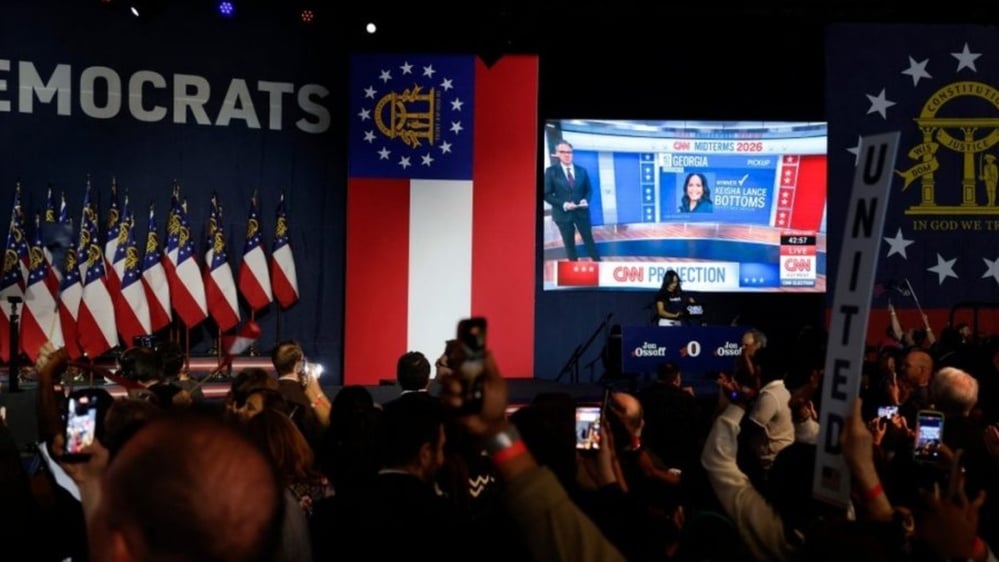

2026 © Helium Trades
Privacy Policy & Disclosure
* Disclaimer: Nothing on this website constitutes investment advice, performance data or any recommendation that any particular security, portfolio of securities, transaction or investment strategy is suitable for any specific person. Helium Trades is not responsible in any way for the accuracy
of any model predictions or price data. Any mention of a particular security and related prediction data is not a recommendation to buy or sell that security. Investments in securities involve the risk of loss. Past performance is no guarantee of future results. Helium Trades is not responsible for any of your investment decisions,
you should consult a financial expert before engaging in any transaction.
Helium Research Assistant

How can I help you today?
Ask any question about this page.


