See whether Helium helps you make better-informed decisions. Try every Pro Trader feature for 30 days. No credit card required.
Try every Pro Trader feature for 30 days. No credit card required.
October 26, 2026 · 0 shares
Frames Lula’s victory with positively valenced leftist descriptors and treats a conservative regional wave as a threat, while labeling Bolsonaro’s camp as far-right and chaotic.
Automated analysis; not human reviewed.
Limitations: The supplied text is duplicated and truncated and includes unrelated Nigerian news links, limiting contextual verification.
·
16 of 55 available dimensions scored; omitted dimensions are not treated as neutral.
·
Verified supporting quotes for 13 of 16 scored dimensions.
Claim: The report frames Lula positively and characterizes a conservative shift as something Brazil needed to avoid.
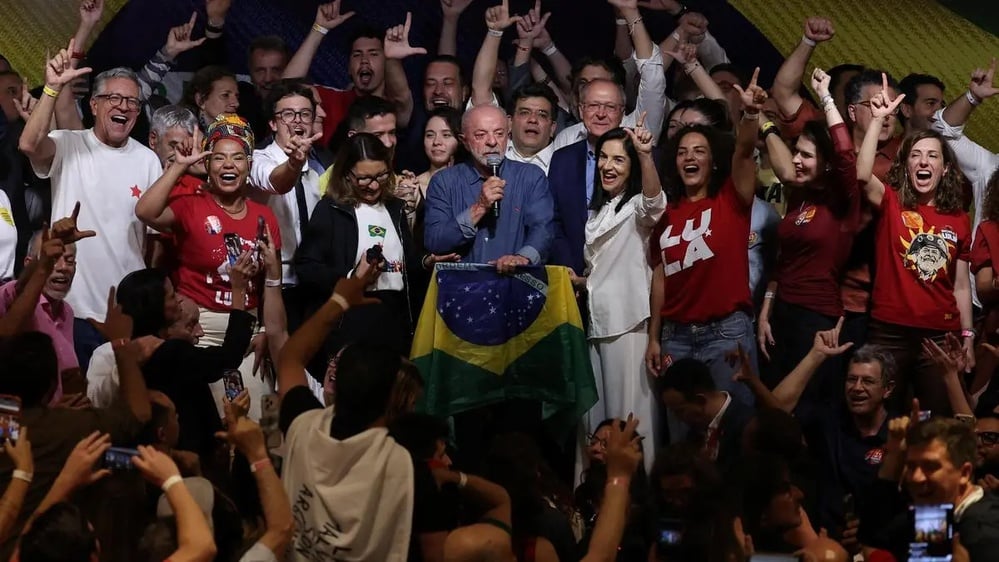
“Brazil’s leftist President Luiz Inacio Lula da Silva pulled off a dramatic comeback” · exact text match
“Brazil staved off a conservative wave” · exact text match
Why: Positive framing of the leftist candidate and threat framing of a conservative wave indicate a liberal lean.
Claim: The report uses dramatic and evaluative language to describe the election.
“pulled off a dramatic comeback” · exact text match
“plunged into chaos” · exact text match
Why: Dramatic descriptors move beyond neutral reporting.
Claim: The report uses sensational phrasing around the candidates and voting process.
“plunged into chaos” · exact text match
“who trounced him in the first round” · exact text match
Why: Chaos and trouncing language heightens drama beyond bare results.
Claim: The article mainly describes the election result and campaign rather than prescribing policy.
“According to official results, he won 51.75 percentof the votes to 48.25 percent” · exact text match
Why: The core content is descriptive reporting of results.
Claim: The report uses chaos language around the voting process.
“Sunday’s vote plunged into chaos” · exact text match
Why: Chaos framing heightens fear or alarm.
Claim: The report includes evaluative characterizations of Lula’s political significance.
“The leftist icon, who turns 81 on Tuesday, defied all projections” · exact text match
Why: Icon and defied all projections are evaluative framing.
Claim: The article is centrally about a political election and uses political labels.
“Brazil’s leftist President Luiz Inacio Lula da Silva” · exact text match
“right-wing senator Flavio Bolsonaro” · exact text match
Why: The subject is an election and actors are labeled by ideology.
Claim: The report reduces a complex regional trend to a single conservative wave.
“Brazil staved off a conservative wave that has seen numerous countries — such as Argentina, Chile, Colombia, and Peru — all shift right” · exact text match
Why: The sweeping regional framing compresses varied political developments into one wave.
Claim: The report organizes the contest through ideological labels.
“leftist icon” · exact text match
“far-right president” · exact text match
Why: Ideological labels frame the candidates and their camps.
Claim: The report uses reverential language about Lula’s social programs.
“Lula, revered for social welfare programs that lifted millions out of poverty” · exact text match
Why: Revered is a positive emotional characterization.
Claim: The report grounds vote totals in official results and includes voices from both camps, though with loaded framing.
“According to official results” · exact text match
“Flavio Bolsonaro also requested an extension in some parts of the country due to heavy rains” · exact text match
Why: Official attribution and competing claims support credibility, tempered by evaluative language.
Claim: The report uses loaded framing that casts the conservative side as a threat.
“Brazil staved off a conservative wave” · exact text match
Why: Staved off implies a danger that shapes reader interpretation.
Claim: The report cites official results and includes both camps’ positions, but uses loaded descriptors.
“According to official results” · exact text match
“but his camp lashed out at the country-wide extension” · exact text match
Why: Sourcing and inclusion of both sides support moderate integrity, offset by loaded language.
The supplied text is duplicated and truncated and includes unrelated Nigerian news links, limiting contextual verification.
October 26, 2026 · 0 shares
Frames Lula’s win as historic and a setback for the Latin American right while briefly reporting Bolsonaro’s refusal to concede.
Brazil elects presidents through a two-round runoff system, and official results are issued by the electoral court.
Automated analysis; not human reviewed.
Limitations: The article text is duplicated/truncated and lacks sourcing for some claims, so bias scores reflect only the visible framing.
·
5 of 55 available dimensions scored; omitted dimensions are not treated as neutral.
·
Verified supporting quotes for 5 of 5 scored dimensions.
Claim: The article frames Lula’s victory positively and the result as a setback for the Latin American right.
“historic fourth term” · exact text match
“marked a setback for the rising Latin American right” · exact text match
Why: A positive descriptor for Lula and an explicit negative framing for the right indicate a modest left-leaning tilt.
Claim: Mostly factual reporting is mixed with evaluative characterizations.
“historic fourth term” · exact text match
“marked a setback for the rising Latin American right” · exact text match
Why: Evaluative adjectives and interpretive framing push modestly toward subjective.
Claim: The article includes evaluative judgments about the significance of the result.
“historic fourth term” · exact text match
“marked a setback for the rising Latin American right” · exact text match
Why: These phrases convey significance judgments beyond raw vote totals.
Claim: The report is wholly about a partisan election contest and its political consequences.
“polarized runoff election” · exact text match
“right-wing candidate Flavio Bolsonaro” · exact text match
Why: The focus and language are explicitly electoral and ideological.
Claim: The report cites the electoral court for the result but states the elder Bolsonaro’s prison sentence without attribution.
“according to results announced by Brazil’s electoral court” · exact text match
Counterevidence:
“The elder Bolsonaro was sentenced to prison for plotting a coup to remain in power.” · exact text match
Why: A sourced result supports credibility, while an unattributed legal claim limits it.
The article text is duplicated/truncated and lacks sourcing for some claims, so bias scores reflect only the visible framing.
October 27, 2026 · 0 shares
The report is largely attributive and neutral in its event coverage, but uses ideological labels and juxtaposes Bolsonaro-aligned fraud complaints with official court validation and criticism of Lula’s Israel rhetoric.
Automated analysis; not human reviewed.
Limitations: The supplied text includes internally unusual or inconsistent details (e.g., Flavio Bolsonaro as presidential candidate) and promotional boilerplate; scores are limited to visible framing.
·
9 of 55 available dimensions scored; omitted dimensions are not treated as neutral.
·
Verified supporting quotes for 9 of 9 scored dimensions.
Claim: The article separates reported facts from attributed claims and quotations.
“he described the vote extension as “unacceptable” and a “dirty trick.”” · exact text match
Why: Controversial characterizations are attributed to the speaker rather than adopted by the publisher.
Claim: The headline and lede use plain election-result language rather than sensational cues.
“Bolsonaro's party concedes Brazil election loss to leftist incumbent Lula.” · exact text match
Why: The framing is declarative and event-focused, without hyperbolic or emotive cues.
Claim: The text mainly reports events and attributed statements rather than recommending action.
““We recognize the presidential election results, as proclaimed by the Superior Electoral Court (TSE), but we believe that the concerns raised need to be sufficiently addressed within a balanced and democratic political debate,”” · exact text match
Why: The passage is presented as a party statement rather than publisher advocacy.
Claim: Mostly factual but includes mildly evaluative phrasing.
“cried foul after polling was extended nationwide for two hours” · exact text match
Why: The phrase “cried foul” is mildly evaluative rather than purely neutral description.
Claim: The report is explicitly framed around ideological camps and an election power struggle.
“won by leftist President Luiz Inacio Lula da Silva” · exact text match
“leadership of the opposition” · exact text match
Why: The wording organizes the story around left/right political identities and opposition status.
Claim: Official electoral and judicial authorities are presented as the validating frame for the result.
“as proclaimed by the Superior Electoral Court (TSE)” · exact text match
“hailed the “successful polls”” · exact text match
Why: The official court’s proclamation and electoral chief’s comments anchor the legitimacy of the outcome.
Claim: The report attributes claims to named speakers and documents and notes official statements.
“the party said in a statement late Monday” · exact text match
“Trump, an ally of the Bolsonaro family, said the election “looked terrible to me.”” · exact text match
Why: Visible attribution to a party statement and a named speaker supports credibility.
Claim: The report includes the candidate’s objections alongside the party’s concession and official court position.
“Though Bolsonaro maintained that he will seek annulment of the presidential election, his party later distanced itself from that position and opted to accept the official vote.” · exact text match
Why: Including the competing concession and objection signals fair, internally balanced reporting.
Claim: The article supplies procedural detail and competing institutional reactions.
“Electoral court chief Kassio Nunes Marques, a Bolsonaro appointee to the Supreme Court, hailed the “successful polls” and said there “were no changes” resulting from the decision to extend voting” · exact text match
Why: Specific institutional roles and reactions add informative context.
The supplied text includes internally unusual or inconsistent details (e.g., Flavio Bolsonaro as presidential candidate) and promotional boilerplate; scores are limited to visible framing.
October 26, 2026 · 0 shares
Frames Lula’s win as historic and a setback for the Latin American right while briefly reporting Bolsonaro’s refusal to concede.
Brazil elects presidents through a two-round runoff system, and official results are issued by the electoral court.
Automated analysis; not human reviewed.
Limitations: The article text is duplicated/truncated and lacks sourcing for some claims, so bias scores reflect only the visible framing.
·
5 of 55 available dimensions scored; omitted dimensions are not treated as neutral.
·
Verified supporting quotes for 5 of 5 scored dimensions.
Claim: The article frames Lula’s victory positively and the result as a setback for the Latin American right.
“historic fourth term” · exact text match
“marked a setback for the rising Latin American right” · exact text match
Why: A positive descriptor for Lula and an explicit negative framing for the right indicate a modest left-leaning tilt.
Claim: Mostly factual reporting is mixed with evaluative characterizations.
“historic fourth term” · exact text match
“marked a setback for the rising Latin American right” · exact text match
Why: Evaluative adjectives and interpretive framing push modestly toward subjective.
Claim: The article includes evaluative judgments about the significance of the result.
“historic fourth term” · exact text match
“marked a setback for the rising Latin American right” · exact text match
Why: These phrases convey significance judgments beyond raw vote totals.
Claim: The report is wholly about a partisan election contest and its political consequences.
“polarized runoff election” · exact text match
“right-wing candidate Flavio Bolsonaro” · exact text match
Why: The focus and language are explicitly electoral and ideological.
Claim: The report cites the electoral court for the result but states the elder Bolsonaro’s prison sentence without attribution.
“according to results announced by Brazil’s electoral court” · exact text match
Counterevidence:
“The elder Bolsonaro was sentenced to prison for plotting a coup to remain in power.” · exact text match
Why: A sourced result supports credibility, while an unattributed legal claim limits it.
The article text is duplicated/truncated and lacks sourcing for some claims, so bias scores reflect only the visible framing.
October 26, 2026 · 0 shares
Frames Lula’s victory with positively valenced leftist descriptors and treats a conservative regional wave as a threat, while labeling Bolsonaro’s camp as far-right and chaotic.
Automated analysis; not human reviewed.
Limitations: The supplied text is duplicated and truncated and includes unrelated Nigerian news links, limiting contextual verification.
·
16 of 55 available dimensions scored; omitted dimensions are not treated as neutral.
·
Verified supporting quotes for 13 of 16 scored dimensions.
Claim: The report frames Lula positively and characterizes a conservative shift as something Brazil needed to avoid.
“Brazil’s leftist President Luiz Inacio Lula da Silva pulled off a dramatic comeback” · exact text match
“Brazil staved off a conservative wave” · exact text match
Why: Positive framing of the leftist candidate and threat framing of a conservative wave indicate a liberal lean.
Claim: The report uses dramatic and evaluative language to describe the election.
“pulled off a dramatic comeback” · exact text match
“plunged into chaos” · exact text match
Why: Dramatic descriptors move beyond neutral reporting.
Claim: The report uses sensational phrasing around the candidates and voting process.
“plunged into chaos” · exact text match
“who trounced him in the first round” · exact text match
Why: Chaos and trouncing language heightens drama beyond bare results.
Claim: The article mainly describes the election result and campaign rather than prescribing policy.
“According to official results, he won 51.75 percentof the votes to 48.25 percent” · exact text match
Why: The core content is descriptive reporting of results.
Claim: The report uses chaos language around the voting process.
“Sunday’s vote plunged into chaos” · exact text match
Why: Chaos framing heightens fear or alarm.
Claim: The report includes evaluative characterizations of Lula’s political significance.
“The leftist icon, who turns 81 on Tuesday, defied all projections” · exact text match
Why: Icon and defied all projections are evaluative framing.
Claim: The article is centrally about a political election and uses political labels.
“Brazil’s leftist President Luiz Inacio Lula da Silva” · exact text match
“right-wing senator Flavio Bolsonaro” · exact text match
Why: The subject is an election and actors are labeled by ideology.
Claim: The report reduces a complex regional trend to a single conservative wave.
“Brazil staved off a conservative wave that has seen numerous countries — such as Argentina, Chile, Colombia, and Peru — all shift right” · exact text match
Why: The sweeping regional framing compresses varied political developments into one wave.
Claim: The report organizes the contest through ideological labels.
“leftist icon” · exact text match
“far-right president” · exact text match
Why: Ideological labels frame the candidates and their camps.
Claim: The report uses reverential language about Lula’s social programs.
“Lula, revered for social welfare programs that lifted millions out of poverty” · exact text match
Why: Revered is a positive emotional characterization.
Claim: The report grounds vote totals in official results and includes voices from both camps, though with loaded framing.
“According to official results” · exact text match
“Flavio Bolsonaro also requested an extension in some parts of the country due to heavy rains” · exact text match
Why: Official attribution and competing claims support credibility, tempered by evaluative language.
Claim: The report uses loaded framing that casts the conservative side as a threat.
“Brazil staved off a conservative wave” · exact text match
Why: Staved off implies a danger that shapes reader interpretation.
Claim: The report cites official results and includes both camps’ positions, but uses loaded descriptors.
“According to official results” · exact text match
“but his camp lashed out at the country-wide extension” · exact text match
Why: Sourcing and inclusion of both sides support moderate integrity, offset by loaded language.
The supplied text is duplicated and truncated and includes unrelated Nigerian news links, limiting contextual verification.
October 26, 2026 · 0 shares
Largely factual, quote-attributed election reporting is framed through evaluative labels ('far right', 'stunning comeback', 'remarkable comeback') and a democracy-versus-right narrative that reads as sympathetic to Lula.
Brazil held a two-round presidential election, with the first round on October 4 and a run-off required because no candidate reached 50 percent; Lula's Workers' Party rival camp is led by the family of former president Jair Bolsonaro.
Automated analysis; not human reviewed.
Limitations: The supplied text contains duplicated paragraphs and internal inconsistencies (e.g., Jair Bolsonaro described as 'former far-right President' sentenced to 27 years), which limits verification of some details.
·
55 of 55 available dimensions scored; omitted dimensions are not treated as neutral.
·
Verified supporting quotes for 9 of 55 scored dimensions.
Claim: The contest is framed as a leftist incumbent holding off the 'far right', with the result cast as denying the region's right wing.
“Lula holds off far right with victory in Brazil presidential election” · exact text match
“denying a crucial victory to the region’s right wing” · exact text match
Why: Ideological labels and a right-wing-threat frame structure the headline and closing analysis.
Claim: Reporting is largely attribution-based but includes evaluative characterizations of the outcome.
“pulling off a remarkable comeback” · exact text match
Why: Evaluative adjectives accompany otherwise sourced factual reporting.
Claim: Headline and lead use dramatic language about the result.
“Leftist president mounts stunning comeback after unexpected first-round loss” · exact text match
Why: 'Stunning comeback' is a heightened framing device rather than a neutral description.
Claim: The article is wholly about a national election and its political consequences.
“Sunday’s victory means Lula will retain the presidency of Latin America’s largest country” · exact text match
Why: Subject matter and framing are explicitly political throughout.
Claim: The article prominently relays the Bolsonaro camp's refusal to concede and its justifications.
““What happened today was not normal.
It was, in fact, unacceptable,” Bolsonaro told his supporters.”
· exact text match
Why: Response coverage is present and quoted at length, though framed critically.
Claim: Tone toward the outcome is mildly positive, emphasizing a historic comeback.
“With his victory, Lula has made history.” · exact text match
Why: Celebratory framing of Lula's win colors the emotional register.
Claim: Institutional challenges to the result are treated as suspect while the court's intervention is not scrutinized.
“It was the people who chose it, and it is with them that I will vote, work and get things approved.” · exact text match
Why: Asymmetric treatment is suggested by framing choices but is only weakly evidenced in the text.
Claim: The report forecasts possible litigation and reactions beyond confirmed events.
“teeing up a likely court battle over the legality of a Supreme Court decision to extend the voting time by two hours” · exact text match
Why: 'Likely court battle' is an explicit forecast rather than a reported fact.
Claim: The report includes the losing candidate's objections and the dispute over extended voting hours.
“Bolsonaro, however, has argued that some polling stations were not able to reopen in time, harming any additional votes he may have earned.” · exact text match
Why: Presenting the challenger's stated grievance indicates internal fairness signals.
The supplied text contains duplicated paragraphs and internal inconsistencies (e.g., Jair Bolsonaro described as 'former far-right President' sentenced to 27 years), which limits verification of some details.
Framing is chiefly neutral and attribution-driven, with mild dramatic phrasing around Lula’s 'historic' win while clearly separating PL’s institutional acceptance from Flavio Bolsonaro’s personal challenge.
Brazil’s Superior Electoral Court (TSE) is the electoral authority whose certification formalizes presidential runoff results.
Automated analysis; not human reviewed.
Limitations: Brazilian party ideological placement is ambiguous; left-right and populist-elitist scores are treated as neutral rather than inferred.
·
55 of 55 available dimensions scored; omitted dimensions are not treated as neutral.
·
Verified supporting quotes for 8 of 55 scored dimensions.
Claim: The report separates official results, party statements, and Bolsonaro’s allegations through explicit attribution.
“Despite his party's official acknowledgement, Flavio Bolsonaro doubled down on his refusal to concede” · exact text match
Why: Distinguishes party acceptance from candidate challenge rather than blending them into a subjective narrative.
Claim: Framing is measured and factual, with dramatic language mostly limited to mild narrative phrasing.
“Lula secured a historic fourth non-consecutive term with 51.76% of valid votes (over 60 million ballots), defeating Flavio Bolsonaro, who garnered 48.24%.” · exact text match
Why: Specific vote counts dominate; 'historic' is mild and attached to a factual result.
Claim: The text is descriptive, reporting actions and statements rather than advocating a course of action.
“While the PL leadership indicated that it will pursue grievance mechanisms regarding government spending through formal institutional channels, it stopped short of endorsing Bolsonaro’s demand for a complete annulment of the vote.” · exact text match
Why: Describes institutional stance and its limits without prescribing an outcome.
Claim: The report centers on a presidential election dispute and party strategy.
“Brazil’s Liberal Party (PL) formally recognised the results of Sunday’s presidential runoff” · exact text match
Why: Election dispute and party strategy are inherently political subjects.
Claim: The report provides named sources, direct quotations, and specific vote totals.
“Lula secured a historic fourth non-consecutive term with 51.76% of valid votes (over 60 million ballots), defeating Flavio Bolsonaro, who garnered 48.24%.” · exact text match
Why: Concrete figures and attribution support visible credibility.
Claim: The account is organized around institutional certification, attributed statements, and legal challenges.
“The PL statement came shortly after TSE President Justice Kassio Nunes Marques, who was appointed to the Supreme Federal Court (STF) by former President Jair Bolsonaro, confirmed the final election results.” · exact text match
Why: Links claims to institutional process and named actors rather than emotive reasoning.
Claim: The report distinguishes PL institutional acceptance from Bolsonaro’s continued challenge without conflating them.
“While the PL leadership indicated that it will pursue grievance mechanisms regarding government spending through formal institutional channels, it stopped short of endorsing Bolsonaro’s demand for a complete annulment of the vote.” · exact text match
Why: Fairly separates party position from candidate position.
Claim: The report clearly distinguishes party position, candidate position, and electoral authority certification.
“Despite his party's official acknowledgement, Flavio Bolsonaro doubled down on his refusal to concede” · exact text match
Why: Shows analytical distinction among actors and claims.
Brazilian party ideological placement is ambiguous; left-right and populist-elitist scores are treated as neutral rather than inferred.
October 27, 2026 · 0 shares
The report is largely attributive and neutral in its event coverage, but uses ideological labels and juxtaposes Bolsonaro-aligned fraud complaints with official court validation and criticism of Lula’s Israel rhetoric.
Automated analysis; not human reviewed.
Limitations: The supplied text includes internally unusual or inconsistent details (e.g., Flavio Bolsonaro as presidential candidate) and promotional boilerplate; scores are limited to visible framing.
·
9 of 55 available dimensions scored; omitted dimensions are not treated as neutral.
·
Verified supporting quotes for 9 of 9 scored dimensions.
Claim: The article separates reported facts from attributed claims and quotations.
“he described the vote extension as “unacceptable” and a “dirty trick.”” · exact text match
Why: Controversial characterizations are attributed to the speaker rather than adopted by the publisher.
Claim: The headline and lede use plain election-result language rather than sensational cues.
“Bolsonaro's party concedes Brazil election loss to leftist incumbent Lula.” · exact text match
Why: The framing is declarative and event-focused, without hyperbolic or emotive cues.
Claim: The text mainly reports events and attributed statements rather than recommending action.
““We recognize the presidential election results, as proclaimed by the Superior Electoral Court (TSE), but we believe that the concerns raised need to be sufficiently addressed within a balanced and democratic political debate,”” · exact text match
Why: The passage is presented as a party statement rather than publisher advocacy.
Claim: Mostly factual but includes mildly evaluative phrasing.
“cried foul after polling was extended nationwide for two hours” · exact text match
Why: The phrase “cried foul” is mildly evaluative rather than purely neutral description.
Claim: The report is explicitly framed around ideological camps and an election power struggle.
“won by leftist President Luiz Inacio Lula da Silva” · exact text match
“leadership of the opposition” · exact text match
Why: The wording organizes the story around left/right political identities and opposition status.
Claim: Official electoral and judicial authorities are presented as the validating frame for the result.
“as proclaimed by the Superior Electoral Court (TSE)” · exact text match
“hailed the “successful polls”” · exact text match
Why: The official court’s proclamation and electoral chief’s comments anchor the legitimacy of the outcome.
Claim: The report attributes claims to named speakers and documents and notes official statements.
“the party said in a statement late Monday” · exact text match
“Trump, an ally of the Bolsonaro family, said the election “looked terrible to me.”” · exact text match
Why: Visible attribution to a party statement and a named speaker supports credibility.
Claim: The report includes the candidate’s objections alongside the party’s concession and official court position.
“Though Bolsonaro maintained that he will seek annulment of the presidential election, his party later distanced itself from that position and opted to accept the official vote.” · exact text match
Why: Including the competing concession and objection signals fair, internally balanced reporting.
Claim: The article supplies procedural detail and competing institutional reactions.
“Electoral court chief Kassio Nunes Marques, a Bolsonaro appointee to the Supreme Court, hailed the “successful polls” and said there “were no changes” resulting from the decision to extend voting” · exact text match
Why: Specific institutional roles and reactions add informative context.
The supplied text includes internally unusual or inconsistent details (e.g., Flavio Bolsonaro as presidential candidate) and promotional boilerplate; scores are limited to visible framing.
October 26, 2026 · 0 shares
Trump’s rigging claim dominates the framing, with official tallies and denials present but secondary to the disputed-election narrative.
Automated analysis; not human reviewed.
Limitations: The supplied text is a truncated RT excerpt with page chrome and a duplicated quote; some contextual framing is missing.
·
9 of 55 available dimensions scored; omitted dimensions are not treated as neutral.
·
Verified supporting quotes for 9 of 9 scored dimensions.
Claim: The report applies symmetric ideological labels to both candidates without endorsing either side.
“left-wing incumbent Luiz Inacio Lula da Silva” · exact text match
“right-wing rival, Senator Flavio Bolsonaro” · exact text match
Why: The paired labels present both candidates’ ideological positions in comparable terms.
Claim: The report anchors its account in official vote figures rather than purely subjective description.
“According to the official tally, Lula received 51.79% of the vote on Sunday.” · exact text match
Why: Precise official tally data supports an objective classification.
Claim: The report uses precise vote totals rather than sensational language.
“According to the official tally, Lula received 51.79% of the vote on Sunday.” · exact text match
Why: Specific numerical reporting supports a non-sensational classification.
Claim: The report includes quoted opinions but attributes them to speakers.
““It looked terrible to me,” Trump told reporters on Monday.” · exact text match
Why: The quoted evaluation is presented as Trump’s opinion, not the publisher’s.
Claim: The report centers on a presidential election dispute and US political involvement.
“Trump questioned Brazil’s presidential runoff, suggesting it was rigged after Lula narrowly defeated Flavio Bolsonaro” · exact text match
Why: The lede and content are explicitly about electoral politics.
Claim: The report highlights allegations of US official interference against Lula and in favor of the Bolsonaro family.
“His administration has also faced allegations of attempting to influence Brazil’s 2026 presidential election in favor of Bolsonaro’s son.” · exact text match
“Reuters separately reported that two senior State Department officials had pushed for sanctions aimed at weakening Lula and boosting the Bolsonaro family’s political fortunes.” · exact text match
Why: The selection emphasizes US establishment interference allegations, tilting away from official US accounts.
Claim: The report includes official figures, named sourcing, and a denial from the accused institution.
“According to the official tally, Lula received 51.79% of the vote on Sunday.” · exact text match
“The State Department has denied seeking to interfere in the election.” · exact text match
Why: Visible sourcing, vote totals, and inclusion of denial support a credible classification.
Claim: The report includes speculative claims about election fraud and possible runoff outcomes.
“could have been rigged” · exact text match
“Some analysts suggested that Bolsonaro could win the runoff by attracting supporters of other right-wing candidates.” · exact text match
Why: The article relays speculation, though mostly with attribution.
Claim: The report includes denials from the subjects of legal and political allegations.
“Lula has maintained his innocence, accusing his political opponents of using the judicial system against him.” · exact text match
“He has denied any wrongdoing, describing the case as politically motivated.” · exact text match
Why: Including denials alongside allegations supports a fairness signal.
The supplied text is a truncated RT excerpt with page chrome and a duplicated quote; some contextual framing is missing.
October 27, 2026 · 0 shares
The live blog frames Brazil’s runoff through official results, elite congratulations, and market turmoil, using standard ideological labels while foregrounding Bolsonaro’s refusal to concede.
Automated analysis; not human reviewed.
Limitations: The supplied text is a live-blog aggregation with repeated headlines and some entries that may be out of chronological order, limiting certainty about emphasis.
·
18 of 55 available dimensions scored; omitted dimensions are not treated as neutral.
·
Verified supporting quotes for 18 of 18 scored dimensions.
Claim: The challenger is labeled “far-right” while Lula is labeled “left-wing,” producing a slight leftward tilt in ideological framing.
“far-right challenger Flavio Bolsonaro” · exact text match
“left-wing Brazilian President Luiz Inacio Lula da Silva” · exact text match
Why: The asymmetric ideological labels can subtly tilt framing against the right-wing candidate.
Claim: Framing relies on elites—world leaders, party officials, and market strategists—rather than ordinary voters.
“Several Latin American leaders congratulated Lula on win” · exact text match
“Chris Turner, a strategist at ING in London, told the Reuters news agency” · exact text match
Why: The report’s sources and reactions center political and financial elites.
Claim: The report mostly presents attributed statements and official data rather than the publisher’s subjective judgments.
“official results showed” · exact text match
“Neither the court nor federal police immediately confirmed the reported ruling.” · exact text match
Why: Visible sourcing and caveats support an objective framing.
Claim: Market reporting uses dramatic verbs and extreme percentages.
“plunged as much as 26% in premarket trading” · exact text match
“cratering almost 30%” · exact text match
Why: Vivid market verbs and large figures add sensational color.
Claim: The report foregrounds sharp selloffs and negative market reaction to Lula’s win.
“Trading on the Sao Paulo stock exchange, the largest in Latin America, was suspended for 30 minutes on Monday after plummeting nearly 17%” · exact text match
“Petrobras plunging more than 20%” · exact text match
Why: Repeated emphasis on steep declines and halted trading gives a bearish market framing.
Claim: The report is overwhelmingly descriptive of events and statements.
“Bolsonaro refused to concede” · exact text match
“official results showed” · exact text match
Why: It reports developments rather than advocating a course of action.
Claim: Some analytical opinion is present in the live blog.
“two factors in particular seem to speak against the prospects of a potential Bolsonaro challenge” · exact text match
Why: The wording offers the publisher’s analytical judgment alongside reporting.
Claim: The content is entirely about electoral politics.
“Brazilian President Luiz Inacio Lula da Silva has won a historic fourth term after defeating far-right rival Flavio Bolsonaro in a runoff election.” · exact text match
Why: The article’s subject is an election and its political aftermath.
Claim: The election is framed as a simple market-friendly versus redistribution choice.
“Investors had seen election loser Flavio Bolsonaro as the candidate most likely to boost markets with fiscal austerity and deregulation, while Lula has pursued policies of redistribution and state-led development” · exact text match
Why: The market dichotomy compresses complex policy differences into a binary investor framing.
Claim: Market interpretation relies on named strategists rather than independent analysis.
“Chris Turner, a strategist at ING in London, told the Reuters news agency” · exact text match
Why: The analysis leans on financial-industry authorities for interpretation.
Claim: The live blog extensively catalogues congratulations and reactions from leaders.
“Several Latin American leaders congratulated Lula on win” · exact text match
“Putin congratulates Lula” · exact text match
Why: A large share of entries is devoted to external responses.
Claim: Candidates are repeatedly categorized through left-right ideological labels.
“left-wing Brazilian President Luiz Inacio Lula da Silva” · exact text match
“conservative Flavio Bolsonaro” · exact text match
Why: Frequent ideological labels frame the candidates through a left-right lens.
Claim: Framing centers official and elite acceptance of the result.
“Brazil's Liberal Party has acknowledged President Luiz Inacio Lula da Silva's election victory” · exact text match
“Several Latin American leaders congratulated Lula on win” · exact text match
Why: Prominence of party recognition and leader congratulations reflects an establishment perspective.
Claim: Visible attribution and uncertainty caveats support credibility.
“official results showed” · exact text match
“Neither the court nor federal police immediately confirmed the reported ruling.” · exact text match
Why: The text distinguishes confirmed results from unconfirmed claims.
Claim: Claims are tied to official results and unconfirmed assertions are flagged.
“official results showed” · exact text match
“Neither the court nor federal police immediately confirmed the reported ruling.” · exact text match
Why: Attribution to official results and caveats about unconfirmed claims indicate rational reporting.
Claim: Forward-looking market expectations are prominent.
“Brazilian markets are bracing for heavy selling on Monday” · exact text match
“Prediction markets had indicated a Bolsonaro win” · exact text match
Why: The report emphasizes forecasts and investor expectations.
Claim: The text attributes results and flags unconfirmed claims.
“official results showed” · exact text match
“Neither the court nor federal police immediately confirmed the reported ruling.” · exact text match
Why: Clear attribution and uncertainty caveats signal fair, honest reporting.
Claim: The report includes contextual analysis and caveats.
“two factors in particular seem to speak against the prospects of a potential Bolsonaro challenge” · exact text match
“Neither the court nor federal police immediately confirmed the reported ruling.” · exact text match
Why: Contextual reasoning and uncertainty caveats indicate above-average article intelligence.
The supplied text is a live-blog aggregation with repeated headlines and some entries that may be out of chronological order, limiting certainty about emphasis.
October 27, 2026 · 0 shares
The report is largely attributive and neutral in its event coverage, but uses ideological labels and juxtaposes Bolsonaro-aligned fraud complaints with official court validation and criticism of Lula’s Israel rhetoric.
Automated analysis; not human reviewed.
Limitations: The supplied text includes internally unusual or inconsistent details (e.g., Flavio Bolsonaro as presidential candidate) and promotional boilerplate; scores are limited to visible framing.
·
9 of 55 available dimensions scored; omitted dimensions are not treated as neutral.
·
Verified supporting quotes for 9 of 9 scored dimensions.
Claim: The article separates reported facts from attributed claims and quotations.
“he described the vote extension as “unacceptable” and a “dirty trick.”” · exact text match
Why: Controversial characterizations are attributed to the speaker rather than adopted by the publisher.
Claim: The headline and lede use plain election-result language rather than sensational cues.
“Bolsonaro's party concedes Brazil election loss to leftist incumbent Lula.” · exact text match
Why: The framing is declarative and event-focused, without hyperbolic or emotive cues.
Claim: The text mainly reports events and attributed statements rather than recommending action.
““We recognize the presidential election results, as proclaimed by the Superior Electoral Court (TSE), but we believe that the concerns raised need to be sufficiently addressed within a balanced and democratic political debate,”” · exact text match
Why: The passage is presented as a party statement rather than publisher advocacy.
Claim: Mostly factual but includes mildly evaluative phrasing.
“cried foul after polling was extended nationwide for two hours” · exact text match
Why: The phrase “cried foul” is mildly evaluative rather than purely neutral description.
Claim: The report is explicitly framed around ideological camps and an election power struggle.
“won by leftist President Luiz Inacio Lula da Silva” · exact text match
“leadership of the opposition” · exact text match
Why: The wording organizes the story around left/right political identities and opposition status.
Claim: Official electoral and judicial authorities are presented as the validating frame for the result.
“as proclaimed by the Superior Electoral Court (TSE)” · exact text match
“hailed the “successful polls”” · exact text match
Why: The official court’s proclamation and electoral chief’s comments anchor the legitimacy of the outcome.
Claim: The report attributes claims to named speakers and documents and notes official statements.
“the party said in a statement late Monday” · exact text match
“Trump, an ally of the Bolsonaro family, said the election “looked terrible to me.”” · exact text match
Why: Visible attribution to a party statement and a named speaker supports credibility.
Claim: The report includes the candidate’s objections alongside the party’s concession and official court position.
“Though Bolsonaro maintained that he will seek annulment of the presidential election, his party later distanced itself from that position and opted to accept the official vote.” · exact text match
Why: Including the competing concession and objection signals fair, internally balanced reporting.
Claim: The article supplies procedural detail and competing institutional reactions.
“Electoral court chief Kassio Nunes Marques, a Bolsonaro appointee to the Supreme Court, hailed the “successful polls” and said there “were no changes” resulting from the decision to extend voting” · exact text match
Why: Specific institutional roles and reactions add informative context.
The supplied text includes internally unusual or inconsistent details (e.g., Flavio Bolsonaro as presidential candidate) and promotional boilerplate; scores are limited to visible framing.
October 26, 2026 · 0 shares
The report is attribution-heavy and cautious, tying contested claims to Flavio Bolsonaro while noting that the court order was unavailable and its legal grounds unclear.
Automated analysis; not human reviewed.
Limitations: The supplied page includes unrelated headline items after the Brazil report; analysis is confined to the Brazil article.
Left-right political placement is omitted because Brazilian ideological positioning is not evident from the text.
·
9 of 55 available dimensions scored; omitted dimensions are not treated as neutral.
·
Verified supporting quotes for 8 of 9 scored dimensions.
Claim: The report is largely factual and attribution-based rather than subjective.
“Bolsonaro said the decision was based on an Oct. 23 statement by his brother, Eduardo Bolsonaro, suggesting that he should leave Brazil if he lost the election.” · exact text match
“A copy of the court order was not immediately available, and the legal grounds for the travel restriction remained unclear.” · exact text match
Why: Contested claims are attributed to Bolsonaro and the missing primary document is disclosed.
Claim: The framing is restrained, with no sensational language or dramatized description.
“A copy of the court order was not immediately available, and the legal grounds for the travel restriction remained unclear.” · exact text match
Why: The report notes evidentiary limits in plain terms instead of amplifying conflict or alarm.
Claim: The text describes the court action and Bolsonaro's response without prescribing a preferred outcome.
“Bolsonaro said he would comply with the passport surrender order while challenging the ruling.” · not found in supplied text
Why: The sentence reports an actor's stated response rather than recommending a policy or judgment.
Claim: The publisher's own opinion is largely absent; contested claims are attributed to Bolsonaro.
“He described the decision as an attempt to intimidate him and vowed to continue his political activities.” · exact text match
Why: The intimidation characterization is clearly attributed to Bolsonaro, not adopted by the publisher.
Claim: The report centers on a presidential election dispute and a court restriction on a political candidate.
“Brazil's defeated presidential candidate Flavio Bolsonaro said Monday that the Supreme Court had ordered him to surrender his passports and barred him from leaving the country following his loss to President Luiz Inacio Lula da Silva in Sunday's runoff election.” · exact text match
Why: The lead is explicitly about electoral politics and a court action against a political figure.
Claim: The report attributes contested claims and acknowledges missing primary documentation.
“A copy of the court order was not immediately available, and the legal grounds for the travel restriction remained unclear.” · exact text match
“Bolsonaro said the decision was based on an Oct. 23 statement by his brother, Eduardo Bolsonaro, suggesting that he should leave Brazil if he lost the election.” · exact text match
Why: Visible attribution and disclosure of missing documentation support credibility in the supplied text.
Claim: The report avoids treating the court action's legal basis as established, explicitly flagging missing documentation and unclear grounds.
“A copy of the court order was not immediately available, and the legal grounds for the travel restriction remained unclear.” · exact text match
Why: The explicit caveat reflects cautious, evidence-aware framing rather than impulsive or irrational assertion.
Claim: The report discloses a key evidentiary gap about the court order.
“A copy of the court order was not immediately available, and the legal grounds for the travel restriction remained unclear.” · exact text match
Why: Acknowledging unavailable primary documentation is a visible honesty signal.
Claim: The report distinguishes attributed claims from unavailable court documentation and flags the unclear legal basis.
“A copy of the court order was not immediately available, and the legal grounds for the travel restriction remained unclear.” · exact text match
Why: The article shows basic epistemic care by separating claims from verified court documents.
The supplied page includes unrelated headline items after the Brazil report; analysis is confined to the Brazil article.
Left-right political placement is omitted because Brazilian ideological positioning is not evident from the text.
October 26, 2026 · 0 shares
Trump’s rigging claim dominates the framing, with official tallies and denials present but secondary to the disputed-election narrative.
Automated analysis; not human reviewed.
Limitations: The supplied text is a truncated RT excerpt with page chrome and a duplicated quote; some contextual framing is missing.
·
9 of 55 available dimensions scored; omitted dimensions are not treated as neutral.
·
Verified supporting quotes for 9 of 9 scored dimensions.
Claim: The report applies symmetric ideological labels to both candidates without endorsing either side.
“left-wing incumbent Luiz Inacio Lula da Silva” · exact text match
“right-wing rival, Senator Flavio Bolsonaro” · exact text match
Why: The paired labels present both candidates’ ideological positions in comparable terms.
Claim: The report anchors its account in official vote figures rather than purely subjective description.
“According to the official tally, Lula received 51.79% of the vote on Sunday.” · exact text match
Why: Precise official tally data supports an objective classification.
Claim: The report uses precise vote totals rather than sensational language.
“According to the official tally, Lula received 51.79% of the vote on Sunday.” · exact text match
Why: Specific numerical reporting supports a non-sensational classification.
Claim: The report includes quoted opinions but attributes them to speakers.
““It looked terrible to me,” Trump told reporters on Monday.” · exact text match
Why: The quoted evaluation is presented as Trump’s opinion, not the publisher’s.
Claim: The report centers on a presidential election dispute and US political involvement.
“Trump questioned Brazil’s presidential runoff, suggesting it was rigged after Lula narrowly defeated Flavio Bolsonaro” · exact text match
Why: The lede and content are explicitly about electoral politics.
Claim: The report highlights allegations of US official interference against Lula and in favor of the Bolsonaro family.
“His administration has also faced allegations of attempting to influence Brazil’s 2026 presidential election in favor of Bolsonaro’s son.” · exact text match
“Reuters separately reported that two senior State Department officials had pushed for sanctions aimed at weakening Lula and boosting the Bolsonaro family’s political fortunes.” · exact text match
Why: The selection emphasizes US establishment interference allegations, tilting away from official US accounts.
Claim: The report includes official figures, named sourcing, and a denial from the accused institution.
“According to the official tally, Lula received 51.79% of the vote on Sunday.” · exact text match
“The State Department has denied seeking to interfere in the election.” · exact text match
Why: Visible sourcing, vote totals, and inclusion of denial support a credible classification.
Claim: The report includes speculative claims about election fraud and possible runoff outcomes.
“could have been rigged” · exact text match
“Some analysts suggested that Bolsonaro could win the runoff by attracting supporters of other right-wing candidates.” · exact text match
Why: The article relays speculation, though mostly with attribution.
Claim: The report includes denials from the subjects of legal and political allegations.
“Lula has maintained his innocence, accusing his political opponents of using the judicial system against him.” · exact text match
“He has denied any wrongdoing, describing the case as politically motivated.” · exact text match
Why: Including denials alongside allegations supports a fairness signal.
The supplied text is a truncated RT excerpt with page chrome and a duplicated quote; some contextual framing is missing.
October 27, 2026 · 0 shares
The framing is a bare declarative news brief, pairing a police passport seizure with a note on legislative immunity and offering no evaluative or explanatory detail.
Automated analysis; not human reviewed.
Limitations: The supplied text is only a headline and two-sentence excerpt, so several bias dimensions cannot be reliably assessed.
·
55 of 55 available dimensions scored; omitted dimensions are not treated as neutral.
·
Verified supporting quotes for 4 of 55 scored dimensions.
Claim: The report is presented as a bare factual account without evaluative language.
“Brazilian Federal Police Confiscate Flavio Bolsonaro's Passport.” · exact text match
Why: The headline states a police action directly and the body adds factual background without commentary.
Claim: The item uses straightforward, non-sensational wording for the passport confiscation.
“Brazilian Federal Police Confiscate Flavio Bolsonaro's Passport.” · exact text match
Why: The phrasing reports a concrete action rather than using emotive or dramatized language.
Claim: The text describes events and legal rules without recommending action.
“Under Brazilian federal law, all legislators have immunity from prosecution.” · exact text match
Why: The sentence states a legal condition descriptively and does not prescribe a policy response.
Claim: The item centers on a politician, police action, and legislative immunity.
“Flavio Bolsonaro has served as a state or federal legislator.” · exact text match
Why: The subject matter is explicitly political and legal, though the report itself is brief and declarative.
The supplied text is only a headline and two-sentence excerpt, so several bias dimensions cannot be reliably assessed.
October 26, 2026 · 0 shares
Celebratory framing presents Lula’s leftist victory as a historic check on right-wing gains while treating the Bolsonaro camp’s annulment effort as legally weak and politically isolated.
Automated analysis; not human reviewed.
Limitations: Article text is truncated and includes duplicated blocks and scrape artifacts; bias judgments are limited to the visible framing.
·
16 of 55 available dimensions scored; omitted dimensions are not treated as neutral.
·
Verified supporting quotes for 8 of 16 scored dimensions.
Claim: Publisher frames Lula’s leftist victory positively as a check on right-wing election gains in Latin America.
“it put the brakes on a wave of right-wing election victories across Latin America.” · not found in supplied text
“Lula, an icon of the global left and the most dominant force in Brazilian politics this century” · exact text match
Why: The language casts a leftist win as halting a right-wing wave and describes Lula in admiring superlatives.
Claim: Uses evaluative superlatives and dramatic descriptors of the election outcome.
“won a historic fourth term on Sunday” · exact text match
“in a shock result that defied polls, precedent and global anti-incumbent sentiment” · exact text match
Why: Terms like historic and shock add evaluative color beyond neutral event reporting.
Claim: Heightens drama with comeback and shock framing.
“Lula wins fourth term in dramatic comeback.” · exact text match
“in a shock result that defied polls, precedent and global anti-incumbent sentiment” · exact text match
Why: Headline and lede use dramatic language that emphasizes surprise and spectacle.
Claim: The dramatic comeback and shock result make the account engaging.
“Lula wins fourth term in dramatic comeback.” · exact text match
“defied polls, precedent and global anti-incumbent sentiment” · exact text match
Why: Surprise victory and comeback framing are inherently newsworthy and engaging.
Claim: Primarily reports events and attributed forecasts rather than prescribing policy.
“the country’s electoral court said” · exact text match
“Goldman Sachs said it expects Lula to make modest progress at most to contain spending in a fourth term” · exact text match
Why: The piece describes outcomes and cited expectations rather than advocating a course of action.
Claim: Includes evaluative characterizations beyond neutral reported facts.
“a potent mix of pragmatism and populism” · exact text match
“Lula, an icon of the global left and the most dominant force in Brazilian politics this century” · exact text match
Why: The publisher’s own descriptors carry interpretive judgments about Lula’s political style and stature.
Claim: Focuses heavily on electoral power, ideology, and government control.
“it put the brakes on a wave of right-wing election victories across Latin America.” · not found in supplied text
“Lula’s win deprives Trump of a major addition to what has been a growing bloc of friendly right-wing Latin American governments” · not found in supplied text
Why: The article is centrally about political contestation and ideological alignments.
Claim: Relies on named analysts and institutions to support interpretations.
“Mario Braga, a Latin America analyst at the risk consultancy RANE, said” · not found in supplied text
“Goldman Sachs said it expects” · exact text match
Why: Expert and institutional citations carry much of the analytical weight.
Claim: Frames the election through a left-versus-right struggle with normative valence.
“Lula, an icon of the global left” · exact text match
“it put the brakes on a wave of right-wing election victories” · not found in supplied text
Why: The contest is organized around ideological camps and their regional momentum.
Claim: Defers to electoral authorities, risk analysts, and financial institutions as authoritative interpreters.
“the country’s electoral court said” · exact text match
“make any annulment unlikely, analysts said.” · exact text match
Why: Institutional and expert sources anchor the article’s interpretation of the result.
Claim: Positive emotional coloring surrounds Lula’s comeback.
“dramatic comeback” · exact text match
“He is a statesman, a giant” · exact text match
Why: Dramatic and admiring language gives the account an upbeat valence.
Claim: Sourced, attributed, and acknowledges uncertainty and contrary fiscal context.
“Mario Braga, a Latin America analyst at the risk consultancy RANE, said there could be right-wing protests in coming days, but “it’s very improbable that it will lead to the reversal of the result.”” · not found in supplied text
“The president’s critics blame spending, though borrowing costs have driven most of the increase in debt.” · exact text match
Why: Visible sourcing, attribution, and caveats support credibility within the supplied text.
Claim: Uses named analysts and caveats rather than pure assertion to interpret the result.
“Mario Braga, a Latin America analyst at the risk consultancy RANE, said there could be right-wing protests in coming days, but “it’s very improbable that it will lead to the reversal of the result.”” · not found in supplied text
“The president’s critics blame spending, though borrowing costs have driven most of the increase in debt.” · exact text match
Why: The article attributes forecasts to experts and includes qualifying context on fiscal blame.
Claim: Includes forecasts and hypotheticals about protests, annulment, and governance.
“there could be right-wing protests in coming days” · exact text match
“Lula’s fourth term could be his most difficult yet” · exact text match
Why: The article incorporates speculative future scenarios alongside reported facts.
Claim: Attributes claims and includes contrary economic and political caveats.
“Mario Braga, a Latin America analyst at the risk consultancy RANE, said there could be right-wing protests in coming days, but “it’s very improbable that it will lead to the reversal of the result.”” · not found in supplied text
“The president’s critics blame spending, though borrowing costs have driven most of the increase in debt.” · exact text match
Why: The text names sources and qualifies interpretations with countervailing context.
Claim: Integrates electoral, institutional, and economic context with expert attribution.
“Combined, Bolsonaro’s Liberal Party (PL) and allied parties could control over 280 seats in the lower house and up to 50 seats in the Senate” · not found in supplied text
“Lula faces an economy that his government forecasts will grow a meagre 2.3% next year” · exact text match
Why: The account connects election results to legislative balance and fiscal constraints.
Article text is truncated and includes duplicated blocks and scrape artifacts; bias judgments are limited to the visible framing.
October 26, 2026 · 0 shares
Framing is celebratory and left-leaning toward Lula’s historic comeback, casting the result as a check on a right-wing regional wave while still noting economic and legislative constraints.
Automated analysis; not human reviewed.
Limitations: The supplied text is explicitly labeled AI-generated and describes a future 2026 election, so factual verification and some framing cues may be unreliable.
·
55 of 55 available dimensions scored; omitted dimensions are not treated as neutral.
·
Verified supporting quotes for 12 of 55 scored dimensions.
Claim: The report frames Lula’s victory as a check on right-wing gains in Latin America.
“put the brakes on a wave of right-wing election victories across Latin America” · exact text match
Counterevidence:
“voters soured on him and his Workers’ Party after years of corruption scandals and rising prices” · exact text match
Why: This phrasing casts a leftist win as a positive brake on right-wing regional momentum.
Claim: Evaluative descriptors present the election as historic and dramatic rather than purely procedural.
“wins historic 4th term in dramatic comeback” · exact text match
Counterevidence:
“the country’s electoral court said” · exact text match
Why: The headline uses subjective, value-laden adjectives to characterize the outcome.
Claim: The lead and headline use shock-and-drama language about a precedent-defying result.
“shock result that defied polls, precedent and global anti-incumbent sentiment” · exact text match
Why: This is heightened, sensational framing of the election outcome.
Claim: The report mainly describes the election outcome and context rather than prescribing action.
“Lula becomes the first candidate since Brazil’s return to democracy in the 1980s to be elected after finishing second in the first round.” · exact text match
Why: This is a descriptive historical fact rather than a recommendation.
Claim: Evaluative labels and quoted praise give the reporting an opinionated flavor.
“iconic working-class president” · exact text match
Why: The phrase is an evaluative characterization of Lula rather than a neutral title.
Claim: The report is centrally about an election and partisan control of government.
“Brazilian President Luiz Inacio Lula da Silva won an unprecedented fourth term on Sunday, October 25” · exact text match
Why: The central subject is a national presidential election and its political consequences.
Claim: Politics is framed through explicit left/right ideological labels.
“Lula, an icon of the global left” · exact text match
Why: The report foregrounds ideological identity in describing the central figure.
Claim: Positive, celebratory language surrounds Lula’s win.
“dramatic comeback” · exact text match
Why: The phrase adds an upbeat, emotionally positive valence to the outcome.
Claim: Named sourcing and caveats are present, but the text warns it is AI-generated and may contain errors.
“This is AI-generated.
Read the article for full context.
Report any errors.”
· exact text match
Why: The explicit error warning limits confidence in the report’s overall reliability.
Claim: The report includes attributed forecasts about economic and legislative outcomes.
“Goldman Sachs said it expects Lula to make modest progress at most to contain spending in a fourth term” · exact text match
Why: This is a forward-looking projection attributed to an external analyst.
Claim: The text explicitly labels itself AI-generated.
“This is AI-generated.
Read the article for full context.
Report any errors.”
· exact text match
Why: This is a direct textual statement of AI authorship.
Claim: The report includes named sources and caveats about Lula’s governing constraints.
“Still, Lula’s fourth term could be his most difficult yet, after Brazil elected its most conservative Congress since returning to democracy in the 1980s.” · exact text match
“The president’s critics blame spending, though interest costs have driven most of the increase in debt.” · exact text match
Why: These counterpoints show some internal fairness and acknowledgment of adverse context.
The supplied text is explicitly labeled AI-generated and describes a future 2026 election, so factual verification and some framing cues may be unreliable.
October 26, 2026 · 0 shares
Frames Lula’s victory with positively valenced leftist descriptors and treats a conservative regional wave as a threat, while labeling Bolsonaro’s camp as far-right and chaotic.
Automated analysis; not human reviewed. Limitations: The supplied text is duplicated and truncated and includes unrelated Nigerian news links, limiting contextual verification. · 16 of 55 available dimensions scored; omitted dimensions are not treated as neutral. · Verified supporting quotes for 13 of 16 scored dimensions.
Claim: The report frames Lula positively and characterizes a conservative shift as something Brazil needed to avoid.
“Brazil’s leftist President Luiz Inacio Lula da Silva pulled off a dramatic comeback” · exact text match
“Brazil staved off a conservative wave” · exact text match
Why: Positive framing of the leftist candidate and threat framing of a conservative wave indicate a liberal lean.
Claim: The report uses dramatic and evaluative language to describe the election.
“pulled off a dramatic comeback” · exact text match
“plunged into chaos” · exact text match
Why: Dramatic descriptors move beyond neutral reporting.
Claim: The report uses sensational phrasing around the candidates and voting process.
“plunged into chaos” · exact text match
“who trounced him in the first round” · exact text match
Why: Chaos and trouncing language heightens drama beyond bare results.
Claim: The article mainly describes the election result and campaign rather than prescribing policy.
“According to official results, he won 51.75 percentof the votes to 48.25 percent” · exact text match
Why: The core content is descriptive reporting of results.
Claim: The report uses chaos language around the voting process.
“Sunday’s vote plunged into chaos” · exact text match
Why: Chaos framing heightens fear or alarm.
Claim: The report includes evaluative characterizations of Lula’s political significance.
“The leftist icon, who turns 81 on Tuesday, defied all projections” · exact text match
Why: Icon and defied all projections are evaluative framing.
Claim: The article is centrally about a political election and uses political labels.
“Brazil’s leftist President Luiz Inacio Lula da Silva” · exact text match
“right-wing senator Flavio Bolsonaro” · exact text match
Why: The subject is an election and actors are labeled by ideology.
Claim: The report reduces a complex regional trend to a single conservative wave.
“Brazil staved off a conservative wave that has seen numerous countries — such as Argentina, Chile, Colombia, and Peru — all shift right” · exact text match
Why: The sweeping regional framing compresses varied political developments into one wave.
Claim: The report organizes the contest through ideological labels.
“leftist icon” · exact text match
“far-right president” · exact text match
Why: Ideological labels frame the candidates and their camps.
Claim: The report uses reverential language about Lula’s social programs.
“Lula, revered for social welfare programs that lifted millions out of poverty” · exact text match
Why: Revered is a positive emotional characterization.
Claim: The report grounds vote totals in official results and includes voices from both camps, though with loaded framing.
“According to official results” · exact text match
“Flavio Bolsonaro also requested an extension in some parts of the country due to heavy rains” · exact text match
Why: Official attribution and competing claims support credibility, tempered by evaluative language.
Claim: The report uses loaded framing that casts the conservative side as a threat.
“Brazil staved off a conservative wave” · exact text match
Why: Staved off implies a danger that shapes reader interpretation.
Claim: The report cites official results and includes both camps’ positions, but uses loaded descriptors.
“According to official results” · exact text match
“but his camp lashed out at the country-wide extension” · exact text match
Why: Sourcing and inclusion of both sides support moderate integrity, offset by loaded language.
The supplied text is duplicated and truncated and includes unrelated Nigerian news links, limiting contextual verification.
October 27, 2026 · 0 shares
The report is largely attributive and neutral in its event coverage, but uses ideological labels and juxtaposes Bolsonaro-aligned fraud complaints with official court validation and criticism of Lula’s Israel rhetoric.
Automated analysis; not human reviewed. Limitations: The supplied text includes internally unusual or inconsistent details (e.g., Flavio Bolsonaro as presidential candidate) and promotional boilerplate; scores are limited to visible framing. · 9 of 55 available dimensions scored; omitted dimensions are not treated as neutral. · Verified supporting quotes for 9 of 9 scored dimensions.
Claim: The article separates reported facts from attributed claims and quotations.
“he described the vote extension as “unacceptable” and a “dirty trick.”” · exact text match
Why: Controversial characterizations are attributed to the speaker rather than adopted by the publisher.
Claim: The headline and lede use plain election-result language rather than sensational cues.
“Bolsonaro's party concedes Brazil election loss to leftist incumbent Lula.” · exact text match
Why: The framing is declarative and event-focused, without hyperbolic or emotive cues.
Claim: The text mainly reports events and attributed statements rather than recommending action.
““We recognize the presidential election results, as proclaimed by the Superior Electoral Court (TSE), but we believe that the concerns raised need to be sufficiently addressed within a balanced and democratic political debate,”” · exact text match
Why: The passage is presented as a party statement rather than publisher advocacy.
Claim: Mostly factual but includes mildly evaluative phrasing.
“cried foul after polling was extended nationwide for two hours” · exact text match
Why: The phrase “cried foul” is mildly evaluative rather than purely neutral description.
Claim: The report is explicitly framed around ideological camps and an election power struggle.
“won by leftist President Luiz Inacio Lula da Silva” · exact text match
“leadership of the opposition” · exact text match
Why: The wording organizes the story around left/right political identities and opposition status.
Claim: Official electoral and judicial authorities are presented as the validating frame for the result.
“as proclaimed by the Superior Electoral Court (TSE)” · exact text match
“hailed the “successful polls”” · exact text match
Why: The official court’s proclamation and electoral chief’s comments anchor the legitimacy of the outcome.
Claim: The report attributes claims to named speakers and documents and notes official statements.
“the party said in a statement late Monday” · exact text match
“Trump, an ally of the Bolsonaro family, said the election “looked terrible to me.”” · exact text match
Why: Visible attribution to a party statement and a named speaker supports credibility.
Claim: The report includes the candidate’s objections alongside the party’s concession and official court position.
“Though Bolsonaro maintained that he will seek annulment of the presidential election, his party later distanced itself from that position and opted to accept the official vote.” · exact text match
Why: Including the competing concession and objection signals fair, internally balanced reporting.
Claim: The article supplies procedural detail and competing institutional reactions.
“Electoral court chief Kassio Nunes Marques, a Bolsonaro appointee to the Supreme Court, hailed the “successful polls” and said there “were no changes” resulting from the decision to extend voting” · exact text match
Why: Specific institutional roles and reactions add informative context.
The supplied text includes internally unusual or inconsistent details (e.g., Flavio Bolsonaro as presidential candidate) and promotional boilerplate; scores are limited to visible framing.
October 26, 2026 · 0 shares
Frames Lula’s win as historic and a setback for the Latin American right while briefly reporting Bolsonaro’s refusal to concede.
Brazil elects presidents through a two-round runoff system, and official results are issued by the electoral court.
Automated analysis; not human reviewed. Limitations: The article text is duplicated/truncated and lacks sourcing for some claims, so bias scores reflect only the visible framing. · 5 of 55 available dimensions scored; omitted dimensions are not treated as neutral. · Verified supporting quotes for 5 of 5 scored dimensions.
Claim: The article frames Lula’s victory positively and the result as a setback for the Latin American right.
“historic fourth term” · exact text match
“marked a setback for the rising Latin American right” · exact text match
Why: A positive descriptor for Lula and an explicit negative framing for the right indicate a modest left-leaning tilt.
Claim: Mostly factual reporting is mixed with evaluative characterizations.
“historic fourth term” · exact text match
“marked a setback for the rising Latin American right” · exact text match
Why: Evaluative adjectives and interpretive framing push modestly toward subjective.
Claim: The article includes evaluative judgments about the significance of the result.
“historic fourth term” · exact text match
“marked a setback for the rising Latin American right” · exact text match
Why: These phrases convey significance judgments beyond raw vote totals.
Claim: The report is wholly about a partisan election contest and its political consequences.
“polarized runoff election” · exact text match
“right-wing candidate Flavio Bolsonaro” · exact text match
Why: The focus and language are explicitly electoral and ideological.
Claim: The report cites the electoral court for the result but states the elder Bolsonaro’s prison sentence without attribution.
“according to results announced by Brazil’s electoral court” · exact text match
Counterevidence:
“The elder Bolsonaro was sentenced to prison for plotting a coup to remain in power.” · exact text match
Why: A sourced result supports credibility, while an unattributed legal claim limits it.
The article text is duplicated/truncated and lacks sourcing for some claims, so bias scores reflect only the visible framing.
October 27, 2026 · 0 shares
The live blog frames Brazil’s runoff through official results, elite congratulations, and market turmoil, using standard ideological labels while foregrounding Bolsonaro’s refusal to concede.
Automated analysis; not human reviewed. Limitations: The supplied text is a live-blog aggregation with repeated headlines and some entries that may be out of chronological order, limiting certainty about emphasis. · 18 of 55 available dimensions scored; omitted dimensions are not treated as neutral. · Verified supporting quotes for 18 of 18 scored dimensions.
Claim: The challenger is labeled “far-right” while Lula is labeled “left-wing,” producing a slight leftward tilt in ideological framing.
“far-right challenger Flavio Bolsonaro” · exact text match
“left-wing Brazilian President Luiz Inacio Lula da Silva” · exact text match
Why: The asymmetric ideological labels can subtly tilt framing against the right-wing candidate.
Claim: Framing relies on elites—world leaders, party officials, and market strategists—rather than ordinary voters.
“Several Latin American leaders congratulated Lula on win” · exact text match
“Chris Turner, a strategist at ING in London, told the Reuters news agency” · exact text match
Why: The report’s sources and reactions center political and financial elites.
Claim: The report mostly presents attributed statements and official data rather than the publisher’s subjective judgments.
“official results showed” · exact text match
“Neither the court nor federal police immediately confirmed the reported ruling.” · exact text match
Why: Visible sourcing and caveats support an objective framing.
Claim: Market reporting uses dramatic verbs and extreme percentages.
“plunged as much as 26% in premarket trading” · exact text match
“cratering almost 30%” · exact text match
Why: Vivid market verbs and large figures add sensational color.
Claim: The report foregrounds sharp selloffs and negative market reaction to Lula’s win.
“Trading on the Sao Paulo stock exchange, the largest in Latin America, was suspended for 30 minutes on Monday after plummeting nearly 17%” · exact text match
“Petrobras plunging more than 20%” · exact text match
Why: Repeated emphasis on steep declines and halted trading gives a bearish market framing.
Claim: The report is overwhelmingly descriptive of events and statements.
“Bolsonaro refused to concede” · exact text match
“official results showed” · exact text match
Why: It reports developments rather than advocating a course of action.
Claim: Some analytical opinion is present in the live blog.
“two factors in particular seem to speak against the prospects of a potential Bolsonaro challenge” · exact text match
Why: The wording offers the publisher’s analytical judgment alongside reporting.
Claim: The content is entirely about electoral politics.
“Brazilian President Luiz Inacio Lula da Silva has won a historic fourth term after defeating far-right rival Flavio Bolsonaro in a runoff election.” · exact text match
Why: The article’s subject is an election and its political aftermath.
Claim: The election is framed as a simple market-friendly versus redistribution choice.
“Investors had seen election loser Flavio Bolsonaro as the candidate most likely to boost markets with fiscal austerity and deregulation, while Lula has pursued policies of redistribution and state-led development” · exact text match
Why: The market dichotomy compresses complex policy differences into a binary investor framing.
Claim: Market interpretation relies on named strategists rather than independent analysis.
“Chris Turner, a strategist at ING in London, told the Reuters news agency” · exact text match
Why: The analysis leans on financial-industry authorities for interpretation.
Claim: The live blog extensively catalogues congratulations and reactions from leaders.
“Several Latin American leaders congratulated Lula on win” · exact text match
“Putin congratulates Lula” · exact text match
Why: A large share of entries is devoted to external responses.
Claim: Candidates are repeatedly categorized through left-right ideological labels.
“left-wing Brazilian President Luiz Inacio Lula da Silva” · exact text match
“conservative Flavio Bolsonaro” · exact text match
Why: Frequent ideological labels frame the candidates through a left-right lens.
Claim: Framing centers official and elite acceptance of the result.
“Brazil's Liberal Party has acknowledged President Luiz Inacio Lula da Silva's election victory” · exact text match
“Several Latin American leaders congratulated Lula on win” · exact text match
Why: Prominence of party recognition and leader congratulations reflects an establishment perspective.
Claim: Visible attribution and uncertainty caveats support credibility.
“official results showed” · exact text match
“Neither the court nor federal police immediately confirmed the reported ruling.” · exact text match
Why: The text distinguishes confirmed results from unconfirmed claims.
Claim: Claims are tied to official results and unconfirmed assertions are flagged.
“official results showed” · exact text match
“Neither the court nor federal police immediately confirmed the reported ruling.” · exact text match
Why: Attribution to official results and caveats about unconfirmed claims indicate rational reporting.
Claim: Forward-looking market expectations are prominent.
“Brazilian markets are bracing for heavy selling on Monday” · exact text match
“Prediction markets had indicated a Bolsonaro win” · exact text match
Why: The report emphasizes forecasts and investor expectations.
Claim: The text attributes results and flags unconfirmed claims.
“official results showed” · exact text match
“Neither the court nor federal police immediately confirmed the reported ruling.” · exact text match
Why: Clear attribution and uncertainty caveats signal fair, honest reporting.
Claim: The report includes contextual analysis and caveats.
“two factors in particular seem to speak against the prospects of a potential Bolsonaro challenge” · exact text match
“Neither the court nor federal police immediately confirmed the reported ruling.” · exact text match
Why: Contextual reasoning and uncertainty caveats indicate above-average article intelligence.
The supplied text is a live-blog aggregation with repeated headlines and some entries that may be out of chronological order, limiting certainty about emphasis.
October 27, 2026 · 0 shares
The report is largely attributive and neutral in its event coverage, but uses ideological labels and juxtaposes Bolsonaro-aligned fraud complaints with official court validation and criticism of Lula’s Israel rhetoric.
Automated analysis; not human reviewed. Limitations: The supplied text includes internally unusual or inconsistent details (e.g., Flavio Bolsonaro as presidential candidate) and promotional boilerplate; scores are limited to visible framing. · 9 of 55 available dimensions scored; omitted dimensions are not treated as neutral. · Verified supporting quotes for 9 of 9 scored dimensions.
Claim: The article separates reported facts from attributed claims and quotations.
“he described the vote extension as “unacceptable” and a “dirty trick.”” · exact text match
Why: Controversial characterizations are attributed to the speaker rather than adopted by the publisher.
Claim: The headline and lede use plain election-result language rather than sensational cues.
“Bolsonaro's party concedes Brazil election loss to leftist incumbent Lula.” · exact text match
Why: The framing is declarative and event-focused, without hyperbolic or emotive cues.
Claim: The text mainly reports events and attributed statements rather than recommending action.
““We recognize the presidential election results, as proclaimed by the Superior Electoral Court (TSE), but we believe that the concerns raised need to be sufficiently addressed within a balanced and democratic political debate,”” · exact text match
Why: The passage is presented as a party statement rather than publisher advocacy.
Claim: Mostly factual but includes mildly evaluative phrasing.
“cried foul after polling was extended nationwide for two hours” · exact text match
Why: The phrase “cried foul” is mildly evaluative rather than purely neutral description.
Claim: The report is explicitly framed around ideological camps and an election power struggle.
“won by leftist President Luiz Inacio Lula da Silva” · exact text match
“leadership of the opposition” · exact text match
Why: The wording organizes the story around left/right political identities and opposition status.
Claim: Official electoral and judicial authorities are presented as the validating frame for the result.
“as proclaimed by the Superior Electoral Court (TSE)” · exact text match
“hailed the “successful polls”” · exact text match
Why: The official court’s proclamation and electoral chief’s comments anchor the legitimacy of the outcome.
Claim: The report attributes claims to named speakers and documents and notes official statements.
“the party said in a statement late Monday” · exact text match
“Trump, an ally of the Bolsonaro family, said the election “looked terrible to me.”” · exact text match
Why: Visible attribution to a party statement and a named speaker supports credibility.
Claim: The report includes the candidate’s objections alongside the party’s concession and official court position.
“Though Bolsonaro maintained that he will seek annulment of the presidential election, his party later distanced itself from that position and opted to accept the official vote.” · exact text match
Why: Including the competing concession and objection signals fair, internally balanced reporting.
Claim: The article supplies procedural detail and competing institutional reactions.
“Electoral court chief Kassio Nunes Marques, a Bolsonaro appointee to the Supreme Court, hailed the “successful polls” and said there “were no changes” resulting from the decision to extend voting” · exact text match
Why: Specific institutional roles and reactions add informative context.
The supplied text includes internally unusual or inconsistent details (e.g., Flavio Bolsonaro as presidential candidate) and promotional boilerplate; scores are limited to visible framing.
October 26, 2026 · 0 shares
Frames Lula’s victory with positively valenced leftist descriptors and treats a conservative regional wave as a threat, while labeling Bolsonaro’s camp as far-right and chaotic.
Automated analysis; not human reviewed. Limitations: The supplied text is duplicated and truncated and includes unrelated Nigerian news links, limiting contextual verification. · 16 of 55 available dimensions scored; omitted dimensions are not treated as neutral. · Verified supporting quotes for 13 of 16 scored dimensions.
Claim: The report frames Lula positively and characterizes a conservative shift as something Brazil needed to avoid.
“Brazil’s leftist President Luiz Inacio Lula da Silva pulled off a dramatic comeback” · exact text match
“Brazil staved off a conservative wave” · exact text match
Why: Positive framing of the leftist candidate and threat framing of a conservative wave indicate a liberal lean.
Claim: The report uses dramatic and evaluative language to describe the election.
“pulled off a dramatic comeback” · exact text match
“plunged into chaos” · exact text match
Why: Dramatic descriptors move beyond neutral reporting.
Claim: The report uses sensational phrasing around the candidates and voting process.
“plunged into chaos” · exact text match
“who trounced him in the first round” · exact text match
Why: Chaos and trouncing language heightens drama beyond bare results.
Claim: The article mainly describes the election result and campaign rather than prescribing policy.
“According to official results, he won 51.75 percentof the votes to 48.25 percent” · exact text match
Why: The core content is descriptive reporting of results.
Claim: The report uses chaos language around the voting process.
“Sunday’s vote plunged into chaos” · exact text match
Why: Chaos framing heightens fear or alarm.
Claim: The report includes evaluative characterizations of Lula’s political significance.
“The leftist icon, who turns 81 on Tuesday, defied all projections” · exact text match
Why: Icon and defied all projections are evaluative framing.
Claim: The article is centrally about a political election and uses political labels.
“Brazil’s leftist President Luiz Inacio Lula da Silva” · exact text match
“right-wing senator Flavio Bolsonaro” · exact text match
Why: The subject is an election and actors are labeled by ideology.
Claim: The report reduces a complex regional trend to a single conservative wave.
“Brazil staved off a conservative wave that has seen numerous countries — such as Argentina, Chile, Colombia, and Peru — all shift right” · exact text match
Why: The sweeping regional framing compresses varied political developments into one wave.
Claim: The report organizes the contest through ideological labels.
“leftist icon” · exact text match
“far-right president” · exact text match
Why: Ideological labels frame the candidates and their camps.
Claim: The report uses reverential language about Lula’s social programs.
“Lula, revered for social welfare programs that lifted millions out of poverty” · exact text match
Why: Revered is a positive emotional characterization.
Claim: The report grounds vote totals in official results and includes voices from both camps, though with loaded framing.
“According to official results” · exact text match
“Flavio Bolsonaro also requested an extension in some parts of the country due to heavy rains” · exact text match
Why: Official attribution and competing claims support credibility, tempered by evaluative language.
Claim: The report uses loaded framing that casts the conservative side as a threat.
“Brazil staved off a conservative wave” · exact text match
Why: Staved off implies a danger that shapes reader interpretation.
Claim: The report cites official results and includes both camps’ positions, but uses loaded descriptors.
“According to official results” · exact text match
“but his camp lashed out at the country-wide extension” · exact text match
Why: Sourcing and inclusion of both sides support moderate integrity, offset by loaded language.
The supplied text is duplicated and truncated and includes unrelated Nigerian news links, limiting contextual verification.
October 26, 2026 · 0 shares
Frames Lula’s win as historic and a setback for the Latin American right while briefly reporting Bolsonaro’s refusal to concede.
Brazil elects presidents through a two-round runoff system, and official results are issued by the electoral court.
Automated analysis; not human reviewed. Limitations: The article text is duplicated/truncated and lacks sourcing for some claims, so bias scores reflect only the visible framing. · 5 of 55 available dimensions scored; omitted dimensions are not treated as neutral. · Verified supporting quotes for 5 of 5 scored dimensions.
Claim: The article frames Lula’s victory positively and the result as a setback for the Latin American right.
“historic fourth term” · exact text match
“marked a setback for the rising Latin American right” · exact text match
Why: A positive descriptor for Lula and an explicit negative framing for the right indicate a modest left-leaning tilt.
Claim: Mostly factual reporting is mixed with evaluative characterizations.
“historic fourth term” · exact text match
“marked a setback for the rising Latin American right” · exact text match
Why: Evaluative adjectives and interpretive framing push modestly toward subjective.
Claim: The article includes evaluative judgments about the significance of the result.
“historic fourth term” · exact text match
“marked a setback for the rising Latin American right” · exact text match
Why: These phrases convey significance judgments beyond raw vote totals.
Claim: The report is wholly about a partisan election contest and its political consequences.
“polarized runoff election” · exact text match
“right-wing candidate Flavio Bolsonaro” · exact text match
Why: The focus and language are explicitly electoral and ideological.
Claim: The report cites the electoral court for the result but states the elder Bolsonaro’s prison sentence without attribution.
“according to results announced by Brazil’s electoral court” · exact text match
Counterevidence:
“The elder Bolsonaro was sentenced to prison for plotting a coup to remain in power.” · exact text match
Why: A sourced result supports credibility, while an unattributed legal claim limits it.
The article text is duplicated/truncated and lacks sourcing for some claims, so bias scores reflect only the visible framing.
Framing is chiefly neutral and attribution-driven, with mild dramatic phrasing around Lula’s 'historic' win while clearly separating PL’s institutional acceptance from Flavio Bolsonaro’s personal challenge.
Brazil’s Superior Electoral Court (TSE) is the electoral authority whose certification formalizes presidential runoff results.
Automated analysis; not human reviewed. Limitations: Brazilian party ideological placement is ambiguous; left-right and populist-elitist scores are treated as neutral rather than inferred. · 55 of 55 available dimensions scored; omitted dimensions are not treated as neutral. · Verified supporting quotes for 8 of 55 scored dimensions.
Claim: The report separates official results, party statements, and Bolsonaro’s allegations through explicit attribution.
“Despite his party's official acknowledgement, Flavio Bolsonaro doubled down on his refusal to concede” · exact text match
Why: Distinguishes party acceptance from candidate challenge rather than blending them into a subjective narrative.
Claim: Framing is measured and factual, with dramatic language mostly limited to mild narrative phrasing.
“Lula secured a historic fourth non-consecutive term with 51.76% of valid votes (over 60 million ballots), defeating Flavio Bolsonaro, who garnered 48.24%.” · exact text match
Why: Specific vote counts dominate; 'historic' is mild and attached to a factual result.
Claim: The text is descriptive, reporting actions and statements rather than advocating a course of action.
“While the PL leadership indicated that it will pursue grievance mechanisms regarding government spending through formal institutional channels, it stopped short of endorsing Bolsonaro’s demand for a complete annulment of the vote.” · exact text match
Why: Describes institutional stance and its limits without prescribing an outcome.
Claim: The report centers on a presidential election dispute and party strategy.
“Brazil’s Liberal Party (PL) formally recognised the results of Sunday’s presidential runoff” · exact text match
Why: Election dispute and party strategy are inherently political subjects.
Claim: The report provides named sources, direct quotations, and specific vote totals.
“Lula secured a historic fourth non-consecutive term with 51.76% of valid votes (over 60 million ballots), defeating Flavio Bolsonaro, who garnered 48.24%.” · exact text match
Why: Concrete figures and attribution support visible credibility.
Claim: The account is organized around institutional certification, attributed statements, and legal challenges.
“The PL statement came shortly after TSE President Justice Kassio Nunes Marques, who was appointed to the Supreme Federal Court (STF) by former President Jair Bolsonaro, confirmed the final election results.” · exact text match
Why: Links claims to institutional process and named actors rather than emotive reasoning.
Claim: The report distinguishes PL institutional acceptance from Bolsonaro’s continued challenge without conflating them.
“While the PL leadership indicated that it will pursue grievance mechanisms regarding government spending through formal institutional channels, it stopped short of endorsing Bolsonaro’s demand for a complete annulment of the vote.” · exact text match
Why: Fairly separates party position from candidate position.
Claim: The report clearly distinguishes party position, candidate position, and electoral authority certification.
“Despite his party's official acknowledgement, Flavio Bolsonaro doubled down on his refusal to concede” · exact text match
Why: Shows analytical distinction among actors and claims.
Brazilian party ideological placement is ambiguous; left-right and populist-elitist scores are treated as neutral rather than inferred.
Mainstream international / wire framing
Framing is largely neutral and attribution-based, presenting the official runoff result and the challenger's annulment demand while relying on a named analyst to assess the challenge's prospects.
Brazilian presidential elections can go to a runoff, and the article refers to both first-round and runoff results.
Automated analysis; not human reviewed. Limitations: The supplied text is very short and omits sourcing for the vote percentages and challenge details, limiting confidence in some framing judgments. · 9 of 55 available dimensions scored; omitted dimensions are not treated as neutral. · Verified supporting quotes for 9 of 9 scored dimensions.
Claim: The report attributes the only evaluative assessment to a named analyst rather than presenting it as the publisher's own judgment.
“while analyst Dr Deborah Barros Leal Farias says the challenge is unlikely to hold ground” · exact text match
Why: The evaluative claim is clearly attributed, supporting an objective/subjective score toward objective.
Claim: The annulment demand is reported in neutral terms without inflammatory or dramatic language.
“Flavio Bolsonaro is demanding the election be annulled over claims of interference following a two-hour voting extension” · exact text match
Why: The wording is plain and reportorial, supporting an objective/sensational score toward objective.
Claim: The article reports events and figures rather than recommending action.
“winning 51.8% to 48%” · exact text match
Why: Specific results are described without prescriptions, supporting a descriptive rather than prescriptive score.
Claim: The text contains one attributed expert opinion but is otherwise factual.
“says the challenge is unlikely to hold ground” · exact text match
Why: The only opinion is attributed to an analyst, so opinion bias is low but present.
Claim: The article is centered on a presidential election result and a challenge to it.
“Brazil's presidential runoff” · exact text match
Why: The subject matter is explicitly electoral politics, supporting a high political-bias score.
Claim: The assessment of the challenge relies on a named analyst's authority.
“analyst Dr Deborah Barros Leal Farias says the challenge is unlikely to hold ground” · exact text match
Why: The article cites an expert to support its assessment, indicating a modest appeal to authority.
Claim: The prose is unemotional and reportorial.
“Lula da Silva has defeated Flavio Bolsonaro in Brazil's presidential runoff” · exact text match
Why: The language is neutral and lacks emotional valence, supporting a negative emotional-bias score.
Claim: Credibility is moderate because a named analyst and specific figures are provided, but sourcing and links are absent in the supplied text.
“analyst Dr Deborah Barros Leal Farias says the challenge is unlikely to hold ground” · exact text match
Why: Named attribution and specific numbers support some credibility, while limited sourcing prevents a high score.
Claim: A forecast about the challenge's prospects is included but attributed to an analyst.
“says the challenge is unlikely to hold ground” · exact text match
Why: The text includes a prediction, though clearly attributed, supporting a low speculation-bias score.
The supplied text is very short and omits sourcing for the vote percentages and challenge details, limiting confidence in some framing judgments.
Frames Lula’s victory as a historic leftist triumph and a check on Trump’s hemispheric ambitions while casting Bolsonaro’s challenge as unlikely to succeed.
Automated analysis; not human reviewed. Limitations: The article is future-dated and cannot be externally verified from the supplied text; scores assess only observable framing. · 20 of 55 available dimensions scored; omitted dimensions are not treated as neutral. · Verified supporting quotes for 13 of 20 scored dimensions.
Claim: The article frames the result as a defeat for the Latin American right and a triumph for the leftist incumbent.
“Brazilian voters have denied Latin America’s resurgent right its ultimate prize” · exact text match
“The stunning triumph of leftist incumbent President Luiz Inacio Lula da Silva” · exact text match
Why: The wording casts the right as denied a prize and the leftist victory as stunning, indicating a left-leaning framing.
Claim: Interpretation is anchored in credentialed foreign-policy and academic analysts rather than ordinary voters.
“said Will Freeman, a fellow for Latin America studies at the Council on Foreign Relations” · exact text match
“said Kenneth Roberts, a professor of government at Cornell University.” · exact text match
Why: The article relies on establishment experts to explain the outcome.
Claim: Loaded adjectives and evaluative framing color the report.
“heavy-handed support for the Bolsonaros” · exact text match
“The stunning triumph of leftist incumbent President Luiz Inacio Lula da Silva” · exact text match
Why: Terms such as 'heavy-handed' and 'stunning' are evaluative rather than neutral.
Claim: The article uses dramatic phrasing but stops short of tabloid sensationalism.
“dealing a blow to Trump’s hemispheric ambitions” · exact text match
“The stunning triumph of leftist incumbent President Luiz Inacio Lula da Silva” · exact text match
Why: Dramatic language is present but moderated by detailed reporting.
Claim: The article mainly describes the election and reactions rather than prescribing policy.
“Bolsonaro, the son of former President Jair Bolsonaro, called into question a late-Sunday decision” · exact text match
Why: The dominant mode is descriptive reporting of events and statements.
Claim: Evaluative language signals the publisher’s interpretive stance.
“heavy-handed support for the Bolsonaros” · exact text match
“The stunning triumph of leftist incumbent President Luiz Inacio Lula da Silva” · exact text match
Why: The prose includes opinion-like characterizations beyond bare reporting.
Claim: The article is centrally about electoral and geopolitical politics.
“Lula won a historic fourth term in Sunday’s presidential election” · not found in supplied text
Why: The entire report concerns a presidential election and its political implications.
Claim: Regional politics is reduced to a left-progressive versus conservative contest.
“A Bolsonaro victory would have left Mexico’s Claudia Sheinbaum as the only progressive President among the region’s powerhouses.” · exact text match
Why: This compresses complex regional alignments into a simple ideological map.
Claim: Expert and official voices are used to validate the interpretation.
“said Will Freeman, a fellow for Latin America studies at the Council on Foreign Relations” · exact text match
“said Kenneth Roberts, a professor of government at Cornell University.” · exact text match
Why: The analysis leans on named authorities for credibility.
Claim: The article states geopolitical consequences with strong certainty.
“cements Brazil as a counterweight to Washington” · not found in supplied text
Why: 'Cements' presents a contested future effect as settled.
Claim: The report organizes the contest through left-right ideological categories.
“leftist incumbent” · exact text match
“Latin America’s resurgent right” · exact text match
“progressive comeback” · exact text match
Why: The framing repeatedly uses ideological labels to explain events.
Claim: The framing elevates multilateral and established foreign-policy perspectives.
“EU chief Ursula von der Leyen hailed Lula’s victory as a win for “democracy and multilateralism”.” · exact text match
“said Will Freeman, a fellow for Latin America studies at the Council on Foreign Relations” · exact text match
Why: It favorably cites multilateralist and Council on Foreign Relations voices.
Claim: The tone toward Lula’s victory is positive and celebratory.
“The stunning triumph of leftist incumbent President Luiz Inacio Lula da Silva” · exact text match
“historic fourth term” · exact text match
Why: Celebratory adjectives give the report a positive emotional tilt.
Claim: The report is largely analytical and attributes predictions to analysts.
“makes it unlikely his efforts to annul the vote will succeed, analysts said.” · not found in supplied text
Why: It uses attributed expert analysis rather than purely emotional assertion.
Claim: The article includes forecasts about political consequences and unrest.
“Bolsonaro’s refusal to concede could spark a wave of protests” · not found in supplied text
“the Bolsonaros’ allies in Washington would likely lose sway” · exact text match
Why: It presents speculative future developments, mostly attributed to analysts or observers.
Claim: Loaded framing is used to characterize Trump’s posture toward Brazil.
“Trump’s heavy-handed support for the Bolsonaros” · exact text match
“punishing tariffs” · exact text match
Why: Emotionally charged wording shapes interpretation of US actions.
Claim: The report supplies vote figures and named sourcing for key claims.
“with 51.8 per cent of the vote to 48.2 per cent” · exact text match
“said Kenneth Roberts, a professor of government at Cornell University.” · exact text match
Why: Specific data and named experts indicate fair evidentiary practice.
The article is future-dated and cannot be externally verified from the supplied text; scores assess only observable framing.
October 26, 2026 · 0 shares
Celebratory framing presents Lula’s leftist victory as a historic check on right-wing gains while treating the Bolsonaro camp’s annulment effort as legally weak and politically isolated.
Automated analysis; not human reviewed. Limitations: Article text is truncated and includes duplicated blocks and scrape artifacts; bias judgments are limited to the visible framing. · 16 of 55 available dimensions scored; omitted dimensions are not treated as neutral. · Verified supporting quotes for 8 of 16 scored dimensions.
Claim: Publisher frames Lula’s leftist victory positively as a check on right-wing election gains in Latin America.
“it put the brakes on a wave of right-wing election victories across Latin America.” · not found in supplied text
“Lula, an icon of the global left and the most dominant force in Brazilian politics this century” · exact text match
Why: The language casts a leftist win as halting a right-wing wave and describes Lula in admiring superlatives.
Claim: Uses evaluative superlatives and dramatic descriptors of the election outcome.
“won a historic fourth term on Sunday” · exact text match
“in a shock result that defied polls, precedent and global anti-incumbent sentiment” · exact text match
Why: Terms like historic and shock add evaluative color beyond neutral event reporting.
Claim: Heightens drama with comeback and shock framing.
“Lula wins fourth term in dramatic comeback.” · exact text match
“in a shock result that defied polls, precedent and global anti-incumbent sentiment” · exact text match
Why: Headline and lede use dramatic language that emphasizes surprise and spectacle.
Claim: The dramatic comeback and shock result make the account engaging.
“Lula wins fourth term in dramatic comeback.” · exact text match
“defied polls, precedent and global anti-incumbent sentiment” · exact text match
Why: Surprise victory and comeback framing are inherently newsworthy and engaging.
Claim: Primarily reports events and attributed forecasts rather than prescribing policy.
“the country’s electoral court said” · exact text match
“Goldman Sachs said it expects Lula to make modest progress at most to contain spending in a fourth term” · exact text match
Why: The piece describes outcomes and cited expectations rather than advocating a course of action.
Claim: Includes evaluative characterizations beyond neutral reported facts.
“a potent mix of pragmatism and populism” · exact text match
“Lula, an icon of the global left and the most dominant force in Brazilian politics this century” · exact text match
Why: The publisher’s own descriptors carry interpretive judgments about Lula’s political style and stature.
Claim: Focuses heavily on electoral power, ideology, and government control.
“it put the brakes on a wave of right-wing election victories across Latin America.” · not found in supplied text
“Lula’s win deprives Trump of a major addition to what has been a growing bloc of friendly right-wing Latin American governments” · not found in supplied text
Why: The article is centrally about political contestation and ideological alignments.
Claim: Relies on named analysts and institutions to support interpretations.
“Mario Braga, a Latin America analyst at the risk consultancy RANE, said” · not found in supplied text
“Goldman Sachs said it expects” · exact text match
Why: Expert and institutional citations carry much of the analytical weight.
Claim: Frames the election through a left-versus-right struggle with normative valence.
“Lula, an icon of the global left” · exact text match
“it put the brakes on a wave of right-wing election victories” · not found in supplied text
Why: The contest is organized around ideological camps and their regional momentum.
Claim: Defers to electoral authorities, risk analysts, and financial institutions as authoritative interpreters.
“the country’s electoral court said” · exact text match
“make any annulment unlikely, analysts said.” · exact text match
Why: Institutional and expert sources anchor the article’s interpretation of the result.
Claim: Positive emotional coloring surrounds Lula’s comeback.
“dramatic comeback” · exact text match
“He is a statesman, a giant” · exact text match
Why: Dramatic and admiring language gives the account an upbeat valence.
Claim: Sourced, attributed, and acknowledges uncertainty and contrary fiscal context.
“Mario Braga, a Latin America analyst at the risk consultancy RANE, said there could be right-wing protests in coming days, but “it’s very improbable that it will lead to the reversal of the result.”” · not found in supplied text
“The president’s critics blame spending, though borrowing costs have driven most of the increase in debt.” · exact text match
Why: Visible sourcing, attribution, and caveats support credibility within the supplied text.
Claim: Uses named analysts and caveats rather than pure assertion to interpret the result.
“Mario Braga, a Latin America analyst at the risk consultancy RANE, said there could be right-wing protests in coming days, but “it’s very improbable that it will lead to the reversal of the result.”” · not found in supplied text
“The president’s critics blame spending, though borrowing costs have driven most of the increase in debt.” · exact text match
Why: The article attributes forecasts to experts and includes qualifying context on fiscal blame.
Claim: Includes forecasts and hypotheticals about protests, annulment, and governance.
“there could be right-wing protests in coming days” · exact text match
“Lula’s fourth term could be his most difficult yet” · exact text match
Why: The article incorporates speculative future scenarios alongside reported facts.
Claim: Attributes claims and includes contrary economic and political caveats.
“Mario Braga, a Latin America analyst at the risk consultancy RANE, said there could be right-wing protests in coming days, but “it’s very improbable that it will lead to the reversal of the result.”” · not found in supplied text
“The president’s critics blame spending, though borrowing costs have driven most of the increase in debt.” · exact text match
Why: The text names sources and qualifies interpretations with countervailing context.
Claim: Integrates electoral, institutional, and economic context with expert attribution.
“Combined, Bolsonaro’s Liberal Party (PL) and allied parties could control over 280 seats in the lower house and up to 50 seats in the Senate” · not found in supplied text
“Lula faces an economy that his government forecasts will grow a meagre 2.3% next year” · exact text match
Why: The account connects election results to legislative balance and fiscal constraints.
Article text is truncated and includes duplicated blocks and scrape artifacts; bias judgments are limited to the visible framing.
October 27, 2026 · 0 shares
The live blog frames Brazil’s runoff through official results, elite congratulations, and market turmoil, using standard ideological labels while foregrounding Bolsonaro’s refusal to concede.
Automated analysis; not human reviewed. Limitations: The supplied text is a live-blog aggregation with repeated headlines and some entries that may be out of chronological order, limiting certainty about emphasis. · 18 of 55 available dimensions scored; omitted dimensions are not treated as neutral. · Verified supporting quotes for 18 of 18 scored dimensions.
Claim: The challenger is labeled “far-right” while Lula is labeled “left-wing,” producing a slight leftward tilt in ideological framing.
“far-right challenger Flavio Bolsonaro” · exact text match
“left-wing Brazilian President Luiz Inacio Lula da Silva” · exact text match
Why: The asymmetric ideological labels can subtly tilt framing against the right-wing candidate.
Claim: Framing relies on elites—world leaders, party officials, and market strategists—rather than ordinary voters.
“Several Latin American leaders congratulated Lula on win” · exact text match
“Chris Turner, a strategist at ING in London, told the Reuters news agency” · exact text match
Why: The report’s sources and reactions center political and financial elites.
Claim: The report mostly presents attributed statements and official data rather than the publisher’s subjective judgments.
“official results showed” · exact text match
“Neither the court nor federal police immediately confirmed the reported ruling.” · exact text match
Why: Visible sourcing and caveats support an objective framing.
Claim: Market reporting uses dramatic verbs and extreme percentages.
“plunged as much as 26% in premarket trading” · exact text match
“cratering almost 30%” · exact text match
Why: Vivid market verbs and large figures add sensational color.
Claim: The report foregrounds sharp selloffs and negative market reaction to Lula’s win.
“Trading on the Sao Paulo stock exchange, the largest in Latin America, was suspended for 30 minutes on Monday after plummeting nearly 17%” · exact text match
“Petrobras plunging more than 20%” · exact text match
Why: Repeated emphasis on steep declines and halted trading gives a bearish market framing.
Claim: The report is overwhelmingly descriptive of events and statements.
“Bolsonaro refused to concede” · exact text match
“official results showed” · exact text match
Why: It reports developments rather than advocating a course of action.
Claim: Some analytical opinion is present in the live blog.
“two factors in particular seem to speak against the prospects of a potential Bolsonaro challenge” · exact text match
Why: The wording offers the publisher’s analytical judgment alongside reporting.
Claim: The content is entirely about electoral politics.
“Brazilian President Luiz Inacio Lula da Silva has won a historic fourth term after defeating far-right rival Flavio Bolsonaro in a runoff election.” · exact text match
Why: The article’s subject is an election and its political aftermath.
Claim: The election is framed as a simple market-friendly versus redistribution choice.
“Investors had seen election loser Flavio Bolsonaro as the candidate most likely to boost markets with fiscal austerity and deregulation, while Lula has pursued policies of redistribution and state-led development” · exact text match
Why: The market dichotomy compresses complex policy differences into a binary investor framing.
Claim: Market interpretation relies on named strategists rather than independent analysis.
“Chris Turner, a strategist at ING in London, told the Reuters news agency” · exact text match
Why: The analysis leans on financial-industry authorities for interpretation.
Claim: The live blog extensively catalogues congratulations and reactions from leaders.
“Several Latin American leaders congratulated Lula on win” · exact text match
“Putin congratulates Lula” · exact text match
Why: A large share of entries is devoted to external responses.
Claim: Candidates are repeatedly categorized through left-right ideological labels.
“left-wing Brazilian President Luiz Inacio Lula da Silva” · exact text match
“conservative Flavio Bolsonaro” · exact text match
Why: Frequent ideological labels frame the candidates through a left-right lens.
Claim: Framing centers official and elite acceptance of the result.
“Brazil's Liberal Party has acknowledged President Luiz Inacio Lula da Silva's election victory” · exact text match
“Several Latin American leaders congratulated Lula on win” · exact text match
Why: Prominence of party recognition and leader congratulations reflects an establishment perspective.
Claim: Visible attribution and uncertainty caveats support credibility.
“official results showed” · exact text match
“Neither the court nor federal police immediately confirmed the reported ruling.” · exact text match
Why: The text distinguishes confirmed results from unconfirmed claims.
Claim: Claims are tied to official results and unconfirmed assertions are flagged.
“official results showed” · exact text match
“Neither the court nor federal police immediately confirmed the reported ruling.” · exact text match
Why: Attribution to official results and caveats about unconfirmed claims indicate rational reporting.
Claim: Forward-looking market expectations are prominent.
“Brazilian markets are bracing for heavy selling on Monday” · exact text match
“Prediction markets had indicated a Bolsonaro win” · exact text match
Why: The report emphasizes forecasts and investor expectations.
Claim: The text attributes results and flags unconfirmed claims.
“official results showed” · exact text match
“Neither the court nor federal police immediately confirmed the reported ruling.” · exact text match
Why: Clear attribution and uncertainty caveats signal fair, honest reporting.
Claim: The report includes contextual analysis and caveats.
“two factors in particular seem to speak against the prospects of a potential Bolsonaro challenge” · exact text match
“Neither the court nor federal police immediately confirmed the reported ruling.” · exact text match
Why: Contextual reasoning and uncertainty caveats indicate above-average article intelligence.
The supplied text is a live-blog aggregation with repeated headlines and some entries that may be out of chronological order, limiting certainty about emphasis.
October 27, 2026 · 0 shares
The report is largely attributive and neutral in its event coverage, but uses ideological labels and juxtaposes Bolsonaro-aligned fraud complaints with official court validation and criticism of Lula’s Israel rhetoric.
Automated analysis; not human reviewed. Limitations: The supplied text includes internally unusual or inconsistent details (e.g., Flavio Bolsonaro as presidential candidate) and promotional boilerplate; scores are limited to visible framing. · 9 of 55 available dimensions scored; omitted dimensions are not treated as neutral. · Verified supporting quotes for 9 of 9 scored dimensions.
Claim: The article separates reported facts from attributed claims and quotations.
“he described the vote extension as “unacceptable” and a “dirty trick.”” · exact text match
Why: Controversial characterizations are attributed to the speaker rather than adopted by the publisher.
Claim: The headline and lede use plain election-result language rather than sensational cues.
“Bolsonaro's party concedes Brazil election loss to leftist incumbent Lula.” · exact text match
Why: The framing is declarative and event-focused, without hyperbolic or emotive cues.
Claim: The text mainly reports events and attributed statements rather than recommending action.
““We recognize the presidential election results, as proclaimed by the Superior Electoral Court (TSE), but we believe that the concerns raised need to be sufficiently addressed within a balanced and democratic political debate,”” · exact text match
Why: The passage is presented as a party statement rather than publisher advocacy.
Claim: Mostly factual but includes mildly evaluative phrasing.
“cried foul after polling was extended nationwide for two hours” · exact text match
Why: The phrase “cried foul” is mildly evaluative rather than purely neutral description.
Claim: The report is explicitly framed around ideological camps and an election power struggle.
“won by leftist President Luiz Inacio Lula da Silva” · exact text match
“leadership of the opposition” · exact text match
Why: The wording organizes the story around left/right political identities and opposition status.
Claim: Official electoral and judicial authorities are presented as the validating frame for the result.
“as proclaimed by the Superior Electoral Court (TSE)” · exact text match
“hailed the “successful polls”” · exact text match
Why: The official court’s proclamation and electoral chief’s comments anchor the legitimacy of the outcome.
Claim: The report attributes claims to named speakers and documents and notes official statements.
“the party said in a statement late Monday” · exact text match
“Trump, an ally of the Bolsonaro family, said the election “looked terrible to me.”” · exact text match
Why: Visible attribution to a party statement and a named speaker supports credibility.
Claim: The report includes the candidate’s objections alongside the party’s concession and official court position.
“Though Bolsonaro maintained that he will seek annulment of the presidential election, his party later distanced itself from that position and opted to accept the official vote.” · exact text match
Why: Including the competing concession and objection signals fair, internally balanced reporting.
Claim: The article supplies procedural detail and competing institutional reactions.
“Electoral court chief Kassio Nunes Marques, a Bolsonaro appointee to the Supreme Court, hailed the “successful polls” and said there “were no changes” resulting from the decision to extend voting” · exact text match
Why: Specific institutional roles and reactions add informative context.
The supplied text includes internally unusual or inconsistent details (e.g., Flavio Bolsonaro as presidential candidate) and promotional boilerplate; scores are limited to visible framing.
Left/progressive framing
Frames Lula’s win as a historic democratic triumph over far-right, Trump, and Big Tech while adopting Lula’s rhetoric and treating opponents’ election challenges as bad-faith.
Automated analysis; not human reviewed. Limitations: The article is dated 2026 and describes an election result that cannot be externally verified from the supplied text; scores reflect publisher framing within that text. · 23 of 55 available dimensions scored; omitted dimensions are not treated as neutral. · Verified supporting quotes for 23 of 23 scored dimensions.
Claim: The publisher frames the election as a defeat of the far-right, Trump, and Meta.
“Lula wins a record fourth presidential term as Brazil defeats far-right, defies Trump and Meta” · exact text match
Why: The headline’s alignment against “far-right,” Trump, and Meta supports a liberal directional framing.
Claim: The publisher emphasizes mass popular mobilization behind Lula.
“millions of people joined weekly rallies across the country, pledging support for Mr. Lula and demanding protection of public services” · exact text match
Why: Celebrating mass rallies and public demands frames politics as people-powered.
Claim: The publisher inserts its own evaluative judgment about the election outcome.
“It is a complete misreading of the mood in Brazil.” · exact text match
Why: This is a direct subjective assessment in the publisher’s voice.
Claim: The headline uses dramatic, conflict-driven language.
“Lula wins a record fourth presidential term as Brazil defeats far-right, defies Trump and Meta” · exact text match
Why: “Defeats” and “defies” frame the result sensationally.
Claim: The publisher highlights an upbeat, forward-looking Lula message.
“The future begins today, and its name is youth.” · exact text match
Why: Selecting this quote gives the coverage an optimistic tone.
Claim: The article presents the result as historically significant and dramatic.
“In an election campaign that may be recorded in history for countering far-right tactics, defying foreign interference and social media manipulation” · exact text match
Why: Historic and dramatic framing makes the account engaging.
Claim: The report largely describes events and statements rather than prescribing policy.
“Mr. Flávio was singing the same tune on Sunday (October 25, 2026) night as he refused to accept the election result, announcing that he would seek the annulment of the election.” · exact text match
Why: The passage reports actions and statements descriptively.
Claim: The publisher raises fear about a Bolsonaro presidency.
“As the prospect of a Bolsonaro presidency caused a major concern among the young, especially about public education, healthcare and transport” · exact text match
Why: Highlighting major concern about Bolsonaro stokes anxiety about the opponent.
Claim: The publisher states a blunt editorial judgment about Bolsonaro’s challenge.
“It is a complete misreading of the mood in Brazil.” · exact text match
Why: This is an opinionated dismissal, not neutral reporting.
Claim: The article is centrally about electoral politics and political actors.
“In an election campaign that may be recorded in history for countering far-right tactics, defying foreign interference and social media manipulation” · exact text match
Why: The framing is explicitly political and election-focused.
Claim: The election is framed as a contest against a single far-right/foreign-tech alliance.
“countering far-right tactics, defying foreign interference and social media manipulation” · exact text match
Why: The phrasing reduces a complex election to a binary struggle.
Claim: Lula is framed as having overcome improper platform interference.
“This election was one in which we had to overcome interference coming from outside and through digital platforms. We will have to regulate them” · exact text match
Why: The framing casts Lula’s campaign as the victim of external interference.
Claim: The publisher asserts certainty about the meaning of the result.
“It is a complete misreading of the mood in Brazil.” · exact text match
Why: The word “complete” conveys certainty beyond the supplied evidence.
Claim: The publisher repeatedly uses ideological “far-right” framing.
“In an election campaign that may be recorded in history for countering far-right tactics, defying foreign interference and social media manipulation” · exact text match
Why: Repeated ideological labeling indicates a strong interpretive frame.
Claim: The publisher favorably frames Lula’s victory as protecting democratic institutions.
“their votes were extremely important to safeguarding democracy in the country” · exact text match
Why: Emphasizing democracy protection aligns with a pro-establishment institutional frame.
Claim: The coverage emphasizes emotional and crowd reactions.
“In an emotional speech, Mr. Lula thanked women and older voters” · exact text match
Why: Emotional language and applause imagery heighten positive affect.
Claim: The report attributes a key allegation to a media expose and Meta’s admission.
“On October 16 after an expose in the Brazilian media, Meta had admitted that its artificial intelligence tool had blocked the generation of campaign material supporting Mr. Lula while allowing the same technology to be used by the Flávio campaign.” · exact text match
Why: Specific attribution supports credibility even amid biased framing.
Claim: The report includes precise vote totals and first-round percentages.
“Mr. Lula secured 64 million votes, the highest total ever recorded in a Brazilian presidential election, surpassing his own record of 60 million votes he received in 2022.” · exact text match
Why: Specific electoral data supports a rational/evidence-based presentation.
Claim: The publisher frames major technology corporations as acting against Lula.
“Big Tech firms – from Meta to X and Google – openly supported Mr. Flavio’s campaign while suppressing advertising by Mr. Lula’s team.” · exact text match
Why: Direct criticism of Big Tech companies supports an anti-corporate framing.
Claim: The publisher highlights collective public-service investment pledges.
“We will make increasing investment in in the Unified Health System, develop a national artificial intelligence system, continue to expand public universities and support the digital and creative economies” · exact text match
Why: Emphasis on public systems and state investment supports a collectivist frame.
Claim: The publisher forecasts regional political effects from Lula’s victory.
“Now, Mr. Lula’s victory has applied brakes on the growing wave of right-wing leaders in the region.” · exact text match
Why: This is an analytical forecast beyond the immediate election result.
Claim: The publisher uses loaded dismissal to frame opponents’ claims.
“defeat for lies and denialism” · exact text match
Why: Loaded language frames the result as a defeat of dishonesty, shaping interpretation.
Claim: The article includes detailed electoral and campaign specifics.
“The turnaround after the first round of election on October 4 was not only historic but also dramatic.” · exact text match
Why: Detailed sequencing and data indicate above-average contextual intelligence.
The article is dated 2026 and describes an election result that cannot be externally verified from the supplied text; scores reflect publisher framing within that text.
October 26, 2026 · 0 shares
Frames the Brazilian election chiefly through its effect on Israel diplomacy, foregrounding Bolsonaro’s pro-Israel pledges and Jewish-community criticism of Lula’s Hitler comparison while casting Lula’s victory as a brake on regional alignment with Israel.
Automated analysis; not human reviewed. Limitations: The supplied text contains duplicated blocks and apparent factual/date inconsistencies (e.g., Flávio Bolsonaro as presidential candidate and 2026/2027 events), limiting reliable framing analysis. · 55 of 55 available dimensions scored; omitted dimensions are not treated as neutral. · Verified supporting quotes for 12 of 55 scored dimensions.
Claim: The article frames Lula’s victory as braking a regional shift toward closer Israel ties, while foregrounding Bolsonaro’s pro-Israel commitments.
“putting the breaks on a regional shift toward closer ties with Israel” · exact text match
Why: The ‘brakes’ metaphor treats closer Israel ties as the baseline and Lula as interrupting it, a framing that aligns more with pro-Israel right-leaning priorities.
Claim: Most claims are numerical or attributed, though the opening causal framing is interpretive.
“Bolsonaro, of the Liberal Party, had pledged a close diplomatic partnership with Israel and cultivated ties with Prime Minister Benjamin Netanyahu, while Lula has become a critic of Israel’s military campaign in Gaza.” · exact text match
Why: The article mixes attributed factual statements with an interpretive ‘brakes’ frame.
Claim: The article mainly narrates election results and diplomatic positions rather than prescribing policy.
“The current president, a left-wing leader of Partido dos Trabalhadores (Workers Party), obtained 51.79% of the valid votes, while Bolsonaro received 48.21%.” · exact text match
Why: The text is predominantly descriptive of electoral and diplomatic facts.
Claim: The opening ‘brakes’ framing is interpretive rather than purely descriptive.
“putting the breaks on a regional shift toward closer ties with Israel” · exact text match
Why: The metaphor conveys an evaluative interpretation of the election’s significance.
Claim: The report is centrally about a presidential election and foreign-policy alignment.
“Brazilians reelected Luiz Inácio ‘Lula’ da Silva as president, defeating the right-wing senator Flavio Bolsonaro, putting the breaks on a regional shift toward closer ties with Israel.” · exact text match
Why: The subject matter is explicitly electoral and geopolitical.
Claim: The causal claim that one election ‘puts the brakes’ on a regional shift reduces complex diplomacy to a binary pro-/anti-Israel alignment.
“putting the breaks on a regional shift toward closer ties with Israel” · exact text match
Why: A single election result is framed as halting a broad regional trend without detailed evidence.
Claim: The headline-style causal assertion presents Lula’s victory as decisively halting a regional trend without supporting evidence in the text.
“putting the breaks on a regional shift toward closer ties with Israel” · exact text match
Why: The claim states a clear causal effect with little supporting analysis.
Claim: Credibility is moderate: the text gives precise vote shares and attributed quotes, but duplicated blocks and inconsistent candidate/date details reduce trust.
“Bolsonaro said he did not accept the election results, although it is not clear how he could challenge them.” · exact text match
Why: Attribution and specific figures support credibility, while internal inconsistencies qualify it.
Claim: The report is largely evidence-bound, supplying vote totals and attributed statements rather than emotional argument.
“The current president, a left-wing leader of Partido dos Trabalhadores (Workers Party), obtained 51.79% of the valid votes, while Bolsonaro received 48.21%.” · exact text match
Why: Precise vote shares and attributed claims indicate mostly rational, factual reporting.
Claim: The report includes future-oriented claims, including a quoted pledge about a 2027 embassy move and the predicted regional effect.
““In 2027, Brazil will not only once again have an ambassador to Israel, but will also take the step of moving its embassy to Israel’s capital, Jerusalem,” he said.” · exact text match
Why: Future promises and predicted effects make part of the report speculative, though the pledge is attributed.
Claim: Duplicated paragraphs and inconsistent future/date details suggest possible synthetic or AI-assisted text.
“Lula's reelection puts the brakes on Latin America's pro-Israel shift.” · exact text match
Why: Repetition and internal inconsistencies are weak-to-moderate AI-authorship indicators, not definitive.
Claim: The article reports critical reaction from Jewish organizations alongside Lula’s action, indicating some fairness, though duplicated and inconsistent passages weaken reliability.
“Brazil’s Jewish umbrella organization, CONIB, publicly condemned the comparison as a distortion that offended the memory of Holocaust victims and their descendants.” · exact text match
Why: Including critical attributed reaction supports fairness, but internal inconsistencies limit the score.
The supplied text contains duplicated blocks and apparent factual/date inconsistencies (e.g., Flávio Bolsonaro as presidential candidate and 2026/2027 events), limiting reliable framing analysis.
Geopolitical/China angle
October 26, 2026 · 0 shares
The headline and lead frame Lula's election win through an interpretive geopolitical lens, emphasizing China's foothold and Brazil's rare-earth leverage with assertive certainty.
Automated analysis; not human reviewed. Limitations: Analysis is limited to a short headline and lead excerpt; the full article's sourcing, context, and later qualifications are unavailable. · 9 of 55 available dimensions scored; omitted dimensions are not treated as neutral. · Verified supporting quotes for 9 of 9 scored dimensions.
Claim: The lead interprets the election as a strategic gain for China and Brazil rather than limiting itself to the vote result.
“Win for Lula boosts China's foothold and gives Brazil rare earths leverage.” · exact text match
Why: Interpretive strategic framing rather than neutral outcome reporting supports a subjective score.
Claim: The report describes the result and reactions rather than recommending policy.
“Lula, 80, secured an unprecedented fourth term on Sunday after winning 51.8 per cent of the run-off vote to defeat right-wing rival Flavio Bolsonaro.” · exact text match
Why: The central content reports an outcome instead of prescribing action.
Claim: The lead embeds an evaluative geopolitical judgment in otherwise factual election reporting.
“Win for Lula boosts China's foothold and gives Brazil rare earths leverage.” · exact text match
Why: Words such as 'boosts' and 'gives leverage' present an assessment as part of the headline.
Claim: The article frames the event through electoral power and geopolitical alignment.
“Win for Lula boosts China's foothold and gives Brazil rare earths leverage.” · exact text match
Why: The headline centers political power and international alignment.
Claim: A complex election and minerals competition is compressed into a headline claim of China foothold and leverage.
“Win for Lula boosts China's foothold and gives Brazil rare earths leverage.” · exact text match
Why: The headline reduces multiple dynamics to a direct strategic benefit.
Claim: The headline states strategic effects as settled outcomes.
“Win for Lula boosts China's foothold and gives Brazil rare earths leverage.” · exact text match
Why: The causal benefit is asserted without hedging in the headline.
Claim: Vote share and Beijing's reaction are specified and attributed.
“Lula, 80, secured an unprecedented fourth term on Sunday after winning 51.8 per cent of the run-off vote to defeat right-wing rival Flavio Bolsonaro.” · exact text match
“foreign ministry spokesman Guo Jiakun congratulating Lula on Monday” · exact text match
Why: Concrete electoral data and an attributed diplomatic reaction support moderate credibility.
Claim: Future leverage is asserted without detailing how Brazil would exercise it.
“positioning Brasilia to leverage the US-China rivalry over its vast rare earth reserves without picking sides.” · exact text match
Why: The lead forecasts Brazil's future bargaining position without specifying mechanisms.
Claim: The excerpt uses concise strategic framing with concrete vote share and attributed diplomatic reaction.
“Lula, 80, secured an unprecedented fourth term on Sunday after winning 51.8 per cent of the run-off vote to defeat right-wing rival Flavio Bolsonaro.” · exact text match
Why: Specific electoral and diplomatic details support a slightly above-average intelligence score.
Analysis is limited to a short headline and lead excerpt; the full article's sourcing, context, and later qualifications are unavailable.
Frames Lula’s victory as a historic leftist triumph and a check on Trump’s hemispheric ambitions while casting Bolsonaro’s challenge as unlikely to succeed.
Automated analysis; not human reviewed. Limitations: The article is future-dated and cannot be externally verified from the supplied text; scores assess only observable framing. · 20 of 55 available dimensions scored; omitted dimensions are not treated as neutral. · Verified supporting quotes for 13 of 20 scored dimensions.
Claim: The article frames the result as a defeat for the Latin American right and a triumph for the leftist incumbent.
“Brazilian voters have denied Latin America’s resurgent right its ultimate prize” · exact text match
“The stunning triumph of leftist incumbent President Luiz Inacio Lula da Silva” · exact text match
Why: The wording casts the right as denied a prize and the leftist victory as stunning, indicating a left-leaning framing.
Claim: Interpretation is anchored in credentialed foreign-policy and academic analysts rather than ordinary voters.
“said Will Freeman, a fellow for Latin America studies at the Council on Foreign Relations” · exact text match
“said Kenneth Roberts, a professor of government at Cornell University.” · exact text match
Why: The article relies on establishment experts to explain the outcome.
Claim: Loaded adjectives and evaluative framing color the report.
“heavy-handed support for the Bolsonaros” · exact text match
“The stunning triumph of leftist incumbent President Luiz Inacio Lula da Silva” · exact text match
Why: Terms such as 'heavy-handed' and 'stunning' are evaluative rather than neutral.
Claim: The article uses dramatic phrasing but stops short of tabloid sensationalism.
“dealing a blow to Trump’s hemispheric ambitions” · exact text match
“The stunning triumph of leftist incumbent President Luiz Inacio Lula da Silva” · exact text match
Why: Dramatic language is present but moderated by detailed reporting.
Claim: The article mainly describes the election and reactions rather than prescribing policy.
“Bolsonaro, the son of former President Jair Bolsonaro, called into question a late-Sunday decision” · exact text match
Why: The dominant mode is descriptive reporting of events and statements.
Claim: Evaluative language signals the publisher’s interpretive stance.
“heavy-handed support for the Bolsonaros” · exact text match
“The stunning triumph of leftist incumbent President Luiz Inacio Lula da Silva” · exact text match
Why: The prose includes opinion-like characterizations beyond bare reporting.
Claim: The article is centrally about electoral and geopolitical politics.
“Lula won a historic fourth term in Sunday’s presidential election” · not found in supplied text
Why: The entire report concerns a presidential election and its political implications.
Claim: Regional politics is reduced to a left-progressive versus conservative contest.
“A Bolsonaro victory would have left Mexico’s Claudia Sheinbaum as the only progressive President among the region’s powerhouses.” · exact text match
Why: This compresses complex regional alignments into a simple ideological map.
Claim: Expert and official voices are used to validate the interpretation.
“said Will Freeman, a fellow for Latin America studies at the Council on Foreign Relations” · exact text match
“said Kenneth Roberts, a professor of government at Cornell University.” · exact text match
Why: The analysis leans on named authorities for credibility.
Claim: The article states geopolitical consequences with strong certainty.
“cements Brazil as a counterweight to Washington” · not found in supplied text
Why: 'Cements' presents a contested future effect as settled.
Claim: The report organizes the contest through left-right ideological categories.
“leftist incumbent” · exact text match
“Latin America’s resurgent right” · exact text match
“progressive comeback” · exact text match
Why: The framing repeatedly uses ideological labels to explain events.
Claim: The framing elevates multilateral and established foreign-policy perspectives.
“EU chief Ursula von der Leyen hailed Lula’s victory as a win for “democracy and multilateralism”.” · exact text match
“said Will Freeman, a fellow for Latin America studies at the Council on Foreign Relations” · exact text match
Why: It favorably cites multilateralist and Council on Foreign Relations voices.
Claim: The tone toward Lula’s victory is positive and celebratory.
“The stunning triumph of leftist incumbent President Luiz Inacio Lula da Silva” · exact text match
“historic fourth term” · exact text match
Why: Celebratory adjectives give the report a positive emotional tilt.
Claim: The report is largely analytical and attributes predictions to analysts.
“makes it unlikely his efforts to annul the vote will succeed, analysts said.” · not found in supplied text
Why: It uses attributed expert analysis rather than purely emotional assertion.
Claim: The article includes forecasts about political consequences and unrest.
“Bolsonaro’s refusal to concede could spark a wave of protests” · not found in supplied text
“the Bolsonaros’ allies in Washington would likely lose sway” · exact text match
Why: It presents speculative future developments, mostly attributed to analysts or observers.
Claim: Loaded framing is used to characterize Trump’s posture toward Brazil.
“Trump’s heavy-handed support for the Bolsonaros” · exact text match
“punishing tariffs” · exact text match
Why: Emotionally charged wording shapes interpretation of US actions.
Claim: The report supplies vote figures and named sourcing for key claims.
“with 51.8 per cent of the vote to 48.2 per cent” · exact text match
“said Kenneth Roberts, a professor of government at Cornell University.” · exact text match
Why: Specific data and named experts indicate fair evidentiary practice.
The article is future-dated and cannot be externally verified from the supplied text; scores assess only observable framing.
Institutionalist/centrist
Framing is chiefly neutral and attribution-driven, with mild dramatic phrasing around Lula’s 'historic' win while clearly separating PL’s institutional acceptance from Flavio Bolsonaro’s personal challenge.
Brazil’s Superior Electoral Court (TSE) is the electoral authority whose certification formalizes presidential runoff results.
Automated analysis; not human reviewed. Limitations: Brazilian party ideological placement is ambiguous; left-right and populist-elitist scores are treated as neutral rather than inferred. · 55 of 55 available dimensions scored; omitted dimensions are not treated as neutral. · Verified supporting quotes for 8 of 55 scored dimensions.
Claim: The report separates official results, party statements, and Bolsonaro’s allegations through explicit attribution.
“Despite his party's official acknowledgement, Flavio Bolsonaro doubled down on his refusal to concede” · exact text match
Why: Distinguishes party acceptance from candidate challenge rather than blending them into a subjective narrative.
Claim: Framing is measured and factual, with dramatic language mostly limited to mild narrative phrasing.
“Lula secured a historic fourth non-consecutive term with 51.76% of valid votes (over 60 million ballots), defeating Flavio Bolsonaro, who garnered 48.24%.” · exact text match
Why: Specific vote counts dominate; 'historic' is mild and attached to a factual result.
Claim: The text is descriptive, reporting actions and statements rather than advocating a course of action.
“While the PL leadership indicated that it will pursue grievance mechanisms regarding government spending through formal institutional channels, it stopped short of endorsing Bolsonaro’s demand for a complete annulment of the vote.” · exact text match
Why: Describes institutional stance and its limits without prescribing an outcome.
Claim: The report centers on a presidential election dispute and party strategy.
“Brazil’s Liberal Party (PL) formally recognised the results of Sunday’s presidential runoff” · exact text match
Why: Election dispute and party strategy are inherently political subjects.
Claim: The report provides named sources, direct quotations, and specific vote totals.
“Lula secured a historic fourth non-consecutive term with 51.76% of valid votes (over 60 million ballots), defeating Flavio Bolsonaro, who garnered 48.24%.” · exact text match
Why: Concrete figures and attribution support visible credibility.
Claim: The account is organized around institutional certification, attributed statements, and legal challenges.
“The PL statement came shortly after TSE President Justice Kassio Nunes Marques, who was appointed to the Supreme Federal Court (STF) by former President Jair Bolsonaro, confirmed the final election results.” · exact text match
Why: Links claims to institutional process and named actors rather than emotive reasoning.
Claim: The report distinguishes PL institutional acceptance from Bolsonaro’s continued challenge without conflating them.
“While the PL leadership indicated that it will pursue grievance mechanisms regarding government spending through formal institutional channels, it stopped short of endorsing Bolsonaro’s demand for a complete annulment of the vote.” · exact text match
Why: Fairly separates party position from candidate position.
Claim: The report clearly distinguishes party position, candidate position, and electoral authority certification.
“Despite his party's official acknowledgement, Flavio Bolsonaro doubled down on his refusal to concede” · exact text match
Why: Shows analytical distinction among actors and claims.
Brazilian party ideological placement is ambiguous; left-right and populist-elitist scores are treated as neutral rather than inferred.
Framing is largely neutral and attribution-based, presenting the official runoff result and the challenger's annulment demand while relying on a named analyst to assess the challenge's prospects.
Brazilian presidential elections can go to a runoff, and the article refers to both first-round and runoff results.
Automated analysis; not human reviewed. Limitations: The supplied text is very short and omits sourcing for the vote percentages and challenge details, limiting confidence in some framing judgments. · 9 of 55 available dimensions scored; omitted dimensions are not treated as neutral. · Verified supporting quotes for 9 of 9 scored dimensions.
Claim: The report attributes the only evaluative assessment to a named analyst rather than presenting it as the publisher's own judgment.
“while analyst Dr Deborah Barros Leal Farias says the challenge is unlikely to hold ground” · exact text match
Why: The evaluative claim is clearly attributed, supporting an objective/subjective score toward objective.
Claim: The annulment demand is reported in neutral terms without inflammatory or dramatic language.
“Flavio Bolsonaro is demanding the election be annulled over claims of interference following a two-hour voting extension” · exact text match
Why: The wording is plain and reportorial, supporting an objective/sensational score toward objective.
Claim: The article reports events and figures rather than recommending action.
“winning 51.8% to 48%” · exact text match
Why: Specific results are described without prescriptions, supporting a descriptive rather than prescriptive score.
Claim: The text contains one attributed expert opinion but is otherwise factual.
“says the challenge is unlikely to hold ground” · exact text match
Why: The only opinion is attributed to an analyst, so opinion bias is low but present.
Claim: The article is centered on a presidential election result and a challenge to it.
“Brazil's presidential runoff” · exact text match
Why: The subject matter is explicitly electoral politics, supporting a high political-bias score.
Claim: The assessment of the challenge relies on a named analyst's authority.
“analyst Dr Deborah Barros Leal Farias says the challenge is unlikely to hold ground” · exact text match
Why: The article cites an expert to support its assessment, indicating a modest appeal to authority.
Claim: The prose is unemotional and reportorial.
“Lula da Silva has defeated Flavio Bolsonaro in Brazil's presidential runoff” · exact text match
Why: The language is neutral and lacks emotional valence, supporting a negative emotional-bias score.
Claim: Credibility is moderate because a named analyst and specific figures are provided, but sourcing and links are absent in the supplied text.
“analyst Dr Deborah Barros Leal Farias says the challenge is unlikely to hold ground” · exact text match
Why: Named attribution and specific numbers support some credibility, while limited sourcing prevents a high score.
Claim: A forecast about the challenge's prospects is included but attributed to an analyst.
“says the challenge is unlikely to hold ground” · exact text match
Why: The text includes a prediction, though clearly attributed, supporting a low speculation-bias score.
The supplied text is very short and omits sourcing for the vote percentages and challenge details, limiting confidence in some framing judgments.
Helium Bias
Story Blindspots
October 26, 2026 · 0 shares
The report is attribution-heavy and cautious, tying contested claims to Flavio Bolsonaro while noting that the court order was unavailable and its legal grounds unclear.
Automated analysis; not human reviewed. Limitations: The supplied page includes unrelated headline items after the Brazil report; analysis is confined to the Brazil article. Left-right political placement is omitted because Brazilian ideological positioning is not evident from the text. · 9 of 55 available dimensions scored; omitted dimensions are not treated as neutral. · Verified supporting quotes for 8 of 9 scored dimensions.
Claim: The report is largely factual and attribution-based rather than subjective.
“Bolsonaro said the decision was based on an Oct. 23 statement by his brother, Eduardo Bolsonaro, suggesting that he should leave Brazil if he lost the election.” · exact text match
“A copy of the court order was not immediately available, and the legal grounds for the travel restriction remained unclear.” · exact text match
Why: Contested claims are attributed to Bolsonaro and the missing primary document is disclosed.
Claim: The framing is restrained, with no sensational language or dramatized description.
“A copy of the court order was not immediately available, and the legal grounds for the travel restriction remained unclear.” · exact text match
Why: The report notes evidentiary limits in plain terms instead of amplifying conflict or alarm.
Claim: The text describes the court action and Bolsonaro's response without prescribing a preferred outcome.
“Bolsonaro said he would comply with the passport surrender order while challenging the ruling.” · not found in supplied text
Why: The sentence reports an actor's stated response rather than recommending a policy or judgment.
Claim: The publisher's own opinion is largely absent; contested claims are attributed to Bolsonaro.
“He described the decision as an attempt to intimidate him and vowed to continue his political activities.” · exact text match
Why: The intimidation characterization is clearly attributed to Bolsonaro, not adopted by the publisher.
Claim: The report centers on a presidential election dispute and a court restriction on a political candidate.
“Brazil's defeated presidential candidate Flavio Bolsonaro said Monday that the Supreme Court had ordered him to surrender his passports and barred him from leaving the country following his loss to President Luiz Inacio Lula da Silva in Sunday's runoff election.” · exact text match
Why: The lead is explicitly about electoral politics and a court action against a political figure.
Claim: The report attributes contested claims and acknowledges missing primary documentation.
“A copy of the court order was not immediately available, and the legal grounds for the travel restriction remained unclear.” · exact text match
“Bolsonaro said the decision was based on an Oct. 23 statement by his brother, Eduardo Bolsonaro, suggesting that he should leave Brazil if he lost the election.” · exact text match
Why: Visible attribution and disclosure of missing documentation support credibility in the supplied text.
Claim: The report avoids treating the court action's legal basis as established, explicitly flagging missing documentation and unclear grounds.
“A copy of the court order was not immediately available, and the legal grounds for the travel restriction remained unclear.” · exact text match
Why: The explicit caveat reflects cautious, evidence-aware framing rather than impulsive or irrational assertion.
Claim: The report discloses a key evidentiary gap about the court order.
“A copy of the court order was not immediately available, and the legal grounds for the travel restriction remained unclear.” · exact text match
Why: Acknowledging unavailable primary documentation is a visible honesty signal.
Claim: The report distinguishes attributed claims from unavailable court documentation and flags the unclear legal basis.
“A copy of the court order was not immediately available, and the legal grounds for the travel restriction remained unclear.” · exact text match
Why: The article shows basic epistemic care by separating claims from verified court documents.
The supplied page includes unrelated headline items after the Brazil report; analysis is confined to the Brazil article. Left-right political placement is omitted because Brazilian ideological positioning is not evident from the text.
October 27, 2026 · 0 shares
The framing is a bare declarative news brief, pairing a police passport seizure with a note on legislative immunity and offering no evaluative or explanatory detail.
Automated analysis; not human reviewed. Limitations: The supplied text is only a headline and two-sentence excerpt, so several bias dimensions cannot be reliably assessed. · 55 of 55 available dimensions scored; omitted dimensions are not treated as neutral. · Verified supporting quotes for 4 of 55 scored dimensions.
Claim: The report is presented as a bare factual account without evaluative language.
“Brazilian Federal Police Confiscate Flavio Bolsonaro's Passport.” · exact text match
Why: The headline states a police action directly and the body adds factual background without commentary.
Claim: The item uses straightforward, non-sensational wording for the passport confiscation.
“Brazilian Federal Police Confiscate Flavio Bolsonaro's Passport.” · exact text match
Why: The phrasing reports a concrete action rather than using emotive or dramatized language.
Claim: The text describes events and legal rules without recommending action.
“Under Brazilian federal law, all legislators have immunity from prosecution.” · exact text match
Why: The sentence states a legal condition descriptively and does not prescribe a policy response.
Claim: The item centers on a politician, police action, and legislative immunity.
“Flavio Bolsonaro has served as a state or federal legislator.” · exact text match
Why: The subject matter is explicitly political and legal, though the report itself is brief and declarative.
The supplied text is only a headline and two-sentence excerpt, so several bias dimensions cannot be reliably assessed.
October 26, 2026 · 0 shares
Frames Lula’s win as historic and a setback for the Latin American right while briefly reporting Bolsonaro’s refusal to concede.
Brazil elects presidents through a two-round runoff system, and official results are issued by the electoral court.
Automated analysis; not human reviewed. Limitations: The article text is duplicated/truncated and lacks sourcing for some claims, so bias scores reflect only the visible framing. · 5 of 55 available dimensions scored; omitted dimensions are not treated as neutral. · Verified supporting quotes for 5 of 5 scored dimensions.
Claim: The article frames Lula’s victory positively and the result as a setback for the Latin American right.
“historic fourth term” · exact text match
“marked a setback for the rising Latin American right” · exact text match
Why: A positive descriptor for Lula and an explicit negative framing for the right indicate a modest left-leaning tilt.
Claim: Mostly factual reporting is mixed with evaluative characterizations.
“historic fourth term” · exact text match
“marked a setback for the rising Latin American right” · exact text match
Why: Evaluative adjectives and interpretive framing push modestly toward subjective.
Claim: The article includes evaluative judgments about the significance of the result.
“historic fourth term” · exact text match
“marked a setback for the rising Latin American right” · exact text match
Why: These phrases convey significance judgments beyond raw vote totals.
Claim: The report is wholly about a partisan election contest and its political consequences.
“polarized runoff election” · exact text match
“right-wing candidate Flavio Bolsonaro” · exact text match
Why: The focus and language are explicitly electoral and ideological.
Claim: The report cites the electoral court for the result but states the elder Bolsonaro’s prison sentence without attribution.
“according to results announced by Brazil’s electoral court” · exact text match
Counterevidence:
“The elder Bolsonaro was sentenced to prison for plotting a coup to remain in power.” · exact text match
Why: A sourced result supports credibility, while an unattributed legal claim limits it.
The article text is duplicated/truncated and lacks sourcing for some claims, so bias scores reflect only the visible framing.
October 26, 2026 · 0 shares
Frames Lula’s victory with positively valenced leftist descriptors and treats a conservative regional wave as a threat, while labeling Bolsonaro’s camp as far-right and chaotic.
Automated analysis; not human reviewed. Limitations: The supplied text is duplicated and truncated and includes unrelated Nigerian news links, limiting contextual verification. · 16 of 55 available dimensions scored; omitted dimensions are not treated as neutral. · Verified supporting quotes for 13 of 16 scored dimensions.
Claim: The report frames Lula positively and characterizes a conservative shift as something Brazil needed to avoid.
“Brazil’s leftist President Luiz Inacio Lula da Silva pulled off a dramatic comeback” · exact text match
“Brazil staved off a conservative wave” · exact text match
Why: Positive framing of the leftist candidate and threat framing of a conservative wave indicate a liberal lean.
Claim: The report uses dramatic and evaluative language to describe the election.
“pulled off a dramatic comeback” · exact text match
“plunged into chaos” · exact text match
Why: Dramatic descriptors move beyond neutral reporting.
Claim: The report uses sensational phrasing around the candidates and voting process.
“plunged into chaos” · exact text match
“who trounced him in the first round” · exact text match
Why: Chaos and trouncing language heightens drama beyond bare results.
Claim: The article mainly describes the election result and campaign rather than prescribing policy.
“According to official results, he won 51.75 percentof the votes to 48.25 percent” · exact text match
Why: The core content is descriptive reporting of results.
Claim: The report uses chaos language around the voting process.
“Sunday’s vote plunged into chaos” · exact text match
Why: Chaos framing heightens fear or alarm.
Claim: The report includes evaluative characterizations of Lula’s political significance.
“The leftist icon, who turns 81 on Tuesday, defied all projections” · exact text match
Why: Icon and defied all projections are evaluative framing.
Claim: The article is centrally about a political election and uses political labels.
“Brazil’s leftist President Luiz Inacio Lula da Silva” · exact text match
“right-wing senator Flavio Bolsonaro” · exact text match
Why: The subject is an election and actors are labeled by ideology.
Claim: The report reduces a complex regional trend to a single conservative wave.
“Brazil staved off a conservative wave that has seen numerous countries — such as Argentina, Chile, Colombia, and Peru — all shift right” · exact text match
Why: The sweeping regional framing compresses varied political developments into one wave.
Claim: The report organizes the contest through ideological labels.
“leftist icon” · exact text match
“far-right president” · exact text match
Why: Ideological labels frame the candidates and their camps.
Claim: The report uses reverential language about Lula’s social programs.
“Lula, revered for social welfare programs that lifted millions out of poverty” · exact text match
Why: Revered is a positive emotional characterization.
Claim: The report grounds vote totals in official results and includes voices from both camps, though with loaded framing.
“According to official results” · exact text match
“Flavio Bolsonaro also requested an extension in some parts of the country due to heavy rains” · exact text match
Why: Official attribution and competing claims support credibility, tempered by evaluative language.
Claim: The report uses loaded framing that casts the conservative side as a threat.
“Brazil staved off a conservative wave” · exact text match
Why: Staved off implies a danger that shapes reader interpretation.
Claim: The report cites official results and includes both camps’ positions, but uses loaded descriptors.
“According to official results” · exact text match
“but his camp lashed out at the country-wide extension” · exact text match
Why: Sourcing and inclusion of both sides support moderate integrity, offset by loaded language.
The supplied text is duplicated and truncated and includes unrelated Nigerian news links, limiting contextual verification.
Framing is largely neutral and attribution-based, presenting the official runoff result and the challenger's annulment demand while relying on a named analyst to assess the challenge's prospects.
Brazilian presidential elections can go to a runoff, and the article refers to both first-round and runoff results.
Automated analysis; not human reviewed. Limitations: The supplied text is very short and omits sourcing for the vote percentages and challenge details, limiting confidence in some framing judgments. · 9 of 55 available dimensions scored; omitted dimensions are not treated as neutral. · Verified supporting quotes for 9 of 9 scored dimensions.
Claim: The report attributes the only evaluative assessment to a named analyst rather than presenting it as the publisher's own judgment.
“while analyst Dr Deborah Barros Leal Farias says the challenge is unlikely to hold ground” · exact text match
Why: The evaluative claim is clearly attributed, supporting an objective/subjective score toward objective.
Claim: The annulment demand is reported in neutral terms without inflammatory or dramatic language.
“Flavio Bolsonaro is demanding the election be annulled over claims of interference following a two-hour voting extension” · exact text match
Why: The wording is plain and reportorial, supporting an objective/sensational score toward objective.
Claim: The article reports events and figures rather than recommending action.
“winning 51.8% to 48%” · exact text match
Why: Specific results are described without prescriptions, supporting a descriptive rather than prescriptive score.
Claim: The text contains one attributed expert opinion but is otherwise factual.
“says the challenge is unlikely to hold ground” · exact text match
Why: The only opinion is attributed to an analyst, so opinion bias is low but present.
Claim: The article is centered on a presidential election result and a challenge to it.
“Brazil's presidential runoff” · exact text match
Why: The subject matter is explicitly electoral politics, supporting a high political-bias score.
Claim: The assessment of the challenge relies on a named analyst's authority.
“analyst Dr Deborah Barros Leal Farias says the challenge is unlikely to hold ground” · exact text match
Why: The article cites an expert to support its assessment, indicating a modest appeal to authority.
Claim: The prose is unemotional and reportorial.
“Lula da Silva has defeated Flavio Bolsonaro in Brazil's presidential runoff” · exact text match
Why: The language is neutral and lacks emotional valence, supporting a negative emotional-bias score.
Claim: Credibility is moderate because a named analyst and specific figures are provided, but sourcing and links are absent in the supplied text.
“analyst Dr Deborah Barros Leal Farias says the challenge is unlikely to hold ground” · exact text match
Why: Named attribution and specific numbers support some credibility, while limited sourcing prevents a high score.
Claim: A forecast about the challenge's prospects is included but attributed to an analyst.
“says the challenge is unlikely to hold ground” · exact text match
Why: The text includes a prediction, though clearly attributed, supporting a low speculation-bias score.
The supplied text is very short and omits sourcing for the vote percentages and challenge details, limiting confidence in some framing judgments.
October 26, 2026 · 0 shares
Largely factual, quote-attributed election reporting is framed through evaluative labels ('far right', 'stunning comeback', 'remarkable comeback') and a democracy-versus-right narrative that reads as sympathetic to Lula.
Brazil held a two-round presidential election, with the first round on October 4 and a run-off required because no candidate reached 50 percent; Lula's Workers' Party rival camp is led by the family of former president Jair Bolsonaro.
Automated analysis; not human reviewed. Limitations: The supplied text contains duplicated paragraphs and internal inconsistencies (e.g., Jair Bolsonaro described as 'former far-right President' sentenced to 27 years), which limits verification of some details. · 55 of 55 available dimensions scored; omitted dimensions are not treated as neutral. · Verified supporting quotes for 9 of 55 scored dimensions.
Claim: The contest is framed as a leftist incumbent holding off the 'far right', with the result cast as denying the region's right wing.
“Lula holds off far right with victory in Brazil presidential election” · exact text match
“denying a crucial victory to the region’s right wing” · exact text match
Why: Ideological labels and a right-wing-threat frame structure the headline and closing analysis.
Claim: Reporting is largely attribution-based but includes evaluative characterizations of the outcome.
“pulling off a remarkable comeback” · exact text match
Why: Evaluative adjectives accompany otherwise sourced factual reporting.
Claim: Headline and lead use dramatic language about the result.
“Leftist president mounts stunning comeback after unexpected first-round loss” · exact text match
Why: 'Stunning comeback' is a heightened framing device rather than a neutral description.
Claim: The article is wholly about a national election and its political consequences.
“Sunday’s victory means Lula will retain the presidency of Latin America’s largest country” · exact text match
Why: Subject matter and framing are explicitly political throughout.
Claim: The article prominently relays the Bolsonaro camp's refusal to concede and its justifications.
““What happened today was not normal. It was, in fact, unacceptable,” Bolsonaro told his supporters.” · exact text match
Why: Response coverage is present and quoted at length, though framed critically.
Claim: Tone toward the outcome is mildly positive, emphasizing a historic comeback.
“With his victory, Lula has made history.” · exact text match
Why: Celebratory framing of Lula's win colors the emotional register.
Claim: Institutional challenges to the result are treated as suspect while the court's intervention is not scrutinized.
“It was the people who chose it, and it is with them that I will vote, work and get things approved.” · exact text match
Why: Asymmetric treatment is suggested by framing choices but is only weakly evidenced in the text.
Claim: The report forecasts possible litigation and reactions beyond confirmed events.
“teeing up a likely court battle over the legality of a Supreme Court decision to extend the voting time by two hours” · exact text match
Why: 'Likely court battle' is an explicit forecast rather than a reported fact.
Claim: The report includes the losing candidate's objections and the dispute over extended voting hours.
“Bolsonaro, however, has argued that some polling stations were not able to reopen in time, harming any additional votes he may have earned.” · exact text match
Why: Presenting the challenger's stated grievance indicates internal fairness signals.
The supplied text contains duplicated paragraphs and internal inconsistencies (e.g., Jair Bolsonaro described as 'former far-right President' sentenced to 27 years), which limits verification of some details.
October 27, 2026 · 0 shares
The live blog frames Brazil’s runoff through official results, elite congratulations, and market turmoil, using standard ideological labels while foregrounding Bolsonaro’s refusal to concede.
Automated analysis; not human reviewed. Limitations: The supplied text is a live-blog aggregation with repeated headlines and some entries that may be out of chronological order, limiting certainty about emphasis. · 18 of 55 available dimensions scored; omitted dimensions are not treated as neutral. · Verified supporting quotes for 18 of 18 scored dimensions.
Claim: The challenger is labeled “far-right” while Lula is labeled “left-wing,” producing a slight leftward tilt in ideological framing.
“far-right challenger Flavio Bolsonaro” · exact text match
“left-wing Brazilian President Luiz Inacio Lula da Silva” · exact text match
Why: The asymmetric ideological labels can subtly tilt framing against the right-wing candidate.
Claim: Framing relies on elites—world leaders, party officials, and market strategists—rather than ordinary voters.
“Several Latin American leaders congratulated Lula on win” · exact text match
“Chris Turner, a strategist at ING in London, told the Reuters news agency” · exact text match
Why: The report’s sources and reactions center political and financial elites.
Claim: The report mostly presents attributed statements and official data rather than the publisher’s subjective judgments.
“official results showed” · exact text match
“Neither the court nor federal police immediately confirmed the reported ruling.” · exact text match
Why: Visible sourcing and caveats support an objective framing.
Claim: Market reporting uses dramatic verbs and extreme percentages.
“plunged as much as 26% in premarket trading” · exact text match
“cratering almost 30%” · exact text match
Why: Vivid market verbs and large figures add sensational color.
Claim: The report foregrounds sharp selloffs and negative market reaction to Lula’s win.
“Trading on the Sao Paulo stock exchange, the largest in Latin America, was suspended for 30 minutes on Monday after plummeting nearly 17%” · exact text match
“Petrobras plunging more than 20%” · exact text match
Why: Repeated emphasis on steep declines and halted trading gives a bearish market framing.
Claim: The report is overwhelmingly descriptive of events and statements.
“Bolsonaro refused to concede” · exact text match
“official results showed” · exact text match
Why: It reports developments rather than advocating a course of action.
Claim: Some analytical opinion is present in the live blog.
“two factors in particular seem to speak against the prospects of a potential Bolsonaro challenge” · exact text match
Why: The wording offers the publisher’s analytical judgment alongside reporting.
Claim: The content is entirely about electoral politics.
“Brazilian President Luiz Inacio Lula da Silva has won a historic fourth term after defeating far-right rival Flavio Bolsonaro in a runoff election.” · exact text match
Why: The article’s subject is an election and its political aftermath.
Claim: The election is framed as a simple market-friendly versus redistribution choice.
“Investors had seen election loser Flavio Bolsonaro as the candidate most likely to boost markets with fiscal austerity and deregulation, while Lula has pursued policies of redistribution and state-led development” · exact text match
Why: The market dichotomy compresses complex policy differences into a binary investor framing.
Claim: Market interpretation relies on named strategists rather than independent analysis.
“Chris Turner, a strategist at ING in London, told the Reuters news agency” · exact text match
Why: The analysis leans on financial-industry authorities for interpretation.
Claim: The live blog extensively catalogues congratulations and reactions from leaders.
“Several Latin American leaders congratulated Lula on win” · exact text match
“Putin congratulates Lula” · exact text match
Why: A large share of entries is devoted to external responses.
Claim: Candidates are repeatedly categorized through left-right ideological labels.
“left-wing Brazilian President Luiz Inacio Lula da Silva” · exact text match
“conservative Flavio Bolsonaro” · exact text match
Why: Frequent ideological labels frame the candidates through a left-right lens.
Claim: Framing centers official and elite acceptance of the result.
“Brazil's Liberal Party has acknowledged President Luiz Inacio Lula da Silva's election victory” · exact text match
“Several Latin American leaders congratulated Lula on win” · exact text match
Why: Prominence of party recognition and leader congratulations reflects an establishment perspective.
Claim: Visible attribution and uncertainty caveats support credibility.
“official results showed” · exact text match
“Neither the court nor federal police immediately confirmed the reported ruling.” · exact text match
Why: The text distinguishes confirmed results from unconfirmed claims.
Claim: Claims are tied to official results and unconfirmed assertions are flagged.
“official results showed” · exact text match
“Neither the court nor federal police immediately confirmed the reported ruling.” · exact text match
Why: Attribution to official results and caveats about unconfirmed claims indicate rational reporting.
Claim: Forward-looking market expectations are prominent.
“Brazilian markets are bracing for heavy selling on Monday” · exact text match
“Prediction markets had indicated a Bolsonaro win” · exact text match
Why: The report emphasizes forecasts and investor expectations.
Claim: The text attributes results and flags unconfirmed claims.
“official results showed” · exact text match
“Neither the court nor federal police immediately confirmed the reported ruling.” · exact text match
Why: Clear attribution and uncertainty caveats signal fair, honest reporting.
Claim: The report includes contextual analysis and caveats.
“two factors in particular seem to speak against the prospects of a potential Bolsonaro challenge” · exact text match
“Neither the court nor federal police immediately confirmed the reported ruling.” · exact text match
Why: Contextual reasoning and uncertainty caveats indicate above-average article intelligence.
The supplied text is a live-blog aggregation with repeated headlines and some entries that may be out of chronological order, limiting certainty about emphasis.
October 27, 2026 · 0 shares
The report is largely attributive and neutral in its event coverage, but uses ideological labels and juxtaposes Bolsonaro-aligned fraud complaints with official court validation and criticism of Lula’s Israel rhetoric.
Automated analysis; not human reviewed. Limitations: The supplied text includes internally unusual or inconsistent details (e.g., Flavio Bolsonaro as presidential candidate) and promotional boilerplate; scores are limited to visible framing. · 9 of 55 available dimensions scored; omitted dimensions are not treated as neutral. · Verified supporting quotes for 9 of 9 scored dimensions.
Claim: The article separates reported facts from attributed claims and quotations.
“he described the vote extension as “unacceptable” and a “dirty trick.”” · exact text match
Why: Controversial characterizations are attributed to the speaker rather than adopted by the publisher.
Claim: The headline and lede use plain election-result language rather than sensational cues.
“Bolsonaro's party concedes Brazil election loss to leftist incumbent Lula.” · exact text match
Why: The framing is declarative and event-focused, without hyperbolic or emotive cues.
Claim: The text mainly reports events and attributed statements rather than recommending action.
““We recognize the presidential election results, as proclaimed by the Superior Electoral Court (TSE), but we believe that the concerns raised need to be sufficiently addressed within a balanced and democratic political debate,”” · exact text match
Why: The passage is presented as a party statement rather than publisher advocacy.
Claim: Mostly factual but includes mildly evaluative phrasing.
“cried foul after polling was extended nationwide for two hours” · exact text match
Why: The phrase “cried foul” is mildly evaluative rather than purely neutral description.
Claim: The report is explicitly framed around ideological camps and an election power struggle.
“won by leftist President Luiz Inacio Lula da Silva” · exact text match
“leadership of the opposition” · exact text match
Why: The wording organizes the story around left/right political identities and opposition status.
Claim: Official electoral and judicial authorities are presented as the validating frame for the result.
“as proclaimed by the Superior Electoral Court (TSE)” · exact text match
“hailed the “successful polls”” · exact text match
Why: The official court’s proclamation and electoral chief’s comments anchor the legitimacy of the outcome.
Claim: The report attributes claims to named speakers and documents and notes official statements.
“the party said in a statement late Monday” · exact text match
“Trump, an ally of the Bolsonaro family, said the election “looked terrible to me.”” · exact text match
Why: Visible attribution to a party statement and a named speaker supports credibility.
Claim: The report includes the candidate’s objections alongside the party’s concession and official court position.
“Though Bolsonaro maintained that he will seek annulment of the presidential election, his party later distanced itself from that position and opted to accept the official vote.” · exact text match
Why: Including the competing concession and objection signals fair, internally balanced reporting.
Claim: The article supplies procedural detail and competing institutional reactions.
“Electoral court chief Kassio Nunes Marques, a Bolsonaro appointee to the Supreme Court, hailed the “successful polls” and said there “were no changes” resulting from the decision to extend voting” · exact text match
Why: Specific institutional roles and reactions add informative context.
The supplied text includes internally unusual or inconsistent details (e.g., Flavio Bolsonaro as presidential candidate) and promotional boilerplate; scores are limited to visible framing.
October 26, 2026 · 0 shares
Celebratory framing presents Lula’s leftist victory as a historic check on right-wing gains while treating the Bolsonaro camp’s annulment effort as legally weak and politically isolated.
Automated analysis; not human reviewed. Limitations: Article text is truncated and includes duplicated blocks and scrape artifacts; bias judgments are limited to the visible framing. · 16 of 55 available dimensions scored; omitted dimensions are not treated as neutral. · Verified supporting quotes for 8 of 16 scored dimensions.
Claim: Publisher frames Lula’s leftist victory positively as a check on right-wing election gains in Latin America.
“it put the brakes on a wave of right-wing election victories across Latin America.” · not found in supplied text
“Lula, an icon of the global left and the most dominant force in Brazilian politics this century” · exact text match
Why: The language casts a leftist win as halting a right-wing wave and describes Lula in admiring superlatives.
Claim: Uses evaluative superlatives and dramatic descriptors of the election outcome.
“won a historic fourth term on Sunday” · exact text match
“in a shock result that defied polls, precedent and global anti-incumbent sentiment” · exact text match
Why: Terms like historic and shock add evaluative color beyond neutral event reporting.
Claim: Heightens drama with comeback and shock framing.
“Lula wins fourth term in dramatic comeback.” · exact text match
“in a shock result that defied polls, precedent and global anti-incumbent sentiment” · exact text match
Why: Headline and lede use dramatic language that emphasizes surprise and spectacle.
Claim: The dramatic comeback and shock result make the account engaging.
“Lula wins fourth term in dramatic comeback.” · exact text match
“defied polls, precedent and global anti-incumbent sentiment” · exact text match
Why: Surprise victory and comeback framing are inherently newsworthy and engaging.
Claim: Primarily reports events and attributed forecasts rather than prescribing policy.
“the country’s electoral court said” · exact text match
“Goldman Sachs said it expects Lula to make modest progress at most to contain spending in a fourth term” · exact text match
Why: The piece describes outcomes and cited expectations rather than advocating a course of action.
Claim: Includes evaluative characterizations beyond neutral reported facts.
“a potent mix of pragmatism and populism” · exact text match
“Lula, an icon of the global left and the most dominant force in Brazilian politics this century” · exact text match
Why: The publisher’s own descriptors carry interpretive judgments about Lula’s political style and stature.
Claim: Focuses heavily on electoral power, ideology, and government control.
“it put the brakes on a wave of right-wing election victories across Latin America.” · not found in supplied text
“Lula’s win deprives Trump of a major addition to what has been a growing bloc of friendly right-wing Latin American governments” · not found in supplied text
Why: The article is centrally about political contestation and ideological alignments.
Claim: Relies on named analysts and institutions to support interpretations.
“Mario Braga, a Latin America analyst at the risk consultancy RANE, said” · not found in supplied text
“Goldman Sachs said it expects” · exact text match
Why: Expert and institutional citations carry much of the analytical weight.
Claim: Frames the election through a left-versus-right struggle with normative valence.
“Lula, an icon of the global left” · exact text match
“it put the brakes on a wave of right-wing election victories” · not found in supplied text
Why: The contest is organized around ideological camps and their regional momentum.
Claim: Defers to electoral authorities, risk analysts, and financial institutions as authoritative interpreters.
“the country’s electoral court said” · exact text match
“make any annulment unlikely, analysts said.” · exact text match
Why: Institutional and expert sources anchor the article’s interpretation of the result.
Claim: Positive emotional coloring surrounds Lula’s comeback.
“dramatic comeback” · exact text match
“He is a statesman, a giant” · exact text match
Why: Dramatic and admiring language gives the account an upbeat valence.
Claim: Sourced, attributed, and acknowledges uncertainty and contrary fiscal context.
“Mario Braga, a Latin America analyst at the risk consultancy RANE, said there could be right-wing protests in coming days, but “it’s very improbable that it will lead to the reversal of the result.”” · not found in supplied text
“The president’s critics blame spending, though borrowing costs have driven most of the increase in debt.” · exact text match
Why: Visible sourcing, attribution, and caveats support credibility within the supplied text.
Claim: Uses named analysts and caveats rather than pure assertion to interpret the result.
“Mario Braga, a Latin America analyst at the risk consultancy RANE, said there could be right-wing protests in coming days, but “it’s very improbable that it will lead to the reversal of the result.”” · not found in supplied text
“The president’s critics blame spending, though borrowing costs have driven most of the increase in debt.” · exact text match
Why: The article attributes forecasts to experts and includes qualifying context on fiscal blame.
Claim: Includes forecasts and hypotheticals about protests, annulment, and governance.
“there could be right-wing protests in coming days” · exact text match
“Lula’s fourth term could be his most difficult yet” · exact text match
Why: The article incorporates speculative future scenarios alongside reported facts.
Claim: Attributes claims and includes contrary economic and political caveats.
“Mario Braga, a Latin America analyst at the risk consultancy RANE, said there could be right-wing protests in coming days, but “it’s very improbable that it will lead to the reversal of the result.”” · not found in supplied text
“The president’s critics blame spending, though borrowing costs have driven most of the increase in debt.” · exact text match
Why: The text names sources and qualifies interpretations with countervailing context.
Claim: Integrates electoral, institutional, and economic context with expert attribution.
“Combined, Bolsonaro’s Liberal Party (PL) and allied parties could control over 280 seats in the lower house and up to 50 seats in the Senate” · not found in supplied text
“Lula faces an economy that his government forecasts will grow a meagre 2.3% next year” · exact text match
Why: The account connects election results to legislative balance and fiscal constraints.
Article text is truncated and includes duplicated blocks and scrape artifacts; bias judgments are limited to the visible framing.
October 26, 2026 · 0 shares
Largely factual, quote-attributed election reporting is framed through evaluative labels ('far right', 'stunning comeback', 'remarkable comeback') and a democracy-versus-right narrative that reads as sympathetic to Lula.
Brazil held a two-round presidential election, with the first round on October 4 and a run-off required because no candidate reached 50 percent; Lula's Workers' Party rival camp is led by the family of former president Jair Bolsonaro.
Automated analysis; not human reviewed.
Limitations: The supplied text contains duplicated paragraphs and internal inconsistencies (e.g., Jair Bolsonaro described as 'former far-right President' sentenced to 27 years), which limits verification of some details.
·
55 of 55 available dimensions scored; omitted dimensions are not treated as neutral.
·
Verified supporting quotes for 9 of 55 scored dimensions.
Claim: The contest is framed as a leftist incumbent holding off the 'far right', with the result cast as denying the region's right wing.
“Lula holds off far right with victory in Brazil presidential election” · exact text match
“denying a crucial victory to the region’s right wing” · exact text match
Why: Ideological labels and a right-wing-threat frame structure the headline and closing analysis.
Claim: Reporting is largely attribution-based but includes evaluative characterizations of the outcome.
“pulling off a remarkable comeback” · exact text match
Why: Evaluative adjectives accompany otherwise sourced factual reporting.
Claim: Headline and lead use dramatic language about the result.
“Leftist president mounts stunning comeback after unexpected first-round loss” · exact text match
Why: 'Stunning comeback' is a heightened framing device rather than a neutral description.
Claim: The article is wholly about a national election and its political consequences.
“Sunday’s victory means Lula will retain the presidency of Latin America’s largest country” · exact text match
Why: Subject matter and framing are explicitly political throughout.
Claim: The article prominently relays the Bolsonaro camp's refusal to concede and its justifications.
““What happened today was not normal.
It was, in fact, unacceptable,” Bolsonaro told his supporters.”
· exact text match
Why: Response coverage is present and quoted at length, though framed critically.
Claim: Tone toward the outcome is mildly positive, emphasizing a historic comeback.
“With his victory, Lula has made history.” · exact text match
Why: Celebratory framing of Lula's win colors the emotional register.
Claim: Institutional challenges to the result are treated as suspect while the court's intervention is not scrutinized.
“It was the people who chose it, and it is with them that I will vote, work and get things approved.” · exact text match
Why: Asymmetric treatment is suggested by framing choices but is only weakly evidenced in the text.
Claim: The report forecasts possible litigation and reactions beyond confirmed events.
“teeing up a likely court battle over the legality of a Supreme Court decision to extend the voting time by two hours” · exact text match
Why: 'Likely court battle' is an explicit forecast rather than a reported fact.
Claim: The report includes the losing candidate's objections and the dispute over extended voting hours.
“Bolsonaro, however, has argued that some polling stations were not able to reopen in time, harming any additional votes he may have earned.” · exact text match
Why: Presenting the challenger's stated grievance indicates internal fairness signals.
The supplied text contains duplicated paragraphs and internal inconsistencies (e.g., Jair Bolsonaro described as 'former far-right President' sentenced to 27 years), which limits verification of some details.
Frames Lula’s win as a historic democratic triumph over far-right, Trump, and Big Tech while adopting Lula’s rhetoric and treating opponents’ election challenges as bad-faith.
Automated analysis; not human reviewed.
Limitations: The article is dated 2026 and describes an election result that cannot be externally verified from the supplied text; scores reflect publisher framing within that text.
·
23 of 55 available dimensions scored; omitted dimensions are not treated as neutral.
·
Verified supporting quotes for 23 of 23 scored dimensions.
Claim: The publisher frames the election as a defeat of the far-right, Trump, and Meta.
“Lula wins a record fourth presidential term as Brazil defeats far-right, defies Trump and Meta” · exact text match
Why: The headline’s alignment against “far-right,” Trump, and Meta supports a liberal directional framing.
Claim: The publisher emphasizes mass popular mobilization behind Lula.
“millions of people joined weekly rallies across the country, pledging support for Mr. Lula and demanding protection of public services” · exact text match
Why: Celebrating mass rallies and public demands frames politics as people-powered.
Claim: The publisher inserts its own evaluative judgment about the election outcome.
“It is a complete misreading of the mood in Brazil.” · exact text match
Why: This is a direct subjective assessment in the publisher’s voice.
Claim: The headline uses dramatic, conflict-driven language.
“Lula wins a record fourth presidential term as Brazil defeats far-right, defies Trump and Meta” · exact text match
Why: “Defeats” and “defies” frame the result sensationally.
Claim: The publisher highlights an upbeat, forward-looking Lula message.
“The future begins today, and its name is youth.” · exact text match
Why: Selecting this quote gives the coverage an optimistic tone.
Claim: The article presents the result as historically significant and dramatic.
“In an election campaign that may be recorded in history for countering far-right tactics, defying foreign interference and social media manipulation” · exact text match
Why: Historic and dramatic framing makes the account engaging.
Claim: The report largely describes events and statements rather than prescribing policy.
“Mr. Flávio was singing the same tune on Sunday (October 25, 2026) night as he refused to accept the election result, announcing that he would seek the annulment of the election.” · exact text match
Why: The passage reports actions and statements descriptively.
Claim: The publisher raises fear about a Bolsonaro presidency.
“As the prospect of a Bolsonaro presidency caused a major concern among the young, especially about public education, healthcare and transport” · exact text match
Why: Highlighting major concern about Bolsonaro stokes anxiety about the opponent.
Claim: The publisher states a blunt editorial judgment about Bolsonaro’s challenge.
“It is a complete misreading of the mood in Brazil.” · exact text match
Why: This is an opinionated dismissal, not neutral reporting.
Claim: The article is centrally about electoral politics and political actors.
“In an election campaign that may be recorded in history for countering far-right tactics, defying foreign interference and social media manipulation” · exact text match
Why: The framing is explicitly political and election-focused.
Claim: The election is framed as a contest against a single far-right/foreign-tech alliance.
“countering far-right tactics, defying foreign interference and social media manipulation” · exact text match
Why: The phrasing reduces a complex election to a binary struggle.
Claim: Lula is framed as having overcome improper platform interference.
“This election was one in which we had to overcome interference coming from outside and through digital platforms.
We will have to regulate them”
· exact text match
Why: The framing casts Lula’s campaign as the victim of external interference.
Claim: The publisher asserts certainty about the meaning of the result.
“It is a complete misreading of the mood in Brazil.” · exact text match
Why: The word “complete” conveys certainty beyond the supplied evidence.
Claim: The publisher repeatedly uses ideological “far-right” framing.
“In an election campaign that may be recorded in history for countering far-right tactics, defying foreign interference and social media manipulation” · exact text match
Why: Repeated ideological labeling indicates a strong interpretive frame.
Claim: The publisher favorably frames Lula’s victory as protecting democratic institutions.
“their votes were extremely important to safeguarding democracy in the country” · exact text match
Why: Emphasizing democracy protection aligns with a pro-establishment institutional frame.
Claim: The coverage emphasizes emotional and crowd reactions.
“In an emotional speech, Mr. Lula thanked women and older voters” · exact text match
Why: Emotional language and applause imagery heighten positive affect.
Claim: The report attributes a key allegation to a media expose and Meta’s admission.
“On October 16 after an expose in the Brazilian media, Meta had admitted that its artificial intelligence tool had blocked the generation of campaign material supporting Mr. Lula while allowing the same technology to be used by the Flávio campaign.” · exact text match
Why: Specific attribution supports credibility even amid biased framing.
Claim: The report includes precise vote totals and first-round percentages.
“Mr. Lula secured 64 million votes, the highest total ever recorded in a Brazilian presidential election, surpassing his own record of 60 million votes he received in 2022.” · exact text match
Why: Specific electoral data supports a rational/evidence-based presentation.
Claim: The publisher frames major technology corporations as acting against Lula.
“Big Tech firms – from Meta to X and Google – openly supported Mr. Flavio’s campaign while suppressing advertising by Mr. Lula’s team.” · exact text match
Why: Direct criticism of Big Tech companies supports an anti-corporate framing.
Claim: The publisher highlights collective public-service investment pledges.
“We will make increasing investment in in the Unified Health System, develop a national artificial intelligence system, continue to expand public universities and support the digital and creative economies” · exact text match
Why: Emphasis on public systems and state investment supports a collectivist frame.
Claim: The publisher forecasts regional political effects from Lula’s victory.
“Now, Mr. Lula’s victory has applied brakes on the growing wave of right-wing leaders in the region.” · exact text match
Why: This is an analytical forecast beyond the immediate election result.
Claim: The publisher uses loaded dismissal to frame opponents’ claims.
“defeat for lies and denialism” · exact text match
Why: Loaded language frames the result as a defeat of dishonesty, shaping interpretation.
Claim: The article includes detailed electoral and campaign specifics.
“The turnaround after the first round of election on October 4 was not only historic but also dramatic.” · exact text match
Why: Detailed sequencing and data indicate above-average contextual intelligence.
The article is dated 2026 and describes an election result that cannot be externally verified from the supplied text; scores reflect publisher framing within that text.
October 26, 2026 · 0 shares
Celebratory framing presents Lula’s leftist victory as a historic check on right-wing gains while treating the Bolsonaro camp’s annulment effort as legally weak and politically isolated.
Automated analysis; not human reviewed.
Limitations: Article text is truncated and includes duplicated blocks and scrape artifacts; bias judgments are limited to the visible framing.
·
16 of 55 available dimensions scored; omitted dimensions are not treated as neutral.
·
Verified supporting quotes for 8 of 16 scored dimensions.
Claim: Publisher frames Lula’s leftist victory positively as a check on right-wing election gains in Latin America.
“it put the brakes on a wave of right-wing election victories across Latin America.” · not found in supplied text
“Lula, an icon of the global left and the most dominant force in Brazilian politics this century” · exact text match
Why: The language casts a leftist win as halting a right-wing wave and describes Lula in admiring superlatives.
Claim: Uses evaluative superlatives and dramatic descriptors of the election outcome.
“won a historic fourth term on Sunday” · exact text match
“in a shock result that defied polls, precedent and global anti-incumbent sentiment” · exact text match
Why: Terms like historic and shock add evaluative color beyond neutral event reporting.
Claim: Heightens drama with comeback and shock framing.
“Lula wins fourth term in dramatic comeback.” · exact text match
“in a shock result that defied polls, precedent and global anti-incumbent sentiment” · exact text match
Why: Headline and lede use dramatic language that emphasizes surprise and spectacle.
Claim: The dramatic comeback and shock result make the account engaging.
“Lula wins fourth term in dramatic comeback.” · exact text match
“defied polls, precedent and global anti-incumbent sentiment” · exact text match
Why: Surprise victory and comeback framing are inherently newsworthy and engaging.
Claim: Primarily reports events and attributed forecasts rather than prescribing policy.
“the country’s electoral court said” · exact text match
“Goldman Sachs said it expects Lula to make modest progress at most to contain spending in a fourth term” · exact text match
Why: The piece describes outcomes and cited expectations rather than advocating a course of action.
Claim: Includes evaluative characterizations beyond neutral reported facts.
“a potent mix of pragmatism and populism” · exact text match
“Lula, an icon of the global left and the most dominant force in Brazilian politics this century” · exact text match
Why: The publisher’s own descriptors carry interpretive judgments about Lula’s political style and stature.
Claim: Focuses heavily on electoral power, ideology, and government control.
“it put the brakes on a wave of right-wing election victories across Latin America.” · not found in supplied text
“Lula’s win deprives Trump of a major addition to what has been a growing bloc of friendly right-wing Latin American governments” · not found in supplied text
Why: The article is centrally about political contestation and ideological alignments.
Claim: Relies on named analysts and institutions to support interpretations.
“Mario Braga, a Latin America analyst at the risk consultancy RANE, said” · not found in supplied text
“Goldman Sachs said it expects” · exact text match
Why: Expert and institutional citations carry much of the analytical weight.
Claim: Frames the election through a left-versus-right struggle with normative valence.
“Lula, an icon of the global left” · exact text match
“it put the brakes on a wave of right-wing election victories” · not found in supplied text
Why: The contest is organized around ideological camps and their regional momentum.
Claim: Defers to electoral authorities, risk analysts, and financial institutions as authoritative interpreters.
“the country’s electoral court said” · exact text match
“make any annulment unlikely, analysts said.” · exact text match
Why: Institutional and expert sources anchor the article’s interpretation of the result.
Claim: Positive emotional coloring surrounds Lula’s comeback.
“dramatic comeback” · exact text match
“He is a statesman, a giant” · exact text match
Why: Dramatic and admiring language gives the account an upbeat valence.
Claim: Sourced, attributed, and acknowledges uncertainty and contrary fiscal context.
“Mario Braga, a Latin America analyst at the risk consultancy RANE, said there could be right-wing protests in coming days, but “it’s very improbable that it will lead to the reversal of the result.”” · not found in supplied text
“The president’s critics blame spending, though borrowing costs have driven most of the increase in debt.” · exact text match
Why: Visible sourcing, attribution, and caveats support credibility within the supplied text.
Claim: Uses named analysts and caveats rather than pure assertion to interpret the result.
“Mario Braga, a Latin America analyst at the risk consultancy RANE, said there could be right-wing protests in coming days, but “it’s very improbable that it will lead to the reversal of the result.”” · not found in supplied text
“The president’s critics blame spending, though borrowing costs have driven most of the increase in debt.” · exact text match
Why: The article attributes forecasts to experts and includes qualifying context on fiscal blame.
Claim: Includes forecasts and hypotheticals about protests, annulment, and governance.
“there could be right-wing protests in coming days” · exact text match
“Lula’s fourth term could be his most difficult yet” · exact text match
Why: The article incorporates speculative future scenarios alongside reported facts.
Claim: Attributes claims and includes contrary economic and political caveats.
“Mario Braga, a Latin America analyst at the risk consultancy RANE, said there could be right-wing protests in coming days, but “it’s very improbable that it will lead to the reversal of the result.”” · not found in supplied text
“The president’s critics blame spending, though borrowing costs have driven most of the increase in debt.” · exact text match
Why: The text names sources and qualifies interpretations with countervailing context.
Claim: Integrates electoral, institutional, and economic context with expert attribution.
“Combined, Bolsonaro’s Liberal Party (PL) and allied parties could control over 280 seats in the lower house and up to 50 seats in the Senate” · not found in supplied text
“Lula faces an economy that his government forecasts will grow a meagre 2.3% next year” · exact text match
Why: The account connects election results to legislative balance and fiscal constraints.
Article text is truncated and includes duplicated blocks and scrape artifacts; bias judgments are limited to the visible framing.
October 26, 2026 · 0 shares
Trump’s rigging claim dominates the framing, with official tallies and denials present but secondary to the disputed-election narrative.
Automated analysis; not human reviewed.
Limitations: The supplied text is a truncated RT excerpt with page chrome and a duplicated quote; some contextual framing is missing.
·
9 of 55 available dimensions scored; omitted dimensions are not treated as neutral.
·
Verified supporting quotes for 9 of 9 scored dimensions.
Claim: The report applies symmetric ideological labels to both candidates without endorsing either side.
“left-wing incumbent Luiz Inacio Lula da Silva” · exact text match
“right-wing rival, Senator Flavio Bolsonaro” · exact text match
Why: The paired labels present both candidates’ ideological positions in comparable terms.
Claim: The report anchors its account in official vote figures rather than purely subjective description.
“According to the official tally, Lula received 51.79% of the vote on Sunday.” · exact text match
Why: Precise official tally data supports an objective classification.
Claim: The report uses precise vote totals rather than sensational language.
“According to the official tally, Lula received 51.79% of the vote on Sunday.” · exact text match
Why: Specific numerical reporting supports a non-sensational classification.
Claim: The report includes quoted opinions but attributes them to speakers.
““It looked terrible to me,” Trump told reporters on Monday.” · exact text match
Why: The quoted evaluation is presented as Trump’s opinion, not the publisher’s.
Claim: The report centers on a presidential election dispute and US political involvement.
“Trump questioned Brazil’s presidential runoff, suggesting it was rigged after Lula narrowly defeated Flavio Bolsonaro” · exact text match
Why: The lede and content are explicitly about electoral politics.
Claim: The report highlights allegations of US official interference against Lula and in favor of the Bolsonaro family.
“His administration has also faced allegations of attempting to influence Brazil’s 2026 presidential election in favor of Bolsonaro’s son.” · exact text match
“Reuters separately reported that two senior State Department officials had pushed for sanctions aimed at weakening Lula and boosting the Bolsonaro family’s political fortunes.” · exact text match
Why: The selection emphasizes US establishment interference allegations, tilting away from official US accounts.
Claim: The report includes official figures, named sourcing, and a denial from the accused institution.
“According to the official tally, Lula received 51.79% of the vote on Sunday.” · exact text match
“The State Department has denied seeking to interfere in the election.” · exact text match
Why: Visible sourcing, vote totals, and inclusion of denial support a credible classification.
Claim: The report includes speculative claims about election fraud and possible runoff outcomes.
“could have been rigged” · exact text match
“Some analysts suggested that Bolsonaro could win the runoff by attracting supporters of other right-wing candidates.” · exact text match
Why: The article relays speculation, though mostly with attribution.
Claim: The report includes denials from the subjects of legal and political allegations.
“Lula has maintained his innocence, accusing his political opponents of using the judicial system against him.” · exact text match
“He has denied any wrongdoing, describing the case as politically motivated.” · exact text match
Why: Including denials alongside allegations supports a fairness signal.
The supplied text is a truncated RT excerpt with page chrome and a duplicated quote; some contextual framing is missing.
October 26, 2026 · 0 shares
Frames Lula’s win as historic and a setback for the Latin American right while briefly reporting Bolsonaro’s refusal to concede.
Brazil elects presidents through a two-round runoff system, and official results are issued by the electoral court.
Automated analysis; not human reviewed.
Limitations: The article text is duplicated/truncated and lacks sourcing for some claims, so bias scores reflect only the visible framing.
·
5 of 55 available dimensions scored; omitted dimensions are not treated as neutral.
·
Verified supporting quotes for 5 of 5 scored dimensions.
Claim: The article frames Lula’s victory positively and the result as a setback for the Latin American right.
“historic fourth term” · exact text match
“marked a setback for the rising Latin American right” · exact text match
Why: A positive descriptor for Lula and an explicit negative framing for the right indicate a modest left-leaning tilt.
Claim: Mostly factual reporting is mixed with evaluative characterizations.
“historic fourth term” · exact text match
“marked a setback for the rising Latin American right” · exact text match
Why: Evaluative adjectives and interpretive framing push modestly toward subjective.
Claim: The article includes evaluative judgments about the significance of the result.
“historic fourth term” · exact text match
“marked a setback for the rising Latin American right” · exact text match
Why: These phrases convey significance judgments beyond raw vote totals.
Claim: The report is wholly about a partisan election contest and its political consequences.
“polarized runoff election” · exact text match
“right-wing candidate Flavio Bolsonaro” · exact text match
Why: The focus and language are explicitly electoral and ideological.
Claim: The report cites the electoral court for the result but states the elder Bolsonaro’s prison sentence without attribution.
“according to results announced by Brazil’s electoral court” · exact text match
Counterevidence:
“The elder Bolsonaro was sentenced to prison for plotting a coup to remain in power.” · exact text match
Why: A sourced result supports credibility, while an unattributed legal claim limits it.
The article text is duplicated/truncated and lacks sourcing for some claims, so bias scores reflect only the visible framing.
October 26, 2026 · 0 shares
The strongest observable framing is a bare election-result statement with balanced ideological labels, no sourcing, and a headline/body naming inconsistency.
Automated analysis; not human reviewed.
Limitations: The supplied text is extremely short and contains an internal naming inconsistency, limiting confident bias scoring.
·
7 of 55 available dimensions scored; omitted dimensions are not treated as neutral.
·
Verified supporting quotes for 4 of 7 scored dimensions.
Claim: The report uses balanced ideological descriptors for the winning candidate and challenger without evaluative language.
“Brazil's left-wing president, Lula da Silva, won a fourth term on Sunday, defeating conservative challenger Flavio Bolsonaro after a close race.” · exact text match
Why: Both candidates receive conventional ideological labels, with no apparent favorability toward either.
Claim: The report is primarily a factual statement of an election outcome.
“won a fourth term on Sunday” · exact text match
Why: The wording states a discrete reported event rather than opinion or interpretation.
Claim: The report uses restrained language with no sensational emphasis.
“after a close race” · exact text match
Why: The race is characterized in measured terms without dramatic or emotional wording.
Claim: The content is explicitly about a political election and uses ideological labels.
“Brazil's left-wing president, Lula da Silva, won a fourth term on Sunday” · exact text match
Why: The report concerns a presidential election result and identifies candidates by ideological orientation.
The supplied text is extremely short and contains an internal naming inconsistency, limiting confident bias scoring.
October 26, 2026 · 0 shares
The headline and lead frame Lula's election win through an interpretive geopolitical lens, emphasizing China's foothold and Brazil's rare-earth leverage with assertive certainty.
Automated analysis; not human reviewed.
Limitations: Analysis is limited to a short headline and lead excerpt; the full article's sourcing, context, and later qualifications are unavailable.
·
9 of 55 available dimensions scored; omitted dimensions are not treated as neutral.
·
Verified supporting quotes for 9 of 9 scored dimensions.
Claim: The lead interprets the election as a strategic gain for China and Brazil rather than limiting itself to the vote result.
“Win for Lula boosts China's foothold and gives Brazil rare earths leverage.” · exact text match
Why: Interpretive strategic framing rather than neutral outcome reporting supports a subjective score.
Claim: The report describes the result and reactions rather than recommending policy.
“Lula, 80, secured an unprecedented fourth term on Sunday after winning 51.8 per cent of the run-off vote to defeat right-wing rival Flavio Bolsonaro.” · exact text match
Why: The central content reports an outcome instead of prescribing action.
Claim: The lead embeds an evaluative geopolitical judgment in otherwise factual election reporting.
“Win for Lula boosts China's foothold and gives Brazil rare earths leverage.” · exact text match
Why: Words such as 'boosts' and 'gives leverage' present an assessment as part of the headline.
Claim: The article frames the event through electoral power and geopolitical alignment.
“Win for Lula boosts China's foothold and gives Brazil rare earths leverage.” · exact text match
Why: The headline centers political power and international alignment.
Claim: A complex election and minerals competition is compressed into a headline claim of China foothold and leverage.
“Win for Lula boosts China's foothold and gives Brazil rare earths leverage.” · exact text match
Why: The headline reduces multiple dynamics to a direct strategic benefit.
Claim: The headline states strategic effects as settled outcomes.
“Win for Lula boosts China's foothold and gives Brazil rare earths leverage.” · exact text match
Why: The causal benefit is asserted without hedging in the headline.
Claim: Vote share and Beijing's reaction are specified and attributed.
“Lula, 80, secured an unprecedented fourth term on Sunday after winning 51.8 per cent of the run-off vote to defeat right-wing rival Flavio Bolsonaro.” · exact text match
“foreign ministry spokesman Guo Jiakun congratulating Lula on Monday” · exact text match
Why: Concrete electoral data and an attributed diplomatic reaction support moderate credibility.
Claim: Future leverage is asserted without detailing how Brazil would exercise it.
“positioning Brasilia to leverage the US-China rivalry over its vast rare earth reserves without picking sides.” · exact text match
Why: The lead forecasts Brazil's future bargaining position without specifying mechanisms.
Claim: The excerpt uses concise strategic framing with concrete vote share and attributed diplomatic reaction.
“Lula, 80, secured an unprecedented fourth term on Sunday after winning 51.8 per cent of the run-off vote to defeat right-wing rival Flavio Bolsonaro.” · exact text match
Why: Specific electoral and diplomatic details support a slightly above-average intelligence score.
Analysis is limited to a short headline and lead excerpt; the full article's sourcing, context, and later qualifications are unavailable.
October 26, 2026 · 0 shares
Frames the Brazilian election chiefly through its effect on Israel diplomacy, foregrounding Bolsonaro’s pro-Israel pledges and Jewish-community criticism of Lula’s Hitler comparison while casting Lula’s victory as a brake on regional alignment with Israel.
Automated analysis; not human reviewed.
Limitations: The supplied text contains duplicated blocks and apparent factual/date inconsistencies (e.g., Flávio Bolsonaro as presidential candidate and 2026/2027 events), limiting reliable framing analysis.
·
55 of 55 available dimensions scored; omitted dimensions are not treated as neutral.
·
Verified supporting quotes for 12 of 55 scored dimensions.
Claim: The article frames Lula’s victory as braking a regional shift toward closer Israel ties, while foregrounding Bolsonaro’s pro-Israel commitments.
“putting the breaks on a regional shift toward closer ties with Israel” · exact text match
Why: The ‘brakes’ metaphor treats closer Israel ties as the baseline and Lula as interrupting it, a framing that aligns more with pro-Israel right-leaning priorities.
Claim: Most claims are numerical or attributed, though the opening causal framing is interpretive.
“Bolsonaro, of the Liberal Party, had pledged a close diplomatic partnership with Israel and cultivated ties with Prime Minister Benjamin Netanyahu, while Lula has become a critic of Israel’s military campaign in Gaza.” · exact text match
Why: The article mixes attributed factual statements with an interpretive ‘brakes’ frame.
Claim: The article mainly narrates election results and diplomatic positions rather than prescribing policy.
“The current president, a left-wing leader of Partido dos Trabalhadores (Workers Party), obtained 51.79% of the valid votes, while Bolsonaro received 48.21%.” · exact text match
Why: The text is predominantly descriptive of electoral and diplomatic facts.
Claim: The opening ‘brakes’ framing is interpretive rather than purely descriptive.
“putting the breaks on a regional shift toward closer ties with Israel” · exact text match
Why: The metaphor conveys an evaluative interpretation of the election’s significance.
Claim: The report is centrally about a presidential election and foreign-policy alignment.
“Brazilians reelected Luiz Inácio ‘Lula’ da Silva as president, defeating the right-wing senator Flavio Bolsonaro, putting the breaks on a regional shift toward closer ties with Israel.” · exact text match
Why: The subject matter is explicitly electoral and geopolitical.
Claim: The causal claim that one election ‘puts the brakes’ on a regional shift reduces complex diplomacy to a binary pro-/anti-Israel alignment.
“putting the breaks on a regional shift toward closer ties with Israel” · exact text match
Why: A single election result is framed as halting a broad regional trend without detailed evidence.
Claim: The headline-style causal assertion presents Lula’s victory as decisively halting a regional trend without supporting evidence in the text.
“putting the breaks on a regional shift toward closer ties with Israel” · exact text match
Why: The claim states a clear causal effect with little supporting analysis.
Claim: Credibility is moderate: the text gives precise vote shares and attributed quotes, but duplicated blocks and inconsistent candidate/date details reduce trust.
“Bolsonaro said he did not accept the election results, although it is not clear how he could challenge them.” · exact text match
Why: Attribution and specific figures support credibility, while internal inconsistencies qualify it.
Claim: The report is largely evidence-bound, supplying vote totals and attributed statements rather than emotional argument.
“The current president, a left-wing leader of Partido dos Trabalhadores (Workers Party), obtained 51.79% of the valid votes, while Bolsonaro received 48.21%.” · exact text match
Why: Precise vote shares and attributed claims indicate mostly rational, factual reporting.
Claim: The report includes future-oriented claims, including a quoted pledge about a 2027 embassy move and the predicted regional effect.
““In 2027, Brazil will not only once again have an ambassador to Israel, but will also take the step of moving its embassy to Israel’s capital, Jerusalem,” he said.” · exact text match
Why: Future promises and predicted effects make part of the report speculative, though the pledge is attributed.
Claim: Duplicated paragraphs and inconsistent future/date details suggest possible synthetic or AI-assisted text.
“Lula's reelection puts the brakes on Latin America's pro-Israel shift.” · exact text match
Why: Repetition and internal inconsistencies are weak-to-moderate AI-authorship indicators, not definitive.
Claim: The article reports critical reaction from Jewish organizations alongside Lula’s action, indicating some fairness, though duplicated and inconsistent passages weaken reliability.
“Brazil’s Jewish umbrella organization, CONIB, publicly condemned the comparison as a distortion that offended the memory of Holocaust victims and their descendants.” · exact text match
Why: Including critical attributed reaction supports fairness, but internal inconsistencies limit the score.
The supplied text contains duplicated blocks and apparent factual/date inconsistencies (e.g., Flávio Bolsonaro as presidential candidate and 2026/2027 events), limiting reliable framing analysis.
The article frames Flávio Bolsonaro’s candidacy as an imminent threat to environmental and Indigenous governance, using fearful quotes and worst-case forecasts from sympathetic civil-servant and expert sources.
Automated analysis; not human reviewed.
Limitations: The supplied text includes duplicated article content and sidebar/navigation links; analysis is limited to the substantive article.
·
18 of 55 available dimensions scored; omitted dimensions are not treated as neutral.
·
Verified supporting quotes for 18 of 18 scored dimensions.
Claim: The article labels Jair Bolsonaro’s administration as far-right and repeatedly frames it as hostile to environmental and Indigenous rights.
“far-right former President Jair Bolsonaro” · exact text match
“The Bolsonaro administration brought a relentless series of actions against the environment and Indigenous rights.” · exact text match
Why: The explicit ideological label and evaluative framing align the report with a liberal environmentalist perspective against Bolsonaro.
Claim: The headline and framing foreground fear and institutional threat rather than a neutral description.
“Environmental officials fear new wave of harassment if Flavio Bolsonaro wins in Brazil” · exact text match
““We literally have a target in the middle of our forehead,” Tânia Maria de Souza, president of the federal environmental civil servants’ association, Ascema, told Mongabay.” · exact text match
Why: The framing and selected quote emphasize subjective fear and threat.
Claim: The report uses dramatic, emotive language and quotes to heighten the sense of danger.
““We literally have a target in the middle of our forehead,”” · exact text match
“if Flávio wins, “there is nowhere to run,”” · exact text match
Why: Dramatic metaphors and worst-case language give the report a sensational edge.
Claim: The article emphasizes dire future outcomes if Flávio Bolsonaro wins and presents little optimistic counter-frame.
““We have already seen this movie.
We know how it ends,””
· exact text match
““The tendency is toward deregulation, a general laissez-faire,” Souza said.
“Flávio Bolsonaro says he will end illegal deforestation.
Of course, he will make all deforestation legal.””
· exact text match
Why: Prominent sourcing forecasts harm and deregulation, producing a pessimistic outlook.
Claim: Fear of harassment and retaliation dominates the headline, lede, and quoted sources.
“Environmental officials fear new wave of harassment if Flavio Bolsonaro wins in Brazil” · exact text match
““Everyone is extremely apprehensive.”” · exact text match
Why: Fear and apprehension are the central framing devices.
Claim: The article includes evaluative characterizations of the Bolsonaro administration beyond neutral description.
“The Bolsonaro administration brought a relentless series of actions against the environment and Indigenous rights.” · exact text match
Why: 'Relentless' and the accusatory framing are evaluative.
Claim: The report is centrally about a presidential election, candidate pledges, and partisan control of government.
“Flávio finished first in the opening round of the presidential election on Oct. 4 with 47.03% of the vote, defying opinion polls that showed incumbent President Luiz Inácio Lula da Silva as the favorite for reelection.” · exact text match
“Lula and Flávio face each other again in the runoff on Oct. 25, since neither got a majority in the first round.” · exact text match
Why: Election outcomes, candidates, and governance stakes make the article intensely political.
Claim: The report relies heavily on credentialed officials, prosecutors, and academics to establish its claims.
“According to labor prosecutor Geny Helena Marques, most of the filings came from civil servants at environmental and Indigenous affairs agencies reporting burnout, anxiety, depression and other work-related disorders” · exact text match
“For Gabriela Lotta, a professor of public administration at the Getulio Vargas Foundation (FGV), there is no doubt that institutional harassment will return if the Bolsonaro clan regains the presidency.” · exact text match
Why: It repeatedly invokes institutional and academic authorities as decisive support.
Claim: The article frames environmental and Indigenous-affairs civil servants as targets of systematic harassment and retaliation.
““We literally have a target in the middle of our forehead,”” · exact text match
““It is institutional harassment.
It wasn’t just directed at one person, which is moral harassment,” Souza said.”
· exact text match
Why: The language of targeting and institutional harassment centers victimization.
Claim: The article consistently advances an environmentalist and anti-Bolsonaro interpretive frame.
“The Bolsonaro administration brought a relentless series of actions against the environment and Indigenous rights.” · exact text match
“The candidate has announced that he will eliminate “environmental hurdles” so rural landowners can do “whatever they want on their land.”” · exact text match
Why: The selection and wording promote a clear ideological interpretation of the election’s stakes.
Claim: The article treats established institutions such as the STF, prosecutors, and federal agencies as legitimate bulwarks against Bolsonaro-aligned threats.
“the rise of the far right in the National Congress and the weakening of the STF.” · exact text match
Why: It aligns with institutional experts and agencies and frames weakening of courts as a threat.
Claim: The article’s dominant emotional register is negative, emphasizing trauma, apprehension, and threat.
““It was traumatic,”” · exact text match
““Everyone is extremely apprehensive.”” · exact text match
Why: These quotes and surrounding framing produce a strongly negative emotional tone.
Claim: The report shows visible sourcing, document review, and inclusion of responses/denials.
“according to a report Mongabay reviewed” · exact text match
“Flávio’s campaign staff did not respond to Mongabay’s requests for comment by publication.” · exact text match
Why: Attribution, reviewed documents, and no-comment notes support high internal credibility.
Claim: The report grounds key claims in documented complaint figures and attributed sources rather than purely assertion.
“complaints of harassment, violence and discrimination filed with the Public Labor Prosecutor’s Office of the Federal District (MPT-DF) nearly tripled, rising from 54 to 140.” · exact text match
Why: Use of specific, attributed quantitative data supports a rational/evidence-based classification.
Claim: The report foregrounds forecasts about what will happen if Flávio Bolsonaro wins, including predicted harassment and deregulation.
“there is no doubt that institutional harassment will return if the Bolsonaro clan regains the presidency” · exact text match
““Flávio Bolsonaro says he will end illegal deforestation.
Of course, he will make all deforestation legal.””
· exact text match
Why: Future-oriented warnings and predictions are central to the framing.
Claim: The article uses loaded evaluative language and a stark threat frame, though it also includes denials and no-comment notes.
“The Bolsonaro administration brought a relentless series of actions against the environment and Indigenous rights.” · exact text match
Why: 'Relentless' and the one-sided threat framing are observable loaded techniques.
Claim: The report includes no-comment notes and defense denials, showing observable fairness in attribution.
“Flávio’s campaign staff did not respond to Mongabay’s requests for comment by publication.” · exact text match
“Bim’s defense stated that “no civil servant was persecuted for his technical judgment” and that “scheduled operations were carried out, audits of management plans continued, and the destruction of equipment used in environmental crimes increased …”” · exact text match
Why: Including denials and nonresponses supports high internal fairness/honesty.
Claim: The report is detailed, source-rich, and uses quantitative and documentary evidence.
“complaints of harassment, violence and discrimination filed with the Public Labor Prosecutor’s Office of the Federal District (MPT-DF) nearly tripled, rising from 54 to 140.” · exact text match
“according to a report Mongabay reviewed.” · exact text match
Why: Specific data, document review, and multiple attributed sources indicate high article intelligence.
The supplied text includes duplicated article content and sidebar/navigation links; analysis is limited to the substantive article.
October 27, 2026 · 0 shares
The framing is a bare declarative news brief, pairing a police passport seizure with a note on legislative immunity and offering no evaluative or explanatory detail.
Automated analysis; not human reviewed.
Limitations: The supplied text is only a headline and two-sentence excerpt, so several bias dimensions cannot be reliably assessed.
·
55 of 55 available dimensions scored; omitted dimensions are not treated as neutral.
·
Verified supporting quotes for 4 of 55 scored dimensions.
Claim: The report is presented as a bare factual account without evaluative language.
“Brazilian Federal Police Confiscate Flavio Bolsonaro's Passport.” · exact text match
Why: The headline states a police action directly and the body adds factual background without commentary.
Claim: The item uses straightforward, non-sensational wording for the passport confiscation.
“Brazilian Federal Police Confiscate Flavio Bolsonaro's Passport.” · exact text match
Why: The phrasing reports a concrete action rather than using emotive or dramatized language.
Claim: The text describes events and legal rules without recommending action.
“Under Brazilian federal law, all legislators have immunity from prosecution.” · exact text match
Why: The sentence states a legal condition descriptively and does not prescribe a policy response.
Claim: The item centers on a politician, police action, and legislative immunity.
“Flavio Bolsonaro has served as a state or federal legislator.” · exact text match
Why: The subject matter is explicitly political and legal, though the report itself is brief and declarative.
The supplied text is only a headline and two-sentence excerpt, so several bias dimensions cannot be reliably assessed.
October 26, 2026 · 0 shares
The report is attribution-heavy and cautious, tying contested claims to Flavio Bolsonaro while noting that the court order was unavailable and its legal grounds unclear.
Automated analysis; not human reviewed.
Limitations: The supplied page includes unrelated headline items after the Brazil report; analysis is confined to the Brazil article.
Left-right political placement is omitted because Brazilian ideological positioning is not evident from the text.
·
9 of 55 available dimensions scored; omitted dimensions are not treated as neutral.
·
Verified supporting quotes for 8 of 9 scored dimensions.
Claim: The report is largely factual and attribution-based rather than subjective.
“Bolsonaro said the decision was based on an Oct. 23 statement by his brother, Eduardo Bolsonaro, suggesting that he should leave Brazil if he lost the election.” · exact text match
“A copy of the court order was not immediately available, and the legal grounds for the travel restriction remained unclear.” · exact text match
Why: Contested claims are attributed to Bolsonaro and the missing primary document is disclosed.
Claim: The framing is restrained, with no sensational language or dramatized description.
“A copy of the court order was not immediately available, and the legal grounds for the travel restriction remained unclear.” · exact text match
Why: The report notes evidentiary limits in plain terms instead of amplifying conflict or alarm.
Claim: The text describes the court action and Bolsonaro's response without prescribing a preferred outcome.
“Bolsonaro said he would comply with the passport surrender order while challenging the ruling.” · not found in supplied text
Why: The sentence reports an actor's stated response rather than recommending a policy or judgment.
Claim: The publisher's own opinion is largely absent; contested claims are attributed to Bolsonaro.
“He described the decision as an attempt to intimidate him and vowed to continue his political activities.” · exact text match
Why: The intimidation characterization is clearly attributed to Bolsonaro, not adopted by the publisher.
Claim: The report centers on a presidential election dispute and a court restriction on a political candidate.
“Brazil's defeated presidential candidate Flavio Bolsonaro said Monday that the Supreme Court had ordered him to surrender his passports and barred him from leaving the country following his loss to President Luiz Inacio Lula da Silva in Sunday's runoff election.” · exact text match
Why: The lead is explicitly about electoral politics and a court action against a political figure.
Claim: The report attributes contested claims and acknowledges missing primary documentation.
“A copy of the court order was not immediately available, and the legal grounds for the travel restriction remained unclear.” · exact text match
“Bolsonaro said the decision was based on an Oct. 23 statement by his brother, Eduardo Bolsonaro, suggesting that he should leave Brazil if he lost the election.” · exact text match
Why: Visible attribution and disclosure of missing documentation support credibility in the supplied text.
Claim: The report avoids treating the court action's legal basis as established, explicitly flagging missing documentation and unclear grounds.
“A copy of the court order was not immediately available, and the legal grounds for the travel restriction remained unclear.” · exact text match
Why: The explicit caveat reflects cautious, evidence-aware framing rather than impulsive or irrational assertion.
Claim: The report discloses a key evidentiary gap about the court order.
“A copy of the court order was not immediately available, and the legal grounds for the travel restriction remained unclear.” · exact text match
Why: Acknowledging unavailable primary documentation is a visible honesty signal.
Claim: The report distinguishes attributed claims from unavailable court documentation and flags the unclear legal basis.
“A copy of the court order was not immediately available, and the legal grounds for the travel restriction remained unclear.” · exact text match
Why: The article shows basic epistemic care by separating claims from verified court documents.
The supplied page includes unrelated headline items after the Brazil report; analysis is confined to the Brazil article.
Left-right political placement is omitted because Brazilian ideological positioning is not evident from the text.
Frames Lula’s win as a historic democratic triumph over far-right, Trump, and Big Tech while adopting Lula’s rhetoric and treating opponents’ election challenges as bad-faith.
Automated analysis; not human reviewed.
Limitations: The article is dated 2026 and describes an election result that cannot be externally verified from the supplied text; scores reflect publisher framing within that text.
·
23 of 55 available dimensions scored; omitted dimensions are not treated as neutral.
·
Verified supporting quotes for 23 of 23 scored dimensions.
Claim: The publisher frames the election as a defeat of the far-right, Trump, and Meta.
“Lula wins a record fourth presidential term as Brazil defeats far-right, defies Trump and Meta” · exact text match
Why: The headline’s alignment against “far-right,” Trump, and Meta supports a liberal directional framing.
Claim: The publisher emphasizes mass popular mobilization behind Lula.
“millions of people joined weekly rallies across the country, pledging support for Mr. Lula and demanding protection of public services” · exact text match
Why: Celebrating mass rallies and public demands frames politics as people-powered.
Claim: The publisher inserts its own evaluative judgment about the election outcome.
“It is a complete misreading of the mood in Brazil.” · exact text match
Why: This is a direct subjective assessment in the publisher’s voice.
Claim: The headline uses dramatic, conflict-driven language.
“Lula wins a record fourth presidential term as Brazil defeats far-right, defies Trump and Meta” · exact text match
Why: “Defeats” and “defies” frame the result sensationally.
Claim: The publisher highlights an upbeat, forward-looking Lula message.
“The future begins today, and its name is youth.” · exact text match
Why: Selecting this quote gives the coverage an optimistic tone.
Claim: The article presents the result as historically significant and dramatic.
“In an election campaign that may be recorded in history for countering far-right tactics, defying foreign interference and social media manipulation” · exact text match
Why: Historic and dramatic framing makes the account engaging.
Claim: The report largely describes events and statements rather than prescribing policy.
“Mr. Flávio was singing the same tune on Sunday (October 25, 2026) night as he refused to accept the election result, announcing that he would seek the annulment of the election.” · exact text match
Why: The passage reports actions and statements descriptively.
Claim: The publisher raises fear about a Bolsonaro presidency.
“As the prospect of a Bolsonaro presidency caused a major concern among the young, especially about public education, healthcare and transport” · exact text match
Why: Highlighting major concern about Bolsonaro stokes anxiety about the opponent.
Claim: The publisher states a blunt editorial judgment about Bolsonaro’s challenge.
“It is a complete misreading of the mood in Brazil.” · exact text match
Why: This is an opinionated dismissal, not neutral reporting.
Claim: The article is centrally about electoral politics and political actors.
“In an election campaign that may be recorded in history for countering far-right tactics, defying foreign interference and social media manipulation” · exact text match
Why: The framing is explicitly political and election-focused.
Claim: The election is framed as a contest against a single far-right/foreign-tech alliance.
“countering far-right tactics, defying foreign interference and social media manipulation” · exact text match
Why: The phrasing reduces a complex election to a binary struggle.
Claim: Lula is framed as having overcome improper platform interference.
“This election was one in which we had to overcome interference coming from outside and through digital platforms.
We will have to regulate them”
· exact text match
Why: The framing casts Lula’s campaign as the victim of external interference.
Claim: The publisher asserts certainty about the meaning of the result.
“It is a complete misreading of the mood in Brazil.” · exact text match
Why: The word “complete” conveys certainty beyond the supplied evidence.
Claim: The publisher repeatedly uses ideological “far-right” framing.
“In an election campaign that may be recorded in history for countering far-right tactics, defying foreign interference and social media manipulation” · exact text match
Why: Repeated ideological labeling indicates a strong interpretive frame.
Claim: The publisher favorably frames Lula’s victory as protecting democratic institutions.
“their votes were extremely important to safeguarding democracy in the country” · exact text match
Why: Emphasizing democracy protection aligns with a pro-establishment institutional frame.
Claim: The coverage emphasizes emotional and crowd reactions.
“In an emotional speech, Mr. Lula thanked women and older voters” · exact text match
Why: Emotional language and applause imagery heighten positive affect.
Claim: The report attributes a key allegation to a media expose and Meta’s admission.
“On October 16 after an expose in the Brazilian media, Meta had admitted that its artificial intelligence tool had blocked the generation of campaign material supporting Mr. Lula while allowing the same technology to be used by the Flávio campaign.” · exact text match
Why: Specific attribution supports credibility even amid biased framing.
Claim: The report includes precise vote totals and first-round percentages.
“Mr. Lula secured 64 million votes, the highest total ever recorded in a Brazilian presidential election, surpassing his own record of 60 million votes he received in 2022.” · exact text match
Why: Specific electoral data supports a rational/evidence-based presentation.
Claim: The publisher frames major technology corporations as acting against Lula.
“Big Tech firms – from Meta to X and Google – openly supported Mr. Flavio’s campaign while suppressing advertising by Mr. Lula’s team.” · exact text match
Why: Direct criticism of Big Tech companies supports an anti-corporate framing.
Claim: The publisher highlights collective public-service investment pledges.
“We will make increasing investment in in the Unified Health System, develop a national artificial intelligence system, continue to expand public universities and support the digital and creative economies” · exact text match
Why: Emphasis on public systems and state investment supports a collectivist frame.
Claim: The publisher forecasts regional political effects from Lula’s victory.
“Now, Mr. Lula’s victory has applied brakes on the growing wave of right-wing leaders in the region.” · exact text match
Why: This is an analytical forecast beyond the immediate election result.
Claim: The publisher uses loaded dismissal to frame opponents’ claims.
“defeat for lies and denialism” · exact text match
Why: Loaded language frames the result as a defeat of dishonesty, shaping interpretation.
Claim: The article includes detailed electoral and campaign specifics.
“The turnaround after the first round of election on October 4 was not only historic but also dramatic.” · exact text match
Why: Detailed sequencing and data indicate above-average contextual intelligence.
The article is dated 2026 and describes an election result that cannot be externally verified from the supplied text; scores reflect publisher framing within that text.
October 23, 2026 · 0 shares
The framing uses a left-right horse-race lens, emphasizes Bolsonaro-family legal culpability and Lula campaign grievances about Meta, and adopts some dramatic evaluative phrasing.
Automated analysis; not human reviewed.
Limitations: No byline or publication source is supplied, and the article contains internally unusual candidate details that cannot be externally verified from the text.
·
5 of 55 available dimensions scored; omitted dimensions are not treated as neutral.
·
Verified supporting quotes for 4 of 5 scored dimensions.
Claim: The article labels the Bolsonaro side as 'right-winger' and foregrounds Jair Bolsonaro's coup conviction while giving more detail to Lula campaign complaints about Meta.
“right-winger Flavio Bolsonaro” · exact text match
“Jair Bolsonaro is serving a 27-year sentence for attempting a coup after his electoral defeat to Lula in 2022.” · exact text match
Counterevidence:
“Bolsonaro's campaign on Friday accused Lula's camp of "using public resources and digital structures to interfere" in the election.” · not found in supplied text
Why: These choices tilt framing slightly toward the left/Lula side, though countervailing Bolsonaro campaign claims are included.
Claim: Dramatic wording heightens the horse-race and conflict elements.
“The son of former president Jair Bolsonaro took a shock lead over Lula in a first-round vote” · exact text match
“The first debate on Sunday quickly deteriorated into a barrage of insults” · exact text match
Why: 'Shock lead' and 'barrage of insults' are sensational descriptors.
Claim: The article reports events, claims, and accusations without the publisher prescribing a course of action.
“Both candidates went to court this week to demand their opponent be disqualified over social media abuses.” · exact text match
“Bolsonaro's campaign on Friday accused Lula's camp of "using public resources and digital structures to interfere" in the election.” · not found in supplied text
Why: It describes disputes rather than recommending what should be done.
Claim: The entire report concerns a presidential election, campaigns, and electoral disputes.
“Brazilian President Luiz Inacio Lula da Silva is clashing with right-winger Flavio Bolsonaro in a second and final election debate” · exact text match
Why: The subject is explicitly political and electoral.
Claim: The report includes several attributed claims, poll data, a denial, and a counter-accusation, though it also relies on an unnamed government source and loaded phrasing.
“A Datafolha institute survey published on Thursday shows the pair tied with 50 percent of voting intentions each” · exact text match
“Meta has denied doing anything to favor one side, but admitted that some of Lula's campaign ads had been mistakenly deactivated due to technical errors.” · exact text match
Counterevidence:
“The senator's first-round lead convinced Washington that the candidate did not need any "additional gesture" in his favour, according to a Brazilian government source.” · not found in supplied text
Why: Visible sourcing and inclusion of denials support moderate credibility, but anonymous sourcing and evaluative language limit it.
No byline or publication source is supplied, and the article contains internally unusual candidate details that cannot be externally verified from the text.
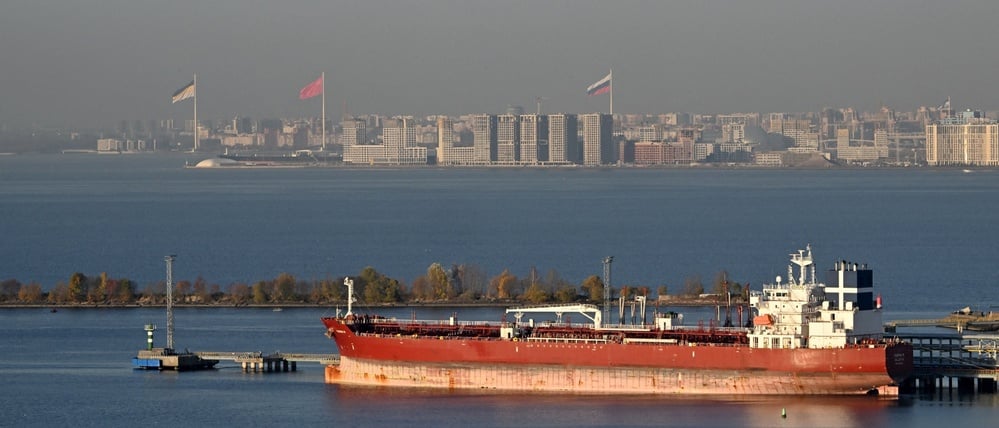
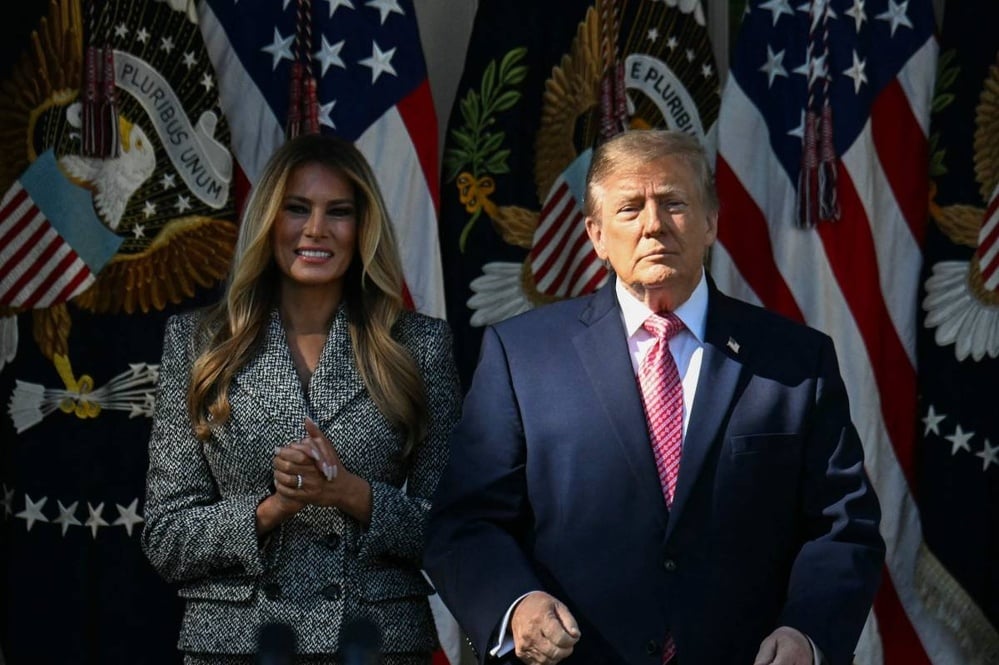

2026 © Helium Trades
Privacy Policy & Disclosure
* Disclaimer: Nothing on this website constitutes investment advice, performance data or any recommendation that any particular security, portfolio of securities, transaction or investment strategy is suitable for any specific person. Helium Trades is not responsible in any way for the accuracy
of any model predictions or price data. Any mention of a particular security and related prediction data is not a recommendation to buy or sell that security. Investments in securities involve the risk of loss. Past performance is no guarantee of future results. Helium Trades is not responsible for any of your investment decisions,
you should consult a financial expert before engaging in any transaction.
Helium Research Assistant

How can I help you today?
Ask any question about this page.


