See whether Helium helps you make better-informed decisions. Try every Pro Trader feature for 30 days. No credit card required.
Try every Pro Trader feature for 30 days. No credit card required.
November 22, 2026 · 0 shares
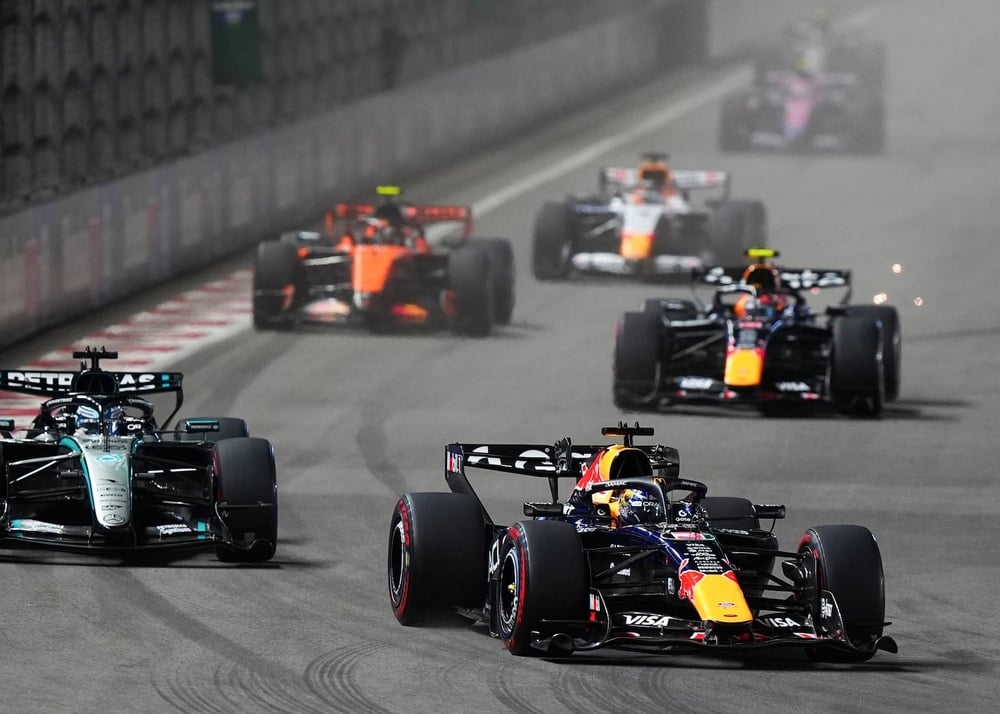
Straightforward, results-driven sports reporting relies on precise race statistics, direct quotes, and neutral attribution.
Helium Analysis
Limitations: The supplied text includes apparent related-link and comment-prompt fragments; scoring is based only on the sports report body.
·
9 of 56 available dimensions scored; omitted dimensions are not treated as neutral.
·
Verified supporting quotes for 6 of 9 scored dimensions.
Claim: The report presents race outcomes through precise results and times rather than subjective evaluation.
“Norris of Britain finished second on Saturday, 0.639 seconds back of Verstappen.” · exact text match
Why: The quote supplies measurable race data with neutral attribution, supporting a strongly objective classification.
Claim: Race action is described with measured statistics rather than sensational language.
“after 35 lead changes, Verstappen took the chequered flag after completing 50 trips around the circuit in 1:27:39.624.” · exact text match
Why: The decisive description uses quantifiable results and timing, not hyperbole.
Claim: The report is descriptive, laying out results and the upcoming schedule without recommending action.
“The series next heads to the Middle East for the Qatar Grand Prix next weekend before the season-ending Abu Dhabi Grand Prix on December 6.” · exact text match
Why: The quoted schedule statement is informational and non-prescriptive.
Claim: The report attributes quotes and uses specific results, penalties, and timing data.
““It didn’t start off well at the beginning of the year, but now it’s definitely turning around,” said Verstappen, who drives for Red Bull Racing.” · exact text match
Why: Direct attribution and exact race data provide visible credibility cues in the supplied text.
Claim: The report links events to stated consequences, such as a crash producing a penalty and finishing position.
“Leclerc was given a 10-second penalty and finished 10th.” · exact text match
Why: The cause-and-effect presentation is orderly and evidence-based rather than irrational.
Claim: The report includes critical context about the winner rather than presenting only favorable material.
“Verstappen had openly questioned his future in F1 after this season and criticised both the series and the media.” · exact text match
Why: Including this critical context is a fairness signal, supporting a high integrity score.
The supplied text includes apparent related-link and comment-prompt fragments; scoring is based only on the sports report body.
Neutral, result-focused sports reporting with attributed driver quotations and no evident ideological framing.
Helium Analysis
Limitations: The substantive race report is brief and lacks a byline or publication date; the supplied text also includes unrelated recommended-link headlines.
·
4 of 56 available dimensions scored; omitted dimensions are not treated as neutral.
·
Verified supporting quotes for 4 of 4 scored dimensions.
Claim: The report presents race outcomes as factual results without subjective commentary.
“McLaren's Lando Norris and Oscar Piastri finished second and third.” · exact text match
Why: The sentence states a concrete finishing order in factual terms rather than offering subjective evaluation.
Claim: The body lists finishing positions in a plain results format rather than using dramatic or sensational language.
“Antonelli came home fourth, with Alpine duo Pierre Gasly and Franco Colapinto fifth and sixth, Lewis Hamilton seventh, Carlos Sainz eighth, and Russell and Charles Leclerc completing the top 10.” · exact text match
Why: The prose catalogs results in a straightforward sports-reporting style with no publisher-level dramatic embellishment.
Claim: The substantive content is a sports report with no political framing or political claims.
“Las Vegas Grand Prix: Max Verstappen wins as George Russell crashes and Lewis Hamilton is penalised.” · exact text match
Why: The headline and body concern a Formula One race, not political actors, policy, or ideology.
Claim: The report attributes driver assessments to named drivers and states race results specifically.
“Verstappen, who had clashed with Russell in practice, said that he could not remember being in a race where the action was so tight all the way to the line.” · exact text match
Why: The article clearly attributes a driver's reaction and provides specific race details, supporting visible credibility despite limited sourcing metadata.
The substantive race report is brief and lacks a byline or publication date; the supplied text also includes unrelated recommended-link headlines.
November 22, 2026 · 0 shares
The F1 report uses celebratory, sensational hyperbole—'performance for the ages' and 'thrill-a-minute'—to frame Verstappen’s win as historic while casting the Ferrari collision as a crisis subplot.
Helium Analysis
Limitations: The supplied text includes duplicated opening matter and unrelated site headlines; analysis is limited to the Formula One race report, and no byline was provided.
·
7 of 56 available dimensions scored; omitted dimensions are not treated as neutral.
·
Verified supporting quotes for 7 of 7 scored dimensions.
Claim: The report frames the race through subjective superlatives rather than neutral description.
“Max Verstappen delivered a performance for the ages to win a thrill-a-minute Las Vegas Grand Prix” · exact text match
Why: The evaluative phrases 'performance for the ages' and 'thrill-a-minute' are subjective judgments, not neutral descriptors.
Claim: The prose uses sensational, dramatic imagery to heighten the event.
“On a fiery night in Sin City” · exact text match
“50 laps of breathless racing” · exact text match
Why: These phrases emphasize spectacle and excitement over dry factual reporting.
Claim: The F1 report is primarily descriptive of race events rather than prescriptive.
“Verstappen started from pole and won the battle to the first corner.” · exact text match
Why: The quoted passage recounts what happened rather than recommending what should happen.
Claim: The article includes evaluative opinions about Verstappen's historical standing.
“quite possibly the very best of his remarkable career” · exact text match
Why: This is an explicitly opinionated assessment of the race within the driver's career.
Claim: The article adopts a positive, celebratory emotional tone toward Verstappen's victory.
“Verstappen delivered a performance for the ages” · exact text match
“in honour of Verstappen following his special victory” · exact text match
Why: The language conveys admiration and excitement rather than emotional neutrality.
Claim: The report includes named attribution and direct quotes alongside specific race details, supporting visible credibility.
““It was crazy, really surreal and something I have never seen before in Formula One,” said Verstappen” · exact text match
“Leclerc was slapped with a 10-second penalty for the collision, demoting him to 10th.” · exact text match
Why: Direct driver quotes and concrete penalties/positions provide verifiable sourcing and detail, though the sensational framing tempers full neutrality.
Claim: The report speculates about Verstappen's all-time ranking from the race result.
“quite possibly the very best of his remarkable career” · exact text match
Why: The phrase hedges with 'quite possibly' but still offers a historical judgment beyond the immediate race facts.
The supplied text includes duplicated opening matter and unrelated site headlines; analysis is limited to the Formula One race report, and no byline was provided.
Dramatic, admiring race coverage uses evaluative language and entertainment framing to cast Verstappen's victory as an extraordinary, almost theatrical contest, while still grounding the report in specific results and quotes.
Helium Analysis
Limitations: The supplied text includes unrelated BBC page links and no author byline, so some attribution and context beyond the main race report cannot be verified.
·
8 of 56 available dimensions scored; omitted dimensions are not treated as neutral.
·
Verified supporting quotes for 6 of 8 scored dimensions.
Claim: The report relies on evaluative, interpretive language rather than strictly neutral description.
“Verstappen's remarkable intelligence and control in the lead in the most demanding of circumstances” · exact text match
Why: The quoted characterization is a positive judgment about Verstappen's performance, not a neutral statement of race data.
Claim: The race is framed in heightened, dramatic terms.
“Red Bull's Max Verstappen won an extraordinary Las Vegas Grand Prix that featured 34 lead changes in a non-stop battle at the front.” · exact text match
Why: Words such as 'extraordinary' and 'non-stop battle' heighten the race narrative beyond plain results reporting.
Claim: The article presents the race as exceptionally eventful and compelling.
“a race the like of which F1 has not seen since the famous Monza slipstreaming battles of the 1960s and early 1970s.” · exact text match
Why: The comparison to famous historic races explicitly asserts unusual excitement and significance.
Claim: The report is predominantly descriptive rather than prescriptive.
“The leading group of 10 cars were tied together for the vast majority of the race as the lead constantly changed hands between Verstappen and the Mercedes drivers George Russell and Kimi Antonelli.” · exact text match
Why: It recounts race events and outcomes without recommending policies or actions.
Claim: The report includes evaluative opinions about drivers and incidents as part of the narrative.
“Verstappen's remarkable intelligence and control in the lead in the most demanding of circumstances” · exact text match
“After seeing Russell's embarrassing mistake, Verstappen came on the radio to say: "Hah, hah. Well done.
My God."”
· not found in supplied text
Why: The phrases 'remarkable intelligence' and 'embarrassing mistake' are evaluative judgments beyond neutral race reporting.
Claim: The coverage conveys enthusiastic admiration for the event and winner.
“But there was no questioning the showbiz value in the city that prides itself as the entertainment capital of the world.” · exact text match
Why: The line endorses the event's entertainment value, contributing to a positive, excited tone.
Claim: The report includes specific race details, attributions, and direct quotations that support internal credibility.
“"How many overtakes did I do?" Verstappen asked his engineer on the slowing down lap” · exact text match
“Second-placed Norris summed it up, saying: "I think that must have been the most chaotic race ever in the history of Formula 1. I didn't know what was happening half the time."” · not found in supplied text
Why: Direct quotes and precise sequence details provide verifiable attribution and specificity.
Claim: The report explains strategy and race dynamics with substantial detail.
“But Verstappen was the one constant, always seeming a step ahead of his rivals as he debated electrical energy deployment strategy with his team.” · exact text match
Why: The article supplies tactical context and causal race analysis, indicating above-average explanatory intelligence.
The supplied text includes unrelated BBC page links and no author byline, so some attribution and context beyond the main race report cannot be verified.
November 22, 2026 · 0 shares
Coverage is a mostly factual sports recap with mild celebratory and sensational language around Verstappen's win and Piastri's podium charge.
Helium Analysis
Limitations: The text contains an unresolved Piastri grid-position inconsistency ('starting 17th' vs. 'start from the back') and no byline.
·
4 of 56 available dimensions scored; omitted dimensions are not treated as neutral.
·
Verified supporting quotes for 4 of 4 scored dimensions.
Claim: The report uses subjective evaluative language to frame race action and driver performance.
“thrilling back-and-forth race” · exact text match
“drove a superb race” · exact text match
Why: These phrases are evaluative characterizations rather than neutral descriptions.
Claim: The headline and body use mild sensational language to heighten the race narrative.
“Oscar Piastri stuns with podium surge” · exact text match
“thrilling back-and-forth race” · exact text match
Why: 'stuns' and 'thrilling' add dramatic emphasis beyond bare results.
Claim: The report is primarily descriptive, recounting race events rather than prescribing actions.
“Verstappen first held off George Russell and later Kimi Antonelli and Lando Norris to win a thrilling back-and-forth race after starting from pole position on Saturday night.” · exact text match
Why: The passage narrates events and outcomes rather than making recommendations.
Claim: The report adopts a positive, excited tone about the race and its outcome.
“drove a superb race” · exact text match
“win a thrilling back-and-forth race” · exact text match
Why: Positive adjectives create an upbeat tone around the race performance.
The text contains an unresolved Piastri grid-position inconsistency ('starting 17th' vs. 'start from the back') and no byline.
November 22, 2026 · 0 shares
The F1 report uses celebratory, sensational hyperbole—'performance for the ages' and 'thrill-a-minute'—to frame Verstappen’s win as historic while casting the Ferrari collision as a crisis subplot.
Helium Analysis
Limitations: The supplied text includes duplicated opening matter and unrelated site headlines; analysis is limited to the Formula One race report, and no byline was provided.
·
7 of 56 available dimensions scored; omitted dimensions are not treated as neutral.
·
Verified supporting quotes for 7 of 7 scored dimensions.
Claim: The report frames the race through subjective superlatives rather than neutral description.
“Max Verstappen delivered a performance for the ages to win a thrill-a-minute Las Vegas Grand Prix” · exact text match
Why: The evaluative phrases 'performance for the ages' and 'thrill-a-minute' are subjective judgments, not neutral descriptors.
Claim: The prose uses sensational, dramatic imagery to heighten the event.
“On a fiery night in Sin City” · exact text match
“50 laps of breathless racing” · exact text match
Why: These phrases emphasize spectacle and excitement over dry factual reporting.
Claim: The F1 report is primarily descriptive of race events rather than prescriptive.
“Verstappen started from pole and won the battle to the first corner.” · exact text match
Why: The quoted passage recounts what happened rather than recommending what should happen.
Claim: The article includes evaluative opinions about Verstappen's historical standing.
“quite possibly the very best of his remarkable career” · exact text match
Why: This is an explicitly opinionated assessment of the race within the driver's career.
Claim: The article adopts a positive, celebratory emotional tone toward Verstappen's victory.
“Verstappen delivered a performance for the ages” · exact text match
“in honour of Verstappen following his special victory” · exact text match
Why: The language conveys admiration and excitement rather than emotional neutrality.
Claim: The report includes named attribution and direct quotes alongside specific race details, supporting visible credibility.
““It was crazy, really surreal and something I have never seen before in Formula One,” said Verstappen” · exact text match
“Leclerc was slapped with a 10-second penalty for the collision, demoting him to 10th.” · exact text match
Why: Direct driver quotes and concrete penalties/positions provide verifiable sourcing and detail, though the sensational framing tempers full neutrality.
Claim: The report speculates about Verstappen's all-time ranking from the race result.
“quite possibly the very best of his remarkable career” · exact text match
Why: The phrase hedges with 'quite possibly' but still offers a historical judgment beyond the immediate race facts.
The supplied text includes duplicated opening matter and unrelated site headlines; analysis is limited to the Formula One race report, and no byline was provided.
Dramatic, admiring race coverage uses evaluative language and entertainment framing to cast Verstappen's victory as an extraordinary, almost theatrical contest, while still grounding the report in specific results and quotes.
Helium Analysis
Limitations: The supplied text includes unrelated BBC page links and no author byline, so some attribution and context beyond the main race report cannot be verified.
·
8 of 56 available dimensions scored; omitted dimensions are not treated as neutral.
·
Verified supporting quotes for 6 of 8 scored dimensions.
Claim: The report relies on evaluative, interpretive language rather than strictly neutral description.
“Verstappen's remarkable intelligence and control in the lead in the most demanding of circumstances” · exact text match
Why: The quoted characterization is a positive judgment about Verstappen's performance, not a neutral statement of race data.
Claim: The race is framed in heightened, dramatic terms.
“Red Bull's Max Verstappen won an extraordinary Las Vegas Grand Prix that featured 34 lead changes in a non-stop battle at the front.” · exact text match
Why: Words such as 'extraordinary' and 'non-stop battle' heighten the race narrative beyond plain results reporting.
Claim: The article presents the race as exceptionally eventful and compelling.
“a race the like of which F1 has not seen since the famous Monza slipstreaming battles of the 1960s and early 1970s.” · exact text match
Why: The comparison to famous historic races explicitly asserts unusual excitement and significance.
Claim: The report is predominantly descriptive rather than prescriptive.
“The leading group of 10 cars were tied together for the vast majority of the race as the lead constantly changed hands between Verstappen and the Mercedes drivers George Russell and Kimi Antonelli.” · exact text match
Why: It recounts race events and outcomes without recommending policies or actions.
Claim: The report includes evaluative opinions about drivers and incidents as part of the narrative.
“Verstappen's remarkable intelligence and control in the lead in the most demanding of circumstances” · exact text match
“After seeing Russell's embarrassing mistake, Verstappen came on the radio to say: "Hah, hah. Well done.
My God."”
· not found in supplied text
Why: The phrases 'remarkable intelligence' and 'embarrassing mistake' are evaluative judgments beyond neutral race reporting.
Claim: The coverage conveys enthusiastic admiration for the event and winner.
“But there was no questioning the showbiz value in the city that prides itself as the entertainment capital of the world.” · exact text match
Why: The line endorses the event's entertainment value, contributing to a positive, excited tone.
Claim: The report includes specific race details, attributions, and direct quotations that support internal credibility.
“"How many overtakes did I do?" Verstappen asked his engineer on the slowing down lap” · exact text match
“Second-placed Norris summed it up, saying: "I think that must have been the most chaotic race ever in the history of Formula 1. I didn't know what was happening half the time."” · not found in supplied text
Why: Direct quotes and precise sequence details provide verifiable attribution and specificity.
Claim: The report explains strategy and race dynamics with substantial detail.
“But Verstappen was the one constant, always seeming a step ahead of his rivals as he debated electrical energy deployment strategy with his team.” · exact text match
Why: The article supplies tactical context and causal race analysis, indicating above-average explanatory intelligence.
The supplied text includes unrelated BBC page links and no author byline, so some attribution and context beyond the main race report cannot be verified.
November 22, 2026 · 0 shares
Coverage is a mostly factual sports recap with mild celebratory and sensational language around Verstappen's win and Piastri's podium charge.
Helium Analysis
Limitations: The text contains an unresolved Piastri grid-position inconsistency ('starting 17th' vs. 'start from the back') and no byline.
·
4 of 56 available dimensions scored; omitted dimensions are not treated as neutral.
·
Verified supporting quotes for 4 of 4 scored dimensions.
Claim: The report uses subjective evaluative language to frame race action and driver performance.
“thrilling back-and-forth race” · exact text match
“drove a superb race” · exact text match
Why: These phrases are evaluative characterizations rather than neutral descriptions.
Claim: The headline and body use mild sensational language to heighten the race narrative.
“Oscar Piastri stuns with podium surge” · exact text match
“thrilling back-and-forth race” · exact text match
Why: 'stuns' and 'thrilling' add dramatic emphasis beyond bare results.
Claim: The report is primarily descriptive, recounting race events rather than prescribing actions.
“Verstappen first held off George Russell and later Kimi Antonelli and Lando Norris to win a thrilling back-and-forth race after starting from pole position on Saturday night.” · exact text match
Why: The passage narrates events and outcomes rather than making recommendations.
Claim: The report adopts a positive, excited tone about the race and its outcome.
“drove a superb race” · exact text match
“win a thrilling back-and-forth race” · exact text match
Why: Positive adjectives create an upbeat tone around the race performance.
The text contains an unresolved Piastri grid-position inconsistency ('starting 17th' vs. 'start from the back') and no byline.
November 21, 2026 · 0 shares
Quote-driven, timing-based sports reporting frames McLaren’s Las Vegas qualifying shortfall around straightline speed while keeping evaluative language attributed to drivers.
Helium Analysis
Limitations: The supplied text includes navigation, related-link headlines, and image credits; analysis is limited to the substantive F1 qualifying report.
·
7 of 56 available dimensions scored; omitted dimensions are not treated as neutral.
·
Verified supporting quotes for 6 of 7 scored dimensions.
Claim: The publisher keeps subjective frustration attributed to Norris and grounds the report in factual timing details.
““We're just shocking in the straights,” said Norris, who will start from third due to Antonelli’s five-place grid drop for a new internal combustion engine.” · exact text match
“The McLaren driver was close to eight-tenths off the pace in the final sector” · not found in supplied text
Why: Attribution and measured performance data limit subjective framing.
Claim: Strong language is confined to quoted driver characterizations and is set against precise qualifying data.
““We're just shocking in the straights,” said Norris” · exact text match
“Norris’s deficit largely came in the final sector where he was 0.776s slower than his world champion successor, despite being faster in the first two - even quickest of all in the second.” · exact text match
Why: The only vivid wording comes from Norris's quote, while the publisher supplies technical timing context.
Claim: The report describes qualifying performance and causes of the deficit rather than issuing prescriptions.
“Norris’s deficit largely came in the final sector where he was 0.776s slower than his world champion successor, despite being faster in the first two - even quickest of all in the second.” · exact text match
Why: The report is organized around descriptive timing and performance context.
Claim: Visible sourcing includes direct driver quotes, precise gaps, sector comparisons, and grid-penalty explanations.
“Team-mate Oscar Piastri endured bigger struggles than Norris in Las Vegas as the Australian was only seventh fastest and a significant 1.006s slower than Antonelli’s Mercedes.” · exact text match
““Q3 was just a bit messy for a few reasons,” said Piastri, who will take a 10-place grid penalty for a new engine.” · exact text match
Why: Multiple attributed quotes and specific performance figures support high visible credibility.
Claim: The report uses measured qualifying gaps and sector times, plus attributed quotes, to explain Norris's deficit.
“The 2025 world champion was fourth fastest on Friday night in Nevada and 0.351s off pacesetter Kimi Antonelli, with Max Verstappen and George Russell also quicker.” · exact text match
“Norris’s deficit largely came in the final sector where he was 0.776s slower than his world champion successor, despite being faster in the first two - even quickest of all in the second.” · exact text match
Why: Precise timing and sector comparisons support a rational, evidence-based account rather than speculation.
Claim: The report attributes statements, supplies exact time gaps, and explains grid penalties.
““We're just shocking in the straights,” said Norris, who will start from third due to Antonelli’s five-place grid drop for a new internal combustion engine.” · exact text match
“Norris’s deficit largely came in the final sector where he was 0.776s slower than his world champion successor, despite being faster in the first two - even quickest of all in the second.” · exact text match
Why: Transparent attribution and precise data indicate high observable fairness and honesty.
Claim: The report integrates sector timing, track characteristics, engine-regulation context, and multiple driver quotes.
“Straightline speed has been a continuous problem for McLaren this year due to its struggles optimising the Mercedes engine under the new-for-2026 regulations.” · exact text match
“But the final sector is usually what defines a lap around the low-downforce Vegas street track due to its 1.2-mile flat-out Strip section, plus the 0.5-mile straight ahead of the final corner.” · exact text match
Why: Technical context and multi-source detail support a high intelligence rating.
The supplied text includes navigation, related-link headlines, and image credits; analysis is limited to the substantive F1 qualifying report.
November 22, 2026 · 0 shares
Celebratory, evaluative sports-feature framing treats the race as extraordinary spectacle and Verstappen as supremely intelligent, with dramatic language and little neutral distance.
Helium Analysis
Limitations: The supplied text includes caption and related-link fragments and lacks a byline, but the main race report is substantive; some passages are ambiguous.
·
6 of 56 available dimensions scored; omitted dimensions are not treated as neutral.
·
Verified supporting quotes for 4 of 6 scored dimensions.
Claim: The race report mixes factual results with evaluative characterizations of driver performance and drama.
“extraordinary Las Vegas Grand Prix” · exact text match
“remarkable intelligence and control in the lead in the most demanding of circumstances” · exact text match
Why: These are subjective judgments about drama and driver intelligence, not neutral factual descriptions.
Claim: The framing emphasizes spectacle and drama.
“extraordinary Las Vegas Grand Prix that featured 34 lead changes” · exact text match
“no questioning the showbiz value” · exact text match
Why: Language and selection heighten the event's entertainment value.
Claim: Several evaluative opinions appear in the narrator's voice.
“remarkable intelligence and control in the lead in the most demanding of circumstances” · exact text match
“After seeing Russell's embarrassing mistake” · not found in supplied text
Why: These phrases assert judgments about driver quality and the nature of a mistake.
Claim: The report's emotional valence is positive and celebratory about the race and winner.
“extraordinary Las Vegas Grand Prix” · exact text match
“remarkable intelligence and control” · exact text match
Why: The adjectives convey admiration and excitement.
Claim: The report provides named attribution for quotes and specific race details.
“Second-placed Norris summed it up, saying: "I think that must have been the most chaotic race ever in the history of Formula 1."” · not found in supplied text
“"Yeah, and not many of them on the straight," his new engineer Tom Hart said” · exact text match
Why: Direct attribution to named participants supports visible sourcing and credibility.
Claim: The report uses technical race-strategy context to explain the outcome.
“it depended on unique circumstances revolving around the Las Vegas circuit and energy-starved hybrid engines this year” · exact text match
“he debated electrical energy deployment strategy with his team” · exact text match
Why: These details show analytical and technical explanation.
The supplied text includes caption and related-link fragments and lacks a byline, but the main race report is substantive; some passages are ambiguous.
Neutral, result-focused sports reporting with attributed driver quotations and no evident ideological framing.
Helium Analysis
Limitations: The substantive race report is brief and lacks a byline or publication date; the supplied text also includes unrelated recommended-link headlines.
·
4 of 56 available dimensions scored; omitted dimensions are not treated as neutral.
·
Verified supporting quotes for 4 of 4 scored dimensions.
Claim: The report presents race outcomes as factual results without subjective commentary.
“McLaren's Lando Norris and Oscar Piastri finished second and third.” · exact text match
Why: The sentence states a concrete finishing order in factual terms rather than offering subjective evaluation.
Claim: The body lists finishing positions in a plain results format rather than using dramatic or sensational language.
“Antonelli came home fourth, with Alpine duo Pierre Gasly and Franco Colapinto fifth and sixth, Lewis Hamilton seventh, Carlos Sainz eighth, and Russell and Charles Leclerc completing the top 10.” · exact text match
Why: The prose catalogs results in a straightforward sports-reporting style with no publisher-level dramatic embellishment.
Claim: The substantive content is a sports report with no political framing or political claims.
“Las Vegas Grand Prix: Max Verstappen wins as George Russell crashes and Lewis Hamilton is penalised.” · exact text match
Why: The headline and body concern a Formula One race, not political actors, policy, or ideology.
Claim: The report attributes driver assessments to named drivers and states race results specifically.
“Verstappen, who had clashed with Russell in practice, said that he could not remember being in a race where the action was so tight all the way to the line.” · exact text match
Why: The article clearly attributes a driver's reaction and provides specific race details, supporting visible credibility despite limited sourcing metadata.
The substantive race report is brief and lacks a byline or publication date; the supplied text also includes unrelated recommended-link headlines.
November 22, 2026 · 0 shares
The F1 report uses celebratory, sensational hyperbole—'performance for the ages' and 'thrill-a-minute'—to frame Verstappen’s win as historic while casting the Ferrari collision as a crisis subplot.
Helium Analysis
Limitations: The supplied text includes duplicated opening matter and unrelated site headlines; analysis is limited to the Formula One race report, and no byline was provided.
·
7 of 56 available dimensions scored; omitted dimensions are not treated as neutral.
·
Verified supporting quotes for 7 of 7 scored dimensions.
Claim: The report frames the race through subjective superlatives rather than neutral description.
“Max Verstappen delivered a performance for the ages to win a thrill-a-minute Las Vegas Grand Prix” · exact text match
Why: The evaluative phrases 'performance for the ages' and 'thrill-a-minute' are subjective judgments, not neutral descriptors.
Claim: The prose uses sensational, dramatic imagery to heighten the event.
“On a fiery night in Sin City” · exact text match
“50 laps of breathless racing” · exact text match
Why: These phrases emphasize spectacle and excitement over dry factual reporting.
Claim: The F1 report is primarily descriptive of race events rather than prescriptive.
“Verstappen started from pole and won the battle to the first corner.” · exact text match
Why: The quoted passage recounts what happened rather than recommending what should happen.
Claim: The article includes evaluative opinions about Verstappen's historical standing.
“quite possibly the very best of his remarkable career” · exact text match
Why: This is an explicitly opinionated assessment of the race within the driver's career.
Claim: The article adopts a positive, celebratory emotional tone toward Verstappen's victory.
“Verstappen delivered a performance for the ages” · exact text match
“in honour of Verstappen following his special victory” · exact text match
Why: The language conveys admiration and excitement rather than emotional neutrality.
Claim: The report includes named attribution and direct quotes alongside specific race details, supporting visible credibility.
““It was crazy, really surreal and something I have never seen before in Formula One,” said Verstappen” · exact text match
“Leclerc was slapped with a 10-second penalty for the collision, demoting him to 10th.” · exact text match
Why: Direct driver quotes and concrete penalties/positions provide verifiable sourcing and detail, though the sensational framing tempers full neutrality.
Claim: The report speculates about Verstappen's all-time ranking from the race result.
“quite possibly the very best of his remarkable career” · exact text match
Why: The phrase hedges with 'quite possibly' but still offers a historical judgment beyond the immediate race facts.
The supplied text includes duplicated opening matter and unrelated site headlines; analysis is limited to the Formula One race report, and no byline was provided.
Neutral, result-focused sports reporting with attributed driver quotations and no evident ideological framing.
Helium Analysis
Limitations: The substantive race report is brief and lacks a byline or publication date; the supplied text also includes unrelated recommended-link headlines.
·
4 of 56 available dimensions scored; omitted dimensions are not treated as neutral.
·
Verified supporting quotes for 4 of 4 scored dimensions.
Claim: The report presents race outcomes as factual results without subjective commentary.
“McLaren's Lando Norris and Oscar Piastri finished second and third.” · exact text match
Why: The sentence states a concrete finishing order in factual terms rather than offering subjective evaluation.
Claim: The body lists finishing positions in a plain results format rather than using dramatic or sensational language.
“Antonelli came home fourth, with Alpine duo Pierre Gasly and Franco Colapinto fifth and sixth, Lewis Hamilton seventh, Carlos Sainz eighth, and Russell and Charles Leclerc completing the top 10.” · exact text match
Why: The prose catalogs results in a straightforward sports-reporting style with no publisher-level dramatic embellishment.
Claim: The substantive content is a sports report with no political framing or political claims.
“Las Vegas Grand Prix: Max Verstappen wins as George Russell crashes and Lewis Hamilton is penalised.” · exact text match
Why: The headline and body concern a Formula One race, not political actors, policy, or ideology.
Claim: The report attributes driver assessments to named drivers and states race results specifically.
“Verstappen, who had clashed with Russell in practice, said that he could not remember being in a race where the action was so tight all the way to the line.” · exact text match
Why: The article clearly attributes a driver's reaction and provides specific race details, supporting visible credibility despite limited sourcing metadata.
The substantive race report is brief and lacks a byline or publication date; the supplied text also includes unrelated recommended-link headlines.
November 22, 2026 · 0 shares
Straightforward, results-driven sports reporting relies on precise race statistics, direct quotes, and neutral attribution.
Helium Analysis
Limitations: The supplied text includes apparent related-link and comment-prompt fragments; scoring is based only on the sports report body.
·
9 of 56 available dimensions scored; omitted dimensions are not treated as neutral.
·
Verified supporting quotes for 6 of 9 scored dimensions.
Claim: The report presents race outcomes through precise results and times rather than subjective evaluation.
“Norris of Britain finished second on Saturday, 0.639 seconds back of Verstappen.” · exact text match
Why: The quote supplies measurable race data with neutral attribution, supporting a strongly objective classification.
Claim: Race action is described with measured statistics rather than sensational language.
“after 35 lead changes, Verstappen took the chequered flag after completing 50 trips around the circuit in 1:27:39.624.” · exact text match
Why: The decisive description uses quantifiable results and timing, not hyperbole.
Claim: The report is descriptive, laying out results and the upcoming schedule without recommending action.
“The series next heads to the Middle East for the Qatar Grand Prix next weekend before the season-ending Abu Dhabi Grand Prix on December 6.” · exact text match
Why: The quoted schedule statement is informational and non-prescriptive.
Claim: The report attributes quotes and uses specific results, penalties, and timing data.
““It didn’t start off well at the beginning of the year, but now it’s definitely turning around,” said Verstappen, who drives for Red Bull Racing.” · exact text match
Why: Direct attribution and exact race data provide visible credibility cues in the supplied text.
Claim: The report links events to stated consequences, such as a crash producing a penalty and finishing position.
“Leclerc was given a 10-second penalty and finished 10th.” · exact text match
Why: The cause-and-effect presentation is orderly and evidence-based rather than irrational.
Claim: The report includes critical context about the winner rather than presenting only favorable material.
“Verstappen had openly questioned his future in F1 after this season and criticised both the series and the media.” · exact text match
Why: Including this critical context is a fairness signal, supporting a high integrity score.
The supplied text includes apparent related-link and comment-prompt fragments; scoring is based only on the sports report body.
November 22, 2026 · 0 shares
The F1 report uses celebratory, sensational hyperbole—'performance for the ages' and 'thrill-a-minute'—to frame Verstappen’s win as historic while casting the Ferrari collision as a crisis subplot.
Helium Analysis
Limitations: The supplied text includes duplicated opening matter and unrelated site headlines; analysis is limited to the Formula One race report, and no byline was provided.
·
7 of 56 available dimensions scored; omitted dimensions are not treated as neutral.
·
Verified supporting quotes for 7 of 7 scored dimensions.
Claim: The report frames the race through subjective superlatives rather than neutral description.
“Max Verstappen delivered a performance for the ages to win a thrill-a-minute Las Vegas Grand Prix” · exact text match
Why: The evaluative phrases 'performance for the ages' and 'thrill-a-minute' are subjective judgments, not neutral descriptors.
Claim: The prose uses sensational, dramatic imagery to heighten the event.
“On a fiery night in Sin City” · exact text match
“50 laps of breathless racing” · exact text match
Why: These phrases emphasize spectacle and excitement over dry factual reporting.
Claim: The F1 report is primarily descriptive of race events rather than prescriptive.
“Verstappen started from pole and won the battle to the first corner.” · exact text match
Why: The quoted passage recounts what happened rather than recommending what should happen.
Claim: The article includes evaluative opinions about Verstappen's historical standing.
“quite possibly the very best of his remarkable career” · exact text match
Why: This is an explicitly opinionated assessment of the race within the driver's career.
Claim: The article adopts a positive, celebratory emotional tone toward Verstappen's victory.
“Verstappen delivered a performance for the ages” · exact text match
“in honour of Verstappen following his special victory” · exact text match
Why: The language conveys admiration and excitement rather than emotional neutrality.
Claim: The report includes named attribution and direct quotes alongside specific race details, supporting visible credibility.
““It was crazy, really surreal and something I have never seen before in Formula One,” said Verstappen” · exact text match
“Leclerc was slapped with a 10-second penalty for the collision, demoting him to 10th.” · exact text match
Why: Direct driver quotes and concrete penalties/positions provide verifiable sourcing and detail, though the sensational framing tempers full neutrality.
Claim: The report speculates about Verstappen's all-time ranking from the race result.
“quite possibly the very best of his remarkable career” · exact text match
Why: The phrase hedges with 'quite possibly' but still offers a historical judgment beyond the immediate race facts.
The supplied text includes duplicated opening matter and unrelated site headlines; analysis is limited to the Formula One race report, and no byline was provided.
Neutral, result-focused sports reporting with attributed driver quotations and no evident ideological framing.
Helium Analysis
Limitations: The substantive race report is brief and lacks a byline or publication date; the supplied text also includes unrelated recommended-link headlines.
·
4 of 56 available dimensions scored; omitted dimensions are not treated as neutral.
·
Verified supporting quotes for 4 of 4 scored dimensions.
Claim: The report presents race outcomes as factual results without subjective commentary.
“McLaren's Lando Norris and Oscar Piastri finished second and third.” · exact text match
Why: The sentence states a concrete finishing order in factual terms rather than offering subjective evaluation.
Claim: The body lists finishing positions in a plain results format rather than using dramatic or sensational language.
“Antonelli came home fourth, with Alpine duo Pierre Gasly and Franco Colapinto fifth and sixth, Lewis Hamilton seventh, Carlos Sainz eighth, and Russell and Charles Leclerc completing the top 10.” · exact text match
Why: The prose catalogs results in a straightforward sports-reporting style with no publisher-level dramatic embellishment.
Claim: The substantive content is a sports report with no political framing or political claims.
“Las Vegas Grand Prix: Max Verstappen wins as George Russell crashes and Lewis Hamilton is penalised.” · exact text match
Why: The headline and body concern a Formula One race, not political actors, policy, or ideology.
Claim: The report attributes driver assessments to named drivers and states race results specifically.
“Verstappen, who had clashed with Russell in practice, said that he could not remember being in a race where the action was so tight all the way to the line.” · exact text match
Why: The article clearly attributes a driver's reaction and provides specific race details, supporting visible credibility despite limited sourcing metadata.
The substantive race report is brief and lacks a byline or publication date; the supplied text also includes unrelated recommended-link headlines.
November 22, 2026 · 0 shares
Celebratory, evaluative sports-feature framing treats the race as extraordinary spectacle and Verstappen as supremely intelligent, with dramatic language and little neutral distance.
Helium Analysis
Limitations: The supplied text includes caption and related-link fragments and lacks a byline, but the main race report is substantive; some passages are ambiguous.
·
6 of 56 available dimensions scored; omitted dimensions are not treated as neutral.
·
Verified supporting quotes for 4 of 6 scored dimensions.
Claim: The race report mixes factual results with evaluative characterizations of driver performance and drama.
“extraordinary Las Vegas Grand Prix” · exact text match
“remarkable intelligence and control in the lead in the most demanding of circumstances” · exact text match
Why: These are subjective judgments about drama and driver intelligence, not neutral factual descriptions.
Claim: The framing emphasizes spectacle and drama.
“extraordinary Las Vegas Grand Prix that featured 34 lead changes” · exact text match
“no questioning the showbiz value” · exact text match
Why: Language and selection heighten the event's entertainment value.
Claim: Several evaluative opinions appear in the narrator's voice.
“remarkable intelligence and control in the lead in the most demanding of circumstances” · exact text match
“After seeing Russell's embarrassing mistake” · not found in supplied text
Why: These phrases assert judgments about driver quality and the nature of a mistake.
Claim: The report's emotional valence is positive and celebratory about the race and winner.
“extraordinary Las Vegas Grand Prix” · exact text match
“remarkable intelligence and control” · exact text match
Why: The adjectives convey admiration and excitement.
Claim: The report provides named attribution for quotes and specific race details.
“Second-placed Norris summed it up, saying: "I think that must have been the most chaotic race ever in the history of Formula 1."” · not found in supplied text
“"Yeah, and not many of them on the straight," his new engineer Tom Hart said” · exact text match
Why: Direct attribution to named participants supports visible sourcing and credibility.
Claim: The report uses technical race-strategy context to explain the outcome.
“it depended on unique circumstances revolving around the Las Vegas circuit and energy-starved hybrid engines this year” · exact text match
“he debated electrical energy deployment strategy with his team” · exact text match
Why: These details show analytical and technical explanation.
The supplied text includes caption and related-link fragments and lacks a byline, but the main race report is substantive; some passages are ambiguous.
November 22, 2026 · 0 shares
Straightforward, results-driven sports reporting relies on precise race statistics, direct quotes, and neutral attribution.
Helium Analysis Limitations: The supplied text includes apparent related-link and comment-prompt fragments; scoring is based only on the sports report body. · 9 of 56 available dimensions scored; omitted dimensions are not treated as neutral. · Verified supporting quotes for 6 of 9 scored dimensions.
Claim: The report presents race outcomes through precise results and times rather than subjective evaluation.
“Norris of Britain finished second on Saturday, 0.639 seconds back of Verstappen.” · exact text match
Why: The quote supplies measurable race data with neutral attribution, supporting a strongly objective classification.
Claim: Race action is described with measured statistics rather than sensational language.
“after 35 lead changes, Verstappen took the chequered flag after completing 50 trips around the circuit in 1:27:39.624.” · exact text match
Why: The decisive description uses quantifiable results and timing, not hyperbole.
Claim: The report is descriptive, laying out results and the upcoming schedule without recommending action.
“The series next heads to the Middle East for the Qatar Grand Prix next weekend before the season-ending Abu Dhabi Grand Prix on December 6.” · exact text match
Why: The quoted schedule statement is informational and non-prescriptive.
Claim: The report attributes quotes and uses specific results, penalties, and timing data.
““It didn’t start off well at the beginning of the year, but now it’s definitely turning around,” said Verstappen, who drives for Red Bull Racing.” · exact text match
Why: Direct attribution and exact race data provide visible credibility cues in the supplied text.
Claim: The report links events to stated consequences, such as a crash producing a penalty and finishing position.
“Leclerc was given a 10-second penalty and finished 10th.” · exact text match
Why: The cause-and-effect presentation is orderly and evidence-based rather than irrational.
Claim: The report includes critical context about the winner rather than presenting only favorable material.
“Verstappen had openly questioned his future in F1 after this season and criticised both the series and the media.” · exact text match
Why: Including this critical context is a fairness signal, supporting a high integrity score.
The supplied text includes apparent related-link and comment-prompt fragments; scoring is based only on the sports report body.
November 22, 2026 · 0 shares
Coverage is a mostly factual sports recap with mild celebratory and sensational language around Verstappen's win and Piastri's podium charge.
Helium Analysis Limitations: The text contains an unresolved Piastri grid-position inconsistency ('starting 17th' vs. 'start from the back') and no byline. · 4 of 56 available dimensions scored; omitted dimensions are not treated as neutral. · Verified supporting quotes for 4 of 4 scored dimensions.
Claim: The report uses subjective evaluative language to frame race action and driver performance.
“thrilling back-and-forth race” · exact text match
“drove a superb race” · exact text match
Why: These phrases are evaluative characterizations rather than neutral descriptions.
Claim: The headline and body use mild sensational language to heighten the race narrative.
“Oscar Piastri stuns with podium surge” · exact text match
“thrilling back-and-forth race” · exact text match
Why: 'stuns' and 'thrilling' add dramatic emphasis beyond bare results.
Claim: The report is primarily descriptive, recounting race events rather than prescribing actions.
“Verstappen first held off George Russell and later Kimi Antonelli and Lando Norris to win a thrilling back-and-forth race after starting from pole position on Saturday night.” · exact text match
Why: The passage narrates events and outcomes rather than making recommendations.
Claim: The report adopts a positive, excited tone about the race and its outcome.
“drove a superb race” · exact text match
“win a thrilling back-and-forth race” · exact text match
Why: Positive adjectives create an upbeat tone around the race performance.
The text contains an unresolved Piastri grid-position inconsistency ('starting 17th' vs. 'start from the back') and no byline.
Neutral, result-focused sports reporting with attributed driver quotations and no evident ideological framing.
Helium Analysis Limitations: The substantive race report is brief and lacks a byline or publication date; the supplied text also includes unrelated recommended-link headlines. · 4 of 56 available dimensions scored; omitted dimensions are not treated as neutral. · Verified supporting quotes for 4 of 4 scored dimensions.
Claim: The report presents race outcomes as factual results without subjective commentary.
“McLaren's Lando Norris and Oscar Piastri finished second and third.” · exact text match
Why: The sentence states a concrete finishing order in factual terms rather than offering subjective evaluation.
Claim: The body lists finishing positions in a plain results format rather than using dramatic or sensational language.
“Antonelli came home fourth, with Alpine duo Pierre Gasly and Franco Colapinto fifth and sixth, Lewis Hamilton seventh, Carlos Sainz eighth, and Russell and Charles Leclerc completing the top 10.” · exact text match
Why: The prose catalogs results in a straightforward sports-reporting style with no publisher-level dramatic embellishment.
Claim: The substantive content is a sports report with no political framing or political claims.
“Las Vegas Grand Prix: Max Verstappen wins as George Russell crashes and Lewis Hamilton is penalised.” · exact text match
Why: The headline and body concern a Formula One race, not political actors, policy, or ideology.
Claim: The report attributes driver assessments to named drivers and states race results specifically.
“Verstappen, who had clashed with Russell in practice, said that he could not remember being in a race where the action was so tight all the way to the line.” · exact text match
Why: The article clearly attributes a driver's reaction and provides specific race details, supporting visible credibility despite limited sourcing metadata.
The substantive race report is brief and lacks a byline or publication date; the supplied text also includes unrelated recommended-link headlines.
Dramatic, admiring race coverage uses evaluative language and entertainment framing to cast Verstappen's victory as an extraordinary, almost theatrical contest, while still grounding the report in specific results and quotes.
Helium Analysis Limitations: The supplied text includes unrelated BBC page links and no author byline, so some attribution and context beyond the main race report cannot be verified. · 8 of 56 available dimensions scored; omitted dimensions are not treated as neutral. · Verified supporting quotes for 6 of 8 scored dimensions.
Claim: The report relies on evaluative, interpretive language rather than strictly neutral description.
“Verstappen's remarkable intelligence and control in the lead in the most demanding of circumstances” · exact text match
Why: The quoted characterization is a positive judgment about Verstappen's performance, not a neutral statement of race data.
Claim: The race is framed in heightened, dramatic terms.
“Red Bull's Max Verstappen won an extraordinary Las Vegas Grand Prix that featured 34 lead changes in a non-stop battle at the front.” · exact text match
Why: Words such as 'extraordinary' and 'non-stop battle' heighten the race narrative beyond plain results reporting.
Claim: The article presents the race as exceptionally eventful and compelling.
“a race the like of which F1 has not seen since the famous Monza slipstreaming battles of the 1960s and early 1970s.” · exact text match
Why: The comparison to famous historic races explicitly asserts unusual excitement and significance.
Claim: The report is predominantly descriptive rather than prescriptive.
“The leading group of 10 cars were tied together for the vast majority of the race as the lead constantly changed hands between Verstappen and the Mercedes drivers George Russell and Kimi Antonelli.” · exact text match
Why: It recounts race events and outcomes without recommending policies or actions.
Claim: The report includes evaluative opinions about drivers and incidents as part of the narrative.
“Verstappen's remarkable intelligence and control in the lead in the most demanding of circumstances” · exact text match
“After seeing Russell's embarrassing mistake, Verstappen came on the radio to say: "Hah, hah. Well done. My God."” · not found in supplied text
Why: The phrases 'remarkable intelligence' and 'embarrassing mistake' are evaluative judgments beyond neutral race reporting.
Claim: The coverage conveys enthusiastic admiration for the event and winner.
“But there was no questioning the showbiz value in the city that prides itself as the entertainment capital of the world.” · exact text match
Why: The line endorses the event's entertainment value, contributing to a positive, excited tone.
Claim: The report includes specific race details, attributions, and direct quotations that support internal credibility.
“"How many overtakes did I do?" Verstappen asked his engineer on the slowing down lap” · exact text match
“Second-placed Norris summed it up, saying: "I think that must have been the most chaotic race ever in the history of Formula 1. I didn't know what was happening half the time."” · not found in supplied text
Why: Direct quotes and precise sequence details provide verifiable attribution and specificity.
Claim: The report explains strategy and race dynamics with substantial detail.
“But Verstappen was the one constant, always seeming a step ahead of his rivals as he debated electrical energy deployment strategy with his team.” · exact text match
Why: The article supplies tactical context and causal race analysis, indicating above-average explanatory intelligence.
The supplied text includes unrelated BBC page links and no author byline, so some attribution and context beyond the main race report cannot be verified.
November 22, 2026 · 0 shares
Coverage is a mostly factual sports recap with mild celebratory and sensational language around Verstappen's win and Piastri's podium charge.
Helium Analysis Limitations: The text contains an unresolved Piastri grid-position inconsistency ('starting 17th' vs. 'start from the back') and no byline. · 4 of 56 available dimensions scored; omitted dimensions are not treated as neutral. · Verified supporting quotes for 4 of 4 scored dimensions.
Claim: The report uses subjective evaluative language to frame race action and driver performance.
“thrilling back-and-forth race” · exact text match
“drove a superb race” · exact text match
Why: These phrases are evaluative characterizations rather than neutral descriptions.
Claim: The headline and body use mild sensational language to heighten the race narrative.
“Oscar Piastri stuns with podium surge” · exact text match
“thrilling back-and-forth race” · exact text match
Why: 'stuns' and 'thrilling' add dramatic emphasis beyond bare results.
Claim: The report is primarily descriptive, recounting race events rather than prescribing actions.
“Verstappen first held off George Russell and later Kimi Antonelli and Lando Norris to win a thrilling back-and-forth race after starting from pole position on Saturday night.” · exact text match
Why: The passage narrates events and outcomes rather than making recommendations.
Claim: The report adopts a positive, excited tone about the race and its outcome.
“drove a superb race” · exact text match
“win a thrilling back-and-forth race” · exact text match
Why: Positive adjectives create an upbeat tone around the race performance.
The text contains an unresolved Piastri grid-position inconsistency ('starting 17th' vs. 'start from the back') and no byline.
November 22, 2026 · 0 shares
The F1 report uses celebratory, sensational hyperbole—'performance for the ages' and 'thrill-a-minute'—to frame Verstappen’s win as historic while casting the Ferrari collision as a crisis subplot.
Helium Analysis Limitations: The supplied text includes duplicated opening matter and unrelated site headlines; analysis is limited to the Formula One race report, and no byline was provided. · 7 of 56 available dimensions scored; omitted dimensions are not treated as neutral. · Verified supporting quotes for 7 of 7 scored dimensions.
Claim: The report frames the race through subjective superlatives rather than neutral description.
“Max Verstappen delivered a performance for the ages to win a thrill-a-minute Las Vegas Grand Prix” · exact text match
Why: The evaluative phrases 'performance for the ages' and 'thrill-a-minute' are subjective judgments, not neutral descriptors.
Claim: The prose uses sensational, dramatic imagery to heighten the event.
“On a fiery night in Sin City” · exact text match
“50 laps of breathless racing” · exact text match
Why: These phrases emphasize spectacle and excitement over dry factual reporting.
Claim: The F1 report is primarily descriptive of race events rather than prescriptive.
“Verstappen started from pole and won the battle to the first corner.” · exact text match
Why: The quoted passage recounts what happened rather than recommending what should happen.
Claim: The article includes evaluative opinions about Verstappen's historical standing.
“quite possibly the very best of his remarkable career” · exact text match
Why: This is an explicitly opinionated assessment of the race within the driver's career.
Claim: The article adopts a positive, celebratory emotional tone toward Verstappen's victory.
“Verstappen delivered a performance for the ages” · exact text match
“in honour of Verstappen following his special victory” · exact text match
Why: The language conveys admiration and excitement rather than emotional neutrality.
Claim: The report includes named attribution and direct quotes alongside specific race details, supporting visible credibility.
““It was crazy, really surreal and something I have never seen before in Formula One,” said Verstappen” · exact text match
“Leclerc was slapped with a 10-second penalty for the collision, demoting him to 10th.” · exact text match
Why: Direct driver quotes and concrete penalties/positions provide verifiable sourcing and detail, though the sensational framing tempers full neutrality.
Claim: The report speculates about Verstappen's all-time ranking from the race result.
“quite possibly the very best of his remarkable career” · exact text match
Why: The phrase hedges with 'quite possibly' but still offers a historical judgment beyond the immediate race facts.
The supplied text includes duplicated opening matter and unrelated site headlines; analysis is limited to the Formula One race report, and no byline was provided.
November 22, 2026 · 0 shares
Celebratory, evaluative sports-feature framing treats the race as extraordinary spectacle and Verstappen as supremely intelligent, with dramatic language and little neutral distance.
Helium Analysis Limitations: The supplied text includes caption and related-link fragments and lacks a byline, but the main race report is substantive; some passages are ambiguous. · 6 of 56 available dimensions scored; omitted dimensions are not treated as neutral. · Verified supporting quotes for 4 of 6 scored dimensions.
Claim: The race report mixes factual results with evaluative characterizations of driver performance and drama.
“extraordinary Las Vegas Grand Prix” · exact text match
“remarkable intelligence and control in the lead in the most demanding of circumstances” · exact text match
Why: These are subjective judgments about drama and driver intelligence, not neutral factual descriptions.
Claim: The framing emphasizes spectacle and drama.
“extraordinary Las Vegas Grand Prix that featured 34 lead changes” · exact text match
“no questioning the showbiz value” · exact text match
Why: Language and selection heighten the event's entertainment value.
Claim: Several evaluative opinions appear in the narrator's voice.
“remarkable intelligence and control in the lead in the most demanding of circumstances” · exact text match
“After seeing Russell's embarrassing mistake” · not found in supplied text
Why: These phrases assert judgments about driver quality and the nature of a mistake.
Claim: The report's emotional valence is positive and celebratory about the race and winner.
“extraordinary Las Vegas Grand Prix” · exact text match
“remarkable intelligence and control” · exact text match
Why: The adjectives convey admiration and excitement.
Claim: The report provides named attribution for quotes and specific race details.
“Second-placed Norris summed it up, saying: "I think that must have been the most chaotic race ever in the history of Formula 1."” · not found in supplied text
“"Yeah, and not many of them on the straight," his new engineer Tom Hart said” · exact text match
Why: Direct attribution to named participants supports visible sourcing and credibility.
Claim: The report uses technical race-strategy context to explain the outcome.
“it depended on unique circumstances revolving around the Las Vegas circuit and energy-starved hybrid engines this year” · exact text match
“he debated electrical energy deployment strategy with his team” · exact text match
Why: These details show analytical and technical explanation.
The supplied text includes caption and related-link fragments and lacks a byline, but the main race report is substantive; some passages are ambiguous.
November 22, 2026 · 0 shares
Celebratory, evaluative sports-feature framing treats the race as extraordinary spectacle and Verstappen as supremely intelligent, with dramatic language and little neutral distance.
Helium Analysis Limitations: The supplied text includes caption and related-link fragments and lacks a byline, but the main race report is substantive; some passages are ambiguous. · 6 of 56 available dimensions scored; omitted dimensions are not treated as neutral. · Verified supporting quotes for 4 of 6 scored dimensions.
Claim: The race report mixes factual results with evaluative characterizations of driver performance and drama.
“extraordinary Las Vegas Grand Prix” · exact text match
“remarkable intelligence and control in the lead in the most demanding of circumstances” · exact text match
Why: These are subjective judgments about drama and driver intelligence, not neutral factual descriptions.
Claim: The framing emphasizes spectacle and drama.
“extraordinary Las Vegas Grand Prix that featured 34 lead changes” · exact text match
“no questioning the showbiz value” · exact text match
Why: Language and selection heighten the event's entertainment value.
Claim: Several evaluative opinions appear in the narrator's voice.
“remarkable intelligence and control in the lead in the most demanding of circumstances” · exact text match
“After seeing Russell's embarrassing mistake” · not found in supplied text
Why: These phrases assert judgments about driver quality and the nature of a mistake.
Claim: The report's emotional valence is positive and celebratory about the race and winner.
“extraordinary Las Vegas Grand Prix” · exact text match
“remarkable intelligence and control” · exact text match
Why: The adjectives convey admiration and excitement.
Claim: The report provides named attribution for quotes and specific race details.
“Second-placed Norris summed it up, saying: "I think that must have been the most chaotic race ever in the history of Formula 1."” · not found in supplied text
“"Yeah, and not many of them on the straight," his new engineer Tom Hart said” · exact text match
Why: Direct attribution to named participants supports visible sourcing and credibility.
Claim: The report uses technical race-strategy context to explain the outcome.
“it depended on unique circumstances revolving around the Las Vegas circuit and energy-starved hybrid engines this year” · exact text match
“he debated electrical energy deployment strategy with his team” · exact text match
Why: These details show analytical and technical explanation.
The supplied text includes caption and related-link fragments and lacks a byline, but the main race report is substantive; some passages are ambiguous.
Neutral, result-focused sports reporting with attributed driver quotations and no evident ideological framing.
Helium Analysis Limitations: The substantive race report is brief and lacks a byline or publication date; the supplied text also includes unrelated recommended-link headlines. · 4 of 56 available dimensions scored; omitted dimensions are not treated as neutral. · Verified supporting quotes for 4 of 4 scored dimensions.
Claim: The report presents race outcomes as factual results without subjective commentary.
“McLaren's Lando Norris and Oscar Piastri finished second and third.” · exact text match
Why: The sentence states a concrete finishing order in factual terms rather than offering subjective evaluation.
Claim: The body lists finishing positions in a plain results format rather than using dramatic or sensational language.
“Antonelli came home fourth, with Alpine duo Pierre Gasly and Franco Colapinto fifth and sixth, Lewis Hamilton seventh, Carlos Sainz eighth, and Russell and Charles Leclerc completing the top 10.” · exact text match
Why: The prose catalogs results in a straightforward sports-reporting style with no publisher-level dramatic embellishment.
Claim: The substantive content is a sports report with no political framing or political claims.
“Las Vegas Grand Prix: Max Verstappen wins as George Russell crashes and Lewis Hamilton is penalised.” · exact text match
Why: The headline and body concern a Formula One race, not political actors, policy, or ideology.
Claim: The report attributes driver assessments to named drivers and states race results specifically.
“Verstappen, who had clashed with Russell in practice, said that he could not remember being in a race where the action was so tight all the way to the line.” · exact text match
Why: The article clearly attributes a driver's reaction and provides specific race details, supporting visible credibility despite limited sourcing metadata.
The substantive race report is brief and lacks a byline or publication date; the supplied text also includes unrelated recommended-link headlines.
November 22, 2026 · 0 shares
The F1 report uses celebratory, sensational hyperbole—'performance for the ages' and 'thrill-a-minute'—to frame Verstappen’s win as historic while casting the Ferrari collision as a crisis subplot.
Helium Analysis Limitations: The supplied text includes duplicated opening matter and unrelated site headlines; analysis is limited to the Formula One race report, and no byline was provided. · 7 of 56 available dimensions scored; omitted dimensions are not treated as neutral. · Verified supporting quotes for 7 of 7 scored dimensions.
Claim: The report frames the race through subjective superlatives rather than neutral description.
“Max Verstappen delivered a performance for the ages to win a thrill-a-minute Las Vegas Grand Prix” · exact text match
Why: The evaluative phrases 'performance for the ages' and 'thrill-a-minute' are subjective judgments, not neutral descriptors.
Claim: The prose uses sensational, dramatic imagery to heighten the event.
“On a fiery night in Sin City” · exact text match
“50 laps of breathless racing” · exact text match
Why: These phrases emphasize spectacle and excitement over dry factual reporting.
Claim: The F1 report is primarily descriptive of race events rather than prescriptive.
“Verstappen started from pole and won the battle to the first corner.” · exact text match
Why: The quoted passage recounts what happened rather than recommending what should happen.
Claim: The article includes evaluative opinions about Verstappen's historical standing.
“quite possibly the very best of his remarkable career” · exact text match
Why: This is an explicitly opinionated assessment of the race within the driver's career.
Claim: The article adopts a positive, celebratory emotional tone toward Verstappen's victory.
“Verstappen delivered a performance for the ages” · exact text match
“in honour of Verstappen following his special victory” · exact text match
Why: The language conveys admiration and excitement rather than emotional neutrality.
Claim: The report includes named attribution and direct quotes alongside specific race details, supporting visible credibility.
““It was crazy, really surreal and something I have never seen before in Formula One,” said Verstappen” · exact text match
“Leclerc was slapped with a 10-second penalty for the collision, demoting him to 10th.” · exact text match
Why: Direct driver quotes and concrete penalties/positions provide verifiable sourcing and detail, though the sensational framing tempers full neutrality.
Claim: The report speculates about Verstappen's all-time ranking from the race result.
“quite possibly the very best of his remarkable career” · exact text match
Why: The phrase hedges with 'quite possibly' but still offers a historical judgment beyond the immediate race facts.
The supplied text includes duplicated opening matter and unrelated site headlines; analysis is limited to the Formula One race report, and no byline was provided.
Neutral, result-focused sports reporting with attributed driver quotations and no evident ideological framing.
Helium Analysis Limitations: The substantive race report is brief and lacks a byline or publication date; the supplied text also includes unrelated recommended-link headlines. · 4 of 56 available dimensions scored; omitted dimensions are not treated as neutral. · Verified supporting quotes for 4 of 4 scored dimensions.
Claim: The report presents race outcomes as factual results without subjective commentary.
“McLaren's Lando Norris and Oscar Piastri finished second and third.” · exact text match
Why: The sentence states a concrete finishing order in factual terms rather than offering subjective evaluation.
Claim: The body lists finishing positions in a plain results format rather than using dramatic or sensational language.
“Antonelli came home fourth, with Alpine duo Pierre Gasly and Franco Colapinto fifth and sixth, Lewis Hamilton seventh, Carlos Sainz eighth, and Russell and Charles Leclerc completing the top 10.” · exact text match
Why: The prose catalogs results in a straightforward sports-reporting style with no publisher-level dramatic embellishment.
Claim: The substantive content is a sports report with no political framing or political claims.
“Las Vegas Grand Prix: Max Verstappen wins as George Russell crashes and Lewis Hamilton is penalised.” · exact text match
Why: The headline and body concern a Formula One race, not political actors, policy, or ideology.
Claim: The report attributes driver assessments to named drivers and states race results specifically.
“Verstappen, who had clashed with Russell in practice, said that he could not remember being in a race where the action was so tight all the way to the line.” · exact text match
Why: The article clearly attributes a driver's reaction and provides specific race details, supporting visible credibility despite limited sourcing metadata.
The substantive race report is brief and lacks a byline or publication date; the supplied text also includes unrelated recommended-link headlines.
November 21, 2026 · 0 shares
Coverage is neutral and quote-driven, attributing the central criticism to Jacques Villeneuve while including Toto Wolff's contrary explanation and qualifying results.
Formula 1 qualifying can involve a following car gaining a slipstream, or "tow," from a car ahead; grid penalties can demote the fastest qualifier.
Helium Analysis Limitations: The supplied text lacks an author byline and includes unrelated link-list items, so only the substantive article body was assessed. · 6 of 56 available dimensions scored; omitted dimensions are not treated as neutral. · Verified supporting quotes for 5 of 6 scored dimensions.
Claim: The central accusation is attributed to Jacques Villeneuve and set against Toto Wolff's prior explanation rather than asserted in the publisher's own voice.
“Villeneuve did not agree with that version of events.” · exact text match
“Mercedes boss Toto Wolff said after qualifying that Russell "had the perfect position" for his final lap” · exact text match
Why: Attribution and inclusion of a competing explanation support objective rather than subjective framing.
Claim: The strongest sensational wording appears inside direct quotes, while the surrounding copy supplies factual qualifying context.
“The 1997 Formula 1 champion Jacques Villeneuve says Kimi Antonelli was "a little bit nasty" for refusing to give George Russell a tow in Las Vegas qualifying” · not found in supplied text
“Antonelli set the fastest time in Q3, but a five-place grid penalty for an engine change means Max Verstappen will start on pole” · exact text match
Why: Quotation marks and contextual results reduce the sense that the publisher itself is sensationalizing the claim.
Claim: The report is about Formula 1 qualifying and championship standings, with no political framing.
“Antonelli set the fastest time in Q3, but a five-place grid penalty for an engine change means Max Verstappen will start on pole” · exact text match
Why: The content is sports reporting; political framing is absent.
Claim: The report uses named sources, direct quotes, qualifying results, and a competing explanation, supporting moderate credibility within the supplied text.
“Mercedes boss Toto Wolff said after qualifying that Russell "had the perfect position" for his final lap” · exact text match
“Three-time W Series champion and Sky Sports pundit Jamie Chadwick, who joined Villeneuve on the broadcast, agreed that the Brackley outfit had the order wrong” · exact text match
Why: Source attribution and contextual detail are present, though the report is short and does not independently verify the claims.
Claim: The report grounds the dispute in attributed quotes and documented qualifying results rather than unverified narrative assertion.
“Villeneuve explained on Sky Sports F1.” · exact text match
“Antonelli set the fastest time in Q3, but a five-place grid penalty for an engine change means Max Verstappen will start on pole” · exact text match
Why: Direct attribution and results data support a rational rather than irrational presentation.
Claim: The report identifies the speaker and forum for the key criticism and includes the Mercedes boss's contrary explanation.
“Villeneuve explained on Sky Sports F1.” · exact text match
“Mercedes boss Toto Wolff said after qualifying that Russell "had the perfect position" for his final lap” · exact text match
Why: Named sourcing and a competing account are observable fairness and honesty signals.
The supplied text lacks an author byline and includes unrelated link-list items, so only the substantive article body was assessed.
November 22, 2026 · 0 shares
Straightforward, results-driven sports reporting relies on precise race statistics, direct quotes, and neutral attribution.
Helium Analysis Limitations: The supplied text includes apparent related-link and comment-prompt fragments; scoring is based only on the sports report body. · 9 of 56 available dimensions scored; omitted dimensions are not treated as neutral. · Verified supporting quotes for 6 of 9 scored dimensions.
Claim: The report presents race outcomes through precise results and times rather than subjective evaluation.
“Norris of Britain finished second on Saturday, 0.639 seconds back of Verstappen.” · exact text match
Why: The quote supplies measurable race data with neutral attribution, supporting a strongly objective classification.
Claim: Race action is described with measured statistics rather than sensational language.
“after 35 lead changes, Verstappen took the chequered flag after completing 50 trips around the circuit in 1:27:39.624.” · exact text match
Why: The decisive description uses quantifiable results and timing, not hyperbole.
Claim: The report is descriptive, laying out results and the upcoming schedule without recommending action.
“The series next heads to the Middle East for the Qatar Grand Prix next weekend before the season-ending Abu Dhabi Grand Prix on December 6.” · exact text match
Why: The quoted schedule statement is informational and non-prescriptive.
Claim: The report attributes quotes and uses specific results, penalties, and timing data.
““It didn’t start off well at the beginning of the year, but now it’s definitely turning around,” said Verstappen, who drives for Red Bull Racing.” · exact text match
Why: Direct attribution and exact race data provide visible credibility cues in the supplied text.
Claim: The report links events to stated consequences, such as a crash producing a penalty and finishing position.
“Leclerc was given a 10-second penalty and finished 10th.” · exact text match
Why: The cause-and-effect presentation is orderly and evidence-based rather than irrational.
Claim: The report includes critical context about the winner rather than presenting only favorable material.
“Verstappen had openly questioned his future in F1 after this season and criticised both the series and the media.” · exact text match
Why: Including this critical context is a fairness signal, supporting a high integrity score.
The supplied text includes apparent related-link and comment-prompt fragments; scoring is based only on the sports report body.
Red Bull/Verstappen Loyalist
November 22, 2026 · 0 shares
The F1 report uses celebratory, sensational hyperbole—'performance for the ages' and 'thrill-a-minute'—to frame Verstappen’s win as historic while casting the Ferrari collision as a crisis subplot.
Helium Analysis Limitations: The supplied text includes duplicated opening matter and unrelated site headlines; analysis is limited to the Formula One race report, and no byline was provided. · 7 of 56 available dimensions scored; omitted dimensions are not treated as neutral. · Verified supporting quotes for 7 of 7 scored dimensions.
Claim: The report frames the race through subjective superlatives rather than neutral description.
“Max Verstappen delivered a performance for the ages to win a thrill-a-minute Las Vegas Grand Prix” · exact text match
Why: The evaluative phrases 'performance for the ages' and 'thrill-a-minute' are subjective judgments, not neutral descriptors.
Claim: The prose uses sensational, dramatic imagery to heighten the event.
“On a fiery night in Sin City” · exact text match
“50 laps of breathless racing” · exact text match
Why: These phrases emphasize spectacle and excitement over dry factual reporting.
Claim: The F1 report is primarily descriptive of race events rather than prescriptive.
“Verstappen started from pole and won the battle to the first corner.” · exact text match
Why: The quoted passage recounts what happened rather than recommending what should happen.
Claim: The article includes evaluative opinions about Verstappen's historical standing.
“quite possibly the very best of his remarkable career” · exact text match
Why: This is an explicitly opinionated assessment of the race within the driver's career.
Claim: The article adopts a positive, celebratory emotional tone toward Verstappen's victory.
“Verstappen delivered a performance for the ages” · exact text match
“in honour of Verstappen following his special victory” · exact text match
Why: The language conveys admiration and excitement rather than emotional neutrality.
Claim: The report includes named attribution and direct quotes alongside specific race details, supporting visible credibility.
““It was crazy, really surreal and something I have never seen before in Formula One,” said Verstappen” · exact text match
“Leclerc was slapped with a 10-second penalty for the collision, demoting him to 10th.” · exact text match
Why: Direct driver quotes and concrete penalties/positions provide verifiable sourcing and detail, though the sensational framing tempers full neutrality.
Claim: The report speculates about Verstappen's all-time ranking from the race result.
“quite possibly the very best of his remarkable career” · exact text match
Why: The phrase hedges with 'quite possibly' but still offers a historical judgment beyond the immediate race facts.
The supplied text includes duplicated opening matter and unrelated site headlines; analysis is limited to the Formula One race report, and no byline was provided.
November 21, 2026 · 0 shares
Quote-driven, timing-based sports reporting frames McLaren’s Las Vegas qualifying shortfall around straightline speed while keeping evaluative language attributed to drivers.
Helium Analysis Limitations: The supplied text includes navigation, related-link headlines, and image credits; analysis is limited to the substantive F1 qualifying report. · 7 of 56 available dimensions scored; omitted dimensions are not treated as neutral. · Verified supporting quotes for 6 of 7 scored dimensions.
Claim: The publisher keeps subjective frustration attributed to Norris and grounds the report in factual timing details.
““We're just shocking in the straights,” said Norris, who will start from third due to Antonelli’s five-place grid drop for a new internal combustion engine.” · exact text match
“The McLaren driver was close to eight-tenths off the pace in the final sector” · not found in supplied text
Why: Attribution and measured performance data limit subjective framing.
Claim: Strong language is confined to quoted driver characterizations and is set against precise qualifying data.
““We're just shocking in the straights,” said Norris” · exact text match
“Norris’s deficit largely came in the final sector where he was 0.776s slower than his world champion successor, despite being faster in the first two - even quickest of all in the second.” · exact text match
Why: The only vivid wording comes from Norris's quote, while the publisher supplies technical timing context.
Claim: The report describes qualifying performance and causes of the deficit rather than issuing prescriptions.
“Norris’s deficit largely came in the final sector where he was 0.776s slower than his world champion successor, despite being faster in the first two - even quickest of all in the second.” · exact text match
Why: The report is organized around descriptive timing and performance context.
Claim: Visible sourcing includes direct driver quotes, precise gaps, sector comparisons, and grid-penalty explanations.
“Team-mate Oscar Piastri endured bigger struggles than Norris in Las Vegas as the Australian was only seventh fastest and a significant 1.006s slower than Antonelli’s Mercedes.” · exact text match
““Q3 was just a bit messy for a few reasons,” said Piastri, who will take a 10-place grid penalty for a new engine.” · exact text match
Why: Multiple attributed quotes and specific performance figures support high visible credibility.
Claim: The report uses measured qualifying gaps and sector times, plus attributed quotes, to explain Norris's deficit.
“The 2025 world champion was fourth fastest on Friday night in Nevada and 0.351s off pacesetter Kimi Antonelli, with Max Verstappen and George Russell also quicker.” · exact text match
“Norris’s deficit largely came in the final sector where he was 0.776s slower than his world champion successor, despite being faster in the first two - even quickest of all in the second.” · exact text match
Why: Precise timing and sector comparisons support a rational, evidence-based account rather than speculation.
Claim: The report attributes statements, supplies exact time gaps, and explains grid penalties.
““We're just shocking in the straights,” said Norris, who will start from third due to Antonelli’s five-place grid drop for a new internal combustion engine.” · exact text match
“Norris’s deficit largely came in the final sector where he was 0.776s slower than his world champion successor, despite being faster in the first two - even quickest of all in the second.” · exact text match
Why: Transparent attribution and precise data indicate high observable fairness and honesty.
Claim: The report integrates sector timing, track characteristics, engine-regulation context, and multiple driver quotes.
“Straightline speed has been a continuous problem for McLaren this year due to its struggles optimising the Mercedes engine under the new-for-2026 regulations.” · exact text match
“But the final sector is usually what defines a lap around the low-downforce Vegas street track due to its 1.2-mile flat-out Strip section, plus the 0.5-mile straight ahead of the final corner.” · exact text match
Why: Technical context and multi-source detail support a high intelligence rating.
The supplied text includes navigation, related-link headlines, and image credits; analysis is limited to the substantive F1 qualifying report.
November 22, 2026 · 0 shares
Straightforward, results-driven sports reporting relies on precise race statistics, direct quotes, and neutral attribution.
Helium Analysis Limitations: The supplied text includes apparent related-link and comment-prompt fragments; scoring is based only on the sports report body. · 9 of 56 available dimensions scored; omitted dimensions are not treated as neutral. · Verified supporting quotes for 6 of 9 scored dimensions.
Claim: The report presents race outcomes through precise results and times rather than subjective evaluation.
“Norris of Britain finished second on Saturday, 0.639 seconds back of Verstappen.” · exact text match
Why: The quote supplies measurable race data with neutral attribution, supporting a strongly objective classification.
Claim: Race action is described with measured statistics rather than sensational language.
“after 35 lead changes, Verstappen took the chequered flag after completing 50 trips around the circuit in 1:27:39.624.” · exact text match
Why: The decisive description uses quantifiable results and timing, not hyperbole.
Claim: The report is descriptive, laying out results and the upcoming schedule without recommending action.
“The series next heads to the Middle East for the Qatar Grand Prix next weekend before the season-ending Abu Dhabi Grand Prix on December 6.” · exact text match
Why: The quoted schedule statement is informational and non-prescriptive.
Claim: The report attributes quotes and uses specific results, penalties, and timing data.
““It didn’t start off well at the beginning of the year, but now it’s definitely turning around,” said Verstappen, who drives for Red Bull Racing.” · exact text match
Why: Direct attribution and exact race data provide visible credibility cues in the supplied text.
Claim: The report links events to stated consequences, such as a crash producing a penalty and finishing position.
“Leclerc was given a 10-second penalty and finished 10th.” · exact text match
Why: The cause-and-effect presentation is orderly and evidence-based rather than irrational.
Claim: The report includes critical context about the winner rather than presenting only favorable material.
“Verstappen had openly questioned his future in F1 after this season and criticised both the series and the media.” · exact text match
Why: Including this critical context is a fairness signal, supporting a high integrity score.
The supplied text includes apparent related-link and comment-prompt fragments; scoring is based only on the sports report body.
Helium Bias
Story Blindspots
November 22, 2026 · 0 shares
The F1 report uses celebratory, sensational hyperbole—'performance for the ages' and 'thrill-a-minute'—to frame Verstappen’s win as historic while casting the Ferrari collision as a crisis subplot.
Helium Analysis Limitations: The supplied text includes duplicated opening matter and unrelated site headlines; analysis is limited to the Formula One race report, and no byline was provided. · 7 of 56 available dimensions scored; omitted dimensions are not treated as neutral. · Verified supporting quotes for 7 of 7 scored dimensions.
Claim: The report frames the race through subjective superlatives rather than neutral description.
“Max Verstappen delivered a performance for the ages to win a thrill-a-minute Las Vegas Grand Prix” · exact text match
Why: The evaluative phrases 'performance for the ages' and 'thrill-a-minute' are subjective judgments, not neutral descriptors.
Claim: The prose uses sensational, dramatic imagery to heighten the event.
“On a fiery night in Sin City” · exact text match
“50 laps of breathless racing” · exact text match
Why: These phrases emphasize spectacle and excitement over dry factual reporting.
Claim: The F1 report is primarily descriptive of race events rather than prescriptive.
“Verstappen started from pole and won the battle to the first corner.” · exact text match
Why: The quoted passage recounts what happened rather than recommending what should happen.
Claim: The article includes evaluative opinions about Verstappen's historical standing.
“quite possibly the very best of his remarkable career” · exact text match
Why: This is an explicitly opinionated assessment of the race within the driver's career.
Claim: The article adopts a positive, celebratory emotional tone toward Verstappen's victory.
“Verstappen delivered a performance for the ages” · exact text match
“in honour of Verstappen following his special victory” · exact text match
Why: The language conveys admiration and excitement rather than emotional neutrality.
Claim: The report includes named attribution and direct quotes alongside specific race details, supporting visible credibility.
““It was crazy, really surreal and something I have never seen before in Formula One,” said Verstappen” · exact text match
“Leclerc was slapped with a 10-second penalty for the collision, demoting him to 10th.” · exact text match
Why: Direct driver quotes and concrete penalties/positions provide verifiable sourcing and detail, though the sensational framing tempers full neutrality.
Claim: The report speculates about Verstappen's all-time ranking from the race result.
“quite possibly the very best of his remarkable career” · exact text match
Why: The phrase hedges with 'quite possibly' but still offers a historical judgment beyond the immediate race facts.
The supplied text includes duplicated opening matter and unrelated site headlines; analysis is limited to the Formula One race report, and no byline was provided.
Neutral, result-focused sports reporting with attributed driver quotations and no evident ideological framing.
Helium Analysis Limitations: The substantive race report is brief and lacks a byline or publication date; the supplied text also includes unrelated recommended-link headlines. · 4 of 56 available dimensions scored; omitted dimensions are not treated as neutral. · Verified supporting quotes for 4 of 4 scored dimensions.
Claim: The report presents race outcomes as factual results without subjective commentary.
“McLaren's Lando Norris and Oscar Piastri finished second and third.” · exact text match
Why: The sentence states a concrete finishing order in factual terms rather than offering subjective evaluation.
Claim: The body lists finishing positions in a plain results format rather than using dramatic or sensational language.
“Antonelli came home fourth, with Alpine duo Pierre Gasly and Franco Colapinto fifth and sixth, Lewis Hamilton seventh, Carlos Sainz eighth, and Russell and Charles Leclerc completing the top 10.” · exact text match
Why: The prose catalogs results in a straightforward sports-reporting style with no publisher-level dramatic embellishment.
Claim: The substantive content is a sports report with no political framing or political claims.
“Las Vegas Grand Prix: Max Verstappen wins as George Russell crashes and Lewis Hamilton is penalised.” · exact text match
Why: The headline and body concern a Formula One race, not political actors, policy, or ideology.
Claim: The report attributes driver assessments to named drivers and states race results specifically.
“Verstappen, who had clashed with Russell in practice, said that he could not remember being in a race where the action was so tight all the way to the line.” · exact text match
Why: The article clearly attributes a driver's reaction and provides specific race details, supporting visible credibility despite limited sourcing metadata.
The substantive race report is brief and lacks a byline or publication date; the supplied text also includes unrelated recommended-link headlines.
November 22, 2026 · 0 shares
Celebratory, evaluative sports-feature framing treats the race as extraordinary spectacle and Verstappen as supremely intelligent, with dramatic language and little neutral distance.
Helium Analysis Limitations: The supplied text includes caption and related-link fragments and lacks a byline, but the main race report is substantive; some passages are ambiguous. · 6 of 56 available dimensions scored; omitted dimensions are not treated as neutral. · Verified supporting quotes for 4 of 6 scored dimensions.
Claim: The race report mixes factual results with evaluative characterizations of driver performance and drama.
“extraordinary Las Vegas Grand Prix” · exact text match
“remarkable intelligence and control in the lead in the most demanding of circumstances” · exact text match
Why: These are subjective judgments about drama and driver intelligence, not neutral factual descriptions.
Claim: The framing emphasizes spectacle and drama.
“extraordinary Las Vegas Grand Prix that featured 34 lead changes” · exact text match
“no questioning the showbiz value” · exact text match
Why: Language and selection heighten the event's entertainment value.
Claim: Several evaluative opinions appear in the narrator's voice.
“remarkable intelligence and control in the lead in the most demanding of circumstances” · exact text match
“After seeing Russell's embarrassing mistake” · not found in supplied text
Why: These phrases assert judgments about driver quality and the nature of a mistake.
Claim: The report's emotional valence is positive and celebratory about the race and winner.
“extraordinary Las Vegas Grand Prix” · exact text match
“remarkable intelligence and control” · exact text match
Why: The adjectives convey admiration and excitement.
Claim: The report provides named attribution for quotes and specific race details.
“Second-placed Norris summed it up, saying: "I think that must have been the most chaotic race ever in the history of Formula 1."” · not found in supplied text
“"Yeah, and not many of them on the straight," his new engineer Tom Hart said” · exact text match
Why: Direct attribution to named participants supports visible sourcing and credibility.
Claim: The report uses technical race-strategy context to explain the outcome.
“it depended on unique circumstances revolving around the Las Vegas circuit and energy-starved hybrid engines this year” · exact text match
“he debated electrical energy deployment strategy with his team” · exact text match
Why: These details show analytical and technical explanation.
The supplied text includes caption and related-link fragments and lacks a byline, but the main race report is substantive; some passages are ambiguous.
November 22, 2026 · 0 shares
Straightforward, results-driven sports reporting relies on precise race statistics, direct quotes, and neutral attribution.
Helium Analysis Limitations: The supplied text includes apparent related-link and comment-prompt fragments; scoring is based only on the sports report body. · 9 of 56 available dimensions scored; omitted dimensions are not treated as neutral. · Verified supporting quotes for 6 of 9 scored dimensions.
Claim: The report presents race outcomes through precise results and times rather than subjective evaluation.
“Norris of Britain finished second on Saturday, 0.639 seconds back of Verstappen.” · exact text match
Why: The quote supplies measurable race data with neutral attribution, supporting a strongly objective classification.
Claim: Race action is described with measured statistics rather than sensational language.
“after 35 lead changes, Verstappen took the chequered flag after completing 50 trips around the circuit in 1:27:39.624.” · exact text match
Why: The decisive description uses quantifiable results and timing, not hyperbole.
Claim: The report is descriptive, laying out results and the upcoming schedule without recommending action.
“The series next heads to the Middle East for the Qatar Grand Prix next weekend before the season-ending Abu Dhabi Grand Prix on December 6.” · exact text match
Why: The quoted schedule statement is informational and non-prescriptive.
Claim: The report attributes quotes and uses specific results, penalties, and timing data.
““It didn’t start off well at the beginning of the year, but now it’s definitely turning around,” said Verstappen, who drives for Red Bull Racing.” · exact text match
Why: Direct attribution and exact race data provide visible credibility cues in the supplied text.
Claim: The report links events to stated consequences, such as a crash producing a penalty and finishing position.
“Leclerc was given a 10-second penalty and finished 10th.” · exact text match
Why: The cause-and-effect presentation is orderly and evidence-based rather than irrational.
Claim: The report includes critical context about the winner rather than presenting only favorable material.
“Verstappen had openly questioned his future in F1 after this season and criticised both the series and the media.” · exact text match
Why: Including this critical context is a fairness signal, supporting a high integrity score.
The supplied text includes apparent related-link and comment-prompt fragments; scoring is based only on the sports report body.
November 21, 2026 · 0 shares
Quote-driven, timing-based sports reporting frames McLaren’s Las Vegas qualifying shortfall around straightline speed while keeping evaluative language attributed to drivers.
Helium Analysis Limitations: The supplied text includes navigation, related-link headlines, and image credits; analysis is limited to the substantive F1 qualifying report. · 7 of 56 available dimensions scored; omitted dimensions are not treated as neutral. · Verified supporting quotes for 6 of 7 scored dimensions.
Claim: The publisher keeps subjective frustration attributed to Norris and grounds the report in factual timing details.
““We're just shocking in the straights,” said Norris, who will start from third due to Antonelli’s five-place grid drop for a new internal combustion engine.” · exact text match
“The McLaren driver was close to eight-tenths off the pace in the final sector” · not found in supplied text
Why: Attribution and measured performance data limit subjective framing.
Claim: Strong language is confined to quoted driver characterizations and is set against precise qualifying data.
““We're just shocking in the straights,” said Norris” · exact text match
“Norris’s deficit largely came in the final sector where he was 0.776s slower than his world champion successor, despite being faster in the first two - even quickest of all in the second.” · exact text match
Why: The only vivid wording comes from Norris's quote, while the publisher supplies technical timing context.
Claim: The report describes qualifying performance and causes of the deficit rather than issuing prescriptions.
“Norris’s deficit largely came in the final sector where he was 0.776s slower than his world champion successor, despite being faster in the first two - even quickest of all in the second.” · exact text match
Why: The report is organized around descriptive timing and performance context.
Claim: Visible sourcing includes direct driver quotes, precise gaps, sector comparisons, and grid-penalty explanations.
“Team-mate Oscar Piastri endured bigger struggles than Norris in Las Vegas as the Australian was only seventh fastest and a significant 1.006s slower than Antonelli’s Mercedes.” · exact text match
““Q3 was just a bit messy for a few reasons,” said Piastri, who will take a 10-place grid penalty for a new engine.” · exact text match
Why: Multiple attributed quotes and specific performance figures support high visible credibility.
Claim: The report uses measured qualifying gaps and sector times, plus attributed quotes, to explain Norris's deficit.
“The 2025 world champion was fourth fastest on Friday night in Nevada and 0.351s off pacesetter Kimi Antonelli, with Max Verstappen and George Russell also quicker.” · exact text match
“Norris’s deficit largely came in the final sector where he was 0.776s slower than his world champion successor, despite being faster in the first two - even quickest of all in the second.” · exact text match
Why: Precise timing and sector comparisons support a rational, evidence-based account rather than speculation.
Claim: The report attributes statements, supplies exact time gaps, and explains grid penalties.
““We're just shocking in the straights,” said Norris, who will start from third due to Antonelli’s five-place grid drop for a new internal combustion engine.” · exact text match
“Norris’s deficit largely came in the final sector where he was 0.776s slower than his world champion successor, despite being faster in the first two - even quickest of all in the second.” · exact text match
Why: Transparent attribution and precise data indicate high observable fairness and honesty.
Claim: The report integrates sector timing, track characteristics, engine-regulation context, and multiple driver quotes.
“Straightline speed has been a continuous problem for McLaren this year due to its struggles optimising the Mercedes engine under the new-for-2026 regulations.” · exact text match
“But the final sector is usually what defines a lap around the low-downforce Vegas street track due to its 1.2-mile flat-out Strip section, plus the 0.5-mile straight ahead of the final corner.” · exact text match
Why: Technical context and multi-source detail support a high intelligence rating.
The supplied text includes navigation, related-link headlines, and image credits; analysis is limited to the substantive F1 qualifying report.
Neutral, result-focused sports reporting with attributed driver quotations and no evident ideological framing.
Helium Analysis Limitations: The substantive race report is brief and lacks a byline or publication date; the supplied text also includes unrelated recommended-link headlines. · 4 of 56 available dimensions scored; omitted dimensions are not treated as neutral. · Verified supporting quotes for 4 of 4 scored dimensions.
Claim: The report presents race outcomes as factual results without subjective commentary.
“McLaren's Lando Norris and Oscar Piastri finished second and third.” · exact text match
Why: The sentence states a concrete finishing order in factual terms rather than offering subjective evaluation.
Claim: The body lists finishing positions in a plain results format rather than using dramatic or sensational language.
“Antonelli came home fourth, with Alpine duo Pierre Gasly and Franco Colapinto fifth and sixth, Lewis Hamilton seventh, Carlos Sainz eighth, and Russell and Charles Leclerc completing the top 10.” · exact text match
Why: The prose catalogs results in a straightforward sports-reporting style with no publisher-level dramatic embellishment.
Claim: The substantive content is a sports report with no political framing or political claims.
“Las Vegas Grand Prix: Max Verstappen wins as George Russell crashes and Lewis Hamilton is penalised.” · exact text match
Why: The headline and body concern a Formula One race, not political actors, policy, or ideology.
Claim: The report attributes driver assessments to named drivers and states race results specifically.
“Verstappen, who had clashed with Russell in practice, said that he could not remember being in a race where the action was so tight all the way to the line.” · exact text match
Why: The article clearly attributes a driver's reaction and provides specific race details, supporting visible credibility despite limited sourcing metadata.
The substantive race report is brief and lacks a byline or publication date; the supplied text also includes unrelated recommended-link headlines.
November 22, 2026 · 0 shares
Straightforward, results-driven sports reporting relies on precise race statistics, direct quotes, and neutral attribution.
Helium Analysis Limitations: The supplied text includes apparent related-link and comment-prompt fragments; scoring is based only on the sports report body. · 9 of 56 available dimensions scored; omitted dimensions are not treated as neutral. · Verified supporting quotes for 6 of 9 scored dimensions.
Claim: The report presents race outcomes through precise results and times rather than subjective evaluation.
“Norris of Britain finished second on Saturday, 0.639 seconds back of Verstappen.” · exact text match
Why: The quote supplies measurable race data with neutral attribution, supporting a strongly objective classification.
Claim: Race action is described with measured statistics rather than sensational language.
“after 35 lead changes, Verstappen took the chequered flag after completing 50 trips around the circuit in 1:27:39.624.” · exact text match
Why: The decisive description uses quantifiable results and timing, not hyperbole.
Claim: The report is descriptive, laying out results and the upcoming schedule without recommending action.
“The series next heads to the Middle East for the Qatar Grand Prix next weekend before the season-ending Abu Dhabi Grand Prix on December 6.” · exact text match
Why: The quoted schedule statement is informational and non-prescriptive.
Claim: The report attributes quotes and uses specific results, penalties, and timing data.
““It didn’t start off well at the beginning of the year, but now it’s definitely turning around,” said Verstappen, who drives for Red Bull Racing.” · exact text match
Why: Direct attribution and exact race data provide visible credibility cues in the supplied text.
Claim: The report links events to stated consequences, such as a crash producing a penalty and finishing position.
“Leclerc was given a 10-second penalty and finished 10th.” · exact text match
Why: The cause-and-effect presentation is orderly and evidence-based rather than irrational.
Claim: The report includes critical context about the winner rather than presenting only favorable material.
“Verstappen had openly questioned his future in F1 after this season and criticised both the series and the media.” · exact text match
Why: Including this critical context is a fairness signal, supporting a high integrity score.
The supplied text includes apparent related-link and comment-prompt fragments; scoring is based only on the sports report body.
Dramatic, admiring race coverage uses evaluative language and entertainment framing to cast Verstappen's victory as an extraordinary, almost theatrical contest, while still grounding the report in specific results and quotes.
Helium Analysis Limitations: The supplied text includes unrelated BBC page links and no author byline, so some attribution and context beyond the main race report cannot be verified. · 8 of 56 available dimensions scored; omitted dimensions are not treated as neutral. · Verified supporting quotes for 6 of 8 scored dimensions.
Claim: The report relies on evaluative, interpretive language rather than strictly neutral description.
“Verstappen's remarkable intelligence and control in the lead in the most demanding of circumstances” · exact text match
Why: The quoted characterization is a positive judgment about Verstappen's performance, not a neutral statement of race data.
Claim: The race is framed in heightened, dramatic terms.
“Red Bull's Max Verstappen won an extraordinary Las Vegas Grand Prix that featured 34 lead changes in a non-stop battle at the front.” · exact text match
Why: Words such as 'extraordinary' and 'non-stop battle' heighten the race narrative beyond plain results reporting.
Claim: The article presents the race as exceptionally eventful and compelling.
“a race the like of which F1 has not seen since the famous Monza slipstreaming battles of the 1960s and early 1970s.” · exact text match
Why: The comparison to famous historic races explicitly asserts unusual excitement and significance.
Claim: The report is predominantly descriptive rather than prescriptive.
“The leading group of 10 cars were tied together for the vast majority of the race as the lead constantly changed hands between Verstappen and the Mercedes drivers George Russell and Kimi Antonelli.” · exact text match
Why: It recounts race events and outcomes without recommending policies or actions.
Claim: The report includes evaluative opinions about drivers and incidents as part of the narrative.
“Verstappen's remarkable intelligence and control in the lead in the most demanding of circumstances” · exact text match
“After seeing Russell's embarrassing mistake, Verstappen came on the radio to say: "Hah, hah. Well done. My God."” · not found in supplied text
Why: The phrases 'remarkable intelligence' and 'embarrassing mistake' are evaluative judgments beyond neutral race reporting.
Claim: The coverage conveys enthusiastic admiration for the event and winner.
“But there was no questioning the showbiz value in the city that prides itself as the entertainment capital of the world.” · exact text match
Why: The line endorses the event's entertainment value, contributing to a positive, excited tone.
Claim: The report includes specific race details, attributions, and direct quotations that support internal credibility.
“"How many overtakes did I do?" Verstappen asked his engineer on the slowing down lap” · exact text match
“Second-placed Norris summed it up, saying: "I think that must have been the most chaotic race ever in the history of Formula 1. I didn't know what was happening half the time."” · not found in supplied text
Why: Direct quotes and precise sequence details provide verifiable attribution and specificity.
Claim: The report explains strategy and race dynamics with substantial detail.
“But Verstappen was the one constant, always seeming a step ahead of his rivals as he debated electrical energy deployment strategy with his team.” · exact text match
Why: The article supplies tactical context and causal race analysis, indicating above-average explanatory intelligence.
The supplied text includes unrelated BBC page links and no author byline, so some attribution and context beyond the main race report cannot be verified.
Neutral, result-focused sports reporting with attributed driver quotations and no evident ideological framing.
Helium Analysis Limitations: The substantive race report is brief and lacks a byline or publication date; the supplied text also includes unrelated recommended-link headlines. · 4 of 56 available dimensions scored; omitted dimensions are not treated as neutral. · Verified supporting quotes for 4 of 4 scored dimensions.
Claim: The report presents race outcomes as factual results without subjective commentary.
“McLaren's Lando Norris and Oscar Piastri finished second and third.” · exact text match
Why: The sentence states a concrete finishing order in factual terms rather than offering subjective evaluation.
Claim: The body lists finishing positions in a plain results format rather than using dramatic or sensational language.
“Antonelli came home fourth, with Alpine duo Pierre Gasly and Franco Colapinto fifth and sixth, Lewis Hamilton seventh, Carlos Sainz eighth, and Russell and Charles Leclerc completing the top 10.” · exact text match
Why: The prose catalogs results in a straightforward sports-reporting style with no publisher-level dramatic embellishment.
Claim: The substantive content is a sports report with no political framing or political claims.
“Las Vegas Grand Prix: Max Verstappen wins as George Russell crashes and Lewis Hamilton is penalised.” · exact text match
Why: The headline and body concern a Formula One race, not political actors, policy, or ideology.
Claim: The report attributes driver assessments to named drivers and states race results specifically.
“Verstappen, who had clashed with Russell in practice, said that he could not remember being in a race where the action was so tight all the way to the line.” · exact text match
Why: The article clearly attributes a driver's reaction and provides specific race details, supporting visible credibility despite limited sourcing metadata.
The substantive race report is brief and lacks a byline or publication date; the supplied text also includes unrelated recommended-link headlines.
Dramatic, admiring race coverage uses evaluative language and entertainment framing to cast Verstappen's victory as an extraordinary, almost theatrical contest, while still grounding the report in specific results and quotes.
Helium Analysis Limitations: The supplied text includes unrelated BBC page links and no author byline, so some attribution and context beyond the main race report cannot be verified. · 8 of 56 available dimensions scored; omitted dimensions are not treated as neutral. · Verified supporting quotes for 6 of 8 scored dimensions.
Claim: The report relies on evaluative, interpretive language rather than strictly neutral description.
“Verstappen's remarkable intelligence and control in the lead in the most demanding of circumstances” · exact text match
Why: The quoted characterization is a positive judgment about Verstappen's performance, not a neutral statement of race data.
Claim: The race is framed in heightened, dramatic terms.
“Red Bull's Max Verstappen won an extraordinary Las Vegas Grand Prix that featured 34 lead changes in a non-stop battle at the front.” · exact text match
Why: Words such as 'extraordinary' and 'non-stop battle' heighten the race narrative beyond plain results reporting.
Claim: The article presents the race as exceptionally eventful and compelling.
“a race the like of which F1 has not seen since the famous Monza slipstreaming battles of the 1960s and early 1970s.” · exact text match
Why: The comparison to famous historic races explicitly asserts unusual excitement and significance.
Claim: The report is predominantly descriptive rather than prescriptive.
“The leading group of 10 cars were tied together for the vast majority of the race as the lead constantly changed hands between Verstappen and the Mercedes drivers George Russell and Kimi Antonelli.” · exact text match
Why: It recounts race events and outcomes without recommending policies or actions.
Claim: The report includes evaluative opinions about drivers and incidents as part of the narrative.
“Verstappen's remarkable intelligence and control in the lead in the most demanding of circumstances” · exact text match
“After seeing Russell's embarrassing mistake, Verstappen came on the radio to say: "Hah, hah. Well done. My God."” · not found in supplied text
Why: The phrases 'remarkable intelligence' and 'embarrassing mistake' are evaluative judgments beyond neutral race reporting.
Claim: The coverage conveys enthusiastic admiration for the event and winner.
“But there was no questioning the showbiz value in the city that prides itself as the entertainment capital of the world.” · exact text match
Why: The line endorses the event's entertainment value, contributing to a positive, excited tone.
Claim: The report includes specific race details, attributions, and direct quotations that support internal credibility.
“"How many overtakes did I do?" Verstappen asked his engineer on the slowing down lap” · exact text match
“Second-placed Norris summed it up, saying: "I think that must have been the most chaotic race ever in the history of Formula 1. I didn't know what was happening half the time."” · not found in supplied text
Why: Direct quotes and precise sequence details provide verifiable attribution and specificity.
Claim: The report explains strategy and race dynamics with substantial detail.
“But Verstappen was the one constant, always seeming a step ahead of his rivals as he debated electrical energy deployment strategy with his team.” · exact text match
Why: The article supplies tactical context and causal race analysis, indicating above-average explanatory intelligence.
The supplied text includes unrelated BBC page links and no author byline, so some attribution and context beyond the main race report cannot be verified.
November 21, 2026 · 0 shares
Quote-driven, timing-based sports reporting frames McLaren’s Las Vegas qualifying shortfall around straightline speed while keeping evaluative language attributed to drivers.
Helium Analysis Limitations: The supplied text includes navigation, related-link headlines, and image credits; analysis is limited to the substantive F1 qualifying report. · 7 of 56 available dimensions scored; omitted dimensions are not treated as neutral. · Verified supporting quotes for 6 of 7 scored dimensions.
Claim: The publisher keeps subjective frustration attributed to Norris and grounds the report in factual timing details.
““We're just shocking in the straights,” said Norris, who will start from third due to Antonelli’s five-place grid drop for a new internal combustion engine.” · exact text match
“The McLaren driver was close to eight-tenths off the pace in the final sector” · not found in supplied text
Why: Attribution and measured performance data limit subjective framing.
Claim: Strong language is confined to quoted driver characterizations and is set against precise qualifying data.
““We're just shocking in the straights,” said Norris” · exact text match
“Norris’s deficit largely came in the final sector where he was 0.776s slower than his world champion successor, despite being faster in the first two - even quickest of all in the second.” · exact text match
Why: The only vivid wording comes from Norris's quote, while the publisher supplies technical timing context.
Claim: The report describes qualifying performance and causes of the deficit rather than issuing prescriptions.
“Norris’s deficit largely came in the final sector where he was 0.776s slower than his world champion successor, despite being faster in the first two - even quickest of all in the second.” · exact text match
Why: The report is organized around descriptive timing and performance context.
Claim: Visible sourcing includes direct driver quotes, precise gaps, sector comparisons, and grid-penalty explanations.
“Team-mate Oscar Piastri endured bigger struggles than Norris in Las Vegas as the Australian was only seventh fastest and a significant 1.006s slower than Antonelli’s Mercedes.” · exact text match
““Q3 was just a bit messy for a few reasons,” said Piastri, who will take a 10-place grid penalty for a new engine.” · exact text match
Why: Multiple attributed quotes and specific performance figures support high visible credibility.
Claim: The report uses measured qualifying gaps and sector times, plus attributed quotes, to explain Norris's deficit.
“The 2025 world champion was fourth fastest on Friday night in Nevada and 0.351s off pacesetter Kimi Antonelli, with Max Verstappen and George Russell also quicker.” · exact text match
“Norris’s deficit largely came in the final sector where he was 0.776s slower than his world champion successor, despite being faster in the first two - even quickest of all in the second.” · exact text match
Why: Precise timing and sector comparisons support a rational, evidence-based account rather than speculation.
Claim: The report attributes statements, supplies exact time gaps, and explains grid penalties.
““We're just shocking in the straights,” said Norris, who will start from third due to Antonelli’s five-place grid drop for a new internal combustion engine.” · exact text match
“Norris’s deficit largely came in the final sector where he was 0.776s slower than his world champion successor, despite being faster in the first two - even quickest of all in the second.” · exact text match
Why: Transparent attribution and precise data indicate high observable fairness and honesty.
Claim: The report integrates sector timing, track characteristics, engine-regulation context, and multiple driver quotes.
“Straightline speed has been a continuous problem for McLaren this year due to its struggles optimising the Mercedes engine under the new-for-2026 regulations.” · exact text match
“But the final sector is usually what defines a lap around the low-downforce Vegas street track due to its 1.2-mile flat-out Strip section, plus the 0.5-mile straight ahead of the final corner.” · exact text match
Why: Technical context and multi-source detail support a high intelligence rating.
The supplied text includes navigation, related-link headlines, and image credits; analysis is limited to the substantive F1 qualifying report.
November 22, 2026 · 0 shares
Coverage is a mostly factual sports recap with mild celebratory and sensational language around Verstappen's win and Piastri's podium charge.
Helium Analysis Limitations: The text contains an unresolved Piastri grid-position inconsistency ('starting 17th' vs. 'start from the back') and no byline. · 4 of 56 available dimensions scored; omitted dimensions are not treated as neutral. · Verified supporting quotes for 4 of 4 scored dimensions.
Claim: The report uses subjective evaluative language to frame race action and driver performance.
“thrilling back-and-forth race” · exact text match
“drove a superb race” · exact text match
Why: These phrases are evaluative characterizations rather than neutral descriptions.
Claim: The headline and body use mild sensational language to heighten the race narrative.
“Oscar Piastri stuns with podium surge” · exact text match
“thrilling back-and-forth race” · exact text match
Why: 'stuns' and 'thrilling' add dramatic emphasis beyond bare results.
Claim: The report is primarily descriptive, recounting race events rather than prescribing actions.
“Verstappen first held off George Russell and later Kimi Antonelli and Lando Norris to win a thrilling back-and-forth race after starting from pole position on Saturday night.” · exact text match
Why: The passage narrates events and outcomes rather than making recommendations.
Claim: The report adopts a positive, excited tone about the race and its outcome.
“drove a superb race” · exact text match
“win a thrilling back-and-forth race” · exact text match
Why: Positive adjectives create an upbeat tone around the race performance.
The text contains an unresolved Piastri grid-position inconsistency ('starting 17th' vs. 'start from the back') and no byline.
November 22, 2026 · 0 shares
Straightforward, results-driven sports reporting relies on precise race statistics, direct quotes, and neutral attribution.
Helium Analysis Limitations: The supplied text includes apparent related-link and comment-prompt fragments; scoring is based only on the sports report body. · 9 of 56 available dimensions scored; omitted dimensions are not treated as neutral. · Verified supporting quotes for 6 of 9 scored dimensions.
Claim: The report presents race outcomes through precise results and times rather than subjective evaluation.
“Norris of Britain finished second on Saturday, 0.639 seconds back of Verstappen.” · exact text match
Why: The quote supplies measurable race data with neutral attribution, supporting a strongly objective classification.
Claim: Race action is described with measured statistics rather than sensational language.
“after 35 lead changes, Verstappen took the chequered flag after completing 50 trips around the circuit in 1:27:39.624.” · exact text match
Why: The decisive description uses quantifiable results and timing, not hyperbole.
Claim: The report is descriptive, laying out results and the upcoming schedule without recommending action.
“The series next heads to the Middle East for the Qatar Grand Prix next weekend before the season-ending Abu Dhabi Grand Prix on December 6.” · exact text match
Why: The quoted schedule statement is informational and non-prescriptive.
Claim: The report attributes quotes and uses specific results, penalties, and timing data.
““It didn’t start off well at the beginning of the year, but now it’s definitely turning around,” said Verstappen, who drives for Red Bull Racing.” · exact text match
Why: Direct attribution and exact race data provide visible credibility cues in the supplied text.
Claim: The report links events to stated consequences, such as a crash producing a penalty and finishing position.
“Leclerc was given a 10-second penalty and finished 10th.” · exact text match
Why: The cause-and-effect presentation is orderly and evidence-based rather than irrational.
Claim: The report includes critical context about the winner rather than presenting only favorable material.
“Verstappen had openly questioned his future in F1 after this season and criticised both the series and the media.” · exact text match
Why: Including this critical context is a fairness signal, supporting a high integrity score.
The supplied text includes apparent related-link and comment-prompt fragments; scoring is based only on the sports report body.
Neutral, result-focused sports reporting with attributed driver quotations and no evident ideological framing.
Helium Analysis Limitations: The substantive race report is brief and lacks a byline or publication date; the supplied text also includes unrelated recommended-link headlines. · 4 of 56 available dimensions scored; omitted dimensions are not treated as neutral. · Verified supporting quotes for 4 of 4 scored dimensions.
Claim: The report presents race outcomes as factual results without subjective commentary.
“McLaren's Lando Norris and Oscar Piastri finished second and third.” · exact text match
Why: The sentence states a concrete finishing order in factual terms rather than offering subjective evaluation.
Claim: The body lists finishing positions in a plain results format rather than using dramatic or sensational language.
“Antonelli came home fourth, with Alpine duo Pierre Gasly and Franco Colapinto fifth and sixth, Lewis Hamilton seventh, Carlos Sainz eighth, and Russell and Charles Leclerc completing the top 10.” · exact text match
Why: The prose catalogs results in a straightforward sports-reporting style with no publisher-level dramatic embellishment.
Claim: The substantive content is a sports report with no political framing or political claims.
“Las Vegas Grand Prix: Max Verstappen wins as George Russell crashes and Lewis Hamilton is penalised.” · exact text match
Why: The headline and body concern a Formula One race, not political actors, policy, or ideology.
Claim: The report attributes driver assessments to named drivers and states race results specifically.
“Verstappen, who had clashed with Russell in practice, said that he could not remember being in a race where the action was so tight all the way to the line.” · exact text match
Why: The article clearly attributes a driver's reaction and provides specific race details, supporting visible credibility despite limited sourcing metadata.
The substantive race report is brief and lacks a byline or publication date; the supplied text also includes unrelated recommended-link headlines.
November 22, 2026 · 0 shares
Celebratory, evaluative sports-feature framing treats the race as extraordinary spectacle and Verstappen as supremely intelligent, with dramatic language and little neutral distance.
Helium Analysis Limitations: The supplied text includes caption and related-link fragments and lacks a byline, but the main race report is substantive; some passages are ambiguous. · 6 of 56 available dimensions scored; omitted dimensions are not treated as neutral. · Verified supporting quotes for 4 of 6 scored dimensions.
Claim: The race report mixes factual results with evaluative characterizations of driver performance and drama.
“extraordinary Las Vegas Grand Prix” · exact text match
“remarkable intelligence and control in the lead in the most demanding of circumstances” · exact text match
Why: These are subjective judgments about drama and driver intelligence, not neutral factual descriptions.
Claim: The framing emphasizes spectacle and drama.
“extraordinary Las Vegas Grand Prix that featured 34 lead changes” · exact text match
“no questioning the showbiz value” · exact text match
Why: Language and selection heighten the event's entertainment value.
Claim: Several evaluative opinions appear in the narrator's voice.
“remarkable intelligence and control in the lead in the most demanding of circumstances” · exact text match
“After seeing Russell's embarrassing mistake” · not found in supplied text
Why: These phrases assert judgments about driver quality and the nature of a mistake.
Claim: The report's emotional valence is positive and celebratory about the race and winner.
“extraordinary Las Vegas Grand Prix” · exact text match
“remarkable intelligence and control” · exact text match
Why: The adjectives convey admiration and excitement.
Claim: The report provides named attribution for quotes and specific race details.
“Second-placed Norris summed it up, saying: "I think that must have been the most chaotic race ever in the history of Formula 1."” · not found in supplied text
“"Yeah, and not many of them on the straight," his new engineer Tom Hart said” · exact text match
Why: Direct attribution to named participants supports visible sourcing and credibility.
Claim: The report uses technical race-strategy context to explain the outcome.
“it depended on unique circumstances revolving around the Las Vegas circuit and energy-starved hybrid engines this year” · exact text match
“he debated electrical energy deployment strategy with his team” · exact text match
Why: These details show analytical and technical explanation.
The supplied text includes caption and related-link fragments and lacks a byline, but the main race report is substantive; some passages are ambiguous.
November 22, 2026 · 0 shares
The F1 report uses celebratory, sensational hyperbole—'performance for the ages' and 'thrill-a-minute'—to frame Verstappen’s win as historic while casting the Ferrari collision as a crisis subplot.
Helium Analysis Limitations: The supplied text includes duplicated opening matter and unrelated site headlines; analysis is limited to the Formula One race report, and no byline was provided. · 7 of 56 available dimensions scored; omitted dimensions are not treated as neutral. · Verified supporting quotes for 7 of 7 scored dimensions.
Claim: The report frames the race through subjective superlatives rather than neutral description.
“Max Verstappen delivered a performance for the ages to win a thrill-a-minute Las Vegas Grand Prix” · exact text match
Why: The evaluative phrases 'performance for the ages' and 'thrill-a-minute' are subjective judgments, not neutral descriptors.
Claim: The prose uses sensational, dramatic imagery to heighten the event.
“On a fiery night in Sin City” · exact text match
“50 laps of breathless racing” · exact text match
Why: These phrases emphasize spectacle and excitement over dry factual reporting.
Claim: The F1 report is primarily descriptive of race events rather than prescriptive.
“Verstappen started from pole and won the battle to the first corner.” · exact text match
Why: The quoted passage recounts what happened rather than recommending what should happen.
Claim: The article includes evaluative opinions about Verstappen's historical standing.
“quite possibly the very best of his remarkable career” · exact text match
Why: This is an explicitly opinionated assessment of the race within the driver's career.
Claim: The article adopts a positive, celebratory emotional tone toward Verstappen's victory.
“Verstappen delivered a performance for the ages” · exact text match
“in honour of Verstappen following his special victory” · exact text match
Why: The language conveys admiration and excitement rather than emotional neutrality.
Claim: The report includes named attribution and direct quotes alongside specific race details, supporting visible credibility.
““It was crazy, really surreal and something I have never seen before in Formula One,” said Verstappen” · exact text match
“Leclerc was slapped with a 10-second penalty for the collision, demoting him to 10th.” · exact text match
Why: Direct driver quotes and concrete penalties/positions provide verifiable sourcing and detail, though the sensational framing tempers full neutrality.
Claim: The report speculates about Verstappen's all-time ranking from the race result.
“quite possibly the very best of his remarkable career” · exact text match
Why: The phrase hedges with 'quite possibly' but still offers a historical judgment beyond the immediate race facts.
The supplied text includes duplicated opening matter and unrelated site headlines; analysis is limited to the Formula One race report, and no byline was provided.
November 21, 2026 · 0 shares
Quote-driven, timing-based sports reporting frames McLaren’s Las Vegas qualifying shortfall around straightline speed while keeping evaluative language attributed to drivers.
Helium Analysis Limitations: The supplied text includes navigation, related-link headlines, and image credits; analysis is limited to the substantive F1 qualifying report. · 7 of 56 available dimensions scored; omitted dimensions are not treated as neutral. · Verified supporting quotes for 6 of 7 scored dimensions.
Claim: The publisher keeps subjective frustration attributed to Norris and grounds the report in factual timing details.
““We're just shocking in the straights,” said Norris, who will start from third due to Antonelli’s five-place grid drop for a new internal combustion engine.” · exact text match
“The McLaren driver was close to eight-tenths off the pace in the final sector” · not found in supplied text
Why: Attribution and measured performance data limit subjective framing.
Claim: Strong language is confined to quoted driver characterizations and is set against precise qualifying data.
““We're just shocking in the straights,” said Norris” · exact text match
“Norris’s deficit largely came in the final sector where he was 0.776s slower than his world champion successor, despite being faster in the first two - even quickest of all in the second.” · exact text match
Why: The only vivid wording comes from Norris's quote, while the publisher supplies technical timing context.
Claim: The report describes qualifying performance and causes of the deficit rather than issuing prescriptions.
“Norris’s deficit largely came in the final sector where he was 0.776s slower than his world champion successor, despite being faster in the first two - even quickest of all in the second.” · exact text match
Why: The report is organized around descriptive timing and performance context.
Claim: Visible sourcing includes direct driver quotes, precise gaps, sector comparisons, and grid-penalty explanations.
“Team-mate Oscar Piastri endured bigger struggles than Norris in Las Vegas as the Australian was only seventh fastest and a significant 1.006s slower than Antonelli’s Mercedes.” · exact text match
““Q3 was just a bit messy for a few reasons,” said Piastri, who will take a 10-place grid penalty for a new engine.” · exact text match
Why: Multiple attributed quotes and specific performance figures support high visible credibility.
Claim: The report uses measured qualifying gaps and sector times, plus attributed quotes, to explain Norris's deficit.
“The 2025 world champion was fourth fastest on Friday night in Nevada and 0.351s off pacesetter Kimi Antonelli, with Max Verstappen and George Russell also quicker.” · exact text match
“Norris’s deficit largely came in the final sector where he was 0.776s slower than his world champion successor, despite being faster in the first two - even quickest of all in the second.” · exact text match
Why: Precise timing and sector comparisons support a rational, evidence-based account rather than speculation.
Claim: The report attributes statements, supplies exact time gaps, and explains grid penalties.
““We're just shocking in the straights,” said Norris, who will start from third due to Antonelli’s five-place grid drop for a new internal combustion engine.” · exact text match
“Norris’s deficit largely came in the final sector where he was 0.776s slower than his world champion successor, despite being faster in the first two - even quickest of all in the second.” · exact text match
Why: Transparent attribution and precise data indicate high observable fairness and honesty.
Claim: The report integrates sector timing, track characteristics, engine-regulation context, and multiple driver quotes.
“Straightline speed has been a continuous problem for McLaren this year due to its struggles optimising the Mercedes engine under the new-for-2026 regulations.” · exact text match
“But the final sector is usually what defines a lap around the low-downforce Vegas street track due to its 1.2-mile flat-out Strip section, plus the 0.5-mile straight ahead of the final corner.” · exact text match
Why: Technical context and multi-source detail support a high intelligence rating.
The supplied text includes navigation, related-link headlines, and image credits; analysis is limited to the substantive F1 qualifying report.
Neutral, result-focused sports reporting with attributed driver quotations and no evident ideological framing.
Helium Analysis Limitations: The substantive race report is brief and lacks a byline or publication date; the supplied text also includes unrelated recommended-link headlines. · 4 of 56 available dimensions scored; omitted dimensions are not treated as neutral. · Verified supporting quotes for 4 of 4 scored dimensions.
Claim: The report presents race outcomes as factual results without subjective commentary.
“McLaren's Lando Norris and Oscar Piastri finished second and third.” · exact text match
Why: The sentence states a concrete finishing order in factual terms rather than offering subjective evaluation.
Claim: The body lists finishing positions in a plain results format rather than using dramatic or sensational language.
“Antonelli came home fourth, with Alpine duo Pierre Gasly and Franco Colapinto fifth and sixth, Lewis Hamilton seventh, Carlos Sainz eighth, and Russell and Charles Leclerc completing the top 10.” · exact text match
Why: The prose catalogs results in a straightforward sports-reporting style with no publisher-level dramatic embellishment.
Claim: The substantive content is a sports report with no political framing or political claims.
“Las Vegas Grand Prix: Max Verstappen wins as George Russell crashes and Lewis Hamilton is penalised.” · exact text match
Why: The headline and body concern a Formula One race, not political actors, policy, or ideology.
Claim: The report attributes driver assessments to named drivers and states race results specifically.
“Verstappen, who had clashed with Russell in practice, said that he could not remember being in a race where the action was so tight all the way to the line.” · exact text match
Why: The article clearly attributes a driver's reaction and provides specific race details, supporting visible credibility despite limited sourcing metadata.
The substantive race report is brief and lacks a byline or publication date; the supplied text also includes unrelated recommended-link headlines.
November 22, 2026 · 0 shares
Celebratory, evaluative sports-feature framing treats the race as extraordinary spectacle and Verstappen as supremely intelligent, with dramatic language and little neutral distance.
Helium Analysis
Limitations: The supplied text includes caption and related-link fragments and lacks a byline, but the main race report is substantive; some passages are ambiguous.
·
6 of 56 available dimensions scored; omitted dimensions are not treated as neutral.
·
Verified supporting quotes for 4 of 6 scored dimensions.
Claim: The race report mixes factual results with evaluative characterizations of driver performance and drama.
“extraordinary Las Vegas Grand Prix” · exact text match
“remarkable intelligence and control in the lead in the most demanding of circumstances” · exact text match
Why: These are subjective judgments about drama and driver intelligence, not neutral factual descriptions.
Claim: The framing emphasizes spectacle and drama.
“extraordinary Las Vegas Grand Prix that featured 34 lead changes” · exact text match
“no questioning the showbiz value” · exact text match
Why: Language and selection heighten the event's entertainment value.
Claim: Several evaluative opinions appear in the narrator's voice.
“remarkable intelligence and control in the lead in the most demanding of circumstances” · exact text match
“After seeing Russell's embarrassing mistake” · not found in supplied text
Why: These phrases assert judgments about driver quality and the nature of a mistake.
Claim: The report's emotional valence is positive and celebratory about the race and winner.
“extraordinary Las Vegas Grand Prix” · exact text match
“remarkable intelligence and control” · exact text match
Why: The adjectives convey admiration and excitement.
Claim: The report provides named attribution for quotes and specific race details.
“Second-placed Norris summed it up, saying: "I think that must have been the most chaotic race ever in the history of Formula 1."” · not found in supplied text
“"Yeah, and not many of them on the straight," his new engineer Tom Hart said” · exact text match
Why: Direct attribution to named participants supports visible sourcing and credibility.
Claim: The report uses technical race-strategy context to explain the outcome.
“it depended on unique circumstances revolving around the Las Vegas circuit and energy-starved hybrid engines this year” · exact text match
“he debated electrical energy deployment strategy with his team” · exact text match
Why: These details show analytical and technical explanation.
The supplied text includes caption and related-link fragments and lacks a byline, but the main race report is substantive; some passages are ambiguous.
Dramatic, admiring race coverage uses evaluative language and entertainment framing to cast Verstappen's victory as an extraordinary, almost theatrical contest, while still grounding the report in specific results and quotes.
Helium Analysis
Limitations: The supplied text includes unrelated BBC page links and no author byline, so some attribution and context beyond the main race report cannot be verified.
·
8 of 56 available dimensions scored; omitted dimensions are not treated as neutral.
·
Verified supporting quotes for 6 of 8 scored dimensions.
Claim: The report relies on evaluative, interpretive language rather than strictly neutral description.
“Verstappen's remarkable intelligence and control in the lead in the most demanding of circumstances” · exact text match
Why: The quoted characterization is a positive judgment about Verstappen's performance, not a neutral statement of race data.
Claim: The race is framed in heightened, dramatic terms.
“Red Bull's Max Verstappen won an extraordinary Las Vegas Grand Prix that featured 34 lead changes in a non-stop battle at the front.” · exact text match
Why: Words such as 'extraordinary' and 'non-stop battle' heighten the race narrative beyond plain results reporting.
Claim: The article presents the race as exceptionally eventful and compelling.
“a race the like of which F1 has not seen since the famous Monza slipstreaming battles of the 1960s and early 1970s.” · exact text match
Why: The comparison to famous historic races explicitly asserts unusual excitement and significance.
Claim: The report is predominantly descriptive rather than prescriptive.
“The leading group of 10 cars were tied together for the vast majority of the race as the lead constantly changed hands between Verstappen and the Mercedes drivers George Russell and Kimi Antonelli.” · exact text match
Why: It recounts race events and outcomes without recommending policies or actions.
Claim: The report includes evaluative opinions about drivers and incidents as part of the narrative.
“Verstappen's remarkable intelligence and control in the lead in the most demanding of circumstances” · exact text match
“After seeing Russell's embarrassing mistake, Verstappen came on the radio to say: "Hah, hah. Well done.
My God."”
· not found in supplied text
Why: The phrases 'remarkable intelligence' and 'embarrassing mistake' are evaluative judgments beyond neutral race reporting.
Claim: The coverage conveys enthusiastic admiration for the event and winner.
“But there was no questioning the showbiz value in the city that prides itself as the entertainment capital of the world.” · exact text match
Why: The line endorses the event's entertainment value, contributing to a positive, excited tone.
Claim: The report includes specific race details, attributions, and direct quotations that support internal credibility.
“"How many overtakes did I do?" Verstappen asked his engineer on the slowing down lap” · exact text match
“Second-placed Norris summed it up, saying: "I think that must have been the most chaotic race ever in the history of Formula 1. I didn't know what was happening half the time."” · not found in supplied text
Why: Direct quotes and precise sequence details provide verifiable attribution and specificity.
Claim: The report explains strategy and race dynamics with substantial detail.
“But Verstappen was the one constant, always seeming a step ahead of his rivals as he debated electrical energy deployment strategy with his team.” · exact text match
Why: The article supplies tactical context and causal race analysis, indicating above-average explanatory intelligence.
The supplied text includes unrelated BBC page links and no author byline, so some attribution and context beyond the main race report cannot be verified.
November 22, 2026 · 0 shares
The F1 report uses celebratory, sensational hyperbole—'performance for the ages' and 'thrill-a-minute'—to frame Verstappen’s win as historic while casting the Ferrari collision as a crisis subplot.
Helium Analysis
Limitations: The supplied text includes duplicated opening matter and unrelated site headlines; analysis is limited to the Formula One race report, and no byline was provided.
·
7 of 56 available dimensions scored; omitted dimensions are not treated as neutral.
·
Verified supporting quotes for 7 of 7 scored dimensions.
Claim: The report frames the race through subjective superlatives rather than neutral description.
“Max Verstappen delivered a performance for the ages to win a thrill-a-minute Las Vegas Grand Prix” · exact text match
Why: The evaluative phrases 'performance for the ages' and 'thrill-a-minute' are subjective judgments, not neutral descriptors.
Claim: The prose uses sensational, dramatic imagery to heighten the event.
“On a fiery night in Sin City” · exact text match
“50 laps of breathless racing” · exact text match
Why: These phrases emphasize spectacle and excitement over dry factual reporting.
Claim: The F1 report is primarily descriptive of race events rather than prescriptive.
“Verstappen started from pole and won the battle to the first corner.” · exact text match
Why: The quoted passage recounts what happened rather than recommending what should happen.
Claim: The article includes evaluative opinions about Verstappen's historical standing.
“quite possibly the very best of his remarkable career” · exact text match
Why: This is an explicitly opinionated assessment of the race within the driver's career.
Claim: The article adopts a positive, celebratory emotional tone toward Verstappen's victory.
“Verstappen delivered a performance for the ages” · exact text match
“in honour of Verstappen following his special victory” · exact text match
Why: The language conveys admiration and excitement rather than emotional neutrality.
Claim: The report includes named attribution and direct quotes alongside specific race details, supporting visible credibility.
““It was crazy, really surreal and something I have never seen before in Formula One,” said Verstappen” · exact text match
“Leclerc was slapped with a 10-second penalty for the collision, demoting him to 10th.” · exact text match
Why: Direct driver quotes and concrete penalties/positions provide verifiable sourcing and detail, though the sensational framing tempers full neutrality.
Claim: The report speculates about Verstappen's all-time ranking from the race result.
“quite possibly the very best of his remarkable career” · exact text match
Why: The phrase hedges with 'quite possibly' but still offers a historical judgment beyond the immediate race facts.
The supplied text includes duplicated opening matter and unrelated site headlines; analysis is limited to the Formula One race report, and no byline was provided.
November 22, 2026 · 0 shares
Straightforward, results-driven sports reporting relies on precise race statistics, direct quotes, and neutral attribution.
Helium Analysis
Limitations: The supplied text includes apparent related-link and comment-prompt fragments; scoring is based only on the sports report body.
·
9 of 56 available dimensions scored; omitted dimensions are not treated as neutral.
·
Verified supporting quotes for 6 of 9 scored dimensions.
Claim: The report presents race outcomes through precise results and times rather than subjective evaluation.
“Norris of Britain finished second on Saturday, 0.639 seconds back of Verstappen.” · exact text match
Why: The quote supplies measurable race data with neutral attribution, supporting a strongly objective classification.
Claim: Race action is described with measured statistics rather than sensational language.
“after 35 lead changes, Verstappen took the chequered flag after completing 50 trips around the circuit in 1:27:39.624.” · exact text match
Why: The decisive description uses quantifiable results and timing, not hyperbole.
Claim: The report is descriptive, laying out results and the upcoming schedule without recommending action.
“The series next heads to the Middle East for the Qatar Grand Prix next weekend before the season-ending Abu Dhabi Grand Prix on December 6.” · exact text match
Why: The quoted schedule statement is informational and non-prescriptive.
Claim: The report attributes quotes and uses specific results, penalties, and timing data.
““It didn’t start off well at the beginning of the year, but now it’s definitely turning around,” said Verstappen, who drives for Red Bull Racing.” · exact text match
Why: Direct attribution and exact race data provide visible credibility cues in the supplied text.
Claim: The report links events to stated consequences, such as a crash producing a penalty and finishing position.
“Leclerc was given a 10-second penalty and finished 10th.” · exact text match
Why: The cause-and-effect presentation is orderly and evidence-based rather than irrational.
Claim: The report includes critical context about the winner rather than presenting only favorable material.
“Verstappen had openly questioned his future in F1 after this season and criticised both the series and the media.” · exact text match
Why: Including this critical context is a fairness signal, supporting a high integrity score.
The supplied text includes apparent related-link and comment-prompt fragments; scoring is based only on the sports report body.
November 22, 2026 · 0 shares
The F1 report uses celebratory, sensational hyperbole—'performance for the ages' and 'thrill-a-minute'—to frame Verstappen’s win as historic while casting the Ferrari collision as a crisis subplot.
Helium Analysis
Limitations: The supplied text includes duplicated opening matter and unrelated site headlines; analysis is limited to the Formula One race report, and no byline was provided.
·
7 of 56 available dimensions scored; omitted dimensions are not treated as neutral.
·
Verified supporting quotes for 7 of 7 scored dimensions.
Claim: The report frames the race through subjective superlatives rather than neutral description.
“Max Verstappen delivered a performance for the ages to win a thrill-a-minute Las Vegas Grand Prix” · exact text match
Why: The evaluative phrases 'performance for the ages' and 'thrill-a-minute' are subjective judgments, not neutral descriptors.
Claim: The prose uses sensational, dramatic imagery to heighten the event.
“On a fiery night in Sin City” · exact text match
“50 laps of breathless racing” · exact text match
Why: These phrases emphasize spectacle and excitement over dry factual reporting.
Claim: The F1 report is primarily descriptive of race events rather than prescriptive.
“Verstappen started from pole and won the battle to the first corner.” · exact text match
Why: The quoted passage recounts what happened rather than recommending what should happen.
Claim: The article includes evaluative opinions about Verstappen's historical standing.
“quite possibly the very best of his remarkable career” · exact text match
Why: This is an explicitly opinionated assessment of the race within the driver's career.
Claim: The article adopts a positive, celebratory emotional tone toward Verstappen's victory.
“Verstappen delivered a performance for the ages” · exact text match
“in honour of Verstappen following his special victory” · exact text match
Why: The language conveys admiration and excitement rather than emotional neutrality.
Claim: The report includes named attribution and direct quotes alongside specific race details, supporting visible credibility.
““It was crazy, really surreal and something I have never seen before in Formula One,” said Verstappen” · exact text match
“Leclerc was slapped with a 10-second penalty for the collision, demoting him to 10th.” · exact text match
Why: Direct driver quotes and concrete penalties/positions provide verifiable sourcing and detail, though the sensational framing tempers full neutrality.
Claim: The report speculates about Verstappen's all-time ranking from the race result.
“quite possibly the very best of his remarkable career” · exact text match
Why: The phrase hedges with 'quite possibly' but still offers a historical judgment beyond the immediate race facts.
The supplied text includes duplicated opening matter and unrelated site headlines; analysis is limited to the Formula One race report, and no byline was provided.
The headline frames the race with the subjective adjective 'thrilling' and a recurring-rivalry phrase ('clash again') rather than neutral result-only wording.
Formula One context: the Las Vegas Grand Prix is a Formula One race, and Ferrari, Max Verstappen, Lewis Hamilton, and Charles Leclerc are Formula One competitors.
Helium Analysis
Limitations: Only a single headline/snippet is available; the analysis cannot assess sourcing, body framing, or omitted details.
·
2 of 56 available dimensions scored; omitted dimensions are not treated as neutral.
·
Verified supporting quotes for 2 of 2 scored dimensions.
Claim: The headline uses subjective evaluative language to characterize the race.
“thrilling Las Vegas Grand Prix” · exact text match
Why: 'Thrilling' is an evaluative adjective rather than a neutral descriptor, supporting a mild subjective lean.
Claim: The headline uses mildly sensational and conflict-oriented wording.
“thrilling Las Vegas Grand Prix” · exact text match
“clash again” · exact text match
Why: 'Thrilling' heightens excitement and 'clash again' emphasizes rivalry/conflict beyond a plain result report.
Only a single headline/snippet is available; the analysis cannot assess sourcing, body framing, or omitted details.
November 21, 2026 · 0 shares
Coverage is neutral and quote-driven, attributing the central criticism to Jacques Villeneuve while including Toto Wolff's contrary explanation and qualifying results.
Formula 1 qualifying can involve a following car gaining a slipstream, or "tow," from a car ahead; grid penalties can demote the fastest qualifier.
Helium Analysis
Limitations: The supplied text lacks an author byline and includes unrelated link-list items, so only the substantive article body was assessed.
·
6 of 56 available dimensions scored; omitted dimensions are not treated as neutral.
·
Verified supporting quotes for 5 of 6 scored dimensions.
Claim: The central accusation is attributed to Jacques Villeneuve and set against Toto Wolff's prior explanation rather than asserted in the publisher's own voice.
“Villeneuve did not agree with that version of events.” · exact text match
“Mercedes boss Toto Wolff said after qualifying that Russell "had the perfect position" for his final lap” · exact text match
Why: Attribution and inclusion of a competing explanation support objective rather than subjective framing.
Claim: The strongest sensational wording appears inside direct quotes, while the surrounding copy supplies factual qualifying context.
“The 1997 Formula 1 champion Jacques Villeneuve says Kimi Antonelli was "a little bit nasty" for refusing to give George Russell a tow in Las Vegas qualifying” · not found in supplied text
“Antonelli set the fastest time in Q3, but a five-place grid penalty for an engine change means Max Verstappen will start on pole” · exact text match
Why: Quotation marks and contextual results reduce the sense that the publisher itself is sensationalizing the claim.
Claim: The report is about Formula 1 qualifying and championship standings, with no political framing.
“Antonelli set the fastest time in Q3, but a five-place grid penalty for an engine change means Max Verstappen will start on pole” · exact text match
Why: The content is sports reporting; political framing is absent.
Claim: The report uses named sources, direct quotes, qualifying results, and a competing explanation, supporting moderate credibility within the supplied text.
“Mercedes boss Toto Wolff said after qualifying that Russell "had the perfect position" for his final lap” · exact text match
“Three-time W Series champion and Sky Sports pundit Jamie Chadwick, who joined Villeneuve on the broadcast, agreed that the Brackley outfit had the order wrong” · exact text match
Why: Source attribution and contextual detail are present, though the report is short and does not independently verify the claims.
Claim: The report grounds the dispute in attributed quotes and documented qualifying results rather than unverified narrative assertion.
“Villeneuve explained on Sky Sports F1.” · exact text match
“Antonelli set the fastest time in Q3, but a five-place grid penalty for an engine change means Max Verstappen will start on pole” · exact text match
Why: Direct attribution and results data support a rational rather than irrational presentation.
Claim: The report identifies the speaker and forum for the key criticism and includes the Mercedes boss's contrary explanation.
“Villeneuve explained on Sky Sports F1.” · exact text match
“Mercedes boss Toto Wolff said after qualifying that Russell "had the perfect position" for his final lap” · exact text match
Why: Named sourcing and a competing account are observable fairness and honesty signals.
The supplied text lacks an author byline and includes unrelated link-list items, so only the substantive article body was assessed.
November 21, 2026 · 0 shares
Quote-driven, timing-based sports reporting frames McLaren’s Las Vegas qualifying shortfall around straightline speed while keeping evaluative language attributed to drivers.
Helium Analysis
Limitations: The supplied text includes navigation, related-link headlines, and image credits; analysis is limited to the substantive F1 qualifying report.
·
7 of 56 available dimensions scored; omitted dimensions are not treated as neutral.
·
Verified supporting quotes for 6 of 7 scored dimensions.
Claim: The publisher keeps subjective frustration attributed to Norris and grounds the report in factual timing details.
““We're just shocking in the straights,” said Norris, who will start from third due to Antonelli’s five-place grid drop for a new internal combustion engine.” · exact text match
“The McLaren driver was close to eight-tenths off the pace in the final sector” · not found in supplied text
Why: Attribution and measured performance data limit subjective framing.
Claim: Strong language is confined to quoted driver characterizations and is set against precise qualifying data.
““We're just shocking in the straights,” said Norris” · exact text match
“Norris’s deficit largely came in the final sector where he was 0.776s slower than his world champion successor, despite being faster in the first two - even quickest of all in the second.” · exact text match
Why: The only vivid wording comes from Norris's quote, while the publisher supplies technical timing context.
Claim: The report describes qualifying performance and causes of the deficit rather than issuing prescriptions.
“Norris’s deficit largely came in the final sector where he was 0.776s slower than his world champion successor, despite being faster in the first two - even quickest of all in the second.” · exact text match
Why: The report is organized around descriptive timing and performance context.
Claim: Visible sourcing includes direct driver quotes, precise gaps, sector comparisons, and grid-penalty explanations.
“Team-mate Oscar Piastri endured bigger struggles than Norris in Las Vegas as the Australian was only seventh fastest and a significant 1.006s slower than Antonelli’s Mercedes.” · exact text match
““Q3 was just a bit messy for a few reasons,” said Piastri, who will take a 10-place grid penalty for a new engine.” · exact text match
Why: Multiple attributed quotes and specific performance figures support high visible credibility.
Claim: The report uses measured qualifying gaps and sector times, plus attributed quotes, to explain Norris's deficit.
“The 2025 world champion was fourth fastest on Friday night in Nevada and 0.351s off pacesetter Kimi Antonelli, with Max Verstappen and George Russell also quicker.” · exact text match
“Norris’s deficit largely came in the final sector where he was 0.776s slower than his world champion successor, despite being faster in the first two - even quickest of all in the second.” · exact text match
Why: Precise timing and sector comparisons support a rational, evidence-based account rather than speculation.
Claim: The report attributes statements, supplies exact time gaps, and explains grid penalties.
““We're just shocking in the straights,” said Norris, who will start from third due to Antonelli’s five-place grid drop for a new internal combustion engine.” · exact text match
“Norris’s deficit largely came in the final sector where he was 0.776s slower than his world champion successor, despite being faster in the first two - even quickest of all in the second.” · exact text match
Why: Transparent attribution and precise data indicate high observable fairness and honesty.
Claim: The report integrates sector timing, track characteristics, engine-regulation context, and multiple driver quotes.
“Straightline speed has been a continuous problem for McLaren this year due to its struggles optimising the Mercedes engine under the new-for-2026 regulations.” · exact text match
“But the final sector is usually what defines a lap around the low-downforce Vegas street track due to its 1.2-mile flat-out Strip section, plus the 0.5-mile straight ahead of the final corner.” · exact text match
Why: Technical context and multi-source detail support a high intelligence rating.
The supplied text includes navigation, related-link headlines, and image credits; analysis is limited to the substantive F1 qualifying report.
Neutral, result-focused sports reporting with attributed driver quotations and no evident ideological framing.
Helium Analysis
Limitations: The substantive race report is brief and lacks a byline or publication date; the supplied text also includes unrelated recommended-link headlines.
·
4 of 56 available dimensions scored; omitted dimensions are not treated as neutral.
·
Verified supporting quotes for 4 of 4 scored dimensions.
Claim: The report presents race outcomes as factual results without subjective commentary.
“McLaren's Lando Norris and Oscar Piastri finished second and third.” · exact text match
Why: The sentence states a concrete finishing order in factual terms rather than offering subjective evaluation.
Claim: The body lists finishing positions in a plain results format rather than using dramatic or sensational language.
“Antonelli came home fourth, with Alpine duo Pierre Gasly and Franco Colapinto fifth and sixth, Lewis Hamilton seventh, Carlos Sainz eighth, and Russell and Charles Leclerc completing the top 10.” · exact text match
Why: The prose catalogs results in a straightforward sports-reporting style with no publisher-level dramatic embellishment.
Claim: The substantive content is a sports report with no political framing or political claims.
“Las Vegas Grand Prix: Max Verstappen wins as George Russell crashes and Lewis Hamilton is penalised.” · exact text match
Why: The headline and body concern a Formula One race, not political actors, policy, or ideology.
Claim: The report attributes driver assessments to named drivers and states race results specifically.
“Verstappen, who had clashed with Russell in practice, said that he could not remember being in a race where the action was so tight all the way to the line.” · exact text match
Why: The article clearly attributes a driver's reaction and provides specific race details, supporting visible credibility despite limited sourcing metadata.
The substantive race report is brief and lacks a byline or publication date; the supplied text also includes unrelated recommended-link headlines.
November 22, 2026 · 0 shares
Straightforward, results-driven sports reporting relies on precise race statistics, direct quotes, and neutral attribution.
Helium Analysis Limitations: The supplied text includes apparent related-link and comment-prompt fragments; scoring is based only on the sports report body. · 9 of 56 available dimensions scored; omitted dimensions are not treated as neutral. · Verified supporting quotes for 6 of 9 scored dimensions.
Claim: The report presents race outcomes through precise results and times rather than subjective evaluation.
“Norris of Britain finished second on Saturday, 0.639 seconds back of Verstappen.” · exact text match
Why: The quote supplies measurable race data with neutral attribution, supporting a strongly objective classification.
Claim: Race action is described with measured statistics rather than sensational language.
“after 35 lead changes, Verstappen took the chequered flag after completing 50 trips around the circuit in 1:27:39.624.” · exact text match
Why: The decisive description uses quantifiable results and timing, not hyperbole.
Claim: The report is descriptive, laying out results and the upcoming schedule without recommending action.
“The series next heads to the Middle East for the Qatar Grand Prix next weekend before the season-ending Abu Dhabi Grand Prix on December 6.” · exact text match
Why: The quoted schedule statement is informational and non-prescriptive.
Claim: The report attributes quotes and uses specific results, penalties, and timing data.
““It didn’t start off well at the beginning of the year, but now it’s definitely turning around,” said Verstappen, who drives for Red Bull Racing.” · exact text match
Why: Direct attribution and exact race data provide visible credibility cues in the supplied text.
Claim: The report links events to stated consequences, such as a crash producing a penalty and finishing position.
“Leclerc was given a 10-second penalty and finished 10th.” · exact text match
Why: The cause-and-effect presentation is orderly and evidence-based rather than irrational.
Claim: The report includes critical context about the winner rather than presenting only favorable material.
“Verstappen had openly questioned his future in F1 after this season and criticised both the series and the media.” · exact text match
Why: Including this critical context is a fairness signal, supporting a high integrity score.
The supplied text includes apparent related-link and comment-prompt fragments; scoring is based only on the sports report body.
November 22, 2026 · 0 shares
The F1 report uses celebratory, sensational hyperbole—'performance for the ages' and 'thrill-a-minute'—to frame Verstappen’s win as historic while casting the Ferrari collision as a crisis subplot.
Helium Analysis Limitations: The supplied text includes duplicated opening matter and unrelated site headlines; analysis is limited to the Formula One race report, and no byline was provided. · 7 of 56 available dimensions scored; omitted dimensions are not treated as neutral. · Verified supporting quotes for 7 of 7 scored dimensions.
Claim: The report frames the race through subjective superlatives rather than neutral description.
“Max Verstappen delivered a performance for the ages to win a thrill-a-minute Las Vegas Grand Prix” · exact text match
Why: The evaluative phrases 'performance for the ages' and 'thrill-a-minute' are subjective judgments, not neutral descriptors.
Claim: The prose uses sensational, dramatic imagery to heighten the event.
“On a fiery night in Sin City” · exact text match
“50 laps of breathless racing” · exact text match
Why: These phrases emphasize spectacle and excitement over dry factual reporting.
Claim: The F1 report is primarily descriptive of race events rather than prescriptive.
“Verstappen started from pole and won the battle to the first corner.” · exact text match
Why: The quoted passage recounts what happened rather than recommending what should happen.
Claim: The article includes evaluative opinions about Verstappen's historical standing.
“quite possibly the very best of his remarkable career” · exact text match
Why: This is an explicitly opinionated assessment of the race within the driver's career.
Claim: The article adopts a positive, celebratory emotional tone toward Verstappen's victory.
“Verstappen delivered a performance for the ages” · exact text match
“in honour of Verstappen following his special victory” · exact text match
Why: The language conveys admiration and excitement rather than emotional neutrality.
Claim: The report includes named attribution and direct quotes alongside specific race details, supporting visible credibility.
““It was crazy, really surreal and something I have never seen before in Formula One,” said Verstappen” · exact text match
“Leclerc was slapped with a 10-second penalty for the collision, demoting him to 10th.” · exact text match
Why: Direct driver quotes and concrete penalties/positions provide verifiable sourcing and detail, though the sensational framing tempers full neutrality.
Claim: The report speculates about Verstappen's all-time ranking from the race result.
“quite possibly the very best of his remarkable career” · exact text match
Why: The phrase hedges with 'quite possibly' but still offers a historical judgment beyond the immediate race facts.
The supplied text includes duplicated opening matter and unrelated site headlines; analysis is limited to the Formula One race report, and no byline was provided.
Dramatic, admiring race coverage uses evaluative language and entertainment framing to cast Verstappen's victory as an extraordinary, almost theatrical contest, while still grounding the report in specific results and quotes.
Helium Analysis Limitations: The supplied text includes unrelated BBC page links and no author byline, so some attribution and context beyond the main race report cannot be verified. · 8 of 56 available dimensions scored; omitted dimensions are not treated as neutral. · Verified supporting quotes for 6 of 8 scored dimensions.
Claim: The report relies on evaluative, interpretive language rather than strictly neutral description.
“Verstappen's remarkable intelligence and control in the lead in the most demanding of circumstances” · exact text match
Why: The quoted characterization is a positive judgment about Verstappen's performance, not a neutral statement of race data.
Claim: The race is framed in heightened, dramatic terms.
“Red Bull's Max Verstappen won an extraordinary Las Vegas Grand Prix that featured 34 lead changes in a non-stop battle at the front.” · exact text match
Why: Words such as 'extraordinary' and 'non-stop battle' heighten the race narrative beyond plain results reporting.
Claim: The article presents the race as exceptionally eventful and compelling.
“a race the like of which F1 has not seen since the famous Monza slipstreaming battles of the 1960s and early 1970s.” · exact text match
Why: The comparison to famous historic races explicitly asserts unusual excitement and significance.
Claim: The report is predominantly descriptive rather than prescriptive.
“The leading group of 10 cars were tied together for the vast majority of the race as the lead constantly changed hands between Verstappen and the Mercedes drivers George Russell and Kimi Antonelli.” · exact text match
Why: It recounts race events and outcomes without recommending policies or actions.
Claim: The report includes evaluative opinions about drivers and incidents as part of the narrative.
“Verstappen's remarkable intelligence and control in the lead in the most demanding of circumstances” · exact text match
“After seeing Russell's embarrassing mistake, Verstappen came on the radio to say: "Hah, hah. Well done. My God."” · not found in supplied text
Why: The phrases 'remarkable intelligence' and 'embarrassing mistake' are evaluative judgments beyond neutral race reporting.
Claim: The coverage conveys enthusiastic admiration for the event and winner.
“But there was no questioning the showbiz value in the city that prides itself as the entertainment capital of the world.” · exact text match
Why: The line endorses the event's entertainment value, contributing to a positive, excited tone.
Claim: The report includes specific race details, attributions, and direct quotations that support internal credibility.
“"How many overtakes did I do?" Verstappen asked his engineer on the slowing down lap” · exact text match
“Second-placed Norris summed it up, saying: "I think that must have been the most chaotic race ever in the history of Formula 1. I didn't know what was happening half the time."” · not found in supplied text
Why: Direct quotes and precise sequence details provide verifiable attribution and specificity.
Claim: The report explains strategy and race dynamics with substantial detail.
“But Verstappen was the one constant, always seeming a step ahead of his rivals as he debated electrical energy deployment strategy with his team.” · exact text match
Why: The article supplies tactical context and causal race analysis, indicating above-average explanatory intelligence.
The supplied text includes unrelated BBC page links and no author byline, so some attribution and context beyond the main race report cannot be verified.
Neutral, result-focused sports reporting with attributed driver quotations and no evident ideological framing.
Helium Analysis Limitations: The substantive race report is brief and lacks a byline or publication date; the supplied text also includes unrelated recommended-link headlines. · 4 of 56 available dimensions scored; omitted dimensions are not treated as neutral. · Verified supporting quotes for 4 of 4 scored dimensions.
Claim: The report presents race outcomes as factual results without subjective commentary.
“McLaren's Lando Norris and Oscar Piastri finished second and third.” · exact text match
Why: The sentence states a concrete finishing order in factual terms rather than offering subjective evaluation.
Claim: The body lists finishing positions in a plain results format rather than using dramatic or sensational language.
“Antonelli came home fourth, with Alpine duo Pierre Gasly and Franco Colapinto fifth and sixth, Lewis Hamilton seventh, Carlos Sainz eighth, and Russell and Charles Leclerc completing the top 10.” · exact text match
Why: The prose catalogs results in a straightforward sports-reporting style with no publisher-level dramatic embellishment.
Claim: The substantive content is a sports report with no political framing or political claims.
“Las Vegas Grand Prix: Max Verstappen wins as George Russell crashes and Lewis Hamilton is penalised.” · exact text match
Why: The headline and body concern a Formula One race, not political actors, policy, or ideology.
Claim: The report attributes driver assessments to named drivers and states race results specifically.
“Verstappen, who had clashed with Russell in practice, said that he could not remember being in a race where the action was so tight all the way to the line.” · exact text match
Why: The article clearly attributes a driver's reaction and provides specific race details, supporting visible credibility despite limited sourcing metadata.
The substantive race report is brief and lacks a byline or publication date; the supplied text also includes unrelated recommended-link headlines.
November 21, 2026 · 0 shares
Quote-driven, timing-based sports reporting frames McLaren’s Las Vegas qualifying shortfall around straightline speed while keeping evaluative language attributed to drivers.
Helium Analysis Limitations: The supplied text includes navigation, related-link headlines, and image credits; analysis is limited to the substantive F1 qualifying report. · 7 of 56 available dimensions scored; omitted dimensions are not treated as neutral. · Verified supporting quotes for 6 of 7 scored dimensions.
Claim: The publisher keeps subjective frustration attributed to Norris and grounds the report in factual timing details.
““We're just shocking in the straights,” said Norris, who will start from third due to Antonelli’s five-place grid drop for a new internal combustion engine.” · exact text match
“The McLaren driver was close to eight-tenths off the pace in the final sector” · not found in supplied text
Why: Attribution and measured performance data limit subjective framing.
Claim: Strong language is confined to quoted driver characterizations and is set against precise qualifying data.
““We're just shocking in the straights,” said Norris” · exact text match
“Norris’s deficit largely came in the final sector where he was 0.776s slower than his world champion successor, despite being faster in the first two - even quickest of all in the second.” · exact text match
Why: The only vivid wording comes from Norris's quote, while the publisher supplies technical timing context.
Claim: The report describes qualifying performance and causes of the deficit rather than issuing prescriptions.
“Norris’s deficit largely came in the final sector where he was 0.776s slower than his world champion successor, despite being faster in the first two - even quickest of all in the second.” · exact text match
Why: The report is organized around descriptive timing and performance context.
Claim: Visible sourcing includes direct driver quotes, precise gaps, sector comparisons, and grid-penalty explanations.
“Team-mate Oscar Piastri endured bigger struggles than Norris in Las Vegas as the Australian was only seventh fastest and a significant 1.006s slower than Antonelli’s Mercedes.” · exact text match
““Q3 was just a bit messy for a few reasons,” said Piastri, who will take a 10-place grid penalty for a new engine.” · exact text match
Why: Multiple attributed quotes and specific performance figures support high visible credibility.
Claim: The report uses measured qualifying gaps and sector times, plus attributed quotes, to explain Norris's deficit.
“The 2025 world champion was fourth fastest on Friday night in Nevada and 0.351s off pacesetter Kimi Antonelli, with Max Verstappen and George Russell also quicker.” · exact text match
“Norris’s deficit largely came in the final sector where he was 0.776s slower than his world champion successor, despite being faster in the first two - even quickest of all in the second.” · exact text match
Why: Precise timing and sector comparisons support a rational, evidence-based account rather than speculation.
Claim: The report attributes statements, supplies exact time gaps, and explains grid penalties.
““We're just shocking in the straights,” said Norris, who will start from third due to Antonelli’s five-place grid drop for a new internal combustion engine.” · exact text match
“Norris’s deficit largely came in the final sector where he was 0.776s slower than his world champion successor, despite being faster in the first two - even quickest of all in the second.” · exact text match
Why: Transparent attribution and precise data indicate high observable fairness and honesty.
Claim: The report integrates sector timing, track characteristics, engine-regulation context, and multiple driver quotes.
“Straightline speed has been a continuous problem for McLaren this year due to its struggles optimising the Mercedes engine under the new-for-2026 regulations.” · exact text match
“But the final sector is usually what defines a lap around the low-downforce Vegas street track due to its 1.2-mile flat-out Strip section, plus the 0.5-mile straight ahead of the final corner.” · exact text match
Why: Technical context and multi-source detail support a high intelligence rating.
The supplied text includes navigation, related-link headlines, and image credits; analysis is limited to the substantive F1 qualifying report.
November 22, 2026 · 0 shares
Coverage is a mostly factual sports recap with mild celebratory and sensational language around Verstappen's win and Piastri's podium charge.
Helium Analysis Limitations: The text contains an unresolved Piastri grid-position inconsistency ('starting 17th' vs. 'start from the back') and no byline. · 4 of 56 available dimensions scored; omitted dimensions are not treated as neutral. · Verified supporting quotes for 4 of 4 scored dimensions.
Claim: The report uses subjective evaluative language to frame race action and driver performance.
“thrilling back-and-forth race” · exact text match
“drove a superb race” · exact text match
Why: These phrases are evaluative characterizations rather than neutral descriptions.
Claim: The headline and body use mild sensational language to heighten the race narrative.
“Oscar Piastri stuns with podium surge” · exact text match
“thrilling back-and-forth race” · exact text match
Why: 'stuns' and 'thrilling' add dramatic emphasis beyond bare results.
Claim: The report is primarily descriptive, recounting race events rather than prescribing actions.
“Verstappen first held off George Russell and later Kimi Antonelli and Lando Norris to win a thrilling back-and-forth race after starting from pole position on Saturday night.” · exact text match
Why: The passage narrates events and outcomes rather than making recommendations.
Claim: The report adopts a positive, excited tone about the race and its outcome.
“drove a superb race” · exact text match
“win a thrilling back-and-forth race” · exact text match
Why: Positive adjectives create an upbeat tone around the race performance.
The text contains an unresolved Piastri grid-position inconsistency ('starting 17th' vs. 'start from the back') and no byline.

Click points to explore news by date. News sentiment ranges from -10 (very negative) to +10 (very positive) where 0 is neutral.
2026 © Helium Trades
Privacy Policy & Disclosure
* Disclaimer: Nothing on this website constitutes investment advice, performance data or any recommendation that any particular security, portfolio of securities, transaction or investment strategy is suitable for any specific person. Helium Trades is not responsible in any way for the accuracy
of any model predictions or price data. Any mention of a particular security and related prediction data is not a recommendation to buy or sell that security. Investments in securities involve the risk of loss. Past performance is no guarantee of future results. Helium Trades is not responsible for any of your investment decisions,
you should consult a financial expert before engaging in any transaction.
Helium Research Assistant

How can I help you today?
Ask any question about this page.


