See whether Helium helps you make better-informed decisions. Try every Pro Trader feature for 30 days. No credit card required.
Try every Pro Trader feature for 30 days. No credit card required.
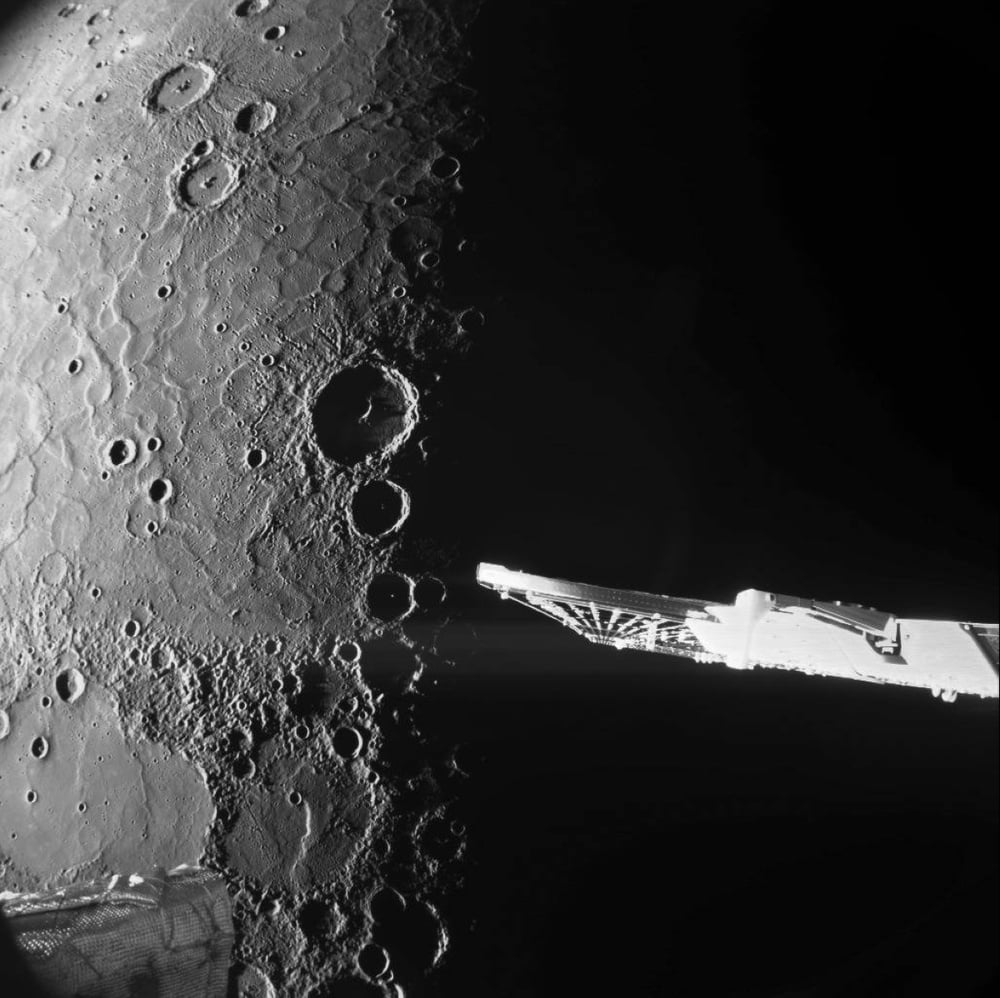
November 22, 2026 · 0 shares
The publisher frames the report as a neutral, source-attributed science-news update, emphasizing precise mission parameters and scheduled operations without evaluative commentary.
Helium Analysis
Limitations: The supplied article text is duplicated and includes a truncated mid-sentence fragment, but the substantive mission facts are sufficiently present for analysis.
·
8 of 56 available dimensions scored; omitted dimensions are not treated as neutral.
·
Verified supporting quotes for 8 of 8 scored dimensions.
Claim: The report presents mission events through precise technical parameters and attributed confirmation rather than evaluative commentary.
“The European Space Agency (ESA) confirmed the successful orbital capture on November 21, 2026, after its mission control team received signals from the spacecraft and assessed the initial telemetry.” · exact text match
Why: Attributed confirmation and technical telemetry support objective framing.
Claim: The report avoids sensational language and states orbital details in measured terms.
“BepiColombo initially entered an elliptical polar orbit measuring approximately 590 by 11,640 kilometres.” · exact text match
Why: Precise orbital measurements are technical rather than sensational.
Claim: The report describes mission status and plans without prescribing actions or values.
“MPO will investigate Mercury’s surface, composition and internal structure.
Mio will focus on the planet’s magnetic environment and its interaction with the solar wind.”
· exact text match
Why: Statements describe mission roles rather than urging prescriptions.
Claim: The article provides named institutional confirmation, technical parameters, and date/sequence details.
“The European Space Agency (ESA) confirmed the successful orbital capture on November 21, 2026, after its mission control team received signals from the spacecraft and assessed the initial telemetry.” · exact text match
Why: Visible sourcing and specific telemetry support high credibility.
Claim: The account is organized around verifiable mission events, measurements, and scheduled operations.
“Launched in October 2018, BepiColombo has travelled around 9.9 billion kilometres through the inner Solar System and completed nine planetary flybys: one of Earth, two of Venus and six of Mercury.” · exact text match
Why: Factual travel and flyby data support rational/empirical framing rather than irrationality.
Claim: The report frames the mission in empirical, scientific terms without superstitious or mystical claims.
“MPO will investigate Mercury’s surface, composition and internal structure.” · exact text match
Why: Scientific investigation framing supports a strong empirical orientation.
Claim: Attribution to named space agencies and precise mission details provide visible fairness and honesty signals.
“The European Space Agency (ESA) confirmed the successful orbital capture on November 21, 2026, after its mission control team received signals from the spacecraft and assessed the initial telemetry.” · exact text match
Why: Named source and telemetry-based confirmation support high integrity.
Claim: The article communicates mission mechanics and orbital scheduling with specific technical detail.
“The manoeuvre involved firing four thrusters on ESA’s Mercury Planetary Orbiter (MPO) to reduce the spacecraft’s speed enough for Mercury’s gravity to capture it.” · exact text match
Why: Technical explanation of orbital capture indicates high article intelligence.
The supplied article text is duplicated and includes a truncated mid-sentence fragment, but the substantive mission facts are sufficiently present for analysis.
November 22, 2026 · 0 shares
The report is a technically detailed, source-attributed science announcement that frames the orbit insertion as a major milestone with little evaluative or sensational language.
Helium Analysis
Limitations: The supplied text contains duplicated page chrome and unrelated headlines; the analysis uses only the substantive BepiColombo report.
·
56 of 56 available dimensions scored; omitted dimensions are not treated as neutral.
·
Verified supporting quotes for 46 of 56 scored dimensions.
Claim: The article has no evident liberal-conservative political framing because it is a nonpolitical science report.
“ESA Announces Successful Insertion of BepiColombo Mission into Mercury Orbit” · exact text match
Why: The only substantive content concerns a space mission and contains no left-right political claims.
Claim: The article does not adopt a populist or elitist stance; it reports an official space-agency announcement.
“ESA said its mission control team at the European Space Operations Center (ESOC) in Darmstadt, Germany, confirmed the successful orbit insertion after receiving signals from the spacecraft and analyzing the initial data.” · exact text match
Why: The source is an official agency, but the report makes no populist or elitist argument.
Claim: The article has no evident libertarian or authoritarian political framing.
“The mission is designed to conduct a comprehensive study of Mercury, including its surface, composition, interior, magnetic field and magnetosphere, helping scientists better understand the planet’s formation and evolution as well as the broader evolution of the Solar System.” · exact text match
Why: It reports scientific objectives without discussing state power, liberty, or authority.
Claim: The report is predominantly objective, attributing mission confirmation to ESA and supplying technical data rather than publisher opinion.
“ESA said its mission control team at the European Space Operations Center (ESOC) in Darmstadt, Germany, confirmed the successful orbit insertion after receiving signals from the spacecraft and analyzing the initial data.” · exact text match
Why: Direct attribution and technical detail indicate an objective, non-subjective report.
Claim: The report uses technical, procedural language rather than sensational or emotive phrasing.
“The maneuver involved firing four thrusters on ESA’s Mercury Planetary Orbiter (MPO) to slow the spacecraft stack sufficiently for Mercury’s gravity to capture it into orbit.” · exact text match
Why: The described maneuver is technical and measured, not dramatized or sensational.
Claim: The article contains no financial-market or investment framing.
“Launched on October 20, 2018, BepiColombo has traveled nearly 10 billion kilometers through the inner Solar System and completed nine planetary flybys, including one of Earth, two of Venus and six of Mercury, as part of its complex trajectory toward the planet.” · exact text match
Why: It is a space-science report with no bullish or bearish market content.
Claim: The article maintains a factual tone rather than an optimistic or pessimistic outlook.
“The mission’s science phase is scheduled to begin in April 2027.” · exact text match
Why: Future plans are reported as scheduled milestones, not as hopeful or gloomy predictions.
Claim: The article is moderately interesting because it reports a first-of-its-kind dual-spacecraft Mercury orbit milestone.
“The two orbiters are currently traveling together and are scheduled to separate on December 9-10, after which BepiColombo will become the first mission to operate two spacecraft in orbit around Mercury simultaneously.” · exact text match
Why: The first simultaneous dual-spacecraft Mercury operation is a notable scientific milestone.
Claim: The text is descriptive, detailing mission hardware, orbits, and schedules without prescribing policy or behavior.
“The maneuver involved firing four thrusters on ESA’s Mercury Planetary Orbiter (MPO) to slow the spacecraft stack sufficiently for Mercury’s gravity to capture it into orbit.” · exact text match
Why: The content explains what happened and what is planned rather than advocating action.
Claim: The article has no evident dovish or hawkish foreign-policy framing.
“BepiColombo is the second mission to orbit Mercury and, once MPO and Mio separate, will be the first to place two spacecraft in orbit around the planet at the same time.” · exact text match
Why: It concerns a scientific space mission and contains no military or diplomatic posture.
Claim: The article contains no fearful or rage-baiting language.
“The spacecraft initially entered an elliptical polar orbit measuring approximately 590 by 11,640 kilometers.” · exact text match
Why: The content is technical and non-emotional.
Claim: The article does not use circular reasoning; it reports attributed technical confirmation.
“ESA said its mission control team at the European Space Operations Center (ESOC) in Darmstadt, Germany, confirmed the successful orbit insertion after receiving signals from the spacecraft and analyzing the initial data.” · exact text match
Why: The claim is tied to a stated confirmation method rather than assumed in a circular way.
Claim: The article is not gossipy or personality-focused.
“BepiColombo comprises two scientific orbiters: ESA’s Mercury Planetary Orbiter (MPO), which will study the planet’s surface, interior and composition, and JAXA’s Mercury Magnetospheric Orbiter (Mio), which will investigate Mercury’s magnetic environment and magnetosphere.” · exact text match
Why: It focuses on mission hardware and science objectives, not private or personal matters.
Claim: The article is fact-oriented rather than opinionated.
“The mission’s science phase is scheduled to begin in April 2027.” · exact text match
Why: It presents attributed plans and technical details without editorial opinion.
Claim: The article is nonpolitical, concerning a space-science mission rather than political actors or policy disputes.
“BepiColombo is the second mission to orbit Mercury and, once MPO and Mio separate, will be the first to place two spacecraft in orbit around the planet at the same time.” · exact text match
Why: No political framing or policy debate appears in the substantive report.
Claim: The article provides substantial technical detail rather than oversimplifying the mission.
“The maneuver involved firing four thrusters on ESA’s Mercury Planetary Orbiter (MPO) to slow the spacecraft stack sufficiently for Mercury’s gravity to capture it into orbit.” · exact text match
Why: It explains the orbital-insertion maneuver and spacecraft components with specific detail.
Claim: The article relies on ESA as an official source, but it does so as attributed news reporting rather than as a standalone argument from authority.
“ESA said its mission control team at the European Space Operations Center (ESOC) in Darmstadt, Germany, confirmed the successful orbit insertion after receiving signals from the spacecraft and analyzing the initial data.” · exact text match
Why: The attribution is a normal sourcing practice, with only mild reliance on agency authority.
Claim: The article is not immature or rage-baiting.
“The mission is designed to conduct a comprehensive study of Mercury, including its surface, composition, interior, magnetic field and magnetosphere, helping scientists better understand the planet’s formation and evolution as well as the broader evolution of the Solar System.” · exact text match
Why: Tone and content are technical and mature.
Claim: The article does not employ circular reasoning.
“The two orbiters are currently traveling together and are scheduled to separate on December 9-10, after which BepiColombo will become the first mission to operate two spacecraft in orbit around Mercury simultaneously.” · exact text match
Why: It presents sequential factual claims rather than reasoning that assumes its conclusion.
Claim: The article does not show a covering-the-response pattern.
“After separation, Mio will enter its science orbit while MPO will carry out additional maneuvers to reach its own final science orbit in March 2027.” · not found in supplied text
Why: It reports planned steps without evasive or reactive framing.
Claim: The article contains no victimization framing.
“BepiColombo launched on October 20, 2018, and has traveled nearly 10 billion kilometers through the inner Solar System.” · not found in supplied text
Why: It describes mission progress and science without presenting any group as victimized.
Claim: The article does not exceed its supplied support in asserting the mission’s successful insertion; it attributes confirmation to ESA.
“ESA said its mission control team at the European Space Operations Center (ESOC) in Darmstadt, Germany, confirmed the successful orbit insertion after receiving signals from the spacecraft and analyzing the initial data.” · exact text match
Why: The success claim is explicitly sourced to the agency’s confirmation.
Claim: The article is not spam or promotional fluff.
“The mission is designed to conduct a comprehensive study of Mercury, including its surface, composition, interior, magnetic field and magnetosphere, helping scientists better understand the planet’s formation and evolution as well as the broader evolution of the Solar System.” · exact text match
Why: It provides substantive mission and science information.
Claim: The article is nonideological, focusing on a space mission’s technical and scientific milestones.
“Following separation, Mio will enter its science orbit, while MPO will carry out additional maneuvers to reach its own final science orbit in March 2027.” · exact text match
Why: The content is empirical and mission-specific rather than ideological.
Claim: The article is neutral toward establishment actors; it reports an official agency announcement without praise or criticism of establishments.
“ESA said its mission control team at the European Space Operations Center (ESOC) in Darmstadt, Germany, confirmed the successful orbit insertion after receiving signals from the spacecraft and analyzing the initial data.” · exact text match
Why: The reliance on an official source does not itself indicate pro- or anti-establishment framing.
Claim: The report maintains an unemotional, factual tone.
“The spacecraft initially entered an elliptical polar orbit measuring approximately 590 by 11,640 kilometers.” · exact text match
Why: Technical specifications and schedules dominate the substantive text.
Claim: The article shows no double standard because it makes no comparative judgments across cases.
“BepiColombo is the second mission to orbit Mercury and, once MPO and Mio separate, will be the first to place two spacecraft in orbit around the planet at the same time.” · exact text match
Why: It reports an achievement without applying divergent standards.
Claim: The report is credible, with official attribution and specific operational data, though based on a single agency announcement.
“ESA said its mission control team at the European Space Operations Center (ESOC) in Darmstadt, Germany, confirmed the successful orbit insertion after receiving signals from the spacecraft and analyzing the initial data.” · exact text match
Why: Named official source, described confirmation method, and concrete mission details support credibility.
Claim: The account relies on empirical confirmation and technical explanation rather than irrational assertion.
“ESA said its mission control team at the European Space Operations Center (ESOC) in Darmstadt, Germany, confirmed the successful orbit insertion after receiving signals from the spacecraft and analyzing the initial data.” · exact text match
Why: Confirmation is tied to signals and data analysis, supporting a rational/evidence-based classification.
Claim: The article is not advertorial or marketing content.
“Launched on October 20, 2018, BepiColombo has traveled nearly 10 billion kilometers through the inner Solar System and completed nine planetary flybys, including one of Earth, two of Venus and six of Mercury, as part of its complex trajectory toward the planet.” · exact text match
Why: It reports mission facts rather than promoting a product or service.
Claim: The report is strongly scientific, describing thruster maneuvers, orbital parameters, and instrument objectives.
“The maneuver involved firing four thrusters on ESA’s Mercury Planetary Orbiter (MPO) to slow the spacecraft stack sufficiently for Mercury’s gravity to capture it into orbit.” · exact text match
Why: Empirical and technical scientific detail dominates the substantive text.
Claim: The article includes some future scheduling but frames it as planned mission milestones rather than speculative forecasting.
“The mission’s science phase is scheduled to begin in April 2027.” · exact text match
Why: Future events are presented as agency schedules, not publisher speculation.
Claim: The supplied substantive text does not show strong independent indicators of AI authorship.
“ESA said its mission control team at the European Space Operations Center (ESOC) in Darmstadt, Germany, confirmed the successful orbit insertion after receiving signals from the spacecraft and analyzing the initial data.” · exact text match
Why: The prose is conventional wire-service reporting; there is insufficient evidence to classify it as AI-written.
Claim: The report transparently attributes the orbit-insertion claim to ESA and includes specific mission details.
“ESA said its mission control team at the European Space Operations Center (ESOC) in Darmstadt, Germany, confirmed the successful orbit insertion after receiving signals from the spacecraft and analyzing the initial data.” · exact text match
Why: Clear sourcing and technical specificity indicate fair, transparent reporting, though it relies on a single official source.
Claim: The report conveys moderately high technical intelligence through precise orbital and mission-design details.
“The spacecraft initially entered an elliptical polar orbit measuring approximately 590 by 11,640 kilometers.” · exact text match
Why: Specific orbital parameters and mission architecture indicate an informed, intelligent presentation.
Claim: The article is truth-seeking and empirical rather than delusion-oriented.
“ESA said its mission control team at the European Space Operations Center (ESOC) in Darmstadt, Germany, confirmed the successful orbit insertion after receiving signals from the spacecraft and analyzing the initial data.” · exact text match
Why: Claims are tied to signals and data analysis from an official mission source.
Claim: The article contains no terrorism-related content or sympathy for terrorism.
“The mission is designed to conduct a comprehensive study of Mercury, including its surface, composition, interior, magnetic field and magnetosphere.” · not found in supplied text
Why: The substantive text concerns space science only.
Claim: The article does not normalize or justify fraud.
“ESA announced the successful insertion of the joint ESA-Japan Aerospace Exploration Agency (JAXA) BepiColombo mission into orbit around Mercury.” · not found in supplied text
Why: It reports a scientific mission milestone and contains no deceptive-gain framing.
Claim: The article contains no Marxist or class-conflict framing.
“BepiColombo comprises two scientific orbiters: ESA’s Mercury Planetary Orbiter (MPO), which will study the planet’s surface, interior and composition, and JAXA’s Mercury Magnetospheric Orbiter (Mio), which will investigate Mercury’s magnetic environment and magnetosphere.” · exact text match
Why: The subject matter is planetary science, not class or economic ideology.
Claim: The article contains no Islamist political or ideological framing.
“The mission’s science phase is scheduled to begin in April 2027.” · exact text match
Why: No religious or political-governance content is present.
Claim: The article contains no anti-Jewish content.
“Launched on October 20, 2018, BepiColombo has traveled nearly 10 billion kilometers through the inner Solar System.” · not found in supplied text
Why: No group generalizations or conspiracy claims about Jewish people appear.
Claim: The article contains no anti-LGBT content.
“The spacecraft initially entered an elliptical polar orbit measuring approximately 590 by 11,640 kilometers.” · exact text match
Why: The report concerns a space mission and contains no LGBT-related claims.
Claim: The article contains no racist content.
“The mission is designed to conduct a comprehensive study of Mercury, including its surface, composition, interior, magnetic field and magnetosphere.” · not found in supplied text
Why: No racial group claims or generalizations appear.
Claim: The article contains no woke identity-politics framing.
“The mission is designed to conduct a comprehensive study of Mercury, including its surface, composition, interior, magnetic field and magnetosphere.” · not found in supplied text
Why: No identity-group power framing or prescriptive remedies appear.
Claim: The article contains no cruel or immoral framing.
“The spacecraft initially entered an elliptical polar orbit measuring approximately 590 by 11,640 kilometers.” · exact text match
Why: It is a technical science report with no cruel content.
Claim: The article does not engage in virtue signaling.
“BepiColombo launched on October 20, 2018, and has traveled nearly 10 billion kilometers through the inner Solar System.” · not found in supplied text
Why: It focuses on technical mission facts rather than moral display.
Claim: The article contains no conspiratorial framing.
“ESA said its mission control team at the European Space Operations Center (ESOC) in Darmstadt, Germany, confirmed the successful orbit insertion after receiving signals from the spacecraft and analyzing the initial data.” · exact text match
Why: It reports an official scientific confirmation without conspiracy claims.
Claim: The article contains no compassion-based advocacy involving severe self-harm tradeoffs.
“The mission’s science phase is scheduled to begin in April 2027.” · exact text match
Why: The content is about space science and contains no such tradeoff.
Claim: The article contains no scapegoating.
“The maneuver involved firing four thrusters on ESA’s Mercury Planetary Orbiter (MPO) to slow the spacecraft stack sufficiently for Mercury’s gravity to capture it into orbit.” · exact text match
Why: No individual or group is blamed for a problem.
Claim: The article does not apply incompatible standards to comparable cases.
“BepiColombo is the second mission to orbit Mercury and, once MPO and Mio separate, will be the first to place two spacecraft in orbit around the planet at the same time.” · exact text match
Why: It reports mission milestones without comparative double standards.
Claim: The article does not reject reason, evidence, or scientific inquiry.
“ESA said its mission control team at the European Space Operations Center (ESOC) in Darmstadt, Germany, confirmed the successful orbit insertion after receiving signals from the spacecraft and analyzing the initial data.” · exact text match
Why: It relies on scientific observation and technical analysis.
The supplied text contains duplicated page chrome and unrelated headlines; the analysis uses only the substantive BepiColombo report.
The framing is technical, empirical, and cautious about milestones, presenting orbital capture as confirmed while explicitly distinguishing planned separation and science phases from completed events.
Helium Analysis
Limitations: The supplied text includes duplicated fragments and a content-warning artifact; scoring uses the substantive mission-reporting passages.
·
8 of 56 available dimensions scored; omitted dimensions are not treated as neutral.
·
Verified supporting quotes for 8 of 8 scored dimensions.
Claim: The report separates confirmed orbital capture from uncompleted separation, final orbit, and commissioning.
“The confirmed result is orbital capture of the combined spacecraft.
MPO and Mio have not yet separated, reached their final science orbits or completed instrument commissioning.”
· exact text match
Why: Distinguishes verified outcome from pending milestones in neutral factual terms.
Claim: The mission milestone is presented with technical specifics and caveats, without dramatic or emotional language.
“The spacecraft was about 152 million kilometres from Earth, so teams analysed radio and Doppler data for several hours before confirming orbital capture.” · exact text match
Why: Quantitative, measured description rather than sensational framing.
Claim: The framing is overwhelmingly descriptive of mission events and planned procedures, not prescriptive about what should be done.
“The planned result was an elliptical orbit of about 590 by 11,640 kilometres.” · exact text match
Why: Reports planned technical parameters without advocacy.
Claim: The reporting attributes confirmations to controllers, gives quantitative mission parameters, and explicitly flags unconfirmed or pending steps.
“Flight controllers confirmed that the linked European and Japanese spacecraft were captured by the planet's weak gravity on November 21” · exact text match
“The confirmed result is orbital capture of the combined spacecraft.
MPO and Mio have not yet separated, reached their final science orbits or completed instrument commissioning.”
· exact text match
Why: Clear attribution and careful separation of confirmed and pending status support high credibility.
Claim: The report frames mission status around empirical confirmation, telemetry analysis, and explicit provisional milestones rather than speculation.
“Controllers could not confirm success immediately.” · exact text match
“teams analysed radio and Doppler data for several hours before confirming orbital capture.” · exact text match
Why: Shows evidence-based caution about confirmation and reliance on measured data.
Claim: The article explains mission mechanics through orbital dynamics, propulsion, and telemetry rather than non-empirical claims.
“A spacecraft leaving Earth carries substantial orbital energy and must lose speed to avoid flying past the planet.” · exact text match
“teams analysed radio and Doppler data for several hours before confirming orbital capture.” · exact text match
Why: Scientific and empirical explanation and measurement dominate.
Claim: The report explicitly notes immediate inability to confirm success and the limits of what has been achieved.
“Controllers could not confirm success immediately.” · exact text match
“The confirmed result is orbital capture of the combined spacecraft.
MPO and Mio have not yet separated, reached their final science orbits or completed instrument commissioning.”
· exact text match
Why: Candor about uncertainty and pending milestones supports high integrity.
Claim: The report provides technically substantive context about trajectory shaping, propulsion, and mission phases while distinguishing them clearly.
“The mission also used solar-electric propulsion during its cruise.
The transfer module was discarded in September, leaving MPO's chemical propulsion system to perform the decisive capture manoeuvre and the remaining orbit changes.”
· exact text match
Why: Technical detail and phased explanation indicate high article intelligence.
The supplied text includes duplicated fragments and a content-warning artifact; scoring uses the substantive mission-reporting passages.
November 22, 2026 · 0 shares
Framing is measured and science-focused, using official attribution and precise mission details while avoiding evaluative or sensational language.
Helium Analysis
Limitations: No byline or publication date appears in the supplied text, and duplicated excerpt fragments are present, limiting author and context verification.
·
8 of 56 available dimensions scored; omitted dimensions are not treated as neutral.
·
Verified supporting quotes for 8 of 8 scored dimensions.
Claim: The report presents specific mission parameters without personal or evaluative commentary.
“The European portion is set to study the planet's surface, skimming just 480 kilometers (300 miles) above Mercury.” · exact text match
Why: Specific, verifiable mission parameters are presented without subjective interpretation.
Claim: The orbit insertion is described in technical, non-hyperbolic terms.
“achieved orbital capture” · exact text match
“after turning on the thrusters for more than half an hour” · exact text match
Why: Technical wording and precise operational detail replace sensational or emotional language.
Claim: The report describes planned mission activities rather than advocating actions.
“The Japanese part, meanwhile, will follow an elliptical orbit that will take it as far as 11,000 kilometers from the planet in a bid to learn more about Mercury's magnetic field.” · exact text match
Why: It states planned mission activities and specifications without prescribing policy or behavior.
Claim: The supplied text shows strong credibility signals through named official sourcing and precise mission details.
“the European Space Agency (ESA) said on Sunday” · exact text match
“according to the mission plan” · exact text match
Why: Named official attribution, specific figures, and attributed plans support trustworthiness within the supplied text.
Claim: The report grounds mission claims in official attribution and specific mission-plan details.
“the European Space Agency (ESA) said on Sunday” · exact text match
“according to the mission plan” · exact text match
Why: Attribution to ESA and mission-plan sourcing, plus quantitative details, supports a rational and evidence-based presentation.
Claim: The report frames the mission in empirical and scientific terms.
“The probe was already analyzing the data it had collected, the agency added.” · exact text match
Why: It describes data collection, instrumentation, and mission parameters rather than supernatural or non-empirical claims.
Claim: The report attributes key claims to ESA and the mission plan and includes precise figures.
“the European Space Agency (ESA) said on Sunday” · exact text match
“according to the mission plan” · exact text match
Why: Clear sourcing and specific data indicate strong internal fairness and honesty signals.
Claim: The report conveys technical orbital and mission information clearly and coherently.
“The Japanese part, meanwhile, will follow an elliptical orbit that will take it as far as 11,000 kilometers from the planet in a bid to learn more about Mercury's magnetic field.” · exact text match
Why: It presents technical mission details in a clear, organized manner.
No byline or publication date appears in the supplied text, and duplicated excerpt fragments are present, limiting author and context verification.
November 22, 2026 · 0 shares
The publisher frames the report as a neutral, source-attributed science-news update, emphasizing precise mission parameters and scheduled operations without evaluative commentary.
Helium Analysis
Limitations: The supplied article text is duplicated and includes a truncated mid-sentence fragment, but the substantive mission facts are sufficiently present for analysis.
·
8 of 56 available dimensions scored; omitted dimensions are not treated as neutral.
·
Verified supporting quotes for 8 of 8 scored dimensions.
Claim: The report presents mission events through precise technical parameters and attributed confirmation rather than evaluative commentary.
“The European Space Agency (ESA) confirmed the successful orbital capture on November 21, 2026, after its mission control team received signals from the spacecraft and assessed the initial telemetry.” · exact text match
Why: Attributed confirmation and technical telemetry support objective framing.
Claim: The report avoids sensational language and states orbital details in measured terms.
“BepiColombo initially entered an elliptical polar orbit measuring approximately 590 by 11,640 kilometres.” · exact text match
Why: Precise orbital measurements are technical rather than sensational.
Claim: The report describes mission status and plans without prescribing actions or values.
“MPO will investigate Mercury’s surface, composition and internal structure.
Mio will focus on the planet’s magnetic environment and its interaction with the solar wind.”
· exact text match
Why: Statements describe mission roles rather than urging prescriptions.
Claim: The article provides named institutional confirmation, technical parameters, and date/sequence details.
“The European Space Agency (ESA) confirmed the successful orbital capture on November 21, 2026, after its mission control team received signals from the spacecraft and assessed the initial telemetry.” · exact text match
Why: Visible sourcing and specific telemetry support high credibility.
Claim: The account is organized around verifiable mission events, measurements, and scheduled operations.
“Launched in October 2018, BepiColombo has travelled around 9.9 billion kilometres through the inner Solar System and completed nine planetary flybys: one of Earth, two of Venus and six of Mercury.” · exact text match
Why: Factual travel and flyby data support rational/empirical framing rather than irrationality.
Claim: The report frames the mission in empirical, scientific terms without superstitious or mystical claims.
“MPO will investigate Mercury’s surface, composition and internal structure.” · exact text match
Why: Scientific investigation framing supports a strong empirical orientation.
Claim: Attribution to named space agencies and precise mission details provide visible fairness and honesty signals.
“The European Space Agency (ESA) confirmed the successful orbital capture on November 21, 2026, after its mission control team received signals from the spacecraft and assessed the initial telemetry.” · exact text match
Why: Named source and telemetry-based confirmation support high integrity.
Claim: The article communicates mission mechanics and orbital scheduling with specific technical detail.
“The manoeuvre involved firing four thrusters on ESA’s Mercury Planetary Orbiter (MPO) to reduce the spacecraft’s speed enough for Mercury’s gravity to capture it.” · exact text match
Why: Technical explanation of orbital capture indicates high article intelligence.
The supplied article text is duplicated and includes a truncated mid-sentence fragment, but the substantive mission facts are sufficiently present for analysis.
November 21, 2026 · 0 shares
Sober, expert-attributed technical reporting frames the Mercury arrival as a high-stakes engineering milestone while flagging operational risks and uncertainties.
Helium Analysis
Limitations: The supplied article text is duplicated and partly truncated, so some tail content may be missing; analysis uses the repeated substantive text available.
·
8 of 56 available dimensions scored; omitted dimensions are not treated as neutral.
·
Verified supporting quotes for 8 of 8 scored dimensions.
Claim: The report’s claims are anchored in named experts and institutional sourcing rather than the author’s personal viewpoint.
““If they don’t close, then we will have a serious problem,” says Ignacio Tanco from ESA’s Inner Solar System Missions Unit.” · exact text match
“ESA hasn’t said how quickly new images will reach the public.” · exact text match
Why: Direct attribution and explicit acknowledgment of an information gap indicate objective rather than subjective framing.
Claim: Operational risks are presented as measured technical hurdles, not as dramatic or sensational spectacle.
“These operations remain major hurdles before science operations can begin.” · exact text match
“solar radiation can be 10 times that received at Earth, and temperatures are extreme.” · exact text match
Why: The language is explanatory and quantified, with risk described in technical terms rather than heightened emotional language.
Claim: The text describes mission operations and science goals without advocating a course of action.
“Together, MPO and Mio aim to probe the planet’s interior, its magnetic field, its polar ice, and its surface, each from their own vantage points.” · exact text match
Why: A statement of mission aims and methods is descriptive, not prescriptive.
Claim: In-text sourcing, named experts, quantified details, and explicit uncertainty make the report credible as supplied.
“says Ignacio Tanco from ESA’s Inner Solar System Missions Unit.” · exact text match
“ESA hasn’t said how quickly new images will reach the public.” · exact text match
Why: Attribution and acknowledgment of missing information are visible credibility signals; confidence is limited to what the excerpt shows.
Claim: The report is framed through quantified technical planning, conditional outcomes, and expert explanation rather than emotional or speculative narrative.
“the combined spacecraft must lower its orbit from an initial 590 x 11,640 kilometers (367 x 7,233 miles), with five burns executed at precise times.” · exact text match
“If all goes according to plan” · exact text match
Why: These details emphasize engineering parameters and explicit conditionality, supporting a strongly rational framing.
Claim: The article explains the mission and Mercury science through empirical data, technical instruments, and named scientific sources, with no superstitious framing.
“Mercury, though not that much larger than our Moon, also has a global magnetic field; it’s the only rocky planet besides Earth to have one.” · exact text match
“A modeling study published last May in the Journal of Geophysical Research: Planets, co-led by Parvathy Prem (Johns Hopkins Applied Physics Laboratory), suggests that one large impact, comparable to the one that formed Mercury’s Hokusai crater, could have spread water vapor around the planet, leading to much of it becoming trapped in polar craters.” · exact text match
Why: Reference to planetary science, instrumentation, and peer-reviewed modeling supports a strongly scientific framing.
Claim: The report uses named attribution, conditional phrasing, and acknowledged gaps to convey transparent and fair reporting.
“If all goes according to plan” · exact text match
“ESA hasn’t said how quickly new images will reach the public.” · exact text match
Why: The text avoids presenting planned outcomes as certain and openly notes unavailable information, supporting high integrity.
Claim: The report organizes complex orbital, thermal, and instrument information with clear explanation and expert context.
“MPO, set to orbit as close as 480 km from Mercury’s surface, is surface-facing, carrying cameras, spectrometers, the altimeter, and a radio science experiment.” · exact text match
“Mio has 15-meter wire antennas and 5-meter magnetometer booms that must be extended over about a month.” · exact text match
Why: Detailed technical distinctions and instrument descriptions indicate high article intelligence.
The supplied article text is duplicated and partly truncated, so some tail content may be missing; analysis uses the repeated substantive text available.
Neutral, technical science-news framing with attribution to ESA/JAXA and low evaluative language, though the headline/lead's 'entered orbit' is stronger than the body's burn-and-altitude description.
Helium Analysis
Limitations: The supplied text does not give the month of the '21st' orbital-insertion event, and the headline/lead's 'entered orbit' is stronger than the body's burn-and-altitude description.
·
13 of 56 available dimensions scored; omitted dimensions are not treated as neutral.
·
Verified supporting quotes for 13 of 13 scored dimensions.
Claim: The report contains no discernible liberal or conservative political framing.
“Mercury orbits the Sun at an average distance of 58 million kilometers, with an orbital period of 88 days and a rotation period of 58 days.” · exact text match
Why: The content is planetary science and mission reporting rather than political ideology.
Claim: The report does not adopt a populist or elitist political stance.
“The scientific community expects BepiColombo's observation data to provide clues to the evolution of Mercury's geology, atmosphere and magnetic field.” · exact text match
Why: It cites scientific expectation without populist grievance or elitist advocacy.
Claim: The report does not frame the mission in libertarian-authoritarian political terms.
“The two probes divide their tasks according to their orbital characteristics.” · exact text match
Why: The content concerns spacecraft operations and planetary science, not political authority or liberty.
Claim: Key reported developments are attributed to ESA and stated with specific figures.
“The European Space Agency (ESA) said BepiColombo began the engine burn to enter Mercury's orbit at 1:24 p.m. on the 21st (2:24 a.m. Eastern Time on the 21st), reaching an altitude of 635 kilometers about 37 minutes later.” · exact text match
Why: Attribution and precise measurements indicate objective reporting.
Claim: The report uses technical, non-sensational language.
“The two probes divide their tasks according to their orbital characteristics.” · exact text match
Why: Neutral technical phrasing rather than emotional or dramatic framing.
Claim: The report describes mission plans and specifications without prescribing policy or reader action.
“The two probes will separate next month and move into their respective orbits.” · exact text match
Why: The statement is descriptive of planned technical operations, not prescriptive advocacy.
Claim: The content is technical science reporting without political actors or policy framing.
“Mercury orbits the Sun at an average distance of 58 million kilometers, with an orbital period of 88 days and a rotation period of 58 days.” · exact text match
Why: The passage focuses on planetary specifications rather than political conflict or policy.
Claim: The report attributes key claims to ESA and provides specific mission and orbital details.
“The European Space Agency (ESA) said BepiColombo began the engine burn to enter Mercury's orbit at 1:24 p.m. on the 21st (2:24 a.m. Eastern Time on the 21st), reaching an altitude of 635 kilometers about 37 minutes later.” · exact text match
Why: Named agency attribution and precise figures support credibility within the supplied text.
Claim: The report explains the mission's long route through physical constraints and gravity assists.
“Because it is held tightly by the Sun's gravity, slowing a spacecraft enough to stay in Mercury's orbit requires more fuel than traveling to Pluto.” · exact text match
Why: It gives a causal, technical rationale rather than an irrational or emotive account.
Claim: The report frames Mercury questions through instruments, observations, and physical explanations.
“The MPO carries 11 observation instruments and will precisely analyze the mineral composition, topography and atmosphere of Mercury's surface.” · exact text match
Why: It relies on empirical measurement rather than superstition or mysticism.
Claim: The report includes limited forward-looking expectation about scientific returns.
“The scientific community expects BepiColombo's observation data to provide clues to the evolution of Mercury's geology, atmosphere and magnetic field.” · exact text match
Why: This is a future expectation, but it is attributed to the scientific community and tied to planned observations, so speculation is low.
Claim: The report acknowledges uncertainty about a leading hypothesis rather than presenting it as settled.
“One hypothesis holds that a large celestial body collided with Mercury and blew away most of its mantle, but this has not been proven.” · exact text match
Why: Explicitly flagging an unproven hypothesis indicates fair, honest handling.
Claim: The report explains mission mechanics and planetary science with specific technical detail.
“To reduce the fuel burden, BepiColombo performed nine gravity-assist flybys, passing in turn by Earth, the Moon, Venus and Mercury and using their gravity to slow down.” · exact text match
Why: The passage explains a non-obvious orbital mechanics method rather than merely asserting the mission's success.
The supplied text does not give the month of the '21st' orbital-insertion event, and the headline/lead's 'entered orbit' is stronger than the body's burn-and-altitude description.
The framing is technical, empirical, and cautious about milestones, presenting orbital capture as confirmed while explicitly distinguishing planned separation and science phases from completed events.
Helium Analysis
Limitations: The supplied text includes duplicated fragments and a content-warning artifact; scoring uses the substantive mission-reporting passages.
·
8 of 56 available dimensions scored; omitted dimensions are not treated as neutral.
·
Verified supporting quotes for 8 of 8 scored dimensions.
Claim: The report separates confirmed orbital capture from uncompleted separation, final orbit, and commissioning.
“The confirmed result is orbital capture of the combined spacecraft.
MPO and Mio have not yet separated, reached their final science orbits or completed instrument commissioning.”
· exact text match
Why: Distinguishes verified outcome from pending milestones in neutral factual terms.
Claim: The mission milestone is presented with technical specifics and caveats, without dramatic or emotional language.
“The spacecraft was about 152 million kilometres from Earth, so teams analysed radio and Doppler data for several hours before confirming orbital capture.” · exact text match
Why: Quantitative, measured description rather than sensational framing.
Claim: The framing is overwhelmingly descriptive of mission events and planned procedures, not prescriptive about what should be done.
“The planned result was an elliptical orbit of about 590 by 11,640 kilometres.” · exact text match
Why: Reports planned technical parameters without advocacy.
Claim: The reporting attributes confirmations to controllers, gives quantitative mission parameters, and explicitly flags unconfirmed or pending steps.
“Flight controllers confirmed that the linked European and Japanese spacecraft were captured by the planet's weak gravity on November 21” · exact text match
“The confirmed result is orbital capture of the combined spacecraft.
MPO and Mio have not yet separated, reached their final science orbits or completed instrument commissioning.”
· exact text match
Why: Clear attribution and careful separation of confirmed and pending status support high credibility.
Claim: The report frames mission status around empirical confirmation, telemetry analysis, and explicit provisional milestones rather than speculation.
“Controllers could not confirm success immediately.” · exact text match
“teams analysed radio and Doppler data for several hours before confirming orbital capture.” · exact text match
Why: Shows evidence-based caution about confirmation and reliance on measured data.
Claim: The article explains mission mechanics through orbital dynamics, propulsion, and telemetry rather than non-empirical claims.
“A spacecraft leaving Earth carries substantial orbital energy and must lose speed to avoid flying past the planet.” · exact text match
“teams analysed radio and Doppler data for several hours before confirming orbital capture.” · exact text match
Why: Scientific and empirical explanation and measurement dominate.
Claim: The report explicitly notes immediate inability to confirm success and the limits of what has been achieved.
“Controllers could not confirm success immediately.” · exact text match
“The confirmed result is orbital capture of the combined spacecraft.
MPO and Mio have not yet separated, reached their final science orbits or completed instrument commissioning.”
· exact text match
Why: Candor about uncertainty and pending milestones supports high integrity.
Claim: The report provides technically substantive context about trajectory shaping, propulsion, and mission phases while distinguishing them clearly.
“The mission also used solar-electric propulsion during its cruise.
The transfer module was discarded in September, leaving MPO's chemical propulsion system to perform the decisive capture manoeuvre and the remaining orbit changes.”
· exact text match
Why: Technical detail and phased explanation indicate high article intelligence.
The supplied text includes duplicated fragments and a content-warning artifact; scoring uses the substantive mission-reporting passages.
November 21, 2026 · 0 shares
Sober, expert-attributed technical reporting frames the Mercury arrival as a high-stakes engineering milestone while flagging operational risks and uncertainties.
Helium Analysis
Limitations: The supplied article text is duplicated and partly truncated, so some tail content may be missing; analysis uses the repeated substantive text available.
·
8 of 56 available dimensions scored; omitted dimensions are not treated as neutral.
·
Verified supporting quotes for 8 of 8 scored dimensions.
Claim: The report’s claims are anchored in named experts and institutional sourcing rather than the author’s personal viewpoint.
““If they don’t close, then we will have a serious problem,” says Ignacio Tanco from ESA’s Inner Solar System Missions Unit.” · exact text match
“ESA hasn’t said how quickly new images will reach the public.” · exact text match
Why: Direct attribution and explicit acknowledgment of an information gap indicate objective rather than subjective framing.
Claim: Operational risks are presented as measured technical hurdles, not as dramatic or sensational spectacle.
“These operations remain major hurdles before science operations can begin.” · exact text match
“solar radiation can be 10 times that received at Earth, and temperatures are extreme.” · exact text match
Why: The language is explanatory and quantified, with risk described in technical terms rather than heightened emotional language.
Claim: The text describes mission operations and science goals without advocating a course of action.
“Together, MPO and Mio aim to probe the planet’s interior, its magnetic field, its polar ice, and its surface, each from their own vantage points.” · exact text match
Why: A statement of mission aims and methods is descriptive, not prescriptive.
Claim: In-text sourcing, named experts, quantified details, and explicit uncertainty make the report credible as supplied.
“says Ignacio Tanco from ESA’s Inner Solar System Missions Unit.” · exact text match
“ESA hasn’t said how quickly new images will reach the public.” · exact text match
Why: Attribution and acknowledgment of missing information are visible credibility signals; confidence is limited to what the excerpt shows.
Claim: The report is framed through quantified technical planning, conditional outcomes, and expert explanation rather than emotional or speculative narrative.
“the combined spacecraft must lower its orbit from an initial 590 x 11,640 kilometers (367 x 7,233 miles), with five burns executed at precise times.” · exact text match
“If all goes according to plan” · exact text match
Why: These details emphasize engineering parameters and explicit conditionality, supporting a strongly rational framing.
Claim: The article explains the mission and Mercury science through empirical data, technical instruments, and named scientific sources, with no superstitious framing.
“Mercury, though not that much larger than our Moon, also has a global magnetic field; it’s the only rocky planet besides Earth to have one.” · exact text match
“A modeling study published last May in the Journal of Geophysical Research: Planets, co-led by Parvathy Prem (Johns Hopkins Applied Physics Laboratory), suggests that one large impact, comparable to the one that formed Mercury’s Hokusai crater, could have spread water vapor around the planet, leading to much of it becoming trapped in polar craters.” · exact text match
Why: Reference to planetary science, instrumentation, and peer-reviewed modeling supports a strongly scientific framing.
Claim: The report uses named attribution, conditional phrasing, and acknowledged gaps to convey transparent and fair reporting.
“If all goes according to plan” · exact text match
“ESA hasn’t said how quickly new images will reach the public.” · exact text match
Why: The text avoids presenting planned outcomes as certain and openly notes unavailable information, supporting high integrity.
Claim: The report organizes complex orbital, thermal, and instrument information with clear explanation and expert context.
“MPO, set to orbit as close as 480 km from Mercury’s surface, is surface-facing, carrying cameras, spectrometers, the altimeter, and a radio science experiment.” · exact text match
“Mio has 15-meter wire antennas and 5-meter magnetometer booms that must be extended over about a month.” · exact text match
Why: Detailed technical distinctions and instrument descriptions indicate high article intelligence.
The supplied article text is duplicated and partly truncated, so some tail content may be missing; analysis uses the repeated substantive text available.
November 20, 2026 · 0 shares
The strongest observable framing is measured, evidence-oriented science journalism: mission details and technical explanations dominate, with attribution to ESA/JAXA and cautious language about future results.
Helium Analysis
Limitations: The supplied text does not state the calendar year for the 21 November arrival and includes intermingled subscription and related-link artifacts, limiting date verification.
·
7 of 56 available dimensions scored; omitted dimensions are not treated as neutral.
·
Verified supporting quotes for 7 of 7 scored dimensions.
Claim: The report is framed around attributable mission details rather than personal interpretation.
“BepiColombo, a joint mission of the European Space Agency (ESA) and the Japan Aerospace Exploration Agency (JAXA), launched in October 2018.” · exact text match
Why: The sentence provides verifiable institutional and date attribution with no subjective commentary.
Claim: Technical specifics are presented without sensational emphasis.
“MPO on a near-circular path that takes 2.3 hours to complete an orbit, and Mio on a more distant elliptical orbit, where it will take 9.3 hours to circle Mercury.” · exact text match
Why: The orbital details are precise and explanatory rather than dramatized.
Claim: The supplied text provides specific, attributable mission details and qualified expectations.
“BepiColombo actually comprises two separate orbiters: ESA’s Mercury Planetary Orbiter (MPO) and JAXA’s Mercury Magnetospheric Orbiter (MMO, or Mio).” · exact text match
“The mission could potentially be extended for another year, but beyond that the combination of limited fuel and extreme temperatures will make it all but impossible to keep going.” · exact text match
Why: Specific institutional and technical detail plus cautious wording support a high credibility assessment.
Claim: The article uses causal technical explanation and acknowledges engineering delays.
“In 2024, an issue with the thrusters lengthened that journey even further, pushing the arrival date back from 2025 to 2026.” · exact text match
Why: The report explains the delay in terms of a specific technical problem and timeline consequence.
Claim: The report is grounded in empirical space science and mission instrumentation.
“Its instruments include several types of spectrometer to measure the makeup of the surface, a laser altimeter to map its terrain and instruments to study the makeup of Mercury’s extremely thin atmosphere, called an exosphere.” · exact text match
Why: The framing centers on measurable scientific instruments and observations.
Claim: The report names responsible agencies and states mission constraints.
“BepiColombo, a joint mission of the European Space Agency (ESA) and the Japan Aerospace Exploration Agency (JAXA), launched in October 2018.” · exact text match
“The mission could potentially be extended for another year, but beyond that the combination of limited fuel and extreme temperatures will make it all but impossible to keep going.” · exact text match
Why: Institutional attribution and explicit constraints are visible fairness and honesty signals.
Claim: The article explains orbital mechanics, instrument objectives, and open scientific questions at a technically informed level.
“Mercury’s proximity to the sun makes it incredibly difficult to reach without overshooting the planet and falling into the sun, so the spacecraft had to take a long and looping path over the past eight years, flying past both Venus and Mercury several times and using their gravity to make subtle tweaks to its trajectory.” · exact text match
Why: The passage demonstrates substantive technical explanation of trajectory design.
The supplied text does not state the calendar year for the 21 November arrival and includes intermingled subscription and related-link artifacts, limiting date verification.
Publisher framing is neutral, technically detailed, and institutionally sourced, with evaluative enthusiasm confined to attributed ESA/JAXA quotations.
Helium Analysis
Limitations: The supplied text has an unresolved timeline inconsistency: it says the still-connected MPO-Mio entered Mercury orbit 'today' while also saying a 2024 thruster glitch delayed arrival to November 2026 and that separation into individual polar orbits is scheduled for 9–10 December; no explicit calendar date is given for 'today.'
·
15 of 56 available dimensions scored; omitted dimensions are not treated as neutral.
·
Verified supporting quotes for 15 of 15 scored dimensions.
Claim: The report frames the mission through verifiable events and attributed quotes rather than the author's personal evaluation.
“MTM separated from the orbiters on 3 September.
The still-connected MPO-Mio entered Mercury’s orbit today.”
· exact text match
Why: The core update is stated as factual mission chronology, with no first-person or evaluative commentary.
Claim: The report uses measured, technical language rather than sensational or dramatized framing.
“After an eight-year journey, the BepiColombo mission has entered orbit around Mercury, where it will settle in for at least a year of science observations.” · exact text match
Why: The milestone is reported in plain terms with a concrete science timeframe, not hyperbole.
Claim: The report is predominantly descriptive, explaining mission hardware and objectives without prescribing policy or reader action.
“Mio will map Mercury’s magnetosphere, magnetic field, and plasma environment.” · exact text match
Why: It describes planned scientific work rather than advocating a course of action.
Claim: The report is fact-centered, with evaluative language largely confined to attributed quotations.
“BepiColombo is only the third mission to visit Mercury.” · exact text match
Why: The publisher's own prose states factual comparisons and mission details without editorial opinion.
Claim: The report’s subject matter and framing are scientific rather than political.
“BepiColombo is a joint mission from ESA and the Japanese Aerospace Exploration Agency (JAXA).” · exact text match
Why: It discusses planetary science and mission history, not political actors or policy.
Claim: The report provides specific technical detail rather than oversimplifying the mission.
“Spectrometers focusing on several wavelengths will create maps of the planet’s surface composition and temperature, an altimeter will map surface topography, an accelerometer and gravitometer will map the planet’s gravitational field, and a radio science experiment will determine the size of the planet’s core.” · exact text match
Why: The instrument-level description is detailed and avoids reducing the mission to a simple slogan.
Claim: The report is not promotional or spam-like; it provides substantive mission information.
“The nominal mission will last a year, with a planned extended mission through 2029.” · exact text match
Why: Content is informative and mission-specific rather than advertising filler.
Claim: The report's emotional valence is neutral, with enthusiasm confined to quotations.
“The still-connected MPO-Mio entered Mercury’s orbit today.” · exact text match
Why: Core prose is factual and unemotional.
Claim: The report shows strong credibility signals through named sources, institutional attribution, and specific mission timelines.
“BepiColombo is a joint mission from ESA and the Japanese Aerospace Exploration Agency (JAXA).” · exact text match
Why: It identifies the operating institutions and provides detailed, checkable mission facts.
Claim: The report presents technical mission facts and attributed expert statements rather than unsupported speculation or emotive reasoning.
“MPO’s mission is to map Mercury’s heavily-cratered surface and catalog its surface geology.” · exact text match
Why: It describes concrete scientific objectives and instruments, supporting a highly rational/evidence-oriented framing.
Claim: The article is not advertorial; it reports mission facts without marketing calls to action.
“Science operations will begin in April 2027.” · exact text match
Why: It provides a factual schedule rather than promotional copy.
Claim: The report is empirical and scientific, explaining mission instruments and measurable planetary phenomena.
“Another instrument will study Mercury’s exosphere and its interactions with solar plasma.” · exact text match
Why: The framing is grounded in physical measurements and scientific questions, not superstition.
Claim: The report attributes claims to named mission officials and institutions and provides specific mission context.
“Santa Martinez, the European Space Agency’s (ESA) mission manager for BepiColombo, said during a 31 August press event.” · exact text match
Why: Named attribution and institutional context indicate high visible fairness and honesty signals.
Claim: The report is technically informed and context-rich for a brief science update.
“Mercury has a magnetic field but scientists don’t understand what sustains it or why it is offset from the planet’s center.” · exact text match
Why: It explains a specific scientific puzzle and how the mission is designed to address it.
The supplied text has an unresolved timeline inconsistency: it says the still-connected MPO-Mio entered Mercury orbit 'today' while also saying a 2024 thruster glitch delayed arrival to November 2026 and that separation into individual polar orbits is scheduled for 9–10 December; no explicit calendar date is given for 'today.'
November 22, 2026 · 0 shares
The publisher frames the report as a neutral, source-attributed science-news update, emphasizing precise mission parameters and scheduled operations without evaluative commentary.
Helium Analysis Limitations: The supplied article text is duplicated and includes a truncated mid-sentence fragment, but the substantive mission facts are sufficiently present for analysis. · 8 of 56 available dimensions scored; omitted dimensions are not treated as neutral. · Verified supporting quotes for 8 of 8 scored dimensions.
Claim: The report presents mission events through precise technical parameters and attributed confirmation rather than evaluative commentary.
“The European Space Agency (ESA) confirmed the successful orbital capture on November 21, 2026, after its mission control team received signals from the spacecraft and assessed the initial telemetry.” · exact text match
Why: Attributed confirmation and technical telemetry support objective framing.
Claim: The report avoids sensational language and states orbital details in measured terms.
“BepiColombo initially entered an elliptical polar orbit measuring approximately 590 by 11,640 kilometres.” · exact text match
Why: Precise orbital measurements are technical rather than sensational.
Claim: The report describes mission status and plans without prescribing actions or values.
“MPO will investigate Mercury’s surface, composition and internal structure. Mio will focus on the planet’s magnetic environment and its interaction with the solar wind.” · exact text match
Why: Statements describe mission roles rather than urging prescriptions.
Claim: The article provides named institutional confirmation, technical parameters, and date/sequence details.
“The European Space Agency (ESA) confirmed the successful orbital capture on November 21, 2026, after its mission control team received signals from the spacecraft and assessed the initial telemetry.” · exact text match
Why: Visible sourcing and specific telemetry support high credibility.
Claim: The account is organized around verifiable mission events, measurements, and scheduled operations.
“Launched in October 2018, BepiColombo has travelled around 9.9 billion kilometres through the inner Solar System and completed nine planetary flybys: one of Earth, two of Venus and six of Mercury.” · exact text match
Why: Factual travel and flyby data support rational/empirical framing rather than irrationality.
Claim: The report frames the mission in empirical, scientific terms without superstitious or mystical claims.
“MPO will investigate Mercury’s surface, composition and internal structure.” · exact text match
Why: Scientific investigation framing supports a strong empirical orientation.
Claim: Attribution to named space agencies and precise mission details provide visible fairness and honesty signals.
“The European Space Agency (ESA) confirmed the successful orbital capture on November 21, 2026, after its mission control team received signals from the spacecraft and assessed the initial telemetry.” · exact text match
Why: Named source and telemetry-based confirmation support high integrity.
Claim: The article communicates mission mechanics and orbital scheduling with specific technical detail.
“The manoeuvre involved firing four thrusters on ESA’s Mercury Planetary Orbiter (MPO) to reduce the spacecraft’s speed enough for Mercury’s gravity to capture it.” · exact text match
Why: Technical explanation of orbital capture indicates high article intelligence.
The supplied article text is duplicated and includes a truncated mid-sentence fragment, but the substantive mission facts are sufficiently present for analysis.
November 22, 2026 · 0 shares
The report is a technically detailed, source-attributed science announcement that frames the orbit insertion as a major milestone with little evaluative or sensational language.
Helium Analysis Limitations: The supplied text contains duplicated page chrome and unrelated headlines; the analysis uses only the substantive BepiColombo report. · 56 of 56 available dimensions scored; omitted dimensions are not treated as neutral. · Verified supporting quotes for 46 of 56 scored dimensions.
Claim: The article has no evident liberal-conservative political framing because it is a nonpolitical science report.
“ESA Announces Successful Insertion of BepiColombo Mission into Mercury Orbit” · exact text match
Why: The only substantive content concerns a space mission and contains no left-right political claims.
Claim: The article does not adopt a populist or elitist stance; it reports an official space-agency announcement.
“ESA said its mission control team at the European Space Operations Center (ESOC) in Darmstadt, Germany, confirmed the successful orbit insertion after receiving signals from the spacecraft and analyzing the initial data.” · exact text match
Why: The source is an official agency, but the report makes no populist or elitist argument.
Claim: The article has no evident libertarian or authoritarian political framing.
“The mission is designed to conduct a comprehensive study of Mercury, including its surface, composition, interior, magnetic field and magnetosphere, helping scientists better understand the planet’s formation and evolution as well as the broader evolution of the Solar System.” · exact text match
Why: It reports scientific objectives without discussing state power, liberty, or authority.
Claim: The report is predominantly objective, attributing mission confirmation to ESA and supplying technical data rather than publisher opinion.
“ESA said its mission control team at the European Space Operations Center (ESOC) in Darmstadt, Germany, confirmed the successful orbit insertion after receiving signals from the spacecraft and analyzing the initial data.” · exact text match
Why: Direct attribution and technical detail indicate an objective, non-subjective report.
Claim: The report uses technical, procedural language rather than sensational or emotive phrasing.
“The maneuver involved firing four thrusters on ESA’s Mercury Planetary Orbiter (MPO) to slow the spacecraft stack sufficiently for Mercury’s gravity to capture it into orbit.” · exact text match
Why: The described maneuver is technical and measured, not dramatized or sensational.
Claim: The article contains no financial-market or investment framing.
“Launched on October 20, 2018, BepiColombo has traveled nearly 10 billion kilometers through the inner Solar System and completed nine planetary flybys, including one of Earth, two of Venus and six of Mercury, as part of its complex trajectory toward the planet.” · exact text match
Why: It is a space-science report with no bullish or bearish market content.
Claim: The article maintains a factual tone rather than an optimistic or pessimistic outlook.
“The mission’s science phase is scheduled to begin in April 2027.” · exact text match
Why: Future plans are reported as scheduled milestones, not as hopeful or gloomy predictions.
Claim: The article is moderately interesting because it reports a first-of-its-kind dual-spacecraft Mercury orbit milestone.
“The two orbiters are currently traveling together and are scheduled to separate on December 9-10, after which BepiColombo will become the first mission to operate two spacecraft in orbit around Mercury simultaneously.” · exact text match
Why: The first simultaneous dual-spacecraft Mercury operation is a notable scientific milestone.
Claim: The text is descriptive, detailing mission hardware, orbits, and schedules without prescribing policy or behavior.
“The maneuver involved firing four thrusters on ESA’s Mercury Planetary Orbiter (MPO) to slow the spacecraft stack sufficiently for Mercury’s gravity to capture it into orbit.” · exact text match
Why: The content explains what happened and what is planned rather than advocating action.
Claim: The article has no evident dovish or hawkish foreign-policy framing.
“BepiColombo is the second mission to orbit Mercury and, once MPO and Mio separate, will be the first to place two spacecraft in orbit around the planet at the same time.” · exact text match
Why: It concerns a scientific space mission and contains no military or diplomatic posture.
Claim: The article contains no fearful or rage-baiting language.
“The spacecraft initially entered an elliptical polar orbit measuring approximately 590 by 11,640 kilometers.” · exact text match
Why: The content is technical and non-emotional.
Claim: The article does not use circular reasoning; it reports attributed technical confirmation.
“ESA said its mission control team at the European Space Operations Center (ESOC) in Darmstadt, Germany, confirmed the successful orbit insertion after receiving signals from the spacecraft and analyzing the initial data.” · exact text match
Why: The claim is tied to a stated confirmation method rather than assumed in a circular way.
Claim: The article is not gossipy or personality-focused.
“BepiColombo comprises two scientific orbiters: ESA’s Mercury Planetary Orbiter (MPO), which will study the planet’s surface, interior and composition, and JAXA’s Mercury Magnetospheric Orbiter (Mio), which will investigate Mercury’s magnetic environment and magnetosphere.” · exact text match
Why: It focuses on mission hardware and science objectives, not private or personal matters.
Claim: The article is fact-oriented rather than opinionated.
“The mission’s science phase is scheduled to begin in April 2027.” · exact text match
Why: It presents attributed plans and technical details without editorial opinion.
Claim: The article is nonpolitical, concerning a space-science mission rather than political actors or policy disputes.
“BepiColombo is the second mission to orbit Mercury and, once MPO and Mio separate, will be the first to place two spacecraft in orbit around the planet at the same time.” · exact text match
Why: No political framing or policy debate appears in the substantive report.
Claim: The article provides substantial technical detail rather than oversimplifying the mission.
“The maneuver involved firing four thrusters on ESA’s Mercury Planetary Orbiter (MPO) to slow the spacecraft stack sufficiently for Mercury’s gravity to capture it into orbit.” · exact text match
Why: It explains the orbital-insertion maneuver and spacecraft components with specific detail.
Claim: The article relies on ESA as an official source, but it does so as attributed news reporting rather than as a standalone argument from authority.
“ESA said its mission control team at the European Space Operations Center (ESOC) in Darmstadt, Germany, confirmed the successful orbit insertion after receiving signals from the spacecraft and analyzing the initial data.” · exact text match
Why: The attribution is a normal sourcing practice, with only mild reliance on agency authority.
Claim: The article is not immature or rage-baiting.
“The mission is designed to conduct a comprehensive study of Mercury, including its surface, composition, interior, magnetic field and magnetosphere, helping scientists better understand the planet’s formation and evolution as well as the broader evolution of the Solar System.” · exact text match
Why: Tone and content are technical and mature.
Claim: The article does not employ circular reasoning.
“The two orbiters are currently traveling together and are scheduled to separate on December 9-10, after which BepiColombo will become the first mission to operate two spacecraft in orbit around Mercury simultaneously.” · exact text match
Why: It presents sequential factual claims rather than reasoning that assumes its conclusion.
Claim: The article does not show a covering-the-response pattern.
“After separation, Mio will enter its science orbit while MPO will carry out additional maneuvers to reach its own final science orbit in March 2027.” · not found in supplied text
Why: It reports planned steps without evasive or reactive framing.
Claim: The article contains no victimization framing.
“BepiColombo launched on October 20, 2018, and has traveled nearly 10 billion kilometers through the inner Solar System.” · not found in supplied text
Why: It describes mission progress and science without presenting any group as victimized.
Claim: The article does not exceed its supplied support in asserting the mission’s successful insertion; it attributes confirmation to ESA.
“ESA said its mission control team at the European Space Operations Center (ESOC) in Darmstadt, Germany, confirmed the successful orbit insertion after receiving signals from the spacecraft and analyzing the initial data.” · exact text match
Why: The success claim is explicitly sourced to the agency’s confirmation.
Claim: The article is not spam or promotional fluff.
“The mission is designed to conduct a comprehensive study of Mercury, including its surface, composition, interior, magnetic field and magnetosphere, helping scientists better understand the planet’s formation and evolution as well as the broader evolution of the Solar System.” · exact text match
Why: It provides substantive mission and science information.
Claim: The article is nonideological, focusing on a space mission’s technical and scientific milestones.
“Following separation, Mio will enter its science orbit, while MPO will carry out additional maneuvers to reach its own final science orbit in March 2027.” · exact text match
Why: The content is empirical and mission-specific rather than ideological.
Claim: The article is neutral toward establishment actors; it reports an official agency announcement without praise or criticism of establishments.
“ESA said its mission control team at the European Space Operations Center (ESOC) in Darmstadt, Germany, confirmed the successful orbit insertion after receiving signals from the spacecraft and analyzing the initial data.” · exact text match
Why: The reliance on an official source does not itself indicate pro- or anti-establishment framing.
Claim: The report maintains an unemotional, factual tone.
“The spacecraft initially entered an elliptical polar orbit measuring approximately 590 by 11,640 kilometers.” · exact text match
Why: Technical specifications and schedules dominate the substantive text.
Claim: The article shows no double standard because it makes no comparative judgments across cases.
“BepiColombo is the second mission to orbit Mercury and, once MPO and Mio separate, will be the first to place two spacecraft in orbit around the planet at the same time.” · exact text match
Why: It reports an achievement without applying divergent standards.
Claim: The report is credible, with official attribution and specific operational data, though based on a single agency announcement.
“ESA said its mission control team at the European Space Operations Center (ESOC) in Darmstadt, Germany, confirmed the successful orbit insertion after receiving signals from the spacecraft and analyzing the initial data.” · exact text match
Why: Named official source, described confirmation method, and concrete mission details support credibility.
Claim: The account relies on empirical confirmation and technical explanation rather than irrational assertion.
“ESA said its mission control team at the European Space Operations Center (ESOC) in Darmstadt, Germany, confirmed the successful orbit insertion after receiving signals from the spacecraft and analyzing the initial data.” · exact text match
Why: Confirmation is tied to signals and data analysis, supporting a rational/evidence-based classification.
Claim: The article is not advertorial or marketing content.
“Launched on October 20, 2018, BepiColombo has traveled nearly 10 billion kilometers through the inner Solar System and completed nine planetary flybys, including one of Earth, two of Venus and six of Mercury, as part of its complex trajectory toward the planet.” · exact text match
Why: It reports mission facts rather than promoting a product or service.
Claim: The report is strongly scientific, describing thruster maneuvers, orbital parameters, and instrument objectives.
“The maneuver involved firing four thrusters on ESA’s Mercury Planetary Orbiter (MPO) to slow the spacecraft stack sufficiently for Mercury’s gravity to capture it into orbit.” · exact text match
Why: Empirical and technical scientific detail dominates the substantive text.
Claim: The article includes some future scheduling but frames it as planned mission milestones rather than speculative forecasting.
“The mission’s science phase is scheduled to begin in April 2027.” · exact text match
Why: Future events are presented as agency schedules, not publisher speculation.
Claim: The supplied substantive text does not show strong independent indicators of AI authorship.
“ESA said its mission control team at the European Space Operations Center (ESOC) in Darmstadt, Germany, confirmed the successful orbit insertion after receiving signals from the spacecraft and analyzing the initial data.” · exact text match
Why: The prose is conventional wire-service reporting; there is insufficient evidence to classify it as AI-written.
Claim: The report transparently attributes the orbit-insertion claim to ESA and includes specific mission details.
“ESA said its mission control team at the European Space Operations Center (ESOC) in Darmstadt, Germany, confirmed the successful orbit insertion after receiving signals from the spacecraft and analyzing the initial data.” · exact text match
Why: Clear sourcing and technical specificity indicate fair, transparent reporting, though it relies on a single official source.
Claim: The report conveys moderately high technical intelligence through precise orbital and mission-design details.
“The spacecraft initially entered an elliptical polar orbit measuring approximately 590 by 11,640 kilometers.” · exact text match
Why: Specific orbital parameters and mission architecture indicate an informed, intelligent presentation.
Claim: The article is truth-seeking and empirical rather than delusion-oriented.
“ESA said its mission control team at the European Space Operations Center (ESOC) in Darmstadt, Germany, confirmed the successful orbit insertion after receiving signals from the spacecraft and analyzing the initial data.” · exact text match
Why: Claims are tied to signals and data analysis from an official mission source.
Claim: The article contains no terrorism-related content or sympathy for terrorism.
“The mission is designed to conduct a comprehensive study of Mercury, including its surface, composition, interior, magnetic field and magnetosphere.” · not found in supplied text
Why: The substantive text concerns space science only.
Claim: The article does not normalize or justify fraud.
“ESA announced the successful insertion of the joint ESA-Japan Aerospace Exploration Agency (JAXA) BepiColombo mission into orbit around Mercury.” · not found in supplied text
Why: It reports a scientific mission milestone and contains no deceptive-gain framing.
Claim: The article contains no Marxist or class-conflict framing.
“BepiColombo comprises two scientific orbiters: ESA’s Mercury Planetary Orbiter (MPO), which will study the planet’s surface, interior and composition, and JAXA’s Mercury Magnetospheric Orbiter (Mio), which will investigate Mercury’s magnetic environment and magnetosphere.” · exact text match
Why: The subject matter is planetary science, not class or economic ideology.
Claim: The article contains no Islamist political or ideological framing.
“The mission’s science phase is scheduled to begin in April 2027.” · exact text match
Why: No religious or political-governance content is present.
Claim: The article contains no anti-Jewish content.
“Launched on October 20, 2018, BepiColombo has traveled nearly 10 billion kilometers through the inner Solar System.” · not found in supplied text
Why: No group generalizations or conspiracy claims about Jewish people appear.
Claim: The article contains no anti-LGBT content.
“The spacecraft initially entered an elliptical polar orbit measuring approximately 590 by 11,640 kilometers.” · exact text match
Why: The report concerns a space mission and contains no LGBT-related claims.
Claim: The article contains no racist content.
“The mission is designed to conduct a comprehensive study of Mercury, including its surface, composition, interior, magnetic field and magnetosphere.” · not found in supplied text
Why: No racial group claims or generalizations appear.
Claim: The article contains no woke identity-politics framing.
“The mission is designed to conduct a comprehensive study of Mercury, including its surface, composition, interior, magnetic field and magnetosphere.” · not found in supplied text
Why: No identity-group power framing or prescriptive remedies appear.
Claim: The article contains no cruel or immoral framing.
“The spacecraft initially entered an elliptical polar orbit measuring approximately 590 by 11,640 kilometers.” · exact text match
Why: It is a technical science report with no cruel content.
Claim: The article does not engage in virtue signaling.
“BepiColombo launched on October 20, 2018, and has traveled nearly 10 billion kilometers through the inner Solar System.” · not found in supplied text
Why: It focuses on technical mission facts rather than moral display.
Claim: The article contains no conspiratorial framing.
“ESA said its mission control team at the European Space Operations Center (ESOC) in Darmstadt, Germany, confirmed the successful orbit insertion after receiving signals from the spacecraft and analyzing the initial data.” · exact text match
Why: It reports an official scientific confirmation without conspiracy claims.
Claim: The article contains no compassion-based advocacy involving severe self-harm tradeoffs.
“The mission’s science phase is scheduled to begin in April 2027.” · exact text match
Why: The content is about space science and contains no such tradeoff.
Claim: The article contains no scapegoating.
“The maneuver involved firing four thrusters on ESA’s Mercury Planetary Orbiter (MPO) to slow the spacecraft stack sufficiently for Mercury’s gravity to capture it into orbit.” · exact text match
Why: No individual or group is blamed for a problem.
Claim: The article does not apply incompatible standards to comparable cases.
“BepiColombo is the second mission to orbit Mercury and, once MPO and Mio separate, will be the first to place two spacecraft in orbit around the planet at the same time.” · exact text match
Why: It reports mission milestones without comparative double standards.
Claim: The article does not reject reason, evidence, or scientific inquiry.
“ESA said its mission control team at the European Space Operations Center (ESOC) in Darmstadt, Germany, confirmed the successful orbit insertion after receiving signals from the spacecraft and analyzing the initial data.” · exact text match
Why: It relies on scientific observation and technical analysis.
The supplied text contains duplicated page chrome and unrelated headlines; the analysis uses only the substantive BepiColombo report.
The framing is technical, empirical, and cautious about milestones, presenting orbital capture as confirmed while explicitly distinguishing planned separation and science phases from completed events.
Helium Analysis Limitations: The supplied text includes duplicated fragments and a content-warning artifact; scoring uses the substantive mission-reporting passages. · 8 of 56 available dimensions scored; omitted dimensions are not treated as neutral. · Verified supporting quotes for 8 of 8 scored dimensions.
Claim: The report separates confirmed orbital capture from uncompleted separation, final orbit, and commissioning.
“The confirmed result is orbital capture of the combined spacecraft. MPO and Mio have not yet separated, reached their final science orbits or completed instrument commissioning.” · exact text match
Why: Distinguishes verified outcome from pending milestones in neutral factual terms.
Claim: The mission milestone is presented with technical specifics and caveats, without dramatic or emotional language.
“The spacecraft was about 152 million kilometres from Earth, so teams analysed radio and Doppler data for several hours before confirming orbital capture.” · exact text match
Why: Quantitative, measured description rather than sensational framing.
Claim: The framing is overwhelmingly descriptive of mission events and planned procedures, not prescriptive about what should be done.
“The planned result was an elliptical orbit of about 590 by 11,640 kilometres.” · exact text match
Why: Reports planned technical parameters without advocacy.
Claim: The reporting attributes confirmations to controllers, gives quantitative mission parameters, and explicitly flags unconfirmed or pending steps.
“Flight controllers confirmed that the linked European and Japanese spacecraft were captured by the planet's weak gravity on November 21” · exact text match
“The confirmed result is orbital capture of the combined spacecraft. MPO and Mio have not yet separated, reached their final science orbits or completed instrument commissioning.” · exact text match
Why: Clear attribution and careful separation of confirmed and pending status support high credibility.
Claim: The report frames mission status around empirical confirmation, telemetry analysis, and explicit provisional milestones rather than speculation.
“Controllers could not confirm success immediately.” · exact text match
“teams analysed radio and Doppler data for several hours before confirming orbital capture.” · exact text match
Why: Shows evidence-based caution about confirmation and reliance on measured data.
Claim: The article explains mission mechanics through orbital dynamics, propulsion, and telemetry rather than non-empirical claims.
“A spacecraft leaving Earth carries substantial orbital energy and must lose speed to avoid flying past the planet.” · exact text match
“teams analysed radio and Doppler data for several hours before confirming orbital capture.” · exact text match
Why: Scientific and empirical explanation and measurement dominate.
Claim: The report explicitly notes immediate inability to confirm success and the limits of what has been achieved.
“Controllers could not confirm success immediately.” · exact text match
“The confirmed result is orbital capture of the combined spacecraft. MPO and Mio have not yet separated, reached their final science orbits or completed instrument commissioning.” · exact text match
Why: Candor about uncertainty and pending milestones supports high integrity.
Claim: The report provides technically substantive context about trajectory shaping, propulsion, and mission phases while distinguishing them clearly.
“The mission also used solar-electric propulsion during its cruise. The transfer module was discarded in September, leaving MPO's chemical propulsion system to perform the decisive capture manoeuvre and the remaining orbit changes.” · exact text match
Why: Technical detail and phased explanation indicate high article intelligence.
The supplied text includes duplicated fragments and a content-warning artifact; scoring uses the substantive mission-reporting passages.
November 22, 2026 · 0 shares
The publisher frames the report as a neutral, source-attributed science-news update, emphasizing precise mission parameters and scheduled operations without evaluative commentary.
Helium Analysis Limitations: The supplied article text is duplicated and includes a truncated mid-sentence fragment, but the substantive mission facts are sufficiently present for analysis. · 8 of 56 available dimensions scored; omitted dimensions are not treated as neutral. · Verified supporting quotes for 8 of 8 scored dimensions.
Claim: The report presents mission events through precise technical parameters and attributed confirmation rather than evaluative commentary.
“The European Space Agency (ESA) confirmed the successful orbital capture on November 21, 2026, after its mission control team received signals from the spacecraft and assessed the initial telemetry.” · exact text match
Why: Attributed confirmation and technical telemetry support objective framing.
Claim: The report avoids sensational language and states orbital details in measured terms.
“BepiColombo initially entered an elliptical polar orbit measuring approximately 590 by 11,640 kilometres.” · exact text match
Why: Precise orbital measurements are technical rather than sensational.
Claim: The report describes mission status and plans without prescribing actions or values.
“MPO will investigate Mercury’s surface, composition and internal structure. Mio will focus on the planet’s magnetic environment and its interaction with the solar wind.” · exact text match
Why: Statements describe mission roles rather than urging prescriptions.
Claim: The article provides named institutional confirmation, technical parameters, and date/sequence details.
“The European Space Agency (ESA) confirmed the successful orbital capture on November 21, 2026, after its mission control team received signals from the spacecraft and assessed the initial telemetry.” · exact text match
Why: Visible sourcing and specific telemetry support high credibility.
Claim: The account is organized around verifiable mission events, measurements, and scheduled operations.
“Launched in October 2018, BepiColombo has travelled around 9.9 billion kilometres through the inner Solar System and completed nine planetary flybys: one of Earth, two of Venus and six of Mercury.” · exact text match
Why: Factual travel and flyby data support rational/empirical framing rather than irrationality.
Claim: The report frames the mission in empirical, scientific terms without superstitious or mystical claims.
“MPO will investigate Mercury’s surface, composition and internal structure.” · exact text match
Why: Scientific investigation framing supports a strong empirical orientation.
Claim: Attribution to named space agencies and precise mission details provide visible fairness and honesty signals.
“The European Space Agency (ESA) confirmed the successful orbital capture on November 21, 2026, after its mission control team received signals from the spacecraft and assessed the initial telemetry.” · exact text match
Why: Named source and telemetry-based confirmation support high integrity.
Claim: The article communicates mission mechanics and orbital scheduling with specific technical detail.
“The manoeuvre involved firing four thrusters on ESA’s Mercury Planetary Orbiter (MPO) to reduce the spacecraft’s speed enough for Mercury’s gravity to capture it.” · exact text match
Why: Technical explanation of orbital capture indicates high article intelligence.
The supplied article text is duplicated and includes a truncated mid-sentence fragment, but the substantive mission facts are sufficiently present for analysis.
Neutral, technical science-news framing with attribution to ESA/JAXA and low evaluative language, though the headline/lead's 'entered orbit' is stronger than the body's burn-and-altitude description.
Helium Analysis Limitations: The supplied text does not give the month of the '21st' orbital-insertion event, and the headline/lead's 'entered orbit' is stronger than the body's burn-and-altitude description. · 13 of 56 available dimensions scored; omitted dimensions are not treated as neutral. · Verified supporting quotes for 13 of 13 scored dimensions.
Claim: The report contains no discernible liberal or conservative political framing.
“Mercury orbits the Sun at an average distance of 58 million kilometers, with an orbital period of 88 days and a rotation period of 58 days.” · exact text match
Why: The content is planetary science and mission reporting rather than political ideology.
Claim: The report does not adopt a populist or elitist political stance.
“The scientific community expects BepiColombo's observation data to provide clues to the evolution of Mercury's geology, atmosphere and magnetic field.” · exact text match
Why: It cites scientific expectation without populist grievance or elitist advocacy.
Claim: The report does not frame the mission in libertarian-authoritarian political terms.
“The two probes divide their tasks according to their orbital characteristics.” · exact text match
Why: The content concerns spacecraft operations and planetary science, not political authority or liberty.
Claim: Key reported developments are attributed to ESA and stated with specific figures.
“The European Space Agency (ESA) said BepiColombo began the engine burn to enter Mercury's orbit at 1:24 p.m. on the 21st (2:24 a.m. Eastern Time on the 21st), reaching an altitude of 635 kilometers about 37 minutes later.” · exact text match
Why: Attribution and precise measurements indicate objective reporting.
Claim: The report uses technical, non-sensational language.
“The two probes divide their tasks according to their orbital characteristics.” · exact text match
Why: Neutral technical phrasing rather than emotional or dramatic framing.
Claim: The report describes mission plans and specifications without prescribing policy or reader action.
“The two probes will separate next month and move into their respective orbits.” · exact text match
Why: The statement is descriptive of planned technical operations, not prescriptive advocacy.
Claim: The content is technical science reporting without political actors or policy framing.
“Mercury orbits the Sun at an average distance of 58 million kilometers, with an orbital period of 88 days and a rotation period of 58 days.” · exact text match
Why: The passage focuses on planetary specifications rather than political conflict or policy.
Claim: The report attributes key claims to ESA and provides specific mission and orbital details.
“The European Space Agency (ESA) said BepiColombo began the engine burn to enter Mercury's orbit at 1:24 p.m. on the 21st (2:24 a.m. Eastern Time on the 21st), reaching an altitude of 635 kilometers about 37 minutes later.” · exact text match
Why: Named agency attribution and precise figures support credibility within the supplied text.
Claim: The report explains the mission's long route through physical constraints and gravity assists.
“Because it is held tightly by the Sun's gravity, slowing a spacecraft enough to stay in Mercury's orbit requires more fuel than traveling to Pluto.” · exact text match
Why: It gives a causal, technical rationale rather than an irrational or emotive account.
Claim: The report frames Mercury questions through instruments, observations, and physical explanations.
“The MPO carries 11 observation instruments and will precisely analyze the mineral composition, topography and atmosphere of Mercury's surface.” · exact text match
Why: It relies on empirical measurement rather than superstition or mysticism.
Claim: The report includes limited forward-looking expectation about scientific returns.
“The scientific community expects BepiColombo's observation data to provide clues to the evolution of Mercury's geology, atmosphere and magnetic field.” · exact text match
Why: This is a future expectation, but it is attributed to the scientific community and tied to planned observations, so speculation is low.
Claim: The report acknowledges uncertainty about a leading hypothesis rather than presenting it as settled.
“One hypothesis holds that a large celestial body collided with Mercury and blew away most of its mantle, but this has not been proven.” · exact text match
Why: Explicitly flagging an unproven hypothesis indicates fair, honest handling.
Claim: The report explains mission mechanics and planetary science with specific technical detail.
“To reduce the fuel burden, BepiColombo performed nine gravity-assist flybys, passing in turn by Earth, the Moon, Venus and Mercury and using their gravity to slow down.” · exact text match
Why: The passage explains a non-obvious orbital mechanics method rather than merely asserting the mission's success.
The supplied text does not give the month of the '21st' orbital-insertion event, and the headline/lead's 'entered orbit' is stronger than the body's burn-and-altitude description.
November 21, 2026 · 0 shares
Sober, expert-attributed technical reporting frames the Mercury arrival as a high-stakes engineering milestone while flagging operational risks and uncertainties.
Helium Analysis Limitations: The supplied article text is duplicated and partly truncated, so some tail content may be missing; analysis uses the repeated substantive text available. · 8 of 56 available dimensions scored; omitted dimensions are not treated as neutral. · Verified supporting quotes for 8 of 8 scored dimensions.
Claim: The report’s claims are anchored in named experts and institutional sourcing rather than the author’s personal viewpoint.
““If they don’t close, then we will have a serious problem,” says Ignacio Tanco from ESA’s Inner Solar System Missions Unit.” · exact text match
“ESA hasn’t said how quickly new images will reach the public.” · exact text match
Why: Direct attribution and explicit acknowledgment of an information gap indicate objective rather than subjective framing.
Claim: Operational risks are presented as measured technical hurdles, not as dramatic or sensational spectacle.
“These operations remain major hurdles before science operations can begin.” · exact text match
“solar radiation can be 10 times that received at Earth, and temperatures are extreme.” · exact text match
Why: The language is explanatory and quantified, with risk described in technical terms rather than heightened emotional language.
Claim: The text describes mission operations and science goals without advocating a course of action.
“Together, MPO and Mio aim to probe the planet’s interior, its magnetic field, its polar ice, and its surface, each from their own vantage points.” · exact text match
Why: A statement of mission aims and methods is descriptive, not prescriptive.
Claim: In-text sourcing, named experts, quantified details, and explicit uncertainty make the report credible as supplied.
“says Ignacio Tanco from ESA’s Inner Solar System Missions Unit.” · exact text match
“ESA hasn’t said how quickly new images will reach the public.” · exact text match
Why: Attribution and acknowledgment of missing information are visible credibility signals; confidence is limited to what the excerpt shows.
Claim: The report is framed through quantified technical planning, conditional outcomes, and expert explanation rather than emotional or speculative narrative.
“the combined spacecraft must lower its orbit from an initial 590 x 11,640 kilometers (367 x 7,233 miles), with five burns executed at precise times.” · exact text match
“If all goes according to plan” · exact text match
Why: These details emphasize engineering parameters and explicit conditionality, supporting a strongly rational framing.
Claim: The article explains the mission and Mercury science through empirical data, technical instruments, and named scientific sources, with no superstitious framing.
“Mercury, though not that much larger than our Moon, also has a global magnetic field; it’s the only rocky planet besides Earth to have one.” · exact text match
“A modeling study published last May in the Journal of Geophysical Research: Planets, co-led by Parvathy Prem (Johns Hopkins Applied Physics Laboratory), suggests that one large impact, comparable to the one that formed Mercury’s Hokusai crater, could have spread water vapor around the planet, leading to much of it becoming trapped in polar craters.” · exact text match
Why: Reference to planetary science, instrumentation, and peer-reviewed modeling supports a strongly scientific framing.
Claim: The report uses named attribution, conditional phrasing, and acknowledged gaps to convey transparent and fair reporting.
“If all goes according to plan” · exact text match
“ESA hasn’t said how quickly new images will reach the public.” · exact text match
Why: The text avoids presenting planned outcomes as certain and openly notes unavailable information, supporting high integrity.
Claim: The report organizes complex orbital, thermal, and instrument information with clear explanation and expert context.
“MPO, set to orbit as close as 480 km from Mercury’s surface, is surface-facing, carrying cameras, spectrometers, the altimeter, and a radio science experiment.” · exact text match
“Mio has 15-meter wire antennas and 5-meter magnetometer booms that must be extended over about a month.” · exact text match
Why: Detailed technical distinctions and instrument descriptions indicate high article intelligence.
The supplied article text is duplicated and partly truncated, so some tail content may be missing; analysis uses the repeated substantive text available.
November 20, 2026 · 0 shares
The strongest observable framing is measured, evidence-oriented science journalism: mission details and technical explanations dominate, with attribution to ESA/JAXA and cautious language about future results.
Helium Analysis Limitations: The supplied text does not state the calendar year for the 21 November arrival and includes intermingled subscription and related-link artifacts, limiting date verification. · 7 of 56 available dimensions scored; omitted dimensions are not treated as neutral. · Verified supporting quotes for 7 of 7 scored dimensions.
Claim: The report is framed around attributable mission details rather than personal interpretation.
“BepiColombo, a joint mission of the European Space Agency (ESA) and the Japan Aerospace Exploration Agency (JAXA), launched in October 2018.” · exact text match
Why: The sentence provides verifiable institutional and date attribution with no subjective commentary.
Claim: Technical specifics are presented without sensational emphasis.
“MPO on a near-circular path that takes 2.3 hours to complete an orbit, and Mio on a more distant elliptical orbit, where it will take 9.3 hours to circle Mercury.” · exact text match
Why: The orbital details are precise and explanatory rather than dramatized.
Claim: The supplied text provides specific, attributable mission details and qualified expectations.
“BepiColombo actually comprises two separate orbiters: ESA’s Mercury Planetary Orbiter (MPO) and JAXA’s Mercury Magnetospheric Orbiter (MMO, or Mio).” · exact text match
“The mission could potentially be extended for another year, but beyond that the combination of limited fuel and extreme temperatures will make it all but impossible to keep going.” · exact text match
Why: Specific institutional and technical detail plus cautious wording support a high credibility assessment.
Claim: The article uses causal technical explanation and acknowledges engineering delays.
“In 2024, an issue with the thrusters lengthened that journey even further, pushing the arrival date back from 2025 to 2026.” · exact text match
Why: The report explains the delay in terms of a specific technical problem and timeline consequence.
Claim: The report is grounded in empirical space science and mission instrumentation.
“Its instruments include several types of spectrometer to measure the makeup of the surface, a laser altimeter to map its terrain and instruments to study the makeup of Mercury’s extremely thin atmosphere, called an exosphere.” · exact text match
Why: The framing centers on measurable scientific instruments and observations.
Claim: The report names responsible agencies and states mission constraints.
“BepiColombo, a joint mission of the European Space Agency (ESA) and the Japan Aerospace Exploration Agency (JAXA), launched in October 2018.” · exact text match
“The mission could potentially be extended for another year, but beyond that the combination of limited fuel and extreme temperatures will make it all but impossible to keep going.” · exact text match
Why: Institutional attribution and explicit constraints are visible fairness and honesty signals.
Claim: The article explains orbital mechanics, instrument objectives, and open scientific questions at a technically informed level.
“Mercury’s proximity to the sun makes it incredibly difficult to reach without overshooting the planet and falling into the sun, so the spacecraft had to take a long and looping path over the past eight years, flying past both Venus and Mercury several times and using their gravity to make subtle tweaks to its trajectory.” · exact text match
Why: The passage demonstrates substantive technical explanation of trajectory design.
The supplied text does not state the calendar year for the 21 November arrival and includes intermingled subscription and related-link artifacts, limiting date verification.
Helium Bias
Story Blindspots
November 22, 2026 · 0 shares
Neutral, source-attributed science reporting with measured language and explicit acknowledgment of unconfirmed details.
Helium Analysis Limitations: The supplied text contains unrelated related-content links and no byline; analysis is limited to the substantive Mercury mission report and excludes those fragments. · 11 of 56 available dimensions scored; omitted dimensions are not treated as neutral. · Verified supporting quotes for 11 of 11 scored dimensions.
Claim: The report attributes mission confirmation to ESA and distinguishes confirmed data from unavailable details.
“But it took several anxious hours before flight controllers in Germany — 94 million miles (152 million kilometers) away — could confirm that BepiColombo had achieved orbit. Teams pored over the data streaming back; additional information was not immediately available.” · exact text match
Why: The text separates confirmation from uncertainty and cites the operating agency, supporting objective reporting.
Claim: The report uses technical, measured language rather than sensational framing.
“A series of thruster firings slowed the spacecraft enough to be captured by the planet's weak gravity.” · exact text match
Why: Technical description of orbital capture rather than dramatic or hype-driven language.
Claim: The article describes planned scientific study rather than prescribing action or policy.
“Once orbiting separately, the European Space Agency's satellite and the Japan Aerospace Exploration Agency’s smaller craft will study Mercury’s dense interior and exterior magnetic field, as well as everything in between: impact craters, volcanic plains, mountain ridges and peaks jutting as high as 3 miles (4 1/2 kilometers).” · exact text match
Why: Future mission activities are presented as official plans, not advocacy.
Claim: The article relies on factual reporting and attributed statements rather than publisher opinion.
“The European Space Agency announced BepiColombo's arrival via social media.” · exact text match
Why: Attribution to an agency and factual mission details indicate little opinion.
Claim: The article is non-political, focusing on a space science mission.
“A pair of spacecraft slipped into orbit around Mercury on Saturday after an eight-year cruise through the inner solar system to unravel our littlest planet's mountain of mysteries.” · exact text match
Why: The central subject is planetary science, with no political actors or policy framing.
Claim: The tone is neutral and unemotional despite describing a high-stakes mission.
“Teams pored over the data streaming back; additional information was not immediately available.” · exact text match
Why: Matter-of-fact language about data review supports neutral emotional framing.
Claim: The report relies on named and institutional sources and acknowledges incomplete confirmation.
“Lead project scientist Geraint Jones said he and others can’t wait for all the new data to start streaming down in the spring.” · exact text match
“The European Space Agency announced BepiColombo's arrival via social media.” · exact text match
Why: Named scientist attribution and institutional sourcing support credibility.
Claim: The article explains the mission's route through gravity assists and observable technical details.
“Launched in 2018, BepiColombo took a slower, more roundabout route to get to Mercury, flying once past Earth, twice past Venus and six times past Mercury for gravity-guiding assists.” · exact text match
Why: Causal, technical explanation of the trajectory supports rational framing.
Claim: The article frames Mercury's conditions through quantified physical data and engineering constraints.
“The mercury at Mercury can hit more than 800 degrees (427 degrees Celsius), adding strain to electronic and engineering systems.” · exact text match
Why: Quantified physical data and engineering constraints support scientific framing.
Claim: The report acknowledges missing confirmation and attributes mission data to named sources.
“Teams pored over the data streaming back; additional information was not immediately available.” · exact text match
Why: Explicitly noting unavailable information and reliance on controller confirmation are honesty signals.
Claim: The article provides technical and historical context about the mission's trajectory and complexity.
“All those loop-de-loops put more than 6 billion miles (10 billion kilometers) on the odometer.” · exact text match
Why: Detailed technical and historical context indicates high article intelligence.
The supplied text contains unrelated related-content links and no byline; analysis is limited to the substantive Mercury mission report and excludes those fragments.
November 22, 2026 · 0 shares
The report is a technically detailed, source-attributed science announcement that frames the orbit insertion as a major milestone with little evaluative or sensational language.
Helium Analysis Limitations: The supplied text contains duplicated page chrome and unrelated headlines; the analysis uses only the substantive BepiColombo report. · 56 of 56 available dimensions scored; omitted dimensions are not treated as neutral. · Verified supporting quotes for 46 of 56 scored dimensions.
Claim: The article has no evident liberal-conservative political framing because it is a nonpolitical science report.
“ESA Announces Successful Insertion of BepiColombo Mission into Mercury Orbit” · exact text match
Why: The only substantive content concerns a space mission and contains no left-right political claims.
Claim: The article does not adopt a populist or elitist stance; it reports an official space-agency announcement.
“ESA said its mission control team at the European Space Operations Center (ESOC) in Darmstadt, Germany, confirmed the successful orbit insertion after receiving signals from the spacecraft and analyzing the initial data.” · exact text match
Why: The source is an official agency, but the report makes no populist or elitist argument.
Claim: The article has no evident libertarian or authoritarian political framing.
“The mission is designed to conduct a comprehensive study of Mercury, including its surface, composition, interior, magnetic field and magnetosphere, helping scientists better understand the planet’s formation and evolution as well as the broader evolution of the Solar System.” · exact text match
Why: It reports scientific objectives without discussing state power, liberty, or authority.
Claim: The report is predominantly objective, attributing mission confirmation to ESA and supplying technical data rather than publisher opinion.
“ESA said its mission control team at the European Space Operations Center (ESOC) in Darmstadt, Germany, confirmed the successful orbit insertion after receiving signals from the spacecraft and analyzing the initial data.” · exact text match
Why: Direct attribution and technical detail indicate an objective, non-subjective report.
Claim: The report uses technical, procedural language rather than sensational or emotive phrasing.
“The maneuver involved firing four thrusters on ESA’s Mercury Planetary Orbiter (MPO) to slow the spacecraft stack sufficiently for Mercury’s gravity to capture it into orbit.” · exact text match
Why: The described maneuver is technical and measured, not dramatized or sensational.
Claim: The article contains no financial-market or investment framing.
“Launched on October 20, 2018, BepiColombo has traveled nearly 10 billion kilometers through the inner Solar System and completed nine planetary flybys, including one of Earth, two of Venus and six of Mercury, as part of its complex trajectory toward the planet.” · exact text match
Why: It is a space-science report with no bullish or bearish market content.
Claim: The article maintains a factual tone rather than an optimistic or pessimistic outlook.
“The mission’s science phase is scheduled to begin in April 2027.” · exact text match
Why: Future plans are reported as scheduled milestones, not as hopeful or gloomy predictions.
Claim: The article is moderately interesting because it reports a first-of-its-kind dual-spacecraft Mercury orbit milestone.
“The two orbiters are currently traveling together and are scheduled to separate on December 9-10, after which BepiColombo will become the first mission to operate two spacecraft in orbit around Mercury simultaneously.” · exact text match
Why: The first simultaneous dual-spacecraft Mercury operation is a notable scientific milestone.
Claim: The text is descriptive, detailing mission hardware, orbits, and schedules without prescribing policy or behavior.
“The maneuver involved firing four thrusters on ESA’s Mercury Planetary Orbiter (MPO) to slow the spacecraft stack sufficiently for Mercury’s gravity to capture it into orbit.” · exact text match
Why: The content explains what happened and what is planned rather than advocating action.
Claim: The article has no evident dovish or hawkish foreign-policy framing.
“BepiColombo is the second mission to orbit Mercury and, once MPO and Mio separate, will be the first to place two spacecraft in orbit around the planet at the same time.” · exact text match
Why: It concerns a scientific space mission and contains no military or diplomatic posture.
Claim: The article contains no fearful or rage-baiting language.
“The spacecraft initially entered an elliptical polar orbit measuring approximately 590 by 11,640 kilometers.” · exact text match
Why: The content is technical and non-emotional.
Claim: The article does not use circular reasoning; it reports attributed technical confirmation.
“ESA said its mission control team at the European Space Operations Center (ESOC) in Darmstadt, Germany, confirmed the successful orbit insertion after receiving signals from the spacecraft and analyzing the initial data.” · exact text match
Why: The claim is tied to a stated confirmation method rather than assumed in a circular way.
Claim: The article is not gossipy or personality-focused.
“BepiColombo comprises two scientific orbiters: ESA’s Mercury Planetary Orbiter (MPO), which will study the planet’s surface, interior and composition, and JAXA’s Mercury Magnetospheric Orbiter (Mio), which will investigate Mercury’s magnetic environment and magnetosphere.” · exact text match
Why: It focuses on mission hardware and science objectives, not private or personal matters.
Claim: The article is fact-oriented rather than opinionated.
“The mission’s science phase is scheduled to begin in April 2027.” · exact text match
Why: It presents attributed plans and technical details without editorial opinion.
Claim: The article is nonpolitical, concerning a space-science mission rather than political actors or policy disputes.
“BepiColombo is the second mission to orbit Mercury and, once MPO and Mio separate, will be the first to place two spacecraft in orbit around the planet at the same time.” · exact text match
Why: No political framing or policy debate appears in the substantive report.
Claim: The article provides substantial technical detail rather than oversimplifying the mission.
“The maneuver involved firing four thrusters on ESA’s Mercury Planetary Orbiter (MPO) to slow the spacecraft stack sufficiently for Mercury’s gravity to capture it into orbit.” · exact text match
Why: It explains the orbital-insertion maneuver and spacecraft components with specific detail.
Claim: The article relies on ESA as an official source, but it does so as attributed news reporting rather than as a standalone argument from authority.
“ESA said its mission control team at the European Space Operations Center (ESOC) in Darmstadt, Germany, confirmed the successful orbit insertion after receiving signals from the spacecraft and analyzing the initial data.” · exact text match
Why: The attribution is a normal sourcing practice, with only mild reliance on agency authority.
Claim: The article is not immature or rage-baiting.
“The mission is designed to conduct a comprehensive study of Mercury, including its surface, composition, interior, magnetic field and magnetosphere, helping scientists better understand the planet’s formation and evolution as well as the broader evolution of the Solar System.” · exact text match
Why: Tone and content are technical and mature.
Claim: The article does not employ circular reasoning.
“The two orbiters are currently traveling together and are scheduled to separate on December 9-10, after which BepiColombo will become the first mission to operate two spacecraft in orbit around Mercury simultaneously.” · exact text match
Why: It presents sequential factual claims rather than reasoning that assumes its conclusion.
Claim: The article does not show a covering-the-response pattern.
“After separation, Mio will enter its science orbit while MPO will carry out additional maneuvers to reach its own final science orbit in March 2027.” · not found in supplied text
Why: It reports planned steps without evasive or reactive framing.
Claim: The article contains no victimization framing.
“BepiColombo launched on October 20, 2018, and has traveled nearly 10 billion kilometers through the inner Solar System.” · not found in supplied text
Why: It describes mission progress and science without presenting any group as victimized.
Claim: The article does not exceed its supplied support in asserting the mission’s successful insertion; it attributes confirmation to ESA.
“ESA said its mission control team at the European Space Operations Center (ESOC) in Darmstadt, Germany, confirmed the successful orbit insertion after receiving signals from the spacecraft and analyzing the initial data.” · exact text match
Why: The success claim is explicitly sourced to the agency’s confirmation.
Claim: The article is not spam or promotional fluff.
“The mission is designed to conduct a comprehensive study of Mercury, including its surface, composition, interior, magnetic field and magnetosphere, helping scientists better understand the planet’s formation and evolution as well as the broader evolution of the Solar System.” · exact text match
Why: It provides substantive mission and science information.
Claim: The article is nonideological, focusing on a space mission’s technical and scientific milestones.
“Following separation, Mio will enter its science orbit, while MPO will carry out additional maneuvers to reach its own final science orbit in March 2027.” · exact text match
Why: The content is empirical and mission-specific rather than ideological.
Claim: The article is neutral toward establishment actors; it reports an official agency announcement without praise or criticism of establishments.
“ESA said its mission control team at the European Space Operations Center (ESOC) in Darmstadt, Germany, confirmed the successful orbit insertion after receiving signals from the spacecraft and analyzing the initial data.” · exact text match
Why: The reliance on an official source does not itself indicate pro- or anti-establishment framing.
Claim: The report maintains an unemotional, factual tone.
“The spacecraft initially entered an elliptical polar orbit measuring approximately 590 by 11,640 kilometers.” · exact text match
Why: Technical specifications and schedules dominate the substantive text.
Claim: The article shows no double standard because it makes no comparative judgments across cases.
“BepiColombo is the second mission to orbit Mercury and, once MPO and Mio separate, will be the first to place two spacecraft in orbit around the planet at the same time.” · exact text match
Why: It reports an achievement without applying divergent standards.
Claim: The report is credible, with official attribution and specific operational data, though based on a single agency announcement.
“ESA said its mission control team at the European Space Operations Center (ESOC) in Darmstadt, Germany, confirmed the successful orbit insertion after receiving signals from the spacecraft and analyzing the initial data.” · exact text match
Why: Named official source, described confirmation method, and concrete mission details support credibility.
Claim: The account relies on empirical confirmation and technical explanation rather than irrational assertion.
“ESA said its mission control team at the European Space Operations Center (ESOC) in Darmstadt, Germany, confirmed the successful orbit insertion after receiving signals from the spacecraft and analyzing the initial data.” · exact text match
Why: Confirmation is tied to signals and data analysis, supporting a rational/evidence-based classification.
Claim: The article is not advertorial or marketing content.
“Launched on October 20, 2018, BepiColombo has traveled nearly 10 billion kilometers through the inner Solar System and completed nine planetary flybys, including one of Earth, two of Venus and six of Mercury, as part of its complex trajectory toward the planet.” · exact text match
Why: It reports mission facts rather than promoting a product or service.
Claim: The report is strongly scientific, describing thruster maneuvers, orbital parameters, and instrument objectives.
“The maneuver involved firing four thrusters on ESA’s Mercury Planetary Orbiter (MPO) to slow the spacecraft stack sufficiently for Mercury’s gravity to capture it into orbit.” · exact text match
Why: Empirical and technical scientific detail dominates the substantive text.
Claim: The article includes some future scheduling but frames it as planned mission milestones rather than speculative forecasting.
“The mission’s science phase is scheduled to begin in April 2027.” · exact text match
Why: Future events are presented as agency schedules, not publisher speculation.
Claim: The supplied substantive text does not show strong independent indicators of AI authorship.
“ESA said its mission control team at the European Space Operations Center (ESOC) in Darmstadt, Germany, confirmed the successful orbit insertion after receiving signals from the spacecraft and analyzing the initial data.” · exact text match
Why: The prose is conventional wire-service reporting; there is insufficient evidence to classify it as AI-written.
Claim: The report transparently attributes the orbit-insertion claim to ESA and includes specific mission details.
“ESA said its mission control team at the European Space Operations Center (ESOC) in Darmstadt, Germany, confirmed the successful orbit insertion after receiving signals from the spacecraft and analyzing the initial data.” · exact text match
Why: Clear sourcing and technical specificity indicate fair, transparent reporting, though it relies on a single official source.
Claim: The report conveys moderately high technical intelligence through precise orbital and mission-design details.
“The spacecraft initially entered an elliptical polar orbit measuring approximately 590 by 11,640 kilometers.” · exact text match
Why: Specific orbital parameters and mission architecture indicate an informed, intelligent presentation.
Claim: The article is truth-seeking and empirical rather than delusion-oriented.
“ESA said its mission control team at the European Space Operations Center (ESOC) in Darmstadt, Germany, confirmed the successful orbit insertion after receiving signals from the spacecraft and analyzing the initial data.” · exact text match
Why: Claims are tied to signals and data analysis from an official mission source.
Claim: The article contains no terrorism-related content or sympathy for terrorism.
“The mission is designed to conduct a comprehensive study of Mercury, including its surface, composition, interior, magnetic field and magnetosphere.” · not found in supplied text
Why: The substantive text concerns space science only.
Claim: The article does not normalize or justify fraud.
“ESA announced the successful insertion of the joint ESA-Japan Aerospace Exploration Agency (JAXA) BepiColombo mission into orbit around Mercury.” · not found in supplied text
Why: It reports a scientific mission milestone and contains no deceptive-gain framing.
Claim: The article contains no Marxist or class-conflict framing.
“BepiColombo comprises two scientific orbiters: ESA’s Mercury Planetary Orbiter (MPO), which will study the planet’s surface, interior and composition, and JAXA’s Mercury Magnetospheric Orbiter (Mio), which will investigate Mercury’s magnetic environment and magnetosphere.” · exact text match
Why: The subject matter is planetary science, not class or economic ideology.
Claim: The article contains no Islamist political or ideological framing.
“The mission’s science phase is scheduled to begin in April 2027.” · exact text match
Why: No religious or political-governance content is present.
Claim: The article contains no anti-Jewish content.
“Launched on October 20, 2018, BepiColombo has traveled nearly 10 billion kilometers through the inner Solar System.” · not found in supplied text
Why: No group generalizations or conspiracy claims about Jewish people appear.
Claim: The article contains no anti-LGBT content.
“The spacecraft initially entered an elliptical polar orbit measuring approximately 590 by 11,640 kilometers.” · exact text match
Why: The report concerns a space mission and contains no LGBT-related claims.
Claim: The article contains no racist content.
“The mission is designed to conduct a comprehensive study of Mercury, including its surface, composition, interior, magnetic field and magnetosphere.” · not found in supplied text
Why: No racial group claims or generalizations appear.
Claim: The article contains no woke identity-politics framing.
“The mission is designed to conduct a comprehensive study of Mercury, including its surface, composition, interior, magnetic field and magnetosphere.” · not found in supplied text
Why: No identity-group power framing or prescriptive remedies appear.
Claim: The article contains no cruel or immoral framing.
“The spacecraft initially entered an elliptical polar orbit measuring approximately 590 by 11,640 kilometers.” · exact text match
Why: It is a technical science report with no cruel content.
Claim: The article does not engage in virtue signaling.
“BepiColombo launched on October 20, 2018, and has traveled nearly 10 billion kilometers through the inner Solar System.” · not found in supplied text
Why: It focuses on technical mission facts rather than moral display.
Claim: The article contains no conspiratorial framing.
“ESA said its mission control team at the European Space Operations Center (ESOC) in Darmstadt, Germany, confirmed the successful orbit insertion after receiving signals from the spacecraft and analyzing the initial data.” · exact text match
Why: It reports an official scientific confirmation without conspiracy claims.
Claim: The article contains no compassion-based advocacy involving severe self-harm tradeoffs.
“The mission’s science phase is scheduled to begin in April 2027.” · exact text match
Why: The content is about space science and contains no such tradeoff.
Claim: The article contains no scapegoating.
“The maneuver involved firing four thrusters on ESA’s Mercury Planetary Orbiter (MPO) to slow the spacecraft stack sufficiently for Mercury’s gravity to capture it into orbit.” · exact text match
Why: No individual or group is blamed for a problem.
Claim: The article does not apply incompatible standards to comparable cases.
“BepiColombo is the second mission to orbit Mercury and, once MPO and Mio separate, will be the first to place two spacecraft in orbit around the planet at the same time.” · exact text match
Why: It reports mission milestones without comparative double standards.
Claim: The article does not reject reason, evidence, or scientific inquiry.
“ESA said its mission control team at the European Space Operations Center (ESOC) in Darmstadt, Germany, confirmed the successful orbit insertion after receiving signals from the spacecraft and analyzing the initial data.” · exact text match
Why: It relies on scientific observation and technical analysis.
The supplied text contains duplicated page chrome and unrelated headlines; the analysis uses only the substantive BepiColombo report.
The framing is technical, empirical, and cautious about milestones, presenting orbital capture as confirmed while explicitly distinguishing planned separation and science phases from completed events.
Helium Analysis Limitations: The supplied text includes duplicated fragments and a content-warning artifact; scoring uses the substantive mission-reporting passages. · 8 of 56 available dimensions scored; omitted dimensions are not treated as neutral. · Verified supporting quotes for 8 of 8 scored dimensions.
Claim: The report separates confirmed orbital capture from uncompleted separation, final orbit, and commissioning.
“The confirmed result is orbital capture of the combined spacecraft. MPO and Mio have not yet separated, reached their final science orbits or completed instrument commissioning.” · exact text match
Why: Distinguishes verified outcome from pending milestones in neutral factual terms.
Claim: The mission milestone is presented with technical specifics and caveats, without dramatic or emotional language.
“The spacecraft was about 152 million kilometres from Earth, so teams analysed radio and Doppler data for several hours before confirming orbital capture.” · exact text match
Why: Quantitative, measured description rather than sensational framing.
Claim: The framing is overwhelmingly descriptive of mission events and planned procedures, not prescriptive about what should be done.
“The planned result was an elliptical orbit of about 590 by 11,640 kilometres.” · exact text match
Why: Reports planned technical parameters without advocacy.
Claim: The reporting attributes confirmations to controllers, gives quantitative mission parameters, and explicitly flags unconfirmed or pending steps.
“Flight controllers confirmed that the linked European and Japanese spacecraft were captured by the planet's weak gravity on November 21” · exact text match
“The confirmed result is orbital capture of the combined spacecraft. MPO and Mio have not yet separated, reached their final science orbits or completed instrument commissioning.” · exact text match
Why: Clear attribution and careful separation of confirmed and pending status support high credibility.
Claim: The report frames mission status around empirical confirmation, telemetry analysis, and explicit provisional milestones rather than speculation.
“Controllers could not confirm success immediately.” · exact text match
“teams analysed radio and Doppler data for several hours before confirming orbital capture.” · exact text match
Why: Shows evidence-based caution about confirmation and reliance on measured data.
Claim: The article explains mission mechanics through orbital dynamics, propulsion, and telemetry rather than non-empirical claims.
“A spacecraft leaving Earth carries substantial orbital energy and must lose speed to avoid flying past the planet.” · exact text match
“teams analysed radio and Doppler data for several hours before confirming orbital capture.” · exact text match
Why: Scientific and empirical explanation and measurement dominate.
Claim: The report explicitly notes immediate inability to confirm success and the limits of what has been achieved.
“Controllers could not confirm success immediately.” · exact text match
“The confirmed result is orbital capture of the combined spacecraft. MPO and Mio have not yet separated, reached their final science orbits or completed instrument commissioning.” · exact text match
Why: Candor about uncertainty and pending milestones supports high integrity.
Claim: The report provides technically substantive context about trajectory shaping, propulsion, and mission phases while distinguishing them clearly.
“The mission also used solar-electric propulsion during its cruise. The transfer module was discarded in September, leaving MPO's chemical propulsion system to perform the decisive capture manoeuvre and the remaining orbit changes.” · exact text match
Why: Technical detail and phased explanation indicate high article intelligence.
The supplied text includes duplicated fragments and a content-warning artifact; scoring uses the substantive mission-reporting passages.
November 22, 2026 · 0 shares
Framing is measured and science-focused, using official attribution and precise mission details while avoiding evaluative or sensational language.
Helium Analysis Limitations: No byline or publication date appears in the supplied text, and duplicated excerpt fragments are present, limiting author and context verification. · 8 of 56 available dimensions scored; omitted dimensions are not treated as neutral. · Verified supporting quotes for 8 of 8 scored dimensions.
Claim: The report presents specific mission parameters without personal or evaluative commentary.
“The European portion is set to study the planet's surface, skimming just 480 kilometers (300 miles) above Mercury.” · exact text match
Why: Specific, verifiable mission parameters are presented without subjective interpretation.
Claim: The orbit insertion is described in technical, non-hyperbolic terms.
“achieved orbital capture” · exact text match
“after turning on the thrusters for more than half an hour” · exact text match
Why: Technical wording and precise operational detail replace sensational or emotional language.
Claim: The report describes planned mission activities rather than advocating actions.
“The Japanese part, meanwhile, will follow an elliptical orbit that will take it as far as 11,000 kilometers from the planet in a bid to learn more about Mercury's magnetic field.” · exact text match
Why: It states planned mission activities and specifications without prescribing policy or behavior.
Claim: The supplied text shows strong credibility signals through named official sourcing and precise mission details.
“the European Space Agency (ESA) said on Sunday” · exact text match
“according to the mission plan” · exact text match
Why: Named official attribution, specific figures, and attributed plans support trustworthiness within the supplied text.
Claim: The report grounds mission claims in official attribution and specific mission-plan details.
“the European Space Agency (ESA) said on Sunday” · exact text match
“according to the mission plan” · exact text match
Why: Attribution to ESA and mission-plan sourcing, plus quantitative details, supports a rational and evidence-based presentation.
Claim: The report frames the mission in empirical and scientific terms.
“The probe was already analyzing the data it had collected, the agency added.” · exact text match
Why: It describes data collection, instrumentation, and mission parameters rather than supernatural or non-empirical claims.
Claim: The report attributes key claims to ESA and the mission plan and includes precise figures.
“the European Space Agency (ESA) said on Sunday” · exact text match
“according to the mission plan” · exact text match
Why: Clear sourcing and specific data indicate strong internal fairness and honesty signals.
Claim: The report conveys technical orbital and mission information clearly and coherently.
“The Japanese part, meanwhile, will follow an elliptical orbit that will take it as far as 11,000 kilometers from the planet in a bid to learn more about Mercury's magnetic field.” · exact text match
Why: It presents technical mission details in a clear, organized manner.
No byline or publication date appears in the supplied text, and duplicated excerpt fragments are present, limiting author and context verification.
The framing is technical, empirical, and cautious about milestones, presenting orbital capture as confirmed while explicitly distinguishing planned separation and science phases from completed events.
Helium Analysis Limitations: The supplied text includes duplicated fragments and a content-warning artifact; scoring uses the substantive mission-reporting passages. · 8 of 56 available dimensions scored; omitted dimensions are not treated as neutral. · Verified supporting quotes for 8 of 8 scored dimensions.
Claim: The report separates confirmed orbital capture from uncompleted separation, final orbit, and commissioning.
“The confirmed result is orbital capture of the combined spacecraft. MPO and Mio have not yet separated, reached their final science orbits or completed instrument commissioning.” · exact text match
Why: Distinguishes verified outcome from pending milestones in neutral factual terms.
Claim: The mission milestone is presented with technical specifics and caveats, without dramatic or emotional language.
“The spacecraft was about 152 million kilometres from Earth, so teams analysed radio and Doppler data for several hours before confirming orbital capture.” · exact text match
Why: Quantitative, measured description rather than sensational framing.
Claim: The framing is overwhelmingly descriptive of mission events and planned procedures, not prescriptive about what should be done.
“The planned result was an elliptical orbit of about 590 by 11,640 kilometres.” · exact text match
Why: Reports planned technical parameters without advocacy.
Claim: The reporting attributes confirmations to controllers, gives quantitative mission parameters, and explicitly flags unconfirmed or pending steps.
“Flight controllers confirmed that the linked European and Japanese spacecraft were captured by the planet's weak gravity on November 21” · exact text match
“The confirmed result is orbital capture of the combined spacecraft. MPO and Mio have not yet separated, reached their final science orbits or completed instrument commissioning.” · exact text match
Why: Clear attribution and careful separation of confirmed and pending status support high credibility.
Claim: The report frames mission status around empirical confirmation, telemetry analysis, and explicit provisional milestones rather than speculation.
“Controllers could not confirm success immediately.” · exact text match
“teams analysed radio and Doppler data for several hours before confirming orbital capture.” · exact text match
Why: Shows evidence-based caution about confirmation and reliance on measured data.
Claim: The article explains mission mechanics through orbital dynamics, propulsion, and telemetry rather than non-empirical claims.
“A spacecraft leaving Earth carries substantial orbital energy and must lose speed to avoid flying past the planet.” · exact text match
“teams analysed radio and Doppler data for several hours before confirming orbital capture.” · exact text match
Why: Scientific and empirical explanation and measurement dominate.
Claim: The report explicitly notes immediate inability to confirm success and the limits of what has been achieved.
“Controllers could not confirm success immediately.” · exact text match
“The confirmed result is orbital capture of the combined spacecraft. MPO and Mio have not yet separated, reached their final science orbits or completed instrument commissioning.” · exact text match
Why: Candor about uncertainty and pending milestones supports high integrity.
Claim: The report provides technically substantive context about trajectory shaping, propulsion, and mission phases while distinguishing them clearly.
“The mission also used solar-electric propulsion during its cruise. The transfer module was discarded in September, leaving MPO's chemical propulsion system to perform the decisive capture manoeuvre and the remaining orbit changes.” · exact text match
Why: Technical detail and phased explanation indicate high article intelligence.
The supplied text includes duplicated fragments and a content-warning artifact; scoring uses the substantive mission-reporting passages.
November 21, 2026 · 0 shares
Sober, expert-attributed technical reporting frames the Mercury arrival as a high-stakes engineering milestone while flagging operational risks and uncertainties.
Helium Analysis Limitations: The supplied article text is duplicated and partly truncated, so some tail content may be missing; analysis uses the repeated substantive text available. · 8 of 56 available dimensions scored; omitted dimensions are not treated as neutral. · Verified supporting quotes for 8 of 8 scored dimensions.
Claim: The report’s claims are anchored in named experts and institutional sourcing rather than the author’s personal viewpoint.
““If they don’t close, then we will have a serious problem,” says Ignacio Tanco from ESA’s Inner Solar System Missions Unit.” · exact text match
“ESA hasn’t said how quickly new images will reach the public.” · exact text match
Why: Direct attribution and explicit acknowledgment of an information gap indicate objective rather than subjective framing.
Claim: Operational risks are presented as measured technical hurdles, not as dramatic or sensational spectacle.
“These operations remain major hurdles before science operations can begin.” · exact text match
“solar radiation can be 10 times that received at Earth, and temperatures are extreme.” · exact text match
Why: The language is explanatory and quantified, with risk described in technical terms rather than heightened emotional language.
Claim: The text describes mission operations and science goals without advocating a course of action.
“Together, MPO and Mio aim to probe the planet’s interior, its magnetic field, its polar ice, and its surface, each from their own vantage points.” · exact text match
Why: A statement of mission aims and methods is descriptive, not prescriptive.
Claim: In-text sourcing, named experts, quantified details, and explicit uncertainty make the report credible as supplied.
“says Ignacio Tanco from ESA’s Inner Solar System Missions Unit.” · exact text match
“ESA hasn’t said how quickly new images will reach the public.” · exact text match
Why: Attribution and acknowledgment of missing information are visible credibility signals; confidence is limited to what the excerpt shows.
Claim: The report is framed through quantified technical planning, conditional outcomes, and expert explanation rather than emotional or speculative narrative.
“the combined spacecraft must lower its orbit from an initial 590 x 11,640 kilometers (367 x 7,233 miles), with five burns executed at precise times.” · exact text match
“If all goes according to plan” · exact text match
Why: These details emphasize engineering parameters and explicit conditionality, supporting a strongly rational framing.
Claim: The article explains the mission and Mercury science through empirical data, technical instruments, and named scientific sources, with no superstitious framing.
“Mercury, though not that much larger than our Moon, also has a global magnetic field; it’s the only rocky planet besides Earth to have one.” · exact text match
“A modeling study published last May in the Journal of Geophysical Research: Planets, co-led by Parvathy Prem (Johns Hopkins Applied Physics Laboratory), suggests that one large impact, comparable to the one that formed Mercury’s Hokusai crater, could have spread water vapor around the planet, leading to much of it becoming trapped in polar craters.” · exact text match
Why: Reference to planetary science, instrumentation, and peer-reviewed modeling supports a strongly scientific framing.
Claim: The report uses named attribution, conditional phrasing, and acknowledged gaps to convey transparent and fair reporting.
“If all goes according to plan” · exact text match
“ESA hasn’t said how quickly new images will reach the public.” · exact text match
Why: The text avoids presenting planned outcomes as certain and openly notes unavailable information, supporting high integrity.
Claim: The report organizes complex orbital, thermal, and instrument information with clear explanation and expert context.
“MPO, set to orbit as close as 480 km from Mercury’s surface, is surface-facing, carrying cameras, spectrometers, the altimeter, and a radio science experiment.” · exact text match
“Mio has 15-meter wire antennas and 5-meter magnetometer booms that must be extended over about a month.” · exact text match
Why: Detailed technical distinctions and instrument descriptions indicate high article intelligence.
The supplied article text is duplicated and partly truncated, so some tail content may be missing; analysis uses the repeated substantive text available.
November 22, 2026 · 0 shares
The publisher frames the report as a neutral, source-attributed science-news update, emphasizing precise mission parameters and scheduled operations without evaluative commentary.
Helium Analysis Limitations: The supplied article text is duplicated and includes a truncated mid-sentence fragment, but the substantive mission facts are sufficiently present for analysis. · 8 of 56 available dimensions scored; omitted dimensions are not treated as neutral. · Verified supporting quotes for 8 of 8 scored dimensions.
Claim: The report presents mission events through precise technical parameters and attributed confirmation rather than evaluative commentary.
“The European Space Agency (ESA) confirmed the successful orbital capture on November 21, 2026, after its mission control team received signals from the spacecraft and assessed the initial telemetry.” · exact text match
Why: Attributed confirmation and technical telemetry support objective framing.
Claim: The report avoids sensational language and states orbital details in measured terms.
“BepiColombo initially entered an elliptical polar orbit measuring approximately 590 by 11,640 kilometres.” · exact text match
Why: Precise orbital measurements are technical rather than sensational.
Claim: The report describes mission status and plans without prescribing actions or values.
“MPO will investigate Mercury’s surface, composition and internal structure. Mio will focus on the planet’s magnetic environment and its interaction with the solar wind.” · exact text match
Why: Statements describe mission roles rather than urging prescriptions.
Claim: The article provides named institutional confirmation, technical parameters, and date/sequence details.
“The European Space Agency (ESA) confirmed the successful orbital capture on November 21, 2026, after its mission control team received signals from the spacecraft and assessed the initial telemetry.” · exact text match
Why: Visible sourcing and specific telemetry support high credibility.
Claim: The account is organized around verifiable mission events, measurements, and scheduled operations.
“Launched in October 2018, BepiColombo has travelled around 9.9 billion kilometres through the inner Solar System and completed nine planetary flybys: one of Earth, two of Venus and six of Mercury.” · exact text match
Why: Factual travel and flyby data support rational/empirical framing rather than irrationality.
Claim: The report frames the mission in empirical, scientific terms without superstitious or mystical claims.
“MPO will investigate Mercury’s surface, composition and internal structure.” · exact text match
Why: Scientific investigation framing supports a strong empirical orientation.
Claim: Attribution to named space agencies and precise mission details provide visible fairness and honesty signals.
“The European Space Agency (ESA) confirmed the successful orbital capture on November 21, 2026, after its mission control team received signals from the spacecraft and assessed the initial telemetry.” · exact text match
Why: Named source and telemetry-based confirmation support high integrity.
Claim: The article communicates mission mechanics and orbital scheduling with specific technical detail.
“The manoeuvre involved firing four thrusters on ESA’s Mercury Planetary Orbiter (MPO) to reduce the spacecraft’s speed enough for Mercury’s gravity to capture it.” · exact text match
Why: Technical explanation of orbital capture indicates high article intelligence.
The supplied article text is duplicated and includes a truncated mid-sentence fragment, but the substantive mission facts are sufficiently present for analysis.
November 22, 2026 · 0 shares
The publisher frames the report as a neutral, source-attributed science-news update, emphasizing precise mission parameters and scheduled operations without evaluative commentary.
Helium Analysis
Limitations: The supplied article text is duplicated and includes a truncated mid-sentence fragment, but the substantive mission facts are sufficiently present for analysis.
·
8 of 56 available dimensions scored; omitted dimensions are not treated as neutral.
·
Verified supporting quotes for 8 of 8 scored dimensions.
Claim: The report presents mission events through precise technical parameters and attributed confirmation rather than evaluative commentary.
“The European Space Agency (ESA) confirmed the successful orbital capture on November 21, 2026, after its mission control team received signals from the spacecraft and assessed the initial telemetry.” · exact text match
Why: Attributed confirmation and technical telemetry support objective framing.
Claim: The report avoids sensational language and states orbital details in measured terms.
“BepiColombo initially entered an elliptical polar orbit measuring approximately 590 by 11,640 kilometres.” · exact text match
Why: Precise orbital measurements are technical rather than sensational.
Claim: The report describes mission status and plans without prescribing actions or values.
“MPO will investigate Mercury’s surface, composition and internal structure.
Mio will focus on the planet’s magnetic environment and its interaction with the solar wind.”
· exact text match
Why: Statements describe mission roles rather than urging prescriptions.
Claim: The article provides named institutional confirmation, technical parameters, and date/sequence details.
“The European Space Agency (ESA) confirmed the successful orbital capture on November 21, 2026, after its mission control team received signals from the spacecraft and assessed the initial telemetry.” · exact text match
Why: Visible sourcing and specific telemetry support high credibility.
Claim: The account is organized around verifiable mission events, measurements, and scheduled operations.
“Launched in October 2018, BepiColombo has travelled around 9.9 billion kilometres through the inner Solar System and completed nine planetary flybys: one of Earth, two of Venus and six of Mercury.” · exact text match
Why: Factual travel and flyby data support rational/empirical framing rather than irrationality.
Claim: The report frames the mission in empirical, scientific terms without superstitious or mystical claims.
“MPO will investigate Mercury’s surface, composition and internal structure.” · exact text match
Why: Scientific investigation framing supports a strong empirical orientation.
Claim: Attribution to named space agencies and precise mission details provide visible fairness and honesty signals.
“The European Space Agency (ESA) confirmed the successful orbital capture on November 21, 2026, after its mission control team received signals from the spacecraft and assessed the initial telemetry.” · exact text match
Why: Named source and telemetry-based confirmation support high integrity.
Claim: The article communicates mission mechanics and orbital scheduling with specific technical detail.
“The manoeuvre involved firing four thrusters on ESA’s Mercury Planetary Orbiter (MPO) to reduce the spacecraft’s speed enough for Mercury’s gravity to capture it.” · exact text match
Why: Technical explanation of orbital capture indicates high article intelligence.
The supplied article text is duplicated and includes a truncated mid-sentence fragment, but the substantive mission facts are sufficiently present for analysis.
November 22, 2026 · 0 shares
The report is a technically detailed, source-attributed science announcement that frames the orbit insertion as a major milestone with little evaluative or sensational language.
Helium Analysis
Limitations: The supplied text contains duplicated page chrome and unrelated headlines; the analysis uses only the substantive BepiColombo report.
·
56 of 56 available dimensions scored; omitted dimensions are not treated as neutral.
·
Verified supporting quotes for 46 of 56 scored dimensions.
Claim: The article has no evident liberal-conservative political framing because it is a nonpolitical science report.
“ESA Announces Successful Insertion of BepiColombo Mission into Mercury Orbit” · exact text match
Why: The only substantive content concerns a space mission and contains no left-right political claims.
Claim: The article does not adopt a populist or elitist stance; it reports an official space-agency announcement.
“ESA said its mission control team at the European Space Operations Center (ESOC) in Darmstadt, Germany, confirmed the successful orbit insertion after receiving signals from the spacecraft and analyzing the initial data.” · exact text match
Why: The source is an official agency, but the report makes no populist or elitist argument.
Claim: The article has no evident libertarian or authoritarian political framing.
“The mission is designed to conduct a comprehensive study of Mercury, including its surface, composition, interior, magnetic field and magnetosphere, helping scientists better understand the planet’s formation and evolution as well as the broader evolution of the Solar System.” · exact text match
Why: It reports scientific objectives without discussing state power, liberty, or authority.
Claim: The report is predominantly objective, attributing mission confirmation to ESA and supplying technical data rather than publisher opinion.
“ESA said its mission control team at the European Space Operations Center (ESOC) in Darmstadt, Germany, confirmed the successful orbit insertion after receiving signals from the spacecraft and analyzing the initial data.” · exact text match
Why: Direct attribution and technical detail indicate an objective, non-subjective report.
Claim: The report uses technical, procedural language rather than sensational or emotive phrasing.
“The maneuver involved firing four thrusters on ESA’s Mercury Planetary Orbiter (MPO) to slow the spacecraft stack sufficiently for Mercury’s gravity to capture it into orbit.” · exact text match
Why: The described maneuver is technical and measured, not dramatized or sensational.
Claim: The article contains no financial-market or investment framing.
“Launched on October 20, 2018, BepiColombo has traveled nearly 10 billion kilometers through the inner Solar System and completed nine planetary flybys, including one of Earth, two of Venus and six of Mercury, as part of its complex trajectory toward the planet.” · exact text match
Why: It is a space-science report with no bullish or bearish market content.
Claim: The article maintains a factual tone rather than an optimistic or pessimistic outlook.
“The mission’s science phase is scheduled to begin in April 2027.” · exact text match
Why: Future plans are reported as scheduled milestones, not as hopeful or gloomy predictions.
Claim: The article is moderately interesting because it reports a first-of-its-kind dual-spacecraft Mercury orbit milestone.
“The two orbiters are currently traveling together and are scheduled to separate on December 9-10, after which BepiColombo will become the first mission to operate two spacecraft in orbit around Mercury simultaneously.” · exact text match
Why: The first simultaneous dual-spacecraft Mercury operation is a notable scientific milestone.
Claim: The text is descriptive, detailing mission hardware, orbits, and schedules without prescribing policy or behavior.
“The maneuver involved firing four thrusters on ESA’s Mercury Planetary Orbiter (MPO) to slow the spacecraft stack sufficiently for Mercury’s gravity to capture it into orbit.” · exact text match
Why: The content explains what happened and what is planned rather than advocating action.
Claim: The article has no evident dovish or hawkish foreign-policy framing.
“BepiColombo is the second mission to orbit Mercury and, once MPO and Mio separate, will be the first to place two spacecraft in orbit around the planet at the same time.” · exact text match
Why: It concerns a scientific space mission and contains no military or diplomatic posture.
Claim: The article contains no fearful or rage-baiting language.
“The spacecraft initially entered an elliptical polar orbit measuring approximately 590 by 11,640 kilometers.” · exact text match
Why: The content is technical and non-emotional.
Claim: The article does not use circular reasoning; it reports attributed technical confirmation.
“ESA said its mission control team at the European Space Operations Center (ESOC) in Darmstadt, Germany, confirmed the successful orbit insertion after receiving signals from the spacecraft and analyzing the initial data.” · exact text match
Why: The claim is tied to a stated confirmation method rather than assumed in a circular way.
Claim: The article is not gossipy or personality-focused.
“BepiColombo comprises two scientific orbiters: ESA’s Mercury Planetary Orbiter (MPO), which will study the planet’s surface, interior and composition, and JAXA’s Mercury Magnetospheric Orbiter (Mio), which will investigate Mercury’s magnetic environment and magnetosphere.” · exact text match
Why: It focuses on mission hardware and science objectives, not private or personal matters.
Claim: The article is fact-oriented rather than opinionated.
“The mission’s science phase is scheduled to begin in April 2027.” · exact text match
Why: It presents attributed plans and technical details without editorial opinion.
Claim: The article is nonpolitical, concerning a space-science mission rather than political actors or policy disputes.
“BepiColombo is the second mission to orbit Mercury and, once MPO and Mio separate, will be the first to place two spacecraft in orbit around the planet at the same time.” · exact text match
Why: No political framing or policy debate appears in the substantive report.
Claim: The article provides substantial technical detail rather than oversimplifying the mission.
“The maneuver involved firing four thrusters on ESA’s Mercury Planetary Orbiter (MPO) to slow the spacecraft stack sufficiently for Mercury’s gravity to capture it into orbit.” · exact text match
Why: It explains the orbital-insertion maneuver and spacecraft components with specific detail.
Claim: The article relies on ESA as an official source, but it does so as attributed news reporting rather than as a standalone argument from authority.
“ESA said its mission control team at the European Space Operations Center (ESOC) in Darmstadt, Germany, confirmed the successful orbit insertion after receiving signals from the spacecraft and analyzing the initial data.” · exact text match
Why: The attribution is a normal sourcing practice, with only mild reliance on agency authority.
Claim: The article is not immature or rage-baiting.
“The mission is designed to conduct a comprehensive study of Mercury, including its surface, composition, interior, magnetic field and magnetosphere, helping scientists better understand the planet’s formation and evolution as well as the broader evolution of the Solar System.” · exact text match
Why: Tone and content are technical and mature.
Claim: The article does not employ circular reasoning.
“The two orbiters are currently traveling together and are scheduled to separate on December 9-10, after which BepiColombo will become the first mission to operate two spacecraft in orbit around Mercury simultaneously.” · exact text match
Why: It presents sequential factual claims rather than reasoning that assumes its conclusion.
Claim: The article does not show a covering-the-response pattern.
“After separation, Mio will enter its science orbit while MPO will carry out additional maneuvers to reach its own final science orbit in March 2027.” · not found in supplied text
Why: It reports planned steps without evasive or reactive framing.
Claim: The article contains no victimization framing.
“BepiColombo launched on October 20, 2018, and has traveled nearly 10 billion kilometers through the inner Solar System.” · not found in supplied text
Why: It describes mission progress and science without presenting any group as victimized.
Claim: The article does not exceed its supplied support in asserting the mission’s successful insertion; it attributes confirmation to ESA.
“ESA said its mission control team at the European Space Operations Center (ESOC) in Darmstadt, Germany, confirmed the successful orbit insertion after receiving signals from the spacecraft and analyzing the initial data.” · exact text match
Why: The success claim is explicitly sourced to the agency’s confirmation.
Claim: The article is not spam or promotional fluff.
“The mission is designed to conduct a comprehensive study of Mercury, including its surface, composition, interior, magnetic field and magnetosphere, helping scientists better understand the planet’s formation and evolution as well as the broader evolution of the Solar System.” · exact text match
Why: It provides substantive mission and science information.
Claim: The article is nonideological, focusing on a space mission’s technical and scientific milestones.
“Following separation, Mio will enter its science orbit, while MPO will carry out additional maneuvers to reach its own final science orbit in March 2027.” · exact text match
Why: The content is empirical and mission-specific rather than ideological.
Claim: The article is neutral toward establishment actors; it reports an official agency announcement without praise or criticism of establishments.
“ESA said its mission control team at the European Space Operations Center (ESOC) in Darmstadt, Germany, confirmed the successful orbit insertion after receiving signals from the spacecraft and analyzing the initial data.” · exact text match
Why: The reliance on an official source does not itself indicate pro- or anti-establishment framing.
Claim: The report maintains an unemotional, factual tone.
“The spacecraft initially entered an elliptical polar orbit measuring approximately 590 by 11,640 kilometers.” · exact text match
Why: Technical specifications and schedules dominate the substantive text.
Claim: The article shows no double standard because it makes no comparative judgments across cases.
“BepiColombo is the second mission to orbit Mercury and, once MPO and Mio separate, will be the first to place two spacecraft in orbit around the planet at the same time.” · exact text match
Why: It reports an achievement without applying divergent standards.
Claim: The report is credible, with official attribution and specific operational data, though based on a single agency announcement.
“ESA said its mission control team at the European Space Operations Center (ESOC) in Darmstadt, Germany, confirmed the successful orbit insertion after receiving signals from the spacecraft and analyzing the initial data.” · exact text match
Why: Named official source, described confirmation method, and concrete mission details support credibility.
Claim: The account relies on empirical confirmation and technical explanation rather than irrational assertion.
“ESA said its mission control team at the European Space Operations Center (ESOC) in Darmstadt, Germany, confirmed the successful orbit insertion after receiving signals from the spacecraft and analyzing the initial data.” · exact text match
Why: Confirmation is tied to signals and data analysis, supporting a rational/evidence-based classification.
Claim: The article is not advertorial or marketing content.
“Launched on October 20, 2018, BepiColombo has traveled nearly 10 billion kilometers through the inner Solar System and completed nine planetary flybys, including one of Earth, two of Venus and six of Mercury, as part of its complex trajectory toward the planet.” · exact text match
Why: It reports mission facts rather than promoting a product or service.
Claim: The report is strongly scientific, describing thruster maneuvers, orbital parameters, and instrument objectives.
“The maneuver involved firing four thrusters on ESA’s Mercury Planetary Orbiter (MPO) to slow the spacecraft stack sufficiently for Mercury’s gravity to capture it into orbit.” · exact text match
Why: Empirical and technical scientific detail dominates the substantive text.
Claim: The article includes some future scheduling but frames it as planned mission milestones rather than speculative forecasting.
“The mission’s science phase is scheduled to begin in April 2027.” · exact text match
Why: Future events are presented as agency schedules, not publisher speculation.
Claim: The supplied substantive text does not show strong independent indicators of AI authorship.
“ESA said its mission control team at the European Space Operations Center (ESOC) in Darmstadt, Germany, confirmed the successful orbit insertion after receiving signals from the spacecraft and analyzing the initial data.” · exact text match
Why: The prose is conventional wire-service reporting; there is insufficient evidence to classify it as AI-written.
Claim: The report transparently attributes the orbit-insertion claim to ESA and includes specific mission details.
“ESA said its mission control team at the European Space Operations Center (ESOC) in Darmstadt, Germany, confirmed the successful orbit insertion after receiving signals from the spacecraft and analyzing the initial data.” · exact text match
Why: Clear sourcing and technical specificity indicate fair, transparent reporting, though it relies on a single official source.
Claim: The report conveys moderately high technical intelligence through precise orbital and mission-design details.
“The spacecraft initially entered an elliptical polar orbit measuring approximately 590 by 11,640 kilometers.” · exact text match
Why: Specific orbital parameters and mission architecture indicate an informed, intelligent presentation.
Claim: The article is truth-seeking and empirical rather than delusion-oriented.
“ESA said its mission control team at the European Space Operations Center (ESOC) in Darmstadt, Germany, confirmed the successful orbit insertion after receiving signals from the spacecraft and analyzing the initial data.” · exact text match
Why: Claims are tied to signals and data analysis from an official mission source.
Claim: The article contains no terrorism-related content or sympathy for terrorism.
“The mission is designed to conduct a comprehensive study of Mercury, including its surface, composition, interior, magnetic field and magnetosphere.” · not found in supplied text
Why: The substantive text concerns space science only.
Claim: The article does not normalize or justify fraud.
“ESA announced the successful insertion of the joint ESA-Japan Aerospace Exploration Agency (JAXA) BepiColombo mission into orbit around Mercury.” · not found in supplied text
Why: It reports a scientific mission milestone and contains no deceptive-gain framing.
Claim: The article contains no Marxist or class-conflict framing.
“BepiColombo comprises two scientific orbiters: ESA’s Mercury Planetary Orbiter (MPO), which will study the planet’s surface, interior and composition, and JAXA’s Mercury Magnetospheric Orbiter (Mio), which will investigate Mercury’s magnetic environment and magnetosphere.” · exact text match
Why: The subject matter is planetary science, not class or economic ideology.
Claim: The article contains no Islamist political or ideological framing.
“The mission’s science phase is scheduled to begin in April 2027.” · exact text match
Why: No religious or political-governance content is present.
Claim: The article contains no anti-Jewish content.
“Launched on October 20, 2018, BepiColombo has traveled nearly 10 billion kilometers through the inner Solar System.” · not found in supplied text
Why: No group generalizations or conspiracy claims about Jewish people appear.
Claim: The article contains no anti-LGBT content.
“The spacecraft initially entered an elliptical polar orbit measuring approximately 590 by 11,640 kilometers.” · exact text match
Why: The report concerns a space mission and contains no LGBT-related claims.
Claim: The article contains no racist content.
“The mission is designed to conduct a comprehensive study of Mercury, including its surface, composition, interior, magnetic field and magnetosphere.” · not found in supplied text
Why: No racial group claims or generalizations appear.
Claim: The article contains no woke identity-politics framing.
“The mission is designed to conduct a comprehensive study of Mercury, including its surface, composition, interior, magnetic field and magnetosphere.” · not found in supplied text
Why: No identity-group power framing or prescriptive remedies appear.
Claim: The article contains no cruel or immoral framing.
“The spacecraft initially entered an elliptical polar orbit measuring approximately 590 by 11,640 kilometers.” · exact text match
Why: It is a technical science report with no cruel content.
Claim: The article does not engage in virtue signaling.
“BepiColombo launched on October 20, 2018, and has traveled nearly 10 billion kilometers through the inner Solar System.” · not found in supplied text
Why: It focuses on technical mission facts rather than moral display.
Claim: The article contains no conspiratorial framing.
“ESA said its mission control team at the European Space Operations Center (ESOC) in Darmstadt, Germany, confirmed the successful orbit insertion after receiving signals from the spacecraft and analyzing the initial data.” · exact text match
Why: It reports an official scientific confirmation without conspiracy claims.
Claim: The article contains no compassion-based advocacy involving severe self-harm tradeoffs.
“The mission’s science phase is scheduled to begin in April 2027.” · exact text match
Why: The content is about space science and contains no such tradeoff.
Claim: The article contains no scapegoating.
“The maneuver involved firing four thrusters on ESA’s Mercury Planetary Orbiter (MPO) to slow the spacecraft stack sufficiently for Mercury’s gravity to capture it into orbit.” · exact text match
Why: No individual or group is blamed for a problem.
Claim: The article does not apply incompatible standards to comparable cases.
“BepiColombo is the second mission to orbit Mercury and, once MPO and Mio separate, will be the first to place two spacecraft in orbit around the planet at the same time.” · exact text match
Why: It reports mission milestones without comparative double standards.
Claim: The article does not reject reason, evidence, or scientific inquiry.
“ESA said its mission control team at the European Space Operations Center (ESOC) in Darmstadt, Germany, confirmed the successful orbit insertion after receiving signals from the spacecraft and analyzing the initial data.” · exact text match
Why: It relies on scientific observation and technical analysis.
The supplied text contains duplicated page chrome and unrelated headlines; the analysis uses only the substantive BepiColombo report.
November 22, 2026 · 0 shares
Framing is measured and science-focused, using official attribution and precise mission details while avoiding evaluative or sensational language.
Helium Analysis
Limitations: No byline or publication date appears in the supplied text, and duplicated excerpt fragments are present, limiting author and context verification.
·
8 of 56 available dimensions scored; omitted dimensions are not treated as neutral.
·
Verified supporting quotes for 8 of 8 scored dimensions.
Claim: The report presents specific mission parameters without personal or evaluative commentary.
“The European portion is set to study the planet's surface, skimming just 480 kilometers (300 miles) above Mercury.” · exact text match
Why: Specific, verifiable mission parameters are presented without subjective interpretation.
Claim: The orbit insertion is described in technical, non-hyperbolic terms.
“achieved orbital capture” · exact text match
“after turning on the thrusters for more than half an hour” · exact text match
Why: Technical wording and precise operational detail replace sensational or emotional language.
Claim: The report describes planned mission activities rather than advocating actions.
“The Japanese part, meanwhile, will follow an elliptical orbit that will take it as far as 11,000 kilometers from the planet in a bid to learn more about Mercury's magnetic field.” · exact text match
Why: It states planned mission activities and specifications without prescribing policy or behavior.
Claim: The supplied text shows strong credibility signals through named official sourcing and precise mission details.
“the European Space Agency (ESA) said on Sunday” · exact text match
“according to the mission plan” · exact text match
Why: Named official attribution, specific figures, and attributed plans support trustworthiness within the supplied text.
Claim: The report grounds mission claims in official attribution and specific mission-plan details.
“the European Space Agency (ESA) said on Sunday” · exact text match
“according to the mission plan” · exact text match
Why: Attribution to ESA and mission-plan sourcing, plus quantitative details, supports a rational and evidence-based presentation.
Claim: The report frames the mission in empirical and scientific terms.
“The probe was already analyzing the data it had collected, the agency added.” · exact text match
Why: It describes data collection, instrumentation, and mission parameters rather than supernatural or non-empirical claims.
Claim: The report attributes key claims to ESA and the mission plan and includes precise figures.
“the European Space Agency (ESA) said on Sunday” · exact text match
“according to the mission plan” · exact text match
Why: Clear sourcing and specific data indicate strong internal fairness and honesty signals.
Claim: The report conveys technical orbital and mission information clearly and coherently.
“The Japanese part, meanwhile, will follow an elliptical orbit that will take it as far as 11,000 kilometers from the planet in a bid to learn more about Mercury's magnetic field.” · exact text match
Why: It presents technical mission details in a clear, organized manner.
No byline or publication date appears in the supplied text, and duplicated excerpt fragments are present, limiting author and context verification.
Straightforward factual framing with no evident ideological, emotional, or sensational emphasis.
Helium Analysis
Limitations: The substantive content is only one sentence; repeated Bluesky promotional text was excluded as page chrome.
·
4 of 56 available dimensions scored; omitted dimensions are not treated as neutral.
·
Verified supporting quotes for 4 of 4 scored dimensions.
Claim: The sentence reports a space event in factual terms without subjective evaluation.
“A pair of spacecraft have slipped into orbit around Mercury after an eight-year cruise through the inner solar system.” · exact text match
Why: Factual event description with no evaluative or interpretive language supports an objective score.
Claim: The report uses plain factual language rather than dramatic or sensational wording.
“A pair of spacecraft have slipped into orbit around Mercury after an eight-year cruise through the inner solar system.” · exact text match
Why: No intensifiers, sensational descriptors, or emotional dramatization are present.
Claim: The sentence describes an event without recommending or prescribing action.
“A pair of spacecraft have slipped into orbit around Mercury after an eight-year cruise through the inner solar system.” · exact text match
Why: Pure event description with no policy or behavioral prescription.
Claim: The wording carries no clear positive or negative emotional valence.
“A pair of spacecraft have slipped into orbit around Mercury after an eight-year cruise through the inner solar system.” · exact text match
Why: Neutral verbs and no emotive adjectives indicate emotional neutrality.
The substantive content is only one sentence; repeated Bluesky promotional text was excluded as page chrome.
November 22, 2026 · 0 shares
Neutral, source-attributed science reporting with measured language and explicit acknowledgment of unconfirmed details.
Helium Analysis
Limitations: The supplied text contains unrelated related-content links and no byline; analysis is limited to the substantive Mercury mission report and excludes those fragments.
·
11 of 56 available dimensions scored; omitted dimensions are not treated as neutral.
·
Verified supporting quotes for 11 of 11 scored dimensions.
Claim: The report attributes mission confirmation to ESA and distinguishes confirmed data from unavailable details.
“But it took several anxious hours before flight controllers in Germany — 94 million miles (152 million kilometers) away — could confirm that BepiColombo had achieved orbit.
Teams pored over the data streaming back; additional information was not immediately available.”
· exact text match
Why: The text separates confirmation from uncertainty and cites the operating agency, supporting objective reporting.
Claim: The report uses technical, measured language rather than sensational framing.
“A series of thruster firings slowed the spacecraft enough to be captured by the planet's weak gravity.” · exact text match
Why: Technical description of orbital capture rather than dramatic or hype-driven language.
Claim: The article describes planned scientific study rather than prescribing action or policy.
“Once orbiting separately, the European Space Agency's satellite and the Japan Aerospace Exploration Agency’s smaller craft will study Mercury’s dense interior and exterior magnetic field, as well as everything in between: impact craters, volcanic plains, mountain ridges and peaks jutting as high as 3 miles (4 1/2 kilometers).” · exact text match
Why: Future mission activities are presented as official plans, not advocacy.
Claim: The article relies on factual reporting and attributed statements rather than publisher opinion.
“The European Space Agency announced BepiColombo's arrival via social media.” · exact text match
Why: Attribution to an agency and factual mission details indicate little opinion.
Claim: The article is non-political, focusing on a space science mission.
“A pair of spacecraft slipped into orbit around Mercury on Saturday after an eight-year cruise through the inner solar system to unravel our littlest planet's mountain of mysteries.” · exact text match
Why: The central subject is planetary science, with no political actors or policy framing.
Claim: The tone is neutral and unemotional despite describing a high-stakes mission.
“Teams pored over the data streaming back; additional information was not immediately available.” · exact text match
Why: Matter-of-fact language about data review supports neutral emotional framing.
Claim: The report relies on named and institutional sources and acknowledges incomplete confirmation.
“Lead project scientist Geraint Jones said he and others can’t wait for all the new data to start streaming down in the spring.” · exact text match
“The European Space Agency announced BepiColombo's arrival via social media.” · exact text match
Why: Named scientist attribution and institutional sourcing support credibility.
Claim: The article explains the mission's route through gravity assists and observable technical details.
“Launched in 2018, BepiColombo took a slower, more roundabout route to get to Mercury, flying once past Earth, twice past Venus and six times past Mercury for gravity-guiding assists.” · exact text match
Why: Causal, technical explanation of the trajectory supports rational framing.
Claim: The article frames Mercury's conditions through quantified physical data and engineering constraints.
“The mercury at Mercury can hit more than 800 degrees (427 degrees Celsius), adding strain to electronic and engineering systems.” · exact text match
Why: Quantified physical data and engineering constraints support scientific framing.
Claim: The report acknowledges missing confirmation and attributes mission data to named sources.
“Teams pored over the data streaming back; additional information was not immediately available.” · exact text match
Why: Explicitly noting unavailable information and reliance on controller confirmation are honesty signals.
Claim: The article provides technical and historical context about the mission's trajectory and complexity.
“All those loop-de-loops put more than 6 billion miles (10 billion kilometers) on the odometer.” · exact text match
Why: Detailed technical and historical context indicates high article intelligence.
The supplied text contains unrelated related-content links and no byline; analysis is limited to the substantive Mercury mission report and excludes those fragments.
November 21, 2026 · 0 shares
Sober, expert-attributed technical reporting frames the Mercury arrival as a high-stakes engineering milestone while flagging operational risks and uncertainties.
Helium Analysis
Limitations: The supplied article text is duplicated and partly truncated, so some tail content may be missing; analysis uses the repeated substantive text available.
·
8 of 56 available dimensions scored; omitted dimensions are not treated as neutral.
·
Verified supporting quotes for 8 of 8 scored dimensions.
Claim: The report’s claims are anchored in named experts and institutional sourcing rather than the author’s personal viewpoint.
““If they don’t close, then we will have a serious problem,” says Ignacio Tanco from ESA’s Inner Solar System Missions Unit.” · exact text match
“ESA hasn’t said how quickly new images will reach the public.” · exact text match
Why: Direct attribution and explicit acknowledgment of an information gap indicate objective rather than subjective framing.
Claim: Operational risks are presented as measured technical hurdles, not as dramatic or sensational spectacle.
“These operations remain major hurdles before science operations can begin.” · exact text match
“solar radiation can be 10 times that received at Earth, and temperatures are extreme.” · exact text match
Why: The language is explanatory and quantified, with risk described in technical terms rather than heightened emotional language.
Claim: The text describes mission operations and science goals without advocating a course of action.
“Together, MPO and Mio aim to probe the planet’s interior, its magnetic field, its polar ice, and its surface, each from their own vantage points.” · exact text match
Why: A statement of mission aims and methods is descriptive, not prescriptive.
Claim: In-text sourcing, named experts, quantified details, and explicit uncertainty make the report credible as supplied.
“says Ignacio Tanco from ESA’s Inner Solar System Missions Unit.” · exact text match
“ESA hasn’t said how quickly new images will reach the public.” · exact text match
Why: Attribution and acknowledgment of missing information are visible credibility signals; confidence is limited to what the excerpt shows.
Claim: The report is framed through quantified technical planning, conditional outcomes, and expert explanation rather than emotional or speculative narrative.
“the combined spacecraft must lower its orbit from an initial 590 x 11,640 kilometers (367 x 7,233 miles), with five burns executed at precise times.” · exact text match
“If all goes according to plan” · exact text match
Why: These details emphasize engineering parameters and explicit conditionality, supporting a strongly rational framing.
Claim: The article explains the mission and Mercury science through empirical data, technical instruments, and named scientific sources, with no superstitious framing.
“Mercury, though not that much larger than our Moon, also has a global magnetic field; it’s the only rocky planet besides Earth to have one.” · exact text match
“A modeling study published last May in the Journal of Geophysical Research: Planets, co-led by Parvathy Prem (Johns Hopkins Applied Physics Laboratory), suggests that one large impact, comparable to the one that formed Mercury’s Hokusai crater, could have spread water vapor around the planet, leading to much of it becoming trapped in polar craters.” · exact text match
Why: Reference to planetary science, instrumentation, and peer-reviewed modeling supports a strongly scientific framing.
Claim: The report uses named attribution, conditional phrasing, and acknowledged gaps to convey transparent and fair reporting.
“If all goes according to plan” · exact text match
“ESA hasn’t said how quickly new images will reach the public.” · exact text match
Why: The text avoids presenting planned outcomes as certain and openly notes unavailable information, supporting high integrity.
Claim: The report organizes complex orbital, thermal, and instrument information with clear explanation and expert context.
“MPO, set to orbit as close as 480 km from Mercury’s surface, is surface-facing, carrying cameras, spectrometers, the altimeter, and a radio science experiment.” · exact text match
“Mio has 15-meter wire antennas and 5-meter magnetometer booms that must be extended over about a month.” · exact text match
Why: Detailed technical distinctions and instrument descriptions indicate high article intelligence.
The supplied article text is duplicated and partly truncated, so some tail content may be missing; analysis uses the repeated substantive text available.
November 20, 2026 · 0 shares
The strongest observable framing is measured, evidence-oriented science journalism: mission details and technical explanations dominate, with attribution to ESA/JAXA and cautious language about future results.
Helium Analysis
Limitations: The supplied text does not state the calendar year for the 21 November arrival and includes intermingled subscription and related-link artifacts, limiting date verification.
·
7 of 56 available dimensions scored; omitted dimensions are not treated as neutral.
·
Verified supporting quotes for 7 of 7 scored dimensions.
Claim: The report is framed around attributable mission details rather than personal interpretation.
“BepiColombo, a joint mission of the European Space Agency (ESA) and the Japan Aerospace Exploration Agency (JAXA), launched in October 2018.” · exact text match
Why: The sentence provides verifiable institutional and date attribution with no subjective commentary.
Claim: Technical specifics are presented without sensational emphasis.
“MPO on a near-circular path that takes 2.3 hours to complete an orbit, and Mio on a more distant elliptical orbit, where it will take 9.3 hours to circle Mercury.” · exact text match
Why: The orbital details are precise and explanatory rather than dramatized.
Claim: The supplied text provides specific, attributable mission details and qualified expectations.
“BepiColombo actually comprises two separate orbiters: ESA’s Mercury Planetary Orbiter (MPO) and JAXA’s Mercury Magnetospheric Orbiter (MMO, or Mio).” · exact text match
“The mission could potentially be extended for another year, but beyond that the combination of limited fuel and extreme temperatures will make it all but impossible to keep going.” · exact text match
Why: Specific institutional and technical detail plus cautious wording support a high credibility assessment.
Claim: The article uses causal technical explanation and acknowledges engineering delays.
“In 2024, an issue with the thrusters lengthened that journey even further, pushing the arrival date back from 2025 to 2026.” · exact text match
Why: The report explains the delay in terms of a specific technical problem and timeline consequence.
Claim: The report is grounded in empirical space science and mission instrumentation.
“Its instruments include several types of spectrometer to measure the makeup of the surface, a laser altimeter to map its terrain and instruments to study the makeup of Mercury’s extremely thin atmosphere, called an exosphere.” · exact text match
Why: The framing centers on measurable scientific instruments and observations.
Claim: The report names responsible agencies and states mission constraints.
“BepiColombo, a joint mission of the European Space Agency (ESA) and the Japan Aerospace Exploration Agency (JAXA), launched in October 2018.” · exact text match
“The mission could potentially be extended for another year, but beyond that the combination of limited fuel and extreme temperatures will make it all but impossible to keep going.” · exact text match
Why: Institutional attribution and explicit constraints are visible fairness and honesty signals.
Claim: The article explains orbital mechanics, instrument objectives, and open scientific questions at a technically informed level.
“Mercury’s proximity to the sun makes it incredibly difficult to reach without overshooting the planet and falling into the sun, so the spacecraft had to take a long and looping path over the past eight years, flying past both Venus and Mercury several times and using their gravity to make subtle tweaks to its trajectory.” · exact text match
Why: The passage demonstrates substantive technical explanation of trajectory design.
The supplied text does not state the calendar year for the 21 November arrival and includes intermingled subscription and related-link artifacts, limiting date verification.
Neutral, technical science-news framing with attribution to ESA/JAXA and low evaluative language, though the headline/lead's 'entered orbit' is stronger than the body's burn-and-altitude description.
Helium Analysis
Limitations: The supplied text does not give the month of the '21st' orbital-insertion event, and the headline/lead's 'entered orbit' is stronger than the body's burn-and-altitude description.
·
13 of 56 available dimensions scored; omitted dimensions are not treated as neutral.
·
Verified supporting quotes for 13 of 13 scored dimensions.
Claim: The report contains no discernible liberal or conservative political framing.
“Mercury orbits the Sun at an average distance of 58 million kilometers, with an orbital period of 88 days and a rotation period of 58 days.” · exact text match
Why: The content is planetary science and mission reporting rather than political ideology.
Claim: The report does not adopt a populist or elitist political stance.
“The scientific community expects BepiColombo's observation data to provide clues to the evolution of Mercury's geology, atmosphere and magnetic field.” · exact text match
Why: It cites scientific expectation without populist grievance or elitist advocacy.
Claim: The report does not frame the mission in libertarian-authoritarian political terms.
“The two probes divide their tasks according to their orbital characteristics.” · exact text match
Why: The content concerns spacecraft operations and planetary science, not political authority or liberty.
Claim: Key reported developments are attributed to ESA and stated with specific figures.
“The European Space Agency (ESA) said BepiColombo began the engine burn to enter Mercury's orbit at 1:24 p.m. on the 21st (2:24 a.m. Eastern Time on the 21st), reaching an altitude of 635 kilometers about 37 minutes later.” · exact text match
Why: Attribution and precise measurements indicate objective reporting.
Claim: The report uses technical, non-sensational language.
“The two probes divide their tasks according to their orbital characteristics.” · exact text match
Why: Neutral technical phrasing rather than emotional or dramatic framing.
Claim: The report describes mission plans and specifications without prescribing policy or reader action.
“The two probes will separate next month and move into their respective orbits.” · exact text match
Why: The statement is descriptive of planned technical operations, not prescriptive advocacy.
Claim: The content is technical science reporting without political actors or policy framing.
“Mercury orbits the Sun at an average distance of 58 million kilometers, with an orbital period of 88 days and a rotation period of 58 days.” · exact text match
Why: The passage focuses on planetary specifications rather than political conflict or policy.
Claim: The report attributes key claims to ESA and provides specific mission and orbital details.
“The European Space Agency (ESA) said BepiColombo began the engine burn to enter Mercury's orbit at 1:24 p.m. on the 21st (2:24 a.m. Eastern Time on the 21st), reaching an altitude of 635 kilometers about 37 minutes later.” · exact text match
Why: Named agency attribution and precise figures support credibility within the supplied text.
Claim: The report explains the mission's long route through physical constraints and gravity assists.
“Because it is held tightly by the Sun's gravity, slowing a spacecraft enough to stay in Mercury's orbit requires more fuel than traveling to Pluto.” · exact text match
Why: It gives a causal, technical rationale rather than an irrational or emotive account.
Claim: The report frames Mercury questions through instruments, observations, and physical explanations.
“The MPO carries 11 observation instruments and will precisely analyze the mineral composition, topography and atmosphere of Mercury's surface.” · exact text match
Why: It relies on empirical measurement rather than superstition or mysticism.
Claim: The report includes limited forward-looking expectation about scientific returns.
“The scientific community expects BepiColombo's observation data to provide clues to the evolution of Mercury's geology, atmosphere and magnetic field.” · exact text match
Why: This is a future expectation, but it is attributed to the scientific community and tied to planned observations, so speculation is low.
Claim: The report acknowledges uncertainty about a leading hypothesis rather than presenting it as settled.
“One hypothesis holds that a large celestial body collided with Mercury and blew away most of its mantle, but this has not been proven.” · exact text match
Why: Explicitly flagging an unproven hypothesis indicates fair, honest handling.
Claim: The report explains mission mechanics and planetary science with specific technical detail.
“To reduce the fuel burden, BepiColombo performed nine gravity-assist flybys, passing in turn by Earth, the Moon, Venus and Mercury and using their gravity to slow down.” · exact text match
Why: The passage explains a non-obvious orbital mechanics method rather than merely asserting the mission's success.
The supplied text does not give the month of the '21st' orbital-insertion event, and the headline/lead's 'entered orbit' is stronger than the body's burn-and-altitude description.
November 22, 2026 · 0 shares
Framing is measured and science-focused, using official attribution and precise mission details while avoiding evaluative or sensational language.
Helium Analysis
Limitations: No byline or publication date appears in the supplied text, and duplicated excerpt fragments are present, limiting author and context verification.
·
8 of 56 available dimensions scored; omitted dimensions are not treated as neutral.
·
Verified supporting quotes for 8 of 8 scored dimensions.
Claim: The report presents specific mission parameters without personal or evaluative commentary.
“The European portion is set to study the planet's surface, skimming just 480 kilometers (300 miles) above Mercury.” · exact text match
Why: Specific, verifiable mission parameters are presented without subjective interpretation.
Claim: The orbit insertion is described in technical, non-hyperbolic terms.
“achieved orbital capture” · exact text match
“after turning on the thrusters for more than half an hour” · exact text match
Why: Technical wording and precise operational detail replace sensational or emotional language.
Claim: The report describes planned mission activities rather than advocating actions.
“The Japanese part, meanwhile, will follow an elliptical orbit that will take it as far as 11,000 kilometers from the planet in a bid to learn more about Mercury's magnetic field.” · exact text match
Why: It states planned mission activities and specifications without prescribing policy or behavior.
Claim: The supplied text shows strong credibility signals through named official sourcing and precise mission details.
“the European Space Agency (ESA) said on Sunday” · exact text match
“according to the mission plan” · exact text match
Why: Named official attribution, specific figures, and attributed plans support trustworthiness within the supplied text.
Claim: The report grounds mission claims in official attribution and specific mission-plan details.
“the European Space Agency (ESA) said on Sunday” · exact text match
“according to the mission plan” · exact text match
Why: Attribution to ESA and mission-plan sourcing, plus quantitative details, supports a rational and evidence-based presentation.
Claim: The report frames the mission in empirical and scientific terms.
“The probe was already analyzing the data it had collected, the agency added.” · exact text match
Why: It describes data collection, instrumentation, and mission parameters rather than supernatural or non-empirical claims.
Claim: The report attributes key claims to ESA and the mission plan and includes precise figures.
“the European Space Agency (ESA) said on Sunday” · exact text match
“according to the mission plan” · exact text match
Why: Clear sourcing and specific data indicate strong internal fairness and honesty signals.
Claim: The report conveys technical orbital and mission information clearly and coherently.
“The Japanese part, meanwhile, will follow an elliptical orbit that will take it as far as 11,000 kilometers from the planet in a bid to learn more about Mercury's magnetic field.” · exact text match
Why: It presents technical mission details in a clear, organized manner.
No byline or publication date appears in the supplied text, and duplicated excerpt fragments are present, limiting author and context verification.
November 22, 2026 · 0 shares
Mildly promotional science brief uses evaluative adjectives such as 'groundbreaking' and 'remarkable' while otherwise sticking to factual mission milestones.
Helium Analysis
Limitations: The source text is very short, limiting evidence for deeper or more nuanced bias classification.
·
6 of 56 available dimensions scored; omitted dimensions are not treated as neutral.
·
Verified supporting quotes for 6 of 6 scored dimensions.
Claim: The report uses evaluative adjectives that mildly subjectivize an otherwise factual mission update.
“This groundbreaking mission is set to unveil remarkable details about the Solar System's smallest planet.” · exact text match
Why: 'Groundbreaking' and 'remarkable' are subjective evaluations of significance, though limited in number.
Claim: The wording mildly sensationalizes the mission's significance through superlative and hype-adjacent phrasing.
“after an impressive journey exceeding 10 billion kilometers” · exact text match
“This groundbreaking mission is set to unveil remarkable details” · exact text match
Why: 'Impressive,' 'groundbreaking,' and 'remarkable' add promotional excitement beyond required factual description.
Claim: The mission's expected scientific returns are framed in positive, forward-looking terms.
“set to unveil remarkable details about the Solar System's smallest planet” · exact text match
Why: The phrase anticipates a favorable scientific outcome, though it remains a planned mission objective.
Claim: The report carries a mild positive emotional valence toward the mission.
“after an impressive journey exceeding 10 billion kilometers” · exact text match
Why: 'Impressive' conveys positive affect without strong emotional language.
Claim: The brief supplies specific mission roles and separation dates but does not show named sourcing or direct quotations.
“Key separations of its European and Japanese parts are scheduled for December 9 and 10, focusing on surface analysis and magnetic field exploration, respectively.” · exact text match
Why: Specific operational details support moderate credibility, while the absence of visible sourcing limits it.
Claim: The report is grounded in empirical space science and technical observation objectives.
“focusing on surface analysis and magnetic field exploration, respectively” · exact text match
Why: Surface analysis and magnetic-field exploration are empirical scientific activities, indicating a strongly scientific rather than superstitious framing.
The source text is very short, limiting evidence for deeper or more nuanced bias classification.
November 22, 2026 · 0 shares
Neutral, source-attributed science reporting with measured language and explicit acknowledgment of unconfirmed details.
Helium Analysis
Limitations: The supplied text contains unrelated related-content links and no byline; analysis is limited to the substantive Mercury mission report and excludes those fragments.
·
11 of 56 available dimensions scored; omitted dimensions are not treated as neutral.
·
Verified supporting quotes for 11 of 11 scored dimensions.
Claim: The report attributes mission confirmation to ESA and distinguishes confirmed data from unavailable details.
“But it took several anxious hours before flight controllers in Germany — 94 million miles (152 million kilometers) away — could confirm that BepiColombo had achieved orbit.
Teams pored over the data streaming back; additional information was not immediately available.”
· exact text match
Why: The text separates confirmation from uncertainty and cites the operating agency, supporting objective reporting.
Claim: The report uses technical, measured language rather than sensational framing.
“A series of thruster firings slowed the spacecraft enough to be captured by the planet's weak gravity.” · exact text match
Why: Technical description of orbital capture rather than dramatic or hype-driven language.
Claim: The article describes planned scientific study rather than prescribing action or policy.
“Once orbiting separately, the European Space Agency's satellite and the Japan Aerospace Exploration Agency’s smaller craft will study Mercury’s dense interior and exterior magnetic field, as well as everything in between: impact craters, volcanic plains, mountain ridges and peaks jutting as high as 3 miles (4 1/2 kilometers).” · exact text match
Why: Future mission activities are presented as official plans, not advocacy.
Claim: The article relies on factual reporting and attributed statements rather than publisher opinion.
“The European Space Agency announced BepiColombo's arrival via social media.” · exact text match
Why: Attribution to an agency and factual mission details indicate little opinion.
Claim: The article is non-political, focusing on a space science mission.
“A pair of spacecraft slipped into orbit around Mercury on Saturday after an eight-year cruise through the inner solar system to unravel our littlest planet's mountain of mysteries.” · exact text match
Why: The central subject is planetary science, with no political actors or policy framing.
Claim: The tone is neutral and unemotional despite describing a high-stakes mission.
“Teams pored over the data streaming back; additional information was not immediately available.” · exact text match
Why: Matter-of-fact language about data review supports neutral emotional framing.
Claim: The report relies on named and institutional sources and acknowledges incomplete confirmation.
“Lead project scientist Geraint Jones said he and others can’t wait for all the new data to start streaming down in the spring.” · exact text match
“The European Space Agency announced BepiColombo's arrival via social media.” · exact text match
Why: Named scientist attribution and institutional sourcing support credibility.
Claim: The article explains the mission's route through gravity assists and observable technical details.
“Launched in 2018, BepiColombo took a slower, more roundabout route to get to Mercury, flying once past Earth, twice past Venus and six times past Mercury for gravity-guiding assists.” · exact text match
Why: Causal, technical explanation of the trajectory supports rational framing.
Claim: The article frames Mercury's conditions through quantified physical data and engineering constraints.
“The mercury at Mercury can hit more than 800 degrees (427 degrees Celsius), adding strain to electronic and engineering systems.” · exact text match
Why: Quantified physical data and engineering constraints support scientific framing.
Claim: The report acknowledges missing confirmation and attributes mission data to named sources.
“Teams pored over the data streaming back; additional information was not immediately available.” · exact text match
Why: Explicitly noting unavailable information and reliance on controller confirmation are honesty signals.
Claim: The article provides technical and historical context about the mission's trajectory and complexity.
“All those loop-de-loops put more than 6 billion miles (10 billion kilometers) on the odometer.” · exact text match
Why: Detailed technical and historical context indicates high article intelligence.
The supplied text contains unrelated related-content links and no byline; analysis is limited to the substantive Mercury mission report and excludes those fragments.
November 21, 2026 · 0 shares
Sober, expert-attributed technical reporting frames the Mercury arrival as a high-stakes engineering milestone while flagging operational risks and uncertainties.
Helium Analysis
Limitations: The supplied article text is duplicated and partly truncated, so some tail content may be missing; analysis uses the repeated substantive text available.
·
8 of 56 available dimensions scored; omitted dimensions are not treated as neutral.
·
Verified supporting quotes for 8 of 8 scored dimensions.
Claim: The report’s claims are anchored in named experts and institutional sourcing rather than the author’s personal viewpoint.
““If they don’t close, then we will have a serious problem,” says Ignacio Tanco from ESA’s Inner Solar System Missions Unit.” · exact text match
“ESA hasn’t said how quickly new images will reach the public.” · exact text match
Why: Direct attribution and explicit acknowledgment of an information gap indicate objective rather than subjective framing.
Claim: Operational risks are presented as measured technical hurdles, not as dramatic or sensational spectacle.
“These operations remain major hurdles before science operations can begin.” · exact text match
“solar radiation can be 10 times that received at Earth, and temperatures are extreme.” · exact text match
Why: The language is explanatory and quantified, with risk described in technical terms rather than heightened emotional language.
Claim: The text describes mission operations and science goals without advocating a course of action.
“Together, MPO and Mio aim to probe the planet’s interior, its magnetic field, its polar ice, and its surface, each from their own vantage points.” · exact text match
Why: A statement of mission aims and methods is descriptive, not prescriptive.
Claim: In-text sourcing, named experts, quantified details, and explicit uncertainty make the report credible as supplied.
“says Ignacio Tanco from ESA’s Inner Solar System Missions Unit.” · exact text match
“ESA hasn’t said how quickly new images will reach the public.” · exact text match
Why: Attribution and acknowledgment of missing information are visible credibility signals; confidence is limited to what the excerpt shows.
Claim: The report is framed through quantified technical planning, conditional outcomes, and expert explanation rather than emotional or speculative narrative.
“the combined spacecraft must lower its orbit from an initial 590 x 11,640 kilometers (367 x 7,233 miles), with five burns executed at precise times.” · exact text match
“If all goes according to plan” · exact text match
Why: These details emphasize engineering parameters and explicit conditionality, supporting a strongly rational framing.
Claim: The article explains the mission and Mercury science through empirical data, technical instruments, and named scientific sources, with no superstitious framing.
“Mercury, though not that much larger than our Moon, also has a global magnetic field; it’s the only rocky planet besides Earth to have one.” · exact text match
“A modeling study published last May in the Journal of Geophysical Research: Planets, co-led by Parvathy Prem (Johns Hopkins Applied Physics Laboratory), suggests that one large impact, comparable to the one that formed Mercury’s Hokusai crater, could have spread water vapor around the planet, leading to much of it becoming trapped in polar craters.” · exact text match
Why: Reference to planetary science, instrumentation, and peer-reviewed modeling supports a strongly scientific framing.
Claim: The report uses named attribution, conditional phrasing, and acknowledged gaps to convey transparent and fair reporting.
“If all goes according to plan” · exact text match
“ESA hasn’t said how quickly new images will reach the public.” · exact text match
Why: The text avoids presenting planned outcomes as certain and openly notes unavailable information, supporting high integrity.
Claim: The report organizes complex orbital, thermal, and instrument information with clear explanation and expert context.
“MPO, set to orbit as close as 480 km from Mercury’s surface, is surface-facing, carrying cameras, spectrometers, the altimeter, and a radio science experiment.” · exact text match
“Mio has 15-meter wire antennas and 5-meter magnetometer booms that must be extended over about a month.” · exact text match
Why: Detailed technical distinctions and instrument descriptions indicate high article intelligence.
The supplied article text is duplicated and partly truncated, so some tail content may be missing; analysis uses the repeated substantive text available.
November 22, 2026 · 0 shares
A single uncertain social-media claim with no substantive publisher framing leaves bias dimensions unsupported.
Helium Analysis Limitations: The supplied text is a single social-media sentence with no named sources or substantive article content, limiting reliable bias analysis.
The supplied text is a single social-media sentence with no named sources or substantive article content, limiting reliable bias analysis.
Neutral, technical science-news framing with attribution to ESA/JAXA and low evaluative language, though the headline/lead's 'entered orbit' is stronger than the body's burn-and-altitude description.
Helium Analysis
Limitations: The supplied text does not give the month of the '21st' orbital-insertion event, and the headline/lead's 'entered orbit' is stronger than the body's burn-and-altitude description.
·
13 of 56 available dimensions scored; omitted dimensions are not treated as neutral.
·
Verified supporting quotes for 13 of 13 scored dimensions.
Claim: The report contains no discernible liberal or conservative political framing.
“Mercury orbits the Sun at an average distance of 58 million kilometers, with an orbital period of 88 days and a rotation period of 58 days.” · exact text match
Why: The content is planetary science and mission reporting rather than political ideology.
Claim: The report does not adopt a populist or elitist political stance.
“The scientific community expects BepiColombo's observation data to provide clues to the evolution of Mercury's geology, atmosphere and magnetic field.” · exact text match
Why: It cites scientific expectation without populist grievance or elitist advocacy.
Claim: The report does not frame the mission in libertarian-authoritarian political terms.
“The two probes divide their tasks according to their orbital characteristics.” · exact text match
Why: The content concerns spacecraft operations and planetary science, not political authority or liberty.
Claim: Key reported developments are attributed to ESA and stated with specific figures.
“The European Space Agency (ESA) said BepiColombo began the engine burn to enter Mercury's orbit at 1:24 p.m. on the 21st (2:24 a.m. Eastern Time on the 21st), reaching an altitude of 635 kilometers about 37 minutes later.” · exact text match
Why: Attribution and precise measurements indicate objective reporting.
Claim: The report uses technical, non-sensational language.
“The two probes divide their tasks according to their orbital characteristics.” · exact text match
Why: Neutral technical phrasing rather than emotional or dramatic framing.
Claim: The report describes mission plans and specifications without prescribing policy or reader action.
“The two probes will separate next month and move into their respective orbits.” · exact text match
Why: The statement is descriptive of planned technical operations, not prescriptive advocacy.
Claim: The content is technical science reporting without political actors or policy framing.
“Mercury orbits the Sun at an average distance of 58 million kilometers, with an orbital period of 88 days and a rotation period of 58 days.” · exact text match
Why: The passage focuses on planetary specifications rather than political conflict or policy.
Claim: The report attributes key claims to ESA and provides specific mission and orbital details.
“The European Space Agency (ESA) said BepiColombo began the engine burn to enter Mercury's orbit at 1:24 p.m. on the 21st (2:24 a.m. Eastern Time on the 21st), reaching an altitude of 635 kilometers about 37 minutes later.” · exact text match
Why: Named agency attribution and precise figures support credibility within the supplied text.
Claim: The report explains the mission's long route through physical constraints and gravity assists.
“Because it is held tightly by the Sun's gravity, slowing a spacecraft enough to stay in Mercury's orbit requires more fuel than traveling to Pluto.” · exact text match
Why: It gives a causal, technical rationale rather than an irrational or emotive account.
Claim: The report frames Mercury questions through instruments, observations, and physical explanations.
“The MPO carries 11 observation instruments and will precisely analyze the mineral composition, topography and atmosphere of Mercury's surface.” · exact text match
Why: It relies on empirical measurement rather than superstition or mysticism.
Claim: The report includes limited forward-looking expectation about scientific returns.
“The scientific community expects BepiColombo's observation data to provide clues to the evolution of Mercury's geology, atmosphere and magnetic field.” · exact text match
Why: This is a future expectation, but it is attributed to the scientific community and tied to planned observations, so speculation is low.
Claim: The report acknowledges uncertainty about a leading hypothesis rather than presenting it as settled.
“One hypothesis holds that a large celestial body collided with Mercury and blew away most of its mantle, but this has not been proven.” · exact text match
Why: Explicitly flagging an unproven hypothesis indicates fair, honest handling.
Claim: The report explains mission mechanics and planetary science with specific technical detail.
“To reduce the fuel burden, BepiColombo performed nine gravity-assist flybys, passing in turn by Earth, the Moon, Venus and Mercury and using their gravity to slow down.” · exact text match
Why: The passage explains a non-obvious orbital mechanics method rather than merely asserting the mission's success.
The supplied text does not give the month of the '21st' orbital-insertion event, and the headline/lead's 'entered orbit' is stronger than the body's burn-and-altitude description.
November 22, 2026 · 0 shares
The publisher frames the report as a neutral, source-attributed science-news update, emphasizing precise mission parameters and scheduled operations without evaluative commentary.
Helium Analysis Limitations: The supplied article text is duplicated and includes a truncated mid-sentence fragment, but the substantive mission facts are sufficiently present for analysis. · 8 of 56 available dimensions scored; omitted dimensions are not treated as neutral. · Verified supporting quotes for 8 of 8 scored dimensions.
Claim: The report presents mission events through precise technical parameters and attributed confirmation rather than evaluative commentary.
“The European Space Agency (ESA) confirmed the successful orbital capture on November 21, 2026, after its mission control team received signals from the spacecraft and assessed the initial telemetry.” · exact text match
Why: Attributed confirmation and technical telemetry support objective framing.
Claim: The report avoids sensational language and states orbital details in measured terms.
“BepiColombo initially entered an elliptical polar orbit measuring approximately 590 by 11,640 kilometres.” · exact text match
Why: Precise orbital measurements are technical rather than sensational.
Claim: The report describes mission status and plans without prescribing actions or values.
“MPO will investigate Mercury’s surface, composition and internal structure. Mio will focus on the planet’s magnetic environment and its interaction with the solar wind.” · exact text match
Why: Statements describe mission roles rather than urging prescriptions.
Claim: The article provides named institutional confirmation, technical parameters, and date/sequence details.
“The European Space Agency (ESA) confirmed the successful orbital capture on November 21, 2026, after its mission control team received signals from the spacecraft and assessed the initial telemetry.” · exact text match
Why: Visible sourcing and specific telemetry support high credibility.
Claim: The account is organized around verifiable mission events, measurements, and scheduled operations.
“Launched in October 2018, BepiColombo has travelled around 9.9 billion kilometres through the inner Solar System and completed nine planetary flybys: one of Earth, two of Venus and six of Mercury.” · exact text match
Why: Factual travel and flyby data support rational/empirical framing rather than irrationality.
Claim: The report frames the mission in empirical, scientific terms without superstitious or mystical claims.
“MPO will investigate Mercury’s surface, composition and internal structure.” · exact text match
Why: Scientific investigation framing supports a strong empirical orientation.
Claim: Attribution to named space agencies and precise mission details provide visible fairness and honesty signals.
“The European Space Agency (ESA) confirmed the successful orbital capture on November 21, 2026, after its mission control team received signals from the spacecraft and assessed the initial telemetry.” · exact text match
Why: Named source and telemetry-based confirmation support high integrity.
Claim: The article communicates mission mechanics and orbital scheduling with specific technical detail.
“The manoeuvre involved firing four thrusters on ESA’s Mercury Planetary Orbiter (MPO) to reduce the spacecraft’s speed enough for Mercury’s gravity to capture it.” · exact text match
Why: Technical explanation of orbital capture indicates high article intelligence.
The supplied article text is duplicated and includes a truncated mid-sentence fragment, but the substantive mission facts are sufficiently present for analysis.
The framing is technical, empirical, and cautious about milestones, presenting orbital capture as confirmed while explicitly distinguishing planned separation and science phases from completed events.
Helium Analysis Limitations: The supplied text includes duplicated fragments and a content-warning artifact; scoring uses the substantive mission-reporting passages. · 8 of 56 available dimensions scored; omitted dimensions are not treated as neutral. · Verified supporting quotes for 8 of 8 scored dimensions.
Claim: The report separates confirmed orbital capture from uncompleted separation, final orbit, and commissioning.
“The confirmed result is orbital capture of the combined spacecraft. MPO and Mio have not yet separated, reached their final science orbits or completed instrument commissioning.” · exact text match
Why: Distinguishes verified outcome from pending milestones in neutral factual terms.
Claim: The mission milestone is presented with technical specifics and caveats, without dramatic or emotional language.
“The spacecraft was about 152 million kilometres from Earth, so teams analysed radio and Doppler data for several hours before confirming orbital capture.” · exact text match
Why: Quantitative, measured description rather than sensational framing.
Claim: The framing is overwhelmingly descriptive of mission events and planned procedures, not prescriptive about what should be done.
“The planned result was an elliptical orbit of about 590 by 11,640 kilometres.” · exact text match
Why: Reports planned technical parameters without advocacy.
Claim: The reporting attributes confirmations to controllers, gives quantitative mission parameters, and explicitly flags unconfirmed or pending steps.
“Flight controllers confirmed that the linked European and Japanese spacecraft were captured by the planet's weak gravity on November 21” · exact text match
“The confirmed result is orbital capture of the combined spacecraft. MPO and Mio have not yet separated, reached their final science orbits or completed instrument commissioning.” · exact text match
Why: Clear attribution and careful separation of confirmed and pending status support high credibility.
Claim: The report frames mission status around empirical confirmation, telemetry analysis, and explicit provisional milestones rather than speculation.
“Controllers could not confirm success immediately.” · exact text match
“teams analysed radio and Doppler data for several hours before confirming orbital capture.” · exact text match
Why: Shows evidence-based caution about confirmation and reliance on measured data.
Claim: The article explains mission mechanics through orbital dynamics, propulsion, and telemetry rather than non-empirical claims.
“A spacecraft leaving Earth carries substantial orbital energy and must lose speed to avoid flying past the planet.” · exact text match
“teams analysed radio and Doppler data for several hours before confirming orbital capture.” · exact text match
Why: Scientific and empirical explanation and measurement dominate.
Claim: The report explicitly notes immediate inability to confirm success and the limits of what has been achieved.
“Controllers could not confirm success immediately.” · exact text match
“The confirmed result is orbital capture of the combined spacecraft. MPO and Mio have not yet separated, reached their final science orbits or completed instrument commissioning.” · exact text match
Why: Candor about uncertainty and pending milestones supports high integrity.
Claim: The report provides technically substantive context about trajectory shaping, propulsion, and mission phases while distinguishing them clearly.
“The mission also used solar-electric propulsion during its cruise. The transfer module was discarded in September, leaving MPO's chemical propulsion system to perform the decisive capture manoeuvre and the remaining orbit changes.” · exact text match
Why: Technical detail and phased explanation indicate high article intelligence.
The supplied text includes duplicated fragments and a content-warning artifact; scoring uses the substantive mission-reporting passages.
November 21, 2026 · 0 shares
Sober, expert-attributed technical reporting frames the Mercury arrival as a high-stakes engineering milestone while flagging operational risks and uncertainties.
Helium Analysis Limitations: The supplied article text is duplicated and partly truncated, so some tail content may be missing; analysis uses the repeated substantive text available. · 8 of 56 available dimensions scored; omitted dimensions are not treated as neutral. · Verified supporting quotes for 8 of 8 scored dimensions.
Claim: The report’s claims are anchored in named experts and institutional sourcing rather than the author’s personal viewpoint.
““If they don’t close, then we will have a serious problem,” says Ignacio Tanco from ESA’s Inner Solar System Missions Unit.” · exact text match
“ESA hasn’t said how quickly new images will reach the public.” · exact text match
Why: Direct attribution and explicit acknowledgment of an information gap indicate objective rather than subjective framing.
Claim: Operational risks are presented as measured technical hurdles, not as dramatic or sensational spectacle.
“These operations remain major hurdles before science operations can begin.” · exact text match
“solar radiation can be 10 times that received at Earth, and temperatures are extreme.” · exact text match
Why: The language is explanatory and quantified, with risk described in technical terms rather than heightened emotional language.
Claim: The text describes mission operations and science goals without advocating a course of action.
“Together, MPO and Mio aim to probe the planet’s interior, its magnetic field, its polar ice, and its surface, each from their own vantage points.” · exact text match
Why: A statement of mission aims and methods is descriptive, not prescriptive.
Claim: In-text sourcing, named experts, quantified details, and explicit uncertainty make the report credible as supplied.
“says Ignacio Tanco from ESA’s Inner Solar System Missions Unit.” · exact text match
“ESA hasn’t said how quickly new images will reach the public.” · exact text match
Why: Attribution and acknowledgment of missing information are visible credibility signals; confidence is limited to what the excerpt shows.
Claim: The report is framed through quantified technical planning, conditional outcomes, and expert explanation rather than emotional or speculative narrative.
“the combined spacecraft must lower its orbit from an initial 590 x 11,640 kilometers (367 x 7,233 miles), with five burns executed at precise times.” · exact text match
“If all goes according to plan” · exact text match
Why: These details emphasize engineering parameters and explicit conditionality, supporting a strongly rational framing.
Claim: The article explains the mission and Mercury science through empirical data, technical instruments, and named scientific sources, with no superstitious framing.
“Mercury, though not that much larger than our Moon, also has a global magnetic field; it’s the only rocky planet besides Earth to have one.” · exact text match
“A modeling study published last May in the Journal of Geophysical Research: Planets, co-led by Parvathy Prem (Johns Hopkins Applied Physics Laboratory), suggests that one large impact, comparable to the one that formed Mercury’s Hokusai crater, could have spread water vapor around the planet, leading to much of it becoming trapped in polar craters.” · exact text match
Why: Reference to planetary science, instrumentation, and peer-reviewed modeling supports a strongly scientific framing.
Claim: The report uses named attribution, conditional phrasing, and acknowledged gaps to convey transparent and fair reporting.
“If all goes according to plan” · exact text match
“ESA hasn’t said how quickly new images will reach the public.” · exact text match
Why: The text avoids presenting planned outcomes as certain and openly notes unavailable information, supporting high integrity.
Claim: The report organizes complex orbital, thermal, and instrument information with clear explanation and expert context.
“MPO, set to orbit as close as 480 km from Mercury’s surface, is surface-facing, carrying cameras, spectrometers, the altimeter, and a radio science experiment.” · exact text match
“Mio has 15-meter wire antennas and 5-meter magnetometer booms that must be extended over about a month.” · exact text match
Why: Detailed technical distinctions and instrument descriptions indicate high article intelligence.
The supplied article text is duplicated and partly truncated, so some tail content may be missing; analysis uses the repeated substantive text available.


2026 © Helium Trades
Privacy Policy & Disclosure
* Disclaimer: Nothing on this website constitutes investment advice, performance data or any recommendation that any particular security, portfolio of securities, transaction or investment strategy is suitable for any specific person. Helium Trades is not responsible in any way for the accuracy
of any model predictions or price data. Any mention of a particular security and related prediction data is not a recommendation to buy or sell that security. Investments in securities involve the risk of loss. Past performance is no guarantee of future results. Helium Trades is not responsible for any of your investment decisions,
you should consult a financial expert before engaging in any transaction.
Helium Research Assistant

How can I help you today?
Ask any question about this page.


