See whether Helium helps you make better-informed decisions. Try every Pro Trader feature for 30 days. No credit card required.
Try every Pro Trader feature for 30 days. No credit card required.
September 28, 2026 · 0 shares
Publishes a one-sided, conflict-centred account of opposition protests and allegations against the Election Commission, using attributed claims and critical teaser headlines to frame the SIR controversy as a crisis of democratic institutions.
The Special Intensive Revision (SIR) is an electoral roll revision exercise; the article also references an internal Election Commission dissent row in which two Election Commissioners reportedly raised objections to SIR-related decisions.
Automated analysis; not human reviewed.
Limitations: Only opposition and protest sources are quoted; no EC, government, or independent verification appears, so the claims' accuracy and representativeness cannot be cross-checked from this text.
·
10 of 55 available dimensions scored; omitted dimensions are not treated as neutral.
·
Verified supporting quotes for 9 of 10 scored dimensions.
Claim: Framing tilts toward the opposition by giving Congress and allied leaders the sole interpretive voice and linking to EC-critical commentary without official response.
“Opposition parties, led by the Congress, staged protests in several states on Monday (September 28) demanding the removal of Chief Election Commissioner Gyanesh Kumar and alleging irregularities in the ongoing revision of electoral rolls and misuse of the Election Commission.” · exact text match
“Also read | Why EC's reconciliation statement reads more like a confession” · exact text match
Why: The selection of exclusively opposition voices and the publisher's own critical teaser headline create a liberal/opposition-aligned slant, though the body retains attributed reporting.
Claim: The report foregrounds anti-establishment protest, street action, and slogans against state institutions.
“Vote chor, gaddi chhod” · exact text match
“Gehlot alleged that democratic institutions were being weakened.” · exact text match
Why: The chosen details and closing quotes emphasize popular protest against elite/institutional power, giving the events a populist tone.
Claim: The text mixes factual event reporting with unverified, strongly opinionated assertions from partisans.
“He has no dignity or honesty left.” · not found in supplied text
“People’s votes are being cancelled without any notice.” · exact text match
Why: Confrontational and conclusory quotes are presented prominently without verification or rebuttal, shifting the report toward the subjective.
Claim: Coverage emphasizes violent confrontation, barricade-breaking, and effigy burning.
“Angry workers broke through police barricades and attempted to advance, forcing police to stop them.” · exact text match
“Workers marched to the CEO’s office, raised slogans and burnt effigies of Kumar, Prime Minister Narendra Modi and Union Home Minister Amit Shah.” · exact text match
Why: These details over-index on dramatic conflict rather than the underlying administrative process.
Claim: The article is dominated by allegations of electoral fraud, disenfranchisement, and institutional decay.
“Elections are no longer fair and transparent, so the public is now forced to take to the streets.” · exact text match
“Gehlot alleged that democratic institutions were being weakened.” · exact text match
Why: The overall selection of claims and quotes conveys a strongly negative outlook on electoral integrity.
Claim: The subject matter and framing are almost entirely partisan: opposition mobilization against a government-appointed election official.
“Opposition parties, led by the Congress, staged protests in several states on Monday (September 28) demanding the removal of Chief Election Commissioner Gyanesh Kumar and alleging irregularities in the ongoing revision of electoral rolls and misuse of the Election Commission.” · exact text match
“State Congress president Keshav Mahto Kamlesh alleged that the Election Commission was favouring the BJP and depriving eligible voters of their rights.” · exact text match
Why: The story is structured around party conflict, electoral administration accusations, and government-opposition polarization.
Claim: The report centers on political reactions and protests rather than independently explaining or verifying the SIR process.
“Oppn protests across states seek CEC Gyanesh Kumar’s removal, turn up heat over SIR” · exact text match
“The protests come amid opposition parties’ growing criticism of the Election Commission’s handling of electoral roll revisions, particularly the Special Intensive Revision (SIR), and calls for greater transparency in the process.” · exact text match
Why: The story is a protest/response piece; it relays opposition statements about SIR without independent reporting or EC response.
Claim: The publisher foregrounds claims that ordinary, poor, Dalit, and minority voters are being stripped of their rights.
“BK Hariprasad alleged that 50 lakh names had been removed from electoral rolls in the city and claimed minorities, Dalits and poor people were being left out.” · exact text match
“The appeal process has also been made completely fake and complicated so that the common citizen gets fed up and sits at home.” · exact text match
Why: The emphasized claims depict vulnerable citizens as victims of a rigged system, though all are attributed allegations.
Claim: The narrative carries a negative emotional charge through conflict descriptions and angry quotes.
“Angry workers broke through police barricades and attempted to advance, forcing police to stop them.” · exact text match
“He is not a man of the straight path; he has no dignity or honesty left.” · exact text match
Why: Words like 'angry' and vituperative quotes generate emotional heat beyond a plain account of events.
Claim: Sourcing is named and attributed, but the report is one-sided and contains no independent verification or official rebuttal.
“Congress leader Udit Raj told The Federal Desh, “Gyanesh Kumar must be forced to resign.
He is not a man of the straight path; he has no dignity or honesty left.”
· exact text match
“Telangana Deputy Chief Minister Mallu Bhatti Vikramarka on Monday claimed that the Congress' concerns over deletion of voters' names during the SIR of electoral rolls had been vindicated after two Election Commissioners acknowledged the issue.” · exact text match
Why: Named sources and explicit attribution support some credibility, but the absence of contrary voices and verification limits it.
Only opposition and protest sources are quoted; no EC, government, or independent verification appears, so the claims' accuracy and representativeness cannot be cross-checked from this text.
September 28, 2026 · 0 shares
Publishes a one-sided, conflict-centred account of opposition protests and allegations against the Election Commission, using attributed claims and critical teaser headlines to frame the SIR controversy as a crisis of democratic institutions.
The Special Intensive Revision (SIR) is an electoral roll revision exercise; the article also references an internal Election Commission dissent row in which two Election Commissioners reportedly raised objections to SIR-related decisions.
Automated analysis; not human reviewed.
Limitations: Only opposition and protest sources are quoted; no EC, government, or independent verification appears, so the claims' accuracy and representativeness cannot be cross-checked from this text.
·
10 of 55 available dimensions scored; omitted dimensions are not treated as neutral.
·
Verified supporting quotes for 9 of 10 scored dimensions.
Claim: Framing tilts toward the opposition by giving Congress and allied leaders the sole interpretive voice and linking to EC-critical commentary without official response.
“Opposition parties, led by the Congress, staged protests in several states on Monday (September 28) demanding the removal of Chief Election Commissioner Gyanesh Kumar and alleging irregularities in the ongoing revision of electoral rolls and misuse of the Election Commission.” · exact text match
“Also read | Why EC's reconciliation statement reads more like a confession” · exact text match
Why: The selection of exclusively opposition voices and the publisher's own critical teaser headline create a liberal/opposition-aligned slant, though the body retains attributed reporting.
Claim: The report foregrounds anti-establishment protest, street action, and slogans against state institutions.
“Vote chor, gaddi chhod” · exact text match
“Gehlot alleged that democratic institutions were being weakened.” · exact text match
Why: The chosen details and closing quotes emphasize popular protest against elite/institutional power, giving the events a populist tone.
Claim: The text mixes factual event reporting with unverified, strongly opinionated assertions from partisans.
“He has no dignity or honesty left.” · not found in supplied text
“People’s votes are being cancelled without any notice.” · exact text match
Why: Confrontational and conclusory quotes are presented prominently without verification or rebuttal, shifting the report toward the subjective.
Claim: Coverage emphasizes violent confrontation, barricade-breaking, and effigy burning.
“Angry workers broke through police barricades and attempted to advance, forcing police to stop them.” · exact text match
“Workers marched to the CEO’s office, raised slogans and burnt effigies of Kumar, Prime Minister Narendra Modi and Union Home Minister Amit Shah.” · exact text match
Why: These details over-index on dramatic conflict rather than the underlying administrative process.
Claim: The article is dominated by allegations of electoral fraud, disenfranchisement, and institutional decay.
“Elections are no longer fair and transparent, so the public is now forced to take to the streets.” · exact text match
“Gehlot alleged that democratic institutions were being weakened.” · exact text match
Why: The overall selection of claims and quotes conveys a strongly negative outlook on electoral integrity.
Claim: The subject matter and framing are almost entirely partisan: opposition mobilization against a government-appointed election official.
“Opposition parties, led by the Congress, staged protests in several states on Monday (September 28) demanding the removal of Chief Election Commissioner Gyanesh Kumar and alleging irregularities in the ongoing revision of electoral rolls and misuse of the Election Commission.” · exact text match
“State Congress president Keshav Mahto Kamlesh alleged that the Election Commission was favouring the BJP and depriving eligible voters of their rights.” · exact text match
Why: The story is structured around party conflict, electoral administration accusations, and government-opposition polarization.
Claim: The report centers on political reactions and protests rather than independently explaining or verifying the SIR process.
“Oppn protests across states seek CEC Gyanesh Kumar’s removal, turn up heat over SIR” · exact text match
“The protests come amid opposition parties’ growing criticism of the Election Commission’s handling of electoral roll revisions, particularly the Special Intensive Revision (SIR), and calls for greater transparency in the process.” · exact text match
Why: The story is a protest/response piece; it relays opposition statements about SIR without independent reporting or EC response.
Claim: The publisher foregrounds claims that ordinary, poor, Dalit, and minority voters are being stripped of their rights.
“BK Hariprasad alleged that 50 lakh names had been removed from electoral rolls in the city and claimed minorities, Dalits and poor people were being left out.” · exact text match
“The appeal process has also been made completely fake and complicated so that the common citizen gets fed up and sits at home.” · exact text match
Why: The emphasized claims depict vulnerable citizens as victims of a rigged system, though all are attributed allegations.
Claim: The narrative carries a negative emotional charge through conflict descriptions and angry quotes.
“Angry workers broke through police barricades and attempted to advance, forcing police to stop them.” · exact text match
“He is not a man of the straight path; he has no dignity or honesty left.” · exact text match
Why: Words like 'angry' and vituperative quotes generate emotional heat beyond a plain account of events.
Claim: Sourcing is named and attributed, but the report is one-sided and contains no independent verification or official rebuttal.
“Congress leader Udit Raj told The Federal Desh, “Gyanesh Kumar must be forced to resign.
He is not a man of the straight path; he has no dignity or honesty left.”
· exact text match
“Telangana Deputy Chief Minister Mallu Bhatti Vikramarka on Monday claimed that the Congress' concerns over deletion of voters' names during the SIR of electoral rolls had been vindicated after two Election Commissioners acknowledged the issue.” · exact text match
Why: Named sources and explicit attribution support some credibility, but the absence of contrary voices and verification limits it.
Only opposition and protest sources are quoted; no EC, government, or independent verification appears, so the claims' accuracy and representativeness cannot be cross-checked from this text.
September 28, 2026 · 0 shares
Relays a Congress protest and its allegations with consistent attribution but without independent verification or an ECI response.
Automated analysis; not human reviewed.
Limitations: Only the protestors' side of the dispute appears in the supplied text; the ECI's response and any independent verification are absent.
·
4 of 55 available dimensions scored; omitted dimensions are not treated as neutral.
·
Verified supporting quotes for 4 of 4 scored dimensions.
Claim: The report presents the protest and allegations from an outside observer stance, attributing opinions to participants rather than adopting them.
“alleging that the Election Commission of India (ECI) was functioning with clear political bias” · exact text match
Why: The publisher uses attribution words and reports observable actions, keeping its own voice neutral.
Claim: The report describes actions and statements without offering recommendations or judgments.
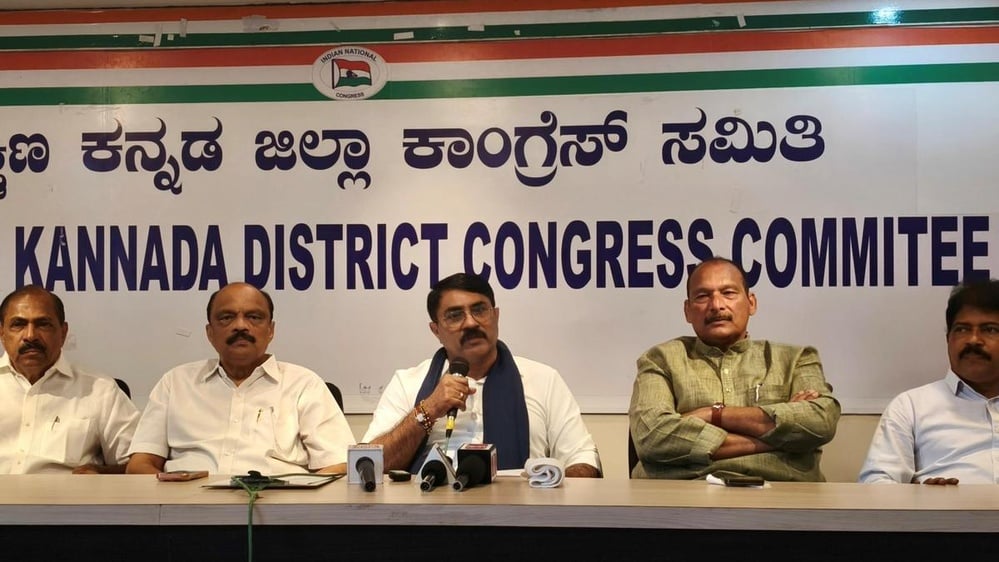
“The Kalaburagi district unit of the Congress on Monday staged a protest outside the Deputy Commissioner’s office here” · exact text match
Why: The text sticks to reporting who did what and what was alleged, with no editorial prescription.
Claim: The report names specific leaders and institutions and consistently attributes contested assertions.
“The protest was led by District Congress Committee president Kiran Deshmukh and MLC Thippannappa Kamaknoor.” · exact text match
Why: Specific sourcing and clear attribution provide visible support for reliability, though independent verification is absent.
Claim: The report clearly marks the protestors' accusations as allegations and attributed claims, not publisher facts.
“they claimed” · exact text match
“alleged that decisions taken under Mr. Kumar’s leadership were affecting the democratic process” · exact text match
Why: Repeated attribution to named leaders and protestors signals an effort to avoid presenting contested claims as verified fact.
Only the protestors' side of the dispute appears in the supplied text; the ECI's response and any independent verification are absent.
September 25, 2026 · 0 shares
A plainly factual wire-style brief that reports the Congress protest and the Speaker's rejection through direct quotes and attributed sourcing, without editorializing.
Automated analysis; not human reviewed.
Limitations: Only a short, wire-attributed brief was supplied; no prior coverage or independent verification was available.
·
11 of 55 available dimensions scored; omitted dimensions are not treated as neutral.
·
Verified supporting quotes for 9 of 11 scored dimensions.
Claim: The report is politically neutral and does not endorse either the protest or the Speaker's ruling.
“Congress lawmakers carrying banners that read “Gyanesh Kumar resign, protect the vote, protect democracy” raised slogans demanding the CEC’s resignation.” · exact text match
““ECI is not under our control.
I have disallowed it. This is Question Hour,” he said.”
· not found in supplied text
Why: Both the protest and the Speaker's institutional objection are reported through direct quotes and observable actions, with no evaluative language.
Claim: The report maintains a neutral stance and avoids populist or elitist framing.
“The Congress on Friday staged a brief protest in the Jammu & Kashmir Legislative Assembly demanding the removal of Chief Election Commissioner (CEC) Gyanesh Kumar.” · exact text match
Why: The text simply records the protest and response without casting either side as 'the people' versus 'elites' or vice versa.
Claim: The report does not advocate for either expanded liberty or increased authority.
“He told the protesting lawmakers that the Election Commission of India was not under the jurisdiction of the J&K Assembly.” · exact text match
Why: The Speaker's jurisdictional ruling is reported as a fact of procedure, not as a policy preference.
Claim: The report restricts itself to observable actions and verbatim statements, with no subjective evaluation.
“The Congress on Friday staged a brief protest in the Jammu & Kashmir Legislative Assembly demanding the removal of Chief Election Commissioner (CEC) Gyanesh Kumar.” · exact text match
Why: The publisher's own voice is limited to attribution and sequencing; contested claims are inside quotations.
Claim: The wording is restrained, describing a 'brief protest' rather than dramatizing it.
“The Congress on Friday staged a brief protest” · exact text match
Why: The modifier 'brief' and the absence of conflict-laden or emotional adjectives indicate non-sensational reporting.
Claim: The report is neither optimistic nor pessimistic in tone.
“The Congress on Friday staged a brief protest in the Jammu & Kashmir Legislative Assembly demanding the removal of Chief Election Commissioner (CEC) Gyanesh Kumar.” · exact text match
Why: The prose is neutral and contains no forward-looking judgment about outcomes.
Claim: The text describes what happened and does not prescribe any action or policy.
“He told the protesting lawmakers that the Election Commission of India was not under the jurisdiction of the J&K Assembly.” · exact text match
Why: The only normative statements appear in direct quotes; the report itself makes no recommendation.
Claim: The text is factful, with all value-laden demands appearing in quoted material.
“Congress lawmakers carrying banners that read “Gyanesh Kumar resign, protect the vote, protect democracy” raised slogans demanding the CEC’s resignation.” · exact text match
Why: Words like 'protect the vote' are attributed to protesters, not asserted by the publisher.
Claim: The report is politically neutral despite the political subject.
“Congress lawmakers carrying banners that read “Gyanesh Kumar resign, protect the vote, protect democracy” raised slogans demanding the CEC’s resignation.” · exact text match
““ECI is not under our control.
I have disallowed it. This is Question Hour,” he said.”
· not found in supplied text
Why: Both the opposition protest and the Speaker's institutional objection are presented without editorial favor.
Claim: The supplied text is credible within its scope: it provides attribution and direct quotes rather than unsupported assertions.
“as per the news agency—Kashmir News Observer (KNO)” · exact text match
Why: A wire-attributed brief with direct quotes supports basic verification, though no independent fact-checking is possible from the text alone.
Claim: The report is coherent, chronological, and grounded in direct quotes.
“As soon as proceedings of the House began, Congress lawmakers carrying banners that read “Gyanesh Kumar resign, protect the vote, protect democracy” raised slogans demanding the CEC’s resignation.” · exact text match
Why: No logical leaps, emotional appeals, or conspiracy framings appear in the publisher's own prose.
Only a short, wire-attributed brief was supplied; no prior coverage or independent verification was available.
A single party's protest plans and allegations are relayed with attribution but no independent verification, leaving the party's framing dominant.
Automated analysis; not human reviewed.
Limitations: The supplied text is a short event brief containing only attributed statements from one political side and no independent verification, limiting measurement beyond attribution patterns.
·
4 of 55 available dimensions scored; omitted dimensions are not treated as neutral.
·
Verified supporting quotes for 4 of 4 scored dimensions.
Claim: The publisher's framing is objective, presenting attributed statements rather than editorial judgments.
“Speaking to reporters here on Saturday (September 26), District Congress Committee President R. Padmaraj noted that the party has launched a nationwide campaign to ‘save’ democracy from the hands of Mr. Kumar who, according to newspaper reports, has compromised country’s electoral process.” · exact text match
Why: Controversial content is explicitly attributed to a named official and to newspaper reports, with no first-person evaluation or unmarked assertion by the publisher.
Claim: The report sticks to factual logistics and does not sensationalize the event.
“The rally would commence at around 10.30 a.m. from Mahaveer Circle and culminate in about an hour at the district office complex, where the protesting Congress members and leaders would submit a memorandum to the President through the Deputy Commissioner seeking immediate removal of the CEC from the post.” · exact text match
Counterevidence:
“Democracy would perish if he continues as the CEC, Mr. Padmaraj said demanding his immediate resignation and arrest for electoral malpractices.” · exact text match
Why: The only dramatic language appears inside a direct quote from Padmaraj; the publisher's own narration is limited to schedule and logistics.
Claim: The text is descriptive, recounting a planned event, route, and attributed comments rather than prescribing action.
“The rally would commence at around 10.30 a.m. from Mahaveer Circle and culminate in about an hour at the district office complex, where the protesting Congress members and leaders would submit a memorandum to the President through the Deputy Commissioner seeking immediate removal of the CEC from the post.” · exact text match
Why: The report describes what participants plan to do and what a speaker said, without endorsing or recommending the protest or its demands.
Claim: Visible sourcing supports a moderately credible report through named officials, attributed claims, and a dateline.
“Speaking to reporters here on Saturday (September 26), District Congress Committee President R. Padmaraj noted that the party has launched a nationwide campaign to ‘save’ democracy from the hands of Mr. Kumar who, according to newspaper reports, has compromised country’s electoral process.” · exact text match
Why: The piece names its sources and dates, but it relays an unverified allegation and includes no independent verification or response from the CEC.
The supplied text is a short event brief containing only attributed statements from one political side and no independent verification, limiting measurement beyond attribution patterns.
September 25, 2026 · 0 shares
Coverage leads with a protest group's ultimatum and a 'save democracy' slogan, then includes the Election Commission's rebuttal only after detailing opposition demands.
Gyanesh Kumar is the Chief Election Commissioner of India; the Special Intensive Revision (SIR) is an electoral-roll update process.
Automated analysis; not human reviewed.
Limitations: The supplied text is a web article with repeated headline fragments and references to an Indian Express investigation that is not reproduced; only the body paragraphs were used, so the underlying investigation could not be independently verified.
·
7 of 55 available dimensions scored; omitted dimensions are not treated as neutral.
·
Verified supporting quotes for 7 of 7 scored dimensions.
Claim: The report's framing leans liberal by foregrounding an activist campaign's ultimatum and publishing a concern that electoral roll revision could deny voting rights.
“amid concerns that it could deny genuine electors their right to vote and shape election outcomes, as Scroll has reported” · exact text match
Why: This is the publisher's own summary of the revision's risks, introducing a rights-based, anti-official slant rather than merely quoting critics.
Claim: The report gives primacy to a populist campaign's deadline and its 'save democracy' message, treating the demand as the story's starting point.
“CJP to start nationwide protest on October 2 if CEC Gyanesh Kumar does not resign” · exact text match
Why: A street-level political campaign's threat leads the report and frames the story around popular mobilization.
Claim: The story is written in a disciplined, attributed news style.
“Kumar has not yet commented on The Indian Express’ investigation.
However, after the report was published, the Election Commission said on Wednesday that “operational queries or inputs raised by commission members during draft stages are part of standard administrative practice” to safeguard voter rights.”
· exact text match
Why: It separates fact from comment, attributes claims to named sources, and includes the commission's rebuttal.
Claim: The report mainly describes announced actions and attributed claims rather than telling readers what should be done.
“The Cockroach Janta Party on Friday said that it will launch a nationwide protest on October 2 if Chief Election Commissioner Gyanesh Kumar does not resign by Saturday.” · exact text match
Why: The statement is presented as a reported fact about a group's plan, not as the publisher's recommendation.
Claim: The report is anti-establishment in emphasizing demands for the CEC's resignation and criminal proceedings over an internal electoral-roll dispute.
“The campaign is also demanding criminal proceedings against Kumar after an investigation by The Indian Express on Wednesday revealed that two election commissioners had objected 14 times in 10 months to decisions about the poll panel’s special intensive revision of electoral rolls.” · exact text match
Why: It positions the official as the subject of protest and investigation; the EC's defense is included but subordinated.
Claim: The report is highly credible in internal sourcing terms: allegations are attributed, the EC is given a response, and uncertainty is preserved with phrases like 'reported'.
“The newspaper reported that Election Commissioners Sukhbir Singh Sandhu and Vivek Joshi formally objected to decisions related to the SIR” · exact text match
““Differing views and observations are a normal part of deliberation in any institution,” the poll panel stated.” · exact text match
Why: Attribution and balanced access to the institution under criticism support trustworthiness.
Claim: The reporting shows visible fairness signals by attributing allegations to The Indian Express and noting the absence of a response from Kumar.
“The newspaper reported that Election Commissioners Sukhbir Singh Sandhu and Vivek Joshi formally objected to decisions related to the SIR, saying that some had been taken without their knowledge.” · exact text match
“Kumar has not yet commented on The Indian Express’ investigation.” · exact text match
Why: Allegations are expressly attributed to another newspaper, and the target's non-response is noted rather than hidden.
The supplied text is a web article with repeated headline fragments and references to an Indian Express investigation that is not reproduced; only the body paragraphs were used, so the underlying investigation could not be independently verified.
Framing leads with an unnamed-source denial that the election commissioners' letter targeted the CEC, foregrounding the Election Commission's clarification and relegating opposition integrity concerns to secondary context.
The Special Intensive Revision (SIR) is an Election Commission of India process for revising electoral rolls; the CEC and two Election Commissioners together head the commission.
Automated analysis; not human reviewed.
Limitations: The central claim rests on a single unnamed source, and the letter's contents are undisclosed as 'classified', so the denial cannot be independently verified from the supplied text.
·
11 of 55 available dimensions scored; omitted dimensions are not treated as neutral.
·
Verified supporting quotes for 8 of 11 scored dimensions.
Claim: The report attributes both the ECI's denial and the opposition's demands without endorsing either, showing no partisan lean.
“opposition parties have called for Kumar’s resignation and the Supreme Court’s intervention, while also questioning the integrity of the election process” · exact text match
“The poll body has rejected charges of one-sided decision-making, saying differences are part of the deliberation process but all ECI decisions are "unanimous".” · not found in supplied text
Counterevidence:
“Election commissioners' letter to cabinet secretary concerned senior poll official, not CEC Gyanesh Kumar” · exact text match
Why: Both the commission's clarification and opposition criticism are reported with attribution; no political side is favored in the wording.
Claim: The report consistently attributes claims to sources and marks the ECI denial as the commission's own statement.
“according to the person cited above, who did not want to be named” · exact text match
“The poll body has rejected charges of one-sided decision-making” · exact text match
Why: Sourcing language pervades the report; even the denial is attributed to the commission rather than asserted as established fact.
Claim: The tone is procedural and institutional, with no dramatic or emotive devices.
“Officials generally take up such matters involving the functioning of personnel with the chief election commissioner (CEC).” · exact text match
Why: The prose is measured and process-focused; no sensational framing devices appear.
Claim: The report leans on an unnamed insider and emphasizes internal 'buzz' and alleged differences.
“a person privy to the developments told HT on Sunday” · exact text match
“The development comes amid a news report that has sparked a buzz over alleged differences within the body” · exact text match
Why: Anonymous sourcing and 'buzz' framing add an insider-intrigue element, though the substance remains policy-adjacent.
Claim: The subject is an election-administration dispute with explicit partisan demands and party positioning.
“opposition parties have called for Kumar’s resignation and the Supreme Court’s intervention” · exact text match
“The ruling Bharatiya Janata Party (BJP) distanced itself from the controversy.” · exact text match
Why: The report centers on institutional conflict with direct partisan reactions, making it inherently political.
Claim: The central facts are sourced to official or insider authority—the ECI press note and an unnamed official—rather than independent evidence.
“In a press note after a meeting on Saturday, the poll panel said: “The letter to Cabinet Secretary was not related to any policy matter of the Commission or IT division but related to working of an officer on deputation to ECI.”” · not found in supplied text
“a person privy to the developments told HT on Sunday” · exact text match
Why: Resolution of the dispute rests on the commission's self-statement and insider assurance rather than independently verifiable material.
Claim: The lead presents the denial as fact and describes the dispute as 'buzz', giving the Election Commission's position the primary frame.
“Election commissioners' letter to cabinet secretary concerned senior poll official, not CEC Gyanesh Kumar” · exact text match
“a news report that has sparked a buzz over alleged differences within the body” · exact text match
Why: Stating the denial in the lead as fact, then characterizing the controversy as a 'buzz', aligns the frame with the institution's preferred narrative.
Claim: The language is neutral and unemotional even when reporting conflict.
“The letter to cabinet secretary TV Somanathan was dated July 29 and spoke of the senior official involved in poll-related matters, according to the person cited above, who did not want to be named.” · exact text match
Why: No emotive or value-laden descriptions appear; conflict is rendered in procedural terms.
Claim: The report has a named reporter, explicit attribution, and verbatim official statements, but the central fact rests on a single unnamed source.
“a person privy to the developments told HT on Sunday” · exact text match
“In a press note after a meeting on Saturday, the poll panel said: “The letter to Cabinet Secretary was not related to any policy matter of the Commission or IT division but related to working of an officer on deputation to ECI.”” · not found in supplied text
Why: Visible sourcing and direct quotation support credibility; reliance on an anonymous source and an undisclosed 'classified' letter cap it.
Claim: The report uses a counterfactual inference about protocol to support its conclusion.
“Had the letter been against CEC Gyanesh Kumar himself, protocol would have dictated that it be marked to the President.” · exact text match
Why: This hypothetical is presented as a reason to accept the denial, going beyond directly reported fact.
Claim: The report distinguishes allegation, denial, and protocol reasoning while acknowledging undisclosed material.
“Officials generally take up such matters involving the functioning of personnel with the chief election commissioner (CEC).” · exact text match
“The person did not disclose the contents of the letter, calling it a “classified” matter.” · exact text match
Why: Institutional-process reasoning and explicit acknowledgment of undisclosed material indicate analytical care.
The central claim rests on a single unnamed source, and the letter's contents are undisclosed as 'classified', so the denial cannot be independently verified from the supplied text.
The framing leads with multi-state opposition protests and accountability demands, while Election Commission and ruling-party rebuttals appear only as separate headline items.
The dispute centers on an Election Commission process referred to as 'SIR' in the context of electoral roll revisions; the article does not define SIR or explain the factual basis of the dissent, but treats it as an ongoing controversy between opposition parties and the CEC/EC.
Automated analysis; not human reviewed.
Limitations: The supplied text is a short wire-style brief with headline snippets; headline-only claims are not independently verifiable, and the acronym SIR is undefined.
·
4 of 55 available dimensions scored; omitted dimensions are not treated as neutral.
·
Verified supporting quotes for 4 of 4 scored dimensions.
Claim: The main paragraphs are straight news reporting; opinionated labels appear only in attributed headlines.
“Police intervened by detaining several protesters and using water cannons in some locations.” · exact text match
“Congress workers staged protests across India against Chief Election Commissioner Gyanesh Kumar for his handling of electoral roll revisions.” · exact text match
Why: The body reports observable actions without evaluative language; the most charged line ('front for diabolical PM-HM duo') is explicitly attributed to Congress in a headline.
Claim: The text states what happened and what demonstrators demanded; it does not advocate a course of action.
“Demonstrators called for greater accountability and transparency in the electoral process during these protests.” · exact text match
“Police intervened by detaining several protesters and using water cannons in some locations.” · exact text match
Why: Verbs are descriptive and the demands are reported as the protesters' own rather than endorsed.
Claim: The report is dominated by partisan electoral controversy.
“Congress workers staged protests across India against Chief Election Commissioner Gyanesh Kumar for his handling of electoral roll revisions.” · exact text match
“Mamata Banerjee demands fresh Bengal elections amid EC SIR dissent row; calls for CEC's arrest” · exact text match
Why: Nearly all content concerns opposition accusations against the CEC, election-related demands, and ruling-party rebuttals, making it a predominantly political story.
Claim: The report names specific actors, locations and events and includes institutional responses.
“Election Commission pushes back on dissent reports, says all SIR decisions were unanimous” · exact text match
“Police intervened by detaining several protesters and using water cannons in some locations.” · exact text match
Why: Sourcing is not fully documented, but there is concrete detail and internal balance, supporting moderate credibility.
The supplied text is a short wire-style brief with headline snippets; headline-only claims are not independently verifiable, and the acronym SIR is undefined.
September 25, 2026 · 0 shares
Coverage leads with a protest group's ultimatum and a 'save democracy' slogan, then includes the Election Commission's rebuttal only after detailing opposition demands.
Gyanesh Kumar is the Chief Election Commissioner of India; the Special Intensive Revision (SIR) is an electoral-roll update process.
Automated analysis; not human reviewed.
Limitations: The supplied text is a web article with repeated headline fragments and references to an Indian Express investigation that is not reproduced; only the body paragraphs were used, so the underlying investigation could not be independently verified.
·
7 of 55 available dimensions scored; omitted dimensions are not treated as neutral.
·
Verified supporting quotes for 7 of 7 scored dimensions.
Claim: The report's framing leans liberal by foregrounding an activist campaign's ultimatum and publishing a concern that electoral roll revision could deny voting rights.
“amid concerns that it could deny genuine electors their right to vote and shape election outcomes, as Scroll has reported” · exact text match
Why: This is the publisher's own summary of the revision's risks, introducing a rights-based, anti-official slant rather than merely quoting critics.
Claim: The report gives primacy to a populist campaign's deadline and its 'save democracy' message, treating the demand as the story's starting point.
“CJP to start nationwide protest on October 2 if CEC Gyanesh Kumar does not resign” · exact text match
Why: A street-level political campaign's threat leads the report and frames the story around popular mobilization.
Claim: The story is written in a disciplined, attributed news style.
“Kumar has not yet commented on The Indian Express’ investigation.
However, after the report was published, the Election Commission said on Wednesday that “operational queries or inputs raised by commission members during draft stages are part of standard administrative practice” to safeguard voter rights.”
· exact text match
Why: It separates fact from comment, attributes claims to named sources, and includes the commission's rebuttal.
Claim: The report mainly describes announced actions and attributed claims rather than telling readers what should be done.
“The Cockroach Janta Party on Friday said that it will launch a nationwide protest on October 2 if Chief Election Commissioner Gyanesh Kumar does not resign by Saturday.” · exact text match
Why: The statement is presented as a reported fact about a group's plan, not as the publisher's recommendation.
Claim: The report is anti-establishment in emphasizing demands for the CEC's resignation and criminal proceedings over an internal electoral-roll dispute.
“The campaign is also demanding criminal proceedings against Kumar after an investigation by The Indian Express on Wednesday revealed that two election commissioners had objected 14 times in 10 months to decisions about the poll panel’s special intensive revision of electoral rolls.” · exact text match
Why: It positions the official as the subject of protest and investigation; the EC's defense is included but subordinated.
Claim: The report is highly credible in internal sourcing terms: allegations are attributed, the EC is given a response, and uncertainty is preserved with phrases like 'reported'.
“The newspaper reported that Election Commissioners Sukhbir Singh Sandhu and Vivek Joshi formally objected to decisions related to the SIR” · exact text match
““Differing views and observations are a normal part of deliberation in any institution,” the poll panel stated.” · exact text match
Why: Attribution and balanced access to the institution under criticism support trustworthiness.
Claim: The reporting shows visible fairness signals by attributing allegations to The Indian Express and noting the absence of a response from Kumar.
“The newspaper reported that Election Commissioners Sukhbir Singh Sandhu and Vivek Joshi formally objected to decisions related to the SIR, saying that some had been taken without their knowledge.” · exact text match
“Kumar has not yet commented on The Indian Express’ investigation.” · exact text match
Why: Allegations are expressly attributed to another newspaper, and the target's non-response is noted rather than hidden.
The supplied text is a web article with repeated headline fragments and references to an Indian Express investigation that is not reproduced; only the body paragraphs were used, so the underlying investigation could not be independently verified.
September 28, 2026 · 0 shares
The visible text frames the story around a categorical, unhedged assertion that CEC Gyanesh Kumar will not resign within 48 hours, paired with a single broad claim that Congress protests spread across India, leaving no supporting context or sourcing visible.
Automated analysis; not human reviewed. Limitations: The input is a truncated headline/snippet; no full article text was available, so most bias classifications cannot be supported.
The input is a truncated headline/snippet; no full article text was available, so most bias classifications cannot be supported.
September 28, 2026 · 0 shares
Publishes a one-sided, conflict-centred account of opposition protests and allegations against the Election Commission, using attributed claims and critical teaser headlines to frame the SIR controversy as a crisis of democratic institutions.
The Special Intensive Revision (SIR) is an electoral roll revision exercise; the article also references an internal Election Commission dissent row in which two Election Commissioners reportedly raised objections to SIR-related decisions.
Automated analysis; not human reviewed. Limitations: Only opposition and protest sources are quoted; no EC, government, or independent verification appears, so the claims' accuracy and representativeness cannot be cross-checked from this text. · 10 of 55 available dimensions scored; omitted dimensions are not treated as neutral. · Verified supporting quotes for 9 of 10 scored dimensions.
Claim: Framing tilts toward the opposition by giving Congress and allied leaders the sole interpretive voice and linking to EC-critical commentary without official response.
“Opposition parties, led by the Congress, staged protests in several states on Monday (September 28) demanding the removal of Chief Election Commissioner Gyanesh Kumar and alleging irregularities in the ongoing revision of electoral rolls and misuse of the Election Commission.” · exact text match
“Also read | Why EC's reconciliation statement reads more like a confession” · exact text match
Why: The selection of exclusively opposition voices and the publisher's own critical teaser headline create a liberal/opposition-aligned slant, though the body retains attributed reporting.
Claim: The report foregrounds anti-establishment protest, street action, and slogans against state institutions.
“Vote chor, gaddi chhod” · exact text match
“Gehlot alleged that democratic institutions were being weakened.” · exact text match
Why: The chosen details and closing quotes emphasize popular protest against elite/institutional power, giving the events a populist tone.
Claim: The text mixes factual event reporting with unverified, strongly opinionated assertions from partisans.
“He has no dignity or honesty left.” · not found in supplied text
“People’s votes are being cancelled without any notice.” · exact text match
Why: Confrontational and conclusory quotes are presented prominently without verification or rebuttal, shifting the report toward the subjective.
Claim: Coverage emphasizes violent confrontation, barricade-breaking, and effigy burning.
“Angry workers broke through police barricades and attempted to advance, forcing police to stop them.” · exact text match
“Workers marched to the CEO’s office, raised slogans and burnt effigies of Kumar, Prime Minister Narendra Modi and Union Home Minister Amit Shah.” · exact text match
Why: These details over-index on dramatic conflict rather than the underlying administrative process.
Claim: The article is dominated by allegations of electoral fraud, disenfranchisement, and institutional decay.
“Elections are no longer fair and transparent, so the public is now forced to take to the streets.” · exact text match
“Gehlot alleged that democratic institutions were being weakened.” · exact text match
Why: The overall selection of claims and quotes conveys a strongly negative outlook on electoral integrity.
Claim: The subject matter and framing are almost entirely partisan: opposition mobilization against a government-appointed election official.
“Opposition parties, led by the Congress, staged protests in several states on Monday (September 28) demanding the removal of Chief Election Commissioner Gyanesh Kumar and alleging irregularities in the ongoing revision of electoral rolls and misuse of the Election Commission.” · exact text match
“State Congress president Keshav Mahto Kamlesh alleged that the Election Commission was favouring the BJP and depriving eligible voters of their rights.” · exact text match
Why: The story is structured around party conflict, electoral administration accusations, and government-opposition polarization.
Claim: The report centers on political reactions and protests rather than independently explaining or verifying the SIR process.
“Oppn protests across states seek CEC Gyanesh Kumar’s removal, turn up heat over SIR” · exact text match
“The protests come amid opposition parties’ growing criticism of the Election Commission’s handling of electoral roll revisions, particularly the Special Intensive Revision (SIR), and calls for greater transparency in the process.” · exact text match
Why: The story is a protest/response piece; it relays opposition statements about SIR without independent reporting or EC response.
Claim: The publisher foregrounds claims that ordinary, poor, Dalit, and minority voters are being stripped of their rights.
“BK Hariprasad alleged that 50 lakh names had been removed from electoral rolls in the city and claimed minorities, Dalits and poor people were being left out.” · exact text match
“The appeal process has also been made completely fake and complicated so that the common citizen gets fed up and sits at home.” · exact text match
Why: The emphasized claims depict vulnerable citizens as victims of a rigged system, though all are attributed allegations.
Claim: The narrative carries a negative emotional charge through conflict descriptions and angry quotes.
“Angry workers broke through police barricades and attempted to advance, forcing police to stop them.” · exact text match
“He is not a man of the straight path; he has no dignity or honesty left.” · exact text match
Why: Words like 'angry' and vituperative quotes generate emotional heat beyond a plain account of events.
Claim: Sourcing is named and attributed, but the report is one-sided and contains no independent verification or official rebuttal.
“Congress leader Udit Raj told The Federal Desh, “Gyanesh Kumar must be forced to resign. He is not a man of the straight path; he has no dignity or honesty left.” · exact text match
“Telangana Deputy Chief Minister Mallu Bhatti Vikramarka on Monday claimed that the Congress' concerns over deletion of voters' names during the SIR of electoral rolls had been vindicated after two Election Commissioners acknowledged the issue.” · exact text match
Why: Named sources and explicit attribution support some credibility, but the absence of contrary voices and verification limits it.
Only opposition and protest sources are quoted; no EC, government, or independent verification appears, so the claims' accuracy and representativeness cannot be cross-checked from this text.
September 28, 2026 · 0 shares
Relays a Congress protest and its allegations with consistent attribution but without independent verification or an ECI response.
Automated analysis; not human reviewed. Limitations: Only the protestors' side of the dispute appears in the supplied text; the ECI's response and any independent verification are absent. · 4 of 55 available dimensions scored; omitted dimensions are not treated as neutral. · Verified supporting quotes for 4 of 4 scored dimensions.
Claim: The report presents the protest and allegations from an outside observer stance, attributing opinions to participants rather than adopting them.
“alleging that the Election Commission of India (ECI) was functioning with clear political bias” · exact text match
Why: The publisher uses attribution words and reports observable actions, keeping its own voice neutral.
Claim: The report describes actions and statements without offering recommendations or judgments.
“The Kalaburagi district unit of the Congress on Monday staged a protest outside the Deputy Commissioner’s office here” · exact text match
Why: The text sticks to reporting who did what and what was alleged, with no editorial prescription.
Claim: The report names specific leaders and institutions and consistently attributes contested assertions.
“The protest was led by District Congress Committee president Kiran Deshmukh and MLC Thippannappa Kamaknoor.” · exact text match
Why: Specific sourcing and clear attribution provide visible support for reliability, though independent verification is absent.
Claim: The report clearly marks the protestors' accusations as allegations and attributed claims, not publisher facts.
“they claimed” · exact text match
“alleged that decisions taken under Mr. Kumar’s leadership were affecting the democratic process” · exact text match
Why: Repeated attribution to named leaders and protestors signals an effort to avoid presenting contested claims as verified fact.
Only the protestors' side of the dispute appears in the supplied text; the ECI's response and any independent verification are absent.
September 25, 2026 · 0 shares
Coverage leads with a protest group's ultimatum and a 'save democracy' slogan, then includes the Election Commission's rebuttal only after detailing opposition demands.
Gyanesh Kumar is the Chief Election Commissioner of India; the Special Intensive Revision (SIR) is an electoral-roll update process.
Automated analysis; not human reviewed. Limitations: The supplied text is a web article with repeated headline fragments and references to an Indian Express investigation that is not reproduced; only the body paragraphs were used, so the underlying investigation could not be independently verified. · 7 of 55 available dimensions scored; omitted dimensions are not treated as neutral. · Verified supporting quotes for 7 of 7 scored dimensions.
Claim: The report's framing leans liberal by foregrounding an activist campaign's ultimatum and publishing a concern that electoral roll revision could deny voting rights.
“amid concerns that it could deny genuine electors their right to vote and shape election outcomes, as Scroll has reported” · exact text match
Why: This is the publisher's own summary of the revision's risks, introducing a rights-based, anti-official slant rather than merely quoting critics.
Claim: The report gives primacy to a populist campaign's deadline and its 'save democracy' message, treating the demand as the story's starting point.
“CJP to start nationwide protest on October 2 if CEC Gyanesh Kumar does not resign” · exact text match
Why: A street-level political campaign's threat leads the report and frames the story around popular mobilization.
Claim: The story is written in a disciplined, attributed news style.
“Kumar has not yet commented on The Indian Express’ investigation. However, after the report was published, the Election Commission said on Wednesday that “operational queries or inputs raised by commission members during draft stages are part of standard administrative practice” to safeguard voter rights.” · exact text match
Why: It separates fact from comment, attributes claims to named sources, and includes the commission's rebuttal.
Claim: The report mainly describes announced actions and attributed claims rather than telling readers what should be done.
“The Cockroach Janta Party on Friday said that it will launch a nationwide protest on October 2 if Chief Election Commissioner Gyanesh Kumar does not resign by Saturday.” · exact text match
Why: The statement is presented as a reported fact about a group's plan, not as the publisher's recommendation.
Claim: The report is anti-establishment in emphasizing demands for the CEC's resignation and criminal proceedings over an internal electoral-roll dispute.
“The campaign is also demanding criminal proceedings against Kumar after an investigation by The Indian Express on Wednesday revealed that two election commissioners had objected 14 times in 10 months to decisions about the poll panel’s special intensive revision of electoral rolls.” · exact text match
Why: It positions the official as the subject of protest and investigation; the EC's defense is included but subordinated.
Claim: The report is highly credible in internal sourcing terms: allegations are attributed, the EC is given a response, and uncertainty is preserved with phrases like 'reported'.
“The newspaper reported that Election Commissioners Sukhbir Singh Sandhu and Vivek Joshi formally objected to decisions related to the SIR” · exact text match
““Differing views and observations are a normal part of deliberation in any institution,” the poll panel stated.” · exact text match
Why: Attribution and balanced access to the institution under criticism support trustworthiness.
Claim: The reporting shows visible fairness signals by attributing allegations to The Indian Express and noting the absence of a response from Kumar.
“The newspaper reported that Election Commissioners Sukhbir Singh Sandhu and Vivek Joshi formally objected to decisions related to the SIR, saying that some had been taken without their knowledge.” · exact text match
“Kumar has not yet commented on The Indian Express’ investigation.” · exact text match
Why: Allegations are expressly attributed to another newspaper, and the target's non-response is noted rather than hidden.
The supplied text is a web article with repeated headline fragments and references to an Indian Express investigation that is not reproduced; only the body paragraphs were used, so the underlying investigation could not be independently verified.
Framing leads with an unnamed-source denial that the election commissioners' letter targeted the CEC, foregrounding the Election Commission's clarification and relegating opposition integrity concerns to secondary context.
The Special Intensive Revision (SIR) is an Election Commission of India process for revising electoral rolls; the CEC and two Election Commissioners together head the commission.
Automated analysis; not human reviewed. Limitations: The central claim rests on a single unnamed source, and the letter's contents are undisclosed as 'classified', so the denial cannot be independently verified from the supplied text. · 11 of 55 available dimensions scored; omitted dimensions are not treated as neutral. · Verified supporting quotes for 8 of 11 scored dimensions.
Claim: The report attributes both the ECI's denial and the opposition's demands without endorsing either, showing no partisan lean.
“opposition parties have called for Kumar’s resignation and the Supreme Court’s intervention, while also questioning the integrity of the election process” · exact text match
“The poll body has rejected charges of one-sided decision-making, saying differences are part of the deliberation process but all ECI decisions are "unanimous".” · not found in supplied text
Counterevidence:
“Election commissioners' letter to cabinet secretary concerned senior poll official, not CEC Gyanesh Kumar” · exact text match
Why: Both the commission's clarification and opposition criticism are reported with attribution; no political side is favored in the wording.
Claim: The report consistently attributes claims to sources and marks the ECI denial as the commission's own statement.
“according to the person cited above, who did not want to be named” · exact text match
“The poll body has rejected charges of one-sided decision-making” · exact text match
Why: Sourcing language pervades the report; even the denial is attributed to the commission rather than asserted as established fact.
Claim: The tone is procedural and institutional, with no dramatic or emotive devices.
“Officials generally take up such matters involving the functioning of personnel with the chief election commissioner (CEC).” · exact text match
Why: The prose is measured and process-focused; no sensational framing devices appear.
Claim: The report leans on an unnamed insider and emphasizes internal 'buzz' and alleged differences.
“a person privy to the developments told HT on Sunday” · exact text match
“The development comes amid a news report that has sparked a buzz over alleged differences within the body” · exact text match
Why: Anonymous sourcing and 'buzz' framing add an insider-intrigue element, though the substance remains policy-adjacent.
Claim: The subject is an election-administration dispute with explicit partisan demands and party positioning.
“opposition parties have called for Kumar’s resignation and the Supreme Court’s intervention” · exact text match
“The ruling Bharatiya Janata Party (BJP) distanced itself from the controversy.” · exact text match
Why: The report centers on institutional conflict with direct partisan reactions, making it inherently political.
Claim: The central facts are sourced to official or insider authority—the ECI press note and an unnamed official—rather than independent evidence.
“In a press note after a meeting on Saturday, the poll panel said: “The letter to Cabinet Secretary was not related to any policy matter of the Commission or IT division but related to working of an officer on deputation to ECI.”” · not found in supplied text
“a person privy to the developments told HT on Sunday” · exact text match
Why: Resolution of the dispute rests on the commission's self-statement and insider assurance rather than independently verifiable material.
Claim: The lead presents the denial as fact and describes the dispute as 'buzz', giving the Election Commission's position the primary frame.
“Election commissioners' letter to cabinet secretary concerned senior poll official, not CEC Gyanesh Kumar” · exact text match
“a news report that has sparked a buzz over alleged differences within the body” · exact text match
Why: Stating the denial in the lead as fact, then characterizing the controversy as a 'buzz', aligns the frame with the institution's preferred narrative.
Claim: The language is neutral and unemotional even when reporting conflict.
“The letter to cabinet secretary TV Somanathan was dated July 29 and spoke of the senior official involved in poll-related matters, according to the person cited above, who did not want to be named.” · exact text match
Why: No emotive or value-laden descriptions appear; conflict is rendered in procedural terms.
Claim: The report has a named reporter, explicit attribution, and verbatim official statements, but the central fact rests on a single unnamed source.
“a person privy to the developments told HT on Sunday” · exact text match
“In a press note after a meeting on Saturday, the poll panel said: “The letter to Cabinet Secretary was not related to any policy matter of the Commission or IT division but related to working of an officer on deputation to ECI.”” · not found in supplied text
Why: Visible sourcing and direct quotation support credibility; reliance on an anonymous source and an undisclosed 'classified' letter cap it.
Claim: The report uses a counterfactual inference about protocol to support its conclusion.
“Had the letter been against CEC Gyanesh Kumar himself, protocol would have dictated that it be marked to the President.” · exact text match
Why: This hypothetical is presented as a reason to accept the denial, going beyond directly reported fact.
Claim: The report distinguishes allegation, denial, and protocol reasoning while acknowledging undisclosed material.
“Officials generally take up such matters involving the functioning of personnel with the chief election commissioner (CEC).” · exact text match
“The person did not disclose the contents of the letter, calling it a “classified” matter.” · exact text match
Why: Institutional-process reasoning and explicit acknowledgment of undisclosed material indicate analytical care.
The central claim rests on a single unnamed source, and the letter's contents are undisclosed as 'classified', so the denial cannot be independently verified from the supplied text.
The framing leads with multi-state opposition protests and accountability demands, while Election Commission and ruling-party rebuttals appear only as separate headline items.
The dispute centers on an Election Commission process referred to as 'SIR' in the context of electoral roll revisions; the article does not define SIR or explain the factual basis of the dissent, but treats it as an ongoing controversy between opposition parties and the CEC/EC.
Automated analysis; not human reviewed. Limitations: The supplied text is a short wire-style brief with headline snippets; headline-only claims are not independently verifiable, and the acronym SIR is undefined. · 4 of 55 available dimensions scored; omitted dimensions are not treated as neutral. · Verified supporting quotes for 4 of 4 scored dimensions.
Claim: The main paragraphs are straight news reporting; opinionated labels appear only in attributed headlines.
“Police intervened by detaining several protesters and using water cannons in some locations.” · exact text match
“Congress workers staged protests across India against Chief Election Commissioner Gyanesh Kumar for his handling of electoral roll revisions.” · exact text match
Why: The body reports observable actions without evaluative language; the most charged line ('front for diabolical PM-HM duo') is explicitly attributed to Congress in a headline.
Claim: The text states what happened and what demonstrators demanded; it does not advocate a course of action.
“Demonstrators called for greater accountability and transparency in the electoral process during these protests.” · exact text match
“Police intervened by detaining several protesters and using water cannons in some locations.” · exact text match
Why: Verbs are descriptive and the demands are reported as the protesters' own rather than endorsed.
Claim: The report is dominated by partisan electoral controversy.
“Congress workers staged protests across India against Chief Election Commissioner Gyanesh Kumar for his handling of electoral roll revisions.” · exact text match
“Mamata Banerjee demands fresh Bengal elections amid EC SIR dissent row; calls for CEC's arrest” · exact text match
Why: Nearly all content concerns opposition accusations against the CEC, election-related demands, and ruling-party rebuttals, making it a predominantly political story.
Claim: The report names specific actors, locations and events and includes institutional responses.
“Election Commission pushes back on dissent reports, says all SIR decisions were unanimous” · exact text match
“Police intervened by detaining several protesters and using water cannons in some locations.” · exact text match
Why: Sourcing is not fully documented, but there is concrete detail and internal balance, supporting moderate credibility.
The supplied text is a short wire-style brief with headline snippets; headline-only claims are not independently verifiable, and the acronym SIR is undefined.
September 28, 2026 · 0 shares
The visible text frames the story around a categorical, unhedged assertion that CEC Gyanesh Kumar will not resign within 48 hours, paired with a single broad claim that Congress protests spread across India, leaving no supporting context or sourcing visible.
Automated analysis; not human reviewed. Limitations: The input is a truncated headline/snippet; no full article text was available, so most bias classifications cannot be supported.
The input is a truncated headline/snippet; no full article text was available, so most bias classifications cannot be supported.
Story Blindspots
Framing leads with an unnamed-source denial that the election commissioners' letter targeted the CEC, foregrounding the Election Commission's clarification and relegating opposition integrity concerns to secondary context.
The Special Intensive Revision (SIR) is an Election Commission of India process for revising electoral rolls; the CEC and two Election Commissioners together head the commission.
Automated analysis; not human reviewed. Limitations: The central claim rests on a single unnamed source, and the letter's contents are undisclosed as 'classified', so the denial cannot be independently verified from the supplied text. · 11 of 55 available dimensions scored; omitted dimensions are not treated as neutral. · Verified supporting quotes for 8 of 11 scored dimensions.
Claim: The report attributes both the ECI's denial and the opposition's demands without endorsing either, showing no partisan lean.
“opposition parties have called for Kumar’s resignation and the Supreme Court’s intervention, while also questioning the integrity of the election process” · exact text match
“The poll body has rejected charges of one-sided decision-making, saying differences are part of the deliberation process but all ECI decisions are "unanimous".” · not found in supplied text
Counterevidence:
“Election commissioners' letter to cabinet secretary concerned senior poll official, not CEC Gyanesh Kumar” · exact text match
Why: Both the commission's clarification and opposition criticism are reported with attribution; no political side is favored in the wording.
Claim: The report consistently attributes claims to sources and marks the ECI denial as the commission's own statement.
“according to the person cited above, who did not want to be named” · exact text match
“The poll body has rejected charges of one-sided decision-making” · exact text match
Why: Sourcing language pervades the report; even the denial is attributed to the commission rather than asserted as established fact.
Claim: The tone is procedural and institutional, with no dramatic or emotive devices.
“Officials generally take up such matters involving the functioning of personnel with the chief election commissioner (CEC).” · exact text match
Why: The prose is measured and process-focused; no sensational framing devices appear.
Claim: The report leans on an unnamed insider and emphasizes internal 'buzz' and alleged differences.
“a person privy to the developments told HT on Sunday” · exact text match
“The development comes amid a news report that has sparked a buzz over alleged differences within the body” · exact text match
Why: Anonymous sourcing and 'buzz' framing add an insider-intrigue element, though the substance remains policy-adjacent.
Claim: The subject is an election-administration dispute with explicit partisan demands and party positioning.
“opposition parties have called for Kumar’s resignation and the Supreme Court’s intervention” · exact text match
“The ruling Bharatiya Janata Party (BJP) distanced itself from the controversy.” · exact text match
Why: The report centers on institutional conflict with direct partisan reactions, making it inherently political.
Claim: The central facts are sourced to official or insider authority—the ECI press note and an unnamed official—rather than independent evidence.
“In a press note after a meeting on Saturday, the poll panel said: “The letter to Cabinet Secretary was not related to any policy matter of the Commission or IT division but related to working of an officer on deputation to ECI.”” · not found in supplied text
“a person privy to the developments told HT on Sunday” · exact text match
Why: Resolution of the dispute rests on the commission's self-statement and insider assurance rather than independently verifiable material.
Claim: The lead presents the denial as fact and describes the dispute as 'buzz', giving the Election Commission's position the primary frame.
“Election commissioners' letter to cabinet secretary concerned senior poll official, not CEC Gyanesh Kumar” · exact text match
“a news report that has sparked a buzz over alleged differences within the body” · exact text match
Why: Stating the denial in the lead as fact, then characterizing the controversy as a 'buzz', aligns the frame with the institution's preferred narrative.
Claim: The language is neutral and unemotional even when reporting conflict.
“The letter to cabinet secretary TV Somanathan was dated July 29 and spoke of the senior official involved in poll-related matters, according to the person cited above, who did not want to be named.” · exact text match
Why: No emotive or value-laden descriptions appear; conflict is rendered in procedural terms.
Claim: The report has a named reporter, explicit attribution, and verbatim official statements, but the central fact rests on a single unnamed source.
“a person privy to the developments told HT on Sunday” · exact text match
“In a press note after a meeting on Saturday, the poll panel said: “The letter to Cabinet Secretary was not related to any policy matter of the Commission or IT division but related to working of an officer on deputation to ECI.”” · not found in supplied text
Why: Visible sourcing and direct quotation support credibility; reliance on an anonymous source and an undisclosed 'classified' letter cap it.
Claim: The report uses a counterfactual inference about protocol to support its conclusion.
“Had the letter been against CEC Gyanesh Kumar himself, protocol would have dictated that it be marked to the President.” · exact text match
Why: This hypothetical is presented as a reason to accept the denial, going beyond directly reported fact.
Claim: The report distinguishes allegation, denial, and protocol reasoning while acknowledging undisclosed material.
“Officials generally take up such matters involving the functioning of personnel with the chief election commissioner (CEC).” · exact text match
“The person did not disclose the contents of the letter, calling it a “classified” matter.” · exact text match
Why: Institutional-process reasoning and explicit acknowledgment of undisclosed material indicate analytical care.
The central claim rests on a single unnamed source, and the letter's contents are undisclosed as 'classified', so the denial cannot be independently verified from the supplied text.
September 25, 2026 · 0 shares
Coverage leads with a protest group's ultimatum and a 'save democracy' slogan, then includes the Election Commission's rebuttal only after detailing opposition demands.
Gyanesh Kumar is the Chief Election Commissioner of India; the Special Intensive Revision (SIR) is an electoral-roll update process.
Automated analysis; not human reviewed. Limitations: The supplied text is a web article with repeated headline fragments and references to an Indian Express investigation that is not reproduced; only the body paragraphs were used, so the underlying investigation could not be independently verified. · 7 of 55 available dimensions scored; omitted dimensions are not treated as neutral. · Verified supporting quotes for 7 of 7 scored dimensions.
Claim: The report's framing leans liberal by foregrounding an activist campaign's ultimatum and publishing a concern that electoral roll revision could deny voting rights.
“amid concerns that it could deny genuine electors their right to vote and shape election outcomes, as Scroll has reported” · exact text match
Why: This is the publisher's own summary of the revision's risks, introducing a rights-based, anti-official slant rather than merely quoting critics.
Claim: The report gives primacy to a populist campaign's deadline and its 'save democracy' message, treating the demand as the story's starting point.
“CJP to start nationwide protest on October 2 if CEC Gyanesh Kumar does not resign” · exact text match
Why: A street-level political campaign's threat leads the report and frames the story around popular mobilization.
Claim: The story is written in a disciplined, attributed news style.
“Kumar has not yet commented on The Indian Express’ investigation. However, after the report was published, the Election Commission said on Wednesday that “operational queries or inputs raised by commission members during draft stages are part of standard administrative practice” to safeguard voter rights.” · exact text match
Why: It separates fact from comment, attributes claims to named sources, and includes the commission's rebuttal.
Claim: The report mainly describes announced actions and attributed claims rather than telling readers what should be done.
“The Cockroach Janta Party on Friday said that it will launch a nationwide protest on October 2 if Chief Election Commissioner Gyanesh Kumar does not resign by Saturday.” · exact text match
Why: The statement is presented as a reported fact about a group's plan, not as the publisher's recommendation.
Claim: The report is anti-establishment in emphasizing demands for the CEC's resignation and criminal proceedings over an internal electoral-roll dispute.
“The campaign is also demanding criminal proceedings against Kumar after an investigation by The Indian Express on Wednesday revealed that two election commissioners had objected 14 times in 10 months to decisions about the poll panel’s special intensive revision of electoral rolls.” · exact text match
Why: It positions the official as the subject of protest and investigation; the EC's defense is included but subordinated.
Claim: The report is highly credible in internal sourcing terms: allegations are attributed, the EC is given a response, and uncertainty is preserved with phrases like 'reported'.
“The newspaper reported that Election Commissioners Sukhbir Singh Sandhu and Vivek Joshi formally objected to decisions related to the SIR” · exact text match
““Differing views and observations are a normal part of deliberation in any institution,” the poll panel stated.” · exact text match
Why: Attribution and balanced access to the institution under criticism support trustworthiness.
Claim: The reporting shows visible fairness signals by attributing allegations to The Indian Express and noting the absence of a response from Kumar.
“The newspaper reported that Election Commissioners Sukhbir Singh Sandhu and Vivek Joshi formally objected to decisions related to the SIR, saying that some had been taken without their knowledge.” · exact text match
“Kumar has not yet commented on The Indian Express’ investigation.” · exact text match
Why: Allegations are expressly attributed to another newspaper, and the target's non-response is noted rather than hidden.
The supplied text is a web article with repeated headline fragments and references to an Indian Express investigation that is not reproduced; only the body paragraphs were used, so the underlying investigation could not be independently verified.
September 28, 2026 · 0 shares
Publishes a one-sided, conflict-centred account of opposition protests and allegations against the Election Commission, using attributed claims and critical teaser headlines to frame the SIR controversy as a crisis of democratic institutions.
The Special Intensive Revision (SIR) is an electoral roll revision exercise; the article also references an internal Election Commission dissent row in which two Election Commissioners reportedly raised objections to SIR-related decisions.
Automated analysis; not human reviewed. Limitations: Only opposition and protest sources are quoted; no EC, government, or independent verification appears, so the claims' accuracy and representativeness cannot be cross-checked from this text. · 10 of 55 available dimensions scored; omitted dimensions are not treated as neutral. · Verified supporting quotes for 9 of 10 scored dimensions.
Claim: Framing tilts toward the opposition by giving Congress and allied leaders the sole interpretive voice and linking to EC-critical commentary without official response.
“Opposition parties, led by the Congress, staged protests in several states on Monday (September 28) demanding the removal of Chief Election Commissioner Gyanesh Kumar and alleging irregularities in the ongoing revision of electoral rolls and misuse of the Election Commission.” · exact text match
“Also read | Why EC's reconciliation statement reads more like a confession” · exact text match
Why: The selection of exclusively opposition voices and the publisher's own critical teaser headline create a liberal/opposition-aligned slant, though the body retains attributed reporting.
Claim: The report foregrounds anti-establishment protest, street action, and slogans against state institutions.
“Vote chor, gaddi chhod” · exact text match
“Gehlot alleged that democratic institutions were being weakened.” · exact text match
Why: The chosen details and closing quotes emphasize popular protest against elite/institutional power, giving the events a populist tone.
Claim: The text mixes factual event reporting with unverified, strongly opinionated assertions from partisans.
“He has no dignity or honesty left.” · not found in supplied text
“People’s votes are being cancelled without any notice.” · exact text match
Why: Confrontational and conclusory quotes are presented prominently without verification or rebuttal, shifting the report toward the subjective.
Claim: Coverage emphasizes violent confrontation, barricade-breaking, and effigy burning.
“Angry workers broke through police barricades and attempted to advance, forcing police to stop them.” · exact text match
“Workers marched to the CEO’s office, raised slogans and burnt effigies of Kumar, Prime Minister Narendra Modi and Union Home Minister Amit Shah.” · exact text match
Why: These details over-index on dramatic conflict rather than the underlying administrative process.
Claim: The article is dominated by allegations of electoral fraud, disenfranchisement, and institutional decay.
“Elections are no longer fair and transparent, so the public is now forced to take to the streets.” · exact text match
“Gehlot alleged that democratic institutions were being weakened.” · exact text match
Why: The overall selection of claims and quotes conveys a strongly negative outlook on electoral integrity.
Claim: The subject matter and framing are almost entirely partisan: opposition mobilization against a government-appointed election official.
“Opposition parties, led by the Congress, staged protests in several states on Monday (September 28) demanding the removal of Chief Election Commissioner Gyanesh Kumar and alleging irregularities in the ongoing revision of electoral rolls and misuse of the Election Commission.” · exact text match
“State Congress president Keshav Mahto Kamlesh alleged that the Election Commission was favouring the BJP and depriving eligible voters of their rights.” · exact text match
Why: The story is structured around party conflict, electoral administration accusations, and government-opposition polarization.
Claim: The report centers on political reactions and protests rather than independently explaining or verifying the SIR process.
“Oppn protests across states seek CEC Gyanesh Kumar’s removal, turn up heat over SIR” · exact text match
“The protests come amid opposition parties’ growing criticism of the Election Commission’s handling of electoral roll revisions, particularly the Special Intensive Revision (SIR), and calls for greater transparency in the process.” · exact text match
Why: The story is a protest/response piece; it relays opposition statements about SIR without independent reporting or EC response.
Claim: The publisher foregrounds claims that ordinary, poor, Dalit, and minority voters are being stripped of their rights.
“BK Hariprasad alleged that 50 lakh names had been removed from electoral rolls in the city and claimed minorities, Dalits and poor people were being left out.” · exact text match
“The appeal process has also been made completely fake and complicated so that the common citizen gets fed up and sits at home.” · exact text match
Why: The emphasized claims depict vulnerable citizens as victims of a rigged system, though all are attributed allegations.
Claim: The narrative carries a negative emotional charge through conflict descriptions and angry quotes.
“Angry workers broke through police barricades and attempted to advance, forcing police to stop them.” · exact text match
“He is not a man of the straight path; he has no dignity or honesty left.” · exact text match
Why: Words like 'angry' and vituperative quotes generate emotional heat beyond a plain account of events.
Claim: Sourcing is named and attributed, but the report is one-sided and contains no independent verification or official rebuttal.
“Congress leader Udit Raj told The Federal Desh, “Gyanesh Kumar must be forced to resign. He is not a man of the straight path; he has no dignity or honesty left.” · exact text match
“Telangana Deputy Chief Minister Mallu Bhatti Vikramarka on Monday claimed that the Congress' concerns over deletion of voters' names during the SIR of electoral rolls had been vindicated after two Election Commissioners acknowledged the issue.” · exact text match
Why: Named sources and explicit attribution support some credibility, but the absence of contrary voices and verification limits it.
Only opposition and protest sources are quoted; no EC, government, or independent verification appears, so the claims' accuracy and representativeness cannot be cross-checked from this text.
September 25, 2026 · 0 shares
Coverage leads with a protest group's ultimatum and a 'save democracy' slogan, then includes the Election Commission's rebuttal only after detailing opposition demands.
Gyanesh Kumar is the Chief Election Commissioner of India; the Special Intensive Revision (SIR) is an electoral-roll update process.
Automated analysis; not human reviewed. Limitations: The supplied text is a web article with repeated headline fragments and references to an Indian Express investigation that is not reproduced; only the body paragraphs were used, so the underlying investigation could not be independently verified. · 7 of 55 available dimensions scored; omitted dimensions are not treated as neutral. · Verified supporting quotes for 7 of 7 scored dimensions.
Claim: The report's framing leans liberal by foregrounding an activist campaign's ultimatum and publishing a concern that electoral roll revision could deny voting rights.
“amid concerns that it could deny genuine electors their right to vote and shape election outcomes, as Scroll has reported” · exact text match
Why: This is the publisher's own summary of the revision's risks, introducing a rights-based, anti-official slant rather than merely quoting critics.
Claim: The report gives primacy to a populist campaign's deadline and its 'save democracy' message, treating the demand as the story's starting point.
“CJP to start nationwide protest on October 2 if CEC Gyanesh Kumar does not resign” · exact text match
Why: A street-level political campaign's threat leads the report and frames the story around popular mobilization.
Claim: The story is written in a disciplined, attributed news style.
“Kumar has not yet commented on The Indian Express’ investigation. However, after the report was published, the Election Commission said on Wednesday that “operational queries or inputs raised by commission members during draft stages are part of standard administrative practice” to safeguard voter rights.” · exact text match
Why: It separates fact from comment, attributes claims to named sources, and includes the commission's rebuttal.
Claim: The report mainly describes announced actions and attributed claims rather than telling readers what should be done.
“The Cockroach Janta Party on Friday said that it will launch a nationwide protest on October 2 if Chief Election Commissioner Gyanesh Kumar does not resign by Saturday.” · exact text match
Why: The statement is presented as a reported fact about a group's plan, not as the publisher's recommendation.
Claim: The report is anti-establishment in emphasizing demands for the CEC's resignation and criminal proceedings over an internal electoral-roll dispute.
“The campaign is also demanding criminal proceedings against Kumar after an investigation by The Indian Express on Wednesday revealed that two election commissioners had objected 14 times in 10 months to decisions about the poll panel’s special intensive revision of electoral rolls.” · exact text match
Why: It positions the official as the subject of protest and investigation; the EC's defense is included but subordinated.
Claim: The report is highly credible in internal sourcing terms: allegations are attributed, the EC is given a response, and uncertainty is preserved with phrases like 'reported'.
“The newspaper reported that Election Commissioners Sukhbir Singh Sandhu and Vivek Joshi formally objected to decisions related to the SIR” · exact text match
““Differing views and observations are a normal part of deliberation in any institution,” the poll panel stated.” · exact text match
Why: Attribution and balanced access to the institution under criticism support trustworthiness.
Claim: The reporting shows visible fairness signals by attributing allegations to The Indian Express and noting the absence of a response from Kumar.
“The newspaper reported that Election Commissioners Sukhbir Singh Sandhu and Vivek Joshi formally objected to decisions related to the SIR, saying that some had been taken without their knowledge.” · exact text match
“Kumar has not yet commented on The Indian Express’ investigation.” · exact text match
Why: Allegations are expressly attributed to another newspaper, and the target's non-response is noted rather than hidden.
The supplied text is a web article with repeated headline fragments and references to an Indian Express investigation that is not reproduced; only the body paragraphs were used, so the underlying investigation could not be independently verified.
September 25, 2026 · 0 shares
Coverage leads with a protest group's ultimatum and a 'save democracy' slogan, then includes the Election Commission's rebuttal only after detailing opposition demands.
Gyanesh Kumar is the Chief Election Commissioner of India; the Special Intensive Revision (SIR) is an electoral-roll update process.
Automated analysis; not human reviewed. Limitations: The supplied text is a web article with repeated headline fragments and references to an Indian Express investigation that is not reproduced; only the body paragraphs were used, so the underlying investigation could not be independently verified. · 7 of 55 available dimensions scored; omitted dimensions are not treated as neutral. · Verified supporting quotes for 7 of 7 scored dimensions.
Claim: The report's framing leans liberal by foregrounding an activist campaign's ultimatum and publishing a concern that electoral roll revision could deny voting rights.
“amid concerns that it could deny genuine electors their right to vote and shape election outcomes, as Scroll has reported” · exact text match
Why: This is the publisher's own summary of the revision's risks, introducing a rights-based, anti-official slant rather than merely quoting critics.
Claim: The report gives primacy to a populist campaign's deadline and its 'save democracy' message, treating the demand as the story's starting point.
“CJP to start nationwide protest on October 2 if CEC Gyanesh Kumar does not resign” · exact text match
Why: A street-level political campaign's threat leads the report and frames the story around popular mobilization.
Claim: The story is written in a disciplined, attributed news style.
“Kumar has not yet commented on The Indian Express’ investigation. However, after the report was published, the Election Commission said on Wednesday that “operational queries or inputs raised by commission members during draft stages are part of standard administrative practice” to safeguard voter rights.” · exact text match
Why: It separates fact from comment, attributes claims to named sources, and includes the commission's rebuttal.
Claim: The report mainly describes announced actions and attributed claims rather than telling readers what should be done.
“The Cockroach Janta Party on Friday said that it will launch a nationwide protest on October 2 if Chief Election Commissioner Gyanesh Kumar does not resign by Saturday.” · exact text match
Why: The statement is presented as a reported fact about a group's plan, not as the publisher's recommendation.
Claim: The report is anti-establishment in emphasizing demands for the CEC's resignation and criminal proceedings over an internal electoral-roll dispute.
“The campaign is also demanding criminal proceedings against Kumar after an investigation by The Indian Express on Wednesday revealed that two election commissioners had objected 14 times in 10 months to decisions about the poll panel’s special intensive revision of electoral rolls.” · exact text match
Why: It positions the official as the subject of protest and investigation; the EC's defense is included but subordinated.
Claim: The report is highly credible in internal sourcing terms: allegations are attributed, the EC is given a response, and uncertainty is preserved with phrases like 'reported'.
“The newspaper reported that Election Commissioners Sukhbir Singh Sandhu and Vivek Joshi formally objected to decisions related to the SIR” · exact text match
““Differing views and observations are a normal part of deliberation in any institution,” the poll panel stated.” · exact text match
Why: Attribution and balanced access to the institution under criticism support trustworthiness.
Claim: The reporting shows visible fairness signals by attributing allegations to The Indian Express and noting the absence of a response from Kumar.
“The newspaper reported that Election Commissioners Sukhbir Singh Sandhu and Vivek Joshi formally objected to decisions related to the SIR, saying that some had been taken without their knowledge.” · exact text match
“Kumar has not yet commented on The Indian Express’ investigation.” · exact text match
Why: Allegations are expressly attributed to another newspaper, and the target's non-response is noted rather than hidden.
The supplied text is a web article with repeated headline fragments and references to an Indian Express investigation that is not reproduced; only the body paragraphs were used, so the underlying investigation could not be independently verified.
September 28, 2026 · 0 shares
Publishes a one-sided, conflict-centred account of opposition protests and allegations against the Election Commission, using attributed claims and critical teaser headlines to frame the SIR controversy as a crisis of democratic institutions.
The Special Intensive Revision (SIR) is an electoral roll revision exercise; the article also references an internal Election Commission dissent row in which two Election Commissioners reportedly raised objections to SIR-related decisions.
Automated analysis; not human reviewed. Limitations: Only opposition and protest sources are quoted; no EC, government, or independent verification appears, so the claims' accuracy and representativeness cannot be cross-checked from this text. · 10 of 55 available dimensions scored; omitted dimensions are not treated as neutral. · Verified supporting quotes for 9 of 10 scored dimensions.
Claim: Framing tilts toward the opposition by giving Congress and allied leaders the sole interpretive voice and linking to EC-critical commentary without official response.
“Opposition parties, led by the Congress, staged protests in several states on Monday (September 28) demanding the removal of Chief Election Commissioner Gyanesh Kumar and alleging irregularities in the ongoing revision of electoral rolls and misuse of the Election Commission.” · exact text match
“Also read | Why EC's reconciliation statement reads more like a confession” · exact text match
Why: The selection of exclusively opposition voices and the publisher's own critical teaser headline create a liberal/opposition-aligned slant, though the body retains attributed reporting.
Claim: The report foregrounds anti-establishment protest, street action, and slogans against state institutions.
“Vote chor, gaddi chhod” · exact text match
“Gehlot alleged that democratic institutions were being weakened.” · exact text match
Why: The chosen details and closing quotes emphasize popular protest against elite/institutional power, giving the events a populist tone.
Claim: The text mixes factual event reporting with unverified, strongly opinionated assertions from partisans.
“He has no dignity or honesty left.” · not found in supplied text
“People’s votes are being cancelled without any notice.” · exact text match
Why: Confrontational and conclusory quotes are presented prominently without verification or rebuttal, shifting the report toward the subjective.
Claim: Coverage emphasizes violent confrontation, barricade-breaking, and effigy burning.
“Angry workers broke through police barricades and attempted to advance, forcing police to stop them.” · exact text match
“Workers marched to the CEO’s office, raised slogans and burnt effigies of Kumar, Prime Minister Narendra Modi and Union Home Minister Amit Shah.” · exact text match
Why: These details over-index on dramatic conflict rather than the underlying administrative process.
Claim: The article is dominated by allegations of electoral fraud, disenfranchisement, and institutional decay.
“Elections are no longer fair and transparent, so the public is now forced to take to the streets.” · exact text match
“Gehlot alleged that democratic institutions were being weakened.” · exact text match
Why: The overall selection of claims and quotes conveys a strongly negative outlook on electoral integrity.
Claim: The subject matter and framing are almost entirely partisan: opposition mobilization against a government-appointed election official.
“Opposition parties, led by the Congress, staged protests in several states on Monday (September 28) demanding the removal of Chief Election Commissioner Gyanesh Kumar and alleging irregularities in the ongoing revision of electoral rolls and misuse of the Election Commission.” · exact text match
“State Congress president Keshav Mahto Kamlesh alleged that the Election Commission was favouring the BJP and depriving eligible voters of their rights.” · exact text match
Why: The story is structured around party conflict, electoral administration accusations, and government-opposition polarization.
Claim: The report centers on political reactions and protests rather than independently explaining or verifying the SIR process.
“Oppn protests across states seek CEC Gyanesh Kumar’s removal, turn up heat over SIR” · exact text match
“The protests come amid opposition parties’ growing criticism of the Election Commission’s handling of electoral roll revisions, particularly the Special Intensive Revision (SIR), and calls for greater transparency in the process.” · exact text match
Why: The story is a protest/response piece; it relays opposition statements about SIR without independent reporting or EC response.
Claim: The publisher foregrounds claims that ordinary, poor, Dalit, and minority voters are being stripped of their rights.
“BK Hariprasad alleged that 50 lakh names had been removed from electoral rolls in the city and claimed minorities, Dalits and poor people were being left out.” · exact text match
“The appeal process has also been made completely fake and complicated so that the common citizen gets fed up and sits at home.” · exact text match
Why: The emphasized claims depict vulnerable citizens as victims of a rigged system, though all are attributed allegations.
Claim: The narrative carries a negative emotional charge through conflict descriptions and angry quotes.
“Angry workers broke through police barricades and attempted to advance, forcing police to stop them.” · exact text match
“He is not a man of the straight path; he has no dignity or honesty left.” · exact text match
Why: Words like 'angry' and vituperative quotes generate emotional heat beyond a plain account of events.
Claim: Sourcing is named and attributed, but the report is one-sided and contains no independent verification or official rebuttal.
“Congress leader Udit Raj told The Federal Desh, “Gyanesh Kumar must be forced to resign. He is not a man of the straight path; he has no dignity or honesty left.” · exact text match
“Telangana Deputy Chief Minister Mallu Bhatti Vikramarka on Monday claimed that the Congress' concerns over deletion of voters' names during the SIR of electoral rolls had been vindicated after two Election Commissioners acknowledged the issue.” · exact text match
Why: Named sources and explicit attribution support some credibility, but the absence of contrary voices and verification limits it.
Only opposition and protest sources are quoted; no EC, government, or independent verification appears, so the claims' accuracy and representativeness cannot be cross-checked from this text.
The framing leads with multi-state opposition protests and accountability demands, while Election Commission and ruling-party rebuttals appear only as separate headline items.
The dispute centers on an Election Commission process referred to as 'SIR' in the context of electoral roll revisions; the article does not define SIR or explain the factual basis of the dissent, but treats it as an ongoing controversy between opposition parties and the CEC/EC.
Automated analysis; not human reviewed. Limitations: The supplied text is a short wire-style brief with headline snippets; headline-only claims are not independently verifiable, and the acronym SIR is undefined. · 4 of 55 available dimensions scored; omitted dimensions are not treated as neutral. · Verified supporting quotes for 4 of 4 scored dimensions.
Claim: The main paragraphs are straight news reporting; opinionated labels appear only in attributed headlines.
“Police intervened by detaining several protesters and using water cannons in some locations.” · exact text match
“Congress workers staged protests across India against Chief Election Commissioner Gyanesh Kumar for his handling of electoral roll revisions.” · exact text match
Why: The body reports observable actions without evaluative language; the most charged line ('front for diabolical PM-HM duo') is explicitly attributed to Congress in a headline.
Claim: The text states what happened and what demonstrators demanded; it does not advocate a course of action.
“Demonstrators called for greater accountability and transparency in the electoral process during these protests.” · exact text match
“Police intervened by detaining several protesters and using water cannons in some locations.” · exact text match
Why: Verbs are descriptive and the demands are reported as the protesters' own rather than endorsed.
Claim: The report is dominated by partisan electoral controversy.
“Congress workers staged protests across India against Chief Election Commissioner Gyanesh Kumar for his handling of electoral roll revisions.” · exact text match
“Mamata Banerjee demands fresh Bengal elections amid EC SIR dissent row; calls for CEC's arrest” · exact text match
Why: Nearly all content concerns opposition accusations against the CEC, election-related demands, and ruling-party rebuttals, making it a predominantly political story.
Claim: The report names specific actors, locations and events and includes institutional responses.
“Election Commission pushes back on dissent reports, says all SIR decisions were unanimous” · exact text match
“Police intervened by detaining several protesters and using water cannons in some locations.” · exact text match
Why: Sourcing is not fully documented, but there is concrete detail and internal balance, supporting moderate credibility.
The supplied text is a short wire-style brief with headline snippets; headline-only claims are not independently verifiable, and the acronym SIR is undefined.
Framing leads with an unnamed-source denial that the election commissioners' letter targeted the CEC, foregrounding the Election Commission's clarification and relegating opposition integrity concerns to secondary context.
The Special Intensive Revision (SIR) is an Election Commission of India process for revising electoral rolls; the CEC and two Election Commissioners together head the commission.
Automated analysis; not human reviewed. Limitations: The central claim rests on a single unnamed source, and the letter's contents are undisclosed as 'classified', so the denial cannot be independently verified from the supplied text. · 11 of 55 available dimensions scored; omitted dimensions are not treated as neutral. · Verified supporting quotes for 8 of 11 scored dimensions.
Claim: The report attributes both the ECI's denial and the opposition's demands without endorsing either, showing no partisan lean.
“opposition parties have called for Kumar’s resignation and the Supreme Court’s intervention, while also questioning the integrity of the election process” · exact text match
“The poll body has rejected charges of one-sided decision-making, saying differences are part of the deliberation process but all ECI decisions are "unanimous".” · not found in supplied text
Counterevidence:
“Election commissioners' letter to cabinet secretary concerned senior poll official, not CEC Gyanesh Kumar” · exact text match
Why: Both the commission's clarification and opposition criticism are reported with attribution; no political side is favored in the wording.
Claim: The report consistently attributes claims to sources and marks the ECI denial as the commission's own statement.
“according to the person cited above, who did not want to be named” · exact text match
“The poll body has rejected charges of one-sided decision-making” · exact text match
Why: Sourcing language pervades the report; even the denial is attributed to the commission rather than asserted as established fact.
Claim: The tone is procedural and institutional, with no dramatic or emotive devices.
“Officials generally take up such matters involving the functioning of personnel with the chief election commissioner (CEC).” · exact text match
Why: The prose is measured and process-focused; no sensational framing devices appear.
Claim: The report leans on an unnamed insider and emphasizes internal 'buzz' and alleged differences.
“a person privy to the developments told HT on Sunday” · exact text match
“The development comes amid a news report that has sparked a buzz over alleged differences within the body” · exact text match
Why: Anonymous sourcing and 'buzz' framing add an insider-intrigue element, though the substance remains policy-adjacent.
Claim: The subject is an election-administration dispute with explicit partisan demands and party positioning.
“opposition parties have called for Kumar’s resignation and the Supreme Court’s intervention” · exact text match
“The ruling Bharatiya Janata Party (BJP) distanced itself from the controversy.” · exact text match
Why: The report centers on institutional conflict with direct partisan reactions, making it inherently political.
Claim: The central facts are sourced to official or insider authority—the ECI press note and an unnamed official—rather than independent evidence.
“In a press note after a meeting on Saturday, the poll panel said: “The letter to Cabinet Secretary was not related to any policy matter of the Commission or IT division but related to working of an officer on deputation to ECI.”” · not found in supplied text
“a person privy to the developments told HT on Sunday” · exact text match
Why: Resolution of the dispute rests on the commission's self-statement and insider assurance rather than independently verifiable material.
Claim: The lead presents the denial as fact and describes the dispute as 'buzz', giving the Election Commission's position the primary frame.
“Election commissioners' letter to cabinet secretary concerned senior poll official, not CEC Gyanesh Kumar” · exact text match
“a news report that has sparked a buzz over alleged differences within the body” · exact text match
Why: Stating the denial in the lead as fact, then characterizing the controversy as a 'buzz', aligns the frame with the institution's preferred narrative.
Claim: The language is neutral and unemotional even when reporting conflict.
“The letter to cabinet secretary TV Somanathan was dated July 29 and spoke of the senior official involved in poll-related matters, according to the person cited above, who did not want to be named.” · exact text match
Why: No emotive or value-laden descriptions appear; conflict is rendered in procedural terms.
Claim: The report has a named reporter, explicit attribution, and verbatim official statements, but the central fact rests on a single unnamed source.
“a person privy to the developments told HT on Sunday” · exact text match
“In a press note after a meeting on Saturday, the poll panel said: “The letter to Cabinet Secretary was not related to any policy matter of the Commission or IT division but related to working of an officer on deputation to ECI.”” · not found in supplied text
Why: Visible sourcing and direct quotation support credibility; reliance on an anonymous source and an undisclosed 'classified' letter cap it.
Claim: The report uses a counterfactual inference about protocol to support its conclusion.
“Had the letter been against CEC Gyanesh Kumar himself, protocol would have dictated that it be marked to the President.” · exact text match
Why: This hypothetical is presented as a reason to accept the denial, going beyond directly reported fact.
Claim: The report distinguishes allegation, denial, and protocol reasoning while acknowledging undisclosed material.
“Officials generally take up such matters involving the functioning of personnel with the chief election commissioner (CEC).” · exact text match
“The person did not disclose the contents of the letter, calling it a “classified” matter.” · exact text match
Why: Institutional-process reasoning and explicit acknowledgment of undisclosed material indicate analytical care.
The central claim rests on a single unnamed source, and the letter's contents are undisclosed as 'classified', so the denial cannot be independently verified from the supplied text.
Framing leads with an unnamed-source denial that the election commissioners' letter targeted the CEC, foregrounding the Election Commission's clarification and relegating opposition integrity concerns to secondary context.
The Special Intensive Revision (SIR) is an Election Commission of India process for revising electoral rolls; the CEC and two Election Commissioners together head the commission.
Automated analysis; not human reviewed. Limitations: The central claim rests on a single unnamed source, and the letter's contents are undisclosed as 'classified', so the denial cannot be independently verified from the supplied text. · 11 of 55 available dimensions scored; omitted dimensions are not treated as neutral. · Verified supporting quotes for 8 of 11 scored dimensions.
Claim: The report attributes both the ECI's denial and the opposition's demands without endorsing either, showing no partisan lean.
“opposition parties have called for Kumar’s resignation and the Supreme Court’s intervention, while also questioning the integrity of the election process” · exact text match
“The poll body has rejected charges of one-sided decision-making, saying differences are part of the deliberation process but all ECI decisions are "unanimous".” · not found in supplied text
Counterevidence:
“Election commissioners' letter to cabinet secretary concerned senior poll official, not CEC Gyanesh Kumar” · exact text match
Why: Both the commission's clarification and opposition criticism are reported with attribution; no political side is favored in the wording.
Claim: The report consistently attributes claims to sources and marks the ECI denial as the commission's own statement.
“according to the person cited above, who did not want to be named” · exact text match
“The poll body has rejected charges of one-sided decision-making” · exact text match
Why: Sourcing language pervades the report; even the denial is attributed to the commission rather than asserted as established fact.
Claim: The tone is procedural and institutional, with no dramatic or emotive devices.
“Officials generally take up such matters involving the functioning of personnel with the chief election commissioner (CEC).” · exact text match
Why: The prose is measured and process-focused; no sensational framing devices appear.
Claim: The report leans on an unnamed insider and emphasizes internal 'buzz' and alleged differences.
“a person privy to the developments told HT on Sunday” · exact text match
“The development comes amid a news report that has sparked a buzz over alleged differences within the body” · exact text match
Why: Anonymous sourcing and 'buzz' framing add an insider-intrigue element, though the substance remains policy-adjacent.
Claim: The subject is an election-administration dispute with explicit partisan demands and party positioning.
“opposition parties have called for Kumar’s resignation and the Supreme Court’s intervention” · exact text match
“The ruling Bharatiya Janata Party (BJP) distanced itself from the controversy.” · exact text match
Why: The report centers on institutional conflict with direct partisan reactions, making it inherently political.
Claim: The central facts are sourced to official or insider authority—the ECI press note and an unnamed official—rather than independent evidence.
“In a press note after a meeting on Saturday, the poll panel said: “The letter to Cabinet Secretary was not related to any policy matter of the Commission or IT division but related to working of an officer on deputation to ECI.”” · not found in supplied text
“a person privy to the developments told HT on Sunday” · exact text match
Why: Resolution of the dispute rests on the commission's self-statement and insider assurance rather than independently verifiable material.
Claim: The lead presents the denial as fact and describes the dispute as 'buzz', giving the Election Commission's position the primary frame.
“Election commissioners' letter to cabinet secretary concerned senior poll official, not CEC Gyanesh Kumar” · exact text match
“a news report that has sparked a buzz over alleged differences within the body” · exact text match
Why: Stating the denial in the lead as fact, then characterizing the controversy as a 'buzz', aligns the frame with the institution's preferred narrative.
Claim: The language is neutral and unemotional even when reporting conflict.
“The letter to cabinet secretary TV Somanathan was dated July 29 and spoke of the senior official involved in poll-related matters, according to the person cited above, who did not want to be named.” · exact text match
Why: No emotive or value-laden descriptions appear; conflict is rendered in procedural terms.
Claim: The report has a named reporter, explicit attribution, and verbatim official statements, but the central fact rests on a single unnamed source.
“a person privy to the developments told HT on Sunday” · exact text match
“In a press note after a meeting on Saturday, the poll panel said: “The letter to Cabinet Secretary was not related to any policy matter of the Commission or IT division but related to working of an officer on deputation to ECI.”” · not found in supplied text
Why: Visible sourcing and direct quotation support credibility; reliance on an anonymous source and an undisclosed 'classified' letter cap it.
Claim: The report uses a counterfactual inference about protocol to support its conclusion.
“Had the letter been against CEC Gyanesh Kumar himself, protocol would have dictated that it be marked to the President.” · exact text match
Why: This hypothetical is presented as a reason to accept the denial, going beyond directly reported fact.
Claim: The report distinguishes allegation, denial, and protocol reasoning while acknowledging undisclosed material.
“Officials generally take up such matters involving the functioning of personnel with the chief election commissioner (CEC).” · exact text match
“The person did not disclose the contents of the letter, calling it a “classified” matter.” · exact text match
Why: Institutional-process reasoning and explicit acknowledgment of undisclosed material indicate analytical care.
The central claim rests on a single unnamed source, and the letter's contents are undisclosed as 'classified', so the denial cannot be independently verified from the supplied text.
The framing leads with multi-state opposition protests and accountability demands, while Election Commission and ruling-party rebuttals appear only as separate headline items.
The dispute centers on an Election Commission process referred to as 'SIR' in the context of electoral roll revisions; the article does not define SIR or explain the factual basis of the dissent, but treats it as an ongoing controversy between opposition parties and the CEC/EC.
Automated analysis; not human reviewed. Limitations: The supplied text is a short wire-style brief with headline snippets; headline-only claims are not independently verifiable, and the acronym SIR is undefined. · 4 of 55 available dimensions scored; omitted dimensions are not treated as neutral. · Verified supporting quotes for 4 of 4 scored dimensions.
Claim: The main paragraphs are straight news reporting; opinionated labels appear only in attributed headlines.
“Police intervened by detaining several protesters and using water cannons in some locations.” · exact text match
“Congress workers staged protests across India against Chief Election Commissioner Gyanesh Kumar for his handling of electoral roll revisions.” · exact text match
Why: The body reports observable actions without evaluative language; the most charged line ('front for diabolical PM-HM duo') is explicitly attributed to Congress in a headline.
Claim: The text states what happened and what demonstrators demanded; it does not advocate a course of action.
“Demonstrators called for greater accountability and transparency in the electoral process during these protests.” · exact text match
“Police intervened by detaining several protesters and using water cannons in some locations.” · exact text match
Why: Verbs are descriptive and the demands are reported as the protesters' own rather than endorsed.
Claim: The report is dominated by partisan electoral controversy.
“Congress workers staged protests across India against Chief Election Commissioner Gyanesh Kumar for his handling of electoral roll revisions.” · exact text match
“Mamata Banerjee demands fresh Bengal elections amid EC SIR dissent row; calls for CEC's arrest” · exact text match
Why: Nearly all content concerns opposition accusations against the CEC, election-related demands, and ruling-party rebuttals, making it a predominantly political story.
Claim: The report names specific actors, locations and events and includes institutional responses.
“Election Commission pushes back on dissent reports, says all SIR decisions were unanimous” · exact text match
“Police intervened by detaining several protesters and using water cannons in some locations.” · exact text match
Why: Sourcing is not fully documented, but there is concrete detail and internal balance, supporting moderate credibility.
The supplied text is a short wire-style brief with headline snippets; headline-only claims are not independently verifiable, and the acronym SIR is undefined.
September 25, 2026 · 0 shares
Coverage leads with a protest group's ultimatum and a 'save democracy' slogan, then includes the Election Commission's rebuttal only after detailing opposition demands.
Gyanesh Kumar is the Chief Election Commissioner of India; the Special Intensive Revision (SIR) is an electoral-roll update process.
Automated analysis; not human reviewed. Limitations: The supplied text is a web article with repeated headline fragments and references to an Indian Express investigation that is not reproduced; only the body paragraphs were used, so the underlying investigation could not be independently verified. · 7 of 55 available dimensions scored; omitted dimensions are not treated as neutral. · Verified supporting quotes for 7 of 7 scored dimensions.
Claim: The report's framing leans liberal by foregrounding an activist campaign's ultimatum and publishing a concern that electoral roll revision could deny voting rights.
“amid concerns that it could deny genuine electors their right to vote and shape election outcomes, as Scroll has reported” · exact text match
Why: This is the publisher's own summary of the revision's risks, introducing a rights-based, anti-official slant rather than merely quoting critics.
Claim: The report gives primacy to a populist campaign's deadline and its 'save democracy' message, treating the demand as the story's starting point.
“CJP to start nationwide protest on October 2 if CEC Gyanesh Kumar does not resign” · exact text match
Why: A street-level political campaign's threat leads the report and frames the story around popular mobilization.
Claim: The story is written in a disciplined, attributed news style.
“Kumar has not yet commented on The Indian Express’ investigation. However, after the report was published, the Election Commission said on Wednesday that “operational queries or inputs raised by commission members during draft stages are part of standard administrative practice” to safeguard voter rights.” · exact text match
Why: It separates fact from comment, attributes claims to named sources, and includes the commission's rebuttal.
Claim: The report mainly describes announced actions and attributed claims rather than telling readers what should be done.
“The Cockroach Janta Party on Friday said that it will launch a nationwide protest on October 2 if Chief Election Commissioner Gyanesh Kumar does not resign by Saturday.” · exact text match
Why: The statement is presented as a reported fact about a group's plan, not as the publisher's recommendation.
Claim: The report is anti-establishment in emphasizing demands for the CEC's resignation and criminal proceedings over an internal electoral-roll dispute.
“The campaign is also demanding criminal proceedings against Kumar after an investigation by The Indian Express on Wednesday revealed that two election commissioners had objected 14 times in 10 months to decisions about the poll panel’s special intensive revision of electoral rolls.” · exact text match
Why: It positions the official as the subject of protest and investigation; the EC's defense is included but subordinated.
Claim: The report is highly credible in internal sourcing terms: allegations are attributed, the EC is given a response, and uncertainty is preserved with phrases like 'reported'.
“The newspaper reported that Election Commissioners Sukhbir Singh Sandhu and Vivek Joshi formally objected to decisions related to the SIR” · exact text match
““Differing views and observations are a normal part of deliberation in any institution,” the poll panel stated.” · exact text match
Why: Attribution and balanced access to the institution under criticism support trustworthiness.
Claim: The reporting shows visible fairness signals by attributing allegations to The Indian Express and noting the absence of a response from Kumar.
“The newspaper reported that Election Commissioners Sukhbir Singh Sandhu and Vivek Joshi formally objected to decisions related to the SIR, saying that some had been taken without their knowledge.” · exact text match
“Kumar has not yet commented on The Indian Express’ investigation.” · exact text match
Why: Allegations are expressly attributed to another newspaper, and the target's non-response is noted rather than hidden.
The supplied text is a web article with repeated headline fragments and references to an Indian Express investigation that is not reproduced; only the body paragraphs were used, so the underlying investigation could not be independently verified.
The framing leads with multi-state opposition protests and accountability demands, while Election Commission and ruling-party rebuttals appear only as separate headline items.
The dispute centers on an Election Commission process referred to as 'SIR' in the context of electoral roll revisions; the article does not define SIR or explain the factual basis of the dissent, but treats it as an ongoing controversy between opposition parties and the CEC/EC.
Automated analysis; not human reviewed. Limitations: The supplied text is a short wire-style brief with headline snippets; headline-only claims are not independently verifiable, and the acronym SIR is undefined. · 4 of 55 available dimensions scored; omitted dimensions are not treated as neutral. · Verified supporting quotes for 4 of 4 scored dimensions.
Claim: The main paragraphs are straight news reporting; opinionated labels appear only in attributed headlines.
“Police intervened by detaining several protesters and using water cannons in some locations.” · exact text match
“Congress workers staged protests across India against Chief Election Commissioner Gyanesh Kumar for his handling of electoral roll revisions.” · exact text match
Why: The body reports observable actions without evaluative language; the most charged line ('front for diabolical PM-HM duo') is explicitly attributed to Congress in a headline.
Claim: The text states what happened and what demonstrators demanded; it does not advocate a course of action.
“Demonstrators called for greater accountability and transparency in the electoral process during these protests.” · exact text match
“Police intervened by detaining several protesters and using water cannons in some locations.” · exact text match
Why: Verbs are descriptive and the demands are reported as the protesters' own rather than endorsed.
Claim: The report is dominated by partisan electoral controversy.
“Congress workers staged protests across India against Chief Election Commissioner Gyanesh Kumar for his handling of electoral roll revisions.” · exact text match
“Mamata Banerjee demands fresh Bengal elections amid EC SIR dissent row; calls for CEC's arrest” · exact text match
Why: Nearly all content concerns opposition accusations against the CEC, election-related demands, and ruling-party rebuttals, making it a predominantly political story.
Claim: The report names specific actors, locations and events and includes institutional responses.
“Election Commission pushes back on dissent reports, says all SIR decisions were unanimous” · exact text match
“Police intervened by detaining several protesters and using water cannons in some locations.” · exact text match
Why: Sourcing is not fully documented, but there is concrete detail and internal balance, supporting moderate credibility.
The supplied text is a short wire-style brief with headline snippets; headline-only claims are not independently verifiable, and the acronym SIR is undefined.
September 28, 2026 · 0 shares
Publishes a one-sided, conflict-centred account of opposition protests and allegations against the Election Commission, using attributed claims and critical teaser headlines to frame the SIR controversy as a crisis of democratic institutions.
The Special Intensive Revision (SIR) is an electoral roll revision exercise; the article also references an internal Election Commission dissent row in which two Election Commissioners reportedly raised objections to SIR-related decisions.
Automated analysis; not human reviewed.
Limitations: Only opposition and protest sources are quoted; no EC, government, or independent verification appears, so the claims' accuracy and representativeness cannot be cross-checked from this text.
·
10 of 55 available dimensions scored; omitted dimensions are not treated as neutral.
·
Verified supporting quotes for 9 of 10 scored dimensions.
Claim: Framing tilts toward the opposition by giving Congress and allied leaders the sole interpretive voice and linking to EC-critical commentary without official response.
“Opposition parties, led by the Congress, staged protests in several states on Monday (September 28) demanding the removal of Chief Election Commissioner Gyanesh Kumar and alleging irregularities in the ongoing revision of electoral rolls and misuse of the Election Commission.” · exact text match
“Also read | Why EC's reconciliation statement reads more like a confession” · exact text match
Why: The selection of exclusively opposition voices and the publisher's own critical teaser headline create a liberal/opposition-aligned slant, though the body retains attributed reporting.
Claim: The report foregrounds anti-establishment protest, street action, and slogans against state institutions.
“Vote chor, gaddi chhod” · exact text match
“Gehlot alleged that democratic institutions were being weakened.” · exact text match
Why: The chosen details and closing quotes emphasize popular protest against elite/institutional power, giving the events a populist tone.
Claim: The text mixes factual event reporting with unverified, strongly opinionated assertions from partisans.
“He has no dignity or honesty left.” · not found in supplied text
“People’s votes are being cancelled without any notice.” · exact text match
Why: Confrontational and conclusory quotes are presented prominently without verification or rebuttal, shifting the report toward the subjective.
Claim: Coverage emphasizes violent confrontation, barricade-breaking, and effigy burning.
“Angry workers broke through police barricades and attempted to advance, forcing police to stop them.” · exact text match
“Workers marched to the CEO’s office, raised slogans and burnt effigies of Kumar, Prime Minister Narendra Modi and Union Home Minister Amit Shah.” · exact text match
Why: These details over-index on dramatic conflict rather than the underlying administrative process.
Claim: The article is dominated by allegations of electoral fraud, disenfranchisement, and institutional decay.
“Elections are no longer fair and transparent, so the public is now forced to take to the streets.” · exact text match
“Gehlot alleged that democratic institutions were being weakened.” · exact text match
Why: The overall selection of claims and quotes conveys a strongly negative outlook on electoral integrity.
Claim: The subject matter and framing are almost entirely partisan: opposition mobilization against a government-appointed election official.
“Opposition parties, led by the Congress, staged protests in several states on Monday (September 28) demanding the removal of Chief Election Commissioner Gyanesh Kumar and alleging irregularities in the ongoing revision of electoral rolls and misuse of the Election Commission.” · exact text match
“State Congress president Keshav Mahto Kamlesh alleged that the Election Commission was favouring the BJP and depriving eligible voters of their rights.” · exact text match
Why: The story is structured around party conflict, electoral administration accusations, and government-opposition polarization.
Claim: The report centers on political reactions and protests rather than independently explaining or verifying the SIR process.
“Oppn protests across states seek CEC Gyanesh Kumar’s removal, turn up heat over SIR” · exact text match
“The protests come amid opposition parties’ growing criticism of the Election Commission’s handling of electoral roll revisions, particularly the Special Intensive Revision (SIR), and calls for greater transparency in the process.” · exact text match
Why: The story is a protest/response piece; it relays opposition statements about SIR without independent reporting or EC response.
Claim: The publisher foregrounds claims that ordinary, poor, Dalit, and minority voters are being stripped of their rights.
“BK Hariprasad alleged that 50 lakh names had been removed from electoral rolls in the city and claimed minorities, Dalits and poor people were being left out.” · exact text match
“The appeal process has also been made completely fake and complicated so that the common citizen gets fed up and sits at home.” · exact text match
Why: The emphasized claims depict vulnerable citizens as victims of a rigged system, though all are attributed allegations.
Claim: The narrative carries a negative emotional charge through conflict descriptions and angry quotes.
“Angry workers broke through police barricades and attempted to advance, forcing police to stop them.” · exact text match
“He is not a man of the straight path; he has no dignity or honesty left.” · exact text match
Why: Words like 'angry' and vituperative quotes generate emotional heat beyond a plain account of events.
Claim: Sourcing is named and attributed, but the report is one-sided and contains no independent verification or official rebuttal.
“Congress leader Udit Raj told The Federal Desh, “Gyanesh Kumar must be forced to resign.
He is not a man of the straight path; he has no dignity or honesty left.”
· exact text match
“Telangana Deputy Chief Minister Mallu Bhatti Vikramarka on Monday claimed that the Congress' concerns over deletion of voters' names during the SIR of electoral rolls had been vindicated after two Election Commissioners acknowledged the issue.” · exact text match
Why: Named sources and explicit attribution support some credibility, but the absence of contrary voices and verification limits it.
Only opposition and protest sources are quoted; no EC, government, or independent verification appears, so the claims' accuracy and representativeness cannot be cross-checked from this text.
The framing leads with multi-state opposition protests and accountability demands, while Election Commission and ruling-party rebuttals appear only as separate headline items.
The dispute centers on an Election Commission process referred to as 'SIR' in the context of electoral roll revisions; the article does not define SIR or explain the factual basis of the dissent, but treats it as an ongoing controversy between opposition parties and the CEC/EC.
Automated analysis; not human reviewed.
Limitations: The supplied text is a short wire-style brief with headline snippets; headline-only claims are not independently verifiable, and the acronym SIR is undefined.
·
4 of 55 available dimensions scored; omitted dimensions are not treated as neutral.
·
Verified supporting quotes for 4 of 4 scored dimensions.
Claim: The main paragraphs are straight news reporting; opinionated labels appear only in attributed headlines.
“Police intervened by detaining several protesters and using water cannons in some locations.” · exact text match
“Congress workers staged protests across India against Chief Election Commissioner Gyanesh Kumar for his handling of electoral roll revisions.” · exact text match
Why: The body reports observable actions without evaluative language; the most charged line ('front for diabolical PM-HM duo') is explicitly attributed to Congress in a headline.
Claim: The text states what happened and what demonstrators demanded; it does not advocate a course of action.
“Demonstrators called for greater accountability and transparency in the electoral process during these protests.” · exact text match
“Police intervened by detaining several protesters and using water cannons in some locations.” · exact text match
Why: Verbs are descriptive and the demands are reported as the protesters' own rather than endorsed.
Claim: The report is dominated by partisan electoral controversy.
“Congress workers staged protests across India against Chief Election Commissioner Gyanesh Kumar for his handling of electoral roll revisions.” · exact text match
“Mamata Banerjee demands fresh Bengal elections amid EC SIR dissent row; calls for CEC's arrest” · exact text match
Why: Nearly all content concerns opposition accusations against the CEC, election-related demands, and ruling-party rebuttals, making it a predominantly political story.
Claim: The report names specific actors, locations and events and includes institutional responses.
“Election Commission pushes back on dissent reports, says all SIR decisions were unanimous” · exact text match
“Police intervened by detaining several protesters and using water cannons in some locations.” · exact text match
Why: Sourcing is not fully documented, but there is concrete detail and internal balance, supporting moderate credibility.
The supplied text is a short wire-style brief with headline snippets; headline-only claims are not independently verifiable, and the acronym SIR is undefined.
Framing leads with an unnamed-source denial that the election commissioners' letter targeted the CEC, foregrounding the Election Commission's clarification and relegating opposition integrity concerns to secondary context.
The Special Intensive Revision (SIR) is an Election Commission of India process for revising electoral rolls; the CEC and two Election Commissioners together head the commission.
Automated analysis; not human reviewed.
Limitations: The central claim rests on a single unnamed source, and the letter's contents are undisclosed as 'classified', so the denial cannot be independently verified from the supplied text.
·
11 of 55 available dimensions scored; omitted dimensions are not treated as neutral.
·
Verified supporting quotes for 8 of 11 scored dimensions.
Claim: The report attributes both the ECI's denial and the opposition's demands without endorsing either, showing no partisan lean.
“opposition parties have called for Kumar’s resignation and the Supreme Court’s intervention, while also questioning the integrity of the election process” · exact text match
“The poll body has rejected charges of one-sided decision-making, saying differences are part of the deliberation process but all ECI decisions are "unanimous".” · not found in supplied text
Counterevidence:
“Election commissioners' letter to cabinet secretary concerned senior poll official, not CEC Gyanesh Kumar” · exact text match
Why: Both the commission's clarification and opposition criticism are reported with attribution; no political side is favored in the wording.
Claim: The report consistently attributes claims to sources and marks the ECI denial as the commission's own statement.
“according to the person cited above, who did not want to be named” · exact text match
“The poll body has rejected charges of one-sided decision-making” · exact text match
Why: Sourcing language pervades the report; even the denial is attributed to the commission rather than asserted as established fact.
Claim: The tone is procedural and institutional, with no dramatic or emotive devices.
“Officials generally take up such matters involving the functioning of personnel with the chief election commissioner (CEC).” · exact text match
Why: The prose is measured and process-focused; no sensational framing devices appear.
Claim: The report leans on an unnamed insider and emphasizes internal 'buzz' and alleged differences.
“a person privy to the developments told HT on Sunday” · exact text match
“The development comes amid a news report that has sparked a buzz over alleged differences within the body” · exact text match
Why: Anonymous sourcing and 'buzz' framing add an insider-intrigue element, though the substance remains policy-adjacent.
Claim: The subject is an election-administration dispute with explicit partisan demands and party positioning.
“opposition parties have called for Kumar’s resignation and the Supreme Court’s intervention” · exact text match
“The ruling Bharatiya Janata Party (BJP) distanced itself from the controversy.” · exact text match
Why: The report centers on institutional conflict with direct partisan reactions, making it inherently political.
Claim: The central facts are sourced to official or insider authority—the ECI press note and an unnamed official—rather than independent evidence.
“In a press note after a meeting on Saturday, the poll panel said: “The letter to Cabinet Secretary was not related to any policy matter of the Commission or IT division but related to working of an officer on deputation to ECI.”” · not found in supplied text
“a person privy to the developments told HT on Sunday” · exact text match
Why: Resolution of the dispute rests on the commission's self-statement and insider assurance rather than independently verifiable material.
Claim: The lead presents the denial as fact and describes the dispute as 'buzz', giving the Election Commission's position the primary frame.
“Election commissioners' letter to cabinet secretary concerned senior poll official, not CEC Gyanesh Kumar” · exact text match
“a news report that has sparked a buzz over alleged differences within the body” · exact text match
Why: Stating the denial in the lead as fact, then characterizing the controversy as a 'buzz', aligns the frame with the institution's preferred narrative.
Claim: The language is neutral and unemotional even when reporting conflict.
“The letter to cabinet secretary TV Somanathan was dated July 29 and spoke of the senior official involved in poll-related matters, according to the person cited above, who did not want to be named.” · exact text match
Why: No emotive or value-laden descriptions appear; conflict is rendered in procedural terms.
Claim: The report has a named reporter, explicit attribution, and verbatim official statements, but the central fact rests on a single unnamed source.
“a person privy to the developments told HT on Sunday” · exact text match
“In a press note after a meeting on Saturday, the poll panel said: “The letter to Cabinet Secretary was not related to any policy matter of the Commission or IT division but related to working of an officer on deputation to ECI.”” · not found in supplied text
Why: Visible sourcing and direct quotation support credibility; reliance on an anonymous source and an undisclosed 'classified' letter cap it.
Claim: The report uses a counterfactual inference about protocol to support its conclusion.
“Had the letter been against CEC Gyanesh Kumar himself, protocol would have dictated that it be marked to the President.” · exact text match
Why: This hypothetical is presented as a reason to accept the denial, going beyond directly reported fact.
Claim: The report distinguishes allegation, denial, and protocol reasoning while acknowledging undisclosed material.
“Officials generally take up such matters involving the functioning of personnel with the chief election commissioner (CEC).” · exact text match
“The person did not disclose the contents of the letter, calling it a “classified” matter.” · exact text match
Why: Institutional-process reasoning and explicit acknowledgment of undisclosed material indicate analytical care.
The central claim rests on a single unnamed source, and the letter's contents are undisclosed as 'classified', so the denial cannot be independently verified from the supplied text.
September 25, 2026 · 0 shares
Coverage leads with a protest group's ultimatum and a 'save democracy' slogan, then includes the Election Commission's rebuttal only after detailing opposition demands.
Gyanesh Kumar is the Chief Election Commissioner of India; the Special Intensive Revision (SIR) is an electoral-roll update process.
Automated analysis; not human reviewed.
Limitations: The supplied text is a web article with repeated headline fragments and references to an Indian Express investigation that is not reproduced; only the body paragraphs were used, so the underlying investigation could not be independently verified.
·
7 of 55 available dimensions scored; omitted dimensions are not treated as neutral.
·
Verified supporting quotes for 7 of 7 scored dimensions.
Claim: The report's framing leans liberal by foregrounding an activist campaign's ultimatum and publishing a concern that electoral roll revision could deny voting rights.
“amid concerns that it could deny genuine electors their right to vote and shape election outcomes, as Scroll has reported” · exact text match
Why: This is the publisher's own summary of the revision's risks, introducing a rights-based, anti-official slant rather than merely quoting critics.
Claim: The report gives primacy to a populist campaign's deadline and its 'save democracy' message, treating the demand as the story's starting point.
“CJP to start nationwide protest on October 2 if CEC Gyanesh Kumar does not resign” · exact text match
Why: A street-level political campaign's threat leads the report and frames the story around popular mobilization.
Claim: The story is written in a disciplined, attributed news style.
“Kumar has not yet commented on The Indian Express’ investigation.
However, after the report was published, the Election Commission said on Wednesday that “operational queries or inputs raised by commission members during draft stages are part of standard administrative practice” to safeguard voter rights.”
· exact text match
Why: It separates fact from comment, attributes claims to named sources, and includes the commission's rebuttal.
Claim: The report mainly describes announced actions and attributed claims rather than telling readers what should be done.
“The Cockroach Janta Party on Friday said that it will launch a nationwide protest on October 2 if Chief Election Commissioner Gyanesh Kumar does not resign by Saturday.” · exact text match
Why: The statement is presented as a reported fact about a group's plan, not as the publisher's recommendation.
Claim: The report is anti-establishment in emphasizing demands for the CEC's resignation and criminal proceedings over an internal electoral-roll dispute.
“The campaign is also demanding criminal proceedings against Kumar after an investigation by The Indian Express on Wednesday revealed that two election commissioners had objected 14 times in 10 months to decisions about the poll panel’s special intensive revision of electoral rolls.” · exact text match
Why: It positions the official as the subject of protest and investigation; the EC's defense is included but subordinated.
Claim: The report is highly credible in internal sourcing terms: allegations are attributed, the EC is given a response, and uncertainty is preserved with phrases like 'reported'.
“The newspaper reported that Election Commissioners Sukhbir Singh Sandhu and Vivek Joshi formally objected to decisions related to the SIR” · exact text match
““Differing views and observations are a normal part of deliberation in any institution,” the poll panel stated.” · exact text match
Why: Attribution and balanced access to the institution under criticism support trustworthiness.
Claim: The reporting shows visible fairness signals by attributing allegations to The Indian Express and noting the absence of a response from Kumar.
“The newspaper reported that Election Commissioners Sukhbir Singh Sandhu and Vivek Joshi formally objected to decisions related to the SIR, saying that some had been taken without their knowledge.” · exact text match
“Kumar has not yet commented on The Indian Express’ investigation.” · exact text match
Why: Allegations are expressly attributed to another newspaper, and the target's non-response is noted rather than hidden.
The supplied text is a web article with repeated headline fragments and references to an Indian Express investigation that is not reproduced; only the body paragraphs were used, so the underlying investigation could not be independently verified.
September 28, 2026 · 0 shares
Relays a Congress protest and its allegations with consistent attribution but without independent verification or an ECI response.
Automated analysis; not human reviewed.
Limitations: Only the protestors' side of the dispute appears in the supplied text; the ECI's response and any independent verification are absent.
·
4 of 55 available dimensions scored; omitted dimensions are not treated as neutral.
·
Verified supporting quotes for 4 of 4 scored dimensions.
Claim: The report presents the protest and allegations from an outside observer stance, attributing opinions to participants rather than adopting them.
“alleging that the Election Commission of India (ECI) was functioning with clear political bias” · exact text match
Why: The publisher uses attribution words and reports observable actions, keeping its own voice neutral.
Claim: The report describes actions and statements without offering recommendations or judgments.
“The Kalaburagi district unit of the Congress on Monday staged a protest outside the Deputy Commissioner’s office here” · exact text match
Why: The text sticks to reporting who did what and what was alleged, with no editorial prescription.
Claim: The report names specific leaders and institutions and consistently attributes contested assertions.
“The protest was led by District Congress Committee president Kiran Deshmukh and MLC Thippannappa Kamaknoor.” · exact text match
Why: Specific sourcing and clear attribution provide visible support for reliability, though independent verification is absent.
Claim: The report clearly marks the protestors' accusations as allegations and attributed claims, not publisher facts.
“they claimed” · exact text match
“alleged that decisions taken under Mr. Kumar’s leadership were affecting the democratic process” · exact text match
Why: Repeated attribution to named leaders and protestors signals an effort to avoid presenting contested claims as verified fact.
Only the protestors' side of the dispute appears in the supplied text; the ECI's response and any independent verification are absent.
A single party's protest plans and allegations are relayed with attribution but no independent verification, leaving the party's framing dominant.
Automated analysis; not human reviewed.
Limitations: The supplied text is a short event brief containing only attributed statements from one political side and no independent verification, limiting measurement beyond attribution patterns.
·
4 of 55 available dimensions scored; omitted dimensions are not treated as neutral.
·
Verified supporting quotes for 4 of 4 scored dimensions.
Claim: The publisher's framing is objective, presenting attributed statements rather than editorial judgments.
“Speaking to reporters here on Saturday (September 26), District Congress Committee President R. Padmaraj noted that the party has launched a nationwide campaign to ‘save’ democracy from the hands of Mr. Kumar who, according to newspaper reports, has compromised country’s electoral process.” · exact text match
Why: Controversial content is explicitly attributed to a named official and to newspaper reports, with no first-person evaluation or unmarked assertion by the publisher.
Claim: The report sticks to factual logistics and does not sensationalize the event.
“The rally would commence at around 10.30 a.m. from Mahaveer Circle and culminate in about an hour at the district office complex, where the protesting Congress members and leaders would submit a memorandum to the President through the Deputy Commissioner seeking immediate removal of the CEC from the post.” · exact text match
Counterevidence:
“Democracy would perish if he continues as the CEC, Mr. Padmaraj said demanding his immediate resignation and arrest for electoral malpractices.” · exact text match
Why: The only dramatic language appears inside a direct quote from Padmaraj; the publisher's own narration is limited to schedule and logistics.
Claim: The text is descriptive, recounting a planned event, route, and attributed comments rather than prescribing action.
“The rally would commence at around 10.30 a.m. from Mahaveer Circle and culminate in about an hour at the district office complex, where the protesting Congress members and leaders would submit a memorandum to the President through the Deputy Commissioner seeking immediate removal of the CEC from the post.” · exact text match
Why: The report describes what participants plan to do and what a speaker said, without endorsing or recommending the protest or its demands.
Claim: Visible sourcing supports a moderately credible report through named officials, attributed claims, and a dateline.
“Speaking to reporters here on Saturday (September 26), District Congress Committee President R. Padmaraj noted that the party has launched a nationwide campaign to ‘save’ democracy from the hands of Mr. Kumar who, according to newspaper reports, has compromised country’s electoral process.” · exact text match
Why: The piece names its sources and dates, but it relays an unverified allegation and includes no independent verification or response from the CEC.
The supplied text is a short event brief containing only attributed statements from one political side and no independent verification, limiting measurement beyond attribution patterns.
September 25, 2026 · 0 shares
A plainly factual wire-style brief that reports the Congress protest and the Speaker's rejection through direct quotes and attributed sourcing, without editorializing.
Automated analysis; not human reviewed.
Limitations: Only a short, wire-attributed brief was supplied; no prior coverage or independent verification was available.
·
11 of 55 available dimensions scored; omitted dimensions are not treated as neutral.
·
Verified supporting quotes for 9 of 11 scored dimensions.
Claim: The report is politically neutral and does not endorse either the protest or the Speaker's ruling.
“Congress lawmakers carrying banners that read “Gyanesh Kumar resign, protect the vote, protect democracy” raised slogans demanding the CEC’s resignation.” · exact text match
““ECI is not under our control.
I have disallowed it. This is Question Hour,” he said.”
· not found in supplied text
Why: Both the protest and the Speaker's institutional objection are reported through direct quotes and observable actions, with no evaluative language.
Claim: The report maintains a neutral stance and avoids populist or elitist framing.
“The Congress on Friday staged a brief protest in the Jammu & Kashmir Legislative Assembly demanding the removal of Chief Election Commissioner (CEC) Gyanesh Kumar.” · exact text match
Why: The text simply records the protest and response without casting either side as 'the people' versus 'elites' or vice versa.
Claim: The report does not advocate for either expanded liberty or increased authority.
“He told the protesting lawmakers that the Election Commission of India was not under the jurisdiction of the J&K Assembly.” · exact text match
Why: The Speaker's jurisdictional ruling is reported as a fact of procedure, not as a policy preference.
Claim: The report restricts itself to observable actions and verbatim statements, with no subjective evaluation.
“The Congress on Friday staged a brief protest in the Jammu & Kashmir Legislative Assembly demanding the removal of Chief Election Commissioner (CEC) Gyanesh Kumar.” · exact text match
Why: The publisher's own voice is limited to attribution and sequencing; contested claims are inside quotations.
Claim: The wording is restrained, describing a 'brief protest' rather than dramatizing it.
“The Congress on Friday staged a brief protest” · exact text match
Why: The modifier 'brief' and the absence of conflict-laden or emotional adjectives indicate non-sensational reporting.
Claim: The report is neither optimistic nor pessimistic in tone.
“The Congress on Friday staged a brief protest in the Jammu & Kashmir Legislative Assembly demanding the removal of Chief Election Commissioner (CEC) Gyanesh Kumar.” · exact text match
Why: The prose is neutral and contains no forward-looking judgment about outcomes.
Claim: The text describes what happened and does not prescribe any action or policy.
“He told the protesting lawmakers that the Election Commission of India was not under the jurisdiction of the J&K Assembly.” · exact text match
Why: The only normative statements appear in direct quotes; the report itself makes no recommendation.
Claim: The text is factful, with all value-laden demands appearing in quoted material.
“Congress lawmakers carrying banners that read “Gyanesh Kumar resign, protect the vote, protect democracy” raised slogans demanding the CEC’s resignation.” · exact text match
Why: Words like 'protect the vote' are attributed to protesters, not asserted by the publisher.
Claim: The report is politically neutral despite the political subject.
“Congress lawmakers carrying banners that read “Gyanesh Kumar resign, protect the vote, protect democracy” raised slogans demanding the CEC’s resignation.” · exact text match
““ECI is not under our control.
I have disallowed it. This is Question Hour,” he said.”
· not found in supplied text
Why: Both the opposition protest and the Speaker's institutional objection are presented without editorial favor.
Claim: The supplied text is credible within its scope: it provides attribution and direct quotes rather than unsupported assertions.
“as per the news agency—Kashmir News Observer (KNO)” · exact text match
Why: A wire-attributed brief with direct quotes supports basic verification, though no independent fact-checking is possible from the text alone.
Claim: The report is coherent, chronological, and grounded in direct quotes.
“As soon as proceedings of the House began, Congress lawmakers carrying banners that read “Gyanesh Kumar resign, protect the vote, protect democracy” raised slogans demanding the CEC’s resignation.” · exact text match
Why: No logical leaps, emotional appeals, or conspiracy framings appear in the publisher's own prose.
Only a short, wire-attributed brief was supplied; no prior coverage or independent verification was available.
Framing leads with an unnamed-source denial that the election commissioners' letter targeted the CEC, foregrounding the Election Commission's clarification and relegating opposition integrity concerns to secondary context.
The Special Intensive Revision (SIR) is an Election Commission of India process for revising electoral rolls; the CEC and two Election Commissioners together head the commission.
Automated analysis; not human reviewed.
Limitations: The central claim rests on a single unnamed source, and the letter's contents are undisclosed as 'classified', so the denial cannot be independently verified from the supplied text.
·
11 of 55 available dimensions scored; omitted dimensions are not treated as neutral.
·
Verified supporting quotes for 8 of 11 scored dimensions.
Claim: The report attributes both the ECI's denial and the opposition's demands without endorsing either, showing no partisan lean.
“opposition parties have called for Kumar’s resignation and the Supreme Court’s intervention, while also questioning the integrity of the election process” · exact text match
“The poll body has rejected charges of one-sided decision-making, saying differences are part of the deliberation process but all ECI decisions are "unanimous".” · not found in supplied text
Counterevidence:
“Election commissioners' letter to cabinet secretary concerned senior poll official, not CEC Gyanesh Kumar” · exact text match
Why: Both the commission's clarification and opposition criticism are reported with attribution; no political side is favored in the wording.
Claim: The report consistently attributes claims to sources and marks the ECI denial as the commission's own statement.
“according to the person cited above, who did not want to be named” · exact text match
“The poll body has rejected charges of one-sided decision-making” · exact text match
Why: Sourcing language pervades the report; even the denial is attributed to the commission rather than asserted as established fact.
Claim: The tone is procedural and institutional, with no dramatic or emotive devices.
“Officials generally take up such matters involving the functioning of personnel with the chief election commissioner (CEC).” · exact text match
Why: The prose is measured and process-focused; no sensational framing devices appear.
Claim: The report leans on an unnamed insider and emphasizes internal 'buzz' and alleged differences.
“a person privy to the developments told HT on Sunday” · exact text match
“The development comes amid a news report that has sparked a buzz over alleged differences within the body” · exact text match
Why: Anonymous sourcing and 'buzz' framing add an insider-intrigue element, though the substance remains policy-adjacent.
Claim: The subject is an election-administration dispute with explicit partisan demands and party positioning.
“opposition parties have called for Kumar’s resignation and the Supreme Court’s intervention” · exact text match
“The ruling Bharatiya Janata Party (BJP) distanced itself from the controversy.” · exact text match
Why: The report centers on institutional conflict with direct partisan reactions, making it inherently political.
Claim: The central facts are sourced to official or insider authority—the ECI press note and an unnamed official—rather than independent evidence.
“In a press note after a meeting on Saturday, the poll panel said: “The letter to Cabinet Secretary was not related to any policy matter of the Commission or IT division but related to working of an officer on deputation to ECI.”” · not found in supplied text
“a person privy to the developments told HT on Sunday” · exact text match
Why: Resolution of the dispute rests on the commission's self-statement and insider assurance rather than independently verifiable material.
Claim: The lead presents the denial as fact and describes the dispute as 'buzz', giving the Election Commission's position the primary frame.
“Election commissioners' letter to cabinet secretary concerned senior poll official, not CEC Gyanesh Kumar” · exact text match
“a news report that has sparked a buzz over alleged differences within the body” · exact text match
Why: Stating the denial in the lead as fact, then characterizing the controversy as a 'buzz', aligns the frame with the institution's preferred narrative.
Claim: The language is neutral and unemotional even when reporting conflict.
“The letter to cabinet secretary TV Somanathan was dated July 29 and spoke of the senior official involved in poll-related matters, according to the person cited above, who did not want to be named.” · exact text match
Why: No emotive or value-laden descriptions appear; conflict is rendered in procedural terms.
Claim: The report has a named reporter, explicit attribution, and verbatim official statements, but the central fact rests on a single unnamed source.
“a person privy to the developments told HT on Sunday” · exact text match
“In a press note after a meeting on Saturday, the poll panel said: “The letter to Cabinet Secretary was not related to any policy matter of the Commission or IT division but related to working of an officer on deputation to ECI.”” · not found in supplied text
Why: Visible sourcing and direct quotation support credibility; reliance on an anonymous source and an undisclosed 'classified' letter cap it.
Claim: The report uses a counterfactual inference about protocol to support its conclusion.
“Had the letter been against CEC Gyanesh Kumar himself, protocol would have dictated that it be marked to the President.” · exact text match
Why: This hypothetical is presented as a reason to accept the denial, going beyond directly reported fact.
Claim: The report distinguishes allegation, denial, and protocol reasoning while acknowledging undisclosed material.
“Officials generally take up such matters involving the functioning of personnel with the chief election commissioner (CEC).” · exact text match
“The person did not disclose the contents of the letter, calling it a “classified” matter.” · exact text match
Why: Institutional-process reasoning and explicit acknowledgment of undisclosed material indicate analytical care.
The central claim rests on a single unnamed source, and the letter's contents are undisclosed as 'classified', so the denial cannot be independently verified from the supplied text.
September 25, 2026 · 0 shares
Coverage leads with a protest group's ultimatum and a 'save democracy' slogan, then includes the Election Commission's rebuttal only after detailing opposition demands.
Gyanesh Kumar is the Chief Election Commissioner of India; the Special Intensive Revision (SIR) is an electoral-roll update process.
Automated analysis; not human reviewed. Limitations: The supplied text is a web article with repeated headline fragments and references to an Indian Express investigation that is not reproduced; only the body paragraphs were used, so the underlying investigation could not be independently verified. · 7 of 55 available dimensions scored; omitted dimensions are not treated as neutral. · Verified supporting quotes for 7 of 7 scored dimensions.
Claim: The report's framing leans liberal by foregrounding an activist campaign's ultimatum and publishing a concern that electoral roll revision could deny voting rights.
“amid concerns that it could deny genuine electors their right to vote and shape election outcomes, as Scroll has reported” · exact text match
Why: This is the publisher's own summary of the revision's risks, introducing a rights-based, anti-official slant rather than merely quoting critics.
Claim: The report gives primacy to a populist campaign's deadline and its 'save democracy' message, treating the demand as the story's starting point.
“CJP to start nationwide protest on October 2 if CEC Gyanesh Kumar does not resign” · exact text match
Why: A street-level political campaign's threat leads the report and frames the story around popular mobilization.
Claim: The story is written in a disciplined, attributed news style.
“Kumar has not yet commented on The Indian Express’ investigation. However, after the report was published, the Election Commission said on Wednesday that “operational queries or inputs raised by commission members during draft stages are part of standard administrative practice” to safeguard voter rights.” · exact text match
Why: It separates fact from comment, attributes claims to named sources, and includes the commission's rebuttal.
Claim: The report mainly describes announced actions and attributed claims rather than telling readers what should be done.
“The Cockroach Janta Party on Friday said that it will launch a nationwide protest on October 2 if Chief Election Commissioner Gyanesh Kumar does not resign by Saturday.” · exact text match
Why: The statement is presented as a reported fact about a group's plan, not as the publisher's recommendation.
Claim: The report is anti-establishment in emphasizing demands for the CEC's resignation and criminal proceedings over an internal electoral-roll dispute.
“The campaign is also demanding criminal proceedings against Kumar after an investigation by The Indian Express on Wednesday revealed that two election commissioners had objected 14 times in 10 months to decisions about the poll panel’s special intensive revision of electoral rolls.” · exact text match
Why: It positions the official as the subject of protest and investigation; the EC's defense is included but subordinated.
Claim: The report is highly credible in internal sourcing terms: allegations are attributed, the EC is given a response, and uncertainty is preserved with phrases like 'reported'.
“The newspaper reported that Election Commissioners Sukhbir Singh Sandhu and Vivek Joshi formally objected to decisions related to the SIR” · exact text match
““Differing views and observations are a normal part of deliberation in any institution,” the poll panel stated.” · exact text match
Why: Attribution and balanced access to the institution under criticism support trustworthiness.
Claim: The reporting shows visible fairness signals by attributing allegations to The Indian Express and noting the absence of a response from Kumar.
“The newspaper reported that Election Commissioners Sukhbir Singh Sandhu and Vivek Joshi formally objected to decisions related to the SIR, saying that some had been taken without their knowledge.” · exact text match
“Kumar has not yet commented on The Indian Express’ investigation.” · exact text match
Why: Allegations are expressly attributed to another newspaper, and the target's non-response is noted rather than hidden.
The supplied text is a web article with repeated headline fragments and references to an Indian Express investigation that is not reproduced; only the body paragraphs were used, so the underlying investigation could not be independently verified.
September 28, 2026 · 0 shares
Publishes a one-sided, conflict-centred account of opposition protests and allegations against the Election Commission, using attributed claims and critical teaser headlines to frame the SIR controversy as a crisis of democratic institutions.
The Special Intensive Revision (SIR) is an electoral roll revision exercise; the article also references an internal Election Commission dissent row in which two Election Commissioners reportedly raised objections to SIR-related decisions.
Automated analysis; not human reviewed. Limitations: Only opposition and protest sources are quoted; no EC, government, or independent verification appears, so the claims' accuracy and representativeness cannot be cross-checked from this text. · 10 of 55 available dimensions scored; omitted dimensions are not treated as neutral. · Verified supporting quotes for 9 of 10 scored dimensions.
Claim: Framing tilts toward the opposition by giving Congress and allied leaders the sole interpretive voice and linking to EC-critical commentary without official response.
“Opposition parties, led by the Congress, staged protests in several states on Monday (September 28) demanding the removal of Chief Election Commissioner Gyanesh Kumar and alleging irregularities in the ongoing revision of electoral rolls and misuse of the Election Commission.” · exact text match
“Also read | Why EC's reconciliation statement reads more like a confession” · exact text match
Why: The selection of exclusively opposition voices and the publisher's own critical teaser headline create a liberal/opposition-aligned slant, though the body retains attributed reporting.
Claim: The report foregrounds anti-establishment protest, street action, and slogans against state institutions.
“Vote chor, gaddi chhod” · exact text match
“Gehlot alleged that democratic institutions were being weakened.” · exact text match
Why: The chosen details and closing quotes emphasize popular protest against elite/institutional power, giving the events a populist tone.
Claim: The text mixes factual event reporting with unverified, strongly opinionated assertions from partisans.
“He has no dignity or honesty left.” · not found in supplied text
“People’s votes are being cancelled without any notice.” · exact text match
Why: Confrontational and conclusory quotes are presented prominently without verification or rebuttal, shifting the report toward the subjective.
Claim: Coverage emphasizes violent confrontation, barricade-breaking, and effigy burning.
“Angry workers broke through police barricades and attempted to advance, forcing police to stop them.” · exact text match
“Workers marched to the CEO’s office, raised slogans and burnt effigies of Kumar, Prime Minister Narendra Modi and Union Home Minister Amit Shah.” · exact text match
Why: These details over-index on dramatic conflict rather than the underlying administrative process.
Claim: The article is dominated by allegations of electoral fraud, disenfranchisement, and institutional decay.
“Elections are no longer fair and transparent, so the public is now forced to take to the streets.” · exact text match
“Gehlot alleged that democratic institutions were being weakened.” · exact text match
Why: The overall selection of claims and quotes conveys a strongly negative outlook on electoral integrity.
Claim: The subject matter and framing are almost entirely partisan: opposition mobilization against a government-appointed election official.
“Opposition parties, led by the Congress, staged protests in several states on Monday (September 28) demanding the removal of Chief Election Commissioner Gyanesh Kumar and alleging irregularities in the ongoing revision of electoral rolls and misuse of the Election Commission.” · exact text match
“State Congress president Keshav Mahto Kamlesh alleged that the Election Commission was favouring the BJP and depriving eligible voters of their rights.” · exact text match
Why: The story is structured around party conflict, electoral administration accusations, and government-opposition polarization.
Claim: The report centers on political reactions and protests rather than independently explaining or verifying the SIR process.
“Oppn protests across states seek CEC Gyanesh Kumar’s removal, turn up heat over SIR” · exact text match
“The protests come amid opposition parties’ growing criticism of the Election Commission’s handling of electoral roll revisions, particularly the Special Intensive Revision (SIR), and calls for greater transparency in the process.” · exact text match
Why: The story is a protest/response piece; it relays opposition statements about SIR without independent reporting or EC response.
Claim: The publisher foregrounds claims that ordinary, poor, Dalit, and minority voters are being stripped of their rights.
“BK Hariprasad alleged that 50 lakh names had been removed from electoral rolls in the city and claimed minorities, Dalits and poor people were being left out.” · exact text match
“The appeal process has also been made completely fake and complicated so that the common citizen gets fed up and sits at home.” · exact text match
Why: The emphasized claims depict vulnerable citizens as victims of a rigged system, though all are attributed allegations.
Claim: The narrative carries a negative emotional charge through conflict descriptions and angry quotes.
“Angry workers broke through police barricades and attempted to advance, forcing police to stop them.” · exact text match
“He is not a man of the straight path; he has no dignity or honesty left.” · exact text match
Why: Words like 'angry' and vituperative quotes generate emotional heat beyond a plain account of events.
Claim: Sourcing is named and attributed, but the report is one-sided and contains no independent verification or official rebuttal.
“Congress leader Udit Raj told The Federal Desh, “Gyanesh Kumar must be forced to resign. He is not a man of the straight path; he has no dignity or honesty left.” · exact text match
“Telangana Deputy Chief Minister Mallu Bhatti Vikramarka on Monday claimed that the Congress' concerns over deletion of voters' names during the SIR of electoral rolls had been vindicated after two Election Commissioners acknowledged the issue.” · exact text match
Why: Named sources and explicit attribution support some credibility, but the absence of contrary voices and verification limits it.
Only opposition and protest sources are quoted; no EC, government, or independent verification appears, so the claims' accuracy and representativeness cannot be cross-checked from this text.
Framing leads with an unnamed-source denial that the election commissioners' letter targeted the CEC, foregrounding the Election Commission's clarification and relegating opposition integrity concerns to secondary context.
The Special Intensive Revision (SIR) is an Election Commission of India process for revising electoral rolls; the CEC and two Election Commissioners together head the commission.
Automated analysis; not human reviewed. Limitations: The central claim rests on a single unnamed source, and the letter's contents are undisclosed as 'classified', so the denial cannot be independently verified from the supplied text. · 11 of 55 available dimensions scored; omitted dimensions are not treated as neutral. · Verified supporting quotes for 8 of 11 scored dimensions.
Claim: The report attributes both the ECI's denial and the opposition's demands without endorsing either, showing no partisan lean.
“opposition parties have called for Kumar’s resignation and the Supreme Court’s intervention, while also questioning the integrity of the election process” · exact text match
“The poll body has rejected charges of one-sided decision-making, saying differences are part of the deliberation process but all ECI decisions are "unanimous".” · not found in supplied text
Counterevidence:
“Election commissioners' letter to cabinet secretary concerned senior poll official, not CEC Gyanesh Kumar” · exact text match
Why: Both the commission's clarification and opposition criticism are reported with attribution; no political side is favored in the wording.
Claim: The report consistently attributes claims to sources and marks the ECI denial as the commission's own statement.
“according to the person cited above, who did not want to be named” · exact text match
“The poll body has rejected charges of one-sided decision-making” · exact text match
Why: Sourcing language pervades the report; even the denial is attributed to the commission rather than asserted as established fact.
Claim: The tone is procedural and institutional, with no dramatic or emotive devices.
“Officials generally take up such matters involving the functioning of personnel with the chief election commissioner (CEC).” · exact text match
Why: The prose is measured and process-focused; no sensational framing devices appear.
Claim: The report leans on an unnamed insider and emphasizes internal 'buzz' and alleged differences.
“a person privy to the developments told HT on Sunday” · exact text match
“The development comes amid a news report that has sparked a buzz over alleged differences within the body” · exact text match
Why: Anonymous sourcing and 'buzz' framing add an insider-intrigue element, though the substance remains policy-adjacent.
Claim: The subject is an election-administration dispute with explicit partisan demands and party positioning.
“opposition parties have called for Kumar’s resignation and the Supreme Court’s intervention” · exact text match
“The ruling Bharatiya Janata Party (BJP) distanced itself from the controversy.” · exact text match
Why: The report centers on institutional conflict with direct partisan reactions, making it inherently political.
Claim: The central facts are sourced to official or insider authority—the ECI press note and an unnamed official—rather than independent evidence.
“In a press note after a meeting on Saturday, the poll panel said: “The letter to Cabinet Secretary was not related to any policy matter of the Commission or IT division but related to working of an officer on deputation to ECI.”” · not found in supplied text
“a person privy to the developments told HT on Sunday” · exact text match
Why: Resolution of the dispute rests on the commission's self-statement and insider assurance rather than independently verifiable material.
Claim: The lead presents the denial as fact and describes the dispute as 'buzz', giving the Election Commission's position the primary frame.
“Election commissioners' letter to cabinet secretary concerned senior poll official, not CEC Gyanesh Kumar” · exact text match
“a news report that has sparked a buzz over alleged differences within the body” · exact text match
Why: Stating the denial in the lead as fact, then characterizing the controversy as a 'buzz', aligns the frame with the institution's preferred narrative.
Claim: The language is neutral and unemotional even when reporting conflict.
“The letter to cabinet secretary TV Somanathan was dated July 29 and spoke of the senior official involved in poll-related matters, according to the person cited above, who did not want to be named.” · exact text match
Why: No emotive or value-laden descriptions appear; conflict is rendered in procedural terms.
Claim: The report has a named reporter, explicit attribution, and verbatim official statements, but the central fact rests on a single unnamed source.
“a person privy to the developments told HT on Sunday” · exact text match
“In a press note after a meeting on Saturday, the poll panel said: “The letter to Cabinet Secretary was not related to any policy matter of the Commission or IT division but related to working of an officer on deputation to ECI.”” · not found in supplied text
Why: Visible sourcing and direct quotation support credibility; reliance on an anonymous source and an undisclosed 'classified' letter cap it.
Claim: The report uses a counterfactual inference about protocol to support its conclusion.
“Had the letter been against CEC Gyanesh Kumar himself, protocol would have dictated that it be marked to the President.” · exact text match
Why: This hypothetical is presented as a reason to accept the denial, going beyond directly reported fact.
Claim: The report distinguishes allegation, denial, and protocol reasoning while acknowledging undisclosed material.
“Officials generally take up such matters involving the functioning of personnel with the chief election commissioner (CEC).” · exact text match
“The person did not disclose the contents of the letter, calling it a “classified” matter.” · exact text match
Why: Institutional-process reasoning and explicit acknowledgment of undisclosed material indicate analytical care.
The central claim rests on a single unnamed source, and the letter's contents are undisclosed as 'classified', so the denial cannot be independently verified from the supplied text.
September 28, 2026 · 0 shares
The visible text frames the story around a categorical, unhedged assertion that CEC Gyanesh Kumar will not resign within 48 hours, paired with a single broad claim that Congress protests spread across India, leaving no supporting context or sourcing visible.
Automated analysis; not human reviewed. Limitations: The input is a truncated headline/snippet; no full article text was available, so most bias classifications cannot be supported.
The input is a truncated headline/snippet; no full article text was available, so most bias classifications cannot be supported.
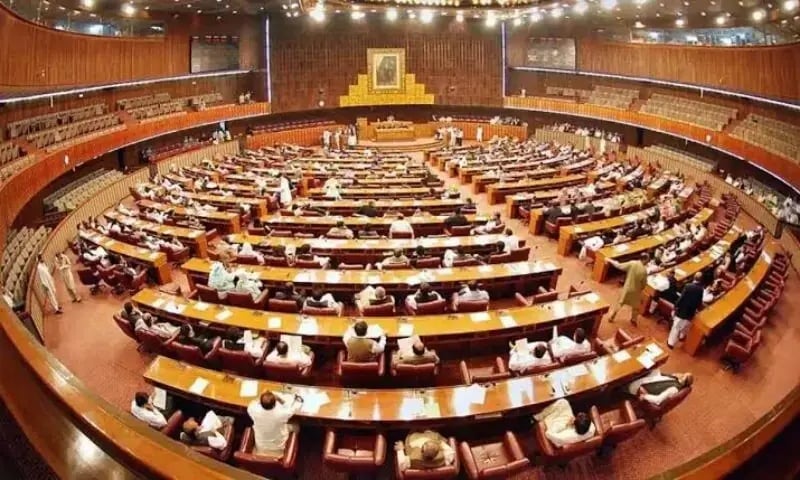

2026 © Helium Trades
Privacy Policy & Disclosure
* Disclaimer: Nothing on this website constitutes investment advice, performance data or any recommendation that any particular security, portfolio of securities, transaction or investment strategy is suitable for any specific person. Helium Trades is not responsible in any way for the accuracy
of any model predictions or price data. Any mention of a particular security and related prediction data is not a recommendation to buy or sell that security. Investments in securities involve the risk of loss. Past performance is no guarantee of future results. Helium Trades is not responsible for any of your investment decisions,
you should consult a financial expert before engaging in any transaction.
Helium Research Assistant

How can I help you today?
Ask any question about this page.


