See whether Helium helps you make better-informed decisions. Try every Pro Trader feature for 30 days. No credit card required.
Try every Pro Trader feature for 30 days. No credit card required.
November 18, 2026 · 0 shares
Restrained, attribution-heavy legal reporting presents prosecutors' account, defense testimony, and Iran's denial while avoiding sensational language.
Helium Analysis
Limitations: The supplied report attributes IRGC direction to US prosecutors and trial evidence and includes Iran's denial; independent adjudication of that attribution is outside the text.
·
56 of 56 available dimensions scored; omitted dimensions are not treated as neutral.
·
Verified supporting quotes for 6 of 56 scored dimensions.
Claim: The report presents claims as attributed facts from named institutional sources and court evidence rather than as the publisher's opinion.
“A US federal judge has sentenced a Pakistani national to more than 27 years in prison for plotting to assassinate President Donald Trump and other prominent US politicians in 2024, in what US prosecutors described as an operation directed by Iran.” · exact text match
“The potential targets included Trump, then-president Joe Biden and former US ambassador to the United Nations Nikki Haley, who were all presidential candidates during the 2024 election campaign, according to evidence presented at the trial.” · exact text match
Why: Attribution to prosecutors and trial evidence indicates an objective, non-opinionated style.
Claim: The report uses restrained legal and procedural language, avoiding sensational or emotive descriptions of the assassination plot.
“No attack was carried out.” · exact text match
“Merchant was arrested in Richmond, Texas, on July 12, 2024, as he was preparing to leave the United States.” · exact text match
Why: Plain factual statements and the explicit note that no attack occurred support an objective, non-sensational presentation.
Claim: The report is framed around a political assassination plot and US electoral figures, making political subject matter central.
“The potential targets included Trump, then-president Joe Biden and former US ambassador to the United Nations Nikki Haley, who were all presidential candidates during the 2024 election campaign, according to evidence presented at the trial.” · exact text match
Why: The targets and context are explicitly presidential-campaign and government officials, so the subject matter is highly political.
Claim: The report provides named institutional attribution, trial evidence, and multiple external sources, with explicit caveats.
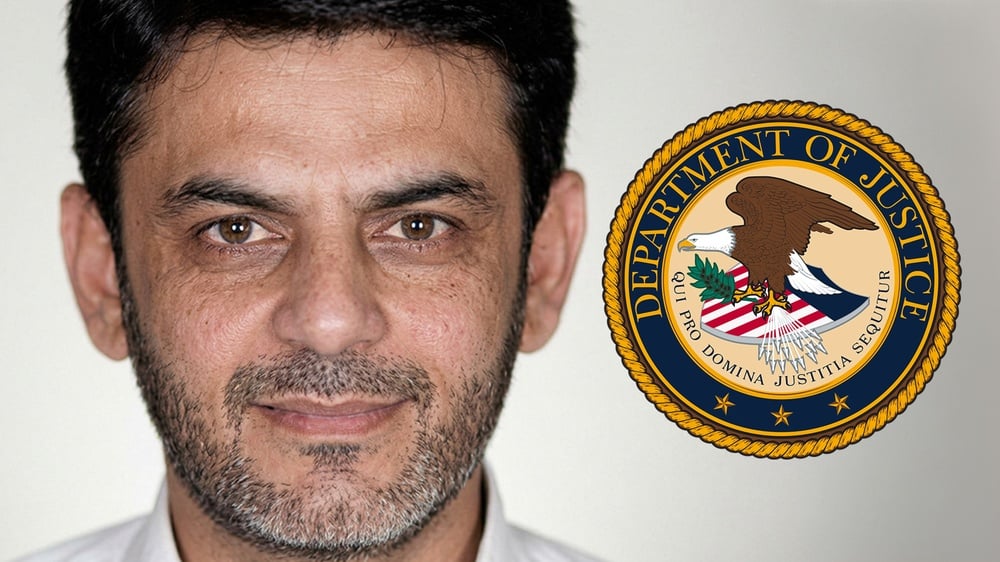
“Asif Merchant, 48, was sentenced to 330 months by US District Judge Eric R Komitee after a federal jury convicted him in March of attempting to commit an act of terrorism transcending national boundaries and murder for hire, the US Department of Justice said on Tuesday.” · exact text match
“The judge, while acknowledging Merchant's concern for his family, said he was also highly motivated to harm the United States, according to an Associated Press report.” · exact text match
Why: Attribution to DOJ and AP and inclusion of denial support high credibility.
Claim: The report is structured around attributed legal evidence and includes both prosecution and defense accounts rather than relying on assertion or emotion.
“Merchant testified that he had become involved with Iran's Islamic Revolutionary Guard Corps (IRGC), but said he acted under pressure because he feared for the safety of his family in Tehran.” · exact text match
“Iran has denied targeting Trump or plotting attacks against US officials.” · exact text match
Why: Including the defendant's account and Iran's denial, alongside prosecution claims, supports a rational, evidence-attributed presentation.
Claim: The report includes the defense's account, Iran's denial, and explicit caveats, showing internal fairness.
“Merchant's defence argued that he had acted reluctantly and under pressure from the Iranian operative, who he said had threatened his family in Iran.” · exact text match
“Iran has denied targeting Trump or plotting attacks against US officials.” · exact text match
Why: Multiple countervailing accounts support high fairness and honesty signals.
The supplied report attributes IRGC direction to US prosecutors and trial evidence and includes Iran's denial; independent adjudication of that attribution is outside the text.
November 18, 2026 · 0 shares
The report frames the case primarily through official US law-enforcement assertions, presenting the IRGC-directed threat and sentencing through DOJ, prosecutor, FBI and attorney general accounts with little defense or Iranian response.
Helium Analysis
Limitations: The supplied text contains duplicated passages and unrelated headline links, likely scrape artifacts, and no author byline; scoring is limited to the substantive report.
·
7 of 56 available dimensions scored; omitted dimensions are not treated as neutral.
·
Verified supporting quotes for 7 of 7 scored dimensions.
Claim: The report is predominantly objective and attribution-based, presenting court and official findings rather than the author's opinion.
“A Pakistani man has been sentenced by a court in the US to more than 27 years in prison for plotting in 2024 to kill President Donald Trump and other prominent American politicians at the behest of Iran, the Justice Department has said.” · exact text match
“Merchant testified that he believed Mr Trump was the ultimate target, although the plot also discussed then-president Joe Biden and former UN ambassador Nikki Haley, who were all presidential candidates at the time.” · exact text match
Why: The lead and subsequent details are framed through court outcomes and attributed statements, with little subjective commentary.
Claim: The report uses factual, restrained language rather than sensational prose.
“Asif Merchant, 48, was convicted by a federal jury in March of attempting to commit an act of terrorism across national boundaries and murder for hire.” · exact text match
Why: Serious subject matter is conveyed through legal and procedural terms, with no exclamatory or emotive escalation by the publisher.
Claim: The report is primarily descriptive, recounting the conviction, sentencing, and official statements rather than prescribing policy.
“A Pakistani man has been sentenced by a court in the US to more than 27 years in prison for plotting in 2024 to kill President Donald Trump and other prominent American politicians at the behest of Iran, the Justice Department has said.” · exact text match
Why: The piece reports a legal outcome and official reactions; explicit prescriptive advocacy is absent.
Claim: The report is strongly political in subject matter, centered on an alleged plot against prominent US political figures and attributed to a foreign state.
“A Pakistani man has been sentenced by a court in the US to more than 27 years in prison for plotting in 2024 to kill President Donald Trump and other prominent American politicians at the behest of Iran, the Justice Department has said.” · exact text match
Why: The central event concerns political figures, elections, and state-directed violence, making political content intrinsic rather than incidental.
Claim: The report repeatedly relies on prosecutorial and law-enforcement authority to establish key facts.
“Prosecutors said Merchant admitted joining the IRGC and becoming a trained intelligence asset.” · exact text match
“The Justice Department said the plot aimed to avenge the January 2020 US drone strike that killed former IRGC commander Maj Gen Qassem Suleimani.” · exact text match
Why: Core claims about affiliation and motive are sourced to prosecutors and the Justice Department rather than independently verified evidence.
Claim: The report frames the case through US official institutions and their threat characterization.
“The Justice Department said the plot aimed to avenge the January 2020 US drone strike that killed former IRGC commander Maj Gen Qassem Suleimani.” · exact text match
“The FBI said Merchant's plot against a prominent critic of the Iranian regime posed a serious threat to public safety and national security.” · exact text match
Why: DOJ and FBI assertions are used to establish motive and threat, giving official establishment accounts the dominant framing.
Claim: The report shows credible sourcing and specific legal detail, though it relies heavily on official accounts.
“Asif Merchant, 48, was convicted by a federal jury in March of attempting to commit an act of terrorism across national boundaries and murder for hire.” · exact text match
“Merchant paid the agents $5,000 as an initial instalment, using money obtained with help from relatives overseas.” · exact text match
Why: Named court outcome, specific amounts, and attributed official statements provide concrete, checkable detail without obvious internal contradiction.
The supplied text contains duplicated passages and unrelated headline links, likely scrape artifacts, and no author byline; scoring is limited to the substantive report.
November 18, 2026 · 0 shares
The report frames the case through official DOJ and courtroom attributions, with graphic evidentiary detail but little explicit editorializing.
Helium Analysis
Limitations: Date coherence is uncertain: the text says the conviction occurred in March 2026 while the November 17 sentencing date lacks a year, and the supplied content includes repeated or empty fragments.
·
7 of 56 available dimensions scored; omitted dimensions are not treated as neutral.
·
Verified supporting quotes for 6 of 7 scored dimensions.
Claim: The report relies on attributed official statements and courtroom testimony rather than reporter commentary.
“the US Department of Justice (DOJ) said on Tuesday.” · exact text match
“Merchant's lawyer, Avi Moskowitz, argued for a prison term of less than 30 years.” · exact text match
Why: The central claims are presented through named institutional and legal sources, with minimal subjective language.
Claim: The report's headline and inclusion of graphic phone images give it a mild sensational cast.
“Pakistani national jailed for over 27 years over Iran-backed plot to assassinate Trump.” · exact text match
“Images recovered from his phone reportedly included screenshots of social media posts showing Trump digging his own grave and a computer-generated image of a hand holding Trump's severed head.” · not found in supplied text
Why: The core report is factual, but the headline and gruesome evidentiary details add modest sensational coloring.
Claim: The article centers on a foreign-backed assassination plot against US political leaders and a federal prosecution.
“A Pakistani national has been sentenced to over 27 years in prison for attempting to orchestrate the assassination of US President Donald Trump and other American government officials on behalf of Iran's Islamic Revolutionary Guard Corps (IRGC), the US Department of Justice (DOJ) said on Tuesday.” · exact text match
Why: The reported event is inherently political: a plot against national leaders and officials tied to a foreign state entity.
Claim: Official DOJ and Attorney General statements dominate the account, though defense and judicial views are included.
“The Department of Justice will not tolerate foreign terrorist plots against our leaders and will not stop until those responsible are held accountable” · exact text match
“The DOJ said the sentence should serve as a warning to those seeking to carry out terrorist acts on behalf of foreign powers in the US.” · exact text match
Why: Law-enforcement framing carries the narrative, while the defense argument and judge's reasoning prevent it from being one-sided.
Claim: The account is sourced to named legal authorities and includes direct judicial attribution.
“According to the DOJ, Merchant admitted during his trial testimony that he voluntarily joined the IRGC and became a trained intelligence asset.” · exact text match
“Judge Komitee said a sentence of that length would be excessive, while emphasising the seriousness of the offences.” · exact text match
Why: Specific attribution to the DOJ and the judge supports high visible credibility within the supplied text.
Claim: The report presents a structured legal account with evidence, charges, and competing sentencing arguments.
“According to the DOJ, Merchant admitted during his trial testimony that he voluntarily joined the IRGC and became a trained intelligence asset.” · exact text match
“Judge Komitee said a sentence of that length would be excessive, while emphasising the seriousness of the offences.” · exact text match
Why: The article relies on attributed testimony and judicial reasoning rather than irrational assertions.
Claim: The article attributes contested claims and includes the defense's sentencing position.
“According to the DOJ, Merchant admitted during his trial testimony that he voluntarily joined the IRGC and became a trained intelligence asset.” · exact text match
“Merchant's lawyer, Avi Moskowitz, argued for a prison term of less than 30 years.” · exact text match
Why: Named sourcing and inclusion of the defense position indicate fair, internally honest reporting in the supplied text.
Date coherence is uncertain: the text says the conviction occurred in March 2026 while the November 17 sentencing date lacks a year, and the supplied content includes repeated or empty fragments.
November 18, 2026 · 0 shares
Restrained, attribution-heavy legal reporting presents prosecutors' account, defense testimony, and Iran's denial while avoiding sensational language.
Helium Analysis
Limitations: The supplied report attributes IRGC direction to US prosecutors and trial evidence and includes Iran's denial; independent adjudication of that attribution is outside the text.
·
56 of 56 available dimensions scored; omitted dimensions are not treated as neutral.
·
Verified supporting quotes for 6 of 56 scored dimensions.
Claim: The report presents claims as attributed facts from named institutional sources and court evidence rather than as the publisher's opinion.
“A US federal judge has sentenced a Pakistani national to more than 27 years in prison for plotting to assassinate President Donald Trump and other prominent US politicians in 2024, in what US prosecutors described as an operation directed by Iran.” · exact text match
“The potential targets included Trump, then-president Joe Biden and former US ambassador to the United Nations Nikki Haley, who were all presidential candidates during the 2024 election campaign, according to evidence presented at the trial.” · exact text match
Why: Attribution to prosecutors and trial evidence indicates an objective, non-opinionated style.
Claim: The report uses restrained legal and procedural language, avoiding sensational or emotive descriptions of the assassination plot.
“No attack was carried out.” · exact text match
“Merchant was arrested in Richmond, Texas, on July 12, 2024, as he was preparing to leave the United States.” · exact text match
Why: Plain factual statements and the explicit note that no attack occurred support an objective, non-sensational presentation.
Claim: The report is framed around a political assassination plot and US electoral figures, making political subject matter central.
“The potential targets included Trump, then-president Joe Biden and former US ambassador to the United Nations Nikki Haley, who were all presidential candidates during the 2024 election campaign, according to evidence presented at the trial.” · exact text match
Why: The targets and context are explicitly presidential-campaign and government officials, so the subject matter is highly political.
Claim: The report provides named institutional attribution, trial evidence, and multiple external sources, with explicit caveats.
“Asif Merchant, 48, was sentenced to 330 months by US District Judge Eric R Komitee after a federal jury convicted him in March of attempting to commit an act of terrorism transcending national boundaries and murder for hire, the US Department of Justice said on Tuesday.” · exact text match
“The judge, while acknowledging Merchant's concern for his family, said he was also highly motivated to harm the United States, according to an Associated Press report.” · exact text match
Why: Attribution to DOJ and AP and inclusion of denial support high credibility.
Claim: The report is structured around attributed legal evidence and includes both prosecution and defense accounts rather than relying on assertion or emotion.
“Merchant testified that he had become involved with Iran's Islamic Revolutionary Guard Corps (IRGC), but said he acted under pressure because he feared for the safety of his family in Tehran.” · exact text match
“Iran has denied targeting Trump or plotting attacks against US officials.” · exact text match
Why: Including the defendant's account and Iran's denial, alongside prosecution claims, supports a rational, evidence-attributed presentation.
Claim: The report includes the defense's account, Iran's denial, and explicit caveats, showing internal fairness.
“Merchant's defence argued that he had acted reluctantly and under pressure from the Iranian operative, who he said had threatened his family in Iran.” · exact text match
“Iran has denied targeting Trump or plotting attacks against US officials.” · exact text match
Why: Multiple countervailing accounts support high fairness and honesty signals.
The supplied report attributes IRGC direction to US prosecutors and trial evidence and includes Iran's denial; independent adjudication of that attribution is outside the text.
November 18, 2026 · 0 shares
The report frames the case through official DOJ and courtroom attributions, with graphic evidentiary detail but little explicit editorializing.
Helium Analysis
Limitations: Date coherence is uncertain: the text says the conviction occurred in March 2026 while the November 17 sentencing date lacks a year, and the supplied content includes repeated or empty fragments.
·
7 of 56 available dimensions scored; omitted dimensions are not treated as neutral.
·
Verified supporting quotes for 6 of 7 scored dimensions.
Claim: The report relies on attributed official statements and courtroom testimony rather than reporter commentary.
“the US Department of Justice (DOJ) said on Tuesday.” · exact text match
“Merchant's lawyer, Avi Moskowitz, argued for a prison term of less than 30 years.” · exact text match
Why: The central claims are presented through named institutional and legal sources, with minimal subjective language.
Claim: The report's headline and inclusion of graphic phone images give it a mild sensational cast.
“Pakistani national jailed for over 27 years over Iran-backed plot to assassinate Trump.” · exact text match
“Images recovered from his phone reportedly included screenshots of social media posts showing Trump digging his own grave and a computer-generated image of a hand holding Trump's severed head.” · not found in supplied text
Why: The core report is factual, but the headline and gruesome evidentiary details add modest sensational coloring.
Claim: The article centers on a foreign-backed assassination plot against US political leaders and a federal prosecution.
“A Pakistani national has been sentenced to over 27 years in prison for attempting to orchestrate the assassination of US President Donald Trump and other American government officials on behalf of Iran's Islamic Revolutionary Guard Corps (IRGC), the US Department of Justice (DOJ) said on Tuesday.” · exact text match
Why: The reported event is inherently political: a plot against national leaders and officials tied to a foreign state entity.
Claim: Official DOJ and Attorney General statements dominate the account, though defense and judicial views are included.
“The Department of Justice will not tolerate foreign terrorist plots against our leaders and will not stop until those responsible are held accountable” · exact text match
“The DOJ said the sentence should serve as a warning to those seeking to carry out terrorist acts on behalf of foreign powers in the US.” · exact text match
Why: Law-enforcement framing carries the narrative, while the defense argument and judge's reasoning prevent it from being one-sided.
Claim: The account is sourced to named legal authorities and includes direct judicial attribution.
“According to the DOJ, Merchant admitted during his trial testimony that he voluntarily joined the IRGC and became a trained intelligence asset.” · exact text match
“Judge Komitee said a sentence of that length would be excessive, while emphasising the seriousness of the offences.” · exact text match
Why: Specific attribution to the DOJ and the judge supports high visible credibility within the supplied text.
Claim: The report presents a structured legal account with evidence, charges, and competing sentencing arguments.
“According to the DOJ, Merchant admitted during his trial testimony that he voluntarily joined the IRGC and became a trained intelligence asset.” · exact text match
“Judge Komitee said a sentence of that length would be excessive, while emphasising the seriousness of the offences.” · exact text match
Why: The article relies on attributed testimony and judicial reasoning rather than irrational assertions.
Claim: The article attributes contested claims and includes the defense's sentencing position.
“According to the DOJ, Merchant admitted during his trial testimony that he voluntarily joined the IRGC and became a trained intelligence asset.” · exact text match
“Merchant's lawyer, Avi Moskowitz, argued for a prison term of less than 30 years.” · exact text match
Why: Named sourcing and inclusion of the defense position indicate fair, internally honest reporting in the supplied text.
Date coherence is uncertain: the text says the conviction occurred in March 2026 while the November 17 sentencing date lacks a year, and the supplied content includes repeated or empty fragments.
November 18, 2026 · 0 shares
The report is largely factual and attribution-heavy, but it frames the case through a US national-security lens by emphasizing IRGC ties, terrorism charges, and official warnings while still noting Iran’s denial and the defense appeal.
Helium Analysis
Limitations: The supplied text includes unrelated headline fragments and no author byline; the bias assessment is limited to the substantive crime report.
·
9 of 56 available dimensions scored; omitted dimensions are not treated as neutral.
·
Verified supporting quotes for 9 of 9 scored dimensions.
Claim: The report distinguishes prosecution claims, court findings, defense statements, and Iran's denial rather than blending them into a single subjective narrative.
“Prosecutors said Merchant was recruited by the Guards around 2022” · exact text match
“Iran has denied targeting Trump or plotting attacks against US officials.” · exact text match
Why: Repeated attribution and inclusion of denial indicate strong objective reporting.
Claim: The report presents the plot and sentencing in restrained, procedural terms rather than sensational language.
“Merchant then met three times with purported hitmen who were undercover FBI agents” · exact text match
Why: Factual description of undercover meeting is measured and non-sensational.
Claim: The report primarily describes the legal outcome and official statements rather than prescribing policy or moral conclusions.
“The Justice Department said Judge Eric Komitee sentenced him for attempting an act of terrorism transcending national boundaries and for murder for hire” · exact text match
Why: Legal sentencing description is descriptive rather than prescriptive.
Claim: The report centers a politically salient assassination plot involving Trump and other US political figures.
“including President Donald Trump” · exact text match
“other targets could have been then-President Joe Biden and former UN ambassador Nikki Haley” · exact text match
Why: The named political targets make the story strongly political in content.
Claim: The report leans on official US law-enforcement accounts, including an attorney general's approving characterization and a DOJ warning.
“Attorney General Todd Blanche said Merchant was “justly sentenced,”” · exact text match
“a Justice Department official said the sentence should serve as a warning to anyone who comes to the United States on behalf of a foreign power to commit terrorist acts.” · exact text match
Counterevidence:
“Iran has denied targeting Trump or plotting attacks against US officials.” · exact text match
Why: Official sources dominate the framing, though the denial and defense claims qualify it.
Claim: The report repeatedly attributes claims and includes the defense position and Iran's denial, supporting visible credibility.
“according to the department” · exact text match
“Iran has denied targeting Trump or plotting attacks against US officials.” · exact text match
Why: Attribution and inclusion of denial are strong credibility signals in the supplied text.
Claim: The report is structured around legal procedure, jury conviction, and attributed evidence rather than emotional or irrational appeals.
“The Justice Department said Judge Eric Komitee sentenced him for attempting an act of terrorism transcending national boundaries and for murder for hire, after a jury convicted him in March.” · exact text match
Why: Procedural and evidentiary detail supports a rational, low-irrationality classification.
Claim: The report includes defense claims and Iran's denial alongside the prosecution account, showing fair internal handling.
“defense lawyers said he will appeal and called the plot incompetent from the start.” · exact text match
“Iran has denied targeting Trump or plotting attacks against US officials.” · exact text match
Why: Inclusion of opposing/denying statements supports high integrity.
Claim: The report provides a detailed chronology, legal context, and attributed testimony.
“met his handler about 15 times in Tehran over a year and a half, and was trained in counterintelligence” · exact text match
Why: Specific dates, roles, and procedural details indicate high article intelligence.
The supplied text includes unrelated headline fragments and no author byline; the bias assessment is limited to the substantive crime report.
November 18, 2026 · 0 shares
Restrained, attribution-heavy legal reporting presents prosecutors' account, defense testimony, and Iran's denial while avoiding sensational language.
Helium Analysis
Limitations: The supplied report attributes IRGC direction to US prosecutors and trial evidence and includes Iran's denial; independent adjudication of that attribution is outside the text.
·
56 of 56 available dimensions scored; omitted dimensions are not treated as neutral.
·
Verified supporting quotes for 6 of 56 scored dimensions.
Claim: The report presents claims as attributed facts from named institutional sources and court evidence rather than as the publisher's opinion.
“A US federal judge has sentenced a Pakistani national to more than 27 years in prison for plotting to assassinate President Donald Trump and other prominent US politicians in 2024, in what US prosecutors described as an operation directed by Iran.” · exact text match
“The potential targets included Trump, then-president Joe Biden and former US ambassador to the United Nations Nikki Haley, who were all presidential candidates during the 2024 election campaign, according to evidence presented at the trial.” · exact text match
Why: Attribution to prosecutors and trial evidence indicates an objective, non-opinionated style.
Claim: The report uses restrained legal and procedural language, avoiding sensational or emotive descriptions of the assassination plot.
“No attack was carried out.” · exact text match
“Merchant was arrested in Richmond, Texas, on July 12, 2024, as he was preparing to leave the United States.” · exact text match
Why: Plain factual statements and the explicit note that no attack occurred support an objective, non-sensational presentation.
Claim: The report is framed around a political assassination plot and US electoral figures, making political subject matter central.
“The potential targets included Trump, then-president Joe Biden and former US ambassador to the United Nations Nikki Haley, who were all presidential candidates during the 2024 election campaign, according to evidence presented at the trial.” · exact text match
Why: The targets and context are explicitly presidential-campaign and government officials, so the subject matter is highly political.
Claim: The report provides named institutional attribution, trial evidence, and multiple external sources, with explicit caveats.
“Asif Merchant, 48, was sentenced to 330 months by US District Judge Eric R Komitee after a federal jury convicted him in March of attempting to commit an act of terrorism transcending national boundaries and murder for hire, the US Department of Justice said on Tuesday.” · exact text match
“The judge, while acknowledging Merchant's concern for his family, said he was also highly motivated to harm the United States, according to an Associated Press report.” · exact text match
Why: Attribution to DOJ and AP and inclusion of denial support high credibility.
Claim: The report is structured around attributed legal evidence and includes both prosecution and defense accounts rather than relying on assertion or emotion.
“Merchant testified that he had become involved with Iran's Islamic Revolutionary Guard Corps (IRGC), but said he acted under pressure because he feared for the safety of his family in Tehran.” · exact text match
“Iran has denied targeting Trump or plotting attacks against US officials.” · exact text match
Why: Including the defendant's account and Iran's denial, alongside prosecution claims, supports a rational, evidence-attributed presentation.
Claim: The report includes the defense's account, Iran's denial, and explicit caveats, showing internal fairness.
“Merchant's defence argued that he had acted reluctantly and under pressure from the Iranian operative, who he said had threatened his family in Iran.” · exact text match
“Iran has denied targeting Trump or plotting attacks against US officials.” · exact text match
Why: Multiple countervailing accounts support high fairness and honesty signals.
The supplied report attributes IRGC direction to US prosecutors and trial evidence and includes Iran's denial; independent adjudication of that attribution is outside the text.
November 18, 2026 · 0 shares
The report frames the case through official DOJ and courtroom attributions, with graphic evidentiary detail but little explicit editorializing.
Helium Analysis
Limitations: Date coherence is uncertain: the text says the conviction occurred in March 2026 while the November 17 sentencing date lacks a year, and the supplied content includes repeated or empty fragments.
·
7 of 56 available dimensions scored; omitted dimensions are not treated as neutral.
·
Verified supporting quotes for 6 of 7 scored dimensions.
Claim: The report relies on attributed official statements and courtroom testimony rather than reporter commentary.
“the US Department of Justice (DOJ) said on Tuesday.” · exact text match
“Merchant's lawyer, Avi Moskowitz, argued for a prison term of less than 30 years.” · exact text match
Why: The central claims are presented through named institutional and legal sources, with minimal subjective language.
Claim: The report's headline and inclusion of graphic phone images give it a mild sensational cast.
“Pakistani national jailed for over 27 years over Iran-backed plot to assassinate Trump.” · exact text match
“Images recovered from his phone reportedly included screenshots of social media posts showing Trump digging his own grave and a computer-generated image of a hand holding Trump's severed head.” · not found in supplied text
Why: The core report is factual, but the headline and gruesome evidentiary details add modest sensational coloring.
Claim: The article centers on a foreign-backed assassination plot against US political leaders and a federal prosecution.
“A Pakistani national has been sentenced to over 27 years in prison for attempting to orchestrate the assassination of US President Donald Trump and other American government officials on behalf of Iran's Islamic Revolutionary Guard Corps (IRGC), the US Department of Justice (DOJ) said on Tuesday.” · exact text match
Why: The reported event is inherently political: a plot against national leaders and officials tied to a foreign state entity.
Claim: Official DOJ and Attorney General statements dominate the account, though defense and judicial views are included.
“The Department of Justice will not tolerate foreign terrorist plots against our leaders and will not stop until those responsible are held accountable” · exact text match
“The DOJ said the sentence should serve as a warning to those seeking to carry out terrorist acts on behalf of foreign powers in the US.” · exact text match
Why: Law-enforcement framing carries the narrative, while the defense argument and judge's reasoning prevent it from being one-sided.
Claim: The account is sourced to named legal authorities and includes direct judicial attribution.
“According to the DOJ, Merchant admitted during his trial testimony that he voluntarily joined the IRGC and became a trained intelligence asset.” · exact text match
“Judge Komitee said a sentence of that length would be excessive, while emphasising the seriousness of the offences.” · exact text match
Why: Specific attribution to the DOJ and the judge supports high visible credibility within the supplied text.
Claim: The report presents a structured legal account with evidence, charges, and competing sentencing arguments.
“According to the DOJ, Merchant admitted during his trial testimony that he voluntarily joined the IRGC and became a trained intelligence asset.” · exact text match
“Judge Komitee said a sentence of that length would be excessive, while emphasising the seriousness of the offences.” · exact text match
Why: The article relies on attributed testimony and judicial reasoning rather than irrational assertions.
Claim: The article attributes contested claims and includes the defense's sentencing position.
“According to the DOJ, Merchant admitted during his trial testimony that he voluntarily joined the IRGC and became a trained intelligence asset.” · exact text match
“Merchant's lawyer, Avi Moskowitz, argued for a prison term of less than 30 years.” · exact text match
Why: Named sourcing and inclusion of the defense position indicate fair, internally honest reporting in the supplied text.
Date coherence is uncertain: the text says the conviction occurred in March 2026 while the November 17 sentencing date lacks a year, and the supplied content includes repeated or empty fragments.
November 18, 2026 · 0 shares
The report is largely neutral and attribution-heavy, though the headline framing shifts between stating the plot as fact and calling it 'alleged'.
Helium Analysis
Limitations: The supplied text contains duplicated category menus and repeated article blocks; analysis is limited to the substantive court-reporting content.
·
9 of 56 available dimensions scored; omitted dimensions are not treated as neutral.
·
Verified supporting quotes for 9 of 9 scored dimensions.
Claim: No clear left-right ideological framing appears; the report attributes allegations to U.S. legal authorities and includes Iran’s denial.
“Iran has denied allegations that it sought to assassinate American officials.” · exact text match
Why: Balancing the U.S. allegation with Iran’s denial indicates non-partisan, non-ideological handling.
Claim: The report relies on named official statements and avoids subjective commentary.
“In a statement issued on Tuesday, the US Department of Justice said Federal Judge Eric R. Komitee, of the Eastern District of New York, handed the 48-year-old a 330-month prison sentence in Brooklyn.” · exact text match
Why: Direct attribution to the DOJ and specific judge details support objective reporting.
Claim: The language is plain and factual rather than sensational or emotive.
“A US federal court has sentenced Pakistani national Asif Merchant to 27 years and six months in prison for plotting to assassinate US President Donald Trump and other American politicians.” · exact text match
Why: The sentence is reported in neutral terms despite the serious subject matter.
Claim: The article describes events and attributed claims without prescribing policy or action.
“The department said Merchant had paid $5,000 to people he believed were contract killers to carry out the assassination, but they were actually undercover agents of the US Federal Bureau of Investigation (FBI).” · exact text match
Why: It recounts investigative details rather than advocating a response.
Claim: The reported event centrally involves political leaders and state-directed political violence.
“US prosecutors said Merchant had plotted to assassinate American politicians at the direction of Iran’s Islamic Revolutionary Guard Corps (IRGC), seeking revenge for the killing of the force’s former commander, Qassem Soleimani, in a US drone strike in January 2020.” · exact text match
Why: The subject matter is highly political.
Claim: Credibility is supported by named officials, specific charges, dates, and separate AP attribution.
“The Associated Press reported that Merchant testified during his trial that he had followed instructions from an IRGC intelligence operative to protect his relatives in Iran.” · exact text match
Why: Specific official attribution and verifiable details support trustworthiness.
Claim: The report is structured around attributed court and investigative claims rather than emotional assertions.
“According to the statement, Merchant was convicted in March 2026 of attempting to commit an act of terrorism transcending national boundaries and murder-for-hire.” · exact text match
Why: Specific charges and attribution support a rational rather than irrational presentation.
Claim: The report includes a denial and planned appeal, showing internal fairness.
“Iran has denied allegations that it sought to assassinate American officials.” · exact text match
“Merchant’s lawyer said he would appeal against the court’s decision.” · exact text match
Why: Presenting contrary responses supports high integrity.
Claim: The article is clearly organized and provides specific, relevant details.
“According to the Department of Justice, Merchant believed Trump was the main target of the plot, while then-US President Joe Biden and former US Ambassador to the United Nations Nikki Haley were also identified as potential targets.” · exact text match
Why: Specific names and roles indicate above-average article intelligence.
The supplied text contains duplicated category menus and repeated article blocks; analysis is limited to the substantive court-reporting content.
November 18, 2026 · 0 shares
The report is largely factual and attribution-heavy, but it frames the case through a US national-security lens by emphasizing IRGC ties, terrorism charges, and official warnings while still noting Iran’s denial and the defense appeal.
Helium Analysis
Limitations: The supplied text includes unrelated headline fragments and no author byline; the bias assessment is limited to the substantive crime report.
·
9 of 56 available dimensions scored; omitted dimensions are not treated as neutral.
·
Verified supporting quotes for 9 of 9 scored dimensions.
Claim: The report distinguishes prosecution claims, court findings, defense statements, and Iran's denial rather than blending them into a single subjective narrative.
“Prosecutors said Merchant was recruited by the Guards around 2022” · exact text match
“Iran has denied targeting Trump or plotting attacks against US officials.” · exact text match
Why: Repeated attribution and inclusion of denial indicate strong objective reporting.
Claim: The report presents the plot and sentencing in restrained, procedural terms rather than sensational language.
“Merchant then met three times with purported hitmen who were undercover FBI agents” · exact text match
Why: Factual description of undercover meeting is measured and non-sensational.
Claim: The report primarily describes the legal outcome and official statements rather than prescribing policy or moral conclusions.
“The Justice Department said Judge Eric Komitee sentenced him for attempting an act of terrorism transcending national boundaries and for murder for hire” · exact text match
Why: Legal sentencing description is descriptive rather than prescriptive.
Claim: The report centers a politically salient assassination plot involving Trump and other US political figures.
“including President Donald Trump” · exact text match
“other targets could have been then-President Joe Biden and former UN ambassador Nikki Haley” · exact text match
Why: The named political targets make the story strongly political in content.
Claim: The report leans on official US law-enforcement accounts, including an attorney general's approving characterization and a DOJ warning.
“Attorney General Todd Blanche said Merchant was “justly sentenced,”” · exact text match
“a Justice Department official said the sentence should serve as a warning to anyone who comes to the United States on behalf of a foreign power to commit terrorist acts.” · exact text match
Counterevidence:
“Iran has denied targeting Trump or plotting attacks against US officials.” · exact text match
Why: Official sources dominate the framing, though the denial and defense claims qualify it.
Claim: The report repeatedly attributes claims and includes the defense position and Iran's denial, supporting visible credibility.
“according to the department” · exact text match
“Iran has denied targeting Trump or plotting attacks against US officials.” · exact text match
Why: Attribution and inclusion of denial are strong credibility signals in the supplied text.
Claim: The report is structured around legal procedure, jury conviction, and attributed evidence rather than emotional or irrational appeals.
“The Justice Department said Judge Eric Komitee sentenced him for attempting an act of terrorism transcending national boundaries and for murder for hire, after a jury convicted him in March.” · exact text match
Why: Procedural and evidentiary detail supports a rational, low-irrationality classification.
Claim: The report includes defense claims and Iran's denial alongside the prosecution account, showing fair internal handling.
“defense lawyers said he will appeal and called the plot incompetent from the start.” · exact text match
“Iran has denied targeting Trump or plotting attacks against US officials.” · exact text match
Why: Inclusion of opposing/denying statements supports high integrity.
Claim: The report provides a detailed chronology, legal context, and attributed testimony.
“met his handler about 15 times in Tehran over a year and a half, and was trained in counterintelligence” · exact text match
Why: Specific dates, roles, and procedural details indicate high article intelligence.
The supplied text includes unrelated headline fragments and no author byline; the bias assessment is limited to the substantive crime report.
November 18, 2026 · 0 shares
Restrained, attribution-heavy legal reporting presents prosecutors' account, defense testimony, and Iran's denial while avoiding sensational language.
Helium Analysis
Limitations: The supplied report attributes IRGC direction to US prosecutors and trial evidence and includes Iran's denial; independent adjudication of that attribution is outside the text.
·
56 of 56 available dimensions scored; omitted dimensions are not treated as neutral.
·
Verified supporting quotes for 6 of 56 scored dimensions.
Claim: The report presents claims as attributed facts from named institutional sources and court evidence rather than as the publisher's opinion.
“A US federal judge has sentenced a Pakistani national to more than 27 years in prison for plotting to assassinate President Donald Trump and other prominent US politicians in 2024, in what US prosecutors described as an operation directed by Iran.” · exact text match
“The potential targets included Trump, then-president Joe Biden and former US ambassador to the United Nations Nikki Haley, who were all presidential candidates during the 2024 election campaign, according to evidence presented at the trial.” · exact text match
Why: Attribution to prosecutors and trial evidence indicates an objective, non-opinionated style.
Claim: The report uses restrained legal and procedural language, avoiding sensational or emotive descriptions of the assassination plot.
“No attack was carried out.” · exact text match
“Merchant was arrested in Richmond, Texas, on July 12, 2024, as he was preparing to leave the United States.” · exact text match
Why: Plain factual statements and the explicit note that no attack occurred support an objective, non-sensational presentation.
Claim: The report is framed around a political assassination plot and US electoral figures, making political subject matter central.
“The potential targets included Trump, then-president Joe Biden and former US ambassador to the United Nations Nikki Haley, who were all presidential candidates during the 2024 election campaign, according to evidence presented at the trial.” · exact text match
Why: The targets and context are explicitly presidential-campaign and government officials, so the subject matter is highly political.
Claim: The report provides named institutional attribution, trial evidence, and multiple external sources, with explicit caveats.
“Asif Merchant, 48, was sentenced to 330 months by US District Judge Eric R Komitee after a federal jury convicted him in March of attempting to commit an act of terrorism transcending national boundaries and murder for hire, the US Department of Justice said on Tuesday.” · exact text match
“The judge, while acknowledging Merchant's concern for his family, said he was also highly motivated to harm the United States, according to an Associated Press report.” · exact text match
Why: Attribution to DOJ and AP and inclusion of denial support high credibility.
Claim: The report is structured around attributed legal evidence and includes both prosecution and defense accounts rather than relying on assertion or emotion.
“Merchant testified that he had become involved with Iran's Islamic Revolutionary Guard Corps (IRGC), but said he acted under pressure because he feared for the safety of his family in Tehran.” · exact text match
“Iran has denied targeting Trump or plotting attacks against US officials.” · exact text match
Why: Including the defendant's account and Iran's denial, alongside prosecution claims, supports a rational, evidence-attributed presentation.
Claim: The report includes the defense's account, Iran's denial, and explicit caveats, showing internal fairness.
“Merchant's defence argued that he had acted reluctantly and under pressure from the Iranian operative, who he said had threatened his family in Iran.” · exact text match
“Iran has denied targeting Trump or plotting attacks against US officials.” · exact text match
Why: Multiple countervailing accounts support high fairness and honesty signals.
The supplied report attributes IRGC direction to US prosecutors and trial evidence and includes Iran's denial; independent adjudication of that attribution is outside the text.
November 18, 2026 · 0 shares
Attributed legal-reporting framing foregrounds U.S. official and court characterizations of an Iran-linked plot while briefly incorporating the defendant's conflicting testimony.
Helium Analysis
Limitations: The supplied text duplicates paragraphs and includes related-link fragments; the analysis is limited to the substantive legal report.
·
9 of 56 available dimensions scored; omitted dimensions are not treated as neutral.
·
Verified supporting quotes for 9 of 9 scored dimensions.
Claim: The report does not advance a clear left-right ideological framing.
“the Department of Justice said” · exact text match
“Merchant had testified” · exact text match
Why: It presents official and defense accounts without recognizable liberal or conservative advocacy.
Claim: The report does not adopt a populist or elitist framing.
“a Brooklyn court found” · exact text match
“the Department of Justice said” · exact text match
Why: It reports legal and official findings rather than appealing to popular or elite identity.
Claim: The report attributes key claims to official and court sources and includes the defendant's own testimony, limiting subjective framing.
“the Department of Justice said” · exact text match
“a Brooklyn court found” · exact text match
Why: Attribution and inclusion of conflicting testimony support an objective presentation.
Claim: The report presents the sentence and alleged plot in factual legal language rather than sensational terms.
“A Pakistani man was sentenced to more than 27 years in prison Tuesday for plotting to assassinate President Donald Trump” · exact text match
Why: The language is direct legal-reporting prose without emotive embellishment.
Claim: The report describes legal findings and official statements without prescribing policy.
“a Brooklyn court found” · exact text match
“the Department of Justice said” · exact text match
Why: It is primarily descriptive rather than advocacy-oriented.
Claim: The central event is a politically salient alleged assassination plot against a U.S. president and official national-security response.
“plotting to assassinate President Donald Trump” · exact text match
“The Department of Justice will not tolerate foreign terrorist plots against our leaders” · exact text match
Why: The subject matter is inherently political and national-security related.
Claim: Key claims are attributed to the DOJ, a Brooklyn court, officials, and multiple media outlets, with defense testimony included.
“the Department of Justice said” · exact text match
“multiple media outlets reported” · exact text match
Why: Visible sourcing and inclusion of defense claims support credibility in the supplied text.
Claim: The report uses attributed legal findings and testimony rather than speculative or irrational reasoning.
“a Brooklyn court found” · exact text match
“multiple media outlets reported” · exact text match
Why: Claims are tied to court findings, official statements, and media-reported testimony.
Claim: The report includes conflicting defense testimony and attributes official claims, indicating internal fairness.
“He said he was never ordered to kill a specific person” · exact text match
“the Department of Justice said” · exact text match
Why: It gives space to the defendant's account while clearly attributing prosecution and official statements.
The supplied text duplicates paragraphs and includes related-link fragments; the analysis is limited to the substantive legal report.
November 18, 2026 · 0 shares
Restrained, attribution-heavy legal reporting presents prosecutors' account, defense testimony, and Iran's denial while avoiding sensational language.
Helium Analysis Limitations: The supplied report attributes IRGC direction to US prosecutors and trial evidence and includes Iran's denial; independent adjudication of that attribution is outside the text. · 56 of 56 available dimensions scored; omitted dimensions are not treated as neutral. · Verified supporting quotes for 6 of 56 scored dimensions.
Claim: The report presents claims as attributed facts from named institutional sources and court evidence rather than as the publisher's opinion.
“A US federal judge has sentenced a Pakistani national to more than 27 years in prison for plotting to assassinate President Donald Trump and other prominent US politicians in 2024, in what US prosecutors described as an operation directed by Iran.” · exact text match
“The potential targets included Trump, then-president Joe Biden and former US ambassador to the United Nations Nikki Haley, who were all presidential candidates during the 2024 election campaign, according to evidence presented at the trial.” · exact text match
Why: Attribution to prosecutors and trial evidence indicates an objective, non-opinionated style.
Claim: The report uses restrained legal and procedural language, avoiding sensational or emotive descriptions of the assassination plot.
“No attack was carried out.” · exact text match
“Merchant was arrested in Richmond, Texas, on July 12, 2024, as he was preparing to leave the United States.” · exact text match
Why: Plain factual statements and the explicit note that no attack occurred support an objective, non-sensational presentation.
Claim: The report is framed around a political assassination plot and US electoral figures, making political subject matter central.
“The potential targets included Trump, then-president Joe Biden and former US ambassador to the United Nations Nikki Haley, who were all presidential candidates during the 2024 election campaign, according to evidence presented at the trial.” · exact text match
Why: The targets and context are explicitly presidential-campaign and government officials, so the subject matter is highly political.
Claim: The report provides named institutional attribution, trial evidence, and multiple external sources, with explicit caveats.
“Asif Merchant, 48, was sentenced to 330 months by US District Judge Eric R Komitee after a federal jury convicted him in March of attempting to commit an act of terrorism transcending national boundaries and murder for hire, the US Department of Justice said on Tuesday.” · exact text match
“The judge, while acknowledging Merchant's concern for his family, said he was also highly motivated to harm the United States, according to an Associated Press report.” · exact text match
Why: Attribution to DOJ and AP and inclusion of denial support high credibility.
Claim: The report is structured around attributed legal evidence and includes both prosecution and defense accounts rather than relying on assertion or emotion.
“Merchant testified that he had become involved with Iran's Islamic Revolutionary Guard Corps (IRGC), but said he acted under pressure because he feared for the safety of his family in Tehran.” · exact text match
“Iran has denied targeting Trump or plotting attacks against US officials.” · exact text match
Why: Including the defendant's account and Iran's denial, alongside prosecution claims, supports a rational, evidence-attributed presentation.
Claim: The report includes the defense's account, Iran's denial, and explicit caveats, showing internal fairness.
“Merchant's defence argued that he had acted reluctantly and under pressure from the Iranian operative, who he said had threatened his family in Iran.” · exact text match
“Iran has denied targeting Trump or plotting attacks against US officials.” · exact text match
Why: Multiple countervailing accounts support high fairness and honesty signals.
The supplied report attributes IRGC direction to US prosecutors and trial evidence and includes Iran's denial; independent adjudication of that attribution is outside the text.
November 18, 2026 · 0 shares
The report frames the case through official DOJ and courtroom attributions, with graphic evidentiary detail but little explicit editorializing.
Helium Analysis Limitations: Date coherence is uncertain: the text says the conviction occurred in March 2026 while the November 17 sentencing date lacks a year, and the supplied content includes repeated or empty fragments. · 7 of 56 available dimensions scored; omitted dimensions are not treated as neutral. · Verified supporting quotes for 6 of 7 scored dimensions.
Claim: The report relies on attributed official statements and courtroom testimony rather than reporter commentary.
“the US Department of Justice (DOJ) said on Tuesday.” · exact text match
“Merchant's lawyer, Avi Moskowitz, argued for a prison term of less than 30 years.” · exact text match
Why: The central claims are presented through named institutional and legal sources, with minimal subjective language.
Claim: The report's headline and inclusion of graphic phone images give it a mild sensational cast.
“Pakistani national jailed for over 27 years over Iran-backed plot to assassinate Trump.” · exact text match
“Images recovered from his phone reportedly included screenshots of social media posts showing Trump digging his own grave and a computer-generated image of a hand holding Trump's severed head.” · not found in supplied text
Why: The core report is factual, but the headline and gruesome evidentiary details add modest sensational coloring.
Claim: The article centers on a foreign-backed assassination plot against US political leaders and a federal prosecution.
“A Pakistani national has been sentenced to over 27 years in prison for attempting to orchestrate the assassination of US President Donald Trump and other American government officials on behalf of Iran's Islamic Revolutionary Guard Corps (IRGC), the US Department of Justice (DOJ) said on Tuesday.” · exact text match
Why: The reported event is inherently political: a plot against national leaders and officials tied to a foreign state entity.
Claim: Official DOJ and Attorney General statements dominate the account, though defense and judicial views are included.
“The Department of Justice will not tolerate foreign terrorist plots against our leaders and will not stop until those responsible are held accountable” · exact text match
“The DOJ said the sentence should serve as a warning to those seeking to carry out terrorist acts on behalf of foreign powers in the US.” · exact text match
Why: Law-enforcement framing carries the narrative, while the defense argument and judge's reasoning prevent it from being one-sided.
Claim: The account is sourced to named legal authorities and includes direct judicial attribution.
“According to the DOJ, Merchant admitted during his trial testimony that he voluntarily joined the IRGC and became a trained intelligence asset.” · exact text match
“Judge Komitee said a sentence of that length would be excessive, while emphasising the seriousness of the offences.” · exact text match
Why: Specific attribution to the DOJ and the judge supports high visible credibility within the supplied text.
Claim: The report presents a structured legal account with evidence, charges, and competing sentencing arguments.
“According to the DOJ, Merchant admitted during his trial testimony that he voluntarily joined the IRGC and became a trained intelligence asset.” · exact text match
“Judge Komitee said a sentence of that length would be excessive, while emphasising the seriousness of the offences.” · exact text match
Why: The article relies on attributed testimony and judicial reasoning rather than irrational assertions.
Claim: The article attributes contested claims and includes the defense's sentencing position.
“According to the DOJ, Merchant admitted during his trial testimony that he voluntarily joined the IRGC and became a trained intelligence asset.” · exact text match
“Merchant's lawyer, Avi Moskowitz, argued for a prison term of less than 30 years.” · exact text match
Why: Named sourcing and inclusion of the defense position indicate fair, internally honest reporting in the supplied text.
Date coherence is uncertain: the text says the conviction occurred in March 2026 while the November 17 sentencing date lacks a year, and the supplied content includes repeated or empty fragments.
November 18, 2026 · 0 shares
The report is largely neutral and attribution-heavy, though the headline framing shifts between stating the plot as fact and calling it 'alleged'.
Helium Analysis Limitations: The supplied text contains duplicated category menus and repeated article blocks; analysis is limited to the substantive court-reporting content. · 9 of 56 available dimensions scored; omitted dimensions are not treated as neutral. · Verified supporting quotes for 9 of 9 scored dimensions.
Claim: No clear left-right ideological framing appears; the report attributes allegations to U.S. legal authorities and includes Iran’s denial.
“Iran has denied allegations that it sought to assassinate American officials.” · exact text match
Why: Balancing the U.S. allegation with Iran’s denial indicates non-partisan, non-ideological handling.
Claim: The report relies on named official statements and avoids subjective commentary.
“In a statement issued on Tuesday, the US Department of Justice said Federal Judge Eric R. Komitee, of the Eastern District of New York, handed the 48-year-old a 330-month prison sentence in Brooklyn.” · exact text match
Why: Direct attribution to the DOJ and specific judge details support objective reporting.
Claim: The language is plain and factual rather than sensational or emotive.
“A US federal court has sentenced Pakistani national Asif Merchant to 27 years and six months in prison for plotting to assassinate US President Donald Trump and other American politicians.” · exact text match
Why: The sentence is reported in neutral terms despite the serious subject matter.
Claim: The article describes events and attributed claims without prescribing policy or action.
“The department said Merchant had paid $5,000 to people he believed were contract killers to carry out the assassination, but they were actually undercover agents of the US Federal Bureau of Investigation (FBI).” · exact text match
Why: It recounts investigative details rather than advocating a response.
Claim: The reported event centrally involves political leaders and state-directed political violence.
“US prosecutors said Merchant had plotted to assassinate American politicians at the direction of Iran’s Islamic Revolutionary Guard Corps (IRGC), seeking revenge for the killing of the force’s former commander, Qassem Soleimani, in a US drone strike in January 2020.” · exact text match
Why: The subject matter is highly political.
Claim: Credibility is supported by named officials, specific charges, dates, and separate AP attribution.
“The Associated Press reported that Merchant testified during his trial that he had followed instructions from an IRGC intelligence operative to protect his relatives in Iran.” · exact text match
Why: Specific official attribution and verifiable details support trustworthiness.
Claim: The report is structured around attributed court and investigative claims rather than emotional assertions.
“According to the statement, Merchant was convicted in March 2026 of attempting to commit an act of terrorism transcending national boundaries and murder-for-hire.” · exact text match
Why: Specific charges and attribution support a rational rather than irrational presentation.
Claim: The report includes a denial and planned appeal, showing internal fairness.
“Iran has denied allegations that it sought to assassinate American officials.” · exact text match
“Merchant’s lawyer said he would appeal against the court’s decision.” · exact text match
Why: Presenting contrary responses supports high integrity.
Claim: The article is clearly organized and provides specific, relevant details.
“According to the Department of Justice, Merchant believed Trump was the main target of the plot, while then-US President Joe Biden and former US Ambassador to the United Nations Nikki Haley were also identified as potential targets.” · exact text match
Why: Specific names and roles indicate above-average article intelligence.
The supplied text contains duplicated category menus and repeated article blocks; analysis is limited to the substantive court-reporting content.
November 18, 2026 · 0 shares
Restrained, attribution-heavy legal reporting presents prosecutors' account, defense testimony, and Iran's denial while avoiding sensational language.
Helium Analysis Limitations: The supplied report attributes IRGC direction to US prosecutors and trial evidence and includes Iran's denial; independent adjudication of that attribution is outside the text. · 56 of 56 available dimensions scored; omitted dimensions are not treated as neutral. · Verified supporting quotes for 6 of 56 scored dimensions.
Claim: The report presents claims as attributed facts from named institutional sources and court evidence rather than as the publisher's opinion.
“A US federal judge has sentenced a Pakistani national to more than 27 years in prison for plotting to assassinate President Donald Trump and other prominent US politicians in 2024, in what US prosecutors described as an operation directed by Iran.” · exact text match
“The potential targets included Trump, then-president Joe Biden and former US ambassador to the United Nations Nikki Haley, who were all presidential candidates during the 2024 election campaign, according to evidence presented at the trial.” · exact text match
Why: Attribution to prosecutors and trial evidence indicates an objective, non-opinionated style.
Claim: The report uses restrained legal and procedural language, avoiding sensational or emotive descriptions of the assassination plot.
“No attack was carried out.” · exact text match
“Merchant was arrested in Richmond, Texas, on July 12, 2024, as he was preparing to leave the United States.” · exact text match
Why: Plain factual statements and the explicit note that no attack occurred support an objective, non-sensational presentation.
Claim: The report is framed around a political assassination plot and US electoral figures, making political subject matter central.
“The potential targets included Trump, then-president Joe Biden and former US ambassador to the United Nations Nikki Haley, who were all presidential candidates during the 2024 election campaign, according to evidence presented at the trial.” · exact text match
Why: The targets and context are explicitly presidential-campaign and government officials, so the subject matter is highly political.
Claim: The report provides named institutional attribution, trial evidence, and multiple external sources, with explicit caveats.
“Asif Merchant, 48, was sentenced to 330 months by US District Judge Eric R Komitee after a federal jury convicted him in March of attempting to commit an act of terrorism transcending national boundaries and murder for hire, the US Department of Justice said on Tuesday.” · exact text match
“The judge, while acknowledging Merchant's concern for his family, said he was also highly motivated to harm the United States, according to an Associated Press report.” · exact text match
Why: Attribution to DOJ and AP and inclusion of denial support high credibility.
Claim: The report is structured around attributed legal evidence and includes both prosecution and defense accounts rather than relying on assertion or emotion.
“Merchant testified that he had become involved with Iran's Islamic Revolutionary Guard Corps (IRGC), but said he acted under pressure because he feared for the safety of his family in Tehran.” · exact text match
“Iran has denied targeting Trump or plotting attacks against US officials.” · exact text match
Why: Including the defendant's account and Iran's denial, alongside prosecution claims, supports a rational, evidence-attributed presentation.
Claim: The report includes the defense's account, Iran's denial, and explicit caveats, showing internal fairness.
“Merchant's defence argued that he had acted reluctantly and under pressure from the Iranian operative, who he said had threatened his family in Iran.” · exact text match
“Iran has denied targeting Trump or plotting attacks against US officials.” · exact text match
Why: Multiple countervailing accounts support high fairness and honesty signals.
The supplied report attributes IRGC direction to US prosecutors and trial evidence and includes Iran's denial; independent adjudication of that attribution is outside the text.
November 18, 2026 · 0 shares
The report frames the case primarily through official US law-enforcement assertions, presenting the IRGC-directed threat and sentencing through DOJ, prosecutor, FBI and attorney general accounts with little defense or Iranian response.
Helium Analysis Limitations: The supplied text contains duplicated passages and unrelated headline links, likely scrape artifacts, and no author byline; scoring is limited to the substantive report. · 7 of 56 available dimensions scored; omitted dimensions are not treated as neutral. · Verified supporting quotes for 7 of 7 scored dimensions.
Claim: The report is predominantly objective and attribution-based, presenting court and official findings rather than the author's opinion.
“A Pakistani man has been sentenced by a court in the US to more than 27 years in prison for plotting in 2024 to kill President Donald Trump and other prominent American politicians at the behest of Iran, the Justice Department has said.” · exact text match
“Merchant testified that he believed Mr Trump was the ultimate target, although the plot also discussed then-president Joe Biden and former UN ambassador Nikki Haley, who were all presidential candidates at the time.” · exact text match
Why: The lead and subsequent details are framed through court outcomes and attributed statements, with little subjective commentary.
Claim: The report uses factual, restrained language rather than sensational prose.
“Asif Merchant, 48, was convicted by a federal jury in March of attempting to commit an act of terrorism across national boundaries and murder for hire.” · exact text match
Why: Serious subject matter is conveyed through legal and procedural terms, with no exclamatory or emotive escalation by the publisher.
Claim: The report is primarily descriptive, recounting the conviction, sentencing, and official statements rather than prescribing policy.
“A Pakistani man has been sentenced by a court in the US to more than 27 years in prison for plotting in 2024 to kill President Donald Trump and other prominent American politicians at the behest of Iran, the Justice Department has said.” · exact text match
Why: The piece reports a legal outcome and official reactions; explicit prescriptive advocacy is absent.
Claim: The report is strongly political in subject matter, centered on an alleged plot against prominent US political figures and attributed to a foreign state.
“A Pakistani man has been sentenced by a court in the US to more than 27 years in prison for plotting in 2024 to kill President Donald Trump and other prominent American politicians at the behest of Iran, the Justice Department has said.” · exact text match
Why: The central event concerns political figures, elections, and state-directed violence, making political content intrinsic rather than incidental.
Claim: The report repeatedly relies on prosecutorial and law-enforcement authority to establish key facts.
“Prosecutors said Merchant admitted joining the IRGC and becoming a trained intelligence asset.” · exact text match
“The Justice Department said the plot aimed to avenge the January 2020 US drone strike that killed former IRGC commander Maj Gen Qassem Suleimani.” · exact text match
Why: Core claims about affiliation and motive are sourced to prosecutors and the Justice Department rather than independently verified evidence.
Claim: The report frames the case through US official institutions and their threat characterization.
“The Justice Department said the plot aimed to avenge the January 2020 US drone strike that killed former IRGC commander Maj Gen Qassem Suleimani.” · exact text match
“The FBI said Merchant's plot against a prominent critic of the Iranian regime posed a serious threat to public safety and national security.” · exact text match
Why: DOJ and FBI assertions are used to establish motive and threat, giving official establishment accounts the dominant framing.
Claim: The report shows credible sourcing and specific legal detail, though it relies heavily on official accounts.
“Asif Merchant, 48, was convicted by a federal jury in March of attempting to commit an act of terrorism across national boundaries and murder for hire.” · exact text match
“Merchant paid the agents $5,000 as an initial instalment, using money obtained with help from relatives overseas.” · exact text match
Why: Named court outcome, specific amounts, and attributed official statements provide concrete, checkable detail without obvious internal contradiction.
The supplied text contains duplicated passages and unrelated headline links, likely scrape artifacts, and no author byline; scoring is limited to the substantive report.
November 18, 2026 · 0 shares
The report is largely factual and attribution-heavy, but it frames the case through a US national-security lens by emphasizing IRGC ties, terrorism charges, and official warnings while still noting Iran’s denial and the defense appeal.
Helium Analysis Limitations: The supplied text includes unrelated headline fragments and no author byline; the bias assessment is limited to the substantive crime report. · 9 of 56 available dimensions scored; omitted dimensions are not treated as neutral. · Verified supporting quotes for 9 of 9 scored dimensions.
Claim: The report distinguishes prosecution claims, court findings, defense statements, and Iran's denial rather than blending them into a single subjective narrative.
“Prosecutors said Merchant was recruited by the Guards around 2022” · exact text match
“Iran has denied targeting Trump or plotting attacks against US officials.” · exact text match
Why: Repeated attribution and inclusion of denial indicate strong objective reporting.
Claim: The report presents the plot and sentencing in restrained, procedural terms rather than sensational language.
“Merchant then met three times with purported hitmen who were undercover FBI agents” · exact text match
Why: Factual description of undercover meeting is measured and non-sensational.
Claim: The report primarily describes the legal outcome and official statements rather than prescribing policy or moral conclusions.
“The Justice Department said Judge Eric Komitee sentenced him for attempting an act of terrorism transcending national boundaries and for murder for hire” · exact text match
Why: Legal sentencing description is descriptive rather than prescriptive.
Claim: The report centers a politically salient assassination plot involving Trump and other US political figures.
“including President Donald Trump” · exact text match
“other targets could have been then-President Joe Biden and former UN ambassador Nikki Haley” · exact text match
Why: The named political targets make the story strongly political in content.
Claim: The report leans on official US law-enforcement accounts, including an attorney general's approving characterization and a DOJ warning.
“Attorney General Todd Blanche said Merchant was “justly sentenced,”” · exact text match
“a Justice Department official said the sentence should serve as a warning to anyone who comes to the United States on behalf of a foreign power to commit terrorist acts.” · exact text match
Counterevidence:
“Iran has denied targeting Trump or plotting attacks against US officials.” · exact text match
Why: Official sources dominate the framing, though the denial and defense claims qualify it.
Claim: The report repeatedly attributes claims and includes the defense position and Iran's denial, supporting visible credibility.
“according to the department” · exact text match
“Iran has denied targeting Trump or plotting attacks against US officials.” · exact text match
Why: Attribution and inclusion of denial are strong credibility signals in the supplied text.
Claim: The report is structured around legal procedure, jury conviction, and attributed evidence rather than emotional or irrational appeals.
“The Justice Department said Judge Eric Komitee sentenced him for attempting an act of terrorism transcending national boundaries and for murder for hire, after a jury convicted him in March.” · exact text match
Why: Procedural and evidentiary detail supports a rational, low-irrationality classification.
Claim: The report includes defense claims and Iran's denial alongside the prosecution account, showing fair internal handling.
“defense lawyers said he will appeal and called the plot incompetent from the start.” · exact text match
“Iran has denied targeting Trump or plotting attacks against US officials.” · exact text match
Why: Inclusion of opposing/denying statements supports high integrity.
Claim: The report provides a detailed chronology, legal context, and attributed testimony.
“met his handler about 15 times in Tehran over a year and a half, and was trained in counterintelligence” · exact text match
Why: Specific dates, roles, and procedural details indicate high article intelligence.
The supplied text includes unrelated headline fragments and no author byline; the bias assessment is limited to the substantive crime report.
November 18, 2026 · 0 shares
The report is largely neutral and attribution-heavy, though the headline framing shifts between stating the plot as fact and calling it 'alleged'.
Helium Analysis Limitations: The supplied text contains duplicated category menus and repeated article blocks; analysis is limited to the substantive court-reporting content. · 9 of 56 available dimensions scored; omitted dimensions are not treated as neutral. · Verified supporting quotes for 9 of 9 scored dimensions.
Claim: No clear left-right ideological framing appears; the report attributes allegations to U.S. legal authorities and includes Iran’s denial.
“Iran has denied allegations that it sought to assassinate American officials.” · exact text match
Why: Balancing the U.S. allegation with Iran’s denial indicates non-partisan, non-ideological handling.
Claim: The report relies on named official statements and avoids subjective commentary.
“In a statement issued on Tuesday, the US Department of Justice said Federal Judge Eric R. Komitee, of the Eastern District of New York, handed the 48-year-old a 330-month prison sentence in Brooklyn.” · exact text match
Why: Direct attribution to the DOJ and specific judge details support objective reporting.
Claim: The language is plain and factual rather than sensational or emotive.
“A US federal court has sentenced Pakistani national Asif Merchant to 27 years and six months in prison for plotting to assassinate US President Donald Trump and other American politicians.” · exact text match
Why: The sentence is reported in neutral terms despite the serious subject matter.
Claim: The article describes events and attributed claims without prescribing policy or action.
“The department said Merchant had paid $5,000 to people he believed were contract killers to carry out the assassination, but they were actually undercover agents of the US Federal Bureau of Investigation (FBI).” · exact text match
Why: It recounts investigative details rather than advocating a response.
Claim: The reported event centrally involves political leaders and state-directed political violence.
“US prosecutors said Merchant had plotted to assassinate American politicians at the direction of Iran’s Islamic Revolutionary Guard Corps (IRGC), seeking revenge for the killing of the force’s former commander, Qassem Soleimani, in a US drone strike in January 2020.” · exact text match
Why: The subject matter is highly political.
Claim: Credibility is supported by named officials, specific charges, dates, and separate AP attribution.
“The Associated Press reported that Merchant testified during his trial that he had followed instructions from an IRGC intelligence operative to protect his relatives in Iran.” · exact text match
Why: Specific official attribution and verifiable details support trustworthiness.
Claim: The report is structured around attributed court and investigative claims rather than emotional assertions.
“According to the statement, Merchant was convicted in March 2026 of attempting to commit an act of terrorism transcending national boundaries and murder-for-hire.” · exact text match
Why: Specific charges and attribution support a rational rather than irrational presentation.
Claim: The report includes a denial and planned appeal, showing internal fairness.
“Iran has denied allegations that it sought to assassinate American officials.” · exact text match
“Merchant’s lawyer said he would appeal against the court’s decision.” · exact text match
Why: Presenting contrary responses supports high integrity.
Claim: The article is clearly organized and provides specific, relevant details.
“According to the Department of Justice, Merchant believed Trump was the main target of the plot, while then-US President Joe Biden and former US Ambassador to the United Nations Nikki Haley were also identified as potential targets.” · exact text match
Why: Specific names and roles indicate above-average article intelligence.
The supplied text contains duplicated category menus and repeated article blocks; analysis is limited to the substantive court-reporting content.
November 18, 2026 · 0 shares
Restrained, attribution-heavy legal reporting presents prosecutors' account, defense testimony, and Iran's denial while avoiding sensational language.
Helium Analysis Limitations: The supplied report attributes IRGC direction to US prosecutors and trial evidence and includes Iran's denial; independent adjudication of that attribution is outside the text. · 56 of 56 available dimensions scored; omitted dimensions are not treated as neutral. · Verified supporting quotes for 6 of 56 scored dimensions.
Claim: The report presents claims as attributed facts from named institutional sources and court evidence rather than as the publisher's opinion.
“A US federal judge has sentenced a Pakistani national to more than 27 years in prison for plotting to assassinate President Donald Trump and other prominent US politicians in 2024, in what US prosecutors described as an operation directed by Iran.” · exact text match
“The potential targets included Trump, then-president Joe Biden and former US ambassador to the United Nations Nikki Haley, who were all presidential candidates during the 2024 election campaign, according to evidence presented at the trial.” · exact text match
Why: Attribution to prosecutors and trial evidence indicates an objective, non-opinionated style.
Claim: The report uses restrained legal and procedural language, avoiding sensational or emotive descriptions of the assassination plot.
“No attack was carried out.” · exact text match
“Merchant was arrested in Richmond, Texas, on July 12, 2024, as he was preparing to leave the United States.” · exact text match
Why: Plain factual statements and the explicit note that no attack occurred support an objective, non-sensational presentation.
Claim: The report is framed around a political assassination plot and US electoral figures, making political subject matter central.
“The potential targets included Trump, then-president Joe Biden and former US ambassador to the United Nations Nikki Haley, who were all presidential candidates during the 2024 election campaign, according to evidence presented at the trial.” · exact text match
Why: The targets and context are explicitly presidential-campaign and government officials, so the subject matter is highly political.
Claim: The report provides named institutional attribution, trial evidence, and multiple external sources, with explicit caveats.
“Asif Merchant, 48, was sentenced to 330 months by US District Judge Eric R Komitee after a federal jury convicted him in March of attempting to commit an act of terrorism transcending national boundaries and murder for hire, the US Department of Justice said on Tuesday.” · exact text match
“The judge, while acknowledging Merchant's concern for his family, said he was also highly motivated to harm the United States, according to an Associated Press report.” · exact text match
Why: Attribution to DOJ and AP and inclusion of denial support high credibility.
Claim: The report is structured around attributed legal evidence and includes both prosecution and defense accounts rather than relying on assertion or emotion.
“Merchant testified that he had become involved with Iran's Islamic Revolutionary Guard Corps (IRGC), but said he acted under pressure because he feared for the safety of his family in Tehran.” · exact text match
“Iran has denied targeting Trump or plotting attacks against US officials.” · exact text match
Why: Including the defendant's account and Iran's denial, alongside prosecution claims, supports a rational, evidence-attributed presentation.
Claim: The report includes the defense's account, Iran's denial, and explicit caveats, showing internal fairness.
“Merchant's defence argued that he had acted reluctantly and under pressure from the Iranian operative, who he said had threatened his family in Iran.” · exact text match
“Iran has denied targeting Trump or plotting attacks against US officials.” · exact text match
Why: Multiple countervailing accounts support high fairness and honesty signals.
The supplied report attributes IRGC direction to US prosecutors and trial evidence and includes Iran's denial; independent adjudication of that attribution is outside the text.
November 18, 2026 · 0 shares
The report frames the case through official DOJ and courtroom attributions, with graphic evidentiary detail but little explicit editorializing.
Helium Analysis Limitations: Date coherence is uncertain: the text says the conviction occurred in March 2026 while the November 17 sentencing date lacks a year, and the supplied content includes repeated or empty fragments. · 7 of 56 available dimensions scored; omitted dimensions are not treated as neutral. · Verified supporting quotes for 6 of 7 scored dimensions.
Claim: The report relies on attributed official statements and courtroom testimony rather than reporter commentary.
“the US Department of Justice (DOJ) said on Tuesday.” · exact text match
“Merchant's lawyer, Avi Moskowitz, argued for a prison term of less than 30 years.” · exact text match
Why: The central claims are presented through named institutional and legal sources, with minimal subjective language.
Claim: The report's headline and inclusion of graphic phone images give it a mild sensational cast.
“Pakistani national jailed for over 27 years over Iran-backed plot to assassinate Trump.” · exact text match
“Images recovered from his phone reportedly included screenshots of social media posts showing Trump digging his own grave and a computer-generated image of a hand holding Trump's severed head.” · not found in supplied text
Why: The core report is factual, but the headline and gruesome evidentiary details add modest sensational coloring.
Claim: The article centers on a foreign-backed assassination plot against US political leaders and a federal prosecution.
“A Pakistani national has been sentenced to over 27 years in prison for attempting to orchestrate the assassination of US President Donald Trump and other American government officials on behalf of Iran's Islamic Revolutionary Guard Corps (IRGC), the US Department of Justice (DOJ) said on Tuesday.” · exact text match
Why: The reported event is inherently political: a plot against national leaders and officials tied to a foreign state entity.
Claim: Official DOJ and Attorney General statements dominate the account, though defense and judicial views are included.
“The Department of Justice will not tolerate foreign terrorist plots against our leaders and will not stop until those responsible are held accountable” · exact text match
“The DOJ said the sentence should serve as a warning to those seeking to carry out terrorist acts on behalf of foreign powers in the US.” · exact text match
Why: Law-enforcement framing carries the narrative, while the defense argument and judge's reasoning prevent it from being one-sided.
Claim: The account is sourced to named legal authorities and includes direct judicial attribution.
“According to the DOJ, Merchant admitted during his trial testimony that he voluntarily joined the IRGC and became a trained intelligence asset.” · exact text match
“Judge Komitee said a sentence of that length would be excessive, while emphasising the seriousness of the offences.” · exact text match
Why: Specific attribution to the DOJ and the judge supports high visible credibility within the supplied text.
Claim: The report presents a structured legal account with evidence, charges, and competing sentencing arguments.
“According to the DOJ, Merchant admitted during his trial testimony that he voluntarily joined the IRGC and became a trained intelligence asset.” · exact text match
“Judge Komitee said a sentence of that length would be excessive, while emphasising the seriousness of the offences.” · exact text match
Why: The article relies on attributed testimony and judicial reasoning rather than irrational assertions.
Claim: The article attributes contested claims and includes the defense's sentencing position.
“According to the DOJ, Merchant admitted during his trial testimony that he voluntarily joined the IRGC and became a trained intelligence asset.” · exact text match
“Merchant's lawyer, Avi Moskowitz, argued for a prison term of less than 30 years.” · exact text match
Why: Named sourcing and inclusion of the defense position indicate fair, internally honest reporting in the supplied text.
Date coherence is uncertain: the text says the conviction occurred in March 2026 while the November 17 sentencing date lacks a year, and the supplied content includes repeated or empty fragments.
US Law Enforcement / DOJ
November 18, 2026 · 0 shares
The report frames the case primarily through official US law-enforcement assertions, presenting the IRGC-directed threat and sentencing through DOJ, prosecutor, FBI and attorney general accounts with little defense or Iranian response.
Helium Analysis Limitations: The supplied text contains duplicated passages and unrelated headline links, likely scrape artifacts, and no author byline; scoring is limited to the substantive report. · 7 of 56 available dimensions scored; omitted dimensions are not treated as neutral. · Verified supporting quotes for 7 of 7 scored dimensions.
Claim: The report is predominantly objective and attribution-based, presenting court and official findings rather than the author's opinion.
“A Pakistani man has been sentenced by a court in the US to more than 27 years in prison for plotting in 2024 to kill President Donald Trump and other prominent American politicians at the behest of Iran, the Justice Department has said.” · exact text match
“Merchant testified that he believed Mr Trump was the ultimate target, although the plot also discussed then-president Joe Biden and former UN ambassador Nikki Haley, who were all presidential candidates at the time.” · exact text match
Why: The lead and subsequent details are framed through court outcomes and attributed statements, with little subjective commentary.
Claim: The report uses factual, restrained language rather than sensational prose.
“Asif Merchant, 48, was convicted by a federal jury in March of attempting to commit an act of terrorism across national boundaries and murder for hire.” · exact text match
Why: Serious subject matter is conveyed through legal and procedural terms, with no exclamatory or emotive escalation by the publisher.
Claim: The report is primarily descriptive, recounting the conviction, sentencing, and official statements rather than prescribing policy.
“A Pakistani man has been sentenced by a court in the US to more than 27 years in prison for plotting in 2024 to kill President Donald Trump and other prominent American politicians at the behest of Iran, the Justice Department has said.” · exact text match
Why: The piece reports a legal outcome and official reactions; explicit prescriptive advocacy is absent.
Claim: The report is strongly political in subject matter, centered on an alleged plot against prominent US political figures and attributed to a foreign state.
“A Pakistani man has been sentenced by a court in the US to more than 27 years in prison for plotting in 2024 to kill President Donald Trump and other prominent American politicians at the behest of Iran, the Justice Department has said.” · exact text match
Why: The central event concerns political figures, elections, and state-directed violence, making political content intrinsic rather than incidental.
Claim: The report repeatedly relies on prosecutorial and law-enforcement authority to establish key facts.
“Prosecutors said Merchant admitted joining the IRGC and becoming a trained intelligence asset.” · exact text match
“The Justice Department said the plot aimed to avenge the January 2020 US drone strike that killed former IRGC commander Maj Gen Qassem Suleimani.” · exact text match
Why: Core claims about affiliation and motive are sourced to prosecutors and the Justice Department rather than independently verified evidence.
Claim: The report frames the case through US official institutions and their threat characterization.
“The Justice Department said the plot aimed to avenge the January 2020 US drone strike that killed former IRGC commander Maj Gen Qassem Suleimani.” · exact text match
“The FBI said Merchant's plot against a prominent critic of the Iranian regime posed a serious threat to public safety and national security.” · exact text match
Why: DOJ and FBI assertions are used to establish motive and threat, giving official establishment accounts the dominant framing.
Claim: The report shows credible sourcing and specific legal detail, though it relies heavily on official accounts.
“Asif Merchant, 48, was convicted by a federal jury in March of attempting to commit an act of terrorism across national boundaries and murder for hire.” · exact text match
“Merchant paid the agents $5,000 as an initial instalment, using money obtained with help from relatives overseas.” · exact text match
Why: Named court outcome, specific amounts, and attributed official statements provide concrete, checkable detail without obvious internal contradiction.
The supplied text contains duplicated passages and unrelated headline links, likely scrape artifacts, and no author byline; scoring is limited to the substantive report.
November 18, 2026 · 0 shares
Attributed legal-reporting framing foregrounds U.S. official and court characterizations of an Iran-linked plot while briefly incorporating the defendant's conflicting testimony.
Helium Analysis Limitations: The supplied text duplicates paragraphs and includes related-link fragments; the analysis is limited to the substantive legal report. · 9 of 56 available dimensions scored; omitted dimensions are not treated as neutral. · Verified supporting quotes for 9 of 9 scored dimensions.
Claim: The report does not advance a clear left-right ideological framing.
“the Department of Justice said” · exact text match
“Merchant had testified” · exact text match
Why: It presents official and defense accounts without recognizable liberal or conservative advocacy.
Claim: The report does not adopt a populist or elitist framing.
“a Brooklyn court found” · exact text match
“the Department of Justice said” · exact text match
Why: It reports legal and official findings rather than appealing to popular or elite identity.
Claim: The report attributes key claims to official and court sources and includes the defendant's own testimony, limiting subjective framing.
“the Department of Justice said” · exact text match
“a Brooklyn court found” · exact text match
Why: Attribution and inclusion of conflicting testimony support an objective presentation.
Claim: The report presents the sentence and alleged plot in factual legal language rather than sensational terms.
“A Pakistani man was sentenced to more than 27 years in prison Tuesday for plotting to assassinate President Donald Trump” · exact text match
Why: The language is direct legal-reporting prose without emotive embellishment.
Claim: The report describes legal findings and official statements without prescribing policy.
“a Brooklyn court found” · exact text match
“the Department of Justice said” · exact text match
Why: It is primarily descriptive rather than advocacy-oriented.
Claim: The central event is a politically salient alleged assassination plot against a U.S. president and official national-security response.
“plotting to assassinate President Donald Trump” · exact text match
“The Department of Justice will not tolerate foreign terrorist plots against our leaders” · exact text match
Why: The subject matter is inherently political and national-security related.
Claim: Key claims are attributed to the DOJ, a Brooklyn court, officials, and multiple media outlets, with defense testimony included.
“the Department of Justice said” · exact text match
“multiple media outlets reported” · exact text match
Why: Visible sourcing and inclusion of defense claims support credibility in the supplied text.
Claim: The report uses attributed legal findings and testimony rather than speculative or irrational reasoning.
“a Brooklyn court found” · exact text match
“multiple media outlets reported” · exact text match
Why: Claims are tied to court findings, official statements, and media-reported testimony.
Claim: The report includes conflicting defense testimony and attributes official claims, indicating internal fairness.
“He said he was never ordered to kill a specific person” · exact text match
“the Department of Justice said” · exact text match
Why: It gives space to the defendant's account while clearly attributing prosecution and official statements.
The supplied text duplicates paragraphs and includes related-link fragments; the analysis is limited to the substantive legal report.
November 18, 2026 · 0 shares
The report is largely factual and attribution-heavy, but it frames the case through a US national-security lens by emphasizing IRGC ties, terrorism charges, and official warnings while still noting Iran’s denial and the defense appeal.
Helium Analysis Limitations: The supplied text includes unrelated headline fragments and no author byline; the bias assessment is limited to the substantive crime report. · 9 of 56 available dimensions scored; omitted dimensions are not treated as neutral. · Verified supporting quotes for 9 of 9 scored dimensions.
Claim: The report distinguishes prosecution claims, court findings, defense statements, and Iran's denial rather than blending them into a single subjective narrative.
“Prosecutors said Merchant was recruited by the Guards around 2022” · exact text match
“Iran has denied targeting Trump or plotting attacks against US officials.” · exact text match
Why: Repeated attribution and inclusion of denial indicate strong objective reporting.
Claim: The report presents the plot and sentencing in restrained, procedural terms rather than sensational language.
“Merchant then met three times with purported hitmen who were undercover FBI agents” · exact text match
Why: Factual description of undercover meeting is measured and non-sensational.
Claim: The report primarily describes the legal outcome and official statements rather than prescribing policy or moral conclusions.
“The Justice Department said Judge Eric Komitee sentenced him for attempting an act of terrorism transcending national boundaries and for murder for hire” · exact text match
Why: Legal sentencing description is descriptive rather than prescriptive.
Claim: The report centers a politically salient assassination plot involving Trump and other US political figures.
“including President Donald Trump” · exact text match
“other targets could have been then-President Joe Biden and former UN ambassador Nikki Haley” · exact text match
Why: The named political targets make the story strongly political in content.
Claim: The report leans on official US law-enforcement accounts, including an attorney general's approving characterization and a DOJ warning.
“Attorney General Todd Blanche said Merchant was “justly sentenced,”” · exact text match
“a Justice Department official said the sentence should serve as a warning to anyone who comes to the United States on behalf of a foreign power to commit terrorist acts.” · exact text match
Counterevidence:
“Iran has denied targeting Trump or plotting attacks against US officials.” · exact text match
Why: Official sources dominate the framing, though the denial and defense claims qualify it.
Claim: The report repeatedly attributes claims and includes the defense position and Iran's denial, supporting visible credibility.
“according to the department” · exact text match
“Iran has denied targeting Trump or plotting attacks against US officials.” · exact text match
Why: Attribution and inclusion of denial are strong credibility signals in the supplied text.
Claim: The report is structured around legal procedure, jury conviction, and attributed evidence rather than emotional or irrational appeals.
“The Justice Department said Judge Eric Komitee sentenced him for attempting an act of terrorism transcending national boundaries and for murder for hire, after a jury convicted him in March.” · exact text match
Why: Procedural and evidentiary detail supports a rational, low-irrationality classification.
Claim: The report includes defense claims and Iran's denial alongside the prosecution account, showing fair internal handling.
“defense lawyers said he will appeal and called the plot incompetent from the start.” · exact text match
“Iran has denied targeting Trump or plotting attacks against US officials.” · exact text match
Why: Inclusion of opposing/denying statements supports high integrity.
Claim: The report provides a detailed chronology, legal context, and attributed testimony.
“met his handler about 15 times in Tehran over a year and a half, and was trained in counterintelligence” · exact text match
Why: Specific dates, roles, and procedural details indicate high article intelligence.
The supplied text includes unrelated headline fragments and no author byline; the bias assessment is limited to the substantive crime report.
Defense / Defendant
November 18, 2026 · 0 shares
Restrained, attribution-heavy legal reporting presents prosecutors' account, defense testimony, and Iran's denial while avoiding sensational language.
Helium Analysis Limitations: The supplied report attributes IRGC direction to US prosecutors and trial evidence and includes Iran's denial; independent adjudication of that attribution is outside the text. · 56 of 56 available dimensions scored; omitted dimensions are not treated as neutral. · Verified supporting quotes for 6 of 56 scored dimensions.
Claim: The report presents claims as attributed facts from named institutional sources and court evidence rather than as the publisher's opinion.
“A US federal judge has sentenced a Pakistani national to more than 27 years in prison for plotting to assassinate President Donald Trump and other prominent US politicians in 2024, in what US prosecutors described as an operation directed by Iran.” · exact text match
“The potential targets included Trump, then-president Joe Biden and former US ambassador to the United Nations Nikki Haley, who were all presidential candidates during the 2024 election campaign, according to evidence presented at the trial.” · exact text match
Why: Attribution to prosecutors and trial evidence indicates an objective, non-opinionated style.
Claim: The report uses restrained legal and procedural language, avoiding sensational or emotive descriptions of the assassination plot.
“No attack was carried out.” · exact text match
“Merchant was arrested in Richmond, Texas, on July 12, 2024, as he was preparing to leave the United States.” · exact text match
Why: Plain factual statements and the explicit note that no attack occurred support an objective, non-sensational presentation.
Claim: The report is framed around a political assassination plot and US electoral figures, making political subject matter central.
“The potential targets included Trump, then-president Joe Biden and former US ambassador to the United Nations Nikki Haley, who were all presidential candidates during the 2024 election campaign, according to evidence presented at the trial.” · exact text match
Why: The targets and context are explicitly presidential-campaign and government officials, so the subject matter is highly political.
Claim: The report provides named institutional attribution, trial evidence, and multiple external sources, with explicit caveats.
“Asif Merchant, 48, was sentenced to 330 months by US District Judge Eric R Komitee after a federal jury convicted him in March of attempting to commit an act of terrorism transcending national boundaries and murder for hire, the US Department of Justice said on Tuesday.” · exact text match
“The judge, while acknowledging Merchant's concern for his family, said he was also highly motivated to harm the United States, according to an Associated Press report.” · exact text match
Why: Attribution to DOJ and AP and inclusion of denial support high credibility.
Claim: The report is structured around attributed legal evidence and includes both prosecution and defense accounts rather than relying on assertion or emotion.
“Merchant testified that he had become involved with Iran's Islamic Revolutionary Guard Corps (IRGC), but said he acted under pressure because he feared for the safety of his family in Tehran.” · exact text match
“Iran has denied targeting Trump or plotting attacks against US officials.” · exact text match
Why: Including the defendant's account and Iran's denial, alongside prosecution claims, supports a rational, evidence-attributed presentation.
Claim: The report includes the defense's account, Iran's denial, and explicit caveats, showing internal fairness.
“Merchant's defence argued that he had acted reluctantly and under pressure from the Iranian operative, who he said had threatened his family in Iran.” · exact text match
“Iran has denied targeting Trump or plotting attacks against US officials.” · exact text match
Why: Multiple countervailing accounts support high fairness and honesty signals.
The supplied report attributes IRGC direction to US prosecutors and trial evidence and includes Iran's denial; independent adjudication of that attribution is outside the text.
November 18, 2026 · 0 shares
Attributed legal-reporting framing foregrounds U.S. official and court characterizations of an Iran-linked plot while briefly incorporating the defendant's conflicting testimony.
Helium Analysis Limitations: The supplied text duplicates paragraphs and includes related-link fragments; the analysis is limited to the substantive legal report. · 9 of 56 available dimensions scored; omitted dimensions are not treated as neutral. · Verified supporting quotes for 9 of 9 scored dimensions.
Claim: The report does not advance a clear left-right ideological framing.
“the Department of Justice said” · exact text match
“Merchant had testified” · exact text match
Why: It presents official and defense accounts without recognizable liberal or conservative advocacy.
Claim: The report does not adopt a populist or elitist framing.
“a Brooklyn court found” · exact text match
“the Department of Justice said” · exact text match
Why: It reports legal and official findings rather than appealing to popular or elite identity.
Claim: The report attributes key claims to official and court sources and includes the defendant's own testimony, limiting subjective framing.
“the Department of Justice said” · exact text match
“a Brooklyn court found” · exact text match
Why: Attribution and inclusion of conflicting testimony support an objective presentation.
Claim: The report presents the sentence and alleged plot in factual legal language rather than sensational terms.
“A Pakistani man was sentenced to more than 27 years in prison Tuesday for plotting to assassinate President Donald Trump” · exact text match
Why: The language is direct legal-reporting prose without emotive embellishment.
Claim: The report describes legal findings and official statements without prescribing policy.
“a Brooklyn court found” · exact text match
“the Department of Justice said” · exact text match
Why: It is primarily descriptive rather than advocacy-oriented.
Claim: The central event is a politically salient alleged assassination plot against a U.S. president and official national-security response.
“plotting to assassinate President Donald Trump” · exact text match
“The Department of Justice will not tolerate foreign terrorist plots against our leaders” · exact text match
Why: The subject matter is inherently political and national-security related.
Claim: Key claims are attributed to the DOJ, a Brooklyn court, officials, and multiple media outlets, with defense testimony included.
“the Department of Justice said” · exact text match
“multiple media outlets reported” · exact text match
Why: Visible sourcing and inclusion of defense claims support credibility in the supplied text.
Claim: The report uses attributed legal findings and testimony rather than speculative or irrational reasoning.
“a Brooklyn court found” · exact text match
“multiple media outlets reported” · exact text match
Why: Claims are tied to court findings, official statements, and media-reported testimony.
Claim: The report includes conflicting defense testimony and attributes official claims, indicating internal fairness.
“He said he was never ordered to kill a specific person” · exact text match
“the Department of Justice said” · exact text match
Why: It gives space to the defendant's account while clearly attributing prosecution and official statements.
The supplied text duplicates paragraphs and includes related-link fragments; the analysis is limited to the substantive legal report.
November 18, 2026 · 0 shares
The report is largely neutral and attribution-heavy, though the headline framing shifts between stating the plot as fact and calling it 'alleged'.
Helium Analysis Limitations: The supplied text contains duplicated category menus and repeated article blocks; analysis is limited to the substantive court-reporting content. · 9 of 56 available dimensions scored; omitted dimensions are not treated as neutral. · Verified supporting quotes for 9 of 9 scored dimensions.
Claim: No clear left-right ideological framing appears; the report attributes allegations to U.S. legal authorities and includes Iran’s denial.
“Iran has denied allegations that it sought to assassinate American officials.” · exact text match
Why: Balancing the U.S. allegation with Iran’s denial indicates non-partisan, non-ideological handling.
Claim: The report relies on named official statements and avoids subjective commentary.
“In a statement issued on Tuesday, the US Department of Justice said Federal Judge Eric R. Komitee, of the Eastern District of New York, handed the 48-year-old a 330-month prison sentence in Brooklyn.” · exact text match
Why: Direct attribution to the DOJ and specific judge details support objective reporting.
Claim: The language is plain and factual rather than sensational or emotive.
“A US federal court has sentenced Pakistani national Asif Merchant to 27 years and six months in prison for plotting to assassinate US President Donald Trump and other American politicians.” · exact text match
Why: The sentence is reported in neutral terms despite the serious subject matter.
Claim: The article describes events and attributed claims without prescribing policy or action.
“The department said Merchant had paid $5,000 to people he believed were contract killers to carry out the assassination, but they were actually undercover agents of the US Federal Bureau of Investigation (FBI).” · exact text match
Why: It recounts investigative details rather than advocating a response.
Claim: The reported event centrally involves political leaders and state-directed political violence.
“US prosecutors said Merchant had plotted to assassinate American politicians at the direction of Iran’s Islamic Revolutionary Guard Corps (IRGC), seeking revenge for the killing of the force’s former commander, Qassem Soleimani, in a US drone strike in January 2020.” · exact text match
Why: The subject matter is highly political.
Claim: Credibility is supported by named officials, specific charges, dates, and separate AP attribution.
“The Associated Press reported that Merchant testified during his trial that he had followed instructions from an IRGC intelligence operative to protect his relatives in Iran.” · exact text match
Why: Specific official attribution and verifiable details support trustworthiness.
Claim: The report is structured around attributed court and investigative claims rather than emotional assertions.
“According to the statement, Merchant was convicted in March 2026 of attempting to commit an act of terrorism transcending national boundaries and murder-for-hire.” · exact text match
Why: Specific charges and attribution support a rational rather than irrational presentation.
Claim: The report includes a denial and planned appeal, showing internal fairness.
“Iran has denied allegations that it sought to assassinate American officials.” · exact text match
“Merchant’s lawyer said he would appeal against the court’s decision.” · exact text match
Why: Presenting contrary responses supports high integrity.
Claim: The article is clearly organized and provides specific, relevant details.
“According to the Department of Justice, Merchant believed Trump was the main target of the plot, while then-US President Joe Biden and former US Ambassador to the United Nations Nikki Haley were also identified as potential targets.” · exact text match
Why: Specific names and roles indicate above-average article intelligence.
The supplied text contains duplicated category menus and repeated article blocks; analysis is limited to the substantive court-reporting content.
November 18, 2026 · 0 shares
The report is largely factual and attribution-heavy, but it frames the case through a US national-security lens by emphasizing IRGC ties, terrorism charges, and official warnings while still noting Iran’s denial and the defense appeal.
Helium Analysis Limitations: The supplied text includes unrelated headline fragments and no author byline; the bias assessment is limited to the substantive crime report. · 9 of 56 available dimensions scored; omitted dimensions are not treated as neutral. · Verified supporting quotes for 9 of 9 scored dimensions.
Claim: The report distinguishes prosecution claims, court findings, defense statements, and Iran's denial rather than blending them into a single subjective narrative.
“Prosecutors said Merchant was recruited by the Guards around 2022” · exact text match
“Iran has denied targeting Trump or plotting attacks against US officials.” · exact text match
Why: Repeated attribution and inclusion of denial indicate strong objective reporting.
Claim: The report presents the plot and sentencing in restrained, procedural terms rather than sensational language.
“Merchant then met three times with purported hitmen who were undercover FBI agents” · exact text match
Why: Factual description of undercover meeting is measured and non-sensational.
Claim: The report primarily describes the legal outcome and official statements rather than prescribing policy or moral conclusions.
“The Justice Department said Judge Eric Komitee sentenced him for attempting an act of terrorism transcending national boundaries and for murder for hire” · exact text match
Why: Legal sentencing description is descriptive rather than prescriptive.
Claim: The report centers a politically salient assassination plot involving Trump and other US political figures.
“including President Donald Trump” · exact text match
“other targets could have been then-President Joe Biden and former UN ambassador Nikki Haley” · exact text match
Why: The named political targets make the story strongly political in content.
Claim: The report leans on official US law-enforcement accounts, including an attorney general's approving characterization and a DOJ warning.
“Attorney General Todd Blanche said Merchant was “justly sentenced,”” · exact text match
“a Justice Department official said the sentence should serve as a warning to anyone who comes to the United States on behalf of a foreign power to commit terrorist acts.” · exact text match
Counterevidence:
“Iran has denied targeting Trump or plotting attacks against US officials.” · exact text match
Why: Official sources dominate the framing, though the denial and defense claims qualify it.
Claim: The report repeatedly attributes claims and includes the defense position and Iran's denial, supporting visible credibility.
“according to the department” · exact text match
“Iran has denied targeting Trump or plotting attacks against US officials.” · exact text match
Why: Attribution and inclusion of denial are strong credibility signals in the supplied text.
Claim: The report is structured around legal procedure, jury conviction, and attributed evidence rather than emotional or irrational appeals.
“The Justice Department said Judge Eric Komitee sentenced him for attempting an act of terrorism transcending national boundaries and for murder for hire, after a jury convicted him in March.” · exact text match
Why: Procedural and evidentiary detail supports a rational, low-irrationality classification.
Claim: The report includes defense claims and Iran's denial alongside the prosecution account, showing fair internal handling.
“defense lawyers said he will appeal and called the plot incompetent from the start.” · exact text match
“Iran has denied targeting Trump or plotting attacks against US officials.” · exact text match
Why: Inclusion of opposing/denying statements supports high integrity.
Claim: The report provides a detailed chronology, legal context, and attributed testimony.
“met his handler about 15 times in Tehran over a year and a half, and was trained in counterintelligence” · exact text match
Why: Specific dates, roles, and procedural details indicate high article intelligence.
The supplied text includes unrelated headline fragments and no author byline; the bias assessment is limited to the substantive crime report.
Iranian Government
November 18, 2026 · 0 shares
Restrained, attribution-heavy legal reporting presents prosecutors' account, defense testimony, and Iran's denial while avoiding sensational language.
Helium Analysis Limitations: The supplied report attributes IRGC direction to US prosecutors and trial evidence and includes Iran's denial; independent adjudication of that attribution is outside the text. · 56 of 56 available dimensions scored; omitted dimensions are not treated as neutral. · Verified supporting quotes for 6 of 56 scored dimensions.
Claim: The report presents claims as attributed facts from named institutional sources and court evidence rather than as the publisher's opinion.
“A US federal judge has sentenced a Pakistani national to more than 27 years in prison for plotting to assassinate President Donald Trump and other prominent US politicians in 2024, in what US prosecutors described as an operation directed by Iran.” · exact text match
“The potential targets included Trump, then-president Joe Biden and former US ambassador to the United Nations Nikki Haley, who were all presidential candidates during the 2024 election campaign, according to evidence presented at the trial.” · exact text match
Why: Attribution to prosecutors and trial evidence indicates an objective, non-opinionated style.
Claim: The report uses restrained legal and procedural language, avoiding sensational or emotive descriptions of the assassination plot.
“No attack was carried out.” · exact text match
“Merchant was arrested in Richmond, Texas, on July 12, 2024, as he was preparing to leave the United States.” · exact text match
Why: Plain factual statements and the explicit note that no attack occurred support an objective, non-sensational presentation.
Claim: The report is framed around a political assassination plot and US electoral figures, making political subject matter central.
“The potential targets included Trump, then-president Joe Biden and former US ambassador to the United Nations Nikki Haley, who were all presidential candidates during the 2024 election campaign, according to evidence presented at the trial.” · exact text match
Why: The targets and context are explicitly presidential-campaign and government officials, so the subject matter is highly political.
Claim: The report provides named institutional attribution, trial evidence, and multiple external sources, with explicit caveats.
“Asif Merchant, 48, was sentenced to 330 months by US District Judge Eric R Komitee after a federal jury convicted him in March of attempting to commit an act of terrorism transcending national boundaries and murder for hire, the US Department of Justice said on Tuesday.” · exact text match
“The judge, while acknowledging Merchant's concern for his family, said he was also highly motivated to harm the United States, according to an Associated Press report.” · exact text match
Why: Attribution to DOJ and AP and inclusion of denial support high credibility.
Claim: The report is structured around attributed legal evidence and includes both prosecution and defense accounts rather than relying on assertion or emotion.
“Merchant testified that he had become involved with Iran's Islamic Revolutionary Guard Corps (IRGC), but said he acted under pressure because he feared for the safety of his family in Tehran.” · exact text match
“Iran has denied targeting Trump or plotting attacks against US officials.” · exact text match
Why: Including the defendant's account and Iran's denial, alongside prosecution claims, supports a rational, evidence-attributed presentation.
Claim: The report includes the defense's account, Iran's denial, and explicit caveats, showing internal fairness.
“Merchant's defence argued that he had acted reluctantly and under pressure from the Iranian operative, who he said had threatened his family in Iran.” · exact text match
“Iran has denied targeting Trump or plotting attacks against US officials.” · exact text match
Why: Multiple countervailing accounts support high fairness and honesty signals.
The supplied report attributes IRGC direction to US prosecutors and trial evidence and includes Iran's denial; independent adjudication of that attribution is outside the text.
November 18, 2026 · 0 shares
Attributed legal-reporting framing foregrounds U.S. official and court characterizations of an Iran-linked plot while briefly incorporating the defendant's conflicting testimony.
Helium Analysis Limitations: The supplied text duplicates paragraphs and includes related-link fragments; the analysis is limited to the substantive legal report. · 9 of 56 available dimensions scored; omitted dimensions are not treated as neutral. · Verified supporting quotes for 9 of 9 scored dimensions.
Claim: The report does not advance a clear left-right ideological framing.
“the Department of Justice said” · exact text match
“Merchant had testified” · exact text match
Why: It presents official and defense accounts without recognizable liberal or conservative advocacy.
Claim: The report does not adopt a populist or elitist framing.
“a Brooklyn court found” · exact text match
“the Department of Justice said” · exact text match
Why: It reports legal and official findings rather than appealing to popular or elite identity.
Claim: The report attributes key claims to official and court sources and includes the defendant's own testimony, limiting subjective framing.
“the Department of Justice said” · exact text match
“a Brooklyn court found” · exact text match
Why: Attribution and inclusion of conflicting testimony support an objective presentation.
Claim: The report presents the sentence and alleged plot in factual legal language rather than sensational terms.
“A Pakistani man was sentenced to more than 27 years in prison Tuesday for plotting to assassinate President Donald Trump” · exact text match
Why: The language is direct legal-reporting prose without emotive embellishment.
Claim: The report describes legal findings and official statements without prescribing policy.
“a Brooklyn court found” · exact text match
“the Department of Justice said” · exact text match
Why: It is primarily descriptive rather than advocacy-oriented.
Claim: The central event is a politically salient alleged assassination plot against a U.S. president and official national-security response.
“plotting to assassinate President Donald Trump” · exact text match
“The Department of Justice will not tolerate foreign terrorist plots against our leaders” · exact text match
Why: The subject matter is inherently political and national-security related.
Claim: Key claims are attributed to the DOJ, a Brooklyn court, officials, and multiple media outlets, with defense testimony included.
“the Department of Justice said” · exact text match
“multiple media outlets reported” · exact text match
Why: Visible sourcing and inclusion of defense claims support credibility in the supplied text.
Claim: The report uses attributed legal findings and testimony rather than speculative or irrational reasoning.
“a Brooklyn court found” · exact text match
“multiple media outlets reported” · exact text match
Why: Claims are tied to court findings, official statements, and media-reported testimony.
Claim: The report includes conflicting defense testimony and attributes official claims, indicating internal fairness.
“He said he was never ordered to kill a specific person” · exact text match
“the Department of Justice said” · exact text match
Why: It gives space to the defendant's account while clearly attributing prosecution and official statements.
The supplied text duplicates paragraphs and includes related-link fragments; the analysis is limited to the substantive legal report.
November 18, 2026 · 0 shares
The report is mostly attributed and measured, but it inserts unsourced geopolitical assertions about U.S.-Israeli attacks on Iran that qualify its otherwise objective legal framing.
Helium Analysis Limitations: The supplied text includes duplicated wire copy and unsourced geopolitical assertions, likely aggregation artifacts; this limits confidence in epistemic and credibility scoring. · 7 of 56 available dimensions scored; omitted dimensions are not treated as neutral. · Verified supporting quotes for 2 of 7 scored dimensions.
Claim: The report mostly attributes key legal allegations to DOJ and prosecutors and includes Tehran's denial, though it also states unsourced geopolitical assertions.
“the Department of Justice said in a statement” · not found in supplied text
“Tehran has denied that it targeted or plotted to attack Trump or other US officials.” · not found in supplied text
Counterevidence:
“US-Israeli attacks on Iran since February 28 have killed thousands and displaced millions.” · exact text match
Why: Attribution and inclusion of denial indicate predominantly objective framing; the unsourced context qualifies but does not dominate.
Claim: The report uses dry legal and official language rather than sensational prose, despite dramatic subject matter.
“was sentenced by US District Judge Eric RKomitee to 330 months in prison for attempting to commit an act of terrorism transcending national boundaries and murder for hire” · exact text match
Counterevidence:
“US-Israeli attacks on Iran since February 28 have killed thousands and displaced millions.” · exact text match
Why: The sentencing and charge language is measured and factual.
Claim: The report centers on a political assassination plot, U.S. politicians, Iran, and U.S.-Israeli military action.
“A US judge sentenced a Pakistani man to more than 27 years in prison for plotting in 2024 to kill President Donald Trump and other prominent US politicians at the behest of Iran” · exact text match
Why: The subject matter is explicitly political and geopolitical.
Claim: The article states consequential Iran-war casualty and leadership-death claims without any attribution in the supplied text.
“US-Israeli attacks on Iran since February 28 have killed thousands and displaced millions.” · exact text match
“Many top Iranian leaders, including then-Supreme Leader Ayatollah Ali Khamenei, have been killed, too.” · not found in supplied text
Why: These are asserted as settled facts without a named source, indicating some certainty beyond the supplied sourcing.
Claim: The report relies on named official sources and includes a denial and defense testimony, but has unattributed contextual assertions.
“Prosecutors said Merchant tried to recruit people in the US in a plan targeting Trump and others” · not found in supplied text
“Tehran has denied that it targeted or plotted to attack Trump or other US officials.” · not found in supplied text
Counterevidence:
“US-Israeli attacks on Iran since February 28 have killed thousands and displaced millions.” · exact text match
Why: Clear attribution and inclusion of denial support credibility; unsourced paragraphs lower it somewhat.
Claim: The report follows an evidence-and-attribution structure, citing prosecutors, jury conviction, and defense testimony.
“Prosecutors said Merchant tried to recruit people in the US in a plan targeting Trump and others” · not found in supplied text
“Merchant testified at his trial that he joined the plot with Iran's Islamic Revolutionary Guard Corps but did so unwillingly” · not found in supplied text
Counterevidence:
“US-Israeli attacks on Iran since February 28 have killed thousands and displaced millions.” · exact text match
Why: Use of legal-process evidence and defense account supports a rational rather than irrational framing.
Claim: The report presents precise legal outcomes, charges, trial details, and competing accounts in a structured manner.
“A federal jury in March convicted Merchant of traveling to the US to arrange for political assassinations on American soil, according to the Justice Department.” · exact text match
“Merchant testified at his trial that he joined the plot with Iran's Islamic Revolutionary Guard Corps but did so unwillingly, to protect his family in Tehran.” · not found in supplied text
Why: Specific procedural and testimonial detail indicates above-average informational sophistication.
The supplied text includes duplicated wire copy and unsourced geopolitical assertions, likely aggregation artifacts; this limits confidence in epistemic and credibility scoring.
Iran-Linked Threat/Wider Campaign View
November 18, 2026 · 0 shares
The composite coverage consistently frames Iran and the IRGC as a pervasive terrorist and espionage threat through official Western security and legal sources, with limited countervailing perspective beyond formal denials.
Helium Analysis Limitations: The supplied text is an aggregation of multiple Iran-related news items and headlines rather than a single coherent article, so bias scores reflect the composite feed. · 12 of 56 available dimensions scored; omitted dimensions are not treated as neutral. · Verified supporting quotes for 12 of 12 scored dimensions.
Claim: The report frames events primarily through official government, police, and intelligence sources rather than ordinary or populist voices.
“According to the Justice Department” · exact text match
“British counterterrorism police said” · exact text match
“The US Treasury sanctioned the New Horizon Organization” · exact text match
Why: Reliance on institutional and security officials as primary narrators supports an elitist/pro-establishment orientation.
Claim: The publisher separates reported allegations from conclusions and includes denials and acquittals.
“The newspaper stressed that there was no suggestion Booth or the other British attendees had been recruited as spies or worked with Iranian intelligence.” · exact text match
“Tehran has denied targeting journalists working for Iran International and BBC Persian.” · exact text match
Why: Inclusion of explicit caveats and denials supports objective framing.
Claim: The text primarily reports events, charges, convictions, and official statements rather than prescribing policy.
“Merchant, 48, was convicted in March of terrorism-related charges and murder for hire after traveling to the United States to arrange political assassinations.” · exact text match
“Both men are scheduled to be sentenced on December 17.” · exact text match
Why: The prose is largely event-reporting and procedural description.
Claim: The selection emphasizes Iranian threats and Western security warnings, giving the composite feed a hawkish security posture.
“British Prime Minister Andy Burnham warned Monday that Britain would respond to Iranian-sponsored attacks on journalists, Jewish communities and military airbases” · exact text match
“US B-1 bombers were withdrawn from RAF Fairford shortly afterward.” · exact text match
Why: Focus on retaliation warnings and military movements supports a hawkish rather than dovish framing.
Claim: The publisher highlights assassination, espionage, and violence threats in language that elevates fear.
“continues its campaign of death threats and violence against them” · exact text match
“campaign to terrorize its critics” · exact text match
“plot to kill Trump” · exact text match
Why: These are dramatic threat formulations central to the selected coverage.
Claim: The composite content is overwhelmingly organized around state security, terrorism, espionage, and geopolitical conflict.
“IRGC-linked operative sentenced to 27.5 years over plot to kill Trump.” · exact text match
“UK PM warns Iran against attacks on journalists and military bases” · exact text match
Why: The lead stories and selection are explicitly political-security matters.
Claim: The report repeatedly advances claims by citing courts, police, prosecutors, and Treasury designations.
“According to the Justice Department” · exact text match
“British counterterrorism police said” · exact text match
“The US Treasury sanctioned the New Horizon Organization” · exact text match
Why: The argumentative weight rests on official authority rather than independent verification.
Claim: Official Western security and legal institutions are the dominant authoritative voices.
“According to the Justice Department” · exact text match
“British counterterrorism police said” · exact text match
“The US Treasury sanctioned the New Horizon Organization” · exact text match
Why: Repeated reliance on government and security agencies indicates pro-establishment framing.
Claim: The supplied text shows visible sourcing, attribution, uncertainty, and inclusion of denials.
“According to the Justice Department” · exact text match
“The newspaper stressed that there was no suggestion Booth or the other British attendees had been recruited as spies or worked with Iranian intelligence.” · exact text match
“Tehran has denied targeting journalists working for Iran International and BBC Persian.” · exact text match
Why: These features support high internal credibility, though some claims rely on anonymous intelligence sources.
Claim: The report is structured around attributed legal and investigative claims rather than emotive assertion.
“According to the Justice Department” · exact text match
“British counterterrorism police said” · exact text match
“The newspaper stressed that there was no suggestion” · exact text match
Why: Frequent attribution and caveats support a rational, evidence-citing presentation.
Claim: The content includes qualifying language, denials, acquittals, and no-finding statements that increase internal fairness.
“The newspaper stressed that there was no suggestion Booth or the other British attendees had been recruited as spies or worked with Iranian intelligence.” · exact text match
“The regulator has not announced findings of wrongdoing in connection with the latest information.” · exact text match
Why: These caveats show the publisher is not treating unproven associations as proven.
Claim: The composite is detailed, source-attributed, and includes exculpatory or limiting details.
“The newspaper stressed that there was no suggestion Booth or the other British attendees had been recruited as spies or worked with Iranian intelligence.” · exact text match
“The two sources identified Abu Hassan as Majed Abdullah, also known as Fadi Kassab, and said he began recruiting students at Al-Mustafa International University in Qom around 2020 with help from the Quds Force.” · exact text match
Why: Specific names, dates, sourcing, and caveats indicate a relatively sophisticated presentation.
The supplied text is an aggregation of multiple Iran-related news items and headlines rather than a single coherent article, so bias scores reflect the composite feed.
Conservative / Hawkish US
November 18, 2026 · 0 shares
Restrained, attribution-heavy legal reporting presents prosecutors' account, defense testimony, and Iran's denial while avoiding sensational language.
Helium Analysis Limitations: The supplied report attributes IRGC direction to US prosecutors and trial evidence and includes Iran's denial; independent adjudication of that attribution is outside the text. · 56 of 56 available dimensions scored; omitted dimensions are not treated as neutral. · Verified supporting quotes for 6 of 56 scored dimensions.
Claim: The report presents claims as attributed facts from named institutional sources and court evidence rather than as the publisher's opinion.
“A US federal judge has sentenced a Pakistani national to more than 27 years in prison for plotting to assassinate President Donald Trump and other prominent US politicians in 2024, in what US prosecutors described as an operation directed by Iran.” · exact text match
“The potential targets included Trump, then-president Joe Biden and former US ambassador to the United Nations Nikki Haley, who were all presidential candidates during the 2024 election campaign, according to evidence presented at the trial.” · exact text match
Why: Attribution to prosecutors and trial evidence indicates an objective, non-opinionated style.
Claim: The report uses restrained legal and procedural language, avoiding sensational or emotive descriptions of the assassination plot.
“No attack was carried out.” · exact text match
“Merchant was arrested in Richmond, Texas, on July 12, 2024, as he was preparing to leave the United States.” · exact text match
Why: Plain factual statements and the explicit note that no attack occurred support an objective, non-sensational presentation.
Claim: The report is framed around a political assassination plot and US electoral figures, making political subject matter central.
“The potential targets included Trump, then-president Joe Biden and former US ambassador to the United Nations Nikki Haley, who were all presidential candidates during the 2024 election campaign, according to evidence presented at the trial.” · exact text match
Why: The targets and context are explicitly presidential-campaign and government officials, so the subject matter is highly political.
Claim: The report provides named institutional attribution, trial evidence, and multiple external sources, with explicit caveats.
“Asif Merchant, 48, was sentenced to 330 months by US District Judge Eric R Komitee after a federal jury convicted him in March of attempting to commit an act of terrorism transcending national boundaries and murder for hire, the US Department of Justice said on Tuesday.” · exact text match
“The judge, while acknowledging Merchant's concern for his family, said he was also highly motivated to harm the United States, according to an Associated Press report.” · exact text match
Why: Attribution to DOJ and AP and inclusion of denial support high credibility.
Claim: The report is structured around attributed legal evidence and includes both prosecution and defense accounts rather than relying on assertion or emotion.
“Merchant testified that he had become involved with Iran's Islamic Revolutionary Guard Corps (IRGC), but said he acted under pressure because he feared for the safety of his family in Tehran.” · exact text match
“Iran has denied targeting Trump or plotting attacks against US officials.” · exact text match
Why: Including the defendant's account and Iran's denial, alongside prosecution claims, supports a rational, evidence-attributed presentation.
Claim: The report includes the defense's account, Iran's denial, and explicit caveats, showing internal fairness.
“Merchant's defence argued that he had acted reluctantly and under pressure from the Iranian operative, who he said had threatened his family in Iran.” · exact text match
“Iran has denied targeting Trump or plotting attacks against US officials.” · exact text match
Why: Multiple countervailing accounts support high fairness and honesty signals.
The supplied report attributes IRGC direction to US prosecutors and trial evidence and includes Iran's denial; independent adjudication of that attribution is outside the text.
November 18, 2026 · 0 shares
The report frames the case through official DOJ and courtroom attributions, with graphic evidentiary detail but little explicit editorializing.
Helium Analysis Limitations: Date coherence is uncertain: the text says the conviction occurred in March 2026 while the November 17 sentencing date lacks a year, and the supplied content includes repeated or empty fragments. · 7 of 56 available dimensions scored; omitted dimensions are not treated as neutral. · Verified supporting quotes for 6 of 7 scored dimensions.
Claim: The report relies on attributed official statements and courtroom testimony rather than reporter commentary.
“the US Department of Justice (DOJ) said on Tuesday.” · exact text match
“Merchant's lawyer, Avi Moskowitz, argued for a prison term of less than 30 years.” · exact text match
Why: The central claims are presented through named institutional and legal sources, with minimal subjective language.
Claim: The report's headline and inclusion of graphic phone images give it a mild sensational cast.
“Pakistani national jailed for over 27 years over Iran-backed plot to assassinate Trump.” · exact text match
“Images recovered from his phone reportedly included screenshots of social media posts showing Trump digging his own grave and a computer-generated image of a hand holding Trump's severed head.” · not found in supplied text
Why: The core report is factual, but the headline and gruesome evidentiary details add modest sensational coloring.
Claim: The article centers on a foreign-backed assassination plot against US political leaders and a federal prosecution.
“A Pakistani national has been sentenced to over 27 years in prison for attempting to orchestrate the assassination of US President Donald Trump and other American government officials on behalf of Iran's Islamic Revolutionary Guard Corps (IRGC), the US Department of Justice (DOJ) said on Tuesday.” · exact text match
Why: The reported event is inherently political: a plot against national leaders and officials tied to a foreign state entity.
Claim: Official DOJ and Attorney General statements dominate the account, though defense and judicial views are included.
“The Department of Justice will not tolerate foreign terrorist plots against our leaders and will not stop until those responsible are held accountable” · exact text match
“The DOJ said the sentence should serve as a warning to those seeking to carry out terrorist acts on behalf of foreign powers in the US.” · exact text match
Why: Law-enforcement framing carries the narrative, while the defense argument and judge's reasoning prevent it from being one-sided.
Claim: The account is sourced to named legal authorities and includes direct judicial attribution.
“According to the DOJ, Merchant admitted during his trial testimony that he voluntarily joined the IRGC and became a trained intelligence asset.” · exact text match
“Judge Komitee said a sentence of that length would be excessive, while emphasising the seriousness of the offences.” · exact text match
Why: Specific attribution to the DOJ and the judge supports high visible credibility within the supplied text.
Claim: The report presents a structured legal account with evidence, charges, and competing sentencing arguments.
“According to the DOJ, Merchant admitted during his trial testimony that he voluntarily joined the IRGC and became a trained intelligence asset.” · exact text match
“Judge Komitee said a sentence of that length would be excessive, while emphasising the seriousness of the offences.” · exact text match
Why: The article relies on attributed testimony and judicial reasoning rather than irrational assertions.
Claim: The article attributes contested claims and includes the defense's sentencing position.
“According to the DOJ, Merchant admitted during his trial testimony that he voluntarily joined the IRGC and became a trained intelligence asset.” · exact text match
“Merchant's lawyer, Avi Moskowitz, argued for a prison term of less than 30 years.” · exact text match
Why: Named sourcing and inclusion of the defense position indicate fair, internally honest reporting in the supplied text.
Date coherence is uncertain: the text says the conviction occurred in March 2026 while the November 17 sentencing date lacks a year, and the supplied content includes repeated or empty fragments.
Civil Liberties / Skeptical of Informant Cases
November 18, 2026 · 0 shares
Restrained, attribution-heavy legal reporting presents prosecutors' account, defense testimony, and Iran's denial while avoiding sensational language.
Helium Analysis Limitations: The supplied report attributes IRGC direction to US prosecutors and trial evidence and includes Iran's denial; independent adjudication of that attribution is outside the text. · 56 of 56 available dimensions scored; omitted dimensions are not treated as neutral. · Verified supporting quotes for 6 of 56 scored dimensions.
Claim: The report presents claims as attributed facts from named institutional sources and court evidence rather than as the publisher's opinion.
“A US federal judge has sentenced a Pakistani national to more than 27 years in prison for plotting to assassinate President Donald Trump and other prominent US politicians in 2024, in what US prosecutors described as an operation directed by Iran.” · exact text match
“The potential targets included Trump, then-president Joe Biden and former US ambassador to the United Nations Nikki Haley, who were all presidential candidates during the 2024 election campaign, according to evidence presented at the trial.” · exact text match
Why: Attribution to prosecutors and trial evidence indicates an objective, non-opinionated style.
Claim: The report uses restrained legal and procedural language, avoiding sensational or emotive descriptions of the assassination plot.
“No attack was carried out.” · exact text match
“Merchant was arrested in Richmond, Texas, on July 12, 2024, as he was preparing to leave the United States.” · exact text match
Why: Plain factual statements and the explicit note that no attack occurred support an objective, non-sensational presentation.
Claim: The report is framed around a political assassination plot and US electoral figures, making political subject matter central.
“The potential targets included Trump, then-president Joe Biden and former US ambassador to the United Nations Nikki Haley, who were all presidential candidates during the 2024 election campaign, according to evidence presented at the trial.” · exact text match
Why: The targets and context are explicitly presidential-campaign and government officials, so the subject matter is highly political.
Claim: The report provides named institutional attribution, trial evidence, and multiple external sources, with explicit caveats.
“Asif Merchant, 48, was sentenced to 330 months by US District Judge Eric R Komitee after a federal jury convicted him in March of attempting to commit an act of terrorism transcending national boundaries and murder for hire, the US Department of Justice said on Tuesday.” · exact text match
“The judge, while acknowledging Merchant's concern for his family, said he was also highly motivated to harm the United States, according to an Associated Press report.” · exact text match
Why: Attribution to DOJ and AP and inclusion of denial support high credibility.
Claim: The report is structured around attributed legal evidence and includes both prosecution and defense accounts rather than relying on assertion or emotion.
“Merchant testified that he had become involved with Iran's Islamic Revolutionary Guard Corps (IRGC), but said he acted under pressure because he feared for the safety of his family in Tehran.” · exact text match
“Iran has denied targeting Trump or plotting attacks against US officials.” · exact text match
Why: Including the defendant's account and Iran's denial, alongside prosecution claims, supports a rational, evidence-attributed presentation.
Claim: The report includes the defense's account, Iran's denial, and explicit caveats, showing internal fairness.
“Merchant's defence argued that he had acted reluctantly and under pressure from the Iranian operative, who he said had threatened his family in Iran.” · exact text match
“Iran has denied targeting Trump or plotting attacks against US officials.” · exact text match
Why: Multiple countervailing accounts support high fairness and honesty signals.
The supplied report attributes IRGC direction to US prosecutors and trial evidence and includes Iran's denial; independent adjudication of that attribution is outside the text.
November 18, 2026 · 0 shares
The report frames the case primarily through official US law-enforcement assertions, presenting the IRGC-directed threat and sentencing through DOJ, prosecutor, FBI and attorney general accounts with little defense or Iranian response.
Helium Analysis Limitations: The supplied text contains duplicated passages and unrelated headline links, likely scrape artifacts, and no author byline; scoring is limited to the substantive report. · 7 of 56 available dimensions scored; omitted dimensions are not treated as neutral. · Verified supporting quotes for 7 of 7 scored dimensions.
Claim: The report is predominantly objective and attribution-based, presenting court and official findings rather than the author's opinion.
“A Pakistani man has been sentenced by a court in the US to more than 27 years in prison for plotting in 2024 to kill President Donald Trump and other prominent American politicians at the behest of Iran, the Justice Department has said.” · exact text match
“Merchant testified that he believed Mr Trump was the ultimate target, although the plot also discussed then-president Joe Biden and former UN ambassador Nikki Haley, who were all presidential candidates at the time.” · exact text match
Why: The lead and subsequent details are framed through court outcomes and attributed statements, with little subjective commentary.
Claim: The report uses factual, restrained language rather than sensational prose.
“Asif Merchant, 48, was convicted by a federal jury in March of attempting to commit an act of terrorism across national boundaries and murder for hire.” · exact text match
Why: Serious subject matter is conveyed through legal and procedural terms, with no exclamatory or emotive escalation by the publisher.
Claim: The report is primarily descriptive, recounting the conviction, sentencing, and official statements rather than prescribing policy.
“A Pakistani man has been sentenced by a court in the US to more than 27 years in prison for plotting in 2024 to kill President Donald Trump and other prominent American politicians at the behest of Iran, the Justice Department has said.” · exact text match
Why: The piece reports a legal outcome and official reactions; explicit prescriptive advocacy is absent.
Claim: The report is strongly political in subject matter, centered on an alleged plot against prominent US political figures and attributed to a foreign state.
“A Pakistani man has been sentenced by a court in the US to more than 27 years in prison for plotting in 2024 to kill President Donald Trump and other prominent American politicians at the behest of Iran, the Justice Department has said.” · exact text match
Why: The central event concerns political figures, elections, and state-directed violence, making political content intrinsic rather than incidental.
Claim: The report repeatedly relies on prosecutorial and law-enforcement authority to establish key facts.
“Prosecutors said Merchant admitted joining the IRGC and becoming a trained intelligence asset.” · exact text match
“The Justice Department said the plot aimed to avenge the January 2020 US drone strike that killed former IRGC commander Maj Gen Qassem Suleimani.” · exact text match
Why: Core claims about affiliation and motive are sourced to prosecutors and the Justice Department rather than independently verified evidence.
Claim: The report frames the case through US official institutions and their threat characterization.
“The Justice Department said the plot aimed to avenge the January 2020 US drone strike that killed former IRGC commander Maj Gen Qassem Suleimani.” · exact text match
“The FBI said Merchant's plot against a prominent critic of the Iranian regime posed a serious threat to public safety and national security.” · exact text match
Why: DOJ and FBI assertions are used to establish motive and threat, giving official establishment accounts the dominant framing.
Claim: The report shows credible sourcing and specific legal detail, though it relies heavily on official accounts.
“Asif Merchant, 48, was convicted by a federal jury in March of attempting to commit an act of terrorism across national boundaries and murder for hire.” · exact text match
“Merchant paid the agents $5,000 as an initial instalment, using money obtained with help from relatives overseas.” · exact text match
Why: Named court outcome, specific amounts, and attributed official statements provide concrete, checkable detail without obvious internal contradiction.
The supplied text contains duplicated passages and unrelated headline links, likely scrape artifacts, and no author byline; scoring is limited to the substantive report.
Helium Bias
Story Blindspots
November 18, 2026 · 0 shares
Restrained, attribution-heavy legal reporting presents prosecutors' account, defense testimony, and Iran's denial while avoiding sensational language.
Helium Analysis Limitations: The supplied report attributes IRGC direction to US prosecutors and trial evidence and includes Iran's denial; independent adjudication of that attribution is outside the text. · 56 of 56 available dimensions scored; omitted dimensions are not treated as neutral. · Verified supporting quotes for 6 of 56 scored dimensions.
Claim: The report presents claims as attributed facts from named institutional sources and court evidence rather than as the publisher's opinion.
“A US federal judge has sentenced a Pakistani national to more than 27 years in prison for plotting to assassinate President Donald Trump and other prominent US politicians in 2024, in what US prosecutors described as an operation directed by Iran.” · exact text match
“The potential targets included Trump, then-president Joe Biden and former US ambassador to the United Nations Nikki Haley, who were all presidential candidates during the 2024 election campaign, according to evidence presented at the trial.” · exact text match
Why: Attribution to prosecutors and trial evidence indicates an objective, non-opinionated style.
Claim: The report uses restrained legal and procedural language, avoiding sensational or emotive descriptions of the assassination plot.
“No attack was carried out.” · exact text match
“Merchant was arrested in Richmond, Texas, on July 12, 2024, as he was preparing to leave the United States.” · exact text match
Why: Plain factual statements and the explicit note that no attack occurred support an objective, non-sensational presentation.
Claim: The report is framed around a political assassination plot and US electoral figures, making political subject matter central.
“The potential targets included Trump, then-president Joe Biden and former US ambassador to the United Nations Nikki Haley, who were all presidential candidates during the 2024 election campaign, according to evidence presented at the trial.” · exact text match
Why: The targets and context are explicitly presidential-campaign and government officials, so the subject matter is highly political.
Claim: The report provides named institutional attribution, trial evidence, and multiple external sources, with explicit caveats.
“Asif Merchant, 48, was sentenced to 330 months by US District Judge Eric R Komitee after a federal jury convicted him in March of attempting to commit an act of terrorism transcending national boundaries and murder for hire, the US Department of Justice said on Tuesday.” · exact text match
“The judge, while acknowledging Merchant's concern for his family, said he was also highly motivated to harm the United States, according to an Associated Press report.” · exact text match
Why: Attribution to DOJ and AP and inclusion of denial support high credibility.
Claim: The report is structured around attributed legal evidence and includes both prosecution and defense accounts rather than relying on assertion or emotion.
“Merchant testified that he had become involved with Iran's Islamic Revolutionary Guard Corps (IRGC), but said he acted under pressure because he feared for the safety of his family in Tehran.” · exact text match
“Iran has denied targeting Trump or plotting attacks against US officials.” · exact text match
Why: Including the defendant's account and Iran's denial, alongside prosecution claims, supports a rational, evidence-attributed presentation.
Claim: The report includes the defense's account, Iran's denial, and explicit caveats, showing internal fairness.
“Merchant's defence argued that he had acted reluctantly and under pressure from the Iranian operative, who he said had threatened his family in Iran.” · exact text match
“Iran has denied targeting Trump or plotting attacks against US officials.” · exact text match
Why: Multiple countervailing accounts support high fairness and honesty signals.
The supplied report attributes IRGC direction to US prosecutors and trial evidence and includes Iran's denial; independent adjudication of that attribution is outside the text.
November 18, 2026 · 0 shares
The report frames the case through official DOJ and courtroom attributions, with graphic evidentiary detail but little explicit editorializing.
Helium Analysis Limitations: Date coherence is uncertain: the text says the conviction occurred in March 2026 while the November 17 sentencing date lacks a year, and the supplied content includes repeated or empty fragments. · 7 of 56 available dimensions scored; omitted dimensions are not treated as neutral. · Verified supporting quotes for 6 of 7 scored dimensions.
Claim: The report relies on attributed official statements and courtroom testimony rather than reporter commentary.
“the US Department of Justice (DOJ) said on Tuesday.” · exact text match
“Merchant's lawyer, Avi Moskowitz, argued for a prison term of less than 30 years.” · exact text match
Why: The central claims are presented through named institutional and legal sources, with minimal subjective language.
Claim: The report's headline and inclusion of graphic phone images give it a mild sensational cast.
“Pakistani national jailed for over 27 years over Iran-backed plot to assassinate Trump.” · exact text match
“Images recovered from his phone reportedly included screenshots of social media posts showing Trump digging his own grave and a computer-generated image of a hand holding Trump's severed head.” · not found in supplied text
Why: The core report is factual, but the headline and gruesome evidentiary details add modest sensational coloring.
Claim: The article centers on a foreign-backed assassination plot against US political leaders and a federal prosecution.
“A Pakistani national has been sentenced to over 27 years in prison for attempting to orchestrate the assassination of US President Donald Trump and other American government officials on behalf of Iran's Islamic Revolutionary Guard Corps (IRGC), the US Department of Justice (DOJ) said on Tuesday.” · exact text match
Why: The reported event is inherently political: a plot against national leaders and officials tied to a foreign state entity.
Claim: Official DOJ and Attorney General statements dominate the account, though defense and judicial views are included.
“The Department of Justice will not tolerate foreign terrorist plots against our leaders and will not stop until those responsible are held accountable” · exact text match
“The DOJ said the sentence should serve as a warning to those seeking to carry out terrorist acts on behalf of foreign powers in the US.” · exact text match
Why: Law-enforcement framing carries the narrative, while the defense argument and judge's reasoning prevent it from being one-sided.
Claim: The account is sourced to named legal authorities and includes direct judicial attribution.
“According to the DOJ, Merchant admitted during his trial testimony that he voluntarily joined the IRGC and became a trained intelligence asset.” · exact text match
“Judge Komitee said a sentence of that length would be excessive, while emphasising the seriousness of the offences.” · exact text match
Why: Specific attribution to the DOJ and the judge supports high visible credibility within the supplied text.
Claim: The report presents a structured legal account with evidence, charges, and competing sentencing arguments.
“According to the DOJ, Merchant admitted during his trial testimony that he voluntarily joined the IRGC and became a trained intelligence asset.” · exact text match
“Judge Komitee said a sentence of that length would be excessive, while emphasising the seriousness of the offences.” · exact text match
Why: The article relies on attributed testimony and judicial reasoning rather than irrational assertions.
Claim: The article attributes contested claims and includes the defense's sentencing position.
“According to the DOJ, Merchant admitted during his trial testimony that he voluntarily joined the IRGC and became a trained intelligence asset.” · exact text match
“Merchant's lawyer, Avi Moskowitz, argued for a prison term of less than 30 years.” · exact text match
Why: Named sourcing and inclusion of the defense position indicate fair, internally honest reporting in the supplied text.
Date coherence is uncertain: the text says the conviction occurred in March 2026 while the November 17 sentencing date lacks a year, and the supplied content includes repeated or empty fragments.
November 18, 2026 · 0 shares
The report is mostly attributed and measured, but it inserts unsourced geopolitical assertions about U.S.-Israeli attacks on Iran that qualify its otherwise objective legal framing.
Helium Analysis Limitations: The supplied text includes duplicated wire copy and unsourced geopolitical assertions, likely aggregation artifacts; this limits confidence in epistemic and credibility scoring. · 7 of 56 available dimensions scored; omitted dimensions are not treated as neutral. · Verified supporting quotes for 2 of 7 scored dimensions.
Claim: The report mostly attributes key legal allegations to DOJ and prosecutors and includes Tehran's denial, though it also states unsourced geopolitical assertions.
“the Department of Justice said in a statement” · not found in supplied text
“Tehran has denied that it targeted or plotted to attack Trump or other US officials.” · not found in supplied text
Counterevidence:
“US-Israeli attacks on Iran since February 28 have killed thousands and displaced millions.” · exact text match
Why: Attribution and inclusion of denial indicate predominantly objective framing; the unsourced context qualifies but does not dominate.
Claim: The report uses dry legal and official language rather than sensational prose, despite dramatic subject matter.
“was sentenced by US District Judge Eric RKomitee to 330 months in prison for attempting to commit an act of terrorism transcending national boundaries and murder for hire” · exact text match
Counterevidence:
“US-Israeli attacks on Iran since February 28 have killed thousands and displaced millions.” · exact text match
Why: The sentencing and charge language is measured and factual.
Claim: The report centers on a political assassination plot, U.S. politicians, Iran, and U.S.-Israeli military action.
“A US judge sentenced a Pakistani man to more than 27 years in prison for plotting in 2024 to kill President Donald Trump and other prominent US politicians at the behest of Iran” · exact text match
Why: The subject matter is explicitly political and geopolitical.
Claim: The article states consequential Iran-war casualty and leadership-death claims without any attribution in the supplied text.
“US-Israeli attacks on Iran since February 28 have killed thousands and displaced millions.” · exact text match
“Many top Iranian leaders, including then-Supreme Leader Ayatollah Ali Khamenei, have been killed, too.” · not found in supplied text
Why: These are asserted as settled facts without a named source, indicating some certainty beyond the supplied sourcing.
Claim: The report relies on named official sources and includes a denial and defense testimony, but has unattributed contextual assertions.
“Prosecutors said Merchant tried to recruit people in the US in a plan targeting Trump and others” · not found in supplied text
“Tehran has denied that it targeted or plotted to attack Trump or other US officials.” · not found in supplied text
Counterevidence:
“US-Israeli attacks on Iran since February 28 have killed thousands and displaced millions.” · exact text match
Why: Clear attribution and inclusion of denial support credibility; unsourced paragraphs lower it somewhat.
Claim: The report follows an evidence-and-attribution structure, citing prosecutors, jury conviction, and defense testimony.
“Prosecutors said Merchant tried to recruit people in the US in a plan targeting Trump and others” · not found in supplied text
“Merchant testified at his trial that he joined the plot with Iran's Islamic Revolutionary Guard Corps but did so unwillingly” · not found in supplied text
Counterevidence:
“US-Israeli attacks on Iran since February 28 have killed thousands and displaced millions.” · exact text match
Why: Use of legal-process evidence and defense account supports a rational rather than irrational framing.
Claim: The report presents precise legal outcomes, charges, trial details, and competing accounts in a structured manner.
“A federal jury in March convicted Merchant of traveling to the US to arrange for political assassinations on American soil, according to the Justice Department.” · exact text match
“Merchant testified at his trial that he joined the plot with Iran's Islamic Revolutionary Guard Corps but did so unwillingly, to protect his family in Tehran.” · not found in supplied text
Why: Specific procedural and testimonial detail indicates above-average informational sophistication.
The supplied text includes duplicated wire copy and unsourced geopolitical assertions, likely aggregation artifacts; this limits confidence in epistemic and credibility scoring.
November 18, 2026 · 0 shares
The report frames the case primarily through official US law-enforcement assertions, presenting the IRGC-directed threat and sentencing through DOJ, prosecutor, FBI and attorney general accounts with little defense or Iranian response.
Helium Analysis Limitations: The supplied text contains duplicated passages and unrelated headline links, likely scrape artifacts, and no author byline; scoring is limited to the substantive report. · 7 of 56 available dimensions scored; omitted dimensions are not treated as neutral. · Verified supporting quotes for 7 of 7 scored dimensions.
Claim: The report is predominantly objective and attribution-based, presenting court and official findings rather than the author's opinion.
“A Pakistani man has been sentenced by a court in the US to more than 27 years in prison for plotting in 2024 to kill President Donald Trump and other prominent American politicians at the behest of Iran, the Justice Department has said.” · exact text match
“Merchant testified that he believed Mr Trump was the ultimate target, although the plot also discussed then-president Joe Biden and former UN ambassador Nikki Haley, who were all presidential candidates at the time.” · exact text match
Why: The lead and subsequent details are framed through court outcomes and attributed statements, with little subjective commentary.
Claim: The report uses factual, restrained language rather than sensational prose.
“Asif Merchant, 48, was convicted by a federal jury in March of attempting to commit an act of terrorism across national boundaries and murder for hire.” · exact text match
Why: Serious subject matter is conveyed through legal and procedural terms, with no exclamatory or emotive escalation by the publisher.
Claim: The report is primarily descriptive, recounting the conviction, sentencing, and official statements rather than prescribing policy.
“A Pakistani man has been sentenced by a court in the US to more than 27 years in prison for plotting in 2024 to kill President Donald Trump and other prominent American politicians at the behest of Iran, the Justice Department has said.” · exact text match
Why: The piece reports a legal outcome and official reactions; explicit prescriptive advocacy is absent.
Claim: The report is strongly political in subject matter, centered on an alleged plot against prominent US political figures and attributed to a foreign state.
“A Pakistani man has been sentenced by a court in the US to more than 27 years in prison for plotting in 2024 to kill President Donald Trump and other prominent American politicians at the behest of Iran, the Justice Department has said.” · exact text match
Why: The central event concerns political figures, elections, and state-directed violence, making political content intrinsic rather than incidental.
Claim: The report repeatedly relies on prosecutorial and law-enforcement authority to establish key facts.
“Prosecutors said Merchant admitted joining the IRGC and becoming a trained intelligence asset.” · exact text match
“The Justice Department said the plot aimed to avenge the January 2020 US drone strike that killed former IRGC commander Maj Gen Qassem Suleimani.” · exact text match
Why: Core claims about affiliation and motive are sourced to prosecutors and the Justice Department rather than independently verified evidence.
Claim: The report frames the case through US official institutions and their threat characterization.
“The Justice Department said the plot aimed to avenge the January 2020 US drone strike that killed former IRGC commander Maj Gen Qassem Suleimani.” · exact text match
“The FBI said Merchant's plot against a prominent critic of the Iranian regime posed a serious threat to public safety and national security.” · exact text match
Why: DOJ and FBI assertions are used to establish motive and threat, giving official establishment accounts the dominant framing.
Claim: The report shows credible sourcing and specific legal detail, though it relies heavily on official accounts.
“Asif Merchant, 48, was convicted by a federal jury in March of attempting to commit an act of terrorism across national boundaries and murder for hire.” · exact text match
“Merchant paid the agents $5,000 as an initial instalment, using money obtained with help from relatives overseas.” · exact text match
Why: Named court outcome, specific amounts, and attributed official statements provide concrete, checkable detail without obvious internal contradiction.
The supplied text contains duplicated passages and unrelated headline links, likely scrape artifacts, and no author byline; scoring is limited to the substantive report.
November 18, 2026 · 0 shares
Restrained, attribution-heavy legal reporting presents prosecutors' account, defense testimony, and Iran's denial while avoiding sensational language.
Helium Analysis Limitations: The supplied report attributes IRGC direction to US prosecutors and trial evidence and includes Iran's denial; independent adjudication of that attribution is outside the text. · 56 of 56 available dimensions scored; omitted dimensions are not treated as neutral. · Verified supporting quotes for 6 of 56 scored dimensions.
Claim: The report presents claims as attributed facts from named institutional sources and court evidence rather than as the publisher's opinion.
“A US federal judge has sentenced a Pakistani national to more than 27 years in prison for plotting to assassinate President Donald Trump and other prominent US politicians in 2024, in what US prosecutors described as an operation directed by Iran.” · exact text match
“The potential targets included Trump, then-president Joe Biden and former US ambassador to the United Nations Nikki Haley, who were all presidential candidates during the 2024 election campaign, according to evidence presented at the trial.” · exact text match
Why: Attribution to prosecutors and trial evidence indicates an objective, non-opinionated style.
Claim: The report uses restrained legal and procedural language, avoiding sensational or emotive descriptions of the assassination plot.
“No attack was carried out.” · exact text match
“Merchant was arrested in Richmond, Texas, on July 12, 2024, as he was preparing to leave the United States.” · exact text match
Why: Plain factual statements and the explicit note that no attack occurred support an objective, non-sensational presentation.
Claim: The report is framed around a political assassination plot and US electoral figures, making political subject matter central.
“The potential targets included Trump, then-president Joe Biden and former US ambassador to the United Nations Nikki Haley, who were all presidential candidates during the 2024 election campaign, according to evidence presented at the trial.” · exact text match
Why: The targets and context are explicitly presidential-campaign and government officials, so the subject matter is highly political.
Claim: The report provides named institutional attribution, trial evidence, and multiple external sources, with explicit caveats.
“Asif Merchant, 48, was sentenced to 330 months by US District Judge Eric R Komitee after a federal jury convicted him in March of attempting to commit an act of terrorism transcending national boundaries and murder for hire, the US Department of Justice said on Tuesday.” · exact text match
“The judge, while acknowledging Merchant's concern for his family, said he was also highly motivated to harm the United States, according to an Associated Press report.” · exact text match
Why: Attribution to DOJ and AP and inclusion of denial support high credibility.
Claim: The report is structured around attributed legal evidence and includes both prosecution and defense accounts rather than relying on assertion or emotion.
“Merchant testified that he had become involved with Iran's Islamic Revolutionary Guard Corps (IRGC), but said he acted under pressure because he feared for the safety of his family in Tehran.” · exact text match
“Iran has denied targeting Trump or plotting attacks against US officials.” · exact text match
Why: Including the defendant's account and Iran's denial, alongside prosecution claims, supports a rational, evidence-attributed presentation.
Claim: The report includes the defense's account, Iran's denial, and explicit caveats, showing internal fairness.
“Merchant's defence argued that he had acted reluctantly and under pressure from the Iranian operative, who he said had threatened his family in Iran.” · exact text match
“Iran has denied targeting Trump or plotting attacks against US officials.” · exact text match
Why: Multiple countervailing accounts support high fairness and honesty signals.
The supplied report attributes IRGC direction to US prosecutors and trial evidence and includes Iran's denial; independent adjudication of that attribution is outside the text.
November 18, 2026 · 0 shares
The report frames the case through official DOJ and courtroom attributions, with graphic evidentiary detail but little explicit editorializing.
Helium Analysis Limitations: Date coherence is uncertain: the text says the conviction occurred in March 2026 while the November 17 sentencing date lacks a year, and the supplied content includes repeated or empty fragments. · 7 of 56 available dimensions scored; omitted dimensions are not treated as neutral. · Verified supporting quotes for 6 of 7 scored dimensions.
Claim: The report relies on attributed official statements and courtroom testimony rather than reporter commentary.
“the US Department of Justice (DOJ) said on Tuesday.” · exact text match
“Merchant's lawyer, Avi Moskowitz, argued for a prison term of less than 30 years.” · exact text match
Why: The central claims are presented through named institutional and legal sources, with minimal subjective language.
Claim: The report's headline and inclusion of graphic phone images give it a mild sensational cast.
“Pakistani national jailed for over 27 years over Iran-backed plot to assassinate Trump.” · exact text match
“Images recovered from his phone reportedly included screenshots of social media posts showing Trump digging his own grave and a computer-generated image of a hand holding Trump's severed head.” · not found in supplied text
Why: The core report is factual, but the headline and gruesome evidentiary details add modest sensational coloring.
Claim: The article centers on a foreign-backed assassination plot against US political leaders and a federal prosecution.
“A Pakistani national has been sentenced to over 27 years in prison for attempting to orchestrate the assassination of US President Donald Trump and other American government officials on behalf of Iran's Islamic Revolutionary Guard Corps (IRGC), the US Department of Justice (DOJ) said on Tuesday.” · exact text match
Why: The reported event is inherently political: a plot against national leaders and officials tied to a foreign state entity.
Claim: Official DOJ and Attorney General statements dominate the account, though defense and judicial views are included.
“The Department of Justice will not tolerate foreign terrorist plots against our leaders and will not stop until those responsible are held accountable” · exact text match
“The DOJ said the sentence should serve as a warning to those seeking to carry out terrorist acts on behalf of foreign powers in the US.” · exact text match
Why: Law-enforcement framing carries the narrative, while the defense argument and judge's reasoning prevent it from being one-sided.
Claim: The account is sourced to named legal authorities and includes direct judicial attribution.
“According to the DOJ, Merchant admitted during his trial testimony that he voluntarily joined the IRGC and became a trained intelligence asset.” · exact text match
“Judge Komitee said a sentence of that length would be excessive, while emphasising the seriousness of the offences.” · exact text match
Why: Specific attribution to the DOJ and the judge supports high visible credibility within the supplied text.
Claim: The report presents a structured legal account with evidence, charges, and competing sentencing arguments.
“According to the DOJ, Merchant admitted during his trial testimony that he voluntarily joined the IRGC and became a trained intelligence asset.” · exact text match
“Judge Komitee said a sentence of that length would be excessive, while emphasising the seriousness of the offences.” · exact text match
Why: The article relies on attributed testimony and judicial reasoning rather than irrational assertions.
Claim: The article attributes contested claims and includes the defense's sentencing position.
“According to the DOJ, Merchant admitted during his trial testimony that he voluntarily joined the IRGC and became a trained intelligence asset.” · exact text match
“Merchant's lawyer, Avi Moskowitz, argued for a prison term of less than 30 years.” · exact text match
Why: Named sourcing and inclusion of the defense position indicate fair, internally honest reporting in the supplied text.
Date coherence is uncertain: the text says the conviction occurred in March 2026 while the November 17 sentencing date lacks a year, and the supplied content includes repeated or empty fragments.
November 18, 2026 · 0 shares
The report is largely neutral and attribution-heavy, though the headline framing shifts between stating the plot as fact and calling it 'alleged'.
Helium Analysis Limitations: The supplied text contains duplicated category menus and repeated article blocks; analysis is limited to the substantive court-reporting content. · 9 of 56 available dimensions scored; omitted dimensions are not treated as neutral. · Verified supporting quotes for 9 of 9 scored dimensions.
Claim: No clear left-right ideological framing appears; the report attributes allegations to U.S. legal authorities and includes Iran’s denial.
“Iran has denied allegations that it sought to assassinate American officials.” · exact text match
Why: Balancing the U.S. allegation with Iran’s denial indicates non-partisan, non-ideological handling.
Claim: The report relies on named official statements and avoids subjective commentary.
“In a statement issued on Tuesday, the US Department of Justice said Federal Judge Eric R. Komitee, of the Eastern District of New York, handed the 48-year-old a 330-month prison sentence in Brooklyn.” · exact text match
Why: Direct attribution to the DOJ and specific judge details support objective reporting.
Claim: The language is plain and factual rather than sensational or emotive.
“A US federal court has sentenced Pakistani national Asif Merchant to 27 years and six months in prison for plotting to assassinate US President Donald Trump and other American politicians.” · exact text match
Why: The sentence is reported in neutral terms despite the serious subject matter.
Claim: The article describes events and attributed claims without prescribing policy or action.
“The department said Merchant had paid $5,000 to people he believed were contract killers to carry out the assassination, but they were actually undercover agents of the US Federal Bureau of Investigation (FBI).” · exact text match
Why: It recounts investigative details rather than advocating a response.
Claim: The reported event centrally involves political leaders and state-directed political violence.
“US prosecutors said Merchant had plotted to assassinate American politicians at the direction of Iran’s Islamic Revolutionary Guard Corps (IRGC), seeking revenge for the killing of the force’s former commander, Qassem Soleimani, in a US drone strike in January 2020.” · exact text match
Why: The subject matter is highly political.
Claim: Credibility is supported by named officials, specific charges, dates, and separate AP attribution.
“The Associated Press reported that Merchant testified during his trial that he had followed instructions from an IRGC intelligence operative to protect his relatives in Iran.” · exact text match
Why: Specific official attribution and verifiable details support trustworthiness.
Claim: The report is structured around attributed court and investigative claims rather than emotional assertions.
“According to the statement, Merchant was convicted in March 2026 of attempting to commit an act of terrorism transcending national boundaries and murder-for-hire.” · exact text match
Why: Specific charges and attribution support a rational rather than irrational presentation.
Claim: The report includes a denial and planned appeal, showing internal fairness.
“Iran has denied allegations that it sought to assassinate American officials.” · exact text match
“Merchant’s lawyer said he would appeal against the court’s decision.” · exact text match
Why: Presenting contrary responses supports high integrity.
Claim: The article is clearly organized and provides specific, relevant details.
“According to the Department of Justice, Merchant believed Trump was the main target of the plot, while then-US President Joe Biden and former US Ambassador to the United Nations Nikki Haley were also identified as potential targets.” · exact text match
Why: Specific names and roles indicate above-average article intelligence.
The supplied text contains duplicated category menus and repeated article blocks; analysis is limited to the substantive court-reporting content.
November 18, 2026 · 0 shares
The report is largely factual and attribution-heavy, but it frames the case through a US national-security lens by emphasizing IRGC ties, terrorism charges, and official warnings while still noting Iran’s denial and the defense appeal.
Helium Analysis Limitations: The supplied text includes unrelated headline fragments and no author byline; the bias assessment is limited to the substantive crime report. · 9 of 56 available dimensions scored; omitted dimensions are not treated as neutral. · Verified supporting quotes for 9 of 9 scored dimensions.
Claim: The report distinguishes prosecution claims, court findings, defense statements, and Iran's denial rather than blending them into a single subjective narrative.
“Prosecutors said Merchant was recruited by the Guards around 2022” · exact text match
“Iran has denied targeting Trump or plotting attacks against US officials.” · exact text match
Why: Repeated attribution and inclusion of denial indicate strong objective reporting.
Claim: The report presents the plot and sentencing in restrained, procedural terms rather than sensational language.
“Merchant then met three times with purported hitmen who were undercover FBI agents” · exact text match
Why: Factual description of undercover meeting is measured and non-sensational.
Claim: The report primarily describes the legal outcome and official statements rather than prescribing policy or moral conclusions.
“The Justice Department said Judge Eric Komitee sentenced him for attempting an act of terrorism transcending national boundaries and for murder for hire” · exact text match
Why: Legal sentencing description is descriptive rather than prescriptive.
Claim: The report centers a politically salient assassination plot involving Trump and other US political figures.
“including President Donald Trump” · exact text match
“other targets could have been then-President Joe Biden and former UN ambassador Nikki Haley” · exact text match
Why: The named political targets make the story strongly political in content.
Claim: The report leans on official US law-enforcement accounts, including an attorney general's approving characterization and a DOJ warning.
“Attorney General Todd Blanche said Merchant was “justly sentenced,”” · exact text match
“a Justice Department official said the sentence should serve as a warning to anyone who comes to the United States on behalf of a foreign power to commit terrorist acts.” · exact text match
Counterevidence:
“Iran has denied targeting Trump or plotting attacks against US officials.” · exact text match
Why: Official sources dominate the framing, though the denial and defense claims qualify it.
Claim: The report repeatedly attributes claims and includes the defense position and Iran's denial, supporting visible credibility.
“according to the department” · exact text match
“Iran has denied targeting Trump or plotting attacks against US officials.” · exact text match
Why: Attribution and inclusion of denial are strong credibility signals in the supplied text.
Claim: The report is structured around legal procedure, jury conviction, and attributed evidence rather than emotional or irrational appeals.
“The Justice Department said Judge Eric Komitee sentenced him for attempting an act of terrorism transcending national boundaries and for murder for hire, after a jury convicted him in March.” · exact text match
Why: Procedural and evidentiary detail supports a rational, low-irrationality classification.
Claim: The report includes defense claims and Iran's denial alongside the prosecution account, showing fair internal handling.
“defense lawyers said he will appeal and called the plot incompetent from the start.” · exact text match
“Iran has denied targeting Trump or plotting attacks against US officials.” · exact text match
Why: Inclusion of opposing/denying statements supports high integrity.
Claim: The report provides a detailed chronology, legal context, and attributed testimony.
“met his handler about 15 times in Tehran over a year and a half, and was trained in counterintelligence” · exact text match
Why: Specific dates, roles, and procedural details indicate high article intelligence.
The supplied text includes unrelated headline fragments and no author byline; the bias assessment is limited to the substantive crime report.
November 18, 2026 · 0 shares
Restrained, attribution-heavy legal reporting presents prosecutors' account, defense testimony, and Iran's denial while avoiding sensational language.
Helium Analysis Limitations: The supplied report attributes IRGC direction to US prosecutors and trial evidence and includes Iran's denial; independent adjudication of that attribution is outside the text. · 56 of 56 available dimensions scored; omitted dimensions are not treated as neutral. · Verified supporting quotes for 6 of 56 scored dimensions.
Claim: The report presents claims as attributed facts from named institutional sources and court evidence rather than as the publisher's opinion.
“A US federal judge has sentenced a Pakistani national to more than 27 years in prison for plotting to assassinate President Donald Trump and other prominent US politicians in 2024, in what US prosecutors described as an operation directed by Iran.” · exact text match
“The potential targets included Trump, then-president Joe Biden and former US ambassador to the United Nations Nikki Haley, who were all presidential candidates during the 2024 election campaign, according to evidence presented at the trial.” · exact text match
Why: Attribution to prosecutors and trial evidence indicates an objective, non-opinionated style.
Claim: The report uses restrained legal and procedural language, avoiding sensational or emotive descriptions of the assassination plot.
“No attack was carried out.” · exact text match
“Merchant was arrested in Richmond, Texas, on July 12, 2024, as he was preparing to leave the United States.” · exact text match
Why: Plain factual statements and the explicit note that no attack occurred support an objective, non-sensational presentation.
Claim: The report is framed around a political assassination plot and US electoral figures, making political subject matter central.
“The potential targets included Trump, then-president Joe Biden and former US ambassador to the United Nations Nikki Haley, who were all presidential candidates during the 2024 election campaign, according to evidence presented at the trial.” · exact text match
Why: The targets and context are explicitly presidential-campaign and government officials, so the subject matter is highly political.
Claim: The report provides named institutional attribution, trial evidence, and multiple external sources, with explicit caveats.
“Asif Merchant, 48, was sentenced to 330 months by US District Judge Eric R Komitee after a federal jury convicted him in March of attempting to commit an act of terrorism transcending national boundaries and murder for hire, the US Department of Justice said on Tuesday.” · exact text match
“The judge, while acknowledging Merchant's concern for his family, said he was also highly motivated to harm the United States, according to an Associated Press report.” · exact text match
Why: Attribution to DOJ and AP and inclusion of denial support high credibility.
Claim: The report is structured around attributed legal evidence and includes both prosecution and defense accounts rather than relying on assertion or emotion.
“Merchant testified that he had become involved with Iran's Islamic Revolutionary Guard Corps (IRGC), but said he acted under pressure because he feared for the safety of his family in Tehran.” · exact text match
“Iran has denied targeting Trump or plotting attacks against US officials.” · exact text match
Why: Including the defendant's account and Iran's denial, alongside prosecution claims, supports a rational, evidence-attributed presentation.
Claim: The report includes the defense's account, Iran's denial, and explicit caveats, showing internal fairness.
“Merchant's defence argued that he had acted reluctantly and under pressure from the Iranian operative, who he said had threatened his family in Iran.” · exact text match
“Iran has denied targeting Trump or plotting attacks against US officials.” · exact text match
Why: Multiple countervailing accounts support high fairness and honesty signals.
The supplied report attributes IRGC direction to US prosecutors and trial evidence and includes Iran's denial; independent adjudication of that attribution is outside the text.
November 18, 2026 · 0 shares
The report frames the case through official DOJ and courtroom attributions, with graphic evidentiary detail but little explicit editorializing.
Helium Analysis Limitations: Date coherence is uncertain: the text says the conviction occurred in March 2026 while the November 17 sentencing date lacks a year, and the supplied content includes repeated or empty fragments. · 7 of 56 available dimensions scored; omitted dimensions are not treated as neutral. · Verified supporting quotes for 6 of 7 scored dimensions.
Claim: The report relies on attributed official statements and courtroom testimony rather than reporter commentary.
“the US Department of Justice (DOJ) said on Tuesday.” · exact text match
“Merchant's lawyer, Avi Moskowitz, argued for a prison term of less than 30 years.” · exact text match
Why: The central claims are presented through named institutional and legal sources, with minimal subjective language.
Claim: The report's headline and inclusion of graphic phone images give it a mild sensational cast.
“Pakistani national jailed for over 27 years over Iran-backed plot to assassinate Trump.” · exact text match
“Images recovered from his phone reportedly included screenshots of social media posts showing Trump digging his own grave and a computer-generated image of a hand holding Trump's severed head.” · not found in supplied text
Why: The core report is factual, but the headline and gruesome evidentiary details add modest sensational coloring.
Claim: The article centers on a foreign-backed assassination plot against US political leaders and a federal prosecution.
“A Pakistani national has been sentenced to over 27 years in prison for attempting to orchestrate the assassination of US President Donald Trump and other American government officials on behalf of Iran's Islamic Revolutionary Guard Corps (IRGC), the US Department of Justice (DOJ) said on Tuesday.” · exact text match
Why: The reported event is inherently political: a plot against national leaders and officials tied to a foreign state entity.
Claim: Official DOJ and Attorney General statements dominate the account, though defense and judicial views are included.
“The Department of Justice will not tolerate foreign terrorist plots against our leaders and will not stop until those responsible are held accountable” · exact text match
“The DOJ said the sentence should serve as a warning to those seeking to carry out terrorist acts on behalf of foreign powers in the US.” · exact text match
Why: Law-enforcement framing carries the narrative, while the defense argument and judge's reasoning prevent it from being one-sided.
Claim: The account is sourced to named legal authorities and includes direct judicial attribution.
“According to the DOJ, Merchant admitted during his trial testimony that he voluntarily joined the IRGC and became a trained intelligence asset.” · exact text match
“Judge Komitee said a sentence of that length would be excessive, while emphasising the seriousness of the offences.” · exact text match
Why: Specific attribution to the DOJ and the judge supports high visible credibility within the supplied text.
Claim: The report presents a structured legal account with evidence, charges, and competing sentencing arguments.
“According to the DOJ, Merchant admitted during his trial testimony that he voluntarily joined the IRGC and became a trained intelligence asset.” · exact text match
“Judge Komitee said a sentence of that length would be excessive, while emphasising the seriousness of the offences.” · exact text match
Why: The article relies on attributed testimony and judicial reasoning rather than irrational assertions.
Claim: The article attributes contested claims and includes the defense's sentencing position.
“According to the DOJ, Merchant admitted during his trial testimony that he voluntarily joined the IRGC and became a trained intelligence asset.” · exact text match
“Merchant's lawyer, Avi Moskowitz, argued for a prison term of less than 30 years.” · exact text match
Why: Named sourcing and inclusion of the defense position indicate fair, internally honest reporting in the supplied text.
Date coherence is uncertain: the text says the conviction occurred in March 2026 while the November 17 sentencing date lacks a year, and the supplied content includes repeated or empty fragments.
November 18, 2026 · 0 shares
Attributed legal-reporting framing foregrounds U.S. official and court characterizations of an Iran-linked plot while briefly incorporating the defendant's conflicting testimony.
Helium Analysis Limitations: The supplied text duplicates paragraphs and includes related-link fragments; the analysis is limited to the substantive legal report. · 9 of 56 available dimensions scored; omitted dimensions are not treated as neutral. · Verified supporting quotes for 9 of 9 scored dimensions.
Claim: The report does not advance a clear left-right ideological framing.
“the Department of Justice said” · exact text match
“Merchant had testified” · exact text match
Why: It presents official and defense accounts without recognizable liberal or conservative advocacy.
Claim: The report does not adopt a populist or elitist framing.
“a Brooklyn court found” · exact text match
“the Department of Justice said” · exact text match
Why: It reports legal and official findings rather than appealing to popular or elite identity.
Claim: The report attributes key claims to official and court sources and includes the defendant's own testimony, limiting subjective framing.
“the Department of Justice said” · exact text match
“a Brooklyn court found” · exact text match
Why: Attribution and inclusion of conflicting testimony support an objective presentation.
Claim: The report presents the sentence and alleged plot in factual legal language rather than sensational terms.
“A Pakistani man was sentenced to more than 27 years in prison Tuesday for plotting to assassinate President Donald Trump” · exact text match
Why: The language is direct legal-reporting prose without emotive embellishment.
Claim: The report describes legal findings and official statements without prescribing policy.
“a Brooklyn court found” · exact text match
“the Department of Justice said” · exact text match
Why: It is primarily descriptive rather than advocacy-oriented.
Claim: The central event is a politically salient alleged assassination plot against a U.S. president and official national-security response.
“plotting to assassinate President Donald Trump” · exact text match
“The Department of Justice will not tolerate foreign terrorist plots against our leaders” · exact text match
Why: The subject matter is inherently political and national-security related.
Claim: Key claims are attributed to the DOJ, a Brooklyn court, officials, and multiple media outlets, with defense testimony included.
“the Department of Justice said” · exact text match
“multiple media outlets reported” · exact text match
Why: Visible sourcing and inclusion of defense claims support credibility in the supplied text.
Claim: The report uses attributed legal findings and testimony rather than speculative or irrational reasoning.
“a Brooklyn court found” · exact text match
“multiple media outlets reported” · exact text match
Why: Claims are tied to court findings, official statements, and media-reported testimony.
Claim: The report includes conflicting defense testimony and attributes official claims, indicating internal fairness.
“He said he was never ordered to kill a specific person” · exact text match
“the Department of Justice said” · exact text match
Why: It gives space to the defendant's account while clearly attributing prosecution and official statements.
The supplied text duplicates paragraphs and includes related-link fragments; the analysis is limited to the substantive legal report.
November 18, 2026 · 0 shares
The report is largely neutral and attribution-heavy, though the headline framing shifts between stating the plot as fact and calling it 'alleged'.
Helium Analysis Limitations: The supplied text contains duplicated category menus and repeated article blocks; analysis is limited to the substantive court-reporting content. · 9 of 56 available dimensions scored; omitted dimensions are not treated as neutral. · Verified supporting quotes for 9 of 9 scored dimensions.
Claim: No clear left-right ideological framing appears; the report attributes allegations to U.S. legal authorities and includes Iran’s denial.
“Iran has denied allegations that it sought to assassinate American officials.” · exact text match
Why: Balancing the U.S. allegation with Iran’s denial indicates non-partisan, non-ideological handling.
Claim: The report relies on named official statements and avoids subjective commentary.
“In a statement issued on Tuesday, the US Department of Justice said Federal Judge Eric R. Komitee, of the Eastern District of New York, handed the 48-year-old a 330-month prison sentence in Brooklyn.” · exact text match
Why: Direct attribution to the DOJ and specific judge details support objective reporting.
Claim: The language is plain and factual rather than sensational or emotive.
“A US federal court has sentenced Pakistani national Asif Merchant to 27 years and six months in prison for plotting to assassinate US President Donald Trump and other American politicians.” · exact text match
Why: The sentence is reported in neutral terms despite the serious subject matter.
Claim: The article describes events and attributed claims without prescribing policy or action.
“The department said Merchant had paid $5,000 to people he believed were contract killers to carry out the assassination, but they were actually undercover agents of the US Federal Bureau of Investigation (FBI).” · exact text match
Why: It recounts investigative details rather than advocating a response.
Claim: The reported event centrally involves political leaders and state-directed political violence.
“US prosecutors said Merchant had plotted to assassinate American politicians at the direction of Iran’s Islamic Revolutionary Guard Corps (IRGC), seeking revenge for the killing of the force’s former commander, Qassem Soleimani, in a US drone strike in January 2020.” · exact text match
Why: The subject matter is highly political.
Claim: Credibility is supported by named officials, specific charges, dates, and separate AP attribution.
“The Associated Press reported that Merchant testified during his trial that he had followed instructions from an IRGC intelligence operative to protect his relatives in Iran.” · exact text match
Why: Specific official attribution and verifiable details support trustworthiness.
Claim: The report is structured around attributed court and investigative claims rather than emotional assertions.
“According to the statement, Merchant was convicted in March 2026 of attempting to commit an act of terrorism transcending national boundaries and murder-for-hire.” · exact text match
Why: Specific charges and attribution support a rational rather than irrational presentation.
Claim: The report includes a denial and planned appeal, showing internal fairness.
“Iran has denied allegations that it sought to assassinate American officials.” · exact text match
“Merchant’s lawyer said he would appeal against the court’s decision.” · exact text match
Why: Presenting contrary responses supports high integrity.
Claim: The article is clearly organized and provides specific, relevant details.
“According to the Department of Justice, Merchant believed Trump was the main target of the plot, while then-US President Joe Biden and former US Ambassador to the United Nations Nikki Haley were also identified as potential targets.” · exact text match
Why: Specific names and roles indicate above-average article intelligence.
The supplied text contains duplicated category menus and repeated article blocks; analysis is limited to the substantive court-reporting content.
November 18, 2026 · 0 shares
The report is largely factual and attribution-heavy, but it frames the case through a US national-security lens by emphasizing IRGC ties, terrorism charges, and official warnings while still noting Iran’s denial and the defense appeal.
Helium Analysis Limitations: The supplied text includes unrelated headline fragments and no author byline; the bias assessment is limited to the substantive crime report. · 9 of 56 available dimensions scored; omitted dimensions are not treated as neutral. · Verified supporting quotes for 9 of 9 scored dimensions.
Claim: The report distinguishes prosecution claims, court findings, defense statements, and Iran's denial rather than blending them into a single subjective narrative.
“Prosecutors said Merchant was recruited by the Guards around 2022” · exact text match
“Iran has denied targeting Trump or plotting attacks against US officials.” · exact text match
Why: Repeated attribution and inclusion of denial indicate strong objective reporting.
Claim: The report presents the plot and sentencing in restrained, procedural terms rather than sensational language.
“Merchant then met three times with purported hitmen who were undercover FBI agents” · exact text match
Why: Factual description of undercover meeting is measured and non-sensational.
Claim: The report primarily describes the legal outcome and official statements rather than prescribing policy or moral conclusions.
“The Justice Department said Judge Eric Komitee sentenced him for attempting an act of terrorism transcending national boundaries and for murder for hire” · exact text match
Why: Legal sentencing description is descriptive rather than prescriptive.
Claim: The report centers a politically salient assassination plot involving Trump and other US political figures.
“including President Donald Trump” · exact text match
“other targets could have been then-President Joe Biden and former UN ambassador Nikki Haley” · exact text match
Why: The named political targets make the story strongly political in content.
Claim: The report leans on official US law-enforcement accounts, including an attorney general's approving characterization and a DOJ warning.
“Attorney General Todd Blanche said Merchant was “justly sentenced,”” · exact text match
“a Justice Department official said the sentence should serve as a warning to anyone who comes to the United States on behalf of a foreign power to commit terrorist acts.” · exact text match
Counterevidence:
“Iran has denied targeting Trump or plotting attacks against US officials.” · exact text match
Why: Official sources dominate the framing, though the denial and defense claims qualify it.
Claim: The report repeatedly attributes claims and includes the defense position and Iran's denial, supporting visible credibility.
“according to the department” · exact text match
“Iran has denied targeting Trump or plotting attacks against US officials.” · exact text match
Why: Attribution and inclusion of denial are strong credibility signals in the supplied text.
Claim: The report is structured around legal procedure, jury conviction, and attributed evidence rather than emotional or irrational appeals.
“The Justice Department said Judge Eric Komitee sentenced him for attempting an act of terrorism transcending national boundaries and for murder for hire, after a jury convicted him in March.” · exact text match
Why: Procedural and evidentiary detail supports a rational, low-irrationality classification.
Claim: The report includes defense claims and Iran's denial alongside the prosecution account, showing fair internal handling.
“defense lawyers said he will appeal and called the plot incompetent from the start.” · exact text match
“Iran has denied targeting Trump or plotting attacks against US officials.” · exact text match
Why: Inclusion of opposing/denying statements supports high integrity.
Claim: The report provides a detailed chronology, legal context, and attributed testimony.
“met his handler about 15 times in Tehran over a year and a half, and was trained in counterintelligence” · exact text match
Why: Specific dates, roles, and procedural details indicate high article intelligence.
The supplied text includes unrelated headline fragments and no author byline; the bias assessment is limited to the substantive crime report.
November 18, 2026 · 0 shares
The report frames the case through official DOJ and courtroom attributions, with graphic evidentiary detail but little explicit editorializing.
Helium Analysis Limitations: Date coherence is uncertain: the text says the conviction occurred in March 2026 while the November 17 sentencing date lacks a year, and the supplied content includes repeated or empty fragments. · 7 of 56 available dimensions scored; omitted dimensions are not treated as neutral. · Verified supporting quotes for 6 of 7 scored dimensions.
Claim: The report relies on attributed official statements and courtroom testimony rather than reporter commentary.
“the US Department of Justice (DOJ) said on Tuesday.” · exact text match
“Merchant's lawyer, Avi Moskowitz, argued for a prison term of less than 30 years.” · exact text match
Why: The central claims are presented through named institutional and legal sources, with minimal subjective language.
Claim: The report's headline and inclusion of graphic phone images give it a mild sensational cast.
“Pakistani national jailed for over 27 years over Iran-backed plot to assassinate Trump.” · exact text match
“Images recovered from his phone reportedly included screenshots of social media posts showing Trump digging his own grave and a computer-generated image of a hand holding Trump's severed head.” · not found in supplied text
Why: The core report is factual, but the headline and gruesome evidentiary details add modest sensational coloring.
Claim: The article centers on a foreign-backed assassination plot against US political leaders and a federal prosecution.
“A Pakistani national has been sentenced to over 27 years in prison for attempting to orchestrate the assassination of US President Donald Trump and other American government officials on behalf of Iran's Islamic Revolutionary Guard Corps (IRGC), the US Department of Justice (DOJ) said on Tuesday.” · exact text match
Why: The reported event is inherently political: a plot against national leaders and officials tied to a foreign state entity.
Claim: Official DOJ and Attorney General statements dominate the account, though defense and judicial views are included.
“The Department of Justice will not tolerate foreign terrorist plots against our leaders and will not stop until those responsible are held accountable” · exact text match
“The DOJ said the sentence should serve as a warning to those seeking to carry out terrorist acts on behalf of foreign powers in the US.” · exact text match
Why: Law-enforcement framing carries the narrative, while the defense argument and judge's reasoning prevent it from being one-sided.
Claim: The account is sourced to named legal authorities and includes direct judicial attribution.
“According to the DOJ, Merchant admitted during his trial testimony that he voluntarily joined the IRGC and became a trained intelligence asset.” · exact text match
“Judge Komitee said a sentence of that length would be excessive, while emphasising the seriousness of the offences.” · exact text match
Why: Specific attribution to the DOJ and the judge supports high visible credibility within the supplied text.
Claim: The report presents a structured legal account with evidence, charges, and competing sentencing arguments.
“According to the DOJ, Merchant admitted during his trial testimony that he voluntarily joined the IRGC and became a trained intelligence asset.” · exact text match
“Judge Komitee said a sentence of that length would be excessive, while emphasising the seriousness of the offences.” · exact text match
Why: The article relies on attributed testimony and judicial reasoning rather than irrational assertions.
Claim: The article attributes contested claims and includes the defense's sentencing position.
“According to the DOJ, Merchant admitted during his trial testimony that he voluntarily joined the IRGC and became a trained intelligence asset.” · exact text match
“Merchant's lawyer, Avi Moskowitz, argued for a prison term of less than 30 years.” · exact text match
Why: Named sourcing and inclusion of the defense position indicate fair, internally honest reporting in the supplied text.
Date coherence is uncertain: the text says the conviction occurred in March 2026 while the November 17 sentencing date lacks a year, and the supplied content includes repeated or empty fragments.
November 18, 2026 · 0 shares
Restrained, attribution-heavy legal reporting presents prosecutors' account, defense testimony, and Iran's denial while avoiding sensational language.
Helium Analysis
Limitations: The supplied report attributes IRGC direction to US prosecutors and trial evidence and includes Iran's denial; independent adjudication of that attribution is outside the text.
·
56 of 56 available dimensions scored; omitted dimensions are not treated as neutral.
·
Verified supporting quotes for 6 of 56 scored dimensions.
Claim: The report presents claims as attributed facts from named institutional sources and court evidence rather than as the publisher's opinion.
“A US federal judge has sentenced a Pakistani national to more than 27 years in prison for plotting to assassinate President Donald Trump and other prominent US politicians in 2024, in what US prosecutors described as an operation directed by Iran.” · exact text match
“The potential targets included Trump, then-president Joe Biden and former US ambassador to the United Nations Nikki Haley, who were all presidential candidates during the 2024 election campaign, according to evidence presented at the trial.” · exact text match
Why: Attribution to prosecutors and trial evidence indicates an objective, non-opinionated style.
Claim: The report uses restrained legal and procedural language, avoiding sensational or emotive descriptions of the assassination plot.
“No attack was carried out.” · exact text match
“Merchant was arrested in Richmond, Texas, on July 12, 2024, as he was preparing to leave the United States.” · exact text match
Why: Plain factual statements and the explicit note that no attack occurred support an objective, non-sensational presentation.
Claim: The report is framed around a political assassination plot and US electoral figures, making political subject matter central.
“The potential targets included Trump, then-president Joe Biden and former US ambassador to the United Nations Nikki Haley, who were all presidential candidates during the 2024 election campaign, according to evidence presented at the trial.” · exact text match
Why: The targets and context are explicitly presidential-campaign and government officials, so the subject matter is highly political.
Claim: The report provides named institutional attribution, trial evidence, and multiple external sources, with explicit caveats.
“Asif Merchant, 48, was sentenced to 330 months by US District Judge Eric R Komitee after a federal jury convicted him in March of attempting to commit an act of terrorism transcending national boundaries and murder for hire, the US Department of Justice said on Tuesday.” · exact text match
“The judge, while acknowledging Merchant's concern for his family, said he was also highly motivated to harm the United States, according to an Associated Press report.” · exact text match
Why: Attribution to DOJ and AP and inclusion of denial support high credibility.
Claim: The report is structured around attributed legal evidence and includes both prosecution and defense accounts rather than relying on assertion or emotion.
“Merchant testified that he had become involved with Iran's Islamic Revolutionary Guard Corps (IRGC), but said he acted under pressure because he feared for the safety of his family in Tehran.” · exact text match
“Iran has denied targeting Trump or plotting attacks against US officials.” · exact text match
Why: Including the defendant's account and Iran's denial, alongside prosecution claims, supports a rational, evidence-attributed presentation.
Claim: The report includes the defense's account, Iran's denial, and explicit caveats, showing internal fairness.
“Merchant's defence argued that he had acted reluctantly and under pressure from the Iranian operative, who he said had threatened his family in Iran.” · exact text match
“Iran has denied targeting Trump or plotting attacks against US officials.” · exact text match
Why: Multiple countervailing accounts support high fairness and honesty signals.
The supplied report attributes IRGC direction to US prosecutors and trial evidence and includes Iran's denial; independent adjudication of that attribution is outside the text.
November 18, 2026 · 0 shares
The report frames the case primarily through official US law-enforcement assertions, presenting the IRGC-directed threat and sentencing through DOJ, prosecutor, FBI and attorney general accounts with little defense or Iranian response.
Helium Analysis
Limitations: The supplied text contains duplicated passages and unrelated headline links, likely scrape artifacts, and no author byline; scoring is limited to the substantive report.
·
7 of 56 available dimensions scored; omitted dimensions are not treated as neutral.
·
Verified supporting quotes for 7 of 7 scored dimensions.
Claim: The report is predominantly objective and attribution-based, presenting court and official findings rather than the author's opinion.
“A Pakistani man has been sentenced by a court in the US to more than 27 years in prison for plotting in 2024 to kill President Donald Trump and other prominent American politicians at the behest of Iran, the Justice Department has said.” · exact text match
“Merchant testified that he believed Mr Trump was the ultimate target, although the plot also discussed then-president Joe Biden and former UN ambassador Nikki Haley, who were all presidential candidates at the time.” · exact text match
Why: The lead and subsequent details are framed through court outcomes and attributed statements, with little subjective commentary.
Claim: The report uses factual, restrained language rather than sensational prose.
“Asif Merchant, 48, was convicted by a federal jury in March of attempting to commit an act of terrorism across national boundaries and murder for hire.” · exact text match
Why: Serious subject matter is conveyed through legal and procedural terms, with no exclamatory or emotive escalation by the publisher.
Claim: The report is primarily descriptive, recounting the conviction, sentencing, and official statements rather than prescribing policy.
“A Pakistani man has been sentenced by a court in the US to more than 27 years in prison for plotting in 2024 to kill President Donald Trump and other prominent American politicians at the behest of Iran, the Justice Department has said.” · exact text match
Why: The piece reports a legal outcome and official reactions; explicit prescriptive advocacy is absent.
Claim: The report is strongly political in subject matter, centered on an alleged plot against prominent US political figures and attributed to a foreign state.
“A Pakistani man has been sentenced by a court in the US to more than 27 years in prison for plotting in 2024 to kill President Donald Trump and other prominent American politicians at the behest of Iran, the Justice Department has said.” · exact text match
Why: The central event concerns political figures, elections, and state-directed violence, making political content intrinsic rather than incidental.
Claim: The report repeatedly relies on prosecutorial and law-enforcement authority to establish key facts.
“Prosecutors said Merchant admitted joining the IRGC and becoming a trained intelligence asset.” · exact text match
“The Justice Department said the plot aimed to avenge the January 2020 US drone strike that killed former IRGC commander Maj Gen Qassem Suleimani.” · exact text match
Why: Core claims about affiliation and motive are sourced to prosecutors and the Justice Department rather than independently verified evidence.
Claim: The report frames the case through US official institutions and their threat characterization.
“The Justice Department said the plot aimed to avenge the January 2020 US drone strike that killed former IRGC commander Maj Gen Qassem Suleimani.” · exact text match
“The FBI said Merchant's plot against a prominent critic of the Iranian regime posed a serious threat to public safety and national security.” · exact text match
Why: DOJ and FBI assertions are used to establish motive and threat, giving official establishment accounts the dominant framing.
Claim: The report shows credible sourcing and specific legal detail, though it relies heavily on official accounts.
“Asif Merchant, 48, was convicted by a federal jury in March of attempting to commit an act of terrorism across national boundaries and murder for hire.” · exact text match
“Merchant paid the agents $5,000 as an initial instalment, using money obtained with help from relatives overseas.” · exact text match
Why: Named court outcome, specific amounts, and attributed official statements provide concrete, checkable detail without obvious internal contradiction.
The supplied text contains duplicated passages and unrelated headline links, likely scrape artifacts, and no author byline; scoring is limited to the substantive report.
November 18, 2026 · 0 shares
Attributed legal-reporting framing foregrounds U.S. official and court characterizations of an Iran-linked plot while briefly incorporating the defendant's conflicting testimony.
Helium Analysis
Limitations: The supplied text duplicates paragraphs and includes related-link fragments; the analysis is limited to the substantive legal report.
·
9 of 56 available dimensions scored; omitted dimensions are not treated as neutral.
·
Verified supporting quotes for 9 of 9 scored dimensions.
Claim: The report does not advance a clear left-right ideological framing.
“the Department of Justice said” · exact text match
“Merchant had testified” · exact text match
Why: It presents official and defense accounts without recognizable liberal or conservative advocacy.
Claim: The report does not adopt a populist or elitist framing.
“a Brooklyn court found” · exact text match
“the Department of Justice said” · exact text match
Why: It reports legal and official findings rather than appealing to popular or elite identity.
Claim: The report attributes key claims to official and court sources and includes the defendant's own testimony, limiting subjective framing.
“the Department of Justice said” · exact text match
“a Brooklyn court found” · exact text match
Why: Attribution and inclusion of conflicting testimony support an objective presentation.
Claim: The report presents the sentence and alleged plot in factual legal language rather than sensational terms.
“A Pakistani man was sentenced to more than 27 years in prison Tuesday for plotting to assassinate President Donald Trump” · exact text match
Why: The language is direct legal-reporting prose without emotive embellishment.
Claim: The report describes legal findings and official statements without prescribing policy.
“a Brooklyn court found” · exact text match
“the Department of Justice said” · exact text match
Why: It is primarily descriptive rather than advocacy-oriented.
Claim: The central event is a politically salient alleged assassination plot against a U.S. president and official national-security response.
“plotting to assassinate President Donald Trump” · exact text match
“The Department of Justice will not tolerate foreign terrorist plots against our leaders” · exact text match
Why: The subject matter is inherently political and national-security related.
Claim: Key claims are attributed to the DOJ, a Brooklyn court, officials, and multiple media outlets, with defense testimony included.
“the Department of Justice said” · exact text match
“multiple media outlets reported” · exact text match
Why: Visible sourcing and inclusion of defense claims support credibility in the supplied text.
Claim: The report uses attributed legal findings and testimony rather than speculative or irrational reasoning.
“a Brooklyn court found” · exact text match
“multiple media outlets reported” · exact text match
Why: Claims are tied to court findings, official statements, and media-reported testimony.
Claim: The report includes conflicting defense testimony and attributes official claims, indicating internal fairness.
“He said he was never ordered to kill a specific person” · exact text match
“the Department of Justice said” · exact text match
Why: It gives space to the defendant's account while clearly attributing prosecution and official statements.
The supplied text duplicates paragraphs and includes related-link fragments; the analysis is limited to the substantive legal report.
November 18, 2026 · 0 shares
The report frames the case through official DOJ and courtroom attributions, with graphic evidentiary detail but little explicit editorializing.
Helium Analysis
Limitations: Date coherence is uncertain: the text says the conviction occurred in March 2026 while the November 17 sentencing date lacks a year, and the supplied content includes repeated or empty fragments.
·
7 of 56 available dimensions scored; omitted dimensions are not treated as neutral.
·
Verified supporting quotes for 6 of 7 scored dimensions.
Claim: The report relies on attributed official statements and courtroom testimony rather than reporter commentary.
“the US Department of Justice (DOJ) said on Tuesday.” · exact text match
“Merchant's lawyer, Avi Moskowitz, argued for a prison term of less than 30 years.” · exact text match
Why: The central claims are presented through named institutional and legal sources, with minimal subjective language.
Claim: The report's headline and inclusion of graphic phone images give it a mild sensational cast.
“Pakistani national jailed for over 27 years over Iran-backed plot to assassinate Trump.” · exact text match
“Images recovered from his phone reportedly included screenshots of social media posts showing Trump digging his own grave and a computer-generated image of a hand holding Trump's severed head.” · not found in supplied text
Why: The core report is factual, but the headline and gruesome evidentiary details add modest sensational coloring.
Claim: The article centers on a foreign-backed assassination plot against US political leaders and a federal prosecution.
“A Pakistani national has been sentenced to over 27 years in prison for attempting to orchestrate the assassination of US President Donald Trump and other American government officials on behalf of Iran's Islamic Revolutionary Guard Corps (IRGC), the US Department of Justice (DOJ) said on Tuesday.” · exact text match
Why: The reported event is inherently political: a plot against national leaders and officials tied to a foreign state entity.
Claim: Official DOJ and Attorney General statements dominate the account, though defense and judicial views are included.
“The Department of Justice will not tolerate foreign terrorist plots against our leaders and will not stop until those responsible are held accountable” · exact text match
“The DOJ said the sentence should serve as a warning to those seeking to carry out terrorist acts on behalf of foreign powers in the US.” · exact text match
Why: Law-enforcement framing carries the narrative, while the defense argument and judge's reasoning prevent it from being one-sided.
Claim: The account is sourced to named legal authorities and includes direct judicial attribution.
“According to the DOJ, Merchant admitted during his trial testimony that he voluntarily joined the IRGC and became a trained intelligence asset.” · exact text match
“Judge Komitee said a sentence of that length would be excessive, while emphasising the seriousness of the offences.” · exact text match
Why: Specific attribution to the DOJ and the judge supports high visible credibility within the supplied text.
Claim: The report presents a structured legal account with evidence, charges, and competing sentencing arguments.
“According to the DOJ, Merchant admitted during his trial testimony that he voluntarily joined the IRGC and became a trained intelligence asset.” · exact text match
“Judge Komitee said a sentence of that length would be excessive, while emphasising the seriousness of the offences.” · exact text match
Why: The article relies on attributed testimony and judicial reasoning rather than irrational assertions.
Claim: The article attributes contested claims and includes the defense's sentencing position.
“According to the DOJ, Merchant admitted during his trial testimony that he voluntarily joined the IRGC and became a trained intelligence asset.” · exact text match
“Merchant's lawyer, Avi Moskowitz, argued for a prison term of less than 30 years.” · exact text match
Why: Named sourcing and inclusion of the defense position indicate fair, internally honest reporting in the supplied text.
Date coherence is uncertain: the text says the conviction occurred in March 2026 while the November 17 sentencing date lacks a year, and the supplied content includes repeated or empty fragments.
November 18, 2026 · 0 shares
The report is largely neutral and attribution-heavy, though the headline framing shifts between stating the plot as fact and calling it 'alleged'.
Helium Analysis
Limitations: The supplied text contains duplicated category menus and repeated article blocks; analysis is limited to the substantive court-reporting content.
·
9 of 56 available dimensions scored; omitted dimensions are not treated as neutral.
·
Verified supporting quotes for 9 of 9 scored dimensions.
Claim: No clear left-right ideological framing appears; the report attributes allegations to U.S. legal authorities and includes Iran’s denial.
“Iran has denied allegations that it sought to assassinate American officials.” · exact text match
Why: Balancing the U.S. allegation with Iran’s denial indicates non-partisan, non-ideological handling.
Claim: The report relies on named official statements and avoids subjective commentary.
“In a statement issued on Tuesday, the US Department of Justice said Federal Judge Eric R. Komitee, of the Eastern District of New York, handed the 48-year-old a 330-month prison sentence in Brooklyn.” · exact text match
Why: Direct attribution to the DOJ and specific judge details support objective reporting.
Claim: The language is plain and factual rather than sensational or emotive.
“A US federal court has sentenced Pakistani national Asif Merchant to 27 years and six months in prison for plotting to assassinate US President Donald Trump and other American politicians.” · exact text match
Why: The sentence is reported in neutral terms despite the serious subject matter.
Claim: The article describes events and attributed claims without prescribing policy or action.
“The department said Merchant had paid $5,000 to people he believed were contract killers to carry out the assassination, but they were actually undercover agents of the US Federal Bureau of Investigation (FBI).” · exact text match
Why: It recounts investigative details rather than advocating a response.
Claim: The reported event centrally involves political leaders and state-directed political violence.
“US prosecutors said Merchant had plotted to assassinate American politicians at the direction of Iran’s Islamic Revolutionary Guard Corps (IRGC), seeking revenge for the killing of the force’s former commander, Qassem Soleimani, in a US drone strike in January 2020.” · exact text match
Why: The subject matter is highly political.
Claim: Credibility is supported by named officials, specific charges, dates, and separate AP attribution.
“The Associated Press reported that Merchant testified during his trial that he had followed instructions from an IRGC intelligence operative to protect his relatives in Iran.” · exact text match
Why: Specific official attribution and verifiable details support trustworthiness.
Claim: The report is structured around attributed court and investigative claims rather than emotional assertions.
“According to the statement, Merchant was convicted in March 2026 of attempting to commit an act of terrorism transcending national boundaries and murder-for-hire.” · exact text match
Why: Specific charges and attribution support a rational rather than irrational presentation.
Claim: The report includes a denial and planned appeal, showing internal fairness.
“Iran has denied allegations that it sought to assassinate American officials.” · exact text match
“Merchant’s lawyer said he would appeal against the court’s decision.” · exact text match
Why: Presenting contrary responses supports high integrity.
Claim: The article is clearly organized and provides specific, relevant details.
“According to the Department of Justice, Merchant believed Trump was the main target of the plot, while then-US President Joe Biden and former US Ambassador to the United Nations Nikki Haley were also identified as potential targets.” · exact text match
Why: Specific names and roles indicate above-average article intelligence.
The supplied text contains duplicated category menus and repeated article blocks; analysis is limited to the substantive court-reporting content.
November 18, 2026 · 0 shares
The composite coverage consistently frames Iran and the IRGC as a pervasive terrorist and espionage threat through official Western security and legal sources, with limited countervailing perspective beyond formal denials.
Helium Analysis
Limitations: The supplied text is an aggregation of multiple Iran-related news items and headlines rather than a single coherent article, so bias scores reflect the composite feed.
·
12 of 56 available dimensions scored; omitted dimensions are not treated as neutral.
·
Verified supporting quotes for 12 of 12 scored dimensions.
Claim: The report frames events primarily through official government, police, and intelligence sources rather than ordinary or populist voices.
“According to the Justice Department” · exact text match
“British counterterrorism police said” · exact text match
“The US Treasury sanctioned the New Horizon Organization” · exact text match
Why: Reliance on institutional and security officials as primary narrators supports an elitist/pro-establishment orientation.
Claim: The publisher separates reported allegations from conclusions and includes denials and acquittals.
“The newspaper stressed that there was no suggestion Booth or the other British attendees had been recruited as spies or worked with Iranian intelligence.” · exact text match
“Tehran has denied targeting journalists working for Iran International and BBC Persian.” · exact text match
Why: Inclusion of explicit caveats and denials supports objective framing.
Claim: The text primarily reports events, charges, convictions, and official statements rather than prescribing policy.
“Merchant, 48, was convicted in March of terrorism-related charges and murder for hire after traveling to the United States to arrange political assassinations.” · exact text match
“Both men are scheduled to be sentenced on December 17.” · exact text match
Why: The prose is largely event-reporting and procedural description.
Claim: The selection emphasizes Iranian threats and Western security warnings, giving the composite feed a hawkish security posture.
“British Prime Minister Andy Burnham warned Monday that Britain would respond to Iranian-sponsored attacks on journalists, Jewish communities and military airbases” · exact text match
“US B-1 bombers were withdrawn from RAF Fairford shortly afterward.” · exact text match
Why: Focus on retaliation warnings and military movements supports a hawkish rather than dovish framing.
Claim: The publisher highlights assassination, espionage, and violence threats in language that elevates fear.
“continues its campaign of death threats and violence against them” · exact text match
“campaign to terrorize its critics” · exact text match
“plot to kill Trump” · exact text match
Why: These are dramatic threat formulations central to the selected coverage.
Claim: The composite content is overwhelmingly organized around state security, terrorism, espionage, and geopolitical conflict.
“IRGC-linked operative sentenced to 27.5 years over plot to kill Trump.” · exact text match
“UK PM warns Iran against attacks on journalists and military bases” · exact text match
Why: The lead stories and selection are explicitly political-security matters.
Claim: The report repeatedly advances claims by citing courts, police, prosecutors, and Treasury designations.
“According to the Justice Department” · exact text match
“British counterterrorism police said” · exact text match
“The US Treasury sanctioned the New Horizon Organization” · exact text match
Why: The argumentative weight rests on official authority rather than independent verification.
Claim: Official Western security and legal institutions are the dominant authoritative voices.
“According to the Justice Department” · exact text match
“British counterterrorism police said” · exact text match
“The US Treasury sanctioned the New Horizon Organization” · exact text match
Why: Repeated reliance on government and security agencies indicates pro-establishment framing.
Claim: The supplied text shows visible sourcing, attribution, uncertainty, and inclusion of denials.
“According to the Justice Department” · exact text match
“The newspaper stressed that there was no suggestion Booth or the other British attendees had been recruited as spies or worked with Iranian intelligence.” · exact text match
“Tehran has denied targeting journalists working for Iran International and BBC Persian.” · exact text match
Why: These features support high internal credibility, though some claims rely on anonymous intelligence sources.
Claim: The report is structured around attributed legal and investigative claims rather than emotive assertion.
“According to the Justice Department” · exact text match
“British counterterrorism police said” · exact text match
“The newspaper stressed that there was no suggestion” · exact text match
Why: Frequent attribution and caveats support a rational, evidence-citing presentation.
Claim: The content includes qualifying language, denials, acquittals, and no-finding statements that increase internal fairness.
“The newspaper stressed that there was no suggestion Booth or the other British attendees had been recruited as spies or worked with Iranian intelligence.” · exact text match
“The regulator has not announced findings of wrongdoing in connection with the latest information.” · exact text match
Why: These caveats show the publisher is not treating unproven associations as proven.
Claim: The composite is detailed, source-attributed, and includes exculpatory or limiting details.
“The newspaper stressed that there was no suggestion Booth or the other British attendees had been recruited as spies or worked with Iranian intelligence.” · exact text match
“The two sources identified Abu Hassan as Majed Abdullah, also known as Fadi Kassab, and said he began recruiting students at Al-Mustafa International University in Qom around 2020 with help from the Quds Force.” · exact text match
Why: Specific names, dates, sourcing, and caveats indicate a relatively sophisticated presentation.
The supplied text is an aggregation of multiple Iran-related news items and headlines rather than a single coherent article, so bias scores reflect the composite feed.
November 18, 2026 · 0 shares
The strongest observable framing is a bare, court-outcome-driven news brief that repeats official legal labels such as “terrorism” and “murder for hire” without partisan or emotional elaboration.
The Islamic Revolutionary Guard Corps is an Iranian state military-intelligence organization.
Helium Analysis
Limitations: The supplied text is a short, subscription-truncated news brief; analysis is limited to the headline and two substantive paragraphs.
·
9 of 56 available dimensions scored; omitted dimensions are not treated as neutral.
·
Verified supporting quotes for 9 of 9 scored dimensions.
Claim: The report presents the case through legal-outcome language rather than left-right ideological framing.
“was sentenced to federal prison for attempting to commit an act of terrorism transcending national boundaries and murder for hire” · exact text match
Why: The description relies on formal charges and sentencing, not partisan ideological vocabulary.
Claim: The report is dominated by verifiable legal-outcome details rather than subjective commentary.
“Asif Merchant, a Pakistani national and “trained intelligence asset” for the Islamic Revolutionary Guard Corps, was sentenced to federal prison” · exact text match
Why: It attributes key facts to sentencing and conviction details without evaluative adjectives.
Claim: The headline and text state the assassination plot in factual, non-sensational terms.
“Iranian agent sentenced to over 27 years in prison for plot to assassinate Trump.” · exact text match
Why: It uses a direct sentencing outcome rather than hyperbolic or fear-baiting language.
Claim: The report is descriptive, not prescriptive.
“was sentenced to over 27 years in prison on Tuesday for his role in a murder-for-hire plot” · exact text match
Why: It reports a legal outcome without recommending policy or action.
Claim: The subject matter is explicitly political and national-security related.
“murder-for-hire plot that intended to assassinate President Donald Trump, as well as other former U.S. officials” · exact text match
Why: The reported event centers on a plot against a U.S. president and former officials.
Claim: The tone is neutral rather than emotionally charged.
“was sentenced to over 27 years in prison on Tuesday” · exact text match
Why: It states the sentencing outcome without emotive language or exclamation.
Claim: The report provides specific legal-outcome details, though the supplied excerpt does not name a court or source.
“was sentenced to federal prison for attempting to commit an act of terrorism transcending national boundaries and murder for hire after he was initially convicted in March” · exact text match
Why: It gives charge and conviction details but no named court, judge, or source in the supplied text.
Claim: The report presents the case as a factual legal sequence rather than an emotive or irrational narrative.
“after he was initially convicted in March” · exact text match
Why: It anchors the sentencing to a prior conviction and formal charges.
Claim: The report is internally fair and transparent about the legal basis for the sentence.
“was sentenced to federal prison for attempting to commit an act of terrorism transcending national boundaries and murder for hire” · exact text match
Why: It names formal charges and conviction timing rather than asserting guilt without legal context.
The supplied text is a short, subscription-truncated news brief; analysis is limited to the headline and two substantive paragraphs.
The strongest observable framing is factual and attribution-heavy, presenting the case through court, DOJ, and law-enforcement findings while briefly noting defense testimony and Iran’s denial.
Helium Analysis
Limitations: The supplied text contains duplicated article passages and unrelated sidebar/boilerplate that were excluded; the remaining report is brief and mostly attributed, limiting assessment of publisher-authored framing.
·
56 of 56 available dimensions scored; omitted dimensions are not treated as neutral.
·
Verified supporting quotes for 8 of 56 scored dimensions.
Claim: The report avoids explicit left-right ideological characterization and relies on legal attribution plus Tehran’s denial.
“according to the Department of Justice” · exact text match
“Tehran has denied that it targeted or plotted to attack President Trump” · exact text match
Why: No explicit left-right ideological language appears; official sourcing and a denial are present.
Claim: The article grounds its central claims in court findings, prosecutors’ statements, and attributed testimony rather than subjective commentary.
“according to the Department of Justice” · exact text match
“Merchant testified at his trial that he joined the plot with Iran's Islamic Revolutionary Guard Corps but did so unwillingly” · exact text match
Why: The report attributes allegations and findings to legal and official sources, with limited evaluative language.
Claim: The report narrates the plot through procedural and investigative details instead of sensationalized prose.
“Law enforcement thwarted the plan before any attack occurred.” · exact text match
“The Department of Justice said evidence obtained from Merchant’s laptop, cellphones, and social media accounts showed his focus on the 2024 presidential election and President Trump.” · exact text match
Why: The language is largely factual and attributional, though the subject matter is inherently dramatic.
Claim: The report centers on a politically significant assassination plot involving U.S. presidential candidates and retaliation against Iran.
“Targets in the 2024 plot also included then-President Joe Biden and Nikki Haley, who ran against Mr Trump that year for the Republican presidential nomination, federal prosecutors said.” · exact text match
“showed his focus on the 2024 presidential election and President Trump” · exact text match
Why: The plot, targets, and evidence are explicitly tied to U.S. electoral politics and U.S.-Iran conflict.
Claim: The report attributes legal findings and official statements and notes a denial, supporting visible credibility.
“according to the Department of Justice” · exact text match
“Tehran has denied that it targeted or plotted to attack President Trump” · exact text match
Why: Sourcing, attribution, and inclusion of a denial are observable in the supplied text.
Claim: The article presents a chronological, legally sourced account of charges, trial, evidence, and sentencing.
“A federal jury in March convicted Merchant of travelling to the US to arrange for political assassinations on American soil, according to the Justice Department.” · exact text match
“He was arrested in Richmond, Texas, on July 12, 2024, as he was about to head to the airport to leave the country.” · exact text match
Why: The report sequences legal findings and investigative details with attribution rather than emotional argument.
Claim: The report includes source attribution, the defendant’s account, and Tehran’s denial.
“according to the Department of Justice” · exact text match
“Tehran has denied that it targeted or plotted to attack President Trump” · exact text match
Why: Inclusion of official attribution and a denial supports fairness and honesty signals in the supplied text.
Claim: The report supplies specific legal, chronological, and investigative details rather than broad assertions.
“was sentenced by a district judge in Brooklyn to 330 months in prison” · exact text match
“he paid them an initial $5,000, obtained with help from overseas relatives” · exact text match
Why: Concrete details and sequence indicate above-average informational density.
The supplied text contains duplicated article passages and unrelated sidebar/boilerplate that were excluded; the remaining report is brief and mostly attributed, limiting assessment of publisher-authored framing.
November 18, 2026 · 0 shares
Restrained, attribution-heavy legal reporting presents prosecutors' account, defense testimony, and Iran's denial while avoiding sensational language.
Helium Analysis
Limitations: The supplied report attributes IRGC direction to US prosecutors and trial evidence and includes Iran's denial; independent adjudication of that attribution is outside the text.
·
56 of 56 available dimensions scored; omitted dimensions are not treated as neutral.
·
Verified supporting quotes for 6 of 56 scored dimensions.
Claim: The report presents claims as attributed facts from named institutional sources and court evidence rather than as the publisher's opinion.
“A US federal judge has sentenced a Pakistani national to more than 27 years in prison for plotting to assassinate President Donald Trump and other prominent US politicians in 2024, in what US prosecutors described as an operation directed by Iran.” · exact text match
“The potential targets included Trump, then-president Joe Biden and former US ambassador to the United Nations Nikki Haley, who were all presidential candidates during the 2024 election campaign, according to evidence presented at the trial.” · exact text match
Why: Attribution to prosecutors and trial evidence indicates an objective, non-opinionated style.
Claim: The report uses restrained legal and procedural language, avoiding sensational or emotive descriptions of the assassination plot.
“No attack was carried out.” · exact text match
“Merchant was arrested in Richmond, Texas, on July 12, 2024, as he was preparing to leave the United States.” · exact text match
Why: Plain factual statements and the explicit note that no attack occurred support an objective, non-sensational presentation.
Claim: The report is framed around a political assassination plot and US electoral figures, making political subject matter central.
“The potential targets included Trump, then-president Joe Biden and former US ambassador to the United Nations Nikki Haley, who were all presidential candidates during the 2024 election campaign, according to evidence presented at the trial.” · exact text match
Why: The targets and context are explicitly presidential-campaign and government officials, so the subject matter is highly political.
Claim: The report provides named institutional attribution, trial evidence, and multiple external sources, with explicit caveats.
“Asif Merchant, 48, was sentenced to 330 months by US District Judge Eric R Komitee after a federal jury convicted him in March of attempting to commit an act of terrorism transcending national boundaries and murder for hire, the US Department of Justice said on Tuesday.” · exact text match
“The judge, while acknowledging Merchant's concern for his family, said he was also highly motivated to harm the United States, according to an Associated Press report.” · exact text match
Why: Attribution to DOJ and AP and inclusion of denial support high credibility.
Claim: The report is structured around attributed legal evidence and includes both prosecution and defense accounts rather than relying on assertion or emotion.
“Merchant testified that he had become involved with Iran's Islamic Revolutionary Guard Corps (IRGC), but said he acted under pressure because he feared for the safety of his family in Tehran.” · exact text match
“Iran has denied targeting Trump or plotting attacks against US officials.” · exact text match
Why: Including the defendant's account and Iran's denial, alongside prosecution claims, supports a rational, evidence-attributed presentation.
Claim: The report includes the defense's account, Iran's denial, and explicit caveats, showing internal fairness.
“Merchant's defence argued that he had acted reluctantly and under pressure from the Iranian operative, who he said had threatened his family in Iran.” · exact text match
“Iran has denied targeting Trump or plotting attacks against US officials.” · exact text match
Why: Multiple countervailing accounts support high fairness and honesty signals.
The supplied report attributes IRGC direction to US prosecutors and trial evidence and includes Iran's denial; independent adjudication of that attribution is outside the text.
November 18, 2026 · 0 shares
The report frames the case through official DOJ and courtroom attributions, with graphic evidentiary detail but little explicit editorializing.
Helium Analysis
Limitations: Date coherence is uncertain: the text says the conviction occurred in March 2026 while the November 17 sentencing date lacks a year, and the supplied content includes repeated or empty fragments.
·
7 of 56 available dimensions scored; omitted dimensions are not treated as neutral.
·
Verified supporting quotes for 6 of 7 scored dimensions.
Claim: The report relies on attributed official statements and courtroom testimony rather than reporter commentary.
“the US Department of Justice (DOJ) said on Tuesday.” · exact text match
“Merchant's lawyer, Avi Moskowitz, argued for a prison term of less than 30 years.” · exact text match
Why: The central claims are presented through named institutional and legal sources, with minimal subjective language.
Claim: The report's headline and inclusion of graphic phone images give it a mild sensational cast.
“Pakistani national jailed for over 27 years over Iran-backed plot to assassinate Trump.” · exact text match
“Images recovered from his phone reportedly included screenshots of social media posts showing Trump digging his own grave and a computer-generated image of a hand holding Trump's severed head.” · not found in supplied text
Why: The core report is factual, but the headline and gruesome evidentiary details add modest sensational coloring.
Claim: The article centers on a foreign-backed assassination plot against US political leaders and a federal prosecution.
“A Pakistani national has been sentenced to over 27 years in prison for attempting to orchestrate the assassination of US President Donald Trump and other American government officials on behalf of Iran's Islamic Revolutionary Guard Corps (IRGC), the US Department of Justice (DOJ) said on Tuesday.” · exact text match
Why: The reported event is inherently political: a plot against national leaders and officials tied to a foreign state entity.
Claim: Official DOJ and Attorney General statements dominate the account, though defense and judicial views are included.
“The Department of Justice will not tolerate foreign terrorist plots against our leaders and will not stop until those responsible are held accountable” · exact text match
“The DOJ said the sentence should serve as a warning to those seeking to carry out terrorist acts on behalf of foreign powers in the US.” · exact text match
Why: Law-enforcement framing carries the narrative, while the defense argument and judge's reasoning prevent it from being one-sided.
Claim: The account is sourced to named legal authorities and includes direct judicial attribution.
“According to the DOJ, Merchant admitted during his trial testimony that he voluntarily joined the IRGC and became a trained intelligence asset.” · exact text match
“Judge Komitee said a sentence of that length would be excessive, while emphasising the seriousness of the offences.” · exact text match
Why: Specific attribution to the DOJ and the judge supports high visible credibility within the supplied text.
Claim: The report presents a structured legal account with evidence, charges, and competing sentencing arguments.
“According to the DOJ, Merchant admitted during his trial testimony that he voluntarily joined the IRGC and became a trained intelligence asset.” · exact text match
“Judge Komitee said a sentence of that length would be excessive, while emphasising the seriousness of the offences.” · exact text match
Why: The article relies on attributed testimony and judicial reasoning rather than irrational assertions.
Claim: The article attributes contested claims and includes the defense's sentencing position.
“According to the DOJ, Merchant admitted during his trial testimony that he voluntarily joined the IRGC and became a trained intelligence asset.” · exact text match
“Merchant's lawyer, Avi Moskowitz, argued for a prison term of less than 30 years.” · exact text match
Why: Named sourcing and inclusion of the defense position indicate fair, internally honest reporting in the supplied text.
Date coherence is uncertain: the text says the conviction occurred in March 2026 while the November 17 sentencing date lacks a year, and the supplied content includes repeated or empty fragments.
November 18, 2026 · 0 shares
Restrained, attribution-heavy legal reporting presents prosecutors' account, defense testimony, and Iran's denial while avoiding sensational language.
Helium Analysis
Limitations: The supplied report attributes IRGC direction to US prosecutors and trial evidence and includes Iran's denial; independent adjudication of that attribution is outside the text.
·
56 of 56 available dimensions scored; omitted dimensions are not treated as neutral.
·
Verified supporting quotes for 6 of 56 scored dimensions.
Claim: The report presents claims as attributed facts from named institutional sources and court evidence rather than as the publisher's opinion.
“A US federal judge has sentenced a Pakistani national to more than 27 years in prison for plotting to assassinate President Donald Trump and other prominent US politicians in 2024, in what US prosecutors described as an operation directed by Iran.” · exact text match
“The potential targets included Trump, then-president Joe Biden and former US ambassador to the United Nations Nikki Haley, who were all presidential candidates during the 2024 election campaign, according to evidence presented at the trial.” · exact text match
Why: Attribution to prosecutors and trial evidence indicates an objective, non-opinionated style.
Claim: The report uses restrained legal and procedural language, avoiding sensational or emotive descriptions of the assassination plot.
“No attack was carried out.” · exact text match
“Merchant was arrested in Richmond, Texas, on July 12, 2024, as he was preparing to leave the United States.” · exact text match
Why: Plain factual statements and the explicit note that no attack occurred support an objective, non-sensational presentation.
Claim: The report is framed around a political assassination plot and US electoral figures, making political subject matter central.
“The potential targets included Trump, then-president Joe Biden and former US ambassador to the United Nations Nikki Haley, who were all presidential candidates during the 2024 election campaign, according to evidence presented at the trial.” · exact text match
Why: The targets and context are explicitly presidential-campaign and government officials, so the subject matter is highly political.
Claim: The report provides named institutional attribution, trial evidence, and multiple external sources, with explicit caveats.
“Asif Merchant, 48, was sentenced to 330 months by US District Judge Eric R Komitee after a federal jury convicted him in March of attempting to commit an act of terrorism transcending national boundaries and murder for hire, the US Department of Justice said on Tuesday.” · exact text match
“The judge, while acknowledging Merchant's concern for his family, said he was also highly motivated to harm the United States, according to an Associated Press report.” · exact text match
Why: Attribution to DOJ and AP and inclusion of denial support high credibility.
Claim: The report is structured around attributed legal evidence and includes both prosecution and defense accounts rather than relying on assertion or emotion.
“Merchant testified that he had become involved with Iran's Islamic Revolutionary Guard Corps (IRGC), but said he acted under pressure because he feared for the safety of his family in Tehran.” · exact text match
“Iran has denied targeting Trump or plotting attacks against US officials.” · exact text match
Why: Including the defendant's account and Iran's denial, alongside prosecution claims, supports a rational, evidence-attributed presentation.
Claim: The report includes the defense's account, Iran's denial, and explicit caveats, showing internal fairness.
“Merchant's defence argued that he had acted reluctantly and under pressure from the Iranian operative, who he said had threatened his family in Iran.” · exact text match
“Iran has denied targeting Trump or plotting attacks against US officials.” · exact text match
Why: Multiple countervailing accounts support high fairness and honesty signals.
The supplied report attributes IRGC direction to US prosecutors and trial evidence and includes Iran's denial; independent adjudication of that attribution is outside the text.
November 18, 2026 · 0 shares
Attributed legal-reporting framing foregrounds U.S. official and court characterizations of an Iran-linked plot while briefly incorporating the defendant's conflicting testimony.
Helium Analysis
Limitations: The supplied text duplicates paragraphs and includes related-link fragments; the analysis is limited to the substantive legal report.
·
9 of 56 available dimensions scored; omitted dimensions are not treated as neutral.
·
Verified supporting quotes for 9 of 9 scored dimensions.
Claim: The report does not advance a clear left-right ideological framing.
“the Department of Justice said” · exact text match
“Merchant had testified” · exact text match
Why: It presents official and defense accounts without recognizable liberal or conservative advocacy.
Claim: The report does not adopt a populist or elitist framing.
“a Brooklyn court found” · exact text match
“the Department of Justice said” · exact text match
Why: It reports legal and official findings rather than appealing to popular or elite identity.
Claim: The report attributes key claims to official and court sources and includes the defendant's own testimony, limiting subjective framing.
“the Department of Justice said” · exact text match
“a Brooklyn court found” · exact text match
Why: Attribution and inclusion of conflicting testimony support an objective presentation.
Claim: The report presents the sentence and alleged plot in factual legal language rather than sensational terms.
“A Pakistani man was sentenced to more than 27 years in prison Tuesday for plotting to assassinate President Donald Trump” · exact text match
Why: The language is direct legal-reporting prose without emotive embellishment.
Claim: The report describes legal findings and official statements without prescribing policy.
“a Brooklyn court found” · exact text match
“the Department of Justice said” · exact text match
Why: It is primarily descriptive rather than advocacy-oriented.
Claim: The central event is a politically salient alleged assassination plot against a U.S. president and official national-security response.
“plotting to assassinate President Donald Trump” · exact text match
“The Department of Justice will not tolerate foreign terrorist plots against our leaders” · exact text match
Why: The subject matter is inherently political and national-security related.
Claim: Key claims are attributed to the DOJ, a Brooklyn court, officials, and multiple media outlets, with defense testimony included.
“the Department of Justice said” · exact text match
“multiple media outlets reported” · exact text match
Why: Visible sourcing and inclusion of defense claims support credibility in the supplied text.
Claim: The report uses attributed legal findings and testimony rather than speculative or irrational reasoning.
“a Brooklyn court found” · exact text match
“multiple media outlets reported” · exact text match
Why: Claims are tied to court findings, official statements, and media-reported testimony.
Claim: The report includes conflicting defense testimony and attributes official claims, indicating internal fairness.
“He said he was never ordered to kill a specific person” · exact text match
“the Department of Justice said” · exact text match
Why: It gives space to the defendant's account while clearly attributing prosecution and official statements.
The supplied text duplicates paragraphs and includes related-link fragments; the analysis is limited to the substantive legal report.
November 18, 2026 · 0 shares
The report is largely neutral and attribution-heavy, though the headline framing shifts between stating the plot as fact and calling it 'alleged'.
Helium Analysis
Limitations: The supplied text contains duplicated category menus and repeated article blocks; analysis is limited to the substantive court-reporting content.
·
9 of 56 available dimensions scored; omitted dimensions are not treated as neutral.
·
Verified supporting quotes for 9 of 9 scored dimensions.
Claim: No clear left-right ideological framing appears; the report attributes allegations to U.S. legal authorities and includes Iran’s denial.
“Iran has denied allegations that it sought to assassinate American officials.” · exact text match
Why: Balancing the U.S. allegation with Iran’s denial indicates non-partisan, non-ideological handling.
Claim: The report relies on named official statements and avoids subjective commentary.
“In a statement issued on Tuesday, the US Department of Justice said Federal Judge Eric R. Komitee, of the Eastern District of New York, handed the 48-year-old a 330-month prison sentence in Brooklyn.” · exact text match
Why: Direct attribution to the DOJ and specific judge details support objective reporting.
Claim: The language is plain and factual rather than sensational or emotive.
“A US federal court has sentenced Pakistani national Asif Merchant to 27 years and six months in prison for plotting to assassinate US President Donald Trump and other American politicians.” · exact text match
Why: The sentence is reported in neutral terms despite the serious subject matter.
Claim: The article describes events and attributed claims without prescribing policy or action.
“The department said Merchant had paid $5,000 to people he believed were contract killers to carry out the assassination, but they were actually undercover agents of the US Federal Bureau of Investigation (FBI).” · exact text match
Why: It recounts investigative details rather than advocating a response.
Claim: The reported event centrally involves political leaders and state-directed political violence.
“US prosecutors said Merchant had plotted to assassinate American politicians at the direction of Iran’s Islamic Revolutionary Guard Corps (IRGC), seeking revenge for the killing of the force’s former commander, Qassem Soleimani, in a US drone strike in January 2020.” · exact text match
Why: The subject matter is highly political.
Claim: Credibility is supported by named officials, specific charges, dates, and separate AP attribution.
“The Associated Press reported that Merchant testified during his trial that he had followed instructions from an IRGC intelligence operative to protect his relatives in Iran.” · exact text match
Why: Specific official attribution and verifiable details support trustworthiness.
Claim: The report is structured around attributed court and investigative claims rather than emotional assertions.
“According to the statement, Merchant was convicted in March 2026 of attempting to commit an act of terrorism transcending national boundaries and murder-for-hire.” · exact text match
Why: Specific charges and attribution support a rational rather than irrational presentation.
Claim: The report includes a denial and planned appeal, showing internal fairness.
“Iran has denied allegations that it sought to assassinate American officials.” · exact text match
“Merchant’s lawyer said he would appeal against the court’s decision.” · exact text match
Why: Presenting contrary responses supports high integrity.
Claim: The article is clearly organized and provides specific, relevant details.
“According to the Department of Justice, Merchant believed Trump was the main target of the plot, while then-US President Joe Biden and former US Ambassador to the United Nations Nikki Haley were also identified as potential targets.” · exact text match
Why: Specific names and roles indicate above-average article intelligence.
The supplied text contains duplicated category menus and repeated article blocks; analysis is limited to the substantive court-reporting content.
November 18, 2026 · 0 shares
The report is largely factual and attribution-heavy, but it frames the case through a US national-security lens by emphasizing IRGC ties, terrorism charges, and official warnings while still noting Iran’s denial and the defense appeal.
Helium Analysis
Limitations: The supplied text includes unrelated headline fragments and no author byline; the bias assessment is limited to the substantive crime report.
·
9 of 56 available dimensions scored; omitted dimensions are not treated as neutral.
·
Verified supporting quotes for 9 of 9 scored dimensions.
Claim: The report distinguishes prosecution claims, court findings, defense statements, and Iran's denial rather than blending them into a single subjective narrative.
“Prosecutors said Merchant was recruited by the Guards around 2022” · exact text match
“Iran has denied targeting Trump or plotting attacks against US officials.” · exact text match
Why: Repeated attribution and inclusion of denial indicate strong objective reporting.
Claim: The report presents the plot and sentencing in restrained, procedural terms rather than sensational language.
“Merchant then met three times with purported hitmen who were undercover FBI agents” · exact text match
Why: Factual description of undercover meeting is measured and non-sensational.
Claim: The report primarily describes the legal outcome and official statements rather than prescribing policy or moral conclusions.
“The Justice Department said Judge Eric Komitee sentenced him for attempting an act of terrorism transcending national boundaries and for murder for hire” · exact text match
Why: Legal sentencing description is descriptive rather than prescriptive.
Claim: The report centers a politically salient assassination plot involving Trump and other US political figures.
“including President Donald Trump” · exact text match
“other targets could have been then-President Joe Biden and former UN ambassador Nikki Haley” · exact text match
Why: The named political targets make the story strongly political in content.
Claim: The report leans on official US law-enforcement accounts, including an attorney general's approving characterization and a DOJ warning.
“Attorney General Todd Blanche said Merchant was “justly sentenced,”” · exact text match
“a Justice Department official said the sentence should serve as a warning to anyone who comes to the United States on behalf of a foreign power to commit terrorist acts.” · exact text match
Counterevidence:
“Iran has denied targeting Trump or plotting attacks against US officials.” · exact text match
Why: Official sources dominate the framing, though the denial and defense claims qualify it.
Claim: The report repeatedly attributes claims and includes the defense position and Iran's denial, supporting visible credibility.
“according to the department” · exact text match
“Iran has denied targeting Trump or plotting attacks against US officials.” · exact text match
Why: Attribution and inclusion of denial are strong credibility signals in the supplied text.
Claim: The report is structured around legal procedure, jury conviction, and attributed evidence rather than emotional or irrational appeals.
“The Justice Department said Judge Eric Komitee sentenced him for attempting an act of terrorism transcending national boundaries and for murder for hire, after a jury convicted him in March.” · exact text match
Why: Procedural and evidentiary detail supports a rational, low-irrationality classification.
Claim: The report includes defense claims and Iran's denial alongside the prosecution account, showing fair internal handling.
“defense lawyers said he will appeal and called the plot incompetent from the start.” · exact text match
“Iran has denied targeting Trump or plotting attacks against US officials.” · exact text match
Why: Inclusion of opposing/denying statements supports high integrity.
Claim: The report provides a detailed chronology, legal context, and attributed testimony.
“met his handler about 15 times in Tehran over a year and a half, and was trained in counterintelligence” · exact text match
Why: Specific dates, roles, and procedural details indicate high article intelligence.
The supplied text includes unrelated headline fragments and no author byline; the bias assessment is limited to the substantive crime report.
November 18, 2026 · 0 shares
The report is mostly attributed and measured, but it inserts unsourced geopolitical assertions about U.S.-Israeli attacks on Iran that qualify its otherwise objective legal framing.
Helium Analysis
Limitations: The supplied text includes duplicated wire copy and unsourced geopolitical assertions, likely aggregation artifacts; this limits confidence in epistemic and credibility scoring.
·
7 of 56 available dimensions scored; omitted dimensions are not treated as neutral.
·
Verified supporting quotes for 2 of 7 scored dimensions.
Claim: The report mostly attributes key legal allegations to DOJ and prosecutors and includes Tehran's denial, though it also states unsourced geopolitical assertions.
“the Department of Justice said in a statement” · not found in supplied text
“Tehran has denied that it targeted or plotted to attack Trump or other US officials.” · not found in supplied text
Counterevidence:
“US-Israeli attacks on Iran since February 28 have killed thousands and displaced millions.” · exact text match
Why: Attribution and inclusion of denial indicate predominantly objective framing; the unsourced context qualifies but does not dominate.
Claim: The report uses dry legal and official language rather than sensational prose, despite dramatic subject matter.
“was sentenced by US District Judge Eric RKomitee to 330 months in prison for attempting to commit an act of terrorism transcending national boundaries and murder for hire” · exact text match
Counterevidence:
“US-Israeli attacks on Iran since February 28 have killed thousands and displaced millions.” · exact text match
Why: The sentencing and charge language is measured and factual.
Claim: The report centers on a political assassination plot, U.S. politicians, Iran, and U.S.-Israeli military action.
“A US judge sentenced a Pakistani man to more than 27 years in prison for plotting in 2024 to kill President Donald Trump and other prominent US politicians at the behest of Iran” · exact text match
Why: The subject matter is explicitly political and geopolitical.
Claim: The article states consequential Iran-war casualty and leadership-death claims without any attribution in the supplied text.
“US-Israeli attacks on Iran since February 28 have killed thousands and displaced millions.” · exact text match
“Many top Iranian leaders, including then-Supreme Leader Ayatollah Ali Khamenei, have been killed, too.” · not found in supplied text
Why: These are asserted as settled facts without a named source, indicating some certainty beyond the supplied sourcing.
Claim: The report relies on named official sources and includes a denial and defense testimony, but has unattributed contextual assertions.
“Prosecutors said Merchant tried to recruit people in the US in a plan targeting Trump and others” · not found in supplied text
“Tehran has denied that it targeted or plotted to attack Trump or other US officials.” · not found in supplied text
Counterevidence:
“US-Israeli attacks on Iran since February 28 have killed thousands and displaced millions.” · exact text match
Why: Clear attribution and inclusion of denial support credibility; unsourced paragraphs lower it somewhat.
Claim: The report follows an evidence-and-attribution structure, citing prosecutors, jury conviction, and defense testimony.
“Prosecutors said Merchant tried to recruit people in the US in a plan targeting Trump and others” · not found in supplied text
“Merchant testified at his trial that he joined the plot with Iran's Islamic Revolutionary Guard Corps but did so unwillingly” · not found in supplied text
Counterevidence:
“US-Israeli attacks on Iran since February 28 have killed thousands and displaced millions.” · exact text match
Why: Use of legal-process evidence and defense account supports a rational rather than irrational framing.
Claim: The report presents precise legal outcomes, charges, trial details, and competing accounts in a structured manner.
“A federal jury in March convicted Merchant of traveling to the US to arrange for political assassinations on American soil, according to the Justice Department.” · exact text match
“Merchant testified at his trial that he joined the plot with Iran's Islamic Revolutionary Guard Corps but did so unwillingly, to protect his family in Tehran.” · not found in supplied text
Why: Specific procedural and testimonial detail indicates above-average informational sophistication.
The supplied text includes duplicated wire copy and unsourced geopolitical assertions, likely aggregation artifacts; this limits confidence in epistemic and credibility scoring.
November 18, 2026 · 0 shares
Restrained, attribution-heavy legal reporting presents prosecutors' account, defense testimony, and Iran's denial while avoiding sensational language.
Helium Analysis Limitations: The supplied report attributes IRGC direction to US prosecutors and trial evidence and includes Iran's denial; independent adjudication of that attribution is outside the text. · 56 of 56 available dimensions scored; omitted dimensions are not treated as neutral. · Verified supporting quotes for 6 of 56 scored dimensions.
Claim: The report presents claims as attributed facts from named institutional sources and court evidence rather than as the publisher's opinion.
“A US federal judge has sentenced a Pakistani national to more than 27 years in prison for plotting to assassinate President Donald Trump and other prominent US politicians in 2024, in what US prosecutors described as an operation directed by Iran.” · exact text match
“The potential targets included Trump, then-president Joe Biden and former US ambassador to the United Nations Nikki Haley, who were all presidential candidates during the 2024 election campaign, according to evidence presented at the trial.” · exact text match
Why: Attribution to prosecutors and trial evidence indicates an objective, non-opinionated style.
Claim: The report uses restrained legal and procedural language, avoiding sensational or emotive descriptions of the assassination plot.
“No attack was carried out.” · exact text match
“Merchant was arrested in Richmond, Texas, on July 12, 2024, as he was preparing to leave the United States.” · exact text match
Why: Plain factual statements and the explicit note that no attack occurred support an objective, non-sensational presentation.
Claim: The report is framed around a political assassination plot and US electoral figures, making political subject matter central.
“The potential targets included Trump, then-president Joe Biden and former US ambassador to the United Nations Nikki Haley, who were all presidential candidates during the 2024 election campaign, according to evidence presented at the trial.” · exact text match
Why: The targets and context are explicitly presidential-campaign and government officials, so the subject matter is highly political.
Claim: The report provides named institutional attribution, trial evidence, and multiple external sources, with explicit caveats.
“Asif Merchant, 48, was sentenced to 330 months by US District Judge Eric R Komitee after a federal jury convicted him in March of attempting to commit an act of terrorism transcending national boundaries and murder for hire, the US Department of Justice said on Tuesday.” · exact text match
“The judge, while acknowledging Merchant's concern for his family, said he was also highly motivated to harm the United States, according to an Associated Press report.” · exact text match
Why: Attribution to DOJ and AP and inclusion of denial support high credibility.
Claim: The report is structured around attributed legal evidence and includes both prosecution and defense accounts rather than relying on assertion or emotion.
“Merchant testified that he had become involved with Iran's Islamic Revolutionary Guard Corps (IRGC), but said he acted under pressure because he feared for the safety of his family in Tehran.” · exact text match
“Iran has denied targeting Trump or plotting attacks against US officials.” · exact text match
Why: Including the defendant's account and Iran's denial, alongside prosecution claims, supports a rational, evidence-attributed presentation.
Claim: The report includes the defense's account, Iran's denial, and explicit caveats, showing internal fairness.
“Merchant's defence argued that he had acted reluctantly and under pressure from the Iranian operative, who he said had threatened his family in Iran.” · exact text match
“Iran has denied targeting Trump or plotting attacks against US officials.” · exact text match
Why: Multiple countervailing accounts support high fairness and honesty signals.
The supplied report attributes IRGC direction to US prosecutors and trial evidence and includes Iran's denial; independent adjudication of that attribution is outside the text.
November 18, 2026 · 0 shares
The report frames the case primarily through official US law-enforcement assertions, presenting the IRGC-directed threat and sentencing through DOJ, prosecutor, FBI and attorney general accounts with little defense or Iranian response.
Helium Analysis Limitations: The supplied text contains duplicated passages and unrelated headline links, likely scrape artifacts, and no author byline; scoring is limited to the substantive report. · 7 of 56 available dimensions scored; omitted dimensions are not treated as neutral. · Verified supporting quotes for 7 of 7 scored dimensions.
Claim: The report is predominantly objective and attribution-based, presenting court and official findings rather than the author's opinion.
“A Pakistani man has been sentenced by a court in the US to more than 27 years in prison for plotting in 2024 to kill President Donald Trump and other prominent American politicians at the behest of Iran, the Justice Department has said.” · exact text match
“Merchant testified that he believed Mr Trump was the ultimate target, although the plot also discussed then-president Joe Biden and former UN ambassador Nikki Haley, who were all presidential candidates at the time.” · exact text match
Why: The lead and subsequent details are framed through court outcomes and attributed statements, with little subjective commentary.
Claim: The report uses factual, restrained language rather than sensational prose.
“Asif Merchant, 48, was convicted by a federal jury in March of attempting to commit an act of terrorism across national boundaries and murder for hire.” · exact text match
Why: Serious subject matter is conveyed through legal and procedural terms, with no exclamatory or emotive escalation by the publisher.
Claim: The report is primarily descriptive, recounting the conviction, sentencing, and official statements rather than prescribing policy.
“A Pakistani man has been sentenced by a court in the US to more than 27 years in prison for plotting in 2024 to kill President Donald Trump and other prominent American politicians at the behest of Iran, the Justice Department has said.” · exact text match
Why: The piece reports a legal outcome and official reactions; explicit prescriptive advocacy is absent.
Claim: The report is strongly political in subject matter, centered on an alleged plot against prominent US political figures and attributed to a foreign state.
“A Pakistani man has been sentenced by a court in the US to more than 27 years in prison for plotting in 2024 to kill President Donald Trump and other prominent American politicians at the behest of Iran, the Justice Department has said.” · exact text match
Why: The central event concerns political figures, elections, and state-directed violence, making political content intrinsic rather than incidental.
Claim: The report repeatedly relies on prosecutorial and law-enforcement authority to establish key facts.
“Prosecutors said Merchant admitted joining the IRGC and becoming a trained intelligence asset.” · exact text match
“The Justice Department said the plot aimed to avenge the January 2020 US drone strike that killed former IRGC commander Maj Gen Qassem Suleimani.” · exact text match
Why: Core claims about affiliation and motive are sourced to prosecutors and the Justice Department rather than independently verified evidence.
Claim: The report frames the case through US official institutions and their threat characterization.
“The Justice Department said the plot aimed to avenge the January 2020 US drone strike that killed former IRGC commander Maj Gen Qassem Suleimani.” · exact text match
“The FBI said Merchant's plot against a prominent critic of the Iranian regime posed a serious threat to public safety and national security.” · exact text match
Why: DOJ and FBI assertions are used to establish motive and threat, giving official establishment accounts the dominant framing.
Claim: The report shows credible sourcing and specific legal detail, though it relies heavily on official accounts.
“Asif Merchant, 48, was convicted by a federal jury in March of attempting to commit an act of terrorism across national boundaries and murder for hire.” · exact text match
“Merchant paid the agents $5,000 as an initial instalment, using money obtained with help from relatives overseas.” · exact text match
Why: Named court outcome, specific amounts, and attributed official statements provide concrete, checkable detail without obvious internal contradiction.
The supplied text contains duplicated passages and unrelated headline links, likely scrape artifacts, and no author byline; scoring is limited to the substantive report.
November 18, 2026 · 0 shares
Restrained, attribution-heavy legal reporting presents prosecutors' account, defense testimony, and Iran's denial while avoiding sensational language.
Helium Analysis Limitations: The supplied report attributes IRGC direction to US prosecutors and trial evidence and includes Iran's denial; independent adjudication of that attribution is outside the text. · 56 of 56 available dimensions scored; omitted dimensions are not treated as neutral. · Verified supporting quotes for 6 of 56 scored dimensions.
Claim: The report presents claims as attributed facts from named institutional sources and court evidence rather than as the publisher's opinion.
“A US federal judge has sentenced a Pakistani national to more than 27 years in prison for plotting to assassinate President Donald Trump and other prominent US politicians in 2024, in what US prosecutors described as an operation directed by Iran.” · exact text match
“The potential targets included Trump, then-president Joe Biden and former US ambassador to the United Nations Nikki Haley, who were all presidential candidates during the 2024 election campaign, according to evidence presented at the trial.” · exact text match
Why: Attribution to prosecutors and trial evidence indicates an objective, non-opinionated style.
Claim: The report uses restrained legal and procedural language, avoiding sensational or emotive descriptions of the assassination plot.
“No attack was carried out.” · exact text match
“Merchant was arrested in Richmond, Texas, on July 12, 2024, as he was preparing to leave the United States.” · exact text match
Why: Plain factual statements and the explicit note that no attack occurred support an objective, non-sensational presentation.
Claim: The report is framed around a political assassination plot and US electoral figures, making political subject matter central.
“The potential targets included Trump, then-president Joe Biden and former US ambassador to the United Nations Nikki Haley, who were all presidential candidates during the 2024 election campaign, according to evidence presented at the trial.” · exact text match
Why: The targets and context are explicitly presidential-campaign and government officials, so the subject matter is highly political.
Claim: The report provides named institutional attribution, trial evidence, and multiple external sources, with explicit caveats.
“Asif Merchant, 48, was sentenced to 330 months by US District Judge Eric R Komitee after a federal jury convicted him in March of attempting to commit an act of terrorism transcending national boundaries and murder for hire, the US Department of Justice said on Tuesday.” · exact text match
“The judge, while acknowledging Merchant's concern for his family, said he was also highly motivated to harm the United States, according to an Associated Press report.” · exact text match
Why: Attribution to DOJ and AP and inclusion of denial support high credibility.
Claim: The report is structured around attributed legal evidence and includes both prosecution and defense accounts rather than relying on assertion or emotion.
“Merchant testified that he had become involved with Iran's Islamic Revolutionary Guard Corps (IRGC), but said he acted under pressure because he feared for the safety of his family in Tehran.” · exact text match
“Iran has denied targeting Trump or plotting attacks against US officials.” · exact text match
Why: Including the defendant's account and Iran's denial, alongside prosecution claims, supports a rational, evidence-attributed presentation.
Claim: The report includes the defense's account, Iran's denial, and explicit caveats, showing internal fairness.
“Merchant's defence argued that he had acted reluctantly and under pressure from the Iranian operative, who he said had threatened his family in Iran.” · exact text match
“Iran has denied targeting Trump or plotting attacks against US officials.” · exact text match
Why: Multiple countervailing accounts support high fairness and honesty signals.
The supplied report attributes IRGC direction to US prosecutors and trial evidence and includes Iran's denial; independent adjudication of that attribution is outside the text.
November 18, 2026 · 0 shares
Attributed legal-reporting framing foregrounds U.S. official and court characterizations of an Iran-linked plot while briefly incorporating the defendant's conflicting testimony.
Helium Analysis Limitations: The supplied text duplicates paragraphs and includes related-link fragments; the analysis is limited to the substantive legal report. · 9 of 56 available dimensions scored; omitted dimensions are not treated as neutral. · Verified supporting quotes for 9 of 9 scored dimensions.
Claim: The report does not advance a clear left-right ideological framing.
“the Department of Justice said” · exact text match
“Merchant had testified” · exact text match
Why: It presents official and defense accounts without recognizable liberal or conservative advocacy.
Claim: The report does not adopt a populist or elitist framing.
“a Brooklyn court found” · exact text match
“the Department of Justice said” · exact text match
Why: It reports legal and official findings rather than appealing to popular or elite identity.
Claim: The report attributes key claims to official and court sources and includes the defendant's own testimony, limiting subjective framing.
“the Department of Justice said” · exact text match
“a Brooklyn court found” · exact text match
Why: Attribution and inclusion of conflicting testimony support an objective presentation.
Claim: The report presents the sentence and alleged plot in factual legal language rather than sensational terms.
“A Pakistani man was sentenced to more than 27 years in prison Tuesday for plotting to assassinate President Donald Trump” · exact text match
Why: The language is direct legal-reporting prose without emotive embellishment.
Claim: The report describes legal findings and official statements without prescribing policy.
“a Brooklyn court found” · exact text match
“the Department of Justice said” · exact text match
Why: It is primarily descriptive rather than advocacy-oriented.
Claim: The central event is a politically salient alleged assassination plot against a U.S. president and official national-security response.
“plotting to assassinate President Donald Trump” · exact text match
“The Department of Justice will not tolerate foreign terrorist plots against our leaders” · exact text match
Why: The subject matter is inherently political and national-security related.
Claim: Key claims are attributed to the DOJ, a Brooklyn court, officials, and multiple media outlets, with defense testimony included.
“the Department of Justice said” · exact text match
“multiple media outlets reported” · exact text match
Why: Visible sourcing and inclusion of defense claims support credibility in the supplied text.
Claim: The report uses attributed legal findings and testimony rather than speculative or irrational reasoning.
“a Brooklyn court found” · exact text match
“multiple media outlets reported” · exact text match
Why: Claims are tied to court findings, official statements, and media-reported testimony.
Claim: The report includes conflicting defense testimony and attributes official claims, indicating internal fairness.
“He said he was never ordered to kill a specific person” · exact text match
“the Department of Justice said” · exact text match
Why: It gives space to the defendant's account while clearly attributing prosecution and official statements.
The supplied text duplicates paragraphs and includes related-link fragments; the analysis is limited to the substantive legal report.
November 18, 2026 · 0 shares
The report is largely neutral and attribution-heavy, though the headline framing shifts between stating the plot as fact and calling it 'alleged'.
Helium Analysis Limitations: The supplied text contains duplicated category menus and repeated article blocks; analysis is limited to the substantive court-reporting content. · 9 of 56 available dimensions scored; omitted dimensions are not treated as neutral. · Verified supporting quotes for 9 of 9 scored dimensions.
Claim: No clear left-right ideological framing appears; the report attributes allegations to U.S. legal authorities and includes Iran’s denial.
“Iran has denied allegations that it sought to assassinate American officials.” · exact text match
Why: Balancing the U.S. allegation with Iran’s denial indicates non-partisan, non-ideological handling.
Claim: The report relies on named official statements and avoids subjective commentary.
“In a statement issued on Tuesday, the US Department of Justice said Federal Judge Eric R. Komitee, of the Eastern District of New York, handed the 48-year-old a 330-month prison sentence in Brooklyn.” · exact text match
Why: Direct attribution to the DOJ and specific judge details support objective reporting.
Claim: The language is plain and factual rather than sensational or emotive.
“A US federal court has sentenced Pakistani national Asif Merchant to 27 years and six months in prison for plotting to assassinate US President Donald Trump and other American politicians.” · exact text match
Why: The sentence is reported in neutral terms despite the serious subject matter.
Claim: The article describes events and attributed claims without prescribing policy or action.
“The department said Merchant had paid $5,000 to people he believed were contract killers to carry out the assassination, but they were actually undercover agents of the US Federal Bureau of Investigation (FBI).” · exact text match
Why: It recounts investigative details rather than advocating a response.
Claim: The reported event centrally involves political leaders and state-directed political violence.
“US prosecutors said Merchant had plotted to assassinate American politicians at the direction of Iran’s Islamic Revolutionary Guard Corps (IRGC), seeking revenge for the killing of the force’s former commander, Qassem Soleimani, in a US drone strike in January 2020.” · exact text match
Why: The subject matter is highly political.
Claim: Credibility is supported by named officials, specific charges, dates, and separate AP attribution.
“The Associated Press reported that Merchant testified during his trial that he had followed instructions from an IRGC intelligence operative to protect his relatives in Iran.” · exact text match
Why: Specific official attribution and verifiable details support trustworthiness.
Claim: The report is structured around attributed court and investigative claims rather than emotional assertions.
“According to the statement, Merchant was convicted in March 2026 of attempting to commit an act of terrorism transcending national boundaries and murder-for-hire.” · exact text match
Why: Specific charges and attribution support a rational rather than irrational presentation.
Claim: The report includes a denial and planned appeal, showing internal fairness.
“Iran has denied allegations that it sought to assassinate American officials.” · exact text match
“Merchant’s lawyer said he would appeal against the court’s decision.” · exact text match
Why: Presenting contrary responses supports high integrity.
Claim: The article is clearly organized and provides specific, relevant details.
“According to the Department of Justice, Merchant believed Trump was the main target of the plot, while then-US President Joe Biden and former US Ambassador to the United Nations Nikki Haley were also identified as potential targets.” · exact text match
Why: Specific names and roles indicate above-average article intelligence.
The supplied text contains duplicated category menus and repeated article blocks; analysis is limited to the substantive court-reporting content.
November 18, 2026 · 0 shares
The report is largely factual and attribution-heavy, but it frames the case through a US national-security lens by emphasizing IRGC ties, terrorism charges, and official warnings while still noting Iran’s denial and the defense appeal.
Helium Analysis Limitations: The supplied text includes unrelated headline fragments and no author byline; the bias assessment is limited to the substantive crime report. · 9 of 56 available dimensions scored; omitted dimensions are not treated as neutral. · Verified supporting quotes for 9 of 9 scored dimensions.
Claim: The report distinguishes prosecution claims, court findings, defense statements, and Iran's denial rather than blending them into a single subjective narrative.
“Prosecutors said Merchant was recruited by the Guards around 2022” · exact text match
“Iran has denied targeting Trump or plotting attacks against US officials.” · exact text match
Why: Repeated attribution and inclusion of denial indicate strong objective reporting.
Claim: The report presents the plot and sentencing in restrained, procedural terms rather than sensational language.
“Merchant then met three times with purported hitmen who were undercover FBI agents” · exact text match
Why: Factual description of undercover meeting is measured and non-sensational.
Claim: The report primarily describes the legal outcome and official statements rather than prescribing policy or moral conclusions.
“The Justice Department said Judge Eric Komitee sentenced him for attempting an act of terrorism transcending national boundaries and for murder for hire” · exact text match
Why: Legal sentencing description is descriptive rather than prescriptive.
Claim: The report centers a politically salient assassination plot involving Trump and other US political figures.
“including President Donald Trump” · exact text match
“other targets could have been then-President Joe Biden and former UN ambassador Nikki Haley” · exact text match
Why: The named political targets make the story strongly political in content.
Claim: The report leans on official US law-enforcement accounts, including an attorney general's approving characterization and a DOJ warning.
“Attorney General Todd Blanche said Merchant was “justly sentenced,”” · exact text match
“a Justice Department official said the sentence should serve as a warning to anyone who comes to the United States on behalf of a foreign power to commit terrorist acts.” · exact text match
Counterevidence:
“Iran has denied targeting Trump or plotting attacks against US officials.” · exact text match
Why: Official sources dominate the framing, though the denial and defense claims qualify it.
Claim: The report repeatedly attributes claims and includes the defense position and Iran's denial, supporting visible credibility.
“according to the department” · exact text match
“Iran has denied targeting Trump or plotting attacks against US officials.” · exact text match
Why: Attribution and inclusion of denial are strong credibility signals in the supplied text.
Claim: The report is structured around legal procedure, jury conviction, and attributed evidence rather than emotional or irrational appeals.
“The Justice Department said Judge Eric Komitee sentenced him for attempting an act of terrorism transcending national boundaries and for murder for hire, after a jury convicted him in March.” · exact text match
Why: Procedural and evidentiary detail supports a rational, low-irrationality classification.
Claim: The report includes defense claims and Iran's denial alongside the prosecution account, showing fair internal handling.
“defense lawyers said he will appeal and called the plot incompetent from the start.” · exact text match
“Iran has denied targeting Trump or plotting attacks against US officials.” · exact text match
Why: Inclusion of opposing/denying statements supports high integrity.
Claim: The report provides a detailed chronology, legal context, and attributed testimony.
“met his handler about 15 times in Tehran over a year and a half, and was trained in counterintelligence” · exact text match
Why: Specific dates, roles, and procedural details indicate high article intelligence.
The supplied text includes unrelated headline fragments and no author byline; the bias assessment is limited to the substantive crime report.


Click points to explore news by date. News sentiment ranges from -10 (very negative) to +10 (very positive) where 0 is neutral.
2026 © Helium Trades
Privacy Policy & Disclosure
* Disclaimer: Nothing on this website constitutes investment advice, performance data or any recommendation that any particular security, portfolio of securities, transaction or investment strategy is suitable for any specific person. Helium Trades is not responsible in any way for the accuracy
of any model predictions or price data. Any mention of a particular security and related prediction data is not a recommendation to buy or sell that security. Investments in securities involve the risk of loss. Past performance is no guarantee of future results. Helium Trades is not responsible for any of your investment decisions,
you should consult a financial expert before engaging in any transaction.
Helium Research Assistant

How can I help you today?
Ask any question about this page.


