See whether Helium helps you make better-informed decisions. Try every Pro Trader feature for 30 days. No credit card required.
Try every Pro Trader feature for 30 days. No credit card required.
August 08, 2026 · 0 shares
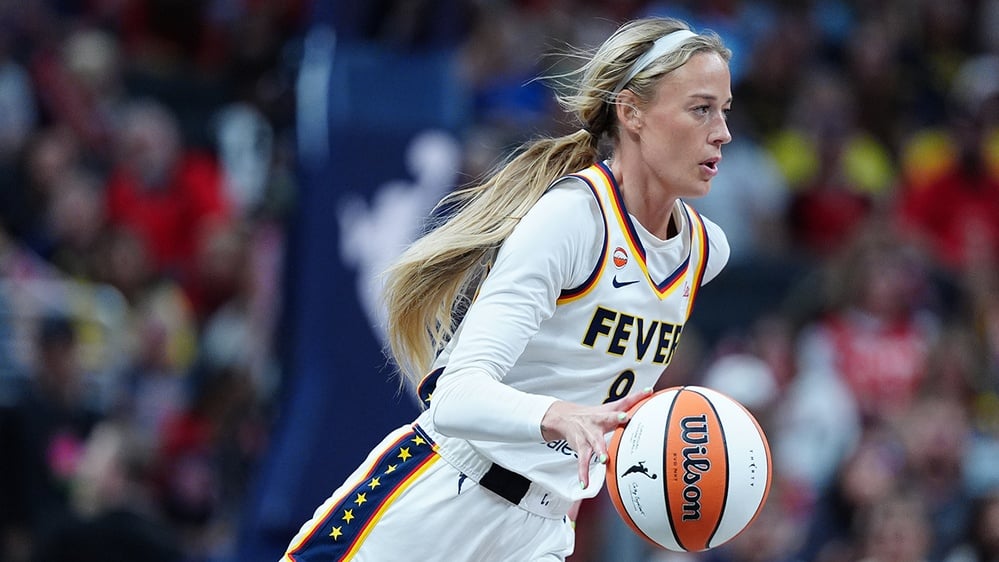
Frames the exclusion of transgender athletes from women's sports as common-sense, science-backed truth while portraying the WNBA leadership and progressive politics as ideologically driven.
The inclusion of transgender athletes in women's sports has been a contentious issue in the U.S., with legal challenges and policy debates at state and federal levels.
The Supreme Court ruled in June 2026 that restricting participation based on biological sex does not violate Title IX.
Automated analysis; not human reviewed.
Limitations: Analysis based on a single article from a conservative-leaning publisher; lacks countervailing perspectives and full context of the ESPN interview.
·
8 of 53 available dimensions scored; omitted dimensions are not treated as neutral.
·
Verified supporting quotes for 3 of 8 scored dimensions.
Claim: The article strongly frames the issue from a conservative perspective, criticizing progressive ideology and advocating for traditional biological classifications.
“As WNBA leadership bows to ideology, Sophie Cunningham stands up for common sense and female athletes.” · exact text match
“The professional sports landscape has increasingly become dominated by progressive politics, with science-based biology becoming a controversial topic.” · exact text match
Why: The publisher uses 'progressive politics' as a negative contrast and elevates 'common sense' and 'science-based biology' in a way that aligns with conservative talking points; the framing is consistently one-sided.
Claim: The article positions Cunningham as a voice of common sense against an elite, ideologically driven WNBA leadership.
“As WNBA leadership bows to ideology, Sophie Cunningham stands up for common sense and female athletes.” · exact text match
“Cunningham even stated... it is simply 'common sense' to bar biological males from competing in the WNBA.” · not found in supplied text
Why: The repeated appeal to 'common sense' versus 'ideology' draws a populist distinction between ordinary people and out-of-touch elites.
Claim: The article presents subjective opinions and framing as objective fact.
“The professional sports landscape has increasingly become dominated by progressive politics, with science-based biology becoming a controversial topic.” · exact text match
“one can hope biological fairness will continue to prevail in women’s athletics despite the dominant ideological pressure in the WNBA.” · exact text match
Why: The publisher states an unqualified opinion about 'progressive politics dominating' as if it were established fact, and the concluding 'hope' is a subjective wish presented as a natural outcome.
Claim: The article heavily relies on opinion and advocacy rather than neutral reporting.
“one can hope biological fairness will continue to prevail in women’s athletics despite the dominant ideological pressure in the WNBA.” · exact text match
“Cunningham’s straightforward remarks drew a sharp contrast with others in the league... The ideological divide on this issue was on full display...” · not found in supplied text
Why: The article explicitly hopes for an outcome and uses evaluative language ('sharp contrast', 'ideological divide') without providing opposing commentary.
Claim: The entire article is focused on a politically charged topic and frames it in partisan terms.
“The professional sports landscape has increasingly become dominated by progressive politics...” · not found in supplied text
“The ideological divide on this issue was on full display...” · not found in supplied text
Why: The topic is inherently political, and the publisher explicitly characterizes the issue as an ideological battle, labeling one side as 'progressive politics' and the other as 'common sense'.
Claim: The article reduces a complex ethical and scientific debate to a simple 'common sense' dictum.
“Cunningham clarified she is not trying to spread hate... it is simply 'common sense' to bar biological males from competing in the WNBA.” · not found in supplied text
“the Supreme Court case... held that restricting participation on female sports teams based on biological sex does not violate Title IX... one can hope biological fairness will continue to prevail.” · not found in supplied text
Why: The article presents the issue as settled by 'common sense' and a single court ruling, dismissing any nuanced considerations or contrary evidence.
Claim: The article expresses certainty about the outcome of the debate and the correctness of its position.
“one can hope biological fairness will continue to prevail in women’s athletics despite the dominant ideological pressure in the WNBA.” · exact text match
“Cunningham’s straightforward remarks drew a sharp contrast... it is simply 'common sense'” · not found in supplied text
Why: The phrase 'will continue to prevail' implies a confident prediction, and the use of 'simply common sense' treats the stance as self-evidently correct.
Claim: The article is critical of the WNBA leadership and progressive politics, positioning itself as anti-establishment.
“As WNBA leadership bows to ideology” · exact text match
“the dominant ideological pressure in the WNBA” · exact text match
Why: The publisher portrays the WNBA leadership as bowing to ideology, suggesting they are part of an establishment that has abandoned common sense.
Analysis based on a single article from a conservative-leaning publisher; lacks countervailing perspectives and full context of the ESPN interview.
August 07, 2026 · 0 shares
Frames JD Vance's support for Sophie Cunningham as a courageous stand against a vicious leftist mob, while promoting a book alleging a leftist cabal.
Automated analysis; not human reviewed.
·
14 of 53 available dimensions scored; omitted dimensions are not treated as neutral.
·
Verified supporting quotes for 10 of 14 scored dimensions.
Claim: The article adopts a conservative framing by praising Vance and Cunningham's stance against transgender athletes, portraying critics as 'the worst people' and promoting a book about a leftist cabal.
“Sometimes when you’re courageous in this country, some of the worst people in the world try to attack you” · exact text match
“leftist elites have their tentacles in every aspect of our government” · exact text match
“The Left’s NGO apparatus pursues its woke agenda” · not found in supplied text
Why: The publisher selects quotes that align with conservative positions on transgender issues and uses loaded language against leftist elites.
Claim: The article presents Cunningham and Vance as populist figures standing up to a privileged, out-of-touch elite ('the mob', 'leftist elites').
“We cannot take our country back, we cannot save the United States of America unless you have people of courage who are speaking their mind.” · not found in supplied text
“leftist elites have their tentacles in every aspect of our government” · exact text match
Why: The rhetoric of 'taking our country back' and targeting 'leftist elites' is a classic populist appeal, framing the opposition as an entrenched elite.
Claim: The article is heavily subjective, mixing news reporting with opinionated commentary and promotional content.
“JD Vance just FULLY BACKED WNBA star Sophie Cunningham for speaking out against men in women's sports” · exact text match
Why: The language is not neutral; it uses emphatic phrasing ('FULLY BACKED') and the article is embedded with opinion pieces and a book promotion.
Claim: The article uses sensational language and highlights dramatic incidents to grab attention.
“the worst people in the world” · exact text match
“were cussed out by Seattle Storm co-owner” · exact text match
Why: The description of critics as 'the worst people' and the incident of women being cussed out are sensational elements.
Claim: The article covers a controversial and timely topic involving a sports figure, a vice president, and a public incident, making it engaging.
“JD Vance Weighs In as Sophie Cunningham Faces Backlash” · exact text match
“two young girls who attended the rally—and wore shirts advocating against men in women’s sports—were cussed out by Seattle Storm co-owner” · exact text match
Why: The combination of political figures, sports, and a dramatic confrontation makes the story inherently interesting.
Claim: The article is highly opinionated, presenting Vance's support as heroic and the opposition as villainous, with clear editorial slant.
“You actually are inspiring a dozen people for every person that criticizes you” · exact text match
“courageous in this country” · exact text match
Why: The article selects quotes that frame the subject positively and the critics negatively, and the overall structure is advocacy rather than impartial reporting.
Claim: The article is deeply political, focusing on a hot-button cultural issue and featuring a sitting vice president.
“Vice President JD Vance voiced his support for Indiana Fever guard Sophie Cunningham” · exact text match
“leftist elites have their tentacles in every aspect of our government” · exact text match
Why: The subject directly involves a political figure and a partisan debate over transgender athletes, and the publisher promotes a book about a leftist cabal.
Claim: The article simplifies a complex issue into a binary of courageous truth-teller vs. vicious mob.
“Sometimes when you’re courageous in this country, some of the worst people in the world try to attack you” · exact text match
Why: The issue of transgender athletes in sports involves nuanced medical, ethical, and legal considerations, but the article reduces it to a simple moral struggle.
Claim: The article is anti-establishment in the sense of opposing the current left-leaning cultural and political establishment, but it is aligned with the conservative political establishment.
“leftist elites have their tentacles in every aspect of our government” · exact text match
“We cannot take our country back” · not found in supplied text
Why: The rhetoric targets 'leftist elites' and the 'mob', indicating an anti-establishment stance toward the current progressive mainstream, while supporting the Trump-Vance administration.
Claim: The article uses emotionally charged language to evoke positive feelings toward Cunningham and Vance and negative feelings toward critics.
“courageous” · exact text match
“worst people” · exact text match
“cussed out by Seattle Storm co-owner” · exact text match
Why: Words like 'courageous' and 'worst people' are emotionally loaded, and the incident of cussing out girls is included to evoke sympathy and outrage.
Claim: The article has moderate credibility because it includes verifiable quotes and specific events, but its overt opinion slant and promotion reduce trustworthiness.
“Cunningham originally made her comments about transgender athletes to ESPN in March, even though the article wasn’t published until July 21.” · exact text match
“two young girls ... were cussed out by Seattle Storm co-owner, Celeste Keaton” · not found in supplied text
Why: The article provides specific dates, quotes, and verifiable incidents, but the highly partisan framing and promotional content lower overall credibility.
Claim: The article presents a one-sided, emotionally charged narrative without engaging with counterarguments, reducing a complex issue to a simple dichotomy.
“Sometimes when you’re courageous in this country, some of the worst people in the world try to attack you” · exact text match
Why: The framing of critics as 'the worst people' is an emotional appeal that avoids rational debate, and the article does not include any defense of transgender athletes' rights.
Claim: The article champions individual courage against collective pressure, emphasizing personal bravery over group conformity.
“You actually are inspiring a dozen people for every person that criticizes you” · exact text match
“keep speaking your mind” · exact text match
Why: Vance's message focuses on individual courage and speaking one's mind in the face of a collective mob, reflecting an individualist perspective.
Claim: The article uses loaded language and selective omission of context to manipulate reader perception.
“the worst people in the world” · exact text match
“cussed out by Seattle Storm co-owner” · exact text match
Why: The article does not include the perspective of transgender-rights activists or any nuance about the debate, and it highlights the most dramatic incident to evoke sympathy.
Event report with balanced coverage of both sides of the transgender-athlete controversy.
Automated analysis; not human reviewed.
·
13 of 52 available dimensions scored; omitted dimensions are not treated as neutral.
·
Verified supporting quotes for 12 of 13 scored dimensions.
Claim: Reporting shows balanced inclusion of both pro- and anti-transgender-athlete voices.
“Lynx coach Cheryl Reeve wore a light blue shirt under her jacket that said, “Trans kids belong” as she coached on the bench.” · exact text match
“Outside the arena, dozens of fans gathered near the entrance.
A person using a loud speaker repeated over and over, “Protect trans women.” There were signs held up that read, “Love is truth" and “Thank you Sophie.””
· not found in supplied text
Why: The article includes both the coach's pro-trans shirt and signs supporting Cunningham's anti-trans stance, with no editorial slant.
Claim: Reporting is factual, using quotes and direct descriptions without subjective language.
“Cunningham appeared to be booed by the crowd on her first touch of the game.” · exact text match
Why: The article presents events and statements without evaluative adjectives or opinion.
Claim: Headline and content avoid sensational language or exaggerations.
“Rallies surround Fever-Lynx game after Sophie Cunningham's stance on transgender athletes.” · exact text match
Why: The headline is descriptive, not hyperbolic.
The body continues in a measured tone.
Claim: The topic of rallies around a WNBA player's stance on transgender athletes is moderately engaging.
“It's the third straight Fever game that drew a rally after Cunningham recently voiced support for barring transgender girls and women from girls’ and women’s sports in an ESPN article published last week.” · exact text match
Why: The ongoing series of rallies adds narrative interest, but the coverage is straightforward.
Claim: The article describes what happened without prescribing a course of action.
“Outside the arena, dozens of fans gathered near the entrance.
A person using a loud speaker repeated over and over, “Protect trans women.””
· exact text match
Why: No recommendations or calls to action; purely descriptive.
Claim: The subject directly involves a politically charged social issue.
“Cunningham recently voiced support for barring transgender girls and women from girls’ and women’s sports in an ESPN article published last week.” · exact text match
Why: Transgender participation in sports is a prominent political and cultural debate.
Claim: The story is framed around the reaction to Cunningham's stance rather than the stance itself or the game.
“Rallies surround Fever-Lynx game after Sophie Cunningham's stance on transgender athletes.” · exact text match
Why: Headline and lead focus on the rallies (response) and not on the underlying policy debate or game outcome.
Claim: Tone is neutral, neither positive nor negative.
“Cunningham said Friday in Portland that she wasn't concerned about rallies against transgender participation in women’s sports becoming a distraction for the Fever.” · exact text match
Why: Quotes are reported without emotional framing; the narrative stays factual.
Claim: The report uses named sources, specific quotes, and clear attribution.
“Cunningham said Friday in Portland that she wasn't concerned about rallies against transgender participation in women’s sports becoming a distraction for the Fever.” · exact text match
Why: Attribution to a specific time and place, and direct quotes enhance trustworthiness.
Claim: The report makes logical connections and does not use fallacious reasoning.
“It's the third straight Fever game that drew a rally after Cunningham recently voiced support for barring transgender girls and women from girls’ and women’s sports in an ESPN article published last week.” · exact text match
Why: Causal link is clear and supported.
Claim: The article provides direct quotes and attributes statements to sources.
““I think everyone who knows me personally, they know that I’m full of love.
I’m bubbly.
I love the people around me,” Cunningham said Friday.”
· exact text match
Why: Quotes are attributed and the article distinguishes between observation (booing) and speaker claims.
Frames trans-inclusive coach as thoughtful and anti-trans player as crusading.
Automated analysis; not human reviewed.
Limitations: The article's clear left-leaning framing may be overemphasized in scoring.
·
10 of 52 available dimensions scored; omitted dimensions are not treated as neutral.
·
Verified supporting quotes for 9 of 10 scored dimensions.
Claim: The article uses liberal framing by positively portraying trans-inclusive actions and negatively labeling anti-trans views.
“WNBA Coach Dunks On Sophie Cunningham's Anti-Trans Athlete Remarks With Simple Act” · exact text match
“Reeve added actual wisdom” · exact text match
Why: Headline uses 'dunks on' against an 'anti-trans' stance, and calls Reeve's response 'actual wisdom', showing strong left-leaning perspective.
Claim: The article's wording is subjective rather than neutral.
“WNBA Coach Dunks On Sophie Cunningham's Anti-Trans Athlete Remarks With Simple Act” · exact text match
“Reeve added actual wisdom” · exact text match
Why: The headline's 'dunks on' and 'simple act' are evaluative, and 'actual wisdom' is a subjective compliment.
Claim: The article prescribes support for trans rights through both direct quotes and framing.
“We need to protect trans kids” · exact text match
“It’s a human rights issue” · exact text match
Why: Reeve's statements are explicitly prescriptive, and the article presents them approvingly without critical counterweight.
Claim: The article mixes opinion with reporting.
“Dunks On” · exact text match
“actual wisdom” · exact text match
Why: Loaded language in the headline and body reveals opinion, though the article also includes direct quotes.
Claim: The article addresses a highly politicized issue and references political figures.
“President Donald Trump’s White House behind her” · exact text match
“It’s a human rights issue” · exact text match
Why: The topic of transgender athletes is politically charged, and the article explicitly ties the controversy to Trump.
Claim: The article validates Reeve's stance by citing an authority figure's praise.
“Rebecca Lobo as 'incredibly thoughtful'” · not found in supplied text
Why: The article highlights that a TV analyst called Reeve's comments 'incredibly thoughtful', lending authority to her position.
Claim: The article frames trans children as victims needing protection.
“We need to protect trans kids” · exact text match
Why: Reeve's direct quote and the article's approving context frame trans kids as vulnerable and in need of protection.
Claim: The article demonstrates moderate credibility through sourcing and attribution.
“according to ESPN” · exact text match
“the sports network reported” · exact text match
Why: The article cites ESPN for factual claims about WNBA policy, and includes direct quotes from both Reeve and Cunningham.
Claim: The article uses loaded language to shape reader perception.
“anti-trans athlete crusade” · exact text match
“Dunks On” · exact text match
Why: Terms like 'crusade' and 'dunks on' are emotionally charged and go beyond neutral reporting.
Claim: The article uses identity-group power framing and prescribes institutional remedies.
“We need to protect trans kids” · exact text match
“It’s a human rights issue” · exact text match
Why: The framing centers on a marginalized identity group and calls for protection and inclusion, aligning with identity politics.
The article's clear left-leaning framing may be overemphasized in scoring.
Reports a basketball game score alongside mention of surrounding rallies over transgender athlete stance, presenting both as neutral facts without editorial slant.
Automated analysis; not human reviewed. Limitations: The article consists only of a headline; no body text is available for analysis.
The article consists only of a headline; no body text is available for analysis.
August 07, 2026 · 0 shares
Frames JD Vance's support for Sophie Cunningham as a courageous stand against a vicious leftist mob, while promoting a book alleging a leftist cabal.
Automated analysis; not human reviewed.
·
14 of 53 available dimensions scored; omitted dimensions are not treated as neutral.
·
Verified supporting quotes for 10 of 14 scored dimensions.
Claim: The article adopts a conservative framing by praising Vance and Cunningham's stance against transgender athletes, portraying critics as 'the worst people' and promoting a book about a leftist cabal.
“Sometimes when you’re courageous in this country, some of the worst people in the world try to attack you” · exact text match
“leftist elites have their tentacles in every aspect of our government” · exact text match
“The Left’s NGO apparatus pursues its woke agenda” · not found in supplied text
Why: The publisher selects quotes that align with conservative positions on transgender issues and uses loaded language against leftist elites.
Claim: The article presents Cunningham and Vance as populist figures standing up to a privileged, out-of-touch elite ('the mob', 'leftist elites').
“We cannot take our country back, we cannot save the United States of America unless you have people of courage who are speaking their mind.” · not found in supplied text
“leftist elites have their tentacles in every aspect of our government” · exact text match
Why: The rhetoric of 'taking our country back' and targeting 'leftist elites' is a classic populist appeal, framing the opposition as an entrenched elite.
Claim: The article is heavily subjective, mixing news reporting with opinionated commentary and promotional content.
“JD Vance just FULLY BACKED WNBA star Sophie Cunningham for speaking out against men in women's sports” · exact text match
Why: The language is not neutral; it uses emphatic phrasing ('FULLY BACKED') and the article is embedded with opinion pieces and a book promotion.
Claim: The article uses sensational language and highlights dramatic incidents to grab attention.
“the worst people in the world” · exact text match
“were cussed out by Seattle Storm co-owner” · exact text match
Why: The description of critics as 'the worst people' and the incident of women being cussed out are sensational elements.
Claim: The article covers a controversial and timely topic involving a sports figure, a vice president, and a public incident, making it engaging.
“JD Vance Weighs In as Sophie Cunningham Faces Backlash” · exact text match
“two young girls who attended the rally—and wore shirts advocating against men in women’s sports—were cussed out by Seattle Storm co-owner” · exact text match
Why: The combination of political figures, sports, and a dramatic confrontation makes the story inherently interesting.
Claim: The article is highly opinionated, presenting Vance's support as heroic and the opposition as villainous, with clear editorial slant.
“You actually are inspiring a dozen people for every person that criticizes you” · exact text match
“courageous in this country” · exact text match
Why: The article selects quotes that frame the subject positively and the critics negatively, and the overall structure is advocacy rather than impartial reporting.
Claim: The article is deeply political, focusing on a hot-button cultural issue and featuring a sitting vice president.
“Vice President JD Vance voiced his support for Indiana Fever guard Sophie Cunningham” · exact text match
“leftist elites have their tentacles in every aspect of our government” · exact text match
Why: The subject directly involves a political figure and a partisan debate over transgender athletes, and the publisher promotes a book about a leftist cabal.
Claim: The article simplifies a complex issue into a binary of courageous truth-teller vs. vicious mob.
“Sometimes when you’re courageous in this country, some of the worst people in the world try to attack you” · exact text match
Why: The issue of transgender athletes in sports involves nuanced medical, ethical, and legal considerations, but the article reduces it to a simple moral struggle.
Claim: The article is anti-establishment in the sense of opposing the current left-leaning cultural and political establishment, but it is aligned with the conservative political establishment.
“leftist elites have their tentacles in every aspect of our government” · exact text match
“We cannot take our country back” · not found in supplied text
Why: The rhetoric targets 'leftist elites' and the 'mob', indicating an anti-establishment stance toward the current progressive mainstream, while supporting the Trump-Vance administration.
Claim: The article uses emotionally charged language to evoke positive feelings toward Cunningham and Vance and negative feelings toward critics.
“courageous” · exact text match
“worst people” · exact text match
“cussed out by Seattle Storm co-owner” · exact text match
Why: Words like 'courageous' and 'worst people' are emotionally loaded, and the incident of cussing out girls is included to evoke sympathy and outrage.
Claim: The article has moderate credibility because it includes verifiable quotes and specific events, but its overt opinion slant and promotion reduce trustworthiness.
“Cunningham originally made her comments about transgender athletes to ESPN in March, even though the article wasn’t published until July 21.” · exact text match
“two young girls ... were cussed out by Seattle Storm co-owner, Celeste Keaton” · not found in supplied text
Why: The article provides specific dates, quotes, and verifiable incidents, but the highly partisan framing and promotional content lower overall credibility.
Claim: The article presents a one-sided, emotionally charged narrative without engaging with counterarguments, reducing a complex issue to a simple dichotomy.
“Sometimes when you’re courageous in this country, some of the worst people in the world try to attack you” · exact text match
Why: The framing of critics as 'the worst people' is an emotional appeal that avoids rational debate, and the article does not include any defense of transgender athletes' rights.
Claim: The article champions individual courage against collective pressure, emphasizing personal bravery over group conformity.
“You actually are inspiring a dozen people for every person that criticizes you” · exact text match
“keep speaking your mind” · exact text match
Why: Vance's message focuses on individual courage and speaking one's mind in the face of a collective mob, reflecting an individualist perspective.
Claim: The article uses loaded language and selective omission of context to manipulate reader perception.
“the worst people in the world” · exact text match
“cussed out by Seattle Storm co-owner” · exact text match
Why: The article does not include the perspective of transgender-rights activists or any nuance about the debate, and it highlights the most dramatic incident to evoke sympathy.
August 04, 2026 · 0 shares
Frames Jemele Hill and Laura Coates as hypocritical, elitist media figures making an 'insane' claim that Sophie Cunningham's defense of women's sports costs lives, while defending Cunningham as a common-sense athlete.
Automated analysis; not human reviewed.
·
14 of 53 available dimensions scored; omitted dimensions are not treated as neutral.
·
Verified supporting quotes for 13 of 14 scored dimensions.
Claim: The article adopts a conservative framing by criticizing progressive media figures and defending a traditional stance on women's sports.
“Jemele Hill Hints Sofie Cunningham's Defense Of Women's Sports Costs Lives.” · exact text match
“The idea that Cunningham’s public stance in defense of her profession is endangering lives is insane.” · exact text match
Why: The article's headline and concluding statement explicitly dismiss Hill's view as 'insane', reflecting a conservative perspective that opposes transgender inclusion in women's sports.
Claim: The article portrays Hill and Coates as elitist media figures and Cunningham as a common-sense athlete, reflecting a populist stance.
“The eponymous host of CNN’s Laura Coates Live and The Atlantic contributor Jemele Hill joined forces on Monday to make the curious suggestion that Sophie Cunningham is terrible for her defense of women’s sports.” · not found in supplied text
“Cunningham’s political issue directly relates to profession and the next generation of female athletes.
James smearing the country and his critics as racist does not.”
· exact text match
Why: The article contrasts Cunningham's profession-related stance with LeBron James's broader political statements, suggesting the latter is less legitimate, a common populist framing against elite activism.
Claim: The article is highly subjective, using editorialized language and personal judgments.
“Hill was eager to portray James’s crusade as something much simpler” · exact text match
“The idea that Cunningham’s public stance in defense of her profession is endangering lives is insane.” · exact text match
Why: Words like 'eager' and 'insane' are subjective evaluations, not neutral reporting.
Claim: The article uses sensational language to attract attention.
“Jemele Hill Hints Sofie Cunningham's Defense Of Women's Sports Costs Lives.” · exact text match
“Towards the end of the segment, Hill went so far as to claim that Cunningham’s beliefs are putting people’s lives at risk.” · exact text match
Why: The headline and description emphasize a dramatic claim about lives being at risk, a sensational framing.
Claim: The article prescribes how the situation should be viewed, rather than just describing events.
“The idea that Cunningham’s public stance in defense of her profession is endangering lives is insane.” · exact text match
Why: The statement is a prescriptive judgment, telling the reader that the idea is unacceptable.
Claim: The article is almost entirely opinion, with little neutral reporting.
“The eponymous host of CNN’s Laura Coates Live and The Atlantic contributor Jemele Hill joined forces on Monday to make the curious suggestion” · exact text match
“The idea that Cunningham’s public stance in defense of her profession is endangering lives is insane.” · exact text match
Why: The article consistently offers commentary and evaluation rather than factual reporting.
Claim: The article is heavily political, focusing on a contentious cultural issue.
“Cunningham’s political issue directly relates to profession and the next generation of female athletes.” · exact text match
“the juxtaposition between the need to hear from Caitlin Clark and the complete horror at the thought of LeBron James speaking up about his views” · exact text match
Why: The entire topic is about political stances on transgender rights and athlete activism, and the article positions itself within that debate.
Claim: The article oversimplifies Hill's position as simply 'insane' without nuance.
“The idea that Cunningham’s public stance in defense of her profession is endangering lives is insane.” · exact text match
Why: The dismissal without engaging with Hill's reasoning is an oversimplification.
Claim: The article uses immature language like 'insane'.
“The idea that Cunningham’s public stance in defense of her profession is endangering lives is insane.” · exact text match
Why: The word 'insane' is a casual, derogatory term that lacks analytical maturity.
Claim: The article expresses certainty beyond the evidence presented.
“The idea that Cunningham’s public stance in defense of her profession is endangering lives is insane.” · exact text match
Why: Calling the idea 'insane' implies absolute certainty, but the article does not provide counter-evidence or alternative interpretation.
Claim: The article is explicitly ideologically driven, as seen in the publisher's mission statement included in the text.
“The mission of the Media Research Center is to document and combat the falsehoods and censorship of the news media, entertainment media and Big Tech in order to defend and preserve America's founding principles and Judeo-Christian values.” · exact text match
Why: The mission statement, included in the article, explicitly states a conservative ideological purpose.
Claim: The article is anti-establishment, criticizing mainstream media figures.
“The eponymous host of CNN’s Laura Coates Live and The Atlantic contributor Jemele Hill joined forces on Monday to make the curious suggestion” · exact text match
“How the Elitist Media and News Apps Rushed to Fauci’s Defense” · exact text match
Why: The article frames CNN and The Atlantic as out-of-touch elites, a classic anti-establishment stance.
Claim: The article conveys a negative emotional tone towards Hill and Coates.
“curious suggestion” · exact text match
“insane” · exact text match
Why: The choice of words conveys disapproval and negative sentiment.
Claim: The article uses loaded language to manipulate reader perception.
“curious suggestion” · exact text match
“eager to portray” · exact text match
“insane” · exact text match
Why: These phrases frame the subjects in a negative light without neutral analysis.
August 05, 2026 · 0 shares
The publisher frames Cheryl Reeve's transgender advocacy shirt as irresponsible activist grandstanding that harms the WNBA, while portraying Sophie Cunningham as a hero defending women's sports, using Stephen A. Smith's criticism to support a conservative view on transgender inclusion.
Automated analysis; not human reviewed.
Limitations: The analysis is based on a single article from a partisan sports commentary site; the article's explicit opinionated nature is clear, but some dimensions like overconfidence are inferred from tone rather than explicit certainty statements.
·
15 of 53 available dimensions scored; omitted dimensions are not treated as neutral.
·
Verified supporting quotes for 12 of 15 scored dimensions.
Claim: The article appeals to 'everyday fans' and common sense over elite activist coaching.
“Even Smith has reached the point where he's willing to say what everyday fans have been shouting for years” · exact text match
Why: The phrasing positions the publisher alongside ordinary fans against an out-of-touch coach.
Claim: The article uses heavily loaded and interpretative language rather than neutral reporting.
“tore into her activist grandstanding” · exact text match
“irresponsible thing to do” · exact text match
Why: Multiple emotionally charged phrases indicate a subjective viewpoint.
Claim: The article presents the controversy in dramatic, attention-grabbing terms.
“tore into her activist grandstanding” · exact text match
“flat-out absurd” · exact text match
Why: The language is designed to provoke strong reaction.
Claim: The article explicitly tells the WNBA what it should do.
“If the WNBA wants to protect its booming business, it needs to stop letting activist coaches hijack the league” · exact text match
Why: This is a direct prescription rather than description.
Claim: The article warns that Reeve's activism could alienate fans and sponsors, harming the WNBA.
“No regard for the sponsors that may be put off by that.
No regard for the bottom line that might be affected”
· exact text match
Why: The language emphasizes potential negative consequences.
Claim: The article assumes that transgender inclusion necessarily harms women's sports without proving it.
“Do you not think that females are being screwed over if they have to compete against an individual born as a male?” · exact text match
Why: The rhetorical question presupposes harm without evidence.
Claim: The article is a commentary piece, not a news report.
“Send us your thoughts” · exact text match
“Alejandro Avila is a longtime writer at OutKick” · exact text match
Why: The byline and call for reader opinions indicate opinion content.
Claim: The article addresses a politically charged topic and takes a clear side.
“Reeve chose to wear the shirt during her first matchup against Sophie Cunningham since the Fever guard publicly defended women-only competition.” · exact text match
Why: The topic is transgender athletes in women's sports, a divisive political issue.
Claim: The article reduces the issue to a binary: protect women's sports or allow trans athletes, ignoring nuance.
“Do you not think that females are being screwed over if they have to compete against an individual born as a male? What are you talking about?” · exact text match
Why: The question assumes a single outcome and dismisses complexity.
Claim: The article relies on Stephen A. Smith's commentary as the primary support for its stance.
“Stephen A. Smith blasted Cheryl Reeve...” · not found in supplied text
“Smith argued that compassion and common sense don't have to be at odds.” · not found in supplied text
Why: The structure repeatedly invokes Smith's authority to validate the argument.
Claim: The article portrays Sophie Cunningham as a victim of backlash from the coach and media.
“Sophie Cunningham REFUSES To Back Down To WNBA & Media Bullies” · exact text match
Why: The headline casts Cunningham as a target of bullying.
Claim: The article presents its conclusions as certain and beyond dispute.
“The point remains dead-on” · not found in supplied text
Why: The phrase asserts unqualified correctness.
Claim: The article consistently advocates a specific ideological position on gender and sports.
“It might have taken ol' Stephen A. longer than most to get there, but the point remains dead-on.” · exact text match
Why: The closing endorsement shows the publisher's alignment with that position.
Claim: The article uses negative emotional language toward Reeve and positive toward Cunningham.
“activist grandstanding” · exact text match
“hero for women's sports” · exact text match
Why: Contrasting emotional labels reveal a clear positive/negative split.
The analysis is based on a single article from a partisan sports commentary site; the article's explicit opinionated nature is clear, but some dimensions like overconfidence are inferred from tone rather than explicit certainty statements.
August 04, 2026 · 0 shares
Frames Michele Tafoya's criticism of WNBA activism as justified, using emotive language and a one-sided conservative perspective.
Automated analysis; not human reviewed.
Limitations: Input includes multiple unrelated headlines and snippets; analysis focused on the Tafoya comments portion.
·
10 of 53 available dimensions scored; omitted dimensions are not treated as neutral.
·
Verified supporting quotes for 0 of 10 scored dimensions.
Claim: The publisher frames Tafoya's anti-WNBA activism criticism as credible and uses conservative talking points.
“'activism on display'” · not found in supplied text
“'It's about fairness, meritocracy and preserving categories women fought decades to establish.'” · not found in supplied text
Why: Quotes and framing align with conservative views on transgender sports participation.
Claim: The article employs subjective editorializing through headlines and commentary.
“'Michele Tafoya blasts WNBA activism'” · not found in supplied text
“'Michele Tafoya RIPS the WNBA & Applauds Sophie Cunningham'” · not found in supplied text
Why: Headlines use strongly opinionated verbs rather than neutral reporting.
Claim: Headlines and language are sensational to provoke reaction.
“'Michele Tafoya blasts WNBA activism'” · not found in supplied text
“'EXPOSE the deep hypocrisy'” · not found in supplied text
Why: Words like 'blasts', 'rips', 'expose' exaggerate confrontation.
Claim: The article is heavily opinionated, presenting Tafoya's views without balancing counterarguments.
“'I'm losing faith in this league'” · not found in supplied text
“'It's just hard to believe that we are still conflating this idea...'” · not found in supplied text
Why: Extended opinion quotes and lack of opposing voices indicate strong opinion content.
Claim: The central topic is a politically charged issue (transgender athletes in women's sports).
“'activism on display'” · not found in supplied text
“'Trans Kids Belong' shirt” · exact text match
Why: The entire article revolves around a political debate on transgender inclusion.
Claim: The article reduces the WNBA's actions to a binary choice between basketball and activism.
“'The more the league leans into activism, the more the basketball gets lost in the noise.'” · not found in supplied text
Why: Presents a simplistic tradeoff without acknowledging possible coexistence.
Claim: The article consistently pushes a conservative ideology regarding gender and sports.
“'protecting women's sports is not about hate.
It's about fairness, meritocracy'”
· not found in supplied text
Why: Emphasis on biological sex categories and criticism of progressive activism.
Claim: The publisher takes an anti-establishment stance by criticizing the WNBA and mainstream media.
“'This league has now somehow morphed into something that feels like activism on display.'” · not found in supplied text
Why: Criticizes a major professional sports league for its political direction.
Claim: The article conveys a negative emotional tone toward WNBA activism and a positive tone toward Sophie Cunningham.
“'I'm losing faith in this league'” · not found in supplied text
Why: Tafoya expresses disappointment and frustration, framing the league negatively.
Claim: The article uses loaded language and one-sided framing to shape reader perception.
“'blasts'” · not found in supplied text
“'hero'” · not found in supplied text
“'EXPOSE the deep hypocrisy'” · not found in supplied text
Why: Selective emotive words guide reaction rather than inform neutrally.
Input includes multiple unrelated headlines and snippets; analysis focused on the Tafoya comments portion.
August 07, 2026 · 0 shares
Positions the Sophie Cunningham controversy as a culture-war boon for the WNBA while defending her conservative-aligned comments and criticizing left-leaning media coverage.
Automated analysis; not human reviewed.
Limitations: The article's publisher is not explicitly identified, but the byline and content suggest a conservative-leaning outlet, which may affect the framing analysis.
·
11 of 53 available dimensions scored; omitted dimensions are not treated as neutral.
·
Verified supporting quotes for 5 of 11 scored dimensions.
Claim: Frames the controversy from a conservative perspective, defending Cunningham's position and criticizing left-leaning media.
“The Guardian... fond of lamenting the state of American politics and culture, accused Cunningham of 'cashing in' on culture-war politics.” · not found in supplied text
“Cunningham argued that women’s sports should be a safe space for biological women” · exact text match
Why: The article dismisses The Guardian's left-leaning critique and presents Cunningham's conservative-aligned remarks without rebuttal.
Claim: Contains editorializing and subjective judgments.
“The Guardian’s focus on Cunningham alone misses the larger dynamic at play.” · not found in supplied text
Why: The author makes a subjective claim about what The Guardian misses.
Claim: Positively frames the impact of the controversy on WNBA viewership.
“This controversy is playing out amid a boom season for the WNBA.” · exact text match
Why: Describes the season as a 'boom' and the controversy as feeding viewership.
Claim: The topic is moderately interesting.
“It’s been a big few weeks for the WNBA.” · not found in supplied text
Why: The article highlights attention-grabbing moments, indicating inherent interest.
Claim: Prescribes that the controversy benefits the league.
“What it will do is keep cameras rolling, keep rallies forming outside arenas, and keep a league... sitting, however uncomfortably, in the middle of a national conversation.” · not found in supplied text
Why: Predicts the outcome of the controversy as beneficial for the league.
Claim: Includes biographical details about Cunningham's modeling and UFC roles.
“part-time UFC octagon girl and sometimes Sports Illustrated swimsuit model” · exact text match
Why: These details are peripheral to the core political debate and add a gossipy element.
Claim: Expresses strong opinions on the controversy and media coverage.
“The Guardian is right that Cunningham is cashing in on the controversy.
But that misses the point: The rest of the WNBA is too.”
· exact text match
Why: Explicitly states an opinion about the value of the controversy.
Claim: The article is heavily focused on a political culture-war issue.
“Sophie Cunningham’s culture-war controversy is helping to make the WNBA must-watch TV.” · exact text match
Why: The entire article centers on the political controversy over transgender athletes.
Claim: Reduces the complex debate to two sides.
“Neither side is short on conviction.
What’s missing is consensus.”
· exact text match
Why: Presents the debate as a binary with no middle ground, though the article acknowledges nuance elsewhere.
Claim: Quotes commentators and figures to support the narrative.
“The Fox News host Laura Ingraham questioned whether Cunningham should keep playing at all” · exact text match
“The Daily Wire’s Matt Walsh... said liberals 'cling to trans bullsh-,t'” · not found in supplied text
Why: Relies on prominent conservative voices to frame the discussion.
Claim: Portrays Cunningham as unfairly targeted by critics.
“Cunningham has come under increased scrutiny from WNBA players, team owners, political commentators, away crowds, and ESPN itself.” · not found in supplied text
Why: Lists the many parties scrutinizing her, implying she is being singled out.
The article's publisher is not explicitly identified, but the byline and content suggest a conservative-leaning outlet, which may affect the framing analysis.
Frames trans-inclusive coach as thoughtful and anti-trans player as crusading.
Automated analysis; not human reviewed.
Limitations: The article's clear left-leaning framing may be overemphasized in scoring.
·
10 of 52 available dimensions scored; omitted dimensions are not treated as neutral.
·
Verified supporting quotes for 9 of 10 scored dimensions.
Claim: The article uses liberal framing by positively portraying trans-inclusive actions and negatively labeling anti-trans views.
“WNBA Coach Dunks On Sophie Cunningham's Anti-Trans Athlete Remarks With Simple Act” · exact text match
“Reeve added actual wisdom” · exact text match
Why: Headline uses 'dunks on' against an 'anti-trans' stance, and calls Reeve's response 'actual wisdom', showing strong left-leaning perspective.
Claim: The article's wording is subjective rather than neutral.
“WNBA Coach Dunks On Sophie Cunningham's Anti-Trans Athlete Remarks With Simple Act” · exact text match
“Reeve added actual wisdom” · exact text match
Why: The headline's 'dunks on' and 'simple act' are evaluative, and 'actual wisdom' is a subjective compliment.
Claim: The article prescribes support for trans rights through both direct quotes and framing.
“We need to protect trans kids” · exact text match
“It’s a human rights issue” · exact text match
Why: Reeve's statements are explicitly prescriptive, and the article presents them approvingly without critical counterweight.
Claim: The article mixes opinion with reporting.
“Dunks On” · exact text match
“actual wisdom” · exact text match
Why: Loaded language in the headline and body reveals opinion, though the article also includes direct quotes.
Claim: The article addresses a highly politicized issue and references political figures.
“President Donald Trump’s White House behind her” · exact text match
“It’s a human rights issue” · exact text match
Why: The topic of transgender athletes is politically charged, and the article explicitly ties the controversy to Trump.
Claim: The article validates Reeve's stance by citing an authority figure's praise.
“Rebecca Lobo as 'incredibly thoughtful'” · not found in supplied text
Why: The article highlights that a TV analyst called Reeve's comments 'incredibly thoughtful', lending authority to her position.
Claim: The article frames trans children as victims needing protection.
“We need to protect trans kids” · exact text match
Why: Reeve's direct quote and the article's approving context frame trans kids as vulnerable and in need of protection.
Claim: The article demonstrates moderate credibility through sourcing and attribution.
“according to ESPN” · exact text match
“the sports network reported” · exact text match
Why: The article cites ESPN for factual claims about WNBA policy, and includes direct quotes from both Reeve and Cunningham.
Claim: The article uses loaded language to shape reader perception.
“anti-trans athlete crusade” · exact text match
“Dunks On” · exact text match
Why: Terms like 'crusade' and 'dunks on' are emotionally charged and go beyond neutral reporting.
Claim: The article uses identity-group power framing and prescribes institutional remedies.
“We need to protect trans kids” · exact text match
“It’s a human rights issue” · exact text match
Why: The framing centers on a marginalized identity group and calls for protection and inclusion, aligning with identity politics.
The article's clear left-leaning framing may be overemphasized in scoring.
Reports a basketball game score alongside mention of surrounding rallies over transgender athlete stance, presenting both as neutral facts without editorial slant.
Automated analysis; not human reviewed. Limitations: The article consists only of a headline; no body text is available for analysis.
The article consists only of a headline; no body text is available for analysis.
Event report with balanced coverage of both sides of the transgender-athlete controversy.
Automated analysis; not human reviewed. · 13 of 52 available dimensions scored; omitted dimensions are not treated as neutral. · Verified supporting quotes for 12 of 13 scored dimensions.
Claim: Reporting shows balanced inclusion of both pro- and anti-transgender-athlete voices.
“Lynx coach Cheryl Reeve wore a light blue shirt under her jacket that said, “Trans kids belong” as she coached on the bench.” · exact text match
“Outside the arena, dozens of fans gathered near the entrance. A person using a loud speaker repeated over and over, “Protect trans women.” There were signs held up that read, “Love is truth" and “Thank you Sophie.”” · not found in supplied text
Why: The article includes both the coach's pro-trans shirt and signs supporting Cunningham's anti-trans stance, with no editorial slant.
Claim: Reporting is factual, using quotes and direct descriptions without subjective language.
“Cunningham appeared to be booed by the crowd on her first touch of the game.” · exact text match
Why: The article presents events and statements without evaluative adjectives or opinion.
Claim: Headline and content avoid sensational language or exaggerations.
“Rallies surround Fever-Lynx game after Sophie Cunningham's stance on transgender athletes.” · exact text match
Why: The headline is descriptive, not hyperbolic. The body continues in a measured tone.
Claim: The topic of rallies around a WNBA player's stance on transgender athletes is moderately engaging.
“It's the third straight Fever game that drew a rally after Cunningham recently voiced support for barring transgender girls and women from girls’ and women’s sports in an ESPN article published last week.” · exact text match
Why: The ongoing series of rallies adds narrative interest, but the coverage is straightforward.
Claim: The article describes what happened without prescribing a course of action.
“Outside the arena, dozens of fans gathered near the entrance. A person using a loud speaker repeated over and over, “Protect trans women.”” · exact text match
Why: No recommendations or calls to action; purely descriptive.
Claim: The subject directly involves a politically charged social issue.
“Cunningham recently voiced support for barring transgender girls and women from girls’ and women’s sports in an ESPN article published last week.” · exact text match
Why: Transgender participation in sports is a prominent political and cultural debate.
Claim: The story is framed around the reaction to Cunningham's stance rather than the stance itself or the game.
“Rallies surround Fever-Lynx game after Sophie Cunningham's stance on transgender athletes.” · exact text match
Why: Headline and lead focus on the rallies (response) and not on the underlying policy debate or game outcome.
Claim: Tone is neutral, neither positive nor negative.
“Cunningham said Friday in Portland that she wasn't concerned about rallies against transgender participation in women’s sports becoming a distraction for the Fever.” · exact text match
Why: Quotes are reported without emotional framing; the narrative stays factual.
Claim: The report uses named sources, specific quotes, and clear attribution.
“Cunningham said Friday in Portland that she wasn't concerned about rallies against transgender participation in women’s sports becoming a distraction for the Fever.” · exact text match
Why: Attribution to a specific time and place, and direct quotes enhance trustworthiness.
Claim: The report makes logical connections and does not use fallacious reasoning.
“It's the third straight Fever game that drew a rally after Cunningham recently voiced support for barring transgender girls and women from girls’ and women’s sports in an ESPN article published last week.” · exact text match
Why: Causal link is clear and supported.
Claim: The article provides direct quotes and attributes statements to sources.
““I think everyone who knows me personally, they know that I’m full of love. I’m bubbly. I love the people around me,” Cunningham said Friday.” · exact text match
Why: Quotes are attributed and the article distinguishes between observation (booing) and speaker claims.
Frames trans-inclusive coach as thoughtful and anti-trans player as crusading.
Automated analysis; not human reviewed. Limitations: The article's clear left-leaning framing may be overemphasized in scoring. · 10 of 52 available dimensions scored; omitted dimensions are not treated as neutral. · Verified supporting quotes for 9 of 10 scored dimensions.
Claim: The article uses liberal framing by positively portraying trans-inclusive actions and negatively labeling anti-trans views.
“WNBA Coach Dunks On Sophie Cunningham's Anti-Trans Athlete Remarks With Simple Act” · exact text match
“Reeve added actual wisdom” · exact text match
Why: Headline uses 'dunks on' against an 'anti-trans' stance, and calls Reeve's response 'actual wisdom', showing strong left-leaning perspective.
Claim: The article's wording is subjective rather than neutral.
“WNBA Coach Dunks On Sophie Cunningham's Anti-Trans Athlete Remarks With Simple Act” · exact text match
“Reeve added actual wisdom” · exact text match
Why: The headline's 'dunks on' and 'simple act' are evaluative, and 'actual wisdom' is a subjective compliment.
Claim: The article prescribes support for trans rights through both direct quotes and framing.
“We need to protect trans kids” · exact text match
“It’s a human rights issue” · exact text match
Why: Reeve's statements are explicitly prescriptive, and the article presents them approvingly without critical counterweight.
Claim: The article mixes opinion with reporting.
“Dunks On” · exact text match
“actual wisdom” · exact text match
Why: Loaded language in the headline and body reveals opinion, though the article also includes direct quotes.
Claim: The article addresses a highly politicized issue and references political figures.
“President Donald Trump’s White House behind her” · exact text match
“It’s a human rights issue” · exact text match
Why: The topic of transgender athletes is politically charged, and the article explicitly ties the controversy to Trump.
Claim: The article validates Reeve's stance by citing an authority figure's praise.
“Rebecca Lobo as 'incredibly thoughtful'” · not found in supplied text
Why: The article highlights that a TV analyst called Reeve's comments 'incredibly thoughtful', lending authority to her position.
Claim: The article frames trans children as victims needing protection.
“We need to protect trans kids” · exact text match
Why: Reeve's direct quote and the article's approving context frame trans kids as vulnerable and in need of protection.
Claim: The article demonstrates moderate credibility through sourcing and attribution.
“according to ESPN” · exact text match
“the sports network reported” · exact text match
Why: The article cites ESPN for factual claims about WNBA policy, and includes direct quotes from both Reeve and Cunningham.
Claim: The article uses loaded language to shape reader perception.
“anti-trans athlete crusade” · exact text match
“Dunks On” · exact text match
Why: Terms like 'crusade' and 'dunks on' are emotionally charged and go beyond neutral reporting.
Claim: The article uses identity-group power framing and prescribes institutional remedies.
“We need to protect trans kids” · exact text match
“It’s a human rights issue” · exact text match
Why: The framing centers on a marginalized identity group and calls for protection and inclusion, aligning with identity politics.
The article's clear left-leaning framing may be overemphasized in scoring.
August 08, 2026 · 0 shares
Frames the exclusion of transgender athletes from women's sports as common-sense, science-backed truth while portraying the WNBA leadership and progressive politics as ideologically driven.
The inclusion of transgender athletes in women's sports has been a contentious issue in the U.S., with legal challenges and policy debates at state and federal levels. The Supreme Court ruled in June 2026 that restricting participation based on biological sex does not violate Title IX.
Automated analysis; not human reviewed. Limitations: Analysis based on a single article from a conservative-leaning publisher; lacks countervailing perspectives and full context of the ESPN interview. · 8 of 53 available dimensions scored; omitted dimensions are not treated as neutral. · Verified supporting quotes for 3 of 8 scored dimensions.
Claim: The article strongly frames the issue from a conservative perspective, criticizing progressive ideology and advocating for traditional biological classifications.
“As WNBA leadership bows to ideology, Sophie Cunningham stands up for common sense and female athletes.” · exact text match
“The professional sports landscape has increasingly become dominated by progressive politics, with science-based biology becoming a controversial topic.” · exact text match
Why: The publisher uses 'progressive politics' as a negative contrast and elevates 'common sense' and 'science-based biology' in a way that aligns with conservative talking points; the framing is consistently one-sided.
Claim: The article positions Cunningham as a voice of common sense against an elite, ideologically driven WNBA leadership.
“As WNBA leadership bows to ideology, Sophie Cunningham stands up for common sense and female athletes.” · exact text match
“Cunningham even stated... it is simply 'common sense' to bar biological males from competing in the WNBA.” · not found in supplied text
Why: The repeated appeal to 'common sense' versus 'ideology' draws a populist distinction between ordinary people and out-of-touch elites.
Claim: The article presents subjective opinions and framing as objective fact.
“The professional sports landscape has increasingly become dominated by progressive politics, with science-based biology becoming a controversial topic.” · exact text match
“one can hope biological fairness will continue to prevail in women’s athletics despite the dominant ideological pressure in the WNBA.” · exact text match
Why: The publisher states an unqualified opinion about 'progressive politics dominating' as if it were established fact, and the concluding 'hope' is a subjective wish presented as a natural outcome.
Claim: The article heavily relies on opinion and advocacy rather than neutral reporting.
“one can hope biological fairness will continue to prevail in women’s athletics despite the dominant ideological pressure in the WNBA.” · exact text match
“Cunningham’s straightforward remarks drew a sharp contrast with others in the league... The ideological divide on this issue was on full display...” · not found in supplied text
Why: The article explicitly hopes for an outcome and uses evaluative language ('sharp contrast', 'ideological divide') without providing opposing commentary.
Claim: The entire article is focused on a politically charged topic and frames it in partisan terms.
“The professional sports landscape has increasingly become dominated by progressive politics...” · not found in supplied text
“The ideological divide on this issue was on full display...” · not found in supplied text
Why: The topic is inherently political, and the publisher explicitly characterizes the issue as an ideological battle, labeling one side as 'progressive politics' and the other as 'common sense'.
Claim: The article reduces a complex ethical and scientific debate to a simple 'common sense' dictum.
“Cunningham clarified she is not trying to spread hate... it is simply 'common sense' to bar biological males from competing in the WNBA.” · not found in supplied text
“the Supreme Court case... held that restricting participation on female sports teams based on biological sex does not violate Title IX... one can hope biological fairness will continue to prevail.” · not found in supplied text
Why: The article presents the issue as settled by 'common sense' and a single court ruling, dismissing any nuanced considerations or contrary evidence.
Claim: The article expresses certainty about the outcome of the debate and the correctness of its position.
“one can hope biological fairness will continue to prevail in women’s athletics despite the dominant ideological pressure in the WNBA.” · exact text match
“Cunningham’s straightforward remarks drew a sharp contrast... it is simply 'common sense'” · not found in supplied text
Why: The phrase 'will continue to prevail' implies a confident prediction, and the use of 'simply common sense' treats the stance as self-evidently correct.
Claim: The article is critical of the WNBA leadership and progressive politics, positioning itself as anti-establishment.
“As WNBA leadership bows to ideology” · exact text match
“the dominant ideological pressure in the WNBA” · exact text match
Why: The publisher portrays the WNBA leadership as bowing to ideology, suggesting they are part of an establishment that has abandoned common sense.
Analysis based on a single article from a conservative-leaning publisher; lacks countervailing perspectives and full context of the ESPN interview.
August 07, 2026 · 0 shares
Frames JD Vance's support for Sophie Cunningham as a courageous stand against a vicious leftist mob, while promoting a book alleging a leftist cabal.
Automated analysis; not human reviewed. · 14 of 53 available dimensions scored; omitted dimensions are not treated as neutral. · Verified supporting quotes for 10 of 14 scored dimensions.
Claim: The article adopts a conservative framing by praising Vance and Cunningham's stance against transgender athletes, portraying critics as 'the worst people' and promoting a book about a leftist cabal.
“Sometimes when you’re courageous in this country, some of the worst people in the world try to attack you” · exact text match
“leftist elites have their tentacles in every aspect of our government” · exact text match
“The Left’s NGO apparatus pursues its woke agenda” · not found in supplied text
Why: The publisher selects quotes that align with conservative positions on transgender issues and uses loaded language against leftist elites.
Claim: The article presents Cunningham and Vance as populist figures standing up to a privileged, out-of-touch elite ('the mob', 'leftist elites').
“We cannot take our country back, we cannot save the United States of America unless you have people of courage who are speaking their mind.” · not found in supplied text
“leftist elites have their tentacles in every aspect of our government” · exact text match
Why: The rhetoric of 'taking our country back' and targeting 'leftist elites' is a classic populist appeal, framing the opposition as an entrenched elite.
Claim: The article is heavily subjective, mixing news reporting with opinionated commentary and promotional content.
“JD Vance just FULLY BACKED WNBA star Sophie Cunningham for speaking out against men in women's sports” · exact text match
Why: The language is not neutral; it uses emphatic phrasing ('FULLY BACKED') and the article is embedded with opinion pieces and a book promotion.
Claim: The article uses sensational language and highlights dramatic incidents to grab attention.
“the worst people in the world” · exact text match
“were cussed out by Seattle Storm co-owner” · exact text match
Why: The description of critics as 'the worst people' and the incident of women being cussed out are sensational elements.
Claim: The article covers a controversial and timely topic involving a sports figure, a vice president, and a public incident, making it engaging.
“JD Vance Weighs In as Sophie Cunningham Faces Backlash” · exact text match
“two young girls who attended the rally—and wore shirts advocating against men in women’s sports—were cussed out by Seattle Storm co-owner” · exact text match
Why: The combination of political figures, sports, and a dramatic confrontation makes the story inherently interesting.
Claim: The article is highly opinionated, presenting Vance's support as heroic and the opposition as villainous, with clear editorial slant.
“You actually are inspiring a dozen people for every person that criticizes you” · exact text match
“courageous in this country” · exact text match
Why: The article selects quotes that frame the subject positively and the critics negatively, and the overall structure is advocacy rather than impartial reporting.
Claim: The article is deeply political, focusing on a hot-button cultural issue and featuring a sitting vice president.
“Vice President JD Vance voiced his support for Indiana Fever guard Sophie Cunningham” · exact text match
“leftist elites have their tentacles in every aspect of our government” · exact text match
Why: The subject directly involves a political figure and a partisan debate over transgender athletes, and the publisher promotes a book about a leftist cabal.
Claim: The article simplifies a complex issue into a binary of courageous truth-teller vs. vicious mob.
“Sometimes when you’re courageous in this country, some of the worst people in the world try to attack you” · exact text match
Why: The issue of transgender athletes in sports involves nuanced medical, ethical, and legal considerations, but the article reduces it to a simple moral struggle.
Claim: The article is anti-establishment in the sense of opposing the current left-leaning cultural and political establishment, but it is aligned with the conservative political establishment.
“leftist elites have their tentacles in every aspect of our government” · exact text match
“We cannot take our country back” · not found in supplied text
Why: The rhetoric targets 'leftist elites' and the 'mob', indicating an anti-establishment stance toward the current progressive mainstream, while supporting the Trump-Vance administration.
Claim: The article uses emotionally charged language to evoke positive feelings toward Cunningham and Vance and negative feelings toward critics.
“courageous” · exact text match
“worst people” · exact text match
“cussed out by Seattle Storm co-owner” · exact text match
Why: Words like 'courageous' and 'worst people' are emotionally loaded, and the incident of cussing out girls is included to evoke sympathy and outrage.
Claim: The article has moderate credibility because it includes verifiable quotes and specific events, but its overt opinion slant and promotion reduce trustworthiness.
“Cunningham originally made her comments about transgender athletes to ESPN in March, even though the article wasn’t published until July 21.” · exact text match
“two young girls ... were cussed out by Seattle Storm co-owner, Celeste Keaton” · not found in supplied text
Why: The article provides specific dates, quotes, and verifiable incidents, but the highly partisan framing and promotional content lower overall credibility.
Claim: The article presents a one-sided, emotionally charged narrative without engaging with counterarguments, reducing a complex issue to a simple dichotomy.
“Sometimes when you’re courageous in this country, some of the worst people in the world try to attack you” · exact text match
Why: The framing of critics as 'the worst people' is an emotional appeal that avoids rational debate, and the article does not include any defense of transgender athletes' rights.
Claim: The article champions individual courage against collective pressure, emphasizing personal bravery over group conformity.
“You actually are inspiring a dozen people for every person that criticizes you” · exact text match
“keep speaking your mind” · exact text match
Why: Vance's message focuses on individual courage and speaking one's mind in the face of a collective mob, reflecting an individualist perspective.
Claim: The article uses loaded language and selective omission of context to manipulate reader perception.
“the worst people in the world” · exact text match
“cussed out by Seattle Storm co-owner” · exact text match
Why: The article does not include the perspective of transgender-rights activists or any nuance about the debate, and it highlights the most dramatic incident to evoke sympathy.
August 04, 2026 · 0 shares
Frames Jemele Hill and Laura Coates as hypocritical, elitist media figures making an 'insane' claim that Sophie Cunningham's defense of women's sports costs lives, while defending Cunningham as a common-sense athlete.
Automated analysis; not human reviewed. · 14 of 53 available dimensions scored; omitted dimensions are not treated as neutral. · Verified supporting quotes for 13 of 14 scored dimensions.
Claim: The article adopts a conservative framing by criticizing progressive media figures and defending a traditional stance on women's sports.
“Jemele Hill Hints Sofie Cunningham's Defense Of Women's Sports Costs Lives.” · exact text match
“The idea that Cunningham’s public stance in defense of her profession is endangering lives is insane.” · exact text match
Why: The article's headline and concluding statement explicitly dismiss Hill's view as 'insane', reflecting a conservative perspective that opposes transgender inclusion in women's sports.
Claim: The article portrays Hill and Coates as elitist media figures and Cunningham as a common-sense athlete, reflecting a populist stance.
“The eponymous host of CNN’s Laura Coates Live and The Atlantic contributor Jemele Hill joined forces on Monday to make the curious suggestion that Sophie Cunningham is terrible for her defense of women’s sports.” · not found in supplied text
“Cunningham’s political issue directly relates to profession and the next generation of female athletes. James smearing the country and his critics as racist does not.” · exact text match
Why: The article contrasts Cunningham's profession-related stance with LeBron James's broader political statements, suggesting the latter is less legitimate, a common populist framing against elite activism.
Claim: The article is highly subjective, using editorialized language and personal judgments.
“Hill was eager to portray James’s crusade as something much simpler” · exact text match
“The idea that Cunningham’s public stance in defense of her profession is endangering lives is insane.” · exact text match
Why: Words like 'eager' and 'insane' are subjective evaluations, not neutral reporting.
Claim: The article uses sensational language to attract attention.
“Jemele Hill Hints Sofie Cunningham's Defense Of Women's Sports Costs Lives.” · exact text match
“Towards the end of the segment, Hill went so far as to claim that Cunningham’s beliefs are putting people’s lives at risk.” · exact text match
Why: The headline and description emphasize a dramatic claim about lives being at risk, a sensational framing.
Claim: The article prescribes how the situation should be viewed, rather than just describing events.
“The idea that Cunningham’s public stance in defense of her profession is endangering lives is insane.” · exact text match
Why: The statement is a prescriptive judgment, telling the reader that the idea is unacceptable.
Claim: The article is almost entirely opinion, with little neutral reporting.
“The eponymous host of CNN’s Laura Coates Live and The Atlantic contributor Jemele Hill joined forces on Monday to make the curious suggestion” · exact text match
“The idea that Cunningham’s public stance in defense of her profession is endangering lives is insane.” · exact text match
Why: The article consistently offers commentary and evaluation rather than factual reporting.
Claim: The article is heavily political, focusing on a contentious cultural issue.
“Cunningham’s political issue directly relates to profession and the next generation of female athletes.” · exact text match
“the juxtaposition between the need to hear from Caitlin Clark and the complete horror at the thought of LeBron James speaking up about his views” · exact text match
Why: The entire topic is about political stances on transgender rights and athlete activism, and the article positions itself within that debate.
Claim: The article oversimplifies Hill's position as simply 'insane' without nuance.
“The idea that Cunningham’s public stance in defense of her profession is endangering lives is insane.” · exact text match
Why: The dismissal without engaging with Hill's reasoning is an oversimplification.
Claim: The article uses immature language like 'insane'.
“The idea that Cunningham’s public stance in defense of her profession is endangering lives is insane.” · exact text match
Why: The word 'insane' is a casual, derogatory term that lacks analytical maturity.
Claim: The article expresses certainty beyond the evidence presented.
“The idea that Cunningham’s public stance in defense of her profession is endangering lives is insane.” · exact text match
Why: Calling the idea 'insane' implies absolute certainty, but the article does not provide counter-evidence or alternative interpretation.
Claim: The article is explicitly ideologically driven, as seen in the publisher's mission statement included in the text.
“The mission of the Media Research Center is to document and combat the falsehoods and censorship of the news media, entertainment media and Big Tech in order to defend and preserve America's founding principles and Judeo-Christian values.” · exact text match
Why: The mission statement, included in the article, explicitly states a conservative ideological purpose.
Claim: The article is anti-establishment, criticizing mainstream media figures.
“The eponymous host of CNN’s Laura Coates Live and The Atlantic contributor Jemele Hill joined forces on Monday to make the curious suggestion” · exact text match
“How the Elitist Media and News Apps Rushed to Fauci’s Defense” · exact text match
Why: The article frames CNN and The Atlantic as out-of-touch elites, a classic anti-establishment stance.
Claim: The article conveys a negative emotional tone towards Hill and Coates.
“curious suggestion” · exact text match
“insane” · exact text match
Why: The choice of words conveys disapproval and negative sentiment.
Claim: The article uses loaded language to manipulate reader perception.
“curious suggestion” · exact text match
“eager to portray” · exact text match
“insane” · exact text match
Why: These phrases frame the subjects in a negative light without neutral analysis.
August 05, 2026 · 0 shares
The publisher frames Cheryl Reeve's transgender advocacy shirt as irresponsible activist grandstanding that harms the WNBA, while portraying Sophie Cunningham as a hero defending women's sports, using Stephen A. Smith's criticism to support a conservative view on transgender inclusion.
Automated analysis; not human reviewed. Limitations: The analysis is based on a single article from a partisan sports commentary site; the article's explicit opinionated nature is clear, but some dimensions like overconfidence are inferred from tone rather than explicit certainty statements. · 15 of 53 available dimensions scored; omitted dimensions are not treated as neutral. · Verified supporting quotes for 12 of 15 scored dimensions.
Claim: The article appeals to 'everyday fans' and common sense over elite activist coaching.
“Even Smith has reached the point where he's willing to say what everyday fans have been shouting for years” · exact text match
Why: The phrasing positions the publisher alongside ordinary fans against an out-of-touch coach.
Claim: The article uses heavily loaded and interpretative language rather than neutral reporting.
“tore into her activist grandstanding” · exact text match
“irresponsible thing to do” · exact text match
Why: Multiple emotionally charged phrases indicate a subjective viewpoint.
Claim: The article presents the controversy in dramatic, attention-grabbing terms.
“tore into her activist grandstanding” · exact text match
“flat-out absurd” · exact text match
Why: The language is designed to provoke strong reaction.
Claim: The article explicitly tells the WNBA what it should do.
“If the WNBA wants to protect its booming business, it needs to stop letting activist coaches hijack the league” · exact text match
Why: This is a direct prescription rather than description.
Claim: The article warns that Reeve's activism could alienate fans and sponsors, harming the WNBA.
“No regard for the sponsors that may be put off by that. No regard for the bottom line that might be affected” · exact text match
Why: The language emphasizes potential negative consequences.
Claim: The article assumes that transgender inclusion necessarily harms women's sports without proving it.
“Do you not think that females are being screwed over if they have to compete against an individual born as a male?” · exact text match
Why: The rhetorical question presupposes harm without evidence.
Claim: The article is a commentary piece, not a news report.
“Send us your thoughts” · exact text match
“Alejandro Avila is a longtime writer at OutKick” · exact text match
Why: The byline and call for reader opinions indicate opinion content.
Claim: The article addresses a politically charged topic and takes a clear side.
“Reeve chose to wear the shirt during her first matchup against Sophie Cunningham since the Fever guard publicly defended women-only competition.” · exact text match
Why: The topic is transgender athletes in women's sports, a divisive political issue.
Claim: The article reduces the issue to a binary: protect women's sports or allow trans athletes, ignoring nuance.
“Do you not think that females are being screwed over if they have to compete against an individual born as a male? What are you talking about?” · exact text match
Why: The question assumes a single outcome and dismisses complexity.
Claim: The article relies on Stephen A. Smith's commentary as the primary support for its stance.
“Stephen A. Smith blasted Cheryl Reeve...” · not found in supplied text
“Smith argued that compassion and common sense don't have to be at odds.” · not found in supplied text
Why: The structure repeatedly invokes Smith's authority to validate the argument.
Claim: The article portrays Sophie Cunningham as a victim of backlash from the coach and media.
“Sophie Cunningham REFUSES To Back Down To WNBA & Media Bullies” · exact text match
Why: The headline casts Cunningham as a target of bullying.
Claim: The article presents its conclusions as certain and beyond dispute.
“The point remains dead-on” · not found in supplied text
Why: The phrase asserts unqualified correctness.
Claim: The article consistently advocates a specific ideological position on gender and sports.
“It might have taken ol' Stephen A. longer than most to get there, but the point remains dead-on.” · exact text match
Why: The closing endorsement shows the publisher's alignment with that position.
Claim: The article uses negative emotional language toward Reeve and positive toward Cunningham.
“activist grandstanding” · exact text match
“hero for women's sports” · exact text match
Why: Contrasting emotional labels reveal a clear positive/negative split.
The analysis is based on a single article from a partisan sports commentary site; the article's explicit opinionated nature is clear, but some dimensions like overconfidence are inferred from tone rather than explicit certainty statements.
August 04, 2026 · 0 shares
Frames Michele Tafoya's criticism of WNBA activism as justified, using emotive language and a one-sided conservative perspective.
Automated analysis; not human reviewed. Limitations: Input includes multiple unrelated headlines and snippets; analysis focused on the Tafoya comments portion. · 10 of 53 available dimensions scored; omitted dimensions are not treated as neutral. · Verified supporting quotes for 0 of 10 scored dimensions.
Claim: The publisher frames Tafoya's anti-WNBA activism criticism as credible and uses conservative talking points.
“'activism on display'” · not found in supplied text
“'It's about fairness, meritocracy and preserving categories women fought decades to establish.'” · not found in supplied text
Why: Quotes and framing align with conservative views on transgender sports participation.
Claim: The article employs subjective editorializing through headlines and commentary.
“'Michele Tafoya blasts WNBA activism'” · not found in supplied text
“'Michele Tafoya RIPS the WNBA & Applauds Sophie Cunningham'” · not found in supplied text
Why: Headlines use strongly opinionated verbs rather than neutral reporting.
Claim: Headlines and language are sensational to provoke reaction.
“'Michele Tafoya blasts WNBA activism'” · not found in supplied text
“'EXPOSE the deep hypocrisy'” · not found in supplied text
Why: Words like 'blasts', 'rips', 'expose' exaggerate confrontation.
Claim: The article is heavily opinionated, presenting Tafoya's views without balancing counterarguments.
“'I'm losing faith in this league'” · not found in supplied text
“'It's just hard to believe that we are still conflating this idea...'” · not found in supplied text
Why: Extended opinion quotes and lack of opposing voices indicate strong opinion content.
Claim: The central topic is a politically charged issue (transgender athletes in women's sports).
“'activism on display'” · not found in supplied text
“'Trans Kids Belong' shirt” · exact text match
Why: The entire article revolves around a political debate on transgender inclusion.
Claim: The article reduces the WNBA's actions to a binary choice between basketball and activism.
“'The more the league leans into activism, the more the basketball gets lost in the noise.'” · not found in supplied text
Why: Presents a simplistic tradeoff without acknowledging possible coexistence.
Claim: The article consistently pushes a conservative ideology regarding gender and sports.
“'protecting women's sports is not about hate. It's about fairness, meritocracy'” · not found in supplied text
Why: Emphasis on biological sex categories and criticism of progressive activism.
Claim: The publisher takes an anti-establishment stance by criticizing the WNBA and mainstream media.
“'This league has now somehow morphed into something that feels like activism on display.'” · not found in supplied text
Why: Criticizes a major professional sports league for its political direction.
Claim: The article conveys a negative emotional tone toward WNBA activism and a positive tone toward Sophie Cunningham.
“'I'm losing faith in this league'” · not found in supplied text
Why: Tafoya expresses disappointment and frustration, framing the league negatively.
Claim: The article uses loaded language and one-sided framing to shape reader perception.
“'blasts'” · not found in supplied text
“'hero'” · not found in supplied text
“'EXPOSE the deep hypocrisy'” · not found in supplied text
Why: Selective emotive words guide reaction rather than inform neutrally.
Input includes multiple unrelated headlines and snippets; analysis focused on the Tafoya comments portion.
Reports a basketball game score alongside mention of surrounding rallies over transgender athlete stance, presenting both as neutral facts without editorial slant.
Automated analysis; not human reviewed. Limitations: The article consists only of a headline; no body text is available for analysis.
The article consists only of a headline; no body text is available for analysis.
Frames trans-inclusive coach as thoughtful and anti-trans player as crusading.
Automated analysis; not human reviewed. Limitations: The article's clear left-leaning framing may be overemphasized in scoring. · 10 of 52 available dimensions scored; omitted dimensions are not treated as neutral. · Verified supporting quotes for 9 of 10 scored dimensions.
Claim: The article uses liberal framing by positively portraying trans-inclusive actions and negatively labeling anti-trans views.
“WNBA Coach Dunks On Sophie Cunningham's Anti-Trans Athlete Remarks With Simple Act” · exact text match
“Reeve added actual wisdom” · exact text match
Why: Headline uses 'dunks on' against an 'anti-trans' stance, and calls Reeve's response 'actual wisdom', showing strong left-leaning perspective.
Claim: The article's wording is subjective rather than neutral.
“WNBA Coach Dunks On Sophie Cunningham's Anti-Trans Athlete Remarks With Simple Act” · exact text match
“Reeve added actual wisdom” · exact text match
Why: The headline's 'dunks on' and 'simple act' are evaluative, and 'actual wisdom' is a subjective compliment.
Claim: The article prescribes support for trans rights through both direct quotes and framing.
“We need to protect trans kids” · exact text match
“It’s a human rights issue” · exact text match
Why: Reeve's statements are explicitly prescriptive, and the article presents them approvingly without critical counterweight.
Claim: The article mixes opinion with reporting.
“Dunks On” · exact text match
“actual wisdom” · exact text match
Why: Loaded language in the headline and body reveals opinion, though the article also includes direct quotes.
Claim: The article addresses a highly politicized issue and references political figures.
“President Donald Trump’s White House behind her” · exact text match
“It’s a human rights issue” · exact text match
Why: The topic of transgender athletes is politically charged, and the article explicitly ties the controversy to Trump.
Claim: The article validates Reeve's stance by citing an authority figure's praise.
“Rebecca Lobo as 'incredibly thoughtful'” · not found in supplied text
Why: The article highlights that a TV analyst called Reeve's comments 'incredibly thoughtful', lending authority to her position.
Claim: The article frames trans children as victims needing protection.
“We need to protect trans kids” · exact text match
Why: Reeve's direct quote and the article's approving context frame trans kids as vulnerable and in need of protection.
Claim: The article demonstrates moderate credibility through sourcing and attribution.
“according to ESPN” · exact text match
“the sports network reported” · exact text match
Why: The article cites ESPN for factual claims about WNBA policy, and includes direct quotes from both Reeve and Cunningham.
Claim: The article uses loaded language to shape reader perception.
“anti-trans athlete crusade” · exact text match
“Dunks On” · exact text match
Why: Terms like 'crusade' and 'dunks on' are emotionally charged and go beyond neutral reporting.
Claim: The article uses identity-group power framing and prescribes institutional remedies.
“We need to protect trans kids” · exact text match
“It’s a human rights issue” · exact text match
Why: The framing centers on a marginalized identity group and calls for protection and inclusion, aligning with identity politics.
The article's clear left-leaning framing may be overemphasized in scoring.
Helium Bias
Story Blindspots
Frames the WNBA's request to put down a sign as biased censorship of conservative speech while allowing pro-trans messaging, endorsing the conservative viewpoint.
Automated analysis; not human reviewed. Limitations: The article contains promotional and cookie consent text that was ignored; only the news portion was analyzed.
The article contains promotional and cookie consent text that was ignored; only the news portion was analyzed.
August 08, 2026 · 0 shares
Frames the exclusion of transgender athletes from women's sports as common-sense, science-backed truth while portraying the WNBA leadership and progressive politics as ideologically driven.
The inclusion of transgender athletes in women's sports has been a contentious issue in the U.S., with legal challenges and policy debates at state and federal levels. The Supreme Court ruled in June 2026 that restricting participation based on biological sex does not violate Title IX.
Automated analysis; not human reviewed. Limitations: Analysis based on a single article from a conservative-leaning publisher; lacks countervailing perspectives and full context of the ESPN interview. · 8 of 53 available dimensions scored; omitted dimensions are not treated as neutral. · Verified supporting quotes for 3 of 8 scored dimensions.
Claim: The article strongly frames the issue from a conservative perspective, criticizing progressive ideology and advocating for traditional biological classifications.
“As WNBA leadership bows to ideology, Sophie Cunningham stands up for common sense and female athletes.” · exact text match
“The professional sports landscape has increasingly become dominated by progressive politics, with science-based biology becoming a controversial topic.” · exact text match
Why: The publisher uses 'progressive politics' as a negative contrast and elevates 'common sense' and 'science-based biology' in a way that aligns with conservative talking points; the framing is consistently one-sided.
Claim: The article positions Cunningham as a voice of common sense against an elite, ideologically driven WNBA leadership.
“As WNBA leadership bows to ideology, Sophie Cunningham stands up for common sense and female athletes.” · exact text match
“Cunningham even stated... it is simply 'common sense' to bar biological males from competing in the WNBA.” · not found in supplied text
Why: The repeated appeal to 'common sense' versus 'ideology' draws a populist distinction between ordinary people and out-of-touch elites.
Claim: The article presents subjective opinions and framing as objective fact.
“The professional sports landscape has increasingly become dominated by progressive politics, with science-based biology becoming a controversial topic.” · exact text match
“one can hope biological fairness will continue to prevail in women’s athletics despite the dominant ideological pressure in the WNBA.” · exact text match
Why: The publisher states an unqualified opinion about 'progressive politics dominating' as if it were established fact, and the concluding 'hope' is a subjective wish presented as a natural outcome.
Claim: The article heavily relies on opinion and advocacy rather than neutral reporting.
“one can hope biological fairness will continue to prevail in women’s athletics despite the dominant ideological pressure in the WNBA.” · exact text match
“Cunningham’s straightforward remarks drew a sharp contrast with others in the league... The ideological divide on this issue was on full display...” · not found in supplied text
Why: The article explicitly hopes for an outcome and uses evaluative language ('sharp contrast', 'ideological divide') without providing opposing commentary.
Claim: The entire article is focused on a politically charged topic and frames it in partisan terms.
“The professional sports landscape has increasingly become dominated by progressive politics...” · not found in supplied text
“The ideological divide on this issue was on full display...” · not found in supplied text
Why: The topic is inherently political, and the publisher explicitly characterizes the issue as an ideological battle, labeling one side as 'progressive politics' and the other as 'common sense'.
Claim: The article reduces a complex ethical and scientific debate to a simple 'common sense' dictum.
“Cunningham clarified she is not trying to spread hate... it is simply 'common sense' to bar biological males from competing in the WNBA.” · not found in supplied text
“the Supreme Court case... held that restricting participation on female sports teams based on biological sex does not violate Title IX... one can hope biological fairness will continue to prevail.” · not found in supplied text
Why: The article presents the issue as settled by 'common sense' and a single court ruling, dismissing any nuanced considerations or contrary evidence.
Claim: The article expresses certainty about the outcome of the debate and the correctness of its position.
“one can hope biological fairness will continue to prevail in women’s athletics despite the dominant ideological pressure in the WNBA.” · exact text match
“Cunningham’s straightforward remarks drew a sharp contrast... it is simply 'common sense'” · not found in supplied text
Why: The phrase 'will continue to prevail' implies a confident prediction, and the use of 'simply common sense' treats the stance as self-evidently correct.
Claim: The article is critical of the WNBA leadership and progressive politics, positioning itself as anti-establishment.
“As WNBA leadership bows to ideology” · exact text match
“the dominant ideological pressure in the WNBA” · exact text match
Why: The publisher portrays the WNBA leadership as bowing to ideology, suggesting they are part of an establishment that has abandoned common sense.
Analysis based on a single article from a conservative-leaning publisher; lacks countervailing perspectives and full context of the ESPN interview.
August 04, 2026 · 0 shares
Frames Jemele Hill and Laura Coates as hypocritical, elitist media figures making an 'insane' claim that Sophie Cunningham's defense of women's sports costs lives, while defending Cunningham as a common-sense athlete.
Automated analysis; not human reviewed. · 14 of 53 available dimensions scored; omitted dimensions are not treated as neutral. · Verified supporting quotes for 13 of 14 scored dimensions.
Claim: The article adopts a conservative framing by criticizing progressive media figures and defending a traditional stance on women's sports.
“Jemele Hill Hints Sofie Cunningham's Defense Of Women's Sports Costs Lives.” · exact text match
“The idea that Cunningham’s public stance in defense of her profession is endangering lives is insane.” · exact text match
Why: The article's headline and concluding statement explicitly dismiss Hill's view as 'insane', reflecting a conservative perspective that opposes transgender inclusion in women's sports.
Claim: The article portrays Hill and Coates as elitist media figures and Cunningham as a common-sense athlete, reflecting a populist stance.
“The eponymous host of CNN’s Laura Coates Live and The Atlantic contributor Jemele Hill joined forces on Monday to make the curious suggestion that Sophie Cunningham is terrible for her defense of women’s sports.” · not found in supplied text
“Cunningham’s political issue directly relates to profession and the next generation of female athletes. James smearing the country and his critics as racist does not.” · exact text match
Why: The article contrasts Cunningham's profession-related stance with LeBron James's broader political statements, suggesting the latter is less legitimate, a common populist framing against elite activism.
Claim: The article is highly subjective, using editorialized language and personal judgments.
“Hill was eager to portray James’s crusade as something much simpler” · exact text match
“The idea that Cunningham’s public stance in defense of her profession is endangering lives is insane.” · exact text match
Why: Words like 'eager' and 'insane' are subjective evaluations, not neutral reporting.
Claim: The article uses sensational language to attract attention.
“Jemele Hill Hints Sofie Cunningham's Defense Of Women's Sports Costs Lives.” · exact text match
“Towards the end of the segment, Hill went so far as to claim that Cunningham’s beliefs are putting people’s lives at risk.” · exact text match
Why: The headline and description emphasize a dramatic claim about lives being at risk, a sensational framing.
Claim: The article prescribes how the situation should be viewed, rather than just describing events.
“The idea that Cunningham’s public stance in defense of her profession is endangering lives is insane.” · exact text match
Why: The statement is a prescriptive judgment, telling the reader that the idea is unacceptable.
Claim: The article is almost entirely opinion, with little neutral reporting.
“The eponymous host of CNN’s Laura Coates Live and The Atlantic contributor Jemele Hill joined forces on Monday to make the curious suggestion” · exact text match
“The idea that Cunningham’s public stance in defense of her profession is endangering lives is insane.” · exact text match
Why: The article consistently offers commentary and evaluation rather than factual reporting.
Claim: The article is heavily political, focusing on a contentious cultural issue.
“Cunningham’s political issue directly relates to profession and the next generation of female athletes.” · exact text match
“the juxtaposition between the need to hear from Caitlin Clark and the complete horror at the thought of LeBron James speaking up about his views” · exact text match
Why: The entire topic is about political stances on transgender rights and athlete activism, and the article positions itself within that debate.
Claim: The article oversimplifies Hill's position as simply 'insane' without nuance.
“The idea that Cunningham’s public stance in defense of her profession is endangering lives is insane.” · exact text match
Why: The dismissal without engaging with Hill's reasoning is an oversimplification.
Claim: The article uses immature language like 'insane'.
“The idea that Cunningham’s public stance in defense of her profession is endangering lives is insane.” · exact text match
Why: The word 'insane' is a casual, derogatory term that lacks analytical maturity.
Claim: The article expresses certainty beyond the evidence presented.
“The idea that Cunningham’s public stance in defense of her profession is endangering lives is insane.” · exact text match
Why: Calling the idea 'insane' implies absolute certainty, but the article does not provide counter-evidence or alternative interpretation.
Claim: The article is explicitly ideologically driven, as seen in the publisher's mission statement included in the text.
“The mission of the Media Research Center is to document and combat the falsehoods and censorship of the news media, entertainment media and Big Tech in order to defend and preserve America's founding principles and Judeo-Christian values.” · exact text match
Why: The mission statement, included in the article, explicitly states a conservative ideological purpose.
Claim: The article is anti-establishment, criticizing mainstream media figures.
“The eponymous host of CNN’s Laura Coates Live and The Atlantic contributor Jemele Hill joined forces on Monday to make the curious suggestion” · exact text match
“How the Elitist Media and News Apps Rushed to Fauci’s Defense” · exact text match
Why: The article frames CNN and The Atlantic as out-of-touch elites, a classic anti-establishment stance.
Claim: The article conveys a negative emotional tone towards Hill and Coates.
“curious suggestion” · exact text match
“insane” · exact text match
Why: The choice of words conveys disapproval and negative sentiment.
Claim: The article uses loaded language to manipulate reader perception.
“curious suggestion” · exact text match
“eager to portray” · exact text match
“insane” · exact text match
Why: These phrases frame the subjects in a negative light without neutral analysis.
August 04, 2026 · 0 shares
Frames Michele Tafoya's criticism of WNBA activism as justified, using emotive language and a one-sided conservative perspective.
Automated analysis; not human reviewed. Limitations: Input includes multiple unrelated headlines and snippets; analysis focused on the Tafoya comments portion. · 10 of 53 available dimensions scored; omitted dimensions are not treated as neutral. · Verified supporting quotes for 0 of 10 scored dimensions.
Claim: The publisher frames Tafoya's anti-WNBA activism criticism as credible and uses conservative talking points.
“'activism on display'” · not found in supplied text
“'It's about fairness, meritocracy and preserving categories women fought decades to establish.'” · not found in supplied text
Why: Quotes and framing align with conservative views on transgender sports participation.
Claim: The article employs subjective editorializing through headlines and commentary.
“'Michele Tafoya blasts WNBA activism'” · not found in supplied text
“'Michele Tafoya RIPS the WNBA & Applauds Sophie Cunningham'” · not found in supplied text
Why: Headlines use strongly opinionated verbs rather than neutral reporting.
Claim: Headlines and language are sensational to provoke reaction.
“'Michele Tafoya blasts WNBA activism'” · not found in supplied text
“'EXPOSE the deep hypocrisy'” · not found in supplied text
Why: Words like 'blasts', 'rips', 'expose' exaggerate confrontation.
Claim: The article is heavily opinionated, presenting Tafoya's views without balancing counterarguments.
“'I'm losing faith in this league'” · not found in supplied text
“'It's just hard to believe that we are still conflating this idea...'” · not found in supplied text
Why: Extended opinion quotes and lack of opposing voices indicate strong opinion content.
Claim: The central topic is a politically charged issue (transgender athletes in women's sports).
“'activism on display'” · not found in supplied text
“'Trans Kids Belong' shirt” · exact text match
Why: The entire article revolves around a political debate on transgender inclusion.
Claim: The article reduces the WNBA's actions to a binary choice between basketball and activism.
“'The more the league leans into activism, the more the basketball gets lost in the noise.'” · not found in supplied text
Why: Presents a simplistic tradeoff without acknowledging possible coexistence.
Claim: The article consistently pushes a conservative ideology regarding gender and sports.
“'protecting women's sports is not about hate. It's about fairness, meritocracy'” · not found in supplied text
Why: Emphasis on biological sex categories and criticism of progressive activism.
Claim: The publisher takes an anti-establishment stance by criticizing the WNBA and mainstream media.
“'This league has now somehow morphed into something that feels like activism on display.'” · not found in supplied text
Why: Criticizes a major professional sports league for its political direction.
Claim: The article conveys a negative emotional tone toward WNBA activism and a positive tone toward Sophie Cunningham.
“'I'm losing faith in this league'” · not found in supplied text
Why: Tafoya expresses disappointment and frustration, framing the league negatively.
Claim: The article uses loaded language and one-sided framing to shape reader perception.
“'blasts'” · not found in supplied text
“'hero'” · not found in supplied text
“'EXPOSE the deep hypocrisy'” · not found in supplied text
Why: Selective emotive words guide reaction rather than inform neutrally.
Input includes multiple unrelated headlines and snippets; analysis focused on the Tafoya comments portion.
August 05, 2026 · 0 shares
The publisher frames Cheryl Reeve's transgender advocacy shirt as irresponsible activist grandstanding that harms the WNBA, while portraying Sophie Cunningham as a hero defending women's sports, using Stephen A. Smith's criticism to support a conservative view on transgender inclusion.
Automated analysis; not human reviewed. Limitations: The analysis is based on a single article from a partisan sports commentary site; the article's explicit opinionated nature is clear, but some dimensions like overconfidence are inferred from tone rather than explicit certainty statements. · 15 of 53 available dimensions scored; omitted dimensions are not treated as neutral. · Verified supporting quotes for 12 of 15 scored dimensions.
Claim: The article appeals to 'everyday fans' and common sense over elite activist coaching.
“Even Smith has reached the point where he's willing to say what everyday fans have been shouting for years” · exact text match
Why: The phrasing positions the publisher alongside ordinary fans against an out-of-touch coach.
Claim: The article uses heavily loaded and interpretative language rather than neutral reporting.
“tore into her activist grandstanding” · exact text match
“irresponsible thing to do” · exact text match
Why: Multiple emotionally charged phrases indicate a subjective viewpoint.
Claim: The article presents the controversy in dramatic, attention-grabbing terms.
“tore into her activist grandstanding” · exact text match
“flat-out absurd” · exact text match
Why: The language is designed to provoke strong reaction.
Claim: The article explicitly tells the WNBA what it should do.
“If the WNBA wants to protect its booming business, it needs to stop letting activist coaches hijack the league” · exact text match
Why: This is a direct prescription rather than description.
Claim: The article warns that Reeve's activism could alienate fans and sponsors, harming the WNBA.
“No regard for the sponsors that may be put off by that. No regard for the bottom line that might be affected” · exact text match
Why: The language emphasizes potential negative consequences.
Claim: The article assumes that transgender inclusion necessarily harms women's sports without proving it.
“Do you not think that females are being screwed over if they have to compete against an individual born as a male?” · exact text match
Why: The rhetorical question presupposes harm without evidence.
Claim: The article is a commentary piece, not a news report.
“Send us your thoughts” · exact text match
“Alejandro Avila is a longtime writer at OutKick” · exact text match
Why: The byline and call for reader opinions indicate opinion content.
Claim: The article addresses a politically charged topic and takes a clear side.
“Reeve chose to wear the shirt during her first matchup against Sophie Cunningham since the Fever guard publicly defended women-only competition.” · exact text match
Why: The topic is transgender athletes in women's sports, a divisive political issue.
Claim: The article reduces the issue to a binary: protect women's sports or allow trans athletes, ignoring nuance.
“Do you not think that females are being screwed over if they have to compete against an individual born as a male? What are you talking about?” · exact text match
Why: The question assumes a single outcome and dismisses complexity.
Claim: The article relies on Stephen A. Smith's commentary as the primary support for its stance.
“Stephen A. Smith blasted Cheryl Reeve...” · not found in supplied text
“Smith argued that compassion and common sense don't have to be at odds.” · not found in supplied text
Why: The structure repeatedly invokes Smith's authority to validate the argument.
Claim: The article portrays Sophie Cunningham as a victim of backlash from the coach and media.
“Sophie Cunningham REFUSES To Back Down To WNBA & Media Bullies” · exact text match
Why: The headline casts Cunningham as a target of bullying.
Claim: The article presents its conclusions as certain and beyond dispute.
“The point remains dead-on” · not found in supplied text
Why: The phrase asserts unqualified correctness.
Claim: The article consistently advocates a specific ideological position on gender and sports.
“It might have taken ol' Stephen A. longer than most to get there, but the point remains dead-on.” · exact text match
Why: The closing endorsement shows the publisher's alignment with that position.
Claim: The article uses negative emotional language toward Reeve and positive toward Cunningham.
“activist grandstanding” · exact text match
“hero for women's sports” · exact text match
Why: Contrasting emotional labels reveal a clear positive/negative split.
The analysis is based on a single article from a partisan sports commentary site; the article's explicit opinionated nature is clear, but some dimensions like overconfidence are inferred from tone rather than explicit certainty statements.
Event report with balanced coverage of both sides of the transgender-athlete controversy.
Automated analysis; not human reviewed. · 13 of 52 available dimensions scored; omitted dimensions are not treated as neutral. · Verified supporting quotes for 12 of 13 scored dimensions.
Claim: Reporting shows balanced inclusion of both pro- and anti-transgender-athlete voices.
“Lynx coach Cheryl Reeve wore a light blue shirt under her jacket that said, “Trans kids belong” as she coached on the bench.” · exact text match
“Outside the arena, dozens of fans gathered near the entrance. A person using a loud speaker repeated over and over, “Protect trans women.” There were signs held up that read, “Love is truth" and “Thank you Sophie.”” · not found in supplied text
Why: The article includes both the coach's pro-trans shirt and signs supporting Cunningham's anti-trans stance, with no editorial slant.
Claim: Reporting is factual, using quotes and direct descriptions without subjective language.
“Cunningham appeared to be booed by the crowd on her first touch of the game.” · exact text match
Why: The article presents events and statements without evaluative adjectives or opinion.
Claim: Headline and content avoid sensational language or exaggerations.
“Rallies surround Fever-Lynx game after Sophie Cunningham's stance on transgender athletes.” · exact text match
Why: The headline is descriptive, not hyperbolic. The body continues in a measured tone.
Claim: The topic of rallies around a WNBA player's stance on transgender athletes is moderately engaging.
“It's the third straight Fever game that drew a rally after Cunningham recently voiced support for barring transgender girls and women from girls’ and women’s sports in an ESPN article published last week.” · exact text match
Why: The ongoing series of rallies adds narrative interest, but the coverage is straightforward.
Claim: The article describes what happened without prescribing a course of action.
“Outside the arena, dozens of fans gathered near the entrance. A person using a loud speaker repeated over and over, “Protect trans women.”” · exact text match
Why: No recommendations or calls to action; purely descriptive.
Claim: The subject directly involves a politically charged social issue.
“Cunningham recently voiced support for barring transgender girls and women from girls’ and women’s sports in an ESPN article published last week.” · exact text match
Why: Transgender participation in sports is a prominent political and cultural debate.
Claim: The story is framed around the reaction to Cunningham's stance rather than the stance itself or the game.
“Rallies surround Fever-Lynx game after Sophie Cunningham's stance on transgender athletes.” · exact text match
Why: Headline and lead focus on the rallies (response) and not on the underlying policy debate or game outcome.
Claim: Tone is neutral, neither positive nor negative.
“Cunningham said Friday in Portland that she wasn't concerned about rallies against transgender participation in women’s sports becoming a distraction for the Fever.” · exact text match
Why: Quotes are reported without emotional framing; the narrative stays factual.
Claim: The report uses named sources, specific quotes, and clear attribution.
“Cunningham said Friday in Portland that she wasn't concerned about rallies against transgender participation in women’s sports becoming a distraction for the Fever.” · exact text match
Why: Attribution to a specific time and place, and direct quotes enhance trustworthiness.
Claim: The report makes logical connections and does not use fallacious reasoning.
“It's the third straight Fever game that drew a rally after Cunningham recently voiced support for barring transgender girls and women from girls’ and women’s sports in an ESPN article published last week.” · exact text match
Why: Causal link is clear and supported.
Claim: The article provides direct quotes and attributes statements to sources.
““I think everyone who knows me personally, they know that I’m full of love. I’m bubbly. I love the people around me,” Cunningham said Friday.” · exact text match
Why: Quotes are attributed and the article distinguishes between observation (booing) and speaker claims.
Reports a basketball game score alongside mention of surrounding rallies over transgender athlete stance, presenting both as neutral facts without editorial slant.
Automated analysis; not human reviewed. Limitations: The article consists only of a headline; no body text is available for analysis.
The article consists only of a headline; no body text is available for analysis.
Frames trans-inclusive coach as thoughtful and anti-trans player as crusading.
Automated analysis; not human reviewed. Limitations: The article's clear left-leaning framing may be overemphasized in scoring. · 10 of 52 available dimensions scored; omitted dimensions are not treated as neutral. · Verified supporting quotes for 9 of 10 scored dimensions.
Claim: The article uses liberal framing by positively portraying trans-inclusive actions and negatively labeling anti-trans views.
“WNBA Coach Dunks On Sophie Cunningham's Anti-Trans Athlete Remarks With Simple Act” · exact text match
“Reeve added actual wisdom” · exact text match
Why: Headline uses 'dunks on' against an 'anti-trans' stance, and calls Reeve's response 'actual wisdom', showing strong left-leaning perspective.
Claim: The article's wording is subjective rather than neutral.
“WNBA Coach Dunks On Sophie Cunningham's Anti-Trans Athlete Remarks With Simple Act” · exact text match
“Reeve added actual wisdom” · exact text match
Why: The headline's 'dunks on' and 'simple act' are evaluative, and 'actual wisdom' is a subjective compliment.
Claim: The article prescribes support for trans rights through both direct quotes and framing.
“We need to protect trans kids” · exact text match
“It’s a human rights issue” · exact text match
Why: Reeve's statements are explicitly prescriptive, and the article presents them approvingly without critical counterweight.
Claim: The article mixes opinion with reporting.
“Dunks On” · exact text match
“actual wisdom” · exact text match
Why: Loaded language in the headline and body reveals opinion, though the article also includes direct quotes.
Claim: The article addresses a highly politicized issue and references political figures.
“President Donald Trump’s White House behind her” · exact text match
“It’s a human rights issue” · exact text match
Why: The topic of transgender athletes is politically charged, and the article explicitly ties the controversy to Trump.
Claim: The article validates Reeve's stance by citing an authority figure's praise.
“Rebecca Lobo as 'incredibly thoughtful'” · not found in supplied text
Why: The article highlights that a TV analyst called Reeve's comments 'incredibly thoughtful', lending authority to her position.
Claim: The article frames trans children as victims needing protection.
“We need to protect trans kids” · exact text match
Why: Reeve's direct quote and the article's approving context frame trans kids as vulnerable and in need of protection.
Claim: The article demonstrates moderate credibility through sourcing and attribution.
“according to ESPN” · exact text match
“the sports network reported” · exact text match
Why: The article cites ESPN for factual claims about WNBA policy, and includes direct quotes from both Reeve and Cunningham.
Claim: The article uses loaded language to shape reader perception.
“anti-trans athlete crusade” · exact text match
“Dunks On” · exact text match
Why: Terms like 'crusade' and 'dunks on' are emotionally charged and go beyond neutral reporting.
Claim: The article uses identity-group power framing and prescribes institutional remedies.
“We need to protect trans kids” · exact text match
“It’s a human rights issue” · exact text match
Why: The framing centers on a marginalized identity group and calls for protection and inclusion, aligning with identity politics.
The article's clear left-leaning framing may be overemphasized in scoring.
Frames trans-inclusive coach as thoughtful and anti-trans player as crusading.
Automated analysis; not human reviewed. Limitations: The article's clear left-leaning framing may be overemphasized in scoring. · 10 of 52 available dimensions scored; omitted dimensions are not treated as neutral. · Verified supporting quotes for 9 of 10 scored dimensions.
Claim: The article uses liberal framing by positively portraying trans-inclusive actions and negatively labeling anti-trans views.
“WNBA Coach Dunks On Sophie Cunningham's Anti-Trans Athlete Remarks With Simple Act” · exact text match
“Reeve added actual wisdom” · exact text match
Why: Headline uses 'dunks on' against an 'anti-trans' stance, and calls Reeve's response 'actual wisdom', showing strong left-leaning perspective.
Claim: The article's wording is subjective rather than neutral.
“WNBA Coach Dunks On Sophie Cunningham's Anti-Trans Athlete Remarks With Simple Act” · exact text match
“Reeve added actual wisdom” · exact text match
Why: The headline's 'dunks on' and 'simple act' are evaluative, and 'actual wisdom' is a subjective compliment.
Claim: The article prescribes support for trans rights through both direct quotes and framing.
“We need to protect trans kids” · exact text match
“It’s a human rights issue” · exact text match
Why: Reeve's statements are explicitly prescriptive, and the article presents them approvingly without critical counterweight.
Claim: The article mixes opinion with reporting.
“Dunks On” · exact text match
“actual wisdom” · exact text match
Why: Loaded language in the headline and body reveals opinion, though the article also includes direct quotes.
Claim: The article addresses a highly politicized issue and references political figures.
“President Donald Trump’s White House behind her” · exact text match
“It’s a human rights issue” · exact text match
Why: The topic of transgender athletes is politically charged, and the article explicitly ties the controversy to Trump.
Claim: The article validates Reeve's stance by citing an authority figure's praise.
“Rebecca Lobo as 'incredibly thoughtful'” · not found in supplied text
Why: The article highlights that a TV analyst called Reeve's comments 'incredibly thoughtful', lending authority to her position.
Claim: The article frames trans children as victims needing protection.
“We need to protect trans kids” · exact text match
Why: Reeve's direct quote and the article's approving context frame trans kids as vulnerable and in need of protection.
Claim: The article demonstrates moderate credibility through sourcing and attribution.
“according to ESPN” · exact text match
“the sports network reported” · exact text match
Why: The article cites ESPN for factual claims about WNBA policy, and includes direct quotes from both Reeve and Cunningham.
Claim: The article uses loaded language to shape reader perception.
“anti-trans athlete crusade” · exact text match
“Dunks On” · exact text match
Why: Terms like 'crusade' and 'dunks on' are emotionally charged and go beyond neutral reporting.
Claim: The article uses identity-group power framing and prescribes institutional remedies.
“We need to protect trans kids” · exact text match
“It’s a human rights issue” · exact text match
Why: The framing centers on a marginalized identity group and calls for protection and inclusion, aligning with identity politics.
The article's clear left-leaning framing may be overemphasized in scoring.
August 07, 2026 · 0 shares
Frames JD Vance's support for Sophie Cunningham as a courageous stand against a vicious leftist mob, while promoting a book alleging a leftist cabal.
Automated analysis; not human reviewed. · 14 of 53 available dimensions scored; omitted dimensions are not treated as neutral. · Verified supporting quotes for 10 of 14 scored dimensions.
Claim: The article adopts a conservative framing by praising Vance and Cunningham's stance against transgender athletes, portraying critics as 'the worst people' and promoting a book about a leftist cabal.
“Sometimes when you’re courageous in this country, some of the worst people in the world try to attack you” · exact text match
“leftist elites have their tentacles in every aspect of our government” · exact text match
“The Left’s NGO apparatus pursues its woke agenda” · not found in supplied text
Why: The publisher selects quotes that align with conservative positions on transgender issues and uses loaded language against leftist elites.
Claim: The article presents Cunningham and Vance as populist figures standing up to a privileged, out-of-touch elite ('the mob', 'leftist elites').
“We cannot take our country back, we cannot save the United States of America unless you have people of courage who are speaking their mind.” · not found in supplied text
“leftist elites have their tentacles in every aspect of our government” · exact text match
Why: The rhetoric of 'taking our country back' and targeting 'leftist elites' is a classic populist appeal, framing the opposition as an entrenched elite.
Claim: The article is heavily subjective, mixing news reporting with opinionated commentary and promotional content.
“JD Vance just FULLY BACKED WNBA star Sophie Cunningham for speaking out against men in women's sports” · exact text match
Why: The language is not neutral; it uses emphatic phrasing ('FULLY BACKED') and the article is embedded with opinion pieces and a book promotion.
Claim: The article uses sensational language and highlights dramatic incidents to grab attention.
“the worst people in the world” · exact text match
“were cussed out by Seattle Storm co-owner” · exact text match
Why: The description of critics as 'the worst people' and the incident of women being cussed out are sensational elements.
Claim: The article covers a controversial and timely topic involving a sports figure, a vice president, and a public incident, making it engaging.
“JD Vance Weighs In as Sophie Cunningham Faces Backlash” · exact text match
“two young girls who attended the rally—and wore shirts advocating against men in women’s sports—were cussed out by Seattle Storm co-owner” · exact text match
Why: The combination of political figures, sports, and a dramatic confrontation makes the story inherently interesting.
Claim: The article is highly opinionated, presenting Vance's support as heroic and the opposition as villainous, with clear editorial slant.
“You actually are inspiring a dozen people for every person that criticizes you” · exact text match
“courageous in this country” · exact text match
Why: The article selects quotes that frame the subject positively and the critics negatively, and the overall structure is advocacy rather than impartial reporting.
Claim: The article is deeply political, focusing on a hot-button cultural issue and featuring a sitting vice president.
“Vice President JD Vance voiced his support for Indiana Fever guard Sophie Cunningham” · exact text match
“leftist elites have their tentacles in every aspect of our government” · exact text match
Why: The subject directly involves a political figure and a partisan debate over transgender athletes, and the publisher promotes a book about a leftist cabal.
Claim: The article simplifies a complex issue into a binary of courageous truth-teller vs. vicious mob.
“Sometimes when you’re courageous in this country, some of the worst people in the world try to attack you” · exact text match
Why: The issue of transgender athletes in sports involves nuanced medical, ethical, and legal considerations, but the article reduces it to a simple moral struggle.
Claim: The article is anti-establishment in the sense of opposing the current left-leaning cultural and political establishment, but it is aligned with the conservative political establishment.
“leftist elites have their tentacles in every aspect of our government” · exact text match
“We cannot take our country back” · not found in supplied text
Why: The rhetoric targets 'leftist elites' and the 'mob', indicating an anti-establishment stance toward the current progressive mainstream, while supporting the Trump-Vance administration.
Claim: The article uses emotionally charged language to evoke positive feelings toward Cunningham and Vance and negative feelings toward critics.
“courageous” · exact text match
“worst people” · exact text match
“cussed out by Seattle Storm co-owner” · exact text match
Why: Words like 'courageous' and 'worst people' are emotionally loaded, and the incident of cussing out girls is included to evoke sympathy and outrage.
Claim: The article has moderate credibility because it includes verifiable quotes and specific events, but its overt opinion slant and promotion reduce trustworthiness.
“Cunningham originally made her comments about transgender athletes to ESPN in March, even though the article wasn’t published until July 21.” · exact text match
“two young girls ... were cussed out by Seattle Storm co-owner, Celeste Keaton” · not found in supplied text
Why: The article provides specific dates, quotes, and verifiable incidents, but the highly partisan framing and promotional content lower overall credibility.
Claim: The article presents a one-sided, emotionally charged narrative without engaging with counterarguments, reducing a complex issue to a simple dichotomy.
“Sometimes when you’re courageous in this country, some of the worst people in the world try to attack you” · exact text match
Why: The framing of critics as 'the worst people' is an emotional appeal that avoids rational debate, and the article does not include any defense of transgender athletes' rights.
Claim: The article champions individual courage against collective pressure, emphasizing personal bravery over group conformity.
“You actually are inspiring a dozen people for every person that criticizes you” · exact text match
“keep speaking your mind” · exact text match
Why: Vance's message focuses on individual courage and speaking one's mind in the face of a collective mob, reflecting an individualist perspective.
Claim: The article uses loaded language and selective omission of context to manipulate reader perception.
“the worst people in the world” · exact text match
“cussed out by Seattle Storm co-owner” · exact text match
Why: The article does not include the perspective of transgender-rights activists or any nuance about the debate, and it highlights the most dramatic incident to evoke sympathy.
August 04, 2026 · 0 shares
Frames Jemele Hill and Laura Coates as hypocritical, elitist media figures making an 'insane' claim that Sophie Cunningham's defense of women's sports costs lives, while defending Cunningham as a common-sense athlete.
Automated analysis; not human reviewed. · 14 of 53 available dimensions scored; omitted dimensions are not treated as neutral. · Verified supporting quotes for 13 of 14 scored dimensions.
Claim: The article adopts a conservative framing by criticizing progressive media figures and defending a traditional stance on women's sports.
“Jemele Hill Hints Sofie Cunningham's Defense Of Women's Sports Costs Lives.” · exact text match
“The idea that Cunningham’s public stance in defense of her profession is endangering lives is insane.” · exact text match
Why: The article's headline and concluding statement explicitly dismiss Hill's view as 'insane', reflecting a conservative perspective that opposes transgender inclusion in women's sports.
Claim: The article portrays Hill and Coates as elitist media figures and Cunningham as a common-sense athlete, reflecting a populist stance.
“The eponymous host of CNN’s Laura Coates Live and The Atlantic contributor Jemele Hill joined forces on Monday to make the curious suggestion that Sophie Cunningham is terrible for her defense of women’s sports.” · not found in supplied text
“Cunningham’s political issue directly relates to profession and the next generation of female athletes. James smearing the country and his critics as racist does not.” · exact text match
Why: The article contrasts Cunningham's profession-related stance with LeBron James's broader political statements, suggesting the latter is less legitimate, a common populist framing against elite activism.
Claim: The article is highly subjective, using editorialized language and personal judgments.
“Hill was eager to portray James’s crusade as something much simpler” · exact text match
“The idea that Cunningham’s public stance in defense of her profession is endangering lives is insane.” · exact text match
Why: Words like 'eager' and 'insane' are subjective evaluations, not neutral reporting.
Claim: The article uses sensational language to attract attention.
“Jemele Hill Hints Sofie Cunningham's Defense Of Women's Sports Costs Lives.” · exact text match
“Towards the end of the segment, Hill went so far as to claim that Cunningham’s beliefs are putting people’s lives at risk.” · exact text match
Why: The headline and description emphasize a dramatic claim about lives being at risk, a sensational framing.
Claim: The article prescribes how the situation should be viewed, rather than just describing events.
“The idea that Cunningham’s public stance in defense of her profession is endangering lives is insane.” · exact text match
Why: The statement is a prescriptive judgment, telling the reader that the idea is unacceptable.
Claim: The article is almost entirely opinion, with little neutral reporting.
“The eponymous host of CNN’s Laura Coates Live and The Atlantic contributor Jemele Hill joined forces on Monday to make the curious suggestion” · exact text match
“The idea that Cunningham’s public stance in defense of her profession is endangering lives is insane.” · exact text match
Why: The article consistently offers commentary and evaluation rather than factual reporting.
Claim: The article is heavily political, focusing on a contentious cultural issue.
“Cunningham’s political issue directly relates to profession and the next generation of female athletes.” · exact text match
“the juxtaposition between the need to hear from Caitlin Clark and the complete horror at the thought of LeBron James speaking up about his views” · exact text match
Why: The entire topic is about political stances on transgender rights and athlete activism, and the article positions itself within that debate.
Claim: The article oversimplifies Hill's position as simply 'insane' without nuance.
“The idea that Cunningham’s public stance in defense of her profession is endangering lives is insane.” · exact text match
Why: The dismissal without engaging with Hill's reasoning is an oversimplification.
Claim: The article uses immature language like 'insane'.
“The idea that Cunningham’s public stance in defense of her profession is endangering lives is insane.” · exact text match
Why: The word 'insane' is a casual, derogatory term that lacks analytical maturity.
Claim: The article expresses certainty beyond the evidence presented.
“The idea that Cunningham’s public stance in defense of her profession is endangering lives is insane.” · exact text match
Why: Calling the idea 'insane' implies absolute certainty, but the article does not provide counter-evidence or alternative interpretation.
Claim: The article is explicitly ideologically driven, as seen in the publisher's mission statement included in the text.
“The mission of the Media Research Center is to document and combat the falsehoods and censorship of the news media, entertainment media and Big Tech in order to defend and preserve America's founding principles and Judeo-Christian values.” · exact text match
Why: The mission statement, included in the article, explicitly states a conservative ideological purpose.
Claim: The article is anti-establishment, criticizing mainstream media figures.
“The eponymous host of CNN’s Laura Coates Live and The Atlantic contributor Jemele Hill joined forces on Monday to make the curious suggestion” · exact text match
“How the Elitist Media and News Apps Rushed to Fauci’s Defense” · exact text match
Why: The article frames CNN and The Atlantic as out-of-touch elites, a classic anti-establishment stance.
Claim: The article conveys a negative emotional tone towards Hill and Coates.
“curious suggestion” · exact text match
“insane” · exact text match
Why: The choice of words conveys disapproval and negative sentiment.
Claim: The article uses loaded language to manipulate reader perception.
“curious suggestion” · exact text match
“eager to portray” · exact text match
“insane” · exact text match
Why: These phrases frame the subjects in a negative light without neutral analysis.
Event report with balanced coverage of both sides of the transgender-athlete controversy.
Automated analysis; not human reviewed.
·
13 of 52 available dimensions scored; omitted dimensions are not treated as neutral.
·
Verified supporting quotes for 12 of 13 scored dimensions.
Claim: Reporting shows balanced inclusion of both pro- and anti-transgender-athlete voices.
“Lynx coach Cheryl Reeve wore a light blue shirt under her jacket that said, “Trans kids belong” as she coached on the bench.” · exact text match
“Outside the arena, dozens of fans gathered near the entrance.
A person using a loud speaker repeated over and over, “Protect trans women.” There were signs held up that read, “Love is truth" and “Thank you Sophie.””
· not found in supplied text
Why: The article includes both the coach's pro-trans shirt and signs supporting Cunningham's anti-trans stance, with no editorial slant.
Claim: Reporting is factual, using quotes and direct descriptions without subjective language.
“Cunningham appeared to be booed by the crowd on her first touch of the game.” · exact text match
Why: The article presents events and statements without evaluative adjectives or opinion.
Claim: Headline and content avoid sensational language or exaggerations.
“Rallies surround Fever-Lynx game after Sophie Cunningham's stance on transgender athletes.” · exact text match
Why: The headline is descriptive, not hyperbolic.
The body continues in a measured tone.
Claim: The topic of rallies around a WNBA player's stance on transgender athletes is moderately engaging.
“It's the third straight Fever game that drew a rally after Cunningham recently voiced support for barring transgender girls and women from girls’ and women’s sports in an ESPN article published last week.” · exact text match
Why: The ongoing series of rallies adds narrative interest, but the coverage is straightforward.
Claim: The article describes what happened without prescribing a course of action.
“Outside the arena, dozens of fans gathered near the entrance.
A person using a loud speaker repeated over and over, “Protect trans women.””
· exact text match
Why: No recommendations or calls to action; purely descriptive.
Claim: The subject directly involves a politically charged social issue.
“Cunningham recently voiced support for barring transgender girls and women from girls’ and women’s sports in an ESPN article published last week.” · exact text match
Why: Transgender participation in sports is a prominent political and cultural debate.
Claim: The story is framed around the reaction to Cunningham's stance rather than the stance itself or the game.
“Rallies surround Fever-Lynx game after Sophie Cunningham's stance on transgender athletes.” · exact text match
Why: Headline and lead focus on the rallies (response) and not on the underlying policy debate or game outcome.
Claim: Tone is neutral, neither positive nor negative.
“Cunningham said Friday in Portland that she wasn't concerned about rallies against transgender participation in women’s sports becoming a distraction for the Fever.” · exact text match
Why: Quotes are reported without emotional framing; the narrative stays factual.
Claim: The report uses named sources, specific quotes, and clear attribution.
“Cunningham said Friday in Portland that she wasn't concerned about rallies against transgender participation in women’s sports becoming a distraction for the Fever.” · exact text match
Why: Attribution to a specific time and place, and direct quotes enhance trustworthiness.
Claim: The report makes logical connections and does not use fallacious reasoning.
“It's the third straight Fever game that drew a rally after Cunningham recently voiced support for barring transgender girls and women from girls’ and women’s sports in an ESPN article published last week.” · exact text match
Why: Causal link is clear and supported.
Claim: The article provides direct quotes and attributes statements to sources.
““I think everyone who knows me personally, they know that I’m full of love.
I’m bubbly.
I love the people around me,” Cunningham said Friday.”
· exact text match
Why: Quotes are attributed and the article distinguishes between observation (booing) and speaker claims.
Reports a basketball game score alongside mention of surrounding rallies over transgender athlete stance, presenting both as neutral facts without editorial slant.
Automated analysis; not human reviewed. Limitations: The article consists only of a headline; no body text is available for analysis.
The article consists only of a headline; no body text is available for analysis.
Frames trans-inclusive coach as thoughtful and anti-trans player as crusading.
Automated analysis; not human reviewed.
Limitations: The article's clear left-leaning framing may be overemphasized in scoring.
·
10 of 52 available dimensions scored; omitted dimensions are not treated as neutral.
·
Verified supporting quotes for 9 of 10 scored dimensions.
Claim: The article uses liberal framing by positively portraying trans-inclusive actions and negatively labeling anti-trans views.
“WNBA Coach Dunks On Sophie Cunningham's Anti-Trans Athlete Remarks With Simple Act” · exact text match
“Reeve added actual wisdom” · exact text match
Why: Headline uses 'dunks on' against an 'anti-trans' stance, and calls Reeve's response 'actual wisdom', showing strong left-leaning perspective.
Claim: The article's wording is subjective rather than neutral.
“WNBA Coach Dunks On Sophie Cunningham's Anti-Trans Athlete Remarks With Simple Act” · exact text match
“Reeve added actual wisdom” · exact text match
Why: The headline's 'dunks on' and 'simple act' are evaluative, and 'actual wisdom' is a subjective compliment.
Claim: The article prescribes support for trans rights through both direct quotes and framing.
“We need to protect trans kids” · exact text match
“It’s a human rights issue” · exact text match
Why: Reeve's statements are explicitly prescriptive, and the article presents them approvingly without critical counterweight.
Claim: The article mixes opinion with reporting.
“Dunks On” · exact text match
“actual wisdom” · exact text match
Why: Loaded language in the headline and body reveals opinion, though the article also includes direct quotes.
Claim: The article addresses a highly politicized issue and references political figures.
“President Donald Trump’s White House behind her” · exact text match
“It’s a human rights issue” · exact text match
Why: The topic of transgender athletes is politically charged, and the article explicitly ties the controversy to Trump.
Claim: The article validates Reeve's stance by citing an authority figure's praise.
“Rebecca Lobo as 'incredibly thoughtful'” · not found in supplied text
Why: The article highlights that a TV analyst called Reeve's comments 'incredibly thoughtful', lending authority to her position.
Claim: The article frames trans children as victims needing protection.
“We need to protect trans kids” · exact text match
Why: Reeve's direct quote and the article's approving context frame trans kids as vulnerable and in need of protection.
Claim: The article demonstrates moderate credibility through sourcing and attribution.
“according to ESPN” · exact text match
“the sports network reported” · exact text match
Why: The article cites ESPN for factual claims about WNBA policy, and includes direct quotes from both Reeve and Cunningham.
Claim: The article uses loaded language to shape reader perception.
“anti-trans athlete crusade” · exact text match
“Dunks On” · exact text match
Why: Terms like 'crusade' and 'dunks on' are emotionally charged and go beyond neutral reporting.
Claim: The article uses identity-group power framing and prescribes institutional remedies.
“We need to protect trans kids” · exact text match
“It’s a human rights issue” · exact text match
Why: The framing centers on a marginalized identity group and calls for protection and inclusion, aligning with identity politics.
The article's clear left-leaning framing may be overemphasized in scoring.
August 07, 2026 · 0 shares
Frames JD Vance's support for Sophie Cunningham as a courageous stand against a vicious leftist mob, while promoting a book alleging a leftist cabal.
Automated analysis; not human reviewed.
·
14 of 53 available dimensions scored; omitted dimensions are not treated as neutral.
·
Verified supporting quotes for 10 of 14 scored dimensions.
Claim: The article adopts a conservative framing by praising Vance and Cunningham's stance against transgender athletes, portraying critics as 'the worst people' and promoting a book about a leftist cabal.
“Sometimes when you’re courageous in this country, some of the worst people in the world try to attack you” · exact text match
“leftist elites have their tentacles in every aspect of our government” · exact text match
“The Left’s NGO apparatus pursues its woke agenda” · not found in supplied text
Why: The publisher selects quotes that align with conservative positions on transgender issues and uses loaded language against leftist elites.
Claim: The article presents Cunningham and Vance as populist figures standing up to a privileged, out-of-touch elite ('the mob', 'leftist elites').
“We cannot take our country back, we cannot save the United States of America unless you have people of courage who are speaking their mind.” · not found in supplied text
“leftist elites have their tentacles in every aspect of our government” · exact text match
Why: The rhetoric of 'taking our country back' and targeting 'leftist elites' is a classic populist appeal, framing the opposition as an entrenched elite.
Claim: The article is heavily subjective, mixing news reporting with opinionated commentary and promotional content.
“JD Vance just FULLY BACKED WNBA star Sophie Cunningham for speaking out against men in women's sports” · exact text match
Why: The language is not neutral; it uses emphatic phrasing ('FULLY BACKED') and the article is embedded with opinion pieces and a book promotion.
Claim: The article uses sensational language and highlights dramatic incidents to grab attention.
“the worst people in the world” · exact text match
“were cussed out by Seattle Storm co-owner” · exact text match
Why: The description of critics as 'the worst people' and the incident of women being cussed out are sensational elements.
Claim: The article covers a controversial and timely topic involving a sports figure, a vice president, and a public incident, making it engaging.
“JD Vance Weighs In as Sophie Cunningham Faces Backlash” · exact text match
“two young girls who attended the rally—and wore shirts advocating against men in women’s sports—were cussed out by Seattle Storm co-owner” · exact text match
Why: The combination of political figures, sports, and a dramatic confrontation makes the story inherently interesting.
Claim: The article is highly opinionated, presenting Vance's support as heroic and the opposition as villainous, with clear editorial slant.
“You actually are inspiring a dozen people for every person that criticizes you” · exact text match
“courageous in this country” · exact text match
Why: The article selects quotes that frame the subject positively and the critics negatively, and the overall structure is advocacy rather than impartial reporting.
Claim: The article is deeply political, focusing on a hot-button cultural issue and featuring a sitting vice president.
“Vice President JD Vance voiced his support for Indiana Fever guard Sophie Cunningham” · exact text match
“leftist elites have their tentacles in every aspect of our government” · exact text match
Why: The subject directly involves a political figure and a partisan debate over transgender athletes, and the publisher promotes a book about a leftist cabal.
Claim: The article simplifies a complex issue into a binary of courageous truth-teller vs. vicious mob.
“Sometimes when you’re courageous in this country, some of the worst people in the world try to attack you” · exact text match
Why: The issue of transgender athletes in sports involves nuanced medical, ethical, and legal considerations, but the article reduces it to a simple moral struggle.
Claim: The article is anti-establishment in the sense of opposing the current left-leaning cultural and political establishment, but it is aligned with the conservative political establishment.
“leftist elites have their tentacles in every aspect of our government” · exact text match
“We cannot take our country back” · not found in supplied text
Why: The rhetoric targets 'leftist elites' and the 'mob', indicating an anti-establishment stance toward the current progressive mainstream, while supporting the Trump-Vance administration.
Claim: The article uses emotionally charged language to evoke positive feelings toward Cunningham and Vance and negative feelings toward critics.
“courageous” · exact text match
“worst people” · exact text match
“cussed out by Seattle Storm co-owner” · exact text match
Why: Words like 'courageous' and 'worst people' are emotionally loaded, and the incident of cussing out girls is included to evoke sympathy and outrage.
Claim: The article has moderate credibility because it includes verifiable quotes and specific events, but its overt opinion slant and promotion reduce trustworthiness.
“Cunningham originally made her comments about transgender athletes to ESPN in March, even though the article wasn’t published until July 21.” · exact text match
“two young girls ... were cussed out by Seattle Storm co-owner, Celeste Keaton” · not found in supplied text
Why: The article provides specific dates, quotes, and verifiable incidents, but the highly partisan framing and promotional content lower overall credibility.
Claim: The article presents a one-sided, emotionally charged narrative without engaging with counterarguments, reducing a complex issue to a simple dichotomy.
“Sometimes when you’re courageous in this country, some of the worst people in the world try to attack you” · exact text match
Why: The framing of critics as 'the worst people' is an emotional appeal that avoids rational debate, and the article does not include any defense of transgender athletes' rights.
Claim: The article champions individual courage against collective pressure, emphasizing personal bravery over group conformity.
“You actually are inspiring a dozen people for every person that criticizes you” · exact text match
“keep speaking your mind” · exact text match
Why: Vance's message focuses on individual courage and speaking one's mind in the face of a collective mob, reflecting an individualist perspective.
Claim: The article uses loaded language and selective omission of context to manipulate reader perception.
“the worst people in the world” · exact text match
“cussed out by Seattle Storm co-owner” · exact text match
Why: The article does not include the perspective of transgender-rights activists or any nuance about the debate, and it highlights the most dramatic incident to evoke sympathy.
Frames the WNBA's request to put down a sign as biased censorship of conservative speech while allowing pro-trans messaging, endorsing the conservative viewpoint.
Automated analysis; not human reviewed. Limitations: The article contains promotional and cookie consent text that was ignored; only the news portion was analyzed.
The article contains promotional and cookie consent text that was ignored; only the news portion was analyzed.
August 08, 2026 · 0 shares
Frames the exclusion of transgender athletes from women's sports as common-sense, science-backed truth while portraying the WNBA leadership and progressive politics as ideologically driven.
The inclusion of transgender athletes in women's sports has been a contentious issue in the U.S., with legal challenges and policy debates at state and federal levels.
The Supreme Court ruled in June 2026 that restricting participation based on biological sex does not violate Title IX.
Automated analysis; not human reviewed.
Limitations: Analysis based on a single article from a conservative-leaning publisher; lacks countervailing perspectives and full context of the ESPN interview.
·
8 of 53 available dimensions scored; omitted dimensions are not treated as neutral.
·
Verified supporting quotes for 3 of 8 scored dimensions.
Claim: The article strongly frames the issue from a conservative perspective, criticizing progressive ideology and advocating for traditional biological classifications.
“As WNBA leadership bows to ideology, Sophie Cunningham stands up for common sense and female athletes.” · exact text match
“The professional sports landscape has increasingly become dominated by progressive politics, with science-based biology becoming a controversial topic.” · exact text match
Why: The publisher uses 'progressive politics' as a negative contrast and elevates 'common sense' and 'science-based biology' in a way that aligns with conservative talking points; the framing is consistently one-sided.
Claim: The article positions Cunningham as a voice of common sense against an elite, ideologically driven WNBA leadership.
“As WNBA leadership bows to ideology, Sophie Cunningham stands up for common sense and female athletes.” · exact text match
“Cunningham even stated... it is simply 'common sense' to bar biological males from competing in the WNBA.” · not found in supplied text
Why: The repeated appeal to 'common sense' versus 'ideology' draws a populist distinction between ordinary people and out-of-touch elites.
Claim: The article presents subjective opinions and framing as objective fact.
“The professional sports landscape has increasingly become dominated by progressive politics, with science-based biology becoming a controversial topic.” · exact text match
“one can hope biological fairness will continue to prevail in women’s athletics despite the dominant ideological pressure in the WNBA.” · exact text match
Why: The publisher states an unqualified opinion about 'progressive politics dominating' as if it were established fact, and the concluding 'hope' is a subjective wish presented as a natural outcome.
Claim: The article heavily relies on opinion and advocacy rather than neutral reporting.
“one can hope biological fairness will continue to prevail in women’s athletics despite the dominant ideological pressure in the WNBA.” · exact text match
“Cunningham’s straightforward remarks drew a sharp contrast with others in the league... The ideological divide on this issue was on full display...” · not found in supplied text
Why: The article explicitly hopes for an outcome and uses evaluative language ('sharp contrast', 'ideological divide') without providing opposing commentary.
Claim: The entire article is focused on a politically charged topic and frames it in partisan terms.
“The professional sports landscape has increasingly become dominated by progressive politics...” · not found in supplied text
“The ideological divide on this issue was on full display...” · not found in supplied text
Why: The topic is inherently political, and the publisher explicitly characterizes the issue as an ideological battle, labeling one side as 'progressive politics' and the other as 'common sense'.
Claim: The article reduces a complex ethical and scientific debate to a simple 'common sense' dictum.
“Cunningham clarified she is not trying to spread hate... it is simply 'common sense' to bar biological males from competing in the WNBA.” · not found in supplied text
“the Supreme Court case... held that restricting participation on female sports teams based on biological sex does not violate Title IX... one can hope biological fairness will continue to prevail.” · not found in supplied text
Why: The article presents the issue as settled by 'common sense' and a single court ruling, dismissing any nuanced considerations or contrary evidence.
Claim: The article expresses certainty about the outcome of the debate and the correctness of its position.
“one can hope biological fairness will continue to prevail in women’s athletics despite the dominant ideological pressure in the WNBA.” · exact text match
“Cunningham’s straightforward remarks drew a sharp contrast... it is simply 'common sense'” · not found in supplied text
Why: The phrase 'will continue to prevail' implies a confident prediction, and the use of 'simply common sense' treats the stance as self-evidently correct.
Claim: The article is critical of the WNBA leadership and progressive politics, positioning itself as anti-establishment.
“As WNBA leadership bows to ideology” · exact text match
“the dominant ideological pressure in the WNBA” · exact text match
Why: The publisher portrays the WNBA leadership as bowing to ideology, suggesting they are part of an establishment that has abandoned common sense.
Analysis based on a single article from a conservative-leaning publisher; lacks countervailing perspectives and full context of the ESPN interview.
August 04, 2026 · 0 shares
Frames Jemele Hill and Laura Coates as hypocritical, elitist media figures making an 'insane' claim that Sophie Cunningham's defense of women's sports costs lives, while defending Cunningham as a common-sense athlete.
Automated analysis; not human reviewed.
·
14 of 53 available dimensions scored; omitted dimensions are not treated as neutral.
·
Verified supporting quotes for 13 of 14 scored dimensions.
Claim: The article adopts a conservative framing by criticizing progressive media figures and defending a traditional stance on women's sports.
“Jemele Hill Hints Sofie Cunningham's Defense Of Women's Sports Costs Lives.” · exact text match
“The idea that Cunningham’s public stance in defense of her profession is endangering lives is insane.” · exact text match
Why: The article's headline and concluding statement explicitly dismiss Hill's view as 'insane', reflecting a conservative perspective that opposes transgender inclusion in women's sports.
Claim: The article portrays Hill and Coates as elitist media figures and Cunningham as a common-sense athlete, reflecting a populist stance.
“The eponymous host of CNN’s Laura Coates Live and The Atlantic contributor Jemele Hill joined forces on Monday to make the curious suggestion that Sophie Cunningham is terrible for her defense of women’s sports.” · not found in supplied text
“Cunningham’s political issue directly relates to profession and the next generation of female athletes.
James smearing the country and his critics as racist does not.”
· exact text match
Why: The article contrasts Cunningham's profession-related stance with LeBron James's broader political statements, suggesting the latter is less legitimate, a common populist framing against elite activism.
Claim: The article is highly subjective, using editorialized language and personal judgments.
“Hill was eager to portray James’s crusade as something much simpler” · exact text match
“The idea that Cunningham’s public stance in defense of her profession is endangering lives is insane.” · exact text match
Why: Words like 'eager' and 'insane' are subjective evaluations, not neutral reporting.
Claim: The article uses sensational language to attract attention.
“Jemele Hill Hints Sofie Cunningham's Defense Of Women's Sports Costs Lives.” · exact text match
“Towards the end of the segment, Hill went so far as to claim that Cunningham’s beliefs are putting people’s lives at risk.” · exact text match
Why: The headline and description emphasize a dramatic claim about lives being at risk, a sensational framing.
Claim: The article prescribes how the situation should be viewed, rather than just describing events.
“The idea that Cunningham’s public stance in defense of her profession is endangering lives is insane.” · exact text match
Why: The statement is a prescriptive judgment, telling the reader that the idea is unacceptable.
Claim: The article is almost entirely opinion, with little neutral reporting.
“The eponymous host of CNN’s Laura Coates Live and The Atlantic contributor Jemele Hill joined forces on Monday to make the curious suggestion” · exact text match
“The idea that Cunningham’s public stance in defense of her profession is endangering lives is insane.” · exact text match
Why: The article consistently offers commentary and evaluation rather than factual reporting.
Claim: The article is heavily political, focusing on a contentious cultural issue.
“Cunningham’s political issue directly relates to profession and the next generation of female athletes.” · exact text match
“the juxtaposition between the need to hear from Caitlin Clark and the complete horror at the thought of LeBron James speaking up about his views” · exact text match
Why: The entire topic is about political stances on transgender rights and athlete activism, and the article positions itself within that debate.
Claim: The article oversimplifies Hill's position as simply 'insane' without nuance.
“The idea that Cunningham’s public stance in defense of her profession is endangering lives is insane.” · exact text match
Why: The dismissal without engaging with Hill's reasoning is an oversimplification.
Claim: The article uses immature language like 'insane'.
“The idea that Cunningham’s public stance in defense of her profession is endangering lives is insane.” · exact text match
Why: The word 'insane' is a casual, derogatory term that lacks analytical maturity.
Claim: The article expresses certainty beyond the evidence presented.
“The idea that Cunningham’s public stance in defense of her profession is endangering lives is insane.” · exact text match
Why: Calling the idea 'insane' implies absolute certainty, but the article does not provide counter-evidence or alternative interpretation.
Claim: The article is explicitly ideologically driven, as seen in the publisher's mission statement included in the text.
“The mission of the Media Research Center is to document and combat the falsehoods and censorship of the news media, entertainment media and Big Tech in order to defend and preserve America's founding principles and Judeo-Christian values.” · exact text match
Why: The mission statement, included in the article, explicitly states a conservative ideological purpose.
Claim: The article is anti-establishment, criticizing mainstream media figures.
“The eponymous host of CNN’s Laura Coates Live and The Atlantic contributor Jemele Hill joined forces on Monday to make the curious suggestion” · exact text match
“How the Elitist Media and News Apps Rushed to Fauci’s Defense” · exact text match
Why: The article frames CNN and The Atlantic as out-of-touch elites, a classic anti-establishment stance.
Claim: The article conveys a negative emotional tone towards Hill and Coates.
“curious suggestion” · exact text match
“insane” · exact text match
Why: The choice of words conveys disapproval and negative sentiment.
Claim: The article uses loaded language to manipulate reader perception.
“curious suggestion” · exact text match
“eager to portray” · exact text match
“insane” · exact text match
Why: These phrases frame the subjects in a negative light without neutral analysis.
August 04, 2026 · 0 shares
Frames Michele Tafoya's criticism of WNBA activism as justified, using emotive language and a one-sided conservative perspective.
Automated analysis; not human reviewed.
Limitations: Input includes multiple unrelated headlines and snippets; analysis focused on the Tafoya comments portion.
·
10 of 53 available dimensions scored; omitted dimensions are not treated as neutral.
·
Verified supporting quotes for 0 of 10 scored dimensions.
Claim: The publisher frames Tafoya's anti-WNBA activism criticism as credible and uses conservative talking points.
“'activism on display'” · not found in supplied text
“'It's about fairness, meritocracy and preserving categories women fought decades to establish.'” · not found in supplied text
Why: Quotes and framing align with conservative views on transgender sports participation.
Claim: The article employs subjective editorializing through headlines and commentary.
“'Michele Tafoya blasts WNBA activism'” · not found in supplied text
“'Michele Tafoya RIPS the WNBA & Applauds Sophie Cunningham'” · not found in supplied text
Why: Headlines use strongly opinionated verbs rather than neutral reporting.
Claim: Headlines and language are sensational to provoke reaction.
“'Michele Tafoya blasts WNBA activism'” · not found in supplied text
“'EXPOSE the deep hypocrisy'” · not found in supplied text
Why: Words like 'blasts', 'rips', 'expose' exaggerate confrontation.
Claim: The article is heavily opinionated, presenting Tafoya's views without balancing counterarguments.
“'I'm losing faith in this league'” · not found in supplied text
“'It's just hard to believe that we are still conflating this idea...'” · not found in supplied text
Why: Extended opinion quotes and lack of opposing voices indicate strong opinion content.
Claim: The central topic is a politically charged issue (transgender athletes in women's sports).
“'activism on display'” · not found in supplied text
“'Trans Kids Belong' shirt” · exact text match
Why: The entire article revolves around a political debate on transgender inclusion.
Claim: The article reduces the WNBA's actions to a binary choice between basketball and activism.
“'The more the league leans into activism, the more the basketball gets lost in the noise.'” · not found in supplied text
Why: Presents a simplistic tradeoff without acknowledging possible coexistence.
Claim: The article consistently pushes a conservative ideology regarding gender and sports.
“'protecting women's sports is not about hate.
It's about fairness, meritocracy'”
· not found in supplied text
Why: Emphasis on biological sex categories and criticism of progressive activism.
Claim: The publisher takes an anti-establishment stance by criticizing the WNBA and mainstream media.
“'This league has now somehow morphed into something that feels like activism on display.'” · not found in supplied text
Why: Criticizes a major professional sports league for its political direction.
Claim: The article conveys a negative emotional tone toward WNBA activism and a positive tone toward Sophie Cunningham.
“'I'm losing faith in this league'” · not found in supplied text
Why: Tafoya expresses disappointment and frustration, framing the league negatively.
Claim: The article uses loaded language and one-sided framing to shape reader perception.
“'blasts'” · not found in supplied text
“'hero'” · not found in supplied text
“'EXPOSE the deep hypocrisy'” · not found in supplied text
Why: Selective emotive words guide reaction rather than inform neutrally.
Input includes multiple unrelated headlines and snippets; analysis focused on the Tafoya comments portion.
August 05, 2026 · 0 shares
The publisher frames Cheryl Reeve's transgender advocacy shirt as irresponsible activist grandstanding that harms the WNBA, while portraying Sophie Cunningham as a hero defending women's sports, using Stephen A. Smith's criticism to support a conservative view on transgender inclusion.
Automated analysis; not human reviewed.
Limitations: The analysis is based on a single article from a partisan sports commentary site; the article's explicit opinionated nature is clear, but some dimensions like overconfidence are inferred from tone rather than explicit certainty statements.
·
15 of 53 available dimensions scored; omitted dimensions are not treated as neutral.
·
Verified supporting quotes for 12 of 15 scored dimensions.
Claim: The article appeals to 'everyday fans' and common sense over elite activist coaching.
“Even Smith has reached the point where he's willing to say what everyday fans have been shouting for years” · exact text match
Why: The phrasing positions the publisher alongside ordinary fans against an out-of-touch coach.
Claim: The article uses heavily loaded and interpretative language rather than neutral reporting.
“tore into her activist grandstanding” · exact text match
“irresponsible thing to do” · exact text match
Why: Multiple emotionally charged phrases indicate a subjective viewpoint.
Claim: The article presents the controversy in dramatic, attention-grabbing terms.
“tore into her activist grandstanding” · exact text match
“flat-out absurd” · exact text match
Why: The language is designed to provoke strong reaction.
Claim: The article explicitly tells the WNBA what it should do.
“If the WNBA wants to protect its booming business, it needs to stop letting activist coaches hijack the league” · exact text match
Why: This is a direct prescription rather than description.
Claim: The article warns that Reeve's activism could alienate fans and sponsors, harming the WNBA.
“No regard for the sponsors that may be put off by that.
No regard for the bottom line that might be affected”
· exact text match
Why: The language emphasizes potential negative consequences.
Claim: The article assumes that transgender inclusion necessarily harms women's sports without proving it.
“Do you not think that females are being screwed over if they have to compete against an individual born as a male?” · exact text match
Why: The rhetorical question presupposes harm without evidence.
Claim: The article is a commentary piece, not a news report.
“Send us your thoughts” · exact text match
“Alejandro Avila is a longtime writer at OutKick” · exact text match
Why: The byline and call for reader opinions indicate opinion content.
Claim: The article addresses a politically charged topic and takes a clear side.
“Reeve chose to wear the shirt during her first matchup against Sophie Cunningham since the Fever guard publicly defended women-only competition.” · exact text match
Why: The topic is transgender athletes in women's sports, a divisive political issue.
Claim: The article reduces the issue to a binary: protect women's sports or allow trans athletes, ignoring nuance.
“Do you not think that females are being screwed over if they have to compete against an individual born as a male? What are you talking about?” · exact text match
Why: The question assumes a single outcome and dismisses complexity.
Claim: The article relies on Stephen A. Smith's commentary as the primary support for its stance.
“Stephen A. Smith blasted Cheryl Reeve...” · not found in supplied text
“Smith argued that compassion and common sense don't have to be at odds.” · not found in supplied text
Why: The structure repeatedly invokes Smith's authority to validate the argument.
Claim: The article portrays Sophie Cunningham as a victim of backlash from the coach and media.
“Sophie Cunningham REFUSES To Back Down To WNBA & Media Bullies” · exact text match
Why: The headline casts Cunningham as a target of bullying.
Claim: The article presents its conclusions as certain and beyond dispute.
“The point remains dead-on” · not found in supplied text
Why: The phrase asserts unqualified correctness.
Claim: The article consistently advocates a specific ideological position on gender and sports.
“It might have taken ol' Stephen A. longer than most to get there, but the point remains dead-on.” · exact text match
Why: The closing endorsement shows the publisher's alignment with that position.
Claim: The article uses negative emotional language toward Reeve and positive toward Cunningham.
“activist grandstanding” · exact text match
“hero for women's sports” · exact text match
Why: Contrasting emotional labels reveal a clear positive/negative split.
The analysis is based on a single article from a partisan sports commentary site; the article's explicit opinionated nature is clear, but some dimensions like overconfidence are inferred from tone rather than explicit certainty statements.
August 07, 2026 · 0 shares
Positions the Sophie Cunningham controversy as a culture-war boon for the WNBA while defending her conservative-aligned comments and criticizing left-leaning media coverage.
Automated analysis; not human reviewed.
Limitations: The article's publisher is not explicitly identified, but the byline and content suggest a conservative-leaning outlet, which may affect the framing analysis.
·
11 of 53 available dimensions scored; omitted dimensions are not treated as neutral.
·
Verified supporting quotes for 5 of 11 scored dimensions.
Claim: Frames the controversy from a conservative perspective, defending Cunningham's position and criticizing left-leaning media.
“The Guardian... fond of lamenting the state of American politics and culture, accused Cunningham of 'cashing in' on culture-war politics.” · not found in supplied text
“Cunningham argued that women’s sports should be a safe space for biological women” · exact text match
Why: The article dismisses The Guardian's left-leaning critique and presents Cunningham's conservative-aligned remarks without rebuttal.
Claim: Contains editorializing and subjective judgments.
“The Guardian’s focus on Cunningham alone misses the larger dynamic at play.” · not found in supplied text
Why: The author makes a subjective claim about what The Guardian misses.
Claim: Positively frames the impact of the controversy on WNBA viewership.
“This controversy is playing out amid a boom season for the WNBA.” · exact text match
Why: Describes the season as a 'boom' and the controversy as feeding viewership.
Claim: The topic is moderately interesting.
“It’s been a big few weeks for the WNBA.” · not found in supplied text
Why: The article highlights attention-grabbing moments, indicating inherent interest.
Claim: Prescribes that the controversy benefits the league.
“What it will do is keep cameras rolling, keep rallies forming outside arenas, and keep a league... sitting, however uncomfortably, in the middle of a national conversation.” · not found in supplied text
Why: Predicts the outcome of the controversy as beneficial for the league.
Claim: Includes biographical details about Cunningham's modeling and UFC roles.
“part-time UFC octagon girl and sometimes Sports Illustrated swimsuit model” · exact text match
Why: These details are peripheral to the core political debate and add a gossipy element.
Claim: Expresses strong opinions on the controversy and media coverage.
“The Guardian is right that Cunningham is cashing in on the controversy.
But that misses the point: The rest of the WNBA is too.”
· exact text match
Why: Explicitly states an opinion about the value of the controversy.
Claim: The article is heavily focused on a political culture-war issue.
“Sophie Cunningham’s culture-war controversy is helping to make the WNBA must-watch TV.” · exact text match
Why: The entire article centers on the political controversy over transgender athletes.
Claim: Reduces the complex debate to two sides.
“Neither side is short on conviction.
What’s missing is consensus.”
· exact text match
Why: Presents the debate as a binary with no middle ground, though the article acknowledges nuance elsewhere.
Claim: Quotes commentators and figures to support the narrative.
“The Fox News host Laura Ingraham questioned whether Cunningham should keep playing at all” · exact text match
“The Daily Wire’s Matt Walsh... said liberals 'cling to trans bullsh-,t'” · not found in supplied text
Why: Relies on prominent conservative voices to frame the discussion.
Claim: Portrays Cunningham as unfairly targeted by critics.
“Cunningham has come under increased scrutiny from WNBA players, team owners, political commentators, away crowds, and ESPN itself.” · not found in supplied text
Why: Lists the many parties scrutinizing her, implying she is being singled out.
The article's publisher is not explicitly identified, but the byline and content suggest a conservative-leaning outlet, which may affect the framing analysis.
August 07, 2026 · 0 shares
Frames JD Vance's support for Sophie Cunningham as a courageous stand against a vicious leftist mob, while promoting a book alleging a leftist cabal.
Automated analysis; not human reviewed.
·
14 of 53 available dimensions scored; omitted dimensions are not treated as neutral.
·
Verified supporting quotes for 10 of 14 scored dimensions.
Claim: The article adopts a conservative framing by praising Vance and Cunningham's stance against transgender athletes, portraying critics as 'the worst people' and promoting a book about a leftist cabal.
“Sometimes when you’re courageous in this country, some of the worst people in the world try to attack you” · exact text match
“leftist elites have their tentacles in every aspect of our government” · exact text match
“The Left’s NGO apparatus pursues its woke agenda” · not found in supplied text
Why: The publisher selects quotes that align with conservative positions on transgender issues and uses loaded language against leftist elites.
Claim: The article presents Cunningham and Vance as populist figures standing up to a privileged, out-of-touch elite ('the mob', 'leftist elites').
“We cannot take our country back, we cannot save the United States of America unless you have people of courage who are speaking their mind.” · not found in supplied text
“leftist elites have their tentacles in every aspect of our government” · exact text match
Why: The rhetoric of 'taking our country back' and targeting 'leftist elites' is a classic populist appeal, framing the opposition as an entrenched elite.
Claim: The article is heavily subjective, mixing news reporting with opinionated commentary and promotional content.
“JD Vance just FULLY BACKED WNBA star Sophie Cunningham for speaking out against men in women's sports” · exact text match
Why: The language is not neutral; it uses emphatic phrasing ('FULLY BACKED') and the article is embedded with opinion pieces and a book promotion.
Claim: The article uses sensational language and highlights dramatic incidents to grab attention.
“the worst people in the world” · exact text match
“were cussed out by Seattle Storm co-owner” · exact text match
Why: The description of critics as 'the worst people' and the incident of women being cussed out are sensational elements.
Claim: The article covers a controversial and timely topic involving a sports figure, a vice president, and a public incident, making it engaging.
“JD Vance Weighs In as Sophie Cunningham Faces Backlash” · exact text match
“two young girls who attended the rally—and wore shirts advocating against men in women’s sports—were cussed out by Seattle Storm co-owner” · exact text match
Why: The combination of political figures, sports, and a dramatic confrontation makes the story inherently interesting.
Claim: The article is highly opinionated, presenting Vance's support as heroic and the opposition as villainous, with clear editorial slant.
“You actually are inspiring a dozen people for every person that criticizes you” · exact text match
“courageous in this country” · exact text match
Why: The article selects quotes that frame the subject positively and the critics negatively, and the overall structure is advocacy rather than impartial reporting.
Claim: The article is deeply political, focusing on a hot-button cultural issue and featuring a sitting vice president.
“Vice President JD Vance voiced his support for Indiana Fever guard Sophie Cunningham” · exact text match
“leftist elites have their tentacles in every aspect of our government” · exact text match
Why: The subject directly involves a political figure and a partisan debate over transgender athletes, and the publisher promotes a book about a leftist cabal.
Claim: The article simplifies a complex issue into a binary of courageous truth-teller vs. vicious mob.
“Sometimes when you’re courageous in this country, some of the worst people in the world try to attack you” · exact text match
Why: The issue of transgender athletes in sports involves nuanced medical, ethical, and legal considerations, but the article reduces it to a simple moral struggle.
Claim: The article is anti-establishment in the sense of opposing the current left-leaning cultural and political establishment, but it is aligned with the conservative political establishment.
“leftist elites have their tentacles in every aspect of our government” · exact text match
“We cannot take our country back” · not found in supplied text
Why: The rhetoric targets 'leftist elites' and the 'mob', indicating an anti-establishment stance toward the current progressive mainstream, while supporting the Trump-Vance administration.
Claim: The article uses emotionally charged language to evoke positive feelings toward Cunningham and Vance and negative feelings toward critics.
“courageous” · exact text match
“worst people” · exact text match
“cussed out by Seattle Storm co-owner” · exact text match
Why: Words like 'courageous' and 'worst people' are emotionally loaded, and the incident of cussing out girls is included to evoke sympathy and outrage.
Claim: The article has moderate credibility because it includes verifiable quotes and specific events, but its overt opinion slant and promotion reduce trustworthiness.
“Cunningham originally made her comments about transgender athletes to ESPN in March, even though the article wasn’t published until July 21.” · exact text match
“two young girls ... were cussed out by Seattle Storm co-owner, Celeste Keaton” · not found in supplied text
Why: The article provides specific dates, quotes, and verifiable incidents, but the highly partisan framing and promotional content lower overall credibility.
Claim: The article presents a one-sided, emotionally charged narrative without engaging with counterarguments, reducing a complex issue to a simple dichotomy.
“Sometimes when you’re courageous in this country, some of the worst people in the world try to attack you” · exact text match
Why: The framing of critics as 'the worst people' is an emotional appeal that avoids rational debate, and the article does not include any defense of transgender athletes' rights.
Claim: The article champions individual courage against collective pressure, emphasizing personal bravery over group conformity.
“You actually are inspiring a dozen people for every person that criticizes you” · exact text match
“keep speaking your mind” · exact text match
Why: Vance's message focuses on individual courage and speaking one's mind in the face of a collective mob, reflecting an individualist perspective.
Claim: The article uses loaded language and selective omission of context to manipulate reader perception.
“the worst people in the world” · exact text match
“cussed out by Seattle Storm co-owner” · exact text match
Why: The article does not include the perspective of transgender-rights activists or any nuance about the debate, and it highlights the most dramatic incident to evoke sympathy.
August 07, 2026 · 0 shares
Frames JD Vance's support for Sophie Cunningham as a courageous stand against a vicious leftist mob, while promoting a book alleging a leftist cabal.
Automated analysis; not human reviewed.
·
14 of 53 available dimensions scored; omitted dimensions are not treated as neutral.
·
Verified supporting quotes for 10 of 14 scored dimensions.
Claim: The article adopts a conservative framing by praising Vance and Cunningham's stance against transgender athletes, portraying critics as 'the worst people' and promoting a book about a leftist cabal.
“Sometimes when you’re courageous in this country, some of the worst people in the world try to attack you” · exact text match
“leftist elites have their tentacles in every aspect of our government” · exact text match
“The Left’s NGO apparatus pursues its woke agenda” · not found in supplied text
Why: The publisher selects quotes that align with conservative positions on transgender issues and uses loaded language against leftist elites.
Claim: The article presents Cunningham and Vance as populist figures standing up to a privileged, out-of-touch elite ('the mob', 'leftist elites').
“We cannot take our country back, we cannot save the United States of America unless you have people of courage who are speaking their mind.” · not found in supplied text
“leftist elites have their tentacles in every aspect of our government” · exact text match
Why: The rhetoric of 'taking our country back' and targeting 'leftist elites' is a classic populist appeal, framing the opposition as an entrenched elite.
Claim: The article is heavily subjective, mixing news reporting with opinionated commentary and promotional content.
“JD Vance just FULLY BACKED WNBA star Sophie Cunningham for speaking out against men in women's sports” · exact text match
Why: The language is not neutral; it uses emphatic phrasing ('FULLY BACKED') and the article is embedded with opinion pieces and a book promotion.
Claim: The article uses sensational language and highlights dramatic incidents to grab attention.
“the worst people in the world” · exact text match
“were cussed out by Seattle Storm co-owner” · exact text match
Why: The description of critics as 'the worst people' and the incident of women being cussed out are sensational elements.
Claim: The article covers a controversial and timely topic involving a sports figure, a vice president, and a public incident, making it engaging.
“JD Vance Weighs In as Sophie Cunningham Faces Backlash” · exact text match
“two young girls who attended the rally—and wore shirts advocating against men in women’s sports—were cussed out by Seattle Storm co-owner” · exact text match
Why: The combination of political figures, sports, and a dramatic confrontation makes the story inherently interesting.
Claim: The article is highly opinionated, presenting Vance's support as heroic and the opposition as villainous, with clear editorial slant.
“You actually are inspiring a dozen people for every person that criticizes you” · exact text match
“courageous in this country” · exact text match
Why: The article selects quotes that frame the subject positively and the critics negatively, and the overall structure is advocacy rather than impartial reporting.
Claim: The article is deeply political, focusing on a hot-button cultural issue and featuring a sitting vice president.
“Vice President JD Vance voiced his support for Indiana Fever guard Sophie Cunningham” · exact text match
“leftist elites have their tentacles in every aspect of our government” · exact text match
Why: The subject directly involves a political figure and a partisan debate over transgender athletes, and the publisher promotes a book about a leftist cabal.
Claim: The article simplifies a complex issue into a binary of courageous truth-teller vs. vicious mob.
“Sometimes when you’re courageous in this country, some of the worst people in the world try to attack you” · exact text match
Why: The issue of transgender athletes in sports involves nuanced medical, ethical, and legal considerations, but the article reduces it to a simple moral struggle.
Claim: The article is anti-establishment in the sense of opposing the current left-leaning cultural and political establishment, but it is aligned with the conservative political establishment.
“leftist elites have their tentacles in every aspect of our government” · exact text match
“We cannot take our country back” · not found in supplied text
Why: The rhetoric targets 'leftist elites' and the 'mob', indicating an anti-establishment stance toward the current progressive mainstream, while supporting the Trump-Vance administration.
Claim: The article uses emotionally charged language to evoke positive feelings toward Cunningham and Vance and negative feelings toward critics.
“courageous” · exact text match
“worst people” · exact text match
“cussed out by Seattle Storm co-owner” · exact text match
Why: Words like 'courageous' and 'worst people' are emotionally loaded, and the incident of cussing out girls is included to evoke sympathy and outrage.
Claim: The article has moderate credibility because it includes verifiable quotes and specific events, but its overt opinion slant and promotion reduce trustworthiness.
“Cunningham originally made her comments about transgender athletes to ESPN in March, even though the article wasn’t published until July 21.” · exact text match
“two young girls ... were cussed out by Seattle Storm co-owner, Celeste Keaton” · not found in supplied text
Why: The article provides specific dates, quotes, and verifiable incidents, but the highly partisan framing and promotional content lower overall credibility.
Claim: The article presents a one-sided, emotionally charged narrative without engaging with counterarguments, reducing a complex issue to a simple dichotomy.
“Sometimes when you’re courageous in this country, some of the worst people in the world try to attack you” · exact text match
Why: The framing of critics as 'the worst people' is an emotional appeal that avoids rational debate, and the article does not include any defense of transgender athletes' rights.
Claim: The article champions individual courage against collective pressure, emphasizing personal bravery over group conformity.
“You actually are inspiring a dozen people for every person that criticizes you” · exact text match
“keep speaking your mind” · exact text match
Why: Vance's message focuses on individual courage and speaking one's mind in the face of a collective mob, reflecting an individualist perspective.
Claim: The article uses loaded language and selective omission of context to manipulate reader perception.
“the worst people in the world” · exact text match
“cussed out by Seattle Storm co-owner” · exact text match
Why: The article does not include the perspective of transgender-rights activists or any nuance about the debate, and it highlights the most dramatic incident to evoke sympathy.
August 07, 2026 · 0 shares
Frames JD Vance's support for Sophie Cunningham as a courageous stand against a vicious leftist mob, while promoting a book alleging a leftist cabal.
Automated analysis; not human reviewed.
·
14 of 53 available dimensions scored; omitted dimensions are not treated as neutral.
·
Verified supporting quotes for 10 of 14 scored dimensions.
Claim: The article adopts a conservative framing by praising Vance and Cunningham's stance against transgender athletes, portraying critics as 'the worst people' and promoting a book about a leftist cabal.
“Sometimes when you’re courageous in this country, some of the worst people in the world try to attack you” · exact text match
“leftist elites have their tentacles in every aspect of our government” · exact text match
“The Left’s NGO apparatus pursues its woke agenda” · not found in supplied text
Why: The publisher selects quotes that align with conservative positions on transgender issues and uses loaded language against leftist elites.
Claim: The article presents Cunningham and Vance as populist figures standing up to a privileged, out-of-touch elite ('the mob', 'leftist elites').
“We cannot take our country back, we cannot save the United States of America unless you have people of courage who are speaking their mind.” · not found in supplied text
“leftist elites have their tentacles in every aspect of our government” · exact text match
Why: The rhetoric of 'taking our country back' and targeting 'leftist elites' is a classic populist appeal, framing the opposition as an entrenched elite.
Claim: The article is heavily subjective, mixing news reporting with opinionated commentary and promotional content.
“JD Vance just FULLY BACKED WNBA star Sophie Cunningham for speaking out against men in women's sports” · exact text match
Why: The language is not neutral; it uses emphatic phrasing ('FULLY BACKED') and the article is embedded with opinion pieces and a book promotion.
Claim: The article uses sensational language and highlights dramatic incidents to grab attention.
“the worst people in the world” · exact text match
“were cussed out by Seattle Storm co-owner” · exact text match
Why: The description of critics as 'the worst people' and the incident of women being cussed out are sensational elements.
Claim: The article covers a controversial and timely topic involving a sports figure, a vice president, and a public incident, making it engaging.
“JD Vance Weighs In as Sophie Cunningham Faces Backlash” · exact text match
“two young girls who attended the rally—and wore shirts advocating against men in women’s sports—were cussed out by Seattle Storm co-owner” · exact text match
Why: The combination of political figures, sports, and a dramatic confrontation makes the story inherently interesting.
Claim: The article is highly opinionated, presenting Vance's support as heroic and the opposition as villainous, with clear editorial slant.
“You actually are inspiring a dozen people for every person that criticizes you” · exact text match
“courageous in this country” · exact text match
Why: The article selects quotes that frame the subject positively and the critics negatively, and the overall structure is advocacy rather than impartial reporting.
Claim: The article is deeply political, focusing on a hot-button cultural issue and featuring a sitting vice president.
“Vice President JD Vance voiced his support for Indiana Fever guard Sophie Cunningham” · exact text match
“leftist elites have their tentacles in every aspect of our government” · exact text match
Why: The subject directly involves a political figure and a partisan debate over transgender athletes, and the publisher promotes a book about a leftist cabal.
Claim: The article simplifies a complex issue into a binary of courageous truth-teller vs. vicious mob.
“Sometimes when you’re courageous in this country, some of the worst people in the world try to attack you” · exact text match
Why: The issue of transgender athletes in sports involves nuanced medical, ethical, and legal considerations, but the article reduces it to a simple moral struggle.
Claim: The article is anti-establishment in the sense of opposing the current left-leaning cultural and political establishment, but it is aligned with the conservative political establishment.
“leftist elites have their tentacles in every aspect of our government” · exact text match
“We cannot take our country back” · not found in supplied text
Why: The rhetoric targets 'leftist elites' and the 'mob', indicating an anti-establishment stance toward the current progressive mainstream, while supporting the Trump-Vance administration.
Claim: The article uses emotionally charged language to evoke positive feelings toward Cunningham and Vance and negative feelings toward critics.
“courageous” · exact text match
“worst people” · exact text match
“cussed out by Seattle Storm co-owner” · exact text match
Why: Words like 'courageous' and 'worst people' are emotionally loaded, and the incident of cussing out girls is included to evoke sympathy and outrage.
Claim: The article has moderate credibility because it includes verifiable quotes and specific events, but its overt opinion slant and promotion reduce trustworthiness.
“Cunningham originally made her comments about transgender athletes to ESPN in March, even though the article wasn’t published until July 21.” · exact text match
“two young girls ... were cussed out by Seattle Storm co-owner, Celeste Keaton” · not found in supplied text
Why: The article provides specific dates, quotes, and verifiable incidents, but the highly partisan framing and promotional content lower overall credibility.
Claim: The article presents a one-sided, emotionally charged narrative without engaging with counterarguments, reducing a complex issue to a simple dichotomy.
“Sometimes when you’re courageous in this country, some of the worst people in the world try to attack you” · exact text match
Why: The framing of critics as 'the worst people' is an emotional appeal that avoids rational debate, and the article does not include any defense of transgender athletes' rights.
Claim: The article champions individual courage against collective pressure, emphasizing personal bravery over group conformity.
“You actually are inspiring a dozen people for every person that criticizes you” · exact text match
“keep speaking your mind” · exact text match
Why: Vance's message focuses on individual courage and speaking one's mind in the face of a collective mob, reflecting an individualist perspective.
Claim: The article uses loaded language and selective omission of context to manipulate reader perception.
“the worst people in the world” · exact text match
“cussed out by Seattle Storm co-owner” · exact text match
Why: The article does not include the perspective of transgender-rights activists or any nuance about the debate, and it highlights the most dramatic incident to evoke sympathy.
August 04, 2026 · 0 shares
Frames Jemele Hill and Laura Coates as hypocritical, elitist media figures making an 'insane' claim that Sophie Cunningham's defense of women's sports costs lives, while defending Cunningham as a common-sense athlete.
Automated analysis; not human reviewed.
·
14 of 53 available dimensions scored; omitted dimensions are not treated as neutral.
·
Verified supporting quotes for 13 of 14 scored dimensions.
Claim: The article adopts a conservative framing by criticizing progressive media figures and defending a traditional stance on women's sports.
“Jemele Hill Hints Sofie Cunningham's Defense Of Women's Sports Costs Lives.” · exact text match
“The idea that Cunningham’s public stance in defense of her profession is endangering lives is insane.” · exact text match
Why: The article's headline and concluding statement explicitly dismiss Hill's view as 'insane', reflecting a conservative perspective that opposes transgender inclusion in women's sports.
Claim: The article portrays Hill and Coates as elitist media figures and Cunningham as a common-sense athlete, reflecting a populist stance.
“The eponymous host of CNN’s Laura Coates Live and The Atlantic contributor Jemele Hill joined forces on Monday to make the curious suggestion that Sophie Cunningham is terrible for her defense of women’s sports.” · not found in supplied text
“Cunningham’s political issue directly relates to profession and the next generation of female athletes.
James smearing the country and his critics as racist does not.”
· exact text match
Why: The article contrasts Cunningham's profession-related stance with LeBron James's broader political statements, suggesting the latter is less legitimate, a common populist framing against elite activism.
Claim: The article is highly subjective, using editorialized language and personal judgments.
“Hill was eager to portray James’s crusade as something much simpler” · exact text match
“The idea that Cunningham’s public stance in defense of her profession is endangering lives is insane.” · exact text match
Why: Words like 'eager' and 'insane' are subjective evaluations, not neutral reporting.
Claim: The article uses sensational language to attract attention.
“Jemele Hill Hints Sofie Cunningham's Defense Of Women's Sports Costs Lives.” · exact text match
“Towards the end of the segment, Hill went so far as to claim that Cunningham’s beliefs are putting people’s lives at risk.” · exact text match
Why: The headline and description emphasize a dramatic claim about lives being at risk, a sensational framing.
Claim: The article prescribes how the situation should be viewed, rather than just describing events.
“The idea that Cunningham’s public stance in defense of her profession is endangering lives is insane.” · exact text match
Why: The statement is a prescriptive judgment, telling the reader that the idea is unacceptable.
Claim: The article is almost entirely opinion, with little neutral reporting.
“The eponymous host of CNN’s Laura Coates Live and The Atlantic contributor Jemele Hill joined forces on Monday to make the curious suggestion” · exact text match
“The idea that Cunningham’s public stance in defense of her profession is endangering lives is insane.” · exact text match
Why: The article consistently offers commentary and evaluation rather than factual reporting.
Claim: The article is heavily political, focusing on a contentious cultural issue.
“Cunningham’s political issue directly relates to profession and the next generation of female athletes.” · exact text match
“the juxtaposition between the need to hear from Caitlin Clark and the complete horror at the thought of LeBron James speaking up about his views” · exact text match
Why: The entire topic is about political stances on transgender rights and athlete activism, and the article positions itself within that debate.
Claim: The article oversimplifies Hill's position as simply 'insane' without nuance.
“The idea that Cunningham’s public stance in defense of her profession is endangering lives is insane.” · exact text match
Why: The dismissal without engaging with Hill's reasoning is an oversimplification.
Claim: The article uses immature language like 'insane'.
“The idea that Cunningham’s public stance in defense of her profession is endangering lives is insane.” · exact text match
Why: The word 'insane' is a casual, derogatory term that lacks analytical maturity.
Claim: The article expresses certainty beyond the evidence presented.
“The idea that Cunningham’s public stance in defense of her profession is endangering lives is insane.” · exact text match
Why: Calling the idea 'insane' implies absolute certainty, but the article does not provide counter-evidence or alternative interpretation.
Claim: The article is explicitly ideologically driven, as seen in the publisher's mission statement included in the text.
“The mission of the Media Research Center is to document and combat the falsehoods and censorship of the news media, entertainment media and Big Tech in order to defend and preserve America's founding principles and Judeo-Christian values.” · exact text match
Why: The mission statement, included in the article, explicitly states a conservative ideological purpose.
Claim: The article is anti-establishment, criticizing mainstream media figures.
“The eponymous host of CNN’s Laura Coates Live and The Atlantic contributor Jemele Hill joined forces on Monday to make the curious suggestion” · exact text match
“How the Elitist Media and News Apps Rushed to Fauci’s Defense” · exact text match
Why: The article frames CNN and The Atlantic as out-of-touch elites, a classic anti-establishment stance.
Claim: The article conveys a negative emotional tone towards Hill and Coates.
“curious suggestion” · exact text match
“insane” · exact text match
Why: The choice of words conveys disapproval and negative sentiment.
Claim: The article uses loaded language to manipulate reader perception.
“curious suggestion” · exact text match
“eager to portray” · exact text match
“insane” · exact text match
Why: These phrases frame the subjects in a negative light without neutral analysis.
August 04, 2026 · 0 shares
Frames Michele Tafoya's criticism of WNBA activism as justified, using emotive language and a one-sided conservative perspective.
Automated analysis; not human reviewed.
Limitations: Input includes multiple unrelated headlines and snippets; analysis focused on the Tafoya comments portion.
·
10 of 53 available dimensions scored; omitted dimensions are not treated as neutral.
·
Verified supporting quotes for 0 of 10 scored dimensions.
Claim: The publisher frames Tafoya's anti-WNBA activism criticism as credible and uses conservative talking points.
“'activism on display'” · not found in supplied text
“'It's about fairness, meritocracy and preserving categories women fought decades to establish.'” · not found in supplied text
Why: Quotes and framing align with conservative views on transgender sports participation.
Claim: The article employs subjective editorializing through headlines and commentary.
“'Michele Tafoya blasts WNBA activism'” · not found in supplied text
“'Michele Tafoya RIPS the WNBA & Applauds Sophie Cunningham'” · not found in supplied text
Why: Headlines use strongly opinionated verbs rather than neutral reporting.
Claim: Headlines and language are sensational to provoke reaction.
“'Michele Tafoya blasts WNBA activism'” · not found in supplied text
“'EXPOSE the deep hypocrisy'” · not found in supplied text
Why: Words like 'blasts', 'rips', 'expose' exaggerate confrontation.
Claim: The article is heavily opinionated, presenting Tafoya's views without balancing counterarguments.
“'I'm losing faith in this league'” · not found in supplied text
“'It's just hard to believe that we are still conflating this idea...'” · not found in supplied text
Why: Extended opinion quotes and lack of opposing voices indicate strong opinion content.
Claim: The central topic is a politically charged issue (transgender athletes in women's sports).
“'activism on display'” · not found in supplied text
“'Trans Kids Belong' shirt” · exact text match
Why: The entire article revolves around a political debate on transgender inclusion.
Claim: The article reduces the WNBA's actions to a binary choice between basketball and activism.
“'The more the league leans into activism, the more the basketball gets lost in the noise.'” · not found in supplied text
Why: Presents a simplistic tradeoff without acknowledging possible coexistence.
Claim: The article consistently pushes a conservative ideology regarding gender and sports.
“'protecting women's sports is not about hate.
It's about fairness, meritocracy'”
· not found in supplied text
Why: Emphasis on biological sex categories and criticism of progressive activism.
Claim: The publisher takes an anti-establishment stance by criticizing the WNBA and mainstream media.
“'This league has now somehow morphed into something that feels like activism on display.'” · not found in supplied text
Why: Criticizes a major professional sports league for its political direction.
Claim: The article conveys a negative emotional tone toward WNBA activism and a positive tone toward Sophie Cunningham.
“'I'm losing faith in this league'” · not found in supplied text
Why: Tafoya expresses disappointment and frustration, framing the league negatively.
Claim: The article uses loaded language and one-sided framing to shape reader perception.
“'blasts'” · not found in supplied text
“'hero'” · not found in supplied text
“'EXPOSE the deep hypocrisy'” · not found in supplied text
Why: Selective emotive words guide reaction rather than inform neutrally.
Input includes multiple unrelated headlines and snippets; analysis focused on the Tafoya comments portion.
August 05, 2026 · 0 shares
The publisher frames Cheryl Reeve's transgender advocacy shirt as irresponsible activist grandstanding that harms the WNBA, while portraying Sophie Cunningham as a hero defending women's sports, using Stephen A. Smith's criticism to support a conservative view on transgender inclusion.
Automated analysis; not human reviewed.
Limitations: The analysis is based on a single article from a partisan sports commentary site; the article's explicit opinionated nature is clear, but some dimensions like overconfidence are inferred from tone rather than explicit certainty statements.
·
15 of 53 available dimensions scored; omitted dimensions are not treated as neutral.
·
Verified supporting quotes for 12 of 15 scored dimensions.
Claim: The article appeals to 'everyday fans' and common sense over elite activist coaching.
“Even Smith has reached the point where he's willing to say what everyday fans have been shouting for years” · exact text match
Why: The phrasing positions the publisher alongside ordinary fans against an out-of-touch coach.
Claim: The article uses heavily loaded and interpretative language rather than neutral reporting.
“tore into her activist grandstanding” · exact text match
“irresponsible thing to do” · exact text match
Why: Multiple emotionally charged phrases indicate a subjective viewpoint.
Claim: The article presents the controversy in dramatic, attention-grabbing terms.
“tore into her activist grandstanding” · exact text match
“flat-out absurd” · exact text match
Why: The language is designed to provoke strong reaction.
Claim: The article explicitly tells the WNBA what it should do.
“If the WNBA wants to protect its booming business, it needs to stop letting activist coaches hijack the league” · exact text match
Why: This is a direct prescription rather than description.
Claim: The article warns that Reeve's activism could alienate fans and sponsors, harming the WNBA.
“No regard for the sponsors that may be put off by that.
No regard for the bottom line that might be affected”
· exact text match
Why: The language emphasizes potential negative consequences.
Claim: The article assumes that transgender inclusion necessarily harms women's sports without proving it.
“Do you not think that females are being screwed over if they have to compete against an individual born as a male?” · exact text match
Why: The rhetorical question presupposes harm without evidence.
Claim: The article is a commentary piece, not a news report.
“Send us your thoughts” · exact text match
“Alejandro Avila is a longtime writer at OutKick” · exact text match
Why: The byline and call for reader opinions indicate opinion content.
Claim: The article addresses a politically charged topic and takes a clear side.
“Reeve chose to wear the shirt during her first matchup against Sophie Cunningham since the Fever guard publicly defended women-only competition.” · exact text match
Why: The topic is transgender athletes in women's sports, a divisive political issue.
Claim: The article reduces the issue to a binary: protect women's sports or allow trans athletes, ignoring nuance.
“Do you not think that females are being screwed over if they have to compete against an individual born as a male? What are you talking about?” · exact text match
Why: The question assumes a single outcome and dismisses complexity.
Claim: The article relies on Stephen A. Smith's commentary as the primary support for its stance.
“Stephen A. Smith blasted Cheryl Reeve...” · not found in supplied text
“Smith argued that compassion and common sense don't have to be at odds.” · not found in supplied text
Why: The structure repeatedly invokes Smith's authority to validate the argument.
Claim: The article portrays Sophie Cunningham as a victim of backlash from the coach and media.
“Sophie Cunningham REFUSES To Back Down To WNBA & Media Bullies” · exact text match
Why: The headline casts Cunningham as a target of bullying.
Claim: The article presents its conclusions as certain and beyond dispute.
“The point remains dead-on” · not found in supplied text
Why: The phrase asserts unqualified correctness.
Claim: The article consistently advocates a specific ideological position on gender and sports.
“It might have taken ol' Stephen A. longer than most to get there, but the point remains dead-on.” · exact text match
Why: The closing endorsement shows the publisher's alignment with that position.
Claim: The article uses negative emotional language toward Reeve and positive toward Cunningham.
“activist grandstanding” · exact text match
“hero for women's sports” · exact text match
Why: Contrasting emotional labels reveal a clear positive/negative split.
The analysis is based on a single article from a partisan sports commentary site; the article's explicit opinionated nature is clear, but some dimensions like overconfidence are inferred from tone rather than explicit certainty statements.
Event report with balanced coverage of both sides of the transgender-athlete controversy.
Automated analysis; not human reviewed. · 13 of 52 available dimensions scored; omitted dimensions are not treated as neutral. · Verified supporting quotes for 12 of 13 scored dimensions.
Claim: Reporting shows balanced inclusion of both pro- and anti-transgender-athlete voices.
“Lynx coach Cheryl Reeve wore a light blue shirt under her jacket that said, “Trans kids belong” as she coached on the bench.” · exact text match
“Outside the arena, dozens of fans gathered near the entrance. A person using a loud speaker repeated over and over, “Protect trans women.” There were signs held up that read, “Love is truth" and “Thank you Sophie.”” · not found in supplied text
Why: The article includes both the coach's pro-trans shirt and signs supporting Cunningham's anti-trans stance, with no editorial slant.
Claim: Reporting is factual, using quotes and direct descriptions without subjective language.
“Cunningham appeared to be booed by the crowd on her first touch of the game.” · exact text match
Why: The article presents events and statements without evaluative adjectives or opinion.
Claim: Headline and content avoid sensational language or exaggerations.
“Rallies surround Fever-Lynx game after Sophie Cunningham's stance on transgender athletes.” · exact text match
Why: The headline is descriptive, not hyperbolic. The body continues in a measured tone.
Claim: The topic of rallies around a WNBA player's stance on transgender athletes is moderately engaging.
“It's the third straight Fever game that drew a rally after Cunningham recently voiced support for barring transgender girls and women from girls’ and women’s sports in an ESPN article published last week.” · exact text match
Why: The ongoing series of rallies adds narrative interest, but the coverage is straightforward.
Claim: The article describes what happened without prescribing a course of action.
“Outside the arena, dozens of fans gathered near the entrance. A person using a loud speaker repeated over and over, “Protect trans women.”” · exact text match
Why: No recommendations or calls to action; purely descriptive.
Claim: The subject directly involves a politically charged social issue.
“Cunningham recently voiced support for barring transgender girls and women from girls’ and women’s sports in an ESPN article published last week.” · exact text match
Why: Transgender participation in sports is a prominent political and cultural debate.
Claim: The story is framed around the reaction to Cunningham's stance rather than the stance itself or the game.
“Rallies surround Fever-Lynx game after Sophie Cunningham's stance on transgender athletes.” · exact text match
Why: Headline and lead focus on the rallies (response) and not on the underlying policy debate or game outcome.
Claim: Tone is neutral, neither positive nor negative.
“Cunningham said Friday in Portland that she wasn't concerned about rallies against transgender participation in women’s sports becoming a distraction for the Fever.” · exact text match
Why: Quotes are reported without emotional framing; the narrative stays factual.
Claim: The report uses named sources, specific quotes, and clear attribution.
“Cunningham said Friday in Portland that she wasn't concerned about rallies against transgender participation in women’s sports becoming a distraction for the Fever.” · exact text match
Why: Attribution to a specific time and place, and direct quotes enhance trustworthiness.
Claim: The report makes logical connections and does not use fallacious reasoning.
“It's the third straight Fever game that drew a rally after Cunningham recently voiced support for barring transgender girls and women from girls’ and women’s sports in an ESPN article published last week.” · exact text match
Why: Causal link is clear and supported.
Claim: The article provides direct quotes and attributes statements to sources.
““I think everyone who knows me personally, they know that I’m full of love. I’m bubbly. I love the people around me,” Cunningham said Friday.” · exact text match
Why: Quotes are attributed and the article distinguishes between observation (booing) and speaker claims.
Frames the WNBA's request to put down a sign as biased censorship of conservative speech while allowing pro-trans messaging, endorsing the conservative viewpoint.
Automated analysis; not human reviewed. Limitations: The article contains promotional and cookie consent text that was ignored; only the news portion was analyzed.
The article contains promotional and cookie consent text that was ignored; only the news portion was analyzed.
August 07, 2026 · 0 shares
Positions the Sophie Cunningham controversy as a culture-war boon for the WNBA while defending her conservative-aligned comments and criticizing left-leaning media coverage.
Automated analysis; not human reviewed. Limitations: The article's publisher is not explicitly identified, but the byline and content suggest a conservative-leaning outlet, which may affect the framing analysis. · 11 of 53 available dimensions scored; omitted dimensions are not treated as neutral. · Verified supporting quotes for 5 of 11 scored dimensions.
Claim: Frames the controversy from a conservative perspective, defending Cunningham's position and criticizing left-leaning media.
“The Guardian... fond of lamenting the state of American politics and culture, accused Cunningham of 'cashing in' on culture-war politics.” · not found in supplied text
“Cunningham argued that women’s sports should be a safe space for biological women” · exact text match
Why: The article dismisses The Guardian's left-leaning critique and presents Cunningham's conservative-aligned remarks without rebuttal.
Claim: Contains editorializing and subjective judgments.
“The Guardian’s focus on Cunningham alone misses the larger dynamic at play.” · not found in supplied text
Why: The author makes a subjective claim about what The Guardian misses.
Claim: Positively frames the impact of the controversy on WNBA viewership.
“This controversy is playing out amid a boom season for the WNBA.” · exact text match
Why: Describes the season as a 'boom' and the controversy as feeding viewership.
Claim: The topic is moderately interesting.
“It’s been a big few weeks for the WNBA.” · not found in supplied text
Why: The article highlights attention-grabbing moments, indicating inherent interest.
Claim: Prescribes that the controversy benefits the league.
“What it will do is keep cameras rolling, keep rallies forming outside arenas, and keep a league... sitting, however uncomfortably, in the middle of a national conversation.” · not found in supplied text
Why: Predicts the outcome of the controversy as beneficial for the league.
Claim: Includes biographical details about Cunningham's modeling and UFC roles.
“part-time UFC octagon girl and sometimes Sports Illustrated swimsuit model” · exact text match
Why: These details are peripheral to the core political debate and add a gossipy element.
Claim: Expresses strong opinions on the controversy and media coverage.
“The Guardian is right that Cunningham is cashing in on the controversy. But that misses the point: The rest of the WNBA is too.” · exact text match
Why: Explicitly states an opinion about the value of the controversy.
Claim: The article is heavily focused on a political culture-war issue.
“Sophie Cunningham’s culture-war controversy is helping to make the WNBA must-watch TV.” · exact text match
Why: The entire article centers on the political controversy over transgender athletes.
Claim: Reduces the complex debate to two sides.
“Neither side is short on conviction. What’s missing is consensus.” · exact text match
Why: Presents the debate as a binary with no middle ground, though the article acknowledges nuance elsewhere.
Claim: Quotes commentators and figures to support the narrative.
“The Fox News host Laura Ingraham questioned whether Cunningham should keep playing at all” · exact text match
“The Daily Wire’s Matt Walsh... said liberals 'cling to trans bullsh-,t'” · not found in supplied text
Why: Relies on prominent conservative voices to frame the discussion.
Claim: Portrays Cunningham as unfairly targeted by critics.
“Cunningham has come under increased scrutiny from WNBA players, team owners, political commentators, away crowds, and ESPN itself.” · not found in supplied text
Why: Lists the many parties scrutinizing her, implying she is being singled out.
The article's publisher is not explicitly identified, but the byline and content suggest a conservative-leaning outlet, which may affect the framing analysis.
August 04, 2026 · 0 shares
Frames Jemele Hill and Laura Coates as hypocritical, elitist media figures making an 'insane' claim that Sophie Cunningham's defense of women's sports costs lives, while defending Cunningham as a common-sense athlete.
Automated analysis; not human reviewed. · 14 of 53 available dimensions scored; omitted dimensions are not treated as neutral. · Verified supporting quotes for 13 of 14 scored dimensions.
Claim: The article adopts a conservative framing by criticizing progressive media figures and defending a traditional stance on women's sports.
“Jemele Hill Hints Sofie Cunningham's Defense Of Women's Sports Costs Lives.” · exact text match
“The idea that Cunningham’s public stance in defense of her profession is endangering lives is insane.” · exact text match
Why: The article's headline and concluding statement explicitly dismiss Hill's view as 'insane', reflecting a conservative perspective that opposes transgender inclusion in women's sports.
Claim: The article portrays Hill and Coates as elitist media figures and Cunningham as a common-sense athlete, reflecting a populist stance.
“The eponymous host of CNN’s Laura Coates Live and The Atlantic contributor Jemele Hill joined forces on Monday to make the curious suggestion that Sophie Cunningham is terrible for her defense of women’s sports.” · not found in supplied text
“Cunningham’s political issue directly relates to profession and the next generation of female athletes. James smearing the country and his critics as racist does not.” · exact text match
Why: The article contrasts Cunningham's profession-related stance with LeBron James's broader political statements, suggesting the latter is less legitimate, a common populist framing against elite activism.
Claim: The article is highly subjective, using editorialized language and personal judgments.
“Hill was eager to portray James’s crusade as something much simpler” · exact text match
“The idea that Cunningham’s public stance in defense of her profession is endangering lives is insane.” · exact text match
Why: Words like 'eager' and 'insane' are subjective evaluations, not neutral reporting.
Claim: The article uses sensational language to attract attention.
“Jemele Hill Hints Sofie Cunningham's Defense Of Women's Sports Costs Lives.” · exact text match
“Towards the end of the segment, Hill went so far as to claim that Cunningham’s beliefs are putting people’s lives at risk.” · exact text match
Why: The headline and description emphasize a dramatic claim about lives being at risk, a sensational framing.
Claim: The article prescribes how the situation should be viewed, rather than just describing events.
“The idea that Cunningham’s public stance in defense of her profession is endangering lives is insane.” · exact text match
Why: The statement is a prescriptive judgment, telling the reader that the idea is unacceptable.
Claim: The article is almost entirely opinion, with little neutral reporting.
“The eponymous host of CNN’s Laura Coates Live and The Atlantic contributor Jemele Hill joined forces on Monday to make the curious suggestion” · exact text match
“The idea that Cunningham’s public stance in defense of her profession is endangering lives is insane.” · exact text match
Why: The article consistently offers commentary and evaluation rather than factual reporting.
Claim: The article is heavily political, focusing on a contentious cultural issue.
“Cunningham’s political issue directly relates to profession and the next generation of female athletes.” · exact text match
“the juxtaposition between the need to hear from Caitlin Clark and the complete horror at the thought of LeBron James speaking up about his views” · exact text match
Why: The entire topic is about political stances on transgender rights and athlete activism, and the article positions itself within that debate.
Claim: The article oversimplifies Hill's position as simply 'insane' without nuance.
“The idea that Cunningham’s public stance in defense of her profession is endangering lives is insane.” · exact text match
Why: The dismissal without engaging with Hill's reasoning is an oversimplification.
Claim: The article uses immature language like 'insane'.
“The idea that Cunningham’s public stance in defense of her profession is endangering lives is insane.” · exact text match
Why: The word 'insane' is a casual, derogatory term that lacks analytical maturity.
Claim: The article expresses certainty beyond the evidence presented.
“The idea that Cunningham’s public stance in defense of her profession is endangering lives is insane.” · exact text match
Why: Calling the idea 'insane' implies absolute certainty, but the article does not provide counter-evidence or alternative interpretation.
Claim: The article is explicitly ideologically driven, as seen in the publisher's mission statement included in the text.
“The mission of the Media Research Center is to document and combat the falsehoods and censorship of the news media, entertainment media and Big Tech in order to defend and preserve America's founding principles and Judeo-Christian values.” · exact text match
Why: The mission statement, included in the article, explicitly states a conservative ideological purpose.
Claim: The article is anti-establishment, criticizing mainstream media figures.
“The eponymous host of CNN’s Laura Coates Live and The Atlantic contributor Jemele Hill joined forces on Monday to make the curious suggestion” · exact text match
“How the Elitist Media and News Apps Rushed to Fauci’s Defense” · exact text match
Why: The article frames CNN and The Atlantic as out-of-touch elites, a classic anti-establishment stance.
Claim: The article conveys a negative emotional tone towards Hill and Coates.
“curious suggestion” · exact text match
“insane” · exact text match
Why: The choice of words conveys disapproval and negative sentiment.
Claim: The article uses loaded language to manipulate reader perception.
“curious suggestion” · exact text match
“eager to portray” · exact text match
“insane” · exact text match
Why: These phrases frame the subjects in a negative light without neutral analysis.
2026 © Helium Trades
Privacy Policy & Disclosure
* Disclaimer: Nothing on this website constitutes investment advice, performance data or any recommendation that any particular security, portfolio of securities, transaction or investment strategy is suitable for any specific person. Helium Trades is not responsible in any way for the accuracy
of any model predictions or price data. Any mention of a particular security and related prediction data is not a recommendation to buy or sell that security. Investments in securities involve the risk of loss. Past performance is no guarantee of future results. Helium Trades is not responsible for any of your investment decisions,
you should consult a financial expert before engaging in any transaction.
Helium Research Assistant

How can I help you today?
Ask any question about this page.