See whether Helium helps you make better-informed decisions. Try every Pro Trader feature for 30 days. No credit card required.
Try every Pro Trader feature for 30 days. No credit card required.

November 16, 2026 · 0 shares
The strongest observable framing is a sober, official-source-driven security response to AI-enabled cheating, with only mild alarm in the headline and no partisan or ideological language.
Helium Analysis
Limitations: The supplied text includes unrelated headline links after the main report; analysis excludes them as page chrome.
·
12 of 56 available dimensions scored; omitted dimensions are not treated as neutral.
·
Verified supporting quotes for 12 of 12 scored dimensions.
Claim: The article reports a device ban and penalties without liberal or conservative ideological framing.
“All electronic devices, including smartwatches, will be prohibited inside examination rooms.” · exact text match
Why: The statement is a neutral policy fact with no partisan or ideological language.
Claim: Official actions are reported in a procedural, non-populist and non-elitist manner.
“Education Minister Choi Kyo-jin pledged “zero tolerance” for offenders, with specialized personnel deployed to detect AI-powered glasses.” · exact text match
Why: The quote reports an official statement without praising elites or appealing to a populist frame.
Claim: Security restrictions and penalties are described as official policy rather than advocated through an authoritarian or libertarian frame.
“Students caught possessing prohibited devices will have their results invalidated and be barred from retaking the examination next year.” · exact text match
Why: The sentence reports a policy measure descriptively, without the publisher endorsing expanded state authority or opposing it on liberty grounds.
Claim: The report is predominantly objective, relying on attributed events and official statements.
“Yonhap News Agency reported Monday.” · exact text match
Why: Explicit attribution to a news agency and concrete details support an objective classification.
Claim: The headline uses mild threat language, but the body is largely factual and measured.
“Hidden AI devices pose new cheating threat ahead of South Korea's college entrance exam.” · exact text match
“She instructed officials to consider disabling public WiFi at all 1,312 examination centers and intensifying electronic device checks.” · exact text match
Why: The headline's 'threat' wording adds mild sensational tone, while the body gives specific, attributed details that limit alarmism.
Claim: The article mainly describes reported events and official proposals rather than prescribing its own policy preferences.
“She instructed officials to consider disabling public WiFi at all 1,312 examination centers and intensifying electronic device checks.” · exact text match
Why: The sentence reports an official instruction descriptively, not the publisher's prescription.
Claim: The headline frames hidden AI devices as a 'threat,' adding mild alarm to the security report.
“Hidden AI devices pose new cheating threat ahead of South Korea's college entrance exam.” · exact text match
Why: The word 'threat' in the headline signals mild fearful framing, though the article itself remains mostly procedural.
Claim: The article reports official responses without anti-establishment criticism or explicit pro-establishment advocacy.
“Prime Minister Han Seong-sook on Monday ordered authorities to mobilize “all national capabilities” to prevent cheating during Thursday’s College Scholastic Ability Test (CSAT), known locally as Suneung.” · exact text match
Why: The quote conveys official action neutrally; neither deference nor opposition is asserted by the publisher.
Claim: The report carries a slight negative valence around cheating concerns but avoids emotional language.
“The concerns intensified after the top scorer in this year’s certified tax accountant examination admitted Sunday to using a miniature camera, smartphone and generative AI to cheat in both rounds of the test, Yonhap News Agency reported Monday.” · exact text match
Why: The phrase 'concerns intensified' introduces mild negative concern, but the sentence remains attributed and factual.
Claim: The article provides named officials, specific figures, and explicit attribution for key claims.
“The candidate answered 159 of 160 questions correctly in the first round, prompting a police investigation following the confession.” · exact text match
“Yonhap News Agency reported Monday.” · exact text match
Why: Specific, verifiable-style details and attribution are visible credibility signals in the supplied text.
Claim: The article grounds its account in attributed incidents, named officials, and specific figures.
“The candidate answered 159 of 160 questions correctly in the first round, prompting a police investigation following the confession.” · exact text match
Why: Specific, attributed facts and procedural details indicate rational, evidence-based reporting rather than irrational framing.
Claim: The report attributes the cheating admission to Yonhap and identifies the officials issuing security measures.
“Yonhap News Agency reported Monday.” · exact text match
“Education Minister Choi Kyo-jin pledged “zero tolerance” for offenders, with specialized personnel deployed to detect AI-powered glasses.” · exact text match
Why: Clear attribution and named official roles are observable fairness and transparency signals.
The supplied text includes unrelated headline links after the main report; analysis excludes them as page chrome.
November 16, 2026 · 0 shares
Measured procedural framing centers on official demonstrations, named-source attribution, and explicit uncertainty, while including union and party criticism.
Helium Analysis
Limitations: The supplied text contains duplicated excerpt/list formatting and no byline, but the substantive article is present.
·
13 of 56 available dimensions scored; omitted dimensions are not treated as neutral.
·
Verified supporting quotes for 13 of 13 scored dimensions.
Claim: The report includes government policy and criticism from a teachers' union and a party leader without left-right ideological framing.
“Teachers' groups criticized the government's heavy reliance on visual inspections by exam proctors to detect increasingly sophisticated cheating devices.” · exact text match
“People Power Party leader Rep. Jang Dong-hyeok called on the government to consider delaying the exam unless it could guarantee effective safeguards.” · exact text match
Why: Multiple perspectives appear without ideological labels or editorial characterization, supporting measured neutrality.
Claim: Framing neither relies on a people-versus-elite narrative nor treats official expertise as beyond criticism.
“Prime Minister Han Seong-sook directed education officials to ensure that students hand in all smart devices before the test and to check during the exam whether anyone still had one.” · exact text match
“Teachers' groups criticized the government's heavy reliance on visual inspections by exam proctors to detect increasingly sophisticated cheating devices.” · exact text match
Why: Official actions are reported alongside union criticism, avoiding a clear populist or elitist stance.
Claim: The report presents security restrictions and civil-liberty-adjacent concerns about searches and jamming without endorsing either side.
“The ministry ruled out blanket physical searches, saying it would be impractical to inspect hundreds of candidates at each site and could cause unnecessary distress, particularly for those using medical or assistive devices.” · exact text match
“Shin said current regulations do not allow signal jamming at exam sites, adding that it could disrupt emergency communications and affect nearby residential areas.” · exact text match
Why: It reports both enforcement measures and practical limits on intrusive measures, supporting neutral framing on this dimension.
Claim: Reporting is heavily attributed and procedural, with claims tied to named officials and specific plans rather than subjective commentary.
“Shin said examination proctors would inspect students' glasses during each test period, looking for features such as built-in cameras, unusually thick frames, display screens, charging ports and power buttons.” · exact text match
“The Education Ministry said at least one specially trained official would be stationed at each of the country's 1,312 examination centers to help identify AI-powered glasses when proctors are unsure about a pair.” · exact text match
Why: Direct attribution to officials and concrete procedural details strongly support an objective presentation.
Claim: The article presents AI cheating as a policy challenge without alarmist or sensational language.
“Shin stopped short of committing to new detection equipment for Thursday's examination, citing the limited time remaining and the need for consistent procedures nationwide.” · exact text match
“The ministry ruled out blanket physical searches, saying it would be impractical to inspect hundreds of candidates at each site and could cause unnecessary distress, particularly for those using medical or assistive devices.” · exact text match
Why: The tone is measured, and the report emphasizes constraints and practical tradeoffs rather than dramatic framing.
Claim: The article primarily describes announced measures, constraints, and debate rather than prescribing what should be done.
“The ministry ruled out blanket physical searches, saying it would be impractical to inspect hundreds of candidates at each site and could cause unnecessary distress, particularly for those using medical or assistive devices.” · exact text match
“Choi said the ministry was considering additional equipment for future exams, including radio-frequency detectors, metal detectors and heat-detection devices.” · exact text match
Why: The language reports official decisions and considerations instead of advancing an editorial prescription.
Claim: The central subject is government policy and exam administration involving the prime minister, Education Ministry, and National Assembly committee.
“Prime Minister Han Seong-sook directed education officials to ensure that students hand in all smart devices before the test and to check during the exam whether anyone still had one.” · exact text match
“At Monday's National Assembly Education Committee meeting, Education Minister Choi Kyo-jin said the ministry would distribute guidance to proctors on spotting behavior that could indicate the use of a miniature camera.” · exact text match
Why: The story is structured around official state action and legislative oversight, making it strongly political in content.
Claim: The report gives substantial space to official sources but also includes union criticism and a party leader's delay proposal, avoiding one-sided establishment framing.
“Teachers' groups criticized the government's heavy reliance on visual inspections by exam proctors to detect increasingly sophisticated cheating devices.” · exact text match
“People Power Party leader Rep. Jang Dong-hyeok called on the government to consider delaying the exam unless it could guarantee effective safeguards.” · exact text match
Why: Official action is balanced with criticism from non-government actors, supporting neutral establishment framing.
Claim: The report relies on named officials, direct quotes, specific figures, and includes limitations and critics.
“The Education Ministry said at least one specially trained official would be stationed at each of the country's 1,312 examination centers to help identify AI-powered glasses when proctors are unsure about a pair.” · exact text match
“Teachers' groups criticized the government's heavy reliance on visual inspections by exam proctors to detect increasingly sophisticated cheating devices.” · exact text match
Why: Attribution, concrete figures, and inclusion of criticism support high visible credibility.
Claim: The article explains detection methods and limitations with attributed procedural detail rather than emotional or speculative reasoning.
“Shin said examination proctors would inspect students' glasses during each test period, looking for features such as built-in cameras, unusually thick frames, display screens, charging ports and power buttons.” · exact text match
“The ministry ruled out blanket physical searches, saying it would be impractical to inspect hundreds of candidates at each site and could cause unnecessary distress, particularly for those using medical or assistive devices.” · exact text match
Why: Concrete technical criteria and stated tradeoffs support a strongly rational, evidence-based presentation.
Claim: The article reports planned future measures and unresolved questions but avoids forecasting outcomes.
“The ministry currently uses metal detectors to check some students, including those returning from restroom visits during the exam, and has yet to decide whether to expand screening to all candidates.” · exact text match
“Choi said the ministry was considering additional equipment for future exams, including radio-frequency detectors, metal detectors and heat-detection devices.” · exact text match
Why: Future-oriented discussion is clearly attributed and limited, supporting only low speculation.
Claim: The report includes critical and limiting evidence, including union criticism, a delay proposal, and official acknowledgment of detection limits.
“Teachers' groups criticized the government's heavy reliance on visual inspections by exam proctors to detect increasingly sophisticated cheating devices.” · exact text match
“He acknowledged that the government's ability to detect emerging methods of cheating had struggled to keep pace with advances in AI.” · exact text match
Why: Inclusion of criticism and self-limiting official statements signals high internal fairness and honesty.
Claim: The article supplies detailed procedural, technical, and institutional context, including detection features and multi-layered response.
“Shin said examination proctors would inspect students' glasses during each test period, looking for features such as built-in cameras, unusually thick frames, display screens, charging ports and power buttons.” · exact text match
“The Education Ministry said at least one specially trained official would be stationed at each of the country's 1,312 examination centers to help identify AI-powered glasses when proctors are unsure about a pair.” · exact text match
Why: Specific devices, inspection criteria, and institutional layers support a high intelligence assessment.
The supplied text contains duplicated excerpt/list formatting and no byline, but the substantive article is present.
The report frames K-pop idols’ CSAT opt-outs as a broader industry shift toward prioritizing careers over university credentials, using mostly neutral, descriptive language with limited interpretive trend claims.
Helium Analysis
Limitations: The supplied text contains truncated and duplicated fragments, and its AI-translation disclosure limits certainty about original wording; scores reflect only the available content.
·
5 of 56 available dimensions scored; omitted dimensions are not treated as neutral.
·
Verified supporting quotes for 5 of 5 scored dimensions.
Claim: The report is mostly objective but includes an interpretive claim about a broad attitudinal shift.
“The growing number of idols choosing not to take the CSAT reflects a shift in attitudes toward higher education in the K-pop industry.” · exact text match
Why: The sentence asserts a broad attitudinal shift from observed opt-outs, introducing mild subjectivity into an otherwise factual report.
Claim: The report uses measured, factual language and concrete exam logistics rather than sensational framing.
“A total of 551,864 students are expected to take the test.” · exact text match
Why: Specific exam statistics and neutral wording support an objective rather than sensational presentation.
Claim: The report is mostly factual, with limited interpretive framing about industry attitudes.
“Unlike in the past, attending university is increasingly seen as unnecessary for pursuing a successful entertainment career, with greater emphasis placed on musical talent and professional achievements rather than academic credentials.” · exact text match
Why: This generalized trend claim adds interpretive context, though it is presented as industry context rather than personal opinion.
Claim: The report shows moderate credibility through industry attribution and specific exam data, though sourcing is unnamed and AI translation limits verifiability.
“According to the music industry Wednesday, a significant number of idols born in 2008, most of whom are in their final year of high school, will not take this year's College Scholastic Ability Test (CSAT), scheduled for Thursday.” · exact text match
“This article from the Hankook Ilbo, the sister publication of The Korea Times, was translated by a generative AI system and edited by The Korea Times.” · exact text match
Why: Attribution and concrete exam statistics support moderate credibility, but unnamed sourcing and AI translation limit verifiability.
Claim: The published text discloses generative AI translation, indicating AI involvement in wording though not proving original authorship.
“This article from the Hankook Ilbo, the sister publication of The Korea Times, was translated by a generative AI system and edited by The Korea Times.” · exact text match
Why: The explicit AI-translation note strongly supports AI processing of the text, while the editing note limits inference about original AI writing.
The supplied text contains truncated and duplicated fragments, and its AI-translation disclosure limits certainty about original wording; scores reflect only the available content.
November 16, 2026 · 0 shares
Restrained official-announcement framing relies on unnamed officials and minimal context, with mild headline intensification from "scandal".
Helium Analysis
Limitations: The supplied text is extremely short and lacks a byline, named sources, or details about the AI cheating scandal, limiting full framing and credibility assessment.
·
4 of 56 available dimensions scored; omitted dimensions are not treated as neutral.
·
Verified supporting quotes for 4 of 4 scored dimensions.
Claim: The report presents the inspection plan as a straight official action without evaluative commentary.
“Officials in South Korea are set to inspect every pair of glasses worn by students sitting this week’s national university entrance exam to prevent AI-assisted cheating.” · exact text match
Why: The sentence states an announced measure and purpose in factual terms, with no opinion or interpretive language.
Claim: The framing is mostly matter-of-fact, though the headline uses the mildly charged term "scandal".
“South Korea to inspect glasses worn by exam candidates after AI cheating scandal.” · exact text match
Why: The body remains restrained, while "scandal" adds some dramatic context; net presentation is more objective than sensational.
Claim: The report uses neutral, non-emotional language about the inspection and its purpose.
“Officials in South Korea are set to inspect every pair of glasses worn by students sitting this week’s national university entrance exam to prevent AI-assisted cheating.” · exact text match
Why: There is no positive or negative emotional valence in the stated facts.
Claim: Credibility is constrained by reliance on unnamed officials and sparse detail, despite clear attribution of the official plan.
“Officials in South Korea are set to inspect every pair of glasses worn by students sitting this week’s national university entrance exam to prevent AI-assisted cheating.” · exact text match
Why: The generic source and lack of named officials or supporting details limit verifiability without making the report seem deliberately misleading.
The supplied text is extremely short and lacks a byline, named sources, or details about the AI cheating scandal, limiting full framing and credibility assessment.
November 19, 2026 · 0 shares
Factual, attribution-heavy framing treats the AI-cheating crackdown as an exam-integrity and governance story, giving space to official measures, legal reasoning, and student concerns without partisan or ideological language.
Helium Analysis
Limitations: No byline is supplied, and the text contains page chrome and a duplicated quote; analysis is limited to the substantive report.
·
8 of 56 available dimensions scored; omitted dimensions are not treated as neutral.
·
Verified supporting quotes for 6 of 8 scored dimensions.
Claim: The report is predominantly factual and source-attributed rather than subjective commentary.
“The Ministry of Education shall maintain the current storage conditions of last year's (college entrance exam) papers until further notice” · not found in supplied text
“a South Korean court on Wednesday rejected the request, citing insufficient evidence of irreparable harm.” · exact text match
Why: Direct official quotation and court rationale anchor the reporting in verifiable statements.
Claim: Measured procedural detail dominates despite some dramatic phrasing.
“A total of 22 test-takers were found with smartphones after the morning alerts were sent, vice education minister Choi Eun-ok told a press briefing.” · exact text match
Counterevidence:
“all-out battle against AI-assisted cheating” · exact text match
Why: Factual procedural reporting outweighs occasional dramatic language, so the score is moderately objective.
Claim: The report primarily describes events, measures, and quotations rather than prescribing outcomes.
“Under the tightened measures, students caught cheating could be barred from retaking the exam for 10 years and face criminal prosecution.” · exact text match
“Students were told to turn up with just pencils.” · exact text match
Why: The text reports rules and actions without advocacy.
Claim: Government policy and elected officials are prominent but not framed as partisan advocacy.
“President Lee Jae Myung has promised a bounty of at least US$75,000 for anyone reporting misconduct” · exact text match
“South Korea's Prime Minister Han Seong-sook ordered that Suneung papers from 2025 be kept for a cheating probe.” · exact text match
Why: Official actions give the piece a moderate political dimension.
Claim: Credible reporting is supported by named officials, direct quotations, and court reasoning.
“vice education minister Choi Eun-ok told a press briefing” · exact text match
“a South Korean court on Wednesday rejected the request, citing insufficient evidence of irreparable harm.” · exact text match
Why: Multiple attributable sources and legal rationale are visible.
Claim: Contested claims are handled through attribution and procedural evidence.
“vice education minister Choi Eun-ok told a press briefing” · exact text match
“a South Korean court on Wednesday rejected the request, citing insufficient evidence of irreparable harm.” · exact text match
Why: Named sources and legal reasoning indicate rational, evidence-bound reporting.
Claim: The report includes contrasting stakeholder reactions with direct attribution.
“But test taker Park So-hyun said the government's response had "come too late".” · not found in supplied text
“Park Sun-mi, a 46-year-old mother who accompanied her daughter to the Yeouido testing centre, told AFP she found the new expulsion rule "most satisfying" among the government's measures.” · not found in supplied text
Why: Contrasting quoted views support fairness.
Claim: The piece supplies relevant context and connects a specific cheating confession to broader exam-integrity concerns.
“Known as the Suneung, the once-a-year, nine-hour-long exam is widely seen as a ticket to prestigious universities, well-paid jobs, and even better marriage prospects in the highly competitive country.” · exact text match
“The revelation has fuelled suspicions that other high-stakes exams had also been compromised, including law school admissions and professional licensing tests.” · exact text match
Why: Context and linkage show above-average explanatory depth.
No byline is supplied, and the text contains page chrome and a duplicated quote; analysis is limited to the substantive report.
November 18, 2026 · 0 shares
Official-source reporting frames the exam crackdown as a straightforward response to AI-cheating risk, with little scrutiny of the alert's effectiveness or civil-liberty tradeoffs.
Helium Analysis
Limitations: The supplied text includes unrelated sidebar headlines and a separate Java-security item; only the exam-alert content was analyzed.
·
11 of 56 available dimensions scored; omitted dimensions are not treated as neutral.
·
Verified supporting quotes for 11 of 11 scored dimensions.
Claim: The coverage does not adopt a left-right ideological stance; law-and-order language is attributed to the president rather than the publisher.
“calling cheating a "grave crime" that undermines social trust.” · exact text match
Why: The crime framing is inside a quote attributed to President Lee, with no publisher-side partisan argument.
Claim: Government restrictions on test-takers are reported as factual policy measures without the publisher advocating them as necessary.
“Measures announced earlier include physically inspecting test-takers' glasses, covering buttons on their clothing with stickers, and blocking Wi-Fi networks inside and around exam sites.” · exact text match
Why: The list is descriptive and attributed, supporting measured neutrality rather than an explicit authoritarian stance.
Claim: The report relies on official attribution and avoids the publisher's own evaluative judgments.
“the Interior Ministry said Wednesday, according to local media” · exact text match
“the ministry said, according to Yonhap news agency” · exact text match
Why: Repeated sourcing and neutral verbs support an objective framing.
Claim: Despite the 'disaster alert' subject, the language remains procedural and non-alarmist.
“The ministry urged the public not to be alarmed.” · exact text match
Why: This official reassurance and measured detail counter sensational framing.
Claim: The publisher mainly describes announced measures rather than prescribing a policy course.
“South Korea will issue a disaster alert at an undisclosed time during this week's annual college entrance exam to detect possible AI-assisted cheating” · exact text match
Why: The sentence reports a planned action; prescriptions appear only in attributed official statements.
Claim: The central development is a government policy response involving the president and national ministries.
“South Korean President Lee Jae Myung on Tuesday urged officials to strengthen anti-cheating measures for the annual college entrance exam” · exact text match
Why: Presidential and ministerial action makes the subject substantively political.
Claim: Official government sources dominate the account, with no comparable non-official challenge or civil-liberties perspective included.
“The ministry urged the public not to be alarmed.” · exact text match
“South Korean President Lee Jae Myung on Tuesday urged officials to strengthen anti-cheating measures” · exact text match
Why: Prominence of official reassurances and presidential demands indicates mild pro-establishment framing, though the piece is still largely neutral.
Claim: Multiple named institutions and wire-service attributions provide checkable sourcing.
“the Interior Ministry said Wednesday, according to local media” · exact text match
“Yonhap reported, citing sources” · exact text match
Why: Attribution and named agencies support credibility in the supplied text.
Claim: The report is organized around attributed procedural facts and avoids emotive or fallacious reasoning.
“An initial alert will be sent at 8.30 am Thursday (2330GMT Wednesday), before the College Scholastic Ability Test (CSAT) begins” · exact text match
Why: Concrete timing and attribution indicate rational/factual presentation.
Claim: Sourcing is transparent about which claims come from ministries, local media, and Yonhap.
“the Interior Ministry said Wednesday, according to local media” · exact text match
“Yonhap reported, citing sources” · exact text match
Why: Explicit attribution supports internal honesty/fairness.
Claim: The report is concise and organized around concrete timing, quantities, and institutional actions.
“The alert, which can reach most mobile phones and sound even when devices are muted, will ring at full volume for 10.5 seconds.” · exact text match
Why: Specific operational details support a relatively high intelligence assessment.
The supplied text includes unrelated sidebar headlines and a separate Java-security item; only the exam-alert content was analyzed.
November 20, 2026 · 0 shares
The report is largely factual and attributed, but it heightens drama with high-stakes wording, anxiety, and a tragic death narrative.
Helium Analysis
Limitations: The supplied text includes a garbled photo caption and footer/page-chrome artifacts; analysis is based on the remaining substantive news paragraphs.
·
10 of 56 available dimensions scored; omitted dimensions are not treated as neutral.
·
Verified supporting quotes for 10 of 10 scored dimensions.
Claim: The report is predominantly objective, relying on attributed official statements and named student quotes rather than authorial opinion.
“he was found dead in a motel hours after failing to appear for the livestream set for Thursday morning, YTN reported, citing police.” · exact text match
“The education ministry later said 22 smartphones confiscated from students at exam centers would be checked for signs of having been used to cheat.” · exact text match
Why: Sensitive claims are attributed to YTN/police and the education ministry, supporting an objective rather than subjective presentation.
Claim: Dramatic phrasing and the death narrative add mild sensational coloring to an otherwise factual report.
“In South Korea's make-or-break college exam, even a shirt button can raise suspicion.” · exact text match
“The day took a tragic turn” · exact text match
Why: 'Make-or-break' and 'tragic' heighten drama, though the bulk remains factual.
Claim: The article overwhelmingly describes events, official measures, and quoted reactions rather than prescribing policies or moral conclusions.
“The education ministry later said 22 smartphones confiscated from students at exam centers would be checked for signs of having been used to cheat.” · exact text match
“Financial markets opened an hour later on Thursday, while aircraft were not allowed to take off for the 35 minutes of the test's English audio section, to minimize noise distractions.” · exact text match
Why: The content is event- and measure-focused, with no authorial prescription.
Claim: Mild fear/anxiety framing appears in references to cheating fears and student anxiety, but not rage-baiting.
“anxiety prompted by the AI-cheating scandal and new rules had changed how they prepared.” · exact text match
Why: The mention of anxiety supports a mild fear framing; the tone is not inflammatory.
Claim: The report is mostly factual, with subjective content confined to quoted students and officials.
“Jang San, another high-school student, said he hoped all candidates would take the test fairly and honestly.” · exact text match
Why: Subjective statements are attributed to a named student rather than presented as the publisher's opinion.
Claim: The framing carries a negative, somber emotional tone through references to tragedy and student anxiety.
“The day took a tragic turn” · exact text match
“anxiety prompted by the AI-cheating scandal and new rules had changed how they prepared.” · exact text match
Why: Tragedy and anxiety language sets a negative emotional register.
Claim: Credibility is supported by specific attribution, official statements, and named sources.
“YTN reported, citing police.” · exact text match
“The education ministry later said 22 smartphones confiscated from students at exam centers would be checked for signs of having been used to cheat.” · exact text match
Why: The report uses attributable sourcing for contested or sensitive details.
Claim: Loaded high-stakes terms and a tragic death are used to heighten drama, though the article stops short of deceptive manipulation.
“In South Korea's make-or-break college exam, even a shirt button can raise suspicion.” · exact text match
“The day took a tragic turn” · exact text match
Why: Dramatic word choices are observable, but they do not amount to a clear manipulative technique like false dichotomy or deceptive urgency.
Claim: The report shows fair observational integrity by attributing sensitive claims and including named student perspectives.
“he was found dead in a motel hours after failing to appear for the livestream set for Thursday morning, YTN reported, citing police.” · exact text match
“said high-school student Kwak Yoo-Min.” · exact text match
Why: Attribution to police via YTN and named student quotes indicate fair, transparent sourcing.
Claim: The report synthesizes exam logistics, security measures, official responses, and a death investigation in a coherent narrative.
“The exam has drawn intense scrutiny this year after the top scorer in the national tax accountant exam admitted on Sunday to using a microcamera and an AI tool to cheat, sparking a crisis of faith in the test-based education system.” · exact text match
Why: The article connects the cheating scandal to wider security and fairness concerns in a structured account.
The supplied text includes a garbled photo caption and footer/page-chrome artifacts; analysis is based on the remaining substantive news paragraphs.
November 21, 2026 · 0 shares
A largely straight, official-source account repeats the president’s severe "crime" framing and reward details without independent scrutiny or outside perspectives.
Helium Analysis
Limitations: The supplied text contains duplicated fragments and an apparent truncation, limiting certainty about the original article's full sourcing and context.
·
7 of 56 available dimensions scored; omitted dimensions are not treated as neutral.
·
Verified supporting quotes for 7 of 7 scored dimensions.
Claim: The item presents the reward policy through attributed statements and factual details rather than subjective commentary.
“President Lee Jae Myung reiterated Saturday that the government will offer 100 million won ($75,000) in reward to anyone reporting those who cheated on this week's college entrance exam” · exact text match
“Lee made the comments on social media, saying the reward will be provided per case of cheating” · exact text match
Why: Direct attribution and procedural detail, with no publisher opinion, indicate an objective/subjective score toward objective.
Claim: The presentation is largely measured, with dramatic language confined to attributed quotes rather than the publisher's own prose.
“"Cheating on the college entrance exam is a crime as serious as corruption by public officials," Lee said.” · exact text match
“Offering cash rewards is one of the anti-cheating measures the government has come up with amid growing concerns over the use of artificial intelligence (AI) during national exams” · exact text match
Why: The strongest dramatic wording is a direct presidential quote, while surrounding text reports policy details in a restrained manner.
Claim: The publisher's own prose is mostly descriptive of the announced policy rather than prescriptive advocacy.
“Offering cash rewards is one of the anti-cheating measures the government has come up with amid growing concerns over the use of artificial intelligence (AI) during national exams” · exact text match
“The College Scholastic Ability Test (CSAT), commonly known as Suneung, is the culmination of years of rigorous study for many students and is widely seen as a major life event in South Korea, where university admission can heavily influence career prospects.” · exact text match
Why: The text explains the policy and exam context without directly urging readers to support or oppose the measure.
Claim: The story is centrally about a presidential policy announcement and government enforcement response.
“President Lee Jae Myung reiterated Saturday that the government will offer 100 million won ($75,000) in reward to anyone reporting those who cheated on this week's college entrance exam” · exact text match
“Offering cash rewards is one of the anti-cheating measures the government has come up with amid growing concerns over the use of artificial intelligence (AI) during national exams” · exact text match
Why: The subject is explicitly governmental and presidential, though the framing is not partisan.
Claim: The account is organized around official statements and presents the government policy as a response to exam-integrity concerns, without quoting critics or independent experts.
“President Lee Jae Myung reiterated Saturday that the government will offer 100 million won ($75,000) in reward to anyone reporting those who cheated on this week's college entrance exam” · exact text match
“Offering cash rewards is one of the anti-cheating measures the government has come up with amid growing concerns over the use of artificial intelligence (AI) during national exams” · exact text match
Why: The report relies on official framing and lacks outside perspectives, leaning slightly pro-establishment rather than anti-establishment.
Claim: The report provides direct attribution, specific amounts, and status labels for claims, supporting visible credibility.
“Lee made the comments on social media, saying the reward will be provided per case of cheating” · exact text match
“The concerns were further heightened by allegations that a 32-year-old man who earned a perfect score on the Legal Education Eligibility Test (LEET) had used AI to cheat.” · exact text match
Why: Attribution to a named official and careful labeling of allegations provide moderately strong visible credibility signals.
Claim: The text distinguishes allegations from admissions and attributes contested claims to officials, showing moderate internal fairness and honesty signals.
“following the admission by this year's certified tax accountant exam top scorer that he had cheated with the help of AI and digital devices” · exact text match
“The concerns were further heightened by allegations that a 32-year-old man who earned a perfect score on the Legal Education Eligibility Test (LEET) had used AI to cheat.” · exact text match
Why: The use of 'admission' and 'allegations' preserves epistemic status and indicates fair handling of contested information.
The supplied text contains duplicated fragments and an apparent truncation, limiting certainty about the original article's full sourcing and context.
November 18, 2026 · 0 shares
Official-source reporting frames the exam crackdown as a straightforward response to AI-cheating risk, with little scrutiny of the alert's effectiveness or civil-liberty tradeoffs.
Helium Analysis
Limitations: The supplied text includes unrelated sidebar headlines and a separate Java-security item; only the exam-alert content was analyzed.
·
11 of 56 available dimensions scored; omitted dimensions are not treated as neutral.
·
Verified supporting quotes for 11 of 11 scored dimensions.
Claim: The coverage does not adopt a left-right ideological stance; law-and-order language is attributed to the president rather than the publisher.
“calling cheating a "grave crime" that undermines social trust.” · exact text match
Why: The crime framing is inside a quote attributed to President Lee, with no publisher-side partisan argument.
Claim: Government restrictions on test-takers are reported as factual policy measures without the publisher advocating them as necessary.
“Measures announced earlier include physically inspecting test-takers' glasses, covering buttons on their clothing with stickers, and blocking Wi-Fi networks inside and around exam sites.” · exact text match
Why: The list is descriptive and attributed, supporting measured neutrality rather than an explicit authoritarian stance.
Claim: The report relies on official attribution and avoids the publisher's own evaluative judgments.
“the Interior Ministry said Wednesday, according to local media” · exact text match
“the ministry said, according to Yonhap news agency” · exact text match
Why: Repeated sourcing and neutral verbs support an objective framing.
Claim: Despite the 'disaster alert' subject, the language remains procedural and non-alarmist.
“The ministry urged the public not to be alarmed.” · exact text match
Why: This official reassurance and measured detail counter sensational framing.
Claim: The publisher mainly describes announced measures rather than prescribing a policy course.
“South Korea will issue a disaster alert at an undisclosed time during this week's annual college entrance exam to detect possible AI-assisted cheating” · exact text match
Why: The sentence reports a planned action; prescriptions appear only in attributed official statements.
Claim: The central development is a government policy response involving the president and national ministries.
“South Korean President Lee Jae Myung on Tuesday urged officials to strengthen anti-cheating measures for the annual college entrance exam” · exact text match
Why: Presidential and ministerial action makes the subject substantively political.
Claim: Official government sources dominate the account, with no comparable non-official challenge or civil-liberties perspective included.
“The ministry urged the public not to be alarmed.” · exact text match
“South Korean President Lee Jae Myung on Tuesday urged officials to strengthen anti-cheating measures” · exact text match
Why: Prominence of official reassurances and presidential demands indicates mild pro-establishment framing, though the piece is still largely neutral.
Claim: Multiple named institutions and wire-service attributions provide checkable sourcing.
“the Interior Ministry said Wednesday, according to local media” · exact text match
“Yonhap reported, citing sources” · exact text match
Why: Attribution and named agencies support credibility in the supplied text.
Claim: The report is organized around attributed procedural facts and avoids emotive or fallacious reasoning.
“An initial alert will be sent at 8.30 am Thursday (2330GMT Wednesday), before the College Scholastic Ability Test (CSAT) begins” · exact text match
Why: Concrete timing and attribution indicate rational/factual presentation.
Claim: Sourcing is transparent about which claims come from ministries, local media, and Yonhap.
“the Interior Ministry said Wednesday, according to local media” · exact text match
“Yonhap reported, citing sources” · exact text match
Why: Explicit attribution supports internal honesty/fairness.
Claim: The report is concise and organized around concrete timing, quantities, and institutional actions.
“The alert, which can reach most mobile phones and sound even when devices are muted, will ring at full volume for 10.5 seconds.” · exact text match
Why: Specific operational details support a relatively high intelligence assessment.
The supplied text includes unrelated sidebar headlines and a separate Java-security item; only the exam-alert content was analyzed.
November 20, 2026 · 0 shares
Factual, ministry-sourced reporting with cautious attribution ('alleged', 'tentative') and no overt ideological or sensational framing.
Helium Analysis
Limitations: The supplied text contains duplicated paragraphs and an image caption dated Nov. 19, 2026; assessment is based on the repeated substantive news content.
·
15 of 56 available dimensions scored; omitted dimensions are not treated as neutral.
·
Verified supporting quotes for 15 of 15 scored dimensions.
Claim: The report uses neutral institutional attribution without left-right ideological framing.
“A total of 111 cases of alleged cheating involving electronic devices took place during the annual national college entrance exam this week, the education ministry said Friday” · exact text match
Why: It reports an education-ministry enforcement tally with no left-right labels or ideological arguments.
Claim: Public outrage is cited as background for enforcement, not as a populist-versus-elite frame.
“following widespread public outrage over the recent confession of the top scorer of this year's tax accountant exam” · exact text match
Why: The phrase explains the timing of the crackdown without contrasting ordinary people against elites.
Claim: The article reports state enforcement actions without explicit endorsement or criticism of their authority.
“The government stepped up measures to root out cheating this year” · exact text match
Why: Enforcement is described factually rather than advocated, so the text does not clearly tilt libertarian or authoritarian.
Claim: The report is predominantly objective, using attributed facts and official statements.
“according to the ministry” · exact text match
Why: Attribution and factual counts dominate over subjective interpretation.
Claim: The language is factual and non-sensational.
“A total of 111 cases of alleged cheating involving electronic devices took place” · exact text match
Why: It reports a count in neutral terms without alarmist or dramatic wording.
Claim: The article mainly describes reported events and government plans rather than prescribing what should be done.
“The government stepped up measures to root out cheating this year” · exact text match
Why: The sentence reports official action descriptively.
Claim: The article is fact-focused with no explicit editorial opinion.
“A total of 111 cases of alleged cheating involving electronic devices took place” · exact text match
Why: The text reports counts and official statements rather than authorial judgments.
Claim: Government enforcement policy and penalties are central to the report, though no partisan position is argued.
“The government has said it seeks to ban test takers caught cheating with AI from taking the CSAT again for up to 10 years.” · exact text match
Why: The policy dimension is substantial but presented neutrally.
Claim: The article qualifies uncertain figures and allegations rather than asserting certainty.
“alleged cheating” · exact text match
“was a tentative figure” · exact text match
Why: Explicit tentativeness offsets overconfidence.
Claim: The report relies almost entirely on the education ministry and government accounts.
“the education ministry said Friday” · exact text match
“according to the ministry” · exact text match
Why: A single official perspective is presented, giving a mild pro-establishment tilt without overt praise.
Claim: The tone is neutral and factual rather than emotionally charged.
“A total of 111 cases of alleged cheating involving electronic devices took place” · exact text match
Why: No emotive language or outrage framing appears in the publisher's own voice.
Claim: The report provides official sourcing, attribution, and explicit uncertainty about counts.
“according to the ministry” · exact text match
“was a tentative figure” · exact text match
Why: Attribution and caveats make the supplied text relatively credible, though it relies on a single official source.
Claim: The report presents attributed counts and flags at least one tally as tentative.
“An education ministry official said its Thursday tally of 98 was a tentative figure” · exact text match
Why: Explicit uncertainty and sourcing support a rational, evidence-aware presentation.
Claim: The article distinguishes alleged cheating and tentative tallies from confirmed final data.
“alleged cheating” · exact text match
“was a tentative figure” · exact text match
Why: Hedging and correction of an earlier tally indicate fair, cautious reporting.
Claim: The article organizes the tally by detection method and provides concrete examples and official caveats.
“Of the total, 54 cases were identified after the government sent disaster alerts to mobile phones nationwide” · exact text match
Why: Clear structure and method-level detail support above-average informational intelligence.
The supplied text contains duplicated paragraphs and an image caption dated Nov. 19, 2026; assessment is based on the repeated substantive news content.
The report is predominantly objective and descriptive, using attributed claims and official responses while avoiding sensational or prescriptive framing.
Helium Analysis
Limitations: The supplied text is a condensed wire-style report and does not independently verify the AI-cheating allegations or score-report edits; scores reflect only visible framing and attribution.
·
6 of 56 available dimensions scored; omitted dimensions are not treated as neutral.
·
Verified supporting quotes for 6 of 6 scored dimensions.
Claim: The report attributes contested claims to online users, Lee, MBC, and institutions rather than presenting them as the publisher's assertions.
“Some online users speculated that he had shifted the answers by one question while copying them from an outside source, possibly AI.” · exact text match
“Lee said he had misread what the questions asked after losing concentration toward the end of the exam.” · exact text match
Why: Attribution of both suspicion and response supports objective presentation.
Claim: The report uses measured, attributed language rather than sensational framing for the cheating controversy.
“Some online users speculated that he had shifted the answers by one question while copying them from an outside source, possibly AI.” · exact text match
“The Korea Institute for Curriculum and Evaluation, which administers the Suneung, told MBC that score reports can only be issued under a candidate's name at the time of the exam unless a separate administrative procedure is completed.” · exact text match
Why: Speculation is labeled and official process is reported in neutral prose.
Claim: The report is predominantly descriptive, recounting the exam plan and allegations without advocating a policy or outcome.
“Lee plans to answer 56 in 65 minutes, covering both elective subjects, Speech and Writing, and Language and Media.” · exact text match
“The Korea Institute for Curriculum and Evaluation, which administers the Suneung, told MBC that score reports can only be issued under a candidate's name at the time of the exam unless a separate administrative procedure is completed.” · exact text match
Why: The text recounts plans and official statements descriptively rather than prescribing action.
Claim: The report demonstrates visible sourcing and attribution by relying on named outlets and institutions for contested claims.
“The Korea Institute for Curriculum and Evaluation, which administers the Suneung, told MBC that score reports can only be issued under a candidate's name at the time of the exam unless a separate administrative procedure is completed.” · exact text match
“Education Minister Choi Kyo-jin has told parliament that every candidate's glasses will be inspected at Thursday's exam, Reuters reported, after the tax exam's top scorer admitted on Sunday to photographing questions with a miniature camera and feeding them to generative AI.” · exact text match
Why: Named institutions and news agencies are cited; contested details are attributed, supporting credibility.
Claim: The report includes an adverse admission and Lee's specific denial, showing internal fairness in presenting contested information.
“Lee admitted editing the name field on all four certificates because he did not want his former name made public.” · exact text match
“"Apart from the name, I did not alter the scores or elective subjects at all," he told the broadcaster.” · exact text match
Why: Balances an admission against Lee's denial, a fairness signal.
Claim: The report provides relevant historical and procedural context for the exam dispute.
“The LEET was introduced in 2008 as South Korea moved from its traditional bar exam to a law school system, and tests reading comprehension, logical reasoning and aptitude for legal studies rather than knowledge of law.” · exact text match
Why: Historical context about the LEET aids interpretation of the dispute.
The supplied text is a condensed wire-style report and does not independently verify the AI-cheating allegations or score-report edits; scores reflect only visible framing and attribution.
November 20, 2026 · 0 shares
The framing is highly attributive and procedural, using anonymous sources and qualified language to report a death and cheating scandal without sensational or subjective escalation.
Helium Analysis
Limitations: The supplied text includes duplicated paragraphs and Google snippet boilerplate; scoring is based only on the substantive Yonhap article content.
·
9 of 56 available dimensions scored; omitted dimensions are not treated as neutral.
·
Verified supporting quotes for 9 of 9 scored dimensions.
Claim: Reporting is attributed to sources and official findings rather than subjective commentary.
“sources said Friday” · exact text match
“according to the sources” · exact text match
Why: The article consistently attributes claims, supporting highly objective framing.
Claim: The death and cheating scandal are reported in restrained, procedural terms.
“has found no evidence of foul play, according to the sources” · exact text match
“Police plan to continue the investigation.” · exact text match
Why: No sensational adjectives or emotive escalation; focus is on autopsy and investigation.
Claim: The report describes events and official plans without recommending actions or policies.
“Police plan to continue the investigation.” · exact text match
Why: Purely descriptive framing with no prescriptive language.
Claim: The article reports attributed facts rather than expressing editorial opinion.
“The National Forensic Service conducted an autopsy on Lee's body but so far has found no evidence of foul play, according to the sources.” · exact text match
Why: Factual, source-based reporting supports neutral opinion score.
Claim: Despite covering a death and cheating scandal, the tone remains unemotional and neutral.
“Officials have not found any signs of foul play from the autopsy” · exact text match
Why: No emotive language or emotional appeals; measured reporting.
Claim: The report relies on official processes and attributed sources but does not name the sources.
“sources said Friday” · exact text match
“according to the sources” · exact text match
Why: Attribution and procedural detail support credibility, though anonymous sourcing limits it.
Claim: The report avoids unsupported inference and presents the autopsy and investigation status in a measured, attributed manner.
“Officials have not found any signs of foul play from the autopsy” · exact text match
“Police plan to continue the investigation.” · exact text match
Why: Procedural attribution and restrained language indicate rational rather than irrational framing.
Claim: The article distinguishes suspicion and belief from established fact and avoids convicting the subject.
“who was suspected of cheating” · exact text match
“believed to have been left by him” · exact text match
Why: Careful qualifiers and attribution signal fair, honest reporting.
The supplied text includes duplicated paragraphs and Google snippet boilerplate; scoring is based only on the substantive Yonhap article content.
November 20, 2026 · 0 shares
The report is largely factual and attributed, but it heightens drama with high-stakes wording, anxiety, and a tragic death narrative.
Helium Analysis
Limitations: The supplied text includes a garbled photo caption and footer/page-chrome artifacts; analysis is based on the remaining substantive news paragraphs.
·
10 of 56 available dimensions scored; omitted dimensions are not treated as neutral.
·
Verified supporting quotes for 10 of 10 scored dimensions.
Claim: The report is predominantly objective, relying on attributed official statements and named student quotes rather than authorial opinion.
“he was found dead in a motel hours after failing to appear for the livestream set for Thursday morning, YTN reported, citing police.” · exact text match
“The education ministry later said 22 smartphones confiscated from students at exam centers would be checked for signs of having been used to cheat.” · exact text match
Why: Sensitive claims are attributed to YTN/police and the education ministry, supporting an objective rather than subjective presentation.
Claim: Dramatic phrasing and the death narrative add mild sensational coloring to an otherwise factual report.
“In South Korea's make-or-break college exam, even a shirt button can raise suspicion.” · exact text match
“The day took a tragic turn” · exact text match
Why: 'Make-or-break' and 'tragic' heighten drama, though the bulk remains factual.
Claim: The article overwhelmingly describes events, official measures, and quoted reactions rather than prescribing policies or moral conclusions.
“The education ministry later said 22 smartphones confiscated from students at exam centers would be checked for signs of having been used to cheat.” · exact text match
“Financial markets opened an hour later on Thursday, while aircraft were not allowed to take off for the 35 minutes of the test's English audio section, to minimize noise distractions.” · exact text match
Why: The content is event- and measure-focused, with no authorial prescription.
Claim: Mild fear/anxiety framing appears in references to cheating fears and student anxiety, but not rage-baiting.
“anxiety prompted by the AI-cheating scandal and new rules had changed how they prepared.” · exact text match
Why: The mention of anxiety supports a mild fear framing; the tone is not inflammatory.
Claim: The report is mostly factual, with subjective content confined to quoted students and officials.
“Jang San, another high-school student, said he hoped all candidates would take the test fairly and honestly.” · exact text match
Why: Subjective statements are attributed to a named student rather than presented as the publisher's opinion.
Claim: The framing carries a negative, somber emotional tone through references to tragedy and student anxiety.
“The day took a tragic turn” · exact text match
“anxiety prompted by the AI-cheating scandal and new rules had changed how they prepared.” · exact text match
Why: Tragedy and anxiety language sets a negative emotional register.
Claim: Credibility is supported by specific attribution, official statements, and named sources.
“YTN reported, citing police.” · exact text match
“The education ministry later said 22 smartphones confiscated from students at exam centers would be checked for signs of having been used to cheat.” · exact text match
Why: The report uses attributable sourcing for contested or sensitive details.
Claim: Loaded high-stakes terms and a tragic death are used to heighten drama, though the article stops short of deceptive manipulation.
“In South Korea's make-or-break college exam, even a shirt button can raise suspicion.” · exact text match
“The day took a tragic turn” · exact text match
Why: Dramatic word choices are observable, but they do not amount to a clear manipulative technique like false dichotomy or deceptive urgency.
Claim: The report shows fair observational integrity by attributing sensitive claims and including named student perspectives.
“he was found dead in a motel hours after failing to appear for the livestream set for Thursday morning, YTN reported, citing police.” · exact text match
“said high-school student Kwak Yoo-Min.” · exact text match
Why: Attribution to police via YTN and named student quotes indicate fair, transparent sourcing.
Claim: The report synthesizes exam logistics, security measures, official responses, and a death investigation in a coherent narrative.
“The exam has drawn intense scrutiny this year after the top scorer in the national tax accountant exam admitted on Sunday to using a microcamera and an AI tool to cheat, sparking a crisis of faith in the test-based education system.” · exact text match
Why: The article connects the cheating scandal to wider security and fairness concerns in a structured account.
The supplied text includes a garbled photo caption and footer/page-chrome artifacts; analysis is based on the remaining substantive news paragraphs.
November 16, 2026 · 0 shares
The strongest observable framing is a sober, official-source-driven security response to AI-enabled cheating, with only mild alarm in the headline and no partisan or ideological language.
Helium Analysis Limitations: The supplied text includes unrelated headline links after the main report; analysis excludes them as page chrome. · 12 of 56 available dimensions scored; omitted dimensions are not treated as neutral. · Verified supporting quotes for 12 of 12 scored dimensions.
Claim: The article reports a device ban and penalties without liberal or conservative ideological framing.
“All electronic devices, including smartwatches, will be prohibited inside examination rooms.” · exact text match
Why: The statement is a neutral policy fact with no partisan or ideological language.
Claim: Official actions are reported in a procedural, non-populist and non-elitist manner.
“Education Minister Choi Kyo-jin pledged “zero tolerance” for offenders, with specialized personnel deployed to detect AI-powered glasses.” · exact text match
Why: The quote reports an official statement without praising elites or appealing to a populist frame.
Claim: Security restrictions and penalties are described as official policy rather than advocated through an authoritarian or libertarian frame.
“Students caught possessing prohibited devices will have their results invalidated and be barred from retaking the examination next year.” · exact text match
Why: The sentence reports a policy measure descriptively, without the publisher endorsing expanded state authority or opposing it on liberty grounds.
Claim: The report is predominantly objective, relying on attributed events and official statements.
“Yonhap News Agency reported Monday.” · exact text match
Why: Explicit attribution to a news agency and concrete details support an objective classification.
Claim: The headline uses mild threat language, but the body is largely factual and measured.
“Hidden AI devices pose new cheating threat ahead of South Korea's college entrance exam.” · exact text match
“She instructed officials to consider disabling public WiFi at all 1,312 examination centers and intensifying electronic device checks.” · exact text match
Why: The headline's 'threat' wording adds mild sensational tone, while the body gives specific, attributed details that limit alarmism.
Claim: The article mainly describes reported events and official proposals rather than prescribing its own policy preferences.
“She instructed officials to consider disabling public WiFi at all 1,312 examination centers and intensifying electronic device checks.” · exact text match
Why: The sentence reports an official instruction descriptively, not the publisher's prescription.
Claim: The headline frames hidden AI devices as a 'threat,' adding mild alarm to the security report.
“Hidden AI devices pose new cheating threat ahead of South Korea's college entrance exam.” · exact text match
Why: The word 'threat' in the headline signals mild fearful framing, though the article itself remains mostly procedural.
Claim: The article reports official responses without anti-establishment criticism or explicit pro-establishment advocacy.
“Prime Minister Han Seong-sook on Monday ordered authorities to mobilize “all national capabilities” to prevent cheating during Thursday’s College Scholastic Ability Test (CSAT), known locally as Suneung.” · exact text match
Why: The quote conveys official action neutrally; neither deference nor opposition is asserted by the publisher.
Claim: The report carries a slight negative valence around cheating concerns but avoids emotional language.
“The concerns intensified after the top scorer in this year’s certified tax accountant examination admitted Sunday to using a miniature camera, smartphone and generative AI to cheat in both rounds of the test, Yonhap News Agency reported Monday.” · exact text match
Why: The phrase 'concerns intensified' introduces mild negative concern, but the sentence remains attributed and factual.
Claim: The article provides named officials, specific figures, and explicit attribution for key claims.
“The candidate answered 159 of 160 questions correctly in the first round, prompting a police investigation following the confession.” · exact text match
“Yonhap News Agency reported Monday.” · exact text match
Why: Specific, verifiable-style details and attribution are visible credibility signals in the supplied text.
Claim: The article grounds its account in attributed incidents, named officials, and specific figures.
“The candidate answered 159 of 160 questions correctly in the first round, prompting a police investigation following the confession.” · exact text match
Why: Specific, attributed facts and procedural details indicate rational, evidence-based reporting rather than irrational framing.
Claim: The report attributes the cheating admission to Yonhap and identifies the officials issuing security measures.
“Yonhap News Agency reported Monday.” · exact text match
“Education Minister Choi Kyo-jin pledged “zero tolerance” for offenders, with specialized personnel deployed to detect AI-powered glasses.” · exact text match
Why: Clear attribution and named official roles are observable fairness and transparency signals.
The supplied text includes unrelated headline links after the main report; analysis excludes them as page chrome.
November 16, 2026 · 0 shares
Measured procedural framing centers on official demonstrations, named-source attribution, and explicit uncertainty, while including union and party criticism.
Helium Analysis Limitations: The supplied text contains duplicated excerpt/list formatting and no byline, but the substantive article is present. · 13 of 56 available dimensions scored; omitted dimensions are not treated as neutral. · Verified supporting quotes for 13 of 13 scored dimensions.
Claim: The report includes government policy and criticism from a teachers' union and a party leader without left-right ideological framing.
“Teachers' groups criticized the government's heavy reliance on visual inspections by exam proctors to detect increasingly sophisticated cheating devices.” · exact text match
“People Power Party leader Rep. Jang Dong-hyeok called on the government to consider delaying the exam unless it could guarantee effective safeguards.” · exact text match
Why: Multiple perspectives appear without ideological labels or editorial characterization, supporting measured neutrality.
Claim: Framing neither relies on a people-versus-elite narrative nor treats official expertise as beyond criticism.
“Prime Minister Han Seong-sook directed education officials to ensure that students hand in all smart devices before the test and to check during the exam whether anyone still had one.” · exact text match
“Teachers' groups criticized the government's heavy reliance on visual inspections by exam proctors to detect increasingly sophisticated cheating devices.” · exact text match
Why: Official actions are reported alongside union criticism, avoiding a clear populist or elitist stance.
Claim: The report presents security restrictions and civil-liberty-adjacent concerns about searches and jamming without endorsing either side.
“The ministry ruled out blanket physical searches, saying it would be impractical to inspect hundreds of candidates at each site and could cause unnecessary distress, particularly for those using medical or assistive devices.” · exact text match
“Shin said current regulations do not allow signal jamming at exam sites, adding that it could disrupt emergency communications and affect nearby residential areas.” · exact text match
Why: It reports both enforcement measures and practical limits on intrusive measures, supporting neutral framing on this dimension.
Claim: Reporting is heavily attributed and procedural, with claims tied to named officials and specific plans rather than subjective commentary.
“Shin said examination proctors would inspect students' glasses during each test period, looking for features such as built-in cameras, unusually thick frames, display screens, charging ports and power buttons.” · exact text match
“The Education Ministry said at least one specially trained official would be stationed at each of the country's 1,312 examination centers to help identify AI-powered glasses when proctors are unsure about a pair.” · exact text match
Why: Direct attribution to officials and concrete procedural details strongly support an objective presentation.
Claim: The article presents AI cheating as a policy challenge without alarmist or sensational language.
“Shin stopped short of committing to new detection equipment for Thursday's examination, citing the limited time remaining and the need for consistent procedures nationwide.” · exact text match
“The ministry ruled out blanket physical searches, saying it would be impractical to inspect hundreds of candidates at each site and could cause unnecessary distress, particularly for those using medical or assistive devices.” · exact text match
Why: The tone is measured, and the report emphasizes constraints and practical tradeoffs rather than dramatic framing.
Claim: The article primarily describes announced measures, constraints, and debate rather than prescribing what should be done.
“The ministry ruled out blanket physical searches, saying it would be impractical to inspect hundreds of candidates at each site and could cause unnecessary distress, particularly for those using medical or assistive devices.” · exact text match
“Choi said the ministry was considering additional equipment for future exams, including radio-frequency detectors, metal detectors and heat-detection devices.” · exact text match
Why: The language reports official decisions and considerations instead of advancing an editorial prescription.
Claim: The central subject is government policy and exam administration involving the prime minister, Education Ministry, and National Assembly committee.
“Prime Minister Han Seong-sook directed education officials to ensure that students hand in all smart devices before the test and to check during the exam whether anyone still had one.” · exact text match
“At Monday's National Assembly Education Committee meeting, Education Minister Choi Kyo-jin said the ministry would distribute guidance to proctors on spotting behavior that could indicate the use of a miniature camera.” · exact text match
Why: The story is structured around official state action and legislative oversight, making it strongly political in content.
Claim: The report gives substantial space to official sources but also includes union criticism and a party leader's delay proposal, avoiding one-sided establishment framing.
“Teachers' groups criticized the government's heavy reliance on visual inspections by exam proctors to detect increasingly sophisticated cheating devices.” · exact text match
“People Power Party leader Rep. Jang Dong-hyeok called on the government to consider delaying the exam unless it could guarantee effective safeguards.” · exact text match
Why: Official action is balanced with criticism from non-government actors, supporting neutral establishment framing.
Claim: The report relies on named officials, direct quotes, specific figures, and includes limitations and critics.
“The Education Ministry said at least one specially trained official would be stationed at each of the country's 1,312 examination centers to help identify AI-powered glasses when proctors are unsure about a pair.” · exact text match
“Teachers' groups criticized the government's heavy reliance on visual inspections by exam proctors to detect increasingly sophisticated cheating devices.” · exact text match
Why: Attribution, concrete figures, and inclusion of criticism support high visible credibility.
Claim: The article explains detection methods and limitations with attributed procedural detail rather than emotional or speculative reasoning.
“Shin said examination proctors would inspect students' glasses during each test period, looking for features such as built-in cameras, unusually thick frames, display screens, charging ports and power buttons.” · exact text match
“The ministry ruled out blanket physical searches, saying it would be impractical to inspect hundreds of candidates at each site and could cause unnecessary distress, particularly for those using medical or assistive devices.” · exact text match
Why: Concrete technical criteria and stated tradeoffs support a strongly rational, evidence-based presentation.
Claim: The article reports planned future measures and unresolved questions but avoids forecasting outcomes.
“The ministry currently uses metal detectors to check some students, including those returning from restroom visits during the exam, and has yet to decide whether to expand screening to all candidates.” · exact text match
“Choi said the ministry was considering additional equipment for future exams, including radio-frequency detectors, metal detectors and heat-detection devices.” · exact text match
Why: Future-oriented discussion is clearly attributed and limited, supporting only low speculation.
Claim: The report includes critical and limiting evidence, including union criticism, a delay proposal, and official acknowledgment of detection limits.
“Teachers' groups criticized the government's heavy reliance on visual inspections by exam proctors to detect increasingly sophisticated cheating devices.” · exact text match
“He acknowledged that the government's ability to detect emerging methods of cheating had struggled to keep pace with advances in AI.” · exact text match
Why: Inclusion of criticism and self-limiting official statements signals high internal fairness and honesty.
Claim: The article supplies detailed procedural, technical, and institutional context, including detection features and multi-layered response.
“Shin said examination proctors would inspect students' glasses during each test period, looking for features such as built-in cameras, unusually thick frames, display screens, charging ports and power buttons.” · exact text match
“The Education Ministry said at least one specially trained official would be stationed at each of the country's 1,312 examination centers to help identify AI-powered glasses when proctors are unsure about a pair.” · exact text match
Why: Specific devices, inspection criteria, and institutional layers support a high intelligence assessment.
The supplied text contains duplicated excerpt/list formatting and no byline, but the substantive article is present.
November 19, 2026 · 0 shares
Factual, attribution-heavy framing treats the AI-cheating crackdown as an exam-integrity and governance story, giving space to official measures, legal reasoning, and student concerns without partisan or ideological language.
Helium Analysis Limitations: No byline is supplied, and the text contains page chrome and a duplicated quote; analysis is limited to the substantive report. · 8 of 56 available dimensions scored; omitted dimensions are not treated as neutral. · Verified supporting quotes for 6 of 8 scored dimensions.
Claim: The report is predominantly factual and source-attributed rather than subjective commentary.
“The Ministry of Education shall maintain the current storage conditions of last year's (college entrance exam) papers until further notice” · not found in supplied text
“a South Korean court on Wednesday rejected the request, citing insufficient evidence of irreparable harm.” · exact text match
Why: Direct official quotation and court rationale anchor the reporting in verifiable statements.
Claim: Measured procedural detail dominates despite some dramatic phrasing.
“A total of 22 test-takers were found with smartphones after the morning alerts were sent, vice education minister Choi Eun-ok told a press briefing.” · exact text match
Counterevidence:
“all-out battle against AI-assisted cheating” · exact text match
Why: Factual procedural reporting outweighs occasional dramatic language, so the score is moderately objective.
Claim: The report primarily describes events, measures, and quotations rather than prescribing outcomes.
“Under the tightened measures, students caught cheating could be barred from retaking the exam for 10 years and face criminal prosecution.” · exact text match
“Students were told to turn up with just pencils.” · exact text match
Why: The text reports rules and actions without advocacy.
Claim: Government policy and elected officials are prominent but not framed as partisan advocacy.
“President Lee Jae Myung has promised a bounty of at least US$75,000 for anyone reporting misconduct” · exact text match
“South Korea's Prime Minister Han Seong-sook ordered that Suneung papers from 2025 be kept for a cheating probe.” · exact text match
Why: Official actions give the piece a moderate political dimension.
Claim: Credible reporting is supported by named officials, direct quotations, and court reasoning.
“vice education minister Choi Eun-ok told a press briefing” · exact text match
“a South Korean court on Wednesday rejected the request, citing insufficient evidence of irreparable harm.” · exact text match
Why: Multiple attributable sources and legal rationale are visible.
Claim: Contested claims are handled through attribution and procedural evidence.
“vice education minister Choi Eun-ok told a press briefing” · exact text match
“a South Korean court on Wednesday rejected the request, citing insufficient evidence of irreparable harm.” · exact text match
Why: Named sources and legal reasoning indicate rational, evidence-bound reporting.
Claim: The report includes contrasting stakeholder reactions with direct attribution.
“But test taker Park So-hyun said the government's response had "come too late".” · not found in supplied text
“Park Sun-mi, a 46-year-old mother who accompanied her daughter to the Yeouido testing centre, told AFP she found the new expulsion rule "most satisfying" among the government's measures.” · not found in supplied text
Why: Contrasting quoted views support fairness.
Claim: The piece supplies relevant context and connects a specific cheating confession to broader exam-integrity concerns.
“Known as the Suneung, the once-a-year, nine-hour-long exam is widely seen as a ticket to prestigious universities, well-paid jobs, and even better marriage prospects in the highly competitive country.” · exact text match
“The revelation has fuelled suspicions that other high-stakes exams had also been compromised, including law school admissions and professional licensing tests.” · exact text match
Why: Context and linkage show above-average explanatory depth.
No byline is supplied, and the text contains page chrome and a duplicated quote; analysis is limited to the substantive report.
November 20, 2026 · 0 shares
Factual, ministry-sourced reporting with cautious attribution ('alleged', 'tentative') and no overt ideological or sensational framing.
Helium Analysis Limitations: The supplied text contains duplicated paragraphs and an image caption dated Nov. 19, 2026; assessment is based on the repeated substantive news content. · 15 of 56 available dimensions scored; omitted dimensions are not treated as neutral. · Verified supporting quotes for 15 of 15 scored dimensions.
Claim: The report uses neutral institutional attribution without left-right ideological framing.
“A total of 111 cases of alleged cheating involving electronic devices took place during the annual national college entrance exam this week, the education ministry said Friday” · exact text match
Why: It reports an education-ministry enforcement tally with no left-right labels or ideological arguments.
Claim: Public outrage is cited as background for enforcement, not as a populist-versus-elite frame.
“following widespread public outrage over the recent confession of the top scorer of this year's tax accountant exam” · exact text match
Why: The phrase explains the timing of the crackdown without contrasting ordinary people against elites.
Claim: The article reports state enforcement actions without explicit endorsement or criticism of their authority.
“The government stepped up measures to root out cheating this year” · exact text match
Why: Enforcement is described factually rather than advocated, so the text does not clearly tilt libertarian or authoritarian.
Claim: The report is predominantly objective, using attributed facts and official statements.
“according to the ministry” · exact text match
Why: Attribution and factual counts dominate over subjective interpretation.
Claim: The language is factual and non-sensational.
“A total of 111 cases of alleged cheating involving electronic devices took place” · exact text match
Why: It reports a count in neutral terms without alarmist or dramatic wording.
Claim: The article mainly describes reported events and government plans rather than prescribing what should be done.
“The government stepped up measures to root out cheating this year” · exact text match
Why: The sentence reports official action descriptively.
Claim: The article is fact-focused with no explicit editorial opinion.
“A total of 111 cases of alleged cheating involving electronic devices took place” · exact text match
Why: The text reports counts and official statements rather than authorial judgments.
Claim: Government enforcement policy and penalties are central to the report, though no partisan position is argued.
“The government has said it seeks to ban test takers caught cheating with AI from taking the CSAT again for up to 10 years.” · exact text match
Why: The policy dimension is substantial but presented neutrally.
Claim: The article qualifies uncertain figures and allegations rather than asserting certainty.
“alleged cheating” · exact text match
“was a tentative figure” · exact text match
Why: Explicit tentativeness offsets overconfidence.
Claim: The report relies almost entirely on the education ministry and government accounts.
“the education ministry said Friday” · exact text match
“according to the ministry” · exact text match
Why: A single official perspective is presented, giving a mild pro-establishment tilt without overt praise.
Claim: The tone is neutral and factual rather than emotionally charged.
“A total of 111 cases of alleged cheating involving electronic devices took place” · exact text match
Why: No emotive language or outrage framing appears in the publisher's own voice.
Claim: The report provides official sourcing, attribution, and explicit uncertainty about counts.
“according to the ministry” · exact text match
“was a tentative figure” · exact text match
Why: Attribution and caveats make the supplied text relatively credible, though it relies on a single official source.
Claim: The report presents attributed counts and flags at least one tally as tentative.
“An education ministry official said its Thursday tally of 98 was a tentative figure” · exact text match
Why: Explicit uncertainty and sourcing support a rational, evidence-aware presentation.
Claim: The article distinguishes alleged cheating and tentative tallies from confirmed final data.
“alleged cheating” · exact text match
“was a tentative figure” · exact text match
Why: Hedging and correction of an earlier tally indicate fair, cautious reporting.
Claim: The article organizes the tally by detection method and provides concrete examples and official caveats.
“Of the total, 54 cases were identified after the government sent disaster alerts to mobile phones nationwide” · exact text match
Why: Clear structure and method-level detail support above-average informational intelligence.
The supplied text contains duplicated paragraphs and an image caption dated Nov. 19, 2026; assessment is based on the repeated substantive news content.
November 19, 2026 · 0 shares
Factual, attribution-heavy framing treats the AI-cheating crackdown as an exam-integrity and governance story, giving space to official measures, legal reasoning, and student concerns without partisan or ideological language.
Helium Analysis Limitations: No byline is supplied, and the text contains page chrome and a duplicated quote; analysis is limited to the substantive report. · 8 of 56 available dimensions scored; omitted dimensions are not treated as neutral. · Verified supporting quotes for 6 of 8 scored dimensions.
Claim: The report is predominantly factual and source-attributed rather than subjective commentary.
“The Ministry of Education shall maintain the current storage conditions of last year's (college entrance exam) papers until further notice” · not found in supplied text
“a South Korean court on Wednesday rejected the request, citing insufficient evidence of irreparable harm.” · exact text match
Why: Direct official quotation and court rationale anchor the reporting in verifiable statements.
Claim: Measured procedural detail dominates despite some dramatic phrasing.
“A total of 22 test-takers were found with smartphones after the morning alerts were sent, vice education minister Choi Eun-ok told a press briefing.” · exact text match
Counterevidence:
“all-out battle against AI-assisted cheating” · exact text match
Why: Factual procedural reporting outweighs occasional dramatic language, so the score is moderately objective.
Claim: The report primarily describes events, measures, and quotations rather than prescribing outcomes.
“Under the tightened measures, students caught cheating could be barred from retaking the exam for 10 years and face criminal prosecution.” · exact text match
“Students were told to turn up with just pencils.” · exact text match
Why: The text reports rules and actions without advocacy.
Claim: Government policy and elected officials are prominent but not framed as partisan advocacy.
“President Lee Jae Myung has promised a bounty of at least US$75,000 for anyone reporting misconduct” · exact text match
“South Korea's Prime Minister Han Seong-sook ordered that Suneung papers from 2025 be kept for a cheating probe.” · exact text match
Why: Official actions give the piece a moderate political dimension.
Claim: Credible reporting is supported by named officials, direct quotations, and court reasoning.
“vice education minister Choi Eun-ok told a press briefing” · exact text match
“a South Korean court on Wednesday rejected the request, citing insufficient evidence of irreparable harm.” · exact text match
Why: Multiple attributable sources and legal rationale are visible.
Claim: Contested claims are handled through attribution and procedural evidence.
“vice education minister Choi Eun-ok told a press briefing” · exact text match
“a South Korean court on Wednesday rejected the request, citing insufficient evidence of irreparable harm.” · exact text match
Why: Named sources and legal reasoning indicate rational, evidence-bound reporting.
Claim: The report includes contrasting stakeholder reactions with direct attribution.
“But test taker Park So-hyun said the government's response had "come too late".” · not found in supplied text
“Park Sun-mi, a 46-year-old mother who accompanied her daughter to the Yeouido testing centre, told AFP she found the new expulsion rule "most satisfying" among the government's measures.” · not found in supplied text
Why: Contrasting quoted views support fairness.
Claim: The piece supplies relevant context and connects a specific cheating confession to broader exam-integrity concerns.
“Known as the Suneung, the once-a-year, nine-hour-long exam is widely seen as a ticket to prestigious universities, well-paid jobs, and even better marriage prospects in the highly competitive country.” · exact text match
“The revelation has fuelled suspicions that other high-stakes exams had also been compromised, including law school admissions and professional licensing tests.” · exact text match
Why: Context and linkage show above-average explanatory depth.
No byline is supplied, and the text contains page chrome and a duplicated quote; analysis is limited to the substantive report.
November 20, 2026 · 0 shares
The framing is highly attributive and procedural, using anonymous sources and qualified language to report a death and cheating scandal without sensational or subjective escalation.
Helium Analysis Limitations: The supplied text includes duplicated paragraphs and Google snippet boilerplate; scoring is based only on the substantive Yonhap article content. · 9 of 56 available dimensions scored; omitted dimensions are not treated as neutral. · Verified supporting quotes for 9 of 9 scored dimensions.
Claim: Reporting is attributed to sources and official findings rather than subjective commentary.
“sources said Friday” · exact text match
“according to the sources” · exact text match
Why: The article consistently attributes claims, supporting highly objective framing.
Claim: The death and cheating scandal are reported in restrained, procedural terms.
“has found no evidence of foul play, according to the sources” · exact text match
“Police plan to continue the investigation.” · exact text match
Why: No sensational adjectives or emotive escalation; focus is on autopsy and investigation.
Claim: The report describes events and official plans without recommending actions or policies.
“Police plan to continue the investigation.” · exact text match
Why: Purely descriptive framing with no prescriptive language.
Claim: The article reports attributed facts rather than expressing editorial opinion.
“The National Forensic Service conducted an autopsy on Lee's body but so far has found no evidence of foul play, according to the sources.” · exact text match
Why: Factual, source-based reporting supports neutral opinion score.
Claim: Despite covering a death and cheating scandal, the tone remains unemotional and neutral.
“Officials have not found any signs of foul play from the autopsy” · exact text match
Why: No emotive language or emotional appeals; measured reporting.
Claim: The report relies on official processes and attributed sources but does not name the sources.
“sources said Friday” · exact text match
“according to the sources” · exact text match
Why: Attribution and procedural detail support credibility, though anonymous sourcing limits it.
Claim: The report avoids unsupported inference and presents the autopsy and investigation status in a measured, attributed manner.
“Officials have not found any signs of foul play from the autopsy” · exact text match
“Police plan to continue the investigation.” · exact text match
Why: Procedural attribution and restrained language indicate rational rather than irrational framing.
Claim: The article distinguishes suspicion and belief from established fact and avoids convicting the subject.
“who was suspected of cheating” · exact text match
“believed to have been left by him” · exact text match
Why: Careful qualifiers and attribution signal fair, honest reporting.
The supplied text includes duplicated paragraphs and Google snippet boilerplate; scoring is based only on the substantive Yonhap article content.
The report is predominantly objective and descriptive, using attributed claims and official responses while avoiding sensational or prescriptive framing.
Helium Analysis Limitations: The supplied text is a condensed wire-style report and does not independently verify the AI-cheating allegations or score-report edits; scores reflect only visible framing and attribution. · 6 of 56 available dimensions scored; omitted dimensions are not treated as neutral. · Verified supporting quotes for 6 of 6 scored dimensions.
Claim: The report attributes contested claims to online users, Lee, MBC, and institutions rather than presenting them as the publisher's assertions.
“Some online users speculated that he had shifted the answers by one question while copying them from an outside source, possibly AI.” · exact text match
“Lee said he had misread what the questions asked after losing concentration toward the end of the exam.” · exact text match
Why: Attribution of both suspicion and response supports objective presentation.
Claim: The report uses measured, attributed language rather than sensational framing for the cheating controversy.
“Some online users speculated that he had shifted the answers by one question while copying them from an outside source, possibly AI.” · exact text match
“The Korea Institute for Curriculum and Evaluation, which administers the Suneung, told MBC that score reports can only be issued under a candidate's name at the time of the exam unless a separate administrative procedure is completed.” · exact text match
Why: Speculation is labeled and official process is reported in neutral prose.
Claim: The report is predominantly descriptive, recounting the exam plan and allegations without advocating a policy or outcome.
“Lee plans to answer 56 in 65 minutes, covering both elective subjects, Speech and Writing, and Language and Media.” · exact text match
“The Korea Institute for Curriculum and Evaluation, which administers the Suneung, told MBC that score reports can only be issued under a candidate's name at the time of the exam unless a separate administrative procedure is completed.” · exact text match
Why: The text recounts plans and official statements descriptively rather than prescribing action.
Claim: The report demonstrates visible sourcing and attribution by relying on named outlets and institutions for contested claims.
“The Korea Institute for Curriculum and Evaluation, which administers the Suneung, told MBC that score reports can only be issued under a candidate's name at the time of the exam unless a separate administrative procedure is completed.” · exact text match
“Education Minister Choi Kyo-jin has told parliament that every candidate's glasses will be inspected at Thursday's exam, Reuters reported, after the tax exam's top scorer admitted on Sunday to photographing questions with a miniature camera and feeding them to generative AI.” · exact text match
Why: Named institutions and news agencies are cited; contested details are attributed, supporting credibility.
Claim: The report includes an adverse admission and Lee's specific denial, showing internal fairness in presenting contested information.
“Lee admitted editing the name field on all four certificates because he did not want his former name made public.” · exact text match
“"Apart from the name, I did not alter the scores or elective subjects at all," he told the broadcaster.” · exact text match
Why: Balances an admission against Lee's denial, a fairness signal.
Claim: The report provides relevant historical and procedural context for the exam dispute.
“The LEET was introduced in 2008 as South Korea moved from its traditional bar exam to a law school system, and tests reading comprehension, logical reasoning and aptitude for legal studies rather than knowledge of law.” · exact text match
Why: Historical context about the LEET aids interpretation of the dispute.
The supplied text is a condensed wire-style report and does not independently verify the AI-cheating allegations or score-report edits; scores reflect only visible framing and attribution.
November 20, 2026 · 0 shares
The report is largely factual and attributed, but it heightens drama with high-stakes wording, anxiety, and a tragic death narrative.
Helium Analysis Limitations: The supplied text includes a garbled photo caption and footer/page-chrome artifacts; analysis is based on the remaining substantive news paragraphs. · 10 of 56 available dimensions scored; omitted dimensions are not treated as neutral. · Verified supporting quotes for 10 of 10 scored dimensions.
Claim: The report is predominantly objective, relying on attributed official statements and named student quotes rather than authorial opinion.
“he was found dead in a motel hours after failing to appear for the livestream set for Thursday morning, YTN reported, citing police.” · exact text match
“The education ministry later said 22 smartphones confiscated from students at exam centers would be checked for signs of having been used to cheat.” · exact text match
Why: Sensitive claims are attributed to YTN/police and the education ministry, supporting an objective rather than subjective presentation.
Claim: Dramatic phrasing and the death narrative add mild sensational coloring to an otherwise factual report.
“In South Korea's make-or-break college exam, even a shirt button can raise suspicion.” · exact text match
“The day took a tragic turn” · exact text match
Why: 'Make-or-break' and 'tragic' heighten drama, though the bulk remains factual.
Claim: The article overwhelmingly describes events, official measures, and quoted reactions rather than prescribing policies or moral conclusions.
“The education ministry later said 22 smartphones confiscated from students at exam centers would be checked for signs of having been used to cheat.” · exact text match
“Financial markets opened an hour later on Thursday, while aircraft were not allowed to take off for the 35 minutes of the test's English audio section, to minimize noise distractions.” · exact text match
Why: The content is event- and measure-focused, with no authorial prescription.
Claim: Mild fear/anxiety framing appears in references to cheating fears and student anxiety, but not rage-baiting.
“anxiety prompted by the AI-cheating scandal and new rules had changed how they prepared.” · exact text match
Why: The mention of anxiety supports a mild fear framing; the tone is not inflammatory.
Claim: The report is mostly factual, with subjective content confined to quoted students and officials.
“Jang San, another high-school student, said he hoped all candidates would take the test fairly and honestly.” · exact text match
Why: Subjective statements are attributed to a named student rather than presented as the publisher's opinion.
Claim: The framing carries a negative, somber emotional tone through references to tragedy and student anxiety.
“The day took a tragic turn” · exact text match
“anxiety prompted by the AI-cheating scandal and new rules had changed how they prepared.” · exact text match
Why: Tragedy and anxiety language sets a negative emotional register.
Claim: Credibility is supported by specific attribution, official statements, and named sources.
“YTN reported, citing police.” · exact text match
“The education ministry later said 22 smartphones confiscated from students at exam centers would be checked for signs of having been used to cheat.” · exact text match
Why: The report uses attributable sourcing for contested or sensitive details.
Claim: Loaded high-stakes terms and a tragic death are used to heighten drama, though the article stops short of deceptive manipulation.
“In South Korea's make-or-break college exam, even a shirt button can raise suspicion.” · exact text match
“The day took a tragic turn” · exact text match
Why: Dramatic word choices are observable, but they do not amount to a clear manipulative technique like false dichotomy or deceptive urgency.
Claim: The report shows fair observational integrity by attributing sensitive claims and including named student perspectives.
“he was found dead in a motel hours after failing to appear for the livestream set for Thursday morning, YTN reported, citing police.” · exact text match
“said high-school student Kwak Yoo-Min.” · exact text match
Why: Attribution to police via YTN and named student quotes indicate fair, transparent sourcing.
Claim: The report synthesizes exam logistics, security measures, official responses, and a death investigation in a coherent narrative.
“The exam has drawn intense scrutiny this year after the top scorer in the national tax accountant exam admitted on Sunday to using a microcamera and an AI tool to cheat, sparking a crisis of faith in the test-based education system.” · exact text match
Why: The article connects the cheating scandal to wider security and fairness concerns in a structured account.
The supplied text includes a garbled photo caption and footer/page-chrome artifacts; analysis is based on the remaining substantive news paragraphs.
November 21, 2026 · 0 shares
A largely straight, official-source account repeats the president’s severe "crime" framing and reward details without independent scrutiny or outside perspectives.
Helium Analysis Limitations: The supplied text contains duplicated fragments and an apparent truncation, limiting certainty about the original article's full sourcing and context. · 7 of 56 available dimensions scored; omitted dimensions are not treated as neutral. · Verified supporting quotes for 7 of 7 scored dimensions.
Claim: The item presents the reward policy through attributed statements and factual details rather than subjective commentary.
“President Lee Jae Myung reiterated Saturday that the government will offer 100 million won ($75,000) in reward to anyone reporting those who cheated on this week's college entrance exam” · exact text match
“Lee made the comments on social media, saying the reward will be provided per case of cheating” · exact text match
Why: Direct attribution and procedural detail, with no publisher opinion, indicate an objective/subjective score toward objective.
Claim: The presentation is largely measured, with dramatic language confined to attributed quotes rather than the publisher's own prose.
“"Cheating on the college entrance exam is a crime as serious as corruption by public officials," Lee said.” · exact text match
“Offering cash rewards is one of the anti-cheating measures the government has come up with amid growing concerns over the use of artificial intelligence (AI) during national exams” · exact text match
Why: The strongest dramatic wording is a direct presidential quote, while surrounding text reports policy details in a restrained manner.
Claim: The publisher's own prose is mostly descriptive of the announced policy rather than prescriptive advocacy.
“Offering cash rewards is one of the anti-cheating measures the government has come up with amid growing concerns over the use of artificial intelligence (AI) during national exams” · exact text match
“The College Scholastic Ability Test (CSAT), commonly known as Suneung, is the culmination of years of rigorous study for many students and is widely seen as a major life event in South Korea, where university admission can heavily influence career prospects.” · exact text match
Why: The text explains the policy and exam context without directly urging readers to support or oppose the measure.
Claim: The story is centrally about a presidential policy announcement and government enforcement response.
“President Lee Jae Myung reiterated Saturday that the government will offer 100 million won ($75,000) in reward to anyone reporting those who cheated on this week's college entrance exam” · exact text match
“Offering cash rewards is one of the anti-cheating measures the government has come up with amid growing concerns over the use of artificial intelligence (AI) during national exams” · exact text match
Why: The subject is explicitly governmental and presidential, though the framing is not partisan.
Claim: The account is organized around official statements and presents the government policy as a response to exam-integrity concerns, without quoting critics or independent experts.
“President Lee Jae Myung reiterated Saturday that the government will offer 100 million won ($75,000) in reward to anyone reporting those who cheated on this week's college entrance exam” · exact text match
“Offering cash rewards is one of the anti-cheating measures the government has come up with amid growing concerns over the use of artificial intelligence (AI) during national exams” · exact text match
Why: The report relies on official framing and lacks outside perspectives, leaning slightly pro-establishment rather than anti-establishment.
Claim: The report provides direct attribution, specific amounts, and status labels for claims, supporting visible credibility.
“Lee made the comments on social media, saying the reward will be provided per case of cheating” · exact text match
“The concerns were further heightened by allegations that a 32-year-old man who earned a perfect score on the Legal Education Eligibility Test (LEET) had used AI to cheat.” · exact text match
Why: Attribution to a named official and careful labeling of allegations provide moderately strong visible credibility signals.
Claim: The text distinguishes allegations from admissions and attributes contested claims to officials, showing moderate internal fairness and honesty signals.
“following the admission by this year's certified tax accountant exam top scorer that he had cheated with the help of AI and digital devices” · exact text match
“The concerns were further heightened by allegations that a 32-year-old man who earned a perfect score on the Legal Education Eligibility Test (LEET) had used AI to cheat.” · exact text match
Why: The use of 'admission' and 'allegations' preserves epistemic status and indicates fair handling of contested information.
The supplied text contains duplicated fragments and an apparent truncation, limiting certainty about the original article's full sourcing and context.
November 18, 2026 · 0 shares
Official-source reporting frames the exam crackdown as a straightforward response to AI-cheating risk, with little scrutiny of the alert's effectiveness or civil-liberty tradeoffs.
Helium Analysis Limitations: The supplied text includes unrelated sidebar headlines and a separate Java-security item; only the exam-alert content was analyzed. · 11 of 56 available dimensions scored; omitted dimensions are not treated as neutral. · Verified supporting quotes for 11 of 11 scored dimensions.
Claim: The coverage does not adopt a left-right ideological stance; law-and-order language is attributed to the president rather than the publisher.
“calling cheating a "grave crime" that undermines social trust.” · exact text match
Why: The crime framing is inside a quote attributed to President Lee, with no publisher-side partisan argument.
Claim: Government restrictions on test-takers are reported as factual policy measures without the publisher advocating them as necessary.
“Measures announced earlier include physically inspecting test-takers' glasses, covering buttons on their clothing with stickers, and blocking Wi-Fi networks inside and around exam sites.” · exact text match
Why: The list is descriptive and attributed, supporting measured neutrality rather than an explicit authoritarian stance.
Claim: The report relies on official attribution and avoids the publisher's own evaluative judgments.
“the Interior Ministry said Wednesday, according to local media” · exact text match
“the ministry said, according to Yonhap news agency” · exact text match
Why: Repeated sourcing and neutral verbs support an objective framing.
Claim: Despite the 'disaster alert' subject, the language remains procedural and non-alarmist.
“The ministry urged the public not to be alarmed.” · exact text match
Why: This official reassurance and measured detail counter sensational framing.
Claim: The publisher mainly describes announced measures rather than prescribing a policy course.
“South Korea will issue a disaster alert at an undisclosed time during this week's annual college entrance exam to detect possible AI-assisted cheating” · exact text match
Why: The sentence reports a planned action; prescriptions appear only in attributed official statements.
Claim: The central development is a government policy response involving the president and national ministries.
“South Korean President Lee Jae Myung on Tuesday urged officials to strengthen anti-cheating measures for the annual college entrance exam” · exact text match
Why: Presidential and ministerial action makes the subject substantively political.
Claim: Official government sources dominate the account, with no comparable non-official challenge or civil-liberties perspective included.
“The ministry urged the public not to be alarmed.” · exact text match
“South Korean President Lee Jae Myung on Tuesday urged officials to strengthen anti-cheating measures” · exact text match
Why: Prominence of official reassurances and presidential demands indicates mild pro-establishment framing, though the piece is still largely neutral.
Claim: Multiple named institutions and wire-service attributions provide checkable sourcing.
“the Interior Ministry said Wednesday, according to local media” · exact text match
“Yonhap reported, citing sources” · exact text match
Why: Attribution and named agencies support credibility in the supplied text.
Claim: The report is organized around attributed procedural facts and avoids emotive or fallacious reasoning.
“An initial alert will be sent at 8.30 am Thursday (2330GMT Wednesday), before the College Scholastic Ability Test (CSAT) begins” · exact text match
Why: Concrete timing and attribution indicate rational/factual presentation.
Claim: Sourcing is transparent about which claims come from ministries, local media, and Yonhap.
“the Interior Ministry said Wednesday, according to local media” · exact text match
“Yonhap reported, citing sources” · exact text match
Why: Explicit attribution supports internal honesty/fairness.
Claim: The report is concise and organized around concrete timing, quantities, and institutional actions.
“The alert, which can reach most mobile phones and sound even when devices are muted, will ring at full volume for 10.5 seconds.” · exact text match
Why: Specific operational details support a relatively high intelligence assessment.
The supplied text includes unrelated sidebar headlines and a separate Java-security item; only the exam-alert content was analyzed.
November 19, 2026 · 0 shares
Factual, attribution-heavy framing treats the AI-cheating crackdown as an exam-integrity and governance story, giving space to official measures, legal reasoning, and student concerns without partisan or ideological language.
Helium Analysis Limitations: No byline is supplied, and the text contains page chrome and a duplicated quote; analysis is limited to the substantive report. · 8 of 56 available dimensions scored; omitted dimensions are not treated as neutral. · Verified supporting quotes for 6 of 8 scored dimensions.
Claim: The report is predominantly factual and source-attributed rather than subjective commentary.
“The Ministry of Education shall maintain the current storage conditions of last year's (college entrance exam) papers until further notice” · not found in supplied text
“a South Korean court on Wednesday rejected the request, citing insufficient evidence of irreparable harm.” · exact text match
Why: Direct official quotation and court rationale anchor the reporting in verifiable statements.
Claim: Measured procedural detail dominates despite some dramatic phrasing.
“A total of 22 test-takers were found with smartphones after the morning alerts were sent, vice education minister Choi Eun-ok told a press briefing.” · exact text match
Counterevidence:
“all-out battle against AI-assisted cheating” · exact text match
Why: Factual procedural reporting outweighs occasional dramatic language, so the score is moderately objective.
Claim: The report primarily describes events, measures, and quotations rather than prescribing outcomes.
“Under the tightened measures, students caught cheating could be barred from retaking the exam for 10 years and face criminal prosecution.” · exact text match
“Students were told to turn up with just pencils.” · exact text match
Why: The text reports rules and actions without advocacy.
Claim: Government policy and elected officials are prominent but not framed as partisan advocacy.
“President Lee Jae Myung has promised a bounty of at least US$75,000 for anyone reporting misconduct” · exact text match
“South Korea's Prime Minister Han Seong-sook ordered that Suneung papers from 2025 be kept for a cheating probe.” · exact text match
Why: Official actions give the piece a moderate political dimension.
Claim: Credible reporting is supported by named officials, direct quotations, and court reasoning.
“vice education minister Choi Eun-ok told a press briefing” · exact text match
“a South Korean court on Wednesday rejected the request, citing insufficient evidence of irreparable harm.” · exact text match
Why: Multiple attributable sources and legal rationale are visible.
Claim: Contested claims are handled through attribution and procedural evidence.
“vice education minister Choi Eun-ok told a press briefing” · exact text match
“a South Korean court on Wednesday rejected the request, citing insufficient evidence of irreparable harm.” · exact text match
Why: Named sources and legal reasoning indicate rational, evidence-bound reporting.
Claim: The report includes contrasting stakeholder reactions with direct attribution.
“But test taker Park So-hyun said the government's response had "come too late".” · not found in supplied text
“Park Sun-mi, a 46-year-old mother who accompanied her daughter to the Yeouido testing centre, told AFP she found the new expulsion rule "most satisfying" among the government's measures.” · not found in supplied text
Why: Contrasting quoted views support fairness.
Claim: The piece supplies relevant context and connects a specific cheating confession to broader exam-integrity concerns.
“Known as the Suneung, the once-a-year, nine-hour-long exam is widely seen as a ticket to prestigious universities, well-paid jobs, and even better marriage prospects in the highly competitive country.” · exact text match
“The revelation has fuelled suspicions that other high-stakes exams had also been compromised, including law school admissions and professional licensing tests.” · exact text match
Why: Context and linkage show above-average explanatory depth.
No byline is supplied, and the text contains page chrome and a duplicated quote; analysis is limited to the substantive report.
Teachers/opposition critics
November 16, 2026 · 0 shares
Measured procedural framing centers on official demonstrations, named-source attribution, and explicit uncertainty, while including union and party criticism.
Helium Analysis Limitations: The supplied text contains duplicated excerpt/list formatting and no byline, but the substantive article is present. · 13 of 56 available dimensions scored; omitted dimensions are not treated as neutral. · Verified supporting quotes for 13 of 13 scored dimensions.
Claim: The report includes government policy and criticism from a teachers' union and a party leader without left-right ideological framing.
“Teachers' groups criticized the government's heavy reliance on visual inspections by exam proctors to detect increasingly sophisticated cheating devices.” · exact text match
“People Power Party leader Rep. Jang Dong-hyeok called on the government to consider delaying the exam unless it could guarantee effective safeguards.” · exact text match
Why: Multiple perspectives appear without ideological labels or editorial characterization, supporting measured neutrality.
Claim: Framing neither relies on a people-versus-elite narrative nor treats official expertise as beyond criticism.
“Prime Minister Han Seong-sook directed education officials to ensure that students hand in all smart devices before the test and to check during the exam whether anyone still had one.” · exact text match
“Teachers' groups criticized the government's heavy reliance on visual inspections by exam proctors to detect increasingly sophisticated cheating devices.” · exact text match
Why: Official actions are reported alongside union criticism, avoiding a clear populist or elitist stance.
Claim: The report presents security restrictions and civil-liberty-adjacent concerns about searches and jamming without endorsing either side.
“The ministry ruled out blanket physical searches, saying it would be impractical to inspect hundreds of candidates at each site and could cause unnecessary distress, particularly for those using medical or assistive devices.” · exact text match
“Shin said current regulations do not allow signal jamming at exam sites, adding that it could disrupt emergency communications and affect nearby residential areas.” · exact text match
Why: It reports both enforcement measures and practical limits on intrusive measures, supporting neutral framing on this dimension.
Claim: Reporting is heavily attributed and procedural, with claims tied to named officials and specific plans rather than subjective commentary.
“Shin said examination proctors would inspect students' glasses during each test period, looking for features such as built-in cameras, unusually thick frames, display screens, charging ports and power buttons.” · exact text match
“The Education Ministry said at least one specially trained official would be stationed at each of the country's 1,312 examination centers to help identify AI-powered glasses when proctors are unsure about a pair.” · exact text match
Why: Direct attribution to officials and concrete procedural details strongly support an objective presentation.
Claim: The article presents AI cheating as a policy challenge without alarmist or sensational language.
“Shin stopped short of committing to new detection equipment for Thursday's examination, citing the limited time remaining and the need for consistent procedures nationwide.” · exact text match
“The ministry ruled out blanket physical searches, saying it would be impractical to inspect hundreds of candidates at each site and could cause unnecessary distress, particularly for those using medical or assistive devices.” · exact text match
Why: The tone is measured, and the report emphasizes constraints and practical tradeoffs rather than dramatic framing.
Claim: The article primarily describes announced measures, constraints, and debate rather than prescribing what should be done.
“The ministry ruled out blanket physical searches, saying it would be impractical to inspect hundreds of candidates at each site and could cause unnecessary distress, particularly for those using medical or assistive devices.” · exact text match
“Choi said the ministry was considering additional equipment for future exams, including radio-frequency detectors, metal detectors and heat-detection devices.” · exact text match
Why: The language reports official decisions and considerations instead of advancing an editorial prescription.
Claim: The central subject is government policy and exam administration involving the prime minister, Education Ministry, and National Assembly committee.
“Prime Minister Han Seong-sook directed education officials to ensure that students hand in all smart devices before the test and to check during the exam whether anyone still had one.” · exact text match
“At Monday's National Assembly Education Committee meeting, Education Minister Choi Kyo-jin said the ministry would distribute guidance to proctors on spotting behavior that could indicate the use of a miniature camera.” · exact text match
Why: The story is structured around official state action and legislative oversight, making it strongly political in content.
Claim: The report gives substantial space to official sources but also includes union criticism and a party leader's delay proposal, avoiding one-sided establishment framing.
“Teachers' groups criticized the government's heavy reliance on visual inspections by exam proctors to detect increasingly sophisticated cheating devices.” · exact text match
“People Power Party leader Rep. Jang Dong-hyeok called on the government to consider delaying the exam unless it could guarantee effective safeguards.” · exact text match
Why: Official action is balanced with criticism from non-government actors, supporting neutral establishment framing.
Claim: The report relies on named officials, direct quotes, specific figures, and includes limitations and critics.
“The Education Ministry said at least one specially trained official would be stationed at each of the country's 1,312 examination centers to help identify AI-powered glasses when proctors are unsure about a pair.” · exact text match
“Teachers' groups criticized the government's heavy reliance on visual inspections by exam proctors to detect increasingly sophisticated cheating devices.” · exact text match
Why: Attribution, concrete figures, and inclusion of criticism support high visible credibility.
Claim: The article explains detection methods and limitations with attributed procedural detail rather than emotional or speculative reasoning.
“Shin said examination proctors would inspect students' glasses during each test period, looking for features such as built-in cameras, unusually thick frames, display screens, charging ports and power buttons.” · exact text match
“The ministry ruled out blanket physical searches, saying it would be impractical to inspect hundreds of candidates at each site and could cause unnecessary distress, particularly for those using medical or assistive devices.” · exact text match
Why: Concrete technical criteria and stated tradeoffs support a strongly rational, evidence-based presentation.
Claim: The article reports planned future measures and unresolved questions but avoids forecasting outcomes.
“The ministry currently uses metal detectors to check some students, including those returning from restroom visits during the exam, and has yet to decide whether to expand screening to all candidates.” · exact text match
“Choi said the ministry was considering additional equipment for future exams, including radio-frequency detectors, metal detectors and heat-detection devices.” · exact text match
Why: Future-oriented discussion is clearly attributed and limited, supporting only low speculation.
Claim: The report includes critical and limiting evidence, including union criticism, a delay proposal, and official acknowledgment of detection limits.
“Teachers' groups criticized the government's heavy reliance on visual inspections by exam proctors to detect increasingly sophisticated cheating devices.” · exact text match
“He acknowledged that the government's ability to detect emerging methods of cheating had struggled to keep pace with advances in AI.” · exact text match
Why: Inclusion of criticism and self-limiting official statements signals high internal fairness and honesty.
Claim: The article supplies detailed procedural, technical, and institutional context, including detection features and multi-layered response.
“Shin said examination proctors would inspect students' glasses during each test period, looking for features such as built-in cameras, unusually thick frames, display screens, charging ports and power buttons.” · exact text match
“The Education Ministry said at least one specially trained official would be stationed at each of the country's 1,312 examination centers to help identify AI-powered glasses when proctors are unsure about a pair.” · exact text match
Why: Specific devices, inspection criteria, and institutional layers support a high intelligence assessment.
The supplied text contains duplicated excerpt/list formatting and no byline, but the substantive article is present.
Helium Bias
Story Blindspots
November 20, 2026 · 0 shares
The framing is highly attributive and procedural, using anonymous sources and qualified language to report a death and cheating scandal without sensational or subjective escalation.
Helium Analysis Limitations: The supplied text includes duplicated paragraphs and Google snippet boilerplate; scoring is based only on the substantive Yonhap article content. · 9 of 56 available dimensions scored; omitted dimensions are not treated as neutral. · Verified supporting quotes for 9 of 9 scored dimensions.
Claim: Reporting is attributed to sources and official findings rather than subjective commentary.
“sources said Friday” · exact text match
“according to the sources” · exact text match
Why: The article consistently attributes claims, supporting highly objective framing.
Claim: The death and cheating scandal are reported in restrained, procedural terms.
“has found no evidence of foul play, according to the sources” · exact text match
“Police plan to continue the investigation.” · exact text match
Why: No sensational adjectives or emotive escalation; focus is on autopsy and investigation.
Claim: The report describes events and official plans without recommending actions or policies.
“Police plan to continue the investigation.” · exact text match
Why: Purely descriptive framing with no prescriptive language.
Claim: The article reports attributed facts rather than expressing editorial opinion.
“The National Forensic Service conducted an autopsy on Lee's body but so far has found no evidence of foul play, according to the sources.” · exact text match
Why: Factual, source-based reporting supports neutral opinion score.
Claim: Despite covering a death and cheating scandal, the tone remains unemotional and neutral.
“Officials have not found any signs of foul play from the autopsy” · exact text match
Why: No emotive language or emotional appeals; measured reporting.
Claim: The report relies on official processes and attributed sources but does not name the sources.
“sources said Friday” · exact text match
“according to the sources” · exact text match
Why: Attribution and procedural detail support credibility, though anonymous sourcing limits it.
Claim: The report avoids unsupported inference and presents the autopsy and investigation status in a measured, attributed manner.
“Officials have not found any signs of foul play from the autopsy” · exact text match
“Police plan to continue the investigation.” · exact text match
Why: Procedural attribution and restrained language indicate rational rather than irrational framing.
Claim: The article distinguishes suspicion and belief from established fact and avoids convicting the subject.
“who was suspected of cheating” · exact text match
“believed to have been left by him” · exact text match
Why: Careful qualifiers and attribution signal fair, honest reporting.
The supplied text includes duplicated paragraphs and Google snippet boilerplate; scoring is based only on the substantive Yonhap article content.
November 18, 2026 · 0 shares
The report is largely neutral and attribution-driven, but it mildly sensationalizes the cheating angle by headlining San as 'condemns AI cheating' and invoking 'growing concerns' over exam integrity.
Helium Analysis Limitations: The supplied text contains duplicated/scraped snippet formatting and no byline, limiting certainty about original presentation. · 4 of 56 available dimensions scored; omitted dimensions are not treated as neutral. · Verified supporting quotes for 4 of 4 scored dimensions.
Claim: The report mostly presents attributed facts and direct quotes rather than subjective narration.
“The 34-year-old surrendered to police Sunday, prompting an investigation into the methods used and whether others were involved.” · exact text match
Why: Factual attribution and stated uncertainty about the investigation support an objective classification.
Claim: The headline mildly intensifies the cheating angle compared with the body's measured wording.
“K-pop stars cheer on exam takers as Ateez's San condemns AI cheating.” · exact text match
“San of Ateez expressed concern over the potential impact of such cheating on students preparing for the exam.” · exact text match
Why: The headline's 'condemns' is stronger than the body's 'expressed concern,' supporting a slight sensational framing.
Claim: The publisher frames cheating as a growing concern that may heighten anxiety, though without rage-baiting.
“amid growing concerns over the integrity of the high-stakes test” · exact text match
Why: The phrases 'growing concerns' and 'high-stakes' introduce mild anxiety framing, but the tone remains measured.
Claim: The report names sources, quotes remarks, and qualifies the cheating investigation.
“The 34-year-old surrendered to police Sunday, prompting an investigation into the methods used and whether others were involved.” · exact text match
“"Students must be really worried right now. I hope adults can quickly find a solution," San wrote on a fan communication platform on Monday.” · exact text match
Why: Direct attribution and stated investigative status indicate high credibility in the supplied text.
The supplied text contains duplicated/scraped snippet formatting and no byline, limiting certainty about original presentation.
November 19, 2026 · 0 shares
Factual, attribution-heavy framing treats the AI-cheating crackdown as an exam-integrity and governance story, giving space to official measures, legal reasoning, and student concerns without partisan or ideological language.
Helium Analysis Limitations: No byline is supplied, and the text contains page chrome and a duplicated quote; analysis is limited to the substantive report. · 8 of 56 available dimensions scored; omitted dimensions are not treated as neutral. · Verified supporting quotes for 6 of 8 scored dimensions.
Claim: The report is predominantly factual and source-attributed rather than subjective commentary.
“The Ministry of Education shall maintain the current storage conditions of last year's (college entrance exam) papers until further notice” · not found in supplied text
“a South Korean court on Wednesday rejected the request, citing insufficient evidence of irreparable harm.” · exact text match
Why: Direct official quotation and court rationale anchor the reporting in verifiable statements.
Claim: Measured procedural detail dominates despite some dramatic phrasing.
“A total of 22 test-takers were found with smartphones after the morning alerts were sent, vice education minister Choi Eun-ok told a press briefing.” · exact text match
Counterevidence:
“all-out battle against AI-assisted cheating” · exact text match
Why: Factual procedural reporting outweighs occasional dramatic language, so the score is moderately objective.
Claim: The report primarily describes events, measures, and quotations rather than prescribing outcomes.
“Under the tightened measures, students caught cheating could be barred from retaking the exam for 10 years and face criminal prosecution.” · exact text match
“Students were told to turn up with just pencils.” · exact text match
Why: The text reports rules and actions without advocacy.
Claim: Government policy and elected officials are prominent but not framed as partisan advocacy.
“President Lee Jae Myung has promised a bounty of at least US$75,000 for anyone reporting misconduct” · exact text match
“South Korea's Prime Minister Han Seong-sook ordered that Suneung papers from 2025 be kept for a cheating probe.” · exact text match
Why: Official actions give the piece a moderate political dimension.
Claim: Credible reporting is supported by named officials, direct quotations, and court reasoning.
“vice education minister Choi Eun-ok told a press briefing” · exact text match
“a South Korean court on Wednesday rejected the request, citing insufficient evidence of irreparable harm.” · exact text match
Why: Multiple attributable sources and legal rationale are visible.
Claim: Contested claims are handled through attribution and procedural evidence.
“vice education minister Choi Eun-ok told a press briefing” · exact text match
“a South Korean court on Wednesday rejected the request, citing insufficient evidence of irreparable harm.” · exact text match
Why: Named sources and legal reasoning indicate rational, evidence-bound reporting.
Claim: The report includes contrasting stakeholder reactions with direct attribution.
“But test taker Park So-hyun said the government's response had "come too late".” · not found in supplied text
“Park Sun-mi, a 46-year-old mother who accompanied her daughter to the Yeouido testing centre, told AFP she found the new expulsion rule "most satisfying" among the government's measures.” · not found in supplied text
Why: Contrasting quoted views support fairness.
Claim: The piece supplies relevant context and connects a specific cheating confession to broader exam-integrity concerns.
“Known as the Suneung, the once-a-year, nine-hour-long exam is widely seen as a ticket to prestigious universities, well-paid jobs, and even better marriage prospects in the highly competitive country.” · exact text match
“The revelation has fuelled suspicions that other high-stakes exams had also been compromised, including law school admissions and professional licensing tests.” · exact text match
Why: Context and linkage show above-average explanatory depth.
No byline is supplied, and the text contains page chrome and a duplicated quote; analysis is limited to the substantive report.
November 20, 2026 · 0 shares
Factual, ministry-sourced reporting with cautious attribution ('alleged', 'tentative') and no overt ideological or sensational framing.
Helium Analysis Limitations: The supplied text contains duplicated paragraphs and an image caption dated Nov. 19, 2026; assessment is based on the repeated substantive news content. · 15 of 56 available dimensions scored; omitted dimensions are not treated as neutral. · Verified supporting quotes for 15 of 15 scored dimensions.
Claim: The report uses neutral institutional attribution without left-right ideological framing.
“A total of 111 cases of alleged cheating involving electronic devices took place during the annual national college entrance exam this week, the education ministry said Friday” · exact text match
Why: It reports an education-ministry enforcement tally with no left-right labels or ideological arguments.
Claim: Public outrage is cited as background for enforcement, not as a populist-versus-elite frame.
“following widespread public outrage over the recent confession of the top scorer of this year's tax accountant exam” · exact text match
Why: The phrase explains the timing of the crackdown without contrasting ordinary people against elites.
Claim: The article reports state enforcement actions without explicit endorsement or criticism of their authority.
“The government stepped up measures to root out cheating this year” · exact text match
Why: Enforcement is described factually rather than advocated, so the text does not clearly tilt libertarian or authoritarian.
Claim: The report is predominantly objective, using attributed facts and official statements.
“according to the ministry” · exact text match
Why: Attribution and factual counts dominate over subjective interpretation.
Claim: The language is factual and non-sensational.
“A total of 111 cases of alleged cheating involving electronic devices took place” · exact text match
Why: It reports a count in neutral terms without alarmist or dramatic wording.
Claim: The article mainly describes reported events and government plans rather than prescribing what should be done.
“The government stepped up measures to root out cheating this year” · exact text match
Why: The sentence reports official action descriptively.
Claim: The article is fact-focused with no explicit editorial opinion.
“A total of 111 cases of alleged cheating involving electronic devices took place” · exact text match
Why: The text reports counts and official statements rather than authorial judgments.
Claim: Government enforcement policy and penalties are central to the report, though no partisan position is argued.
“The government has said it seeks to ban test takers caught cheating with AI from taking the CSAT again for up to 10 years.” · exact text match
Why: The policy dimension is substantial but presented neutrally.
Claim: The article qualifies uncertain figures and allegations rather than asserting certainty.
“alleged cheating” · exact text match
“was a tentative figure” · exact text match
Why: Explicit tentativeness offsets overconfidence.
Claim: The report relies almost entirely on the education ministry and government accounts.
“the education ministry said Friday” · exact text match
“according to the ministry” · exact text match
Why: A single official perspective is presented, giving a mild pro-establishment tilt without overt praise.
Claim: The tone is neutral and factual rather than emotionally charged.
“A total of 111 cases of alleged cheating involving electronic devices took place” · exact text match
Why: No emotive language or outrage framing appears in the publisher's own voice.
Claim: The report provides official sourcing, attribution, and explicit uncertainty about counts.
“according to the ministry” · exact text match
“was a tentative figure” · exact text match
Why: Attribution and caveats make the supplied text relatively credible, though it relies on a single official source.
Claim: The report presents attributed counts and flags at least one tally as tentative.
“An education ministry official said its Thursday tally of 98 was a tentative figure” · exact text match
Why: Explicit uncertainty and sourcing support a rational, evidence-aware presentation.
Claim: The article distinguishes alleged cheating and tentative tallies from confirmed final data.
“alleged cheating” · exact text match
“was a tentative figure” · exact text match
Why: Hedging and correction of an earlier tally indicate fair, cautious reporting.
Claim: The article organizes the tally by detection method and provides concrete examples and official caveats.
“Of the total, 54 cases were identified after the government sent disaster alerts to mobile phones nationwide” · exact text match
Why: Clear structure and method-level detail support above-average informational intelligence.
The supplied text contains duplicated paragraphs and an image caption dated Nov. 19, 2026; assessment is based on the repeated substantive news content.
November 20, 2026 · 0 shares
The framing is highly attributive and procedural, using anonymous sources and qualified language to report a death and cheating scandal without sensational or subjective escalation.
Helium Analysis Limitations: The supplied text includes duplicated paragraphs and Google snippet boilerplate; scoring is based only on the substantive Yonhap article content. · 9 of 56 available dimensions scored; omitted dimensions are not treated as neutral. · Verified supporting quotes for 9 of 9 scored dimensions.
Claim: Reporting is attributed to sources and official findings rather than subjective commentary.
“sources said Friday” · exact text match
“according to the sources” · exact text match
Why: The article consistently attributes claims, supporting highly objective framing.
Claim: The death and cheating scandal are reported in restrained, procedural terms.
“has found no evidence of foul play, according to the sources” · exact text match
“Police plan to continue the investigation.” · exact text match
Why: No sensational adjectives or emotive escalation; focus is on autopsy and investigation.
Claim: The report describes events and official plans without recommending actions or policies.
“Police plan to continue the investigation.” · exact text match
Why: Purely descriptive framing with no prescriptive language.
Claim: The article reports attributed facts rather than expressing editorial opinion.
“The National Forensic Service conducted an autopsy on Lee's body but so far has found no evidence of foul play, according to the sources.” · exact text match
Why: Factual, source-based reporting supports neutral opinion score.
Claim: Despite covering a death and cheating scandal, the tone remains unemotional and neutral.
“Officials have not found any signs of foul play from the autopsy” · exact text match
Why: No emotive language or emotional appeals; measured reporting.
Claim: The report relies on official processes and attributed sources but does not name the sources.
“sources said Friday” · exact text match
“according to the sources” · exact text match
Why: Attribution and procedural detail support credibility, though anonymous sourcing limits it.
Claim: The report avoids unsupported inference and presents the autopsy and investigation status in a measured, attributed manner.
“Officials have not found any signs of foul play from the autopsy” · exact text match
“Police plan to continue the investigation.” · exact text match
Why: Procedural attribution and restrained language indicate rational rather than irrational framing.
Claim: The article distinguishes suspicion and belief from established fact and avoids convicting the subject.
“who was suspected of cheating” · exact text match
“believed to have been left by him” · exact text match
Why: Careful qualifiers and attribution signal fair, honest reporting.
The supplied text includes duplicated paragraphs and Google snippet boilerplate; scoring is based only on the substantive Yonhap article content.
The report is predominantly objective and descriptive, using attributed claims and official responses while avoiding sensational or prescriptive framing.
Helium Analysis Limitations: The supplied text is a condensed wire-style report and does not independently verify the AI-cheating allegations or score-report edits; scores reflect only visible framing and attribution. · 6 of 56 available dimensions scored; omitted dimensions are not treated as neutral. · Verified supporting quotes for 6 of 6 scored dimensions.
Claim: The report attributes contested claims to online users, Lee, MBC, and institutions rather than presenting them as the publisher's assertions.
“Some online users speculated that he had shifted the answers by one question while copying them from an outside source, possibly AI.” · exact text match
“Lee said he had misread what the questions asked after losing concentration toward the end of the exam.” · exact text match
Why: Attribution of both suspicion and response supports objective presentation.
Claim: The report uses measured, attributed language rather than sensational framing for the cheating controversy.
“Some online users speculated that he had shifted the answers by one question while copying them from an outside source, possibly AI.” · exact text match
“The Korea Institute for Curriculum and Evaluation, which administers the Suneung, told MBC that score reports can only be issued under a candidate's name at the time of the exam unless a separate administrative procedure is completed.” · exact text match
Why: Speculation is labeled and official process is reported in neutral prose.
Claim: The report is predominantly descriptive, recounting the exam plan and allegations without advocating a policy or outcome.
“Lee plans to answer 56 in 65 minutes, covering both elective subjects, Speech and Writing, and Language and Media.” · exact text match
“The Korea Institute for Curriculum and Evaluation, which administers the Suneung, told MBC that score reports can only be issued under a candidate's name at the time of the exam unless a separate administrative procedure is completed.” · exact text match
Why: The text recounts plans and official statements descriptively rather than prescribing action.
Claim: The report demonstrates visible sourcing and attribution by relying on named outlets and institutions for contested claims.
“The Korea Institute for Curriculum and Evaluation, which administers the Suneung, told MBC that score reports can only be issued under a candidate's name at the time of the exam unless a separate administrative procedure is completed.” · exact text match
“Education Minister Choi Kyo-jin has told parliament that every candidate's glasses will be inspected at Thursday's exam, Reuters reported, after the tax exam's top scorer admitted on Sunday to photographing questions with a miniature camera and feeding them to generative AI.” · exact text match
Why: Named institutions and news agencies are cited; contested details are attributed, supporting credibility.
Claim: The report includes an adverse admission and Lee's specific denial, showing internal fairness in presenting contested information.
“Lee admitted editing the name field on all four certificates because he did not want his former name made public.” · exact text match
“"Apart from the name, I did not alter the scores or elective subjects at all," he told the broadcaster.” · exact text match
Why: Balances an admission against Lee's denial, a fairness signal.
Claim: The report provides relevant historical and procedural context for the exam dispute.
“The LEET was introduced in 2008 as South Korea moved from its traditional bar exam to a law school system, and tests reading comprehension, logical reasoning and aptitude for legal studies rather than knowledge of law.” · exact text match
Why: Historical context about the LEET aids interpretation of the dispute.
The supplied text is a condensed wire-style report and does not independently verify the AI-cheating allegations or score-report edits; scores reflect only visible framing and attribution.
November 20, 2026 · 0 shares
The report is largely factual and attributed, but it heightens drama with high-stakes wording, anxiety, and a tragic death narrative.
Helium Analysis Limitations: The supplied text includes a garbled photo caption and footer/page-chrome artifacts; analysis is based on the remaining substantive news paragraphs. · 10 of 56 available dimensions scored; omitted dimensions are not treated as neutral. · Verified supporting quotes for 10 of 10 scored dimensions.
Claim: The report is predominantly objective, relying on attributed official statements and named student quotes rather than authorial opinion.
“he was found dead in a motel hours after failing to appear for the livestream set for Thursday morning, YTN reported, citing police.” · exact text match
“The education ministry later said 22 smartphones confiscated from students at exam centers would be checked for signs of having been used to cheat.” · exact text match
Why: Sensitive claims are attributed to YTN/police and the education ministry, supporting an objective rather than subjective presentation.
Claim: Dramatic phrasing and the death narrative add mild sensational coloring to an otherwise factual report.
“In South Korea's make-or-break college exam, even a shirt button can raise suspicion.” · exact text match
“The day took a tragic turn” · exact text match
Why: 'Make-or-break' and 'tragic' heighten drama, though the bulk remains factual.
Claim: The article overwhelmingly describes events, official measures, and quoted reactions rather than prescribing policies or moral conclusions.
“The education ministry later said 22 smartphones confiscated from students at exam centers would be checked for signs of having been used to cheat.” · exact text match
“Financial markets opened an hour later on Thursday, while aircraft were not allowed to take off for the 35 minutes of the test's English audio section, to minimize noise distractions.” · exact text match
Why: The content is event- and measure-focused, with no authorial prescription.
Claim: Mild fear/anxiety framing appears in references to cheating fears and student anxiety, but not rage-baiting.
“anxiety prompted by the AI-cheating scandal and new rules had changed how they prepared.” · exact text match
Why: The mention of anxiety supports a mild fear framing; the tone is not inflammatory.
Claim: The report is mostly factual, with subjective content confined to quoted students and officials.
“Jang San, another high-school student, said he hoped all candidates would take the test fairly and honestly.” · exact text match
Why: Subjective statements are attributed to a named student rather than presented as the publisher's opinion.
Claim: The framing carries a negative, somber emotional tone through references to tragedy and student anxiety.
“The day took a tragic turn” · exact text match
“anxiety prompted by the AI-cheating scandal and new rules had changed how they prepared.” · exact text match
Why: Tragedy and anxiety language sets a negative emotional register.
Claim: Credibility is supported by specific attribution, official statements, and named sources.
“YTN reported, citing police.” · exact text match
“The education ministry later said 22 smartphones confiscated from students at exam centers would be checked for signs of having been used to cheat.” · exact text match
Why: The report uses attributable sourcing for contested or sensitive details.
Claim: Loaded high-stakes terms and a tragic death are used to heighten drama, though the article stops short of deceptive manipulation.
“In South Korea's make-or-break college exam, even a shirt button can raise suspicion.” · exact text match
“The day took a tragic turn” · exact text match
Why: Dramatic word choices are observable, but they do not amount to a clear manipulative technique like false dichotomy or deceptive urgency.
Claim: The report shows fair observational integrity by attributing sensitive claims and including named student perspectives.
“he was found dead in a motel hours after failing to appear for the livestream set for Thursday morning, YTN reported, citing police.” · exact text match
“said high-school student Kwak Yoo-Min.” · exact text match
Why: Attribution to police via YTN and named student quotes indicate fair, transparent sourcing.
Claim: The report synthesizes exam logistics, security measures, official responses, and a death investigation in a coherent narrative.
“The exam has drawn intense scrutiny this year after the top scorer in the national tax accountant exam admitted on Sunday to using a microcamera and an AI tool to cheat, sparking a crisis of faith in the test-based education system.” · exact text match
Why: The article connects the cheating scandal to wider security and fairness concerns in a structured account.
The supplied text includes a garbled photo caption and footer/page-chrome artifacts; analysis is based on the remaining substantive news paragraphs.
November 16, 2026 · 0 shares
Restrained official-announcement framing relies on unnamed officials and minimal context, with mild headline intensification from "scandal".
Helium Analysis Limitations: The supplied text is extremely short and lacks a byline, named sources, or details about the AI cheating scandal, limiting full framing and credibility assessment. · 4 of 56 available dimensions scored; omitted dimensions are not treated as neutral. · Verified supporting quotes for 4 of 4 scored dimensions.
Claim: The report presents the inspection plan as a straight official action without evaluative commentary.
“Officials in South Korea are set to inspect every pair of glasses worn by students sitting this week’s national university entrance exam to prevent AI-assisted cheating.” · exact text match
Why: The sentence states an announced measure and purpose in factual terms, with no opinion or interpretive language.
Claim: The framing is mostly matter-of-fact, though the headline uses the mildly charged term "scandal".
“South Korea to inspect glasses worn by exam candidates after AI cheating scandal.” · exact text match
Why: The body remains restrained, while "scandal" adds some dramatic context; net presentation is more objective than sensational.
Claim: The report uses neutral, non-emotional language about the inspection and its purpose.
“Officials in South Korea are set to inspect every pair of glasses worn by students sitting this week’s national university entrance exam to prevent AI-assisted cheating.” · exact text match
Why: There is no positive or negative emotional valence in the stated facts.
Claim: Credibility is constrained by reliance on unnamed officials and sparse detail, despite clear attribution of the official plan.
“Officials in South Korea are set to inspect every pair of glasses worn by students sitting this week’s national university entrance exam to prevent AI-assisted cheating.” · exact text match
Why: The generic source and lack of named officials or supporting details limit verifiability without making the report seem deliberately misleading.
The supplied text is extremely short and lacks a byline, named sources, or details about the AI cheating scandal, limiting full framing and credibility assessment.
November 16, 2026 · 0 shares
Measured procedural framing centers on official demonstrations, named-source attribution, and explicit uncertainty, while including union and party criticism.
Helium Analysis Limitations: The supplied text contains duplicated excerpt/list formatting and no byline, but the substantive article is present. · 13 of 56 available dimensions scored; omitted dimensions are not treated as neutral. · Verified supporting quotes for 13 of 13 scored dimensions.
Claim: The report includes government policy and criticism from a teachers' union and a party leader without left-right ideological framing.
“Teachers' groups criticized the government's heavy reliance on visual inspections by exam proctors to detect increasingly sophisticated cheating devices.” · exact text match
“People Power Party leader Rep. Jang Dong-hyeok called on the government to consider delaying the exam unless it could guarantee effective safeguards.” · exact text match
Why: Multiple perspectives appear without ideological labels or editorial characterization, supporting measured neutrality.
Claim: Framing neither relies on a people-versus-elite narrative nor treats official expertise as beyond criticism.
“Prime Minister Han Seong-sook directed education officials to ensure that students hand in all smart devices before the test and to check during the exam whether anyone still had one.” · exact text match
“Teachers' groups criticized the government's heavy reliance on visual inspections by exam proctors to detect increasingly sophisticated cheating devices.” · exact text match
Why: Official actions are reported alongside union criticism, avoiding a clear populist or elitist stance.
Claim: The report presents security restrictions and civil-liberty-adjacent concerns about searches and jamming without endorsing either side.
“The ministry ruled out blanket physical searches, saying it would be impractical to inspect hundreds of candidates at each site and could cause unnecessary distress, particularly for those using medical or assistive devices.” · exact text match
“Shin said current regulations do not allow signal jamming at exam sites, adding that it could disrupt emergency communications and affect nearby residential areas.” · exact text match
Why: It reports both enforcement measures and practical limits on intrusive measures, supporting neutral framing on this dimension.
Claim: Reporting is heavily attributed and procedural, with claims tied to named officials and specific plans rather than subjective commentary.
“Shin said examination proctors would inspect students' glasses during each test period, looking for features such as built-in cameras, unusually thick frames, display screens, charging ports and power buttons.” · exact text match
“The Education Ministry said at least one specially trained official would be stationed at each of the country's 1,312 examination centers to help identify AI-powered glasses when proctors are unsure about a pair.” · exact text match
Why: Direct attribution to officials and concrete procedural details strongly support an objective presentation.
Claim: The article presents AI cheating as a policy challenge without alarmist or sensational language.
“Shin stopped short of committing to new detection equipment for Thursday's examination, citing the limited time remaining and the need for consistent procedures nationwide.” · exact text match
“The ministry ruled out blanket physical searches, saying it would be impractical to inspect hundreds of candidates at each site and could cause unnecessary distress, particularly for those using medical or assistive devices.” · exact text match
Why: The tone is measured, and the report emphasizes constraints and practical tradeoffs rather than dramatic framing.
Claim: The article primarily describes announced measures, constraints, and debate rather than prescribing what should be done.
“The ministry ruled out blanket physical searches, saying it would be impractical to inspect hundreds of candidates at each site and could cause unnecessary distress, particularly for those using medical or assistive devices.” · exact text match
“Choi said the ministry was considering additional equipment for future exams, including radio-frequency detectors, metal detectors and heat-detection devices.” · exact text match
Why: The language reports official decisions and considerations instead of advancing an editorial prescription.
Claim: The central subject is government policy and exam administration involving the prime minister, Education Ministry, and National Assembly committee.
“Prime Minister Han Seong-sook directed education officials to ensure that students hand in all smart devices before the test and to check during the exam whether anyone still had one.” · exact text match
“At Monday's National Assembly Education Committee meeting, Education Minister Choi Kyo-jin said the ministry would distribute guidance to proctors on spotting behavior that could indicate the use of a miniature camera.” · exact text match
Why: The story is structured around official state action and legislative oversight, making it strongly political in content.
Claim: The report gives substantial space to official sources but also includes union criticism and a party leader's delay proposal, avoiding one-sided establishment framing.
“Teachers' groups criticized the government's heavy reliance on visual inspections by exam proctors to detect increasingly sophisticated cheating devices.” · exact text match
“People Power Party leader Rep. Jang Dong-hyeok called on the government to consider delaying the exam unless it could guarantee effective safeguards.” · exact text match
Why: Official action is balanced with criticism from non-government actors, supporting neutral establishment framing.
Claim: The report relies on named officials, direct quotes, specific figures, and includes limitations and critics.
“The Education Ministry said at least one specially trained official would be stationed at each of the country's 1,312 examination centers to help identify AI-powered glasses when proctors are unsure about a pair.” · exact text match
“Teachers' groups criticized the government's heavy reliance on visual inspections by exam proctors to detect increasingly sophisticated cheating devices.” · exact text match
Why: Attribution, concrete figures, and inclusion of criticism support high visible credibility.
Claim: The article explains detection methods and limitations with attributed procedural detail rather than emotional or speculative reasoning.
“Shin said examination proctors would inspect students' glasses during each test period, looking for features such as built-in cameras, unusually thick frames, display screens, charging ports and power buttons.” · exact text match
“The ministry ruled out blanket physical searches, saying it would be impractical to inspect hundreds of candidates at each site and could cause unnecessary distress, particularly for those using medical or assistive devices.” · exact text match
Why: Concrete technical criteria and stated tradeoffs support a strongly rational, evidence-based presentation.
Claim: The article reports planned future measures and unresolved questions but avoids forecasting outcomes.
“The ministry currently uses metal detectors to check some students, including those returning from restroom visits during the exam, and has yet to decide whether to expand screening to all candidates.” · exact text match
“Choi said the ministry was considering additional equipment for future exams, including radio-frequency detectors, metal detectors and heat-detection devices.” · exact text match
Why: Future-oriented discussion is clearly attributed and limited, supporting only low speculation.
Claim: The report includes critical and limiting evidence, including union criticism, a delay proposal, and official acknowledgment of detection limits.
“Teachers' groups criticized the government's heavy reliance on visual inspections by exam proctors to detect increasingly sophisticated cheating devices.” · exact text match
“He acknowledged that the government's ability to detect emerging methods of cheating had struggled to keep pace with advances in AI.” · exact text match
Why: Inclusion of criticism and self-limiting official statements signals high internal fairness and honesty.
Claim: The article supplies detailed procedural, technical, and institutional context, including detection features and multi-layered response.
“Shin said examination proctors would inspect students' glasses during each test period, looking for features such as built-in cameras, unusually thick frames, display screens, charging ports and power buttons.” · exact text match
“The Education Ministry said at least one specially trained official would be stationed at each of the country's 1,312 examination centers to help identify AI-powered glasses when proctors are unsure about a pair.” · exact text match
Why: Specific devices, inspection criteria, and institutional layers support a high intelligence assessment.
The supplied text contains duplicated excerpt/list formatting and no byline, but the substantive article is present.
November 20, 2026 · 0 shares
The report is largely factual and attributed, but it heightens drama with high-stakes wording, anxiety, and a tragic death narrative.
Helium Analysis Limitations: The supplied text includes a garbled photo caption and footer/page-chrome artifacts; analysis is based on the remaining substantive news paragraphs. · 10 of 56 available dimensions scored; omitted dimensions are not treated as neutral. · Verified supporting quotes for 10 of 10 scored dimensions.
Claim: The report is predominantly objective, relying on attributed official statements and named student quotes rather than authorial opinion.
“he was found dead in a motel hours after failing to appear for the livestream set for Thursday morning, YTN reported, citing police.” · exact text match
“The education ministry later said 22 smartphones confiscated from students at exam centers would be checked for signs of having been used to cheat.” · exact text match
Why: Sensitive claims are attributed to YTN/police and the education ministry, supporting an objective rather than subjective presentation.
Claim: Dramatic phrasing and the death narrative add mild sensational coloring to an otherwise factual report.
“In South Korea's make-or-break college exam, even a shirt button can raise suspicion.” · exact text match
“The day took a tragic turn” · exact text match
Why: 'Make-or-break' and 'tragic' heighten drama, though the bulk remains factual.
Claim: The article overwhelmingly describes events, official measures, and quoted reactions rather than prescribing policies or moral conclusions.
“The education ministry later said 22 smartphones confiscated from students at exam centers would be checked for signs of having been used to cheat.” · exact text match
“Financial markets opened an hour later on Thursday, while aircraft were not allowed to take off for the 35 minutes of the test's English audio section, to minimize noise distractions.” · exact text match
Why: The content is event- and measure-focused, with no authorial prescription.
Claim: Mild fear/anxiety framing appears in references to cheating fears and student anxiety, but not rage-baiting.
“anxiety prompted by the AI-cheating scandal and new rules had changed how they prepared.” · exact text match
Why: The mention of anxiety supports a mild fear framing; the tone is not inflammatory.
Claim: The report is mostly factual, with subjective content confined to quoted students and officials.
“Jang San, another high-school student, said he hoped all candidates would take the test fairly and honestly.” · exact text match
Why: Subjective statements are attributed to a named student rather than presented as the publisher's opinion.
Claim: The framing carries a negative, somber emotional tone through references to tragedy and student anxiety.
“The day took a tragic turn” · exact text match
“anxiety prompted by the AI-cheating scandal and new rules had changed how they prepared.” · exact text match
Why: Tragedy and anxiety language sets a negative emotional register.
Claim: Credibility is supported by specific attribution, official statements, and named sources.
“YTN reported, citing police.” · exact text match
“The education ministry later said 22 smartphones confiscated from students at exam centers would be checked for signs of having been used to cheat.” · exact text match
Why: The report uses attributable sourcing for contested or sensitive details.
Claim: Loaded high-stakes terms and a tragic death are used to heighten drama, though the article stops short of deceptive manipulation.
“In South Korea's make-or-break college exam, even a shirt button can raise suspicion.” · exact text match
“The day took a tragic turn” · exact text match
Why: Dramatic word choices are observable, but they do not amount to a clear manipulative technique like false dichotomy or deceptive urgency.
Claim: The report shows fair observational integrity by attributing sensitive claims and including named student perspectives.
“he was found dead in a motel hours after failing to appear for the livestream set for Thursday morning, YTN reported, citing police.” · exact text match
“said high-school student Kwak Yoo-Min.” · exact text match
Why: Attribution to police via YTN and named student quotes indicate fair, transparent sourcing.
Claim: The report synthesizes exam logistics, security measures, official responses, and a death investigation in a coherent narrative.
“The exam has drawn intense scrutiny this year after the top scorer in the national tax accountant exam admitted on Sunday to using a microcamera and an AI tool to cheat, sparking a crisis of faith in the test-based education system.” · exact text match
Why: The article connects the cheating scandal to wider security and fairness concerns in a structured account.
The supplied text includes a garbled photo caption and footer/page-chrome artifacts; analysis is based on the remaining substantive news paragraphs.
November 18, 2026 · 0 shares
Official-source reporting frames the exam crackdown as a straightforward response to AI-cheating risk, with little scrutiny of the alert's effectiveness or civil-liberty tradeoffs.
Helium Analysis Limitations: The supplied text includes unrelated sidebar headlines and a separate Java-security item; only the exam-alert content was analyzed. · 11 of 56 available dimensions scored; omitted dimensions are not treated as neutral. · Verified supporting quotes for 11 of 11 scored dimensions.
Claim: The coverage does not adopt a left-right ideological stance; law-and-order language is attributed to the president rather than the publisher.
“calling cheating a "grave crime" that undermines social trust.” · exact text match
Why: The crime framing is inside a quote attributed to President Lee, with no publisher-side partisan argument.
Claim: Government restrictions on test-takers are reported as factual policy measures without the publisher advocating them as necessary.
“Measures announced earlier include physically inspecting test-takers' glasses, covering buttons on their clothing with stickers, and blocking Wi-Fi networks inside and around exam sites.” · exact text match
Why: The list is descriptive and attributed, supporting measured neutrality rather than an explicit authoritarian stance.
Claim: The report relies on official attribution and avoids the publisher's own evaluative judgments.
“the Interior Ministry said Wednesday, according to local media” · exact text match
“the ministry said, according to Yonhap news agency” · exact text match
Why: Repeated sourcing and neutral verbs support an objective framing.
Claim: Despite the 'disaster alert' subject, the language remains procedural and non-alarmist.
“The ministry urged the public not to be alarmed.” · exact text match
Why: This official reassurance and measured detail counter sensational framing.
Claim: The publisher mainly describes announced measures rather than prescribing a policy course.
“South Korea will issue a disaster alert at an undisclosed time during this week's annual college entrance exam to detect possible AI-assisted cheating” · exact text match
Why: The sentence reports a planned action; prescriptions appear only in attributed official statements.
Claim: The central development is a government policy response involving the president and national ministries.
“South Korean President Lee Jae Myung on Tuesday urged officials to strengthen anti-cheating measures for the annual college entrance exam” · exact text match
Why: Presidential and ministerial action makes the subject substantively political.
Claim: Official government sources dominate the account, with no comparable non-official challenge or civil-liberties perspective included.
“The ministry urged the public not to be alarmed.” · exact text match
“South Korean President Lee Jae Myung on Tuesday urged officials to strengthen anti-cheating measures” · exact text match
Why: Prominence of official reassurances and presidential demands indicates mild pro-establishment framing, though the piece is still largely neutral.
Claim: Multiple named institutions and wire-service attributions provide checkable sourcing.
“the Interior Ministry said Wednesday, according to local media” · exact text match
“Yonhap reported, citing sources” · exact text match
Why: Attribution and named agencies support credibility in the supplied text.
Claim: The report is organized around attributed procedural facts and avoids emotive or fallacious reasoning.
“An initial alert will be sent at 8.30 am Thursday (2330GMT Wednesday), before the College Scholastic Ability Test (CSAT) begins” · exact text match
Why: Concrete timing and attribution indicate rational/factual presentation.
Claim: Sourcing is transparent about which claims come from ministries, local media, and Yonhap.
“the Interior Ministry said Wednesday, according to local media” · exact text match
“Yonhap reported, citing sources” · exact text match
Why: Explicit attribution supports internal honesty/fairness.
Claim: The report is concise and organized around concrete timing, quantities, and institutional actions.
“The alert, which can reach most mobile phones and sound even when devices are muted, will ring at full volume for 10.5 seconds.” · exact text match
Why: Specific operational details support a relatively high intelligence assessment.
The supplied text includes unrelated sidebar headlines and a separate Java-security item; only the exam-alert content was analyzed.
November 19, 2026 · 0 shares
Factual, attribution-heavy framing treats the AI-cheating crackdown as an exam-integrity and governance story, giving space to official measures, legal reasoning, and student concerns without partisan or ideological language.
Helium Analysis Limitations: No byline is supplied, and the text contains page chrome and a duplicated quote; analysis is limited to the substantive report. · 8 of 56 available dimensions scored; omitted dimensions are not treated as neutral. · Verified supporting quotes for 6 of 8 scored dimensions.
Claim: The report is predominantly factual and source-attributed rather than subjective commentary.
“The Ministry of Education shall maintain the current storage conditions of last year's (college entrance exam) papers until further notice” · not found in supplied text
“a South Korean court on Wednesday rejected the request, citing insufficient evidence of irreparable harm.” · exact text match
Why: Direct official quotation and court rationale anchor the reporting in verifiable statements.
Claim: Measured procedural detail dominates despite some dramatic phrasing.
“A total of 22 test-takers were found with smartphones after the morning alerts were sent, vice education minister Choi Eun-ok told a press briefing.” · exact text match
Counterevidence:
“all-out battle against AI-assisted cheating” · exact text match
Why: Factual procedural reporting outweighs occasional dramatic language, so the score is moderately objective.
Claim: The report primarily describes events, measures, and quotations rather than prescribing outcomes.
“Under the tightened measures, students caught cheating could be barred from retaking the exam for 10 years and face criminal prosecution.” · exact text match
“Students were told to turn up with just pencils.” · exact text match
Why: The text reports rules and actions without advocacy.
Claim: Government policy and elected officials are prominent but not framed as partisan advocacy.
“President Lee Jae Myung has promised a bounty of at least US$75,000 for anyone reporting misconduct” · exact text match
“South Korea's Prime Minister Han Seong-sook ordered that Suneung papers from 2025 be kept for a cheating probe.” · exact text match
Why: Official actions give the piece a moderate political dimension.
Claim: Credible reporting is supported by named officials, direct quotations, and court reasoning.
“vice education minister Choi Eun-ok told a press briefing” · exact text match
“a South Korean court on Wednesday rejected the request, citing insufficient evidence of irreparable harm.” · exact text match
Why: Multiple attributable sources and legal rationale are visible.
Claim: Contested claims are handled through attribution and procedural evidence.
“vice education minister Choi Eun-ok told a press briefing” · exact text match
“a South Korean court on Wednesday rejected the request, citing insufficient evidence of irreparable harm.” · exact text match
Why: Named sources and legal reasoning indicate rational, evidence-bound reporting.
Claim: The report includes contrasting stakeholder reactions with direct attribution.
“But test taker Park So-hyun said the government's response had "come too late".” · not found in supplied text
“Park Sun-mi, a 46-year-old mother who accompanied her daughter to the Yeouido testing centre, told AFP she found the new expulsion rule "most satisfying" among the government's measures.” · not found in supplied text
Why: Contrasting quoted views support fairness.
Claim: The piece supplies relevant context and connects a specific cheating confession to broader exam-integrity concerns.
“Known as the Suneung, the once-a-year, nine-hour-long exam is widely seen as a ticket to prestigious universities, well-paid jobs, and even better marriage prospects in the highly competitive country.” · exact text match
“The revelation has fuelled suspicions that other high-stakes exams had also been compromised, including law school admissions and professional licensing tests.” · exact text match
Why: Context and linkage show above-average explanatory depth.
No byline is supplied, and the text contains page chrome and a duplicated quote; analysis is limited to the substantive report.
November 18, 2026 · 0 shares
Official-source reporting frames the exam crackdown as a straightforward response to AI-cheating risk, with little scrutiny of the alert's effectiveness or civil-liberty tradeoffs.
Helium Analysis Limitations: The supplied text includes unrelated sidebar headlines and a separate Java-security item; only the exam-alert content was analyzed. · 11 of 56 available dimensions scored; omitted dimensions are not treated as neutral. · Verified supporting quotes for 11 of 11 scored dimensions.
Claim: The coverage does not adopt a left-right ideological stance; law-and-order language is attributed to the president rather than the publisher.
“calling cheating a "grave crime" that undermines social trust.” · exact text match
Why: The crime framing is inside a quote attributed to President Lee, with no publisher-side partisan argument.
Claim: Government restrictions on test-takers are reported as factual policy measures without the publisher advocating them as necessary.
“Measures announced earlier include physically inspecting test-takers' glasses, covering buttons on their clothing with stickers, and blocking Wi-Fi networks inside and around exam sites.” · exact text match
Why: The list is descriptive and attributed, supporting measured neutrality rather than an explicit authoritarian stance.
Claim: The report relies on official attribution and avoids the publisher's own evaluative judgments.
“the Interior Ministry said Wednesday, according to local media” · exact text match
“the ministry said, according to Yonhap news agency” · exact text match
Why: Repeated sourcing and neutral verbs support an objective framing.
Claim: Despite the 'disaster alert' subject, the language remains procedural and non-alarmist.
“The ministry urged the public not to be alarmed.” · exact text match
Why: This official reassurance and measured detail counter sensational framing.
Claim: The publisher mainly describes announced measures rather than prescribing a policy course.
“South Korea will issue a disaster alert at an undisclosed time during this week's annual college entrance exam to detect possible AI-assisted cheating” · exact text match
Why: The sentence reports a planned action; prescriptions appear only in attributed official statements.
Claim: The central development is a government policy response involving the president and national ministries.
“South Korean President Lee Jae Myung on Tuesday urged officials to strengthen anti-cheating measures for the annual college entrance exam” · exact text match
Why: Presidential and ministerial action makes the subject substantively political.
Claim: Official government sources dominate the account, with no comparable non-official challenge or civil-liberties perspective included.
“The ministry urged the public not to be alarmed.” · exact text match
“South Korean President Lee Jae Myung on Tuesday urged officials to strengthen anti-cheating measures” · exact text match
Why: Prominence of official reassurances and presidential demands indicates mild pro-establishment framing, though the piece is still largely neutral.
Claim: Multiple named institutions and wire-service attributions provide checkable sourcing.
“the Interior Ministry said Wednesday, according to local media” · exact text match
“Yonhap reported, citing sources” · exact text match
Why: Attribution and named agencies support credibility in the supplied text.
Claim: The report is organized around attributed procedural facts and avoids emotive or fallacious reasoning.
“An initial alert will be sent at 8.30 am Thursday (2330GMT Wednesday), before the College Scholastic Ability Test (CSAT) begins” · exact text match
Why: Concrete timing and attribution indicate rational/factual presentation.
Claim: Sourcing is transparent about which claims come from ministries, local media, and Yonhap.
“the Interior Ministry said Wednesday, according to local media” · exact text match
“Yonhap reported, citing sources” · exact text match
Why: Explicit attribution supports internal honesty/fairness.
Claim: The report is concise and organized around concrete timing, quantities, and institutional actions.
“The alert, which can reach most mobile phones and sound even when devices are muted, will ring at full volume for 10.5 seconds.” · exact text match
Why: Specific operational details support a relatively high intelligence assessment.
The supplied text includes unrelated sidebar headlines and a separate Java-security item; only the exam-alert content was analyzed.
November 20, 2026 · 0 shares
Factual, ministry-sourced reporting with cautious attribution ('alleged', 'tentative') and no overt ideological or sensational framing.
Helium Analysis Limitations: The supplied text contains duplicated paragraphs and an image caption dated Nov. 19, 2026; assessment is based on the repeated substantive news content. · 15 of 56 available dimensions scored; omitted dimensions are not treated as neutral. · Verified supporting quotes for 15 of 15 scored dimensions.
Claim: The report uses neutral institutional attribution without left-right ideological framing.
“A total of 111 cases of alleged cheating involving electronic devices took place during the annual national college entrance exam this week, the education ministry said Friday” · exact text match
Why: It reports an education-ministry enforcement tally with no left-right labels or ideological arguments.
Claim: Public outrage is cited as background for enforcement, not as a populist-versus-elite frame.
“following widespread public outrage over the recent confession of the top scorer of this year's tax accountant exam” · exact text match
Why: The phrase explains the timing of the crackdown without contrasting ordinary people against elites.
Claim: The article reports state enforcement actions without explicit endorsement or criticism of their authority.
“The government stepped up measures to root out cheating this year” · exact text match
Why: Enforcement is described factually rather than advocated, so the text does not clearly tilt libertarian or authoritarian.
Claim: The report is predominantly objective, using attributed facts and official statements.
“according to the ministry” · exact text match
Why: Attribution and factual counts dominate over subjective interpretation.
Claim: The language is factual and non-sensational.
“A total of 111 cases of alleged cheating involving electronic devices took place” · exact text match
Why: It reports a count in neutral terms without alarmist or dramatic wording.
Claim: The article mainly describes reported events and government plans rather than prescribing what should be done.
“The government stepped up measures to root out cheating this year” · exact text match
Why: The sentence reports official action descriptively.
Claim: The article is fact-focused with no explicit editorial opinion.
“A total of 111 cases of alleged cheating involving electronic devices took place” · exact text match
Why: The text reports counts and official statements rather than authorial judgments.
Claim: Government enforcement policy and penalties are central to the report, though no partisan position is argued.
“The government has said it seeks to ban test takers caught cheating with AI from taking the CSAT again for up to 10 years.” · exact text match
Why: The policy dimension is substantial but presented neutrally.
Claim: The article qualifies uncertain figures and allegations rather than asserting certainty.
“alleged cheating” · exact text match
“was a tentative figure” · exact text match
Why: Explicit tentativeness offsets overconfidence.
Claim: The report relies almost entirely on the education ministry and government accounts.
“the education ministry said Friday” · exact text match
“according to the ministry” · exact text match
Why: A single official perspective is presented, giving a mild pro-establishment tilt without overt praise.
Claim: The tone is neutral and factual rather than emotionally charged.
“A total of 111 cases of alleged cheating involving electronic devices took place” · exact text match
Why: No emotive language or outrage framing appears in the publisher's own voice.
Claim: The report provides official sourcing, attribution, and explicit uncertainty about counts.
“according to the ministry” · exact text match
“was a tentative figure” · exact text match
Why: Attribution and caveats make the supplied text relatively credible, though it relies on a single official source.
Claim: The report presents attributed counts and flags at least one tally as tentative.
“An education ministry official said its Thursday tally of 98 was a tentative figure” · exact text match
Why: Explicit uncertainty and sourcing support a rational, evidence-aware presentation.
Claim: The article distinguishes alleged cheating and tentative tallies from confirmed final data.
“alleged cheating” · exact text match
“was a tentative figure” · exact text match
Why: Hedging and correction of an earlier tally indicate fair, cautious reporting.
Claim: The article organizes the tally by detection method and provides concrete examples and official caveats.
“Of the total, 54 cases were identified after the government sent disaster alerts to mobile phones nationwide” · exact text match
Why: Clear structure and method-level detail support above-average informational intelligence.
The supplied text contains duplicated paragraphs and an image caption dated Nov. 19, 2026; assessment is based on the repeated substantive news content.
November 16, 2026 · 0 shares
Measured procedural framing centers on official demonstrations, named-source attribution, and explicit uncertainty, while including union and party criticism.
Helium Analysis Limitations: The supplied text contains duplicated excerpt/list formatting and no byline, but the substantive article is present. · 13 of 56 available dimensions scored; omitted dimensions are not treated as neutral. · Verified supporting quotes for 13 of 13 scored dimensions.
Claim: The report includes government policy and criticism from a teachers' union and a party leader without left-right ideological framing.
“Teachers' groups criticized the government's heavy reliance on visual inspections by exam proctors to detect increasingly sophisticated cheating devices.” · exact text match
“People Power Party leader Rep. Jang Dong-hyeok called on the government to consider delaying the exam unless it could guarantee effective safeguards.” · exact text match
Why: Multiple perspectives appear without ideological labels or editorial characterization, supporting measured neutrality.
Claim: Framing neither relies on a people-versus-elite narrative nor treats official expertise as beyond criticism.
“Prime Minister Han Seong-sook directed education officials to ensure that students hand in all smart devices before the test and to check during the exam whether anyone still had one.” · exact text match
“Teachers' groups criticized the government's heavy reliance on visual inspections by exam proctors to detect increasingly sophisticated cheating devices.” · exact text match
Why: Official actions are reported alongside union criticism, avoiding a clear populist or elitist stance.
Claim: The report presents security restrictions and civil-liberty-adjacent concerns about searches and jamming without endorsing either side.
“The ministry ruled out blanket physical searches, saying it would be impractical to inspect hundreds of candidates at each site and could cause unnecessary distress, particularly for those using medical or assistive devices.” · exact text match
“Shin said current regulations do not allow signal jamming at exam sites, adding that it could disrupt emergency communications and affect nearby residential areas.” · exact text match
Why: It reports both enforcement measures and practical limits on intrusive measures, supporting neutral framing on this dimension.
Claim: Reporting is heavily attributed and procedural, with claims tied to named officials and specific plans rather than subjective commentary.
“Shin said examination proctors would inspect students' glasses during each test period, looking for features such as built-in cameras, unusually thick frames, display screens, charging ports and power buttons.” · exact text match
“The Education Ministry said at least one specially trained official would be stationed at each of the country's 1,312 examination centers to help identify AI-powered glasses when proctors are unsure about a pair.” · exact text match
Why: Direct attribution to officials and concrete procedural details strongly support an objective presentation.
Claim: The article presents AI cheating as a policy challenge without alarmist or sensational language.
“Shin stopped short of committing to new detection equipment for Thursday's examination, citing the limited time remaining and the need for consistent procedures nationwide.” · exact text match
“The ministry ruled out blanket physical searches, saying it would be impractical to inspect hundreds of candidates at each site and could cause unnecessary distress, particularly for those using medical or assistive devices.” · exact text match
Why: The tone is measured, and the report emphasizes constraints and practical tradeoffs rather than dramatic framing.
Claim: The article primarily describes announced measures, constraints, and debate rather than prescribing what should be done.
“The ministry ruled out blanket physical searches, saying it would be impractical to inspect hundreds of candidates at each site and could cause unnecessary distress, particularly for those using medical or assistive devices.” · exact text match
“Choi said the ministry was considering additional equipment for future exams, including radio-frequency detectors, metal detectors and heat-detection devices.” · exact text match
Why: The language reports official decisions and considerations instead of advancing an editorial prescription.
Claim: The central subject is government policy and exam administration involving the prime minister, Education Ministry, and National Assembly committee.
“Prime Minister Han Seong-sook directed education officials to ensure that students hand in all smart devices before the test and to check during the exam whether anyone still had one.” · exact text match
“At Monday's National Assembly Education Committee meeting, Education Minister Choi Kyo-jin said the ministry would distribute guidance to proctors on spotting behavior that could indicate the use of a miniature camera.” · exact text match
Why: The story is structured around official state action and legislative oversight, making it strongly political in content.
Claim: The report gives substantial space to official sources but also includes union criticism and a party leader's delay proposal, avoiding one-sided establishment framing.
“Teachers' groups criticized the government's heavy reliance on visual inspections by exam proctors to detect increasingly sophisticated cheating devices.” · exact text match
“People Power Party leader Rep. Jang Dong-hyeok called on the government to consider delaying the exam unless it could guarantee effective safeguards.” · exact text match
Why: Official action is balanced with criticism from non-government actors, supporting neutral establishment framing.
Claim: The report relies on named officials, direct quotes, specific figures, and includes limitations and critics.
“The Education Ministry said at least one specially trained official would be stationed at each of the country's 1,312 examination centers to help identify AI-powered glasses when proctors are unsure about a pair.” · exact text match
“Teachers' groups criticized the government's heavy reliance on visual inspections by exam proctors to detect increasingly sophisticated cheating devices.” · exact text match
Why: Attribution, concrete figures, and inclusion of criticism support high visible credibility.
Claim: The article explains detection methods and limitations with attributed procedural detail rather than emotional or speculative reasoning.
“Shin said examination proctors would inspect students' glasses during each test period, looking for features such as built-in cameras, unusually thick frames, display screens, charging ports and power buttons.” · exact text match
“The ministry ruled out blanket physical searches, saying it would be impractical to inspect hundreds of candidates at each site and could cause unnecessary distress, particularly for those using medical or assistive devices.” · exact text match
Why: Concrete technical criteria and stated tradeoffs support a strongly rational, evidence-based presentation.
Claim: The article reports planned future measures and unresolved questions but avoids forecasting outcomes.
“The ministry currently uses metal detectors to check some students, including those returning from restroom visits during the exam, and has yet to decide whether to expand screening to all candidates.” · exact text match
“Choi said the ministry was considering additional equipment for future exams, including radio-frequency detectors, metal detectors and heat-detection devices.” · exact text match
Why: Future-oriented discussion is clearly attributed and limited, supporting only low speculation.
Claim: The report includes critical and limiting evidence, including union criticism, a delay proposal, and official acknowledgment of detection limits.
“Teachers' groups criticized the government's heavy reliance on visual inspections by exam proctors to detect increasingly sophisticated cheating devices.” · exact text match
“He acknowledged that the government's ability to detect emerging methods of cheating had struggled to keep pace with advances in AI.” · exact text match
Why: Inclusion of criticism and self-limiting official statements signals high internal fairness and honesty.
Claim: The article supplies detailed procedural, technical, and institutional context, including detection features and multi-layered response.
“Shin said examination proctors would inspect students' glasses during each test period, looking for features such as built-in cameras, unusually thick frames, display screens, charging ports and power buttons.” · exact text match
“The Education Ministry said at least one specially trained official would be stationed at each of the country's 1,312 examination centers to help identify AI-powered glasses when proctors are unsure about a pair.” · exact text match
Why: Specific devices, inspection criteria, and institutional layers support a high intelligence assessment.
The supplied text contains duplicated excerpt/list formatting and no byline, but the substantive article is present.
November 16, 2026 · 0 shares
The strongest observable framing is a sober, official-source-driven security response to AI-enabled cheating, with only mild alarm in the headline and no partisan or ideological language.
Helium Analysis Limitations: The supplied text includes unrelated headline links after the main report; analysis excludes them as page chrome. · 12 of 56 available dimensions scored; omitted dimensions are not treated as neutral. · Verified supporting quotes for 12 of 12 scored dimensions.
Claim: The article reports a device ban and penalties without liberal or conservative ideological framing.
“All electronic devices, including smartwatches, will be prohibited inside examination rooms.” · exact text match
Why: The statement is a neutral policy fact with no partisan or ideological language.
Claim: Official actions are reported in a procedural, non-populist and non-elitist manner.
“Education Minister Choi Kyo-jin pledged “zero tolerance” for offenders, with specialized personnel deployed to detect AI-powered glasses.” · exact text match
Why: The quote reports an official statement without praising elites or appealing to a populist frame.
Claim: Security restrictions and penalties are described as official policy rather than advocated through an authoritarian or libertarian frame.
“Students caught possessing prohibited devices will have their results invalidated and be barred from retaking the examination next year.” · exact text match
Why: The sentence reports a policy measure descriptively, without the publisher endorsing expanded state authority or opposing it on liberty grounds.
Claim: The report is predominantly objective, relying on attributed events and official statements.
“Yonhap News Agency reported Monday.” · exact text match
Why: Explicit attribution to a news agency and concrete details support an objective classification.
Claim: The headline uses mild threat language, but the body is largely factual and measured.
“Hidden AI devices pose new cheating threat ahead of South Korea's college entrance exam.” · exact text match
“She instructed officials to consider disabling public WiFi at all 1,312 examination centers and intensifying electronic device checks.” · exact text match
Why: The headline's 'threat' wording adds mild sensational tone, while the body gives specific, attributed details that limit alarmism.
Claim: The article mainly describes reported events and official proposals rather than prescribing its own policy preferences.
“She instructed officials to consider disabling public WiFi at all 1,312 examination centers and intensifying electronic device checks.” · exact text match
Why: The sentence reports an official instruction descriptively, not the publisher's prescription.
Claim: The headline frames hidden AI devices as a 'threat,' adding mild alarm to the security report.
“Hidden AI devices pose new cheating threat ahead of South Korea's college entrance exam.” · exact text match
Why: The word 'threat' in the headline signals mild fearful framing, though the article itself remains mostly procedural.
Claim: The article reports official responses without anti-establishment criticism or explicit pro-establishment advocacy.
“Prime Minister Han Seong-sook on Monday ordered authorities to mobilize “all national capabilities” to prevent cheating during Thursday’s College Scholastic Ability Test (CSAT), known locally as Suneung.” · exact text match
Why: The quote conveys official action neutrally; neither deference nor opposition is asserted by the publisher.
Claim: The report carries a slight negative valence around cheating concerns but avoids emotional language.
“The concerns intensified after the top scorer in this year’s certified tax accountant examination admitted Sunday to using a miniature camera, smartphone and generative AI to cheat in both rounds of the test, Yonhap News Agency reported Monday.” · exact text match
Why: The phrase 'concerns intensified' introduces mild negative concern, but the sentence remains attributed and factual.
Claim: The article provides named officials, specific figures, and explicit attribution for key claims.
“The candidate answered 159 of 160 questions correctly in the first round, prompting a police investigation following the confession.” · exact text match
“Yonhap News Agency reported Monday.” · exact text match
Why: Specific, verifiable-style details and attribution are visible credibility signals in the supplied text.
Claim: The article grounds its account in attributed incidents, named officials, and specific figures.
“The candidate answered 159 of 160 questions correctly in the first round, prompting a police investigation following the confession.” · exact text match
Why: Specific, attributed facts and procedural details indicate rational, evidence-based reporting rather than irrational framing.
Claim: The report attributes the cheating admission to Yonhap and identifies the officials issuing security measures.
“Yonhap News Agency reported Monday.” · exact text match
“Education Minister Choi Kyo-jin pledged “zero tolerance” for offenders, with specialized personnel deployed to detect AI-powered glasses.” · exact text match
Why: Clear attribution and named official roles are observable fairness and transparency signals.
The supplied text includes unrelated headline links after the main report; analysis excludes them as page chrome.
November 19, 2026 · 0 shares
Factual, attribution-heavy framing treats the AI-cheating crackdown as an exam-integrity and governance story, giving space to official measures, legal reasoning, and student concerns without partisan or ideological language.
Helium Analysis Limitations: No byline is supplied, and the text contains page chrome and a duplicated quote; analysis is limited to the substantive report. · 8 of 56 available dimensions scored; omitted dimensions are not treated as neutral. · Verified supporting quotes for 6 of 8 scored dimensions.
Claim: The report is predominantly factual and source-attributed rather than subjective commentary.
“The Ministry of Education shall maintain the current storage conditions of last year's (college entrance exam) papers until further notice” · not found in supplied text
“a South Korean court on Wednesday rejected the request, citing insufficient evidence of irreparable harm.” · exact text match
Why: Direct official quotation and court rationale anchor the reporting in verifiable statements.
Claim: Measured procedural detail dominates despite some dramatic phrasing.
“A total of 22 test-takers were found with smartphones after the morning alerts were sent, vice education minister Choi Eun-ok told a press briefing.” · exact text match
Counterevidence:
“all-out battle against AI-assisted cheating” · exact text match
Why: Factual procedural reporting outweighs occasional dramatic language, so the score is moderately objective.
Claim: The report primarily describes events, measures, and quotations rather than prescribing outcomes.
“Under the tightened measures, students caught cheating could be barred from retaking the exam for 10 years and face criminal prosecution.” · exact text match
“Students were told to turn up with just pencils.” · exact text match
Why: The text reports rules and actions without advocacy.
Claim: Government policy and elected officials are prominent but not framed as partisan advocacy.
“President Lee Jae Myung has promised a bounty of at least US$75,000 for anyone reporting misconduct” · exact text match
“South Korea's Prime Minister Han Seong-sook ordered that Suneung papers from 2025 be kept for a cheating probe.” · exact text match
Why: Official actions give the piece a moderate political dimension.
Claim: Credible reporting is supported by named officials, direct quotations, and court reasoning.
“vice education minister Choi Eun-ok told a press briefing” · exact text match
“a South Korean court on Wednesday rejected the request, citing insufficient evidence of irreparable harm.” · exact text match
Why: Multiple attributable sources and legal rationale are visible.
Claim: Contested claims are handled through attribution and procedural evidence.
“vice education minister Choi Eun-ok told a press briefing” · exact text match
“a South Korean court on Wednesday rejected the request, citing insufficient evidence of irreparable harm.” · exact text match
Why: Named sources and legal reasoning indicate rational, evidence-bound reporting.
Claim: The report includes contrasting stakeholder reactions with direct attribution.
“But test taker Park So-hyun said the government's response had "come too late".” · not found in supplied text
“Park Sun-mi, a 46-year-old mother who accompanied her daughter to the Yeouido testing centre, told AFP she found the new expulsion rule "most satisfying" among the government's measures.” · not found in supplied text
Why: Contrasting quoted views support fairness.
Claim: The piece supplies relevant context and connects a specific cheating confession to broader exam-integrity concerns.
“Known as the Suneung, the once-a-year, nine-hour-long exam is widely seen as a ticket to prestigious universities, well-paid jobs, and even better marriage prospects in the highly competitive country.” · exact text match
“The revelation has fuelled suspicions that other high-stakes exams had also been compromised, including law school admissions and professional licensing tests.” · exact text match
Why: Context and linkage show above-average explanatory depth.
No byline is supplied, and the text contains page chrome and a duplicated quote; analysis is limited to the substantive report.
November 20, 2026 · 0 shares
Factual, ministry-sourced reporting with cautious attribution ('alleged', 'tentative') and no overt ideological or sensational framing.
Helium Analysis Limitations: The supplied text contains duplicated paragraphs and an image caption dated Nov. 19, 2026; assessment is based on the repeated substantive news content. · 15 of 56 available dimensions scored; omitted dimensions are not treated as neutral. · Verified supporting quotes for 15 of 15 scored dimensions.
Claim: The report uses neutral institutional attribution without left-right ideological framing.
“A total of 111 cases of alleged cheating involving electronic devices took place during the annual national college entrance exam this week, the education ministry said Friday” · exact text match
Why: It reports an education-ministry enforcement tally with no left-right labels or ideological arguments.
Claim: Public outrage is cited as background for enforcement, not as a populist-versus-elite frame.
“following widespread public outrage over the recent confession of the top scorer of this year's tax accountant exam” · exact text match
Why: The phrase explains the timing of the crackdown without contrasting ordinary people against elites.
Claim: The article reports state enforcement actions without explicit endorsement or criticism of their authority.
“The government stepped up measures to root out cheating this year” · exact text match
Why: Enforcement is described factually rather than advocated, so the text does not clearly tilt libertarian or authoritarian.
Claim: The report is predominantly objective, using attributed facts and official statements.
“according to the ministry” · exact text match
Why: Attribution and factual counts dominate over subjective interpretation.
Claim: The language is factual and non-sensational.
“A total of 111 cases of alleged cheating involving electronic devices took place” · exact text match
Why: It reports a count in neutral terms without alarmist or dramatic wording.
Claim: The article mainly describes reported events and government plans rather than prescribing what should be done.
“The government stepped up measures to root out cheating this year” · exact text match
Why: The sentence reports official action descriptively.
Claim: The article is fact-focused with no explicit editorial opinion.
“A total of 111 cases of alleged cheating involving electronic devices took place” · exact text match
Why: The text reports counts and official statements rather than authorial judgments.
Claim: Government enforcement policy and penalties are central to the report, though no partisan position is argued.
“The government has said it seeks to ban test takers caught cheating with AI from taking the CSAT again for up to 10 years.” · exact text match
Why: The policy dimension is substantial but presented neutrally.
Claim: The article qualifies uncertain figures and allegations rather than asserting certainty.
“alleged cheating” · exact text match
“was a tentative figure” · exact text match
Why: Explicit tentativeness offsets overconfidence.
Claim: The report relies almost entirely on the education ministry and government accounts.
“the education ministry said Friday” · exact text match
“according to the ministry” · exact text match
Why: A single official perspective is presented, giving a mild pro-establishment tilt without overt praise.
Claim: The tone is neutral and factual rather than emotionally charged.
“A total of 111 cases of alleged cheating involving electronic devices took place” · exact text match
Why: No emotive language or outrage framing appears in the publisher's own voice.
Claim: The report provides official sourcing, attribution, and explicit uncertainty about counts.
“according to the ministry” · exact text match
“was a tentative figure” · exact text match
Why: Attribution and caveats make the supplied text relatively credible, though it relies on a single official source.
Claim: The report presents attributed counts and flags at least one tally as tentative.
“An education ministry official said its Thursday tally of 98 was a tentative figure” · exact text match
Why: Explicit uncertainty and sourcing support a rational, evidence-aware presentation.
Claim: The article distinguishes alleged cheating and tentative tallies from confirmed final data.
“alleged cheating” · exact text match
“was a tentative figure” · exact text match
Why: Hedging and correction of an earlier tally indicate fair, cautious reporting.
Claim: The article organizes the tally by detection method and provides concrete examples and official caveats.
“Of the total, 54 cases were identified after the government sent disaster alerts to mobile phones nationwide” · exact text match
Why: Clear structure and method-level detail support above-average informational intelligence.
The supplied text contains duplicated paragraphs and an image caption dated Nov. 19, 2026; assessment is based on the repeated substantive news content.
November 20, 2026 · 0 shares
Factual, ministry-sourced reporting with cautious attribution ('alleged', 'tentative') and no overt ideological or sensational framing.
Helium Analysis
Limitations: The supplied text contains duplicated paragraphs and an image caption dated Nov. 19, 2026; assessment is based on the repeated substantive news content.
·
15 of 56 available dimensions scored; omitted dimensions are not treated as neutral.
·
Verified supporting quotes for 15 of 15 scored dimensions.
Claim: The report uses neutral institutional attribution without left-right ideological framing.
“A total of 111 cases of alleged cheating involving electronic devices took place during the annual national college entrance exam this week, the education ministry said Friday” · exact text match
Why: It reports an education-ministry enforcement tally with no left-right labels or ideological arguments.
Claim: Public outrage is cited as background for enforcement, not as a populist-versus-elite frame.
“following widespread public outrage over the recent confession of the top scorer of this year's tax accountant exam” · exact text match
Why: The phrase explains the timing of the crackdown without contrasting ordinary people against elites.
Claim: The article reports state enforcement actions without explicit endorsement or criticism of their authority.
“The government stepped up measures to root out cheating this year” · exact text match
Why: Enforcement is described factually rather than advocated, so the text does not clearly tilt libertarian or authoritarian.
Claim: The report is predominantly objective, using attributed facts and official statements.
“according to the ministry” · exact text match
Why: Attribution and factual counts dominate over subjective interpretation.
Claim: The language is factual and non-sensational.
“A total of 111 cases of alleged cheating involving electronic devices took place” · exact text match
Why: It reports a count in neutral terms without alarmist or dramatic wording.
Claim: The article mainly describes reported events and government plans rather than prescribing what should be done.
“The government stepped up measures to root out cheating this year” · exact text match
Why: The sentence reports official action descriptively.
Claim: The article is fact-focused with no explicit editorial opinion.
“A total of 111 cases of alleged cheating involving electronic devices took place” · exact text match
Why: The text reports counts and official statements rather than authorial judgments.
Claim: Government enforcement policy and penalties are central to the report, though no partisan position is argued.
“The government has said it seeks to ban test takers caught cheating with AI from taking the CSAT again for up to 10 years.” · exact text match
Why: The policy dimension is substantial but presented neutrally.
Claim: The article qualifies uncertain figures and allegations rather than asserting certainty.
“alleged cheating” · exact text match
“was a tentative figure” · exact text match
Why: Explicit tentativeness offsets overconfidence.
Claim: The report relies almost entirely on the education ministry and government accounts.
“the education ministry said Friday” · exact text match
“according to the ministry” · exact text match
Why: A single official perspective is presented, giving a mild pro-establishment tilt without overt praise.
Claim: The tone is neutral and factual rather than emotionally charged.
“A total of 111 cases of alleged cheating involving electronic devices took place” · exact text match
Why: No emotive language or outrage framing appears in the publisher's own voice.
Claim: The report provides official sourcing, attribution, and explicit uncertainty about counts.
“according to the ministry” · exact text match
“was a tentative figure” · exact text match
Why: Attribution and caveats make the supplied text relatively credible, though it relies on a single official source.
Claim: The report presents attributed counts and flags at least one tally as tentative.
“An education ministry official said its Thursday tally of 98 was a tentative figure” · exact text match
Why: Explicit uncertainty and sourcing support a rational, evidence-aware presentation.
Claim: The article distinguishes alleged cheating and tentative tallies from confirmed final data.
“alleged cheating” · exact text match
“was a tentative figure” · exact text match
Why: Hedging and correction of an earlier tally indicate fair, cautious reporting.
Claim: The article organizes the tally by detection method and provides concrete examples and official caveats.
“Of the total, 54 cases were identified after the government sent disaster alerts to mobile phones nationwide” · exact text match
Why: Clear structure and method-level detail support above-average informational intelligence.
The supplied text contains duplicated paragraphs and an image caption dated Nov. 19, 2026; assessment is based on the repeated substantive news content.
November 18, 2026 · 0 shares
Official-source reporting frames the exam crackdown as a straightforward response to AI-cheating risk, with little scrutiny of the alert's effectiveness or civil-liberty tradeoffs.
Helium Analysis
Limitations: The supplied text includes unrelated sidebar headlines and a separate Java-security item; only the exam-alert content was analyzed.
·
11 of 56 available dimensions scored; omitted dimensions are not treated as neutral.
·
Verified supporting quotes for 11 of 11 scored dimensions.
Claim: The coverage does not adopt a left-right ideological stance; law-and-order language is attributed to the president rather than the publisher.
“calling cheating a "grave crime" that undermines social trust.” · exact text match
Why: The crime framing is inside a quote attributed to President Lee, with no publisher-side partisan argument.
Claim: Government restrictions on test-takers are reported as factual policy measures without the publisher advocating them as necessary.
“Measures announced earlier include physically inspecting test-takers' glasses, covering buttons on their clothing with stickers, and blocking Wi-Fi networks inside and around exam sites.” · exact text match
Why: The list is descriptive and attributed, supporting measured neutrality rather than an explicit authoritarian stance.
Claim: The report relies on official attribution and avoids the publisher's own evaluative judgments.
“the Interior Ministry said Wednesday, according to local media” · exact text match
“the ministry said, according to Yonhap news agency” · exact text match
Why: Repeated sourcing and neutral verbs support an objective framing.
Claim: Despite the 'disaster alert' subject, the language remains procedural and non-alarmist.
“The ministry urged the public not to be alarmed.” · exact text match
Why: This official reassurance and measured detail counter sensational framing.
Claim: The publisher mainly describes announced measures rather than prescribing a policy course.
“South Korea will issue a disaster alert at an undisclosed time during this week's annual college entrance exam to detect possible AI-assisted cheating” · exact text match
Why: The sentence reports a planned action; prescriptions appear only in attributed official statements.
Claim: The central development is a government policy response involving the president and national ministries.
“South Korean President Lee Jae Myung on Tuesday urged officials to strengthen anti-cheating measures for the annual college entrance exam” · exact text match
Why: Presidential and ministerial action makes the subject substantively political.
Claim: Official government sources dominate the account, with no comparable non-official challenge or civil-liberties perspective included.
“The ministry urged the public not to be alarmed.” · exact text match
“South Korean President Lee Jae Myung on Tuesday urged officials to strengthen anti-cheating measures” · exact text match
Why: Prominence of official reassurances and presidential demands indicates mild pro-establishment framing, though the piece is still largely neutral.
Claim: Multiple named institutions and wire-service attributions provide checkable sourcing.
“the Interior Ministry said Wednesday, according to local media” · exact text match
“Yonhap reported, citing sources” · exact text match
Why: Attribution and named agencies support credibility in the supplied text.
Claim: The report is organized around attributed procedural facts and avoids emotive or fallacious reasoning.
“An initial alert will be sent at 8.30 am Thursday (2330GMT Wednesday), before the College Scholastic Ability Test (CSAT) begins” · exact text match
Why: Concrete timing and attribution indicate rational/factual presentation.
Claim: Sourcing is transparent about which claims come from ministries, local media, and Yonhap.
“the Interior Ministry said Wednesday, according to local media” · exact text match
“Yonhap reported, citing sources” · exact text match
Why: Explicit attribution supports internal honesty/fairness.
Claim: The report is concise and organized around concrete timing, quantities, and institutional actions.
“The alert, which can reach most mobile phones and sound even when devices are muted, will ring at full volume for 10.5 seconds.” · exact text match
Why: Specific operational details support a relatively high intelligence assessment.
The supplied text includes unrelated sidebar headlines and a separate Java-security item; only the exam-alert content was analyzed.
November 20, 2026 · 0 shares
The framing is highly attributive and procedural, using anonymous sources and qualified language to report a death and cheating scandal without sensational or subjective escalation.
Helium Analysis
Limitations: The supplied text includes duplicated paragraphs and Google snippet boilerplate; scoring is based only on the substantive Yonhap article content.
·
9 of 56 available dimensions scored; omitted dimensions are not treated as neutral.
·
Verified supporting quotes for 9 of 9 scored dimensions.
Claim: Reporting is attributed to sources and official findings rather than subjective commentary.
“sources said Friday” · exact text match
“according to the sources” · exact text match
Why: The article consistently attributes claims, supporting highly objective framing.
Claim: The death and cheating scandal are reported in restrained, procedural terms.
“has found no evidence of foul play, according to the sources” · exact text match
“Police plan to continue the investigation.” · exact text match
Why: No sensational adjectives or emotive escalation; focus is on autopsy and investigation.
Claim: The report describes events and official plans without recommending actions or policies.
“Police plan to continue the investigation.” · exact text match
Why: Purely descriptive framing with no prescriptive language.
Claim: The article reports attributed facts rather than expressing editorial opinion.
“The National Forensic Service conducted an autopsy on Lee's body but so far has found no evidence of foul play, according to the sources.” · exact text match
Why: Factual, source-based reporting supports neutral opinion score.
Claim: Despite covering a death and cheating scandal, the tone remains unemotional and neutral.
“Officials have not found any signs of foul play from the autopsy” · exact text match
Why: No emotive language or emotional appeals; measured reporting.
Claim: The report relies on official processes and attributed sources but does not name the sources.
“sources said Friday” · exact text match
“according to the sources” · exact text match
Why: Attribution and procedural detail support credibility, though anonymous sourcing limits it.
Claim: The report avoids unsupported inference and presents the autopsy and investigation status in a measured, attributed manner.
“Officials have not found any signs of foul play from the autopsy” · exact text match
“Police plan to continue the investigation.” · exact text match
Why: Procedural attribution and restrained language indicate rational rather than irrational framing.
Claim: The article distinguishes suspicion and belief from established fact and avoids convicting the subject.
“who was suspected of cheating” · exact text match
“believed to have been left by him” · exact text match
Why: Careful qualifiers and attribution signal fair, honest reporting.
The supplied text includes duplicated paragraphs and Google snippet boilerplate; scoring is based only on the substantive Yonhap article content.
November 16, 2026 · 0 shares
Measured procedural framing centers on official demonstrations, named-source attribution, and explicit uncertainty, while including union and party criticism.
Helium Analysis
Limitations: The supplied text contains duplicated excerpt/list formatting and no byline, but the substantive article is present.
·
13 of 56 available dimensions scored; omitted dimensions are not treated as neutral.
·
Verified supporting quotes for 13 of 13 scored dimensions.
Claim: The report includes government policy and criticism from a teachers' union and a party leader without left-right ideological framing.
“Teachers' groups criticized the government's heavy reliance on visual inspections by exam proctors to detect increasingly sophisticated cheating devices.” · exact text match
“People Power Party leader Rep. Jang Dong-hyeok called on the government to consider delaying the exam unless it could guarantee effective safeguards.” · exact text match
Why: Multiple perspectives appear without ideological labels or editorial characterization, supporting measured neutrality.
Claim: Framing neither relies on a people-versus-elite narrative nor treats official expertise as beyond criticism.
“Prime Minister Han Seong-sook directed education officials to ensure that students hand in all smart devices before the test and to check during the exam whether anyone still had one.” · exact text match
“Teachers' groups criticized the government's heavy reliance on visual inspections by exam proctors to detect increasingly sophisticated cheating devices.” · exact text match
Why: Official actions are reported alongside union criticism, avoiding a clear populist or elitist stance.
Claim: The report presents security restrictions and civil-liberty-adjacent concerns about searches and jamming without endorsing either side.
“The ministry ruled out blanket physical searches, saying it would be impractical to inspect hundreds of candidates at each site and could cause unnecessary distress, particularly for those using medical or assistive devices.” · exact text match
“Shin said current regulations do not allow signal jamming at exam sites, adding that it could disrupt emergency communications and affect nearby residential areas.” · exact text match
Why: It reports both enforcement measures and practical limits on intrusive measures, supporting neutral framing on this dimension.
Claim: Reporting is heavily attributed and procedural, with claims tied to named officials and specific plans rather than subjective commentary.
“Shin said examination proctors would inspect students' glasses during each test period, looking for features such as built-in cameras, unusually thick frames, display screens, charging ports and power buttons.” · exact text match
“The Education Ministry said at least one specially trained official would be stationed at each of the country's 1,312 examination centers to help identify AI-powered glasses when proctors are unsure about a pair.” · exact text match
Why: Direct attribution to officials and concrete procedural details strongly support an objective presentation.
Claim: The article presents AI cheating as a policy challenge without alarmist or sensational language.
“Shin stopped short of committing to new detection equipment for Thursday's examination, citing the limited time remaining and the need for consistent procedures nationwide.” · exact text match
“The ministry ruled out blanket physical searches, saying it would be impractical to inspect hundreds of candidates at each site and could cause unnecessary distress, particularly for those using medical or assistive devices.” · exact text match
Why: The tone is measured, and the report emphasizes constraints and practical tradeoffs rather than dramatic framing.
Claim: The article primarily describes announced measures, constraints, and debate rather than prescribing what should be done.
“The ministry ruled out blanket physical searches, saying it would be impractical to inspect hundreds of candidates at each site and could cause unnecessary distress, particularly for those using medical or assistive devices.” · exact text match
“Choi said the ministry was considering additional equipment for future exams, including radio-frequency detectors, metal detectors and heat-detection devices.” · exact text match
Why: The language reports official decisions and considerations instead of advancing an editorial prescription.
Claim: The central subject is government policy and exam administration involving the prime minister, Education Ministry, and National Assembly committee.
“Prime Minister Han Seong-sook directed education officials to ensure that students hand in all smart devices before the test and to check during the exam whether anyone still had one.” · exact text match
“At Monday's National Assembly Education Committee meeting, Education Minister Choi Kyo-jin said the ministry would distribute guidance to proctors on spotting behavior that could indicate the use of a miniature camera.” · exact text match
Why: The story is structured around official state action and legislative oversight, making it strongly political in content.
Claim: The report gives substantial space to official sources but also includes union criticism and a party leader's delay proposal, avoiding one-sided establishment framing.
“Teachers' groups criticized the government's heavy reliance on visual inspections by exam proctors to detect increasingly sophisticated cheating devices.” · exact text match
“People Power Party leader Rep. Jang Dong-hyeok called on the government to consider delaying the exam unless it could guarantee effective safeguards.” · exact text match
Why: Official action is balanced with criticism from non-government actors, supporting neutral establishment framing.
Claim: The report relies on named officials, direct quotes, specific figures, and includes limitations and critics.
“The Education Ministry said at least one specially trained official would be stationed at each of the country's 1,312 examination centers to help identify AI-powered glasses when proctors are unsure about a pair.” · exact text match
“Teachers' groups criticized the government's heavy reliance on visual inspections by exam proctors to detect increasingly sophisticated cheating devices.” · exact text match
Why: Attribution, concrete figures, and inclusion of criticism support high visible credibility.
Claim: The article explains detection methods and limitations with attributed procedural detail rather than emotional or speculative reasoning.
“Shin said examination proctors would inspect students' glasses during each test period, looking for features such as built-in cameras, unusually thick frames, display screens, charging ports and power buttons.” · exact text match
“The ministry ruled out blanket physical searches, saying it would be impractical to inspect hundreds of candidates at each site and could cause unnecessary distress, particularly for those using medical or assistive devices.” · exact text match
Why: Concrete technical criteria and stated tradeoffs support a strongly rational, evidence-based presentation.
Claim: The article reports planned future measures and unresolved questions but avoids forecasting outcomes.
“The ministry currently uses metal detectors to check some students, including those returning from restroom visits during the exam, and has yet to decide whether to expand screening to all candidates.” · exact text match
“Choi said the ministry was considering additional equipment for future exams, including radio-frequency detectors, metal detectors and heat-detection devices.” · exact text match
Why: Future-oriented discussion is clearly attributed and limited, supporting only low speculation.
Claim: The report includes critical and limiting evidence, including union criticism, a delay proposal, and official acknowledgment of detection limits.
“Teachers' groups criticized the government's heavy reliance on visual inspections by exam proctors to detect increasingly sophisticated cheating devices.” · exact text match
“He acknowledged that the government's ability to detect emerging methods of cheating had struggled to keep pace with advances in AI.” · exact text match
Why: Inclusion of criticism and self-limiting official statements signals high internal fairness and honesty.
Claim: The article supplies detailed procedural, technical, and institutional context, including detection features and multi-layered response.
“Shin said examination proctors would inspect students' glasses during each test period, looking for features such as built-in cameras, unusually thick frames, display screens, charging ports and power buttons.” · exact text match
“The Education Ministry said at least one specially trained official would be stationed at each of the country's 1,312 examination centers to help identify AI-powered glasses when proctors are unsure about a pair.” · exact text match
Why: Specific devices, inspection criteria, and institutional layers support a high intelligence assessment.
The supplied text contains duplicated excerpt/list formatting and no byline, but the substantive article is present.
November 18, 2026 · 0 shares
The report is largely neutral and attribution-driven, but it mildly sensationalizes the cheating angle by headlining San as 'condemns AI cheating' and invoking 'growing concerns' over exam integrity.
Helium Analysis
Limitations: The supplied text contains duplicated/scraped snippet formatting and no byline, limiting certainty about original presentation.
·
4 of 56 available dimensions scored; omitted dimensions are not treated as neutral.
·
Verified supporting quotes for 4 of 4 scored dimensions.
Claim: The report mostly presents attributed facts and direct quotes rather than subjective narration.
“The 34-year-old surrendered to police Sunday, prompting an investigation into the methods used and whether others were involved.” · exact text match
Why: Factual attribution and stated uncertainty about the investigation support an objective classification.
Claim: The headline mildly intensifies the cheating angle compared with the body's measured wording.
“K-pop stars cheer on exam takers as Ateez's San condemns AI cheating.” · exact text match
“San of Ateez expressed concern over the potential impact of such cheating on students preparing for the exam.” · exact text match
Why: The headline's 'condemns' is stronger than the body's 'expressed concern,' supporting a slight sensational framing.
Claim: The publisher frames cheating as a growing concern that may heighten anxiety, though without rage-baiting.
“amid growing concerns over the integrity of the high-stakes test” · exact text match
Why: The phrases 'growing concerns' and 'high-stakes' introduce mild anxiety framing, but the tone remains measured.
Claim: The report names sources, quotes remarks, and qualifies the cheating investigation.
“The 34-year-old surrendered to police Sunday, prompting an investigation into the methods used and whether others were involved.” · exact text match
“"Students must be really worried right now. I hope adults can quickly find a solution," San wrote on a fan communication platform on Monday.” · exact text match
Why: Direct attribution and stated investigative status indicate high credibility in the supplied text.
The supplied text contains duplicated/scraped snippet formatting and no byline, limiting certainty about original presentation.
November 20, 2026 · 0 shares
The report is largely factual and attributed, but it heightens drama with high-stakes wording, anxiety, and a tragic death narrative.
Helium Analysis
Limitations: The supplied text includes a garbled photo caption and footer/page-chrome artifacts; analysis is based on the remaining substantive news paragraphs.
·
10 of 56 available dimensions scored; omitted dimensions are not treated as neutral.
·
Verified supporting quotes for 10 of 10 scored dimensions.
Claim: The report is predominantly objective, relying on attributed official statements and named student quotes rather than authorial opinion.
“he was found dead in a motel hours after failing to appear for the livestream set for Thursday morning, YTN reported, citing police.” · exact text match
“The education ministry later said 22 smartphones confiscated from students at exam centers would be checked for signs of having been used to cheat.” · exact text match
Why: Sensitive claims are attributed to YTN/police and the education ministry, supporting an objective rather than subjective presentation.
Claim: Dramatic phrasing and the death narrative add mild sensational coloring to an otherwise factual report.
“In South Korea's make-or-break college exam, even a shirt button can raise suspicion.” · exact text match
“The day took a tragic turn” · exact text match
Why: 'Make-or-break' and 'tragic' heighten drama, though the bulk remains factual.
Claim: The article overwhelmingly describes events, official measures, and quoted reactions rather than prescribing policies or moral conclusions.
“The education ministry later said 22 smartphones confiscated from students at exam centers would be checked for signs of having been used to cheat.” · exact text match
“Financial markets opened an hour later on Thursday, while aircraft were not allowed to take off for the 35 minutes of the test's English audio section, to minimize noise distractions.” · exact text match
Why: The content is event- and measure-focused, with no authorial prescription.
Claim: Mild fear/anxiety framing appears in references to cheating fears and student anxiety, but not rage-baiting.
“anxiety prompted by the AI-cheating scandal and new rules had changed how they prepared.” · exact text match
Why: The mention of anxiety supports a mild fear framing; the tone is not inflammatory.
Claim: The report is mostly factual, with subjective content confined to quoted students and officials.
“Jang San, another high-school student, said he hoped all candidates would take the test fairly and honestly.” · exact text match
Why: Subjective statements are attributed to a named student rather than presented as the publisher's opinion.
Claim: The framing carries a negative, somber emotional tone through references to tragedy and student anxiety.
“The day took a tragic turn” · exact text match
“anxiety prompted by the AI-cheating scandal and new rules had changed how they prepared.” · exact text match
Why: Tragedy and anxiety language sets a negative emotional register.
Claim: Credibility is supported by specific attribution, official statements, and named sources.
“YTN reported, citing police.” · exact text match
“The education ministry later said 22 smartphones confiscated from students at exam centers would be checked for signs of having been used to cheat.” · exact text match
Why: The report uses attributable sourcing for contested or sensitive details.
Claim: Loaded high-stakes terms and a tragic death are used to heighten drama, though the article stops short of deceptive manipulation.
“In South Korea's make-or-break college exam, even a shirt button can raise suspicion.” · exact text match
“The day took a tragic turn” · exact text match
Why: Dramatic word choices are observable, but they do not amount to a clear manipulative technique like false dichotomy or deceptive urgency.
Claim: The report shows fair observational integrity by attributing sensitive claims and including named student perspectives.
“he was found dead in a motel hours after failing to appear for the livestream set for Thursday morning, YTN reported, citing police.” · exact text match
“said high-school student Kwak Yoo-Min.” · exact text match
Why: Attribution to police via YTN and named student quotes indicate fair, transparent sourcing.
Claim: The report synthesizes exam logistics, security measures, official responses, and a death investigation in a coherent narrative.
“The exam has drawn intense scrutiny this year after the top scorer in the national tax accountant exam admitted on Sunday to using a microcamera and an AI tool to cheat, sparking a crisis of faith in the test-based education system.” · exact text match
Why: The article connects the cheating scandal to wider security and fairness concerns in a structured account.
The supplied text includes a garbled photo caption and footer/page-chrome artifacts; analysis is based on the remaining substantive news paragraphs.
The report is predominantly objective and descriptive, using attributed claims and official responses while avoiding sensational or prescriptive framing.
Helium Analysis
Limitations: The supplied text is a condensed wire-style report and does not independently verify the AI-cheating allegations or score-report edits; scores reflect only visible framing and attribution.
·
6 of 56 available dimensions scored; omitted dimensions are not treated as neutral.
·
Verified supporting quotes for 6 of 6 scored dimensions.
Claim: The report attributes contested claims to online users, Lee, MBC, and institutions rather than presenting them as the publisher's assertions.
“Some online users speculated that he had shifted the answers by one question while copying them from an outside source, possibly AI.” · exact text match
“Lee said he had misread what the questions asked after losing concentration toward the end of the exam.” · exact text match
Why: Attribution of both suspicion and response supports objective presentation.
Claim: The report uses measured, attributed language rather than sensational framing for the cheating controversy.
“Some online users speculated that he had shifted the answers by one question while copying them from an outside source, possibly AI.” · exact text match
“The Korea Institute for Curriculum and Evaluation, which administers the Suneung, told MBC that score reports can only be issued under a candidate's name at the time of the exam unless a separate administrative procedure is completed.” · exact text match
Why: Speculation is labeled and official process is reported in neutral prose.
Claim: The report is predominantly descriptive, recounting the exam plan and allegations without advocating a policy or outcome.
“Lee plans to answer 56 in 65 minutes, covering both elective subjects, Speech and Writing, and Language and Media.” · exact text match
“The Korea Institute for Curriculum and Evaluation, which administers the Suneung, told MBC that score reports can only be issued under a candidate's name at the time of the exam unless a separate administrative procedure is completed.” · exact text match
Why: The text recounts plans and official statements descriptively rather than prescribing action.
Claim: The report demonstrates visible sourcing and attribution by relying on named outlets and institutions for contested claims.
“The Korea Institute for Curriculum and Evaluation, which administers the Suneung, told MBC that score reports can only be issued under a candidate's name at the time of the exam unless a separate administrative procedure is completed.” · exact text match
“Education Minister Choi Kyo-jin has told parliament that every candidate's glasses will be inspected at Thursday's exam, Reuters reported, after the tax exam's top scorer admitted on Sunday to photographing questions with a miniature camera and feeding them to generative AI.” · exact text match
Why: Named institutions and news agencies are cited; contested details are attributed, supporting credibility.
Claim: The report includes an adverse admission and Lee's specific denial, showing internal fairness in presenting contested information.
“Lee admitted editing the name field on all four certificates because he did not want his former name made public.” · exact text match
“"Apart from the name, I did not alter the scores or elective subjects at all," he told the broadcaster.” · exact text match
Why: Balances an admission against Lee's denial, a fairness signal.
Claim: The report provides relevant historical and procedural context for the exam dispute.
“The LEET was introduced in 2008 as South Korea moved from its traditional bar exam to a law school system, and tests reading comprehension, logical reasoning and aptitude for legal studies rather than knowledge of law.” · exact text match
Why: Historical context about the LEET aids interpretation of the dispute.
The supplied text is a condensed wire-style report and does not independently verify the AI-cheating allegations or score-report edits; scores reflect only visible framing and attribution.
November 19, 2026 · 0 shares
Factual, attribution-heavy framing treats the AI-cheating crackdown as an exam-integrity and governance story, giving space to official measures, legal reasoning, and student concerns without partisan or ideological language.
Helium Analysis
Limitations: No byline is supplied, and the text contains page chrome and a duplicated quote; analysis is limited to the substantive report.
·
8 of 56 available dimensions scored; omitted dimensions are not treated as neutral.
·
Verified supporting quotes for 6 of 8 scored dimensions.
Claim: The report is predominantly factual and source-attributed rather than subjective commentary.
“The Ministry of Education shall maintain the current storage conditions of last year's (college entrance exam) papers until further notice” · not found in supplied text
“a South Korean court on Wednesday rejected the request, citing insufficient evidence of irreparable harm.” · exact text match
Why: Direct official quotation and court rationale anchor the reporting in verifiable statements.
Claim: Measured procedural detail dominates despite some dramatic phrasing.
“A total of 22 test-takers were found with smartphones after the morning alerts were sent, vice education minister Choi Eun-ok told a press briefing.” · exact text match
Counterevidence:
“all-out battle against AI-assisted cheating” · exact text match
Why: Factual procedural reporting outweighs occasional dramatic language, so the score is moderately objective.
Claim: The report primarily describes events, measures, and quotations rather than prescribing outcomes.
“Under the tightened measures, students caught cheating could be barred from retaking the exam for 10 years and face criminal prosecution.” · exact text match
“Students were told to turn up with just pencils.” · exact text match
Why: The text reports rules and actions without advocacy.
Claim: Government policy and elected officials are prominent but not framed as partisan advocacy.
“President Lee Jae Myung has promised a bounty of at least US$75,000 for anyone reporting misconduct” · exact text match
“South Korea's Prime Minister Han Seong-sook ordered that Suneung papers from 2025 be kept for a cheating probe.” · exact text match
Why: Official actions give the piece a moderate political dimension.
Claim: Credible reporting is supported by named officials, direct quotations, and court reasoning.
“vice education minister Choi Eun-ok told a press briefing” · exact text match
“a South Korean court on Wednesday rejected the request, citing insufficient evidence of irreparable harm.” · exact text match
Why: Multiple attributable sources and legal rationale are visible.
Claim: Contested claims are handled through attribution and procedural evidence.
“vice education minister Choi Eun-ok told a press briefing” · exact text match
“a South Korean court on Wednesday rejected the request, citing insufficient evidence of irreparable harm.” · exact text match
Why: Named sources and legal reasoning indicate rational, evidence-bound reporting.
Claim: The report includes contrasting stakeholder reactions with direct attribution.
“But test taker Park So-hyun said the government's response had "come too late".” · not found in supplied text
“Park Sun-mi, a 46-year-old mother who accompanied her daughter to the Yeouido testing centre, told AFP she found the new expulsion rule "most satisfying" among the government's measures.” · not found in supplied text
Why: Contrasting quoted views support fairness.
Claim: The piece supplies relevant context and connects a specific cheating confession to broader exam-integrity concerns.
“Known as the Suneung, the once-a-year, nine-hour-long exam is widely seen as a ticket to prestigious universities, well-paid jobs, and even better marriage prospects in the highly competitive country.” · exact text match
“The revelation has fuelled suspicions that other high-stakes exams had also been compromised, including law school admissions and professional licensing tests.” · exact text match
Why: Context and linkage show above-average explanatory depth.
No byline is supplied, and the text contains page chrome and a duplicated quote; analysis is limited to the substantive report.
The headline combines a mildly subjective, negative characterization ('grueling') with a largely descriptive, government-policy framing.
Helium Analysis
Limitations: Only a headline is available; no article body, sourcing, or details about the restrictions or cheating scandal.
·
4 of 56 available dimensions scored; omitted dimensions are not treated as neutral.
·
Verified supporting quotes for 4 of 4 scored dimensions.
Claim: The headline uses the evaluative adjective 'grueling' to characterize the exam.
“Grueling” · exact text match
Why: 'Grueling' expresses a subjective assessment rather than a purely neutral descriptor.
Claim: The headline reports a policy adoption descriptively without prescribing an outcome.
“After A.I. Cheating Scandal, South Korea Adopts New Restrictions for Grueling College Entrance Exam.” · exact text match
Why: The wording states an adopted policy action rather than urging or prescribing one.
Claim: The headline centers a government policy action.
“South Korea Adopts New Restrictions” · exact text match
Why: It reports a state policy decision, making it political in subject matter but not overtly partisan.
Claim: The headline's wording carries mild negative valence through 'cheating scandal' and 'grueling'.
“A.I. Cheating Scandal” · exact text match
“Grueling” · exact text match
Why: Both terms connote wrongdoing or hardship, giving the headline a mildly negative tone.
Only a headline is available; no article body, sourcing, or details about the restrictions or cheating scandal.
November 18, 2026 · 0 shares
Official-source reporting frames the exam crackdown as a straightforward response to AI-cheating risk, with little scrutiny of the alert's effectiveness or civil-liberty tradeoffs.
Helium Analysis
Limitations: The supplied text includes unrelated sidebar headlines and a separate Java-security item; only the exam-alert content was analyzed.
·
11 of 56 available dimensions scored; omitted dimensions are not treated as neutral.
·
Verified supporting quotes for 11 of 11 scored dimensions.
Claim: The coverage does not adopt a left-right ideological stance; law-and-order language is attributed to the president rather than the publisher.
“calling cheating a "grave crime" that undermines social trust.” · exact text match
Why: The crime framing is inside a quote attributed to President Lee, with no publisher-side partisan argument.
Claim: Government restrictions on test-takers are reported as factual policy measures without the publisher advocating them as necessary.
“Measures announced earlier include physically inspecting test-takers' glasses, covering buttons on their clothing with stickers, and blocking Wi-Fi networks inside and around exam sites.” · exact text match
Why: The list is descriptive and attributed, supporting measured neutrality rather than an explicit authoritarian stance.
Claim: The report relies on official attribution and avoids the publisher's own evaluative judgments.
“the Interior Ministry said Wednesday, according to local media” · exact text match
“the ministry said, according to Yonhap news agency” · exact text match
Why: Repeated sourcing and neutral verbs support an objective framing.
Claim: Despite the 'disaster alert' subject, the language remains procedural and non-alarmist.
“The ministry urged the public not to be alarmed.” · exact text match
Why: This official reassurance and measured detail counter sensational framing.
Claim: The publisher mainly describes announced measures rather than prescribing a policy course.
“South Korea will issue a disaster alert at an undisclosed time during this week's annual college entrance exam to detect possible AI-assisted cheating” · exact text match
Why: The sentence reports a planned action; prescriptions appear only in attributed official statements.
Claim: The central development is a government policy response involving the president and national ministries.
“South Korean President Lee Jae Myung on Tuesday urged officials to strengthen anti-cheating measures for the annual college entrance exam” · exact text match
Why: Presidential and ministerial action makes the subject substantively political.
Claim: Official government sources dominate the account, with no comparable non-official challenge or civil-liberties perspective included.
“The ministry urged the public not to be alarmed.” · exact text match
“South Korean President Lee Jae Myung on Tuesday urged officials to strengthen anti-cheating measures” · exact text match
Why: Prominence of official reassurances and presidential demands indicates mild pro-establishment framing, though the piece is still largely neutral.
Claim: Multiple named institutions and wire-service attributions provide checkable sourcing.
“the Interior Ministry said Wednesday, according to local media” · exact text match
“Yonhap reported, citing sources” · exact text match
Why: Attribution and named agencies support credibility in the supplied text.
Claim: The report is organized around attributed procedural facts and avoids emotive or fallacious reasoning.
“An initial alert will be sent at 8.30 am Thursday (2330GMT Wednesday), before the College Scholastic Ability Test (CSAT) begins” · exact text match
Why: Concrete timing and attribution indicate rational/factual presentation.
Claim: Sourcing is transparent about which claims come from ministries, local media, and Yonhap.
“the Interior Ministry said Wednesday, according to local media” · exact text match
“Yonhap reported, citing sources” · exact text match
Why: Explicit attribution supports internal honesty/fairness.
Claim: The report is concise and organized around concrete timing, quantities, and institutional actions.
“The alert, which can reach most mobile phones and sound even when devices are muted, will ring at full volume for 10.5 seconds.” · exact text match
Why: Specific operational details support a relatively high intelligence assessment.
The supplied text includes unrelated sidebar headlines and a separate Java-security item; only the exam-alert content was analyzed.
November 16, 2026 · 0 shares
The strongest observable framing is a sober, official-source-driven security response to AI-enabled cheating, with only mild alarm in the headline and no partisan or ideological language.
Helium Analysis
Limitations: The supplied text includes unrelated headline links after the main report; analysis excludes them as page chrome.
·
12 of 56 available dimensions scored; omitted dimensions are not treated as neutral.
·
Verified supporting quotes for 12 of 12 scored dimensions.
Claim: The article reports a device ban and penalties without liberal or conservative ideological framing.
“All electronic devices, including smartwatches, will be prohibited inside examination rooms.” · exact text match
Why: The statement is a neutral policy fact with no partisan or ideological language.
Claim: Official actions are reported in a procedural, non-populist and non-elitist manner.
“Education Minister Choi Kyo-jin pledged “zero tolerance” for offenders, with specialized personnel deployed to detect AI-powered glasses.” · exact text match
Why: The quote reports an official statement without praising elites or appealing to a populist frame.
Claim: Security restrictions and penalties are described as official policy rather than advocated through an authoritarian or libertarian frame.
“Students caught possessing prohibited devices will have their results invalidated and be barred from retaking the examination next year.” · exact text match
Why: The sentence reports a policy measure descriptively, without the publisher endorsing expanded state authority or opposing it on liberty grounds.
Claim: The report is predominantly objective, relying on attributed events and official statements.
“Yonhap News Agency reported Monday.” · exact text match
Why: Explicit attribution to a news agency and concrete details support an objective classification.
Claim: The headline uses mild threat language, but the body is largely factual and measured.
“Hidden AI devices pose new cheating threat ahead of South Korea's college entrance exam.” · exact text match
“She instructed officials to consider disabling public WiFi at all 1,312 examination centers and intensifying electronic device checks.” · exact text match
Why: The headline's 'threat' wording adds mild sensational tone, while the body gives specific, attributed details that limit alarmism.
Claim: The article mainly describes reported events and official proposals rather than prescribing its own policy preferences.
“She instructed officials to consider disabling public WiFi at all 1,312 examination centers and intensifying electronic device checks.” · exact text match
Why: The sentence reports an official instruction descriptively, not the publisher's prescription.
Claim: The headline frames hidden AI devices as a 'threat,' adding mild alarm to the security report.
“Hidden AI devices pose new cheating threat ahead of South Korea's college entrance exam.” · exact text match
Why: The word 'threat' in the headline signals mild fearful framing, though the article itself remains mostly procedural.
Claim: The article reports official responses without anti-establishment criticism or explicit pro-establishment advocacy.
“Prime Minister Han Seong-sook on Monday ordered authorities to mobilize “all national capabilities” to prevent cheating during Thursday’s College Scholastic Ability Test (CSAT), known locally as Suneung.” · exact text match
Why: The quote conveys official action neutrally; neither deference nor opposition is asserted by the publisher.
Claim: The report carries a slight negative valence around cheating concerns but avoids emotional language.
“The concerns intensified after the top scorer in this year’s certified tax accountant examination admitted Sunday to using a miniature camera, smartphone and generative AI to cheat in both rounds of the test, Yonhap News Agency reported Monday.” · exact text match
Why: The phrase 'concerns intensified' introduces mild negative concern, but the sentence remains attributed and factual.
Claim: The article provides named officials, specific figures, and explicit attribution for key claims.
“The candidate answered 159 of 160 questions correctly in the first round, prompting a police investigation following the confession.” · exact text match
“Yonhap News Agency reported Monday.” · exact text match
Why: Specific, verifiable-style details and attribution are visible credibility signals in the supplied text.
Claim: The article grounds its account in attributed incidents, named officials, and specific figures.
“The candidate answered 159 of 160 questions correctly in the first round, prompting a police investigation following the confession.” · exact text match
Why: Specific, attributed facts and procedural details indicate rational, evidence-based reporting rather than irrational framing.
Claim: The report attributes the cheating admission to Yonhap and identifies the officials issuing security measures.
“Yonhap News Agency reported Monday.” · exact text match
“Education Minister Choi Kyo-jin pledged “zero tolerance” for offenders, with specialized personnel deployed to detect AI-powered glasses.” · exact text match
Why: Clear attribution and named official roles are observable fairness and transparency signals.
The supplied text includes unrelated headline links after the main report; analysis excludes them as page chrome.
The report frames K-pop idols’ CSAT opt-outs as a broader industry shift toward prioritizing careers over university credentials, using mostly neutral, descriptive language with limited interpretive trend claims.
Helium Analysis
Limitations: The supplied text contains truncated and duplicated fragments, and its AI-translation disclosure limits certainty about original wording; scores reflect only the available content.
·
5 of 56 available dimensions scored; omitted dimensions are not treated as neutral.
·
Verified supporting quotes for 5 of 5 scored dimensions.
Claim: The report is mostly objective but includes an interpretive claim about a broad attitudinal shift.
“The growing number of idols choosing not to take the CSAT reflects a shift in attitudes toward higher education in the K-pop industry.” · exact text match
Why: The sentence asserts a broad attitudinal shift from observed opt-outs, introducing mild subjectivity into an otherwise factual report.
Claim: The report uses measured, factual language and concrete exam logistics rather than sensational framing.
“A total of 551,864 students are expected to take the test.” · exact text match
Why: Specific exam statistics and neutral wording support an objective rather than sensational presentation.
Claim: The report is mostly factual, with limited interpretive framing about industry attitudes.
“Unlike in the past, attending university is increasingly seen as unnecessary for pursuing a successful entertainment career, with greater emphasis placed on musical talent and professional achievements rather than academic credentials.” · exact text match
Why: This generalized trend claim adds interpretive context, though it is presented as industry context rather than personal opinion.
Claim: The report shows moderate credibility through industry attribution and specific exam data, though sourcing is unnamed and AI translation limits verifiability.
“According to the music industry Wednesday, a significant number of idols born in 2008, most of whom are in their final year of high school, will not take this year's College Scholastic Ability Test (CSAT), scheduled for Thursday.” · exact text match
“This article from the Hankook Ilbo, the sister publication of The Korea Times, was translated by a generative AI system and edited by The Korea Times.” · exact text match
Why: Attribution and concrete exam statistics support moderate credibility, but unnamed sourcing and AI translation limit verifiability.
Claim: The published text discloses generative AI translation, indicating AI involvement in wording though not proving original authorship.
“This article from the Hankook Ilbo, the sister publication of The Korea Times, was translated by a generative AI system and edited by The Korea Times.” · exact text match
Why: The explicit AI-translation note strongly supports AI processing of the text, while the editing note limits inference about original AI writing.
The supplied text contains truncated and duplicated fragments, and its AI-translation disclosure limits certainty about original wording; scores reflect only the available content.
November 18, 2026 · 0 shares
The report is largely neutral and attribution-driven, but it mildly sensationalizes the cheating angle by headlining San as 'condemns AI cheating' and invoking 'growing concerns' over exam integrity.
Helium Analysis
Limitations: The supplied text contains duplicated/scraped snippet formatting and no byline, limiting certainty about original presentation.
·
4 of 56 available dimensions scored; omitted dimensions are not treated as neutral.
·
Verified supporting quotes for 4 of 4 scored dimensions.
Claim: The report mostly presents attributed facts and direct quotes rather than subjective narration.
“The 34-year-old surrendered to police Sunday, prompting an investigation into the methods used and whether others were involved.” · exact text match
Why: Factual attribution and stated uncertainty about the investigation support an objective classification.
Claim: The headline mildly intensifies the cheating angle compared with the body's measured wording.
“K-pop stars cheer on exam takers as Ateez's San condemns AI cheating.” · exact text match
“San of Ateez expressed concern over the potential impact of such cheating on students preparing for the exam.” · exact text match
Why: The headline's 'condemns' is stronger than the body's 'expressed concern,' supporting a slight sensational framing.
Claim: The publisher frames cheating as a growing concern that may heighten anxiety, though without rage-baiting.
“amid growing concerns over the integrity of the high-stakes test” · exact text match
Why: The phrases 'growing concerns' and 'high-stakes' introduce mild anxiety framing, but the tone remains measured.
Claim: The report names sources, quotes remarks, and qualifies the cheating investigation.
“The 34-year-old surrendered to police Sunday, prompting an investigation into the methods used and whether others were involved.” · exact text match
“"Students must be really worried right now. I hope adults can quickly find a solution," San wrote on a fan communication platform on Monday.” · exact text match
Why: Direct attribution and stated investigative status indicate high credibility in the supplied text.
The supplied text contains duplicated/scraped snippet formatting and no byline, limiting certainty about original presentation.


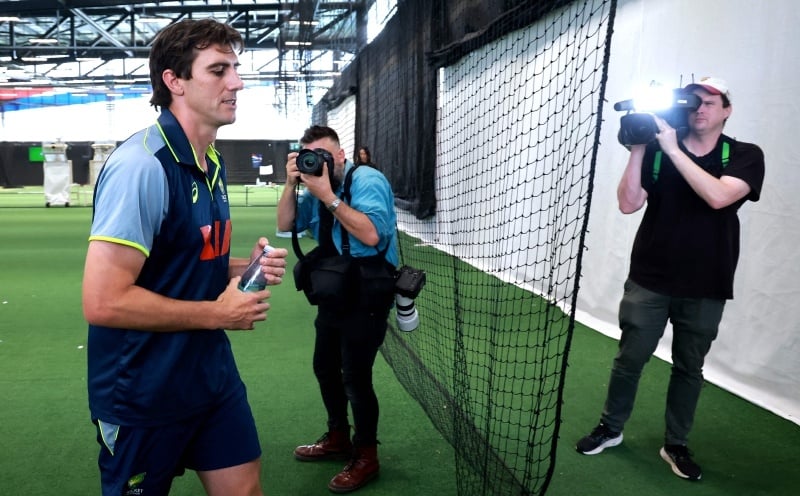
2026 © Helium Trades
Privacy Policy & Disclosure
* Disclaimer: Nothing on this website constitutes investment advice, performance data or any recommendation that any particular security, portfolio of securities, transaction or investment strategy is suitable for any specific person. Helium Trades is not responsible in any way for the accuracy
of any model predictions or price data. Any mention of a particular security and related prediction data is not a recommendation to buy or sell that security. Investments in securities involve the risk of loss. Past performance is no guarantee of future results. Helium Trades is not responsible for any of your investment decisions,
you should consult a financial expert before engaging in any transaction.
Helium Research Assistant

How can I help you today?
Ask any question about this page.


