See whether Helium helps you make better-informed decisions. Try every Pro Trader feature for 30 days. No credit card required.
Try every Pro Trader feature for 30 days. No credit card required.
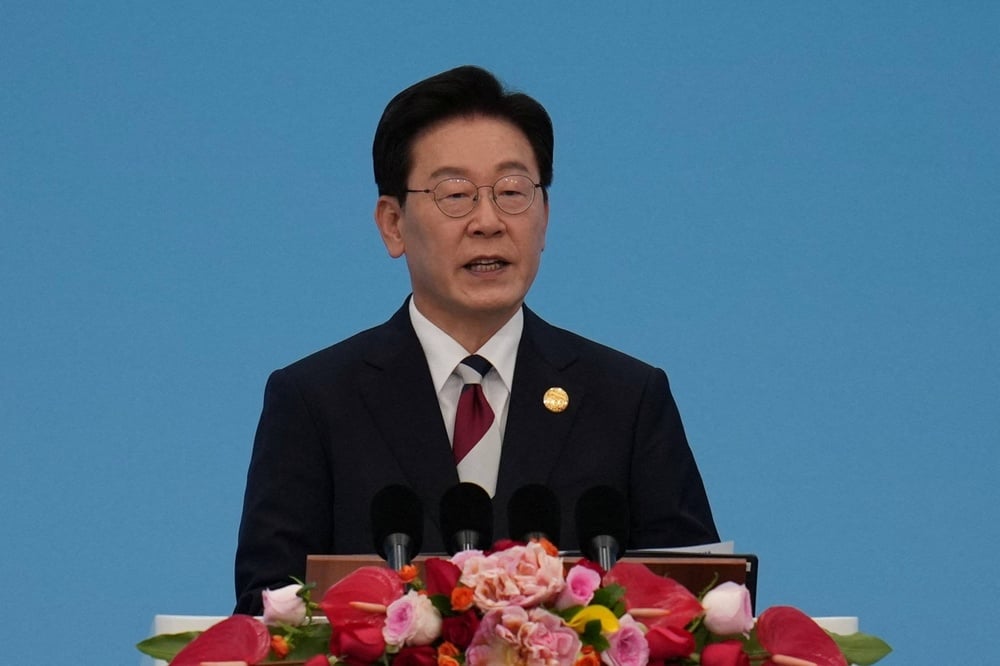
November 20, 2026 · 0 shares
Publisher framing is largely neutral and attribution-driven, with mild dramatic framing in the headline's 'AI cheating scandals'.
Helium Analysis
Limitations: The supplied text includes scraped list formatting and unrelated headlines after the main story; analysis is limited to the Korean examination-cheating report.
·
6 of 56 available dimensions scored; omitted dimensions are not treated as neutral.
·
Verified supporting quotes for 4 of 6 scored dimensions.
Claim: The report presents the overhaul call as an attributed event rather than publisher commentary.
“South Korean President Lee Jae Myung on Friday called for a complete overhaul of the country's national examination system following a series of cheating scandals involving artificial intelligence (AI) and prohibited electronic devices.” · exact text match
Why: The lede is factual and attributed to the president, supporting an objective framing.
Claim: Specific dates, exam names, and attributed admissions frame the controversy factually rather than sensationally.
“The latest controversy erupted on Nov. 15, when the top scorer in South Korea's national tax accountant examination admitted using generative AI and concealed electronic devices to cheat.” · exact text match
Why: The wording is specific and attribution-based, though 'controversy erupted' adds mild dramatic color.
Claim: The report centers on a presidential policy response to a national controversy.
“South Korean President Lee Jae Myung on Friday called for a complete overhaul of the country's national examination system following a series of cheating scandals involving artificial intelligence (AI) and prohibited electronic devices.” · exact text match
Why: The framing is explicitly governmental and policy-focused.
Claim: The report relies on named official sources and specific figures.
“The Education Ministry said Friday that 111 suspected violations involving prohibited electronic devices were detected during Thursday's annual College Scholastic Ability Test (CSAT), up from an initial tally of 98.” · not found in supplied text
Why: Named institutional attribution and precise figures support credibility.
Claim: The report grounds claims in official figures and named institutions rather than speculative reasoning.
“The Education Ministry said Friday that 111 suspected violations involving prohibited electronic devices were detected during Thursday's annual College Scholastic Ability Test (CSAT), up from an initial tally of 98.” · not found in supplied text
Why: Official numeric data and attribution indicate rational/evidence-based reporting.
Claim: The report distinguishes allegations from established fact and notes Lee Jin-woo denied the allegations.
“Public concern grew amid allegations that Lee Jin-woo, a 32-year-old dentistry student at Seoul National University who achieved a perfect score on the Legal Education Eligibility Test (LEET), had also used AI to cheat.” · exact text match
“Lee, who had denied the allegations and planned to publicly demonstrate his academic abilities, was found dead at a motel in eastern Seoul on Thursday, police said.” · exact text match
Why: Careful attribution of allegations and inclusion of denial indicate fair, internally honest reporting.
The supplied text includes scraped list formatting and unrelated headlines after the main story; analysis is limited to the Korean examination-cheating report.
November 22, 2026 · 0 shares
A restrained, attribution-heavy report uses mild dramatic language about public fear and official scrambling while centering ministerial accountability and specific exam-integrity measures.
Helium Analysis
Limitations: The supplied article is a short news excerpt with no byline and no full original article body; some sourcing is to unnamed 'officials', limiting assessment of verification depth.
·
8 of 56 available dimensions scored; omitted dimensions are not treated as neutral.
·
Verified supporting quotes for 8 of 8 scored dimensions.
Claim: The report attributes key claims to named or official sources rather than presenting them as the publisher's own assertions.
“President Lee Jae Myung has accepted his resignation, the presidential office said.” · exact text match
“Choi wrote on social media platform X.” · exact text match
Why: Attribution to the presidential office and direct quotation show an objective, sourced presentation.
Claim: The report uses dramatic framing around public fear and official reaction.
“The country has been gripped by fears of AI-assisted exam cheating since Nov 15” · exact text match
“The confession sent officials scrambling to roll out a slew of preventive measures” · exact text match
Why: Phrases such as 'gripped by fears' and 'scrambling' add mild sensational coloring, though the rest is factual.
Claim: The report uses fear-oriented language to describe public anxiety over exam cheating.
“The country has been gripped by fears of AI-assisted exam cheating since Nov 15” · exact text match
Why: The phrase 'gripped by fears' invokes fear, but it is limited to one contextual sentence.
Claim: The report centers on a ministerial resignation and presidential acceptance.
“South Korea’s education minister resigned on Nov 22 over an AI-assisted cheating scandal” · exact text match
“President Lee Jae Myung has accepted his resignation, the presidential office said.” · exact text match
Why: This is political news involving executive accountability.
Claim: The report frames the episode in mildly negative emotional terms.
“The country has been gripped by fears of AI-assisted exam cheating since Nov 15” · exact text match
“Education Minister Choi Kyo-jin struggled to reassure the public” · exact text match
Why: Fear and struggle language produce a negative valence, but the tone remains restrained.
Claim: Key claims are attributed to the presidential office, officials, and a news agency, with direct quotes and specific figures.
“President Lee Jae Myung has accepted his resignation, the presidential office said.” · exact text match
“Officials said 111 cases of misconduct involving electronic devices were identified during the Nov 19 exam, nearly half of which were detected through three emergency alerts sent by the government to identify smartphones that test takers had failed to hand over.” · exact text match
Why: Attribution and specific details support credibility, though unnamed 'officials' limits full verification.
Claim: The report presents concrete procedures and figures rather than emotional assertion.
“Officials said 111 cases of misconduct involving electronic devices were identified during the Nov 19 exam, nearly half of which were detected through three emergency alerts sent by the government to identify smartphones that test takers had failed to hand over.” · exact text match
Why: Specific counts and mechanisms indicate rational, evidence-oriented reporting.
Claim: The report includes both the minister’s accountability statement and a damaging quote about his confidence.
“However, as the minister in charge, I do not believe I am immune from public criticism that we failed to prepare adequately in advance” · exact text match
“Due to my age, I am not confident I could.” · exact text match
Why: Including the minister's self-critical statement and an unflattering remark signals fair, unsparing presentation.
The supplied article is a short news excerpt with no byline and no full original article body; some sourcing is to unnamed 'officials', limiting assessment of verification depth.
November 20, 2026 · 0 shares
Official law-and-order framing dominates: presidential calls for a complete exam overhaul and stern punishment are emphasized, with government statements and specific cheating cases supplying the evidence.
Helium Analysis
Limitations: The supplied text is duplicated and the key resources quotation is truncated with an ellipsis; the core report remains clear.
·
8 of 56 available dimensions scored; omitted dimensions are not treated as neutral.
·
Verified supporting quotes for 8 of 8 scored dimensions.
Claim: The selection emphasizes punitive state enforcement and a top-down exam overhaul, with no attention to civil-liberty or privacy tradeoffs.
“No administrative resources or budget should be spared ... to punish those responsible to the extent that the public can be convinced," he said.” · exact text match
Why: The emphasis on unlimited resources for punishment supports a modest authoritarian/state-coercion lean, though the language is attributed to the president.
Claim: The report is predominantly factual and attributive, presenting events and official statements without first-person or editorial subjectivity.
“Lee made the call during a meeting with his key aides at Cheong Wa Dae in Seoul, a day after more than 110 test-takers were caught possessing illegal electronic devices during the annual college entrance examination, including AI-powered glasses.” · exact text match
Why: The passage reports date, setting, and a specific count with attribution, supporting an objective presentation.
Claim: Much of the report relays prescriptions for punishment and systemic change rather than merely describing the cheating incidents.
“The national examination system should be completely overhauled from A to Z to reflect the changing environment.” · exact text match
Why: The quoted call for a complete overhaul is prescriptive, though it is attributed to the president rather than the publisher.
Claim: The report is centered on a presidential policy response and government action regarding national examinations.
“President Lee Jae Myung on Friday called for a complete overhaul of the system for state-administered examinations to combat artificial intelligence (AI)-assisted cheating.” · exact text match
Why: The central actor and subject are the president and state exam policy, making the article highly political.
Claim: The report emphasizes official government action and relies on presidential and presidential-office statements without including critical or opposition perspectives.
“He instructed officials to thoroughly trace and investigate suspected cheating cases in cooperation with AI companies and punish those caught cheating.” · exact text match
Why: Official-source emphasis and an uncritical rollout of government measures support a mild pro-establishment framing.
Claim: The report provides specific figures, dates, named officials, and attributed quotations, supporting visible evidentiary sourcing.
“The presidential office said it will launch a task force (TF) tasked with restoring fairness in examinations, led by Lee's chief of staff, Lim Kwang-hyun.” · exact text match
“more than 110 test-takers were caught possessing illegal electronic devices during the annual college entrance examination, including AI-powered glasses.” · exact text match
Why: Named official sourcing and concrete details indicate moderate-to-high credibility in the supplied text, without external fact-checking.
Claim: The report is structured around concrete procedural facts and attributed official statements rather than emotional or irrational assertions.
“During Thursday's national college entrance exam, the government used official disaster alert messages sent to mobile phones and deployed Wi-Fi signal detectors to detect those in possession of phones and other prohibited electronic devices in an attempt to cheat.” · exact text match
Why: Specific operational detail supports a rational/factual presentation.
Claim: The report preserves attribution and epistemic caution, labeling unproven cheating claims as suspicions rather than established facts.
“Another man, who became known for earning a perfect score on the law school admission exam for 2027, was found dead the previous day amid public suspicions that he had used AI to cheat.” · exact text match
Why: The use of 'suspicions' and attributed official statements shows observable fairness and caution.
The supplied text is duplicated and the key resources quotation is truncated with an ellipsis; the core report remains clear.
November 20, 2026 · 0 shares
Publisher framing is largely neutral and attribution-driven, with mild dramatic framing in the headline's 'AI cheating scandals'.
Helium Analysis
Limitations: The supplied text includes scraped list formatting and unrelated headlines after the main story; analysis is limited to the Korean examination-cheating report.
·
6 of 56 available dimensions scored; omitted dimensions are not treated as neutral.
·
Verified supporting quotes for 4 of 6 scored dimensions.
Claim: The report presents the overhaul call as an attributed event rather than publisher commentary.
“South Korean President Lee Jae Myung on Friday called for a complete overhaul of the country's national examination system following a series of cheating scandals involving artificial intelligence (AI) and prohibited electronic devices.” · exact text match
Why: The lede is factual and attributed to the president, supporting an objective framing.
Claim: Specific dates, exam names, and attributed admissions frame the controversy factually rather than sensationally.
“The latest controversy erupted on Nov. 15, when the top scorer in South Korea's national tax accountant examination admitted using generative AI and concealed electronic devices to cheat.” · exact text match
Why: The wording is specific and attribution-based, though 'controversy erupted' adds mild dramatic color.
Claim: The report centers on a presidential policy response to a national controversy.
“South Korean President Lee Jae Myung on Friday called for a complete overhaul of the country's national examination system following a series of cheating scandals involving artificial intelligence (AI) and prohibited electronic devices.” · exact text match
Why: The framing is explicitly governmental and policy-focused.
Claim: The report relies on named official sources and specific figures.
“The Education Ministry said Friday that 111 suspected violations involving prohibited electronic devices were detected during Thursday's annual College Scholastic Ability Test (CSAT), up from an initial tally of 98.” · not found in supplied text
Why: Named institutional attribution and precise figures support credibility.
Claim: The report grounds claims in official figures and named institutions rather than speculative reasoning.
“The Education Ministry said Friday that 111 suspected violations involving prohibited electronic devices were detected during Thursday's annual College Scholastic Ability Test (CSAT), up from an initial tally of 98.” · not found in supplied text
Why: Official numeric data and attribution indicate rational/evidence-based reporting.
Claim: The report distinguishes allegations from established fact and notes Lee Jin-woo denied the allegations.
“Public concern grew amid allegations that Lee Jin-woo, a 32-year-old dentistry student at Seoul National University who achieved a perfect score on the Legal Education Eligibility Test (LEET), had also used AI to cheat.” · exact text match
“Lee, who had denied the allegations and planned to publicly demonstrate his academic abilities, was found dead at a motel in eastern Seoul on Thursday, police said.” · exact text match
Why: Careful attribution of allegations and inclusion of denial indicate fair, internally honest reporting.
The supplied text includes scraped list formatting and unrelated headlines after the main story; analysis is limited to the Korean examination-cheating report.
November 22, 2026 · 0 shares
A restrained, attribution-heavy report uses mild dramatic language about public fear and official scrambling while centering ministerial accountability and specific exam-integrity measures.
Helium Analysis
Limitations: The supplied article is a short news excerpt with no byline and no full original article body; some sourcing is to unnamed 'officials', limiting assessment of verification depth.
·
8 of 56 available dimensions scored; omitted dimensions are not treated as neutral.
·
Verified supporting quotes for 8 of 8 scored dimensions.
Claim: The report attributes key claims to named or official sources rather than presenting them as the publisher's own assertions.
“President Lee Jae Myung has accepted his resignation, the presidential office said.” · exact text match
“Choi wrote on social media platform X.” · exact text match
Why: Attribution to the presidential office and direct quotation show an objective, sourced presentation.
Claim: The report uses dramatic framing around public fear and official reaction.
“The country has been gripped by fears of AI-assisted exam cheating since Nov 15” · exact text match
“The confession sent officials scrambling to roll out a slew of preventive measures” · exact text match
Why: Phrases such as 'gripped by fears' and 'scrambling' add mild sensational coloring, though the rest is factual.
Claim: The report uses fear-oriented language to describe public anxiety over exam cheating.
“The country has been gripped by fears of AI-assisted exam cheating since Nov 15” · exact text match
Why: The phrase 'gripped by fears' invokes fear, but it is limited to one contextual sentence.
Claim: The report centers on a ministerial resignation and presidential acceptance.
“South Korea’s education minister resigned on Nov 22 over an AI-assisted cheating scandal” · exact text match
“President Lee Jae Myung has accepted his resignation, the presidential office said.” · exact text match
Why: This is political news involving executive accountability.
Claim: The report frames the episode in mildly negative emotional terms.
“The country has been gripped by fears of AI-assisted exam cheating since Nov 15” · exact text match
“Education Minister Choi Kyo-jin struggled to reassure the public” · exact text match
Why: Fear and struggle language produce a negative valence, but the tone remains restrained.
Claim: Key claims are attributed to the presidential office, officials, and a news agency, with direct quotes and specific figures.
“President Lee Jae Myung has accepted his resignation, the presidential office said.” · exact text match
“Officials said 111 cases of misconduct involving electronic devices were identified during the Nov 19 exam, nearly half of which were detected through three emergency alerts sent by the government to identify smartphones that test takers had failed to hand over.” · exact text match
Why: Attribution and specific details support credibility, though unnamed 'officials' limits full verification.
Claim: The report presents concrete procedures and figures rather than emotional assertion.
“Officials said 111 cases of misconduct involving electronic devices were identified during the Nov 19 exam, nearly half of which were detected through three emergency alerts sent by the government to identify smartphones that test takers had failed to hand over.” · exact text match
Why: Specific counts and mechanisms indicate rational, evidence-oriented reporting.
Claim: The report includes both the minister’s accountability statement and a damaging quote about his confidence.
“However, as the minister in charge, I do not believe I am immune from public criticism that we failed to prepare adequately in advance” · exact text match
“Due to my age, I am not confident I could.” · exact text match
Why: Including the minister's self-critical statement and an unflattering remark signals fair, unsparing presentation.
The supplied article is a short news excerpt with no byline and no full original article body; some sourcing is to unnamed 'officials', limiting assessment of verification depth.
November 20, 2026 · 0 shares
Publisher framing is largely neutral and attribution-driven, with mild dramatic framing in the headline's 'AI cheating scandals'.
Helium Analysis
Limitations: The supplied text includes scraped list formatting and unrelated headlines after the main story; analysis is limited to the Korean examination-cheating report.
·
6 of 56 available dimensions scored; omitted dimensions are not treated as neutral.
·
Verified supporting quotes for 4 of 6 scored dimensions.
Claim: The report presents the overhaul call as an attributed event rather than publisher commentary.
“South Korean President Lee Jae Myung on Friday called for a complete overhaul of the country's national examination system following a series of cheating scandals involving artificial intelligence (AI) and prohibited electronic devices.” · exact text match
Why: The lede is factual and attributed to the president, supporting an objective framing.
Claim: Specific dates, exam names, and attributed admissions frame the controversy factually rather than sensationally.
“The latest controversy erupted on Nov. 15, when the top scorer in South Korea's national tax accountant examination admitted using generative AI and concealed electronic devices to cheat.” · exact text match
Why: The wording is specific and attribution-based, though 'controversy erupted' adds mild dramatic color.
Claim: The report centers on a presidential policy response to a national controversy.
“South Korean President Lee Jae Myung on Friday called for a complete overhaul of the country's national examination system following a series of cheating scandals involving artificial intelligence (AI) and prohibited electronic devices.” · exact text match
Why: The framing is explicitly governmental and policy-focused.
Claim: The report relies on named official sources and specific figures.
“The Education Ministry said Friday that 111 suspected violations involving prohibited electronic devices were detected during Thursday's annual College Scholastic Ability Test (CSAT), up from an initial tally of 98.” · not found in supplied text
Why: Named institutional attribution and precise figures support credibility.
Claim: The report grounds claims in official figures and named institutions rather than speculative reasoning.
“The Education Ministry said Friday that 111 suspected violations involving prohibited electronic devices were detected during Thursday's annual College Scholastic Ability Test (CSAT), up from an initial tally of 98.” · not found in supplied text
Why: Official numeric data and attribution indicate rational/evidence-based reporting.
Claim: The report distinguishes allegations from established fact and notes Lee Jin-woo denied the allegations.
“Public concern grew amid allegations that Lee Jin-woo, a 32-year-old dentistry student at Seoul National University who achieved a perfect score on the Legal Education Eligibility Test (LEET), had also used AI to cheat.” · exact text match
“Lee, who had denied the allegations and planned to publicly demonstrate his academic abilities, was found dead at a motel in eastern Seoul on Thursday, police said.” · exact text match
Why: Careful attribution of allegations and inclusion of denial indicate fair, internally honest reporting.
The supplied text includes scraped list formatting and unrelated headlines after the main story; analysis is limited to the Korean examination-cheating report.
November 21, 2026 · 0 shares
A largely straight, official-source account repeats the president’s severe "crime" framing and reward details without independent scrutiny or outside perspectives.
Helium Analysis
Limitations: The supplied text contains duplicated fragments and an apparent truncation, limiting certainty about the original article's full sourcing and context.
·
7 of 56 available dimensions scored; omitted dimensions are not treated as neutral.
·
Verified supporting quotes for 7 of 7 scored dimensions.
Claim: The item presents the reward policy through attributed statements and factual details rather than subjective commentary.
“President Lee Jae Myung reiterated Saturday that the government will offer 100 million won ($75,000) in reward to anyone reporting those who cheated on this week's college entrance exam” · exact text match
“Lee made the comments on social media, saying the reward will be provided per case of cheating” · exact text match
Why: Direct attribution and procedural detail, with no publisher opinion, indicate an objective/subjective score toward objective.
Claim: The presentation is largely measured, with dramatic language confined to attributed quotes rather than the publisher's own prose.
“"Cheating on the college entrance exam is a crime as serious as corruption by public officials," Lee said.” · exact text match
“Offering cash rewards is one of the anti-cheating measures the government has come up with amid growing concerns over the use of artificial intelligence (AI) during national exams” · exact text match
Why: The strongest dramatic wording is a direct presidential quote, while surrounding text reports policy details in a restrained manner.
Claim: The publisher's own prose is mostly descriptive of the announced policy rather than prescriptive advocacy.
“Offering cash rewards is one of the anti-cheating measures the government has come up with amid growing concerns over the use of artificial intelligence (AI) during national exams” · exact text match
“The College Scholastic Ability Test (CSAT), commonly known as Suneung, is the culmination of years of rigorous study for many students and is widely seen as a major life event in South Korea, where university admission can heavily influence career prospects.” · exact text match
Why: The text explains the policy and exam context without directly urging readers to support or oppose the measure.
Claim: The story is centrally about a presidential policy announcement and government enforcement response.
“President Lee Jae Myung reiterated Saturday that the government will offer 100 million won ($75,000) in reward to anyone reporting those who cheated on this week's college entrance exam” · exact text match
“Offering cash rewards is one of the anti-cheating measures the government has come up with amid growing concerns over the use of artificial intelligence (AI) during national exams” · exact text match
Why: The subject is explicitly governmental and presidential, though the framing is not partisan.
Claim: The account is organized around official statements and presents the government policy as a response to exam-integrity concerns, without quoting critics or independent experts.
“President Lee Jae Myung reiterated Saturday that the government will offer 100 million won ($75,000) in reward to anyone reporting those who cheated on this week's college entrance exam” · exact text match
“Offering cash rewards is one of the anti-cheating measures the government has come up with amid growing concerns over the use of artificial intelligence (AI) during national exams” · exact text match
Why: The report relies on official framing and lacks outside perspectives, leaning slightly pro-establishment rather than anti-establishment.
Claim: The report provides direct attribution, specific amounts, and status labels for claims, supporting visible credibility.
“Lee made the comments on social media, saying the reward will be provided per case of cheating” · exact text match
“The concerns were further heightened by allegations that a 32-year-old man who earned a perfect score on the Legal Education Eligibility Test (LEET) had used AI to cheat.” · exact text match
Why: Attribution to a named official and careful labeling of allegations provide moderately strong visible credibility signals.
Claim: The text distinguishes allegations from admissions and attributes contested claims to officials, showing moderate internal fairness and honesty signals.
“following the admission by this year's certified tax accountant exam top scorer that he had cheated with the help of AI and digital devices” · exact text match
“The concerns were further heightened by allegations that a 32-year-old man who earned a perfect score on the Legal Education Eligibility Test (LEET) had used AI to cheat.” · exact text match
Why: The use of 'admission' and 'allegations' preserves epistemic status and indicates fair handling of contested information.
The supplied text contains duplicated fragments and an apparent truncation, limiting certainty about the original article's full sourcing and context.
November 21, 2026 · 0 shares
Framing centers on official enforcement rationale, presenting the reward scheme as an anti-cheating measure with minimal countervailing scrutiny.
Helium Analysis
Limitations: The supplied text is a short syndicated wire brief with no author byline and includes duplicated paragraph fragments; scoring is limited to the visible article content.
·
8 of 56 available dimensions scored; omitted dimensions are not treated as neutral.
·
Verified supporting quotes for 8 of 8 scored dimensions.
Claim: Contentious characterizations are attributed to Lee, while the report's own narration remains factual.
“Lee made the comments on social media” · exact text match
“calling the misconduct a "crime as serious as corruption" involving government officials” · exact text match
Why: The article distinguishes quoted rhetoric from narration.
Claim: Even dramatic details are presented in a restrained, factual manner.
“The man was found dead at a motel in Seoul on the day of the college entrance exam after failing to show up for a live exam session that he had promised to attend to prove he never cheated.” · exact text match
Why: The sentence reports a death and alleged cheating context without sensational adjectives or exclamatory framing.
Claim: Evaluative language is mostly limited to direct or attributed official statements.
“calling the misconduct a "crime as serious as corruption" involving government officials” · exact text match
Why: The morally charged phrase is attributed to Lee rather than voiced as the outlet's own judgment.
Claim: The report centers on a presidential policy announcement and government enforcement.
“President Lee Jae Myung reiterated Saturday that the government will offer 100 million won (US$75,000) in reward to anyone reporting those who cheated on this week's college entrance exam” · exact text match
Why: The subject is a state policy action announced by the president.
Claim: Official government framing dominates the explanation of the reward policy.
“Offering cash rewards is one of the anti-cheating measures the government has come up with amid growing concerns over the use of artificial intelligence (AI) during national exams” · exact text match
Counterevidence:
“Lee made the comments on social media” · exact text match
Why: The policy is presented through the government's own rationale and Lee's statements, with no opposing or civil-liberty perspective.
Claim: Credibility is moderate because the brief is wire-attributed and quotes named officials, but lacks independent corroboration or critical perspective.
“(Yonhap)” · exact text match
“Lee made the comments on social media” · exact text match
Why: Wire attribution and direct sourcing support trustworthiness without establishing independent verification.
Claim: The report is coherent and evidence-bound rather than irrational or fallacious.
“Offering cash rewards is one of the anti-cheating measures the government has come up with amid growing concerns over the use of artificial intelligence (AI) during national exams” · exact text match
Why: It connects the policy to a stated concern and presents background in a logical order, though it relies on official claims.
Claim: The report provides clear attribution and context for official claims.
“Lee made the comments on social media” · exact text match
“The College Scholastic Ability Test, commonly known as Suneung, is the culmination of years of rigorous study for many students and is widely seen as a major life event in South Korea, where university admission can heavily influence career prospects.” · exact text match
Why: Direct attribution and contextual detail indicate fair handling, though sourcing remains one-sided.
The supplied text is a short syndicated wire brief with no author byline and includes duplicated paragraph fragments; scoring is limited to the visible article content.
November 20, 2026 · 0 shares
Official-source-driven straight news relays President Lee’s punitive framing and overhaul call without independent voices or examination of privacy or due-process tradeoffs.
Helium Analysis
Limitations: The supplied text is duplicated from a web scrape and includes a truncated/ellipsized final quote, so analysis is limited to the repeated substantive content.
·
5 of 56 available dimensions scored; omitted dimensions are not treated as neutral.
·
Verified supporting quotes for 5 of 5 scored dimensions.
Claim: The report is largely attributed and event-focused rather than expressing publisher opinion.
“Lee told the meeting.” · exact text match
Why: Direct attribution to a named official supports a score toward objective.
Claim: The report uses measured factual details rather than sensational language.
“more than 110 test-takers were caught possessing illegal electronic devices during the annual college entrance examination” · exact text match
Why: Specific incident details are reported in a calm, news-style manner.
Claim: The report frames a head-of-state policy call on national exams as the central news event.
“President Lee Jae Myung on Friday called for a complete overhaul of the system for state-administered examinations to combat artificial intelligence (AI)-assisted cheating.” · exact text match
Why: The lead and most content concern a presidential policy initiative and official directives, making the subject strongly political.
Claim: The report centers the president’s official response and reproduces his punitive rationale without quoting non-official perspectives.
“Lee made the call during a meeting with his key aides at Cheong Wa Dae in Seoul” · exact text match
“No administrative resources or budget should be spared” · exact text match
Why: The story is built around the president’s initiative and quotes his punitive commitment, with no critics or affected students included.
Claim: The report provides named attribution, location, and specific incident figures.
“Lee made the call during a meeting with his key aides at Cheong Wa Dae in Seoul” · exact text match
“more than 110 test-takers were caught possessing illegal electronic devices” · exact text match
Why: Specific sourcing and details support moderate-to-high credibility, though the report relies on a single official source.
The supplied text is duplicated from a web scrape and includes a truncated/ellipsized final quote, so analysis is limited to the repeated substantive content.
November 20, 2026 · 0 shares
Official law-and-order framing dominates: presidential calls for a complete exam overhaul and stern punishment are emphasized, with government statements and specific cheating cases supplying the evidence.
Helium Analysis
Limitations: The supplied text is duplicated and the key resources quotation is truncated with an ellipsis; the core report remains clear.
·
8 of 56 available dimensions scored; omitted dimensions are not treated as neutral.
·
Verified supporting quotes for 8 of 8 scored dimensions.
Claim: The selection emphasizes punitive state enforcement and a top-down exam overhaul, with no attention to civil-liberty or privacy tradeoffs.
“No administrative resources or budget should be spared ... to punish those responsible to the extent that the public can be convinced," he said.” · exact text match
Why: The emphasis on unlimited resources for punishment supports a modest authoritarian/state-coercion lean, though the language is attributed to the president.
Claim: The report is predominantly factual and attributive, presenting events and official statements without first-person or editorial subjectivity.
“Lee made the call during a meeting with his key aides at Cheong Wa Dae in Seoul, a day after more than 110 test-takers were caught possessing illegal electronic devices during the annual college entrance examination, including AI-powered glasses.” · exact text match
Why: The passage reports date, setting, and a specific count with attribution, supporting an objective presentation.
Claim: Much of the report relays prescriptions for punishment and systemic change rather than merely describing the cheating incidents.
“The national examination system should be completely overhauled from A to Z to reflect the changing environment.” · exact text match
Why: The quoted call for a complete overhaul is prescriptive, though it is attributed to the president rather than the publisher.
Claim: The report is centered on a presidential policy response and government action regarding national examinations.
“President Lee Jae Myung on Friday called for a complete overhaul of the system for state-administered examinations to combat artificial intelligence (AI)-assisted cheating.” · exact text match
Why: The central actor and subject are the president and state exam policy, making the article highly political.
Claim: The report emphasizes official government action and relies on presidential and presidential-office statements without including critical or opposition perspectives.
“He instructed officials to thoroughly trace and investigate suspected cheating cases in cooperation with AI companies and punish those caught cheating.” · exact text match
Why: Official-source emphasis and an uncritical rollout of government measures support a mild pro-establishment framing.
Claim: The report provides specific figures, dates, named officials, and attributed quotations, supporting visible evidentiary sourcing.
“The presidential office said it will launch a task force (TF) tasked with restoring fairness in examinations, led by Lee's chief of staff, Lim Kwang-hyun.” · exact text match
“more than 110 test-takers were caught possessing illegal electronic devices during the annual college entrance examination, including AI-powered glasses.” · exact text match
Why: Named official sourcing and concrete details indicate moderate-to-high credibility in the supplied text, without external fact-checking.
Claim: The report is structured around concrete procedural facts and attributed official statements rather than emotional or irrational assertions.
“During Thursday's national college entrance exam, the government used official disaster alert messages sent to mobile phones and deployed Wi-Fi signal detectors to detect those in possession of phones and other prohibited electronic devices in an attempt to cheat.” · exact text match
Why: Specific operational detail supports a rational/factual presentation.
Claim: The report preserves attribution and epistemic caution, labeling unproven cheating claims as suspicions rather than established facts.
“Another man, who became known for earning a perfect score on the law school admission exam for 2027, was found dead the previous day amid public suspicions that he had used AI to cheat.” · exact text match
Why: The use of 'suspicions' and attributed official statements shows observable fairness and caution.
The supplied text is duplicated and the key resources quotation is truncated with an ellipsis; the core report remains clear.
November 22, 2026 · 0 shares
A restrained, attribution-heavy report uses mild dramatic language about public fear and official scrambling while centering ministerial accountability and specific exam-integrity measures.
Helium Analysis
Limitations: The supplied article is a short news excerpt with no byline and no full original article body; some sourcing is to unnamed 'officials', limiting assessment of verification depth.
·
8 of 56 available dimensions scored; omitted dimensions are not treated as neutral.
·
Verified supporting quotes for 8 of 8 scored dimensions.
Claim: The report attributes key claims to named or official sources rather than presenting them as the publisher's own assertions.
“President Lee Jae Myung has accepted his resignation, the presidential office said.” · exact text match
“Choi wrote on social media platform X.” · exact text match
Why: Attribution to the presidential office and direct quotation show an objective, sourced presentation.
Claim: The report uses dramatic framing around public fear and official reaction.
“The country has been gripped by fears of AI-assisted exam cheating since Nov 15” · exact text match
“The confession sent officials scrambling to roll out a slew of preventive measures” · exact text match
Why: Phrases such as 'gripped by fears' and 'scrambling' add mild sensational coloring, though the rest is factual.
Claim: The report uses fear-oriented language to describe public anxiety over exam cheating.
“The country has been gripped by fears of AI-assisted exam cheating since Nov 15” · exact text match
Why: The phrase 'gripped by fears' invokes fear, but it is limited to one contextual sentence.
Claim: The report centers on a ministerial resignation and presidential acceptance.
“South Korea’s education minister resigned on Nov 22 over an AI-assisted cheating scandal” · exact text match
“President Lee Jae Myung has accepted his resignation, the presidential office said.” · exact text match
Why: This is political news involving executive accountability.
Claim: The report frames the episode in mildly negative emotional terms.
“The country has been gripped by fears of AI-assisted exam cheating since Nov 15” · exact text match
“Education Minister Choi Kyo-jin struggled to reassure the public” · exact text match
Why: Fear and struggle language produce a negative valence, but the tone remains restrained.
Claim: Key claims are attributed to the presidential office, officials, and a news agency, with direct quotes and specific figures.
“President Lee Jae Myung has accepted his resignation, the presidential office said.” · exact text match
“Officials said 111 cases of misconduct involving electronic devices were identified during the Nov 19 exam, nearly half of which were detected through three emergency alerts sent by the government to identify smartphones that test takers had failed to hand over.” · exact text match
Why: Attribution and specific details support credibility, though unnamed 'officials' limits full verification.
Claim: The report presents concrete procedures and figures rather than emotional assertion.
“Officials said 111 cases of misconduct involving electronic devices were identified during the Nov 19 exam, nearly half of which were detected through three emergency alerts sent by the government to identify smartphones that test takers had failed to hand over.” · exact text match
Why: Specific counts and mechanisms indicate rational, evidence-oriented reporting.
Claim: The report includes both the minister’s accountability statement and a damaging quote about his confidence.
“However, as the minister in charge, I do not believe I am immune from public criticism that we failed to prepare adequately in advance” · exact text match
“Due to my age, I am not confident I could.” · exact text match
Why: Including the minister's self-critical statement and an unflattering remark signals fair, unsparing presentation.
The supplied article is a short news excerpt with no byline and no full original article body; some sourcing is to unnamed 'officials', limiting assessment of verification depth.
November 23, 2026 · 0 shares
The resignation is framed mainly as political damage control, with unnamed analysts and a vague 'widely interpreted' consensus carrying the motive claim while the president’s sagging approval ratings are foregrounded.
Helium Analysis
Limitations: The supplied article is truncated mid-sentence at 'College', limiting verification of the exam name and the anti-cheating measures under discussion.
·
8 of 56 available dimensions scored; omitted dimensions are not treated as neutral.
·
Verified supporting quotes for 8 of 8 scored dimensions.
Claim: The report adds a subjective interpretive layer by foregrounding analysts’ and widespread interpretations of the resignation’s political motive.
“in a move analysts see as an attempt to contain the fallout” · exact text match
“has been widely interpreted as a de facto dismissal” · exact text match
Why: The article leads with attributed interpretations about motive and political effect, making the framing mildly subjective.
Claim: The body reports the resignation in measured, factual terms rather than sensational language.
“South Korea’s education minister resigned on Sunday days after the country’s national university entrance exam took place” · exact text match
Why: The wording is straight news reporting with no emotive or sensational phrasing.
Claim: The article describes the resignation and official acceptance without prescribing a course of action.
“Choi Kyo-jin’s resignation, which was swiftly accepted by President Lee Jae Myung” · exact text match
Why: The text reports events and interpretations without advocating a policy or action.
Claim: The resignation is framed around presidential politics and approval ratings.
“before it damages the president’s already sagging approval ratings” · exact text match
“which was swiftly accepted by President Lee Jae Myung” · exact text match
Why: The event is explicitly tied to the president's political standing and approval, making the article strongly political.
Claim: The central political interpretation rests on unnamed analysts and a vague consensus.
“in a move analysts see as an attempt to contain the fallout” · exact text match
“has been widely interpreted as a de facto dismissal” · exact text match
Why: Both key interpretive claims are supported by unnamed authority or vague consensus rather than identified sources.
Claim: Core resignation facts are attributed to named actors, while interpretive claims rely on unnamed analysts.
“in a move analysts see as an attempt to contain the fallout” · exact text match
“has been widely interpreted as a de facto dismissal” · exact text match
Why: The article gives named officials and a clear event but supports its interpretive claims with anonymous or vague sourcing.
Claim: The article centers an attributed speculation about the political motive behind the resignation.
“in a move analysts see as an attempt to contain the fallout” · exact text match
Why: The motive is attributed to analysts rather than asserted, but speculation about political intent remains central to the framing.
Claim: Interpretive claims are explicitly marked as attributed or widely interpreted rather than asserted as facts.
“in a move analysts see as an attempt to contain the fallout” · exact text match
“has been widely interpreted as a de facto dismissal” · exact text match
Why: The attribution and hedging of interpretive claims are positive fairness signals, though sourcing remains vague.
The supplied article is truncated mid-sentence at 'College', limiting verification of the exam name and the anti-cheating measures under discussion.
November 22, 2026 · 0 shares
A restrained, attribution-heavy report uses mild dramatic language about public fear and official scrambling while centering ministerial accountability and specific exam-integrity measures.
Helium Analysis
Limitations: The supplied article is a short news excerpt with no byline and no full original article body; some sourcing is to unnamed 'officials', limiting assessment of verification depth.
·
8 of 56 available dimensions scored; omitted dimensions are not treated as neutral.
·
Verified supporting quotes for 8 of 8 scored dimensions.
Claim: The report attributes key claims to named or official sources rather than presenting them as the publisher's own assertions.
“President Lee Jae Myung has accepted his resignation, the presidential office said.” · exact text match
“Choi wrote on social media platform X.” · exact text match
Why: Attribution to the presidential office and direct quotation show an objective, sourced presentation.
Claim: The report uses dramatic framing around public fear and official reaction.
“The country has been gripped by fears of AI-assisted exam cheating since Nov 15” · exact text match
“The confession sent officials scrambling to roll out a slew of preventive measures” · exact text match
Why: Phrases such as 'gripped by fears' and 'scrambling' add mild sensational coloring, though the rest is factual.
Claim: The report uses fear-oriented language to describe public anxiety over exam cheating.
“The country has been gripped by fears of AI-assisted exam cheating since Nov 15” · exact text match
Why: The phrase 'gripped by fears' invokes fear, but it is limited to one contextual sentence.
Claim: The report centers on a ministerial resignation and presidential acceptance.
“South Korea’s education minister resigned on Nov 22 over an AI-assisted cheating scandal” · exact text match
“President Lee Jae Myung has accepted his resignation, the presidential office said.” · exact text match
Why: This is political news involving executive accountability.
Claim: The report frames the episode in mildly negative emotional terms.
“The country has been gripped by fears of AI-assisted exam cheating since Nov 15” · exact text match
“Education Minister Choi Kyo-jin struggled to reassure the public” · exact text match
Why: Fear and struggle language produce a negative valence, but the tone remains restrained.
Claim: Key claims are attributed to the presidential office, officials, and a news agency, with direct quotes and specific figures.
“President Lee Jae Myung has accepted his resignation, the presidential office said.” · exact text match
“Officials said 111 cases of misconduct involving electronic devices were identified during the Nov 19 exam, nearly half of which were detected through three emergency alerts sent by the government to identify smartphones that test takers had failed to hand over.” · exact text match
Why: Attribution and specific details support credibility, though unnamed 'officials' limits full verification.
Claim: The report presents concrete procedures and figures rather than emotional assertion.
“Officials said 111 cases of misconduct involving electronic devices were identified during the Nov 19 exam, nearly half of which were detected through three emergency alerts sent by the government to identify smartphones that test takers had failed to hand over.” · exact text match
Why: Specific counts and mechanisms indicate rational, evidence-oriented reporting.
Claim: The report includes both the minister’s accountability statement and a damaging quote about his confidence.
“However, as the minister in charge, I do not believe I am immune from public criticism that we failed to prepare adequately in advance” · exact text match
“Due to my age, I am not confident I could.” · exact text match
Why: Including the minister's self-critical statement and an unflattering remark signals fair, unsparing presentation.
The supplied article is a short news excerpt with no byline and no full original article body; some sourcing is to unnamed 'officials', limiting assessment of verification depth.
November 23, 2026 · 0 shares
Straightforward, official-source-driven announcement of South Korean Cabinet nominations, with no evaluative or ideological framing.
Helium Analysis
Limitations: Only a short, repetitive official-announcement text is supplied; no named author, independent sourcing, or broader political context is present, limiting bias assessment.
·
7 of 56 available dimensions scored; omitted dimensions are not treated as neutral.
·
Verified supporting quotes for 7 of 7 scored dimensions.
Claim: Party affiliation is reported factually without ideological characterization.
“Lee also nominated Hong Ihk-pyo, a former presidential secretary for political affairs and former floor leader of the ruling Democratic Party of Korea (DPK), as unification minister.” · exact text match
Why: The article names a party and prior posts but does not describe the nominees in liberal or conservative ideological terms.
Claim: The report is presented as a factual announcement attributed to the presidential office rather than as opinion or interpretation.
“Presidential chief of Staff Lim Kwang-hyun announced the nominations during a briefing at Cheng Wa Dae.” · exact text match
Why: The framing consists of an official announcement with no evaluative adjectives or subjective commentary.
Claim: The report uses plain, non-sensational language to describe routine personnel nominations.
“President Lee Jae Myung nominated Lim Woong-soon, his second deputy national security adviser and a former ambassador to Canada, as foreign minister, Monday, in a Cabinet reshuffle.” · exact text match
Why: Personnel facts are stated without dramatic language, emotional emphasis, or sensational details.
Claim: The report describes nominations without recommending what should be done.
“Lee also nominated Hong Ihk-pyo, a former presidential secretary for political affairs and former floor leader of the ruling Democratic Party of Korea (DPK), as unification minister.” · exact text match
Why: It lists appointments and roles; no prescriptions or calls to action are present.
Claim: The article is entirely about presidential Cabinet nominations and party-linked appointments.
“President Lee Jae Myung nominated Lim Woong-soon, his second deputy national security adviser and a former ambassador to Canada, as foreign minister, Monday, in a Cabinet reshuffle.” · exact text match
Why: The subject is a government reshuffle and named political offices, making the content highly political.
Claim: The account is attributed to a specific official briefing and uses identifiable names and roles.
“Presidential chief of Staff Lim Kwang-hyun announced the nominations during a briefing at Cheng Wa Dae.” · exact text match
Why: Visible sourcing and concrete attributions support credibility, though the text is short and relies solely on the presidential office.
Claim: The report presents the nominations plainly without apparent deceptive or unfair framing.
“Presidential chief of Staff Lim Kwang-hyun announced the nominations during a briefing at Cheng Wa Dae.” · exact text match
Why: It relays an official announcement with concrete attributions and no visible distortion, though independent verification is absent.
Only a short, repetitive official-announcement text is supplied; no named author, independent sourcing, or broader political context is present, limiting bias assessment.
November 23, 2026 · 0 shares
The resignation is framed mainly as political damage control, with unnamed analysts and a vague 'widely interpreted' consensus carrying the motive claim while the president’s sagging approval ratings are foregrounded.
Helium Analysis Limitations: The supplied article is truncated mid-sentence at 'College', limiting verification of the exam name and the anti-cheating measures under discussion. · 8 of 56 available dimensions scored; omitted dimensions are not treated as neutral. · Verified supporting quotes for 8 of 8 scored dimensions.
Claim: The report adds a subjective interpretive layer by foregrounding analysts’ and widespread interpretations of the resignation’s political motive.
“in a move analysts see as an attempt to contain the fallout” · exact text match
“has been widely interpreted as a de facto dismissal” · exact text match
Why: The article leads with attributed interpretations about motive and political effect, making the framing mildly subjective.
Claim: The body reports the resignation in measured, factual terms rather than sensational language.
“South Korea’s education minister resigned on Sunday days after the country’s national university entrance exam took place” · exact text match
Why: The wording is straight news reporting with no emotive or sensational phrasing.
Claim: The article describes the resignation and official acceptance without prescribing a course of action.
“Choi Kyo-jin’s resignation, which was swiftly accepted by President Lee Jae Myung” · exact text match
Why: The text reports events and interpretations without advocating a policy or action.
Claim: The resignation is framed around presidential politics and approval ratings.
“before it damages the president’s already sagging approval ratings” · exact text match
“which was swiftly accepted by President Lee Jae Myung” · exact text match
Why: The event is explicitly tied to the president's political standing and approval, making the article strongly political.
Claim: The central political interpretation rests on unnamed analysts and a vague consensus.
“in a move analysts see as an attempt to contain the fallout” · exact text match
“has been widely interpreted as a de facto dismissal” · exact text match
Why: Both key interpretive claims are supported by unnamed authority or vague consensus rather than identified sources.
Claim: Core resignation facts are attributed to named actors, while interpretive claims rely on unnamed analysts.
“in a move analysts see as an attempt to contain the fallout” · exact text match
“has been widely interpreted as a de facto dismissal” · exact text match
Why: The article gives named officials and a clear event but supports its interpretive claims with anonymous or vague sourcing.
Claim: The article centers an attributed speculation about the political motive behind the resignation.
“in a move analysts see as an attempt to contain the fallout” · exact text match
Why: The motive is attributed to analysts rather than asserted, but speculation about political intent remains central to the framing.
Claim: Interpretive claims are explicitly marked as attributed or widely interpreted rather than asserted as facts.
“in a move analysts see as an attempt to contain the fallout” · exact text match
“has been widely interpreted as a de facto dismissal” · exact text match
Why: The attribution and hedging of interpretive claims are positive fairness signals, though sourcing remains vague.
The supplied article is truncated mid-sentence at 'College', limiting verification of the exam name and the anti-cheating measures under discussion.
November 22, 2026 · 0 shares
A restrained, attribution-heavy report uses mild dramatic language about public fear and official scrambling while centering ministerial accountability and specific exam-integrity measures.
Helium Analysis Limitations: The supplied article is a short news excerpt with no byline and no full original article body; some sourcing is to unnamed 'officials', limiting assessment of verification depth. · 8 of 56 available dimensions scored; omitted dimensions are not treated as neutral. · Verified supporting quotes for 8 of 8 scored dimensions.
Claim: The report attributes key claims to named or official sources rather than presenting them as the publisher's own assertions.
“President Lee Jae Myung has accepted his resignation, the presidential office said.” · exact text match
“Choi wrote on social media platform X.” · exact text match
Why: Attribution to the presidential office and direct quotation show an objective, sourced presentation.
Claim: The report uses dramatic framing around public fear and official reaction.
“The country has been gripped by fears of AI-assisted exam cheating since Nov 15” · exact text match
“The confession sent officials scrambling to roll out a slew of preventive measures” · exact text match
Why: Phrases such as 'gripped by fears' and 'scrambling' add mild sensational coloring, though the rest is factual.
Claim: The report uses fear-oriented language to describe public anxiety over exam cheating.
“The country has been gripped by fears of AI-assisted exam cheating since Nov 15” · exact text match
Why: The phrase 'gripped by fears' invokes fear, but it is limited to one contextual sentence.
Claim: The report centers on a ministerial resignation and presidential acceptance.
“South Korea’s education minister resigned on Nov 22 over an AI-assisted cheating scandal” · exact text match
“President Lee Jae Myung has accepted his resignation, the presidential office said.” · exact text match
Why: This is political news involving executive accountability.
Claim: The report frames the episode in mildly negative emotional terms.
“The country has been gripped by fears of AI-assisted exam cheating since Nov 15” · exact text match
“Education Minister Choi Kyo-jin struggled to reassure the public” · exact text match
Why: Fear and struggle language produce a negative valence, but the tone remains restrained.
Claim: Key claims are attributed to the presidential office, officials, and a news agency, with direct quotes and specific figures.
“President Lee Jae Myung has accepted his resignation, the presidential office said.” · exact text match
“Officials said 111 cases of misconduct involving electronic devices were identified during the Nov 19 exam, nearly half of which were detected through three emergency alerts sent by the government to identify smartphones that test takers had failed to hand over.” · exact text match
Why: Attribution and specific details support credibility, though unnamed 'officials' limits full verification.
Claim: The report presents concrete procedures and figures rather than emotional assertion.
“Officials said 111 cases of misconduct involving electronic devices were identified during the Nov 19 exam, nearly half of which were detected through three emergency alerts sent by the government to identify smartphones that test takers had failed to hand over.” · exact text match
Why: Specific counts and mechanisms indicate rational, evidence-oriented reporting.
Claim: The report includes both the minister’s accountability statement and a damaging quote about his confidence.
“However, as the minister in charge, I do not believe I am immune from public criticism that we failed to prepare adequately in advance” · exact text match
“Due to my age, I am not confident I could.” · exact text match
Why: Including the minister's self-critical statement and an unflattering remark signals fair, unsparing presentation.
The supplied article is a short news excerpt with no byline and no full original article body; some sourcing is to unnamed 'officials', limiting assessment of verification depth.
November 20, 2026 · 0 shares
Publisher framing is largely neutral and attribution-driven, with mild dramatic framing in the headline's 'AI cheating scandals'.
Helium Analysis Limitations: The supplied text includes scraped list formatting and unrelated headlines after the main story; analysis is limited to the Korean examination-cheating report. · 6 of 56 available dimensions scored; omitted dimensions are not treated as neutral. · Verified supporting quotes for 4 of 6 scored dimensions.
Claim: The report presents the overhaul call as an attributed event rather than publisher commentary.
“South Korean President Lee Jae Myung on Friday called for a complete overhaul of the country's national examination system following a series of cheating scandals involving artificial intelligence (AI) and prohibited electronic devices.” · exact text match
Why: The lede is factual and attributed to the president, supporting an objective framing.
Claim: Specific dates, exam names, and attributed admissions frame the controversy factually rather than sensationally.
“The latest controversy erupted on Nov. 15, when the top scorer in South Korea's national tax accountant examination admitted using generative AI and concealed electronic devices to cheat.” · exact text match
Why: The wording is specific and attribution-based, though 'controversy erupted' adds mild dramatic color.
Claim: The report centers on a presidential policy response to a national controversy.
“South Korean President Lee Jae Myung on Friday called for a complete overhaul of the country's national examination system following a series of cheating scandals involving artificial intelligence (AI) and prohibited electronic devices.” · exact text match
Why: The framing is explicitly governmental and policy-focused.
Claim: The report relies on named official sources and specific figures.
“The Education Ministry said Friday that 111 suspected violations involving prohibited electronic devices were detected during Thursday's annual College Scholastic Ability Test (CSAT), up from an initial tally of 98.” · not found in supplied text
Why: Named institutional attribution and precise figures support credibility.
Claim: The report grounds claims in official figures and named institutions rather than speculative reasoning.
“The Education Ministry said Friday that 111 suspected violations involving prohibited electronic devices were detected during Thursday's annual College Scholastic Ability Test (CSAT), up from an initial tally of 98.” · not found in supplied text
Why: Official numeric data and attribution indicate rational/evidence-based reporting.
Claim: The report distinguishes allegations from established fact and notes Lee Jin-woo denied the allegations.
“Public concern grew amid allegations that Lee Jin-woo, a 32-year-old dentistry student at Seoul National University who achieved a perfect score on the Legal Education Eligibility Test (LEET), had also used AI to cheat.” · exact text match
“Lee, who had denied the allegations and planned to publicly demonstrate his academic abilities, was found dead at a motel in eastern Seoul on Thursday, police said.” · exact text match
Why: Careful attribution of allegations and inclusion of denial indicate fair, internally honest reporting.
The supplied text includes scraped list formatting and unrelated headlines after the main story; analysis is limited to the Korean examination-cheating report.
November 22, 2026 · 0 shares
A restrained, attribution-heavy report uses mild dramatic language about public fear and official scrambling while centering ministerial accountability and specific exam-integrity measures.
Helium Analysis Limitations: The supplied article is a short news excerpt with no byline and no full original article body; some sourcing is to unnamed 'officials', limiting assessment of verification depth. · 8 of 56 available dimensions scored; omitted dimensions are not treated as neutral. · Verified supporting quotes for 8 of 8 scored dimensions.
Claim: The report attributes key claims to named or official sources rather than presenting them as the publisher's own assertions.
“President Lee Jae Myung has accepted his resignation, the presidential office said.” · exact text match
“Choi wrote on social media platform X.” · exact text match
Why: Attribution to the presidential office and direct quotation show an objective, sourced presentation.
Claim: The report uses dramatic framing around public fear and official reaction.
“The country has been gripped by fears of AI-assisted exam cheating since Nov 15” · exact text match
“The confession sent officials scrambling to roll out a slew of preventive measures” · exact text match
Why: Phrases such as 'gripped by fears' and 'scrambling' add mild sensational coloring, though the rest is factual.
Claim: The report uses fear-oriented language to describe public anxiety over exam cheating.
“The country has been gripped by fears of AI-assisted exam cheating since Nov 15” · exact text match
Why: The phrase 'gripped by fears' invokes fear, but it is limited to one contextual sentence.
Claim: The report centers on a ministerial resignation and presidential acceptance.
“South Korea’s education minister resigned on Nov 22 over an AI-assisted cheating scandal” · exact text match
“President Lee Jae Myung has accepted his resignation, the presidential office said.” · exact text match
Why: This is political news involving executive accountability.
Claim: The report frames the episode in mildly negative emotional terms.
“The country has been gripped by fears of AI-assisted exam cheating since Nov 15” · exact text match
“Education Minister Choi Kyo-jin struggled to reassure the public” · exact text match
Why: Fear and struggle language produce a negative valence, but the tone remains restrained.
Claim: Key claims are attributed to the presidential office, officials, and a news agency, with direct quotes and specific figures.
“President Lee Jae Myung has accepted his resignation, the presidential office said.” · exact text match
“Officials said 111 cases of misconduct involving electronic devices were identified during the Nov 19 exam, nearly half of which were detected through three emergency alerts sent by the government to identify smartphones that test takers had failed to hand over.” · exact text match
Why: Attribution and specific details support credibility, though unnamed 'officials' limits full verification.
Claim: The report presents concrete procedures and figures rather than emotional assertion.
“Officials said 111 cases of misconduct involving electronic devices were identified during the Nov 19 exam, nearly half of which were detected through three emergency alerts sent by the government to identify smartphones that test takers had failed to hand over.” · exact text match
Why: Specific counts and mechanisms indicate rational, evidence-oriented reporting.
Claim: The report includes both the minister’s accountability statement and a damaging quote about his confidence.
“However, as the minister in charge, I do not believe I am immune from public criticism that we failed to prepare adequately in advance” · exact text match
“Due to my age, I am not confident I could.” · exact text match
Why: Including the minister's self-critical statement and an unflattering remark signals fair, unsparing presentation.
The supplied article is a short news excerpt with no byline and no full original article body; some sourcing is to unnamed 'officials', limiting assessment of verification depth.
November 20, 2026 · 0 shares
Official law-and-order framing dominates: presidential calls for a complete exam overhaul and stern punishment are emphasized, with government statements and specific cheating cases supplying the evidence.
Helium Analysis Limitations: The supplied text is duplicated and the key resources quotation is truncated with an ellipsis; the core report remains clear. · 8 of 56 available dimensions scored; omitted dimensions are not treated as neutral. · Verified supporting quotes for 8 of 8 scored dimensions.
Claim: The selection emphasizes punitive state enforcement and a top-down exam overhaul, with no attention to civil-liberty or privacy tradeoffs.
“No administrative resources or budget should be spared ... to punish those responsible to the extent that the public can be convinced," he said.” · exact text match
Why: The emphasis on unlimited resources for punishment supports a modest authoritarian/state-coercion lean, though the language is attributed to the president.
Claim: The report is predominantly factual and attributive, presenting events and official statements without first-person or editorial subjectivity.
“Lee made the call during a meeting with his key aides at Cheong Wa Dae in Seoul, a day after more than 110 test-takers were caught possessing illegal electronic devices during the annual college entrance examination, including AI-powered glasses.” · exact text match
Why: The passage reports date, setting, and a specific count with attribution, supporting an objective presentation.
Claim: Much of the report relays prescriptions for punishment and systemic change rather than merely describing the cheating incidents.
“The national examination system should be completely overhauled from A to Z to reflect the changing environment.” · exact text match
Why: The quoted call for a complete overhaul is prescriptive, though it is attributed to the president rather than the publisher.
Claim: The report is centered on a presidential policy response and government action regarding national examinations.
“President Lee Jae Myung on Friday called for a complete overhaul of the system for state-administered examinations to combat artificial intelligence (AI)-assisted cheating.” · exact text match
Why: The central actor and subject are the president and state exam policy, making the article highly political.
Claim: The report emphasizes official government action and relies on presidential and presidential-office statements without including critical or opposition perspectives.
“He instructed officials to thoroughly trace and investigate suspected cheating cases in cooperation with AI companies and punish those caught cheating.” · exact text match
Why: Official-source emphasis and an uncritical rollout of government measures support a mild pro-establishment framing.
Claim: The report provides specific figures, dates, named officials, and attributed quotations, supporting visible evidentiary sourcing.
“The presidential office said it will launch a task force (TF) tasked with restoring fairness in examinations, led by Lee's chief of staff, Lim Kwang-hyun.” · exact text match
“more than 110 test-takers were caught possessing illegal electronic devices during the annual college entrance examination, including AI-powered glasses.” · exact text match
Why: Named official sourcing and concrete details indicate moderate-to-high credibility in the supplied text, without external fact-checking.
Claim: The report is structured around concrete procedural facts and attributed official statements rather than emotional or irrational assertions.
“During Thursday's national college entrance exam, the government used official disaster alert messages sent to mobile phones and deployed Wi-Fi signal detectors to detect those in possession of phones and other prohibited electronic devices in an attempt to cheat.” · exact text match
Why: Specific operational detail supports a rational/factual presentation.
Claim: The report preserves attribution and epistemic caution, labeling unproven cheating claims as suspicions rather than established facts.
“Another man, who became known for earning a perfect score on the law school admission exam for 2027, was found dead the previous day amid public suspicions that he had used AI to cheat.” · exact text match
Why: The use of 'suspicions' and attributed official statements shows observable fairness and caution.
The supplied text is duplicated and the key resources quotation is truncated with an ellipsis; the core report remains clear.
November 21, 2026 · 0 shares
A largely straight, official-source account repeats the president’s severe "crime" framing and reward details without independent scrutiny or outside perspectives.
Helium Analysis Limitations: The supplied text contains duplicated fragments and an apparent truncation, limiting certainty about the original article's full sourcing and context. · 7 of 56 available dimensions scored; omitted dimensions are not treated as neutral. · Verified supporting quotes for 7 of 7 scored dimensions.
Claim: The item presents the reward policy through attributed statements and factual details rather than subjective commentary.
“President Lee Jae Myung reiterated Saturday that the government will offer 100 million won ($75,000) in reward to anyone reporting those who cheated on this week's college entrance exam” · exact text match
“Lee made the comments on social media, saying the reward will be provided per case of cheating” · exact text match
Why: Direct attribution and procedural detail, with no publisher opinion, indicate an objective/subjective score toward objective.
Claim: The presentation is largely measured, with dramatic language confined to attributed quotes rather than the publisher's own prose.
“"Cheating on the college entrance exam is a crime as serious as corruption by public officials," Lee said.” · exact text match
“Offering cash rewards is one of the anti-cheating measures the government has come up with amid growing concerns over the use of artificial intelligence (AI) during national exams” · exact text match
Why: The strongest dramatic wording is a direct presidential quote, while surrounding text reports policy details in a restrained manner.
Claim: The publisher's own prose is mostly descriptive of the announced policy rather than prescriptive advocacy.
“Offering cash rewards is one of the anti-cheating measures the government has come up with amid growing concerns over the use of artificial intelligence (AI) during national exams” · exact text match
“The College Scholastic Ability Test (CSAT), commonly known as Suneung, is the culmination of years of rigorous study for many students and is widely seen as a major life event in South Korea, where university admission can heavily influence career prospects.” · exact text match
Why: The text explains the policy and exam context without directly urging readers to support or oppose the measure.
Claim: The story is centrally about a presidential policy announcement and government enforcement response.
“President Lee Jae Myung reiterated Saturday that the government will offer 100 million won ($75,000) in reward to anyone reporting those who cheated on this week's college entrance exam” · exact text match
“Offering cash rewards is one of the anti-cheating measures the government has come up with amid growing concerns over the use of artificial intelligence (AI) during national exams” · exact text match
Why: The subject is explicitly governmental and presidential, though the framing is not partisan.
Claim: The account is organized around official statements and presents the government policy as a response to exam-integrity concerns, without quoting critics or independent experts.
“President Lee Jae Myung reiterated Saturday that the government will offer 100 million won ($75,000) in reward to anyone reporting those who cheated on this week's college entrance exam” · exact text match
“Offering cash rewards is one of the anti-cheating measures the government has come up with amid growing concerns over the use of artificial intelligence (AI) during national exams” · exact text match
Why: The report relies on official framing and lacks outside perspectives, leaning slightly pro-establishment rather than anti-establishment.
Claim: The report provides direct attribution, specific amounts, and status labels for claims, supporting visible credibility.
“Lee made the comments on social media, saying the reward will be provided per case of cheating” · exact text match
“The concerns were further heightened by allegations that a 32-year-old man who earned a perfect score on the Legal Education Eligibility Test (LEET) had used AI to cheat.” · exact text match
Why: Attribution to a named official and careful labeling of allegations provide moderately strong visible credibility signals.
Claim: The text distinguishes allegations from admissions and attributes contested claims to officials, showing moderate internal fairness and honesty signals.
“following the admission by this year's certified tax accountant exam top scorer that he had cheated with the help of AI and digital devices” · exact text match
“The concerns were further heightened by allegations that a 32-year-old man who earned a perfect score on the Legal Education Eligibility Test (LEET) had used AI to cheat.” · exact text match
Why: The use of 'admission' and 'allegations' preserves epistemic status and indicates fair handling of contested information.
The supplied text contains duplicated fragments and an apparent truncation, limiting certainty about the original article's full sourcing and context.
November 21, 2026 · 0 shares
Framing centers on official enforcement rationale, presenting the reward scheme as an anti-cheating measure with minimal countervailing scrutiny.
Helium Analysis Limitations: The supplied text is a short syndicated wire brief with no author byline and includes duplicated paragraph fragments; scoring is limited to the visible article content. · 8 of 56 available dimensions scored; omitted dimensions are not treated as neutral. · Verified supporting quotes for 8 of 8 scored dimensions.
Claim: Contentious characterizations are attributed to Lee, while the report's own narration remains factual.
“Lee made the comments on social media” · exact text match
“calling the misconduct a "crime as serious as corruption" involving government officials” · exact text match
Why: The article distinguishes quoted rhetoric from narration.
Claim: Even dramatic details are presented in a restrained, factual manner.
“The man was found dead at a motel in Seoul on the day of the college entrance exam after failing to show up for a live exam session that he had promised to attend to prove he never cheated.” · exact text match
Why: The sentence reports a death and alleged cheating context without sensational adjectives or exclamatory framing.
Claim: Evaluative language is mostly limited to direct or attributed official statements.
“calling the misconduct a "crime as serious as corruption" involving government officials” · exact text match
Why: The morally charged phrase is attributed to Lee rather than voiced as the outlet's own judgment.
Claim: The report centers on a presidential policy announcement and government enforcement.
“President Lee Jae Myung reiterated Saturday that the government will offer 100 million won (US$75,000) in reward to anyone reporting those who cheated on this week's college entrance exam” · exact text match
Why: The subject is a state policy action announced by the president.
Claim: Official government framing dominates the explanation of the reward policy.
“Offering cash rewards is one of the anti-cheating measures the government has come up with amid growing concerns over the use of artificial intelligence (AI) during national exams” · exact text match
Counterevidence:
“Lee made the comments on social media” · exact text match
Why: The policy is presented through the government's own rationale and Lee's statements, with no opposing or civil-liberty perspective.
Claim: Credibility is moderate because the brief is wire-attributed and quotes named officials, but lacks independent corroboration or critical perspective.
“(Yonhap)” · exact text match
“Lee made the comments on social media” · exact text match
Why: Wire attribution and direct sourcing support trustworthiness without establishing independent verification.
Claim: The report is coherent and evidence-bound rather than irrational or fallacious.
“Offering cash rewards is one of the anti-cheating measures the government has come up with amid growing concerns over the use of artificial intelligence (AI) during national exams” · exact text match
Why: It connects the policy to a stated concern and presents background in a logical order, though it relies on official claims.
Claim: The report provides clear attribution and context for official claims.
“Lee made the comments on social media” · exact text match
“The College Scholastic Ability Test, commonly known as Suneung, is the culmination of years of rigorous study for many students and is widely seen as a major life event in South Korea, where university admission can heavily influence career prospects.” · exact text match
Why: Direct attribution and contextual detail indicate fair handling, though sourcing remains one-sided.
The supplied text is a short syndicated wire brief with no author byline and includes duplicated paragraph fragments; scoring is limited to the visible article content.
November 20, 2026 · 0 shares
Official-source-driven straight news relays President Lee’s punitive framing and overhaul call without independent voices or examination of privacy or due-process tradeoffs.
Helium Analysis Limitations: The supplied text is duplicated from a web scrape and includes a truncated/ellipsized final quote, so analysis is limited to the repeated substantive content. · 5 of 56 available dimensions scored; omitted dimensions are not treated as neutral. · Verified supporting quotes for 5 of 5 scored dimensions.
Claim: The report is largely attributed and event-focused rather than expressing publisher opinion.
“Lee told the meeting.” · exact text match
Why: Direct attribution to a named official supports a score toward objective.
Claim: The report uses measured factual details rather than sensational language.
“more than 110 test-takers were caught possessing illegal electronic devices during the annual college entrance examination” · exact text match
Why: Specific incident details are reported in a calm, news-style manner.
Claim: The report frames a head-of-state policy call on national exams as the central news event.
“President Lee Jae Myung on Friday called for a complete overhaul of the system for state-administered examinations to combat artificial intelligence (AI)-assisted cheating.” · exact text match
Why: The lead and most content concern a presidential policy initiative and official directives, making the subject strongly political.
Claim: The report centers the president’s official response and reproduces his punitive rationale without quoting non-official perspectives.
“Lee made the call during a meeting with his key aides at Cheong Wa Dae in Seoul” · exact text match
“No administrative resources or budget should be spared” · exact text match
Why: The story is built around the president’s initiative and quotes his punitive commitment, with no critics or affected students included.
Claim: The report provides named attribution, location, and specific incident figures.
“Lee made the call during a meeting with his key aides at Cheong Wa Dae in Seoul” · exact text match
“more than 110 test-takers were caught possessing illegal electronic devices” · exact text match
Why: Specific sourcing and details support moderate-to-high credibility, though the report relies on a single official source.
The supplied text is duplicated from a web scrape and includes a truncated/ellipsized final quote, so analysis is limited to the repeated substantive content.
November 20, 2026 · 0 shares
Official law-and-order framing dominates: presidential calls for a complete exam overhaul and stern punishment are emphasized, with government statements and specific cheating cases supplying the evidence.
Helium Analysis Limitations: The supplied text is duplicated and the key resources quotation is truncated with an ellipsis; the core report remains clear. · 8 of 56 available dimensions scored; omitted dimensions are not treated as neutral. · Verified supporting quotes for 8 of 8 scored dimensions.
Claim: The selection emphasizes punitive state enforcement and a top-down exam overhaul, with no attention to civil-liberty or privacy tradeoffs.
“No administrative resources or budget should be spared ... to punish those responsible to the extent that the public can be convinced," he said.” · exact text match
Why: The emphasis on unlimited resources for punishment supports a modest authoritarian/state-coercion lean, though the language is attributed to the president.
Claim: The report is predominantly factual and attributive, presenting events and official statements without first-person or editorial subjectivity.
“Lee made the call during a meeting with his key aides at Cheong Wa Dae in Seoul, a day after more than 110 test-takers were caught possessing illegal electronic devices during the annual college entrance examination, including AI-powered glasses.” · exact text match
Why: The passage reports date, setting, and a specific count with attribution, supporting an objective presentation.
Claim: Much of the report relays prescriptions for punishment and systemic change rather than merely describing the cheating incidents.
“The national examination system should be completely overhauled from A to Z to reflect the changing environment.” · exact text match
Why: The quoted call for a complete overhaul is prescriptive, though it is attributed to the president rather than the publisher.
Claim: The report is centered on a presidential policy response and government action regarding national examinations.
“President Lee Jae Myung on Friday called for a complete overhaul of the system for state-administered examinations to combat artificial intelligence (AI)-assisted cheating.” · exact text match
Why: The central actor and subject are the president and state exam policy, making the article highly political.
Claim: The report emphasizes official government action and relies on presidential and presidential-office statements without including critical or opposition perspectives.
“He instructed officials to thoroughly trace and investigate suspected cheating cases in cooperation with AI companies and punish those caught cheating.” · exact text match
Why: Official-source emphasis and an uncritical rollout of government measures support a mild pro-establishment framing.
Claim: The report provides specific figures, dates, named officials, and attributed quotations, supporting visible evidentiary sourcing.
“The presidential office said it will launch a task force (TF) tasked with restoring fairness in examinations, led by Lee's chief of staff, Lim Kwang-hyun.” · exact text match
“more than 110 test-takers were caught possessing illegal electronic devices during the annual college entrance examination, including AI-powered glasses.” · exact text match
Why: Named official sourcing and concrete details indicate moderate-to-high credibility in the supplied text, without external fact-checking.
Claim: The report is structured around concrete procedural facts and attributed official statements rather than emotional or irrational assertions.
“During Thursday's national college entrance exam, the government used official disaster alert messages sent to mobile phones and deployed Wi-Fi signal detectors to detect those in possession of phones and other prohibited electronic devices in an attempt to cheat.” · exact text match
Why: Specific operational detail supports a rational/factual presentation.
Claim: The report preserves attribution and epistemic caution, labeling unproven cheating claims as suspicions rather than established facts.
“Another man, who became known for earning a perfect score on the law school admission exam for 2027, was found dead the previous day amid public suspicions that he had used AI to cheat.” · exact text match
Why: The use of 'suspicions' and attributed official statements shows observable fairness and caution.
The supplied text is duplicated and the key resources quotation is truncated with an ellipsis; the core report remains clear.
November 20, 2026 · 0 shares
Publisher framing is largely neutral and attribution-driven, with mild dramatic framing in the headline's 'AI cheating scandals'.
Helium Analysis Limitations: The supplied text includes scraped list formatting and unrelated headlines after the main story; analysis is limited to the Korean examination-cheating report. · 6 of 56 available dimensions scored; omitted dimensions are not treated as neutral. · Verified supporting quotes for 4 of 6 scored dimensions.
Claim: The report presents the overhaul call as an attributed event rather than publisher commentary.
“South Korean President Lee Jae Myung on Friday called for a complete overhaul of the country's national examination system following a series of cheating scandals involving artificial intelligence (AI) and prohibited electronic devices.” · exact text match
Why: The lede is factual and attributed to the president, supporting an objective framing.
Claim: Specific dates, exam names, and attributed admissions frame the controversy factually rather than sensationally.
“The latest controversy erupted on Nov. 15, when the top scorer in South Korea's national tax accountant examination admitted using generative AI and concealed electronic devices to cheat.” · exact text match
Why: The wording is specific and attribution-based, though 'controversy erupted' adds mild dramatic color.
Claim: The report centers on a presidential policy response to a national controversy.
“South Korean President Lee Jae Myung on Friday called for a complete overhaul of the country's national examination system following a series of cheating scandals involving artificial intelligence (AI) and prohibited electronic devices.” · exact text match
Why: The framing is explicitly governmental and policy-focused.
Claim: The report relies on named official sources and specific figures.
“The Education Ministry said Friday that 111 suspected violations involving prohibited electronic devices were detected during Thursday's annual College Scholastic Ability Test (CSAT), up from an initial tally of 98.” · not found in supplied text
Why: Named institutional attribution and precise figures support credibility.
Claim: The report grounds claims in official figures and named institutions rather than speculative reasoning.
“The Education Ministry said Friday that 111 suspected violations involving prohibited electronic devices were detected during Thursday's annual College Scholastic Ability Test (CSAT), up from an initial tally of 98.” · not found in supplied text
Why: Official numeric data and attribution indicate rational/evidence-based reporting.
Claim: The report distinguishes allegations from established fact and notes Lee Jin-woo denied the allegations.
“Public concern grew amid allegations that Lee Jin-woo, a 32-year-old dentistry student at Seoul National University who achieved a perfect score on the Legal Education Eligibility Test (LEET), had also used AI to cheat.” · exact text match
“Lee, who had denied the allegations and planned to publicly demonstrate his academic abilities, was found dead at a motel in eastern Seoul on Thursday, police said.” · exact text match
Why: Careful attribution of allegations and inclusion of denial indicate fair, internally honest reporting.
The supplied text includes scraped list formatting and unrelated headlines after the main story; analysis is limited to the Korean examination-cheating report.
November 22, 2026 · 0 shares
A restrained, attribution-heavy report uses mild dramatic language about public fear and official scrambling while centering ministerial accountability and specific exam-integrity measures.
Helium Analysis Limitations: The supplied article is a short news excerpt with no byline and no full original article body; some sourcing is to unnamed 'officials', limiting assessment of verification depth. · 8 of 56 available dimensions scored; omitted dimensions are not treated as neutral. · Verified supporting quotes for 8 of 8 scored dimensions.
Claim: The report attributes key claims to named or official sources rather than presenting them as the publisher's own assertions.
“President Lee Jae Myung has accepted his resignation, the presidential office said.” · exact text match
“Choi wrote on social media platform X.” · exact text match
Why: Attribution to the presidential office and direct quotation show an objective, sourced presentation.
Claim: The report uses dramatic framing around public fear and official reaction.
“The country has been gripped by fears of AI-assisted exam cheating since Nov 15” · exact text match
“The confession sent officials scrambling to roll out a slew of preventive measures” · exact text match
Why: Phrases such as 'gripped by fears' and 'scrambling' add mild sensational coloring, though the rest is factual.
Claim: The report uses fear-oriented language to describe public anxiety over exam cheating.
“The country has been gripped by fears of AI-assisted exam cheating since Nov 15” · exact text match
Why: The phrase 'gripped by fears' invokes fear, but it is limited to one contextual sentence.
Claim: The report centers on a ministerial resignation and presidential acceptance.
“South Korea’s education minister resigned on Nov 22 over an AI-assisted cheating scandal” · exact text match
“President Lee Jae Myung has accepted his resignation, the presidential office said.” · exact text match
Why: This is political news involving executive accountability.
Claim: The report frames the episode in mildly negative emotional terms.
“The country has been gripped by fears of AI-assisted exam cheating since Nov 15” · exact text match
“Education Minister Choi Kyo-jin struggled to reassure the public” · exact text match
Why: Fear and struggle language produce a negative valence, but the tone remains restrained.
Claim: Key claims are attributed to the presidential office, officials, and a news agency, with direct quotes and specific figures.
“President Lee Jae Myung has accepted his resignation, the presidential office said.” · exact text match
“Officials said 111 cases of misconduct involving electronic devices were identified during the Nov 19 exam, nearly half of which were detected through three emergency alerts sent by the government to identify smartphones that test takers had failed to hand over.” · exact text match
Why: Attribution and specific details support credibility, though unnamed 'officials' limits full verification.
Claim: The report presents concrete procedures and figures rather than emotional assertion.
“Officials said 111 cases of misconduct involving electronic devices were identified during the Nov 19 exam, nearly half of which were detected through three emergency alerts sent by the government to identify smartphones that test takers had failed to hand over.” · exact text match
Why: Specific counts and mechanisms indicate rational, evidence-oriented reporting.
Claim: The report includes both the minister’s accountability statement and a damaging quote about his confidence.
“However, as the minister in charge, I do not believe I am immune from public criticism that we failed to prepare adequately in advance” · exact text match
“Due to my age, I am not confident I could.” · exact text match
Why: Including the minister's self-critical statement and an unflattering remark signals fair, unsparing presentation.
The supplied article is a short news excerpt with no byline and no full original article body; some sourcing is to unnamed 'officials', limiting assessment of verification depth.
Helium Bias
November 23, 2026 · 0 shares
The resignation is framed mainly as political damage control, with unnamed analysts and a vague 'widely interpreted' consensus carrying the motive claim while the president’s sagging approval ratings are foregrounded.
Helium Analysis Limitations: The supplied article is truncated mid-sentence at 'College', limiting verification of the exam name and the anti-cheating measures under discussion. · 8 of 56 available dimensions scored; omitted dimensions are not treated as neutral. · Verified supporting quotes for 8 of 8 scored dimensions.
Claim: The report adds a subjective interpretive layer by foregrounding analysts’ and widespread interpretations of the resignation’s political motive.
“in a move analysts see as an attempt to contain the fallout” · exact text match
“has been widely interpreted as a de facto dismissal” · exact text match
Why: The article leads with attributed interpretations about motive and political effect, making the framing mildly subjective.
Claim: The body reports the resignation in measured, factual terms rather than sensational language.
“South Korea’s education minister resigned on Sunday days after the country’s national university entrance exam took place” · exact text match
Why: The wording is straight news reporting with no emotive or sensational phrasing.
Claim: The article describes the resignation and official acceptance without prescribing a course of action.
“Choi Kyo-jin’s resignation, which was swiftly accepted by President Lee Jae Myung” · exact text match
Why: The text reports events and interpretations without advocating a policy or action.
Claim: The resignation is framed around presidential politics and approval ratings.
“before it damages the president’s already sagging approval ratings” · exact text match
“which was swiftly accepted by President Lee Jae Myung” · exact text match
Why: The event is explicitly tied to the president's political standing and approval, making the article strongly political.
Claim: The central political interpretation rests on unnamed analysts and a vague consensus.
“in a move analysts see as an attempt to contain the fallout” · exact text match
“has been widely interpreted as a de facto dismissal” · exact text match
Why: Both key interpretive claims are supported by unnamed authority or vague consensus rather than identified sources.
Claim: Core resignation facts are attributed to named actors, while interpretive claims rely on unnamed analysts.
“in a move analysts see as an attempt to contain the fallout” · exact text match
“has been widely interpreted as a de facto dismissal” · exact text match
Why: The article gives named officials and a clear event but supports its interpretive claims with anonymous or vague sourcing.
Claim: The article centers an attributed speculation about the political motive behind the resignation.
“in a move analysts see as an attempt to contain the fallout” · exact text match
Why: The motive is attributed to analysts rather than asserted, but speculation about political intent remains central to the framing.
Claim: Interpretive claims are explicitly marked as attributed or widely interpreted rather than asserted as facts.
“in a move analysts see as an attempt to contain the fallout” · exact text match
“has been widely interpreted as a de facto dismissal” · exact text match
Why: The attribution and hedging of interpretive claims are positive fairness signals, though sourcing remains vague.
The supplied article is truncated mid-sentence at 'College', limiting verification of the exam name and the anti-cheating measures under discussion.
Story Blindspots
November 23, 2026 · 0 shares
The resignation is framed mainly as political damage control, with unnamed analysts and a vague 'widely interpreted' consensus carrying the motive claim while the president’s sagging approval ratings are foregrounded.
Helium Analysis Limitations: The supplied article is truncated mid-sentence at 'College', limiting verification of the exam name and the anti-cheating measures under discussion. · 8 of 56 available dimensions scored; omitted dimensions are not treated as neutral. · Verified supporting quotes for 8 of 8 scored dimensions.
Claim: The report adds a subjective interpretive layer by foregrounding analysts’ and widespread interpretations of the resignation’s political motive.
“in a move analysts see as an attempt to contain the fallout” · exact text match
“has been widely interpreted as a de facto dismissal” · exact text match
Why: The article leads with attributed interpretations about motive and political effect, making the framing mildly subjective.
Claim: The body reports the resignation in measured, factual terms rather than sensational language.
“South Korea’s education minister resigned on Sunday days after the country’s national university entrance exam took place” · exact text match
Why: The wording is straight news reporting with no emotive or sensational phrasing.
Claim: The article describes the resignation and official acceptance without prescribing a course of action.
“Choi Kyo-jin’s resignation, which was swiftly accepted by President Lee Jae Myung” · exact text match
Why: The text reports events and interpretations without advocating a policy or action.
Claim: The resignation is framed around presidential politics and approval ratings.
“before it damages the president’s already sagging approval ratings” · exact text match
“which was swiftly accepted by President Lee Jae Myung” · exact text match
Why: The event is explicitly tied to the president's political standing and approval, making the article strongly political.
Claim: The central political interpretation rests on unnamed analysts and a vague consensus.
“in a move analysts see as an attempt to contain the fallout” · exact text match
“has been widely interpreted as a de facto dismissal” · exact text match
Why: Both key interpretive claims are supported by unnamed authority or vague consensus rather than identified sources.
Claim: Core resignation facts are attributed to named actors, while interpretive claims rely on unnamed analysts.
“in a move analysts see as an attempt to contain the fallout” · exact text match
“has been widely interpreted as a de facto dismissal” · exact text match
Why: The article gives named officials and a clear event but supports its interpretive claims with anonymous or vague sourcing.
Claim: The article centers an attributed speculation about the political motive behind the resignation.
“in a move analysts see as an attempt to contain the fallout” · exact text match
Why: The motive is attributed to analysts rather than asserted, but speculation about political intent remains central to the framing.
Claim: Interpretive claims are explicitly marked as attributed or widely interpreted rather than asserted as facts.
“in a move analysts see as an attempt to contain the fallout” · exact text match
“has been widely interpreted as a de facto dismissal” · exact text match
Why: The attribution and hedging of interpretive claims are positive fairness signals, though sourcing remains vague.
The supplied article is truncated mid-sentence at 'College', limiting verification of the exam name and the anti-cheating measures under discussion.
November 20, 2026 · 0 shares
Publisher framing is largely neutral and attribution-driven, with mild dramatic framing in the headline's 'AI cheating scandals'.
Helium Analysis Limitations: The supplied text includes scraped list formatting and unrelated headlines after the main story; analysis is limited to the Korean examination-cheating report. · 6 of 56 available dimensions scored; omitted dimensions are not treated as neutral. · Verified supporting quotes for 4 of 6 scored dimensions.
Claim: The report presents the overhaul call as an attributed event rather than publisher commentary.
“South Korean President Lee Jae Myung on Friday called for a complete overhaul of the country's national examination system following a series of cheating scandals involving artificial intelligence (AI) and prohibited electronic devices.” · exact text match
Why: The lede is factual and attributed to the president, supporting an objective framing.
Claim: Specific dates, exam names, and attributed admissions frame the controversy factually rather than sensationally.
“The latest controversy erupted on Nov. 15, when the top scorer in South Korea's national tax accountant examination admitted using generative AI and concealed electronic devices to cheat.” · exact text match
Why: The wording is specific and attribution-based, though 'controversy erupted' adds mild dramatic color.
Claim: The report centers on a presidential policy response to a national controversy.
“South Korean President Lee Jae Myung on Friday called for a complete overhaul of the country's national examination system following a series of cheating scandals involving artificial intelligence (AI) and prohibited electronic devices.” · exact text match
Why: The framing is explicitly governmental and policy-focused.
Claim: The report relies on named official sources and specific figures.
“The Education Ministry said Friday that 111 suspected violations involving prohibited electronic devices were detected during Thursday's annual College Scholastic Ability Test (CSAT), up from an initial tally of 98.” · not found in supplied text
Why: Named institutional attribution and precise figures support credibility.
Claim: The report grounds claims in official figures and named institutions rather than speculative reasoning.
“The Education Ministry said Friday that 111 suspected violations involving prohibited electronic devices were detected during Thursday's annual College Scholastic Ability Test (CSAT), up from an initial tally of 98.” · not found in supplied text
Why: Official numeric data and attribution indicate rational/evidence-based reporting.
Claim: The report distinguishes allegations from established fact and notes Lee Jin-woo denied the allegations.
“Public concern grew amid allegations that Lee Jin-woo, a 32-year-old dentistry student at Seoul National University who achieved a perfect score on the Legal Education Eligibility Test (LEET), had also used AI to cheat.” · exact text match
“Lee, who had denied the allegations and planned to publicly demonstrate his academic abilities, was found dead at a motel in eastern Seoul on Thursday, police said.” · exact text match
Why: Careful attribution of allegations and inclusion of denial indicate fair, internally honest reporting.
The supplied text includes scraped list formatting and unrelated headlines after the main story; analysis is limited to the Korean examination-cheating report.
November 23, 2026 · 0 shares
Straightforward, official-source-driven announcement of South Korean Cabinet nominations, with no evaluative or ideological framing.
Helium Analysis Limitations: Only a short, repetitive official-announcement text is supplied; no named author, independent sourcing, or broader political context is present, limiting bias assessment. · 7 of 56 available dimensions scored; omitted dimensions are not treated as neutral. · Verified supporting quotes for 7 of 7 scored dimensions.
Claim: Party affiliation is reported factually without ideological characterization.
“Lee also nominated Hong Ihk-pyo, a former presidential secretary for political affairs and former floor leader of the ruling Democratic Party of Korea (DPK), as unification minister.” · exact text match
Why: The article names a party and prior posts but does not describe the nominees in liberal or conservative ideological terms.
Claim: The report is presented as a factual announcement attributed to the presidential office rather than as opinion or interpretation.
“Presidential chief of Staff Lim Kwang-hyun announced the nominations during a briefing at Cheng Wa Dae.” · exact text match
Why: The framing consists of an official announcement with no evaluative adjectives or subjective commentary.
Claim: The report uses plain, non-sensational language to describe routine personnel nominations.
“President Lee Jae Myung nominated Lim Woong-soon, his second deputy national security adviser and a former ambassador to Canada, as foreign minister, Monday, in a Cabinet reshuffle.” · exact text match
Why: Personnel facts are stated without dramatic language, emotional emphasis, or sensational details.
Claim: The report describes nominations without recommending what should be done.
“Lee also nominated Hong Ihk-pyo, a former presidential secretary for political affairs and former floor leader of the ruling Democratic Party of Korea (DPK), as unification minister.” · exact text match
Why: It lists appointments and roles; no prescriptions or calls to action are present.
Claim: The article is entirely about presidential Cabinet nominations and party-linked appointments.
“President Lee Jae Myung nominated Lim Woong-soon, his second deputy national security adviser and a former ambassador to Canada, as foreign minister, Monday, in a Cabinet reshuffle.” · exact text match
Why: The subject is a government reshuffle and named political offices, making the content highly political.
Claim: The account is attributed to a specific official briefing and uses identifiable names and roles.
“Presidential chief of Staff Lim Kwang-hyun announced the nominations during a briefing at Cheng Wa Dae.” · exact text match
Why: Visible sourcing and concrete attributions support credibility, though the text is short and relies solely on the presidential office.
Claim: The report presents the nominations plainly without apparent deceptive or unfair framing.
“Presidential chief of Staff Lim Kwang-hyun announced the nominations during a briefing at Cheng Wa Dae.” · exact text match
Why: It relays an official announcement with concrete attributions and no visible distortion, though independent verification is absent.
Only a short, repetitive official-announcement text is supplied; no named author, independent sourcing, or broader political context is present, limiting bias assessment.
November 23, 2026 · 0 shares
A restrained, procedural cabinet-reshuffle report attributes policy continuity to a named Blue House official and avoids evaluative or sensational language.
Helium Analysis Limitations: The supplied text is a short news brief with subscription boilerplate; bias analysis excludes the boilerplate and relies on limited substantive content. · 5 of 56 available dimensions scored; omitted dimensions are not treated as neutral. · Verified supporting quotes for 5 of 5 scored dimensions.
Claim: The report relies on attributed official statements and neutral procedural details rather than subjective commentary.
“Seoul’s fundamental policy lines on the U.S. and the North will remain unchanged, said Lim Kwang-hyun, chief of staff at the presidential Blue House.” · exact text match
“Cabinet and spy chief nominees are required to go through parliamentary nomination hearings but do not face votes in order to be confirmed.” · exact text match
Why: The policy-continuity claim is explicitly attributed to a named official, and the procedural description is factual rather than evaluative.
Claim: The language is mostly restrained and factual, with only mild tension-setting rather than sensational embellishment.
“South Korean President Lee Jae Myung reshuffled his Cabinet on Monday, including three key national security posts” · exact text match
Counterevidence:
“as tension simmers between the neighbors” · exact text match
Why: The lede is procedural and specific; the 'tension simmers' phrase is a mild qualifying exception rather than sensationalism.
Claim: The report is descriptive, recounting nominations and procedural facts without advising what Seoul or Washington should do.
“Lee nominated former Justice Minister Kang Kum-sil as the new director of the National Intelligence Service (NIS)” · exact text match
Why: The quoted passage is a plain factual nomination statement, not a recommendation or prescription.
Claim: Visible sourcing and procedural detail support credibility, though sourcing is limited to official statements.
“Seoul’s fundamental policy lines on the U.S. and the North will remain unchanged, said Lim Kwang-hyun, chief of staff at the presidential Blue House.” · exact text match
Why: Named attribution is a visible credibility signal; the limited sourcing keeps the score moderate rather than maximal.
Claim: The report is rationally organized around attributable facts and procedural rules rather than unsupported inference.
“Cabinet and spy chief nominees are required to go through parliamentary nomination hearings but do not face votes in order to be confirmed.” · exact text match
Why: The procedural explanation is concrete and verifiable in form, supporting a rational rather than irrational presentation.
The supplied text is a short news brief with subscription boilerplate; bias analysis excludes the boilerplate and relies on limited substantive content.
November 22, 2026 · 0 shares
A restrained, attribution-heavy report uses mild dramatic language about public fear and official scrambling while centering ministerial accountability and specific exam-integrity measures.
Helium Analysis Limitations: The supplied article is a short news excerpt with no byline and no full original article body; some sourcing is to unnamed 'officials', limiting assessment of verification depth. · 8 of 56 available dimensions scored; omitted dimensions are not treated as neutral. · Verified supporting quotes for 8 of 8 scored dimensions.
Claim: The report attributes key claims to named or official sources rather than presenting them as the publisher's own assertions.
“President Lee Jae Myung has accepted his resignation, the presidential office said.” · exact text match
“Choi wrote on social media platform X.” · exact text match
Why: Attribution to the presidential office and direct quotation show an objective, sourced presentation.
Claim: The report uses dramatic framing around public fear and official reaction.
“The country has been gripped by fears of AI-assisted exam cheating since Nov 15” · exact text match
“The confession sent officials scrambling to roll out a slew of preventive measures” · exact text match
Why: Phrases such as 'gripped by fears' and 'scrambling' add mild sensational coloring, though the rest is factual.
Claim: The report uses fear-oriented language to describe public anxiety over exam cheating.
“The country has been gripped by fears of AI-assisted exam cheating since Nov 15” · exact text match
Why: The phrase 'gripped by fears' invokes fear, but it is limited to one contextual sentence.
Claim: The report centers on a ministerial resignation and presidential acceptance.
“South Korea’s education minister resigned on Nov 22 over an AI-assisted cheating scandal” · exact text match
“President Lee Jae Myung has accepted his resignation, the presidential office said.” · exact text match
Why: This is political news involving executive accountability.
Claim: The report frames the episode in mildly negative emotional terms.
“The country has been gripped by fears of AI-assisted exam cheating since Nov 15” · exact text match
“Education Minister Choi Kyo-jin struggled to reassure the public” · exact text match
Why: Fear and struggle language produce a negative valence, but the tone remains restrained.
Claim: Key claims are attributed to the presidential office, officials, and a news agency, with direct quotes and specific figures.
“President Lee Jae Myung has accepted his resignation, the presidential office said.” · exact text match
“Officials said 111 cases of misconduct involving electronic devices were identified during the Nov 19 exam, nearly half of which were detected through three emergency alerts sent by the government to identify smartphones that test takers had failed to hand over.” · exact text match
Why: Attribution and specific details support credibility, though unnamed 'officials' limits full verification.
Claim: The report presents concrete procedures and figures rather than emotional assertion.
“Officials said 111 cases of misconduct involving electronic devices were identified during the Nov 19 exam, nearly half of which were detected through three emergency alerts sent by the government to identify smartphones that test takers had failed to hand over.” · exact text match
Why: Specific counts and mechanisms indicate rational, evidence-oriented reporting.
Claim: The report includes both the minister’s accountability statement and a damaging quote about his confidence.
“However, as the minister in charge, I do not believe I am immune from public criticism that we failed to prepare adequately in advance” · exact text match
“Due to my age, I am not confident I could.” · exact text match
Why: Including the minister's self-critical statement and an unflattering remark signals fair, unsparing presentation.
The supplied article is a short news excerpt with no byline and no full original article body; some sourcing is to unnamed 'officials', limiting assessment of verification depth.
November 23, 2026 · 0 shares
The resignation is framed mainly as political damage control, with unnamed analysts and a vague 'widely interpreted' consensus carrying the motive claim while the president’s sagging approval ratings are foregrounded.
Helium Analysis Limitations: The supplied article is truncated mid-sentence at 'College', limiting verification of the exam name and the anti-cheating measures under discussion. · 8 of 56 available dimensions scored; omitted dimensions are not treated as neutral. · Verified supporting quotes for 8 of 8 scored dimensions.
Claim: The report adds a subjective interpretive layer by foregrounding analysts’ and widespread interpretations of the resignation’s political motive.
“in a move analysts see as an attempt to contain the fallout” · exact text match
“has been widely interpreted as a de facto dismissal” · exact text match
Why: The article leads with attributed interpretations about motive and political effect, making the framing mildly subjective.
Claim: The body reports the resignation in measured, factual terms rather than sensational language.
“South Korea’s education minister resigned on Sunday days after the country’s national university entrance exam took place” · exact text match
Why: The wording is straight news reporting with no emotive or sensational phrasing.
Claim: The article describes the resignation and official acceptance without prescribing a course of action.
“Choi Kyo-jin’s resignation, which was swiftly accepted by President Lee Jae Myung” · exact text match
Why: The text reports events and interpretations without advocating a policy or action.
Claim: The resignation is framed around presidential politics and approval ratings.
“before it damages the president’s already sagging approval ratings” · exact text match
“which was swiftly accepted by President Lee Jae Myung” · exact text match
Why: The event is explicitly tied to the president's political standing and approval, making the article strongly political.
Claim: The central political interpretation rests on unnamed analysts and a vague consensus.
“in a move analysts see as an attempt to contain the fallout” · exact text match
“has been widely interpreted as a de facto dismissal” · exact text match
Why: Both key interpretive claims are supported by unnamed authority or vague consensus rather than identified sources.
Claim: Core resignation facts are attributed to named actors, while interpretive claims rely on unnamed analysts.
“in a move analysts see as an attempt to contain the fallout” · exact text match
“has been widely interpreted as a de facto dismissal” · exact text match
Why: The article gives named officials and a clear event but supports its interpretive claims with anonymous or vague sourcing.
Claim: The article centers an attributed speculation about the political motive behind the resignation.
“in a move analysts see as an attempt to contain the fallout” · exact text match
Why: The motive is attributed to analysts rather than asserted, but speculation about political intent remains central to the framing.
Claim: Interpretive claims are explicitly marked as attributed or widely interpreted rather than asserted as facts.
“in a move analysts see as an attempt to contain the fallout” · exact text match
“has been widely interpreted as a de facto dismissal” · exact text match
Why: The attribution and hedging of interpretive claims are positive fairness signals, though sourcing remains vague.
The supplied article is truncated mid-sentence at 'College', limiting verification of the exam name and the anti-cheating measures under discussion.
November 20, 2026 · 0 shares
Publisher framing is largely neutral and attribution-driven, with mild dramatic framing in the headline's 'AI cheating scandals'.
Helium Analysis Limitations: The supplied text includes scraped list formatting and unrelated headlines after the main story; analysis is limited to the Korean examination-cheating report. · 6 of 56 available dimensions scored; omitted dimensions are not treated as neutral. · Verified supporting quotes for 4 of 6 scored dimensions.
Claim: The report presents the overhaul call as an attributed event rather than publisher commentary.
“South Korean President Lee Jae Myung on Friday called for a complete overhaul of the country's national examination system following a series of cheating scandals involving artificial intelligence (AI) and prohibited electronic devices.” · exact text match
Why: The lede is factual and attributed to the president, supporting an objective framing.
Claim: Specific dates, exam names, and attributed admissions frame the controversy factually rather than sensationally.
“The latest controversy erupted on Nov. 15, when the top scorer in South Korea's national tax accountant examination admitted using generative AI and concealed electronic devices to cheat.” · exact text match
Why: The wording is specific and attribution-based, though 'controversy erupted' adds mild dramatic color.
Claim: The report centers on a presidential policy response to a national controversy.
“South Korean President Lee Jae Myung on Friday called for a complete overhaul of the country's national examination system following a series of cheating scandals involving artificial intelligence (AI) and prohibited electronic devices.” · exact text match
Why: The framing is explicitly governmental and policy-focused.
Claim: The report relies on named official sources and specific figures.
“The Education Ministry said Friday that 111 suspected violations involving prohibited electronic devices were detected during Thursday's annual College Scholastic Ability Test (CSAT), up from an initial tally of 98.” · not found in supplied text
Why: Named institutional attribution and precise figures support credibility.
Claim: The report grounds claims in official figures and named institutions rather than speculative reasoning.
“The Education Ministry said Friday that 111 suspected violations involving prohibited electronic devices were detected during Thursday's annual College Scholastic Ability Test (CSAT), up from an initial tally of 98.” · not found in supplied text
Why: Official numeric data and attribution indicate rational/evidence-based reporting.
Claim: The report distinguishes allegations from established fact and notes Lee Jin-woo denied the allegations.
“Public concern grew amid allegations that Lee Jin-woo, a 32-year-old dentistry student at Seoul National University who achieved a perfect score on the Legal Education Eligibility Test (LEET), had also used AI to cheat.” · exact text match
“Lee, who had denied the allegations and planned to publicly demonstrate his academic abilities, was found dead at a motel in eastern Seoul on Thursday, police said.” · exact text match
Why: Careful attribution of allegations and inclusion of denial indicate fair, internally honest reporting.
The supplied text includes scraped list formatting and unrelated headlines after the main story; analysis is limited to the Korean examination-cheating report.
November 22, 2026 · 0 shares
A restrained, attribution-heavy report uses mild dramatic language about public fear and official scrambling while centering ministerial accountability and specific exam-integrity measures.
Helium Analysis Limitations: The supplied article is a short news excerpt with no byline and no full original article body; some sourcing is to unnamed 'officials', limiting assessment of verification depth. · 8 of 56 available dimensions scored; omitted dimensions are not treated as neutral. · Verified supporting quotes for 8 of 8 scored dimensions.
Claim: The report attributes key claims to named or official sources rather than presenting them as the publisher's own assertions.
“President Lee Jae Myung has accepted his resignation, the presidential office said.” · exact text match
“Choi wrote on social media platform X.” · exact text match
Why: Attribution to the presidential office and direct quotation show an objective, sourced presentation.
Claim: The report uses dramatic framing around public fear and official reaction.
“The country has been gripped by fears of AI-assisted exam cheating since Nov 15” · exact text match
“The confession sent officials scrambling to roll out a slew of preventive measures” · exact text match
Why: Phrases such as 'gripped by fears' and 'scrambling' add mild sensational coloring, though the rest is factual.
Claim: The report uses fear-oriented language to describe public anxiety over exam cheating.
“The country has been gripped by fears of AI-assisted exam cheating since Nov 15” · exact text match
Why: The phrase 'gripped by fears' invokes fear, but it is limited to one contextual sentence.
Claim: The report centers on a ministerial resignation and presidential acceptance.
“South Korea’s education minister resigned on Nov 22 over an AI-assisted cheating scandal” · exact text match
“President Lee Jae Myung has accepted his resignation, the presidential office said.” · exact text match
Why: This is political news involving executive accountability.
Claim: The report frames the episode in mildly negative emotional terms.
“The country has been gripped by fears of AI-assisted exam cheating since Nov 15” · exact text match
“Education Minister Choi Kyo-jin struggled to reassure the public” · exact text match
Why: Fear and struggle language produce a negative valence, but the tone remains restrained.
Claim: Key claims are attributed to the presidential office, officials, and a news agency, with direct quotes and specific figures.
“President Lee Jae Myung has accepted his resignation, the presidential office said.” · exact text match
“Officials said 111 cases of misconduct involving electronic devices were identified during the Nov 19 exam, nearly half of which were detected through three emergency alerts sent by the government to identify smartphones that test takers had failed to hand over.” · exact text match
Why: Attribution and specific details support credibility, though unnamed 'officials' limits full verification.
Claim: The report presents concrete procedures and figures rather than emotional assertion.
“Officials said 111 cases of misconduct involving electronic devices were identified during the Nov 19 exam, nearly half of which were detected through three emergency alerts sent by the government to identify smartphones that test takers had failed to hand over.” · exact text match
Why: Specific counts and mechanisms indicate rational, evidence-oriented reporting.
Claim: The report includes both the minister’s accountability statement and a damaging quote about his confidence.
“However, as the minister in charge, I do not believe I am immune from public criticism that we failed to prepare adequately in advance” · exact text match
“Due to my age, I am not confident I could.” · exact text match
Why: Including the minister's self-critical statement and an unflattering remark signals fair, unsparing presentation.
The supplied article is a short news excerpt with no byline and no full original article body; some sourcing is to unnamed 'officials', limiting assessment of verification depth.
November 20, 2026 · 0 shares
Official law-and-order framing dominates: presidential calls for a complete exam overhaul and stern punishment are emphasized, with government statements and specific cheating cases supplying the evidence.
Helium Analysis Limitations: The supplied text is duplicated and the key resources quotation is truncated with an ellipsis; the core report remains clear. · 8 of 56 available dimensions scored; omitted dimensions are not treated as neutral. · Verified supporting quotes for 8 of 8 scored dimensions.
Claim: The selection emphasizes punitive state enforcement and a top-down exam overhaul, with no attention to civil-liberty or privacy tradeoffs.
“No administrative resources or budget should be spared ... to punish those responsible to the extent that the public can be convinced," he said.” · exact text match
Why: The emphasis on unlimited resources for punishment supports a modest authoritarian/state-coercion lean, though the language is attributed to the president.
Claim: The report is predominantly factual and attributive, presenting events and official statements without first-person or editorial subjectivity.
“Lee made the call during a meeting with his key aides at Cheong Wa Dae in Seoul, a day after more than 110 test-takers were caught possessing illegal electronic devices during the annual college entrance examination, including AI-powered glasses.” · exact text match
Why: The passage reports date, setting, and a specific count with attribution, supporting an objective presentation.
Claim: Much of the report relays prescriptions for punishment and systemic change rather than merely describing the cheating incidents.
“The national examination system should be completely overhauled from A to Z to reflect the changing environment.” · exact text match
Why: The quoted call for a complete overhaul is prescriptive, though it is attributed to the president rather than the publisher.
Claim: The report is centered on a presidential policy response and government action regarding national examinations.
“President Lee Jae Myung on Friday called for a complete overhaul of the system for state-administered examinations to combat artificial intelligence (AI)-assisted cheating.” · exact text match
Why: The central actor and subject are the president and state exam policy, making the article highly political.
Claim: The report emphasizes official government action and relies on presidential and presidential-office statements without including critical or opposition perspectives.
“He instructed officials to thoroughly trace and investigate suspected cheating cases in cooperation with AI companies and punish those caught cheating.” · exact text match
Why: Official-source emphasis and an uncritical rollout of government measures support a mild pro-establishment framing.
Claim: The report provides specific figures, dates, named officials, and attributed quotations, supporting visible evidentiary sourcing.
“The presidential office said it will launch a task force (TF) tasked with restoring fairness in examinations, led by Lee's chief of staff, Lim Kwang-hyun.” · exact text match
“more than 110 test-takers were caught possessing illegal electronic devices during the annual college entrance examination, including AI-powered glasses.” · exact text match
Why: Named official sourcing and concrete details indicate moderate-to-high credibility in the supplied text, without external fact-checking.
Claim: The report is structured around concrete procedural facts and attributed official statements rather than emotional or irrational assertions.
“During Thursday's national college entrance exam, the government used official disaster alert messages sent to mobile phones and deployed Wi-Fi signal detectors to detect those in possession of phones and other prohibited electronic devices in an attempt to cheat.” · exact text match
Why: Specific operational detail supports a rational/factual presentation.
Claim: The report preserves attribution and epistemic caution, labeling unproven cheating claims as suspicions rather than established facts.
“Another man, who became known for earning a perfect score on the law school admission exam for 2027, was found dead the previous day amid public suspicions that he had used AI to cheat.” · exact text match
Why: The use of 'suspicions' and attributed official statements shows observable fairness and caution.
The supplied text is duplicated and the key resources quotation is truncated with an ellipsis; the core report remains clear.
November 23, 2026 · 0 shares
The resignation is framed mainly as political damage control, with unnamed analysts and a vague 'widely interpreted' consensus carrying the motive claim while the president’s sagging approval ratings are foregrounded.
Helium Analysis Limitations: The supplied article is truncated mid-sentence at 'College', limiting verification of the exam name and the anti-cheating measures under discussion. · 8 of 56 available dimensions scored; omitted dimensions are not treated as neutral. · Verified supporting quotes for 8 of 8 scored dimensions.
Claim: The report adds a subjective interpretive layer by foregrounding analysts’ and widespread interpretations of the resignation’s political motive.
“in a move analysts see as an attempt to contain the fallout” · exact text match
“has been widely interpreted as a de facto dismissal” · exact text match
Why: The article leads with attributed interpretations about motive and political effect, making the framing mildly subjective.
Claim: The body reports the resignation in measured, factual terms rather than sensational language.
“South Korea’s education minister resigned on Sunday days after the country’s national university entrance exam took place” · exact text match
Why: The wording is straight news reporting with no emotive or sensational phrasing.
Claim: The article describes the resignation and official acceptance without prescribing a course of action.
“Choi Kyo-jin’s resignation, which was swiftly accepted by President Lee Jae Myung” · exact text match
Why: The text reports events and interpretations without advocating a policy or action.
Claim: The resignation is framed around presidential politics and approval ratings.
“before it damages the president’s already sagging approval ratings” · exact text match
“which was swiftly accepted by President Lee Jae Myung” · exact text match
Why: The event is explicitly tied to the president's political standing and approval, making the article strongly political.
Claim: The central political interpretation rests on unnamed analysts and a vague consensus.
“in a move analysts see as an attempt to contain the fallout” · exact text match
“has been widely interpreted as a de facto dismissal” · exact text match
Why: Both key interpretive claims are supported by unnamed authority or vague consensus rather than identified sources.
Claim: Core resignation facts are attributed to named actors, while interpretive claims rely on unnamed analysts.
“in a move analysts see as an attempt to contain the fallout” · exact text match
“has been widely interpreted as a de facto dismissal” · exact text match
Why: The article gives named officials and a clear event but supports its interpretive claims with anonymous or vague sourcing.
Claim: The article centers an attributed speculation about the political motive behind the resignation.
“in a move analysts see as an attempt to contain the fallout” · exact text match
Why: The motive is attributed to analysts rather than asserted, but speculation about political intent remains central to the framing.
Claim: Interpretive claims are explicitly marked as attributed or widely interpreted rather than asserted as facts.
“in a move analysts see as an attempt to contain the fallout” · exact text match
“has been widely interpreted as a de facto dismissal” · exact text match
Why: The attribution and hedging of interpretive claims are positive fairness signals, though sourcing remains vague.
The supplied article is truncated mid-sentence at 'College', limiting verification of the exam name and the anti-cheating measures under discussion.
November 20, 2026 · 0 shares
Official-source-driven straight news relays President Lee’s punitive framing and overhaul call without independent voices or examination of privacy or due-process tradeoffs.
Helium Analysis Limitations: The supplied text is duplicated from a web scrape and includes a truncated/ellipsized final quote, so analysis is limited to the repeated substantive content. · 5 of 56 available dimensions scored; omitted dimensions are not treated as neutral. · Verified supporting quotes for 5 of 5 scored dimensions.
Claim: The report is largely attributed and event-focused rather than expressing publisher opinion.
“Lee told the meeting.” · exact text match
Why: Direct attribution to a named official supports a score toward objective.
Claim: The report uses measured factual details rather than sensational language.
“more than 110 test-takers were caught possessing illegal electronic devices during the annual college entrance examination” · exact text match
Why: Specific incident details are reported in a calm, news-style manner.
Claim: The report frames a head-of-state policy call on national exams as the central news event.
“President Lee Jae Myung on Friday called for a complete overhaul of the system for state-administered examinations to combat artificial intelligence (AI)-assisted cheating.” · exact text match
Why: The lead and most content concern a presidential policy initiative and official directives, making the subject strongly political.
Claim: The report centers the president’s official response and reproduces his punitive rationale without quoting non-official perspectives.
“Lee made the call during a meeting with his key aides at Cheong Wa Dae in Seoul” · exact text match
“No administrative resources or budget should be spared” · exact text match
Why: The story is built around the president’s initiative and quotes his punitive commitment, with no critics or affected students included.
Claim: The report provides named attribution, location, and specific incident figures.
“Lee made the call during a meeting with his key aides at Cheong Wa Dae in Seoul” · exact text match
“more than 110 test-takers were caught possessing illegal electronic devices” · exact text match
Why: Specific sourcing and details support moderate-to-high credibility, though the report relies on a single official source.
The supplied text is duplicated from a web scrape and includes a truncated/ellipsized final quote, so analysis is limited to the repeated substantive content.
November 20, 2026 · 0 shares
Publisher framing is largely neutral and attribution-driven, with mild dramatic framing in the headline's 'AI cheating scandals'.
Helium Analysis Limitations: The supplied text includes scraped list formatting and unrelated headlines after the main story; analysis is limited to the Korean examination-cheating report. · 6 of 56 available dimensions scored; omitted dimensions are not treated as neutral. · Verified supporting quotes for 4 of 6 scored dimensions.
Claim: The report presents the overhaul call as an attributed event rather than publisher commentary.
“South Korean President Lee Jae Myung on Friday called for a complete overhaul of the country's national examination system following a series of cheating scandals involving artificial intelligence (AI) and prohibited electronic devices.” · exact text match
Why: The lede is factual and attributed to the president, supporting an objective framing.
Claim: Specific dates, exam names, and attributed admissions frame the controversy factually rather than sensationally.
“The latest controversy erupted on Nov. 15, when the top scorer in South Korea's national tax accountant examination admitted using generative AI and concealed electronic devices to cheat.” · exact text match
Why: The wording is specific and attribution-based, though 'controversy erupted' adds mild dramatic color.
Claim: The report centers on a presidential policy response to a national controversy.
“South Korean President Lee Jae Myung on Friday called for a complete overhaul of the country's national examination system following a series of cheating scandals involving artificial intelligence (AI) and prohibited electronic devices.” · exact text match
Why: The framing is explicitly governmental and policy-focused.
Claim: The report relies on named official sources and specific figures.
“The Education Ministry said Friday that 111 suspected violations involving prohibited electronic devices were detected during Thursday's annual College Scholastic Ability Test (CSAT), up from an initial tally of 98.” · not found in supplied text
Why: Named institutional attribution and precise figures support credibility.
Claim: The report grounds claims in official figures and named institutions rather than speculative reasoning.
“The Education Ministry said Friday that 111 suspected violations involving prohibited electronic devices were detected during Thursday's annual College Scholastic Ability Test (CSAT), up from an initial tally of 98.” · not found in supplied text
Why: Official numeric data and attribution indicate rational/evidence-based reporting.
Claim: The report distinguishes allegations from established fact and notes Lee Jin-woo denied the allegations.
“Public concern grew amid allegations that Lee Jin-woo, a 32-year-old dentistry student at Seoul National University who achieved a perfect score on the Legal Education Eligibility Test (LEET), had also used AI to cheat.” · exact text match
“Lee, who had denied the allegations and planned to publicly demonstrate his academic abilities, was found dead at a motel in eastern Seoul on Thursday, police said.” · exact text match
Why: Careful attribution of allegations and inclusion of denial indicate fair, internally honest reporting.
The supplied text includes scraped list formatting and unrelated headlines after the main story; analysis is limited to the Korean examination-cheating report.
November 20, 2026 · 0 shares
Official-source-driven straight news relays President Lee’s punitive framing and overhaul call without independent voices or examination of privacy or due-process tradeoffs.
Helium Analysis
Limitations: The supplied text is duplicated from a web scrape and includes a truncated/ellipsized final quote, so analysis is limited to the repeated substantive content.
·
5 of 56 available dimensions scored; omitted dimensions are not treated as neutral.
·
Verified supporting quotes for 5 of 5 scored dimensions.
Claim: The report is largely attributed and event-focused rather than expressing publisher opinion.
“Lee told the meeting.” · exact text match
Why: Direct attribution to a named official supports a score toward objective.
Claim: The report uses measured factual details rather than sensational language.
“more than 110 test-takers were caught possessing illegal electronic devices during the annual college entrance examination” · exact text match
Why: Specific incident details are reported in a calm, news-style manner.
Claim: The report frames a head-of-state policy call on national exams as the central news event.
“President Lee Jae Myung on Friday called for a complete overhaul of the system for state-administered examinations to combat artificial intelligence (AI)-assisted cheating.” · exact text match
Why: The lead and most content concern a presidential policy initiative and official directives, making the subject strongly political.
Claim: The report centers the president’s official response and reproduces his punitive rationale without quoting non-official perspectives.
“Lee made the call during a meeting with his key aides at Cheong Wa Dae in Seoul” · exact text match
“No administrative resources or budget should be spared” · exact text match
Why: The story is built around the president’s initiative and quotes his punitive commitment, with no critics or affected students included.
Claim: The report provides named attribution, location, and specific incident figures.
“Lee made the call during a meeting with his key aides at Cheong Wa Dae in Seoul” · exact text match
“more than 110 test-takers were caught possessing illegal electronic devices” · exact text match
Why: Specific sourcing and details support moderate-to-high credibility, though the report relies on a single official source.
The supplied text is duplicated from a web scrape and includes a truncated/ellipsized final quote, so analysis is limited to the repeated substantive content.
November 20, 2026 · 0 shares
Official law-and-order framing dominates: presidential calls for a complete exam overhaul and stern punishment are emphasized, with government statements and specific cheating cases supplying the evidence.
Helium Analysis
Limitations: The supplied text is duplicated and the key resources quotation is truncated with an ellipsis; the core report remains clear.
·
8 of 56 available dimensions scored; omitted dimensions are not treated as neutral.
·
Verified supporting quotes for 8 of 8 scored dimensions.
Claim: The selection emphasizes punitive state enforcement and a top-down exam overhaul, with no attention to civil-liberty or privacy tradeoffs.
“No administrative resources or budget should be spared ... to punish those responsible to the extent that the public can be convinced," he said.” · exact text match
Why: The emphasis on unlimited resources for punishment supports a modest authoritarian/state-coercion lean, though the language is attributed to the president.
Claim: The report is predominantly factual and attributive, presenting events and official statements without first-person or editorial subjectivity.
“Lee made the call during a meeting with his key aides at Cheong Wa Dae in Seoul, a day after more than 110 test-takers were caught possessing illegal electronic devices during the annual college entrance examination, including AI-powered glasses.” · exact text match
Why: The passage reports date, setting, and a specific count with attribution, supporting an objective presentation.
Claim: Much of the report relays prescriptions for punishment and systemic change rather than merely describing the cheating incidents.
“The national examination system should be completely overhauled from A to Z to reflect the changing environment.” · exact text match
Why: The quoted call for a complete overhaul is prescriptive, though it is attributed to the president rather than the publisher.
Claim: The report is centered on a presidential policy response and government action regarding national examinations.
“President Lee Jae Myung on Friday called for a complete overhaul of the system for state-administered examinations to combat artificial intelligence (AI)-assisted cheating.” · exact text match
Why: The central actor and subject are the president and state exam policy, making the article highly political.
Claim: The report emphasizes official government action and relies on presidential and presidential-office statements without including critical or opposition perspectives.
“He instructed officials to thoroughly trace and investigate suspected cheating cases in cooperation with AI companies and punish those caught cheating.” · exact text match
Why: Official-source emphasis and an uncritical rollout of government measures support a mild pro-establishment framing.
Claim: The report provides specific figures, dates, named officials, and attributed quotations, supporting visible evidentiary sourcing.
“The presidential office said it will launch a task force (TF) tasked with restoring fairness in examinations, led by Lee's chief of staff, Lim Kwang-hyun.” · exact text match
“more than 110 test-takers were caught possessing illegal electronic devices during the annual college entrance examination, including AI-powered glasses.” · exact text match
Why: Named official sourcing and concrete details indicate moderate-to-high credibility in the supplied text, without external fact-checking.
Claim: The report is structured around concrete procedural facts and attributed official statements rather than emotional or irrational assertions.
“During Thursday's national college entrance exam, the government used official disaster alert messages sent to mobile phones and deployed Wi-Fi signal detectors to detect those in possession of phones and other prohibited electronic devices in an attempt to cheat.” · exact text match
Why: Specific operational detail supports a rational/factual presentation.
Claim: The report preserves attribution and epistemic caution, labeling unproven cheating claims as suspicions rather than established facts.
“Another man, who became known for earning a perfect score on the law school admission exam for 2027, was found dead the previous day amid public suspicions that he had used AI to cheat.” · exact text match
Why: The use of 'suspicions' and attributed official statements shows observable fairness and caution.
The supplied text is duplicated and the key resources quotation is truncated with an ellipsis; the core report remains clear.
November 21, 2026 · 0 shares
A largely straight, official-source account repeats the president’s severe "crime" framing and reward details without independent scrutiny or outside perspectives.
Helium Analysis
Limitations: The supplied text contains duplicated fragments and an apparent truncation, limiting certainty about the original article's full sourcing and context.
·
7 of 56 available dimensions scored; omitted dimensions are not treated as neutral.
·
Verified supporting quotes for 7 of 7 scored dimensions.
Claim: The item presents the reward policy through attributed statements and factual details rather than subjective commentary.
“President Lee Jae Myung reiterated Saturday that the government will offer 100 million won ($75,000) in reward to anyone reporting those who cheated on this week's college entrance exam” · exact text match
“Lee made the comments on social media, saying the reward will be provided per case of cheating” · exact text match
Why: Direct attribution and procedural detail, with no publisher opinion, indicate an objective/subjective score toward objective.
Claim: The presentation is largely measured, with dramatic language confined to attributed quotes rather than the publisher's own prose.
“"Cheating on the college entrance exam is a crime as serious as corruption by public officials," Lee said.” · exact text match
“Offering cash rewards is one of the anti-cheating measures the government has come up with amid growing concerns over the use of artificial intelligence (AI) during national exams” · exact text match
Why: The strongest dramatic wording is a direct presidential quote, while surrounding text reports policy details in a restrained manner.
Claim: The publisher's own prose is mostly descriptive of the announced policy rather than prescriptive advocacy.
“Offering cash rewards is one of the anti-cheating measures the government has come up with amid growing concerns over the use of artificial intelligence (AI) during national exams” · exact text match
“The College Scholastic Ability Test (CSAT), commonly known as Suneung, is the culmination of years of rigorous study for many students and is widely seen as a major life event in South Korea, where university admission can heavily influence career prospects.” · exact text match
Why: The text explains the policy and exam context without directly urging readers to support or oppose the measure.
Claim: The story is centrally about a presidential policy announcement and government enforcement response.
“President Lee Jae Myung reiterated Saturday that the government will offer 100 million won ($75,000) in reward to anyone reporting those who cheated on this week's college entrance exam” · exact text match
“Offering cash rewards is one of the anti-cheating measures the government has come up with amid growing concerns over the use of artificial intelligence (AI) during national exams” · exact text match
Why: The subject is explicitly governmental and presidential, though the framing is not partisan.
Claim: The account is organized around official statements and presents the government policy as a response to exam-integrity concerns, without quoting critics or independent experts.
“President Lee Jae Myung reiterated Saturday that the government will offer 100 million won ($75,000) in reward to anyone reporting those who cheated on this week's college entrance exam” · exact text match
“Offering cash rewards is one of the anti-cheating measures the government has come up with amid growing concerns over the use of artificial intelligence (AI) during national exams” · exact text match
Why: The report relies on official framing and lacks outside perspectives, leaning slightly pro-establishment rather than anti-establishment.
Claim: The report provides direct attribution, specific amounts, and status labels for claims, supporting visible credibility.
“Lee made the comments on social media, saying the reward will be provided per case of cheating” · exact text match
“The concerns were further heightened by allegations that a 32-year-old man who earned a perfect score on the Legal Education Eligibility Test (LEET) had used AI to cheat.” · exact text match
Why: Attribution to a named official and careful labeling of allegations provide moderately strong visible credibility signals.
Claim: The text distinguishes allegations from admissions and attributes contested claims to officials, showing moderate internal fairness and honesty signals.
“following the admission by this year's certified tax accountant exam top scorer that he had cheated with the help of AI and digital devices” · exact text match
“The concerns were further heightened by allegations that a 32-year-old man who earned a perfect score on the Legal Education Eligibility Test (LEET) had used AI to cheat.” · exact text match
Why: The use of 'admission' and 'allegations' preserves epistemic status and indicates fair handling of contested information.
The supplied text contains duplicated fragments and an apparent truncation, limiting certainty about the original article's full sourcing and context.
November 21, 2026 · 0 shares
Framing centers on official enforcement rationale, presenting the reward scheme as an anti-cheating measure with minimal countervailing scrutiny.
Helium Analysis
Limitations: The supplied text is a short syndicated wire brief with no author byline and includes duplicated paragraph fragments; scoring is limited to the visible article content.
·
8 of 56 available dimensions scored; omitted dimensions are not treated as neutral.
·
Verified supporting quotes for 8 of 8 scored dimensions.
Claim: Contentious characterizations are attributed to Lee, while the report's own narration remains factual.
“Lee made the comments on social media” · exact text match
“calling the misconduct a "crime as serious as corruption" involving government officials” · exact text match
Why: The article distinguishes quoted rhetoric from narration.
Claim: Even dramatic details are presented in a restrained, factual manner.
“The man was found dead at a motel in Seoul on the day of the college entrance exam after failing to show up for a live exam session that he had promised to attend to prove he never cheated.” · exact text match
Why: The sentence reports a death and alleged cheating context without sensational adjectives or exclamatory framing.
Claim: Evaluative language is mostly limited to direct or attributed official statements.
“calling the misconduct a "crime as serious as corruption" involving government officials” · exact text match
Why: The morally charged phrase is attributed to Lee rather than voiced as the outlet's own judgment.
Claim: The report centers on a presidential policy announcement and government enforcement.
“President Lee Jae Myung reiterated Saturday that the government will offer 100 million won (US$75,000) in reward to anyone reporting those who cheated on this week's college entrance exam” · exact text match
Why: The subject is a state policy action announced by the president.
Claim: Official government framing dominates the explanation of the reward policy.
“Offering cash rewards is one of the anti-cheating measures the government has come up with amid growing concerns over the use of artificial intelligence (AI) during national exams” · exact text match
Counterevidence:
“Lee made the comments on social media” · exact text match
Why: The policy is presented through the government's own rationale and Lee's statements, with no opposing or civil-liberty perspective.
Claim: Credibility is moderate because the brief is wire-attributed and quotes named officials, but lacks independent corroboration or critical perspective.
“(Yonhap)” · exact text match
“Lee made the comments on social media” · exact text match
Why: Wire attribution and direct sourcing support trustworthiness without establishing independent verification.
Claim: The report is coherent and evidence-bound rather than irrational or fallacious.
“Offering cash rewards is one of the anti-cheating measures the government has come up with amid growing concerns over the use of artificial intelligence (AI) during national exams” · exact text match
Why: It connects the policy to a stated concern and presents background in a logical order, though it relies on official claims.
Claim: The report provides clear attribution and context for official claims.
“Lee made the comments on social media” · exact text match
“The College Scholastic Ability Test, commonly known as Suneung, is the culmination of years of rigorous study for many students and is widely seen as a major life event in South Korea, where university admission can heavily influence career prospects.” · exact text match
Why: Direct attribution and contextual detail indicate fair handling, though sourcing remains one-sided.
The supplied text is a short syndicated wire brief with no author byline and includes duplicated paragraph fragments; scoring is limited to the visible article content.
November 22, 2026 · 0 shares
A restrained, attribution-heavy report uses mild dramatic language about public fear and official scrambling while centering ministerial accountability and specific exam-integrity measures.
Helium Analysis
Limitations: The supplied article is a short news excerpt with no byline and no full original article body; some sourcing is to unnamed 'officials', limiting assessment of verification depth.
·
8 of 56 available dimensions scored; omitted dimensions are not treated as neutral.
·
Verified supporting quotes for 8 of 8 scored dimensions.
Claim: The report attributes key claims to named or official sources rather than presenting them as the publisher's own assertions.
“President Lee Jae Myung has accepted his resignation, the presidential office said.” · exact text match
“Choi wrote on social media platform X.” · exact text match
Why: Attribution to the presidential office and direct quotation show an objective, sourced presentation.
Claim: The report uses dramatic framing around public fear and official reaction.
“The country has been gripped by fears of AI-assisted exam cheating since Nov 15” · exact text match
“The confession sent officials scrambling to roll out a slew of preventive measures” · exact text match
Why: Phrases such as 'gripped by fears' and 'scrambling' add mild sensational coloring, though the rest is factual.
Claim: The report uses fear-oriented language to describe public anxiety over exam cheating.
“The country has been gripped by fears of AI-assisted exam cheating since Nov 15” · exact text match
Why: The phrase 'gripped by fears' invokes fear, but it is limited to one contextual sentence.
Claim: The report centers on a ministerial resignation and presidential acceptance.
“South Korea’s education minister resigned on Nov 22 over an AI-assisted cheating scandal” · exact text match
“President Lee Jae Myung has accepted his resignation, the presidential office said.” · exact text match
Why: This is political news involving executive accountability.
Claim: The report frames the episode in mildly negative emotional terms.
“The country has been gripped by fears of AI-assisted exam cheating since Nov 15” · exact text match
“Education Minister Choi Kyo-jin struggled to reassure the public” · exact text match
Why: Fear and struggle language produce a negative valence, but the tone remains restrained.
Claim: Key claims are attributed to the presidential office, officials, and a news agency, with direct quotes and specific figures.
“President Lee Jae Myung has accepted his resignation, the presidential office said.” · exact text match
“Officials said 111 cases of misconduct involving electronic devices were identified during the Nov 19 exam, nearly half of which were detected through three emergency alerts sent by the government to identify smartphones that test takers had failed to hand over.” · exact text match
Why: Attribution and specific details support credibility, though unnamed 'officials' limits full verification.
Claim: The report presents concrete procedures and figures rather than emotional assertion.
“Officials said 111 cases of misconduct involving electronic devices were identified during the Nov 19 exam, nearly half of which were detected through three emergency alerts sent by the government to identify smartphones that test takers had failed to hand over.” · exact text match
Why: Specific counts and mechanisms indicate rational, evidence-oriented reporting.
Claim: The report includes both the minister’s accountability statement and a damaging quote about his confidence.
“However, as the minister in charge, I do not believe I am immune from public criticism that we failed to prepare adequately in advance” · exact text match
“Due to my age, I am not confident I could.” · exact text match
Why: Including the minister's self-critical statement and an unflattering remark signals fair, unsparing presentation.
The supplied article is a short news excerpt with no byline and no full original article body; some sourcing is to unnamed 'officials', limiting assessment of verification depth.
November 23, 2026 · 0 shares
The resignation is framed mainly as political damage control, with unnamed analysts and a vague 'widely interpreted' consensus carrying the motive claim while the president’s sagging approval ratings are foregrounded.
Helium Analysis
Limitations: The supplied article is truncated mid-sentence at 'College', limiting verification of the exam name and the anti-cheating measures under discussion.
·
8 of 56 available dimensions scored; omitted dimensions are not treated as neutral.
·
Verified supporting quotes for 8 of 8 scored dimensions.
Claim: The report adds a subjective interpretive layer by foregrounding analysts’ and widespread interpretations of the resignation’s political motive.
“in a move analysts see as an attempt to contain the fallout” · exact text match
“has been widely interpreted as a de facto dismissal” · exact text match
Why: The article leads with attributed interpretations about motive and political effect, making the framing mildly subjective.
Claim: The body reports the resignation in measured, factual terms rather than sensational language.
“South Korea’s education minister resigned on Sunday days after the country’s national university entrance exam took place” · exact text match
Why: The wording is straight news reporting with no emotive or sensational phrasing.
Claim: The article describes the resignation and official acceptance without prescribing a course of action.
“Choi Kyo-jin’s resignation, which was swiftly accepted by President Lee Jae Myung” · exact text match
Why: The text reports events and interpretations without advocating a policy or action.
Claim: The resignation is framed around presidential politics and approval ratings.
“before it damages the president’s already sagging approval ratings” · exact text match
“which was swiftly accepted by President Lee Jae Myung” · exact text match
Why: The event is explicitly tied to the president's political standing and approval, making the article strongly political.
Claim: The central political interpretation rests on unnamed analysts and a vague consensus.
“in a move analysts see as an attempt to contain the fallout” · exact text match
“has been widely interpreted as a de facto dismissal” · exact text match
Why: Both key interpretive claims are supported by unnamed authority or vague consensus rather than identified sources.
Claim: Core resignation facts are attributed to named actors, while interpretive claims rely on unnamed analysts.
“in a move analysts see as an attempt to contain the fallout” · exact text match
“has been widely interpreted as a de facto dismissal” · exact text match
Why: The article gives named officials and a clear event but supports its interpretive claims with anonymous or vague sourcing.
Claim: The article centers an attributed speculation about the political motive behind the resignation.
“in a move analysts see as an attempt to contain the fallout” · exact text match
Why: The motive is attributed to analysts rather than asserted, but speculation about political intent remains central to the framing.
Claim: Interpretive claims are explicitly marked as attributed or widely interpreted rather than asserted as facts.
“in a move analysts see as an attempt to contain the fallout” · exact text match
“has been widely interpreted as a de facto dismissal” · exact text match
Why: The attribution and hedging of interpretive claims are positive fairness signals, though sourcing remains vague.
The supplied article is truncated mid-sentence at 'College', limiting verification of the exam name and the anti-cheating measures under discussion.
November 20, 2026 · 0 shares
Publisher framing is largely neutral and attribution-driven, with mild dramatic framing in the headline's 'AI cheating scandals'.
Helium Analysis
Limitations: The supplied text includes scraped list formatting and unrelated headlines after the main story; analysis is limited to the Korean examination-cheating report.
·
6 of 56 available dimensions scored; omitted dimensions are not treated as neutral.
·
Verified supporting quotes for 4 of 6 scored dimensions.
Claim: The report presents the overhaul call as an attributed event rather than publisher commentary.
“South Korean President Lee Jae Myung on Friday called for a complete overhaul of the country's national examination system following a series of cheating scandals involving artificial intelligence (AI) and prohibited electronic devices.” · exact text match
Why: The lede is factual and attributed to the president, supporting an objective framing.
Claim: Specific dates, exam names, and attributed admissions frame the controversy factually rather than sensationally.
“The latest controversy erupted on Nov. 15, when the top scorer in South Korea's national tax accountant examination admitted using generative AI and concealed electronic devices to cheat.” · exact text match
Why: The wording is specific and attribution-based, though 'controversy erupted' adds mild dramatic color.
Claim: The report centers on a presidential policy response to a national controversy.
“South Korean President Lee Jae Myung on Friday called for a complete overhaul of the country's national examination system following a series of cheating scandals involving artificial intelligence (AI) and prohibited electronic devices.” · exact text match
Why: The framing is explicitly governmental and policy-focused.
Claim: The report relies on named official sources and specific figures.
“The Education Ministry said Friday that 111 suspected violations involving prohibited electronic devices were detected during Thursday's annual College Scholastic Ability Test (CSAT), up from an initial tally of 98.” · not found in supplied text
Why: Named institutional attribution and precise figures support credibility.
Claim: The report grounds claims in official figures and named institutions rather than speculative reasoning.
“The Education Ministry said Friday that 111 suspected violations involving prohibited electronic devices were detected during Thursday's annual College Scholastic Ability Test (CSAT), up from an initial tally of 98.” · not found in supplied text
Why: Official numeric data and attribution indicate rational/evidence-based reporting.
Claim: The report distinguishes allegations from established fact and notes Lee Jin-woo denied the allegations.
“Public concern grew amid allegations that Lee Jin-woo, a 32-year-old dentistry student at Seoul National University who achieved a perfect score on the Legal Education Eligibility Test (LEET), had also used AI to cheat.” · exact text match
“Lee, who had denied the allegations and planned to publicly demonstrate his academic abilities, was found dead at a motel in eastern Seoul on Thursday, police said.” · exact text match
Why: Careful attribution of allegations and inclusion of denial indicate fair, internally honest reporting.
The supplied text includes scraped list formatting and unrelated headlines after the main story; analysis is limited to the Korean examination-cheating report.
November 23, 2026 · 0 shares
Straightforward, official-source-driven announcement of South Korean Cabinet nominations, with no evaluative or ideological framing.
Helium Analysis
Limitations: Only a short, repetitive official-announcement text is supplied; no named author, independent sourcing, or broader political context is present, limiting bias assessment.
·
7 of 56 available dimensions scored; omitted dimensions are not treated as neutral.
·
Verified supporting quotes for 7 of 7 scored dimensions.
Claim: Party affiliation is reported factually without ideological characterization.
“Lee also nominated Hong Ihk-pyo, a former presidential secretary for political affairs and former floor leader of the ruling Democratic Party of Korea (DPK), as unification minister.” · exact text match
Why: The article names a party and prior posts but does not describe the nominees in liberal or conservative ideological terms.
Claim: The report is presented as a factual announcement attributed to the presidential office rather than as opinion or interpretation.
“Presidential chief of Staff Lim Kwang-hyun announced the nominations during a briefing at Cheng Wa Dae.” · exact text match
Why: The framing consists of an official announcement with no evaluative adjectives or subjective commentary.
Claim: The report uses plain, non-sensational language to describe routine personnel nominations.
“President Lee Jae Myung nominated Lim Woong-soon, his second deputy national security adviser and a former ambassador to Canada, as foreign minister, Monday, in a Cabinet reshuffle.” · exact text match
Why: Personnel facts are stated without dramatic language, emotional emphasis, or sensational details.
Claim: The report describes nominations without recommending what should be done.
“Lee also nominated Hong Ihk-pyo, a former presidential secretary for political affairs and former floor leader of the ruling Democratic Party of Korea (DPK), as unification minister.” · exact text match
Why: It lists appointments and roles; no prescriptions or calls to action are present.
Claim: The article is entirely about presidential Cabinet nominations and party-linked appointments.
“President Lee Jae Myung nominated Lim Woong-soon, his second deputy national security adviser and a former ambassador to Canada, as foreign minister, Monday, in a Cabinet reshuffle.” · exact text match
Why: The subject is a government reshuffle and named political offices, making the content highly political.
Claim: The account is attributed to a specific official briefing and uses identifiable names and roles.
“Presidential chief of Staff Lim Kwang-hyun announced the nominations during a briefing at Cheng Wa Dae.” · exact text match
Why: Visible sourcing and concrete attributions support credibility, though the text is short and relies solely on the presidential office.
Claim: The report presents the nominations plainly without apparent deceptive or unfair framing.
“Presidential chief of Staff Lim Kwang-hyun announced the nominations during a briefing at Cheng Wa Dae.” · exact text match
Why: It relays an official announcement with concrete attributions and no visible distortion, though independent verification is absent.
Only a short, repetitive official-announcement text is supplied; no named author, independent sourcing, or broader political context is present, limiting bias assessment.
November 23, 2026 · 0 shares
A restrained, procedural cabinet-reshuffle report attributes policy continuity to a named Blue House official and avoids evaluative or sensational language.
Helium Analysis
Limitations: The supplied text is a short news brief with subscription boilerplate; bias analysis excludes the boilerplate and relies on limited substantive content.
·
5 of 56 available dimensions scored; omitted dimensions are not treated as neutral.
·
Verified supporting quotes for 5 of 5 scored dimensions.
Claim: The report relies on attributed official statements and neutral procedural details rather than subjective commentary.
“Seoul’s fundamental policy lines on the U.S. and the North will remain unchanged, said Lim Kwang-hyun, chief of staff at the presidential Blue House.” · exact text match
“Cabinet and spy chief nominees are required to go through parliamentary nomination hearings but do not face votes in order to be confirmed.” · exact text match
Why: The policy-continuity claim is explicitly attributed to a named official, and the procedural description is factual rather than evaluative.
Claim: The language is mostly restrained and factual, with only mild tension-setting rather than sensational embellishment.
“South Korean President Lee Jae Myung reshuffled his Cabinet on Monday, including three key national security posts” · exact text match
Counterevidence:
“as tension simmers between the neighbors” · exact text match
Why: The lede is procedural and specific; the 'tension simmers' phrase is a mild qualifying exception rather than sensationalism.
Claim: The report is descriptive, recounting nominations and procedural facts without advising what Seoul or Washington should do.
“Lee nominated former Justice Minister Kang Kum-sil as the new director of the National Intelligence Service (NIS)” · exact text match
Why: The quoted passage is a plain factual nomination statement, not a recommendation or prescription.
Claim: Visible sourcing and procedural detail support credibility, though sourcing is limited to official statements.
“Seoul’s fundamental policy lines on the U.S. and the North will remain unchanged, said Lim Kwang-hyun, chief of staff at the presidential Blue House.” · exact text match
Why: Named attribution is a visible credibility signal; the limited sourcing keeps the score moderate rather than maximal.
Claim: The report is rationally organized around attributable facts and procedural rules rather than unsupported inference.
“Cabinet and spy chief nominees are required to go through parliamentary nomination hearings but do not face votes in order to be confirmed.” · exact text match
Why: The procedural explanation is concrete and verifiable in form, supporting a rational rather than irrational presentation.
The supplied text is a short news brief with subscription boilerplate; bias analysis excludes the boilerplate and relies on limited substantive content.
Click points to explore news by date. News sentiment ranges from -10 (very negative) to +10 (very positive) where 0 is neutral.
2026 © Helium Trades
Privacy Policy & Disclosure
* Disclaimer: Nothing on this website constitutes investment advice, performance data or any recommendation that any particular security, portfolio of securities, transaction or investment strategy is suitable for any specific person. Helium Trades is not responsible in any way for the accuracy
of any model predictions or price data. Any mention of a particular security and related prediction data is not a recommendation to buy or sell that security. Investments in securities involve the risk of loss. Past performance is no guarantee of future results. Helium Trades is not responsible for any of your investment decisions,
you should consult a financial expert before engaging in any transaction.
Helium Research Assistant

How can I help you today?
Ask any question about this page.