See whether Helium helps you make better-informed decisions. Try every Pro Trader feature for 30 days. No credit card required.
Try every Pro Trader feature for 30 days. No credit card required.
The report is a brief, neutral attribution of a theft recovery and arrests to local authorities, with no discernible framing bias.
Automated analysis; not human reviewed. Limitations: The supplied article is extremely short and lacks details such as the museum name, exact dates, arrest charges, and sourcing beyond local authorities.
The supplied article is extremely short and lacks details such as the museum name, exact dates, arrest charges, and sourcing beyond local authorities.
October 09, 2026 · 0 shares
The report is a straight, attribution-based news account with no evident partisan framing.
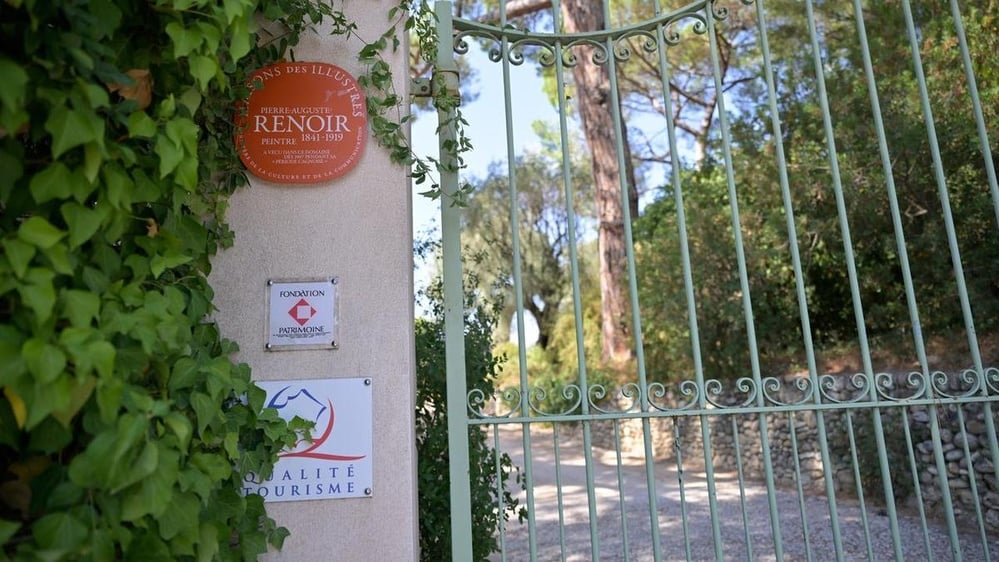
Auguste Renoir was a French impressionist who lived in Cagnes-sur-Mer during his final years; the Renoir Museum there holds 12 of his artworks.
Automated analysis; not human reviewed. Limitations: The supplied text mixes the main article with unrelated headline fragments, but sufficient substantive content remains to analyze the report.
The supplied text mixes the main article with unrelated headline fragments, but sufficient substantive content remains to analyze the report.
October 09, 2026 · 0 shares
Straightforward factual crime report relying on official statements with little sensationalism or overt framing.
The heist followed a string of high-profile robberies from European museums, including the theft of crown jewels from the Louvre in Paris last year.
Automated analysis; not human reviewed.
Limitations: The article text is a truncated aggregation that may omit some original reporting context and includes adjacent unrelated headlines, limiting framing analysis.
·
3 of 55 available dimensions scored; omitted dimensions are not treated as neutral.
·
Verified supporting quotes for 1 of 3 scored dimensions.
Claim: The report sticks to attributed factual developments with little subjective commentary.
“Two paintings by by Pierre-Auguste Renoir that were stolen from a museum in France last month have been found, authorities said on Friday.” · exact text match
Why: The core statements are attributed to authorities and news agencies, with no personal evaluation by the publisher.
Claim: The tone is restrained and factual rather than sensationalized.
“Authorities did not immediately respond to questions about how the paintings had been recovered.” · not found in supplied text
Why: The article avoids dramatic language and notes unanswered official questions rather than amplifying them.
Claim: There is minimal speculation; uncertainty about recovery methods is left unresolved.
“A a press conference had been scheduled for Thursday afternoon, but it was ultimately cancelled in order to not interfere with the investigation.” · not found in supplied text
Why: The report states what is known and declines to fill gaps with forecasting or guesswork.
The article text is a truncated aggregation that may omit some original reporting context and includes adjacent unrelated headlines, limiting framing analysis.
October 09, 2026 · 0 shares
Straightforward, source-attributed crime reporting with no discernible ideological or sensational framing.
Pierre-Auguste Renoir was an Impressionist painter whose works have fetched tens of millions of dollars at auction.
Automated analysis; not human reviewed.
Limitations: The article is a short wire report relying on a mayor's statement and does not explain how the paintings were recovered or name the suspects.
·
54 of 55 available dimensions scored; omitted dimensions are not treated as neutral.
·
Verified supporting quotes for 4 of 54 scored dimensions.
Claim: The report sticks to attributable facts and refrains from subjective commentary.
“The Marseille public prosecutor's office did not immediately respond to questions about how the paintings had been recovered.” · exact text match
Why: Attribution and an explicit acknowledgment of unanswered questions signal an objective, non-subjective stance.
Claim: Coverage is measured and avoids sensational or emotive language.
“Two Renoir paintings worth millions of dollars that were stolen from a museum on the French Riviera a month ago have been recovered and six suspects have been arrested, the local mayor said on Friday.” · exact text match
Why: Plain factual phrasing without dramatic or lurid embellishment indicates low sensationalism.
Claim: The report is credible, with clear attribution to the mayor and acknowledgment of unanswered questions.
“the local mayor said on Friday” · exact text match
Why: Named attribution and disclosure of information gaps support high credibility.
Claim: The report is transparent about sourcing and unresolved details.
“The Marseille public prosecutor's office did not immediately respond to questions about how the paintings had been recovered.” · exact text match
Why: Openness about the limits of available information reflects fair, honest reporting practice.
The article is a short wire report relying on a mayor's statement and does not explain how the paintings were recovered or name the suspects.
October 09, 2026 · 0 shares
The report is a straight, attribution-based news account with no evident partisan framing.
Auguste Renoir was a French impressionist who lived in Cagnes-sur-Mer during his final years; the Renoir Museum there holds 12 of his artworks.
Automated analysis; not human reviewed. Limitations: The supplied text mixes the main article with unrelated headline fragments, but sufficient substantive content remains to analyze the report.
The supplied text mixes the main article with unrelated headline fragments, but sufficient substantive content remains to analyze the report.
October 09, 2026 · 0 shares
Straightforward wire-style crime report with neutral attribution and no evident publisher framing beyond an unexplained sidebar of unrelated regional headlines.
Automated analysis; not human reviewed.
Limitations: The supplied text mixes the Renoir article with unrelated aggregated headlines and site boilerplate, so framing analysis rests mainly on the core crime report.
·
14 of 55 available dimensions scored; omitted dimensions are not treated as neutral.
·
Verified supporting quotes for 1 of 14 scored dimensions.
Claim: The core report is factual and restrained, with no sensational language about the theft or recovery.
“Two paintings by French master Pierre-Auguste Renoir have been recovered a month after they were stolen from a museum in southern France, the town’s mayor said Friday.” · exact text match
Why: Plain declarative wire-style phrasing without emotive or dramatic embellishment supports mild objective framing.
The supplied text mixes the Renoir article with unrelated aggregated headlines and site boilerplate, so framing analysis rests mainly on the core crime report.
October 09, 2026 · 0 shares
Straightforward factual crime report relying on official statements with little sensationalism or overt framing.
The heist followed a string of high-profile robberies from European museums, including the theft of crown jewels from the Louvre in Paris last year.
Automated analysis; not human reviewed.
Limitations: The article text is a truncated aggregation that may omit some original reporting context and includes adjacent unrelated headlines, limiting framing analysis.
·
3 of 55 available dimensions scored; omitted dimensions are not treated as neutral.
·
Verified supporting quotes for 1 of 3 scored dimensions.
Claim: The report sticks to attributed factual developments with little subjective commentary.
“Two paintings by by Pierre-Auguste Renoir that were stolen from a museum in France last month have been found, authorities said on Friday.” · exact text match
Why: The core statements are attributed to authorities and news agencies, with no personal evaluation by the publisher.
Claim: The tone is restrained and factual rather than sensationalized.
“Authorities did not immediately respond to questions about how the paintings had been recovered.” · not found in supplied text
Why: The article avoids dramatic language and notes unanswered official questions rather than amplifying them.
Claim: There is minimal speculation; uncertainty about recovery methods is left unresolved.
“A a press conference had been scheduled for Thursday afternoon, but it was ultimately cancelled in order to not interfere with the investigation.” · not found in supplied text
Why: The report states what is known and declines to fill gaps with forecasting or guesswork.
The article text is a truncated aggregation that may omit some original reporting context and includes adjacent unrelated headlines, limiting framing analysis.
October 09, 2026 · 0 shares
The report stays largely descriptive and attribution-bound, relying on official statements while noting the absence of immediate comment from prosecutors and police.
The theft occurred last month in Cagnes-sur-Mer and prompted a national search; it revived calls for better security and funding for French cultural sites, evoking the earlier Louvre crown jewels heist.
Automated analysis; not human reviewed.
Limitations: The article text includes duplicated fragments and an unclosed bracket; scoring uses only the substantive reporting content.
·
55 of 55 available dimensions scored; omitted dimensions are not treated as neutral.
·
Verified supporting quotes for 10 of 55 scored dimensions.
Claim: The account is stated as reported facts attributed to authorities rather than the outlet's subjective interpretation.
“local authorities said Friday” · exact text match
Why: The main claim is directly attributed to local authorities.
Claim: The writing avoids sensational language despite the heist subject matter.
“The whole operation took less than three minutes an d targeted the most valuable works in the Renoir Museum in the town of Cagnes-sur-Mer, the regional prosecutor’s office said.” · exact text match
Why: The dramatic detail is reported in a measured, attributed manner.
Claim: The report describes events rather than prescribing policy remedies.
“The theft conjured up painful memories of the spectacular heist of crown jewels at the Louvre Museum in Paris last year and revived calls for better security and better funding for the many cultural sites large and small that dot France’s landscape.” · exact text match
Why: Calls for better security are reported as others' responses, not the outlet's prescription.
Claim: Key facts are sourced to local authorities, the mayor, and the regional prosecutor's office.
“the regional prosecutor’s office said” · exact text match
Why: The report leans on official sources for its factual claims.
Claim: The article notes where official comment was unavailable and that a news conference was scheduled.
“The mayor announced a news conference for later Friday.” · exact text match
Why: It indicates ongoing response activity and gaps in immediate comment.
Claim: The report attributes claims to authorities, notes non-response, and avoids unsupported conclusions.
“local authorities said Friday” · exact text match
Why: Clear attribution and uncertainty disclosure support credibility.
Claim: The report relies on official statements and notes that authorities did not explain how the paintings were tracked down.
“The statement did not elaborate on how they did so.” · exact text match
Why: It avoids inferring investigative methods not supported by the supplied sources.
Claim: The text has some repetitive fragments and minor typos consistent with low-level AI or automated generation indicators.
“an d targeted” · exact text match
Why: A minor spacing error and duplicated fragments are weak independent indicators.
Claim: The article discloses non-response from authorities and does not overstate what is known.
“The regional prosecutor's office and police did not immediately respond to requests for comment.” · exact text match
Why: Acknowledging the lack of comment signals fairness and transparency.
Claim: The account stays grounded in reported facts and avoids conspiratorial or fantastical framing.
“Investigators launched a national search for the perpetrators.” · exact text match
Why: It describes a real police investigation without speculative conspiracy claims.
The article text includes duplicated fragments and an unclosed bracket; scoring uses only the substantive reporting content.
October 09, 2026 · 0 shares
Straightforward wire-style crime report with neutral attribution and no evident publisher framing beyond an unexplained sidebar of unrelated regional headlines.
Automated analysis; not human reviewed.
Limitations: The supplied text mixes the Renoir article with unrelated aggregated headlines and site boilerplate, so framing analysis rests mainly on the core crime report.
·
14 of 55 available dimensions scored; omitted dimensions are not treated as neutral.
·
Verified supporting quotes for 1 of 14 scored dimensions.
Claim: The core report is factual and restrained, with no sensational language about the theft or recovery.
“Two paintings by French master Pierre-Auguste Renoir have been recovered a month after they were stolen from a museum in southern France, the town’s mayor said Friday.” · exact text match
Why: Plain declarative wire-style phrasing without emotive or dramatic embellishment supports mild objective framing.
The supplied text mixes the Renoir article with unrelated aggregated headlines and site boilerplate, so framing analysis rests mainly on the core crime report.
October 09, 2026 · 0 shares
The report relies on official statements and attributed facts with little independent verification or framing.
A heist occurred at the Renoir Museum in Cagnes-sur-Mer, France, last month; a Louvre crown jewels heist had taken place the previous year.
Automated analysis; not human reviewed.
Limitations: The article text includes CBC accessibility boilerplate that was excluded from analysis; limited sourcing from a single official statement.
·
55 of 55 available dimensions scored; omitted dimensions are not treated as neutral.
·
Verified supporting quotes for 2 of 55 scored dimensions.
Claim: The article reports the heist recovery in a restrained, factual manner without sensational language.
“Two Renoir paintings stolen from a museum in southern France last month have been found, and six people arrested, local authorities said Friday.” · exact text match
Why: Neutral attribution and lack of emotive adjectives indicate low sensationalism.
The article text includes CBC accessibility boilerplate that was excluded from analysis; limited sourcing from a single official statement.
October 09, 2026 · 0 shares
The report is a straight, attribution-based news account with no evident partisan framing.
Auguste Renoir was a French impressionist who lived in Cagnes-sur-Mer during his final years; the Renoir Museum there holds 12 of his artworks.
Automated analysis; not human reviewed. Limitations: The supplied text mixes the main article with unrelated headline fragments, but sufficient substantive content remains to analyze the report.
The supplied text mixes the main article with unrelated headline fragments, but sufficient substantive content remains to analyze the report.
October 09, 2026 · 0 shares
Straightforward factual crime report relying on official statements with little sensationalism or overt framing.
The heist followed a string of high-profile robberies from European museums, including the theft of crown jewels from the Louvre in Paris last year.
Automated analysis; not human reviewed. Limitations: The article text is a truncated aggregation that may omit some original reporting context and includes adjacent unrelated headlines, limiting framing analysis. · 3 of 55 available dimensions scored; omitted dimensions are not treated as neutral. · Verified supporting quotes for 1 of 3 scored dimensions.
Claim: The report sticks to attributed factual developments with little subjective commentary.
“Two paintings by by Pierre-Auguste Renoir that were stolen from a museum in France last month have been found, authorities said on Friday.” · exact text match
Why: The core statements are attributed to authorities and news agencies, with no personal evaluation by the publisher.
Claim: The tone is restrained and factual rather than sensationalized.
“Authorities did not immediately respond to questions about how the paintings had been recovered.” · not found in supplied text
Why: The article avoids dramatic language and notes unanswered official questions rather than amplifying them.
Claim: There is minimal speculation; uncertainty about recovery methods is left unresolved.
“A a press conference had been scheduled for Thursday afternoon, but it was ultimately cancelled in order to not interfere with the investigation.” · not found in supplied text
Why: The report states what is known and declines to fill gaps with forecasting or guesswork.
The article text is a truncated aggregation that may omit some original reporting context and includes adjacent unrelated headlines, limiting framing analysis.
October 09, 2026 · 0 shares
Straightforward, source-attributed crime reporting with no discernible ideological or sensational framing.
Pierre-Auguste Renoir was an Impressionist painter whose works have fetched tens of millions of dollars at auction.
Automated analysis; not human reviewed. Limitations: The article is a short wire report relying on a mayor's statement and does not explain how the paintings were recovered or name the suspects. · 54 of 55 available dimensions scored; omitted dimensions are not treated as neutral. · Verified supporting quotes for 4 of 54 scored dimensions.
Claim: The report sticks to attributable facts and refrains from subjective commentary.
“The Marseille public prosecutor's office did not immediately respond to questions about how the paintings had been recovered.” · exact text match
Why: Attribution and an explicit acknowledgment of unanswered questions signal an objective, non-subjective stance.
Claim: Coverage is measured and avoids sensational or emotive language.
“Two Renoir paintings worth millions of dollars that were stolen from a museum on the French Riviera a month ago have been recovered and six suspects have been arrested, the local mayor said on Friday.” · exact text match
Why: Plain factual phrasing without dramatic or lurid embellishment indicates low sensationalism.
Claim: The report is credible, with clear attribution to the mayor and acknowledgment of unanswered questions.
“the local mayor said on Friday” · exact text match
Why: Named attribution and disclosure of information gaps support high credibility.
Claim: The report is transparent about sourcing and unresolved details.
“The Marseille public prosecutor's office did not immediately respond to questions about how the paintings had been recovered.” · exact text match
Why: Openness about the limits of available information reflects fair, honest reporting practice.
The article is a short wire report relying on a mayor's statement and does not explain how the paintings were recovered or name the suspects.
October 09, 2026 · 0 shares
Straightforward wire-style crime report with neutral attribution and no evident publisher framing beyond an unexplained sidebar of unrelated regional headlines.
Automated analysis; not human reviewed. Limitations: The supplied text mixes the Renoir article with unrelated aggregated headlines and site boilerplate, so framing analysis rests mainly on the core crime report. · 14 of 55 available dimensions scored; omitted dimensions are not treated as neutral. · Verified supporting quotes for 1 of 14 scored dimensions.
Claim: The core report is factual and restrained, with no sensational language about the theft or recovery.
“Two paintings by French master Pierre-Auguste Renoir have been recovered a month after they were stolen from a museum in southern France, the town’s mayor said Friday.” · exact text match
Why: Plain declarative wire-style phrasing without emotive or dramatic embellishment supports mild objective framing.
The supplied text mixes the Renoir article with unrelated aggregated headlines and site boilerplate, so framing analysis rests mainly on the core crime report.
October 09, 2026 · 0 shares
The report is a straight, attribution-based news account with no evident partisan framing.
Auguste Renoir was a French impressionist who lived in Cagnes-sur-Mer during his final years; the Renoir Museum there holds 12 of his artworks.
Automated analysis; not human reviewed. Limitations: The supplied text mixes the main article with unrelated headline fragments, but sufficient substantive content remains to analyze the report.
The supplied text mixes the main article with unrelated headline fragments, but sufficient substantive content remains to analyze the report.
French Law Enforcement/Official
October 09, 2026 · 0 shares
The report maintains a neutral, attribution-based tone with no discernible ideological framing, relying on official statements without editorializing.
The Renoir Museum is located in Cagnes-sur-Mer, France. The September heist involved four stolen paintings, two of which were abandoned. A prior 2025 Louvre crown jewel heist had prompted calls for improved cultural site security.
Automated analysis; not human reviewed. Limitations: The article text contains some duplicate headline fragments and lacks named author or detailed sourcing beyond official statements, but the core reporting is clear and neutral. · 55 of 55 available dimensions scored; omitted dimensions are not treated as neutral. · Verified supporting quotes for 0 of 55 scored dimensions.
The article text contains some duplicate headline fragments and lacks named author or detailed sourcing beyond official statements, but the core reporting is clear and neutral.
October 09, 2026 · 0 shares
The report stays largely descriptive and attribution-bound, relying on official statements while noting the absence of immediate comment from prosecutors and police.
The theft occurred last month in Cagnes-sur-Mer and prompted a national search; it revived calls for better security and funding for French cultural sites, evoking the earlier Louvre crown jewels heist.
Automated analysis; not human reviewed. Limitations: The article text includes duplicated fragments and an unclosed bracket; scoring uses only the substantive reporting content. · 55 of 55 available dimensions scored; omitted dimensions are not treated as neutral. · Verified supporting quotes for 10 of 55 scored dimensions.
Claim: The account is stated as reported facts attributed to authorities rather than the outlet's subjective interpretation.
“local authorities said Friday” · exact text match
Why: The main claim is directly attributed to local authorities.
Claim: The writing avoids sensational language despite the heist subject matter.
“The whole operation took less than three minutes an d targeted the most valuable works in the Renoir Museum in the town of Cagnes-sur-Mer, the regional prosecutor’s office said.” · exact text match
Why: The dramatic detail is reported in a measured, attributed manner.
Claim: The report describes events rather than prescribing policy remedies.
“The theft conjured up painful memories of the spectacular heist of crown jewels at the Louvre Museum in Paris last year and revived calls for better security and better funding for the many cultural sites large and small that dot France’s landscape.” · exact text match
Why: Calls for better security are reported as others' responses, not the outlet's prescription.
Claim: Key facts are sourced to local authorities, the mayor, and the regional prosecutor's office.
“the regional prosecutor’s office said” · exact text match
Why: The report leans on official sources for its factual claims.
Claim: The article notes where official comment was unavailable and that a news conference was scheduled.
“The mayor announced a news conference for later Friday.” · exact text match
Why: It indicates ongoing response activity and gaps in immediate comment.
Claim: The report attributes claims to authorities, notes non-response, and avoids unsupported conclusions.
“local authorities said Friday” · exact text match
Why: Clear attribution and uncertainty disclosure support credibility.
Claim: The report relies on official statements and notes that authorities did not explain how the paintings were tracked down.
“The statement did not elaborate on how they did so.” · exact text match
Why: It avoids inferring investigative methods not supported by the supplied sources.
Claim: The text has some repetitive fragments and minor typos consistent with low-level AI or automated generation indicators.
“an d targeted” · exact text match
Why: A minor spacing error and duplicated fragments are weak independent indicators.
Claim: The article discloses non-response from authorities and does not overstate what is known.
“The regional prosecutor's office and police did not immediately respond to requests for comment.” · exact text match
Why: Acknowledging the lack of comment signals fairness and transparency.
Claim: The account stays grounded in reported facts and avoids conspiratorial or fantastical framing.
“Investigators launched a national search for the perpetrators.” · exact text match
Why: It describes a real police investigation without speculative conspiracy claims.
The article text includes duplicated fragments and an unclosed bracket; scoring uses only the substantive reporting content.
October 09, 2026 · 0 shares
Straightforward factual crime report relying on official statements with little sensationalism or overt framing.
The heist followed a string of high-profile robberies from European museums, including the theft of crown jewels from the Louvre in Paris last year.
Automated analysis; not human reviewed. Limitations: The article text is a truncated aggregation that may omit some original reporting context and includes adjacent unrelated headlines, limiting framing analysis. · 3 of 55 available dimensions scored; omitted dimensions are not treated as neutral. · Verified supporting quotes for 1 of 3 scored dimensions.
Claim: The report sticks to attributed factual developments with little subjective commentary.
“Two paintings by by Pierre-Auguste Renoir that were stolen from a museum in France last month have been found, authorities said on Friday.” · exact text match
Why: The core statements are attributed to authorities and news agencies, with no personal evaluation by the publisher.
Claim: The tone is restrained and factual rather than sensationalized.
“Authorities did not immediately respond to questions about how the paintings had been recovered.” · not found in supplied text
Why: The article avoids dramatic language and notes unanswered official questions rather than amplifying them.
Claim: There is minimal speculation; uncertainty about recovery methods is left unresolved.
“A a press conference had been scheduled for Thursday afternoon, but it was ultimately cancelled in order to not interfere with the investigation.” · not found in supplied text
Why: The report states what is known and declines to fill gaps with forecasting or guesswork.
The article text is a truncated aggregation that may omit some original reporting context and includes adjacent unrelated headlines, limiting framing analysis.
October 09, 2026 · 0 shares
Straightforward wire-style crime report with neutral attribution and no evident publisher framing beyond an unexplained sidebar of unrelated regional headlines.
Automated analysis; not human reviewed. Limitations: The supplied text mixes the Renoir article with unrelated aggregated headlines and site boilerplate, so framing analysis rests mainly on the core crime report. · 14 of 55 available dimensions scored; omitted dimensions are not treated as neutral. · Verified supporting quotes for 1 of 14 scored dimensions.
Claim: The core report is factual and restrained, with no sensational language about the theft or recovery.
“Two paintings by French master Pierre-Auguste Renoir have been recovered a month after they were stolen from a museum in southern France, the town’s mayor said Friday.” · exact text match
Why: Plain declarative wire-style phrasing without emotive or dramatic embellishment supports mild objective framing.
The supplied text mixes the Renoir article with unrelated aggregated headlines and site boilerplate, so framing analysis rests mainly on the core crime report.
October 09, 2026 · 0 shares
The report relies on official statements and attributed facts with little independent verification or framing.
A heist occurred at the Renoir Museum in Cagnes-sur-Mer, France, last month; a Louvre crown jewels heist had taken place the previous year.
Automated analysis; not human reviewed. Limitations: The article text includes CBC accessibility boilerplate that was excluded from analysis; limited sourcing from a single official statement. · 55 of 55 available dimensions scored; omitted dimensions are not treated as neutral. · Verified supporting quotes for 2 of 55 scored dimensions.
Claim: The article reports the heist recovery in a restrained, factual manner without sensational language.
“Two Renoir paintings stolen from a museum in southern France last month have been found, and six people arrested, local authorities said Friday.” · exact text match
Why: Neutral attribution and lack of emotive adjectives indicate low sensationalism.
The article text includes CBC accessibility boilerplate that was excluded from analysis; limited sourcing from a single official statement.
Museum Security/Cultural Sector Reform
October 09, 2026 · 0 shares
Straightforward wire-style crime report with neutral attribution and no evident publisher framing beyond an unexplained sidebar of unrelated regional headlines.
Automated analysis; not human reviewed. Limitations: The supplied text mixes the Renoir article with unrelated aggregated headlines and site boilerplate, so framing analysis rests mainly on the core crime report. · 14 of 55 available dimensions scored; omitted dimensions are not treated as neutral. · Verified supporting quotes for 1 of 14 scored dimensions.
Claim: The core report is factual and restrained, with no sensational language about the theft or recovery.
“Two paintings by French master Pierre-Auguste Renoir have been recovered a month after they were stolen from a museum in southern France, the town’s mayor said Friday.” · exact text match
Why: Plain declarative wire-style phrasing without emotive or dramatic embellishment supports mild objective framing.
The supplied text mixes the Renoir article with unrelated aggregated headlines and site boilerplate, so framing analysis rests mainly on the core crime report.
October 09, 2026 · 0 shares
The report relies on official statements and attributed facts with little independent verification or framing.
A heist occurred at the Renoir Museum in Cagnes-sur-Mer, France, last month; a Louvre crown jewels heist had taken place the previous year.
Automated analysis; not human reviewed. Limitations: The article text includes CBC accessibility boilerplate that was excluded from analysis; limited sourcing from a single official statement. · 55 of 55 available dimensions scored; omitted dimensions are not treated as neutral. · Verified supporting quotes for 2 of 55 scored dimensions.
Claim: The article reports the heist recovery in a restrained, factual manner without sensational language.
“Two Renoir paintings stolen from a museum in southern France last month have been found, and six people arrested, local authorities said Friday.” · exact text match
Why: Neutral attribution and lack of emotive adjectives indicate low sensationalism.
The article text includes CBC accessibility boilerplate that was excluded from analysis; limited sourcing from a single official statement.
October 09, 2026 · 0 shares
The report stays largely descriptive and attribution-bound, relying on official statements while noting the absence of immediate comment from prosecutors and police.
The theft occurred last month in Cagnes-sur-Mer and prompted a national search; it revived calls for better security and funding for French cultural sites, evoking the earlier Louvre crown jewels heist.
Automated analysis; not human reviewed. Limitations: The article text includes duplicated fragments and an unclosed bracket; scoring uses only the substantive reporting content. · 55 of 55 available dimensions scored; omitted dimensions are not treated as neutral. · Verified supporting quotes for 10 of 55 scored dimensions.
Claim: The account is stated as reported facts attributed to authorities rather than the outlet's subjective interpretation.
“local authorities said Friday” · exact text match
Why: The main claim is directly attributed to local authorities.
Claim: The writing avoids sensational language despite the heist subject matter.
“The whole operation took less than three minutes an d targeted the most valuable works in the Renoir Museum in the town of Cagnes-sur-Mer, the regional prosecutor’s office said.” · exact text match
Why: The dramatic detail is reported in a measured, attributed manner.
Claim: The report describes events rather than prescribing policy remedies.
“The theft conjured up painful memories of the spectacular heist of crown jewels at the Louvre Museum in Paris last year and revived calls for better security and better funding for the many cultural sites large and small that dot France’s landscape.” · exact text match
Why: Calls for better security are reported as others' responses, not the outlet's prescription.
Claim: Key facts are sourced to local authorities, the mayor, and the regional prosecutor's office.
“the regional prosecutor’s office said” · exact text match
Why: The report leans on official sources for its factual claims.
Claim: The article notes where official comment was unavailable and that a news conference was scheduled.
“The mayor announced a news conference for later Friday.” · exact text match
Why: It indicates ongoing response activity and gaps in immediate comment.
Claim: The report attributes claims to authorities, notes non-response, and avoids unsupported conclusions.
“local authorities said Friday” · exact text match
Why: Clear attribution and uncertainty disclosure support credibility.
Claim: The report relies on official statements and notes that authorities did not explain how the paintings were tracked down.
“The statement did not elaborate on how they did so.” · exact text match
Why: It avoids inferring investigative methods not supported by the supplied sources.
Claim: The text has some repetitive fragments and minor typos consistent with low-level AI or automated generation indicators.
“an d targeted” · exact text match
Why: A minor spacing error and duplicated fragments are weak independent indicators.
Claim: The article discloses non-response from authorities and does not overstate what is known.
“The regional prosecutor's office and police did not immediately respond to requests for comment.” · exact text match
Why: Acknowledging the lack of comment signals fairness and transparency.
Claim: The account stays grounded in reported facts and avoids conspiratorial or fantastical framing.
“Investigators launched a national search for the perpetrators.” · exact text match
Why: It describes a real police investigation without speculative conspiracy claims.
The article text includes duplicated fragments and an unclosed bracket; scoring uses only the substantive reporting content.
October 09, 2026 · 0 shares
Straightforward factual crime report relying on official statements with little sensationalism or overt framing.
The heist followed a string of high-profile robberies from European museums, including the theft of crown jewels from the Louvre in Paris last year.
Automated analysis; not human reviewed. Limitations: The article text is a truncated aggregation that may omit some original reporting context and includes adjacent unrelated headlines, limiting framing analysis. · 3 of 55 available dimensions scored; omitted dimensions are not treated as neutral. · Verified supporting quotes for 1 of 3 scored dimensions.
Claim: The report sticks to attributed factual developments with little subjective commentary.
“Two paintings by by Pierre-Auguste Renoir that were stolen from a museum in France last month have been found, authorities said on Friday.” · exact text match
Why: The core statements are attributed to authorities and news agencies, with no personal evaluation by the publisher.
Claim: The tone is restrained and factual rather than sensationalized.
“Authorities did not immediately respond to questions about how the paintings had been recovered.” · not found in supplied text
Why: The article avoids dramatic language and notes unanswered official questions rather than amplifying them.
Claim: There is minimal speculation; uncertainty about recovery methods is left unresolved.
“A a press conference had been scheduled for Thursday afternoon, but it was ultimately cancelled in order to not interfere with the investigation.” · not found in supplied text
Why: The report states what is known and declines to fill gaps with forecasting or guesswork.
The article text is a truncated aggregation that may omit some original reporting context and includes adjacent unrelated headlines, limiting framing analysis.
Art Market/Criminology Skeptic
October 09, 2026 · 0 shares
Straightforward factual crime report relying on official statements with little sensationalism or overt framing.
The heist followed a string of high-profile robberies from European museums, including the theft of crown jewels from the Louvre in Paris last year.
Automated analysis; not human reviewed. Limitations: The article text is a truncated aggregation that may omit some original reporting context and includes adjacent unrelated headlines, limiting framing analysis. · 3 of 55 available dimensions scored; omitted dimensions are not treated as neutral. · Verified supporting quotes for 1 of 3 scored dimensions.
Claim: The report sticks to attributed factual developments with little subjective commentary.
“Two paintings by by Pierre-Auguste Renoir that were stolen from a museum in France last month have been found, authorities said on Friday.” · exact text match
Why: The core statements are attributed to authorities and news agencies, with no personal evaluation by the publisher.
Claim: The tone is restrained and factual rather than sensationalized.
“Authorities did not immediately respond to questions about how the paintings had been recovered.” · not found in supplied text
Why: The article avoids dramatic language and notes unanswered official questions rather than amplifying them.
Claim: There is minimal speculation; uncertainty about recovery methods is left unresolved.
“A a press conference had been scheduled for Thursday afternoon, but it was ultimately cancelled in order to not interfere with the investigation.” · not found in supplied text
Why: The report states what is known and declines to fill gaps with forecasting or guesswork.
The article text is a truncated aggregation that may omit some original reporting context and includes adjacent unrelated headlines, limiting framing analysis.
October 09, 2026 · 0 shares
Straightforward wire-style crime report with neutral attribution and no evident publisher framing beyond an unexplained sidebar of unrelated regional headlines.
Automated analysis; not human reviewed. Limitations: The supplied text mixes the Renoir article with unrelated aggregated headlines and site boilerplate, so framing analysis rests mainly on the core crime report. · 14 of 55 available dimensions scored; omitted dimensions are not treated as neutral. · Verified supporting quotes for 1 of 14 scored dimensions.
Claim: The core report is factual and restrained, with no sensational language about the theft or recovery.
“Two paintings by French master Pierre-Auguste Renoir have been recovered a month after they were stolen from a museum in southern France, the town’s mayor said Friday.” · exact text match
Why: Plain declarative wire-style phrasing without emotive or dramatic embellishment supports mild objective framing.
The supplied text mixes the Renoir article with unrelated aggregated headlines and site boilerplate, so framing analysis rests mainly on the core crime report.
October 09, 2026 · 0 shares
The report maintains a neutral, attribution-based tone with no discernible ideological framing, relying on official statements without editorializing.
The Renoir Museum is located in Cagnes-sur-Mer, France. The September heist involved four stolen paintings, two of which were abandoned. A prior 2025 Louvre crown jewel heist had prompted calls for improved cultural site security.
Automated analysis; not human reviewed. Limitations: The article text contains some duplicate headline fragments and lacks named author or detailed sourcing beyond official statements, but the core reporting is clear and neutral. · 55 of 55 available dimensions scored; omitted dimensions are not treated as neutral. · Verified supporting quotes for 0 of 55 scored dimensions.
The article text contains some duplicate headline fragments and lacks named author or detailed sourcing beyond official statements, but the core reporting is clear and neutral.
Helium Bias
Story Blindspots
October 09, 2026 · 0 shares
Straightforward factual crime report relying on official statements with little sensationalism or overt framing.
The heist followed a string of high-profile robberies from European museums, including the theft of crown jewels from the Louvre in Paris last year.
Automated analysis; not human reviewed. Limitations: The article text is a truncated aggregation that may omit some original reporting context and includes adjacent unrelated headlines, limiting framing analysis. · 3 of 55 available dimensions scored; omitted dimensions are not treated as neutral. · Verified supporting quotes for 1 of 3 scored dimensions.
Claim: The report sticks to attributed factual developments with little subjective commentary.
“Two paintings by by Pierre-Auguste Renoir that were stolen from a museum in France last month have been found, authorities said on Friday.” · exact text match
Why: The core statements are attributed to authorities and news agencies, with no personal evaluation by the publisher.
Claim: The tone is restrained and factual rather than sensationalized.
“Authorities did not immediately respond to questions about how the paintings had been recovered.” · not found in supplied text
Why: The article avoids dramatic language and notes unanswered official questions rather than amplifying them.
Claim: There is minimal speculation; uncertainty about recovery methods is left unresolved.
“A a press conference had been scheduled for Thursday afternoon, but it was ultimately cancelled in order to not interfere with the investigation.” · not found in supplied text
Why: The report states what is known and declines to fill gaps with forecasting or guesswork.
The article text is a truncated aggregation that may omit some original reporting context and includes adjacent unrelated headlines, limiting framing analysis.
October 09, 2026 · 0 shares
The report stays largely descriptive and attribution-bound, relying on official statements while noting the absence of immediate comment from prosecutors and police.
The theft occurred last month in Cagnes-sur-Mer and prompted a national search; it revived calls for better security and funding for French cultural sites, evoking the earlier Louvre crown jewels heist.
Automated analysis; not human reviewed. Limitations: The article text includes duplicated fragments and an unclosed bracket; scoring uses only the substantive reporting content. · 55 of 55 available dimensions scored; omitted dimensions are not treated as neutral. · Verified supporting quotes for 10 of 55 scored dimensions.
Claim: The account is stated as reported facts attributed to authorities rather than the outlet's subjective interpretation.
“local authorities said Friday” · exact text match
Why: The main claim is directly attributed to local authorities.
Claim: The writing avoids sensational language despite the heist subject matter.
“The whole operation took less than three minutes an d targeted the most valuable works in the Renoir Museum in the town of Cagnes-sur-Mer, the regional prosecutor’s office said.” · exact text match
Why: The dramatic detail is reported in a measured, attributed manner.
Claim: The report describes events rather than prescribing policy remedies.
“The theft conjured up painful memories of the spectacular heist of crown jewels at the Louvre Museum in Paris last year and revived calls for better security and better funding for the many cultural sites large and small that dot France’s landscape.” · exact text match
Why: Calls for better security are reported as others' responses, not the outlet's prescription.
Claim: Key facts are sourced to local authorities, the mayor, and the regional prosecutor's office.
“the regional prosecutor’s office said” · exact text match
Why: The report leans on official sources for its factual claims.
Claim: The article notes where official comment was unavailable and that a news conference was scheduled.
“The mayor announced a news conference for later Friday.” · exact text match
Why: It indicates ongoing response activity and gaps in immediate comment.
Claim: The report attributes claims to authorities, notes non-response, and avoids unsupported conclusions.
“local authorities said Friday” · exact text match
Why: Clear attribution and uncertainty disclosure support credibility.
Claim: The report relies on official statements and notes that authorities did not explain how the paintings were tracked down.
“The statement did not elaborate on how they did so.” · exact text match
Why: It avoids inferring investigative methods not supported by the supplied sources.
Claim: The text has some repetitive fragments and minor typos consistent with low-level AI or automated generation indicators.
“an d targeted” · exact text match
Why: A minor spacing error and duplicated fragments are weak independent indicators.
Claim: The article discloses non-response from authorities and does not overstate what is known.
“The regional prosecutor's office and police did not immediately respond to requests for comment.” · exact text match
Why: Acknowledging the lack of comment signals fairness and transparency.
Claim: The account stays grounded in reported facts and avoids conspiratorial or fantastical framing.
“Investigators launched a national search for the perpetrators.” · exact text match
Why: It describes a real police investigation without speculative conspiracy claims.
The article text includes duplicated fragments and an unclosed bracket; scoring uses only the substantive reporting content.
October 09, 2026 · 0 shares
Straightforward factual crime report relying on official statements with little sensationalism or overt framing.
The heist followed a string of high-profile robberies from European museums, including the theft of crown jewels from the Louvre in Paris last year.
Automated analysis; not human reviewed. Limitations: The article text is a truncated aggregation that may omit some original reporting context and includes adjacent unrelated headlines, limiting framing analysis. · 3 of 55 available dimensions scored; omitted dimensions are not treated as neutral. · Verified supporting quotes for 1 of 3 scored dimensions.
Claim: The report sticks to attributed factual developments with little subjective commentary.
“Two paintings by by Pierre-Auguste Renoir that were stolen from a museum in France last month have been found, authorities said on Friday.” · exact text match
Why: The core statements are attributed to authorities and news agencies, with no personal evaluation by the publisher.
Claim: The tone is restrained and factual rather than sensationalized.
“Authorities did not immediately respond to questions about how the paintings had been recovered.” · not found in supplied text
Why: The article avoids dramatic language and notes unanswered official questions rather than amplifying them.
Claim: There is minimal speculation; uncertainty about recovery methods is left unresolved.
“A a press conference had been scheduled for Thursday afternoon, but it was ultimately cancelled in order to not interfere with the investigation.” · not found in supplied text
Why: The report states what is known and declines to fill gaps with forecasting or guesswork.
The article text is a truncated aggregation that may omit some original reporting context and includes adjacent unrelated headlines, limiting framing analysis.
October 09, 2026 · 0 shares
Straightforward wire-style crime report with neutral attribution and no evident publisher framing beyond an unexplained sidebar of unrelated regional headlines.
Automated analysis; not human reviewed. Limitations: The supplied text mixes the Renoir article with unrelated aggregated headlines and site boilerplate, so framing analysis rests mainly on the core crime report. · 14 of 55 available dimensions scored; omitted dimensions are not treated as neutral. · Verified supporting quotes for 1 of 14 scored dimensions.
Claim: The core report is factual and restrained, with no sensational language about the theft or recovery.
“Two paintings by French master Pierre-Auguste Renoir have been recovered a month after they were stolen from a museum in southern France, the town’s mayor said Friday.” · exact text match
Why: Plain declarative wire-style phrasing without emotive or dramatic embellishment supports mild objective framing.
The supplied text mixes the Renoir article with unrelated aggregated headlines and site boilerplate, so framing analysis rests mainly on the core crime report.
October 09, 2026 · 0 shares
Straightforward factual crime report relying on official statements with little sensationalism or overt framing.
The heist followed a string of high-profile robberies from European museums, including the theft of crown jewels from the Louvre in Paris last year.
Automated analysis; not human reviewed. Limitations: The article text is a truncated aggregation that may omit some original reporting context and includes adjacent unrelated headlines, limiting framing analysis. · 3 of 55 available dimensions scored; omitted dimensions are not treated as neutral. · Verified supporting quotes for 1 of 3 scored dimensions.
Claim: The report sticks to attributed factual developments with little subjective commentary.
“Two paintings by by Pierre-Auguste Renoir that were stolen from a museum in France last month have been found, authorities said on Friday.” · exact text match
Why: The core statements are attributed to authorities and news agencies, with no personal evaluation by the publisher.
Claim: The tone is restrained and factual rather than sensationalized.
“Authorities did not immediately respond to questions about how the paintings had been recovered.” · not found in supplied text
Why: The article avoids dramatic language and notes unanswered official questions rather than amplifying them.
Claim: There is minimal speculation; uncertainty about recovery methods is left unresolved.
“A a press conference had been scheduled for Thursday afternoon, but it was ultimately cancelled in order to not interfere with the investigation.” · not found in supplied text
Why: The report states what is known and declines to fill gaps with forecasting or guesswork.
The article text is a truncated aggregation that may omit some original reporting context and includes adjacent unrelated headlines, limiting framing analysis.
October 09, 2026 · 0 shares
Straightforward, source-attributed crime reporting with no discernible ideological or sensational framing.
Pierre-Auguste Renoir was an Impressionist painter whose works have fetched tens of millions of dollars at auction.
Automated analysis; not human reviewed. Limitations: The article is a short wire report relying on a mayor's statement and does not explain how the paintings were recovered or name the suspects. · 54 of 55 available dimensions scored; omitted dimensions are not treated as neutral. · Verified supporting quotes for 4 of 54 scored dimensions.
Claim: The report sticks to attributable facts and refrains from subjective commentary.
“The Marseille public prosecutor's office did not immediately respond to questions about how the paintings had been recovered.” · exact text match
Why: Attribution and an explicit acknowledgment of unanswered questions signal an objective, non-subjective stance.
Claim: Coverage is measured and avoids sensational or emotive language.
“Two Renoir paintings worth millions of dollars that were stolen from a museum on the French Riviera a month ago have been recovered and six suspects have been arrested, the local mayor said on Friday.” · exact text match
Why: Plain factual phrasing without dramatic or lurid embellishment indicates low sensationalism.
Claim: The report is credible, with clear attribution to the mayor and acknowledgment of unanswered questions.
“the local mayor said on Friday” · exact text match
Why: Named attribution and disclosure of information gaps support high credibility.
Claim: The report is transparent about sourcing and unresolved details.
“The Marseille public prosecutor's office did not immediately respond to questions about how the paintings had been recovered.” · exact text match
Why: Openness about the limits of available information reflects fair, honest reporting practice.
The article is a short wire report relying on a mayor's statement and does not explain how the paintings were recovered or name the suspects.
October 09, 2026 · 0 shares
The report is a straight, attribution-based news account with no evident partisan framing.
Auguste Renoir was a French impressionist who lived in Cagnes-sur-Mer during his final years; the Renoir Museum there holds 12 of his artworks.
Automated analysis; not human reviewed. Limitations: The supplied text mixes the main article with unrelated headline fragments, but sufficient substantive content remains to analyze the report.
The supplied text mixes the main article with unrelated headline fragments, but sufficient substantive content remains to analyze the report.
October 09, 2026 · 0 shares
Straightforward factual crime report relying on official statements with little sensationalism or overt framing.
The heist followed a string of high-profile robberies from European museums, including the theft of crown jewels from the Louvre in Paris last year.
Automated analysis; not human reviewed. Limitations: The article text is a truncated aggregation that may omit some original reporting context and includes adjacent unrelated headlines, limiting framing analysis. · 3 of 55 available dimensions scored; omitted dimensions are not treated as neutral. · Verified supporting quotes for 1 of 3 scored dimensions.
Claim: The report sticks to attributed factual developments with little subjective commentary.
“Two paintings by by Pierre-Auguste Renoir that were stolen from a museum in France last month have been found, authorities said on Friday.” · exact text match
Why: The core statements are attributed to authorities and news agencies, with no personal evaluation by the publisher.
Claim: The tone is restrained and factual rather than sensationalized.
“Authorities did not immediately respond to questions about how the paintings had been recovered.” · not found in supplied text
Why: The article avoids dramatic language and notes unanswered official questions rather than amplifying them.
Claim: There is minimal speculation; uncertainty about recovery methods is left unresolved.
“A a press conference had been scheduled for Thursday afternoon, but it was ultimately cancelled in order to not interfere with the investigation.” · not found in supplied text
Why: The report states what is known and declines to fill gaps with forecasting or guesswork.
The article text is a truncated aggregation that may omit some original reporting context and includes adjacent unrelated headlines, limiting framing analysis.
October 09, 2026 · 0 shares
Straightforward, source-attributed crime reporting with no discernible ideological or sensational framing.
Pierre-Auguste Renoir was an Impressionist painter whose works have fetched tens of millions of dollars at auction.
Automated analysis; not human reviewed. Limitations: The article is a short wire report relying on a mayor's statement and does not explain how the paintings were recovered or name the suspects. · 54 of 55 available dimensions scored; omitted dimensions are not treated as neutral. · Verified supporting quotes for 4 of 54 scored dimensions.
Claim: The report sticks to attributable facts and refrains from subjective commentary.
“The Marseille public prosecutor's office did not immediately respond to questions about how the paintings had been recovered.” · exact text match
Why: Attribution and an explicit acknowledgment of unanswered questions signal an objective, non-subjective stance.
Claim: Coverage is measured and avoids sensational or emotive language.
“Two Renoir paintings worth millions of dollars that were stolen from a museum on the French Riviera a month ago have been recovered and six suspects have been arrested, the local mayor said on Friday.” · exact text match
Why: Plain factual phrasing without dramatic or lurid embellishment indicates low sensationalism.
Claim: The report is credible, with clear attribution to the mayor and acknowledgment of unanswered questions.
“the local mayor said on Friday” · exact text match
Why: Named attribution and disclosure of information gaps support high credibility.
Claim: The report is transparent about sourcing and unresolved details.
“The Marseille public prosecutor's office did not immediately respond to questions about how the paintings had been recovered.” · exact text match
Why: Openness about the limits of available information reflects fair, honest reporting practice.
The article is a short wire report relying on a mayor's statement and does not explain how the paintings were recovered or name the suspects.
October 09, 2026 · 0 shares
The report maintains a neutral, attribution-based tone with no discernible ideological framing, relying on official statements without editorializing.
The Renoir Museum is located in Cagnes-sur-Mer, France. The September heist involved four stolen paintings, two of which were abandoned. A prior 2025 Louvre crown jewel heist had prompted calls for improved cultural site security.
Automated analysis; not human reviewed. Limitations: The article text contains some duplicate headline fragments and lacks named author or detailed sourcing beyond official statements, but the core reporting is clear and neutral. · 55 of 55 available dimensions scored; omitted dimensions are not treated as neutral. · Verified supporting quotes for 0 of 55 scored dimensions.
The article text contains some duplicate headline fragments and lacks named author or detailed sourcing beyond official statements, but the core reporting is clear and neutral.
October 09, 2026 · 0 shares
The report is a straight, attribution-based news account with no evident partisan framing.
Auguste Renoir was a French impressionist who lived in Cagnes-sur-Mer during his final years; the Renoir Museum there holds 12 of his artworks.
Automated analysis; not human reviewed. Limitations: The supplied text mixes the main article with unrelated headline fragments, but sufficient substantive content remains to analyze the report.
The supplied text mixes the main article with unrelated headline fragments, but sufficient substantive content remains to analyze the report.
The report is a brief, neutral attribution of a theft recovery and arrests to local authorities, with no discernible framing bias.
Automated analysis; not human reviewed. Limitations: The supplied article is extremely short and lacks details such as the museum name, exact dates, arrest charges, and sourcing beyond local authorities.
The supplied article is extremely short and lacks details such as the museum name, exact dates, arrest charges, and sourcing beyond local authorities.
October 09, 2026 · 0 shares
Straightforward factual crime report relying on official statements with little sensationalism or overt framing.
The heist followed a string of high-profile robberies from European museums, including the theft of crown jewels from the Louvre in Paris last year.
Automated analysis; not human reviewed. Limitations: The article text is a truncated aggregation that may omit some original reporting context and includes adjacent unrelated headlines, limiting framing analysis. · 3 of 55 available dimensions scored; omitted dimensions are not treated as neutral. · Verified supporting quotes for 1 of 3 scored dimensions.
Claim: The report sticks to attributed factual developments with little subjective commentary.
“Two paintings by by Pierre-Auguste Renoir that were stolen from a museum in France last month have been found, authorities said on Friday.” · exact text match
Why: The core statements are attributed to authorities and news agencies, with no personal evaluation by the publisher.
Claim: The tone is restrained and factual rather than sensationalized.
“Authorities did not immediately respond to questions about how the paintings had been recovered.” · not found in supplied text
Why: The article avoids dramatic language and notes unanswered official questions rather than amplifying them.
Claim: There is minimal speculation; uncertainty about recovery methods is left unresolved.
“A a press conference had been scheduled for Thursday afternoon, but it was ultimately cancelled in order to not interfere with the investigation.” · not found in supplied text
Why: The report states what is known and declines to fill gaps with forecasting or guesswork.
The article text is a truncated aggregation that may omit some original reporting context and includes adjacent unrelated headlines, limiting framing analysis.
October 09, 2026 · 0 shares
Straightforward wire-style crime report with neutral attribution and no evident publisher framing beyond an unexplained sidebar of unrelated regional headlines.
Automated analysis; not human reviewed. Limitations: The supplied text mixes the Renoir article with unrelated aggregated headlines and site boilerplate, so framing analysis rests mainly on the core crime report. · 14 of 55 available dimensions scored; omitted dimensions are not treated as neutral. · Verified supporting quotes for 1 of 14 scored dimensions.
Claim: The core report is factual and restrained, with no sensational language about the theft or recovery.
“Two paintings by French master Pierre-Auguste Renoir have been recovered a month after they were stolen from a museum in southern France, the town’s mayor said Friday.” · exact text match
Why: Plain declarative wire-style phrasing without emotive or dramatic embellishment supports mild objective framing.
The supplied text mixes the Renoir article with unrelated aggregated headlines and site boilerplate, so framing analysis rests mainly on the core crime report.
The report is a brief, neutral attribution of a theft recovery and arrests to local authorities, with no discernible framing bias.
Automated analysis; not human reviewed. Limitations: The supplied article is extremely short and lacks details such as the museum name, exact dates, arrest charges, and sourcing beyond local authorities.
The supplied article is extremely short and lacks details such as the museum name, exact dates, arrest charges, and sourcing beyond local authorities.
October 09, 2026 · 0 shares
The report is a straight, attribution-based news account with no evident partisan framing.
Auguste Renoir was a French impressionist who lived in Cagnes-sur-Mer during his final years; the Renoir Museum there holds 12 of his artworks.
Automated analysis; not human reviewed. Limitations: The supplied text mixes the main article with unrelated headline fragments, but sufficient substantive content remains to analyze the report.
The supplied text mixes the main article with unrelated headline fragments, but sufficient substantive content remains to analyze the report.
October 09, 2026 · 0 shares
Straightforward factual crime report relying on official statements with little sensationalism or overt framing.
The heist followed a string of high-profile robberies from European museums, including the theft of crown jewels from the Louvre in Paris last year.
Automated analysis; not human reviewed.
Limitations: The article text is a truncated aggregation that may omit some original reporting context and includes adjacent unrelated headlines, limiting framing analysis.
·
3 of 55 available dimensions scored; omitted dimensions are not treated as neutral.
·
Verified supporting quotes for 1 of 3 scored dimensions.
Claim: The report sticks to attributed factual developments with little subjective commentary.
“Two paintings by by Pierre-Auguste Renoir that were stolen from a museum in France last month have been found, authorities said on Friday.” · exact text match
Why: The core statements are attributed to authorities and news agencies, with no personal evaluation by the publisher.
Claim: The tone is restrained and factual rather than sensationalized.
“Authorities did not immediately respond to questions about how the paintings had been recovered.” · not found in supplied text
Why: The article avoids dramatic language and notes unanswered official questions rather than amplifying them.
Claim: There is minimal speculation; uncertainty about recovery methods is left unresolved.
“A a press conference had been scheduled for Thursday afternoon, but it was ultimately cancelled in order to not interfere with the investigation.” · not found in supplied text
Why: The report states what is known and declines to fill gaps with forecasting or guesswork.
The article text is a truncated aggregation that may omit some original reporting context and includes adjacent unrelated headlines, limiting framing analysis.
October 09, 2026 · 0 shares
The report stays largely descriptive and attribution-bound, relying on official statements while noting the absence of immediate comment from prosecutors and police.
The theft occurred last month in Cagnes-sur-Mer and prompted a national search; it revived calls for better security and funding for French cultural sites, evoking the earlier Louvre crown jewels heist.
Automated analysis; not human reviewed.
Limitations: The article text includes duplicated fragments and an unclosed bracket; scoring uses only the substantive reporting content.
·
55 of 55 available dimensions scored; omitted dimensions are not treated as neutral.
·
Verified supporting quotes for 10 of 55 scored dimensions.
Claim: The account is stated as reported facts attributed to authorities rather than the outlet's subjective interpretation.
“local authorities said Friday” · exact text match
Why: The main claim is directly attributed to local authorities.
Claim: The writing avoids sensational language despite the heist subject matter.
“The whole operation took less than three minutes an d targeted the most valuable works in the Renoir Museum in the town of Cagnes-sur-Mer, the regional prosecutor’s office said.” · exact text match
Why: The dramatic detail is reported in a measured, attributed manner.
Claim: The report describes events rather than prescribing policy remedies.
“The theft conjured up painful memories of the spectacular heist of crown jewels at the Louvre Museum in Paris last year and revived calls for better security and better funding for the many cultural sites large and small that dot France’s landscape.” · exact text match
Why: Calls for better security are reported as others' responses, not the outlet's prescription.
Claim: Key facts are sourced to local authorities, the mayor, and the regional prosecutor's office.
“the regional prosecutor’s office said” · exact text match
Why: The report leans on official sources for its factual claims.
Claim: The article notes where official comment was unavailable and that a news conference was scheduled.
“The mayor announced a news conference for later Friday.” · exact text match
Why: It indicates ongoing response activity and gaps in immediate comment.
Claim: The report attributes claims to authorities, notes non-response, and avoids unsupported conclusions.
“local authorities said Friday” · exact text match
Why: Clear attribution and uncertainty disclosure support credibility.
Claim: The report relies on official statements and notes that authorities did not explain how the paintings were tracked down.
“The statement did not elaborate on how they did so.” · exact text match
Why: It avoids inferring investigative methods not supported by the supplied sources.
Claim: The text has some repetitive fragments and minor typos consistent with low-level AI or automated generation indicators.
“an d targeted” · exact text match
Why: A minor spacing error and duplicated fragments are weak independent indicators.
Claim: The article discloses non-response from authorities and does not overstate what is known.
“The regional prosecutor's office and police did not immediately respond to requests for comment.” · exact text match
Why: Acknowledging the lack of comment signals fairness and transparency.
Claim: The account stays grounded in reported facts and avoids conspiratorial or fantastical framing.
“Investigators launched a national search for the perpetrators.” · exact text match
Why: It describes a real police investigation without speculative conspiracy claims.
The article text includes duplicated fragments and an unclosed bracket; scoring uses only the substantive reporting content.
October 09, 2026 · 0 shares
Straightforward factual crime report relying on official statements with little sensationalism or overt framing.
The heist followed a string of high-profile robberies from European museums, including the theft of crown jewels from the Louvre in Paris last year.
Automated analysis; not human reviewed.
Limitations: The article text is a truncated aggregation that may omit some original reporting context and includes adjacent unrelated headlines, limiting framing analysis.
·
3 of 55 available dimensions scored; omitted dimensions are not treated as neutral.
·
Verified supporting quotes for 1 of 3 scored dimensions.
Claim: The report sticks to attributed factual developments with little subjective commentary.
“Two paintings by by Pierre-Auguste Renoir that were stolen from a museum in France last month have been found, authorities said on Friday.” · exact text match
Why: The core statements are attributed to authorities and news agencies, with no personal evaluation by the publisher.
Claim: The tone is restrained and factual rather than sensationalized.
“Authorities did not immediately respond to questions about how the paintings had been recovered.” · not found in supplied text
Why: The article avoids dramatic language and notes unanswered official questions rather than amplifying them.
Claim: There is minimal speculation; uncertainty about recovery methods is left unresolved.
“A a press conference had been scheduled for Thursday afternoon, but it was ultimately cancelled in order to not interfere with the investigation.” · not found in supplied text
Why: The report states what is known and declines to fill gaps with forecasting or guesswork.
The article text is a truncated aggregation that may omit some original reporting context and includes adjacent unrelated headlines, limiting framing analysis.
October 09, 2026 · 0 shares
Straightforward wire-style crime report with neutral attribution and no evident publisher framing beyond an unexplained sidebar of unrelated regional headlines.
Automated analysis; not human reviewed.
Limitations: The supplied text mixes the Renoir article with unrelated aggregated headlines and site boilerplate, so framing analysis rests mainly on the core crime report.
·
14 of 55 available dimensions scored; omitted dimensions are not treated as neutral.
·
Verified supporting quotes for 1 of 14 scored dimensions.
Claim: The core report is factual and restrained, with no sensational language about the theft or recovery.
“Two paintings by French master Pierre-Auguste Renoir have been recovered a month after they were stolen from a museum in southern France, the town’s mayor said Friday.” · exact text match
Why: Plain declarative wire-style phrasing without emotive or dramatic embellishment supports mild objective framing.
The supplied text mixes the Renoir article with unrelated aggregated headlines and site boilerplate, so framing analysis rests mainly on the core crime report.
October 09, 2026 · 0 shares
The report relies on official statements and attributed facts with little independent verification or framing.
A heist occurred at the Renoir Museum in Cagnes-sur-Mer, France, last month; a Louvre crown jewels heist had taken place the previous year.
Automated analysis; not human reviewed.
Limitations: The article text includes CBC accessibility boilerplate that was excluded from analysis; limited sourcing from a single official statement.
·
55 of 55 available dimensions scored; omitted dimensions are not treated as neutral.
·
Verified supporting quotes for 2 of 55 scored dimensions.
Claim: The article reports the heist recovery in a restrained, factual manner without sensational language.
“Two Renoir paintings stolen from a museum in southern France last month have been found, and six people arrested, local authorities said Friday.” · exact text match
Why: Neutral attribution and lack of emotive adjectives indicate low sensationalism.
The article text includes CBC accessibility boilerplate that was excluded from analysis; limited sourcing from a single official statement.
October 09, 2026 · 0 shares
The report is a straight, attribution-based news account with no evident partisan framing.
Auguste Renoir was a French impressionist who lived in Cagnes-sur-Mer during his final years; the Renoir Museum there holds 12 of his artworks.
Automated analysis; not human reviewed. Limitations: The supplied text mixes the main article with unrelated headline fragments, but sufficient substantive content remains to analyze the report.
The supplied text mixes the main article with unrelated headline fragments, but sufficient substantive content remains to analyze the report.
October 09, 2026 · 0 shares
Straightforward factual crime report relying on official statements with little sensationalism or overt framing.
The heist followed a string of high-profile robberies from European museums, including the theft of crown jewels from the Louvre in Paris last year.
Automated analysis; not human reviewed. Limitations: The article text is a truncated aggregation that may omit some original reporting context and includes adjacent unrelated headlines, limiting framing analysis. · 3 of 55 available dimensions scored; omitted dimensions are not treated as neutral. · Verified supporting quotes for 1 of 3 scored dimensions.
Claim: The report sticks to attributed factual developments with little subjective commentary.
“Two paintings by by Pierre-Auguste Renoir that were stolen from a museum in France last month have been found, authorities said on Friday.” · exact text match
Why: The core statements are attributed to authorities and news agencies, with no personal evaluation by the publisher.
Claim: The tone is restrained and factual rather than sensationalized.
“Authorities did not immediately respond to questions about how the paintings had been recovered.” · not found in supplied text
Why: The article avoids dramatic language and notes unanswered official questions rather than amplifying them.
Claim: There is minimal speculation; uncertainty about recovery methods is left unresolved.
“A a press conference had been scheduled for Thursday afternoon, but it was ultimately cancelled in order to not interfere with the investigation.” · not found in supplied text
Why: The report states what is known and declines to fill gaps with forecasting or guesswork.
The article text is a truncated aggregation that may omit some original reporting context and includes adjacent unrelated headlines, limiting framing analysis.
October 09, 2026 · 0 shares
The report stays largely descriptive and attribution-bound, relying on official statements while noting the absence of immediate comment from prosecutors and police.
The theft occurred last month in Cagnes-sur-Mer and prompted a national search; it revived calls for better security and funding for French cultural sites, evoking the earlier Louvre crown jewels heist.
Automated analysis; not human reviewed. Limitations: The article text includes duplicated fragments and an unclosed bracket; scoring uses only the substantive reporting content. · 55 of 55 available dimensions scored; omitted dimensions are not treated as neutral. · Verified supporting quotes for 10 of 55 scored dimensions.
Claim: The account is stated as reported facts attributed to authorities rather than the outlet's subjective interpretation.
“local authorities said Friday” · exact text match
Why: The main claim is directly attributed to local authorities.
Claim: The writing avoids sensational language despite the heist subject matter.
“The whole operation took less than three minutes an d targeted the most valuable works in the Renoir Museum in the town of Cagnes-sur-Mer, the regional prosecutor’s office said.” · exact text match
Why: The dramatic detail is reported in a measured, attributed manner.
Claim: The report describes events rather than prescribing policy remedies.
“The theft conjured up painful memories of the spectacular heist of crown jewels at the Louvre Museum in Paris last year and revived calls for better security and better funding for the many cultural sites large and small that dot France’s landscape.” · exact text match
Why: Calls for better security are reported as others' responses, not the outlet's prescription.
Claim: Key facts are sourced to local authorities, the mayor, and the regional prosecutor's office.
“the regional prosecutor’s office said” · exact text match
Why: The report leans on official sources for its factual claims.
Claim: The article notes where official comment was unavailable and that a news conference was scheduled.
“The mayor announced a news conference for later Friday.” · exact text match
Why: It indicates ongoing response activity and gaps in immediate comment.
Claim: The report attributes claims to authorities, notes non-response, and avoids unsupported conclusions.
“local authorities said Friday” · exact text match
Why: Clear attribution and uncertainty disclosure support credibility.
Claim: The report relies on official statements and notes that authorities did not explain how the paintings were tracked down.
“The statement did not elaborate on how they did so.” · exact text match
Why: It avoids inferring investigative methods not supported by the supplied sources.
Claim: The text has some repetitive fragments and minor typos consistent with low-level AI or automated generation indicators.
“an d targeted” · exact text match
Why: A minor spacing error and duplicated fragments are weak independent indicators.
Claim: The article discloses non-response from authorities and does not overstate what is known.
“The regional prosecutor's office and police did not immediately respond to requests for comment.” · exact text match
Why: Acknowledging the lack of comment signals fairness and transparency.
Claim: The account stays grounded in reported facts and avoids conspiratorial or fantastical framing.
“Investigators launched a national search for the perpetrators.” · exact text match
Why: It describes a real police investigation without speculative conspiracy claims.
The article text includes duplicated fragments and an unclosed bracket; scoring uses only the substantive reporting content.
October 09, 2026 · 0 shares
Straightforward wire-style crime report with neutral attribution and no evident publisher framing beyond an unexplained sidebar of unrelated regional headlines.
Automated analysis; not human reviewed. Limitations: The supplied text mixes the Renoir article with unrelated aggregated headlines and site boilerplate, so framing analysis rests mainly on the core crime report. · 14 of 55 available dimensions scored; omitted dimensions are not treated as neutral. · Verified supporting quotes for 1 of 14 scored dimensions.
Claim: The core report is factual and restrained, with no sensational language about the theft or recovery.
“Two paintings by French master Pierre-Auguste Renoir have been recovered a month after they were stolen from a museum in southern France, the town’s mayor said Friday.” · exact text match
Why: Plain declarative wire-style phrasing without emotive or dramatic embellishment supports mild objective framing.
The supplied text mixes the Renoir article with unrelated aggregated headlines and site boilerplate, so framing analysis rests mainly on the core crime report.
October 09, 2026 · 0 shares
The report relies on official statements and attributed facts with little independent verification or framing.
A heist occurred at the Renoir Museum in Cagnes-sur-Mer, France, last month; a Louvre crown jewels heist had taken place the previous year.
Automated analysis; not human reviewed. Limitations: The article text includes CBC accessibility boilerplate that was excluded from analysis; limited sourcing from a single official statement. · 55 of 55 available dimensions scored; omitted dimensions are not treated as neutral. · Verified supporting quotes for 2 of 55 scored dimensions.
Claim: The article reports the heist recovery in a restrained, factual manner without sensational language.
“Two Renoir paintings stolen from a museum in southern France last month have been found, and six people arrested, local authorities said Friday.” · exact text match
Why: Neutral attribution and lack of emotive adjectives indicate low sensationalism.
The article text includes CBC accessibility boilerplate that was excluded from analysis; limited sourcing from a single official statement.


2026 © Helium Trades
Privacy Policy & Disclosure
* Disclaimer: Nothing on this website constitutes investment advice, performance data or any recommendation that any particular security, portfolio of securities, transaction or investment strategy is suitable for any specific person. Helium Trades is not responsible in any way for the accuracy
of any model predictions or price data. Any mention of a particular security and related prediction data is not a recommendation to buy or sell that security. Investments in securities involve the risk of loss. Past performance is no guarantee of future results. Helium Trades is not responsible for any of your investment decisions,
you should consult a financial expert before engaging in any transaction.
Helium Research Assistant

How can I help you today?
Ask any question about this page.


