See whether Helium helps you make better-informed decisions. Try every Pro Trader feature for 30 days. No credit card required.
Try every Pro Trader feature for 30 days. No credit card required.
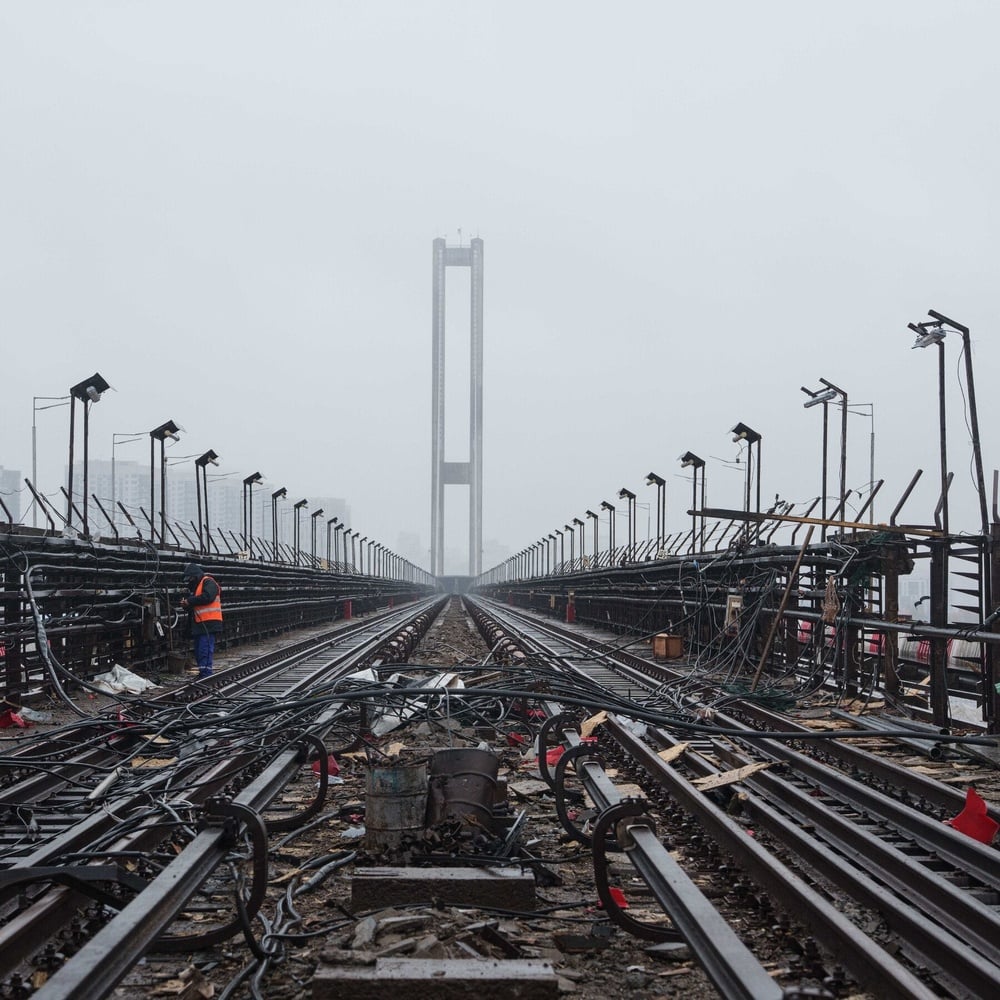
November 18, 2026 · 0 shares
The report is largely neutral wire-service coverage with attribution and caveats, though the headline and some phrasing frame the bridge strike as a symbolic blow to Putin.
Helium Analysis
Limitations: The supplied text is a Reuters wire report with a headline and body but no named author; some details rely on official, military, social-media, and state-media claims that Reuters says it could not immediately independently confirm.
·
56 of 56 available dimensions scored; omitted dimensions are not treated as neutral.
·
Verified supporting quotes for 17 of 56 scored dimensions.
Claim: The report mostly attributes or verifies its factual claims, though it contains some interpretive framing.
“verified by Reuters” · exact text match
“The timing was awkward for the Kremlin leader” · exact text match
Why: Reuters verification supports an objective classification, while the 'awkward' phrase is a limited subjective characterization.
Claim: The headline uses dramatic wording, but the body is measured and caveated.
“Ukraine cripples Crimean road bridge in blow to Putin” · exact text match
“Reuters could not immediately independently confirm the reports.” · exact text match
Why: Dramatic headline is offset by restrained, attributed reporting and explicit uncertainty.
Claim: The report contains consequential geopolitical and military developments with contextual detail.
“Ukrainian drones and missiles destroyed the central road section of the bridge linking Russia and Crimea on Tuesday” · exact text match
“The timing was awkward for the Kremlin leader” · exact text match
Why: A major infrastructure strike before a leadership summit is materially newsworthy.
Claim: The publisher describes events and attributed positions without prescribing policy.
“Ukrainian drones and missiles destroyed the central road section of the bridge linking Russia and Crimea on Tuesday” · exact text match
“Both sides deny deliberately targeting civilians.” · exact text match
Why: The report narrates and attributes rather than recommending action.
Claim: Mostly factual reporting with limited evaluative phrases in publisher voice.
“The timing was awkward for the Kremlin leader” · exact text match
“Ukraine cripples Crimean road bridge in blow to Putin” · exact text match
Why: Evaluative framing is present but confined to the headline and a small number of phrases.
Claim: The article is centrally about war, geopolitics, and a diplomatic summit.
“Ukrainian drones and missiles destroyed the central road section of the bridge linking Russia and Crimea on Tuesday” · exact text match
“ahead of his meeting in Shenzhen on Thursday with US President Donald Trump and China’s Xi Jinping” · exact text match
Why: The core reported event and its timing are explicitly political and diplomatic.
Claim: The report includes context and multiple perspectives rather than reducing the conflict to a simple narrative.
“The 19-km (12-mile) bridge is a flagship project inaugurated by Putin in 2018” · exact text match
“Both sides deny deliberately targeting civilians.” · exact text match
Why: Background details and attribution of competing claims limit oversimplification.
Claim: The report cites officials and experts, but mostly as attributed sources rather than as sole proof.
“Russian military bloggers and other experts said repairs would be challenging” · exact text match
“Both sides deny deliberately targeting civilians.” · exact text match
Why: Authority citations are present but balanced with other attributions and caveats.
Claim: The report generally avoids certainty beyond the supplied evidence and notes unresolved verification.
“Reuters could not immediately independently confirm the reports.” · exact text match
Why: Explicit uncertainty indicates restraint rather than overconfidence.
Claim: The report is largely free of explicit ideological advocacy.
“Ukrainian drones and missiles destroyed the central road section of the bridge linking Russia and Crimea on Tuesday” · exact text match
“Both sides deny deliberately targeting civilians.” · exact text match
Why: The text reports events and attributed views without a clear ideological program.
Claim: The report draws heavily on official government and military sources with little anti-establishment framing.
“At a ministerial meeting in Brussels, Germany and Britain rejected Pentagon policy chief Elbridge Colby’s criticism” · exact text match
“Sergei Aksyonov, Crimea’s Russian-installed governor, said two people were killed” · exact text match
Why: Official sources dominate the reporting, though the article still includes some competing accounts.
Claim: Visible sourcing, verification, and explicit uncertainty support high credibility.
“verified by Reuters” · exact text match
“Reuters could not immediately independently confirm the reports.” · exact text match
Why: Attribution and caveats are standard credibility signals.
Claim: Claims are largely sourced and caveated rather than reasoned from emotion or fallacy.
“verified by Reuters” · exact text match
“Reuters could not immediately independently confirm the reports.” · exact text match
Why: Verification and explicit uncertainty support rational reporting.
Claim: The report includes limited conditional forecasting alongside current-event reporting.
“where the three are expected to discuss the Ukraine war among other topics” · exact text match
“meaning trade could resume quickly if security conditions improve” · exact text match
Why: Future-oriented statements are conditional and mostly attributed, but still introduce speculation.
Claim: The report does not rely on strong manipulative techniques such as false dichotomies or deceptive urgency.
“Reuters could not immediately independently confirm the reports.” · exact text match
Why: Attribution and caveats reduce manipulative framing, though the headline is somewhat dramatic.
Claim: The report includes competing official accounts and notes denials, indicating fair handling.
“Sergei Aksyonov, Crimea’s Russian-installed governor, said two people were killed” · exact text match
“Both sides deny deliberately targeting civilians.” · exact text match
Why: Inclusion of Russian-installed and Ukrainian claims plus a denial note supports fairness.
Claim: The report supplies context, technical detail, and multiple perspectives.
“The 19-km (12-mile) bridge is a flagship project inaugurated by Putin in 2018” · exact text match
“Russian military bloggers and other experts said repairs would be challenging” · exact text match
Why: Contextual and expert material indicates high article intelligence.
The supplied text is a Reuters wire report with a headline and body but no named author; some details rely on official, military, social-media, and state-media claims that Reuters says it could not immediately independently confirm.
November 18, 2026 · 0 shares
A wire-service-style report that is largely attributed and balanced but adopts the term 'occupied Crimea' and leads with Ukraine's bridge strike while separately relaying Russian and Ukrainian claims.
Helium Analysis
Limitations: The supplied text includes unrelated aggregation-style headlines and an unusual 2026 photo date; the analysis treats only the main Ukraine bridge-strike report as substantive.
·
9 of 56 available dimensions scored; omitted dimensions are not treated as neutral.
·
Verified supporting quotes for 9 of 9 scored dimensions.
Claim: The report attributes claims to officials and explicitly notes uncertainty about casualty details.
“Ukraine’s emergency services reported two deaths in Kiev’s Obolonskyi district that day, though it was unclear whether they occurred during the overnight missile attack or a later attack.” · exact text match
Why: Named attribution and explicit uncertainty about casualty circumstances support an objective, non-subjective framing.
Claim: The report describes the bridge damage in restrained, attributed terms.
“Footage released by Ukrainian President Volodymyr Zelensky showed the Kerch Bridge’s main road arch had collapsed into the strait below after strikes on two successive nights.” · exact text match
Why: The description is factual, sourced to released footage, and avoids emotive or hyperbolic language.
Claim: The report describes planned diplomatic talks rather than advocating a policy.
“The discussions would focus on security guarantees against future Russian attacks and Ukraine’s postwar economic recovery.” · exact text match
Why: The language reports what talks would focus on without prescribing what should be done.
Claim: The report is centrally concerned with war, heads of state, and diplomatic negotiations.
“He is due to meet U.S. President Donald Trump and Chinese President Xi Jinping on Nov. 19, with Trump saying the war in Ukraine would be among the topics discussed.” · exact text match
Why: The content focuses on military strikes and presidential diplomacy, making it highly political.
Claim: The report adopts the term 'occupied Crimea' when describing the bridge.
“Ukrainian strikes destroyed a road span of the bridge linking Russia to occupied Crimea on Nov. 17” · exact text match
Why: Using 'occupied Crimea' as the default description aligns with the Ukrainian/Western official characterization rather than a neutral territorial label.
Claim: The report attributes claims to named officials and explicitly notes unclear details.
“In Kiev, Mayor Vitali Klitschko said Russian strikes hit the Northern and Southern bridges over the Dnipro River, damaged part of the metro system and disrupted utilities.” · exact text match
“Ukraine’s emergency services reported two deaths in Kiev’s Obolonskyi district that day, though it was unclear whether they occurred during the overnight missile attack or a later attack.” · exact text match
Why: Named sourcing and explicit uncertainty support high observable credibility.
Claim: The report provides a detailed, attributed account of the operation's stages and weapons.
“Ukraine’s SBU security service said the operation lasted about a month and involved seven stages, with preparatory strikes targeting Russian air defenses before attacks on the bridge.” · exact text match
“Ukrainian-made drones and missiles, including Flamingo and Neptune cruise missiles, were used, it said.” · exact text match
Why: Specific operational details tied to a named security service support a rational, evidence-based presentation.
Claim: The report presents competing official claims and acknowledges uncertainty about casualty details.
“Russia’s Federal Agency for Railway Transport later said train services had fully resumed, despite initial Ukrainian reports of damage to the railway section.” · exact text match
“Ukraine’s emergency services reported two deaths in Kiev’s Obolonskyi district that day, though it was unclear whether they occurred during the overnight missile attack or a later attack.” · exact text match
Why: Including Russian and Ukrainian claims plus an explicit caveat signals fair and honest reporting practices.
Claim: The report includes specific historical and logistical context about the bridge's strategic role.
“Putin opened the road section of the 19-kilometer crossing in 2018, four years after Russia annexed Crimea.
Russia also supplies its forces through a land corridor across occupied southern Ukraine.”
· exact text match
Why: Concrete dates, distances, and supply-route context indicate a relatively intelligent, informed report.
The supplied text includes unrelated aggregation-style headlines and an unusual 2026 photo date; the analysis treats only the main Ukraine bridge-strike report as substantive.
November 17, 2026 · 0 shares
The report is largely neutral and attribution-driven, balancing Ukrainian strike claims with Russian casualty and repair statements, direct AFP observations, and diplomatic context.
Helium Analysis
Limitations: The supplied text is a scraped/aggregated article with duplicated lead paragraphs and unrelated trending headlines, limiting certainty about the original presentation.
·
8 of 56 available dimensions scored; omitted dimensions are not treated as neutral.
·
Verified supporting quotes for 8 of 8 scored dimensions.
Claim: Contested claims are attributed to named officials rather than presented as the outlet’s own assertions.
“Ukrainian President Volodymyr Zelensky described the operation as “unprecedented”, defending it as retaliation for repeated Russian attacks on Ukrainian infrastructure since Moscow launched its invasion nearly five years ago.” · exact text match
“The Kremlin said the bridge — a symbol of Putin’s rule and Russia’s annexation of Crimea — would be “restored and will be even better than before”.” · exact text match
Why: The report repeatedly uses attribution verbs for competing Ukrainian and Russian claims, supporting an objective framing.
Claim: The report presents war damage and casualties in concrete, measured language rather than heightened or lurid terms.
“Two people were killed in Crimea in the attack, the Russian-installed governor said.” · exact text match
“Images published by the SBU showed piles of concrete rubble lying on the base — the bridge broken in two parts with a clean gap, several dozen metres wide, in the middle.” · exact text match
Why: Casualties and damage are described factually and physically, without sensational adjectives or emotive escalation.
Claim: The report primarily describes events and statements without prescribing policy or urging action.
“The strike brought road traffic across the bridge to a complete halt, prompting Russian-installed officials in Crimea to urge residents to remain calm.” · exact text match
“Kyiv and Europe are resisting any attempts to overhaul the continent’s post-Cold War defence, calling for a ceasefire in the Ukraine war before any discussion of terms.” · exact text match
Why: The text recounts actions and positions rather than advancing the outlet’s own recommendations.
Claim: The report is centrally framed around war, state leaders, and diplomacy rather than non-political subject matter.
“The wave of attacks comes ahead of a historic meeting of the Chinese, US and Russian leaders, and could disrupt Russian President Vladimir Putin’s attempts to cast the meeting as a new Yalta: an image of unassailable world leaders dividing up spheres of influence.” · exact text match
Why: The central events and context concern military conflict, state leaders, and summit diplomacy.
Claim: The report shows visible sourcing and direct observation, including AFP eyewitness reporting and attributed official statements.
“AFP reporters saw crater-like holes on Kyiv’s Northern Bridge and people crossing on foot during the morning rush hour.” · exact text match
“Ukraine’s SBU security service said one of the bridge’s metal arches “and the road span beneath it have been completely destroyed”.” · exact text match
Why: The text attributes claims and includes eyewitness reporting, supporting visible credibility practices in the supplied content.
Claim: The account is structured around attributable events and official statements rather than emotional or irrational assertions.
“Russia’s defence ministry said it downed 1,441 Ukrainian drones in a major overnight barrage — the second-highest one-day figure this year.” · exact text match
“The Russian transport ministry said that railway traffic across the bridge has been resumed “on one track” and that repair work was underway “on the second section”.” · exact text match
Why: Specific official claims and operational details are reported matter-of-factly, supporting a rational framing.
Claim: The report includes limited forecasting about how the strikes could affect an upcoming summit and Putin’s image.
“The wave of attacks comes ahead of a historic meeting of the Chinese, US and Russian leaders, and could disrupt Russian President Vladimir Putin’s attempts to cast the meeting as a new Yalta: an image of unassailable world leaders dividing up spheres of influence.” · exact text match
Why: The word “could” marks a bounded speculative diplomatic consequence rather than a reported certainty.
Claim: The report includes claims and casualty information from both Ukrainian and Russian official sources rather than relying on one side.
“Two people were killed in Crimea in the attack, the Russian-installed governor said.” · exact text match
“The Kremlin said the bridge — a symbol of Putin’s rule and Russia’s annexation of Crimea — would be “restored and will be even better than before”.” · exact text match
Why: Including Russian casualty and repair statements alongside Ukrainian claims signals internal fairness in the supplied text.
The supplied text is a scraped/aggregated article with duplicated lead paragraphs and unrelated trending headlines, limiting certainty about the original presentation.
November 18, 2026 · 0 shares
The report is largely neutral wire-service coverage with attribution and caveats, though the headline and some phrasing frame the bridge strike as a symbolic blow to Putin.
Helium Analysis
Limitations: The supplied text is a Reuters wire report with a headline and body but no named author; some details rely on official, military, social-media, and state-media claims that Reuters says it could not immediately independently confirm.
·
56 of 56 available dimensions scored; omitted dimensions are not treated as neutral.
·
Verified supporting quotes for 17 of 56 scored dimensions.
Claim: The report mostly attributes or verifies its factual claims, though it contains some interpretive framing.
“verified by Reuters” · exact text match
“The timing was awkward for the Kremlin leader” · exact text match
Why: Reuters verification supports an objective classification, while the 'awkward' phrase is a limited subjective characterization.
Claim: The headline uses dramatic wording, but the body is measured and caveated.
“Ukraine cripples Crimean road bridge in blow to Putin” · exact text match
“Reuters could not immediately independently confirm the reports.” · exact text match
Why: Dramatic headline is offset by restrained, attributed reporting and explicit uncertainty.
Claim: The report contains consequential geopolitical and military developments with contextual detail.
“Ukrainian drones and missiles destroyed the central road section of the bridge linking Russia and Crimea on Tuesday” · exact text match
“The timing was awkward for the Kremlin leader” · exact text match
Why: A major infrastructure strike before a leadership summit is materially newsworthy.
Claim: The publisher describes events and attributed positions without prescribing policy.
“Ukrainian drones and missiles destroyed the central road section of the bridge linking Russia and Crimea on Tuesday” · exact text match
“Both sides deny deliberately targeting civilians.” · exact text match
Why: The report narrates and attributes rather than recommending action.
Claim: Mostly factual reporting with limited evaluative phrases in publisher voice.
“The timing was awkward for the Kremlin leader” · exact text match
“Ukraine cripples Crimean road bridge in blow to Putin” · exact text match
Why: Evaluative framing is present but confined to the headline and a small number of phrases.
Claim: The article is centrally about war, geopolitics, and a diplomatic summit.
“Ukrainian drones and missiles destroyed the central road section of the bridge linking Russia and Crimea on Tuesday” · exact text match
“ahead of his meeting in Shenzhen on Thursday with US President Donald Trump and China’s Xi Jinping” · exact text match
Why: The core reported event and its timing are explicitly political and diplomatic.
Claim: The report includes context and multiple perspectives rather than reducing the conflict to a simple narrative.
“The 19-km (12-mile) bridge is a flagship project inaugurated by Putin in 2018” · exact text match
“Both sides deny deliberately targeting civilians.” · exact text match
Why: Background details and attribution of competing claims limit oversimplification.
Claim: The report cites officials and experts, but mostly as attributed sources rather than as sole proof.
“Russian military bloggers and other experts said repairs would be challenging” · exact text match
“Both sides deny deliberately targeting civilians.” · exact text match
Why: Authority citations are present but balanced with other attributions and caveats.
Claim: The report generally avoids certainty beyond the supplied evidence and notes unresolved verification.
“Reuters could not immediately independently confirm the reports.” · exact text match
Why: Explicit uncertainty indicates restraint rather than overconfidence.
Claim: The report is largely free of explicit ideological advocacy.
“Ukrainian drones and missiles destroyed the central road section of the bridge linking Russia and Crimea on Tuesday” · exact text match
“Both sides deny deliberately targeting civilians.” · exact text match
Why: The text reports events and attributed views without a clear ideological program.
Claim: The report draws heavily on official government and military sources with little anti-establishment framing.
“At a ministerial meeting in Brussels, Germany and Britain rejected Pentagon policy chief Elbridge Colby’s criticism” · exact text match
“Sergei Aksyonov, Crimea’s Russian-installed governor, said two people were killed” · exact text match
Why: Official sources dominate the reporting, though the article still includes some competing accounts.
Claim: Visible sourcing, verification, and explicit uncertainty support high credibility.
“verified by Reuters” · exact text match
“Reuters could not immediately independently confirm the reports.” · exact text match
Why: Attribution and caveats are standard credibility signals.
Claim: Claims are largely sourced and caveated rather than reasoned from emotion or fallacy.
“verified by Reuters” · exact text match
“Reuters could not immediately independently confirm the reports.” · exact text match
Why: Verification and explicit uncertainty support rational reporting.
Claim: The report includes limited conditional forecasting alongside current-event reporting.
“where the three are expected to discuss the Ukraine war among other topics” · exact text match
“meaning trade could resume quickly if security conditions improve” · exact text match
Why: Future-oriented statements are conditional and mostly attributed, but still introduce speculation.
Claim: The report does not rely on strong manipulative techniques such as false dichotomies or deceptive urgency.
“Reuters could not immediately independently confirm the reports.” · exact text match
Why: Attribution and caveats reduce manipulative framing, though the headline is somewhat dramatic.
Claim: The report includes competing official accounts and notes denials, indicating fair handling.
“Sergei Aksyonov, Crimea’s Russian-installed governor, said two people were killed” · exact text match
“Both sides deny deliberately targeting civilians.” · exact text match
Why: Inclusion of Russian-installed and Ukrainian claims plus a denial note supports fairness.
Claim: The report supplies context, technical detail, and multiple perspectives.
“The 19-km (12-mile) bridge is a flagship project inaugurated by Putin in 2018” · exact text match
“Russian military bloggers and other experts said repairs would be challenging” · exact text match
Why: Contextual and expert material indicates high article intelligence.
The supplied text is a Reuters wire report with a headline and body but no named author; some details rely on official, military, social-media, and state-media claims that Reuters says it could not immediately independently confirm.
November 17, 2026 · 0 shares
The report is largely neutral and attribution-driven, balancing Ukrainian strike claims with Russian casualty and repair statements, direct AFP observations, and diplomatic context.
Helium Analysis
Limitations: The supplied text is a scraped/aggregated article with duplicated lead paragraphs and unrelated trending headlines, limiting certainty about the original presentation.
·
8 of 56 available dimensions scored; omitted dimensions are not treated as neutral.
·
Verified supporting quotes for 8 of 8 scored dimensions.
Claim: Contested claims are attributed to named officials rather than presented as the outlet’s own assertions.
“Ukrainian President Volodymyr Zelensky described the operation as “unprecedented”, defending it as retaliation for repeated Russian attacks on Ukrainian infrastructure since Moscow launched its invasion nearly five years ago.” · exact text match
“The Kremlin said the bridge — a symbol of Putin’s rule and Russia’s annexation of Crimea — would be “restored and will be even better than before”.” · exact text match
Why: The report repeatedly uses attribution verbs for competing Ukrainian and Russian claims, supporting an objective framing.
Claim: The report presents war damage and casualties in concrete, measured language rather than heightened or lurid terms.
“Two people were killed in Crimea in the attack, the Russian-installed governor said.” · exact text match
“Images published by the SBU showed piles of concrete rubble lying on the base — the bridge broken in two parts with a clean gap, several dozen metres wide, in the middle.” · exact text match
Why: Casualties and damage are described factually and physically, without sensational adjectives or emotive escalation.
Claim: The report primarily describes events and statements without prescribing policy or urging action.
“The strike brought road traffic across the bridge to a complete halt, prompting Russian-installed officials in Crimea to urge residents to remain calm.” · exact text match
“Kyiv and Europe are resisting any attempts to overhaul the continent’s post-Cold War defence, calling for a ceasefire in the Ukraine war before any discussion of terms.” · exact text match
Why: The text recounts actions and positions rather than advancing the outlet’s own recommendations.
Claim: The report is centrally framed around war, state leaders, and diplomacy rather than non-political subject matter.
“The wave of attacks comes ahead of a historic meeting of the Chinese, US and Russian leaders, and could disrupt Russian President Vladimir Putin’s attempts to cast the meeting as a new Yalta: an image of unassailable world leaders dividing up spheres of influence.” · exact text match
Why: The central events and context concern military conflict, state leaders, and summit diplomacy.
Claim: The report shows visible sourcing and direct observation, including AFP eyewitness reporting and attributed official statements.
“AFP reporters saw crater-like holes on Kyiv’s Northern Bridge and people crossing on foot during the morning rush hour.” · exact text match
“Ukraine’s SBU security service said one of the bridge’s metal arches “and the road span beneath it have been completely destroyed”.” · exact text match
Why: The text attributes claims and includes eyewitness reporting, supporting visible credibility practices in the supplied content.
Claim: The account is structured around attributable events and official statements rather than emotional or irrational assertions.
“Russia’s defence ministry said it downed 1,441 Ukrainian drones in a major overnight barrage — the second-highest one-day figure this year.” · exact text match
“The Russian transport ministry said that railway traffic across the bridge has been resumed “on one track” and that repair work was underway “on the second section”.” · exact text match
Why: Specific official claims and operational details are reported matter-of-factly, supporting a rational framing.
Claim: The report includes limited forecasting about how the strikes could affect an upcoming summit and Putin’s image.
“The wave of attacks comes ahead of a historic meeting of the Chinese, US and Russian leaders, and could disrupt Russian President Vladimir Putin’s attempts to cast the meeting as a new Yalta: an image of unassailable world leaders dividing up spheres of influence.” · exact text match
Why: The word “could” marks a bounded speculative diplomatic consequence rather than a reported certainty.
Claim: The report includes claims and casualty information from both Ukrainian and Russian official sources rather than relying on one side.
“Two people were killed in Crimea in the attack, the Russian-installed governor said.” · exact text match
“The Kremlin said the bridge — a symbol of Putin’s rule and Russia’s annexation of Crimea — would be “restored and will be even better than before”.” · exact text match
Why: Including Russian casualty and repair statements alongside Ukrainian claims signals internal fairness in the supplied text.
The supplied text is a scraped/aggregated article with duplicated lead paragraphs and unrelated trending headlines, limiting certainty about the original presentation.
November 17, 2026 · 0 shares
Coverage adopts a celebratory, hyperbolic pro-Ukrainian frame, presenting Kyiv's damage claims in the headline and lede as established fact while delegitimizing Russian control of the bridge.
Helium Analysis
Limitations: The supplied text is duplicated and includes zero-width characters and boilerplate; damage details rely on official Ukrainian and Russian statements without independent assessment.
·
6 of 56 available dimensions scored; omitted dimensions are not treated as neutral.
·
Verified supporting quotes for 6 of 6 scored dimensions.
Claim: The lede interprets the strike’s significance with evaluative language rather than limiting itself to neutral damage reporting.
“delivering a major symbolic blow to Vladimir Putin” · exact text match
Why: ‘Major symbolic blow’ is an interpretive, value-laden frame rather than a neutral description of physical damage.
Claim: The headline and lede use hyperbolic damage terms.
“Ukraine inflicts devastating damage on Crimea Bridge in major symbolic blow to Putin.” · exact text match
“Ukraine inflicted catastrophic damage on the bridge linking Russia and Crimea on Tuesday” · exact text match
Why: ‘Devastating’ and ‘catastrophic’ are sensational descriptors that amplify the reported damage.
Claim: The report frames a Ukrainian deep strike as a damaging symbolic victory, tilting toward hawkish framing.
“Ukraine inflicted catastrophic damage on the bridge linking Russia and Crimea on Tuesday, delivering a major symbolic blow to Vladimir Putin.” · exact text match
Why: Positive framing of an escalation in military operations is more hawkish than de-escalatory.
Claim: The framing is evaluative and celebratory toward the Ukrainian strike.
“Ukraine inflicts devastating damage on Crimea Bridge in major symbolic blow to Putin.” · exact text match
Why: The headline asserts a value-laden ‘major symbolic blow’ rather than a neutral account of the attack.
Claim: The report is centrally about a geopolitical military conflict and official war claims.
“Ukraine inflicted catastrophic damage on the bridge linking Russia and Crimea on Tuesday” · exact text match
Why: The subject is an active war between Russia and Ukraine, making the content explicitly political and military.
Claim: The lede states catastrophic damage as established fact even though the article notes damage was still being assessed.
“Ukraine inflicted catastrophic damage on the bridge linking Russia and Crimea on Tuesday” · exact text match
“All train and vehicle traffic on the Crimean Bridge has been suspended while specialists assess the damage” · exact text match
Counterevidence:
“Kyiv said it had inflicted ‘critical damage’ on the bridge linking Russia and Crimea” · exact text match
Why: Certainty in the lede exceeds the ongoing assessment described later.
The supplied text is duplicated and includes zero-width characters and boilerplate; damage details rely on official Ukrainian and Russian statements without independent assessment.
November 17, 2026 · 0 shares
The brief frames the strike as a decisive Ukrainian success and 'symbolic blow' to Russia while relying chiefly on Ukrainian officials and Western outlets and giving only a brief Russian repair comment.
The Crimean Bridge is a major Russian logistics link to the Crimean Peninsula, which Russia occupied and annexed in 2014; Ukraine views it as a military target in the war.
Helium Analysis
Limitations: The supplied text is a short, partially duplicated excerpt with parenthetical source citations and no full article body or author byline.
·
9 of 56 available dimensions scored; omitted dimensions are not treated as neutral.
·
Verified supporting quotes for 9 of 9 scored dimensions.
Claim: The report mixes attributed factual reporting with mildly evaluative framing of the strike's significance.
“dealing a logistical and symbolic blow to Russia’s invasion efforts (BBC).” · exact text match
Why: 'symbolic blow' is interpretive, though attributed, so the text is slightly subjective rather than neutral.
Claim: The wording is mostly restrained, with mild dramatic emphasis in the headline phrase 'critically damages'.
“Ukraine critically damages Crimean Bridge.” · exact text match
Why: The severity term is stronger than a neutral 'damages,' but the body remains sourced and measured.
Claim: The report describes events and attributed statements without recommending a policy or action.
“Ukrainian drones and missiles have severely damaged a bridge linking Russia to occupied Crimea on Tuesday, in what President Volodymyr Zelensky calls an “unprecedented operation”.” · exact text match
Why: The sentence is declarative news reporting; it does not prescribe what should be done.
Claim: The report is centrally political, tying a military strike to presidential diplomacy.
“The timing of the strike comes as Putin is set to meet with Chinese President Xi Jinping and US President Donald Trump at a trilateral meeting later this week (BBC).” · exact text match
Why: It foregrounds presidents, war, and a summit, making political relevance high.
Claim: The report relies on official Ukrainian accounts and established Western media outlets without citing independent or dissenting verification.
“Images shared by Ukrainian officials show a section of the bridge collapsed into the water, dealing a logistical and symbolic blow to Russia’s invasion efforts (BBC).” · exact text match
Why: The sourcing is official and mainstream, supporting a mild pro-establishment sourcing pattern.
Claim: The report has visible sourcing and includes both Ukrainian claims and a Russian response.
“Russian President Vladimir Putin’s spokesperson said a repair plan would be prepared, making the bridge “even better than before” (Reuters).” · exact text match
“The seven-stage operation follows weeks of coordinated attacks by Ukraine aimed at dismantling Russian air defences protecting the crossing (Euronews).” · exact text match
Why: Multiple named outlets and inclusion of the opposing side support credibility, though the excerpt is brief.
Claim: The report gives a causal, source-attributed account of the operation rather than relying on emotive assertion.
“The seven-stage operation follows weeks of coordinated attacks by Ukraine aimed at dismantling Russian air defences protecting the crossing (Euronews).” · exact text match
Why: The sentence explains the strike as following a coordinated campaign and cites Euronews, supporting a rational reporting classification.
Claim: The report includes a Russian official response attributed to Reuters, alongside Ukrainian claims, indicating fair inclusion.
“Russian President Vladimir Putin’s spokesperson said a repair plan would be prepared, making the bridge “even better than before” (Reuters).” · exact text match
Why: Including and attributing the opposing side's statement supports observable fairness.
Claim: The brief is coherent and synthesizes operational context with attributed sources.
“The seven-stage operation follows weeks of coordinated attacks by Ukraine aimed at dismantling Russian air defences protecting the crossing (Euronews).” · exact text match
Why: It provides causal background and source attribution in a compact form.
The supplied text is a short, partially duplicated excerpt with parenthetical source citations and no full article body or author byline.
November 18, 2026 · 0 shares
A wire-service-style report that is largely attributed and balanced but adopts the term 'occupied Crimea' and leads with Ukraine's bridge strike while separately relaying Russian and Ukrainian claims.
Helium Analysis
Limitations: The supplied text includes unrelated aggregation-style headlines and an unusual 2026 photo date; the analysis treats only the main Ukraine bridge-strike report as substantive.
·
9 of 56 available dimensions scored; omitted dimensions are not treated as neutral.
·
Verified supporting quotes for 9 of 9 scored dimensions.
Claim: The report attributes claims to officials and explicitly notes uncertainty about casualty details.
“Ukraine’s emergency services reported two deaths in Kiev’s Obolonskyi district that day, though it was unclear whether they occurred during the overnight missile attack or a later attack.” · exact text match
Why: Named attribution and explicit uncertainty about casualty circumstances support an objective, non-subjective framing.
Claim: The report describes the bridge damage in restrained, attributed terms.
“Footage released by Ukrainian President Volodymyr Zelensky showed the Kerch Bridge’s main road arch had collapsed into the strait below after strikes on two successive nights.” · exact text match
Why: The description is factual, sourced to released footage, and avoids emotive or hyperbolic language.
Claim: The report describes planned diplomatic talks rather than advocating a policy.
“The discussions would focus on security guarantees against future Russian attacks and Ukraine’s postwar economic recovery.” · exact text match
Why: The language reports what talks would focus on without prescribing what should be done.
Claim: The report is centrally concerned with war, heads of state, and diplomatic negotiations.
“He is due to meet U.S. President Donald Trump and Chinese President Xi Jinping on Nov. 19, with Trump saying the war in Ukraine would be among the topics discussed.” · exact text match
Why: The content focuses on military strikes and presidential diplomacy, making it highly political.
Claim: The report adopts the term 'occupied Crimea' when describing the bridge.
“Ukrainian strikes destroyed a road span of the bridge linking Russia to occupied Crimea on Nov. 17” · exact text match
Why: Using 'occupied Crimea' as the default description aligns with the Ukrainian/Western official characterization rather than a neutral territorial label.
Claim: The report attributes claims to named officials and explicitly notes unclear details.
“In Kiev, Mayor Vitali Klitschko said Russian strikes hit the Northern and Southern bridges over the Dnipro River, damaged part of the metro system and disrupted utilities.” · exact text match
“Ukraine’s emergency services reported two deaths in Kiev’s Obolonskyi district that day, though it was unclear whether they occurred during the overnight missile attack or a later attack.” · exact text match
Why: Named sourcing and explicit uncertainty support high observable credibility.
Claim: The report provides a detailed, attributed account of the operation's stages and weapons.
“Ukraine’s SBU security service said the operation lasted about a month and involved seven stages, with preparatory strikes targeting Russian air defenses before attacks on the bridge.” · exact text match
“Ukrainian-made drones and missiles, including Flamingo and Neptune cruise missiles, were used, it said.” · exact text match
Why: Specific operational details tied to a named security service support a rational, evidence-based presentation.
Claim: The report presents competing official claims and acknowledges uncertainty about casualty details.
“Russia’s Federal Agency for Railway Transport later said train services had fully resumed, despite initial Ukrainian reports of damage to the railway section.” · exact text match
“Ukraine’s emergency services reported two deaths in Kiev’s Obolonskyi district that day, though it was unclear whether they occurred during the overnight missile attack or a later attack.” · exact text match
Why: Including Russian and Ukrainian claims plus an explicit caveat signals fair and honest reporting practices.
Claim: The report includes specific historical and logistical context about the bridge's strategic role.
“Putin opened the road section of the 19-kilometer crossing in 2018, four years after Russia annexed Crimea.
Russia also supplies its forces through a land corridor across occupied southern Ukraine.”
· exact text match
Why: Concrete dates, distances, and supply-route context indicate a relatively intelligent, informed report.
The supplied text includes unrelated aggregation-style headlines and an unusual 2026 photo date; the analysis treats only the main Ukraine bridge-strike report as substantive.
November 17, 2026 · 0 shares
The report frames the bridge attacks through sympathetic Ukrainian civilian testimony and labels Russia's 2014 Crimea takeover 'illegal', while presenting Ukraine's bridge strike as a symbolic blow to Putin.
Helium Analysis
Limitations: The supplied text includes unrelated BBC promotion and related-link items after the main report; analysis was limited to the identifiable article body, and no author byline was present.
·
13 of 56 available dimensions scored; omitted dimensions are not treated as neutral.
·
Verified supporting quotes for 12 of 13 scored dimensions.
Claim: The report mixes on-scene factual description with subjective eyewitness testimony.
“Masha told me, describing grabbing her child and running into the corridor for protection.” · exact text match
“At its broadest point, the jagged hole is about eight metres wide.” · exact text match
Why: It grounds subjective quotes in attributed testimony while providing concrete observational detail, making it more objective than subjective.
Claim: The report uses an emotional headline quote but generally avoids sensational prose.
“'It was really scary': Mother describes sheltering during Russia strikes on Kyiv bridge.” · exact text match
“At its broadest point, the jagged hole is about eight metres wide.” · exact text match
Why: The headline foregrounds fear, but the body is measured and detail-oriented, so it is more objective than sensational.
Claim: The article is overwhelmingly descriptive, recounting damage, closures, and official statements rather than prescribing policy.
“A major recovery operation is under way, with firefighters and engineers in fluorescent overalls working to evaluate the extent of the damage.” · exact text match
Why: The passage reports ongoing recovery work without advocating a course of action.
Claim: The report foregrounds civilian fear through the headline and repeated quotes about the strikes being scary.
“'It was really scary': Mother describes sheltering during Russia strikes on Kyiv bridge.” · exact text match
“It was a very scary night.
It felt like something exploded right over my head.”
· exact text match
Why: The headline and quotes spotlight fear, but the body remains largely measured.
Claim: The report includes evaluative descriptions of the Crimea bridge and Russian motives in the publisher's voice.
“a symbol of his illegal 2014 takeover” · exact text match
“Ukrainians loathe it for the same reason” · exact text match
Why: These are evaluative and generalized characterizations, though some are attributed or tied to context.
Claim: The report frames the bridge strikes as a political-strategic contest between Russia and Ukraine, centered on Putin's image and international summitry.
“a symbol of his illegal 2014 takeover” · exact text match
“a blow to Putin's image, just as he wants to seem most powerful at this week's summit with the US and China” · exact text match
Why: The article explicitly ties bridge damage to Putin's political image and a US-China summit, making politics central.
Claim: The report centers sympathetic civilian victims and their disruption rather than military or strategic details.
“Masha told me, describing grabbing her child and running into the corridor for protection.” · exact text match
“The 67-year-old, who we met pulling a shopping trolley through the debris on a bridge in the Ukrainian capital, was heading to see her son on the right bank, but taxi drivers were charging a fortune to go round, so she decided to walk.” · exact text match
Why: Named residents are presented as vulnerable civilians enduring the strikes, shaping the story as a victim-centered account.
Claim: The report adopts the Western/legal-establishment characterization of Russia's Crimea annexation as illegal.
“a symbol of his illegal 2014 takeover” · exact text match
Why: The label 'illegal' is stated in the publisher's voice and aligns with the Western legal position.
Claim: The report carries a negative emotional tone from fear and war hardship, leavened by resilience quotes.
“We will get through this, but I just wish the war would end.” · exact text match
“It's difficult, but we're used to it. And we try to take the positive from everything.” · not found in supplied text
Why: Fear and weariness dominate, though survival and resilience are also voiced.
Claim: The report shows on-scene observations and attributed testimony, with limited but visible sourcing.
“Masha told me, describing grabbing her child and running into the corridor for protection.” · exact text match
“The mayor, Vitali Klitschko, said road transport in one direction was also being partially restored.” · exact text match
Why: Named eyewitness and official attributions support credibility, though the account is one-sided and gives no Russian response.
Claim: The report mostly uses evidence-based inference and attribution rather than irrational assertion.
“From the damage, it looks like Russia targeted the same spot on the bridge with a volley of three missiles, aiming to keep the road closed for as long as possible.” · exact text match
“The mayor, Vitali Klitschko, said road transport in one direction was also being partially restored.” · exact text match
Why: Visible reasoning from damage and official statements supports a rational framing, though some intent attribution is speculative.
Claim: The report includes inferential and speculative claims about Russian targeting intentions and the political timing of the strikes.
“From the damage, it looks like Russia targeted the same spot on the bridge with a volley of three missiles, aiming to keep the road closed for as long as possible.” · exact text match
“To many here, the timing feels significant: a blow to Putin's image, just as he wants to seem most powerful at this week's summit with the US and China.” · exact text match
Why: These statements go beyond observed damage to infer intent and significance, though they are qualified.
Claim: The report combines eyewitness detail, official statements, and strategic context to explain the bridge attacks.
“That is because there was a battle of the bridges overnight.” · exact text match
“To many here, the timing feels significant: a blow to Putin's image, just as he wants to seem most powerful at this week's summit with the US and China.” · exact text match
Why: It synthesizes local impact with broader military-political context in a coherent narrative.
The supplied text includes unrelated BBC promotion and related-link items after the main report; analysis was limited to the identifiable article body, and no author byline was present.
November 18, 2026 · 0 shares
A wire-service-style report that is largely attributed and balanced but adopts the term 'occupied Crimea' and leads with Ukraine's bridge strike while separately relaying Russian and Ukrainian claims.
Helium Analysis
Limitations: The supplied text includes unrelated aggregation-style headlines and an unusual 2026 photo date; the analysis treats only the main Ukraine bridge-strike report as substantive.
·
9 of 56 available dimensions scored; omitted dimensions are not treated as neutral.
·
Verified supporting quotes for 9 of 9 scored dimensions.
Claim: The report attributes claims to officials and explicitly notes uncertainty about casualty details.
“Ukraine’s emergency services reported two deaths in Kiev’s Obolonskyi district that day, though it was unclear whether they occurred during the overnight missile attack or a later attack.” · exact text match
Why: Named attribution and explicit uncertainty about casualty circumstances support an objective, non-subjective framing.
Claim: The report describes the bridge damage in restrained, attributed terms.
“Footage released by Ukrainian President Volodymyr Zelensky showed the Kerch Bridge’s main road arch had collapsed into the strait below after strikes on two successive nights.” · exact text match
Why: The description is factual, sourced to released footage, and avoids emotive or hyperbolic language.
Claim: The report describes planned diplomatic talks rather than advocating a policy.
“The discussions would focus on security guarantees against future Russian attacks and Ukraine’s postwar economic recovery.” · exact text match
Why: The language reports what talks would focus on without prescribing what should be done.
Claim: The report is centrally concerned with war, heads of state, and diplomatic negotiations.
“He is due to meet U.S. President Donald Trump and Chinese President Xi Jinping on Nov. 19, with Trump saying the war in Ukraine would be among the topics discussed.” · exact text match
Why: The content focuses on military strikes and presidential diplomacy, making it highly political.
Claim: The report adopts the term 'occupied Crimea' when describing the bridge.
“Ukrainian strikes destroyed a road span of the bridge linking Russia to occupied Crimea on Nov. 17” · exact text match
Why: Using 'occupied Crimea' as the default description aligns with the Ukrainian/Western official characterization rather than a neutral territorial label.
Claim: The report attributes claims to named officials and explicitly notes unclear details.
“In Kiev, Mayor Vitali Klitschko said Russian strikes hit the Northern and Southern bridges over the Dnipro River, damaged part of the metro system and disrupted utilities.” · exact text match
“Ukraine’s emergency services reported two deaths in Kiev’s Obolonskyi district that day, though it was unclear whether they occurred during the overnight missile attack or a later attack.” · exact text match
Why: Named sourcing and explicit uncertainty support high observable credibility.
Claim: The report provides a detailed, attributed account of the operation's stages and weapons.
“Ukraine’s SBU security service said the operation lasted about a month and involved seven stages, with preparatory strikes targeting Russian air defenses before attacks on the bridge.” · exact text match
“Ukrainian-made drones and missiles, including Flamingo and Neptune cruise missiles, were used, it said.” · exact text match
Why: Specific operational details tied to a named security service support a rational, evidence-based presentation.
Claim: The report presents competing official claims and acknowledges uncertainty about casualty details.
“Russia’s Federal Agency for Railway Transport later said train services had fully resumed, despite initial Ukrainian reports of damage to the railway section.” · exact text match
“Ukraine’s emergency services reported two deaths in Kiev’s Obolonskyi district that day, though it was unclear whether they occurred during the overnight missile attack or a later attack.” · exact text match
Why: Including Russian and Ukrainian claims plus an explicit caveat signals fair and honest reporting practices.
Claim: The report includes specific historical and logistical context about the bridge's strategic role.
“Putin opened the road section of the 19-kilometer crossing in 2018, four years after Russia annexed Crimea.
Russia also supplies its forces through a land corridor across occupied southern Ukraine.”
· exact text match
Why: Concrete dates, distances, and supply-route context indicate a relatively intelligent, informed report.
The supplied text includes unrelated aggregation-style headlines and an unusual 2026 photo date; the analysis treats only the main Ukraine bridge-strike report as substantive.
November 17, 2026 · 0 shares
The report is largely neutral and attribution-driven, balancing Ukrainian strike claims with Russian casualty and repair statements, direct AFP observations, and diplomatic context.
Helium Analysis
Limitations: The supplied text is a scraped/aggregated article with duplicated lead paragraphs and unrelated trending headlines, limiting certainty about the original presentation.
·
8 of 56 available dimensions scored; omitted dimensions are not treated as neutral.
·
Verified supporting quotes for 8 of 8 scored dimensions.
Claim: Contested claims are attributed to named officials rather than presented as the outlet’s own assertions.
“Ukrainian President Volodymyr Zelensky described the operation as “unprecedented”, defending it as retaliation for repeated Russian attacks on Ukrainian infrastructure since Moscow launched its invasion nearly five years ago.” · exact text match
“The Kremlin said the bridge — a symbol of Putin’s rule and Russia’s annexation of Crimea — would be “restored and will be even better than before”.” · exact text match
Why: The report repeatedly uses attribution verbs for competing Ukrainian and Russian claims, supporting an objective framing.
Claim: The report presents war damage and casualties in concrete, measured language rather than heightened or lurid terms.
“Two people were killed in Crimea in the attack, the Russian-installed governor said.” · exact text match
“Images published by the SBU showed piles of concrete rubble lying on the base — the bridge broken in two parts with a clean gap, several dozen metres wide, in the middle.” · exact text match
Why: Casualties and damage are described factually and physically, without sensational adjectives or emotive escalation.
Claim: The report primarily describes events and statements without prescribing policy or urging action.
“The strike brought road traffic across the bridge to a complete halt, prompting Russian-installed officials in Crimea to urge residents to remain calm.” · exact text match
“Kyiv and Europe are resisting any attempts to overhaul the continent’s post-Cold War defence, calling for a ceasefire in the Ukraine war before any discussion of terms.” · exact text match
Why: The text recounts actions and positions rather than advancing the outlet’s own recommendations.
Claim: The report is centrally framed around war, state leaders, and diplomacy rather than non-political subject matter.
“The wave of attacks comes ahead of a historic meeting of the Chinese, US and Russian leaders, and could disrupt Russian President Vladimir Putin’s attempts to cast the meeting as a new Yalta: an image of unassailable world leaders dividing up spheres of influence.” · exact text match
Why: The central events and context concern military conflict, state leaders, and summit diplomacy.
Claim: The report shows visible sourcing and direct observation, including AFP eyewitness reporting and attributed official statements.
“AFP reporters saw crater-like holes on Kyiv’s Northern Bridge and people crossing on foot during the morning rush hour.” · exact text match
“Ukraine’s SBU security service said one of the bridge’s metal arches “and the road span beneath it have been completely destroyed”.” · exact text match
Why: The text attributes claims and includes eyewitness reporting, supporting visible credibility practices in the supplied content.
Claim: The account is structured around attributable events and official statements rather than emotional or irrational assertions.
“Russia’s defence ministry said it downed 1,441 Ukrainian drones in a major overnight barrage — the second-highest one-day figure this year.” · exact text match
“The Russian transport ministry said that railway traffic across the bridge has been resumed “on one track” and that repair work was underway “on the second section”.” · exact text match
Why: Specific official claims and operational details are reported matter-of-factly, supporting a rational framing.
Claim: The report includes limited forecasting about how the strikes could affect an upcoming summit and Putin’s image.
“The wave of attacks comes ahead of a historic meeting of the Chinese, US and Russian leaders, and could disrupt Russian President Vladimir Putin’s attempts to cast the meeting as a new Yalta: an image of unassailable world leaders dividing up spheres of influence.” · exact text match
Why: The word “could” marks a bounded speculative diplomatic consequence rather than a reported certainty.
Claim: The report includes claims and casualty information from both Ukrainian and Russian official sources rather than relying on one side.
“Two people were killed in Crimea in the attack, the Russian-installed governor said.” · exact text match
“The Kremlin said the bridge — a symbol of Putin’s rule and Russia’s annexation of Crimea — would be “restored and will be even better than before”.” · exact text match
Why: Including Russian casualty and repair statements alongside Ukrainian claims signals internal fairness in the supplied text.
The supplied text is a scraped/aggregated article with duplicated lead paragraphs and unrelated trending headlines, limiting certainty about the original presentation.
November 18, 2026 · 0 shares
The report is largely neutral wire-service coverage with attribution and caveats, though the headline and some phrasing frame the bridge strike as a symbolic blow to Putin.
Helium Analysis
Limitations: The supplied text is a Reuters wire report with a headline and body but no named author; some details rely on official, military, social-media, and state-media claims that Reuters says it could not immediately independently confirm.
·
56 of 56 available dimensions scored; omitted dimensions are not treated as neutral.
·
Verified supporting quotes for 17 of 56 scored dimensions.
Claim: The report mostly attributes or verifies its factual claims, though it contains some interpretive framing.
“verified by Reuters” · exact text match
“The timing was awkward for the Kremlin leader” · exact text match
Why: Reuters verification supports an objective classification, while the 'awkward' phrase is a limited subjective characterization.
Claim: The headline uses dramatic wording, but the body is measured and caveated.
“Ukraine cripples Crimean road bridge in blow to Putin” · exact text match
“Reuters could not immediately independently confirm the reports.” · exact text match
Why: Dramatic headline is offset by restrained, attributed reporting and explicit uncertainty.
Claim: The report contains consequential geopolitical and military developments with contextual detail.
“Ukrainian drones and missiles destroyed the central road section of the bridge linking Russia and Crimea on Tuesday” · exact text match
“The timing was awkward for the Kremlin leader” · exact text match
Why: A major infrastructure strike before a leadership summit is materially newsworthy.
Claim: The publisher describes events and attributed positions without prescribing policy.
“Ukrainian drones and missiles destroyed the central road section of the bridge linking Russia and Crimea on Tuesday” · exact text match
“Both sides deny deliberately targeting civilians.” · exact text match
Why: The report narrates and attributes rather than recommending action.
Claim: Mostly factual reporting with limited evaluative phrases in publisher voice.
“The timing was awkward for the Kremlin leader” · exact text match
“Ukraine cripples Crimean road bridge in blow to Putin” · exact text match
Why: Evaluative framing is present but confined to the headline and a small number of phrases.
Claim: The article is centrally about war, geopolitics, and a diplomatic summit.
“Ukrainian drones and missiles destroyed the central road section of the bridge linking Russia and Crimea on Tuesday” · exact text match
“ahead of his meeting in Shenzhen on Thursday with US President Donald Trump and China’s Xi Jinping” · exact text match
Why: The core reported event and its timing are explicitly political and diplomatic.
Claim: The report includes context and multiple perspectives rather than reducing the conflict to a simple narrative.
“The 19-km (12-mile) bridge is a flagship project inaugurated by Putin in 2018” · exact text match
“Both sides deny deliberately targeting civilians.” · exact text match
Why: Background details and attribution of competing claims limit oversimplification.
Claim: The report cites officials and experts, but mostly as attributed sources rather than as sole proof.
“Russian military bloggers and other experts said repairs would be challenging” · exact text match
“Both sides deny deliberately targeting civilians.” · exact text match
Why: Authority citations are present but balanced with other attributions and caveats.
Claim: The report generally avoids certainty beyond the supplied evidence and notes unresolved verification.
“Reuters could not immediately independently confirm the reports.” · exact text match
Why: Explicit uncertainty indicates restraint rather than overconfidence.
Claim: The report is largely free of explicit ideological advocacy.
“Ukrainian drones and missiles destroyed the central road section of the bridge linking Russia and Crimea on Tuesday” · exact text match
“Both sides deny deliberately targeting civilians.” · exact text match
Why: The text reports events and attributed views without a clear ideological program.
Claim: The report draws heavily on official government and military sources with little anti-establishment framing.
“At a ministerial meeting in Brussels, Germany and Britain rejected Pentagon policy chief Elbridge Colby’s criticism” · exact text match
“Sergei Aksyonov, Crimea’s Russian-installed governor, said two people were killed” · exact text match
Why: Official sources dominate the reporting, though the article still includes some competing accounts.
Claim: Visible sourcing, verification, and explicit uncertainty support high credibility.
“verified by Reuters” · exact text match
“Reuters could not immediately independently confirm the reports.” · exact text match
Why: Attribution and caveats are standard credibility signals.
Claim: Claims are largely sourced and caveated rather than reasoned from emotion or fallacy.
“verified by Reuters” · exact text match
“Reuters could not immediately independently confirm the reports.” · exact text match
Why: Verification and explicit uncertainty support rational reporting.
Claim: The report includes limited conditional forecasting alongside current-event reporting.
“where the three are expected to discuss the Ukraine war among other topics” · exact text match
“meaning trade could resume quickly if security conditions improve” · exact text match
Why: Future-oriented statements are conditional and mostly attributed, but still introduce speculation.
Claim: The report does not rely on strong manipulative techniques such as false dichotomies or deceptive urgency.
“Reuters could not immediately independently confirm the reports.” · exact text match
Why: Attribution and caveats reduce manipulative framing, though the headline is somewhat dramatic.
Claim: The report includes competing official accounts and notes denials, indicating fair handling.
“Sergei Aksyonov, Crimea’s Russian-installed governor, said two people were killed” · exact text match
“Both sides deny deliberately targeting civilians.” · exact text match
Why: Inclusion of Russian-installed and Ukrainian claims plus a denial note supports fairness.
Claim: The report supplies context, technical detail, and multiple perspectives.
“The 19-km (12-mile) bridge is a flagship project inaugurated by Putin in 2018” · exact text match
“Russian military bloggers and other experts said repairs would be challenging” · exact text match
Why: Contextual and expert material indicates high article intelligence.
The supplied text is a Reuters wire report with a headline and body but no named author; some details rely on official, military, social-media, and state-media claims that Reuters says it could not immediately independently confirm.
November 17, 2026 · 0 shares
The report is largely neutral and attribution-driven, balancing Ukrainian strike claims with Russian casualty and repair statements, direct AFP observations, and diplomatic context.
Helium Analysis
Limitations: The supplied text is a scraped/aggregated article with duplicated lead paragraphs and unrelated trending headlines, limiting certainty about the original presentation.
·
8 of 56 available dimensions scored; omitted dimensions are not treated as neutral.
·
Verified supporting quotes for 8 of 8 scored dimensions.
Claim: Contested claims are attributed to named officials rather than presented as the outlet’s own assertions.
“Ukrainian President Volodymyr Zelensky described the operation as “unprecedented”, defending it as retaliation for repeated Russian attacks on Ukrainian infrastructure since Moscow launched its invasion nearly five years ago.” · exact text match
“The Kremlin said the bridge — a symbol of Putin’s rule and Russia’s annexation of Crimea — would be “restored and will be even better than before”.” · exact text match
Why: The report repeatedly uses attribution verbs for competing Ukrainian and Russian claims, supporting an objective framing.
Claim: The report presents war damage and casualties in concrete, measured language rather than heightened or lurid terms.
“Two people were killed in Crimea in the attack, the Russian-installed governor said.” · exact text match
“Images published by the SBU showed piles of concrete rubble lying on the base — the bridge broken in two parts with a clean gap, several dozen metres wide, in the middle.” · exact text match
Why: Casualties and damage are described factually and physically, without sensational adjectives or emotive escalation.
Claim: The report primarily describes events and statements without prescribing policy or urging action.
“The strike brought road traffic across the bridge to a complete halt, prompting Russian-installed officials in Crimea to urge residents to remain calm.” · exact text match
“Kyiv and Europe are resisting any attempts to overhaul the continent’s post-Cold War defence, calling for a ceasefire in the Ukraine war before any discussion of terms.” · exact text match
Why: The text recounts actions and positions rather than advancing the outlet’s own recommendations.
Claim: The report is centrally framed around war, state leaders, and diplomacy rather than non-political subject matter.
“The wave of attacks comes ahead of a historic meeting of the Chinese, US and Russian leaders, and could disrupt Russian President Vladimir Putin’s attempts to cast the meeting as a new Yalta: an image of unassailable world leaders dividing up spheres of influence.” · exact text match
Why: The central events and context concern military conflict, state leaders, and summit diplomacy.
Claim: The report shows visible sourcing and direct observation, including AFP eyewitness reporting and attributed official statements.
“AFP reporters saw crater-like holes on Kyiv’s Northern Bridge and people crossing on foot during the morning rush hour.” · exact text match
“Ukraine’s SBU security service said one of the bridge’s metal arches “and the road span beneath it have been completely destroyed”.” · exact text match
Why: The text attributes claims and includes eyewitness reporting, supporting visible credibility practices in the supplied content.
Claim: The account is structured around attributable events and official statements rather than emotional or irrational assertions.
“Russia’s defence ministry said it downed 1,441 Ukrainian drones in a major overnight barrage — the second-highest one-day figure this year.” · exact text match
“The Russian transport ministry said that railway traffic across the bridge has been resumed “on one track” and that repair work was underway “on the second section”.” · exact text match
Why: Specific official claims and operational details are reported matter-of-factly, supporting a rational framing.
Claim: The report includes limited forecasting about how the strikes could affect an upcoming summit and Putin’s image.
“The wave of attacks comes ahead of a historic meeting of the Chinese, US and Russian leaders, and could disrupt Russian President Vladimir Putin’s attempts to cast the meeting as a new Yalta: an image of unassailable world leaders dividing up spheres of influence.” · exact text match
Why: The word “could” marks a bounded speculative diplomatic consequence rather than a reported certainty.
Claim: The report includes claims and casualty information from both Ukrainian and Russian official sources rather than relying on one side.
“Two people were killed in Crimea in the attack, the Russian-installed governor said.” · exact text match
“The Kremlin said the bridge — a symbol of Putin’s rule and Russia’s annexation of Crimea — would be “restored and will be even better than before”.” · exact text match
Why: Including Russian casualty and repair statements alongside Ukrainian claims signals internal fairness in the supplied text.
The supplied text is a scraped/aggregated article with duplicated lead paragraphs and unrelated trending headlines, limiting certainty about the original presentation.
November 18, 2026 · 0 shares
The report is largely neutral wire-service coverage with attribution and caveats, though the headline and some phrasing frame the bridge strike as a symbolic blow to Putin.
Helium Analysis
Limitations: The supplied text is a Reuters wire report with a headline and body but no named author; some details rely on official, military, social-media, and state-media claims that Reuters says it could not immediately independently confirm.
·
56 of 56 available dimensions scored; omitted dimensions are not treated as neutral.
·
Verified supporting quotes for 17 of 56 scored dimensions.
Claim: The report mostly attributes or verifies its factual claims, though it contains some interpretive framing.
“verified by Reuters” · exact text match
“The timing was awkward for the Kremlin leader” · exact text match
Why: Reuters verification supports an objective classification, while the 'awkward' phrase is a limited subjective characterization.
Claim: The headline uses dramatic wording, but the body is measured and caveated.
“Ukraine cripples Crimean road bridge in blow to Putin” · exact text match
“Reuters could not immediately independently confirm the reports.” · exact text match
Why: Dramatic headline is offset by restrained, attributed reporting and explicit uncertainty.
Claim: The report contains consequential geopolitical and military developments with contextual detail.
“Ukrainian drones and missiles destroyed the central road section of the bridge linking Russia and Crimea on Tuesday” · exact text match
“The timing was awkward for the Kremlin leader” · exact text match
Why: A major infrastructure strike before a leadership summit is materially newsworthy.
Claim: The publisher describes events and attributed positions without prescribing policy.
“Ukrainian drones and missiles destroyed the central road section of the bridge linking Russia and Crimea on Tuesday” · exact text match
“Both sides deny deliberately targeting civilians.” · exact text match
Why: The report narrates and attributes rather than recommending action.
Claim: Mostly factual reporting with limited evaluative phrases in publisher voice.
“The timing was awkward for the Kremlin leader” · exact text match
“Ukraine cripples Crimean road bridge in blow to Putin” · exact text match
Why: Evaluative framing is present but confined to the headline and a small number of phrases.
Claim: The article is centrally about war, geopolitics, and a diplomatic summit.
“Ukrainian drones and missiles destroyed the central road section of the bridge linking Russia and Crimea on Tuesday” · exact text match
“ahead of his meeting in Shenzhen on Thursday with US President Donald Trump and China’s Xi Jinping” · exact text match
Why: The core reported event and its timing are explicitly political and diplomatic.
Claim: The report includes context and multiple perspectives rather than reducing the conflict to a simple narrative.
“The 19-km (12-mile) bridge is a flagship project inaugurated by Putin in 2018” · exact text match
“Both sides deny deliberately targeting civilians.” · exact text match
Why: Background details and attribution of competing claims limit oversimplification.
Claim: The report cites officials and experts, but mostly as attributed sources rather than as sole proof.
“Russian military bloggers and other experts said repairs would be challenging” · exact text match
“Both sides deny deliberately targeting civilians.” · exact text match
Why: Authority citations are present but balanced with other attributions and caveats.
Claim: The report generally avoids certainty beyond the supplied evidence and notes unresolved verification.
“Reuters could not immediately independently confirm the reports.” · exact text match
Why: Explicit uncertainty indicates restraint rather than overconfidence.
Claim: The report is largely free of explicit ideological advocacy.
“Ukrainian drones and missiles destroyed the central road section of the bridge linking Russia and Crimea on Tuesday” · exact text match
“Both sides deny deliberately targeting civilians.” · exact text match
Why: The text reports events and attributed views without a clear ideological program.
Claim: The report draws heavily on official government and military sources with little anti-establishment framing.
“At a ministerial meeting in Brussels, Germany and Britain rejected Pentagon policy chief Elbridge Colby’s criticism” · exact text match
“Sergei Aksyonov, Crimea’s Russian-installed governor, said two people were killed” · exact text match
Why: Official sources dominate the reporting, though the article still includes some competing accounts.
Claim: Visible sourcing, verification, and explicit uncertainty support high credibility.
“verified by Reuters” · exact text match
“Reuters could not immediately independently confirm the reports.” · exact text match
Why: Attribution and caveats are standard credibility signals.
Claim: Claims are largely sourced and caveated rather than reasoned from emotion or fallacy.
“verified by Reuters” · exact text match
“Reuters could not immediately independently confirm the reports.” · exact text match
Why: Verification and explicit uncertainty support rational reporting.
Claim: The report includes limited conditional forecasting alongside current-event reporting.
“where the three are expected to discuss the Ukraine war among other topics” · exact text match
“meaning trade could resume quickly if security conditions improve” · exact text match
Why: Future-oriented statements are conditional and mostly attributed, but still introduce speculation.
Claim: The report does not rely on strong manipulative techniques such as false dichotomies or deceptive urgency.
“Reuters could not immediately independently confirm the reports.” · exact text match
Why: Attribution and caveats reduce manipulative framing, though the headline is somewhat dramatic.
Claim: The report includes competing official accounts and notes denials, indicating fair handling.
“Sergei Aksyonov, Crimea’s Russian-installed governor, said two people were killed” · exact text match
“Both sides deny deliberately targeting civilians.” · exact text match
Why: Inclusion of Russian-installed and Ukrainian claims plus a denial note supports fairness.
Claim: The report supplies context, technical detail, and multiple perspectives.
“The 19-km (12-mile) bridge is a flagship project inaugurated by Putin in 2018” · exact text match
“Russian military bloggers and other experts said repairs would be challenging” · exact text match
Why: Contextual and expert material indicates high article intelligence.
The supplied text is a Reuters wire report with a headline and body but no named author; some details rely on official, military, social-media, and state-media claims that Reuters says it could not immediately independently confirm.
November 18, 2026 · 0 shares
A wire-service-style report that is largely attributed and balanced but adopts the term 'occupied Crimea' and leads with Ukraine's bridge strike while separately relaying Russian and Ukrainian claims.
Helium Analysis
Limitations: The supplied text includes unrelated aggregation-style headlines and an unusual 2026 photo date; the analysis treats only the main Ukraine bridge-strike report as substantive.
·
9 of 56 available dimensions scored; omitted dimensions are not treated as neutral.
·
Verified supporting quotes for 9 of 9 scored dimensions.
Claim: The report attributes claims to officials and explicitly notes uncertainty about casualty details.
“Ukraine’s emergency services reported two deaths in Kiev’s Obolonskyi district that day, though it was unclear whether they occurred during the overnight missile attack or a later attack.” · exact text match
Why: Named attribution and explicit uncertainty about casualty circumstances support an objective, non-subjective framing.
Claim: The report describes the bridge damage in restrained, attributed terms.
“Footage released by Ukrainian President Volodymyr Zelensky showed the Kerch Bridge’s main road arch had collapsed into the strait below after strikes on two successive nights.” · exact text match
Why: The description is factual, sourced to released footage, and avoids emotive or hyperbolic language.
Claim: The report describes planned diplomatic talks rather than advocating a policy.
“The discussions would focus on security guarantees against future Russian attacks and Ukraine’s postwar economic recovery.” · exact text match
Why: The language reports what talks would focus on without prescribing what should be done.
Claim: The report is centrally concerned with war, heads of state, and diplomatic negotiations.
“He is due to meet U.S. President Donald Trump and Chinese President Xi Jinping on Nov. 19, with Trump saying the war in Ukraine would be among the topics discussed.” · exact text match
Why: The content focuses on military strikes and presidential diplomacy, making it highly political.
Claim: The report adopts the term 'occupied Crimea' when describing the bridge.
“Ukrainian strikes destroyed a road span of the bridge linking Russia to occupied Crimea on Nov. 17” · exact text match
Why: Using 'occupied Crimea' as the default description aligns with the Ukrainian/Western official characterization rather than a neutral territorial label.
Claim: The report attributes claims to named officials and explicitly notes unclear details.
“In Kiev, Mayor Vitali Klitschko said Russian strikes hit the Northern and Southern bridges over the Dnipro River, damaged part of the metro system and disrupted utilities.” · exact text match
“Ukraine’s emergency services reported two deaths in Kiev’s Obolonskyi district that day, though it was unclear whether they occurred during the overnight missile attack or a later attack.” · exact text match
Why: Named sourcing and explicit uncertainty support high observable credibility.
Claim: The report provides a detailed, attributed account of the operation's stages and weapons.
“Ukraine’s SBU security service said the operation lasted about a month and involved seven stages, with preparatory strikes targeting Russian air defenses before attacks on the bridge.” · exact text match
“Ukrainian-made drones and missiles, including Flamingo and Neptune cruise missiles, were used, it said.” · exact text match
Why: Specific operational details tied to a named security service support a rational, evidence-based presentation.
Claim: The report presents competing official claims and acknowledges uncertainty about casualty details.
“Russia’s Federal Agency for Railway Transport later said train services had fully resumed, despite initial Ukrainian reports of damage to the railway section.” · exact text match
“Ukraine’s emergency services reported two deaths in Kiev’s Obolonskyi district that day, though it was unclear whether they occurred during the overnight missile attack or a later attack.” · exact text match
Why: Including Russian and Ukrainian claims plus an explicit caveat signals fair and honest reporting practices.
Claim: The report includes specific historical and logistical context about the bridge's strategic role.
“Putin opened the road section of the 19-kilometer crossing in 2018, four years after Russia annexed Crimea.
Russia also supplies its forces through a land corridor across occupied southern Ukraine.”
· exact text match
Why: Concrete dates, distances, and supply-route context indicate a relatively intelligent, informed report.
The supplied text includes unrelated aggregation-style headlines and an unusual 2026 photo date; the analysis treats only the main Ukraine bridge-strike report as substantive.
November 18, 2026 · 0 shares
The report is largely neutral wire-service coverage with attribution and caveats, though the headline and some phrasing frame the bridge strike as a symbolic blow to Putin.
Helium Analysis Limitations: The supplied text is a Reuters wire report with a headline and body but no named author; some details rely on official, military, social-media, and state-media claims that Reuters says it could not immediately independently confirm. · 56 of 56 available dimensions scored; omitted dimensions are not treated as neutral. · Verified supporting quotes for 17 of 56 scored dimensions.
Claim: The report mostly attributes or verifies its factual claims, though it contains some interpretive framing.
“verified by Reuters” · exact text match
“The timing was awkward for the Kremlin leader” · exact text match
Why: Reuters verification supports an objective classification, while the 'awkward' phrase is a limited subjective characterization.
Claim: The headline uses dramatic wording, but the body is measured and caveated.
“Ukraine cripples Crimean road bridge in blow to Putin” · exact text match
“Reuters could not immediately independently confirm the reports.” · exact text match
Why: Dramatic headline is offset by restrained, attributed reporting and explicit uncertainty.
Claim: The report contains consequential geopolitical and military developments with contextual detail.
“Ukrainian drones and missiles destroyed the central road section of the bridge linking Russia and Crimea on Tuesday” · exact text match
“The timing was awkward for the Kremlin leader” · exact text match
Why: A major infrastructure strike before a leadership summit is materially newsworthy.
Claim: The publisher describes events and attributed positions without prescribing policy.
“Ukrainian drones and missiles destroyed the central road section of the bridge linking Russia and Crimea on Tuesday” · exact text match
“Both sides deny deliberately targeting civilians.” · exact text match
Why: The report narrates and attributes rather than recommending action.
Claim: Mostly factual reporting with limited evaluative phrases in publisher voice.
“The timing was awkward for the Kremlin leader” · exact text match
“Ukraine cripples Crimean road bridge in blow to Putin” · exact text match
Why: Evaluative framing is present but confined to the headline and a small number of phrases.
Claim: The article is centrally about war, geopolitics, and a diplomatic summit.
“Ukrainian drones and missiles destroyed the central road section of the bridge linking Russia and Crimea on Tuesday” · exact text match
“ahead of his meeting in Shenzhen on Thursday with US President Donald Trump and China’s Xi Jinping” · exact text match
Why: The core reported event and its timing are explicitly political and diplomatic.
Claim: The report includes context and multiple perspectives rather than reducing the conflict to a simple narrative.
“The 19-km (12-mile) bridge is a flagship project inaugurated by Putin in 2018” · exact text match
“Both sides deny deliberately targeting civilians.” · exact text match
Why: Background details and attribution of competing claims limit oversimplification.
Claim: The report cites officials and experts, but mostly as attributed sources rather than as sole proof.
“Russian military bloggers and other experts said repairs would be challenging” · exact text match
“Both sides deny deliberately targeting civilians.” · exact text match
Why: Authority citations are present but balanced with other attributions and caveats.
Claim: The report generally avoids certainty beyond the supplied evidence and notes unresolved verification.
“Reuters could not immediately independently confirm the reports.” · exact text match
Why: Explicit uncertainty indicates restraint rather than overconfidence.
Claim: The report is largely free of explicit ideological advocacy.
“Ukrainian drones and missiles destroyed the central road section of the bridge linking Russia and Crimea on Tuesday” · exact text match
“Both sides deny deliberately targeting civilians.” · exact text match
Why: The text reports events and attributed views without a clear ideological program.
Claim: The report draws heavily on official government and military sources with little anti-establishment framing.
“At a ministerial meeting in Brussels, Germany and Britain rejected Pentagon policy chief Elbridge Colby’s criticism” · exact text match
“Sergei Aksyonov, Crimea’s Russian-installed governor, said two people were killed” · exact text match
Why: Official sources dominate the reporting, though the article still includes some competing accounts.
Claim: Visible sourcing, verification, and explicit uncertainty support high credibility.
“verified by Reuters” · exact text match
“Reuters could not immediately independently confirm the reports.” · exact text match
Why: Attribution and caveats are standard credibility signals.
Claim: Claims are largely sourced and caveated rather than reasoned from emotion or fallacy.
“verified by Reuters” · exact text match
“Reuters could not immediately independently confirm the reports.” · exact text match
Why: Verification and explicit uncertainty support rational reporting.
Claim: The report includes limited conditional forecasting alongside current-event reporting.
“where the three are expected to discuss the Ukraine war among other topics” · exact text match
“meaning trade could resume quickly if security conditions improve” · exact text match
Why: Future-oriented statements are conditional and mostly attributed, but still introduce speculation.
Claim: The report does not rely on strong manipulative techniques such as false dichotomies or deceptive urgency.
“Reuters could not immediately independently confirm the reports.” · exact text match
Why: Attribution and caveats reduce manipulative framing, though the headline is somewhat dramatic.
Claim: The report includes competing official accounts and notes denials, indicating fair handling.
“Sergei Aksyonov, Crimea’s Russian-installed governor, said two people were killed” · exact text match
“Both sides deny deliberately targeting civilians.” · exact text match
Why: Inclusion of Russian-installed and Ukrainian claims plus a denial note supports fairness.
Claim: The report supplies context, technical detail, and multiple perspectives.
“The 19-km (12-mile) bridge is a flagship project inaugurated by Putin in 2018” · exact text match
“Russian military bloggers and other experts said repairs would be challenging” · exact text match
Why: Contextual and expert material indicates high article intelligence.
The supplied text is a Reuters wire report with a headline and body but no named author; some details rely on official, military, social-media, and state-media claims that Reuters says it could not immediately independently confirm.
November 17, 2026 · 0 shares
The report is mostly attributed and sourced, but its own wording casts the bridge strike as a symbolic blow to Putin and an awkwardly timed setback before high-level diplomacy.
Helium Analysis Limitations: The supplied text is a wire-style report with some scraped formatting artifacts and no byline; bias scores are limited to visible wording, sourcing, and attribution. · 8 of 56 available dimensions scored; omitted dimensions are not treated as neutral. · Verified supporting quotes for 8 of 8 scored dimensions.
Claim: The report uses evaluative language about the strike's effect and diplomatic timing.
“inflicting a military and symbolic blow” · exact text match
“The timing was awkward for the Kremlin leader” · exact text match
Why: These are interpretive characterizations rather than purely descriptive facts.
Claim: The headline and imagery wording add dramatic emphasis to the strike.
“Ukraine strikes bridge linking Russia and Crimea in 'unprecedented' attack” · exact text match
“leaving a yawning gap” · exact text match
Why: The quoted headline language and vivid imagery phrasing slightly heighten the dramatic impact.
Claim: The report includes evaluative commentary on the diplomatic timing of the strike.
“The timing was awkward for the Kremlin leader” · exact text match
Why: This is an opinionated characterization of political timing.
Claim: The report situates the bridge strike within high-level diplomacy involving Russia, China, and the US.
“two days before he is due to meet the leaders of China and the US” · exact text match
“where the three are expected to discuss the Ukraine war among other topics” · exact text match
Why: The framing is explicitly political and diplomatic.
Claim: The report attributes claims and states verification limits.
“verified by Reuters” · exact text match
“Reuters could not immediately independently confirm the reports.” · exact text match
Why: Sourcing and uncertainty signals support high credibility.
Claim: The report shows empirical care by relying on verified imagery and flagging unconfirmed reports.
“Videos and images posted on X by Ukrainian President Volodymyr Zelensky and verified by Reuters” · exact text match
“Reuters could not immediately independently confirm the reports.” · exact text match
Why: Verification and explicit uncertainty indicate rational/empirical reporting.
Claim: The report includes a conditional forecast about regional shipping.
“export infrastructure has suffered limited damage, meaning trade could resume quickly if security conditions improve” · exact text match
Why: This is a conditional forecast rather than a fully established outcome.
Claim: The report includes Russian-installed official casualty claims and transparently notes verification limits.
“Sergei Aksyonov, Crimea's Russian-installed governor, said two people were killed” · exact text match
“Reuters could not immediately independently confirm the reports.” · exact text match
Why: Including adversary claims and uncertainty signals fairness and honesty.
The supplied text is a wire-style report with some scraped formatting artifacts and no byline; bias scores are limited to visible wording, sourcing, and attribution.
November 18, 2026 · 0 shares
A wire-service-style report that is largely attributed and balanced but adopts the term 'occupied Crimea' and leads with Ukraine's bridge strike while separately relaying Russian and Ukrainian claims.
Helium Analysis Limitations: The supplied text includes unrelated aggregation-style headlines and an unusual 2026 photo date; the analysis treats only the main Ukraine bridge-strike report as substantive. · 9 of 56 available dimensions scored; omitted dimensions are not treated as neutral. · Verified supporting quotes for 9 of 9 scored dimensions.
Claim: The report attributes claims to officials and explicitly notes uncertainty about casualty details.
“Ukraine’s emergency services reported two deaths in Kiev’s Obolonskyi district that day, though it was unclear whether they occurred during the overnight missile attack or a later attack.” · exact text match
Why: Named attribution and explicit uncertainty about casualty circumstances support an objective, non-subjective framing.
Claim: The report describes the bridge damage in restrained, attributed terms.
“Footage released by Ukrainian President Volodymyr Zelensky showed the Kerch Bridge’s main road arch had collapsed into the strait below after strikes on two successive nights.” · exact text match
Why: The description is factual, sourced to released footage, and avoids emotive or hyperbolic language.
Claim: The report describes planned diplomatic talks rather than advocating a policy.
“The discussions would focus on security guarantees against future Russian attacks and Ukraine’s postwar economic recovery.” · exact text match
Why: The language reports what talks would focus on without prescribing what should be done.
Claim: The report is centrally concerned with war, heads of state, and diplomatic negotiations.
“He is due to meet U.S. President Donald Trump and Chinese President Xi Jinping on Nov. 19, with Trump saying the war in Ukraine would be among the topics discussed.” · exact text match
Why: The content focuses on military strikes and presidential diplomacy, making it highly political.
Claim: The report adopts the term 'occupied Crimea' when describing the bridge.
“Ukrainian strikes destroyed a road span of the bridge linking Russia to occupied Crimea on Nov. 17” · exact text match
Why: Using 'occupied Crimea' as the default description aligns with the Ukrainian/Western official characterization rather than a neutral territorial label.
Claim: The report attributes claims to named officials and explicitly notes unclear details.
“In Kiev, Mayor Vitali Klitschko said Russian strikes hit the Northern and Southern bridges over the Dnipro River, damaged part of the metro system and disrupted utilities.” · exact text match
“Ukraine’s emergency services reported two deaths in Kiev’s Obolonskyi district that day, though it was unclear whether they occurred during the overnight missile attack or a later attack.” · exact text match
Why: Named sourcing and explicit uncertainty support high observable credibility.
Claim: The report provides a detailed, attributed account of the operation's stages and weapons.
“Ukraine’s SBU security service said the operation lasted about a month and involved seven stages, with preparatory strikes targeting Russian air defenses before attacks on the bridge.” · exact text match
“Ukrainian-made drones and missiles, including Flamingo and Neptune cruise missiles, were used, it said.” · exact text match
Why: Specific operational details tied to a named security service support a rational, evidence-based presentation.
Claim: The report presents competing official claims and acknowledges uncertainty about casualty details.
“Russia’s Federal Agency for Railway Transport later said train services had fully resumed, despite initial Ukrainian reports of damage to the railway section.” · exact text match
“Ukraine’s emergency services reported two deaths in Kiev’s Obolonskyi district that day, though it was unclear whether they occurred during the overnight missile attack or a later attack.” · exact text match
Why: Including Russian and Ukrainian claims plus an explicit caveat signals fair and honest reporting practices.
Claim: The report includes specific historical and logistical context about the bridge's strategic role.
“Putin opened the road section of the 19-kilometer crossing in 2018, four years after Russia annexed Crimea. Russia also supplies its forces through a land corridor across occupied southern Ukraine.” · exact text match
Why: Concrete dates, distances, and supply-route context indicate a relatively intelligent, informed report.
The supplied text includes unrelated aggregation-style headlines and an unusual 2026 photo date; the analysis treats only the main Ukraine bridge-strike report as substantive.
November 17, 2026 · 0 shares
The brief frames the strike as a decisive Ukrainian success and 'symbolic blow' to Russia while relying chiefly on Ukrainian officials and Western outlets and giving only a brief Russian repair comment.
The Crimean Bridge is a major Russian logistics link to the Crimean Peninsula, which Russia occupied and annexed in 2014; Ukraine views it as a military target in the war.
Helium Analysis Limitations: The supplied text is a short, partially duplicated excerpt with parenthetical source citations and no full article body or author byline. · 9 of 56 available dimensions scored; omitted dimensions are not treated as neutral. · Verified supporting quotes for 9 of 9 scored dimensions.
Claim: The report mixes attributed factual reporting with mildly evaluative framing of the strike's significance.
“dealing a logistical and symbolic blow to Russia’s invasion efforts (BBC).” · exact text match
Why: 'symbolic blow' is interpretive, though attributed, so the text is slightly subjective rather than neutral.
Claim: The wording is mostly restrained, with mild dramatic emphasis in the headline phrase 'critically damages'.
“Ukraine critically damages Crimean Bridge.” · exact text match
Why: The severity term is stronger than a neutral 'damages,' but the body remains sourced and measured.
Claim: The report describes events and attributed statements without recommending a policy or action.
“Ukrainian drones and missiles have severely damaged a bridge linking Russia to occupied Crimea on Tuesday, in what President Volodymyr Zelensky calls an “unprecedented operation”.” · exact text match
Why: The sentence is declarative news reporting; it does not prescribe what should be done.
Claim: The report is centrally political, tying a military strike to presidential diplomacy.
“The timing of the strike comes as Putin is set to meet with Chinese President Xi Jinping and US President Donald Trump at a trilateral meeting later this week (BBC).” · exact text match
Why: It foregrounds presidents, war, and a summit, making political relevance high.
Claim: The report relies on official Ukrainian accounts and established Western media outlets without citing independent or dissenting verification.
“Images shared by Ukrainian officials show a section of the bridge collapsed into the water, dealing a logistical and symbolic blow to Russia’s invasion efforts (BBC).” · exact text match
Why: The sourcing is official and mainstream, supporting a mild pro-establishment sourcing pattern.
Claim: The report has visible sourcing and includes both Ukrainian claims and a Russian response.
“Russian President Vladimir Putin’s spokesperson said a repair plan would be prepared, making the bridge “even better than before” (Reuters).” · exact text match
“The seven-stage operation follows weeks of coordinated attacks by Ukraine aimed at dismantling Russian air defences protecting the crossing (Euronews).” · exact text match
Why: Multiple named outlets and inclusion of the opposing side support credibility, though the excerpt is brief.
Claim: The report gives a causal, source-attributed account of the operation rather than relying on emotive assertion.
“The seven-stage operation follows weeks of coordinated attacks by Ukraine aimed at dismantling Russian air defences protecting the crossing (Euronews).” · exact text match
Why: The sentence explains the strike as following a coordinated campaign and cites Euronews, supporting a rational reporting classification.
Claim: The report includes a Russian official response attributed to Reuters, alongside Ukrainian claims, indicating fair inclusion.
“Russian President Vladimir Putin’s spokesperson said a repair plan would be prepared, making the bridge “even better than before” (Reuters).” · exact text match
Why: Including and attributing the opposing side's statement supports observable fairness.
Claim: The brief is coherent and synthesizes operational context with attributed sources.
“The seven-stage operation follows weeks of coordinated attacks by Ukraine aimed at dismantling Russian air defences protecting the crossing (Euronews).” · exact text match
Why: It provides causal background and source attribution in a compact form.
The supplied text is a short, partially duplicated excerpt with parenthetical source citations and no full article body or author byline.
November 17, 2026 · 0 shares
The report is largely neutral and attribution-driven, balancing Ukrainian strike claims with Russian casualty and repair statements, direct AFP observations, and diplomatic context.
Helium Analysis Limitations: The supplied text is a scraped/aggregated article with duplicated lead paragraphs and unrelated trending headlines, limiting certainty about the original presentation. · 8 of 56 available dimensions scored; omitted dimensions are not treated as neutral. · Verified supporting quotes for 8 of 8 scored dimensions.
Claim: Contested claims are attributed to named officials rather than presented as the outlet’s own assertions.
“Ukrainian President Volodymyr Zelensky described the operation as “unprecedented”, defending it as retaliation for repeated Russian attacks on Ukrainian infrastructure since Moscow launched its invasion nearly five years ago.” · exact text match
“The Kremlin said the bridge — a symbol of Putin’s rule and Russia’s annexation of Crimea — would be “restored and will be even better than before”.” · exact text match
Why: The report repeatedly uses attribution verbs for competing Ukrainian and Russian claims, supporting an objective framing.
Claim: The report presents war damage and casualties in concrete, measured language rather than heightened or lurid terms.
“Two people were killed in Crimea in the attack, the Russian-installed governor said.” · exact text match
“Images published by the SBU showed piles of concrete rubble lying on the base — the bridge broken in two parts with a clean gap, several dozen metres wide, in the middle.” · exact text match
Why: Casualties and damage are described factually and physically, without sensational adjectives or emotive escalation.
Claim: The report primarily describes events and statements without prescribing policy or urging action.
“The strike brought road traffic across the bridge to a complete halt, prompting Russian-installed officials in Crimea to urge residents to remain calm.” · exact text match
“Kyiv and Europe are resisting any attempts to overhaul the continent’s post-Cold War defence, calling for a ceasefire in the Ukraine war before any discussion of terms.” · exact text match
Why: The text recounts actions and positions rather than advancing the outlet’s own recommendations.
Claim: The report is centrally framed around war, state leaders, and diplomacy rather than non-political subject matter.
“The wave of attacks comes ahead of a historic meeting of the Chinese, US and Russian leaders, and could disrupt Russian President Vladimir Putin’s attempts to cast the meeting as a new Yalta: an image of unassailable world leaders dividing up spheres of influence.” · exact text match
Why: The central events and context concern military conflict, state leaders, and summit diplomacy.
Claim: The report shows visible sourcing and direct observation, including AFP eyewitness reporting and attributed official statements.
“AFP reporters saw crater-like holes on Kyiv’s Northern Bridge and people crossing on foot during the morning rush hour.” · exact text match
“Ukraine’s SBU security service said one of the bridge’s metal arches “and the road span beneath it have been completely destroyed”.” · exact text match
Why: The text attributes claims and includes eyewitness reporting, supporting visible credibility practices in the supplied content.
Claim: The account is structured around attributable events and official statements rather than emotional or irrational assertions.
“Russia’s defence ministry said it downed 1,441 Ukrainian drones in a major overnight barrage — the second-highest one-day figure this year.” · exact text match
“The Russian transport ministry said that railway traffic across the bridge has been resumed “on one track” and that repair work was underway “on the second section”.” · exact text match
Why: Specific official claims and operational details are reported matter-of-factly, supporting a rational framing.
Claim: The report includes limited forecasting about how the strikes could affect an upcoming summit and Putin’s image.
“The wave of attacks comes ahead of a historic meeting of the Chinese, US and Russian leaders, and could disrupt Russian President Vladimir Putin’s attempts to cast the meeting as a new Yalta: an image of unassailable world leaders dividing up spheres of influence.” · exact text match
Why: The word “could” marks a bounded speculative diplomatic consequence rather than a reported certainty.
Claim: The report includes claims and casualty information from both Ukrainian and Russian official sources rather than relying on one side.
“Two people were killed in Crimea in the attack, the Russian-installed governor said.” · exact text match
“The Kremlin said the bridge — a symbol of Putin’s rule and Russia’s annexation of Crimea — would be “restored and will be even better than before”.” · exact text match
Why: Including Russian casualty and repair statements alongside Ukrainian claims signals internal fairness in the supplied text.
The supplied text is a scraped/aggregated article with duplicated lead paragraphs and unrelated trending headlines, limiting certainty about the original presentation.
November 18, 2026 · 0 shares
The report is largely neutral wire-service coverage with attribution and caveats, though the headline and some phrasing frame the bridge strike as a symbolic blow to Putin.
Helium Analysis Limitations: The supplied text is a Reuters wire report with a headline and body but no named author; some details rely on official, military, social-media, and state-media claims that Reuters says it could not immediately independently confirm. · 56 of 56 available dimensions scored; omitted dimensions are not treated as neutral. · Verified supporting quotes for 17 of 56 scored dimensions.
Claim: The report mostly attributes or verifies its factual claims, though it contains some interpretive framing.
“verified by Reuters” · exact text match
“The timing was awkward for the Kremlin leader” · exact text match
Why: Reuters verification supports an objective classification, while the 'awkward' phrase is a limited subjective characterization.
Claim: The headline uses dramatic wording, but the body is measured and caveated.
“Ukraine cripples Crimean road bridge in blow to Putin” · exact text match
“Reuters could not immediately independently confirm the reports.” · exact text match
Why: Dramatic headline is offset by restrained, attributed reporting and explicit uncertainty.
Claim: The report contains consequential geopolitical and military developments with contextual detail.
“Ukrainian drones and missiles destroyed the central road section of the bridge linking Russia and Crimea on Tuesday” · exact text match
“The timing was awkward for the Kremlin leader” · exact text match
Why: A major infrastructure strike before a leadership summit is materially newsworthy.
Claim: The publisher describes events and attributed positions without prescribing policy.
“Ukrainian drones and missiles destroyed the central road section of the bridge linking Russia and Crimea on Tuesday” · exact text match
“Both sides deny deliberately targeting civilians.” · exact text match
Why: The report narrates and attributes rather than recommending action.
Claim: Mostly factual reporting with limited evaluative phrases in publisher voice.
“The timing was awkward for the Kremlin leader” · exact text match
“Ukraine cripples Crimean road bridge in blow to Putin” · exact text match
Why: Evaluative framing is present but confined to the headline and a small number of phrases.
Claim: The article is centrally about war, geopolitics, and a diplomatic summit.
“Ukrainian drones and missiles destroyed the central road section of the bridge linking Russia and Crimea on Tuesday” · exact text match
“ahead of his meeting in Shenzhen on Thursday with US President Donald Trump and China’s Xi Jinping” · exact text match
Why: The core reported event and its timing are explicitly political and diplomatic.
Claim: The report includes context and multiple perspectives rather than reducing the conflict to a simple narrative.
“The 19-km (12-mile) bridge is a flagship project inaugurated by Putin in 2018” · exact text match
“Both sides deny deliberately targeting civilians.” · exact text match
Why: Background details and attribution of competing claims limit oversimplification.
Claim: The report cites officials and experts, but mostly as attributed sources rather than as sole proof.
“Russian military bloggers and other experts said repairs would be challenging” · exact text match
“Both sides deny deliberately targeting civilians.” · exact text match
Why: Authority citations are present but balanced with other attributions and caveats.
Claim: The report generally avoids certainty beyond the supplied evidence and notes unresolved verification.
“Reuters could not immediately independently confirm the reports.” · exact text match
Why: Explicit uncertainty indicates restraint rather than overconfidence.
Claim: The report is largely free of explicit ideological advocacy.
“Ukrainian drones and missiles destroyed the central road section of the bridge linking Russia and Crimea on Tuesday” · exact text match
“Both sides deny deliberately targeting civilians.” · exact text match
Why: The text reports events and attributed views without a clear ideological program.
Claim: The report draws heavily on official government and military sources with little anti-establishment framing.
“At a ministerial meeting in Brussels, Germany and Britain rejected Pentagon policy chief Elbridge Colby’s criticism” · exact text match
“Sergei Aksyonov, Crimea’s Russian-installed governor, said two people were killed” · exact text match
Why: Official sources dominate the reporting, though the article still includes some competing accounts.
Claim: Visible sourcing, verification, and explicit uncertainty support high credibility.
“verified by Reuters” · exact text match
“Reuters could not immediately independently confirm the reports.” · exact text match
Why: Attribution and caveats are standard credibility signals.
Claim: Claims are largely sourced and caveated rather than reasoned from emotion or fallacy.
“verified by Reuters” · exact text match
“Reuters could not immediately independently confirm the reports.” · exact text match
Why: Verification and explicit uncertainty support rational reporting.
Claim: The report includes limited conditional forecasting alongside current-event reporting.
“where the three are expected to discuss the Ukraine war among other topics” · exact text match
“meaning trade could resume quickly if security conditions improve” · exact text match
Why: Future-oriented statements are conditional and mostly attributed, but still introduce speculation.
Claim: The report does not rely on strong manipulative techniques such as false dichotomies or deceptive urgency.
“Reuters could not immediately independently confirm the reports.” · exact text match
Why: Attribution and caveats reduce manipulative framing, though the headline is somewhat dramatic.
Claim: The report includes competing official accounts and notes denials, indicating fair handling.
“Sergei Aksyonov, Crimea’s Russian-installed governor, said two people were killed” · exact text match
“Both sides deny deliberately targeting civilians.” · exact text match
Why: Inclusion of Russian-installed and Ukrainian claims plus a denial note supports fairness.
Claim: The report supplies context, technical detail, and multiple perspectives.
“The 19-km (12-mile) bridge is a flagship project inaugurated by Putin in 2018” · exact text match
“Russian military bloggers and other experts said repairs would be challenging” · exact text match
Why: Contextual and expert material indicates high article intelligence.
The supplied text is a Reuters wire report with a headline and body but no named author; some details rely on official, military, social-media, and state-media claims that Reuters says it could not immediately independently confirm.
November 17, 2026 · 0 shares
The report frames the bridge attacks through sympathetic Ukrainian civilian testimony and labels Russia's 2014 Crimea takeover 'illegal', while presenting Ukraine's bridge strike as a symbolic blow to Putin.
Helium Analysis Limitations: The supplied text includes unrelated BBC promotion and related-link items after the main report; analysis was limited to the identifiable article body, and no author byline was present. · 13 of 56 available dimensions scored; omitted dimensions are not treated as neutral. · Verified supporting quotes for 12 of 13 scored dimensions.
Claim: The report mixes on-scene factual description with subjective eyewitness testimony.
“Masha told me, describing grabbing her child and running into the corridor for protection.” · exact text match
“At its broadest point, the jagged hole is about eight metres wide.” · exact text match
Why: It grounds subjective quotes in attributed testimony while providing concrete observational detail, making it more objective than subjective.
Claim: The report uses an emotional headline quote but generally avoids sensational prose.
“'It was really scary': Mother describes sheltering during Russia strikes on Kyiv bridge.” · exact text match
“At its broadest point, the jagged hole is about eight metres wide.” · exact text match
Why: The headline foregrounds fear, but the body is measured and detail-oriented, so it is more objective than sensational.
Claim: The article is overwhelmingly descriptive, recounting damage, closures, and official statements rather than prescribing policy.
“A major recovery operation is under way, with firefighters and engineers in fluorescent overalls working to evaluate the extent of the damage.” · exact text match
Why: The passage reports ongoing recovery work without advocating a course of action.
Claim: The report foregrounds civilian fear through the headline and repeated quotes about the strikes being scary.
“'It was really scary': Mother describes sheltering during Russia strikes on Kyiv bridge.” · exact text match
“It was a very scary night. It felt like something exploded right over my head.” · exact text match
Why: The headline and quotes spotlight fear, but the body remains largely measured.
Claim: The report includes evaluative descriptions of the Crimea bridge and Russian motives in the publisher's voice.
“a symbol of his illegal 2014 takeover” · exact text match
“Ukrainians loathe it for the same reason” · exact text match
Why: These are evaluative and generalized characterizations, though some are attributed or tied to context.
Claim: The report frames the bridge strikes as a political-strategic contest between Russia and Ukraine, centered on Putin's image and international summitry.
“a symbol of his illegal 2014 takeover” · exact text match
“a blow to Putin's image, just as he wants to seem most powerful at this week's summit with the US and China” · exact text match
Why: The article explicitly ties bridge damage to Putin's political image and a US-China summit, making politics central.
Claim: The report centers sympathetic civilian victims and their disruption rather than military or strategic details.
“Masha told me, describing grabbing her child and running into the corridor for protection.” · exact text match
“The 67-year-old, who we met pulling a shopping trolley through the debris on a bridge in the Ukrainian capital, was heading to see her son on the right bank, but taxi drivers were charging a fortune to go round, so she decided to walk.” · exact text match
Why: Named residents are presented as vulnerable civilians enduring the strikes, shaping the story as a victim-centered account.
Claim: The report adopts the Western/legal-establishment characterization of Russia's Crimea annexation as illegal.
“a symbol of his illegal 2014 takeover” · exact text match
Why: The label 'illegal' is stated in the publisher's voice and aligns with the Western legal position.
Claim: The report carries a negative emotional tone from fear and war hardship, leavened by resilience quotes.
“We will get through this, but I just wish the war would end.” · exact text match
“It's difficult, but we're used to it. And we try to take the positive from everything.” · not found in supplied text
Why: Fear and weariness dominate, though survival and resilience are also voiced.
Claim: The report shows on-scene observations and attributed testimony, with limited but visible sourcing.
“Masha told me, describing grabbing her child and running into the corridor for protection.” · exact text match
“The mayor, Vitali Klitschko, said road transport in one direction was also being partially restored.” · exact text match
Why: Named eyewitness and official attributions support credibility, though the account is one-sided and gives no Russian response.
Claim: The report mostly uses evidence-based inference and attribution rather than irrational assertion.
“From the damage, it looks like Russia targeted the same spot on the bridge with a volley of three missiles, aiming to keep the road closed for as long as possible.” · exact text match
“The mayor, Vitali Klitschko, said road transport in one direction was also being partially restored.” · exact text match
Why: Visible reasoning from damage and official statements supports a rational framing, though some intent attribution is speculative.
Claim: The report includes inferential and speculative claims about Russian targeting intentions and the political timing of the strikes.
“From the damage, it looks like Russia targeted the same spot on the bridge with a volley of three missiles, aiming to keep the road closed for as long as possible.” · exact text match
“To many here, the timing feels significant: a blow to Putin's image, just as he wants to seem most powerful at this week's summit with the US and China.” · exact text match
Why: These statements go beyond observed damage to infer intent and significance, though they are qualified.
Claim: The report combines eyewitness detail, official statements, and strategic context to explain the bridge attacks.
“That is because there was a battle of the bridges overnight.” · exact text match
“To many here, the timing feels significant: a blow to Putin's image, just as he wants to seem most powerful at this week's summit with the US and China.” · exact text match
Why: It synthesizes local impact with broader military-political context in a coherent narrative.
The supplied text includes unrelated BBC promotion and related-link items after the main report; analysis was limited to the identifiable article body, and no author byline was present.
Diplomatic/wire-service neutral view
November 18, 2026 · 0 shares
The report is largely neutral wire-service coverage with attribution and caveats, though the headline and some phrasing frame the bridge strike as a symbolic blow to Putin.
Helium Analysis Limitations: The supplied text is a Reuters wire report with a headline and body but no named author; some details rely on official, military, social-media, and state-media claims that Reuters says it could not immediately independently confirm. · 56 of 56 available dimensions scored; omitted dimensions are not treated as neutral. · Verified supporting quotes for 17 of 56 scored dimensions.
Claim: The report mostly attributes or verifies its factual claims, though it contains some interpretive framing.
“verified by Reuters” · exact text match
“The timing was awkward for the Kremlin leader” · exact text match
Why: Reuters verification supports an objective classification, while the 'awkward' phrase is a limited subjective characterization.
Claim: The headline uses dramatic wording, but the body is measured and caveated.
“Ukraine cripples Crimean road bridge in blow to Putin” · exact text match
“Reuters could not immediately independently confirm the reports.” · exact text match
Why: Dramatic headline is offset by restrained, attributed reporting and explicit uncertainty.
Claim: The report contains consequential geopolitical and military developments with contextual detail.
“Ukrainian drones and missiles destroyed the central road section of the bridge linking Russia and Crimea on Tuesday” · exact text match
“The timing was awkward for the Kremlin leader” · exact text match
Why: A major infrastructure strike before a leadership summit is materially newsworthy.
Claim: The publisher describes events and attributed positions without prescribing policy.
“Ukrainian drones and missiles destroyed the central road section of the bridge linking Russia and Crimea on Tuesday” · exact text match
“Both sides deny deliberately targeting civilians.” · exact text match
Why: The report narrates and attributes rather than recommending action.
Claim: Mostly factual reporting with limited evaluative phrases in publisher voice.
“The timing was awkward for the Kremlin leader” · exact text match
“Ukraine cripples Crimean road bridge in blow to Putin” · exact text match
Why: Evaluative framing is present but confined to the headline and a small number of phrases.
Claim: The article is centrally about war, geopolitics, and a diplomatic summit.
“Ukrainian drones and missiles destroyed the central road section of the bridge linking Russia and Crimea on Tuesday” · exact text match
“ahead of his meeting in Shenzhen on Thursday with US President Donald Trump and China’s Xi Jinping” · exact text match
Why: The core reported event and its timing are explicitly political and diplomatic.
Claim: The report includes context and multiple perspectives rather than reducing the conflict to a simple narrative.
“The 19-km (12-mile) bridge is a flagship project inaugurated by Putin in 2018” · exact text match
“Both sides deny deliberately targeting civilians.” · exact text match
Why: Background details and attribution of competing claims limit oversimplification.
Claim: The report cites officials and experts, but mostly as attributed sources rather than as sole proof.
“Russian military bloggers and other experts said repairs would be challenging” · exact text match
“Both sides deny deliberately targeting civilians.” · exact text match
Why: Authority citations are present but balanced with other attributions and caveats.
Claim: The report generally avoids certainty beyond the supplied evidence and notes unresolved verification.
“Reuters could not immediately independently confirm the reports.” · exact text match
Why: Explicit uncertainty indicates restraint rather than overconfidence.
Claim: The report is largely free of explicit ideological advocacy.
“Ukrainian drones and missiles destroyed the central road section of the bridge linking Russia and Crimea on Tuesday” · exact text match
“Both sides deny deliberately targeting civilians.” · exact text match
Why: The text reports events and attributed views without a clear ideological program.
Claim: The report draws heavily on official government and military sources with little anti-establishment framing.
“At a ministerial meeting in Brussels, Germany and Britain rejected Pentagon policy chief Elbridge Colby’s criticism” · exact text match
“Sergei Aksyonov, Crimea’s Russian-installed governor, said two people were killed” · exact text match
Why: Official sources dominate the reporting, though the article still includes some competing accounts.
Claim: Visible sourcing, verification, and explicit uncertainty support high credibility.
“verified by Reuters” · exact text match
“Reuters could not immediately independently confirm the reports.” · exact text match
Why: Attribution and caveats are standard credibility signals.
Claim: Claims are largely sourced and caveated rather than reasoned from emotion or fallacy.
“verified by Reuters” · exact text match
“Reuters could not immediately independently confirm the reports.” · exact text match
Why: Verification and explicit uncertainty support rational reporting.
Claim: The report includes limited conditional forecasting alongside current-event reporting.
“where the three are expected to discuss the Ukraine war among other topics” · exact text match
“meaning trade could resume quickly if security conditions improve” · exact text match
Why: Future-oriented statements are conditional and mostly attributed, but still introduce speculation.
Claim: The report does not rely on strong manipulative techniques such as false dichotomies or deceptive urgency.
“Reuters could not immediately independently confirm the reports.” · exact text match
Why: Attribution and caveats reduce manipulative framing, though the headline is somewhat dramatic.
Claim: The report includes competing official accounts and notes denials, indicating fair handling.
“Sergei Aksyonov, Crimea’s Russian-installed governor, said two people were killed” · exact text match
“Both sides deny deliberately targeting civilians.” · exact text match
Why: Inclusion of Russian-installed and Ukrainian claims plus a denial note supports fairness.
Claim: The report supplies context, technical detail, and multiple perspectives.
“The 19-km (12-mile) bridge is a flagship project inaugurated by Putin in 2018” · exact text match
“Russian military bloggers and other experts said repairs would be challenging” · exact text match
Why: Contextual and expert material indicates high article intelligence.
The supplied text is a Reuters wire report with a headline and body but no named author; some details rely on official, military, social-media, and state-media claims that Reuters says it could not immediately independently confirm.
November 18, 2026 · 0 shares
A wire-service-style report that is largely attributed and balanced but adopts the term 'occupied Crimea' and leads with Ukraine's bridge strike while separately relaying Russian and Ukrainian claims.
Helium Analysis Limitations: The supplied text includes unrelated aggregation-style headlines and an unusual 2026 photo date; the analysis treats only the main Ukraine bridge-strike report as substantive. · 9 of 56 available dimensions scored; omitted dimensions are not treated as neutral. · Verified supporting quotes for 9 of 9 scored dimensions.
Claim: The report attributes claims to officials and explicitly notes uncertainty about casualty details.
“Ukraine’s emergency services reported two deaths in Kiev’s Obolonskyi district that day, though it was unclear whether they occurred during the overnight missile attack or a later attack.” · exact text match
Why: Named attribution and explicit uncertainty about casualty circumstances support an objective, non-subjective framing.
Claim: The report describes the bridge damage in restrained, attributed terms.
“Footage released by Ukrainian President Volodymyr Zelensky showed the Kerch Bridge’s main road arch had collapsed into the strait below after strikes on two successive nights.” · exact text match
Why: The description is factual, sourced to released footage, and avoids emotive or hyperbolic language.
Claim: The report describes planned diplomatic talks rather than advocating a policy.
“The discussions would focus on security guarantees against future Russian attacks and Ukraine’s postwar economic recovery.” · exact text match
Why: The language reports what talks would focus on without prescribing what should be done.
Claim: The report is centrally concerned with war, heads of state, and diplomatic negotiations.
“He is due to meet U.S. President Donald Trump and Chinese President Xi Jinping on Nov. 19, with Trump saying the war in Ukraine would be among the topics discussed.” · exact text match
Why: The content focuses on military strikes and presidential diplomacy, making it highly political.
Claim: The report adopts the term 'occupied Crimea' when describing the bridge.
“Ukrainian strikes destroyed a road span of the bridge linking Russia to occupied Crimea on Nov. 17” · exact text match
Why: Using 'occupied Crimea' as the default description aligns with the Ukrainian/Western official characterization rather than a neutral territorial label.
Claim: The report attributes claims to named officials and explicitly notes unclear details.
“In Kiev, Mayor Vitali Klitschko said Russian strikes hit the Northern and Southern bridges over the Dnipro River, damaged part of the metro system and disrupted utilities.” · exact text match
“Ukraine’s emergency services reported two deaths in Kiev’s Obolonskyi district that day, though it was unclear whether they occurred during the overnight missile attack or a later attack.” · exact text match
Why: Named sourcing and explicit uncertainty support high observable credibility.
Claim: The report provides a detailed, attributed account of the operation's stages and weapons.
“Ukraine’s SBU security service said the operation lasted about a month and involved seven stages, with preparatory strikes targeting Russian air defenses before attacks on the bridge.” · exact text match
“Ukrainian-made drones and missiles, including Flamingo and Neptune cruise missiles, were used, it said.” · exact text match
Why: Specific operational details tied to a named security service support a rational, evidence-based presentation.
Claim: The report presents competing official claims and acknowledges uncertainty about casualty details.
“Russia’s Federal Agency for Railway Transport later said train services had fully resumed, despite initial Ukrainian reports of damage to the railway section.” · exact text match
“Ukraine’s emergency services reported two deaths in Kiev’s Obolonskyi district that day, though it was unclear whether they occurred during the overnight missile attack or a later attack.” · exact text match
Why: Including Russian and Ukrainian claims plus an explicit caveat signals fair and honest reporting practices.
Claim: The report includes specific historical and logistical context about the bridge's strategic role.
“Putin opened the road section of the 19-kilometer crossing in 2018, four years after Russia annexed Crimea. Russia also supplies its forces through a land corridor across occupied southern Ukraine.” · exact text match
Why: Concrete dates, distances, and supply-route context indicate a relatively intelligent, informed report.
The supplied text includes unrelated aggregation-style headlines and an unusual 2026 photo date; the analysis treats only the main Ukraine bridge-strike report as substantive.
November 18, 2026 · 0 shares
The report is largely neutral wire-service coverage with attribution and caveats, though the headline and some phrasing frame the bridge strike as a symbolic blow to Putin.
Helium Analysis Limitations: The supplied text is a Reuters wire report with a headline and body but no named author; some details rely on official, military, social-media, and state-media claims that Reuters says it could not immediately independently confirm. · 56 of 56 available dimensions scored; omitted dimensions are not treated as neutral. · Verified supporting quotes for 17 of 56 scored dimensions.
Claim: The report mostly attributes or verifies its factual claims, though it contains some interpretive framing.
“verified by Reuters” · exact text match
“The timing was awkward for the Kremlin leader” · exact text match
Why: Reuters verification supports an objective classification, while the 'awkward' phrase is a limited subjective characterization.
Claim: The headline uses dramatic wording, but the body is measured and caveated.
“Ukraine cripples Crimean road bridge in blow to Putin” · exact text match
“Reuters could not immediately independently confirm the reports.” · exact text match
Why: Dramatic headline is offset by restrained, attributed reporting and explicit uncertainty.
Claim: The report contains consequential geopolitical and military developments with contextual detail.
“Ukrainian drones and missiles destroyed the central road section of the bridge linking Russia and Crimea on Tuesday” · exact text match
“The timing was awkward for the Kremlin leader” · exact text match
Why: A major infrastructure strike before a leadership summit is materially newsworthy.
Claim: The publisher describes events and attributed positions without prescribing policy.
“Ukrainian drones and missiles destroyed the central road section of the bridge linking Russia and Crimea on Tuesday” · exact text match
“Both sides deny deliberately targeting civilians.” · exact text match
Why: The report narrates and attributes rather than recommending action.
Claim: Mostly factual reporting with limited evaluative phrases in publisher voice.
“The timing was awkward for the Kremlin leader” · exact text match
“Ukraine cripples Crimean road bridge in blow to Putin” · exact text match
Why: Evaluative framing is present but confined to the headline and a small number of phrases.
Claim: The article is centrally about war, geopolitics, and a diplomatic summit.
“Ukrainian drones and missiles destroyed the central road section of the bridge linking Russia and Crimea on Tuesday” · exact text match
“ahead of his meeting in Shenzhen on Thursday with US President Donald Trump and China’s Xi Jinping” · exact text match
Why: The core reported event and its timing are explicitly political and diplomatic.
Claim: The report includes context and multiple perspectives rather than reducing the conflict to a simple narrative.
“The 19-km (12-mile) bridge is a flagship project inaugurated by Putin in 2018” · exact text match
“Both sides deny deliberately targeting civilians.” · exact text match
Why: Background details and attribution of competing claims limit oversimplification.
Claim: The report cites officials and experts, but mostly as attributed sources rather than as sole proof.
“Russian military bloggers and other experts said repairs would be challenging” · exact text match
“Both sides deny deliberately targeting civilians.” · exact text match
Why: Authority citations are present but balanced with other attributions and caveats.
Claim: The report generally avoids certainty beyond the supplied evidence and notes unresolved verification.
“Reuters could not immediately independently confirm the reports.” · exact text match
Why: Explicit uncertainty indicates restraint rather than overconfidence.
Claim: The report is largely free of explicit ideological advocacy.
“Ukrainian drones and missiles destroyed the central road section of the bridge linking Russia and Crimea on Tuesday” · exact text match
“Both sides deny deliberately targeting civilians.” · exact text match
Why: The text reports events and attributed views without a clear ideological program.
Claim: The report draws heavily on official government and military sources with little anti-establishment framing.
“At a ministerial meeting in Brussels, Germany and Britain rejected Pentagon policy chief Elbridge Colby’s criticism” · exact text match
“Sergei Aksyonov, Crimea’s Russian-installed governor, said two people were killed” · exact text match
Why: Official sources dominate the reporting, though the article still includes some competing accounts.
Claim: Visible sourcing, verification, and explicit uncertainty support high credibility.
“verified by Reuters” · exact text match
“Reuters could not immediately independently confirm the reports.” · exact text match
Why: Attribution and caveats are standard credibility signals.
Claim: Claims are largely sourced and caveated rather than reasoned from emotion or fallacy.
“verified by Reuters” · exact text match
“Reuters could not immediately independently confirm the reports.” · exact text match
Why: Verification and explicit uncertainty support rational reporting.
Claim: The report includes limited conditional forecasting alongside current-event reporting.
“where the three are expected to discuss the Ukraine war among other topics” · exact text match
“meaning trade could resume quickly if security conditions improve” · exact text match
Why: Future-oriented statements are conditional and mostly attributed, but still introduce speculation.
Claim: The report does not rely on strong manipulative techniques such as false dichotomies or deceptive urgency.
“Reuters could not immediately independently confirm the reports.” · exact text match
Why: Attribution and caveats reduce manipulative framing, though the headline is somewhat dramatic.
Claim: The report includes competing official accounts and notes denials, indicating fair handling.
“Sergei Aksyonov, Crimea’s Russian-installed governor, said two people were killed” · exact text match
“Both sides deny deliberately targeting civilians.” · exact text match
Why: Inclusion of Russian-installed and Ukrainian claims plus a denial note supports fairness.
Claim: The report supplies context, technical detail, and multiple perspectives.
“The 19-km (12-mile) bridge is a flagship project inaugurated by Putin in 2018” · exact text match
“Russian military bloggers and other experts said repairs would be challenging” · exact text match
Why: Contextual and expert material indicates high article intelligence.
The supplied text is a Reuters wire report with a headline and body but no named author; some details rely on official, military, social-media, and state-media claims that Reuters says it could not immediately independently confirm.
November 18, 2026 · 0 shares
A wire-service-style report that is largely attributed and balanced but adopts the term 'occupied Crimea' and leads with Ukraine's bridge strike while separately relaying Russian and Ukrainian claims.
Helium Analysis Limitations: The supplied text includes unrelated aggregation-style headlines and an unusual 2026 photo date; the analysis treats only the main Ukraine bridge-strike report as substantive. · 9 of 56 available dimensions scored; omitted dimensions are not treated as neutral. · Verified supporting quotes for 9 of 9 scored dimensions.
Claim: The report attributes claims to officials and explicitly notes uncertainty about casualty details.
“Ukraine’s emergency services reported two deaths in Kiev’s Obolonskyi district that day, though it was unclear whether they occurred during the overnight missile attack or a later attack.” · exact text match
Why: Named attribution and explicit uncertainty about casualty circumstances support an objective, non-subjective framing.
Claim: The report describes the bridge damage in restrained, attributed terms.
“Footage released by Ukrainian President Volodymyr Zelensky showed the Kerch Bridge’s main road arch had collapsed into the strait below after strikes on two successive nights.” · exact text match
Why: The description is factual, sourced to released footage, and avoids emotive or hyperbolic language.
Claim: The report describes planned diplomatic talks rather than advocating a policy.
“The discussions would focus on security guarantees against future Russian attacks and Ukraine’s postwar economic recovery.” · exact text match
Why: The language reports what talks would focus on without prescribing what should be done.
Claim: The report is centrally concerned with war, heads of state, and diplomatic negotiations.
“He is due to meet U.S. President Donald Trump and Chinese President Xi Jinping on Nov. 19, with Trump saying the war in Ukraine would be among the topics discussed.” · exact text match
Why: The content focuses on military strikes and presidential diplomacy, making it highly political.
Claim: The report adopts the term 'occupied Crimea' when describing the bridge.
“Ukrainian strikes destroyed a road span of the bridge linking Russia to occupied Crimea on Nov. 17” · exact text match
Why: Using 'occupied Crimea' as the default description aligns with the Ukrainian/Western official characterization rather than a neutral territorial label.
Claim: The report attributes claims to named officials and explicitly notes unclear details.
“In Kiev, Mayor Vitali Klitschko said Russian strikes hit the Northern and Southern bridges over the Dnipro River, damaged part of the metro system and disrupted utilities.” · exact text match
“Ukraine’s emergency services reported two deaths in Kiev’s Obolonskyi district that day, though it was unclear whether they occurred during the overnight missile attack or a later attack.” · exact text match
Why: Named sourcing and explicit uncertainty support high observable credibility.
Claim: The report provides a detailed, attributed account of the operation's stages and weapons.
“Ukraine’s SBU security service said the operation lasted about a month and involved seven stages, with preparatory strikes targeting Russian air defenses before attacks on the bridge.” · exact text match
“Ukrainian-made drones and missiles, including Flamingo and Neptune cruise missiles, were used, it said.” · exact text match
Why: Specific operational details tied to a named security service support a rational, evidence-based presentation.
Claim: The report presents competing official claims and acknowledges uncertainty about casualty details.
“Russia’s Federal Agency for Railway Transport later said train services had fully resumed, despite initial Ukrainian reports of damage to the railway section.” · exact text match
“Ukraine’s emergency services reported two deaths in Kiev’s Obolonskyi district that day, though it was unclear whether they occurred during the overnight missile attack or a later attack.” · exact text match
Why: Including Russian and Ukrainian claims plus an explicit caveat signals fair and honest reporting practices.
Claim: The report includes specific historical and logistical context about the bridge's strategic role.
“Putin opened the road section of the 19-kilometer crossing in 2018, four years after Russia annexed Crimea. Russia also supplies its forces through a land corridor across occupied southern Ukraine.” · exact text match
Why: Concrete dates, distances, and supply-route context indicate a relatively intelligent, informed report.
The supplied text includes unrelated aggregation-style headlines and an unusual 2026 photo date; the analysis treats only the main Ukraine bridge-strike report as substantive.
Military-economic analyst view
November 17, 2026 · 0 shares
The report is mostly attributed and sourced, but its own wording casts the bridge strike as a symbolic blow to Putin and an awkwardly timed setback before high-level diplomacy.
Helium Analysis Limitations: The supplied text is a wire-style report with some scraped formatting artifacts and no byline; bias scores are limited to visible wording, sourcing, and attribution. · 8 of 56 available dimensions scored; omitted dimensions are not treated as neutral. · Verified supporting quotes for 8 of 8 scored dimensions.
Claim: The report uses evaluative language about the strike's effect and diplomatic timing.
“inflicting a military and symbolic blow” · exact text match
“The timing was awkward for the Kremlin leader” · exact text match
Why: These are interpretive characterizations rather than purely descriptive facts.
Claim: The headline and imagery wording add dramatic emphasis to the strike.
“Ukraine strikes bridge linking Russia and Crimea in 'unprecedented' attack” · exact text match
“leaving a yawning gap” · exact text match
Why: The quoted headline language and vivid imagery phrasing slightly heighten the dramatic impact.
Claim: The report includes evaluative commentary on the diplomatic timing of the strike.
“The timing was awkward for the Kremlin leader” · exact text match
Why: This is an opinionated characterization of political timing.
Claim: The report situates the bridge strike within high-level diplomacy involving Russia, China, and the US.
“two days before he is due to meet the leaders of China and the US” · exact text match
“where the three are expected to discuss the Ukraine war among other topics” · exact text match
Why: The framing is explicitly political and diplomatic.
Claim: The report attributes claims and states verification limits.
“verified by Reuters” · exact text match
“Reuters could not immediately independently confirm the reports.” · exact text match
Why: Sourcing and uncertainty signals support high credibility.
Claim: The report shows empirical care by relying on verified imagery and flagging unconfirmed reports.
“Videos and images posted on X by Ukrainian President Volodymyr Zelensky and verified by Reuters” · exact text match
“Reuters could not immediately independently confirm the reports.” · exact text match
Why: Verification and explicit uncertainty indicate rational/empirical reporting.
Claim: The report includes a conditional forecast about regional shipping.
“export infrastructure has suffered limited damage, meaning trade could resume quickly if security conditions improve” · exact text match
Why: This is a conditional forecast rather than a fully established outcome.
Claim: The report includes Russian-installed official casualty claims and transparently notes verification limits.
“Sergei Aksyonov, Crimea's Russian-installed governor, said two people were killed” · exact text match
“Reuters could not immediately independently confirm the reports.” · exact text match
Why: Including adversary claims and uncertainty signals fairness and honesty.
The supplied text is a wire-style report with some scraped formatting artifacts and no byline; bias scores are limited to visible wording, sourcing, and attribution.
November 17, 2026 · 0 shares
Coverage adopts a celebratory, hyperbolic pro-Ukrainian frame, presenting Kyiv's damage claims in the headline and lede as established fact while delegitimizing Russian control of the bridge.
Helium Analysis Limitations: The supplied text is duplicated and includes zero-width characters and boilerplate; damage details rely on official Ukrainian and Russian statements without independent assessment. · 6 of 56 available dimensions scored; omitted dimensions are not treated as neutral. · Verified supporting quotes for 6 of 6 scored dimensions.
Claim: The lede interprets the strike’s significance with evaluative language rather than limiting itself to neutral damage reporting.
“delivering a major symbolic blow to Vladimir Putin” · exact text match
Why: ‘Major symbolic blow’ is an interpretive, value-laden frame rather than a neutral description of physical damage.
Claim: The headline and lede use hyperbolic damage terms.
“Ukraine inflicts devastating damage on Crimea Bridge in major symbolic blow to Putin.” · exact text match
“Ukraine inflicted catastrophic damage on the bridge linking Russia and Crimea on Tuesday” · exact text match
Why: ‘Devastating’ and ‘catastrophic’ are sensational descriptors that amplify the reported damage.
Claim: The report frames a Ukrainian deep strike as a damaging symbolic victory, tilting toward hawkish framing.
“Ukraine inflicted catastrophic damage on the bridge linking Russia and Crimea on Tuesday, delivering a major symbolic blow to Vladimir Putin.” · exact text match
Why: Positive framing of an escalation in military operations is more hawkish than de-escalatory.
Claim: The framing is evaluative and celebratory toward the Ukrainian strike.
“Ukraine inflicts devastating damage on Crimea Bridge in major symbolic blow to Putin.” · exact text match
Why: The headline asserts a value-laden ‘major symbolic blow’ rather than a neutral account of the attack.
Claim: The report is centrally about a geopolitical military conflict and official war claims.
“Ukraine inflicted catastrophic damage on the bridge linking Russia and Crimea on Tuesday” · exact text match
Why: The subject is an active war between Russia and Ukraine, making the content explicitly political and military.
Claim: The lede states catastrophic damage as established fact even though the article notes damage was still being assessed.
“Ukraine inflicted catastrophic damage on the bridge linking Russia and Crimea on Tuesday” · exact text match
“All train and vehicle traffic on the Crimean Bridge has been suspended while specialists assess the damage” · exact text match
Counterevidence:
“Kyiv said it had inflicted ‘critical damage’ on the bridge linking Russia and Crimea” · exact text match
Why: Certainty in the lede exceeds the ongoing assessment described later.
The supplied text is duplicated and includes zero-width characters and boilerplate; damage details rely on official Ukrainian and Russian statements without independent assessment.
November 17, 2026 · 0 shares
The report is largely neutral and attribution-driven, balancing Ukrainian strike claims with Russian casualty and repair statements, direct AFP observations, and diplomatic context.
Helium Analysis Limitations: The supplied text is a scraped/aggregated article with duplicated lead paragraphs and unrelated trending headlines, limiting certainty about the original presentation. · 8 of 56 available dimensions scored; omitted dimensions are not treated as neutral. · Verified supporting quotes for 8 of 8 scored dimensions.
Claim: Contested claims are attributed to named officials rather than presented as the outlet’s own assertions.
“Ukrainian President Volodymyr Zelensky described the operation as “unprecedented”, defending it as retaliation for repeated Russian attacks on Ukrainian infrastructure since Moscow launched its invasion nearly five years ago.” · exact text match
“The Kremlin said the bridge — a symbol of Putin’s rule and Russia’s annexation of Crimea — would be “restored and will be even better than before”.” · exact text match
Why: The report repeatedly uses attribution verbs for competing Ukrainian and Russian claims, supporting an objective framing.
Claim: The report presents war damage and casualties in concrete, measured language rather than heightened or lurid terms.
“Two people were killed in Crimea in the attack, the Russian-installed governor said.” · exact text match
“Images published by the SBU showed piles of concrete rubble lying on the base — the bridge broken in two parts with a clean gap, several dozen metres wide, in the middle.” · exact text match
Why: Casualties and damage are described factually and physically, without sensational adjectives or emotive escalation.
Claim: The report primarily describes events and statements without prescribing policy or urging action.
“The strike brought road traffic across the bridge to a complete halt, prompting Russian-installed officials in Crimea to urge residents to remain calm.” · exact text match
“Kyiv and Europe are resisting any attempts to overhaul the continent’s post-Cold War defence, calling for a ceasefire in the Ukraine war before any discussion of terms.” · exact text match
Why: The text recounts actions and positions rather than advancing the outlet’s own recommendations.
Claim: The report is centrally framed around war, state leaders, and diplomacy rather than non-political subject matter.
“The wave of attacks comes ahead of a historic meeting of the Chinese, US and Russian leaders, and could disrupt Russian President Vladimir Putin’s attempts to cast the meeting as a new Yalta: an image of unassailable world leaders dividing up spheres of influence.” · exact text match
Why: The central events and context concern military conflict, state leaders, and summit diplomacy.
Claim: The report shows visible sourcing and direct observation, including AFP eyewitness reporting and attributed official statements.
“AFP reporters saw crater-like holes on Kyiv’s Northern Bridge and people crossing on foot during the morning rush hour.” · exact text match
“Ukraine’s SBU security service said one of the bridge’s metal arches “and the road span beneath it have been completely destroyed”.” · exact text match
Why: The text attributes claims and includes eyewitness reporting, supporting visible credibility practices in the supplied content.
Claim: The account is structured around attributable events and official statements rather than emotional or irrational assertions.
“Russia’s defence ministry said it downed 1,441 Ukrainian drones in a major overnight barrage — the second-highest one-day figure this year.” · exact text match
“The Russian transport ministry said that railway traffic across the bridge has been resumed “on one track” and that repair work was underway “on the second section”.” · exact text match
Why: Specific official claims and operational details are reported matter-of-factly, supporting a rational framing.
Claim: The report includes limited forecasting about how the strikes could affect an upcoming summit and Putin’s image.
“The wave of attacks comes ahead of a historic meeting of the Chinese, US and Russian leaders, and could disrupt Russian President Vladimir Putin’s attempts to cast the meeting as a new Yalta: an image of unassailable world leaders dividing up spheres of influence.” · exact text match
Why: The word “could” marks a bounded speculative diplomatic consequence rather than a reported certainty.
Claim: The report includes claims and casualty information from both Ukrainian and Russian official sources rather than relying on one side.
“Two people were killed in Crimea in the attack, the Russian-installed governor said.” · exact text match
“The Kremlin said the bridge — a symbol of Putin’s rule and Russia’s annexation of Crimea — would be “restored and will be even better than before”.” · exact text match
Why: Including Russian casualty and repair statements alongside Ukrainian claims signals internal fairness in the supplied text.
The supplied text is a scraped/aggregated article with duplicated lead paragraphs and unrelated trending headlines, limiting certainty about the original presentation.
Helium Bias
November 18, 2026 · 0 shares
A wire-service-style report that is largely attributed and balanced but adopts the term 'occupied Crimea' and leads with Ukraine's bridge strike while separately relaying Russian and Ukrainian claims.
Helium Analysis Limitations: The supplied text includes unrelated aggregation-style headlines and an unusual 2026 photo date; the analysis treats only the main Ukraine bridge-strike report as substantive. · 9 of 56 available dimensions scored; omitted dimensions are not treated as neutral. · Verified supporting quotes for 9 of 9 scored dimensions.
Claim: The report attributes claims to officials and explicitly notes uncertainty about casualty details.
“Ukraine’s emergency services reported two deaths in Kiev’s Obolonskyi district that day, though it was unclear whether they occurred during the overnight missile attack or a later attack.” · exact text match
Why: Named attribution and explicit uncertainty about casualty circumstances support an objective, non-subjective framing.
Claim: The report describes the bridge damage in restrained, attributed terms.
“Footage released by Ukrainian President Volodymyr Zelensky showed the Kerch Bridge’s main road arch had collapsed into the strait below after strikes on two successive nights.” · exact text match
Why: The description is factual, sourced to released footage, and avoids emotive or hyperbolic language.
Claim: The report describes planned diplomatic talks rather than advocating a policy.
“The discussions would focus on security guarantees against future Russian attacks and Ukraine’s postwar economic recovery.” · exact text match
Why: The language reports what talks would focus on without prescribing what should be done.
Claim: The report is centrally concerned with war, heads of state, and diplomatic negotiations.
“He is due to meet U.S. President Donald Trump and Chinese President Xi Jinping on Nov. 19, with Trump saying the war in Ukraine would be among the topics discussed.” · exact text match
Why: The content focuses on military strikes and presidential diplomacy, making it highly political.
Claim: The report adopts the term 'occupied Crimea' when describing the bridge.
“Ukrainian strikes destroyed a road span of the bridge linking Russia to occupied Crimea on Nov. 17” · exact text match
Why: Using 'occupied Crimea' as the default description aligns with the Ukrainian/Western official characterization rather than a neutral territorial label.
Claim: The report attributes claims to named officials and explicitly notes unclear details.
“In Kiev, Mayor Vitali Klitschko said Russian strikes hit the Northern and Southern bridges over the Dnipro River, damaged part of the metro system and disrupted utilities.” · exact text match
“Ukraine’s emergency services reported two deaths in Kiev’s Obolonskyi district that day, though it was unclear whether they occurred during the overnight missile attack or a later attack.” · exact text match
Why: Named sourcing and explicit uncertainty support high observable credibility.
Claim: The report provides a detailed, attributed account of the operation's stages and weapons.
“Ukraine’s SBU security service said the operation lasted about a month and involved seven stages, with preparatory strikes targeting Russian air defenses before attacks on the bridge.” · exact text match
“Ukrainian-made drones and missiles, including Flamingo and Neptune cruise missiles, were used, it said.” · exact text match
Why: Specific operational details tied to a named security service support a rational, evidence-based presentation.
Claim: The report presents competing official claims and acknowledges uncertainty about casualty details.
“Russia’s Federal Agency for Railway Transport later said train services had fully resumed, despite initial Ukrainian reports of damage to the railway section.” · exact text match
“Ukraine’s emergency services reported two deaths in Kiev’s Obolonskyi district that day, though it was unclear whether they occurred during the overnight missile attack or a later attack.” · exact text match
Why: Including Russian and Ukrainian claims plus an explicit caveat signals fair and honest reporting practices.
Claim: The report includes specific historical and logistical context about the bridge's strategic role.
“Putin opened the road section of the 19-kilometer crossing in 2018, four years after Russia annexed Crimea. Russia also supplies its forces through a land corridor across occupied southern Ukraine.” · exact text match
Why: Concrete dates, distances, and supply-route context indicate a relatively intelligent, informed report.
The supplied text includes unrelated aggregation-style headlines and an unusual 2026 photo date; the analysis treats only the main Ukraine bridge-strike report as substantive.
November 17, 2026 · 0 shares
The brief frames the strike as a decisive Ukrainian success and 'symbolic blow' to Russia while relying chiefly on Ukrainian officials and Western outlets and giving only a brief Russian repair comment.
The Crimean Bridge is a major Russian logistics link to the Crimean Peninsula, which Russia occupied and annexed in 2014; Ukraine views it as a military target in the war.
Helium Analysis Limitations: The supplied text is a short, partially duplicated excerpt with parenthetical source citations and no full article body or author byline. · 9 of 56 available dimensions scored; omitted dimensions are not treated as neutral. · Verified supporting quotes for 9 of 9 scored dimensions.
Claim: The report mixes attributed factual reporting with mildly evaluative framing of the strike's significance.
“dealing a logistical and symbolic blow to Russia’s invasion efforts (BBC).” · exact text match
Why: 'symbolic blow' is interpretive, though attributed, so the text is slightly subjective rather than neutral.
Claim: The wording is mostly restrained, with mild dramatic emphasis in the headline phrase 'critically damages'.
“Ukraine critically damages Crimean Bridge.” · exact text match
Why: The severity term is stronger than a neutral 'damages,' but the body remains sourced and measured.
Claim: The report describes events and attributed statements without recommending a policy or action.
“Ukrainian drones and missiles have severely damaged a bridge linking Russia to occupied Crimea on Tuesday, in what President Volodymyr Zelensky calls an “unprecedented operation”.” · exact text match
Why: The sentence is declarative news reporting; it does not prescribe what should be done.
Claim: The report is centrally political, tying a military strike to presidential diplomacy.
“The timing of the strike comes as Putin is set to meet with Chinese President Xi Jinping and US President Donald Trump at a trilateral meeting later this week (BBC).” · exact text match
Why: It foregrounds presidents, war, and a summit, making political relevance high.
Claim: The report relies on official Ukrainian accounts and established Western media outlets without citing independent or dissenting verification.
“Images shared by Ukrainian officials show a section of the bridge collapsed into the water, dealing a logistical and symbolic blow to Russia’s invasion efforts (BBC).” · exact text match
Why: The sourcing is official and mainstream, supporting a mild pro-establishment sourcing pattern.
Claim: The report has visible sourcing and includes both Ukrainian claims and a Russian response.
“Russian President Vladimir Putin’s spokesperson said a repair plan would be prepared, making the bridge “even better than before” (Reuters).” · exact text match
“The seven-stage operation follows weeks of coordinated attacks by Ukraine aimed at dismantling Russian air defences protecting the crossing (Euronews).” · exact text match
Why: Multiple named outlets and inclusion of the opposing side support credibility, though the excerpt is brief.
Claim: The report gives a causal, source-attributed account of the operation rather than relying on emotive assertion.
“The seven-stage operation follows weeks of coordinated attacks by Ukraine aimed at dismantling Russian air defences protecting the crossing (Euronews).” · exact text match
Why: The sentence explains the strike as following a coordinated campaign and cites Euronews, supporting a rational reporting classification.
Claim: The report includes a Russian official response attributed to Reuters, alongside Ukrainian claims, indicating fair inclusion.
“Russian President Vladimir Putin’s spokesperson said a repair plan would be prepared, making the bridge “even better than before” (Reuters).” · exact text match
Why: Including and attributing the opposing side's statement supports observable fairness.
Claim: The brief is coherent and synthesizes operational context with attributed sources.
“The seven-stage operation follows weeks of coordinated attacks by Ukraine aimed at dismantling Russian air defences protecting the crossing (Euronews).” · exact text match
Why: It provides causal background and source attribution in a compact form.
The supplied text is a short, partially duplicated excerpt with parenthetical source citations and no full article body or author byline.
Story Blindspots
November 17, 2026 · 0 shares
The report frames the bridge attacks through sympathetic Ukrainian civilian testimony and labels Russia's 2014 Crimea takeover 'illegal', while presenting Ukraine's bridge strike as a symbolic blow to Putin.
Helium Analysis Limitations: The supplied text includes unrelated BBC promotion and related-link items after the main report; analysis was limited to the identifiable article body, and no author byline was present. · 13 of 56 available dimensions scored; omitted dimensions are not treated as neutral. · Verified supporting quotes for 12 of 13 scored dimensions.
Claim: The report mixes on-scene factual description with subjective eyewitness testimony.
“Masha told me, describing grabbing her child and running into the corridor for protection.” · exact text match
“At its broadest point, the jagged hole is about eight metres wide.” · exact text match
Why: It grounds subjective quotes in attributed testimony while providing concrete observational detail, making it more objective than subjective.
Claim: The report uses an emotional headline quote but generally avoids sensational prose.
“'It was really scary': Mother describes sheltering during Russia strikes on Kyiv bridge.” · exact text match
“At its broadest point, the jagged hole is about eight metres wide.” · exact text match
Why: The headline foregrounds fear, but the body is measured and detail-oriented, so it is more objective than sensational.
Claim: The article is overwhelmingly descriptive, recounting damage, closures, and official statements rather than prescribing policy.
“A major recovery operation is under way, with firefighters and engineers in fluorescent overalls working to evaluate the extent of the damage.” · exact text match
Why: The passage reports ongoing recovery work without advocating a course of action.
Claim: The report foregrounds civilian fear through the headline and repeated quotes about the strikes being scary.
“'It was really scary': Mother describes sheltering during Russia strikes on Kyiv bridge.” · exact text match
“It was a very scary night. It felt like something exploded right over my head.” · exact text match
Why: The headline and quotes spotlight fear, but the body remains largely measured.
Claim: The report includes evaluative descriptions of the Crimea bridge and Russian motives in the publisher's voice.
“a symbol of his illegal 2014 takeover” · exact text match
“Ukrainians loathe it for the same reason” · exact text match
Why: These are evaluative and generalized characterizations, though some are attributed or tied to context.
Claim: The report frames the bridge strikes as a political-strategic contest between Russia and Ukraine, centered on Putin's image and international summitry.
“a symbol of his illegal 2014 takeover” · exact text match
“a blow to Putin's image, just as he wants to seem most powerful at this week's summit with the US and China” · exact text match
Why: The article explicitly ties bridge damage to Putin's political image and a US-China summit, making politics central.
Claim: The report centers sympathetic civilian victims and their disruption rather than military or strategic details.
“Masha told me, describing grabbing her child and running into the corridor for protection.” · exact text match
“The 67-year-old, who we met pulling a shopping trolley through the debris on a bridge in the Ukrainian capital, was heading to see her son on the right bank, but taxi drivers were charging a fortune to go round, so she decided to walk.” · exact text match
Why: Named residents are presented as vulnerable civilians enduring the strikes, shaping the story as a victim-centered account.
Claim: The report adopts the Western/legal-establishment characterization of Russia's Crimea annexation as illegal.
“a symbol of his illegal 2014 takeover” · exact text match
Why: The label 'illegal' is stated in the publisher's voice and aligns with the Western legal position.
Claim: The report carries a negative emotional tone from fear and war hardship, leavened by resilience quotes.
“We will get through this, but I just wish the war would end.” · exact text match
“It's difficult, but we're used to it. And we try to take the positive from everything.” · not found in supplied text
Why: Fear and weariness dominate, though survival and resilience are also voiced.
Claim: The report shows on-scene observations and attributed testimony, with limited but visible sourcing.
“Masha told me, describing grabbing her child and running into the corridor for protection.” · exact text match
“The mayor, Vitali Klitschko, said road transport in one direction was also being partially restored.” · exact text match
Why: Named eyewitness and official attributions support credibility, though the account is one-sided and gives no Russian response.
Claim: The report mostly uses evidence-based inference and attribution rather than irrational assertion.
“From the damage, it looks like Russia targeted the same spot on the bridge with a volley of three missiles, aiming to keep the road closed for as long as possible.” · exact text match
“The mayor, Vitali Klitschko, said road transport in one direction was also being partially restored.” · exact text match
Why: Visible reasoning from damage and official statements supports a rational framing, though some intent attribution is speculative.
Claim: The report includes inferential and speculative claims about Russian targeting intentions and the political timing of the strikes.
“From the damage, it looks like Russia targeted the same spot on the bridge with a volley of three missiles, aiming to keep the road closed for as long as possible.” · exact text match
“To many here, the timing feels significant: a blow to Putin's image, just as he wants to seem most powerful at this week's summit with the US and China.” · exact text match
Why: These statements go beyond observed damage to infer intent and significance, though they are qualified.
Claim: The report combines eyewitness detail, official statements, and strategic context to explain the bridge attacks.
“That is because there was a battle of the bridges overnight.” · exact text match
“To many here, the timing feels significant: a blow to Putin's image, just as he wants to seem most powerful at this week's summit with the US and China.” · exact text match
Why: It synthesizes local impact with broader military-political context in a coherent narrative.
The supplied text includes unrelated BBC promotion and related-link items after the main report; analysis was limited to the identifiable article body, and no author byline was present.
November 18, 2026 · 0 shares
A wire-service-style report that is largely attributed and balanced but adopts the term 'occupied Crimea' and leads with Ukraine's bridge strike while separately relaying Russian and Ukrainian claims.
Helium Analysis Limitations: The supplied text includes unrelated aggregation-style headlines and an unusual 2026 photo date; the analysis treats only the main Ukraine bridge-strike report as substantive. · 9 of 56 available dimensions scored; omitted dimensions are not treated as neutral. · Verified supporting quotes for 9 of 9 scored dimensions.
Claim: The report attributes claims to officials and explicitly notes uncertainty about casualty details.
“Ukraine’s emergency services reported two deaths in Kiev’s Obolonskyi district that day, though it was unclear whether they occurred during the overnight missile attack or a later attack.” · exact text match
Why: Named attribution and explicit uncertainty about casualty circumstances support an objective, non-subjective framing.
Claim: The report describes the bridge damage in restrained, attributed terms.
“Footage released by Ukrainian President Volodymyr Zelensky showed the Kerch Bridge’s main road arch had collapsed into the strait below after strikes on two successive nights.” · exact text match
Why: The description is factual, sourced to released footage, and avoids emotive or hyperbolic language.
Claim: The report describes planned diplomatic talks rather than advocating a policy.
“The discussions would focus on security guarantees against future Russian attacks and Ukraine’s postwar economic recovery.” · exact text match
Why: The language reports what talks would focus on without prescribing what should be done.
Claim: The report is centrally concerned with war, heads of state, and diplomatic negotiations.
“He is due to meet U.S. President Donald Trump and Chinese President Xi Jinping on Nov. 19, with Trump saying the war in Ukraine would be among the topics discussed.” · exact text match
Why: The content focuses on military strikes and presidential diplomacy, making it highly political.
Claim: The report adopts the term 'occupied Crimea' when describing the bridge.
“Ukrainian strikes destroyed a road span of the bridge linking Russia to occupied Crimea on Nov. 17” · exact text match
Why: Using 'occupied Crimea' as the default description aligns with the Ukrainian/Western official characterization rather than a neutral territorial label.
Claim: The report attributes claims to named officials and explicitly notes unclear details.
“In Kiev, Mayor Vitali Klitschko said Russian strikes hit the Northern and Southern bridges over the Dnipro River, damaged part of the metro system and disrupted utilities.” · exact text match
“Ukraine’s emergency services reported two deaths in Kiev’s Obolonskyi district that day, though it was unclear whether they occurred during the overnight missile attack or a later attack.” · exact text match
Why: Named sourcing and explicit uncertainty support high observable credibility.
Claim: The report provides a detailed, attributed account of the operation's stages and weapons.
“Ukraine’s SBU security service said the operation lasted about a month and involved seven stages, with preparatory strikes targeting Russian air defenses before attacks on the bridge.” · exact text match
“Ukrainian-made drones and missiles, including Flamingo and Neptune cruise missiles, were used, it said.” · exact text match
Why: Specific operational details tied to a named security service support a rational, evidence-based presentation.
Claim: The report presents competing official claims and acknowledges uncertainty about casualty details.
“Russia’s Federal Agency for Railway Transport later said train services had fully resumed, despite initial Ukrainian reports of damage to the railway section.” · exact text match
“Ukraine’s emergency services reported two deaths in Kiev’s Obolonskyi district that day, though it was unclear whether they occurred during the overnight missile attack or a later attack.” · exact text match
Why: Including Russian and Ukrainian claims plus an explicit caveat signals fair and honest reporting practices.
Claim: The report includes specific historical and logistical context about the bridge's strategic role.
“Putin opened the road section of the 19-kilometer crossing in 2018, four years after Russia annexed Crimea. Russia also supplies its forces through a land corridor across occupied southern Ukraine.” · exact text match
Why: Concrete dates, distances, and supply-route context indicate a relatively intelligent, informed report.
The supplied text includes unrelated aggregation-style headlines and an unusual 2026 photo date; the analysis treats only the main Ukraine bridge-strike report as substantive.
The report relies on hedged attribution ('reported', 'reportedly') for the Ukrainian strike and bridge damage while stating Russian strikes on Kyiv crossings without similar hedging.
Helium Analysis Limitations: The supplied text is a truncated headline/snippet with no named sources, limiting confidence in framing and fact extraction. · 3 of 56 available dimensions scored; omitted dimensions are not treated as neutral. · Verified supporting quotes for 3 of 3 scored dimensions.
Claim: The report attributes the Ukrainian strike and bridge damage with hedged language rather than asserting them directly.
“after reported Ukrainian strike” · exact text match
“reportedly sustained major” · exact text match
Counterevidence:
“as Russia hits Kyiv crossings” · exact text match
Why: The use of 'reported' and 'reportedly' marks unverified claims and supports an objective epistemic stance.
Claim: The text describes military events without advocating or prescribing a policy response.
“Crimea bridge shut after reported Ukrainian strike” · exact text match
“as Russia hits Kyiv crossings” · exact text match
Why: The sentences are event descriptions rather than prescriptions.
Claim: The snippet frames the event as a Russia-Ukraine military conflict involving Crimea and Kyiv.
“Crimea bridge shut after reported Ukrainian strike, as Russia hits Kyiv crossings” · exact text match
Why: The subject matter is geopolitical warfare, making the report highly political in content.
The supplied text is a truncated headline/snippet with no named sources, limiting confidence in framing and fact extraction.
November 17, 2026 · 0 shares
The dispatch is largely attributed, balanced war reporting, though it adopts the normative “occupied Crimean Peninsula” label while amplifying a Ukrainian “unprecedented” claim against Russia’s reported interceptions.
Helium Analysis Limitations: The supplied text is only a headline and one sentence, so most bias dimensions lack enough material for confident scoring. · 8 of 56 available dimensions scored; omitted dimensions are not treated as neutral. · Verified supporting quotes for 8 of 8 scored dimensions.
Claim: The report attributes contested claims to named actors rather than asserting every detail subjectively in the publisher's voice.
“Ukrainian President Volodymyr Zelenskyy said Tuesday, calling it an “unprecedented” operation as Russia reported that its forces downed a record number of Ukrainian drones for the second straight day.” · exact text match
Why: Named-source attribution on both sides supports an objective, non-subjective presentation.
Claim: The body reports the event in plain, non-emotive terms without sensational amplification.
“Ukrainian drones and missiles struck a vital bridge linking Russia to the occupied Crimean Peninsula” · exact text match
Why: Factual action-and-target wording rather than dramatic language supports low sensationalism.
Claim: The report describes an event and does not prescribe policy or action.
“Ukrainian drones and missiles struck a vital bridge linking Russia to the occupied Crimean Peninsula” · exact text match
Why: The text is event-reporting rather than advocacy or recommendation.
Claim: The report centers on state military action and a presidential statement, making it inherently political.
“Ukrainian drones and missiles struck a vital bridge linking Russia to the occupied Crimean Peninsula, Ukrainian President Volodymyr Zelenskyy said Tuesday” · exact text match
Why: War, sovereignty, and presidential claims are political subject matter.
Claim: The report uses the standard Ukrainian/Western establishment description of Crimea as occupied.
“occupied Crimean Peninsula” · exact text match
Why: The term adopts a normative legal framing aligned with Western and Ukrainian official positions.
Claim: The report identifies named actors and attributes contested claims, though it lacks independent verification.
“Ukrainian President Volodymyr Zelenskyy said Tuesday, calling it an “unprecedented” operation as Russia reported that its forces downed a record number of Ukrainian drones for the second straight day.” · exact text match
Why: Attribution to named parties supports credibility, but the short dispatch limits independent verification.
Claim: The report maintains a reasoned, attribution-based structure rather than an irrational or emotive argument.
“Ukrainian President Volodymyr Zelenskyy said Tuesday, calling it an “unprecedented” operation as Russia reported that its forces downed a record number of Ukrainian drones for the second straight day.” · exact text match
Why: Claims are assigned to official actors, and no logical fallacies or emotive leaps are evident.
Claim: The report includes both the Ukrainian presidential claim and the Russian military claim without obvious selective omission.
“Ukrainian President Volodymyr Zelenskyy said Tuesday, calling it an “unprecedented” operation as Russia reported that its forces downed a record number of Ukrainian drones for the second straight day.” · exact text match
Why: Presenting both sides' claims, while not independently verifying them, supports moderate fairness and honesty.
The supplied text is only a headline and one sentence, so most bias dimensions lack enough material for confident scoring.
November 18, 2026 · 0 shares
A wire-service-style report that is largely attributed and balanced but adopts the term 'occupied Crimea' and leads with Ukraine's bridge strike while separately relaying Russian and Ukrainian claims.
Helium Analysis Limitations: The supplied text includes unrelated aggregation-style headlines and an unusual 2026 photo date; the analysis treats only the main Ukraine bridge-strike report as substantive. · 9 of 56 available dimensions scored; omitted dimensions are not treated as neutral. · Verified supporting quotes for 9 of 9 scored dimensions.
Claim: The report attributes claims to officials and explicitly notes uncertainty about casualty details.
“Ukraine’s emergency services reported two deaths in Kiev’s Obolonskyi district that day, though it was unclear whether they occurred during the overnight missile attack or a later attack.” · exact text match
Why: Named attribution and explicit uncertainty about casualty circumstances support an objective, non-subjective framing.
Claim: The report describes the bridge damage in restrained, attributed terms.
“Footage released by Ukrainian President Volodymyr Zelensky showed the Kerch Bridge’s main road arch had collapsed into the strait below after strikes on two successive nights.” · exact text match
Why: The description is factual, sourced to released footage, and avoids emotive or hyperbolic language.
Claim: The report describes planned diplomatic talks rather than advocating a policy.
“The discussions would focus on security guarantees against future Russian attacks and Ukraine’s postwar economic recovery.” · exact text match
Why: The language reports what talks would focus on without prescribing what should be done.
Claim: The report is centrally concerned with war, heads of state, and diplomatic negotiations.
“He is due to meet U.S. President Donald Trump and Chinese President Xi Jinping on Nov. 19, with Trump saying the war in Ukraine would be among the topics discussed.” · exact text match
Why: The content focuses on military strikes and presidential diplomacy, making it highly political.
Claim: The report adopts the term 'occupied Crimea' when describing the bridge.
“Ukrainian strikes destroyed a road span of the bridge linking Russia to occupied Crimea on Nov. 17” · exact text match
Why: Using 'occupied Crimea' as the default description aligns with the Ukrainian/Western official characterization rather than a neutral territorial label.
Claim: The report attributes claims to named officials and explicitly notes unclear details.
“In Kiev, Mayor Vitali Klitschko said Russian strikes hit the Northern and Southern bridges over the Dnipro River, damaged part of the metro system and disrupted utilities.” · exact text match
“Ukraine’s emergency services reported two deaths in Kiev’s Obolonskyi district that day, though it was unclear whether they occurred during the overnight missile attack or a later attack.” · exact text match
Why: Named sourcing and explicit uncertainty support high observable credibility.
Claim: The report provides a detailed, attributed account of the operation's stages and weapons.
“Ukraine’s SBU security service said the operation lasted about a month and involved seven stages, with preparatory strikes targeting Russian air defenses before attacks on the bridge.” · exact text match
“Ukrainian-made drones and missiles, including Flamingo and Neptune cruise missiles, were used, it said.” · exact text match
Why: Specific operational details tied to a named security service support a rational, evidence-based presentation.
Claim: The report presents competing official claims and acknowledges uncertainty about casualty details.
“Russia’s Federal Agency for Railway Transport later said train services had fully resumed, despite initial Ukrainian reports of damage to the railway section.” · exact text match
“Ukraine’s emergency services reported two deaths in Kiev’s Obolonskyi district that day, though it was unclear whether they occurred during the overnight missile attack or a later attack.” · exact text match
Why: Including Russian and Ukrainian claims plus an explicit caveat signals fair and honest reporting practices.
Claim: The report includes specific historical and logistical context about the bridge's strategic role.
“Putin opened the road section of the 19-kilometer crossing in 2018, four years after Russia annexed Crimea. Russia also supplies its forces through a land corridor across occupied southern Ukraine.” · exact text match
Why: Concrete dates, distances, and supply-route context indicate a relatively intelligent, informed report.
The supplied text includes unrelated aggregation-style headlines and an unusual 2026 photo date; the analysis treats only the main Ukraine bridge-strike report as substantive.
November 17, 2026 · 0 shares
Coverage adopts a celebratory, hyperbolic pro-Ukrainian frame, presenting Kyiv's damage claims in the headline and lede as established fact while delegitimizing Russian control of the bridge.
Helium Analysis Limitations: The supplied text is duplicated and includes zero-width characters and boilerplate; damage details rely on official Ukrainian and Russian statements without independent assessment. · 6 of 56 available dimensions scored; omitted dimensions are not treated as neutral. · Verified supporting quotes for 6 of 6 scored dimensions.
Claim: The lede interprets the strike’s significance with evaluative language rather than limiting itself to neutral damage reporting.
“delivering a major symbolic blow to Vladimir Putin” · exact text match
Why: ‘Major symbolic blow’ is an interpretive, value-laden frame rather than a neutral description of physical damage.
Claim: The headline and lede use hyperbolic damage terms.
“Ukraine inflicts devastating damage on Crimea Bridge in major symbolic blow to Putin.” · exact text match
“Ukraine inflicted catastrophic damage on the bridge linking Russia and Crimea on Tuesday” · exact text match
Why: ‘Devastating’ and ‘catastrophic’ are sensational descriptors that amplify the reported damage.
Claim: The report frames a Ukrainian deep strike as a damaging symbolic victory, tilting toward hawkish framing.
“Ukraine inflicted catastrophic damage on the bridge linking Russia and Crimea on Tuesday, delivering a major symbolic blow to Vladimir Putin.” · exact text match
Why: Positive framing of an escalation in military operations is more hawkish than de-escalatory.
Claim: The framing is evaluative and celebratory toward the Ukrainian strike.
“Ukraine inflicts devastating damage on Crimea Bridge in major symbolic blow to Putin.” · exact text match
Why: The headline asserts a value-laden ‘major symbolic blow’ rather than a neutral account of the attack.
Claim: The report is centrally about a geopolitical military conflict and official war claims.
“Ukraine inflicted catastrophic damage on the bridge linking Russia and Crimea on Tuesday” · exact text match
Why: The subject is an active war between Russia and Ukraine, making the content explicitly political and military.
Claim: The lede states catastrophic damage as established fact even though the article notes damage was still being assessed.
“Ukraine inflicted catastrophic damage on the bridge linking Russia and Crimea on Tuesday” · exact text match
“All train and vehicle traffic on the Crimean Bridge has been suspended while specialists assess the damage” · exact text match
Counterevidence:
“Kyiv said it had inflicted ‘critical damage’ on the bridge linking Russia and Crimea” · exact text match
Why: Certainty in the lede exceeds the ongoing assessment described later.
The supplied text is duplicated and includes zero-width characters and boilerplate; damage details rely on official Ukrainian and Russian statements without independent assessment.
November 17, 2026 · 0 shares
The brief frames the strike as a decisive Ukrainian success and 'symbolic blow' to Russia while relying chiefly on Ukrainian officials and Western outlets and giving only a brief Russian repair comment.
The Crimean Bridge is a major Russian logistics link to the Crimean Peninsula, which Russia occupied and annexed in 2014; Ukraine views it as a military target in the war.
Helium Analysis Limitations: The supplied text is a short, partially duplicated excerpt with parenthetical source citations and no full article body or author byline. · 9 of 56 available dimensions scored; omitted dimensions are not treated as neutral. · Verified supporting quotes for 9 of 9 scored dimensions.
Claim: The report mixes attributed factual reporting with mildly evaluative framing of the strike's significance.
“dealing a logistical and symbolic blow to Russia’s invasion efforts (BBC).” · exact text match
Why: 'symbolic blow' is interpretive, though attributed, so the text is slightly subjective rather than neutral.
Claim: The wording is mostly restrained, with mild dramatic emphasis in the headline phrase 'critically damages'.
“Ukraine critically damages Crimean Bridge.” · exact text match
Why: The severity term is stronger than a neutral 'damages,' but the body remains sourced and measured.
Claim: The report describes events and attributed statements without recommending a policy or action.
“Ukrainian drones and missiles have severely damaged a bridge linking Russia to occupied Crimea on Tuesday, in what President Volodymyr Zelensky calls an “unprecedented operation”.” · exact text match
Why: The sentence is declarative news reporting; it does not prescribe what should be done.
Claim: The report is centrally political, tying a military strike to presidential diplomacy.
“The timing of the strike comes as Putin is set to meet with Chinese President Xi Jinping and US President Donald Trump at a trilateral meeting later this week (BBC).” · exact text match
Why: It foregrounds presidents, war, and a summit, making political relevance high.
Claim: The report relies on official Ukrainian accounts and established Western media outlets without citing independent or dissenting verification.
“Images shared by Ukrainian officials show a section of the bridge collapsed into the water, dealing a logistical and symbolic blow to Russia’s invasion efforts (BBC).” · exact text match
Why: The sourcing is official and mainstream, supporting a mild pro-establishment sourcing pattern.
Claim: The report has visible sourcing and includes both Ukrainian claims and a Russian response.
“Russian President Vladimir Putin’s spokesperson said a repair plan would be prepared, making the bridge “even better than before” (Reuters).” · exact text match
“The seven-stage operation follows weeks of coordinated attacks by Ukraine aimed at dismantling Russian air defences protecting the crossing (Euronews).” · exact text match
Why: Multiple named outlets and inclusion of the opposing side support credibility, though the excerpt is brief.
Claim: The report gives a causal, source-attributed account of the operation rather than relying on emotive assertion.
“The seven-stage operation follows weeks of coordinated attacks by Ukraine aimed at dismantling Russian air defences protecting the crossing (Euronews).” · exact text match
Why: The sentence explains the strike as following a coordinated campaign and cites Euronews, supporting a rational reporting classification.
Claim: The report includes a Russian official response attributed to Reuters, alongside Ukrainian claims, indicating fair inclusion.
“Russian President Vladimir Putin’s spokesperson said a repair plan would be prepared, making the bridge “even better than before” (Reuters).” · exact text match
Why: Including and attributing the opposing side's statement supports observable fairness.
Claim: The brief is coherent and synthesizes operational context with attributed sources.
“The seven-stage operation follows weeks of coordinated attacks by Ukraine aimed at dismantling Russian air defences protecting the crossing (Euronews).” · exact text match
Why: It provides causal background and source attribution in a compact form.
The supplied text is a short, partially duplicated excerpt with parenthetical source citations and no full article body or author byline.
November 18, 2026 · 0 shares
The report is largely neutral wire-service coverage with attribution and caveats, though the headline and some phrasing frame the bridge strike as a symbolic blow to Putin.
Helium Analysis Limitations: The supplied text is a Reuters wire report with a headline and body but no named author; some details rely on official, military, social-media, and state-media claims that Reuters says it could not immediately independently confirm. · 56 of 56 available dimensions scored; omitted dimensions are not treated as neutral. · Verified supporting quotes for 17 of 56 scored dimensions.
Claim: The report mostly attributes or verifies its factual claims, though it contains some interpretive framing.
“verified by Reuters” · exact text match
“The timing was awkward for the Kremlin leader” · exact text match
Why: Reuters verification supports an objective classification, while the 'awkward' phrase is a limited subjective characterization.
Claim: The headline uses dramatic wording, but the body is measured and caveated.
“Ukraine cripples Crimean road bridge in blow to Putin” · exact text match
“Reuters could not immediately independently confirm the reports.” · exact text match
Why: Dramatic headline is offset by restrained, attributed reporting and explicit uncertainty.
Claim: The report contains consequential geopolitical and military developments with contextual detail.
“Ukrainian drones and missiles destroyed the central road section of the bridge linking Russia and Crimea on Tuesday” · exact text match
“The timing was awkward for the Kremlin leader” · exact text match
Why: A major infrastructure strike before a leadership summit is materially newsworthy.
Claim: The publisher describes events and attributed positions without prescribing policy.
“Ukrainian drones and missiles destroyed the central road section of the bridge linking Russia and Crimea on Tuesday” · exact text match
“Both sides deny deliberately targeting civilians.” · exact text match
Why: The report narrates and attributes rather than recommending action.
Claim: Mostly factual reporting with limited evaluative phrases in publisher voice.
“The timing was awkward for the Kremlin leader” · exact text match
“Ukraine cripples Crimean road bridge in blow to Putin” · exact text match
Why: Evaluative framing is present but confined to the headline and a small number of phrases.
Claim: The article is centrally about war, geopolitics, and a diplomatic summit.
“Ukrainian drones and missiles destroyed the central road section of the bridge linking Russia and Crimea on Tuesday” · exact text match
“ahead of his meeting in Shenzhen on Thursday with US President Donald Trump and China’s Xi Jinping” · exact text match
Why: The core reported event and its timing are explicitly political and diplomatic.
Claim: The report includes context and multiple perspectives rather than reducing the conflict to a simple narrative.
“The 19-km (12-mile) bridge is a flagship project inaugurated by Putin in 2018” · exact text match
“Both sides deny deliberately targeting civilians.” · exact text match
Why: Background details and attribution of competing claims limit oversimplification.
Claim: The report cites officials and experts, but mostly as attributed sources rather than as sole proof.
“Russian military bloggers and other experts said repairs would be challenging” · exact text match
“Both sides deny deliberately targeting civilians.” · exact text match
Why: Authority citations are present but balanced with other attributions and caveats.
Claim: The report generally avoids certainty beyond the supplied evidence and notes unresolved verification.
“Reuters could not immediately independently confirm the reports.” · exact text match
Why: Explicit uncertainty indicates restraint rather than overconfidence.
Claim: The report is largely free of explicit ideological advocacy.
“Ukrainian drones and missiles destroyed the central road section of the bridge linking Russia and Crimea on Tuesday” · exact text match
“Both sides deny deliberately targeting civilians.” · exact text match
Why: The text reports events and attributed views without a clear ideological program.
Claim: The report draws heavily on official government and military sources with little anti-establishment framing.
“At a ministerial meeting in Brussels, Germany and Britain rejected Pentagon policy chief Elbridge Colby’s criticism” · exact text match
“Sergei Aksyonov, Crimea’s Russian-installed governor, said two people were killed” · exact text match
Why: Official sources dominate the reporting, though the article still includes some competing accounts.
Claim: Visible sourcing, verification, and explicit uncertainty support high credibility.
“verified by Reuters” · exact text match
“Reuters could not immediately independently confirm the reports.” · exact text match
Why: Attribution and caveats are standard credibility signals.
Claim: Claims are largely sourced and caveated rather than reasoned from emotion or fallacy.
“verified by Reuters” · exact text match
“Reuters could not immediately independently confirm the reports.” · exact text match
Why: Verification and explicit uncertainty support rational reporting.
Claim: The report includes limited conditional forecasting alongside current-event reporting.
“where the three are expected to discuss the Ukraine war among other topics” · exact text match
“meaning trade could resume quickly if security conditions improve” · exact text match
Why: Future-oriented statements are conditional and mostly attributed, but still introduce speculation.
Claim: The report does not rely on strong manipulative techniques such as false dichotomies or deceptive urgency.
“Reuters could not immediately independently confirm the reports.” · exact text match
Why: Attribution and caveats reduce manipulative framing, though the headline is somewhat dramatic.
Claim: The report includes competing official accounts and notes denials, indicating fair handling.
“Sergei Aksyonov, Crimea’s Russian-installed governor, said two people were killed” · exact text match
“Both sides deny deliberately targeting civilians.” · exact text match
Why: Inclusion of Russian-installed and Ukrainian claims plus a denial note supports fairness.
Claim: The report supplies context, technical detail, and multiple perspectives.
“The 19-km (12-mile) bridge is a flagship project inaugurated by Putin in 2018” · exact text match
“Russian military bloggers and other experts said repairs would be challenging” · exact text match
Why: Contextual and expert material indicates high article intelligence.
The supplied text is a Reuters wire report with a headline and body but no named author; some details rely on official, military, social-media, and state-media claims that Reuters says it could not immediately independently confirm.
November 18, 2026 · 0 shares
A wire-service-style report that is largely attributed and balanced but adopts the term 'occupied Crimea' and leads with Ukraine's bridge strike while separately relaying Russian and Ukrainian claims.
Helium Analysis Limitations: The supplied text includes unrelated aggregation-style headlines and an unusual 2026 photo date; the analysis treats only the main Ukraine bridge-strike report as substantive. · 9 of 56 available dimensions scored; omitted dimensions are not treated as neutral. · Verified supporting quotes for 9 of 9 scored dimensions.
Claim: The report attributes claims to officials and explicitly notes uncertainty about casualty details.
“Ukraine’s emergency services reported two deaths in Kiev’s Obolonskyi district that day, though it was unclear whether they occurred during the overnight missile attack or a later attack.” · exact text match
Why: Named attribution and explicit uncertainty about casualty circumstances support an objective, non-subjective framing.
Claim: The report describes the bridge damage in restrained, attributed terms.
“Footage released by Ukrainian President Volodymyr Zelensky showed the Kerch Bridge’s main road arch had collapsed into the strait below after strikes on two successive nights.” · exact text match
Why: The description is factual, sourced to released footage, and avoids emotive or hyperbolic language.
Claim: The report describes planned diplomatic talks rather than advocating a policy.
“The discussions would focus on security guarantees against future Russian attacks and Ukraine’s postwar economic recovery.” · exact text match
Why: The language reports what talks would focus on without prescribing what should be done.
Claim: The report is centrally concerned with war, heads of state, and diplomatic negotiations.
“He is due to meet U.S. President Donald Trump and Chinese President Xi Jinping on Nov. 19, with Trump saying the war in Ukraine would be among the topics discussed.” · exact text match
Why: The content focuses on military strikes and presidential diplomacy, making it highly political.
Claim: The report adopts the term 'occupied Crimea' when describing the bridge.
“Ukrainian strikes destroyed a road span of the bridge linking Russia to occupied Crimea on Nov. 17” · exact text match
Why: Using 'occupied Crimea' as the default description aligns with the Ukrainian/Western official characterization rather than a neutral territorial label.
Claim: The report attributes claims to named officials and explicitly notes unclear details.
“In Kiev, Mayor Vitali Klitschko said Russian strikes hit the Northern and Southern bridges over the Dnipro River, damaged part of the metro system and disrupted utilities.” · exact text match
“Ukraine’s emergency services reported two deaths in Kiev’s Obolonskyi district that day, though it was unclear whether they occurred during the overnight missile attack or a later attack.” · exact text match
Why: Named sourcing and explicit uncertainty support high observable credibility.
Claim: The report provides a detailed, attributed account of the operation's stages and weapons.
“Ukraine’s SBU security service said the operation lasted about a month and involved seven stages, with preparatory strikes targeting Russian air defenses before attacks on the bridge.” · exact text match
“Ukrainian-made drones and missiles, including Flamingo and Neptune cruise missiles, were used, it said.” · exact text match
Why: Specific operational details tied to a named security service support a rational, evidence-based presentation.
Claim: The report presents competing official claims and acknowledges uncertainty about casualty details.
“Russia’s Federal Agency for Railway Transport later said train services had fully resumed, despite initial Ukrainian reports of damage to the railway section.” · exact text match
“Ukraine’s emergency services reported two deaths in Kiev’s Obolonskyi district that day, though it was unclear whether they occurred during the overnight missile attack or a later attack.” · exact text match
Why: Including Russian and Ukrainian claims plus an explicit caveat signals fair and honest reporting practices.
Claim: The report includes specific historical and logistical context about the bridge's strategic role.
“Putin opened the road section of the 19-kilometer crossing in 2018, four years after Russia annexed Crimea. Russia also supplies its forces through a land corridor across occupied southern Ukraine.” · exact text match
Why: Concrete dates, distances, and supply-route context indicate a relatively intelligent, informed report.
The supplied text includes unrelated aggregation-style headlines and an unusual 2026 photo date; the analysis treats only the main Ukraine bridge-strike report as substantive.
November 17, 2026 · 0 shares
Coverage adopts a celebratory, hyperbolic pro-Ukrainian frame, presenting Kyiv's damage claims in the headline and lede as established fact while delegitimizing Russian control of the bridge.
Helium Analysis
Limitations: The supplied text is duplicated and includes zero-width characters and boilerplate; damage details rely on official Ukrainian and Russian statements without independent assessment.
·
6 of 56 available dimensions scored; omitted dimensions are not treated as neutral.
·
Verified supporting quotes for 6 of 6 scored dimensions.
Claim: The lede interprets the strike’s significance with evaluative language rather than limiting itself to neutral damage reporting.
“delivering a major symbolic blow to Vladimir Putin” · exact text match
Why: ‘Major symbolic blow’ is an interpretive, value-laden frame rather than a neutral description of physical damage.
Claim: The headline and lede use hyperbolic damage terms.
“Ukraine inflicts devastating damage on Crimea Bridge in major symbolic blow to Putin.” · exact text match
“Ukraine inflicted catastrophic damage on the bridge linking Russia and Crimea on Tuesday” · exact text match
Why: ‘Devastating’ and ‘catastrophic’ are sensational descriptors that amplify the reported damage.
Claim: The report frames a Ukrainian deep strike as a damaging symbolic victory, tilting toward hawkish framing.
“Ukraine inflicted catastrophic damage on the bridge linking Russia and Crimea on Tuesday, delivering a major symbolic blow to Vladimir Putin.” · exact text match
Why: Positive framing of an escalation in military operations is more hawkish than de-escalatory.
Claim: The framing is evaluative and celebratory toward the Ukrainian strike.
“Ukraine inflicts devastating damage on Crimea Bridge in major symbolic blow to Putin.” · exact text match
Why: The headline asserts a value-laden ‘major symbolic blow’ rather than a neutral account of the attack.
Claim: The report is centrally about a geopolitical military conflict and official war claims.
“Ukraine inflicted catastrophic damage on the bridge linking Russia and Crimea on Tuesday” · exact text match
Why: The subject is an active war between Russia and Ukraine, making the content explicitly political and military.
Claim: The lede states catastrophic damage as established fact even though the article notes damage was still being assessed.
“Ukraine inflicted catastrophic damage on the bridge linking Russia and Crimea on Tuesday” · exact text match
“All train and vehicle traffic on the Crimean Bridge has been suspended while specialists assess the damage” · exact text match
Counterevidence:
“Kyiv said it had inflicted ‘critical damage’ on the bridge linking Russia and Crimea” · exact text match
Why: Certainty in the lede exceeds the ongoing assessment described later.
The supplied text is duplicated and includes zero-width characters and boilerplate; damage details rely on official Ukrainian and Russian statements without independent assessment.
November 17, 2026 · 0 shares
The terse headline frames the strike through a pro-Ukraine lens by calling Crimea 'occupied' and foregrounding Kyiv's long-standing objective to destroy the bridge.
Helium Analysis
Limitations: Only a headline and one-sentence snippet were supplied; no article body, sourcing, or outcome details, limiting bias classification.
·
3 of 56 available dimensions scored; omitted dimensions are not treated as neutral.
·
Verified supporting quotes for 3 of 3 scored dimensions.
Claim: The report is largely factual and terse but uses the politically loaded term 'occupied' for Crimea.
“Ukraine Attacks Kerch Bridge Linking Russia to Occupied Crimea.” · exact text match
Why: Concrete event reporting dominates the headline, while 'occupied' introduces a political characterization.
Claim: The report avoids sensational language and presents the strike and strategic aim in a concise, factual manner.
“Destroying the structure, the only one connecting Russia to the occupied Crimean Peninsula, has long been a top objective for Kyiv.” · exact text match
Why: No alarmist, emotive, or dramatic wording appears; the framing is terse and descriptive.
Claim: The content is centrally political and military, focused on a wartime attack and Kyiv's strategic objective.
“Ukraine Attacks Kerch Bridge Linking Russia to Occupied Crimea.” · exact text match
Why: The headline concerns a military strike in a territorial conflict, placing political conflict at the center.
Only a headline and one-sentence snippet were supplied; no article body, sourcing, or outcome details, limiting bias classification.
November 18, 2026 · 0 shares
A wire-service-style report that is largely attributed and balanced but adopts the term 'occupied Crimea' and leads with Ukraine's bridge strike while separately relaying Russian and Ukrainian claims.
Helium Analysis
Limitations: The supplied text includes unrelated aggregation-style headlines and an unusual 2026 photo date; the analysis treats only the main Ukraine bridge-strike report as substantive.
·
9 of 56 available dimensions scored; omitted dimensions are not treated as neutral.
·
Verified supporting quotes for 9 of 9 scored dimensions.
Claim: The report attributes claims to officials and explicitly notes uncertainty about casualty details.
“Ukraine’s emergency services reported two deaths in Kiev’s Obolonskyi district that day, though it was unclear whether they occurred during the overnight missile attack or a later attack.” · exact text match
Why: Named attribution and explicit uncertainty about casualty circumstances support an objective, non-subjective framing.
Claim: The report describes the bridge damage in restrained, attributed terms.
“Footage released by Ukrainian President Volodymyr Zelensky showed the Kerch Bridge’s main road arch had collapsed into the strait below after strikes on two successive nights.” · exact text match
Why: The description is factual, sourced to released footage, and avoids emotive or hyperbolic language.
Claim: The report describes planned diplomatic talks rather than advocating a policy.
“The discussions would focus on security guarantees against future Russian attacks and Ukraine’s postwar economic recovery.” · exact text match
Why: The language reports what talks would focus on without prescribing what should be done.
Claim: The report is centrally concerned with war, heads of state, and diplomatic negotiations.
“He is due to meet U.S. President Donald Trump and Chinese President Xi Jinping on Nov. 19, with Trump saying the war in Ukraine would be among the topics discussed.” · exact text match
Why: The content focuses on military strikes and presidential diplomacy, making it highly political.
Claim: The report adopts the term 'occupied Crimea' when describing the bridge.
“Ukrainian strikes destroyed a road span of the bridge linking Russia to occupied Crimea on Nov. 17” · exact text match
Why: Using 'occupied Crimea' as the default description aligns with the Ukrainian/Western official characterization rather than a neutral territorial label.
Claim: The report attributes claims to named officials and explicitly notes unclear details.
“In Kiev, Mayor Vitali Klitschko said Russian strikes hit the Northern and Southern bridges over the Dnipro River, damaged part of the metro system and disrupted utilities.” · exact text match
“Ukraine’s emergency services reported two deaths in Kiev’s Obolonskyi district that day, though it was unclear whether they occurred during the overnight missile attack or a later attack.” · exact text match
Why: Named sourcing and explicit uncertainty support high observable credibility.
Claim: The report provides a detailed, attributed account of the operation's stages and weapons.
“Ukraine’s SBU security service said the operation lasted about a month and involved seven stages, with preparatory strikes targeting Russian air defenses before attacks on the bridge.” · exact text match
“Ukrainian-made drones and missiles, including Flamingo and Neptune cruise missiles, were used, it said.” · exact text match
Why: Specific operational details tied to a named security service support a rational, evidence-based presentation.
Claim: The report presents competing official claims and acknowledges uncertainty about casualty details.
“Russia’s Federal Agency for Railway Transport later said train services had fully resumed, despite initial Ukrainian reports of damage to the railway section.” · exact text match
“Ukraine’s emergency services reported two deaths in Kiev’s Obolonskyi district that day, though it was unclear whether they occurred during the overnight missile attack or a later attack.” · exact text match
Why: Including Russian and Ukrainian claims plus an explicit caveat signals fair and honest reporting practices.
Claim: The report includes specific historical and logistical context about the bridge's strategic role.
“Putin opened the road section of the 19-kilometer crossing in 2018, four years after Russia annexed Crimea.
Russia also supplies its forces through a land corridor across occupied southern Ukraine.”
· exact text match
Why: Concrete dates, distances, and supply-route context indicate a relatively intelligent, informed report.
The supplied text includes unrelated aggregation-style headlines and an unusual 2026 photo date; the analysis treats only the main Ukraine bridge-strike report as substantive.
November 17, 2026 · 0 shares
The report is largely neutral and attribution-driven, balancing Ukrainian strike claims with Russian casualty and repair statements, direct AFP observations, and diplomatic context.
Helium Analysis
Limitations: The supplied text is a scraped/aggregated article with duplicated lead paragraphs and unrelated trending headlines, limiting certainty about the original presentation.
·
8 of 56 available dimensions scored; omitted dimensions are not treated as neutral.
·
Verified supporting quotes for 8 of 8 scored dimensions.
Claim: Contested claims are attributed to named officials rather than presented as the outlet’s own assertions.
“Ukrainian President Volodymyr Zelensky described the operation as “unprecedented”, defending it as retaliation for repeated Russian attacks on Ukrainian infrastructure since Moscow launched its invasion nearly five years ago.” · exact text match
“The Kremlin said the bridge — a symbol of Putin’s rule and Russia’s annexation of Crimea — would be “restored and will be even better than before”.” · exact text match
Why: The report repeatedly uses attribution verbs for competing Ukrainian and Russian claims, supporting an objective framing.
Claim: The report presents war damage and casualties in concrete, measured language rather than heightened or lurid terms.
“Two people were killed in Crimea in the attack, the Russian-installed governor said.” · exact text match
“Images published by the SBU showed piles of concrete rubble lying on the base — the bridge broken in two parts with a clean gap, several dozen metres wide, in the middle.” · exact text match
Why: Casualties and damage are described factually and physically, without sensational adjectives or emotive escalation.
Claim: The report primarily describes events and statements without prescribing policy or urging action.
“The strike brought road traffic across the bridge to a complete halt, prompting Russian-installed officials in Crimea to urge residents to remain calm.” · exact text match
“Kyiv and Europe are resisting any attempts to overhaul the continent’s post-Cold War defence, calling for a ceasefire in the Ukraine war before any discussion of terms.” · exact text match
Why: The text recounts actions and positions rather than advancing the outlet’s own recommendations.
Claim: The report is centrally framed around war, state leaders, and diplomacy rather than non-political subject matter.
“The wave of attacks comes ahead of a historic meeting of the Chinese, US and Russian leaders, and could disrupt Russian President Vladimir Putin’s attempts to cast the meeting as a new Yalta: an image of unassailable world leaders dividing up spheres of influence.” · exact text match
Why: The central events and context concern military conflict, state leaders, and summit diplomacy.
Claim: The report shows visible sourcing and direct observation, including AFP eyewitness reporting and attributed official statements.
“AFP reporters saw crater-like holes on Kyiv’s Northern Bridge and people crossing on foot during the morning rush hour.” · exact text match
“Ukraine’s SBU security service said one of the bridge’s metal arches “and the road span beneath it have been completely destroyed”.” · exact text match
Why: The text attributes claims and includes eyewitness reporting, supporting visible credibility practices in the supplied content.
Claim: The account is structured around attributable events and official statements rather than emotional or irrational assertions.
“Russia’s defence ministry said it downed 1,441 Ukrainian drones in a major overnight barrage — the second-highest one-day figure this year.” · exact text match
“The Russian transport ministry said that railway traffic across the bridge has been resumed “on one track” and that repair work was underway “on the second section”.” · exact text match
Why: Specific official claims and operational details are reported matter-of-factly, supporting a rational framing.
Claim: The report includes limited forecasting about how the strikes could affect an upcoming summit and Putin’s image.
“The wave of attacks comes ahead of a historic meeting of the Chinese, US and Russian leaders, and could disrupt Russian President Vladimir Putin’s attempts to cast the meeting as a new Yalta: an image of unassailable world leaders dividing up spheres of influence.” · exact text match
Why: The word “could” marks a bounded speculative diplomatic consequence rather than a reported certainty.
Claim: The report includes claims and casualty information from both Ukrainian and Russian official sources rather than relying on one side.
“Two people were killed in Crimea in the attack, the Russian-installed governor said.” · exact text match
“The Kremlin said the bridge — a symbol of Putin’s rule and Russia’s annexation of Crimea — would be “restored and will be even better than before”.” · exact text match
Why: Including Russian casualty and repair statements alongside Ukrainian claims signals internal fairness in the supplied text.
The supplied text is a scraped/aggregated article with duplicated lead paragraphs and unrelated trending headlines, limiting certainty about the original presentation.
November 18, 2026 · 0 shares
The report is largely neutral wire-service coverage with attribution and caveats, though the headline and some phrasing frame the bridge strike as a symbolic blow to Putin.
Helium Analysis
Limitations: The supplied text is a Reuters wire report with a headline and body but no named author; some details rely on official, military, social-media, and state-media claims that Reuters says it could not immediately independently confirm.
·
56 of 56 available dimensions scored; omitted dimensions are not treated as neutral.
·
Verified supporting quotes for 17 of 56 scored dimensions.
Claim: The report mostly attributes or verifies its factual claims, though it contains some interpretive framing.
“verified by Reuters” · exact text match
“The timing was awkward for the Kremlin leader” · exact text match
Why: Reuters verification supports an objective classification, while the 'awkward' phrase is a limited subjective characterization.
Claim: The headline uses dramatic wording, but the body is measured and caveated.
“Ukraine cripples Crimean road bridge in blow to Putin” · exact text match
“Reuters could not immediately independently confirm the reports.” · exact text match
Why: Dramatic headline is offset by restrained, attributed reporting and explicit uncertainty.
Claim: The report contains consequential geopolitical and military developments with contextual detail.
“Ukrainian drones and missiles destroyed the central road section of the bridge linking Russia and Crimea on Tuesday” · exact text match
“The timing was awkward for the Kremlin leader” · exact text match
Why: A major infrastructure strike before a leadership summit is materially newsworthy.
Claim: The publisher describes events and attributed positions without prescribing policy.
“Ukrainian drones and missiles destroyed the central road section of the bridge linking Russia and Crimea on Tuesday” · exact text match
“Both sides deny deliberately targeting civilians.” · exact text match
Why: The report narrates and attributes rather than recommending action.
Claim: Mostly factual reporting with limited evaluative phrases in publisher voice.
“The timing was awkward for the Kremlin leader” · exact text match
“Ukraine cripples Crimean road bridge in blow to Putin” · exact text match
Why: Evaluative framing is present but confined to the headline and a small number of phrases.
Claim: The article is centrally about war, geopolitics, and a diplomatic summit.
“Ukrainian drones and missiles destroyed the central road section of the bridge linking Russia and Crimea on Tuesday” · exact text match
“ahead of his meeting in Shenzhen on Thursday with US President Donald Trump and China’s Xi Jinping” · exact text match
Why: The core reported event and its timing are explicitly political and diplomatic.
Claim: The report includes context and multiple perspectives rather than reducing the conflict to a simple narrative.
“The 19-km (12-mile) bridge is a flagship project inaugurated by Putin in 2018” · exact text match
“Both sides deny deliberately targeting civilians.” · exact text match
Why: Background details and attribution of competing claims limit oversimplification.
Claim: The report cites officials and experts, but mostly as attributed sources rather than as sole proof.
“Russian military bloggers and other experts said repairs would be challenging” · exact text match
“Both sides deny deliberately targeting civilians.” · exact text match
Why: Authority citations are present but balanced with other attributions and caveats.
Claim: The report generally avoids certainty beyond the supplied evidence and notes unresolved verification.
“Reuters could not immediately independently confirm the reports.” · exact text match
Why: Explicit uncertainty indicates restraint rather than overconfidence.
Claim: The report is largely free of explicit ideological advocacy.
“Ukrainian drones and missiles destroyed the central road section of the bridge linking Russia and Crimea on Tuesday” · exact text match
“Both sides deny deliberately targeting civilians.” · exact text match
Why: The text reports events and attributed views without a clear ideological program.
Claim: The report draws heavily on official government and military sources with little anti-establishment framing.
“At a ministerial meeting in Brussels, Germany and Britain rejected Pentagon policy chief Elbridge Colby’s criticism” · exact text match
“Sergei Aksyonov, Crimea’s Russian-installed governor, said two people were killed” · exact text match
Why: Official sources dominate the reporting, though the article still includes some competing accounts.
Claim: Visible sourcing, verification, and explicit uncertainty support high credibility.
“verified by Reuters” · exact text match
“Reuters could not immediately independently confirm the reports.” · exact text match
Why: Attribution and caveats are standard credibility signals.
Claim: Claims are largely sourced and caveated rather than reasoned from emotion or fallacy.
“verified by Reuters” · exact text match
“Reuters could not immediately independently confirm the reports.” · exact text match
Why: Verification and explicit uncertainty support rational reporting.
Claim: The report includes limited conditional forecasting alongside current-event reporting.
“where the three are expected to discuss the Ukraine war among other topics” · exact text match
“meaning trade could resume quickly if security conditions improve” · exact text match
Why: Future-oriented statements are conditional and mostly attributed, but still introduce speculation.
Claim: The report does not rely on strong manipulative techniques such as false dichotomies or deceptive urgency.
“Reuters could not immediately independently confirm the reports.” · exact text match
Why: Attribution and caveats reduce manipulative framing, though the headline is somewhat dramatic.
Claim: The report includes competing official accounts and notes denials, indicating fair handling.
“Sergei Aksyonov, Crimea’s Russian-installed governor, said two people were killed” · exact text match
“Both sides deny deliberately targeting civilians.” · exact text match
Why: Inclusion of Russian-installed and Ukrainian claims plus a denial note supports fairness.
Claim: The report supplies context, technical detail, and multiple perspectives.
“The 19-km (12-mile) bridge is a flagship project inaugurated by Putin in 2018” · exact text match
“Russian military bloggers and other experts said repairs would be challenging” · exact text match
Why: Contextual and expert material indicates high article intelligence.
The supplied text is a Reuters wire report with a headline and body but no named author; some details rely on official, military, social-media, and state-media claims that Reuters says it could not immediately independently confirm.
November 18, 2026 · 0 shares
The report is largely neutral wire-service coverage with attribution and caveats, though the headline and some phrasing frame the bridge strike as a symbolic blow to Putin.
Helium Analysis
Limitations: The supplied text is a Reuters wire report with a headline and body but no named author; some details rely on official, military, social-media, and state-media claims that Reuters says it could not immediately independently confirm.
·
56 of 56 available dimensions scored; omitted dimensions are not treated as neutral.
·
Verified supporting quotes for 17 of 56 scored dimensions.
Claim: The report mostly attributes or verifies its factual claims, though it contains some interpretive framing.
“verified by Reuters” · exact text match
“The timing was awkward for the Kremlin leader” · exact text match
Why: Reuters verification supports an objective classification, while the 'awkward' phrase is a limited subjective characterization.
Claim: The headline uses dramatic wording, but the body is measured and caveated.
“Ukraine cripples Crimean road bridge in blow to Putin” · exact text match
“Reuters could not immediately independently confirm the reports.” · exact text match
Why: Dramatic headline is offset by restrained, attributed reporting and explicit uncertainty.
Claim: The report contains consequential geopolitical and military developments with contextual detail.
“Ukrainian drones and missiles destroyed the central road section of the bridge linking Russia and Crimea on Tuesday” · exact text match
“The timing was awkward for the Kremlin leader” · exact text match
Why: A major infrastructure strike before a leadership summit is materially newsworthy.
Claim: The publisher describes events and attributed positions without prescribing policy.
“Ukrainian drones and missiles destroyed the central road section of the bridge linking Russia and Crimea on Tuesday” · exact text match
“Both sides deny deliberately targeting civilians.” · exact text match
Why: The report narrates and attributes rather than recommending action.
Claim: Mostly factual reporting with limited evaluative phrases in publisher voice.
“The timing was awkward for the Kremlin leader” · exact text match
“Ukraine cripples Crimean road bridge in blow to Putin” · exact text match
Why: Evaluative framing is present but confined to the headline and a small number of phrases.
Claim: The article is centrally about war, geopolitics, and a diplomatic summit.
“Ukrainian drones and missiles destroyed the central road section of the bridge linking Russia and Crimea on Tuesday” · exact text match
“ahead of his meeting in Shenzhen on Thursday with US President Donald Trump and China’s Xi Jinping” · exact text match
Why: The core reported event and its timing are explicitly political and diplomatic.
Claim: The report includes context and multiple perspectives rather than reducing the conflict to a simple narrative.
“The 19-km (12-mile) bridge is a flagship project inaugurated by Putin in 2018” · exact text match
“Both sides deny deliberately targeting civilians.” · exact text match
Why: Background details and attribution of competing claims limit oversimplification.
Claim: The report cites officials and experts, but mostly as attributed sources rather than as sole proof.
“Russian military bloggers and other experts said repairs would be challenging” · exact text match
“Both sides deny deliberately targeting civilians.” · exact text match
Why: Authority citations are present but balanced with other attributions and caveats.
Claim: The report generally avoids certainty beyond the supplied evidence and notes unresolved verification.
“Reuters could not immediately independently confirm the reports.” · exact text match
Why: Explicit uncertainty indicates restraint rather than overconfidence.
Claim: The report is largely free of explicit ideological advocacy.
“Ukrainian drones and missiles destroyed the central road section of the bridge linking Russia and Crimea on Tuesday” · exact text match
“Both sides deny deliberately targeting civilians.” · exact text match
Why: The text reports events and attributed views without a clear ideological program.
Claim: The report draws heavily on official government and military sources with little anti-establishment framing.
“At a ministerial meeting in Brussels, Germany and Britain rejected Pentagon policy chief Elbridge Colby’s criticism” · exact text match
“Sergei Aksyonov, Crimea’s Russian-installed governor, said two people were killed” · exact text match
Why: Official sources dominate the reporting, though the article still includes some competing accounts.
Claim: Visible sourcing, verification, and explicit uncertainty support high credibility.
“verified by Reuters” · exact text match
“Reuters could not immediately independently confirm the reports.” · exact text match
Why: Attribution and caveats are standard credibility signals.
Claim: Claims are largely sourced and caveated rather than reasoned from emotion or fallacy.
“verified by Reuters” · exact text match
“Reuters could not immediately independently confirm the reports.” · exact text match
Why: Verification and explicit uncertainty support rational reporting.
Claim: The report includes limited conditional forecasting alongside current-event reporting.
“where the three are expected to discuss the Ukraine war among other topics” · exact text match
“meaning trade could resume quickly if security conditions improve” · exact text match
Why: Future-oriented statements are conditional and mostly attributed, but still introduce speculation.
Claim: The report does not rely on strong manipulative techniques such as false dichotomies or deceptive urgency.
“Reuters could not immediately independently confirm the reports.” · exact text match
Why: Attribution and caveats reduce manipulative framing, though the headline is somewhat dramatic.
Claim: The report includes competing official accounts and notes denials, indicating fair handling.
“Sergei Aksyonov, Crimea’s Russian-installed governor, said two people were killed” · exact text match
“Both sides deny deliberately targeting civilians.” · exact text match
Why: Inclusion of Russian-installed and Ukrainian claims plus a denial note supports fairness.
Claim: The report supplies context, technical detail, and multiple perspectives.
“The 19-km (12-mile) bridge is a flagship project inaugurated by Putin in 2018” · exact text match
“Russian military bloggers and other experts said repairs would be challenging” · exact text match
Why: Contextual and expert material indicates high article intelligence.
The supplied text is a Reuters wire report with a headline and body but no named author; some details rely on official, military, social-media, and state-media claims that Reuters says it could not immediately independently confirm.
November 17, 2026 · 0 shares
The report is mostly attributed and sourced, but its own wording casts the bridge strike as a symbolic blow to Putin and an awkwardly timed setback before high-level diplomacy.
Helium Analysis
Limitations: The supplied text is a wire-style report with some scraped formatting artifacts and no byline; bias scores are limited to visible wording, sourcing, and attribution.
·
8 of 56 available dimensions scored; omitted dimensions are not treated as neutral.
·
Verified supporting quotes for 8 of 8 scored dimensions.
Claim: The report uses evaluative language about the strike's effect and diplomatic timing.
“inflicting a military and symbolic blow” · exact text match
“The timing was awkward for the Kremlin leader” · exact text match
Why: These are interpretive characterizations rather than purely descriptive facts.
Claim: The headline and imagery wording add dramatic emphasis to the strike.
“Ukraine strikes bridge linking Russia and Crimea in 'unprecedented' attack” · exact text match
“leaving a yawning gap” · exact text match
Why: The quoted headline language and vivid imagery phrasing slightly heighten the dramatic impact.
Claim: The report includes evaluative commentary on the diplomatic timing of the strike.
“The timing was awkward for the Kremlin leader” · exact text match
Why: This is an opinionated characterization of political timing.
Claim: The report situates the bridge strike within high-level diplomacy involving Russia, China, and the US.
“two days before he is due to meet the leaders of China and the US” · exact text match
“where the three are expected to discuss the Ukraine war among other topics” · exact text match
Why: The framing is explicitly political and diplomatic.
Claim: The report attributes claims and states verification limits.
“verified by Reuters” · exact text match
“Reuters could not immediately independently confirm the reports.” · exact text match
Why: Sourcing and uncertainty signals support high credibility.
Claim: The report shows empirical care by relying on verified imagery and flagging unconfirmed reports.
“Videos and images posted on X by Ukrainian President Volodymyr Zelensky and verified by Reuters” · exact text match
“Reuters could not immediately independently confirm the reports.” · exact text match
Why: Verification and explicit uncertainty indicate rational/empirical reporting.
Claim: The report includes a conditional forecast about regional shipping.
“export infrastructure has suffered limited damage, meaning trade could resume quickly if security conditions improve” · exact text match
Why: This is a conditional forecast rather than a fully established outcome.
Claim: The report includes Russian-installed official casualty claims and transparently notes verification limits.
“Sergei Aksyonov, Crimea's Russian-installed governor, said two people were killed” · exact text match
“Reuters could not immediately independently confirm the reports.” · exact text match
Why: Including adversary claims and uncertainty signals fairness and honesty.
The supplied text is a wire-style report with some scraped formatting artifacts and no byline; bias scores are limited to visible wording, sourcing, and attribution.
November 18, 2026 · 0 shares
A wire-service-style report that is largely attributed and balanced but adopts the term 'occupied Crimea' and leads with Ukraine's bridge strike while separately relaying Russian and Ukrainian claims.
Helium Analysis
Limitations: The supplied text includes unrelated aggregation-style headlines and an unusual 2026 photo date; the analysis treats only the main Ukraine bridge-strike report as substantive.
·
9 of 56 available dimensions scored; omitted dimensions are not treated as neutral.
·
Verified supporting quotes for 9 of 9 scored dimensions.
Claim: The report attributes claims to officials and explicitly notes uncertainty about casualty details.
“Ukraine’s emergency services reported two deaths in Kiev’s Obolonskyi district that day, though it was unclear whether they occurred during the overnight missile attack or a later attack.” · exact text match
Why: Named attribution and explicit uncertainty about casualty circumstances support an objective, non-subjective framing.
Claim: The report describes the bridge damage in restrained, attributed terms.
“Footage released by Ukrainian President Volodymyr Zelensky showed the Kerch Bridge’s main road arch had collapsed into the strait below after strikes on two successive nights.” · exact text match
Why: The description is factual, sourced to released footage, and avoids emotive or hyperbolic language.
Claim: The report describes planned diplomatic talks rather than advocating a policy.
“The discussions would focus on security guarantees against future Russian attacks and Ukraine’s postwar economic recovery.” · exact text match
Why: The language reports what talks would focus on without prescribing what should be done.
Claim: The report is centrally concerned with war, heads of state, and diplomatic negotiations.
“He is due to meet U.S. President Donald Trump and Chinese President Xi Jinping on Nov. 19, with Trump saying the war in Ukraine would be among the topics discussed.” · exact text match
Why: The content focuses on military strikes and presidential diplomacy, making it highly political.
Claim: The report adopts the term 'occupied Crimea' when describing the bridge.
“Ukrainian strikes destroyed a road span of the bridge linking Russia to occupied Crimea on Nov. 17” · exact text match
Why: Using 'occupied Crimea' as the default description aligns with the Ukrainian/Western official characterization rather than a neutral territorial label.
Claim: The report attributes claims to named officials and explicitly notes unclear details.
“In Kiev, Mayor Vitali Klitschko said Russian strikes hit the Northern and Southern bridges over the Dnipro River, damaged part of the metro system and disrupted utilities.” · exact text match
“Ukraine’s emergency services reported two deaths in Kiev’s Obolonskyi district that day, though it was unclear whether they occurred during the overnight missile attack or a later attack.” · exact text match
Why: Named sourcing and explicit uncertainty support high observable credibility.
Claim: The report provides a detailed, attributed account of the operation's stages and weapons.
“Ukraine’s SBU security service said the operation lasted about a month and involved seven stages, with preparatory strikes targeting Russian air defenses before attacks on the bridge.” · exact text match
“Ukrainian-made drones and missiles, including Flamingo and Neptune cruise missiles, were used, it said.” · exact text match
Why: Specific operational details tied to a named security service support a rational, evidence-based presentation.
Claim: The report presents competing official claims and acknowledges uncertainty about casualty details.
“Russia’s Federal Agency for Railway Transport later said train services had fully resumed, despite initial Ukrainian reports of damage to the railway section.” · exact text match
“Ukraine’s emergency services reported two deaths in Kiev’s Obolonskyi district that day, though it was unclear whether they occurred during the overnight missile attack or a later attack.” · exact text match
Why: Including Russian and Ukrainian claims plus an explicit caveat signals fair and honest reporting practices.
Claim: The report includes specific historical and logistical context about the bridge's strategic role.
“Putin opened the road section of the 19-kilometer crossing in 2018, four years after Russia annexed Crimea.
Russia also supplies its forces through a land corridor across occupied southern Ukraine.”
· exact text match
Why: Concrete dates, distances, and supply-route context indicate a relatively intelligent, informed report.
The supplied text includes unrelated aggregation-style headlines and an unusual 2026 photo date; the analysis treats only the main Ukraine bridge-strike report as substantive.
November 17, 2026 · 0 shares
The report frames the bridge attacks through sympathetic Ukrainian civilian testimony and labels Russia's 2014 Crimea takeover 'illegal', while presenting Ukraine's bridge strike as a symbolic blow to Putin.
Helium Analysis
Limitations: The supplied text includes unrelated BBC promotion and related-link items after the main report; analysis was limited to the identifiable article body, and no author byline was present.
·
13 of 56 available dimensions scored; omitted dimensions are not treated as neutral.
·
Verified supporting quotes for 12 of 13 scored dimensions.
Claim: The report mixes on-scene factual description with subjective eyewitness testimony.
“Masha told me, describing grabbing her child and running into the corridor for protection.” · exact text match
“At its broadest point, the jagged hole is about eight metres wide.” · exact text match
Why: It grounds subjective quotes in attributed testimony while providing concrete observational detail, making it more objective than subjective.
Claim: The report uses an emotional headline quote but generally avoids sensational prose.
“'It was really scary': Mother describes sheltering during Russia strikes on Kyiv bridge.” · exact text match
“At its broadest point, the jagged hole is about eight metres wide.” · exact text match
Why: The headline foregrounds fear, but the body is measured and detail-oriented, so it is more objective than sensational.
Claim: The article is overwhelmingly descriptive, recounting damage, closures, and official statements rather than prescribing policy.
“A major recovery operation is under way, with firefighters and engineers in fluorescent overalls working to evaluate the extent of the damage.” · exact text match
Why: The passage reports ongoing recovery work without advocating a course of action.
Claim: The report foregrounds civilian fear through the headline and repeated quotes about the strikes being scary.
“'It was really scary': Mother describes sheltering during Russia strikes on Kyiv bridge.” · exact text match
“It was a very scary night.
It felt like something exploded right over my head.”
· exact text match
Why: The headline and quotes spotlight fear, but the body remains largely measured.
Claim: The report includes evaluative descriptions of the Crimea bridge and Russian motives in the publisher's voice.
“a symbol of his illegal 2014 takeover” · exact text match
“Ukrainians loathe it for the same reason” · exact text match
Why: These are evaluative and generalized characterizations, though some are attributed or tied to context.
Claim: The report frames the bridge strikes as a political-strategic contest between Russia and Ukraine, centered on Putin's image and international summitry.
“a symbol of his illegal 2014 takeover” · exact text match
“a blow to Putin's image, just as he wants to seem most powerful at this week's summit with the US and China” · exact text match
Why: The article explicitly ties bridge damage to Putin's political image and a US-China summit, making politics central.
Claim: The report centers sympathetic civilian victims and their disruption rather than military or strategic details.
“Masha told me, describing grabbing her child and running into the corridor for protection.” · exact text match
“The 67-year-old, who we met pulling a shopping trolley through the debris on a bridge in the Ukrainian capital, was heading to see her son on the right bank, but taxi drivers were charging a fortune to go round, so she decided to walk.” · exact text match
Why: Named residents are presented as vulnerable civilians enduring the strikes, shaping the story as a victim-centered account.
Claim: The report adopts the Western/legal-establishment characterization of Russia's Crimea annexation as illegal.
“a symbol of his illegal 2014 takeover” · exact text match
Why: The label 'illegal' is stated in the publisher's voice and aligns with the Western legal position.
Claim: The report carries a negative emotional tone from fear and war hardship, leavened by resilience quotes.
“We will get through this, but I just wish the war would end.” · exact text match
“It's difficult, but we're used to it. And we try to take the positive from everything.” · not found in supplied text
Why: Fear and weariness dominate, though survival and resilience are also voiced.
Claim: The report shows on-scene observations and attributed testimony, with limited but visible sourcing.
“Masha told me, describing grabbing her child and running into the corridor for protection.” · exact text match
“The mayor, Vitali Klitschko, said road transport in one direction was also being partially restored.” · exact text match
Why: Named eyewitness and official attributions support credibility, though the account is one-sided and gives no Russian response.
Claim: The report mostly uses evidence-based inference and attribution rather than irrational assertion.
“From the damage, it looks like Russia targeted the same spot on the bridge with a volley of three missiles, aiming to keep the road closed for as long as possible.” · exact text match
“The mayor, Vitali Klitschko, said road transport in one direction was also being partially restored.” · exact text match
Why: Visible reasoning from damage and official statements supports a rational framing, though some intent attribution is speculative.
Claim: The report includes inferential and speculative claims about Russian targeting intentions and the political timing of the strikes.
“From the damage, it looks like Russia targeted the same spot on the bridge with a volley of three missiles, aiming to keep the road closed for as long as possible.” · exact text match
“To many here, the timing feels significant: a blow to Putin's image, just as he wants to seem most powerful at this week's summit with the US and China.” · exact text match
Why: These statements go beyond observed damage to infer intent and significance, though they are qualified.
Claim: The report combines eyewitness detail, official statements, and strategic context to explain the bridge attacks.
“That is because there was a battle of the bridges overnight.” · exact text match
“To many here, the timing feels significant: a blow to Putin's image, just as he wants to seem most powerful at this week's summit with the US and China.” · exact text match
Why: It synthesizes local impact with broader military-political context in a coherent narrative.
The supplied text includes unrelated BBC promotion and related-link items after the main report; analysis was limited to the identifiable article body, and no author byline was present.
The report relies on hedged attribution ('reported', 'reportedly') for the Ukrainian strike and bridge damage while stating Russian strikes on Kyiv crossings without similar hedging.
Helium Analysis
Limitations: The supplied text is a truncated headline/snippet with no named sources, limiting confidence in framing and fact extraction.
·
3 of 56 available dimensions scored; omitted dimensions are not treated as neutral.
·
Verified supporting quotes for 3 of 3 scored dimensions.
Claim: The report attributes the Ukrainian strike and bridge damage with hedged language rather than asserting them directly.
“after reported Ukrainian strike” · exact text match
“reportedly sustained major” · exact text match
Counterevidence:
“as Russia hits Kyiv crossings” · exact text match
Why: The use of 'reported' and 'reportedly' marks unverified claims and supports an objective epistemic stance.
Claim: The text describes military events without advocating or prescribing a policy response.
“Crimea bridge shut after reported Ukrainian strike” · exact text match
“as Russia hits Kyiv crossings” · exact text match
Why: The sentences are event descriptions rather than prescriptions.
Claim: The snippet frames the event as a Russia-Ukraine military conflict involving Crimea and Kyiv.
“Crimea bridge shut after reported Ukrainian strike, as Russia hits Kyiv crossings” · exact text match
Why: The subject matter is geopolitical warfare, making the report highly political in content.
The supplied text is a truncated headline/snippet with no named sources, limiting confidence in framing and fact extraction.
November 18, 2026 · 0 shares
The report is largely neutral wire-service coverage with attribution and caveats, though the headline and some phrasing frame the bridge strike as a symbolic blow to Putin.
Helium Analysis
Limitations: The supplied text is a Reuters wire report with a headline and body but no named author; some details rely on official, military, social-media, and state-media claims that Reuters says it could not immediately independently confirm.
·
56 of 56 available dimensions scored; omitted dimensions are not treated as neutral.
·
Verified supporting quotes for 17 of 56 scored dimensions.
Claim: The report mostly attributes or verifies its factual claims, though it contains some interpretive framing.
“verified by Reuters” · exact text match
“The timing was awkward for the Kremlin leader” · exact text match
Why: Reuters verification supports an objective classification, while the 'awkward' phrase is a limited subjective characterization.
Claim: The headline uses dramatic wording, but the body is measured and caveated.
“Ukraine cripples Crimean road bridge in blow to Putin” · exact text match
“Reuters could not immediately independently confirm the reports.” · exact text match
Why: Dramatic headline is offset by restrained, attributed reporting and explicit uncertainty.
Claim: The report contains consequential geopolitical and military developments with contextual detail.
“Ukrainian drones and missiles destroyed the central road section of the bridge linking Russia and Crimea on Tuesday” · exact text match
“The timing was awkward for the Kremlin leader” · exact text match
Why: A major infrastructure strike before a leadership summit is materially newsworthy.
Claim: The publisher describes events and attributed positions without prescribing policy.
“Ukrainian drones and missiles destroyed the central road section of the bridge linking Russia and Crimea on Tuesday” · exact text match
“Both sides deny deliberately targeting civilians.” · exact text match
Why: The report narrates and attributes rather than recommending action.
Claim: Mostly factual reporting with limited evaluative phrases in publisher voice.
“The timing was awkward for the Kremlin leader” · exact text match
“Ukraine cripples Crimean road bridge in blow to Putin” · exact text match
Why: Evaluative framing is present but confined to the headline and a small number of phrases.
Claim: The article is centrally about war, geopolitics, and a diplomatic summit.
“Ukrainian drones and missiles destroyed the central road section of the bridge linking Russia and Crimea on Tuesday” · exact text match
“ahead of his meeting in Shenzhen on Thursday with US President Donald Trump and China’s Xi Jinping” · exact text match
Why: The core reported event and its timing are explicitly political and diplomatic.
Claim: The report includes context and multiple perspectives rather than reducing the conflict to a simple narrative.
“The 19-km (12-mile) bridge is a flagship project inaugurated by Putin in 2018” · exact text match
“Both sides deny deliberately targeting civilians.” · exact text match
Why: Background details and attribution of competing claims limit oversimplification.
Claim: The report cites officials and experts, but mostly as attributed sources rather than as sole proof.
“Russian military bloggers and other experts said repairs would be challenging” · exact text match
“Both sides deny deliberately targeting civilians.” · exact text match
Why: Authority citations are present but balanced with other attributions and caveats.
Claim: The report generally avoids certainty beyond the supplied evidence and notes unresolved verification.
“Reuters could not immediately independently confirm the reports.” · exact text match
Why: Explicit uncertainty indicates restraint rather than overconfidence.
Claim: The report is largely free of explicit ideological advocacy.
“Ukrainian drones and missiles destroyed the central road section of the bridge linking Russia and Crimea on Tuesday” · exact text match
“Both sides deny deliberately targeting civilians.” · exact text match
Why: The text reports events and attributed views without a clear ideological program.
Claim: The report draws heavily on official government and military sources with little anti-establishment framing.
“At a ministerial meeting in Brussels, Germany and Britain rejected Pentagon policy chief Elbridge Colby’s criticism” · exact text match
“Sergei Aksyonov, Crimea’s Russian-installed governor, said two people were killed” · exact text match
Why: Official sources dominate the reporting, though the article still includes some competing accounts.
Claim: Visible sourcing, verification, and explicit uncertainty support high credibility.
“verified by Reuters” · exact text match
“Reuters could not immediately independently confirm the reports.” · exact text match
Why: Attribution and caveats are standard credibility signals.
Claim: Claims are largely sourced and caveated rather than reasoned from emotion or fallacy.
“verified by Reuters” · exact text match
“Reuters could not immediately independently confirm the reports.” · exact text match
Why: Verification and explicit uncertainty support rational reporting.
Claim: The report includes limited conditional forecasting alongside current-event reporting.
“where the three are expected to discuss the Ukraine war among other topics” · exact text match
“meaning trade could resume quickly if security conditions improve” · exact text match
Why: Future-oriented statements are conditional and mostly attributed, but still introduce speculation.
Claim: The report does not rely on strong manipulative techniques such as false dichotomies or deceptive urgency.
“Reuters could not immediately independently confirm the reports.” · exact text match
Why: Attribution and caveats reduce manipulative framing, though the headline is somewhat dramatic.
Claim: The report includes competing official accounts and notes denials, indicating fair handling.
“Sergei Aksyonov, Crimea’s Russian-installed governor, said two people were killed” · exact text match
“Both sides deny deliberately targeting civilians.” · exact text match
Why: Inclusion of Russian-installed and Ukrainian claims plus a denial note supports fairness.
Claim: The report supplies context, technical detail, and multiple perspectives.
“The 19-km (12-mile) bridge is a flagship project inaugurated by Putin in 2018” · exact text match
“Russian military bloggers and other experts said repairs would be challenging” · exact text match
Why: Contextual and expert material indicates high article intelligence.
The supplied text is a Reuters wire report with a headline and body but no named author; some details rely on official, military, social-media, and state-media claims that Reuters says it could not immediately independently confirm.
November 18, 2026 · 0 shares
A wire-service-style report that is largely attributed and balanced but adopts the term 'occupied Crimea' and leads with Ukraine's bridge strike while separately relaying Russian and Ukrainian claims.
Helium Analysis
Limitations: The supplied text includes unrelated aggregation-style headlines and an unusual 2026 photo date; the analysis treats only the main Ukraine bridge-strike report as substantive.
·
9 of 56 available dimensions scored; omitted dimensions are not treated as neutral.
·
Verified supporting quotes for 9 of 9 scored dimensions.
Claim: The report attributes claims to officials and explicitly notes uncertainty about casualty details.
“Ukraine’s emergency services reported two deaths in Kiev’s Obolonskyi district that day, though it was unclear whether they occurred during the overnight missile attack or a later attack.” · exact text match
Why: Named attribution and explicit uncertainty about casualty circumstances support an objective, non-subjective framing.
Claim: The report describes the bridge damage in restrained, attributed terms.
“Footage released by Ukrainian President Volodymyr Zelensky showed the Kerch Bridge’s main road arch had collapsed into the strait below after strikes on two successive nights.” · exact text match
Why: The description is factual, sourced to released footage, and avoids emotive or hyperbolic language.
Claim: The report describes planned diplomatic talks rather than advocating a policy.
“The discussions would focus on security guarantees against future Russian attacks and Ukraine’s postwar economic recovery.” · exact text match
Why: The language reports what talks would focus on without prescribing what should be done.
Claim: The report is centrally concerned with war, heads of state, and diplomatic negotiations.
“He is due to meet U.S. President Donald Trump and Chinese President Xi Jinping on Nov. 19, with Trump saying the war in Ukraine would be among the topics discussed.” · exact text match
Why: The content focuses on military strikes and presidential diplomacy, making it highly political.
Claim: The report adopts the term 'occupied Crimea' when describing the bridge.
“Ukrainian strikes destroyed a road span of the bridge linking Russia to occupied Crimea on Nov. 17” · exact text match
Why: Using 'occupied Crimea' as the default description aligns with the Ukrainian/Western official characterization rather than a neutral territorial label.
Claim: The report attributes claims to named officials and explicitly notes unclear details.
“In Kiev, Mayor Vitali Klitschko said Russian strikes hit the Northern and Southern bridges over the Dnipro River, damaged part of the metro system and disrupted utilities.” · exact text match
“Ukraine’s emergency services reported two deaths in Kiev’s Obolonskyi district that day, though it was unclear whether they occurred during the overnight missile attack or a later attack.” · exact text match
Why: Named sourcing and explicit uncertainty support high observable credibility.
Claim: The report provides a detailed, attributed account of the operation's stages and weapons.
“Ukraine’s SBU security service said the operation lasted about a month and involved seven stages, with preparatory strikes targeting Russian air defenses before attacks on the bridge.” · exact text match
“Ukrainian-made drones and missiles, including Flamingo and Neptune cruise missiles, were used, it said.” · exact text match
Why: Specific operational details tied to a named security service support a rational, evidence-based presentation.
Claim: The report presents competing official claims and acknowledges uncertainty about casualty details.
“Russia’s Federal Agency for Railway Transport later said train services had fully resumed, despite initial Ukrainian reports of damage to the railway section.” · exact text match
“Ukraine’s emergency services reported two deaths in Kiev’s Obolonskyi district that day, though it was unclear whether they occurred during the overnight missile attack or a later attack.” · exact text match
Why: Including Russian and Ukrainian claims plus an explicit caveat signals fair and honest reporting practices.
Claim: The report includes specific historical and logistical context about the bridge's strategic role.
“Putin opened the road section of the 19-kilometer crossing in 2018, four years after Russia annexed Crimea.
Russia also supplies its forces through a land corridor across occupied southern Ukraine.”
· exact text match
Why: Concrete dates, distances, and supply-route context indicate a relatively intelligent, informed report.
The supplied text includes unrelated aggregation-style headlines and an unusual 2026 photo date; the analysis treats only the main Ukraine bridge-strike report as substantive.
November 17, 2026 · 0 shares
The report is largely neutral and attribution-driven, balancing Ukrainian strike claims with Russian casualty and repair statements, direct AFP observations, and diplomatic context.
Helium Analysis
Limitations: The supplied text is a scraped/aggregated article with duplicated lead paragraphs and unrelated trending headlines, limiting certainty about the original presentation.
·
8 of 56 available dimensions scored; omitted dimensions are not treated as neutral.
·
Verified supporting quotes for 8 of 8 scored dimensions.
Claim: Contested claims are attributed to named officials rather than presented as the outlet’s own assertions.
“Ukrainian President Volodymyr Zelensky described the operation as “unprecedented”, defending it as retaliation for repeated Russian attacks on Ukrainian infrastructure since Moscow launched its invasion nearly five years ago.” · exact text match
“The Kremlin said the bridge — a symbol of Putin’s rule and Russia’s annexation of Crimea — would be “restored and will be even better than before”.” · exact text match
Why: The report repeatedly uses attribution verbs for competing Ukrainian and Russian claims, supporting an objective framing.
Claim: The report presents war damage and casualties in concrete, measured language rather than heightened or lurid terms.
“Two people were killed in Crimea in the attack, the Russian-installed governor said.” · exact text match
“Images published by the SBU showed piles of concrete rubble lying on the base — the bridge broken in two parts with a clean gap, several dozen metres wide, in the middle.” · exact text match
Why: Casualties and damage are described factually and physically, without sensational adjectives or emotive escalation.
Claim: The report primarily describes events and statements without prescribing policy or urging action.
“The strike brought road traffic across the bridge to a complete halt, prompting Russian-installed officials in Crimea to urge residents to remain calm.” · exact text match
“Kyiv and Europe are resisting any attempts to overhaul the continent’s post-Cold War defence, calling for a ceasefire in the Ukraine war before any discussion of terms.” · exact text match
Why: The text recounts actions and positions rather than advancing the outlet’s own recommendations.
Claim: The report is centrally framed around war, state leaders, and diplomacy rather than non-political subject matter.
“The wave of attacks comes ahead of a historic meeting of the Chinese, US and Russian leaders, and could disrupt Russian President Vladimir Putin’s attempts to cast the meeting as a new Yalta: an image of unassailable world leaders dividing up spheres of influence.” · exact text match
Why: The central events and context concern military conflict, state leaders, and summit diplomacy.
Claim: The report shows visible sourcing and direct observation, including AFP eyewitness reporting and attributed official statements.
“AFP reporters saw crater-like holes on Kyiv’s Northern Bridge and people crossing on foot during the morning rush hour.” · exact text match
“Ukraine’s SBU security service said one of the bridge’s metal arches “and the road span beneath it have been completely destroyed”.” · exact text match
Why: The text attributes claims and includes eyewitness reporting, supporting visible credibility practices in the supplied content.
Claim: The account is structured around attributable events and official statements rather than emotional or irrational assertions.
“Russia’s defence ministry said it downed 1,441 Ukrainian drones in a major overnight barrage — the second-highest one-day figure this year.” · exact text match
“The Russian transport ministry said that railway traffic across the bridge has been resumed “on one track” and that repair work was underway “on the second section”.” · exact text match
Why: Specific official claims and operational details are reported matter-of-factly, supporting a rational framing.
Claim: The report includes limited forecasting about how the strikes could affect an upcoming summit and Putin’s image.
“The wave of attacks comes ahead of a historic meeting of the Chinese, US and Russian leaders, and could disrupt Russian President Vladimir Putin’s attempts to cast the meeting as a new Yalta: an image of unassailable world leaders dividing up spheres of influence.” · exact text match
Why: The word “could” marks a bounded speculative diplomatic consequence rather than a reported certainty.
Claim: The report includes claims and casualty information from both Ukrainian and Russian official sources rather than relying on one side.
“Two people were killed in Crimea in the attack, the Russian-installed governor said.” · exact text match
“The Kremlin said the bridge — a symbol of Putin’s rule and Russia’s annexation of Crimea — would be “restored and will be even better than before”.” · exact text match
Why: Including Russian casualty and repair statements alongside Ukrainian claims signals internal fairness in the supplied text.
The supplied text is a scraped/aggregated article with duplicated lead paragraphs and unrelated trending headlines, limiting certainty about the original presentation.
November 17, 2026 · 0 shares
The report frames the bridge attacks through sympathetic Ukrainian civilian testimony and labels Russia's 2014 Crimea takeover 'illegal', while presenting Ukraine's bridge strike as a symbolic blow to Putin.
Helium Analysis Limitations: The supplied text includes unrelated BBC promotion and related-link items after the main report; analysis was limited to the identifiable article body, and no author byline was present. · 13 of 56 available dimensions scored; omitted dimensions are not treated as neutral. · Verified supporting quotes for 12 of 13 scored dimensions.
Claim: The report mixes on-scene factual description with subjective eyewitness testimony.
“Masha told me, describing grabbing her child and running into the corridor for protection.” · exact text match
“At its broadest point, the jagged hole is about eight metres wide.” · exact text match
Why: It grounds subjective quotes in attributed testimony while providing concrete observational detail, making it more objective than subjective.
Claim: The report uses an emotional headline quote but generally avoids sensational prose.
“'It was really scary': Mother describes sheltering during Russia strikes on Kyiv bridge.” · exact text match
“At its broadest point, the jagged hole is about eight metres wide.” · exact text match
Why: The headline foregrounds fear, but the body is measured and detail-oriented, so it is more objective than sensational.
Claim: The article is overwhelmingly descriptive, recounting damage, closures, and official statements rather than prescribing policy.
“A major recovery operation is under way, with firefighters and engineers in fluorescent overalls working to evaluate the extent of the damage.” · exact text match
Why: The passage reports ongoing recovery work without advocating a course of action.
Claim: The report foregrounds civilian fear through the headline and repeated quotes about the strikes being scary.
“'It was really scary': Mother describes sheltering during Russia strikes on Kyiv bridge.” · exact text match
“It was a very scary night. It felt like something exploded right over my head.” · exact text match
Why: The headline and quotes spotlight fear, but the body remains largely measured.
Claim: The report includes evaluative descriptions of the Crimea bridge and Russian motives in the publisher's voice.
“a symbol of his illegal 2014 takeover” · exact text match
“Ukrainians loathe it for the same reason” · exact text match
Why: These are evaluative and generalized characterizations, though some are attributed or tied to context.
Claim: The report frames the bridge strikes as a political-strategic contest between Russia and Ukraine, centered on Putin's image and international summitry.
“a symbol of his illegal 2014 takeover” · exact text match
“a blow to Putin's image, just as he wants to seem most powerful at this week's summit with the US and China” · exact text match
Why: The article explicitly ties bridge damage to Putin's political image and a US-China summit, making politics central.
Claim: The report centers sympathetic civilian victims and their disruption rather than military or strategic details.
“Masha told me, describing grabbing her child and running into the corridor for protection.” · exact text match
“The 67-year-old, who we met pulling a shopping trolley through the debris on a bridge in the Ukrainian capital, was heading to see her son on the right bank, but taxi drivers were charging a fortune to go round, so she decided to walk.” · exact text match
Why: Named residents are presented as vulnerable civilians enduring the strikes, shaping the story as a victim-centered account.
Claim: The report adopts the Western/legal-establishment characterization of Russia's Crimea annexation as illegal.
“a symbol of his illegal 2014 takeover” · exact text match
Why: The label 'illegal' is stated in the publisher's voice and aligns with the Western legal position.
Claim: The report carries a negative emotional tone from fear and war hardship, leavened by resilience quotes.
“We will get through this, but I just wish the war would end.” · exact text match
“It's difficult, but we're used to it. And we try to take the positive from everything.” · not found in supplied text
Why: Fear and weariness dominate, though survival and resilience are also voiced.
Claim: The report shows on-scene observations and attributed testimony, with limited but visible sourcing.
“Masha told me, describing grabbing her child and running into the corridor for protection.” · exact text match
“The mayor, Vitali Klitschko, said road transport in one direction was also being partially restored.” · exact text match
Why: Named eyewitness and official attributions support credibility, though the account is one-sided and gives no Russian response.
Claim: The report mostly uses evidence-based inference and attribution rather than irrational assertion.
“From the damage, it looks like Russia targeted the same spot on the bridge with a volley of three missiles, aiming to keep the road closed for as long as possible.” · exact text match
“The mayor, Vitali Klitschko, said road transport in one direction was also being partially restored.” · exact text match
Why: Visible reasoning from damage and official statements supports a rational framing, though some intent attribution is speculative.
Claim: The report includes inferential and speculative claims about Russian targeting intentions and the political timing of the strikes.
“From the damage, it looks like Russia targeted the same spot on the bridge with a volley of three missiles, aiming to keep the road closed for as long as possible.” · exact text match
“To many here, the timing feels significant: a blow to Putin's image, just as he wants to seem most powerful at this week's summit with the US and China.” · exact text match
Why: These statements go beyond observed damage to infer intent and significance, though they are qualified.
Claim: The report combines eyewitness detail, official statements, and strategic context to explain the bridge attacks.
“That is because there was a battle of the bridges overnight.” · exact text match
“To many here, the timing feels significant: a blow to Putin's image, just as he wants to seem most powerful at this week's summit with the US and China.” · exact text match
Why: It synthesizes local impact with broader military-political context in a coherent narrative.
The supplied text includes unrelated BBC promotion and related-link items after the main report; analysis was limited to the identifiable article body, and no author byline was present.
November 18, 2026 · 0 shares
A wire-service-style report that is largely attributed and balanced but adopts the term 'occupied Crimea' and leads with Ukraine's bridge strike while separately relaying Russian and Ukrainian claims.
Helium Analysis Limitations: The supplied text includes unrelated aggregation-style headlines and an unusual 2026 photo date; the analysis treats only the main Ukraine bridge-strike report as substantive. · 9 of 56 available dimensions scored; omitted dimensions are not treated as neutral. · Verified supporting quotes for 9 of 9 scored dimensions.
Claim: The report attributes claims to officials and explicitly notes uncertainty about casualty details.
“Ukraine’s emergency services reported two deaths in Kiev’s Obolonskyi district that day, though it was unclear whether they occurred during the overnight missile attack or a later attack.” · exact text match
Why: Named attribution and explicit uncertainty about casualty circumstances support an objective, non-subjective framing.
Claim: The report describes the bridge damage in restrained, attributed terms.
“Footage released by Ukrainian President Volodymyr Zelensky showed the Kerch Bridge’s main road arch had collapsed into the strait below after strikes on two successive nights.” · exact text match
Why: The description is factual, sourced to released footage, and avoids emotive or hyperbolic language.
Claim: The report describes planned diplomatic talks rather than advocating a policy.
“The discussions would focus on security guarantees against future Russian attacks and Ukraine’s postwar economic recovery.” · exact text match
Why: The language reports what talks would focus on without prescribing what should be done.
Claim: The report is centrally concerned with war, heads of state, and diplomatic negotiations.
“He is due to meet U.S. President Donald Trump and Chinese President Xi Jinping on Nov. 19, with Trump saying the war in Ukraine would be among the topics discussed.” · exact text match
Why: The content focuses on military strikes and presidential diplomacy, making it highly political.
Claim: The report adopts the term 'occupied Crimea' when describing the bridge.
“Ukrainian strikes destroyed a road span of the bridge linking Russia to occupied Crimea on Nov. 17” · exact text match
Why: Using 'occupied Crimea' as the default description aligns with the Ukrainian/Western official characterization rather than a neutral territorial label.
Claim: The report attributes claims to named officials and explicitly notes unclear details.
“In Kiev, Mayor Vitali Klitschko said Russian strikes hit the Northern and Southern bridges over the Dnipro River, damaged part of the metro system and disrupted utilities.” · exact text match
“Ukraine’s emergency services reported two deaths in Kiev’s Obolonskyi district that day, though it was unclear whether they occurred during the overnight missile attack or a later attack.” · exact text match
Why: Named sourcing and explicit uncertainty support high observable credibility.
Claim: The report provides a detailed, attributed account of the operation's stages and weapons.
“Ukraine’s SBU security service said the operation lasted about a month and involved seven stages, with preparatory strikes targeting Russian air defenses before attacks on the bridge.” · exact text match
“Ukrainian-made drones and missiles, including Flamingo and Neptune cruise missiles, were used, it said.” · exact text match
Why: Specific operational details tied to a named security service support a rational, evidence-based presentation.
Claim: The report presents competing official claims and acknowledges uncertainty about casualty details.
“Russia’s Federal Agency for Railway Transport later said train services had fully resumed, despite initial Ukrainian reports of damage to the railway section.” · exact text match
“Ukraine’s emergency services reported two deaths in Kiev’s Obolonskyi district that day, though it was unclear whether they occurred during the overnight missile attack or a later attack.” · exact text match
Why: Including Russian and Ukrainian claims plus an explicit caveat signals fair and honest reporting practices.
Claim: The report includes specific historical and logistical context about the bridge's strategic role.
“Putin opened the road section of the 19-kilometer crossing in 2018, four years after Russia annexed Crimea. Russia also supplies its forces through a land corridor across occupied southern Ukraine.” · exact text match
Why: Concrete dates, distances, and supply-route context indicate a relatively intelligent, informed report.
The supplied text includes unrelated aggregation-style headlines and an unusual 2026 photo date; the analysis treats only the main Ukraine bridge-strike report as substantive.
November 18, 2026 · 0 shares
The report is largely neutral wire-service coverage with attribution and caveats, though the headline and some phrasing frame the bridge strike as a symbolic blow to Putin.
Helium Analysis Limitations: The supplied text is a Reuters wire report with a headline and body but no named author; some details rely on official, military, social-media, and state-media claims that Reuters says it could not immediately independently confirm. · 56 of 56 available dimensions scored; omitted dimensions are not treated as neutral. · Verified supporting quotes for 17 of 56 scored dimensions.
Claim: The report mostly attributes or verifies its factual claims, though it contains some interpretive framing.
“verified by Reuters” · exact text match
“The timing was awkward for the Kremlin leader” · exact text match
Why: Reuters verification supports an objective classification, while the 'awkward' phrase is a limited subjective characterization.
Claim: The headline uses dramatic wording, but the body is measured and caveated.
“Ukraine cripples Crimean road bridge in blow to Putin” · exact text match
“Reuters could not immediately independently confirm the reports.” · exact text match
Why: Dramatic headline is offset by restrained, attributed reporting and explicit uncertainty.
Claim: The report contains consequential geopolitical and military developments with contextual detail.
“Ukrainian drones and missiles destroyed the central road section of the bridge linking Russia and Crimea on Tuesday” · exact text match
“The timing was awkward for the Kremlin leader” · exact text match
Why: A major infrastructure strike before a leadership summit is materially newsworthy.
Claim: The publisher describes events and attributed positions without prescribing policy.
“Ukrainian drones and missiles destroyed the central road section of the bridge linking Russia and Crimea on Tuesday” · exact text match
“Both sides deny deliberately targeting civilians.” · exact text match
Why: The report narrates and attributes rather than recommending action.
Claim: Mostly factual reporting with limited evaluative phrases in publisher voice.
“The timing was awkward for the Kremlin leader” · exact text match
“Ukraine cripples Crimean road bridge in blow to Putin” · exact text match
Why: Evaluative framing is present but confined to the headline and a small number of phrases.
Claim: The article is centrally about war, geopolitics, and a diplomatic summit.
“Ukrainian drones and missiles destroyed the central road section of the bridge linking Russia and Crimea on Tuesday” · exact text match
“ahead of his meeting in Shenzhen on Thursday with US President Donald Trump and China’s Xi Jinping” · exact text match
Why: The core reported event and its timing are explicitly political and diplomatic.
Claim: The report includes context and multiple perspectives rather than reducing the conflict to a simple narrative.
“The 19-km (12-mile) bridge is a flagship project inaugurated by Putin in 2018” · exact text match
“Both sides deny deliberately targeting civilians.” · exact text match
Why: Background details and attribution of competing claims limit oversimplification.
Claim: The report cites officials and experts, but mostly as attributed sources rather than as sole proof.
“Russian military bloggers and other experts said repairs would be challenging” · exact text match
“Both sides deny deliberately targeting civilians.” · exact text match
Why: Authority citations are present but balanced with other attributions and caveats.
Claim: The report generally avoids certainty beyond the supplied evidence and notes unresolved verification.
“Reuters could not immediately independently confirm the reports.” · exact text match
Why: Explicit uncertainty indicates restraint rather than overconfidence.
Claim: The report is largely free of explicit ideological advocacy.
“Ukrainian drones and missiles destroyed the central road section of the bridge linking Russia and Crimea on Tuesday” · exact text match
“Both sides deny deliberately targeting civilians.” · exact text match
Why: The text reports events and attributed views without a clear ideological program.
Claim: The report draws heavily on official government and military sources with little anti-establishment framing.
“At a ministerial meeting in Brussels, Germany and Britain rejected Pentagon policy chief Elbridge Colby’s criticism” · exact text match
“Sergei Aksyonov, Crimea’s Russian-installed governor, said two people were killed” · exact text match
Why: Official sources dominate the reporting, though the article still includes some competing accounts.
Claim: Visible sourcing, verification, and explicit uncertainty support high credibility.
“verified by Reuters” · exact text match
“Reuters could not immediately independently confirm the reports.” · exact text match
Why: Attribution and caveats are standard credibility signals.
Claim: Claims are largely sourced and caveated rather than reasoned from emotion or fallacy.
“verified by Reuters” · exact text match
“Reuters could not immediately independently confirm the reports.” · exact text match
Why: Verification and explicit uncertainty support rational reporting.
Claim: The report includes limited conditional forecasting alongside current-event reporting.
“where the three are expected to discuss the Ukraine war among other topics” · exact text match
“meaning trade could resume quickly if security conditions improve” · exact text match
Why: Future-oriented statements are conditional and mostly attributed, but still introduce speculation.
Claim: The report does not rely on strong manipulative techniques such as false dichotomies or deceptive urgency.
“Reuters could not immediately independently confirm the reports.” · exact text match
Why: Attribution and caveats reduce manipulative framing, though the headline is somewhat dramatic.
Claim: The report includes competing official accounts and notes denials, indicating fair handling.
“Sergei Aksyonov, Crimea’s Russian-installed governor, said two people were killed” · exact text match
“Both sides deny deliberately targeting civilians.” · exact text match
Why: Inclusion of Russian-installed and Ukrainian claims plus a denial note supports fairness.
Claim: The report supplies context, technical detail, and multiple perspectives.
“The 19-km (12-mile) bridge is a flagship project inaugurated by Putin in 2018” · exact text match
“Russian military bloggers and other experts said repairs would be challenging” · exact text match
Why: Contextual and expert material indicates high article intelligence.
The supplied text is a Reuters wire report with a headline and body but no named author; some details rely on official, military, social-media, and state-media claims that Reuters says it could not immediately independently confirm.
November 17, 2026 · 0 shares
Coverage adopts a celebratory, hyperbolic pro-Ukrainian frame, presenting Kyiv's damage claims in the headline and lede as established fact while delegitimizing Russian control of the bridge.
Helium Analysis Limitations: The supplied text is duplicated and includes zero-width characters and boilerplate; damage details rely on official Ukrainian and Russian statements without independent assessment. · 6 of 56 available dimensions scored; omitted dimensions are not treated as neutral. · Verified supporting quotes for 6 of 6 scored dimensions.
Claim: The lede interprets the strike’s significance with evaluative language rather than limiting itself to neutral damage reporting.
“delivering a major symbolic blow to Vladimir Putin” · exact text match
Why: ‘Major symbolic blow’ is an interpretive, value-laden frame rather than a neutral description of physical damage.
Claim: The headline and lede use hyperbolic damage terms.
“Ukraine inflicts devastating damage on Crimea Bridge in major symbolic blow to Putin.” · exact text match
“Ukraine inflicted catastrophic damage on the bridge linking Russia and Crimea on Tuesday” · exact text match
Why: ‘Devastating’ and ‘catastrophic’ are sensational descriptors that amplify the reported damage.
Claim: The report frames a Ukrainian deep strike as a damaging symbolic victory, tilting toward hawkish framing.
“Ukraine inflicted catastrophic damage on the bridge linking Russia and Crimea on Tuesday, delivering a major symbolic blow to Vladimir Putin.” · exact text match
Why: Positive framing of an escalation in military operations is more hawkish than de-escalatory.
Claim: The framing is evaluative and celebratory toward the Ukrainian strike.
“Ukraine inflicts devastating damage on Crimea Bridge in major symbolic blow to Putin.” · exact text match
Why: The headline asserts a value-laden ‘major symbolic blow’ rather than a neutral account of the attack.
Claim: The report is centrally about a geopolitical military conflict and official war claims.
“Ukraine inflicted catastrophic damage on the bridge linking Russia and Crimea on Tuesday” · exact text match
Why: The subject is an active war between Russia and Ukraine, making the content explicitly political and military.
Claim: The lede states catastrophic damage as established fact even though the article notes damage was still being assessed.
“Ukraine inflicted catastrophic damage on the bridge linking Russia and Crimea on Tuesday” · exact text match
“All train and vehicle traffic on the Crimean Bridge has been suspended while specialists assess the damage” · exact text match
Counterevidence:
“Kyiv said it had inflicted ‘critical damage’ on the bridge linking Russia and Crimea” · exact text match
Why: Certainty in the lede exceeds the ongoing assessment described later.
The supplied text is duplicated and includes zero-width characters and boilerplate; damage details rely on official Ukrainian and Russian statements without independent assessment.
November 17, 2026 · 0 shares
The brief frames the strike as a decisive Ukrainian success and 'symbolic blow' to Russia while relying chiefly on Ukrainian officials and Western outlets and giving only a brief Russian repair comment.
The Crimean Bridge is a major Russian logistics link to the Crimean Peninsula, which Russia occupied and annexed in 2014; Ukraine views it as a military target in the war.
Helium Analysis Limitations: The supplied text is a short, partially duplicated excerpt with parenthetical source citations and no full article body or author byline. · 9 of 56 available dimensions scored; omitted dimensions are not treated as neutral. · Verified supporting quotes for 9 of 9 scored dimensions.
Claim: The report mixes attributed factual reporting with mildly evaluative framing of the strike's significance.
“dealing a logistical and symbolic blow to Russia’s invasion efforts (BBC).” · exact text match
Why: 'symbolic blow' is interpretive, though attributed, so the text is slightly subjective rather than neutral.
Claim: The wording is mostly restrained, with mild dramatic emphasis in the headline phrase 'critically damages'.
“Ukraine critically damages Crimean Bridge.” · exact text match
Why: The severity term is stronger than a neutral 'damages,' but the body remains sourced and measured.
Claim: The report describes events and attributed statements without recommending a policy or action.
“Ukrainian drones and missiles have severely damaged a bridge linking Russia to occupied Crimea on Tuesday, in what President Volodymyr Zelensky calls an “unprecedented operation”.” · exact text match
Why: The sentence is declarative news reporting; it does not prescribe what should be done.
Claim: The report is centrally political, tying a military strike to presidential diplomacy.
“The timing of the strike comes as Putin is set to meet with Chinese President Xi Jinping and US President Donald Trump at a trilateral meeting later this week (BBC).” · exact text match
Why: It foregrounds presidents, war, and a summit, making political relevance high.
Claim: The report relies on official Ukrainian accounts and established Western media outlets without citing independent or dissenting verification.
“Images shared by Ukrainian officials show a section of the bridge collapsed into the water, dealing a logistical and symbolic blow to Russia’s invasion efforts (BBC).” · exact text match
Why: The sourcing is official and mainstream, supporting a mild pro-establishment sourcing pattern.
Claim: The report has visible sourcing and includes both Ukrainian claims and a Russian response.
“Russian President Vladimir Putin’s spokesperson said a repair plan would be prepared, making the bridge “even better than before” (Reuters).” · exact text match
“The seven-stage operation follows weeks of coordinated attacks by Ukraine aimed at dismantling Russian air defences protecting the crossing (Euronews).” · exact text match
Why: Multiple named outlets and inclusion of the opposing side support credibility, though the excerpt is brief.
Claim: The report gives a causal, source-attributed account of the operation rather than relying on emotive assertion.
“The seven-stage operation follows weeks of coordinated attacks by Ukraine aimed at dismantling Russian air defences protecting the crossing (Euronews).” · exact text match
Why: The sentence explains the strike as following a coordinated campaign and cites Euronews, supporting a rational reporting classification.
Claim: The report includes a Russian official response attributed to Reuters, alongside Ukrainian claims, indicating fair inclusion.
“Russian President Vladimir Putin’s spokesperson said a repair plan would be prepared, making the bridge “even better than before” (Reuters).” · exact text match
Why: Including and attributing the opposing side's statement supports observable fairness.
Claim: The brief is coherent and synthesizes operational context with attributed sources.
“The seven-stage operation follows weeks of coordinated attacks by Ukraine aimed at dismantling Russian air defences protecting the crossing (Euronews).” · exact text match
Why: It provides causal background and source attribution in a compact form.
The supplied text is a short, partially duplicated excerpt with parenthetical source citations and no full article body or author byline.

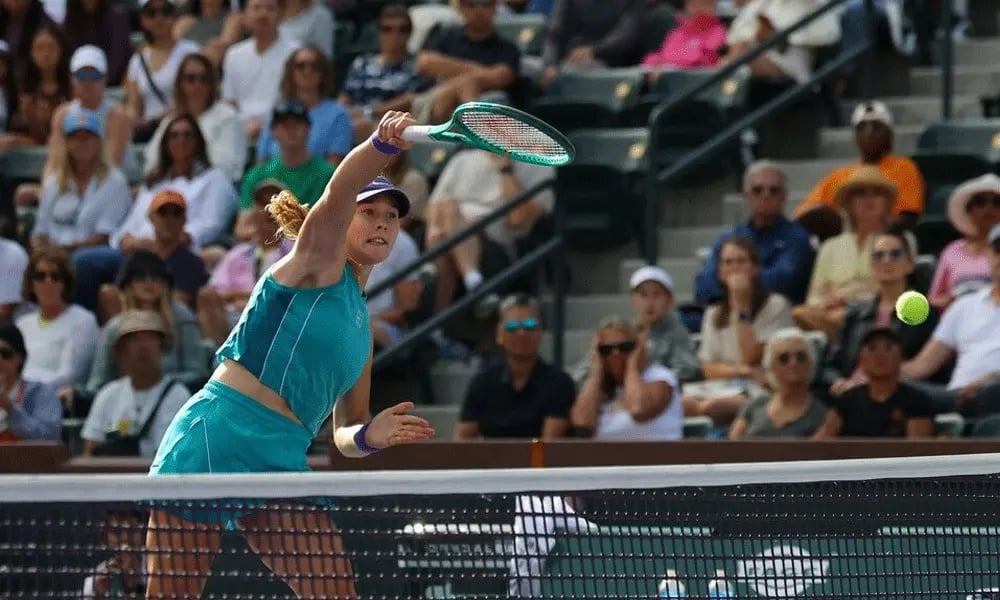
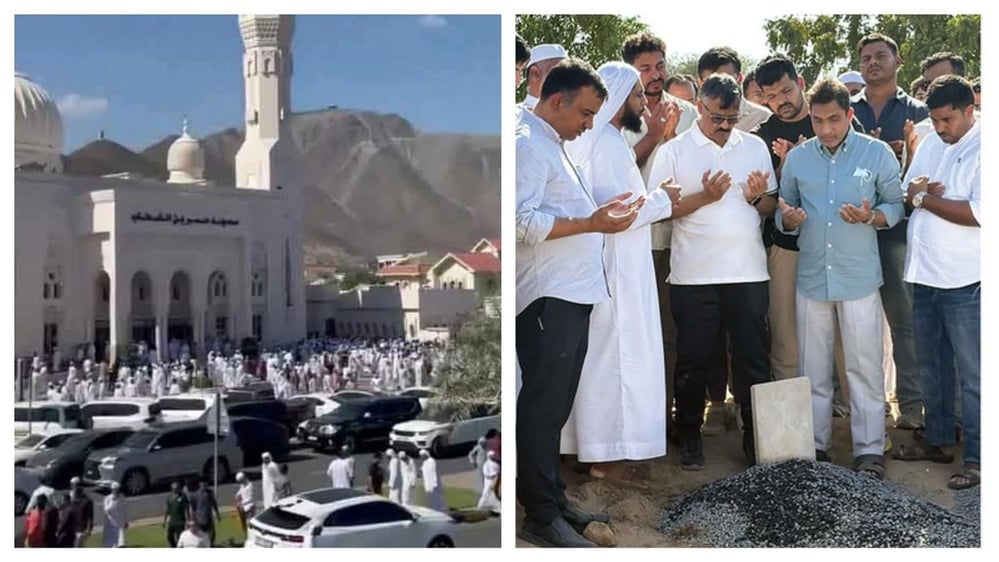
2026 © Helium Trades
Privacy Policy & Disclosure
* Disclaimer: Nothing on this website constitutes investment advice, performance data or any recommendation that any particular security, portfolio of securities, transaction or investment strategy is suitable for any specific person. Helium Trades is not responsible in any way for the accuracy
of any model predictions or price data. Any mention of a particular security and related prediction data is not a recommendation to buy or sell that security. Investments in securities involve the risk of loss. Past performance is no guarantee of future results. Helium Trades is not responsible for any of your investment decisions,
you should consult a financial expert before engaging in any transaction.
Helium Research Assistant

How can I help you today?
Ask any question about this page.


