See whether Helium helps you make better-informed decisions. Try every Pro Trader feature for 30 days. No credit card required.
Try every Pro Trader feature for 30 days. No credit card required.
July 20, 2026 · 0 shares
Disaster reporting is data-driven and neutrally framed, relying on official figures and humanitarian estimates with minimal ideological or sensational bias.
Report on Venezuela's June 24 twin earthquakes detailing death toll, injuries, displacement, missing persons, aftershocks, and the start of environmental recovery and reconstruction efforts.
Automated analysis; not human reviewed.
Limitations: Single-article analysis; potential state-data bias; translation and rounding effects; lack of cross-source methodological detail.
·
4 of 52 available dimensions scored; omitted dimensions are not treated as neutral.
·
Verified supporting quotes for 1 of 4 scored dimensions.
Claim: Neutral, data-driven framing with minimal ideological language.
“Venezuela’s twin earthquakes leave 5,208 dead as aftershocks top 1,300” · exact text match
“With search-and-rescue operations now largely complete, the government is increasingly turning its attention to rebuilding communities while addressing the environmental impact left by the disaster.” · exact text match
“The Ministry of Ecosocialism announced Sunday that it has begun implementing an environmental recovery plan along La Guaira’s coastline, the area hardest hit by the earthquakes.” · exact text match
Counterevidence:
“Tens of thousands of people also remain unaccounted for in the aftermath of the earthquakes.
Preliminary assessments released in late June by humanitarian organizations estimated that about 45,000 people were still missing, although many are believed to be isolated by damaged infrastructure and communications rather than trapped beneath the rubble.”
· exact text match
“one of Venezuela’s worst natural disasters in decades.” · exact text match
Why: Dominant use of official data and action items; severity descriptor exists but does not indicate ideological bias.
Claim: Overall neutral to descriptive framing with limited subjective language.
“The latest government figures show 23,820 displaced living in 107 temporary shelters, while authorities say they have provided assistance to 128,324 families affected by the disaster.” · not found in supplied text
“With search-and-rescue operations now largely complete, the government is increasingly turning its attention to rebuilding communities while addressing the environmental impact left by the disaster.” · exact text match
Counterevidence:
“The headline framing and phrases like 'one of Venezuela’s worst natural disasters in decades' introduce evaluative language.” · not found in supplied text
Why: Mostly descriptive; presence of some evaluative language is limited.
Claim: High credibility due to reliance on official figures and cross-sourced data.
“Venezuela’s Seismological Research Foundation reported 1,388 aftershocks” · exact text match
“official figures show 23,820 displaced and 856 buildings affected” · not found in supplied text
Why: Multiple sources and government data support credibility.
Claim: Article demonstrates substantial data reporting and structured recovery narrative.
“death toll 5,208” · not found in supplied text
“aftershocks 1,388” · not found in supplied text
“debris 2.106 million metric tons” · not found in supplied text
Why: Quantitative data and organized sections indicate substantive reporting.
Ambiguity in missing-person data; single-source reliance
Frames Israel's earthquake-relief mission as a constructive humanitarian effort that bridges long-standing hostility, citing Netanyahu's praise and a rapid recovery plan, while acknowledging uncertainty about restoring formal diplomatic relations.
Report on Israel's earthquake-relief mission in Venezuela, detailing deployment numbers, casualty figures, rebuilding plans, and diplomatic considerations amid past hostility.
Automated analysis; not human reviewed.
·
52 of 52 available dimensions scored; omitted dimensions are not treated as neutral.
·
Verified supporting quotes for 0 of 52 scored dimensions.
Claim: Pro-Israel framing with Netanyahu's praise and a positive portrayal of Israeli actions.
““You are rebuilding ruins, and you are also rebuilding relations,” Netanyahu said.
“You are showing the people of Venezuela, as well as the Venezuelan government, the true face of the State of Israel.””
· exact text match
“The conclusion of the mission capped an unusual episode of cooperation between Jerusalem and Caracas.” · exact text match
“Despite that history, Venezuelan officials requested Israeli assistance after earthquakes measuring magnitudes 7.2 and 7.5 struck within seconds of each other.” · not found in supplied text
Counterevidence:
“Whether the cooperation produces a formal restoration of diplomatic relations remains uncertain.” · exact text match
“Venezuela severed diplomatic relations with Israel in 2009 under then-President Hugo Chávez, becoming one of Israel’s most strident opponents in Latin America.” · exact text match
Why: Public praise and framing of cooperation suggest supportive tone, but historical hostility and future uncertainty temper it.
Claim: Use of concrete figures and procedural details enhances credibility.
“The Israeli team began mapping and classifying a pool of approximately 1,300 damaged buildings, sorting structures according to whether they were potentially salvageable or required demolition.” · not found in supplied text
“The team presented Rodríguez with key elements of a recovery plan developed jointly with Venezuelan authorities.” · not found in supplied text
“Venezuela later asked Israel to extend the mission beyond its originally scheduled departure.” · exact text match
Counterevidence:
“The article relies on official statements and could reflect political framing without independent corroboration.” · not found in supplied text
Why: Specific numbers and official actions support credibility, though corroboration beyond official sources is not shown.
Limited context; multi-headline content; possible pro-Israel framing.
July 20, 2026 · 0 shares
Disaster reporting is data-driven and neutrally framed, relying on official figures and humanitarian estimates with minimal ideological or sensational bias.
Report on Venezuela's June 24 twin earthquakes detailing death toll, injuries, displacement, missing persons, aftershocks, and the start of environmental recovery and reconstruction efforts.
Automated analysis; not human reviewed.
Limitations: Single-article analysis; potential state-data bias; translation and rounding effects; lack of cross-source methodological detail.
·
4 of 52 available dimensions scored; omitted dimensions are not treated as neutral.
·
Verified supporting quotes for 1 of 4 scored dimensions.
Claim: Neutral, data-driven framing with minimal ideological language.
“Venezuela’s twin earthquakes leave 5,208 dead as aftershocks top 1,300” · exact text match
“With search-and-rescue operations now largely complete, the government is increasingly turning its attention to rebuilding communities while addressing the environmental impact left by the disaster.” · exact text match
“The Ministry of Ecosocialism announced Sunday that it has begun implementing an environmental recovery plan along La Guaira’s coastline, the area hardest hit by the earthquakes.” · exact text match
Counterevidence:
“Tens of thousands of people also remain unaccounted for in the aftermath of the earthquakes.
Preliminary assessments released in late June by humanitarian organizations estimated that about 45,000 people were still missing, although many are believed to be isolated by damaged infrastructure and communications rather than trapped beneath the rubble.”
· exact text match
“one of Venezuela’s worst natural disasters in decades.” · exact text match
Why: Dominant use of official data and action items; severity descriptor exists but does not indicate ideological bias.
Claim: Overall neutral to descriptive framing with limited subjective language.
“The latest government figures show 23,820 displaced living in 107 temporary shelters, while authorities say they have provided assistance to 128,324 families affected by the disaster.” · not found in supplied text
“With search-and-rescue operations now largely complete, the government is increasingly turning its attention to rebuilding communities while addressing the environmental impact left by the disaster.” · exact text match
Counterevidence:
“The headline framing and phrases like 'one of Venezuela’s worst natural disasters in decades' introduce evaluative language.” · not found in supplied text
Why: Mostly descriptive; presence of some evaluative language is limited.
Claim: High credibility due to reliance on official figures and cross-sourced data.
“Venezuela’s Seismological Research Foundation reported 1,388 aftershocks” · exact text match
“official figures show 23,820 displaced and 856 buildings affected” · not found in supplied text
Why: Multiple sources and government data support credibility.
Claim: Article demonstrates substantial data reporting and structured recovery narrative.
“death toll 5,208” · not found in supplied text
“aftershocks 1,388” · not found in supplied text
“debris 2.106 million metric tons” · not found in supplied text
Why: Quantitative data and organized sections indicate substantive reporting.
Ambiguity in missing-person data; single-source reliance
Frames Israel's earthquake-relief mission as a constructive humanitarian effort that bridges long-standing hostility, citing Netanyahu's praise and a rapid recovery plan, while acknowledging uncertainty about restoring formal diplomatic relations.
Report on Israel's earthquake-relief mission in Venezuela, detailing deployment numbers, casualty figures, rebuilding plans, and diplomatic considerations amid past hostility.
Automated analysis; not human reviewed.
·
52 of 52 available dimensions scored; omitted dimensions are not treated as neutral.
·
Verified supporting quotes for 0 of 52 scored dimensions.
Claim: Pro-Israel framing with Netanyahu's praise and a positive portrayal of Israeli actions.
““You are rebuilding ruins, and you are also rebuilding relations,” Netanyahu said.
“You are showing the people of Venezuela, as well as the Venezuelan government, the true face of the State of Israel.””
· exact text match
“The conclusion of the mission capped an unusual episode of cooperation between Jerusalem and Caracas.” · exact text match
“Despite that history, Venezuelan officials requested Israeli assistance after earthquakes measuring magnitudes 7.2 and 7.5 struck within seconds of each other.” · not found in supplied text
Counterevidence:
“Whether the cooperation produces a formal restoration of diplomatic relations remains uncertain.” · exact text match
“Venezuela severed diplomatic relations with Israel in 2009 under then-President Hugo Chávez, becoming one of Israel’s most strident opponents in Latin America.” · exact text match
Why: Public praise and framing of cooperation suggest supportive tone, but historical hostility and future uncertainty temper it.
Claim: Use of concrete figures and procedural details enhances credibility.
“The Israeli team began mapping and classifying a pool of approximately 1,300 damaged buildings, sorting structures according to whether they were potentially salvageable or required demolition.” · not found in supplied text
“The team presented Rodríguez with key elements of a recovery plan developed jointly with Venezuelan authorities.” · not found in supplied text
“Venezuela later asked Israel to extend the mission beyond its originally scheduled departure.” · exact text match
Counterevidence:
“The article relies on official statements and could reflect political framing without independent corroboration.” · not found in supplied text
Why: Specific numbers and official actions support credibility, though corroboration beyond official sources is not shown.
Limited context; multi-headline content; possible pro-Israel framing.
July 22, 2026 · 0 shares
Fragmented, event-focused compilation mixing Venezuela earthquake coverage with unrelated international headlines, showing no clear editorial stance but highlighting disaster impacts alongside war and policy topics.
Unstructured aggregation blending Venezuela earthquake aftermath with a set of unrelated international headlines.
Automated analysis; not human reviewed.
Limitations: Case-specific; relies on a single, fragmented article fragment with multiple headlines; interpretation could vary with full context.
·
47 of 52 available dimensions scored; omitted dimensions are not treated as neutral.
·
Verified supporting quotes for 2 of 47 scored dimensions.
Claim: No evident tilt toward liberal or conservative framing; coverage is event-driven.
“Desperate families search rubble weeks after Venezuela earthquakes.” · exact text match
“Families in Venezuela search through the rubble of their homes, weeks after the 7.2 and 7.5 magnitude earthquakes hit the country.” · exact text match
“The death toll has risen to 5,278 with the United Nations estimating more than 50,000 people are still missing.” · exact text match
Counterevidence:
“Hegseth called a ‘failure’ over Iran as he reveals $37b cost of war” · exact text match
“Mamdani: Netanyahu is a war criminal, but New York cannot arrest him” · exact text match
Why: Diverse event topics are presented without a single partisan framing; some war-related quotes appear, but they are attributed to others, not the publisher.
Claim: There is mild emotional framing via the descriptor 'Desperate' in reference to families.
“Desperate families search rubble weeks after Venezuela earthquakes.” · exact text match
Counterevidence:
“The rest of the items are neutral headlines lacking emotional framing.” · not found in supplied text
Why: The emotive term appears once and does not sustain a broad emotional framing.
Mixed headlines; limited data; potential ambiguity in framing.
Publisher framing emphasizes chronic underfunding, mismanagement, and doctor emigration as roots of Venezuela's health crisis, deploying government and PAHO/UN data to advocate international aid and technocratic reforms amid the June 2026 earthquakes.
Background: Venezuela's health system has long suffered underfunding and mismanagement, including mission-driven reforms and doctor emigration, with the June 2026 earthquakes intensifying pressures and prompting calls for international aid and systemic reform.
Automated analysis; not human reviewed. Limitations: Concise, case-specific limitations and plausible alternative interpretations.
Counts/dates may vary; relies on PAHO/government sources.
July 20, 2026 · 0 shares
Disaster reporting is data-driven and neutrally framed, relying on official figures and humanitarian estimates with minimal ideological or sensational bias.
Report on Venezuela's June 24 twin earthquakes detailing death toll, injuries, displacement, missing persons, aftershocks, and the start of environmental recovery and reconstruction efforts.
Automated analysis; not human reviewed.
Limitations: Single-article analysis; potential state-data bias; translation and rounding effects; lack of cross-source methodological detail.
·
4 of 52 available dimensions scored; omitted dimensions are not treated as neutral.
·
Verified supporting quotes for 1 of 4 scored dimensions.
Claim: Neutral, data-driven framing with minimal ideological language.
“Venezuela’s twin earthquakes leave 5,208 dead as aftershocks top 1,300” · exact text match
“With search-and-rescue operations now largely complete, the government is increasingly turning its attention to rebuilding communities while addressing the environmental impact left by the disaster.” · exact text match
“The Ministry of Ecosocialism announced Sunday that it has begun implementing an environmental recovery plan along La Guaira’s coastline, the area hardest hit by the earthquakes.” · exact text match
Counterevidence:
“Tens of thousands of people also remain unaccounted for in the aftermath of the earthquakes.
Preliminary assessments released in late June by humanitarian organizations estimated that about 45,000 people were still missing, although many are believed to be isolated by damaged infrastructure and communications rather than trapped beneath the rubble.”
· exact text match
“one of Venezuela’s worst natural disasters in decades.” · exact text match
Why: Dominant use of official data and action items; severity descriptor exists but does not indicate ideological bias.
Claim: Overall neutral to descriptive framing with limited subjective language.
“The latest government figures show 23,820 displaced living in 107 temporary shelters, while authorities say they have provided assistance to 128,324 families affected by the disaster.” · not found in supplied text
“With search-and-rescue operations now largely complete, the government is increasingly turning its attention to rebuilding communities while addressing the environmental impact left by the disaster.” · exact text match
Counterevidence:
“The headline framing and phrases like 'one of Venezuela’s worst natural disasters in decades' introduce evaluative language.” · not found in supplied text
Why: Mostly descriptive; presence of some evaluative language is limited.
Claim: High credibility due to reliance on official figures and cross-sourced data.
“Venezuela’s Seismological Research Foundation reported 1,388 aftershocks” · exact text match
“official figures show 23,820 displaced and 856 buildings affected” · not found in supplied text
Why: Multiple sources and government data support credibility.
Claim: Article demonstrates substantial data reporting and structured recovery narrative.
“death toll 5,208” · not found in supplied text
“aftershocks 1,388” · not found in supplied text
“debris 2.106 million metric tons” · not found in supplied text
Why: Quantitative data and organized sections indicate substantive reporting.
Ambiguity in missing-person data; single-source reliance
July 23, 2026 · 0 shares
Publisher frames Venezuela's earthquake damages and recovery needs through World Bank Group's Global Rapid Damage Estimation (GRADE) as an independent, fast, evidence-based basis for recovery planning, foregrounding data reliability and prioritization of reconstruction funding.
GRADE assessment by the World Bank Group provides early damage estimates and reconstruction guidance for Venezuela following the 24 June earthquakes.
Automated analysis; not human reviewed.
Limitations: Concise, case-specific limitations and plausible alternative interpretations.
·
1 of 52 available dimensions scored; omitted dimensions are not treated as neutral.
·
Verified supporting quotes for 0 of 1 scored dimensions.
July 23, 2026 · 0 shares
Publisher framing foregrounds quantified World Bank damage estimates and GRADE methodology while highlighting sanctions and U.S. involvement to cast recovery as contingent on external factors, using emotive victim imagery alongside official data.
The World Bank used Global Rapid Damage Estimation (GRADE) to quantify earthquake damage in Venezuela, relying on local seismic data, satellite imagery, and reports from government and humanitarian groups.
Publisher framing emphasizes chronic underfunding, mismanagement, and doctor emigration as roots of Venezuela's health crisis, deploying government and PAHO/UN data to advocate international aid and technocratic reforms amid the June 2026 earthquakes.
Background: Venezuela's health system has long suffered underfunding and mismanagement, including mission-driven reforms and doctor emigration, with the June 2026 earthquakes intensifying pressures and prompting calls for international aid and systemic reform.
Automated analysis; not human reviewed. Limitations: Concise, case-specific limitations and plausible alternative interpretations.
Counts/dates may vary; relies on PAHO/government sources.
Ars Technica frames snake robotics as a credible, minimally invasive disaster-search tool, foregrounding expert authority and humanitarian data within a geopolitically contextual narrative.
Carnegie Mellon researchers deployed snake robots to assist in international search-and-rescue after Venezuela's earthquakes.
Automated analysis; not human reviewed. Limitations: Concise, case-specific limitations and plausible alternative interpretations.
Publisher framing emphasizes chronic underfunding, mismanagement, and doctor emigration as roots of Venezuela's health crisis, deploying government and PAHO/UN data to advocate international aid and technocratic reforms amid the June 2026 earthquakes.
Background: Venezuela's health system has long suffered underfunding and mismanagement, including mission-driven reforms and doctor emigration, with the June 2026 earthquakes intensifying pressures and prompting calls for international aid and systemic reform.
Automated analysis; not human reviewed. Limitations: Concise, case-specific limitations and plausible alternative interpretations.
Counts/dates may vary; relies on PAHO/government sources.
Publisher framing emphasizes chronic underfunding, mismanagement, and doctor emigration as roots of Venezuela's health crisis, deploying government and PAHO/UN data to advocate international aid and technocratic reforms amid the June 2026 earthquakes.
Background: Venezuela's health system has long suffered underfunding and mismanagement, including mission-driven reforms and doctor emigration, with the June 2026 earthquakes intensifying pressures and prompting calls for international aid and systemic reform.
Automated analysis; not human reviewed. Limitations: Concise, case-specific limitations and plausible alternative interpretations.
Counts/dates may vary; relies on PAHO/government sources.
Ars Technica frames snake robotics as a credible, minimally invasive disaster-search tool, foregrounding expert authority and humanitarian data within a geopolitically contextual narrative.
Carnegie Mellon researchers deployed snake robots to assist in international search-and-rescue after Venezuela's earthquakes.
Automated analysis; not human reviewed. Limitations: Concise, case-specific limitations and plausible alternative interpretations.
Frames Israel's earthquake-relief mission as a constructive humanitarian effort that bridges long-standing hostility, citing Netanyahu's praise and a rapid recovery plan, while acknowledging uncertainty about restoring formal diplomatic relations.
Report on Israel's earthquake-relief mission in Venezuela, detailing deployment numbers, casualty figures, rebuilding plans, and diplomatic considerations amid past hostility.
Automated analysis; not human reviewed.
·
52 of 52 available dimensions scored; omitted dimensions are not treated as neutral.
·
Verified supporting quotes for 0 of 52 scored dimensions.
Claim: Pro-Israel framing with Netanyahu's praise and a positive portrayal of Israeli actions.
““You are rebuilding ruins, and you are also rebuilding relations,” Netanyahu said.
“You are showing the people of Venezuela, as well as the Venezuelan government, the true face of the State of Israel.””
· exact text match
“The conclusion of the mission capped an unusual episode of cooperation between Jerusalem and Caracas.” · exact text match
“Despite that history, Venezuelan officials requested Israeli assistance after earthquakes measuring magnitudes 7.2 and 7.5 struck within seconds of each other.” · not found in supplied text
Counterevidence:
“Whether the cooperation produces a formal restoration of diplomatic relations remains uncertain.” · exact text match
“Venezuela severed diplomatic relations with Israel in 2009 under then-President Hugo Chávez, becoming one of Israel’s most strident opponents in Latin America.” · exact text match
Why: Public praise and framing of cooperation suggest supportive tone, but historical hostility and future uncertainty temper it.
Claim: Use of concrete figures and procedural details enhances credibility.
“The Israeli team began mapping and classifying a pool of approximately 1,300 damaged buildings, sorting structures according to whether they were potentially salvageable or required demolition.” · not found in supplied text
“The team presented Rodríguez with key elements of a recovery plan developed jointly with Venezuelan authorities.” · not found in supplied text
“Venezuela later asked Israel to extend the mission beyond its originally scheduled departure.” · exact text match
Counterevidence:
“The article relies on official statements and could reflect political framing without independent corroboration.” · not found in supplied text
Why: Specific numbers and official actions support credibility, though corroboration beyond official sources is not shown.
Limited context; multi-headline content; possible pro-Israel framing.
July 23, 2026 · 0 shares
Publisher frames Venezuela's earthquake damages and recovery needs through World Bank Group's Global Rapid Damage Estimation (GRADE) as an independent, fast, evidence-based basis for recovery planning, foregrounding data reliability and prioritization of reconstruction funding.
GRADE assessment by the World Bank Group provides early damage estimates and reconstruction guidance for Venezuela following the 24 June earthquakes.
Automated analysis; not human reviewed. Limitations: Concise, case-specific limitations and plausible alternative interpretations. · 1 of 52 available dimensions scored; omitted dimensions are not treated as neutral. · Verified supporting quotes for 0 of 1 scored dimensions.
July 23, 2026 · 0 shares
Publisher framing foregrounds quantified World Bank damage estimates and GRADE methodology while highlighting sanctions and U.S. involvement to cast recovery as contingent on external factors, using emotive victim imagery alongside official data.
The World Bank used Global Rapid Damage Estimation (GRADE) to quantify earthquake damage in Venezuela, relying on local seismic data, satellite imagery, and reports from government and humanitarian groups.
July 20, 2026 · 0 shares
Disaster reporting is data-driven and neutrally framed, relying on official figures and humanitarian estimates with minimal ideological or sensational bias.
Report on Venezuela's June 24 twin earthquakes detailing death toll, injuries, displacement, missing persons, aftershocks, and the start of environmental recovery and reconstruction efforts.
Automated analysis; not human reviewed. Limitations: Single-article analysis; potential state-data bias; translation and rounding effects; lack of cross-source methodological detail. · 4 of 52 available dimensions scored; omitted dimensions are not treated as neutral. · Verified supporting quotes for 1 of 4 scored dimensions.
Claim: Neutral, data-driven framing with minimal ideological language.
“Venezuela’s twin earthquakes leave 5,208 dead as aftershocks top 1,300” · exact text match
“With search-and-rescue operations now largely complete, the government is increasingly turning its attention to rebuilding communities while addressing the environmental impact left by the disaster.” · exact text match
“The Ministry of Ecosocialism announced Sunday that it has begun implementing an environmental recovery plan along La Guaira’s coastline, the area hardest hit by the earthquakes.” · exact text match
Counterevidence:
“Tens of thousands of people also remain unaccounted for in the aftermath of the earthquakes. Preliminary assessments released in late June by humanitarian organizations estimated that about 45,000 people were still missing, although many are believed to be isolated by damaged infrastructure and communications rather than trapped beneath the rubble.” · exact text match
“one of Venezuela’s worst natural disasters in decades.” · exact text match
Why: Dominant use of official data and action items; severity descriptor exists but does not indicate ideological bias.
Claim: Overall neutral to descriptive framing with limited subjective language.
“The latest government figures show 23,820 displaced living in 107 temporary shelters, while authorities say they have provided assistance to 128,324 families affected by the disaster.” · not found in supplied text
“With search-and-rescue operations now largely complete, the government is increasingly turning its attention to rebuilding communities while addressing the environmental impact left by the disaster.” · exact text match
Counterevidence:
“The headline framing and phrases like 'one of Venezuela’s worst natural disasters in decades' introduce evaluative language.” · not found in supplied text
Why: Mostly descriptive; presence of some evaluative language is limited.
Claim: High credibility due to reliance on official figures and cross-sourced data.
“Venezuela’s Seismological Research Foundation reported 1,388 aftershocks” · exact text match
“official figures show 23,820 displaced and 856 buildings affected” · not found in supplied text
Why: Multiple sources and government data support credibility.
Claim: Article demonstrates substantial data reporting and structured recovery narrative.
“death toll 5,208” · not found in supplied text
“aftershocks 1,388” · not found in supplied text
“debris 2.106 million metric tons” · not found in supplied text
Why: Quantitative data and organized sections indicate substantive reporting.
Ambiguity in missing-person data; single-source reliance
Frames Israel's earthquake-relief mission as a constructive humanitarian effort that bridges long-standing hostility, citing Netanyahu's praise and a rapid recovery plan, while acknowledging uncertainty about restoring formal diplomatic relations.
Report on Israel's earthquake-relief mission in Venezuela, detailing deployment numbers, casualty figures, rebuilding plans, and diplomatic considerations amid past hostility.
Automated analysis; not human reviewed. · 52 of 52 available dimensions scored; omitted dimensions are not treated as neutral. · Verified supporting quotes for 0 of 52 scored dimensions.
Claim: Pro-Israel framing with Netanyahu's praise and a positive portrayal of Israeli actions.
““You are rebuilding ruins, and you are also rebuilding relations,” Netanyahu said. “You are showing the people of Venezuela, as well as the Venezuelan government, the true face of the State of Israel.”” · exact text match
“The conclusion of the mission capped an unusual episode of cooperation between Jerusalem and Caracas.” · exact text match
“Despite that history, Venezuelan officials requested Israeli assistance after earthquakes measuring magnitudes 7.2 and 7.5 struck within seconds of each other.” · not found in supplied text
Counterevidence:
“Whether the cooperation produces a formal restoration of diplomatic relations remains uncertain.” · exact text match
“Venezuela severed diplomatic relations with Israel in 2009 under then-President Hugo Chávez, becoming one of Israel’s most strident opponents in Latin America.” · exact text match
Why: Public praise and framing of cooperation suggest supportive tone, but historical hostility and future uncertainty temper it.
Claim: Use of concrete figures and procedural details enhances credibility.
“The Israeli team began mapping and classifying a pool of approximately 1,300 damaged buildings, sorting structures according to whether they were potentially salvageable or required demolition.” · not found in supplied text
“The team presented Rodríguez with key elements of a recovery plan developed jointly with Venezuelan authorities.” · not found in supplied text
“Venezuela later asked Israel to extend the mission beyond its originally scheduled departure.” · exact text match
Counterevidence:
“The article relies on official statements and could reflect political framing without independent corroboration.” · not found in supplied text
Why: Specific numbers and official actions support credibility, though corroboration beyond official sources is not shown.
Limited context; multi-headline content; possible pro-Israel framing.
July 22, 2026 · 0 shares
Fragmented, event-focused compilation mixing Venezuela earthquake coverage with unrelated international headlines, showing no clear editorial stance but highlighting disaster impacts alongside war and policy topics.
Unstructured aggregation blending Venezuela earthquake aftermath with a set of unrelated international headlines.
Automated analysis; not human reviewed. Limitations: Case-specific; relies on a single, fragmented article fragment with multiple headlines; interpretation could vary with full context. · 47 of 52 available dimensions scored; omitted dimensions are not treated as neutral. · Verified supporting quotes for 2 of 47 scored dimensions.
Claim: No evident tilt toward liberal or conservative framing; coverage is event-driven.
“Desperate families search rubble weeks after Venezuela earthquakes.” · exact text match
“Families in Venezuela search through the rubble of their homes, weeks after the 7.2 and 7.5 magnitude earthquakes hit the country.” · exact text match
“The death toll has risen to 5,278 with the United Nations estimating more than 50,000 people are still missing.” · exact text match
Counterevidence:
“Hegseth called a ‘failure’ over Iran as he reveals $37b cost of war” · exact text match
“Mamdani: Netanyahu is a war criminal, but New York cannot arrest him” · exact text match
Why: Diverse event topics are presented without a single partisan framing; some war-related quotes appear, but they are attributed to others, not the publisher.
Claim: There is mild emotional framing via the descriptor 'Desperate' in reference to families.
“Desperate families search rubble weeks after Venezuela earthquakes.” · exact text match
Counterevidence:
“The rest of the items are neutral headlines lacking emotional framing.” · not found in supplied text
Why: The emotive term appears once and does not sustain a broad emotional framing.
Mixed headlines; limited data; potential ambiguity in framing.
Publisher framing emphasizes chronic underfunding, mismanagement, and doctor emigration as roots of Venezuela's health crisis, deploying government and PAHO/UN data to advocate international aid and technocratic reforms amid the June 2026 earthquakes.
Background: Venezuela's health system has long suffered underfunding and mismanagement, including mission-driven reforms and doctor emigration, with the June 2026 earthquakes intensifying pressures and prompting calls for international aid and systemic reform.
Automated analysis; not human reviewed. Limitations: Concise, case-specific limitations and plausible alternative interpretations.
Counts/dates may vary; relies on PAHO/government sources.
Publisher framing emphasizes chronic underfunding, mismanagement, and doctor emigration as roots of Venezuela's health crisis, deploying government and PAHO/UN data to advocate international aid and technocratic reforms amid the June 2026 earthquakes.
Background: Venezuela's health system has long suffered underfunding and mismanagement, including mission-driven reforms and doctor emigration, with the June 2026 earthquakes intensifying pressures and prompting calls for international aid and systemic reform.
Automated analysis; not human reviewed. Limitations: Concise, case-specific limitations and plausible alternative interpretations.
Counts/dates may vary; relies on PAHO/government sources.
Ars Technica frames snake robotics as a credible, minimally invasive disaster-search tool, foregrounding expert authority and humanitarian data within a geopolitically contextual narrative.
Carnegie Mellon researchers deployed snake robots to assist in international search-and-rescue after Venezuela's earthquakes.
Automated analysis; not human reviewed. Limitations: Concise, case-specific limitations and plausible alternative interpretations.
Ars Technica frames snake robotics as a credible, minimally invasive disaster-search tool, foregrounding expert authority and humanitarian data within a geopolitically contextual narrative.
Carnegie Mellon researchers deployed snake robots to assist in international search-and-rescue after Venezuela's earthquakes.
Automated analysis; not human reviewed. Limitations: Concise, case-specific limitations and plausible alternative interpretations.
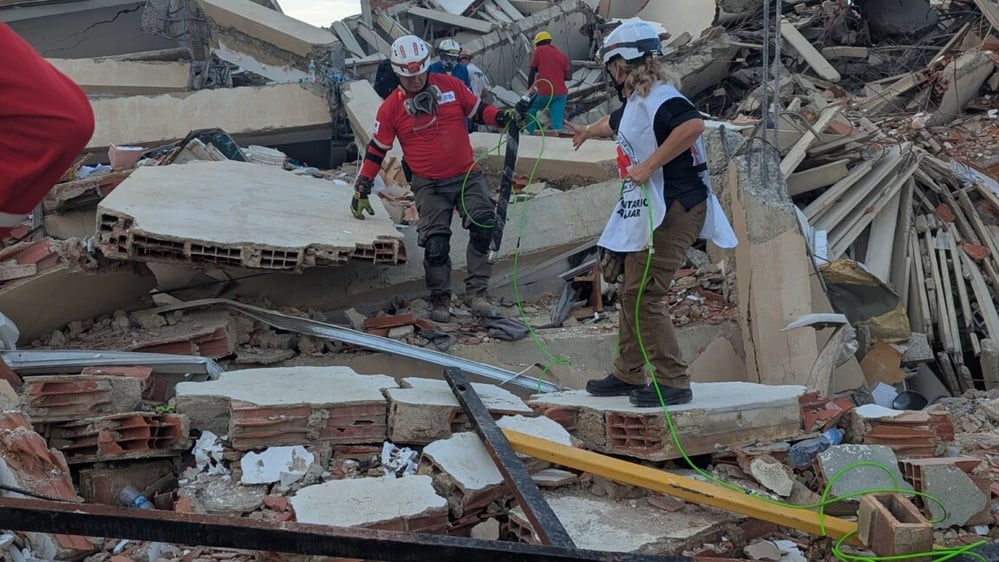
Affected residents and local responders
AP frames Venezuela earthquake coverage as on-the-ground, balanced photo storytelling with editor-curated visuals and open-access journalism aimed at a broad audience.
AP photo gallery on the aftermath of Venezuela earthquakes, emphasizing on-the-ground coverage and balanced framing.
Automated analysis; not human reviewed. · 29 of 52 available dimensions scored; omitted dimensions are not treated as neutral. · Verified supporting quotes for 0 of 29 scored dimensions.
July 22, 2026 · 0 shares
Fragmented, event-focused compilation mixing Venezuela earthquake coverage with unrelated international headlines, showing no clear editorial stance but highlighting disaster impacts alongside war and policy topics.
Unstructured aggregation blending Venezuela earthquake aftermath with a set of unrelated international headlines.
Automated analysis; not human reviewed. Limitations: Case-specific; relies on a single, fragmented article fragment with multiple headlines; interpretation could vary with full context. · 47 of 52 available dimensions scored; omitted dimensions are not treated as neutral. · Verified supporting quotes for 2 of 47 scored dimensions.
Claim: No evident tilt toward liberal or conservative framing; coverage is event-driven.
“Desperate families search rubble weeks after Venezuela earthquakes.” · exact text match
“Families in Venezuela search through the rubble of their homes, weeks after the 7.2 and 7.5 magnitude earthquakes hit the country.” · exact text match
“The death toll has risen to 5,278 with the United Nations estimating more than 50,000 people are still missing.” · exact text match
Counterevidence:
“Hegseth called a ‘failure’ over Iran as he reveals $37b cost of war” · exact text match
“Mamdani: Netanyahu is a war criminal, but New York cannot arrest him” · exact text match
Why: Diverse event topics are presented without a single partisan framing; some war-related quotes appear, but they are attributed to others, not the publisher.
Claim: There is mild emotional framing via the descriptor 'Desperate' in reference to families.
“Desperate families search rubble weeks after Venezuela earthquakes.” · exact text match
Counterevidence:
“The rest of the items are neutral headlines lacking emotional framing.” · not found in supplied text
Why: The emotive term appears once and does not sustain a broad emotional framing.
Mixed headlines; limited data; potential ambiguity in framing.
July 20, 2026 · 0 shares
Disaster reporting is data-driven and neutrally framed, relying on official figures and humanitarian estimates with minimal ideological or sensational bias.
Report on Venezuela's June 24 twin earthquakes detailing death toll, injuries, displacement, missing persons, aftershocks, and the start of environmental recovery and reconstruction efforts.
Automated analysis; not human reviewed. Limitations: Single-article analysis; potential state-data bias; translation and rounding effects; lack of cross-source methodological detail. · 4 of 52 available dimensions scored; omitted dimensions are not treated as neutral. · Verified supporting quotes for 1 of 4 scored dimensions.
Claim: Neutral, data-driven framing with minimal ideological language.
“Venezuela’s twin earthquakes leave 5,208 dead as aftershocks top 1,300” · exact text match
“With search-and-rescue operations now largely complete, the government is increasingly turning its attention to rebuilding communities while addressing the environmental impact left by the disaster.” · exact text match
“The Ministry of Ecosocialism announced Sunday that it has begun implementing an environmental recovery plan along La Guaira’s coastline, the area hardest hit by the earthquakes.” · exact text match
Counterevidence:
“Tens of thousands of people also remain unaccounted for in the aftermath of the earthquakes. Preliminary assessments released in late June by humanitarian organizations estimated that about 45,000 people were still missing, although many are believed to be isolated by damaged infrastructure and communications rather than trapped beneath the rubble.” · exact text match
“one of Venezuela’s worst natural disasters in decades.” · exact text match
Why: Dominant use of official data and action items; severity descriptor exists but does not indicate ideological bias.
Claim: Overall neutral to descriptive framing with limited subjective language.
“The latest government figures show 23,820 displaced living in 107 temporary shelters, while authorities say they have provided assistance to 128,324 families affected by the disaster.” · not found in supplied text
“With search-and-rescue operations now largely complete, the government is increasingly turning its attention to rebuilding communities while addressing the environmental impact left by the disaster.” · exact text match
Counterevidence:
“The headline framing and phrases like 'one of Venezuela’s worst natural disasters in decades' introduce evaluative language.” · not found in supplied text
Why: Mostly descriptive; presence of some evaluative language is limited.
Claim: High credibility due to reliance on official figures and cross-sourced data.
“Venezuela’s Seismological Research Foundation reported 1,388 aftershocks” · exact text match
“official figures show 23,820 displaced and 856 buildings affected” · not found in supplied text
Why: Multiple sources and government data support credibility.
Claim: Article demonstrates substantial data reporting and structured recovery narrative.
“death toll 5,208” · not found in supplied text
“aftershocks 1,388” · not found in supplied text
“debris 2.106 million metric tons” · not found in supplied text
Why: Quantitative data and organized sections indicate substantive reporting.
Ambiguity in missing-person data; single-source reliance
AP frames Venezuela earthquake coverage as on-the-ground, balanced photo storytelling with editor-curated visuals and open-access journalism aimed at a broad audience.
AP photo gallery on the aftermath of Venezuela earthquakes, emphasizing on-the-ground coverage and balanced framing.
Automated analysis; not human reviewed. · 29 of 52 available dimensions scored; omitted dimensions are not treated as neutral. · Verified supporting quotes for 0 of 29 scored dimensions.
July 22, 2026 · 0 shares
Fragmented, event-focused compilation mixing Venezuela earthquake coverage with unrelated international headlines, showing no clear editorial stance but highlighting disaster impacts alongside war and policy topics.
Unstructured aggregation blending Venezuela earthquake aftermath with a set of unrelated international headlines.
Automated analysis; not human reviewed. Limitations: Case-specific; relies on a single, fragmented article fragment with multiple headlines; interpretation could vary with full context. · 47 of 52 available dimensions scored; omitted dimensions are not treated as neutral. · Verified supporting quotes for 2 of 47 scored dimensions.
Claim: No evident tilt toward liberal or conservative framing; coverage is event-driven.
“Desperate families search rubble weeks after Venezuela earthquakes.” · exact text match
“Families in Venezuela search through the rubble of their homes, weeks after the 7.2 and 7.5 magnitude earthquakes hit the country.” · exact text match
“The death toll has risen to 5,278 with the United Nations estimating more than 50,000 people are still missing.” · exact text match
Counterevidence:
“Hegseth called a ‘failure’ over Iran as he reveals $37b cost of war” · exact text match
“Mamdani: Netanyahu is a war criminal, but New York cannot arrest him” · exact text match
Why: Diverse event topics are presented without a single partisan framing; some war-related quotes appear, but they are attributed to others, not the publisher.
Claim: There is mild emotional framing via the descriptor 'Desperate' in reference to families.
“Desperate families search rubble weeks after Venezuela earthquakes.” · exact text match
Counterevidence:
“The rest of the items are neutral headlines lacking emotional framing.” · not found in supplied text
Why: The emotive term appears once and does not sustain a broad emotional framing.
Mixed headlines; limited data; potential ambiguity in framing.
July 20, 2026 · 0 shares
Disaster reporting is data-driven and neutrally framed, relying on official figures and humanitarian estimates with minimal ideological or sensational bias.
Report on Venezuela's June 24 twin earthquakes detailing death toll, injuries, displacement, missing persons, aftershocks, and the start of environmental recovery and reconstruction efforts.
Automated analysis; not human reviewed. Limitations: Single-article analysis; potential state-data bias; translation and rounding effects; lack of cross-source methodological detail. · 4 of 52 available dimensions scored; omitted dimensions are not treated as neutral. · Verified supporting quotes for 1 of 4 scored dimensions.
Claim: Neutral, data-driven framing with minimal ideological language.
“Venezuela’s twin earthquakes leave 5,208 dead as aftershocks top 1,300” · exact text match
“With search-and-rescue operations now largely complete, the government is increasingly turning its attention to rebuilding communities while addressing the environmental impact left by the disaster.” · exact text match
“The Ministry of Ecosocialism announced Sunday that it has begun implementing an environmental recovery plan along La Guaira’s coastline, the area hardest hit by the earthquakes.” · exact text match
Counterevidence:
“Tens of thousands of people also remain unaccounted for in the aftermath of the earthquakes. Preliminary assessments released in late June by humanitarian organizations estimated that about 45,000 people were still missing, although many are believed to be isolated by damaged infrastructure and communications rather than trapped beneath the rubble.” · exact text match
“one of Venezuela’s worst natural disasters in decades.” · exact text match
Why: Dominant use of official data and action items; severity descriptor exists but does not indicate ideological bias.
Claim: Overall neutral to descriptive framing with limited subjective language.
“The latest government figures show 23,820 displaced living in 107 temporary shelters, while authorities say they have provided assistance to 128,324 families affected by the disaster.” · not found in supplied text
“With search-and-rescue operations now largely complete, the government is increasingly turning its attention to rebuilding communities while addressing the environmental impact left by the disaster.” · exact text match
Counterevidence:
“The headline framing and phrases like 'one of Venezuela’s worst natural disasters in decades' introduce evaluative language.” · not found in supplied text
Why: Mostly descriptive; presence of some evaluative language is limited.
Claim: High credibility due to reliance on official figures and cross-sourced data.
“Venezuela’s Seismological Research Foundation reported 1,388 aftershocks” · exact text match
“official figures show 23,820 displaced and 856 buildings affected” · not found in supplied text
Why: Multiple sources and government data support credibility.
Claim: Article demonstrates substantial data reporting and structured recovery narrative.
“death toll 5,208” · not found in supplied text
“aftershocks 1,388” · not found in supplied text
“debris 2.106 million metric tons” · not found in supplied text
Why: Quantitative data and organized sections indicate substantive reporting.
Ambiguity in missing-person data; single-source reliance
Helium Bias
July 23, 2026 · 0 shares
Publisher frames Venezuela's earthquake damages and recovery needs through World Bank Group's Global Rapid Damage Estimation (GRADE) as an independent, fast, evidence-based basis for recovery planning, foregrounding data reliability and prioritization of reconstruction funding.
GRADE assessment by the World Bank Group provides early damage estimates and reconstruction guidance for Venezuela following the 24 June earthquakes.
Automated analysis; not human reviewed. Limitations: Concise, case-specific limitations and plausible alternative interpretations. · 1 of 52 available dimensions scored; omitted dimensions are not treated as neutral. · Verified supporting quotes for 0 of 1 scored dimensions.
July 20, 2026 · 0 shares
Disaster reporting is data-driven and neutrally framed, relying on official figures and humanitarian estimates with minimal ideological or sensational bias.
Report on Venezuela's June 24 twin earthquakes detailing death toll, injuries, displacement, missing persons, aftershocks, and the start of environmental recovery and reconstruction efforts.
Automated analysis; not human reviewed. Limitations: Single-article analysis; potential state-data bias; translation and rounding effects; lack of cross-source methodological detail. · 4 of 52 available dimensions scored; omitted dimensions are not treated as neutral. · Verified supporting quotes for 1 of 4 scored dimensions.
Claim: Neutral, data-driven framing with minimal ideological language.
“Venezuela’s twin earthquakes leave 5,208 dead as aftershocks top 1,300” · exact text match
“With search-and-rescue operations now largely complete, the government is increasingly turning its attention to rebuilding communities while addressing the environmental impact left by the disaster.” · exact text match
“The Ministry of Ecosocialism announced Sunday that it has begun implementing an environmental recovery plan along La Guaira’s coastline, the area hardest hit by the earthquakes.” · exact text match
Counterevidence:
“Tens of thousands of people also remain unaccounted for in the aftermath of the earthquakes. Preliminary assessments released in late June by humanitarian organizations estimated that about 45,000 people were still missing, although many are believed to be isolated by damaged infrastructure and communications rather than trapped beneath the rubble.” · exact text match
“one of Venezuela’s worst natural disasters in decades.” · exact text match
Why: Dominant use of official data and action items; severity descriptor exists but does not indicate ideological bias.
Claim: Overall neutral to descriptive framing with limited subjective language.
“The latest government figures show 23,820 displaced living in 107 temporary shelters, while authorities say they have provided assistance to 128,324 families affected by the disaster.” · not found in supplied text
“With search-and-rescue operations now largely complete, the government is increasingly turning its attention to rebuilding communities while addressing the environmental impact left by the disaster.” · exact text match
Counterevidence:
“The headline framing and phrases like 'one of Venezuela’s worst natural disasters in decades' introduce evaluative language.” · not found in supplied text
Why: Mostly descriptive; presence of some evaluative language is limited.
Claim: High credibility due to reliance on official figures and cross-sourced data.
“Venezuela’s Seismological Research Foundation reported 1,388 aftershocks” · exact text match
“official figures show 23,820 displaced and 856 buildings affected” · not found in supplied text
Why: Multiple sources and government data support credibility.
Claim: Article demonstrates substantial data reporting and structured recovery narrative.
“death toll 5,208” · not found in supplied text
“aftershocks 1,388” · not found in supplied text
“debris 2.106 million metric tons” · not found in supplied text
Why: Quantitative data and organized sections indicate substantive reporting.
Ambiguity in missing-person data; single-source reliance
Publisher framing emphasizes chronic underfunding, mismanagement, and doctor emigration as roots of Venezuela's health crisis, deploying government and PAHO/UN data to advocate international aid and technocratic reforms amid the June 2026 earthquakes.
Background: Venezuela's health system has long suffered underfunding and mismanagement, including mission-driven reforms and doctor emigration, with the June 2026 earthquakes intensifying pressures and prompting calls for international aid and systemic reform.
Automated analysis; not human reviewed. Limitations: Concise, case-specific limitations and plausible alternative interpretations.
Counts/dates may vary; relies on PAHO/government sources.
Ars Technica frames snake robotics as a credible, minimally invasive disaster-search tool, foregrounding expert authority and humanitarian data within a geopolitically contextual narrative.
Carnegie Mellon researchers deployed snake robots to assist in international search-and-rescue after Venezuela's earthquakes.
Automated analysis; not human reviewed. Limitations: Concise, case-specific limitations and plausible alternative interpretations.
Ars Technica frames snake robotics as a credible, minimally invasive disaster-search tool, foregrounding expert authority and humanitarian data within a geopolitically contextual narrative.
Carnegie Mellon researchers deployed snake robots to assist in international search-and-rescue after Venezuela's earthquakes.
Automated analysis; not human reviewed. Limitations: Concise, case-specific limitations and plausible alternative interpretations.
Story Blindspots
July 22, 2026 · 0 shares
Fragmented, event-focused compilation mixing Venezuela earthquake coverage with unrelated international headlines, showing no clear editorial stance but highlighting disaster impacts alongside war and policy topics.
Unstructured aggregation blending Venezuela earthquake aftermath with a set of unrelated international headlines.
Automated analysis; not human reviewed. Limitations: Case-specific; relies on a single, fragmented article fragment with multiple headlines; interpretation could vary with full context. · 47 of 52 available dimensions scored; omitted dimensions are not treated as neutral. · Verified supporting quotes for 2 of 47 scored dimensions.
Claim: No evident tilt toward liberal or conservative framing; coverage is event-driven.
“Desperate families search rubble weeks after Venezuela earthquakes.” · exact text match
“Families in Venezuela search through the rubble of their homes, weeks after the 7.2 and 7.5 magnitude earthquakes hit the country.” · exact text match
“The death toll has risen to 5,278 with the United Nations estimating more than 50,000 people are still missing.” · exact text match
Counterevidence:
“Hegseth called a ‘failure’ over Iran as he reveals $37b cost of war” · exact text match
“Mamdani: Netanyahu is a war criminal, but New York cannot arrest him” · exact text match
Why: Diverse event topics are presented without a single partisan framing; some war-related quotes appear, but they are attributed to others, not the publisher.
Claim: There is mild emotional framing via the descriptor 'Desperate' in reference to families.
“Desperate families search rubble weeks after Venezuela earthquakes.” · exact text match
Counterevidence:
“The rest of the items are neutral headlines lacking emotional framing.” · not found in supplied text
Why: The emotive term appears once and does not sustain a broad emotional framing.
Mixed headlines; limited data; potential ambiguity in framing.
July 23, 2026 · 0 shares
Publisher frames Venezuela's earthquake damages and recovery needs through World Bank Group's Global Rapid Damage Estimation (GRADE) as an independent, fast, evidence-based basis for recovery planning, foregrounding data reliability and prioritization of reconstruction funding.
GRADE assessment by the World Bank Group provides early damage estimates and reconstruction guidance for Venezuela following the 24 June earthquakes.
Automated analysis; not human reviewed. Limitations: Concise, case-specific limitations and plausible alternative interpretations. · 1 of 52 available dimensions scored; omitted dimensions are not treated as neutral. · Verified supporting quotes for 0 of 1 scored dimensions.
Relying on official government updates and a Telegram post by a Venezuelan official, casualty and damage figures are presented with heavy numeric detail and minimal independent verification, including one emotionally loaded descriptor in a quoted line.
The report cites official government daily updates and a Telegram post by the Speaker of Venezuela's National Assembly, and a /TASS/ attribution, furnishing casualty and damage figures for the June 24 earthquake.
Automated analysis; not human reviewed. Limitations: Concise, case-specific limitations and plausible alternative interpretations.
Ambiguity: exclusive reliance on government updates; no independent verification cited.
July 20, 2026 · 0 shares
Disaster reporting is data-driven and neutrally framed, relying on official figures and humanitarian estimates with minimal ideological or sensational bias.
Report on Venezuela's June 24 twin earthquakes detailing death toll, injuries, displacement, missing persons, aftershocks, and the start of environmental recovery and reconstruction efforts.
Automated analysis; not human reviewed. Limitations: Single-article analysis; potential state-data bias; translation and rounding effects; lack of cross-source methodological detail. · 4 of 52 available dimensions scored; omitted dimensions are not treated as neutral. · Verified supporting quotes for 1 of 4 scored dimensions.
Claim: Neutral, data-driven framing with minimal ideological language.
“Venezuela’s twin earthquakes leave 5,208 dead as aftershocks top 1,300” · exact text match
“With search-and-rescue operations now largely complete, the government is increasingly turning its attention to rebuilding communities while addressing the environmental impact left by the disaster.” · exact text match
“The Ministry of Ecosocialism announced Sunday that it has begun implementing an environmental recovery plan along La Guaira’s coastline, the area hardest hit by the earthquakes.” · exact text match
Counterevidence:
“Tens of thousands of people also remain unaccounted for in the aftermath of the earthquakes. Preliminary assessments released in late June by humanitarian organizations estimated that about 45,000 people were still missing, although many are believed to be isolated by damaged infrastructure and communications rather than trapped beneath the rubble.” · exact text match
“one of Venezuela’s worst natural disasters in decades.” · exact text match
Why: Dominant use of official data and action items; severity descriptor exists but does not indicate ideological bias.
Claim: Overall neutral to descriptive framing with limited subjective language.
“The latest government figures show 23,820 displaced living in 107 temporary shelters, while authorities say they have provided assistance to 128,324 families affected by the disaster.” · not found in supplied text
“With search-and-rescue operations now largely complete, the government is increasingly turning its attention to rebuilding communities while addressing the environmental impact left by the disaster.” · exact text match
Counterevidence:
“The headline framing and phrases like 'one of Venezuela’s worst natural disasters in decades' introduce evaluative language.” · not found in supplied text
Why: Mostly descriptive; presence of some evaluative language is limited.
Claim: High credibility due to reliance on official figures and cross-sourced data.
“Venezuela’s Seismological Research Foundation reported 1,388 aftershocks” · exact text match
“official figures show 23,820 displaced and 856 buildings affected” · not found in supplied text
Why: Multiple sources and government data support credibility.
Claim: Article demonstrates substantial data reporting and structured recovery narrative.
“death toll 5,208” · not found in supplied text
“aftershocks 1,388” · not found in supplied text
“debris 2.106 million metric tons” · not found in supplied text
Why: Quantitative data and organized sections indicate substantive reporting.
Ambiguity in missing-person data; single-source reliance
Publisher framing emphasizes chronic underfunding, mismanagement, and doctor emigration as roots of Venezuela's health crisis, deploying government and PAHO/UN data to advocate international aid and technocratic reforms amid the June 2026 earthquakes.
Background: Venezuela's health system has long suffered underfunding and mismanagement, including mission-driven reforms and doctor emigration, with the June 2026 earthquakes intensifying pressures and prompting calls for international aid and systemic reform.
Automated analysis; not human reviewed. Limitations: Concise, case-specific limitations and plausible alternative interpretations.
Counts/dates may vary; relies on PAHO/government sources.
July 22, 2026 · 0 shares
Fragmented, event-focused compilation mixing Venezuela earthquake coverage with unrelated international headlines, showing no clear editorial stance but highlighting disaster impacts alongside war and policy topics.
Unstructured aggregation blending Venezuela earthquake aftermath with a set of unrelated international headlines.
Automated analysis; not human reviewed. Limitations: Case-specific; relies on a single, fragmented article fragment with multiple headlines; interpretation could vary with full context. · 47 of 52 available dimensions scored; omitted dimensions are not treated as neutral. · Verified supporting quotes for 2 of 47 scored dimensions.
Claim: No evident tilt toward liberal or conservative framing; coverage is event-driven.
“Desperate families search rubble weeks after Venezuela earthquakes.” · exact text match
“Families in Venezuela search through the rubble of their homes, weeks after the 7.2 and 7.5 magnitude earthquakes hit the country.” · exact text match
“The death toll has risen to 5,278 with the United Nations estimating more than 50,000 people are still missing.” · exact text match
Counterevidence:
“Hegseth called a ‘failure’ over Iran as he reveals $37b cost of war” · exact text match
“Mamdani: Netanyahu is a war criminal, but New York cannot arrest him” · exact text match
Why: Diverse event topics are presented without a single partisan framing; some war-related quotes appear, but they are attributed to others, not the publisher.
Claim: There is mild emotional framing via the descriptor 'Desperate' in reference to families.
“Desperate families search rubble weeks after Venezuela earthquakes.” · exact text match
Counterevidence:
“The rest of the items are neutral headlines lacking emotional framing.” · not found in supplied text
Why: The emotive term appears once and does not sustain a broad emotional framing.
Mixed headlines; limited data; potential ambiguity in framing.
July 20, 2026 · 0 shares
Disaster reporting is data-driven and neutrally framed, relying on official figures and humanitarian estimates with minimal ideological or sensational bias.
Report on Venezuela's June 24 twin earthquakes detailing death toll, injuries, displacement, missing persons, aftershocks, and the start of environmental recovery and reconstruction efforts.
Automated analysis; not human reviewed. Limitations: Single-article analysis; potential state-data bias; translation and rounding effects; lack of cross-source methodological detail. · 4 of 52 available dimensions scored; omitted dimensions are not treated as neutral. · Verified supporting quotes for 1 of 4 scored dimensions.
Claim: Neutral, data-driven framing with minimal ideological language.
“Venezuela’s twin earthquakes leave 5,208 dead as aftershocks top 1,300” · exact text match
“With search-and-rescue operations now largely complete, the government is increasingly turning its attention to rebuilding communities while addressing the environmental impact left by the disaster.” · exact text match
“The Ministry of Ecosocialism announced Sunday that it has begun implementing an environmental recovery plan along La Guaira’s coastline, the area hardest hit by the earthquakes.” · exact text match
Counterevidence:
“Tens of thousands of people also remain unaccounted for in the aftermath of the earthquakes. Preliminary assessments released in late June by humanitarian organizations estimated that about 45,000 people were still missing, although many are believed to be isolated by damaged infrastructure and communications rather than trapped beneath the rubble.” · exact text match
“one of Venezuela’s worst natural disasters in decades.” · exact text match
Why: Dominant use of official data and action items; severity descriptor exists but does not indicate ideological bias.
Claim: Overall neutral to descriptive framing with limited subjective language.
“The latest government figures show 23,820 displaced living in 107 temporary shelters, while authorities say they have provided assistance to 128,324 families affected by the disaster.” · not found in supplied text
“With search-and-rescue operations now largely complete, the government is increasingly turning its attention to rebuilding communities while addressing the environmental impact left by the disaster.” · exact text match
Counterevidence:
“The headline framing and phrases like 'one of Venezuela’s worst natural disasters in decades' introduce evaluative language.” · not found in supplied text
Why: Mostly descriptive; presence of some evaluative language is limited.
Claim: High credibility due to reliance on official figures and cross-sourced data.
“Venezuela’s Seismological Research Foundation reported 1,388 aftershocks” · exact text match
“official figures show 23,820 displaced and 856 buildings affected” · not found in supplied text
Why: Multiple sources and government data support credibility.
Claim: Article demonstrates substantial data reporting and structured recovery narrative.
“death toll 5,208” · not found in supplied text
“aftershocks 1,388” · not found in supplied text
“debris 2.106 million metric tons” · not found in supplied text
Why: Quantitative data and organized sections indicate substantive reporting.
Ambiguity in missing-person data; single-source reliance
AP frames Venezuela earthquake coverage as on-the-ground, balanced photo storytelling with editor-curated visuals and open-access journalism aimed at a broad audience.
AP photo gallery on the aftermath of Venezuela earthquakes, emphasizing on-the-ground coverage and balanced framing.
Automated analysis; not human reviewed. · 29 of 52 available dimensions scored; omitted dimensions are not treated as neutral. · Verified supporting quotes for 0 of 29 scored dimensions.
July 23, 2026 · 0 shares
Publisher frames Venezuela's earthquake damages and recovery needs through World Bank Group's Global Rapid Damage Estimation (GRADE) as an independent, fast, evidence-based basis for recovery planning, foregrounding data reliability and prioritization of reconstruction funding.
GRADE assessment by the World Bank Group provides early damage estimates and reconstruction guidance for Venezuela following the 24 June earthquakes.
Automated analysis; not human reviewed. Limitations: Concise, case-specific limitations and plausible alternative interpretations. · 1 of 52 available dimensions scored; omitted dimensions are not treated as neutral. · Verified supporting quotes for 0 of 1 scored dimensions.
July 23, 2026 · 0 shares
Publisher framing foregrounds quantified World Bank damage estimates and GRADE methodology while highlighting sanctions and U.S. involvement to cast recovery as contingent on external factors, using emotive victim imagery alongside official data.
The World Bank used Global Rapid Damage Estimation (GRADE) to quantify earthquake damage in Venezuela, relying on local seismic data, satellite imagery, and reports from government and humanitarian groups.
Publisher framing emphasizes chronic underfunding, mismanagement, and doctor emigration as roots of Venezuela's health crisis, deploying government and PAHO/UN data to advocate international aid and technocratic reforms amid the June 2026 earthquakes.
Background: Venezuela's health system has long suffered underfunding and mismanagement, including mission-driven reforms and doctor emigration, with the June 2026 earthquakes intensifying pressures and prompting calls for international aid and systemic reform.
Automated analysis; not human reviewed. Limitations: Concise, case-specific limitations and plausible alternative interpretations.
Counts/dates may vary; relies on PAHO/government sources.
July 20, 2026 · 0 shares
Disaster reporting is data-driven and neutrally framed, relying on official figures and humanitarian estimates with minimal ideological or sensational bias.
Report on Venezuela's June 24 twin earthquakes detailing death toll, injuries, displacement, missing persons, aftershocks, and the start of environmental recovery and reconstruction efforts.
Automated analysis; not human reviewed. Limitations: Single-article analysis; potential state-data bias; translation and rounding effects; lack of cross-source methodological detail. · 4 of 52 available dimensions scored; omitted dimensions are not treated as neutral. · Verified supporting quotes for 1 of 4 scored dimensions.
Claim: Neutral, data-driven framing with minimal ideological language.
“Venezuela’s twin earthquakes leave 5,208 dead as aftershocks top 1,300” · exact text match
“With search-and-rescue operations now largely complete, the government is increasingly turning its attention to rebuilding communities while addressing the environmental impact left by the disaster.” · exact text match
“The Ministry of Ecosocialism announced Sunday that it has begun implementing an environmental recovery plan along La Guaira’s coastline, the area hardest hit by the earthquakes.” · exact text match
Counterevidence:
“Tens of thousands of people also remain unaccounted for in the aftermath of the earthquakes. Preliminary assessments released in late June by humanitarian organizations estimated that about 45,000 people were still missing, although many are believed to be isolated by damaged infrastructure and communications rather than trapped beneath the rubble.” · exact text match
“one of Venezuela’s worst natural disasters in decades.” · exact text match
Why: Dominant use of official data and action items; severity descriptor exists but does not indicate ideological bias.
Claim: Overall neutral to descriptive framing with limited subjective language.
“The latest government figures show 23,820 displaced living in 107 temporary shelters, while authorities say they have provided assistance to 128,324 families affected by the disaster.” · not found in supplied text
“With search-and-rescue operations now largely complete, the government is increasingly turning its attention to rebuilding communities while addressing the environmental impact left by the disaster.” · exact text match
Counterevidence:
“The headline framing and phrases like 'one of Venezuela’s worst natural disasters in decades' introduce evaluative language.” · not found in supplied text
Why: Mostly descriptive; presence of some evaluative language is limited.
Claim: High credibility due to reliance on official figures and cross-sourced data.
“Venezuela’s Seismological Research Foundation reported 1,388 aftershocks” · exact text match
“official figures show 23,820 displaced and 856 buildings affected” · not found in supplied text
Why: Multiple sources and government data support credibility.
Claim: Article demonstrates substantial data reporting and structured recovery narrative.
“death toll 5,208” · not found in supplied text
“aftershocks 1,388” · not found in supplied text
“debris 2.106 million metric tons” · not found in supplied text
Why: Quantitative data and organized sections indicate substantive reporting.
Ambiguity in missing-person data; single-source reliance
Relying on official government updates and a Telegram post by a Venezuelan official, casualty and damage figures are presented with heavy numeric detail and minimal independent verification, including one emotionally loaded descriptor in a quoted line.
The report cites official government daily updates and a Telegram post by the Speaker of Venezuela's National Assembly, and a /TASS/ attribution, furnishing casualty and damage figures for the June 24 earthquake.
Automated analysis; not human reviewed. Limitations: Concise, case-specific limitations and plausible alternative interpretations.
Ambiguity: exclusive reliance on government updates; no independent verification cited.
Frames Israel's earthquake-relief mission as a constructive humanitarian effort that bridges long-standing hostility, citing Netanyahu's praise and a rapid recovery plan, while acknowledging uncertainty about restoring formal diplomatic relations.
Report on Israel's earthquake-relief mission in Venezuela, detailing deployment numbers, casualty figures, rebuilding plans, and diplomatic considerations amid past hostility.
Automated analysis; not human reviewed. · 52 of 52 available dimensions scored; omitted dimensions are not treated as neutral. · Verified supporting quotes for 0 of 52 scored dimensions.
Claim: Pro-Israel framing with Netanyahu's praise and a positive portrayal of Israeli actions.
““You are rebuilding ruins, and you are also rebuilding relations,” Netanyahu said. “You are showing the people of Venezuela, as well as the Venezuelan government, the true face of the State of Israel.”” · exact text match
“The conclusion of the mission capped an unusual episode of cooperation between Jerusalem and Caracas.” · exact text match
“Despite that history, Venezuelan officials requested Israeli assistance after earthquakes measuring magnitudes 7.2 and 7.5 struck within seconds of each other.” · not found in supplied text
Counterevidence:
“Whether the cooperation produces a formal restoration of diplomatic relations remains uncertain.” · exact text match
“Venezuela severed diplomatic relations with Israel in 2009 under then-President Hugo Chávez, becoming one of Israel’s most strident opponents in Latin America.” · exact text match
Why: Public praise and framing of cooperation suggest supportive tone, but historical hostility and future uncertainty temper it.
Claim: Use of concrete figures and procedural details enhances credibility.
“The Israeli team began mapping and classifying a pool of approximately 1,300 damaged buildings, sorting structures according to whether they were potentially salvageable or required demolition.” · not found in supplied text
“The team presented Rodríguez with key elements of a recovery plan developed jointly with Venezuelan authorities.” · not found in supplied text
“Venezuela later asked Israel to extend the mission beyond its originally scheduled departure.” · exact text match
Counterevidence:
“The article relies on official statements and could reflect political framing without independent corroboration.” · not found in supplied text
Why: Specific numbers and official actions support credibility, though corroboration beyond official sources is not shown.
Limited context; multi-headline content; possible pro-Israel framing.
July 22, 2026 · 0 shares
Fragmented, event-focused compilation mixing Venezuela earthquake coverage with unrelated international headlines, showing no clear editorial stance but highlighting disaster impacts alongside war and policy topics.
Unstructured aggregation blending Venezuela earthquake aftermath with a set of unrelated international headlines.
Automated analysis; not human reviewed. Limitations: Case-specific; relies on a single, fragmented article fragment with multiple headlines; interpretation could vary with full context. · 47 of 52 available dimensions scored; omitted dimensions are not treated as neutral. · Verified supporting quotes for 2 of 47 scored dimensions.
Claim: No evident tilt toward liberal or conservative framing; coverage is event-driven.
“Desperate families search rubble weeks after Venezuela earthquakes.” · exact text match
“Families in Venezuela search through the rubble of their homes, weeks after the 7.2 and 7.5 magnitude earthquakes hit the country.” · exact text match
“The death toll has risen to 5,278 with the United Nations estimating more than 50,000 people are still missing.” · exact text match
Counterevidence:
“Hegseth called a ‘failure’ over Iran as he reveals $37b cost of war” · exact text match
“Mamdani: Netanyahu is a war criminal, but New York cannot arrest him” · exact text match
Why: Diverse event topics are presented without a single partisan framing; some war-related quotes appear, but they are attributed to others, not the publisher.
Claim: There is mild emotional framing via the descriptor 'Desperate' in reference to families.
“Desperate families search rubble weeks after Venezuela earthquakes.” · exact text match
Counterevidence:
“The rest of the items are neutral headlines lacking emotional framing.” · not found in supplied text
Why: The emotive term appears once and does not sustain a broad emotional framing.
Mixed headlines; limited data; potential ambiguity in framing.
Publisher framing emphasizes chronic underfunding, mismanagement, and doctor emigration as roots of Venezuela's health crisis, deploying government and PAHO/UN data to advocate international aid and technocratic reforms amid the June 2026 earthquakes.
Background: Venezuela's health system has long suffered underfunding and mismanagement, including mission-driven reforms and doctor emigration, with the June 2026 earthquakes intensifying pressures and prompting calls for international aid and systemic reform.
Automated analysis; not human reviewed. Limitations: Concise, case-specific limitations and plausible alternative interpretations.
Counts/dates may vary; relies on PAHO/government sources.
July 23, 2026 · 0 shares
Publisher frames Venezuela's earthquake damages and recovery needs through World Bank Group's Global Rapid Damage Estimation (GRADE) as an independent, fast, evidence-based basis for recovery planning, foregrounding data reliability and prioritization of reconstruction funding.
GRADE assessment by the World Bank Group provides early damage estimates and reconstruction guidance for Venezuela following the 24 June earthquakes.
Automated analysis; not human reviewed. Limitations: Concise, case-specific limitations and plausible alternative interpretations. · 1 of 52 available dimensions scored; omitted dimensions are not treated as neutral. · Verified supporting quotes for 0 of 1 scored dimensions.
July 23, 2026 · 0 shares
Publisher framing foregrounds quantified World Bank damage estimates and GRADE methodology while highlighting sanctions and U.S. involvement to cast recovery as contingent on external factors, using emotive victim imagery alongside official data.
The World Bank used Global Rapid Damage Estimation (GRADE) to quantify earthquake damage in Venezuela, relying on local seismic data, satellite imagery, and reports from government and humanitarian groups.
July 23, 2026 · 0 shares
Publisher frames Venezuela's earthquake damages and recovery needs through World Bank Group's Global Rapid Damage Estimation (GRADE) as an independent, fast, evidence-based basis for recovery planning, foregrounding data reliability and prioritization of reconstruction funding.
GRADE assessment by the World Bank Group provides early damage estimates and reconstruction guidance for Venezuela following the 24 June earthquakes.
Automated analysis; not human reviewed. Limitations: Concise, case-specific limitations and plausible alternative interpretations. · 1 of 52 available dimensions scored; omitted dimensions are not treated as neutral. · Verified supporting quotes for 0 of 1 scored dimensions.
July 20, 2026 · 0 shares
Disaster reporting is data-driven and neutrally framed, relying on official figures and humanitarian estimates with minimal ideological or sensational bias.
Report on Venezuela's June 24 twin earthquakes detailing death toll, injuries, displacement, missing persons, aftershocks, and the start of environmental recovery and reconstruction efforts.
Automated analysis; not human reviewed. Limitations: Single-article analysis; potential state-data bias; translation and rounding effects; lack of cross-source methodological detail. · 4 of 52 available dimensions scored; omitted dimensions are not treated as neutral. · Verified supporting quotes for 1 of 4 scored dimensions.
Claim: Neutral, data-driven framing with minimal ideological language.
“Venezuela’s twin earthquakes leave 5,208 dead as aftershocks top 1,300” · exact text match
“With search-and-rescue operations now largely complete, the government is increasingly turning its attention to rebuilding communities while addressing the environmental impact left by the disaster.” · exact text match
“The Ministry of Ecosocialism announced Sunday that it has begun implementing an environmental recovery plan along La Guaira’s coastline, the area hardest hit by the earthquakes.” · exact text match
Counterevidence:
“Tens of thousands of people also remain unaccounted for in the aftermath of the earthquakes. Preliminary assessments released in late June by humanitarian organizations estimated that about 45,000 people were still missing, although many are believed to be isolated by damaged infrastructure and communications rather than trapped beneath the rubble.” · exact text match
“one of Venezuela’s worst natural disasters in decades.” · exact text match
Why: Dominant use of official data and action items; severity descriptor exists but does not indicate ideological bias.
Claim: Overall neutral to descriptive framing with limited subjective language.
“The latest government figures show 23,820 displaced living in 107 temporary shelters, while authorities say they have provided assistance to 128,324 families affected by the disaster.” · not found in supplied text
“With search-and-rescue operations now largely complete, the government is increasingly turning its attention to rebuilding communities while addressing the environmental impact left by the disaster.” · exact text match
Counterevidence:
“The headline framing and phrases like 'one of Venezuela’s worst natural disasters in decades' introduce evaluative language.” · not found in supplied text
Why: Mostly descriptive; presence of some evaluative language is limited.
Claim: High credibility due to reliance on official figures and cross-sourced data.
“Venezuela’s Seismological Research Foundation reported 1,388 aftershocks” · exact text match
“official figures show 23,820 displaced and 856 buildings affected” · not found in supplied text
Why: Multiple sources and government data support credibility.
Claim: Article demonstrates substantial data reporting and structured recovery narrative.
“death toll 5,208” · not found in supplied text
“aftershocks 1,388” · not found in supplied text
“debris 2.106 million metric tons” · not found in supplied text
Why: Quantitative data and organized sections indicate substantive reporting.
Ambiguity in missing-person data; single-source reliance
July 23, 2026 · 0 shares
Publisher frames Venezuela's earthquake damages and recovery needs through World Bank Group's Global Rapid Damage Estimation (GRADE) as an independent, fast, evidence-based basis for recovery planning, foregrounding data reliability and prioritization of reconstruction funding.
GRADE assessment by the World Bank Group provides early damage estimates and reconstruction guidance for Venezuela following the 24 June earthquakes.
Automated analysis; not human reviewed. Limitations: Concise, case-specific limitations and plausible alternative interpretations. · 1 of 52 available dimensions scored; omitted dimensions are not treated as neutral. · Verified supporting quotes for 0 of 1 scored dimensions.
Publisher framing emphasizes chronic underfunding, mismanagement, and doctor emigration as roots of Venezuela's health crisis, deploying government and PAHO/UN data to advocate international aid and technocratic reforms amid the June 2026 earthquakes.
Background: Venezuela's health system has long suffered underfunding and mismanagement, including mission-driven reforms and doctor emigration, with the June 2026 earthquakes intensifying pressures and prompting calls for international aid and systemic reform.
Automated analysis; not human reviewed. Limitations: Concise, case-specific limitations and plausible alternative interpretations.
Counts/dates may vary; relies on PAHO/government sources.
Ars Technica frames snake robotics as a credible, minimally invasive disaster-search tool, foregrounding expert authority and humanitarian data within a geopolitically contextual narrative.
Carnegie Mellon researchers deployed snake robots to assist in international search-and-rescue after Venezuela's earthquakes.
Automated analysis; not human reviewed. Limitations: Concise, case-specific limitations and plausible alternative interpretations.
Ars Technica frames snake robotics as a credible, minimally invasive disaster-search tool, foregrounding expert authority and humanitarian data within a geopolitically contextual narrative.
Carnegie Mellon researchers deployed snake robots to assist in international search-and-rescue after Venezuela's earthquakes.
Automated analysis; not human reviewed. Limitations: Concise, case-specific limitations and plausible alternative interpretations.
Frames Israel's earthquake-relief mission as a constructive humanitarian effort that bridges long-standing hostility, citing Netanyahu's praise and a rapid recovery plan, while acknowledging uncertainty about restoring formal diplomatic relations.
Report on Israel's earthquake-relief mission in Venezuela, detailing deployment numbers, casualty figures, rebuilding plans, and diplomatic considerations amid past hostility.
Automated analysis; not human reviewed. · 52 of 52 available dimensions scored; omitted dimensions are not treated as neutral. · Verified supporting quotes for 0 of 52 scored dimensions.
Claim: Pro-Israel framing with Netanyahu's praise and a positive portrayal of Israeli actions.
““You are rebuilding ruins, and you are also rebuilding relations,” Netanyahu said. “You are showing the people of Venezuela, as well as the Venezuelan government, the true face of the State of Israel.”” · exact text match
“The conclusion of the mission capped an unusual episode of cooperation between Jerusalem and Caracas.” · exact text match
“Despite that history, Venezuelan officials requested Israeli assistance after earthquakes measuring magnitudes 7.2 and 7.5 struck within seconds of each other.” · not found in supplied text
Counterevidence:
“Whether the cooperation produces a formal restoration of diplomatic relations remains uncertain.” · exact text match
“Venezuela severed diplomatic relations with Israel in 2009 under then-President Hugo Chávez, becoming one of Israel’s most strident opponents in Latin America.” · exact text match
Why: Public praise and framing of cooperation suggest supportive tone, but historical hostility and future uncertainty temper it.
Claim: Use of concrete figures and procedural details enhances credibility.
“The Israeli team began mapping and classifying a pool of approximately 1,300 damaged buildings, sorting structures according to whether they were potentially salvageable or required demolition.” · not found in supplied text
“The team presented Rodríguez with key elements of a recovery plan developed jointly with Venezuelan authorities.” · not found in supplied text
“Venezuela later asked Israel to extend the mission beyond its originally scheduled departure.” · exact text match
Counterevidence:
“The article relies on official statements and could reflect political framing without independent corroboration.” · not found in supplied text
Why: Specific numbers and official actions support credibility, though corroboration beyond official sources is not shown.
Limited context; multi-headline content; possible pro-Israel framing.
Ars Technica frames snake robotics as a credible, minimally invasive disaster-search tool, foregrounding expert authority and humanitarian data within a geopolitically contextual narrative.
Carnegie Mellon researchers deployed snake robots to assist in international search-and-rescue after Venezuela's earthquakes.
Automated analysis; not human reviewed. Limitations: Concise, case-specific limitations and plausible alternative interpretations.
Publisher framing emphasizes chronic underfunding, mismanagement, and doctor emigration as roots of Venezuela's health crisis, deploying government and PAHO/UN data to advocate international aid and technocratic reforms amid the June 2026 earthquakes.
Background: Venezuela's health system has long suffered underfunding and mismanagement, including mission-driven reforms and doctor emigration, with the June 2026 earthquakes intensifying pressures and prompting calls for international aid and systemic reform.
Automated analysis; not human reviewed. Limitations: Concise, case-specific limitations and plausible alternative interpretations.
Counts/dates may vary; relies on PAHO/government sources.
AP frames Venezuela earthquake coverage as on-the-ground, balanced photo storytelling with editor-curated visuals and open-access journalism aimed at a broad audience.
AP photo gallery on the aftermath of Venezuela earthquakes, emphasizing on-the-ground coverage and balanced framing.
Automated analysis; not human reviewed.
·
29 of 52 available dimensions scored; omitted dimensions are not treated as neutral.
·
Verified supporting quotes for 0 of 29 scored dimensions.
July 23, 2026 · 0 shares
Publisher framing foregrounds quantified World Bank damage estimates and GRADE methodology while highlighting sanctions and U.S. involvement to cast recovery as contingent on external factors, using emotive victim imagery alongside official data.
The World Bank used Global Rapid Damage Estimation (GRADE) to quantify earthquake damage in Venezuela, relying on local seismic data, satellite imagery, and reports from government and humanitarian groups.
July 22, 2026 · 0 shares
Fragmented, event-focused compilation mixing Venezuela earthquake coverage with unrelated international headlines, showing no clear editorial stance but highlighting disaster impacts alongside war and policy topics.
Unstructured aggregation blending Venezuela earthquake aftermath with a set of unrelated international headlines.
Automated analysis; not human reviewed.
Limitations: Case-specific; relies on a single, fragmented article fragment with multiple headlines; interpretation could vary with full context.
·
47 of 52 available dimensions scored; omitted dimensions are not treated as neutral.
·
Verified supporting quotes for 2 of 47 scored dimensions.
Claim: No evident tilt toward liberal or conservative framing; coverage is event-driven.
“Desperate families search rubble weeks after Venezuela earthquakes.” · exact text match
“Families in Venezuela search through the rubble of their homes, weeks after the 7.2 and 7.5 magnitude earthquakes hit the country.” · exact text match
“The death toll has risen to 5,278 with the United Nations estimating more than 50,000 people are still missing.” · exact text match
Counterevidence:
“Hegseth called a ‘failure’ over Iran as he reveals $37b cost of war” · exact text match
“Mamdani: Netanyahu is a war criminal, but New York cannot arrest him” · exact text match
Why: Diverse event topics are presented without a single partisan framing; some war-related quotes appear, but they are attributed to others, not the publisher.
Claim: There is mild emotional framing via the descriptor 'Desperate' in reference to families.
“Desperate families search rubble weeks after Venezuela earthquakes.” · exact text match
Counterevidence:
“The rest of the items are neutral headlines lacking emotional framing.” · not found in supplied text
Why: The emotive term appears once and does not sustain a broad emotional framing.
Mixed headlines; limited data; potential ambiguity in framing.
July 24, 2026 · 0 shares
Publisher frames the disaster through a class-based lens, foregrounding wealth inequality and using death to symbolize social disparity.
The excerpt uses a two-sentence, headline-style framing to depict earthquakes as exposing wealth inequality in Venezuela within a Latin American context.
Automated analysis; not human reviewed.
Limitations: The excerpt is brief; interpretations may reflect multiple framings beyond inequality.
·
1 of 52 available dimensions scored; omitted dimensions are not treated as neutral.
·
Verified supporting quotes for 0 of 1 scored dimensions.
Text is brief; interpretation hinges on few quotes.
Publisher framing emphasizes chronic underfunding, mismanagement, and doctor emigration as roots of Venezuela's health crisis, deploying government and PAHO/UN data to advocate international aid and technocratic reforms amid the June 2026 earthquakes.
Background: Venezuela's health system has long suffered underfunding and mismanagement, including mission-driven reforms and doctor emigration, with the June 2026 earthquakes intensifying pressures and prompting calls for international aid and systemic reform.
Automated analysis; not human reviewed. Limitations: Concise, case-specific limitations and plausible alternative interpretations.
Counts/dates may vary; relies on PAHO/government sources.
July 23, 2026 · 0 shares
Publisher frames Venezuela's earthquake damages and recovery needs through World Bank Group's Global Rapid Damage Estimation (GRADE) as an independent, fast, evidence-based basis for recovery planning, foregrounding data reliability and prioritization of reconstruction funding.
GRADE assessment by the World Bank Group provides early damage estimates and reconstruction guidance for Venezuela following the 24 June earthquakes.
Automated analysis; not human reviewed.
Limitations: Concise, case-specific limitations and plausible alternative interpretations.
·
1 of 52 available dimensions scored; omitted dimensions are not treated as neutral.
·
Verified supporting quotes for 0 of 1 scored dimensions.
Relying on official government updates and a Telegram post by a Venezuelan official, casualty and damage figures are presented with heavy numeric detail and minimal independent verification, including one emotionally loaded descriptor in a quoted line.
The report cites official government daily updates and a Telegram post by the Speaker of Venezuela's National Assembly, and a /TASS/ attribution, furnishing casualty and damage figures for the June 24 earthquake.
Automated analysis; not human reviewed. Limitations: Concise, case-specific limitations and plausible alternative interpretations.
Ambiguity: exclusive reliance on government updates; no independent verification cited.
Frames Israel's earthquake-relief mission as a constructive humanitarian effort that bridges long-standing hostility, citing Netanyahu's praise and a rapid recovery plan, while acknowledging uncertainty about restoring formal diplomatic relations.
Report on Israel's earthquake-relief mission in Venezuela, detailing deployment numbers, casualty figures, rebuilding plans, and diplomatic considerations amid past hostility.
Automated analysis; not human reviewed.
·
52 of 52 available dimensions scored; omitted dimensions are not treated as neutral.
·
Verified supporting quotes for 0 of 52 scored dimensions.
Claim: Pro-Israel framing with Netanyahu's praise and a positive portrayal of Israeli actions.
““You are rebuilding ruins, and you are also rebuilding relations,” Netanyahu said.
“You are showing the people of Venezuela, as well as the Venezuelan government, the true face of the State of Israel.””
· exact text match
“The conclusion of the mission capped an unusual episode of cooperation between Jerusalem and Caracas.” · exact text match
“Despite that history, Venezuelan officials requested Israeli assistance after earthquakes measuring magnitudes 7.2 and 7.5 struck within seconds of each other.” · not found in supplied text
Counterevidence:
“Whether the cooperation produces a formal restoration of diplomatic relations remains uncertain.” · exact text match
“Venezuela severed diplomatic relations with Israel in 2009 under then-President Hugo Chávez, becoming one of Israel’s most strident opponents in Latin America.” · exact text match
Why: Public praise and framing of cooperation suggest supportive tone, but historical hostility and future uncertainty temper it.
Claim: Use of concrete figures and procedural details enhances credibility.
“The Israeli team began mapping and classifying a pool of approximately 1,300 damaged buildings, sorting structures according to whether they were potentially salvageable or required demolition.” · not found in supplied text
“The team presented Rodríguez with key elements of a recovery plan developed jointly with Venezuelan authorities.” · not found in supplied text
“Venezuela later asked Israel to extend the mission beyond its originally scheduled departure.” · exact text match
Counterevidence:
“The article relies on official statements and could reflect political framing without independent corroboration.” · not found in supplied text
Why: Specific numbers and official actions support credibility, though corroboration beyond official sources is not shown.
Limited context; multi-headline content; possible pro-Israel framing.
Ars Technica frames snake robotics as a credible, minimally invasive disaster-search tool, foregrounding expert authority and humanitarian data within a geopolitically contextual narrative.
Carnegie Mellon researchers deployed snake robots to assist in international search-and-rescue after Venezuela's earthquakes.
Automated analysis; not human reviewed. Limitations: Concise, case-specific limitations and plausible alternative interpretations.
Ars Technica frames snake robotics as a credible, minimally invasive disaster-search tool, foregrounding expert authority and humanitarian data within a geopolitically contextual narrative.
Carnegie Mellon researchers deployed snake robots to assist in international search-and-rescue after Venezuela's earthquakes.
Automated analysis; not human reviewed. Limitations: Concise, case-specific limitations and plausible alternative interpretations.
July 22, 2026 · 0 shares
Fragmented, event-focused compilation mixing Venezuela earthquake coverage with unrelated international headlines, showing no clear editorial stance but highlighting disaster impacts alongside war and policy topics.
Unstructured aggregation blending Venezuela earthquake aftermath with a set of unrelated international headlines.
Automated analysis; not human reviewed.
Limitations: Case-specific; relies on a single, fragmented article fragment with multiple headlines; interpretation could vary with full context.
·
47 of 52 available dimensions scored; omitted dimensions are not treated as neutral.
·
Verified supporting quotes for 2 of 47 scored dimensions.
Claim: No evident tilt toward liberal or conservative framing; coverage is event-driven.
“Desperate families search rubble weeks after Venezuela earthquakes.” · exact text match
“Families in Venezuela search through the rubble of their homes, weeks after the 7.2 and 7.5 magnitude earthquakes hit the country.” · exact text match
“The death toll has risen to 5,278 with the United Nations estimating more than 50,000 people are still missing.” · exact text match
Counterevidence:
“Hegseth called a ‘failure’ over Iran as he reveals $37b cost of war” · exact text match
“Mamdani: Netanyahu is a war criminal, but New York cannot arrest him” · exact text match
Why: Diverse event topics are presented without a single partisan framing; some war-related quotes appear, but they are attributed to others, not the publisher.
Claim: There is mild emotional framing via the descriptor 'Desperate' in reference to families.
“Desperate families search rubble weeks after Venezuela earthquakes.” · exact text match
Counterevidence:
“The rest of the items are neutral headlines lacking emotional framing.” · not found in supplied text
Why: The emotive term appears once and does not sustain a broad emotional framing.
Mixed headlines; limited data; potential ambiguity in framing.
July 23, 2026 · 0 shares
Publisher frames Venezuela's earthquake damages and recovery needs through World Bank Group's Global Rapid Damage Estimation (GRADE) as an independent, fast, evidence-based basis for recovery planning, foregrounding data reliability and prioritization of reconstruction funding.
GRADE assessment by the World Bank Group provides early damage estimates and reconstruction guidance for Venezuela following the 24 June earthquakes.
Automated analysis; not human reviewed.
Limitations: Concise, case-specific limitations and plausible alternative interpretations.
·
1 of 52 available dimensions scored; omitted dimensions are not treated as neutral.
·
Verified supporting quotes for 0 of 1 scored dimensions.
Relying on official government updates and a Telegram post by a Venezuelan official, casualty and damage figures are presented with heavy numeric detail and minimal independent verification, including one emotionally loaded descriptor in a quoted line.
The report cites official government daily updates and a Telegram post by the Speaker of Venezuela's National Assembly, and a /TASS/ attribution, furnishing casualty and damage figures for the June 24 earthquake.
Automated analysis; not human reviewed. Limitations: Concise, case-specific limitations and plausible alternative interpretations.
Ambiguity: exclusive reliance on government updates; no independent verification cited.
July 20, 2026 · 0 shares
Disaster reporting is data-driven and neutrally framed, relying on official figures and humanitarian estimates with minimal ideological or sensational bias.
Report on Venezuela's June 24 twin earthquakes detailing death toll, injuries, displacement, missing persons, aftershocks, and the start of environmental recovery and reconstruction efforts.
Automated analysis; not human reviewed.
Limitations: Single-article analysis; potential state-data bias; translation and rounding effects; lack of cross-source methodological detail.
·
4 of 52 available dimensions scored; omitted dimensions are not treated as neutral.
·
Verified supporting quotes for 1 of 4 scored dimensions.
Claim: Neutral, data-driven framing with minimal ideological language.
“Venezuela’s twin earthquakes leave 5,208 dead as aftershocks top 1,300” · exact text match
“With search-and-rescue operations now largely complete, the government is increasingly turning its attention to rebuilding communities while addressing the environmental impact left by the disaster.” · exact text match
“The Ministry of Ecosocialism announced Sunday that it has begun implementing an environmental recovery plan along La Guaira’s coastline, the area hardest hit by the earthquakes.” · exact text match
Counterevidence:
“Tens of thousands of people also remain unaccounted for in the aftermath of the earthquakes.
Preliminary assessments released in late June by humanitarian organizations estimated that about 45,000 people were still missing, although many are believed to be isolated by damaged infrastructure and communications rather than trapped beneath the rubble.”
· exact text match
“one of Venezuela’s worst natural disasters in decades.” · exact text match
Why: Dominant use of official data and action items; severity descriptor exists but does not indicate ideological bias.
Claim: Overall neutral to descriptive framing with limited subjective language.
“The latest government figures show 23,820 displaced living in 107 temporary shelters, while authorities say they have provided assistance to 128,324 families affected by the disaster.” · not found in supplied text
“With search-and-rescue operations now largely complete, the government is increasingly turning its attention to rebuilding communities while addressing the environmental impact left by the disaster.” · exact text match
Counterevidence:
“The headline framing and phrases like 'one of Venezuela’s worst natural disasters in decades' introduce evaluative language.” · not found in supplied text
Why: Mostly descriptive; presence of some evaluative language is limited.
Claim: High credibility due to reliance on official figures and cross-sourced data.
“Venezuela’s Seismological Research Foundation reported 1,388 aftershocks” · exact text match
“official figures show 23,820 displaced and 856 buildings affected” · not found in supplied text
Why: Multiple sources and government data support credibility.
Claim: Article demonstrates substantial data reporting and structured recovery narrative.
“death toll 5,208” · not found in supplied text
“aftershocks 1,388” · not found in supplied text
“debris 2.106 million metric tons” · not found in supplied text
Why: Quantitative data and organized sections indicate substantive reporting.
Ambiguity in missing-person data; single-source reliance
Frames Israel's earthquake-relief mission as a constructive humanitarian effort that bridges long-standing hostility, citing Netanyahu's praise and a rapid recovery plan, while acknowledging uncertainty about restoring formal diplomatic relations.
Report on Israel's earthquake-relief mission in Venezuela, detailing deployment numbers, casualty figures, rebuilding plans, and diplomatic considerations amid past hostility.
Automated analysis; not human reviewed.
·
52 of 52 available dimensions scored; omitted dimensions are not treated as neutral.
·
Verified supporting quotes for 0 of 52 scored dimensions.
Claim: Pro-Israel framing with Netanyahu's praise and a positive portrayal of Israeli actions.
““You are rebuilding ruins, and you are also rebuilding relations,” Netanyahu said.
“You are showing the people of Venezuela, as well as the Venezuelan government, the true face of the State of Israel.””
· exact text match
“The conclusion of the mission capped an unusual episode of cooperation between Jerusalem and Caracas.” · exact text match
“Despite that history, Venezuelan officials requested Israeli assistance after earthquakes measuring magnitudes 7.2 and 7.5 struck within seconds of each other.” · not found in supplied text
Counterevidence:
“Whether the cooperation produces a formal restoration of diplomatic relations remains uncertain.” · exact text match
“Venezuela severed diplomatic relations with Israel in 2009 under then-President Hugo Chávez, becoming one of Israel’s most strident opponents in Latin America.” · exact text match
Why: Public praise and framing of cooperation suggest supportive tone, but historical hostility and future uncertainty temper it.
Claim: Use of concrete figures and procedural details enhances credibility.
“The Israeli team began mapping and classifying a pool of approximately 1,300 damaged buildings, sorting structures according to whether they were potentially salvageable or required demolition.” · not found in supplied text
“The team presented Rodríguez with key elements of a recovery plan developed jointly with Venezuelan authorities.” · not found in supplied text
“Venezuela later asked Israel to extend the mission beyond its originally scheduled departure.” · exact text match
Counterevidence:
“The article relies on official statements and could reflect political framing without independent corroboration.” · not found in supplied text
Why: Specific numbers and official actions support credibility, though corroboration beyond official sources is not shown.
Limited context; multi-headline content; possible pro-Israel framing.
Publisher framing emphasizes chronic underfunding, mismanagement, and doctor emigration as roots of Venezuela's health crisis, deploying government and PAHO/UN data to advocate international aid and technocratic reforms amid the June 2026 earthquakes.
Background: Venezuela's health system has long suffered underfunding and mismanagement, including mission-driven reforms and doctor emigration, with the June 2026 earthquakes intensifying pressures and prompting calls for international aid and systemic reform.
Automated analysis; not human reviewed. Limitations: Concise, case-specific limitations and plausible alternative interpretations.
Counts/dates may vary; relies on PAHO/government sources.
July 22, 2026 · 0 shares
Fragmented, event-focused compilation mixing Venezuela earthquake coverage with unrelated international headlines, showing no clear editorial stance but highlighting disaster impacts alongside war and policy topics.
Unstructured aggregation blending Venezuela earthquake aftermath with a set of unrelated international headlines.
Automated analysis; not human reviewed. Limitations: Case-specific; relies on a single, fragmented article fragment with multiple headlines; interpretation could vary with full context. · 47 of 52 available dimensions scored; omitted dimensions are not treated as neutral. · Verified supporting quotes for 2 of 47 scored dimensions.
Claim: No evident tilt toward liberal or conservative framing; coverage is event-driven.
“Desperate families search rubble weeks after Venezuela earthquakes.” · exact text match
“Families in Venezuela search through the rubble of their homes, weeks after the 7.2 and 7.5 magnitude earthquakes hit the country.” · exact text match
“The death toll has risen to 5,278 with the United Nations estimating more than 50,000 people are still missing.” · exact text match
Counterevidence:
“Hegseth called a ‘failure’ over Iran as he reveals $37b cost of war” · exact text match
“Mamdani: Netanyahu is a war criminal, but New York cannot arrest him” · exact text match
Why: Diverse event topics are presented without a single partisan framing; some war-related quotes appear, but they are attributed to others, not the publisher.
Claim: There is mild emotional framing via the descriptor 'Desperate' in reference to families.
“Desperate families search rubble weeks after Venezuela earthquakes.” · exact text match
Counterevidence:
“The rest of the items are neutral headlines lacking emotional framing.” · not found in supplied text
Why: The emotive term appears once and does not sustain a broad emotional framing.
Mixed headlines; limited data; potential ambiguity in framing.
Relying on official government updates and a Telegram post by a Venezuelan official, casualty and damage figures are presented with heavy numeric detail and minimal independent verification, including one emotionally loaded descriptor in a quoted line.
The report cites official government daily updates and a Telegram post by the Speaker of Venezuela's National Assembly, and a /TASS/ attribution, furnishing casualty and damage figures for the June 24 earthquake.
Automated analysis; not human reviewed. Limitations: Concise, case-specific limitations and plausible alternative interpretations.
Ambiguity: exclusive reliance on government updates; no independent verification cited.
July 20, 2026 · 0 shares
Disaster reporting is data-driven and neutrally framed, relying on official figures and humanitarian estimates with minimal ideological or sensational bias.
Report on Venezuela's June 24 twin earthquakes detailing death toll, injuries, displacement, missing persons, aftershocks, and the start of environmental recovery and reconstruction efforts.
Automated analysis; not human reviewed. Limitations: Single-article analysis; potential state-data bias; translation and rounding effects; lack of cross-source methodological detail. · 4 of 52 available dimensions scored; omitted dimensions are not treated as neutral. · Verified supporting quotes for 1 of 4 scored dimensions.
Claim: Neutral, data-driven framing with minimal ideological language.
“Venezuela’s twin earthquakes leave 5,208 dead as aftershocks top 1,300” · exact text match
“With search-and-rescue operations now largely complete, the government is increasingly turning its attention to rebuilding communities while addressing the environmental impact left by the disaster.” · exact text match
“The Ministry of Ecosocialism announced Sunday that it has begun implementing an environmental recovery plan along La Guaira’s coastline, the area hardest hit by the earthquakes.” · exact text match
Counterevidence:
“Tens of thousands of people also remain unaccounted for in the aftermath of the earthquakes. Preliminary assessments released in late June by humanitarian organizations estimated that about 45,000 people were still missing, although many are believed to be isolated by damaged infrastructure and communications rather than trapped beneath the rubble.” · exact text match
“one of Venezuela’s worst natural disasters in decades.” · exact text match
Why: Dominant use of official data and action items; severity descriptor exists but does not indicate ideological bias.
Claim: Overall neutral to descriptive framing with limited subjective language.
“The latest government figures show 23,820 displaced living in 107 temporary shelters, while authorities say they have provided assistance to 128,324 families affected by the disaster.” · not found in supplied text
“With search-and-rescue operations now largely complete, the government is increasingly turning its attention to rebuilding communities while addressing the environmental impact left by the disaster.” · exact text match
Counterevidence:
“The headline framing and phrases like 'one of Venezuela’s worst natural disasters in decades' introduce evaluative language.” · not found in supplied text
Why: Mostly descriptive; presence of some evaluative language is limited.
Claim: High credibility due to reliance on official figures and cross-sourced data.
“Venezuela’s Seismological Research Foundation reported 1,388 aftershocks” · exact text match
“official figures show 23,820 displaced and 856 buildings affected” · not found in supplied text
Why: Multiple sources and government data support credibility.
Claim: Article demonstrates substantial data reporting and structured recovery narrative.
“death toll 5,208” · not found in supplied text
“aftershocks 1,388” · not found in supplied text
“debris 2.106 million metric tons” · not found in supplied text
Why: Quantitative data and organized sections indicate substantive reporting.
Ambiguity in missing-person data; single-source reliance
Frames Israel's earthquake-relief mission as a constructive humanitarian effort that bridges long-standing hostility, citing Netanyahu's praise and a rapid recovery plan, while acknowledging uncertainty about restoring formal diplomatic relations.
Report on Israel's earthquake-relief mission in Venezuela, detailing deployment numbers, casualty figures, rebuilding plans, and diplomatic considerations amid past hostility.
Automated analysis; not human reviewed. · 52 of 52 available dimensions scored; omitted dimensions are not treated as neutral. · Verified supporting quotes for 0 of 52 scored dimensions.
Claim: Pro-Israel framing with Netanyahu's praise and a positive portrayal of Israeli actions.
““You are rebuilding ruins, and you are also rebuilding relations,” Netanyahu said. “You are showing the people of Venezuela, as well as the Venezuelan government, the true face of the State of Israel.”” · exact text match
“The conclusion of the mission capped an unusual episode of cooperation between Jerusalem and Caracas.” · exact text match
“Despite that history, Venezuelan officials requested Israeli assistance after earthquakes measuring magnitudes 7.2 and 7.5 struck within seconds of each other.” · not found in supplied text
Counterevidence:
“Whether the cooperation produces a formal restoration of diplomatic relations remains uncertain.” · exact text match
“Venezuela severed diplomatic relations with Israel in 2009 under then-President Hugo Chávez, becoming one of Israel’s most strident opponents in Latin America.” · exact text match
Why: Public praise and framing of cooperation suggest supportive tone, but historical hostility and future uncertainty temper it.
Claim: Use of concrete figures and procedural details enhances credibility.
“The Israeli team began mapping and classifying a pool of approximately 1,300 damaged buildings, sorting structures according to whether they were potentially salvageable or required demolition.” · not found in supplied text
“The team presented Rodríguez with key elements of a recovery plan developed jointly with Venezuelan authorities.” · not found in supplied text
“Venezuela later asked Israel to extend the mission beyond its originally scheduled departure.” · exact text match
Counterevidence:
“The article relies on official statements and could reflect political framing without independent corroboration.” · not found in supplied text
Why: Specific numbers and official actions support credibility, though corroboration beyond official sources is not shown.
Limited context; multi-headline content; possible pro-Israel framing.
Publisher framing emphasizes chronic underfunding, mismanagement, and doctor emigration as roots of Venezuela's health crisis, deploying government and PAHO/UN data to advocate international aid and technocratic reforms amid the June 2026 earthquakes.
Background: Venezuela's health system has long suffered underfunding and mismanagement, including mission-driven reforms and doctor emigration, with the June 2026 earthquakes intensifying pressures and prompting calls for international aid and systemic reform.
Automated analysis; not human reviewed. Limitations: Concise, case-specific limitations and plausible alternative interpretations.
Counts/dates may vary; relies on PAHO/government sources.
July 23, 2026 · 0 shares
Publisher frames Venezuela's earthquake damages and recovery needs through World Bank Group's Global Rapid Damage Estimation (GRADE) as an independent, fast, evidence-based basis for recovery planning, foregrounding data reliability and prioritization of reconstruction funding.
GRADE assessment by the World Bank Group provides early damage estimates and reconstruction guidance for Venezuela following the 24 June earthquakes.
Automated analysis; not human reviewed. Limitations: Concise, case-specific limitations and plausible alternative interpretations. · 1 of 52 available dimensions scored; omitted dimensions are not treated as neutral. · Verified supporting quotes for 0 of 1 scored dimensions.
Ars Technica frames snake robotics as a credible, minimally invasive disaster-search tool, foregrounding expert authority and humanitarian data within a geopolitically contextual narrative.
Carnegie Mellon researchers deployed snake robots to assist in international search-and-rescue after Venezuela's earthquakes.
Automated analysis; not human reviewed. Limitations: Concise, case-specific limitations and plausible alternative interpretations.
Frames Israel's earthquake-relief mission as a constructive humanitarian effort that bridges long-standing hostility, citing Netanyahu's praise and a rapid recovery plan, while acknowledging uncertainty about restoring formal diplomatic relations.
Report on Israel's earthquake-relief mission in Venezuela, detailing deployment numbers, casualty figures, rebuilding plans, and diplomatic considerations amid past hostility.
Automated analysis; not human reviewed. · 52 of 52 available dimensions scored; omitted dimensions are not treated as neutral. · Verified supporting quotes for 0 of 52 scored dimensions.
Claim: Pro-Israel framing with Netanyahu's praise and a positive portrayal of Israeli actions.
““You are rebuilding ruins, and you are also rebuilding relations,” Netanyahu said. “You are showing the people of Venezuela, as well as the Venezuelan government, the true face of the State of Israel.”” · exact text match
“The conclusion of the mission capped an unusual episode of cooperation between Jerusalem and Caracas.” · exact text match
“Despite that history, Venezuelan officials requested Israeli assistance after earthquakes measuring magnitudes 7.2 and 7.5 struck within seconds of each other.” · not found in supplied text
Counterevidence:
“Whether the cooperation produces a formal restoration of diplomatic relations remains uncertain.” · exact text match
“Venezuela severed diplomatic relations with Israel in 2009 under then-President Hugo Chávez, becoming one of Israel’s most strident opponents in Latin America.” · exact text match
Why: Public praise and framing of cooperation suggest supportive tone, but historical hostility and future uncertainty temper it.
Claim: Use of concrete figures and procedural details enhances credibility.
“The Israeli team began mapping and classifying a pool of approximately 1,300 damaged buildings, sorting structures according to whether they were potentially salvageable or required demolition.” · not found in supplied text
“The team presented Rodríguez with key elements of a recovery plan developed jointly with Venezuelan authorities.” · not found in supplied text
“Venezuela later asked Israel to extend the mission beyond its originally scheduled departure.” · exact text match
Counterevidence:
“The article relies on official statements and could reflect political framing without independent corroboration.” · not found in supplied text
Why: Specific numbers and official actions support credibility, though corroboration beyond official sources is not shown.
Limited context; multi-headline content; possible pro-Israel framing.
Publisher framing emphasizes chronic underfunding, mismanagement, and doctor emigration as roots of Venezuela's health crisis, deploying government and PAHO/UN data to advocate international aid and technocratic reforms amid the June 2026 earthquakes.
Background: Venezuela's health system has long suffered underfunding and mismanagement, including mission-driven reforms and doctor emigration, with the June 2026 earthquakes intensifying pressures and prompting calls for international aid and systemic reform.
Automated analysis; not human reviewed. Limitations: Concise, case-specific limitations and plausible alternative interpretations.
Counts/dates may vary; relies on PAHO/government sources.
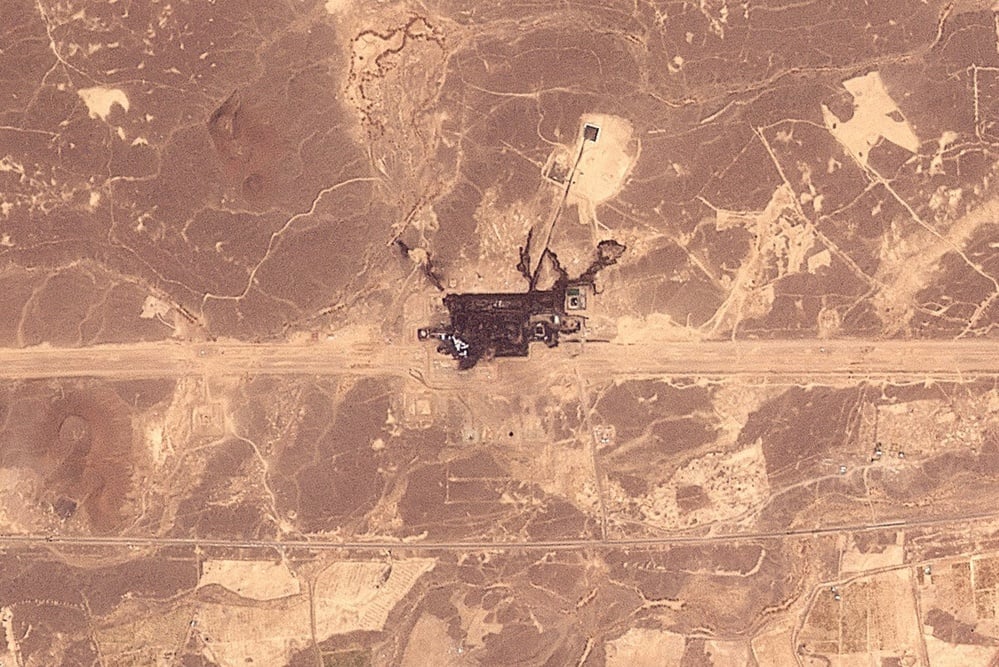


2026 © Helium Trades
Privacy Policy & Disclosure
* Disclaimer: Nothing on this website constitutes investment advice, performance data or any recommendation that any particular security, portfolio of securities, transaction or investment strategy is suitable for any specific person. Helium Trades is not responsible in any way for the accuracy
of any model predictions or price data. Any mention of a particular security and related prediction data is not a recommendation to buy or sell that security. Investments in securities involve the risk of loss. Past performance is no guarantee of future results. Helium Trades is not responsible for any of your investment decisions,
you should consult a financial expert before engaging in any transaction.
Helium Research Assistant

How can I help you today?
Ask any question about this page.


