See whether Helium helps you make better-informed decisions. Try every Pro Trader feature for 30 days. No credit card required.
Try every Pro Trader feature for 30 days. No credit card required.
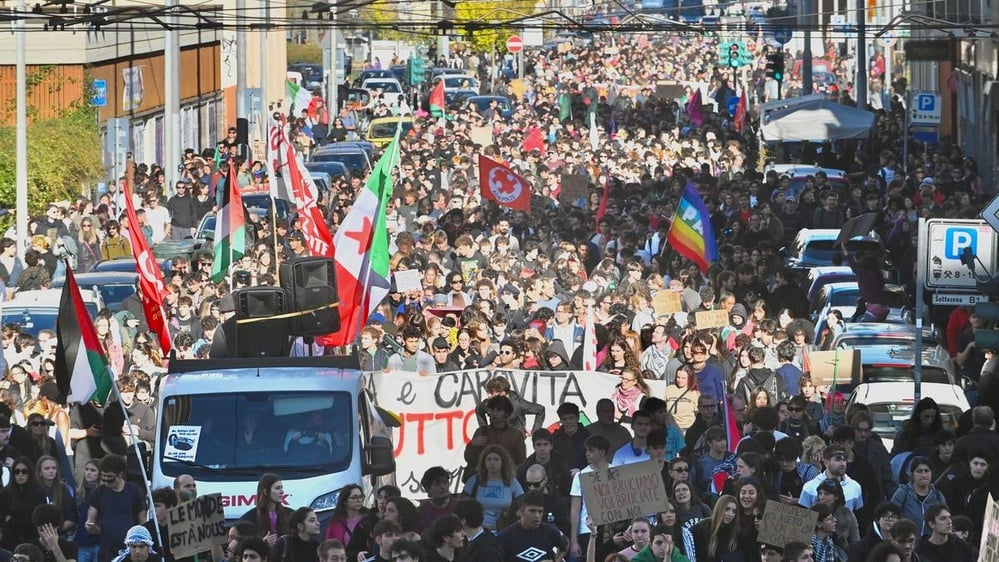
November 20, 2026 · 0 shares
The report is largely neutral and attribution-driven, foregrounding CGIL's strike and demands while including the government minister's counter-characterization.
Helium Analysis
Limitations: The supplied text includes newsletter and comment boilerplate and no author byline; only the substantive strike report is analyzed.
·
9 of 56 available dimensions scored; omitted dimensions are not treated as neutral.
·
Verified supporting quotes for 4 of 9 scored dimensions.
Claim: The report balances union demands with a government counter-characterization rather than adopting a clear left-right editorial stance.
“demanding wage increases and contract renewals to recover purchasing power lost to inflation, full indexation of pensions and measures to prevent a rise in the retirement age.” · exact text match
“Industry Minister Adolfo Urso described Friday's (November 20, 2026) general strike as a "pre-emptive strike"” · not found in supplied text
Why: Union demands and the government minister's criticism are both quoted, supporting measured neutrality.
Claim: Named-source attribution dominates the report's presentation of contested claims.
“The Interior Ministry said it was too early to provide its own estimate.” · exact text match
“Industry Minister Adolfo Urso described Friday's (November 20, 2026) general strike as a "pre-emptive strike"” · not found in supplied text
Why: Claims are repeatedly attributed to named officials and sources rather than asserted in the publisher's voice.
Claim: The report uses measured event reporting rather than sensational or dramatic language.
“The CGIL strike was scheduled to last the entire working day and involved workers in both the private and public sectors, including schools and healthcare.” · exact text match
“The Interior Ministry said it was too early to provide its own estimate.” · exact text match
Why: Factual descriptions of strike scope and official uncertainty indicate low sensationalism.
Claim: The text reports demands and official responses without advocating a policy prescription.
“demanding wage increases and contract renewals to recover purchasing power lost to inflation, full indexation of pensions and measures to prevent a rise in the retirement age.” · exact text match
“Industry Minister Adolfo Urso described Friday's (November 20, 2026) general strike as a "pre-emptive strike"” · not found in supplied text
Why: Union demands are reported as demands and paired with government response, not endorsed as prescriptions.
Claim: The report is explicitly about parliamentary budget politics and electoral context.
“Parliament is examining Ms. Meloni's €26 billion ($30 billion) budget for 2027” · exact text match
“Italy gears up for a parliamentary election due in 2027.” · exact text match
Why: The budget examination and upcoming election are central political facts in the report.
Claim: Credible sourcing and attribution are visible throughout the supplied text.
“The Interior Ministry said it was too early to provide its own estimate.” · exact text match
“Industry Minister Adolfo Urso described Friday's (November 20, 2026) general strike as a "pre-emptive strike"” · not found in supplied text
Why: Named officials, union leaders, and explicit uncertainty are presented, supporting high observable credibility.
Claim: The report relies on attributed facts and acknowledged uncertainty rather than emotional or speculative argument.
“The Interior Ministry said it was too early to provide its own estimate.” · exact text match
“The CGIL strike was scheduled to last the entire working day and involved workers in both the private and public sectors, including schools and healthcare.” · exact text match
Why: The text cites official uncertainty and concrete logistics, supporting a rational/evidence-bound classification.
Claim: The report demonstrates fair attribution by including official responses and noting unavailable estimates.
“The Interior Ministry said it was too early to provide its own estimate.” · exact text match
“Industry Minister Adolfo Urso described Friday's (November 20, 2026) general strike as a "pre-emptive strike"” · not found in supplied text
Why: Inclusion of government response and explicit uncertainty supports high observable integrity.
Claim: The report provides contextual and logistical depth beyond a bare event summary.
“Student protests were also planned in Germany, France, Britain, Austria, Belgium and Spain over rising living costs and military spending.” · exact text match
“The CGIL strike was scheduled to last the entire working day and involved workers in both the private and public sectors, including schools and healthcare.” · exact text match
Why: European mobilization context and concrete strike scope indicate above-average informational quality.
The supplied text includes newsletter and comment boilerplate and no author byline; only the substantive strike report is analyzed.
The headline uses terse, neutral event-description language that foregrounds labor grievances and protest participation without evaluative or sensational framing.
Helium Analysis
Limitations: The supplied text is only a headline/snippet with hashtags; it lacks article body, sourcing, and context.
·
5 of 56 available dimensions scored; omitted dimensions are not treated as neutral.
·
Verified supporting quotes for 5 of 5 scored dimensions.
Claim: The headline reports the event in descriptive, non-evaluative terms.
“Italy strike draws workers, students into nationwide protests over wages and living costs” · exact text match
Why: The wording states actors, scope, and stated grievance without opinion or subjective framing.
Claim: The headline uses plain factual phrasing rather than sensational language.
“Italy strike draws workers, students into nationwide protests over wages and living costs” · exact text match
Why: There are no intensifiers, alarmist terms, or dramatic adjectives.
Claim: The text describes an event rather than advocating a course of action.
“Italy strike draws workers, students into nationwide protests over wages and living costs” · exact text match
Why: It reports the strike and protest without recommendations or calls to action.
Claim: The headline reports a collective labor action over economic grievances, a political subject.
“Italy strike draws workers, students into nationwide protests over wages and living costs” · exact text match
Why: The subject is a nationwide strike and protest over wages and living costs, while the language itself remains neutral.
Claim: The text presents a straightforward event description without obvious logical fallacy.
“Italy strike draws workers, students into nationwide protests over wages and living costs” · exact text match
Why: It is a simple report of a protest and its stated grievance, though the extreme brevity limits assessment.
The supplied text is only a headline/snippet with hashtags; it lacks article body, sourcing, and context.
November 22, 2026 · 0 shares
Worker-sympathetic wording ('poor wages') and punning, mildly sensational headlines frame the labor dispute, while sourcing is limited to union-provided figures and vague reports.
Helium Analysis
Limitations: The supplied excerpt is short, undated, and lacks byline, employer statement, and linked sourcing; bias scoring is limited to visible framing and attribution.
·
8 of 56 available dimensions scored; omitted dimensions are not treated as neutral.
·
Verified supporting quotes for 8 of 8 scored dimensions.
Claim: The report adopts worker-sympathetic language by treating 'poor wages' as the established cause of the strike rather than as a union claim.
“Bus and Train workers slam brakes in the Netherlands protesting against poor wages.” · exact text match
Counterevidence:
“Both the Netherlands Trade Unions Confederation (FNV) and the National Federation of Christian Trade Unions (CNV) have announced a two-day nationwide strike following unsuccessful negotiations over a new collective labor agreement.” · exact text match
Why: This framing aligns with a pro-labor/liberal perspective by presenting the union's wage complaint as fact without employer response.
Claim: Subjective characterization appears in the evaluative phrase 'poor wages' amid otherwise factual reporting.
“It seems there will be countrywide strikes arranged for Monday, November 23 and Tuesday, November 24, as regional bus and train workers down their tools in protest of poor wages.” · exact text match
Why: 'Poor wages' is an evaluative judgment rather than a neutral wage figure or attributed claim.
Claim: Headline language uses puns and dramatic phrasing to heighten the story.
“Transport Blues rock the Netherlands as Bus and Train workers slam brakes protesting against poor wages” · exact text match
“Reports from Holland reveal that further strikes are also being planned for December, threatening Christmas Holidays.” · exact text match
Why: The punning 'Transport Blues rock' and 'slam brakes' plus 'threatening Christmas Holidays' are mildly sensational.
Claim: The labor dispute is reduced to 'poor wages' without wage levels, employer rationale, or detail on the rejected offer.
“It seems there will be countrywide strikes arranged for Monday, November 23 and Tuesday, November 24, as regional bus and train workers down their tools in protest of poor wages.” · exact text match
Counterevidence:
“According to trade union FNV, 95 percent of its members rejected the employers’ final offer, citing concerns about income security, working conditions and sufficient rest between shifts.” · exact text match
Why: A complex collective bargaining dispute is summarized with a simple, one-sided cause.
Claim: The substantive strike report is padded with generic country background irrelevant to the labor dispute.
“The Netherlands, often referred to as Holland, lies in Northwestern Europe.” · exact text match
Why: Generic background filler is a fluff/spam signal in an otherwise short news report.
Claim: Credibility is modest: union vote figures are attributed, but other claims use vague sourcing and no employer perspective.
“According to trade union FNV, 95 percent of its members rejected the employers’ final offer, citing concerns about income security, working conditions and sufficient rest between shifts.” · exact text match
“Reports from Holland reveal that further strikes are also being planned for December, threatening Christmas Holidays.” · exact text match
Counterevidence:
“The Christian Trade Unions Federation (CNV) reported that more than 93 percent of its members also voted against the proposal.” · exact text match
Why: Attributed figures support credibility, while vague 'Reports from Holland' and limited sourcing temper it.
Claim: Loaded framing presents the union's wage complaint as fact and omits any employer response.
“Bus and Train workers slam brakes in the Netherlands protesting against poor wages.” · exact text match
Counterevidence:
“Both the Netherlands Trade Unions Confederation (FNV) and the National Federation of Christian Trade Unions (CNV) have announced a two-day nationwide strike following unsuccessful negotiations over a new collective labor agreement.” · exact text match
Why: The observable loaded wording and one-sided selection favor the strike's framing without alleging intent.
Claim: The report includes attributed union vote shares and distinguishes affected from unaffected operators, though sourcing remains limited.
“According to trade union FNV, 95 percent of its members rejected the employers’ final offer, citing concerns about income security, working conditions and sufficient rest between shifts.” · exact text match
“However, the Nederlandse Spoorwegen (NS) public trains are not affected, while city transport services operated by Gemeentelijk Vervoerbedrijf (GVB), the official public transport company for Amsterdam and HTM Personenvervoer NV in The Hague are expected to run as normal.” · exact text match
Counterevidence:
“Reports from Holland reveal that further strikes are also being planned for December, threatening Christmas Holidays.” · exact text match
Why: Precise attribution and service distinctions are visible fairness/honesty signals, supporting modestly positive integrity.
The supplied excerpt is short, undated, and lacks byline, employer statement, and linked sourcing; bias scoring is limited to visible framing and attribution.
The brief presents the unrest through a neutral, event-focused wire-style account emphasizing closures, police dispersal, and security measures without explicit editorial language.
Helium Analysis
Limitations: The supplied text is extremely brief, duplicated, undated, and lacks named sourcing, limiting confidence in contextual and framing judgments.
·
7 of 56 available dimensions scored; omitted dimensions are not treated as neutral.
·
Verified supporting quotes for 7 of 7 scored dimensions.
Claim: The report does not use recognizable left-right ideological framing.
“341 garment factories remain closed amid ongoing minimum wage protests” · exact text match
“Bangladesh Nationalist Party members take up positions along highway areas in Sreepur” · exact text match
Why: The quoted statements are factual descriptions of labor unrest and party activity without ideological labels or partisan evaluation.
Claim: Protesters and authorities are described in factual terms without people-versus-elite rhetoric.
“police fire tear gas and stun grenades to disperse demonstrators” · exact text match
“authorities tighten security at Kashimpur Central Jail” · exact text match
Why: Both protest activity and state security action are reported without populist or elitist characterization.
Claim: The report uses event-focused, non-evaluative language.
“341 garment factories remain closed amid ongoing minimum wage protests” · exact text match
“police fire tear gas and stun grenades to disperse demonstrators in Ashulia” · exact text match
Why: Concrete numbers, places, and actions are reported without subjective adjectives or evaluative commentary.
Claim: Dramatic events are reported in plain, non-sensational prose.
“police fire tear gas and stun grenades to disperse” · exact text match
“clear blockades on the #Dhaka –Mymensingh Highway in Gazipur” · exact text match
Why: The wording lacks hyperbole, emotive adjectives, or sensational punctuation despite the conflictual subject.
Claim: The text is descriptive and makes no policy recommendations.
“341 garment factories remain closed amid ongoing minimum wage protests” · exact text match
“authorities tighten security at Kashimpur Central Jail” · exact text match
Why: It reports events and official actions without prescribing remedies or endorsing demands.
Claim: The item is substantially political, involving a party, protests, police, and jail security.
“Bangladesh Nationalist Party members take up positions along highway areas in Sreepur” · exact text match
“authorities tighten security at Kashimpur Central Jail” · exact text match
Why: Political-party activity and state security actions are explicit elements of the report.
Claim: The language carries no clear positive or negative emotional valence.
“341 garment factories remain closed” · exact text match
“police fire tear gas and stun grenades to disperse” · exact text match
Why: The events are conflictual, but the report uses unemotional, factual phrasing.
The supplied text is extremely brief, duplicated, undated, and lacks named sourcing, limiting confidence in contextual and framing judgments.
Terse, source-light news brief states factory closures, wage protests, and police clashes in neutral, descriptive terms without causal attribution or evaluative framing.
Helium Analysis
Limitations: The text is only two sentences and lacks sourcing, date, and casualty or participation figures, so several bias dimensions cannot be reliably scored.
·
6 of 56 available dimensions scored; omitted dimensions are not treated as neutral.
·
Verified supporting quotes for 6 of 6 scored dimensions.
Claim: The report is framed as a factual account of events rather than subjective interpretation.
“Several garment factories in Gazipur, #Bangladesh declare holidays amid ongoing minimum wage protests, as clashes erupt between workers and police.” · exact text match
Why: The sentence lists actors and actions declaratively with no evaluative commentary or personal perspective.
Claim: The report uses mostly neutral news vocabulary rather than sensationalized language.
“Several garment factories in Gazipur, #Bangladesh declare holidays amid ongoing minimum wage protests, as clashes erupt between workers and police.” · exact text match
Why: 'Clashes erupt' is mildly vivid but conventional; no hyperbole, lurid detail, or alarmist framing appears.
Claim: The report describes events and does not prescribe actions or advocate a policy.
“Several garment factories in Gazipur, #Bangladesh declare holidays amid ongoing minimum wage protests, as clashes erupt between workers and police.” · exact text match
“along the #Dhaka –Mymensingh Highway personnel deploy to the area.” · exact text match
Why: No calls for action, recommendations, or normative judgments are present.
Claim: The report covers a labor protest and police confrontation, making the content politically relevant, but it does not advance a partisan line.
“minimum wage protests” · exact text match
“clashes erupt between workers and police” · exact text match
Why: Public protest and police response are political/labor-conflict subjects; the wording itself remains neutral.
Claim: The wording remains emotionally neutral even when reporting clashes.
“clashes erupt between workers and police” · exact text match
Why: No emotive adjectives or outrage language appear; conflict terms are conventional.
Claim: The report is a coherent factual update without emotional reasoning or obvious logical fallacies.
“Several garment factories in Gazipur, #Bangladesh declare holidays amid ongoing minimum wage protests, as clashes erupt between workers and police.” · exact text match
Why: It presents a straightforward sequence of events without causal overreach or argumentation.
The text is only two sentences and lacks sourcing, date, and casualty or participation figures, so several bias dimensions cannot be reliably scored.
The brief uses mildly dramatic conflict language and a sympathetic closing reference to workers' 'ongoing struggle' while otherwise staying close to event reporting.
Helium Analysis
Limitations: The text is a very short brief with vague attribution ('Reports revealed') and no named sources, limiting verification and fine-grained bias assessment.
·
6 of 56 available dimensions scored; omitted dimensions are not treated as neutral.
·
Verified supporting quotes for 6 of 6 scored dimensions.
Claim: The brief mixes factual reporting with mildly subjective/emotive framing.
“Tensions soared in Ashulia” · exact text match
“This turmoil highlights the ongoing struggle for improved pay and working conditions.” · exact text match
Why: The quoted language characterizes tensions and broader significance rather than only stating measured facts.
Claim: Headline and lead use dramatic verbs and conflict framing.
“Clashes erupt between garment workers and police” · exact text match
“Tensions soared in Ashulia” · exact text match
Why: Dramatic conflict language raises the sensational presentation above neutral event description.
Claim: The brief is overwhelmingly descriptive and contains no explicit recommendations or calls to action.
“Reports revealed that more than 50 factories chose to close temporarily amid the unrest” · exact text match
Why: The quoted sentence reports events and conditions without prescribing policy or behavior.
Claim: A closing interpretive sentence frames the unrest as part of a broader struggle.
“This turmoil highlights the ongoing struggle for improved pay and working conditions.” · exact text match
Why: The sentence offers an interpretive takeaway beyond the bare events, though it is mild.
Claim: The report uses mildly negative emotive language to describe the conflict.
“Clashes erupt” · exact text match
“Tensions soared” · exact text match
Why: These terms carry negative emotional valence, though the overall tone remains restrained.
Claim: The brief gives event details but relies on vague, unspecified reports.
“Reports revealed that more than 50 factories chose to close temporarily amid the unrest” · exact text match
Why: Nonspecific attribution limits verifiability, while the reporting otherwise stays measured and event-focused.
The text is a very short brief with vague attribution ('Reports revealed') and no named sources, limiting verification and fine-grained bias assessment.
November 22, 2026 · 0 shares
The headline and lede foreground the manufacturer-association's $428 million loss estimate, casting the wage protests primarily as an industry-cost and buyer-confidence crisis while worker wage demands appear later.
Helium Analysis
Limitations: The supplied text is a scrape with duplicated paragraphs and unrelated Gulf headlines; analysis is limited to the identifiable Bangladesh garment report.
·
12 of 56 available dimensions scored; omitted dimensions are not treated as neutral.
·
Verified supporting quotes for 12 of 12 scored dimensions.
Claim: Foregrounds the manufacturer-association loss estimate as the headline consequence of wage protests, giving a mild pro-business emphasis.
“Bangladesh wage protests cost garment sector $428 million, says trade body” · exact text match
“has lost an estimated $428 million due to protests by workers demanding higher wages, the country's main manufacturers' association said on Sunday” · exact text match
Counterevidence:
“Workers say their pay has failed to keep pace with rising costs of food, housing, transport and healthcare” · exact text match
Why: The headline and lede center industry losses, but worker demands are included with attribution, so the lean is limited.
Claim: Relies on the manufacturers' association and a government wage board as the principal authoritative voices, with workers represented mainly as protesters.
“the country's main manufacturers' association said on Sunday” · exact text match
“government-appointed wage board pledged to announce a new minimum wage” · exact text match
Counterevidence:
“Workers say their pay has failed to keep pace with rising costs of food, housing, transport and healthcare” · exact text match
Why: The sourcing mildly privileges established industry and government actors, but worker grievances are still reported.
Claim: Reports the dispute and government wage-board process descriptively without advocating state control or deregulation.
“government-appointed wage board pledged to announce a new minimum wage” · exact text match
“Workers say their pay has failed to keep pace with rising costs” · exact text match
Why: The text is largely institutional description rather than a freedom-versus-authority argument.
Claim: Attributes loss and impact claims to the manufacturers' association rather than presenting them as the publisher's own evaluation.
“the country's main manufacturers' association said on Sunday” · exact text match
“the association said in a statement” · exact text match
Why: Repeated attribution to the trade body supports an objective, source-bound presentation.
Claim: Describes production and shipment effects in measured terms without sensational imagery.
“Large-scale protests since October have disrupted production” · exact text match
“have hit production, delayed shipments and undermined confidence among international buyers” · exact text match
Why: The wording is plain business-impact language, even though the developments are negative.
Claim: Frames the unrest through lost output, shifted orders, and weakened buyer confidence for the garment sector.
“orders worth $254 million have been shifted to other countries” · exact text match
“undermined confidence among international buyers” · exact text match
Counterevidence:
“protests have eased after a government-appointed wage board pledged to announce a new minimum wage” · not found in supplied text
Why: The article's sector impact is predominantly negative, but it notes a potential easing of protests.
Claim: The publisher's own wording reports events and attributed statements rather than prescribing policy.
“Large-scale protests since October have disrupted production” · exact text match
“the association said in a statement” · exact text match
Counterevidence:
“It is imperative to overcome this critical situation as soon as possible” · exact text match
Why: Most framing is descriptive; the only imperative language is quoted from the manufacturers' association.
Claim: Provides attributable figures, industry context, and explicit uncertainty about the loss estimate.
“citing a survey of members” · exact text match
“only 317 out of 600 factories impacted by unrest had been able to send data in time” · exact text match
Why: Visible sourcing and acknowledged data gaps support moderate credibility, though the central estimate comes from one industry body.
Claim: Uses attributed estimates and discloses survey limitations rather than asserting certainty.
“has lost an estimated $428 million” · exact text match
“"Actual losses could be much higher," it added, saying only 317 out of 600 factories impacted by unrest had been able to send data in time” · exact text match
Why: The language marks the figure as an estimate and explicitly notes incomplete data.
Claim: The central loss estimate and crisis framing come from the manufacturers' association, with worker demands secondary.
“Bangladesh wage protests cost garment sector $428 million, says trade body” · exact text match
“the country's main manufacturers' association said” · exact text match
Counterevidence:
“Workers say their pay has failed to keep pace with rising costs of food, housing, transport and healthcare” · exact text match
Why: The article centers the employer association's figures and concerns, but includes worker rationale, so the pro-corporate lean is moderate.
Claim: Attributes the key loss figure to a named trade body and openly notes that it is incomplete.
“the country's main manufacturers' association said” · exact text match
“"Actual losses could be much higher," it added, saying only 317 out of 600 factories impacted by unrest had been able to send data in time” · exact text match
Why: Clear sourcing and disclosure of data limitations support observable fairness and honesty.
Claim: Provides quantitative industry context and a survey caveat rather than only reporting the headline loss figure.
“earns around $38 billion annually, accounting for four-fifths of Bangladesh's export earnings” · exact text match
“only 317 out of 600 factories impacted by unrest had been able to send data in time” · exact text match
Why: Context and caveat indicate above-average explanatory depth.
The supplied text is a scrape with duplicated paragraphs and unrelated Gulf headlines; analysis is limited to the identifiable Bangladesh garment report.
November 22, 2026 · 0 shares
Framing is largely neutral and attribution-driven, foregrounding industry loss estimates while also including workers’ wage grievances and official wage-board context.
Helium Analysis
Limitations: The supplied text is a short, duplicated wire-style excerpt with no byline or publication date, limiting assessment of authorship and temporal framing.
·
14 of 56 available dimensions scored; omitted dimensions are not treated as neutral.
·
Verified supporting quotes for 13 of 14 scored dimensions.
Claim: Coverage balances worker wage grievances with manufacturer loss estimates without partisan framing.
“Workers say their pay has failed to keep pace with rising costs of food, housing, transport and healthcare, demanding a minimum monthly wage of 30,000 taka ($240), up from the current 12,500 taka.” · exact text match
“The Bangladesh Garment Manufacturers and Exporters Association, citing a survey of members, said that “in the ongoing unrest, 317 garment factories have suffered losses of $428 million, while orders worth $254 million have been shifted to other countries.”” · not found in supplied text
Why: Both worker and industry perspectives are presented without ideological advocacy or partisan labels.
Claim: Coverage includes both worker demands and manufacturer association claims without a clear populist or elitist frame.
“Workers say their pay has failed to keep pace with rising costs of food, housing, transport and healthcare” · exact text match
“The Bangladesh Garment Manufacturers and Exporters Association, citing a survey of members” · exact text match
Why: The report gives voice to workers and business representatives but does not frame either as a virtue or villain.
Claim: Framing is predominantly factual and attributed, with minimal subjective description.
“the country’s main manufacturers’ association said Sunday” · exact text match
“Workers say their pay has failed to keep pace with rising costs of food, housing, transport and healthcare” · exact text match
Why: The report attributes key claims to named or identifiable actors and avoids first-person commentary.
Claim: Headline and body use factual loss figures rather than sensational language.
“Wage protests cost Bangladesh garment sector $428 million.” · exact text match
“Strikes, which in some cases have seen workers clash with police, have hit production, delayed shipments and undermined confidence among international buyers, the association said in a statement.” · exact text match
Why: The language is measured and largely tied to reported figures and attributed statements.
Claim: Coverage emphasizes negative economic impact on the garment sector.
“has lost an estimated $428 million” · exact text match
“orders worth $254 million have been shifted to other countries” · exact text match
Why: The article foregrounds lost value and shifted orders, a bearish frame for the sector.
Claim: Tone is mildly pessimistic, focusing on losses, disruption, and a critical situation.
“Strikes, which in some cases have seen workers clash with police, have hit production, delayed shipments and undermined confidence among international buyers, the association said in a statement.” · exact text match
““Actual losses could be much higher,” it added” · exact text match
Why: The report stresses disruption and potential deeper losses while still noting some easing of protests.
Claim: Publisher reports developments and attributed statements rather than issuing its own prescriptions.
“the country’s main manufacturers’ association said Sunday” · exact text match
“Md Shahedul Islam, secretary-general of the manufacturers’ association, said in the statement.” · exact text match
Why: Prescriptive language about the critical situation is quoted from an industry official, not stated as publisher advice.
Claim: Article centers on a labor-policy dispute involving government wage setting.
“a government-appointed wage board pledged to announce a new minimum wage, expected next month.” · exact text match
“demanding a minimum monthly wage of 30,000 taka ($240), up from the current 12,500 taka.” · exact text match
Why: The dispute involves minimum-wage policy and government mediation, though it is reported without partisan advocacy.
Claim: Tone is neutral and unemotional, relying on reported figures and attributed statements.
“has lost an estimated $428 million due to protests by workers demanding higher wages” · exact text match
“the association said in a statement” · exact text match
Why: The prose is factual and avoids emotionally charged language.
Claim: Coverage gives space to both worker grievances and manufacturer losses without applying incompatible standards.
“Workers say their pay has failed to keep pace with rising costs of food, housing, transport and healthcare” · exact text match
“317 garment factories have suffered losses of $428 million, while orders worth $254 million have been shifted to other countries” · exact text match
Why: Both sides’ core claims are presented with comparable attribution.
Claim: Credible sourcing and explicit uncertainty support trustworthiness.
“the country’s main manufacturers’ association said Sunday” · exact text match
““Actual losses could be much higher,” it added, saying only 317 out of 600 factories impacted by unrest had been able to send data in time.” · exact text match
Why: The article identifies its main source and qualifies the loss estimate’s limitations.
Claim: Report relies on quantified estimates and attributed statements rather than emotive assertion.
“has lost an estimated $428 million due to protests by workers demanding higher wages, the country’s main manufacturers’ association said Sunday.” · exact text match
“citing a survey of members” · exact text match
Why: Quantified estimates and explicit sourcing dominate the report’s factual claims.
Claim: Transparently attributes estimates and acknowledges incomplete data and uncertainty.
“citing a survey of members” · exact text match
““Actual losses could be much higher,” it added, saying only 317 out of 600 factories impacted by unrest had been able to send data in time.” · exact text match
Why: The report discloses the source of figures and explicitly flags incomplete reporting.
Claim: Article provides quantified context and multiple stakeholder perspectives in clear terms.
“earns around $38 billion annually, accounting for four-fifths of Bangladesh’s export earnings” · exact text match
“The industry employs more than four million people, in a country of 170 million.” · exact text match
Why: The report supplies economic scale, employment context, and both worker and industry claims.
The supplied text is a short, duplicated wire-style excerpt with no byline or publication date, limiting assessment of authorship and temporal framing.
November 20, 2026 · 0 shares
The report is largely neutral and attribution-driven, foregrounding CGIL's strike and demands while including the government minister's counter-characterization.
Helium Analysis Limitations: The supplied text includes newsletter and comment boilerplate and no author byline; only the substantive strike report is analyzed. · 9 of 56 available dimensions scored; omitted dimensions are not treated as neutral. · Verified supporting quotes for 4 of 9 scored dimensions.
Claim: The report balances union demands with a government counter-characterization rather than adopting a clear left-right editorial stance.
“demanding wage increases and contract renewals to recover purchasing power lost to inflation, full indexation of pensions and measures to prevent a rise in the retirement age.” · exact text match
“Industry Minister Adolfo Urso described Friday's (November 20, 2026) general strike as a "pre-emptive strike"” · not found in supplied text
Why: Union demands and the government minister's criticism are both quoted, supporting measured neutrality.
Claim: Named-source attribution dominates the report's presentation of contested claims.
“The Interior Ministry said it was too early to provide its own estimate.” · exact text match
“Industry Minister Adolfo Urso described Friday's (November 20, 2026) general strike as a "pre-emptive strike"” · not found in supplied text
Why: Claims are repeatedly attributed to named officials and sources rather than asserted in the publisher's voice.
Claim: The report uses measured event reporting rather than sensational or dramatic language.
“The CGIL strike was scheduled to last the entire working day and involved workers in both the private and public sectors, including schools and healthcare.” · exact text match
“The Interior Ministry said it was too early to provide its own estimate.” · exact text match
Why: Factual descriptions of strike scope and official uncertainty indicate low sensationalism.
Claim: The text reports demands and official responses without advocating a policy prescription.
“demanding wage increases and contract renewals to recover purchasing power lost to inflation, full indexation of pensions and measures to prevent a rise in the retirement age.” · exact text match
“Industry Minister Adolfo Urso described Friday's (November 20, 2026) general strike as a "pre-emptive strike"” · not found in supplied text
Why: Union demands are reported as demands and paired with government response, not endorsed as prescriptions.
Claim: The report is explicitly about parliamentary budget politics and electoral context.
“Parliament is examining Ms. Meloni's €26 billion ($30 billion) budget for 2027” · exact text match
“Italy gears up for a parliamentary election due in 2027.” · exact text match
Why: The budget examination and upcoming election are central political facts in the report.
Claim: Credible sourcing and attribution are visible throughout the supplied text.
“The Interior Ministry said it was too early to provide its own estimate.” · exact text match
“Industry Minister Adolfo Urso described Friday's (November 20, 2026) general strike as a "pre-emptive strike"” · not found in supplied text
Why: Named officials, union leaders, and explicit uncertainty are presented, supporting high observable credibility.
Claim: The report relies on attributed facts and acknowledged uncertainty rather than emotional or speculative argument.
“The Interior Ministry said it was too early to provide its own estimate.” · exact text match
“The CGIL strike was scheduled to last the entire working day and involved workers in both the private and public sectors, including schools and healthcare.” · exact text match
Why: The text cites official uncertainty and concrete logistics, supporting a rational/evidence-bound classification.
Claim: The report demonstrates fair attribution by including official responses and noting unavailable estimates.
“The Interior Ministry said it was too early to provide its own estimate.” · exact text match
“Industry Minister Adolfo Urso described Friday's (November 20, 2026) general strike as a "pre-emptive strike"” · not found in supplied text
Why: Inclusion of government response and explicit uncertainty supports high observable integrity.
Claim: The report provides contextual and logistical depth beyond a bare event summary.
“Student protests were also planned in Germany, France, Britain, Austria, Belgium and Spain over rising living costs and military spending.” · exact text match
“The CGIL strike was scheduled to last the entire working day and involved workers in both the private and public sectors, including schools and healthcare.” · exact text match
Why: European mobilization context and concrete strike scope indicate above-average informational quality.
The supplied text includes newsletter and comment boilerplate and no author byline; only the substantive strike report is analyzed.
The headline uses terse, neutral event-description language that foregrounds labor grievances and protest participation without evaluative or sensational framing.
Helium Analysis Limitations: The supplied text is only a headline/snippet with hashtags; it lacks article body, sourcing, and context. · 5 of 56 available dimensions scored; omitted dimensions are not treated as neutral. · Verified supporting quotes for 5 of 5 scored dimensions.
Claim: The headline reports the event in descriptive, non-evaluative terms.
“Italy strike draws workers, students into nationwide protests over wages and living costs” · exact text match
Why: The wording states actors, scope, and stated grievance without opinion or subjective framing.
Claim: The headline uses plain factual phrasing rather than sensational language.
“Italy strike draws workers, students into nationwide protests over wages and living costs” · exact text match
Why: There are no intensifiers, alarmist terms, or dramatic adjectives.
Claim: The text describes an event rather than advocating a course of action.
“Italy strike draws workers, students into nationwide protests over wages and living costs” · exact text match
Why: It reports the strike and protest without recommendations or calls to action.
Claim: The headline reports a collective labor action over economic grievances, a political subject.
“Italy strike draws workers, students into nationwide protests over wages and living costs” · exact text match
Why: The subject is a nationwide strike and protest over wages and living costs, while the language itself remains neutral.
Claim: The text presents a straightforward event description without obvious logical fallacy.
“Italy strike draws workers, students into nationwide protests over wages and living costs” · exact text match
Why: It is a simple report of a protest and its stated grievance, though the extreme brevity limits assessment.
The supplied text is only a headline/snippet with hashtags; it lacks article body, sourcing, and context.
November 22, 2026 · 0 shares
The headline and lede foreground the manufacturer-association's $428 million loss estimate, casting the wage protests primarily as an industry-cost and buyer-confidence crisis while worker wage demands appear later.
Helium Analysis Limitations: The supplied text is a scrape with duplicated paragraphs and unrelated Gulf headlines; analysis is limited to the identifiable Bangladesh garment report. · 12 of 56 available dimensions scored; omitted dimensions are not treated as neutral. · Verified supporting quotes for 12 of 12 scored dimensions.
Claim: Foregrounds the manufacturer-association loss estimate as the headline consequence of wage protests, giving a mild pro-business emphasis.
“Bangladesh wage protests cost garment sector $428 million, says trade body” · exact text match
“has lost an estimated $428 million due to protests by workers demanding higher wages, the country's main manufacturers' association said on Sunday” · exact text match
Counterevidence:
“Workers say their pay has failed to keep pace with rising costs of food, housing, transport and healthcare” · exact text match
Why: The headline and lede center industry losses, but worker demands are included with attribution, so the lean is limited.
Claim: Relies on the manufacturers' association and a government wage board as the principal authoritative voices, with workers represented mainly as protesters.
“the country's main manufacturers' association said on Sunday” · exact text match
“government-appointed wage board pledged to announce a new minimum wage” · exact text match
Counterevidence:
“Workers say their pay has failed to keep pace with rising costs of food, housing, transport and healthcare” · exact text match
Why: The sourcing mildly privileges established industry and government actors, but worker grievances are still reported.
Claim: Reports the dispute and government wage-board process descriptively without advocating state control or deregulation.
“government-appointed wage board pledged to announce a new minimum wage” · exact text match
“Workers say their pay has failed to keep pace with rising costs” · exact text match
Why: The text is largely institutional description rather than a freedom-versus-authority argument.
Claim: Attributes loss and impact claims to the manufacturers' association rather than presenting them as the publisher's own evaluation.
“the country's main manufacturers' association said on Sunday” · exact text match
“the association said in a statement” · exact text match
Why: Repeated attribution to the trade body supports an objective, source-bound presentation.
Claim: Describes production and shipment effects in measured terms without sensational imagery.
“Large-scale protests since October have disrupted production” · exact text match
“have hit production, delayed shipments and undermined confidence among international buyers” · exact text match
Why: The wording is plain business-impact language, even though the developments are negative.
Claim: Frames the unrest through lost output, shifted orders, and weakened buyer confidence for the garment sector.
“orders worth $254 million have been shifted to other countries” · exact text match
“undermined confidence among international buyers” · exact text match
Counterevidence:
“protests have eased after a government-appointed wage board pledged to announce a new minimum wage” · not found in supplied text
Why: The article's sector impact is predominantly negative, but it notes a potential easing of protests.
Claim: The publisher's own wording reports events and attributed statements rather than prescribing policy.
“Large-scale protests since October have disrupted production” · exact text match
“the association said in a statement” · exact text match
Counterevidence:
“It is imperative to overcome this critical situation as soon as possible” · exact text match
Why: Most framing is descriptive; the only imperative language is quoted from the manufacturers' association.
Claim: Provides attributable figures, industry context, and explicit uncertainty about the loss estimate.
“citing a survey of members” · exact text match
“only 317 out of 600 factories impacted by unrest had been able to send data in time” · exact text match
Why: Visible sourcing and acknowledged data gaps support moderate credibility, though the central estimate comes from one industry body.
Claim: Uses attributed estimates and discloses survey limitations rather than asserting certainty.
“has lost an estimated $428 million” · exact text match
“"Actual losses could be much higher," it added, saying only 317 out of 600 factories impacted by unrest had been able to send data in time” · exact text match
Why: The language marks the figure as an estimate and explicitly notes incomplete data.
Claim: The central loss estimate and crisis framing come from the manufacturers' association, with worker demands secondary.
“Bangladesh wage protests cost garment sector $428 million, says trade body” · exact text match
“the country's main manufacturers' association said” · exact text match
Counterevidence:
“Workers say their pay has failed to keep pace with rising costs of food, housing, transport and healthcare” · exact text match
Why: The article centers the employer association's figures and concerns, but includes worker rationale, so the pro-corporate lean is moderate.
Claim: Attributes the key loss figure to a named trade body and openly notes that it is incomplete.
“the country's main manufacturers' association said” · exact text match
“"Actual losses could be much higher," it added, saying only 317 out of 600 factories impacted by unrest had been able to send data in time” · exact text match
Why: Clear sourcing and disclosure of data limitations support observable fairness and honesty.
Claim: Provides quantitative industry context and a survey caveat rather than only reporting the headline loss figure.
“earns around $38 billion annually, accounting for four-fifths of Bangladesh's export earnings” · exact text match
“only 317 out of 600 factories impacted by unrest had been able to send data in time” · exact text match
Why: Context and caveat indicate above-average explanatory depth.
The supplied text is a scrape with duplicated paragraphs and unrelated Gulf headlines; analysis is limited to the identifiable Bangladesh garment report.
November 22, 2026 · 0 shares
Framing is largely neutral and attribution-driven, foregrounding industry loss estimates while also including workers’ wage grievances and official wage-board context.
Helium Analysis Limitations: The supplied text is a short, duplicated wire-style excerpt with no byline or publication date, limiting assessment of authorship and temporal framing. · 14 of 56 available dimensions scored; omitted dimensions are not treated as neutral. · Verified supporting quotes for 13 of 14 scored dimensions.
Claim: Coverage balances worker wage grievances with manufacturer loss estimates without partisan framing.
“Workers say their pay has failed to keep pace with rising costs of food, housing, transport and healthcare, demanding a minimum monthly wage of 30,000 taka ($240), up from the current 12,500 taka.” · exact text match
“The Bangladesh Garment Manufacturers and Exporters Association, citing a survey of members, said that “in the ongoing unrest, 317 garment factories have suffered losses of $428 million, while orders worth $254 million have been shifted to other countries.”” · not found in supplied text
Why: Both worker and industry perspectives are presented without ideological advocacy or partisan labels.
Claim: Coverage includes both worker demands and manufacturer association claims without a clear populist or elitist frame.
“Workers say their pay has failed to keep pace with rising costs of food, housing, transport and healthcare” · exact text match
“The Bangladesh Garment Manufacturers and Exporters Association, citing a survey of members” · exact text match
Why: The report gives voice to workers and business representatives but does not frame either as a virtue or villain.
Claim: Framing is predominantly factual and attributed, with minimal subjective description.
“the country’s main manufacturers’ association said Sunday” · exact text match
“Workers say their pay has failed to keep pace with rising costs of food, housing, transport and healthcare” · exact text match
Why: The report attributes key claims to named or identifiable actors and avoids first-person commentary.
Claim: Headline and body use factual loss figures rather than sensational language.
“Wage protests cost Bangladesh garment sector $428 million.” · exact text match
“Strikes, which in some cases have seen workers clash with police, have hit production, delayed shipments and undermined confidence among international buyers, the association said in a statement.” · exact text match
Why: The language is measured and largely tied to reported figures and attributed statements.
Claim: Coverage emphasizes negative economic impact on the garment sector.
“has lost an estimated $428 million” · exact text match
“orders worth $254 million have been shifted to other countries” · exact text match
Why: The article foregrounds lost value and shifted orders, a bearish frame for the sector.
Claim: Tone is mildly pessimistic, focusing on losses, disruption, and a critical situation.
“Strikes, which in some cases have seen workers clash with police, have hit production, delayed shipments and undermined confidence among international buyers, the association said in a statement.” · exact text match
““Actual losses could be much higher,” it added” · exact text match
Why: The report stresses disruption and potential deeper losses while still noting some easing of protests.
Claim: Publisher reports developments and attributed statements rather than issuing its own prescriptions.
“the country’s main manufacturers’ association said Sunday” · exact text match
“Md Shahedul Islam, secretary-general of the manufacturers’ association, said in the statement.” · exact text match
Why: Prescriptive language about the critical situation is quoted from an industry official, not stated as publisher advice.
Claim: Article centers on a labor-policy dispute involving government wage setting.
“a government-appointed wage board pledged to announce a new minimum wage, expected next month.” · exact text match
“demanding a minimum monthly wage of 30,000 taka ($240), up from the current 12,500 taka.” · exact text match
Why: The dispute involves minimum-wage policy and government mediation, though it is reported without partisan advocacy.
Claim: Tone is neutral and unemotional, relying on reported figures and attributed statements.
“has lost an estimated $428 million due to protests by workers demanding higher wages” · exact text match
“the association said in a statement” · exact text match
Why: The prose is factual and avoids emotionally charged language.
Claim: Coverage gives space to both worker grievances and manufacturer losses without applying incompatible standards.
“Workers say their pay has failed to keep pace with rising costs of food, housing, transport and healthcare” · exact text match
“317 garment factories have suffered losses of $428 million, while orders worth $254 million have been shifted to other countries” · exact text match
Why: Both sides’ core claims are presented with comparable attribution.
Claim: Credible sourcing and explicit uncertainty support trustworthiness.
“the country’s main manufacturers’ association said Sunday” · exact text match
““Actual losses could be much higher,” it added, saying only 317 out of 600 factories impacted by unrest had been able to send data in time.” · exact text match
Why: The article identifies its main source and qualifies the loss estimate’s limitations.
Claim: Report relies on quantified estimates and attributed statements rather than emotive assertion.
“has lost an estimated $428 million due to protests by workers demanding higher wages, the country’s main manufacturers’ association said Sunday.” · exact text match
“citing a survey of members” · exact text match
Why: Quantified estimates and explicit sourcing dominate the report’s factual claims.
Claim: Transparently attributes estimates and acknowledges incomplete data and uncertainty.
“citing a survey of members” · exact text match
““Actual losses could be much higher,” it added, saying only 317 out of 600 factories impacted by unrest had been able to send data in time.” · exact text match
Why: The report discloses the source of figures and explicitly flags incomplete reporting.
Claim: Article provides quantified context and multiple stakeholder perspectives in clear terms.
“earns around $38 billion annually, accounting for four-fifths of Bangladesh’s export earnings” · exact text match
“The industry employs more than four million people, in a country of 170 million.” · exact text match
Why: The report supplies economic scale, employment context, and both worker and industry claims.
The supplied text is a short, duplicated wire-style excerpt with no byline or publication date, limiting assessment of authorship and temporal framing.
The brief presents the unrest through a neutral, event-focused wire-style account emphasizing closures, police dispersal, and security measures without explicit editorial language.
Helium Analysis Limitations: The supplied text is extremely brief, duplicated, undated, and lacks named sourcing, limiting confidence in contextual and framing judgments. · 7 of 56 available dimensions scored; omitted dimensions are not treated as neutral. · Verified supporting quotes for 7 of 7 scored dimensions.
Claim: The report does not use recognizable left-right ideological framing.
“341 garment factories remain closed amid ongoing minimum wage protests” · exact text match
“Bangladesh Nationalist Party members take up positions along highway areas in Sreepur” · exact text match
Why: The quoted statements are factual descriptions of labor unrest and party activity without ideological labels or partisan evaluation.
Claim: Protesters and authorities are described in factual terms without people-versus-elite rhetoric.
“police fire tear gas and stun grenades to disperse demonstrators” · exact text match
“authorities tighten security at Kashimpur Central Jail” · exact text match
Why: Both protest activity and state security action are reported without populist or elitist characterization.
Claim: The report uses event-focused, non-evaluative language.
“341 garment factories remain closed amid ongoing minimum wage protests” · exact text match
“police fire tear gas and stun grenades to disperse demonstrators in Ashulia” · exact text match
Why: Concrete numbers, places, and actions are reported without subjective adjectives or evaluative commentary.
Claim: Dramatic events are reported in plain, non-sensational prose.
“police fire tear gas and stun grenades to disperse” · exact text match
“clear blockades on the #Dhaka –Mymensingh Highway in Gazipur” · exact text match
Why: The wording lacks hyperbole, emotive adjectives, or sensational punctuation despite the conflictual subject.
Claim: The text is descriptive and makes no policy recommendations.
“341 garment factories remain closed amid ongoing minimum wage protests” · exact text match
“authorities tighten security at Kashimpur Central Jail” · exact text match
Why: It reports events and official actions without prescribing remedies or endorsing demands.
Claim: The item is substantially political, involving a party, protests, police, and jail security.
“Bangladesh Nationalist Party members take up positions along highway areas in Sreepur” · exact text match
“authorities tighten security at Kashimpur Central Jail” · exact text match
Why: Political-party activity and state security actions are explicit elements of the report.
Claim: The language carries no clear positive or negative emotional valence.
“341 garment factories remain closed” · exact text match
“police fire tear gas and stun grenades to disperse” · exact text match
Why: The events are conflictual, but the report uses unemotional, factual phrasing.
The supplied text is extremely brief, duplicated, undated, and lacks named sourcing, limiting confidence in contextual and framing judgments.
November 22, 2026 · 0 shares
Worker-sympathetic wording ('poor wages') and punning, mildly sensational headlines frame the labor dispute, while sourcing is limited to union-provided figures and vague reports.
Helium Analysis Limitations: The supplied excerpt is short, undated, and lacks byline, employer statement, and linked sourcing; bias scoring is limited to visible framing and attribution. · 8 of 56 available dimensions scored; omitted dimensions are not treated as neutral. · Verified supporting quotes for 8 of 8 scored dimensions.
Claim: The report adopts worker-sympathetic language by treating 'poor wages' as the established cause of the strike rather than as a union claim.
“Bus and Train workers slam brakes in the Netherlands protesting against poor wages.” · exact text match
Counterevidence:
“Both the Netherlands Trade Unions Confederation (FNV) and the National Federation of Christian Trade Unions (CNV) have announced a two-day nationwide strike following unsuccessful negotiations over a new collective labor agreement.” · exact text match
Why: This framing aligns with a pro-labor/liberal perspective by presenting the union's wage complaint as fact without employer response.
Claim: Subjective characterization appears in the evaluative phrase 'poor wages' amid otherwise factual reporting.
“It seems there will be countrywide strikes arranged for Monday, November 23 and Tuesday, November 24, as regional bus and train workers down their tools in protest of poor wages.” · exact text match
Why: 'Poor wages' is an evaluative judgment rather than a neutral wage figure or attributed claim.
Claim: Headline language uses puns and dramatic phrasing to heighten the story.
“Transport Blues rock the Netherlands as Bus and Train workers slam brakes protesting against poor wages” · exact text match
“Reports from Holland reveal that further strikes are also being planned for December, threatening Christmas Holidays.” · exact text match
Why: The punning 'Transport Blues rock' and 'slam brakes' plus 'threatening Christmas Holidays' are mildly sensational.
Claim: The labor dispute is reduced to 'poor wages' without wage levels, employer rationale, or detail on the rejected offer.
“It seems there will be countrywide strikes arranged for Monday, November 23 and Tuesday, November 24, as regional bus and train workers down their tools in protest of poor wages.” · exact text match
Counterevidence:
“According to trade union FNV, 95 percent of its members rejected the employers’ final offer, citing concerns about income security, working conditions and sufficient rest between shifts.” · exact text match
Why: A complex collective bargaining dispute is summarized with a simple, one-sided cause.
Claim: The substantive strike report is padded with generic country background irrelevant to the labor dispute.
“The Netherlands, often referred to as Holland, lies in Northwestern Europe.” · exact text match
Why: Generic background filler is a fluff/spam signal in an otherwise short news report.
Claim: Credibility is modest: union vote figures are attributed, but other claims use vague sourcing and no employer perspective.
“According to trade union FNV, 95 percent of its members rejected the employers’ final offer, citing concerns about income security, working conditions and sufficient rest between shifts.” · exact text match
“Reports from Holland reveal that further strikes are also being planned for December, threatening Christmas Holidays.” · exact text match
Counterevidence:
“The Christian Trade Unions Federation (CNV) reported that more than 93 percent of its members also voted against the proposal.” · exact text match
Why: Attributed figures support credibility, while vague 'Reports from Holland' and limited sourcing temper it.
Claim: Loaded framing presents the union's wage complaint as fact and omits any employer response.
“Bus and Train workers slam brakes in the Netherlands protesting against poor wages.” · exact text match
Counterevidence:
“Both the Netherlands Trade Unions Confederation (FNV) and the National Federation of Christian Trade Unions (CNV) have announced a two-day nationwide strike following unsuccessful negotiations over a new collective labor agreement.” · exact text match
Why: The observable loaded wording and one-sided selection favor the strike's framing without alleging intent.
Claim: The report includes attributed union vote shares and distinguishes affected from unaffected operators, though sourcing remains limited.
“According to trade union FNV, 95 percent of its members rejected the employers’ final offer, citing concerns about income security, working conditions and sufficient rest between shifts.” · exact text match
“However, the Nederlandse Spoorwegen (NS) public trains are not affected, while city transport services operated by Gemeentelijk Vervoerbedrijf (GVB), the official public transport company for Amsterdam and HTM Personenvervoer NV in The Hague are expected to run as normal.” · exact text match
Counterevidence:
“Reports from Holland reveal that further strikes are also being planned for December, threatening Christmas Holidays.” · exact text match
Why: Precise attribution and service distinctions are visible fairness/honesty signals, supporting modestly positive integrity.
The supplied excerpt is short, undated, and lacks byline, employer statement, and linked sourcing; bias scoring is limited to visible framing and attribution.
Story Blindspots
November 22, 2026 · 0 shares
Worker-sympathetic wording ('poor wages') and punning, mildly sensational headlines frame the labor dispute, while sourcing is limited to union-provided figures and vague reports.
Helium Analysis Limitations: The supplied excerpt is short, undated, and lacks byline, employer statement, and linked sourcing; bias scoring is limited to visible framing and attribution. · 8 of 56 available dimensions scored; omitted dimensions are not treated as neutral. · Verified supporting quotes for 8 of 8 scored dimensions.
Claim: The report adopts worker-sympathetic language by treating 'poor wages' as the established cause of the strike rather than as a union claim.
“Bus and Train workers slam brakes in the Netherlands protesting against poor wages.” · exact text match
Counterevidence:
“Both the Netherlands Trade Unions Confederation (FNV) and the National Federation of Christian Trade Unions (CNV) have announced a two-day nationwide strike following unsuccessful negotiations over a new collective labor agreement.” · exact text match
Why: This framing aligns with a pro-labor/liberal perspective by presenting the union's wage complaint as fact without employer response.
Claim: Subjective characterization appears in the evaluative phrase 'poor wages' amid otherwise factual reporting.
“It seems there will be countrywide strikes arranged for Monday, November 23 and Tuesday, November 24, as regional bus and train workers down their tools in protest of poor wages.” · exact text match
Why: 'Poor wages' is an evaluative judgment rather than a neutral wage figure or attributed claim.
Claim: Headline language uses puns and dramatic phrasing to heighten the story.
“Transport Blues rock the Netherlands as Bus and Train workers slam brakes protesting against poor wages” · exact text match
“Reports from Holland reveal that further strikes are also being planned for December, threatening Christmas Holidays.” · exact text match
Why: The punning 'Transport Blues rock' and 'slam brakes' plus 'threatening Christmas Holidays' are mildly sensational.
Claim: The labor dispute is reduced to 'poor wages' without wage levels, employer rationale, or detail on the rejected offer.
“It seems there will be countrywide strikes arranged for Monday, November 23 and Tuesday, November 24, as regional bus and train workers down their tools in protest of poor wages.” · exact text match
Counterevidence:
“According to trade union FNV, 95 percent of its members rejected the employers’ final offer, citing concerns about income security, working conditions and sufficient rest between shifts.” · exact text match
Why: A complex collective bargaining dispute is summarized with a simple, one-sided cause.
Claim: The substantive strike report is padded with generic country background irrelevant to the labor dispute.
“The Netherlands, often referred to as Holland, lies in Northwestern Europe.” · exact text match
Why: Generic background filler is a fluff/spam signal in an otherwise short news report.
Claim: Credibility is modest: union vote figures are attributed, but other claims use vague sourcing and no employer perspective.
“According to trade union FNV, 95 percent of its members rejected the employers’ final offer, citing concerns about income security, working conditions and sufficient rest between shifts.” · exact text match
“Reports from Holland reveal that further strikes are also being planned for December, threatening Christmas Holidays.” · exact text match
Counterevidence:
“The Christian Trade Unions Federation (CNV) reported that more than 93 percent of its members also voted against the proposal.” · exact text match
Why: Attributed figures support credibility, while vague 'Reports from Holland' and limited sourcing temper it.
Claim: Loaded framing presents the union's wage complaint as fact and omits any employer response.
“Bus and Train workers slam brakes in the Netherlands protesting against poor wages.” · exact text match
Counterevidence:
“Both the Netherlands Trade Unions Confederation (FNV) and the National Federation of Christian Trade Unions (CNV) have announced a two-day nationwide strike following unsuccessful negotiations over a new collective labor agreement.” · exact text match
Why: The observable loaded wording and one-sided selection favor the strike's framing without alleging intent.
Claim: The report includes attributed union vote shares and distinguishes affected from unaffected operators, though sourcing remains limited.
“According to trade union FNV, 95 percent of its members rejected the employers’ final offer, citing concerns about income security, working conditions and sufficient rest between shifts.” · exact text match
“However, the Nederlandse Spoorwegen (NS) public trains are not affected, while city transport services operated by Gemeentelijk Vervoerbedrijf (GVB), the official public transport company for Amsterdam and HTM Personenvervoer NV in The Hague are expected to run as normal.” · exact text match
Counterevidence:
“Reports from Holland reveal that further strikes are also being planned for December, threatening Christmas Holidays.” · exact text match
Why: Precise attribution and service distinctions are visible fairness/honesty signals, supporting modestly positive integrity.
The supplied excerpt is short, undated, and lacks byline, employer statement, and linked sourcing; bias scoring is limited to visible framing and attribution.
November 22, 2026 · 0 shares
The headline and lede foreground the manufacturer-association's $428 million loss estimate, casting the wage protests primarily as an industry-cost and buyer-confidence crisis while worker wage demands appear later.
Helium Analysis Limitations: The supplied text is a scrape with duplicated paragraphs and unrelated Gulf headlines; analysis is limited to the identifiable Bangladesh garment report. · 12 of 56 available dimensions scored; omitted dimensions are not treated as neutral. · Verified supporting quotes for 12 of 12 scored dimensions.
Claim: Foregrounds the manufacturer-association loss estimate as the headline consequence of wage protests, giving a mild pro-business emphasis.
“Bangladesh wage protests cost garment sector $428 million, says trade body” · exact text match
“has lost an estimated $428 million due to protests by workers demanding higher wages, the country's main manufacturers' association said on Sunday” · exact text match
Counterevidence:
“Workers say their pay has failed to keep pace with rising costs of food, housing, transport and healthcare” · exact text match
Why: The headline and lede center industry losses, but worker demands are included with attribution, so the lean is limited.
Claim: Relies on the manufacturers' association and a government wage board as the principal authoritative voices, with workers represented mainly as protesters.
“the country's main manufacturers' association said on Sunday” · exact text match
“government-appointed wage board pledged to announce a new minimum wage” · exact text match
Counterevidence:
“Workers say their pay has failed to keep pace with rising costs of food, housing, transport and healthcare” · exact text match
Why: The sourcing mildly privileges established industry and government actors, but worker grievances are still reported.
Claim: Reports the dispute and government wage-board process descriptively without advocating state control or deregulation.
“government-appointed wage board pledged to announce a new minimum wage” · exact text match
“Workers say their pay has failed to keep pace with rising costs” · exact text match
Why: The text is largely institutional description rather than a freedom-versus-authority argument.
Claim: Attributes loss and impact claims to the manufacturers' association rather than presenting them as the publisher's own evaluation.
“the country's main manufacturers' association said on Sunday” · exact text match
“the association said in a statement” · exact text match
Why: Repeated attribution to the trade body supports an objective, source-bound presentation.
Claim: Describes production and shipment effects in measured terms without sensational imagery.
“Large-scale protests since October have disrupted production” · exact text match
“have hit production, delayed shipments and undermined confidence among international buyers” · exact text match
Why: The wording is plain business-impact language, even though the developments are negative.
Claim: Frames the unrest through lost output, shifted orders, and weakened buyer confidence for the garment sector.
“orders worth $254 million have been shifted to other countries” · exact text match
“undermined confidence among international buyers” · exact text match
Counterevidence:
“protests have eased after a government-appointed wage board pledged to announce a new minimum wage” · not found in supplied text
Why: The article's sector impact is predominantly negative, but it notes a potential easing of protests.
Claim: The publisher's own wording reports events and attributed statements rather than prescribing policy.
“Large-scale protests since October have disrupted production” · exact text match
“the association said in a statement” · exact text match
Counterevidence:
“It is imperative to overcome this critical situation as soon as possible” · exact text match
Why: Most framing is descriptive; the only imperative language is quoted from the manufacturers' association.
Claim: Provides attributable figures, industry context, and explicit uncertainty about the loss estimate.
“citing a survey of members” · exact text match
“only 317 out of 600 factories impacted by unrest had been able to send data in time” · exact text match
Why: Visible sourcing and acknowledged data gaps support moderate credibility, though the central estimate comes from one industry body.
Claim: Uses attributed estimates and discloses survey limitations rather than asserting certainty.
“has lost an estimated $428 million” · exact text match
“"Actual losses could be much higher," it added, saying only 317 out of 600 factories impacted by unrest had been able to send data in time” · exact text match
Why: The language marks the figure as an estimate and explicitly notes incomplete data.
Claim: The central loss estimate and crisis framing come from the manufacturers' association, with worker demands secondary.
“Bangladesh wage protests cost garment sector $428 million, says trade body” · exact text match
“the country's main manufacturers' association said” · exact text match
Counterevidence:
“Workers say their pay has failed to keep pace with rising costs of food, housing, transport and healthcare” · exact text match
Why: The article centers the employer association's figures and concerns, but includes worker rationale, so the pro-corporate lean is moderate.
Claim: Attributes the key loss figure to a named trade body and openly notes that it is incomplete.
“the country's main manufacturers' association said” · exact text match
“"Actual losses could be much higher," it added, saying only 317 out of 600 factories impacted by unrest had been able to send data in time” · exact text match
Why: Clear sourcing and disclosure of data limitations support observable fairness and honesty.
Claim: Provides quantitative industry context and a survey caveat rather than only reporting the headline loss figure.
“earns around $38 billion annually, accounting for four-fifths of Bangladesh's export earnings” · exact text match
“only 317 out of 600 factories impacted by unrest had been able to send data in time” · exact text match
Why: Context and caveat indicate above-average explanatory depth.
The supplied text is a scrape with duplicated paragraphs and unrelated Gulf headlines; analysis is limited to the identifiable Bangladesh garment report.
The brief presents the unrest through a neutral, event-focused wire-style account emphasizing closures, police dispersal, and security measures without explicit editorial language.
Helium Analysis Limitations: The supplied text is extremely brief, duplicated, undated, and lacks named sourcing, limiting confidence in contextual and framing judgments. · 7 of 56 available dimensions scored; omitted dimensions are not treated as neutral. · Verified supporting quotes for 7 of 7 scored dimensions.
Claim: The report does not use recognizable left-right ideological framing.
“341 garment factories remain closed amid ongoing minimum wage protests” · exact text match
“Bangladesh Nationalist Party members take up positions along highway areas in Sreepur” · exact text match
Why: The quoted statements are factual descriptions of labor unrest and party activity without ideological labels or partisan evaluation.
Claim: Protesters and authorities are described in factual terms without people-versus-elite rhetoric.
“police fire tear gas and stun grenades to disperse demonstrators” · exact text match
“authorities tighten security at Kashimpur Central Jail” · exact text match
Why: Both protest activity and state security action are reported without populist or elitist characterization.
Claim: The report uses event-focused, non-evaluative language.
“341 garment factories remain closed amid ongoing minimum wage protests” · exact text match
“police fire tear gas and stun grenades to disperse demonstrators in Ashulia” · exact text match
Why: Concrete numbers, places, and actions are reported without subjective adjectives or evaluative commentary.
Claim: Dramatic events are reported in plain, non-sensational prose.
“police fire tear gas and stun grenades to disperse” · exact text match
“clear blockades on the #Dhaka –Mymensingh Highway in Gazipur” · exact text match
Why: The wording lacks hyperbole, emotive adjectives, or sensational punctuation despite the conflictual subject.
Claim: The text is descriptive and makes no policy recommendations.
“341 garment factories remain closed amid ongoing minimum wage protests” · exact text match
“authorities tighten security at Kashimpur Central Jail” · exact text match
Why: It reports events and official actions without prescribing remedies or endorsing demands.
Claim: The item is substantially political, involving a party, protests, police, and jail security.
“Bangladesh Nationalist Party members take up positions along highway areas in Sreepur” · exact text match
“authorities tighten security at Kashimpur Central Jail” · exact text match
Why: Political-party activity and state security actions are explicit elements of the report.
Claim: The language carries no clear positive or negative emotional valence.
“341 garment factories remain closed” · exact text match
“police fire tear gas and stun grenades to disperse” · exact text match
Why: The events are conflictual, but the report uses unemotional, factual phrasing.
The supplied text is extremely brief, duplicated, undated, and lacks named sourcing, limiting confidence in contextual and framing judgments.
November 22, 2026 · 0 shares
Worker-sympathetic wording ('poor wages') and punning, mildly sensational headlines frame the labor dispute, while sourcing is limited to union-provided figures and vague reports.
Helium Analysis Limitations: The supplied excerpt is short, undated, and lacks byline, employer statement, and linked sourcing; bias scoring is limited to visible framing and attribution. · 8 of 56 available dimensions scored; omitted dimensions are not treated as neutral. · Verified supporting quotes for 8 of 8 scored dimensions.
Claim: The report adopts worker-sympathetic language by treating 'poor wages' as the established cause of the strike rather than as a union claim.
“Bus and Train workers slam brakes in the Netherlands protesting against poor wages.” · exact text match
Counterevidence:
“Both the Netherlands Trade Unions Confederation (FNV) and the National Federation of Christian Trade Unions (CNV) have announced a two-day nationwide strike following unsuccessful negotiations over a new collective labor agreement.” · exact text match
Why: This framing aligns with a pro-labor/liberal perspective by presenting the union's wage complaint as fact without employer response.
Claim: Subjective characterization appears in the evaluative phrase 'poor wages' amid otherwise factual reporting.
“It seems there will be countrywide strikes arranged for Monday, November 23 and Tuesday, November 24, as regional bus and train workers down their tools in protest of poor wages.” · exact text match
Why: 'Poor wages' is an evaluative judgment rather than a neutral wage figure or attributed claim.
Claim: Headline language uses puns and dramatic phrasing to heighten the story.
“Transport Blues rock the Netherlands as Bus and Train workers slam brakes protesting against poor wages” · exact text match
“Reports from Holland reveal that further strikes are also being planned for December, threatening Christmas Holidays.” · exact text match
Why: The punning 'Transport Blues rock' and 'slam brakes' plus 'threatening Christmas Holidays' are mildly sensational.
Claim: The labor dispute is reduced to 'poor wages' without wage levels, employer rationale, or detail on the rejected offer.
“It seems there will be countrywide strikes arranged for Monday, November 23 and Tuesday, November 24, as regional bus and train workers down their tools in protest of poor wages.” · exact text match
Counterevidence:
“According to trade union FNV, 95 percent of its members rejected the employers’ final offer, citing concerns about income security, working conditions and sufficient rest between shifts.” · exact text match
Why: A complex collective bargaining dispute is summarized with a simple, one-sided cause.
Claim: The substantive strike report is padded with generic country background irrelevant to the labor dispute.
“The Netherlands, often referred to as Holland, lies in Northwestern Europe.” · exact text match
Why: Generic background filler is a fluff/spam signal in an otherwise short news report.
Claim: Credibility is modest: union vote figures are attributed, but other claims use vague sourcing and no employer perspective.
“According to trade union FNV, 95 percent of its members rejected the employers’ final offer, citing concerns about income security, working conditions and sufficient rest between shifts.” · exact text match
“Reports from Holland reveal that further strikes are also being planned for December, threatening Christmas Holidays.” · exact text match
Counterevidence:
“The Christian Trade Unions Federation (CNV) reported that more than 93 percent of its members also voted against the proposal.” · exact text match
Why: Attributed figures support credibility, while vague 'Reports from Holland' and limited sourcing temper it.
Claim: Loaded framing presents the union's wage complaint as fact and omits any employer response.
“Bus and Train workers slam brakes in the Netherlands protesting against poor wages.” · exact text match
Counterevidence:
“Both the Netherlands Trade Unions Confederation (FNV) and the National Federation of Christian Trade Unions (CNV) have announced a two-day nationwide strike following unsuccessful negotiations over a new collective labor agreement.” · exact text match
Why: The observable loaded wording and one-sided selection favor the strike's framing without alleging intent.
Claim: The report includes attributed union vote shares and distinguishes affected from unaffected operators, though sourcing remains limited.
“According to trade union FNV, 95 percent of its members rejected the employers’ final offer, citing concerns about income security, working conditions and sufficient rest between shifts.” · exact text match
“However, the Nederlandse Spoorwegen (NS) public trains are not affected, while city transport services operated by Gemeentelijk Vervoerbedrijf (GVB), the official public transport company for Amsterdam and HTM Personenvervoer NV in The Hague are expected to run as normal.” · exact text match
Counterevidence:
“Reports from Holland reveal that further strikes are also being planned for December, threatening Christmas Holidays.” · exact text match
Why: Precise attribution and service distinctions are visible fairness/honesty signals, supporting modestly positive integrity.
The supplied excerpt is short, undated, and lacks byline, employer statement, and linked sourcing; bias scoring is limited to visible framing and attribution.
November 22, 2026 · 0 shares
Framing is largely neutral and attribution-driven, foregrounding industry loss estimates while also including workers’ wage grievances and official wage-board context.
Helium Analysis Limitations: The supplied text is a short, duplicated wire-style excerpt with no byline or publication date, limiting assessment of authorship and temporal framing. · 14 of 56 available dimensions scored; omitted dimensions are not treated as neutral. · Verified supporting quotes for 13 of 14 scored dimensions.
Claim: Coverage balances worker wage grievances with manufacturer loss estimates without partisan framing.
“Workers say their pay has failed to keep pace with rising costs of food, housing, transport and healthcare, demanding a minimum monthly wage of 30,000 taka ($240), up from the current 12,500 taka.” · exact text match
“The Bangladesh Garment Manufacturers and Exporters Association, citing a survey of members, said that “in the ongoing unrest, 317 garment factories have suffered losses of $428 million, while orders worth $254 million have been shifted to other countries.”” · not found in supplied text
Why: Both worker and industry perspectives are presented without ideological advocacy or partisan labels.
Claim: Coverage includes both worker demands and manufacturer association claims without a clear populist or elitist frame.
“Workers say their pay has failed to keep pace with rising costs of food, housing, transport and healthcare” · exact text match
“The Bangladesh Garment Manufacturers and Exporters Association, citing a survey of members” · exact text match
Why: The report gives voice to workers and business representatives but does not frame either as a virtue or villain.
Claim: Framing is predominantly factual and attributed, with minimal subjective description.
“the country’s main manufacturers’ association said Sunday” · exact text match
“Workers say their pay has failed to keep pace with rising costs of food, housing, transport and healthcare” · exact text match
Why: The report attributes key claims to named or identifiable actors and avoids first-person commentary.
Claim: Headline and body use factual loss figures rather than sensational language.
“Wage protests cost Bangladesh garment sector $428 million.” · exact text match
“Strikes, which in some cases have seen workers clash with police, have hit production, delayed shipments and undermined confidence among international buyers, the association said in a statement.” · exact text match
Why: The language is measured and largely tied to reported figures and attributed statements.
Claim: Coverage emphasizes negative economic impact on the garment sector.
“has lost an estimated $428 million” · exact text match
“orders worth $254 million have been shifted to other countries” · exact text match
Why: The article foregrounds lost value and shifted orders, a bearish frame for the sector.
Claim: Tone is mildly pessimistic, focusing on losses, disruption, and a critical situation.
“Strikes, which in some cases have seen workers clash with police, have hit production, delayed shipments and undermined confidence among international buyers, the association said in a statement.” · exact text match
““Actual losses could be much higher,” it added” · exact text match
Why: The report stresses disruption and potential deeper losses while still noting some easing of protests.
Claim: Publisher reports developments and attributed statements rather than issuing its own prescriptions.
“the country’s main manufacturers’ association said Sunday” · exact text match
“Md Shahedul Islam, secretary-general of the manufacturers’ association, said in the statement.” · exact text match
Why: Prescriptive language about the critical situation is quoted from an industry official, not stated as publisher advice.
Claim: Article centers on a labor-policy dispute involving government wage setting.
“a government-appointed wage board pledged to announce a new minimum wage, expected next month.” · exact text match
“demanding a minimum monthly wage of 30,000 taka ($240), up from the current 12,500 taka.” · exact text match
Why: The dispute involves minimum-wage policy and government mediation, though it is reported without partisan advocacy.
Claim: Tone is neutral and unemotional, relying on reported figures and attributed statements.
“has lost an estimated $428 million due to protests by workers demanding higher wages” · exact text match
“the association said in a statement” · exact text match
Why: The prose is factual and avoids emotionally charged language.
Claim: Coverage gives space to both worker grievances and manufacturer losses without applying incompatible standards.
“Workers say their pay has failed to keep pace with rising costs of food, housing, transport and healthcare” · exact text match
“317 garment factories have suffered losses of $428 million, while orders worth $254 million have been shifted to other countries” · exact text match
Why: Both sides’ core claims are presented with comparable attribution.
Claim: Credible sourcing and explicit uncertainty support trustworthiness.
“the country’s main manufacturers’ association said Sunday” · exact text match
““Actual losses could be much higher,” it added, saying only 317 out of 600 factories impacted by unrest had been able to send data in time.” · exact text match
Why: The article identifies its main source and qualifies the loss estimate’s limitations.
Claim: Report relies on quantified estimates and attributed statements rather than emotive assertion.
“has lost an estimated $428 million due to protests by workers demanding higher wages, the country’s main manufacturers’ association said Sunday.” · exact text match
“citing a survey of members” · exact text match
Why: Quantified estimates and explicit sourcing dominate the report’s factual claims.
Claim: Transparently attributes estimates and acknowledges incomplete data and uncertainty.
“citing a survey of members” · exact text match
““Actual losses could be much higher,” it added, saying only 317 out of 600 factories impacted by unrest had been able to send data in time.” · exact text match
Why: The report discloses the source of figures and explicitly flags incomplete reporting.
Claim: Article provides quantified context and multiple stakeholder perspectives in clear terms.
“earns around $38 billion annually, accounting for four-fifths of Bangladesh’s export earnings” · exact text match
“The industry employs more than four million people, in a country of 170 million.” · exact text match
Why: The report supplies economic scale, employment context, and both worker and industry claims.
The supplied text is a short, duplicated wire-style excerpt with no byline or publication date, limiting assessment of authorship and temporal framing.
November 20, 2026 · 0 shares
The report is largely neutral and attribution-driven, foregrounding CGIL's strike and demands while including the government minister's counter-characterization.
Helium Analysis Limitations: The supplied text includes newsletter and comment boilerplate and no author byline; only the substantive strike report is analyzed. · 9 of 56 available dimensions scored; omitted dimensions are not treated as neutral. · Verified supporting quotes for 4 of 9 scored dimensions.
Claim: The report balances union demands with a government counter-characterization rather than adopting a clear left-right editorial stance.
“demanding wage increases and contract renewals to recover purchasing power lost to inflation, full indexation of pensions and measures to prevent a rise in the retirement age.” · exact text match
“Industry Minister Adolfo Urso described Friday's (November 20, 2026) general strike as a "pre-emptive strike"” · not found in supplied text
Why: Union demands and the government minister's criticism are both quoted, supporting measured neutrality.
Claim: Named-source attribution dominates the report's presentation of contested claims.
“The Interior Ministry said it was too early to provide its own estimate.” · exact text match
“Industry Minister Adolfo Urso described Friday's (November 20, 2026) general strike as a "pre-emptive strike"” · not found in supplied text
Why: Claims are repeatedly attributed to named officials and sources rather than asserted in the publisher's voice.
Claim: The report uses measured event reporting rather than sensational or dramatic language.
“The CGIL strike was scheduled to last the entire working day and involved workers in both the private and public sectors, including schools and healthcare.” · exact text match
“The Interior Ministry said it was too early to provide its own estimate.” · exact text match
Why: Factual descriptions of strike scope and official uncertainty indicate low sensationalism.
Claim: The text reports demands and official responses without advocating a policy prescription.
“demanding wage increases and contract renewals to recover purchasing power lost to inflation, full indexation of pensions and measures to prevent a rise in the retirement age.” · exact text match
“Industry Minister Adolfo Urso described Friday's (November 20, 2026) general strike as a "pre-emptive strike"” · not found in supplied text
Why: Union demands are reported as demands and paired with government response, not endorsed as prescriptions.
Claim: The report is explicitly about parliamentary budget politics and electoral context.
“Parliament is examining Ms. Meloni's €26 billion ($30 billion) budget for 2027” · exact text match
“Italy gears up for a parliamentary election due in 2027.” · exact text match
Why: The budget examination and upcoming election are central political facts in the report.
Claim: Credible sourcing and attribution are visible throughout the supplied text.
“The Interior Ministry said it was too early to provide its own estimate.” · exact text match
“Industry Minister Adolfo Urso described Friday's (November 20, 2026) general strike as a "pre-emptive strike"” · not found in supplied text
Why: Named officials, union leaders, and explicit uncertainty are presented, supporting high observable credibility.
Claim: The report relies on attributed facts and acknowledged uncertainty rather than emotional or speculative argument.
“The Interior Ministry said it was too early to provide its own estimate.” · exact text match
“The CGIL strike was scheduled to last the entire working day and involved workers in both the private and public sectors, including schools and healthcare.” · exact text match
Why: The text cites official uncertainty and concrete logistics, supporting a rational/evidence-bound classification.
Claim: The report demonstrates fair attribution by including official responses and noting unavailable estimates.
“The Interior Ministry said it was too early to provide its own estimate.” · exact text match
“Industry Minister Adolfo Urso described Friday's (November 20, 2026) general strike as a "pre-emptive strike"” · not found in supplied text
Why: Inclusion of government response and explicit uncertainty supports high observable integrity.
Claim: The report provides contextual and logistical depth beyond a bare event summary.
“Student protests were also planned in Germany, France, Britain, Austria, Belgium and Spain over rising living costs and military spending.” · exact text match
“The CGIL strike was scheduled to last the entire working day and involved workers in both the private and public sectors, including schools and healthcare.” · exact text match
Why: European mobilization context and concrete strike scope indicate above-average informational quality.
The supplied text includes newsletter and comment boilerplate and no author byline; only the substantive strike report is analyzed.
November 22, 2026 · 0 shares
The headline and lede foreground the manufacturer-association's $428 million loss estimate, casting the wage protests primarily as an industry-cost and buyer-confidence crisis while worker wage demands appear later.
Helium Analysis Limitations: The supplied text is a scrape with duplicated paragraphs and unrelated Gulf headlines; analysis is limited to the identifiable Bangladesh garment report. · 12 of 56 available dimensions scored; omitted dimensions are not treated as neutral. · Verified supporting quotes for 12 of 12 scored dimensions.
Claim: Foregrounds the manufacturer-association loss estimate as the headline consequence of wage protests, giving a mild pro-business emphasis.
“Bangladesh wage protests cost garment sector $428 million, says trade body” · exact text match
“has lost an estimated $428 million due to protests by workers demanding higher wages, the country's main manufacturers' association said on Sunday” · exact text match
Counterevidence:
“Workers say their pay has failed to keep pace with rising costs of food, housing, transport and healthcare” · exact text match
Why: The headline and lede center industry losses, but worker demands are included with attribution, so the lean is limited.
Claim: Relies on the manufacturers' association and a government wage board as the principal authoritative voices, with workers represented mainly as protesters.
“the country's main manufacturers' association said on Sunday” · exact text match
“government-appointed wage board pledged to announce a new minimum wage” · exact text match
Counterevidence:
“Workers say their pay has failed to keep pace with rising costs of food, housing, transport and healthcare” · exact text match
Why: The sourcing mildly privileges established industry and government actors, but worker grievances are still reported.
Claim: Reports the dispute and government wage-board process descriptively without advocating state control or deregulation.
“government-appointed wage board pledged to announce a new minimum wage” · exact text match
“Workers say their pay has failed to keep pace with rising costs” · exact text match
Why: The text is largely institutional description rather than a freedom-versus-authority argument.
Claim: Attributes loss and impact claims to the manufacturers' association rather than presenting them as the publisher's own evaluation.
“the country's main manufacturers' association said on Sunday” · exact text match
“the association said in a statement” · exact text match
Why: Repeated attribution to the trade body supports an objective, source-bound presentation.
Claim: Describes production and shipment effects in measured terms without sensational imagery.
“Large-scale protests since October have disrupted production” · exact text match
“have hit production, delayed shipments and undermined confidence among international buyers” · exact text match
Why: The wording is plain business-impact language, even though the developments are negative.
Claim: Frames the unrest through lost output, shifted orders, and weakened buyer confidence for the garment sector.
“orders worth $254 million have been shifted to other countries” · exact text match
“undermined confidence among international buyers” · exact text match
Counterevidence:
“protests have eased after a government-appointed wage board pledged to announce a new minimum wage” · not found in supplied text
Why: The article's sector impact is predominantly negative, but it notes a potential easing of protests.
Claim: The publisher's own wording reports events and attributed statements rather than prescribing policy.
“Large-scale protests since October have disrupted production” · exact text match
“the association said in a statement” · exact text match
Counterevidence:
“It is imperative to overcome this critical situation as soon as possible” · exact text match
Why: Most framing is descriptive; the only imperative language is quoted from the manufacturers' association.
Claim: Provides attributable figures, industry context, and explicit uncertainty about the loss estimate.
“citing a survey of members” · exact text match
“only 317 out of 600 factories impacted by unrest had been able to send data in time” · exact text match
Why: Visible sourcing and acknowledged data gaps support moderate credibility, though the central estimate comes from one industry body.
Claim: Uses attributed estimates and discloses survey limitations rather than asserting certainty.
“has lost an estimated $428 million” · exact text match
“"Actual losses could be much higher," it added, saying only 317 out of 600 factories impacted by unrest had been able to send data in time” · exact text match
Why: The language marks the figure as an estimate and explicitly notes incomplete data.
Claim: The central loss estimate and crisis framing come from the manufacturers' association, with worker demands secondary.
“Bangladesh wage protests cost garment sector $428 million, says trade body” · exact text match
“the country's main manufacturers' association said” · exact text match
Counterevidence:
“Workers say their pay has failed to keep pace with rising costs of food, housing, transport and healthcare” · exact text match
Why: The article centers the employer association's figures and concerns, but includes worker rationale, so the pro-corporate lean is moderate.
Claim: Attributes the key loss figure to a named trade body and openly notes that it is incomplete.
“the country's main manufacturers' association said” · exact text match
“"Actual losses could be much higher," it added, saying only 317 out of 600 factories impacted by unrest had been able to send data in time” · exact text match
Why: Clear sourcing and disclosure of data limitations support observable fairness and honesty.
Claim: Provides quantitative industry context and a survey caveat rather than only reporting the headline loss figure.
“earns around $38 billion annually, accounting for four-fifths of Bangladesh's export earnings” · exact text match
“only 317 out of 600 factories impacted by unrest had been able to send data in time” · exact text match
Why: Context and caveat indicate above-average explanatory depth.
The supplied text is a scrape with duplicated paragraphs and unrelated Gulf headlines; analysis is limited to the identifiable Bangladesh garment report.
November 22, 2026 · 0 shares
Framing is largely neutral and attribution-driven, foregrounding industry loss estimates while also including workers’ wage grievances and official wage-board context.
Helium Analysis Limitations: The supplied text is a short, duplicated wire-style excerpt with no byline or publication date, limiting assessment of authorship and temporal framing. · 14 of 56 available dimensions scored; omitted dimensions are not treated as neutral. · Verified supporting quotes for 13 of 14 scored dimensions.
Claim: Coverage balances worker wage grievances with manufacturer loss estimates without partisan framing.
“Workers say their pay has failed to keep pace with rising costs of food, housing, transport and healthcare, demanding a minimum monthly wage of 30,000 taka ($240), up from the current 12,500 taka.” · exact text match
“The Bangladesh Garment Manufacturers and Exporters Association, citing a survey of members, said that “in the ongoing unrest, 317 garment factories have suffered losses of $428 million, while orders worth $254 million have been shifted to other countries.”” · not found in supplied text
Why: Both worker and industry perspectives are presented without ideological advocacy or partisan labels.
Claim: Coverage includes both worker demands and manufacturer association claims without a clear populist or elitist frame.
“Workers say their pay has failed to keep pace with rising costs of food, housing, transport and healthcare” · exact text match
“The Bangladesh Garment Manufacturers and Exporters Association, citing a survey of members” · exact text match
Why: The report gives voice to workers and business representatives but does not frame either as a virtue or villain.
Claim: Framing is predominantly factual and attributed, with minimal subjective description.
“the country’s main manufacturers’ association said Sunday” · exact text match
“Workers say their pay has failed to keep pace with rising costs of food, housing, transport and healthcare” · exact text match
Why: The report attributes key claims to named or identifiable actors and avoids first-person commentary.
Claim: Headline and body use factual loss figures rather than sensational language.
“Wage protests cost Bangladesh garment sector $428 million.” · exact text match
“Strikes, which in some cases have seen workers clash with police, have hit production, delayed shipments and undermined confidence among international buyers, the association said in a statement.” · exact text match
Why: The language is measured and largely tied to reported figures and attributed statements.
Claim: Coverage emphasizes negative economic impact on the garment sector.
“has lost an estimated $428 million” · exact text match
“orders worth $254 million have been shifted to other countries” · exact text match
Why: The article foregrounds lost value and shifted orders, a bearish frame for the sector.
Claim: Tone is mildly pessimistic, focusing on losses, disruption, and a critical situation.
“Strikes, which in some cases have seen workers clash with police, have hit production, delayed shipments and undermined confidence among international buyers, the association said in a statement.” · exact text match
““Actual losses could be much higher,” it added” · exact text match
Why: The report stresses disruption and potential deeper losses while still noting some easing of protests.
Claim: Publisher reports developments and attributed statements rather than issuing its own prescriptions.
“the country’s main manufacturers’ association said Sunday” · exact text match
“Md Shahedul Islam, secretary-general of the manufacturers’ association, said in the statement.” · exact text match
Why: Prescriptive language about the critical situation is quoted from an industry official, not stated as publisher advice.
Claim: Article centers on a labor-policy dispute involving government wage setting.
“a government-appointed wage board pledged to announce a new minimum wage, expected next month.” · exact text match
“demanding a minimum monthly wage of 30,000 taka ($240), up from the current 12,500 taka.” · exact text match
Why: The dispute involves minimum-wage policy and government mediation, though it is reported without partisan advocacy.
Claim: Tone is neutral and unemotional, relying on reported figures and attributed statements.
“has lost an estimated $428 million due to protests by workers demanding higher wages” · exact text match
“the association said in a statement” · exact text match
Why: The prose is factual and avoids emotionally charged language.
Claim: Coverage gives space to both worker grievances and manufacturer losses without applying incompatible standards.
“Workers say their pay has failed to keep pace with rising costs of food, housing, transport and healthcare” · exact text match
“317 garment factories have suffered losses of $428 million, while orders worth $254 million have been shifted to other countries” · exact text match
Why: Both sides’ core claims are presented with comparable attribution.
Claim: Credible sourcing and explicit uncertainty support trustworthiness.
“the country’s main manufacturers’ association said Sunday” · exact text match
““Actual losses could be much higher,” it added, saying only 317 out of 600 factories impacted by unrest had been able to send data in time.” · exact text match
Why: The article identifies its main source and qualifies the loss estimate’s limitations.
Claim: Report relies on quantified estimates and attributed statements rather than emotive assertion.
“has lost an estimated $428 million due to protests by workers demanding higher wages, the country’s main manufacturers’ association said Sunday.” · exact text match
“citing a survey of members” · exact text match
Why: Quantified estimates and explicit sourcing dominate the report’s factual claims.
Claim: Transparently attributes estimates and acknowledges incomplete data and uncertainty.
“citing a survey of members” · exact text match
““Actual losses could be much higher,” it added, saying only 317 out of 600 factories impacted by unrest had been able to send data in time.” · exact text match
Why: The report discloses the source of figures and explicitly flags incomplete reporting.
Claim: Article provides quantified context and multiple stakeholder perspectives in clear terms.
“earns around $38 billion annually, accounting for four-fifths of Bangladesh’s export earnings” · exact text match
“The industry employs more than four million people, in a country of 170 million.” · exact text match
Why: The report supplies economic scale, employment context, and both worker and industry claims.
The supplied text is a short, duplicated wire-style excerpt with no byline or publication date, limiting assessment of authorship and temporal framing.
November 22, 2026 · 0 shares
Worker-sympathetic wording ('poor wages') and punning, mildly sensational headlines frame the labor dispute, while sourcing is limited to union-provided figures and vague reports.
Helium Analysis
Limitations: The supplied excerpt is short, undated, and lacks byline, employer statement, and linked sourcing; bias scoring is limited to visible framing and attribution.
·
8 of 56 available dimensions scored; omitted dimensions are not treated as neutral.
·
Verified supporting quotes for 8 of 8 scored dimensions.
Claim: The report adopts worker-sympathetic language by treating 'poor wages' as the established cause of the strike rather than as a union claim.
“Bus and Train workers slam brakes in the Netherlands protesting against poor wages.” · exact text match
Counterevidence:
“Both the Netherlands Trade Unions Confederation (FNV) and the National Federation of Christian Trade Unions (CNV) have announced a two-day nationwide strike following unsuccessful negotiations over a new collective labor agreement.” · exact text match
Why: This framing aligns with a pro-labor/liberal perspective by presenting the union's wage complaint as fact without employer response.
Claim: Subjective characterization appears in the evaluative phrase 'poor wages' amid otherwise factual reporting.
“It seems there will be countrywide strikes arranged for Monday, November 23 and Tuesday, November 24, as regional bus and train workers down their tools in protest of poor wages.” · exact text match
Why: 'Poor wages' is an evaluative judgment rather than a neutral wage figure or attributed claim.
Claim: Headline language uses puns and dramatic phrasing to heighten the story.
“Transport Blues rock the Netherlands as Bus and Train workers slam brakes protesting against poor wages” · exact text match
“Reports from Holland reveal that further strikes are also being planned for December, threatening Christmas Holidays.” · exact text match
Why: The punning 'Transport Blues rock' and 'slam brakes' plus 'threatening Christmas Holidays' are mildly sensational.
Claim: The labor dispute is reduced to 'poor wages' without wage levels, employer rationale, or detail on the rejected offer.
“It seems there will be countrywide strikes arranged for Monday, November 23 and Tuesday, November 24, as regional bus and train workers down their tools in protest of poor wages.” · exact text match
Counterevidence:
“According to trade union FNV, 95 percent of its members rejected the employers’ final offer, citing concerns about income security, working conditions and sufficient rest between shifts.” · exact text match
Why: A complex collective bargaining dispute is summarized with a simple, one-sided cause.
Claim: The substantive strike report is padded with generic country background irrelevant to the labor dispute.
“The Netherlands, often referred to as Holland, lies in Northwestern Europe.” · exact text match
Why: Generic background filler is a fluff/spam signal in an otherwise short news report.
Claim: Credibility is modest: union vote figures are attributed, but other claims use vague sourcing and no employer perspective.
“According to trade union FNV, 95 percent of its members rejected the employers’ final offer, citing concerns about income security, working conditions and sufficient rest between shifts.” · exact text match
“Reports from Holland reveal that further strikes are also being planned for December, threatening Christmas Holidays.” · exact text match
Counterevidence:
“The Christian Trade Unions Federation (CNV) reported that more than 93 percent of its members also voted against the proposal.” · exact text match
Why: Attributed figures support credibility, while vague 'Reports from Holland' and limited sourcing temper it.
Claim: Loaded framing presents the union's wage complaint as fact and omits any employer response.
“Bus and Train workers slam brakes in the Netherlands protesting against poor wages.” · exact text match
Counterevidence:
“Both the Netherlands Trade Unions Confederation (FNV) and the National Federation of Christian Trade Unions (CNV) have announced a two-day nationwide strike following unsuccessful negotiations over a new collective labor agreement.” · exact text match
Why: The observable loaded wording and one-sided selection favor the strike's framing without alleging intent.
Claim: The report includes attributed union vote shares and distinguishes affected from unaffected operators, though sourcing remains limited.
“According to trade union FNV, 95 percent of its members rejected the employers’ final offer, citing concerns about income security, working conditions and sufficient rest between shifts.” · exact text match
“However, the Nederlandse Spoorwegen (NS) public trains are not affected, while city transport services operated by Gemeentelijk Vervoerbedrijf (GVB), the official public transport company for Amsterdam and HTM Personenvervoer NV in The Hague are expected to run as normal.” · exact text match
Counterevidence:
“Reports from Holland reveal that further strikes are also being planned for December, threatening Christmas Holidays.” · exact text match
Why: Precise attribution and service distinctions are visible fairness/honesty signals, supporting modestly positive integrity.
The supplied excerpt is short, undated, and lacks byline, employer statement, and linked sourcing; bias scoring is limited to visible framing and attribution.
The brief uses mildly dramatic conflict language and a sympathetic closing reference to workers' 'ongoing struggle' while otherwise staying close to event reporting.
Helium Analysis
Limitations: The text is a very short brief with vague attribution ('Reports revealed') and no named sources, limiting verification and fine-grained bias assessment.
·
6 of 56 available dimensions scored; omitted dimensions are not treated as neutral.
·
Verified supporting quotes for 6 of 6 scored dimensions.
Claim: The brief mixes factual reporting with mildly subjective/emotive framing.
“Tensions soared in Ashulia” · exact text match
“This turmoil highlights the ongoing struggle for improved pay and working conditions.” · exact text match
Why: The quoted language characterizes tensions and broader significance rather than only stating measured facts.
Claim: Headline and lead use dramatic verbs and conflict framing.
“Clashes erupt between garment workers and police” · exact text match
“Tensions soared in Ashulia” · exact text match
Why: Dramatic conflict language raises the sensational presentation above neutral event description.
Claim: The brief is overwhelmingly descriptive and contains no explicit recommendations or calls to action.
“Reports revealed that more than 50 factories chose to close temporarily amid the unrest” · exact text match
Why: The quoted sentence reports events and conditions without prescribing policy or behavior.
Claim: A closing interpretive sentence frames the unrest as part of a broader struggle.
“This turmoil highlights the ongoing struggle for improved pay and working conditions.” · exact text match
Why: The sentence offers an interpretive takeaway beyond the bare events, though it is mild.
Claim: The report uses mildly negative emotive language to describe the conflict.
“Clashes erupt” · exact text match
“Tensions soared” · exact text match
Why: These terms carry negative emotional valence, though the overall tone remains restrained.
Claim: The brief gives event details but relies on vague, unspecified reports.
“Reports revealed that more than 50 factories chose to close temporarily amid the unrest” · exact text match
Why: Nonspecific attribution limits verifiability, while the reporting otherwise stays measured and event-focused.
The text is a very short brief with vague attribution ('Reports revealed') and no named sources, limiting verification and fine-grained bias assessment.
November 22, 2026 · 0 shares
The headline and lede foreground the manufacturer-association's $428 million loss estimate, casting the wage protests primarily as an industry-cost and buyer-confidence crisis while worker wage demands appear later.
Helium Analysis
Limitations: The supplied text is a scrape with duplicated paragraphs and unrelated Gulf headlines; analysis is limited to the identifiable Bangladesh garment report.
·
12 of 56 available dimensions scored; omitted dimensions are not treated as neutral.
·
Verified supporting quotes for 12 of 12 scored dimensions.
Claim: Foregrounds the manufacturer-association loss estimate as the headline consequence of wage protests, giving a mild pro-business emphasis.
“Bangladesh wage protests cost garment sector $428 million, says trade body” · exact text match
“has lost an estimated $428 million due to protests by workers demanding higher wages, the country's main manufacturers' association said on Sunday” · exact text match
Counterevidence:
“Workers say their pay has failed to keep pace with rising costs of food, housing, transport and healthcare” · exact text match
Why: The headline and lede center industry losses, but worker demands are included with attribution, so the lean is limited.
Claim: Relies on the manufacturers' association and a government wage board as the principal authoritative voices, with workers represented mainly as protesters.
“the country's main manufacturers' association said on Sunday” · exact text match
“government-appointed wage board pledged to announce a new minimum wage” · exact text match
Counterevidence:
“Workers say their pay has failed to keep pace with rising costs of food, housing, transport and healthcare” · exact text match
Why: The sourcing mildly privileges established industry and government actors, but worker grievances are still reported.
Claim: Reports the dispute and government wage-board process descriptively without advocating state control or deregulation.
“government-appointed wage board pledged to announce a new minimum wage” · exact text match
“Workers say their pay has failed to keep pace with rising costs” · exact text match
Why: The text is largely institutional description rather than a freedom-versus-authority argument.
Claim: Attributes loss and impact claims to the manufacturers' association rather than presenting them as the publisher's own evaluation.
“the country's main manufacturers' association said on Sunday” · exact text match
“the association said in a statement” · exact text match
Why: Repeated attribution to the trade body supports an objective, source-bound presentation.
Claim: Describes production and shipment effects in measured terms without sensational imagery.
“Large-scale protests since October have disrupted production” · exact text match
“have hit production, delayed shipments and undermined confidence among international buyers” · exact text match
Why: The wording is plain business-impact language, even though the developments are negative.
Claim: Frames the unrest through lost output, shifted orders, and weakened buyer confidence for the garment sector.
“orders worth $254 million have been shifted to other countries” · exact text match
“undermined confidence among international buyers” · exact text match
Counterevidence:
“protests have eased after a government-appointed wage board pledged to announce a new minimum wage” · not found in supplied text
Why: The article's sector impact is predominantly negative, but it notes a potential easing of protests.
Claim: The publisher's own wording reports events and attributed statements rather than prescribing policy.
“Large-scale protests since October have disrupted production” · exact text match
“the association said in a statement” · exact text match
Counterevidence:
“It is imperative to overcome this critical situation as soon as possible” · exact text match
Why: Most framing is descriptive; the only imperative language is quoted from the manufacturers' association.
Claim: Provides attributable figures, industry context, and explicit uncertainty about the loss estimate.
“citing a survey of members” · exact text match
“only 317 out of 600 factories impacted by unrest had been able to send data in time” · exact text match
Why: Visible sourcing and acknowledged data gaps support moderate credibility, though the central estimate comes from one industry body.
Claim: Uses attributed estimates and discloses survey limitations rather than asserting certainty.
“has lost an estimated $428 million” · exact text match
“"Actual losses could be much higher," it added, saying only 317 out of 600 factories impacted by unrest had been able to send data in time” · exact text match
Why: The language marks the figure as an estimate and explicitly notes incomplete data.
Claim: The central loss estimate and crisis framing come from the manufacturers' association, with worker demands secondary.
“Bangladesh wage protests cost garment sector $428 million, says trade body” · exact text match
“the country's main manufacturers' association said” · exact text match
Counterevidence:
“Workers say their pay has failed to keep pace with rising costs of food, housing, transport and healthcare” · exact text match
Why: The article centers the employer association's figures and concerns, but includes worker rationale, so the pro-corporate lean is moderate.
Claim: Attributes the key loss figure to a named trade body and openly notes that it is incomplete.
“the country's main manufacturers' association said” · exact text match
“"Actual losses could be much higher," it added, saying only 317 out of 600 factories impacted by unrest had been able to send data in time” · exact text match
Why: Clear sourcing and disclosure of data limitations support observable fairness and honesty.
Claim: Provides quantitative industry context and a survey caveat rather than only reporting the headline loss figure.
“earns around $38 billion annually, accounting for four-fifths of Bangladesh's export earnings” · exact text match
“only 317 out of 600 factories impacted by unrest had been able to send data in time” · exact text match
Why: Context and caveat indicate above-average explanatory depth.
The supplied text is a scrape with duplicated paragraphs and unrelated Gulf headlines; analysis is limited to the identifiable Bangladesh garment report.
November 22, 2026 · 0 shares
Framing is largely neutral and attribution-driven, foregrounding industry loss estimates while also including workers’ wage grievances and official wage-board context.
Helium Analysis
Limitations: The supplied text is a short, duplicated wire-style excerpt with no byline or publication date, limiting assessment of authorship and temporal framing.
·
14 of 56 available dimensions scored; omitted dimensions are not treated as neutral.
·
Verified supporting quotes for 13 of 14 scored dimensions.
Claim: Coverage balances worker wage grievances with manufacturer loss estimates without partisan framing.
“Workers say their pay has failed to keep pace with rising costs of food, housing, transport and healthcare, demanding a minimum monthly wage of 30,000 taka ($240), up from the current 12,500 taka.” · exact text match
“The Bangladesh Garment Manufacturers and Exporters Association, citing a survey of members, said that “in the ongoing unrest, 317 garment factories have suffered losses of $428 million, while orders worth $254 million have been shifted to other countries.”” · not found in supplied text
Why: Both worker and industry perspectives are presented without ideological advocacy or partisan labels.
Claim: Coverage includes both worker demands and manufacturer association claims without a clear populist or elitist frame.
“Workers say their pay has failed to keep pace with rising costs of food, housing, transport and healthcare” · exact text match
“The Bangladesh Garment Manufacturers and Exporters Association, citing a survey of members” · exact text match
Why: The report gives voice to workers and business representatives but does not frame either as a virtue or villain.
Claim: Framing is predominantly factual and attributed, with minimal subjective description.
“the country’s main manufacturers’ association said Sunday” · exact text match
“Workers say their pay has failed to keep pace with rising costs of food, housing, transport and healthcare” · exact text match
Why: The report attributes key claims to named or identifiable actors and avoids first-person commentary.
Claim: Headline and body use factual loss figures rather than sensational language.
“Wage protests cost Bangladesh garment sector $428 million.” · exact text match
“Strikes, which in some cases have seen workers clash with police, have hit production, delayed shipments and undermined confidence among international buyers, the association said in a statement.” · exact text match
Why: The language is measured and largely tied to reported figures and attributed statements.
Claim: Coverage emphasizes negative economic impact on the garment sector.
“has lost an estimated $428 million” · exact text match
“orders worth $254 million have been shifted to other countries” · exact text match
Why: The article foregrounds lost value and shifted orders, a bearish frame for the sector.
Claim: Tone is mildly pessimistic, focusing on losses, disruption, and a critical situation.
“Strikes, which in some cases have seen workers clash with police, have hit production, delayed shipments and undermined confidence among international buyers, the association said in a statement.” · exact text match
““Actual losses could be much higher,” it added” · exact text match
Why: The report stresses disruption and potential deeper losses while still noting some easing of protests.
Claim: Publisher reports developments and attributed statements rather than issuing its own prescriptions.
“the country’s main manufacturers’ association said Sunday” · exact text match
“Md Shahedul Islam, secretary-general of the manufacturers’ association, said in the statement.” · exact text match
Why: Prescriptive language about the critical situation is quoted from an industry official, not stated as publisher advice.
Claim: Article centers on a labor-policy dispute involving government wage setting.
“a government-appointed wage board pledged to announce a new minimum wage, expected next month.” · exact text match
“demanding a minimum monthly wage of 30,000 taka ($240), up from the current 12,500 taka.” · exact text match
Why: The dispute involves minimum-wage policy and government mediation, though it is reported without partisan advocacy.
Claim: Tone is neutral and unemotional, relying on reported figures and attributed statements.
“has lost an estimated $428 million due to protests by workers demanding higher wages” · exact text match
“the association said in a statement” · exact text match
Why: The prose is factual and avoids emotionally charged language.
Claim: Coverage gives space to both worker grievances and manufacturer losses without applying incompatible standards.
“Workers say their pay has failed to keep pace with rising costs of food, housing, transport and healthcare” · exact text match
“317 garment factories have suffered losses of $428 million, while orders worth $254 million have been shifted to other countries” · exact text match
Why: Both sides’ core claims are presented with comparable attribution.
Claim: Credible sourcing and explicit uncertainty support trustworthiness.
“the country’s main manufacturers’ association said Sunday” · exact text match
““Actual losses could be much higher,” it added, saying only 317 out of 600 factories impacted by unrest had been able to send data in time.” · exact text match
Why: The article identifies its main source and qualifies the loss estimate’s limitations.
Claim: Report relies on quantified estimates and attributed statements rather than emotive assertion.
“has lost an estimated $428 million due to protests by workers demanding higher wages, the country’s main manufacturers’ association said Sunday.” · exact text match
“citing a survey of members” · exact text match
Why: Quantified estimates and explicit sourcing dominate the report’s factual claims.
Claim: Transparently attributes estimates and acknowledges incomplete data and uncertainty.
“citing a survey of members” · exact text match
““Actual losses could be much higher,” it added, saying only 317 out of 600 factories impacted by unrest had been able to send data in time.” · exact text match
Why: The report discloses the source of figures and explicitly flags incomplete reporting.
Claim: Article provides quantified context and multiple stakeholder perspectives in clear terms.
“earns around $38 billion annually, accounting for four-fifths of Bangladesh’s export earnings” · exact text match
“The industry employs more than four million people, in a country of 170 million.” · exact text match
Why: The report supplies economic scale, employment context, and both worker and industry claims.
The supplied text is a short, duplicated wire-style excerpt with no byline or publication date, limiting assessment of authorship and temporal framing.
November 20, 2026 · 0 shares
The report is largely neutral and attribution-driven, foregrounding CGIL's strike and demands while including the government minister's counter-characterization.
Helium Analysis
Limitations: The supplied text includes newsletter and comment boilerplate and no author byline; only the substantive strike report is analyzed.
·
9 of 56 available dimensions scored; omitted dimensions are not treated as neutral.
·
Verified supporting quotes for 4 of 9 scored dimensions.
Claim: The report balances union demands with a government counter-characterization rather than adopting a clear left-right editorial stance.
“demanding wage increases and contract renewals to recover purchasing power lost to inflation, full indexation of pensions and measures to prevent a rise in the retirement age.” · exact text match
“Industry Minister Adolfo Urso described Friday's (November 20, 2026) general strike as a "pre-emptive strike"” · not found in supplied text
Why: Union demands and the government minister's criticism are both quoted, supporting measured neutrality.
Claim: Named-source attribution dominates the report's presentation of contested claims.
“The Interior Ministry said it was too early to provide its own estimate.” · exact text match
“Industry Minister Adolfo Urso described Friday's (November 20, 2026) general strike as a "pre-emptive strike"” · not found in supplied text
Why: Claims are repeatedly attributed to named officials and sources rather than asserted in the publisher's voice.
Claim: The report uses measured event reporting rather than sensational or dramatic language.
“The CGIL strike was scheduled to last the entire working day and involved workers in both the private and public sectors, including schools and healthcare.” · exact text match
“The Interior Ministry said it was too early to provide its own estimate.” · exact text match
Why: Factual descriptions of strike scope and official uncertainty indicate low sensationalism.
Claim: The text reports demands and official responses without advocating a policy prescription.
“demanding wage increases and contract renewals to recover purchasing power lost to inflation, full indexation of pensions and measures to prevent a rise in the retirement age.” · exact text match
“Industry Minister Adolfo Urso described Friday's (November 20, 2026) general strike as a "pre-emptive strike"” · not found in supplied text
Why: Union demands are reported as demands and paired with government response, not endorsed as prescriptions.
Claim: The report is explicitly about parliamentary budget politics and electoral context.
“Parliament is examining Ms. Meloni's €26 billion ($30 billion) budget for 2027” · exact text match
“Italy gears up for a parliamentary election due in 2027.” · exact text match
Why: The budget examination and upcoming election are central political facts in the report.
Claim: Credible sourcing and attribution are visible throughout the supplied text.
“The Interior Ministry said it was too early to provide its own estimate.” · exact text match
“Industry Minister Adolfo Urso described Friday's (November 20, 2026) general strike as a "pre-emptive strike"” · not found in supplied text
Why: Named officials, union leaders, and explicit uncertainty are presented, supporting high observable credibility.
Claim: The report relies on attributed facts and acknowledged uncertainty rather than emotional or speculative argument.
“The Interior Ministry said it was too early to provide its own estimate.” · exact text match
“The CGIL strike was scheduled to last the entire working day and involved workers in both the private and public sectors, including schools and healthcare.” · exact text match
Why: The text cites official uncertainty and concrete logistics, supporting a rational/evidence-bound classification.
Claim: The report demonstrates fair attribution by including official responses and noting unavailable estimates.
“The Interior Ministry said it was too early to provide its own estimate.” · exact text match
“Industry Minister Adolfo Urso described Friday's (November 20, 2026) general strike as a "pre-emptive strike"” · not found in supplied text
Why: Inclusion of government response and explicit uncertainty supports high observable integrity.
Claim: The report provides contextual and logistical depth beyond a bare event summary.
“Student protests were also planned in Germany, France, Britain, Austria, Belgium and Spain over rising living costs and military spending.” · exact text match
“The CGIL strike was scheduled to last the entire working day and involved workers in both the private and public sectors, including schools and healthcare.” · exact text match
Why: European mobilization context and concrete strike scope indicate above-average informational quality.
The supplied text includes newsletter and comment boilerplate and no author byline; only the substantive strike report is analyzed.
The brief presents the unrest through a neutral, event-focused wire-style account emphasizing closures, police dispersal, and security measures without explicit editorial language.
Helium Analysis
Limitations: The supplied text is extremely brief, duplicated, undated, and lacks named sourcing, limiting confidence in contextual and framing judgments.
·
7 of 56 available dimensions scored; omitted dimensions are not treated as neutral.
·
Verified supporting quotes for 7 of 7 scored dimensions.
Claim: The report does not use recognizable left-right ideological framing.
“341 garment factories remain closed amid ongoing minimum wage protests” · exact text match
“Bangladesh Nationalist Party members take up positions along highway areas in Sreepur” · exact text match
Why: The quoted statements are factual descriptions of labor unrest and party activity without ideological labels or partisan evaluation.
Claim: Protesters and authorities are described in factual terms without people-versus-elite rhetoric.
“police fire tear gas and stun grenades to disperse demonstrators” · exact text match
“authorities tighten security at Kashimpur Central Jail” · exact text match
Why: Both protest activity and state security action are reported without populist or elitist characterization.
Claim: The report uses event-focused, non-evaluative language.
“341 garment factories remain closed amid ongoing minimum wage protests” · exact text match
“police fire tear gas and stun grenades to disperse demonstrators in Ashulia” · exact text match
Why: Concrete numbers, places, and actions are reported without subjective adjectives or evaluative commentary.
Claim: Dramatic events are reported in plain, non-sensational prose.
“police fire tear gas and stun grenades to disperse” · exact text match
“clear blockades on the #Dhaka –Mymensingh Highway in Gazipur” · exact text match
Why: The wording lacks hyperbole, emotive adjectives, or sensational punctuation despite the conflictual subject.
Claim: The text is descriptive and makes no policy recommendations.
“341 garment factories remain closed amid ongoing minimum wage protests” · exact text match
“authorities tighten security at Kashimpur Central Jail” · exact text match
Why: It reports events and official actions without prescribing remedies or endorsing demands.
Claim: The item is substantially political, involving a party, protests, police, and jail security.
“Bangladesh Nationalist Party members take up positions along highway areas in Sreepur” · exact text match
“authorities tighten security at Kashimpur Central Jail” · exact text match
Why: Political-party activity and state security actions are explicit elements of the report.
Claim: The language carries no clear positive or negative emotional valence.
“341 garment factories remain closed” · exact text match
“police fire tear gas and stun grenades to disperse” · exact text match
Why: The events are conflictual, but the report uses unemotional, factual phrasing.
The supplied text is extremely brief, duplicated, undated, and lacks named sourcing, limiting confidence in contextual and framing judgments.
Terse, source-light news brief states factory closures, wage protests, and police clashes in neutral, descriptive terms without causal attribution or evaluative framing.
Helium Analysis
Limitations: The text is only two sentences and lacks sourcing, date, and casualty or participation figures, so several bias dimensions cannot be reliably scored.
·
6 of 56 available dimensions scored; omitted dimensions are not treated as neutral.
·
Verified supporting quotes for 6 of 6 scored dimensions.
Claim: The report is framed as a factual account of events rather than subjective interpretation.
“Several garment factories in Gazipur, #Bangladesh declare holidays amid ongoing minimum wage protests, as clashes erupt between workers and police.” · exact text match
Why: The sentence lists actors and actions declaratively with no evaluative commentary or personal perspective.
Claim: The report uses mostly neutral news vocabulary rather than sensationalized language.
“Several garment factories in Gazipur, #Bangladesh declare holidays amid ongoing minimum wage protests, as clashes erupt between workers and police.” · exact text match
Why: 'Clashes erupt' is mildly vivid but conventional; no hyperbole, lurid detail, or alarmist framing appears.
Claim: The report describes events and does not prescribe actions or advocate a policy.
“Several garment factories in Gazipur, #Bangladesh declare holidays amid ongoing minimum wage protests, as clashes erupt between workers and police.” · exact text match
“along the #Dhaka –Mymensingh Highway personnel deploy to the area.” · exact text match
Why: No calls for action, recommendations, or normative judgments are present.
Claim: The report covers a labor protest and police confrontation, making the content politically relevant, but it does not advance a partisan line.
“minimum wage protests” · exact text match
“clashes erupt between workers and police” · exact text match
Why: Public protest and police response are political/labor-conflict subjects; the wording itself remains neutral.
Claim: The wording remains emotionally neutral even when reporting clashes.
“clashes erupt between workers and police” · exact text match
Why: No emotive adjectives or outrage language appear; conflict terms are conventional.
Claim: The report is a coherent factual update without emotional reasoning or obvious logical fallacies.
“Several garment factories in Gazipur, #Bangladesh declare holidays amid ongoing minimum wage protests, as clashes erupt between workers and police.” · exact text match
Why: It presents a straightforward sequence of events without causal overreach or argumentation.
The text is only two sentences and lacks sourcing, date, and casualty or participation figures, so several bias dimensions cannot be reliably scored.
The brief presents the unrest through a neutral, event-focused wire-style account emphasizing closures, police dispersal, and security measures without explicit editorial language.
Helium Analysis
Limitations: The supplied text is extremely brief, duplicated, undated, and lacks named sourcing, limiting confidence in contextual and framing judgments.
·
7 of 56 available dimensions scored; omitted dimensions are not treated as neutral.
·
Verified supporting quotes for 7 of 7 scored dimensions.
Claim: The report does not use recognizable left-right ideological framing.
“341 garment factories remain closed amid ongoing minimum wage protests” · exact text match
“Bangladesh Nationalist Party members take up positions along highway areas in Sreepur” · exact text match
Why: The quoted statements are factual descriptions of labor unrest and party activity without ideological labels or partisan evaluation.
Claim: Protesters and authorities are described in factual terms without people-versus-elite rhetoric.
“police fire tear gas and stun grenades to disperse demonstrators” · exact text match
“authorities tighten security at Kashimpur Central Jail” · exact text match
Why: Both protest activity and state security action are reported without populist or elitist characterization.
Claim: The report uses event-focused, non-evaluative language.
“341 garment factories remain closed amid ongoing minimum wage protests” · exact text match
“police fire tear gas and stun grenades to disperse demonstrators in Ashulia” · exact text match
Why: Concrete numbers, places, and actions are reported without subjective adjectives or evaluative commentary.
Claim: Dramatic events are reported in plain, non-sensational prose.
“police fire tear gas and stun grenades to disperse” · exact text match
“clear blockades on the #Dhaka –Mymensingh Highway in Gazipur” · exact text match
Why: The wording lacks hyperbole, emotive adjectives, or sensational punctuation despite the conflictual subject.
Claim: The text is descriptive and makes no policy recommendations.
“341 garment factories remain closed amid ongoing minimum wage protests” · exact text match
“authorities tighten security at Kashimpur Central Jail” · exact text match
Why: It reports events and official actions without prescribing remedies or endorsing demands.
Claim: The item is substantially political, involving a party, protests, police, and jail security.
“Bangladesh Nationalist Party members take up positions along highway areas in Sreepur” · exact text match
“authorities tighten security at Kashimpur Central Jail” · exact text match
Why: Political-party activity and state security actions are explicit elements of the report.
Claim: The language carries no clear positive or negative emotional valence.
“341 garment factories remain closed” · exact text match
“police fire tear gas and stun grenades to disperse” · exact text match
Why: The events are conflictual, but the report uses unemotional, factual phrasing.
The supplied text is extremely brief, duplicated, undated, and lacks named sourcing, limiting confidence in contextual and framing judgments.
November 22, 2026 · 0 shares
Worker-sympathetic wording ('poor wages') and punning, mildly sensational headlines frame the labor dispute, while sourcing is limited to union-provided figures and vague reports.
Helium Analysis
Limitations: The supplied excerpt is short, undated, and lacks byline, employer statement, and linked sourcing; bias scoring is limited to visible framing and attribution.
·
8 of 56 available dimensions scored; omitted dimensions are not treated as neutral.
·
Verified supporting quotes for 8 of 8 scored dimensions.
Claim: The report adopts worker-sympathetic language by treating 'poor wages' as the established cause of the strike rather than as a union claim.
“Bus and Train workers slam brakes in the Netherlands protesting against poor wages.” · exact text match
Counterevidence:
“Both the Netherlands Trade Unions Confederation (FNV) and the National Federation of Christian Trade Unions (CNV) have announced a two-day nationwide strike following unsuccessful negotiations over a new collective labor agreement.” · exact text match
Why: This framing aligns with a pro-labor/liberal perspective by presenting the union's wage complaint as fact without employer response.
Claim: Subjective characterization appears in the evaluative phrase 'poor wages' amid otherwise factual reporting.
“It seems there will be countrywide strikes arranged for Monday, November 23 and Tuesday, November 24, as regional bus and train workers down their tools in protest of poor wages.” · exact text match
Why: 'Poor wages' is an evaluative judgment rather than a neutral wage figure or attributed claim.
Claim: Headline language uses puns and dramatic phrasing to heighten the story.
“Transport Blues rock the Netherlands as Bus and Train workers slam brakes protesting against poor wages” · exact text match
“Reports from Holland reveal that further strikes are also being planned for December, threatening Christmas Holidays.” · exact text match
Why: The punning 'Transport Blues rock' and 'slam brakes' plus 'threatening Christmas Holidays' are mildly sensational.
Claim: The labor dispute is reduced to 'poor wages' without wage levels, employer rationale, or detail on the rejected offer.
“It seems there will be countrywide strikes arranged for Monday, November 23 and Tuesday, November 24, as regional bus and train workers down their tools in protest of poor wages.” · exact text match
Counterevidence:
“According to trade union FNV, 95 percent of its members rejected the employers’ final offer, citing concerns about income security, working conditions and sufficient rest between shifts.” · exact text match
Why: A complex collective bargaining dispute is summarized with a simple, one-sided cause.
Claim: The substantive strike report is padded with generic country background irrelevant to the labor dispute.
“The Netherlands, often referred to as Holland, lies in Northwestern Europe.” · exact text match
Why: Generic background filler is a fluff/spam signal in an otherwise short news report.
Claim: Credibility is modest: union vote figures are attributed, but other claims use vague sourcing and no employer perspective.
“According to trade union FNV, 95 percent of its members rejected the employers’ final offer, citing concerns about income security, working conditions and sufficient rest between shifts.” · exact text match
“Reports from Holland reveal that further strikes are also being planned for December, threatening Christmas Holidays.” · exact text match
Counterevidence:
“The Christian Trade Unions Federation (CNV) reported that more than 93 percent of its members also voted against the proposal.” · exact text match
Why: Attributed figures support credibility, while vague 'Reports from Holland' and limited sourcing temper it.
Claim: Loaded framing presents the union's wage complaint as fact and omits any employer response.
“Bus and Train workers slam brakes in the Netherlands protesting against poor wages.” · exact text match
Counterevidence:
“Both the Netherlands Trade Unions Confederation (FNV) and the National Federation of Christian Trade Unions (CNV) have announced a two-day nationwide strike following unsuccessful negotiations over a new collective labor agreement.” · exact text match
Why: The observable loaded wording and one-sided selection favor the strike's framing without alleging intent.
Claim: The report includes attributed union vote shares and distinguishes affected from unaffected operators, though sourcing remains limited.
“According to trade union FNV, 95 percent of its members rejected the employers’ final offer, citing concerns about income security, working conditions and sufficient rest between shifts.” · exact text match
“However, the Nederlandse Spoorwegen (NS) public trains are not affected, while city transport services operated by Gemeentelijk Vervoerbedrijf (GVB), the official public transport company for Amsterdam and HTM Personenvervoer NV in The Hague are expected to run as normal.” · exact text match
Counterevidence:
“Reports from Holland reveal that further strikes are also being planned for December, threatening Christmas Holidays.” · exact text match
Why: Precise attribution and service distinctions are visible fairness/honesty signals, supporting modestly positive integrity.
The supplied excerpt is short, undated, and lacks byline, employer statement, and linked sourcing; bias scoring is limited to visible framing and attribution.
November 22, 2026 · 0 shares
The headline and lede foreground the manufacturer-association's $428 million loss estimate, casting the wage protests primarily as an industry-cost and buyer-confidence crisis while worker wage demands appear later.
Helium Analysis
Limitations: The supplied text is a scrape with duplicated paragraphs and unrelated Gulf headlines; analysis is limited to the identifiable Bangladesh garment report.
·
12 of 56 available dimensions scored; omitted dimensions are not treated as neutral.
·
Verified supporting quotes for 12 of 12 scored dimensions.
Claim: Foregrounds the manufacturer-association loss estimate as the headline consequence of wage protests, giving a mild pro-business emphasis.
“Bangladesh wage protests cost garment sector $428 million, says trade body” · exact text match
“has lost an estimated $428 million due to protests by workers demanding higher wages, the country's main manufacturers' association said on Sunday” · exact text match
Counterevidence:
“Workers say their pay has failed to keep pace with rising costs of food, housing, transport and healthcare” · exact text match
Why: The headline and lede center industry losses, but worker demands are included with attribution, so the lean is limited.
Claim: Relies on the manufacturers' association and a government wage board as the principal authoritative voices, with workers represented mainly as protesters.
“the country's main manufacturers' association said on Sunday” · exact text match
“government-appointed wage board pledged to announce a new minimum wage” · exact text match
Counterevidence:
“Workers say their pay has failed to keep pace with rising costs of food, housing, transport and healthcare” · exact text match
Why: The sourcing mildly privileges established industry and government actors, but worker grievances are still reported.
Claim: Reports the dispute and government wage-board process descriptively without advocating state control or deregulation.
“government-appointed wage board pledged to announce a new minimum wage” · exact text match
“Workers say their pay has failed to keep pace with rising costs” · exact text match
Why: The text is largely institutional description rather than a freedom-versus-authority argument.
Claim: Attributes loss and impact claims to the manufacturers' association rather than presenting them as the publisher's own evaluation.
“the country's main manufacturers' association said on Sunday” · exact text match
“the association said in a statement” · exact text match
Why: Repeated attribution to the trade body supports an objective, source-bound presentation.
Claim: Describes production and shipment effects in measured terms without sensational imagery.
“Large-scale protests since October have disrupted production” · exact text match
“have hit production, delayed shipments and undermined confidence among international buyers” · exact text match
Why: The wording is plain business-impact language, even though the developments are negative.
Claim: Frames the unrest through lost output, shifted orders, and weakened buyer confidence for the garment sector.
“orders worth $254 million have been shifted to other countries” · exact text match
“undermined confidence among international buyers” · exact text match
Counterevidence:
“protests have eased after a government-appointed wage board pledged to announce a new minimum wage” · not found in supplied text
Why: The article's sector impact is predominantly negative, but it notes a potential easing of protests.
Claim: The publisher's own wording reports events and attributed statements rather than prescribing policy.
“Large-scale protests since October have disrupted production” · exact text match
“the association said in a statement” · exact text match
Counterevidence:
“It is imperative to overcome this critical situation as soon as possible” · exact text match
Why: Most framing is descriptive; the only imperative language is quoted from the manufacturers' association.
Claim: Provides attributable figures, industry context, and explicit uncertainty about the loss estimate.
“citing a survey of members” · exact text match
“only 317 out of 600 factories impacted by unrest had been able to send data in time” · exact text match
Why: Visible sourcing and acknowledged data gaps support moderate credibility, though the central estimate comes from one industry body.
Claim: Uses attributed estimates and discloses survey limitations rather than asserting certainty.
“has lost an estimated $428 million” · exact text match
“"Actual losses could be much higher," it added, saying only 317 out of 600 factories impacted by unrest had been able to send data in time” · exact text match
Why: The language marks the figure as an estimate and explicitly notes incomplete data.
Claim: The central loss estimate and crisis framing come from the manufacturers' association, with worker demands secondary.
“Bangladesh wage protests cost garment sector $428 million, says trade body” · exact text match
“the country's main manufacturers' association said” · exact text match
Counterevidence:
“Workers say their pay has failed to keep pace with rising costs of food, housing, transport and healthcare” · exact text match
Why: The article centers the employer association's figures and concerns, but includes worker rationale, so the pro-corporate lean is moderate.
Claim: Attributes the key loss figure to a named trade body and openly notes that it is incomplete.
“the country's main manufacturers' association said” · exact text match
“"Actual losses could be much higher," it added, saying only 317 out of 600 factories impacted by unrest had been able to send data in time” · exact text match
Why: Clear sourcing and disclosure of data limitations support observable fairness and honesty.
Claim: Provides quantitative industry context and a survey caveat rather than only reporting the headline loss figure.
“earns around $38 billion annually, accounting for four-fifths of Bangladesh's export earnings” · exact text match
“only 317 out of 600 factories impacted by unrest had been able to send data in time” · exact text match
Why: Context and caveat indicate above-average explanatory depth.
The supplied text is a scrape with duplicated paragraphs and unrelated Gulf headlines; analysis is limited to the identifiable Bangladesh garment report.



Click points to explore news by date. News sentiment ranges from -10 (very negative) to +10 (very positive) where 0 is neutral.
2026 © Helium Trades
Privacy Policy & Disclosure
* Disclaimer: Nothing on this website constitutes investment advice, performance data or any recommendation that any particular security, portfolio of securities, transaction or investment strategy is suitable for any specific person. Helium Trades is not responsible in any way for the accuracy
of any model predictions or price data. Any mention of a particular security and related prediction data is not a recommendation to buy or sell that security. Investments in securities involve the risk of loss. Past performance is no guarantee of future results. Helium Trades is not responsible for any of your investment decisions,
you should consult a financial expert before engaging in any transaction.
Helium Research Assistant

How can I help you today?
Ask any question about this page.


