See whether Helium helps you make better-informed decisions. Try every Pro Trader feature for 30 days. No credit card required.
Try every Pro Trader feature for 30 days. No credit card required.
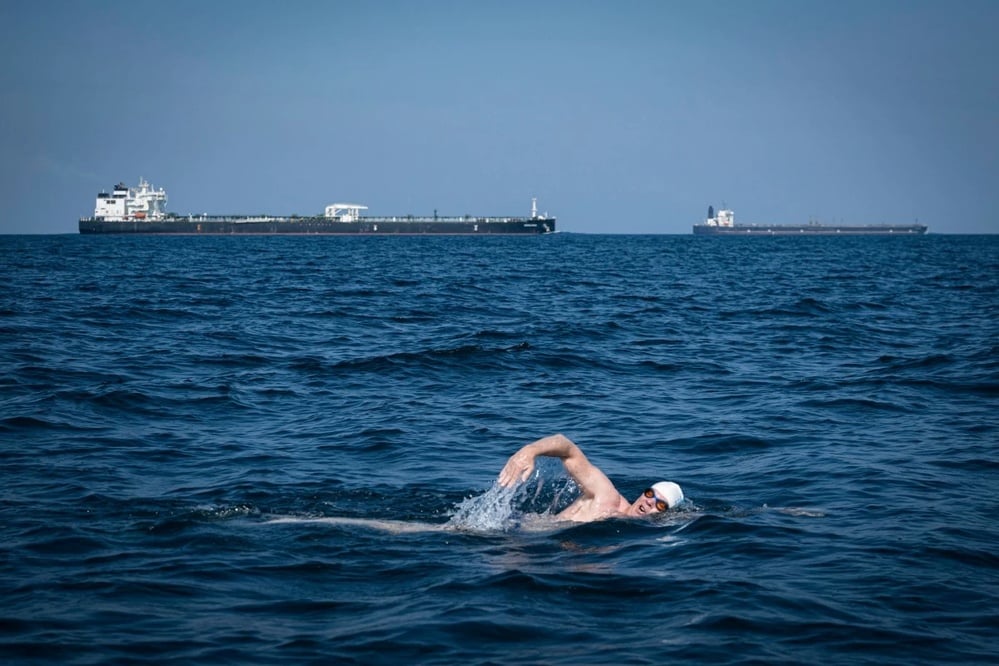
Lewis Pugh's environmental-advocacy lens and dramatic eyewitness imagery dominate the framing, with recent vessel attacks and sea mines attributed to Iran.
Helium Analysis
Limitations: Category is ambiguous between Science/environment and Politics; the environmental claims are largely sourced to Pugh's advocacy rather than independent scientific assessment.
·
14 of 56 available dimensions scored; omitted dimensions are not treated as neutral.
·
Verified supporting quotes for 14 of 14 scored dimensions.
Claim: The report is framed through Lewis Pugh's subjective experience and environmental advocacy rather than detached analysis.
“But it is also one of the most beautiful places I have ever been” · exact text match
Why: The article foregrounds Pugh's personal impressions and evaluative language.
Claim: The prose uses vividly dramatic imagery of vessels attacked and burning.
“sent fireballs into the sky” · exact text match
“Around the ship, the water was on fire” · exact text match
Why: The selected descriptions are graphic and heighten the drama.
Claim: The environmental framing is pessimistic about recovery.
“It’s going to take years, decades for this area to recover.” · exact text match
Why: The selected quote emphasizes long-lasting harm.
Claim: The story combines an extreme endurance feat with live conflict imagery.
“swimming the Strait of Hormuz while tankers are attacked and blown up nearby” · exact text match
Why: The unusual and dangerous setting makes the account notably interesting.
Claim: The article amplifies Pugh's prescriptive message while remaining mostly descriptive.
“We’ve got to stop the war. We’ve got to open the strait, and we’ve got to clean up the pollution.” · exact text match
Why: The quoted call to action is foregrounded, though not presented as the publisher's own editorial demand.
Claim: The article centers an anti-war appeal with no comparable hawkish voice.
“We’ve got to stop the war.” · exact text match
Counterevidence:
“Iran has in recent weeks increased attacks on vessels that it claimed traveled along unauthorized routes in the strait” · exact text match
Why: The selected quote and environmental frame lean dovish, but the report also describes Iranian attacks, limiting the lean.
Claim: Danger imagery and quotes heighten a sense of immediate threat.
“And at that moment I realized we have to get out of here right now.” · exact text match
Why: The selected eyewitness quote emphasizes peril, though it is attributed and context-bound.
Claim: The article gives substantial space to Pugh's evaluative warnings and advocacy.
“With all these ships being sunk, this area is under severe threat” · exact text match
Why: The quoted judgment is central to the story's framing, not merely incidental.
Claim: The story is embedded in and reports on the Iran war and U.S.-Israel military action.
“before the U.S. and Israel launched the war on Feb. 28” · exact text match
Why: Military conflict and state actors are central to the report.
Claim: The article highlights a simplified three-part prescription for a complex conflict-environment issue.
“We’ve got to stop the war. We’ve got to open the strait, and we’ve got to clean up the pollution.” · exact text match
Why: The quoted message compresses complex issues into a slogan-like list.
Claim: The overall tone is negative and alarmed about environmental destruction.
“this area is under severe threat” · exact text match
Why: The language is emotionally charged and negative, though attributed to Pugh.
Claim: The report is moderately credible, using AP attribution and direct quotes while also repeating conflict claims without independent sourcing.
“he told The Associated Press after he returned to London” · exact text match
“Several tankers have also struck sea mines laid by Tehran” · exact text match
Why: Attribution supports credibility; the unattributed conflict assertion limits it.
Claim: The article prominently includes forecasts of long-lasting ecological harm.
“It lasts for generations.” · exact text match
Why: The selected quote is a forecast about future environmental damage.
Claim: The report shows moderate integrity through AP attribution and hedging of a record claim.
“he told The Associated Press after he returned to London” · exact text match
“Pugh is believed to be the first person” · exact text match
Why: Named sourcing and explicit uncertainty indicate fairness and honesty.
Category is ambiguous between Science/environment and Politics; the environmental claims are largely sourced to Pugh's advocacy rather than independent scientific assessment.
November 21, 2026 · 0 shares
The report is largely neutral and attribution-driven, but it frames the swim through the swimmer's environmental-warning lens and includes vivid danger imagery from his account.
Helium Analysis
Limitations: The supplied article text is truncated mid-sentence in the final paragraph, so the full ending and any subsequent details are unavailable.
·
56 of 56 available dimensions scored; omitted dimensions are not treated as neutral.
·
Verified supporting quotes for 7 of 56 scored dimensions.
Claim: The report is primarily factual and attributive rather than subjective commentary.
“he told The Associated Press after he returned to London.” · exact text match
“Pugh is believed to be the first person to undertake a long-distance swim there since the war started.” · exact text match
Why: Most claims are attributed to Pugh or Iran, with hedging language, though vivid eyewitness quotes are prominent.
Claim: The report avoids tabloid-style sensationalism despite dramatic events.
“British endurance swimmer Lewis Pugh has swum in the North Pole and Antarctica to draw attention to environmental causes.” · exact text match
“spent three days this week swimming parts of the dangerous waterway” · exact text match
Why: The prose is mostly measured AP-style reporting, even when describing explosions and attacks.
Claim: The report is descriptive, recounting the swim and surrounding events without prescribing policy.
“Pugh, who is a United Nations Patron of the Oceans, spent three days this week swimming parts of the dangerous waterway to highlight how the war with Iran threatens the area's habitat and wildlife.” · exact text match
Why: It reports the swimmer's purpose and actions rather than advocating a course of action.
Claim: The report includes mild danger framing through descriptions of explosions and threats to the waterway.
“The explosion was so loud, two booms, and then fighter jets coming in.” · exact text match
“With all these ships being sunk, this area is under severe threat” · exact text match
Why: Vivid danger language is present but largely attributed to the swimmer rather than escalated by the publisher.
Claim: The article is centrally political, focused on Iran's military actions and control of a strategic waterway.
“Iran has in recent weeks increased attacks on vessels that it claimed traveled along unauthorized routes in the strait as it seeks to impose its control on the crucial waterway” · exact text match
“Swimming the Strait of Hormuz while tankers are attacked and blown up nearby.” · exact text match
Why: The reported event is framed around an active war and Iranian control of oil shipping.
Claim: The report shows credible journalistic practice through attribution, direct quotes, and cautious language.
“Pugh is believed to be the first person to undertake a long-distance swim there since the war started.” · exact text match
“Iran has in recent weeks increased attacks on vessels that it claimed traveled along unauthorized routes in the strait” · exact text match
Why: Hedging and explicit attribution reduce unsupported assertion, though the account relies on eyewitness testimony.
Claim: The report appears fair and internally honest by attributing contested claims and including the swimmer's own words.
“he told The Associated Press after he returned to London” · exact text match
“Iran has in recent weeks increased attacks on vessels that it claimed traveled along unauthorized routes in the strait” · exact text match
Why: Attribution and quotation provide observable fairness signals.
The supplied article text is truncated mid-sentence in the final paragraph, so the full ending and any subsequent details are unavailable.
November 21, 2026 · 0 shares
Publisher framing centers an activist endurance swim as evidence of war's environmental cost while attributing the conflict and ecological claims to the swimmer and his foundation.
The Strait of Hormuz is a narrow, strategically vital waterway for global oil shipments; the report refers to an ongoing conflict involving Iran that began in March but does not detail its causes or full belligerents.
Helium Analysis
Limitations: The supplied text is a short, unbylined BBC report; several conflict and environmental claims rely on the swimmer or his foundation rather than independent verification.
·
8 of 56 available dimensions scored; omitted dimensions are not treated as neutral.
·
Verified supporting quotes for 8 of 8 scored dimensions.
Claim: The headline presents the swim as highlighting war's environmental cost without attributing that framing to the swimmer, though the body largely attributes it.
“Hormuz swim highlights environmental cost of war.” · exact text match
Counterevidence:
“A British endurance swimmer has completed a three-day swim through the Strait of Hormuz to draw attention to what he says is the environmental cost of the conflict involving Iran.” · exact text match
Why: The unqualified headline frames an activist interpretation as central, while the body's attribution tempers that subjectivity.
Claim: The report uses restrained, attributed language for violent incidents rather than sensational prose.
“According to the Lewis Pugh Foundation, an oil tanker was struck by a projectile about 4km (2.5 miles) from where he was swimming on the first day.” · exact text match
Why: The incident is reported with distance and source attribution, not exclamatory or hyperbolic publisher language.
Claim: The report selects and headlines an anti-war environmental frame without presenting a hawkish counterview.
“He is calling for an end to the fighting, the reopening of the Strait of Hormuz and action to address environmental damage caused by the conflict.” · exact text match
Why: The selection centers de-escalation and ending fighting, though the call is attributed rather than directly editorialized.
Claim: The headline adopts an evaluative environmental-cost frame, while the body attributes the claims to Pugh.
“Hormuz swim highlights environmental cost of war.” · exact text match
Counterevidence:
“A British endurance swimmer has completed a three-day swim through the Strait of Hormuz to draw attention to what he says is the environmental cost of the conflict involving Iran.” · exact text match
Why: The headline is opinion-tinged, but the report mostly presents the activist's statements as attributed opinion.
Claim: The report foregrounds a geopolitical conflict and an activist's policy calls about ending fighting and reopening the Strait.
“He is calling for an end to the fighting, the reopening of the Strait of Hormuz and action to address environmental damage caused by the conflict.” · exact text match
Why: The article centers on war, a strategic waterway, and policy demands, making it political even as it reports the swimmer's calls.
Claim: The supplied text maintains credibility through attribution and restrained reporting, though it relies heavily on the swimmer and his foundation.
“According to the Lewis Pugh Foundation, an oil tanker was struck by a projectile about 4km (2.5 miles) from where he was swimming on the first day.” · exact text match
“The swimmer is believed to be the first person to attempt a long-distance swim in the Strait of Hormuz since the conflict began in March.” · exact text match
Why: Sourcing and hedging are visible, but independent verification of environmental and conflict claims is limited.
Claim: The report includes attributed speculation about long-term environmental consequences rather than asserting them as fact.
“Pugh said oil spills and other contamination could have long-term consequences for marine ecosystems including coral reefs, seagrass meadows and mangrove forests.” · exact text match
Why: The conditional 'could' and attribution indicate limited speculation, not strong forecasting.
Claim: The report attributes contested or advocacy claims to the swimmer or his foundation rather than presenting them as established fact.
“According to the Lewis Pugh Foundation, an oil tanker was struck by a projectile about 4km (2.5 miles) from where he was swimming on the first day.” · exact text match
“Pugh said oil spills and other contamination could have long-term consequences for marine ecosystems including coral reefs, seagrass meadows and mangrove forests.” · exact text match
Why: Distinct attribution and quoted speculation show observable fairness and sourcing practice.
The supplied text is a short, unbylined BBC report; several conflict and environmental claims rely on the swimmer or his foundation rather than independent verification.
Lewis Pugh's environmental-advocacy lens and dramatic eyewitness imagery dominate the framing, with recent vessel attacks and sea mines attributed to Iran.
Helium Analysis
Limitations: Category is ambiguous between Science/environment and Politics; the environmental claims are largely sourced to Pugh's advocacy rather than independent scientific assessment.
·
14 of 56 available dimensions scored; omitted dimensions are not treated as neutral.
·
Verified supporting quotes for 14 of 14 scored dimensions.
Claim: The report is framed through Lewis Pugh's subjective experience and environmental advocacy rather than detached analysis.
“But it is also one of the most beautiful places I have ever been” · exact text match
Why: The article foregrounds Pugh's personal impressions and evaluative language.
Claim: The prose uses vividly dramatic imagery of vessels attacked and burning.
“sent fireballs into the sky” · exact text match
“Around the ship, the water was on fire” · exact text match
Why: The selected descriptions are graphic and heighten the drama.
Claim: The environmental framing is pessimistic about recovery.
“It’s going to take years, decades for this area to recover.” · exact text match
Why: The selected quote emphasizes long-lasting harm.
Claim: The story combines an extreme endurance feat with live conflict imagery.
“swimming the Strait of Hormuz while tankers are attacked and blown up nearby” · exact text match
Why: The unusual and dangerous setting makes the account notably interesting.
Claim: The article amplifies Pugh's prescriptive message while remaining mostly descriptive.
“We’ve got to stop the war. We’ve got to open the strait, and we’ve got to clean up the pollution.” · exact text match
Why: The quoted call to action is foregrounded, though not presented as the publisher's own editorial demand.
Claim: The article centers an anti-war appeal with no comparable hawkish voice.
“We’ve got to stop the war.” · exact text match
Counterevidence:
“Iran has in recent weeks increased attacks on vessels that it claimed traveled along unauthorized routes in the strait” · exact text match
Why: The selected quote and environmental frame lean dovish, but the report also describes Iranian attacks, limiting the lean.
Claim: Danger imagery and quotes heighten a sense of immediate threat.
“And at that moment I realized we have to get out of here right now.” · exact text match
Why: The selected eyewitness quote emphasizes peril, though it is attributed and context-bound.
Claim: The article gives substantial space to Pugh's evaluative warnings and advocacy.
“With all these ships being sunk, this area is under severe threat” · exact text match
Why: The quoted judgment is central to the story's framing, not merely incidental.
Claim: The story is embedded in and reports on the Iran war and U.S.-Israel military action.
“before the U.S. and Israel launched the war on Feb. 28” · exact text match
Why: Military conflict and state actors are central to the report.
Claim: The article highlights a simplified three-part prescription for a complex conflict-environment issue.
“We’ve got to stop the war. We’ve got to open the strait, and we’ve got to clean up the pollution.” · exact text match
Why: The quoted message compresses complex issues into a slogan-like list.
Claim: The overall tone is negative and alarmed about environmental destruction.
“this area is under severe threat” · exact text match
Why: The language is emotionally charged and negative, though attributed to Pugh.
Claim: The report is moderately credible, using AP attribution and direct quotes while also repeating conflict claims without independent sourcing.
“he told The Associated Press after he returned to London” · exact text match
“Several tankers have also struck sea mines laid by Tehran” · exact text match
Why: Attribution supports credibility; the unattributed conflict assertion limits it.
Claim: The article prominently includes forecasts of long-lasting ecological harm.
“It lasts for generations.” · exact text match
Why: The selected quote is a forecast about future environmental damage.
Claim: The report shows moderate integrity through AP attribution and hedging of a record claim.
“he told The Associated Press after he returned to London” · exact text match
“Pugh is believed to be the first person” · exact text match
Why: Named sourcing and explicit uncertainty indicate fairness and honesty.
Category is ambiguous between Science/environment and Politics; the environmental claims are largely sourced to Pugh's advocacy rather than independent scientific assessment.
November 21, 2026 · 0 shares
Publisher framing centers an activist endurance swim as evidence of war's environmental cost while attributing the conflict and ecological claims to the swimmer and his foundation.
The Strait of Hormuz is a narrow, strategically vital waterway for global oil shipments; the report refers to an ongoing conflict involving Iran that began in March but does not detail its causes or full belligerents.
Helium Analysis
Limitations: The supplied text is a short, unbylined BBC report; several conflict and environmental claims rely on the swimmer or his foundation rather than independent verification.
·
8 of 56 available dimensions scored; omitted dimensions are not treated as neutral.
·
Verified supporting quotes for 8 of 8 scored dimensions.
Claim: The headline presents the swim as highlighting war's environmental cost without attributing that framing to the swimmer, though the body largely attributes it.
“Hormuz swim highlights environmental cost of war.” · exact text match
Counterevidence:
“A British endurance swimmer has completed a three-day swim through the Strait of Hormuz to draw attention to what he says is the environmental cost of the conflict involving Iran.” · exact text match
Why: The unqualified headline frames an activist interpretation as central, while the body's attribution tempers that subjectivity.
Claim: The report uses restrained, attributed language for violent incidents rather than sensational prose.
“According to the Lewis Pugh Foundation, an oil tanker was struck by a projectile about 4km (2.5 miles) from where he was swimming on the first day.” · exact text match
Why: The incident is reported with distance and source attribution, not exclamatory or hyperbolic publisher language.
Claim: The report selects and headlines an anti-war environmental frame without presenting a hawkish counterview.
“He is calling for an end to the fighting, the reopening of the Strait of Hormuz and action to address environmental damage caused by the conflict.” · exact text match
Why: The selection centers de-escalation and ending fighting, though the call is attributed rather than directly editorialized.
Claim: The headline adopts an evaluative environmental-cost frame, while the body attributes the claims to Pugh.
“Hormuz swim highlights environmental cost of war.” · exact text match
Counterevidence:
“A British endurance swimmer has completed a three-day swim through the Strait of Hormuz to draw attention to what he says is the environmental cost of the conflict involving Iran.” · exact text match
Why: The headline is opinion-tinged, but the report mostly presents the activist's statements as attributed opinion.
Claim: The report foregrounds a geopolitical conflict and an activist's policy calls about ending fighting and reopening the Strait.
“He is calling for an end to the fighting, the reopening of the Strait of Hormuz and action to address environmental damage caused by the conflict.” · exact text match
Why: The article centers on war, a strategic waterway, and policy demands, making it political even as it reports the swimmer's calls.
Claim: The supplied text maintains credibility through attribution and restrained reporting, though it relies heavily on the swimmer and his foundation.
“According to the Lewis Pugh Foundation, an oil tanker was struck by a projectile about 4km (2.5 miles) from where he was swimming on the first day.” · exact text match
“The swimmer is believed to be the first person to attempt a long-distance swim in the Strait of Hormuz since the conflict began in March.” · exact text match
Why: Sourcing and hedging are visible, but independent verification of environmental and conflict claims is limited.
Claim: The report includes attributed speculation about long-term environmental consequences rather than asserting them as fact.
“Pugh said oil spills and other contamination could have long-term consequences for marine ecosystems including coral reefs, seagrass meadows and mangrove forests.” · exact text match
Why: The conditional 'could' and attribution indicate limited speculation, not strong forecasting.
Claim: The report attributes contested or advocacy claims to the swimmer or his foundation rather than presenting them as established fact.
“According to the Lewis Pugh Foundation, an oil tanker was struck by a projectile about 4km (2.5 miles) from where he was swimming on the first day.” · exact text match
“Pugh said oil spills and other contamination could have long-term consequences for marine ecosystems including coral reefs, seagrass meadows and mangrove forests.” · exact text match
Why: Distinct attribution and quoted speculation show observable fairness and sourcing practice.
The supplied text is a short, unbylined BBC report; several conflict and environmental claims rely on the swimmer or his foundation rather than independent verification.
November 21, 2026 · 0 shares
The report is largely neutral and attribution-driven, but it frames the swim through the swimmer's environmental-warning lens and includes vivid danger imagery from his account.
Helium Analysis
Limitations: The supplied article text is truncated mid-sentence in the final paragraph, so the full ending and any subsequent details are unavailable.
·
56 of 56 available dimensions scored; omitted dimensions are not treated as neutral.
·
Verified supporting quotes for 7 of 56 scored dimensions.
Claim: The report is primarily factual and attributive rather than subjective commentary.
“he told The Associated Press after he returned to London.” · exact text match
“Pugh is believed to be the first person to undertake a long-distance swim there since the war started.” · exact text match
Why: Most claims are attributed to Pugh or Iran, with hedging language, though vivid eyewitness quotes are prominent.
Claim: The report avoids tabloid-style sensationalism despite dramatic events.
“British endurance swimmer Lewis Pugh has swum in the North Pole and Antarctica to draw attention to environmental causes.” · exact text match
“spent three days this week swimming parts of the dangerous waterway” · exact text match
Why: The prose is mostly measured AP-style reporting, even when describing explosions and attacks.
Claim: The report is descriptive, recounting the swim and surrounding events without prescribing policy.
“Pugh, who is a United Nations Patron of the Oceans, spent three days this week swimming parts of the dangerous waterway to highlight how the war with Iran threatens the area's habitat and wildlife.” · exact text match
Why: It reports the swimmer's purpose and actions rather than advocating a course of action.
Claim: The report includes mild danger framing through descriptions of explosions and threats to the waterway.
“The explosion was so loud, two booms, and then fighter jets coming in.” · exact text match
“With all these ships being sunk, this area is under severe threat” · exact text match
Why: Vivid danger language is present but largely attributed to the swimmer rather than escalated by the publisher.
Claim: The article is centrally political, focused on Iran's military actions and control of a strategic waterway.
“Iran has in recent weeks increased attacks on vessels that it claimed traveled along unauthorized routes in the strait as it seeks to impose its control on the crucial waterway” · exact text match
“Swimming the Strait of Hormuz while tankers are attacked and blown up nearby.” · exact text match
Why: The reported event is framed around an active war and Iranian control of oil shipping.
Claim: The report shows credible journalistic practice through attribution, direct quotes, and cautious language.
“Pugh is believed to be the first person to undertake a long-distance swim there since the war started.” · exact text match
“Iran has in recent weeks increased attacks on vessels that it claimed traveled along unauthorized routes in the strait” · exact text match
Why: Hedging and explicit attribution reduce unsupported assertion, though the account relies on eyewitness testimony.
Claim: The report appears fair and internally honest by attributing contested claims and including the swimmer's own words.
“he told The Associated Press after he returned to London” · exact text match
“Iran has in recent weeks increased attacks on vessels that it claimed traveled along unauthorized routes in the strait” · exact text match
Why: Attribution and quotation provide observable fairness signals.
The supplied article text is truncated mid-sentence in the final paragraph, so the full ending and any subsequent details are unavailable.
November 22, 2026 · 0 shares
Framing centers on environmental-advocacy and anti-war themes through the swimmer's warnings, while state-conflict claims are presented without named sourcing.
The Strait of Hormuz is a strategic chokepoint for global oil and gas shipping between the Persian Gulf and the Gulf of Oman.
Helium Analysis
Limitations: The supplied text is a short, possibly aggregated item with repeated headlines and no byline; classifications are limited to the visible substantive report.
·
2 of 56 available dimensions scored; omitted dimensions are not treated as neutral.
·
Verified supporting quotes for 2 of 2 scored dimensions.
Claim: The story is centrally framed around geopolitical conflict and state action in the Strait of Hormuz.
“Iran began blockading the waterway and targeting ships in the area following US and Israeli strikes that sparked the conflict in February.” · exact text match
Why: The passage makes state-level military conflict and blockade central to the report.
Claim: The report gives identifiable attribution for the swimmer’s statements and biographical details but does not name sources for its conflict assertions.
“Pugh wrote in a post on his website.” · exact text match
Counterevidence:
“Iran began blockading the waterway and targeting ships in the area following US and Israeli strikes that sparked the conflict in February.” · exact text match
Why: Attribution for the central quotes supports visible credibility, while the unsourced conflict claim limits it; the mixed sourcing fits a mildly positive credibility score.
The supplied text is a short, possibly aggregated item with repeated headlines and no byline; classifications are limited to the visible substantive report.
November 21, 2026 · 0 shares
The report frames a UN ocean campaigner’s dangerous swim as a dramatic environmentalist and anti-war appeal, using emotive language and attributed warnings with little independent verification.
Helium Analysis
Limitations: The supplied text includes unrelated headline fragments, and the main report provides no independent verification beyond the swimmer’s account.
·
10 of 56 available dimensions scored; omitted dimensions are not treated as neutral.
·
Verified supporting quotes for 10 of 10 scored dimensions.
Claim: The report’s language is evaluative and feature-like rather than strictly neutral.
“he delivered a stark appeal” · exact text match
“the extraordinary wildlife at risk” · exact text match
Why: Both phrases show subjective description and evaluative framing.
Claim: The narrative uses dramatic danger and spectacle imagery.
“braving explosions and burning tankers nearby” · exact text match
“towering plumes of smoke” · exact text match
Why: These are vivid, high-drama descriptions beyond bare factual reporting.
Claim: The report includes an explicit call to action.
“We’ve got to stop the war. We’ve got to open the strait, and we’ve got to clean up this mess.” · exact text match
Why: The quoted appeal prescribes what should be done.
Claim: The article highlights an anti-war appeal without presenting a security rationale for the conflict.
“We’ve got to stop the war.” · exact text match
Why: The selected quote is explicitly anti-war, and the article does not counterbalance it with a hawkish argument.
Claim: The report uses danger imagery and catastrophic risk language.
“braving explosions and burning tankers nearby” · exact text match
“could devastate coral reefs, mangroves and coastal ecosystems for decades” · exact text match
Why: Explosions, burning tankers, and decades-long devastation create fear-oriented framing.
Claim: The report adopts an advocacy-oriented register around the swim’s purpose.
“aimed to expose the environmental damage caused by the war with Iran” · exact text match
“We’ve got to stop the war.” · exact text match
Why: The purpose is framed as exposing damage, and the selected quote is an explicit appeal.
Claim: The article centers a war and an explicit policy appeal.
“the war with Iran” · exact text match
“We’ve got to stop the war. We’ve got to open the strait, and we’ve got to clean up this mess.” · exact text match
Why: War and calls to stop it and open a strait are political subject matter.
Claim: The framing is emotionally negative and alarmist about war-related pollution.
“could devastate coral reefs, mangroves and coastal ecosystems for decades” · exact text match
“towering plumes of smoke” · exact text match
Why: Catastrophic risk language and disaster imagery produce a negative emotional charge.
Claim: The report attributes environmental warnings to the swimmer and uses qualified language, but lacks independent sourcing.
“Pugh warned that pollution from damaged tankers could devastate coral reefs, mangroves and coastal ecosystems for decades” · exact text match
Why: Attribution and hedging are visible, but the account relies on one campaigner’s testimony.
Claim: The environmental harm is partly presented as a future risk rather than a confirmed outcome.
“could devastate coral reefs, mangroves and coastal ecosystems for decades” · exact text match
Why: The modal 'could' marks a forecast attributed to Pugh.
The supplied text includes unrelated headline fragments, and the main report provides no independent verification beyond the swimmer’s account.
Lewis Pugh's environmental-advocacy lens and dramatic eyewitness imagery dominate the framing, with recent vessel attacks and sea mines attributed to Iran.
Helium Analysis
Limitations: Category is ambiguous between Science/environment and Politics; the environmental claims are largely sourced to Pugh's advocacy rather than independent scientific assessment.
·
14 of 56 available dimensions scored; omitted dimensions are not treated as neutral.
·
Verified supporting quotes for 14 of 14 scored dimensions.
Claim: The report is framed through Lewis Pugh's subjective experience and environmental advocacy rather than detached analysis.
“But it is also one of the most beautiful places I have ever been” · exact text match
Why: The article foregrounds Pugh's personal impressions and evaluative language.
Claim: The prose uses vividly dramatic imagery of vessels attacked and burning.
“sent fireballs into the sky” · exact text match
“Around the ship, the water was on fire” · exact text match
Why: The selected descriptions are graphic and heighten the drama.
Claim: The environmental framing is pessimistic about recovery.
“It’s going to take years, decades for this area to recover.” · exact text match
Why: The selected quote emphasizes long-lasting harm.
Claim: The story combines an extreme endurance feat with live conflict imagery.
“swimming the Strait of Hormuz while tankers are attacked and blown up nearby” · exact text match
Why: The unusual and dangerous setting makes the account notably interesting.
Claim: The article amplifies Pugh's prescriptive message while remaining mostly descriptive.
“We’ve got to stop the war. We’ve got to open the strait, and we’ve got to clean up the pollution.” · exact text match
Why: The quoted call to action is foregrounded, though not presented as the publisher's own editorial demand.
Claim: The article centers an anti-war appeal with no comparable hawkish voice.
“We’ve got to stop the war.” · exact text match
Counterevidence:
“Iran has in recent weeks increased attacks on vessels that it claimed traveled along unauthorized routes in the strait” · exact text match
Why: The selected quote and environmental frame lean dovish, but the report also describes Iranian attacks, limiting the lean.
Claim: Danger imagery and quotes heighten a sense of immediate threat.
“And at that moment I realized we have to get out of here right now.” · exact text match
Why: The selected eyewitness quote emphasizes peril, though it is attributed and context-bound.
Claim: The article gives substantial space to Pugh's evaluative warnings and advocacy.
“With all these ships being sunk, this area is under severe threat” · exact text match
Why: The quoted judgment is central to the story's framing, not merely incidental.
Claim: The story is embedded in and reports on the Iran war and U.S.-Israel military action.
“before the U.S. and Israel launched the war on Feb. 28” · exact text match
Why: Military conflict and state actors are central to the report.
Claim: The article highlights a simplified three-part prescription for a complex conflict-environment issue.
“We’ve got to stop the war. We’ve got to open the strait, and we’ve got to clean up the pollution.” · exact text match
Why: The quoted message compresses complex issues into a slogan-like list.
Claim: The overall tone is negative and alarmed about environmental destruction.
“this area is under severe threat” · exact text match
Why: The language is emotionally charged and negative, though attributed to Pugh.
Claim: The report is moderately credible, using AP attribution and direct quotes while also repeating conflict claims without independent sourcing.
“he told The Associated Press after he returned to London” · exact text match
“Several tankers have also struck sea mines laid by Tehran” · exact text match
Why: Attribution supports credibility; the unattributed conflict assertion limits it.
Claim: The article prominently includes forecasts of long-lasting ecological harm.
“It lasts for generations.” · exact text match
Why: The selected quote is a forecast about future environmental damage.
Claim: The report shows moderate integrity through AP attribution and hedging of a record claim.
“he told The Associated Press after he returned to London” · exact text match
“Pugh is believed to be the first person” · exact text match
Why: Named sourcing and explicit uncertainty indicate fairness and honesty.
Category is ambiguous between Science/environment and Politics; the environmental claims are largely sourced to Pugh's advocacy rather than independent scientific assessment.
November 21, 2026 · 0 shares
The report is largely neutral and attribution-driven, but it frames the swim through the swimmer's environmental-warning lens and includes vivid danger imagery from his account.
Helium Analysis
Limitations: The supplied article text is truncated mid-sentence in the final paragraph, so the full ending and any subsequent details are unavailable.
·
56 of 56 available dimensions scored; omitted dimensions are not treated as neutral.
·
Verified supporting quotes for 7 of 56 scored dimensions.
Claim: The report is primarily factual and attributive rather than subjective commentary.
“he told The Associated Press after he returned to London.” · exact text match
“Pugh is believed to be the first person to undertake a long-distance swim there since the war started.” · exact text match
Why: Most claims are attributed to Pugh or Iran, with hedging language, though vivid eyewitness quotes are prominent.
Claim: The report avoids tabloid-style sensationalism despite dramatic events.
“British endurance swimmer Lewis Pugh has swum in the North Pole and Antarctica to draw attention to environmental causes.” · exact text match
“spent three days this week swimming parts of the dangerous waterway” · exact text match
Why: The prose is mostly measured AP-style reporting, even when describing explosions and attacks.
Claim: The report is descriptive, recounting the swim and surrounding events without prescribing policy.
“Pugh, who is a United Nations Patron of the Oceans, spent three days this week swimming parts of the dangerous waterway to highlight how the war with Iran threatens the area's habitat and wildlife.” · exact text match
Why: It reports the swimmer's purpose and actions rather than advocating a course of action.
Claim: The report includes mild danger framing through descriptions of explosions and threats to the waterway.
“The explosion was so loud, two booms, and then fighter jets coming in.” · exact text match
“With all these ships being sunk, this area is under severe threat” · exact text match
Why: Vivid danger language is present but largely attributed to the swimmer rather than escalated by the publisher.
Claim: The article is centrally political, focused on Iran's military actions and control of a strategic waterway.
“Iran has in recent weeks increased attacks on vessels that it claimed traveled along unauthorized routes in the strait as it seeks to impose its control on the crucial waterway” · exact text match
“Swimming the Strait of Hormuz while tankers are attacked and blown up nearby.” · exact text match
Why: The reported event is framed around an active war and Iranian control of oil shipping.
Claim: The report shows credible journalistic practice through attribution, direct quotes, and cautious language.
“Pugh is believed to be the first person to undertake a long-distance swim there since the war started.” · exact text match
“Iran has in recent weeks increased attacks on vessels that it claimed traveled along unauthorized routes in the strait” · exact text match
Why: Hedging and explicit attribution reduce unsupported assertion, though the account relies on eyewitness testimony.
Claim: The report appears fair and internally honest by attributing contested claims and including the swimmer's own words.
“he told The Associated Press after he returned to London” · exact text match
“Iran has in recent weeks increased attacks on vessels that it claimed traveled along unauthorized routes in the strait” · exact text match
Why: Attribution and quotation provide observable fairness signals.
The supplied article text is truncated mid-sentence in the final paragraph, so the full ending and any subsequent details are unavailable.
Lewis Pugh's environmental-advocacy lens and dramatic eyewitness imagery dominate the framing, with recent vessel attacks and sea mines attributed to Iran.
Helium Analysis Limitations: Category is ambiguous between Science/environment and Politics; the environmental claims are largely sourced to Pugh's advocacy rather than independent scientific assessment. · 14 of 56 available dimensions scored; omitted dimensions are not treated as neutral. · Verified supporting quotes for 14 of 14 scored dimensions.
Claim: The report is framed through Lewis Pugh's subjective experience and environmental advocacy rather than detached analysis.
“But it is also one of the most beautiful places I have ever been” · exact text match
Why: The article foregrounds Pugh's personal impressions and evaluative language.
Claim: The prose uses vividly dramatic imagery of vessels attacked and burning.
“sent fireballs into the sky” · exact text match
“Around the ship, the water was on fire” · exact text match
Why: The selected descriptions are graphic and heighten the drama.
Claim: The environmental framing is pessimistic about recovery.
“It’s going to take years, decades for this area to recover.” · exact text match
Why: The selected quote emphasizes long-lasting harm.
Claim: The story combines an extreme endurance feat with live conflict imagery.
“swimming the Strait of Hormuz while tankers are attacked and blown up nearby” · exact text match
Why: The unusual and dangerous setting makes the account notably interesting.
Claim: The article amplifies Pugh's prescriptive message while remaining mostly descriptive.
“We’ve got to stop the war. We’ve got to open the strait, and we’ve got to clean up the pollution.” · exact text match
Why: The quoted call to action is foregrounded, though not presented as the publisher's own editorial demand.
Claim: The article centers an anti-war appeal with no comparable hawkish voice.
“We’ve got to stop the war.” · exact text match
Counterevidence:
“Iran has in recent weeks increased attacks on vessels that it claimed traveled along unauthorized routes in the strait” · exact text match
Why: The selected quote and environmental frame lean dovish, but the report also describes Iranian attacks, limiting the lean.
Claim: Danger imagery and quotes heighten a sense of immediate threat.
“And at that moment I realized we have to get out of here right now.” · exact text match
Why: The selected eyewitness quote emphasizes peril, though it is attributed and context-bound.
Claim: The article gives substantial space to Pugh's evaluative warnings and advocacy.
“With all these ships being sunk, this area is under severe threat” · exact text match
Why: The quoted judgment is central to the story's framing, not merely incidental.
Claim: The story is embedded in and reports on the Iran war and U.S.-Israel military action.
“before the U.S. and Israel launched the war on Feb. 28” · exact text match
Why: Military conflict and state actors are central to the report.
Claim: The article highlights a simplified three-part prescription for a complex conflict-environment issue.
“We’ve got to stop the war. We’ve got to open the strait, and we’ve got to clean up the pollution.” · exact text match
Why: The quoted message compresses complex issues into a slogan-like list.
Claim: The overall tone is negative and alarmed about environmental destruction.
“this area is under severe threat” · exact text match
Why: The language is emotionally charged and negative, though attributed to Pugh.
Claim: The report is moderately credible, using AP attribution and direct quotes while also repeating conflict claims without independent sourcing.
“he told The Associated Press after he returned to London” · exact text match
“Several tankers have also struck sea mines laid by Tehran” · exact text match
Why: Attribution supports credibility; the unattributed conflict assertion limits it.
Claim: The article prominently includes forecasts of long-lasting ecological harm.
“It lasts for generations.” · exact text match
Why: The selected quote is a forecast about future environmental damage.
Claim: The report shows moderate integrity through AP attribution and hedging of a record claim.
“he told The Associated Press after he returned to London” · exact text match
“Pugh is believed to be the first person” · exact text match
Why: Named sourcing and explicit uncertainty indicate fairness and honesty.
Category is ambiguous between Science/environment and Politics; the environmental claims are largely sourced to Pugh's advocacy rather than independent scientific assessment.
November 21, 2026 · 0 shares
The report is largely neutral and attribution-driven, but it frames the swim through the swimmer's environmental-warning lens and includes vivid danger imagery from his account.
Helium Analysis Limitations: The supplied article text is truncated mid-sentence in the final paragraph, so the full ending and any subsequent details are unavailable. · 56 of 56 available dimensions scored; omitted dimensions are not treated as neutral. · Verified supporting quotes for 7 of 56 scored dimensions.
Claim: The report is primarily factual and attributive rather than subjective commentary.
“he told The Associated Press after he returned to London.” · exact text match
“Pugh is believed to be the first person to undertake a long-distance swim there since the war started.” · exact text match
Why: Most claims are attributed to Pugh or Iran, with hedging language, though vivid eyewitness quotes are prominent.
Claim: The report avoids tabloid-style sensationalism despite dramatic events.
“British endurance swimmer Lewis Pugh has swum in the North Pole and Antarctica to draw attention to environmental causes.” · exact text match
“spent three days this week swimming parts of the dangerous waterway” · exact text match
Why: The prose is mostly measured AP-style reporting, even when describing explosions and attacks.
Claim: The report is descriptive, recounting the swim and surrounding events without prescribing policy.
“Pugh, who is a United Nations Patron of the Oceans, spent three days this week swimming parts of the dangerous waterway to highlight how the war with Iran threatens the area's habitat and wildlife.” · exact text match
Why: It reports the swimmer's purpose and actions rather than advocating a course of action.
Claim: The report includes mild danger framing through descriptions of explosions and threats to the waterway.
“The explosion was so loud, two booms, and then fighter jets coming in.” · exact text match
“With all these ships being sunk, this area is under severe threat” · exact text match
Why: Vivid danger language is present but largely attributed to the swimmer rather than escalated by the publisher.
Claim: The article is centrally political, focused on Iran's military actions and control of a strategic waterway.
“Iran has in recent weeks increased attacks on vessels that it claimed traveled along unauthorized routes in the strait as it seeks to impose its control on the crucial waterway” · exact text match
“Swimming the Strait of Hormuz while tankers are attacked and blown up nearby.” · exact text match
Why: The reported event is framed around an active war and Iranian control of oil shipping.
Claim: The report shows credible journalistic practice through attribution, direct quotes, and cautious language.
“Pugh is believed to be the first person to undertake a long-distance swim there since the war started.” · exact text match
“Iran has in recent weeks increased attacks on vessels that it claimed traveled along unauthorized routes in the strait” · exact text match
Why: Hedging and explicit attribution reduce unsupported assertion, though the account relies on eyewitness testimony.
Claim: The report appears fair and internally honest by attributing contested claims and including the swimmer's own words.
“he told The Associated Press after he returned to London” · exact text match
“Iran has in recent weeks increased attacks on vessels that it claimed traveled along unauthorized routes in the strait” · exact text match
Why: Attribution and quotation provide observable fairness signals.
The supplied article text is truncated mid-sentence in the final paragraph, so the full ending and any subsequent details are unavailable.
November 21, 2026 · 0 shares
Publisher framing centers an activist endurance swim as evidence of war's environmental cost while attributing the conflict and ecological claims to the swimmer and his foundation.
The Strait of Hormuz is a narrow, strategically vital waterway for global oil shipments; the report refers to an ongoing conflict involving Iran that began in March but does not detail its causes or full belligerents.
Helium Analysis Limitations: The supplied text is a short, unbylined BBC report; several conflict and environmental claims rely on the swimmer or his foundation rather than independent verification. · 8 of 56 available dimensions scored; omitted dimensions are not treated as neutral. · Verified supporting quotes for 8 of 8 scored dimensions.
Claim: The headline presents the swim as highlighting war's environmental cost without attributing that framing to the swimmer, though the body largely attributes it.
“Hormuz swim highlights environmental cost of war.” · exact text match
Counterevidence:
“A British endurance swimmer has completed a three-day swim through the Strait of Hormuz to draw attention to what he says is the environmental cost of the conflict involving Iran.” · exact text match
Why: The unqualified headline frames an activist interpretation as central, while the body's attribution tempers that subjectivity.
Claim: The report uses restrained, attributed language for violent incidents rather than sensational prose.
“According to the Lewis Pugh Foundation, an oil tanker was struck by a projectile about 4km (2.5 miles) from where he was swimming on the first day.” · exact text match
Why: The incident is reported with distance and source attribution, not exclamatory or hyperbolic publisher language.
Claim: The report selects and headlines an anti-war environmental frame without presenting a hawkish counterview.
“He is calling for an end to the fighting, the reopening of the Strait of Hormuz and action to address environmental damage caused by the conflict.” · exact text match
Why: The selection centers de-escalation and ending fighting, though the call is attributed rather than directly editorialized.
Claim: The headline adopts an evaluative environmental-cost frame, while the body attributes the claims to Pugh.
“Hormuz swim highlights environmental cost of war.” · exact text match
Counterevidence:
“A British endurance swimmer has completed a three-day swim through the Strait of Hormuz to draw attention to what he says is the environmental cost of the conflict involving Iran.” · exact text match
Why: The headline is opinion-tinged, but the report mostly presents the activist's statements as attributed opinion.
Claim: The report foregrounds a geopolitical conflict and an activist's policy calls about ending fighting and reopening the Strait.
“He is calling for an end to the fighting, the reopening of the Strait of Hormuz and action to address environmental damage caused by the conflict.” · exact text match
Why: The article centers on war, a strategic waterway, and policy demands, making it political even as it reports the swimmer's calls.
Claim: The supplied text maintains credibility through attribution and restrained reporting, though it relies heavily on the swimmer and his foundation.
“According to the Lewis Pugh Foundation, an oil tanker was struck by a projectile about 4km (2.5 miles) from where he was swimming on the first day.” · exact text match
“The swimmer is believed to be the first person to attempt a long-distance swim in the Strait of Hormuz since the conflict began in March.” · exact text match
Why: Sourcing and hedging are visible, but independent verification of environmental and conflict claims is limited.
Claim: The report includes attributed speculation about long-term environmental consequences rather than asserting them as fact.
“Pugh said oil spills and other contamination could have long-term consequences for marine ecosystems including coral reefs, seagrass meadows and mangrove forests.” · exact text match
Why: The conditional 'could' and attribution indicate limited speculation, not strong forecasting.
Claim: The report attributes contested or advocacy claims to the swimmer or his foundation rather than presenting them as established fact.
“According to the Lewis Pugh Foundation, an oil tanker was struck by a projectile about 4km (2.5 miles) from where he was swimming on the first day.” · exact text match
“Pugh said oil spills and other contamination could have long-term consequences for marine ecosystems including coral reefs, seagrass meadows and mangrove forests.” · exact text match
Why: Distinct attribution and quoted speculation show observable fairness and sourcing practice.
The supplied text is a short, unbylined BBC report; several conflict and environmental claims rely on the swimmer or his foundation rather than independent verification.
Lewis Pugh's environmental-advocacy lens and dramatic eyewitness imagery dominate the framing, with recent vessel attacks and sea mines attributed to Iran.
Helium Analysis Limitations: Category is ambiguous between Science/environment and Politics; the environmental claims are largely sourced to Pugh's advocacy rather than independent scientific assessment. · 14 of 56 available dimensions scored; omitted dimensions are not treated as neutral. · Verified supporting quotes for 14 of 14 scored dimensions.
Claim: The report is framed through Lewis Pugh's subjective experience and environmental advocacy rather than detached analysis.
“But it is also one of the most beautiful places I have ever been” · exact text match
Why: The article foregrounds Pugh's personal impressions and evaluative language.
Claim: The prose uses vividly dramatic imagery of vessels attacked and burning.
“sent fireballs into the sky” · exact text match
“Around the ship, the water was on fire” · exact text match
Why: The selected descriptions are graphic and heighten the drama.
Claim: The environmental framing is pessimistic about recovery.
“It’s going to take years, decades for this area to recover.” · exact text match
Why: The selected quote emphasizes long-lasting harm.
Claim: The story combines an extreme endurance feat with live conflict imagery.
“swimming the Strait of Hormuz while tankers are attacked and blown up nearby” · exact text match
Why: The unusual and dangerous setting makes the account notably interesting.
Claim: The article amplifies Pugh's prescriptive message while remaining mostly descriptive.
“We’ve got to stop the war. We’ve got to open the strait, and we’ve got to clean up the pollution.” · exact text match
Why: The quoted call to action is foregrounded, though not presented as the publisher's own editorial demand.
Claim: The article centers an anti-war appeal with no comparable hawkish voice.
“We’ve got to stop the war.” · exact text match
Counterevidence:
“Iran has in recent weeks increased attacks on vessels that it claimed traveled along unauthorized routes in the strait” · exact text match
Why: The selected quote and environmental frame lean dovish, but the report also describes Iranian attacks, limiting the lean.
Claim: Danger imagery and quotes heighten a sense of immediate threat.
“And at that moment I realized we have to get out of here right now.” · exact text match
Why: The selected eyewitness quote emphasizes peril, though it is attributed and context-bound.
Claim: The article gives substantial space to Pugh's evaluative warnings and advocacy.
“With all these ships being sunk, this area is under severe threat” · exact text match
Why: The quoted judgment is central to the story's framing, not merely incidental.
Claim: The story is embedded in and reports on the Iran war and U.S.-Israel military action.
“before the U.S. and Israel launched the war on Feb. 28” · exact text match
Why: Military conflict and state actors are central to the report.
Claim: The article highlights a simplified three-part prescription for a complex conflict-environment issue.
“We’ve got to stop the war. We’ve got to open the strait, and we’ve got to clean up the pollution.” · exact text match
Why: The quoted message compresses complex issues into a slogan-like list.
Claim: The overall tone is negative and alarmed about environmental destruction.
“this area is under severe threat” · exact text match
Why: The language is emotionally charged and negative, though attributed to Pugh.
Claim: The report is moderately credible, using AP attribution and direct quotes while also repeating conflict claims without independent sourcing.
“he told The Associated Press after he returned to London” · exact text match
“Several tankers have also struck sea mines laid by Tehran” · exact text match
Why: Attribution supports credibility; the unattributed conflict assertion limits it.
Claim: The article prominently includes forecasts of long-lasting ecological harm.
“It lasts for generations.” · exact text match
Why: The selected quote is a forecast about future environmental damage.
Claim: The report shows moderate integrity through AP attribution and hedging of a record claim.
“he told The Associated Press after he returned to London” · exact text match
“Pugh is believed to be the first person” · exact text match
Why: Named sourcing and explicit uncertainty indicate fairness and honesty.
Category is ambiguous between Science/environment and Politics; the environmental claims are largely sourced to Pugh's advocacy rather than independent scientific assessment.
November 21, 2026 · 0 shares
Publisher framing centers an activist endurance swim as evidence of war's environmental cost while attributing the conflict and ecological claims to the swimmer and his foundation.
The Strait of Hormuz is a narrow, strategically vital waterway for global oil shipments; the report refers to an ongoing conflict involving Iran that began in March but does not detail its causes or full belligerents.
Helium Analysis Limitations: The supplied text is a short, unbylined BBC report; several conflict and environmental claims rely on the swimmer or his foundation rather than independent verification. · 8 of 56 available dimensions scored; omitted dimensions are not treated as neutral. · Verified supporting quotes for 8 of 8 scored dimensions.
Claim: The headline presents the swim as highlighting war's environmental cost without attributing that framing to the swimmer, though the body largely attributes it.
“Hormuz swim highlights environmental cost of war.” · exact text match
Counterevidence:
“A British endurance swimmer has completed a three-day swim through the Strait of Hormuz to draw attention to what he says is the environmental cost of the conflict involving Iran.” · exact text match
Why: The unqualified headline frames an activist interpretation as central, while the body's attribution tempers that subjectivity.
Claim: The report uses restrained, attributed language for violent incidents rather than sensational prose.
“According to the Lewis Pugh Foundation, an oil tanker was struck by a projectile about 4km (2.5 miles) from where he was swimming on the first day.” · exact text match
Why: The incident is reported with distance and source attribution, not exclamatory or hyperbolic publisher language.
Claim: The report selects and headlines an anti-war environmental frame without presenting a hawkish counterview.
“He is calling for an end to the fighting, the reopening of the Strait of Hormuz and action to address environmental damage caused by the conflict.” · exact text match
Why: The selection centers de-escalation and ending fighting, though the call is attributed rather than directly editorialized.
Claim: The headline adopts an evaluative environmental-cost frame, while the body attributes the claims to Pugh.
“Hormuz swim highlights environmental cost of war.” · exact text match
Counterevidence:
“A British endurance swimmer has completed a three-day swim through the Strait of Hormuz to draw attention to what he says is the environmental cost of the conflict involving Iran.” · exact text match
Why: The headline is opinion-tinged, but the report mostly presents the activist's statements as attributed opinion.
Claim: The report foregrounds a geopolitical conflict and an activist's policy calls about ending fighting and reopening the Strait.
“He is calling for an end to the fighting, the reopening of the Strait of Hormuz and action to address environmental damage caused by the conflict.” · exact text match
Why: The article centers on war, a strategic waterway, and policy demands, making it political even as it reports the swimmer's calls.
Claim: The supplied text maintains credibility through attribution and restrained reporting, though it relies heavily on the swimmer and his foundation.
“According to the Lewis Pugh Foundation, an oil tanker was struck by a projectile about 4km (2.5 miles) from where he was swimming on the first day.” · exact text match
“The swimmer is believed to be the first person to attempt a long-distance swim in the Strait of Hormuz since the conflict began in March.” · exact text match
Why: Sourcing and hedging are visible, but independent verification of environmental and conflict claims is limited.
Claim: The report includes attributed speculation about long-term environmental consequences rather than asserting them as fact.
“Pugh said oil spills and other contamination could have long-term consequences for marine ecosystems including coral reefs, seagrass meadows and mangrove forests.” · exact text match
Why: The conditional 'could' and attribution indicate limited speculation, not strong forecasting.
Claim: The report attributes contested or advocacy claims to the swimmer or his foundation rather than presenting them as established fact.
“According to the Lewis Pugh Foundation, an oil tanker was struck by a projectile about 4km (2.5 miles) from where he was swimming on the first day.” · exact text match
“Pugh said oil spills and other contamination could have long-term consequences for marine ecosystems including coral reefs, seagrass meadows and mangrove forests.” · exact text match
Why: Distinct attribution and quoted speculation show observable fairness and sourcing practice.
The supplied text is a short, unbylined BBC report; several conflict and environmental claims rely on the swimmer or his foundation rather than independent verification.
November 21, 2026 · 0 shares
The report is largely neutral and attribution-driven, but it frames the swim through the swimmer's environmental-warning lens and includes vivid danger imagery from his account.
Helium Analysis Limitations: The supplied article text is truncated mid-sentence in the final paragraph, so the full ending and any subsequent details are unavailable. · 56 of 56 available dimensions scored; omitted dimensions are not treated as neutral. · Verified supporting quotes for 7 of 56 scored dimensions.
Claim: The report is primarily factual and attributive rather than subjective commentary.
“he told The Associated Press after he returned to London.” · exact text match
“Pugh is believed to be the first person to undertake a long-distance swim there since the war started.” · exact text match
Why: Most claims are attributed to Pugh or Iran, with hedging language, though vivid eyewitness quotes are prominent.
Claim: The report avoids tabloid-style sensationalism despite dramatic events.
“British endurance swimmer Lewis Pugh has swum in the North Pole and Antarctica to draw attention to environmental causes.” · exact text match
“spent three days this week swimming parts of the dangerous waterway” · exact text match
Why: The prose is mostly measured AP-style reporting, even when describing explosions and attacks.
Claim: The report is descriptive, recounting the swim and surrounding events without prescribing policy.
“Pugh, who is a United Nations Patron of the Oceans, spent three days this week swimming parts of the dangerous waterway to highlight how the war with Iran threatens the area's habitat and wildlife.” · exact text match
Why: It reports the swimmer's purpose and actions rather than advocating a course of action.
Claim: The report includes mild danger framing through descriptions of explosions and threats to the waterway.
“The explosion was so loud, two booms, and then fighter jets coming in.” · exact text match
“With all these ships being sunk, this area is under severe threat” · exact text match
Why: Vivid danger language is present but largely attributed to the swimmer rather than escalated by the publisher.
Claim: The article is centrally political, focused on Iran's military actions and control of a strategic waterway.
“Iran has in recent weeks increased attacks on vessels that it claimed traveled along unauthorized routes in the strait as it seeks to impose its control on the crucial waterway” · exact text match
“Swimming the Strait of Hormuz while tankers are attacked and blown up nearby.” · exact text match
Why: The reported event is framed around an active war and Iranian control of oil shipping.
Claim: The report shows credible journalistic practice through attribution, direct quotes, and cautious language.
“Pugh is believed to be the first person to undertake a long-distance swim there since the war started.” · exact text match
“Iran has in recent weeks increased attacks on vessels that it claimed traveled along unauthorized routes in the strait” · exact text match
Why: Hedging and explicit attribution reduce unsupported assertion, though the account relies on eyewitness testimony.
Claim: The report appears fair and internally honest by attributing contested claims and including the swimmer's own words.
“he told The Associated Press after he returned to London” · exact text match
“Iran has in recent weeks increased attacks on vessels that it claimed traveled along unauthorized routes in the strait” · exact text match
Why: Attribution and quotation provide observable fairness signals.
The supplied article text is truncated mid-sentence in the final paragraph, so the full ending and any subsequent details are unavailable.
Lewis Pugh's environmental-advocacy lens and dramatic eyewitness imagery dominate the framing, with recent vessel attacks and sea mines attributed to Iran.
Helium Analysis Limitations: Category is ambiguous between Science/environment and Politics; the environmental claims are largely sourced to Pugh's advocacy rather than independent scientific assessment. · 14 of 56 available dimensions scored; omitted dimensions are not treated as neutral. · Verified supporting quotes for 14 of 14 scored dimensions.
Claim: The report is framed through Lewis Pugh's subjective experience and environmental advocacy rather than detached analysis.
“But it is also one of the most beautiful places I have ever been” · exact text match
Why: The article foregrounds Pugh's personal impressions and evaluative language.
Claim: The prose uses vividly dramatic imagery of vessels attacked and burning.
“sent fireballs into the sky” · exact text match
“Around the ship, the water was on fire” · exact text match
Why: The selected descriptions are graphic and heighten the drama.
Claim: The environmental framing is pessimistic about recovery.
“It’s going to take years, decades for this area to recover.” · exact text match
Why: The selected quote emphasizes long-lasting harm.
Claim: The story combines an extreme endurance feat with live conflict imagery.
“swimming the Strait of Hormuz while tankers are attacked and blown up nearby” · exact text match
Why: The unusual and dangerous setting makes the account notably interesting.
Claim: The article amplifies Pugh's prescriptive message while remaining mostly descriptive.
“We’ve got to stop the war. We’ve got to open the strait, and we’ve got to clean up the pollution.” · exact text match
Why: The quoted call to action is foregrounded, though not presented as the publisher's own editorial demand.
Claim: The article centers an anti-war appeal with no comparable hawkish voice.
“We’ve got to stop the war.” · exact text match
Counterevidence:
“Iran has in recent weeks increased attacks on vessels that it claimed traveled along unauthorized routes in the strait” · exact text match
Why: The selected quote and environmental frame lean dovish, but the report also describes Iranian attacks, limiting the lean.
Claim: Danger imagery and quotes heighten a sense of immediate threat.
“And at that moment I realized we have to get out of here right now.” · exact text match
Why: The selected eyewitness quote emphasizes peril, though it is attributed and context-bound.
Claim: The article gives substantial space to Pugh's evaluative warnings and advocacy.
“With all these ships being sunk, this area is under severe threat” · exact text match
Why: The quoted judgment is central to the story's framing, not merely incidental.
Claim: The story is embedded in and reports on the Iran war and U.S.-Israel military action.
“before the U.S. and Israel launched the war on Feb. 28” · exact text match
Why: Military conflict and state actors are central to the report.
Claim: The article highlights a simplified three-part prescription for a complex conflict-environment issue.
“We’ve got to stop the war. We’ve got to open the strait, and we’ve got to clean up the pollution.” · exact text match
Why: The quoted message compresses complex issues into a slogan-like list.
Claim: The overall tone is negative and alarmed about environmental destruction.
“this area is under severe threat” · exact text match
Why: The language is emotionally charged and negative, though attributed to Pugh.
Claim: The report is moderately credible, using AP attribution and direct quotes while also repeating conflict claims without independent sourcing.
“he told The Associated Press after he returned to London” · exact text match
“Several tankers have also struck sea mines laid by Tehran” · exact text match
Why: Attribution supports credibility; the unattributed conflict assertion limits it.
Claim: The article prominently includes forecasts of long-lasting ecological harm.
“It lasts for generations.” · exact text match
Why: The selected quote is a forecast about future environmental damage.
Claim: The report shows moderate integrity through AP attribution and hedging of a record claim.
“he told The Associated Press after he returned to London” · exact text match
“Pugh is believed to be the first person” · exact text match
Why: Named sourcing and explicit uncertainty indicate fairness and honesty.
Category is ambiguous between Science/environment and Politics; the environmental claims are largely sourced to Pugh's advocacy rather than independent scientific assessment.
November 21, 2026 · 0 shares
The report is largely neutral and attribution-driven, but it frames the swim through the swimmer's environmental-warning lens and includes vivid danger imagery from his account.
Helium Analysis Limitations: The supplied article text is truncated mid-sentence in the final paragraph, so the full ending and any subsequent details are unavailable. · 56 of 56 available dimensions scored; omitted dimensions are not treated as neutral. · Verified supporting quotes for 7 of 56 scored dimensions.
Claim: The report is primarily factual and attributive rather than subjective commentary.
“he told The Associated Press after he returned to London.” · exact text match
“Pugh is believed to be the first person to undertake a long-distance swim there since the war started.” · exact text match
Why: Most claims are attributed to Pugh or Iran, with hedging language, though vivid eyewitness quotes are prominent.
Claim: The report avoids tabloid-style sensationalism despite dramatic events.
“British endurance swimmer Lewis Pugh has swum in the North Pole and Antarctica to draw attention to environmental causes.” · exact text match
“spent three days this week swimming parts of the dangerous waterway” · exact text match
Why: The prose is mostly measured AP-style reporting, even when describing explosions and attacks.
Claim: The report is descriptive, recounting the swim and surrounding events without prescribing policy.
“Pugh, who is a United Nations Patron of the Oceans, spent three days this week swimming parts of the dangerous waterway to highlight how the war with Iran threatens the area's habitat and wildlife.” · exact text match
Why: It reports the swimmer's purpose and actions rather than advocating a course of action.
Claim: The report includes mild danger framing through descriptions of explosions and threats to the waterway.
“The explosion was so loud, two booms, and then fighter jets coming in.” · exact text match
“With all these ships being sunk, this area is under severe threat” · exact text match
Why: Vivid danger language is present but largely attributed to the swimmer rather than escalated by the publisher.
Claim: The article is centrally political, focused on Iran's military actions and control of a strategic waterway.
“Iran has in recent weeks increased attacks on vessels that it claimed traveled along unauthorized routes in the strait as it seeks to impose its control on the crucial waterway” · exact text match
“Swimming the Strait of Hormuz while tankers are attacked and blown up nearby.” · exact text match
Why: The reported event is framed around an active war and Iranian control of oil shipping.
Claim: The report shows credible journalistic practice through attribution, direct quotes, and cautious language.
“Pugh is believed to be the first person to undertake a long-distance swim there since the war started.” · exact text match
“Iran has in recent weeks increased attacks on vessels that it claimed traveled along unauthorized routes in the strait” · exact text match
Why: Hedging and explicit attribution reduce unsupported assertion, though the account relies on eyewitness testimony.
Claim: The report appears fair and internally honest by attributing contested claims and including the swimmer's own words.
“he told The Associated Press after he returned to London” · exact text match
“Iran has in recent weeks increased attacks on vessels that it claimed traveled along unauthorized routes in the strait” · exact text match
Why: Attribution and quotation provide observable fairness signals.
The supplied article text is truncated mid-sentence in the final paragraph, so the full ending and any subsequent details are unavailable.
Lewis Pugh's environmental-advocacy lens and dramatic eyewitness imagery dominate the framing, with recent vessel attacks and sea mines attributed to Iran.
Helium Analysis Limitations: Category is ambiguous between Science/environment and Politics; the environmental claims are largely sourced to Pugh's advocacy rather than independent scientific assessment. · 14 of 56 available dimensions scored; omitted dimensions are not treated as neutral. · Verified supporting quotes for 14 of 14 scored dimensions.
Claim: The report is framed through Lewis Pugh's subjective experience and environmental advocacy rather than detached analysis.
“But it is also one of the most beautiful places I have ever been” · exact text match
Why: The article foregrounds Pugh's personal impressions and evaluative language.
Claim: The prose uses vividly dramatic imagery of vessels attacked and burning.
“sent fireballs into the sky” · exact text match
“Around the ship, the water was on fire” · exact text match
Why: The selected descriptions are graphic and heighten the drama.
Claim: The environmental framing is pessimistic about recovery.
“It’s going to take years, decades for this area to recover.” · exact text match
Why: The selected quote emphasizes long-lasting harm.
Claim: The story combines an extreme endurance feat with live conflict imagery.
“swimming the Strait of Hormuz while tankers are attacked and blown up nearby” · exact text match
Why: The unusual and dangerous setting makes the account notably interesting.
Claim: The article amplifies Pugh's prescriptive message while remaining mostly descriptive.
“We’ve got to stop the war. We’ve got to open the strait, and we’ve got to clean up the pollution.” · exact text match
Why: The quoted call to action is foregrounded, though not presented as the publisher's own editorial demand.
Claim: The article centers an anti-war appeal with no comparable hawkish voice.
“We’ve got to stop the war.” · exact text match
Counterevidence:
“Iran has in recent weeks increased attacks on vessels that it claimed traveled along unauthorized routes in the strait” · exact text match
Why: The selected quote and environmental frame lean dovish, but the report also describes Iranian attacks, limiting the lean.
Claim: Danger imagery and quotes heighten a sense of immediate threat.
“And at that moment I realized we have to get out of here right now.” · exact text match
Why: The selected eyewitness quote emphasizes peril, though it is attributed and context-bound.
Claim: The article gives substantial space to Pugh's evaluative warnings and advocacy.
“With all these ships being sunk, this area is under severe threat” · exact text match
Why: The quoted judgment is central to the story's framing, not merely incidental.
Claim: The story is embedded in and reports on the Iran war and U.S.-Israel military action.
“before the U.S. and Israel launched the war on Feb. 28” · exact text match
Why: Military conflict and state actors are central to the report.
Claim: The article highlights a simplified three-part prescription for a complex conflict-environment issue.
“We’ve got to stop the war. We’ve got to open the strait, and we’ve got to clean up the pollution.” · exact text match
Why: The quoted message compresses complex issues into a slogan-like list.
Claim: The overall tone is negative and alarmed about environmental destruction.
“this area is under severe threat” · exact text match
Why: The language is emotionally charged and negative, though attributed to Pugh.
Claim: The report is moderately credible, using AP attribution and direct quotes while also repeating conflict claims without independent sourcing.
“he told The Associated Press after he returned to London” · exact text match
“Several tankers have also struck sea mines laid by Tehran” · exact text match
Why: Attribution supports credibility; the unattributed conflict assertion limits it.
Claim: The article prominently includes forecasts of long-lasting ecological harm.
“It lasts for generations.” · exact text match
Why: The selected quote is a forecast about future environmental damage.
Claim: The report shows moderate integrity through AP attribution and hedging of a record claim.
“he told The Associated Press after he returned to London” · exact text match
“Pugh is believed to be the first person” · exact text match
Why: Named sourcing and explicit uncertainty indicate fairness and honesty.
Category is ambiguous between Science/environment and Politics; the environmental claims are largely sourced to Pugh's advocacy rather than independent scientific assessment.
November 22, 2026 · 0 shares
Framing centers on environmental-advocacy and anti-war themes through the swimmer's warnings, while state-conflict claims are presented without named sourcing.
The Strait of Hormuz is a strategic chokepoint for global oil and gas shipping between the Persian Gulf and the Gulf of Oman.
Helium Analysis Limitations: The supplied text is a short, possibly aggregated item with repeated headlines and no byline; classifications are limited to the visible substantive report. · 2 of 56 available dimensions scored; omitted dimensions are not treated as neutral. · Verified supporting quotes for 2 of 2 scored dimensions.
Claim: The story is centrally framed around geopolitical conflict and state action in the Strait of Hormuz.
“Iran began blockading the waterway and targeting ships in the area following US and Israeli strikes that sparked the conflict in February.” · exact text match
Why: The passage makes state-level military conflict and blockade central to the report.
Claim: The report gives identifiable attribution for the swimmer’s statements and biographical details but does not name sources for its conflict assertions.
“Pugh wrote in a post on his website.” · exact text match
Counterevidence:
“Iran began blockading the waterway and targeting ships in the area following US and Israeli strikes that sparked the conflict in February.” · exact text match
Why: Attribution for the central quotes supports visible credibility, while the unsourced conflict claim limits it; the mixed sourcing fits a mildly positive credibility score.
The supplied text is a short, possibly aggregated item with repeated headlines and no byline; classifications are limited to the visible substantive report.
November 21, 2026 · 0 shares
The report is largely neutral and attribution-driven, but it frames the swim through the swimmer's environmental-warning lens and includes vivid danger imagery from his account.
Helium Analysis Limitations: The supplied article text is truncated mid-sentence in the final paragraph, so the full ending and any subsequent details are unavailable. · 56 of 56 available dimensions scored; omitted dimensions are not treated as neutral. · Verified supporting quotes for 7 of 56 scored dimensions.
Claim: The report is primarily factual and attributive rather than subjective commentary.
“he told The Associated Press after he returned to London.” · exact text match
“Pugh is believed to be the first person to undertake a long-distance swim there since the war started.” · exact text match
Why: Most claims are attributed to Pugh or Iran, with hedging language, though vivid eyewitness quotes are prominent.
Claim: The report avoids tabloid-style sensationalism despite dramatic events.
“British endurance swimmer Lewis Pugh has swum in the North Pole and Antarctica to draw attention to environmental causes.” · exact text match
“spent three days this week swimming parts of the dangerous waterway” · exact text match
Why: The prose is mostly measured AP-style reporting, even when describing explosions and attacks.
Claim: The report is descriptive, recounting the swim and surrounding events without prescribing policy.
“Pugh, who is a United Nations Patron of the Oceans, spent three days this week swimming parts of the dangerous waterway to highlight how the war with Iran threatens the area's habitat and wildlife.” · exact text match
Why: It reports the swimmer's purpose and actions rather than advocating a course of action.
Claim: The report includes mild danger framing through descriptions of explosions and threats to the waterway.
“The explosion was so loud, two booms, and then fighter jets coming in.” · exact text match
“With all these ships being sunk, this area is under severe threat” · exact text match
Why: Vivid danger language is present but largely attributed to the swimmer rather than escalated by the publisher.
Claim: The article is centrally political, focused on Iran's military actions and control of a strategic waterway.
“Iran has in recent weeks increased attacks on vessels that it claimed traveled along unauthorized routes in the strait as it seeks to impose its control on the crucial waterway” · exact text match
“Swimming the Strait of Hormuz while tankers are attacked and blown up nearby.” · exact text match
Why: The reported event is framed around an active war and Iranian control of oil shipping.
Claim: The report shows credible journalistic practice through attribution, direct quotes, and cautious language.
“Pugh is believed to be the first person to undertake a long-distance swim there since the war started.” · exact text match
“Iran has in recent weeks increased attacks on vessels that it claimed traveled along unauthorized routes in the strait” · exact text match
Why: Hedging and explicit attribution reduce unsupported assertion, though the account relies on eyewitness testimony.
Claim: The report appears fair and internally honest by attributing contested claims and including the swimmer's own words.
“he told The Associated Press after he returned to London” · exact text match
“Iran has in recent weeks increased attacks on vessels that it claimed traveled along unauthorized routes in the strait” · exact text match
Why: Attribution and quotation provide observable fairness signals.
The supplied article text is truncated mid-sentence in the final paragraph, so the full ending and any subsequent details are unavailable.
November 22, 2026 · 0 shares
Framing centers on environmental-advocacy and anti-war themes through the swimmer's warnings, while state-conflict claims are presented without named sourcing.
The Strait of Hormuz is a strategic chokepoint for global oil and gas shipping between the Persian Gulf and the Gulf of Oman.
Helium Analysis Limitations: The supplied text is a short, possibly aggregated item with repeated headlines and no byline; classifications are limited to the visible substantive report. · 2 of 56 available dimensions scored; omitted dimensions are not treated as neutral. · Verified supporting quotes for 2 of 2 scored dimensions.
Claim: The story is centrally framed around geopolitical conflict and state action in the Strait of Hormuz.
“Iran began blockading the waterway and targeting ships in the area following US and Israeli strikes that sparked the conflict in February.” · exact text match
Why: The passage makes state-level military conflict and blockade central to the report.
Claim: The report gives identifiable attribution for the swimmer’s statements and biographical details but does not name sources for its conflict assertions.
“Pugh wrote in a post on his website.” · exact text match
Counterevidence:
“Iran began blockading the waterway and targeting ships in the area following US and Israeli strikes that sparked the conflict in February.” · exact text match
Why: Attribution for the central quotes supports visible credibility, while the unsourced conflict claim limits it; the mixed sourcing fits a mildly positive credibility score.
The supplied text is a short, possibly aggregated item with repeated headlines and no byline; classifications are limited to the visible substantive report.
November 21, 2026 · 0 shares
The report frames a UN ocean campaigner’s dangerous swim as a dramatic environmentalist and anti-war appeal, using emotive language and attributed warnings with little independent verification.
Helium Analysis Limitations: The supplied text includes unrelated headline fragments, and the main report provides no independent verification beyond the swimmer’s account. · 10 of 56 available dimensions scored; omitted dimensions are not treated as neutral. · Verified supporting quotes for 10 of 10 scored dimensions.
Claim: The report’s language is evaluative and feature-like rather than strictly neutral.
“he delivered a stark appeal” · exact text match
“the extraordinary wildlife at risk” · exact text match
Why: Both phrases show subjective description and evaluative framing.
Claim: The narrative uses dramatic danger and spectacle imagery.
“braving explosions and burning tankers nearby” · exact text match
“towering plumes of smoke” · exact text match
Why: These are vivid, high-drama descriptions beyond bare factual reporting.
Claim: The report includes an explicit call to action.
“We’ve got to stop the war. We’ve got to open the strait, and we’ve got to clean up this mess.” · exact text match
Why: The quoted appeal prescribes what should be done.
Claim: The article highlights an anti-war appeal without presenting a security rationale for the conflict.
“We’ve got to stop the war.” · exact text match
Why: The selected quote is explicitly anti-war, and the article does not counterbalance it with a hawkish argument.
Claim: The report uses danger imagery and catastrophic risk language.
“braving explosions and burning tankers nearby” · exact text match
“could devastate coral reefs, mangroves and coastal ecosystems for decades” · exact text match
Why: Explosions, burning tankers, and decades-long devastation create fear-oriented framing.
Claim: The report adopts an advocacy-oriented register around the swim’s purpose.
“aimed to expose the environmental damage caused by the war with Iran” · exact text match
“We’ve got to stop the war.” · exact text match
Why: The purpose is framed as exposing damage, and the selected quote is an explicit appeal.
Claim: The article centers a war and an explicit policy appeal.
“the war with Iran” · exact text match
“We’ve got to stop the war. We’ve got to open the strait, and we’ve got to clean up this mess.” · exact text match
Why: War and calls to stop it and open a strait are political subject matter.
Claim: The framing is emotionally negative and alarmist about war-related pollution.
“could devastate coral reefs, mangroves and coastal ecosystems for decades” · exact text match
“towering plumes of smoke” · exact text match
Why: Catastrophic risk language and disaster imagery produce a negative emotional charge.
Claim: The report attributes environmental warnings to the swimmer and uses qualified language, but lacks independent sourcing.
“Pugh warned that pollution from damaged tankers could devastate coral reefs, mangroves and coastal ecosystems for decades” · exact text match
Why: Attribution and hedging are visible, but the account relies on one campaigner’s testimony.
Claim: The environmental harm is partly presented as a future risk rather than a confirmed outcome.
“could devastate coral reefs, mangroves and coastal ecosystems for decades” · exact text match
Why: The modal 'could' marks a forecast attributed to Pugh.
The supplied text includes unrelated headline fragments, and the main report provides no independent verification beyond the swimmer’s account.
November 21, 2026 · 0 shares
Publisher framing centers an activist endurance swim as evidence of war's environmental cost while attributing the conflict and ecological claims to the swimmer and his foundation.
The Strait of Hormuz is a narrow, strategically vital waterway for global oil shipments; the report refers to an ongoing conflict involving Iran that began in March but does not detail its causes or full belligerents.
Helium Analysis Limitations: The supplied text is a short, unbylined BBC report; several conflict and environmental claims rely on the swimmer or his foundation rather than independent verification. · 8 of 56 available dimensions scored; omitted dimensions are not treated as neutral. · Verified supporting quotes for 8 of 8 scored dimensions.
Claim: The headline presents the swim as highlighting war's environmental cost without attributing that framing to the swimmer, though the body largely attributes it.
“Hormuz swim highlights environmental cost of war.” · exact text match
Counterevidence:
“A British endurance swimmer has completed a three-day swim through the Strait of Hormuz to draw attention to what he says is the environmental cost of the conflict involving Iran.” · exact text match
Why: The unqualified headline frames an activist interpretation as central, while the body's attribution tempers that subjectivity.
Claim: The report uses restrained, attributed language for violent incidents rather than sensational prose.
“According to the Lewis Pugh Foundation, an oil tanker was struck by a projectile about 4km (2.5 miles) from where he was swimming on the first day.” · exact text match
Why: The incident is reported with distance and source attribution, not exclamatory or hyperbolic publisher language.
Claim: The report selects and headlines an anti-war environmental frame without presenting a hawkish counterview.
“He is calling for an end to the fighting, the reopening of the Strait of Hormuz and action to address environmental damage caused by the conflict.” · exact text match
Why: The selection centers de-escalation and ending fighting, though the call is attributed rather than directly editorialized.
Claim: The headline adopts an evaluative environmental-cost frame, while the body attributes the claims to Pugh.
“Hormuz swim highlights environmental cost of war.” · exact text match
Counterevidence:
“A British endurance swimmer has completed a three-day swim through the Strait of Hormuz to draw attention to what he says is the environmental cost of the conflict involving Iran.” · exact text match
Why: The headline is opinion-tinged, but the report mostly presents the activist's statements as attributed opinion.
Claim: The report foregrounds a geopolitical conflict and an activist's policy calls about ending fighting and reopening the Strait.
“He is calling for an end to the fighting, the reopening of the Strait of Hormuz and action to address environmental damage caused by the conflict.” · exact text match
Why: The article centers on war, a strategic waterway, and policy demands, making it political even as it reports the swimmer's calls.
Claim: The supplied text maintains credibility through attribution and restrained reporting, though it relies heavily on the swimmer and his foundation.
“According to the Lewis Pugh Foundation, an oil tanker was struck by a projectile about 4km (2.5 miles) from where he was swimming on the first day.” · exact text match
“The swimmer is believed to be the first person to attempt a long-distance swim in the Strait of Hormuz since the conflict began in March.” · exact text match
Why: Sourcing and hedging are visible, but independent verification of environmental and conflict claims is limited.
Claim: The report includes attributed speculation about long-term environmental consequences rather than asserting them as fact.
“Pugh said oil spills and other contamination could have long-term consequences for marine ecosystems including coral reefs, seagrass meadows and mangrove forests.” · exact text match
Why: The conditional 'could' and attribution indicate limited speculation, not strong forecasting.
Claim: The report attributes contested or advocacy claims to the swimmer or his foundation rather than presenting them as established fact.
“According to the Lewis Pugh Foundation, an oil tanker was struck by a projectile about 4km (2.5 miles) from where he was swimming on the first day.” · exact text match
“Pugh said oil spills and other contamination could have long-term consequences for marine ecosystems including coral reefs, seagrass meadows and mangrove forests.” · exact text match
Why: Distinct attribution and quoted speculation show observable fairness and sourcing practice.
The supplied text is a short, unbylined BBC report; several conflict and environmental claims rely on the swimmer or his foundation rather than independent verification.
Helium Bias
Story Blindspots
November 21, 2026 · 0 shares
Publisher framing centers an activist endurance swim as evidence of war's environmental cost while attributing the conflict and ecological claims to the swimmer and his foundation.
The Strait of Hormuz is a narrow, strategically vital waterway for global oil shipments; the report refers to an ongoing conflict involving Iran that began in March but does not detail its causes or full belligerents.
Helium Analysis Limitations: The supplied text is a short, unbylined BBC report; several conflict and environmental claims rely on the swimmer or his foundation rather than independent verification. · 8 of 56 available dimensions scored; omitted dimensions are not treated as neutral. · Verified supporting quotes for 8 of 8 scored dimensions.
Claim: The headline presents the swim as highlighting war's environmental cost without attributing that framing to the swimmer, though the body largely attributes it.
“Hormuz swim highlights environmental cost of war.” · exact text match
Counterevidence:
“A British endurance swimmer has completed a three-day swim through the Strait of Hormuz to draw attention to what he says is the environmental cost of the conflict involving Iran.” · exact text match
Why: The unqualified headline frames an activist interpretation as central, while the body's attribution tempers that subjectivity.
Claim: The report uses restrained, attributed language for violent incidents rather than sensational prose.
“According to the Lewis Pugh Foundation, an oil tanker was struck by a projectile about 4km (2.5 miles) from where he was swimming on the first day.” · exact text match
Why: The incident is reported with distance and source attribution, not exclamatory or hyperbolic publisher language.
Claim: The report selects and headlines an anti-war environmental frame without presenting a hawkish counterview.
“He is calling for an end to the fighting, the reopening of the Strait of Hormuz and action to address environmental damage caused by the conflict.” · exact text match
Why: The selection centers de-escalation and ending fighting, though the call is attributed rather than directly editorialized.
Claim: The headline adopts an evaluative environmental-cost frame, while the body attributes the claims to Pugh.
“Hormuz swim highlights environmental cost of war.” · exact text match
Counterevidence:
“A British endurance swimmer has completed a three-day swim through the Strait of Hormuz to draw attention to what he says is the environmental cost of the conflict involving Iran.” · exact text match
Why: The headline is opinion-tinged, but the report mostly presents the activist's statements as attributed opinion.
Claim: The report foregrounds a geopolitical conflict and an activist's policy calls about ending fighting and reopening the Strait.
“He is calling for an end to the fighting, the reopening of the Strait of Hormuz and action to address environmental damage caused by the conflict.” · exact text match
Why: The article centers on war, a strategic waterway, and policy demands, making it political even as it reports the swimmer's calls.
Claim: The supplied text maintains credibility through attribution and restrained reporting, though it relies heavily on the swimmer and his foundation.
“According to the Lewis Pugh Foundation, an oil tanker was struck by a projectile about 4km (2.5 miles) from where he was swimming on the first day.” · exact text match
“The swimmer is believed to be the first person to attempt a long-distance swim in the Strait of Hormuz since the conflict began in March.” · exact text match
Why: Sourcing and hedging are visible, but independent verification of environmental and conflict claims is limited.
Claim: The report includes attributed speculation about long-term environmental consequences rather than asserting them as fact.
“Pugh said oil spills and other contamination could have long-term consequences for marine ecosystems including coral reefs, seagrass meadows and mangrove forests.” · exact text match
Why: The conditional 'could' and attribution indicate limited speculation, not strong forecasting.
Claim: The report attributes contested or advocacy claims to the swimmer or his foundation rather than presenting them as established fact.
“According to the Lewis Pugh Foundation, an oil tanker was struck by a projectile about 4km (2.5 miles) from where he was swimming on the first day.” · exact text match
“Pugh said oil spills and other contamination could have long-term consequences for marine ecosystems including coral reefs, seagrass meadows and mangrove forests.” · exact text match
Why: Distinct attribution and quoted speculation show observable fairness and sourcing practice.
The supplied text is a short, unbylined BBC report; several conflict and environmental claims rely on the swimmer or his foundation rather than independent verification.
Lewis Pugh's environmental-advocacy lens and dramatic eyewitness imagery dominate the framing, with recent vessel attacks and sea mines attributed to Iran.
Helium Analysis Limitations: Category is ambiguous between Science/environment and Politics; the environmental claims are largely sourced to Pugh's advocacy rather than independent scientific assessment. · 14 of 56 available dimensions scored; omitted dimensions are not treated as neutral. · Verified supporting quotes for 14 of 14 scored dimensions.
Claim: The report is framed through Lewis Pugh's subjective experience and environmental advocacy rather than detached analysis.
“But it is also one of the most beautiful places I have ever been” · exact text match
Why: The article foregrounds Pugh's personal impressions and evaluative language.
Claim: The prose uses vividly dramatic imagery of vessels attacked and burning.
“sent fireballs into the sky” · exact text match
“Around the ship, the water was on fire” · exact text match
Why: The selected descriptions are graphic and heighten the drama.
Claim: The environmental framing is pessimistic about recovery.
“It’s going to take years, decades for this area to recover.” · exact text match
Why: The selected quote emphasizes long-lasting harm.
Claim: The story combines an extreme endurance feat with live conflict imagery.
“swimming the Strait of Hormuz while tankers are attacked and blown up nearby” · exact text match
Why: The unusual and dangerous setting makes the account notably interesting.
Claim: The article amplifies Pugh's prescriptive message while remaining mostly descriptive.
“We’ve got to stop the war. We’ve got to open the strait, and we’ve got to clean up the pollution.” · exact text match
Why: The quoted call to action is foregrounded, though not presented as the publisher's own editorial demand.
Claim: The article centers an anti-war appeal with no comparable hawkish voice.
“We’ve got to stop the war.” · exact text match
Counterevidence:
“Iran has in recent weeks increased attacks on vessels that it claimed traveled along unauthorized routes in the strait” · exact text match
Why: The selected quote and environmental frame lean dovish, but the report also describes Iranian attacks, limiting the lean.
Claim: Danger imagery and quotes heighten a sense of immediate threat.
“And at that moment I realized we have to get out of here right now.” · exact text match
Why: The selected eyewitness quote emphasizes peril, though it is attributed and context-bound.
Claim: The article gives substantial space to Pugh's evaluative warnings and advocacy.
“With all these ships being sunk, this area is under severe threat” · exact text match
Why: The quoted judgment is central to the story's framing, not merely incidental.
Claim: The story is embedded in and reports on the Iran war and U.S.-Israel military action.
“before the U.S. and Israel launched the war on Feb. 28” · exact text match
Why: Military conflict and state actors are central to the report.
Claim: The article highlights a simplified three-part prescription for a complex conflict-environment issue.
“We’ve got to stop the war. We’ve got to open the strait, and we’ve got to clean up the pollution.” · exact text match
Why: The quoted message compresses complex issues into a slogan-like list.
Claim: The overall tone is negative and alarmed about environmental destruction.
“this area is under severe threat” · exact text match
Why: The language is emotionally charged and negative, though attributed to Pugh.
Claim: The report is moderately credible, using AP attribution and direct quotes while also repeating conflict claims without independent sourcing.
“he told The Associated Press after he returned to London” · exact text match
“Several tankers have also struck sea mines laid by Tehran” · exact text match
Why: Attribution supports credibility; the unattributed conflict assertion limits it.
Claim: The article prominently includes forecasts of long-lasting ecological harm.
“It lasts for generations.” · exact text match
Why: The selected quote is a forecast about future environmental damage.
Claim: The report shows moderate integrity through AP attribution and hedging of a record claim.
“he told The Associated Press after he returned to London” · exact text match
“Pugh is believed to be the first person” · exact text match
Why: Named sourcing and explicit uncertainty indicate fairness and honesty.
Category is ambiguous between Science/environment and Politics; the environmental claims are largely sourced to Pugh's advocacy rather than independent scientific assessment.
November 21, 2026 · 0 shares
The report is largely neutral and attribution-driven, but it frames the swim through the swimmer's environmental-warning lens and includes vivid danger imagery from his account.
Helium Analysis Limitations: The supplied article text is truncated mid-sentence in the final paragraph, so the full ending and any subsequent details are unavailable. · 56 of 56 available dimensions scored; omitted dimensions are not treated as neutral. · Verified supporting quotes for 7 of 56 scored dimensions.
Claim: The report is primarily factual and attributive rather than subjective commentary.
“he told The Associated Press after he returned to London.” · exact text match
“Pugh is believed to be the first person to undertake a long-distance swim there since the war started.” · exact text match
Why: Most claims are attributed to Pugh or Iran, with hedging language, though vivid eyewitness quotes are prominent.
Claim: The report avoids tabloid-style sensationalism despite dramatic events.
“British endurance swimmer Lewis Pugh has swum in the North Pole and Antarctica to draw attention to environmental causes.” · exact text match
“spent three days this week swimming parts of the dangerous waterway” · exact text match
Why: The prose is mostly measured AP-style reporting, even when describing explosions and attacks.
Claim: The report is descriptive, recounting the swim and surrounding events without prescribing policy.
“Pugh, who is a United Nations Patron of the Oceans, spent three days this week swimming parts of the dangerous waterway to highlight how the war with Iran threatens the area's habitat and wildlife.” · exact text match
Why: It reports the swimmer's purpose and actions rather than advocating a course of action.
Claim: The report includes mild danger framing through descriptions of explosions and threats to the waterway.
“The explosion was so loud, two booms, and then fighter jets coming in.” · exact text match
“With all these ships being sunk, this area is under severe threat” · exact text match
Why: Vivid danger language is present but largely attributed to the swimmer rather than escalated by the publisher.
Claim: The article is centrally political, focused on Iran's military actions and control of a strategic waterway.
“Iran has in recent weeks increased attacks on vessels that it claimed traveled along unauthorized routes in the strait as it seeks to impose its control on the crucial waterway” · exact text match
“Swimming the Strait of Hormuz while tankers are attacked and blown up nearby.” · exact text match
Why: The reported event is framed around an active war and Iranian control of oil shipping.
Claim: The report shows credible journalistic practice through attribution, direct quotes, and cautious language.
“Pugh is believed to be the first person to undertake a long-distance swim there since the war started.” · exact text match
“Iran has in recent weeks increased attacks on vessels that it claimed traveled along unauthorized routes in the strait” · exact text match
Why: Hedging and explicit attribution reduce unsupported assertion, though the account relies on eyewitness testimony.
Claim: The report appears fair and internally honest by attributing contested claims and including the swimmer's own words.
“he told The Associated Press after he returned to London” · exact text match
“Iran has in recent weeks increased attacks on vessels that it claimed traveled along unauthorized routes in the strait” · exact text match
Why: Attribution and quotation provide observable fairness signals.
The supplied article text is truncated mid-sentence in the final paragraph, so the full ending and any subsequent details are unavailable.
Lewis Pugh's environmental-advocacy lens and dramatic eyewitness imagery dominate the framing, with recent vessel attacks and sea mines attributed to Iran.
Helium Analysis Limitations: Category is ambiguous between Science/environment and Politics; the environmental claims are largely sourced to Pugh's advocacy rather than independent scientific assessment. · 14 of 56 available dimensions scored; omitted dimensions are not treated as neutral. · Verified supporting quotes for 14 of 14 scored dimensions.
Claim: The report is framed through Lewis Pugh's subjective experience and environmental advocacy rather than detached analysis.
“But it is also one of the most beautiful places I have ever been” · exact text match
Why: The article foregrounds Pugh's personal impressions and evaluative language.
Claim: The prose uses vividly dramatic imagery of vessels attacked and burning.
“sent fireballs into the sky” · exact text match
“Around the ship, the water was on fire” · exact text match
Why: The selected descriptions are graphic and heighten the drama.
Claim: The environmental framing is pessimistic about recovery.
“It’s going to take years, decades for this area to recover.” · exact text match
Why: The selected quote emphasizes long-lasting harm.
Claim: The story combines an extreme endurance feat with live conflict imagery.
“swimming the Strait of Hormuz while tankers are attacked and blown up nearby” · exact text match
Why: The unusual and dangerous setting makes the account notably interesting.
Claim: The article amplifies Pugh's prescriptive message while remaining mostly descriptive.
“We’ve got to stop the war. We’ve got to open the strait, and we’ve got to clean up the pollution.” · exact text match
Why: The quoted call to action is foregrounded, though not presented as the publisher's own editorial demand.
Claim: The article centers an anti-war appeal with no comparable hawkish voice.
“We’ve got to stop the war.” · exact text match
Counterevidence:
“Iran has in recent weeks increased attacks on vessels that it claimed traveled along unauthorized routes in the strait” · exact text match
Why: The selected quote and environmental frame lean dovish, but the report also describes Iranian attacks, limiting the lean.
Claim: Danger imagery and quotes heighten a sense of immediate threat.
“And at that moment I realized we have to get out of here right now.” · exact text match
Why: The selected eyewitness quote emphasizes peril, though it is attributed and context-bound.
Claim: The article gives substantial space to Pugh's evaluative warnings and advocacy.
“With all these ships being sunk, this area is under severe threat” · exact text match
Why: The quoted judgment is central to the story's framing, not merely incidental.
Claim: The story is embedded in and reports on the Iran war and U.S.-Israel military action.
“before the U.S. and Israel launched the war on Feb. 28” · exact text match
Why: Military conflict and state actors are central to the report.
Claim: The article highlights a simplified three-part prescription for a complex conflict-environment issue.
“We’ve got to stop the war. We’ve got to open the strait, and we’ve got to clean up the pollution.” · exact text match
Why: The quoted message compresses complex issues into a slogan-like list.
Claim: The overall tone is negative and alarmed about environmental destruction.
“this area is under severe threat” · exact text match
Why: The language is emotionally charged and negative, though attributed to Pugh.
Claim: The report is moderately credible, using AP attribution and direct quotes while also repeating conflict claims without independent sourcing.
“he told The Associated Press after he returned to London” · exact text match
“Several tankers have also struck sea mines laid by Tehran” · exact text match
Why: Attribution supports credibility; the unattributed conflict assertion limits it.
Claim: The article prominently includes forecasts of long-lasting ecological harm.
“It lasts for generations.” · exact text match
Why: The selected quote is a forecast about future environmental damage.
Claim: The report shows moderate integrity through AP attribution and hedging of a record claim.
“he told The Associated Press after he returned to London” · exact text match
“Pugh is believed to be the first person” · exact text match
Why: Named sourcing and explicit uncertainty indicate fairness and honesty.
Category is ambiguous between Science/environment and Politics; the environmental claims are largely sourced to Pugh's advocacy rather than independent scientific assessment.
November 21, 2026 · 0 shares
Publisher framing centers an activist endurance swim as evidence of war's environmental cost while attributing the conflict and ecological claims to the swimmer and his foundation.
The Strait of Hormuz is a narrow, strategically vital waterway for global oil shipments; the report refers to an ongoing conflict involving Iran that began in March but does not detail its causes or full belligerents.
Helium Analysis Limitations: The supplied text is a short, unbylined BBC report; several conflict and environmental claims rely on the swimmer or his foundation rather than independent verification. · 8 of 56 available dimensions scored; omitted dimensions are not treated as neutral. · Verified supporting quotes for 8 of 8 scored dimensions.
Claim: The headline presents the swim as highlighting war's environmental cost without attributing that framing to the swimmer, though the body largely attributes it.
“Hormuz swim highlights environmental cost of war.” · exact text match
Counterevidence:
“A British endurance swimmer has completed a three-day swim through the Strait of Hormuz to draw attention to what he says is the environmental cost of the conflict involving Iran.” · exact text match
Why: The unqualified headline frames an activist interpretation as central, while the body's attribution tempers that subjectivity.
Claim: The report uses restrained, attributed language for violent incidents rather than sensational prose.
“According to the Lewis Pugh Foundation, an oil tanker was struck by a projectile about 4km (2.5 miles) from where he was swimming on the first day.” · exact text match
Why: The incident is reported with distance and source attribution, not exclamatory or hyperbolic publisher language.
Claim: The report selects and headlines an anti-war environmental frame without presenting a hawkish counterview.
“He is calling for an end to the fighting, the reopening of the Strait of Hormuz and action to address environmental damage caused by the conflict.” · exact text match
Why: The selection centers de-escalation and ending fighting, though the call is attributed rather than directly editorialized.
Claim: The headline adopts an evaluative environmental-cost frame, while the body attributes the claims to Pugh.
“Hormuz swim highlights environmental cost of war.” · exact text match
Counterevidence:
“A British endurance swimmer has completed a three-day swim through the Strait of Hormuz to draw attention to what he says is the environmental cost of the conflict involving Iran.” · exact text match
Why: The headline is opinion-tinged, but the report mostly presents the activist's statements as attributed opinion.
Claim: The report foregrounds a geopolitical conflict and an activist's policy calls about ending fighting and reopening the Strait.
“He is calling for an end to the fighting, the reopening of the Strait of Hormuz and action to address environmental damage caused by the conflict.” · exact text match
Why: The article centers on war, a strategic waterway, and policy demands, making it political even as it reports the swimmer's calls.
Claim: The supplied text maintains credibility through attribution and restrained reporting, though it relies heavily on the swimmer and his foundation.
“According to the Lewis Pugh Foundation, an oil tanker was struck by a projectile about 4km (2.5 miles) from where he was swimming on the first day.” · exact text match
“The swimmer is believed to be the first person to attempt a long-distance swim in the Strait of Hormuz since the conflict began in March.” · exact text match
Why: Sourcing and hedging are visible, but independent verification of environmental and conflict claims is limited.
Claim: The report includes attributed speculation about long-term environmental consequences rather than asserting them as fact.
“Pugh said oil spills and other contamination could have long-term consequences for marine ecosystems including coral reefs, seagrass meadows and mangrove forests.” · exact text match
Why: The conditional 'could' and attribution indicate limited speculation, not strong forecasting.
Claim: The report attributes contested or advocacy claims to the swimmer or his foundation rather than presenting them as established fact.
“According to the Lewis Pugh Foundation, an oil tanker was struck by a projectile about 4km (2.5 miles) from where he was swimming on the first day.” · exact text match
“Pugh said oil spills and other contamination could have long-term consequences for marine ecosystems including coral reefs, seagrass meadows and mangrove forests.” · exact text match
Why: Distinct attribution and quoted speculation show observable fairness and sourcing practice.
The supplied text is a short, unbylined BBC report; several conflict and environmental claims rely on the swimmer or his foundation rather than independent verification.
November 21, 2026 · 0 shares
The report is largely neutral and attribution-driven, but it frames the swim through the swimmer's environmental-warning lens and includes vivid danger imagery from his account.
Helium Analysis Limitations: The supplied article text is truncated mid-sentence in the final paragraph, so the full ending and any subsequent details are unavailable. · 56 of 56 available dimensions scored; omitted dimensions are not treated as neutral. · Verified supporting quotes for 7 of 56 scored dimensions.
Claim: The report is primarily factual and attributive rather than subjective commentary.
“he told The Associated Press after he returned to London.” · exact text match
“Pugh is believed to be the first person to undertake a long-distance swim there since the war started.” · exact text match
Why: Most claims are attributed to Pugh or Iran, with hedging language, though vivid eyewitness quotes are prominent.
Claim: The report avoids tabloid-style sensationalism despite dramatic events.
“British endurance swimmer Lewis Pugh has swum in the North Pole and Antarctica to draw attention to environmental causes.” · exact text match
“spent three days this week swimming parts of the dangerous waterway” · exact text match
Why: The prose is mostly measured AP-style reporting, even when describing explosions and attacks.
Claim: The report is descriptive, recounting the swim and surrounding events without prescribing policy.
“Pugh, who is a United Nations Patron of the Oceans, spent three days this week swimming parts of the dangerous waterway to highlight how the war with Iran threatens the area's habitat and wildlife.” · exact text match
Why: It reports the swimmer's purpose and actions rather than advocating a course of action.
Claim: The report includes mild danger framing through descriptions of explosions and threats to the waterway.
“The explosion was so loud, two booms, and then fighter jets coming in.” · exact text match
“With all these ships being sunk, this area is under severe threat” · exact text match
Why: Vivid danger language is present but largely attributed to the swimmer rather than escalated by the publisher.
Claim: The article is centrally political, focused on Iran's military actions and control of a strategic waterway.
“Iran has in recent weeks increased attacks on vessels that it claimed traveled along unauthorized routes in the strait as it seeks to impose its control on the crucial waterway” · exact text match
“Swimming the Strait of Hormuz while tankers are attacked and blown up nearby.” · exact text match
Why: The reported event is framed around an active war and Iranian control of oil shipping.
Claim: The report shows credible journalistic practice through attribution, direct quotes, and cautious language.
“Pugh is believed to be the first person to undertake a long-distance swim there since the war started.” · exact text match
“Iran has in recent weeks increased attacks on vessels that it claimed traveled along unauthorized routes in the strait” · exact text match
Why: Hedging and explicit attribution reduce unsupported assertion, though the account relies on eyewitness testimony.
Claim: The report appears fair and internally honest by attributing contested claims and including the swimmer's own words.
“he told The Associated Press after he returned to London” · exact text match
“Iran has in recent weeks increased attacks on vessels that it claimed traveled along unauthorized routes in the strait” · exact text match
Why: Attribution and quotation provide observable fairness signals.
The supplied article text is truncated mid-sentence in the final paragraph, so the full ending and any subsequent details are unavailable.
November 22, 2026 · 0 shares
Framing centers on environmental-advocacy and anti-war themes through the swimmer's warnings, while state-conflict claims are presented without named sourcing.
The Strait of Hormuz is a strategic chokepoint for global oil and gas shipping between the Persian Gulf and the Gulf of Oman.
Helium Analysis Limitations: The supplied text is a short, possibly aggregated item with repeated headlines and no byline; classifications are limited to the visible substantive report. · 2 of 56 available dimensions scored; omitted dimensions are not treated as neutral. · Verified supporting quotes for 2 of 2 scored dimensions.
Claim: The story is centrally framed around geopolitical conflict and state action in the Strait of Hormuz.
“Iran began blockading the waterway and targeting ships in the area following US and Israeli strikes that sparked the conflict in February.” · exact text match
Why: The passage makes state-level military conflict and blockade central to the report.
Claim: The report gives identifiable attribution for the swimmer’s statements and biographical details but does not name sources for its conflict assertions.
“Pugh wrote in a post on his website.” · exact text match
Counterevidence:
“Iran began blockading the waterway and targeting ships in the area following US and Israeli strikes that sparked the conflict in February.” · exact text match
Why: Attribution for the central quotes supports visible credibility, while the unsourced conflict claim limits it; the mixed sourcing fits a mildly positive credibility score.
The supplied text is a short, possibly aggregated item with repeated headlines and no byline; classifications are limited to the visible substantive report.
November 21, 2026 · 0 shares
The report frames a UN ocean campaigner’s dangerous swim as a dramatic environmentalist and anti-war appeal, using emotive language and attributed warnings with little independent verification.
Helium Analysis Limitations: The supplied text includes unrelated headline fragments, and the main report provides no independent verification beyond the swimmer’s account. · 10 of 56 available dimensions scored; omitted dimensions are not treated as neutral. · Verified supporting quotes for 10 of 10 scored dimensions.
Claim: The report’s language is evaluative and feature-like rather than strictly neutral.
“he delivered a stark appeal” · exact text match
“the extraordinary wildlife at risk” · exact text match
Why: Both phrases show subjective description and evaluative framing.
Claim: The narrative uses dramatic danger and spectacle imagery.
“braving explosions and burning tankers nearby” · exact text match
“towering plumes of smoke” · exact text match
Why: These are vivid, high-drama descriptions beyond bare factual reporting.
Claim: The report includes an explicit call to action.
“We’ve got to stop the war. We’ve got to open the strait, and we’ve got to clean up this mess.” · exact text match
Why: The quoted appeal prescribes what should be done.
Claim: The article highlights an anti-war appeal without presenting a security rationale for the conflict.
“We’ve got to stop the war.” · exact text match
Why: The selected quote is explicitly anti-war, and the article does not counterbalance it with a hawkish argument.
Claim: The report uses danger imagery and catastrophic risk language.
“braving explosions and burning tankers nearby” · exact text match
“could devastate coral reefs, mangroves and coastal ecosystems for decades” · exact text match
Why: Explosions, burning tankers, and decades-long devastation create fear-oriented framing.
Claim: The report adopts an advocacy-oriented register around the swim’s purpose.
“aimed to expose the environmental damage caused by the war with Iran” · exact text match
“We’ve got to stop the war.” · exact text match
Why: The purpose is framed as exposing damage, and the selected quote is an explicit appeal.
Claim: The article centers a war and an explicit policy appeal.
“the war with Iran” · exact text match
“We’ve got to stop the war. We’ve got to open the strait, and we’ve got to clean up this mess.” · exact text match
Why: War and calls to stop it and open a strait are political subject matter.
Claim: The framing is emotionally negative and alarmist about war-related pollution.
“could devastate coral reefs, mangroves and coastal ecosystems for decades” · exact text match
“towering plumes of smoke” · exact text match
Why: Catastrophic risk language and disaster imagery produce a negative emotional charge.
Claim: The report attributes environmental warnings to the swimmer and uses qualified language, but lacks independent sourcing.
“Pugh warned that pollution from damaged tankers could devastate coral reefs, mangroves and coastal ecosystems for decades” · exact text match
Why: Attribution and hedging are visible, but the account relies on one campaigner’s testimony.
Claim: The environmental harm is partly presented as a future risk rather than a confirmed outcome.
“could devastate coral reefs, mangroves and coastal ecosystems for decades” · exact text match
Why: The modal 'could' marks a forecast attributed to Pugh.
The supplied text includes unrelated headline fragments, and the main report provides no independent verification beyond the swimmer’s account.
November 21, 2026 · 0 shares
Publisher framing centers an activist endurance swim as evidence of war's environmental cost while attributing the conflict and ecological claims to the swimmer and his foundation.
The Strait of Hormuz is a narrow, strategically vital waterway for global oil shipments; the report refers to an ongoing conflict involving Iran that began in March but does not detail its causes or full belligerents.
Helium Analysis Limitations: The supplied text is a short, unbylined BBC report; several conflict and environmental claims rely on the swimmer or his foundation rather than independent verification. · 8 of 56 available dimensions scored; omitted dimensions are not treated as neutral. · Verified supporting quotes for 8 of 8 scored dimensions.
Claim: The headline presents the swim as highlighting war's environmental cost without attributing that framing to the swimmer, though the body largely attributes it.
“Hormuz swim highlights environmental cost of war.” · exact text match
Counterevidence:
“A British endurance swimmer has completed a three-day swim through the Strait of Hormuz to draw attention to what he says is the environmental cost of the conflict involving Iran.” · exact text match
Why: The unqualified headline frames an activist interpretation as central, while the body's attribution tempers that subjectivity.
Claim: The report uses restrained, attributed language for violent incidents rather than sensational prose.
“According to the Lewis Pugh Foundation, an oil tanker was struck by a projectile about 4km (2.5 miles) from where he was swimming on the first day.” · exact text match
Why: The incident is reported with distance and source attribution, not exclamatory or hyperbolic publisher language.
Claim: The report selects and headlines an anti-war environmental frame without presenting a hawkish counterview.
“He is calling for an end to the fighting, the reopening of the Strait of Hormuz and action to address environmental damage caused by the conflict.” · exact text match
Why: The selection centers de-escalation and ending fighting, though the call is attributed rather than directly editorialized.
Claim: The headline adopts an evaluative environmental-cost frame, while the body attributes the claims to Pugh.
“Hormuz swim highlights environmental cost of war.” · exact text match
Counterevidence:
“A British endurance swimmer has completed a three-day swim through the Strait of Hormuz to draw attention to what he says is the environmental cost of the conflict involving Iran.” · exact text match
Why: The headline is opinion-tinged, but the report mostly presents the activist's statements as attributed opinion.
Claim: The report foregrounds a geopolitical conflict and an activist's policy calls about ending fighting and reopening the Strait.
“He is calling for an end to the fighting, the reopening of the Strait of Hormuz and action to address environmental damage caused by the conflict.” · exact text match
Why: The article centers on war, a strategic waterway, and policy demands, making it political even as it reports the swimmer's calls.
Claim: The supplied text maintains credibility through attribution and restrained reporting, though it relies heavily on the swimmer and his foundation.
“According to the Lewis Pugh Foundation, an oil tanker was struck by a projectile about 4km (2.5 miles) from where he was swimming on the first day.” · exact text match
“The swimmer is believed to be the first person to attempt a long-distance swim in the Strait of Hormuz since the conflict began in March.” · exact text match
Why: Sourcing and hedging are visible, but independent verification of environmental and conflict claims is limited.
Claim: The report includes attributed speculation about long-term environmental consequences rather than asserting them as fact.
“Pugh said oil spills and other contamination could have long-term consequences for marine ecosystems including coral reefs, seagrass meadows and mangrove forests.” · exact text match
Why: The conditional 'could' and attribution indicate limited speculation, not strong forecasting.
Claim: The report attributes contested or advocacy claims to the swimmer or his foundation rather than presenting them as established fact.
“According to the Lewis Pugh Foundation, an oil tanker was struck by a projectile about 4km (2.5 miles) from where he was swimming on the first day.” · exact text match
“Pugh said oil spills and other contamination could have long-term consequences for marine ecosystems including coral reefs, seagrass meadows and mangrove forests.” · exact text match
Why: Distinct attribution and quoted speculation show observable fairness and sourcing practice.
The supplied text is a short, unbylined BBC report; several conflict and environmental claims rely on the swimmer or his foundation rather than independent verification.
Lewis Pugh's environmental-advocacy lens and dramatic eyewitness imagery dominate the framing, with recent vessel attacks and sea mines attributed to Iran.
Helium Analysis Limitations: Category is ambiguous between Science/environment and Politics; the environmental claims are largely sourced to Pugh's advocacy rather than independent scientific assessment. · 14 of 56 available dimensions scored; omitted dimensions are not treated as neutral. · Verified supporting quotes for 14 of 14 scored dimensions.
Claim: The report is framed through Lewis Pugh's subjective experience and environmental advocacy rather than detached analysis.
“But it is also one of the most beautiful places I have ever been” · exact text match
Why: The article foregrounds Pugh's personal impressions and evaluative language.
Claim: The prose uses vividly dramatic imagery of vessels attacked and burning.
“sent fireballs into the sky” · exact text match
“Around the ship, the water was on fire” · exact text match
Why: The selected descriptions are graphic and heighten the drama.
Claim: The environmental framing is pessimistic about recovery.
“It’s going to take years, decades for this area to recover.” · exact text match
Why: The selected quote emphasizes long-lasting harm.
Claim: The story combines an extreme endurance feat with live conflict imagery.
“swimming the Strait of Hormuz while tankers are attacked and blown up nearby” · exact text match
Why: The unusual and dangerous setting makes the account notably interesting.
Claim: The article amplifies Pugh's prescriptive message while remaining mostly descriptive.
“We’ve got to stop the war. We’ve got to open the strait, and we’ve got to clean up the pollution.” · exact text match
Why: The quoted call to action is foregrounded, though not presented as the publisher's own editorial demand.
Claim: The article centers an anti-war appeal with no comparable hawkish voice.
“We’ve got to stop the war.” · exact text match
Counterevidence:
“Iran has in recent weeks increased attacks on vessels that it claimed traveled along unauthorized routes in the strait” · exact text match
Why: The selected quote and environmental frame lean dovish, but the report also describes Iranian attacks, limiting the lean.
Claim: Danger imagery and quotes heighten a sense of immediate threat.
“And at that moment I realized we have to get out of here right now.” · exact text match
Why: The selected eyewitness quote emphasizes peril, though it is attributed and context-bound.
Claim: The article gives substantial space to Pugh's evaluative warnings and advocacy.
“With all these ships being sunk, this area is under severe threat” · exact text match
Why: The quoted judgment is central to the story's framing, not merely incidental.
Claim: The story is embedded in and reports on the Iran war and U.S.-Israel military action.
“before the U.S. and Israel launched the war on Feb. 28” · exact text match
Why: Military conflict and state actors are central to the report.
Claim: The article highlights a simplified three-part prescription for a complex conflict-environment issue.
“We’ve got to stop the war. We’ve got to open the strait, and we’ve got to clean up the pollution.” · exact text match
Why: The quoted message compresses complex issues into a slogan-like list.
Claim: The overall tone is negative and alarmed about environmental destruction.
“this area is under severe threat” · exact text match
Why: The language is emotionally charged and negative, though attributed to Pugh.
Claim: The report is moderately credible, using AP attribution and direct quotes while also repeating conflict claims without independent sourcing.
“he told The Associated Press after he returned to London” · exact text match
“Several tankers have also struck sea mines laid by Tehran” · exact text match
Why: Attribution supports credibility; the unattributed conflict assertion limits it.
Claim: The article prominently includes forecasts of long-lasting ecological harm.
“It lasts for generations.” · exact text match
Why: The selected quote is a forecast about future environmental damage.
Claim: The report shows moderate integrity through AP attribution and hedging of a record claim.
“he told The Associated Press after he returned to London” · exact text match
“Pugh is believed to be the first person” · exact text match
Why: Named sourcing and explicit uncertainty indicate fairness and honesty.
Category is ambiguous between Science/environment and Politics; the environmental claims are largely sourced to Pugh's advocacy rather than independent scientific assessment.
November 21, 2026 · 0 shares
The report is largely neutral and attribution-driven, but it frames the swim through the swimmer's environmental-warning lens and includes vivid danger imagery from his account.
Helium Analysis Limitations: The supplied article text is truncated mid-sentence in the final paragraph, so the full ending and any subsequent details are unavailable. · 56 of 56 available dimensions scored; omitted dimensions are not treated as neutral. · Verified supporting quotes for 7 of 56 scored dimensions.
Claim: The report is primarily factual and attributive rather than subjective commentary.
“he told The Associated Press after he returned to London.” · exact text match
“Pugh is believed to be the first person to undertake a long-distance swim there since the war started.” · exact text match
Why: Most claims are attributed to Pugh or Iran, with hedging language, though vivid eyewitness quotes are prominent.
Claim: The report avoids tabloid-style sensationalism despite dramatic events.
“British endurance swimmer Lewis Pugh has swum in the North Pole and Antarctica to draw attention to environmental causes.” · exact text match
“spent three days this week swimming parts of the dangerous waterway” · exact text match
Why: The prose is mostly measured AP-style reporting, even when describing explosions and attacks.
Claim: The report is descriptive, recounting the swim and surrounding events without prescribing policy.
“Pugh, who is a United Nations Patron of the Oceans, spent three days this week swimming parts of the dangerous waterway to highlight how the war with Iran threatens the area's habitat and wildlife.” · exact text match
Why: It reports the swimmer's purpose and actions rather than advocating a course of action.
Claim: The report includes mild danger framing through descriptions of explosions and threats to the waterway.
“The explosion was so loud, two booms, and then fighter jets coming in.” · exact text match
“With all these ships being sunk, this area is under severe threat” · exact text match
Why: Vivid danger language is present but largely attributed to the swimmer rather than escalated by the publisher.
Claim: The article is centrally political, focused on Iran's military actions and control of a strategic waterway.
“Iran has in recent weeks increased attacks on vessels that it claimed traveled along unauthorized routes in the strait as it seeks to impose its control on the crucial waterway” · exact text match
“Swimming the Strait of Hormuz while tankers are attacked and blown up nearby.” · exact text match
Why: The reported event is framed around an active war and Iranian control of oil shipping.
Claim: The report shows credible journalistic practice through attribution, direct quotes, and cautious language.
“Pugh is believed to be the first person to undertake a long-distance swim there since the war started.” · exact text match
“Iran has in recent weeks increased attacks on vessels that it claimed traveled along unauthorized routes in the strait” · exact text match
Why: Hedging and explicit attribution reduce unsupported assertion, though the account relies on eyewitness testimony.
Claim: The report appears fair and internally honest by attributing contested claims and including the swimmer's own words.
“he told The Associated Press after he returned to London” · exact text match
“Iran has in recent weeks increased attacks on vessels that it claimed traveled along unauthorized routes in the strait” · exact text match
Why: Attribution and quotation provide observable fairness signals.
The supplied article text is truncated mid-sentence in the final paragraph, so the full ending and any subsequent details are unavailable.
November 21, 2026 · 0 shares
Publisher framing centers an activist endurance swim as evidence of war's environmental cost while attributing the conflict and ecological claims to the swimmer and his foundation.
The Strait of Hormuz is a narrow, strategically vital waterway for global oil shipments; the report refers to an ongoing conflict involving Iran that began in March but does not detail its causes or full belligerents.
Helium Analysis Limitations: The supplied text is a short, unbylined BBC report; several conflict and environmental claims rely on the swimmer or his foundation rather than independent verification. · 8 of 56 available dimensions scored; omitted dimensions are not treated as neutral. · Verified supporting quotes for 8 of 8 scored dimensions.
Claim: The headline presents the swim as highlighting war's environmental cost without attributing that framing to the swimmer, though the body largely attributes it.
“Hormuz swim highlights environmental cost of war.” · exact text match
Counterevidence:
“A British endurance swimmer has completed a three-day swim through the Strait of Hormuz to draw attention to what he says is the environmental cost of the conflict involving Iran.” · exact text match
Why: The unqualified headline frames an activist interpretation as central, while the body's attribution tempers that subjectivity.
Claim: The report uses restrained, attributed language for violent incidents rather than sensational prose.
“According to the Lewis Pugh Foundation, an oil tanker was struck by a projectile about 4km (2.5 miles) from where he was swimming on the first day.” · exact text match
Why: The incident is reported with distance and source attribution, not exclamatory or hyperbolic publisher language.
Claim: The report selects and headlines an anti-war environmental frame without presenting a hawkish counterview.
“He is calling for an end to the fighting, the reopening of the Strait of Hormuz and action to address environmental damage caused by the conflict.” · exact text match
Why: The selection centers de-escalation and ending fighting, though the call is attributed rather than directly editorialized.
Claim: The headline adopts an evaluative environmental-cost frame, while the body attributes the claims to Pugh.
“Hormuz swim highlights environmental cost of war.” · exact text match
Counterevidence:
“A British endurance swimmer has completed a three-day swim through the Strait of Hormuz to draw attention to what he says is the environmental cost of the conflict involving Iran.” · exact text match
Why: The headline is opinion-tinged, but the report mostly presents the activist's statements as attributed opinion.
Claim: The report foregrounds a geopolitical conflict and an activist's policy calls about ending fighting and reopening the Strait.
“He is calling for an end to the fighting, the reopening of the Strait of Hormuz and action to address environmental damage caused by the conflict.” · exact text match
Why: The article centers on war, a strategic waterway, and policy demands, making it political even as it reports the swimmer's calls.
Claim: The supplied text maintains credibility through attribution and restrained reporting, though it relies heavily on the swimmer and his foundation.
“According to the Lewis Pugh Foundation, an oil tanker was struck by a projectile about 4km (2.5 miles) from where he was swimming on the first day.” · exact text match
“The swimmer is believed to be the first person to attempt a long-distance swim in the Strait of Hormuz since the conflict began in March.” · exact text match
Why: Sourcing and hedging are visible, but independent verification of environmental and conflict claims is limited.
Claim: The report includes attributed speculation about long-term environmental consequences rather than asserting them as fact.
“Pugh said oil spills and other contamination could have long-term consequences for marine ecosystems including coral reefs, seagrass meadows and mangrove forests.” · exact text match
Why: The conditional 'could' and attribution indicate limited speculation, not strong forecasting.
Claim: The report attributes contested or advocacy claims to the swimmer or his foundation rather than presenting them as established fact.
“According to the Lewis Pugh Foundation, an oil tanker was struck by a projectile about 4km (2.5 miles) from where he was swimming on the first day.” · exact text match
“Pugh said oil spills and other contamination could have long-term consequences for marine ecosystems including coral reefs, seagrass meadows and mangrove forests.” · exact text match
Why: Distinct attribution and quoted speculation show observable fairness and sourcing practice.
The supplied text is a short, unbylined BBC report; several conflict and environmental claims rely on the swimmer or his foundation rather than independent verification.
November 21, 2026 · 0 shares
The report frames a UN ocean campaigner’s dangerous swim as a dramatic environmentalist and anti-war appeal, using emotive language and attributed warnings with little independent verification.
Helium Analysis Limitations: The supplied text includes unrelated headline fragments, and the main report provides no independent verification beyond the swimmer’s account. · 10 of 56 available dimensions scored; omitted dimensions are not treated as neutral. · Verified supporting quotes for 10 of 10 scored dimensions.
Claim: The report’s language is evaluative and feature-like rather than strictly neutral.
“he delivered a stark appeal” · exact text match
“the extraordinary wildlife at risk” · exact text match
Why: Both phrases show subjective description and evaluative framing.
Claim: The narrative uses dramatic danger and spectacle imagery.
“braving explosions and burning tankers nearby” · exact text match
“towering plumes of smoke” · exact text match
Why: These are vivid, high-drama descriptions beyond bare factual reporting.
Claim: The report includes an explicit call to action.
“We’ve got to stop the war. We’ve got to open the strait, and we’ve got to clean up this mess.” · exact text match
Why: The quoted appeal prescribes what should be done.
Claim: The article highlights an anti-war appeal without presenting a security rationale for the conflict.
“We’ve got to stop the war.” · exact text match
Why: The selected quote is explicitly anti-war, and the article does not counterbalance it with a hawkish argument.
Claim: The report uses danger imagery and catastrophic risk language.
“braving explosions and burning tankers nearby” · exact text match
“could devastate coral reefs, mangroves and coastal ecosystems for decades” · exact text match
Why: Explosions, burning tankers, and decades-long devastation create fear-oriented framing.
Claim: The report adopts an advocacy-oriented register around the swim’s purpose.
“aimed to expose the environmental damage caused by the war with Iran” · exact text match
“We’ve got to stop the war.” · exact text match
Why: The purpose is framed as exposing damage, and the selected quote is an explicit appeal.
Claim: The article centers a war and an explicit policy appeal.
“the war with Iran” · exact text match
“We’ve got to stop the war. We’ve got to open the strait, and we’ve got to clean up this mess.” · exact text match
Why: War and calls to stop it and open a strait are political subject matter.
Claim: The framing is emotionally negative and alarmist about war-related pollution.
“could devastate coral reefs, mangroves and coastal ecosystems for decades” · exact text match
“towering plumes of smoke” · exact text match
Why: Catastrophic risk language and disaster imagery produce a negative emotional charge.
Claim: The report attributes environmental warnings to the swimmer and uses qualified language, but lacks independent sourcing.
“Pugh warned that pollution from damaged tankers could devastate coral reefs, mangroves and coastal ecosystems for decades” · exact text match
Why: Attribution and hedging are visible, but the account relies on one campaigner’s testimony.
Claim: The environmental harm is partly presented as a future risk rather than a confirmed outcome.
“could devastate coral reefs, mangroves and coastal ecosystems for decades” · exact text match
Why: The modal 'could' marks a forecast attributed to Pugh.
The supplied text includes unrelated headline fragments, and the main report provides no independent verification beyond the swimmer’s account.
November 21, 2026 · 0 shares
The report is largely attributional but gives sympathetic prominence to an environmental activist's alarming warnings about war damage, with no independent verification or opposing security perspective.
Helium Analysis Limitations: The text is short and heavily quote-driven, so publisher framing is assessed mainly through story selection and attribution rather than extended editorial argument. · 10 of 56 available dimensions scored; omitted dimensions are not treated as neutral. · Verified supporting quotes for 9 of 10 scored dimensions.
Claim: The report mixes factual details with the swimmer's subjective descriptions of the Strait.
“It is one of the most beautiful places I have ever visited” · exact text match
“It is one of the great natural wonders of the world” · exact text match
Why: The selected quotes are subjective aesthetic judgments, though they are clearly attributed to Pugh.
Claim: The report centers a prescriptive three-part call to action.
“My message is simple: Stop the fighting, Open the Strait, Clean up the pollution” · exact text match
Why: The quoted slogan is explicitly prescriptive, even though it is attributed to Pugh.
Claim: The report selects alarming details about attacks on shipping and long-lasting environmental harm.
“Oil tankers, gas carriers and other merchant ships are being attacked, day after day.” · exact text match
“Other attacks occurred during his swims that left vessels ablaze.” · exact text match
Why: These vivid attack-and-destruction details raise the article's fear-inducing framing.
Claim: The report is organized around an activist's opinions and exhortations.
“My message is simple: Stop the fighting, Open the Strait, Clean up the pollution” · exact text match
“It is one of the most beautiful places I have ever visited” · exact text match
Why: Quoted opinions and advocacy form the central content rather than a strictly factual account.
Claim: The report includes geopolitical conflict framing involving Iran, the US, and Israel.
“Iran began blockading the waterway and targeting ships in the area following US and Israeli strikes that sparked the conflict in February.” · exact text match
Why: Explicit state actors and conflict causation make the content politically framed.
Claim: The report highlights Pugh's UN title in connection with his environmental message.
“the UN Environment Programme's "patron of the oceans"” · not found in supplied text
Why: The credential lends authority to the swimmer's advocacy, though it is only one identifying detail.
Claim: The report's selected language emphasizes negative consequences and destruction.
“devastating environmental consequences of war” · exact text match
“left vessels ablaze” · exact text match
Why: These phrases carry a negative emotional valence tied to war damage.
Claim: The report attributes claims to Pugh and supplies specific details, but does not independently verify the environmental assertions.
“wrote in a post on his website” · exact text match
“15-kilometre (9.3-mile) swim” · exact text match
Why: Attribution and concrete details are visible, while verification of the activist's broader claims is absent.
Claim: The report includes a forecast about generational environmental consequences.
“The environmental consequences of this war will last for generations” · exact text match
Why: The statement projects future harm, though it is attributed to Pugh rather than asserted by the publisher.
Claim: The report attributes the swimmer's claims to his website and public statements and identifies his role.
“wrote in a post on his website” · exact text match
“Pugh said” · exact text match
Why: Clear attribution and identification of the speaker support a modest positive integrity signal, despite no opposing perspective.
The text is short and heavily quote-driven, so publisher framing is assessed mainly through story selection and attribution rather than extended editorial argument.
Lewis Pugh's environmental-advocacy lens and dramatic eyewitness imagery dominate the framing, with recent vessel attacks and sea mines attributed to Iran.
Helium Analysis
Limitations: Category is ambiguous between Science/environment and Politics; the environmental claims are largely sourced to Pugh's advocacy rather than independent scientific assessment.
·
14 of 56 available dimensions scored; omitted dimensions are not treated as neutral.
·
Verified supporting quotes for 14 of 14 scored dimensions.
Claim: The report is framed through Lewis Pugh's subjective experience and environmental advocacy rather than detached analysis.
“But it is also one of the most beautiful places I have ever been” · exact text match
Why: The article foregrounds Pugh's personal impressions and evaluative language.
Claim: The prose uses vividly dramatic imagery of vessels attacked and burning.
“sent fireballs into the sky” · exact text match
“Around the ship, the water was on fire” · exact text match
Why: The selected descriptions are graphic and heighten the drama.
Claim: The environmental framing is pessimistic about recovery.
“It’s going to take years, decades for this area to recover.” · exact text match
Why: The selected quote emphasizes long-lasting harm.
Claim: The story combines an extreme endurance feat with live conflict imagery.
“swimming the Strait of Hormuz while tankers are attacked and blown up nearby” · exact text match
Why: The unusual and dangerous setting makes the account notably interesting.
Claim: The article amplifies Pugh's prescriptive message while remaining mostly descriptive.
“We’ve got to stop the war. We’ve got to open the strait, and we’ve got to clean up the pollution.” · exact text match
Why: The quoted call to action is foregrounded, though not presented as the publisher's own editorial demand.
Claim: The article centers an anti-war appeal with no comparable hawkish voice.
“We’ve got to stop the war.” · exact text match
Counterevidence:
“Iran has in recent weeks increased attacks on vessels that it claimed traveled along unauthorized routes in the strait” · exact text match
Why: The selected quote and environmental frame lean dovish, but the report also describes Iranian attacks, limiting the lean.
Claim: Danger imagery and quotes heighten a sense of immediate threat.
“And at that moment I realized we have to get out of here right now.” · exact text match
Why: The selected eyewitness quote emphasizes peril, though it is attributed and context-bound.
Claim: The article gives substantial space to Pugh's evaluative warnings and advocacy.
“With all these ships being sunk, this area is under severe threat” · exact text match
Why: The quoted judgment is central to the story's framing, not merely incidental.
Claim: The story is embedded in and reports on the Iran war and U.S.-Israel military action.
“before the U.S. and Israel launched the war on Feb. 28” · exact text match
Why: Military conflict and state actors are central to the report.
Claim: The article highlights a simplified three-part prescription for a complex conflict-environment issue.
“We’ve got to stop the war. We’ve got to open the strait, and we’ve got to clean up the pollution.” · exact text match
Why: The quoted message compresses complex issues into a slogan-like list.
Claim: The overall tone is negative and alarmed about environmental destruction.
“this area is under severe threat” · exact text match
Why: The language is emotionally charged and negative, though attributed to Pugh.
Claim: The report is moderately credible, using AP attribution and direct quotes while also repeating conflict claims without independent sourcing.
“he told The Associated Press after he returned to London” · exact text match
“Several tankers have also struck sea mines laid by Tehran” · exact text match
Why: Attribution supports credibility; the unattributed conflict assertion limits it.
Claim: The article prominently includes forecasts of long-lasting ecological harm.
“It lasts for generations.” · exact text match
Why: The selected quote is a forecast about future environmental damage.
Claim: The report shows moderate integrity through AP attribution and hedging of a record claim.
“he told The Associated Press after he returned to London” · exact text match
“Pugh is believed to be the first person” · exact text match
Why: Named sourcing and explicit uncertainty indicate fairness and honesty.
Category is ambiguous between Science/environment and Politics; the environmental claims are largely sourced to Pugh's advocacy rather than independent scientific assessment.
November 21, 2026 · 0 shares
Publisher framing centers an activist endurance swim as evidence of war's environmental cost while attributing the conflict and ecological claims to the swimmer and his foundation.
The Strait of Hormuz is a narrow, strategically vital waterway for global oil shipments; the report refers to an ongoing conflict involving Iran that began in March but does not detail its causes or full belligerents.
Helium Analysis
Limitations: The supplied text is a short, unbylined BBC report; several conflict and environmental claims rely on the swimmer or his foundation rather than independent verification.
·
8 of 56 available dimensions scored; omitted dimensions are not treated as neutral.
·
Verified supporting quotes for 8 of 8 scored dimensions.
Claim: The headline presents the swim as highlighting war's environmental cost without attributing that framing to the swimmer, though the body largely attributes it.
“Hormuz swim highlights environmental cost of war.” · exact text match
Counterevidence:
“A British endurance swimmer has completed a three-day swim through the Strait of Hormuz to draw attention to what he says is the environmental cost of the conflict involving Iran.” · exact text match
Why: The unqualified headline frames an activist interpretation as central, while the body's attribution tempers that subjectivity.
Claim: The report uses restrained, attributed language for violent incidents rather than sensational prose.
“According to the Lewis Pugh Foundation, an oil tanker was struck by a projectile about 4km (2.5 miles) from where he was swimming on the first day.” · exact text match
Why: The incident is reported with distance and source attribution, not exclamatory or hyperbolic publisher language.
Claim: The report selects and headlines an anti-war environmental frame without presenting a hawkish counterview.
“He is calling for an end to the fighting, the reopening of the Strait of Hormuz and action to address environmental damage caused by the conflict.” · exact text match
Why: The selection centers de-escalation and ending fighting, though the call is attributed rather than directly editorialized.
Claim: The headline adopts an evaluative environmental-cost frame, while the body attributes the claims to Pugh.
“Hormuz swim highlights environmental cost of war.” · exact text match
Counterevidence:
“A British endurance swimmer has completed a three-day swim through the Strait of Hormuz to draw attention to what he says is the environmental cost of the conflict involving Iran.” · exact text match
Why: The headline is opinion-tinged, but the report mostly presents the activist's statements as attributed opinion.
Claim: The report foregrounds a geopolitical conflict and an activist's policy calls about ending fighting and reopening the Strait.
“He is calling for an end to the fighting, the reopening of the Strait of Hormuz and action to address environmental damage caused by the conflict.” · exact text match
Why: The article centers on war, a strategic waterway, and policy demands, making it political even as it reports the swimmer's calls.
Claim: The supplied text maintains credibility through attribution and restrained reporting, though it relies heavily on the swimmer and his foundation.
“According to the Lewis Pugh Foundation, an oil tanker was struck by a projectile about 4km (2.5 miles) from where he was swimming on the first day.” · exact text match
“The swimmer is believed to be the first person to attempt a long-distance swim in the Strait of Hormuz since the conflict began in March.” · exact text match
Why: Sourcing and hedging are visible, but independent verification of environmental and conflict claims is limited.
Claim: The report includes attributed speculation about long-term environmental consequences rather than asserting them as fact.
“Pugh said oil spills and other contamination could have long-term consequences for marine ecosystems including coral reefs, seagrass meadows and mangrove forests.” · exact text match
Why: The conditional 'could' and attribution indicate limited speculation, not strong forecasting.
Claim: The report attributes contested or advocacy claims to the swimmer or his foundation rather than presenting them as established fact.
“According to the Lewis Pugh Foundation, an oil tanker was struck by a projectile about 4km (2.5 miles) from where he was swimming on the first day.” · exact text match
“Pugh said oil spills and other contamination could have long-term consequences for marine ecosystems including coral reefs, seagrass meadows and mangrove forests.” · exact text match
Why: Distinct attribution and quoted speculation show observable fairness and sourcing practice.
The supplied text is a short, unbylined BBC report; several conflict and environmental claims rely on the swimmer or his foundation rather than independent verification.
November 21, 2026 · 0 shares
The report is largely neutral and attribution-driven, but it frames the swim through the swimmer's environmental-warning lens and includes vivid danger imagery from his account.
Helium Analysis
Limitations: The supplied article text is truncated mid-sentence in the final paragraph, so the full ending and any subsequent details are unavailable.
·
56 of 56 available dimensions scored; omitted dimensions are not treated as neutral.
·
Verified supporting quotes for 7 of 56 scored dimensions.
Claim: The report is primarily factual and attributive rather than subjective commentary.
“he told The Associated Press after he returned to London.” · exact text match
“Pugh is believed to be the first person to undertake a long-distance swim there since the war started.” · exact text match
Why: Most claims are attributed to Pugh or Iran, with hedging language, though vivid eyewitness quotes are prominent.
Claim: The report avoids tabloid-style sensationalism despite dramatic events.
“British endurance swimmer Lewis Pugh has swum in the North Pole and Antarctica to draw attention to environmental causes.” · exact text match
“spent three days this week swimming parts of the dangerous waterway” · exact text match
Why: The prose is mostly measured AP-style reporting, even when describing explosions and attacks.
Claim: The report is descriptive, recounting the swim and surrounding events without prescribing policy.
“Pugh, who is a United Nations Patron of the Oceans, spent three days this week swimming parts of the dangerous waterway to highlight how the war with Iran threatens the area's habitat and wildlife.” · exact text match
Why: It reports the swimmer's purpose and actions rather than advocating a course of action.
Claim: The report includes mild danger framing through descriptions of explosions and threats to the waterway.
“The explosion was so loud, two booms, and then fighter jets coming in.” · exact text match
“With all these ships being sunk, this area is under severe threat” · exact text match
Why: Vivid danger language is present but largely attributed to the swimmer rather than escalated by the publisher.
Claim: The article is centrally political, focused on Iran's military actions and control of a strategic waterway.
“Iran has in recent weeks increased attacks on vessels that it claimed traveled along unauthorized routes in the strait as it seeks to impose its control on the crucial waterway” · exact text match
“Swimming the Strait of Hormuz while tankers are attacked and blown up nearby.” · exact text match
Why: The reported event is framed around an active war and Iranian control of oil shipping.
Claim: The report shows credible journalistic practice through attribution, direct quotes, and cautious language.
“Pugh is believed to be the first person to undertake a long-distance swim there since the war started.” · exact text match
“Iran has in recent weeks increased attacks on vessels that it claimed traveled along unauthorized routes in the strait” · exact text match
Why: Hedging and explicit attribution reduce unsupported assertion, though the account relies on eyewitness testimony.
Claim: The report appears fair and internally honest by attributing contested claims and including the swimmer's own words.
“he told The Associated Press after he returned to London” · exact text match
“Iran has in recent weeks increased attacks on vessels that it claimed traveled along unauthorized routes in the strait” · exact text match
Why: Attribution and quotation provide observable fairness signals.
The supplied article text is truncated mid-sentence in the final paragraph, so the full ending and any subsequent details are unavailable.
November 21, 2026 · 0 shares
The report frames a UN ocean campaigner’s dangerous swim as a dramatic environmentalist and anti-war appeal, using emotive language and attributed warnings with little independent verification.
Helium Analysis
Limitations: The supplied text includes unrelated headline fragments, and the main report provides no independent verification beyond the swimmer’s account.
·
10 of 56 available dimensions scored; omitted dimensions are not treated as neutral.
·
Verified supporting quotes for 10 of 10 scored dimensions.
Claim: The report’s language is evaluative and feature-like rather than strictly neutral.
“he delivered a stark appeal” · exact text match
“the extraordinary wildlife at risk” · exact text match
Why: Both phrases show subjective description and evaluative framing.
Claim: The narrative uses dramatic danger and spectacle imagery.
“braving explosions and burning tankers nearby” · exact text match
“towering plumes of smoke” · exact text match
Why: These are vivid, high-drama descriptions beyond bare factual reporting.
Claim: The report includes an explicit call to action.
“We’ve got to stop the war. We’ve got to open the strait, and we’ve got to clean up this mess.” · exact text match
Why: The quoted appeal prescribes what should be done.
Claim: The article highlights an anti-war appeal without presenting a security rationale for the conflict.
“We’ve got to stop the war.” · exact text match
Why: The selected quote is explicitly anti-war, and the article does not counterbalance it with a hawkish argument.
Claim: The report uses danger imagery and catastrophic risk language.
“braving explosions and burning tankers nearby” · exact text match
“could devastate coral reefs, mangroves and coastal ecosystems for decades” · exact text match
Why: Explosions, burning tankers, and decades-long devastation create fear-oriented framing.
Claim: The report adopts an advocacy-oriented register around the swim’s purpose.
“aimed to expose the environmental damage caused by the war with Iran” · exact text match
“We’ve got to stop the war.” · exact text match
Why: The purpose is framed as exposing damage, and the selected quote is an explicit appeal.
Claim: The article centers a war and an explicit policy appeal.
“the war with Iran” · exact text match
“We’ve got to stop the war. We’ve got to open the strait, and we’ve got to clean up this mess.” · exact text match
Why: War and calls to stop it and open a strait are political subject matter.
Claim: The framing is emotionally negative and alarmist about war-related pollution.
“could devastate coral reefs, mangroves and coastal ecosystems for decades” · exact text match
“towering plumes of smoke” · exact text match
Why: Catastrophic risk language and disaster imagery produce a negative emotional charge.
Claim: The report attributes environmental warnings to the swimmer and uses qualified language, but lacks independent sourcing.
“Pugh warned that pollution from damaged tankers could devastate coral reefs, mangroves and coastal ecosystems for decades” · exact text match
Why: Attribution and hedging are visible, but the account relies on one campaigner’s testimony.
Claim: The environmental harm is partly presented as a future risk rather than a confirmed outcome.
“could devastate coral reefs, mangroves and coastal ecosystems for decades” · exact text match
Why: The modal 'could' marks a forecast attributed to Pugh.
The supplied text includes unrelated headline fragments, and the main report provides no independent verification beyond the swimmer’s account.
November 21, 2026 · 0 shares
The report is largely attributional but gives sympathetic prominence to an environmental activist's alarming warnings about war damage, with no independent verification or opposing security perspective.
Helium Analysis
Limitations: The text is short and heavily quote-driven, so publisher framing is assessed mainly through story selection and attribution rather than extended editorial argument.
·
10 of 56 available dimensions scored; omitted dimensions are not treated as neutral.
·
Verified supporting quotes for 9 of 10 scored dimensions.
Claim: The report mixes factual details with the swimmer's subjective descriptions of the Strait.
“It is one of the most beautiful places I have ever visited” · exact text match
“It is one of the great natural wonders of the world” · exact text match
Why: The selected quotes are subjective aesthetic judgments, though they are clearly attributed to Pugh.
Claim: The report centers a prescriptive three-part call to action.
“My message is simple: Stop the fighting, Open the Strait, Clean up the pollution” · exact text match
Why: The quoted slogan is explicitly prescriptive, even though it is attributed to Pugh.
Claim: The report selects alarming details about attacks on shipping and long-lasting environmental harm.
“Oil tankers, gas carriers and other merchant ships are being attacked, day after day.” · exact text match
“Other attacks occurred during his swims that left vessels ablaze.” · exact text match
Why: These vivid attack-and-destruction details raise the article's fear-inducing framing.
Claim: The report is organized around an activist's opinions and exhortations.
“My message is simple: Stop the fighting, Open the Strait, Clean up the pollution” · exact text match
“It is one of the most beautiful places I have ever visited” · exact text match
Why: Quoted opinions and advocacy form the central content rather than a strictly factual account.
Claim: The report includes geopolitical conflict framing involving Iran, the US, and Israel.
“Iran began blockading the waterway and targeting ships in the area following US and Israeli strikes that sparked the conflict in February.” · exact text match
Why: Explicit state actors and conflict causation make the content politically framed.
Claim: The report highlights Pugh's UN title in connection with his environmental message.
“the UN Environment Programme's "patron of the oceans"” · not found in supplied text
Why: The credential lends authority to the swimmer's advocacy, though it is only one identifying detail.
Claim: The report's selected language emphasizes negative consequences and destruction.
“devastating environmental consequences of war” · exact text match
“left vessels ablaze” · exact text match
Why: These phrases carry a negative emotional valence tied to war damage.
Claim: The report attributes claims to Pugh and supplies specific details, but does not independently verify the environmental assertions.
“wrote in a post on his website” · exact text match
“15-kilometre (9.3-mile) swim” · exact text match
Why: Attribution and concrete details are visible, while verification of the activist's broader claims is absent.
Claim: The report includes a forecast about generational environmental consequences.
“The environmental consequences of this war will last for generations” · exact text match
Why: The statement projects future harm, though it is attributed to Pugh rather than asserted by the publisher.
Claim: The report attributes the swimmer's claims to his website and public statements and identifies his role.
“wrote in a post on his website” · exact text match
“Pugh said” · exact text match
Why: Clear attribution and identification of the speaker support a modest positive integrity signal, despite no opposing perspective.
The text is short and heavily quote-driven, so publisher framing is assessed mainly through story selection and attribution rather than extended editorial argument.
November 22, 2026 · 0 shares
Framing centers on environmental-advocacy and anti-war themes through the swimmer's warnings, while state-conflict claims are presented without named sourcing.
The Strait of Hormuz is a strategic chokepoint for global oil and gas shipping between the Persian Gulf and the Gulf of Oman.
Helium Analysis
Limitations: The supplied text is a short, possibly aggregated item with repeated headlines and no byline; classifications are limited to the visible substantive report.
·
2 of 56 available dimensions scored; omitted dimensions are not treated as neutral.
·
Verified supporting quotes for 2 of 2 scored dimensions.
Claim: The story is centrally framed around geopolitical conflict and state action in the Strait of Hormuz.
“Iran began blockading the waterway and targeting ships in the area following US and Israeli strikes that sparked the conflict in February.” · exact text match
Why: The passage makes state-level military conflict and blockade central to the report.
Claim: The report gives identifiable attribution for the swimmer’s statements and biographical details but does not name sources for its conflict assertions.
“Pugh wrote in a post on his website.” · exact text match
Counterevidence:
“Iran began blockading the waterway and targeting ships in the area following US and Israeli strikes that sparked the conflict in February.” · exact text match
Why: Attribution for the central quotes supports visible credibility, while the unsourced conflict claim limits it; the mixed sourcing fits a mildly positive credibility score.
The supplied text is a short, possibly aggregated item with repeated headlines and no byline; classifications are limited to the visible substantive report.
November 21, 2026 · 0 shares
Publisher framing centers an activist endurance swim as evidence of war's environmental cost while attributing the conflict and ecological claims to the swimmer and his foundation.
The Strait of Hormuz is a narrow, strategically vital waterway for global oil shipments; the report refers to an ongoing conflict involving Iran that began in March but does not detail its causes or full belligerents.
Helium Analysis
Limitations: The supplied text is a short, unbylined BBC report; several conflict and environmental claims rely on the swimmer or his foundation rather than independent verification.
·
8 of 56 available dimensions scored; omitted dimensions are not treated as neutral.
·
Verified supporting quotes for 8 of 8 scored dimensions.
Claim: The headline presents the swim as highlighting war's environmental cost without attributing that framing to the swimmer, though the body largely attributes it.
“Hormuz swim highlights environmental cost of war.” · exact text match
Counterevidence:
“A British endurance swimmer has completed a three-day swim through the Strait of Hormuz to draw attention to what he says is the environmental cost of the conflict involving Iran.” · exact text match
Why: The unqualified headline frames an activist interpretation as central, while the body's attribution tempers that subjectivity.
Claim: The report uses restrained, attributed language for violent incidents rather than sensational prose.
“According to the Lewis Pugh Foundation, an oil tanker was struck by a projectile about 4km (2.5 miles) from where he was swimming on the first day.” · exact text match
Why: The incident is reported with distance and source attribution, not exclamatory or hyperbolic publisher language.
Claim: The report selects and headlines an anti-war environmental frame without presenting a hawkish counterview.
“He is calling for an end to the fighting, the reopening of the Strait of Hormuz and action to address environmental damage caused by the conflict.” · exact text match
Why: The selection centers de-escalation and ending fighting, though the call is attributed rather than directly editorialized.
Claim: The headline adopts an evaluative environmental-cost frame, while the body attributes the claims to Pugh.
“Hormuz swim highlights environmental cost of war.” · exact text match
Counterevidence:
“A British endurance swimmer has completed a three-day swim through the Strait of Hormuz to draw attention to what he says is the environmental cost of the conflict involving Iran.” · exact text match
Why: The headline is opinion-tinged, but the report mostly presents the activist's statements as attributed opinion.
Claim: The report foregrounds a geopolitical conflict and an activist's policy calls about ending fighting and reopening the Strait.
“He is calling for an end to the fighting, the reopening of the Strait of Hormuz and action to address environmental damage caused by the conflict.” · exact text match
Why: The article centers on war, a strategic waterway, and policy demands, making it political even as it reports the swimmer's calls.
Claim: The supplied text maintains credibility through attribution and restrained reporting, though it relies heavily on the swimmer and his foundation.
“According to the Lewis Pugh Foundation, an oil tanker was struck by a projectile about 4km (2.5 miles) from where he was swimming on the first day.” · exact text match
“The swimmer is believed to be the first person to attempt a long-distance swim in the Strait of Hormuz since the conflict began in March.” · exact text match
Why: Sourcing and hedging are visible, but independent verification of environmental and conflict claims is limited.
Claim: The report includes attributed speculation about long-term environmental consequences rather than asserting them as fact.
“Pugh said oil spills and other contamination could have long-term consequences for marine ecosystems including coral reefs, seagrass meadows and mangrove forests.” · exact text match
Why: The conditional 'could' and attribution indicate limited speculation, not strong forecasting.
Claim: The report attributes contested or advocacy claims to the swimmer or his foundation rather than presenting them as established fact.
“According to the Lewis Pugh Foundation, an oil tanker was struck by a projectile about 4km (2.5 miles) from where he was swimming on the first day.” · exact text match
“Pugh said oil spills and other contamination could have long-term consequences for marine ecosystems including coral reefs, seagrass meadows and mangrove forests.” · exact text match
Why: Distinct attribution and quoted speculation show observable fairness and sourcing practice.
The supplied text is a short, unbylined BBC report; several conflict and environmental claims rely on the swimmer or his foundation rather than independent verification.
Lewis Pugh's environmental-advocacy lens and dramatic eyewitness imagery dominate the framing, with recent vessel attacks and sea mines attributed to Iran.
Helium Analysis
Limitations: Category is ambiguous between Science/environment and Politics; the environmental claims are largely sourced to Pugh's advocacy rather than independent scientific assessment.
·
14 of 56 available dimensions scored; omitted dimensions are not treated as neutral.
·
Verified supporting quotes for 14 of 14 scored dimensions.
Claim: The report is framed through Lewis Pugh's subjective experience and environmental advocacy rather than detached analysis.
“But it is also one of the most beautiful places I have ever been” · exact text match
Why: The article foregrounds Pugh's personal impressions and evaluative language.
Claim: The prose uses vividly dramatic imagery of vessels attacked and burning.
“sent fireballs into the sky” · exact text match
“Around the ship, the water was on fire” · exact text match
Why: The selected descriptions are graphic and heighten the drama.
Claim: The environmental framing is pessimistic about recovery.
“It’s going to take years, decades for this area to recover.” · exact text match
Why: The selected quote emphasizes long-lasting harm.
Claim: The story combines an extreme endurance feat with live conflict imagery.
“swimming the Strait of Hormuz while tankers are attacked and blown up nearby” · exact text match
Why: The unusual and dangerous setting makes the account notably interesting.
Claim: The article amplifies Pugh's prescriptive message while remaining mostly descriptive.
“We’ve got to stop the war. We’ve got to open the strait, and we’ve got to clean up the pollution.” · exact text match
Why: The quoted call to action is foregrounded, though not presented as the publisher's own editorial demand.
Claim: The article centers an anti-war appeal with no comparable hawkish voice.
“We’ve got to stop the war.” · exact text match
Counterevidence:
“Iran has in recent weeks increased attacks on vessels that it claimed traveled along unauthorized routes in the strait” · exact text match
Why: The selected quote and environmental frame lean dovish, but the report also describes Iranian attacks, limiting the lean.
Claim: Danger imagery and quotes heighten a sense of immediate threat.
“And at that moment I realized we have to get out of here right now.” · exact text match
Why: The selected eyewitness quote emphasizes peril, though it is attributed and context-bound.
Claim: The article gives substantial space to Pugh's evaluative warnings and advocacy.
“With all these ships being sunk, this area is under severe threat” · exact text match
Why: The quoted judgment is central to the story's framing, not merely incidental.
Claim: The story is embedded in and reports on the Iran war and U.S.-Israel military action.
“before the U.S. and Israel launched the war on Feb. 28” · exact text match
Why: Military conflict and state actors are central to the report.
Claim: The article highlights a simplified three-part prescription for a complex conflict-environment issue.
“We’ve got to stop the war. We’ve got to open the strait, and we’ve got to clean up the pollution.” · exact text match
Why: The quoted message compresses complex issues into a slogan-like list.
Claim: The overall tone is negative and alarmed about environmental destruction.
“this area is under severe threat” · exact text match
Why: The language is emotionally charged and negative, though attributed to Pugh.
Claim: The report is moderately credible, using AP attribution and direct quotes while also repeating conflict claims without independent sourcing.
“he told The Associated Press after he returned to London” · exact text match
“Several tankers have also struck sea mines laid by Tehran” · exact text match
Why: Attribution supports credibility; the unattributed conflict assertion limits it.
Claim: The article prominently includes forecasts of long-lasting ecological harm.
“It lasts for generations.” · exact text match
Why: The selected quote is a forecast about future environmental damage.
Claim: The report shows moderate integrity through AP attribution and hedging of a record claim.
“he told The Associated Press after he returned to London” · exact text match
“Pugh is believed to be the first person” · exact text match
Why: Named sourcing and explicit uncertainty indicate fairness and honesty.
Category is ambiguous between Science/environment and Politics; the environmental claims are largely sourced to Pugh's advocacy rather than independent scientific assessment.
November 21, 2026 · 0 shares
The report is largely attributional but gives sympathetic prominence to an environmental activist's alarming warnings about war damage, with no independent verification or opposing security perspective.
Helium Analysis
Limitations: The text is short and heavily quote-driven, so publisher framing is assessed mainly through story selection and attribution rather than extended editorial argument.
·
10 of 56 available dimensions scored; omitted dimensions are not treated as neutral.
·
Verified supporting quotes for 9 of 10 scored dimensions.
Claim: The report mixes factual details with the swimmer's subjective descriptions of the Strait.
“It is one of the most beautiful places I have ever visited” · exact text match
“It is one of the great natural wonders of the world” · exact text match
Why: The selected quotes are subjective aesthetic judgments, though they are clearly attributed to Pugh.
Claim: The report centers a prescriptive three-part call to action.
“My message is simple: Stop the fighting, Open the Strait, Clean up the pollution” · exact text match
Why: The quoted slogan is explicitly prescriptive, even though it is attributed to Pugh.
Claim: The report selects alarming details about attacks on shipping and long-lasting environmental harm.
“Oil tankers, gas carriers and other merchant ships are being attacked, day after day.” · exact text match
“Other attacks occurred during his swims that left vessels ablaze.” · exact text match
Why: These vivid attack-and-destruction details raise the article's fear-inducing framing.
Claim: The report is organized around an activist's opinions and exhortations.
“My message is simple: Stop the fighting, Open the Strait, Clean up the pollution” · exact text match
“It is one of the most beautiful places I have ever visited” · exact text match
Why: Quoted opinions and advocacy form the central content rather than a strictly factual account.
Claim: The report includes geopolitical conflict framing involving Iran, the US, and Israel.
“Iran began blockading the waterway and targeting ships in the area following US and Israeli strikes that sparked the conflict in February.” · exact text match
Why: Explicit state actors and conflict causation make the content politically framed.
Claim: The report highlights Pugh's UN title in connection with his environmental message.
“the UN Environment Programme's "patron of the oceans"” · not found in supplied text
Why: The credential lends authority to the swimmer's advocacy, though it is only one identifying detail.
Claim: The report's selected language emphasizes negative consequences and destruction.
“devastating environmental consequences of war” · exact text match
“left vessels ablaze” · exact text match
Why: These phrases carry a negative emotional valence tied to war damage.
Claim: The report attributes claims to Pugh and supplies specific details, but does not independently verify the environmental assertions.
“wrote in a post on his website” · exact text match
“15-kilometre (9.3-mile) swim” · exact text match
Why: Attribution and concrete details are visible, while verification of the activist's broader claims is absent.
Claim: The report includes a forecast about generational environmental consequences.
“The environmental consequences of this war will last for generations” · exact text match
Why: The statement projects future harm, though it is attributed to Pugh rather than asserted by the publisher.
Claim: The report attributes the swimmer's claims to his website and public statements and identifies his role.
“wrote in a post on his website” · exact text match
“Pugh said” · exact text match
Why: Clear attribution and identification of the speaker support a modest positive integrity signal, despite no opposing perspective.
The text is short and heavily quote-driven, so publisher framing is assessed mainly through story selection and attribution rather than extended editorial argument.
Lewis Pugh's environmental-advocacy lens and dramatic eyewitness imagery dominate the framing, with recent vessel attacks and sea mines attributed to Iran.
Helium Analysis
Limitations: Category is ambiguous between Science/environment and Politics; the environmental claims are largely sourced to Pugh's advocacy rather than independent scientific assessment.
·
14 of 56 available dimensions scored; omitted dimensions are not treated as neutral.
·
Verified supporting quotes for 14 of 14 scored dimensions.
Claim: The report is framed through Lewis Pugh's subjective experience and environmental advocacy rather than detached analysis.
“But it is also one of the most beautiful places I have ever been” · exact text match
Why: The article foregrounds Pugh's personal impressions and evaluative language.
Claim: The prose uses vividly dramatic imagery of vessels attacked and burning.
“sent fireballs into the sky” · exact text match
“Around the ship, the water was on fire” · exact text match
Why: The selected descriptions are graphic and heighten the drama.
Claim: The environmental framing is pessimistic about recovery.
“It’s going to take years, decades for this area to recover.” · exact text match
Why: The selected quote emphasizes long-lasting harm.
Claim: The story combines an extreme endurance feat with live conflict imagery.
“swimming the Strait of Hormuz while tankers are attacked and blown up nearby” · exact text match
Why: The unusual and dangerous setting makes the account notably interesting.
Claim: The article amplifies Pugh's prescriptive message while remaining mostly descriptive.
“We’ve got to stop the war. We’ve got to open the strait, and we’ve got to clean up the pollution.” · exact text match
Why: The quoted call to action is foregrounded, though not presented as the publisher's own editorial demand.
Claim: The article centers an anti-war appeal with no comparable hawkish voice.
“We’ve got to stop the war.” · exact text match
Counterevidence:
“Iran has in recent weeks increased attacks on vessels that it claimed traveled along unauthorized routes in the strait” · exact text match
Why: The selected quote and environmental frame lean dovish, but the report also describes Iranian attacks, limiting the lean.
Claim: Danger imagery and quotes heighten a sense of immediate threat.
“And at that moment I realized we have to get out of here right now.” · exact text match
Why: The selected eyewitness quote emphasizes peril, though it is attributed and context-bound.
Claim: The article gives substantial space to Pugh's evaluative warnings and advocacy.
“With all these ships being sunk, this area is under severe threat” · exact text match
Why: The quoted judgment is central to the story's framing, not merely incidental.
Claim: The story is embedded in and reports on the Iran war and U.S.-Israel military action.
“before the U.S. and Israel launched the war on Feb. 28” · exact text match
Why: Military conflict and state actors are central to the report.
Claim: The article highlights a simplified three-part prescription for a complex conflict-environment issue.
“We’ve got to stop the war. We’ve got to open the strait, and we’ve got to clean up the pollution.” · exact text match
Why: The quoted message compresses complex issues into a slogan-like list.
Claim: The overall tone is negative and alarmed about environmental destruction.
“this area is under severe threat” · exact text match
Why: The language is emotionally charged and negative, though attributed to Pugh.
Claim: The report is moderately credible, using AP attribution and direct quotes while also repeating conflict claims without independent sourcing.
“he told The Associated Press after he returned to London” · exact text match
“Several tankers have also struck sea mines laid by Tehran” · exact text match
Why: Attribution supports credibility; the unattributed conflict assertion limits it.
Claim: The article prominently includes forecasts of long-lasting ecological harm.
“It lasts for generations.” · exact text match
Why: The selected quote is a forecast about future environmental damage.
Claim: The report shows moderate integrity through AP attribution and hedging of a record claim.
“he told The Associated Press after he returned to London” · exact text match
“Pugh is believed to be the first person” · exact text match
Why: Named sourcing and explicit uncertainty indicate fairness and honesty.
Category is ambiguous between Science/environment and Politics; the environmental claims are largely sourced to Pugh's advocacy rather than independent scientific assessment.
November 21, 2026 · 0 shares
The report is largely neutral and attribution-driven, but it frames the swim through the swimmer's environmental-warning lens and includes vivid danger imagery from his account.
Helium Analysis
Limitations: The supplied article text is truncated mid-sentence in the final paragraph, so the full ending and any subsequent details are unavailable.
·
56 of 56 available dimensions scored; omitted dimensions are not treated as neutral.
·
Verified supporting quotes for 7 of 56 scored dimensions.
Claim: The report is primarily factual and attributive rather than subjective commentary.
“he told The Associated Press after he returned to London.” · exact text match
“Pugh is believed to be the first person to undertake a long-distance swim there since the war started.” · exact text match
Why: Most claims are attributed to Pugh or Iran, with hedging language, though vivid eyewitness quotes are prominent.
Claim: The report avoids tabloid-style sensationalism despite dramatic events.
“British endurance swimmer Lewis Pugh has swum in the North Pole and Antarctica to draw attention to environmental causes.” · exact text match
“spent three days this week swimming parts of the dangerous waterway” · exact text match
Why: The prose is mostly measured AP-style reporting, even when describing explosions and attacks.
Claim: The report is descriptive, recounting the swim and surrounding events without prescribing policy.
“Pugh, who is a United Nations Patron of the Oceans, spent three days this week swimming parts of the dangerous waterway to highlight how the war with Iran threatens the area's habitat and wildlife.” · exact text match
Why: It reports the swimmer's purpose and actions rather than advocating a course of action.
Claim: The report includes mild danger framing through descriptions of explosions and threats to the waterway.
“The explosion was so loud, two booms, and then fighter jets coming in.” · exact text match
“With all these ships being sunk, this area is under severe threat” · exact text match
Why: Vivid danger language is present but largely attributed to the swimmer rather than escalated by the publisher.
Claim: The article is centrally political, focused on Iran's military actions and control of a strategic waterway.
“Iran has in recent weeks increased attacks on vessels that it claimed traveled along unauthorized routes in the strait as it seeks to impose its control on the crucial waterway” · exact text match
“Swimming the Strait of Hormuz while tankers are attacked and blown up nearby.” · exact text match
Why: The reported event is framed around an active war and Iranian control of oil shipping.
Claim: The report shows credible journalistic practice through attribution, direct quotes, and cautious language.
“Pugh is believed to be the first person to undertake a long-distance swim there since the war started.” · exact text match
“Iran has in recent weeks increased attacks on vessels that it claimed traveled along unauthorized routes in the strait” · exact text match
Why: Hedging and explicit attribution reduce unsupported assertion, though the account relies on eyewitness testimony.
Claim: The report appears fair and internally honest by attributing contested claims and including the swimmer's own words.
“he told The Associated Press after he returned to London” · exact text match
“Iran has in recent weeks increased attacks on vessels that it claimed traveled along unauthorized routes in the strait” · exact text match
Why: Attribution and quotation provide observable fairness signals.
The supplied article text is truncated mid-sentence in the final paragraph, so the full ending and any subsequent details are unavailable.
Lewis Pugh's environmental-advocacy lens and dramatic eyewitness imagery dominate the framing, with recent vessel attacks and sea mines attributed to Iran.
Helium Analysis Limitations: Category is ambiguous between Science/environment and Politics; the environmental claims are largely sourced to Pugh's advocacy rather than independent scientific assessment. · 14 of 56 available dimensions scored; omitted dimensions are not treated as neutral. · Verified supporting quotes for 14 of 14 scored dimensions.
Claim: The report is framed through Lewis Pugh's subjective experience and environmental advocacy rather than detached analysis.
“But it is also one of the most beautiful places I have ever been” · exact text match
Why: The article foregrounds Pugh's personal impressions and evaluative language.
Claim: The prose uses vividly dramatic imagery of vessels attacked and burning.
“sent fireballs into the sky” · exact text match
“Around the ship, the water was on fire” · exact text match
Why: The selected descriptions are graphic and heighten the drama.
Claim: The environmental framing is pessimistic about recovery.
“It’s going to take years, decades for this area to recover.” · exact text match
Why: The selected quote emphasizes long-lasting harm.
Claim: The story combines an extreme endurance feat with live conflict imagery.
“swimming the Strait of Hormuz while tankers are attacked and blown up nearby” · exact text match
Why: The unusual and dangerous setting makes the account notably interesting.
Claim: The article amplifies Pugh's prescriptive message while remaining mostly descriptive.
“We’ve got to stop the war. We’ve got to open the strait, and we’ve got to clean up the pollution.” · exact text match
Why: The quoted call to action is foregrounded, though not presented as the publisher's own editorial demand.
Claim: The article centers an anti-war appeal with no comparable hawkish voice.
“We’ve got to stop the war.” · exact text match
Counterevidence:
“Iran has in recent weeks increased attacks on vessels that it claimed traveled along unauthorized routes in the strait” · exact text match
Why: The selected quote and environmental frame lean dovish, but the report also describes Iranian attacks, limiting the lean.
Claim: Danger imagery and quotes heighten a sense of immediate threat.
“And at that moment I realized we have to get out of here right now.” · exact text match
Why: The selected eyewitness quote emphasizes peril, though it is attributed and context-bound.
Claim: The article gives substantial space to Pugh's evaluative warnings and advocacy.
“With all these ships being sunk, this area is under severe threat” · exact text match
Why: The quoted judgment is central to the story's framing, not merely incidental.
Claim: The story is embedded in and reports on the Iran war and U.S.-Israel military action.
“before the U.S. and Israel launched the war on Feb. 28” · exact text match
Why: Military conflict and state actors are central to the report.
Claim: The article highlights a simplified three-part prescription for a complex conflict-environment issue.
“We’ve got to stop the war. We’ve got to open the strait, and we’ve got to clean up the pollution.” · exact text match
Why: The quoted message compresses complex issues into a slogan-like list.
Claim: The overall tone is negative and alarmed about environmental destruction.
“this area is under severe threat” · exact text match
Why: The language is emotionally charged and negative, though attributed to Pugh.
Claim: The report is moderately credible, using AP attribution and direct quotes while also repeating conflict claims without independent sourcing.
“he told The Associated Press after he returned to London” · exact text match
“Several tankers have also struck sea mines laid by Tehran” · exact text match
Why: Attribution supports credibility; the unattributed conflict assertion limits it.
Claim: The article prominently includes forecasts of long-lasting ecological harm.
“It lasts for generations.” · exact text match
Why: The selected quote is a forecast about future environmental damage.
Claim: The report shows moderate integrity through AP attribution and hedging of a record claim.
“he told The Associated Press after he returned to London” · exact text match
“Pugh is believed to be the first person” · exact text match
Why: Named sourcing and explicit uncertainty indicate fairness and honesty.
Category is ambiguous between Science/environment and Politics; the environmental claims are largely sourced to Pugh's advocacy rather than independent scientific assessment.
November 21, 2026 · 0 shares
The report is largely neutral and attribution-driven, but it frames the swim through the swimmer's environmental-warning lens and includes vivid danger imagery from his account.
Helium Analysis Limitations: The supplied article text is truncated mid-sentence in the final paragraph, so the full ending and any subsequent details are unavailable. · 56 of 56 available dimensions scored; omitted dimensions are not treated as neutral. · Verified supporting quotes for 7 of 56 scored dimensions.
Claim: The report is primarily factual and attributive rather than subjective commentary.
“he told The Associated Press after he returned to London.” · exact text match
“Pugh is believed to be the first person to undertake a long-distance swim there since the war started.” · exact text match
Why: Most claims are attributed to Pugh or Iran, with hedging language, though vivid eyewitness quotes are prominent.
Claim: The report avoids tabloid-style sensationalism despite dramatic events.
“British endurance swimmer Lewis Pugh has swum in the North Pole and Antarctica to draw attention to environmental causes.” · exact text match
“spent three days this week swimming parts of the dangerous waterway” · exact text match
Why: The prose is mostly measured AP-style reporting, even when describing explosions and attacks.
Claim: The report is descriptive, recounting the swim and surrounding events without prescribing policy.
“Pugh, who is a United Nations Patron of the Oceans, spent three days this week swimming parts of the dangerous waterway to highlight how the war with Iran threatens the area's habitat and wildlife.” · exact text match
Why: It reports the swimmer's purpose and actions rather than advocating a course of action.
Claim: The report includes mild danger framing through descriptions of explosions and threats to the waterway.
“The explosion was so loud, two booms, and then fighter jets coming in.” · exact text match
“With all these ships being sunk, this area is under severe threat” · exact text match
Why: Vivid danger language is present but largely attributed to the swimmer rather than escalated by the publisher.
Claim: The article is centrally political, focused on Iran's military actions and control of a strategic waterway.
“Iran has in recent weeks increased attacks on vessels that it claimed traveled along unauthorized routes in the strait as it seeks to impose its control on the crucial waterway” · exact text match
“Swimming the Strait of Hormuz while tankers are attacked and blown up nearby.” · exact text match
Why: The reported event is framed around an active war and Iranian control of oil shipping.
Claim: The report shows credible journalistic practice through attribution, direct quotes, and cautious language.
“Pugh is believed to be the first person to undertake a long-distance swim there since the war started.” · exact text match
“Iran has in recent weeks increased attacks on vessels that it claimed traveled along unauthorized routes in the strait” · exact text match
Why: Hedging and explicit attribution reduce unsupported assertion, though the account relies on eyewitness testimony.
Claim: The report appears fair and internally honest by attributing contested claims and including the swimmer's own words.
“he told The Associated Press after he returned to London” · exact text match
“Iran has in recent weeks increased attacks on vessels that it claimed traveled along unauthorized routes in the strait” · exact text match
Why: Attribution and quotation provide observable fairness signals.
The supplied article text is truncated mid-sentence in the final paragraph, so the full ending and any subsequent details are unavailable.
November 21, 2026 · 0 shares
Publisher framing centers an activist endurance swim as evidence of war's environmental cost while attributing the conflict and ecological claims to the swimmer and his foundation.
The Strait of Hormuz is a narrow, strategically vital waterway for global oil shipments; the report refers to an ongoing conflict involving Iran that began in March but does not detail its causes or full belligerents.
Helium Analysis Limitations: The supplied text is a short, unbylined BBC report; several conflict and environmental claims rely on the swimmer or his foundation rather than independent verification. · 8 of 56 available dimensions scored; omitted dimensions are not treated as neutral. · Verified supporting quotes for 8 of 8 scored dimensions.
Claim: The headline presents the swim as highlighting war's environmental cost without attributing that framing to the swimmer, though the body largely attributes it.
“Hormuz swim highlights environmental cost of war.” · exact text match
Counterevidence:
“A British endurance swimmer has completed a three-day swim through the Strait of Hormuz to draw attention to what he says is the environmental cost of the conflict involving Iran.” · exact text match
Why: The unqualified headline frames an activist interpretation as central, while the body's attribution tempers that subjectivity.
Claim: The report uses restrained, attributed language for violent incidents rather than sensational prose.
“According to the Lewis Pugh Foundation, an oil tanker was struck by a projectile about 4km (2.5 miles) from where he was swimming on the first day.” · exact text match
Why: The incident is reported with distance and source attribution, not exclamatory or hyperbolic publisher language.
Claim: The report selects and headlines an anti-war environmental frame without presenting a hawkish counterview.
“He is calling for an end to the fighting, the reopening of the Strait of Hormuz and action to address environmental damage caused by the conflict.” · exact text match
Why: The selection centers de-escalation and ending fighting, though the call is attributed rather than directly editorialized.
Claim: The headline adopts an evaluative environmental-cost frame, while the body attributes the claims to Pugh.
“Hormuz swim highlights environmental cost of war.” · exact text match
Counterevidence:
“A British endurance swimmer has completed a three-day swim through the Strait of Hormuz to draw attention to what he says is the environmental cost of the conflict involving Iran.” · exact text match
Why: The headline is opinion-tinged, but the report mostly presents the activist's statements as attributed opinion.
Claim: The report foregrounds a geopolitical conflict and an activist's policy calls about ending fighting and reopening the Strait.
“He is calling for an end to the fighting, the reopening of the Strait of Hormuz and action to address environmental damage caused by the conflict.” · exact text match
Why: The article centers on war, a strategic waterway, and policy demands, making it political even as it reports the swimmer's calls.
Claim: The supplied text maintains credibility through attribution and restrained reporting, though it relies heavily on the swimmer and his foundation.
“According to the Lewis Pugh Foundation, an oil tanker was struck by a projectile about 4km (2.5 miles) from where he was swimming on the first day.” · exact text match
“The swimmer is believed to be the first person to attempt a long-distance swim in the Strait of Hormuz since the conflict began in March.” · exact text match
Why: Sourcing and hedging are visible, but independent verification of environmental and conflict claims is limited.
Claim: The report includes attributed speculation about long-term environmental consequences rather than asserting them as fact.
“Pugh said oil spills and other contamination could have long-term consequences for marine ecosystems including coral reefs, seagrass meadows and mangrove forests.” · exact text match
Why: The conditional 'could' and attribution indicate limited speculation, not strong forecasting.
Claim: The report attributes contested or advocacy claims to the swimmer or his foundation rather than presenting them as established fact.
“According to the Lewis Pugh Foundation, an oil tanker was struck by a projectile about 4km (2.5 miles) from where he was swimming on the first day.” · exact text match
“Pugh said oil spills and other contamination could have long-term consequences for marine ecosystems including coral reefs, seagrass meadows and mangrove forests.” · exact text match
Why: Distinct attribution and quoted speculation show observable fairness and sourcing practice.
The supplied text is a short, unbylined BBC report; several conflict and environmental claims rely on the swimmer or his foundation rather than independent verification.
November 21, 2026 · 0 shares
The report is largely attributional but gives sympathetic prominence to an environmental activist's alarming warnings about war damage, with no independent verification or opposing security perspective.
Helium Analysis Limitations: The text is short and heavily quote-driven, so publisher framing is assessed mainly through story selection and attribution rather than extended editorial argument. · 10 of 56 available dimensions scored; omitted dimensions are not treated as neutral. · Verified supporting quotes for 9 of 10 scored dimensions.
Claim: The report mixes factual details with the swimmer's subjective descriptions of the Strait.
“It is one of the most beautiful places I have ever visited” · exact text match
“It is one of the great natural wonders of the world” · exact text match
Why: The selected quotes are subjective aesthetic judgments, though they are clearly attributed to Pugh.
Claim: The report centers a prescriptive three-part call to action.
“My message is simple: Stop the fighting, Open the Strait, Clean up the pollution” · exact text match
Why: The quoted slogan is explicitly prescriptive, even though it is attributed to Pugh.
Claim: The report selects alarming details about attacks on shipping and long-lasting environmental harm.
“Oil tankers, gas carriers and other merchant ships are being attacked, day after day.” · exact text match
“Other attacks occurred during his swims that left vessels ablaze.” · exact text match
Why: These vivid attack-and-destruction details raise the article's fear-inducing framing.
Claim: The report is organized around an activist's opinions and exhortations.
“My message is simple: Stop the fighting, Open the Strait, Clean up the pollution” · exact text match
“It is one of the most beautiful places I have ever visited” · exact text match
Why: Quoted opinions and advocacy form the central content rather than a strictly factual account.
Claim: The report includes geopolitical conflict framing involving Iran, the US, and Israel.
“Iran began blockading the waterway and targeting ships in the area following US and Israeli strikes that sparked the conflict in February.” · exact text match
Why: Explicit state actors and conflict causation make the content politically framed.
Claim: The report highlights Pugh's UN title in connection with his environmental message.
“the UN Environment Programme's "patron of the oceans"” · not found in supplied text
Why: The credential lends authority to the swimmer's advocacy, though it is only one identifying detail.
Claim: The report's selected language emphasizes negative consequences and destruction.
“devastating environmental consequences of war” · exact text match
“left vessels ablaze” · exact text match
Why: These phrases carry a negative emotional valence tied to war damage.
Claim: The report attributes claims to Pugh and supplies specific details, but does not independently verify the environmental assertions.
“wrote in a post on his website” · exact text match
“15-kilometre (9.3-mile) swim” · exact text match
Why: Attribution and concrete details are visible, while verification of the activist's broader claims is absent.
Claim: The report includes a forecast about generational environmental consequences.
“The environmental consequences of this war will last for generations” · exact text match
Why: The statement projects future harm, though it is attributed to Pugh rather than asserted by the publisher.
Claim: The report attributes the swimmer's claims to his website and public statements and identifies his role.
“wrote in a post on his website” · exact text match
“Pugh said” · exact text match
Why: Clear attribution and identification of the speaker support a modest positive integrity signal, despite no opposing perspective.
The text is short and heavily quote-driven, so publisher framing is assessed mainly through story selection and attribution rather than extended editorial argument.
Click points to explore news by date. News sentiment ranges from -10 (very negative) to +10 (very positive) where 0 is neutral.
2026 © Helium Trades
Privacy Policy & Disclosure
* Disclaimer: Nothing on this website constitutes investment advice, performance data or any recommendation that any particular security, portfolio of securities, transaction or investment strategy is suitable for any specific person. Helium Trades is not responsible in any way for the accuracy
of any model predictions or price data. Any mention of a particular security and related prediction data is not a recommendation to buy or sell that security. Investments in securities involve the risk of loss. Past performance is no guarantee of future results. Helium Trades is not responsible for any of your investment decisions,
you should consult a financial expert before engaging in any transaction.
Helium Research Assistant

How can I help you today?
Ask any question about this page.