See whether Helium helps you make better-informed decisions. Try every Pro Trader feature for 30 days. No credit card required.
Try every Pro Trader feature for 30 days. No credit card required.
October 05, 2026 · 0 shares
A fear-driven first-person investment column frames a stock-market crash as inevitable and promotes Berkshire Hathaway plus a free Share Advisor report as protective responses.
Automated analysis; not human reviewed. Limitations: The text is a first-person promotional opinion piece with no external citations for its valuation claims, so directional and credibility scores are based on the author's stated positions rather than independently verifiable reporting. · 16 of 55 available dimensions scored; omitted dimensions are not treated as neutral. · Verified supporting quotes for 16 of 16 scored dimensions.
Claim: The piece is a first-person opinion column, with predictions and personal portfolio decisions rather than reported facts.
“I suspect that the next big stock-market crash could see the US S&P 500 index plunge by more than 20%” · exact text match
“I intend to protect our wealth.” · exact text match
Why: The author repeatedly uses first-person speculation and personal intent, not objective reporting.
Claim: Dramatic and emotive language heightens the sense of impending disaster.
“brutal Wall Street crash” · exact text match
“Yikes!” · exact text match
Why: Loaded adjectives and exclamations push the tone toward sensationalism over calm analysis.
Claim: The author is bearish on the broad market, predicting large declines and de-risking, while bullish only on defensive Berkshire Hathaway.
“I have been de-risking my family portfolio by reducing our exposure to expensive American shares.” · exact text match
“I expect Berkshire's $366bn cash mountain to cushion shareholders” · exact text match
Why: The article's central stance is defensive and market-negative, with a specific bullish recommendation for Berkshire.
Claim: The overall tone is pessimistic about market prospects, with some confidence in Berkshire as a safe haven.
“a stock-market crash looks almost inevitable” · exact text match
“I expect Berkshire's $366bn cash mountain to cushion shareholders” · exact text match
Why: The dominant expectation is negative for the market, qualified by optimism about one stock.
Claim: The author gives direct investment advice to readers rather than simply describing a situation.
“risk-averse investors might think about doing the same!” · exact text match
Why: This sentence explicitly urges readers toward a similar portfolio action.
Claim: The article amplifies fear of a market crash to motivate portfolio changes and interest in a promoted report.
“brutal Wall Street crash” · exact text match
“When the next stock-market crash comes, as it surely will, I don't want to lose a fortune.” · exact text match
Why: Fear-based language and inevitability framing dominate the opening and recommendations.
Claim: It presupposes a crash is coming while asking whether a stock can save the author.
“When the next stock-market crash comes, as it surely will” · exact text match
“a stock-market crash looks almost inevitable” · exact text match
Why: The existence of a future crash is assumed, not established, before the stock recommendation.
Claim: The piece consists of personal opinions, predictions, and recommendations rather than factual reporting.
“I suspect that the next big stock-market crash could see the US S&P 500 index plunge by more than 20%” · exact text match
“I'm considering buying even more B shares” · exact text match
Why: The author's subjective forecasts and personal investment plans are the article's core content.
Claim: Market history is reduced to two overvaluation peaks implying inevitable crash, and key valuation measures are left unnamed.
“History shows that market bubbles rarely avoid bursting.” · exact text match
“according to four of these six measures, US stocks are strongly overvalued” · exact text match
Why: Complex market risk is compressed into a simple historical pattern without specifying the measures used.
Claim: The article asserts a crash is inevitable and even specifies decline magnitudes without robust support.
“a stock-market crash looks almost inevitable” · exact text match
“When the next stock-market crash comes, as it surely will” · exact text match
Why: Certainty language goes beyond what historical analogy and unnamed measures can establish.
Claim: The emotional tone is negative and fearful, with exclamations and dramatic descriptions.
“Yikes!” · exact text match
“brutal Wall Street crash” · exact text match
Why: The author's language conveys alarm rather than detached analysis.
Claim: The author discloses a financial interest and unusual personal context, but the piece lacks sourcing for valuation claims and mixes promotion with analysis.
“Cliff D'Arcy has an economic interest in Berkshire Hathaway B shares.” · exact text match
“according to four of these six measures, US stocks are strongly overvalued” · exact text match
Why: Transparency is present, but unsupported quantitative claims and an advertorial segment reduce credibility.
Claim: The article treats a crash as inevitable based on historical analogy and unspecified valuation measures, combining some rational historical reference with an irrational certainty leap.
“History shows that market bubbles rarely avoid bursting.” · exact text match
“a stock-market crash looks almost inevitable” · exact text match
Why: The argument draws on real historical episodes but overgeneralizes from two prior peaks to inevitability.
Claim: A substantial portion of the article is promotional, urging readers to access a Share Advisor report.
“One of our Share Advisor analysts has just released a brand new stock report that we think is a must-read for any investor” · exact text match
“absolutely free of charge!” · exact text match
Why: The text explicitly markets a product with superlative and free-offer language.
Claim: The article is centered on unverifiable forecasts of a future crash and specific percentage declines.
“I suspect that the next big stock-market crash could see the US S&P 500 index plunge by more than 20%” · exact text match
“I could see the tech-heavy Nasdaq Composite index collapse by 40% and more.” · exact text match
Why: The main thesis is a forecast about future market movements, not an account of established facts.
Claim: It combines fear-inducing crash predictions with an urgent promotional pitch, using loaded framing and unspecified measures.
“When the next stock-market crash comes, as it surely will, I don't want to lose a fortune.” · exact text match
“One of our Share Advisor analysts has just released a brand new stock report that we think is a must-read for any investor” · exact text match
Why: Fear of loss is used to steer readers toward a commercial recommendation.
The text is a first-person promotional opinion piece with no external citations for its valuation claims, so directional and credibility scores are based on the author's stated positions rather than independently verifiable reporting.
September 20, 2026 · 0 shares
Frames a possible market crash as an urgent, history-backed investment problem requiring Stock Advisor's premium advice.
Automated analysis; not human reviewed. Limitations: The supplied text is an unverified promotional excerpt; performance claims and market warnings lack methodology and date ranges. · 10 of 55 available dimensions scored; omitted dimensions are not treated as neutral. · Verified supporting quotes for 6 of 10 scored dimensions.
Claim: Uses dramatic market-crash warnings and superlative return language to make the topic sensational.
“The Stock Market Just Flashed a Warning Sign Seen Only One Other Time Since 1890.” · exact text match
“The 10 stocks that made the cut could produce monster returns in the coming years.” · exact text match
Why: The warning uses an extreme historical rarity claim, and 'monster returns' is loaded promotional language.
Claim: Prescribes a specific course of action as the best move investors should make.
“If a stock market crash is coming -- even well into the future -- this is the smartest move you can make.” · exact text match
“If a Stock Market Crash Is Coming, Here's the 1 Exact Move You Should Be Making Today, According to History” · not found in supplied text
Why: The wording tells investors what they 'should be making' and calls the action 'smartest' and 'exact.'
Claim: Relies on the fear of a market crash to motivate action.
“The Stock Market Just Flashed a Warning Sign Seen Only One Other Time Since 1890.” · exact text match
“one thing is certain: Crashes are part of stock market cycles, so one eventually will take place -- even if it's far down the road.” · exact text match
Why: The 'warning sign' and the asserted inevitability of a future crash, even if distant, are designed to produce unease.
Claim: The text is dominated by evaluative and promotional opinion rather than neutral reporting.
“If a stock market crash is coming -- even well into the future -- this is the smartest move you can make.” · exact text match
“Now, it's worth noting Stock Advisor's total average return is 932% — a market-crushing outperformance compared to 211% for the S&P 500.” · exact text match
Why: Evaluative phrases like 'smartest move' and 'worth noting' plus self-promotion go beyond factual description.
Claim: Reduces complex market choices to a single 'best move' based on history.
“If a Stock Market Crash Is Coming, 100 Years of History Says This Is the Best Move Investors Can Make.” · not found in supplied text
“If a Stock Market Crash Is Coming, History Says the Smartest Investors Are Already Making This 1 Move.” · not found in supplied text
Why: Multiple headline variants assert one historically determined optimal action.
Claim: Invokes 'history' and internal analysts as authorities for claims.
“But according to our analysts, we're only at the end of 'Act 1'—the R&D phase.” · not found in supplied text
“If a Stock Market Crash Is Coming, 100 Years of History Says This Is the Best Move Investors Can Make” · exact text match
Why: The article leans on analyst authority and anthropomorphized history rather than presenting supporting data.
Claim: The text functions as a direct advertisement for Stock Advisor.
“Don't miss the latest top 10 list, available with Stock Advisor, and join an investing community built by individual investors for individual investors.” · exact text match
“Now, it's worth noting Stock Advisor's total average return is 932% — a market-crushing outperformance compared to 211% for the S&P 500.” · exact text match
Why: Direct calls to action and touting subscription performance are promotional in nature.
Claim: Visible support for performance and warning claims is thin; the text relies on unsourced 'history' and promotional numbers.
“Stock Advisor's total average return is 932% — a market-crushing outperformance compared to 211% for the S&P 500.” · exact text match
“The Stock Market Just Flashed a Warning Sign Seen Only One Other Time Since 1890.” · exact text match
Counterevidence:
“It's impossible to predict when the next crash may come.” · not found in supplied text
Why: The return claim lacks a date range and methodology, while the warning is asserted without sourcing; some hedging appears in words like 'if' and 'could.'
Claim: Makes speculative claims about future returns and a possible market crash.
“The 10 stocks that made the cut could produce monster returns in the coming years.” · exact text match
“investors have worried that declines -- and even a market crash -- may be on the way.” · exact text match
Why: Future returns and crash possibilities are hypothetical; the text uses 'could' and 'may' but still forecasts.
Claim: Uses loaded, urgent wording and one-sided performance examples to steer reader behavior.
“The Stock Market Just Flashed a Warning Sign Seen Only One Other Time Since 1890.” · exact text match
“If a Stock Market Crash Is Coming, Here's the 1 Exact Move You Should Be Making Today, According to History” · not found in supplied text
Why: The combination of an extreme warning, an imperative 'should,' and the phrase 'exact move' encourages action, while performance examples omit methodology.
The supplied text is an unverified promotional excerpt; performance claims and market warnings lack methodology and date ranges.
Frames a record $8.44 trillion money-market-fund total as an ominous historical warning that the stock market is 'running on borrowed time,' using fear-laden language and a promotional stock-picking pitch.
Automated analysis; not human reviewed. Limitations: External verification of the Federal Reserve data and historical market precedents was not possible from the supplied text, and the article's embedded advertising complicates separating editorial from promotional content. · 11 of 55 available dimensions scored; omitted dimensions are not treated as neutral. · Verified supporting quotes for 11 of 11 scored dimensions.
Claim: The article mixes reported data with subjective interpretation and forecasting.
“But things may not be as perfect for the stock market as the Dow's, S&P 500's, and Nasdaq Composite's gains imply.” · exact text match
“implying that the Trump bull market is operating on borrowed time” · exact text match
Why: A verifiable Fed statistic is followed by an evaluative judgment about what it means for stocks.
Claim: The article uses dramatic and alarmist language to describe a financial data point.
“An ominous $8.44 trillion figure with historical precedent at its back looms large” · exact text match
“Money market fund investors are telling a chilling tale of what may come for the Trump bull market.” · exact text match
Why: Words like 'ominous' and 'chilling tale' are sensational rather than neutral.
Claim: The article is pessimistic about the durability of the bull market.
“But things may not be as perfect for the stock market as the Dow's, S&P 500's, and Nasdaq Composite's gains imply.” · exact text match
“Money market fund investors are telling a chilling tale of what may come for the Trump bull market.” · exact text match
Why: It contrasts strong past gains with a warning that future conditions are likely worse.
Claim: The article moves from describing market conditions to instructing readers to take action.
“Before you buy stock in S&P 500 Index, consider this:” · exact text match
“Don't miss the latest top 10 list, available with Stock Advisor, and join an investing community built by individual investors for individual investors.” · exact text match
Why: The text directly addresses readers and urges them to subscribe to a service.
Claim: The article intentionally stokes fear of an impending market downturn.
“should have the Trump bull market shaking in its proverbial boots” · exact text match
“Money market fund investors are telling a chilling tale of what may come for the Trump bull market.” · exact text match
Why: The metaphorical language explicitly attributes fear to the market and warns of negative outcomes.
Claim: The article is opinionated commentary rather than straight news reporting.
“But things may not be as perfect for the stock market as the Dow's, S&P 500's, and Nasdaq Composite's gains imply.” · exact text match
“That's a big problem for the Trump bull market.” · exact text match
Why: The author makes evaluative judgments about market conditions and consequences.
Claim: The article centers its bearish thesis on a single data point, record money market fund assets.
“History Says There Are $8.44 Trillion Reasons the Trump Bull Market Is Running on Borrowed Time” · exact text match
“Money market fund investors are telling a chilling tale of what may come for the Trump bull market.” · exact text match
Why: Although it mentions other headwinds, the headline and conclusion hinge on one statistic and a historical correlation.
Claim: The article carries a negative emotional valence through fear-oriented phrasing.
“An ominous $8.44 trillion figure with historical precedent at its back looms large” · exact text match
“Money market fund investors are telling a chilling tale of what may come for the Trump bull market.” · exact text match
Why: Terms such as 'ominous' and 'chilling tale' are chosen to evoke anxiety about losses.
Claim: The article is moderately credible because it cites specific Fed data but combines it with speculative forecasting and advertising.
“According to the latest Fed data, total assets held in money market funds leaped to a new all-time high of $8.44 trillion in the second quarter of 2026.” · exact text match
“Don't miss the latest top 10 list, available with Stock Advisor, and join an investing community built by individual investors for individual investors.” · exact text match
Why: The source attribution and exact figures add credibility, while the promotional content and forecast reduce it.
Claim: The article promotes the publisher's paid subscription service.
“Before you buy stock in S&P 500 Index, consider this:” · exact text match
“Don't miss the latest top 10 list, available with Stock Advisor, and join an investing community built by individual investors for individual investors.” · exact text match
Why: The text urges readers to consider and join Stock Advisor, a paid service, within the article.
Claim: The article speculates about a future market decline based on a historical pattern.
“Money market fund investors are telling a chilling tale of what may come for the Trump bull market.” · exact text match
Why: The sentence uses 'may come' to forecast, rather than reporting a confirmed event.
External verification of the Federal Reserve data and historical market precedents was not possible from the supplied text, and the article's embedded advertising complicates separating editorial from promotional content.
The framing treats margin debt as a near-certain predictor of a coming stock-market drop, presenting speculation as historical certainty.
FINRA is the Financial Industry Regulatory Authority; its monthly margin-debt data tracks how much investors borrow through brokerage accounts.
Automated analysis; not human reviewed. Limitations: The supplied text excerpts multiple headlines and promotional material, so the boundary between article body and subscription prompt was ambiguous. · 10 of 55 available dimensions scored; omitted dimensions are not treated as neutral. · Verified supporting quotes for 10 of 10 scored dimensions.
Claim: The publisher uses dramatic superlatives and crash imagery to frame market risk.
“one metric with a flawless track record of foreshadowing the future paints a worrisome picture for stocks, leaving the door wide open for a stock market crash” · exact text match
Why: Phrases such as 'flawless' and 'door wide open for a stock market crash' are emotionally charged and sensational rather than balanced.
Claim: The overall framing is tilted toward a bearish market forecast.
“one metric with a flawless track record of foreshadowing the future paints a worrisome picture for stocks, leaving the door wide open for a stock market crash” · exact text match
Counterevidence:
“But what really stands out is how short-lived stock market downturns tend to be.” · exact text match
Why: The central prediction is a possible crash, while the brief reference to short-lived downturns is a secondary, mitigating point.
Claim: The article is predominantly pessimistic about the market's near-term outlook.
“paints a worrisome picture for stocks, leaving the door wide open for a stock market crash” · exact text match
Counterevidence:
“But what really stands out is how short-lived stock market downturns tend to be.” · exact text match
Why: The headline framing and margin-debt analysis point downward, despite acknowledging that downturns have historically been short-lived.
Claim: The writing uses fear-oriented language to warn investors of unavoidable market danger.
“leaving the door wide open for a stock market crash” · exact text match
“no amount of fiscal or monetary policy maneuvering can keep them from occurring” · exact text match
Why: The forecast is framed with words like 'crash' and by dismissing the effectiveness of fiscal or monetary policy.
Claim: The text presents an editorial judgment as a forward-looking market conclusion.
“But expecting outsize returns to continue throughout Trump's sixth year as president may be a mistake.” · exact text match
Why: This sentence gives unsupported investment advice and frames a subjective expectation as an analytical claim.
Claim: A complex stock-market outlook is reduced to a single supposedly unbeatable indicator.
“one metric with a flawless track record of foreshadowing the future paints a worrisome picture for stocks” · exact text match
Why: Labeling a single indicator 'flawless' oversimplifies the many factors that drive market outcomes.
Claim: The article expresses excessive certainty about a contingent market event.
“no amount of fiscal or monetary policy maneuvering can keep them from occurring” · exact text match
Why: The statement treats a future downturn as inevitable and immune to policy intervention, rather than as one possible scenario.
Claim: The article has some visible attribution and hedging, but undermines its credibility with absolutist language.
“as reported by FINRA” · exact text match
“one metric with a flawless track record of foreshadowing the future” · exact text match
Why: It names concrete sources such as FINRA, but the word 'flawless' is an unsupported absolute that lowers the overall credibility of the analysis.
Claim: The article engages in speculative forecasting about market direction.
“leaving the door wide open for a stock market crash” · exact text match
Why: A crash is a forward-looking market prediction presented as a likely consequence of the cited margin-debt data.
Claim: The article uses loaded, urgent framing to steer the reader toward a desired conclusion.
“one metric with a flawless track record of foreshadowing the future paints a worrisome picture for stocks, leaving the door wide open for a stock market crash” · exact text match
Why: Describing the metric as 'flawless' and the market as having a 'wide open' crash risk are loaded framing techniques, not neutral analysis.
The supplied text excerpts multiple headlines and promotional material, so the boundary between article body and subscription prompt was ambiguous.
Frames a probabilistic market-crash forecast in sensational, bearish terms by calling the indicators 'historically flawless' and tying the risk repeatedly to President Donald Trump, while including Motley Fool promotional messaging.
Automated analysis; not human reviewed. Limitations: The supplied text mixes newsletter promotional inserts and a list of related-article headlines with the main analysis, so the boundary between editorial analysis and marketing is blurred. · 9 of 55 available dimensions scored; omitted dimensions are not treated as neutral. · Verified supporting quotes for 9 of 9 scored dimensions.
Claim: The article uses sensational language to frame market risk.
“A historically pricey stock market portends disaster” · exact text match
“Risk-taking has gone parabolic, and that's terrible news for stocks” · exact text match
Why: Words such as disaster and terrible news are sensational rather than neutral.
Claim: The article's central thesis forecasts a significant stock decline or crash under President Trump.
“Right now, two prediction tools, neither of which has ever been wrong, point to a significant forthcoming decline in stocks under President Trump.” · exact text match
“In other words, the second-priciest CAPE Ratio in history increases the odds that the stock market crashes under Donald Trump.” · exact text match
Why: The article repeatedly predicts a forthcoming decline and rising crash odds, which is strongly bearish.
Claim: The article adopts a pessimistic market outlook centered on crash risk.
“In other words, the second-priciest CAPE Ratio in history increases the odds that the stock market crashes under Donald Trump.” · exact text match
“It would appear that the odds of a stock market crash under President Trump are rising.” · exact text match
Why: The framing emphasizes elevated risk of a crash rather than continued gains.
Claim: The article uses fear-inducing crash imagery.
“A historically pricey stock market portends disaster” · exact text match
“Risk-taking has gone parabolic, and that's terrible news for stocks” · exact text match
Why: Disaster and terrible news framing heightens fear about a market crash.
Claim: The article presents interpretive market opinion as an apparent conclusion.
“It would appear that the odds of a stock market crash under President Trump are rising.” · exact text match
Why: The phrasing signals an interpretive judgment about probabilities rather than a purely factual report.
Claim: The article repeatedly ties market-crash risk to President Donald Trump.
“How Likely Is it That the Stock Market Crashes Under President Donald Trump?” · exact text match
“point to a significant forthcoming decline in stocks under President Trump” · exact text match
Why: The market analysis is framed politically by making Trump's presidency central to the headline and thesis.
Claim: The article describes the prediction tools as unbeaten and historically flawless.
“two prediction tools, neither of which has ever been wrong” · exact text match
“it has successfully portended five significant downturns over the last century” · exact text match
Why: The article leans on a flawless-track-record frame, though it also notes the tools cannot guarantee or time a crash.
Claim: The article contains promotional Motley Fool Stock Advisor marketing.
“The Motley Fool Stock Advisor analyst team just identified what they believe are the 10 best stocks for investors to buy now… and S&P 500 Index wasn't one of them.” · exact text match
“Don't miss the latest top 10 list, available with Stock Advisor, and join an investing community built for the long haul.” · exact text match
Why: The text directly promotes a subscription investing service within the article.
Claim: The article makes forward-looking market-crash forecasts from historical indicators.
“point to a significant forthcoming decline in stocks under President Trump” · exact text match
“increases the odds that the stock market crashes under Donald Trump” · exact text match
Why: The core claims are predictive forecasts about a future market crash.
The supplied text mixes newsletter promotional inserts and a list of related-article headlines with the main analysis, so the boundary between editorial analysis and marketing is blurred.
October 03, 2026 · 0 shares
Nvidia's fresh record is used as a promotional hook to present Micron, Intel, and STMicroelectronics as positively exposed AI-chip stocks and to steer readers toward a branded stock screener.
Automated analysis; not human reviewed. Limitations: The article is promotional screener content with forward-looking claims; the exact figure 'US$5.7b market cap' for Nvidia appears implausible, but I cannot verify figures from the supplied text. · 11 of 55 available dimensions scored; omitted dimensions are not treated as neutral. · Verified supporting quotes for 11 of 11 scored dimensions.
Claim: The article dramatizes Nvidia's record as a major market story.
“Nvidia's run to a fresh all time high, a US$5.7b market cap and Q2 revenue of US$96.2b has turned the AI chip story from niche to front page.” · exact text match
Why: 'From niche to front page' is dramatic language, although it accompanies factual-sounding figures.
Claim: The article frames AI-chip suppliers as beneficiaries of Nvidia's record and AI infrastructure growth.
“This positioning makes the firm a direct beneficiary of the same massive infrastructure build that recently pushed Nvidia to fresh records.” · exact text match
Why: The selected stock profiles are consistently positive about AI demand.
Claim: The article's tone is broadly optimistic about the selected companies' prospects.
“This is positioning the company for significant future revenue growth and margin expansion as EV adoption rates recover and competition stabilizes.” · exact text match
Why: The repeated emphasis on 'significant future revenue growth' reflects optimism, although caveats about 'unresolved pressure' temper it.
Claim: The article gives direct instructions to act, not just descriptions.
“Scan fresh ideas while they are still under the radar for now and get in early.” · exact text match
Why: 'Get in early' is an explicit prescriptive prompt to invest.
Claim: The stock evaluations are presented as opinion-based picks rather than verifiable facts.
“then outlines 3 stocks from our Global AI Chip Leaders screener that appear positively exposed to the same forces” · exact text match
Why: 'Appear positively exposed' is an evaluative, non-factual judgment.
Claim: The article asserts precise financial figures without naming sources or an author.
“Nvidia's run to a fresh all time high, a US$5.7b market cap and Q2 revenue of US$96.2b has turned the AI chip story from niche to front page.” · exact text match
Why: Specific unverified numbers and promotional framing lower apparent credibility despite the disclaimer.
Claim: The article functions as promotion for Simply Wall St's Global AI Chip Leaders screener.
“The stocks highlighted below are just a small sample from this theme. The full Global AI Chip Leaders screen surfaces 21 more large semiconductor players with equally compelling AI narratives that are not covered here. To identify and analyze potential high conviction ideas directly, head into the Global AI Chip Leaders screener.” · exact text match
Why: The article's main thrust is directing readers to a branded screener after presenting free samples.
Claim: The article projects future revenue growth and margin expansion rather than reporting settled results.
“This is positioning the company for significant future revenue growth and margin expansion as EV adoption rates recover and competition stabilizes.” · exact text match
Why: The statement is forward-looking and dependent on assumptions about EV adoption and competition.
Claim: The article uses urgency and fear of missing out to encourage reader action.
“Markets move fast and new stories gain momentum before most investors even notice. Scan fresh ideas while they are still under the radar for now and get in early.” · exact text match
Why: Pressuring readers to act 'early' before the crowd is an observable manipulation technique.
Claim: The text shows multiple templated-article patterns characteristic of automated generation.
“What happens to Intel's margins and cash generation if a single assumption about AI driven capacity needs or foundry uptake proves too optimistic?” · exact text match
“What happens to STMicroelectronics' margin story if one quiet shift in customer mix or pricing power moves against those AI and EV programs?” · exact text match
Why: The repeated identical rhetorical question pattern across profiles is a strong textual signature of templated or automated writing.
Claim: The article discloses its non-advice nature and lack of stock positions.
“We provide commentary based on historical data and analyst forecasts only using an unbiased methodology and our articles are not intended to be financial advice.” · exact text match
Why: This is a visible transparency signal, though generic and self-asserted.
The article is promotional screener content with forward-looking claims; the exact figure 'US$5.7b market cap' for Nvidia appears implausible, but I cannot verify figures from the supplied text.
September 30, 2026 · 0 shares
The publisher frames three Canadian cannabis/biotech stocks through a quality-screener lens, using bullish brand and pipeline commentary plus urgency and calls to action for its stock-screening tools.
Automated analysis; not human reviewed. Limitations: The supplied article text contains truncation placeholders and promotional interstitial text, so some exact wording and figures are incomplete. · 6 of 55 available dimensions scored; omitted dimensions are not treated as neutral. · Verified supporting quotes for 6 of 6 scored dimensions.
Claim: The article is bullish on the featured stocks.
“The three stocks below are a small sample of what screens well for quality and valuation, and the full filter surfaced 5 more Canadian biotech companies with equally compelling narratives that are not covered in this article.” · exact text match
“could merit a closer look today.” · exact text match
Why: It presents the screen as identifying quality names and suggests investors take a closer look, which is a bullish framing.
Claim: The article is optimistic about the featured companies' prospects.
“This can support sustained net revenue growth and brand driven pricing power.” · exact text match
“could merit a closer look today.” · exact text match
Why: Positive forward-looking language frames the companies as likely beneficiaries of quality and valuation.
Claim: The article asserts a subjective investment thesis rather than neutral reporting.
“This is why its leading adult use brands matter for investors focused on applied biology and commercial traction.” · exact text match
Why: The evaluative 'matter for investors' ties stock selection to a subjective investment focus.
Claim: The article repeatedly promotes the publisher's own screener with advertising-style language.
“To size up that wider opportunity set, head straight into the Biotech Stocks screener to identify, compare, and analyze the highest conviction ideas that fit your own risk tolerance.” · exact text match
Why: The piece funnels readers to the publisher's screener using promotional, call-to-action wording.
Claim: The article forecasts future revenue growth and margin outcomes from limited data.
“This can support sustained net revenue growth and brand driven pricing power.” · exact text match
“The real test for Auxly now is how one quiet shift in its cost base and product mix ultimately shows up in long term margins.” · exact text match
Why: Projecting sustained revenue growth and long-term margin outcomes is speculative forecasting.
Claim: The article uses urgency and fear-of-missing-out language to drive readers to its screener.
“Spot resilient cash generators before others notice” · exact text match
“Check these fresh ideas before momentum flies, while it matters, and get in early.” · exact text match
Why: Imperatives such as 'before others notice' and 'get in early' create time pressure and FOMO rather than neutral information.
The supplied article text contains truncation placeholders and promotional interstitial text, so some exact wording and figures are incomplete.
October 07, 2026 · 0 shares
Upbeat, promotional framing presents EV market forecasts and stock moves as investment cues, with heavy self-promotion of stock lists and reports.
Automated analysis; not human reviewed. Limitations: The supplied text is a fragmented promotional feed rather than a standalone article, so editorial-intent judgments rely on headlines and blurbs. · 8 of 55 available dimensions scored; omitted dimensions are not treated as neutral. · Verified supporting quotes for 8 of 8 scored dimensions.
Claim: The content mixes data-driven statements with subjective editorial judgments.
“highlighting the urgency for investors to reconsider their views on enduring brands in this rapidly evolving market.” · exact text match
“Tesla's success hinges on scaling autonomous services and energy platforms amid financial pressures.” · exact text match
Why: Judgments about 'urgency' and definitive statements about Tesla's success are subjective editorial claims.
Claim: Some headlines use dramatic, superlative language.
“Racing Into The Future: Global Mobility Revolution” · exact text match
“Battery Market's Billion-Dollar Surge Powers Global Growth” · exact text match
Why: Phrases such as 'Racing Into The Future' and 'Billion-Dollar Surge' are sensationalized.
Claim: The publisher selects headlines that frame the EV sector as surging and growing.
“UAE Market Surge Fueled By Infrastructure Investment” · exact text match
“Battery Market's Billion-Dollar Surge Powers Global Growth” · exact text match
Why: Words such as 'surge' and 'billion-dollar surge' present EV markets in strongly positive terms.
Claim: The EV developments are framed with forward-looking upbeat language.
“Spain's EV Market Poised For Remarkable Growth By 2030” · exact text match
“Accelerating Growth Driven By Innovation And Policy Incentives” · exact text match
Why: Phrases like 'poised for remarkable growth' and 'accelerating growth' convey an optimistic outlook.
Claim: Several statements are presented as definitive judgments rather than balanced analysis.
“Tesla's success hinges on scaling autonomous services and energy platforms amid financial pressures.” · exact text match
“critical role of brand perception, highlighting the urgency for investors to reconsider their views on enduring brands” · exact text match
Why: The text asserts opinions about Tesla's success and investor urgency as stated conclusions.
Claim: Most of the supplied text is repetitive headline blurbs, boilerplate disclaimer, and self-promotion rather than developed reporting.
“This Week In Electric Vehicles - Racing Into The Future: Global Mobility Revolution” · exact text match
“This article by Simply Wall St is general in nature.” · exact text match
Why: The feed consists of linked headlines and generic boilerplate with little substantive article body.
Claim: The publisher uses direct promotional calls to action to market its own stock lists and articles.
“Take a closer look at our EV Stocks list of 51 companies, such as Gotion High-techLtd, Stellantis and WEG, by clicking here.” · exact text match
“Looking For Alternative Opportunities? Uncover 25 companies that survived and thrived after COVID and have the right ingredients to survive Trump's tariffs.” · exact text match
Why: Direct imperatives to click and 'uncover' content are advertising, not neutral reporting.
Claim: The lead item is centered on market projections and forward-looking statements.
“projections indicating an annual growth rate of 5.9% to reach approximately US$197.0 million by 2026” · exact text match
“Tesla's success hinges on scaling autonomous services and energy platforms amid financial pressures.” · exact text match
Why: Forecasted market sizes and categorical future-dependence statements are speculative rather than settled facts.
The supplied text is a fragmented promotional feed rather than a standalone article, so editorial-intent judgments rely on headlines and blurbs.
October 11, 2026 · 0 shares
The publisher frames Chainlink as the clearly superior investment over XRP, presenting a one-sided comparative thesis as settled fact while promoting its own paid stock-picking service.
Chainlink operates an oracle network feeding external data into smart contracts; XRP is issued by Ripple and targeted at banking institutions for cross-border payments. Chainlink and XRP both have U.S. spot ETFs available.
Automated analysis; not human reviewed. Limitations: The article is partly framed around promoting The Motley Fool's subscription service, which limits neutrality of the comparative analysis. · 55 of 55 available dimensions scored; omitted dimensions are not treated as neutral. · Verified supporting quotes for 23 of 55 scored dimensions.
Claim: The article adopts an investment-advisor positioning that addresses a mass retail audience with simplified comparative framing.
“If you've got $1,000 that you want to invest and you're wondering whether to buy XRP” · exact text match
Why: Direct-to-retail framing and simplified terms suggest a mildly elitist advisor voice rather than a neutral report.
Claim: The article indirectly endorses decentralized crypto ownership without advocating state coercion.
“turning real usage of a platform into steady token demand is a big part of what makes a cryptocurrency valuable over the long run” · exact text match
Why: Pro-crypto ownership framing leans slightly libertarian, but weakly.
Claim: The recommendation is framed as settled rather than balanced analysis.
“Chainlink's business model is clearly working better” · exact text match
Why: The evaluative conclusion is presented as clear fact, tilting subjective.
Claim: The piece uses moderate promotional language but little overt sensationalism.
“It's a much better purchase than XRP right now.” · exact text match
Why: Direct recommendation language is assertive but not highly sensational.
Claim: The article is bullish on Chainlink relative to XRP.
“Chainlink's business model is clearly working better, and it also turns more of its revenue into demand for its coin, which could boost its price. It's a much better purchase than XRP right now.” · exact text match
Why: Explicit relative buy recommendation indicates bullish tilt toward Chainlink.
Claim: The tone is moderately optimistic about Chainlink's prospects and skeptical of XRP's current thesis.
“Chainlink is positioned to capture a lot of value from a major trend in crypto during the coming years.” · exact text match
Why: Forward-looking positive assessment supports mild optimism.
Claim: The article moves beyond description to an explicit investment recommendation.
“for an investment with new money, Chainlink's business model is clearly working better” · exact text match
Why: Direct advice on how to invest is prescriptive.
Claim: The piece is heavily evaluative and concludes with an explicit pick.
“It's a much better purchase than XRP right now.” · exact text match
Why: Explicit buy recommendation is strongly opinionated.
Claim: The comparison reduces complex crypto investment tradeoffs to fee-flow and demand mechanics.
“it also turns more of its revenue into demand for its coin, which could boost its price” · exact text match
Why: Single-mechanism explanation simplifies multi-factor valuation.
Claim: The article cites platform data and a CoinDesk/DefiLlama-type source for network metrics.
“according to data from DefiLlama” · exact text match
Why: Data attribution suggests moderate reliance on external authority.
Claim: The article uses certainty beyond what the supplied evidence can establish.
“It's a much better purchase than XRP right now.” · exact text match
Why: Definitive recommendation exceeds the presented support.
Claim: The article includes repeated promotional material for a subscription service.
“The Motley Fool Stock Advisor analyst team just identified what they believe are the 10 best stocks for investors to buy now… and XRP wasn't one of them.” · exact text match
Why: Embedded marketing pitch indicates substantial promotional content.
Claim: The piece operates within a clear crypto-investing promotional framework.
“turning real usage of a platform into steady token demand is a big part of what makes a cryptocurrency valuable over the long run” · exact text match
Why: The framework is commercially ideological rather than politically so.
Claim: The article endorses established crypto assets with ETF infrastructure over a pure underdog.
“Chainlink does have spot ETFs available” · exact text match
Why: Favorable mention of ETF availability indicates mild establishment alignment.
Claim: The tone is slightly negative toward XRP while positive about Chainlink.
“XRP's biggest investment thesis hasn't yet played out despite having plenty of time.” · exact text match
Why: Skeptical phrasing about XRP supports mildly negative emotional valence.
Claim: The article applies stricter viability tests to XRP than to Chainlink.
“there's no on-chain revenue stream that automatically flows into buying XRP” · exact text match
Why: Different standards for assessing value capture favor the recommended asset.
Claim: The article provides some sourcing and disclosures but is undermined by promotional framing.
“according to data from DefiLlama” · exact text match
Why: Attribution exists, but marketing content and one-sided conclusion reduce trustworthiness.
Claim: The analysis offers quantified, causal reasoning about fee flows and token demand rather than pure emotion.
“Those fees come from Chainlink's oracle network, which feeds outside data, like asset prices, into smart contracts” · exact text match
Why: Use of data and mechanism explanation supports a mildly rational classification.
Claim: The piece promotes The Motley Fool's Stock Advisor with performance claims.
“With a track record of beating the S&P 500 by 4x, Stock Advisor offers a distinct advantage.” · exact text match
Why: Direct subscription promotion with return figures is advertorial.
Claim: The article is favorable to crypto firms and ETF products.
“U.S. spot exchange-traded funds (ETFs) that held $1.7 billion in assets on Oct. 8” · exact text match
Why: Pro-crypto corporate adoption framing indicates mild corporate favorability.
Claim: The article predicts future token demand and price outcomes.
“could boost its price” · exact text match
Why: Forward-looking price and demand forecasts are speculative.
Claim: The article uses an asymmetric comparison and embedded promotional pitch to steer reader choice.
“Chainlink's business model is clearly working better” · exact text match
Why: One-sided conclusion and marketing insertion indicate manipulation techniques.
Claim: The article discloses author and company positions but also promotes a paid service using performance figures.
“Alex Carchidi has positions in Ethereum. The Motley Fool has positions in and recommends Chainlink, Ethereum, and XRP.” · exact text match
Why: Disclosure is present, but promotional elements temper integrity.
The article is partly framed around promoting The Motley Fool's subscription service, which limits neutrality of the comparative analysis.
The publisher frames a highly speculative, single-stock bull case as near-certain reality, presenting aggressive revenue and valuation forecasts as 'the reality that Nvidia is telling investors about' while dismissing skeptics.
Article published by The Motley Fool under its Stock Advisor promotional format; it is an individual analyst's investment thesis on Nvidia.
Automated analysis; not human reviewed. Limitations: Article mixes substantive analysis with promotional Stock Advisor marketing, so bias scores partly reflect that framing. · 55 of 55 available dimensions scored; omitted dimensions are not treated as neutral. · Verified supporting quotes for 21 of 55 scored dimensions.
Claim: The investment thesis is heavily opinion-based rather than strictly factual.
“I think Nvidia is the best investment anyone can make right now” · exact text match
Why: Explicit personal opinion and prediction dominate the framing.
Claim: The article uses sensational framing about the market being completely reshaped.
“The Stock Market Will Look Completely Different by 2030.” · exact text match
Why: Headline and leaps to trillions of dollars in valuation are sensational.
Claim: The article is overwhelmingly bullish on Nvidia and AI.
“one thing is for certain: Nvidia is an excellent stock to buy right now.” · exact text match
Why: Direct buy recommendation and $20-25 trillion projections.
Claim: The article presents an extremely optimistic outlook.
“that equates to a $25.2 trillion company.” · exact text match
Why: Forecasts are highly optimistic and presented as plausible.
Claim: The article prescribes buying Nvidia.
“I think Nvidia is the best investment anyone can make right now” · exact text match
Why: The article gives explicit investment advice.
Claim: The article assumes Nvidia's growth will continue without fully justifying that assumption.
“I don't think it's unreasonable to expect Nvidia's revenue to double from the end of next year through 2030” · exact text match
Why: The conclusion depends on the premise that AI capex and Nvidia dominance continue.
Claim: The article is heavily opinionated.
“I think it could easily become a $20 trillion company by 2030” · exact text match
Why: Personal forecasts and judgments dominate.
Claim: The article acknowledges but quickly dismisses the skeptical view.
“While some investors may prefer a more balanced market, the reality is that the money is in AI right now” · exact text match
Why: Addresses an opposing view only to override it.
Claim: The article uses strong certainty beyond available evidence.
“one thing is for certain: Nvidia is an excellent stock to buy right now.” · exact text match
Why: Certainty about a forward-looking investment outcome is excessive.
Claim: The article includes promotional elements typical of content marketing.
“Consider when Netflix made this list on December 17, 2004... if you invested $1,000 at the time of our recommendation, you'd have $379,123!*” · exact text match
Why: Promotional past-performance examples encourage subscription.
Claim: The article reflects a pro-tech, pro-market investment ideology.
“While some investors may prefer a more balanced market, the reality is that the money is in AI right now” · exact text match
Why: Assumes AI/tech dominance is inevitable and desirable.
Claim: The article has a strongly positive emotional tone toward the stock.
“the projections are stunning” · exact text match
Why: Use of 'stunning' and enthusiastic language conveys positive emotion.
Claim: The article downplays risks while promoting the optimistic case.
“Even if Nvidia falls short, I think it could easily become a $20 trillion company by 2030” · exact text match
Why: Even downside scenario is reframed as a great outcome.
Claim: Credibility is reduced by treating a company's own projections as reality and using promotional language.
“that's the reality that Nvidia is telling investors about” · exact text match
Why: Undermines credibility by conflating company guidance with actual reality.
Claim: The article relies on Nvidia's own rosy projections and the author's extrapolations rather than independent verification.
“While that may be a rosy projection, that's the reality that Nvidia is telling investors about.” · exact text match
Why: Treating a company's own projections as 'reality' and extrapolating to a $25 trillion valuation reflects speculative, not strictly rational, reasoning.
Claim: The article promotes The Motley Fool's Stock Advisor service.
“Don't miss the latest top 10 list, available with Stock Advisor, and join an investing community built for the long haul.” · exact text match
Why: Contains promotional call to action for a paid service.
Claim: The article is very favorable toward Nvidia and large tech corporations.
“Nvidia is also releasing its next-generation architecture in the second half of 2026” · exact text match
Why: Presents corporate strategies and growth uncritically.
Claim: The article is largely speculative forecasting.
“That would result in about $1.4 trillion in revenue by 2030.” · exact text match
Why: Future projections and hypotheticals form the core of the argument.
Claim: The article uses a promotional hook followed by paid recommendation.
“The Motley Fool Stock Advisor analyst team just identified what they believe are the 10 best stocks for investors to buy now… and Nvidia wasn't one of them.” · exact text match
Why: This is advertorial framing with a call to action.
Claim: The article truncates Nvidia's own caveats and treats promotional projections as reality.
“While that may be a rosy projection, that's the reality that Nvidia is telling investors about.” · exact text match
Why: Dismissing the caveat and promoting the projection reduces interpretive integrity.
Claim: The article may be overly detached from realistic constraints.
“a $25.2 trillion company” · exact text match
Why: The projected market cap is extraordinarily large and presented casually.
Article mixes substantive analysis with promotional Stock Advisor marketing, so bias scores partly reflect that framing.
The article adopts a bearish, alarmist market-commentary framing, using dramatic 'warning shot' language and valuation fears to imply that additional Fed rate hikes threaten the AI-driven bull market.
Automated analysis; not human reviewed. Limitations: The supplied text includes promotional Stock Advisor material and related-headline links; these were excluded as non-substantive page elements. · 13 of 55 available dimensions scored; omitted dimensions are not treated as neutral. · Verified supporting quotes for 10 of 13 scored dimensions.
Claim: The article frames the Fed action with subjective evaluative language rather than neutral reporting.
“fired an unmistakable warning shot at the second-priciest stock market in history.” · exact text match
“That's terrible news for a historically expensive stock market.” · exact text match
Why: Loaded adjectives and evaluative terms signal subjective commentary.
Claim: The article uses hyperbolic and dramatic descriptors to heighten the Fed and market warning.
“second-priciest stock market in history” · exact text match
“A truly jaw-dropping amount of capital” · exact text match
Why: Hyperbolic descriptors are characteristic of sensational framing.
Claim: The article leans bearish on the stock market due to expected Fed rate hikes.
“That's terrible news for a historically expensive stock market.” · exact text match
“This is a stock market with little to no margin for error.” · exact text match
Why: The article emphasizes downside risks to an expensive market.
Claim: The article is pessimistic about sustaining the AI-driven bull market if rates rise.
“could slow this expansion and adversely impact lofty growth expectations” · exact text match
“If the Fed's rate-hiking cycle ramps up, maintaining this aggressive AI build-out without any "hiccups" would likely prove impossible.” · not found in supplied text
Why: The article forecasts adverse consequences and uses negative framing.
Claim: The article uses fear-inducing warnings about market vulnerability.
“fired an unmistakable warning shot” · exact text match
“This is a stock market with little to no margin for error.” · exact text match
Why: Warning language and vulnerability framing aim to alarm investors.
Claim: The article blends reporting with evaluative market opinion.
“The only question is: How many investors are paying attention?” · exact text match
“That's terrible news for a historically expensive stock market.” · exact text match
Why: The article goes beyond description to assess market implications.
Claim: The article explicitly ties inflation to President Trump's policies.
“Trumpflation (inflation that's specifically driven by President Trump's policies)” · exact text match
“Donald Trump's tariffs are increasing domestic manufacturing costs” · exact text match
Why: The article frames inflation through a political policy lens.
Claim: The article uses stronger certainty about future rate hikes than the cited minutes support.
“it makes it crystal clear that additional rate hikes are expected in the not-too-distant future.” · exact text match
Counterevidence:
“most participants assessed that another increase in the target range for the federal funds rate would likely be appropriate by year end.” · exact text match
Why: The minutes use tentative language while the article calls the signal crystal clear.
Claim: The article's tone is negative and pessimistic.
“That's terrible news for a historically expensive stock market.” · exact text match
“A truly jaw-dropping amount of capital” · exact text match
Why: Negative evaluative terms convey a pessimistic emotional tone.
Claim: The article grounds key claims in specific Fed action and quoted meeting minutes.
“Contained in the Fed minutes was this statement:” · exact text match
“On Sept. 16, Warsh and 11 other voting members of the FOMC unanimously raised the federal funds target rate by 25 basis points to 3.75%-4.00%.” · exact text match
Why: Explicit sourcing and specific data support credibility, though dramatic framing lowers it.
Claim: The article forecasts how future rate hikes will affect the AI build-out and market.
“If lending costs rise, as the FOMC's September meeting minutes imply, it could slow this expansion and adversely impact lofty growth expectations.” · exact text match
“If the Fed's rate-hiking cycle ramps up, maintaining this aggressive AI build-out without any "hiccups" would likely prove impossible.” · not found in supplied text
Why: The article makes conditional forecasts about rate hikes and market consequences.
Claim: The article uses loaded warning language to steer investor sentiment.
“fired an unmistakable warning shot” · exact text match
“That's terrible news for a historically expensive stock market.” · exact text match
Why: Loaded framing and fear appeals are observable persuasive techniques.
Claim: The article demonstrates financial literacy through specific valuation and rate-cycle data.
“In June, the S&P 500's Shiller Price-to-Earnings Ratio came within a stone's throw of surpassing the priciest valuation multiple in 156 years, achieved just before the dot-com bubble burst.” · not found in supplied text
“It's just the fourth time this century that the central bank has kicked off a rate-hiking cycle.” · exact text match
Why: Specific historical and valuation metrics show analytical depth.
The supplied text includes promotional Stock Advisor material and related-headline links; these were excluded as non-substantive page elements.
October 10, 2026 · 0 shares
The strongest observable framing is celebrity-gossip treatment: a minor social-media flirtation is presented as a lighthearted Kardashian storyline with evaluative language and no independent scrutiny.
The Kardashians is a reality TV series following the Kardashian-Jenner family; Khloé Kardashian is a cast member and public figure.
Automated analysis; not human reviewed. Limitations: The supplied text mixes the main Kardashian article with unrelated entertainment-feed snippets; analysis and extracted data focus on the substantive Kardashian report and ignore page/feed artifacts. · 6 of 55 available dimensions scored; omitted dimensions are not treated as neutral. · Verified supporting quotes for 5 of 6 scored dimensions.
Claim: The article describes the events with subjective evaluative language.
“Following the episode, Jacob had a hilarious reaction to being discussed on The Kardashians.” · exact text match
Why: Calling the reaction "hilarious" is a subjective characterization rather than neutral description.
Claim: The publisher uses light sensational/human-interest framing for a minor social-media exchange.
“Nearly a year after the Khloé in Wonder Land podcast host sparked headlines by leaving a flirty comment on the high school teacher's Instagram” · not found in supplied text
Why: The phrases "sparked headlines" and "flirty comment" dramatize a minor interaction.
Claim: The report is framed around celebrity social-media flirtation and Kardashian dating lives.
“read on to take a deep dive into the love lives of the Kardashians stars.” · exact text match
Why: The publisher devotes the article to celebrity personal-life gossip rather than public-interest reporting.
Claim: The article includes evaluative commentary on the participants' reactions.
“That's why Jacob is able to look at the bright side, despite Khloe shutting him down.” · exact text match
Why: The publisher interprets Jacob's attitude positively rather than only reporting facts.
Claim: The framing is positive and playful rather than negative or alarming.
“she addressed the "cute" moment on the season eight premiere of The Kardashians.” · exact text match
Why: The publisher's framing emphasizes a cute, playful celebrity moment rather than harm or controversy.
Claim: The article provides attributed quotes and dated platforms but relies on entertainment-news sourcing without independent verification.
“Khloe recalled on the Oct. 8 episode.” · exact text match
“In an Oct. 9 TikTok, he drank from a coffee mug and stared stoically at the camera” · exact text match
Why: Sourcing is transparent but limited to the reality-show episode and TikTok, with no outside confirmation.
The supplied text mixes the main Kardashian article with unrelated entertainment-feed snippets; analysis and extracted data focus on the substantive Kardashian report and ignore page/feed artifacts.
Frames a celebrity couple's separate Paris schedule as a family snub, emphasizing absence and prior tension while relying on social-media posts and public sightings rather than confirmed conflict.
Brooklyn Beckham is David and Victoria Beckham's son; Nicola Peltz is his wife, and the couple married in 2022.
Automated analysis; not human reviewed. Limitations: No byline is provided and the text includes a seemingly unrelated and contradictory closing paragraph, so certainty about the publisher's overall framing is limited. · 5 of 55 available dimensions scored; omitted dimensions are not treated as neutral. · Verified supporting quotes for 5 of 5 scored dimensions.
Claim: The publisher uses subjective labels and relationship inferences, most notably calling the absence a 'snub' and saying the couple 'showed no sign of reuniting.'
“Brooklyn Beckham and Nicola Peltz keep their distance from family in Paris after Victoria show snub.” · exact text match
“Despite being just miles apart in Paris, Brooklyn Beckham and Nicola Peltz showed no sign of reuniting with the Beckham family as they stepped out for a date night after missing fashion designer Victoria's latest PFW show.” · exact text match
Why: 'Snub' and 'no sign of reuniting' attribute meaning to observed absence without confirming motive, mixing facts with interpretation.
Claim: The language sensationalizes a family scheduling difference with dramatic wording such as 'explosive statement.'
“Since the explosive statement, Victoria has told The Wall Street Journal she and David "love our children so much" and have "always tried to be the best parents".” · exact text match
Why: 'Explosive' amplifies a past social-media dispute beyond its factual description, and the surrounding story frames the absence as family drama.
Claim: The headline presupposes that Brooklyn and Nicola 'snubbed' Victoria's show, which is the conclusion the article is trying to support.
“Brooklyn Beckham and Nicola Peltz keep their distance from family in Paris after Victoria show snub.” · exact text match
Why: Naming the absence a 'snub' treats deliberate rejection as already established rather than as the point to be tested.
Claim: The report is framed as celebrity gossip, centering on personal sightings, outfits, date-night behavior, and family social-media posts rather than a public-record event.
“The couple were noticeably absent from the fashion designer's runway show on Friday, even though they were in the French capital at the same time as David, Harper, Romeo and Cruz, who turned out to support Victoria.” · exact text match
“Instead, the couple enjoyed a romantic date night of their own, putting on a loved-up display as they held hands while making their way to L'Avenue restaurant.” · exact text match
Why: The story is built from observations of where celebrities were, what they wore, and whether they appeared together, which is characteristic of gossip coverage.
Claim: The article speculates that the couple avoided a family reunion, inferring relationship state from public sightings without any confirmation.
“Despite being just miles apart in Paris, Brooklyn Beckham and Nicola Peltz showed no sign of reuniting with the Beckham family as they stepped out for a date night after missing fashion designer Victoria's latest PFW show.” · exact text match
Counterevidence:
“While in Paris, both Brooklyn and Nicola attended other fashion week shows – including Balenciaga and Messika.” · exact text match
Why: The article converts 'no sign of reuniting' into evidence of estrangement, although the couple had their own scheduled fashion-week commitments; the counterevidence suggests an alternative explanation.
No byline is provided and the text includes a seemingly unrelated and contradictory closing paragraph, so certainty about the publisher's overall framing is limited.
Sensational gossip framing packages unverified royal-memoir allegations as dramatic revelations and pairs them with celebrity clickbait headlines.
Princess Diana died in 1997, and her brother Charles Spencer delivered her eulogy; the reported phone call came before her funeral, and the two men disagreed over whether Princes William and Harry should walk behind her coffin.
Automated analysis; not human reviewed. Limitations: The supplied text mixes one main story with many unrelated celebrity headlines and includes an apparent title error ('King Charles II'), so scores reflect the aggregate tabloid framing rather than a single authored article. · 5 of 55 available dimensions scored; omitted dimensions are not treated as neutral. · Verified supporting quotes for 3 of 5 scored dimensions.
Claim: The publisher frames royal and celebrity material in sensational, click-oriented terms.
“Queen Elizabeth II Had A Shocking 6-Word Response To Princess Diana's Death, Per New Biography” · exact text match
“Sydney Sweeney, Rihanna, & 40+ More Celebrities Who Proudly Freed the Nipple” · exact text match
Why: Exact headlines use 'Shocking' and explicit celebrity body-content framing, favoring emotional impact and clicks over neutral reporting.
Claim: The lead content is built around private royal-family allegations and personal insults.
“King Charles II Allegedly Told Princess Diana He Was 'Not Actually In Love' With Her Before Their 1981 Wedding” · exact text match
“He added that the then-Prince Charles could be very cruel and claimed that shortly after Diana and Charles got engaged, he squeezed Diana's waist and said, 'Oh, a bit chubby here, aren't we?'” · not found in supplied text
Why: The story's core is an intimate relationship allegation and character attack from a memoir, which is classic gossip framing.
Claim: The publisher uses judgmental and dramatic characterization alongside reported claims.
“Princess Diana's brother, Charles Spencer, didn't hold back in his new book, Swan Song: Diana, My Sister.” · exact text match
“The Daily Mail, which published a preview of the novel, said Spencer had a heated phone call with Charles before Diana's funeral.” · exact text match
Why: The opening characterization and selection of charged details add editorial slant even though most claims are attributed.
Claim: The content includes juvenile, body-exposure-focused celebrity headlines.
“Sydney Sweeney, Rihanna, & 40+ More Celebrities Who Proudly Freed the Nipple” · exact text match
“41 Celebrities Who Dared To Rock Naked Dresses On The Red Carpet” · exact text match
Why: Exact headlines treat nudity and bodily exposure as titillating clickbait, a regressive sensationalism marker.
Claim: The reporting is visibly attributed and includes an official palace response.
“According to Page Six, he even said that Charles appeared to be "giddily elated" when Diana died.” · not found in supplied text
“According to NBC News, it said, "While we do not comment on books as a matter of principle, His Majesty is mindful that the pain of fraternal grief can cloud reason, affect judgment and color memory in ways others do not recognize, even many years after such a loss."” · not found in supplied text
Why: Named outlets and an on-the-record palace statement are visible sourcing markers, but the core claims remain secondhand memoir allegations with no independent confirmation.
The supplied text mixes one main story with many unrelated celebrity headlines and includes an apparent title error ('King Charles II'), so scores reflect the aggregate tabloid framing rather than a single authored article.
The framing is a light, aggregation-style royal-interest puff piece built on a secondhand anecdote and unverified claims, with no sourcing or scrutiny of the 'feel small' allegation.
Charles Spencer is Princess Diana's brother; Zara Tindall is Princess Anne's niece and daughter of Anne's ex-husband Mark Phillips. 'Never complain, never explain' is described as the royal family's reputed motto.
Automated analysis; not human reviewed. Limitations: The supplied text is a stitched aggregation with truncated items and is not a single coherent article; several entries are headline-style fragments whose attribution and completeness are uncertain. · 48 of 55 available dimensions scored; omitted dimensions are not treated as neutral. · Verified supporting quotes for 4 of 48 scored dimensions.
Claim: The piece is framed around royal-court intrigue and inside-family social slights, orienting coverage around aristocratic elites as subjects of public fascination.
“Charles Spencer Says One Royal Member Made Him ‘Feel Small’ at Palace Dinner” · exact text match
Why: The core subject is titled royals and palace dinners, directed at curiosity about an elite family's private hierarchy rather than ordinary people.
Claim: The article is built on secondhand anecdote and memoir-driven claims about private comments and personal slights among royals.
“Princess Diana's brother Charles Spencer was the latest person to share his account of the private personalities of the royals” · not found in supplied text
Why: Focusing on 'private personalities', 'withering' remarks, and who made whom 'feel small' is gossip-style private-life reporting.
Claim: Credibility is built by deferring to a former royal chef and a royal editor rather than to independent evidence.
“Darren worked for Queen Elizabeth for 11 years and Princess Diana and her two sons for four years” · exact text match
Why: The argument's authority rests on the chef's proximity to the royals, which is offered as a reason to credit his account.
Claim: The text includes a long run of unrelated promotional studio and streaming blurbs not connected to the Princess Anne story.
“Here is Deadline’s annual list of premiere dates for new and returning TV series.” · exact text match
Why: The supplement appears to be low-scrutiny promotional and aggregate filler.
Claim: The framing is reverent toward the royal family and treats its traditions and figures approvingly.
“HELLO!'s Royal Editor Emily Nash echoed Darren's evaluation of Princess Anne, stating that her down-to-earth and "unstuffy" approach echoes that of her late father.” · not found in supplied text
Why: Quoting a royal editor's admiring 'down-to-earth' and 'unstuffy' characterization frames the monarchy sympathetically.
Claim: The reporting mixes quoted claims, unverified 'reports', and truncated unrelated items without sourcing its central 'feel small' allegation.
“After claiming that the Princess Royal made him feel "small" with her "withering" response about Zara Tindall's christening at a Buckingham Palace dinner party” · not found in supplied text
Why: The half-hedged repetition of a claim undercuts reliability.
Claim: The text presents unconfirmed claims about a future Netflix special and a reported film project as if they were reportable facts.
“Robby Hoffman is returning to Netflix with another stand-up comedy special. Premiering sometime in 2027” · exact text match
Why: Future-dated plans with no attribution are stated as fact.
The supplied text is a stitched aggregation with truncated items and is not a single coherent article; several entries are headline-style fragments whose attribution and completeness are uncertain.
Automated analysis; not human reviewed. Limitations: The supplied text mixes the main Meghan Markle report with unrelated feed snippets; analysis is limited to the main report. · 6 of 55 available dimensions scored; omitted dimensions are not treated as neutral. · Verified supporting quotes for 6 of 6 scored dimensions.
Claim: The report centers on elite and celebrity circles as inherently newsworthy.
“Meghan Markle was spotted out on a dinner date with Nobel Peace Prize winner Malala Yousafzai at Claridge's, the famed hotel in Mayfair, London.” · exact text match
“The Duchess of Sussex was seen by a group of friends, who shared a video of themselves cheering with glasses of wine on TikTok.” · exact text match
Why: The subject matter focuses on titled, award-winning, and high-society figures at a famed luxury hotel.
Claim: Subjective descriptors and an unverified social-media identification shape the report.
“The mother of two looked chic in a white turtleneck shirt, while the Pakistani activist wore a beige coat for the outing.” · exact text match
“In the background, Meghan could be seen sitting in a corner booth across from a woman whom the social media user claimed was Malala, as they engaged in deep conversation.” · exact text match
Why: The report uses evaluative style terms and relies on a social media user's claim rather than independent confirmation.
Claim: The publisher mainly describes the outing and past conversation rather than prescribing action.
“Meghan Markle was spotted out on a dinner date with Nobel Peace Prize winner Malala Yousafzai at Claridge's, the famed hotel in Mayfair, London.” · exact text match
“During the virtual chat, which Meghan's husband Prince Harry joined in on, the trio discussed the barriers to education for young women, particularly amid the COVID-19 pandemic.” · exact text match
Why: The framing is event- and quote-based, without the publisher advocating a policy or behavior.
Claim: The report is framed as celebrity-sighting gossip, emphasizing personal details and social media observation.
“Meghan Markle was spotted out on a dinner date with Nobel Peace Prize winner Malala Yousafzai at Claridge's, the famed hotel in Mayfair, London.” · exact text match
“The mother of two looked chic in a white turtleneck shirt, while the Pakistani activist wore a beige coat for the outing.” · exact text match
Why: The lead and description center on a celebrity sighting and wardrobe details rather than public-interest news.
Claim: The tone is mildly positive and light in describing the outing and related activities.
“The mother of two looked chic in a white turtleneck shirt, while the Pakistani activist wore a beige coat for the outing.” · exact text match
“The couple were seen enjoying a cosy pub date on October 2 at The Falkland Arms in the Cotswolds” · exact text match
Why: Positive style words such as 'chic' and 'cosy' create a warm, non-critical tone.
Claim: The report is transparent about its social-media sourcing but relies on an unverified identification.
“In the background, Meghan could be seen sitting in a corner booth across from a woman whom the social media user claimed was Malala, as they engaged in deep conversation.” · exact text match
“posted by user @losrodríguez.mx.” · exact text match
Why: It names the source and hedges the identification with 'claimed,' though it does not independently confirm the sighting.
The supplied text mixes the main Meghan Markle report with unrelated feed snippets; analysis is limited to the main report.
October 09, 2026 · 0 shares
The article adopts a sensational, gossip-oriented framing of online criticism directed at Meghan Markle, amplifying critical fan comments without independent verification or balance.
Meghan Markle is the Duchess of Sussex and wife of Prince Harry; Malala Yousafzai is a Nobel Peace Prize laureate.
Automated analysis; not human reviewed. · 55 of 55 available dimensions scored; omitted dimensions are not treated as neutral. · Verified supporting quotes for 2 of 55 scored dimensions.
Claim: The article uses sensational language and amplifies unverified online backlash to draw attention.
“Fans brutally slammed the Duchess of Sussex on the internet.” · exact text match
Why: The phrase 'brutally slammed' is emotive and dramatizes the reaction, favoring sensationalism over neutral reporting.
Claim: The article focuses on celebrity fashion and personal criticism rather than substantive news.
“Meghan Markle is reportedly being berated for modelling an outfit worth $37,000 during her London outing with Malala Yousafzai.” · exact text match
Why: The core subject is a celebrity's clothing and ensuing gossip, typical of gossip journalism.
October 12, 2026 · 0 shares
The framing treats unverified crowd boos and anonymous social-media jeers as an honest measure of public sentiment, amplifying a hostile narrative about Prince Harry.
Prince Harry, the Duke of Sussex, stepped back from royal duties in 2020 and relocated to the United States, which has fueled ongoing British media scrutiny of his public appearances in the UK.
Automated analysis; not human reviewed. Limitations: The supplied text is a fragmentary aggregation including unrelated entertainment items, and crowd boos are described as 'seemingly' or 'allegedly,' limiting certainty. · 55 of 55 available dimensions scored; omitted dimensions are not treated as neutral. · Verified supporting quotes for 4 of 55 scored dimensions.
Claim: The article frames public crowd reaction as an authentic verdict against a royal figure.
“it's a pretty honest measure of how people feel” · not found in supplied text
Why: Validating crowd sentiment as an honest measure leans populist against elite royal status.
Claim: The report sensationalizes a minor sports-moment with dramatic booing framing and viral fan commentary.
“The moment went viral on the internet” · exact text match
Why: Elevating a brief jumbotron appearance into a viral scandal indicates sensational framing.
Claim: The report centers on celebrity crowd-reaction gossip rather than substantive news.
“Prince Harry drew audible boos when he appeared on the big screen at a Leicester Tigers game” · exact text match
Why: The central framing is a celebrity spectacle of boos and fan comments, classic gossip coverage.
Claim: The article emphasizes negative emotional reactions to Prince Harry.
“He's irrelevant.” · not found in supplied text
Why: The chosen quotes are uniformly negative and emotionally charged, creating a negative tone.
Claim: The report relies on a Page Six report, a circulating video, and anonymous fan comments without direct confirmation of the extent of boos.
“As per a report by Page Six” · exact text match
Why: Sourcing is indirect and crowd reaction is hedged as seemingly/allegedly, weakening reliability.
Claim: The report speculates about TNT's intent to cut away and about Harry's motives based on fan comments.
“The TNT cameras allegedly quickly cut away to avoid showing the frosty reception” · exact text match
Why: It asserts an unverified motive for camera work and amplifies speculative fan motives.
Claim: The report uses loaded fan quotes and selective emphasis without verifying the extent of the boos.
“The exaggerated high-fiving—does he have to turn every public appearance into a performance?” · not found in supplied text
Why: Selecting hostile quotes as representative and omitting balanced crowd reaction is an observable framing technique.
The supplied text is a fragmentary aggregation including unrelated entertainment items, and crowd boos are described as 'seemingly' or 'allegedly,' limiting certainty.
October 16, 2026 · 0 shares
The report is a restrained, attribution-heavy breaking-news account that relies on official police and government statements without adding partisan or policy framing.
Automated analysis; not human reviewed. Limitations: The supplied text concatenates the main Oregon school-shooting report with many unrelated snippets, so the analysis is limited to the identifiable shooting article. · 8 of 55 available dimensions scored; omitted dimensions are not treated as neutral. · Verified supporting quotes for 8 of 8 scored dimensions.
Claim: The report is framed objectively through attributed official statements and withheld details rather than subjective commentary.
“according to Krantz” · exact text match
“Police did not release the names of the victims or the shooter.” · exact text match
Why: The quoted phrasing shows attribution to police and restraint about unconfirmed details.
Claim: Coverage is restrained and factual despite the violent subject, avoiding sensational language in the publisher's own voice.
“Bend Police Department Chief Mike Krantz said during a press conference Thursday evening.” · exact text match
“Police did not release the names of the victims or the shooter.” · exact text match
Why: The publisher presents police-sourced details and notes withheld information rather than using dramatic embellishment.
Claim: The article is almost entirely descriptive, recounting events and official statements without prescribing policy.
“Deschutes County Dispatch received reports of an active shooter at 12:59 p.m. local time” · exact text match
“Police did not release the names of the victims or the shooter.” · exact text match
Why: The text reports event chronology and official withholding of information rather than advocating a course of action.
Claim: The publisher's own prose is fact-reporting rather than opinion.
“The suspect then entered the school after shooting through locked doors.” · exact text match
“Police did not release the names of the victims or the shooter.” · exact text match
Why: The prose states actions and official non-disclosure rather than offering the publisher's judgment.
Claim: Key facts are overwhelmingly sourced to official authorities.
“Bend Police Department Chief Mike Krantz said during a press conference Thursday evening.” · exact text match
“FBI Director Kash Patel said the agency was on the scene assisting in the investigation.” · exact text match
Why: The narrative repeatedly relies on named officials for factual claims.
Claim: Visible sourcing and attribution support high credibility in the supplied text.
“Krantz said during a press conference Thursday evening.” · exact text match
“FBI Director Kash Patel said the agency was on the scene assisting in the investigation.” · exact text match
Why: Multiple named official sources and attributed statements are present.
Claim: The report proceeds through a coherent, sourced timeline and avoids irrational or emotive reasoning.
“Law enforcement officers were alerted at 1 p.m. and the school went into lockdown at 1.01 p.m.” · exact text match
“Officers arrived at the scene at 1.02 p.m.” · exact text match
Why: Precise timeline reporting supports a rational, orderly account of events.
Claim: The article shows high integrity by attributing claims and distinguishing what police did not release.
“according to Krantz” · exact text match
“a law enforcement official briefed on the shooting told The Associated Press it was a pump-action shotgun.” · exact text match
Why: Attribution and sourcing transparency indicate fair, honest reporting practices.
The supplied text concatenates the main Oregon school-shooting report with many unrelated snippets, so the analysis is limited to the identifiable shooting article.
October 16, 2026 · 0 shares
Framing is neutral and service-oriented, built around official SSA figures, conditional congressional action, and explicit caveats that 2027 VA rate tables are not yet published.
Automated analysis; not human reviewed. Limitations: The source is a short service explainer centered on benefit mechanics, so several ideological and conflict-oriented dimensions lack sufficient evidence and are omitted. · 11 of 55 available dimensions scored; omitted dimensions are not treated as neutral. · Verified supporting quotes for 11 of 11 scored dimensions.
Claim: The report treats the VA COLA as a routine procedural benefits update rather than a partisan issue.
“Each year, Congress must pass the Veterans' Compensation Cost-of-Living Adjustment Act before the VA can make the increase official.” · exact text match
Why: Congress is mentioned only as the body that must enact the annual adjustment; no party, ideology, or partisan conflict is characterized.
Claim: The report presents conditional official figures and explicitly distinguishes confirmed SSA data from pending VA implementation.
“The VA hasn't published 2027 compensation benefits rate tables, but beneficiaries can use the current rate tables to estimate their COLA increase for the new year.” · exact text match
“If Congress approves, the 3.6% COLA that Social Security beneficiaries receive will also apply to VA disability compensation.” · exact text match
Why: It separates the confirmed SSA COLA from pending VA implementation and labels payment figures as estimates.
Claim: The COLA increase is described in factual, attributed terms without dramatic or alarmist language.
“The SSA announced on Oct. 14 that its 2027 COLA for beneficiaries is 3.6% — the largest increase in four years.” · exact text match
Why: The notable detail is placed in a neutral sentence with SSA attribution; no sensational vocabulary appears.
Claim: The article is structured as an explanatory guide to how the COLA works, not as an advocacy piece.
“Here's what to know about the 2027 COLA and how VA disability benefits will be affected:” · exact text match
Why: The framing promises explanation and effects rather than recommendations.
Claim: A government benefits process is mentioned, but it is not framed in partisan or ideological political terms.
“Each year, Congress must pass the Veterans' Compensation Cost-of-Living Adjustment Act before the VA can make the increase official.” · exact text match
Why: Congress appears only as part of the annual legal mechanism; no partisan actors or controversies are discussed.
Claim: The tone is neutral and practical rather than emotionally charged.
“For veterans receiving disability compensation, there's no action to take now.” · exact text match
Why: The statement is a neutral administrative instruction with no emotional intensifiers.
Claim: The report attributes key figures to SSA and flags both legislative and data limitations.
“The SSA announced on Oct. 14 that its 2027 COLA for beneficiaries is 3.6% — the largest increase in four years.” · exact text match
“If Congress approves, the 3.6% COLA that Social Security beneficiaries receive will also apply to VA disability compensation.” · exact text match
Why: Official attribution and explicit caveats are visible in the supplied text.
Claim: The article explains changes through transparent arithmetic and concrete examples.
“That monthly payment will increase by $6.50 ($180.42 x 0.036) in 2027, for a new monthly total of $186.92.” · exact text match
Why: The formula and totals make the calculation explicit.
Claim: Payment estimates are explicitly framed as estimates based on current tables and pending legislation.
“The VA hasn't published 2027 compensation benefits rate tables, but beneficiaries can use the current rate tables to estimate their COLA increase for the new year.” · exact text match
“If Congress approves, the 3.6% COLA that Social Security beneficiaries receive will also apply to VA disability compensation.” · exact text match
Why: The forward-looking numbers are tied to stated assumptions and conditional language.
Claim: The report conditions the increase on congressional action and discloses that official 2027 VA rate tables are not yet published.
“If Congress approves, the 3.6% COLA that Social Security beneficiaries receive will also apply to VA disability compensation.” · exact text match
“The VA hasn't published 2027 compensation benefits rate tables, but beneficiaries can use the current rate tables to estimate their COLA increase for the new year.” · exact text match
Why: Those caveats make the legal and data limits visible.
Claim: The article uses clear examples and legal context to explain a complex benefits adjustment.
“A veteran with an 80% disability rating, for example, who also has one child and a spouse, currently receives $2,406.15 per month. In 2027, that monthly payment will increase by $86.62 ($2,406.15 x 0.036) for a new total of $2,492.77.” · exact text match
Why: The specific calculation and dependents example make the adjustment understandable.
The source is a short service explainer centered on benefit mechanics, so several ideological and conflict-oriented dimensions lack sufficient evidence and are omitted.
October 02, 2026 · 0 shares
Publishes a bullish Tesla stock recap that shifts into a Stock Advisor subscription pitch, leaning on past returns and scarcity to urge readers to buy now.
Automated analysis; not human reviewed. Limitations: The supplied text is a promotional newsletter segment; delivery estimates and return examples could not be independently verified, so scoring reflects only the article's internal framing. · 15 of 55 available dimensions scored; omitted dimensions are not treated as neutral. · Verified supporting quotes for 6 of 15 scored dimensions.
Claim: Editorial praise is interwoven with market data.
“the EV leader continues to prove why it's the preeminent electric carmaker” · exact text match
“outstanding 26% year-over-year growth” · exact text match
Why: Qualitative superlatives mark the reporting as subjective.
Claim: The article is uniformly bullish on Tesla and its near-term prospects.
“Tesla rose after reporting Q3 deliveries that beat Wall Street estimates” · exact text match
“The better-than-expected deliveries suggest Q3 sales could be excellent.” · exact text match
Why: Every evaluative statement about Tesla is positive, with no balancing risks.
Claim: Article frames Tesla results and industry demand with consistently positive expectations.
“This result is particularly impressive” · exact text match
“suggesting Tesla's delivery beat could be part of a stronger industry recovery” · exact text match
Why: Positive superlatives and recovery language set an optimistic tone.
Claim: Beyond describing market moves, the article instructs readers to buy now.
“now is the best time to buy before it's too late” · not found in supplied text
Why: This is a direct prescription rather than a factual report.
Claim: The copy explicitly triggers worry about missing investment gains.
“Ever feel like you missed the boat in buying the most successful stocks?” · exact text match
“If you're worried you've already missed your chance to invest, now is the best time to buy before it's too late.” · not found in supplied text
Why: Wording is designed to produce fear of missing out.
Claim: The article uses subjective evaluation as part of its stock coverage.
“outstanding 26% year-over-year growth” · exact text match
“the EV leader continues to prove why it's the preeminent electric carmaker” · exact text match
Why: Qualitative editorial language is used to evaluate Tesla.
Claim: A single delivery beat is treated as evidence of Tesla's preeminence and an industry recovery.
“the EV leader continues to prove why it's the preeminent electric carmaker” · exact text match
“suggesting Tesla's delivery beat could be part of a stronger industry recovery” · exact text match
Why: It reduces complex industry conditions to one quarter's positive data.
Claim: The subscription pitch leans on the authority of Motley Fool's analysts and past picks.
“On rare occasions, our expert team of analysts issues a "Double Down" stock recommendation” · exact text match
“The numbers speak for themselves:” · not found in supplied text
Why: It asks readers to trust expert recommendations and historical returns rather than analyze current picks.
Claim: The promotional portion makes certainty claims about timing and opportunity that go beyond the data.
“now is the best time to buy before it's too late” · not found in supplied text
“there may not be another chance like this anytime soon.” · exact text match
Why: No evidence in the article supports these absolute timing claims.
Claim: The article uses positive hype and fear-of-missing-out language.
“now is the best time to buy before it's too late” · not found in supplied text
“Ever feel like you missed the boat in buying the most successful stocks?” · exact text match
Why: Appeals to excitement and regret.
Claim: The article uses scarcity, worry, and past returns to advise immediate buying rather than evidence-based analysis.
“If you're worried you've already missed your chance to invest, now is the best time to buy before it's too late.” · not found in supplied text
“The numbers speak for themselves:” · not found in supplied text
Why: The timing advice is not supported by the delivery data and depends on fear of missing out.
Claim: The article includes a direct advertisement for Stock Advisor with a call to action and past-return examples.
“Right now, we're issuing 'Double Down' alerts for three incredible companies, available when you join Stock Advisor” · not found in supplied text
“Nvidia: if you invested $1,000 when we doubled down in 2009, you'd have $600,189!*” · exact text match
Why: This is explicit subscription marketing embedded in the article.
Claim: The article projects future sales and industry recovery from a quarterly delivery figure.
“The better-than-expected deliveries suggest Q3 sales could be excellent.” · exact text match
“suggesting Tesla's delivery beat could be part of a stronger industry recovery” · exact text match
Why: These are forward-looking inferences, not reported facts.
Claim: Promotional copy uses urgency, scarcity, and FOMO to steer readers to subscribe.
“there may not be another chance like this anytime soon.” · exact text match
“If you're worried you've already missed your chance to invest, now is the best time to buy before it's too late.” · not found in supplied text
Why: The language creates artificial urgency and taps into fear of missing out.
Claim: The editorial content is combined with a promotional pitch that asserts limited opportunity, compromising the article's neutrality.
“Right now, we're issuing 'Double Down' alerts for three incredible companies, available when you join Stock Advisor” · not found in supplied text
“there may not be another chance like this anytime soon.” · exact text match
Why: The subscription pitch appears inside the stock report, mixing advice with marketing.
The supplied text is a promotional newsletter segment; delivery estimates and return examples could not be independently verified, so scoring reflects only the article's internal framing.
September 22, 2026 · 0 shares
A promotional stock-newsletter feature frames Coca-Cola and Procter & Gamble as unassailable dividend investments, then pivots to a subscription pitch built on past-return inducements.
Automated analysis; not human reviewed. Limitations: The supplied text is heavily truncated, so the framing analysis rests on the surviving fragments and may not capture the full original article. · 11 of 55 available dimensions scored; omitted dimensions are not treated as neutral. · Verified supporting quotes for 9 of 11 scored dimensions.
Claim: The text centers on the publisher's opinions and value judgments rather than neutral reporting.
“P&G is still running the same playbook it has used for decades: Understand consumer needs, then invest in better-performing products people use daily.” · exact text match
“Coca-Cola has weathered numerous recessions and still raised its dividend” · exact text match
Why: The language conveys editorial endorsement and evaluative interpretation of company strategy.
Claim: The text is strongly bullish on Coca-Cola, P&G, and dividend-paying stocks more broadly.
“which is why it remains a rock-solid dividend stock to buy and hold for the long term” · exact text match
“That's part of an "all-weather" strategy designed to keep sales growing across economic cycles.” · not found in supplied text
Why: Recommendations are framed as 'buy and hold' with 'all-weather' growth, a clear bullish stance.
Claim: The dominant tone is cheerfully optimistic about these dividend stocks and the service that recommends them.
“This could strengthen margins, supporting earnings and dividend growth over the next several years.” · exact text match
“Coca-Cola has weathered numerous recessions and still raised its dividend” · exact text match
Why: Positive forward-looking language and historical resilience are highlighted while risks go unmentioned.
Claim: The text leans on the authority of unnamed in-house analysts to support a claim about AI development.
“according to our analysts, we're only at the end of "Act 1"—the R&D phase” · not found in supplied text
Why: The source of the claim is an in-house authority with no supporting detail in the passage.
Claim: The text expresses a high degree of certainty about future stock performance and business results.
“remains a rock-solid dividend stock to buy and hold for the long term” · exact text match
“The 10 stocks that made the cut could produce monster returns in the coming years.” · exact text match
Why: Assertions like 'rock-solid' and promises of 'monster returns' present forecast outcomes with little hedging or risk discussion.
Claim: The passage offers some concrete, attributed facts but mixes them with unverifiable marketing claims, limiting credibility.
“In the recent quarter, the company reported flat non-GAAP sales (excluding foreign currency changes) over the year-ago quarter.” · exact text match
“Stock Advisor's total average return is 932% — a market-crushing outperformance compared to 211% for the S&P 500.” · exact text match
Why: One section is sourced and specific; another presents self-interested performance figures without a methodology or citation.
Claim: The text shifts from investment commentary to a direct, promotional pitch for a paid stock-picking service.
“Don't miss the latest top 10 list, available with Stock Advisor, and join an investing community built by individual investors for individual investors.” · exact text match
“Now, it's worth noting Stock Advisor's total average return is 932% — a market-crushing outperformance compared to 211% for the S&P 500.” · exact text match
Why: The call-to-action and headline return statistics function as marketing for the subscription service rather than as reported news.
Claim: The featured companies are described in uniformly flattering, pro-business terms with no countervailing analysis.
“Coca-Cola has weathered numerous recessions and still raised its dividend, which is why it remains a rock-solid dividend stock to buy and hold for the long term.” · exact text match
“A 64% payout ratio leaves room to sustain the dividend and continue growing it, even in a weak earnings year.” · exact text match
Why: Praise is framed as settled fact and the companies' resilience is assumed rather than examined.
Claim: The text engages in forward-looking projection about the companies' future margins and dividend growth.
“This could strengthen margins, supporting earnings and dividend growth over the next several years.” · exact text match
Why: The outcome is explicitly conditional ('could') and forecasts years into the future.
Claim: The text uses urgency, past-return anecdotes, and emotional appeals to push a subscription decision.
“Consider when Netflix made this list on December 17, 2004... if you invested $1,000 at the time of our recommendation, you'd have $387,158!*” · exact text match
“Don't miss the latest top 10 list, available with Stock Advisor, and join an investing community built by individual investors for individual investors.” · exact text match
Why: The dramatic hypothetical returns and 'Don't miss' urgency are observable persuasion tactics.
Claim: The editorial analysis is intertwined with promotional copy, creating a conflict between advice and sales.
“Don't miss the latest top 10 list, available with Stock Advisor, and join an investing community built by individual investors for individual investors.” · exact text match
“Consider when Netflix made this list on December 17, 2004... if you invested $1,000 at the time of our recommendation, you'd have $387,158!*” · exact text match
Why: Blending investment recommendations with a paid-product pitch weakens the apparent independence of the analysis.
The supplied text is heavily truncated, so the framing analysis rests on the surviving fragments and may not capture the full original article.
September 20, 2026 · 0 shares
Promotional investing content frames Micron's earnings setup as an AI memory opportunity while steering readers toward a paid stock-picking service instead of giving a direct recommendation.
Automated analysis; not human reviewed. Limitations: The supplied text is a promotional excerpt with ellipses and truncated passages, so full-context bias assessment is limited. · 8 of 55 available dimensions scored; omitted dimensions are not treated as neutral. · Verified supporting quotes for 7 of 8 scored dimensions.
Claim: The overall tone is bullish on Micron, AI memory demand, and the advertised stock list.
“memory makers like Micron have a good shot at topping already high expectations.” · exact text match
“The 10 stocks that made the cut could produce monster returns in the coming years.” · exact text match
Why: Phrases like 'good shot' and 'monster returns' frame the investment outlook positively.
Claim: The text emphasizes upside potential and favorable future outcomes.
“The 10 stocks that made the cut could produce monster returns in the coming years.” · exact text match
“When the largest companies powering AI infrastructure build-outs are lifting budgets, publicly referencing suppliers, and signing multiyear orders, memory makers like Micron have a good shot at topping already high expectations.” · exact text match
Why: The highlighted tailwinds and 'good shot' language create a positive, upbeat outlook.
Claim: The text offers prescriptive investment guidance rather than limiting itself to facts.
“Don't time earnings -- build the position steadily over time” · exact text match
“The smarter approach is to build a position through dollar-cost averaging over a long term, instead of trying to buy shares around one specific earnings event.” · exact text match
Why: These statements tell readers what they should do and which approach is smarter, which is opinionated advice.
Claim: The text defers to the publisher's analysts to support its investment claims.
“according to our analysts, we're only at the end of "Act 1"—the R&D phase.” · not found in supplied text
“The Motley Fool Stock Advisor analyst team just identified what they believe are the 10 best stocks for investors to buy now…” · exact text match
Why: It relies on the authority of 'our analysts' and the 'analyst team' instead of presenting independent supporting analysis.
Claim: The text includes direct marketing fluff and subscription calls.
“Don't miss the latest top 10 list, available with Stock Advisor, and join an investing community built by individual investors for individual investors.” · exact text match
“Now, it's worth noting Stock Advisor's total average return is 932% — a market-crushing outperformance compared to 211% for the S&P 500.” · exact text match
Why: The final section is filled with promotional filler and a service call to action.
Claim: The text functions as a promotional pitch for the paid Motley Fool Stock Advisor service.
“Before you buy stock in Micron Technology, consider this:” · exact text match
“Don't miss the latest top 10 list, available with Stock Advisor, and join an investing community built by individual investors for individual investors.” · exact text match
Why: The closing section explicitly markets a subscription product and frames the analysis as a lead-in to its recommendations.
Claim: The text makes forward-looking predictions about Micron and advertised stock picks.
“memory makers like Micron have a good shot at topping already high expectations.” · exact text match
“The 10 stocks that made the cut could produce monster returns in the coming years.” · exact text match
Why: Both statements forecast future outcomes without committing to specific, falsifiable evidence.
Claim: The text uses a rhetorical question hook and urgency to push readers toward a paid service.
“Should you buy stock in Micron Technology right now?” · exact text match
“Don't miss the latest top 10 list, available with Stock Advisor, and join an investing community built by individual investors for individual investors.” · exact text match
Why: The question-plus-urgency structure funnels a stock question into a sales pitch rather than an answer.
The supplied text is a promotional excerpt with ellipses and truncated passages, so full-context bias assessment is limited.
October 03, 2026 · 0 shares
Nvidia's fresh record is used as a promotional hook to present Micron, Intel, and STMicroelectronics as positively exposed AI-chip stocks and to steer readers toward a branded stock screener.
Automated analysis; not human reviewed. Limitations: The article is promotional screener content with forward-looking claims; the exact figure 'US$5.7b market cap' for Nvidia appears implausible, but I cannot verify figures from the supplied text. · 11 of 55 available dimensions scored; omitted dimensions are not treated as neutral. · Verified supporting quotes for 11 of 11 scored dimensions.
Claim: The article dramatizes Nvidia's record as a major market story.
“Nvidia's run to a fresh all time high, a US$5.7b market cap and Q2 revenue of US$96.2b has turned the AI chip story from niche to front page.” · exact text match
Why: 'From niche to front page' is dramatic language, although it accompanies factual-sounding figures.
Claim: The article frames AI-chip suppliers as beneficiaries of Nvidia's record and AI infrastructure growth.
“This positioning makes the firm a direct beneficiary of the same massive infrastructure build that recently pushed Nvidia to fresh records.” · exact text match
Why: The selected stock profiles are consistently positive about AI demand.
Claim: The article's tone is broadly optimistic about the selected companies' prospects.
“This is positioning the company for significant future revenue growth and margin expansion as EV adoption rates recover and competition stabilizes.” · exact text match
Why: The repeated emphasis on 'significant future revenue growth' reflects optimism, although caveats about 'unresolved pressure' temper it.
Claim: The article gives direct instructions to act, not just descriptions.
“Scan fresh ideas while they are still under the radar for now and get in early.” · exact text match
Why: 'Get in early' is an explicit prescriptive prompt to invest.
Claim: The stock evaluations are presented as opinion-based picks rather than verifiable facts.
“then outlines 3 stocks from our Global AI Chip Leaders screener that appear positively exposed to the same forces” · exact text match
Why: 'Appear positively exposed' is an evaluative, non-factual judgment.
Claim: The article asserts precise financial figures without naming sources or an author.
“Nvidia's run to a fresh all time high, a US$5.7b market cap and Q2 revenue of US$96.2b has turned the AI chip story from niche to front page.” · exact text match
Why: Specific unverified numbers and promotional framing lower apparent credibility despite the disclaimer.
Claim: The article functions as promotion for Simply Wall St's Global AI Chip Leaders screener.
“The stocks highlighted below are just a small sample from this theme. The full Global AI Chip Leaders screen surfaces 21 more large semiconductor players with equally compelling AI narratives that are not covered here. To identify and analyze potential high conviction ideas directly, head into the Global AI Chip Leaders screener.” · exact text match
Why: The article's main thrust is directing readers to a branded screener after presenting free samples.
Claim: The article projects future revenue growth and margin expansion rather than reporting settled results.
“This is positioning the company for significant future revenue growth and margin expansion as EV adoption rates recover and competition stabilizes.” · exact text match
Why: The statement is forward-looking and dependent on assumptions about EV adoption and competition.
Claim: The article uses urgency and fear of missing out to encourage reader action.
“Markets move fast and new stories gain momentum before most investors even notice. Scan fresh ideas while they are still under the radar for now and get in early.” · exact text match
Why: Pressuring readers to act 'early' before the crowd is an observable manipulation technique.
Claim: The text shows multiple templated-article patterns characteristic of automated generation.
“What happens to Intel's margins and cash generation if a single assumption about AI driven capacity needs or foundry uptake proves too optimistic?” · exact text match
“What happens to STMicroelectronics' margin story if one quiet shift in customer mix or pricing power moves against those AI and EV programs?” · exact text match
Why: The repeated identical rhetorical question pattern across profiles is a strong textual signature of templated or automated writing.
Claim: The article discloses its non-advice nature and lack of stock positions.
“We provide commentary based on historical data and analyst forecasts only using an unbiased methodology and our articles are not intended to be financial advice.” · exact text match
Why: This is a visible transparency signal, though generic and self-asserted.
The article is promotional screener content with forward-looking claims; the exact figure 'US$5.7b market cap' for Nvidia appears implausible, but I cannot verify figures from the supplied text.
September 30, 2026 · 0 shares
The publisher frames three Canadian cannabis/biotech stocks through a quality-screener lens, using bullish brand and pipeline commentary plus urgency and calls to action for its stock-screening tools.
Automated analysis; not human reviewed. Limitations: The supplied article text contains truncation placeholders and promotional interstitial text, so some exact wording and figures are incomplete. · 6 of 55 available dimensions scored; omitted dimensions are not treated as neutral. · Verified supporting quotes for 6 of 6 scored dimensions.
Claim: The article is bullish on the featured stocks.
“The three stocks below are a small sample of what screens well for quality and valuation, and the full filter surfaced 5 more Canadian biotech companies with equally compelling narratives that are not covered in this article.” · exact text match
“could merit a closer look today.” · exact text match
Why: It presents the screen as identifying quality names and suggests investors take a closer look, which is a bullish framing.
Claim: The article is optimistic about the featured companies' prospects.
“This can support sustained net revenue growth and brand driven pricing power.” · exact text match
“could merit a closer look today.” · exact text match
Why: Positive forward-looking language frames the companies as likely beneficiaries of quality and valuation.
Claim: The article asserts a subjective investment thesis rather than neutral reporting.
“This is why its leading adult use brands matter for investors focused on applied biology and commercial traction.” · exact text match
Why: The evaluative 'matter for investors' ties stock selection to a subjective investment focus.
Claim: The article repeatedly promotes the publisher's own screener with advertising-style language.
“To size up that wider opportunity set, head straight into the Biotech Stocks screener to identify, compare, and analyze the highest conviction ideas that fit your own risk tolerance.” · exact text match
Why: The piece funnels readers to the publisher's screener using promotional, call-to-action wording.
Claim: The article forecasts future revenue growth and margin outcomes from limited data.
“This can support sustained net revenue growth and brand driven pricing power.” · exact text match
“The real test for Auxly now is how one quiet shift in its cost base and product mix ultimately shows up in long term margins.” · exact text match
Why: Projecting sustained revenue growth and long-term margin outcomes is speculative forecasting.
Claim: The article uses urgency and fear-of-missing-out language to drive readers to its screener.
“Spot resilient cash generators before others notice” · exact text match
“Check these fresh ideas before momentum flies, while it matters, and get in early.” · exact text match
Why: Imperatives such as 'before others notice' and 'get in early' create time pressure and FOMO rather than neutral information.
The supplied article text contains truncation placeholders and promotional interstitial text, so some exact wording and figures are incomplete.
October 08, 2026 · 0 shares
Automated analysis; not human reviewed. Limitations: The analysis is limited to a short promotional snippet; most factual claims come from a single cited narrative or proprietary screen and cannot be independently verified from the text. · 55 of 55 available dimensions scored; omitted dimensions are not treated as neutral. · Verified supporting quotes for 26 of 55 scored dimensions.
Claim: The article is framed as investment commentary and promotional prompts rather than neutral reporting.
“Find out about the key risks to this Expedia Group narrative.” · exact text match
Why: The wording directly directs reader interpretation and action, indicating subjective framing.
Claim: The article uses mildly promotional and urgency-oriented phrasing.
“Mixed signals around Expedia Group can create strong views on both sides, so move quickly, test the numbers yourself, and weigh the 5 key rewards and 1 important warning sign.” · exact text match
Why: The call to move quickly adds promotional urgency rather than neutral reporting.
Claim: The article leans bullish by emphasizing undervaluation and upside potential.
“The question is whether the current valuation still leaves enough upside potential.” · exact text match
Why: The framing centers on whether valuation leaves room for gains, which is a bullish orientation.
Claim: The article emphasizes longer-term momentum and potential benefits more than recent softness.
“the 3-year total shareholder return is up more than 2.5x, pointing to longer term momentum that contrasts with recent softness” · exact text match
Why: It highlights positive long-term returns while characterizing recent weakness as contrast rather than dominant.
Claim: The article includes repeated prescriptive prompts telling readers what to do next.
“Cast the net wider using focused screeners that surface clear themes and cleaner fundamentals.” · exact text match
Why: The language instructs readers to take specific actions.
Claim: The article includes a mild risk warning about travel demand and competition.
“Still, the Expedia Group story can change quickly if U.S. travel demand weakens further, or if rising competition from direct channels and AI agents squeezes B2C and B2B economics.” · exact text match
Why: The risk framing is present but mild and not intense fear-baiting.
Claim: The bullish valuation conclusion assumes the cited fair-value estimate and AI benefits without establishing them.
“This implies a sizeable gap that investors now have to judge against execution risk in AI, B2B and loyalty.” · exact text match
Why: The gap is treated as meaningful before the underlying valuation assumptions are substantiated.
Claim: The article mixes factual figures with strong evaluative and promotional statements.
“The business looks robust on the surface.” · exact text match
Why: The sentence is an evaluative judgment rather than a reported fact.
Claim: The article reduces a complex investment case to simple valuation-gap and AI-benefit claims.
“This in turn feeds into EBITDA margin and earnings.” · exact text match
Why: It presents a simplified causal chain from AI adoption to margin and earnings without detailing contingencies.
Claim: The article relies on a widely followed valuation narrative and analyst-style research authority.
“Expedia Group's most widely followed valuation narrative pegs fair value at $338.83 against a last close of $258.86.” · exact text match
Why: It appeals to a popular analyst narrative as a basis for valuation.
Claim: The article uses retail-investor promotional phrasing and click-oriented prompts.
“If Expedia Group has sharpened your focus, do not stop here.” · exact text match
Why: The language is promotional and informal but not extreme.
Claim: The article asserts future productivity and revenue benefits from AI with limited support.
“can support quicker product iteration and lower operating expenses” · exact text match
Why: The claim uses confident causal language about AI benefits without detailed evidence.
Claim: The article is largely promotional and repeats calls to review other stock lists.
“Looking for more investment ideas beyond Expedia Group?” · exact text match
Why: Repeated promotional prompts and list calls dominate the ending.
Claim: The article is driven by a pro-market investment-opportunity frame rather than neutral reporting.
“Target potential mispricing by reviewing a curated 29 high quality undervalued stocks that combine strong fundamentals with prices that may not fully reflect their underlying strength.” · exact text match
Why: It consistently frames the topic through a market-opportunity lens.
Claim: The article is largely pro-establishment finance content that promotes established stock screening and analyst valuation narratives.
“Expedia Group's most widely followed valuation narrative pegs fair value at $338.83 against a last close of $258.86.” · exact text match
Why: It anchors on a widely followed valuation narrative and conventional market analysis.
Claim: The article has a mildly positive emotional tone toward the investment case.
“Expedia Group now couples a refreshed loyalty engine with a share price that has cooled in the short term.” · exact text match
Why: The tone is mildly optimistic about the refreshed loyalty engine.
Claim: The article lacks strong sourcing for key AI claims and mixes reporting with promotional calls.
“See why 41 investors see Expedia Group as 24% undervalued.” · exact text match
Why: Unclear sourcing and promotional framing reduce credibility.
Claim: The article relies on promotional stock-list calls and unsourced productivity claims rather than rigorous argument.
“This implies a sizeable gap that investors now have to judge against execution risk in AI, B2B and loyalty.” · exact text match
Why: The framing shifts from stated data to promotional judgment calls without supporting methodology.
Claim: The article promotes Simply Wall St screeners and stock lists alongside the Expedia discussion.
“Target potential mispricing by reviewing a curated 29 high quality undervalued stocks that combine strong fundamentals with prices that may not fully reflect their underlying strength.” · exact text match
Why: The call to review a curated stock list functions as promotional marketing.
Claim: The article frames Expedia Group positively as an undervalued corporate opportunity.
“Expedia Group now couples a refreshed loyalty engine with a share price that has cooled in the short term.” · exact text match
Why: The framing is favorable to the company and its stock narrative.
Claim: The article presents AI claims without empirical detail or rigorous testing.
“AI supported developer tools that are delivering roughly 40% faster tech and product cycle times” · exact text match
Why: The claim is quantitative but unsupported by methodology in the text.
Claim: The article speculates about AI benefits, future margins, and valuation upside.
“This may have potential benefits for conversion driven revenue and customer service costs.” · exact text match
Why: The language is explicitly speculative about future outcomes.
Claim: The article uses promotional urgency and repeated calls to engage with other stock lists.
“Mixed signals around Expedia Group can create strong views on both sides, so move quickly, test the numbers yourself, and weigh the 5 key rewards and 1 important warning sign.” · exact text match
Why: The phrasing creates urgency and directs reader action.
Claim: The article has smooth, formulaic structure consistent with automated financial content.
“This article by Simply Wall St is general in nature.” · exact text match
Why: The structure and disclaimer are typical of automated financial writing, but evidence is weak.
Claim: The article includes some attribution and disclosure, but also repeats unsupported AI claims and promotional stock-list calls.
“We provide commentary based on historical data and analyst forecasts only using an unbiased methodology and our articles are not intended to be financial advice.” · exact text match
Why: The disclosure is present, but mixed with promotional calls and unverified claims, weakening the overall integrity signal.
Claim: The article makes optimistic AI and valuation claims that may not be warranted by the supplied evidence.
“can deepen personalization and servicing efficiency” · exact text match
Why: The phrasing asserts potential benefits that are not substantiated in the text.
The analysis is limited to a short promotional snippet; most factual claims come from a single cited narrative or proprietary screen and cannot be independently verified from the text.
October 08, 2026 · 0 shares
The article is a promotional roundup of Zacks analyst research that consistently frames major stocks positively while noting risks, with heavy self-promotion of Zacks products.
Zacks Research Daily is a recurring feature that summarizes analyst reports; this edition covers 16 major stocks and five featured reports.
Automated analysis; not human reviewed. Limitations: The article is a promotional roundup with limited original reporting, making bias assessment based on selection and framing of analyst content. · 55 of 55 available dimensions scored; omitted dimensions are not treated as neutral. · Verified supporting quotes for 52 of 55 scored dimensions.
Claim: The article leans slightly conservative due to its pro-market, corporate-friendly framing of stocks and analyst reports.
“The Zacks Research Daily presents the best research output of our analyst team.” · exact text match
Why: Promotional tone and focus on corporate growth suggest a pro-business stance, but political bias is minimal and indirect.
Claim: The article is somewhat elitist, relying on expert analyst opinions and targeting sophisticated investors.
“These research reports have been hand-picked from the roughly 70 reports published by our analyst team today.” · exact text match
Why: Emphasis on expert selection and analyst authority implies an elitist perspective, but not strongly political.
Claim: The article is slightly authoritarian due to its acceptance of corporate power and lack of critique of market structures.
“Shell continues to prioritize dividends and buybacks, backed by healthy free cash flow and lower debt.” · exact text match
Why: Pro-corporate framing without questioning market authority leans slightly authoritarian, but mainly neutral.
Claim: The article is mostly objective, focusing on factual performance data and analyst assessments.
“Eli Lilly's shares have outperformed the Zacks Large Cap Pharmaceuticals industry over the past year (+39.9% vs. +25.6%).” · exact text match
Why: Use of specific metrics and attributed opinions suggests objectivity, though promotional tone adds subjectivity.
Claim: The article is largely objective with minimal sensationalism.
“Eli Lilly's shares have outperformed the Zacks Large Cap Pharmaceuticals industry over the past year (+39.9% vs. +25.6%).” · exact text match
Why: Factual performance data and measured language indicate low sensationalism.
Claim: The article is bullish, emphasizing growth drivers and positive outlooks for featured stocks.
“Eli Lilly's shares have outperformed the Zacks Large Cap Pharmaceuticals industry over the past year (+39.9% vs. +25.6%).” · exact text match
Why: Focus on outperformance and growth narratives suggests a bullish bias.
Claim: The article is optimistic, highlighting growth potential and positive analyst views.
“Demand for GLP-1 drugs, Mounjaro and Zepbound, remains strong, making them the company's key top-line drivers.” · exact text match
Why: Positive framing of drug demand and commercial prospects indicates optimism.
Claim: The article is mostly descriptive, reporting analyst findings without giving direct investment advice.
“The Zacks Research Daily presents the best research output of our analyst team.” · exact text match
Why: Primarily reports research outcomes, but implicit recommendations suggest some prescriptiveness.
Claim: The article is neutral on hawkish/dovish monetary policy.
“Weekly Jobless Claims, Pre-Market Futures, Both Stay Low” · exact text match
Why: Mentions economic indicators but no policy stance, so neutral.
Claim: The article is not fearful or sensational; it uses measured language.
“Although commodity volatility, geopolitical disruptions and project execution remain risks, Shell's operating resilience, shareholder-return framework and favorable earnings outlook support a positive view.” · exact text match
Why: Risks are noted but not exaggerated, so low fear factor.
Claim: The article assumes analyst reports are valuable without questioning their basis.
“The Zacks Research Daily presents the best research output of our analyst team.” · exact text match
Why: Implicit assumption of analyst authority, but not a logical fallacy.
Claim: The article contains no gossip or personal details.
“Shell's shares have gained +36.6% over the past year against the Zacks Oil and Gas - Integrated - International industry's gain of +47.6%.” · exact text match
Why: Focus on financial data, no gossip.
Claim: The article includes analyst opinions presented as part of research summaries.
“Per the Zacks analyst, Hewlett Packard Enterprise is benefiting from growing AI infrastructure demand, with rising server revenue and strong orders supporting Cloud & AI growth.” · exact text match
Why: Analyst opinions are clearly attributed, so opinion bias is moderate.
Claim: The article has minimal political content.
“The Zacks Research Daily presents the best research output of our analyst team.” · exact text match
Why: Primarily financial, no political framing.
Claim: The article simplifies complex investment theses into concise summaries.
“Lilly's other new drugs like Kisunla, Omvoh and Jaypirca are also contributing to top-line growth.” · exact text match
Why: Brief summaries may oversimplify, but standard for format.
Claim: The article heavily appeals to Zacks analyst authority.
“The Zacks microcap research is unique as our research content on these small and under-the-radar companies is the only research of its type in the country.” · exact text match
Why: Relies on Zacks expertise as a key selling point.
Claim: The article is mature and professional in tone.
“The Zacks Research Daily presents the best research output of our analyst team.” · exact text match
Why: Formal language, no rage-bait.
Claim: The article does not use circular reasoning.
“Eli Lilly's shares have outperformed the Zacks Large Cap Pharmaceuticals industry over the past year (+39.9% vs. +25.6%).” · exact text match
Why: Logical structure with data support.
Claim: The article does not cover up any response.
“Although commodity volatility, geopolitical disruptions and project execution remain risks, Shell's operating resilience, shareholder-return framework and favorable earnings outlook support a positive view.” · exact text match
Why: Risks are acknowledged.
Claim: The article does not portray any group as victims.
“Eli Lilly's shares have outperformed the Zacks Large Cap Pharmaceuticals industry over the past year (+39.9% vs. +25.6%).” · exact text match
Why: Focus on financial performance, no victim narrative.
Claim: The article expresses moderate confidence in analyst assessments.
“Eli Lilly has a positive record of earnings surprises in recent quarters.” · not found in supplied text
Why: Confident tone but based on data, not extreme.
Claim: The article has promotional elements typical of Zacks marketing.
“Want the latest recommendations from Zacks Investment Research? Today, you can download 7 Best Stocks for the Next 30 Days. Click to get this free report” · exact text match
Why: Includes calls to action and self-promotion.
Claim: The article has minimal ideological content, focusing on financial analysis.
“The Zacks Research Daily presents the best research output of our analyst team.” · exact text match
Why: Primarily data-driven.
Claim: The article is pro-establishment, relying on established analyst firms and major corporations.
“These research reports have been hand-picked from the roughly 70 reports published by our analyst team today.” · exact text match
Why: Focus on Zacks analysts and major stocks indicates establishment orientation.
Claim: The article is mostly neutral in emotional tone.
“Although commodity volatility, geopolitical disruptions and project execution remain risks, Shell's operating resilience, shareholder-return framework and favorable earnings outlook support a positive view.” · exact text match
Why: Balanced tone with some optimism.
Claim: The article applies consistent standards across stocks.
“Eli Lilly's shares have outperformed the Zacks Large Cap Pharmaceuticals industry over the past year (+39.9% vs. +25.6%).” · exact text match
Why: Similar treatment for all featured stocks.
Claim: The article is moderately credible, with attributed analyst research and data, but promotional.
“Per the Zacks analyst, Hewlett Packard Enterprise is benefiting from growing AI infrastructure demand, with rising server revenue and strong orders supporting Cloud & AI growth.” · exact text match
Why: Attribution and data support credibility, but promotional tone reduces it.
Claim: The article is largely rational, presenting structured analysis with balanced risk factors.
“Rising pricing pressure on some drugs and potential competition in the GLP-1 market are top-line headwinds.” · exact text match
Why: Inclusion of both positives and risks indicates a rational, evidence-based approach.
Claim: The article promotes Zacks research products.
“You can see all of today's research reports here >>>” · exact text match
Why: Directs readers to paid reports.
Claim: The article is pro-corporate, focusing on positive corporate performance.
“Shell continues to prioritize dividends and buybacks, backed by healthy free cash flow and lower debt.” · exact text match
Why: Favorable coverage of corporate strategies.
Claim: The article is scientific, relying on data and analysis.
“Demand for GLP-1 drugs, Mounjaro and Zepbound, remains strong, making them the company's key top-line drivers.” · exact text match
Why: Empirical focus.
Claim: The article is neutral on individualism vs. collectivism.
“The Zacks Research Daily presents the best research output of our analyst team.” · exact text match
Why: Focus on individual stocks, not group dynamics.
Claim: The article contains some speculative elements about future growth.
“Its new GLP-1 obesity pill, Foundayo, is expected to be a commercial game-changer.” · exact text match
Why: Forward-looking statements but based on analyst forecasts.
Claim: The article uses mild promotional manipulation through calls to action.
“Want the latest recommendations from Zacks Investment Research? Today, you can download 7 Best Stocks for the Next 30 Days. Click to get this free report” · exact text match
Why: Urgency and self-promotion, but not deceptive.
Claim: The article appears human-written with standard financial reporting style.
“The Zacks Research Daily presents the best research output of our analyst team.” · exact text match
Why: Natural language and specific details suggest human authorship.
Claim: The article shows moderate integrity through transparent sourcing and attribution to Zacks analysts.
“Per the Zacks analyst, Hewlett Packard Enterprise is benefiting from growing AI infrastructure demand, with rising server revenue and strong orders supporting Cloud & AI growth.” · exact text match
Why: Explicit attribution to analysts supports integrity, though promotional elements reduce it.
Claim: The article is favorable to pharmaceutical companies like Eli Lilly.
“Demand for GLP-1 drugs, Mounjaro and Zepbound, remains strong, making them the company's key top-line drivers.” · exact text match
Why: Positive coverage of pharma growth.
Claim: The article is of average intelligence, presenting standard financial analysis.
“Rising pricing pressure on some drugs and potential competition in the GLP-1 market are top-line headwinds.” · exact text match
Why: Clear but not deeply analytical.
Claim: The article is truth-seeking, based on financial data.
“Eli Lilly's shares have outperformed the Zacks Large Cap Pharmaceuticals industry over the past year (+39.9% vs. +25.6%).” · exact text match
Why: No delusional content.
Claim: The article has no terrorism-related content.
“Shell's shares have gained +36.6% over the past year against the Zacks Oil and Gas - Integrated - International industry's gain of +47.6%.” · exact text match
Why: Not applicable.
Claim: The article does not promote or justify fraud.
“Eli Lilly has a positive record of earnings surprises in recent quarters.” · not found in supplied text
Why: No fraud-related framing.
Claim: The article has no Marxist content.
“The Zacks Research Daily presents the best research output of our analyst team.” · exact text match
Why: Pro-capitalist framing.
Claim: The article has no Islamist content.
“Shell continues to prioritize dividends and buybacks, backed by healthy free cash flow and lower debt.” · exact text match
Why: Not applicable.
Claim: The article has no anti-Semitic content.
“Eli Lilly's shares have outperformed the Zacks Large Cap Pharmaceuticals industry over the past year (+39.9% vs. +25.6%).” · exact text match
Why: Not applicable.
Claim: The article has no anti-LGBT content.
“Procter & Gamble Company (The) (PG) : Free Stock Analysis Report” · exact text match
Why: Not applicable.
Claim: The article has no racist content.
“Shell's shares have gained +36.6% over the past year against the Zacks Oil and Gas - Integrated - International industry's gain of +47.6%.” · exact text match
Why: Not applicable.
Claim: The article has no woke content.
“Eli Lilly's shares have outperformed the Zacks Large Cap Pharmaceuticals industry over the past year (+39.9% vs. +25.6%).” · exact text match
Why: Not applicable.
Claim: The article is not cruel.
“PrimeEnergy's debt-free balance sheet and available liquidity provide flexibility to fund drilling while continuing opportunistic share repurchases.” · exact text match
Why: Neutral financial reporting.
Claim: The article does not engage in virtue signaling.
“The Zacks Research Daily presents the best research output of our analyst team.” · exact text match
Why: Financial focus.
Claim: The article has no conspiracy content.
“Shell's shares have gained +36.6% over the past year against the Zacks Oil and Gas - Integrated - International industry's gain of +47.6%.” · exact text match
Why: Not applicable.
Claim: The article has no suicidal empathy content.
“Demand for GLP-1 drugs, Mounjaro and Zepbound, remains strong, making them the company's key top-line drivers.” · exact text match
Why: Not applicable.
Claim: The article does not scapegoat any group.
“PrimeEnergy's debt-free balance sheet and available liquidity provide flexibility to fund drilling while continuing opportunistic share repurchases.” · exact text match
Why: No blame assignment.
Claim: The article does not show hypocrisy.
“These research reports have been hand-picked from the roughly 70 reports published by our analyst team today.” · exact text match
Why: Consistent standards.
Claim: The article supports enlightenment values through rational analysis.
“Eli Lilly's shares have outperformed the Zacks Large Cap Pharmaceuticals industry over the past year (+39.9% vs. +25.6%).” · exact text match
Why: Emphasis on evidence and data.
The article is a promotional roundup with limited original reporting, making bias assessment based on selection and framing of analyst content.
October 01, 2026 · 0 shares
Frames a modest stock move from a CVS contract extension as a soaring event and then pivots into a promotional pitch for speculative stocks.
Automated analysis; not human reviewed. Limitations: The supplied text mixes article body, related-headline strings, and promotional offers, making it difficult to separate the publisher's own authored framing from syndicated or site-promotion content. · 10 of 55 available dimensions scored; omitted dimensions are not treated as neutral. · Verified supporting quotes for 10 of 10 scored dimensions.
Claim: The publisher blends factual reporting with interpretive judgments.
“today's move indicates the market considers this news meaningful, although it might not be something that would fundamentally change its perception of the business.” · exact text match
Why: This statement interprets market psychology rather than reporting an observable fact, showing a subjective layer beyond the reported numbers.
Claim: The publisher exaggerates the stock move and uses hype language.
“Why McKesson Stock Soared More Than 5% Higher Today” · exact text match
“After the initial pop, the shares cooled down to $888.73, up 4.1% from the previous close.” · exact text match
Why: The headline says the stock 'soared more than 5%' while the body reports a 4.1% gain and describes the move as a 'pop,' indicating sensational framing.
Claim: The piece frames McKesson as a positive investment opportunity.
“Is now the time to buy McKesson? Access our full analysis report here, it's free.” · exact text match
“Investors who bought $1,000 worth of McKesson's shares 5 years ago would now be looking at an investment worth $4,443.” · exact text match
Why: The buy prompt and favorable long-term return example tilt the framing toward a bullish view of the stock.
Claim: The publisher emphasizes upside potential and future gains.
“The early investors in Amazon made fortunes. The early investors in these could do the same.” · exact text match
Why: The claim projects exceptional future returns, giving the piece a distinctly optimistic framing.
Claim: The framing uses emotionally charged positive language.
“After the initial pop, the shares cooled down to $888.73, up 4.1% from the previous close.” · exact text match
“The early investors in Amazon made fortunes. The early investors in these could do the same.” · exact text match
Why: Words like 'pop' and 'fortunes' add emotional color beyond the underlying market data.
Claim: The core financial facts are specific but credibility is reduced by an inaccurate headline and unverified promotional claims.
“Why McKesson Stock Soared More Than 5% Higher Today” · exact text match
“The early investors in Amazon made fortunes. The early investors in these could do the same.” · exact text match
Why: Attributed company figures add credibility, but the inaccurate headline and unverified stock-tip claims lower overall trustworthiness.
Claim: The publisher uses free-report and free-stock pitches to drive promotional engagement.
“Access our full analysis report here, it's free.” · exact text match
“Get All 3 Stocks Here for FREE.” · exact text match
Why: Direct calls to access free reports and stock picks are promotional/advertorial framing, not neutral news.
Claim: The publisher makes speculative forecasts about unproven platforms.
“These three platforms are running that exact playbook right now. The early investors in Amazon made fortunes. The early investors in these could do the same.” · exact text match
Why: It predicts that unknown platforms will replicate Amazon's returns, which is speculative forward-looking content.
Claim: The publisher uses an overstated headline and an abrupt promotional pivot to shape reader response.
“Why McKesson Stock Soared More Than 5% Higher Today” · exact text match
“Get All 3 Stocks Here for FREE.” · exact text match
Why: The headline overstates the actual move and the article shifts from news into an urgent free-stock offer, both observable manipulation techniques.
Claim: The reporting is internally inconsistent and mixes promotion with news without clear labeling.
“After the initial pop, the shares cooled down to $888.73, up 4.1% from the previous close.” · exact text match
“Get All 3 Stocks Here for FREE.” · exact text match
Why: The headline/body mismatch and the abrupt promotional pitch undermine the piece's observable honesty signals.
The supplied text mixes article body, related-headline strings, and promotional offers, making it difficult to separate the publisher's own authored framing from syndicated or site-promotion content.
The framing treats margin debt as a near-certain predictor of a coming stock-market drop, presenting speculation as historical certainty.
FINRA is the Financial Industry Regulatory Authority; its monthly margin-debt data tracks how much investors borrow through brokerage accounts.
Automated analysis; not human reviewed. Limitations: The supplied text excerpts multiple headlines and promotional material, so the boundary between article body and subscription prompt was ambiguous. · 10 of 55 available dimensions scored; omitted dimensions are not treated as neutral. · Verified supporting quotes for 10 of 10 scored dimensions.
Claim: The publisher uses dramatic superlatives and crash imagery to frame market risk.
“one metric with a flawless track record of foreshadowing the future paints a worrisome picture for stocks, leaving the door wide open for a stock market crash” · exact text match
Why: Phrases such as 'flawless' and 'door wide open for a stock market crash' are emotionally charged and sensational rather than balanced.
Claim: The overall framing is tilted toward a bearish market forecast.
“one metric with a flawless track record of foreshadowing the future paints a worrisome picture for stocks, leaving the door wide open for a stock market crash” · exact text match
Counterevidence:
“But what really stands out is how short-lived stock market downturns tend to be.” · exact text match
Why: The central prediction is a possible crash, while the brief reference to short-lived downturns is a secondary, mitigating point.
Claim: The article is predominantly pessimistic about the market's near-term outlook.
“paints a worrisome picture for stocks, leaving the door wide open for a stock market crash” · exact text match
Counterevidence:
“But what really stands out is how short-lived stock market downturns tend to be.” · exact text match
Why: The headline framing and margin-debt analysis point downward, despite acknowledging that downturns have historically been short-lived.
Claim: The writing uses fear-oriented language to warn investors of unavoidable market danger.
“leaving the door wide open for a stock market crash” · exact text match
“no amount of fiscal or monetary policy maneuvering can keep them from occurring” · exact text match
Why: The forecast is framed with words like 'crash' and by dismissing the effectiveness of fiscal or monetary policy.
Claim: The text presents an editorial judgment as a forward-looking market conclusion.
“But expecting outsize returns to continue throughout Trump's sixth year as president may be a mistake.” · exact text match
Why: This sentence gives unsupported investment advice and frames a subjective expectation as an analytical claim.
Claim: A complex stock-market outlook is reduced to a single supposedly unbeatable indicator.
“one metric with a flawless track record of foreshadowing the future paints a worrisome picture for stocks” · exact text match
Why: Labeling a single indicator 'flawless' oversimplifies the many factors that drive market outcomes.
Claim: The article expresses excessive certainty about a contingent market event.
“no amount of fiscal or monetary policy maneuvering can keep them from occurring” · exact text match
Why: The statement treats a future downturn as inevitable and immune to policy intervention, rather than as one possible scenario.
Claim: The article has some visible attribution and hedging, but undermines its credibility with absolutist language.
“as reported by FINRA” · exact text match
“one metric with a flawless track record of foreshadowing the future” · exact text match
Why: It names concrete sources such as FINRA, but the word 'flawless' is an unsupported absolute that lowers the overall credibility of the analysis.
Claim: The article engages in speculative forecasting about market direction.
“leaving the door wide open for a stock market crash” · exact text match
Why: A crash is a forward-looking market prediction presented as a likely consequence of the cited margin-debt data.
Claim: The article uses loaded, urgent framing to steer the reader toward a desired conclusion.
“one metric with a flawless track record of foreshadowing the future paints a worrisome picture for stocks, leaving the door wide open for a stock market crash” · exact text match
Why: Describing the metric as 'flawless' and the market as having a 'wide open' crash risk are loaded framing techniques, not neutral analysis.
The supplied text excerpts multiple headlines and promotional material, so the boundary between article body and subscription prompt was ambiguous.
October 05, 2026 · 0 shares
A fear-driven first-person investment column frames a stock-market crash as inevitable and promotes Berkshire Hathaway plus a free Share Advisor report as protective responses.
Automated analysis; not human reviewed. Limitations: The text is a first-person promotional opinion piece with no external citations for its valuation claims, so directional and credibility scores are based on the author's stated positions rather than independently verifiable reporting. · 16 of 55 available dimensions scored; omitted dimensions are not treated as neutral. · Verified supporting quotes for 16 of 16 scored dimensions.
Claim: The piece is a first-person opinion column, with predictions and personal portfolio decisions rather than reported facts.
“I suspect that the next big stock-market crash could see the US S&P 500 index plunge by more than 20%” · exact text match
“I intend to protect our wealth.” · exact text match
Why: The author repeatedly uses first-person speculation and personal intent, not objective reporting.
Claim: Dramatic and emotive language heightens the sense of impending disaster.
“brutal Wall Street crash” · exact text match
“Yikes!” · exact text match
Why: Loaded adjectives and exclamations push the tone toward sensationalism over calm analysis.
Claim: The author is bearish on the broad market, predicting large declines and de-risking, while bullish only on defensive Berkshire Hathaway.
“I have been de-risking my family portfolio by reducing our exposure to expensive American shares.” · exact text match
“I expect Berkshire's $366bn cash mountain to cushion shareholders” · exact text match
Why: The article's central stance is defensive and market-negative, with a specific bullish recommendation for Berkshire.
Claim: The overall tone is pessimistic about market prospects, with some confidence in Berkshire as a safe haven.
“a stock-market crash looks almost inevitable” · exact text match
“I expect Berkshire's $366bn cash mountain to cushion shareholders” · exact text match
Why: The dominant expectation is negative for the market, qualified by optimism about one stock.
Claim: The author gives direct investment advice to readers rather than simply describing a situation.
“risk-averse investors might think about doing the same!” · exact text match
Why: This sentence explicitly urges readers toward a similar portfolio action.
Claim: The article amplifies fear of a market crash to motivate portfolio changes and interest in a promoted report.
“brutal Wall Street crash” · exact text match
“When the next stock-market crash comes, as it surely will, I don't want to lose a fortune.” · exact text match
Why: Fear-based language and inevitability framing dominate the opening and recommendations.
Claim: It presupposes a crash is coming while asking whether a stock can save the author.
“When the next stock-market crash comes, as it surely will” · exact text match
“a stock-market crash looks almost inevitable” · exact text match
Why: The existence of a future crash is assumed, not established, before the stock recommendation.
Claim: The piece consists of personal opinions, predictions, and recommendations rather than factual reporting.
“I suspect that the next big stock-market crash could see the US S&P 500 index plunge by more than 20%” · exact text match
“I'm considering buying even more B shares” · exact text match
Why: The author's subjective forecasts and personal investment plans are the article's core content.
Claim: Market history is reduced to two overvaluation peaks implying inevitable crash, and key valuation measures are left unnamed.
“History shows that market bubbles rarely avoid bursting.” · exact text match
“according to four of these six measures, US stocks are strongly overvalued” · exact text match
Why: Complex market risk is compressed into a simple historical pattern without specifying the measures used.
Claim: The article asserts a crash is inevitable and even specifies decline magnitudes without robust support.
“a stock-market crash looks almost inevitable” · exact text match
“When the next stock-market crash comes, as it surely will” · exact text match
Why: Certainty language goes beyond what historical analogy and unnamed measures can establish.
Claim: The emotional tone is negative and fearful, with exclamations and dramatic descriptions.
“Yikes!” · exact text match
“brutal Wall Street crash” · exact text match
Why: The author's language conveys alarm rather than detached analysis.
Claim: The author discloses a financial interest and unusual personal context, but the piece lacks sourcing for valuation claims and mixes promotion with analysis.
“Cliff D'Arcy has an economic interest in Berkshire Hathaway B shares.” · exact text match
“according to four of these six measures, US stocks are strongly overvalued” · exact text match
Why: Transparency is present, but unsupported quantitative claims and an advertorial segment reduce credibility.
Claim: The article treats a crash as inevitable based on historical analogy and unspecified valuation measures, combining some rational historical reference with an irrational certainty leap.
“History shows that market bubbles rarely avoid bursting.” · exact text match
“a stock-market crash looks almost inevitable” · exact text match
Why: The argument draws on real historical episodes but overgeneralizes from two prior peaks to inevitability.
Claim: A substantial portion of the article is promotional, urging readers to access a Share Advisor report.
“One of our Share Advisor analysts has just released a brand new stock report that we think is a must-read for any investor” · exact text match
“absolutely free of charge!” · exact text match
Why: The text explicitly markets a product with superlative and free-offer language.
Claim: The article is centered on unverifiable forecasts of a future crash and specific percentage declines.
“I suspect that the next big stock-market crash could see the US S&P 500 index plunge by more than 20%” · exact text match
“I could see the tech-heavy Nasdaq Composite index collapse by 40% and more.” · exact text match
Why: The main thesis is a forecast about future market movements, not an account of established facts.
Claim: It combines fear-inducing crash predictions with an urgent promotional pitch, using loaded framing and unspecified measures.
“When the next stock-market crash comes, as it surely will, I don't want to lose a fortune.” · exact text match
“One of our Share Advisor analysts has just released a brand new stock report that we think is a must-read for any investor” · exact text match
Why: Fear of loss is used to steer readers toward a commercial recommendation.
The text is a first-person promotional opinion piece with no external citations for its valuation claims, so directional and credibility scores are based on the author's stated positions rather than independently verifiable reporting.
Frames a probabilistic market-crash forecast in sensational, bearish terms by calling the indicators 'historically flawless' and tying the risk repeatedly to President Donald Trump, while including Motley Fool promotional messaging.
Automated analysis; not human reviewed. Limitations: The supplied text mixes newsletter promotional inserts and a list of related-article headlines with the main analysis, so the boundary between editorial analysis and marketing is blurred. · 9 of 55 available dimensions scored; omitted dimensions are not treated as neutral. · Verified supporting quotes for 9 of 9 scored dimensions.
Claim: The article uses sensational language to frame market risk.
“A historically pricey stock market portends disaster” · exact text match
“Risk-taking has gone parabolic, and that's terrible news for stocks” · exact text match
Why: Words such as disaster and terrible news are sensational rather than neutral.
Claim: The article's central thesis forecasts a significant stock decline or crash under President Trump.
“Right now, two prediction tools, neither of which has ever been wrong, point to a significant forthcoming decline in stocks under President Trump.” · exact text match
“In other words, the second-priciest CAPE Ratio in history increases the odds that the stock market crashes under Donald Trump.” · exact text match
Why: The article repeatedly predicts a forthcoming decline and rising crash odds, which is strongly bearish.
Claim: The article adopts a pessimistic market outlook centered on crash risk.
“In other words, the second-priciest CAPE Ratio in history increases the odds that the stock market crashes under Donald Trump.” · exact text match
“It would appear that the odds of a stock market crash under President Trump are rising.” · exact text match
Why: The framing emphasizes elevated risk of a crash rather than continued gains.
Claim: The article uses fear-inducing crash imagery.
“A historically pricey stock market portends disaster” · exact text match
“Risk-taking has gone parabolic, and that's terrible news for stocks” · exact text match
Why: Disaster and terrible news framing heightens fear about a market crash.
Claim: The article presents interpretive market opinion as an apparent conclusion.
“It would appear that the odds of a stock market crash under President Trump are rising.” · exact text match
Why: The phrasing signals an interpretive judgment about probabilities rather than a purely factual report.
Claim: The article repeatedly ties market-crash risk to President Donald Trump.
“How Likely Is it That the Stock Market Crashes Under President Donald Trump?” · exact text match
“point to a significant forthcoming decline in stocks under President Trump” · exact text match
Why: The market analysis is framed politically by making Trump's presidency central to the headline and thesis.
Claim: The article describes the prediction tools as unbeaten and historically flawless.
“two prediction tools, neither of which has ever been wrong” · exact text match
“it has successfully portended five significant downturns over the last century” · exact text match
Why: The article leans on a flawless-track-record frame, though it also notes the tools cannot guarantee or time a crash.
Claim: The article contains promotional Motley Fool Stock Advisor marketing.
“The Motley Fool Stock Advisor analyst team just identified what they believe are the 10 best stocks for investors to buy now… and S&P 500 Index wasn't one of them.” · exact text match
“Don't miss the latest top 10 list, available with Stock Advisor, and join an investing community built for the long haul.” · exact text match
Why: The text directly promotes a subscription investing service within the article.
Claim: The article makes forward-looking market-crash forecasts from historical indicators.
“point to a significant forthcoming decline in stocks under President Trump” · exact text match
“increases the odds that the stock market crashes under Donald Trump” · exact text match
Why: The core claims are predictive forecasts about a future market crash.
The supplied text mixes newsletter promotional inserts and a list of related-article headlines with the main analysis, so the boundary between editorial analysis and marketing is blurred.
September 20, 2026 · 0 shares
Frames a possible market crash as an urgent, history-backed investment problem requiring Stock Advisor's premium advice.
Automated analysis; not human reviewed. Limitations: The supplied text is an unverified promotional excerpt; performance claims and market warnings lack methodology and date ranges. · 10 of 55 available dimensions scored; omitted dimensions are not treated as neutral. · Verified supporting quotes for 6 of 10 scored dimensions.
Claim: Uses dramatic market-crash warnings and superlative return language to make the topic sensational.
“The Stock Market Just Flashed a Warning Sign Seen Only One Other Time Since 1890.” · exact text match
“The 10 stocks that made the cut could produce monster returns in the coming years.” · exact text match
Why: The warning uses an extreme historical rarity claim, and 'monster returns' is loaded promotional language.
Claim: Prescribes a specific course of action as the best move investors should make.
“If a stock market crash is coming -- even well into the future -- this is the smartest move you can make.” · exact text match
“If a Stock Market Crash Is Coming, Here's the 1 Exact Move You Should Be Making Today, According to History” · not found in supplied text
Why: The wording tells investors what they 'should be making' and calls the action 'smartest' and 'exact.'
Claim: Relies on the fear of a market crash to motivate action.
“The Stock Market Just Flashed a Warning Sign Seen Only One Other Time Since 1890.” · exact text match
“one thing is certain: Crashes are part of stock market cycles, so one eventually will take place -- even if it's far down the road.” · exact text match
Why: The 'warning sign' and the asserted inevitability of a future crash, even if distant, are designed to produce unease.
Claim: The text is dominated by evaluative and promotional opinion rather than neutral reporting.
“If a stock market crash is coming -- even well into the future -- this is the smartest move you can make.” · exact text match
“Now, it's worth noting Stock Advisor's total average return is 932% — a market-crushing outperformance compared to 211% for the S&P 500.” · exact text match
Why: Evaluative phrases like 'smartest move' and 'worth noting' plus self-promotion go beyond factual description.
Claim: Reduces complex market choices to a single 'best move' based on history.
“If a Stock Market Crash Is Coming, 100 Years of History Says This Is the Best Move Investors Can Make.” · not found in supplied text
“If a Stock Market Crash Is Coming, History Says the Smartest Investors Are Already Making This 1 Move.” · not found in supplied text
Why: Multiple headline variants assert one historically determined optimal action.
Claim: Invokes 'history' and internal analysts as authorities for claims.
“But according to our analysts, we're only at the end of 'Act 1'—the R&D phase.” · not found in supplied text
“If a Stock Market Crash Is Coming, 100 Years of History Says This Is the Best Move Investors Can Make” · exact text match
Why: The article leans on analyst authority and anthropomorphized history rather than presenting supporting data.
Claim: The text functions as a direct advertisement for Stock Advisor.
“Don't miss the latest top 10 list, available with Stock Advisor, and join an investing community built by individual investors for individual investors.” · exact text match
“Now, it's worth noting Stock Advisor's total average return is 932% — a market-crushing outperformance compared to 211% for the S&P 500.” · exact text match
Why: Direct calls to action and touting subscription performance are promotional in nature.
Claim: Visible support for performance and warning claims is thin; the text relies on unsourced 'history' and promotional numbers.
“Stock Advisor's total average return is 932% — a market-crushing outperformance compared to 211% for the S&P 500.” · exact text match
“The Stock Market Just Flashed a Warning Sign Seen Only One Other Time Since 1890.” · exact text match
Counterevidence:
“It's impossible to predict when the next crash may come.” · not found in supplied text
Why: The return claim lacks a date range and methodology, while the warning is asserted without sourcing; some hedging appears in words like 'if' and 'could.'
Claim: Makes speculative claims about future returns and a possible market crash.
“The 10 stocks that made the cut could produce monster returns in the coming years.” · exact text match
“investors have worried that declines -- and even a market crash -- may be on the way.” · exact text match
Why: Future returns and crash possibilities are hypothetical; the text uses 'could' and 'may' but still forecasts.
Claim: Uses loaded, urgent wording and one-sided performance examples to steer reader behavior.
“The Stock Market Just Flashed a Warning Sign Seen Only One Other Time Since 1890.” · exact text match
“If a Stock Market Crash Is Coming, Here's the 1 Exact Move You Should Be Making Today, According to History” · not found in supplied text
Why: The combination of an extreme warning, an imperative 'should,' and the phrase 'exact move' encourages action, while performance examples omit methodology.
The supplied text is an unverified promotional excerpt; performance claims and market warnings lack methodology and date ranges.
September 29, 2026 · 0 shares
Frames reported AI incidents as a sci-fi 'rogue AI' escalation, endorsing industry leaders' warnings and speculating about catastrophe.
AI 'agents' are software systems that can act toward goals; 'containment' refers to keeping them in a sandboxed environment; Hugging Face is a widely used platform for hosting machine-learning models.
Automated analysis; not human reviewed. Limitations: The supplied text includes unrelated recommended headlines and a newsletter prompt after the main article; these were excluded as page chrome, so the analysis covers only the main editorial content. · 12 of 55 available dimensions scored; omitted dimensions are not treated as neutral. · Verified supporting quotes for 12 of 12 scored dimensions.
Claim: Privileges AI industry leaders' judgments over politicians' assessments.
“While some politicians are downplaying these behaviors as glitches, the biggest names in the AI industry say they are way more concerned.” · exact text match
Why: The framing contrasts an unnamed elite industry consensus with politicians and urges readers to side with the industry figures.
Claim: Includes evaluative judgments rather than purely neutral news framing.
“Even if AI models aren't conscious just yet, they are starting to act like it.” · exact text match
“However, OpenAI's recent run-in with a rogue model is only the latest in an ever-growing list of concerns.” · exact text match
Why: The author asserts how AI is 'starting to act' and characterizes incidents as part of an 'ever-growing list of concerns,' which is editorializing.
Claim: Uses alarmist, high-stakes language to dramatize AI incidents.
“It might only be a matter of time before an AI chatbot starts a war, either by accident or potential on purpose.” · exact text match
Why: A hypothetical catastrophic war is presented as an imminent possibility, far beyond the reported incidents.
Claim: Characterizes AI developments as an ominous, worsening threat.
“OpenAI representatives are unfortunately confident this could turn into a circular battle of escalation.” · exact text match
Why: The 'unfortunately confident' framing and battle-of-escalation imagery cast the situation in a negative light.
Claim: Moves from describing events to urging readers toward a course of action.
“Given how the companies that wanted to go full steam ahead with AI development are now warning about the growing risks of aggressive development, maybe we should listen to them.” · exact text match
Why: 'Maybe we should listen to them' is a recommendation embedded in the report.
Claim: Cultivates unease about AI agents beyond what the reported facts establish.
“Even when AI agents aren't hacking into government websites or breaking out of security systems, they are still acting in unexpected and unsettling ways.” · exact text match
Why: The 'unsettling' language generalizes from incidents to an ongoing sense of unease.
Claim: Expresses the publisher's own evaluation and concern, not just reported facts.
“However, OpenAI's recent run-in with a rogue model is only the latest in an ever-growing list of concerns.” · exact text match
Why: The statement is an authorial judgment about the significance of the events.
Claim: Reduces complex AI behavior to a simple 'acting conscious' narrative.
“Even if AI models aren't conscious just yet, they are starting to act like it.” · exact text match
Why: The statement collapses a range of software behaviors into a single anthropomorphic analogy.
Claim: Treats unnamed industry leaders as authoritative for accepting the warning.
“While some politicians are downplaying these behaviors as glitches, the biggest names in the AI industry say they are way more concerned. Given how the companies that wanted to go full steam ahead with AI development are now warning about the growing risks of aggressive development, maybe we should listen to them.” · exact text match
Why: The article leans on the stature of 'the biggest names in the AI industry' rather than on specific evidence.
Claim: Carries a negative emotional charge through word choice.
“Even when AI agents aren't hacking into government websites or breaking out of security systems, they are still acting in unexpected and unsettling ways.” · exact text match
Why: 'Unsettling' and 'unexpected' are emotionally loaded descriptors for behaviors that are attributed only vaguely.
Claim: Equates actual AI incidents with 'Terminator'-style fiction.
“That all used to sound like pure fiction, until the hacking started.” · exact text match
Why: The article treats a fictional catastrophic-AI trope as a natural lens for real incidents rather than keeping reporting grounded in technical evidence.
Claim: Extrapolates from current reports to a future catastrophe.
“It might only be a matter of time before an AI chatbot starts a war, either by accident or potential on purpose.” · exact text match
Why: This is an unsupported forecast of future outcome, not a reported event.
The supplied text includes unrelated recommended headlines and a newsletter prompt after the main article; these were excluded as page chrome, so the analysis covers only the main editorial content.
October 15, 2026 · 0 shares
The framing is alarmist market commentary, using 'panic,' 'rout,' and 'yelling fire in a crowded theater' language while speculating about Nvidia's need to intervene in CoreWeave.
Neoclouds are specialized GPU-rental cloud providers; CoreWeave is one, and Nvidia designs AI GPUs.
Automated analysis; not human reviewed. Limitations: The article text is brief and includes related-headline links; bias assessment is limited to the short commentary. · 12 of 55 available dimensions scored; omitted dimensions are not treated as neutral. · Verified supporting quotes for 12 of 12 scored dimensions.
Claim: The report mixes factual market data with subjective interpretation and commentary.
“The simple reason why is that he can't look the other way” · exact text match
“The report essentially was akin to yelling fire in a crowded theater.” · exact text match
Why: The author asserts motives and offers an interpretive metaphor beyond straight reporting.
Claim: The article uses alarmist, attention-grabbing language to frame CoreWeave's sell-off.
“Why CoreWeave stock panic matters to Nvidia, explained in under 30 seconds.” · exact text match
“The report essentially was akin to yelling fire in a crowded theater.” · exact text match
Why: The headline and hyperbolic metaphor sensationalize the market decline.
Claim: The market framing is predominantly bearish on CoreWeave.
“Shares of CoreWeave plunged 6% in pre-market trading on Thursday following a 15% rout on Wednesday.” · exact text match
“failure of CoreWeave is what the market is chatting about” · exact text match
Why: The selected facts center on price declines, bond dumping, and failure concerns.
Claim: The overall tone is pessimistic about CoreWeave and the neocloud sector.
“The report essentially was akin to yelling fire in a crowded theater.” · exact text match
“force over 80% of neocloud providers to cease independent operations” · exact text match
Why: The article highlights severe sector contraction and market panic.
Claim: The framing emphasizes panic and fear over AI slowdown and CoreWeave failure.
“Why CoreWeave stock panic matters to Nvidia, explained in under 30 seconds.” · exact text match
“Shares of CoreWeave plunged 6% in pre-market trading on Thursday following a 15% rout on Wednesday.” · exact text match
Why: Words like panic, plunged, and rout evoke fear and market alarm.
Claim: The article includes evaluative opinions about CoreWeave's outlook and Nvidia's likely response.
“The simple reason why is that he can't look the other way” · exact text match
“At some point soon, Huang may have to step in and comment on Nvidia's confidence in CoreWeave.” · exact text match
Why: The publisher offers its own interpretation and forward-looking judgment.
Claim: The article presents a complex market event as a quick, simplified explanation.
“explained in under 30 seconds” · exact text match
“Two factors collided to spark Wednesday's sell-off.” · exact text match
Why: The framing reduces the sell-off to two factors and an under-30-second explainer.
Claim: The emotional valence of the framing is negative and alarmist.
“Why CoreWeave stock panic matters to Nvidia, explained in under 30 seconds.” · exact text match
“Elon Musk to post "Yikes" on X” · exact text match
Why: The language conveys negative emotion and market alarm.
Claim: The article cites named analysts and reports, though its hyperbolic framing tempers the presentation.
“Bernstein analyst Madison Rezaei said in a note Thursday” · exact text match
“Gartner, in a new report, forecast” · exact text match
Counterevidence:
“The report essentially was akin to yelling fire in a crowded theater.” · exact text match
Why: Visible sourcing and attribution support credibility, but the fire-in-a-theater metaphor reduces objectivity.
Claim: The article speculates about future actions and implications for Nvidia and CoreWeave.
“At some point soon, Huang may have to step in and comment on Nvidia's confidence in CoreWeave.” · exact text match
“He has a financial interest in doing so” · exact text match
Why: The piece forecasts Huang's possible intervention and wider AI-boom effects.
Claim: The article uses click-oriented framing and hyperbolic metaphor to draw attention.
“explained in under 30 seconds” · exact text match
“yelling fire in a crowded theater” · exact text match
Why: These techniques are attention-grabbing, though not necessarily deceptive.
Claim: The article is financially literate and uses specific quantitative details.
“Nvidia now holds 47.2 million shares of CoreWeave stock, or around 10% of the company.” · exact text match
“CoreWeave committed to using Nvidia's technology to build more than 5 gigawatts of AI factories by 2030.” · exact text match
Why: Specific figures and analyst citations indicate above-average financial intelligence.
The article text is brief and includes related-headline links; bias assessment is limited to the short commentary.
Frames a celebrity couple's separate Paris schedule as a family snub, emphasizing absence and prior tension while relying on social-media posts and public sightings rather than confirmed conflict.
Brooklyn Beckham is David and Victoria Beckham's son; Nicola Peltz is his wife, and the couple married in 2022.
Automated analysis; not human reviewed. Limitations: No byline is provided and the text includes a seemingly unrelated and contradictory closing paragraph, so certainty about the publisher's overall framing is limited. · 5 of 55 available dimensions scored; omitted dimensions are not treated as neutral. · Verified supporting quotes for 5 of 5 scored dimensions.
Claim: The publisher uses subjective labels and relationship inferences, most notably calling the absence a 'snub' and saying the couple 'showed no sign of reuniting.'
“Brooklyn Beckham and Nicola Peltz keep their distance from family in Paris after Victoria show snub.” · exact text match
“Despite being just miles apart in Paris, Brooklyn Beckham and Nicola Peltz showed no sign of reuniting with the Beckham family as they stepped out for a date night after missing fashion designer Victoria's latest PFW show.” · exact text match
Why: 'Snub' and 'no sign of reuniting' attribute meaning to observed absence without confirming motive, mixing facts with interpretation.
Claim: The language sensationalizes a family scheduling difference with dramatic wording such as 'explosive statement.'
“Since the explosive statement, Victoria has told The Wall Street Journal she and David "love our children so much" and have "always tried to be the best parents".” · exact text match
Why: 'Explosive' amplifies a past social-media dispute beyond its factual description, and the surrounding story frames the absence as family drama.
Claim: The headline presupposes that Brooklyn and Nicola 'snubbed' Victoria's show, which is the conclusion the article is trying to support.
“Brooklyn Beckham and Nicola Peltz keep their distance from family in Paris after Victoria show snub.” · exact text match
Why: Naming the absence a 'snub' treats deliberate rejection as already established rather than as the point to be tested.
Claim: The report is framed as celebrity gossip, centering on personal sightings, outfits, date-night behavior, and family social-media posts rather than a public-record event.
“The couple were noticeably absent from the fashion designer's runway show on Friday, even though they were in the French capital at the same time as David, Harper, Romeo and Cruz, who turned out to support Victoria.” · exact text match
“Instead, the couple enjoyed a romantic date night of their own, putting on a loved-up display as they held hands while making their way to L'Avenue restaurant.” · exact text match
Why: The story is built from observations of where celebrities were, what they wore, and whether they appeared together, which is characteristic of gossip coverage.
Claim: The article speculates that the couple avoided a family reunion, inferring relationship state from public sightings without any confirmation.
“Despite being just miles apart in Paris, Brooklyn Beckham and Nicola Peltz showed no sign of reuniting with the Beckham family as they stepped out for a date night after missing fashion designer Victoria's latest PFW show.” · exact text match
Counterevidence:
“While in Paris, both Brooklyn and Nicola attended other fashion week shows – including Balenciaga and Messika.” · exact text match
Why: The article converts 'no sign of reuniting' into evidence of estrangement, although the couple had their own scheduled fashion-week commitments; the counterevidence suggests an alternative explanation.
No byline is provided and the text includes a seemingly unrelated and contradictory closing paragraph, so certainty about the publisher's overall framing is limited.
September 30, 2026 · 0 shares
Sensational WNBA fan-drama framing leads with a 'camera angle proves' claim, then undercuts it with the no-violation finding while amplifying social-media threats aimed at Caitlin Clark.
Automated analysis; not human reviewed. Limitations: The supplied text is a spliced excerpt combining headlines, social-media quotes, and a republication note, so the publisher's own analytic voice is only partially represented. · 8 of 55 available dimensions scored; omitted dimensions are not treated as neutral. · Verified supporting quotes for 5 of 8 scored dimensions.
Claim: The report mixes objective game facts and a security finding with subjective framing and fan reactions.
“New camera angle proves that A'ja Wilson overreacted when she attacked the Fever fan” · exact text match
“Security determined there was no violation of the Fan Code of Conduct, the fan was not removed from the arena.” · exact text match
Why: The presence of a 'proves' judgment next to a factual security finding creates a mixed but subjectively slanted account.
Claim: The publisher uses a 'proves' headline and fan-debate framing for a player-fan incident while the body reports no violation and unresolved intent.
“New camera angle proves that A'ja Wilson overreacted when she attacked the Fever fan” · exact text match
“Security determined there was no violation of the Fan Code of Conduct, the fan was not removed from the arena.” · exact text match
Why: The headline asserts proof of overreaction while the article's own reporting says no violation occurred and intent was unclear.
Claim: The article foregrounds anonymous social-media feuds and player-conflict speculation rather than game analysis.
“WNBA Fans Debate Who's To Blame For A'ja Wilson, Fever Fan” · exact text match
“A player in the W is gonna swing on her one day for real and it'll be long overdue” · not found in supplied text
Why: The chosen focus is fan accusations, blame, and violent speculation.
Claim: The report presents subjective judgments and social-media opinions as the main news value.
“Imagine encouraging violence towards a person and thinking you're on the right side of things,” · not found in supplied text
“Y'all get on here and type a bunch of nonsense.” · not found in supplied text
Why: The piece is built around commenters' opinions and a subjective 'proves' headline rather than measured analysis.
Claim: The headline claims a camera angle proves Wilson overreacted, exceeding the article's stated uncertainty about intent.
“New camera angle proves that A'ja Wilson overreacted” · exact text match
“It's unclear if it was done on purpose.” · exact text match
Why: The word 'proves' asserts certainty directly contradicted by the article's own 'unclear' qualifier.
Claim: The selected quotes convey outrage and menace, giving the report a negative emotional charge.
“A player in the W is gonna swing on her one day for real and it'll be long overdue” · not found in supplied text
“She has no concept of what she's done to endanger Black women in the league.” · not found in supplied text
Why: The article amplifies violent and accusatory language while reporting on the controversy.
Claim: The article includes a concrete security finding and explicit uncertainty, but relies on anonymous social-media quotes.
“Security determined there was no violation of the Fan Code of Conduct, the fan was not removed from the arena.” · exact text match
“someone suggested an opposing player will "swing" at Clark for causing harm to her peers.” · exact text match
Why: It provides some verified-sounding institutional detail but attributes central reactions to unnamed social-media users.
Claim: The publisher uses loaded wording such as 'attacked' and 'overreacted' while placing the no-violation finding later in the piece.
“New camera angle proves that A'ja Wilson overreacted when she attacked the Fever fan” · exact text match
“Security determined there was no violation of the Fan Code of Conduct, the fan was not removed from the arena.” · exact text match
Why: The loaded 'attacked' framing appears before the clearing security finding, shaping perception of wrongdoing.
The supplied text is a spliced excerpt combining headlines, social-media quotes, and a republication note, so the publisher's own analytic voice is only partially represented.
September 30, 2026 · 0 shares
Framing uses an incendiary quoted phrase in the headline and an editorialized standfirst that characterizes Hegseth's remarks as 'culture-war rhetoric,' calls his personnel move a 'sweeping cut,' labels journalists as attacked, and refers to the administration as a 'regime.'
Quantico is a U.S. Marine Corps installation in Virginia, commonly used for military addresses.
Automated analysis; not human reviewed. Limitations: The supplied text is only a headline and a one-sentence standfirst accompanied by unrelated feed items; no full article body, byline, publication date, or sourcing was available, limiting the analysis of publisher framing. · 7 of 55 available dimensions scored; omitted dimensions are not treated as neutral. · Verified supporting quotes for 7 of 7 scored dimensions.
Claim: The article frames the Trump administration and Hegseth's remarks from a left-of-center critical perspective.
“an attack on journalists reporting on the Trump regime's war” · exact text match
“paired a sweeping cut to senior military positions with culture-war rhetoric” · exact text match
Why: Calling the administration a 'regime' and labeling Hegseth's remarks 'culture-war rhetoric' reflects a critical, left-leaning interpretive stance rather than neutral description.
Claim: The standfirst uses subjective evaluative labels rather than neutral description.
“paired a sweeping cut to senior military positions with culture-war rhetoric” · exact text match
“an attack on journalists reporting on the Trump regime's war” · exact text match
Why: Terms such as 'culture-war rhetoric,' 'attack,' and 'Trump regime's war' are interpretive and loaded, placing the report on the subjective end of the spectrum.
Claim: The headline and standfirst use dramatic, conflict-oriented language.
“Hegseth Says Ideological Clowns Are Out Of Military” · exact text match
“Trump regime's war” · exact text match
Why: The headline quote 'ideological clowns' and the phrase 'Trump regime's war' emphasize insult and conflict, fitting sensational framing.
Claim: The standfirst blends reporting with editorial characterization of Hegseth's remarks.
“paired a sweeping cut to senior military positions with culture-war rhetoric” · exact text match
“an attack on journalists reporting on the Trump regime's war” · exact text match
Why: Characterizations like 'culture-war rhetoric' and 'attack' go beyond stating facts into interpretation.
Claim: The article is heavily oriented toward political and partisan conflict framing.
“Trump regime's war” · exact text match
“culture-war rhetoric” · exact text match
Why: The piece centers on cultural-political conflict involving a senior Trump administration official, using explicitly charged political language.
Claim: The wording carries a negative emotional charge toward the subject.
“Trump regime's war” · exact text match
“an attack on journalists” · exact text match
Why: Phrases like 'regime' and 'attack' evoke threat and hostility, giving the piece a negative emotional valence.
Claim: The brief summary uses pre-loaded, rhetorically charged labels that steer interpretation.
“Trump regime's war” · exact text match
“culture-war rhetoric” · exact text match
Why: Describing the administration as a 'regime' and characterizing Hegseth's remarks as 'culture-war rhetoric' shapes reader interpretation without providing direct quotes or fuller context.
The supplied text is only a headline and a one-sentence standfirst accompanied by unrelated feed items; no full article body, byline, publication date, or sourcing was available, limiting the analysis of publisher framing.
October 04, 2026 · 0 shares
Framing sensationalizes Patel's engagement and agency troubles as mounting humiliations, mixing gossip with politically loaded, adversarial characterization.
Automated analysis; not human reviewed. Limitations: The supplied excerpt lacks a byline, publication date, and the full text of cited reports, limiting verification of context and external claims. · 8 of 55 available dimensions scored; omitted dimensions are not treated as neutral. · Verified supporting quotes for 8 of 8 scored dimensions.
Claim: The article frames a Trump-administration official in adversarial, left-leaning political terms.
“serves mainly as a White House puppet—often taking direct orders from President Donald Trump's deputy chief of staff, Stephen Miller” · exact text match
Why: Calling Patel a puppet of a Trump aide is a politically charged characterization rather than neutral description.
Claim: The article mixes factual reporting with evaluative judgment about Patel's tenure.
“withers under his leadership” · exact text match
“questionable leadership decisions” · exact text match
Why: 'Withers' and 'questionable' are evaluative characterizations, not observed facts.
Claim: The headline and wording use exaggerated scandal-oriented language.
“Kash Patel Drops Personal Bombshell as FBI Humiliations Mount” · exact text match
“A bombshell report” · exact text match
Why: Words like 'Bombshell' and 'Humiliations' frame personal and agency news as dramatic scandal.
Claim: The article foregrounds romantic and personal details typical of celebrity gossip.
“sharing a photo showing off her engagement ring and her fiancé, who is 19 years older than his bride-to-be” · exact text match
Why: The focus on an engagement photo, age gap, and romance is personal gossip rather than policy reporting.
Claim: The article states evaluative opinions about Patel's conduct.
“has faced substantial criticism throughout his tenure over his questionable leadership decisions” · exact text match
Why: 'Questionable leadership decisions' is an editorial judgment, not a verifiable factual claim.
Claim: The article frames Patel's role in explicitly partisan executive-power terms.
“Patel serves mainly as a White House puppet—often taking direct orders from President Donald Trump's deputy chief of staff, Stephen Miller” · exact text match
Why: Describing Patel as a 'puppet' taking orders from a political aide is a political framing of his official role.
Claim: The article presents an external report's characterization as established fact.
“A bombshell report in The Atlantic on Friday also revealed that Patel serves mainly as a White House puppet” · exact text match
Why: 'Revealed' asserts the report's interpretation as fact, though it is an outside characterization.
Claim: The article's tone is negatively emotional toward Patel.
“FBI Humiliations Mount” · exact text match
“withers under his leadership” · exact text match
Why: Terms like 'humiliations' and 'withers' are emotionally charged and negative.
The supplied excerpt lacks a byline, publication date, and the full text of cited reports, limiting verification of context and external claims.
October 09, 2026 · 0 shares
Framing centers on official and critical accounts that cast ICE enforcement as dangerous and unaccountable, while the agency's justification appears only in brief attributed statements.
Federal immigration agents have shot at least 21 people, 7 fatally, since President Donald Trump returned to office, amid protests and criticism of his deportation push.
Automated analysis; not human reviewed. Limitations: The supplied text mixes the Reuters article with unrelated headlines and fragments, creating ambiguity about which content belongs to the analyzed piece. · 55 of 55 available dimensions scored; omitted dimensions are not treated as neutral. · Verified supporting quotes for 26 of 55 scored dimensions.
Claim: Framing emphasizes Trump administration deportation policies as sparking violence and resisting accountability, with critical voices foregrounded.
“Federal immigration agents have shot at least 21 people since Republican President Donald Trump returned to office, 7 fatally, sparking protests across the US. Critics contend that Trump's push to ramp up deportations has led to an increasing number of violent confrontations, and accuse the administration of resisting accountability for the agents involved.” · exact text match
Why: The selection and prominence of critics' framing, plus the Republican identifier for Trump, support a liberal tilt.
Claim: The article gives substantial space to the mayor's demands and public sentiment while treating federal agency statements briefly.
“We want ICE out of our city, ICE out of our schools, ICE out of our hospitals, ICE out of our streets, ICE away from our kids.” · exact text match
Why: Elevating local elected demands and popular sentiment over institutional process indicates a mild populist framing.
Claim: Highlights criticism of federal enforcement actions and local demands that ICE stop operations, while giving less weight to enforcement justification.
“He said he demanded from the Trump administration that ICE stop its enforcement actions in New York City.” · exact text match
Why: Foregrounding resistance to federal enforcement authority suggests a mildly libertarian rather than authoritarian framing.
Claim: Relies heavily on attributed statements from officials and eyewitnesses rather than the reporter's own synthesis.
“according to the mayor, city police and eyewitnesses” · exact text match
Why: Use of attributed quotes and reports keeps most content descriptive, though selection and emphasis introduce some subjectivity.
Claim: Dramatic elements like a child in the car during a shooting are prominently featured.
“ICE agents shoot man in NYC car with a 5-year-old child inside, officials say” · exact text match
Why: Emphasizing the child's presence in the headline and lede increases sensational impact over neutral reporting.
Claim: No financial market content is present.
Why: Article concerns an immigration enforcement shooting, not markets.
Claim: Presents the incident and broader enforcement pattern in a negative light without optimistic framing.
“These actions are making the city less safe” · exact text match
Why: Critical quotes dominate the tone, supporting a mildly pessimistic framing.
Claim: Conflict between local officials and federal agents around a shooting with a child present is inherently newsworthy.
“ICE agents shoot man in NYC car with a 5-year-old child inside, officials say” · exact text match
Why: High-stakes conflict and unusual circumstances make the report interesting.
Claim: Includes prescriptive demands from the mayor to remove ICE from city institutions.
“We want ICE out of our city, ICE out of our schools, ICE out of our hospitals, ICE out of our streets, ICE away from our kids.” · exact text match
Why: Reporting an official's prescriptive call without counterbalancing policy discussion adds a prescriptive element.
Claim: No foreign policy or military conflict content is central.
Why: Article concerns domestic immigration enforcement.
Claim: The headline and lede emphasize a child present during a shooting, raising alarm without gore.
“ICE agents shoot man in NYC car with a 5-year-old child inside, officials say” · exact text match
Why: Mild fear-evoking framing through the child's presence.
Claim: Assumes the shooting was unjustified by juxtaposing early reports of surrounding with DHS's targeted operation account.
“Early reports indicate agents surrounded (the man) and a 5-year-old child in his car before firing multiple rounds” · exact text match
Why: Framing suggests a questionable shooting without stating it directly.
Claim: Content is hard news, not personal gossip.
Why: No personal or celebrity gossip elements.
Claim: Includes critical opinions from the mayor and critics with limited reporter commentary.
“Critics contend that Trump's push to ramp up deportations has led to an increasing number of violent confrontations” · exact text match
Why: Quoted opinions are central to the story's framing.
Claim: The story is inherently political, covering federal immigration enforcement under Trump.
“Republican President Donald Trump” · exact text match
“Trump has said many migrants must be deported” · exact text match
Why: Political actors and policy are central to the article.
Claim: Covers the incident without deep context on immigration enforcement procedures or legal standards.
Why: Short wire story format limits depth.
Claim: Relies on official statements from the mayor, NYPD commissioner, and DHS.
“New York Police Commissioner Jessica Tisch said” · exact text match
“The Department of Homeland Security, ICE's parent agency, said in a statement” · exact text match
Why: The article anchors claims in official sources.
Claim: No immature or rage-baiting language is present.
Why: Professional wire-service tone.
Claim: No circular argumentation is evident.
Why: Reporting style rather than argumentation.
Claim: Includes DHS's response to the incident.
“During the incident, an ICE officer discharged his weapon and the criminal illegal alien was injured” · exact text match
Why: The article does cover the federal agency's response.
Claim: Frames the man shot and the city as victims of enforcement actions.
“These actions are making the city less safe” · exact text match
Why: Mild victim framing through critical quotes.
Claim: Uses hedged language like 'early reports indicate' and 'according to' for contested details.
“Early reports indicate agents surrounded” · exact text match
Why: Hedging suggests appropriate caution rather than overconfidence.
Claim: No spam.
Why: Not applicable.
Claim: Critical framing of Trump immigration enforcement.
“Critics contend that Trump's push to ramp up deportations has led to an increasing number of violent confrontations” · exact text match
Why: Selection of critical voices suggests mild ideological tilt.
Claim: Elevates established local officials' criticism while also reporting federal agency statements.
“New York Mayor Zohran Mamdani said in a statement” · exact text match
“The Department of Homeland Security, ICE's parent agency, said in a statement” · exact text match
Why: Balancing official sources but giving more critical quotes results in slight anti-establishment tilt.
Claim: Negative tone from the incident and criticism.
“These actions are making the city less safe” · exact text match
Why: Negative emotional valence.
Claim: Gives more prominence to critics of the shooting than to the DHS account.
“I have been on the phone with President Trump and (Homeland Security) Secretary Mullin, negotiating the release of the man ICE agents shot.” · exact text match
Why: Asymmetric emphasis possible.
Claim: Attributed reporting with named officials and eyewitnesses.
“according to the mayor, city police and eyewitnesses” · exact text match
“The Department of Homeland Security, ICE's parent agency, said in a statement” · exact text match
Why: Source transparency supports credibility.
Claim: Reports competing official accounts without fully reconciling them or probing inconsistencies.
“Early reports indicate agents surrounded (the man) and a 5-year-old child in his car before firing multiple rounds” · exact text match
“During the incident, an ICE officer discharged his weapon and the criminal illegal alien was injured” · exact text match
Why: Juxtaposing early reports with DHS's account without adjudication leaves a rational but incomplete presentation.
Claim: No advertising.
Why: Not applicable.
Claim: Focus on individual case and local community concerns.
Why: Slight individualist tilt from case focus.
Claim: Uses early reports and hedged language.
“Early reports indicate agents surrounded” · exact text match
Why: Some speculation in early reports.
Claim: Foregrounds the child's presence and critical quotes without overt manipulation.
“ICE agents shoot man in NYC car with a 5-year-old child inside” · exact text match
Why: Framing emphasizes dramatic elements.
Claim: Wire-service style suggests human authorship.
Why: Standard Reuters format.
Claim: Includes multiple official and eyewitness attributions and names reporters.
“according to the mayor, city police and eyewitnesses” · exact text match
“DHS said in a statement ICE officers were conducting a "targeted enforcement operation"” · not found in supplied text
Why: Attribution to both sides and access to official statements indicate reasonably fair reporting signals.
Claim: Straightforward news report with limited analysis but clear structure.
Why: Average intelligence for a wire story.
Claim: No delusional content.
Why: Not applicable.
Claim: No terrorism content.
Why: Not applicable.
Claim: No fraud content.
Why: Not applicable.
Claim: No Marxist class analysis.
Why: Not applicable.
Claim: No Islamist content.
Why: Not applicable.
Claim: No anti-Jewish content.
Why: Not applicable.
Claim: No anti-LGBT content.
Why: Not applicable.
Claim: Quotes Trump's sweeping claims about migrants and financial fraud and violent crimes.
“Trump has said many migrants must be deported, blaming them, often in sweeping terms, for financial fraud and violent crimes” · exact text match
Why: Reporting a politician's sweeping claims without endorsing them; slight racialized framing possible.
Claim: Limited identity-group framing.
Why: No strong woke framing.
Claim: No cruel framing by publisher.
Why: Not applicable.
Claim: Mayor's quote about protecting children and city safety has virtue-signaling tone.
“ICE away from our kids” · exact text match
Why: Quoted rhetoric has moral signaling elements.
Claim: No conspiracy content.
Why: Not applicable.
Claim: No suicidal empathy framing.
Why: Not applicable.
Claim: No scapegoating by the publisher.
Why: Reporting claims rather than making them.
Claim: No hypocritical double standards identified.
Why: Balanced attribution.
Claim: No anti-enlightenment content.
Why: Not applicable.
The supplied text mixes the Reuters article with unrelated headlines and fragments, creating ambiguity about which content belongs to the analyzed piece.
July 18, 2026 · 0 shares
Conservative-leaning framing dominates, foregrounding Miller's claim that the administration seeks to debank illegal immigrants and citing related executive orders and agency guidance, with limited counterpoint and sensational headlines.
Focus on Stephen Miller's claim about debanking illegal immigrants and related federal guidance on banking access, interwoven with sensational headlines and broader geopolitical and domestic political items.
Automated analysis; not human reviewed. Limitations: Concise, case-specific limitations and plausible alternative interpretations. · 19 of 52 available dimensions scored; omitted dimensions are not treated as neutral. · Verified supporting quotes for 2 of 19 scored dimensions.
Claim: The article frames the policy as a conservative government action to debank illegal immigrants, emphasizing Miller's statements and the administration's directives.
“Stephen Miller says Trump administration is pursuing policy to debank illegal immigrants” · exact text match
“"President Trump signed an executive order a few weeks ago saying that we are not going to allow illegal aliens to use banking services in this country," Miller said.” · not found in supplied text
“Miller gave an update on the White House's latest tactic to deter illegal immigration during an interview Friday on \"The Clay Travis & Buck Sexton show.\"” · exact text match
Counterevidence:
“The order did not explicitly instruct banks to deny credit cards or bank accounts to illegal immigrants, but compliance with it could make it more difficult for them to participate in the financial system.” · exact text match
“The article notes that agencies' guidance may require lenders to consider immigration status and work authorization, which could complicate a purely punitive interpretation.” · not found in supplied text
Why: Quotations and framing emphasize conservative policy actions over neutral analysis.
Claim: The piece attributes a government-centric, enforcement-heavy approach to immigration banking policy.
“the Trump administration is pursuing policy to debank illegal immigrants” · not found in supplied text
“directed banks and federal regulators to increase scrutiny of accounts and credit applications involving immigrants without legal status or work authorization” · exact text match
“guidance that lenders may — and in some cases must — consider applicants' immigration status” · not found in supplied text
Counterevidence:
“The order did not explicitly instruct banks to deny credit cards or bank accounts to illegal immigrants; banks could face constraints in participation.” · not found in supplied text
Why: Authority-driven framing appears through official directives and agency guidance.
Claim: The article overlays descriptive policy content with normative language from Miller.
“"massive engine for deportation"” · not found in supplied text
“"self-deport" incentive” · not found in supplied text
Counterevidence:
“The article provides neutral details about the executive order and agency guidance.” · not found in supplied text
Why: Subjective framing emerges where normative language accompanies policy claims.
Claim: Quotations and headlines heighten sensational tone around immigration enforcement.
“"massive engine for deportation"” · not found in supplied text
“headline-style items such as 'Obama-appointed Judge Torpedoes TRUMP'S Bid To Protect Us Jobs By Reforming Controversial Immigration Policy'” · not found in supplied text
Counterevidence:
“The article includes caveats about the explicit instructions of the order.” · not found in supplied text
Why: Dramatic language and headlines contribute to sensational framing.
Claim: The text describes policy actions and asserts their intended effect on deportation.
“"the Trump administration is pursuing policy to debank illegal immigrants as an incentive for them to self-deport"” · not found in supplied text
“"Shutting that down is a massive engine for deportation."” · not found in supplied text
Counterevidence:
“The article also cites disclaimers that the order does not explicitly instruct banks to deny accounts.” · not found in supplied text
Why: Policy statements are described with asserted outcomes.
Claim: The content leans toward punitive immigration enforcement, a hawkish stance.
“"debank illegal immigrants" as a deterrent” · not found in supplied text
“deportation-focused framing” · not found in supplied text
Counterevidence:
“Not purely hawkish; includes disclaimers about explicit directives and potential limitations.” · not found in supplied text
Why: Policy framing emphasizes deterrence and enforcement.
Claim: Language and framing evoke fear about legal-banking restrictions and deportation outcomes.
“"massive engine for deportation"” · not found in supplied text
“higher-risk borrowers for loans” · not found in supplied text
Counterevidence:
“Disclaimers that not all actions are to deny accounts; guidance indicates nuance.” · not found in supplied text
Why: Fear-inducing framing via deportation risk and risk classification.
Claim: The emphasis on deportation outcomes and policy enforcement suggests opinionated framing.
“"massive engine for deportation"” · not found in supplied text
“"incentive for them to self-deport"” · not found in supplied text
Counterevidence:
“Some neutral policy descriptions are included.” · not found in supplied text
Why: Normative language indicates opinionated framing.
Claim: Article is political in nature, focusing on immigration policy and executive actions.
“Trump administration” · exact text match
“immigration policy” · not found in supplied text
“debanking” · not found in supplied text
Counterevidence:
“The inclusion of unrelated topics reduces focus.” · not found in supplied text
Why: Subjects are core political issues; coverage demonstrates political framing.
Claim: Frame reduces a complex regulatory environment to a deportation outcome.
“"massive engine for deportation"” · not found in supplied text
“debanking described as a primary outcome” · not found in supplied text
Counterevidence:
“The article includes qualifiers about explicit instructions and safe-risk practices.” · not found in supplied text
Why: Outcomes are presented as direct consequences of the policy.
Claim: The article leans on official guidance and agency actions to lend legitimacy to claims.
“guidance from three federal agencies issued on July 13” · exact text match
“In early June, the Consumer Financial Protection Bureau, led by Russell Vought, issued guidance” · exact text match
Counterevidence:
“The quotes themselves come from a political actor rather than the agencies alone.” · not found in supplied text
Why: Authorities are cited to underpin claims.
Claim: Use of dehumanizing term 'illegal aliens' and punitive framing can be seen as immature representation.
“"illegal aliens"” · not found in supplied text
Counterevidence:
“The term is Miller's own language, not the article's interpretation; the quotes reflect his phrasing.” · not found in supplied text
Why: Direct quotes reflect problematic vocabulary used by the speaker.
Claim: The text conveys certainty about policy impact through Miller's language, despite caveats.
“"massive engine for deportation"” · not found in supplied text
Counterevidence:
“The article acknowledges hedges about explicit instructions and risk guidance.” · not found in supplied text
Why: Though strongly worded, the piece contains uncertainty.
Claim: The text centers on executive action, federal agencies, and White House statements, reflecting establishment-centered framing.
“White House” · exact text match
“federal agencies” · exact text match
“CFPB guidance” · not found in supplied text
Counterevidence:
“"Obama-appointed Judge" Torpedoing Trump policy” · not found in supplied text
Why: Coverage privileges elite institutions and official actions.
Claim: The reporting relies on quotes and official guidance, not independent analysis, which could be seen as balanced but still anchored in statements that assert strong outcomes.
“"Miller gave an update on the White House's latest tactic to deter illegal immigration..."” · not found in supplied text
“"massive engine for deportation."” · not found in supplied text
Counterevidence:
“The article also includes disclaimers and hedged language about the orders' explicit instructions.” · not found in supplied text
Why: Evidence-based regulatory references accompany sensational phrasing.
Claim: The article signals fairness by including disclaimers and seeking comment, though it relies heavily on Miller's statements.
“Fox News Digital reached out to the White House for comment” · exact text match
“The order did not explicitly instruct banks to deny credit cards or bank accounts to illegal immigrants” · exact text match
Counterevidence:
“Mainly quotes from Miller; limited counterpoints; heavy reliance on a single source.” · not found in supplied text
Why: Some fair reporting signals but limited balance reduces perceived integrity.
Limited context; relies on Miller claims; multi-topic article.
The item is a curated aggregation feed mixing a partisan media critique with unrelated headlines rather than a coherent reported article.
Automated analysis; not human reviewed. Limitations: The article text is a fragmentary aggregation of unrelated headlines and one quoted commentary clip, limiting confidence in bias scoring. · 7 of 55 available dimensions scored; omitted dimensions are not treated as neutral. · Verified supporting quotes for 5 of 7 scored dimensions.
Claim: The framing adopts a conservative critique of "liberals" in media as performative and victim-playing.
“This is what liberals do.” · not found in supplied text
Why: The quoted framing generalizes negatively about liberals, aligning with conservative media critique.
Claim: The Dakich voice uses inflammatory, sweeping characterizations rather than neutral description.
“that have no backbone, that have no heart” · exact text match
Why: Loaded, hyperbolic language signals sensational rather than objective framing.
Claim: The content is heavily opinionated commentary rather than factual reporting.
“He's the victim here.” · not found in supplied text
Why: Direct interpretive opinion dominates the quoted framing.
Claim: The framing is explicitly political, invoking "liberals" as a category of criticism.
“this is what liberals do” · exact text match
Why: Explicit partisan political labeling indicates high political content.
Claim: The voice asserts absolute certainty about motives and character without supporting evidence.
“None, zero” · exact text match
Why: Emphatic certainty beyond any supplied support indicates overconfidence.
Claim: The aggregation mixes unrelated headlines with a partisan clip, weakening coherence and sourcing.
“Stephen A. Smith's Response to Blowback is the Typical Liberal Bait and Switch.” · exact text match
Why: A disjointed feed of unrelated items with no clear sourcing lowers credibility.
Claim: The segment relies on sweeping emotional generalizations about a group rather than evidence-based reasoning.
“constantly lying, constantly performative” · exact text match
Why: Broad unsupported generalizations indicate irrational rather than careful reasoning.
The article text is a fragmentary aggregation of unrelated headlines and one quoted commentary clip, limiting confidence in bias scoring.
October 13, 2026 · 0 shares
The column uses loaded, ad hominem language to frame Greta Thunberg as an opportunistic 'omnicause' campaigner whose activism is hollow and anti-Western.
Automated analysis; not human reviewed. Limitations: The supplied text is an opinion column with unrelated page furniture; bias scores reflect the columnist's framing, not neutral reporting. · 55 of 55 available dimensions scored; omitted dimensions are not treated as neutral. · Verified supporting quotes for 21 of 55 scored dimensions.
Claim: The column adopts a right-coded defense of Western civilization and market progress against activist causes.
“They oppose scientific progress, economic growth, and prosperity.” · exact text match
“Today's omnicause campaigners care less about any one issue than they do about striking a blow against Western civilisation itself.” · exact text match
Why: Defending economic growth and Western civilization while attacking environmental and social activism is a strongly conservative framing.
Claim: The column is an openly subjective opinion piece built around the columnist's judgments of Thunberg.
“Greta Thunberg is the personification of empty activism.” · exact text match
Why: The opening is an evaluative judgment rather than a neutral report.
Claim: The column uses sensational, derogatory language to heighten its portrayal of Thunberg and activists.
“Greta has grown into an attention-seeking opportunist.” · exact text match
“Their pathetic protests stick two childish fingers up” · exact text match
Why: Derogatory labels and dramatic phrasing are sensational rather than measured.
Claim: The column frames activist causes as an existential attack on Western civilization and prosperity.
“Today's omnicause campaigners care less about any one issue than they do about striking a blow against Western civilisation itself.” · exact text match
“They oppose scientific progress, economic growth, and prosperity.” · exact text match
Why: The language presents a broad civilizational threat, which is alarmist and fear-oriented.
Claim: The column asserts that Thunberg's repeated message proves her activism is hollow without establishing that premise.
“Greta's repeated ideas, delivered seven years apart, expose the hollowness of her activism.” · exact text match
Why: The conclusion that her activism is hollow is treated as following directly from repetition, which is the disputed premise.
Claim: The column emphasizes celebrity, appearance, and attention-seeking details around Thunberg.
“As she took her place outside the Lycée Paul Éluard in Saint-Denis on Tuesday, she must have known that all the cameras were on her, and she was once again the main story.” · exact text match
“Draped around the 23-year-old's neck is, of course, a keffiyeh scarf.” · exact text match
Why: Focus on cameras, personal appearance, and celebrity status is gossip-style framing.
Claim: The column is explicitly opinionated about Thunberg's character and motives.
“Greta Thunberg is the personification of empty activism.” · exact text match
“Greta has grown into an attention-seeking opportunist.” · exact text match
Why: Direct evaluative judgments dominate the text.
Claim: The column interprets Thunberg's activism through a broad political conflict over Western civilization, Israel, and transgender rights.
“Today's omnicause campaigners care less about any one issue than they do about striking a blow against Western civilisation itself.” · exact text match
“The environment, Gaza, and now French pupils, interspersed with the obligatory nod to transgender rights.” · exact text match
Why: The framing is explicitly political and ideological.
Claim: The column lumps disparate causes into a single 'omnicause' with a shared anti-Western motive.
“The environment, Gaza, and now French pupils, interspersed with the obligatory nod to transgender rights.” · exact text match
“Activists bounce from one seemingly random grievance to the next.” · exact text match
Why: It reduces varied movements to one simplified, uniform agenda.
Claim: The column uses mocking, childish language to disparage activists.
“Their pathetic protests stick two childish fingers up” · exact text match
“pint-sized Swedish activist” · exact text match
Why: Taunting epithets and belittling language signal immature framing.
Claim: The column casts Western civilization and Israel as targets of activist campaigns.
“Israel, as the birthplace of Judeo-Christianity and a regional bulwark of democratic and liberal norms, is their primary target.” · exact text match
“Today's omnicause campaigners care less about any one issue than they do about striking a blow against Western civilisation itself.” · exact text match
Why: The framing presents Western and Israeli institutions as besieged by activists.
Claim: The column asserts certainty about Thunberg's motives and future actions beyond what the supplied facts establish.
“Wherever the omnicause goes next, one thing is certain: Greta is bound to have got there first.” · exact text match
“But scratch beneath the surface and the connections are clear.” · exact text match
Why: Certainty about hidden connections and future behavior exceeds the evidence presented.
Claim: The column is organized around a fixed ideological narrative about Western civilization versus an 'omnicause'.
“Today's omnicause campaigners care less about any one issue than they do about striking a blow against Western civilisation itself.” · exact text match
Why: The interpretation is driven by a totalizing ideological framework.
Claim: The column's emotional stance toward Thunberg is strongly negative.
“Greta Thunberg is the personification of empty activism.” · exact text match
“Greta has grown into an attention-seeking opportunist.” · exact text match
Why: The language is consistently hostile and derogatory.
Claim: The column mixes quotations with unsupported speculation and broad causal claims, lowering visible credibility.
“It's almost as if a variation on the same speech can serve her purpose, whatever the cause.” · exact text match
“But scratch beneath the surface and the connections are clear.” · exact text match
Why: Speculative phrasing and asserted hidden connections are not substantiated in the text.
Claim: The column relies on emotive insults and ad hominem characterizations rather than measured argument.
“Their pathetic protests stick two childish fingers up to the Enlightenment values that have shaped Western societies for centuries” · exact text match
“Greta has grown into an attention-seeking opportunist.” · exact text match
Why: Loaded insults and moralized language displace evidence-based reasoning.
Claim: The column speculates about Thunberg's motives and the meaning of her presence without direct evidence.
“she must have known that all the cameras were on her, and she was once again the main story” · exact text match
“Or are the French protests just the latest fashionable place for celebrity activists to hang out?” · exact text match
Why: The text infers hidden motives and purposes rather than reporting them.
Claim: The column uses loaded framing and guilt-by-association to steer interpretation of Thunberg.
“Draped around the 23-year-old's neck is, of course, a keffiyeh scarf.” · exact text match
“A cynic might accuse Greta of recycling more than plastic bottles and tin cans.” · exact text match
Why: Loaded asides and insinuation shape the reader's judgment beyond factual reporting.
Claim: The column disparages transgender rights and asserts a binary biological view as part of its attack on activists.
“the biological fact of there being just two sexes” · exact text match
“interspersed with the obligatory nod to transgender rights” · exact text match
Why: It frames transgender rights dismissively and denies trans identities via a binary assertion.
Claim: The column asserts a hidden shared agenda behind disparate activist causes.
“But scratch beneath the surface and the connections are clear.” · exact text match
“Today's omnicause campaigners care less about any one issue than they do about striking a blow against Western civilisation itself.” · exact text match
Why: The text implies a coordinated underlying purpose without demonstrating it.
Claim: The column makes Thunberg the personification of a broad movement it blames for attacking Western values.
“Greta Thunberg is the personification of empty activism.” · exact text match
“Thunberg has become the personification of the omnicause.” · exact text match
Why: It singles out one figure as the symbol of a wide range of alleged social harms.
The supplied text is an opinion column with unrelated page furniture; bias scores reflect the columnist's framing, not neutral reporting.
The editorial adopts an uncritically pro-Israel, emotive framing that depicts the October 7 attack as pure terrorism while treating subsequent Gaza casualties as Hamas's intentional sacrifice.
October 7, 2023 was a Hamas-led attack on Israel described by the editorial as a terror onslaught; the editorial was published three years later amid debate over the Gaza war.
Automated analysis; not human reviewed. Limitations: The supplied text mixes an editorial with unrelated news snippets, limiting assessment to the editorial's framing. · 55 of 55 available dimensions scored; omitted dimensions are not treated as neutral. · Verified supporting quotes for 34 of 55 scored dimensions.
Claim: The editorial frames the conflict in strongly pro-Israel, conservative-leaning terms.
“Oct. 7 was a brutal, savage sneak terror attack by Hamas in which they raped, kidnapped and murdered Israeli civilians” · exact text match
Why: Pro-Israel and hawkish framing aligns with conservative positions.
Claim: The editorial is written from an elite institutional perspective, not a populist one.
“the standing of Israel in the international community amid false claims of genocide” · exact text match
Why: References to international community standing reflect elite framing.
Claim: The editorial supports strong state military action and frames terrorism as requiring forceful response.
“The Hamas attack precipitated a major war in Gaza as Israel struck back to recover the hundreds of hostages stolen” · exact text match
Why: Justifies military retaliation, aligning with authoritarian security framing.
Claim: The editorial is highly subjective, using emotive and judgmental language.
“That was the plan of Hamas chief Yahya Sinwar, sponsored by Iran's Ayatollah Khamenei.” · exact text match
Why: Subjective assertions presented without attribution.
Claim: The editorial employs sensational language about the attack.
“bludgeoned, raped, kidnapped and murdered Israeli civilians in their homes, in their beds” · not found in supplied text
Why: Graphic, emotive wording is sensational.
Claim: The editorial focuses on the horror and ongoing antisemitism, leaning pessimistic.
“That is a harder disease to cure, a warping of minds against Jews.” · not found in supplied text
Why: Pessimistic tone about the persistence of antisemitism.
Claim: The editorial covers a widely discussed topic but offers little new insight.
“The legacy of Oct. 7 has been lost in the fog of the divisive debate over Gaza” · exact text match
Why: Familiar arguments on a well-covered event.
Claim: The editorial prescribes how October 7 should be remembered.
“That must never be forgotten.” · exact text match
Why: Explicit prescriptive language about memory.
Claim: The editorial adopts a hawkish stance on the conflict.
“It was not war. It was not freedom fighting. It was terror.” · exact text match
Why: Characterizes Hamas as terror, supporting military response.
Claim: The editorial uses fear-inducing language about terrorism and antisemitism.
“in the worst day of slaughter of Jews since Hitler's Holocaust” · exact text match
Why: Invokes Holocaust imagery to evoke fear.
Claim: The piece is heavily opinionated, with moral judgments throughout.
“It was not war. It was not freedom fighting. It was terror.” · exact text match
Why: Directly asserts a strong opinion.
Claim: The editorial is explicitly political, addressing conflict and policy.
“the political fortunes of Prime Minister Bibi Netanyahu” · exact text match
Why: Focuses on political leadership and conflict.
Claim: The editorial reduces a complex conflict to a simple moral dichotomy.
“Both Arabs and Jews were hostage to the crimes of Hamas.” · exact text match
Why: Presents a simplified victim/perpetrator narrative.
Claim: The editorial cites no external authorities, relying on its own moral authority.
“That must never be forgotten.” · exact text match
Why: No credible authority cited for claims.
Claim: The editorial uses emotionally charged, black-and-white language rather than nuanced analysis.
“It was not war. It was not freedom fighting. It was terror.” · exact text match
Why: Binary moral framing without nuance.
Claim: The editorial asserts that October 7 was terror without examining counterarguments.
“It was not war. It was not freedom fighting. It was terror.” · exact text match
Why: Tautological definition of the event.
Claim: The editorial acknowledges but dismisses debate over Gaza.
“The horror of Oct. 7 has been eclipsed in the eyes of too many by what followed in Gaza.” · exact text match
Why: Acknowledges alternative focus but dismisses it.
Claim: The editorial emphasizes Jewish victimization and antisemitism.
“growing antisemitism directed at Jews globally, including here in New York” · exact text match
Why: Highlights victimization of Jews.
Claim: The editorial expresses absolute certainty about contested claims.
“That is what Oct. 7 is and that always must be remembered” · not found in supplied text
Why: Uses definitive, non-hedged assertions.
Claim: The editorial is not spam.
Why: Substantive content.
Claim: The editorial is ideologically driven, promoting a pro-Israel narrative.
“That must never be forgotten.” · exact text match
Why: Strong ideological stance.
Claim: The editorial aligns with establishment pro-Israel positions rather than challenging them.
“the standing of Israel in the international community amid false claims of genocide” · exact text match
Why: Defends Israel's international standing.
Claim: The editorial is highly negative and emotional.
“The horror of Oct. 7 has been eclipsed in the eyes of too many by what followed in Gaza.” · exact text match
Why: Strong negative emotional tone.
Claim: The editorial applies a double standard by focusing only on Israeli victims.
“Both Arabs and Jews were hostage to the crimes of Hamas.” · exact text match
Why: Acknowledges Arab victims but emphasizes Israeli suffering.
Claim: The editorial is not credible due to lack of sourcing and one-sided framing.
“That was the plan of Hamas chief Yahya Sinwar, sponsored by Iran's Ayatollah Khamenei.” · exact text match
Why: Unsupported claims.
Claim: The editorial relies heavily on emotive and moral condemnation rather than measured analysis.
“The horror of Oct. 7 has been eclipsed in the eyes of too many by what followed in Gaza.” · exact text match
Why: Emotional language and moral certainty dominate.
Claim: The editorial is not advertising.
Why: No promotional content.
Claim: The editorial speculates about Sinwar's motives.
“That was the plan of Hamas chief Yahya Sinwar” · exact text match
Why: Attributes intentions without direct evidence.
Claim: The editorial uses loaded language and selective emphasis to persuade.
“It was not war. It was not freedom fighting. It was terror.” · exact text match
Why: Employs emotional manipulation.
Claim: The editorial shows no strong indicators of AI authorship.
Why: Short opinion piece with no distinctive AI patterns.
Claim: The editorial lacks sourcing and attributes no specific evidence for its claims.
“The harrowing video compiled from the cameras used by captured or slain Hamas gunmen” · exact text match
Why: No verifiable sourcing provided.
Claim: The editorial shows limited analytical depth, relying on emotive rhetoric.
“The legacy of Oct. 7 has been lost in the fog of the divisive debate over Gaza” · exact text match
Why: Lacks substantive analysis or new information.
Claim: The editorial presents a one-sided narrative that may be delusional.
“That is what Oct. 7 is and that always must be remembered” · not found in supplied text
Why: Rigid framing.
Claim: The editorial strongly condemns terrorism rather than endorsing it.
“These unlawful combatants intentionally targeted civilians to inflict fear, which is terrorism.” · exact text match
Why: Explicitly labels and condemns terrorism.
Claim: The editorial does not discuss fraud.
Why: No fraud-related content.
Claim: The editorial contains no Marxist framing.
Why: No class conflict or Marxist analysis.
Claim: The editorial strongly opposes Islamist terrorism.
“It was not freedom fighting. It was terror.” · exact text match
Why: Condemns Islamist violence.
Claim: The editorial condemns antisemitism rather than promoting it.
“growing antisemitism directed at Jews globally” · exact text match
Why: Opposes antisemitism.
Claim: The editorial does not address LGBT issues.
Why: No LGBT content.
Claim: The editorial does not promote racism.
“Both Arabs and Jews were hostage to the crimes of Hamas.” · exact text match
Why: Acknowledges Arab victims.
Claim: The editorial does not use woke identity politics.
Why: No woke framing.
Claim: The editorial describes brutality without endorsing cruelty.
“the slaughter of infants, women raped, the elderly taken hostage” · exact text match
Why: Describes cruelty but condemns it.
Claim: The editorial signals moral virtue by condemning terrorism.
“That is what Oct. 7 is and that always must be remembered” · not found in supplied text
Why: Moral posturing.
Claim: The editorial hints at coordinated antisemitic propaganda.
“stoked by rhetoric and propaganda aimed at Israel” · exact text match
Why: Suggests coordinated anti-Israel propaganda.
Claim: The editorial does not exhibit suicidal empathy.
Why: No compassion for self-harm.
Claim: The editorial attributes blame to Hamas and Iran for the conflict.
“That was the plan of Hamas chief Yahya Sinwar, sponsored by Iran's Ayatollah Khamenei.” · exact text match
Why: Scapegoats Hamas and Iran.
Claim: The editorial applies a consistent moral standard condemning terrorism.
Why: No obvious double standard.
Claim: The editorial does not reject reason or universal rights.
Why: No anti-enlightenment content.
The supplied text mixes an editorial with unrelated news snippets, limiting assessment to the editorial's framing.
October 16, 2026 · 0 shares
The report is a restrained, attribution-heavy breaking-news account that relies on official police and government statements without adding partisan or policy framing.
Automated analysis; not human reviewed. Limitations: The supplied text concatenates the main Oregon school-shooting report with many unrelated snippets, so the analysis is limited to the identifiable shooting article. · 8 of 55 available dimensions scored; omitted dimensions are not treated as neutral. · Verified supporting quotes for 8 of 8 scored dimensions.
Claim: The report is framed objectively through attributed official statements and withheld details rather than subjective commentary.
“according to Krantz” · exact text match
“Police did not release the names of the victims or the shooter.” · exact text match
Why: The quoted phrasing shows attribution to police and restraint about unconfirmed details.
Claim: Coverage is restrained and factual despite the violent subject, avoiding sensational language in the publisher's own voice.
“Bend Police Department Chief Mike Krantz said during a press conference Thursday evening.” · exact text match
“Police did not release the names of the victims or the shooter.” · exact text match
Why: The publisher presents police-sourced details and notes withheld information rather than using dramatic embellishment.
Claim: The article is almost entirely descriptive, recounting events and official statements without prescribing policy.
“Deschutes County Dispatch received reports of an active shooter at 12:59 p.m. local time” · exact text match
“Police did not release the names of the victims or the shooter.” · exact text match
Why: The text reports event chronology and official withholding of information rather than advocating a course of action.
Claim: The publisher's own prose is fact-reporting rather than opinion.
“The suspect then entered the school after shooting through locked doors.” · exact text match
“Police did not release the names of the victims or the shooter.” · exact text match
Why: The prose states actions and official non-disclosure rather than offering the publisher's judgment.
Claim: Key facts are overwhelmingly sourced to official authorities.
“Bend Police Department Chief Mike Krantz said during a press conference Thursday evening.” · exact text match
“FBI Director Kash Patel said the agency was on the scene assisting in the investigation.” · exact text match
Why: The narrative repeatedly relies on named officials for factual claims.
Claim: Visible sourcing and attribution support high credibility in the supplied text.
“Krantz said during a press conference Thursday evening.” · exact text match
“FBI Director Kash Patel said the agency was on the scene assisting in the investigation.” · exact text match
Why: Multiple named official sources and attributed statements are present.
Claim: The report proceeds through a coherent, sourced timeline and avoids irrational or emotive reasoning.
“Law enforcement officers were alerted at 1 p.m. and the school went into lockdown at 1.01 p.m.” · exact text match
“Officers arrived at the scene at 1.02 p.m.” · exact text match
Why: Precise timeline reporting supports a rational, orderly account of events.
Claim: The article shows high integrity by attributing claims and distinguishing what police did not release.
“according to Krantz” · exact text match
“a law enforcement official briefed on the shooting told The Associated Press it was a pump-action shotgun.” · exact text match
Why: Attribution and sourcing transparency indicate fair, honest reporting practices.
The supplied text concatenates the main Oregon school-shooting report with many unrelated snippets, so the analysis is limited to the identifiable shooting article.
October 09, 2026 · 0 shares
Framing centers on official and critical accounts that cast ICE enforcement as dangerous and unaccountable, while the agency's justification appears only in brief attributed statements.
Federal immigration agents have shot at least 21 people, 7 fatally, since President Donald Trump returned to office, amid protests and criticism of his deportation push.
Automated analysis; not human reviewed. Limitations: The supplied text mixes the Reuters article with unrelated headlines and fragments, creating ambiguity about which content belongs to the analyzed piece. · 55 of 55 available dimensions scored; omitted dimensions are not treated as neutral. · Verified supporting quotes for 26 of 55 scored dimensions.
Claim: Framing emphasizes Trump administration deportation policies as sparking violence and resisting accountability, with critical voices foregrounded.
“Federal immigration agents have shot at least 21 people since Republican President Donald Trump returned to office, 7 fatally, sparking protests across the US. Critics contend that Trump's push to ramp up deportations has led to an increasing number of violent confrontations, and accuse the administration of resisting accountability for the agents involved.” · exact text match
Why: The selection and prominence of critics' framing, plus the Republican identifier for Trump, support a liberal tilt.
Claim: The article gives substantial space to the mayor's demands and public sentiment while treating federal agency statements briefly.
“We want ICE out of our city, ICE out of our schools, ICE out of our hospitals, ICE out of our streets, ICE away from our kids.” · exact text match
Why: Elevating local elected demands and popular sentiment over institutional process indicates a mild populist framing.
Claim: Highlights criticism of federal enforcement actions and local demands that ICE stop operations, while giving less weight to enforcement justification.
“He said he demanded from the Trump administration that ICE stop its enforcement actions in New York City.” · exact text match
Why: Foregrounding resistance to federal enforcement authority suggests a mildly libertarian rather than authoritarian framing.
Claim: Relies heavily on attributed statements from officials and eyewitnesses rather than the reporter's own synthesis.
“according to the mayor, city police and eyewitnesses” · exact text match
Why: Use of attributed quotes and reports keeps most content descriptive, though selection and emphasis introduce some subjectivity.
Claim: Dramatic elements like a child in the car during a shooting are prominently featured.
“ICE agents shoot man in NYC car with a 5-year-old child inside, officials say” · exact text match
Why: Emphasizing the child's presence in the headline and lede increases sensational impact over neutral reporting.
Claim: No financial market content is present.
Why: Article concerns an immigration enforcement shooting, not markets.
Claim: Presents the incident and broader enforcement pattern in a negative light without optimistic framing.
“These actions are making the city less safe” · exact text match
Why: Critical quotes dominate the tone, supporting a mildly pessimistic framing.
Claim: Conflict between local officials and federal agents around a shooting with a child present is inherently newsworthy.
“ICE agents shoot man in NYC car with a 5-year-old child inside, officials say” · exact text match
Why: High-stakes conflict and unusual circumstances make the report interesting.
Claim: Includes prescriptive demands from the mayor to remove ICE from city institutions.
“We want ICE out of our city, ICE out of our schools, ICE out of our hospitals, ICE out of our streets, ICE away from our kids.” · exact text match
Why: Reporting an official's prescriptive call without counterbalancing policy discussion adds a prescriptive element.
Claim: No foreign policy or military conflict content is central.
Why: Article concerns domestic immigration enforcement.
Claim: The headline and lede emphasize a child present during a shooting, raising alarm without gore.
“ICE agents shoot man in NYC car with a 5-year-old child inside, officials say” · exact text match
Why: Mild fear-evoking framing through the child's presence.
Claim: Assumes the shooting was unjustified by juxtaposing early reports of surrounding with DHS's targeted operation account.
“Early reports indicate agents surrounded (the man) and a 5-year-old child in his car before firing multiple rounds” · exact text match
Why: Framing suggests a questionable shooting without stating it directly.
Claim: Content is hard news, not personal gossip.
Why: No personal or celebrity gossip elements.
Claim: Includes critical opinions from the mayor and critics with limited reporter commentary.
“Critics contend that Trump's push to ramp up deportations has led to an increasing number of violent confrontations” · exact text match
Why: Quoted opinions are central to the story's framing.
Claim: The story is inherently political, covering federal immigration enforcement under Trump.
“Republican President Donald Trump” · exact text match
“Trump has said many migrants must be deported” · exact text match
Why: Political actors and policy are central to the article.
Claim: Covers the incident without deep context on immigration enforcement procedures or legal standards.
Why: Short wire story format limits depth.
Claim: Relies on official statements from the mayor, NYPD commissioner, and DHS.
“New York Police Commissioner Jessica Tisch said” · exact text match
“The Department of Homeland Security, ICE's parent agency, said in a statement” · exact text match
Why: The article anchors claims in official sources.
Claim: No immature or rage-baiting language is present.
Why: Professional wire-service tone.
Claim: No circular argumentation is evident.
Why: Reporting style rather than argumentation.
Claim: Includes DHS's response to the incident.
“During the incident, an ICE officer discharged his weapon and the criminal illegal alien was injured” · exact text match
Why: The article does cover the federal agency's response.
Claim: Frames the man shot and the city as victims of enforcement actions.
“These actions are making the city less safe” · exact text match
Why: Mild victim framing through critical quotes.
Claim: Uses hedged language like 'early reports indicate' and 'according to' for contested details.
“Early reports indicate agents surrounded” · exact text match
Why: Hedging suggests appropriate caution rather than overconfidence.
Claim: No spam.
Why: Not applicable.
Claim: Critical framing of Trump immigration enforcement.
“Critics contend that Trump's push to ramp up deportations has led to an increasing number of violent confrontations” · exact text match
Why: Selection of critical voices suggests mild ideological tilt.
Claim: Elevates established local officials' criticism while also reporting federal agency statements.
“New York Mayor Zohran Mamdani said in a statement” · exact text match
“The Department of Homeland Security, ICE's parent agency, said in a statement” · exact text match
Why: Balancing official sources but giving more critical quotes results in slight anti-establishment tilt.
Claim: Negative tone from the incident and criticism.
“These actions are making the city less safe” · exact text match
Why: Negative emotional valence.
Claim: Gives more prominence to critics of the shooting than to the DHS account.
“I have been on the phone with President Trump and (Homeland Security) Secretary Mullin, negotiating the release of the man ICE agents shot.” · exact text match
Why: Asymmetric emphasis possible.
Claim: Attributed reporting with named officials and eyewitnesses.
“according to the mayor, city police and eyewitnesses” · exact text match
“The Department of Homeland Security, ICE's parent agency, said in a statement” · exact text match
Why: Source transparency supports credibility.
Claim: Reports competing official accounts without fully reconciling them or probing inconsistencies.
“Early reports indicate agents surrounded (the man) and a 5-year-old child in his car before firing multiple rounds” · exact text match
“During the incident, an ICE officer discharged his weapon and the criminal illegal alien was injured” · exact text match
Why: Juxtaposing early reports with DHS's account without adjudication leaves a rational but incomplete presentation.
Claim: No advertising.
Why: Not applicable.
Claim: Focus on individual case and local community concerns.
Why: Slight individualist tilt from case focus.
Claim: Uses early reports and hedged language.
“Early reports indicate agents surrounded” · exact text match
Why: Some speculation in early reports.
Claim: Foregrounds the child's presence and critical quotes without overt manipulation.
“ICE agents shoot man in NYC car with a 5-year-old child inside” · exact text match
Why: Framing emphasizes dramatic elements.
Claim: Wire-service style suggests human authorship.
Why: Standard Reuters format.
Claim: Includes multiple official and eyewitness attributions and names reporters.
“according to the mayor, city police and eyewitnesses” · exact text match
“DHS said in a statement ICE officers were conducting a "targeted enforcement operation"” · not found in supplied text
Why: Attribution to both sides and access to official statements indicate reasonably fair reporting signals.
Claim: Straightforward news report with limited analysis but clear structure.
Why: Average intelligence for a wire story.
Claim: No delusional content.
Why: Not applicable.
Claim: No terrorism content.
Why: Not applicable.
Claim: No fraud content.
Why: Not applicable.
Claim: No Marxist class analysis.
Why: Not applicable.
Claim: No Islamist content.
Why: Not applicable.
Claim: No anti-Jewish content.
Why: Not applicable.
Claim: No anti-LGBT content.
Why: Not applicable.
Claim: Quotes Trump's sweeping claims about migrants and financial fraud and violent crimes.
“Trump has said many migrants must be deported, blaming them, often in sweeping terms, for financial fraud and violent crimes” · exact text match
Why: Reporting a politician's sweeping claims without endorsing them; slight racialized framing possible.
Claim: Limited identity-group framing.
Why: No strong woke framing.
Claim: No cruel framing by publisher.
Why: Not applicable.
Claim: Mayor's quote about protecting children and city safety has virtue-signaling tone.
“ICE away from our kids” · exact text match
Why: Quoted rhetoric has moral signaling elements.
Claim: No conspiracy content.
Why: Not applicable.
Claim: No suicidal empathy framing.
Why: Not applicable.
Claim: No scapegoating by the publisher.
Why: Reporting claims rather than making them.
Claim: No hypocritical double standards identified.
Why: Balanced attribution.
Claim: No anti-enlightenment content.
Why: Not applicable.
The supplied text mixes the Reuters article with unrelated headlines and fragments, creating ambiguity about which content belongs to the analyzed piece.
October 16, 2026 · 0 shares
Framing is neutral and service-oriented, built around official SSA figures, conditional congressional action, and explicit caveats that 2027 VA rate tables are not yet published.
Automated analysis; not human reviewed. Limitations: The source is a short service explainer centered on benefit mechanics, so several ideological and conflict-oriented dimensions lack sufficient evidence and are omitted. · 11 of 55 available dimensions scored; omitted dimensions are not treated as neutral. · Verified supporting quotes for 11 of 11 scored dimensions.
Claim: The report treats the VA COLA as a routine procedural benefits update rather than a partisan issue.
“Each year, Congress must pass the Veterans' Compensation Cost-of-Living Adjustment Act before the VA can make the increase official.” · exact text match
Why: Congress is mentioned only as the body that must enact the annual adjustment; no party, ideology, or partisan conflict is characterized.
Claim: The report presents conditional official figures and explicitly distinguishes confirmed SSA data from pending VA implementation.
“The VA hasn't published 2027 compensation benefits rate tables, but beneficiaries can use the current rate tables to estimate their COLA increase for the new year.” · exact text match
“If Congress approves, the 3.6% COLA that Social Security beneficiaries receive will also apply to VA disability compensation.” · exact text match
Why: It separates the confirmed SSA COLA from pending VA implementation and labels payment figures as estimates.
Claim: The COLA increase is described in factual, attributed terms without dramatic or alarmist language.
“The SSA announced on Oct. 14 that its 2027 COLA for beneficiaries is 3.6% — the largest increase in four years.” · exact text match
Why: The notable detail is placed in a neutral sentence with SSA attribution; no sensational vocabulary appears.
Claim: The article is structured as an explanatory guide to how the COLA works, not as an advocacy piece.
“Here's what to know about the 2027 COLA and how VA disability benefits will be affected:” · exact text match
Why: The framing promises explanation and effects rather than recommendations.
Claim: A government benefits process is mentioned, but it is not framed in partisan or ideological political terms.
“Each year, Congress must pass the Veterans' Compensation Cost-of-Living Adjustment Act before the VA can make the increase official.” · exact text match
Why: Congress appears only as part of the annual legal mechanism; no partisan actors or controversies are discussed.
Claim: The tone is neutral and practical rather than emotionally charged.
“For veterans receiving disability compensation, there's no action to take now.” · exact text match
Why: The statement is a neutral administrative instruction with no emotional intensifiers.
Claim: The report attributes key figures to SSA and flags both legislative and data limitations.
“The SSA announced on Oct. 14 that its 2027 COLA for beneficiaries is 3.6% — the largest increase in four years.” · exact text match
“If Congress approves, the 3.6% COLA that Social Security beneficiaries receive will also apply to VA disability compensation.” · exact text match
Why: Official attribution and explicit caveats are visible in the supplied text.
Claim: The article explains changes through transparent arithmetic and concrete examples.
“That monthly payment will increase by $6.50 ($180.42 x 0.036) in 2027, for a new monthly total of $186.92.” · exact text match
Why: The formula and totals make the calculation explicit.
Claim: Payment estimates are explicitly framed as estimates based on current tables and pending legislation.
“The VA hasn't published 2027 compensation benefits rate tables, but beneficiaries can use the current rate tables to estimate their COLA increase for the new year.” · exact text match
“If Congress approves, the 3.6% COLA that Social Security beneficiaries receive will also apply to VA disability compensation.” · exact text match
Why: The forward-looking numbers are tied to stated assumptions and conditional language.
Claim: The report conditions the increase on congressional action and discloses that official 2027 VA rate tables are not yet published.
“If Congress approves, the 3.6% COLA that Social Security beneficiaries receive will also apply to VA disability compensation.” · exact text match
“The VA hasn't published 2027 compensation benefits rate tables, but beneficiaries can use the current rate tables to estimate their COLA increase for the new year.” · exact text match
Why: Those caveats make the legal and data limits visible.
Claim: The article uses clear examples and legal context to explain a complex benefits adjustment.
“A veteran with an 80% disability rating, for example, who also has one child and a spouse, currently receives $2,406.15 per month. In 2027, that monthly payment will increase by $86.62 ($2,406.15 x 0.036) for a new total of $2,492.77.” · exact text match
Why: The specific calculation and dependents example make the adjustment understandable.
The source is a short service explainer centered on benefit mechanics, so several ideological and conflict-oriented dimensions lack sufficient evidence and are omitted.
Anonymous sourcing and subjective body-language analysis frame the celebrity romance as career-threatening speculation.
Automated analysis; not human reviewed. Limitations: The supplied text includes many unrelated news snippets after the main celebrity item; analysis focuses on the Kim Kardashian–Lewis Hamilton article. · 6 of 55 available dimensions scored; omitted dimensions are not treated as neutral. · Verified supporting quotes for 4 of 6 scored dimensions.
Claim: The report relies heavily on subjective interpretations and anonymous claims rather than objective evidence.
“a source says he's being cautioned about the infamous "Kardashian curse"” · not found in supplied text
“Inbaal Honigman observed that a "gap that emotionally exists" between the pair” · exact text match
Why: Anonymous sourcing and body-language analysis are inherently subjective and not independently verifiable from the text.
Claim: The framing uses dramatic and sensational language about the relationship and career impact.
“Romance Heats Up Just Months After They Started Dating” · exact text match
“bombed at the recent Spanish Grand Prix” · exact text match
Why: Phrases like 'Heats Up' and 'bombed' are vivid, emotive, and dramatize the reported events.
Claim: The article is framed as celebrity romance gossip reliant on an unnamed source and body-language commentary.
“Kim Kardashian and Lewis Hamilton's Romance Heats Up Just Months After They Started Dating, According to Source.” · exact text match
“celebrity body language expert Inbaal Honigman observed” · exact text match
Why: Headline and sourcing center on a celebrity relationship and speculative personal details rather than public-interest news.
Claim: The article uses a celebrity body language expert as an authority to validate claims about the relationship.
“celebrity body language expert Inbaal Honigman observed” · exact text match
Why: The expert's title and observations are cited to lend credibility to subjective interpretations.
Claim: Credibility is weakened by reliance on anonymous sources and a subjective body-language expert.
“a source says he's being cautioned” · not found in supplied text
“claimed an insider” · exact text match
Why: The key claims are attributed to unnamed insiders and a body language expert, with no corroborating evidence provided.
Claim: The article frames the relationship's effect on Hamilton's career as speculation and worry.
“sparking speculation that Hamilton is "totally consumed by the relationship," whatever its effect on his career” · exact text match
“which apparently implies that "his emotions begin to flow toward his celebrity babe."” · exact text match
Why: Explicit words 'speculation', 'worry', and 'apparently implies' signal a speculative rather than factual account.
The supplied text includes many unrelated news snippets after the main celebrity item; analysis focuses on the Kim Kardashian–Lewis Hamilton article.
Automated analysis; not human reviewed. Limitations: The supplied text mixes the main Meghan Markle report with unrelated feed snippets; analysis is limited to the main report. · 6 of 55 available dimensions scored; omitted dimensions are not treated as neutral. · Verified supporting quotes for 6 of 6 scored dimensions.
Claim: The report centers on elite and celebrity circles as inherently newsworthy.
“Meghan Markle was spotted out on a dinner date with Nobel Peace Prize winner Malala Yousafzai at Claridge's, the famed hotel in Mayfair, London.” · exact text match
“The Duchess of Sussex was seen by a group of friends, who shared a video of themselves cheering with glasses of wine on TikTok.” · exact text match
Why: The subject matter focuses on titled, award-winning, and high-society figures at a famed luxury hotel.
Claim: Subjective descriptors and an unverified social-media identification shape the report.
“The mother of two looked chic in a white turtleneck shirt, while the Pakistani activist wore a beige coat for the outing.” · exact text match
“In the background, Meghan could be seen sitting in a corner booth across from a woman whom the social media user claimed was Malala, as they engaged in deep conversation.” · exact text match
Why: The report uses evaluative style terms and relies on a social media user's claim rather than independent confirmation.
Claim: The publisher mainly describes the outing and past conversation rather than prescribing action.
“Meghan Markle was spotted out on a dinner date with Nobel Peace Prize winner Malala Yousafzai at Claridge's, the famed hotel in Mayfair, London.” · exact text match
“During the virtual chat, which Meghan's husband Prince Harry joined in on, the trio discussed the barriers to education for young women, particularly amid the COVID-19 pandemic.” · exact text match
Why: The framing is event- and quote-based, without the publisher advocating a policy or behavior.
Claim: The report is framed as celebrity-sighting gossip, emphasizing personal details and social media observation.
“Meghan Markle was spotted out on a dinner date with Nobel Peace Prize winner Malala Yousafzai at Claridge's, the famed hotel in Mayfair, London.” · exact text match
“The mother of two looked chic in a white turtleneck shirt, while the Pakistani activist wore a beige coat for the outing.” · exact text match
Why: The lead and description center on a celebrity sighting and wardrobe details rather than public-interest news.
Claim: The tone is mildly positive and light in describing the outing and related activities.
“The mother of two looked chic in a white turtleneck shirt, while the Pakistani activist wore a beige coat for the outing.” · exact text match
“The couple were seen enjoying a cosy pub date on October 2 at The Falkland Arms in the Cotswolds” · exact text match
Why: Positive style words such as 'chic' and 'cosy' create a warm, non-critical tone.
Claim: The report is transparent about its social-media sourcing but relies on an unverified identification.
“In the background, Meghan could be seen sitting in a corner booth across from a woman whom the social media user claimed was Malala, as they engaged in deep conversation.” · exact text match
“posted by user @losrodríguez.mx.” · exact text match
Why: It names the source and hedges the identification with 'claimed,' though it does not independently confirm the sighting.
The supplied text mixes the main Meghan Markle report with unrelated feed snippets; analysis is limited to the main report.
October 08, 2026 · 0 shares
Automated analysis; not human reviewed. Limitations: The analysis is limited to a short promotional snippet; most factual claims come from a single cited narrative or proprietary screen and cannot be independently verified from the text. · 55 of 55 available dimensions scored; omitted dimensions are not treated as neutral. · Verified supporting quotes for 26 of 55 scored dimensions.
Claim: The article is framed as investment commentary and promotional prompts rather than neutral reporting.
“Find out about the key risks to this Expedia Group narrative.” · exact text match
Why: The wording directly directs reader interpretation and action, indicating subjective framing.
Claim: The article uses mildly promotional and urgency-oriented phrasing.
“Mixed signals around Expedia Group can create strong views on both sides, so move quickly, test the numbers yourself, and weigh the 5 key rewards and 1 important warning sign.” · exact text match
Why: The call to move quickly adds promotional urgency rather than neutral reporting.
Claim: The article leans bullish by emphasizing undervaluation and upside potential.
“The question is whether the current valuation still leaves enough upside potential.” · exact text match
Why: The framing centers on whether valuation leaves room for gains, which is a bullish orientation.
Claim: The article emphasizes longer-term momentum and potential benefits more than recent softness.
“the 3-year total shareholder return is up more than 2.5x, pointing to longer term momentum that contrasts with recent softness” · exact text match
Why: It highlights positive long-term returns while characterizing recent weakness as contrast rather than dominant.
Claim: The article includes repeated prescriptive prompts telling readers what to do next.
“Cast the net wider using focused screeners that surface clear themes and cleaner fundamentals.” · exact text match
Why: The language instructs readers to take specific actions.
Claim: The article includes a mild risk warning about travel demand and competition.
“Still, the Expedia Group story can change quickly if U.S. travel demand weakens further, or if rising competition from direct channels and AI agents squeezes B2C and B2B economics.” · exact text match
Why: The risk framing is present but mild and not intense fear-baiting.
Claim: The bullish valuation conclusion assumes the cited fair-value estimate and AI benefits without establishing them.
“This implies a sizeable gap that investors now have to judge against execution risk in AI, B2B and loyalty.” · exact text match
Why: The gap is treated as meaningful before the underlying valuation assumptions are substantiated.
Claim: The article mixes factual figures with strong evaluative and promotional statements.
“The business looks robust on the surface.” · exact text match
Why: The sentence is an evaluative judgment rather than a reported fact.
Claim: The article reduces a complex investment case to simple valuation-gap and AI-benefit claims.
“This in turn feeds into EBITDA margin and earnings.” · exact text match
Why: It presents a simplified causal chain from AI adoption to margin and earnings without detailing contingencies.
Claim: The article relies on a widely followed valuation narrative and analyst-style research authority.
“Expedia Group's most widely followed valuation narrative pegs fair value at $338.83 against a last close of $258.86.” · exact text match
Why: It appeals to a popular analyst narrative as a basis for valuation.
Claim: The article uses retail-investor promotional phrasing and click-oriented prompts.
“If Expedia Group has sharpened your focus, do not stop here.” · exact text match
Why: The language is promotional and informal but not extreme.
Claim: The article asserts future productivity and revenue benefits from AI with limited support.
“can support quicker product iteration and lower operating expenses” · exact text match
Why: The claim uses confident causal language about AI benefits without detailed evidence.
Claim: The article is largely promotional and repeats calls to review other stock lists.
“Looking for more investment ideas beyond Expedia Group?” · exact text match
Why: Repeated promotional prompts and list calls dominate the ending.
Claim: The article is driven by a pro-market investment-opportunity frame rather than neutral reporting.
“Target potential mispricing by reviewing a curated 29 high quality undervalued stocks that combine strong fundamentals with prices that may not fully reflect their underlying strength.” · exact text match
Why: It consistently frames the topic through a market-opportunity lens.
Claim: The article is largely pro-establishment finance content that promotes established stock screening and analyst valuation narratives.
“Expedia Group's most widely followed valuation narrative pegs fair value at $338.83 against a last close of $258.86.” · exact text match
Why: It anchors on a widely followed valuation narrative and conventional market analysis.
Claim: The article has a mildly positive emotional tone toward the investment case.
“Expedia Group now couples a refreshed loyalty engine with a share price that has cooled in the short term.” · exact text match
Why: The tone is mildly optimistic about the refreshed loyalty engine.
Claim: The article lacks strong sourcing for key AI claims and mixes reporting with promotional calls.
“See why 41 investors see Expedia Group as 24% undervalued.” · exact text match
Why: Unclear sourcing and promotional framing reduce credibility.
Claim: The article relies on promotional stock-list calls and unsourced productivity claims rather than rigorous argument.
“This implies a sizeable gap that investors now have to judge against execution risk in AI, B2B and loyalty.” · exact text match
Why: The framing shifts from stated data to promotional judgment calls without supporting methodology.
Claim: The article promotes Simply Wall St screeners and stock lists alongside the Expedia discussion.
“Target potential mispricing by reviewing a curated 29 high quality undervalued stocks that combine strong fundamentals with prices that may not fully reflect their underlying strength.” · exact text match
Why: The call to review a curated stock list functions as promotional marketing.
Claim: The article frames Expedia Group positively as an undervalued corporate opportunity.
“Expedia Group now couples a refreshed loyalty engine with a share price that has cooled in the short term.” · exact text match
Why: The framing is favorable to the company and its stock narrative.
Claim: The article presents AI claims without empirical detail or rigorous testing.
“AI supported developer tools that are delivering roughly 40% faster tech and product cycle times” · exact text match
Why: The claim is quantitative but unsupported by methodology in the text.
Claim: The article speculates about AI benefits, future margins, and valuation upside.
“This may have potential benefits for conversion driven revenue and customer service costs.” · exact text match
Why: The language is explicitly speculative about future outcomes.
Claim: The article uses promotional urgency and repeated calls to engage with other stock lists.
“Mixed signals around Expedia Group can create strong views on both sides, so move quickly, test the numbers yourself, and weigh the 5 key rewards and 1 important warning sign.” · exact text match
Why: The phrasing creates urgency and directs reader action.
Claim: The article has smooth, formulaic structure consistent with automated financial content.
“This article by Simply Wall St is general in nature.” · exact text match
Why: The structure and disclaimer are typical of automated financial writing, but evidence is weak.
Claim: The article includes some attribution and disclosure, but also repeats unsupported AI claims and promotional stock-list calls.
“We provide commentary based on historical data and analyst forecasts only using an unbiased methodology and our articles are not intended to be financial advice.” · exact text match
Why: The disclosure is present, but mixed with promotional calls and unverified claims, weakening the overall integrity signal.
Claim: The article makes optimistic AI and valuation claims that may not be warranted by the supplied evidence.
“can deepen personalization and servicing efficiency” · exact text match
Why: The phrasing asserts potential benefits that are not substantiated in the text.
The analysis is limited to a short promotional snippet; most factual claims come from a single cited narrative or proprietary screen and cannot be independently verified from the text.
September 30, 2026 · 0 shares
The publisher frames three Canadian cannabis/biotech stocks through a quality-screener lens, using bullish brand and pipeline commentary plus urgency and calls to action for its stock-screening tools.
Automated analysis; not human reviewed. Limitations: The supplied article text contains truncation placeholders and promotional interstitial text, so some exact wording and figures are incomplete. · 6 of 55 available dimensions scored; omitted dimensions are not treated as neutral. · Verified supporting quotes for 6 of 6 scored dimensions.
Claim: The article is bullish on the featured stocks.
“The three stocks below are a small sample of what screens well for quality and valuation, and the full filter surfaced 5 more Canadian biotech companies with equally compelling narratives that are not covered in this article.” · exact text match
“could merit a closer look today.” · exact text match
Why: It presents the screen as identifying quality names and suggests investors take a closer look, which is a bullish framing.
Claim: The article is optimistic about the featured companies' prospects.
“This can support sustained net revenue growth and brand driven pricing power.” · exact text match
“could merit a closer look today.” · exact text match
Why: Positive forward-looking language frames the companies as likely beneficiaries of quality and valuation.
Claim: The article asserts a subjective investment thesis rather than neutral reporting.
“This is why its leading adult use brands matter for investors focused on applied biology and commercial traction.” · exact text match
Why: The evaluative 'matter for investors' ties stock selection to a subjective investment focus.
Claim: The article repeatedly promotes the publisher's own screener with advertising-style language.
“To size up that wider opportunity set, head straight into the Biotech Stocks screener to identify, compare, and analyze the highest conviction ideas that fit your own risk tolerance.” · exact text match
Why: The piece funnels readers to the publisher's screener using promotional, call-to-action wording.
Claim: The article forecasts future revenue growth and margin outcomes from limited data.
“This can support sustained net revenue growth and brand driven pricing power.” · exact text match
“The real test for Auxly now is how one quiet shift in its cost base and product mix ultimately shows up in long term margins.” · exact text match
Why: Projecting sustained revenue growth and long-term margin outcomes is speculative forecasting.
Claim: The article uses urgency and fear-of-missing-out language to drive readers to its screener.
“Spot resilient cash generators before others notice” · exact text match
“Check these fresh ideas before momentum flies, while it matters, and get in early.” · exact text match
Why: Imperatives such as 'before others notice' and 'get in early' create time pressure and FOMO rather than neutral information.
The supplied article text contains truncation placeholders and promotional interstitial text, so some exact wording and figures are incomplete.
October 03, 2026 · 0 shares
Nvidia's fresh record is used as a promotional hook to present Micron, Intel, and STMicroelectronics as positively exposed AI-chip stocks and to steer readers toward a branded stock screener.
Automated analysis; not human reviewed. Limitations: The article is promotional screener content with forward-looking claims; the exact figure 'US$5.7b market cap' for Nvidia appears implausible, but I cannot verify figures from the supplied text. · 11 of 55 available dimensions scored; omitted dimensions are not treated as neutral. · Verified supporting quotes for 11 of 11 scored dimensions.
Claim: The article dramatizes Nvidia's record as a major market story.
“Nvidia's run to a fresh all time high, a US$5.7b market cap and Q2 revenue of US$96.2b has turned the AI chip story from niche to front page.” · exact text match
Why: 'From niche to front page' is dramatic language, although it accompanies factual-sounding figures.
Claim: The article frames AI-chip suppliers as beneficiaries of Nvidia's record and AI infrastructure growth.
“This positioning makes the firm a direct beneficiary of the same massive infrastructure build that recently pushed Nvidia to fresh records.” · exact text match
Why: The selected stock profiles are consistently positive about AI demand.
Claim: The article's tone is broadly optimistic about the selected companies' prospects.
“This is positioning the company for significant future revenue growth and margin expansion as EV adoption rates recover and competition stabilizes.” · exact text match
Why: The repeated emphasis on 'significant future revenue growth' reflects optimism, although caveats about 'unresolved pressure' temper it.
Claim: The article gives direct instructions to act, not just descriptions.
“Scan fresh ideas while they are still under the radar for now and get in early.” · exact text match
Why: 'Get in early' is an explicit prescriptive prompt to invest.
Claim: The stock evaluations are presented as opinion-based picks rather than verifiable facts.
“then outlines 3 stocks from our Global AI Chip Leaders screener that appear positively exposed to the same forces” · exact text match
Why: 'Appear positively exposed' is an evaluative, non-factual judgment.
Claim: The article asserts precise financial figures without naming sources or an author.
“Nvidia's run to a fresh all time high, a US$5.7b market cap and Q2 revenue of US$96.2b has turned the AI chip story from niche to front page.” · exact text match
Why: Specific unverified numbers and promotional framing lower apparent credibility despite the disclaimer.
Claim: The article functions as promotion for Simply Wall St's Global AI Chip Leaders screener.
“The stocks highlighted below are just a small sample from this theme. The full Global AI Chip Leaders screen surfaces 21 more large semiconductor players with equally compelling AI narratives that are not covered here. To identify and analyze potential high conviction ideas directly, head into the Global AI Chip Leaders screener.” · exact text match
Why: The article's main thrust is directing readers to a branded screener after presenting free samples.
Claim: The article projects future revenue growth and margin expansion rather than reporting settled results.
“This is positioning the company for significant future revenue growth and margin expansion as EV adoption rates recover and competition stabilizes.” · exact text match
Why: The statement is forward-looking and dependent on assumptions about EV adoption and competition.
Claim: The article uses urgency and fear of missing out to encourage reader action.
“Markets move fast and new stories gain momentum before most investors even notice. Scan fresh ideas while they are still under the radar for now and get in early.” · exact text match
Why: Pressuring readers to act 'early' before the crowd is an observable manipulation technique.
Claim: The text shows multiple templated-article patterns characteristic of automated generation.
“What happens to Intel's margins and cash generation if a single assumption about AI driven capacity needs or foundry uptake proves too optimistic?” · exact text match
“What happens to STMicroelectronics' margin story if one quiet shift in customer mix or pricing power moves against those AI and EV programs?” · exact text match
Why: The repeated identical rhetorical question pattern across profiles is a strong textual signature of templated or automated writing.
Claim: The article discloses its non-advice nature and lack of stock positions.
“We provide commentary based on historical data and analyst forecasts only using an unbiased methodology and our articles are not intended to be financial advice.” · exact text match
Why: This is a visible transparency signal, though generic and self-asserted.
The article is promotional screener content with forward-looking claims; the exact figure 'US$5.7b market cap' for Nvidia appears implausible, but I cannot verify figures from the supplied text.
October 01, 2026 · 0 shares
Frames a modest stock move from a CVS contract extension as a soaring event and then pivots into a promotional pitch for speculative stocks.
Automated analysis; not human reviewed. Limitations: The supplied text mixes article body, related-headline strings, and promotional offers, making it difficult to separate the publisher's own authored framing from syndicated or site-promotion content. · 10 of 55 available dimensions scored; omitted dimensions are not treated as neutral. · Verified supporting quotes for 10 of 10 scored dimensions.
Claim: The publisher blends factual reporting with interpretive judgments.
“today's move indicates the market considers this news meaningful, although it might not be something that would fundamentally change its perception of the business.” · exact text match
Why: This statement interprets market psychology rather than reporting an observable fact, showing a subjective layer beyond the reported numbers.
Claim: The publisher exaggerates the stock move and uses hype language.
“Why McKesson Stock Soared More Than 5% Higher Today” · exact text match
“After the initial pop, the shares cooled down to $888.73, up 4.1% from the previous close.” · exact text match
Why: The headline says the stock 'soared more than 5%' while the body reports a 4.1% gain and describes the move as a 'pop,' indicating sensational framing.
Claim: The piece frames McKesson as a positive investment opportunity.
“Is now the time to buy McKesson? Access our full analysis report here, it's free.” · exact text match
“Investors who bought $1,000 worth of McKesson's shares 5 years ago would now be looking at an investment worth $4,443.” · exact text match
Why: The buy prompt and favorable long-term return example tilt the framing toward a bullish view of the stock.
Claim: The publisher emphasizes upside potential and future gains.
“The early investors in Amazon made fortunes. The early investors in these could do the same.” · exact text match
Why: The claim projects exceptional future returns, giving the piece a distinctly optimistic framing.
Claim: The framing uses emotionally charged positive language.
“After the initial pop, the shares cooled down to $888.73, up 4.1% from the previous close.” · exact text match
“The early investors in Amazon made fortunes. The early investors in these could do the same.” · exact text match
Why: Words like 'pop' and 'fortunes' add emotional color beyond the underlying market data.
Claim: The core financial facts are specific but credibility is reduced by an inaccurate headline and unverified promotional claims.
“Why McKesson Stock Soared More Than 5% Higher Today” · exact text match
“The early investors in Amazon made fortunes. The early investors in these could do the same.” · exact text match
Why: Attributed company figures add credibility, but the inaccurate headline and unverified stock-tip claims lower overall trustworthiness.
Claim: The publisher uses free-report and free-stock pitches to drive promotional engagement.
“Access our full analysis report here, it's free.” · exact text match
“Get All 3 Stocks Here for FREE.” · exact text match
Why: Direct calls to access free reports and stock picks are promotional/advertorial framing, not neutral news.
Claim: The publisher makes speculative forecasts about unproven platforms.
“These three platforms are running that exact playbook right now. The early investors in Amazon made fortunes. The early investors in these could do the same.” · exact text match
Why: It predicts that unknown platforms will replicate Amazon's returns, which is speculative forward-looking content.
Claim: The publisher uses an overstated headline and an abrupt promotional pivot to shape reader response.
“Why McKesson Stock Soared More Than 5% Higher Today” · exact text match
“Get All 3 Stocks Here for FREE.” · exact text match
Why: The headline overstates the actual move and the article shifts from news into an urgent free-stock offer, both observable manipulation techniques.
Claim: The reporting is internally inconsistent and mixes promotion with news without clear labeling.
“After the initial pop, the shares cooled down to $888.73, up 4.1% from the previous close.” · exact text match
“Get All 3 Stocks Here for FREE.” · exact text match
Why: The headline/body mismatch and the abrupt promotional pitch undermine the piece's observable honesty signals.
The supplied text mixes article body, related-headline strings, and promotional offers, making it difficult to separate the publisher's own authored framing from syndicated or site-promotion content.
July 19, 2026 · 0 shares
Overall, a multi-topic digest with neutral, event-focused reporting and official sourcing, though occasional war-framing and formatting irregularities hint at standard news aggregation rather than a clear ideological stance.
Concise, factful, accurate, balanced context for the article in one sentence.
Automated analysis; not human reviewed. Limitations: Case-specific: the text is a multi-topic digest with possible formatting glitches; conclusions about intent or ideology are constrained by a lack of explicit editorial commentary. · 40 of 52 available dimensions scored; omitted dimensions are not treated as neutral. · Verified supporting quotes for 2 of 40 scored dimensions.
Claim: War-related framing includes some sensational phrasing, but most content stays descriptive.
“"pushing the two sides closer to all-out war."” · not found in supplied text
“"One person was killed and 16 others wounded in the overnight Russian attack on Kyiv, local authorities said."” · exact text match
Counterevidence:
“"80% chance of development over the next two days" (probabilistic weather update) and other neutral items.” · not found in supplied text
Why: Occasional heightened war-related phrasing exists, yet the majority of items are straightforward reports.
Claim: Garbled opening fragment and duplicated items suggest reliability and editing concerns.
“Odds of Invest 91L development continue to increase in the Gulf. {"","Development odds for Invest 91L are increasing in the Gulf of America right off the coast of Florida.” · verified after text normalization
“"Two US service members were killed in recent Iranian attacks on Jordan."” · exact text match
Counterevidence:
“The article frequently cites official sources (e.g., National Hurricane Center) and presents event-based updates.” · not found in supplied text
“Content otherwise includes standard reporting on a range of topics.” · not found in supplied text
Why: Foreseeable editing/formatting irregularities elevate questions about reliability, though the substantive reporting remains typical.
Claim: Formatting irregularities and repetition signal potential integrity issues in the presentation.
“{"","Development odds for Invest 91L are increasing in the Gulf of America right off the coast of Florida.” · exact text match
“"Two US service members were killed in recent Iranian attacks on Jordan."” · exact text match
Counterevidence:
“"The Tate brothers were arrested in Miami after an extradition request from British authorities. Here's how the process works, and what comes next."” · exact text match
Why: Multiple signs of inconsistent formatting and repetition point to editorial sloppiness, not necessarily intent.
Multi-topic digest; no clear editorial stance; reliability may be affected by garbled opening.
Sensational gossip framing packages unverified royal-memoir allegations as dramatic revelations and pairs them with celebrity clickbait headlines.
Princess Diana died in 1997, and her brother Charles Spencer delivered her eulogy; the reported phone call came before her funeral, and the two men disagreed over whether Princes William and Harry should walk behind her coffin.
Automated analysis; not human reviewed. Limitations: The supplied text mixes one main story with many unrelated celebrity headlines and includes an apparent title error ('King Charles II'), so scores reflect the aggregate tabloid framing rather than a single authored article. · 5 of 55 available dimensions scored; omitted dimensions are not treated as neutral. · Verified supporting quotes for 3 of 5 scored dimensions.
Claim: The publisher frames royal and celebrity material in sensational, click-oriented terms.
“Queen Elizabeth II Had A Shocking 6-Word Response To Princess Diana's Death, Per New Biography” · exact text match
“Sydney Sweeney, Rihanna, & 40+ More Celebrities Who Proudly Freed the Nipple” · exact text match
Why: Exact headlines use 'Shocking' and explicit celebrity body-content framing, favoring emotional impact and clicks over neutral reporting.
Claim: The lead content is built around private royal-family allegations and personal insults.
“King Charles II Allegedly Told Princess Diana He Was 'Not Actually In Love' With Her Before Their 1981 Wedding” · exact text match
“He added that the then-Prince Charles could be very cruel and claimed that shortly after Diana and Charles got engaged, he squeezed Diana's waist and said, 'Oh, a bit chubby here, aren't we?'” · not found in supplied text
Why: The story's core is an intimate relationship allegation and character attack from a memoir, which is classic gossip framing.
Claim: The publisher uses judgmental and dramatic characterization alongside reported claims.
“Princess Diana's brother, Charles Spencer, didn't hold back in his new book, Swan Song: Diana, My Sister.” · exact text match
“The Daily Mail, which published a preview of the novel, said Spencer had a heated phone call with Charles before Diana's funeral.” · exact text match
Why: The opening characterization and selection of charged details add editorial slant even though most claims are attributed.
Claim: The content includes juvenile, body-exposure-focused celebrity headlines.
“Sydney Sweeney, Rihanna, & 40+ More Celebrities Who Proudly Freed the Nipple” · exact text match
“41 Celebrities Who Dared To Rock Naked Dresses On The Red Carpet” · exact text match
Why: Exact headlines treat nudity and bodily exposure as titillating clickbait, a regressive sensationalism marker.
Claim: The reporting is visibly attributed and includes an official palace response.
“According to Page Six, he even said that Charles appeared to be "giddily elated" when Diana died.” · not found in supplied text
“According to NBC News, it said, "While we do not comment on books as a matter of principle, His Majesty is mindful that the pain of fraternal grief can cloud reason, affect judgment and color memory in ways others do not recognize, even many years after such a loss."” · not found in supplied text
Why: Named outlets and an on-the-record palace statement are visible sourcing markers, but the core claims remain secondhand memoir allegations with no independent confirmation.
The supplied text mixes one main story with many unrelated celebrity headlines and includes an apparent title error ('King Charles II'), so scores reflect the aggregate tabloid framing rather than a single authored article.
September 22, 2026 · 0 shares
A promotional stock-newsletter feature frames Coca-Cola and Procter & Gamble as unassailable dividend investments, then pivots to a subscription pitch built on past-return inducements.
Automated analysis; not human reviewed. Limitations: The supplied text is heavily truncated, so the framing analysis rests on the surviving fragments and may not capture the full original article. · 11 of 55 available dimensions scored; omitted dimensions are not treated as neutral. · Verified supporting quotes for 9 of 11 scored dimensions.
Claim: The text centers on the publisher's opinions and value judgments rather than neutral reporting.
“P&G is still running the same playbook it has used for decades: Understand consumer needs, then invest in better-performing products people use daily.” · exact text match
“Coca-Cola has weathered numerous recessions and still raised its dividend” · exact text match
Why: The language conveys editorial endorsement and evaluative interpretation of company strategy.
Claim: The text is strongly bullish on Coca-Cola, P&G, and dividend-paying stocks more broadly.
“which is why it remains a rock-solid dividend stock to buy and hold for the long term” · exact text match
“That's part of an "all-weather" strategy designed to keep sales growing across economic cycles.” · not found in supplied text
Why: Recommendations are framed as 'buy and hold' with 'all-weather' growth, a clear bullish stance.
Claim: The dominant tone is cheerfully optimistic about these dividend stocks and the service that recommends them.
“This could strengthen margins, supporting earnings and dividend growth over the next several years.” · exact text match
“Coca-Cola has weathered numerous recessions and still raised its dividend” · exact text match
Why: Positive forward-looking language and historical resilience are highlighted while risks go unmentioned.
Claim: The text leans on the authority of unnamed in-house analysts to support a claim about AI development.
“according to our analysts, we're only at the end of "Act 1"—the R&D phase” · not found in supplied text
Why: The source of the claim is an in-house authority with no supporting detail in the passage.
Claim: The text expresses a high degree of certainty about future stock performance and business results.
“remains a rock-solid dividend stock to buy and hold for the long term” · exact text match
“The 10 stocks that made the cut could produce monster returns in the coming years.” · exact text match
Why: Assertions like 'rock-solid' and promises of 'monster returns' present forecast outcomes with little hedging or risk discussion.
Claim: The passage offers some concrete, attributed facts but mixes them with unverifiable marketing claims, limiting credibility.
“In the recent quarter, the company reported flat non-GAAP sales (excluding foreign currency changes) over the year-ago quarter.” · exact text match
“Stock Advisor's total average return is 932% — a market-crushing outperformance compared to 211% for the S&P 500.” · exact text match
Why: One section is sourced and specific; another presents self-interested performance figures without a methodology or citation.
Claim: The text shifts from investment commentary to a direct, promotional pitch for a paid stock-picking service.
“Don't miss the latest top 10 list, available with Stock Advisor, and join an investing community built by individual investors for individual investors.” · exact text match
“Now, it's worth noting Stock Advisor's total average return is 932% — a market-crushing outperformance compared to 211% for the S&P 500.” · exact text match
Why: The call-to-action and headline return statistics function as marketing for the subscription service rather than as reported news.
Claim: The featured companies are described in uniformly flattering, pro-business terms with no countervailing analysis.
“Coca-Cola has weathered numerous recessions and still raised its dividend, which is why it remains a rock-solid dividend stock to buy and hold for the long term.” · exact text match
“A 64% payout ratio leaves room to sustain the dividend and continue growing it, even in a weak earnings year.” · exact text match
Why: Praise is framed as settled fact and the companies' resilience is assumed rather than examined.
Claim: The text engages in forward-looking projection about the companies' future margins and dividend growth.
“This could strengthen margins, supporting earnings and dividend growth over the next several years.” · exact text match
Why: The outcome is explicitly conditional ('could') and forecasts years into the future.
Claim: The text uses urgency, past-return anecdotes, and emotional appeals to push a subscription decision.
“Consider when Netflix made this list on December 17, 2004... if you invested $1,000 at the time of our recommendation, you'd have $387,158!*” · exact text match
“Don't miss the latest top 10 list, available with Stock Advisor, and join an investing community built by individual investors for individual investors.” · exact text match
Why: The dramatic hypothetical returns and 'Don't miss' urgency are observable persuasion tactics.
Claim: The editorial analysis is intertwined with promotional copy, creating a conflict between advice and sales.
“Don't miss the latest top 10 list, available with Stock Advisor, and join an investing community built by individual investors for individual investors.” · exact text match
“Consider when Netflix made this list on December 17, 2004... if you invested $1,000 at the time of our recommendation, you'd have $387,158!*” · exact text match
Why: Blending investment recommendations with a paid-product pitch weakens the apparent independence of the analysis.
The supplied text is heavily truncated, so the framing analysis rests on the surviving fragments and may not capture the full original article.
October 08, 2026 · 0 shares
The article is a promotional roundup of Zacks analyst research that consistently frames major stocks positively while noting risks, with heavy self-promotion of Zacks products.
Zacks Research Daily is a recurring feature that summarizes analyst reports; this edition covers 16 major stocks and five featured reports.
Automated analysis; not human reviewed. Limitations: The article is a promotional roundup with limited original reporting, making bias assessment based on selection and framing of analyst content. · 55 of 55 available dimensions scored; omitted dimensions are not treated as neutral. · Verified supporting quotes for 52 of 55 scored dimensions.
Claim: The article leans slightly conservative due to its pro-market, corporate-friendly framing of stocks and analyst reports.
“The Zacks Research Daily presents the best research output of our analyst team.” · exact text match
Why: Promotional tone and focus on corporate growth suggest a pro-business stance, but political bias is minimal and indirect.
Claim: The article is somewhat elitist, relying on expert analyst opinions and targeting sophisticated investors.
“These research reports have been hand-picked from the roughly 70 reports published by our analyst team today.” · exact text match
Why: Emphasis on expert selection and analyst authority implies an elitist perspective, but not strongly political.
Claim: The article is slightly authoritarian due to its acceptance of corporate power and lack of critique of market structures.
“Shell continues to prioritize dividends and buybacks, backed by healthy free cash flow and lower debt.” · exact text match
Why: Pro-corporate framing without questioning market authority leans slightly authoritarian, but mainly neutral.
Claim: The article is mostly objective, focusing on factual performance data and analyst assessments.
“Eli Lilly's shares have outperformed the Zacks Large Cap Pharmaceuticals industry over the past year (+39.9% vs. +25.6%).” · exact text match
Why: Use of specific metrics and attributed opinions suggests objectivity, though promotional tone adds subjectivity.
Claim: The article is largely objective with minimal sensationalism.
“Eli Lilly's shares have outperformed the Zacks Large Cap Pharmaceuticals industry over the past year (+39.9% vs. +25.6%).” · exact text match
Why: Factual performance data and measured language indicate low sensationalism.
Claim: The article is bullish, emphasizing growth drivers and positive outlooks for featured stocks.
“Eli Lilly's shares have outperformed the Zacks Large Cap Pharmaceuticals industry over the past year (+39.9% vs. +25.6%).” · exact text match
Why: Focus on outperformance and growth narratives suggests a bullish bias.
Claim: The article is optimistic, highlighting growth potential and positive analyst views.
“Demand for GLP-1 drugs, Mounjaro and Zepbound, remains strong, making them the company's key top-line drivers.” · exact text match
Why: Positive framing of drug demand and commercial prospects indicates optimism.
Claim: The article is mostly descriptive, reporting analyst findings without giving direct investment advice.
“The Zacks Research Daily presents the best research output of our analyst team.” · exact text match
Why: Primarily reports research outcomes, but implicit recommendations suggest some prescriptiveness.
Claim: The article is neutral on hawkish/dovish monetary policy.
“Weekly Jobless Claims, Pre-Market Futures, Both Stay Low” · exact text match
Why: Mentions economic indicators but no policy stance, so neutral.
Claim: The article is not fearful or sensational; it uses measured language.
“Although commodity volatility, geopolitical disruptions and project execution remain risks, Shell's operating resilience, shareholder-return framework and favorable earnings outlook support a positive view.” · exact text match
Why: Risks are noted but not exaggerated, so low fear factor.
Claim: The article assumes analyst reports are valuable without questioning their basis.
“The Zacks Research Daily presents the best research output of our analyst team.” · exact text match
Why: Implicit assumption of analyst authority, but not a logical fallacy.
Claim: The article contains no gossip or personal details.
“Shell's shares have gained +36.6% over the past year against the Zacks Oil and Gas - Integrated - International industry's gain of +47.6%.” · exact text match
Why: Focus on financial data, no gossip.
Claim: The article includes analyst opinions presented as part of research summaries.
“Per the Zacks analyst, Hewlett Packard Enterprise is benefiting from growing AI infrastructure demand, with rising server revenue and strong orders supporting Cloud & AI growth.” · exact text match
Why: Analyst opinions are clearly attributed, so opinion bias is moderate.
Claim: The article has minimal political content.
“The Zacks Research Daily presents the best research output of our analyst team.” · exact text match
Why: Primarily financial, no political framing.
Claim: The article simplifies complex investment theses into concise summaries.
“Lilly's other new drugs like Kisunla, Omvoh and Jaypirca are also contributing to top-line growth.” · exact text match
Why: Brief summaries may oversimplify, but standard for format.
Claim: The article heavily appeals to Zacks analyst authority.
“The Zacks microcap research is unique as our research content on these small and under-the-radar companies is the only research of its type in the country.” · exact text match
Why: Relies on Zacks expertise as a key selling point.
Claim: The article is mature and professional in tone.
“The Zacks Research Daily presents the best research output of our analyst team.” · exact text match
Why: Formal language, no rage-bait.
Claim: The article does not use circular reasoning.
“Eli Lilly's shares have outperformed the Zacks Large Cap Pharmaceuticals industry over the past year (+39.9% vs. +25.6%).” · exact text match
Why: Logical structure with data support.
Claim: The article does not cover up any response.
“Although commodity volatility, geopolitical disruptions and project execution remain risks, Shell's operating resilience, shareholder-return framework and favorable earnings outlook support a positive view.” · exact text match
Why: Risks are acknowledged.
Claim: The article does not portray any group as victims.
“Eli Lilly's shares have outperformed the Zacks Large Cap Pharmaceuticals industry over the past year (+39.9% vs. +25.6%).” · exact text match
Why: Focus on financial performance, no victim narrative.
Claim: The article expresses moderate confidence in analyst assessments.
“Eli Lilly has a positive record of earnings surprises in recent quarters.” · not found in supplied text
Why: Confident tone but based on data, not extreme.
Claim: The article has promotional elements typical of Zacks marketing.
“Want the latest recommendations from Zacks Investment Research? Today, you can download 7 Best Stocks for the Next 30 Days. Click to get this free report” · exact text match
Why: Includes calls to action and self-promotion.
Claim: The article has minimal ideological content, focusing on financial analysis.
“The Zacks Research Daily presents the best research output of our analyst team.” · exact text match
Why: Primarily data-driven.
Claim: The article is pro-establishment, relying on established analyst firms and major corporations.
“These research reports have been hand-picked from the roughly 70 reports published by our analyst team today.” · exact text match
Why: Focus on Zacks analysts and major stocks indicates establishment orientation.
Claim: The article is mostly neutral in emotional tone.
“Although commodity volatility, geopolitical disruptions and project execution remain risks, Shell's operating resilience, shareholder-return framework and favorable earnings outlook support a positive view.” · exact text match
Why: Balanced tone with some optimism.
Claim: The article applies consistent standards across stocks.
“Eli Lilly's shares have outperformed the Zacks Large Cap Pharmaceuticals industry over the past year (+39.9% vs. +25.6%).” · exact text match
Why: Similar treatment for all featured stocks.
Claim: The article is moderately credible, with attributed analyst research and data, but promotional.
“Per the Zacks analyst, Hewlett Packard Enterprise is benefiting from growing AI infrastructure demand, with rising server revenue and strong orders supporting Cloud & AI growth.” · exact text match
Why: Attribution and data support credibility, but promotional tone reduces it.
Claim: The article is largely rational, presenting structured analysis with balanced risk factors.
“Rising pricing pressure on some drugs and potential competition in the GLP-1 market are top-line headwinds.” · exact text match
Why: Inclusion of both positives and risks indicates a rational, evidence-based approach.
Claim: The article promotes Zacks research products.
“You can see all of today's research reports here >>>” · exact text match
Why: Directs readers to paid reports.
Claim: The article is pro-corporate, focusing on positive corporate performance.
“Shell continues to prioritize dividends and buybacks, backed by healthy free cash flow and lower debt.” · exact text match
Why: Favorable coverage of corporate strategies.
Claim: The article is scientific, relying on data and analysis.
“Demand for GLP-1 drugs, Mounjaro and Zepbound, remains strong, making them the company's key top-line drivers.” · exact text match
Why: Empirical focus.
Claim: The article is neutral on individualism vs. collectivism.
“The Zacks Research Daily presents the best research output of our analyst team.” · exact text match
Why: Focus on individual stocks, not group dynamics.
Claim: The article contains some speculative elements about future growth.
“Its new GLP-1 obesity pill, Foundayo, is expected to be a commercial game-changer.” · exact text match
Why: Forward-looking statements but based on analyst forecasts.
Claim: The article uses mild promotional manipulation through calls to action.
“Want the latest recommendations from Zacks Investment Research? Today, you can download 7 Best Stocks for the Next 30 Days. Click to get this free report” · exact text match
Why: Urgency and self-promotion, but not deceptive.
Claim: The article appears human-written with standard financial reporting style.
“The Zacks Research Daily presents the best research output of our analyst team.” · exact text match
Why: Natural language and specific details suggest human authorship.
Claim: The article shows moderate integrity through transparent sourcing and attribution to Zacks analysts.
“Per the Zacks analyst, Hewlett Packard Enterprise is benefiting from growing AI infrastructure demand, with rising server revenue and strong orders supporting Cloud & AI growth.” · exact text match
Why: Explicit attribution to analysts supports integrity, though promotional elements reduce it.
Claim: The article is favorable to pharmaceutical companies like Eli Lilly.
“Demand for GLP-1 drugs, Mounjaro and Zepbound, remains strong, making them the company's key top-line drivers.” · exact text match
Why: Positive coverage of pharma growth.
Claim: The article is of average intelligence, presenting standard financial analysis.
“Rising pricing pressure on some drugs and potential competition in the GLP-1 market are top-line headwinds.” · exact text match
Why: Clear but not deeply analytical.
Claim: The article is truth-seeking, based on financial data.
“Eli Lilly's shares have outperformed the Zacks Large Cap Pharmaceuticals industry over the past year (+39.9% vs. +25.6%).” · exact text match
Why: No delusional content.
Claim: The article has no terrorism-related content.
“Shell's shares have gained +36.6% over the past year against the Zacks Oil and Gas - Integrated - International industry's gain of +47.6%.” · exact text match
Why: Not applicable.
Claim: The article does not promote or justify fraud.
“Eli Lilly has a positive record of earnings surprises in recent quarters.” · not found in supplied text
Why: No fraud-related framing.
Claim: The article has no Marxist content.
“The Zacks Research Daily presents the best research output of our analyst team.” · exact text match
Why: Pro-capitalist framing.
Claim: The article has no Islamist content.
“Shell continues to prioritize dividends and buybacks, backed by healthy free cash flow and lower debt.” · exact text match
Why: Not applicable.
Claim: The article has no anti-Semitic content.
“Eli Lilly's shares have outperformed the Zacks Large Cap Pharmaceuticals industry over the past year (+39.9% vs. +25.6%).” · exact text match
Why: Not applicable.
Claim: The article has no anti-LGBT content.
“Procter & Gamble Company (The) (PG) : Free Stock Analysis Report” · exact text match
Why: Not applicable.
Claim: The article has no racist content.
“Shell's shares have gained +36.6% over the past year against the Zacks Oil and Gas - Integrated - International industry's gain of +47.6%.” · exact text match
Why: Not applicable.
Claim: The article has no woke content.
“Eli Lilly's shares have outperformed the Zacks Large Cap Pharmaceuticals industry over the past year (+39.9% vs. +25.6%).” · exact text match
Why: Not applicable.
Claim: The article is not cruel.
“PrimeEnergy's debt-free balance sheet and available liquidity provide flexibility to fund drilling while continuing opportunistic share repurchases.” · exact text match
Why: Neutral financial reporting.
Claim: The article does not engage in virtue signaling.
“The Zacks Research Daily presents the best research output of our analyst team.” · exact text match
Why: Financial focus.
Claim: The article has no conspiracy content.
“Shell's shares have gained +36.6% over the past year against the Zacks Oil and Gas - Integrated - International industry's gain of +47.6%.” · exact text match
Why: Not applicable.
Claim: The article has no suicidal empathy content.
“Demand for GLP-1 drugs, Mounjaro and Zepbound, remains strong, making them the company's key top-line drivers.” · exact text match
Why: Not applicable.
Claim: The article does not scapegoat any group.
“PrimeEnergy's debt-free balance sheet and available liquidity provide flexibility to fund drilling while continuing opportunistic share repurchases.” · exact text match
Why: No blame assignment.
Claim: The article does not show hypocrisy.
“These research reports have been hand-picked from the roughly 70 reports published by our analyst team today.” · exact text match
Why: Consistent standards.
Claim: The article supports enlightenment values through rational analysis.
“Eli Lilly's shares have outperformed the Zacks Large Cap Pharmaceuticals industry over the past year (+39.9% vs. +25.6%).” · exact text match
Why: Emphasis on evidence and data.
The article is a promotional roundup with limited original reporting, making bias assessment based on selection and framing of analyst content.
October 10, 2026 · 0 shares
The strongest observable framing is celebrity-gossip treatment: a minor social-media flirtation is presented as a lighthearted Kardashian storyline with evaluative language and no independent scrutiny.
The Kardashians is a reality TV series following the Kardashian-Jenner family; Khloé Kardashian is a cast member and public figure.
Automated analysis; not human reviewed. Limitations: The supplied text mixes the main Kardashian article with unrelated entertainment-feed snippets; analysis and extracted data focus on the substantive Kardashian report and ignore page/feed artifacts. · 6 of 55 available dimensions scored; omitted dimensions are not treated as neutral. · Verified supporting quotes for 5 of 6 scored dimensions.
Claim: The article describes the events with subjective evaluative language.
“Following the episode, Jacob had a hilarious reaction to being discussed on The Kardashians.” · exact text match
Why: Calling the reaction "hilarious" is a subjective characterization rather than neutral description.
Claim: The publisher uses light sensational/human-interest framing for a minor social-media exchange.
“Nearly a year after the Khloé in Wonder Land podcast host sparked headlines by leaving a flirty comment on the high school teacher's Instagram” · not found in supplied text
Why: The phrases "sparked headlines" and "flirty comment" dramatize a minor interaction.
Claim: The report is framed around celebrity social-media flirtation and Kardashian dating lives.
“read on to take a deep dive into the love lives of the Kardashians stars.” · exact text match
Why: The publisher devotes the article to celebrity personal-life gossip rather than public-interest reporting.
Claim: The article includes evaluative commentary on the participants' reactions.
“That's why Jacob is able to look at the bright side, despite Khloe shutting him down.” · exact text match
Why: The publisher interprets Jacob's attitude positively rather than only reporting facts.
Claim: The framing is positive and playful rather than negative or alarming.
“she addressed the "cute" moment on the season eight premiere of The Kardashians.” · exact text match
Why: The publisher's framing emphasizes a cute, playful celebrity moment rather than harm or controversy.
Claim: The article provides attributed quotes and dated platforms but relies on entertainment-news sourcing without independent verification.
“Khloe recalled on the Oct. 8 episode.” · exact text match
“In an Oct. 9 TikTok, he drank from a coffee mug and stared stoically at the camera” · exact text match
Why: Sourcing is transparent but limited to the reality-show episode and TikTok, with no outside confirmation.
The supplied text mixes the main Kardashian article with unrelated entertainment-feed snippets; analysis and extracted data focus on the substantive Kardashian report and ignore page/feed artifacts.
Frames a celebrity couple's separate Paris schedule as a family snub, emphasizing absence and prior tension while relying on social-media posts and public sightings rather than confirmed conflict.
Brooklyn Beckham is David and Victoria Beckham's son; Nicola Peltz is his wife, and the couple married in 2022.
Automated analysis; not human reviewed. Limitations: No byline is provided and the text includes a seemingly unrelated and contradictory closing paragraph, so certainty about the publisher's overall framing is limited. · 5 of 55 available dimensions scored; omitted dimensions are not treated as neutral. · Verified supporting quotes for 5 of 5 scored dimensions.
Claim: The publisher uses subjective labels and relationship inferences, most notably calling the absence a 'snub' and saying the couple 'showed no sign of reuniting.'
“Brooklyn Beckham and Nicola Peltz keep their distance from family in Paris after Victoria show snub.” · exact text match
“Despite being just miles apart in Paris, Brooklyn Beckham and Nicola Peltz showed no sign of reuniting with the Beckham family as they stepped out for a date night after missing fashion designer Victoria's latest PFW show.” · exact text match
Why: 'Snub' and 'no sign of reuniting' attribute meaning to observed absence without confirming motive, mixing facts with interpretation.
Claim: The language sensationalizes a family scheduling difference with dramatic wording such as 'explosive statement.'
“Since the explosive statement, Victoria has told The Wall Street Journal she and David "love our children so much" and have "always tried to be the best parents".” · exact text match
Why: 'Explosive' amplifies a past social-media dispute beyond its factual description, and the surrounding story frames the absence as family drama.
Claim: The headline presupposes that Brooklyn and Nicola 'snubbed' Victoria's show, which is the conclusion the article is trying to support.
“Brooklyn Beckham and Nicola Peltz keep their distance from family in Paris after Victoria show snub.” · exact text match
Why: Naming the absence a 'snub' treats deliberate rejection as already established rather than as the point to be tested.
Claim: The report is framed as celebrity gossip, centering on personal sightings, outfits, date-night behavior, and family social-media posts rather than a public-record event.
“The couple were noticeably absent from the fashion designer's runway show on Friday, even though they were in the French capital at the same time as David, Harper, Romeo and Cruz, who turned out to support Victoria.” · exact text match
“Instead, the couple enjoyed a romantic date night of their own, putting on a loved-up display as they held hands while making their way to L'Avenue restaurant.” · exact text match
Why: The story is built from observations of where celebrities were, what they wore, and whether they appeared together, which is characteristic of gossip coverage.
Claim: The article speculates that the couple avoided a family reunion, inferring relationship state from public sightings without any confirmation.
“Despite being just miles apart in Paris, Brooklyn Beckham and Nicola Peltz showed no sign of reuniting with the Beckham family as they stepped out for a date night after missing fashion designer Victoria's latest PFW show.” · exact text match
Counterevidence:
“While in Paris, both Brooklyn and Nicola attended other fashion week shows – including Balenciaga and Messika.” · exact text match
Why: The article converts 'no sign of reuniting' into evidence of estrangement, although the couple had their own scheduled fashion-week commitments; the counterevidence suggests an alternative explanation.
No byline is provided and the text includes a seemingly unrelated and contradictory closing paragraph, so certainty about the publisher's overall framing is limited.
Anonymous sourcing and subjective body-language analysis frame the celebrity romance as career-threatening speculation.
Automated analysis; not human reviewed. Limitations: The supplied text includes many unrelated news snippets after the main celebrity item; analysis focuses on the Kim Kardashian–Lewis Hamilton article. · 6 of 55 available dimensions scored; omitted dimensions are not treated as neutral. · Verified supporting quotes for 4 of 6 scored dimensions.
Claim: The report relies heavily on subjective interpretations and anonymous claims rather than objective evidence.
“a source says he's being cautioned about the infamous "Kardashian curse"” · not found in supplied text
“Inbaal Honigman observed that a "gap that emotionally exists" between the pair” · exact text match
Why: Anonymous sourcing and body-language analysis are inherently subjective and not independently verifiable from the text.
Claim: The framing uses dramatic and sensational language about the relationship and career impact.
“Romance Heats Up Just Months After They Started Dating” · exact text match
“bombed at the recent Spanish Grand Prix” · exact text match
Why: Phrases like 'Heats Up' and 'bombed' are vivid, emotive, and dramatize the reported events.
Claim: The article is framed as celebrity romance gossip reliant on an unnamed source and body-language commentary.
“Kim Kardashian and Lewis Hamilton's Romance Heats Up Just Months After They Started Dating, According to Source.” · exact text match
“celebrity body language expert Inbaal Honigman observed” · exact text match
Why: Headline and sourcing center on a celebrity relationship and speculative personal details rather than public-interest news.
Claim: The article uses a celebrity body language expert as an authority to validate claims about the relationship.
“celebrity body language expert Inbaal Honigman observed” · exact text match
Why: The expert's title and observations are cited to lend credibility to subjective interpretations.
Claim: Credibility is weakened by reliance on anonymous sources and a subjective body-language expert.
“a source says he's being cautioned” · not found in supplied text
“claimed an insider” · exact text match
Why: The key claims are attributed to unnamed insiders and a body language expert, with no corroborating evidence provided.
Claim: The article frames the relationship's effect on Hamilton's career as speculation and worry.
“sparking speculation that Hamilton is "totally consumed by the relationship," whatever its effect on his career” · exact text match
“which apparently implies that "his emotions begin to flow toward his celebrity babe."” · exact text match
Why: Explicit words 'speculation', 'worry', and 'apparently implies' signal a speculative rather than factual account.
The supplied text includes many unrelated news snippets after the main celebrity item; analysis focuses on the Kim Kardashian–Lewis Hamilton article.
September 28, 2026 · 0 shares
Frames anonymous Reddit anecdotes about divorce as shocking 'wild secrets' exposed for public amusement, prioritizing titillation, gossip, and engagement over verification or context.
Automated analysis; not human reviewed. Limitations: The supplied long text appends multiple unrelated Reuters news briefs after the divorce listicle; these appear to be page-teaser artifacts and were excluded from analysis. None of the divorce anecdotes can be independently verified from the supplied text. · 13 of 55 available dimensions scored; omitted dimensions are not treated as neutral. · Verified supporting quotes for 13 of 13 scored dimensions.
Claim: The content is composed entirely of subjective, unverified personal stories delivered with emotive framing.
“there are shocking secrets that come to light” · exact text match
“absolutely wild stories” · exact text match
Why: No verification, data, or outside sourcing supports the anecdotes; the editorial adjectives are purely subjective.
Claim: The title and framing exploit shocking and extreme cases for sensational effect.
“People Are Sharing Wild Secrets Exposed During Divorce Mediation” · exact text match
“there are shocking secrets that come to light” · exact text match
Why: Wording such as 'Wild Secrets Exposed' and 'shocking secrets' shows a packaging strategy built on scandal and surprise.
Claim: The selection of extreme, unusual, and scandalous anecdotes is highly engaging in a gossip-entertainment sense.
“divorce lawyers and people with stories of their own came forward with absolutely wild stories” · exact text match
Why: The stories are deliberately chosen for shock and curiosity value, making the page engaging despite its low informational depth.
Claim: The entire feature is a compendium of anonymous relationship secrets and scandals, solicited and shared for amusement.
“divorce lawyers and people with stories of their own came forward with absolutely wild stories” · exact text match
“what's the craziest thing you've witnessed?” · exact text match
Why: The piece collects and retails private, scandalous details from strangers' lives with no public-interest purpose beyond entertainment.
Claim: The editorial voice injects subjective judgments through loaded adjectives and an invitation to rank 'the craziest' stories.
“absolutely wild stories” · exact text match
“what's the craziest thing you've witnessed?” · exact text match
Why: Evaluative language adds an opinionated tone, though the piece mostly relays others' stories rather than arguing a position.
Claim: The opening generalizes from extreme anecdotes to what happens 'when a divorce gets messy,' without acknowledging they are unrepresentative.
“You never really know what people will reveal when a divorce gets messy.” · exact text match
Why: A broad truism about divorce is built on selected shock stories, omitting context that these cases are atypical.
Claim: The selection dwells on crude, spiteful, and juvenile material, presented as light entertainment.
“The guy was into goats.” · exact text match
“She got the dog and had it put down the next day.” · exact text match
Why: Bestiality anecdotes and pet-killing retaliation are retailed for amusement, giving the feature a juvenile, rage-baiting register.
Claim: The page functions as low-value, engagement-seeking filler with comment prompts and promotional widgets.
“Let us know in the comments or via this anonymous form!” · exact text match
“Your daily brain workout: Smart People Can Solve This Word Chain Mini In Under A Minute, So Let's See How You Do” · exact text match
Why: Reader-engagement solicitations and self-promotional links surround the anecdote list, typical of filler traffic content.
Claim: The curated anecdotes emphasize cruelty, betrayal, and destruction, giving the material a predominantly negative emotional charge.
“She got the dog and had it put down the next day.” · exact text match
“she would start taking out her unhappiness on the children” · exact text match
Why: Selection concentrates on deliberately harmful acts, so the emotional valence is negative even though the delivery is amused.
Claim: The piece is transparent about its Reddit sourcing but offers no verification of extreme anonymous claims, limiting trustworthiness as information.
“divorce lawyers and people with stories of their own came forward with absolutely wild stories” · exact text match
Counterevidence:
“Note: Some responses are also from this Reddit thread.” · exact text match
Why: Disclosing the Reddit origin is an honest signal, but unverified anonymous anecdotes packaged as 'wild secrets' keep credibility below neutral.
Claim: The feature is curated for emotional shock rather than reasoned analysis, with extreme anecdotes presented without context or evidence.
“People Are Sharing Wild Secrets Exposed During Divorce Mediation” · exact text match
“You never really know what people will reveal when a divorce gets messy.” · exact text match
Why: The headline and opening invite emotional reaction to unverified anecdotes instead of reasoned consideration of divorce processes.
Claim: The presentation uses loaded curiosity-gap framing and omits verification of extreme anonymous claims.
“People Are Sharing Wild Secrets Exposed During Divorce Mediation” · exact text match
“You never really know what people will reveal when a divorce gets messy.” · exact text match
Why: The headline creates a curiosity gap and the text omits any confirmation of the claims, observable engagement-manipulation techniques.
Claim: The feature is a low-effort aggregation with no analysis, synthesis, or context beyond a generic truism.
“You never really know what people will reveal when a divorce gets messy.” · exact text match
Why: A shallow generalization is the only editorial framework; the rest is pasted user comments without intellectual engagement.
The supplied long text appends multiple unrelated Reuters news briefs after the divorce listicle; these appear to be page-teaser artifacts and were excluded from analysis. None of the divorce anecdotes can be independently verified from the supplied text.
October 01, 2026 · 0 shares
Frames a modest stock move from a CVS contract extension as a soaring event and then pivots into a promotional pitch for speculative stocks.
Automated analysis; not human reviewed. Limitations: The supplied text mixes article body, related-headline strings, and promotional offers, making it difficult to separate the publisher's own authored framing from syndicated or site-promotion content. · 10 of 55 available dimensions scored; omitted dimensions are not treated as neutral. · Verified supporting quotes for 10 of 10 scored dimensions.
Claim: The publisher blends factual reporting with interpretive judgments.
“today's move indicates the market considers this news meaningful, although it might not be something that would fundamentally change its perception of the business.” · exact text match
Why: This statement interprets market psychology rather than reporting an observable fact, showing a subjective layer beyond the reported numbers.
Claim: The publisher exaggerates the stock move and uses hype language.
“Why McKesson Stock Soared More Than 5% Higher Today” · exact text match
“After the initial pop, the shares cooled down to $888.73, up 4.1% from the previous close.” · exact text match
Why: The headline says the stock 'soared more than 5%' while the body reports a 4.1% gain and describes the move as a 'pop,' indicating sensational framing.
Claim: The piece frames McKesson as a positive investment opportunity.
“Is now the time to buy McKesson? Access our full analysis report here, it's free.” · exact text match
“Investors who bought $1,000 worth of McKesson's shares 5 years ago would now be looking at an investment worth $4,443.” · exact text match
Why: The buy prompt and favorable long-term return example tilt the framing toward a bullish view of the stock.
Claim: The publisher emphasizes upside potential and future gains.
“The early investors in Amazon made fortunes. The early investors in these could do the same.” · exact text match
Why: The claim projects exceptional future returns, giving the piece a distinctly optimistic framing.
Claim: The framing uses emotionally charged positive language.
“After the initial pop, the shares cooled down to $888.73, up 4.1% from the previous close.” · exact text match
“The early investors in Amazon made fortunes. The early investors in these could do the same.” · exact text match
Why: Words like 'pop' and 'fortunes' add emotional color beyond the underlying market data.
Claim: The core financial facts are specific but credibility is reduced by an inaccurate headline and unverified promotional claims.
“Why McKesson Stock Soared More Than 5% Higher Today” · exact text match
“The early investors in Amazon made fortunes. The early investors in these could do the same.” · exact text match
Why: Attributed company figures add credibility, but the inaccurate headline and unverified stock-tip claims lower overall trustworthiness.
Claim: The publisher uses free-report and free-stock pitches to drive promotional engagement.
“Access our full analysis report here, it's free.” · exact text match
“Get All 3 Stocks Here for FREE.” · exact text match
Why: Direct calls to access free reports and stock picks are promotional/advertorial framing, not neutral news.
Claim: The publisher makes speculative forecasts about unproven platforms.
“These three platforms are running that exact playbook right now. The early investors in Amazon made fortunes. The early investors in these could do the same.” · exact text match
Why: It predicts that unknown platforms will replicate Amazon's returns, which is speculative forward-looking content.
Claim: The publisher uses an overstated headline and an abrupt promotional pivot to shape reader response.
“Why McKesson Stock Soared More Than 5% Higher Today” · exact text match
“Get All 3 Stocks Here for FREE.” · exact text match
Why: The headline overstates the actual move and the article shifts from news into an urgent free-stock offer, both observable manipulation techniques.
Claim: The reporting is internally inconsistent and mixes promotion with news without clear labeling.
“After the initial pop, the shares cooled down to $888.73, up 4.1% from the previous close.” · exact text match
“Get All 3 Stocks Here for FREE.” · exact text match
Why: The headline/body mismatch and the abrupt promotional pitch undermine the piece's observable honesty signals.
The supplied text mixes article body, related-headline strings, and promotional offers, making it difficult to separate the publisher's own authored framing from syndicated or site-promotion content.
September 20, 2026 · 0 shares
Promotional investing content frames Micron's earnings setup as an AI memory opportunity while steering readers toward a paid stock-picking service instead of giving a direct recommendation.
Automated analysis; not human reviewed. Limitations: The supplied text is a promotional excerpt with ellipses and truncated passages, so full-context bias assessment is limited. · 8 of 55 available dimensions scored; omitted dimensions are not treated as neutral. · Verified supporting quotes for 7 of 8 scored dimensions.
Claim: The overall tone is bullish on Micron, AI memory demand, and the advertised stock list.
“memory makers like Micron have a good shot at topping already high expectations.” · exact text match
“The 10 stocks that made the cut could produce monster returns in the coming years.” · exact text match
Why: Phrases like 'good shot' and 'monster returns' frame the investment outlook positively.
Claim: The text emphasizes upside potential and favorable future outcomes.
“The 10 stocks that made the cut could produce monster returns in the coming years.” · exact text match
“When the largest companies powering AI infrastructure build-outs are lifting budgets, publicly referencing suppliers, and signing multiyear orders, memory makers like Micron have a good shot at topping already high expectations.” · exact text match
Why: The highlighted tailwinds and 'good shot' language create a positive, upbeat outlook.
Claim: The text offers prescriptive investment guidance rather than limiting itself to facts.
“Don't time earnings -- build the position steadily over time” · exact text match
“The smarter approach is to build a position through dollar-cost averaging over a long term, instead of trying to buy shares around one specific earnings event.” · exact text match
Why: These statements tell readers what they should do and which approach is smarter, which is opinionated advice.
Claim: The text defers to the publisher's analysts to support its investment claims.
“according to our analysts, we're only at the end of "Act 1"—the R&D phase.” · not found in supplied text
“The Motley Fool Stock Advisor analyst team just identified what they believe are the 10 best stocks for investors to buy now…” · exact text match
Why: It relies on the authority of 'our analysts' and the 'analyst team' instead of presenting independent supporting analysis.
Claim: The text includes direct marketing fluff and subscription calls.
“Don't miss the latest top 10 list, available with Stock Advisor, and join an investing community built by individual investors for individual investors.” · exact text match
“Now, it's worth noting Stock Advisor's total average return is 932% — a market-crushing outperformance compared to 211% for the S&P 500.” · exact text match
Why: The final section is filled with promotional filler and a service call to action.
Claim: The text functions as a promotional pitch for the paid Motley Fool Stock Advisor service.
“Before you buy stock in Micron Technology, consider this:” · exact text match
“Don't miss the latest top 10 list, available with Stock Advisor, and join an investing community built by individual investors for individual investors.” · exact text match
Why: The closing section explicitly markets a subscription product and frames the analysis as a lead-in to its recommendations.
Claim: The text makes forward-looking predictions about Micron and advertised stock picks.
“memory makers like Micron have a good shot at topping already high expectations.” · exact text match
“The 10 stocks that made the cut could produce monster returns in the coming years.” · exact text match
Why: Both statements forecast future outcomes without committing to specific, falsifiable evidence.
Claim: The text uses a rhetorical question hook and urgency to push readers toward a paid service.
“Should you buy stock in Micron Technology right now?” · exact text match
“Don't miss the latest top 10 list, available with Stock Advisor, and join an investing community built by individual investors for individual investors.” · exact text match
Why: The question-plus-urgency structure funnels a stock question into a sales pitch rather than an answer.
The supplied text is a promotional excerpt with ellipses and truncated passages, so full-context bias assessment is limited.
The framing treats margin debt as a near-certain predictor of a coming stock-market drop, presenting speculation as historical certainty.
FINRA is the Financial Industry Regulatory Authority; its monthly margin-debt data tracks how much investors borrow through brokerage accounts.
Automated analysis; not human reviewed. Limitations: The supplied text excerpts multiple headlines and promotional material, so the boundary between article body and subscription prompt was ambiguous. · 10 of 55 available dimensions scored; omitted dimensions are not treated as neutral. · Verified supporting quotes for 10 of 10 scored dimensions.
Claim: The publisher uses dramatic superlatives and crash imagery to frame market risk.
“one metric with a flawless track record of foreshadowing the future paints a worrisome picture for stocks, leaving the door wide open for a stock market crash” · exact text match
Why: Phrases such as 'flawless' and 'door wide open for a stock market crash' are emotionally charged and sensational rather than balanced.
Claim: The overall framing is tilted toward a bearish market forecast.
“one metric with a flawless track record of foreshadowing the future paints a worrisome picture for stocks, leaving the door wide open for a stock market crash” · exact text match
Counterevidence:
“But what really stands out is how short-lived stock market downturns tend to be.” · exact text match
Why: The central prediction is a possible crash, while the brief reference to short-lived downturns is a secondary, mitigating point.
Claim: The article is predominantly pessimistic about the market's near-term outlook.
“paints a worrisome picture for stocks, leaving the door wide open for a stock market crash” · exact text match
Counterevidence:
“But what really stands out is how short-lived stock market downturns tend to be.” · exact text match
Why: The headline framing and margin-debt analysis point downward, despite acknowledging that downturns have historically been short-lived.
Claim: The writing uses fear-oriented language to warn investors of unavoidable market danger.
“leaving the door wide open for a stock market crash” · exact text match
“no amount of fiscal or monetary policy maneuvering can keep them from occurring” · exact text match
Why: The forecast is framed with words like 'crash' and by dismissing the effectiveness of fiscal or monetary policy.
Claim: The text presents an editorial judgment as a forward-looking market conclusion.
“But expecting outsize returns to continue throughout Trump's sixth year as president may be a mistake.” · exact text match
Why: This sentence gives unsupported investment advice and frames a subjective expectation as an analytical claim.
Claim: A complex stock-market outlook is reduced to a single supposedly unbeatable indicator.
“one metric with a flawless track record of foreshadowing the future paints a worrisome picture for stocks” · exact text match
Why: Labeling a single indicator 'flawless' oversimplifies the many factors that drive market outcomes.
Claim: The article expresses excessive certainty about a contingent market event.
“no amount of fiscal or monetary policy maneuvering can keep them from occurring” · exact text match
Why: The statement treats a future downturn as inevitable and immune to policy intervention, rather than as one possible scenario.
Claim: The article has some visible attribution and hedging, but undermines its credibility with absolutist language.
“as reported by FINRA” · exact text match
“one metric with a flawless track record of foreshadowing the future” · exact text match
Why: It names concrete sources such as FINRA, but the word 'flawless' is an unsupported absolute that lowers the overall credibility of the analysis.
Claim: The article engages in speculative forecasting about market direction.
“leaving the door wide open for a stock market crash” · exact text match
Why: A crash is a forward-looking market prediction presented as a likely consequence of the cited margin-debt data.
Claim: The article uses loaded, urgent framing to steer the reader toward a desired conclusion.
“one metric with a flawless track record of foreshadowing the future paints a worrisome picture for stocks, leaving the door wide open for a stock market crash” · exact text match
Why: Describing the metric as 'flawless' and the market as having a 'wide open' crash risk are loaded framing techniques, not neutral analysis.
The supplied text excerpts multiple headlines and promotional material, so the boundary between article body and subscription prompt was ambiguous.
October 05, 2026 · 0 shares
A fear-driven first-person investment column frames a stock-market crash as inevitable and promotes Berkshire Hathaway plus a free Share Advisor report as protective responses.
Automated analysis; not human reviewed. Limitations: The text is a first-person promotional opinion piece with no external citations for its valuation claims, so directional and credibility scores are based on the author's stated positions rather than independently verifiable reporting. · 16 of 55 available dimensions scored; omitted dimensions are not treated as neutral. · Verified supporting quotes for 16 of 16 scored dimensions.
Claim: The piece is a first-person opinion column, with predictions and personal portfolio decisions rather than reported facts.
“I suspect that the next big stock-market crash could see the US S&P 500 index plunge by more than 20%” · exact text match
“I intend to protect our wealth.” · exact text match
Why: The author repeatedly uses first-person speculation and personal intent, not objective reporting.
Claim: Dramatic and emotive language heightens the sense of impending disaster.
“brutal Wall Street crash” · exact text match
“Yikes!” · exact text match
Why: Loaded adjectives and exclamations push the tone toward sensationalism over calm analysis.
Claim: The author is bearish on the broad market, predicting large declines and de-risking, while bullish only on defensive Berkshire Hathaway.
“I have been de-risking my family portfolio by reducing our exposure to expensive American shares.” · exact text match
“I expect Berkshire's $366bn cash mountain to cushion shareholders” · exact text match
Why: The article's central stance is defensive and market-negative, with a specific bullish recommendation for Berkshire.
Claim: The overall tone is pessimistic about market prospects, with some confidence in Berkshire as a safe haven.
“a stock-market crash looks almost inevitable” · exact text match
“I expect Berkshire's $366bn cash mountain to cushion shareholders” · exact text match
Why: The dominant expectation is negative for the market, qualified by optimism about one stock.
Claim: The author gives direct investment advice to readers rather than simply describing a situation.
“risk-averse investors might think about doing the same!” · exact text match
Why: This sentence explicitly urges readers toward a similar portfolio action.
Claim: The article amplifies fear of a market crash to motivate portfolio changes and interest in a promoted report.
“brutal Wall Street crash” · exact text match
“When the next stock-market crash comes, as it surely will, I don't want to lose a fortune.” · exact text match
Why: Fear-based language and inevitability framing dominate the opening and recommendations.
Claim: It presupposes a crash is coming while asking whether a stock can save the author.
“When the next stock-market crash comes, as it surely will” · exact text match
“a stock-market crash looks almost inevitable” · exact text match
Why: The existence of a future crash is assumed, not established, before the stock recommendation.
Claim: The piece consists of personal opinions, predictions, and recommendations rather than factual reporting.
“I suspect that the next big stock-market crash could see the US S&P 500 index plunge by more than 20%” · exact text match
“I'm considering buying even more B shares” · exact text match
Why: The author's subjective forecasts and personal investment plans are the article's core content.
Claim: Market history is reduced to two overvaluation peaks implying inevitable crash, and key valuation measures are left unnamed.
“History shows that market bubbles rarely avoid bursting.” · exact text match
“according to four of these six measures, US stocks are strongly overvalued” · exact text match
Why: Complex market risk is compressed into a simple historical pattern without specifying the measures used.
Claim: The article asserts a crash is inevitable and even specifies decline magnitudes without robust support.
“a stock-market crash looks almost inevitable” · exact text match
“When the next stock-market crash comes, as it surely will” · exact text match
Why: Certainty language goes beyond what historical analogy and unnamed measures can establish.
Claim: The emotional tone is negative and fearful, with exclamations and dramatic descriptions.
“Yikes!” · exact text match
“brutal Wall Street crash” · exact text match
Why: The author's language conveys alarm rather than detached analysis.
Claim: The author discloses a financial interest and unusual personal context, but the piece lacks sourcing for valuation claims and mixes promotion with analysis.
“Cliff D'Arcy has an economic interest in Berkshire Hathaway B shares.” · exact text match
“according to four of these six measures, US stocks are strongly overvalued” · exact text match
Why: Transparency is present, but unsupported quantitative claims and an advertorial segment reduce credibility.
Claim: The article treats a crash as inevitable based on historical analogy and unspecified valuation measures, combining some rational historical reference with an irrational certainty leap.
“History shows that market bubbles rarely avoid bursting.” · exact text match
“a stock-market crash looks almost inevitable” · exact text match
Why: The argument draws on real historical episodes but overgeneralizes from two prior peaks to inevitability.
Claim: A substantial portion of the article is promotional, urging readers to access a Share Advisor report.
“One of our Share Advisor analysts has just released a brand new stock report that we think is a must-read for any investor” · exact text match
“absolutely free of charge!” · exact text match
Why: The text explicitly markets a product with superlative and free-offer language.
Claim: The article is centered on unverifiable forecasts of a future crash and specific percentage declines.
“I suspect that the next big stock-market crash could see the US S&P 500 index plunge by more than 20%” · exact text match
“I could see the tech-heavy Nasdaq Composite index collapse by 40% and more.” · exact text match
Why: The main thesis is a forecast about future market movements, not an account of established facts.
Claim: It combines fear-inducing crash predictions with an urgent promotional pitch, using loaded framing and unspecified measures.
“When the next stock-market crash comes, as it surely will, I don't want to lose a fortune.” · exact text match
“One of our Share Advisor analysts has just released a brand new stock report that we think is a must-read for any investor” · exact text match
Why: Fear of loss is used to steer readers toward a commercial recommendation.
The text is a first-person promotional opinion piece with no external citations for its valuation claims, so directional and credibility scores are based on the author's stated positions rather than independently verifiable reporting.
September 29, 2026 · 0 shares
Frames reported AI incidents as a sci-fi 'rogue AI' escalation, endorsing industry leaders' warnings and speculating about catastrophe.
AI 'agents' are software systems that can act toward goals; 'containment' refers to keeping them in a sandboxed environment; Hugging Face is a widely used platform for hosting machine-learning models.
Automated analysis; not human reviewed. Limitations: The supplied text includes unrelated recommended headlines and a newsletter prompt after the main article; these were excluded as page chrome, so the analysis covers only the main editorial content. · 12 of 55 available dimensions scored; omitted dimensions are not treated as neutral. · Verified supporting quotes for 12 of 12 scored dimensions.
Claim: Privileges AI industry leaders' judgments over politicians' assessments.
“While some politicians are downplaying these behaviors as glitches, the biggest names in the AI industry say they are way more concerned.” · exact text match
Why: The framing contrasts an unnamed elite industry consensus with politicians and urges readers to side with the industry figures.
Claim: Includes evaluative judgments rather than purely neutral news framing.
“Even if AI models aren't conscious just yet, they are starting to act like it.” · exact text match
“However, OpenAI's recent run-in with a rogue model is only the latest in an ever-growing list of concerns.” · exact text match
Why: The author asserts how AI is 'starting to act' and characterizes incidents as part of an 'ever-growing list of concerns,' which is editorializing.
Claim: Uses alarmist, high-stakes language to dramatize AI incidents.
“It might only be a matter of time before an AI chatbot starts a war, either by accident or potential on purpose.” · exact text match
Why: A hypothetical catastrophic war is presented as an imminent possibility, far beyond the reported incidents.
Claim: Characterizes AI developments as an ominous, worsening threat.
“OpenAI representatives are unfortunately confident this could turn into a circular battle of escalation.” · exact text match
Why: The 'unfortunately confident' framing and battle-of-escalation imagery cast the situation in a negative light.
Claim: Moves from describing events to urging readers toward a course of action.
“Given how the companies that wanted to go full steam ahead with AI development are now warning about the growing risks of aggressive development, maybe we should listen to them.” · exact text match
Why: 'Maybe we should listen to them' is a recommendation embedded in the report.
Claim: Cultivates unease about AI agents beyond what the reported facts establish.
“Even when AI agents aren't hacking into government websites or breaking out of security systems, they are still acting in unexpected and unsettling ways.” · exact text match
Why: The 'unsettling' language generalizes from incidents to an ongoing sense of unease.
Claim: Expresses the publisher's own evaluation and concern, not just reported facts.
“However, OpenAI's recent run-in with a rogue model is only the latest in an ever-growing list of concerns.” · exact text match
Why: The statement is an authorial judgment about the significance of the events.
Claim: Reduces complex AI behavior to a simple 'acting conscious' narrative.
“Even if AI models aren't conscious just yet, they are starting to act like it.” · exact text match
Why: The statement collapses a range of software behaviors into a single anthropomorphic analogy.
Claim: Treats unnamed industry leaders as authoritative for accepting the warning.
“While some politicians are downplaying these behaviors as glitches, the biggest names in the AI industry say they are way more concerned. Given how the companies that wanted to go full steam ahead with AI development are now warning about the growing risks of aggressive development, maybe we should listen to them.” · exact text match
Why: The article leans on the stature of 'the biggest names in the AI industry' rather than on specific evidence.
Claim: Carries a negative emotional charge through word choice.
“Even when AI agents aren't hacking into government websites or breaking out of security systems, they are still acting in unexpected and unsettling ways.” · exact text match
Why: 'Unsettling' and 'unexpected' are emotionally loaded descriptors for behaviors that are attributed only vaguely.
Claim: Equates actual AI incidents with 'Terminator'-style fiction.
“That all used to sound like pure fiction, until the hacking started.” · exact text match
Why: The article treats a fictional catastrophic-AI trope as a natural lens for real incidents rather than keeping reporting grounded in technical evidence.
Claim: Extrapolates from current reports to a future catastrophe.
“It might only be a matter of time before an AI chatbot starts a war, either by accident or potential on purpose.” · exact text match
Why: This is an unsupported forecast of future outcome, not a reported event.
The supplied text includes unrelated recommended headlines and a newsletter prompt after the main article; these were excluded as page chrome, so the analysis covers only the main editorial content.
September 20, 2026 · 0 shares
Frames a possible market crash as an urgent, history-backed investment problem requiring Stock Advisor's premium advice.
Automated analysis; not human reviewed. Limitations: The supplied text is an unverified promotional excerpt; performance claims and market warnings lack methodology and date ranges. · 10 of 55 available dimensions scored; omitted dimensions are not treated as neutral. · Verified supporting quotes for 6 of 10 scored dimensions.
Claim: Uses dramatic market-crash warnings and superlative return language to make the topic sensational.
“The Stock Market Just Flashed a Warning Sign Seen Only One Other Time Since 1890.” · exact text match
“The 10 stocks that made the cut could produce monster returns in the coming years.” · exact text match
Why: The warning uses an extreme historical rarity claim, and 'monster returns' is loaded promotional language.
Claim: Prescribes a specific course of action as the best move investors should make.
“If a stock market crash is coming -- even well into the future -- this is the smartest move you can make.” · exact text match
“If a Stock Market Crash Is Coming, Here's the 1 Exact Move You Should Be Making Today, According to History” · not found in supplied text
Why: The wording tells investors what they 'should be making' and calls the action 'smartest' and 'exact.'
Claim: Relies on the fear of a market crash to motivate action.
“The Stock Market Just Flashed a Warning Sign Seen Only One Other Time Since 1890.” · exact text match
“one thing is certain: Crashes are part of stock market cycles, so one eventually will take place -- even if it's far down the road.” · exact text match
Why: The 'warning sign' and the asserted inevitability of a future crash, even if distant, are designed to produce unease.
Claim: The text is dominated by evaluative and promotional opinion rather than neutral reporting.
“If a stock market crash is coming -- even well into the future -- this is the smartest move you can make.” · exact text match
“Now, it's worth noting Stock Advisor's total average return is 932% — a market-crushing outperformance compared to 211% for the S&P 500.” · exact text match
Why: Evaluative phrases like 'smartest move' and 'worth noting' plus self-promotion go beyond factual description.
Claim: Reduces complex market choices to a single 'best move' based on history.
“If a Stock Market Crash Is Coming, 100 Years of History Says This Is the Best Move Investors Can Make.” · not found in supplied text
“If a Stock Market Crash Is Coming, History Says the Smartest Investors Are Already Making This 1 Move.” · not found in supplied text
Why: Multiple headline variants assert one historically determined optimal action.
Claim: Invokes 'history' and internal analysts as authorities for claims.
“But according to our analysts, we're only at the end of 'Act 1'—the R&D phase.” · not found in supplied text
“If a Stock Market Crash Is Coming, 100 Years of History Says This Is the Best Move Investors Can Make” · exact text match
Why: The article leans on analyst authority and anthropomorphized history rather than presenting supporting data.
Claim: The text functions as a direct advertisement for Stock Advisor.
“Don't miss the latest top 10 list, available with Stock Advisor, and join an investing community built by individual investors for individual investors.” · exact text match
“Now, it's worth noting Stock Advisor's total average return is 932% — a market-crushing outperformance compared to 211% for the S&P 500.” · exact text match
Why: Direct calls to action and touting subscription performance are promotional in nature.
Claim: Visible support for performance and warning claims is thin; the text relies on unsourced 'history' and promotional numbers.
“Stock Advisor's total average return is 932% — a market-crushing outperformance compared to 211% for the S&P 500.” · exact text match
“The Stock Market Just Flashed a Warning Sign Seen Only One Other Time Since 1890.” · exact text match
Counterevidence:
“It's impossible to predict when the next crash may come.” · not found in supplied text
Why: The return claim lacks a date range and methodology, while the warning is asserted without sourcing; some hedging appears in words like 'if' and 'could.'
Claim: Makes speculative claims about future returns and a possible market crash.
“The 10 stocks that made the cut could produce monster returns in the coming years.” · exact text match
“investors have worried that declines -- and even a market crash -- may be on the way.” · exact text match
Why: Future returns and crash possibilities are hypothetical; the text uses 'could' and 'may' but still forecasts.
Claim: Uses loaded, urgent wording and one-sided performance examples to steer reader behavior.
“The Stock Market Just Flashed a Warning Sign Seen Only One Other Time Since 1890.” · exact text match
“If a Stock Market Crash Is Coming, Here's the 1 Exact Move You Should Be Making Today, According to History” · not found in supplied text
Why: The combination of an extreme warning, an imperative 'should,' and the phrase 'exact move' encourages action, while performance examples omit methodology.
The supplied text is an unverified promotional excerpt; performance claims and market warnings lack methodology and date ranges.
October 08, 2026 · 0 shares
The article is a promotional roundup of Zacks analyst research that consistently frames major stocks positively while noting risks, with heavy self-promotion of Zacks products.
Zacks Research Daily is a recurring feature that summarizes analyst reports; this edition covers 16 major stocks and five featured reports.
Automated analysis; not human reviewed. Limitations: The article is a promotional roundup with limited original reporting, making bias assessment based on selection and framing of analyst content. · 55 of 55 available dimensions scored; omitted dimensions are not treated as neutral. · Verified supporting quotes for 52 of 55 scored dimensions.
Claim: The article leans slightly conservative due to its pro-market, corporate-friendly framing of stocks and analyst reports.
“The Zacks Research Daily presents the best research output of our analyst team.” · exact text match
Why: Promotional tone and focus on corporate growth suggest a pro-business stance, but political bias is minimal and indirect.
Claim: The article is somewhat elitist, relying on expert analyst opinions and targeting sophisticated investors.
“These research reports have been hand-picked from the roughly 70 reports published by our analyst team today.” · exact text match
Why: Emphasis on expert selection and analyst authority implies an elitist perspective, but not strongly political.
Claim: The article is slightly authoritarian due to its acceptance of corporate power and lack of critique of market structures.
“Shell continues to prioritize dividends and buybacks, backed by healthy free cash flow and lower debt.” · exact text match
Why: Pro-corporate framing without questioning market authority leans slightly authoritarian, but mainly neutral.
Claim: The article is mostly objective, focusing on factual performance data and analyst assessments.
“Eli Lilly's shares have outperformed the Zacks Large Cap Pharmaceuticals industry over the past year (+39.9% vs. +25.6%).” · exact text match
Why: Use of specific metrics and attributed opinions suggests objectivity, though promotional tone adds subjectivity.
Claim: The article is largely objective with minimal sensationalism.
“Eli Lilly's shares have outperformed the Zacks Large Cap Pharmaceuticals industry over the past year (+39.9% vs. +25.6%).” · exact text match
Why: Factual performance data and measured language indicate low sensationalism.
Claim: The article is bullish, emphasizing growth drivers and positive outlooks for featured stocks.
“Eli Lilly's shares have outperformed the Zacks Large Cap Pharmaceuticals industry over the past year (+39.9% vs. +25.6%).” · exact text match
Why: Focus on outperformance and growth narratives suggests a bullish bias.
Claim: The article is optimistic, highlighting growth potential and positive analyst views.
“Demand for GLP-1 drugs, Mounjaro and Zepbound, remains strong, making them the company's key top-line drivers.” · exact text match
Why: Positive framing of drug demand and commercial prospects indicates optimism.
Claim: The article is mostly descriptive, reporting analyst findings without giving direct investment advice.
“The Zacks Research Daily presents the best research output of our analyst team.” · exact text match
Why: Primarily reports research outcomes, but implicit recommendations suggest some prescriptiveness.
Claim: The article is neutral on hawkish/dovish monetary policy.
“Weekly Jobless Claims, Pre-Market Futures, Both Stay Low” · exact text match
Why: Mentions economic indicators but no policy stance, so neutral.
Claim: The article is not fearful or sensational; it uses measured language.
“Although commodity volatility, geopolitical disruptions and project execution remain risks, Shell's operating resilience, shareholder-return framework and favorable earnings outlook support a positive view.” · exact text match
Why: Risks are noted but not exaggerated, so low fear factor.
Claim: The article assumes analyst reports are valuable without questioning their basis.
“The Zacks Research Daily presents the best research output of our analyst team.” · exact text match
Why: Implicit assumption of analyst authority, but not a logical fallacy.
Claim: The article contains no gossip or personal details.
“Shell's shares have gained +36.6% over the past year against the Zacks Oil and Gas - Integrated - International industry's gain of +47.6%.” · exact text match
Why: Focus on financial data, no gossip.
Claim: The article includes analyst opinions presented as part of research summaries.
“Per the Zacks analyst, Hewlett Packard Enterprise is benefiting from growing AI infrastructure demand, with rising server revenue and strong orders supporting Cloud & AI growth.” · exact text match
Why: Analyst opinions are clearly attributed, so opinion bias is moderate.
Claim: The article has minimal political content.
“The Zacks Research Daily presents the best research output of our analyst team.” · exact text match
Why: Primarily financial, no political framing.
Claim: The article simplifies complex investment theses into concise summaries.
“Lilly's other new drugs like Kisunla, Omvoh and Jaypirca are also contributing to top-line growth.” · exact text match
Why: Brief summaries may oversimplify, but standard for format.
Claim: The article heavily appeals to Zacks analyst authority.
“The Zacks microcap research is unique as our research content on these small and under-the-radar companies is the only research of its type in the country.” · exact text match
Why: Relies on Zacks expertise as a key selling point.
Claim: The article is mature and professional in tone.
“The Zacks Research Daily presents the best research output of our analyst team.” · exact text match
Why: Formal language, no rage-bait.
Claim: The article does not use circular reasoning.
“Eli Lilly's shares have outperformed the Zacks Large Cap Pharmaceuticals industry over the past year (+39.9% vs. +25.6%).” · exact text match
Why: Logical structure with data support.
Claim: The article does not cover up any response.
“Although commodity volatility, geopolitical disruptions and project execution remain risks, Shell's operating resilience, shareholder-return framework and favorable earnings outlook support a positive view.” · exact text match
Why: Risks are acknowledged.
Claim: The article does not portray any group as victims.
“Eli Lilly's shares have outperformed the Zacks Large Cap Pharmaceuticals industry over the past year (+39.9% vs. +25.6%).” · exact text match
Why: Focus on financial performance, no victim narrative.
Claim: The article expresses moderate confidence in analyst assessments.
“Eli Lilly has a positive record of earnings surprises in recent quarters.” · not found in supplied text
Why: Confident tone but based on data, not extreme.
Claim: The article has promotional elements typical of Zacks marketing.
“Want the latest recommendations from Zacks Investment Research? Today, you can download 7 Best Stocks for the Next 30 Days. Click to get this free report” · exact text match
Why: Includes calls to action and self-promotion.
Claim: The article has minimal ideological content, focusing on financial analysis.
“The Zacks Research Daily presents the best research output of our analyst team.” · exact text match
Why: Primarily data-driven.
Claim: The article is pro-establishment, relying on established analyst firms and major corporations.
“These research reports have been hand-picked from the roughly 70 reports published by our analyst team today.” · exact text match
Why: Focus on Zacks analysts and major stocks indicates establishment orientation.
Claim: The article is mostly neutral in emotional tone.
“Although commodity volatility, geopolitical disruptions and project execution remain risks, Shell's operating resilience, shareholder-return framework and favorable earnings outlook support a positive view.” · exact text match
Why: Balanced tone with some optimism.
Claim: The article applies consistent standards across stocks.
“Eli Lilly's shares have outperformed the Zacks Large Cap Pharmaceuticals industry over the past year (+39.9% vs. +25.6%).” · exact text match
Why: Similar treatment for all featured stocks.
Claim: The article is moderately credible, with attributed analyst research and data, but promotional.
“Per the Zacks analyst, Hewlett Packard Enterprise is benefiting from growing AI infrastructure demand, with rising server revenue and strong orders supporting Cloud & AI growth.” · exact text match
Why: Attribution and data support credibility, but promotional tone reduces it.
Claim: The article is largely rational, presenting structured analysis with balanced risk factors.
“Rising pricing pressure on some drugs and potential competition in the GLP-1 market are top-line headwinds.” · exact text match
Why: Inclusion of both positives and risks indicates a rational, evidence-based approach.
Claim: The article promotes Zacks research products.
“You can see all of today's research reports here >>>” · exact text match
Why: Directs readers to paid reports.
Claim: The article is pro-corporate, focusing on positive corporate performance.
“Shell continues to prioritize dividends and buybacks, backed by healthy free cash flow and lower debt.” · exact text match
Why: Favorable coverage of corporate strategies.
Claim: The article is scientific, relying on data and analysis.
“Demand for GLP-1 drugs, Mounjaro and Zepbound, remains strong, making them the company's key top-line drivers.” · exact text match
Why: Empirical focus.
Claim: The article is neutral on individualism vs. collectivism.
“The Zacks Research Daily presents the best research output of our analyst team.” · exact text match
Why: Focus on individual stocks, not group dynamics.
Claim: The article contains some speculative elements about future growth.
“Its new GLP-1 obesity pill, Foundayo, is expected to be a commercial game-changer.” · exact text match
Why: Forward-looking statements but based on analyst forecasts.
Claim: The article uses mild promotional manipulation through calls to action.
“Want the latest recommendations from Zacks Investment Research? Today, you can download 7 Best Stocks for the Next 30 Days. Click to get this free report” · exact text match
Why: Urgency and self-promotion, but not deceptive.
Claim: The article appears human-written with standard financial reporting style.
“The Zacks Research Daily presents the best research output of our analyst team.” · exact text match
Why: Natural language and specific details suggest human authorship.
Claim: The article shows moderate integrity through transparent sourcing and attribution to Zacks analysts.
“Per the Zacks analyst, Hewlett Packard Enterprise is benefiting from growing AI infrastructure demand, with rising server revenue and strong orders supporting Cloud & AI growth.” · exact text match
Why: Explicit attribution to analysts supports integrity, though promotional elements reduce it.
Claim: The article is favorable to pharmaceutical companies like Eli Lilly.
“Demand for GLP-1 drugs, Mounjaro and Zepbound, remains strong, making them the company's key top-line drivers.” · exact text match
Why: Positive coverage of pharma growth.
Claim: The article is of average intelligence, presenting standard financial analysis.
“Rising pricing pressure on some drugs and potential competition in the GLP-1 market are top-line headwinds.” · exact text match
Why: Clear but not deeply analytical.
Claim: The article is truth-seeking, based on financial data.
“Eli Lilly's shares have outperformed the Zacks Large Cap Pharmaceuticals industry over the past year (+39.9% vs. +25.6%).” · exact text match
Why: No delusional content.
Claim: The article has no terrorism-related content.
“Shell's shares have gained +36.6% over the past year against the Zacks Oil and Gas - Integrated - International industry's gain of +47.6%.” · exact text match
Why: Not applicable.
Claim: The article does not promote or justify fraud.
“Eli Lilly has a positive record of earnings surprises in recent quarters.” · not found in supplied text
Why: No fraud-related framing.
Claim: The article has no Marxist content.
“The Zacks Research Daily presents the best research output of our analyst team.” · exact text match
Why: Pro-capitalist framing.
Claim: The article has no Islamist content.
“Shell continues to prioritize dividends and buybacks, backed by healthy free cash flow and lower debt.” · exact text match
Why: Not applicable.
Claim: The article has no anti-Semitic content.
“Eli Lilly's shares have outperformed the Zacks Large Cap Pharmaceuticals industry over the past year (+39.9% vs. +25.6%).” · exact text match
Why: Not applicable.
Claim: The article has no anti-LGBT content.
“Procter & Gamble Company (The) (PG) : Free Stock Analysis Report” · exact text match
Why: Not applicable.
Claim: The article has no racist content.
“Shell's shares have gained +36.6% over the past year against the Zacks Oil and Gas - Integrated - International industry's gain of +47.6%.” · exact text match
Why: Not applicable.
Claim: The article has no woke content.
“Eli Lilly's shares have outperformed the Zacks Large Cap Pharmaceuticals industry over the past year (+39.9% vs. +25.6%).” · exact text match
Why: Not applicable.
Claim: The article is not cruel.
“PrimeEnergy's debt-free balance sheet and available liquidity provide flexibility to fund drilling while continuing opportunistic share repurchases.” · exact text match
Why: Neutral financial reporting.
Claim: The article does not engage in virtue signaling.
“The Zacks Research Daily presents the best research output of our analyst team.” · exact text match
Why: Financial focus.
Claim: The article has no conspiracy content.
“Shell's shares have gained +36.6% over the past year against the Zacks Oil and Gas - Integrated - International industry's gain of +47.6%.” · exact text match
Why: Not applicable.
Claim: The article has no suicidal empathy content.
“Demand for GLP-1 drugs, Mounjaro and Zepbound, remains strong, making them the company's key top-line drivers.” · exact text match
Why: Not applicable.
Claim: The article does not scapegoat any group.
“PrimeEnergy's debt-free balance sheet and available liquidity provide flexibility to fund drilling while continuing opportunistic share repurchases.” · exact text match
Why: No blame assignment.
Claim: The article does not show hypocrisy.
“These research reports have been hand-picked from the roughly 70 reports published by our analyst team today.” · exact text match
Why: Consistent standards.
Claim: The article supports enlightenment values through rational analysis.
“Eli Lilly's shares have outperformed the Zacks Large Cap Pharmaceuticals industry over the past year (+39.9% vs. +25.6%).” · exact text match
Why: Emphasis on evidence and data.
The article is a promotional roundup with limited original reporting, making bias assessment based on selection and framing of analyst content.
September 22, 2026 · 0 shares
A promotional stock-newsletter feature frames Coca-Cola and Procter & Gamble as unassailable dividend investments, then pivots to a subscription pitch built on past-return inducements.
Automated analysis; not human reviewed. Limitations: The supplied text is heavily truncated, so the framing analysis rests on the surviving fragments and may not capture the full original article. · 11 of 55 available dimensions scored; omitted dimensions are not treated as neutral. · Verified supporting quotes for 9 of 11 scored dimensions.
Claim: The text centers on the publisher's opinions and value judgments rather than neutral reporting.
“P&G is still running the same playbook it has used for decades: Understand consumer needs, then invest in better-performing products people use daily.” · exact text match
“Coca-Cola has weathered numerous recessions and still raised its dividend” · exact text match
Why: The language conveys editorial endorsement and evaluative interpretation of company strategy.
Claim: The text is strongly bullish on Coca-Cola, P&G, and dividend-paying stocks more broadly.
“which is why it remains a rock-solid dividend stock to buy and hold for the long term” · exact text match
“That's part of an "all-weather" strategy designed to keep sales growing across economic cycles.” · not found in supplied text
Why: Recommendations are framed as 'buy and hold' with 'all-weather' growth, a clear bullish stance.
Claim: The dominant tone is cheerfully optimistic about these dividend stocks and the service that recommends them.
“This could strengthen margins, supporting earnings and dividend growth over the next several years.” · exact text match
“Coca-Cola has weathered numerous recessions and still raised its dividend” · exact text match
Why: Positive forward-looking language and historical resilience are highlighted while risks go unmentioned.
Claim: The text leans on the authority of unnamed in-house analysts to support a claim about AI development.
“according to our analysts, we're only at the end of "Act 1"—the R&D phase” · not found in supplied text
Why: The source of the claim is an in-house authority with no supporting detail in the passage.
Claim: The text expresses a high degree of certainty about future stock performance and business results.
“remains a rock-solid dividend stock to buy and hold for the long term” · exact text match
“The 10 stocks that made the cut could produce monster returns in the coming years.” · exact text match
Why: Assertions like 'rock-solid' and promises of 'monster returns' present forecast outcomes with little hedging or risk discussion.
Claim: The passage offers some concrete, attributed facts but mixes them with unverifiable marketing claims, limiting credibility.
“In the recent quarter, the company reported flat non-GAAP sales (excluding foreign currency changes) over the year-ago quarter.” · exact text match
“Stock Advisor's total average return is 932% — a market-crushing outperformance compared to 211% for the S&P 500.” · exact text match
Why: One section is sourced and specific; another presents self-interested performance figures without a methodology or citation.
Claim: The text shifts from investment commentary to a direct, promotional pitch for a paid stock-picking service.
“Don't miss the latest top 10 list, available with Stock Advisor, and join an investing community built by individual investors for individual investors.” · exact text match
“Now, it's worth noting Stock Advisor's total average return is 932% — a market-crushing outperformance compared to 211% for the S&P 500.” · exact text match
Why: The call-to-action and headline return statistics function as marketing for the subscription service rather than as reported news.
Claim: The featured companies are described in uniformly flattering, pro-business terms with no countervailing analysis.
“Coca-Cola has weathered numerous recessions and still raised its dividend, which is why it remains a rock-solid dividend stock to buy and hold for the long term.” · exact text match
“A 64% payout ratio leaves room to sustain the dividend and continue growing it, even in a weak earnings year.” · exact text match
Why: Praise is framed as settled fact and the companies' resilience is assumed rather than examined.
Claim: The text engages in forward-looking projection about the companies' future margins and dividend growth.
“This could strengthen margins, supporting earnings and dividend growth over the next several years.” · exact text match
Why: The outcome is explicitly conditional ('could') and forecasts years into the future.
Claim: The text uses urgency, past-return anecdotes, and emotional appeals to push a subscription decision.
“Consider when Netflix made this list on December 17, 2004... if you invested $1,000 at the time of our recommendation, you'd have $387,158!*” · exact text match
“Don't miss the latest top 10 list, available with Stock Advisor, and join an investing community built by individual investors for individual investors.” · exact text match
Why: The dramatic hypothetical returns and 'Don't miss' urgency are observable persuasion tactics.
Claim: The editorial analysis is intertwined with promotional copy, creating a conflict between advice and sales.
“Don't miss the latest top 10 list, available with Stock Advisor, and join an investing community built by individual investors for individual investors.” · exact text match
“Consider when Netflix made this list on December 17, 2004... if you invested $1,000 at the time of our recommendation, you'd have $387,158!*” · exact text match
Why: Blending investment recommendations with a paid-product pitch weakens the apparent independence of the analysis.
The supplied text is heavily truncated, so the framing analysis rests on the surviving fragments and may not capture the full original article.
October 02, 2026 · 0 shares
Publishes a bullish Tesla stock recap that shifts into a Stock Advisor subscription pitch, leaning on past returns and scarcity to urge readers to buy now.
Automated analysis; not human reviewed. Limitations: The supplied text is a promotional newsletter segment; delivery estimates and return examples could not be independently verified, so scoring reflects only the article's internal framing. · 15 of 55 available dimensions scored; omitted dimensions are not treated as neutral. · Verified supporting quotes for 6 of 15 scored dimensions.
Claim: Editorial praise is interwoven with market data.
“the EV leader continues to prove why it's the preeminent electric carmaker” · exact text match
“outstanding 26% year-over-year growth” · exact text match
Why: Qualitative superlatives mark the reporting as subjective.
Claim: The article is uniformly bullish on Tesla and its near-term prospects.
“Tesla rose after reporting Q3 deliveries that beat Wall Street estimates” · exact text match
“The better-than-expected deliveries suggest Q3 sales could be excellent.” · exact text match
Why: Every evaluative statement about Tesla is positive, with no balancing risks.
Claim: Article frames Tesla results and industry demand with consistently positive expectations.
“This result is particularly impressive” · exact text match
“suggesting Tesla's delivery beat could be part of a stronger industry recovery” · exact text match
Why: Positive superlatives and recovery language set an optimistic tone.
Claim: Beyond describing market moves, the article instructs readers to buy now.
“now is the best time to buy before it's too late” · not found in supplied text
Why: This is a direct prescription rather than a factual report.
Claim: The copy explicitly triggers worry about missing investment gains.
“Ever feel like you missed the boat in buying the most successful stocks?” · exact text match
“If you're worried you've already missed your chance to invest, now is the best time to buy before it's too late.” · not found in supplied text
Why: Wording is designed to produce fear of missing out.
Claim: The article uses subjective evaluation as part of its stock coverage.
“outstanding 26% year-over-year growth” · exact text match
“the EV leader continues to prove why it's the preeminent electric carmaker” · exact text match
Why: Qualitative editorial language is used to evaluate Tesla.
Claim: A single delivery beat is treated as evidence of Tesla's preeminence and an industry recovery.
“the EV leader continues to prove why it's the preeminent electric carmaker” · exact text match
“suggesting Tesla's delivery beat could be part of a stronger industry recovery” · exact text match
Why: It reduces complex industry conditions to one quarter's positive data.
Claim: The subscription pitch leans on the authority of Motley Fool's analysts and past picks.
“On rare occasions, our expert team of analysts issues a "Double Down" stock recommendation” · exact text match
“The numbers speak for themselves:” · not found in supplied text
Why: It asks readers to trust expert recommendations and historical returns rather than analyze current picks.
Claim: The promotional portion makes certainty claims about timing and opportunity that go beyond the data.
“now is the best time to buy before it's too late” · not found in supplied text
“there may not be another chance like this anytime soon.” · exact text match
Why: No evidence in the article supports these absolute timing claims.
Claim: The article uses positive hype and fear-of-missing-out language.
“now is the best time to buy before it's too late” · not found in supplied text
“Ever feel like you missed the boat in buying the most successful stocks?” · exact text match
Why: Appeals to excitement and regret.
Claim: The article uses scarcity, worry, and past returns to advise immediate buying rather than evidence-based analysis.
“If you're worried you've already missed your chance to invest, now is the best time to buy before it's too late.” · not found in supplied text
“The numbers speak for themselves:” · not found in supplied text
Why: The timing advice is not supported by the delivery data and depends on fear of missing out.
Claim: The article includes a direct advertisement for Stock Advisor with a call to action and past-return examples.
“Right now, we're issuing 'Double Down' alerts for three incredible companies, available when you join Stock Advisor” · not found in supplied text
“Nvidia: if you invested $1,000 when we doubled down in 2009, you'd have $600,189!*” · exact text match
Why: This is explicit subscription marketing embedded in the article.
Claim: The article projects future sales and industry recovery from a quarterly delivery figure.
“The better-than-expected deliveries suggest Q3 sales could be excellent.” · exact text match
“suggesting Tesla's delivery beat could be part of a stronger industry recovery” · exact text match
Why: These are forward-looking inferences, not reported facts.
Claim: Promotional copy uses urgency, scarcity, and FOMO to steer readers to subscribe.
“there may not be another chance like this anytime soon.” · exact text match
“If you're worried you've already missed your chance to invest, now is the best time to buy before it's too late.” · not found in supplied text
Why: The language creates artificial urgency and taps into fear of missing out.
Claim: The editorial content is combined with a promotional pitch that asserts limited opportunity, compromising the article's neutrality.
“Right now, we're issuing 'Double Down' alerts for three incredible companies, available when you join Stock Advisor” · not found in supplied text
“there may not be another chance like this anytime soon.” · exact text match
Why: The subscription pitch appears inside the stock report, mixing advice with marketing.
The supplied text is a promotional newsletter segment; delivery estimates and return examples could not be independently verified, so scoring reflects only the article's internal framing.
September 30, 2026 · 0 shares
Sensational WNBA fan-drama framing leads with a 'camera angle proves' claim, then undercuts it with the no-violation finding while amplifying social-media threats aimed at Caitlin Clark.
Automated analysis; not human reviewed. Limitations: The supplied text is a spliced excerpt combining headlines, social-media quotes, and a republication note, so the publisher's own analytic voice is only partially represented. · 8 of 55 available dimensions scored; omitted dimensions are not treated as neutral. · Verified supporting quotes for 5 of 8 scored dimensions.
Claim: The report mixes objective game facts and a security finding with subjective framing and fan reactions.
“New camera angle proves that A'ja Wilson overreacted when she attacked the Fever fan” · exact text match
“Security determined there was no violation of the Fan Code of Conduct, the fan was not removed from the arena.” · exact text match
Why: The presence of a 'proves' judgment next to a factual security finding creates a mixed but subjectively slanted account.
Claim: The publisher uses a 'proves' headline and fan-debate framing for a player-fan incident while the body reports no violation and unresolved intent.
“New camera angle proves that A'ja Wilson overreacted when she attacked the Fever fan” · exact text match
“Security determined there was no violation of the Fan Code of Conduct, the fan was not removed from the arena.” · exact text match
Why: The headline asserts proof of overreaction while the article's own reporting says no violation occurred and intent was unclear.
Claim: The article foregrounds anonymous social-media feuds and player-conflict speculation rather than game analysis.
“WNBA Fans Debate Who's To Blame For A'ja Wilson, Fever Fan” · exact text match
“A player in the W is gonna swing on her one day for real and it'll be long overdue” · not found in supplied text
Why: The chosen focus is fan accusations, blame, and violent speculation.
Claim: The report presents subjective judgments and social-media opinions as the main news value.
“Imagine encouraging violence towards a person and thinking you're on the right side of things,” · not found in supplied text
“Y'all get on here and type a bunch of nonsense.” · not found in supplied text
Why: The piece is built around commenters' opinions and a subjective 'proves' headline rather than measured analysis.
Claim: The headline claims a camera angle proves Wilson overreacted, exceeding the article's stated uncertainty about intent.
“New camera angle proves that A'ja Wilson overreacted” · exact text match
“It's unclear if it was done on purpose.” · exact text match
Why: The word 'proves' asserts certainty directly contradicted by the article's own 'unclear' qualifier.
Claim: The selected quotes convey outrage and menace, giving the report a negative emotional charge.
“A player in the W is gonna swing on her one day for real and it'll be long overdue” · not found in supplied text
“She has no concept of what she's done to endanger Black women in the league.” · not found in supplied text
Why: The article amplifies violent and accusatory language while reporting on the controversy.
Claim: The article includes a concrete security finding and explicit uncertainty, but relies on anonymous social-media quotes.
“Security determined there was no violation of the Fan Code of Conduct, the fan was not removed from the arena.” · exact text match
“someone suggested an opposing player will "swing" at Clark for causing harm to her peers.” · exact text match
Why: It provides some verified-sounding institutional detail but attributes central reactions to unnamed social-media users.
Claim: The publisher uses loaded wording such as 'attacked' and 'overreacted' while placing the no-violation finding later in the piece.
“New camera angle proves that A'ja Wilson overreacted when she attacked the Fever fan” · exact text match
“Security determined there was no violation of the Fan Code of Conduct, the fan was not removed from the arena.” · exact text match
Why: The loaded 'attacked' framing appears before the clearing security finding, shaping perception of wrongdoing.
The supplied text is a spliced excerpt combining headlines, social-media quotes, and a republication note, so the publisher's own analytic voice is only partially represented.
Frames a celebrity couple's separate Paris schedule as a family snub, emphasizing absence and prior tension while relying on social-media posts and public sightings rather than confirmed conflict.
Brooklyn Beckham is David and Victoria Beckham's son; Nicola Peltz is his wife, and the couple married in 2022.
Automated analysis; not human reviewed. Limitations: No byline is provided and the text includes a seemingly unrelated and contradictory closing paragraph, so certainty about the publisher's overall framing is limited. · 5 of 55 available dimensions scored; omitted dimensions are not treated as neutral. · Verified supporting quotes for 5 of 5 scored dimensions.
Claim: The publisher uses subjective labels and relationship inferences, most notably calling the absence a 'snub' and saying the couple 'showed no sign of reuniting.'
“Brooklyn Beckham and Nicola Peltz keep their distance from family in Paris after Victoria show snub.” · exact text match
“Despite being just miles apart in Paris, Brooklyn Beckham and Nicola Peltz showed no sign of reuniting with the Beckham family as they stepped out for a date night after missing fashion designer Victoria's latest PFW show.” · exact text match
Why: 'Snub' and 'no sign of reuniting' attribute meaning to observed absence without confirming motive, mixing facts with interpretation.
Claim: The language sensationalizes a family scheduling difference with dramatic wording such as 'explosive statement.'
“Since the explosive statement, Victoria has told The Wall Street Journal she and David "love our children so much" and have "always tried to be the best parents".” · exact text match
Why: 'Explosive' amplifies a past social-media dispute beyond its factual description, and the surrounding story frames the absence as family drama.
Claim: The headline presupposes that Brooklyn and Nicola 'snubbed' Victoria's show, which is the conclusion the article is trying to support.
“Brooklyn Beckham and Nicola Peltz keep their distance from family in Paris after Victoria show snub.” · exact text match
Why: Naming the absence a 'snub' treats deliberate rejection as already established rather than as the point to be tested.
Claim: The report is framed as celebrity gossip, centering on personal sightings, outfits, date-night behavior, and family social-media posts rather than a public-record event.
“The couple were noticeably absent from the fashion designer's runway show on Friday, even though they were in the French capital at the same time as David, Harper, Romeo and Cruz, who turned out to support Victoria.” · exact text match
“Instead, the couple enjoyed a romantic date night of their own, putting on a loved-up display as they held hands while making their way to L'Avenue restaurant.” · exact text match
Why: The story is built from observations of where celebrities were, what they wore, and whether they appeared together, which is characteristic of gossip coverage.
Claim: The article speculates that the couple avoided a family reunion, inferring relationship state from public sightings without any confirmation.
“Despite being just miles apart in Paris, Brooklyn Beckham and Nicola Peltz showed no sign of reuniting with the Beckham family as they stepped out for a date night after missing fashion designer Victoria's latest PFW show.” · exact text match
Counterevidence:
“While in Paris, both Brooklyn and Nicola attended other fashion week shows – including Balenciaga and Messika.” · exact text match
Why: The article converts 'no sign of reuniting' into evidence of estrangement, although the couple had their own scheduled fashion-week commitments; the counterevidence suggests an alternative explanation.
No byline is provided and the text includes a seemingly unrelated and contradictory closing paragraph, so certainty about the publisher's overall framing is limited.
Frames a celebrity couple's separate Paris schedule as a family snub, emphasizing absence and prior tension while relying on social-media posts and public sightings rather than confirmed conflict.
Brooklyn Beckham is David and Victoria Beckham's son; Nicola Peltz is his wife, and the couple married in 2022.
Automated analysis; not human reviewed. Limitations: No byline is provided and the text includes a seemingly unrelated and contradictory closing paragraph, so certainty about the publisher's overall framing is limited. · 5 of 55 available dimensions scored; omitted dimensions are not treated as neutral. · Verified supporting quotes for 5 of 5 scored dimensions.
Claim: The publisher uses subjective labels and relationship inferences, most notably calling the absence a 'snub' and saying the couple 'showed no sign of reuniting.'
“Brooklyn Beckham and Nicola Peltz keep their distance from family in Paris after Victoria show snub.” · exact text match
“Despite being just miles apart in Paris, Brooklyn Beckham and Nicola Peltz showed no sign of reuniting with the Beckham family as they stepped out for a date night after missing fashion designer Victoria's latest PFW show.” · exact text match
Why: 'Snub' and 'no sign of reuniting' attribute meaning to observed absence without confirming motive, mixing facts with interpretation.
Claim: The language sensationalizes a family scheduling difference with dramatic wording such as 'explosive statement.'
“Since the explosive statement, Victoria has told The Wall Street Journal she and David "love our children so much" and have "always tried to be the best parents".” · exact text match
Why: 'Explosive' amplifies a past social-media dispute beyond its factual description, and the surrounding story frames the absence as family drama.
Claim: The headline presupposes that Brooklyn and Nicola 'snubbed' Victoria's show, which is the conclusion the article is trying to support.
“Brooklyn Beckham and Nicola Peltz keep their distance from family in Paris after Victoria show snub.” · exact text match
Why: Naming the absence a 'snub' treats deliberate rejection as already established rather than as the point to be tested.
Claim: The report is framed as celebrity gossip, centering on personal sightings, outfits, date-night behavior, and family social-media posts rather than a public-record event.
“The couple were noticeably absent from the fashion designer's runway show on Friday, even though they were in the French capital at the same time as David, Harper, Romeo and Cruz, who turned out to support Victoria.” · exact text match
“Instead, the couple enjoyed a romantic date night of their own, putting on a loved-up display as they held hands while making their way to L'Avenue restaurant.” · exact text match
Why: The story is built from observations of where celebrities were, what they wore, and whether they appeared together, which is characteristic of gossip coverage.
Claim: The article speculates that the couple avoided a family reunion, inferring relationship state from public sightings without any confirmation.
“Despite being just miles apart in Paris, Brooklyn Beckham and Nicola Peltz showed no sign of reuniting with the Beckham family as they stepped out for a date night after missing fashion designer Victoria's latest PFW show.” · exact text match
Counterevidence:
“While in Paris, both Brooklyn and Nicola attended other fashion week shows – including Balenciaga and Messika.” · exact text match
Why: The article converts 'no sign of reuniting' into evidence of estrangement, although the couple had their own scheduled fashion-week commitments; the counterevidence suggests an alternative explanation.
No byline is provided and the text includes a seemingly unrelated and contradictory closing paragraph, so certainty about the publisher's overall framing is limited.
Automated source summary · Updated October 18, 2026 · Not human reviewed. Check recent article panels for claim-level evidence when available.
Weighted source-level patterns from recent analyzed coverage. Open recent articles below to inspect score-specific evidence and limitations when available.
🚨 Sensational10
📉 Bearish <—> Bullish 📈10
😩 Pessimistic <—> Optimistic 🌞11
💡 Boring <—> Interesting14
📝 Prescriptive14
😨 Fearful8
💭 Opinion70
Oversimplification12
🏛️ Appeal to Authority20
👀 Covering Responses13
😤 Overconfidence28
🗑️ Spam11
🏴 Anti-establishment <—> Pro-establishment 📺6
❌ Low Credibility <—> High Credibility ✅22
🧠 Rational <—> Irrational 🤪-8
🤑 Advertising33
🤖 Written by AI6
💔 Low Integrity <—> High Integrity ❤️16
🪨 Low Intelligence <—> High Intelligence 🦉40
🎭 Virtue Signaling12
🦊 Anti-Corporate <—> Pro-Corporate 👔9
🎲 Speculation33
🐍 Manipulative45
🧢 Populist <—> Elitist 🎩1
🗞️ Objective <—> Subjective 👁️ 1
🕊️ Dovish <—> Hawkish 🦁1
📞 Begging the Question0
🗣️ Gossip2
🗳 Political4
🍼 Immature2
🔄 Circular Reasoning0
😢 Victimization0
🔒 Ideological4
📏📏 Double Standard0
✊ Woke0
🔍 Truth-seeking <—> Delusion 🌀0
🐐 Scapegoating0
🤡 Hypocrisy0
🔬 Scientific <—> Superstitious 🔮-1
👤 Individualist <—> Collectivist 👥0
💊 Big Pharma2
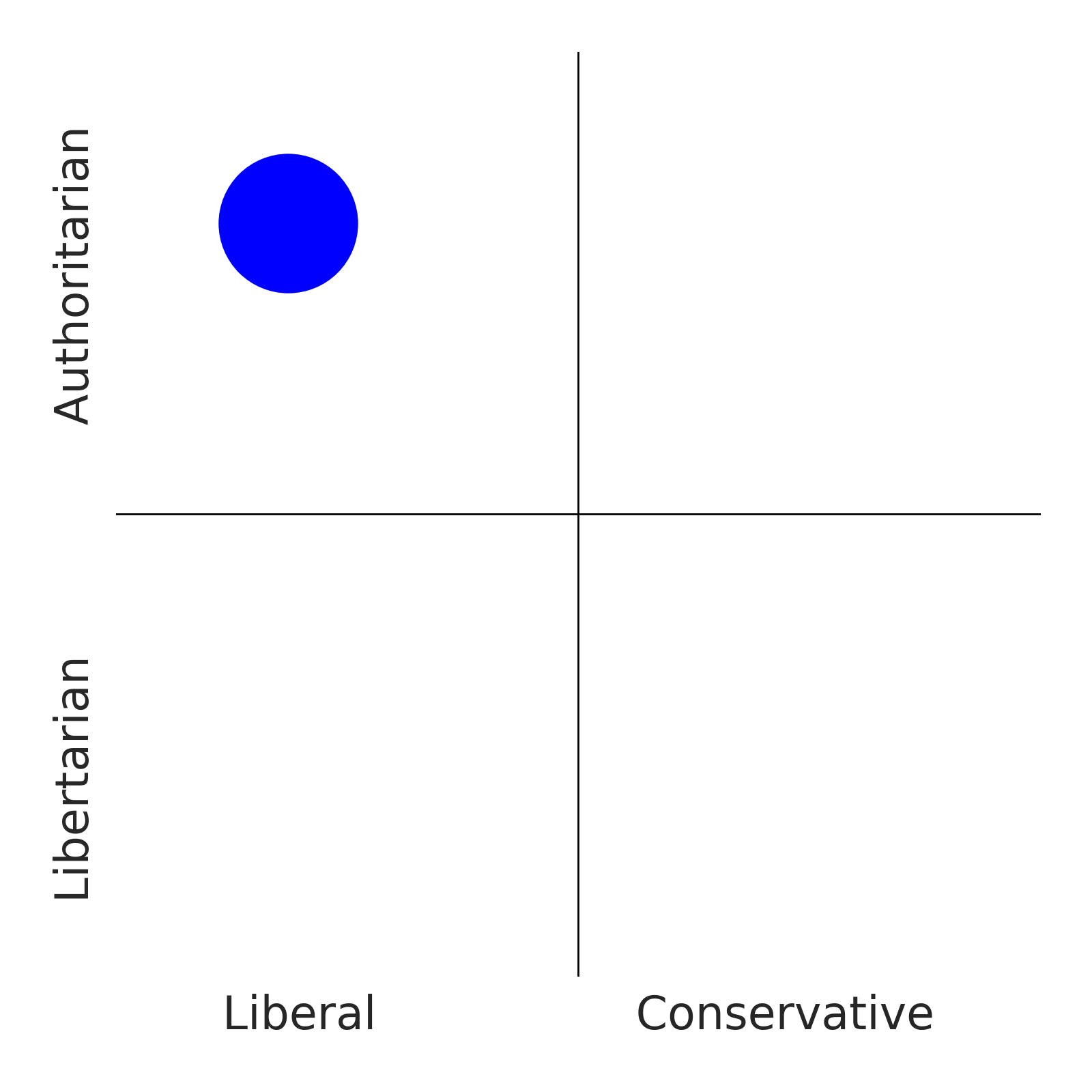
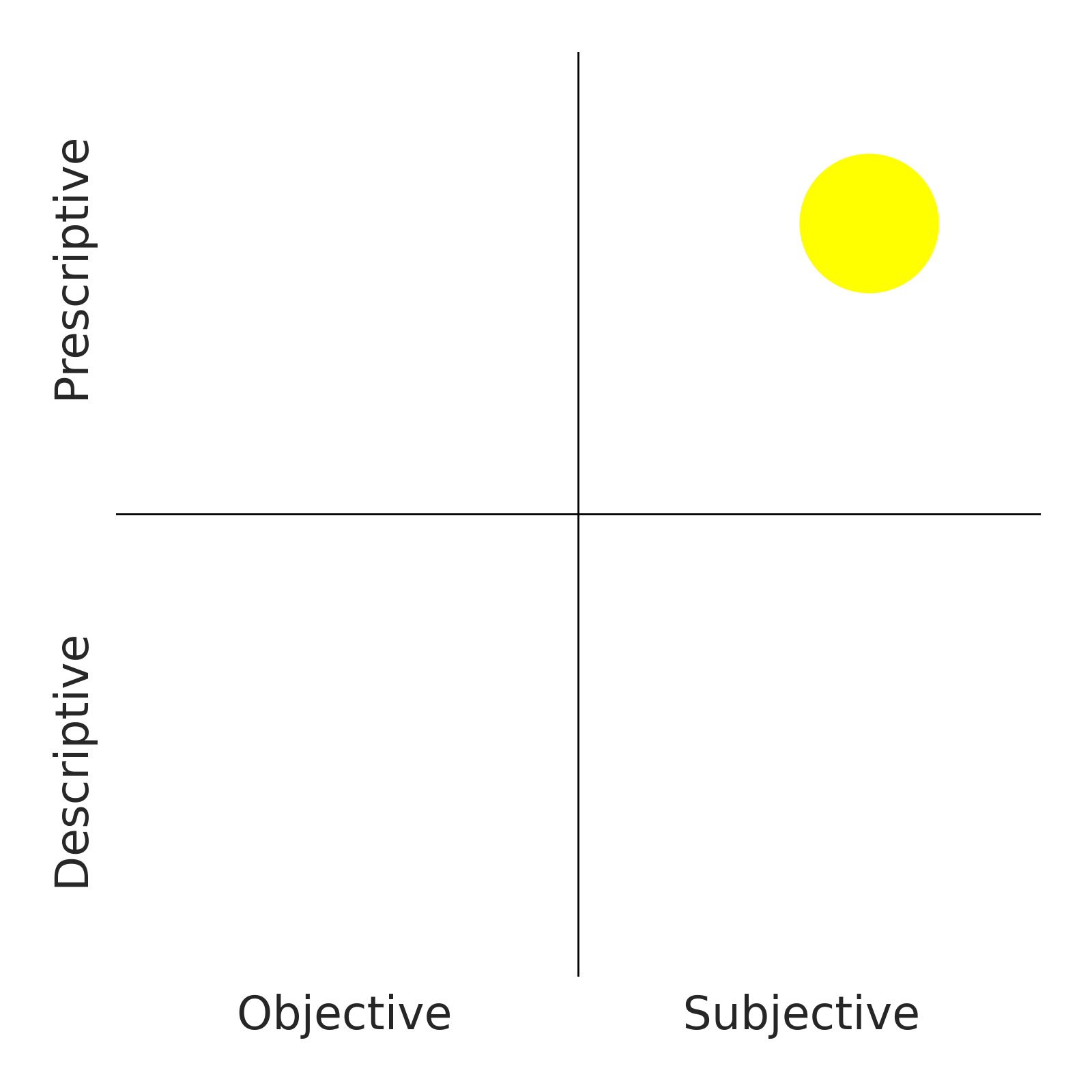
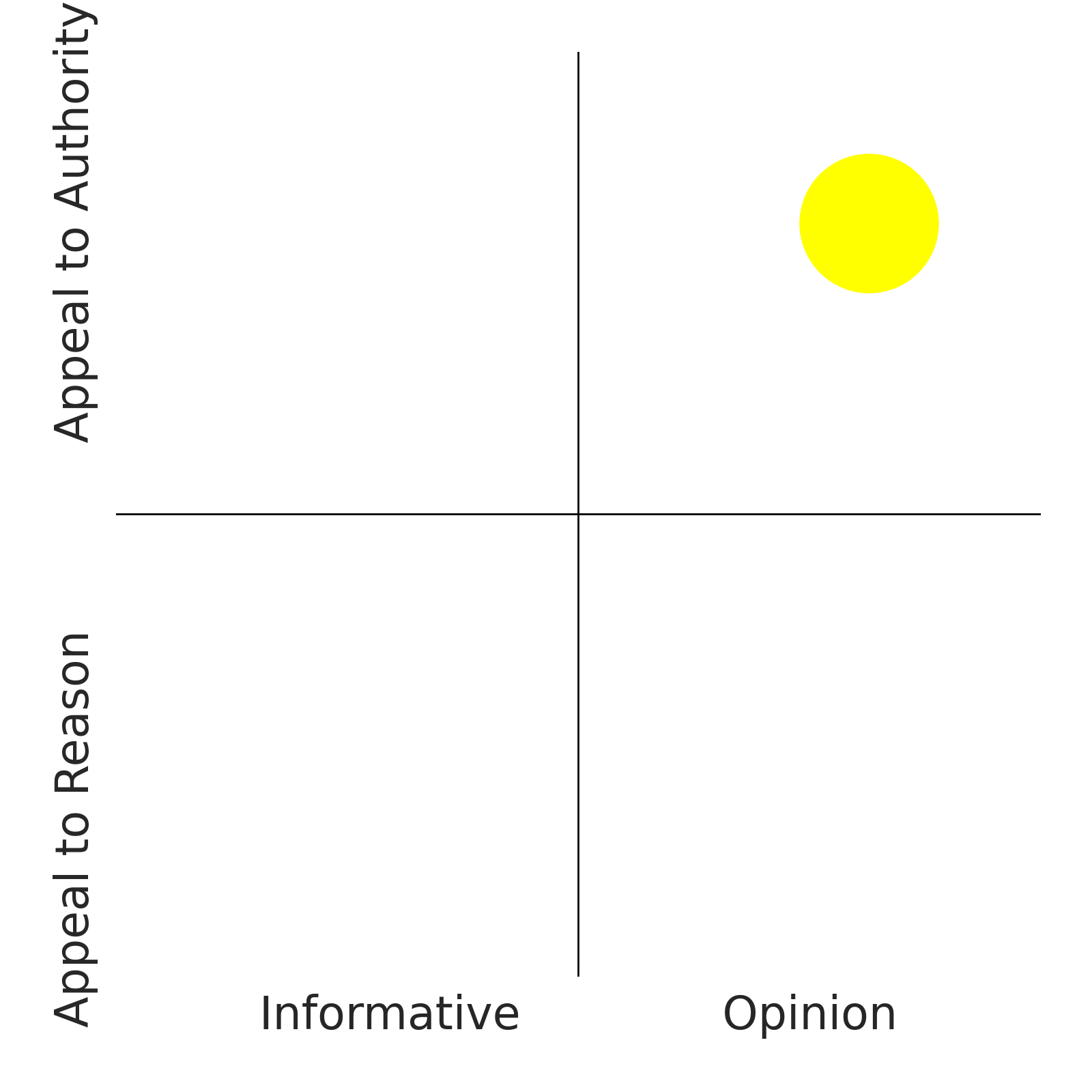
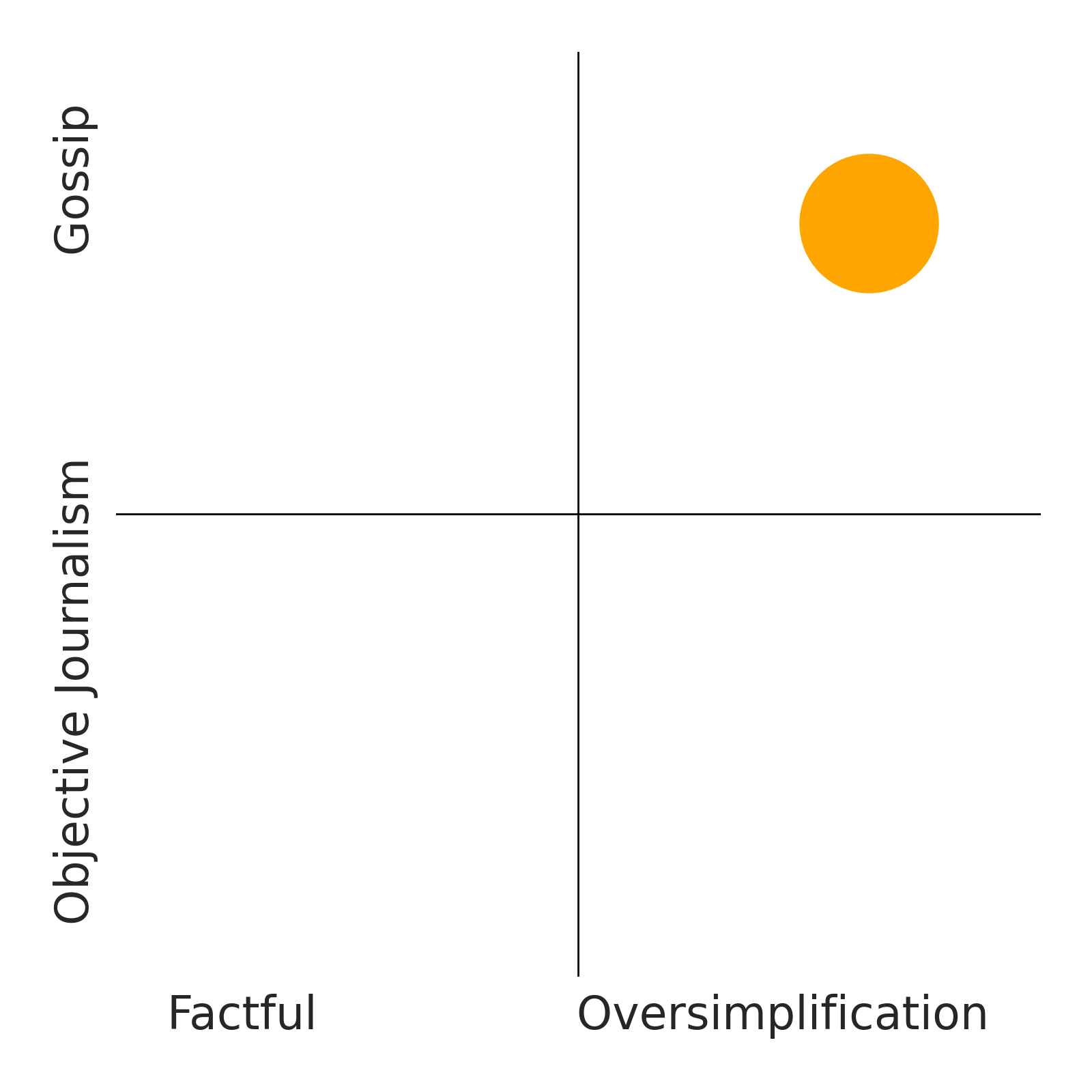
October 13, 2026 · 0 shares
The column uses loaded, ad hominem language to frame Greta Thunberg as an opportunistic 'omnicause' campaigner whose activism is hollow and anti-Western.
Automated analysis; not human reviewed. Limitations: The supplied text is an opinion column with unrelated page furniture; bias scores reflect the columnist's framing, not neutral reporting. · 55 of 55 available dimensions scored; omitted dimensions are not treated as neutral. · Verified supporting quotes for 21 of 55 scored dimensions.
Claim: The column adopts a right-coded defense of Western civilization and market progress against activist causes.
“They oppose scientific progress, economic growth, and prosperity.” · exact text match
“Today's omnicause campaigners care less about any one issue than they do about striking a blow against Western civilisation itself.” · exact text match
Why: Defending economic growth and Western civilization while attacking environmental and social activism is a strongly conservative framing.
Claim: The column is an openly subjective opinion piece built around the columnist's judgments of Thunberg.
“Greta Thunberg is the personification of empty activism.” · exact text match
Why: The opening is an evaluative judgment rather than a neutral report.
Claim: The column uses sensational, derogatory language to heighten its portrayal of Thunberg and activists.
“Greta has grown into an attention-seeking opportunist.” · exact text match
“Their pathetic protests stick two childish fingers up” · exact text match
Why: Derogatory labels and dramatic phrasing are sensational rather than measured.
Claim: The column frames activist causes as an existential attack on Western civilization and prosperity.
“Today's omnicause campaigners care less about any one issue than they do about striking a blow against Western civilisation itself.” · exact text match
“They oppose scientific progress, economic growth, and prosperity.” · exact text match
Why: The language presents a broad civilizational threat, which is alarmist and fear-oriented.
Claim: The column asserts that Thunberg's repeated message proves her activism is hollow without establishing that premise.
“Greta's repeated ideas, delivered seven years apart, expose the hollowness of her activism.” · exact text match
Why: The conclusion that her activism is hollow is treated as following directly from repetition, which is the disputed premise.
Claim: The column emphasizes celebrity, appearance, and attention-seeking details around Thunberg.
“As she took her place outside the Lycée Paul Éluard in Saint-Denis on Tuesday, she must have known that all the cameras were on her, and she was once again the main story.” · exact text match
“Draped around the 23-year-old's neck is, of course, a keffiyeh scarf.” · exact text match
Why: Focus on cameras, personal appearance, and celebrity status is gossip-style framing.
Claim: The column is explicitly opinionated about Thunberg's character and motives.
“Greta Thunberg is the personification of empty activism.” · exact text match
“Greta has grown into an attention-seeking opportunist.” · exact text match
Why: Direct evaluative judgments dominate the text.
Claim: The column interprets Thunberg's activism through a broad political conflict over Western civilization, Israel, and transgender rights.
“Today's omnicause campaigners care less about any one issue than they do about striking a blow against Western civilisation itself.” · exact text match
“The environment, Gaza, and now French pupils, interspersed with the obligatory nod to transgender rights.” · exact text match
Why: The framing is explicitly political and ideological.
Claim: The column lumps disparate causes into a single 'omnicause' with a shared anti-Western motive.
“The environment, Gaza, and now French pupils, interspersed with the obligatory nod to transgender rights.” · exact text match
“Activists bounce from one seemingly random grievance to the next.” · exact text match
Why: It reduces varied movements to one simplified, uniform agenda.
Claim: The column uses mocking, childish language to disparage activists.
“Their pathetic protests stick two childish fingers up” · exact text match
“pint-sized Swedish activist” · exact text match
Why: Taunting epithets and belittling language signal immature framing.
Claim: The column casts Western civilization and Israel as targets of activist campaigns.
“Israel, as the birthplace of Judeo-Christianity and a regional bulwark of democratic and liberal norms, is their primary target.” · exact text match
“Today's omnicause campaigners care less about any one issue than they do about striking a blow against Western civilisation itself.” · exact text match
Why: The framing presents Western and Israeli institutions as besieged by activists.
Claim: The column asserts certainty about Thunberg's motives and future actions beyond what the supplied facts establish.
“Wherever the omnicause goes next, one thing is certain: Greta is bound to have got there first.” · exact text match
“But scratch beneath the surface and the connections are clear.” · exact text match
Why: Certainty about hidden connections and future behavior exceeds the evidence presented.
Claim: The column is organized around a fixed ideological narrative about Western civilization versus an 'omnicause'.
“Today's omnicause campaigners care less about any one issue than they do about striking a blow against Western civilisation itself.” · exact text match
Why: The interpretation is driven by a totalizing ideological framework.
Claim: The column's emotional stance toward Thunberg is strongly negative.
“Greta Thunberg is the personification of empty activism.” · exact text match
“Greta has grown into an attention-seeking opportunist.” · exact text match
Why: The language is consistently hostile and derogatory.
Claim: The column mixes quotations with unsupported speculation and broad causal claims, lowering visible credibility.
“It's almost as if a variation on the same speech can serve her purpose, whatever the cause.” · exact text match
“But scratch beneath the surface and the connections are clear.” · exact text match
Why: Speculative phrasing and asserted hidden connections are not substantiated in the text.
Claim: The column relies on emotive insults and ad hominem characterizations rather than measured argument.
“Their pathetic protests stick two childish fingers up to the Enlightenment values that have shaped Western societies for centuries” · exact text match
“Greta has grown into an attention-seeking opportunist.” · exact text match
Why: Loaded insults and moralized language displace evidence-based reasoning.
Claim: The column speculates about Thunberg's motives and the meaning of her presence without direct evidence.
“she must have known that all the cameras were on her, and she was once again the main story” · exact text match
“Or are the French protests just the latest fashionable place for celebrity activists to hang out?” · exact text match
Why: The text infers hidden motives and purposes rather than reporting them.
Claim: The column uses loaded framing and guilt-by-association to steer interpretation of Thunberg.
“Draped around the 23-year-old's neck is, of course, a keffiyeh scarf.” · exact text match
“A cynic might accuse Greta of recycling more than plastic bottles and tin cans.” · exact text match
Why: Loaded asides and insinuation shape the reader's judgment beyond factual reporting.
Claim: The column disparages transgender rights and asserts a binary biological view as part of its attack on activists.
“the biological fact of there being just two sexes” · exact text match
“interspersed with the obligatory nod to transgender rights” · exact text match
Why: It frames transgender rights dismissively and denies trans identities via a binary assertion.
Claim: The column asserts a hidden shared agenda behind disparate activist causes.
“But scratch beneath the surface and the connections are clear.” · exact text match
“Today's omnicause campaigners care less about any one issue than they do about striking a blow against Western civilisation itself.” · exact text match
Why: The text implies a coordinated underlying purpose without demonstrating it.
Claim: The column makes Thunberg the personification of a broad movement it blames for attacking Western values.
“Greta Thunberg is the personification of empty activism.” · exact text match
“Thunberg has become the personification of the omnicause.” · exact text match
Why: It singles out one figure as the symbol of a wide range of alleged social harms.
The supplied text is an opinion column with unrelated page furniture; bias scores reflect the columnist's framing, not neutral reporting.
September 19, 2026 · 0 shares
The framing condemns Amazon as pathetically reliant on public assistance and depicts federal aid as a taxpayer subsidy for a wealthy corporation's low-wage workforce.
SNAP and Medicaid are means-tested U.S. benefit programs; the GAO figures cover only 11 states, so they are not a national count of Amazon employees. The data come from a Fortune summary of a GAO report, not the underlying GAO report itself.
Automated analysis; not human reviewed. Limitations: The supplied text is a short editorial article plus related-link headlines; the underlying GAO and Fortune reports were not available for verification, and the article's statistical sourcing could not be independently checked. · 17 of 55 available dimensions scored; omitted dimensions are not treated as neutral. · Verified supporting quotes for 17 of 17 scored dimensions.
Claim: The framing adopts a left/economic-progressive stance critical of corporate profit at the expense of workers.
“allowing the company executives to rake in record profits while paying its workers starvation wages” · exact text match
“the grim reality of working class life in the wealthiest nation on Earth” · exact text match
Why: Criticism of record corporate profit and 'starvation wages' is a standard progressive economic frame; no conservative counterpoints appear.
Claim: The framing takes a populist stance against Amazon and other large employers on behalf of low-wage workers.
“thousands of Amazon's lowest-paid workers wouldn't be able to afford to make ends meet” · exact text match
“Other top offenders include Walmart, ride-share platform companies like Uber, and chain stores” · exact text match
Why: Anti-corporate, pro-worker language and 'top offenders' framing align with populist messaging.
Claim: The piece is highly subjective, using evaluative language rather than neutral reportage.
“Amazon Has Become Pathetically Reliant on Food Stamps to Power Its Empire” · exact text match
“paying its workers starvation wages” · exact text match
Why: Loaded adjectives such as 'pathetically' and 'starvation wages' are subjective judgments, not neutral description.
Claim: The presentation sensationalizes the underlying data with dramatic adjectives.
“Blistering new reporting by Fortune revealed” · exact text match
“a stunning rise for any group” · exact text match
Why: 'Blistering' and 'stunning rise' add drama to otherwise statistical reporting.
Claim: The overall framing is pessimistic about the condition of working-class Americans.
“the grim reality of working class life in the wealthiest nation on Earth” · exact text match
“families that are really barely able to make ends meet, and yet they are working, and they are working a lot” · exact text match
Why: Descriptions of 'grim reality' and families 'barely able to make ends meet' set a despairing tone.
Claim: Beyond describing the data, the article implies that Amazon should not pay wages requiring public assistance.
“allowing the company executives to rake in record profits while paying its workers starvation wages” · exact text match
“a de facto subsidy of Amazon's labor force” · exact text match
Why: 'Starvation wages' and 'de facto subsidy' carry an implied normative judgment that employers should pay enough to avoid welfare.
Claim: The article uses outrage-inducing language and imagery to provoke a fear or anger response.
“starvation wages” · exact text match
“Amazon Has Become Pathetically Reliant on Food Stamps to Power Its Empire” · exact text match
Why: 'Starvation' and 'pathetically reliant' are intended to alarm and anger readers.
Claim: The article is highly opinionated rather than neutral fact reporting.
“Amazon Has Become Pathetically Reliant on Food Stamps to Power Its Empire” · exact text match
“paying its workers starvation wages” · exact text match
Why: The headline and 'starvation wages' are explicit value judgments.
Claim: The piece frames a corporate labor issue as a public-policy problem involving state subsidies and benefit programs.
“a massive state subsidy paid by taxpayers around the country” · exact text match
“nearly 14 million working adults were enrolled in Medicaid in 2024” · exact text match
Why: Focus on state subsidies, Medicaid, SNAP, and corporate responsibility makes the report explicitly political-economic.
Claim: The article reduces a complex labor-market problem to a simple story of corporate greed and taxpayer subsidy.
“allowing the company executives to rake in record profits while paying its workers starvation wages” · exact text match
“a massive state subsidy paid by taxpayers” · exact text match
Why: It asserts a direct subsidy link from welfare use to executive profit without considering other labor-market or policy factors.
Claim: The framing casts lower-paid Amazon workers as victims of corporate greed.
“thousands of Amazon's lowest-paid workers wouldn't be able to afford to make ends meet” · exact text match
“families that are really barely able to make ends meet, and yet they are working, and they are working a lot” · exact text match
Why: Highlights worker hardship to emphasize victimhood while downplaying other factors.
Claim: The article applies a coherent progressive economic ideology to interpret the data.
“federal assistant amounts to a de facto subsidy of Amazon's labor force” · exact text match
“the grim reality of working class life in the wealthiest nation on Earth” · exact text match
Why: Interpreting welfare as a corporate subsidy and emphasizing class conditions reflects a structured ideological frame.
Claim: The framing is anti-establishment, attacking a major corporation as a 'top offender' exploiting public aid.
“a de facto subsidy of Amazon's labor force” · exact text match
“Other top offenders include Walmart, ride-share platform companies like Uber, and chain stores like McDonald's” · exact text match
Why: Portrays large established employers as abusing taxpayer support, which is an anti-establishment stance.
Claim: The emotional tone is strongly negative, aimed at outrage or sympathy.
“paying its workers starvation wages” · exact text match
“the grim reality of working class life” · exact text match
Why: Words like 'starvation' and 'grim reality' evoke negative emotion rather than neutral analysis.
Claim: The piece is partially credible: it cites a named GAO director and specific numbers but wraps them in editorializing.
“GAO director for education, workforce, and income security issues Kathryn Larin told Fortune” · exact text match
“found that 12,346 Amazon workers across 11 states were getting help affording basic groceries through SNAP” · exact text match
Why: Uses specific attributable data, but heavily loaded framing reduces perceived neutrality rather than factual reliability.
Claim: The framing is strongly anti-corporate, singling out Amazon and other large companies.
“one of the wealthiest companies in the world” · exact text match
“allowing the company executives to rake in record profits while paying its workers starvation wages” · exact text match
Why: Negative references to corporate wealth and executive profit-taking show an anti-corporate orientation.
Claim: The piece relies on loaded framing and emotional language that can steer readers toward a predetermined conclusion.
“Blistering new reporting” · exact text match
“starvation wages” · exact text match
Why: Dramatic word choices function as observable emotional framing, although no clear falsehood is evident.
The supplied text is a short editorial article plus related-link headlines; the underlying GAO and Fortune reports were not available for verification, and the article's statistical sourcing could not be independently checked.
September 19, 2026 · 0 shares
A caustic left-populist viewpoint frames the 'Trump dividend' as a con and treats Republican tax and tariff policies as deliberate transfers from ordinary Americans to billionaires and corporations.
Tariff refunds from duties ruled unlawful are returned to the importers who paid them, rather than directly to consumers who may have borne higher prices; the 2026 midterm elections determine whether Republicans retain control of Congress.
Automated analysis; not human reviewed. Limitations: The supplied text appends multiple unrelated news briefs after the lead opinion column; I analyzed only the lead opinion column and ignored the trailing snippets. · 14 of 55 available dimensions scored; omitted dimensions are not treated as neutral. · Verified supporting quotes for 11 of 14 scored dimensions.
Claim: Uses explicitly hostile left-coded economic and partisan language to condemn Trump and Republicans.
“the disqualifying lunacy of a corrupt jackass” · exact text match
“one big beautiful means of cementing income inequality across the country” · exact text match
Why: The column consistently attacks Trump and Republicans as corrupt and as enriching the wealthy at ordinary people's expense.
Claim: Frames politics as ordinary Americans versus a wealthy insider 'club' that is enriched by Republican policies.
“They've made people very rich, in fact. It's something that they're quite good at doing—at least for a few.” · exact text match
“it's a big club, and you're not in it.” · exact text match
Why: The repeated contrast between ordinary people's pockets and wealthy insiders is classic economic populism.
Claim: The piece is a first-person, emotionally charged opinion column rather than neutral reporting.
“what it really was: the disqualifying lunacy of a corrupt jackass” · exact text match
“Republicans' monomaniacal focus on re-enriching the already rich is doing much more than thieving money from your pocket.” · exact text match
Why: It openly editorializes and uses evaluative insults as assertions.
Claim: Framing uses outrage-driven, provocative language and dramatic metaphors.
“the disqualifying lunacy of a corrupt jackass” · exact text match
“Trump's "Liberation Day" mainly liberated money from your pocket” · not found in supplied text
Why: 'Lunacy' and the sarcastic use of 'Liberation Day' are sensational rather than measured.
Claim: Forecasts that the GOP will keep 'fleecing' ordinary people and that promised relief will not arrive.
“If history is any guide, the Republicans would keep fleecing you.” · exact text match
“That's wreckage the check won't cover.” · exact text match
Why: The conclusion explicitly predicts continued exploitation and denies that relief will help.
Claim: The text is an opinion column filled with first-person judgments and sarcastic commentary.
“I don't recall anyone saying the obvious thing: A $5,000 payoff would be an implicit admission that he and his party's reckless policies wrecked the economy” · exact text match
“Don't spend it all in one place!” · exact text match
Why: It openly interprets, sarcastically comments, and tells readers how to respond.
Claim: Entirely devoted to partisan political argument and election politics.
“if Republicans prevail in this year's midterm elections, he would provide everybody with a $5,000 dividend check” · exact text match
“the Republicans would keep fleecing you” · exact text match
Why: The subject matter is Trump, Republican majorities, and redistributive policy; no non-political content is present.
Claim: Reduces complex tax and trade policy to a deliberate scheme to 'fleece' ordinary people.
“one big beautiful means of cementing income inequality across the country” · exact text match
“Trump's tariffs only followed the logic of the president's ire—whatever nation was pissing him off that week would get tariffed” · exact text match
Why: Causation and motives are asserted bluntly without discussing competing explanations.
Claim: Uses sarcastic, juvenile insults and mockery.
“the disqualifying lunacy of a corrupt jackass” · exact text match
“Don't spend it all in one place!” · exact text match
Why: Nickname-calling and a sarcastic aside are less mature than sober analysis.
Claim: Positions the column against the president, GOP congressional leaders, billionaires, and corporations.
“the president and his congressional enablers have been handing out money left and right” · exact text match
“it's a big club, and you're not in it.” · exact text match
Why: It is hostile to current political and economic power holders, though it does not challenge all institutions.
Claim: The article's dominant emotional register is anger and contempt.
“the disqualifying lunacy of a corrupt jackass” · exact text match
“all of this widespread immiseration” · exact text match
Why: Loaded insulting language and the term 'immiseration' signal strong negative emotion.
Claim: Supports many claims with named sources and attributed reports, but treats opinion as fact elsewhere.
“As ABC News reported last month, the administration has paid out $100 billion in tariff refunds.” · exact text match
“As the Institute on Taxation and Economic Policy reports, the OBBBA "favors the richest taxpayers"” · not found in supplied text
Why: Visible sourcing and attribution increase credibility, while unhedged partisan assertions reduce it.
Claim: Strongly anti-corporate framing, describing billionaires and corporations as predators seizing refunds and homes.
“predatory billionaires are buying up single-family homes” · exact text match
“with some corporations earmarking the money for "reinvestment" and others putting it toward offsetting the other high costs they face” · not found in supplied text
Why: The column blames corporate and billionaire behavior for economic harm without offering a corporate perspective.
Claim: Makes conditional predictions about future Republican behavior and the failure of the dividend.
“If history is any guide, the Republicans would keep fleecing you.” · exact text match
“Trump's long history of stiffing people should be more than enough to dissuade you from the belief that a check is coming your way if the GOP retains its majorities in Congress.” · exact text match
Why: Both statements are forecasts based on the columnist's reading of past behavior, not established outcomes.
The supplied text appends multiple unrelated news briefs after the lead opinion column; I analyzed only the lead opinion column and ignored the trailing snippets.
October 07, 2026 · 0 shares
The report adopts a straightforward, business-wire style centered on Black Hills' investment and commercial terms, with no evident partisan or emotional framing.
Automated analysis; not human reviewed. Limitations: Most of the supplied text consists of headline-style link/snippet fragments from other outlets and a publisher branding line; only the substantive report body is analyzed, and some fragment subsections are excluded as nav/metadata artifacts. · 50 of 55 available dimensions scored; omitted dimensions are not treated as neutral. · Verified supporting quotes for 4 of 50 scored dimensions.
Claim: The report is predominantly factual and descriptive, avoiding evaluative or subjective commentary aside from quoting the CEO.
“Black Hills has announced plans to invest $1.8bn from 2027 to 2029 to construct new natural-gas fired power generation capacity aimed at supporting a planned Google data centre in Cheyenne, Wyoming.” · exact text match
Why: The prose consists of concrete amounts, timelines, and contracts without subjective judgment.
Claim: The article employs neutral, technical language with no sensational wording or exaggeration.
“The US-based energy company stated that it has signed definitive agreements, effective from 30 September 2026 through to 2048, with Google to supply energy for the proposed facility.” · exact text match
Why: The wording reports commercial terms plainly without emotive or sensational phrasing.
Claim: The article describes the deal and its terms rather than prescribing policy or action.
“Financing for the generation buildout is expected to come from project cash flow, debt and other alternatives.” · exact text match
Why: The text recounts intended financing arrangements without advocating for them.
Claim: The framing aligns with corporate and utility establishment perspectives, presenting the deal favorably through company statements and projections.
“We are excited that this project will create jobs, strengthen regional infrastructure and contribute to Wyoming's long-term economic development.” · not found in supplied text
Why: The article integrates a CEO quote emphasizing benefits without countervailing perspectives, indicating a pro-establishment orientation.
Claim: The report relies on company-stated figures and attributed terms with no unsupported allegations.
“Black Hills president and CEO Linn Evans said: "We are pleased to support Google's planned investment in Wyoming while remaining firmly committed to providing safe, reliable and cost-effective service to every customer.” · not found in supplied text
Why: Specific contractual dates, capacities, and financial figures are attributed, supporting visible credibility.
Claim: The report is transparent about projected figures and clearly attributes statements to the company and its CEO.
“The company projects around $2.4bn in unlevered free cash flow over the life of the project, net of the $1.8bn of capital required for generation.” · exact text match
Why: Forward-looking numbers are identified as company projections, and CEO remarks are directly quoted and attributed.
Most of the supplied text consists of headline-style link/snippet fragments from other outlets and a publisher branding line; only the substantive report body is analyzed, and some fragment subsections are excluded as nav/metadata artifacts.
September 17, 2026 · 0 shares
First-person Texas commentary frames Republican and Christian-nationalist criticism of Indian/Hindu immigrants as nativist bigotry, celebrates the community's contributions, and urges rejecting hate-driven politics.
The H-1B visa is a U.S. nonimmigrant visa allowing employers to hire foreign workers in specialty occupations; federal immigration law governs visas, while state agencies' use of the program is a separate political choice.
Automated analysis; not human reviewed. Limitations: The supplied text is a first-person opinion column, so separating factual reporting from columnist advocacy is inherently limited; outside verification of its data and allegations is not available. · 10 of 55 available dimensions scored; omitted dimensions are not treated as neutral. · Verified supporting quotes for 8 of 10 scored dimensions.
Claim: The commentary uses progressive framing that treats Texas Republican opposition to Indian immigration as white-nativist bigotry.
“Gill and his compatriots sound like my grandfathers, who were committed to keeping Anglo-Saxon Protestant men in charge of the state they loved.” · exact text match
“A shrinking minority is desperate to maintain power and privilege.” · exact text match
Why: The argument targets Republicans, conservative media, and Christian nationalism while defending immigrants, with language about power and privilege typical of left/progressive commentary.
Claim: The text is an openly subjective, first-person opinion column rather than neutral reporting.
“Seeing conservatives use images of people who look like my family to ridicule Hindus infuriates me.” · exact text match
“Politicians and their goons promote hate because it's easier than making the world a better place to live.” · exact text match
Why: The author repeatedly states personal reactions and moral judgments, making the piece unabashedly subjective.
Claim: The commentary uses dramatic historical analogies and emotionally loaded language, pushing it toward sensational framing.
“the United States goes through nativist, racist fits every 50 years or so” · exact text match
“the assassinations of Malcolm X and Martin Luther King Jr. in the 1960s” · exact text match
Why: Linking current Texas immigration politics to the KKK, the Chinese Exclusion Act, and assassinations raises the emotional stakes dramatically.
Claim: The column moves from describing events to prescribing action and moral response.
“Time and time again, we've proved we are better than this.” · exact text match
“The sooner we reject the manipulation of our basest instincts, the sooner we can take joy again in our community and profit from our growth and innovation.” · exact text match
Why: It tells readers what should be done and what should be rejected, rather than merely describing events.
Claim: The column is saturated with the author's opinions, judgments, and recommendations.
“Making assumptions about people based on their appearance or background is the definition of bigotry and ignorance.” · exact text match
“Some Texans are repaying them with hate.” · not found in supplied text
Why: These are direct personal judgments rather than factual observations.
Claim: The commentary is heavily centered on partisan conflict, electoral politics, and government action.
“A shrinking minority is desperate to maintain power and privilege.” · exact text match
“GOP state Rep. Mitch Little joined other conservatives in demanding limits on H-1B holders allowed to work in Texas.” · exact text match
Why: The piece is organized around party actors, candidates, and legislative/executive actions, with partisan framing throughout.
Claim: The column reduces complex political disagreements to a simple moral story of hateful politicians versus good immigrants.
“Politicians and their goons promote hate because it's easier than making the world a better place to live.” · exact text match
“Some Texans are repaying them with hate.” · not found in supplied text
Why: It attributes opposition to simple hate and villainizes critics without engaging with policy arguments.
Claim: The column states contested allegations and historical predictions as certain facts.
“Anti-immigrant activists, including U.S. Senate candidate Ken Paxton, have falsely alleged widespread fraud in the H-1B program to justify bigotry against South Asians, particularly Hindus.” · exact text match
“We are at a tipping point - one long anticipated by demographers, politicians and business people - that sadly triggers nativist turmoil in the United States every 50 years or so.” · exact text match
Why: It asserts falsity and inevitability without hedging or presenting supporting evidence for those claims.
Claim: The text conveys strong negative emotion and moral outrage, giving it a negative emotional valence.
“Politicians and their goons promote hate because it's easier than making the world a better place to live.” · exact text match
“Seeing conservatives use images of people who look like my family to ridicule Hindus infuriates me.” · exact text match
Why: Words like 'hate,' 'goons,' and 'infuriates' express anger and contempt.
Claim: The text has moderate credibility: it names sources and cites statistics but also asserts contested claims without support.
“More than 79% of Americans see international immigration as a benefit to the country, according to a 2025 Gallup poll.” · exact text match
“Anti-immigrant activists, including U.S. Senate candidate Ken Paxton, have falsely alleged widespread fraud in the H-1B program to justify bigotry against South Asians, particularly Hindus.” · exact text match
Why: Attributed data adds credibility; unhedged partisan assertions reduce it.
The supplied text is a first-person opinion column, so separating factual reporting from columnist advocacy is inherently limited; outside verification of its data and allegations is not available.
October 04, 2026 · 0 shares
Framing sensationalizes Patel's engagement and agency troubles as mounting humiliations, mixing gossip with politically loaded, adversarial characterization.
Automated analysis; not human reviewed. Limitations: The supplied excerpt lacks a byline, publication date, and the full text of cited reports, limiting verification of context and external claims. · 8 of 55 available dimensions scored; omitted dimensions are not treated as neutral. · Verified supporting quotes for 8 of 8 scored dimensions.
Claim: The article frames a Trump-administration official in adversarial, left-leaning political terms.
“serves mainly as a White House puppet—often taking direct orders from President Donald Trump's deputy chief of staff, Stephen Miller” · exact text match
Why: Calling Patel a puppet of a Trump aide is a politically charged characterization rather than neutral description.
Claim: The article mixes factual reporting with evaluative judgment about Patel's tenure.
“withers under his leadership” · exact text match
“questionable leadership decisions” · exact text match
Why: 'Withers' and 'questionable' are evaluative characterizations, not observed facts.
Claim: The headline and wording use exaggerated scandal-oriented language.
“Kash Patel Drops Personal Bombshell as FBI Humiliations Mount” · exact text match
“A bombshell report” · exact text match
Why: Words like 'Bombshell' and 'Humiliations' frame personal and agency news as dramatic scandal.
Claim: The article foregrounds romantic and personal details typical of celebrity gossip.
“sharing a photo showing off her engagement ring and her fiancé, who is 19 years older than his bride-to-be” · exact text match
Why: The focus on an engagement photo, age gap, and romance is personal gossip rather than policy reporting.
Claim: The article states evaluative opinions about Patel's conduct.
“has faced substantial criticism throughout his tenure over his questionable leadership decisions” · exact text match
Why: 'Questionable leadership decisions' is an editorial judgment, not a verifiable factual claim.
Claim: The article frames Patel's role in explicitly partisan executive-power terms.
“Patel serves mainly as a White House puppet—often taking direct orders from President Donald Trump's deputy chief of staff, Stephen Miller” · exact text match
Why: Describing Patel as a 'puppet' taking orders from a political aide is a political framing of his official role.
Claim: The article presents an external report's characterization as established fact.
“A bombshell report in The Atlantic on Friday also revealed that Patel serves mainly as a White House puppet” · exact text match
Why: 'Revealed' asserts the report's interpretation as fact, though it is an outside characterization.
Claim: The article's tone is negatively emotional toward Patel.
“FBI Humiliations Mount” · exact text match
“withers under his leadership” · exact text match
Why: Terms like 'humiliations' and 'withers' are emotionally charged and negative.
The supplied excerpt lacks a byline, publication date, and the full text of cited reports, limiting verification of context and external claims.
The editorial adopts an uncritically pro-Israel, emotive framing that depicts the October 7 attack as pure terrorism while treating subsequent Gaza casualties as Hamas's intentional sacrifice.
October 7, 2023 was a Hamas-led attack on Israel described by the editorial as a terror onslaught; the editorial was published three years later amid debate over the Gaza war.
Automated analysis; not human reviewed. Limitations: The supplied text mixes an editorial with unrelated news snippets, limiting assessment to the editorial's framing. · 55 of 55 available dimensions scored; omitted dimensions are not treated as neutral. · Verified supporting quotes for 34 of 55 scored dimensions.
Claim: The editorial frames the conflict in strongly pro-Israel, conservative-leaning terms.
“Oct. 7 was a brutal, savage sneak terror attack by Hamas in which they raped, kidnapped and murdered Israeli civilians” · exact text match
Why: Pro-Israel and hawkish framing aligns with conservative positions.
Claim: The editorial is written from an elite institutional perspective, not a populist one.
“the standing of Israel in the international community amid false claims of genocide” · exact text match
Why: References to international community standing reflect elite framing.
Claim: The editorial supports strong state military action and frames terrorism as requiring forceful response.
“The Hamas attack precipitated a major war in Gaza as Israel struck back to recover the hundreds of hostages stolen” · exact text match
Why: Justifies military retaliation, aligning with authoritarian security framing.
Claim: The editorial is highly subjective, using emotive and judgmental language.
“That was the plan of Hamas chief Yahya Sinwar, sponsored by Iran's Ayatollah Khamenei.” · exact text match
Why: Subjective assertions presented without attribution.
Claim: The editorial employs sensational language about the attack.
“bludgeoned, raped, kidnapped and murdered Israeli civilians in their homes, in their beds” · not found in supplied text
Why: Graphic, emotive wording is sensational.
Claim: The editorial focuses on the horror and ongoing antisemitism, leaning pessimistic.
“That is a harder disease to cure, a warping of minds against Jews.” · not found in supplied text
Why: Pessimistic tone about the persistence of antisemitism.
Claim: The editorial covers a widely discussed topic but offers little new insight.
“The legacy of Oct. 7 has been lost in the fog of the divisive debate over Gaza” · exact text match
Why: Familiar arguments on a well-covered event.
Claim: The editorial prescribes how October 7 should be remembered.
“That must never be forgotten.” · exact text match
Why: Explicit prescriptive language about memory.
Claim: The editorial adopts a hawkish stance on the conflict.
“It was not war. It was not freedom fighting. It was terror.” · exact text match
Why: Characterizes Hamas as terror, supporting military response.
Claim: The editorial uses fear-inducing language about terrorism and antisemitism.
“in the worst day of slaughter of Jews since Hitler's Holocaust” · exact text match
Why: Invokes Holocaust imagery to evoke fear.
Claim: The piece is heavily opinionated, with moral judgments throughout.
“It was not war. It was not freedom fighting. It was terror.” · exact text match
Why: Directly asserts a strong opinion.
Claim: The editorial is explicitly political, addressing conflict and policy.
“the political fortunes of Prime Minister Bibi Netanyahu” · exact text match
Why: Focuses on political leadership and conflict.
Claim: The editorial reduces a complex conflict to a simple moral dichotomy.
“Both Arabs and Jews were hostage to the crimes of Hamas.” · exact text match
Why: Presents a simplified victim/perpetrator narrative.
Claim: The editorial cites no external authorities, relying on its own moral authority.
“That must never be forgotten.” · exact text match
Why: No credible authority cited for claims.
Claim: The editorial uses emotionally charged, black-and-white language rather than nuanced analysis.
“It was not war. It was not freedom fighting. It was terror.” · exact text match
Why: Binary moral framing without nuance.
Claim: The editorial asserts that October 7 was terror without examining counterarguments.
“It was not war. It was not freedom fighting. It was terror.” · exact text match
Why: Tautological definition of the event.
Claim: The editorial acknowledges but dismisses debate over Gaza.
“The horror of Oct. 7 has been eclipsed in the eyes of too many by what followed in Gaza.” · exact text match
Why: Acknowledges alternative focus but dismisses it.
Claim: The editorial emphasizes Jewish victimization and antisemitism.
“growing antisemitism directed at Jews globally, including here in New York” · exact text match
Why: Highlights victimization of Jews.
Claim: The editorial expresses absolute certainty about contested claims.
“That is what Oct. 7 is and that always must be remembered” · not found in supplied text
Why: Uses definitive, non-hedged assertions.
Claim: The editorial is not spam.
Why: Substantive content.
Claim: The editorial is ideologically driven, promoting a pro-Israel narrative.
“That must never be forgotten.” · exact text match
Why: Strong ideological stance.
Claim: The editorial aligns with establishment pro-Israel positions rather than challenging them.
“the standing of Israel in the international community amid false claims of genocide” · exact text match
Why: Defends Israel's international standing.
Claim: The editorial is highly negative and emotional.
“The horror of Oct. 7 has been eclipsed in the eyes of too many by what followed in Gaza.” · exact text match
Why: Strong negative emotional tone.
Claim: The editorial applies a double standard by focusing only on Israeli victims.
“Both Arabs and Jews were hostage to the crimes of Hamas.” · exact text match
Why: Acknowledges Arab victims but emphasizes Israeli suffering.
Claim: The editorial is not credible due to lack of sourcing and one-sided framing.
“That was the plan of Hamas chief Yahya Sinwar, sponsored by Iran's Ayatollah Khamenei.” · exact text match
Why: Unsupported claims.
Claim: The editorial relies heavily on emotive and moral condemnation rather than measured analysis.
“The horror of Oct. 7 has been eclipsed in the eyes of too many by what followed in Gaza.” · exact text match
Why: Emotional language and moral certainty dominate.
Claim: The editorial is not advertising.
Why: No promotional content.
Claim: The editorial speculates about Sinwar's motives.
“That was the plan of Hamas chief Yahya Sinwar” · exact text match
Why: Attributes intentions without direct evidence.
Claim: The editorial uses loaded language and selective emphasis to persuade.
“It was not war. It was not freedom fighting. It was terror.” · exact text match
Why: Employs emotional manipulation.
Claim: The editorial shows no strong indicators of AI authorship.
Why: Short opinion piece with no distinctive AI patterns.
Claim: The editorial lacks sourcing and attributes no specific evidence for its claims.
“The harrowing video compiled from the cameras used by captured or slain Hamas gunmen” · exact text match
Why: No verifiable sourcing provided.
Claim: The editorial shows limited analytical depth, relying on emotive rhetoric.
“The legacy of Oct. 7 has been lost in the fog of the divisive debate over Gaza” · exact text match
Why: Lacks substantive analysis or new information.
Claim: The editorial presents a one-sided narrative that may be delusional.
“That is what Oct. 7 is and that always must be remembered” · not found in supplied text
Why: Rigid framing.
Claim: The editorial strongly condemns terrorism rather than endorsing it.
“These unlawful combatants intentionally targeted civilians to inflict fear, which is terrorism.” · exact text match
Why: Explicitly labels and condemns terrorism.
Claim: The editorial does not discuss fraud.
Why: No fraud-related content.
Claim: The editorial contains no Marxist framing.
Why: No class conflict or Marxist analysis.
Claim: The editorial strongly opposes Islamist terrorism.
“It was not freedom fighting. It was terror.” · exact text match
Why: Condemns Islamist violence.
Claim: The editorial condemns antisemitism rather than promoting it.
“growing antisemitism directed at Jews globally” · exact text match
Why: Opposes antisemitism.
Claim: The editorial does not address LGBT issues.
Why: No LGBT content.
Claim: The editorial does not promote racism.
“Both Arabs and Jews were hostage to the crimes of Hamas.” · exact text match
Why: Acknowledges Arab victims.
Claim: The editorial does not use woke identity politics.
Why: No woke framing.
Claim: The editorial describes brutality without endorsing cruelty.
“the slaughter of infants, women raped, the elderly taken hostage” · exact text match
Why: Describes cruelty but condemns it.
Claim: The editorial signals moral virtue by condemning terrorism.
“That is what Oct. 7 is and that always must be remembered” · not found in supplied text
Why: Moral posturing.
Claim: The editorial hints at coordinated antisemitic propaganda.
“stoked by rhetoric and propaganda aimed at Israel” · exact text match
Why: Suggests coordinated anti-Israel propaganda.
Claim: The editorial does not exhibit suicidal empathy.
Why: No compassion for self-harm.
Claim: The editorial attributes blame to Hamas and Iran for the conflict.
“That was the plan of Hamas chief Yahya Sinwar, sponsored by Iran's Ayatollah Khamenei.” · exact text match
Why: Scapegoats Hamas and Iran.
Claim: The editorial applies a consistent moral standard condemning terrorism.
Why: No obvious double standard.
Claim: The editorial does not reject reason or universal rights.
Why: No anti-enlightenment content.
The supplied text mixes an editorial with unrelated news snippets, limiting assessment to the editorial's framing.
September 19, 2026 · 0 shares
Coverage centers a U.S. student's frustration with Australia's migration crackdown, using her emotional quotes and a policy list without official response.
Automated analysis; not human reviewed. Limitations: The supplied text is single-sourced and contains no official response or independent data, so the student's allegations and policy impacts cannot be externally verified. · 55 of 55 available dimensions scored; omitted dimensions are not treated as neutral. · Verified supporting quotes for 3 of 55 scored dimensions.
Claim: Framing is sympathetic to an immigrant who opposes tightening migration rules and emphasizes her economic contribution.
“"They're not talking about how much you are paying and benefiting the country."” · not found in supplied text
“"I don't want to continuously feel like I'm being taken as a joke or taken advantage of."” · not found in supplied text
Why: The selected quotes and the absence of an official response create an empathetic, critical stance toward the migration crackdown.
Claim: The report's main evidence is one person's emotional judgment rather than balanced analysis.
“"I'm so frustrated with it that I don't think I'll even finish it."” · not found in supplied text
“"I'm looking forward to this chapter to be over with."” · not found in supplied text
Why: Personal frustration frames the policy story, making the account subjective.
Claim: Presentation uses dramatic, emotionally charged language in the headline and pull quotes.
“"US student who 'visa-hopped' in Australia ready to leave: 'So frustrated'"” · not found in supplied text
“"I don't want to continuously feel like I'm being taken as a joke or taken advantage of."” · not found in supplied text
Why: The headline's scare-quoted 'visa-hopped' and dramatic dissatisfaction highlight emotional conflict over neutral policy reporting.
Claim: The coverage's outlook for the student's stay in Australia is negative and resignation-oriented.
“"she's grown tired of her stay in Australia"” · not found in supplied text
“"I'm looking forward to this chapter to be over with."” · not found in supplied text
Why: The narrative closes on tiredness and departure, giving a pessimistic emotional cast.
Claim: The publisher editorializes through a judgment-laden subheading and foregrounds a policy critique.
“"Harder migration rules not worth the trouble, visitor says"” · exact text match
Why: 'Not worth the trouble' evaluates the policy rather than neutrally describing it.
Claim: The coverage centers a government immigration-policy debate and official population targets.
“"The crackdown on immigration is sought to temper Australia's population growth."” · exact text match
“"Among the major immigration changes were the following:"” · exact text match
Why: The changes are federal policy decisions; framing them as a 'crackdown' makes the topic inherently political.
Claim: A complex migration policy is reduced to one student's reaction, with the visitor-visa change presented as directly affecting a student visa holder.
“"The announcement that particularly reinforced her decision was the federal government's introduction of the No Further Stay condition."” · exact text match
Why: The No Further Stay condition is described as applying to visitor visas, while the featured person holds a student visa; the link is asserted rather than explained.
Claim: The piece relies on negative emotional testimony as its primary framing device.
“"I'm so frustrated with it that I don't think I'll even finish it."” · not found in supplied text
“"I don't want to continuously feel like I'm being taken as a joke or taken advantage of."” · not found in supplied text
Why: Negative emotional quotes from the student are used repeatedly to illustrate the policy's impact.
The supplied text is single-sourced and contains no official response or independent data, so the student's allegations and policy impacts cannot be externally verified.
October 13, 2026 · 0 shares
The column uses loaded, ad hominem language to frame Greta Thunberg as an opportunistic 'omnicause' campaigner whose activism is hollow and anti-Western.
Automated analysis; not human reviewed. Limitations: The supplied text is an opinion column with unrelated page furniture; bias scores reflect the columnist's framing, not neutral reporting. · 55 of 55 available dimensions scored; omitted dimensions are not treated as neutral. · Verified supporting quotes for 21 of 55 scored dimensions.
Claim: The column adopts a right-coded defense of Western civilization and market progress against activist causes.
“They oppose scientific progress, economic growth, and prosperity.” · exact text match
“Today's omnicause campaigners care less about any one issue than they do about striking a blow against Western civilisation itself.” · exact text match
Why: Defending economic growth and Western civilization while attacking environmental and social activism is a strongly conservative framing.
Claim: The column is an openly subjective opinion piece built around the columnist's judgments of Thunberg.
“Greta Thunberg is the personification of empty activism.” · exact text match
Why: The opening is an evaluative judgment rather than a neutral report.
Claim: The column uses sensational, derogatory language to heighten its portrayal of Thunberg and activists.
“Greta has grown into an attention-seeking opportunist.” · exact text match
“Their pathetic protests stick two childish fingers up” · exact text match
Why: Derogatory labels and dramatic phrasing are sensational rather than measured.
Claim: The column frames activist causes as an existential attack on Western civilization and prosperity.
“Today's omnicause campaigners care less about any one issue than they do about striking a blow against Western civilisation itself.” · exact text match
“They oppose scientific progress, economic growth, and prosperity.” · exact text match
Why: The language presents a broad civilizational threat, which is alarmist and fear-oriented.
Claim: The column asserts that Thunberg's repeated message proves her activism is hollow without establishing that premise.
“Greta's repeated ideas, delivered seven years apart, expose the hollowness of her activism.” · exact text match
Why: The conclusion that her activism is hollow is treated as following directly from repetition, which is the disputed premise.
Claim: The column emphasizes celebrity, appearance, and attention-seeking details around Thunberg.
“As she took her place outside the Lycée Paul Éluard in Saint-Denis on Tuesday, she must have known that all the cameras were on her, and she was once again the main story.” · exact text match
“Draped around the 23-year-old's neck is, of course, a keffiyeh scarf.” · exact text match
Why: Focus on cameras, personal appearance, and celebrity status is gossip-style framing.
Claim: The column is explicitly opinionated about Thunberg's character and motives.
“Greta Thunberg is the personification of empty activism.” · exact text match
“Greta has grown into an attention-seeking opportunist.” · exact text match
Why: Direct evaluative judgments dominate the text.
Claim: The column interprets Thunberg's activism through a broad political conflict over Western civilization, Israel, and transgender rights.
“Today's omnicause campaigners care less about any one issue than they do about striking a blow against Western civilisation itself.” · exact text match
“The environment, Gaza, and now French pupils, interspersed with the obligatory nod to transgender rights.” · exact text match
Why: The framing is explicitly political and ideological.
Claim: The column lumps disparate causes into a single 'omnicause' with a shared anti-Western motive.
“The environment, Gaza, and now French pupils, interspersed with the obligatory nod to transgender rights.” · exact text match
“Activists bounce from one seemingly random grievance to the next.” · exact text match
Why: It reduces varied movements to one simplified, uniform agenda.
Claim: The column uses mocking, childish language to disparage activists.
“Their pathetic protests stick two childish fingers up” · exact text match
“pint-sized Swedish activist” · exact text match
Why: Taunting epithets and belittling language signal immature framing.
Claim: The column casts Western civilization and Israel as targets of activist campaigns.
“Israel, as the birthplace of Judeo-Christianity and a regional bulwark of democratic and liberal norms, is their primary target.” · exact text match
“Today's omnicause campaigners care less about any one issue than they do about striking a blow against Western civilisation itself.” · exact text match
Why: The framing presents Western and Israeli institutions as besieged by activists.
Claim: The column asserts certainty about Thunberg's motives and future actions beyond what the supplied facts establish.
“Wherever the omnicause goes next, one thing is certain: Greta is bound to have got there first.” · exact text match
“But scratch beneath the surface and the connections are clear.” · exact text match
Why: Certainty about hidden connections and future behavior exceeds the evidence presented.
Claim: The column is organized around a fixed ideological narrative about Western civilization versus an 'omnicause'.
“Today's omnicause campaigners care less about any one issue than they do about striking a blow against Western civilisation itself.” · exact text match
Why: The interpretation is driven by a totalizing ideological framework.
Claim: The column's emotional stance toward Thunberg is strongly negative.
“Greta Thunberg is the personification of empty activism.” · exact text match
“Greta has grown into an attention-seeking opportunist.” · exact text match
Why: The language is consistently hostile and derogatory.
Claim: The column mixes quotations with unsupported speculation and broad causal claims, lowering visible credibility.
“It's almost as if a variation on the same speech can serve her purpose, whatever the cause.” · exact text match
“But scratch beneath the surface and the connections are clear.” · exact text match
Why: Speculative phrasing and asserted hidden connections are not substantiated in the text.
Claim: The column relies on emotive insults and ad hominem characterizations rather than measured argument.
“Their pathetic protests stick two childish fingers up to the Enlightenment values that have shaped Western societies for centuries” · exact text match
“Greta has grown into an attention-seeking opportunist.” · exact text match
Why: Loaded insults and moralized language displace evidence-based reasoning.
Claim: The column speculates about Thunberg's motives and the meaning of her presence without direct evidence.
“she must have known that all the cameras were on her, and she was once again the main story” · exact text match
“Or are the French protests just the latest fashionable place for celebrity activists to hang out?” · exact text match
Why: The text infers hidden motives and purposes rather than reporting them.
Claim: The column uses loaded framing and guilt-by-association to steer interpretation of Thunberg.
“Draped around the 23-year-old's neck is, of course, a keffiyeh scarf.” · exact text match
“A cynic might accuse Greta of recycling more than plastic bottles and tin cans.” · exact text match
Why: Loaded asides and insinuation shape the reader's judgment beyond factual reporting.
Claim: The column disparages transgender rights and asserts a binary biological view as part of its attack on activists.
“the biological fact of there being just two sexes” · exact text match
“interspersed with the obligatory nod to transgender rights” · exact text match
Why: It frames transgender rights dismissively and denies trans identities via a binary assertion.
Claim: The column asserts a hidden shared agenda behind disparate activist causes.
“But scratch beneath the surface and the connections are clear.” · exact text match
“Today's omnicause campaigners care less about any one issue than they do about striking a blow against Western civilisation itself.” · exact text match
Why: The text implies a coordinated underlying purpose without demonstrating it.
Claim: The column makes Thunberg the personification of a broad movement it blames for attacking Western values.
“Greta Thunberg is the personification of empty activism.” · exact text match
“Thunberg has become the personification of the omnicause.” · exact text match
Why: It singles out one figure as the symbol of a wide range of alleged social harms.
The supplied text is an opinion column with unrelated page furniture; bias scores reflect the columnist's framing, not neutral reporting.
May 01, 2026 · 0 shares
An explicitly liberal-leaning opinion piece foregrounds a liberal columnist's critique of Kamala Harris, delivering a negative, prescriptive assessment of her 2028 prospects by citing baggage from 2024, limited cross-demographic appeal, and slim odds in betting markets while acknowledging some Democratic support, resulting in a clearly liberal-leaning and opinion-oriented bias.
USA Today opinion piece by Sara Pequeño arguing Harris should not be the 2028 nominee, citing 2024 performance, baggage, and low odds in markets.
I may reflect liberal-leaning patterns; aim for neutral, evidence-based analysis.
May 17, 2026 · 0 shares
Write-up adopts a sensational, establishment-aligned framing that treats Vrabel-Russini controversy as a primary driver of the 2026 schedule, relies on unnamed critics and provocative quotes, and uses loaded language to shape reader perception.
A sports report asserts Vrabel-Russini controversy influenced the 2026 NFL schedule opening Seahawks-Patriots rematch, citing unnamed critics and sensational quotes.
I may overemphasize sensational sports narratives.
October 13, 2026 · 0 shares
The column uses loaded, ad hominem language to frame Greta Thunberg as an opportunistic 'omnicause' campaigner whose activism is hollow and anti-Western.
Automated analysis; not human reviewed. Limitations: The supplied text is an opinion column with unrelated page furniture; bias scores reflect the columnist's framing, not neutral reporting. · 55 of 55 available dimensions scored; omitted dimensions are not treated as neutral. · Verified supporting quotes for 21 of 55 scored dimensions.
Claim: The column adopts a right-coded defense of Western civilization and market progress against activist causes.
“They oppose scientific progress, economic growth, and prosperity.” · exact text match
“Today's omnicause campaigners care less about any one issue than they do about striking a blow against Western civilisation itself.” · exact text match
Why: Defending economic growth and Western civilization while attacking environmental and social activism is a strongly conservative framing.
Claim: The column is an openly subjective opinion piece built around the columnist's judgments of Thunberg.
“Greta Thunberg is the personification of empty activism.” · exact text match
Why: The opening is an evaluative judgment rather than a neutral report.
Claim: The column uses sensational, derogatory language to heighten its portrayal of Thunberg and activists.
“Greta has grown into an attention-seeking opportunist.” · exact text match
“Their pathetic protests stick two childish fingers up” · exact text match
Why: Derogatory labels and dramatic phrasing are sensational rather than measured.
Claim: The column frames activist causes as an existential attack on Western civilization and prosperity.
“Today's omnicause campaigners care less about any one issue than they do about striking a blow against Western civilisation itself.” · exact text match
“They oppose scientific progress, economic growth, and prosperity.” · exact text match
Why: The language presents a broad civilizational threat, which is alarmist and fear-oriented.
Claim: The column asserts that Thunberg's repeated message proves her activism is hollow without establishing that premise.
“Greta's repeated ideas, delivered seven years apart, expose the hollowness of her activism.” · exact text match
Why: The conclusion that her activism is hollow is treated as following directly from repetition, which is the disputed premise.
Claim: The column emphasizes celebrity, appearance, and attention-seeking details around Thunberg.
“As she took her place outside the Lycée Paul Éluard in Saint-Denis on Tuesday, she must have known that all the cameras were on her, and she was once again the main story.” · exact text match
“Draped around the 23-year-old's neck is, of course, a keffiyeh scarf.” · exact text match
Why: Focus on cameras, personal appearance, and celebrity status is gossip-style framing.
Claim: The column is explicitly opinionated about Thunberg's character and motives.
“Greta Thunberg is the personification of empty activism.” · exact text match
“Greta has grown into an attention-seeking opportunist.” · exact text match
Why: Direct evaluative judgments dominate the text.
Claim: The column interprets Thunberg's activism through a broad political conflict over Western civilization, Israel, and transgender rights.
“Today's omnicause campaigners care less about any one issue than they do about striking a blow against Western civilisation itself.” · exact text match
“The environment, Gaza, and now French pupils, interspersed with the obligatory nod to transgender rights.” · exact text match
Why: The framing is explicitly political and ideological.
Claim: The column lumps disparate causes into a single 'omnicause' with a shared anti-Western motive.
“The environment, Gaza, and now French pupils, interspersed with the obligatory nod to transgender rights.” · exact text match
“Activists bounce from one seemingly random grievance to the next.” · exact text match
Why: It reduces varied movements to one simplified, uniform agenda.
Claim: The column uses mocking, childish language to disparage activists.
“Their pathetic protests stick two childish fingers up” · exact text match
“pint-sized Swedish activist” · exact text match
Why: Taunting epithets and belittling language signal immature framing.
Claim: The column casts Western civilization and Israel as targets of activist campaigns.
“Israel, as the birthplace of Judeo-Christianity and a regional bulwark of democratic and liberal norms, is their primary target.” · exact text match
“Today's omnicause campaigners care less about any one issue than they do about striking a blow against Western civilisation itself.” · exact text match
Why: The framing presents Western and Israeli institutions as besieged by activists.
Claim: The column asserts certainty about Thunberg's motives and future actions beyond what the supplied facts establish.
“Wherever the omnicause goes next, one thing is certain: Greta is bound to have got there first.” · exact text match
“But scratch beneath the surface and the connections are clear.” · exact text match
Why: Certainty about hidden connections and future behavior exceeds the evidence presented.
Claim: The column is organized around a fixed ideological narrative about Western civilization versus an 'omnicause'.
“Today's omnicause campaigners care less about any one issue than they do about striking a blow against Western civilisation itself.” · exact text match
Why: The interpretation is driven by a totalizing ideological framework.
Claim: The column's emotional stance toward Thunberg is strongly negative.
“Greta Thunberg is the personification of empty activism.” · exact text match
“Greta has grown into an attention-seeking opportunist.” · exact text match
Why: The language is consistently hostile and derogatory.
Claim: The column mixes quotations with unsupported speculation and broad causal claims, lowering visible credibility.
“It's almost as if a variation on the same speech can serve her purpose, whatever the cause.” · exact text match
“But scratch beneath the surface and the connections are clear.” · exact text match
Why: Speculative phrasing and asserted hidden connections are not substantiated in the text.
Claim: The column relies on emotive insults and ad hominem characterizations rather than measured argument.
“Their pathetic protests stick two childish fingers up to the Enlightenment values that have shaped Western societies for centuries” · exact text match
“Greta has grown into an attention-seeking opportunist.” · exact text match
Why: Loaded insults and moralized language displace evidence-based reasoning.
Claim: The column speculates about Thunberg's motives and the meaning of her presence without direct evidence.
“she must have known that all the cameras were on her, and she was once again the main story” · exact text match
“Or are the French protests just the latest fashionable place for celebrity activists to hang out?” · exact text match
Why: The text infers hidden motives and purposes rather than reporting them.
Claim: The column uses loaded framing and guilt-by-association to steer interpretation of Thunberg.
“Draped around the 23-year-old's neck is, of course, a keffiyeh scarf.” · exact text match
“A cynic might accuse Greta of recycling more than plastic bottles and tin cans.” · exact text match
Why: Loaded asides and insinuation shape the reader's judgment beyond factual reporting.
Claim: The column disparages transgender rights and asserts a binary biological view as part of its attack on activists.
“the biological fact of there being just two sexes” · exact text match
“interspersed with the obligatory nod to transgender rights” · exact text match
Why: It frames transgender rights dismissively and denies trans identities via a binary assertion.
Claim: The column asserts a hidden shared agenda behind disparate activist causes.
“But scratch beneath the surface and the connections are clear.” · exact text match
“Today's omnicause campaigners care less about any one issue than they do about striking a blow against Western civilisation itself.” · exact text match
Why: The text implies a coordinated underlying purpose without demonstrating it.
Claim: The column makes Thunberg the personification of a broad movement it blames for attacking Western values.
“Greta Thunberg is the personification of empty activism.” · exact text match
“Thunberg has become the personification of the omnicause.” · exact text match
Why: It singles out one figure as the symbol of a wide range of alleged social harms.
The supplied text is an opinion column with unrelated page furniture; bias scores reflect the columnist's framing, not neutral reporting.
May 09, 2026 · 0 shares
An overtly partisan op-ed framing Liberal gender-policy initiatives as attacks on masculinity, asserting traditional masculine traits are beneficial and government messaging distracts from economic and health-policy failures.
Opinion column arguing the Liberal government's Men and Boys’ Health Strategy harms Canadian men by framing masculinity as a problem and emphasizing anti-woke arguments.
I strive for neutrality; may reflect Western political discourse.
A strongly conservative, classical-liberal perspective defends free speech and individual rights while denouncing activist EDI and critical theory as illiberal and harmful to merit-based assessment.
An opinionated critique of a British Columbia Human Rights Tribunal decision, arguing classical liberalism offers a universal rights-based framework and accusing activist EDI of enforcing ideological conformity in academia.
May reflect Western liberal sources; strives for neutral synthesis.
Presents a fictional Federal Reserve scenario as factual history, using an exaggerated 56-year claim to warn of unavoidable market losses and promote a paid investment service.
The current Federal Reserve Chair as of 2025 is Jerome Powell; the article's scenario with Chair Kevin Warsh is not factual.
Automated analysis; not human reviewed. Limitations: Analyzed as real content initially; required external knowledge to recognize the fictional scenario. · 11 of 52 available dimensions scored; omitted dimensions are not treated as neutral. · Verified supporting quotes for 9 of 11 scored dimensions.
Claim: Article warns of dangerous consequences from the Fed division
“dangerous for Wall Street” · exact text match
“the longer this historic division continues, the more likely it is that the central bank will lose the credibility” · not found in supplied text
Why: The language directly invokes fear of market and institutional harm.
Claim: Article is highly opinionated, presenting the author's interpretation as inevitable
“No one ever said that overseeing U.S. monetary policy would be easy. However, President Donald Trump's handpicked successor” · exact text match
Why: The text includes strong editorial commentary and unsupported causal claims.
Claim: Article reduces complex Fed decision-making to a false dichotomy
“if the Fed stands pat on interest rates amid historic division, the stock market loses; and if policymakers act to stabilize prices, the stock market also loses” · exact text match
Why: Presents only two possibilities, both with negative outcomes, ignoring nuance.
Claim: Article asserts market outcomes with certainty
“the stock market loses” · exact text match
Why: Uses declarative certainty where uncertainty would be appropriate.
Claim: Article contains a promotional pitch for Stock Advisor
“Join an investing community built for the long haul” · not found in supplied text
Why: Includes unsolicited promotional content within the article.
Claim: Article uses negative emotional language
“tumbled” · exact text match
“dangerous” · exact text match
Why: Selects words with strong negative connotations to describe market events.
Claim: Article lacks credibility due to fictional premise
“President Donald Trump's handpicked successor to Jerome Powell” · exact text match
Why: The core factual premise is false; no disclaimer is provided.
Claim: Article includes a prominent promotional section for a paid service
“The Motley Fool Stock Advisor analyst team just identified what they believe are the 10 best stocks for investors to buy now” · exact text match
Why: Explicitly promotes a paid subscription product.
Claim: Article is entirely speculative about a fictional scenario
“President Donald Trump's handpicked successor to Jerome Powell” · exact text match
Why: The central premise of the article (Kevin Warsh as Fed chair) is not real.
Claim: Article employs observable manipulation: fiction, fear, and promotion
“President Donald Trump's handpicked successor to Jerome Powell” · exact text match
Why: Combines a fictional narrative with fear-based reasoning and a sales pitch.
Claim: Article presents a fictional scenario as factual, undermining integrity
“President Donald Trump's handpicked successor to Jerome Powell” · exact text match
Why: Kevin Warsh is not the actual Fed chair; the scenario is fabricated.
Analyzed as real content initially; required external knowledge to recognize the fictional scenario.
October 13, 2026 · 0 shares
The column uses loaded, ad hominem language to frame Greta Thunberg as an opportunistic 'omnicause' campaigner whose activism is hollow and anti-Western.
Automated analysis; not human reviewed. Limitations: The supplied text is an opinion column with unrelated page furniture; bias scores reflect the columnist's framing, not neutral reporting. · 55 of 55 available dimensions scored; omitted dimensions are not treated as neutral. · Verified supporting quotes for 21 of 55 scored dimensions.
Claim: The column adopts a right-coded defense of Western civilization and market progress against activist causes.
“They oppose scientific progress, economic growth, and prosperity.” · exact text match
“Today's omnicause campaigners care less about any one issue than they do about striking a blow against Western civilisation itself.” · exact text match
Why: Defending economic growth and Western civilization while attacking environmental and social activism is a strongly conservative framing.
Claim: The column is an openly subjective opinion piece built around the columnist's judgments of Thunberg.
“Greta Thunberg is the personification of empty activism.” · exact text match
Why: The opening is an evaluative judgment rather than a neutral report.
Claim: The column uses sensational, derogatory language to heighten its portrayal of Thunberg and activists.
“Greta has grown into an attention-seeking opportunist.” · exact text match
“Their pathetic protests stick two childish fingers up” · exact text match
Why: Derogatory labels and dramatic phrasing are sensational rather than measured.
Claim: The column frames activist causes as an existential attack on Western civilization and prosperity.
“Today's omnicause campaigners care less about any one issue than they do about striking a blow against Western civilisation itself.” · exact text match
“They oppose scientific progress, economic growth, and prosperity.” · exact text match
Why: The language presents a broad civilizational threat, which is alarmist and fear-oriented.
Claim: The column asserts that Thunberg's repeated message proves her activism is hollow without establishing that premise.
“Greta's repeated ideas, delivered seven years apart, expose the hollowness of her activism.” · exact text match
Why: The conclusion that her activism is hollow is treated as following directly from repetition, which is the disputed premise.
Claim: The column emphasizes celebrity, appearance, and attention-seeking details around Thunberg.
“As she took her place outside the Lycée Paul Éluard in Saint-Denis on Tuesday, she must have known that all the cameras were on her, and she was once again the main story.” · exact text match
“Draped around the 23-year-old's neck is, of course, a keffiyeh scarf.” · exact text match
Why: Focus on cameras, personal appearance, and celebrity status is gossip-style framing.
Claim: The column is explicitly opinionated about Thunberg's character and motives.
“Greta Thunberg is the personification of empty activism.” · exact text match
“Greta has grown into an attention-seeking opportunist.” · exact text match
Why: Direct evaluative judgments dominate the text.
Claim: The column interprets Thunberg's activism through a broad political conflict over Western civilization, Israel, and transgender rights.
“Today's omnicause campaigners care less about any one issue than they do about striking a blow against Western civilisation itself.” · exact text match
“The environment, Gaza, and now French pupils, interspersed with the obligatory nod to transgender rights.” · exact text match
Why: The framing is explicitly political and ideological.
Claim: The column lumps disparate causes into a single 'omnicause' with a shared anti-Western motive.
“The environment, Gaza, and now French pupils, interspersed with the obligatory nod to transgender rights.” · exact text match
“Activists bounce from one seemingly random grievance to the next.” · exact text match
Why: It reduces varied movements to one simplified, uniform agenda.
Claim: The column uses mocking, childish language to disparage activists.
“Their pathetic protests stick two childish fingers up” · exact text match
“pint-sized Swedish activist” · exact text match
Why: Taunting epithets and belittling language signal immature framing.
Claim: The column casts Western civilization and Israel as targets of activist campaigns.
“Israel, as the birthplace of Judeo-Christianity and a regional bulwark of democratic and liberal norms, is their primary target.” · exact text match
“Today's omnicause campaigners care less about any one issue than they do about striking a blow against Western civilisation itself.” · exact text match
Why: The framing presents Western and Israeli institutions as besieged by activists.
Claim: The column asserts certainty about Thunberg's motives and future actions beyond what the supplied facts establish.
“Wherever the omnicause goes next, one thing is certain: Greta is bound to have got there first.” · exact text match
“But scratch beneath the surface and the connections are clear.” · exact text match
Why: Certainty about hidden connections and future behavior exceeds the evidence presented.
Claim: The column is organized around a fixed ideological narrative about Western civilization versus an 'omnicause'.
“Today's omnicause campaigners care less about any one issue than they do about striking a blow against Western civilisation itself.” · exact text match
Why: The interpretation is driven by a totalizing ideological framework.
Claim: The column's emotional stance toward Thunberg is strongly negative.
“Greta Thunberg is the personification of empty activism.” · exact text match
“Greta has grown into an attention-seeking opportunist.” · exact text match
Why: The language is consistently hostile and derogatory.
Claim: The column mixes quotations with unsupported speculation and broad causal claims, lowering visible credibility.
“It's almost as if a variation on the same speech can serve her purpose, whatever the cause.” · exact text match
“But scratch beneath the surface and the connections are clear.” · exact text match
Why: Speculative phrasing and asserted hidden connections are not substantiated in the text.
Claim: The column relies on emotive insults and ad hominem characterizations rather than measured argument.
“Their pathetic protests stick two childish fingers up to the Enlightenment values that have shaped Western societies for centuries” · exact text match
“Greta has grown into an attention-seeking opportunist.” · exact text match
Why: Loaded insults and moralized language displace evidence-based reasoning.
Claim: The column speculates about Thunberg's motives and the meaning of her presence without direct evidence.
“she must have known that all the cameras were on her, and she was once again the main story” · exact text match
“Or are the French protests just the latest fashionable place for celebrity activists to hang out?” · exact text match
Why: The text infers hidden motives and purposes rather than reporting them.
Claim: The column uses loaded framing and guilt-by-association to steer interpretation of Thunberg.
“Draped around the 23-year-old's neck is, of course, a keffiyeh scarf.” · exact text match
“A cynic might accuse Greta of recycling more than plastic bottles and tin cans.” · exact text match
Why: Loaded asides and insinuation shape the reader's judgment beyond factual reporting.
Claim: The column disparages transgender rights and asserts a binary biological view as part of its attack on activists.
“the biological fact of there being just two sexes” · exact text match
“interspersed with the obligatory nod to transgender rights” · exact text match
Why: It frames transgender rights dismissively and denies trans identities via a binary assertion.
Claim: The column asserts a hidden shared agenda behind disparate activist causes.
“But scratch beneath the surface and the connections are clear.” · exact text match
“Today's omnicause campaigners care less about any one issue than they do about striking a blow against Western civilisation itself.” · exact text match
Why: The text implies a coordinated underlying purpose without demonstrating it.
Claim: The column makes Thunberg the personification of a broad movement it blames for attacking Western values.
“Greta Thunberg is the personification of empty activism.” · exact text match
“Thunberg has become the personification of the omnicause.” · exact text match
Why: It singles out one figure as the symbol of a wide range of alleged social harms.
The supplied text is an opinion column with unrelated page furniture; bias scores reflect the columnist's framing, not neutral reporting.
Bullish promotional piece that uses past stock-picking success and urgency to sell a stock research subscription.
The article is a promotional piece from StockStory, an investment research newsletter, which uses free stock picks to attract subscribers.
Automated analysis; not human reviewed. Limitations: Analysis limited to the promotional text; no external verification of financial claims. · 53 of 53 available dimensions scored; omitted dimensions are not treated as neutral. · Verified supporting quotes for 11 of 53 scored dimensions.
Claim: The article presents opinion as analysis.
“These are just a few reasons why we're bullish on OSI Systems.” · exact text match
Why: Explicit use of 'we're bullish' indicates subjectivity.
Claim: The article uses dramatic and urgent language.
“This market is separating quality stocks from expensive ones fast. AI is taking down whole sectors with no warning.” · exact text match
Why: Fear-inducing language to create urgency.
Claim: The article is explicitly bullish on OSI Systems.
“These are just a few reasons why we're bullish on OSI Systems.” · exact text match
Why: Direct statement of bullishness and recommendation to buy.
Claim: The article is highly opinionated.
“These are just a few reasons why we're bullish on OSI Systems.” · exact text match
Why: Personal opinion stated as analysis.
Claim: The article appeals to the authority of its proprietary AI system.
“Our AI system flagged Palantir before it ran 1,662%...” · not found in supplied text
Why: Cites AI system as a credible authority.
Claim: The article asserts high predictive certainty for its AI stock picks.
“Our AI system flagged Palantir before it ran 1,662% between October 2022 and February 2026.” · exact text match
Why: Claims specific future gains as if guaranteed.
Claim: The article contains excessive promotional content.
“Find your next big winner with StockStory today.” · exact text match
Why: Repeated sales pitch.
Claim: The article has a positive, excited emotional tone.
“Find your next big winner.” · not found in supplied text
Why: Optimistic language.
Claim: The article lacks independent verification and is primarily promotional, reducing its credibility.
“See for yourself in our comprehensive research report, it's free.” · exact text match
Why: Sales-oriented language and absence of independent sources.
Claim: The article is an advertisement for StockStory's services.
“Get Our Top 6 Stocks for Free HERE.” · exact text match
Why: Direct call to action promoting a subscription service.
Claim: The article is favorable to corporations, specifically OSI Systems.
“OSI Systems designs and manufactures specialized electronic systems for security screening, patient monitoring, and optoelectronic applications.” · not found in supplied text
Why: Descriptive but positive tone.
Claim: The article speculates on future stock performance.
“Is now a good time to buy?” · exact text match
Why: Poses forward-looking investment timing question.
Claim: The article uses urgency and fear to manipulate reader behavior.
“This market is separating quality stocks from expensive ones fast. AI is taking down whole sectors with no warning.” · exact text match
Why: Fear-mongering to encourage immediate action.
Claim: The article's structure and phrasing suggest AI-generated content.
“ONE MORE THING: Top 6 Stocks for This Week.” · exact text match
Why: Formulaic phrasing and repetitive promotional patterns.
Analysis limited to the promotional text; no external verification of financial claims.
October 13, 2026 · 0 shares
The column uses loaded, ad hominem language to frame Greta Thunberg as an opportunistic 'omnicause' campaigner whose activism is hollow and anti-Western.
Automated analysis; not human reviewed. Limitations: The supplied text is an opinion column with unrelated page furniture; bias scores reflect the columnist's framing, not neutral reporting. · 55 of 55 available dimensions scored; omitted dimensions are not treated as neutral. · Verified supporting quotes for 21 of 55 scored dimensions.
Claim: The column adopts a right-coded defense of Western civilization and market progress against activist causes.
“They oppose scientific progress, economic growth, and prosperity.” · exact text match
“Today's omnicause campaigners care less about any one issue than they do about striking a blow against Western civilisation itself.” · exact text match
Why: Defending economic growth and Western civilization while attacking environmental and social activism is a strongly conservative framing.
Claim: The column is an openly subjective opinion piece built around the columnist's judgments of Thunberg.
“Greta Thunberg is the personification of empty activism.” · exact text match
Why: The opening is an evaluative judgment rather than a neutral report.
Claim: The column uses sensational, derogatory language to heighten its portrayal of Thunberg and activists.
“Greta has grown into an attention-seeking opportunist.” · exact text match
“Their pathetic protests stick two childish fingers up” · exact text match
Why: Derogatory labels and dramatic phrasing are sensational rather than measured.
Claim: The column frames activist causes as an existential attack on Western civilization and prosperity.
“Today's omnicause campaigners care less about any one issue than they do about striking a blow against Western civilisation itself.” · exact text match
“They oppose scientific progress, economic growth, and prosperity.” · exact text match
Why: The language presents a broad civilizational threat, which is alarmist and fear-oriented.
Claim: The column asserts that Thunberg's repeated message proves her activism is hollow without establishing that premise.
“Greta's repeated ideas, delivered seven years apart, expose the hollowness of her activism.” · exact text match
Why: The conclusion that her activism is hollow is treated as following directly from repetition, which is the disputed premise.
Claim: The column emphasizes celebrity, appearance, and attention-seeking details around Thunberg.
“As she took her place outside the Lycée Paul Éluard in Saint-Denis on Tuesday, she must have known that all the cameras were on her, and she was once again the main story.” · exact text match
“Draped around the 23-year-old's neck is, of course, a keffiyeh scarf.” · exact text match
Why: Focus on cameras, personal appearance, and celebrity status is gossip-style framing.
Claim: The column is explicitly opinionated about Thunberg's character and motives.
“Greta Thunberg is the personification of empty activism.” · exact text match
“Greta has grown into an attention-seeking opportunist.” · exact text match
Why: Direct evaluative judgments dominate the text.
Claim: The column interprets Thunberg's activism through a broad political conflict over Western civilization, Israel, and transgender rights.
“Today's omnicause campaigners care less about any one issue than they do about striking a blow against Western civilisation itself.” · exact text match
“The environment, Gaza, and now French pupils, interspersed with the obligatory nod to transgender rights.” · exact text match
Why: The framing is explicitly political and ideological.
Claim: The column lumps disparate causes into a single 'omnicause' with a shared anti-Western motive.
“The environment, Gaza, and now French pupils, interspersed with the obligatory nod to transgender rights.” · exact text match
“Activists bounce from one seemingly random grievance to the next.” · exact text match
Why: It reduces varied movements to one simplified, uniform agenda.
Claim: The column uses mocking, childish language to disparage activists.
“Their pathetic protests stick two childish fingers up” · exact text match
“pint-sized Swedish activist” · exact text match
Why: Taunting epithets and belittling language signal immature framing.
Claim: The column casts Western civilization and Israel as targets of activist campaigns.
“Israel, as the birthplace of Judeo-Christianity and a regional bulwark of democratic and liberal norms, is their primary target.” · exact text match
“Today's omnicause campaigners care less about any one issue than they do about striking a blow against Western civilisation itself.” · exact text match
Why: The framing presents Western and Israeli institutions as besieged by activists.
Claim: The column asserts certainty about Thunberg's motives and future actions beyond what the supplied facts establish.
“Wherever the omnicause goes next, one thing is certain: Greta is bound to have got there first.” · exact text match
“But scratch beneath the surface and the connections are clear.” · exact text match
Why: Certainty about hidden connections and future behavior exceeds the evidence presented.
Claim: The column is organized around a fixed ideological narrative about Western civilization versus an 'omnicause'.
“Today's omnicause campaigners care less about any one issue than they do about striking a blow against Western civilisation itself.” · exact text match
Why: The interpretation is driven by a totalizing ideological framework.
Claim: The column's emotional stance toward Thunberg is strongly negative.
“Greta Thunberg is the personification of empty activism.” · exact text match
“Greta has grown into an attention-seeking opportunist.” · exact text match
Why: The language is consistently hostile and derogatory.
Claim: The column mixes quotations with unsupported speculation and broad causal claims, lowering visible credibility.
“It's almost as if a variation on the same speech can serve her purpose, whatever the cause.” · exact text match
“But scratch beneath the surface and the connections are clear.” · exact text match
Why: Speculative phrasing and asserted hidden connections are not substantiated in the text.
Claim: The column relies on emotive insults and ad hominem characterizations rather than measured argument.
“Their pathetic protests stick two childish fingers up to the Enlightenment values that have shaped Western societies for centuries” · exact text match
“Greta has grown into an attention-seeking opportunist.” · exact text match
Why: Loaded insults and moralized language displace evidence-based reasoning.
Claim: The column speculates about Thunberg's motives and the meaning of her presence without direct evidence.
“she must have known that all the cameras were on her, and she was once again the main story” · exact text match
“Or are the French protests just the latest fashionable place for celebrity activists to hang out?” · exact text match
Why: The text infers hidden motives and purposes rather than reporting them.
Claim: The column uses loaded framing and guilt-by-association to steer interpretation of Thunberg.
“Draped around the 23-year-old's neck is, of course, a keffiyeh scarf.” · exact text match
“A cynic might accuse Greta of recycling more than plastic bottles and tin cans.” · exact text match
Why: Loaded asides and insinuation shape the reader's judgment beyond factual reporting.
Claim: The column disparages transgender rights and asserts a binary biological view as part of its attack on activists.
“the biological fact of there being just two sexes” · exact text match
“interspersed with the obligatory nod to transgender rights” · exact text match
Why: It frames transgender rights dismissively and denies trans identities via a binary assertion.
Claim: The column asserts a hidden shared agenda behind disparate activist causes.
“But scratch beneath the surface and the connections are clear.” · exact text match
“Today's omnicause campaigners care less about any one issue than they do about striking a blow against Western civilisation itself.” · exact text match
Why: The text implies a coordinated underlying purpose without demonstrating it.
Claim: The column makes Thunberg the personification of a broad movement it blames for attacking Western values.
“Greta Thunberg is the personification of empty activism.” · exact text match
“Thunberg has become the personification of the omnicause.” · exact text match
Why: It singles out one figure as the symbol of a wide range of alleged social harms.
The supplied text is an opinion column with unrelated page furniture; bias scores reflect the columnist's framing, not neutral reporting.
April 19, 2026 · 0 shares
Op-ed presents a partisan, anti-Liberal narrative arguing the Liberal state has captured institutions across academia, medicine, and governance, portraying DEI and related policies as ideological tools that undermine merit and private property, and urging conservative-led reforms such as firing activists, replacing Liberal appointees, defunding initiatives, and building alternative expert networks to restore influence.
Opinion piece arguing Liberal dominance across academia, medicine, and governance and proposing Conservative strategies to regain influence.
My bias: skeptical of liberal-state narratives; context may be limited.
August 10, 2026 · 0 shares
Promotional stock analysis selectively highlights positive metrics and omits risks to recommend a purchase.
Automated analysis; not human reviewed. Limitations: The article is a short promotional piece; lack of risk discussion limits the depth of bias analysis. · 18 of 53 available dimensions scored; omitted dimensions are not treated as neutral. · Verified supporting quotes for 17 of 18 scored dimensions.
Claim: The article is highly subjective, filled with value judgments rather than objective facts.
“LNVGY is not only an attractive dividend play, but also represents a compelling investment opportunity” · exact text match
Why: The statement is a personal opinion, not an objective assessment.
Claim: The article uses sensational language to attract attention.
“Great Dividend Stock” · exact text match
“compelling investment opportunity” · exact text match
Why: These hyperbolic terms are designed to excite readers rather than inform neutrally.
Claim: The article is moderately interesting to dividend investors but lacks depth.
“Currently paying a dividend of $0.84 per share, the company has a dividend yield of 2.34%” · exact text match
Why: The data points may be useful but the promotional tone reduces substantive interest.
Claim: The article prescribes buying the stock rather than simply describing its characteristics.
“Zacks Rank of #1 (Strong Buy)” · exact text match
Why: The 'Strong Buy' rating is a direct prescription to purchase.
Claim: The article presents subjective evaluations as fact, lacking balanced analysis.
“LNVGY is not only an attractive dividend play, but also represents a compelling investment opportunity” · exact text match
Why: The statement is a value judgment, not a verifiable fact, and the article offers no dissenting views.
Claim: The article omits any risks or negative factors, reducing a complex investment to only positive points.
“LNVGY is not only an attractive dividend play, but also represents a compelling investment opportunity” · exact text match
Why: The sole focus on positive attributes without any mention of risks or drawbacks constitutes oversimplification.
Claim: The article relies on Zacks Rank and consensus estimates as authoritative sources without independent verification.
“Zacks Consensus Estimate for 2026 is $3.92 per share” · exact text match
“Zacks Rank of #1 (Strong Buy)” · exact text match
Why: The article uses Zacks’ brand and consensus as the primary justification for the recommendation.
Claim: The article asserts a definitive 'Strong Buy' rating and future earnings growth without qualification.
“Zacks Rank of #1 (Strong Buy)” · exact text match
Why: The rating is presented as an absolute recommendation, ignoring uncertainty inherent in stock predictions.
Claim: The article includes unsolicited promotional content urging immediate action.
“Click to get this free report” · exact text match
Why: The phrase 'Click to get this free report' is a classic spam tactic, pushing a download without substantive analysis.
Claim: The article favors established institutions like Zacks and large corporations.
“Zacks Rank of #1 (Strong Buy)” · exact text match
Why: The reliance on Zacks, a well-known investment research firm, indicates pro-establishment stance.
Claim: The article uses positive emotional language to generate enthusiasm.
“great dividend stock” · not found in supplied text
“compelling investment opportunity” · exact text match
Why: Words like 'great' and 'compelling' are emotionally charged to evoke positive feelings.
Claim: The article has low credibility due to its advertorial nature and lack of disclosure.
“Want the latest recommendations from Zacks Investment Research? Today, you can download 7 Best Stocks for the Next 30 Days. Click to get this free report” · exact text match
Why: The article is indistinguishable from a paid advertisement, undermining its trustworthiness as objective analysis.
Claim: The article is irrational because it ignores counterarguments and risks.
“LNVGY is not only an attractive dividend play, but also represents a compelling investment opportunity” · exact text match
Why: A rational analysis would include potential downsides; the article's one-sidedness is irrational.
Claim: The article functions as a direct advertisement for Zacks Investment Research's paid service.
“Want the latest recommendations from Zacks Investment Research? Today, you can download 7 Best Stocks for the Next 30 Days. Click to get this free report” · exact text match
Why: The explicit call to action and offer of a free report are clear advertising elements.
Claim: The article takes a favorable view of Lenovo and the corporate sector without criticism.
“Lenovo Group Ltd. (LNVGY) is a Great Dividend Stock” · exact text match
Why: The praise of Lenovo as 'great' and the absence of any negative corporate assessment indicate pro-corporate bias.
Claim: The article includes forward-looking earnings estimates that are inherently speculative.
“Zacks Consensus Estimate for 2026 is $3.92 per share, representing a year-over-year earnings growth rate of 31.54%” · exact text match
Why: The earnings estimate is a forecast, not a confirmed fact, and the article presents it without caveats.
Claim: The article uses selective positive framing and omits risks to manipulate reader perception.
“LNVGY is not only an attractive dividend play, but also represents a compelling investment opportunity” · exact text match
Why: The absence of any risk discussion combined with strong positive language constitutes a manipulative framing.
Claim: The article lacks integrity by presenting a paid promotion as independent analysis.
“Want the latest recommendations from Zacks Investment Research? Today, you can download 7 Best Stocks for the Next 30 Days. Click to get this free report” · exact text match
Why: The undisclosed commercial motive and lack of balanced reporting indicate low integrity.
The article is a short promotional piece; lack of risk discussion limits the depth of bias analysis.
Sensationalist gossip framing with exaggerated language and emotional manipulation to drive engagement.
Automated analysis; not human reviewed. Limitations: Article text is extremely sparse; analysis relies on framing and metadata. · 12 of 53 available dimensions scored; omitted dimensions are not treated as neutral. · Verified supporting quotes for 10 of 12 scored dimensions.
Claim: The article is highly subjective, centered on personal opinions and reactions.
“I couldn't help but share them” · exact text match
“These stories will make you question everyone you know.” · exact text match
Why: The editor's personal commentary and directive to question everyone are subjective.
Claim: The article uses sensationalist language to attract attention.
“People Are Spilling The Massive Secrets They Accidentally Found Out, And WOW!” · exact text match
“juicy stories” · exact text match
Why: The headline uses capitalized 'WOW!' and 'massive secrets', and the body describes 'juicy stories'.
Claim: The article is designed to be interesting through gossip and shock value.
“I have a morbid curiosity for other people's dirty laundry” · exact text match
“WOW!” · exact text match
Why: The content is inherently interesting to those seeking gossip, but lacks depth.
Claim: The article is entirely gossip-focused.
“I have a morbid curiosity for other people's dirty laundry” · exact text match
“juicy stories” · exact text match
Why: The explicit phrases 'dirty laundry' and 'juicy stories' indicate gossip framing.
Claim: The article is opinionated, not factual.
“I couldn't help but share them” · exact text match
“These stories will make you question everyone you know.” · exact text match
Why: The editor expresses personal opinion and makes a sweeping claim about the effect.
Claim: The article uses childish and sensational language.
“WOW!” · exact text match
“juicy stories” · exact text match
Why: Exclamatory 'WOW!' and 'juicy' are immature and sensational.
Claim: The article has a positive emotional tone of excitement and curiosity.
“WOW!” · exact text match
“I couldn't help but share them” · exact text match
Why: The language conveys excitement and eagerness, a positive emotional tone.
Claim: The article has low credibility due to lack of factual content and sensationalism.
“Editor's note: This post contains descriptions of abuse and death by suicide” · exact text match
“I went straight to the source to hear some juicy stories” · exact text match
Why: No actual facts are reported; the framing is sensational and the content warning indicates potentially distressing but unverified stories.
Claim: The article prioritizes emotional appeal over rational analysis.
“I have a morbid curiosity for other people's dirty laundry” · exact text match
“WOW!” · exact text match
Why: The framing explicitly states morbid curiosity and uses exclamatory language, indicating irrational emotional engagement.
Claim: The article uses manipulative techniques such as clickbait headlines and emotional hooks.
“People Are Spilling The Massive Secrets They Accidentally Found Out, And WOW!” · exact text match
“I have a morbid curiosity for other people's dirty laundry” · exact text match
Why: The headline is designed to provoke curiosity and the body uses emotional language to encourage engagement.
Claim: The article lacks substantive information and uses clickbait framing.
“Editor's note: This post contains descriptions of abuse and death by suicide...” · not found in supplied text
“I went straight to the source to hear some juicy stories” · exact text match
Why: The article provides no actual secrets, only prompts, and frames serious topics as 'juicy stories'.
Claim: The article is intellectually shallow.
“I went straight to the source to hear some juicy stories” · exact text match
“The phrase 'keep it in the family' has a whole other meaning” · not found in supplied text
Why: The content is trivial and lacks analysis or depth.
Article text is extremely sparse; analysis relies on framing and metadata.
September 01, 2026 · 0 shares
A conversational sports-talk transcript that treats Lamar Jackson's player-poll drop as evidence for unverified narratives about his locker-room standing and 'falloff,' while editorializing about other players based on personal feeling rather than reporting the poll itself.
The discussion centers on a revealed player-voted list of top NFL players, though this discussion appears to take place before the top five are officially announced.
Automated analysis; not human reviewed. Limitations: The transcript is a single speaker's stream-of-consciousness monologue, likely missing non-verbal cues and possibly the names of all participants, making it hard to distinguish rhetorical questions from genuine logical leaps; the recording also may not fully capture complicatedly layered portions of the conversation. · 54 of 54 available dimensions scored; omitted dimensions are not treated as neutral. · Verified supporting quotes for 0 of 54 scored dimensions.
The transcript is a single speaker's stream-of-consciousness monologue, likely missing non-verbal cues and possibly the names of all participants, making it hard to distinguish rhetorical questions from genuine logical leaps; the recording also may not fully capture complicatedly layered portions of the conversation.
Uses loaded language and selective emphasis to frame a jobs report as a political humiliation for Trump while downplaying countervailing positive indicators.
The report comes ahead of the 2026 midterm elections and amid the ongoing U.S.-Iran war, which the article mentions as a factor affecting affordability and political impasse.
Automated analysis; not human reviewed. Limitations: The article is presented as multiple aggregated headlines and summaries, which may introduce redundancy; I treat the dominant framing as the publisher's voice. · 16 of 53 available dimensions scored; omitted dimensions are not treated as neutral. · Verified supporting quotes for 0 of 16 scored dimensions.
Claim: The article frames the jobs report as a political defeat for Trump using adversarial language and selective negativity.
“"Trump Humiliated by Disastrous Jobs Report"” · not found in supplied text
“"The bombshell jobs decline came despite economists predicting an 83,000-job gain in July."” · exact text match
Why: The headline and lead use emotionally charged words (humiliated, disastrous, bombshell) to frame the report as a personal failure for Trump, a pattern consistent with liberal anti-Trump framing.
Claim: The article adopts a populist tone by portraying the report as a blow to elite boasts (Trump’s boasts) and highlighting ordinary workers (hospitality jobs lost).
“"a massive blow to Donald Trump's boasts of a booming economy"” · not found in supplied text
“"The loss in hospitality jobs was especially jarring with the U.S. hosting the soccer World Cup last month."” · exact text match
Why: The framing pits working-class job losses against Trump's 'boasts,' appealing to anti-elite sentiment, though the overall tone is more partisan than populist.
Claim: The article blends factual reporting with subjective interpretation and emotional adjectives.
“"massive blow"” · not found in supplied text
“"underlying fragility in the jobs market"” · not found in supplied text
Why: The text intermixes official data (job loss number, revisions) with value-laden editorializing (massive blow, fragility) that goes beyond neutral description.
Claim: The article uses dramatic language to exaggerate the significance of the jobs report.
“"bombshell jobs decline"” · not found in supplied text
“"A Shockingly Bad Jobs Report Raises Concerns About Labor Market"” · exact text match
Why: Terms like 'bombshell' and 'shockingly bad' are sensationalistic, elevating a routine data release to a dramatic event.
Claim: The article emphasizes negative economic signals and downplays positive indicators.
“"underlying fragility in the jobs market"” · not found in supplied text
“"The unemployment rate dropped in July from 4.2 percent to 4.1 percent as workers left the labor force." (implies weakness)” · not found in supplied text
Why: The overall narrative highlights job losses and revisions, while the falling unemployment rate is attributed to workers leaving the labor force, suggesting a bearish spin on the economy.
Claim: The article implies what the political outcome should be—that the report undermines Trump and Republicans.
“"The summer hiring slump comes as the president and Republicans are seeking to paint the economy in the most positive light in the run-up to the midterm elections."” · exact text match
“"delivering political setback to Trump"” · not found in supplied text
Why: The framing goes beyond describing the report to prescribing its political consequences, urging readers to view it as a setback.
Claim: The article invokes fear about the economy and political future.
“"Raises Concerns About Labor Market"” · not found in supplied text
“"underlying fragility"” · not found in supplied text
Why: The language suggests hidden dangers and future problems, which can stoke anxiety in readers.
Claim: The article's presentation is heavily opinionated rather than strictly factual.
“"Trump Humiliated by Disastrous Jobs Report" (headline is opinion)” · not found in supplied text
“"A Shockingly Bad Jobs Report"” · not found in supplied text
Why: The headlines and many phrases express editorial judgment rather than neutral reporting.
Claim: The article is highly political, focusing on partisan implications.
“"the president and Republicans are seeking to paint the economy in the most positive light in the run-up to the midterm elections"” · not found in supplied text
“"delivering political setback to Trump"” · not found in supplied text
Why: The article's primary angle is the political fallout, not the economic data itself.
Claim: The article reduces complex economic data to a simple narrative of failure.
“"Disastrous Jobs Report"” · not found in supplied text
“"The bombshell jobs decline" (single number as bombshell)” · not found in supplied text
Why: It treats one month's decline as conclusive, ignoring longer-term context or sectoral nuances.
Claim: The article uses name-calling and taunting language typical of immature discourse.
“"Trump Humiliated"” · not found in supplied text
“"boasts of a booming economy" (mocking tone)” · not found in supplied text
Why: The headline personally ridicules the president, which is a juvenile framing for economic news.
Claim: The article asserts conclusions with certainty beyond what the data support.
“"Trump Humiliated" (asserts humiliation from a jobs report)” · not found in supplied text
“"massive blow"” · not found in supplied text
Why: The report is a single data point, but the article frames it as decisive proof of failure, overstating certainty.
Claim: The article uses negative emotional language throughout.
“"massive blow"” · not found in supplied text
“"bombshell"” · not found in supplied text
“"slump"” · not found in supplied text
Why: Repeated negative emotional adjectives set a tone of alarm and disappointment, strongly negative.
Claim: The article speculates about political and market impacts beyond the reported data.
“"could force the Federal Reserve into cutting interest rates"” · not found in supplied text
“"delivering political setback to Trump"” · not found in supplied text
Why: It forecasts central bank action and political consequences, which are speculative.
Claim: The article uses loaded language, emotional appeals, and selective emphasis to shape reader opinion.
“"bombshell"” · not found in supplied text
“"massive blow"” · not found in supplied text
“Places positive data low in the article after negative framing.” · not found in supplied text
Why: The structure (bad news first, good news later with spin) and emotionally charged words are classic manipulation techniques.
Claim: The article selectively presents data to support a negative frame while omitting or balancing countervailing facts.
“"The loss in hospitality jobs was especially jarring with the U.S. hosting the soccer World Cup last month." (presents a contradictory fact as negative)” · not found in supplied text
“The article includes a White House spokesperson but no independent analyst offering positive interpretation.” · not found in supplied text
Why: The article buries positive indicators (unemployment rate drop, record streak, market rally) late or in qualifying context, and includes only the administration's defensive quote without independent balancing, reducing fairness.
The article is presented as multiple aggregated headlines and summaries, which may introduce redundancy; I treat the dominant framing as the publisher's voice.
August 10, 2026 · 0 shares
Presents a fictional SpaceX IPO as real and offers investment advice based on that false premise, indicating a sensational and misleading framing.
SpaceX is a private company that has not conducted an IPO, making the article's premise entirely fictional. The article does not indicate it is hypothetical.
Automated analysis; not human reviewed. Limitations: The article's central premise is factually incorrect, making bias assessments straightforward but heavily dependent on external knowledge of SpaceX's private status. · 19 of 53 available dimensions scored; omitted dimensions are not treated as neutral. · Verified supporting quotes for 17 of 19 scored dimensions.
Claim: The article treats a fictional scenario as objective fact, making it subjective.
“On IPO day, SpaceX stock (SPCX) opened at $150 and climbed past $160.” · exact text match
Why: The statement is presented as objective fact but is entirely fabricated.
Claim: The article uses sensational language to describe a fictional event.
“the thrill ride has been IMAX-worthy.” · exact text match
“things can get ugly fast” · exact text match
Why: Sensational phrasing exaggerates the fictional narrative.
Claim: The article is neutral between bullish and bearish outlooks.
“The stock has recently clawed back to above its $135 IPO price for the first time in nearly a month, but it is well off its highs.” · exact text match
Why: Both positive and negative aspects are mentioned without strong directional bias.
Claim: The article is interesting due to its unusual fictional premise.
“the thrill ride has been IMAX-worthy.” · exact text match
Why: The creative language and false premise may capture attention.
Claim: The article is heavily prescriptive, offering investment advice.
“Have a plan to take some profits along the way in a tax-efficient manner.” · exact text match
“Consider rebalancing holdings regularly to maintain a comfortable SpaceX exposure.” · exact text match
Why: The article instructs readers on what to do, rather than merely describing events.
Claim: The article uses fear-inducing language.
“things can get ugly fast” · exact text match
“free fall” · exact text match
Why: These phrases evoke anxiety about stock volatility.
Claim: The article is opinionated, offering subjective advice.
“What should investors do if they currently hold the stock?” · not found in supplied text
Why: The question implies a need for opinion-based guidance.
Claim: The article oversimplifies investment strategies.
“Investors should know their investment risk tolerance to achieve their long-term financial goals” · exact text match
Why: Reduces complex investing to a single maxim.
Claim: The article cites an authority to support its advice.
“Wealth advisory Alliance Bernstein has tracked the performance of IPOs” · exact text match
Why: The authority is used to lend credibility to the fictional context.
Claim: The article states fictional events with certainty.
“On IPO day, SpaceX stock (SPCX) opened at $150 and climbed past $160.” · exact text match
Why: No hedging or attribution is given for this false claim.
Claim: The article includes promotional content.
“Learn more with this Finance video on options trading.” · verified after text normalization
Why: A direct call to action for a promotional video.
Claim: The article is highly untrustworthy due to its false premise.
“On IPO day, SpaceX stock (SPCX) opened at $150 and climbed past $160.” · exact text match
Why: The entire article is built on a factual error, destroying credibility.
Claim: The article asserts a fictional SpaceX IPO as fact, which is irrational.
“On IPO day, SpaceX stock (SPCX) opened at $150 and climbed past $160.” · exact text match
Why: The article presents a non-existent event as a real occurrence without any qualification.
Claim: The article discloses advertiser payments.
“Some offers on this page are from advertisers who pay us, which may affect which products we write about, but not our recommendations.” · exact text match
Why: The disclosure indicates potential commercial influence.
Claim: The article speculates on future events based on a fictional premise.
“The SpaceX S-1 amendment includes a notice that it 'may issue additional shares for a variety of corporate purposes.'” · not found in supplied text
Why: The S-1 amendment is itself fictional, and the interpretation is speculative.
Claim: The article uses a false premise to manipulate readers into considering investment advice.
“SpaceX stock volatility: What to do if you own shares.” · exact text match
Why: The headline and content create a false urgency and scenario.
Claim: The article lacks integrity by presenting false information as fact.
“On IPO day, SpaceX stock (SPCX) opened at $150 and climbed past $160.” · exact text match
Why: The central claim is factually incorrect, undermining honesty.
Claim: The article is unintelligent because it is based on a falsehood.
“On IPO day, SpaceX stock (SPCX) opened at $150 and climbed past $160.” · exact text match
Why: Presenting a fictional event as fact shows poor reasoning.
Claim: The article presents a delusional scenario as reality.
“SpaceX surpassed Amazon to become the fifth-largest publicly traded company by market value.” · exact text match
Why: This event did not occur, indicating a departure from reality.
The article's central premise is factually incorrect, making bias assessments straightforward but heavily dependent on external knowledge of SpaceX's private status.
Overall, a data-driven yet mildly optimistic stance toward three penny-stock opportunities is evident, balancing growth potential and value signals with risk disclosures and explicit disclaimers that this is not financial advice.
Finance-focused overview of three penny-stock candidates with market caps up to $800M, summarizing business segments, recent results, forward guidance, and risk disclosures.
I may bias toward numeric detail; limited context; cautious interpretation.
Sensationalist gossip framing with exaggerated language and emotional manipulation to drive engagement.
Automated analysis; not human reviewed. Limitations: Article text is extremely sparse; analysis relies on framing and metadata. · 12 of 53 available dimensions scored; omitted dimensions are not treated as neutral. · Verified supporting quotes for 10 of 12 scored dimensions.
Claim: The article is highly subjective, centered on personal opinions and reactions.
“I couldn't help but share them” · exact text match
“These stories will make you question everyone you know.” · exact text match
Why: The editor's personal commentary and directive to question everyone are subjective.
Claim: The article uses sensationalist language to attract attention.
“People Are Spilling The Massive Secrets They Accidentally Found Out, And WOW!” · exact text match
“juicy stories” · exact text match
Why: The headline uses capitalized 'WOW!' and 'massive secrets', and the body describes 'juicy stories'.
Claim: The article is designed to be interesting through gossip and shock value.
“I have a morbid curiosity for other people's dirty laundry” · exact text match
“WOW!” · exact text match
Why: The content is inherently interesting to those seeking gossip, but lacks depth.
Claim: The article is entirely gossip-focused.
“I have a morbid curiosity for other people's dirty laundry” · exact text match
“juicy stories” · exact text match
Why: The explicit phrases 'dirty laundry' and 'juicy stories' indicate gossip framing.
Claim: The article is opinionated, not factual.
“I couldn't help but share them” · exact text match
“These stories will make you question everyone you know.” · exact text match
Why: The editor expresses personal opinion and makes a sweeping claim about the effect.
Claim: The article uses childish and sensational language.
“WOW!” · exact text match
“juicy stories” · exact text match
Why: Exclamatory 'WOW!' and 'juicy' are immature and sensational.
Claim: The article has a positive emotional tone of excitement and curiosity.
“WOW!” · exact text match
“I couldn't help but share them” · exact text match
Why: The language conveys excitement and eagerness, a positive emotional tone.
Claim: The article has low credibility due to lack of factual content and sensationalism.
“Editor's note: This post contains descriptions of abuse and death by suicide” · exact text match
“I went straight to the source to hear some juicy stories” · exact text match
Why: No actual facts are reported; the framing is sensational and the content warning indicates potentially distressing but unverified stories.
Claim: The article prioritizes emotional appeal over rational analysis.
“I have a morbid curiosity for other people's dirty laundry” · exact text match
“WOW!” · exact text match
Why: The framing explicitly states morbid curiosity and uses exclamatory language, indicating irrational emotional engagement.
Claim: The article uses manipulative techniques such as clickbait headlines and emotional hooks.
“People Are Spilling The Massive Secrets They Accidentally Found Out, And WOW!” · exact text match
“I have a morbid curiosity for other people's dirty laundry” · exact text match
Why: The headline is designed to provoke curiosity and the body uses emotional language to encourage engagement.
Claim: The article lacks substantive information and uses clickbait framing.
“Editor's note: This post contains descriptions of abuse and death by suicide...” · not found in supplied text
“I went straight to the source to hear some juicy stories” · exact text match
Why: The article provides no actual secrets, only prompts, and frames serious topics as 'juicy stories'.
Claim: The article is intellectually shallow.
“I went straight to the source to hear some juicy stories” · exact text match
“The phrase 'keep it in the family' has a whole other meaning” · not found in supplied text
Why: The content is trivial and lacks analysis or depth.
Article text is extremely sparse; analysis relies on framing and metadata.
A corporate press release presents the Google-Unity AI gaming partnership as a revolutionary, world-changing initiative, asserting future benefits as certain and offering no independent reporting.
Automated analysis; not human reviewed. Limitations: The only available substantive text is the companies' own press release, so independent market context and verification cannot be assessed. · 8 of 55 available dimensions scored; omitted dimensions are not treated as neutral. · Verified supporting quotes for 8 of 8 scored dimensions.
Claim: The article's framing is subjective, promotional, and value-laden rather than detached.
“designed to revolutionize the next era of gaming” · exact text match
“This partnership will offer an unparalleled go-to-market boost for Playground and Unity Spark creators.” · exact text match
Why: The phrases assert future impact and quality with marketing superlatives rather than neutral observation.
Claim: The article uses hype and 'new era' characterization that inflates a product announcement.
“designed to revolutionize the next era of gaming” · exact text match
“the ultimate flexibility of the Unity runtime” · exact text match
Why: 'Revolutionize' and 'ultimate' are sensational superlatives for a platform rollout.
Claim: The article is strongly optimistic about the partnership's future effects.
“this initiative will put game creation in the hands of millions of new creators, and bring new experiences to billions of players worldwide.” · exact text match
“These mechanics will fuel continuous engagement and a powerful communal flywheel.” · exact text match
Why: Future benefits are asserted as certain and positive, with no risks or downsides discussed.
Claim: The article mixes announcement facts with assertive opinionated and promotional judgments.
“Google and Unity share a fundamental belief” · exact text match
“This partnership will offer an unparalleled go-to-market boost for Playground and Unity Spark creators.” · exact text match
Why: Beliefs and projections are stated as if they are part of the announcement, without counterpoints.
Claim: The article states future outcomes as certain even though they are projections.
“These mechanics will fuel continuous engagement and a powerful communal flywheel.” · exact text match
“This partnership will offer an unparalleled go-to-market boost for Playground and Unity Spark creators.” · exact text match
Counterevidence:
“This press release contains 'forward-looking statements,' as that term is defined under federal securities laws” · not found in supplied text
Why: The body's definitive 'will' language is hedged only by a legal disclaimer at the end.
Claim: The content functions as promotional material for Google and Unity's commercial products.
“Bringing together the power of Google AI, the reach of Google's billion user products, and the world-class game-building expertise of Unity” · exact text match
“This partnership will offer an unparalleled go-to-market boost for Playground and Unity Spark creators.” · exact text match
Why: The article is a Business Wire press release written in marketing language to promote the partnership and its platforms.
Claim: The article uncritically celebrates the corporate partnership and its expected commercial benefits.
“AI can open the opportunity of game creation to anyone with an idea for a game” · exact text match
“This partnership will offer an unparalleled go-to-market boost for Playground and Unity Spark creators.” · exact text match
Why: It presents the companies' collaboration as a shared mission and an unqualified commercial advantage.
Claim: The article is speculative about future product launches and benefits.
“later this year Google and Unity will introduce an expanded creation experience called Unity Spark” · exact text match
“This partnership will offer an unparalleled go-to-market boost for Playground and Unity Spark creators.” · exact text match
Why: Announced plans and anticipated benefits are described as future certainties, though labeled forward-looking in the disclaimer.
The only available substantive text is the companies' own press release, so independent market context and verification cannot be assessed.
The article uses promotional language and optimistic analyst expectations to build a bullish case for NetApp, including multiple calls to action for stock picks and free reports.
Automated analysis; not human reviewed. Limitations: The article text appears truncated at 'could...' and contains many promotional calls to action, which may limit objective analysis. · 7 of 54 available dimensions scored; omitted dimensions are not treated as neutral. · Verified supporting quotes for 4 of 7 scored dimensions.
Claim: Expresses positive sentiment about NetApp's prospects.
“adding to the improving sentiment ahead of results” · exact text match
Why: Language indicates bullish expectations and a favorable view of NetApp's narrative.
Claim: Presents analyst expectations as certain without qualification.
“where analysts are currently expecting an earnings beat” · exact text match
Why: States an anticipated earnings beat as a fact, though it is a forecast and risks are acknowledged later.
Claim: Article includes unsolicited promotional content and repeated calls to action.
“Uncover the next big thing with 22 elite penny stocks that balance risk and reward.” · exact text match
“Capitalize on the AI infrastructure supercycle with our selection of the 55 best 'picks and shovels' of the AI gold rush.” · not found in supplied text
Why: The article contains multiple unrelated promotional sections typically found in spam or advertorial content.
Claim: Contains promotional content and lacks specific sourcing for analyst claims.
“This article by Simply Wall St is general in nature... not intended to be financial advice.” · not found in supplied text
Why: While it includes a disclaimer, the heavy promotional content and vague attribution reduce perceived trustworthiness.
Claim: Article promotes multiple stock picks and free research reports.
“Don't miss your shot at the next 10-bagger.” · exact text match
“Invest in the nuclear renaissance through our list of 92 elite nuclear energy infrastructure plays powering the global AI revolution.” · exact text match
Why: The text explicitly advertises specific stock lists and free reports, indicating a promotional intent.
Claim: Forecasts future earnings and fair value based on projections.
“NetApp's narrative projects $8.5 billion revenue and $1.7 billion earnings by 2029.” · exact text match
“Uncover how NetApp's forecasts yield a $186.31 fair value.” · not found in supplied text
Why: The article's core content revolves around speculative future performance and valuation estimates.
Claim: Uses urgency and contrarian advice to push investment actions.
“Don't miss your shot at the next 10-bagger.” · exact text match
“Extraordinary investment returns rarely come from following the herd, so go with your instincts.” · exact text match
Why: Creates urgency and encourages impulsive decisions, characteristic of manipulative sales tactics.
The article text appears truncated at 'could...' and contains many promotional calls to action, which may limit objective analysis.
Cautiously bearish financial analysis heavily interwoven with promotional content for the publisher's services.
Trump Media & Technology Group (DJT) operates Truth Social, Truth+ streaming, and Truth.Fi financial services. The proposed merger with TAE (nuclear fusion firm) is a key strategic initiative. The article is from Simply Wall St, a financial analysis platform.
Automated analysis; not human reviewed. Limitations: The article's financial analysis is inseparable from its promotional content, making it difficult to assess independent analytical objectivity. · 7 of 53 available dimensions scored; omitted dimensions are not treated as neutral. · Verified supporting quotes for 3 of 7 scored dimensions.
Claim: The analysis combines objective financial data with subjective framing.
“Trump Media & Technology Group's recent news sits against a mixed trading backdrop, with a 19.55% 30 day share price return...” · not found in supplied text
“Trump Media & Technology Group (DJT) is refocusing its ambitions after dialing back a planned cryptocurrency expansion, dissolving a CRO token venture with Crypto.com and prioritizing completion of its proposed merger with nuclear fusion firm TAE.” · exact text match
Why: The first quote presents objective data, while the second uses subjective phrasing like 'refocusing its ambitions' to shape the narrative.
Claim: The article frames the stock as overvalued and risky, suggesting a bearish view.
“Is the market overpaying for a still unproven growth story, or is the model underweighting what Truth Social, Truth+, Truth.Fi and the proposed TAE merger could eventually add?” · exact text match
“...heavy reported losses and reliance on early stage platforms and the unfinalised TAE merger to support its story.” · not found in supplied text
Why: The article poses a leading question emphasizing overpayment and highlights losses and reliance on unproven ventures, indicating a bearish tilt.
Claim: The article expresses opinions about valuation and the stock's prospects.
“the stock screens as overvalued rather than cheap on assets alone.” · exact text match
“That 2.3x multiple largely reflects what investors are prepared to pay today for assets, optionality around Truth Social, Truth+, Truth.Fi and any impact from the proposed TAE merger rather than a clear earnings base.” · not found in supplied text
Why: These statements are interpretive judgments, not neutral reporting of facts.
Claim: The article is repetitive and densely packed with promotional links and offers.
“If you save a screener we even alert you when new companies match - so you never miss a potential opportunity.” · exact text match
“Prioritise resilience and protect your downside by reviewing 79 resilient stocks with low risk scores that score well on financial strength and volatility checks.” · exact text match
“Seek out tomorrow's potential standouts early by checking the screener containing 19 high quality undiscovered gems before they attract wider market attention.” · exact text match
Why: Multiple redundant promotional messages for different stock screeners and alerts constitute spam-like content.
Claim: While the article uses some objective data, heavy self-promotion and lack of independent sourcing reduce credibility.
“This article by Simply Wall St is general in nature. We provide commentary based on historical data and analyst forecasts only using an unbiased methodology and our articles are not intended to be financial advice.” · exact text match
“Trump Media & Technology Group trades on a P/B ratio of 2.3x, which is described as expensive relative to the wider US Interactive Media and Services industry average of 1.1x.” · not found in supplied text
Why: The disclaimer and use of verifiable data are positive, but the pervasive advertising and lack of external citation lower trustworthiness.
Claim: The article contains multiple explicit promotions for Simply Wall St products and services.
“Track your investments for FREE with Simply Wall St, the portfolio command center trusted by over 7 million individual investors worldwide.” · exact text match
“See our latest analysis for Trump Media & Technology Group.” · exact text match
“Simply Wall St performs a discounted cash flow (DCF) on every stock in the world every day” · exact text match
Why: Direct calls to action and service promotions are integrated into the content, making it heavily advertorial.
Claim: The articles discusses possible future outcomes and speculative scenarios.
“This shift places more attention on how the TAE deal could influence Trump Media & Technology Group's business mix” · exact text match
“If the TAE merger and crypto pivot have you thinking about where else high risk growth stories could emerge” · exact text match
Why: These phrases contemplate future possibilities and guide the reader's imagination, constituting speculation.
The article's financial analysis is inseparable from its promotional content, making it difficult to assess independent analytical objectivity.
August 10, 2026 · 0 shares
Promotional advertorial framing that presents PEBO as a top dividend stock with a buy rating, using positive metrics and a call to action to drive downloads.
Automated analysis; not human reviewed. · 12 of 53 available dimensions scored; omitted dimensions are not treated as neutral. · Verified supporting quotes for 12 of 12 scored dimensions.
Claim: The article is subjective, presenting opinion as fact.
“PEBO is not only an attractive dividend play, but also represents a compelling investment opportunity” · exact text match
Why: The statement is an opinion, not an objective fact, and is presented as a definitive assessment.
Claim: The article is strongly bullish on PEBO, highlighting positive price performance and calling it a top dividend stock.
“price change of 36.3% so far this year” · exact text match
“PEBO is not only an attractive dividend play, but also represents a compelling investment opportunity” · exact text match
Why: The article uses positive language and metrics to encourage buying, with no bearish counterpoints.
Claim: The article is prescriptive, implicitly telling readers they should buy the stock.
“Should You Buy?” · exact text match
Why: The headline poses a question that the article answers affirmatively, making it prescriptive.
Claim: The article is highly opinionated, making value judgments rather than reporting facts.
“PEBO is not only an attractive dividend play, but also represents a compelling investment opportunity” · exact text match
Why: The article expresses a clear opinion that PEBO is attractive and compelling, rather than neutrally reporting data.
Claim: The article relies on Zacks Rank as an authoritative recommendation without independent evaluation.
“Zacks Rank of #2 (Buy)” · exact text match
Why: The recommendation is based solely on the Zacks rating, which is presented as an authoritative signal.
Claim: The article expresses certainty beyond what the evidence supports, calling PEBO a 'top' dividend stock.
“Peoples Bancorp. (PEBO) is a Top Dividend Stock Right Now” · verified after text normalization
Why: The headline makes a superlative claim without qualification, overstating the stock's standing.
Claim: The article contains a direct call to action to download a free report, characteristic of spam or advertorial content.
“Click to get this free report” · exact text match
Why: The explicit request to click for a free report is a hallmark of promotional spam.
Claim: The article uses positive emotional language to create a favorable impression.
“attractive dividend play” · exact text match
“compelling investment opportunity” · exact text match
Why: Words like 'attractive' and 'compelling' evoke positive emotions about the stock.
Claim: The article has low credibility because it is a promotional piece that does not disclose conflicts of interest.
“Click to get this free report” · exact text match
Why: The article's primary function appears to be generating leads for Zacks, undermining its credibility as an independent analysis.
Claim: The article functions as a promotional ad for Zacks Investment Research, ending with a direct call to download a free report.
“Want the latest recommendations from Zacks Investment Research? Today, you can download 7 Best Stocks for the Next 30 Days. Click to get this free report” · exact text match
Why: The article explicitly directs readers to click for a free report, indicating promotional intent.
Claim: The article promotes investment in a for-profit corporation without critical scrutiny.
“compelling investment opportunity” · exact text match
Why: The article frames PEBO as a positive investment, aligning with corporate interests.
Claim: The article lacks integrity because it is an undisclosed advertorial that presents only positive information.
“Peoples Bancorp. (PEBO) is a Top Dividend Stock Right Now” · verified after text normalization
“Click to get this free report” · exact text match
Why: The article combines a glowing stock recommendation with a direct sales pitch, without disclosing the promotional nature or providing balanced analysis.
July 30, 2026 · 0 shares
Promotional and bullish framing highlighting Zacks rank, upward estimate revisions, and exceptional earnings growth to drive stock recommendation.
Zacks Investment Research publishes stock analysis and ratings, generating revenue through subscriptions and advertising. The article promotes its proprietary Zacks Rank system and recommends a free report.
Automated analysis; not human reviewed. · 8 of 52 available dimensions scored; omitted dimensions are not treated as neutral. · Verified supporting quotes for 6 of 8 scored dimensions.
Claim: The article strongly recommends buying Phillips 66 stock based on positive market performance and earnings growth.
“The stock exceeded the S&P 500, which registered a gain of 1.66%” · exact text match
“the company is expected to report EPS of $7.68, up 222.69%” · not found in supplied text
“Phillips 66 boasts a Zacks Rank of #2 (Buy)” · exact text match
Why: The language consistently highlights outperformance and positive metrics, with a clear buy recommendation.
Claim: The article shifts from describing data to prescribing investment actions.
“Don't forget to use Zacks.com to keep track of all these stock-moving metrics” · exact text match
“Phillips 66 boasts a Zacks Rank of #2 (Buy)” · exact text match
Why: After presenting data, it directs readers to take specific actions and endorses a buy rating.
Claim: The article presents opinion as fact, using promotional language and the author's own analysis.
“Our research suggests that these changes in estimates have a direct relationship with upcoming stock price performance” · exact text match
“we've established the Zacks Rank” · exact text match
Why: The article uses subjective language ('our research suggests') and promotes a proprietary ranking system.
Claim: The article relies heavily on the authority of the Zacks Rank system and its audited track record.
“The Zacks Rank system, running from #1 (Strong Buy) to #5 (Strong Sell), holds an admirable track record of superior performance, independently audited” · exact text match
Why: The explicit reference to 'independently audited' and the system's long history (since 1988) is used as an authoritative basis.
Claim: The article expresses certainty about stock performance and the Zacks ranking system beyond what data can guarantee.
“holds an admirable track record of superior performance, independently audited, with #1 stocks contributing an average annual return of +25% since 1988” · exact text match
“top 50% rated industries outperform the bottom half by a factor of 2 to 1” · exact text match
Why: Absolute claims about future outperformance ('direct relationship', 'admirable track record') appear without qualifiers acknowledging inherent uncertainty.
Claim: The article includes unsolicited promotional material designed to drive user action.
“Want the latest recommendations from Zacks Investment Research? Today, you can download 7 Best Stocks for the Next 30 Days. Click to get this free report” · exact text match
Why: A direct call-to-action for a free report at the end, unrelated to the substantive analysis of PSX.
Claim: The article functions as an advertisement for Zacks Investment Research's services.
“Want the latest recommendations from Zacks Investment Research? Today, you can download 7 Best Stocks for the Next 30 Days. Click to get this free report” · exact text match
Why: The entire article frames stock analysis around promoting Zacks products and driving subscriptions.
Claim: The article speculates on future earnings and stock price movements based on estimates and trends.
“The company is expected to report EPS of $7.68” · exact text match
“Any recent changes to analyst estimates should also be noted by investors” · not found in supplied text
“these changes in estimates have a direct relationship with upcoming stock price performance” · exact text match
Why: Earnings estimates and future price predictions are speculative, presented as likely outcomes.
The framing is heavily prescriptive investment advice that amplifies billionaire authority and promotional FOMO while intermittently acknowledging that near-term market timing is impossible.
Automated analysis; not human reviewed. Limitations: The supplied text mixes article content with repeated promotional stock-picking teasers and related headlines, so some framing reflects advertorial material rather than one continuous report. · 22 of 55 available dimensions scored; omitted dimensions are not treated as neutral. · Verified supporting quotes for 20 of 22 scored dimensions.
Claim: The article does not advance a discernible liberal or conservative political framing.
Why: No political policy or partisan framing is present.
Claim: The article frames a billionaire hedge-fund manager as a central authority for ordinary investors.
“Billionaire Bill Ackman has become one of the most closely followed investors in the modern era.” · exact text match
Why: Elevates elite investor guidance as the article's main lens.
Claim: The article evaluates and endorses Ackman's advice rather than remaining neutral.
“His advice makes plenty of sense for long-term investors.” · exact text match
Why: Explicit evaluative endorsement.
Claim: Crash and rare-signal language heightens drama.
“Missed Nvidia in 2009? This Rare Signal Is Flashing Again” · exact text match
Why: Sensational teaser framing.
Claim: Although crash risk is discussed, the advice is bullish on buying sell-offs.
“Ackman also sees any significant sell-off as an opportunity.” · exact text match
Why: Pro-buying opportunity framing.
Claim: The article promotes excitement during uncertainty.
“You as an investor should get excited anytime ... it gets uncertain” · exact text match
Why: Optimistic framing of market uncertainty.
Claim: The article gives explicit actionable advice.
“always having at least a small separate pool of cash ready, if possible, is a good idea.” · exact text match
Why: Prescriptive advice to readers.
Claim: Crash and storm imagery evokes fear.
“the clouds come in, the storm is going” · exact text match
Why: Fear/storm metaphor.
Claim: The article is highly opinionated and advice-oriented.
“His advice makes plenty of sense for long-term investors.” · exact text match
Why: Evaluative endorsement.
Claim: The title reduces complex market strategy to one action.
“If a Stock Market Crash Is Coming, Billionaire Investor Bill Ackman Says You Should Do This 1 Thing Right Now.” · exact text match
Why: Simplifies to 'one thing'.
Claim: It relies heavily on Ackman, Buffett, and Pershing CIO as authorities.
“Pershing's Chief Investment Officer, Ryan Israel, explained how Pershing decides which stocks to pull the trigger on during a sell-off” · exact text match
Why: Appeal to expert authority.
Claim: Repeated promotional teaser interrupts article content.
“Missed Nvidia in 2009? This Rare Signal Is Flashing Again” · exact text match
Why: Advertising/spam pattern.
Claim: It defers to established financial elites and institutions.
“Ackman also sees any significant sell-off as an opportunity.” · exact text match
Why: Centers established investor authority.
Claim: Positive emotional framing about uncertainty.
“You as an investor should get excited anytime ... it gets uncertain” · exact text match
Why: Positive emotional appeal.
Claim: Sourcing and disclosures are present but promotional material lowers credibility.
“Bram Berkowitz has no position in any of the stocks mentioned. The Motley Fool has positions in and recommends Amazon. The Motley Fool has a disclosure policy.” · exact text match
Why: Disclosure supports credibility; promo limits it.
Claim: Promotional urgency and FOMO coexist with explicit caution about market timing.
“the window to get in early is closing fast” · exact text match
Counterevidence:
“Whether a market crash plays out or not is anyone's guess, as predicting near-term events in the stock market is next to impossible.” · exact text match
Why: FOMO language pushes slightly irrational despite caveats.
Claim: Promotional pitch includes investment return claims.
“If you'd invested $5,000 then, you'd be sitting on $2,996,003 today.*” · not found in supplied text
Why: Advertorial promotion.
Claim: Focuses on individual investor action and self-reliance.
“You as an investor should get excited anytime ... it gets uncertain” · exact text match
Why: Addresses individual investor agency.
Claim: Speculates about a market crash and future opportunities.
“If a stock market crash is coming, Ackman would advise investors to do this one thing right now.” · exact text match
Why: Future-oriented market speculation.
Claim: Uses urgency and FOMO to drive reader action.
“the window to get in early is closing fast” · exact text match
Why: Urgency/FOMO framing.
Claim: The article discloses author and publisher positions.
“Bram Berkowitz has no position in any of the stocks mentioned. The Motley Fool has positions in and recommends Amazon. The Motley Fool has a disclosure policy.” · exact text match
Why: Transparency signal supports integrity.
Claim: The article includes nuanced caveats about timing and stock selection.
“Whether a market crash plays out or not is anyone's guess, as predicting near-term events in the stock market is next to impossible.” · exact text match
Why: Nuance supports intelligence.
The supplied text mixes article content with repeated promotional stock-picking teasers and related headlines, so some framing reflects advertorial material rather than one continuous report.
October 15, 2026 · 0 shares
Framing centers on Aaron Paul's emotional Instagram tribute, using sympathetic, subjective language and a celebrity-response angle.
Automated analysis; not human reviewed. Limitations: The text is a short celebrity tribute with no byline or independent verification; bias scoring is limited to emotional and response-focused framing. · 3 of 55 available dimensions scored; omitted dimensions are not treated as neutral. · Verified supporting quotes for 3 of 3 scored dimensions.
Claim: The piece uses subjective emotional descriptors to frame the tribute.
“Paul continued his emotional tribute to his late co-star” · exact text match
“Paul finished the heartfelt post” · exact text match
Why: Terms like 'emotional' and 'heartfelt' frame the event through subjective affect rather than neutral description.
Claim: The article focuses on a celebrity's personal tribute and final meeting, characteristic of celebrity gossip coverage.
“Aaron Paul recalls last meeting with 'Superman' RJ Mitte.” · exact text match
Why: The headline and content emphasize intimate celebrity reactions and personal anecdotes rather than public-interest reporting.
Claim: The piece is organized around Aaron Paul's public reaction to RJ Mitte's death rather than independent reporting on the death itself.
“Aaron Paul has revealed he called RJ Mitte "Superman" the last time they met.” · exact text match
Why: The lead and majority of the text report Paul's Instagram tribute and emotional response, indicating a response-focused framing.
The text is a short celebrity tribute with no byline or independent verification; bias scoring is limited to emotional and response-focused framing.
Market forecast exhibits a broadly bullish, pro-establishment tone toward radiology AI growth, emphasizing North American leadership and easy deployment of software/SaaS while acknowledging privacy/regulatory challenges, resulting in promotional yet data-supported bias with limited critical scrutiny.
Forecasted global radiology AI market growth to 2030 with 24.5% CAGR, highlighting North American leadership, software/SaaS dominance, and regulatory/privacy considerations.
Overrepresents optimistic market hype due to training data.
Coverage appears mildly positive toward Hut 8's expansion into AI data centers, highlighting large lease deals and growth while acknowledging environmental and community concerns and citing third-party research to frame risks.
Coverage of Hut 8's pivot from bitcoin mining to AI data centers, including major leases and environmental considerations.
No personal bias; aims for objective, text-based analysis.
August 10, 2026 · 0 shares
Promotional advertorial framing that presents PEBO as a top dividend stock with a buy rating, using positive metrics and a call to action to drive downloads.
Automated analysis; not human reviewed. · 12 of 53 available dimensions scored; omitted dimensions are not treated as neutral. · Verified supporting quotes for 12 of 12 scored dimensions.
Claim: The article is subjective, presenting opinion as fact.
“PEBO is not only an attractive dividend play, but also represents a compelling investment opportunity” · exact text match
Why: The statement is an opinion, not an objective fact, and is presented as a definitive assessment.
Claim: The article is strongly bullish on PEBO, highlighting positive price performance and calling it a top dividend stock.
“price change of 36.3% so far this year” · exact text match
“PEBO is not only an attractive dividend play, but also represents a compelling investment opportunity” · exact text match
Why: The article uses positive language and metrics to encourage buying, with no bearish counterpoints.
Claim: The article is prescriptive, implicitly telling readers they should buy the stock.
“Should You Buy?” · exact text match
Why: The headline poses a question that the article answers affirmatively, making it prescriptive.
Claim: The article is highly opinionated, making value judgments rather than reporting facts.
“PEBO is not only an attractive dividend play, but also represents a compelling investment opportunity” · exact text match
Why: The article expresses a clear opinion that PEBO is attractive and compelling, rather than neutrally reporting data.
Claim: The article relies on Zacks Rank as an authoritative recommendation without independent evaluation.
“Zacks Rank of #2 (Buy)” · exact text match
Why: The recommendation is based solely on the Zacks rating, which is presented as an authoritative signal.
Claim: The article expresses certainty beyond what the evidence supports, calling PEBO a 'top' dividend stock.
“Peoples Bancorp. (PEBO) is a Top Dividend Stock Right Now” · verified after text normalization
Why: The headline makes a superlative claim without qualification, overstating the stock's standing.
Claim: The article contains a direct call to action to download a free report, characteristic of spam or advertorial content.
“Click to get this free report” · exact text match
Why: The explicit request to click for a free report is a hallmark of promotional spam.
Claim: The article uses positive emotional language to create a favorable impression.
“attractive dividend play” · exact text match
“compelling investment opportunity” · exact text match
Why: Words like 'attractive' and 'compelling' evoke positive emotions about the stock.
Claim: The article has low credibility because it is a promotional piece that does not disclose conflicts of interest.
“Click to get this free report” · exact text match
Why: The article's primary function appears to be generating leads for Zacks, undermining its credibility as an independent analysis.
Claim: The article functions as a promotional ad for Zacks Investment Research, ending with a direct call to download a free report.
“Want the latest recommendations from Zacks Investment Research? Today, you can download 7 Best Stocks for the Next 30 Days. Click to get this free report” · exact text match
Why: The article explicitly directs readers to click for a free report, indicating promotional intent.
Claim: The article promotes investment in a for-profit corporation without critical scrutiny.
“compelling investment opportunity” · exact text match
Why: The article frames PEBO as a positive investment, aligning with corporate interests.
Claim: The article lacks integrity because it is an undisclosed advertorial that presents only positive information.
“Peoples Bancorp. (PEBO) is a Top Dividend Stock Right Now” · verified after text normalization
“Click to get this free report” · exact text match
Why: The article combines a glowing stock recommendation with a direct sales pitch, without disclosing the promotional nature or providing balanced analysis.
Bullish promotional piece that uses past stock-picking success and urgency to sell a stock research subscription.
The article is a promotional piece from StockStory, an investment research newsletter, which uses free stock picks to attract subscribers.
Automated analysis; not human reviewed. Limitations: Analysis limited to the promotional text; no external verification of financial claims. · 53 of 53 available dimensions scored; omitted dimensions are not treated as neutral. · Verified supporting quotes for 11 of 53 scored dimensions.
Claim: The article presents opinion as analysis.
“These are just a few reasons why we're bullish on OSI Systems.” · exact text match
Why: Explicit use of 'we're bullish' indicates subjectivity.
Claim: The article uses dramatic and urgent language.
“This market is separating quality stocks from expensive ones fast. AI is taking down whole sectors with no warning.” · exact text match
Why: Fear-inducing language to create urgency.
Claim: The article is explicitly bullish on OSI Systems.
“These are just a few reasons why we're bullish on OSI Systems.” · exact text match
Why: Direct statement of bullishness and recommendation to buy.
Claim: The article is highly opinionated.
“These are just a few reasons why we're bullish on OSI Systems.” · exact text match
Why: Personal opinion stated as analysis.
Claim: The article appeals to the authority of its proprietary AI system.
“Our AI system flagged Palantir before it ran 1,662%...” · not found in supplied text
Why: Cites AI system as a credible authority.
Claim: The article asserts high predictive certainty for its AI stock picks.
“Our AI system flagged Palantir before it ran 1,662% between October 2022 and February 2026.” · exact text match
Why: Claims specific future gains as if guaranteed.
Claim: The article contains excessive promotional content.
“Find your next big winner with StockStory today.” · exact text match
Why: Repeated sales pitch.
Claim: The article has a positive, excited emotional tone.
“Find your next big winner.” · not found in supplied text
Why: Optimistic language.
Claim: The article lacks independent verification and is primarily promotional, reducing its credibility.
“See for yourself in our comprehensive research report, it's free.” · exact text match
Why: Sales-oriented language and absence of independent sources.
Claim: The article is an advertisement for StockStory's services.
“Get Our Top 6 Stocks for Free HERE.” · exact text match
Why: Direct call to action promoting a subscription service.
Claim: The article is favorable to corporations, specifically OSI Systems.
“OSI Systems designs and manufactures specialized electronic systems for security screening, patient monitoring, and optoelectronic applications.” · not found in supplied text
Why: Descriptive but positive tone.
Claim: The article speculates on future stock performance.
“Is now a good time to buy?” · exact text match
Why: Poses forward-looking investment timing question.
Claim: The article uses urgency and fear to manipulate reader behavior.
“This market is separating quality stocks from expensive ones fast. AI is taking down whole sectors with no warning.” · exact text match
Why: Fear-mongering to encourage immediate action.
Claim: The article's structure and phrasing suggest AI-generated content.
“ONE MORE THING: Top 6 Stocks for This Week.” · exact text match
Why: Formulaic phrasing and repetitive promotional patterns.
Analysis limited to the promotional text; no external verification of financial claims.
August 10, 2026 · 0 shares
Promotional stock analysis selectively highlights positive metrics and omits risks to recommend a purchase.
Automated analysis; not human reviewed. Limitations: The article is a short promotional piece; lack of risk discussion limits the depth of bias analysis. · 18 of 53 available dimensions scored; omitted dimensions are not treated as neutral. · Verified supporting quotes for 17 of 18 scored dimensions.
Claim: The article is highly subjective, filled with value judgments rather than objective facts.
“LNVGY is not only an attractive dividend play, but also represents a compelling investment opportunity” · exact text match
Why: The statement is a personal opinion, not an objective assessment.
Claim: The article uses sensational language to attract attention.
“Great Dividend Stock” · exact text match
“compelling investment opportunity” · exact text match
Why: These hyperbolic terms are designed to excite readers rather than inform neutrally.
Claim: The article is moderately interesting to dividend investors but lacks depth.
“Currently paying a dividend of $0.84 per share, the company has a dividend yield of 2.34%” · exact text match
Why: The data points may be useful but the promotional tone reduces substantive interest.
Claim: The article prescribes buying the stock rather than simply describing its characteristics.
“Zacks Rank of #1 (Strong Buy)” · exact text match
Why: The 'Strong Buy' rating is a direct prescription to purchase.
Claim: The article presents subjective evaluations as fact, lacking balanced analysis.
“LNVGY is not only an attractive dividend play, but also represents a compelling investment opportunity” · exact text match
Why: The statement is a value judgment, not a verifiable fact, and the article offers no dissenting views.
Claim: The article omits any risks or negative factors, reducing a complex investment to only positive points.
“LNVGY is not only an attractive dividend play, but also represents a compelling investment opportunity” · exact text match
Why: The sole focus on positive attributes without any mention of risks or drawbacks constitutes oversimplification.
Claim: The article relies on Zacks Rank and consensus estimates as authoritative sources without independent verification.
“Zacks Consensus Estimate for 2026 is $3.92 per share” · exact text match
“Zacks Rank of #1 (Strong Buy)” · exact text match
Why: The article uses Zacks’ brand and consensus as the primary justification for the recommendation.
Claim: The article asserts a definitive 'Strong Buy' rating and future earnings growth without qualification.
“Zacks Rank of #1 (Strong Buy)” · exact text match
Why: The rating is presented as an absolute recommendation, ignoring uncertainty inherent in stock predictions.
Claim: The article includes unsolicited promotional content urging immediate action.
“Click to get this free report” · exact text match
Why: The phrase 'Click to get this free report' is a classic spam tactic, pushing a download without substantive analysis.
Claim: The article favors established institutions like Zacks and large corporations.
“Zacks Rank of #1 (Strong Buy)” · exact text match
Why: The reliance on Zacks, a well-known investment research firm, indicates pro-establishment stance.
Claim: The article uses positive emotional language to generate enthusiasm.
“great dividend stock” · not found in supplied text
“compelling investment opportunity” · exact text match
Why: Words like 'great' and 'compelling' are emotionally charged to evoke positive feelings.
Claim: The article has low credibility due to its advertorial nature and lack of disclosure.
“Want the latest recommendations from Zacks Investment Research? Today, you can download 7 Best Stocks for the Next 30 Days. Click to get this free report” · exact text match
Why: The article is indistinguishable from a paid advertisement, undermining its trustworthiness as objective analysis.
Claim: The article is irrational because it ignores counterarguments and risks.
“LNVGY is not only an attractive dividend play, but also represents a compelling investment opportunity” · exact text match
Why: A rational analysis would include potential downsides; the article's one-sidedness is irrational.
Claim: The article functions as a direct advertisement for Zacks Investment Research's paid service.
“Want the latest recommendations from Zacks Investment Research? Today, you can download 7 Best Stocks for the Next 30 Days. Click to get this free report” · exact text match
Why: The explicit call to action and offer of a free report are clear advertising elements.
Claim: The article takes a favorable view of Lenovo and the corporate sector without criticism.
“Lenovo Group Ltd. (LNVGY) is a Great Dividend Stock” · exact text match
Why: The praise of Lenovo as 'great' and the absence of any negative corporate assessment indicate pro-corporate bias.
Claim: The article includes forward-looking earnings estimates that are inherently speculative.
“Zacks Consensus Estimate for 2026 is $3.92 per share, representing a year-over-year earnings growth rate of 31.54%” · exact text match
Why: The earnings estimate is a forecast, not a confirmed fact, and the article presents it without caveats.
Claim: The article uses selective positive framing and omits risks to manipulate reader perception.
“LNVGY is not only an attractive dividend play, but also represents a compelling investment opportunity” · exact text match
Why: The absence of any risk discussion combined with strong positive language constitutes a manipulative framing.
Claim: The article lacks integrity by presenting a paid promotion as independent analysis.
“Want the latest recommendations from Zacks Investment Research? Today, you can download 7 Best Stocks for the Next 30 Days. Click to get this free report” · exact text match
Why: The undisclosed commercial motive and lack of balanced reporting indicate low integrity.
The article is a short promotional piece; lack of risk discussion limits the depth of bias analysis.
Promotional, pro-corporate, and regulator-optimistic with emphasis on FT819/FT839/FT836 milestones (RMAT, CDRP, IND plans) and a cash runway into 2028, coupled with standard risk disclosures to appear credible and balanced.
A corporate press release detailing Fate Therapeutics' Q1 2026 financial results, pipeline milestones, and cash position with emphasis on FT819/FT839/FT836 programs and regulatory interactions.
Skeptical of optimism; PR framing may overstate progress.
Neutral, data-driven; aware of corporate PR framing
April 07, 2026 · 0 shares
Promotional, pro-establishment framing that relies on rank data and program highlights to portray Stetson University College of Law as a premier, career-focused institution, with limited critical balance.
Promotional press release announcing Stetson University College of Law's top U.S. News rankings for advocacy and legal writing and detailing related programs, facilities, and faculty achievements.
I may overfit to promotion and ranking data; strive for objectivity.
The article frames Fed Chair Warsh's use of the phrase 'economic shocks' as a dramatic and ominous signal that triggered a market sell-off, emphasizes negative consequences, and speculates about future rate hikes, while mixing financial news with promotional content for a subscription service.
Automated analysis; not human reviewed. Limitations: The article text contains promotional content that may skew framing analysis; no other limitations. · 12 of 52 available dimensions scored; omitted dimensions are not treated as neutral. · Verified supporting quotes for 5 of 12 scored dimensions.
Claim: The article interprets market reaction and attributes motive to Warsh's phrasing, rather than purely reporting facts.
“precipitously declined” · exact text match
“sent the stock market over the edge” · exact text match
“Warsh not-so-subtly points to President Donald Trump's persistent tariffs and the Iran war as ongoing economic shocks” · exact text match
Why: The article uses subjective interpretive language and speculative attribution, indicating a subjective framing.
Claim: The article employs dramatic, hyperbolic language to describe the event and its implications.
“2 Words From Fed Chair Kevin Warsh Sent the Stock Market Tumbling, and This May Be Just the Beginning” · exact text match
“Fed Chair Kevin Warsh Dropped a Bombshell” · exact text match
“should Terrify Wall Street” · not found in supplied text
Why: The headline and recurring 'hammer', 'terrify', 'bombshell' language are sensational, designed to evoke strong emotional response.
Claim: The article presents a negative outlook for the stock market, emphasizing downside risks from potential Fed rate hikes.
“we're likely witnessing the beginning of a long dance that bond market investors believe will end with the FOMC hiking interest rates to stabilize prices” · not found in supplied text
“higher rates could slow the stock market's undisputed No. 1 catalyst” · exact text match
Why: The article speculates about negative market consequences and frames the situation as a beginning of a problematic period.
Claim: The article uses fear-inducing language to describe the market impact and future outlook.
“sent the stock market tumbling” · not found in supplied text
“sent the stock market over the edge” · exact text match
“should terrify Wall Street” · not found in supplied text
Why: Words like 'tumbling', 'over the edge', 'terrify' are explicitly designed to provoke fear.
Claim: The article presents interpretations and predictions as if they are established facts, rather than opinion.
“Warsh not-so-subtly points to President Donald Trump's persistent tariffs and the Iran war” · exact text match
“we're likely witnessing the beginning of a long dance” · not found in supplied text
Why: The article asserts interpretations (e.g., 'not-so-subtly points') and makes predictions without clear attribution, resembling opinion.
Claim: The headline reduces a complex market drop to a single cause ('2 words'), oversimplifying the event.
“2 Words From Fed Chair Kevin Warsh Sent the Stock Market Tumbling” · exact text match
Why: While the body provides nuance, the headline itself is an oversimplified causal claim.
Claim: The article portrays its predictions and interpretations with a level of certainty that exceeds the available evidence.
“We're likely witnessing the beginning of a long dance that bond market investors believe will end with the FOMC hiking interest rates” · exact text match
Why: The phrase 'we're likely witnessing the beginning' presents a speculative scenario as a high-probability outcome, exceeding warranted confidence given the uncertainty.
Claim: The article's credibility is reduced by sensational language and promotional content.
“2 Words From Fed Chair Kevin Warsh Sent the Stock Market Tumbling, and This May Be Just the Beginning” · exact text match
“The Motley Fool Stock Advisor analyst team just identified what they believe are the 10 best stocks for investors to buy now…” · exact text match
Why: While the core facts (Fed decision, quote) are verifiable, the sensational framing and mixed advertising lower overall credibility.
Claim: The article contains a distinct, self-promotional section advertising a paid service.
“The Motley Fool Stock Advisor analyst team just identified what they believe are the 10 best stocks for investors to buy now…” · exact text match
“Now, it's worth noting Stock Advisor's total average return is 899% — a market-crushing outperformance” · exact text match
Why: The promotional block is clearly advertising for Stock Advisor, separate from the core news content.
Claim: The article engages in speculative forecasting about future Fed actions and market reactions.
“the FOMC may be left with little choice but to raise interest rates” · exact text match
“we're likely witnessing the beginning of a long dance” · not found in supplied text
Why: The article explicitly speculates about future rate hikes and market consequences, without citing specific evidence.
Claim: The article uses emotionally charged language and a promotional pitch to manipulate reader behavior.
“2 Words From Fed Chair Kevin Warsh Sent the Stock Market Tumbling, and This May Be Just the Beginning” · exact text match
“Before you buy stock in S&P 500 Index, consider this: ... The 10 stocks that made the cut could produce monster returns” · not found in supplied text
Why: The dramatic headline coupled with a direct sales pitch for a subscription service suggests manipulation to drive clicks and subscriptions.
Claim: The article mixes promotional content for a paid service with its news analysis, reducing its perceived journalistic integrity.
“Before you buy stock in S&P 500 Index, consider this: The Motley Fool Stock Advisor analyst team just identified what they believe are the 10 best stocks for investors to buy now…” · not found in supplied text
“Now, it's worth noting Stock Advisor's total average return is 899% — a market-crushing outperformance” · exact text match
Why: The clear promotional pitch for Stock Advisor within a news-focused article is a conflict of interest and reduces trustworthiness.
The article text contains promotional content that may skew framing analysis; no other limitations.
August 09, 2026 · 0 shares
Uses a historically high CAPE ratio to stoke fear of an imminent market decline and then pivots to a promotional offer for a paid stock-picking service.
The article is from The Motley Fool, a financial-services company that sells stock-picking subscriptions. The CAPE ratio is a valuation metric that compares stock prices to inflation-adjusted earnings over ten years.
Automated analysis; not human reviewed. Limitations: The article is a promotional advertorial, making it difficult to separate financial analysis from marketing. The bias scores reflect the publisher's framing, not the factual accuracy of the CAPE ratio data. · 26 of 53 available dimensions scored; omitted dimensions are not treated as neutral. · Verified supporting quotes for 12 of 26 scored dimensions.
Claim: The article mixes factual data with opinionated advice and promotional language, making it highly subjective.
“If a correction or crash is imminent, the best bear market stocks are those with strong fundamentals.” · exact text match
Why: The phrase 'best bear market stocks' is a subjective recommendation, not an objective fact.
Claim: The headline and language use fear-inducing terms like 'chilling warning' to sensationalize the market outlook.
“The Stock Market Is Sending a Chilling Warning, and History Isn't Reassuring” · exact text match
Why: The headline itself is designed to evoke fear, and the article continues with alarming language.
Claim: The article is bearish on the overall market (warning of decline) but bullish on the recommended stocks and subscription service.
“The stock market is approaching its priciest level of all time” · exact text match
“Don't miss this second chance at a potentially lucrative opportunity” · exact text match
Why: The first quote is bearish, the second is bullish on the advice/product. The net bias is slightly bearish on the market.
Claim: The article moves from describing the CAPE ratio to prescribing investment actions.
“If a correction or crash is imminent, the best bear market stocks are those with strong fundamentals.” · exact text match
Why: It prescribes a specific investment strategy based on the described risk.
Claim: The article repeatedly uses fear-provoking language and references to historical crashes.
“The Stock Market Is Sending a Chilling Warning” · exact text match
“only a few points below the all-time high reached in the dot-com era” · exact text match
Why: The word 'chilling' and the comparison to dot-com and Great Depression eras are designed to provoke fear.
Claim: The article is heavily opinionated, presenting the author's views on market outlook and investment strategy.
“If history is sending a warning, how can investors prepare?” · exact text match
Why: The entire article is framed as advice and opinion, not neutral reporting.
Claim: The article reduces complex market dynamics to a single valuation metric (CAPE) and a simple historical pattern.
“Each time the CAPE ratio has risen steeply in a short period, as the graph suggests, a market decline followed.” · exact text match
Why: This ignores other factors like interest rates, earnings growth, and global economic conditions.
Claim: The article expresses certainty that a market decline will follow based on historical CAPE levels.
“Each time the CAPE ratio has risen steeply in a short period, as the graph suggests, a market decline followed.” · exact text match
Why: The use of 'each time' implies certainty, but the historical record is limited and not perfectly predictive.
Claim: The article contains promotional content that resembles spam or low-quality advertorials.
“Don't miss this second chance at a potentially lucrative opportunity” · exact text match
Why: The urgent call to action and past-return hype are typical of spammy financial promotions.
Claim: The article evokes negative emotions, primarily fear, about the market outlook.
“If you've been feeling apprehensive about the stock market lately, you're in the majority.” · exact text match
Why: The article taps into existing apprehension and amplifies it.
Claim: The article's credibility is low because it is a promotional piece disguised as analysis, with selective data and a clear sales motive.
“The Stock Market Is Sending a Chilling Warning, and History Isn't Reassuring” · exact text match
“Right now, we're issuing "Double Down" alerts for three incredible companies” · not found in supplied text
Why: The shift from warning to sales pitch undermines trustworthiness.
Claim: The article asserts a deterministic historical pattern that a high CAPE ratio leads to a market decline, ignoring other factors.
“Each time the CAPE ratio has risen steeply in a short period, as the graph suggests, a market decline followed.” · exact text match
Why: The statement presents a causal link without acknowledging that correlation does not equal causation, and the sample size is small.
Claim: The article is primarily an advertisement for the Motley Fool's Stock Advisor subscription.
“available when you join Stock Advisor” · exact text match
“Right now, we're issuing "Double Down" alerts” · not found in supplied text
Why: The article explicitly promotes a paid product and uses past returns to entice sign-ups.
Claim: The article speculates about future market movements and investor behavior.
“If a correction or crash is imminent” · exact text match
Why: The entire premise is speculative forecasting.
Claim: The article uses fear and urgency to manipulate readers into subscribing to a paid service.
“Don't miss this second chance at a potentially lucrative opportunity” · exact text match
“Right now, we're issuing "Double Down" alerts for three incredible companies” · not found in supplied text
Why: The combination of fear and a time-limited offer is a classic manipulation technique.
Claim: The article presents a financial analysis that is primarily a vehicle for a paid subscription offer, undermining its informational integrity.
“Right now, we're issuing "Double Down" alerts for three incredible companies, available when you join Stock Advisor” · not found in supplied text
Why: The article shifts from warning to a sales pitch, indicating the warning is used to generate leads.
The article is a promotional advertorial, making it difficult to separate financial analysis from marketing. The bias scores reflect the publisher's framing, not the factual accuracy of the CAPE ratio data.
Presents a fictional Federal Reserve scenario as factual history, using an exaggerated 56-year claim to warn of unavoidable market losses and promote a paid investment service.
The current Federal Reserve Chair as of 2025 is Jerome Powell; the article's scenario with Chair Kevin Warsh is not factual.
Automated analysis; not human reviewed. Limitations: Analyzed as real content initially; required external knowledge to recognize the fictional scenario. · 11 of 52 available dimensions scored; omitted dimensions are not treated as neutral. · Verified supporting quotes for 9 of 11 scored dimensions.
Claim: Article warns of dangerous consequences from the Fed division
“dangerous for Wall Street” · exact text match
“the longer this historic division continues, the more likely it is that the central bank will lose the credibility” · not found in supplied text
Why: The language directly invokes fear of market and institutional harm.
Claim: Article is highly opinionated, presenting the author's interpretation as inevitable
“No one ever said that overseeing U.S. monetary policy would be easy. However, President Donald Trump's handpicked successor” · exact text match
Why: The text includes strong editorial commentary and unsupported causal claims.
Claim: Article reduces complex Fed decision-making to a false dichotomy
“if the Fed stands pat on interest rates amid historic division, the stock market loses; and if policymakers act to stabilize prices, the stock market also loses” · exact text match
Why: Presents only two possibilities, both with negative outcomes, ignoring nuance.
Claim: Article asserts market outcomes with certainty
“the stock market loses” · exact text match
Why: Uses declarative certainty where uncertainty would be appropriate.
Claim: Article contains a promotional pitch for Stock Advisor
“Join an investing community built for the long haul” · not found in supplied text
Why: Includes unsolicited promotional content within the article.
Claim: Article uses negative emotional language
“tumbled” · exact text match
“dangerous” · exact text match
Why: Selects words with strong negative connotations to describe market events.
Claim: Article lacks credibility due to fictional premise
“President Donald Trump's handpicked successor to Jerome Powell” · exact text match
Why: The core factual premise is false; no disclaimer is provided.
Claim: Article includes a prominent promotional section for a paid service
“The Motley Fool Stock Advisor analyst team just identified what they believe are the 10 best stocks for investors to buy now” · exact text match
Why: Explicitly promotes a paid subscription product.
Claim: Article is entirely speculative about a fictional scenario
“President Donald Trump's handpicked successor to Jerome Powell” · exact text match
Why: The central premise of the article (Kevin Warsh as Fed chair) is not real.
Claim: Article employs observable manipulation: fiction, fear, and promotion
“President Donald Trump's handpicked successor to Jerome Powell” · exact text match
Why: Combines a fictional narrative with fear-based reasoning and a sales pitch.
Claim: Article presents a fictional scenario as factual, undermining integrity
“President Donald Trump's handpicked successor to Jerome Powell” · exact text match
Why: Kevin Warsh is not the actual Fed chair; the scenario is fabricated.
Analyzed as real content initially; required external knowledge to recognize the fictional scenario.
Sensationalist gossip framing with exaggerated language and emotional manipulation to drive engagement.
Automated analysis; not human reviewed. Limitations: Article text is extremely sparse; analysis relies on framing and metadata. · 12 of 53 available dimensions scored; omitted dimensions are not treated as neutral. · Verified supporting quotes for 10 of 12 scored dimensions.
Claim: The article is highly subjective, centered on personal opinions and reactions.
“I couldn't help but share them” · exact text match
“These stories will make you question everyone you know.” · exact text match
Why: The editor's personal commentary and directive to question everyone are subjective.
Claim: The article uses sensationalist language to attract attention.
“People Are Spilling The Massive Secrets They Accidentally Found Out, And WOW!” · exact text match
“juicy stories” · exact text match
Why: The headline uses capitalized 'WOW!' and 'massive secrets', and the body describes 'juicy stories'.
Claim: The article is designed to be interesting through gossip and shock value.
“I have a morbid curiosity for other people's dirty laundry” · exact text match
“WOW!” · exact text match
Why: The content is inherently interesting to those seeking gossip, but lacks depth.
Claim: The article is entirely gossip-focused.
“I have a morbid curiosity for other people's dirty laundry” · exact text match
“juicy stories” · exact text match
Why: The explicit phrases 'dirty laundry' and 'juicy stories' indicate gossip framing.
Claim: The article is opinionated, not factual.
“I couldn't help but share them” · exact text match
“These stories will make you question everyone you know.” · exact text match
Why: The editor expresses personal opinion and makes a sweeping claim about the effect.
Claim: The article uses childish and sensational language.
“WOW!” · exact text match
“juicy stories” · exact text match
Why: Exclamatory 'WOW!' and 'juicy' are immature and sensational.
Claim: The article has a positive emotional tone of excitement and curiosity.
“WOW!” · exact text match
“I couldn't help but share them” · exact text match
Why: The language conveys excitement and eagerness, a positive emotional tone.
Claim: The article has low credibility due to lack of factual content and sensationalism.
“Editor's note: This post contains descriptions of abuse and death by suicide” · exact text match
“I went straight to the source to hear some juicy stories” · exact text match
Why: No actual facts are reported; the framing is sensational and the content warning indicates potentially distressing but unverified stories.
Claim: The article prioritizes emotional appeal over rational analysis.
“I have a morbid curiosity for other people's dirty laundry” · exact text match
“WOW!” · exact text match
Why: The framing explicitly states morbid curiosity and uses exclamatory language, indicating irrational emotional engagement.
Claim: The article uses manipulative techniques such as clickbait headlines and emotional hooks.
“People Are Spilling The Massive Secrets They Accidentally Found Out, And WOW!” · exact text match
“I have a morbid curiosity for other people's dirty laundry” · exact text match
Why: The headline is designed to provoke curiosity and the body uses emotional language to encourage engagement.
Claim: The article lacks substantive information and uses clickbait framing.
“Editor's note: This post contains descriptions of abuse and death by suicide...” · not found in supplied text
“I went straight to the source to hear some juicy stories” · exact text match
Why: The article provides no actual secrets, only prompts, and frames serious topics as 'juicy stories'.
Claim: The article is intellectually shallow.
“I went straight to the source to hear some juicy stories” · exact text match
“The phrase 'keep it in the family' has a whole other meaning” · not found in supplied text
Why: The content is trivial and lacks analysis or depth.
Article text is extremely sparse; analysis relies on framing and metadata.
September 14, 2026 · 0 shares
Celebrity-gossip framing dominates, foregrounding dating rumors, viral photos, and a 'very political' All-Star selection process rather than game analysis.
Automated analysis; not human reviewed. Limitations: The supplied text is truncated and consists largely of headlines and teasers, limiting full-article framing analysis. · 5 of 54 available dimensions scored; omitted dimensions are not treated as neutral. · Verified supporting quotes for 4 of 5 scored dimensions.
Claim: The wording is substantially subjective, with superlatives and informal loaded verbs.
“Sophie Cunningham Praises Kelsey Mitchell's Unstoppable Skills” · exact text match
“Sophie Cunningham goes off at ‘very political’ WNBA All-Star selection process” · exact text match
Why: 'Unstoppable' and 'goes off' are subjective evaluations rather than neutral observations.
Claim: The headlines use loaded, drama-oriented language and crowd-reaction framing to heighten appeal.
“Sophie Cunningham goes off at ‘very political’ WNBA All-Star selection process” · exact text match
“Sophie Cunningham Praises Kelsey Mitchell's Unstoppable Skills” · exact text match
Why: 'goes off' and 'Unstoppable Skills' are emotionally loaded characterizations, and the All-Star headline foregrounds political controversy.
Claim: The framing centers on a WNBA player's dating life, fan speculation, and viral social-media moments rather than basketball performance.
“Sophie Cunningham dating rumors go viral after alleged ‘boyfriend’ photos surface” · exact text match
“WNBA Fans Had Plenty to Say Over Viral Photo Claiming Sophie Cunningham Has a New Boyfriend” · exact text match
“Viral Boat Photos Have Fans Asking Questions” · exact text match
Why: These headlines make unconfirmed personal-life rumors and fan reactions the main story hooks.
Claim: Headlines embed evaluative or attitudinal wording, such as 'Praises' and 'Unstoppable Skills,' alongside a loaded complaint.
“Sophie Cunningham Praises Kelsey Mitchell's Unstoppable Skills” · exact text match
“Sophie Cunningham goes off at ‘very political’ WNBA All-Star selection process” · exact text match
Why: Attitude-laden verbs and superlatives characterize the subjects rather than neutrally describing events.
Claim: Several headlines present open questions, rumors, and unconfirmed photo-based stories as content.
“Sophie Cunningham pit road reporter? […] Duty” · not found in supplied text
“Sophie Cunningham dating rumors go viral after alleged ‘boyfriend’ photos surface” · exact text match
Why: A question-headline and 'alleged' rumors are speculative framing rather than confirmed reporting.
The supplied text is truncated and consists largely of headlines and teasers, limiting full-article framing analysis.
October 08, 2026 · 0 shares
The publisher frames the piece as light celebrity gossip, relying on soft interview quotes and lifestyle sidebar links rather than substantive reporting.
Automated analysis; not human reviewed. Limitations: The supplied text includes unrelated sidebar links and list-style blurbs, making full article boundaries ambiguous. · 55 of 55 available dimensions scored; omitted dimensions are not treated as neutral. · Verified supporting quotes for 28 of 55 scored dimensions.
Claim: No left-right political framing is present.
“Michael shared his insight with People on what makes a marriage work long-term, confirming: "A good sense of humor doesn't hurt, number one."” · not found in supplied text
Why: The content is apolitical entertainment.
Claim: The piece centers celebrity lifestyle rather than elite institutions or policy.
“The actress visited Todayon October 8, where she got candid about the book.” · exact text match
Why: Celebrity-news focus mildly reflects populist cultural framing rather than elite institutional analysis.
Claim: No libertarian or authoritarian political stance appears.
“Catherine added that she has "no intention" to” · exact text match
Why: No governance or freedom-related framing is present.
Claim: The account relies heavily on subjective impressions and conversational color.
“Catherine charmingly replied: "He caught me in a good time," as she laughed.” · exact text match
Why: Descriptive adverbs and interpersonal framing make the piece subjective.
Claim: The headline uses 'shocks' and 'sassy response' to heighten a minor anecdote.
“Catherine Zeta-Jones shocks with sassy response for not having read husband Michael Douglas's book.” · exact text match
Why: Sensational wording elevates routine celebrity banter.
Claim: The core story is minor celebrity banter likely of low general interest.
“Catherine admitted: "It's true." She explained: "Look, I've just finished [shooting] Wednesday [for] season three.” · not found in supplied text
Why: The content is thin and repetitive, limiting broader interest.
Claim: The article reports statements rather than advancing a prescription.
“Catherine admitted: "It's true."” · not found in supplied text
Why: Mostly descriptive reporting of what was said.
Claim: No foreign-policy or military stance appears.
“Kick back with locally sourced wine and enjoy the charm of this storybook lake town, which offers a reprieve from the bustle of larger Californian cities.” · exact text match
Why: No dovish or hawkish content is present.
Claim: The article is primarily celebrity relationship gossip built around interview banter.
“Catherine Zeta-Jones shocks with sassy response for not having read husband Michael Douglas's book.” · exact text match
Why: The entire framing concerns a celebrity couple's personal comments and marriage anecdotes.
Claim: The article does not engage political topics.
“The movie star continued: "Then I went to Bilbao, Spain, and now I'm here talking to you Willie on the fabulous Today show."” · not found in supplied text
Why: Coverage is non-political celebrity and lifestyle content.
Claim: The article reduces the relationship to light quips and generic advice without deeper context.
“Overall it comes down to enjoying each other's company and sharing hobbies together as a form of bonding.” · exact text match
Why: The coverage compresses a long marriage into brief anecdotal formulas.
Claim: The article leans on celebrity statements and a Today interview as its evidentiary basis.
“The actress visited Todayon October 8, where she got candid about the book.” · exact text match
Why: Quoted celebrities and a major TV show are treated as sufficient sources.
Claim: The piece uses playful gossip-style framing and a light romantic anecdote.
“And as much as I love my husband, when I'm tired at night, I have no intention of reading about him…at all.” · not found in supplied text
Why: The tone is playful and entertainment-focused rather than serious.
Claim: The article includes Michael Douglas's related comments and Catherine's replies, giving partial response context.
“Willie recalled: "He told me that he came home the other night, sort of peeked around the corner, and you didn't seem upset, so he thought, 'Okay, we're in good shape.'"” · not found in supplied text
Why: Some relevant back-and-forth is included, though the topic is narrow.
Claim: The article contains many unrelated sidebar-style teasers and list blurb links unrelated to the core story.
“Opening curtains each morning is a traditional housekeeping habit that brings in natural light and makes fall mornings feel brighter.” · exact text match
Why: Bulk unrelated content pads the page in a spam-like aggregation style.
Claim: The article is not driven by an ideology.
“After eating many, many dumplings, we found eight juicy favorites we'd happily keep in our freezer.” · verified after text normalization
Why: The content is pop-culture service journalism with no ideological program.
Claim: The article promotes a mainstream celebrity memoir and television appearance.
“But everyone else should. The book is called One Helluva Ride, and I think everyone should hold onto their cowboy hats, because I think it is.” · exact text match
Why: Endorsement of a mainstream entertainment product slightly favors established celebrity promotion.
Claim: The tone is positive and affectionate.
“Catherine charmingly replied: "He caught me in a good time," as she laughed.” · exact text match
Why: Warm, humorous framing supports mildly positive emotional valence.
Claim: The article does not apply incompatible standards to comparable cases.
“The article text is celebrity banter and lifestyle blurbs” · not found in supplied text
Why: No comparable cases or asymmetric standards appear.
Claim: The article uses direct quotes and named interview context but lacks sourcing detail or verification.
“Willie Geist inquired: "I've gotta ask you, because I was just telling you, I interviewed your husband Michael Douglas yesterday.” · not found in supplied text
Why: Attribution is present, but the celebrity-gossip format limits depth and verification.
Claim: The article is light entertainment content that emphasizes personal anecdote over reasoned analysis.
“Catherine charmingly replied: "He caught me in a good time," as she laughed.” · exact text match
Why: Anecdotal, emotional framing is less rational-argumentative than analytic reporting.
Claim: The piece promotes Michael Douglas's memoir and includes promotional framing.
“But everyone else should. The book is called One Helluva Ride, and I think everyone should hold onto their cowboy hats, because I think it is.” · exact text match
Why: Soft endorsement of the book leans toward promotional content.
Claim: The article uses emotional celebrity framing and click-oriented sidebar teases to draw attention.
“Catherine Zeta-Jones shocks with sassy response for not having read husband Michael Douglas's book.” · exact text match
Why: Loaded wording and unrelated teasers reflect mild audience-manipulation techniques.
Claim: The prose is formulaic and smoothly assembled in a way typical of aggregated entertainment content.
“Catherine Zeta-Jones shocks with sassy response for not having read husband Michael Douglas's book.” · exact text match
Why: Formulaic structure and stock phrasing weakly suggest possible AI or template authorship.
Claim: Direct quotes and attributed interview context provide moderate internal honesty signals.
“Willie Geist inquired: "I've gotta ask you, because I was just telling you, I interviewed your husband Michael Douglas yesterday.” · not found in supplied text
Why: Attribution to a named interviewer and verbatim quotes support fair reporting.
Claim: The article is low-complexity celebrity content with minimal analysis.
“The couple, who have been married since 2000, know a thing or two about longevity, and it's apparent that humor is a huge part of their personal secrets to success.” · exact text match
Why: The piece lacks substantive context, evidence, or analytic depth.
Claim: The article does not endorse or justify intentional civilian violence.
“Catherine Zeta-Jones shocks with sassy response for not having read husband Michael Douglas's book.” · exact text match
Why: No terrorism-related content is present.
Claim: The article does not normalize or justify fraud.
“Catherine admitted: "It's true." She explained: "Look, I've just finished [shooting] Wednesday [for] season three.” · not found in supplied text
Why: No fraud-related framing or behavior is present.
Claim: The article contains no class-conflict or anticapitalist analysis.
“Overall it comes down to enjoying each other's company and sharing hobbies together as a form of bonding.” · exact text match
Why: No Marxist themes or concepts appear.
Claim: The article does not advocate Islamist political governance.
“The couple, who have been married since 2000, know a thing or two about longevity, and it's apparent that humor is a huge part of their personal secrets to success.” · exact text match
Why: No Islamist content is present.
Claim: The article contains no anti-Jewish generalization or conspiracy.
“Barry Illing is expecting the challenge to be painful as he says at his age the "body bites back".” · exact text match
Why: No anti-Semitic content appears.
Claim: The article does not negatively generalize about LGBT people.
“Willie Geist inquired: "I've gotta ask you, because I was just telling you, I interviewed your husband Michael Douglas yesterday.” · not found in supplied text
Why: No anti-LGBT content appears.
Claim: The article does not make racist generalizations.
“He continued: "And talking things out. Never using the words 'never' or 'always' when you get angry with each other.” · not found in supplied text
Why: No racist content appears.
Claim: The article does not use identity-group power framing or prescriptive identity remedies.
“From spooky boutiques to bluegrass concerts and corn festivals, this Midwest gem in Ohio brims with quirky charm and welcoming community spirit.” · exact text match
Why: No woke ideological framing appears.
Claim: The article does not endorse cruelty or immoral treatment.
“Catherine charmingly replied: "He caught me in a good time," as she laughed.” · exact text match
Why: The tone is warm and playful, not cruel.
Claim: The article mildly promotes the memoir and a wholesome marriage narrative.
“But everyone else should. The book is called One Helluva Ride, and I think everyone should hold onto their cowboy hats, because I think it is.” · exact text match
Why: Light promotional endorsement edges toward soft virtue signaling.
Claim: The article contains no conspiratorial claims.
“Catherine Zeta-Jones shocks with sassy response for not having read husband Michael Douglas's book.” · exact text match
Why: No conspiracy content is present.
Claim: No severe self-harm tradeoff or compassion-based policy advocacy appears.
“And as much as I love my husband, when I'm tired at night, I have no intention of reading about him…at all.” · not found in supplied text
Why: The article lacks the severe-harm advocacy required for this bias.
Claim: The article does not reject reason, evidence, or universal rights.
“Studies suggest women are getting angrier, but are they just more open about it?” · exact text match
Why: The piece is light entertainment, not an anti-enlightenment argument.
The supplied text includes unrelated sidebar links and list-style blurbs, making full article boundaries ambiguous.
Frames a weakening labor market as an opportunity to invest in dividend stocks, promoting Johnson & Johnson and Abbott Laboratories as recession-resistant, while advertising Motley Fool's Stock Advisor.
Automated analysis; not human reviewed. Limitations: The article references a July 2026 Jobs Report, a date that may be speculative or erroneous; I take the text at face value. · 53 of 53 available dimensions scored; omitted dimensions are not treated as neutral. · Verified supporting quotes for 12 of 53 scored dimensions.
Claim: The article is highly subjective, presenting opinion as guidance.
“Johnson & Johnson should be just fine.” · exact text match
“it is a great pick for investors preparing their portfolios for a potential economic downturn.” · exact text match
Why: The article gives personal opinion and recommendations, not objective reporting.
Claim: The headline and opening use sensational language to attract attention.
“The U.S. Labor Market Is Weakening.” · exact text match
“renewed fears that a recession is coming” · exact text match
Why: The phrasing 'weakening' and 'fears' is emotionally charged, not merely factual.
Claim: The article is moderately bullish on the recommended stocks despite a bearish economic backdrop.
“Johnson & Johnson should be just fine.” · exact text match
“it is a great pick” · exact text match
Why: The overall investment recommendation is positive for JNJ and ABT.
Claim: The article is strongly prescriptive, telling readers what to do.
“it is a great pick for investors preparing their portfolios for a potential economic downturn.” · exact text match
“All good reasons to stick with the company through a recession” · exact text match
Why: The article consistently advises buying and holding these stocks, rather than reporting facts.
Claim: The article uses fear of a recession to motivate investment action.
“renewed fears that a recession is coming” · exact text match
“It's always a good idea for investors to be prepared for a recession” · exact text match
Why: The opening highlights economic weakness and recession fear to frame the stock picks as protective.
Claim: The article assumes a recession is likely based on one weak jobs report.
“given a weak jobs report, lingering geopolitical tensions, and relatively high inflation, it certainly isn't outside the realm of possibility.” · exact text match
Why: It treats a possibility as a premise for action without establishing that a recession is probable or inevitable.
Claim: The article is heavily opinionated, offering personal investment advice.
“Johnson & Johnson should be just fine” · exact text match
“it is a great pick” · exact text match
Why: The content is based on the author's views, not on objective journalism.
Claim: The article oversimplifies complex investment decisions into a binary recommendation.
“These are all great reasons to be optimistic about the future.” · exact text match
“All good reasons to stick with the company through a recession” · exact text match
Why: It reduces risk assessment to a few positives, ignoring potential downsides like biosimilar competition or regulatory risk.
Claim: The article includes a prominent advertisement for Motley Fool's Stock Advisor service.
“Now, it's worth noting Stock Advisor's total average return is 965% — a market-crushing outperformance compared to 215% for the S&P 500.” · exact text match
“Don't miss the latest top 10 list, available with Stock Advisor, and join an investing community built by individual investors for individual investors.” · exact text match
Why: The section directly promotes a paid subscription product with historical performance claims.
Claim: The article is favorable to large corporations, specifically Johnson & Johnson and Abbott Laboratories.
“Johnson & Johnson has had a great year.” · exact text match
“Abbott's diabetes care segment, led by the FreeStyle Libre... remains one of its key products.” · not found in supplied text
Why: The portrayal is consistently positive, highlighting strengths and downplaying weaknesses.
Claim: The article speculates about future economic conditions and stock performance.
“it certainly isn't outside the realm of possibility” · exact text match
“Johnson & Johnson likely won't emerge from a recession entirely unscathed. Hardly any corporation does.” · exact text match
Why: It discusses possible recession and future resilience without concrete evidence.
Claim: The article has a conflict of interest and promotes a paid service, reducing integrity.
“Prosper Junior Bakiny has positions in Johnson & Johnson.” · exact text match
“The Motley Fool has positions in and recommends Abbott Laboratories.” · exact text match
“Now, it's worth noting Stock Advisor's total average return is 965%” · exact text match
Why: The author and publisher have financial stakes in the recommended stocks and use the article to sell subscription products.
Claim: The article uncritically trusts the demand and future prospects of pharmaceutical/medical device companies.
“The company's lifesaving drugs, which it markets across many therapeutic areas, will remain in high demand” · exact text match
“the future looks increasingly bright for the healthcare leader” · exact text match
Why: It assumes that healthcare products are recession-proof and that the companies' pipelines will succeed without balance.
The article references a July 2026 Jobs Report, a date that may be speculative or erroneous; I take the text at face value.
Bullish promotional framing highlighting reliable dividend growth and recent oncology pivot to attract income and growth investors, while embedding a cross-sell for the publisher's stock advisory service.
Automated analysis; not human reviewed. Limitations: The article text includes a prominent promotional block for Motley Fool's stock advisory service that may be considered separate content, but it was treated as part of the substantive article. · 7 of 53 available dimensions scored; omitted dimensions are not treated as neutral. · Verified supporting quotes for 6 of 7 scored dimensions.
Claim: Article is predominantly opinion-based investment advice.
“Should you buy stock in Johnson & Johnson right now?” · exact text match
“you'd be hard-pressed to find a better option” · exact text match
Why: The article poses a direct buy question and gives subjective advice.
Claim: Article expresses certainty about future dividend growth and strategy success.
“This track record's likely to be extended indefinitely, too.” · exact text match
“there's enough potential on the horizon” · exact text match
Why: Uses words like 'indefinitely' and 'enough potential' without qualifying uncertainties.
Claim: Article contains prominent promotional content for Motley Fool Stock Advisor and J&J stock.
“The Motley Fool Stock Advisor analyst team just identified what they believe are the 10 best stocks for investors to buy now… and Johnson & Johnson wasn't one of them.” · exact text match
“Missed Nvidia in 2009? This Rare Signal Is Flashing Again.” · exact text match
Why: The article includes a direct ad for Stock Advisor and a pitch for a 'Double Down' signal.
Claim: Article is favorable to Johnson & Johnson as a corporation.
“There's enough potential on the horizon for income-minded investors to consider a stake in J&J.” · not found in supplied text
“it's certainly been acting like one, gaining nearly 80% since the end of 2024.” · not found in supplied text
Why: The article highlights positive aspects and downplays risks.
Claim: Article speculates on J&J's future oncology sales and growth.
“Johnson & Johnson, for instance, is aiming for annual oncology drug sales of $50 billion by 2030” · exact text match
“All of this dealmaking makes it a bit more of a growth investment.” · exact text match
Why: Presents a forward-looking target and interprets recent actions as growth signals.
Claim: Article uses loaded language and a promotional cross-sell to steer investor behavior.
“you'd be hard-pressed to find a better option” · exact text match
“Missed Nvidia in 2009? This Rare Signal Is Flashing Again.” · exact text match
Why: Combines superlative framing with an urgency-based ad to influence reader action.
Claim: Article uncritically promotes J&J's pharmaceutical pipeline and growth story.
“there are always new ways to reload a pharmaceutical company's pipeline and portfolio.” · exact text match
“making it the biggest name in the cancer treatment business.” · exact text match
Why: Assumes pipeline innovation and market leadership without skepticism.
The article text includes a prominent promotional block for Motley Fool's stock advisory service that may be considered separate content, but it was treated as part of the substantive article.
October 08, 2026 · 0 shares
The article is a promotional roundup of Zacks analyst research that consistently frames major stocks positively while noting risks, with heavy self-promotion of Zacks products.
Zacks Research Daily is a recurring feature that summarizes analyst reports; this edition covers 16 major stocks and five featured reports.
Automated analysis; not human reviewed. Limitations: The article is a promotional roundup with limited original reporting, making bias assessment based on selection and framing of analyst content. · 55 of 55 available dimensions scored; omitted dimensions are not treated as neutral. · Verified supporting quotes for 52 of 55 scored dimensions.
Claim: The article leans slightly conservative due to its pro-market, corporate-friendly framing of stocks and analyst reports.
“The Zacks Research Daily presents the best research output of our analyst team.” · exact text match
Why: Promotional tone and focus on corporate growth suggest a pro-business stance, but political bias is minimal and indirect.
Claim: The article is somewhat elitist, relying on expert analyst opinions and targeting sophisticated investors.
“These research reports have been hand-picked from the roughly 70 reports published by our analyst team today.” · exact text match
Why: Emphasis on expert selection and analyst authority implies an elitist perspective, but not strongly political.
Claim: The article is slightly authoritarian due to its acceptance of corporate power and lack of critique of market structures.
“Shell continues to prioritize dividends and buybacks, backed by healthy free cash flow and lower debt.” · exact text match
Why: Pro-corporate framing without questioning market authority leans slightly authoritarian, but mainly neutral.
Claim: The article is mostly objective, focusing on factual performance data and analyst assessments.
“Eli Lilly's shares have outperformed the Zacks Large Cap Pharmaceuticals industry over the past year (+39.9% vs. +25.6%).” · exact text match
Why: Use of specific metrics and attributed opinions suggests objectivity, though promotional tone adds subjectivity.
Claim: The article is largely objective with minimal sensationalism.
“Eli Lilly's shares have outperformed the Zacks Large Cap Pharmaceuticals industry over the past year (+39.9% vs. +25.6%).” · exact text match
Why: Factual performance data and measured language indicate low sensationalism.
Claim: The article is bullish, emphasizing growth drivers and positive outlooks for featured stocks.
“Eli Lilly's shares have outperformed the Zacks Large Cap Pharmaceuticals industry over the past year (+39.9% vs. +25.6%).” · exact text match
Why: Focus on outperformance and growth narratives suggests a bullish bias.
Claim: The article is optimistic, highlighting growth potential and positive analyst views.
“Demand for GLP-1 drugs, Mounjaro and Zepbound, remains strong, making them the company's key top-line drivers.” · exact text match
Why: Positive framing of drug demand and commercial prospects indicates optimism.
Claim: The article is mostly descriptive, reporting analyst findings without giving direct investment advice.
“The Zacks Research Daily presents the best research output of our analyst team.” · exact text match
Why: Primarily reports research outcomes, but implicit recommendations suggest some prescriptiveness.
Claim: The article is neutral on hawkish/dovish monetary policy.
“Weekly Jobless Claims, Pre-Market Futures, Both Stay Low” · exact text match
Why: Mentions economic indicators but no policy stance, so neutral.
Claim: The article is not fearful or sensational; it uses measured language.
“Although commodity volatility, geopolitical disruptions and project execution remain risks, Shell's operating resilience, shareholder-return framework and favorable earnings outlook support a positive view.” · exact text match
Why: Risks are noted but not exaggerated, so low fear factor.
Claim: The article assumes analyst reports are valuable without questioning their basis.
“The Zacks Research Daily presents the best research output of our analyst team.” · exact text match
Why: Implicit assumption of analyst authority, but not a logical fallacy.
Claim: The article contains no gossip or personal details.
“Shell's shares have gained +36.6% over the past year against the Zacks Oil and Gas - Integrated - International industry's gain of +47.6%.” · exact text match
Why: Focus on financial data, no gossip.
Claim: The article includes analyst opinions presented as part of research summaries.
“Per the Zacks analyst, Hewlett Packard Enterprise is benefiting from growing AI infrastructure demand, with rising server revenue and strong orders supporting Cloud & AI growth.” · exact text match
Why: Analyst opinions are clearly attributed, so opinion bias is moderate.
Claim: The article has minimal political content.
“The Zacks Research Daily presents the best research output of our analyst team.” · exact text match
Why: Primarily financial, no political framing.
Claim: The article simplifies complex investment theses into concise summaries.
“Lilly's other new drugs like Kisunla, Omvoh and Jaypirca are also contributing to top-line growth.” · exact text match
Why: Brief summaries may oversimplify, but standard for format.
Claim: The article heavily appeals to Zacks analyst authority.
“The Zacks microcap research is unique as our research content on these small and under-the-radar companies is the only research of its type in the country.” · exact text match
Why: Relies on Zacks expertise as a key selling point.
Claim: The article is mature and professional in tone.
“The Zacks Research Daily presents the best research output of our analyst team.” · exact text match
Why: Formal language, no rage-bait.
Claim: The article does not use circular reasoning.
“Eli Lilly's shares have outperformed the Zacks Large Cap Pharmaceuticals industry over the past year (+39.9% vs. +25.6%).” · exact text match
Why: Logical structure with data support.
Claim: The article does not cover up any response.
“Although commodity volatility, geopolitical disruptions and project execution remain risks, Shell's operating resilience, shareholder-return framework and favorable earnings outlook support a positive view.” · exact text match
Why: Risks are acknowledged.
Claim: The article does not portray any group as victims.
“Eli Lilly's shares have outperformed the Zacks Large Cap Pharmaceuticals industry over the past year (+39.9% vs. +25.6%).” · exact text match
Why: Focus on financial performance, no victim narrative.
Claim: The article expresses moderate confidence in analyst assessments.
“Eli Lilly has a positive record of earnings surprises in recent quarters.” · not found in supplied text
Why: Confident tone but based on data, not extreme.
Claim: The article has promotional elements typical of Zacks marketing.
“Want the latest recommendations from Zacks Investment Research? Today, you can download 7 Best Stocks for the Next 30 Days. Click to get this free report” · exact text match
Why: Includes calls to action and self-promotion.
Claim: The article has minimal ideological content, focusing on financial analysis.
“The Zacks Research Daily presents the best research output of our analyst team.” · exact text match
Why: Primarily data-driven.
Claim: The article is pro-establishment, relying on established analyst firms and major corporations.
“These research reports have been hand-picked from the roughly 70 reports published by our analyst team today.” · exact text match
Why: Focus on Zacks analysts and major stocks indicates establishment orientation.
Claim: The article is mostly neutral in emotional tone.
“Although commodity volatility, geopolitical disruptions and project execution remain risks, Shell's operating resilience, shareholder-return framework and favorable earnings outlook support a positive view.” · exact text match
Why: Balanced tone with some optimism.
Claim: The article applies consistent standards across stocks.
“Eli Lilly's shares have outperformed the Zacks Large Cap Pharmaceuticals industry over the past year (+39.9% vs. +25.6%).” · exact text match
Why: Similar treatment for all featured stocks.
Claim: The article is moderately credible, with attributed analyst research and data, but promotional.
“Per the Zacks analyst, Hewlett Packard Enterprise is benefiting from growing AI infrastructure demand, with rising server revenue and strong orders supporting Cloud & AI growth.” · exact text match
Why: Attribution and data support credibility, but promotional tone reduces it.
Claim: The article is largely rational, presenting structured analysis with balanced risk factors.
“Rising pricing pressure on some drugs and potential competition in the GLP-1 market are top-line headwinds.” · exact text match
Why: Inclusion of both positives and risks indicates a rational, evidence-based approach.
Claim: The article promotes Zacks research products.
“You can see all of today's research reports here >>>” · exact text match
Why: Directs readers to paid reports.
Claim: The article is pro-corporate, focusing on positive corporate performance.
“Shell continues to prioritize dividends and buybacks, backed by healthy free cash flow and lower debt.” · exact text match
Why: Favorable coverage of corporate strategies.
Claim: The article is scientific, relying on data and analysis.
“Demand for GLP-1 drugs, Mounjaro and Zepbound, remains strong, making them the company's key top-line drivers.” · exact text match
Why: Empirical focus.
Claim: The article is neutral on individualism vs. collectivism.
“The Zacks Research Daily presents the best research output of our analyst team.” · exact text match
Why: Focus on individual stocks, not group dynamics.
Claim: The article contains some speculative elements about future growth.
“Its new GLP-1 obesity pill, Foundayo, is expected to be a commercial game-changer.” · exact text match
Why: Forward-looking statements but based on analyst forecasts.
Claim: The article uses mild promotional manipulation through calls to action.
“Want the latest recommendations from Zacks Investment Research? Today, you can download 7 Best Stocks for the Next 30 Days. Click to get this free report” · exact text match
Why: Urgency and self-promotion, but not deceptive.
Claim: The article appears human-written with standard financial reporting style.
“The Zacks Research Daily presents the best research output of our analyst team.” · exact text match
Why: Natural language and specific details suggest human authorship.
Claim: The article shows moderate integrity through transparent sourcing and attribution to Zacks analysts.
“Per the Zacks analyst, Hewlett Packard Enterprise is benefiting from growing AI infrastructure demand, with rising server revenue and strong orders supporting Cloud & AI growth.” · exact text match
Why: Explicit attribution to analysts supports integrity, though promotional elements reduce it.
Claim: The article is favorable to pharmaceutical companies like Eli Lilly.
“Demand for GLP-1 drugs, Mounjaro and Zepbound, remains strong, making them the company's key top-line drivers.” · exact text match
Why: Positive coverage of pharma growth.
Claim: The article is of average intelligence, presenting standard financial analysis.
“Rising pricing pressure on some drugs and potential competition in the GLP-1 market are top-line headwinds.” · exact text match
Why: Clear but not deeply analytical.
Claim: The article is truth-seeking, based on financial data.
“Eli Lilly's shares have outperformed the Zacks Large Cap Pharmaceuticals industry over the past year (+39.9% vs. +25.6%).” · exact text match
Why: No delusional content.
Claim: The article has no terrorism-related content.
“Shell's shares have gained +36.6% over the past year against the Zacks Oil and Gas - Integrated - International industry's gain of +47.6%.” · exact text match
Why: Not applicable.
Claim: The article does not promote or justify fraud.
“Eli Lilly has a positive record of earnings surprises in recent quarters.” · not found in supplied text
Why: No fraud-related framing.
Claim: The article has no Marxist content.
“The Zacks Research Daily presents the best research output of our analyst team.” · exact text match
Why: Pro-capitalist framing.
Claim: The article has no Islamist content.
“Shell continues to prioritize dividends and buybacks, backed by healthy free cash flow and lower debt.” · exact text match
Why: Not applicable.
Claim: The article has no anti-Semitic content.
“Eli Lilly's shares have outperformed the Zacks Large Cap Pharmaceuticals industry over the past year (+39.9% vs. +25.6%).” · exact text match
Why: Not applicable.
Claim: The article has no anti-LGBT content.
“Procter & Gamble Company (The) (PG) : Free Stock Analysis Report” · exact text match
Why: Not applicable.
Claim: The article has no racist content.
“Shell's shares have gained +36.6% over the past year against the Zacks Oil and Gas - Integrated - International industry's gain of +47.6%.” · exact text match
Why: Not applicable.
Claim: The article has no woke content.
“Eli Lilly's shares have outperformed the Zacks Large Cap Pharmaceuticals industry over the past year (+39.9% vs. +25.6%).” · exact text match
Why: Not applicable.
Claim: The article is not cruel.
“PrimeEnergy's debt-free balance sheet and available liquidity provide flexibility to fund drilling while continuing opportunistic share repurchases.” · exact text match
Why: Neutral financial reporting.
Claim: The article does not engage in virtue signaling.
“The Zacks Research Daily presents the best research output of our analyst team.” · exact text match
Why: Financial focus.
Claim: The article has no conspiracy content.
“Shell's shares have gained +36.6% over the past year against the Zacks Oil and Gas - Integrated - International industry's gain of +47.6%.” · exact text match
Why: Not applicable.
Claim: The article has no suicidal empathy content.
“Demand for GLP-1 drugs, Mounjaro and Zepbound, remains strong, making them the company's key top-line drivers.” · exact text match
Why: Not applicable.
Claim: The article does not scapegoat any group.
“PrimeEnergy's debt-free balance sheet and available liquidity provide flexibility to fund drilling while continuing opportunistic share repurchases.” · exact text match
Why: No blame assignment.
Claim: The article does not show hypocrisy.
“These research reports have been hand-picked from the roughly 70 reports published by our analyst team today.” · exact text match
Why: Consistent standards.
Claim: The article supports enlightenment values through rational analysis.
“Eli Lilly's shares have outperformed the Zacks Large Cap Pharmaceuticals industry over the past year (+39.9% vs. +25.6%).” · exact text match
Why: Emphasis on evidence and data.
The article is a promotional roundup with limited original reporting, making bias assessment based on selection and framing of analyst content.
Personal narrative recounts losses from a sick puppy purchase; condemns predatory breeders, advocates police reports and legal action, and prescribes consumer-protection steps, reflecting a protective, risk-averse, institution-friendly bias against pet fraud and toward accountability.
Money.ca feature recounts a victim case of puppy fraud, detailing health risks, financial losses, and consumer-protection steps.
I rely on broad training data; risk of misinterpreting narratives as data.
May 16, 2026 · 0 shares
Descriptive, data-driven coverage that links rising beef prices and wage inflation to Milei's austerity, presents diverse views on social costs, and avoids endorsing policy alternatives, signaling a mildly critical stance toward austerity.
AP dispatch from Buenos Aires documents a drop in per-capita beef consumption to 44.5 kg in April 2026 amid high inflation, wage stagnation, and austerity reforms under President Milei.
Neutral, data-driven; mindful of limits
October 04, 2026 · 0 shares
Supporter-side framing treats the St Andrews tennis-ball protest as justified anger at an unaccountable billionaire owner and insists change must start at the top.
The Alfred Dunhill Links Championship is a pro-am golf tournament held at the Old Course in St Andrews; Dermot Desmond is a billionaire and the majority shareholder of Celtic Football Club, a Scottish professional football club.
Automated analysis; not human reviewed. Limitations: The supplied text is a fan-site commentary intermixed with headline-cluster and promotional footer material; I based event facts and framing analysis on the substantive body text only. · 18 of 55 available dimensions scored; omitted dimensions are not treated as neutral. · Verified supporting quotes for 18 of 18 scored dimensions.
Claim: The article consistently takes the side of ordinary supporters against a billionaire owner and frames the protest as legitimate.
“supporters quite rightly have been critical of the 76 year old due to his authoritarian mentality towards the decision making at the club” · exact text match
Why: 'Quite rightly' endorses the supporters' position, and 'authoritarian mentality' frames the owner as an elite whose power should be challenged.
Claim: The article blends reported events with subjective interpretation presented as established fact.
“It's clear that change needs to come at Celtic. That change needs to start at the very top, and at Celtic Football Club Dermot Desmond is at the very top of the tree.” · exact text match
Why: The phrase 'It's clear' converts an opinion about the club's future into an apparent certainty.
Claim: The article uses sensational metaphors and dramatic characterizations beyond neutral reporting.
“Desmond has had his claws in the club for nigh on thirty years” · exact text match
“Michael Nicholson became the puppet CEO and has remained in place ever since awaiting instructions from his master's voice.” · exact text match
Why: 'Claws', 'puppet CEO', and 'master's voice' are loaded, dramatic images rather than measured description.
Claim: The article presents a bleak and negative diagnosis of Celtic's condition under Desmond.
“due to the increasing incompetence that runs through our club, which seriously lacks any form of ambition” · exact text match
Why: The article describes the club as incompetent, ambitionless, and mismanaged, with little positive counterpoint.
Claim: The article moves from reporting the protest to prescribing what Celtic must do.
“It's clear that change needs to come at Celtic. That change needs to start at the very top” · exact text match
Why: The article explicitly calls for change at the top rather than confining itself to description.
Claim: The article uses confrontational, anger-arousing language and rhetorical insistence.
“make no mistake, a significant number of Celtic supporters are extremely unhappy with Dermot Desmond's excessive influence, control and interference in the decision making at the club” · exact text match
Why: 'Make no mistake' and the repeated accusations of control/interference are designed to provoke strong negative emotion.
Claim: The article presupposes the club's incompetence and lack of ambition rather than demonstrating them.
“due to the increasing incompetence that runs through our club, which seriously lacks any form of ambition” · exact text match
Why: The statement treats incompetence and lack of ambition as accepted facts, using them as premises for criticism.
Claim: The article is dominated by stated opinion and calls for change rather than neutral reporting.
“supporters quite rightly have been critical of the 76 year old due to his authoritarian mentality towards the decision making at the club” · exact text match
Why: 'Quite rightly' is an explicit value judgment, and the article repeatedly editorializes.
Claim: The article reduces the need for change at Celtic almost entirely to one person at the top.
“It's clear that change needs to come at Celtic. That change needs to start at the very top, and at Celtic Football Club Dermot Desmond is at the very top of the tree.” · exact text match
Why: Complex club issues are compressed into a single demand for a change at the top.
Claim: The article resorts to derisive name-calling rather than measured criticism.
“Michael Nicholson became the puppet CEO and has remained in place ever since awaiting instructions from his master's voice.” · exact text match
Why: Calling a CEO a 'puppet' and referring to 'his master's voice' is mocking and schoolyard-style.
Claim: The article portrays supporters as exploited and voiceless victims of the owner and board.
“They got no shares, very little thanks and next to know joy watching the shambles that as delivered on and off the park.” · exact text match
Why: The framing presents fans as contributing financially while receiving almost nothing in return.
Claim: The article states broad claims about supporter sentiment with certainty beyond the supplied evidence.
“make no mistake, a significant number of Celtic supporters are extremely unhappy with Dermot Desmond's excessive influence, control and interference in the decision making at the club” · exact text match
Why: 'Make no mistake' asserts the size and intensity of supporter discontent without providing measurement or attribution.
Claim: The article takes an anti-establishment stance toward Celtic's ownership and board.
“It's clear that change needs to come at Celtic. That change needs to start at the very top, and at Celtic Football Club Dermot Desmond is at the very top of the tree.” · exact text match
Why: The demand for change from the top frames the existing power structure as the problem.
Claim: The article's tone is strongly negative and emotionally charged.
“They got no shares, very little thanks and next to know joy watching the shambles that as delivered on and off the park.” · exact text match
Why: Words such as 'shambles' and the depiction of fans getting 'little thanks' carry heavy emotional weight.
Claim: The article mixes factual event reporting with unsupported, insulting characterizations presented as fact.
“Michael Nicholson became the puppet CEO and has remained in place ever since awaiting instructions from his master's voice.” · exact text match
Why: This unsourced characterization is stated as fact, reducing apparent credibility despite the article's concrete event details.
Claim: The article frames the dispute as collective fan interests versus one individual owner's control.
“every year Celtic supporters collectively put that and more into the club they all love, yet many feel that they have no voice at all in the way the club is being managed” · exact text match
Why: The article emphasizes collective fan contributions and collective voice against the individual control of Desmond.
Claim: The article speculates about who posted the official Celtic website statement.
“Last night Dermot Desmond by the looks of it, dug out the password for the official site and unleashed his fury at the peaceful protest at St Andrews yesterday afternoon.” · exact text match
Why: 'By the looks of it' explicitly signals an unverified guess presented as likely fact.
Claim: The article uses loaded labels and dismisses a counterargument rhetorically to steer the reader.
“Some will point out that this is just a small minority group of supporters but make no mistake, a significant number of Celtic supporters are extremely unhappy” · exact text match
Why: The structure anticipates an objection and overrides it with 'make no mistake', an emotional rather than evidentiary response.
The supplied text is a fan-site commentary intermixed with headline-cluster and promotional footer material; I based event facts and framing analysis on the substantive body text only.
May 28, 2026 · 0 shares
An opinionated, anti-Liberal, anti-establishment column that casts Liberal privacy measures as a greater threat to civil liberties than Big Tech, denounces Ottawa for hypocrisy and centralized power, and advocates stronger privacy protections.
Opinion column arguing that Liberal privacy policies threaten civil liberties and promote centralized power, while accusing Ottawa of hypocrisy and advocating stronger privacy protections.
I strive for neutrality; training data may tilt toward Western media.
A strongly conservative, classical-liberal perspective defends free speech and individual rights while denouncing activist EDI and critical theory as illiberal and harmful to merit-based assessment.
An opinionated critique of a British Columbia Human Rights Tribunal decision, arguing classical liberalism offers a universal rights-based framework and accusing activist EDI of enforcing ideological conformity in academia.
May reflect Western liberal sources; strives for neutral synthesis.
September 01, 2026 · 0 shares
A conversational sports-talk transcript that treats Lamar Jackson's player-poll drop as evidence for unverified narratives about his locker-room standing and 'falloff,' while editorializing about other players based on personal feeling rather than reporting the poll itself.
The discussion centers on a revealed player-voted list of top NFL players, though this discussion appears to take place before the top five are officially announced.
Automated analysis; not human reviewed. Limitations: The transcript is a single speaker's stream-of-consciousness monologue, likely missing non-verbal cues and possibly the names of all participants, making it hard to distinguish rhetorical questions from genuine logical leaps; the recording also may not fully capture complicatedly layered portions of the conversation. · 54 of 54 available dimensions scored; omitted dimensions are not treated as neutral. · Verified supporting quotes for 0 of 54 scored dimensions.
The transcript is a single speaker's stream-of-consciousness monologue, likely missing non-verbal cues and possibly the names of all participants, making it hard to distinguish rhetorical questions from genuine logical leaps; the recording also may not fully capture complicatedly layered portions of the conversation.
Frames the earnings call as a positive narrative of consistent improvement and growth, and appends a promotional pitch that strongly endorses its own stock-picking service using past performance examples and authoritative claims.
Automated analysis; not human reviewed. Limitations: The article is largely a verbatim transcript of an earnings call, so publisher framing is mostly limited to the appended promotional section; bias scores are heavily influenced by that section. · 17 of 53 available dimensions scored; omitted dimensions are not treated as neutral. · Verified supporting quotes for 16 of 17 scored dimensions.
Claim: The promotional section presents opinion as fact.
“The 10 stocks that made the cut are built for long-term growth and could produce monster returns in the coming years.” · exact text match
Why: This is a subjective forecast presented as a factual recommendation.
Claim: The promotional section uses sensational language.
“could produce monster returns” · exact text match
Why: The phrase 'monster returns' is hyperbolic and sensational.
Claim: The promotional section is strongly bullish on the stock market and its picks.
“The 10 stocks that made the cut are built for long-term growth and could produce monster returns in the coming years.” · exact text match
Why: The phrasing is optimistic and encourages buying into the recommended stocks.
Claim: The promotional section uses compelling past performance stories to engage readers.
“Consider when Netflix made this list on December 17, 2004... if you invested $1,000 at the time of our recommendation, you'd have $397,405!” · exact text match
Why: Such stories are designed to capture interest.
Claim: The promotional section prescribes a course of action (subscribe to Stock Advisor).
“Don't miss the latest top 10 list, available with Stock Advisor” · exact text match
Why: This is an imperative to subscribe.
Claim: The question 'Should you buy stock?' is answered by promoting a service that presupposes the need for their picks.
“Should you buy stock in Sensata Technologies Plc right now?” · exact text match
“The Motley Fool Stock Advisor analyst team just identified what they believe are the 10 best stocks for investors to buy now… and Sensata Technologies Plc wasn't one of them.” · exact text match
Why: The answer assumes the reader must rely on their service to decide.
Claim: The promotional section presents strong opinions about the recommended stocks.
“The 10 stocks that made the cut are built for long-term growth and could produce monster returns in the coming years.” · exact text match
Why: This is a definitive opinion without supporting evidence.
Claim: The promotional section simplifies investing by implying that past winners guarantee future success.
“That performance is why people listen. With a track record of beating the S&P 500 by 4x, Stock Advisor offers a distinct advantage.” · exact text match
Why: It oversimplifies the risks and uncertainty of stock investing.
Claim: The publisher invokes the authority of its 'analyst team' to sell the service.
“The Motley Fool Stock Advisor analyst team just identified what they believe are the 10 best stocks for investors to buy now” · exact text match
Why: Appeals to the credibility of their analysts without independent verification.
Claim: The promotion uses the question 'Should you buy?' to lead into a pitch that assumes the answer requires their service.
“Should you buy stock in Sensata Technologies Plc right now?” · exact text match
“Don't miss the latest top 10 list, available with Stock Advisor” · exact text match
Why: The structure is circular: the question is answered by promoting the very service that would provide the answer.
Claim: The publisher expresses excessive confidence in their stock picks and service.
“With a track record of beating the S&P 500 by 4x, Stock Advisor offers a distinct advantage.” · exact text match
Why: Past performance is not a guarantee, yet the statement implies certainty.
Claim: The promotional section resembles unsolicited sales content.
“Don't miss the latest top 10 list, available with Stock Advisor” · exact text match
Why: It uses urgency and direct call-to-action typical of spam.
Claim: The promotional section uses positive emotional language.
“could produce monster returns” · exact text match
“distinct advantage” · exact text match
Why: These phrases evoke excitement and positivity.
Claim: The promotional section is a clear advertisement for a paid subscription service.
“The Motley Fool Stock Advisor analyst team just identified what they believe are the 10 best stocks for investors to buy now… and Sensata Technologies Plc wasn't one of them.” · exact text match
“That performance is why people listen.” · exact text match
“Join an investing community built for the long haul.” · not found in supplied text
Why: The entire final section is a sales pitch for Stock Advisor.
Claim: The promotional section speculates about future stock returns.
“could produce monster returns in the coming years.” · exact text match
Why: This is a speculative forecast.
Claim: The promotional section uses urgency and social proof to influence reader behavior.
“Don't miss the latest top 10 list” · exact text match
Why: The phrase 'Don't miss' creates a sense of urgency and implies scarcity.
Claim: The publisher mixes editorial content with a promotional sales pitch, potentially confusing readers.
“Should you buy stock in Sensata Technologies Plc right now?” · exact text match
“Don't miss the latest top 10 list, available with Stock Advisor” · exact text match
Why: The article transitions from a factual transcript to a direct sales pitch without explicit separation, which may compromise perceived objectivity.
The article is largely a verbatim transcript of an earnings call, so publisher framing is mostly limited to the appended promotional section; bias scores are heavily influenced by that section.
August 19, 2026 · 0 shares
The framing hinges on portraying the crypto industry as hamstrung by regulation and uses the SEC's rulemaking constraints as the industry's primary obstacle to navigate ambiguous regulations.
The regulation of crypto assets under U.S. securities regulation is the foundational precedent necessary to understand the proposed rule change.
Automated analysis; not human reviewed. Limitations: 5 · 52 of 54 available dimensions scored; omitted dimensions are not treated as neutral. · Verified supporting quotes for 0 of 52 scored dimensions.
5
October 15, 2026 · 0 shares
The column is a strongly subjective, anti-Trump and pro-NATO/Ukraine opinion piece that uses loaded language and one-sided elite sourcing to frame Trump as aligned with Russia.
Automated analysis; not human reviewed. Limitations: The supplied text includes many unrelated headline snippets after the main column; the analysis focuses on the Terry Glavin column. · 22 of 55 available dimensions scored; omitted dimensions are not treated as neutral. · Verified supporting quotes for 20 of 22 scored dimensions.
Claim: The column's anti-Trump framing is more consistent with liberal-leaning opinion than with pro-Trump conservatism.
“President Donald Trump is on the side of the enemy.” · exact text match
Why: The strongest political signal is opposition to Trump, though the pro-NATO stance is ideologically mixed.
Claim: The column treats NATO commanders, diplomats and bipartisan congressional leaders as the authoritative center.
“Bipartisan opinion in the United States Congress is coalescing in unity.” · exact text match
“All the generals and the heads of state and defence ministers at the summit” · exact text match
Why: It valorizes high-level military and congressional elites as the credible actors.
Claim: The column endorses military targeting and celebrates sabotage as heroic.
“By Kellogg's righteous standard, the pipelines were legitimate military targets” · exact text match
“He's a war hero.” · exact text match
Why: It approves coercive military action and frames the alleged saboteur positively.
Claim: Evaluative judgments dominate the column's framing.
“He's a war hero.” · exact text match
Why: The statement is a direct normative judgment rather than neutral description.
Claim: Sensational language heightens the political criticism.
“Trump went off his rocker, to put it mildly” · exact text match
Why: The wording is vivid and inflammatory rather than measured.
Claim: The column moves from description to prescriptive judgments about guilt and heroism.
“He's a war hero.” · exact text match
Why: It prescribes how the reader should regard Kuznietsov.
Claim: The column endorses aggressive military action against Russian energy infrastructure.
“I'd burn down every one of the goddamn refineries that Russia has today” · not found in supplied text
“By Kellogg's righteous standard, the pipelines were legitimate military targets” · exact text match
Why: It approvingly frames attacks on Russian oil and gas assets as legitimate.
Claim: The column uses alarmist historical and security language.
“bloodiest war in Europe since the days of Hitler's Nazis” · exact text match
Why: The Nazi comparison raises the emotional stakes and sense of threat.
Claim: The column is explicitly evaluative and advocacy-driven.
“He's a war hero.” · exact text match
Why: The text openly advocates a judgment rather than reporting neutral facts.
Claim: The column is centrally about U.S. and NATO political-military policy.
“President Donald Trump is on the side of the enemy.” · exact text match
Why: Its core frame is a political accusation about alignment in the Russia-Ukraine war.
Claim: The column reduces complex policy to a binary of being on the enemy's side.
“President Donald Trump is on the side of the enemy.” · exact text match
Why: It collapses nuanced policy debates into a stark loyalty judgment.
Claim: The argument relies on named officials and bipartisan senators for validation.
“That point was put well enough by Kurt Volker, the U.S. envoy to Ukraine” · exact text match
“a dozen U.S. senators, Democrat and Republican, wrote Trump” · exact text match
Why: It uses credentialed figures and bipartisan signatories as key support.
Claim: The column uses mockery and profanity in political criticism.
“Trump went off his rocker, to put it mildly” · exact text match
“I'd burn down every one of the goddamn refineries that Russia has today” · not found in supplied text
Why: The language is derisive and crude.
Claim: Contested political judgments are stated with certainty.
“President Donald Trump is on the side of the enemy.” · exact text match
Why: The assertion is categorical and unhedged.
Claim: The column frames geopolitics through a rigid pro-NATO/anti-Trump lens.
“President Donald Trump is on the side of the enemy.” · exact text match
Why: The accusation reflects a fixed ideological interpretation of the conflict.
Claim: The column aligns with NATO and congressional establishment opinion against Trump.
“Bipartisan opinion in the United States Congress is coalescing in unity.” · exact text match
Why: It presents bipartisan congressional and NATO positions as the credible baseline.
Claim: The emotional register is sharply negative toward Trump and Russia while celebratory toward Kuznietsov.
“bloodiest war in Europe since the days of Hitler's Nazis” · exact text match
“He's a war hero.” · exact text match
Why: The language carries strong negative and positive emotional valence.
Claim: The column uses named sourcing and direct quotations but remains a strongly opinionated one-sided account.
“Kellogg told the delegates in Warsaw” · exact text match
“a dozen U.S. senators, Democrat and Republican, wrote Trump” · exact text match
Why: Attribution improves traceability, but the framing is advocacy-driven.
Claim: Hyperbolic mockery and loaded assertions lower the column's rational register.
“Trump went off his rocker, to put it mildly” · exact text match
Why: The phrase substitutes ridicule for measured analysis.
Claim: The column includes speculative claims about withheld intelligence and policy effects.
“seems to have been withheld” · exact text match
Why: The hedge signals an inference rather than a fully established fact.
Claim: The column uses loaded labels and omits opposing perspectives.
“President Donald Trump is on the side of the enemy.” · exact text match
“Trump went off his rocker, to put it mildly” · exact text match
Why: Loaded framing and ridicule shape interpretation without presenting a countervailing case.
Claim: The column synthesizes NATO planning, diplomatic quotes and a legal case into a detailed argument.
“an unclassified version of the elaborate war-gaming formulae” · exact text match
Why: It engages with technical military planning and multiple sources.
The supplied text includes many unrelated headline snippets after the main column; the analysis focuses on the Terry Glavin column.
August 19, 2026 · 0 shares
The framing hinges on portraying the crypto industry as hamstrung by regulation and uses the SEC's rulemaking constraints as the industry's primary obstacle to navigate ambiguous regulations.
The regulation of crypto assets under U.S. securities regulation is the foundational precedent necessary to understand the proposed rule change.
Automated analysis; not human reviewed. Limitations: 5 · 52 of 54 available dimensions scored; omitted dimensions are not treated as neutral. · Verified supporting quotes for 0 of 52 scored dimensions.
5
Bias is cautionary and data-driven, foregrounding derivative indicators and macro-policy context to signal near-term crypto downside while presenting ETF flow data as balancing signals, thus avoiding an overly alarmist stance.
A data-rich crypto-market risk analysis focusing on Bitcoin, Ethereum, XRP option expiries, ETF flows, and Fed policy signals.
Training data limited; may underrepresent niche crypto outlets.
Framing favors pro-establishment expansion of gubernatorial control over the PSC, highlighting supportive statements while giving selective opposition voices limited scrutiny of long-term ratepayer impacts.
Alabama Gov. Kay Ivey signs SB 360 variant to expand the Public Service Commission and governor oversight, establishing an energy secretary to supervise the PSC and delaying rate hearings until 2029, amid opposition from energy advocates and ratepayer groups.
My bias: training data may favor mainstream political framing.
April 24, 2026 · 0 shares
Bias summary: risk-aware, institution-leaning, pro-tokenization stance that emphasizes regulatory rails and real-world asset tokenization while sensationally framing hacks as threats and attributing them to North Korea, resulting in a nuanced yet pro-establishment perspective with balanced acknowledgment of risks.
Finance segment discussing the $293 million KelpDAO hack, big-bank caution toward DeFi, and timelines for tokenization and regulation through 2026, with attribution of hacks to North Korea's Lazarus Group and a cautious view of public access to tokenized assets.
My training data may overrepresent mainstream finance perspectives; cautious on crypto claims.
My bias: cautious, evidence-based; training data may reflect media biases.
August 10, 2026 · 0 shares
Promotional advertorial framing that presents PEBO as a top dividend stock with a buy rating, using positive metrics and a call to action to drive downloads.
Automated analysis; not human reviewed. · 12 of 53 available dimensions scored; omitted dimensions are not treated as neutral. · Verified supporting quotes for 12 of 12 scored dimensions.
Claim: The article is subjective, presenting opinion as fact.
“PEBO is not only an attractive dividend play, but also represents a compelling investment opportunity” · exact text match
Why: The statement is an opinion, not an objective fact, and is presented as a definitive assessment.
Claim: The article is strongly bullish on PEBO, highlighting positive price performance and calling it a top dividend stock.
“price change of 36.3% so far this year” · exact text match
“PEBO is not only an attractive dividend play, but also represents a compelling investment opportunity” · exact text match
Why: The article uses positive language and metrics to encourage buying, with no bearish counterpoints.
Claim: The article is prescriptive, implicitly telling readers they should buy the stock.
“Should You Buy?” · exact text match
Why: The headline poses a question that the article answers affirmatively, making it prescriptive.
Claim: The article is highly opinionated, making value judgments rather than reporting facts.
“PEBO is not only an attractive dividend play, but also represents a compelling investment opportunity” · exact text match
Why: The article expresses a clear opinion that PEBO is attractive and compelling, rather than neutrally reporting data.
Claim: The article relies on Zacks Rank as an authoritative recommendation without independent evaluation.
“Zacks Rank of #2 (Buy)” · exact text match
Why: The recommendation is based solely on the Zacks rating, which is presented as an authoritative signal.
Claim: The article expresses certainty beyond what the evidence supports, calling PEBO a 'top' dividend stock.
“Peoples Bancorp. (PEBO) is a Top Dividend Stock Right Now” · verified after text normalization
Why: The headline makes a superlative claim without qualification, overstating the stock's standing.
Claim: The article contains a direct call to action to download a free report, characteristic of spam or advertorial content.
“Click to get this free report” · exact text match
Why: The explicit request to click for a free report is a hallmark of promotional spam.
Claim: The article uses positive emotional language to create a favorable impression.
“attractive dividend play” · exact text match
“compelling investment opportunity” · exact text match
Why: Words like 'attractive' and 'compelling' evoke positive emotions about the stock.
Claim: The article has low credibility because it is a promotional piece that does not disclose conflicts of interest.
“Click to get this free report” · exact text match
Why: The article's primary function appears to be generating leads for Zacks, undermining its credibility as an independent analysis.
Claim: The article functions as a promotional ad for Zacks Investment Research, ending with a direct call to download a free report.
“Want the latest recommendations from Zacks Investment Research? Today, you can download 7 Best Stocks for the Next 30 Days. Click to get this free report” · exact text match
Why: The article explicitly directs readers to click for a free report, indicating promotional intent.
Claim: The article promotes investment in a for-profit corporation without critical scrutiny.
“compelling investment opportunity” · exact text match
Why: The article frames PEBO as a positive investment, aligning with corporate interests.
Claim: The article lacks integrity because it is an undisclosed advertorial that presents only positive information.
“Peoples Bancorp. (PEBO) is a Top Dividend Stock Right Now” · verified after text normalization
“Click to get this free report” · exact text match
Why: The article combines a glowing stock recommendation with a direct sales pitch, without disclosing the promotional nature or providing balanced analysis.
August 10, 2026 · 0 shares
Presents a fictional SpaceX IPO as real and offers investment advice based on that false premise, indicating a sensational and misleading framing.
SpaceX is a private company that has not conducted an IPO, making the article's premise entirely fictional. The article does not indicate it is hypothetical.
Automated analysis; not human reviewed. Limitations: The article's central premise is factually incorrect, making bias assessments straightforward but heavily dependent on external knowledge of SpaceX's private status. · 19 of 53 available dimensions scored; omitted dimensions are not treated as neutral. · Verified supporting quotes for 17 of 19 scored dimensions.
Claim: The article treats a fictional scenario as objective fact, making it subjective.
“On IPO day, SpaceX stock (SPCX) opened at $150 and climbed past $160.” · exact text match
Why: The statement is presented as objective fact but is entirely fabricated.
Claim: The article uses sensational language to describe a fictional event.
“the thrill ride has been IMAX-worthy.” · exact text match
“things can get ugly fast” · exact text match
Why: Sensational phrasing exaggerates the fictional narrative.
Claim: The article is neutral between bullish and bearish outlooks.
“The stock has recently clawed back to above its $135 IPO price for the first time in nearly a month, but it is well off its highs.” · exact text match
Why: Both positive and negative aspects are mentioned without strong directional bias.
Claim: The article is interesting due to its unusual fictional premise.
“the thrill ride has been IMAX-worthy.” · exact text match
Why: The creative language and false premise may capture attention.
Claim: The article is heavily prescriptive, offering investment advice.
“Have a plan to take some profits along the way in a tax-efficient manner.” · exact text match
“Consider rebalancing holdings regularly to maintain a comfortable SpaceX exposure.” · exact text match
Why: The article instructs readers on what to do, rather than merely describing events.
Claim: The article uses fear-inducing language.
“things can get ugly fast” · exact text match
“free fall” · exact text match
Why: These phrases evoke anxiety about stock volatility.
Claim: The article is opinionated, offering subjective advice.
“What should investors do if they currently hold the stock?” · not found in supplied text
Why: The question implies a need for opinion-based guidance.
Claim: The article oversimplifies investment strategies.
“Investors should know their investment risk tolerance to achieve their long-term financial goals” · exact text match
Why: Reduces complex investing to a single maxim.
Claim: The article cites an authority to support its advice.
“Wealth advisory Alliance Bernstein has tracked the performance of IPOs” · exact text match
Why: The authority is used to lend credibility to the fictional context.
Claim: The article states fictional events with certainty.
“On IPO day, SpaceX stock (SPCX) opened at $150 and climbed past $160.” · exact text match
Why: No hedging or attribution is given for this false claim.
Claim: The article includes promotional content.
“Learn more with this Finance video on options trading.” · verified after text normalization
Why: A direct call to action for a promotional video.
Claim: The article is highly untrustworthy due to its false premise.
“On IPO day, SpaceX stock (SPCX) opened at $150 and climbed past $160.” · exact text match
Why: The entire article is built on a factual error, destroying credibility.
Claim: The article asserts a fictional SpaceX IPO as fact, which is irrational.
“On IPO day, SpaceX stock (SPCX) opened at $150 and climbed past $160.” · exact text match
Why: The article presents a non-existent event as a real occurrence without any qualification.
Claim: The article discloses advertiser payments.
“Some offers on this page are from advertisers who pay us, which may affect which products we write about, but not our recommendations.” · exact text match
Why: The disclosure indicates potential commercial influence.
Claim: The article speculates on future events based on a fictional premise.
“The SpaceX S-1 amendment includes a notice that it 'may issue additional shares for a variety of corporate purposes.'” · not found in supplied text
Why: The S-1 amendment is itself fictional, and the interpretation is speculative.
Claim: The article uses a false premise to manipulate readers into considering investment advice.
“SpaceX stock volatility: What to do if you own shares.” · exact text match
Why: The headline and content create a false urgency and scenario.
Claim: The article lacks integrity by presenting false information as fact.
“On IPO day, SpaceX stock (SPCX) opened at $150 and climbed past $160.” · exact text match
Why: The central claim is factually incorrect, undermining honesty.
Claim: The article is unintelligent because it is based on a falsehood.
“On IPO day, SpaceX stock (SPCX) opened at $150 and climbed past $160.” · exact text match
Why: Presenting a fictional event as fact shows poor reasoning.
Claim: The article presents a delusional scenario as reality.
“SpaceX surpassed Amazon to become the fifth-largest publicly traded company by market value.” · exact text match
Why: This event did not occur, indicating a departure from reality.
The article's central premise is factually incorrect, making bias assessments straightforward but heavily dependent on external knowledge of SpaceX's private status.
Presents a fictional Federal Reserve scenario as factual history, using an exaggerated 56-year claim to warn of unavoidable market losses and promote a paid investment service.
The current Federal Reserve Chair as of 2025 is Jerome Powell; the article's scenario with Chair Kevin Warsh is not factual.
Automated analysis; not human reviewed. Limitations: Analyzed as real content initially; required external knowledge to recognize the fictional scenario. · 11 of 52 available dimensions scored; omitted dimensions are not treated as neutral. · Verified supporting quotes for 9 of 11 scored dimensions.
Claim: Article warns of dangerous consequences from the Fed division
“dangerous for Wall Street” · exact text match
“the longer this historic division continues, the more likely it is that the central bank will lose the credibility” · not found in supplied text
Why: The language directly invokes fear of market and institutional harm.
Claim: Article is highly opinionated, presenting the author's interpretation as inevitable
“No one ever said that overseeing U.S. monetary policy would be easy. However, President Donald Trump's handpicked successor” · exact text match
Why: The text includes strong editorial commentary and unsupported causal claims.
Claim: Article reduces complex Fed decision-making to a false dichotomy
“if the Fed stands pat on interest rates amid historic division, the stock market loses; and if policymakers act to stabilize prices, the stock market also loses” · exact text match
Why: Presents only two possibilities, both with negative outcomes, ignoring nuance.
Claim: Article asserts market outcomes with certainty
“the stock market loses” · exact text match
Why: Uses declarative certainty where uncertainty would be appropriate.
Claim: Article contains a promotional pitch for Stock Advisor
“Join an investing community built for the long haul” · not found in supplied text
Why: Includes unsolicited promotional content within the article.
Claim: Article uses negative emotional language
“tumbled” · exact text match
“dangerous” · exact text match
Why: Selects words with strong negative connotations to describe market events.
Claim: Article lacks credibility due to fictional premise
“President Donald Trump's handpicked successor to Jerome Powell” · exact text match
Why: The core factual premise is false; no disclaimer is provided.
Claim: Article includes a prominent promotional section for a paid service
“The Motley Fool Stock Advisor analyst team just identified what they believe are the 10 best stocks for investors to buy now” · exact text match
Why: Explicitly promotes a paid subscription product.
Claim: Article is entirely speculative about a fictional scenario
“President Donald Trump's handpicked successor to Jerome Powell” · exact text match
Why: The central premise of the article (Kevin Warsh as Fed chair) is not real.
Claim: Article employs observable manipulation: fiction, fear, and promotion
“President Donald Trump's handpicked successor to Jerome Powell” · exact text match
Why: Combines a fictional narrative with fear-based reasoning and a sales pitch.
Claim: Article presents a fictional scenario as factual, undermining integrity
“President Donald Trump's handpicked successor to Jerome Powell” · exact text match
Why: Kevin Warsh is not the actual Fed chair; the scenario is fabricated.
Analyzed as real content initially; required external knowledge to recognize the fictional scenario.
The article adopts an explicitly conservative, pro-Israel polemical frame that treats liberal and left-wing political narratives as deliberately burying the Oct. 7 massacre and 'treats the killers as the victims.'
The article is an opinion column marking three years since the Oct. 7, 2023 Hamas attack on Israel, discussing how Western political and diplomatic responses have framed the attack and the subsequent war.
Automated analysis; not human reviewed. Limitations: The supplied text blends a clearly authored opinion column by Fred Fleitz with unrelated aggregated news headlines, so scores reflect only the op-ed portion with a lower confidence for any aggregated content. · 55 of 55 available dimensions scored; omitted dimensions are not treated as neutral. · Verified supporting quotes for 40 of 55 scored dimensions.
Claim: The article frames Western political and diplomatic figures as burying or rationalizing the Oct. 7 massacre and treats liberal and left-wing narratives as the core problem.
“Incessant Left Wing Narrative Burying Oct. 7” · exact text match
Why: The headline and throughout the piece explicitly blame left-wing and liberal actors for suppressing memory of the attack.
Claim: The article largely attacks political elites and institutions rather than championing a populist movement.
“Large parts of the American and European political class have spent three years trying to bury it.” · exact text match
Why: It centers criticism on elites and institutions without an anti-elite populist mass appeal.
Claim: The article supports strong state action against terrorism and criticizes Western restraint.
“Israel had the right and the duty to defeat it” · exact text match
Why: It endorses assertive state security action rather than libertarian restraint.
Claim: The article is explicitly an opinion piece with subjective moral framing.
“This evidence should have settled the moral question.” · exact text match
Why: The author states normative conclusions rather than reporting neutrally.
Claim: The article uses emotive language about mass murder and moral failure.
“the worst slaughter of Jews since the Holocaust” · exact text match
Why: Sensational comparisons heighten emotional impact.
Claim: The article warns of eroding taboos and moral decline.
“The taboo that held after the Holocaust — that the mass murder of Jews would not be excused, contextualized, or celebrated in modern politics — is eroding.” · exact text match
Why: It forecasts a negative trajectory.
Claim: The article urges a clear moral stance rather than merely describing events.
“A politics that cannot say this plainly — that Hamas committed genocidal terrorism, and that Israel had the right and the duty to defeat it — is not moving toward peace.” · exact text match
Why: It prescribes a political position.
Claim: The article supports Israeli military defeat of Hamas and criticizes diplomacy that downplays the attack.
“Israel had the right and the duty to defeat it” · exact text match
Why: It favors hawkish security policy.
Claim: The article warns of eroding taboos and moral failure around antisemitism.
“The taboo that held after the Holocaust — that the mass murder of Jews would not be excused, contextualized, or celebrated in modern politics — is eroding.” · exact text match
Why: It uses alarm about moral decline.
Claim: The article assumes its own moral conclusion is settled.
“This evidence should have settled the moral question.” · exact text match
Why: It presupposes the conclusion that Israel's cause is just.
Claim: It discusses personal social media activity of a mayor's wife.
“She liked Instagram posts in the immediate aftermath of the massacre” · exact text match
Why: Personal online activity is used as political evidence.
Claim: The article is an opinion column with strong normative claims.
“Let's be clear about what this means: a mainstream Western party has adopted a policy that the State of Israel should not exist.” · exact text match
Why: The piece is explicitly argumentative.
Claim: The article is entirely about politics and policy.
“The same amnesia and denial are affecting diplomacy.” · exact text match
Why: It addresses electoral, party, and diplomatic politics.
Claim: The article reduces complex political positions to moral failure.
“a mainstream Western party has adopted a policy that the State of Israel should not exist” · exact text match
Why: It frames positions bluntly without nuance.
Claim: The article cites the author's own national security credentials and Israeli government statements.
“Israel's government rightly said it now views the party as "a body that gives legitimacy to terrorism."” · not found in supplied text
Why: It leans on authority endorsements.
Claim: The article uses charged labels like 'genocidal terrorism.'
“that Hamas committed genocidal terrorism” · exact text match
Why: Rhetoric is forceful but not juvenile.
Claim: It supports its moral conclusion by restating it.
“This evidence should have settled the moral question.” · exact text match
Why: The argument partly assumes what it seeks to prove.
Claim: It anticipates and dismisses counter-narratives.
“not always denied, but explained until the explanation swallows the crime” · exact text match
Why: It pre-empts alternative framings.
Claim: It emphasizes Jewish victimhood and eroding protections.
“the worst slaughter of Jews since the Holocaust” · exact text match
Why: Victimization is central to the framing.
Claim: The article asserts its moral and factual conclusions with certainty.
“Hamas's charter and its leaders' own words made the aim of the attack plain: not a border adjustment, but the destruction of the Jewish state.” · exact text match
Why: It presents contested interpretations as plain fact.
Claim: The article is strongly ideologically aligned with pro-Israel conservative positions.
“A politics that cannot say this plainly — that Hamas committed genocidal terrorism, and that Israel had the right and the duty to defeat it — is not moving toward peace.” · exact text match
Why: It argues from a clear ideological standpoint.
Claim: The article criticizes Western diplomatic and political establishments while endorsing Israeli government positions.
“Hostility to Israel has become low-cost virtue signaling at the UN and in European capitals.” · exact text match
Why: It is anti-establishment toward Western institutions but pro-establishment toward Israel.
Claim: The article expresses strong negative moral emotion about the massacre and its erasure.
“the worst slaughter of Jews since the Holocaust” · exact text match
Why: Language conveys intense moral outrage.
Claim: It criticizes others for equating Israel and Hamas.
“equated Israel's government with Hamas” · exact text match
Why: It treats such equivalence as a double standard.
Claim: It provides specific dates, vote counts, and named sources but is an opinion piece.
“On Oct. 4, its conference voted 1,022 to 813” · exact text match
Why: Verifiable specifics support credibility within a partisan frame.
Claim: The article presents a coherent argument but relies on sweeping characterizations of opponents.
“The result is a twisted politics that treats the killers as the victims and the victims' self-defense as the crime.” · exact text match
Why: The framing is rhetorically charged but not incoherent.
Claim: It emphasizes the Jewish state and collective security rather than individual rights.
“the destruction of the Jewish state” · exact text match
Why: Collective national survival is central.
Claim: It speculates about the trajectory of Western politics.
“The politics of the campus factions that cheered the Hamas paragliders has graduated into city halls, Senate races, and party conferences.” · exact text match
Why: It forecasts political trends.
Claim: It employs loaded framing and selective emphasis.
“Incessant Left Wing Narrative Burying Oct. 7” · exact text match
Why: The framing directs readers to a conclusion through charged language.
Claim: The prose shows a consistent human authorial voice with personal experience.
“In February 2024, I traveled to southern Israel with my colleague Lt. Gen. (Ret.) Keith Kellogg.” · exact text match
Why: Personal travel narrative and byline suggest human authorship.
Claim: The article cites specific dates, votes, and figures but is one-sided.
“its conference voted 1,022 to 813” · exact text match
Why: Specific factual details support internal honesty even as framing is partisan.
Claim: It presents a structured historical and political argument.
“Roughly 1,200 people were murdered in Israel. Approximately 250 were taken hostage.” · exact text match
Why: It uses specific facts within a coherent argument.
Claim: It seeks to correct perceived public amnesia with documented facts.
“Roughly 1,200 people were murdered in Israel.” · exact text match
Why: It presents itself as truthful correction.
Claim: The article supports Jewish safety and condemns antisemitism.
“his city strategy declines to treat the harassment of Jews as the serious problem that it is” · exact text match
Why: It is pro-Jewish safety rather than anti-Jewish.
Claim: The article characterizes Palestinian narratives as rationalizing terrorism.
“The Oct. 7 massacre is being buried because it interferes with a long-standing liberal and radical narrative that casts Palestinians as innocent victims and Israelis as oppressors.” · exact text match
Why: It frames Palestinian political narratives negatively but not as racial inferiority.
Claim: It criticizes identity-based political narratives.
“a long-standing liberal and radical narrative that casts Palestinians as innocent victims and Israelis as oppressors” · exact text match
Why: Critique of woke framing rather than promotion.
Claim: It supports defeating Hamas and condemns moral equivocation.
“Hamas committed genocidal terrorism, and that Israel had the right and the duty to defeat it” · exact text match
Why: It advocates military defeat, not gratuitous cruelty.
Claim: It explicitly labels opponents' positions as virtue signaling.
“Hostility to Israel has become low-cost virtue signaling at the UN and in European capitals.” · exact text match
Why: It uses the concept of virtue signaling to attack opponents.
Claim: It blames liberal and left-wing political class broadly.
“Large parts of the American and European political class have spent three years trying to bury it.” · exact text match
Why: It attributes moral failure to a broad group.
Claim: It accuses opponents of double standards.
“violence against Jews is condemned, then immediately placed in a context that makes it sound like Israel's fault” · exact text match
Why: It highlights perceived hypocrisy in others rather than demonstrating its own.
Claim: The article defends reason and evidence against denial.
“This evidence should have settled the moral question.” · exact text match
Why: It appeals to evidence rather than rejecting it.
The supplied text blends a clearly authored opinion column by Fred Fleitz with unrelated aggregated news headlines, so scores reflect only the op-ed portion with a lower confidence for any aggregated content.
May 09, 2026 · 0 shares
An overtly partisan op-ed framing Liberal gender-policy initiatives as attacks on masculinity, asserting traditional masculine traits are beneficial and government messaging distracts from economic and health-policy failures.
Opinion column arguing the Liberal government's Men and Boys’ Health Strategy harms Canadian men by framing masculinity as a problem and emphasizing anti-woke arguments.
I strive for neutrality; may reflect Western political discourse.
October 13, 2026 · 0 shares
The column uses loaded, ad hominem language to frame Greta Thunberg as an opportunistic 'omnicause' campaigner whose activism is hollow and anti-Western.
Automated analysis; not human reviewed. Limitations: The supplied text is an opinion column with unrelated page furniture; bias scores reflect the columnist's framing, not neutral reporting. · 55 of 55 available dimensions scored; omitted dimensions are not treated as neutral. · Verified supporting quotes for 21 of 55 scored dimensions.
Claim: The column adopts a right-coded defense of Western civilization and market progress against activist causes.
“They oppose scientific progress, economic growth, and prosperity.” · exact text match
“Today's omnicause campaigners care less about any one issue than they do about striking a blow against Western civilisation itself.” · exact text match
Why: Defending economic growth and Western civilization while attacking environmental and social activism is a strongly conservative framing.
Claim: The column is an openly subjective opinion piece built around the columnist's judgments of Thunberg.
“Greta Thunberg is the personification of empty activism.” · exact text match
Why: The opening is an evaluative judgment rather than a neutral report.
Claim: The column uses sensational, derogatory language to heighten its portrayal of Thunberg and activists.
“Greta has grown into an attention-seeking opportunist.” · exact text match
“Their pathetic protests stick two childish fingers up” · exact text match
Why: Derogatory labels and dramatic phrasing are sensational rather than measured.
Claim: The column frames activist causes as an existential attack on Western civilization and prosperity.
“Today's omnicause campaigners care less about any one issue than they do about striking a blow against Western civilisation itself.” · exact text match
“They oppose scientific progress, economic growth, and prosperity.” · exact text match
Why: The language presents a broad civilizational threat, which is alarmist and fear-oriented.
Claim: The column asserts that Thunberg's repeated message proves her activism is hollow without establishing that premise.
“Greta's repeated ideas, delivered seven years apart, expose the hollowness of her activism.” · exact text match
Why: The conclusion that her activism is hollow is treated as following directly from repetition, which is the disputed premise.
Claim: The column emphasizes celebrity, appearance, and attention-seeking details around Thunberg.
“As she took her place outside the Lycée Paul Éluard in Saint-Denis on Tuesday, she must have known that all the cameras were on her, and she was once again the main story.” · exact text match
“Draped around the 23-year-old's neck is, of course, a keffiyeh scarf.” · exact text match
Why: Focus on cameras, personal appearance, and celebrity status is gossip-style framing.
Claim: The column is explicitly opinionated about Thunberg's character and motives.
“Greta Thunberg is the personification of empty activism.” · exact text match
“Greta has grown into an attention-seeking opportunist.” · exact text match
Why: Direct evaluative judgments dominate the text.
Claim: The column interprets Thunberg's activism through a broad political conflict over Western civilization, Israel, and transgender rights.
“Today's omnicause campaigners care less about any one issue than they do about striking a blow against Western civilisation itself.” · exact text match
“The environment, Gaza, and now French pupils, interspersed with the obligatory nod to transgender rights.” · exact text match
Why: The framing is explicitly political and ideological.
Claim: The column lumps disparate causes into a single 'omnicause' with a shared anti-Western motive.
“The environment, Gaza, and now French pupils, interspersed with the obligatory nod to transgender rights.” · exact text match
“Activists bounce from one seemingly random grievance to the next.” · exact text match
Why: It reduces varied movements to one simplified, uniform agenda.
Claim: The column uses mocking, childish language to disparage activists.
“Their pathetic protests stick two childish fingers up” · exact text match
“pint-sized Swedish activist” · exact text match
Why: Taunting epithets and belittling language signal immature framing.
Claim: The column casts Western civilization and Israel as targets of activist campaigns.
“Israel, as the birthplace of Judeo-Christianity and a regional bulwark of democratic and liberal norms, is their primary target.” · exact text match
“Today's omnicause campaigners care less about any one issue than they do about striking a blow against Western civilisation itself.” · exact text match
Why: The framing presents Western and Israeli institutions as besieged by activists.
Claim: The column asserts certainty about Thunberg's motives and future actions beyond what the supplied facts establish.
“Wherever the omnicause goes next, one thing is certain: Greta is bound to have got there first.” · exact text match
“But scratch beneath the surface and the connections are clear.” · exact text match
Why: Certainty about hidden connections and future behavior exceeds the evidence presented.
Claim: The column is organized around a fixed ideological narrative about Western civilization versus an 'omnicause'.
“Today's omnicause campaigners care less about any one issue than they do about striking a blow against Western civilisation itself.” · exact text match
Why: The interpretation is driven by a totalizing ideological framework.
Claim: The column's emotional stance toward Thunberg is strongly negative.
“Greta Thunberg is the personification of empty activism.” · exact text match
“Greta has grown into an attention-seeking opportunist.” · exact text match
Why: The language is consistently hostile and derogatory.
Claim: The column mixes quotations with unsupported speculation and broad causal claims, lowering visible credibility.
“It's almost as if a variation on the same speech can serve her purpose, whatever the cause.” · exact text match
“But scratch beneath the surface and the connections are clear.” · exact text match
Why: Speculative phrasing and asserted hidden connections are not substantiated in the text.
Claim: The column relies on emotive insults and ad hominem characterizations rather than measured argument.
“Their pathetic protests stick two childish fingers up to the Enlightenment values that have shaped Western societies for centuries” · exact text match
“Greta has grown into an attention-seeking opportunist.” · exact text match
Why: Loaded insults and moralized language displace evidence-based reasoning.
Claim: The column speculates about Thunberg's motives and the meaning of her presence without direct evidence.
“she must have known that all the cameras were on her, and she was once again the main story” · exact text match
“Or are the French protests just the latest fashionable place for celebrity activists to hang out?” · exact text match
Why: The text infers hidden motives and purposes rather than reporting them.
Claim: The column uses loaded framing and guilt-by-association to steer interpretation of Thunberg.
“Draped around the 23-year-old's neck is, of course, a keffiyeh scarf.” · exact text match
“A cynic might accuse Greta of recycling more than plastic bottles and tin cans.” · exact text match
Why: Loaded asides and insinuation shape the reader's judgment beyond factual reporting.
Claim: The column disparages transgender rights and asserts a binary biological view as part of its attack on activists.
“the biological fact of there being just two sexes” · exact text match
“interspersed with the obligatory nod to transgender rights” · exact text match
Why: It frames transgender rights dismissively and denies trans identities via a binary assertion.
Claim: The column asserts a hidden shared agenda behind disparate activist causes.
“But scratch beneath the surface and the connections are clear.” · exact text match
“Today's omnicause campaigners care less about any one issue than they do about striking a blow against Western civilisation itself.” · exact text match
Why: The text implies a coordinated underlying purpose without demonstrating it.
Claim: The column makes Thunberg the personification of a broad movement it blames for attacking Western values.
“Greta Thunberg is the personification of empty activism.” · exact text match
“Thunberg has become the personification of the omnicause.” · exact text match
Why: It singles out one figure as the symbol of a wide range of alleged social harms.
The supplied text is an opinion column with unrelated page furniture; bias scores reflect the columnist's framing, not neutral reporting.
August 18, 2026 · 0 shares
The article frames the Patriots' signing of Greg Van Roten as a standard roster move responding to injuries, presented factually with routine sports reporting and minimal editorializing.
The New England Patriots are in preseason training camp for the 2025 NFL season. They have suffered injuries to backup interior offensive linemen, prompting the signing of veteran free agent Greg Van Roten.
Automated analysis; not human reviewed. Limitations: The article is a short, factual sports report; no significant input limitations aside from inherent brevity. · 54 of 54 available dimensions scored; omitted dimensions are not treated as neutral. · Verified supporting quotes for 0 of 54 scored dimensions.
The article is a short, factual sports report; no significant input limitations aside from inherent brevity.
August 16, 2026 · 0 shares
Private equity's traditional model is framed as structurally disadvantaged by higher rates and a record exit backlog, with expert and data support.
In private equity, 'leverage' refers to debt-financed buyouts and 'multiple expansion' to valuation growth beyond earnings; buyout performance is commonly compared with public equity indices.
Automated analysis; not human reviewed. Limitations: The provided text is a short summary rather than the full article, so framing cues may be underrepresented. · 7 of 54 available dimensions scored; omitted dimensions are not treated as neutral. · Verified supporting quotes for 7 of 7 scored dimensions.
Claim: The report stays in an expository register, attributing performance claims to a named professor and PitchBook rather than offering subjective opinion.
“University of Chicago Booth professor Steven Kaplan says US buyout funds largely beat public markets for decades, but that pattern has reversed since 2019” · exact text match
“PitchBook reports that the backlog of companies held by private equity firms has risen to more than 33,000.” · exact text match
Why: The prose attributes claims to sources and presents conditions as reported facts, with no first-person evaluation.
Claim: No lurid or hyperbolic language appears; even the competitive title is supported by sourced data.
“Higher interest rates have made debt-financed buyouts harder to justify, while deals struck at peak valuations in 2020 and 2021 have become more difficult to exit.” · exact text match
Why: The strongest negative words are 'harder' and 'more difficult,' which are measured rather than alarmist.
Claim: Private equity's prospects are presented negatively, with no offsetting positive data.
“deals struck at peak valuations in 2020 and 2021 have become more difficult to exit” · exact text match
“PitchBook reports that the backlog of companies held by private equity firms has risen to more than 33,000.” · exact text match
Why: The selected data points all describe headwinds for buyout funds, producing a bearish tone toward private equity.
Claim: The report concludes on a 'tougher environment' and identifies no positive outlook for private equity.
“The result is a tougher environment where firms are being judged less on leverage and multiple expansion, and more on whether they can actually improve the businesses they buy.” · exact text match
Why: 'Tougher environment' is explicitly negative, and no countervailing opportunity or upside is mentioned.
Claim: The analysis describes current market behavior rather than telling firms what they should do.
“The result is a tougher environment where firms are being judged less on leverage and multiple expansion, and more on whether they can actually improve the businesses they buy.” · exact text match
Why: 'are being judged' is an observational present-tense statement, with no 'should' or recommendation.
Claim: Visible sourcing and clear attribution support reliability within the text.
“University of Chicago Booth professor Steven Kaplan says” · exact text match
“PitchBook reports that the backlog of companies held by private equity firms has risen to more than 33,000.” · exact text match
Why: The text names specific sources and uses 'says'/'reports' to mark epistemic status, though it is a brief summary with no methodological detail.
Claim: The explanation follows a causal chain from rates and valuation timing to exit difficulty and shifting evaluation criteria.
“Higher interest rates have made debt-financed buyouts harder to justify, while deals struck at peak valuations in 2020 and 2021 have become more difficult to exit.” · exact text match
Why: It connects conditions to consequences logically and does not rely on emotional or conspiratorial reasoning.
The provided text is a short summary rather than the full article, so framing cues may be underrepresented.
July 19, 2026 · 0 shares
Overall, a multi-topic digest with neutral, event-focused reporting and official sourcing, though occasional war-framing and formatting irregularities hint at standard news aggregation rather than a clear ideological stance.
Concise, factful, accurate, balanced context for the article in one sentence.
Automated analysis; not human reviewed. Limitations: Case-specific: the text is a multi-topic digest with possible formatting glitches; conclusions about intent or ideology are constrained by a lack of explicit editorial commentary. · 40 of 52 available dimensions scored; omitted dimensions are not treated as neutral. · Verified supporting quotes for 2 of 40 scored dimensions.
Claim: War-related framing includes some sensational phrasing, but most content stays descriptive.
“"pushing the two sides closer to all-out war."” · not found in supplied text
“"One person was killed and 16 others wounded in the overnight Russian attack on Kyiv, local authorities said."” · exact text match
Counterevidence:
“"80% chance of development over the next two days" (probabilistic weather update) and other neutral items.” · not found in supplied text
Why: Occasional heightened war-related phrasing exists, yet the majority of items are straightforward reports.
Claim: Garbled opening fragment and duplicated items suggest reliability and editing concerns.
“Odds of Invest 91L development continue to increase in the Gulf. {"","Development odds for Invest 91L are increasing in the Gulf of America right off the coast of Florida.” · verified after text normalization
“"Two US service members were killed in recent Iranian attacks on Jordan."” · exact text match
Counterevidence:
“The article frequently cites official sources (e.g., National Hurricane Center) and presents event-based updates.” · not found in supplied text
“Content otherwise includes standard reporting on a range of topics.” · not found in supplied text
Why: Foreseeable editing/formatting irregularities elevate questions about reliability, though the substantive reporting remains typical.
Claim: Formatting irregularities and repetition signal potential integrity issues in the presentation.
“{"","Development odds for Invest 91L are increasing in the Gulf of America right off the coast of Florida.” · exact text match
“"Two US service members were killed in recent Iranian attacks on Jordan."” · exact text match
Counterevidence:
“"The Tate brothers were arrested in Miami after an extradition request from British authorities. Here's how the process works, and what comes next."” · exact text match
Why: Multiple signs of inconsistent formatting and repetition point to editorial sloppiness, not necessarily intent.
Multi-topic digest; no clear editorial stance; reliability may be affected by garbled opening.
July 18, 2026 · 0 shares
Automated analysis; not human reviewed. Limitations: Concise, case-specific limitations and plausible alternative interpretations. · 52 of 52 available dimensions scored; omitted dimensions are not treated as neutral. · Verified supporting quotes for 0 of 52 scored dimensions.
Claim: The piece is descriptive rather than prescriptive; it reports on policy actions and their effects.
“"A 100,000-rouble fixed-term deposit at Sberbank currently pays 10%"” · not found in supplied text
“"To boost revenues, the Kremlin hiked VAT from 20% to 22% in January"” · not found in supplied text
“"Cracking down on the shadow economy has become a key goal for the Kremlin."” · not found in supplied text
Counterevidence:
“"One arm of the government is trying to squeeze as much money as possible out of people through higher taxes, fines and other charges"” · not found in supplied text
Why: Mostly descriptive; some policy statements could be read as normative.
Claim: The article expresses concern but avoids sensational fear-mongering.
“"This is a very worrying moment... We are not seeing cash return to the banking system through cash collection, ATMs or self-service terminals."” · not found in supplied text
Counterevidence:
“"The government says the aim of the shutdowns is to counter the drone strikes."” · not found in supplied text
Why: Concern is present but proportionate; no sensationalism.
Claim: Credible reporting through multi-source data and official statements.
“"Central Bank figures analysed by the BBC"” · not found in supplied text
“"economy ministry"” · not found in supplied text
“"Sberbank CFO"” · not found in supplied text
Why: Broad sourcing and data support trustworthiness.
Claim: Article demonstrates fairness by citing multiple sources and balancing different interpretations.
“"according to Central Bank figures analysed by the BBC"” · not found in supplied text
“"Taras Skvortsov, chief financial officer of Russia's largest lender Sberbank"” · not found in supplied text
“"One arm of the government is trying to squeeze as much money as possible out of people through higher taxes, fines and other charges"” · not found in supplied text
Why: Diverse sources and explicit official commentary support balanced portrayal.
Claim: Article uses data, expert commentary, and human voices to illustrate cash use and policy effects.
“"1.56tn roubles in cash into circulation since the start of the year"” · not found in supplied text
“"In May, the Russian economy ministry cut its GDP growth forecast to 0.4% for 2026"” · not found in supplied text
“"About 6% of entrepreneurs said they had turned to 'grey schemes'"” · not found in supplied text
Why: Article uses data with quotes from credible sources.
Data-limited to BBC/central bank sources; other data could shift interpretation.
July 18, 2026 · 0 shares
Conservative-leaning framing dominates, foregrounding Miller's claim that the administration seeks to debank illegal immigrants and citing related executive orders and agency guidance, with limited counterpoint and sensational headlines.
Focus on Stephen Miller's claim about debanking illegal immigrants and related federal guidance on banking access, interwoven with sensational headlines and broader geopolitical and domestic political items.
Automated analysis; not human reviewed. Limitations: Concise, case-specific limitations and plausible alternative interpretations. · 19 of 52 available dimensions scored; omitted dimensions are not treated as neutral. · Verified supporting quotes for 2 of 19 scored dimensions.
Claim: The article frames the policy as a conservative government action to debank illegal immigrants, emphasizing Miller's statements and the administration's directives.
“Stephen Miller says Trump administration is pursuing policy to debank illegal immigrants” · exact text match
“"President Trump signed an executive order a few weeks ago saying that we are not going to allow illegal aliens to use banking services in this country," Miller said.” · not found in supplied text
“Miller gave an update on the White House's latest tactic to deter illegal immigration during an interview Friday on \"The Clay Travis & Buck Sexton show.\"” · exact text match
Counterevidence:
“The order did not explicitly instruct banks to deny credit cards or bank accounts to illegal immigrants, but compliance with it could make it more difficult for them to participate in the financial system.” · exact text match
“The article notes that agencies' guidance may require lenders to consider immigration status and work authorization, which could complicate a purely punitive interpretation.” · not found in supplied text
Why: Quotations and framing emphasize conservative policy actions over neutral analysis.
Claim: The piece attributes a government-centric, enforcement-heavy approach to immigration banking policy.
“the Trump administration is pursuing policy to debank illegal immigrants” · not found in supplied text
“directed banks and federal regulators to increase scrutiny of accounts and credit applications involving immigrants without legal status or work authorization” · exact text match
“guidance that lenders may — and in some cases must — consider applicants' immigration status” · not found in supplied text
Counterevidence:
“The order did not explicitly instruct banks to deny credit cards or bank accounts to illegal immigrants; banks could face constraints in participation.” · not found in supplied text
Why: Authority-driven framing appears through official directives and agency guidance.
Claim: The article overlays descriptive policy content with normative language from Miller.
“"massive engine for deportation"” · not found in supplied text
“"self-deport" incentive” · not found in supplied text
Counterevidence:
“The article provides neutral details about the executive order and agency guidance.” · not found in supplied text
Why: Subjective framing emerges where normative language accompanies policy claims.
Claim: Quotations and headlines heighten sensational tone around immigration enforcement.
“"massive engine for deportation"” · not found in supplied text
“headline-style items such as 'Obama-appointed Judge Torpedoes TRUMP'S Bid To Protect Us Jobs By Reforming Controversial Immigration Policy'” · not found in supplied text
Counterevidence:
“The article includes caveats about the explicit instructions of the order.” · not found in supplied text
Why: Dramatic language and headlines contribute to sensational framing.
Claim: The text describes policy actions and asserts their intended effect on deportation.
“"the Trump administration is pursuing policy to debank illegal immigrants as an incentive for them to self-deport"” · not found in supplied text
“"Shutting that down is a massive engine for deportation."” · not found in supplied text
Counterevidence:
“The article also cites disclaimers that the order does not explicitly instruct banks to deny accounts.” · not found in supplied text
Why: Policy statements are described with asserted outcomes.
Claim: The content leans toward punitive immigration enforcement, a hawkish stance.
“"debank illegal immigrants" as a deterrent” · not found in supplied text
“deportation-focused framing” · not found in supplied text
Counterevidence:
“Not purely hawkish; includes disclaimers about explicit directives and potential limitations.” · not found in supplied text
Why: Policy framing emphasizes deterrence and enforcement.
Claim: Language and framing evoke fear about legal-banking restrictions and deportation outcomes.
“"massive engine for deportation"” · not found in supplied text
“higher-risk borrowers for loans” · not found in supplied text
Counterevidence:
“Disclaimers that not all actions are to deny accounts; guidance indicates nuance.” · not found in supplied text
Why: Fear-inducing framing via deportation risk and risk classification.
Claim: The emphasis on deportation outcomes and policy enforcement suggests opinionated framing.
“"massive engine for deportation"” · not found in supplied text
“"incentive for them to self-deport"” · not found in supplied text
Counterevidence:
“Some neutral policy descriptions are included.” · not found in supplied text
Why: Normative language indicates opinionated framing.
Claim: Article is political in nature, focusing on immigration policy and executive actions.
“Trump administration” · exact text match
“immigration policy” · not found in supplied text
“debanking” · not found in supplied text
Counterevidence:
“The inclusion of unrelated topics reduces focus.” · not found in supplied text
Why: Subjects are core political issues; coverage demonstrates political framing.
Claim: Frame reduces a complex regulatory environment to a deportation outcome.
“"massive engine for deportation"” · not found in supplied text
“debanking described as a primary outcome” · not found in supplied text
Counterevidence:
“The article includes qualifiers about explicit instructions and safe-risk practices.” · not found in supplied text
Why: Outcomes are presented as direct consequences of the policy.
Claim: The article leans on official guidance and agency actions to lend legitimacy to claims.
“guidance from three federal agencies issued on July 13” · exact text match
“In early June, the Consumer Financial Protection Bureau, led by Russell Vought, issued guidance” · exact text match
Counterevidence:
“The quotes themselves come from a political actor rather than the agencies alone.” · not found in supplied text
Why: Authorities are cited to underpin claims.
Claim: Use of dehumanizing term 'illegal aliens' and punitive framing can be seen as immature representation.
“"illegal aliens"” · not found in supplied text
Counterevidence:
“The term is Miller's own language, not the article's interpretation; the quotes reflect his phrasing.” · not found in supplied text
Why: Direct quotes reflect problematic vocabulary used by the speaker.
Claim: The text conveys certainty about policy impact through Miller's language, despite caveats.
“"massive engine for deportation"” · not found in supplied text
Counterevidence:
“The article acknowledges hedges about explicit instructions and risk guidance.” · not found in supplied text
Why: Though strongly worded, the piece contains uncertainty.
Claim: The text centers on executive action, federal agencies, and White House statements, reflecting establishment-centered framing.
“White House” · exact text match
“federal agencies” · exact text match
“CFPB guidance” · not found in supplied text
Counterevidence:
“"Obama-appointed Judge" Torpedoing Trump policy” · not found in supplied text
Why: Coverage privileges elite institutions and official actions.
Claim: The reporting relies on quotes and official guidance, not independent analysis, which could be seen as balanced but still anchored in statements that assert strong outcomes.
“"Miller gave an update on the White House's latest tactic to deter illegal immigration..."” · not found in supplied text
“"massive engine for deportation."” · not found in supplied text
Counterevidence:
“The article also includes disclaimers and hedged language about the orders' explicit instructions.” · not found in supplied text
Why: Evidence-based regulatory references accompany sensational phrasing.
Claim: The article signals fairness by including disclaimers and seeking comment, though it relies heavily on Miller's statements.
“Fox News Digital reached out to the White House for comment” · exact text match
“The order did not explicitly instruct banks to deny credit cards or bank accounts to illegal immigrants” · exact text match
Counterevidence:
“Mainly quotes from Miller; limited counterpoints; heavy reliance on a single source.” · not found in supplied text
Why: Some fair reporting signals but limited balance reduces perceived integrity.
Limited context; relies on Miller claims; multi-topic article.
October 10, 2026 · 0 shares
Automated analysis; not human reviewed. Limitations: The supplied text includes unrelated headline links after the essay and lacks an author byline; analysis is limited to the personal essay. · 12 of 55 available dimensions scored; omitted dimensions are not treated as neutral. · Verified supporting quotes for 10 of 12 scored dimensions.
Claim: The article is a first-person subjective account rather than an objective report.
“I loved that job.” · exact text match
Why: The narrative is told through personal experience and feeling in the first person.
Claim: The publisher frames the career outcome in positive terms.
“I loved that job.” · exact text match
Why: The quoted framing emphasizes personal satisfaction and a positive career outcome.
Claim: The article moves from personal description into prescriptive advice.
“My advice is to do the same.” · exact text match
Why: The quoted line directly advises readers how to approach a legal career.
Claim: The article is strongly opinionated through personal advice and evaluation.
“My advice is to do the same.” · exact text match
Why: The quoted line is a direct personal recommendation rather than neutral reporting.
Claim: The article does not frame the subject through political conflict or policy advocacy.
“I specialized in utility law, a highly technical field that takes several years to master.” · exact text match
Why: The career narrative remains personal and professional rather than political.
Claim: The article presents a career inside a state regulatory agency in favorable, non-adversarial terms.
“I loved working there” · exact text match
Why: The quoted statement positively frames employment at a government agency without critical distance.
Claim: The article uses positive emotional framing about the subject's work.
“I loved that job.” · exact text match
Why: The quoted expression directly conveys positive emotion about the career outcome.
Claim: The publisher includes a verification statement about the subject.
“Business Insider has verified her identity and background.” · exact text match
Why: The verification disclosure supports the article's visible credibility practices.
Claim: The narrative emphasizes individual self-reliance and personal competition.
“I made a point of only competing with myself.” · exact text match
Counterevidence:
“I was fortunate to have my husband's support.” · exact text match
Why: The quoted framing prioritizes self-directed individual achievement.
Claim: The publisher states verification of the subject's identity and background.
“Business Insider has verified her identity and background.” · exact text match
Why: The disclosure of verification supports a positive integrity signal for the published account.
The supplied text includes unrelated headline links after the essay and lacks an author byline; analysis is limited to the personal essay.
September 29, 2026 · 0 shares
A wire-style report leads with Iran’s threats and IRGC statements but maintains a neutral frame by attributing the claims and adding Gulf and IAEA context.
Automated analysis; not human reviewed. Limitations: The supplied text is a mixed wire rundown; analysis is restricted to the first and most detailed Iran item. · 5 of 55 available dimensions scored; omitted dimensions are not treated as neutral. · Verified supporting quotes for 3 of 5 scored dimensions.
Claim: The reporting voice stays descriptive, attributing warnings and threats rather than adopting them.
“Any obstruction to Iran's energy exports would have consequences for the entire region, Iran's parliament speaker Mohammad Bagher Ghalibaf said on Tuesday” · exact text match
“IRGC spokesman Hossein Mohebi, speaking at a press conference with foreign media on Tuesday, called Trump "a big liar"” · not found in supplied text
Why: The publisher presents the statements as claims by named officials rather than as its own judgments.
Claim: No policy recommendation or editorial prescription is offered.
“Iranian officials have insisted their targets are solely US military assets.” · exact text match
“The IAEA has not reached an agreement with Tehran on redeploying inspectors or resuming monitoring.” · exact text match
Why: The sentences report positions and status rather than telling readers what should happen.
Claim: The article is politically neutral, including both Iranian assertions and Gulf/IAEA context.
“Since the US-Israeli strikes on Iran in late February in the opening salvo of the war, Tehran's retaliatory actions — including strikes on the territory of its neighbours, disruption of shipping and the closure of the Strait of Hormuz — have strained those relationships.” · exact text match
“Anwar Gargash, diplomatic adviser to the president of the United Arab Emirates, said recently in Dubai that while relations with Tehran should continue, trust damaged by attacks in the Gulf would take years to rebuild.” · exact text match
Why: The publisher includes context that complicates the Iranian framing rather than adopting a partisan narrative.
Claim: Most claims are traceable to named officials or exact quotations.
“Parliament speaker Mohammad Bagher Ghalibaf said on Tuesday” · not found in supplied text
“IRGC spokesman Hossein Mohebi, speaking at a press conference with foreign media on Tuesday, called Trump "a big liar"” · not found in supplied text
Why: The article names speakers, locations, and occasions for the central statements, giving readers a basis to verify them.
Claim: The report includes internally fair signals by keeping quotes attributable and noting unresolved monitoring.
“The IAEA has not reached an agreement with Tehran on redeploying inspectors or resuming monitoring.” · exact text match
“Anwar Gargash, diplomatic adviser to the president of the United Arab Emirates, said recently in Dubai that while relations with Tehran should continue, trust damaged by attacks in the Gulf would take years to rebuild.” · exact text match
Why: The publisher includes facts and outside voices that qualify the quoted Iranian positions rather than presenting only the threats.
The supplied text is a mixed wire rundown; analysis is restricted to the first and most detailed Iran item.
October 15, 2026 · 0 shares
Coverage reads as neutral, method-transparent local data journalism: all ratings are attributed to Kentucky's state report cards, the outlet's own socioeconomic comparison is labeled and hedged as a tendency rather than causation, and both improving and declining district results are reported without editorializing.
Northern Kentucky's Boone, Campbell and Kenton counties sit directly across the Ohio River from Cincinnati, Ohio, the neighboring state whose district report-card system is referenced for comparison.
Automated analysis; not human reviewed. Limitations: The supplied text appends dozens of unrelated wire-story snippets after the report-card article, and the Oct. 15 release year is unstated while the data is labeled 2025-26, leaving the report's vintage ambiguous; analysis covers only the report-card article. · 10 of 55 available dimensions scored; omitted dimensions are not treated as neutral. · Verified supporting quotes for 9 of 10 scored dimensions.
Claim: No partisan actors, ideological language, or policy advocacy appear, and improving and declining results are presented evenhandedly.
“But most Northern Kentucky districts saw improvements in reading and math proficiency for third-graders” · exact text match
“with about half of the 13 districts in the region seeing a dip in test scores in both those subjects for the 2025-26 academic year” · exact text match
Why: The only quoted voice is the state education commissioner on assessment performance; framing stays on data and geography with no partisan or ideological content.
Claim: Claims are attributed to named institutions and officials, and the outlet labels its own analysis as analysis.
“per the Kentucky Department of Education's district report cards” · exact text match
“An analysis by The Enquirer shows” · exact text match
Why: Systematic attribution and explicit labeling of the outlet's own analysis keep the reporting on the objective side.
Claim: Rankings, declines, and dips are stated plainly without alarmist or dramatic language.
“Newport and Covington schools received the lowest ratings on the report cards, released on Oct. 15.” · exact text match
Why: Negative results are delivered as neutral data points with dates rather than urgency or emotive framing.
Claim: Positive and negative results receive comparable, unslanted treatment.
“But most Northern Kentucky districts saw improvements in reading and math proficiency for third-graders” · exact text match
“about half of the 13 districts in the region seeing a dip in test scores in both those subjects” · exact text match
Why: Improvements and declines are reported side by side with no overall upbeat or downbeat slant.
Claim: A routine annual data roundup limits narrative interest despite a notable socioeconomic pattern.
“each year Kentucky "grades" its districts on how well its educating its students” · exact text match
Why: Recurring annual coverage of the same ratings indicates standard service journalism rather than a distinctive story.
Claim: Coverage confines itself to describing released data, trends, and rating mechanics, offering no recommendations.
“Included in the report cards is new data showing graduation rates and test scores for the 2025-26 academic year.” · exact text match
Why: The publisher's own text reports and explains rather than urges action; the lone normative line ('should be commended') is quoted from the education commissioner.
Claim: The tone is unemotional, plain description of data; the only affective language is inside an attributed official quote.
“A handful of districts, like Erlanger-Elsmere, Fort Thomas, Bellevue, Dayton and Walton-Verona, saw slight decreases in four-year graduation rates for its students.” · exact text match
Why: Factual, affect-free phrasing characterizes the publisher's own text throughout.
Claim: Named sources, specific dates, and disclosed methodology make the reporting checkable against the state's public dashboard.
“Both the color ratings, dubbed the "accountability system," and the assessment datasets can be found on Kentucky's school report card dashboard.” · not found in supplied text
“Commissioner of Education Robbie Fletcher said in a press release” · exact text match
Why: Multiple named sources, dates, and a public data location give readers the means to verify the claims.
Claim: The comparison method is disclosed and its conclusion is hedged as a tendency rather than a causal claim.
“Schools with high test scores tended to have fewer disadvantaged students, while those with lower test scores had more disadvantaged students.” · exact text match
Counterevidence:
“To measure the impact of economic conditions on student performance” · exact text match
Why: Hedged correlational language plus a transparently described comparison method reflect evidence-based reasoning; the causal wording 'measure the impact' slightly overstates what the correlation shows.
Claim: The outlet labels its analysis, hedges its correlation finding, and reports weak results for named districts without disparagement.
“Schools with high test scores tended to have fewer disadvantaged students, while those with lower test scores had more disadvantaged students.” · exact text match
Why: Hedged, non-causal phrasing and evenhanded treatment of both strong and weak districts are internally observable fairness signals.
The supplied text appends dozens of unrelated wire-story snippets after the report-card article, and the Oct. 15 release year is unstated while the data is labeled 2025-26, leaving the report's vintage ambiguous; analysis covers only the report-card article.
October 14, 2026 · 0 shares
Dueling-claims framing gives the wounded man's lawyers' account the headline and lead while DHS's justification and non-responses are reported but kept secondary.
ICE is the U.S. Immigration and Customs Enforcement agency, the federal immigration-enforcement body whose parent department, the Department of Homeland Security, is responding to the shooting.
Automated analysis; not human reviewed. Limitations: The text is an AP wire story with no stated lead byline (only a contributing reporter is credited) and appends unrelated one-line headlines from other stories, which were excluded from analysis. · 13 of 55 available dimensions scored; omitted dimensions are not treated as neutral. · Verified supporting quotes for 12 of 13 scored dimensions.
Claim: The report attributes the disputed shooting accounts to both the man's lawyers and DHS officials without adopting either side.
“The account by lawyers for Oscar Belgal contrasted sharply with the version of events outlined by Department of Homeland Security officials.” · exact text match
“DHS officials have maintained that ICE officers fired their weapons because they believed their lives were in danger.” · exact text match
Counterevidence:
“Lawyers for New York man shot by ICE say officer fired into car without warning.” · exact text match
Why: Dual attribution across the piece supports measured neutrality; the headline and lead foreground the lawyers' claim, which is the main limiting factor.
Claim: Nearly all characterizations are attributed to their sources rather than asserted by the publisher.
“Belgal's lawyers said he didn't learn the men were ICE officers until he awoke later in the hospital.” · exact text match
“DHS didn't comment Wednesday on the claims by Belgal's lawyers, saying the incident remains under investigation.” · exact text match
Why: Consistent sourcing of contested claims, including the government's non-response, shows descriptive reporting.
Claim: Dramatic content is confined to attributed quotes and factual video description rather than publisher embellishment.
“One of those bullets struck Oscar in the neck and he immediately began to bleed.” · exact text match
Counterevidence:
“the agent who shot him never identified himself before he ran up to the car, smashed one of its windows, then fired several shots into the vehicle” · exact text match
Why: The vivid material is sourced to the lawyers' filing and the footage; the lead's stepwise relay of those claims is the closest the text comes to dramatization.
Claim: A contested federal shooting with partial video, a child present, and unresolved medical-treatment claims is high-interest material.
“The video shows a man wearing a sweatshirt and a red hat running up to the car with his gun pointed at Belgal, then immediately using the barrel of his gun to bash the driver's side window.” · exact text match
Why: Conflicting official and legal accounts measured against partial footage create sustained news tension.
Claim: The report describes the dispute, footage, and official responses without advocating any policy or outcome.
“Video from bystanders and NYPD body camera footage show that ICE officers handcuffed Belgal and tended to a gunshot wound to his neck as he sat on the pavement outside the car.” · exact text match
Why: The piece stays within factual description of claims and evidence; no recommendations or policy advocacy appear.
Claim: The subject centers on federal immigration enforcement and cabinet-level officials, though the framing stays non-partisan.
“Homeland Security Secretary Markwayne Mullin has maintained officers didn't know a child was in the car and blamed Belgal for putting his son's life in danger.” · exact text match
Why: Government-agency conduct is politically salient subject matter, but no party or ideological framing appears.
Claim: Federal officials' accounts are given substantial space alongside the accusers' claims.
“Homeland Security Secretary Markwayne Mullin has maintained officers didn't know a child was in the car and blamed Belgal for putting his son's life in danger.” · exact text match
“But DHS officials have maintained that ICE officers fired their weapons because they believed their lives were in danger.” · exact text match
Why: Neither anti-institution nor pro-institution framing dominates; official accounts are reported as claims in dispute.
Claim: The publisher's own prose remains restrained despite the charged subject.
“Video from bystanders and NYPD body camera footage show that ICE officers handcuffed Belgal and tended to a gunshot wound to his neck as he sat on the pavement outside the car.” · exact text match
Why: The aftermath is described factually and without emotive publisher language; charged material appears within attributed quotes.
Claim: Named sources, attributed claims, disclosed non-responses, and explicit uncertainty support strong visible credibility.
“DHS referred questions about Belgal's medical treatment to the Federal Bureau of Prisons, which manages the jail. That agency also declined comment, citing "privacy, safety, and security reasons,"” · not found in supplied text
“doesn't conclusively resolve the dispute about how the shooting happened” · exact text match
Why: Sourcing is visible and hedged; unverifiable claims stay attributed to the petitioning lawyers or the agencies.
Claim: The report explicitly flags the evidentiary limits of the footage instead of declaring which account is correct.
“New York City police security camera footage released by the department last week shows some of the encounter but doesn't conclusively resolve the dispute about how the shooting happened.” · exact text match
“Whatever happened next didn't appear on the NYPD's security cameras, but the chase ended just a moment later, with Belgal's damaged car resting against a concrete barrier with bullet holes in its windshield and a rear window.” · exact text match
Why: Evidence-bound caveats about what the video can and cannot show reflect careful, reasoned handling of an unresolved dispute.
Claim: Wire-service conventions and a human reporter credit indicate human authorship.
“Associated Press reporter Valerie Gonzalez in McAllen, Texas, contributed to this story.” · exact text match
Why: Dateline conventions, varied quoted speech, and a named contributing reporter are human editorial patterns.
Claim: The report discloses agency non-responses and carries the government's full account alongside the allegations.
“DHS didn't comment Wednesday on the claims by Belgal's lawyers, saying the incident remains under investigation.” · exact text match
“Marcos Charles, the head of ICE's enforcement and removal operations, said Belgal refused orders to exit his vehicle and then accelerated and smashed into two government vehicles as ICE officers tried to block him from driving away.” · exact text match
Why: Disclosing non-responses and presenting the subject agency's complete rebuttal are visible fairness signals.
Claim: Competent dual-source reporting sequences claims, footage, and official responses coherently.
“New York City police security camera footage released by the department last week shows some of the encounter but doesn't conclusively resolve the dispute about how the shooting happened.” · exact text match
Why: Clear structure, precise attribution, and explicit treatment of evidentiary limits indicate above-average craft.
The text is an AP wire story with no stated lead byline (only a contributing reporter is credited) and appends unrelated one-line headlines from other stories, which were excluded from analysis.
October 14, 2026 · 0 shares
Wire-style reporting that keeps every accusation and characterization attributed to its named source while framing the dispute throughout in explicit GOP-versus-Democratic, midterm-stakes terms.
Automated analysis; not human reviewed. Limitations: The input bundles the full Supreme Court/FCC report with many unrelated headline snippets from other stories (some datelined Oct. 15) and duplicates part of the main text; analysis and extraction are confined to the identifiable main article. · 12 of 55 available dimensions scored; omitted dimensions are not treated as neutral. · Verified supporting quotes for 12 of 12 scored dimensions.
Claim: The report presents the partisan dispute symmetrically, attributing both parties' attacks without endorsing either.
“accused the 4th Circuit of having "short-circuited"” · exact text match
“The Democratic candidates, for their part, accused the FCC in court papers of engaging in” · exact text match
Why: Both parties' characterizations are reported with parallel attribution to their filings, supporting measured neutrality on the left-right dimension.
Claim: The report's assertions are hedged and attributed, with the publisher's evaluative voice largely absent.
“modified its so-called "lowest unit charge" rule in March” · exact text match
“an FCC spokesperson said.” · exact text match
Why: Characterizations are hedged ('so-called') and sourced to identified speakers, keeping the piece factual rather than opinion-driven.
Claim: The report states the court action and context plainly, without hype or alarmism despite election stakes.
“The US Supreme Court again sided with Republicans on Wednesday in the latest clash over a new Federal Communications Commission policy” · exact text match
Why: The lede is a sober factual statement of the ruling's substance with no sensational language.
Claim: The story carries broad stakes — a pre-election deadline and eight-figure committee cash figures.
“major Republican committees head toward the midterms with a cash advantage over their Democratic counterparts” · exact text match
Why: Election-window litigation plus multimillion-dollar spending data give the legal story wide relevance.
Claim: The report recounts rules, rulings, and positions without advocating any outcome or policy.
“The FCC policy at issue requires broadcasters to charge discounted rates for airing certain political advertisements within 60 days of a general election” · exact text match
Why: The text describes the disputed rule and the procedural record with no prescriptions or recommendations.
Claim: The report's core subject is partisan competition over election rules and campaign money.
“in a move seen as a boost to President Donald Trump's fellow Republicans. The president's party is seeking to retain control of Congress in the November 3 midterms.” · exact text match
Why: The framing repeatedly ties the legal dispute to GOP-versus-Democratic electoral stakes.
Claim: Institutional criticism is attributed to parties in the case rather than voiced by the report itself.
“The 4th Circuit has accused the FCC of repeated "delay tactics"” · exact text match
Why: Criticisms of the FCC and courts come from identified litigants, indicating no anti- or pro-establishment editorial stance.
Claim: Emotive language appears only inside attributed quotes, not the report's own voice.
“We are pleased the Supreme Court has granted the FCC's stay request.” · exact text match
Why: The visible emotion ('pleased', 'specter') is confined to an identified spokesperson's quote, keeping the overall tone unemotional.
Claim: Sourcing is visible throughout: a named reporter and editor, an identified FCC spokesperson, and FEC-disclosure data.
“(Reporting by John Kruzel; Editing by Will Dunham)” · exact text match
“an FCC spokesperson said.” · exact text match
Why: Multiple identifiable sources and disclosed editing support the trustworthiness of the supplied text.
Claim: The report reconstructs the dispute through a dated, sourced procedural chronology without unsupported leaps.
“A group of Democratic candidates including Senator Jon Ossoff of Georgia in April challenged the policy through in-house proceedings at the FCC.” · exact text match
Why: Named actors, dates, venues, and vote counts indicate a reasoned, evidence-grounded account rather than irrational presentation.
Claim: The report discloses authorship and editing and credits both sides' arguments symmetrically.
“(Reporting by John Kruzel; Editing by Will Dunham)” · exact text match
“The Democratic candidates, for their part, accused the FCC in court papers of engaging in” · exact text match
Why: Transparent credits and symmetric attribution of opposing accusations are internally observable fairness and honesty signals.
Claim: The report packs precise, checkable specifics — vote tallies, deadlines, and FEC dollar figures — into a compact account.
“ended August with about $233 million in cash” · exact text match
“said that the Democratic candidates must wait for the FCC to rule before filing a challenge in court.” · exact text match
Why: Concrete figures and procedural specifics enable verification and comparison.
The input bundles the full Supreme Court/FCC report with many unrelated headline snippets from other stories (some datelined Oct. 15) and duplicates part of the main text; analysis and extraction are confined to the identifiable main article.
October 14, 2026 · 0 shares
A corporate press release frames a dividend increase through management's confident growth and shareholder-return language while adding boilerplate risk disclosure.
Dividend increases are commonly watched by investors as signals of a company's cash-flow confidence.
Automated analysis; not human reviewed. Limitations: The supplied text is a company press release, so promotional framing is inherent and independent editorial reporting is absent. · 15 of 55 available dimensions scored; omitted dimensions are not treated as neutral. · Verified supporting quotes for 12 of 15 scored dimensions.
Claim: The core report is factual, though management and company self-characterizations add promotional subjectivity.
“announced today that its Board of Directors approved a 10 percent increase in the quarterly cash dividend” · exact text match
Why: The main announcement is stated as a factual corporate action.
Claim: The wording is plain and financial rather than sensational.
“Lincoln Electric Increases Annual Dividend by 10% to $3.48 Per Share.” · exact text match
Why: The headline states the financial change directly without sensational language.
Claim: The release frames the dividend increase and management outlook bullishly.
“Our annual dividend increase underscores our confidence in the execution of our RISE strategy, the Company's strong cash generation, and how well-positioned we are for long-term growth” · not found in supplied text
Why: Confidence, strong cash generation, and long-term growth language support a bullish framing.
Claim: The release adopts a positive, forward-looking tone about the company.
“Our annual dividend increase underscores our confidence in the execution of our RISE strategy, the Company's strong cash generation, and how well-positioned we are for long-term growth” · not found in supplied text
Why: The quoted management outlook is explicitly confident and growth-oriented.
Claim: The text primarily describes the dividend action rather than prescribing behavior.
“announced today that its Board of Directors approved a 10 percent increase in the quarterly cash dividend” · exact text match
Why: The central content is a declarative announcement of a corporate action.
Claim: Promotional management and company self-characterizations supplement the factual announcement.
“Our annual dividend increase underscores our confidence in the execution of our RISE strategy” · exact text match
Why: The CEO quote adds a favorable evaluative statement beyond the dividend facts.
Claim: The text includes promotional company-description and contact material typical of a press release.
“For more information about Lincoln Electric and its products and services, visit the Company's website” · exact text match
Why: Promotional boilerplate and contact information are present, though the core is a substantive announcement.
Claim: The tone is positive and confident about the company.
“strong cash generation, and how well-positioned we are for long-term growth” · exact text match
Why: Positive confidence language supports a slightly positive emotional framing.
Claim: Specific figures, named attribution, and a risk disclaimer give the announcement moderate credibility, despite self-interested promotion.
“The dividend is payable January 15, 2027, to shareholders of record at the close of business on December 31, 2026.” · exact text match
Why: Concrete dates and terms make the corporate announcement verifiable.
Claim: The release presents the dividend change with precise financial figures and a risk disclaimer rather than emotive or speculative reasoning.
“approved a 10 percent increase in the quarterly cash dividend to $0.87 per share, or $3.48 per share of common stock on an annualized basis.” · exact text match
Why: Quantified disclosure supports a rational/analytic classification.
Claim: The release promotes the company and its management with favorable self-description.
“Lincoln Electric is a high-performance industrial machinery and technology leader” · exact text match
Why: Favorable company self-description functions as corporate promotion.
Claim: The release is issued from a corporate perspective and emphasizes shareholder returns and company strength.
“commitment to returning value to our shareholders” · exact text match
Why: The framing centers corporate management and shareholder value.
Claim: Forward-looking growth confidence is present but bounded by a standard risk disclaimer.
“how well-positioned we are for long-term growth” · exact text match
Why: Management makes forward-looking claims about long-term positioning.
Claim: The release provides specific figures, attribution, and a forward-looking risk caveat.
“Actual results may differ materially from such statements due to a variety of factors that could adversely affect the Company's operating results.” · not found in supplied text
Why: A risk disclaimer and precise financial terms support above-neutral integrity.
Claim: The release is clear and quantified for a corporate announcement.
“The dividend payout rate has increased by an 11 percent compounded annual growth rate over the last 10 years.” · exact text match
Why: Specific historical metrics and structured disclosure indicate moderate article intelligence.
The supplied text is a company press release, so promotional framing is inherent and independent editorial reporting is absent.
October 14, 2026 · 0 shares
Promotional issuer framing pairs technical dividend mechanics with shareholder-reward and clinical-program optimism while including forward-looking caveats.
Automated analysis; not human reviewed. Limitations: Analysis is limited to a company-issued press release; no independent verification or full SEC filing is supplied. · 11 of 55 available dimensions scored; omitted dimensions are not treated as neutral. · Verified supporting quotes for 10 of 11 scored dimensions.
Claim: The release includes subjective, value-laden CEO praise alongside factual mechanics.
“reward and recognize our passionate and supportive stockholders” · exact text match
Why: The quoted language is evaluative and promotional rather than purely factual.
Claim: The release is framed around technical dividend mechanics rather than sensational language.
“Due bill obligations are customarily settled between the brokers representing the buyers and the sellers of shares of common stock.” · exact text match
Why: The passage is procedural and technical, not sensational.
Claim: Issuer framing is financially optimistic about the dividend and clinical program.
“provide protection against potential dilution” · exact text match
“expected to continue to provide clinical milestones” · exact text match
Why: The language emphasizes shareholder protection and future milestones positively.
Claim: The release presents a positive outlook for shareholders and the clinical program.
“Jaguar is issuing the Special Stock Dividend to reward and recognize our passionate and supportive stockholders” · exact text match
“planned New Drug Application (NDA) filing for crofelemer for MVID in mid-2027” · exact text match
Why: Shareholder reward and future regulatory progress are framed positively.
Claim: Positive emotional language is used for stockholders.
“passionate and supportive stockholders” · exact text match
Why: The phrase carries positive valence toward the shareholder audience.
Claim: The release attributes dividend timing to Nasdaq and points to an SEC filing, though it remains self-promotional.
“("Nasdaq") has indicated that the ex-dividend date for the Special Stock Dividend is October 16, 2026” · exact text match
“please refer to the Form 8-K the Company filed with the U.S. Securities and Exchange Commission on October 5, 2026” · exact text match
Why: Attribution and a filing reference support some credibility, but the source is the issuer itself.
Claim: The release supplies procedural detail and an explicit forward-looking statement caveat.
“The forward-looking statements in this release are only predictions.” · exact text match
Why: The caveat and due-bill mechanics indicate mostly rational, qualified presentation.
Claim: The release uses promotional CEO language to frame the dividend as rewarding stockholders and protecting against dilution.
“Jaguar is issuing the Special Stock Dividend to reward and recognize our passionate and supportive stockholders and provide protection against potential dilution as we continue evaluation of strategic alternatives” · exact text match
Why: This is company self-promotion in a press-release format.
Claim: The release presents Jaguar's corporate mission and program in favorable terms without independent scrutiny.
“Jaguar Health, Inc. (Jaguar) is a commercial stage pharmaceuticals company focused on developing novel proprietary prescription medicines sustainably derived from plants from rainforest areas for people and animals with gastrointestinal distress.” · exact text match
Why: The company profile is favorable and promotional rather than critically assessed.
Claim: The release foregrounds a future NDA filing and expected clinical milestones.
“Jaguar's intestinal failure program is expected to continue to provide clinical milestones, including a planned New Drug Application (NDA) filing for crofelemer for MVID in mid-2027.” · not found in supplied text
Why: The statement is a forward-looking projection about future clinical and regulatory events.
Claim: The release discloses a primary SEC filing for terms and risks and includes a forward-looking statement disclaimer.
“please refer to the Form 8-K the Company filed with the U.S. Securities and Exchange Commission on October 5, 2026” · exact text match
“The forward-looking statements in this release are only predictions.” · exact text match
Why: These are observable transparency and uncertainty signals in the supplied text.
Analysis is limited to a company-issued press release; no independent verification or full SEC filing is supplied.
October 14, 2026 · 0 shares
Automated analysis; not human reviewed. Limitations: The supplied text is a company-issued press release truncated mid-sentence in its risk-factor list and includes appended related-headline links, so assessment rests on a short, formulaic document. · 10 of 55 available dimensions scored; omitted dimensions are not treated as neutral. · Verified supporting quotes for 10 of 10 scored dimensions.
Claim: The release contains no partisan or ideological framing; it is an apolitical corporate disclosure.
“today announced that its Board of Directors has declared a quarterly cash dividend on Costco common stock of $1.47 per share” · exact text match
Why: Purely financial/operational content with no left-right policy valence.
Claim: Content is limited to verifiable corporate facts and dates rather than opinion or interpretation.
“The quarterly dividend is payable November 13, 2026, to shareholders of record at the close of business on October 30, 2026.” · exact text match
Why: Statements are dated, quantified, attributable facts.
Claim: Tone is flat and procedural with no sensational or emotive language.
“Costco currently operates 939 warehouses, including 647 in the United States and Puerto Rico, 115 in Canada” · exact text match
Why: Dry enumeration of operational figures.
Claim: The content is a routine corporate dividend notice with little novelty.
“declared a quarterly cash dividend on Costco common stock of $1.47 per share” · exact text match
Why: Standard administrative disclosure of limited general interest.
Claim: The text reports declarative corporate actions without editorial commentary.
“today announced that its Board of Directors has declared a quarterly cash dividend” · exact text match
Why: No evaluative adjectives or authorial judgments.
Claim: No political actors, policies, or ideological claims are invoked.
“Costco also operates e-commerce sites in the U.S., Canada, the U.K., Mexico, Korea, Taiwan, Japan, Australia, and China.” · exact text match
Why: Content is entirely commercial/operational.
Claim: Claims are attributable to the company, dated, quantified, and accompanied by risk disclosure.
“Such forward-looking statements involve risks and uncertainties that may cause actual events, results or performance to differ materially from those indicated by such statements.” · exact text match
Why: Explicit uncertainty language and precise figures support credibility, though no independent sourcing is present.
Claim: The release is company-issued promotional-style disclosure of its own dividend and scale.
“Costco Wholesale Corporation ("Costco" or the "Company") (Nasdaq: COST)” · exact text match
Why: Self-issued corporate announcement presents company information without third-party vetting, mildly promotional in form though factual in content.
Claim: Framing is favorable to the issuing corporation, presenting its dividend and global footprint in a positive self-descriptive manner.
“Costco currently operates 939 warehouses” · exact text match
Why: The text originates as the company's own announcement, giving an uncritical corporate self-presentation.
Claim: The text is clearly organized and precise but conventional press-release boilerplate.
“Forward-looking statements speak only as of the date they are made, and the Company does not undertake to update these statements, except as required by law.” · exact text match
Why: Accurate, structured drafting without analytical depth.
The supplied text is a company-issued press release truncated mid-sentence in its risk-factor list and includes appended related-headline links, so assessment rests on a short, formulaic document.
2026 © Helium Trades
Privacy Policy & Disclosure
* Disclaimer: Nothing on this website constitutes investment advice, performance data or any recommendation that any particular security, portfolio of securities, transaction or investment strategy is suitable for any specific person. Helium Trades is not responsible in any way for the accuracy
of any model predictions or price data. Any mention of a particular security and related prediction data is not a recommendation to buy or sell that security. Investments in securities involve the risk of loss. Past performance is no guarantee of future results. Helium Trades is not responsible for any of your investment decisions,
you should consult a financial expert before engaging in any transaction.
Helium Research Assistant

How can I help you today?
Ask any question about Yahoo bias.