See whether Helium helps you make better-informed decisions. Try every Pro Trader feature for 30 days. No credit card required.
Try every Pro Trader feature for 30 days. No credit card required.
November 22, 2026 · 0 shares
Reports a deadly factory fire with neutral, attributed factual framing and explicit uncertainty about unresolved details.
Helium Analysis
Limitations: Short AP wire excerpt republished without byline; bias ratings rely on limited incident coverage.
·
6 of 56 available dimensions scored; omitted dimensions are not treated as neutral.
·
Verified supporting quotes for 6 of 6 scored dimensions.
Claim: The report is largely factual and attributed, with limited unverified assertion.
“The National Search and Rescue Agency said in a statement that 15 people were rescued alive, including four injured workers.” · exact text match
“The cause of the fire was not immediately known.” · exact text match
Why: Casualty and rescue figures are attributed to an official agency, and key unknowns are stated rather than filled in.
Claim: The report presents the fire through official figures and explicit unknowns rather than dramatized speculation.
“The cause of the fire was not immediately known.” · exact text match
“Authorities did not immediately say whether all of the missing workers were believed to have been inside.” · exact text match
Counterevidence:
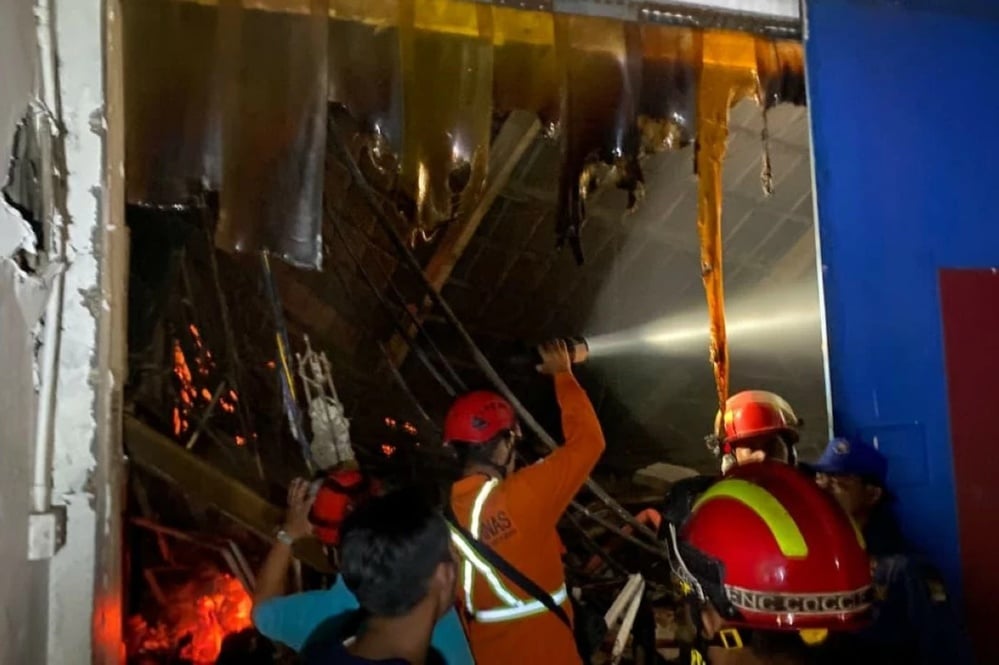
“Television reports showed flames engulfing the three-story factory, sending thick black smoke into the sky.” · exact text match
Why: The framing is restrained and caveated, though it includes vivid descriptive details from television reports.
Claim: The text describes events and official statements without prescribing policy responses.
“The National Search and Rescue Agency said in a statement that 15 people were rescued alive, including four injured workers.” · exact text match
Why: The article reports facts and attributed statements rather than advocating remedies or actions.
Claim: The report provides identifiable sources, direct attribution, and caveats about what is not known.
“The National Search and Rescue Agency said in a statement that 15 people were rescued alive, including four injured workers.” · exact text match
“Authorities did not immediately say whether all of the missing workers were believed to have been inside.” · exact text match
Why: Attribution to agencies and named officials plus explicit uncertainty supports verifiability.
Claim: The report marks unresolved facts rather than filling gaps with conjecture.
“The cause of the fire was not immediately known.” · exact text match
“Authorities did not immediately say whether all of the missing workers were believed to have been inside.” · exact text match
Why: It distinguishes confirmed official information from unknown cause and unconfirmed missing-worker status.
Claim: Sourcing is attributed to named officials and agencies, and uncertainty is stated.
“said Rizky Dwianto, an operations official at the Banten Search and Rescue Agency.” · exact text match
“The cause of the fire was not immediately known.” · exact text match
Why: Identifiable sourcing and caveats about unknowns indicate fair, transparent reporting in the supplied text.
Short AP wire excerpt republished without byline; bias ratings rely on limited incident coverage.
November 22, 2026 · 0 shares
The report is a restrained, attribution-heavy wire-style account that foregrounds official casualty and rescue figures while avoiding overt ideological or sensational framing.
Helium Analysis
Limitations: No author byline or publication date beyond Saturday/Sunday is supplied; analysis is limited to a short wire-style report with some CBC boilerplate excluded.
·
9 of 56 available dimensions scored; omitted dimensions are not treated as neutral.
·
Verified supporting quotes for 7 of 9 scored dimensions.
Claim: The report is predominantly objective, relying on attributed facts rather than subjective commentary.
“officials said” · exact text match
“television reports showed” · exact text match
Why: The publisher attributes information to officials and media reports instead of offering personal interpretation.
Claim: The report uses restrained factual language despite covering a deadly fire.
“Debris littered the floor of the burned-out structure, including twisted metal and blackened, corrugated iron roofing.” · exact text match
Why: Vivid disaster details are present but remain factual and attributed, with no hyperbolic or emotive editorializing.
Claim: The report is descriptive, not prescriptive.
“raising concerns about workplace safety standards and emergency preparedness at manufacturing facilities” · exact text match
Why: It reports events and stated concerns without recommending policies or actions.
Claim: The report is fact-based and avoids publisher opinion.
“officials said” · exact text match
“local media reported” · exact text match
Why: Statements are attributed to named or institutional sources rather than presented as editorial judgment.
Claim: The report avoids asserting certainty beyond available evidence.
“The cause of the fire was not immediately known.” · exact text match
Why: It flags uncertainty rather than presenting an unconfirmed cause as established.
Claim: The report provides clear sourcing, attribution, and uncertainty, supporting credibility.
“officials said” · exact text match
“The National Search and Rescue Agency said in a statement” · not found in supplied text
“The cause of the fire was not immediately known.” · exact text match
Why: Multiple named or institutional sources are cited, and the unconfirmed cause is flagged.
Claim: The account is structured around verifiable, attributed facts and official statements.
“officials said” · exact text match
“The National Search and Rescue Agency said in a statement” · not found in supplied text
Why: Claims are sourced to officials and agencies, supporting a rational/evidence-based presentation.
Claim: The report attributes claims, distinguishes official and survivor accounts, and notes uncertainty.
“Survivors said the fire originated from a cooling unit on the third floor, local media reported.” · exact text match
“The cause of the fire was not immediately known.” · exact text match
Why: It separates official figures from survivor claims and explicitly flags the unconfirmed cause, showing fair epistemic practice.
No author byline or publication date beyond Saturday/Sunday is supplied; analysis is limited to a short wire-style report with some CBC boilerplate excluded.
November 23, 2026 · 0 shares
The report is largely restrained and attribution-based, relying on police and factory-management statements while explicitly noting that identification and the fire's cause remain unresolved.
Helium Analysis
Limitations: The supplied text includes unrelated link headlines and copyright boilerplate after the main report; these were excluded from analysis.
·
5 of 56 available dimensions scored; omitted dimensions are not treated as neutral.
·
Verified supporting quotes for 5 of 5 scored dimensions.
Claim: The report is framed as an attributed factual account rather than a subjective interpretation.
“According to Indonesian police on Sunday, the fire—which broke out Saturday night—has not been fully extinguished, forcing search-and-rescue operations to continue under difficult conditions.” · exact text match
“In a statement, the factory management indicated that approximately 300 people were on the premises when the fire broke out.” · exact text match
Why: Repeated attribution to police and management supports an objective classification.
Claim: The body of the report is factual and restrained rather than sensational, though the headline is blunt.
“The cause of the fire is still under investigation.” · exact text match
Counterevidence:
“24 bodies found in Indonesian candy factory fire, 30 still missing.” · exact text match
Why: Attribution and stated uncertainty outweigh the blunt headline, which remains factually worded.
Claim: The supplied text is credible because it relies on institutional sources and flags unresolved facts.
“According to Indonesian police on Sunday, the fire—which broke out Saturday night—has not been fully extinguished, forcing search-and-rescue operations to continue under difficult conditions.” · exact text match
“In a statement, the factory management indicated that approximately 300 people were on the premises when the fire broke out.” · exact text match
Why: Official attribution and acknowledged uncertainty support credibility, though the text is short and lacks deeper sourcing.
Claim: The report presents verified facts, official attribution, and explicit unresolved issues rather than emotive or speculative reasoning.
“According to Indonesian police on Sunday, the fire—which broke out Saturday night—has not been fully extinguished, forcing search-and-rescue operations to continue under difficult conditions.” · exact text match
“The cause of the fire is still under investigation.” · exact text match
Why: Official sourcing and a stated unresolved cause support a rational, restrained classification.
Claim: The report transparently attributes claims and acknowledges unresolved identification and cause.
“The police stated that the condition of the recovered bodies has complicated the identification process, as severe fire damage has made it impossible to identify the victims visually.” · exact text match
“The cause of the fire is still under investigation.” · exact text match
Why: Attribution and explicit uncertainty are observable fairness and honesty signals.
The supplied text includes unrelated link headlines and copyright boilerplate after the main report; these were excluded from analysis.
November 22, 2026 · 0 shares
Reports a deadly factory fire with neutral, attributed factual framing and explicit uncertainty about unresolved details.
Helium Analysis
Limitations: Short AP wire excerpt republished without byline; bias ratings rely on limited incident coverage.
·
6 of 56 available dimensions scored; omitted dimensions are not treated as neutral.
·
Verified supporting quotes for 6 of 6 scored dimensions.
Claim: The report is largely factual and attributed, with limited unverified assertion.
“The National Search and Rescue Agency said in a statement that 15 people were rescued alive, including four injured workers.” · exact text match
“The cause of the fire was not immediately known.” · exact text match
Why: Casualty and rescue figures are attributed to an official agency, and key unknowns are stated rather than filled in.
Claim: The report presents the fire through official figures and explicit unknowns rather than dramatized speculation.
“The cause of the fire was not immediately known.” · exact text match
“Authorities did not immediately say whether all of the missing workers were believed to have been inside.” · exact text match
Counterevidence:
“Television reports showed flames engulfing the three-story factory, sending thick black smoke into the sky.” · exact text match
Why: The framing is restrained and caveated, though it includes vivid descriptive details from television reports.
Claim: The text describes events and official statements without prescribing policy responses.
“The National Search and Rescue Agency said in a statement that 15 people were rescued alive, including four injured workers.” · exact text match
Why: The article reports facts and attributed statements rather than advocating remedies or actions.
Claim: The report provides identifiable sources, direct attribution, and caveats about what is not known.
“The National Search and Rescue Agency said in a statement that 15 people were rescued alive, including four injured workers.” · exact text match
“Authorities did not immediately say whether all of the missing workers were believed to have been inside.” · exact text match
Why: Attribution to agencies and named officials plus explicit uncertainty supports verifiability.
Claim: The report marks unresolved facts rather than filling gaps with conjecture.
“The cause of the fire was not immediately known.” · exact text match
“Authorities did not immediately say whether all of the missing workers were believed to have been inside.” · exact text match
Why: It distinguishes confirmed official information from unknown cause and unconfirmed missing-worker status.
Claim: Sourcing is attributed to named officials and agencies, and uncertainty is stated.
“said Rizky Dwianto, an operations official at the Banten Search and Rescue Agency.” · exact text match
“The cause of the fire was not immediately known.” · exact text match
Why: Identifiable sourcing and caveats about unknowns indicate fair, transparent reporting in the supplied text.
Short AP wire excerpt republished without byline; bias ratings rely on limited incident coverage.
November 22, 2026 · 0 shares
A restrained, attribution-heavy straight-news account that foregrounds official rescue details and acknowledged uncertainty over the fire’s cause.
Helium Analysis
Limitations: The supplied text is a brief wire-style report with no byline or publication date, limiting assessment of context-dependent dimensions.
·
6 of 56 available dimensions scored; omitted dimensions are not treated as neutral.
·
Verified supporting quotes for 6 of 6 scored dimensions.
Claim: Framing is factual and attribution-based, without evaluative or opinionated language.
“The National Search and Rescue Agency said 15 people were rescued alive, including four injured workers.” · exact text match
Why: The statement is a direct attribution of factual rescue data rather than subjective commentary.
Claim: Sensational treatment is limited; the report primarily gives attributed facts and avoids alarmist extrapolation.
“The cause of the fire was not immediately known, and authorities have not said whether the missing workers were inside the factory when the blaze erupted.” · exact text match
Counterevidence:
“Television reports showed flames engulfing the three-storey factory, sending thick black smoke into the sky and causing panic among nearby residents and workers.” · exact text match
Why: Mostly restrained reporting, but one vivid scene-setting passage adds mild dramatic color.
Claim: The report describes events and official responses without advocating policy or action.
“Rescue teams were still searching for the 36 missing workers.” · exact text match
Why: The sentence is descriptive of ongoing operations and contains no prescription.
Claim: Credibility is supported by named agencies and clear attribution of rescue information.
“The National Search and Rescue Agency said 15 people were rescued alive, including four injured workers.” · exact text match
Why: Named institutional sourcing and explicit attribution support credibility in the supplied text.
Claim: The report attributes official information and explicitly notes that the fire’s cause and the location of missing workers were not yet known.
“The cause of the fire was not immediately known, and authorities have not said whether the missing workers were inside the factory when the blaze erupted.” · exact text match
Why: The text signals uncertainty and relies on official statements rather than speculation.
Claim: The report attributes claims and distinguishes confirmed information from unknowns.
“The cause of the fire was not immediately known, and authorities have not said whether the missing workers were inside the factory when the blaze erupted.” · exact text match
Why: It openly flags unknown and unconfirmed details rather than presenting them as fact.
The supplied text is a brief wire-style report with no byline or publication date, limiting assessment of context-dependent dimensions.
November 22, 2026 · 0 shares
Terse, attribution-based casualty reporting presents the fire, body-bag recovery, and search suspension in plain factual terms without evaluative or ideological framing.
Helium Analysis
Limitations: Only a short newsfeed snippet is supplied, not the full article, limiting assessment of sourcing, context, and editorial framing.
·
5 of 56 available dimensions scored; omitted dimensions are not treated as neutral.
·
Verified supporting quotes for 5 of 5 scored dimensions.
Claim: The report presents police actions and casualty counts as concrete, attributed facts rather than subjective interpretation.
“Indonesian police removed 24 body bags from a factory destroyed by fire in Java.” · exact text match
Why: The sentence attributes a concrete action to police and contains no evaluative or speculative language.
Claim: The report uses plain, non-hyperbolic language despite death and missing-person details.
“A search for dozens of missing workers was suspended overnight.” · exact text match
Why: The wording is procedural and lacks sensational adjectives or dramatization.
Claim: The report is descriptive, reporting conditions and actions without recommending policy or action.
“Fifty people remain missing after a fire at an Indonesian candy factory.” · exact text match
Why: It states a factual situation and does not prescribe remedies or advocate responses.
Claim: The report maintains a neutral, unemotional tone.
“A search for dozens of missing workers was suspended overnight.” · exact text match
Why: The sentence states a search status without emotive wording or judgment.
Claim: The report is factually coherent and free of visible logical fallacies.
“Indonesian police removed 24 body bags from a factory destroyed by fire in Java.” · exact text match
Why: It makes a direct, concrete factual statement without inflammatory or fallacious reasoning.
Only a short newsfeed snippet is supplied, not the full article, limiting assessment of sourcing, context, and editorial framing.
November 23, 2026 · 0 shares
The report is largely restrained and attribution-based, relying on police and factory-management statements while explicitly noting that identification and the fire's cause remain unresolved.
Helium Analysis
Limitations: The supplied text includes unrelated link headlines and copyright boilerplate after the main report; these were excluded from analysis.
·
5 of 56 available dimensions scored; omitted dimensions are not treated as neutral.
·
Verified supporting quotes for 5 of 5 scored dimensions.
Claim: The report is framed as an attributed factual account rather than a subjective interpretation.
“According to Indonesian police on Sunday, the fire—which broke out Saturday night—has not been fully extinguished, forcing search-and-rescue operations to continue under difficult conditions.” · exact text match
“In a statement, the factory management indicated that approximately 300 people were on the premises when the fire broke out.” · exact text match
Why: Repeated attribution to police and management supports an objective classification.
Claim: The body of the report is factual and restrained rather than sensational, though the headline is blunt.
“The cause of the fire is still under investigation.” · exact text match
Counterevidence:
“24 bodies found in Indonesian candy factory fire, 30 still missing.” · exact text match
Why: Attribution and stated uncertainty outweigh the blunt headline, which remains factually worded.
Claim: The supplied text is credible because it relies on institutional sources and flags unresolved facts.
“According to Indonesian police on Sunday, the fire—which broke out Saturday night—has not been fully extinguished, forcing search-and-rescue operations to continue under difficult conditions.” · exact text match
“In a statement, the factory management indicated that approximately 300 people were on the premises when the fire broke out.” · exact text match
Why: Official attribution and acknowledged uncertainty support credibility, though the text is short and lacks deeper sourcing.
Claim: The report presents verified facts, official attribution, and explicit unresolved issues rather than emotive or speculative reasoning.
“According to Indonesian police on Sunday, the fire—which broke out Saturday night—has not been fully extinguished, forcing search-and-rescue operations to continue under difficult conditions.” · exact text match
“The cause of the fire is still under investigation.” · exact text match
Why: Official sourcing and a stated unresolved cause support a rational, restrained classification.
Claim: The report transparently attributes claims and acknowledges unresolved identification and cause.
“The police stated that the condition of the recovered bodies has complicated the identification process, as severe fire damage has made it impossible to identify the victims visually.” · exact text match
“The cause of the fire is still under investigation.” · exact text match
Why: Attribution and explicit uncertainty are observable fairness and honesty signals.
The supplied text includes unrelated link headlines and copyright boilerplate after the main report; these were excluded from analysis.
November 22, 2026 · 0 shares
A restrained, attribution-heavy straight-news account that foregrounds official rescue details and acknowledged uncertainty over the fire’s cause.
Helium Analysis
Limitations: The supplied text is a brief wire-style report with no byline or publication date, limiting assessment of context-dependent dimensions.
·
6 of 56 available dimensions scored; omitted dimensions are not treated as neutral.
·
Verified supporting quotes for 6 of 6 scored dimensions.
Claim: Framing is factual and attribution-based, without evaluative or opinionated language.
“The National Search and Rescue Agency said 15 people were rescued alive, including four injured workers.” · exact text match
Why: The statement is a direct attribution of factual rescue data rather than subjective commentary.
Claim: Sensational treatment is limited; the report primarily gives attributed facts and avoids alarmist extrapolation.
“The cause of the fire was not immediately known, and authorities have not said whether the missing workers were inside the factory when the blaze erupted.” · exact text match
Counterevidence:
“Television reports showed flames engulfing the three-storey factory, sending thick black smoke into the sky and causing panic among nearby residents and workers.” · exact text match
Why: Mostly restrained reporting, but one vivid scene-setting passage adds mild dramatic color.
Claim: The report describes events and official responses without advocating policy or action.
“Rescue teams were still searching for the 36 missing workers.” · exact text match
Why: The sentence is descriptive of ongoing operations and contains no prescription.
Claim: Credibility is supported by named agencies and clear attribution of rescue information.
“The National Search and Rescue Agency said 15 people were rescued alive, including four injured workers.” · exact text match
Why: Named institutional sourcing and explicit attribution support credibility in the supplied text.
Claim: The report attributes official information and explicitly notes that the fire’s cause and the location of missing workers were not yet known.
“The cause of the fire was not immediately known, and authorities have not said whether the missing workers were inside the factory when the blaze erupted.” · exact text match
Why: The text signals uncertainty and relies on official statements rather than speculation.
Claim: The report attributes claims and distinguishes confirmed information from unknowns.
“The cause of the fire was not immediately known, and authorities have not said whether the missing workers were inside the factory when the blaze erupted.” · exact text match
Why: It openly flags unknown and unconfirmed details rather than presenting them as fact.
The supplied text is a brief wire-style report with no byline or publication date, limiting assessment of context-dependent dimensions.
November 23, 2026 · 0 shares
The report is largely restrained and attribution-based, relying on police and factory-management statements while explicitly noting that identification and the fire's cause remain unresolved.
Helium Analysis
Limitations: The supplied text includes unrelated link headlines and copyright boilerplate after the main report; these were excluded from analysis.
·
5 of 56 available dimensions scored; omitted dimensions are not treated as neutral.
·
Verified supporting quotes for 5 of 5 scored dimensions.
Claim: The report is framed as an attributed factual account rather than a subjective interpretation.
“According to Indonesian police on Sunday, the fire—which broke out Saturday night—has not been fully extinguished, forcing search-and-rescue operations to continue under difficult conditions.” · exact text match
“In a statement, the factory management indicated that approximately 300 people were on the premises when the fire broke out.” · exact text match
Why: Repeated attribution to police and management supports an objective classification.
Claim: The body of the report is factual and restrained rather than sensational, though the headline is blunt.
“The cause of the fire is still under investigation.” · exact text match
Counterevidence:
“24 bodies found in Indonesian candy factory fire, 30 still missing.” · exact text match
Why: Attribution and stated uncertainty outweigh the blunt headline, which remains factually worded.
Claim: The supplied text is credible because it relies on institutional sources and flags unresolved facts.
“According to Indonesian police on Sunday, the fire—which broke out Saturday night—has not been fully extinguished, forcing search-and-rescue operations to continue under difficult conditions.” · exact text match
“In a statement, the factory management indicated that approximately 300 people were on the premises when the fire broke out.” · exact text match
Why: Official attribution and acknowledged uncertainty support credibility, though the text is short and lacks deeper sourcing.
Claim: The report presents verified facts, official attribution, and explicit unresolved issues rather than emotive or speculative reasoning.
“According to Indonesian police on Sunday, the fire—which broke out Saturday night—has not been fully extinguished, forcing search-and-rescue operations to continue under difficult conditions.” · exact text match
“The cause of the fire is still under investigation.” · exact text match
Why: Official sourcing and a stated unresolved cause support a rational, restrained classification.
Claim: The report transparently attributes claims and acknowledges unresolved identification and cause.
“The police stated that the condition of the recovered bodies has complicated the identification process, as severe fire damage has made it impossible to identify the victims visually.” · exact text match
“The cause of the fire is still under investigation.” · exact text match
Why: Attribution and explicit uncertainty are observable fairness and honesty signals.
The supplied text includes unrelated link headlines and copyright boilerplate after the main report; these were excluded from analysis.
November 22, 2026 · 0 shares
Terse, attribution-based casualty reporting presents the fire, body-bag recovery, and search suspension in plain factual terms without evaluative or ideological framing.
Helium Analysis
Limitations: Only a short newsfeed snippet is supplied, not the full article, limiting assessment of sourcing, context, and editorial framing.
·
5 of 56 available dimensions scored; omitted dimensions are not treated as neutral.
·
Verified supporting quotes for 5 of 5 scored dimensions.
Claim: The report presents police actions and casualty counts as concrete, attributed facts rather than subjective interpretation.
“Indonesian police removed 24 body bags from a factory destroyed by fire in Java.” · exact text match
Why: The sentence attributes a concrete action to police and contains no evaluative or speculative language.
Claim: The report uses plain, non-hyperbolic language despite death and missing-person details.
“A search for dozens of missing workers was suspended overnight.” · exact text match
Why: The wording is procedural and lacks sensational adjectives or dramatization.
Claim: The report is descriptive, reporting conditions and actions without recommending policy or action.
“Fifty people remain missing after a fire at an Indonesian candy factory.” · exact text match
Why: It states a factual situation and does not prescribe remedies or advocate responses.
Claim: The report maintains a neutral, unemotional tone.
“A search for dozens of missing workers was suspended overnight.” · exact text match
Why: The sentence states a search status without emotive wording or judgment.
Claim: The report is factually coherent and free of visible logical fallacies.
“Indonesian police removed 24 body bags from a factory destroyed by fire in Java.” · exact text match
Why: It makes a direct, concrete factual statement without inflammatory or fallacious reasoning.
Only a short newsfeed snippet is supplied, not the full article, limiting assessment of sourcing, context, and editorial framing.
November 23, 2026 · 0 shares
The report is largely restrained and attribution-based, relying on police and factory-management statements while explicitly noting that identification and the fire's cause remain unresolved.
Helium Analysis
Limitations: The supplied text includes unrelated link headlines and copyright boilerplate after the main report; these were excluded from analysis.
·
5 of 56 available dimensions scored; omitted dimensions are not treated as neutral.
·
Verified supporting quotes for 5 of 5 scored dimensions.
Claim: The report is framed as an attributed factual account rather than a subjective interpretation.
“According to Indonesian police on Sunday, the fire—which broke out Saturday night—has not been fully extinguished, forcing search-and-rescue operations to continue under difficult conditions.” · exact text match
“In a statement, the factory management indicated that approximately 300 people were on the premises when the fire broke out.” · exact text match
Why: Repeated attribution to police and management supports an objective classification.
Claim: The body of the report is factual and restrained rather than sensational, though the headline is blunt.
“The cause of the fire is still under investigation.” · exact text match
Counterevidence:
“24 bodies found in Indonesian candy factory fire, 30 still missing.” · exact text match
Why: Attribution and stated uncertainty outweigh the blunt headline, which remains factually worded.
Claim: The supplied text is credible because it relies on institutional sources and flags unresolved facts.
“According to Indonesian police on Sunday, the fire—which broke out Saturday night—has not been fully extinguished, forcing search-and-rescue operations to continue under difficult conditions.” · exact text match
“In a statement, the factory management indicated that approximately 300 people were on the premises when the fire broke out.” · exact text match
Why: Official attribution and acknowledged uncertainty support credibility, though the text is short and lacks deeper sourcing.
Claim: The report presents verified facts, official attribution, and explicit unresolved issues rather than emotive or speculative reasoning.
“According to Indonesian police on Sunday, the fire—which broke out Saturday night—has not been fully extinguished, forcing search-and-rescue operations to continue under difficult conditions.” · exact text match
“The cause of the fire is still under investigation.” · exact text match
Why: Official sourcing and a stated unresolved cause support a rational, restrained classification.
Claim: The report transparently attributes claims and acknowledges unresolved identification and cause.
“The police stated that the condition of the recovered bodies has complicated the identification process, as severe fire damage has made it impossible to identify the victims visually.” · exact text match
“The cause of the fire is still under investigation.” · exact text match
Why: Attribution and explicit uncertainty are observable fairness and honesty signals.
The supplied text includes unrelated link headlines and copyright boilerplate after the main report; these were excluded from analysis.
November 22, 2026 · 0 shares
The report is a restrained, attribution-heavy wire-style account that foregrounds official casualty and rescue figures while avoiding overt ideological or sensational framing.
Helium Analysis Limitations: No author byline or publication date beyond Saturday/Sunday is supplied; analysis is limited to a short wire-style report with some CBC boilerplate excluded. · 9 of 56 available dimensions scored; omitted dimensions are not treated as neutral. · Verified supporting quotes for 7 of 9 scored dimensions.
Claim: The report is predominantly objective, relying on attributed facts rather than subjective commentary.
“officials said” · exact text match
“television reports showed” · exact text match
Why: The publisher attributes information to officials and media reports instead of offering personal interpretation.
Claim: The report uses restrained factual language despite covering a deadly fire.
“Debris littered the floor of the burned-out structure, including twisted metal and blackened, corrugated iron roofing.” · exact text match
Why: Vivid disaster details are present but remain factual and attributed, with no hyperbolic or emotive editorializing.
Claim: The report is descriptive, not prescriptive.
“raising concerns about workplace safety standards and emergency preparedness at manufacturing facilities” · exact text match
Why: It reports events and stated concerns without recommending policies or actions.
Claim: The report is fact-based and avoids publisher opinion.
“officials said” · exact text match
“local media reported” · exact text match
Why: Statements are attributed to named or institutional sources rather than presented as editorial judgment.
Claim: The report avoids asserting certainty beyond available evidence.
“The cause of the fire was not immediately known.” · exact text match
Why: It flags uncertainty rather than presenting an unconfirmed cause as established.
Claim: The report provides clear sourcing, attribution, and uncertainty, supporting credibility.
“officials said” · exact text match
“The National Search and Rescue Agency said in a statement” · not found in supplied text
“The cause of the fire was not immediately known.” · exact text match
Why: Multiple named or institutional sources are cited, and the unconfirmed cause is flagged.
Claim: The account is structured around verifiable, attributed facts and official statements.
“officials said” · exact text match
“The National Search and Rescue Agency said in a statement” · not found in supplied text
Why: Claims are sourced to officials and agencies, supporting a rational/evidence-based presentation.
Claim: The report attributes claims, distinguishes official and survivor accounts, and notes uncertainty.
“Survivors said the fire originated from a cooling unit on the third floor, local media reported.” · exact text match
“The cause of the fire was not immediately known.” · exact text match
Why: It separates official figures from survivor claims and explicitly flags the unconfirmed cause, showing fair epistemic practice.
No author byline or publication date beyond Saturday/Sunday is supplied; analysis is limited to a short wire-style report with some CBC boilerplate excluded.
November 22, 2026 · 0 shares
Reports a deadly factory fire with neutral, attributed factual framing and explicit uncertainty about unresolved details.
Helium Analysis Limitations: Short AP wire excerpt republished without byline; bias ratings rely on limited incident coverage. · 6 of 56 available dimensions scored; omitted dimensions are not treated as neutral. · Verified supporting quotes for 6 of 6 scored dimensions.
Claim: The report is largely factual and attributed, with limited unverified assertion.
“The National Search and Rescue Agency said in a statement that 15 people were rescued alive, including four injured workers.” · exact text match
“The cause of the fire was not immediately known.” · exact text match
Why: Casualty and rescue figures are attributed to an official agency, and key unknowns are stated rather than filled in.
Claim: The report presents the fire through official figures and explicit unknowns rather than dramatized speculation.
“The cause of the fire was not immediately known.” · exact text match
“Authorities did not immediately say whether all of the missing workers were believed to have been inside.” · exact text match
Counterevidence:
“Television reports showed flames engulfing the three-story factory, sending thick black smoke into the sky.” · exact text match
Why: The framing is restrained and caveated, though it includes vivid descriptive details from television reports.
Claim: The text describes events and official statements without prescribing policy responses.
“The National Search and Rescue Agency said in a statement that 15 people were rescued alive, including four injured workers.” · exact text match
Why: The article reports facts and attributed statements rather than advocating remedies or actions.
Claim: The report provides identifiable sources, direct attribution, and caveats about what is not known.
“The National Search and Rescue Agency said in a statement that 15 people were rescued alive, including four injured workers.” · exact text match
“Authorities did not immediately say whether all of the missing workers were believed to have been inside.” · exact text match
Why: Attribution to agencies and named officials plus explicit uncertainty supports verifiability.
Claim: The report marks unresolved facts rather than filling gaps with conjecture.
“The cause of the fire was not immediately known.” · exact text match
“Authorities did not immediately say whether all of the missing workers were believed to have been inside.” · exact text match
Why: It distinguishes confirmed official information from unknown cause and unconfirmed missing-worker status.
Claim: Sourcing is attributed to named officials and agencies, and uncertainty is stated.
“said Rizky Dwianto, an operations official at the Banten Search and Rescue Agency.” · exact text match
“The cause of the fire was not immediately known.” · exact text match
Why: Identifiable sourcing and caveats about unknowns indicate fair, transparent reporting in the supplied text.
Short AP wire excerpt republished without byline; bias ratings rely on limited incident coverage.
November 22, 2026 · 0 shares
Terse, attribution-based casualty reporting presents the fire, body-bag recovery, and search suspension in plain factual terms without evaluative or ideological framing.
Helium Analysis Limitations: Only a short newsfeed snippet is supplied, not the full article, limiting assessment of sourcing, context, and editorial framing. · 5 of 56 available dimensions scored; omitted dimensions are not treated as neutral. · Verified supporting quotes for 5 of 5 scored dimensions.
Claim: The report presents police actions and casualty counts as concrete, attributed facts rather than subjective interpretation.
“Indonesian police removed 24 body bags from a factory destroyed by fire in Java.” · exact text match
Why: The sentence attributes a concrete action to police and contains no evaluative or speculative language.
Claim: The report uses plain, non-hyperbolic language despite death and missing-person details.
“A search for dozens of missing workers was suspended overnight.” · exact text match
Why: The wording is procedural and lacks sensational adjectives or dramatization.
Claim: The report is descriptive, reporting conditions and actions without recommending policy or action.
“Fifty people remain missing after a fire at an Indonesian candy factory.” · exact text match
Why: It states a factual situation and does not prescribe remedies or advocate responses.
Claim: The report maintains a neutral, unemotional tone.
“A search for dozens of missing workers was suspended overnight.” · exact text match
Why: The sentence states a search status without emotive wording or judgment.
Claim: The report is factually coherent and free of visible logical fallacies.
“Indonesian police removed 24 body bags from a factory destroyed by fire in Java.” · exact text match
Why: It makes a direct, concrete factual statement without inflammatory or fallacious reasoning.
Only a short newsfeed snippet is supplied, not the full article, limiting assessment of sourcing, context, and editorial framing.
November 23, 2026 · 0 shares
The report is largely restrained and attribution-based, relying on police and factory-management statements while explicitly noting that identification and the fire's cause remain unresolved.
Helium Analysis Limitations: The supplied text includes unrelated link headlines and copyright boilerplate after the main report; these were excluded from analysis. · 5 of 56 available dimensions scored; omitted dimensions are not treated as neutral. · Verified supporting quotes for 5 of 5 scored dimensions.
Claim: The report is framed as an attributed factual account rather than a subjective interpretation.
“According to Indonesian police on Sunday, the fire—which broke out Saturday night—has not been fully extinguished, forcing search-and-rescue operations to continue under difficult conditions.” · exact text match
“In a statement, the factory management indicated that approximately 300 people were on the premises when the fire broke out.” · exact text match
Why: Repeated attribution to police and management supports an objective classification.
Claim: The body of the report is factual and restrained rather than sensational, though the headline is blunt.
“The cause of the fire is still under investigation.” · exact text match
Counterevidence:
“24 bodies found in Indonesian candy factory fire, 30 still missing.” · exact text match
Why: Attribution and stated uncertainty outweigh the blunt headline, which remains factually worded.
Claim: The supplied text is credible because it relies on institutional sources and flags unresolved facts.
“According to Indonesian police on Sunday, the fire—which broke out Saturday night—has not been fully extinguished, forcing search-and-rescue operations to continue under difficult conditions.” · exact text match
“In a statement, the factory management indicated that approximately 300 people were on the premises when the fire broke out.” · exact text match
Why: Official attribution and acknowledged uncertainty support credibility, though the text is short and lacks deeper sourcing.
Claim: The report presents verified facts, official attribution, and explicit unresolved issues rather than emotive or speculative reasoning.
“According to Indonesian police on Sunday, the fire—which broke out Saturday night—has not been fully extinguished, forcing search-and-rescue operations to continue under difficult conditions.” · exact text match
“The cause of the fire is still under investigation.” · exact text match
Why: Official sourcing and a stated unresolved cause support a rational, restrained classification.
Claim: The report transparently attributes claims and acknowledges unresolved identification and cause.
“The police stated that the condition of the recovered bodies has complicated the identification process, as severe fire damage has made it impossible to identify the victims visually.” · exact text match
“The cause of the fire is still under investigation.” · exact text match
Why: Attribution and explicit uncertainty are observable fairness and honesty signals.
The supplied text includes unrelated link headlines and copyright boilerplate after the main report; these were excluded from analysis.
Helium Bias
Story Blindspots
November 22, 2026 · 0 shares
A restrained, attribution-heavy straight-news account that foregrounds official rescue details and acknowledged uncertainty over the fire’s cause.
Helium Analysis Limitations: The supplied text is a brief wire-style report with no byline or publication date, limiting assessment of context-dependent dimensions. · 6 of 56 available dimensions scored; omitted dimensions are not treated as neutral. · Verified supporting quotes for 6 of 6 scored dimensions.
Claim: Framing is factual and attribution-based, without evaluative or opinionated language.
“The National Search and Rescue Agency said 15 people were rescued alive, including four injured workers.” · exact text match
Why: The statement is a direct attribution of factual rescue data rather than subjective commentary.
Claim: Sensational treatment is limited; the report primarily gives attributed facts and avoids alarmist extrapolation.
“The cause of the fire was not immediately known, and authorities have not said whether the missing workers were inside the factory when the blaze erupted.” · exact text match
Counterevidence:
“Television reports showed flames engulfing the three-storey factory, sending thick black smoke into the sky and causing panic among nearby residents and workers.” · exact text match
Why: Mostly restrained reporting, but one vivid scene-setting passage adds mild dramatic color.
Claim: The report describes events and official responses without advocating policy or action.
“Rescue teams were still searching for the 36 missing workers.” · exact text match
Why: The sentence is descriptive of ongoing operations and contains no prescription.
Claim: Credibility is supported by named agencies and clear attribution of rescue information.
“The National Search and Rescue Agency said 15 people were rescued alive, including four injured workers.” · exact text match
Why: Named institutional sourcing and explicit attribution support credibility in the supplied text.
Claim: The report attributes official information and explicitly notes that the fire’s cause and the location of missing workers were not yet known.
“The cause of the fire was not immediately known, and authorities have not said whether the missing workers were inside the factory when the blaze erupted.” · exact text match
Why: The text signals uncertainty and relies on official statements rather than speculation.
Claim: The report attributes claims and distinguishes confirmed information from unknowns.
“The cause of the fire was not immediately known, and authorities have not said whether the missing workers were inside the factory when the blaze erupted.” · exact text match
Why: It openly flags unknown and unconfirmed details rather than presenting them as fact.
The supplied text is a brief wire-style report with no byline or publication date, limiting assessment of context-dependent dimensions.
November 23, 2026 · 0 shares
The report is largely restrained and attribution-based, relying on police and factory-management statements while explicitly noting that identification and the fire's cause remain unresolved.
Helium Analysis Limitations: The supplied text includes unrelated link headlines and copyright boilerplate after the main report; these were excluded from analysis. · 5 of 56 available dimensions scored; omitted dimensions are not treated as neutral. · Verified supporting quotes for 5 of 5 scored dimensions.
Claim: The report is framed as an attributed factual account rather than a subjective interpretation.
“According to Indonesian police on Sunday, the fire—which broke out Saturday night—has not been fully extinguished, forcing search-and-rescue operations to continue under difficult conditions.” · exact text match
“In a statement, the factory management indicated that approximately 300 people were on the premises when the fire broke out.” · exact text match
Why: Repeated attribution to police and management supports an objective classification.
Claim: The body of the report is factual and restrained rather than sensational, though the headline is blunt.
“The cause of the fire is still under investigation.” · exact text match
Counterevidence:
“24 bodies found in Indonesian candy factory fire, 30 still missing.” · exact text match
Why: Attribution and stated uncertainty outweigh the blunt headline, which remains factually worded.
Claim: The supplied text is credible because it relies on institutional sources and flags unresolved facts.
“According to Indonesian police on Sunday, the fire—which broke out Saturday night—has not been fully extinguished, forcing search-and-rescue operations to continue under difficult conditions.” · exact text match
“In a statement, the factory management indicated that approximately 300 people were on the premises when the fire broke out.” · exact text match
Why: Official attribution and acknowledged uncertainty support credibility, though the text is short and lacks deeper sourcing.
Claim: The report presents verified facts, official attribution, and explicit unresolved issues rather than emotive or speculative reasoning.
“According to Indonesian police on Sunday, the fire—which broke out Saturday night—has not been fully extinguished, forcing search-and-rescue operations to continue under difficult conditions.” · exact text match
“The cause of the fire is still under investigation.” · exact text match
Why: Official sourcing and a stated unresolved cause support a rational, restrained classification.
Claim: The report transparently attributes claims and acknowledges unresolved identification and cause.
“The police stated that the condition of the recovered bodies has complicated the identification process, as severe fire damage has made it impossible to identify the victims visually.” · exact text match
“The cause of the fire is still under investigation.” · exact text match
Why: Attribution and explicit uncertainty are observable fairness and honesty signals.
The supplied text includes unrelated link headlines and copyright boilerplate after the main report; these were excluded from analysis.
November 22, 2026 · 0 shares
Reports a deadly factory fire with neutral, attributed factual framing and explicit uncertainty about unresolved details.
Helium Analysis Limitations: Short AP wire excerpt republished without byline; bias ratings rely on limited incident coverage. · 6 of 56 available dimensions scored; omitted dimensions are not treated as neutral. · Verified supporting quotes for 6 of 6 scored dimensions.
Claim: The report is largely factual and attributed, with limited unverified assertion.
“The National Search and Rescue Agency said in a statement that 15 people were rescued alive, including four injured workers.” · exact text match
“The cause of the fire was not immediately known.” · exact text match
Why: Casualty and rescue figures are attributed to an official agency, and key unknowns are stated rather than filled in.
Claim: The report presents the fire through official figures and explicit unknowns rather than dramatized speculation.
“The cause of the fire was not immediately known.” · exact text match
“Authorities did not immediately say whether all of the missing workers were believed to have been inside.” · exact text match
Counterevidence:
“Television reports showed flames engulfing the three-story factory, sending thick black smoke into the sky.” · exact text match
Why: The framing is restrained and caveated, though it includes vivid descriptive details from television reports.
Claim: The text describes events and official statements without prescribing policy responses.
“The National Search and Rescue Agency said in a statement that 15 people were rescued alive, including four injured workers.” · exact text match
Why: The article reports facts and attributed statements rather than advocating remedies or actions.
Claim: The report provides identifiable sources, direct attribution, and caveats about what is not known.
“The National Search and Rescue Agency said in a statement that 15 people were rescued alive, including four injured workers.” · exact text match
“Authorities did not immediately say whether all of the missing workers were believed to have been inside.” · exact text match
Why: Attribution to agencies and named officials plus explicit uncertainty supports verifiability.
Claim: The report marks unresolved facts rather than filling gaps with conjecture.
“The cause of the fire was not immediately known.” · exact text match
“Authorities did not immediately say whether all of the missing workers were believed to have been inside.” · exact text match
Why: It distinguishes confirmed official information from unknown cause and unconfirmed missing-worker status.
Claim: Sourcing is attributed to named officials and agencies, and uncertainty is stated.
“said Rizky Dwianto, an operations official at the Banten Search and Rescue Agency.” · exact text match
“The cause of the fire was not immediately known.” · exact text match
Why: Identifiable sourcing and caveats about unknowns indicate fair, transparent reporting in the supplied text.
Short AP wire excerpt republished without byline; bias ratings rely on limited incident coverage.
November 22, 2026 · 0 shares
Terse, attribution-based casualty reporting presents the fire, body-bag recovery, and search suspension in plain factual terms without evaluative or ideological framing.
Helium Analysis Limitations: Only a short newsfeed snippet is supplied, not the full article, limiting assessment of sourcing, context, and editorial framing. · 5 of 56 available dimensions scored; omitted dimensions are not treated as neutral. · Verified supporting quotes for 5 of 5 scored dimensions.
Claim: The report presents police actions and casualty counts as concrete, attributed facts rather than subjective interpretation.
“Indonesian police removed 24 body bags from a factory destroyed by fire in Java.” · exact text match
Why: The sentence attributes a concrete action to police and contains no evaluative or speculative language.
Claim: The report uses plain, non-hyperbolic language despite death and missing-person details.
“A search for dozens of missing workers was suspended overnight.” · exact text match
Why: The wording is procedural and lacks sensational adjectives or dramatization.
Claim: The report is descriptive, reporting conditions and actions without recommending policy or action.
“Fifty people remain missing after a fire at an Indonesian candy factory.” · exact text match
Why: It states a factual situation and does not prescribe remedies or advocate responses.
Claim: The report maintains a neutral, unemotional tone.
“A search for dozens of missing workers was suspended overnight.” · exact text match
Why: The sentence states a search status without emotive wording or judgment.
Claim: The report is factually coherent and free of visible logical fallacies.
“Indonesian police removed 24 body bags from a factory destroyed by fire in Java.” · exact text match
Why: It makes a direct, concrete factual statement without inflammatory or fallacious reasoning.
Only a short newsfeed snippet is supplied, not the full article, limiting assessment of sourcing, context, and editorial framing.
November 23, 2026 · 0 shares
The report is largely restrained and attribution-based, relying on police and factory-management statements while explicitly noting that identification and the fire's cause remain unresolved.
Helium Analysis Limitations: The supplied text includes unrelated link headlines and copyright boilerplate after the main report; these were excluded from analysis. · 5 of 56 available dimensions scored; omitted dimensions are not treated as neutral. · Verified supporting quotes for 5 of 5 scored dimensions.
Claim: The report is framed as an attributed factual account rather than a subjective interpretation.
“According to Indonesian police on Sunday, the fire—which broke out Saturday night—has not been fully extinguished, forcing search-and-rescue operations to continue under difficult conditions.” · exact text match
“In a statement, the factory management indicated that approximately 300 people were on the premises when the fire broke out.” · exact text match
Why: Repeated attribution to police and management supports an objective classification.
Claim: The body of the report is factual and restrained rather than sensational, though the headline is blunt.
“The cause of the fire is still under investigation.” · exact text match
Counterevidence:
“24 bodies found in Indonesian candy factory fire, 30 still missing.” · exact text match
Why: Attribution and stated uncertainty outweigh the blunt headline, which remains factually worded.
Claim: The supplied text is credible because it relies on institutional sources and flags unresolved facts.
“According to Indonesian police on Sunday, the fire—which broke out Saturday night—has not been fully extinguished, forcing search-and-rescue operations to continue under difficult conditions.” · exact text match
“In a statement, the factory management indicated that approximately 300 people were on the premises when the fire broke out.” · exact text match
Why: Official attribution and acknowledged uncertainty support credibility, though the text is short and lacks deeper sourcing.
Claim: The report presents verified facts, official attribution, and explicit unresolved issues rather than emotive or speculative reasoning.
“According to Indonesian police on Sunday, the fire—which broke out Saturday night—has not been fully extinguished, forcing search-and-rescue operations to continue under difficult conditions.” · exact text match
“The cause of the fire is still under investigation.” · exact text match
Why: Official sourcing and a stated unresolved cause support a rational, restrained classification.
Claim: The report transparently attributes claims and acknowledges unresolved identification and cause.
“The police stated that the condition of the recovered bodies has complicated the identification process, as severe fire damage has made it impossible to identify the victims visually.” · exact text match
“The cause of the fire is still under investigation.” · exact text match
Why: Attribution and explicit uncertainty are observable fairness and honesty signals.
The supplied text includes unrelated link headlines and copyright boilerplate after the main report; these were excluded from analysis.
November 22, 2026 · 0 shares
Reports a deadly factory fire with neutral, attributed factual framing and explicit uncertainty about unresolved details.
Helium Analysis
Limitations: Short AP wire excerpt republished without byline; bias ratings rely on limited incident coverage.
·
6 of 56 available dimensions scored; omitted dimensions are not treated as neutral.
·
Verified supporting quotes for 6 of 6 scored dimensions.
Claim: The report is largely factual and attributed, with limited unverified assertion.
“The National Search and Rescue Agency said in a statement that 15 people were rescued alive, including four injured workers.” · exact text match
“The cause of the fire was not immediately known.” · exact text match
Why: Casualty and rescue figures are attributed to an official agency, and key unknowns are stated rather than filled in.
Claim: The report presents the fire through official figures and explicit unknowns rather than dramatized speculation.
“The cause of the fire was not immediately known.” · exact text match
“Authorities did not immediately say whether all of the missing workers were believed to have been inside.” · exact text match
Counterevidence:
“Television reports showed flames engulfing the three-story factory, sending thick black smoke into the sky.” · exact text match
Why: The framing is restrained and caveated, though it includes vivid descriptive details from television reports.
Claim: The text describes events and official statements without prescribing policy responses.
“The National Search and Rescue Agency said in a statement that 15 people were rescued alive, including four injured workers.” · exact text match
Why: The article reports facts and attributed statements rather than advocating remedies or actions.
Claim: The report provides identifiable sources, direct attribution, and caveats about what is not known.
“The National Search and Rescue Agency said in a statement that 15 people were rescued alive, including four injured workers.” · exact text match
“Authorities did not immediately say whether all of the missing workers were believed to have been inside.” · exact text match
Why: Attribution to agencies and named officials plus explicit uncertainty supports verifiability.
Claim: The report marks unresolved facts rather than filling gaps with conjecture.
“The cause of the fire was not immediately known.” · exact text match
“Authorities did not immediately say whether all of the missing workers were believed to have been inside.” · exact text match
Why: It distinguishes confirmed official information from unknown cause and unconfirmed missing-worker status.
Claim: Sourcing is attributed to named officials and agencies, and uncertainty is stated.
“said Rizky Dwianto, an operations official at the Banten Search and Rescue Agency.” · exact text match
“The cause of the fire was not immediately known.” · exact text match
Why: Identifiable sourcing and caveats about unknowns indicate fair, transparent reporting in the supplied text.
Short AP wire excerpt republished without byline; bias ratings rely on limited incident coverage.
November 22, 2026 · 0 shares
The report is a restrained, attribution-heavy wire-style account that foregrounds official casualty and rescue figures while avoiding overt ideological or sensational framing.
Helium Analysis
Limitations: No author byline or publication date beyond Saturday/Sunday is supplied; analysis is limited to a short wire-style report with some CBC boilerplate excluded.
·
9 of 56 available dimensions scored; omitted dimensions are not treated as neutral.
·
Verified supporting quotes for 7 of 9 scored dimensions.
Claim: The report is predominantly objective, relying on attributed facts rather than subjective commentary.
“officials said” · exact text match
“television reports showed” · exact text match
Why: The publisher attributes information to officials and media reports instead of offering personal interpretation.
Claim: The report uses restrained factual language despite covering a deadly fire.
“Debris littered the floor of the burned-out structure, including twisted metal and blackened, corrugated iron roofing.” · exact text match
Why: Vivid disaster details are present but remain factual and attributed, with no hyperbolic or emotive editorializing.
Claim: The report is descriptive, not prescriptive.
“raising concerns about workplace safety standards and emergency preparedness at manufacturing facilities” · exact text match
Why: It reports events and stated concerns without recommending policies or actions.
Claim: The report is fact-based and avoids publisher opinion.
“officials said” · exact text match
“local media reported” · exact text match
Why: Statements are attributed to named or institutional sources rather than presented as editorial judgment.
Claim: The report avoids asserting certainty beyond available evidence.
“The cause of the fire was not immediately known.” · exact text match
Why: It flags uncertainty rather than presenting an unconfirmed cause as established.
Claim: The report provides clear sourcing, attribution, and uncertainty, supporting credibility.
“officials said” · exact text match
“The National Search and Rescue Agency said in a statement” · not found in supplied text
“The cause of the fire was not immediately known.” · exact text match
Why: Multiple named or institutional sources are cited, and the unconfirmed cause is flagged.
Claim: The account is structured around verifiable, attributed facts and official statements.
“officials said” · exact text match
“The National Search and Rescue Agency said in a statement” · not found in supplied text
Why: Claims are sourced to officials and agencies, supporting a rational/evidence-based presentation.
Claim: The report attributes claims, distinguishes official and survivor accounts, and notes uncertainty.
“Survivors said the fire originated from a cooling unit on the third floor, local media reported.” · exact text match
“The cause of the fire was not immediately known.” · exact text match
Why: It separates official figures from survivor claims and explicitly flags the unconfirmed cause, showing fair epistemic practice.
No author byline or publication date beyond Saturday/Sunday is supplied; analysis is limited to a short wire-style report with some CBC boilerplate excluded.
November 22, 2026 · 0 shares
A restrained, attribution-heavy straight-news account that foregrounds official rescue details and acknowledged uncertainty over the fire’s cause.
Helium Analysis
Limitations: The supplied text is a brief wire-style report with no byline or publication date, limiting assessment of context-dependent dimensions.
·
6 of 56 available dimensions scored; omitted dimensions are not treated as neutral.
·
Verified supporting quotes for 6 of 6 scored dimensions.
Claim: Framing is factual and attribution-based, without evaluative or opinionated language.
“The National Search and Rescue Agency said 15 people were rescued alive, including four injured workers.” · exact text match
Why: The statement is a direct attribution of factual rescue data rather than subjective commentary.
Claim: Sensational treatment is limited; the report primarily gives attributed facts and avoids alarmist extrapolation.
“The cause of the fire was not immediately known, and authorities have not said whether the missing workers were inside the factory when the blaze erupted.” · exact text match
Counterevidence:
“Television reports showed flames engulfing the three-storey factory, sending thick black smoke into the sky and causing panic among nearby residents and workers.” · exact text match
Why: Mostly restrained reporting, but one vivid scene-setting passage adds mild dramatic color.
Claim: The report describes events and official responses without advocating policy or action.
“Rescue teams were still searching for the 36 missing workers.” · exact text match
Why: The sentence is descriptive of ongoing operations and contains no prescription.
Claim: Credibility is supported by named agencies and clear attribution of rescue information.
“The National Search and Rescue Agency said 15 people were rescued alive, including four injured workers.” · exact text match
Why: Named institutional sourcing and explicit attribution support credibility in the supplied text.
Claim: The report attributes official information and explicitly notes that the fire’s cause and the location of missing workers were not yet known.
“The cause of the fire was not immediately known, and authorities have not said whether the missing workers were inside the factory when the blaze erupted.” · exact text match
Why: The text signals uncertainty and relies on official statements rather than speculation.
Claim: The report attributes claims and distinguishes confirmed information from unknowns.
“The cause of the fire was not immediately known, and authorities have not said whether the missing workers were inside the factory when the blaze erupted.” · exact text match
Why: It openly flags unknown and unconfirmed details rather than presenting them as fact.
The supplied text is a brief wire-style report with no byline or publication date, limiting assessment of context-dependent dimensions.
November 22, 2026 · 0 shares
Reports a deadly factory fire with neutral, attributed factual framing and explicit uncertainty about unresolved details.
Helium Analysis
Limitations: Short AP wire excerpt republished without byline; bias ratings rely on limited incident coverage.
·
6 of 56 available dimensions scored; omitted dimensions are not treated as neutral.
·
Verified supporting quotes for 6 of 6 scored dimensions.
Claim: The report is largely factual and attributed, with limited unverified assertion.
“The National Search and Rescue Agency said in a statement that 15 people were rescued alive, including four injured workers.” · exact text match
“The cause of the fire was not immediately known.” · exact text match
Why: Casualty and rescue figures are attributed to an official agency, and key unknowns are stated rather than filled in.
Claim: The report presents the fire through official figures and explicit unknowns rather than dramatized speculation.
“The cause of the fire was not immediately known.” · exact text match
“Authorities did not immediately say whether all of the missing workers were believed to have been inside.” · exact text match
Counterevidence:
“Television reports showed flames engulfing the three-story factory, sending thick black smoke into the sky.” · exact text match
Why: The framing is restrained and caveated, though it includes vivid descriptive details from television reports.
Claim: The text describes events and official statements without prescribing policy responses.
“The National Search and Rescue Agency said in a statement that 15 people were rescued alive, including four injured workers.” · exact text match
Why: The article reports facts and attributed statements rather than advocating remedies or actions.
Claim: The report provides identifiable sources, direct attribution, and caveats about what is not known.
“The National Search and Rescue Agency said in a statement that 15 people were rescued alive, including four injured workers.” · exact text match
“Authorities did not immediately say whether all of the missing workers were believed to have been inside.” · exact text match
Why: Attribution to agencies and named officials plus explicit uncertainty supports verifiability.
Claim: The report marks unresolved facts rather than filling gaps with conjecture.
“The cause of the fire was not immediately known.” · exact text match
“Authorities did not immediately say whether all of the missing workers were believed to have been inside.” · exact text match
Why: It distinguishes confirmed official information from unknown cause and unconfirmed missing-worker status.
Claim: Sourcing is attributed to named officials and agencies, and uncertainty is stated.
“said Rizky Dwianto, an operations official at the Banten Search and Rescue Agency.” · exact text match
“The cause of the fire was not immediately known.” · exact text match
Why: Identifiable sourcing and caveats about unknowns indicate fair, transparent reporting in the supplied text.
Short AP wire excerpt republished without byline; bias ratings rely on limited incident coverage.
The strongest observable feature is a terse, fragmentary breaking-news style with minimal attribution and no discernible ideological or evaluative framing beyond casualty figures.
Helium Analysis Limitations: The supplied article is only a single incomplete sentence with no sourcing details, publication context, or full report, limiting any framing assessment.
The supplied article is only a single incomplete sentence with no sourcing details, publication context, or full report, limiting any framing assessment.
November 22, 2026 · 0 shares
Terse, attribution-based casualty reporting presents the fire, body-bag recovery, and search suspension in plain factual terms without evaluative or ideological framing.
Helium Analysis
Limitations: Only a short newsfeed snippet is supplied, not the full article, limiting assessment of sourcing, context, and editorial framing.
·
5 of 56 available dimensions scored; omitted dimensions are not treated as neutral.
·
Verified supporting quotes for 5 of 5 scored dimensions.
Claim: The report presents police actions and casualty counts as concrete, attributed facts rather than subjective interpretation.
“Indonesian police removed 24 body bags from a factory destroyed by fire in Java.” · exact text match
Why: The sentence attributes a concrete action to police and contains no evaluative or speculative language.
Claim: The report uses plain, non-hyperbolic language despite death and missing-person details.
“A search for dozens of missing workers was suspended overnight.” · exact text match
Why: The wording is procedural and lacks sensational adjectives or dramatization.
Claim: The report is descriptive, reporting conditions and actions without recommending policy or action.
“Fifty people remain missing after a fire at an Indonesian candy factory.” · exact text match
Why: It states a factual situation and does not prescribe remedies or advocate responses.
Claim: The report maintains a neutral, unemotional tone.
“A search for dozens of missing workers was suspended overnight.” · exact text match
Why: The sentence states a search status without emotive wording or judgment.
Claim: The report is factually coherent and free of visible logical fallacies.
“Indonesian police removed 24 body bags from a factory destroyed by fire in Java.” · exact text match
Why: It makes a direct, concrete factual statement without inflammatory or fallacious reasoning.
Only a short newsfeed snippet is supplied, not the full article, limiting assessment of sourcing, context, and editorial framing.
November 23, 2026 · 0 shares
The report is largely restrained and attribution-based, relying on police and factory-management statements while explicitly noting that identification and the fire's cause remain unresolved.
Helium Analysis
Limitations: The supplied text includes unrelated link headlines and copyright boilerplate after the main report; these were excluded from analysis.
·
5 of 56 available dimensions scored; omitted dimensions are not treated as neutral.
·
Verified supporting quotes for 5 of 5 scored dimensions.
Claim: The report is framed as an attributed factual account rather than a subjective interpretation.
“According to Indonesian police on Sunday, the fire—which broke out Saturday night—has not been fully extinguished, forcing search-and-rescue operations to continue under difficult conditions.” · exact text match
“In a statement, the factory management indicated that approximately 300 people were on the premises when the fire broke out.” · exact text match
Why: Repeated attribution to police and management supports an objective classification.
Claim: The body of the report is factual and restrained rather than sensational, though the headline is blunt.
“The cause of the fire is still under investigation.” · exact text match
Counterevidence:
“24 bodies found in Indonesian candy factory fire, 30 still missing.” · exact text match
Why: Attribution and stated uncertainty outweigh the blunt headline, which remains factually worded.
Claim: The supplied text is credible because it relies on institutional sources and flags unresolved facts.
“According to Indonesian police on Sunday, the fire—which broke out Saturday night—has not been fully extinguished, forcing search-and-rescue operations to continue under difficult conditions.” · exact text match
“In a statement, the factory management indicated that approximately 300 people were on the premises when the fire broke out.” · exact text match
Why: Official attribution and acknowledged uncertainty support credibility, though the text is short and lacks deeper sourcing.
Claim: The report presents verified facts, official attribution, and explicit unresolved issues rather than emotive or speculative reasoning.
“According to Indonesian police on Sunday, the fire—which broke out Saturday night—has not been fully extinguished, forcing search-and-rescue operations to continue under difficult conditions.” · exact text match
“The cause of the fire is still under investigation.” · exact text match
Why: Official sourcing and a stated unresolved cause support a rational, restrained classification.
Claim: The report transparently attributes claims and acknowledges unresolved identification and cause.
“The police stated that the condition of the recovered bodies has complicated the identification process, as severe fire damage has made it impossible to identify the victims visually.” · exact text match
“The cause of the fire is still under investigation.” · exact text match
Why: Attribution and explicit uncertainty are observable fairness and honesty signals.
The supplied text includes unrelated link headlines and copyright boilerplate after the main report; these were excluded from analysis.
November 22, 2026 · 0 shares
Reports a deadly factory fire with neutral, attributed factual framing and explicit uncertainty about unresolved details.
Helium Analysis
Limitations: Short AP wire excerpt republished without byline; bias ratings rely on limited incident coverage.
·
6 of 56 available dimensions scored; omitted dimensions are not treated as neutral.
·
Verified supporting quotes for 6 of 6 scored dimensions.
Claim: The report is largely factual and attributed, with limited unverified assertion.
“The National Search and Rescue Agency said in a statement that 15 people were rescued alive, including four injured workers.” · exact text match
“The cause of the fire was not immediately known.” · exact text match
Why: Casualty and rescue figures are attributed to an official agency, and key unknowns are stated rather than filled in.
Claim: The report presents the fire through official figures and explicit unknowns rather than dramatized speculation.
“The cause of the fire was not immediately known.” · exact text match
“Authorities did not immediately say whether all of the missing workers were believed to have been inside.” · exact text match
Counterevidence:
“Television reports showed flames engulfing the three-story factory, sending thick black smoke into the sky.” · exact text match
Why: The framing is restrained and caveated, though it includes vivid descriptive details from television reports.
Claim: The text describes events and official statements without prescribing policy responses.
“The National Search and Rescue Agency said in a statement that 15 people were rescued alive, including four injured workers.” · exact text match
Why: The article reports facts and attributed statements rather than advocating remedies or actions.
Claim: The report provides identifiable sources, direct attribution, and caveats about what is not known.
“The National Search and Rescue Agency said in a statement that 15 people were rescued alive, including four injured workers.” · exact text match
“Authorities did not immediately say whether all of the missing workers were believed to have been inside.” · exact text match
Why: Attribution to agencies and named officials plus explicit uncertainty supports verifiability.
Claim: The report marks unresolved facts rather than filling gaps with conjecture.
“The cause of the fire was not immediately known.” · exact text match
“Authorities did not immediately say whether all of the missing workers were believed to have been inside.” · exact text match
Why: It distinguishes confirmed official information from unknown cause and unconfirmed missing-worker status.
Claim: Sourcing is attributed to named officials and agencies, and uncertainty is stated.
“said Rizky Dwianto, an operations official at the Banten Search and Rescue Agency.” · exact text match
“The cause of the fire was not immediately known.” · exact text match
Why: Identifiable sourcing and caveats about unknowns indicate fair, transparent reporting in the supplied text.
Short AP wire excerpt republished without byline; bias ratings rely on limited incident coverage.
November 22, 2026 · 0 shares
The report is a restrained, attribution-heavy wire-style account that foregrounds official casualty and rescue figures while avoiding overt ideological or sensational framing.
Helium Analysis
Limitations: No author byline or publication date beyond Saturday/Sunday is supplied; analysis is limited to a short wire-style report with some CBC boilerplate excluded.
·
9 of 56 available dimensions scored; omitted dimensions are not treated as neutral.
·
Verified supporting quotes for 7 of 9 scored dimensions.
Claim: The report is predominantly objective, relying on attributed facts rather than subjective commentary.
“officials said” · exact text match
“television reports showed” · exact text match
Why: The publisher attributes information to officials and media reports instead of offering personal interpretation.
Claim: The report uses restrained factual language despite covering a deadly fire.
“Debris littered the floor of the burned-out structure, including twisted metal and blackened, corrugated iron roofing.” · exact text match
Why: Vivid disaster details are present but remain factual and attributed, with no hyperbolic or emotive editorializing.
Claim: The report is descriptive, not prescriptive.
“raising concerns about workplace safety standards and emergency preparedness at manufacturing facilities” · exact text match
Why: It reports events and stated concerns without recommending policies or actions.
Claim: The report is fact-based and avoids publisher opinion.
“officials said” · exact text match
“local media reported” · exact text match
Why: Statements are attributed to named or institutional sources rather than presented as editorial judgment.
Claim: The report avoids asserting certainty beyond available evidence.
“The cause of the fire was not immediately known.” · exact text match
Why: It flags uncertainty rather than presenting an unconfirmed cause as established.
Claim: The report provides clear sourcing, attribution, and uncertainty, supporting credibility.
“officials said” · exact text match
“The National Search and Rescue Agency said in a statement” · not found in supplied text
“The cause of the fire was not immediately known.” · exact text match
Why: Multiple named or institutional sources are cited, and the unconfirmed cause is flagged.
Claim: The account is structured around verifiable, attributed facts and official statements.
“officials said” · exact text match
“The National Search and Rescue Agency said in a statement” · not found in supplied text
Why: Claims are sourced to officials and agencies, supporting a rational/evidence-based presentation.
Claim: The report attributes claims, distinguishes official and survivor accounts, and notes uncertainty.
“Survivors said the fire originated from a cooling unit on the third floor, local media reported.” · exact text match
“The cause of the fire was not immediately known.” · exact text match
Why: It separates official figures from survivor claims and explicitly flags the unconfirmed cause, showing fair epistemic practice.
No author byline or publication date beyond Saturday/Sunday is supplied; analysis is limited to a short wire-style report with some CBC boilerplate excluded.
November 22, 2026 · 0 shares
Terse, attribution-based casualty reporting presents the fire, body-bag recovery, and search suspension in plain factual terms without evaluative or ideological framing.
Helium Analysis
Limitations: Only a short newsfeed snippet is supplied, not the full article, limiting assessment of sourcing, context, and editorial framing.
·
5 of 56 available dimensions scored; omitted dimensions are not treated as neutral.
·
Verified supporting quotes for 5 of 5 scored dimensions.
Claim: The report presents police actions and casualty counts as concrete, attributed facts rather than subjective interpretation.
“Indonesian police removed 24 body bags from a factory destroyed by fire in Java.” · exact text match
Why: The sentence attributes a concrete action to police and contains no evaluative or speculative language.
Claim: The report uses plain, non-hyperbolic language despite death and missing-person details.
“A search for dozens of missing workers was suspended overnight.” · exact text match
Why: The wording is procedural and lacks sensational adjectives or dramatization.
Claim: The report is descriptive, reporting conditions and actions without recommending policy or action.
“Fifty people remain missing after a fire at an Indonesian candy factory.” · exact text match
Why: It states a factual situation and does not prescribe remedies or advocate responses.
Claim: The report maintains a neutral, unemotional tone.
“A search for dozens of missing workers was suspended overnight.” · exact text match
Why: The sentence states a search status without emotive wording or judgment.
Claim: The report is factually coherent and free of visible logical fallacies.
“Indonesian police removed 24 body bags from a factory destroyed by fire in Java.” · exact text match
Why: It makes a direct, concrete factual statement without inflammatory or fallacious reasoning.
Only a short newsfeed snippet is supplied, not the full article, limiting assessment of sourcing, context, and editorial framing.
The strongest observable feature is a terse, fragmentary breaking-news style with minimal attribution and no discernible ideological or evaluative framing beyond casualty figures.
Helium Analysis Limitations: The supplied article is only a single incomplete sentence with no sourcing details, publication context, or full report, limiting any framing assessment.
The supplied article is only a single incomplete sentence with no sourcing details, publication context, or full report, limiting any framing assessment.
November 23, 2026 · 0 shares
The report is largely restrained and attribution-based, relying on police and factory-management statements while explicitly noting that identification and the fire's cause remain unresolved.
Helium Analysis
Limitations: The supplied text includes unrelated link headlines and copyright boilerplate after the main report; these were excluded from analysis.
·
5 of 56 available dimensions scored; omitted dimensions are not treated as neutral.
·
Verified supporting quotes for 5 of 5 scored dimensions.
Claim: The report is framed as an attributed factual account rather than a subjective interpretation.
“According to Indonesian police on Sunday, the fire—which broke out Saturday night—has not been fully extinguished, forcing search-and-rescue operations to continue under difficult conditions.” · exact text match
“In a statement, the factory management indicated that approximately 300 people were on the premises when the fire broke out.” · exact text match
Why: Repeated attribution to police and management supports an objective classification.
Claim: The body of the report is factual and restrained rather than sensational, though the headline is blunt.
“The cause of the fire is still under investigation.” · exact text match
Counterevidence:
“24 bodies found in Indonesian candy factory fire, 30 still missing.” · exact text match
Why: Attribution and stated uncertainty outweigh the blunt headline, which remains factually worded.
Claim: The supplied text is credible because it relies on institutional sources and flags unresolved facts.
“According to Indonesian police on Sunday, the fire—which broke out Saturday night—has not been fully extinguished, forcing search-and-rescue operations to continue under difficult conditions.” · exact text match
“In a statement, the factory management indicated that approximately 300 people were on the premises when the fire broke out.” · exact text match
Why: Official attribution and acknowledged uncertainty support credibility, though the text is short and lacks deeper sourcing.
Claim: The report presents verified facts, official attribution, and explicit unresolved issues rather than emotive or speculative reasoning.
“According to Indonesian police on Sunday, the fire—which broke out Saturday night—has not been fully extinguished, forcing search-and-rescue operations to continue under difficult conditions.” · exact text match
“The cause of the fire is still under investigation.” · exact text match
Why: Official sourcing and a stated unresolved cause support a rational, restrained classification.
Claim: The report transparently attributes claims and acknowledges unresolved identification and cause.
“The police stated that the condition of the recovered bodies has complicated the identification process, as severe fire damage has made it impossible to identify the victims visually.” · exact text match
“The cause of the fire is still under investigation.” · exact text match
Why: Attribution and explicit uncertainty are observable fairness and honesty signals.
The supplied text includes unrelated link headlines and copyright boilerplate after the main report; these were excluded from analysis.


Click points to explore news by date. News sentiment ranges from -10 (very negative) to +10 (very positive) where 0 is neutral.
2026 © Helium Trades
Privacy Policy & Disclosure
* Disclaimer: Nothing on this website constitutes investment advice, performance data or any recommendation that any particular security, portfolio of securities, transaction or investment strategy is suitable for any specific person. Helium Trades is not responsible in any way for the accuracy
of any model predictions or price data. Any mention of a particular security and related prediction data is not a recommendation to buy or sell that security. Investments in securities involve the risk of loss. Past performance is no guarantee of future results. Helium Trades is not responsible for any of your investment decisions,
you should consult a financial expert before engaging in any transaction.
Helium Research Assistant

How can I help you today?
Ask any question about this page.


