See whether Helium helps you make better-informed decisions. Try every Pro Trader feature for 30 days. No credit card required.
Try every Pro Trader feature for 30 days. No credit card required.
Straight, attribution-heavy news framing presents the Army’s plan and the court stay as factual developments without overt partisan or evaluative language.
Helium Analysis
Limitations: The supplied text is a short, possibly truncated news excerpt; related headlines and subscription boilerplate were excluded from analysis.
·
7 of 56 available dimensions scored; omitted dimensions are not treated as neutral.
·
Verified supporting quotes for 7 of 7 scored dimensions.
Claim: The report frames the Army and federal court dispute without left-right ideological labels or partisan valuation.
“The U.S. Army plans to move forward with detonating tons of unstable lead azide sitting in an Iowa munitions plant despite a federal court order temporarily blocking the detonation.” · exact text match
Why: The quoted framing is institutional and legal, with no liberal or conservative ideological cues.
Claim: The report is stated as attributed factual developments rather than subjective commentary.
“The Army had planned to detonate the lead azide on Friday in accordance with a permit from the Environmental Protection Agency, but the U.S. Court of Appeals for the Eighth Circuit issued a short-term stay, blocking the detonation.” · exact text match
Why: It lays out the permit and court action in factual terms without evaluative opinion.
Claim: The framing is largely factual and procedural, even when describing the explosive hazard.
“The U.S. Army plans to move forward with detonating tons of unstable lead azide sitting in an Iowa munitions plant despite a federal court order temporarily blocking the detonation.” · exact text match
Why: The language is factual rather than hyperbolic; any alarming risk statement is attributed to the government.
Claim: The tone remains neutral and unemotional.
“The U.S. Army plans to move forward with detonating tons of unstable lead azide sitting in an Iowa munitions plant despite a federal court order temporarily blocking the detonation.” · exact text match
Why: No emotional adjectives, outrage, or positive/negative valence beyond the factual risk are used.
Claim: The report attributes the hazardous-material assessment to the U.S. government and cites a specific court action.
“according to the U.S. government.” · exact text match
“the U.S. Court of Appeals for the Eighth Circuit issued a short-term stay, blocking the detonation.” · exact text match
Why: Named government attribution and a specific appellate court support traceability, though the excerpt is short.
Claim: The report presents concrete quantities, a degradation mechanism, and an attributed risk rather than emotive or illogical claims.
“The Iowa Army Ammunition Plant in Middletown, Iowa, contains 68 drums of lead azide that has crystallized, degrading the five tons of explosives used in detonators to the point where they are in danger of exploding at any time, according to the U.S. government.” · exact text match
Why: Specific counts, a degradation mechanism, and attribution support a rational rather than irrational presentation.
Claim: The report includes countervailing legal and regulatory context for the Army's plan.
“The Army had planned to detonate the lead azide on Friday in accordance with a permit from the Environmental Protection Agency, but the U.S. Court of Appeals for the Eighth Circuit issued a short-term stay, blocking the detonation.” · exact text match
Why: It notes both the EPA permit and the court stay, showing fair inclusion of constraints.
The supplied text is a short, possibly truncated news excerpt; related headlines and subscription boilerplate were excluded from analysis.
November 22, 2026 · 0 shares
The report is largely balanced and attribution-heavy, foregrounding the Army's emergency rationale while also giving substantial space to the court-ordered pause and environmental groups' objections.
Helium Analysis
Limitations: The supplied text includes unrelated related-link headlines after the substantive article; these were excluded, and no byline was provided.
·
12 of 56 available dimensions scored; omitted dimensions are not treated as neutral.
·
Verified supporting quotes for 12 of 12 scored dimensions.
Claim: Presents both the Army/EPA rationale and the environmental groups' legal challenge without partisan ideological framing.
“The court had ordered a pause after environmental groups sued to stop the detonation, arguing the army failed to consider safer alternatives.” · exact text match
“"To protect its personnel and the surrounding communities, the Army needs to take swift action," the justice department notified the court on Saturday.” · exact text match
Why: The report gives symmetrical attributed space to environmental litigants and government officials.
Claim: Does not clearly frame the dispute as a populist-versus-elite conflict.
“The EPA, which granted an emergency permit to detonate 68 drums of the material, said it did so because the explosion risk "presented an imminent and substantial threat to human health and the environment".” · exact text match
“One of the Environmental groups suing to pause the detonation, the Iowa Environmental Council, argued that many Iowans living within the risk-zone were unaware that the explosion was scheduled to happen.” · exact text match
Why: Official agencies and environmental challengers are both presented without a clear populist or elitist narrative.
Claim: Relies on attributed facts and documented filings rather than the reporter's subjective evaluation.
“The US Army plans to move ahead with detonating five tonnes of degraded explosives in Iowa despite a ruling to halt it indefinitely, a new court filing shows.” · exact text match
“The motion includes declarations from environmental experts and local officials who support pausing the detonation, citing a lack of public notice and questioning the Army's claim that delay would cause significant risks.” · exact text match
Why: The report consistently attributes claims and avoids first-person or evaluative language.
Claim: The headline uses dramatic risk language such as 'unstable explosives' and 'despite court order,' but the body remains measured and attributed.
“US Army to detonate tonnes of unstable explosives in Iowa despite court order.” · exact text match
Why: Slightly dramatic headline terminology is present, though the body's measured sourcing limits the effect.
Claim: Reports the planned action and competing legal positions without prescribing a policy outcome.
“The US Army plans to move ahead with detonating five tonnes of degraded explosives in Iowa despite a ruling to halt it indefinitely, a new court filing shows.” · exact text match
“The group asks the court to pause proceedings so that it may submit additional information before the scheduled detonation.” · exact text match
Why: Describes actors' plans and requests rather than advocating a course of action.
Claim: The content concerns a government military agency, federal regulators, courts, and environmental litigation.
“the justice department notified the court on Saturday” · exact text match
“The EPA, which granted an emergency permit to detonate 68 drums of the material, said it did so because the explosion risk "presented an imminent and substantial threat to human health and the environment".” · exact text match
Why: The story is a public-policy and legal dispute involving federal agencies, though not partisan electoral politics.
Claim: Gives roughly balanced space to federal military and EPA justifications and environmental litigants' objections.
“Military and environmental officials determined that detonating it in place was the safest way to eliminate the explosive safety hazard.” · exact text match
“The motion includes declarations from environmental experts and local officials who support pausing the detonation, citing a lack of public notice and questioning the Army's claim that delay would cause significant risks.” · exact text match
Why: No clear pro- or anti-establishment slant; both official and challenger perspectives appear.
Claim: The tone is measured and attributive rather than emotionally charged.
“The Army says "swift action" is necessary to protect its personnel and nearby communities around its ammunition plant in Iowa.” · exact text match
“The court had ordered a pause after environmental groups sued to stop the detonation, arguing the army failed to consider safer alternatives.” · exact text match
Why: Balanced attribution and neutral prose indicate no strong emotional valence.
Claim: The report is credible: it cites court filings, multiple agencies, and opposing litigants while flagging missing details.
“The US Army plans to move ahead with detonating five tonnes of degraded explosives in Iowa despite a ruling to halt it indefinitely, a new court filing shows.” · exact text match
“The government has not released details for the rescheduled detonation.” · exact text match
Why: Visible sourcing, attribution, and uncertainty support high credibility.
Claim: Frames the dispute through court filings, technical risk assessments, and attributed official arguments rather than emotional assertion.
“The US Army plans to move ahead with detonating five tonnes of degraded explosives in Iowa despite a ruling to halt it indefinitely, a new court filing shows.” · exact text match
“"There is an immediate risk that the lead azide at the Iowa Army Ammunition Plant will explode as temperatures are expected to drop below 30 degrees Fahrenheit (-1C) in the next several days," the filing states.” · verified after text normalization
Why: Heavily sources claims to court filings and official risk assessments.
Claim: The report discloses uncertainty and includes the opposing litigants' evidence and objections.
“The government has not released details for the rescheduled detonation.” · exact text match
“The motion includes declarations from environmental experts and local officials who support pausing the detonation, citing a lack of public notice and questioning the Army's claim that delay would cause significant risks.” · exact text match
Why: Shows fairness by noting missing details and giving space to the lawsuit's evidentiary challenge.
Claim: The report is technically and legally detailed, explaining the lead azide hazard, emergency permit, and litigation posture.
“Lead azide is a highly volatile compound used as a detonator.” · exact text match
“The EPA, which granted an emergency permit to detonate 68 drums of the material, said it did so because the explosion risk "presented an imminent and substantial threat to human health and the environment".” · exact text match
Why: It provides relevant technical and procedural context rather than simplifying to slogans.
The supplied text includes unrelated related-link headlines after the substantive article; these were excluded, and no byline was provided.
November 21, 2026 · 0 shares
The strongest observable framing is procedural and attribution-driven, presenting the court stay and competing safety concerns from environmental litigants and Army/EPA officials without overt partisan or sensational language.
Helium Analysis
Limitations: The supplied text includes unrelated sidebar headlines and lacks an author byline, limiting author attribution and confining analysis to the substantive report.
·
6 of 56 available dimensions scored; omitted dimensions are not treated as neutral.
·
Verified supporting quotes for 4 of 6 scored dimensions.
Claim: The report avoids partisan ideological framing and balances environmental litigants' concerns with Army/EPA safety rationale.
“The Iowa Environmental Council and Sierra Club Iowa Chapter challenged the validity of the emergency permit granted by the Environmental Protection Agency that allowed the detonation to happen.” · exact text match
“Acting Secretary of the U.S. Army Adam Telle said the military had determined the safest way to dispose of the lead azide would be through a "controlled detonation."” · exact text match
Why: It presents both litigants' procedural and health objections and the military's safety justification without ideological labels or partisan characterization.
Claim: The report is predominantly objective, relying on attributed court, agency, and official statements.
“The court issued a single-sentence order granting an administrative stay of the EPA's permit "until the emergency motion for stay is ruled upon by this court."” · not found in supplied text
“According to the EPA, the lead azide had deteriorated during storage, allowing it to recrystallize and become increasingly sensitive to friction and shock.” · exact text match
Why: Key claims are tied to court language, agency findings, and named sources rather than the reporter's subjective judgments.
Claim: Environmental risk is presented in measured, attributed terms rather than sensational language.
“Because the toxic dust particles are expected to settle on surfaces, there are concerns about possible lead contamination on agricultural land, residential properties, playground equipment and other outdoor surfaces.” · exact text match
Why: The report frames contamination as a concern and uses 'possible,' not alarmist certainty.
Claim: The report is primarily descriptive of the legal stay and safety dispute rather than prescriptive advocacy.
“The U.S. Eighth Circuit Court of Appeals granted an emergency motion to pause the demolition after environmental groups filed a lawsuit Thursday.” · exact text match
Why: The article recounts the court action and attributed positions; it does not itself recommend a policy outcome.
Claim: The report shows strong sourcing and attribution, including court order language and named officials/agencies.
“said Justine Barati, a public affairs specialist at Army Sustainment Command” · exact text match
“According to the EPA, the lead azide had deteriorated during storage, allowing it to recrystallize and become increasingly sensitive to friction and shock.” · exact text match
Why: Direct attribution to named sources and agency findings supports trustworthiness within the supplied text.
Claim: The report uses named attribution and court/agency sourcing with no evident deceptive framing.
“said Justine Barati, a public affairs specialist at Army Sustainment Command” · exact text match
“The court issued a single-sentence order granting an administrative stay of the EPA's permit "until the emergency motion for stay is ruled upon by this court."” · not found in supplied text
Why: Named sources and direct quotation of the court order provide internal fairness and traceability signals.
The supplied text includes unrelated sidebar headlines and lacks an author byline, limiting author attribution and confining analysis to the substantive report.
The reporting frames the Army's planned lead-azide detonation through alarmist environmental-justice language and a one-sided selection of critics, with the headline tying the permit to 'Trump EPA'.
Helium Analysis
Limitations: The supplied text includes duplicated article paragraphs and a separate donation/fundraising appeal; bias scoring is based on the substantive court-report content only.
·
20 of 56 available dimensions scored; omitted dimensions are not treated as neutral.
·
Verified supporting quotes for 17 of 20 scored dimensions.
Claim: The headline ties the permit to 'Trump EPA' and labels the explosives 'toxic,' signaling a progressive environmental-critical frame.
“Court Temporarily Blocks Trump EPA's Permit for Army to Detonate Toxic Lead Explosives in Iowa Town.” · exact text match
Why: Anti-Trump and environmental-health framing is embedded in the headline.
Claim: The report leans mildly populist by contrasting local residents and families with federal military action.
“putting Middletown's population of about 360 people at risk” · exact text match
“putting the burden on families to understand and mitigate the risks of the massive plume of lead dust” · exact text match
Why: The framing emphasizes ordinary residents versus a federal plan, though not as a sustained populist argument.
Claim: The article does not clearly adopt either a libertarian or authoritarian posture; it critiques a federal action while seeking more environmental review.
“The lawsuit filed Thursday said the EPA and the US Army had not conducted a full review of other potential disposal methods” · exact text match
Why: The mix of anti-federal-action criticism and pro-regulatory review is ambiguous on this dimension.
Claim: The narration uses alarmist, evaluative language about a 'toxic plume' rather than neutral technical description.
“an action that would send a toxic plume of lead dust into the air that could travel up to 100 miles north” · exact text match
Why: Loaded phrase 'toxic plume' and dramatic reach estimate frame the event subjectively.
Claim: The headline emphasizes toxic explosives and a court block in dramatic terms.
“Court Temporarily Blocks Trump EPA's Permit for Army to Detonate Toxic Lead Explosives in Iowa Town.” · exact text match
Why: Terms like 'Toxic Lead Explosives' and 'Temporarily Blocks' heighten drama.
Claim: The article is primarily descriptive, reporting the court stay and planned detonation rather than advocating a specific policy.
“A federal appeals court was considering a long-term halt on Friday to a plan by the US Army to detonate about five tons of aging, toxic lead-based explosives” · exact text match
Why: Most of the piece is descriptive reporting of legal actions.
Claim: The report places Trump and Democratic officials in the political frame of the regulatory dispute.
“Court Temporarily Blocks Trump EPA's Permit for Army to Detonate Toxic Lead Explosives in Iowa Town.” · exact text match
“including Democratic Gov.-elect Rob Sand and senators in neighboring Illinois” · exact text match
Why: Political actors and partisan labels are central to the framing.
Claim: The article frames the issue as an Army storage failure causing a public-health catastrophe, with limited exploration of disposal constraints.
“That turned the Army’s storage management failure into a public health catastrophe for people in at least two states” · exact text match
Why: A complex disposal problem is compressed into a failure/catastrophe narrative.
Claim: Risk claims are substantially supported by quotes from environmental attorneys and Democratic officials.
“said Earthjustice attorney Thien Chau” · exact text match
“said Wally Taylor, attorney and legal chair for the Sierra Club's Iowa chapter” · not found in supplied text
Why: The article leans on credentialed advocates for its critical claims.
Claim: Residents and families are framed as vulnerable victims of the Army's plan.
“putting Middletown's population of about 360 people at risk” · exact text match
“Families were abruptly told to avoid the area” · exact text match
Why: Repeated emphasis on vulnerable residents and disrupted families supports victim-focused framing.
Claim: The narration states the detonation 'would send' a toxic plume with more certainty than the attributed forecast supports.
“an action that would send a toxic plume of lead dust into the air that could travel up to 100 miles north” · exact text match
Why: Uses 'would send' while the underlying risk estimate is attributed to advocacy sources.
Claim: The framing reflects an environmental-advocacy lens by centering environmental groups' legal challenge and public-health harm.
“Earthjustice filed a lawsuit Thursday on behalf of the Iowa Environmental Council (IEC) and the Sierra Club Iowa chapter.” · not found in supplied text
“Court Temporarily Blocks Trump EPA's Permit for Army to Detonate Toxic Lead Explosives in Iowa Town.” · exact text match
Why: Selection and language reflect an environmental-advocacy lens.
Claim: The article's affective framing is strongly negative, stressing catastrophe and failure.
“a failure of leadership of epic proportions” · exact text match
“public health catastrophe for people in at least two states” · exact text match
Why: Negative emotive language shapes the reader's affective response.
Claim: The report includes verifiable court and lawsuit details and names sources, but relies on advocacy-sourced risk claims.
“The lawsuit filed Thursday said the EPA and the US Army had not conducted a full review of other potential disposal methods for the lead azide, which the Army has said has become unstable and is sensitive to shock and friction, increasing the risk of an uncontrolled explosion.” · exact text match
Why: Attribution and inclusion of Army rationale support moderate credibility; one-sided emphasis reduces it.
Claim: The article is mostly factual and attributed but includes evaluative and alarmist framing.
“In a one-sentence order, the US Court of Appeals issued a stay on the permit” · exact text match
Why: Attribution and legal detail support a rational baseline, with some emotional framing.
Claim: The article cites health-science evidence about lead exposure to support concern.
“Even small amounts of lead exposure can permanently damage a child's developing brain” · not found in supplied text
Why: Scientific health evidence is used rather than superstition.
Claim: The article forecasts the plume's reach and public risk before the detonation occurred.
“could travel up to 100 miles north” · exact text match
“the court could still allow Monday's detonation to go forward” · exact text match
Why: Conditional forecasts about future harm are prominent.
Claim: Loaded headline terminology and selective emphasis steer interpretation against the Army/EPA plan.
“Court Temporarily Blocks Trump EPA's Permit for Army to Detonate Toxic Lead Explosives in Iowa Town.” · exact text match
Why: The headline combines partisan attribution and alarmist adjectives to frame the story.
Claim: Major claims are attributed to named legal parties and officials, though the selection is one-sided.
“In a one-sentence order, the US Court of Appeals issued a stay on the permit after the environmental legal group, Earthjustice, filed a lawsuit Thursday on behalf of the Iowa Environmental Council (IEC) and the Sierra Club Iowa chapter.” · exact text match
Why: Attribution and named sourcing support integrity, but one-sided selection limits score.
Claim: The article is clearly structured and informed by legal and official sources but remains one-sided.
“The lawsuit filed Thursday said the EPA and the US Army had not conducted a full review of other potential disposal methods” · exact text match
Why: Clear organization and sourced detail indicate moderate article intelligence.
The supplied text includes duplicated article paragraphs and a separate donation/fundraising appeal; bias scoring is based on the substantive court-report content only.
November 22, 2026 · 0 shares
The report is largely balanced and attribution-heavy, foregrounding the Army's emergency rationale while also giving substantial space to the court-ordered pause and environmental groups' objections.
Helium Analysis
Limitations: The supplied text includes unrelated related-link headlines after the substantive article; these were excluded, and no byline was provided.
·
12 of 56 available dimensions scored; omitted dimensions are not treated as neutral.
·
Verified supporting quotes for 12 of 12 scored dimensions.
Claim: Presents both the Army/EPA rationale and the environmental groups' legal challenge without partisan ideological framing.
“The court had ordered a pause after environmental groups sued to stop the detonation, arguing the army failed to consider safer alternatives.” · exact text match
“"To protect its personnel and the surrounding communities, the Army needs to take swift action," the justice department notified the court on Saturday.” · exact text match
Why: The report gives symmetrical attributed space to environmental litigants and government officials.
Claim: Does not clearly frame the dispute as a populist-versus-elite conflict.
“The EPA, which granted an emergency permit to detonate 68 drums of the material, said it did so because the explosion risk "presented an imminent and substantial threat to human health and the environment".” · exact text match
“One of the Environmental groups suing to pause the detonation, the Iowa Environmental Council, argued that many Iowans living within the risk-zone were unaware that the explosion was scheduled to happen.” · exact text match
Why: Official agencies and environmental challengers are both presented without a clear populist or elitist narrative.
Claim: Relies on attributed facts and documented filings rather than the reporter's subjective evaluation.
“The US Army plans to move ahead with detonating five tonnes of degraded explosives in Iowa despite a ruling to halt it indefinitely, a new court filing shows.” · exact text match
“The motion includes declarations from environmental experts and local officials who support pausing the detonation, citing a lack of public notice and questioning the Army's claim that delay would cause significant risks.” · exact text match
Why: The report consistently attributes claims and avoids first-person or evaluative language.
Claim: The headline uses dramatic risk language such as 'unstable explosives' and 'despite court order,' but the body remains measured and attributed.
“US Army to detonate tonnes of unstable explosives in Iowa despite court order.” · exact text match
Why: Slightly dramatic headline terminology is present, though the body's measured sourcing limits the effect.
Claim: Reports the planned action and competing legal positions without prescribing a policy outcome.
“The US Army plans to move ahead with detonating five tonnes of degraded explosives in Iowa despite a ruling to halt it indefinitely, a new court filing shows.” · exact text match
“The group asks the court to pause proceedings so that it may submit additional information before the scheduled detonation.” · exact text match
Why: Describes actors' plans and requests rather than advocating a course of action.
Claim: The content concerns a government military agency, federal regulators, courts, and environmental litigation.
“the justice department notified the court on Saturday” · exact text match
“The EPA, which granted an emergency permit to detonate 68 drums of the material, said it did so because the explosion risk "presented an imminent and substantial threat to human health and the environment".” · exact text match
Why: The story is a public-policy and legal dispute involving federal agencies, though not partisan electoral politics.
Claim: Gives roughly balanced space to federal military and EPA justifications and environmental litigants' objections.
“Military and environmental officials determined that detonating it in place was the safest way to eliminate the explosive safety hazard.” · exact text match
“The motion includes declarations from environmental experts and local officials who support pausing the detonation, citing a lack of public notice and questioning the Army's claim that delay would cause significant risks.” · exact text match
Why: No clear pro- or anti-establishment slant; both official and challenger perspectives appear.
Claim: The tone is measured and attributive rather than emotionally charged.
“The Army says "swift action" is necessary to protect its personnel and nearby communities around its ammunition plant in Iowa.” · exact text match
“The court had ordered a pause after environmental groups sued to stop the detonation, arguing the army failed to consider safer alternatives.” · exact text match
Why: Balanced attribution and neutral prose indicate no strong emotional valence.
Claim: The report is credible: it cites court filings, multiple agencies, and opposing litigants while flagging missing details.
“The US Army plans to move ahead with detonating five tonnes of degraded explosives in Iowa despite a ruling to halt it indefinitely, a new court filing shows.” · exact text match
“The government has not released details for the rescheduled detonation.” · exact text match
Why: Visible sourcing, attribution, and uncertainty support high credibility.
Claim: Frames the dispute through court filings, technical risk assessments, and attributed official arguments rather than emotional assertion.
“The US Army plans to move ahead with detonating five tonnes of degraded explosives in Iowa despite a ruling to halt it indefinitely, a new court filing shows.” · exact text match
“"There is an immediate risk that the lead azide at the Iowa Army Ammunition Plant will explode as temperatures are expected to drop below 30 degrees Fahrenheit (-1C) in the next several days," the filing states.” · verified after text normalization
Why: Heavily sources claims to court filings and official risk assessments.
Claim: The report discloses uncertainty and includes the opposing litigants' evidence and objections.
“The government has not released details for the rescheduled detonation.” · exact text match
“The motion includes declarations from environmental experts and local officials who support pausing the detonation, citing a lack of public notice and questioning the Army's claim that delay would cause significant risks.” · exact text match
Why: Shows fairness by noting missing details and giving space to the lawsuit's evidentiary challenge.
Claim: The report is technically and legally detailed, explaining the lead azide hazard, emergency permit, and litigation posture.
“Lead azide is a highly volatile compound used as a detonator.” · exact text match
“The EPA, which granted an emergency permit to detonate 68 drums of the material, said it did so because the explosion risk "presented an imminent and substantial threat to human health and the environment".” · exact text match
Why: It provides relevant technical and procedural context rather than simplifying to slogans.
The supplied text includes unrelated related-link headlines after the substantive article; these were excluded, and no byline was provided.
November 21, 2026 · 0 shares
The strongest observable framing is procedural and attribution-driven, presenting the court stay and competing safety concerns from environmental litigants and Army/EPA officials without overt partisan or sensational language.
Helium Analysis
Limitations: The supplied text includes unrelated sidebar headlines and lacks an author byline, limiting author attribution and confining analysis to the substantive report.
·
6 of 56 available dimensions scored; omitted dimensions are not treated as neutral.
·
Verified supporting quotes for 4 of 6 scored dimensions.
Claim: The report avoids partisan ideological framing and balances environmental litigants' concerns with Army/EPA safety rationale.
“The Iowa Environmental Council and Sierra Club Iowa Chapter challenged the validity of the emergency permit granted by the Environmental Protection Agency that allowed the detonation to happen.” · exact text match
“Acting Secretary of the U.S. Army Adam Telle said the military had determined the safest way to dispose of the lead azide would be through a "controlled detonation."” · exact text match
Why: It presents both litigants' procedural and health objections and the military's safety justification without ideological labels or partisan characterization.
Claim: The report is predominantly objective, relying on attributed court, agency, and official statements.
“The court issued a single-sentence order granting an administrative stay of the EPA's permit "until the emergency motion for stay is ruled upon by this court."” · not found in supplied text
“According to the EPA, the lead azide had deteriorated during storage, allowing it to recrystallize and become increasingly sensitive to friction and shock.” · exact text match
Why: Key claims are tied to court language, agency findings, and named sources rather than the reporter's subjective judgments.
Claim: Environmental risk is presented in measured, attributed terms rather than sensational language.
“Because the toxic dust particles are expected to settle on surfaces, there are concerns about possible lead contamination on agricultural land, residential properties, playground equipment and other outdoor surfaces.” · exact text match
Why: The report frames contamination as a concern and uses 'possible,' not alarmist certainty.
Claim: The report is primarily descriptive of the legal stay and safety dispute rather than prescriptive advocacy.
“The U.S. Eighth Circuit Court of Appeals granted an emergency motion to pause the demolition after environmental groups filed a lawsuit Thursday.” · exact text match
Why: The article recounts the court action and attributed positions; it does not itself recommend a policy outcome.
Claim: The report shows strong sourcing and attribution, including court order language and named officials/agencies.
“said Justine Barati, a public affairs specialist at Army Sustainment Command” · exact text match
“According to the EPA, the lead azide had deteriorated during storage, allowing it to recrystallize and become increasingly sensitive to friction and shock.” · exact text match
Why: Direct attribution to named sources and agency findings supports trustworthiness within the supplied text.
Claim: The report uses named attribution and court/agency sourcing with no evident deceptive framing.
“said Justine Barati, a public affairs specialist at Army Sustainment Command” · exact text match
“The court issued a single-sentence order granting an administrative stay of the EPA's permit "until the emergency motion for stay is ruled upon by this court."” · not found in supplied text
Why: Named sources and direct quotation of the court order provide internal fairness and traceability signals.
The supplied text includes unrelated sidebar headlines and lacks an author byline, limiting author attribution and confining analysis to the substantive report.
November 21, 2026 · 0 shares
Neutral, attribution-forward news brief reports a federal court's pause of a military explosives detonation without editorializing or detailing the environmental and health concerns.
Helium Analysis
Limitations: The supplied text is only a brief broadcast-style summary, limiting assessment of sourcing, nuance, and full publisher framing.
·
7 of 56 available dimensions scored; omitted dimensions are not treated as neutral.
·
Verified supporting quotes for 7 of 7 scored dimensions.
Claim: The report uses no partisan or ideological framing for the court's action or the Army's plan.
“The Army's plan to detonate five tons of unstable bomb-making material containing lead azide at a munitions plant in Iowa was put on indefinite hold by a federal court Friday amid environmental and health concerns.” · exact text match
Why: The sentence states a legal and military development in neutral terms without left-right cues.
Claim: The report does not employ populist or elitist framing contrasting ordinary people with elites.
“The Army's plan to detonate five tons of unstable bomb-making material containing lead azide at a munitions plant in Iowa was put on indefinite hold by a federal court Friday amid environmental and health concerns.” · exact text match
Why: It reports an institutional court action without populist or elitist language.
Claim: The report is framed objectively through specific factual details and no evaluative commentary.
“The Army's plan to detonate five tons of unstable bomb-making material containing lead azide at a munitions plant in Iowa was put on indefinite hold by a federal court Friday amid environmental and health concerns.” · exact text match
Why: It gives concrete quantities, location, actor, and timing without subjective adjectives.
Claim: The report avoids sensational language despite covering explosives and environmental-health concerns.
“Federal court indefinitely pauses military's plans for detonation of unstable explosives in Iowa.” · exact text match
Why: The headline-style statement is direct and non-sensational, with no alarmist wording.
Claim: The report describes a court action and stated concerns without prescribing policy or advocacy.
“The Army's plan to detonate five tons of unstable bomb-making material containing lead azide at a munitions plant in Iowa was put on indefinite hold by a federal court Friday amid environmental and health concerns.” · exact text match
Why: It reports what happened rather than recommending what should be done.
Claim: The report maintains a neutral emotional tone.
“The Army's plan to detonate five tons of unstable bomb-making material containing lead azide at a munitions plant in Iowa was put on indefinite hold by a federal court Friday amid environmental and health concerns.” · exact text match
Why: The environmental and health concerns are named without positive or negative emotional language.
Claim: The report presents the development as a factual, attributed event rather than an emotional or irrational argument.
“The Army's plan to detonate five tons of unstable bomb-making material containing lead azide at a munitions plant in Iowa was put on indefinite hold by a federal court Friday amid environmental and health concerns.” · exact text match
Why: The language is factual and measured, with no inflammatory or fallacious framing.
The supplied text is only a brief broadcast-style summary, limiting assessment of sourcing, nuance, and full publisher framing.
November 23, 2026 · 0 shares
Attribution-heavy legal reporting keeps the framing largely neutral, though the headline and selected toxicity language add mild alarm about environmental harm.
Helium Analysis
Limitations: No byline is supplied, and some social-media embed text appears truncated.
·
10 of 56 available dimensions scored; omitted dimensions are not treated as neutral.
·
Verified supporting quotes for 10 of 10 scored dimensions.
Claim: The report gives balanced space to environmental groups' risk claims and to Army and GOP officials' public-safety responses, without clear partisan framing.
“The groups, the Sierra Club and the Iowa Environmental Council, filed a lawsuit against the EPA in an attempt to stop the detonation because the explosion could cause a release of toxic, lead-infused dust that could have adverse effects on the environment and human health in the nearby area.” · exact text match
“Public safety is the Army's top priority, and I have directed Army Materiel Command to postpone tomorrow's controlled detonation at the Iowa Army Ammunition Plant in Middletown, Iowa until Monday, November 23.” · exact text match
Why: Both environmental litigation and official public-safety statements are attributed, supporting measured neutrality.
Claim: The report relies on attributed court, agency, and official statements rather than the publisher's subjective interpretation.
“In an order issued Thursday night, the U.S. Eighth Circuit Court of Appeals granted an administrative stay of a permit that was issued by the Environmental Protection Agency (EPA) to carry out the detonation.” · exact text match
Why: The article presents specific institutional actions and quotations, supporting a strongly objective score.
Claim: The headline uses alarming wording while the body is largely factual and attributed.
“Appeals Court Freezes Army's Plan To Blow Up 9,700 Pounds Of Lead Explosive Near Iowa Town.” · exact text match
Counterevidence:
“In an order issued Thursday night, the U.S. Eighth Circuit Court of Appeals granted an administrative stay of a permit that was issued by the Environmental Protection Agency (EPA) to carry out the detonation.” · exact text match
Why: Sensational wording is mostly confined to the headline and is tempered by measured, attributed body reporting.
Claim: The report describes the legal stay and logistics of the detonation without prescribing a policy outcome.
“The court wrote that it will now consider an emergency request from two environmental groups to stop the action.” · exact text match
Why: The article reports procedural and factual developments rather than advocating a policy choice.
Claim: The headline and selected language emphasize explosion and irreparable harm, though official statements also stress public safety.
“Appeals Court Freezes Army's Plan To Blow Up 9,700 Pounds Of Lead Explosive Near Iowa Town.” · exact text match
“poses a significant risk of irreparable harm that cannot later be remedied” · exact text match
Counterevidence:
“Public safety is the Army's top priority” · exact text match
Why: The headline and quoted risk language raise alarm, but the article remains largely factual and includes public-safety framing.
Claim: The story centrally involves federal courts, EPA permitting, the Army, a governor, and a senator.
“In an order issued Thursday night, the U.S. Eighth Circuit Court of Appeals granted an administrative stay of a permit that was issued by the Environmental Protection Agency (EPA) to carry out the detonation.” · exact text match
Why: The subject matter is governmental and legal-political in nature, supporting a high political-content score.
Claim: The report names specific courts, agencies, officials, and organizations and attributes contested claims to them.
“In an order issued Thursday night, the U.S. Eighth Circuit Court of Appeals granted an administrative stay of a permit that was issued by the Environmental Protection Agency (EPA) to carry out the detonation.” · exact text match
“In a statement on Thursday, acting Secretary of the Army Adam Telle wrote that the detonation was postponed from Friday until Monday.” · exact text match
Why: Visible sourcing and direct attribution support a high credibility score within the supplied text.
Claim: The report is organized around a court order, agency permit, and attributed official statements rather than emotional or fallacious reasoning.
“In an order issued Thursday night, the U.S. Eighth Circuit Court of Appeals granted an administrative stay of a permit that was issued by the Environmental Protection Agency (EPA) to carry out the detonation.” · exact text match
Why: Legal and agency actions are reported with attribution, supporting a strongly rational score.
Claim: Health-risk statements are grounded in EPA and CDC guidance about lead toxicity.
“Inhaling or swallowing lead is considered highly toxic to people, especially children and pregnant women, according to the EPA's website.” · exact text match
Why: The report cites scientific and public-health agencies for health claims, supporting a scientific/empirical score.
Claim: The report attributes contested claims to environmental groups and official statements to named government actors, including both sides.
“The groups, the Sierra Club and the Iowa Environmental Council, filed a lawsuit against the EPA in an attempt to stop the detonation because the explosion could cause a release of toxic, lead-infused dust that could have adverse effects on the environment and human health in the nearby area.” · exact text match
“In a statement on Thursday, acting Secretary of the Army Adam Telle wrote that the detonation was postponed from Friday until Monday.” · exact text match
Why: Named sources and opposing perspectives are presented with direct attribution, supporting high internal fairness.
No byline is supplied, and some social-media embed text appears truncated.
November 23, 2026 · 0 shares
Framing is terse and attribution-based, relaying an official US Army emergency action and public-safety warning without evaluative or sensational language.
Helium Analysis
Limitations: Only a two-sentence headline-style text is supplied, so most ideological and framing dimensions cannot be reliably assessed; the detonation’s exact location, timing, and reason are unspecified.
·
3 of 56 available dimensions scored; omitted dimensions are not treated as neutral.
·
Verified supporting quotes for 3 of 3 scored dimensions.
Claim: The report states the Army action and public warning as attributed facts without subjective commentary.
“US army invokes emergency powers to detonate lead explosive in Iowa.” · exact text match
Why: The sentence is a matter-of-fact attribution of an official action rather than an evaluative assertion.
Claim: The language is factual and non-sensational; the warning is phrased as a public-safety instruction rather than emotive hyperbole.
“US army warns residents to stay away or keep indoors during blast” · exact text match
Why: The phrasing communicates a safety warning plainly and does not use dramatic adjectives or rhetorical escalation.
Claim: The tone is neutral and unemotional.
“US army warns residents to stay away or keep indoors during blast” · exact text match
Why: The warning is conveyed as a direct public-safety instruction without emotional appeal or valence-laden language.
Only a two-sentence headline-style text is supplied, so most ideological and framing dimensions cannot be reliably assessed; the detonation’s exact location, timing, and reason are unspecified.
November 22, 2026 · 0 shares
The report is largely balanced and attribution-heavy, foregrounding the Army's emergency rationale while also giving substantial space to the court-ordered pause and environmental groups' objections.
Helium Analysis
Limitations: The supplied text includes unrelated related-link headlines after the substantive article; these were excluded, and no byline was provided.
·
12 of 56 available dimensions scored; omitted dimensions are not treated as neutral.
·
Verified supporting quotes for 12 of 12 scored dimensions.
Claim: Presents both the Army/EPA rationale and the environmental groups' legal challenge without partisan ideological framing.
“The court had ordered a pause after environmental groups sued to stop the detonation, arguing the army failed to consider safer alternatives.” · exact text match
“"To protect its personnel and the surrounding communities, the Army needs to take swift action," the justice department notified the court on Saturday.” · exact text match
Why: The report gives symmetrical attributed space to environmental litigants and government officials.
Claim: Does not clearly frame the dispute as a populist-versus-elite conflict.
“The EPA, which granted an emergency permit to detonate 68 drums of the material, said it did so because the explosion risk "presented an imminent and substantial threat to human health and the environment".” · exact text match
“One of the Environmental groups suing to pause the detonation, the Iowa Environmental Council, argued that many Iowans living within the risk-zone were unaware that the explosion was scheduled to happen.” · exact text match
Why: Official agencies and environmental challengers are both presented without a clear populist or elitist narrative.
Claim: Relies on attributed facts and documented filings rather than the reporter's subjective evaluation.
“The US Army plans to move ahead with detonating five tonnes of degraded explosives in Iowa despite a ruling to halt it indefinitely, a new court filing shows.” · exact text match
“The motion includes declarations from environmental experts and local officials who support pausing the detonation, citing a lack of public notice and questioning the Army's claim that delay would cause significant risks.” · exact text match
Why: The report consistently attributes claims and avoids first-person or evaluative language.
Claim: The headline uses dramatic risk language such as 'unstable explosives' and 'despite court order,' but the body remains measured and attributed.
“US Army to detonate tonnes of unstable explosives in Iowa despite court order.” · exact text match
Why: Slightly dramatic headline terminology is present, though the body's measured sourcing limits the effect.
Claim: Reports the planned action and competing legal positions without prescribing a policy outcome.
“The US Army plans to move ahead with detonating five tonnes of degraded explosives in Iowa despite a ruling to halt it indefinitely, a new court filing shows.” · exact text match
“The group asks the court to pause proceedings so that it may submit additional information before the scheduled detonation.” · exact text match
Why: Describes actors' plans and requests rather than advocating a course of action.
Claim: The content concerns a government military agency, federal regulators, courts, and environmental litigation.
“the justice department notified the court on Saturday” · exact text match
“The EPA, which granted an emergency permit to detonate 68 drums of the material, said it did so because the explosion risk "presented an imminent and substantial threat to human health and the environment".” · exact text match
Why: The story is a public-policy and legal dispute involving federal agencies, though not partisan electoral politics.
Claim: Gives roughly balanced space to federal military and EPA justifications and environmental litigants' objections.
“Military and environmental officials determined that detonating it in place was the safest way to eliminate the explosive safety hazard.” · exact text match
“The motion includes declarations from environmental experts and local officials who support pausing the detonation, citing a lack of public notice and questioning the Army's claim that delay would cause significant risks.” · exact text match
Why: No clear pro- or anti-establishment slant; both official and challenger perspectives appear.
Claim: The tone is measured and attributive rather than emotionally charged.
“The Army says "swift action" is necessary to protect its personnel and nearby communities around its ammunition plant in Iowa.” · exact text match
“The court had ordered a pause after environmental groups sued to stop the detonation, arguing the army failed to consider safer alternatives.” · exact text match
Why: Balanced attribution and neutral prose indicate no strong emotional valence.
Claim: The report is credible: it cites court filings, multiple agencies, and opposing litigants while flagging missing details.
“The US Army plans to move ahead with detonating five tonnes of degraded explosives in Iowa despite a ruling to halt it indefinitely, a new court filing shows.” · exact text match
“The government has not released details for the rescheduled detonation.” · exact text match
Why: Visible sourcing, attribution, and uncertainty support high credibility.
Claim: Frames the dispute through court filings, technical risk assessments, and attributed official arguments rather than emotional assertion.
“The US Army plans to move ahead with detonating five tonnes of degraded explosives in Iowa despite a ruling to halt it indefinitely, a new court filing shows.” · exact text match
“"There is an immediate risk that the lead azide at the Iowa Army Ammunition Plant will explode as temperatures are expected to drop below 30 degrees Fahrenheit (-1C) in the next several days," the filing states.” · verified after text normalization
Why: Heavily sources claims to court filings and official risk assessments.
Claim: The report discloses uncertainty and includes the opposing litigants' evidence and objections.
“The government has not released details for the rescheduled detonation.” · exact text match
“The motion includes declarations from environmental experts and local officials who support pausing the detonation, citing a lack of public notice and questioning the Army's claim that delay would cause significant risks.” · exact text match
Why: Shows fairness by noting missing details and giving space to the lawsuit's evidentiary challenge.
Claim: The report is technically and legally detailed, explaining the lead azide hazard, emergency permit, and litigation posture.
“Lead azide is a highly volatile compound used as a detonator.” · exact text match
“The EPA, which granted an emergency permit to detonate 68 drums of the material, said it did so because the explosion risk "presented an imminent and substantial threat to human health and the environment".” · exact text match
Why: It provides relevant technical and procedural context rather than simplifying to slogans.
The supplied text includes unrelated related-link headlines after the substantive article; these were excluded, and no byline was provided.
The report is mostly neutral and attribution-heavy, though the headline foregrounds the canceled chemical-treatment option and the phrase 'toxic explosives' to heighten the controversy.
Helium Analysis
Limitations: The supplied text contains duplicated paragraphs and a truncated final paragraph, and no external verification of the underlying Times report or court filings was possible.
·
8 of 56 available dimensions scored; omitted dimensions are not treated as neutral.
·
Verified supporting quotes for 8 of 8 scored dimensions.
Claim: The report presents the Army/EPA safety rationale and the environmental groups' legal challenge without clear liberal or conservative ideological framing.
“Instead, the Army concluded that a controlled detonation where the drums are stored was its only viable option.” · exact text match
“The Iowa Environmental Council and the Sierra Club’s Iowa chapter argue the EPA accepted the Army’s rejection of potentially safer options without requiring a full review.” · exact text match
Why: Both sides of the environmental-safety dispute are attributed, and no partisan or ideological labels are used.
Claim: The publisher mostly reports attributed facts and disputes rather than asserting subjective judgments.
“In a letter to Gov. Kim Reynolds sent Friday, the U.S. Environmental Protection Agency explained why federal officials ruled out chemical treatment.” · exact text match
“It remains unclear why the drums weren’t disposed of before they became so unstable.” · exact text match
Why: Named documents and unresolved questions are reported with attribution and uncertainty.
Claim: The headline uses 'toxic explosives' and emphasizes the canceled treatment option, but the body remains measured and does not use lurid or dramatic language.
“Report shows the Army canceled a chemical treatment contract before opting to detonate toxic explosives in Iowa.” · exact text match
Counterevidence:
“The Army concluded that the danger to workers and people nearby outweighed that benefit.” · not found in supplied text
Why: The headline's wording is somewhat alarming, while the body explains the safety rationale and relies on official documents.
Claim: The report is framed around a federal-state-legal dispute involving environmental groups, the Army, EPA, DOJ, and elected officials.
“The U.S. Justice Department filed notice with the court Friday that it intends to oppose the request and pointed to a federal rule allowing waste treatment without a permit in certain emergencies.” · exact text match
“Reynolds has activated the State Emergency Operations Center to coordinate preparations.” · exact text match
Why: The story centrally concerns public-policy and legal conflict, though it does not adopt a partisan position.
Claim: The article relies on named officials, documents, court actions, and direct attribution while flagging unresolved questions.
“The Times identified the contractor as MuniRem Environmental, a Georgia company that presented its technology to an Army expert panel in March.” · exact text match
“The Army and MuniRem did not immediately return messages Iowa Public Radio left Saturday afternoon.” · exact text match
Why: Sourcing is specific, includes requests for comment, and distinguishes attributed claims from established facts.
Claim: The article lays out technical risk assessments, legal arguments, and public-health evidence rather than relying on emotional appeals.
“The Army, FBI and Bureau of Alcohol, Tobacco, Firearms and Explosives concluded that disturbing the 68 drums to treat their contents could endanger workers and the surrounding community.” · exact text match
“Their emergency motion says lead dust could travel 100 miles or more under some weather conditions.” · exact text match
Why: Competing claims are presented through technical and legal reasoning attributed to named actors.
Claim: The report discloses sourcing, acknowledges unanswered questions, and includes the government's response and legal status.
“The Times also reviewed an email in which an Army contracting officer told the company the cancellation was unrelated to shortcomings in its technical proposal.” · exact text match
“The statement did not address why the Army canceled its contract with MuniRem Environmental.” · exact text match
Why: It cites documents and explicitly notes what officials did not explain, supporting honest uncertainty.
Claim: The report integrates technical risk, health effects, legal procedure, and local impact in a structured way.
“Macy said current modeling predicts a low but elevated level of airborne lead for a few hours as the plume passes.” · exact text match
“There is no known safe level of lead exposure.” · exact text match
Why: It connects the detonation decision to modeled exposure, health risk, and legal constraints.
The supplied text contains duplicated paragraphs and a truncated final paragraph, and no external verification of the underlying Times report or court filings was possible.
November 21, 2026 · 0 shares
The strongest observable framing is procedural and attribution-driven, presenting the court stay and competing safety concerns from environmental litigants and Army/EPA officials without overt partisan or sensational language.
Helium Analysis Limitations: The supplied text includes unrelated sidebar headlines and lacks an author byline, limiting author attribution and confining analysis to the substantive report. · 6 of 56 available dimensions scored; omitted dimensions are not treated as neutral. · Verified supporting quotes for 4 of 6 scored dimensions.
Claim: The report avoids partisan ideological framing and balances environmental litigants' concerns with Army/EPA safety rationale.
“The Iowa Environmental Council and Sierra Club Iowa Chapter challenged the validity of the emergency permit granted by the Environmental Protection Agency that allowed the detonation to happen.” · exact text match
“Acting Secretary of the U.S. Army Adam Telle said the military had determined the safest way to dispose of the lead azide would be through a "controlled detonation."” · exact text match
Why: It presents both litigants' procedural and health objections and the military's safety justification without ideological labels or partisan characterization.
Claim: The report is predominantly objective, relying on attributed court, agency, and official statements.
“The court issued a single-sentence order granting an administrative stay of the EPA's permit "until the emergency motion for stay is ruled upon by this court."” · not found in supplied text
“According to the EPA, the lead azide had deteriorated during storage, allowing it to recrystallize and become increasingly sensitive to friction and shock.” · exact text match
Why: Key claims are tied to court language, agency findings, and named sources rather than the reporter's subjective judgments.
Claim: Environmental risk is presented in measured, attributed terms rather than sensational language.
“Because the toxic dust particles are expected to settle on surfaces, there are concerns about possible lead contamination on agricultural land, residential properties, playground equipment and other outdoor surfaces.” · exact text match
Why: The report frames contamination as a concern and uses 'possible,' not alarmist certainty.
Claim: The report is primarily descriptive of the legal stay and safety dispute rather than prescriptive advocacy.
“The U.S. Eighth Circuit Court of Appeals granted an emergency motion to pause the demolition after environmental groups filed a lawsuit Thursday.” · exact text match
Why: The article recounts the court action and attributed positions; it does not itself recommend a policy outcome.
Claim: The report shows strong sourcing and attribution, including court order language and named officials/agencies.
“said Justine Barati, a public affairs specialist at Army Sustainment Command” · exact text match
“According to the EPA, the lead azide had deteriorated during storage, allowing it to recrystallize and become increasingly sensitive to friction and shock.” · exact text match
Why: Direct attribution to named sources and agency findings supports trustworthiness within the supplied text.
Claim: The report uses named attribution and court/agency sourcing with no evident deceptive framing.
“said Justine Barati, a public affairs specialist at Army Sustainment Command” · exact text match
“The court issued a single-sentence order granting an administrative stay of the EPA's permit "until the emergency motion for stay is ruled upon by this court."” · not found in supplied text
Why: Named sources and direct quotation of the court order provide internal fairness and traceability signals.
The supplied text includes unrelated sidebar headlines and lacks an author byline, limiting author attribution and confining analysis to the substantive report.
November 21, 2026 · 0 shares
Neutral, attribution-forward news brief reports a federal court's pause of a military explosives detonation without editorializing or detailing the environmental and health concerns.
Helium Analysis Limitations: The supplied text is only a brief broadcast-style summary, limiting assessment of sourcing, nuance, and full publisher framing. · 7 of 56 available dimensions scored; omitted dimensions are not treated as neutral. · Verified supporting quotes for 7 of 7 scored dimensions.
Claim: The report uses no partisan or ideological framing for the court's action or the Army's plan.
“The Army's plan to detonate five tons of unstable bomb-making material containing lead azide at a munitions plant in Iowa was put on indefinite hold by a federal court Friday amid environmental and health concerns.” · exact text match
Why: The sentence states a legal and military development in neutral terms without left-right cues.
Claim: The report does not employ populist or elitist framing contrasting ordinary people with elites.
“The Army's plan to detonate five tons of unstable bomb-making material containing lead azide at a munitions plant in Iowa was put on indefinite hold by a federal court Friday amid environmental and health concerns.” · exact text match
Why: It reports an institutional court action without populist or elitist language.
Claim: The report is framed objectively through specific factual details and no evaluative commentary.
“The Army's plan to detonate five tons of unstable bomb-making material containing lead azide at a munitions plant in Iowa was put on indefinite hold by a federal court Friday amid environmental and health concerns.” · exact text match
Why: It gives concrete quantities, location, actor, and timing without subjective adjectives.
Claim: The report avoids sensational language despite covering explosives and environmental-health concerns.
“Federal court indefinitely pauses military's plans for detonation of unstable explosives in Iowa.” · exact text match
Why: The headline-style statement is direct and non-sensational, with no alarmist wording.
Claim: The report describes a court action and stated concerns without prescribing policy or advocacy.
“The Army's plan to detonate five tons of unstable bomb-making material containing lead azide at a munitions plant in Iowa was put on indefinite hold by a federal court Friday amid environmental and health concerns.” · exact text match
Why: It reports what happened rather than recommending what should be done.
Claim: The report maintains a neutral emotional tone.
“The Army's plan to detonate five tons of unstable bomb-making material containing lead azide at a munitions plant in Iowa was put on indefinite hold by a federal court Friday amid environmental and health concerns.” · exact text match
Why: The environmental and health concerns are named without positive or negative emotional language.
Claim: The report presents the development as a factual, attributed event rather than an emotional or irrational argument.
“The Army's plan to detonate five tons of unstable bomb-making material containing lead azide at a munitions plant in Iowa was put on indefinite hold by a federal court Friday amid environmental and health concerns.” · exact text match
Why: The language is factual and measured, with no inflammatory or fallacious framing.
The supplied text is only a brief broadcast-style summary, limiting assessment of sourcing, nuance, and full publisher framing.
November 23, 2026 · 0 shares
Attribution-heavy legal reporting keeps the framing largely neutral, though the headline and selected toxicity language add mild alarm about environmental harm.
Helium Analysis Limitations: No byline is supplied, and some social-media embed text appears truncated. · 10 of 56 available dimensions scored; omitted dimensions are not treated as neutral. · Verified supporting quotes for 10 of 10 scored dimensions.
Claim: The report gives balanced space to environmental groups' risk claims and to Army and GOP officials' public-safety responses, without clear partisan framing.
“The groups, the Sierra Club and the Iowa Environmental Council, filed a lawsuit against the EPA in an attempt to stop the detonation because the explosion could cause a release of toxic, lead-infused dust that could have adverse effects on the environment and human health in the nearby area.” · exact text match
“Public safety is the Army's top priority, and I have directed Army Materiel Command to postpone tomorrow's controlled detonation at the Iowa Army Ammunition Plant in Middletown, Iowa until Monday, November 23.” · exact text match
Why: Both environmental litigation and official public-safety statements are attributed, supporting measured neutrality.
Claim: The report relies on attributed court, agency, and official statements rather than the publisher's subjective interpretation.
“In an order issued Thursday night, the U.S. Eighth Circuit Court of Appeals granted an administrative stay of a permit that was issued by the Environmental Protection Agency (EPA) to carry out the detonation.” · exact text match
Why: The article presents specific institutional actions and quotations, supporting a strongly objective score.
Claim: The headline uses alarming wording while the body is largely factual and attributed.
“Appeals Court Freezes Army's Plan To Blow Up 9,700 Pounds Of Lead Explosive Near Iowa Town.” · exact text match
Counterevidence:
“In an order issued Thursday night, the U.S. Eighth Circuit Court of Appeals granted an administrative stay of a permit that was issued by the Environmental Protection Agency (EPA) to carry out the detonation.” · exact text match
Why: Sensational wording is mostly confined to the headline and is tempered by measured, attributed body reporting.
Claim: The report describes the legal stay and logistics of the detonation without prescribing a policy outcome.
“The court wrote that it will now consider an emergency request from two environmental groups to stop the action.” · exact text match
Why: The article reports procedural and factual developments rather than advocating a policy choice.
Claim: The headline and selected language emphasize explosion and irreparable harm, though official statements also stress public safety.
“Appeals Court Freezes Army's Plan To Blow Up 9,700 Pounds Of Lead Explosive Near Iowa Town.” · exact text match
“poses a significant risk of irreparable harm that cannot later be remedied” · exact text match
Counterevidence:
“Public safety is the Army's top priority” · exact text match
Why: The headline and quoted risk language raise alarm, but the article remains largely factual and includes public-safety framing.
Claim: The story centrally involves federal courts, EPA permitting, the Army, a governor, and a senator.
“In an order issued Thursday night, the U.S. Eighth Circuit Court of Appeals granted an administrative stay of a permit that was issued by the Environmental Protection Agency (EPA) to carry out the detonation.” · exact text match
Why: The subject matter is governmental and legal-political in nature, supporting a high political-content score.
Claim: The report names specific courts, agencies, officials, and organizations and attributes contested claims to them.
“In an order issued Thursday night, the U.S. Eighth Circuit Court of Appeals granted an administrative stay of a permit that was issued by the Environmental Protection Agency (EPA) to carry out the detonation.” · exact text match
“In a statement on Thursday, acting Secretary of the Army Adam Telle wrote that the detonation was postponed from Friday until Monday.” · exact text match
Why: Visible sourcing and direct attribution support a high credibility score within the supplied text.
Claim: The report is organized around a court order, agency permit, and attributed official statements rather than emotional or fallacious reasoning.
“In an order issued Thursday night, the U.S. Eighth Circuit Court of Appeals granted an administrative stay of a permit that was issued by the Environmental Protection Agency (EPA) to carry out the detonation.” · exact text match
Why: Legal and agency actions are reported with attribution, supporting a strongly rational score.
Claim: Health-risk statements are grounded in EPA and CDC guidance about lead toxicity.
“Inhaling or swallowing lead is considered highly toxic to people, especially children and pregnant women, according to the EPA's website.” · exact text match
Why: The report cites scientific and public-health agencies for health claims, supporting a scientific/empirical score.
Claim: The report attributes contested claims to environmental groups and official statements to named government actors, including both sides.
“The groups, the Sierra Club and the Iowa Environmental Council, filed a lawsuit against the EPA in an attempt to stop the detonation because the explosion could cause a release of toxic, lead-infused dust that could have adverse effects on the environment and human health in the nearby area.” · exact text match
“In a statement on Thursday, acting Secretary of the Army Adam Telle wrote that the detonation was postponed from Friday until Monday.” · exact text match
Why: Named sources and opposing perspectives are presented with direct attribution, supporting high internal fairness.
No byline is supplied, and some social-media embed text appears truncated.
The report is mostly neutral and attribution-heavy, though the headline foregrounds the canceled chemical-treatment option and the phrase 'toxic explosives' to heighten the controversy.
Helium Analysis Limitations: The supplied text contains duplicated paragraphs and a truncated final paragraph, and no external verification of the underlying Times report or court filings was possible. · 8 of 56 available dimensions scored; omitted dimensions are not treated as neutral. · Verified supporting quotes for 8 of 8 scored dimensions.
Claim: The report presents the Army/EPA safety rationale and the environmental groups' legal challenge without clear liberal or conservative ideological framing.
“Instead, the Army concluded that a controlled detonation where the drums are stored was its only viable option.” · exact text match
“The Iowa Environmental Council and the Sierra Club’s Iowa chapter argue the EPA accepted the Army’s rejection of potentially safer options without requiring a full review.” · exact text match
Why: Both sides of the environmental-safety dispute are attributed, and no partisan or ideological labels are used.
Claim: The publisher mostly reports attributed facts and disputes rather than asserting subjective judgments.
“In a letter to Gov. Kim Reynolds sent Friday, the U.S. Environmental Protection Agency explained why federal officials ruled out chemical treatment.” · exact text match
“It remains unclear why the drums weren’t disposed of before they became so unstable.” · exact text match
Why: Named documents and unresolved questions are reported with attribution and uncertainty.
Claim: The headline uses 'toxic explosives' and emphasizes the canceled treatment option, but the body remains measured and does not use lurid or dramatic language.
“Report shows the Army canceled a chemical treatment contract before opting to detonate toxic explosives in Iowa.” · exact text match
Counterevidence:
“The Army concluded that the danger to workers and people nearby outweighed that benefit.” · not found in supplied text
Why: The headline's wording is somewhat alarming, while the body explains the safety rationale and relies on official documents.
Claim: The report is framed around a federal-state-legal dispute involving environmental groups, the Army, EPA, DOJ, and elected officials.
“The U.S. Justice Department filed notice with the court Friday that it intends to oppose the request and pointed to a federal rule allowing waste treatment without a permit in certain emergencies.” · exact text match
“Reynolds has activated the State Emergency Operations Center to coordinate preparations.” · exact text match
Why: The story centrally concerns public-policy and legal conflict, though it does not adopt a partisan position.
Claim: The article relies on named officials, documents, court actions, and direct attribution while flagging unresolved questions.
“The Times identified the contractor as MuniRem Environmental, a Georgia company that presented its technology to an Army expert panel in March.” · exact text match
“The Army and MuniRem did not immediately return messages Iowa Public Radio left Saturday afternoon.” · exact text match
Why: Sourcing is specific, includes requests for comment, and distinguishes attributed claims from established facts.
Claim: The article lays out technical risk assessments, legal arguments, and public-health evidence rather than relying on emotional appeals.
“The Army, FBI and Bureau of Alcohol, Tobacco, Firearms and Explosives concluded that disturbing the 68 drums to treat their contents could endanger workers and the surrounding community.” · exact text match
“Their emergency motion says lead dust could travel 100 miles or more under some weather conditions.” · exact text match
Why: Competing claims are presented through technical and legal reasoning attributed to named actors.
Claim: The report discloses sourcing, acknowledges unanswered questions, and includes the government's response and legal status.
“The Times also reviewed an email in which an Army contracting officer told the company the cancellation was unrelated to shortcomings in its technical proposal.” · exact text match
“The statement did not address why the Army canceled its contract with MuniRem Environmental.” · exact text match
Why: It cites documents and explicitly notes what officials did not explain, supporting honest uncertainty.
Claim: The report integrates technical risk, health effects, legal procedure, and local impact in a structured way.
“Macy said current modeling predicts a low but elevated level of airborne lead for a few hours as the plume passes.” · exact text match
“There is no known safe level of lead exposure.” · exact text match
Why: It connects the detonation decision to modeled exposure, health risk, and legal constraints.
The supplied text contains duplicated paragraphs and a truncated final paragraph, and no external verification of the underlying Times report or court filings was possible.
November 23, 2026 · 0 shares
Framing is terse and attribution-based, relaying an official US Army emergency action and public-safety warning without evaluative or sensational language.
Helium Analysis Limitations: Only a two-sentence headline-style text is supplied, so most ideological and framing dimensions cannot be reliably assessed; the detonation’s exact location, timing, and reason are unspecified. · 3 of 56 available dimensions scored; omitted dimensions are not treated as neutral. · Verified supporting quotes for 3 of 3 scored dimensions.
Claim: The report states the Army action and public warning as attributed facts without subjective commentary.
“US army invokes emergency powers to detonate lead explosive in Iowa.” · exact text match
Why: The sentence is a matter-of-fact attribution of an official action rather than an evaluative assertion.
Claim: The language is factual and non-sensational; the warning is phrased as a public-safety instruction rather than emotive hyperbole.
“US army warns residents to stay away or keep indoors during blast” · exact text match
Why: The phrasing communicates a safety warning plainly and does not use dramatic adjectives or rhetorical escalation.
Claim: The tone is neutral and unemotional.
“US army warns residents to stay away or keep indoors during blast” · exact text match
Why: The warning is conveyed as a direct public-safety instruction without emotional appeal or valence-laden language.
Only a two-sentence headline-style text is supplied, so most ideological and framing dimensions cannot be reliably assessed; the detonation’s exact location, timing, and reason are unspecified.
November 22, 2026 · 0 shares
The report is largely balanced and attribution-heavy, foregrounding the Army's emergency rationale while also giving substantial space to the court-ordered pause and environmental groups' objections.
Helium Analysis Limitations: The supplied text includes unrelated related-link headlines after the substantive article; these were excluded, and no byline was provided. · 12 of 56 available dimensions scored; omitted dimensions are not treated as neutral. · Verified supporting quotes for 12 of 12 scored dimensions.
Claim: Presents both the Army/EPA rationale and the environmental groups' legal challenge without partisan ideological framing.
“The court had ordered a pause after environmental groups sued to stop the detonation, arguing the army failed to consider safer alternatives.” · exact text match
“"To protect its personnel and the surrounding communities, the Army needs to take swift action," the justice department notified the court on Saturday.” · exact text match
Why: The report gives symmetrical attributed space to environmental litigants and government officials.
Claim: Does not clearly frame the dispute as a populist-versus-elite conflict.
“The EPA, which granted an emergency permit to detonate 68 drums of the material, said it did so because the explosion risk "presented an imminent and substantial threat to human health and the environment".” · exact text match
“One of the Environmental groups suing to pause the detonation, the Iowa Environmental Council, argued that many Iowans living within the risk-zone were unaware that the explosion was scheduled to happen.” · exact text match
Why: Official agencies and environmental challengers are both presented without a clear populist or elitist narrative.
Claim: Relies on attributed facts and documented filings rather than the reporter's subjective evaluation.
“The US Army plans to move ahead with detonating five tonnes of degraded explosives in Iowa despite a ruling to halt it indefinitely, a new court filing shows.” · exact text match
“The motion includes declarations from environmental experts and local officials who support pausing the detonation, citing a lack of public notice and questioning the Army's claim that delay would cause significant risks.” · exact text match
Why: The report consistently attributes claims and avoids first-person or evaluative language.
Claim: The headline uses dramatic risk language such as 'unstable explosives' and 'despite court order,' but the body remains measured and attributed.
“US Army to detonate tonnes of unstable explosives in Iowa despite court order.” · exact text match
Why: Slightly dramatic headline terminology is present, though the body's measured sourcing limits the effect.
Claim: Reports the planned action and competing legal positions without prescribing a policy outcome.
“The US Army plans to move ahead with detonating five tonnes of degraded explosives in Iowa despite a ruling to halt it indefinitely, a new court filing shows.” · exact text match
“The group asks the court to pause proceedings so that it may submit additional information before the scheduled detonation.” · exact text match
Why: Describes actors' plans and requests rather than advocating a course of action.
Claim: The content concerns a government military agency, federal regulators, courts, and environmental litigation.
“the justice department notified the court on Saturday” · exact text match
“The EPA, which granted an emergency permit to detonate 68 drums of the material, said it did so because the explosion risk "presented an imminent and substantial threat to human health and the environment".” · exact text match
Why: The story is a public-policy and legal dispute involving federal agencies, though not partisan electoral politics.
Claim: Gives roughly balanced space to federal military and EPA justifications and environmental litigants' objections.
“Military and environmental officials determined that detonating it in place was the safest way to eliminate the explosive safety hazard.” · exact text match
“The motion includes declarations from environmental experts and local officials who support pausing the detonation, citing a lack of public notice and questioning the Army's claim that delay would cause significant risks.” · exact text match
Why: No clear pro- or anti-establishment slant; both official and challenger perspectives appear.
Claim: The tone is measured and attributive rather than emotionally charged.
“The Army says "swift action" is necessary to protect its personnel and nearby communities around its ammunition plant in Iowa.” · exact text match
“The court had ordered a pause after environmental groups sued to stop the detonation, arguing the army failed to consider safer alternatives.” · exact text match
Why: Balanced attribution and neutral prose indicate no strong emotional valence.
Claim: The report is credible: it cites court filings, multiple agencies, and opposing litigants while flagging missing details.
“The US Army plans to move ahead with detonating five tonnes of degraded explosives in Iowa despite a ruling to halt it indefinitely, a new court filing shows.” · exact text match
“The government has not released details for the rescheduled detonation.” · exact text match
Why: Visible sourcing, attribution, and uncertainty support high credibility.
Claim: Frames the dispute through court filings, technical risk assessments, and attributed official arguments rather than emotional assertion.
“The US Army plans to move ahead with detonating five tonnes of degraded explosives in Iowa despite a ruling to halt it indefinitely, a new court filing shows.” · exact text match
“"There is an immediate risk that the lead azide at the Iowa Army Ammunition Plant will explode as temperatures are expected to drop below 30 degrees Fahrenheit (-1C) in the next several days," the filing states.” · verified after text normalization
Why: Heavily sources claims to court filings and official risk assessments.
Claim: The report discloses uncertainty and includes the opposing litigants' evidence and objections.
“The government has not released details for the rescheduled detonation.” · exact text match
“The motion includes declarations from environmental experts and local officials who support pausing the detonation, citing a lack of public notice and questioning the Army's claim that delay would cause significant risks.” · exact text match
Why: Shows fairness by noting missing details and giving space to the lawsuit's evidentiary challenge.
Claim: The report is technically and legally detailed, explaining the lead azide hazard, emergency permit, and litigation posture.
“Lead azide is a highly volatile compound used as a detonator.” · exact text match
“The EPA, which granted an emergency permit to detonate 68 drums of the material, said it did so because the explosion risk "presented an imminent and substantial threat to human health and the environment".” · exact text match
Why: It provides relevant technical and procedural context rather than simplifying to slogans.
The supplied text includes unrelated related-link headlines after the substantive article; these were excluded, and no byline was provided.
Straight, attribution-heavy news framing presents the Army’s plan and the court stay as factual developments without overt partisan or evaluative language.
Helium Analysis Limitations: The supplied text is a short, possibly truncated news excerpt; related headlines and subscription boilerplate were excluded from analysis. · 7 of 56 available dimensions scored; omitted dimensions are not treated as neutral. · Verified supporting quotes for 7 of 7 scored dimensions.
Claim: The report frames the Army and federal court dispute without left-right ideological labels or partisan valuation.
“The U.S. Army plans to move forward with detonating tons of unstable lead azide sitting in an Iowa munitions plant despite a federal court order temporarily blocking the detonation.” · exact text match
Why: The quoted framing is institutional and legal, with no liberal or conservative ideological cues.
Claim: The report is stated as attributed factual developments rather than subjective commentary.
“The Army had planned to detonate the lead azide on Friday in accordance with a permit from the Environmental Protection Agency, but the U.S. Court of Appeals for the Eighth Circuit issued a short-term stay, blocking the detonation.” · exact text match
Why: It lays out the permit and court action in factual terms without evaluative opinion.
Claim: The framing is largely factual and procedural, even when describing the explosive hazard.
“The U.S. Army plans to move forward with detonating tons of unstable lead azide sitting in an Iowa munitions plant despite a federal court order temporarily blocking the detonation.” · exact text match
Why: The language is factual rather than hyperbolic; any alarming risk statement is attributed to the government.
Claim: The tone remains neutral and unemotional.
“The U.S. Army plans to move forward with detonating tons of unstable lead azide sitting in an Iowa munitions plant despite a federal court order temporarily blocking the detonation.” · exact text match
Why: No emotional adjectives, outrage, or positive/negative valence beyond the factual risk are used.
Claim: The report attributes the hazardous-material assessment to the U.S. government and cites a specific court action.
“according to the U.S. government.” · exact text match
“the U.S. Court of Appeals for the Eighth Circuit issued a short-term stay, blocking the detonation.” · exact text match
Why: Named government attribution and a specific appellate court support traceability, though the excerpt is short.
Claim: The report presents concrete quantities, a degradation mechanism, and an attributed risk rather than emotive or illogical claims.
“The Iowa Army Ammunition Plant in Middletown, Iowa, contains 68 drums of lead azide that has crystallized, degrading the five tons of explosives used in detonators to the point where they are in danger of exploding at any time, according to the U.S. government.” · exact text match
Why: Specific counts, a degradation mechanism, and attribution support a rational rather than irrational presentation.
Claim: The report includes countervailing legal and regulatory context for the Army's plan.
“The Army had planned to detonate the lead azide on Friday in accordance with a permit from the Environmental Protection Agency, but the U.S. Court of Appeals for the Eighth Circuit issued a short-term stay, blocking the detonation.” · exact text match
Why: It notes both the EPA permit and the court stay, showing fair inclusion of constraints.
The supplied text is a short, possibly truncated news excerpt; related headlines and subscription boilerplate were excluded from analysis.
Helium Bias
Story Blindspots
November 21, 2026 · 0 shares
The strongest observable framing is procedural and attribution-driven, presenting the court stay and competing safety concerns from environmental litigants and Army/EPA officials without overt partisan or sensational language.
Helium Analysis Limitations: The supplied text includes unrelated sidebar headlines and lacks an author byline, limiting author attribution and confining analysis to the substantive report. · 6 of 56 available dimensions scored; omitted dimensions are not treated as neutral. · Verified supporting quotes for 4 of 6 scored dimensions.
Claim: The report avoids partisan ideological framing and balances environmental litigants' concerns with Army/EPA safety rationale.
“The Iowa Environmental Council and Sierra Club Iowa Chapter challenged the validity of the emergency permit granted by the Environmental Protection Agency that allowed the detonation to happen.” · exact text match
“Acting Secretary of the U.S. Army Adam Telle said the military had determined the safest way to dispose of the lead azide would be through a "controlled detonation."” · exact text match
Why: It presents both litigants' procedural and health objections and the military's safety justification without ideological labels or partisan characterization.
Claim: The report is predominantly objective, relying on attributed court, agency, and official statements.
“The court issued a single-sentence order granting an administrative stay of the EPA's permit "until the emergency motion for stay is ruled upon by this court."” · not found in supplied text
“According to the EPA, the lead azide had deteriorated during storage, allowing it to recrystallize and become increasingly sensitive to friction and shock.” · exact text match
Why: Key claims are tied to court language, agency findings, and named sources rather than the reporter's subjective judgments.
Claim: Environmental risk is presented in measured, attributed terms rather than sensational language.
“Because the toxic dust particles are expected to settle on surfaces, there are concerns about possible lead contamination on agricultural land, residential properties, playground equipment and other outdoor surfaces.” · exact text match
Why: The report frames contamination as a concern and uses 'possible,' not alarmist certainty.
Claim: The report is primarily descriptive of the legal stay and safety dispute rather than prescriptive advocacy.
“The U.S. Eighth Circuit Court of Appeals granted an emergency motion to pause the demolition after environmental groups filed a lawsuit Thursday.” · exact text match
Why: The article recounts the court action and attributed positions; it does not itself recommend a policy outcome.
Claim: The report shows strong sourcing and attribution, including court order language and named officials/agencies.
“said Justine Barati, a public affairs specialist at Army Sustainment Command” · exact text match
“According to the EPA, the lead azide had deteriorated during storage, allowing it to recrystallize and become increasingly sensitive to friction and shock.” · exact text match
Why: Direct attribution to named sources and agency findings supports trustworthiness within the supplied text.
Claim: The report uses named attribution and court/agency sourcing with no evident deceptive framing.
“said Justine Barati, a public affairs specialist at Army Sustainment Command” · exact text match
“The court issued a single-sentence order granting an administrative stay of the EPA's permit "until the emergency motion for stay is ruled upon by this court."” · not found in supplied text
Why: Named sources and direct quotation of the court order provide internal fairness and traceability signals.
The supplied text includes unrelated sidebar headlines and lacks an author byline, limiting author attribution and confining analysis to the substantive report.
The report is mostly neutral and attribution-heavy, though the headline foregrounds the canceled chemical-treatment option and the phrase 'toxic explosives' to heighten the controversy.
Helium Analysis Limitations: The supplied text contains duplicated paragraphs and a truncated final paragraph, and no external verification of the underlying Times report or court filings was possible. · 8 of 56 available dimensions scored; omitted dimensions are not treated as neutral. · Verified supporting quotes for 8 of 8 scored dimensions.
Claim: The report presents the Army/EPA safety rationale and the environmental groups' legal challenge without clear liberal or conservative ideological framing.
“Instead, the Army concluded that a controlled detonation where the drums are stored was its only viable option.” · exact text match
“The Iowa Environmental Council and the Sierra Club’s Iowa chapter argue the EPA accepted the Army’s rejection of potentially safer options without requiring a full review.” · exact text match
Why: Both sides of the environmental-safety dispute are attributed, and no partisan or ideological labels are used.
Claim: The publisher mostly reports attributed facts and disputes rather than asserting subjective judgments.
“In a letter to Gov. Kim Reynolds sent Friday, the U.S. Environmental Protection Agency explained why federal officials ruled out chemical treatment.” · exact text match
“It remains unclear why the drums weren’t disposed of before they became so unstable.” · exact text match
Why: Named documents and unresolved questions are reported with attribution and uncertainty.
Claim: The headline uses 'toxic explosives' and emphasizes the canceled treatment option, but the body remains measured and does not use lurid or dramatic language.
“Report shows the Army canceled a chemical treatment contract before opting to detonate toxic explosives in Iowa.” · exact text match
Counterevidence:
“The Army concluded that the danger to workers and people nearby outweighed that benefit.” · not found in supplied text
Why: The headline's wording is somewhat alarming, while the body explains the safety rationale and relies on official documents.
Claim: The report is framed around a federal-state-legal dispute involving environmental groups, the Army, EPA, DOJ, and elected officials.
“The U.S. Justice Department filed notice with the court Friday that it intends to oppose the request and pointed to a federal rule allowing waste treatment without a permit in certain emergencies.” · exact text match
“Reynolds has activated the State Emergency Operations Center to coordinate preparations.” · exact text match
Why: The story centrally concerns public-policy and legal conflict, though it does not adopt a partisan position.
Claim: The article relies on named officials, documents, court actions, and direct attribution while flagging unresolved questions.
“The Times identified the contractor as MuniRem Environmental, a Georgia company that presented its technology to an Army expert panel in March.” · exact text match
“The Army and MuniRem did not immediately return messages Iowa Public Radio left Saturday afternoon.” · exact text match
Why: Sourcing is specific, includes requests for comment, and distinguishes attributed claims from established facts.
Claim: The article lays out technical risk assessments, legal arguments, and public-health evidence rather than relying on emotional appeals.
“The Army, FBI and Bureau of Alcohol, Tobacco, Firearms and Explosives concluded that disturbing the 68 drums to treat their contents could endanger workers and the surrounding community.” · exact text match
“Their emergency motion says lead dust could travel 100 miles or more under some weather conditions.” · exact text match
Why: Competing claims are presented through technical and legal reasoning attributed to named actors.
Claim: The report discloses sourcing, acknowledges unanswered questions, and includes the government's response and legal status.
“The Times also reviewed an email in which an Army contracting officer told the company the cancellation was unrelated to shortcomings in its technical proposal.” · exact text match
“The statement did not address why the Army canceled its contract with MuniRem Environmental.” · exact text match
Why: It cites documents and explicitly notes what officials did not explain, supporting honest uncertainty.
Claim: The report integrates technical risk, health effects, legal procedure, and local impact in a structured way.
“Macy said current modeling predicts a low but elevated level of airborne lead for a few hours as the plume passes.” · exact text match
“There is no known safe level of lead exposure.” · exact text match
Why: It connects the detonation decision to modeled exposure, health risk, and legal constraints.
The supplied text contains duplicated paragraphs and a truncated final paragraph, and no external verification of the underlying Times report or court filings was possible.
November 23, 2026 · 0 shares
Framing is terse and attribution-based, relaying an official US Army emergency action and public-safety warning without evaluative or sensational language.
Helium Analysis Limitations: Only a two-sentence headline-style text is supplied, so most ideological and framing dimensions cannot be reliably assessed; the detonation’s exact location, timing, and reason are unspecified. · 3 of 56 available dimensions scored; omitted dimensions are not treated as neutral. · Verified supporting quotes for 3 of 3 scored dimensions.
Claim: The report states the Army action and public warning as attributed facts without subjective commentary.
“US army invokes emergency powers to detonate lead explosive in Iowa.” · exact text match
Why: The sentence is a matter-of-fact attribution of an official action rather than an evaluative assertion.
Claim: The language is factual and non-sensational; the warning is phrased as a public-safety instruction rather than emotive hyperbole.
“US army warns residents to stay away or keep indoors during blast” · exact text match
Why: The phrasing communicates a safety warning plainly and does not use dramatic adjectives or rhetorical escalation.
Claim: The tone is neutral and unemotional.
“US army warns residents to stay away or keep indoors during blast” · exact text match
Why: The warning is conveyed as a direct public-safety instruction without emotional appeal or valence-laden language.
Only a two-sentence headline-style text is supplied, so most ideological and framing dimensions cannot be reliably assessed; the detonation’s exact location, timing, and reason are unspecified.
November 22, 2026 · 0 shares
The report is largely balanced and attribution-heavy, foregrounding the Army's emergency rationale while also giving substantial space to the court-ordered pause and environmental groups' objections.
Helium Analysis Limitations: The supplied text includes unrelated related-link headlines after the substantive article; these were excluded, and no byline was provided. · 12 of 56 available dimensions scored; omitted dimensions are not treated as neutral. · Verified supporting quotes for 12 of 12 scored dimensions.
Claim: Presents both the Army/EPA rationale and the environmental groups' legal challenge without partisan ideological framing.
“The court had ordered a pause after environmental groups sued to stop the detonation, arguing the army failed to consider safer alternatives.” · exact text match
“"To protect its personnel and the surrounding communities, the Army needs to take swift action," the justice department notified the court on Saturday.” · exact text match
Why: The report gives symmetrical attributed space to environmental litigants and government officials.
Claim: Does not clearly frame the dispute as a populist-versus-elite conflict.
“The EPA, which granted an emergency permit to detonate 68 drums of the material, said it did so because the explosion risk "presented an imminent and substantial threat to human health and the environment".” · exact text match
“One of the Environmental groups suing to pause the detonation, the Iowa Environmental Council, argued that many Iowans living within the risk-zone were unaware that the explosion was scheduled to happen.” · exact text match
Why: Official agencies and environmental challengers are both presented without a clear populist or elitist narrative.
Claim: Relies on attributed facts and documented filings rather than the reporter's subjective evaluation.
“The US Army plans to move ahead with detonating five tonnes of degraded explosives in Iowa despite a ruling to halt it indefinitely, a new court filing shows.” · exact text match
“The motion includes declarations from environmental experts and local officials who support pausing the detonation, citing a lack of public notice and questioning the Army's claim that delay would cause significant risks.” · exact text match
Why: The report consistently attributes claims and avoids first-person or evaluative language.
Claim: The headline uses dramatic risk language such as 'unstable explosives' and 'despite court order,' but the body remains measured and attributed.
“US Army to detonate tonnes of unstable explosives in Iowa despite court order.” · exact text match
Why: Slightly dramatic headline terminology is present, though the body's measured sourcing limits the effect.
Claim: Reports the planned action and competing legal positions without prescribing a policy outcome.
“The US Army plans to move ahead with detonating five tonnes of degraded explosives in Iowa despite a ruling to halt it indefinitely, a new court filing shows.” · exact text match
“The group asks the court to pause proceedings so that it may submit additional information before the scheduled detonation.” · exact text match
Why: Describes actors' plans and requests rather than advocating a course of action.
Claim: The content concerns a government military agency, federal regulators, courts, and environmental litigation.
“the justice department notified the court on Saturday” · exact text match
“The EPA, which granted an emergency permit to detonate 68 drums of the material, said it did so because the explosion risk "presented an imminent and substantial threat to human health and the environment".” · exact text match
Why: The story is a public-policy and legal dispute involving federal agencies, though not partisan electoral politics.
Claim: Gives roughly balanced space to federal military and EPA justifications and environmental litigants' objections.
“Military and environmental officials determined that detonating it in place was the safest way to eliminate the explosive safety hazard.” · exact text match
“The motion includes declarations from environmental experts and local officials who support pausing the detonation, citing a lack of public notice and questioning the Army's claim that delay would cause significant risks.” · exact text match
Why: No clear pro- or anti-establishment slant; both official and challenger perspectives appear.
Claim: The tone is measured and attributive rather than emotionally charged.
“The Army says "swift action" is necessary to protect its personnel and nearby communities around its ammunition plant in Iowa.” · exact text match
“The court had ordered a pause after environmental groups sued to stop the detonation, arguing the army failed to consider safer alternatives.” · exact text match
Why: Balanced attribution and neutral prose indicate no strong emotional valence.
Claim: The report is credible: it cites court filings, multiple agencies, and opposing litigants while flagging missing details.
“The US Army plans to move ahead with detonating five tonnes of degraded explosives in Iowa despite a ruling to halt it indefinitely, a new court filing shows.” · exact text match
“The government has not released details for the rescheduled detonation.” · exact text match
Why: Visible sourcing, attribution, and uncertainty support high credibility.
Claim: Frames the dispute through court filings, technical risk assessments, and attributed official arguments rather than emotional assertion.
“The US Army plans to move ahead with detonating five tonnes of degraded explosives in Iowa despite a ruling to halt it indefinitely, a new court filing shows.” · exact text match
“"There is an immediate risk that the lead azide at the Iowa Army Ammunition Plant will explode as temperatures are expected to drop below 30 degrees Fahrenheit (-1C) in the next several days," the filing states.” · verified after text normalization
Why: Heavily sources claims to court filings and official risk assessments.
Claim: The report discloses uncertainty and includes the opposing litigants' evidence and objections.
“The government has not released details for the rescheduled detonation.” · exact text match
“The motion includes declarations from environmental experts and local officials who support pausing the detonation, citing a lack of public notice and questioning the Army's claim that delay would cause significant risks.” · exact text match
Why: Shows fairness by noting missing details and giving space to the lawsuit's evidentiary challenge.
Claim: The report is technically and legally detailed, explaining the lead azide hazard, emergency permit, and litigation posture.
“Lead azide is a highly volatile compound used as a detonator.” · exact text match
“The EPA, which granted an emergency permit to detonate 68 drums of the material, said it did so because the explosion risk "presented an imminent and substantial threat to human health and the environment".” · exact text match
Why: It provides relevant technical and procedural context rather than simplifying to slogans.
The supplied text includes unrelated related-link headlines after the substantive article; these were excluded, and no byline was provided.
The report is mostly neutral and attribution-heavy, though the headline foregrounds the canceled chemical-treatment option and the phrase 'toxic explosives' to heighten the controversy.
Helium Analysis Limitations: The supplied text contains duplicated paragraphs and a truncated final paragraph, and no external verification of the underlying Times report or court filings was possible. · 8 of 56 available dimensions scored; omitted dimensions are not treated as neutral. · Verified supporting quotes for 8 of 8 scored dimensions.
Claim: The report presents the Army/EPA safety rationale and the environmental groups' legal challenge without clear liberal or conservative ideological framing.
“Instead, the Army concluded that a controlled detonation where the drums are stored was its only viable option.” · exact text match
“The Iowa Environmental Council and the Sierra Club’s Iowa chapter argue the EPA accepted the Army’s rejection of potentially safer options without requiring a full review.” · exact text match
Why: Both sides of the environmental-safety dispute are attributed, and no partisan or ideological labels are used.
Claim: The publisher mostly reports attributed facts and disputes rather than asserting subjective judgments.
“In a letter to Gov. Kim Reynolds sent Friday, the U.S. Environmental Protection Agency explained why federal officials ruled out chemical treatment.” · exact text match
“It remains unclear why the drums weren’t disposed of before they became so unstable.” · exact text match
Why: Named documents and unresolved questions are reported with attribution and uncertainty.
Claim: The headline uses 'toxic explosives' and emphasizes the canceled treatment option, but the body remains measured and does not use lurid or dramatic language.
“Report shows the Army canceled a chemical treatment contract before opting to detonate toxic explosives in Iowa.” · exact text match
Counterevidence:
“The Army concluded that the danger to workers and people nearby outweighed that benefit.” · not found in supplied text
Why: The headline's wording is somewhat alarming, while the body explains the safety rationale and relies on official documents.
Claim: The report is framed around a federal-state-legal dispute involving environmental groups, the Army, EPA, DOJ, and elected officials.
“The U.S. Justice Department filed notice with the court Friday that it intends to oppose the request and pointed to a federal rule allowing waste treatment without a permit in certain emergencies.” · exact text match
“Reynolds has activated the State Emergency Operations Center to coordinate preparations.” · exact text match
Why: The story centrally concerns public-policy and legal conflict, though it does not adopt a partisan position.
Claim: The article relies on named officials, documents, court actions, and direct attribution while flagging unresolved questions.
“The Times identified the contractor as MuniRem Environmental, a Georgia company that presented its technology to an Army expert panel in March.” · exact text match
“The Army and MuniRem did not immediately return messages Iowa Public Radio left Saturday afternoon.” · exact text match
Why: Sourcing is specific, includes requests for comment, and distinguishes attributed claims from established facts.
Claim: The article lays out technical risk assessments, legal arguments, and public-health evidence rather than relying on emotional appeals.
“The Army, FBI and Bureau of Alcohol, Tobacco, Firearms and Explosives concluded that disturbing the 68 drums to treat their contents could endanger workers and the surrounding community.” · exact text match
“Their emergency motion says lead dust could travel 100 miles or more under some weather conditions.” · exact text match
Why: Competing claims are presented through technical and legal reasoning attributed to named actors.
Claim: The report discloses sourcing, acknowledges unanswered questions, and includes the government's response and legal status.
“The Times also reviewed an email in which an Army contracting officer told the company the cancellation was unrelated to shortcomings in its technical proposal.” · exact text match
“The statement did not address why the Army canceled its contract with MuniRem Environmental.” · exact text match
Why: It cites documents and explicitly notes what officials did not explain, supporting honest uncertainty.
Claim: The report integrates technical risk, health effects, legal procedure, and local impact in a structured way.
“Macy said current modeling predicts a low but elevated level of airborne lead for a few hours as the plume passes.” · exact text match
“There is no known safe level of lead exposure.” · exact text match
Why: It connects the detonation decision to modeled exposure, health risk, and legal constraints.
The supplied text contains duplicated paragraphs and a truncated final paragraph, and no external verification of the underlying Times report or court filings was possible.
November 21, 2026 · 0 shares
The strongest observable framing is procedural and attribution-driven, presenting the court stay and competing safety concerns from environmental litigants and Army/EPA officials without overt partisan or sensational language.
Helium Analysis Limitations: The supplied text includes unrelated sidebar headlines and lacks an author byline, limiting author attribution and confining analysis to the substantive report. · 6 of 56 available dimensions scored; omitted dimensions are not treated as neutral. · Verified supporting quotes for 4 of 6 scored dimensions.
Claim: The report avoids partisan ideological framing and balances environmental litigants' concerns with Army/EPA safety rationale.
“The Iowa Environmental Council and Sierra Club Iowa Chapter challenged the validity of the emergency permit granted by the Environmental Protection Agency that allowed the detonation to happen.” · exact text match
“Acting Secretary of the U.S. Army Adam Telle said the military had determined the safest way to dispose of the lead azide would be through a "controlled detonation."” · exact text match
Why: It presents both litigants' procedural and health objections and the military's safety justification without ideological labels or partisan characterization.
Claim: The report is predominantly objective, relying on attributed court, agency, and official statements.
“The court issued a single-sentence order granting an administrative stay of the EPA's permit "until the emergency motion for stay is ruled upon by this court."” · not found in supplied text
“According to the EPA, the lead azide had deteriorated during storage, allowing it to recrystallize and become increasingly sensitive to friction and shock.” · exact text match
Why: Key claims are tied to court language, agency findings, and named sources rather than the reporter's subjective judgments.
Claim: Environmental risk is presented in measured, attributed terms rather than sensational language.
“Because the toxic dust particles are expected to settle on surfaces, there are concerns about possible lead contamination on agricultural land, residential properties, playground equipment and other outdoor surfaces.” · exact text match
Why: The report frames contamination as a concern and uses 'possible,' not alarmist certainty.
Claim: The report is primarily descriptive of the legal stay and safety dispute rather than prescriptive advocacy.
“The U.S. Eighth Circuit Court of Appeals granted an emergency motion to pause the demolition after environmental groups filed a lawsuit Thursday.” · exact text match
Why: The article recounts the court action and attributed positions; it does not itself recommend a policy outcome.
Claim: The report shows strong sourcing and attribution, including court order language and named officials/agencies.
“said Justine Barati, a public affairs specialist at Army Sustainment Command” · exact text match
“According to the EPA, the lead azide had deteriorated during storage, allowing it to recrystallize and become increasingly sensitive to friction and shock.” · exact text match
Why: Direct attribution to named sources and agency findings supports trustworthiness within the supplied text.
Claim: The report uses named attribution and court/agency sourcing with no evident deceptive framing.
“said Justine Barati, a public affairs specialist at Army Sustainment Command” · exact text match
“The court issued a single-sentence order granting an administrative stay of the EPA's permit "until the emergency motion for stay is ruled upon by this court."” · not found in supplied text
Why: Named sources and direct quotation of the court order provide internal fairness and traceability signals.
The supplied text includes unrelated sidebar headlines and lacks an author byline, limiting author attribution and confining analysis to the substantive report.
November 21, 2026 · 0 shares
Neutral, attribution-forward news brief reports a federal court's pause of a military explosives detonation without editorializing or detailing the environmental and health concerns.
Helium Analysis Limitations: The supplied text is only a brief broadcast-style summary, limiting assessment of sourcing, nuance, and full publisher framing. · 7 of 56 available dimensions scored; omitted dimensions are not treated as neutral. · Verified supporting quotes for 7 of 7 scored dimensions.
Claim: The report uses no partisan or ideological framing for the court's action or the Army's plan.
“The Army's plan to detonate five tons of unstable bomb-making material containing lead azide at a munitions plant in Iowa was put on indefinite hold by a federal court Friday amid environmental and health concerns.” · exact text match
Why: The sentence states a legal and military development in neutral terms without left-right cues.
Claim: The report does not employ populist or elitist framing contrasting ordinary people with elites.
“The Army's plan to detonate five tons of unstable bomb-making material containing lead azide at a munitions plant in Iowa was put on indefinite hold by a federal court Friday amid environmental and health concerns.” · exact text match
Why: It reports an institutional court action without populist or elitist language.
Claim: The report is framed objectively through specific factual details and no evaluative commentary.
“The Army's plan to detonate five tons of unstable bomb-making material containing lead azide at a munitions plant in Iowa was put on indefinite hold by a federal court Friday amid environmental and health concerns.” · exact text match
Why: It gives concrete quantities, location, actor, and timing without subjective adjectives.
Claim: The report avoids sensational language despite covering explosives and environmental-health concerns.
“Federal court indefinitely pauses military's plans for detonation of unstable explosives in Iowa.” · exact text match
Why: The headline-style statement is direct and non-sensational, with no alarmist wording.
Claim: The report describes a court action and stated concerns without prescribing policy or advocacy.
“The Army's plan to detonate five tons of unstable bomb-making material containing lead azide at a munitions plant in Iowa was put on indefinite hold by a federal court Friday amid environmental and health concerns.” · exact text match
Why: It reports what happened rather than recommending what should be done.
Claim: The report maintains a neutral emotional tone.
“The Army's plan to detonate five tons of unstable bomb-making material containing lead azide at a munitions plant in Iowa was put on indefinite hold by a federal court Friday amid environmental and health concerns.” · exact text match
Why: The environmental and health concerns are named without positive or negative emotional language.
Claim: The report presents the development as a factual, attributed event rather than an emotional or irrational argument.
“The Army's plan to detonate five tons of unstable bomb-making material containing lead azide at a munitions plant in Iowa was put on indefinite hold by a federal court Friday amid environmental and health concerns.” · exact text match
Why: The language is factual and measured, with no inflammatory or fallacious framing.
The supplied text is only a brief broadcast-style summary, limiting assessment of sourcing, nuance, and full publisher framing.
November 23, 2026 · 0 shares
Attribution-heavy legal reporting keeps the framing largely neutral, though the headline and selected toxicity language add mild alarm about environmental harm.
Helium Analysis Limitations: No byline is supplied, and some social-media embed text appears truncated. · 10 of 56 available dimensions scored; omitted dimensions are not treated as neutral. · Verified supporting quotes for 10 of 10 scored dimensions.
Claim: The report gives balanced space to environmental groups' risk claims and to Army and GOP officials' public-safety responses, without clear partisan framing.
“The groups, the Sierra Club and the Iowa Environmental Council, filed a lawsuit against the EPA in an attempt to stop the detonation because the explosion could cause a release of toxic, lead-infused dust that could have adverse effects on the environment and human health in the nearby area.” · exact text match
“Public safety is the Army's top priority, and I have directed Army Materiel Command to postpone tomorrow's controlled detonation at the Iowa Army Ammunition Plant in Middletown, Iowa until Monday, November 23.” · exact text match
Why: Both environmental litigation and official public-safety statements are attributed, supporting measured neutrality.
Claim: The report relies on attributed court, agency, and official statements rather than the publisher's subjective interpretation.
“In an order issued Thursday night, the U.S. Eighth Circuit Court of Appeals granted an administrative stay of a permit that was issued by the Environmental Protection Agency (EPA) to carry out the detonation.” · exact text match
Why: The article presents specific institutional actions and quotations, supporting a strongly objective score.
Claim: The headline uses alarming wording while the body is largely factual and attributed.
“Appeals Court Freezes Army's Plan To Blow Up 9,700 Pounds Of Lead Explosive Near Iowa Town.” · exact text match
Counterevidence:
“In an order issued Thursday night, the U.S. Eighth Circuit Court of Appeals granted an administrative stay of a permit that was issued by the Environmental Protection Agency (EPA) to carry out the detonation.” · exact text match
Why: Sensational wording is mostly confined to the headline and is tempered by measured, attributed body reporting.
Claim: The report describes the legal stay and logistics of the detonation without prescribing a policy outcome.
“The court wrote that it will now consider an emergency request from two environmental groups to stop the action.” · exact text match
Why: The article reports procedural and factual developments rather than advocating a policy choice.
Claim: The headline and selected language emphasize explosion and irreparable harm, though official statements also stress public safety.
“Appeals Court Freezes Army's Plan To Blow Up 9,700 Pounds Of Lead Explosive Near Iowa Town.” · exact text match
“poses a significant risk of irreparable harm that cannot later be remedied” · exact text match
Counterevidence:
“Public safety is the Army's top priority” · exact text match
Why: The headline and quoted risk language raise alarm, but the article remains largely factual and includes public-safety framing.
Claim: The story centrally involves federal courts, EPA permitting, the Army, a governor, and a senator.
“In an order issued Thursday night, the U.S. Eighth Circuit Court of Appeals granted an administrative stay of a permit that was issued by the Environmental Protection Agency (EPA) to carry out the detonation.” · exact text match
Why: The subject matter is governmental and legal-political in nature, supporting a high political-content score.
Claim: The report names specific courts, agencies, officials, and organizations and attributes contested claims to them.
“In an order issued Thursday night, the U.S. Eighth Circuit Court of Appeals granted an administrative stay of a permit that was issued by the Environmental Protection Agency (EPA) to carry out the detonation.” · exact text match
“In a statement on Thursday, acting Secretary of the Army Adam Telle wrote that the detonation was postponed from Friday until Monday.” · exact text match
Why: Visible sourcing and direct attribution support a high credibility score within the supplied text.
Claim: The report is organized around a court order, agency permit, and attributed official statements rather than emotional or fallacious reasoning.
“In an order issued Thursday night, the U.S. Eighth Circuit Court of Appeals granted an administrative stay of a permit that was issued by the Environmental Protection Agency (EPA) to carry out the detonation.” · exact text match
Why: Legal and agency actions are reported with attribution, supporting a strongly rational score.
Claim: Health-risk statements are grounded in EPA and CDC guidance about lead toxicity.
“Inhaling or swallowing lead is considered highly toxic to people, especially children and pregnant women, according to the EPA's website.” · exact text match
Why: The report cites scientific and public-health agencies for health claims, supporting a scientific/empirical score.
Claim: The report attributes contested claims to environmental groups and official statements to named government actors, including both sides.
“The groups, the Sierra Club and the Iowa Environmental Council, filed a lawsuit against the EPA in an attempt to stop the detonation because the explosion could cause a release of toxic, lead-infused dust that could have adverse effects on the environment and human health in the nearby area.” · exact text match
“In a statement on Thursday, acting Secretary of the Army Adam Telle wrote that the detonation was postponed from Friday until Monday.” · exact text match
Why: Named sources and opposing perspectives are presented with direct attribution, supporting high internal fairness.
No byline is supplied, and some social-media embed text appears truncated.
November 22, 2026 · 0 shares
The report is largely balanced and attribution-heavy, foregrounding the Army's emergency rationale while also giving substantial space to the court-ordered pause and environmental groups' objections.
Helium Analysis Limitations: The supplied text includes unrelated related-link headlines after the substantive article; these were excluded, and no byline was provided. · 12 of 56 available dimensions scored; omitted dimensions are not treated as neutral. · Verified supporting quotes for 12 of 12 scored dimensions.
Claim: Presents both the Army/EPA rationale and the environmental groups' legal challenge without partisan ideological framing.
“The court had ordered a pause after environmental groups sued to stop the detonation, arguing the army failed to consider safer alternatives.” · exact text match
“"To protect its personnel and the surrounding communities, the Army needs to take swift action," the justice department notified the court on Saturday.” · exact text match
Why: The report gives symmetrical attributed space to environmental litigants and government officials.
Claim: Does not clearly frame the dispute as a populist-versus-elite conflict.
“The EPA, which granted an emergency permit to detonate 68 drums of the material, said it did so because the explosion risk "presented an imminent and substantial threat to human health and the environment".” · exact text match
“One of the Environmental groups suing to pause the detonation, the Iowa Environmental Council, argued that many Iowans living within the risk-zone were unaware that the explosion was scheduled to happen.” · exact text match
Why: Official agencies and environmental challengers are both presented without a clear populist or elitist narrative.
Claim: Relies on attributed facts and documented filings rather than the reporter's subjective evaluation.
“The US Army plans to move ahead with detonating five tonnes of degraded explosives in Iowa despite a ruling to halt it indefinitely, a new court filing shows.” · exact text match
“The motion includes declarations from environmental experts and local officials who support pausing the detonation, citing a lack of public notice and questioning the Army's claim that delay would cause significant risks.” · exact text match
Why: The report consistently attributes claims and avoids first-person or evaluative language.
Claim: The headline uses dramatic risk language such as 'unstable explosives' and 'despite court order,' but the body remains measured and attributed.
“US Army to detonate tonnes of unstable explosives in Iowa despite court order.” · exact text match
Why: Slightly dramatic headline terminology is present, though the body's measured sourcing limits the effect.
Claim: Reports the planned action and competing legal positions without prescribing a policy outcome.
“The US Army plans to move ahead with detonating five tonnes of degraded explosives in Iowa despite a ruling to halt it indefinitely, a new court filing shows.” · exact text match
“The group asks the court to pause proceedings so that it may submit additional information before the scheduled detonation.” · exact text match
Why: Describes actors' plans and requests rather than advocating a course of action.
Claim: The content concerns a government military agency, federal regulators, courts, and environmental litigation.
“the justice department notified the court on Saturday” · exact text match
“The EPA, which granted an emergency permit to detonate 68 drums of the material, said it did so because the explosion risk "presented an imminent and substantial threat to human health and the environment".” · exact text match
Why: The story is a public-policy and legal dispute involving federal agencies, though not partisan electoral politics.
Claim: Gives roughly balanced space to federal military and EPA justifications and environmental litigants' objections.
“Military and environmental officials determined that detonating it in place was the safest way to eliminate the explosive safety hazard.” · exact text match
“The motion includes declarations from environmental experts and local officials who support pausing the detonation, citing a lack of public notice and questioning the Army's claim that delay would cause significant risks.” · exact text match
Why: No clear pro- or anti-establishment slant; both official and challenger perspectives appear.
Claim: The tone is measured and attributive rather than emotionally charged.
“The Army says "swift action" is necessary to protect its personnel and nearby communities around its ammunition plant in Iowa.” · exact text match
“The court had ordered a pause after environmental groups sued to stop the detonation, arguing the army failed to consider safer alternatives.” · exact text match
Why: Balanced attribution and neutral prose indicate no strong emotional valence.
Claim: The report is credible: it cites court filings, multiple agencies, and opposing litigants while flagging missing details.
“The US Army plans to move ahead with detonating five tonnes of degraded explosives in Iowa despite a ruling to halt it indefinitely, a new court filing shows.” · exact text match
“The government has not released details for the rescheduled detonation.” · exact text match
Why: Visible sourcing, attribution, and uncertainty support high credibility.
Claim: Frames the dispute through court filings, technical risk assessments, and attributed official arguments rather than emotional assertion.
“The US Army plans to move ahead with detonating five tonnes of degraded explosives in Iowa despite a ruling to halt it indefinitely, a new court filing shows.” · exact text match
“"There is an immediate risk that the lead azide at the Iowa Army Ammunition Plant will explode as temperatures are expected to drop below 30 degrees Fahrenheit (-1C) in the next several days," the filing states.” · verified after text normalization
Why: Heavily sources claims to court filings and official risk assessments.
Claim: The report discloses uncertainty and includes the opposing litigants' evidence and objections.
“The government has not released details for the rescheduled detonation.” · exact text match
“The motion includes declarations from environmental experts and local officials who support pausing the detonation, citing a lack of public notice and questioning the Army's claim that delay would cause significant risks.” · exact text match
Why: Shows fairness by noting missing details and giving space to the lawsuit's evidentiary challenge.
Claim: The report is technically and legally detailed, explaining the lead azide hazard, emergency permit, and litigation posture.
“Lead azide is a highly volatile compound used as a detonator.” · exact text match
“The EPA, which granted an emergency permit to detonate 68 drums of the material, said it did so because the explosion risk "presented an imminent and substantial threat to human health and the environment".” · exact text match
Why: It provides relevant technical and procedural context rather than simplifying to slogans.
The supplied text includes unrelated related-link headlines after the substantive article; these were excluded, and no byline was provided.
November 23, 2026 · 0 shares
Framing is terse and attribution-based, relaying an official US Army emergency action and public-safety warning without evaluative or sensational language.
Helium Analysis Limitations: Only a two-sentence headline-style text is supplied, so most ideological and framing dimensions cannot be reliably assessed; the detonation’s exact location, timing, and reason are unspecified. · 3 of 56 available dimensions scored; omitted dimensions are not treated as neutral. · Verified supporting quotes for 3 of 3 scored dimensions.
Claim: The report states the Army action and public warning as attributed facts without subjective commentary.
“US army invokes emergency powers to detonate lead explosive in Iowa.” · exact text match
Why: The sentence is a matter-of-fact attribution of an official action rather than an evaluative assertion.
Claim: The language is factual and non-sensational; the warning is phrased as a public-safety instruction rather than emotive hyperbole.
“US army warns residents to stay away or keep indoors during blast” · exact text match
Why: The phrasing communicates a safety warning plainly and does not use dramatic adjectives or rhetorical escalation.
Claim: The tone is neutral and unemotional.
“US army warns residents to stay away or keep indoors during blast” · exact text match
Why: The warning is conveyed as a direct public-safety instruction without emotional appeal or valence-laden language.
Only a two-sentence headline-style text is supplied, so most ideological and framing dimensions cannot be reliably assessed; the detonation’s exact location, timing, and reason are unspecified.
November 22, 2026 · 0 shares
The report is largely balanced and attribution-heavy, foregrounding the Army's emergency rationale while also giving substantial space to the court-ordered pause and environmental groups' objections.
Helium Analysis Limitations: The supplied text includes unrelated related-link headlines after the substantive article; these were excluded, and no byline was provided. · 12 of 56 available dimensions scored; omitted dimensions are not treated as neutral. · Verified supporting quotes for 12 of 12 scored dimensions.
Claim: Presents both the Army/EPA rationale and the environmental groups' legal challenge without partisan ideological framing.
“The court had ordered a pause after environmental groups sued to stop the detonation, arguing the army failed to consider safer alternatives.” · exact text match
“"To protect its personnel and the surrounding communities, the Army needs to take swift action," the justice department notified the court on Saturday.” · exact text match
Why: The report gives symmetrical attributed space to environmental litigants and government officials.
Claim: Does not clearly frame the dispute as a populist-versus-elite conflict.
“The EPA, which granted an emergency permit to detonate 68 drums of the material, said it did so because the explosion risk "presented an imminent and substantial threat to human health and the environment".” · exact text match
“One of the Environmental groups suing to pause the detonation, the Iowa Environmental Council, argued that many Iowans living within the risk-zone were unaware that the explosion was scheduled to happen.” · exact text match
Why: Official agencies and environmental challengers are both presented without a clear populist or elitist narrative.
Claim: Relies on attributed facts and documented filings rather than the reporter's subjective evaluation.
“The US Army plans to move ahead with detonating five tonnes of degraded explosives in Iowa despite a ruling to halt it indefinitely, a new court filing shows.” · exact text match
“The motion includes declarations from environmental experts and local officials who support pausing the detonation, citing a lack of public notice and questioning the Army's claim that delay would cause significant risks.” · exact text match
Why: The report consistently attributes claims and avoids first-person or evaluative language.
Claim: The headline uses dramatic risk language such as 'unstable explosives' and 'despite court order,' but the body remains measured and attributed.
“US Army to detonate tonnes of unstable explosives in Iowa despite court order.” · exact text match
Why: Slightly dramatic headline terminology is present, though the body's measured sourcing limits the effect.
Claim: Reports the planned action and competing legal positions without prescribing a policy outcome.
“The US Army plans to move ahead with detonating five tonnes of degraded explosives in Iowa despite a ruling to halt it indefinitely, a new court filing shows.” · exact text match
“The group asks the court to pause proceedings so that it may submit additional information before the scheduled detonation.” · exact text match
Why: Describes actors' plans and requests rather than advocating a course of action.
Claim: The content concerns a government military agency, federal regulators, courts, and environmental litigation.
“the justice department notified the court on Saturday” · exact text match
“The EPA, which granted an emergency permit to detonate 68 drums of the material, said it did so because the explosion risk "presented an imminent and substantial threat to human health and the environment".” · exact text match
Why: The story is a public-policy and legal dispute involving federal agencies, though not partisan electoral politics.
Claim: Gives roughly balanced space to federal military and EPA justifications and environmental litigants' objections.
“Military and environmental officials determined that detonating it in place was the safest way to eliminate the explosive safety hazard.” · exact text match
“The motion includes declarations from environmental experts and local officials who support pausing the detonation, citing a lack of public notice and questioning the Army's claim that delay would cause significant risks.” · exact text match
Why: No clear pro- or anti-establishment slant; both official and challenger perspectives appear.
Claim: The tone is measured and attributive rather than emotionally charged.
“The Army says "swift action" is necessary to protect its personnel and nearby communities around its ammunition plant in Iowa.” · exact text match
“The court had ordered a pause after environmental groups sued to stop the detonation, arguing the army failed to consider safer alternatives.” · exact text match
Why: Balanced attribution and neutral prose indicate no strong emotional valence.
Claim: The report is credible: it cites court filings, multiple agencies, and opposing litigants while flagging missing details.
“The US Army plans to move ahead with detonating five tonnes of degraded explosives in Iowa despite a ruling to halt it indefinitely, a new court filing shows.” · exact text match
“The government has not released details for the rescheduled detonation.” · exact text match
Why: Visible sourcing, attribution, and uncertainty support high credibility.
Claim: Frames the dispute through court filings, technical risk assessments, and attributed official arguments rather than emotional assertion.
“The US Army plans to move ahead with detonating five tonnes of degraded explosives in Iowa despite a ruling to halt it indefinitely, a new court filing shows.” · exact text match
“"There is an immediate risk that the lead azide at the Iowa Army Ammunition Plant will explode as temperatures are expected to drop below 30 degrees Fahrenheit (-1C) in the next several days," the filing states.” · verified after text normalization
Why: Heavily sources claims to court filings and official risk assessments.
Claim: The report discloses uncertainty and includes the opposing litigants' evidence and objections.
“The government has not released details for the rescheduled detonation.” · exact text match
“The motion includes declarations from environmental experts and local officials who support pausing the detonation, citing a lack of public notice and questioning the Army's claim that delay would cause significant risks.” · exact text match
Why: Shows fairness by noting missing details and giving space to the lawsuit's evidentiary challenge.
Claim: The report is technically and legally detailed, explaining the lead azide hazard, emergency permit, and litigation posture.
“Lead azide is a highly volatile compound used as a detonator.” · exact text match
“The EPA, which granted an emergency permit to detonate 68 drums of the material, said it did so because the explosion risk "presented an imminent and substantial threat to human health and the environment".” · exact text match
Why: It provides relevant technical and procedural context rather than simplifying to slogans.
The supplied text includes unrelated related-link headlines after the substantive article; these were excluded, and no byline was provided.
November 23, 2026 · 0 shares
Framing is terse and attribution-based, relaying an official US Army emergency action and public-safety warning without evaluative or sensational language.
Helium Analysis
Limitations: Only a two-sentence headline-style text is supplied, so most ideological and framing dimensions cannot be reliably assessed; the detonation’s exact location, timing, and reason are unspecified.
·
3 of 56 available dimensions scored; omitted dimensions are not treated as neutral.
·
Verified supporting quotes for 3 of 3 scored dimensions.
Claim: The report states the Army action and public warning as attributed facts without subjective commentary.
“US army invokes emergency powers to detonate lead explosive in Iowa.” · exact text match
Why: The sentence is a matter-of-fact attribution of an official action rather than an evaluative assertion.
Claim: The language is factual and non-sensational; the warning is phrased as a public-safety instruction rather than emotive hyperbole.
“US army warns residents to stay away or keep indoors during blast” · exact text match
Why: The phrasing communicates a safety warning plainly and does not use dramatic adjectives or rhetorical escalation.
Claim: The tone is neutral and unemotional.
“US army warns residents to stay away or keep indoors during blast” · exact text match
Why: The warning is conveyed as a direct public-safety instruction without emotional appeal or valence-laden language.
Only a two-sentence headline-style text is supplied, so most ideological and framing dimensions cannot be reliably assessed; the detonation’s exact location, timing, and reason are unspecified.
November 22, 2026 · 0 shares
The report is largely balanced and attribution-heavy, foregrounding the Army's emergency rationale while also giving substantial space to the court-ordered pause and environmental groups' objections.
Helium Analysis
Limitations: The supplied text includes unrelated related-link headlines after the substantive article; these were excluded, and no byline was provided.
·
12 of 56 available dimensions scored; omitted dimensions are not treated as neutral.
·
Verified supporting quotes for 12 of 12 scored dimensions.
Claim: Presents both the Army/EPA rationale and the environmental groups' legal challenge without partisan ideological framing.
“The court had ordered a pause after environmental groups sued to stop the detonation, arguing the army failed to consider safer alternatives.” · exact text match
“"To protect its personnel and the surrounding communities, the Army needs to take swift action," the justice department notified the court on Saturday.” · exact text match
Why: The report gives symmetrical attributed space to environmental litigants and government officials.
Claim: Does not clearly frame the dispute as a populist-versus-elite conflict.
“The EPA, which granted an emergency permit to detonate 68 drums of the material, said it did so because the explosion risk "presented an imminent and substantial threat to human health and the environment".” · exact text match
“One of the Environmental groups suing to pause the detonation, the Iowa Environmental Council, argued that many Iowans living within the risk-zone were unaware that the explosion was scheduled to happen.” · exact text match
Why: Official agencies and environmental challengers are both presented without a clear populist or elitist narrative.
Claim: Relies on attributed facts and documented filings rather than the reporter's subjective evaluation.
“The US Army plans to move ahead with detonating five tonnes of degraded explosives in Iowa despite a ruling to halt it indefinitely, a new court filing shows.” · exact text match
“The motion includes declarations from environmental experts and local officials who support pausing the detonation, citing a lack of public notice and questioning the Army's claim that delay would cause significant risks.” · exact text match
Why: The report consistently attributes claims and avoids first-person or evaluative language.
Claim: The headline uses dramatic risk language such as 'unstable explosives' and 'despite court order,' but the body remains measured and attributed.
“US Army to detonate tonnes of unstable explosives in Iowa despite court order.” · exact text match
Why: Slightly dramatic headline terminology is present, though the body's measured sourcing limits the effect.
Claim: Reports the planned action and competing legal positions without prescribing a policy outcome.
“The US Army plans to move ahead with detonating five tonnes of degraded explosives in Iowa despite a ruling to halt it indefinitely, a new court filing shows.” · exact text match
“The group asks the court to pause proceedings so that it may submit additional information before the scheduled detonation.” · exact text match
Why: Describes actors' plans and requests rather than advocating a course of action.
Claim: The content concerns a government military agency, federal regulators, courts, and environmental litigation.
“the justice department notified the court on Saturday” · exact text match
“The EPA, which granted an emergency permit to detonate 68 drums of the material, said it did so because the explosion risk "presented an imminent and substantial threat to human health and the environment".” · exact text match
Why: The story is a public-policy and legal dispute involving federal agencies, though not partisan electoral politics.
Claim: Gives roughly balanced space to federal military and EPA justifications and environmental litigants' objections.
“Military and environmental officials determined that detonating it in place was the safest way to eliminate the explosive safety hazard.” · exact text match
“The motion includes declarations from environmental experts and local officials who support pausing the detonation, citing a lack of public notice and questioning the Army's claim that delay would cause significant risks.” · exact text match
Why: No clear pro- or anti-establishment slant; both official and challenger perspectives appear.
Claim: The tone is measured and attributive rather than emotionally charged.
“The Army says "swift action" is necessary to protect its personnel and nearby communities around its ammunition plant in Iowa.” · exact text match
“The court had ordered a pause after environmental groups sued to stop the detonation, arguing the army failed to consider safer alternatives.” · exact text match
Why: Balanced attribution and neutral prose indicate no strong emotional valence.
Claim: The report is credible: it cites court filings, multiple agencies, and opposing litigants while flagging missing details.
“The US Army plans to move ahead with detonating five tonnes of degraded explosives in Iowa despite a ruling to halt it indefinitely, a new court filing shows.” · exact text match
“The government has not released details for the rescheduled detonation.” · exact text match
Why: Visible sourcing, attribution, and uncertainty support high credibility.
Claim: Frames the dispute through court filings, technical risk assessments, and attributed official arguments rather than emotional assertion.
“The US Army plans to move ahead with detonating five tonnes of degraded explosives in Iowa despite a ruling to halt it indefinitely, a new court filing shows.” · exact text match
“"There is an immediate risk that the lead azide at the Iowa Army Ammunition Plant will explode as temperatures are expected to drop below 30 degrees Fahrenheit (-1C) in the next several days," the filing states.” · verified after text normalization
Why: Heavily sources claims to court filings and official risk assessments.
Claim: The report discloses uncertainty and includes the opposing litigants' evidence and objections.
“The government has not released details for the rescheduled detonation.” · exact text match
“The motion includes declarations from environmental experts and local officials who support pausing the detonation, citing a lack of public notice and questioning the Army's claim that delay would cause significant risks.” · exact text match
Why: Shows fairness by noting missing details and giving space to the lawsuit's evidentiary challenge.
Claim: The report is technically and legally detailed, explaining the lead azide hazard, emergency permit, and litigation posture.
“Lead azide is a highly volatile compound used as a detonator.” · exact text match
“The EPA, which granted an emergency permit to detonate 68 drums of the material, said it did so because the explosion risk "presented an imminent and substantial threat to human health and the environment".” · exact text match
Why: It provides relevant technical and procedural context rather than simplifying to slogans.
The supplied text includes unrelated related-link headlines after the substantive article; these were excluded, and no byline was provided.
The report is mostly neutral and attribution-heavy, though the headline foregrounds the canceled chemical-treatment option and the phrase 'toxic explosives' to heighten the controversy.
Helium Analysis
Limitations: The supplied text contains duplicated paragraphs and a truncated final paragraph, and no external verification of the underlying Times report or court filings was possible.
·
8 of 56 available dimensions scored; omitted dimensions are not treated as neutral.
·
Verified supporting quotes for 8 of 8 scored dimensions.
Claim: The report presents the Army/EPA safety rationale and the environmental groups' legal challenge without clear liberal or conservative ideological framing.
“Instead, the Army concluded that a controlled detonation where the drums are stored was its only viable option.” · exact text match
“The Iowa Environmental Council and the Sierra Club’s Iowa chapter argue the EPA accepted the Army’s rejection of potentially safer options without requiring a full review.” · exact text match
Why: Both sides of the environmental-safety dispute are attributed, and no partisan or ideological labels are used.
Claim: The publisher mostly reports attributed facts and disputes rather than asserting subjective judgments.
“In a letter to Gov. Kim Reynolds sent Friday, the U.S. Environmental Protection Agency explained why federal officials ruled out chemical treatment.” · exact text match
“It remains unclear why the drums weren’t disposed of before they became so unstable.” · exact text match
Why: Named documents and unresolved questions are reported with attribution and uncertainty.
Claim: The headline uses 'toxic explosives' and emphasizes the canceled treatment option, but the body remains measured and does not use lurid or dramatic language.
“Report shows the Army canceled a chemical treatment contract before opting to detonate toxic explosives in Iowa.” · exact text match
Counterevidence:
“The Army concluded that the danger to workers and people nearby outweighed that benefit.” · not found in supplied text
Why: The headline's wording is somewhat alarming, while the body explains the safety rationale and relies on official documents.
Claim: The report is framed around a federal-state-legal dispute involving environmental groups, the Army, EPA, DOJ, and elected officials.
“The U.S. Justice Department filed notice with the court Friday that it intends to oppose the request and pointed to a federal rule allowing waste treatment without a permit in certain emergencies.” · exact text match
“Reynolds has activated the State Emergency Operations Center to coordinate preparations.” · exact text match
Why: The story centrally concerns public-policy and legal conflict, though it does not adopt a partisan position.
Claim: The article relies on named officials, documents, court actions, and direct attribution while flagging unresolved questions.
“The Times identified the contractor as MuniRem Environmental, a Georgia company that presented its technology to an Army expert panel in March.” · exact text match
“The Army and MuniRem did not immediately return messages Iowa Public Radio left Saturday afternoon.” · exact text match
Why: Sourcing is specific, includes requests for comment, and distinguishes attributed claims from established facts.
Claim: The article lays out technical risk assessments, legal arguments, and public-health evidence rather than relying on emotional appeals.
“The Army, FBI and Bureau of Alcohol, Tobacco, Firearms and Explosives concluded that disturbing the 68 drums to treat their contents could endanger workers and the surrounding community.” · exact text match
“Their emergency motion says lead dust could travel 100 miles or more under some weather conditions.” · exact text match
Why: Competing claims are presented through technical and legal reasoning attributed to named actors.
Claim: The report discloses sourcing, acknowledges unanswered questions, and includes the government's response and legal status.
“The Times also reviewed an email in which an Army contracting officer told the company the cancellation was unrelated to shortcomings in its technical proposal.” · exact text match
“The statement did not address why the Army canceled its contract with MuniRem Environmental.” · exact text match
Why: It cites documents and explicitly notes what officials did not explain, supporting honest uncertainty.
Claim: The report integrates technical risk, health effects, legal procedure, and local impact in a structured way.
“Macy said current modeling predicts a low but elevated level of airborne lead for a few hours as the plume passes.” · exact text match
“There is no known safe level of lead exposure.” · exact text match
Why: It connects the detonation decision to modeled exposure, health risk, and legal constraints.
The supplied text contains duplicated paragraphs and a truncated final paragraph, and no external verification of the underlying Times report or court filings was possible.
November 21, 2026 · 0 shares
The strongest observable framing is procedural and attribution-driven, presenting the court stay and competing safety concerns from environmental litigants and Army/EPA officials without overt partisan or sensational language.
Helium Analysis
Limitations: The supplied text includes unrelated sidebar headlines and lacks an author byline, limiting author attribution and confining analysis to the substantive report.
·
6 of 56 available dimensions scored; omitted dimensions are not treated as neutral.
·
Verified supporting quotes for 4 of 6 scored dimensions.
Claim: The report avoids partisan ideological framing and balances environmental litigants' concerns with Army/EPA safety rationale.
“The Iowa Environmental Council and Sierra Club Iowa Chapter challenged the validity of the emergency permit granted by the Environmental Protection Agency that allowed the detonation to happen.” · exact text match
“Acting Secretary of the U.S. Army Adam Telle said the military had determined the safest way to dispose of the lead azide would be through a "controlled detonation."” · exact text match
Why: It presents both litigants' procedural and health objections and the military's safety justification without ideological labels or partisan characterization.
Claim: The report is predominantly objective, relying on attributed court, agency, and official statements.
“The court issued a single-sentence order granting an administrative stay of the EPA's permit "until the emergency motion for stay is ruled upon by this court."” · not found in supplied text
“According to the EPA, the lead azide had deteriorated during storage, allowing it to recrystallize and become increasingly sensitive to friction and shock.” · exact text match
Why: Key claims are tied to court language, agency findings, and named sources rather than the reporter's subjective judgments.
Claim: Environmental risk is presented in measured, attributed terms rather than sensational language.
“Because the toxic dust particles are expected to settle on surfaces, there are concerns about possible lead contamination on agricultural land, residential properties, playground equipment and other outdoor surfaces.” · exact text match
Why: The report frames contamination as a concern and uses 'possible,' not alarmist certainty.
Claim: The report is primarily descriptive of the legal stay and safety dispute rather than prescriptive advocacy.
“The U.S. Eighth Circuit Court of Appeals granted an emergency motion to pause the demolition after environmental groups filed a lawsuit Thursday.” · exact text match
Why: The article recounts the court action and attributed positions; it does not itself recommend a policy outcome.
Claim: The report shows strong sourcing and attribution, including court order language and named officials/agencies.
“said Justine Barati, a public affairs specialist at Army Sustainment Command” · exact text match
“According to the EPA, the lead azide had deteriorated during storage, allowing it to recrystallize and become increasingly sensitive to friction and shock.” · exact text match
Why: Direct attribution to named sources and agency findings supports trustworthiness within the supplied text.
Claim: The report uses named attribution and court/agency sourcing with no evident deceptive framing.
“said Justine Barati, a public affairs specialist at Army Sustainment Command” · exact text match
“The court issued a single-sentence order granting an administrative stay of the EPA's permit "until the emergency motion for stay is ruled upon by this court."” · not found in supplied text
Why: Named sources and direct quotation of the court order provide internal fairness and traceability signals.
The supplied text includes unrelated sidebar headlines and lacks an author byline, limiting author attribution and confining analysis to the substantive report.
November 22, 2026 · 0 shares
The report is largely balanced and attribution-heavy, foregrounding the Army's emergency rationale while also giving substantial space to the court-ordered pause and environmental groups' objections.
Helium Analysis
Limitations: The supplied text includes unrelated related-link headlines after the substantive article; these were excluded, and no byline was provided.
·
12 of 56 available dimensions scored; omitted dimensions are not treated as neutral.
·
Verified supporting quotes for 12 of 12 scored dimensions.
Claim: Presents both the Army/EPA rationale and the environmental groups' legal challenge without partisan ideological framing.
“The court had ordered a pause after environmental groups sued to stop the detonation, arguing the army failed to consider safer alternatives.” · exact text match
“"To protect its personnel and the surrounding communities, the Army needs to take swift action," the justice department notified the court on Saturday.” · exact text match
Why: The report gives symmetrical attributed space to environmental litigants and government officials.
Claim: Does not clearly frame the dispute as a populist-versus-elite conflict.
“The EPA, which granted an emergency permit to detonate 68 drums of the material, said it did so because the explosion risk "presented an imminent and substantial threat to human health and the environment".” · exact text match
“One of the Environmental groups suing to pause the detonation, the Iowa Environmental Council, argued that many Iowans living within the risk-zone were unaware that the explosion was scheduled to happen.” · exact text match
Why: Official agencies and environmental challengers are both presented without a clear populist or elitist narrative.
Claim: Relies on attributed facts and documented filings rather than the reporter's subjective evaluation.
“The US Army plans to move ahead with detonating five tonnes of degraded explosives in Iowa despite a ruling to halt it indefinitely, a new court filing shows.” · exact text match
“The motion includes declarations from environmental experts and local officials who support pausing the detonation, citing a lack of public notice and questioning the Army's claim that delay would cause significant risks.” · exact text match
Why: The report consistently attributes claims and avoids first-person or evaluative language.
Claim: The headline uses dramatic risk language such as 'unstable explosives' and 'despite court order,' but the body remains measured and attributed.
“US Army to detonate tonnes of unstable explosives in Iowa despite court order.” · exact text match
Why: Slightly dramatic headline terminology is present, though the body's measured sourcing limits the effect.
Claim: Reports the planned action and competing legal positions without prescribing a policy outcome.
“The US Army plans to move ahead with detonating five tonnes of degraded explosives in Iowa despite a ruling to halt it indefinitely, a new court filing shows.” · exact text match
“The group asks the court to pause proceedings so that it may submit additional information before the scheduled detonation.” · exact text match
Why: Describes actors' plans and requests rather than advocating a course of action.
Claim: The content concerns a government military agency, federal regulators, courts, and environmental litigation.
“the justice department notified the court on Saturday” · exact text match
“The EPA, which granted an emergency permit to detonate 68 drums of the material, said it did so because the explosion risk "presented an imminent and substantial threat to human health and the environment".” · exact text match
Why: The story is a public-policy and legal dispute involving federal agencies, though not partisan electoral politics.
Claim: Gives roughly balanced space to federal military and EPA justifications and environmental litigants' objections.
“Military and environmental officials determined that detonating it in place was the safest way to eliminate the explosive safety hazard.” · exact text match
“The motion includes declarations from environmental experts and local officials who support pausing the detonation, citing a lack of public notice and questioning the Army's claim that delay would cause significant risks.” · exact text match
Why: No clear pro- or anti-establishment slant; both official and challenger perspectives appear.
Claim: The tone is measured and attributive rather than emotionally charged.
“The Army says "swift action" is necessary to protect its personnel and nearby communities around its ammunition plant in Iowa.” · exact text match
“The court had ordered a pause after environmental groups sued to stop the detonation, arguing the army failed to consider safer alternatives.” · exact text match
Why: Balanced attribution and neutral prose indicate no strong emotional valence.
Claim: The report is credible: it cites court filings, multiple agencies, and opposing litigants while flagging missing details.
“The US Army plans to move ahead with detonating five tonnes of degraded explosives in Iowa despite a ruling to halt it indefinitely, a new court filing shows.” · exact text match
“The government has not released details for the rescheduled detonation.” · exact text match
Why: Visible sourcing, attribution, and uncertainty support high credibility.
Claim: Frames the dispute through court filings, technical risk assessments, and attributed official arguments rather than emotional assertion.
“The US Army plans to move ahead with detonating five tonnes of degraded explosives in Iowa despite a ruling to halt it indefinitely, a new court filing shows.” · exact text match
“"There is an immediate risk that the lead azide at the Iowa Army Ammunition Plant will explode as temperatures are expected to drop below 30 degrees Fahrenheit (-1C) in the next several days," the filing states.” · verified after text normalization
Why: Heavily sources claims to court filings and official risk assessments.
Claim: The report discloses uncertainty and includes the opposing litigants' evidence and objections.
“The government has not released details for the rescheduled detonation.” · exact text match
“The motion includes declarations from environmental experts and local officials who support pausing the detonation, citing a lack of public notice and questioning the Army's claim that delay would cause significant risks.” · exact text match
Why: Shows fairness by noting missing details and giving space to the lawsuit's evidentiary challenge.
Claim: The report is technically and legally detailed, explaining the lead azide hazard, emergency permit, and litigation posture.
“Lead azide is a highly volatile compound used as a detonator.” · exact text match
“The EPA, which granted an emergency permit to detonate 68 drums of the material, said it did so because the explosion risk "presented an imminent and substantial threat to human health and the environment".” · exact text match
Why: It provides relevant technical and procedural context rather than simplifying to slogans.
The supplied text includes unrelated related-link headlines after the substantive article; these were excluded, and no byline was provided.
Straight, attribution-heavy news framing presents the Army’s plan and the court stay as factual developments without overt partisan or evaluative language.
Helium Analysis
Limitations: The supplied text is a short, possibly truncated news excerpt; related headlines and subscription boilerplate were excluded from analysis.
·
7 of 56 available dimensions scored; omitted dimensions are not treated as neutral.
·
Verified supporting quotes for 7 of 7 scored dimensions.
Claim: The report frames the Army and federal court dispute without left-right ideological labels or partisan valuation.
“The U.S. Army plans to move forward with detonating tons of unstable lead azide sitting in an Iowa munitions plant despite a federal court order temporarily blocking the detonation.” · exact text match
Why: The quoted framing is institutional and legal, with no liberal or conservative ideological cues.
Claim: The report is stated as attributed factual developments rather than subjective commentary.
“The Army had planned to detonate the lead azide on Friday in accordance with a permit from the Environmental Protection Agency, but the U.S. Court of Appeals for the Eighth Circuit issued a short-term stay, blocking the detonation.” · exact text match
Why: It lays out the permit and court action in factual terms without evaluative opinion.
Claim: The framing is largely factual and procedural, even when describing the explosive hazard.
“The U.S. Army plans to move forward with detonating tons of unstable lead azide sitting in an Iowa munitions plant despite a federal court order temporarily blocking the detonation.” · exact text match
Why: The language is factual rather than hyperbolic; any alarming risk statement is attributed to the government.
Claim: The tone remains neutral and unemotional.
“The U.S. Army plans to move forward with detonating tons of unstable lead azide sitting in an Iowa munitions plant despite a federal court order temporarily blocking the detonation.” · exact text match
Why: No emotional adjectives, outrage, or positive/negative valence beyond the factual risk are used.
Claim: The report attributes the hazardous-material assessment to the U.S. government and cites a specific court action.
“according to the U.S. government.” · exact text match
“the U.S. Court of Appeals for the Eighth Circuit issued a short-term stay, blocking the detonation.” · exact text match
Why: Named government attribution and a specific appellate court support traceability, though the excerpt is short.
Claim: The report presents concrete quantities, a degradation mechanism, and an attributed risk rather than emotive or illogical claims.
“The Iowa Army Ammunition Plant in Middletown, Iowa, contains 68 drums of lead azide that has crystallized, degrading the five tons of explosives used in detonators to the point where they are in danger of exploding at any time, according to the U.S. government.” · exact text match
Why: Specific counts, a degradation mechanism, and attribution support a rational rather than irrational presentation.
Claim: The report includes countervailing legal and regulatory context for the Army's plan.
“The Army had planned to detonate the lead azide on Friday in accordance with a permit from the Environmental Protection Agency, but the U.S. Court of Appeals for the Eighth Circuit issued a short-term stay, blocking the detonation.” · exact text match
Why: It notes both the EPA permit and the court stay, showing fair inclusion of constraints.
The supplied text is a short, possibly truncated news excerpt; related headlines and subscription boilerplate were excluded from analysis.
The reporting frames the Army's planned lead-azide detonation through alarmist environmental-justice language and a one-sided selection of critics, with the headline tying the permit to 'Trump EPA'.
Helium Analysis
Limitations: The supplied text includes duplicated article paragraphs and a separate donation/fundraising appeal; bias scoring is based on the substantive court-report content only.
·
20 of 56 available dimensions scored; omitted dimensions are not treated as neutral.
·
Verified supporting quotes for 17 of 20 scored dimensions.
Claim: The headline ties the permit to 'Trump EPA' and labels the explosives 'toxic,' signaling a progressive environmental-critical frame.
“Court Temporarily Blocks Trump EPA's Permit for Army to Detonate Toxic Lead Explosives in Iowa Town.” · exact text match
Why: Anti-Trump and environmental-health framing is embedded in the headline.
Claim: The report leans mildly populist by contrasting local residents and families with federal military action.
“putting Middletown's population of about 360 people at risk” · exact text match
“putting the burden on families to understand and mitigate the risks of the massive plume of lead dust” · exact text match
Why: The framing emphasizes ordinary residents versus a federal plan, though not as a sustained populist argument.
Claim: The article does not clearly adopt either a libertarian or authoritarian posture; it critiques a federal action while seeking more environmental review.
“The lawsuit filed Thursday said the EPA and the US Army had not conducted a full review of other potential disposal methods” · exact text match
Why: The mix of anti-federal-action criticism and pro-regulatory review is ambiguous on this dimension.
Claim: The narration uses alarmist, evaluative language about a 'toxic plume' rather than neutral technical description.
“an action that would send a toxic plume of lead dust into the air that could travel up to 100 miles north” · exact text match
Why: Loaded phrase 'toxic plume' and dramatic reach estimate frame the event subjectively.
Claim: The headline emphasizes toxic explosives and a court block in dramatic terms.
“Court Temporarily Blocks Trump EPA's Permit for Army to Detonate Toxic Lead Explosives in Iowa Town.” · exact text match
Why: Terms like 'Toxic Lead Explosives' and 'Temporarily Blocks' heighten drama.
Claim: The article is primarily descriptive, reporting the court stay and planned detonation rather than advocating a specific policy.
“A federal appeals court was considering a long-term halt on Friday to a plan by the US Army to detonate about five tons of aging, toxic lead-based explosives” · exact text match
Why: Most of the piece is descriptive reporting of legal actions.
Claim: The report places Trump and Democratic officials in the political frame of the regulatory dispute.
“Court Temporarily Blocks Trump EPA's Permit for Army to Detonate Toxic Lead Explosives in Iowa Town.” · exact text match
“including Democratic Gov.-elect Rob Sand and senators in neighboring Illinois” · exact text match
Why: Political actors and partisan labels are central to the framing.
Claim: The article frames the issue as an Army storage failure causing a public-health catastrophe, with limited exploration of disposal constraints.
“That turned the Army’s storage management failure into a public health catastrophe for people in at least two states” · exact text match
Why: A complex disposal problem is compressed into a failure/catastrophe narrative.
Claim: Risk claims are substantially supported by quotes from environmental attorneys and Democratic officials.
“said Earthjustice attorney Thien Chau” · exact text match
“said Wally Taylor, attorney and legal chair for the Sierra Club's Iowa chapter” · not found in supplied text
Why: The article leans on credentialed advocates for its critical claims.
Claim: Residents and families are framed as vulnerable victims of the Army's plan.
“putting Middletown's population of about 360 people at risk” · exact text match
“Families were abruptly told to avoid the area” · exact text match
Why: Repeated emphasis on vulnerable residents and disrupted families supports victim-focused framing.
Claim: The narration states the detonation 'would send' a toxic plume with more certainty than the attributed forecast supports.
“an action that would send a toxic plume of lead dust into the air that could travel up to 100 miles north” · exact text match
Why: Uses 'would send' while the underlying risk estimate is attributed to advocacy sources.
Claim: The framing reflects an environmental-advocacy lens by centering environmental groups' legal challenge and public-health harm.
“Earthjustice filed a lawsuit Thursday on behalf of the Iowa Environmental Council (IEC) and the Sierra Club Iowa chapter.” · not found in supplied text
“Court Temporarily Blocks Trump EPA's Permit for Army to Detonate Toxic Lead Explosives in Iowa Town.” · exact text match
Why: Selection and language reflect an environmental-advocacy lens.
Claim: The article's affective framing is strongly negative, stressing catastrophe and failure.
“a failure of leadership of epic proportions” · exact text match
“public health catastrophe for people in at least two states” · exact text match
Why: Negative emotive language shapes the reader's affective response.
Claim: The report includes verifiable court and lawsuit details and names sources, but relies on advocacy-sourced risk claims.
“The lawsuit filed Thursday said the EPA and the US Army had not conducted a full review of other potential disposal methods for the lead azide, which the Army has said has become unstable and is sensitive to shock and friction, increasing the risk of an uncontrolled explosion.” · exact text match
Why: Attribution and inclusion of Army rationale support moderate credibility; one-sided emphasis reduces it.
Claim: The article is mostly factual and attributed but includes evaluative and alarmist framing.
“In a one-sentence order, the US Court of Appeals issued a stay on the permit” · exact text match
Why: Attribution and legal detail support a rational baseline, with some emotional framing.
Claim: The article cites health-science evidence about lead exposure to support concern.
“Even small amounts of lead exposure can permanently damage a child's developing brain” · not found in supplied text
Why: Scientific health evidence is used rather than superstition.
Claim: The article forecasts the plume's reach and public risk before the detonation occurred.
“could travel up to 100 miles north” · exact text match
“the court could still allow Monday's detonation to go forward” · exact text match
Why: Conditional forecasts about future harm are prominent.
Claim: Loaded headline terminology and selective emphasis steer interpretation against the Army/EPA plan.
“Court Temporarily Blocks Trump EPA's Permit for Army to Detonate Toxic Lead Explosives in Iowa Town.” · exact text match
Why: The headline combines partisan attribution and alarmist adjectives to frame the story.
Claim: Major claims are attributed to named legal parties and officials, though the selection is one-sided.
“In a one-sentence order, the US Court of Appeals issued a stay on the permit after the environmental legal group, Earthjustice, filed a lawsuit Thursday on behalf of the Iowa Environmental Council (IEC) and the Sierra Club Iowa chapter.” · exact text match
Why: Attribution and named sourcing support integrity, but one-sided selection limits score.
Claim: The article is clearly structured and informed by legal and official sources but remains one-sided.
“The lawsuit filed Thursday said the EPA and the US Army had not conducted a full review of other potential disposal methods” · exact text match
Why: Clear organization and sourced detail indicate moderate article intelligence.
The supplied text includes duplicated article paragraphs and a separate donation/fundraising appeal; bias scoring is based on the substantive court-report content only.
November 21, 2026 · 0 shares
The strongest observable framing is procedural and attribution-driven, presenting the court stay and competing safety concerns from environmental litigants and Army/EPA officials without overt partisan or sensational language.
Helium Analysis
Limitations: The supplied text includes unrelated sidebar headlines and lacks an author byline, limiting author attribution and confining analysis to the substantive report.
·
6 of 56 available dimensions scored; omitted dimensions are not treated as neutral.
·
Verified supporting quotes for 4 of 6 scored dimensions.
Claim: The report avoids partisan ideological framing and balances environmental litigants' concerns with Army/EPA safety rationale.
“The Iowa Environmental Council and Sierra Club Iowa Chapter challenged the validity of the emergency permit granted by the Environmental Protection Agency that allowed the detonation to happen.” · exact text match
“Acting Secretary of the U.S. Army Adam Telle said the military had determined the safest way to dispose of the lead azide would be through a "controlled detonation."” · exact text match
Why: It presents both litigants' procedural and health objections and the military's safety justification without ideological labels or partisan characterization.
Claim: The report is predominantly objective, relying on attributed court, agency, and official statements.
“The court issued a single-sentence order granting an administrative stay of the EPA's permit "until the emergency motion for stay is ruled upon by this court."” · not found in supplied text
“According to the EPA, the lead azide had deteriorated during storage, allowing it to recrystallize and become increasingly sensitive to friction and shock.” · exact text match
Why: Key claims are tied to court language, agency findings, and named sources rather than the reporter's subjective judgments.
Claim: Environmental risk is presented in measured, attributed terms rather than sensational language.
“Because the toxic dust particles are expected to settle on surfaces, there are concerns about possible lead contamination on agricultural land, residential properties, playground equipment and other outdoor surfaces.” · exact text match
Why: The report frames contamination as a concern and uses 'possible,' not alarmist certainty.
Claim: The report is primarily descriptive of the legal stay and safety dispute rather than prescriptive advocacy.
“The U.S. Eighth Circuit Court of Appeals granted an emergency motion to pause the demolition after environmental groups filed a lawsuit Thursday.” · exact text match
Why: The article recounts the court action and attributed positions; it does not itself recommend a policy outcome.
Claim: The report shows strong sourcing and attribution, including court order language and named officials/agencies.
“said Justine Barati, a public affairs specialist at Army Sustainment Command” · exact text match
“According to the EPA, the lead azide had deteriorated during storage, allowing it to recrystallize and become increasingly sensitive to friction and shock.” · exact text match
Why: Direct attribution to named sources and agency findings supports trustworthiness within the supplied text.
Claim: The report uses named attribution and court/agency sourcing with no evident deceptive framing.
“said Justine Barati, a public affairs specialist at Army Sustainment Command” · exact text match
“The court issued a single-sentence order granting an administrative stay of the EPA's permit "until the emergency motion for stay is ruled upon by this court."” · not found in supplied text
Why: Named sources and direct quotation of the court order provide internal fairness and traceability signals.
The supplied text includes unrelated sidebar headlines and lacks an author byline, limiting author attribution and confining analysis to the substantive report.
The report is mostly neutral and attribution-heavy, though the headline foregrounds the canceled chemical-treatment option and the phrase 'toxic explosives' to heighten the controversy.
Helium Analysis
Limitations: The supplied text contains duplicated paragraphs and a truncated final paragraph, and no external verification of the underlying Times report or court filings was possible.
·
8 of 56 available dimensions scored; omitted dimensions are not treated as neutral.
·
Verified supporting quotes for 8 of 8 scored dimensions.
Claim: The report presents the Army/EPA safety rationale and the environmental groups' legal challenge without clear liberal or conservative ideological framing.
“Instead, the Army concluded that a controlled detonation where the drums are stored was its only viable option.” · exact text match
“The Iowa Environmental Council and the Sierra Club’s Iowa chapter argue the EPA accepted the Army’s rejection of potentially safer options without requiring a full review.” · exact text match
Why: Both sides of the environmental-safety dispute are attributed, and no partisan or ideological labels are used.
Claim: The publisher mostly reports attributed facts and disputes rather than asserting subjective judgments.
“In a letter to Gov. Kim Reynolds sent Friday, the U.S. Environmental Protection Agency explained why federal officials ruled out chemical treatment.” · exact text match
“It remains unclear why the drums weren’t disposed of before they became so unstable.” · exact text match
Why: Named documents and unresolved questions are reported with attribution and uncertainty.
Claim: The headline uses 'toxic explosives' and emphasizes the canceled treatment option, but the body remains measured and does not use lurid or dramatic language.
“Report shows the Army canceled a chemical treatment contract before opting to detonate toxic explosives in Iowa.” · exact text match
Counterevidence:
“The Army concluded that the danger to workers and people nearby outweighed that benefit.” · not found in supplied text
Why: The headline's wording is somewhat alarming, while the body explains the safety rationale and relies on official documents.
Claim: The report is framed around a federal-state-legal dispute involving environmental groups, the Army, EPA, DOJ, and elected officials.
“The U.S. Justice Department filed notice with the court Friday that it intends to oppose the request and pointed to a federal rule allowing waste treatment without a permit in certain emergencies.” · exact text match
“Reynolds has activated the State Emergency Operations Center to coordinate preparations.” · exact text match
Why: The story centrally concerns public-policy and legal conflict, though it does not adopt a partisan position.
Claim: The article relies on named officials, documents, court actions, and direct attribution while flagging unresolved questions.
“The Times identified the contractor as MuniRem Environmental, a Georgia company that presented its technology to an Army expert panel in March.” · exact text match
“The Army and MuniRem did not immediately return messages Iowa Public Radio left Saturday afternoon.” · exact text match
Why: Sourcing is specific, includes requests for comment, and distinguishes attributed claims from established facts.
Claim: The article lays out technical risk assessments, legal arguments, and public-health evidence rather than relying on emotional appeals.
“The Army, FBI and Bureau of Alcohol, Tobacco, Firearms and Explosives concluded that disturbing the 68 drums to treat their contents could endanger workers and the surrounding community.” · exact text match
“Their emergency motion says lead dust could travel 100 miles or more under some weather conditions.” · exact text match
Why: Competing claims are presented through technical and legal reasoning attributed to named actors.
Claim: The report discloses sourcing, acknowledges unanswered questions, and includes the government's response and legal status.
“The Times also reviewed an email in which an Army contracting officer told the company the cancellation was unrelated to shortcomings in its technical proposal.” · exact text match
“The statement did not address why the Army canceled its contract with MuniRem Environmental.” · exact text match
Why: It cites documents and explicitly notes what officials did not explain, supporting honest uncertainty.
Claim: The report integrates technical risk, health effects, legal procedure, and local impact in a structured way.
“Macy said current modeling predicts a low but elevated level of airborne lead for a few hours as the plume passes.” · exact text match
“There is no known safe level of lead exposure.” · exact text match
Why: It connects the detonation decision to modeled exposure, health risk, and legal constraints.
The supplied text contains duplicated paragraphs and a truncated final paragraph, and no external verification of the underlying Times report or court filings was possible.
The reporting frames the Army's planned lead-azide detonation through alarmist environmental-justice language and a one-sided selection of critics, with the headline tying the permit to 'Trump EPA'.
Helium Analysis
Limitations: The supplied text includes duplicated article paragraphs and a separate donation/fundraising appeal; bias scoring is based on the substantive court-report content only.
·
20 of 56 available dimensions scored; omitted dimensions are not treated as neutral.
·
Verified supporting quotes for 17 of 20 scored dimensions.
Claim: The headline ties the permit to 'Trump EPA' and labels the explosives 'toxic,' signaling a progressive environmental-critical frame.
“Court Temporarily Blocks Trump EPA's Permit for Army to Detonate Toxic Lead Explosives in Iowa Town.” · exact text match
Why: Anti-Trump and environmental-health framing is embedded in the headline.
Claim: The report leans mildly populist by contrasting local residents and families with federal military action.
“putting Middletown's population of about 360 people at risk” · exact text match
“putting the burden on families to understand and mitigate the risks of the massive plume of lead dust” · exact text match
Why: The framing emphasizes ordinary residents versus a federal plan, though not as a sustained populist argument.
Claim: The article does not clearly adopt either a libertarian or authoritarian posture; it critiques a federal action while seeking more environmental review.
“The lawsuit filed Thursday said the EPA and the US Army had not conducted a full review of other potential disposal methods” · exact text match
Why: The mix of anti-federal-action criticism and pro-regulatory review is ambiguous on this dimension.
Claim: The narration uses alarmist, evaluative language about a 'toxic plume' rather than neutral technical description.
“an action that would send a toxic plume of lead dust into the air that could travel up to 100 miles north” · exact text match
Why: Loaded phrase 'toxic plume' and dramatic reach estimate frame the event subjectively.
Claim: The headline emphasizes toxic explosives and a court block in dramatic terms.
“Court Temporarily Blocks Trump EPA's Permit for Army to Detonate Toxic Lead Explosives in Iowa Town.” · exact text match
Why: Terms like 'Toxic Lead Explosives' and 'Temporarily Blocks' heighten drama.
Claim: The article is primarily descriptive, reporting the court stay and planned detonation rather than advocating a specific policy.
“A federal appeals court was considering a long-term halt on Friday to a plan by the US Army to detonate about five tons of aging, toxic lead-based explosives” · exact text match
Why: Most of the piece is descriptive reporting of legal actions.
Claim: The report places Trump and Democratic officials in the political frame of the regulatory dispute.
“Court Temporarily Blocks Trump EPA's Permit for Army to Detonate Toxic Lead Explosives in Iowa Town.” · exact text match
“including Democratic Gov.-elect Rob Sand and senators in neighboring Illinois” · exact text match
Why: Political actors and partisan labels are central to the framing.
Claim: The article frames the issue as an Army storage failure causing a public-health catastrophe, with limited exploration of disposal constraints.
“That turned the Army’s storage management failure into a public health catastrophe for people in at least two states” · exact text match
Why: A complex disposal problem is compressed into a failure/catastrophe narrative.
Claim: Risk claims are substantially supported by quotes from environmental attorneys and Democratic officials.
“said Earthjustice attorney Thien Chau” · exact text match
“said Wally Taylor, attorney and legal chair for the Sierra Club's Iowa chapter” · not found in supplied text
Why: The article leans on credentialed advocates for its critical claims.
Claim: Residents and families are framed as vulnerable victims of the Army's plan.
“putting Middletown's population of about 360 people at risk” · exact text match
“Families were abruptly told to avoid the area” · exact text match
Why: Repeated emphasis on vulnerable residents and disrupted families supports victim-focused framing.
Claim: The narration states the detonation 'would send' a toxic plume with more certainty than the attributed forecast supports.
“an action that would send a toxic plume of lead dust into the air that could travel up to 100 miles north” · exact text match
Why: Uses 'would send' while the underlying risk estimate is attributed to advocacy sources.
Claim: The framing reflects an environmental-advocacy lens by centering environmental groups' legal challenge and public-health harm.
“Earthjustice filed a lawsuit Thursday on behalf of the Iowa Environmental Council (IEC) and the Sierra Club Iowa chapter.” · not found in supplied text
“Court Temporarily Blocks Trump EPA's Permit for Army to Detonate Toxic Lead Explosives in Iowa Town.” · exact text match
Why: Selection and language reflect an environmental-advocacy lens.
Claim: The article's affective framing is strongly negative, stressing catastrophe and failure.
“a failure of leadership of epic proportions” · exact text match
“public health catastrophe for people in at least two states” · exact text match
Why: Negative emotive language shapes the reader's affective response.
Claim: The report includes verifiable court and lawsuit details and names sources, but relies on advocacy-sourced risk claims.
“The lawsuit filed Thursday said the EPA and the US Army had not conducted a full review of other potential disposal methods for the lead azide, which the Army has said has become unstable and is sensitive to shock and friction, increasing the risk of an uncontrolled explosion.” · exact text match
Why: Attribution and inclusion of Army rationale support moderate credibility; one-sided emphasis reduces it.
Claim: The article is mostly factual and attributed but includes evaluative and alarmist framing.
“In a one-sentence order, the US Court of Appeals issued a stay on the permit” · exact text match
Why: Attribution and legal detail support a rational baseline, with some emotional framing.
Claim: The article cites health-science evidence about lead exposure to support concern.
“Even small amounts of lead exposure can permanently damage a child's developing brain” · not found in supplied text
Why: Scientific health evidence is used rather than superstition.
Claim: The article forecasts the plume's reach and public risk before the detonation occurred.
“could travel up to 100 miles north” · exact text match
“the court could still allow Monday's detonation to go forward” · exact text match
Why: Conditional forecasts about future harm are prominent.
Claim: Loaded headline terminology and selective emphasis steer interpretation against the Army/EPA plan.
“Court Temporarily Blocks Trump EPA's Permit for Army to Detonate Toxic Lead Explosives in Iowa Town.” · exact text match
Why: The headline combines partisan attribution and alarmist adjectives to frame the story.
Claim: Major claims are attributed to named legal parties and officials, though the selection is one-sided.
“In a one-sentence order, the US Court of Appeals issued a stay on the permit after the environmental legal group, Earthjustice, filed a lawsuit Thursday on behalf of the Iowa Environmental Council (IEC) and the Sierra Club Iowa chapter.” · exact text match
Why: Attribution and named sourcing support integrity, but one-sided selection limits score.
Claim: The article is clearly structured and informed by legal and official sources but remains one-sided.
“The lawsuit filed Thursday said the EPA and the US Army had not conducted a full review of other potential disposal methods” · exact text match
Why: Clear organization and sourced detail indicate moderate article intelligence.
The supplied text includes duplicated article paragraphs and a separate donation/fundraising appeal; bias scoring is based on the substantive court-report content only.
November 23, 2026 · 0 shares
Attribution-heavy legal reporting keeps the framing largely neutral, though the headline and selected toxicity language add mild alarm about environmental harm.
Helium Analysis
Limitations: No byline is supplied, and some social-media embed text appears truncated.
·
10 of 56 available dimensions scored; omitted dimensions are not treated as neutral.
·
Verified supporting quotes for 10 of 10 scored dimensions.
Claim: The report gives balanced space to environmental groups' risk claims and to Army and GOP officials' public-safety responses, without clear partisan framing.
“The groups, the Sierra Club and the Iowa Environmental Council, filed a lawsuit against the EPA in an attempt to stop the detonation because the explosion could cause a release of toxic, lead-infused dust that could have adverse effects on the environment and human health in the nearby area.” · exact text match
“Public safety is the Army's top priority, and I have directed Army Materiel Command to postpone tomorrow's controlled detonation at the Iowa Army Ammunition Plant in Middletown, Iowa until Monday, November 23.” · exact text match
Why: Both environmental litigation and official public-safety statements are attributed, supporting measured neutrality.
Claim: The report relies on attributed court, agency, and official statements rather than the publisher's subjective interpretation.
“In an order issued Thursday night, the U.S. Eighth Circuit Court of Appeals granted an administrative stay of a permit that was issued by the Environmental Protection Agency (EPA) to carry out the detonation.” · exact text match
Why: The article presents specific institutional actions and quotations, supporting a strongly objective score.
Claim: The headline uses alarming wording while the body is largely factual and attributed.
“Appeals Court Freezes Army's Plan To Blow Up 9,700 Pounds Of Lead Explosive Near Iowa Town.” · exact text match
Counterevidence:
“In an order issued Thursday night, the U.S. Eighth Circuit Court of Appeals granted an administrative stay of a permit that was issued by the Environmental Protection Agency (EPA) to carry out the detonation.” · exact text match
Why: Sensational wording is mostly confined to the headline and is tempered by measured, attributed body reporting.
Claim: The report describes the legal stay and logistics of the detonation without prescribing a policy outcome.
“The court wrote that it will now consider an emergency request from two environmental groups to stop the action.” · exact text match
Why: The article reports procedural and factual developments rather than advocating a policy choice.
Claim: The headline and selected language emphasize explosion and irreparable harm, though official statements also stress public safety.
“Appeals Court Freezes Army's Plan To Blow Up 9,700 Pounds Of Lead Explosive Near Iowa Town.” · exact text match
“poses a significant risk of irreparable harm that cannot later be remedied” · exact text match
Counterevidence:
“Public safety is the Army's top priority” · exact text match
Why: The headline and quoted risk language raise alarm, but the article remains largely factual and includes public-safety framing.
Claim: The story centrally involves federal courts, EPA permitting, the Army, a governor, and a senator.
“In an order issued Thursday night, the U.S. Eighth Circuit Court of Appeals granted an administrative stay of a permit that was issued by the Environmental Protection Agency (EPA) to carry out the detonation.” · exact text match
Why: The subject matter is governmental and legal-political in nature, supporting a high political-content score.
Claim: The report names specific courts, agencies, officials, and organizations and attributes contested claims to them.
“In an order issued Thursday night, the U.S. Eighth Circuit Court of Appeals granted an administrative stay of a permit that was issued by the Environmental Protection Agency (EPA) to carry out the detonation.” · exact text match
“In a statement on Thursday, acting Secretary of the Army Adam Telle wrote that the detonation was postponed from Friday until Monday.” · exact text match
Why: Visible sourcing and direct attribution support a high credibility score within the supplied text.
Claim: The report is organized around a court order, agency permit, and attributed official statements rather than emotional or fallacious reasoning.
“In an order issued Thursday night, the U.S. Eighth Circuit Court of Appeals granted an administrative stay of a permit that was issued by the Environmental Protection Agency (EPA) to carry out the detonation.” · exact text match
Why: Legal and agency actions are reported with attribution, supporting a strongly rational score.
Claim: Health-risk statements are grounded in EPA and CDC guidance about lead toxicity.
“Inhaling or swallowing lead is considered highly toxic to people, especially children and pregnant women, according to the EPA's website.” · exact text match
Why: The report cites scientific and public-health agencies for health claims, supporting a scientific/empirical score.
Claim: The report attributes contested claims to environmental groups and official statements to named government actors, including both sides.
“The groups, the Sierra Club and the Iowa Environmental Council, filed a lawsuit against the EPA in an attempt to stop the detonation because the explosion could cause a release of toxic, lead-infused dust that could have adverse effects on the environment and human health in the nearby area.” · exact text match
“In a statement on Thursday, acting Secretary of the Army Adam Telle wrote that the detonation was postponed from Friday until Monday.” · exact text match
Why: Named sources and opposing perspectives are presented with direct attribution, supporting high internal fairness.
No byline is supplied, and some social-media embed text appears truncated.
The report is mostly neutral and attribution-heavy, though the headline foregrounds the canceled chemical-treatment option and the phrase 'toxic explosives' to heighten the controversy.
Helium Analysis
Limitations: The supplied text contains duplicated paragraphs and a truncated final paragraph, and no external verification of the underlying Times report or court filings was possible.
·
8 of 56 available dimensions scored; omitted dimensions are not treated as neutral.
·
Verified supporting quotes for 8 of 8 scored dimensions.
Claim: The report presents the Army/EPA safety rationale and the environmental groups' legal challenge without clear liberal or conservative ideological framing.
“Instead, the Army concluded that a controlled detonation where the drums are stored was its only viable option.” · exact text match
“The Iowa Environmental Council and the Sierra Club’s Iowa chapter argue the EPA accepted the Army’s rejection of potentially safer options without requiring a full review.” · exact text match
Why: Both sides of the environmental-safety dispute are attributed, and no partisan or ideological labels are used.
Claim: The publisher mostly reports attributed facts and disputes rather than asserting subjective judgments.
“In a letter to Gov. Kim Reynolds sent Friday, the U.S. Environmental Protection Agency explained why federal officials ruled out chemical treatment.” · exact text match
“It remains unclear why the drums weren’t disposed of before they became so unstable.” · exact text match
Why: Named documents and unresolved questions are reported with attribution and uncertainty.
Claim: The headline uses 'toxic explosives' and emphasizes the canceled treatment option, but the body remains measured and does not use lurid or dramatic language.
“Report shows the Army canceled a chemical treatment contract before opting to detonate toxic explosives in Iowa.” · exact text match
Counterevidence:
“The Army concluded that the danger to workers and people nearby outweighed that benefit.” · not found in supplied text
Why: The headline's wording is somewhat alarming, while the body explains the safety rationale and relies on official documents.
Claim: The report is framed around a federal-state-legal dispute involving environmental groups, the Army, EPA, DOJ, and elected officials.
“The U.S. Justice Department filed notice with the court Friday that it intends to oppose the request and pointed to a federal rule allowing waste treatment without a permit in certain emergencies.” · exact text match
“Reynolds has activated the State Emergency Operations Center to coordinate preparations.” · exact text match
Why: The story centrally concerns public-policy and legal conflict, though it does not adopt a partisan position.
Claim: The article relies on named officials, documents, court actions, and direct attribution while flagging unresolved questions.
“The Times identified the contractor as MuniRem Environmental, a Georgia company that presented its technology to an Army expert panel in March.” · exact text match
“The Army and MuniRem did not immediately return messages Iowa Public Radio left Saturday afternoon.” · exact text match
Why: Sourcing is specific, includes requests for comment, and distinguishes attributed claims from established facts.
Claim: The article lays out technical risk assessments, legal arguments, and public-health evidence rather than relying on emotional appeals.
“The Army, FBI and Bureau of Alcohol, Tobacco, Firearms and Explosives concluded that disturbing the 68 drums to treat their contents could endanger workers and the surrounding community.” · exact text match
“Their emergency motion says lead dust could travel 100 miles or more under some weather conditions.” · exact text match
Why: Competing claims are presented through technical and legal reasoning attributed to named actors.
Claim: The report discloses sourcing, acknowledges unanswered questions, and includes the government's response and legal status.
“The Times also reviewed an email in which an Army contracting officer told the company the cancellation was unrelated to shortcomings in its technical proposal.” · exact text match
“The statement did not address why the Army canceled its contract with MuniRem Environmental.” · exact text match
Why: It cites documents and explicitly notes what officials did not explain, supporting honest uncertainty.
Claim: The report integrates technical risk, health effects, legal procedure, and local impact in a structured way.
“Macy said current modeling predicts a low but elevated level of airborne lead for a few hours as the plume passes.” · exact text match
“There is no known safe level of lead exposure.” · exact text match
Why: It connects the detonation decision to modeled exposure, health risk, and legal constraints.
The supplied text contains duplicated paragraphs and a truncated final paragraph, and no external verification of the underlying Times report or court filings was possible.
The report is mostly neutral and attribution-heavy, though the headline foregrounds the canceled chemical-treatment option and the phrase 'toxic explosives' to heighten the controversy.
Helium Analysis Limitations: The supplied text contains duplicated paragraphs and a truncated final paragraph, and no external verification of the underlying Times report or court filings was possible. · 8 of 56 available dimensions scored; omitted dimensions are not treated as neutral. · Verified supporting quotes for 8 of 8 scored dimensions.
Claim: The report presents the Army/EPA safety rationale and the environmental groups' legal challenge without clear liberal or conservative ideological framing.
“Instead, the Army concluded that a controlled detonation where the drums are stored was its only viable option.” · exact text match
“The Iowa Environmental Council and the Sierra Club’s Iowa chapter argue the EPA accepted the Army’s rejection of potentially safer options without requiring a full review.” · exact text match
Why: Both sides of the environmental-safety dispute are attributed, and no partisan or ideological labels are used.
Claim: The publisher mostly reports attributed facts and disputes rather than asserting subjective judgments.
“In a letter to Gov. Kim Reynolds sent Friday, the U.S. Environmental Protection Agency explained why federal officials ruled out chemical treatment.” · exact text match
“It remains unclear why the drums weren’t disposed of before they became so unstable.” · exact text match
Why: Named documents and unresolved questions are reported with attribution and uncertainty.
Claim: The headline uses 'toxic explosives' and emphasizes the canceled treatment option, but the body remains measured and does not use lurid or dramatic language.
“Report shows the Army canceled a chemical treatment contract before opting to detonate toxic explosives in Iowa.” · exact text match
Counterevidence:
“The Army concluded that the danger to workers and people nearby outweighed that benefit.” · not found in supplied text
Why: The headline's wording is somewhat alarming, while the body explains the safety rationale and relies on official documents.
Claim: The report is framed around a federal-state-legal dispute involving environmental groups, the Army, EPA, DOJ, and elected officials.
“The U.S. Justice Department filed notice with the court Friday that it intends to oppose the request and pointed to a federal rule allowing waste treatment without a permit in certain emergencies.” · exact text match
“Reynolds has activated the State Emergency Operations Center to coordinate preparations.” · exact text match
Why: The story centrally concerns public-policy and legal conflict, though it does not adopt a partisan position.
Claim: The article relies on named officials, documents, court actions, and direct attribution while flagging unresolved questions.
“The Times identified the contractor as MuniRem Environmental, a Georgia company that presented its technology to an Army expert panel in March.” · exact text match
“The Army and MuniRem did not immediately return messages Iowa Public Radio left Saturday afternoon.” · exact text match
Why: Sourcing is specific, includes requests for comment, and distinguishes attributed claims from established facts.
Claim: The article lays out technical risk assessments, legal arguments, and public-health evidence rather than relying on emotional appeals.
“The Army, FBI and Bureau of Alcohol, Tobacco, Firearms and Explosives concluded that disturbing the 68 drums to treat their contents could endanger workers and the surrounding community.” · exact text match
“Their emergency motion says lead dust could travel 100 miles or more under some weather conditions.” · exact text match
Why: Competing claims are presented through technical and legal reasoning attributed to named actors.
Claim: The report discloses sourcing, acknowledges unanswered questions, and includes the government's response and legal status.
“The Times also reviewed an email in which an Army contracting officer told the company the cancellation was unrelated to shortcomings in its technical proposal.” · exact text match
“The statement did not address why the Army canceled its contract with MuniRem Environmental.” · exact text match
Why: It cites documents and explicitly notes what officials did not explain, supporting honest uncertainty.
Claim: The report integrates technical risk, health effects, legal procedure, and local impact in a structured way.
“Macy said current modeling predicts a low but elevated level of airborne lead for a few hours as the plume passes.” · exact text match
“There is no known safe level of lead exposure.” · exact text match
Why: It connects the detonation decision to modeled exposure, health risk, and legal constraints.
The supplied text contains duplicated paragraphs and a truncated final paragraph, and no external verification of the underlying Times report or court filings was possible.
November 21, 2026 · 0 shares
The strongest observable framing is procedural and attribution-driven, presenting the court stay and competing safety concerns from environmental litigants and Army/EPA officials without overt partisan or sensational language.
Helium Analysis Limitations: The supplied text includes unrelated sidebar headlines and lacks an author byline, limiting author attribution and confining analysis to the substantive report. · 6 of 56 available dimensions scored; omitted dimensions are not treated as neutral. · Verified supporting quotes for 4 of 6 scored dimensions.
Claim: The report avoids partisan ideological framing and balances environmental litigants' concerns with Army/EPA safety rationale.
“The Iowa Environmental Council and Sierra Club Iowa Chapter challenged the validity of the emergency permit granted by the Environmental Protection Agency that allowed the detonation to happen.” · exact text match
“Acting Secretary of the U.S. Army Adam Telle said the military had determined the safest way to dispose of the lead azide would be through a "controlled detonation."” · exact text match
Why: It presents both litigants' procedural and health objections and the military's safety justification without ideological labels or partisan characterization.
Claim: The report is predominantly objective, relying on attributed court, agency, and official statements.
“The court issued a single-sentence order granting an administrative stay of the EPA's permit "until the emergency motion for stay is ruled upon by this court."” · not found in supplied text
“According to the EPA, the lead azide had deteriorated during storage, allowing it to recrystallize and become increasingly sensitive to friction and shock.” · exact text match
Why: Key claims are tied to court language, agency findings, and named sources rather than the reporter's subjective judgments.
Claim: Environmental risk is presented in measured, attributed terms rather than sensational language.
“Because the toxic dust particles are expected to settle on surfaces, there are concerns about possible lead contamination on agricultural land, residential properties, playground equipment and other outdoor surfaces.” · exact text match
Why: The report frames contamination as a concern and uses 'possible,' not alarmist certainty.
Claim: The report is primarily descriptive of the legal stay and safety dispute rather than prescriptive advocacy.
“The U.S. Eighth Circuit Court of Appeals granted an emergency motion to pause the demolition after environmental groups filed a lawsuit Thursday.” · exact text match
Why: The article recounts the court action and attributed positions; it does not itself recommend a policy outcome.
Claim: The report shows strong sourcing and attribution, including court order language and named officials/agencies.
“said Justine Barati, a public affairs specialist at Army Sustainment Command” · exact text match
“According to the EPA, the lead azide had deteriorated during storage, allowing it to recrystallize and become increasingly sensitive to friction and shock.” · exact text match
Why: Direct attribution to named sources and agency findings supports trustworthiness within the supplied text.
Claim: The report uses named attribution and court/agency sourcing with no evident deceptive framing.
“said Justine Barati, a public affairs specialist at Army Sustainment Command” · exact text match
“The court issued a single-sentence order granting an administrative stay of the EPA's permit "until the emergency motion for stay is ruled upon by this court."” · not found in supplied text
Why: Named sources and direct quotation of the court order provide internal fairness and traceability signals.
The supplied text includes unrelated sidebar headlines and lacks an author byline, limiting author attribution and confining analysis to the substantive report.
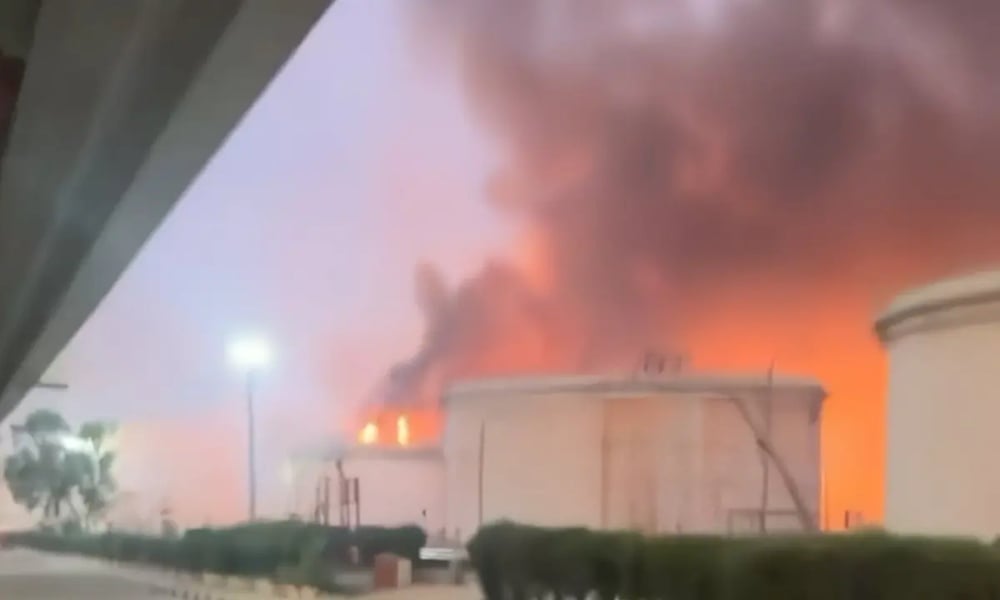


Click points to explore news by date. News sentiment ranges from -10 (very negative) to +10 (very positive) where 0 is neutral.
2026 © Helium Trades
Privacy Policy & Disclosure
* Disclaimer: Nothing on this website constitutes investment advice, performance data or any recommendation that any particular security, portfolio of securities, transaction or investment strategy is suitable for any specific person. Helium Trades is not responsible in any way for the accuracy
of any model predictions or price data. Any mention of a particular security and related prediction data is not a recommendation to buy or sell that security. Investments in securities involve the risk of loss. Past performance is no guarantee of future results. Helium Trades is not responsible for any of your investment decisions,
you should consult a financial expert before engaging in any transaction.
Helium Research Assistant

How can I help you today?
Ask any question about this page.


