See whether Helium helps you make better-informed decisions. Try every Pro Trader feature for 30 days. No credit card required.
Try every Pro Trader feature for 30 days. No credit card required.
November 20, 2026 · 0 shares
The report frames the ICJ genocide ruling as a historic accountability milestone, using morally charged language and survivor testimony while noting the court lacks enforcement power.
Helium Analysis
Limitations: The supplied text is a short, byline-free report with unrelated recommended-story items; scoring is limited to the main article text.
·
13 of 56 available dimensions scored; omitted dimensions are not treated as neutral.
·
Verified supporting quotes for 13 of 13 scored dimensions.
Claim: The report uses evaluative framing around the ruling’s significance.
“The historic judgement marks the first time” · exact text match
“For the Rohingya, the ICJ’s judgment is a “turning point.”” · exact text match
Why: Words like 'historic' and 'turning point' add interpretive significance beyond bare facts.
Claim: The report uses vivid and morally charged language to describe the atrocities.
“looting, burning and slaughtering their inhabitants” · exact text match
“unprecedented ruling that survivors of the atrocities have waited almost a decade to hear” · exact text match
Why: These phrases heighten the emotional impact while still reporting the court finding.
Claim: The article highlights the ruling as a rare and consequential first.
“first time the International Court of Justice (ICJ), also known as the World Court, has held a state accountable for genocide in its 80-year history” · exact text match
Why: The first-ever state genocide accountability finding is inherently newsworthy.
Claim: The report primarily describes the ruling and legal process rather than prescribing a policy response.
“Myanmar committed genocide against the country’s long-persecuted Rohingya minority, the United Nations’ top court found Thursday” · exact text match
“Its orders, however, are sent to the UN Security Council, which could decide to implement the court’s ruling through a resolution.” · exact text match
Why: The text explains what the court found and what may follow without advocating action.
Claim: The report includes some evaluative language alongside attributed facts.
“The historic judgement marks the first time” · exact text match
“For the Rohingya, the ICJ’s judgment is a “turning point.”” · exact text match
Why: Evaluative terms are present but limited and largely tied to the ruling’s significance.
Claim: The report situates the ruling in international justice politics.
“also comes at a time when the broader idea of international justice has come under fire from the Trump administration.” · exact text match
“Its orders, however, are sent to the UN Security Council, which could decide to implement the court’s ruling through a resolution.” · exact text match
Why: The story connects the legal ruling to political actors and international institutions.
Claim: The report relies on the ICJ’s institutional authority to establish the genocide finding.
“the United Nations’ top court found Thursday” · exact text match
“The ICJ’s rulings are final and binding” · exact text match
Why: The court’s status and binding character are central to the report’s presentation.
Claim: The report strongly centers Rohingya victimhood and survivor suffering.
“long-persecuted Rohingya minority” · exact text match
“who was just 12 years old when he was driven from his home” · exact text match
Why: Victim-focused framing is prominent, though appropriate to a genocide report.
Claim: The report carries a strongly negative emotional valence in describing the atrocities.
“looting, burning and slaughtering their inhabitants” · exact text match
“survivors of the atrocities” · exact text match
Why: Vivid harm language and reference to atrocities produce a negative emotional tone.
Claim: The report provides specific vote counts, legal-process caveats, and attributed testimony.
“The court’s decision – by nine votes to six” · exact text match
“The ICJ’s rulings are final and binding, but the court – which hears disputes between states – doesn’t have the power to enforce its decisions.” · exact text match
Why: Specific procedural details and acknowledged limits support credible reporting within the supplied text.
Claim: The report includes procedural and enforcement caveats rather than presenting the ruling as automatically enforceable.
“The ICJ’s rulings are final and binding, but the court – which hears disputes between states – doesn’t have the power to enforce its decisions.” · exact text match
Why: The caveat about enforcement demonstrates measured, rational legal context.
Claim: The report includes procedural detail and acknowledges the court’s enforcement limits.
“The court’s decision – by nine votes to six” · exact text match
“The ICJ’s rulings are final and binding, but the court – which hears disputes between states – doesn’t have the power to enforce its decisions.” · exact text match
Why: Disclosing the vote and enforcement limitation signals fair, transparent reporting.
Claim: The article provides legal context and a concise factual account of the ruling’s limits.
“The ICJ’s rulings are final and binding, but the court – which hears disputes between states – doesn’t have the power to enforce its decisions.” · exact text match
“Between 2016 and 2017, the military in Buddhist-majority Myanmar targeted villages and towns home to Rohingya communities” · exact text match
Why: Inclusion of enforcement limits and historical context indicates above-average explanatory depth.
The supplied text is a short, byline-free report with unrelated recommended-story items; scoring is limited to the main article text.
November 20, 2026 · 0 shares
The framing is sympathetic to Rohingya victimhood and treats the ICJ ruling as a historic vindication of international human-rights law, while mostly grounding the report in court quotes and legal-expert analysis.
The ICJ is the principal judicial organ of the United Nations, and the 1948 Genocide Convention obliges states parties to prevent and punish genocide.
Helium Analysis
Limitations: The supplied text includes duplicated headline/transcript material and promotional items; scores reflect the substantive ICJ segment only.
·
19 of 56 available dimensions scored; omitted dimensions are not treated as neutral.
·
Verified supporting quotes for 19 of 19 scored dimensions.
Claim: The article’s framing aligns with liberal human-rights and minority-protection priorities by foregrounding Rohingya victimization and genocide accountability.
“In a historic decision, the International Court of Justice in The Hague has ruled Myanmar, also known as Burma, committed genocide against Rohingya Muslims during a 2017 military crackdown” · exact text match
Why: The narration treats a minority-protection genocide finding as historic and central, consistent with liberal international human-rights framing.
Claim: The framing leans toward legal-institutional expertise as the authoritative lens for interpreting the ruling.
“Philippe Sands is a professor of law at University College London and a visiting professor at Harvard Law School.” · exact text match
Why: Prominent legal credentials and ICJ procedure structure the discussion, giving an elite-institutional perspective.
Claim: The framing includes evaluative adjectives that go beyond bare description of the ruling.
“"Historic Judgment": World Court Rules Burma Guilty of Genocide Against Rohingya” · exact text match
Why: The headline’s 'Historic Judgment' is an evaluative characterization, indicating some subjective framing.
Claim: The presentation uses dramatic, historicized language while retaining a largely reportorial tone.
“The landmark ruling is the first time the International Court of Justice has held a nation directly responsible for violating the 1948 Genocide Convention.” · exact text match
Why: 'Landmark' and repeated 'historic' framing heighten the ruling’s significance beyond neutral description.
Claim: The article covers a landmark international legal ruling with significant humanitarian and geopolitical implications.
“It’s the first time the court has held a nation directly responsible for violating the 1948 Genocide Convention.” · exact text match
Why: A first-ever genocide ruling by the ICJ is substantively high-interest.
Claim: The segment is primarily descriptive of the ruling and legal process, with limited prescriptive advocacy.
“The world’s top court has ruled that Myanmar committed genocide against the country’s Rohingya Muslim minority in a 2017 military crackdown” · exact text match
Why: The central narration reports the court’s ruling rather than urging a policy program.
Claim: The article includes evaluative and advocacy-adjacent language alongside factual reporting.
“This is a vindication of what Rohingyas have been saying for the last almost 50 years” · exact text match
Why: The quoted characterization 'vindication' is prominently used to frame the ruling, adding opinion to the report.
Claim: The report is centrally about state responsibility, international courts, and geopolitically linked genocide cases.
“Thursday’s historic ruling comes as the International Court of Justice is also in the process of determining whether Israel committed genocide in Gaza, in a case brought by South Africa.” · exact text match
Why: The article connects the Myanmar ruling to another high-profile interstate legal-political case, making politics central.
Claim: The article relies heavily on the ICJ and credentialed legal experts to establish the ruling’s meaning.
“JUDGE YUJI IWASAWA: For these reasons, the court, one, by nine votes to six, finds that the Republic of the Union of Myanmar has committed genocide against the Rohingya group in northern Rakhine state” · exact text match
Why: Direct citation of the court’s ruling and expert interpretation anchors the report in institutional authority.
Claim: The framing foregrounds Rohingya victimhood and suffering as central to the story.
“The International Court of Justice, ICJ, case was closely followed in Bangladesh, where more than 1.2 million Rohingya Muslim refugees live after being forcibly displaced from their homes.” · exact text match
Why: The narration emphasizes displacement and refugee status, centering victim experience.
Claim: The framing is informed by a human-rights ideology that treats genocide accountability as a central moral-political good.
“This is a vindication of what Rohingyas have been saying for the last almost 50 years” · exact text match
Why: The selected voices and language frame the ruling as vindication of a human-rights struggle, indicating ideological framing.
Claim: The framing treats the ICJ and international legal institutions as legitimate and central authorities.
“The landmark ruling is the first time the International Court of Justice has held a nation directly responsible for violating the 1948 Genocide Convention.” · exact text match
Why: The ruling is framed as a landmark vindication of the international court system.
Claim: The overall emotional valence is negative because the report centers mass killing and displacement, though it ends with justice themes.
“a 2017 military crackdown that killed about 10,000 people and drove more than 730,000 Rohingya into Bangladesh.” · exact text match
Why: The factual framing repeatedly emphasizes lethal violence and forced displacement, giving the report a somber negative valence.
Claim: The article provides named sources, direct court quotes, vote count, and explicit uncertainty about future legal outcomes.
“JUDGE YUJI IWASAWA: For these reasons, the court, one, by nine votes to six, finds that the Republic of the Union of Myanmar has committed genocide against the Rohingya group in northern Rakhine state” · exact text match
“I’m not expressing a view as to whether that evidence meets the burden or not.” · exact text match
Why: The piece quotes the court verbatim, reports the vote, and avoids prejudging a separate case.
Claim: The discussion foregrounds legal standards, evidence, and court reasoning rather than emotional assertion.
“On the basis of all the evidence taken together, the court is of the view that the only reasonable inference that can explain Myanmar’s actions is an intention to destroy a substantial part of the protected group” · exact text match
Why: The article quotes the court’s evidence-based reasoning and legal standard, supporting a rational framing.
Claim: The article includes limited forward-looking legal forecasting, clearly attributed to an expert.
“So don’t expect any action until 2030 or 2031.” · exact text match
Why: A specific future timeline is speculative but attributed and about process, not presented as fact.
Claim: The text appears to be a human-produced interview transcript rather than AI-generated content.
“AMY GOODMAN: Later in the broadcast, we’ll speak with three leading environmental justice advocates, from Malaysia, from Ethiopia and from India.” · exact text match
Why: Live-broadcast conversational structure and transcription artifacts indicate human production.
Claim: The article attributes legal findings to the court and includes caveats about the separate Israel case rather than asserting its outcome.
“I’m not expressing a view as to whether that evidence meets the burden or not.” · exact text match
Why: Explicit refusal to prejudge the South Africa/Israel case shows visible fairness and epistemic restraint.
Claim: The article is analytically substantive, distinguishing the Myanmar ruling from other genocide cases and explaining legal standards.
“To prove genocide, you have to show genocidal conduct, conduct in which the only reasonable inference is that it was motivated by an intention to destroy a group in whole or in part.” · exact text match
Why: The piece explains the legal test and its implications, indicating high informational intelligence.
The supplied text includes duplicated headline/transcript material and promotional items; scores reflect the substantive ICJ segment only.
November 20, 2026 · 0 shares
The coverage adopts a celebratory, institution-affirming frame, repeatedly calling the ICJ ruling "historic" and "landmark" while relying on court and South African government statements.
Helium Analysis
Limitations: The supplied text includes unrelated headline fragments and lacks Myanmar's response or a byline, limiting verification and balance assessment.
·
6 of 56 available dimensions scored; omitted dimensions are not treated as neutral.
·
Verified supporting quotes for 6 of 6 scored dimensions.
Claim: The report uses evaluative adjectives such as 'historic' and 'landmark' to describe the ruling.
“The landmark judgment” · exact text match
Why: Evaluative adjectives add subjective framing beyond the bare legal outcome, though reporting remains mostly factual.
Claim: The report centers political and governmental reactions to an international legal ruling.
“South Africa welcomed the ruling, describing it as a major step towards justice for the Rohingya” · exact text match
Why: Government reactions and international legal policy dominate the report, making the content highly political.
Claim: The publisher frames the ICJ ruling as a positive institutional milestone.
“issuing a historic ruling” · exact text match
Why: The word 'historic' casts the court's action favorably as a major institutional achievement.
Claim: Core facts are supported by specific court attribution, date, case origin, vote count, and direct quotations.
“delivered on 19 November 2026 in a case brought by The Gambia” · exact text match
“ICJ President Yuji Iwasawa said the court, in a 9-6 decision, found” · exact text match
Why: Precise sourcing, dates, vote count, and direct attribution support the report’s credibility.
Claim: The report forecasts broader legal consequences beyond the current ruling.
“The ruling is expected to reverberate far beyond Myanmar, setting a significant precedent for future genocide cases” · exact text match
Why: The phrase 'expected' and the precedent claim are forward-looking projections.
Claim: The report attributes central claims and discloses the divided 9-6 vote.
“ICJ President Yuji Iwasawa said the court, in a 9-6 decision, found” · exact text match
Why: Attribution to the court president and disclosure of the split vote support fair presentation.
The supplied text includes unrelated headline fragments and lacks Myanmar's response or a byline, limiting verification and balance assessment.
November 19, 2026 · 0 shares
A neutral, attributed wire-style report presents the genocide ruling as a factual legal development without evaluative or sensational language.
Helium Analysis
Limitations: The substantive article is only two sentences and relies on a single secondary source, limiting support for most bias dimensions.
·
7 of 56 available dimensions scored; omitted dimensions are not treated as neutral.
·
Verified supporting quotes for 7 of 7 scored dimensions.
Claim: The report uses neutral, factual language rather than subjective evaluation.
“The United Nations’ top court ruled Thursday that Myanmar committed genocide against Rohingya Muslims in 2017” · exact text match
Why: The wording reports the ruling and parties without evaluative adjectives or personal commentary.
Claim: The report avoids sensationalized language.
“marking the first time it has held a state responsible for genocide” · exact text match
Why: The precedent is stated factually, without dramatic adjectives or emotive emphasis.
Claim: The report is descriptive, not prescriptive.
“The United Nations’ top court ruled Thursday that Myanmar committed genocide against Rohingya Muslims in 2017” · exact text match
Why: It states what the court ruled without recommending action or policy.
Claim: The central claim is presented through attributed reporting rather than the publisher’s own opinion.
“Anadolu Ajansi (AA) reported.” · exact text match
Why: The brief cites a named agency and does not add evaluative commentary.
Claim: The report is emotionally neutral.
“The United Nations’ top court ruled Thursday that Myanmar committed genocide against Rohingya Muslims in 2017” · exact text match
Why: The language is declarative and unemotional, with no positive or negative affective framing.
Claim: The brief attributes its central claim to a named news agency.
“Anadolu Ajansi (AA) reported.” · exact text match
Why: Attribution to a named agency provides a visible sourcing signal, though no direct court document is cited.
Claim: The report presents a factual legal development without speculative or emotive reasoning.
“The United Nations’ top court ruled Thursday that Myanmar committed genocide against Rohingya Muslims in 2017” · exact text match
Why: It reports the court’s action and attribution directly rather than arguing or speculating.
The substantive article is only two sentences and relies on a single secondary source, limiting support for most bias dimensions.
November 19, 2026 · 0 shares
The framing is restrained, attributive, and legal-factual, presenting the ICJ’s genocide finding as a court determination without evident editorializing or sensational language.
Helium Analysis
Limitations: The supplied text is only a headline and two-sentence excerpt, so dimensions requiring fuller article evidence are omitted or scored with limited confidence.
·
9 of 56 available dimensions scored; omitted dimensions are not treated as neutral.
·
Verified supporting quotes for 9 of 9 scored dimensions.
Claim: The central claim is attributed to the ICJ without evaluative commentary.
“The International Court of Justice has ruled that Myanmar committed genocide against the Rohingya” · exact text match
Why: The sentence reports the court's ruling in neutral terms.
Claim: The wording is sober and legal rather than sensational.
“The UN’s top court found Myanmar’s security forces had the intent to destroy a ‘substantial part’ of the ethnic minority group” · exact text match
Why: The phrase repeats a legal finding and avoids emotive or alarmist language.
Claim: The text describes the ruling without recommending action.
“The International Court of Justice has ruled that Myanmar committed genocide against the Rohingya in northern Rakhine State.” · exact text match
Why: It states a legal development and contains no policy prescription.
Claim: The item centers on a legal-political determination that a state committed genocide.
“The International Court of Justice has ruled that Myanmar committed genocide against the Rohingya in northern Rakhine State.” · exact text match
Why: An international court ruling against a state for genocide is a political-legal subject.
Claim: The prose remains emotionally neutral despite the grave subject.
“The International Court of Justice has ruled that Myanmar committed genocide against the Rohingya” · exact text match
Why: The statement uses a legal finding and contains no emotive adjectives or exclamations.
Claim: The report's key claim is credible because it is attributed to a named international court.
“The International Court of Justice has ruled that Myanmar committed genocide against the Rohingya” · exact text match
“The UN’s top court found Myanmar’s security forces had the intent to destroy a ‘substantial part’ of the ethnic minority group” · exact text match
Why: Direct attribution and legal terminology provide visible sourcing for the central claim.
Claim: The report frames the genocide determination as a court finding rather than an emotional assertion.
“The International Court of Justice has ruled that Myanmar committed genocide against the Rohingya” · exact text match
“The UN’s top court found Myanmar’s security forces had the intent to destroy a ‘substantial part’ of the ethnic minority group” · exact text match
Why: The conclusion is attributed to a legal institution and uses the court's terminology, supporting a rational rather than irrational presentation.
Claim: The report consistently attributes the genocide finding to the ICJ.
“The International Court of Justice has ruled that Myanmar committed genocide against the Rohingya” · exact text match
“The UN’s top court found Myanmar’s security forces had the intent to destroy a ‘substantial part’ of the ethnic minority group” · exact text match
Why: Repeated named attribution supports fair and non-deceptive presentation in the supplied text.
Claim: The report conveys the core legal finding and timeframe concisely.
“The UN’s top court found Myanmar’s security forces had the intent to destroy a ‘substantial part’ of the ethnic minority group during a 2017 military campaign.” · exact text match
Why: The sentence compactly states the actor, intent finding, target, and timeframe.
The supplied text is only a headline and two-sentence excerpt, so dimensions requiring fuller article evidence are omitted or scored with limited confidence.
November 20, 2026 · 0 shares
The framing is sympathetic to Rohingya victimhood and treats the ICJ ruling as a historic vindication of international human-rights law, while mostly grounding the report in court quotes and legal-expert analysis.
The ICJ is the principal judicial organ of the United Nations, and the 1948 Genocide Convention obliges states parties to prevent and punish genocide.
Helium Analysis
Limitations: The supplied text includes duplicated headline/transcript material and promotional items; scores reflect the substantive ICJ segment only.
·
19 of 56 available dimensions scored; omitted dimensions are not treated as neutral.
·
Verified supporting quotes for 19 of 19 scored dimensions.
Claim: The article’s framing aligns with liberal human-rights and minority-protection priorities by foregrounding Rohingya victimization and genocide accountability.
“In a historic decision, the International Court of Justice in The Hague has ruled Myanmar, also known as Burma, committed genocide against Rohingya Muslims during a 2017 military crackdown” · exact text match
Why: The narration treats a minority-protection genocide finding as historic and central, consistent with liberal international human-rights framing.
Claim: The framing leans toward legal-institutional expertise as the authoritative lens for interpreting the ruling.
“Philippe Sands is a professor of law at University College London and a visiting professor at Harvard Law School.” · exact text match
Why: Prominent legal credentials and ICJ procedure structure the discussion, giving an elite-institutional perspective.
Claim: The framing includes evaluative adjectives that go beyond bare description of the ruling.
“"Historic Judgment": World Court Rules Burma Guilty of Genocide Against Rohingya” · exact text match
Why: The headline’s 'Historic Judgment' is an evaluative characterization, indicating some subjective framing.
Claim: The presentation uses dramatic, historicized language while retaining a largely reportorial tone.
“The landmark ruling is the first time the International Court of Justice has held a nation directly responsible for violating the 1948 Genocide Convention.” · exact text match
Why: 'Landmark' and repeated 'historic' framing heighten the ruling’s significance beyond neutral description.
Claim: The article covers a landmark international legal ruling with significant humanitarian and geopolitical implications.
“It’s the first time the court has held a nation directly responsible for violating the 1948 Genocide Convention.” · exact text match
Why: A first-ever genocide ruling by the ICJ is substantively high-interest.
Claim: The segment is primarily descriptive of the ruling and legal process, with limited prescriptive advocacy.
“The world’s top court has ruled that Myanmar committed genocide against the country’s Rohingya Muslim minority in a 2017 military crackdown” · exact text match
Why: The central narration reports the court’s ruling rather than urging a policy program.
Claim: The article includes evaluative and advocacy-adjacent language alongside factual reporting.
“This is a vindication of what Rohingyas have been saying for the last almost 50 years” · exact text match
Why: The quoted characterization 'vindication' is prominently used to frame the ruling, adding opinion to the report.
Claim: The report is centrally about state responsibility, international courts, and geopolitically linked genocide cases.
“Thursday’s historic ruling comes as the International Court of Justice is also in the process of determining whether Israel committed genocide in Gaza, in a case brought by South Africa.” · exact text match
Why: The article connects the Myanmar ruling to another high-profile interstate legal-political case, making politics central.
Claim: The article relies heavily on the ICJ and credentialed legal experts to establish the ruling’s meaning.
“JUDGE YUJI IWASAWA: For these reasons, the court, one, by nine votes to six, finds that the Republic of the Union of Myanmar has committed genocide against the Rohingya group in northern Rakhine state” · exact text match
Why: Direct citation of the court’s ruling and expert interpretation anchors the report in institutional authority.
Claim: The framing foregrounds Rohingya victimhood and suffering as central to the story.
“The International Court of Justice, ICJ, case was closely followed in Bangladesh, where more than 1.2 million Rohingya Muslim refugees live after being forcibly displaced from their homes.” · exact text match
Why: The narration emphasizes displacement and refugee status, centering victim experience.
Claim: The framing is informed by a human-rights ideology that treats genocide accountability as a central moral-political good.
“This is a vindication of what Rohingyas have been saying for the last almost 50 years” · exact text match
Why: The selected voices and language frame the ruling as vindication of a human-rights struggle, indicating ideological framing.
Claim: The framing treats the ICJ and international legal institutions as legitimate and central authorities.
“The landmark ruling is the first time the International Court of Justice has held a nation directly responsible for violating the 1948 Genocide Convention.” · exact text match
Why: The ruling is framed as a landmark vindication of the international court system.
Claim: The overall emotional valence is negative because the report centers mass killing and displacement, though it ends with justice themes.
“a 2017 military crackdown that killed about 10,000 people and drove more than 730,000 Rohingya into Bangladesh.” · exact text match
Why: The factual framing repeatedly emphasizes lethal violence and forced displacement, giving the report a somber negative valence.
Claim: The article provides named sources, direct court quotes, vote count, and explicit uncertainty about future legal outcomes.
“JUDGE YUJI IWASAWA: For these reasons, the court, one, by nine votes to six, finds that the Republic of the Union of Myanmar has committed genocide against the Rohingya group in northern Rakhine state” · exact text match
“I’m not expressing a view as to whether that evidence meets the burden or not.” · exact text match
Why: The piece quotes the court verbatim, reports the vote, and avoids prejudging a separate case.
Claim: The discussion foregrounds legal standards, evidence, and court reasoning rather than emotional assertion.
“On the basis of all the evidence taken together, the court is of the view that the only reasonable inference that can explain Myanmar’s actions is an intention to destroy a substantial part of the protected group” · exact text match
Why: The article quotes the court’s evidence-based reasoning and legal standard, supporting a rational framing.
Claim: The article includes limited forward-looking legal forecasting, clearly attributed to an expert.
“So don’t expect any action until 2030 or 2031.” · exact text match
Why: A specific future timeline is speculative but attributed and about process, not presented as fact.
Claim: The text appears to be a human-produced interview transcript rather than AI-generated content.
“AMY GOODMAN: Later in the broadcast, we’ll speak with three leading environmental justice advocates, from Malaysia, from Ethiopia and from India.” · exact text match
Why: Live-broadcast conversational structure and transcription artifacts indicate human production.
Claim: The article attributes legal findings to the court and includes caveats about the separate Israel case rather than asserting its outcome.
“I’m not expressing a view as to whether that evidence meets the burden or not.” · exact text match
Why: Explicit refusal to prejudge the South Africa/Israel case shows visible fairness and epistemic restraint.
Claim: The article is analytically substantive, distinguishing the Myanmar ruling from other genocide cases and explaining legal standards.
“To prove genocide, you have to show genocidal conduct, conduct in which the only reasonable inference is that it was motivated by an intention to destroy a group in whole or in part.” · exact text match
Why: The piece explains the legal test and its implications, indicating high informational intelligence.
The supplied text includes duplicated headline/transcript material and promotional items; scores reflect the substantive ICJ segment only.
The framing is analytical and measured, presenting the ICJ majority’s genocide finding alongside the six-judge dissent and named critical commentary rather than adopting an advocacy stance.
Helium Analysis
·
7 of 56 available dimensions scored; omitted dimensions are not treated as neutral.
·
Verified supporting quotes for 7 of 7 scored dimensions.
Claim: The report presents both the nine-judge majority and the six-judge dissent, with attributed critical commentary, rather than adopting one side.
“A nine-judge majority inferred an intent to destroy a substantial part of the Rohingya population from the conduct of the security forces in 2017. Six judges drew a different conclusion from the same record.” · exact text match
Why: Balanced presentation of majority and dissent indicates low subjective bias.
Claim: Atrocities are described in restrained legal language and tied to court provisions rather than sensationalized.
“The court’s finding of genocide rested on killings, serious bodily or mental harm, and measures intended to prevent births, under Article II(a), (b), and (d) of the convention.” · exact text match
Why: The phrasing is technical and measured, not sensational.
Claim: The report primarily explains the court’s reasoning and competing legal interpretations rather than prescribing policy.
“The majority concluded that counter-insurgency, expulsion, and punishment failed to explain the full evidentiary record.” · exact text match
Why: It reports and analyzes legal conclusions; prescriptions are largely absent.
Claim: The report attributes findings to court paragraphs, named judges, and named external analysts, and includes dissenting views.
“In paragraph 453, the majority held that these features were “not consistent with an intent to conduct counter-insurgency operations”.” · exact text match
Why: Specific paragraph citation and attributed dissent support high credibility.
Claim: The report evaluates the genocide finding through explicit legal tests and competing explanations rather than emotional assertion.
“The legal test was familiar from the court’s earlier cases.
Where intent is inferred from surrounding circumstances, it must be the “only reasonable inference” from the evidence considered together.”
· exact text match
Why: It foregrounds a defined evidentiary standard and applies it to the majority-dissent dispute, supporting a strongly rational classification.
Claim: The report includes substantial dissenting and critical views and cites paragraph-level reasoning.
“Director General Andrew Tucker argues that the majority lowered the threshold for proving genocidal intent and in effect shifted the burden of proof onto the defending state.” · exact text match
Why: Inclusion of critical expert commentary and dissent supports fair, honest presentation.
Claim: The report engages detailed legal doctrine, paragraph citations, and multiple scholarly reactions.
“Paragraph 79 preserves the ordinary burden of proof on The Gambia.
Paragraphs 128 to 131 explain that where a respondent controls potentially decisive evidence, flexibility in evaluating the available material may be justified without transferring the burden of proof.”
· exact text match
Why: Paragraph-level legal analysis and careful distinctions indicate high article intelligence.
November 19, 2026 · 0 shares
Coverage frames the ICJ genocide verdict as a historic, long-awaited vindication for Rohingya refugees, foregrounding celebrations and emotional testimony while noting enforcement limits.
Helium Analysis
Limitations: No author byline or publication name is present; the supplied text is duplicated and includes a stripped source marker, limiting source-attribution checks.
·
13 of 56 available dimensions scored; omitted dimensions are not treated as neutral.
·
Verified supporting quotes for 13 of 13 scored dimensions.
Claim: The report includes subjective, value-laden framing of the ruling as the Rohingya’s vindication.
“Despite all this, the Rohingya know this is their moment of vindication.” · exact text match
Why: This is the publisher’s own evaluative framing rather than a neutral attribution, indicating a modest subjective tilt.
Claim: The lede uses vivid, event-driven language about celebrations alongside the ruling.
“Cheers and celebrations erupted in mass refugee camps across the border from Myanmar on Thursday as a landmark world court ruling found the military regime had committed genocide against its Rohingya minority.” · exact text match
Why: The vivid wording and “landmark” framing slightly heighten the report’s tone beyond bare factual narration.
Claim: The report centers on an unusually consequential first in international law.
“first-ever ruling by an international court convicting a state of genocide” · exact text match
Why: The first-ever state genocide conviction is a high-salience legal development, supporting high interestingness.
Claim: The article primarily describes the court’s findings and vote rather than prescribing policy.
“By nine votes to six, he said, the judges of the 80-year-old court established by the UN Charter found that Myanmar had “committed genocide against the Rohingya group in northern Rakhine state”.” · exact text match
Why: This is a descriptive account of the ruling, with little direct policy prescription from the publisher.
Claim: The report occasionally editorializes through evaluative geopolitical asides.
“The powerful juxtaposition of President Trump joining on Thursday with Russia’s Vladimir Putin in the summit hosted by President Xi Jinping of China did not go unnoticed, with the reform of the UN on the agenda.” · exact text match
Why: The phrase “powerful juxtaposition” and “did not go unnoticed” adds an evaluative, opinion-like layer.
Claim: The report situates the ruling within international politics, including the Israel ICJ case and US administration warnings.
“Some defenders of Israel, and particularly members of the US administration, had warned the 15 ICJ judges not to “lower the bar” in seeking a genocide conviction, fearing a precedent would be set.” · exact text match
Why: The passage explicitly links the ruling to political calculations and a related geopolitical controversy.
Claim: The report leans on the ICJ’s institutional authority in presenting the verdict.
“After nearly three hours of reading the court’s final statement, ICJ president Judge Yuji Iwasawa of Japan finally pronounced the first-ever ruling by an international court convicting a state of genocide.” · exact text match
Why: The emphasis on the court’s president and historic authority supports a modest appeal-to-authority tilt.
Claim: The report adopts a positive emotional tone around the verdict by describing cheering crowds.
“Crowds cheered and applauded across Cox’s Bazar as interpreters used loudhailers to convey the message they had waited years for.” · exact text match
Why: The cheering and applause framing gives the coverage a positive emotional charge, though tied to clearly reported events.
Claim: The report supports its central claim with specific vote counts and named court proceedings.
“By nine votes to six, he said, the judges of the 80-year-old court established by the UN Charter found that Myanmar had “committed genocide against the Rohingya group in northern Rakhine state”.” · exact text match
Why: Specific vote counts and attributed legal findings are visible credibility signals in the supplied text.
Claim: The report contextualizes the court’s genocide finding with legal and historical reasoning rather than treating it as an unexplained assertion.
“The court set the violence in the context of decades of discrimination and stigmatisation against the mostly Moslem community in predominantly Buddhist Myanmar, with the intent of reducing their numbers.” · exact text match
Why: The passage shows the article grounding the ruling in contextual evidence and legal findings, supporting a rational rather than irrational framing.
Claim: The report forecasts the ruling’s political effects beyond the verdict itself.
“The ICJ’s genocide verdict is sure to trigger widespread debate as the nine judges upholding the conviction found there was sufficient circumstantial evidence to infer genocidal “intent”, an essential element in a decision under the 1948 Genocide Convention.” · exact text match
Why: The phrase “sure to trigger widespread debate” is a forward-looking projection rather than a reported fact.
Claim: The report acknowledges limits on the court’s enforcement power and does not present the ruling as automatically enforceable.
“The ICJ’s mandate allows it to adjudicate only cases between states, not prosecute individuals, and must rely on the UN Security Council and political pressure to back up its rulings.” · exact text match
Why: Including this caveat signals fair, transparent handling of the ruling’s legal limitations.
Claim: The report provides detailed legal findings and distinctions from the ICJ ruling.
“In reaching 13 separate rulings, the ICJ also found that Myanmar had violated its obligations to prevent genocide committed by individuals alongside its security forces, that it had covered up evidence of crimes of genocide, and that it had failed to enact legislation to prevent genocide, nor had it punished perpetrators.” · exact text match
Why: The specific recounting of multiple legal holdings indicates a relatively sophisticated, informed article.
No author byline or publication name is present; the supplied text is duplicated and includes a stripped source marker, limiting source-attribution checks.
November 20, 2026 · 0 shares
The report adopts an international legal-humanitarian frame, presenting the ICJ's genocide findings as a historic, evidence-backed ruling while foregrounding Myanmar's rejection and the ruling's enforcement limits.
Helium Analysis
Limitations: The supplied text includes duplicated paragraphs and site promotional boilerplate; substantive reporting is sufficient for analysis.
·
11 of 56 available dimensions scored; omitted dimensions are not treated as neutral.
·
Verified supporting quotes for 9 of 11 scored dimensions.
Claim: The report presents competing claims with direct attribution to Myanmar and the ICJ.
“Myanmar had always denied genocide, arguing that its actions targeted a military uprising from insurgents after a series of attacks left a dozen security personnel dead.” · exact text match
“But the ICJ ruling dismissed Myanmar's argument that it was carrying out counter-insurgency operations.” · exact text match
Why: The article sets Myanmar's denial against the court's finding while attributing each claim to its source.
Claim: The report uses mildly dramatic adjectives to frame the ruling.
“The International Court of Justice (ICJ) on Thursday laid out searing evidence of Myanmar's atrocities against the mostly Muslim Rohingya during a 2017 crackdown in western Rakhine state.” · exact text match
Why: Phrases such as "searing evidence" and "atrocities" add emotive framing, though the article otherwise relies on attributed court findings.
Claim: The report emphasizes the unprecedented legal outcome.
“The ruling was the first time in the ICJ's 80-year history that its judges have determined that a state committed genocide.” · exact text match
Why: The first-time determination is a materially notable fact highlighted in the report.
Claim: The report primarily relays the court's orders and findings rather than issuing its own prescriptions.
“The court ordered refugees be given safe passage home and awarded compensation, with specific sums to be determined later.” · exact text match
Why: The quoted prescription is attributed to the ICJ; the article itself remains largely descriptive.
Claim: The report situates the ruling in Myanmar's military coup and international sanctions politics.
“But the ruling may heap more international pressure on Myanmar's leader Min Aung Hlaing, who commanded the military during the Rohingya crackdown before ousting the elected government of Aung San Suu Kyi in the 2021 coup.” · exact text match
“The United States has sanctions against Min Aung Hlaing, but has recently pushed back on a case at the court accusing US ally Israel of genocide in Gaza, and stressed the need to avoid "politicisation" of the tribunal.” · exact text match
Why: The article links the legal ruling to coup politics, sanctions, and international diplomatic positioning.
Claim: The report repeatedly grounds factual claims in the ICJ's judgment and court authority.
“Myanmar's security forces killed thousands of Rohingya civilians, committed "widespread sexual violence" against women and "extreme violence" against children, the court found.” · not found in supplied text
Why: Central atrocity claims are presented through the court's authority, with the judgment as the main source.
Claim: The report recounts court findings with strongly negative emotional valence.
“Myanmar's security forces killed thousands of Rohingya civilians, committed "widespread sexual violence" against women and "extreme violence" against children, the court found.” · not found in supplied text
Why: The selected findings are grim and emotionally charged, though they are attributed to the court rather than stated as the outlet's own judgment.
Claim: The report shows visible sourcing, attribution, and acknowledgment of enforcement limits.
“At a press conference in the capital Naypyidaw, spokeswoman Khaing Khaing Soe noted that the 9-6 ruling was "not a unanimous decision", and said it was "not fair".” · exact text match
“While the decisions of the ICJ are binding and cannot be appealed, the court has no way of enforcing its verdicts.” · exact text match
Why: Multiple attributed sources and explicit caveats support a high credibility assessment.
Claim: The report anchors the genocide finding in quoted court evidence rather than unsupported assertion.
“"There is no evidence before the Court that, in the conduct of the clearance operations, Myanmar distinguished between civilians and alleged (Rohingya) fighters," the judgment said.” · exact text match
Why: The central atrocity finding is presented through an explicit evidentiary standard quoted from the judgment.
Claim: The report includes the losing party's objection, the split vote, and enforcement limits.
“At a press conference in the capital Naypyidaw, spokeswoman Khaing Khaing Soe noted that the 9-6 ruling was "not a unanimous decision", and said it was "not fair".” · exact text match
“While the decisions of the ICJ are binding and cannot be appealed, the court has no way of enforcing its verdicts.” · exact text match
Why: Including the Myanmar response, the 9-6 vote, and the ICJ's lack of enforcement materially improves visible fairness and honesty.
Claim: The report supplies legal context and distinguishes the ruling's legal effect from enforcement.
“The ICJ case was brought by The Gambia under the 1948 UN Genocide Convention, which allows any state to file suit against another it suspects of breaching the international agreement set up after World War II.” · exact text match
“While the decisions of the ICJ are binding and cannot be appealed, the court has no way of enforcing its verdicts.” · exact text match
Why: Explaining the Genocide Convention mechanism and the ICJ's enforcement limits adds substantive legal context.
The supplied text includes duplicated paragraphs and site promotional boilerplate; substantive reporting is sufficient for analysis.
November 20, 2026 · 0 shares
The framing is sympathetic to Rohingya victimhood and treats the ICJ ruling as a historic vindication of international human-rights law, while mostly grounding the report in court quotes and legal-expert analysis.
The ICJ is the principal judicial organ of the United Nations, and the 1948 Genocide Convention obliges states parties to prevent and punish genocide.
Helium Analysis
Limitations: The supplied text includes duplicated headline/transcript material and promotional items; scores reflect the substantive ICJ segment only.
·
19 of 56 available dimensions scored; omitted dimensions are not treated as neutral.
·
Verified supporting quotes for 19 of 19 scored dimensions.
Claim: The article’s framing aligns with liberal human-rights and minority-protection priorities by foregrounding Rohingya victimization and genocide accountability.
“In a historic decision, the International Court of Justice in The Hague has ruled Myanmar, also known as Burma, committed genocide against Rohingya Muslims during a 2017 military crackdown” · exact text match
Why: The narration treats a minority-protection genocide finding as historic and central, consistent with liberal international human-rights framing.
Claim: The framing leans toward legal-institutional expertise as the authoritative lens for interpreting the ruling.
“Philippe Sands is a professor of law at University College London and a visiting professor at Harvard Law School.” · exact text match
Why: Prominent legal credentials and ICJ procedure structure the discussion, giving an elite-institutional perspective.
Claim: The framing includes evaluative adjectives that go beyond bare description of the ruling.
“"Historic Judgment": World Court Rules Burma Guilty of Genocide Against Rohingya” · exact text match
Why: The headline’s 'Historic Judgment' is an evaluative characterization, indicating some subjective framing.
Claim: The presentation uses dramatic, historicized language while retaining a largely reportorial tone.
“The landmark ruling is the first time the International Court of Justice has held a nation directly responsible for violating the 1948 Genocide Convention.” · exact text match
Why: 'Landmark' and repeated 'historic' framing heighten the ruling’s significance beyond neutral description.
Claim: The article covers a landmark international legal ruling with significant humanitarian and geopolitical implications.
“It’s the first time the court has held a nation directly responsible for violating the 1948 Genocide Convention.” · exact text match
Why: A first-ever genocide ruling by the ICJ is substantively high-interest.
Claim: The segment is primarily descriptive of the ruling and legal process, with limited prescriptive advocacy.
“The world’s top court has ruled that Myanmar committed genocide against the country’s Rohingya Muslim minority in a 2017 military crackdown” · exact text match
Why: The central narration reports the court’s ruling rather than urging a policy program.
Claim: The article includes evaluative and advocacy-adjacent language alongside factual reporting.
“This is a vindication of what Rohingyas have been saying for the last almost 50 years” · exact text match
Why: The quoted characterization 'vindication' is prominently used to frame the ruling, adding opinion to the report.
Claim: The report is centrally about state responsibility, international courts, and geopolitically linked genocide cases.
“Thursday’s historic ruling comes as the International Court of Justice is also in the process of determining whether Israel committed genocide in Gaza, in a case brought by South Africa.” · exact text match
Why: The article connects the Myanmar ruling to another high-profile interstate legal-political case, making politics central.
Claim: The article relies heavily on the ICJ and credentialed legal experts to establish the ruling’s meaning.
“JUDGE YUJI IWASAWA: For these reasons, the court, one, by nine votes to six, finds that the Republic of the Union of Myanmar has committed genocide against the Rohingya group in northern Rakhine state” · exact text match
Why: Direct citation of the court’s ruling and expert interpretation anchors the report in institutional authority.
Claim: The framing foregrounds Rohingya victimhood and suffering as central to the story.
“The International Court of Justice, ICJ, case was closely followed in Bangladesh, where more than 1.2 million Rohingya Muslim refugees live after being forcibly displaced from their homes.” · exact text match
Why: The narration emphasizes displacement and refugee status, centering victim experience.
Claim: The framing is informed by a human-rights ideology that treats genocide accountability as a central moral-political good.
“This is a vindication of what Rohingyas have been saying for the last almost 50 years” · exact text match
Why: The selected voices and language frame the ruling as vindication of a human-rights struggle, indicating ideological framing.
Claim: The framing treats the ICJ and international legal institutions as legitimate and central authorities.
“The landmark ruling is the first time the International Court of Justice has held a nation directly responsible for violating the 1948 Genocide Convention.” · exact text match
Why: The ruling is framed as a landmark vindication of the international court system.
Claim: The overall emotional valence is negative because the report centers mass killing and displacement, though it ends with justice themes.
“a 2017 military crackdown that killed about 10,000 people and drove more than 730,000 Rohingya into Bangladesh.” · exact text match
Why: The factual framing repeatedly emphasizes lethal violence and forced displacement, giving the report a somber negative valence.
Claim: The article provides named sources, direct court quotes, vote count, and explicit uncertainty about future legal outcomes.
“JUDGE YUJI IWASAWA: For these reasons, the court, one, by nine votes to six, finds that the Republic of the Union of Myanmar has committed genocide against the Rohingya group in northern Rakhine state” · exact text match
“I’m not expressing a view as to whether that evidence meets the burden or not.” · exact text match
Why: The piece quotes the court verbatim, reports the vote, and avoids prejudging a separate case.
Claim: The discussion foregrounds legal standards, evidence, and court reasoning rather than emotional assertion.
“On the basis of all the evidence taken together, the court is of the view that the only reasonable inference that can explain Myanmar’s actions is an intention to destroy a substantial part of the protected group” · exact text match
Why: The article quotes the court’s evidence-based reasoning and legal standard, supporting a rational framing.
Claim: The article includes limited forward-looking legal forecasting, clearly attributed to an expert.
“So don’t expect any action until 2030 or 2031.” · exact text match
Why: A specific future timeline is speculative but attributed and about process, not presented as fact.
Claim: The text appears to be a human-produced interview transcript rather than AI-generated content.
“AMY GOODMAN: Later in the broadcast, we’ll speak with three leading environmental justice advocates, from Malaysia, from Ethiopia and from India.” · exact text match
Why: Live-broadcast conversational structure and transcription artifacts indicate human production.
Claim: The article attributes legal findings to the court and includes caveats about the separate Israel case rather than asserting its outcome.
“I’m not expressing a view as to whether that evidence meets the burden or not.” · exact text match
Why: Explicit refusal to prejudge the South Africa/Israel case shows visible fairness and epistemic restraint.
Claim: The article is analytically substantive, distinguishing the Myanmar ruling from other genocide cases and explaining legal standards.
“To prove genocide, you have to show genocidal conduct, conduct in which the only reasonable inference is that it was motivated by an intention to destroy a group in whole or in part.” · exact text match
Why: The piece explains the legal test and its implications, indicating high informational intelligence.
The supplied text includes duplicated headline/transcript material and promotional items; scores reflect the substantive ICJ segment only.
November 21, 2026 · 0 shares
The report frames the ICJ ruling through a sympathetic, UN-centered human-rights lens, amplifying Rahman’s moral appeals and prescriptive demands while only briefly noting a limiting finding on incitement.
Helium Analysis
Limitations: The supplied text contains extensive duplicated fragments and no author byline, limiting assessment of original presentation beyond the substantive lead and quotes.
·
14 of 56 available dimensions scored; omitted dimensions are not treated as neutral.
·
Verified supporting quotes for 14 of 14 scored dimensions.
Claim: The report frames the ICJ and UN institutions as authoritative arbiters whose ruling demands compliance.
“the highest court of the United Nations spoke” · exact text match
“hailed the verdict as a historic milestone for international law.” · exact text match
Why: It centers UN legal authority and treats the ICJ ruling as a milestone, aligning with elite internationalist rather than populist framing.
Claim: The report uses evaluative language such as 'historic' and presents the ruling as a milestone.
“after historic ICJ genocide ruling” · exact text match
“hailed the verdict as a historic milestone for international law.” · exact text match
Why: These are evaluative characterizations beyond bare procedural reporting, though much content remains attributed.
Claim: The report adopts a hopeful framing that the ruling begins a path home for the Rohingya.
“the road to home began” · exact text match
“that convention worked” · exact text match
Why: The language emphasizes forward-looking hope and vindication despite acknowledging past atrocities.
Claim: The report frames the ruling as requiring specific actions by Myanmar and international partners.
“Outlining four immediate priorities to translate the ruling into action” · exact text match
“Compliance is not optional.” · exact text match
Why: It moves beyond description to prescriptive demands for prosecutions, reforms, reparations, and funding.
Claim: The report adopts evaluative framing such as 'historic' and a moralized path-home narrative.
“after historic ICJ genocide ruling” · exact text match
“the road to home began” · exact text match
Why: These characterizations add opinion/moral framing beyond neutral reporting.
Claim: The report concerns international legal and political accountability for genocide and enforcement.
“UNGA President Khalilur Rahman” · exact text match
“failure to comply opens the door to recourse in the UN Security Council” · exact text match
Why: The subject matter and framing are explicitly political and institutional.
Claim: The report leans on the ICJ’s status and binding judgment as the decisive basis for action.
“the highest court of the United Nations spoke” · exact text match
“This judgment is binding and non-appealable.” · exact text match
Why: It repeatedly invokes the court’s authority and finality to support compliance demands.
Claim: The report centers the Rohingya as powerless victims and frames justice around their suffering.
“the people with no army, no power” · exact text match
“Money cannot replace life.” · exact text match
Why: It emphasizes victimhood, loss, and moral redress as the organizing lens.
Claim: The report aligns with UN and international legal institutions, presenting their action as historic.
“the highest court of the United Nations spoke” · exact text match
“hailed the verdict as a historic milestone for international law.” · exact text match
Why: The framing is strongly pro-UN/international-legal establishment.
Claim: The report selects emotionally sympathetic language and quotes about loss, dignity, and homecoming.
“Money cannot replace life.” · exact text match
“the road to home began” · exact text match
Why: The emotional valence is strongly sympathetic and hopeful toward the Rohingya and the ruling.
Claim: The report provides direct quotes, court findings, and a qualifying finding about incitement.
“Notably, the Court found that Myanmar had not directly and publicly incited private individuals to commit genocide against the Rohingya.” · exact text match
“The court heard its evidence and arguments.” · exact text match
Why: Visible attribution and inclusion of a limiting finding support credibility, though the text lacks byline/source links.
Claim: The report relies on legal findings, attributed quotes, and procedural detail rather than emotive assertion alone.
“The court heard its evidence and arguments.” · exact text match
“Notably, the Court found that Myanmar had not directly and publicly incited private individuals to commit genocide against the Rohingya.” · exact text match
Why: It presents the court’s reasoning and a limiting finding, supporting a rational/legal frame.
Claim: The report includes attributions and a notable limiting finding about Myanmar’s incitement charge.
“Notably, the Court found that Myanmar had not directly and publicly incited private individuals to commit genocide against the Rohingya.” · exact text match
“Myanmar had every opportunity to make its case and present its evidence.” · exact text match
Why: Attribution and inclusion of a limiting court finding are observable fairness/honesty signals.
Claim: The report conveys legal detail about the ICJ’s findings, orders, and evidentiary obligations.
“The ICJ further held that Myanmar violated its obligation under the Court's January 23, 2020, order to prevent the destruction and ensure the preservation of evidence related to allegations of genocide.” · exact text match
“It further ordered Myanmar to compensate the Rohingya group and its members for the damage caused.” · exact text match
Why: Specific legal holdings and remedial orders indicate above-average substantive intelligence.
The supplied text contains extensive duplicated fragments and no author byline, limiting assessment of original presentation beyond the substantive lead and quotes.
November 19, 2026 · 0 shares
Publisher framing treats the ICJ ruling as a historic, authoritative genocide determination while keeping the main text attribution-driven and including Myanmar's denial.
Helium Analysis
Limitations: The supplied text includes scraped artifacts, duplicated snippets, and unrelated related-link headlines; scores rely only on the main ICJ report.
·
9 of 56 available dimensions scored; omitted dimensions are not treated as neutral.
·
Verified supporting quotes for 8 of 9 scored dimensions.
Claim: The report is largely objective, grounding findings in the ICJ and a 9-6 vote rather than personal commentary.
“The International Court of Justice (ICJ) found Myanmar responsible for genocide during military operations in northern Rakhine State in a 9-6 vote.” · exact text match
Counterevidence:
“In a landmark ruling on Thursday” · exact text match
Why: The finding is attributed with a precise vote count, though the lead uses mild evaluative language.
Claim: Grave events are reported in measured, attributed terms rather than sensational language.
“A UN fact-finding mission later concluded that approximately 10,000 people likely died during the military operations.” · exact text match
Why: The death estimate is presented with attribution and approximation rather than emotive exaggeration.
Claim: The report primarily describes the ruling and proceedings rather than prescribing a policy course.
“The International Court of Justice (ICJ) found Myanmar responsible for genocide during military operations in northern Rakhine State in a 9-6 vote.” · exact text match
Why: The main framing centers a legal finding and its details, with prescriptive demands appearing in attributed quotes.
Claim: Publisher voice uses mild evaluative language ('landmark') while mostly reporting attributed facts.
“In a landmark ruling on Thursday” · exact text match
Why: The word 'landmark' is an evaluative characterization in the lead, though it is limited.
Claim: The subject is a politically consequential international legal ruling on state genocide.
“UN court rules Myanmar committed 2017 genocide against Rohingya, holding a state responsible for genocide” · exact text match
Why: The framing centers a UN court's determination of state responsibility, an inherently political/legal topic.
Claim: Credibility is supported by direct judgment quotes from a named judge and precise vote counts.
“ICJ President Judge Yuji Iwasawa said Myanmar "has committed genocide against the Rohingya group in northern Rakhine State"” · not found in supplied text
“The International Court of Justice (ICJ) found Myanmar responsible for genocide during military operations in northern Rakhine State in a 9-6 vote.” · exact text match
Why: Named judicial attribution, direct quotation, and a specific vote count provide strong observable credibility signals.
Claim: The report structures claims around court findings and majority votes.
“The judges also found Myanmar responsible for several other specific violations in rulings reached by majority votes.” · exact text match
Why: Specific vote-based legal findings indicate a rational, evidence-attentive presentation.
Claim: The report includes the court's 9-6 vote and Myanmar's denial, indicating transparent, fair framing.
“Myanmar denied committing genocide, arguing that its military operations were a response to guerrilla-style attacks by a Rohingya group.” · exact text match
“The International Court of Justice (ICJ) found Myanmar responsible for genocide during military operations in northern Rakhine State in a 9-6 vote.” · exact text match
Why: Including both the split vote and the defendant's denial supports fairness and honesty signals in the supplied text.
Claim: The report clearly distinguishes ICJ and ICC jurisdiction and synthesizes legal findings with context.
“Unlike the ICJ, which adjudicates disputes between states, the ICC prosecutes individuals.” · exact text match
Why: The explanatory distinction shows analytical clarity in presenting the legal institutions.
The supplied text includes scraped artifacts, duplicated snippets, and unrelated related-link headlines; scores rely only on the main ICJ report.
November 19, 2026 · 0 shares
Coverage frames the ICJ genocide verdict as a historic, long-awaited vindication for Rohingya refugees, foregrounding celebrations and emotional testimony while noting enforcement limits.
Helium Analysis
Limitations: No author byline or publication name is present; the supplied text is duplicated and includes a stripped source marker, limiting source-attribution checks.
·
13 of 56 available dimensions scored; omitted dimensions are not treated as neutral.
·
Verified supporting quotes for 13 of 13 scored dimensions.
Claim: The report includes subjective, value-laden framing of the ruling as the Rohingya’s vindication.
“Despite all this, the Rohingya know this is their moment of vindication.” · exact text match
Why: This is the publisher’s own evaluative framing rather than a neutral attribution, indicating a modest subjective tilt.
Claim: The lede uses vivid, event-driven language about celebrations alongside the ruling.
“Cheers and celebrations erupted in mass refugee camps across the border from Myanmar on Thursday as a landmark world court ruling found the military regime had committed genocide against its Rohingya minority.” · exact text match
Why: The vivid wording and “landmark” framing slightly heighten the report’s tone beyond bare factual narration.
Claim: The report centers on an unusually consequential first in international law.
“first-ever ruling by an international court convicting a state of genocide” · exact text match
Why: The first-ever state genocide conviction is a high-salience legal development, supporting high interestingness.
Claim: The article primarily describes the court’s findings and vote rather than prescribing policy.
“By nine votes to six, he said, the judges of the 80-year-old court established by the UN Charter found that Myanmar had “committed genocide against the Rohingya group in northern Rakhine state”.” · exact text match
Why: This is a descriptive account of the ruling, with little direct policy prescription from the publisher.
Claim: The report occasionally editorializes through evaluative geopolitical asides.
“The powerful juxtaposition of President Trump joining on Thursday with Russia’s Vladimir Putin in the summit hosted by President Xi Jinping of China did not go unnoticed, with the reform of the UN on the agenda.” · exact text match
Why: The phrase “powerful juxtaposition” and “did not go unnoticed” adds an evaluative, opinion-like layer.
Claim: The report situates the ruling within international politics, including the Israel ICJ case and US administration warnings.
“Some defenders of Israel, and particularly members of the US administration, had warned the 15 ICJ judges not to “lower the bar” in seeking a genocide conviction, fearing a precedent would be set.” · exact text match
Why: The passage explicitly links the ruling to political calculations and a related geopolitical controversy.
Claim: The report leans on the ICJ’s institutional authority in presenting the verdict.
“After nearly three hours of reading the court’s final statement, ICJ president Judge Yuji Iwasawa of Japan finally pronounced the first-ever ruling by an international court convicting a state of genocide.” · exact text match
Why: The emphasis on the court’s president and historic authority supports a modest appeal-to-authority tilt.
Claim: The report adopts a positive emotional tone around the verdict by describing cheering crowds.
“Crowds cheered and applauded across Cox’s Bazar as interpreters used loudhailers to convey the message they had waited years for.” · exact text match
Why: The cheering and applause framing gives the coverage a positive emotional charge, though tied to clearly reported events.
Claim: The report supports its central claim with specific vote counts and named court proceedings.
“By nine votes to six, he said, the judges of the 80-year-old court established by the UN Charter found that Myanmar had “committed genocide against the Rohingya group in northern Rakhine state”.” · exact text match
Why: Specific vote counts and attributed legal findings are visible credibility signals in the supplied text.
Claim: The report contextualizes the court’s genocide finding with legal and historical reasoning rather than treating it as an unexplained assertion.
“The court set the violence in the context of decades of discrimination and stigmatisation against the mostly Moslem community in predominantly Buddhist Myanmar, with the intent of reducing their numbers.” · exact text match
Why: The passage shows the article grounding the ruling in contextual evidence and legal findings, supporting a rational rather than irrational framing.
Claim: The report forecasts the ruling’s political effects beyond the verdict itself.
“The ICJ’s genocide verdict is sure to trigger widespread debate as the nine judges upholding the conviction found there was sufficient circumstantial evidence to infer genocidal “intent”, an essential element in a decision under the 1948 Genocide Convention.” · exact text match
Why: The phrase “sure to trigger widespread debate” is a forward-looking projection rather than a reported fact.
Claim: The report acknowledges limits on the court’s enforcement power and does not present the ruling as automatically enforceable.
“The ICJ’s mandate allows it to adjudicate only cases between states, not prosecute individuals, and must rely on the UN Security Council and political pressure to back up its rulings.” · exact text match
Why: Including this caveat signals fair, transparent handling of the ruling’s legal limitations.
Claim: The report provides detailed legal findings and distinctions from the ICJ ruling.
“In reaching 13 separate rulings, the ICJ also found that Myanmar had violated its obligations to prevent genocide committed by individuals alongside its security forces, that it had covered up evidence of crimes of genocide, and that it had failed to enact legislation to prevent genocide, nor had it punished perpetrators.” · exact text match
Why: The specific recounting of multiple legal holdings indicates a relatively sophisticated, informed article.
No author byline or publication name is present; the supplied text is duplicated and includes a stripped source marker, limiting source-attribution checks.
November 20, 2026 · 0 shares
The headline generalizes one unnamed government official's rejection into Myanmar's national stance, while the body attributes the genocide finding to the UN court and the 'unfair' characterization to the official.
Helium Analysis
Limitations: Very short single-sentence news brief with an unnamed official and no exact date; limited basis for nuanced framing assessment.
·
6 of 56 available dimensions scored; omitted dimensions are not treated as neutral.
·
Verified supporting quotes for 6 of 6 scored dimensions.
Claim: The report is primarily objective and attributed rather than subjective.
“a government official said on Friday” · exact text match
Why: The statement is explicitly attributed to an official rather than presented as reporter opinion.
Claim: The report presents the genocide finding as a court conclusion rather than using emotive or sensational language.
“found Myanmar’s security forces had committed state-sponsored genocide against the country’s Rohingya Muslim minority” · exact text match
Why: The grave allegation is relayed as a judicial finding, not reporter-driven hyperbole.
Claim: The report is highly political in subject matter, centering on a government's response to an international court genocide ruling.
“Myanmar calls ICJ ruling on genocide 'unfair'.” · exact text match
Why: The headline and body concern governmental and international legal conflict.
Claim: Visible credibility is moderate because the report attributes the rejection to an unnamed official with minimal detail.
“a government official said on Friday” · exact text match
Why: Attribution is present, but anonymity and sparse detail limit visible sourcing.
Claim: The report is structured as a straightforward attribution of a legal ruling and official reaction.
“was unfair, a government official said on Friday.” · exact text match
Why: It avoids emotive argument or logical fallacy; the only evaluative term is attributed to the official.
Very short single-sentence news brief with an unnamed official and no exact date; limited basis for nuanced framing assessment.
November 20, 2026 · 0 shares
The brief report is narrowly attributive, framing the genocide characterization as a UN court ruling and Myanmar's 'unfair' response as a quoted reaction without independent verification or editorial context.
Helium Analysis
Limitations: The supplied text is only a headline and one-sentence snippet, so the assessment is limited to visible attribution and wording; broader context, sourcing, and omitted details cannot be evaluated.
·
5 of 56 available dimensions scored; omitted dimensions are not treated as neutral.
·
Verified supporting quotes for 5 of 5 scored dimensions.
Claim: The report attributes the genocide characterization to a UN court and Myanmar's rejection to Myanmar, without subjective commentary.
“Myanmar branded a ruling by the UN's highest court that its security forces conducted state-sponsored genocide against Rohingya Muslims as "unfair".” · exact text match
Why: The sentence presents both the court's ruling and Myanmar's reaction as attributed statements, not as the publisher's own evaluation.
Claim: The presentation is factual and non-sensational despite the serious subject matter.
“Myanmar rejects UN court's genocide ruling as 'unfair'.” · exact text match
Why: The headline states the rejection and the ruling plainly; it does not use emotive or alarmist language beyond the court's own term 'genocide'.
Claim: The text describes a ruling and a rejection without recommending action or policy.
“Myanmar branded a ruling by the UN's highest court that its security forces conducted state-sponsored genocide against Rohingya Muslims as "unfair".” · exact text match
Why: No prescriptive language, advocacy, or policy recommendation appears.
Claim: The content is centrally political/legal, concerning a UN court ruling on state conduct and a government's rejection.
“Myanmar rejects UN court's genocide ruling as 'unfair'.” · exact text match
Why: The reported event involves a sovereign government, a UN court, and a genocide ruling, making the subject inherently political.
Claim: Sourcing is attributed but thin, with no named court, date, or ruling document.
“Myanmar branded a ruling by the UN's highest court that its security forces conducted state-sponsored genocide against Rohingya Muslims as "unfair".” · exact text match
Why: The report attributes the ruling and reaction, supporting basic credibility, but provides limited verifiable detail.
The supplied text is only a headline and one-sentence snippet, so the assessment is limited to visible attribution and wording; broader context, sourcing, and omitted details cannot be evaluated.
November 20, 2026 · 0 shares
The report adopts an international legal-humanitarian frame, presenting the ICJ's genocide findings as a historic, evidence-backed ruling while foregrounding Myanmar's rejection and the ruling's enforcement limits.
Helium Analysis
Limitations: The supplied text includes duplicated paragraphs and site promotional boilerplate; substantive reporting is sufficient for analysis.
·
11 of 56 available dimensions scored; omitted dimensions are not treated as neutral.
·
Verified supporting quotes for 9 of 11 scored dimensions.
Claim: The report presents competing claims with direct attribution to Myanmar and the ICJ.
“Myanmar had always denied genocide, arguing that its actions targeted a military uprising from insurgents after a series of attacks left a dozen security personnel dead.” · exact text match
“But the ICJ ruling dismissed Myanmar's argument that it was carrying out counter-insurgency operations.” · exact text match
Why: The article sets Myanmar's denial against the court's finding while attributing each claim to its source.
Claim: The report uses mildly dramatic adjectives to frame the ruling.
“The International Court of Justice (ICJ) on Thursday laid out searing evidence of Myanmar's atrocities against the mostly Muslim Rohingya during a 2017 crackdown in western Rakhine state.” · exact text match
Why: Phrases such as "searing evidence" and "atrocities" add emotive framing, though the article otherwise relies on attributed court findings.
Claim: The report emphasizes the unprecedented legal outcome.
“The ruling was the first time in the ICJ's 80-year history that its judges have determined that a state committed genocide.” · exact text match
Why: The first-time determination is a materially notable fact highlighted in the report.
Claim: The report primarily relays the court's orders and findings rather than issuing its own prescriptions.
“The court ordered refugees be given safe passage home and awarded compensation, with specific sums to be determined later.” · exact text match
Why: The quoted prescription is attributed to the ICJ; the article itself remains largely descriptive.
Claim: The report situates the ruling in Myanmar's military coup and international sanctions politics.
“But the ruling may heap more international pressure on Myanmar's leader Min Aung Hlaing, who commanded the military during the Rohingya crackdown before ousting the elected government of Aung San Suu Kyi in the 2021 coup.” · exact text match
“The United States has sanctions against Min Aung Hlaing, but has recently pushed back on a case at the court accusing US ally Israel of genocide in Gaza, and stressed the need to avoid "politicisation" of the tribunal.” · exact text match
Why: The article links the legal ruling to coup politics, sanctions, and international diplomatic positioning.
Claim: The report repeatedly grounds factual claims in the ICJ's judgment and court authority.
“Myanmar's security forces killed thousands of Rohingya civilians, committed "widespread sexual violence" against women and "extreme violence" against children, the court found.” · not found in supplied text
Why: Central atrocity claims are presented through the court's authority, with the judgment as the main source.
Claim: The report recounts court findings with strongly negative emotional valence.
“Myanmar's security forces killed thousands of Rohingya civilians, committed "widespread sexual violence" against women and "extreme violence" against children, the court found.” · not found in supplied text
Why: The selected findings are grim and emotionally charged, though they are attributed to the court rather than stated as the outlet's own judgment.
Claim: The report shows visible sourcing, attribution, and acknowledgment of enforcement limits.
“At a press conference in the capital Naypyidaw, spokeswoman Khaing Khaing Soe noted that the 9-6 ruling was "not a unanimous decision", and said it was "not fair".” · exact text match
“While the decisions of the ICJ are binding and cannot be appealed, the court has no way of enforcing its verdicts.” · exact text match
Why: Multiple attributed sources and explicit caveats support a high credibility assessment.
Claim: The report anchors the genocide finding in quoted court evidence rather than unsupported assertion.
“"There is no evidence before the Court that, in the conduct of the clearance operations, Myanmar distinguished between civilians and alleged (Rohingya) fighters," the judgment said.” · exact text match
Why: The central atrocity finding is presented through an explicit evidentiary standard quoted from the judgment.
Claim: The report includes the losing party's objection, the split vote, and enforcement limits.
“At a press conference in the capital Naypyidaw, spokeswoman Khaing Khaing Soe noted that the 9-6 ruling was "not a unanimous decision", and said it was "not fair".” · exact text match
“While the decisions of the ICJ are binding and cannot be appealed, the court has no way of enforcing its verdicts.” · exact text match
Why: Including the Myanmar response, the 9-6 vote, and the ICJ's lack of enforcement materially improves visible fairness and honesty.
Claim: The report supplies legal context and distinguishes the ruling's legal effect from enforcement.
“The ICJ case was brought by The Gambia under the 1948 UN Genocide Convention, which allows any state to file suit against another it suspects of breaching the international agreement set up after World War II.” · exact text match
“While the decisions of the ICJ are binding and cannot be appealed, the court has no way of enforcing its verdicts.” · exact text match
Why: Explaining the Genocide Convention mechanism and the ICJ's enforcement limits adds substantive legal context.
The supplied text includes duplicated paragraphs and site promotional boilerplate; substantive reporting is sufficient for analysis.
November 20, 2026 · 0 shares
The report maintains neutral, attributed news framing by juxtaposing the military-backed government's rejection of the ICJ genocide ruling with the court's finding and background on the 2017 operations.
Helium Analysis
Limitations: The supplied text is brief and includes unrelated trailing headlines; some details are attributed to Myanmar Now rather than independently corroborated in the supplied text.
·
7 of 56 available dimensions scored; omitted dimensions are not treated as neutral.
·
Verified supporting quotes for 7 of 7 scored dimensions.
Claim: The report uses attributed statements and factual court findings rather than subjective narration.
“Khaing Khaing Soe, a spokesperson for President Min Aung Hlaing, said the government would need time to study the ruling, according to Myanmar Now news outlet.” · exact text match
“The court ordered Myanmar to provide reparations to victims and take measures to prevent further violations.” · exact text match
Why: Both the government response and the court's orders are reported through attribution and direct wording, supporting objective framing.
Claim: Severe events are reported in measured, factual terms rather than sensational language.
“The military operations killed thousands of Rohingya and drove more than 1 million people into neighboring Bangladesh.” · exact text match
Why: The casualty and displacement figures are stated plainly without emotive intensifiers.
Claim: The report describes the ruling and official response without prescribing a preferred policy outcome.
“The court ordered Myanmar to provide reparations to victims and take measures to prevent further violations.” · exact text match
Why: The court's order is reported descriptively; no editorial recommendation is added.
Claim: The report concerns a high-level international legal and governmental dispute.
“Myanmar's military-backed government on Friday dismissed the International Court of Justice ruling holding the country responsible for genocide against Rohingya Muslims as “ not fair” and “not unanimous.”” · exact text match
Why: The central content is a political-legal confrontation between a government and an international court.
Claim: The report provides named sourcing, direct quotes, and procedural background for the ruling.
“Khaing Khaing Soe, a spokesperson for President Min Aung Hlaing, said the government would need time to study the ruling, according to Myanmar Now news outlet.” · exact text match
“The ICJ on Thursday ruled that Myanmar committed genocide against Rohingya Muslims during its 2017 military operations in northern Rakhine State.” · exact text match
Why: Attribution and context support visible credibility signals, though the supplied text is brief.
Claim: The report separates the military government's quoted rejection from the ICJ's ruling and case history.
“"Not all 15 judges agreed.
Nine agreed with this decision.
Six disagreed.
So, this is not a unanimous decision.
I would say it is not fair," she said.”
· exact text match
“The ICJ on Thursday ruled that Myanmar committed genocide against Rohingya Muslims during its 2017 military operations in northern Rakhine State.” · exact text match
Why: Directly attributes the rejection to a spokesperson while separately reporting the court ruling, indicating rational, differentiated presentation.
Claim: The report discloses sourcing and distinguishes the government's claims from the court's findings.
“Khaing Khaing Soe, a spokesperson for President Min Aung Hlaing, said the government would need time to study the ruling, according to Myanmar Now news outlet.” · exact text match
“The case was brought by the West African nation of The Gambia in 2019.” · exact text match
Why: Named attribution, outlet sourcing, and procedural context indicate fairness and honesty signals.
The supplied text is brief and includes unrelated trailing headlines; some details are attributed to Myanmar Now rather than independently corroborated in the supplied text.
November 19, 2026 · 0 shares
Coverage frames the ICJ genocide verdict as a historic, long-awaited vindication for Rohingya refugees, foregrounding celebrations and emotional testimony while noting enforcement limits.
Helium Analysis
Limitations: No author byline or publication name is present; the supplied text is duplicated and includes a stripped source marker, limiting source-attribution checks.
·
13 of 56 available dimensions scored; omitted dimensions are not treated as neutral.
·
Verified supporting quotes for 13 of 13 scored dimensions.
Claim: The report includes subjective, value-laden framing of the ruling as the Rohingya’s vindication.
“Despite all this, the Rohingya know this is their moment of vindication.” · exact text match
Why: This is the publisher’s own evaluative framing rather than a neutral attribution, indicating a modest subjective tilt.
Claim: The lede uses vivid, event-driven language about celebrations alongside the ruling.
“Cheers and celebrations erupted in mass refugee camps across the border from Myanmar on Thursday as a landmark world court ruling found the military regime had committed genocide against its Rohingya minority.” · exact text match
Why: The vivid wording and “landmark” framing slightly heighten the report’s tone beyond bare factual narration.
Claim: The report centers on an unusually consequential first in international law.
“first-ever ruling by an international court convicting a state of genocide” · exact text match
Why: The first-ever state genocide conviction is a high-salience legal development, supporting high interestingness.
Claim: The article primarily describes the court’s findings and vote rather than prescribing policy.
“By nine votes to six, he said, the judges of the 80-year-old court established by the UN Charter found that Myanmar had “committed genocide against the Rohingya group in northern Rakhine state”.” · exact text match
Why: This is a descriptive account of the ruling, with little direct policy prescription from the publisher.
Claim: The report occasionally editorializes through evaluative geopolitical asides.
“The powerful juxtaposition of President Trump joining on Thursday with Russia’s Vladimir Putin in the summit hosted by President Xi Jinping of China did not go unnoticed, with the reform of the UN on the agenda.” · exact text match
Why: The phrase “powerful juxtaposition” and “did not go unnoticed” adds an evaluative, opinion-like layer.
Claim: The report situates the ruling within international politics, including the Israel ICJ case and US administration warnings.
“Some defenders of Israel, and particularly members of the US administration, had warned the 15 ICJ judges not to “lower the bar” in seeking a genocide conviction, fearing a precedent would be set.” · exact text match
Why: The passage explicitly links the ruling to political calculations and a related geopolitical controversy.
Claim: The report leans on the ICJ’s institutional authority in presenting the verdict.
“After nearly three hours of reading the court’s final statement, ICJ president Judge Yuji Iwasawa of Japan finally pronounced the first-ever ruling by an international court convicting a state of genocide.” · exact text match
Why: The emphasis on the court’s president and historic authority supports a modest appeal-to-authority tilt.
Claim: The report adopts a positive emotional tone around the verdict by describing cheering crowds.
“Crowds cheered and applauded across Cox’s Bazar as interpreters used loudhailers to convey the message they had waited years for.” · exact text match
Why: The cheering and applause framing gives the coverage a positive emotional charge, though tied to clearly reported events.
Claim: The report supports its central claim with specific vote counts and named court proceedings.
“By nine votes to six, he said, the judges of the 80-year-old court established by the UN Charter found that Myanmar had “committed genocide against the Rohingya group in northern Rakhine state”.” · exact text match
Why: Specific vote counts and attributed legal findings are visible credibility signals in the supplied text.
Claim: The report contextualizes the court’s genocide finding with legal and historical reasoning rather than treating it as an unexplained assertion.
“The court set the violence in the context of decades of discrimination and stigmatisation against the mostly Moslem community in predominantly Buddhist Myanmar, with the intent of reducing their numbers.” · exact text match
Why: The passage shows the article grounding the ruling in contextual evidence and legal findings, supporting a rational rather than irrational framing.
Claim: The report forecasts the ruling’s political effects beyond the verdict itself.
“The ICJ’s genocide verdict is sure to trigger widespread debate as the nine judges upholding the conviction found there was sufficient circumstantial evidence to infer genocidal “intent”, an essential element in a decision under the 1948 Genocide Convention.” · exact text match
Why: The phrase “sure to trigger widespread debate” is a forward-looking projection rather than a reported fact.
Claim: The report acknowledges limits on the court’s enforcement power and does not present the ruling as automatically enforceable.
“The ICJ’s mandate allows it to adjudicate only cases between states, not prosecute individuals, and must rely on the UN Security Council and political pressure to back up its rulings.” · exact text match
Why: Including this caveat signals fair, transparent handling of the ruling’s legal limitations.
Claim: The report provides detailed legal findings and distinctions from the ICJ ruling.
“In reaching 13 separate rulings, the ICJ also found that Myanmar had violated its obligations to prevent genocide committed by individuals alongside its security forces, that it had covered up evidence of crimes of genocide, and that it had failed to enact legislation to prevent genocide, nor had it punished perpetrators.” · exact text match
Why: The specific recounting of multiple legal holdings indicates a relatively sophisticated, informed article.
No author byline or publication name is present; the supplied text is duplicated and includes a stripped source marker, limiting source-attribution checks.
November 20, 2026 · 0 shares
Human-centered, sympathetic framing foregrounds refugees' emotional relief and victimhood while treating the ICJ genocide finding as authoritative, though it notes the ruling has not changed daily refugee realities.
Helium Analysis
Limitations: The supplied article text is duplicated and truncated and includes unrelated related-link headlines, so analysis is limited to the substantive article portion.
·
6 of 56 available dimensions scored; omitted dimensions are not treated as neutral.
·
Verified supporting quotes for 6 of 6 scored dimensions.
Claim: The report is framed through refugees' emotional reactions and personal testimony rather than a detached institutional account.
“Tears of joy, prayers for return home: Rohingya react to genocide ruling.” · exact text match
“Overwhelmed, she jumped.
Her sister-in-law was cooking.
Ruman rushed to hug her. Before she could explain what had happened, she broke down in tears.”
· exact text match
Counterevidence:
“It was a reminder that while the verdict had brought recognition to their suffering, it had not changed the daily realities of refugee life.” · exact text match
Why: The headline and scene-setting prioritize subjective emotional experience.
Claim: The article emphasizes the ruling's political implications, including rights, citizenship, democracy, and negotiations between states.
“Nurul Amin said he hoped the international community would look beyond the humanitarian crisis and address the political causes of their displacement.” · exact text match
“He said he wanted freedom in Myanmar, democracy and an end to discrimination and military dictatorship.” · exact text match
Why: These selected passages foreground political causes and remedies rather than only legal or humanitarian dimensions.
Claim: The narrative centers the Rohingya as victims of genocide and gives prominent space to their suffering and painful memories.
“For me, this is not simply a legal verdict.
It is proof of our suffering”
· exact text match
“I was happy, but I was also remembering what happened to us in 2017. I was remembering the horrific military operation, the violence I experienced and the home I had to leave behind” · exact text match
Why: The article's structure and quotes foreground victimhood and trauma, though within a factual report on a genocide ruling.
Claim: The report frames the ICJ ruling as a landmark and authoritative step for global justice.
“The landmark judgement in the case, brought before the court by The Gambia, recognised the atrocities committed against the community after years of denial.” · exact text match
“The judgement was essential to establish the concept of global justice” · exact text match
Counterevidence:
“It was a reminder that while the verdict had brought recognition to their suffering, it had not changed the daily realities of refugee life.” · exact text match
Why: Positive framing of an international court and global-justice institutions indicates mild pro-establishment orientation.
Claim: The article provides named sources, attribution of the court finding, and contextual qualification of its impact.
“On Thursday, the ICJ found Myanmar responsible for genocide against the Rohingya during brutal military operations in 2017, in which the court found more than 10,000 people had been killed.” · exact text match
“Michael Kugelman, a resident senior fellow for South Asia at the Atlantic Council, said the ruling meant that Dhaka would need stronger assurances from Myanmar about the safe return of Rohingya refugees under any repatriation arrangement.” · exact text match
Why: Direct attribution to the court and named experts supports high visible credibility.
Claim: The report includes attributed expert views and acknowledges that the ruling has not changed daily refugee realities.
“Nasir Uddin, a professor of anthropology at the University of Chittagong who researches the Rohingya crisis, said the ICJ ruling was important to ensure justice and accountability from the victims’ perspective.” · exact text match
“It was a reminder that while the verdict had brought recognition to their suffering, it had not changed the daily realities of refugee life.” · exact text match
Why: Sourcing and explicit limitation of the ruling's practical effect show fairness and epistemic care.
The supplied article text is duplicated and truncated and includes unrelated related-link headlines, so analysis is limited to the substantive article portion.
November 19, 2026 · 0 shares
The strongest observable framing is a legal-ruling frame that treats the ICJ genocide determination as the central fact and anchors it with the refugee-camp population figure.
Helium Analysis
Limitations: The supplied text is only a short excerpt, limiting assessment of the full article’s framing and sourcing; no explicit byline appears in the text.
·
5 of 56 available dimensions scored; omitted dimensions are not treated as neutral.
·
Verified supporting quotes for 5 of 5 scored dimensions.
Claim: The excerpt reports a court ruling and a correspondent’s visit in attributed, factual terms rather than through the author’s subjective evaluation.
“the International Court of Justice ruled that the atrocities against the Rohingya ethnic minority constituted a genocide waged by the Myanmar state.” · exact text match
Why: The central statement is explicitly attributed to the ICJ, with no evaluative commentary from the publisher.
Claim: The strong term 'genocide' is presented as an ICJ legal finding rather than as sensationalized language.
“the atrocities against the Rohingya ethnic minority constituted a genocide” · exact text match
Why: The term is anchored to a court ruling and not embellished with emotional adjectives.
Claim: The text describes the ruling and reporting trip without advancing an explicit recommendation.
“spent a week in the refugee camps in Cox’s Bazar, Bangladesh” · exact text match
Why: It reports actions and findings; it does not prescribe policy or action.
Claim: The excerpt centers on an international court’s determination about state conduct, giving it high political salience.
“constituted a genocide waged by the Myanmar state” · exact text match
Why: The core claim concerns a state-level legal-political finding.
Claim: The excerpt uses named institutional attribution and specific figures, supporting high credibility.
“the International Court of Justice ruled that the atrocities against the Rohingya ethnic minority constituted a genocide waged by the Myanmar state.” · exact text match
“home to at least 1.2 million Rohingya” · exact text match
Why: It attributes the legal finding to the ICJ and provides a concrete refugee population figure.
The supplied text is only a short excerpt, limiting assessment of the full article’s framing and sourcing; no explicit byline appears in the text.
November 21, 2026 · 0 shares
Restrained, attribution-based framing presents a diplomatic decision and an ICJ genocide ruling without evaluative language or sensational emphasis.
Helium Analysis
Limitations: Only two sentences of substantive article text are supplied, so framing and credibility scores have limited evidentiary depth.
·
5 of 56 available dimensions scored; omitted dimensions are not treated as neutral.
·
Verified supporting quotes for 5 of 5 scored dimensions.
Claim: The report presents the Thai government decision and ICJ ruling as attributed facts rather than opinion or interpretation.
“Thailand will maintain relations with Myanmar despite an International Court of Justice (ICJ) ruling that Myanmar committed genocide against the Rohingya, Prime Minister Anutin Charnvirakul said on Saturday.” · exact text match
Why: Direct attribution and absence of evaluative language indicate an objective framing.
Claim: The wording is restrained and does not use sensational or emotive emphasis beyond the ICJ ruling itself.
“Thailand will maintain relations with Myanmar despite an International Court of Justice (ICJ) ruling that Myanmar committed genocide against the Rohingya” · exact text match
Why: The decision and ruling are stated plainly, without alarmist adjectives or dramatization.
Claim: The report describes a stated policy rather than advocating a course of action.
“Thailand will maintain relations with Myanmar despite an International Court of Justice (ICJ) ruling that Myanmar committed genocide against the Rohingya” · exact text match
Why: The sentence reports the prime minister's policy statement; no recommendation is made.
Claim: The central subject is a government foreign-policy decision and an international court ruling.
“Thailand will maintain relations with Myanmar despite an International Court of Justice (ICJ) ruling that Myanmar committed genocide against the Rohingya” · exact text match
Why: The content is explicitly about diplomacy, state relations, and a genocide ruling rather than apolitical material.
Claim: The brief attributes the policy statement to the prime minister and names the ICJ, but supplies no further sourcing or detail.
“Prime Minister Anutin Charnvirakul said on Saturday.” · exact text match
Why: Visible attribution supports credibility, while the extremely short text limits verification.
Only two sentences of substantive article text are supplied, so framing and credibility scores have limited evidentiary depth.
Framing presents the ICJ genocide ruling as a landmark accountability moment and centers NUG/KNU enforcement demands while casting the Myanmar military as a continuing atrocity-perpetrating regime, with only a brief opposing denial.
The NUG is the opposition National Unity Government aligned against Myanmar’s post-2021 military regime; the KNU is an ethnic armed resistance organization.
Helium Analysis
Limitations: The supplied text is a short, heavily attributed news report with related-link items; scores reflect visible framing and selection, not the truth of the ICJ ruling or external facts.
·
14 of 56 available dimensions scored; omitted dimensions are not treated as neutral.
·
Verified supporting quotes for 10 of 14 scored dimensions.
Claim: The report uses evaluative labels for the ICJ ruling and the military government rather than purely neutral terminology.
“landmark International Court of Justice (ICJ) judgment” · exact text match
“historic ruling” · exact text match
Why: Landmark and historic are subjective characterizations, though much of the content remains attributed.
Claim: The report prominently relays demands for international enforcement measures, though they are attributed to the NUG and KNU.
“urged the international community to translate the ICJ ruling into concrete enforcement measures—calling on foreign governments to strengthen accountability mechanisms and immediately halt the flow of arms, aviation fuel, and financial resources to the military regime.” · exact text match
Why: Prescriptive advocacy is central to the report but is sourced to the groups, not asserted in the publisher’s own voice.
Claim: Grave atrocity language appears in legal and attributed descriptions, with limited fear-baiting.
“state-sponsored genocide” · exact text match
“continues to commit atrocities against civilian communities across Burma” · exact text match
Why: The language is serious but tied to a court ruling and quoted KNU statement, not sensationalized.
Claim: Evaluative descriptors and advocacy demands give the report an opinion-leaning frame despite heavy attribution.
“landmark International Court of Justice (ICJ) judgment” · exact text match
“historic ruling” · exact text match
Why: Landmark and historic signal approval of the ruling, raising opinion content.
Claim: The report is centrally about international legal accountability, military rule, and sanctions.
“urged the international community to translate the ICJ ruling into concrete enforcement measures—calling on foreign governments to strengthen accountability mechanisms and immediately halt the flow of arms, aviation fuel, and financial resources to the military regime.” · exact text match
Why: The subject and sources are explicitly political and policy-oriented.
Claim: The report emphasizes survivor restitution and civilian suffering within the genocide ruling.
“restitution for survivors, and safe, dignified repatriation” · exact text match
“continues to commit atrocities against civilian communities across Burma” · exact text match
Why: Victim harm is central but tied to legal findings and attributed claims rather than personal grievance framing.
Claim: The report adopts a clear pro-accountability, anti-military-regime framing.
“military regime” · exact text match
“The KNU stressed that the same military “continues to commit atrocities against civilian communities across Burma.”” · exact text match
Why: Loaded terminology and selection of critical voices indicate an ideological frame, though attribution limits it.
Claim: The report frames the ICJ judgment as a legitimate path to justice while presenting the regime as rejecting it.
“landmark International Court of Justice (ICJ) judgment” · exact text match
“opens a vital international pathway toward justice” · exact text match
Why: Favorable framing of the international court as the authoritative body supports a pro-establishment lean.
Claim: The tone is grave and critical of the military while also positive about the accountability ruling.
“continues to commit atrocities against civilian communities across Burma” · exact text match
“watershed moment for accountability” · exact text match
Why: The negative atrocity language slightly outweighs the positive justice framing, yielding a mildly negative emotional valence.
Claim: The report provides specific court vote, case origin, named speakers, and opposing response.
“The ICJ ruled by a 9–6 vote” · not found in supplied text
“in a case brought by The Gambia in November 2019” · exact text match
Why: Concrete details and attribution support credibility within the supplied text.
Claim: The report is largely grounded in a legal ruling, vote count, and direct statements.
“The ICJ ruled by a 9–6 vote” · not found in supplied text
“violating the 1948 Convention on the Prevention and Punishment of the Crime of Genocide” · exact text match
Why: Reliance on legal specifics and attributed sources supports a rational rather than irrational presentation.
Claim: Loaded labels and prominent advocacy demands are present, but attribution and inclusion of the regime denial limit manipulativeness.
“military regime” · exact text match
“Naypyidaw, however, rejected the World Court’s verdict.” · exact text match
Why: Framing is not neutral, but observable manipulation techniques are moderate rather than severe.
Claim: The report includes the adverse party’s response and the exact court split, indicating internal fairness.
“The ICJ ruled by a 9–6 vote” · not found in supplied text
“Naypyidaw, however, rejected the World Court’s verdict.” · exact text match
Why: Including the vote split and junta denial supports fairness despite critical framing.
Claim: The report supplies legal context, a vote count, named speakers, and an opposing response.
“The ICJ ruled by a 9–6 vote” · not found in supplied text
“Addressing a press conference in Naypyidaw on Friday, regime spokesperson Khaing Khaing Soe dismissed the ruling as “unfair”” · not found in supplied text
Why: Specific legal and attributional details indicate above-average informational density.
The supplied text is a short, heavily attributed news report with related-link items; scores reflect visible framing and selection, not the truth of the ICJ ruling or external facts.
November 19, 2026 · 0 shares
The brief is legalistic and attributional, pairing the ICJ ruling's relevance to the Israel/Gaza genocide allegation with Israel's rejection in measured, non-evaluative language.
Helium Analysis
Limitations: The supplied article is only a headline and two-sentence brief, limiting evidence for many bias dimensions.
·
15 of 56 available dimensions scored; omitted dimensions are not treated as neutral.
·
Verified supporting quotes for 15 of 15 scored dimensions.
Claim: The text presents the genocide allegation and Israel's rejection without left-right ideological framing.
“alleging genocide in Gaza” · exact text match
“Israel has rejected the charge.” · exact text match
Why: Balanced attribution of allegation and rejection supports measured neutrality on the left-right dimension.
Claim: The text is attributional and avoids subjective evaluation.
“alleging genocide in Gaza” · exact text match
“Israel has rejected the charge.” · exact text match
Why: The charge is labeled as an allegation and the rejection is included, supporting objective framing.
Claim: The report uses restrained legal language rather than sensational wording.
“The ruling by the International Court of Justice deals with issues relevant” · exact text match
“Israel has rejected the charge.” · exact text match
Why: No emotive or hyperbolic terms appear; the phrasing is legalistic and measured.
Claim: The article describes legal relevance and a rejection without prescribing action.
“deals with issues relevant to the case brought against Israel” · exact text match
“Israel has rejected the charge.” · exact text match
Why: Purely descriptive legal-reporting language supports a strongly descriptive score.
Claim: The text reports attributed facts and reactions without expressing an opinion.
“Israel has rejected the charge.” · exact text match
Why: The only quoted stance is attributed to Israel, not adopted by the publisher.
Claim: The subject is explicitly political-legal: an ICJ genocide ruling tied to Israel and Gaza.
“Myanmar Genocide Ruling Sets Up Court Fight Over Israel and Gaza” · exact text match
“alleging genocide in Gaza” · exact text match
Why: The content centers on international legal conflict involving Israel and Gaza, making it strongly political.
Claim: The report includes the accused party's response.
“Israel has rejected the charge.” · exact text match
Why: Including Israel's rejection directly indicates the response is not being covered up.
Claim: The text avoids certainty about the genocide charge by using allegation and rejection.
“alleging genocide in Gaza” · exact text match
“Israel has rejected the charge.” · exact text match
Why: The contested status of the charge is preserved, showing no overconfidence.
Claim: The language is neutral rather than emotionally positive or negative.
“deals with issues relevant to the case brought against Israel” · exact text match
“Israel has rejected the charge.” · exact text match
Why: Legalistic phrasing and attributed rejection support emotional neutrality.
Claim: The brief is credible in its limited scope because it attributes the ruling and includes the rejection.
“The ruling by the International Court of Justice deals with issues relevant” · exact text match
“Israel has rejected the charge.” · exact text match
Why: Clear attribution and inclusion of a counter-response support high credibility, though the text is very short.
Claim: The report is framed as a legal development and preserves attribution rather than making an emotive or illogical argument.
“The ruling by the International Court of Justice deals with issues relevant to the case brought against Israel” · exact text match
“Israel has rejected the charge.” · exact text match
Why: Legal-institutional attribution and inclusion of the rejection support rational, non-irrational framing.
Claim: The brief shows fairness by attributing the genocide charge and including Israel's rejection.
“alleging genocide in Gaza” · exact text match
“Israel has rejected the charge.” · exact text match
Why: Both allegation and rejection are presented without endorsement, indicating high integrity in framing.
Claim: The text concisely links the ICJ Myanmar ruling to the Israel/Gaza case while noting the rejection.
“The ruling by the International Court of Justice deals with issues relevant to the case brought against Israel alleging genocide in Gaza.” · exact text match
Why: The brief communicates a complex legal linkage in a compact, clear way.
The supplied article is only a headline and two-sentence brief, limiting evidence for many bias dimensions.
November 20, 2026 · 0 shares
The framing is sympathetic to Rohingya victimhood and treats the ICJ ruling as a historic vindication of international human-rights law, while mostly grounding the report in court quotes and legal-expert analysis.
The ICJ is the principal judicial organ of the United Nations, and the 1948 Genocide Convention obliges states parties to prevent and punish genocide.
Helium Analysis
Limitations: The supplied text includes duplicated headline/transcript material and promotional items; scores reflect the substantive ICJ segment only.
·
19 of 56 available dimensions scored; omitted dimensions are not treated as neutral.
·
Verified supporting quotes for 19 of 19 scored dimensions.
Claim: The article’s framing aligns with liberal human-rights and minority-protection priorities by foregrounding Rohingya victimization and genocide accountability.
“In a historic decision, the International Court of Justice in The Hague has ruled Myanmar, also known as Burma, committed genocide against Rohingya Muslims during a 2017 military crackdown” · exact text match
Why: The narration treats a minority-protection genocide finding as historic and central, consistent with liberal international human-rights framing.
Claim: The framing leans toward legal-institutional expertise as the authoritative lens for interpreting the ruling.
“Philippe Sands is a professor of law at University College London and a visiting professor at Harvard Law School.” · exact text match
Why: Prominent legal credentials and ICJ procedure structure the discussion, giving an elite-institutional perspective.
Claim: The framing includes evaluative adjectives that go beyond bare description of the ruling.
“"Historic Judgment": World Court Rules Burma Guilty of Genocide Against Rohingya” · exact text match
Why: The headline’s 'Historic Judgment' is an evaluative characterization, indicating some subjective framing.
Claim: The presentation uses dramatic, historicized language while retaining a largely reportorial tone.
“The landmark ruling is the first time the International Court of Justice has held a nation directly responsible for violating the 1948 Genocide Convention.” · exact text match
Why: 'Landmark' and repeated 'historic' framing heighten the ruling’s significance beyond neutral description.
Claim: The article covers a landmark international legal ruling with significant humanitarian and geopolitical implications.
“It’s the first time the court has held a nation directly responsible for violating the 1948 Genocide Convention.” · exact text match
Why: A first-ever genocide ruling by the ICJ is substantively high-interest.
Claim: The segment is primarily descriptive of the ruling and legal process, with limited prescriptive advocacy.
“The world’s top court has ruled that Myanmar committed genocide against the country’s Rohingya Muslim minority in a 2017 military crackdown” · exact text match
Why: The central narration reports the court’s ruling rather than urging a policy program.
Claim: The article includes evaluative and advocacy-adjacent language alongside factual reporting.
“This is a vindication of what Rohingyas have been saying for the last almost 50 years” · exact text match
Why: The quoted characterization 'vindication' is prominently used to frame the ruling, adding opinion to the report.
Claim: The report is centrally about state responsibility, international courts, and geopolitically linked genocide cases.
“Thursday’s historic ruling comes as the International Court of Justice is also in the process of determining whether Israel committed genocide in Gaza, in a case brought by South Africa.” · exact text match
Why: The article connects the Myanmar ruling to another high-profile interstate legal-political case, making politics central.
Claim: The article relies heavily on the ICJ and credentialed legal experts to establish the ruling’s meaning.
“JUDGE YUJI IWASAWA: For these reasons, the court, one, by nine votes to six, finds that the Republic of the Union of Myanmar has committed genocide against the Rohingya group in northern Rakhine state” · exact text match
Why: Direct citation of the court’s ruling and expert interpretation anchors the report in institutional authority.
Claim: The framing foregrounds Rohingya victimhood and suffering as central to the story.
“The International Court of Justice, ICJ, case was closely followed in Bangladesh, where more than 1.2 million Rohingya Muslim refugees live after being forcibly displaced from their homes.” · exact text match
Why: The narration emphasizes displacement and refugee status, centering victim experience.
Claim: The framing is informed by a human-rights ideology that treats genocide accountability as a central moral-political good.
“This is a vindication of what Rohingyas have been saying for the last almost 50 years” · exact text match
Why: The selected voices and language frame the ruling as vindication of a human-rights struggle, indicating ideological framing.
Claim: The framing treats the ICJ and international legal institutions as legitimate and central authorities.
“The landmark ruling is the first time the International Court of Justice has held a nation directly responsible for violating the 1948 Genocide Convention.” · exact text match
Why: The ruling is framed as a landmark vindication of the international court system.
Claim: The overall emotional valence is negative because the report centers mass killing and displacement, though it ends with justice themes.
“a 2017 military crackdown that killed about 10,000 people and drove more than 730,000 Rohingya into Bangladesh.” · exact text match
Why: The factual framing repeatedly emphasizes lethal violence and forced displacement, giving the report a somber negative valence.
Claim: The article provides named sources, direct court quotes, vote count, and explicit uncertainty about future legal outcomes.
“JUDGE YUJI IWASAWA: For these reasons, the court, one, by nine votes to six, finds that the Republic of the Union of Myanmar has committed genocide against the Rohingya group in northern Rakhine state” · exact text match
“I’m not expressing a view as to whether that evidence meets the burden or not.” · exact text match
Why: The piece quotes the court verbatim, reports the vote, and avoids prejudging a separate case.
Claim: The discussion foregrounds legal standards, evidence, and court reasoning rather than emotional assertion.
“On the basis of all the evidence taken together, the court is of the view that the only reasonable inference that can explain Myanmar’s actions is an intention to destroy a substantial part of the protected group” · exact text match
Why: The article quotes the court’s evidence-based reasoning and legal standard, supporting a rational framing.
Claim: The article includes limited forward-looking legal forecasting, clearly attributed to an expert.
“So don’t expect any action until 2030 or 2031.” · exact text match
Why: A specific future timeline is speculative but attributed and about process, not presented as fact.
Claim: The text appears to be a human-produced interview transcript rather than AI-generated content.
“AMY GOODMAN: Later in the broadcast, we’ll speak with three leading environmental justice advocates, from Malaysia, from Ethiopia and from India.” · exact text match
Why: Live-broadcast conversational structure and transcription artifacts indicate human production.
Claim: The article attributes legal findings to the court and includes caveats about the separate Israel case rather than asserting its outcome.
“I’m not expressing a view as to whether that evidence meets the burden or not.” · exact text match
Why: Explicit refusal to prejudge the South Africa/Israel case shows visible fairness and epistemic restraint.
Claim: The article is analytically substantive, distinguishing the Myanmar ruling from other genocide cases and explaining legal standards.
“To prove genocide, you have to show genocidal conduct, conduct in which the only reasonable inference is that it was motivated by an intention to destroy a group in whole or in part.” · exact text match
Why: The piece explains the legal test and its implications, indicating high informational intelligence.
The supplied text includes duplicated headline/transcript material and promotional items; scores reflect the substantive ICJ segment only.
November 20, 2026 · 0 shares
The framing is sympathetic to Rohingya victimhood and treats the ICJ ruling as a historic vindication of international human-rights law, while mostly grounding the report in court quotes and legal-expert analysis.
The ICJ is the principal judicial organ of the United Nations, and the 1948 Genocide Convention obliges states parties to prevent and punish genocide.
Helium Analysis Limitations: The supplied text includes duplicated headline/transcript material and promotional items; scores reflect the substantive ICJ segment only. · 19 of 56 available dimensions scored; omitted dimensions are not treated as neutral. · Verified supporting quotes for 19 of 19 scored dimensions.
Claim: The article’s framing aligns with liberal human-rights and minority-protection priorities by foregrounding Rohingya victimization and genocide accountability.
“In a historic decision, the International Court of Justice in The Hague has ruled Myanmar, also known as Burma, committed genocide against Rohingya Muslims during a 2017 military crackdown” · exact text match
Why: The narration treats a minority-protection genocide finding as historic and central, consistent with liberal international human-rights framing.
Claim: The framing leans toward legal-institutional expertise as the authoritative lens for interpreting the ruling.
“Philippe Sands is a professor of law at University College London and a visiting professor at Harvard Law School.” · exact text match
Why: Prominent legal credentials and ICJ procedure structure the discussion, giving an elite-institutional perspective.
Claim: The framing includes evaluative adjectives that go beyond bare description of the ruling.
“"Historic Judgment": World Court Rules Burma Guilty of Genocide Against Rohingya” · exact text match
Why: The headline’s 'Historic Judgment' is an evaluative characterization, indicating some subjective framing.
Claim: The presentation uses dramatic, historicized language while retaining a largely reportorial tone.
“The landmark ruling is the first time the International Court of Justice has held a nation directly responsible for violating the 1948 Genocide Convention.” · exact text match
Why: 'Landmark' and repeated 'historic' framing heighten the ruling’s significance beyond neutral description.
Claim: The article covers a landmark international legal ruling with significant humanitarian and geopolitical implications.
“It’s the first time the court has held a nation directly responsible for violating the 1948 Genocide Convention.” · exact text match
Why: A first-ever genocide ruling by the ICJ is substantively high-interest.
Claim: The segment is primarily descriptive of the ruling and legal process, with limited prescriptive advocacy.
“The world’s top court has ruled that Myanmar committed genocide against the country’s Rohingya Muslim minority in a 2017 military crackdown” · exact text match
Why: The central narration reports the court’s ruling rather than urging a policy program.
Claim: The article includes evaluative and advocacy-adjacent language alongside factual reporting.
“This is a vindication of what Rohingyas have been saying for the last almost 50 years” · exact text match
Why: The quoted characterization 'vindication' is prominently used to frame the ruling, adding opinion to the report.
Claim: The report is centrally about state responsibility, international courts, and geopolitically linked genocide cases.
“Thursday’s historic ruling comes as the International Court of Justice is also in the process of determining whether Israel committed genocide in Gaza, in a case brought by South Africa.” · exact text match
Why: The article connects the Myanmar ruling to another high-profile interstate legal-political case, making politics central.
Claim: The article relies heavily on the ICJ and credentialed legal experts to establish the ruling’s meaning.
“JUDGE YUJI IWASAWA: For these reasons, the court, one, by nine votes to six, finds that the Republic of the Union of Myanmar has committed genocide against the Rohingya group in northern Rakhine state” · exact text match
Why: Direct citation of the court’s ruling and expert interpretation anchors the report in institutional authority.
Claim: The framing foregrounds Rohingya victimhood and suffering as central to the story.
“The International Court of Justice, ICJ, case was closely followed in Bangladesh, where more than 1.2 million Rohingya Muslim refugees live after being forcibly displaced from their homes.” · exact text match
Why: The narration emphasizes displacement and refugee status, centering victim experience.
Claim: The framing is informed by a human-rights ideology that treats genocide accountability as a central moral-political good.
“This is a vindication of what Rohingyas have been saying for the last almost 50 years” · exact text match
Why: The selected voices and language frame the ruling as vindication of a human-rights struggle, indicating ideological framing.
Claim: The framing treats the ICJ and international legal institutions as legitimate and central authorities.
“The landmark ruling is the first time the International Court of Justice has held a nation directly responsible for violating the 1948 Genocide Convention.” · exact text match
Why: The ruling is framed as a landmark vindication of the international court system.
Claim: The overall emotional valence is negative because the report centers mass killing and displacement, though it ends with justice themes.
“a 2017 military crackdown that killed about 10,000 people and drove more than 730,000 Rohingya into Bangladesh.” · exact text match
Why: The factual framing repeatedly emphasizes lethal violence and forced displacement, giving the report a somber negative valence.
Claim: The article provides named sources, direct court quotes, vote count, and explicit uncertainty about future legal outcomes.
“JUDGE YUJI IWASAWA: For these reasons, the court, one, by nine votes to six, finds that the Republic of the Union of Myanmar has committed genocide against the Rohingya group in northern Rakhine state” · exact text match
“I’m not expressing a view as to whether that evidence meets the burden or not.” · exact text match
Why: The piece quotes the court verbatim, reports the vote, and avoids prejudging a separate case.
Claim: The discussion foregrounds legal standards, evidence, and court reasoning rather than emotional assertion.
“On the basis of all the evidence taken together, the court is of the view that the only reasonable inference that can explain Myanmar’s actions is an intention to destroy a substantial part of the protected group” · exact text match
Why: The article quotes the court’s evidence-based reasoning and legal standard, supporting a rational framing.
Claim: The article includes limited forward-looking legal forecasting, clearly attributed to an expert.
“So don’t expect any action until 2030 or 2031.” · exact text match
Why: A specific future timeline is speculative but attributed and about process, not presented as fact.
Claim: The text appears to be a human-produced interview transcript rather than AI-generated content.
“AMY GOODMAN: Later in the broadcast, we’ll speak with three leading environmental justice advocates, from Malaysia, from Ethiopia and from India.” · exact text match
Why: Live-broadcast conversational structure and transcription artifacts indicate human production.
Claim: The article attributes legal findings to the court and includes caveats about the separate Israel case rather than asserting its outcome.
“I’m not expressing a view as to whether that evidence meets the burden or not.” · exact text match
Why: Explicit refusal to prejudge the South Africa/Israel case shows visible fairness and epistemic restraint.
Claim: The article is analytically substantive, distinguishing the Myanmar ruling from other genocide cases and explaining legal standards.
“To prove genocide, you have to show genocidal conduct, conduct in which the only reasonable inference is that it was motivated by an intention to destroy a group in whole or in part.” · exact text match
Why: The piece explains the legal test and its implications, indicating high informational intelligence.
The supplied text includes duplicated headline/transcript material and promotional items; scores reflect the substantive ICJ segment only.
November 19, 2026 · 0 shares
Publisher framing treats the ICJ ruling as a historic, authoritative genocide determination while keeping the main text attribution-driven and including Myanmar's denial.
Helium Analysis Limitations: The supplied text includes scraped artifacts, duplicated snippets, and unrelated related-link headlines; scores rely only on the main ICJ report. · 9 of 56 available dimensions scored; omitted dimensions are not treated as neutral. · Verified supporting quotes for 8 of 9 scored dimensions.
Claim: The report is largely objective, grounding findings in the ICJ and a 9-6 vote rather than personal commentary.
“The International Court of Justice (ICJ) found Myanmar responsible for genocide during military operations in northern Rakhine State in a 9-6 vote.” · exact text match
Counterevidence:
“In a landmark ruling on Thursday” · exact text match
Why: The finding is attributed with a precise vote count, though the lead uses mild evaluative language.
Claim: Grave events are reported in measured, attributed terms rather than sensational language.
“A UN fact-finding mission later concluded that approximately 10,000 people likely died during the military operations.” · exact text match
Why: The death estimate is presented with attribution and approximation rather than emotive exaggeration.
Claim: The report primarily describes the ruling and proceedings rather than prescribing a policy course.
“The International Court of Justice (ICJ) found Myanmar responsible for genocide during military operations in northern Rakhine State in a 9-6 vote.” · exact text match
Why: The main framing centers a legal finding and its details, with prescriptive demands appearing in attributed quotes.
Claim: Publisher voice uses mild evaluative language ('landmark') while mostly reporting attributed facts.
“In a landmark ruling on Thursday” · exact text match
Why: The word 'landmark' is an evaluative characterization in the lead, though it is limited.
Claim: The subject is a politically consequential international legal ruling on state genocide.
“UN court rules Myanmar committed 2017 genocide against Rohingya, holding a state responsible for genocide” · exact text match
Why: The framing centers a UN court's determination of state responsibility, an inherently political/legal topic.
Claim: Credibility is supported by direct judgment quotes from a named judge and precise vote counts.
“ICJ President Judge Yuji Iwasawa said Myanmar "has committed genocide against the Rohingya group in northern Rakhine State"” · not found in supplied text
“The International Court of Justice (ICJ) found Myanmar responsible for genocide during military operations in northern Rakhine State in a 9-6 vote.” · exact text match
Why: Named judicial attribution, direct quotation, and a specific vote count provide strong observable credibility signals.
Claim: The report structures claims around court findings and majority votes.
“The judges also found Myanmar responsible for several other specific violations in rulings reached by majority votes.” · exact text match
Why: Specific vote-based legal findings indicate a rational, evidence-attentive presentation.
Claim: The report includes the court's 9-6 vote and Myanmar's denial, indicating transparent, fair framing.
“Myanmar denied committing genocide, arguing that its military operations were a response to guerrilla-style attacks by a Rohingya group.” · exact text match
“The International Court of Justice (ICJ) found Myanmar responsible for genocide during military operations in northern Rakhine State in a 9-6 vote.” · exact text match
Why: Including both the split vote and the defendant's denial supports fairness and honesty signals in the supplied text.
Claim: The report clearly distinguishes ICJ and ICC jurisdiction and synthesizes legal findings with context.
“Unlike the ICJ, which adjudicates disputes between states, the ICC prosecutes individuals.” · exact text match
Why: The explanatory distinction shows analytical clarity in presenting the legal institutions.
The supplied text includes scraped artifacts, duplicated snippets, and unrelated related-link headlines; scores rely only on the main ICJ report.
November 19, 2026 · 0 shares
Coverage frames the ICJ genocide verdict as a historic, long-awaited vindication for Rohingya refugees, foregrounding celebrations and emotional testimony while noting enforcement limits.
Helium Analysis Limitations: No author byline or publication name is present; the supplied text is duplicated and includes a stripped source marker, limiting source-attribution checks. · 13 of 56 available dimensions scored; omitted dimensions are not treated as neutral. · Verified supporting quotes for 13 of 13 scored dimensions.
Claim: The report includes subjective, value-laden framing of the ruling as the Rohingya’s vindication.
“Despite all this, the Rohingya know this is their moment of vindication.” · exact text match
Why: This is the publisher’s own evaluative framing rather than a neutral attribution, indicating a modest subjective tilt.
Claim: The lede uses vivid, event-driven language about celebrations alongside the ruling.
“Cheers and celebrations erupted in mass refugee camps across the border from Myanmar on Thursday as a landmark world court ruling found the military regime had committed genocide against its Rohingya minority.” · exact text match
Why: The vivid wording and “landmark” framing slightly heighten the report’s tone beyond bare factual narration.
Claim: The report centers on an unusually consequential first in international law.
“first-ever ruling by an international court convicting a state of genocide” · exact text match
Why: The first-ever state genocide conviction is a high-salience legal development, supporting high interestingness.
Claim: The article primarily describes the court’s findings and vote rather than prescribing policy.
“By nine votes to six, he said, the judges of the 80-year-old court established by the UN Charter found that Myanmar had “committed genocide against the Rohingya group in northern Rakhine state”.” · exact text match
Why: This is a descriptive account of the ruling, with little direct policy prescription from the publisher.
Claim: The report occasionally editorializes through evaluative geopolitical asides.
“The powerful juxtaposition of President Trump joining on Thursday with Russia’s Vladimir Putin in the summit hosted by President Xi Jinping of China did not go unnoticed, with the reform of the UN on the agenda.” · exact text match
Why: The phrase “powerful juxtaposition” and “did not go unnoticed” adds an evaluative, opinion-like layer.
Claim: The report situates the ruling within international politics, including the Israel ICJ case and US administration warnings.
“Some defenders of Israel, and particularly members of the US administration, had warned the 15 ICJ judges not to “lower the bar” in seeking a genocide conviction, fearing a precedent would be set.” · exact text match
Why: The passage explicitly links the ruling to political calculations and a related geopolitical controversy.
Claim: The report leans on the ICJ’s institutional authority in presenting the verdict.
“After nearly three hours of reading the court’s final statement, ICJ president Judge Yuji Iwasawa of Japan finally pronounced the first-ever ruling by an international court convicting a state of genocide.” · exact text match
Why: The emphasis on the court’s president and historic authority supports a modest appeal-to-authority tilt.
Claim: The report adopts a positive emotional tone around the verdict by describing cheering crowds.
“Crowds cheered and applauded across Cox’s Bazar as interpreters used loudhailers to convey the message they had waited years for.” · exact text match
Why: The cheering and applause framing gives the coverage a positive emotional charge, though tied to clearly reported events.
Claim: The report supports its central claim with specific vote counts and named court proceedings.
“By nine votes to six, he said, the judges of the 80-year-old court established by the UN Charter found that Myanmar had “committed genocide against the Rohingya group in northern Rakhine state”.” · exact text match
Why: Specific vote counts and attributed legal findings are visible credibility signals in the supplied text.
Claim: The report contextualizes the court’s genocide finding with legal and historical reasoning rather than treating it as an unexplained assertion.
“The court set the violence in the context of decades of discrimination and stigmatisation against the mostly Moslem community in predominantly Buddhist Myanmar, with the intent of reducing their numbers.” · exact text match
Why: The passage shows the article grounding the ruling in contextual evidence and legal findings, supporting a rational rather than irrational framing.
Claim: The report forecasts the ruling’s political effects beyond the verdict itself.
“The ICJ’s genocide verdict is sure to trigger widespread debate as the nine judges upholding the conviction found there was sufficient circumstantial evidence to infer genocidal “intent”, an essential element in a decision under the 1948 Genocide Convention.” · exact text match
Why: The phrase “sure to trigger widespread debate” is a forward-looking projection rather than a reported fact.
Claim: The report acknowledges limits on the court’s enforcement power and does not present the ruling as automatically enforceable.
“The ICJ’s mandate allows it to adjudicate only cases between states, not prosecute individuals, and must rely on the UN Security Council and political pressure to back up its rulings.” · exact text match
Why: Including this caveat signals fair, transparent handling of the ruling’s legal limitations.
Claim: The report provides detailed legal findings and distinctions from the ICJ ruling.
“In reaching 13 separate rulings, the ICJ also found that Myanmar had violated its obligations to prevent genocide committed by individuals alongside its security forces, that it had covered up evidence of crimes of genocide, and that it had failed to enact legislation to prevent genocide, nor had it punished perpetrators.” · exact text match
Why: The specific recounting of multiple legal holdings indicates a relatively sophisticated, informed article.
No author byline or publication name is present; the supplied text is duplicated and includes a stripped source marker, limiting source-attribution checks.
The framing is analytical and measured, presenting the ICJ majority’s genocide finding alongside the six-judge dissent and named critical commentary rather than adopting an advocacy stance.
Helium Analysis · 7 of 56 available dimensions scored; omitted dimensions are not treated as neutral. · Verified supporting quotes for 7 of 7 scored dimensions.
Claim: The report presents both the nine-judge majority and the six-judge dissent, with attributed critical commentary, rather than adopting one side.
“A nine-judge majority inferred an intent to destroy a substantial part of the Rohingya population from the conduct of the security forces in 2017. Six judges drew a different conclusion from the same record.” · exact text match
Why: Balanced presentation of majority and dissent indicates low subjective bias.
Claim: Atrocities are described in restrained legal language and tied to court provisions rather than sensationalized.
“The court’s finding of genocide rested on killings, serious bodily or mental harm, and measures intended to prevent births, under Article II(a), (b), and (d) of the convention.” · exact text match
Why: The phrasing is technical and measured, not sensational.
Claim: The report primarily explains the court’s reasoning and competing legal interpretations rather than prescribing policy.
“The majority concluded that counter-insurgency, expulsion, and punishment failed to explain the full evidentiary record.” · exact text match
Why: It reports and analyzes legal conclusions; prescriptions are largely absent.
Claim: The report attributes findings to court paragraphs, named judges, and named external analysts, and includes dissenting views.
“In paragraph 453, the majority held that these features were “not consistent with an intent to conduct counter-insurgency operations”.” · exact text match
Why: Specific paragraph citation and attributed dissent support high credibility.
Claim: The report evaluates the genocide finding through explicit legal tests and competing explanations rather than emotional assertion.
“The legal test was familiar from the court’s earlier cases. Where intent is inferred from surrounding circumstances, it must be the “only reasonable inference” from the evidence considered together.” · exact text match
Why: It foregrounds a defined evidentiary standard and applies it to the majority-dissent dispute, supporting a strongly rational classification.
Claim: The report includes substantial dissenting and critical views and cites paragraph-level reasoning.
“Director General Andrew Tucker argues that the majority lowered the threshold for proving genocidal intent and in effect shifted the burden of proof onto the defending state.” · exact text match
Why: Inclusion of critical expert commentary and dissent supports fair, honest presentation.
Claim: The report engages detailed legal doctrine, paragraph citations, and multiple scholarly reactions.
“Paragraph 79 preserves the ordinary burden of proof on The Gambia. Paragraphs 128 to 131 explain that where a respondent controls potentially decisive evidence, flexibility in evaluating the available material may be justified without transferring the burden of proof.” · exact text match
Why: Paragraph-level legal analysis and careful distinctions indicate high article intelligence.
November 20, 2026 · 0 shares
The coverage adopts a celebratory, institution-affirming frame, repeatedly calling the ICJ ruling "historic" and "landmark" while relying on court and South African government statements.
Helium Analysis Limitations: The supplied text includes unrelated headline fragments and lacks Myanmar's response or a byline, limiting verification and balance assessment. · 6 of 56 available dimensions scored; omitted dimensions are not treated as neutral. · Verified supporting quotes for 6 of 6 scored dimensions.
Claim: The report uses evaluative adjectives such as 'historic' and 'landmark' to describe the ruling.
“The landmark judgment” · exact text match
Why: Evaluative adjectives add subjective framing beyond the bare legal outcome, though reporting remains mostly factual.
Claim: The report centers political and governmental reactions to an international legal ruling.
“South Africa welcomed the ruling, describing it as a major step towards justice for the Rohingya” · exact text match
Why: Government reactions and international legal policy dominate the report, making the content highly political.
Claim: The publisher frames the ICJ ruling as a positive institutional milestone.
“issuing a historic ruling” · exact text match
Why: The word 'historic' casts the court's action favorably as a major institutional achievement.
Claim: Core facts are supported by specific court attribution, date, case origin, vote count, and direct quotations.
“delivered on 19 November 2026 in a case brought by The Gambia” · exact text match
“ICJ President Yuji Iwasawa said the court, in a 9-6 decision, found” · exact text match
Why: Precise sourcing, dates, vote count, and direct attribution support the report’s credibility.
Claim: The report forecasts broader legal consequences beyond the current ruling.
“The ruling is expected to reverberate far beyond Myanmar, setting a significant precedent for future genocide cases” · exact text match
Why: The phrase 'expected' and the precedent claim are forward-looking projections.
Claim: The report attributes central claims and discloses the divided 9-6 vote.
“ICJ President Yuji Iwasawa said the court, in a 9-6 decision, found” · exact text match
Why: Attribution to the court president and disclosure of the split vote support fair presentation.
The supplied text includes unrelated headline fragments and lacks Myanmar's response or a byline, limiting verification and balance assessment.
November 20, 2026 · 0 shares
Frames the ICJ ruling as a historic legal watershed and advances a pro-accountability reading while foregrounding judicial dissent and enforcement limits.
Helium Analysis Limitations: The text is an explicitly authored CFR legal commentary that disclaims institutional positions, so evaluative language may reflect the author more than CFR as publisher. · 9 of 56 available dimensions scored; omitted dimensions are not treated as neutral. · Verified supporting quotes for 9 of 9 scored dimensions.
Claim: The article includes evaluative judgments about the ruling's significance and the proper policy response.
“is a legal watershed and advances novel interpretations of the Genocide Convention that will shape future cases” · exact text match
“it should at minimum call upon the military regime in Myanmar to plan for restitution” · exact text match
Why: Evaluative language and policy recommendation show a subjective analytical stance.
Claim: The headline uses dramatic, justice-arrival framing.
“With Genocide Ruling, Justice Finally Descends Upon Myanmar and the Rohingya.” · exact text match
Why: The phrase 'Justice Finally Descends' is a dramatic headline formulation, though it is not repeated in the more legalistic body.
Claim: The article moves from describing the ruling to prescribing what Myanmar and the U.S. should do.
“Addressing their many needs will require urgent and sustained attention” · exact text match
“it should at minimum call upon the military regime in Myanmar to plan for restitution” · exact text match
Why: Explicit recommendations and obligations make the analysis prescriptive.
Claim: The author offers forward-looking judgments and recommendations beyond neutral description.
“the holistic examination favored by the majority of judges probably will survive as the more pragmatic means” · exact text match
“it should at minimum call upon the military regime in Myanmar to plan for restitution” · exact text match
Why: The author's prognosis and recommendation are opinionated analysis.
Claim: The article centrally analyzes political ramifications and state behavior.
“What are the political ramifications of the decision, including for the United States?” · exact text match
“Washington has reportedly shifted to a policy of engagement with Myanmar’s military regime” · exact text match
Why: It discusses U.S., Chinese, and Russian policy and Security Council politics as central consequences.
Claim: The analysis is attributed, quotes judicial reasoning and dissent, and acknowledges uncertainty and enforcement limits.
“In dissent, Judge Nolte wrote, “Indeed, from now on, every State must expect to be held responsible, including before this Court, for not acting diligently enough to prevent a genocide which has not occurred” · exact text match
“The Court also found “a deliberate, organized process of destroying Rohingya villages and farmland” · exact text match
Why: Attribution to court findings and inclusion of dissenting judicial views support high credibility.
Claim: The analysis is structured around legal reasoning, evidence, and acknowledged counterarguments.
“The Court ruled that on the basis of all the evidence taken together, the only reasonable inference that could explain such actions is an intention by the state of Myanmar to destroy a substantial part of the protected group” · exact text match
“the majority’s approach to determining an inference of genocidal intent elicited fierce resistance by six judges who dissented” · exact text match
Why: It emphasizes evidence-based inference while reporting reasoned dissent, supporting a rational rather than irrational framing.
Claim: The article forecasts how the ruling will affect other cases and enforcement.
“The Court’s reasoning in the Myanmar case will likely influence other genocide cases pending before the ICJ” · exact text match
“such action would be unlikely given the veto power of the current governments of the United States, China, and Russia” · exact text match
Why: These are explicit likelihood forecasts about legal and political consequences.
Claim: The article includes substantial counterarguments and dissent rather than presenting only one side.
“However, the majority’s approach to determining an inference of genocidal intent elicited fierce resistance by six judges who dissented” · exact text match
“This work represents the views solely of the author(s).” · exact text match
Why: Foregrounding judicial dissent and authorship disclosure shows high fairness and honesty signals.
The text is an explicitly authored CFR legal commentary that disclaims institutional positions, so evaluative language may reflect the author more than CFR as publisher.
November 20, 2026 · 0 shares
The report maintains neutral, attributed news framing by juxtaposing the military-backed government's rejection of the ICJ genocide ruling with the court's finding and background on the 2017 operations.
Helium Analysis Limitations: The supplied text is brief and includes unrelated trailing headlines; some details are attributed to Myanmar Now rather than independently corroborated in the supplied text. · 7 of 56 available dimensions scored; omitted dimensions are not treated as neutral. · Verified supporting quotes for 7 of 7 scored dimensions.
Claim: The report uses attributed statements and factual court findings rather than subjective narration.
“Khaing Khaing Soe, a spokesperson for President Min Aung Hlaing, said the government would need time to study the ruling, according to Myanmar Now news outlet.” · exact text match
“The court ordered Myanmar to provide reparations to victims and take measures to prevent further violations.” · exact text match
Why: Both the government response and the court's orders are reported through attribution and direct wording, supporting objective framing.
Claim: Severe events are reported in measured, factual terms rather than sensational language.
“The military operations killed thousands of Rohingya and drove more than 1 million people into neighboring Bangladesh.” · exact text match
Why: The casualty and displacement figures are stated plainly without emotive intensifiers.
Claim: The report describes the ruling and official response without prescribing a preferred policy outcome.
“The court ordered Myanmar to provide reparations to victims and take measures to prevent further violations.” · exact text match
Why: The court's order is reported descriptively; no editorial recommendation is added.
Claim: The report concerns a high-level international legal and governmental dispute.
“Myanmar's military-backed government on Friday dismissed the International Court of Justice ruling holding the country responsible for genocide against Rohingya Muslims as “ not fair” and “not unanimous.”” · exact text match
Why: The central content is a political-legal confrontation between a government and an international court.
Claim: The report provides named sourcing, direct quotes, and procedural background for the ruling.
“Khaing Khaing Soe, a spokesperson for President Min Aung Hlaing, said the government would need time to study the ruling, according to Myanmar Now news outlet.” · exact text match
“The ICJ on Thursday ruled that Myanmar committed genocide against Rohingya Muslims during its 2017 military operations in northern Rakhine State.” · exact text match
Why: Attribution and context support visible credibility signals, though the supplied text is brief.
Claim: The report separates the military government's quoted rejection from the ICJ's ruling and case history.
“"Not all 15 judges agreed. Nine agreed with this decision. Six disagreed. So, this is not a unanimous decision. I would say it is not fair," she said.” · exact text match
“The ICJ on Thursday ruled that Myanmar committed genocide against Rohingya Muslims during its 2017 military operations in northern Rakhine State.” · exact text match
Why: Directly attributes the rejection to a spokesperson while separately reporting the court ruling, indicating rational, differentiated presentation.
Claim: The report discloses sourcing and distinguishes the government's claims from the court's findings.
“Khaing Khaing Soe, a spokesperson for President Min Aung Hlaing, said the government would need time to study the ruling, according to Myanmar Now news outlet.” · exact text match
“The case was brought by the West African nation of The Gambia in 2019.” · exact text match
Why: Named attribution, outlet sourcing, and procedural context indicate fairness and honesty signals.
The supplied text is brief and includes unrelated trailing headlines; some details are attributed to Myanmar Now rather than independently corroborated in the supplied text.
November 20, 2026 · 0 shares
The report adopts an international legal-humanitarian frame, presenting the ICJ's genocide findings as a historic, evidence-backed ruling while foregrounding Myanmar's rejection and the ruling's enforcement limits.
Helium Analysis Limitations: The supplied text includes duplicated paragraphs and site promotional boilerplate; substantive reporting is sufficient for analysis. · 11 of 56 available dimensions scored; omitted dimensions are not treated as neutral. · Verified supporting quotes for 9 of 11 scored dimensions.
Claim: The report presents competing claims with direct attribution to Myanmar and the ICJ.
“Myanmar had always denied genocide, arguing that its actions targeted a military uprising from insurgents after a series of attacks left a dozen security personnel dead.” · exact text match
“But the ICJ ruling dismissed Myanmar's argument that it was carrying out counter-insurgency operations.” · exact text match
Why: The article sets Myanmar's denial against the court's finding while attributing each claim to its source.
Claim: The report uses mildly dramatic adjectives to frame the ruling.
“The International Court of Justice (ICJ) on Thursday laid out searing evidence of Myanmar's atrocities against the mostly Muslim Rohingya during a 2017 crackdown in western Rakhine state.” · exact text match
Why: Phrases such as "searing evidence" and "atrocities" add emotive framing, though the article otherwise relies on attributed court findings.
Claim: The report emphasizes the unprecedented legal outcome.
“The ruling was the first time in the ICJ's 80-year history that its judges have determined that a state committed genocide.” · exact text match
Why: The first-time determination is a materially notable fact highlighted in the report.
Claim: The report primarily relays the court's orders and findings rather than issuing its own prescriptions.
“The court ordered refugees be given safe passage home and awarded compensation, with specific sums to be determined later.” · exact text match
Why: The quoted prescription is attributed to the ICJ; the article itself remains largely descriptive.
Claim: The report situates the ruling in Myanmar's military coup and international sanctions politics.
“But the ruling may heap more international pressure on Myanmar's leader Min Aung Hlaing, who commanded the military during the Rohingya crackdown before ousting the elected government of Aung San Suu Kyi in the 2021 coup.” · exact text match
“The United States has sanctions against Min Aung Hlaing, but has recently pushed back on a case at the court accusing US ally Israel of genocide in Gaza, and stressed the need to avoid "politicisation" of the tribunal.” · exact text match
Why: The article links the legal ruling to coup politics, sanctions, and international diplomatic positioning.
Claim: The report repeatedly grounds factual claims in the ICJ's judgment and court authority.
“Myanmar's security forces killed thousands of Rohingya civilians, committed "widespread sexual violence" against women and "extreme violence" against children, the court found.” · not found in supplied text
Why: Central atrocity claims are presented through the court's authority, with the judgment as the main source.
Claim: The report recounts court findings with strongly negative emotional valence.
“Myanmar's security forces killed thousands of Rohingya civilians, committed "widespread sexual violence" against women and "extreme violence" against children, the court found.” · not found in supplied text
Why: The selected findings are grim and emotionally charged, though they are attributed to the court rather than stated as the outlet's own judgment.
Claim: The report shows visible sourcing, attribution, and acknowledgment of enforcement limits.
“At a press conference in the capital Naypyidaw, spokeswoman Khaing Khaing Soe noted that the 9-6 ruling was "not a unanimous decision", and said it was "not fair".” · exact text match
“While the decisions of the ICJ are binding and cannot be appealed, the court has no way of enforcing its verdicts.” · exact text match
Why: Multiple attributed sources and explicit caveats support a high credibility assessment.
Claim: The report anchors the genocide finding in quoted court evidence rather than unsupported assertion.
“"There is no evidence before the Court that, in the conduct of the clearance operations, Myanmar distinguished between civilians and alleged (Rohingya) fighters," the judgment said.” · exact text match
Why: The central atrocity finding is presented through an explicit evidentiary standard quoted from the judgment.
Claim: The report includes the losing party's objection, the split vote, and enforcement limits.
“At a press conference in the capital Naypyidaw, spokeswoman Khaing Khaing Soe noted that the 9-6 ruling was "not a unanimous decision", and said it was "not fair".” · exact text match
“While the decisions of the ICJ are binding and cannot be appealed, the court has no way of enforcing its verdicts.” · exact text match
Why: Including the Myanmar response, the 9-6 vote, and the ICJ's lack of enforcement materially improves visible fairness and honesty.
Claim: The report supplies legal context and distinguishes the ruling's legal effect from enforcement.
“The ICJ case was brought by The Gambia under the 1948 UN Genocide Convention, which allows any state to file suit against another it suspects of breaching the international agreement set up after World War II.” · exact text match
“While the decisions of the ICJ are binding and cannot be appealed, the court has no way of enforcing its verdicts.” · exact text match
Why: Explaining the Genocide Convention mechanism and the ICJ's enforcement limits adds substantive legal context.
The supplied text includes duplicated paragraphs and site promotional boilerplate; substantive reporting is sufficient for analysis.
November 20, 2026 · 0 shares
The coverage is measured and attribution-heavy, framing the ICJ genocide ruling and repatriation prospects through court findings, official statements, analysts, and refugee testimony while including Myanmar’s denial and security/citizenship obstacles.
Helium Analysis Limitations: Reliance on the supplied Reuters report means the ICJ ruling and refugee figures are not independently verified; scoring is limited to visible framing and attribution. · 10 of 56 available dimensions scored; omitted dimensions are not treated as neutral. · Verified supporting quotes for 10 of 10 scored dimensions.
Claim: The report avoids a clear left-right ideological frame, pairing refugee celebration and court findings with Myanmar’s official denial.
“Inside sprawling camps in Bangladesh, thousands of Rohingya refugees celebrated a landmark ruling by the United Nations’ top court” · exact text match
“Myanmar’s government said on Nov 20 that the ICJ’s decision was not unanimous and unfair” · exact text match
Why: Including both the refugee perspective and the government rebuttal supports measured neutrality rather than a left-right lean.
Claim: The report separates court findings, official statements, analyst forecasts, and refugee testimony through explicit attribution.
“said Sai Kyi Zin Soe, an independent Myanmar analyst” · exact text match
“according to multiple estimates” · exact text match
Why: Named sources and attribution of estimates show an objective rather than subjective framing.
Claim: The report uses restrained, factual language and attributes bleak prospects, rather than employing alarmist or sensational cues.
“Myanmar's Rohingya win landmark genocide ruling, but a return to home remains distant.” · exact text match
“the likelihood of that happening remains low” · exact text match
Why: The headline and quoted analyst language are grave but measured, not sensational.
Claim: The headline and analyst assessments emphasize that return remains distant and unlikely, though the report remains measured.
“Myanmar's Rohingya win landmark genocide ruling, but a return to home remains distant.” · exact text match
“the likelihood of that happening remains low” · exact text match
Why: Framing repatriation as distant and unlikely supports a mildly pessimistic orientation.
Claim: The report primarily describes events, statements, and constraints rather than prescribing a policy course.
“But funding has been a major concern to sustain the Rohingya in Bangladesh, with only around 69% of US$710 million (S$915 million) in humanitarian funding required for 2026 having been met, according to UN data.” · exact text match
Why: The text reports constraints and official plans descriptively without advocating a specific policy.
Claim: The report concerns an international court’s genocide ruling and refugee repatriation policy, making political and legal conflict central.
“Inside sprawling camps in Bangladesh, thousands of Rohingya refugees celebrated a landmark ruling by the United Nations’ top court on Nov 19 that Myanmar committed genocide against the mainly Muslim minority during a 2017 military campaign.” · exact text match
Why: The subject is a legal-political ruling with state policy consequences, so the content is highly political.
Claim: The report displays strong sourcing and attribution, naming analysts and officials and including counterclaims and estimates.
“said Richard Horsey, senior adviser for Asia at the International Crisis Group think-tank” · exact text match
“Myanmar’s government said on Nov 20 that the ICJ’s decision was not unanimous and unfair” · exact text match
Why: Named sourcing, attribution, and inclusion of the Myanmar government’s denial support high visible credibility.
Claim: Forward-looking and contested claims are attributed to named analysts, officials, or UN data rather than asserted as the reporter’s own certainty.
“Years of efforts to send refugees back have failed and Myanmar’s government, backed by a military that was chastised by the International Court of Justice (ICJ) for mass executions, sexual violence and arson, is unlikely to embrace repatriation, according to analysts.” · exact text match
“with only around 69% of US$710 million (S$915 million) in humanitarian funding required for 2026 having been met, according to UN data.” · exact text match
Why: Repeated attribution of forecasts and figures is evidence of rational, evidence-bound reporting.
Claim: The report is transparent about sourcing, includes Myanmar’s denial, and qualifies estimates.
“Myanmar’s government said on Nov 20 that the ICJ’s decision was not unanimous and unfair, adding that Myanmar had been unjustly accused.” · exact text match
“according to multiple estimates” · exact text match
Why: Including counterclaims and labeling estimates shows fairness and honesty signals.
Claim: The report connects the ruling to citizenship, civil war, Arakan Army control, funding, and regional responses, showing analytical nuance.
““Without citizenship, rights and genuine security, return is not possible,” said Chris Lewa, director of the Arakan Project, a group that monitors the Rohingya crisis.” · exact text match
Why: It situates the verdict within multiple structural obstacles rather than treating it as a simple resolution.
Reliance on the supplied Reuters report means the ICJ ruling and refugee figures are not independently verified; scoring is limited to visible framing and attribution.
November 19, 2026 · 0 shares
Publisher framing treats the ICJ ruling as a historic, authoritative genocide determination while keeping the main text attribution-driven and including Myanmar's denial.
Helium Analysis Limitations: The supplied text includes scraped artifacts, duplicated snippets, and unrelated related-link headlines; scores rely only on the main ICJ report. · 9 of 56 available dimensions scored; omitted dimensions are not treated as neutral. · Verified supporting quotes for 8 of 9 scored dimensions.
Claim: The report is largely objective, grounding findings in the ICJ and a 9-6 vote rather than personal commentary.
“The International Court of Justice (ICJ) found Myanmar responsible for genocide during military operations in northern Rakhine State in a 9-6 vote.” · exact text match
Counterevidence:
“In a landmark ruling on Thursday” · exact text match
Why: The finding is attributed with a precise vote count, though the lead uses mild evaluative language.
Claim: Grave events are reported in measured, attributed terms rather than sensational language.
“A UN fact-finding mission later concluded that approximately 10,000 people likely died during the military operations.” · exact text match
Why: The death estimate is presented with attribution and approximation rather than emotive exaggeration.
Claim: The report primarily describes the ruling and proceedings rather than prescribing a policy course.
“The International Court of Justice (ICJ) found Myanmar responsible for genocide during military operations in northern Rakhine State in a 9-6 vote.” · exact text match
Why: The main framing centers a legal finding and its details, with prescriptive demands appearing in attributed quotes.
Claim: Publisher voice uses mild evaluative language ('landmark') while mostly reporting attributed facts.
“In a landmark ruling on Thursday” · exact text match
Why: The word 'landmark' is an evaluative characterization in the lead, though it is limited.
Claim: The subject is a politically consequential international legal ruling on state genocide.
“UN court rules Myanmar committed 2017 genocide against Rohingya, holding a state responsible for genocide” · exact text match
Why: The framing centers a UN court's determination of state responsibility, an inherently political/legal topic.
Claim: Credibility is supported by direct judgment quotes from a named judge and precise vote counts.
“ICJ President Judge Yuji Iwasawa said Myanmar "has committed genocide against the Rohingya group in northern Rakhine State"” · not found in supplied text
“The International Court of Justice (ICJ) found Myanmar responsible for genocide during military operations in northern Rakhine State in a 9-6 vote.” · exact text match
Why: Named judicial attribution, direct quotation, and a specific vote count provide strong observable credibility signals.
Claim: The report structures claims around court findings and majority votes.
“The judges also found Myanmar responsible for several other specific violations in rulings reached by majority votes.” · exact text match
Why: Specific vote-based legal findings indicate a rational, evidence-attentive presentation.
Claim: The report includes the court's 9-6 vote and Myanmar's denial, indicating transparent, fair framing.
“Myanmar denied committing genocide, arguing that its military operations were a response to guerrilla-style attacks by a Rohingya group.” · exact text match
“The International Court of Justice (ICJ) found Myanmar responsible for genocide during military operations in northern Rakhine State in a 9-6 vote.” · exact text match
Why: Including both the split vote and the defendant's denial supports fairness and honesty signals in the supplied text.
Claim: The report clearly distinguishes ICJ and ICC jurisdiction and synthesizes legal findings with context.
“Unlike the ICJ, which adjudicates disputes between states, the ICC prosecutes individuals.” · exact text match
Why: The explanatory distinction shows analytical clarity in presenting the legal institutions.
The supplied text includes scraped artifacts, duplicated snippets, and unrelated related-link headlines; scores rely only on the main ICJ report.
November 20, 2026 · 0 shares
Explicit first-person humanitarian advocacy frames the ICJ ruling as a historic but likely toothless vindication of Rohingya victims and pivots to Israel/Gaza comparisons and great-power impunity.
Helium Analysis Limitations: The supplied text is an opinion column with first-person claims, embedded survivor quotations, and ambiguous date references (e.g., 2025/‘this year’/2026); scores reflect only observable framing in the excerpt. · 12 of 56 available dimensions scored; omitted dimensions are not treated as neutral. · Verified supporting quotes for 10 of 12 scored dimensions.
Claim: The column uses 'apartheid' for Myanmar's treatment of Rohingya and expects the ruling to pressure Israel, a left-coded humanitarian and Israel-critical framing.
“This can reasonably be described as apartheid.” · exact text match
“I expect the ruling to increase pressure on Israel and the states supporting it.” · exact text match
Why: Those framings align with liberal/human-rights and Israel-critical positions rather than conservative ones.
Claim: The column is explicitly first-person and value-laden, presenting the author's own reactions, predictions, and prescriptions.
“I’m guilty of it too. Here, I’ll do it right now” · exact text match
“in my view, include citizenship” · exact text match
Why: First-person confession, prediction, and prescription make the text highly subjective.
Claim: Graphic survivor quotations and emotive language heighten the report's sensational impact.
““Shafi, my two-year-old son, he was hit hard with a wooden stick. One hit, and he was dead…”” · exact text match
““My wife had fallen beside me. After being shot, she whispered to me for nearly a minute … After about a minute, she stopped whispering.”” · exact text match
Why: Vivid death quotations and emotive phrasing create a sensational rather than clinically detached presentation.
Claim: The column moves from reporting the ruling to prescribing requirements for return and justice.
“Return must be voluntary and safe, with enforceable rights, and in my view, include citizenship.” · exact text match
“Survivors must help determine what justice requires.” · exact text match
Why: Several 'must' statements explicitly prescribe policy and justice outcomes.
Claim: The piece is overtly opinionated, using first-person judgments and predictions.
“I expect the ruling to increase pressure on Israel and the states supporting it.” · exact text match
“in my view, include citizenship” · exact text match
Why: Explicit first-person predictions and prescriptions signal a strongly opinionated column.
Claim: The column interprets the legal ruling through international politics, including Israel/Gaza and great-power impunity.
“I expect the ruling to increase pressure on Israel and the states supporting it.” · exact text match
“In a time when the three most powerful nations are united in agreement that international law offers no limitations on them or their officials” · exact text match
Why: The framing connects the ICJ ruling to geopolitical alignments and political pressure.
Claim: The framing is emotionally negative, dwelling on graphic death and loss.
“People were shot in the chest, stomach, legs, face, head, everywhere.” · exact text match
“After about a minute, she stopped whispering.” · exact text match
Why: Graphic injury and death details produce a strongly negative emotional register.
Claim: The column supplies named sources and concrete figures while clearly signaling opinion.
“Médecins Sans Frontières surveys conservatively estimated that at least 6,700 Rohingya were killed in the first month alone” · exact text match
“UNHCR says nearly 900 Rohingya were reported dead or missing in the Bay of Bengal and Andaman Sea in 2025.” · not found in supplied text
Why: Named attributions and concrete figures support credibility, though the format is openly opinionated.
Claim: The column anchors its case in court findings, legal duties, and named empirical estimates rather than unsupported assertion.
“The Genocide Convention requires parties to prevent and punish genocide, and prevention arises as a duty once a state knows of a serious risk.” · exact text match
“Médecins Sans Frontières surveys conservatively estimated that at least 6,700 Rohingya were killed in the first month alone, including at least 730 children younger than five.” · exact text match
Why: Legal and sourced statistical reasoning supports a rational orientation despite emotive passages.
Claim: The column forecasts political fallout and commentary beyond the court's findings.
“I expect the ruling to increase pressure on Israel and the states supporting it.” · exact text match
“We can all already predict where much of the commentary will go.” · exact text match
Why: The text explicitly predicts future political reactions and media framing.
Claim: The column acknowledges its own limited attention and qualifies what can realistically be expected from enforcement.
“I’m not sure I would have, to be perfectly honest.” · exact text match
“No-one realistically expects this to happen.” · exact text match
Why: Self-critique and qualification indicate fairness and honesty signals in the framing.
Claim: The column integrates legal analysis, statistics, and political context with self-aware caveats.
“The court inferred genocidal intent from the evidence of Myanmar’s campaign, despite its counterterrorism defence.” · not found in supplied text
“The legal obligations of governments did not come into existence after this ruling.” · exact text match
Why: Legal reasoning, sourced statistics, and caveats indicate above-average analytical sophistication.
The supplied text is an opinion column with first-person claims, embedded survivor quotations, and ambiguous date references (e.g., 2025/‘this year’/2026); scores reflect only observable framing in the excerpt.
Rohingya survivors and advocates
Framing is human-rights victim-centered and emotionally sympathetic, anchoring the ICJ genocide ruling in a Rohingya widow's grief and joy while still attributing the legal finding to the court and including Myanmar's denial.
Helium Analysis Limitations: The supplied text includes duplicated fragments and a photo caption dated Nov 19, 2026, while the ruling is otherwise dated only as 'Thursday (Nov 19)'; the exact verdict year is ambiguous. · 11 of 56 available dimensions scored; omitted dimensions are not treated as neutral. · Verified supporting quotes for 10 of 11 scored dimensions.
Claim: The narrative leans subjective by foregrounding one widow's emotional testimony.
“"My heart is filled with joy to hear that justice is finally being served."” · exact text match
“"I begged them not to take him," she said. "I held onto him, but a soldier cut my hand with a machete and dragged him away. That was the last time I saw him alive."” · exact text match
Counterevidence:
“The International Court of Justice (ICJ) ruled that thousands of killings and widespread sexual violence by Myanmar's security forces against the Rohingya in 2017 amounted to state-sponsored genocide, delivering a final verdict in a case brought to the court by Gambia.” · exact text match
Why: Personal testimony drives the story, qualified by a factual court ruling.
Claim: Emotive and graphic human-interest details heighten the story's impact beyond a bare legal report.
“From her ramshackle hut, surrounded by the makeshift homes of more than a million Rohingya refugees like her, Rahama Khatun watched quietly on her smartphone as judges at the United Nations' top court read out a judgement she had long awaited.” · exact text match
“Her pregnancy made the journey agonising, leaving her legs so swollen that she could barely walk.” · exact text match
Why: Vivid imagery and bodily suffering are used prominently.
Claim: The story combines a historic genocide ruling with a personal refugee narrative.
“which marked only the fourth time since the Nazi Holocaust that an international court ruled that the legal threshold to prove genocide had been met.” · exact text match
“From her ramshackle hut, surrounded by the makeshift homes of more than a million Rohingya refugees like her, Rahama Khatun watched quietly on her smartphone as judges at the United Nations' top court read out a judgement she had long awaited.” · exact text match
Why: Milestone legal outcome and individual testimony increase narrative interest.
Claim: Publisher framing is mainly descriptive, reporting legal findings and testimony rather than issuing its own prescriptions.
“Myanmar's military later jailed seven soldiers for 10 years for the Inn Din killings, but they were released early after less than a year in prison.” · exact text match
Counterevidence:
“"The world must recognise what happened and ensure those responsible are held accountable."” · not found in supplied text
Why: Descriptive narration dominates, while the only explicit prescription is quoted from the widow.
Claim: Graphic atrocity details create a fearful, harrowing tone.
“Myanmar's military carried out mass executions of men and boys, committed widespread rape of Rohingya women and burned or razed hundreds of villages during so-called clearance operations, the court found.” · exact text match
Why: The report recounts severe violence, though soberly and with attribution.
Claim: The subject is a politically charged state accountability and citizenship dispute.
“The International Court of Justice (ICJ) ruled that thousands of killings and widespread sexual violence by Myanmar's security forces against the Rohingya in 2017 amounted to state-sponsored genocide, delivering a final verdict in a case brought to the court by Gambia.” · exact text match
“"Not as stateless refugees, but as equal citizens with full rights, dignity, freedom, and the citizenship we have always deserved."” · exact text match
Why: State genocide ruling and citizenship claims make political framing substantial but not partisan.
Claim: The report is strongly organized around Rohingya victimhood and suffering.
“"We have carried this pain for so long," Khatun said ahead of the verdict” · exact text match
“"After years of suffering, persecution, and displacement, we hope this historic verdict will pave the way for us to return to our homeland," she said.” · exact text match
Why: Victim testimony and persecution language dominate the human-interest frame.
Claim: Credibility is high because central claims are tied to the ICJ, Reuters reporting, and recorded responses.
“The International Court of Justice (ICJ) ruled that thousands of killings and widespread sexual violence by Myanmar's security forces against the Rohingya in 2017 amounted to state-sponsored genocide, delivering a final verdict in a case brought to the court by Gambia.” · exact text match
“Myanmar's military-led government did not immediately respond to a request for comment on the ruling.” · exact text match
Why: Sourcing, attribution, and response inclusion support trustworthiness.
Claim: The report grounds its central claim in an ICJ finding and a Reuters investigation rather than speculation.
“the court found.” · exact text match
“according to a Reuters investigation.” · exact text match
Why: Attribution to a court and an investigation supports a rational, evidence-oriented classification.
Claim: The report shows high internal fairness through attribution and inclusion of the accused government's denial.
“according to a Reuters investigation” · exact text match
“It has previously described Gambia's allegations as "flawed and unfounded in fact and law" and said its opponents have used "biased reports" based on unreliable evidence.” · not found in supplied text
Why: It identifies sourcing and gives Myanmar's position.
Claim: The article supplies legal-historical context and a coherent narrative.
“which marked only the fourth time since the Nazi Holocaust that an international court ruled that the legal threshold to prove genocide had been met.” · exact text match
“following a 2021 coup that triggered a nationwide civil war.” · exact text match
Why: Contextualization and structure indicate above-average article intelligence.
The supplied text includes duplicated fragments and a photo caption dated Nov 19, 2026, while the ruling is otherwise dated only as 'Thursday (Nov 19)'; the exact verdict year is ambiguous.
November 20, 2026 · 0 shares
Human-centered, sympathetic framing foregrounds refugees' emotional relief and victimhood while treating the ICJ genocide finding as authoritative, though it notes the ruling has not changed daily refugee realities.
Helium Analysis Limitations: The supplied article text is duplicated and truncated and includes unrelated related-link headlines, so analysis is limited to the substantive article portion. · 6 of 56 available dimensions scored; omitted dimensions are not treated as neutral. · Verified supporting quotes for 6 of 6 scored dimensions.
Claim: The report is framed through refugees' emotional reactions and personal testimony rather than a detached institutional account.
“Tears of joy, prayers for return home: Rohingya react to genocide ruling.” · exact text match
“Overwhelmed, she jumped. Her sister-in-law was cooking. Ruman rushed to hug her. Before she could explain what had happened, she broke down in tears.” · exact text match
Counterevidence:
“It was a reminder that while the verdict had brought recognition to their suffering, it had not changed the daily realities of refugee life.” · exact text match
Why: The headline and scene-setting prioritize subjective emotional experience.
Claim: The article emphasizes the ruling's political implications, including rights, citizenship, democracy, and negotiations between states.
“Nurul Amin said he hoped the international community would look beyond the humanitarian crisis and address the political causes of their displacement.” · exact text match
“He said he wanted freedom in Myanmar, democracy and an end to discrimination and military dictatorship.” · exact text match
Why: These selected passages foreground political causes and remedies rather than only legal or humanitarian dimensions.
Claim: The narrative centers the Rohingya as victims of genocide and gives prominent space to their suffering and painful memories.
“For me, this is not simply a legal verdict. It is proof of our suffering” · exact text match
“I was happy, but I was also remembering what happened to us in 2017. I was remembering the horrific military operation, the violence I experienced and the home I had to leave behind” · exact text match
Why: The article's structure and quotes foreground victimhood and trauma, though within a factual report on a genocide ruling.
Claim: The report frames the ICJ ruling as a landmark and authoritative step for global justice.
“The landmark judgement in the case, brought before the court by The Gambia, recognised the atrocities committed against the community after years of denial.” · exact text match
“The judgement was essential to establish the concept of global justice” · exact text match
Counterevidence:
“It was a reminder that while the verdict had brought recognition to their suffering, it had not changed the daily realities of refugee life.” · exact text match
Why: Positive framing of an international court and global-justice institutions indicates mild pro-establishment orientation.
Claim: The article provides named sources, attribution of the court finding, and contextual qualification of its impact.
“On Thursday, the ICJ found Myanmar responsible for genocide against the Rohingya during brutal military operations in 2017, in which the court found more than 10,000 people had been killed.” · exact text match
“Michael Kugelman, a resident senior fellow for South Asia at the Atlantic Council, said the ruling meant that Dhaka would need stronger assurances from Myanmar about the safe return of Rohingya refugees under any repatriation arrangement.” · exact text match
Why: Direct attribution to the court and named experts supports high visible credibility.
Claim: The report includes attributed expert views and acknowledges that the ruling has not changed daily refugee realities.
“Nasir Uddin, a professor of anthropology at the University of Chittagong who researches the Rohingya crisis, said the ICJ ruling was important to ensure justice and accountability from the victims’ perspective.” · exact text match
“It was a reminder that while the verdict had brought recognition to their suffering, it had not changed the daily realities of refugee life.” · exact text match
Why: Sourcing and explicit limitation of the ruling's practical effect show fairness and epistemic care.
The supplied article text is duplicated and truncated and includes unrelated related-link headlines, so analysis is limited to the substantive article portion.
November 19, 2026 · 0 shares
Coverage frames the ICJ genocide verdict as a historic, long-awaited vindication for Rohingya refugees, foregrounding celebrations and emotional testimony while noting enforcement limits.
Helium Analysis Limitations: No author byline or publication name is present; the supplied text is duplicated and includes a stripped source marker, limiting source-attribution checks. · 13 of 56 available dimensions scored; omitted dimensions are not treated as neutral. · Verified supporting quotes for 13 of 13 scored dimensions.
Claim: The report includes subjective, value-laden framing of the ruling as the Rohingya’s vindication.
“Despite all this, the Rohingya know this is their moment of vindication.” · exact text match
Why: This is the publisher’s own evaluative framing rather than a neutral attribution, indicating a modest subjective tilt.
Claim: The lede uses vivid, event-driven language about celebrations alongside the ruling.
“Cheers and celebrations erupted in mass refugee camps across the border from Myanmar on Thursday as a landmark world court ruling found the military regime had committed genocide against its Rohingya minority.” · exact text match
Why: The vivid wording and “landmark” framing slightly heighten the report’s tone beyond bare factual narration.
Claim: The report centers on an unusually consequential first in international law.
“first-ever ruling by an international court convicting a state of genocide” · exact text match
Why: The first-ever state genocide conviction is a high-salience legal development, supporting high interestingness.
Claim: The article primarily describes the court’s findings and vote rather than prescribing policy.
“By nine votes to six, he said, the judges of the 80-year-old court established by the UN Charter found that Myanmar had “committed genocide against the Rohingya group in northern Rakhine state”.” · exact text match
Why: This is a descriptive account of the ruling, with little direct policy prescription from the publisher.
Claim: The report occasionally editorializes through evaluative geopolitical asides.
“The powerful juxtaposition of President Trump joining on Thursday with Russia’s Vladimir Putin in the summit hosted by President Xi Jinping of China did not go unnoticed, with the reform of the UN on the agenda.” · exact text match
Why: The phrase “powerful juxtaposition” and “did not go unnoticed” adds an evaluative, opinion-like layer.
Claim: The report situates the ruling within international politics, including the Israel ICJ case and US administration warnings.
“Some defenders of Israel, and particularly members of the US administration, had warned the 15 ICJ judges not to “lower the bar” in seeking a genocide conviction, fearing a precedent would be set.” · exact text match
Why: The passage explicitly links the ruling to political calculations and a related geopolitical controversy.
Claim: The report leans on the ICJ’s institutional authority in presenting the verdict.
“After nearly three hours of reading the court’s final statement, ICJ president Judge Yuji Iwasawa of Japan finally pronounced the first-ever ruling by an international court convicting a state of genocide.” · exact text match
Why: The emphasis on the court’s president and historic authority supports a modest appeal-to-authority tilt.
Claim: The report adopts a positive emotional tone around the verdict by describing cheering crowds.
“Crowds cheered and applauded across Cox’s Bazar as interpreters used loudhailers to convey the message they had waited years for.” · exact text match
Why: The cheering and applause framing gives the coverage a positive emotional charge, though tied to clearly reported events.
Claim: The report supports its central claim with specific vote counts and named court proceedings.
“By nine votes to six, he said, the judges of the 80-year-old court established by the UN Charter found that Myanmar had “committed genocide against the Rohingya group in northern Rakhine state”.” · exact text match
Why: Specific vote counts and attributed legal findings are visible credibility signals in the supplied text.
Claim: The report contextualizes the court’s genocide finding with legal and historical reasoning rather than treating it as an unexplained assertion.
“The court set the violence in the context of decades of discrimination and stigmatisation against the mostly Moslem community in predominantly Buddhist Myanmar, with the intent of reducing their numbers.” · exact text match
Why: The passage shows the article grounding the ruling in contextual evidence and legal findings, supporting a rational rather than irrational framing.
Claim: The report forecasts the ruling’s political effects beyond the verdict itself.
“The ICJ’s genocide verdict is sure to trigger widespread debate as the nine judges upholding the conviction found there was sufficient circumstantial evidence to infer genocidal “intent”, an essential element in a decision under the 1948 Genocide Convention.” · exact text match
Why: The phrase “sure to trigger widespread debate” is a forward-looking projection rather than a reported fact.
Claim: The report acknowledges limits on the court’s enforcement power and does not present the ruling as automatically enforceable.
“The ICJ’s mandate allows it to adjudicate only cases between states, not prosecute individuals, and must rely on the UN Security Council and political pressure to back up its rulings.” · exact text match
Why: Including this caveat signals fair, transparent handling of the ruling’s legal limitations.
Claim: The report provides detailed legal findings and distinctions from the ICJ ruling.
“In reaching 13 separate rulings, the ICJ also found that Myanmar had violated its obligations to prevent genocide committed by individuals alongside its security forces, that it had covered up evidence of crimes of genocide, and that it had failed to enact legislation to prevent genocide, nor had it punished perpetrators.” · exact text match
Why: The specific recounting of multiple legal holdings indicates a relatively sophisticated, informed article.
No author byline or publication name is present; the supplied text is duplicated and includes a stripped source marker, limiting source-attribution checks.
November 21, 2026 · 0 shares
The report frames the ICJ ruling through a sympathetic, UN-centered human-rights lens, amplifying Rahman’s moral appeals and prescriptive demands while only briefly noting a limiting finding on incitement.
Helium Analysis Limitations: The supplied text contains extensive duplicated fragments and no author byline, limiting assessment of original presentation beyond the substantive lead and quotes. · 14 of 56 available dimensions scored; omitted dimensions are not treated as neutral. · Verified supporting quotes for 14 of 14 scored dimensions.
Claim: The report frames the ICJ and UN institutions as authoritative arbiters whose ruling demands compliance.
“the highest court of the United Nations spoke” · exact text match
“hailed the verdict as a historic milestone for international law.” · exact text match
Why: It centers UN legal authority and treats the ICJ ruling as a milestone, aligning with elite internationalist rather than populist framing.
Claim: The report uses evaluative language such as 'historic' and presents the ruling as a milestone.
“after historic ICJ genocide ruling” · exact text match
“hailed the verdict as a historic milestone for international law.” · exact text match
Why: These are evaluative characterizations beyond bare procedural reporting, though much content remains attributed.
Claim: The report adopts a hopeful framing that the ruling begins a path home for the Rohingya.
“the road to home began” · exact text match
“that convention worked” · exact text match
Why: The language emphasizes forward-looking hope and vindication despite acknowledging past atrocities.
Claim: The report frames the ruling as requiring specific actions by Myanmar and international partners.
“Outlining four immediate priorities to translate the ruling into action” · exact text match
“Compliance is not optional.” · exact text match
Why: It moves beyond description to prescriptive demands for prosecutions, reforms, reparations, and funding.
Claim: The report adopts evaluative framing such as 'historic' and a moralized path-home narrative.
“after historic ICJ genocide ruling” · exact text match
“the road to home began” · exact text match
Why: These characterizations add opinion/moral framing beyond neutral reporting.
Claim: The report concerns international legal and political accountability for genocide and enforcement.
“UNGA President Khalilur Rahman” · exact text match
“failure to comply opens the door to recourse in the UN Security Council” · exact text match
Why: The subject matter and framing are explicitly political and institutional.
Claim: The report leans on the ICJ’s status and binding judgment as the decisive basis for action.
“the highest court of the United Nations spoke” · exact text match
“This judgment is binding and non-appealable.” · exact text match
Why: It repeatedly invokes the court’s authority and finality to support compliance demands.
Claim: The report centers the Rohingya as powerless victims and frames justice around their suffering.
“the people with no army, no power” · exact text match
“Money cannot replace life.” · exact text match
Why: It emphasizes victimhood, loss, and moral redress as the organizing lens.
Claim: The report aligns with UN and international legal institutions, presenting their action as historic.
“the highest court of the United Nations spoke” · exact text match
“hailed the verdict as a historic milestone for international law.” · exact text match
Why: The framing is strongly pro-UN/international-legal establishment.
Claim: The report selects emotionally sympathetic language and quotes about loss, dignity, and homecoming.
“Money cannot replace life.” · exact text match
“the road to home began” · exact text match
Why: The emotional valence is strongly sympathetic and hopeful toward the Rohingya and the ruling.
Claim: The report provides direct quotes, court findings, and a qualifying finding about incitement.
“Notably, the Court found that Myanmar had not directly and publicly incited private individuals to commit genocide against the Rohingya.” · exact text match
“The court heard its evidence and arguments.” · exact text match
Why: Visible attribution and inclusion of a limiting finding support credibility, though the text lacks byline/source links.
Claim: The report relies on legal findings, attributed quotes, and procedural detail rather than emotive assertion alone.
“The court heard its evidence and arguments.” · exact text match
“Notably, the Court found that Myanmar had not directly and publicly incited private individuals to commit genocide against the Rohingya.” · exact text match
Why: It presents the court’s reasoning and a limiting finding, supporting a rational/legal frame.
Claim: The report includes attributions and a notable limiting finding about Myanmar’s incitement charge.
“Notably, the Court found that Myanmar had not directly and publicly incited private individuals to commit genocide against the Rohingya.” · exact text match
“Myanmar had every opportunity to make its case and present its evidence.” · exact text match
Why: Attribution and inclusion of a limiting court finding are observable fairness/honesty signals.
Claim: The report conveys legal detail about the ICJ’s findings, orders, and evidentiary obligations.
“The ICJ further held that Myanmar violated its obligation under the Court's January 23, 2020, order to prevent the destruction and ensure the preservation of evidence related to allegations of genocide.” · exact text match
“It further ordered Myanmar to compensate the Rohingya group and its members for the damage caused.” · exact text match
Why: Specific legal holdings and remedial orders indicate above-average substantive intelligence.
The supplied text contains extensive duplicated fragments and no author byline, limiting assessment of original presentation beyond the substantive lead and quotes.
November 20, 2026 · 0 shares
The coverage is measured and attribution-heavy, framing the ICJ genocide ruling and repatriation prospects through court findings, official statements, analysts, and refugee testimony while including Myanmar’s denial and security/citizenship obstacles.
Helium Analysis Limitations: Reliance on the supplied Reuters report means the ICJ ruling and refugee figures are not independently verified; scoring is limited to visible framing and attribution. · 10 of 56 available dimensions scored; omitted dimensions are not treated as neutral. · Verified supporting quotes for 10 of 10 scored dimensions.
Claim: The report avoids a clear left-right ideological frame, pairing refugee celebration and court findings with Myanmar’s official denial.
“Inside sprawling camps in Bangladesh, thousands of Rohingya refugees celebrated a landmark ruling by the United Nations’ top court” · exact text match
“Myanmar’s government said on Nov 20 that the ICJ’s decision was not unanimous and unfair” · exact text match
Why: Including both the refugee perspective and the government rebuttal supports measured neutrality rather than a left-right lean.
Claim: The report separates court findings, official statements, analyst forecasts, and refugee testimony through explicit attribution.
“said Sai Kyi Zin Soe, an independent Myanmar analyst” · exact text match
“according to multiple estimates” · exact text match
Why: Named sources and attribution of estimates show an objective rather than subjective framing.
Claim: The report uses restrained, factual language and attributes bleak prospects, rather than employing alarmist or sensational cues.
“Myanmar's Rohingya win landmark genocide ruling, but a return to home remains distant.” · exact text match
“the likelihood of that happening remains low” · exact text match
Why: The headline and quoted analyst language are grave but measured, not sensational.
Claim: The headline and analyst assessments emphasize that return remains distant and unlikely, though the report remains measured.
“Myanmar's Rohingya win landmark genocide ruling, but a return to home remains distant.” · exact text match
“the likelihood of that happening remains low” · exact text match
Why: Framing repatriation as distant and unlikely supports a mildly pessimistic orientation.
Claim: The report primarily describes events, statements, and constraints rather than prescribing a policy course.
“But funding has been a major concern to sustain the Rohingya in Bangladesh, with only around 69% of US$710 million (S$915 million) in humanitarian funding required for 2026 having been met, according to UN data.” · exact text match
Why: The text reports constraints and official plans descriptively without advocating a specific policy.
Claim: The report concerns an international court’s genocide ruling and refugee repatriation policy, making political and legal conflict central.
“Inside sprawling camps in Bangladesh, thousands of Rohingya refugees celebrated a landmark ruling by the United Nations’ top court on Nov 19 that Myanmar committed genocide against the mainly Muslim minority during a 2017 military campaign.” · exact text match
Why: The subject is a legal-political ruling with state policy consequences, so the content is highly political.
Claim: The report displays strong sourcing and attribution, naming analysts and officials and including counterclaims and estimates.
“said Richard Horsey, senior adviser for Asia at the International Crisis Group think-tank” · exact text match
“Myanmar’s government said on Nov 20 that the ICJ’s decision was not unanimous and unfair” · exact text match
Why: Named sourcing, attribution, and inclusion of the Myanmar government’s denial support high visible credibility.
Claim: Forward-looking and contested claims are attributed to named analysts, officials, or UN data rather than asserted as the reporter’s own certainty.
“Years of efforts to send refugees back have failed and Myanmar’s government, backed by a military that was chastised by the International Court of Justice (ICJ) for mass executions, sexual violence and arson, is unlikely to embrace repatriation, according to analysts.” · exact text match
“with only around 69% of US$710 million (S$915 million) in humanitarian funding required for 2026 having been met, according to UN data.” · exact text match
Why: Repeated attribution of forecasts and figures is evidence of rational, evidence-bound reporting.
Claim: The report is transparent about sourcing, includes Myanmar’s denial, and qualifies estimates.
“Myanmar’s government said on Nov 20 that the ICJ’s decision was not unanimous and unfair, adding that Myanmar had been unjustly accused.” · exact text match
“according to multiple estimates” · exact text match
Why: Including counterclaims and labeling estimates shows fairness and honesty signals.
Claim: The report connects the ruling to citizenship, civil war, Arakan Army control, funding, and regional responses, showing analytical nuance.
““Without citizenship, rights and genuine security, return is not possible,” said Chris Lewa, director of the Arakan Project, a group that monitors the Rohingya crisis.” · exact text match
Why: It situates the verdict within multiple structural obstacles rather than treating it as a simple resolution.
Reliance on the supplied Reuters report means the ICJ ruling and refugee figures are not independently verified; scoring is limited to visible framing and attribution.
Myanmar junta
November 20, 2026 · 0 shares
The report adopts an international legal-humanitarian frame, presenting the ICJ's genocide findings as a historic, evidence-backed ruling while foregrounding Myanmar's rejection and the ruling's enforcement limits.
Helium Analysis Limitations: The supplied text includes duplicated paragraphs and site promotional boilerplate; substantive reporting is sufficient for analysis. · 11 of 56 available dimensions scored; omitted dimensions are not treated as neutral. · Verified supporting quotes for 9 of 11 scored dimensions.
Claim: The report presents competing claims with direct attribution to Myanmar and the ICJ.
“Myanmar had always denied genocide, arguing that its actions targeted a military uprising from insurgents after a series of attacks left a dozen security personnel dead.” · exact text match
“But the ICJ ruling dismissed Myanmar's argument that it was carrying out counter-insurgency operations.” · exact text match
Why: The article sets Myanmar's denial against the court's finding while attributing each claim to its source.
Claim: The report uses mildly dramatic adjectives to frame the ruling.
“The International Court of Justice (ICJ) on Thursday laid out searing evidence of Myanmar's atrocities against the mostly Muslim Rohingya during a 2017 crackdown in western Rakhine state.” · exact text match
Why: Phrases such as "searing evidence" and "atrocities" add emotive framing, though the article otherwise relies on attributed court findings.
Claim: The report emphasizes the unprecedented legal outcome.
“The ruling was the first time in the ICJ's 80-year history that its judges have determined that a state committed genocide.” · exact text match
Why: The first-time determination is a materially notable fact highlighted in the report.
Claim: The report primarily relays the court's orders and findings rather than issuing its own prescriptions.
“The court ordered refugees be given safe passage home and awarded compensation, with specific sums to be determined later.” · exact text match
Why: The quoted prescription is attributed to the ICJ; the article itself remains largely descriptive.
Claim: The report situates the ruling in Myanmar's military coup and international sanctions politics.
“But the ruling may heap more international pressure on Myanmar's leader Min Aung Hlaing, who commanded the military during the Rohingya crackdown before ousting the elected government of Aung San Suu Kyi in the 2021 coup.” · exact text match
“The United States has sanctions against Min Aung Hlaing, but has recently pushed back on a case at the court accusing US ally Israel of genocide in Gaza, and stressed the need to avoid "politicisation" of the tribunal.” · exact text match
Why: The article links the legal ruling to coup politics, sanctions, and international diplomatic positioning.
Claim: The report repeatedly grounds factual claims in the ICJ's judgment and court authority.
“Myanmar's security forces killed thousands of Rohingya civilians, committed "widespread sexual violence" against women and "extreme violence" against children, the court found.” · not found in supplied text
Why: Central atrocity claims are presented through the court's authority, with the judgment as the main source.
Claim: The report recounts court findings with strongly negative emotional valence.
“Myanmar's security forces killed thousands of Rohingya civilians, committed "widespread sexual violence" against women and "extreme violence" against children, the court found.” · not found in supplied text
Why: The selected findings are grim and emotionally charged, though they are attributed to the court rather than stated as the outlet's own judgment.
Claim: The report shows visible sourcing, attribution, and acknowledgment of enforcement limits.
“At a press conference in the capital Naypyidaw, spokeswoman Khaing Khaing Soe noted that the 9-6 ruling was "not a unanimous decision", and said it was "not fair".” · exact text match
“While the decisions of the ICJ are binding and cannot be appealed, the court has no way of enforcing its verdicts.” · exact text match
Why: Multiple attributed sources and explicit caveats support a high credibility assessment.
Claim: The report anchors the genocide finding in quoted court evidence rather than unsupported assertion.
“"There is no evidence before the Court that, in the conduct of the clearance operations, Myanmar distinguished between civilians and alleged (Rohingya) fighters," the judgment said.” · exact text match
Why: The central atrocity finding is presented through an explicit evidentiary standard quoted from the judgment.
Claim: The report includes the losing party's objection, the split vote, and enforcement limits.
“At a press conference in the capital Naypyidaw, spokeswoman Khaing Khaing Soe noted that the 9-6 ruling was "not a unanimous decision", and said it was "not fair".” · exact text match
“While the decisions of the ICJ are binding and cannot be appealed, the court has no way of enforcing its verdicts.” · exact text match
Why: Including the Myanmar response, the 9-6 vote, and the ICJ's lack of enforcement materially improves visible fairness and honesty.
Claim: The report supplies legal context and distinguishes the ruling's legal effect from enforcement.
“The ICJ case was brought by The Gambia under the 1948 UN Genocide Convention, which allows any state to file suit against another it suspects of breaching the international agreement set up after World War II.” · exact text match
“While the decisions of the ICJ are binding and cannot be appealed, the court has no way of enforcing its verdicts.” · exact text match
Why: Explaining the Genocide Convention mechanism and the ICJ's enforcement limits adds substantive legal context.
The supplied text includes duplicated paragraphs and site promotional boilerplate; substantive reporting is sufficient for analysis.
November 20, 2026 · 0 shares
The report maintains neutral, attributed news framing by juxtaposing the military-backed government's rejection of the ICJ genocide ruling with the court's finding and background on the 2017 operations.
Helium Analysis Limitations: The supplied text is brief and includes unrelated trailing headlines; some details are attributed to Myanmar Now rather than independently corroborated in the supplied text. · 7 of 56 available dimensions scored; omitted dimensions are not treated as neutral. · Verified supporting quotes for 7 of 7 scored dimensions.
Claim: The report uses attributed statements and factual court findings rather than subjective narration.
“Khaing Khaing Soe, a spokesperson for President Min Aung Hlaing, said the government would need time to study the ruling, according to Myanmar Now news outlet.” · exact text match
“The court ordered Myanmar to provide reparations to victims and take measures to prevent further violations.” · exact text match
Why: Both the government response and the court's orders are reported through attribution and direct wording, supporting objective framing.
Claim: Severe events are reported in measured, factual terms rather than sensational language.
“The military operations killed thousands of Rohingya and drove more than 1 million people into neighboring Bangladesh.” · exact text match
Why: The casualty and displacement figures are stated plainly without emotive intensifiers.
Claim: The report describes the ruling and official response without prescribing a preferred policy outcome.
“The court ordered Myanmar to provide reparations to victims and take measures to prevent further violations.” · exact text match
Why: The court's order is reported descriptively; no editorial recommendation is added.
Claim: The report concerns a high-level international legal and governmental dispute.
“Myanmar's military-backed government on Friday dismissed the International Court of Justice ruling holding the country responsible for genocide against Rohingya Muslims as “ not fair” and “not unanimous.”” · exact text match
Why: The central content is a political-legal confrontation between a government and an international court.
Claim: The report provides named sourcing, direct quotes, and procedural background for the ruling.
“Khaing Khaing Soe, a spokesperson for President Min Aung Hlaing, said the government would need time to study the ruling, according to Myanmar Now news outlet.” · exact text match
“The ICJ on Thursday ruled that Myanmar committed genocide against Rohingya Muslims during its 2017 military operations in northern Rakhine State.” · exact text match
Why: Attribution and context support visible credibility signals, though the supplied text is brief.
Claim: The report separates the military government's quoted rejection from the ICJ's ruling and case history.
“"Not all 15 judges agreed. Nine agreed with this decision. Six disagreed. So, this is not a unanimous decision. I would say it is not fair," she said.” · exact text match
“The ICJ on Thursday ruled that Myanmar committed genocide against Rohingya Muslims during its 2017 military operations in northern Rakhine State.” · exact text match
Why: Directly attributes the rejection to a spokesperson while separately reporting the court ruling, indicating rational, differentiated presentation.
Claim: The report discloses sourcing and distinguishes the government's claims from the court's findings.
“Khaing Khaing Soe, a spokesperson for President Min Aung Hlaing, said the government would need time to study the ruling, according to Myanmar Now news outlet.” · exact text match
“The case was brought by the West African nation of The Gambia in 2019.” · exact text match
Why: Named attribution, outlet sourcing, and procedural context indicate fairness and honesty signals.
The supplied text is brief and includes unrelated trailing headlines; some details are attributed to Myanmar Now rather than independently corroborated in the supplied text.
November 20, 2026 · 0 shares
The brief report is narrowly attributive, framing the genocide characterization as a UN court ruling and Myanmar's 'unfair' response as a quoted reaction without independent verification or editorial context.
Helium Analysis Limitations: The supplied text is only a headline and one-sentence snippet, so the assessment is limited to visible attribution and wording; broader context, sourcing, and omitted details cannot be evaluated. · 5 of 56 available dimensions scored; omitted dimensions are not treated as neutral. · Verified supporting quotes for 5 of 5 scored dimensions.
Claim: The report attributes the genocide characterization to a UN court and Myanmar's rejection to Myanmar, without subjective commentary.
“Myanmar branded a ruling by the UN's highest court that its security forces conducted state-sponsored genocide against Rohingya Muslims as "unfair".” · exact text match
Why: The sentence presents both the court's ruling and Myanmar's reaction as attributed statements, not as the publisher's own evaluation.
Claim: The presentation is factual and non-sensational despite the serious subject matter.
“Myanmar rejects UN court's genocide ruling as 'unfair'.” · exact text match
Why: The headline states the rejection and the ruling plainly; it does not use emotive or alarmist language beyond the court's own term 'genocide'.
Claim: The text describes a ruling and a rejection without recommending action or policy.
“Myanmar branded a ruling by the UN's highest court that its security forces conducted state-sponsored genocide against Rohingya Muslims as "unfair".” · exact text match
Why: No prescriptive language, advocacy, or policy recommendation appears.
Claim: The content is centrally political/legal, concerning a UN court ruling on state conduct and a government's rejection.
“Myanmar rejects UN court's genocide ruling as 'unfair'.” · exact text match
Why: The reported event involves a sovereign government, a UN court, and a genocide ruling, making the subject inherently political.
Claim: Sourcing is attributed but thin, with no named court, date, or ruling document.
“Myanmar branded a ruling by the UN's highest court that its security forces conducted state-sponsored genocide against Rohingya Muslims as "unfair".” · exact text match
Why: The report attributes the ruling and reaction, supporting basic credibility, but provides limited verifiable detail.
The supplied text is only a headline and one-sentence snippet, so the assessment is limited to visible attribution and wording; broader context, sourcing, and omitted details cannot be evaluated.
November 20, 2026 · 0 shares
The headline generalizes one unnamed government official's rejection into Myanmar's national stance, while the body attributes the genocide finding to the UN court and the 'unfair' characterization to the official.
Helium Analysis Limitations: Very short single-sentence news brief with an unnamed official and no exact date; limited basis for nuanced framing assessment. · 6 of 56 available dimensions scored; omitted dimensions are not treated as neutral. · Verified supporting quotes for 6 of 6 scored dimensions.
Claim: The report is primarily objective and attributed rather than subjective.
“a government official said on Friday” · exact text match
Why: The statement is explicitly attributed to an official rather than presented as reporter opinion.
Claim: The report presents the genocide finding as a court conclusion rather than using emotive or sensational language.
“found Myanmar’s security forces had committed state-sponsored genocide against the country’s Rohingya Muslim minority” · exact text match
Why: The grave allegation is relayed as a judicial finding, not reporter-driven hyperbole.
Claim: The report is highly political in subject matter, centering on a government's response to an international court genocide ruling.
“Myanmar calls ICJ ruling on genocide 'unfair'.” · exact text match
Why: The headline and body concern governmental and international legal conflict.
Claim: Visible credibility is moderate because the report attributes the rejection to an unnamed official with minimal detail.
“a government official said on Friday” · exact text match
Why: Attribution is present, but anonymity and sparse detail limit visible sourcing.
Claim: The report is structured as a straightforward attribution of a legal ruling and official reaction.
“was unfair, a government official said on Friday.” · exact text match
Why: It avoids emotive argument or logical fallacy; the only evaluative term is attributed to the official.
Very short single-sentence news brief with an unnamed official and no exact date; limited basis for nuanced framing assessment.
November 19, 2026 · 0 shares
Publisher framing treats the ICJ ruling as a historic, authoritative genocide determination while keeping the main text attribution-driven and including Myanmar's denial.
Helium Analysis Limitations: The supplied text includes scraped artifacts, duplicated snippets, and unrelated related-link headlines; scores rely only on the main ICJ report. · 9 of 56 available dimensions scored; omitted dimensions are not treated as neutral. · Verified supporting quotes for 8 of 9 scored dimensions.
Claim: The report is largely objective, grounding findings in the ICJ and a 9-6 vote rather than personal commentary.
“The International Court of Justice (ICJ) found Myanmar responsible for genocide during military operations in northern Rakhine State in a 9-6 vote.” · exact text match
Counterevidence:
“In a landmark ruling on Thursday” · exact text match
Why: The finding is attributed with a precise vote count, though the lead uses mild evaluative language.
Claim: Grave events are reported in measured, attributed terms rather than sensational language.
“A UN fact-finding mission later concluded that approximately 10,000 people likely died during the military operations.” · exact text match
Why: The death estimate is presented with attribution and approximation rather than emotive exaggeration.
Claim: The report primarily describes the ruling and proceedings rather than prescribing a policy course.
“The International Court of Justice (ICJ) found Myanmar responsible for genocide during military operations in northern Rakhine State in a 9-6 vote.” · exact text match
Why: The main framing centers a legal finding and its details, with prescriptive demands appearing in attributed quotes.
Claim: Publisher voice uses mild evaluative language ('landmark') while mostly reporting attributed facts.
“In a landmark ruling on Thursday” · exact text match
Why: The word 'landmark' is an evaluative characterization in the lead, though it is limited.
Claim: The subject is a politically consequential international legal ruling on state genocide.
“UN court rules Myanmar committed 2017 genocide against Rohingya, holding a state responsible for genocide” · exact text match
Why: The framing centers a UN court's determination of state responsibility, an inherently political/legal topic.
Claim: Credibility is supported by direct judgment quotes from a named judge and precise vote counts.
“ICJ President Judge Yuji Iwasawa said Myanmar "has committed genocide against the Rohingya group in northern Rakhine State"” · not found in supplied text
“The International Court of Justice (ICJ) found Myanmar responsible for genocide during military operations in northern Rakhine State in a 9-6 vote.” · exact text match
Why: Named judicial attribution, direct quotation, and a specific vote count provide strong observable credibility signals.
Claim: The report structures claims around court findings and majority votes.
“The judges also found Myanmar responsible for several other specific violations in rulings reached by majority votes.” · exact text match
Why: Specific vote-based legal findings indicate a rational, evidence-attentive presentation.
Claim: The report includes the court's 9-6 vote and Myanmar's denial, indicating transparent, fair framing.
“Myanmar denied committing genocide, arguing that its military operations were a response to guerrilla-style attacks by a Rohingya group.” · exact text match
“The International Court of Justice (ICJ) found Myanmar responsible for genocide during military operations in northern Rakhine State in a 9-6 vote.” · exact text match
Why: Including both the split vote and the defendant's denial supports fairness and honesty signals in the supplied text.
Claim: The report clearly distinguishes ICJ and ICC jurisdiction and synthesizes legal findings with context.
“Unlike the ICJ, which adjudicates disputes between states, the ICC prosecutes individuals.” · exact text match
Why: The explanatory distinction shows analytical clarity in presenting the legal institutions.
The supplied text includes scraped artifacts, duplicated snippets, and unrelated related-link headlines; scores rely only on the main ICJ report.
November 20, 2026 · 0 shares
The report maintains neutral, attributed news framing by juxtaposing the military-backed government's rejection of the ICJ genocide ruling with the court's finding and background on the 2017 operations.
Helium Analysis Limitations: The supplied text is brief and includes unrelated trailing headlines; some details are attributed to Myanmar Now rather than independently corroborated in the supplied text. · 7 of 56 available dimensions scored; omitted dimensions are not treated as neutral. · Verified supporting quotes for 7 of 7 scored dimensions.
Claim: The report uses attributed statements and factual court findings rather than subjective narration.
“Khaing Khaing Soe, a spokesperson for President Min Aung Hlaing, said the government would need time to study the ruling, according to Myanmar Now news outlet.” · exact text match
“The court ordered Myanmar to provide reparations to victims and take measures to prevent further violations.” · exact text match
Why: Both the government response and the court's orders are reported through attribution and direct wording, supporting objective framing.
Claim: Severe events are reported in measured, factual terms rather than sensational language.
“The military operations killed thousands of Rohingya and drove more than 1 million people into neighboring Bangladesh.” · exact text match
Why: The casualty and displacement figures are stated plainly without emotive intensifiers.
Claim: The report describes the ruling and official response without prescribing a preferred policy outcome.
“The court ordered Myanmar to provide reparations to victims and take measures to prevent further violations.” · exact text match
Why: The court's order is reported descriptively; no editorial recommendation is added.
Claim: The report concerns a high-level international legal and governmental dispute.
“Myanmar's military-backed government on Friday dismissed the International Court of Justice ruling holding the country responsible for genocide against Rohingya Muslims as “ not fair” and “not unanimous.”” · exact text match
Why: The central content is a political-legal confrontation between a government and an international court.
Claim: The report provides named sourcing, direct quotes, and procedural background for the ruling.
“Khaing Khaing Soe, a spokesperson for President Min Aung Hlaing, said the government would need time to study the ruling, according to Myanmar Now news outlet.” · exact text match
“The ICJ on Thursday ruled that Myanmar committed genocide against Rohingya Muslims during its 2017 military operations in northern Rakhine State.” · exact text match
Why: Attribution and context support visible credibility signals, though the supplied text is brief.
Claim: The report separates the military government's quoted rejection from the ICJ's ruling and case history.
“"Not all 15 judges agreed. Nine agreed with this decision. Six disagreed. So, this is not a unanimous decision. I would say it is not fair," she said.” · exact text match
“The ICJ on Thursday ruled that Myanmar committed genocide against Rohingya Muslims during its 2017 military operations in northern Rakhine State.” · exact text match
Why: Directly attributes the rejection to a spokesperson while separately reporting the court ruling, indicating rational, differentiated presentation.
Claim: The report discloses sourcing and distinguishes the government's claims from the court's findings.
“Khaing Khaing Soe, a spokesperson for President Min Aung Hlaing, said the government would need time to study the ruling, according to Myanmar Now news outlet.” · exact text match
“The case was brought by the West African nation of The Gambia in 2019.” · exact text match
Why: Named attribution, outlet sourcing, and procedural context indicate fairness and honesty signals.
The supplied text is brief and includes unrelated trailing headlines; some details are attributed to Myanmar Now rather than independently corroborated in the supplied text.
The Gambia and OIC
November 20, 2026 · 0 shares
The framing is sympathetic to Rohingya victimhood and treats the ICJ ruling as a historic vindication of international human-rights law, while mostly grounding the report in court quotes and legal-expert analysis.
The ICJ is the principal judicial organ of the United Nations, and the 1948 Genocide Convention obliges states parties to prevent and punish genocide.
Helium Analysis Limitations: The supplied text includes duplicated headline/transcript material and promotional items; scores reflect the substantive ICJ segment only. · 19 of 56 available dimensions scored; omitted dimensions are not treated as neutral. · Verified supporting quotes for 19 of 19 scored dimensions.
Claim: The article’s framing aligns with liberal human-rights and minority-protection priorities by foregrounding Rohingya victimization and genocide accountability.
“In a historic decision, the International Court of Justice in The Hague has ruled Myanmar, also known as Burma, committed genocide against Rohingya Muslims during a 2017 military crackdown” · exact text match
Why: The narration treats a minority-protection genocide finding as historic and central, consistent with liberal international human-rights framing.
Claim: The framing leans toward legal-institutional expertise as the authoritative lens for interpreting the ruling.
“Philippe Sands is a professor of law at University College London and a visiting professor at Harvard Law School.” · exact text match
Why: Prominent legal credentials and ICJ procedure structure the discussion, giving an elite-institutional perspective.
Claim: The framing includes evaluative adjectives that go beyond bare description of the ruling.
“"Historic Judgment": World Court Rules Burma Guilty of Genocide Against Rohingya” · exact text match
Why: The headline’s 'Historic Judgment' is an evaluative characterization, indicating some subjective framing.
Claim: The presentation uses dramatic, historicized language while retaining a largely reportorial tone.
“The landmark ruling is the first time the International Court of Justice has held a nation directly responsible for violating the 1948 Genocide Convention.” · exact text match
Why: 'Landmark' and repeated 'historic' framing heighten the ruling’s significance beyond neutral description.
Claim: The article covers a landmark international legal ruling with significant humanitarian and geopolitical implications.
“It’s the first time the court has held a nation directly responsible for violating the 1948 Genocide Convention.” · exact text match
Why: A first-ever genocide ruling by the ICJ is substantively high-interest.
Claim: The segment is primarily descriptive of the ruling and legal process, with limited prescriptive advocacy.
“The world’s top court has ruled that Myanmar committed genocide against the country’s Rohingya Muslim minority in a 2017 military crackdown” · exact text match
Why: The central narration reports the court’s ruling rather than urging a policy program.
Claim: The article includes evaluative and advocacy-adjacent language alongside factual reporting.
“This is a vindication of what Rohingyas have been saying for the last almost 50 years” · exact text match
Why: The quoted characterization 'vindication' is prominently used to frame the ruling, adding opinion to the report.
Claim: The report is centrally about state responsibility, international courts, and geopolitically linked genocide cases.
“Thursday’s historic ruling comes as the International Court of Justice is also in the process of determining whether Israel committed genocide in Gaza, in a case brought by South Africa.” · exact text match
Why: The article connects the Myanmar ruling to another high-profile interstate legal-political case, making politics central.
Claim: The article relies heavily on the ICJ and credentialed legal experts to establish the ruling’s meaning.
“JUDGE YUJI IWASAWA: For these reasons, the court, one, by nine votes to six, finds that the Republic of the Union of Myanmar has committed genocide against the Rohingya group in northern Rakhine state” · exact text match
Why: Direct citation of the court’s ruling and expert interpretation anchors the report in institutional authority.
Claim: The framing foregrounds Rohingya victimhood and suffering as central to the story.
“The International Court of Justice, ICJ, case was closely followed in Bangladesh, where more than 1.2 million Rohingya Muslim refugees live after being forcibly displaced from their homes.” · exact text match
Why: The narration emphasizes displacement and refugee status, centering victim experience.
Claim: The framing is informed by a human-rights ideology that treats genocide accountability as a central moral-political good.
“This is a vindication of what Rohingyas have been saying for the last almost 50 years” · exact text match
Why: The selected voices and language frame the ruling as vindication of a human-rights struggle, indicating ideological framing.
Claim: The framing treats the ICJ and international legal institutions as legitimate and central authorities.
“The landmark ruling is the first time the International Court of Justice has held a nation directly responsible for violating the 1948 Genocide Convention.” · exact text match
Why: The ruling is framed as a landmark vindication of the international court system.
Claim: The overall emotional valence is negative because the report centers mass killing and displacement, though it ends with justice themes.
“a 2017 military crackdown that killed about 10,000 people and drove more than 730,000 Rohingya into Bangladesh.” · exact text match
Why: The factual framing repeatedly emphasizes lethal violence and forced displacement, giving the report a somber negative valence.
Claim: The article provides named sources, direct court quotes, vote count, and explicit uncertainty about future legal outcomes.
“JUDGE YUJI IWASAWA: For these reasons, the court, one, by nine votes to six, finds that the Republic of the Union of Myanmar has committed genocide against the Rohingya group in northern Rakhine state” · exact text match
“I’m not expressing a view as to whether that evidence meets the burden or not.” · exact text match
Why: The piece quotes the court verbatim, reports the vote, and avoids prejudging a separate case.
Claim: The discussion foregrounds legal standards, evidence, and court reasoning rather than emotional assertion.
“On the basis of all the evidence taken together, the court is of the view that the only reasonable inference that can explain Myanmar’s actions is an intention to destroy a substantial part of the protected group” · exact text match
Why: The article quotes the court’s evidence-based reasoning and legal standard, supporting a rational framing.
Claim: The article includes limited forward-looking legal forecasting, clearly attributed to an expert.
“So don’t expect any action until 2030 or 2031.” · exact text match
Why: A specific future timeline is speculative but attributed and about process, not presented as fact.
Claim: The text appears to be a human-produced interview transcript rather than AI-generated content.
“AMY GOODMAN: Later in the broadcast, we’ll speak with three leading environmental justice advocates, from Malaysia, from Ethiopia and from India.” · exact text match
Why: Live-broadcast conversational structure and transcription artifacts indicate human production.
Claim: The article attributes legal findings to the court and includes caveats about the separate Israel case rather than asserting its outcome.
“I’m not expressing a view as to whether that evidence meets the burden or not.” · exact text match
Why: Explicit refusal to prejudge the South Africa/Israel case shows visible fairness and epistemic restraint.
Claim: The article is analytically substantive, distinguishing the Myanmar ruling from other genocide cases and explaining legal standards.
“To prove genocide, you have to show genocidal conduct, conduct in which the only reasonable inference is that it was motivated by an intention to destroy a group in whole or in part.” · exact text match
Why: The piece explains the legal test and its implications, indicating high informational intelligence.
The supplied text includes duplicated headline/transcript material and promotional items; scores reflect the substantive ICJ segment only.
The framing is analytical and measured, presenting the ICJ majority’s genocide finding alongside the six-judge dissent and named critical commentary rather than adopting an advocacy stance.
Helium Analysis · 7 of 56 available dimensions scored; omitted dimensions are not treated as neutral. · Verified supporting quotes for 7 of 7 scored dimensions.
Claim: The report presents both the nine-judge majority and the six-judge dissent, with attributed critical commentary, rather than adopting one side.
“A nine-judge majority inferred an intent to destroy a substantial part of the Rohingya population from the conduct of the security forces in 2017. Six judges drew a different conclusion from the same record.” · exact text match
Why: Balanced presentation of majority and dissent indicates low subjective bias.
Claim: Atrocities are described in restrained legal language and tied to court provisions rather than sensationalized.
“The court’s finding of genocide rested on killings, serious bodily or mental harm, and measures intended to prevent births, under Article II(a), (b), and (d) of the convention.” · exact text match
Why: The phrasing is technical and measured, not sensational.
Claim: The report primarily explains the court’s reasoning and competing legal interpretations rather than prescribing policy.
“The majority concluded that counter-insurgency, expulsion, and punishment failed to explain the full evidentiary record.” · exact text match
Why: It reports and analyzes legal conclusions; prescriptions are largely absent.
Claim: The report attributes findings to court paragraphs, named judges, and named external analysts, and includes dissenting views.
“In paragraph 453, the majority held that these features were “not consistent with an intent to conduct counter-insurgency operations”.” · exact text match
Why: Specific paragraph citation and attributed dissent support high credibility.
Claim: The report evaluates the genocide finding through explicit legal tests and competing explanations rather than emotional assertion.
“The legal test was familiar from the court’s earlier cases. Where intent is inferred from surrounding circumstances, it must be the “only reasonable inference” from the evidence considered together.” · exact text match
Why: It foregrounds a defined evidentiary standard and applies it to the majority-dissent dispute, supporting a strongly rational classification.
Claim: The report includes substantial dissenting and critical views and cites paragraph-level reasoning.
“Director General Andrew Tucker argues that the majority lowered the threshold for proving genocidal intent and in effect shifted the burden of proof onto the defending state.” · exact text match
Why: Inclusion of critical expert commentary and dissent supports fair, honest presentation.
Claim: The report engages detailed legal doctrine, paragraph citations, and multiple scholarly reactions.
“Paragraph 79 preserves the ordinary burden of proof on The Gambia. Paragraphs 128 to 131 explain that where a respondent controls potentially decisive evidence, flexibility in evaluating the available material may be justified without transferring the burden of proof.” · exact text match
Why: Paragraph-level legal analysis and careful distinctions indicate high article intelligence.
November 19, 2026 · 0 shares
Publisher framing treats the ICJ ruling as a historic, authoritative genocide determination while keeping the main text attribution-driven and including Myanmar's denial.
Helium Analysis Limitations: The supplied text includes scraped artifacts, duplicated snippets, and unrelated related-link headlines; scores rely only on the main ICJ report. · 9 of 56 available dimensions scored; omitted dimensions are not treated as neutral. · Verified supporting quotes for 8 of 9 scored dimensions.
Claim: The report is largely objective, grounding findings in the ICJ and a 9-6 vote rather than personal commentary.
“The International Court of Justice (ICJ) found Myanmar responsible for genocide during military operations in northern Rakhine State in a 9-6 vote.” · exact text match
Counterevidence:
“In a landmark ruling on Thursday” · exact text match
Why: The finding is attributed with a precise vote count, though the lead uses mild evaluative language.
Claim: Grave events are reported in measured, attributed terms rather than sensational language.
“A UN fact-finding mission later concluded that approximately 10,000 people likely died during the military operations.” · exact text match
Why: The death estimate is presented with attribution and approximation rather than emotive exaggeration.
Claim: The report primarily describes the ruling and proceedings rather than prescribing a policy course.
“The International Court of Justice (ICJ) found Myanmar responsible for genocide during military operations in northern Rakhine State in a 9-6 vote.” · exact text match
Why: The main framing centers a legal finding and its details, with prescriptive demands appearing in attributed quotes.
Claim: Publisher voice uses mild evaluative language ('landmark') while mostly reporting attributed facts.
“In a landmark ruling on Thursday” · exact text match
Why: The word 'landmark' is an evaluative characterization in the lead, though it is limited.
Claim: The subject is a politically consequential international legal ruling on state genocide.
“UN court rules Myanmar committed 2017 genocide against Rohingya, holding a state responsible for genocide” · exact text match
Why: The framing centers a UN court's determination of state responsibility, an inherently political/legal topic.
Claim: Credibility is supported by direct judgment quotes from a named judge and precise vote counts.
“ICJ President Judge Yuji Iwasawa said Myanmar "has committed genocide against the Rohingya group in northern Rakhine State"” · not found in supplied text
“The International Court of Justice (ICJ) found Myanmar responsible for genocide during military operations in northern Rakhine State in a 9-6 vote.” · exact text match
Why: Named judicial attribution, direct quotation, and a specific vote count provide strong observable credibility signals.
Claim: The report structures claims around court findings and majority votes.
“The judges also found Myanmar responsible for several other specific violations in rulings reached by majority votes.” · exact text match
Why: Specific vote-based legal findings indicate a rational, evidence-attentive presentation.
Claim: The report includes the court's 9-6 vote and Myanmar's denial, indicating transparent, fair framing.
“Myanmar denied committing genocide, arguing that its military operations were a response to guerrilla-style attacks by a Rohingya group.” · exact text match
“The International Court of Justice (ICJ) found Myanmar responsible for genocide during military operations in northern Rakhine State in a 9-6 vote.” · exact text match
Why: Including both the split vote and the defendant's denial supports fairness and honesty signals in the supplied text.
Claim: The report clearly distinguishes ICJ and ICC jurisdiction and synthesizes legal findings with context.
“Unlike the ICJ, which adjudicates disputes between states, the ICC prosecutes individuals.” · exact text match
Why: The explanatory distinction shows analytical clarity in presenting the legal institutions.
The supplied text includes scraped artifacts, duplicated snippets, and unrelated related-link headlines; scores rely only on the main ICJ report.
The framing is analytical and measured, presenting the ICJ majority’s genocide finding alongside the six-judge dissent and named critical commentary rather than adopting an advocacy stance.
Helium Analysis · 7 of 56 available dimensions scored; omitted dimensions are not treated as neutral. · Verified supporting quotes for 7 of 7 scored dimensions.
Claim: The report presents both the nine-judge majority and the six-judge dissent, with attributed critical commentary, rather than adopting one side.
“A nine-judge majority inferred an intent to destroy a substantial part of the Rohingya population from the conduct of the security forces in 2017. Six judges drew a different conclusion from the same record.” · exact text match
Why: Balanced presentation of majority and dissent indicates low subjective bias.
Claim: Atrocities are described in restrained legal language and tied to court provisions rather than sensationalized.
“The court’s finding of genocide rested on killings, serious bodily or mental harm, and measures intended to prevent births, under Article II(a), (b), and (d) of the convention.” · exact text match
Why: The phrasing is technical and measured, not sensational.
Claim: The report primarily explains the court’s reasoning and competing legal interpretations rather than prescribing policy.
“The majority concluded that counter-insurgency, expulsion, and punishment failed to explain the full evidentiary record.” · exact text match
Why: It reports and analyzes legal conclusions; prescriptions are largely absent.
Claim: The report attributes findings to court paragraphs, named judges, and named external analysts, and includes dissenting views.
“In paragraph 453, the majority held that these features were “not consistent with an intent to conduct counter-insurgency operations”.” · exact text match
Why: Specific paragraph citation and attributed dissent support high credibility.
Claim: The report evaluates the genocide finding through explicit legal tests and competing explanations rather than emotional assertion.
“The legal test was familiar from the court’s earlier cases. Where intent is inferred from surrounding circumstances, it must be the “only reasonable inference” from the evidence considered together.” · exact text match
Why: It foregrounds a defined evidentiary standard and applies it to the majority-dissent dispute, supporting a strongly rational classification.
Claim: The report includes substantial dissenting and critical views and cites paragraph-level reasoning.
“Director General Andrew Tucker argues that the majority lowered the threshold for proving genocidal intent and in effect shifted the burden of proof onto the defending state.” · exact text match
Why: Inclusion of critical expert commentary and dissent supports fair, honest presentation.
Claim: The report engages detailed legal doctrine, paragraph citations, and multiple scholarly reactions.
“Paragraph 79 preserves the ordinary burden of proof on The Gambia. Paragraphs 128 to 131 explain that where a respondent controls potentially decisive evidence, flexibility in evaluating the available material may be justified without transferring the burden of proof.” · exact text match
Why: Paragraph-level legal analysis and careful distinctions indicate high article intelligence.
Skeptical legal scholars and dissenting judges
November 20, 2026 · 0 shares
Frames the ICJ ruling as a historic legal watershed and advances a pro-accountability reading while foregrounding judicial dissent and enforcement limits.
Helium Analysis Limitations: The text is an explicitly authored CFR legal commentary that disclaims institutional positions, so evaluative language may reflect the author more than CFR as publisher. · 9 of 56 available dimensions scored; omitted dimensions are not treated as neutral. · Verified supporting quotes for 9 of 9 scored dimensions.
Claim: The article includes evaluative judgments about the ruling's significance and the proper policy response.
“is a legal watershed and advances novel interpretations of the Genocide Convention that will shape future cases” · exact text match
“it should at minimum call upon the military regime in Myanmar to plan for restitution” · exact text match
Why: Evaluative language and policy recommendation show a subjective analytical stance.
Claim: The headline uses dramatic, justice-arrival framing.
“With Genocide Ruling, Justice Finally Descends Upon Myanmar and the Rohingya.” · exact text match
Why: The phrase 'Justice Finally Descends' is a dramatic headline formulation, though it is not repeated in the more legalistic body.
Claim: The article moves from describing the ruling to prescribing what Myanmar and the U.S. should do.
“Addressing their many needs will require urgent and sustained attention” · exact text match
“it should at minimum call upon the military regime in Myanmar to plan for restitution” · exact text match
Why: Explicit recommendations and obligations make the analysis prescriptive.
Claim: The author offers forward-looking judgments and recommendations beyond neutral description.
“the holistic examination favored by the majority of judges probably will survive as the more pragmatic means” · exact text match
“it should at minimum call upon the military regime in Myanmar to plan for restitution” · exact text match
Why: The author's prognosis and recommendation are opinionated analysis.
Claim: The article centrally analyzes political ramifications and state behavior.
“What are the political ramifications of the decision, including for the United States?” · exact text match
“Washington has reportedly shifted to a policy of engagement with Myanmar’s military regime” · exact text match
Why: It discusses U.S., Chinese, and Russian policy and Security Council politics as central consequences.
Claim: The analysis is attributed, quotes judicial reasoning and dissent, and acknowledges uncertainty and enforcement limits.
“In dissent, Judge Nolte wrote, “Indeed, from now on, every State must expect to be held responsible, including before this Court, for not acting diligently enough to prevent a genocide which has not occurred” · exact text match
“The Court also found “a deliberate, organized process of destroying Rohingya villages and farmland” · exact text match
Why: Attribution to court findings and inclusion of dissenting judicial views support high credibility.
Claim: The analysis is structured around legal reasoning, evidence, and acknowledged counterarguments.
“The Court ruled that on the basis of all the evidence taken together, the only reasonable inference that could explain such actions is an intention by the state of Myanmar to destroy a substantial part of the protected group” · exact text match
“the majority’s approach to determining an inference of genocidal intent elicited fierce resistance by six judges who dissented” · exact text match
Why: It emphasizes evidence-based inference while reporting reasoned dissent, supporting a rational rather than irrational framing.
Claim: The article forecasts how the ruling will affect other cases and enforcement.
“The Court’s reasoning in the Myanmar case will likely influence other genocide cases pending before the ICJ” · exact text match
“such action would be unlikely given the veto power of the current governments of the United States, China, and Russia” · exact text match
Why: These are explicit likelihood forecasts about legal and political consequences.
Claim: The article includes substantial counterarguments and dissent rather than presenting only one side.
“However, the majority’s approach to determining an inference of genocidal intent elicited fierce resistance by six judges who dissented” · exact text match
“This work represents the views solely of the author(s).” · exact text match
Why: Foregrounding judicial dissent and authorship disclosure shows high fairness and honesty signals.
The text is an explicitly authored CFR legal commentary that disclaims institutional positions, so evaluative language may reflect the author more than CFR as publisher.
The framing is analytical and measured, presenting the ICJ majority’s genocide finding alongside the six-judge dissent and named critical commentary rather than adopting an advocacy stance.
Helium Analysis · 7 of 56 available dimensions scored; omitted dimensions are not treated as neutral. · Verified supporting quotes for 7 of 7 scored dimensions.
Claim: The report presents both the nine-judge majority and the six-judge dissent, with attributed critical commentary, rather than adopting one side.
“A nine-judge majority inferred an intent to destroy a substantial part of the Rohingya population from the conduct of the security forces in 2017. Six judges drew a different conclusion from the same record.” · exact text match
Why: Balanced presentation of majority and dissent indicates low subjective bias.
Claim: Atrocities are described in restrained legal language and tied to court provisions rather than sensationalized.
“The court’s finding of genocide rested on killings, serious bodily or mental harm, and measures intended to prevent births, under Article II(a), (b), and (d) of the convention.” · exact text match
Why: The phrasing is technical and measured, not sensational.
Claim: The report primarily explains the court’s reasoning and competing legal interpretations rather than prescribing policy.
“The majority concluded that counter-insurgency, expulsion, and punishment failed to explain the full evidentiary record.” · exact text match
Why: It reports and analyzes legal conclusions; prescriptions are largely absent.
Claim: The report attributes findings to court paragraphs, named judges, and named external analysts, and includes dissenting views.
“In paragraph 453, the majority held that these features were “not consistent with an intent to conduct counter-insurgency operations”.” · exact text match
Why: Specific paragraph citation and attributed dissent support high credibility.
Claim: The report evaluates the genocide finding through explicit legal tests and competing explanations rather than emotional assertion.
“The legal test was familiar from the court’s earlier cases. Where intent is inferred from surrounding circumstances, it must be the “only reasonable inference” from the evidence considered together.” · exact text match
Why: It foregrounds a defined evidentiary standard and applies it to the majority-dissent dispute, supporting a strongly rational classification.
Claim: The report includes substantial dissenting and critical views and cites paragraph-level reasoning.
“Director General Andrew Tucker argues that the majority lowered the threshold for proving genocidal intent and in effect shifted the burden of proof onto the defending state.” · exact text match
Why: Inclusion of critical expert commentary and dissent supports fair, honest presentation.
Claim: The report engages detailed legal doctrine, paragraph citations, and multiple scholarly reactions.
“Paragraph 79 preserves the ordinary burden of proof on The Gambia. Paragraphs 128 to 131 explain that where a respondent controls potentially decisive evidence, flexibility in evaluating the available material may be justified without transferring the burden of proof.” · exact text match
Why: Paragraph-level legal analysis and careful distinctions indicate high article intelligence.
Israel/Gaza-linked stakeholders
November 19, 2026 · 0 shares
The brief is legalistic and attributional, pairing the ICJ ruling's relevance to the Israel/Gaza genocide allegation with Israel's rejection in measured, non-evaluative language.
Helium Analysis Limitations: The supplied article is only a headline and two-sentence brief, limiting evidence for many bias dimensions. · 15 of 56 available dimensions scored; omitted dimensions are not treated as neutral. · Verified supporting quotes for 15 of 15 scored dimensions.
Claim: The text presents the genocide allegation and Israel's rejection without left-right ideological framing.
“alleging genocide in Gaza” · exact text match
“Israel has rejected the charge.” · exact text match
Why: Balanced attribution of allegation and rejection supports measured neutrality on the left-right dimension.
Claim: The text is attributional and avoids subjective evaluation.
“alleging genocide in Gaza” · exact text match
“Israel has rejected the charge.” · exact text match
Why: The charge is labeled as an allegation and the rejection is included, supporting objective framing.
Claim: The report uses restrained legal language rather than sensational wording.
“The ruling by the International Court of Justice deals with issues relevant” · exact text match
“Israel has rejected the charge.” · exact text match
Why: No emotive or hyperbolic terms appear; the phrasing is legalistic and measured.
Claim: The article describes legal relevance and a rejection without prescribing action.
“deals with issues relevant to the case brought against Israel” · exact text match
“Israel has rejected the charge.” · exact text match
Why: Purely descriptive legal-reporting language supports a strongly descriptive score.
Claim: The text reports attributed facts and reactions without expressing an opinion.
“Israel has rejected the charge.” · exact text match
Why: The only quoted stance is attributed to Israel, not adopted by the publisher.
Claim: The subject is explicitly political-legal: an ICJ genocide ruling tied to Israel and Gaza.
“Myanmar Genocide Ruling Sets Up Court Fight Over Israel and Gaza” · exact text match
“alleging genocide in Gaza” · exact text match
Why: The content centers on international legal conflict involving Israel and Gaza, making it strongly political.
Claim: The report includes the accused party's response.
“Israel has rejected the charge.” · exact text match
Why: Including Israel's rejection directly indicates the response is not being covered up.
Claim: The text avoids certainty about the genocide charge by using allegation and rejection.
“alleging genocide in Gaza” · exact text match
“Israel has rejected the charge.” · exact text match
Why: The contested status of the charge is preserved, showing no overconfidence.
Claim: The language is neutral rather than emotionally positive or negative.
“deals with issues relevant to the case brought against Israel” · exact text match
“Israel has rejected the charge.” · exact text match
Why: Legalistic phrasing and attributed rejection support emotional neutrality.
Claim: The brief is credible in its limited scope because it attributes the ruling and includes the rejection.
“The ruling by the International Court of Justice deals with issues relevant” · exact text match
“Israel has rejected the charge.” · exact text match
Why: Clear attribution and inclusion of a counter-response support high credibility, though the text is very short.
Claim: The report is framed as a legal development and preserves attribution rather than making an emotive or illogical argument.
“The ruling by the International Court of Justice deals with issues relevant to the case brought against Israel” · exact text match
“Israel has rejected the charge.” · exact text match
Why: Legal-institutional attribution and inclusion of the rejection support rational, non-irrational framing.
Claim: The brief shows fairness by attributing the genocide charge and including Israel's rejection.
“alleging genocide in Gaza” · exact text match
“Israel has rejected the charge.” · exact text match
Why: Both allegation and rejection are presented without endorsement, indicating high integrity in framing.
Claim: The text concisely links the ICJ Myanmar ruling to the Israel/Gaza case while noting the rejection.
“The ruling by the International Court of Justice deals with issues relevant to the case brought against Israel alleging genocide in Gaza.” · exact text match
Why: The brief communicates a complex legal linkage in a compact, clear way.
The supplied article is only a headline and two-sentence brief, limiting evidence for many bias dimensions.
November 20, 2026 · 0 shares
The framing is sympathetic to Rohingya victimhood and treats the ICJ ruling as a historic vindication of international human-rights law, while mostly grounding the report in court quotes and legal-expert analysis.
The ICJ is the principal judicial organ of the United Nations, and the 1948 Genocide Convention obliges states parties to prevent and punish genocide.
Helium Analysis Limitations: The supplied text includes duplicated headline/transcript material and promotional items; scores reflect the substantive ICJ segment only. · 19 of 56 available dimensions scored; omitted dimensions are not treated as neutral. · Verified supporting quotes for 19 of 19 scored dimensions.
Claim: The article’s framing aligns with liberal human-rights and minority-protection priorities by foregrounding Rohingya victimization and genocide accountability.
“In a historic decision, the International Court of Justice in The Hague has ruled Myanmar, also known as Burma, committed genocide against Rohingya Muslims during a 2017 military crackdown” · exact text match
Why: The narration treats a minority-protection genocide finding as historic and central, consistent with liberal international human-rights framing.
Claim: The framing leans toward legal-institutional expertise as the authoritative lens for interpreting the ruling.
“Philippe Sands is a professor of law at University College London and a visiting professor at Harvard Law School.” · exact text match
Why: Prominent legal credentials and ICJ procedure structure the discussion, giving an elite-institutional perspective.
Claim: The framing includes evaluative adjectives that go beyond bare description of the ruling.
“"Historic Judgment": World Court Rules Burma Guilty of Genocide Against Rohingya” · exact text match
Why: The headline’s 'Historic Judgment' is an evaluative characterization, indicating some subjective framing.
Claim: The presentation uses dramatic, historicized language while retaining a largely reportorial tone.
“The landmark ruling is the first time the International Court of Justice has held a nation directly responsible for violating the 1948 Genocide Convention.” · exact text match
Why: 'Landmark' and repeated 'historic' framing heighten the ruling’s significance beyond neutral description.
Claim: The article covers a landmark international legal ruling with significant humanitarian and geopolitical implications.
“It’s the first time the court has held a nation directly responsible for violating the 1948 Genocide Convention.” · exact text match
Why: A first-ever genocide ruling by the ICJ is substantively high-interest.
Claim: The segment is primarily descriptive of the ruling and legal process, with limited prescriptive advocacy.
“The world’s top court has ruled that Myanmar committed genocide against the country’s Rohingya Muslim minority in a 2017 military crackdown” · exact text match
Why: The central narration reports the court’s ruling rather than urging a policy program.
Claim: The article includes evaluative and advocacy-adjacent language alongside factual reporting.
“This is a vindication of what Rohingyas have been saying for the last almost 50 years” · exact text match
Why: The quoted characterization 'vindication' is prominently used to frame the ruling, adding opinion to the report.
Claim: The report is centrally about state responsibility, international courts, and geopolitically linked genocide cases.
“Thursday’s historic ruling comes as the International Court of Justice is also in the process of determining whether Israel committed genocide in Gaza, in a case brought by South Africa.” · exact text match
Why: The article connects the Myanmar ruling to another high-profile interstate legal-political case, making politics central.
Claim: The article relies heavily on the ICJ and credentialed legal experts to establish the ruling’s meaning.
“JUDGE YUJI IWASAWA: For these reasons, the court, one, by nine votes to six, finds that the Republic of the Union of Myanmar has committed genocide against the Rohingya group in northern Rakhine state” · exact text match
Why: Direct citation of the court’s ruling and expert interpretation anchors the report in institutional authority.
Claim: The framing foregrounds Rohingya victimhood and suffering as central to the story.
“The International Court of Justice, ICJ, case was closely followed in Bangladesh, where more than 1.2 million Rohingya Muslim refugees live after being forcibly displaced from their homes.” · exact text match
Why: The narration emphasizes displacement and refugee status, centering victim experience.
Claim: The framing is informed by a human-rights ideology that treats genocide accountability as a central moral-political good.
“This is a vindication of what Rohingyas have been saying for the last almost 50 years” · exact text match
Why: The selected voices and language frame the ruling as vindication of a human-rights struggle, indicating ideological framing.
Claim: The framing treats the ICJ and international legal institutions as legitimate and central authorities.
“The landmark ruling is the first time the International Court of Justice has held a nation directly responsible for violating the 1948 Genocide Convention.” · exact text match
Why: The ruling is framed as a landmark vindication of the international court system.
Claim: The overall emotional valence is negative because the report centers mass killing and displacement, though it ends with justice themes.
“a 2017 military crackdown that killed about 10,000 people and drove more than 730,000 Rohingya into Bangladesh.” · exact text match
Why: The factual framing repeatedly emphasizes lethal violence and forced displacement, giving the report a somber negative valence.
Claim: The article provides named sources, direct court quotes, vote count, and explicit uncertainty about future legal outcomes.
“JUDGE YUJI IWASAWA: For these reasons, the court, one, by nine votes to six, finds that the Republic of the Union of Myanmar has committed genocide against the Rohingya group in northern Rakhine state” · exact text match
“I’m not expressing a view as to whether that evidence meets the burden or not.” · exact text match
Why: The piece quotes the court verbatim, reports the vote, and avoids prejudging a separate case.
Claim: The discussion foregrounds legal standards, evidence, and court reasoning rather than emotional assertion.
“On the basis of all the evidence taken together, the court is of the view that the only reasonable inference that can explain Myanmar’s actions is an intention to destroy a substantial part of the protected group” · exact text match
Why: The article quotes the court’s evidence-based reasoning and legal standard, supporting a rational framing.
Claim: The article includes limited forward-looking legal forecasting, clearly attributed to an expert.
“So don’t expect any action until 2030 or 2031.” · exact text match
Why: A specific future timeline is speculative but attributed and about process, not presented as fact.
Claim: The text appears to be a human-produced interview transcript rather than AI-generated content.
“AMY GOODMAN: Later in the broadcast, we’ll speak with three leading environmental justice advocates, from Malaysia, from Ethiopia and from India.” · exact text match
Why: Live-broadcast conversational structure and transcription artifacts indicate human production.
Claim: The article attributes legal findings to the court and includes caveats about the separate Israel case rather than asserting its outcome.
“I’m not expressing a view as to whether that evidence meets the burden or not.” · exact text match
Why: Explicit refusal to prejudge the South Africa/Israel case shows visible fairness and epistemic restraint.
Claim: The article is analytically substantive, distinguishing the Myanmar ruling from other genocide cases and explaining legal standards.
“To prove genocide, you have to show genocidal conduct, conduct in which the only reasonable inference is that it was motivated by an intention to destroy a group in whole or in part.” · exact text match
Why: The piece explains the legal test and its implications, indicating high informational intelligence.
The supplied text includes duplicated headline/transcript material and promotional items; scores reflect the substantive ICJ segment only.
Southeast Asian and great-power realists
November 21, 2026 · 0 shares
Restrained, attribution-based framing presents a diplomatic decision and an ICJ genocide ruling without evaluative language or sensational emphasis.
Helium Analysis Limitations: Only two sentences of substantive article text are supplied, so framing and credibility scores have limited evidentiary depth. · 5 of 56 available dimensions scored; omitted dimensions are not treated as neutral. · Verified supporting quotes for 5 of 5 scored dimensions.
Claim: The report presents the Thai government decision and ICJ ruling as attributed facts rather than opinion or interpretation.
“Thailand will maintain relations with Myanmar despite an International Court of Justice (ICJ) ruling that Myanmar committed genocide against the Rohingya, Prime Minister Anutin Charnvirakul said on Saturday.” · exact text match
Why: Direct attribution and absence of evaluative language indicate an objective framing.
Claim: The wording is restrained and does not use sensational or emotive emphasis beyond the ICJ ruling itself.
“Thailand will maintain relations with Myanmar despite an International Court of Justice (ICJ) ruling that Myanmar committed genocide against the Rohingya” · exact text match
Why: The decision and ruling are stated plainly, without alarmist adjectives or dramatization.
Claim: The report describes a stated policy rather than advocating a course of action.
“Thailand will maintain relations with Myanmar despite an International Court of Justice (ICJ) ruling that Myanmar committed genocide against the Rohingya” · exact text match
Why: The sentence reports the prime minister's policy statement; no recommendation is made.
Claim: The central subject is a government foreign-policy decision and an international court ruling.
“Thailand will maintain relations with Myanmar despite an International Court of Justice (ICJ) ruling that Myanmar committed genocide against the Rohingya” · exact text match
Why: The content is explicitly about diplomacy, state relations, and a genocide ruling rather than apolitical material.
Claim: The brief attributes the policy statement to the prime minister and names the ICJ, but supplies no further sourcing or detail.
“Prime Minister Anutin Charnvirakul said on Saturday.” · exact text match
Why: Visible attribution supports credibility, while the extremely short text limits verification.
Only two sentences of substantive article text are supplied, so framing and credibility scores have limited evidentiary depth.
November 20, 2026 · 0 shares
Frames the ICJ ruling as a historic legal watershed and advances a pro-accountability reading while foregrounding judicial dissent and enforcement limits.
Helium Analysis Limitations: The text is an explicitly authored CFR legal commentary that disclaims institutional positions, so evaluative language may reflect the author more than CFR as publisher. · 9 of 56 available dimensions scored; omitted dimensions are not treated as neutral. · Verified supporting quotes for 9 of 9 scored dimensions.
Claim: The article includes evaluative judgments about the ruling's significance and the proper policy response.
“is a legal watershed and advances novel interpretations of the Genocide Convention that will shape future cases” · exact text match
“it should at minimum call upon the military regime in Myanmar to plan for restitution” · exact text match
Why: Evaluative language and policy recommendation show a subjective analytical stance.
Claim: The headline uses dramatic, justice-arrival framing.
“With Genocide Ruling, Justice Finally Descends Upon Myanmar and the Rohingya.” · exact text match
Why: The phrase 'Justice Finally Descends' is a dramatic headline formulation, though it is not repeated in the more legalistic body.
Claim: The article moves from describing the ruling to prescribing what Myanmar and the U.S. should do.
“Addressing their many needs will require urgent and sustained attention” · exact text match
“it should at minimum call upon the military regime in Myanmar to plan for restitution” · exact text match
Why: Explicit recommendations and obligations make the analysis prescriptive.
Claim: The author offers forward-looking judgments and recommendations beyond neutral description.
“the holistic examination favored by the majority of judges probably will survive as the more pragmatic means” · exact text match
“it should at minimum call upon the military regime in Myanmar to plan for restitution” · exact text match
Why: The author's prognosis and recommendation are opinionated analysis.
Claim: The article centrally analyzes political ramifications and state behavior.
“What are the political ramifications of the decision, including for the United States?” · exact text match
“Washington has reportedly shifted to a policy of engagement with Myanmar’s military regime” · exact text match
Why: It discusses U.S., Chinese, and Russian policy and Security Council politics as central consequences.
Claim: The analysis is attributed, quotes judicial reasoning and dissent, and acknowledges uncertainty and enforcement limits.
“In dissent, Judge Nolte wrote, “Indeed, from now on, every State must expect to be held responsible, including before this Court, for not acting diligently enough to prevent a genocide which has not occurred” · exact text match
“The Court also found “a deliberate, organized process of destroying Rohingya villages and farmland” · exact text match
Why: Attribution to court findings and inclusion of dissenting judicial views support high credibility.
Claim: The analysis is structured around legal reasoning, evidence, and acknowledged counterarguments.
“The Court ruled that on the basis of all the evidence taken together, the only reasonable inference that could explain such actions is an intention by the state of Myanmar to destroy a substantial part of the protected group” · exact text match
“the majority’s approach to determining an inference of genocidal intent elicited fierce resistance by six judges who dissented” · exact text match
Why: It emphasizes evidence-based inference while reporting reasoned dissent, supporting a rational rather than irrational framing.
Claim: The article forecasts how the ruling will affect other cases and enforcement.
“The Court’s reasoning in the Myanmar case will likely influence other genocide cases pending before the ICJ” · exact text match
“such action would be unlikely given the veto power of the current governments of the United States, China, and Russia” · exact text match
Why: These are explicit likelihood forecasts about legal and political consequences.
Claim: The article includes substantial counterarguments and dissent rather than presenting only one side.
“However, the majority’s approach to determining an inference of genocidal intent elicited fierce resistance by six judges who dissented” · exact text match
“This work represents the views solely of the author(s).” · exact text match
Why: Foregrounding judicial dissent and authorship disclosure shows high fairness and honesty signals.
The text is an explicitly authored CFR legal commentary that disclaims institutional positions, so evaluative language may reflect the author more than CFR as publisher.
The strongest observable framing is an anti-war, left-leaning selection that foregrounds civilian harm from U.S. and Israeli military action while relying heavily on named institutional and official sources, with explicit anti-Republican editorial rhetoric at the close.
Helium Analysis Limitations: Article text is a multi-story newsletter roundup with duplicated and truncated sections; scores reflect only the available substantive items and closing commentary. · 21 of 56 available dimensions scored; omitted dimensions are not treated as neutral. · Verified supporting quotes for 21 of 21 scored dimensions.
Claim: The closing commentary singles out Republicans and frames the Iran war as propaganda-driven, consistent with left-leaning anti-war framing.
“How many times have the Republicans used the excuse of a dirty bomb to justify a war?” · exact text match
“More double speak amounting to saying the right thing but doing the wrong thing.” · exact text match
Why: The explicit anti-Republican and anti-war closing rhetoric supports a left-leaning framing.
Claim: The close shifts from attributed reporting to evaluative commentary.
“More double speak amounting to saying the right thing but doing the wrong thing.” · exact text match
Why: The phrase is an explicit subjective judgment rather than a reported fact.
Claim: The roundup includes rare and consequential international developments.
“first time a state has been found responsible for genocide at the ICJ.” · exact text match
Why: The ICJ ruling is described as a first, supporting high interestingness.
Claim: The close includes prescriptive advocacy to learn from alleged Iraq War propaganda.
“Learn how the propaganda and lies used to justify the Iraq War are being deployed today to push America into war with Iran.” · exact text match
Why: The imperative 'Learn' directs the reader toward an advocated interpretation.
Claim: The closing commentary is strongly anti-war.
“Are we repeating history?” · exact text match
“Learn how the propaganda and lies used to justify the Iraq War are being deployed today to push America into war with Iran.” · exact text match
Why: The passage warns against being pushed into war and invokes Iraq War deception.
Claim: War threats and a potential dirty-bomb attack are prominent in the recap.
“Trump threatens to “wipe out” Iran over potential dirty bomb attack” · exact text match
“President Donald Trump claimed Iran was exploring the development of chemical and biological weapons, saying Tehran was “looking at gases, looking at bio,” without providing evidence.” · exact text match
Why: Existential-threat language is highlighted, though mostly in attributed reporting.
Claim: The closing paragraphs contain explicit evaluative opinion.
“More double speak amounting to saying the right thing but doing the wrong thing.” · exact text match
Why: 'Double speak' and 'wrong thing' are evaluative judgments.
Claim: The recap is overwhelmingly focused on political and geopolitical events.
“House Democrats elect caucus leaders:” · exact text match
“Maryland Gov. Wes Moore says Democrats should not tie a government funding bill to ending the Iran war:” · exact text match
Why: The selected items center on elections, legislation, war, and diplomacy.
Claim: The closing passage reduces the Iran war debate to a propaganda-and-lies analogy with Iraq.
“the propaganda and lies used to justify the Iraq War are being deployed today to push America into war with Iran.” · exact text match
Why: The brief analogy flattens a complex war debate into a single deception frame.
Claim: The recap relies heavily on named official and institutional sources for factual claims.
“the International Energy Agency (IEA) said Thursday” · exact text match
“according to Save the Children’s annual global report” · exact text match
Why: Institutional attributions are the primary basis for many reported facts.
Claim: The selection foregrounds civilian victimhood and child casualties across multiple conflicts.
“At least 64 children have been killed and another 64 injured in Yemen since fighting escalated on September 3, UNICEF said Wednesday.” · exact text match
“More than 30% of the total violations against children globally in 2025 were committed against children in the occupied Palestinian territories” · exact text match
Why: Recurring child-casualty and violation statistics emphasize victim suffering.
Claim: The closing commentary is framed by an anti-war ideology that treats official war justifications as propaganda.
“How many times have the Republicans used the excuse of a dirty bomb to justify a war?” · exact text match
“Learn how the propaganda and lies used to justify the Iraq War are being deployed today to push America into war with Iran.” · exact text match
Why: The passage interprets current events through a fixed anti-war deception narrative.
Claim: The closing commentary advances an anti-establishment critique of Republican war rhetoric.
“How many times have the Republicans used the excuse of a dirty bomb to justify a war?” · exact text match
Why: The rhetorical question casts official war justifications as repeated deceptive excuses.
Claim: The closing commentary carries a negative, accusatory tone toward war proponents.
“More double speak amounting to saying the right thing but doing the wrong thing.” · exact text match
Why: The language conveys disapproval and negativity rather than neutral description.
Claim: Visible sourcing and attribution support high credibility.
“according to Save the Children’s annual global report” · exact text match
“accurately cited research and analysis by seven international experts” · exact text match
Why: Multiple named sources and reported sourcing strengthen trustworthiness in the supplied text.
Claim: Most factual claims are attributed to named agencies and caveated sources.
“the International Energy Agency (IEA) said Thursday” · exact text match
“according to data from maritime intelligence firm Kpler, which cautioned that the figure could rise in coming days.” · exact text match
Why: Named institutions and caveats indicate reliance on evidence rather than unsupported assertion.
Claim: The close speculates that current war messaging is a replay of Iraq War propaganda.
“Are we repeating history?” · exact text match
“the propaganda and lies used to justify the Iraq War are being deployed today to push America into war with Iran.” · exact text match
Why: The analogy is asserted as a present-tense pattern rather than documented fact.
Claim: The close uses a loaded rhetorical question to frame Republicans as serial war pretext users.
“How many times have the Republicans used the excuse of a dirty bomb to justify a war?” · exact text match
Why: The question presupposes repeated deceptive behavior and invites agreement.
Claim: The recap includes sourcing, caveats, and note of non-confirmation.
“The U.S. military has not officially confirmed the George Washington’s departure.” · exact text match
“which cautioned that the figure could rise in coming days.” · exact text match
Why: Acknowledging uncertainty and non-confirmation supports fair reporting practices.
Claim: The roundup synthesizes numerous geopolitical developments with specific quantities and institutional attributions.
“The agency said that the disruption could accelerate a global shift away from fossil fuels, potentially reducing oil demand by 4.4 million barrels per day by 2035 compared with its current-policy projections.” · exact text match
Why: The inclusion of specific projections and varied international items reflects a high-information synthesis.
Claim: The closing commentary suggests a deceptive propaganda campaign comparable to the Iraq War is being used to push the U.S. into war with Iran.
“the propaganda and lies used to justify the Iraq War are being deployed today to push America into war with Iran.” · exact text match
Why: The claim implies a coordinated deception campaign behind current war messaging.
Article text is a multi-story newsletter roundup with duplicated and truncated sections; scores reflect only the available substantive items and closing commentary.
November 21, 2026 · 0 shares
Restrained, attribution-based framing presents a diplomatic decision and an ICJ genocide ruling without evaluative language or sensational emphasis.
Helium Analysis Limitations: Only two sentences of substantive article text are supplied, so framing and credibility scores have limited evidentiary depth. · 5 of 56 available dimensions scored; omitted dimensions are not treated as neutral. · Verified supporting quotes for 5 of 5 scored dimensions.
Claim: The report presents the Thai government decision and ICJ ruling as attributed facts rather than opinion or interpretation.
“Thailand will maintain relations with Myanmar despite an International Court of Justice (ICJ) ruling that Myanmar committed genocide against the Rohingya, Prime Minister Anutin Charnvirakul said on Saturday.” · exact text match
Why: Direct attribution and absence of evaluative language indicate an objective framing.
Claim: The wording is restrained and does not use sensational or emotive emphasis beyond the ICJ ruling itself.
“Thailand will maintain relations with Myanmar despite an International Court of Justice (ICJ) ruling that Myanmar committed genocide against the Rohingya” · exact text match
Why: The decision and ruling are stated plainly, without alarmist adjectives or dramatization.
Claim: The report describes a stated policy rather than advocating a course of action.
“Thailand will maintain relations with Myanmar despite an International Court of Justice (ICJ) ruling that Myanmar committed genocide against the Rohingya” · exact text match
Why: The sentence reports the prime minister's policy statement; no recommendation is made.
Claim: The central subject is a government foreign-policy decision and an international court ruling.
“Thailand will maintain relations with Myanmar despite an International Court of Justice (ICJ) ruling that Myanmar committed genocide against the Rohingya” · exact text match
Why: The content is explicitly about diplomacy, state relations, and a genocide ruling rather than apolitical material.
Claim: The brief attributes the policy statement to the prime minister and names the ICJ, but supplies no further sourcing or detail.
“Prime Minister Anutin Charnvirakul said on Saturday.” · exact text match
Why: Visible attribution supports credibility, while the extremely short text limits verification.
Only two sentences of substantive article text are supplied, so framing and credibility scores have limited evidentiary depth.
The strongest observable framing is an anti-war, left-leaning selection that foregrounds civilian harm from U.S. and Israeli military action while relying heavily on named institutional and official sources, with explicit anti-Republican editorial rhetoric at the close.
Helium Analysis Limitations: Article text is a multi-story newsletter roundup with duplicated and truncated sections; scores reflect only the available substantive items and closing commentary. · 21 of 56 available dimensions scored; omitted dimensions are not treated as neutral. · Verified supporting quotes for 21 of 21 scored dimensions.
Claim: The closing commentary singles out Republicans and frames the Iran war as propaganda-driven, consistent with left-leaning anti-war framing.
“How many times have the Republicans used the excuse of a dirty bomb to justify a war?” · exact text match
“More double speak amounting to saying the right thing but doing the wrong thing.” · exact text match
Why: The explicit anti-Republican and anti-war closing rhetoric supports a left-leaning framing.
Claim: The close shifts from attributed reporting to evaluative commentary.
“More double speak amounting to saying the right thing but doing the wrong thing.” · exact text match
Why: The phrase is an explicit subjective judgment rather than a reported fact.
Claim: The roundup includes rare and consequential international developments.
“first time a state has been found responsible for genocide at the ICJ.” · exact text match
Why: The ICJ ruling is described as a first, supporting high interestingness.
Claim: The close includes prescriptive advocacy to learn from alleged Iraq War propaganda.
“Learn how the propaganda and lies used to justify the Iraq War are being deployed today to push America into war with Iran.” · exact text match
Why: The imperative 'Learn' directs the reader toward an advocated interpretation.
Claim: The closing commentary is strongly anti-war.
“Are we repeating history?” · exact text match
“Learn how the propaganda and lies used to justify the Iraq War are being deployed today to push America into war with Iran.” · exact text match
Why: The passage warns against being pushed into war and invokes Iraq War deception.
Claim: War threats and a potential dirty-bomb attack are prominent in the recap.
“Trump threatens to “wipe out” Iran over potential dirty bomb attack” · exact text match
“President Donald Trump claimed Iran was exploring the development of chemical and biological weapons, saying Tehran was “looking at gases, looking at bio,” without providing evidence.” · exact text match
Why: Existential-threat language is highlighted, though mostly in attributed reporting.
Claim: The closing paragraphs contain explicit evaluative opinion.
“More double speak amounting to saying the right thing but doing the wrong thing.” · exact text match
Why: 'Double speak' and 'wrong thing' are evaluative judgments.
Claim: The recap is overwhelmingly focused on political and geopolitical events.
“House Democrats elect caucus leaders:” · exact text match
“Maryland Gov. Wes Moore says Democrats should not tie a government funding bill to ending the Iran war:” · exact text match
Why: The selected items center on elections, legislation, war, and diplomacy.
Claim: The closing passage reduces the Iran war debate to a propaganda-and-lies analogy with Iraq.
“the propaganda and lies used to justify the Iraq War are being deployed today to push America into war with Iran.” · exact text match
Why: The brief analogy flattens a complex war debate into a single deception frame.
Claim: The recap relies heavily on named official and institutional sources for factual claims.
“the International Energy Agency (IEA) said Thursday” · exact text match
“according to Save the Children’s annual global report” · exact text match
Why: Institutional attributions are the primary basis for many reported facts.
Claim: The selection foregrounds civilian victimhood and child casualties across multiple conflicts.
“At least 64 children have been killed and another 64 injured in Yemen since fighting escalated on September 3, UNICEF said Wednesday.” · exact text match
“More than 30% of the total violations against children globally in 2025 were committed against children in the occupied Palestinian territories” · exact text match
Why: Recurring child-casualty and violation statistics emphasize victim suffering.
Claim: The closing commentary is framed by an anti-war ideology that treats official war justifications as propaganda.
“How many times have the Republicans used the excuse of a dirty bomb to justify a war?” · exact text match
“Learn how the propaganda and lies used to justify the Iraq War are being deployed today to push America into war with Iran.” · exact text match
Why: The passage interprets current events through a fixed anti-war deception narrative.
Claim: The closing commentary advances an anti-establishment critique of Republican war rhetoric.
“How many times have the Republicans used the excuse of a dirty bomb to justify a war?” · exact text match
Why: The rhetorical question casts official war justifications as repeated deceptive excuses.
Claim: The closing commentary carries a negative, accusatory tone toward war proponents.
“More double speak amounting to saying the right thing but doing the wrong thing.” · exact text match
Why: The language conveys disapproval and negativity rather than neutral description.
Claim: Visible sourcing and attribution support high credibility.
“according to Save the Children’s annual global report” · exact text match
“accurately cited research and analysis by seven international experts” · exact text match
Why: Multiple named sources and reported sourcing strengthen trustworthiness in the supplied text.
Claim: Most factual claims are attributed to named agencies and caveated sources.
“the International Energy Agency (IEA) said Thursday” · exact text match
“according to data from maritime intelligence firm Kpler, which cautioned that the figure could rise in coming days.” · exact text match
Why: Named institutions and caveats indicate reliance on evidence rather than unsupported assertion.
Claim: The close speculates that current war messaging is a replay of Iraq War propaganda.
“Are we repeating history?” · exact text match
“the propaganda and lies used to justify the Iraq War are being deployed today to push America into war with Iran.” · exact text match
Why: The analogy is asserted as a present-tense pattern rather than documented fact.
Claim: The close uses a loaded rhetorical question to frame Republicans as serial war pretext users.
“How many times have the Republicans used the excuse of a dirty bomb to justify a war?” · exact text match
Why: The question presupposes repeated deceptive behavior and invites agreement.
Claim: The recap includes sourcing, caveats, and note of non-confirmation.
“The U.S. military has not officially confirmed the George Washington’s departure.” · exact text match
“which cautioned that the figure could rise in coming days.” · exact text match
Why: Acknowledging uncertainty and non-confirmation supports fair reporting practices.
Claim: The roundup synthesizes numerous geopolitical developments with specific quantities and institutional attributions.
“The agency said that the disruption could accelerate a global shift away from fossil fuels, potentially reducing oil demand by 4.4 million barrels per day by 2035 compared with its current-policy projections.” · exact text match
Why: The inclusion of specific projections and varied international items reflects a high-information synthesis.
Claim: The closing commentary suggests a deceptive propaganda campaign comparable to the Iraq War is being used to push the U.S. into war with Iran.
“the propaganda and lies used to justify the Iraq War are being deployed today to push America into war with Iran.” · exact text match
Why: The claim implies a coordinated deception campaign behind current war messaging.
Article text is a multi-story newsletter roundup with duplicated and truncated sections; scores reflect only the available substantive items and closing commentary.
Helium Bias
Story Blindspots
November 20, 2026 · 0 shares
The coverage is measured and attribution-heavy, framing the ICJ genocide ruling and repatriation prospects through court findings, official statements, analysts, and refugee testimony while including Myanmar’s denial and security/citizenship obstacles.
Helium Analysis Limitations: Reliance on the supplied Reuters report means the ICJ ruling and refugee figures are not independently verified; scoring is limited to visible framing and attribution. · 10 of 56 available dimensions scored; omitted dimensions are not treated as neutral. · Verified supporting quotes for 10 of 10 scored dimensions.
Claim: The report avoids a clear left-right ideological frame, pairing refugee celebration and court findings with Myanmar’s official denial.
“Inside sprawling camps in Bangladesh, thousands of Rohingya refugees celebrated a landmark ruling by the United Nations’ top court” · exact text match
“Myanmar’s government said on Nov 20 that the ICJ’s decision was not unanimous and unfair” · exact text match
Why: Including both the refugee perspective and the government rebuttal supports measured neutrality rather than a left-right lean.
Claim: The report separates court findings, official statements, analyst forecasts, and refugee testimony through explicit attribution.
“said Sai Kyi Zin Soe, an independent Myanmar analyst” · exact text match
“according to multiple estimates” · exact text match
Why: Named sources and attribution of estimates show an objective rather than subjective framing.
Claim: The report uses restrained, factual language and attributes bleak prospects, rather than employing alarmist or sensational cues.
“Myanmar's Rohingya win landmark genocide ruling, but a return to home remains distant.” · exact text match
“the likelihood of that happening remains low” · exact text match
Why: The headline and quoted analyst language are grave but measured, not sensational.
Claim: The headline and analyst assessments emphasize that return remains distant and unlikely, though the report remains measured.
“Myanmar's Rohingya win landmark genocide ruling, but a return to home remains distant.” · exact text match
“the likelihood of that happening remains low” · exact text match
Why: Framing repatriation as distant and unlikely supports a mildly pessimistic orientation.
Claim: The report primarily describes events, statements, and constraints rather than prescribing a policy course.
“But funding has been a major concern to sustain the Rohingya in Bangladesh, with only around 69% of US$710 million (S$915 million) in humanitarian funding required for 2026 having been met, according to UN data.” · exact text match
Why: The text reports constraints and official plans descriptively without advocating a specific policy.
Claim: The report concerns an international court’s genocide ruling and refugee repatriation policy, making political and legal conflict central.
“Inside sprawling camps in Bangladesh, thousands of Rohingya refugees celebrated a landmark ruling by the United Nations’ top court on Nov 19 that Myanmar committed genocide against the mainly Muslim minority during a 2017 military campaign.” · exact text match
Why: The subject is a legal-political ruling with state policy consequences, so the content is highly political.
Claim: The report displays strong sourcing and attribution, naming analysts and officials and including counterclaims and estimates.
“said Richard Horsey, senior adviser for Asia at the International Crisis Group think-tank” · exact text match
“Myanmar’s government said on Nov 20 that the ICJ’s decision was not unanimous and unfair” · exact text match
Why: Named sourcing, attribution, and inclusion of the Myanmar government’s denial support high visible credibility.
Claim: Forward-looking and contested claims are attributed to named analysts, officials, or UN data rather than asserted as the reporter’s own certainty.
“Years of efforts to send refugees back have failed and Myanmar’s government, backed by a military that was chastised by the International Court of Justice (ICJ) for mass executions, sexual violence and arson, is unlikely to embrace repatriation, according to analysts.” · exact text match
“with only around 69% of US$710 million (S$915 million) in humanitarian funding required for 2026 having been met, according to UN data.” · exact text match
Why: Repeated attribution of forecasts and figures is evidence of rational, evidence-bound reporting.
Claim: The report is transparent about sourcing, includes Myanmar’s denial, and qualifies estimates.
“Myanmar’s government said on Nov 20 that the ICJ’s decision was not unanimous and unfair, adding that Myanmar had been unjustly accused.” · exact text match
“according to multiple estimates” · exact text match
Why: Including counterclaims and labeling estimates shows fairness and honesty signals.
Claim: The report connects the ruling to citizenship, civil war, Arakan Army control, funding, and regional responses, showing analytical nuance.
““Without citizenship, rights and genuine security, return is not possible,” said Chris Lewa, director of the Arakan Project, a group that monitors the Rohingya crisis.” · exact text match
Why: It situates the verdict within multiple structural obstacles rather than treating it as a simple resolution.
Reliance on the supplied Reuters report means the ICJ ruling and refugee figures are not independently verified; scoring is limited to visible framing and attribution.
The strongest observable framing is an anti-war, left-leaning selection that foregrounds civilian harm from U.S. and Israeli military action while relying heavily on named institutional and official sources, with explicit anti-Republican editorial rhetoric at the close.
Helium Analysis Limitations: Article text is a multi-story newsletter roundup with duplicated and truncated sections; scores reflect only the available substantive items and closing commentary. · 21 of 56 available dimensions scored; omitted dimensions are not treated as neutral. · Verified supporting quotes for 21 of 21 scored dimensions.
Claim: The closing commentary singles out Republicans and frames the Iran war as propaganda-driven, consistent with left-leaning anti-war framing.
“How many times have the Republicans used the excuse of a dirty bomb to justify a war?” · exact text match
“More double speak amounting to saying the right thing but doing the wrong thing.” · exact text match
Why: The explicit anti-Republican and anti-war closing rhetoric supports a left-leaning framing.
Claim: The close shifts from attributed reporting to evaluative commentary.
“More double speak amounting to saying the right thing but doing the wrong thing.” · exact text match
Why: The phrase is an explicit subjective judgment rather than a reported fact.
Claim: The roundup includes rare and consequential international developments.
“first time a state has been found responsible for genocide at the ICJ.” · exact text match
Why: The ICJ ruling is described as a first, supporting high interestingness.
Claim: The close includes prescriptive advocacy to learn from alleged Iraq War propaganda.
“Learn how the propaganda and lies used to justify the Iraq War are being deployed today to push America into war with Iran.” · exact text match
Why: The imperative 'Learn' directs the reader toward an advocated interpretation.
Claim: The closing commentary is strongly anti-war.
“Are we repeating history?” · exact text match
“Learn how the propaganda and lies used to justify the Iraq War are being deployed today to push America into war with Iran.” · exact text match
Why: The passage warns against being pushed into war and invokes Iraq War deception.
Claim: War threats and a potential dirty-bomb attack are prominent in the recap.
“Trump threatens to “wipe out” Iran over potential dirty bomb attack” · exact text match
“President Donald Trump claimed Iran was exploring the development of chemical and biological weapons, saying Tehran was “looking at gases, looking at bio,” without providing evidence.” · exact text match
Why: Existential-threat language is highlighted, though mostly in attributed reporting.
Claim: The closing paragraphs contain explicit evaluative opinion.
“More double speak amounting to saying the right thing but doing the wrong thing.” · exact text match
Why: 'Double speak' and 'wrong thing' are evaluative judgments.
Claim: The recap is overwhelmingly focused on political and geopolitical events.
“House Democrats elect caucus leaders:” · exact text match
“Maryland Gov. Wes Moore says Democrats should not tie a government funding bill to ending the Iran war:” · exact text match
Why: The selected items center on elections, legislation, war, and diplomacy.
Claim: The closing passage reduces the Iran war debate to a propaganda-and-lies analogy with Iraq.
“the propaganda and lies used to justify the Iraq War are being deployed today to push America into war with Iran.” · exact text match
Why: The brief analogy flattens a complex war debate into a single deception frame.
Claim: The recap relies heavily on named official and institutional sources for factual claims.
“the International Energy Agency (IEA) said Thursday” · exact text match
“according to Save the Children’s annual global report” · exact text match
Why: Institutional attributions are the primary basis for many reported facts.
Claim: The selection foregrounds civilian victimhood and child casualties across multiple conflicts.
“At least 64 children have been killed and another 64 injured in Yemen since fighting escalated on September 3, UNICEF said Wednesday.” · exact text match
“More than 30% of the total violations against children globally in 2025 were committed against children in the occupied Palestinian territories” · exact text match
Why: Recurring child-casualty and violation statistics emphasize victim suffering.
Claim: The closing commentary is framed by an anti-war ideology that treats official war justifications as propaganda.
“How many times have the Republicans used the excuse of a dirty bomb to justify a war?” · exact text match
“Learn how the propaganda and lies used to justify the Iraq War are being deployed today to push America into war with Iran.” · exact text match
Why: The passage interprets current events through a fixed anti-war deception narrative.
Claim: The closing commentary advances an anti-establishment critique of Republican war rhetoric.
“How many times have the Republicans used the excuse of a dirty bomb to justify a war?” · exact text match
Why: The rhetorical question casts official war justifications as repeated deceptive excuses.
Claim: The closing commentary carries a negative, accusatory tone toward war proponents.
“More double speak amounting to saying the right thing but doing the wrong thing.” · exact text match
Why: The language conveys disapproval and negativity rather than neutral description.
Claim: Visible sourcing and attribution support high credibility.
“according to Save the Children’s annual global report” · exact text match
“accurately cited research and analysis by seven international experts” · exact text match
Why: Multiple named sources and reported sourcing strengthen trustworthiness in the supplied text.
Claim: Most factual claims are attributed to named agencies and caveated sources.
“the International Energy Agency (IEA) said Thursday” · exact text match
“according to data from maritime intelligence firm Kpler, which cautioned that the figure could rise in coming days.” · exact text match
Why: Named institutions and caveats indicate reliance on evidence rather than unsupported assertion.
Claim: The close speculates that current war messaging is a replay of Iraq War propaganda.
“Are we repeating history?” · exact text match
“the propaganda and lies used to justify the Iraq War are being deployed today to push America into war with Iran.” · exact text match
Why: The analogy is asserted as a present-tense pattern rather than documented fact.
Claim: The close uses a loaded rhetorical question to frame Republicans as serial war pretext users.
“How many times have the Republicans used the excuse of a dirty bomb to justify a war?” · exact text match
Why: The question presupposes repeated deceptive behavior and invites agreement.
Claim: The recap includes sourcing, caveats, and note of non-confirmation.
“The U.S. military has not officially confirmed the George Washington’s departure.” · exact text match
“which cautioned that the figure could rise in coming days.” · exact text match
Why: Acknowledging uncertainty and non-confirmation supports fair reporting practices.
Claim: The roundup synthesizes numerous geopolitical developments with specific quantities and institutional attributions.
“The agency said that the disruption could accelerate a global shift away from fossil fuels, potentially reducing oil demand by 4.4 million barrels per day by 2035 compared with its current-policy projections.” · exact text match
Why: The inclusion of specific projections and varied international items reflects a high-information synthesis.
Claim: The closing commentary suggests a deceptive propaganda campaign comparable to the Iraq War is being used to push the U.S. into war with Iran.
“the propaganda and lies used to justify the Iraq War are being deployed today to push America into war with Iran.” · exact text match
Why: The claim implies a coordinated deception campaign behind current war messaging.
Article text is a multi-story newsletter roundup with duplicated and truncated sections; scores reflect only the available substantive items and closing commentary.
November 20, 2026 · 0 shares
The framing is sympathetic to Rohingya victimhood and treats the ICJ ruling as a historic vindication of international human-rights law, while mostly grounding the report in court quotes and legal-expert analysis.
The ICJ is the principal judicial organ of the United Nations, and the 1948 Genocide Convention obliges states parties to prevent and punish genocide.
Helium Analysis Limitations: The supplied text includes duplicated headline/transcript material and promotional items; scores reflect the substantive ICJ segment only. · 19 of 56 available dimensions scored; omitted dimensions are not treated as neutral. · Verified supporting quotes for 19 of 19 scored dimensions.
Claim: The article’s framing aligns with liberal human-rights and minority-protection priorities by foregrounding Rohingya victimization and genocide accountability.
“In a historic decision, the International Court of Justice in The Hague has ruled Myanmar, also known as Burma, committed genocide against Rohingya Muslims during a 2017 military crackdown” · exact text match
Why: The narration treats a minority-protection genocide finding as historic and central, consistent with liberal international human-rights framing.
Claim: The framing leans toward legal-institutional expertise as the authoritative lens for interpreting the ruling.
“Philippe Sands is a professor of law at University College London and a visiting professor at Harvard Law School.” · exact text match
Why: Prominent legal credentials and ICJ procedure structure the discussion, giving an elite-institutional perspective.
Claim: The framing includes evaluative adjectives that go beyond bare description of the ruling.
“"Historic Judgment": World Court Rules Burma Guilty of Genocide Against Rohingya” · exact text match
Why: The headline’s 'Historic Judgment' is an evaluative characterization, indicating some subjective framing.
Claim: The presentation uses dramatic, historicized language while retaining a largely reportorial tone.
“The landmark ruling is the first time the International Court of Justice has held a nation directly responsible for violating the 1948 Genocide Convention.” · exact text match
Why: 'Landmark' and repeated 'historic' framing heighten the ruling’s significance beyond neutral description.
Claim: The article covers a landmark international legal ruling with significant humanitarian and geopolitical implications.
“It’s the first time the court has held a nation directly responsible for violating the 1948 Genocide Convention.” · exact text match
Why: A first-ever genocide ruling by the ICJ is substantively high-interest.
Claim: The segment is primarily descriptive of the ruling and legal process, with limited prescriptive advocacy.
“The world’s top court has ruled that Myanmar committed genocide against the country’s Rohingya Muslim minority in a 2017 military crackdown” · exact text match
Why: The central narration reports the court’s ruling rather than urging a policy program.
Claim: The article includes evaluative and advocacy-adjacent language alongside factual reporting.
“This is a vindication of what Rohingyas have been saying for the last almost 50 years” · exact text match
Why: The quoted characterization 'vindication' is prominently used to frame the ruling, adding opinion to the report.
Claim: The report is centrally about state responsibility, international courts, and geopolitically linked genocide cases.
“Thursday’s historic ruling comes as the International Court of Justice is also in the process of determining whether Israel committed genocide in Gaza, in a case brought by South Africa.” · exact text match
Why: The article connects the Myanmar ruling to another high-profile interstate legal-political case, making politics central.
Claim: The article relies heavily on the ICJ and credentialed legal experts to establish the ruling’s meaning.
“JUDGE YUJI IWASAWA: For these reasons, the court, one, by nine votes to six, finds that the Republic of the Union of Myanmar has committed genocide against the Rohingya group in northern Rakhine state” · exact text match
Why: Direct citation of the court’s ruling and expert interpretation anchors the report in institutional authority.
Claim: The framing foregrounds Rohingya victimhood and suffering as central to the story.
“The International Court of Justice, ICJ, case was closely followed in Bangladesh, where more than 1.2 million Rohingya Muslim refugees live after being forcibly displaced from their homes.” · exact text match
Why: The narration emphasizes displacement and refugee status, centering victim experience.
Claim: The framing is informed by a human-rights ideology that treats genocide accountability as a central moral-political good.
“This is a vindication of what Rohingyas have been saying for the last almost 50 years” · exact text match
Why: The selected voices and language frame the ruling as vindication of a human-rights struggle, indicating ideological framing.
Claim: The framing treats the ICJ and international legal institutions as legitimate and central authorities.
“The landmark ruling is the first time the International Court of Justice has held a nation directly responsible for violating the 1948 Genocide Convention.” · exact text match
Why: The ruling is framed as a landmark vindication of the international court system.
Claim: The overall emotional valence is negative because the report centers mass killing and displacement, though it ends with justice themes.
“a 2017 military crackdown that killed about 10,000 people and drove more than 730,000 Rohingya into Bangladesh.” · exact text match
Why: The factual framing repeatedly emphasizes lethal violence and forced displacement, giving the report a somber negative valence.
Claim: The article provides named sources, direct court quotes, vote count, and explicit uncertainty about future legal outcomes.
“JUDGE YUJI IWASAWA: For these reasons, the court, one, by nine votes to six, finds that the Republic of the Union of Myanmar has committed genocide against the Rohingya group in northern Rakhine state” · exact text match
“I’m not expressing a view as to whether that evidence meets the burden or not.” · exact text match
Why: The piece quotes the court verbatim, reports the vote, and avoids prejudging a separate case.
Claim: The discussion foregrounds legal standards, evidence, and court reasoning rather than emotional assertion.
“On the basis of all the evidence taken together, the court is of the view that the only reasonable inference that can explain Myanmar’s actions is an intention to destroy a substantial part of the protected group” · exact text match
Why: The article quotes the court’s evidence-based reasoning and legal standard, supporting a rational framing.
Claim: The article includes limited forward-looking legal forecasting, clearly attributed to an expert.
“So don’t expect any action until 2030 or 2031.” · exact text match
Why: A specific future timeline is speculative but attributed and about process, not presented as fact.
Claim: The text appears to be a human-produced interview transcript rather than AI-generated content.
“AMY GOODMAN: Later in the broadcast, we’ll speak with three leading environmental justice advocates, from Malaysia, from Ethiopia and from India.” · exact text match
Why: Live-broadcast conversational structure and transcription artifacts indicate human production.
Claim: The article attributes legal findings to the court and includes caveats about the separate Israel case rather than asserting its outcome.
“I’m not expressing a view as to whether that evidence meets the burden or not.” · exact text match
Why: Explicit refusal to prejudge the South Africa/Israel case shows visible fairness and epistemic restraint.
Claim: The article is analytically substantive, distinguishing the Myanmar ruling from other genocide cases and explaining legal standards.
“To prove genocide, you have to show genocidal conduct, conduct in which the only reasonable inference is that it was motivated by an intention to destroy a group in whole or in part.” · exact text match
Why: The piece explains the legal test and its implications, indicating high informational intelligence.
The supplied text includes duplicated headline/transcript material and promotional items; scores reflect the substantive ICJ segment only.
November 19, 2026 · 0 shares
Publisher framing treats the ICJ ruling as a historic, authoritative genocide determination while keeping the main text attribution-driven and including Myanmar's denial.
Helium Analysis Limitations: The supplied text includes scraped artifacts, duplicated snippets, and unrelated related-link headlines; scores rely only on the main ICJ report. · 9 of 56 available dimensions scored; omitted dimensions are not treated as neutral. · Verified supporting quotes for 8 of 9 scored dimensions.
Claim: The report is largely objective, grounding findings in the ICJ and a 9-6 vote rather than personal commentary.
“The International Court of Justice (ICJ) found Myanmar responsible for genocide during military operations in northern Rakhine State in a 9-6 vote.” · exact text match
Counterevidence:
“In a landmark ruling on Thursday” · exact text match
Why: The finding is attributed with a precise vote count, though the lead uses mild evaluative language.
Claim: Grave events are reported in measured, attributed terms rather than sensational language.
“A UN fact-finding mission later concluded that approximately 10,000 people likely died during the military operations.” · exact text match
Why: The death estimate is presented with attribution and approximation rather than emotive exaggeration.
Claim: The report primarily describes the ruling and proceedings rather than prescribing a policy course.
“The International Court of Justice (ICJ) found Myanmar responsible for genocide during military operations in northern Rakhine State in a 9-6 vote.” · exact text match
Why: The main framing centers a legal finding and its details, with prescriptive demands appearing in attributed quotes.
Claim: Publisher voice uses mild evaluative language ('landmark') while mostly reporting attributed facts.
“In a landmark ruling on Thursday” · exact text match
Why: The word 'landmark' is an evaluative characterization in the lead, though it is limited.
Claim: The subject is a politically consequential international legal ruling on state genocide.
“UN court rules Myanmar committed 2017 genocide against Rohingya, holding a state responsible for genocide” · exact text match
Why: The framing centers a UN court's determination of state responsibility, an inherently political/legal topic.
Claim: Credibility is supported by direct judgment quotes from a named judge and precise vote counts.
“ICJ President Judge Yuji Iwasawa said Myanmar "has committed genocide against the Rohingya group in northern Rakhine State"” · not found in supplied text
“The International Court of Justice (ICJ) found Myanmar responsible for genocide during military operations in northern Rakhine State in a 9-6 vote.” · exact text match
Why: Named judicial attribution, direct quotation, and a specific vote count provide strong observable credibility signals.
Claim: The report structures claims around court findings and majority votes.
“The judges also found Myanmar responsible for several other specific violations in rulings reached by majority votes.” · exact text match
Why: Specific vote-based legal findings indicate a rational, evidence-attentive presentation.
Claim: The report includes the court's 9-6 vote and Myanmar's denial, indicating transparent, fair framing.
“Myanmar denied committing genocide, arguing that its military operations were a response to guerrilla-style attacks by a Rohingya group.” · exact text match
“The International Court of Justice (ICJ) found Myanmar responsible for genocide during military operations in northern Rakhine State in a 9-6 vote.” · exact text match
Why: Including both the split vote and the defendant's denial supports fairness and honesty signals in the supplied text.
Claim: The report clearly distinguishes ICJ and ICC jurisdiction and synthesizes legal findings with context.
“Unlike the ICJ, which adjudicates disputes between states, the ICC prosecutes individuals.” · exact text match
Why: The explanatory distinction shows analytical clarity in presenting the legal institutions.
The supplied text includes scraped artifacts, duplicated snippets, and unrelated related-link headlines; scores rely only on the main ICJ report.
November 21, 2026 · 0 shares
The report frames the ICJ ruling through a sympathetic, UN-centered human-rights lens, amplifying Rahman’s moral appeals and prescriptive demands while only briefly noting a limiting finding on incitement.
Helium Analysis Limitations: The supplied text contains extensive duplicated fragments and no author byline, limiting assessment of original presentation beyond the substantive lead and quotes. · 14 of 56 available dimensions scored; omitted dimensions are not treated as neutral. · Verified supporting quotes for 14 of 14 scored dimensions.
Claim: The report frames the ICJ and UN institutions as authoritative arbiters whose ruling demands compliance.
“the highest court of the United Nations spoke” · exact text match
“hailed the verdict as a historic milestone for international law.” · exact text match
Why: It centers UN legal authority and treats the ICJ ruling as a milestone, aligning with elite internationalist rather than populist framing.
Claim: The report uses evaluative language such as 'historic' and presents the ruling as a milestone.
“after historic ICJ genocide ruling” · exact text match
“hailed the verdict as a historic milestone for international law.” · exact text match
Why: These are evaluative characterizations beyond bare procedural reporting, though much content remains attributed.
Claim: The report adopts a hopeful framing that the ruling begins a path home for the Rohingya.
“the road to home began” · exact text match
“that convention worked” · exact text match
Why: The language emphasizes forward-looking hope and vindication despite acknowledging past atrocities.
Claim: The report frames the ruling as requiring specific actions by Myanmar and international partners.
“Outlining four immediate priorities to translate the ruling into action” · exact text match
“Compliance is not optional.” · exact text match
Why: It moves beyond description to prescriptive demands for prosecutions, reforms, reparations, and funding.
Claim: The report adopts evaluative framing such as 'historic' and a moralized path-home narrative.
“after historic ICJ genocide ruling” · exact text match
“the road to home began” · exact text match
Why: These characterizations add opinion/moral framing beyond neutral reporting.
Claim: The report concerns international legal and political accountability for genocide and enforcement.
“UNGA President Khalilur Rahman” · exact text match
“failure to comply opens the door to recourse in the UN Security Council” · exact text match
Why: The subject matter and framing are explicitly political and institutional.
Claim: The report leans on the ICJ’s status and binding judgment as the decisive basis for action.
“the highest court of the United Nations spoke” · exact text match
“This judgment is binding and non-appealable.” · exact text match
Why: It repeatedly invokes the court’s authority and finality to support compliance demands.
Claim: The report centers the Rohingya as powerless victims and frames justice around their suffering.
“the people with no army, no power” · exact text match
“Money cannot replace life.” · exact text match
Why: It emphasizes victimhood, loss, and moral redress as the organizing lens.
Claim: The report aligns with UN and international legal institutions, presenting their action as historic.
“the highest court of the United Nations spoke” · exact text match
“hailed the verdict as a historic milestone for international law.” · exact text match
Why: The framing is strongly pro-UN/international-legal establishment.
Claim: The report selects emotionally sympathetic language and quotes about loss, dignity, and homecoming.
“Money cannot replace life.” · exact text match
“the road to home began” · exact text match
Why: The emotional valence is strongly sympathetic and hopeful toward the Rohingya and the ruling.
Claim: The report provides direct quotes, court findings, and a qualifying finding about incitement.
“Notably, the Court found that Myanmar had not directly and publicly incited private individuals to commit genocide against the Rohingya.” · exact text match
“The court heard its evidence and arguments.” · exact text match
Why: Visible attribution and inclusion of a limiting finding support credibility, though the text lacks byline/source links.
Claim: The report relies on legal findings, attributed quotes, and procedural detail rather than emotive assertion alone.
“The court heard its evidence and arguments.” · exact text match
“Notably, the Court found that Myanmar had not directly and publicly incited private individuals to commit genocide against the Rohingya.” · exact text match
Why: It presents the court’s reasoning and a limiting finding, supporting a rational/legal frame.
Claim: The report includes attributions and a notable limiting finding about Myanmar’s incitement charge.
“Notably, the Court found that Myanmar had not directly and publicly incited private individuals to commit genocide against the Rohingya.” · exact text match
“Myanmar had every opportunity to make its case and present its evidence.” · exact text match
Why: Attribution and inclusion of a limiting court finding are observable fairness/honesty signals.
Claim: The report conveys legal detail about the ICJ’s findings, orders, and evidentiary obligations.
“The ICJ further held that Myanmar violated its obligation under the Court's January 23, 2020, order to prevent the destruction and ensure the preservation of evidence related to allegations of genocide.” · exact text match
“It further ordered Myanmar to compensate the Rohingya group and its members for the damage caused.” · exact text match
Why: Specific legal holdings and remedial orders indicate above-average substantive intelligence.
The supplied text contains extensive duplicated fragments and no author byline, limiting assessment of original presentation beyond the substantive lead and quotes.
The framing is analytical and measured, presenting the ICJ majority’s genocide finding alongside the six-judge dissent and named critical commentary rather than adopting an advocacy stance.
Helium Analysis · 7 of 56 available dimensions scored; omitted dimensions are not treated as neutral. · Verified supporting quotes for 7 of 7 scored dimensions.
Claim: The report presents both the nine-judge majority and the six-judge dissent, with attributed critical commentary, rather than adopting one side.
“A nine-judge majority inferred an intent to destroy a substantial part of the Rohingya population from the conduct of the security forces in 2017. Six judges drew a different conclusion from the same record.” · exact text match
Why: Balanced presentation of majority and dissent indicates low subjective bias.
Claim: Atrocities are described in restrained legal language and tied to court provisions rather than sensationalized.
“The court’s finding of genocide rested on killings, serious bodily or mental harm, and measures intended to prevent births, under Article II(a), (b), and (d) of the convention.” · exact text match
Why: The phrasing is technical and measured, not sensational.
Claim: The report primarily explains the court’s reasoning and competing legal interpretations rather than prescribing policy.
“The majority concluded that counter-insurgency, expulsion, and punishment failed to explain the full evidentiary record.” · exact text match
Why: It reports and analyzes legal conclusions; prescriptions are largely absent.
Claim: The report attributes findings to court paragraphs, named judges, and named external analysts, and includes dissenting views.
“In paragraph 453, the majority held that these features were “not consistent with an intent to conduct counter-insurgency operations”.” · exact text match
Why: Specific paragraph citation and attributed dissent support high credibility.
Claim: The report evaluates the genocide finding through explicit legal tests and competing explanations rather than emotional assertion.
“The legal test was familiar from the court’s earlier cases. Where intent is inferred from surrounding circumstances, it must be the “only reasonable inference” from the evidence considered together.” · exact text match
Why: It foregrounds a defined evidentiary standard and applies it to the majority-dissent dispute, supporting a strongly rational classification.
Claim: The report includes substantial dissenting and critical views and cites paragraph-level reasoning.
“Director General Andrew Tucker argues that the majority lowered the threshold for proving genocidal intent and in effect shifted the burden of proof onto the defending state.” · exact text match
Why: Inclusion of critical expert commentary and dissent supports fair, honest presentation.
Claim: The report engages detailed legal doctrine, paragraph citations, and multiple scholarly reactions.
“Paragraph 79 preserves the ordinary burden of proof on The Gambia. Paragraphs 128 to 131 explain that where a respondent controls potentially decisive evidence, flexibility in evaluating the available material may be justified without transferring the burden of proof.” · exact text match
Why: Paragraph-level legal analysis and careful distinctions indicate high article intelligence.
November 19, 2026 · 0 shares
Coverage frames the ICJ genocide verdict as a historic, long-awaited vindication for Rohingya refugees, foregrounding celebrations and emotional testimony while noting enforcement limits.
Helium Analysis Limitations: No author byline or publication name is present; the supplied text is duplicated and includes a stripped source marker, limiting source-attribution checks. · 13 of 56 available dimensions scored; omitted dimensions are not treated as neutral. · Verified supporting quotes for 13 of 13 scored dimensions.
Claim: The report includes subjective, value-laden framing of the ruling as the Rohingya’s vindication.
“Despite all this, the Rohingya know this is their moment of vindication.” · exact text match
Why: This is the publisher’s own evaluative framing rather than a neutral attribution, indicating a modest subjective tilt.
Claim: The lede uses vivid, event-driven language about celebrations alongside the ruling.
“Cheers and celebrations erupted in mass refugee camps across the border from Myanmar on Thursday as a landmark world court ruling found the military regime had committed genocide against its Rohingya minority.” · exact text match
Why: The vivid wording and “landmark” framing slightly heighten the report’s tone beyond bare factual narration.
Claim: The report centers on an unusually consequential first in international law.
“first-ever ruling by an international court convicting a state of genocide” · exact text match
Why: The first-ever state genocide conviction is a high-salience legal development, supporting high interestingness.
Claim: The article primarily describes the court’s findings and vote rather than prescribing policy.
“By nine votes to six, he said, the judges of the 80-year-old court established by the UN Charter found that Myanmar had “committed genocide against the Rohingya group in northern Rakhine state”.” · exact text match
Why: This is a descriptive account of the ruling, with little direct policy prescription from the publisher.
Claim: The report occasionally editorializes through evaluative geopolitical asides.
“The powerful juxtaposition of President Trump joining on Thursday with Russia’s Vladimir Putin in the summit hosted by President Xi Jinping of China did not go unnoticed, with the reform of the UN on the agenda.” · exact text match
Why: The phrase “powerful juxtaposition” and “did not go unnoticed” adds an evaluative, opinion-like layer.
Claim: The report situates the ruling within international politics, including the Israel ICJ case and US administration warnings.
“Some defenders of Israel, and particularly members of the US administration, had warned the 15 ICJ judges not to “lower the bar” in seeking a genocide conviction, fearing a precedent would be set.” · exact text match
Why: The passage explicitly links the ruling to political calculations and a related geopolitical controversy.
Claim: The report leans on the ICJ’s institutional authority in presenting the verdict.
“After nearly three hours of reading the court’s final statement, ICJ president Judge Yuji Iwasawa of Japan finally pronounced the first-ever ruling by an international court convicting a state of genocide.” · exact text match
Why: The emphasis on the court’s president and historic authority supports a modest appeal-to-authority tilt.
Claim: The report adopts a positive emotional tone around the verdict by describing cheering crowds.
“Crowds cheered and applauded across Cox’s Bazar as interpreters used loudhailers to convey the message they had waited years for.” · exact text match
Why: The cheering and applause framing gives the coverage a positive emotional charge, though tied to clearly reported events.
Claim: The report supports its central claim with specific vote counts and named court proceedings.
“By nine votes to six, he said, the judges of the 80-year-old court established by the UN Charter found that Myanmar had “committed genocide against the Rohingya group in northern Rakhine state”.” · exact text match
Why: Specific vote counts and attributed legal findings are visible credibility signals in the supplied text.
Claim: The report contextualizes the court’s genocide finding with legal and historical reasoning rather than treating it as an unexplained assertion.
“The court set the violence in the context of decades of discrimination and stigmatisation against the mostly Moslem community in predominantly Buddhist Myanmar, with the intent of reducing their numbers.” · exact text match
Why: The passage shows the article grounding the ruling in contextual evidence and legal findings, supporting a rational rather than irrational framing.
Claim: The report forecasts the ruling’s political effects beyond the verdict itself.
“The ICJ’s genocide verdict is sure to trigger widespread debate as the nine judges upholding the conviction found there was sufficient circumstantial evidence to infer genocidal “intent”, an essential element in a decision under the 1948 Genocide Convention.” · exact text match
Why: The phrase “sure to trigger widespread debate” is a forward-looking projection rather than a reported fact.
Claim: The report acknowledges limits on the court’s enforcement power and does not present the ruling as automatically enforceable.
“The ICJ’s mandate allows it to adjudicate only cases between states, not prosecute individuals, and must rely on the UN Security Council and political pressure to back up its rulings.” · exact text match
Why: Including this caveat signals fair, transparent handling of the ruling’s legal limitations.
Claim: The report provides detailed legal findings and distinctions from the ICJ ruling.
“In reaching 13 separate rulings, the ICJ also found that Myanmar had violated its obligations to prevent genocide committed by individuals alongside its security forces, that it had covered up evidence of crimes of genocide, and that it had failed to enact legislation to prevent genocide, nor had it punished perpetrators.” · exact text match
Why: The specific recounting of multiple legal holdings indicates a relatively sophisticated, informed article.
No author byline or publication name is present; the supplied text is duplicated and includes a stripped source marker, limiting source-attribution checks.
November 21, 2026 · 0 shares
The report frames the ICJ ruling through a sympathetic, UN-centered human-rights lens, amplifying Rahman’s moral appeals and prescriptive demands while only briefly noting a limiting finding on incitement.
Helium Analysis Limitations: The supplied text contains extensive duplicated fragments and no author byline, limiting assessment of original presentation beyond the substantive lead and quotes. · 14 of 56 available dimensions scored; omitted dimensions are not treated as neutral. · Verified supporting quotes for 14 of 14 scored dimensions.
Claim: The report frames the ICJ and UN institutions as authoritative arbiters whose ruling demands compliance.
“the highest court of the United Nations spoke” · exact text match
“hailed the verdict as a historic milestone for international law.” · exact text match
Why: It centers UN legal authority and treats the ICJ ruling as a milestone, aligning with elite internationalist rather than populist framing.
Claim: The report uses evaluative language such as 'historic' and presents the ruling as a milestone.
“after historic ICJ genocide ruling” · exact text match
“hailed the verdict as a historic milestone for international law.” · exact text match
Why: These are evaluative characterizations beyond bare procedural reporting, though much content remains attributed.
Claim: The report adopts a hopeful framing that the ruling begins a path home for the Rohingya.
“the road to home began” · exact text match
“that convention worked” · exact text match
Why: The language emphasizes forward-looking hope and vindication despite acknowledging past atrocities.
Claim: The report frames the ruling as requiring specific actions by Myanmar and international partners.
“Outlining four immediate priorities to translate the ruling into action” · exact text match
“Compliance is not optional.” · exact text match
Why: It moves beyond description to prescriptive demands for prosecutions, reforms, reparations, and funding.
Claim: The report adopts evaluative framing such as 'historic' and a moralized path-home narrative.
“after historic ICJ genocide ruling” · exact text match
“the road to home began” · exact text match
Why: These characterizations add opinion/moral framing beyond neutral reporting.
Claim: The report concerns international legal and political accountability for genocide and enforcement.
“UNGA President Khalilur Rahman” · exact text match
“failure to comply opens the door to recourse in the UN Security Council” · exact text match
Why: The subject matter and framing are explicitly political and institutional.
Claim: The report leans on the ICJ’s status and binding judgment as the decisive basis for action.
“the highest court of the United Nations spoke” · exact text match
“This judgment is binding and non-appealable.” · exact text match
Why: It repeatedly invokes the court’s authority and finality to support compliance demands.
Claim: The report centers the Rohingya as powerless victims and frames justice around their suffering.
“the people with no army, no power” · exact text match
“Money cannot replace life.” · exact text match
Why: It emphasizes victimhood, loss, and moral redress as the organizing lens.
Claim: The report aligns with UN and international legal institutions, presenting their action as historic.
“the highest court of the United Nations spoke” · exact text match
“hailed the verdict as a historic milestone for international law.” · exact text match
Why: The framing is strongly pro-UN/international-legal establishment.
Claim: The report selects emotionally sympathetic language and quotes about loss, dignity, and homecoming.
“Money cannot replace life.” · exact text match
“the road to home began” · exact text match
Why: The emotional valence is strongly sympathetic and hopeful toward the Rohingya and the ruling.
Claim: The report provides direct quotes, court findings, and a qualifying finding about incitement.
“Notably, the Court found that Myanmar had not directly and publicly incited private individuals to commit genocide against the Rohingya.” · exact text match
“The court heard its evidence and arguments.” · exact text match
Why: Visible attribution and inclusion of a limiting finding support credibility, though the text lacks byline/source links.
Claim: The report relies on legal findings, attributed quotes, and procedural detail rather than emotive assertion alone.
“The court heard its evidence and arguments.” · exact text match
“Notably, the Court found that Myanmar had not directly and publicly incited private individuals to commit genocide against the Rohingya.” · exact text match
Why: It presents the court’s reasoning and a limiting finding, supporting a rational/legal frame.
Claim: The report includes attributions and a notable limiting finding about Myanmar’s incitement charge.
“Notably, the Court found that Myanmar had not directly and publicly incited private individuals to commit genocide against the Rohingya.” · exact text match
“Myanmar had every opportunity to make its case and present its evidence.” · exact text match
Why: Attribution and inclusion of a limiting court finding are observable fairness/honesty signals.
Claim: The report conveys legal detail about the ICJ’s findings, orders, and evidentiary obligations.
“The ICJ further held that Myanmar violated its obligation under the Court's January 23, 2020, order to prevent the destruction and ensure the preservation of evidence related to allegations of genocide.” · exact text match
“It further ordered Myanmar to compensate the Rohingya group and its members for the damage caused.” · exact text match
Why: Specific legal holdings and remedial orders indicate above-average substantive intelligence.
The supplied text contains extensive duplicated fragments and no author byline, limiting assessment of original presentation beyond the substantive lead and quotes.
November 20, 2026 · 0 shares
Frames the ICJ ruling as a historic legal watershed and advances a pro-accountability reading while foregrounding judicial dissent and enforcement limits.
Helium Analysis Limitations: The text is an explicitly authored CFR legal commentary that disclaims institutional positions, so evaluative language may reflect the author more than CFR as publisher. · 9 of 56 available dimensions scored; omitted dimensions are not treated as neutral. · Verified supporting quotes for 9 of 9 scored dimensions.
Claim: The article includes evaluative judgments about the ruling's significance and the proper policy response.
“is a legal watershed and advances novel interpretations of the Genocide Convention that will shape future cases” · exact text match
“it should at minimum call upon the military regime in Myanmar to plan for restitution” · exact text match
Why: Evaluative language and policy recommendation show a subjective analytical stance.
Claim: The headline uses dramatic, justice-arrival framing.
“With Genocide Ruling, Justice Finally Descends Upon Myanmar and the Rohingya.” · exact text match
Why: The phrase 'Justice Finally Descends' is a dramatic headline formulation, though it is not repeated in the more legalistic body.
Claim: The article moves from describing the ruling to prescribing what Myanmar and the U.S. should do.
“Addressing their many needs will require urgent and sustained attention” · exact text match
“it should at minimum call upon the military regime in Myanmar to plan for restitution” · exact text match
Why: Explicit recommendations and obligations make the analysis prescriptive.
Claim: The author offers forward-looking judgments and recommendations beyond neutral description.
“the holistic examination favored by the majority of judges probably will survive as the more pragmatic means” · exact text match
“it should at minimum call upon the military regime in Myanmar to plan for restitution” · exact text match
Why: The author's prognosis and recommendation are opinionated analysis.
Claim: The article centrally analyzes political ramifications and state behavior.
“What are the political ramifications of the decision, including for the United States?” · exact text match
“Washington has reportedly shifted to a policy of engagement with Myanmar’s military regime” · exact text match
Why: It discusses U.S., Chinese, and Russian policy and Security Council politics as central consequences.
Claim: The analysis is attributed, quotes judicial reasoning and dissent, and acknowledges uncertainty and enforcement limits.
“In dissent, Judge Nolte wrote, “Indeed, from now on, every State must expect to be held responsible, including before this Court, for not acting diligently enough to prevent a genocide which has not occurred” · exact text match
“The Court also found “a deliberate, organized process of destroying Rohingya villages and farmland” · exact text match
Why: Attribution to court findings and inclusion of dissenting judicial views support high credibility.
Claim: The analysis is structured around legal reasoning, evidence, and acknowledged counterarguments.
“The Court ruled that on the basis of all the evidence taken together, the only reasonable inference that could explain such actions is an intention by the state of Myanmar to destroy a substantial part of the protected group” · exact text match
“the majority’s approach to determining an inference of genocidal intent elicited fierce resistance by six judges who dissented” · exact text match
Why: It emphasizes evidence-based inference while reporting reasoned dissent, supporting a rational rather than irrational framing.
Claim: The article forecasts how the ruling will affect other cases and enforcement.
“The Court’s reasoning in the Myanmar case will likely influence other genocide cases pending before the ICJ” · exact text match
“such action would be unlikely given the veto power of the current governments of the United States, China, and Russia” · exact text match
Why: These are explicit likelihood forecasts about legal and political consequences.
Claim: The article includes substantial counterarguments and dissent rather than presenting only one side.
“However, the majority’s approach to determining an inference of genocidal intent elicited fierce resistance by six judges who dissented” · exact text match
“This work represents the views solely of the author(s).” · exact text match
Why: Foregrounding judicial dissent and authorship disclosure shows high fairness and honesty signals.
The text is an explicitly authored CFR legal commentary that disclaims institutional positions, so evaluative language may reflect the author more than CFR as publisher.
November 20, 2026 · 0 shares
The report frames the ICJ genocide ruling as a historic accountability milestone, using morally charged language and survivor testimony while noting the court lacks enforcement power.
Helium Analysis Limitations: The supplied text is a short, byline-free report with unrelated recommended-story items; scoring is limited to the main article text. · 13 of 56 available dimensions scored; omitted dimensions are not treated as neutral. · Verified supporting quotes for 13 of 13 scored dimensions.
Claim: The report uses evaluative framing around the ruling’s significance.
“The historic judgement marks the first time” · exact text match
“For the Rohingya, the ICJ’s judgment is a “turning point.”” · exact text match
Why: Words like 'historic' and 'turning point' add interpretive significance beyond bare facts.
Claim: The report uses vivid and morally charged language to describe the atrocities.
“looting, burning and slaughtering their inhabitants” · exact text match
“unprecedented ruling that survivors of the atrocities have waited almost a decade to hear” · exact text match
Why: These phrases heighten the emotional impact while still reporting the court finding.
Claim: The article highlights the ruling as a rare and consequential first.
“first time the International Court of Justice (ICJ), also known as the World Court, has held a state accountable for genocide in its 80-year history” · exact text match
Why: The first-ever state genocide accountability finding is inherently newsworthy.
Claim: The report primarily describes the ruling and legal process rather than prescribing a policy response.
“Myanmar committed genocide against the country’s long-persecuted Rohingya minority, the United Nations’ top court found Thursday” · exact text match
“Its orders, however, are sent to the UN Security Council, which could decide to implement the court’s ruling through a resolution.” · exact text match
Why: The text explains what the court found and what may follow without advocating action.
Claim: The report includes some evaluative language alongside attributed facts.
“The historic judgement marks the first time” · exact text match
“For the Rohingya, the ICJ’s judgment is a “turning point.”” · exact text match
Why: Evaluative terms are present but limited and largely tied to the ruling’s significance.
Claim: The report situates the ruling in international justice politics.
“also comes at a time when the broader idea of international justice has come under fire from the Trump administration.” · exact text match
“Its orders, however, are sent to the UN Security Council, which could decide to implement the court’s ruling through a resolution.” · exact text match
Why: The story connects the legal ruling to political actors and international institutions.
Claim: The report relies on the ICJ’s institutional authority to establish the genocide finding.
“the United Nations’ top court found Thursday” · exact text match
“The ICJ’s rulings are final and binding” · exact text match
Why: The court’s status and binding character are central to the report’s presentation.
Claim: The report strongly centers Rohingya victimhood and survivor suffering.
“long-persecuted Rohingya minority” · exact text match
“who was just 12 years old when he was driven from his home” · exact text match
Why: Victim-focused framing is prominent, though appropriate to a genocide report.
Claim: The report carries a strongly negative emotional valence in describing the atrocities.
“looting, burning and slaughtering their inhabitants” · exact text match
“survivors of the atrocities” · exact text match
Why: Vivid harm language and reference to atrocities produce a negative emotional tone.
Claim: The report provides specific vote counts, legal-process caveats, and attributed testimony.
“The court’s decision – by nine votes to six” · exact text match
“The ICJ’s rulings are final and binding, but the court – which hears disputes between states – doesn’t have the power to enforce its decisions.” · exact text match
Why: Specific procedural details and acknowledged limits support credible reporting within the supplied text.
Claim: The report includes procedural and enforcement caveats rather than presenting the ruling as automatically enforceable.
“The ICJ’s rulings are final and binding, but the court – which hears disputes between states – doesn’t have the power to enforce its decisions.” · exact text match
Why: The caveat about enforcement demonstrates measured, rational legal context.
Claim: The report includes procedural detail and acknowledges the court’s enforcement limits.
“The court’s decision – by nine votes to six” · exact text match
“The ICJ’s rulings are final and binding, but the court – which hears disputes between states – doesn’t have the power to enforce its decisions.” · exact text match
Why: Disclosing the vote and enforcement limitation signals fair, transparent reporting.
Claim: The article provides legal context and a concise factual account of the ruling’s limits.
“The ICJ’s rulings are final and binding, but the court – which hears disputes between states – doesn’t have the power to enforce its decisions.” · exact text match
“Between 2016 and 2017, the military in Buddhist-majority Myanmar targeted villages and towns home to Rohingya communities” · exact text match
Why: Inclusion of enforcement limits and historical context indicates above-average explanatory depth.
The supplied text is a short, byline-free report with unrelated recommended-story items; scoring is limited to the main article text.
November 20, 2026 · 0 shares
The report maintains neutral, attributed news framing by juxtaposing the military-backed government's rejection of the ICJ genocide ruling with the court's finding and background on the 2017 operations.
Helium Analysis Limitations: The supplied text is brief and includes unrelated trailing headlines; some details are attributed to Myanmar Now rather than independently corroborated in the supplied text. · 7 of 56 available dimensions scored; omitted dimensions are not treated as neutral. · Verified supporting quotes for 7 of 7 scored dimensions.
Claim: The report uses attributed statements and factual court findings rather than subjective narration.
“Khaing Khaing Soe, a spokesperson for President Min Aung Hlaing, said the government would need time to study the ruling, according to Myanmar Now news outlet.” · exact text match
“The court ordered Myanmar to provide reparations to victims and take measures to prevent further violations.” · exact text match
Why: Both the government response and the court's orders are reported through attribution and direct wording, supporting objective framing.
Claim: Severe events are reported in measured, factual terms rather than sensational language.
“The military operations killed thousands of Rohingya and drove more than 1 million people into neighboring Bangladesh.” · exact text match
Why: The casualty and displacement figures are stated plainly without emotive intensifiers.
Claim: The report describes the ruling and official response without prescribing a preferred policy outcome.
“The court ordered Myanmar to provide reparations to victims and take measures to prevent further violations.” · exact text match
Why: The court's order is reported descriptively; no editorial recommendation is added.
Claim: The report concerns a high-level international legal and governmental dispute.
“Myanmar's military-backed government on Friday dismissed the International Court of Justice ruling holding the country responsible for genocide against Rohingya Muslims as “ not fair” and “not unanimous.”” · exact text match
Why: The central content is a political-legal confrontation between a government and an international court.
Claim: The report provides named sourcing, direct quotes, and procedural background for the ruling.
“Khaing Khaing Soe, a spokesperson for President Min Aung Hlaing, said the government would need time to study the ruling, according to Myanmar Now news outlet.” · exact text match
“The ICJ on Thursday ruled that Myanmar committed genocide against Rohingya Muslims during its 2017 military operations in northern Rakhine State.” · exact text match
Why: Attribution and context support visible credibility signals, though the supplied text is brief.
Claim: The report separates the military government's quoted rejection from the ICJ's ruling and case history.
“"Not all 15 judges agreed. Nine agreed with this decision. Six disagreed. So, this is not a unanimous decision. I would say it is not fair," she said.” · exact text match
“The ICJ on Thursday ruled that Myanmar committed genocide against Rohingya Muslims during its 2017 military operations in northern Rakhine State.” · exact text match
Why: Directly attributes the rejection to a spokesperson while separately reporting the court ruling, indicating rational, differentiated presentation.
Claim: The report discloses sourcing and distinguishes the government's claims from the court's findings.
“Khaing Khaing Soe, a spokesperson for President Min Aung Hlaing, said the government would need time to study the ruling, according to Myanmar Now news outlet.” · exact text match
“The case was brought by the West African nation of The Gambia in 2019.” · exact text match
Why: Named attribution, outlet sourcing, and procedural context indicate fairness and honesty signals.
The supplied text is brief and includes unrelated trailing headlines; some details are attributed to Myanmar Now rather than independently corroborated in the supplied text.
November 20, 2026 · 0 shares
The brief report is narrowly attributive, framing the genocide characterization as a UN court ruling and Myanmar's 'unfair' response as a quoted reaction without independent verification or editorial context.
Helium Analysis Limitations: The supplied text is only a headline and one-sentence snippet, so the assessment is limited to visible attribution and wording; broader context, sourcing, and omitted details cannot be evaluated. · 5 of 56 available dimensions scored; omitted dimensions are not treated as neutral. · Verified supporting quotes for 5 of 5 scored dimensions.
Claim: The report attributes the genocide characterization to a UN court and Myanmar's rejection to Myanmar, without subjective commentary.
“Myanmar branded a ruling by the UN's highest court that its security forces conducted state-sponsored genocide against Rohingya Muslims as "unfair".” · exact text match
Why: The sentence presents both the court's ruling and Myanmar's reaction as attributed statements, not as the publisher's own evaluation.
Claim: The presentation is factual and non-sensational despite the serious subject matter.
“Myanmar rejects UN court's genocide ruling as 'unfair'.” · exact text match
Why: The headline states the rejection and the ruling plainly; it does not use emotive or alarmist language beyond the court's own term 'genocide'.
Claim: The text describes a ruling and a rejection without recommending action or policy.
“Myanmar branded a ruling by the UN's highest court that its security forces conducted state-sponsored genocide against Rohingya Muslims as "unfair".” · exact text match
Why: No prescriptive language, advocacy, or policy recommendation appears.
Claim: The content is centrally political/legal, concerning a UN court ruling on state conduct and a government's rejection.
“Myanmar rejects UN court's genocide ruling as 'unfair'.” · exact text match
Why: The reported event involves a sovereign government, a UN court, and a genocide ruling, making the subject inherently political.
Claim: Sourcing is attributed but thin, with no named court, date, or ruling document.
“Myanmar branded a ruling by the UN's highest court that its security forces conducted state-sponsored genocide against Rohingya Muslims as "unfair".” · exact text match
Why: The report attributes the ruling and reaction, supporting basic credibility, but provides limited verifiable detail.
The supplied text is only a headline and one-sentence snippet, so the assessment is limited to visible attribution and wording; broader context, sourcing, and omitted details cannot be evaluated.
November 20, 2026 · 0 shares
The headline generalizes one unnamed government official's rejection into Myanmar's national stance, while the body attributes the genocide finding to the UN court and the 'unfair' characterization to the official.
Helium Analysis Limitations: Very short single-sentence news brief with an unnamed official and no exact date; limited basis for nuanced framing assessment. · 6 of 56 available dimensions scored; omitted dimensions are not treated as neutral. · Verified supporting quotes for 6 of 6 scored dimensions.
Claim: The report is primarily objective and attributed rather than subjective.
“a government official said on Friday” · exact text match
Why: The statement is explicitly attributed to an official rather than presented as reporter opinion.
Claim: The report presents the genocide finding as a court conclusion rather than using emotive or sensational language.
“found Myanmar’s security forces had committed state-sponsored genocide against the country’s Rohingya Muslim minority” · exact text match
Why: The grave allegation is relayed as a judicial finding, not reporter-driven hyperbole.
Claim: The report is highly political in subject matter, centering on a government's response to an international court genocide ruling.
“Myanmar calls ICJ ruling on genocide 'unfair'.” · exact text match
Why: The headline and body concern governmental and international legal conflict.
Claim: Visible credibility is moderate because the report attributes the rejection to an unnamed official with minimal detail.
“a government official said on Friday” · exact text match
Why: Attribution is present, but anonymity and sparse detail limit visible sourcing.
Claim: The report is structured as a straightforward attribution of a legal ruling and official reaction.
“was unfair, a government official said on Friday.” · exact text match
Why: It avoids emotive argument or logical fallacy; the only evaluative term is attributed to the official.
Very short single-sentence news brief with an unnamed official and no exact date; limited basis for nuanced framing assessment.
November 20, 2026 · 0 shares
The report adopts an international legal-humanitarian frame, presenting the ICJ's genocide findings as a historic, evidence-backed ruling while foregrounding Myanmar's rejection and the ruling's enforcement limits.
Helium Analysis Limitations: The supplied text includes duplicated paragraphs and site promotional boilerplate; substantive reporting is sufficient for analysis. · 11 of 56 available dimensions scored; omitted dimensions are not treated as neutral. · Verified supporting quotes for 9 of 11 scored dimensions.
Claim: The report presents competing claims with direct attribution to Myanmar and the ICJ.
“Myanmar had always denied genocide, arguing that its actions targeted a military uprising from insurgents after a series of attacks left a dozen security personnel dead.” · exact text match
“But the ICJ ruling dismissed Myanmar's argument that it was carrying out counter-insurgency operations.” · exact text match
Why: The article sets Myanmar's denial against the court's finding while attributing each claim to its source.
Claim: The report uses mildly dramatic adjectives to frame the ruling.
“The International Court of Justice (ICJ) on Thursday laid out searing evidence of Myanmar's atrocities against the mostly Muslim Rohingya during a 2017 crackdown in western Rakhine state.” · exact text match
Why: Phrases such as "searing evidence" and "atrocities" add emotive framing, though the article otherwise relies on attributed court findings.
Claim: The report emphasizes the unprecedented legal outcome.
“The ruling was the first time in the ICJ's 80-year history that its judges have determined that a state committed genocide.” · exact text match
Why: The first-time determination is a materially notable fact highlighted in the report.
Claim: The report primarily relays the court's orders and findings rather than issuing its own prescriptions.
“The court ordered refugees be given safe passage home and awarded compensation, with specific sums to be determined later.” · exact text match
Why: The quoted prescription is attributed to the ICJ; the article itself remains largely descriptive.
Claim: The report situates the ruling in Myanmar's military coup and international sanctions politics.
“But the ruling may heap more international pressure on Myanmar's leader Min Aung Hlaing, who commanded the military during the Rohingya crackdown before ousting the elected government of Aung San Suu Kyi in the 2021 coup.” · exact text match
“The United States has sanctions against Min Aung Hlaing, but has recently pushed back on a case at the court accusing US ally Israel of genocide in Gaza, and stressed the need to avoid "politicisation" of the tribunal.” · exact text match
Why: The article links the legal ruling to coup politics, sanctions, and international diplomatic positioning.
Claim: The report repeatedly grounds factual claims in the ICJ's judgment and court authority.
“Myanmar's security forces killed thousands of Rohingya civilians, committed "widespread sexual violence" against women and "extreme violence" against children, the court found.” · not found in supplied text
Why: Central atrocity claims are presented through the court's authority, with the judgment as the main source.
Claim: The report recounts court findings with strongly negative emotional valence.
“Myanmar's security forces killed thousands of Rohingya civilians, committed "widespread sexual violence" against women and "extreme violence" against children, the court found.” · not found in supplied text
Why: The selected findings are grim and emotionally charged, though they are attributed to the court rather than stated as the outlet's own judgment.
Claim: The report shows visible sourcing, attribution, and acknowledgment of enforcement limits.
“At a press conference in the capital Naypyidaw, spokeswoman Khaing Khaing Soe noted that the 9-6 ruling was "not a unanimous decision", and said it was "not fair".” · exact text match
“While the decisions of the ICJ are binding and cannot be appealed, the court has no way of enforcing its verdicts.” · exact text match
Why: Multiple attributed sources and explicit caveats support a high credibility assessment.
Claim: The report anchors the genocide finding in quoted court evidence rather than unsupported assertion.
“"There is no evidence before the Court that, in the conduct of the clearance operations, Myanmar distinguished between civilians and alleged (Rohingya) fighters," the judgment said.” · exact text match
Why: The central atrocity finding is presented through an explicit evidentiary standard quoted from the judgment.
Claim: The report includes the losing party's objection, the split vote, and enforcement limits.
“At a press conference in the capital Naypyidaw, spokeswoman Khaing Khaing Soe noted that the 9-6 ruling was "not a unanimous decision", and said it was "not fair".” · exact text match
“While the decisions of the ICJ are binding and cannot be appealed, the court has no way of enforcing its verdicts.” · exact text match
Why: Including the Myanmar response, the 9-6 vote, and the ICJ's lack of enforcement materially improves visible fairness and honesty.
Claim: The report supplies legal context and distinguishes the ruling's legal effect from enforcement.
“The ICJ case was brought by The Gambia under the 1948 UN Genocide Convention, which allows any state to file suit against another it suspects of breaching the international agreement set up after World War II.” · exact text match
“While the decisions of the ICJ are binding and cannot be appealed, the court has no way of enforcing its verdicts.” · exact text match
Why: Explaining the Genocide Convention mechanism and the ICJ's enforcement limits adds substantive legal context.
The supplied text includes duplicated paragraphs and site promotional boilerplate; substantive reporting is sufficient for analysis.
November 19, 2026 · 0 shares
The brief is legalistic and attributional, pairing the ICJ ruling's relevance to the Israel/Gaza genocide allegation with Israel's rejection in measured, non-evaluative language.
Helium Analysis Limitations: The supplied article is only a headline and two-sentence brief, limiting evidence for many bias dimensions. · 15 of 56 available dimensions scored; omitted dimensions are not treated as neutral. · Verified supporting quotes for 15 of 15 scored dimensions.
Claim: The text presents the genocide allegation and Israel's rejection without left-right ideological framing.
“alleging genocide in Gaza” · exact text match
“Israel has rejected the charge.” · exact text match
Why: Balanced attribution of allegation and rejection supports measured neutrality on the left-right dimension.
Claim: The text is attributional and avoids subjective evaluation.
“alleging genocide in Gaza” · exact text match
“Israel has rejected the charge.” · exact text match
Why: The charge is labeled as an allegation and the rejection is included, supporting objective framing.
Claim: The report uses restrained legal language rather than sensational wording.
“The ruling by the International Court of Justice deals with issues relevant” · exact text match
“Israel has rejected the charge.” · exact text match
Why: No emotive or hyperbolic terms appear; the phrasing is legalistic and measured.
Claim: The article describes legal relevance and a rejection without prescribing action.
“deals with issues relevant to the case brought against Israel” · exact text match
“Israel has rejected the charge.” · exact text match
Why: Purely descriptive legal-reporting language supports a strongly descriptive score.
Claim: The text reports attributed facts and reactions without expressing an opinion.
“Israel has rejected the charge.” · exact text match
Why: The only quoted stance is attributed to Israel, not adopted by the publisher.
Claim: The subject is explicitly political-legal: an ICJ genocide ruling tied to Israel and Gaza.
“Myanmar Genocide Ruling Sets Up Court Fight Over Israel and Gaza” · exact text match
“alleging genocide in Gaza” · exact text match
Why: The content centers on international legal conflict involving Israel and Gaza, making it strongly political.
Claim: The report includes the accused party's response.
“Israel has rejected the charge.” · exact text match
Why: Including Israel's rejection directly indicates the response is not being covered up.
Claim: The text avoids certainty about the genocide charge by using allegation and rejection.
“alleging genocide in Gaza” · exact text match
“Israel has rejected the charge.” · exact text match
Why: The contested status of the charge is preserved, showing no overconfidence.
Claim: The language is neutral rather than emotionally positive or negative.
“deals with issues relevant to the case brought against Israel” · exact text match
“Israel has rejected the charge.” · exact text match
Why: Legalistic phrasing and attributed rejection support emotional neutrality.
Claim: The brief is credible in its limited scope because it attributes the ruling and includes the rejection.
“The ruling by the International Court of Justice deals with issues relevant” · exact text match
“Israel has rejected the charge.” · exact text match
Why: Clear attribution and inclusion of a counter-response support high credibility, though the text is very short.
Claim: The report is framed as a legal development and preserves attribution rather than making an emotive or illogical argument.
“The ruling by the International Court of Justice deals with issues relevant to the case brought against Israel” · exact text match
“Israel has rejected the charge.” · exact text match
Why: Legal-institutional attribution and inclusion of the rejection support rational, non-irrational framing.
Claim: The brief shows fairness by attributing the genocide charge and including Israel's rejection.
“alleging genocide in Gaza” · exact text match
“Israel has rejected the charge.” · exact text match
Why: Both allegation and rejection are presented without endorsement, indicating high integrity in framing.
Claim: The text concisely links the ICJ Myanmar ruling to the Israel/Gaza case while noting the rejection.
“The ruling by the International Court of Justice deals with issues relevant to the case brought against Israel alleging genocide in Gaza.” · exact text match
Why: The brief communicates a complex legal linkage in a compact, clear way.
The supplied article is only a headline and two-sentence brief, limiting evidence for many bias dimensions.
November 20, 2026 · 0 shares
The framing is sympathetic to Rohingya victimhood and treats the ICJ ruling as a historic vindication of international human-rights law, while mostly grounding the report in court quotes and legal-expert analysis.
The ICJ is the principal judicial organ of the United Nations, and the 1948 Genocide Convention obliges states parties to prevent and punish genocide.
Helium Analysis Limitations: The supplied text includes duplicated headline/transcript material and promotional items; scores reflect the substantive ICJ segment only. · 19 of 56 available dimensions scored; omitted dimensions are not treated as neutral. · Verified supporting quotes for 19 of 19 scored dimensions.
Claim: The article’s framing aligns with liberal human-rights and minority-protection priorities by foregrounding Rohingya victimization and genocide accountability.
“In a historic decision, the International Court of Justice in The Hague has ruled Myanmar, also known as Burma, committed genocide against Rohingya Muslims during a 2017 military crackdown” · exact text match
Why: The narration treats a minority-protection genocide finding as historic and central, consistent with liberal international human-rights framing.
Claim: The framing leans toward legal-institutional expertise as the authoritative lens for interpreting the ruling.
“Philippe Sands is a professor of law at University College London and a visiting professor at Harvard Law School.” · exact text match
Why: Prominent legal credentials and ICJ procedure structure the discussion, giving an elite-institutional perspective.
Claim: The framing includes evaluative adjectives that go beyond bare description of the ruling.
“"Historic Judgment": World Court Rules Burma Guilty of Genocide Against Rohingya” · exact text match
Why: The headline’s 'Historic Judgment' is an evaluative characterization, indicating some subjective framing.
Claim: The presentation uses dramatic, historicized language while retaining a largely reportorial tone.
“The landmark ruling is the first time the International Court of Justice has held a nation directly responsible for violating the 1948 Genocide Convention.” · exact text match
Why: 'Landmark' and repeated 'historic' framing heighten the ruling’s significance beyond neutral description.
Claim: The article covers a landmark international legal ruling with significant humanitarian and geopolitical implications.
“It’s the first time the court has held a nation directly responsible for violating the 1948 Genocide Convention.” · exact text match
Why: A first-ever genocide ruling by the ICJ is substantively high-interest.
Claim: The segment is primarily descriptive of the ruling and legal process, with limited prescriptive advocacy.
“The world’s top court has ruled that Myanmar committed genocide against the country’s Rohingya Muslim minority in a 2017 military crackdown” · exact text match
Why: The central narration reports the court’s ruling rather than urging a policy program.
Claim: The article includes evaluative and advocacy-adjacent language alongside factual reporting.
“This is a vindication of what Rohingyas have been saying for the last almost 50 years” · exact text match
Why: The quoted characterization 'vindication' is prominently used to frame the ruling, adding opinion to the report.
Claim: The report is centrally about state responsibility, international courts, and geopolitically linked genocide cases.
“Thursday’s historic ruling comes as the International Court of Justice is also in the process of determining whether Israel committed genocide in Gaza, in a case brought by South Africa.” · exact text match
Why: The article connects the Myanmar ruling to another high-profile interstate legal-political case, making politics central.
Claim: The article relies heavily on the ICJ and credentialed legal experts to establish the ruling’s meaning.
“JUDGE YUJI IWASAWA: For these reasons, the court, one, by nine votes to six, finds that the Republic of the Union of Myanmar has committed genocide against the Rohingya group in northern Rakhine state” · exact text match
Why: Direct citation of the court’s ruling and expert interpretation anchors the report in institutional authority.
Claim: The framing foregrounds Rohingya victimhood and suffering as central to the story.
“The International Court of Justice, ICJ, case was closely followed in Bangladesh, where more than 1.2 million Rohingya Muslim refugees live after being forcibly displaced from their homes.” · exact text match
Why: The narration emphasizes displacement and refugee status, centering victim experience.
Claim: The framing is informed by a human-rights ideology that treats genocide accountability as a central moral-political good.
“This is a vindication of what Rohingyas have been saying for the last almost 50 years” · exact text match
Why: The selected voices and language frame the ruling as vindication of a human-rights struggle, indicating ideological framing.
Claim: The framing treats the ICJ and international legal institutions as legitimate and central authorities.
“The landmark ruling is the first time the International Court of Justice has held a nation directly responsible for violating the 1948 Genocide Convention.” · exact text match
Why: The ruling is framed as a landmark vindication of the international court system.
Claim: The overall emotional valence is negative because the report centers mass killing and displacement, though it ends with justice themes.
“a 2017 military crackdown that killed about 10,000 people and drove more than 730,000 Rohingya into Bangladesh.” · exact text match
Why: The factual framing repeatedly emphasizes lethal violence and forced displacement, giving the report a somber negative valence.
Claim: The article provides named sources, direct court quotes, vote count, and explicit uncertainty about future legal outcomes.
“JUDGE YUJI IWASAWA: For these reasons, the court, one, by nine votes to six, finds that the Republic of the Union of Myanmar has committed genocide against the Rohingya group in northern Rakhine state” · exact text match
“I’m not expressing a view as to whether that evidence meets the burden or not.” · exact text match
Why: The piece quotes the court verbatim, reports the vote, and avoids prejudging a separate case.
Claim: The discussion foregrounds legal standards, evidence, and court reasoning rather than emotional assertion.
“On the basis of all the evidence taken together, the court is of the view that the only reasonable inference that can explain Myanmar’s actions is an intention to destroy a substantial part of the protected group” · exact text match
Why: The article quotes the court’s evidence-based reasoning and legal standard, supporting a rational framing.
Claim: The article includes limited forward-looking legal forecasting, clearly attributed to an expert.
“So don’t expect any action until 2030 or 2031.” · exact text match
Why: A specific future timeline is speculative but attributed and about process, not presented as fact.
Claim: The text appears to be a human-produced interview transcript rather than AI-generated content.
“AMY GOODMAN: Later in the broadcast, we’ll speak with three leading environmental justice advocates, from Malaysia, from Ethiopia and from India.” · exact text match
Why: Live-broadcast conversational structure and transcription artifacts indicate human production.
Claim: The article attributes legal findings to the court and includes caveats about the separate Israel case rather than asserting its outcome.
“I’m not expressing a view as to whether that evidence meets the burden or not.” · exact text match
Why: Explicit refusal to prejudge the South Africa/Israel case shows visible fairness and epistemic restraint.
Claim: The article is analytically substantive, distinguishing the Myanmar ruling from other genocide cases and explaining legal standards.
“To prove genocide, you have to show genocidal conduct, conduct in which the only reasonable inference is that it was motivated by an intention to destroy a group in whole or in part.” · exact text match
Why: The piece explains the legal test and its implications, indicating high informational intelligence.
The supplied text includes duplicated headline/transcript material and promotional items; scores reflect the substantive ICJ segment only.
November 20, 2026 · 0 shares
The coverage is measured and attribution-heavy, framing the ICJ genocide ruling and repatriation prospects through court findings, official statements, analysts, and refugee testimony while including Myanmar’s denial and security/citizenship obstacles.
Helium Analysis Limitations: Reliance on the supplied Reuters report means the ICJ ruling and refugee figures are not independently verified; scoring is limited to visible framing and attribution. · 10 of 56 available dimensions scored; omitted dimensions are not treated as neutral. · Verified supporting quotes for 10 of 10 scored dimensions.
Claim: The report avoids a clear left-right ideological frame, pairing refugee celebration and court findings with Myanmar’s official denial.
“Inside sprawling camps in Bangladesh, thousands of Rohingya refugees celebrated a landmark ruling by the United Nations’ top court” · exact text match
“Myanmar’s government said on Nov 20 that the ICJ’s decision was not unanimous and unfair” · exact text match
Why: Including both the refugee perspective and the government rebuttal supports measured neutrality rather than a left-right lean.
Claim: The report separates court findings, official statements, analyst forecasts, and refugee testimony through explicit attribution.
“said Sai Kyi Zin Soe, an independent Myanmar analyst” · exact text match
“according to multiple estimates” · exact text match
Why: Named sources and attribution of estimates show an objective rather than subjective framing.
Claim: The report uses restrained, factual language and attributes bleak prospects, rather than employing alarmist or sensational cues.
“Myanmar's Rohingya win landmark genocide ruling, but a return to home remains distant.” · exact text match
“the likelihood of that happening remains low” · exact text match
Why: The headline and quoted analyst language are grave but measured, not sensational.
Claim: The headline and analyst assessments emphasize that return remains distant and unlikely, though the report remains measured.
“Myanmar's Rohingya win landmark genocide ruling, but a return to home remains distant.” · exact text match
“the likelihood of that happening remains low” · exact text match
Why: Framing repatriation as distant and unlikely supports a mildly pessimistic orientation.
Claim: The report primarily describes events, statements, and constraints rather than prescribing a policy course.
“But funding has been a major concern to sustain the Rohingya in Bangladesh, with only around 69% of US$710 million (S$915 million) in humanitarian funding required for 2026 having been met, according to UN data.” · exact text match
Why: The text reports constraints and official plans descriptively without advocating a specific policy.
Claim: The report concerns an international court’s genocide ruling and refugee repatriation policy, making political and legal conflict central.
“Inside sprawling camps in Bangladesh, thousands of Rohingya refugees celebrated a landmark ruling by the United Nations’ top court on Nov 19 that Myanmar committed genocide against the mainly Muslim minority during a 2017 military campaign.” · exact text match
Why: The subject is a legal-political ruling with state policy consequences, so the content is highly political.
Claim: The report displays strong sourcing and attribution, naming analysts and officials and including counterclaims and estimates.
“said Richard Horsey, senior adviser for Asia at the International Crisis Group think-tank” · exact text match
“Myanmar’s government said on Nov 20 that the ICJ’s decision was not unanimous and unfair” · exact text match
Why: Named sourcing, attribution, and inclusion of the Myanmar government’s denial support high visible credibility.
Claim: Forward-looking and contested claims are attributed to named analysts, officials, or UN data rather than asserted as the reporter’s own certainty.
“Years of efforts to send refugees back have failed and Myanmar’s government, backed by a military that was chastised by the International Court of Justice (ICJ) for mass executions, sexual violence and arson, is unlikely to embrace repatriation, according to analysts.” · exact text match
“with only around 69% of US$710 million (S$915 million) in humanitarian funding required for 2026 having been met, according to UN data.” · exact text match
Why: Repeated attribution of forecasts and figures is evidence of rational, evidence-bound reporting.
Claim: The report is transparent about sourcing, includes Myanmar’s denial, and qualifies estimates.
“Myanmar’s government said on Nov 20 that the ICJ’s decision was not unanimous and unfair, adding that Myanmar had been unjustly accused.” · exact text match
“according to multiple estimates” · exact text match
Why: Including counterclaims and labeling estimates shows fairness and honesty signals.
Claim: The report connects the ruling to citizenship, civil war, Arakan Army control, funding, and regional responses, showing analytical nuance.
““Without citizenship, rights and genuine security, return is not possible,” said Chris Lewa, director of the Arakan Project, a group that monitors the Rohingya crisis.” · exact text match
Why: It situates the verdict within multiple structural obstacles rather than treating it as a simple resolution.
Reliance on the supplied Reuters report means the ICJ ruling and refugee figures are not independently verified; scoring is limited to visible framing and attribution.
November 20, 2026 · 0 shares
Human-centered, sympathetic framing foregrounds refugees' emotional relief and victimhood while treating the ICJ genocide finding as authoritative, though it notes the ruling has not changed daily refugee realities.
Helium Analysis
Limitations: The supplied article text is duplicated and truncated and includes unrelated related-link headlines, so analysis is limited to the substantive article portion.
·
6 of 56 available dimensions scored; omitted dimensions are not treated as neutral.
·
Verified supporting quotes for 6 of 6 scored dimensions.
Claim: The report is framed through refugees' emotional reactions and personal testimony rather than a detached institutional account.
“Tears of joy, prayers for return home: Rohingya react to genocide ruling.” · exact text match
“Overwhelmed, she jumped.
Her sister-in-law was cooking.
Ruman rushed to hug her. Before she could explain what had happened, she broke down in tears.”
· exact text match
Counterevidence:
“It was a reminder that while the verdict had brought recognition to their suffering, it had not changed the daily realities of refugee life.” · exact text match
Why: The headline and scene-setting prioritize subjective emotional experience.
Claim: The article emphasizes the ruling's political implications, including rights, citizenship, democracy, and negotiations between states.
“Nurul Amin said he hoped the international community would look beyond the humanitarian crisis and address the political causes of their displacement.” · exact text match
“He said he wanted freedom in Myanmar, democracy and an end to discrimination and military dictatorship.” · exact text match
Why: These selected passages foreground political causes and remedies rather than only legal or humanitarian dimensions.
Claim: The narrative centers the Rohingya as victims of genocide and gives prominent space to their suffering and painful memories.
“For me, this is not simply a legal verdict.
It is proof of our suffering”
· exact text match
“I was happy, but I was also remembering what happened to us in 2017. I was remembering the horrific military operation, the violence I experienced and the home I had to leave behind” · exact text match
Why: The article's structure and quotes foreground victimhood and trauma, though within a factual report on a genocide ruling.
Claim: The report frames the ICJ ruling as a landmark and authoritative step for global justice.
“The landmark judgement in the case, brought before the court by The Gambia, recognised the atrocities committed against the community after years of denial.” · exact text match
“The judgement was essential to establish the concept of global justice” · exact text match
Counterevidence:
“It was a reminder that while the verdict had brought recognition to their suffering, it had not changed the daily realities of refugee life.” · exact text match
Why: Positive framing of an international court and global-justice institutions indicates mild pro-establishment orientation.
Claim: The article provides named sources, attribution of the court finding, and contextual qualification of its impact.
“On Thursday, the ICJ found Myanmar responsible for genocide against the Rohingya during brutal military operations in 2017, in which the court found more than 10,000 people had been killed.” · exact text match
“Michael Kugelman, a resident senior fellow for South Asia at the Atlantic Council, said the ruling meant that Dhaka would need stronger assurances from Myanmar about the safe return of Rohingya refugees under any repatriation arrangement.” · exact text match
Why: Direct attribution to the court and named experts supports high visible credibility.
Claim: The report includes attributed expert views and acknowledges that the ruling has not changed daily refugee realities.
“Nasir Uddin, a professor of anthropology at the University of Chittagong who researches the Rohingya crisis, said the ICJ ruling was important to ensure justice and accountability from the victims’ perspective.” · exact text match
“It was a reminder that while the verdict had brought recognition to their suffering, it had not changed the daily realities of refugee life.” · exact text match
Why: Sourcing and explicit limitation of the ruling's practical effect show fairness and epistemic care.
The supplied article text is duplicated and truncated and includes unrelated related-link headlines, so analysis is limited to the substantive article portion.
November 19, 2026 · 0 shares
The framing is restrained, attributive, and legal-factual, presenting the ICJ’s genocide finding as a court determination without evident editorializing or sensational language.
Helium Analysis
Limitations: The supplied text is only a headline and two-sentence excerpt, so dimensions requiring fuller article evidence are omitted or scored with limited confidence.
·
9 of 56 available dimensions scored; omitted dimensions are not treated as neutral.
·
Verified supporting quotes for 9 of 9 scored dimensions.
Claim: The central claim is attributed to the ICJ without evaluative commentary.
“The International Court of Justice has ruled that Myanmar committed genocide against the Rohingya” · exact text match
Why: The sentence reports the court's ruling in neutral terms.
Claim: The wording is sober and legal rather than sensational.
“The UN’s top court found Myanmar’s security forces had the intent to destroy a ‘substantial part’ of the ethnic minority group” · exact text match
Why: The phrase repeats a legal finding and avoids emotive or alarmist language.
Claim: The text describes the ruling without recommending action.
“The International Court of Justice has ruled that Myanmar committed genocide against the Rohingya in northern Rakhine State.” · exact text match
Why: It states a legal development and contains no policy prescription.
Claim: The item centers on a legal-political determination that a state committed genocide.
“The International Court of Justice has ruled that Myanmar committed genocide against the Rohingya in northern Rakhine State.” · exact text match
Why: An international court ruling against a state for genocide is a political-legal subject.
Claim: The prose remains emotionally neutral despite the grave subject.
“The International Court of Justice has ruled that Myanmar committed genocide against the Rohingya” · exact text match
Why: The statement uses a legal finding and contains no emotive adjectives or exclamations.
Claim: The report's key claim is credible because it is attributed to a named international court.
“The International Court of Justice has ruled that Myanmar committed genocide against the Rohingya” · exact text match
“The UN’s top court found Myanmar’s security forces had the intent to destroy a ‘substantial part’ of the ethnic minority group” · exact text match
Why: Direct attribution and legal terminology provide visible sourcing for the central claim.
Claim: The report frames the genocide determination as a court finding rather than an emotional assertion.
“The International Court of Justice has ruled that Myanmar committed genocide against the Rohingya” · exact text match
“The UN’s top court found Myanmar’s security forces had the intent to destroy a ‘substantial part’ of the ethnic minority group” · exact text match
Why: The conclusion is attributed to a legal institution and uses the court's terminology, supporting a rational rather than irrational presentation.
Claim: The report consistently attributes the genocide finding to the ICJ.
“The International Court of Justice has ruled that Myanmar committed genocide against the Rohingya” · exact text match
“The UN’s top court found Myanmar’s security forces had the intent to destroy a ‘substantial part’ of the ethnic minority group” · exact text match
Why: Repeated named attribution supports fair and non-deceptive presentation in the supplied text.
Claim: The report conveys the core legal finding and timeframe concisely.
“The UN’s top court found Myanmar’s security forces had the intent to destroy a ‘substantial part’ of the ethnic minority group during a 2017 military campaign.” · exact text match
Why: The sentence compactly states the actor, intent finding, target, and timeframe.
The supplied text is only a headline and two-sentence excerpt, so dimensions requiring fuller article evidence are omitted or scored with limited confidence.
Framing is human-rights victim-centered and emotionally sympathetic, anchoring the ICJ genocide ruling in a Rohingya widow's grief and joy while still attributing the legal finding to the court and including Myanmar's denial.
Helium Analysis
Limitations: The supplied text includes duplicated fragments and a photo caption dated Nov 19, 2026, while the ruling is otherwise dated only as 'Thursday (Nov 19)'; the exact verdict year is ambiguous.
·
11 of 56 available dimensions scored; omitted dimensions are not treated as neutral.
·
Verified supporting quotes for 10 of 11 scored dimensions.
Claim: The narrative leans subjective by foregrounding one widow's emotional testimony.
“"My heart is filled with joy to hear that justice is finally being served."” · exact text match
“"I begged them not to take him," she said.
"I held onto him, but a soldier cut my hand with a machete and dragged him away.
That was the last time I saw him alive."”
· exact text match
Counterevidence:
“The International Court of Justice (ICJ) ruled that thousands of killings and widespread sexual violence by Myanmar's security forces against the Rohingya in 2017 amounted to state-sponsored genocide, delivering a final verdict in a case brought to the court by Gambia.” · exact text match
Why: Personal testimony drives the story, qualified by a factual court ruling.
Claim: Emotive and graphic human-interest details heighten the story's impact beyond a bare legal report.
“From her ramshackle hut, surrounded by the makeshift homes of more than a million Rohingya refugees like her, Rahama Khatun watched quietly on her smartphone as judges at the United Nations' top court read out a judgement she had long awaited.” · exact text match
“Her pregnancy made the journey agonising, leaving her legs so swollen that she could barely walk.” · exact text match
Why: Vivid imagery and bodily suffering are used prominently.
Claim: The story combines a historic genocide ruling with a personal refugee narrative.
“which marked only the fourth time since the Nazi Holocaust that an international court ruled that the legal threshold to prove genocide had been met.” · exact text match
“From her ramshackle hut, surrounded by the makeshift homes of more than a million Rohingya refugees like her, Rahama Khatun watched quietly on her smartphone as judges at the United Nations' top court read out a judgement she had long awaited.” · exact text match
Why: Milestone legal outcome and individual testimony increase narrative interest.
Claim: Publisher framing is mainly descriptive, reporting legal findings and testimony rather than issuing its own prescriptions.
“Myanmar's military later jailed seven soldiers for 10 years for the Inn Din killings, but they were released early after less than a year in prison.” · exact text match
Counterevidence:
“"The world must recognise what happened and ensure those responsible are held accountable."” · not found in supplied text
Why: Descriptive narration dominates, while the only explicit prescription is quoted from the widow.
Claim: Graphic atrocity details create a fearful, harrowing tone.
“Myanmar's military carried out mass executions of men and boys, committed widespread rape of Rohingya women and burned or razed hundreds of villages during so-called clearance operations, the court found.” · exact text match
Why: The report recounts severe violence, though soberly and with attribution.
Claim: The subject is a politically charged state accountability and citizenship dispute.
“The International Court of Justice (ICJ) ruled that thousands of killings and widespread sexual violence by Myanmar's security forces against the Rohingya in 2017 amounted to state-sponsored genocide, delivering a final verdict in a case brought to the court by Gambia.” · exact text match
“"Not as stateless refugees, but as equal citizens with full rights, dignity, freedom, and the citizenship we have always deserved."” · exact text match
Why: State genocide ruling and citizenship claims make political framing substantial but not partisan.
Claim: The report is strongly organized around Rohingya victimhood and suffering.
“"We have carried this pain for so long," Khatun said ahead of the verdict” · exact text match
“"After years of suffering, persecution, and displacement, we hope this historic verdict will pave the way for us to return to our homeland," she said.” · exact text match
Why: Victim testimony and persecution language dominate the human-interest frame.
Claim: Credibility is high because central claims are tied to the ICJ, Reuters reporting, and recorded responses.
“The International Court of Justice (ICJ) ruled that thousands of killings and widespread sexual violence by Myanmar's security forces against the Rohingya in 2017 amounted to state-sponsored genocide, delivering a final verdict in a case brought to the court by Gambia.” · exact text match
“Myanmar's military-led government did not immediately respond to a request for comment on the ruling.” · exact text match
Why: Sourcing, attribution, and response inclusion support trustworthiness.
Claim: The report grounds its central claim in an ICJ finding and a Reuters investigation rather than speculation.
“the court found.” · exact text match
“according to a Reuters investigation.” · exact text match
Why: Attribution to a court and an investigation supports a rational, evidence-oriented classification.
Claim: The report shows high internal fairness through attribution and inclusion of the accused government's denial.
“according to a Reuters investigation” · exact text match
“It has previously described Gambia's allegations as "flawed and unfounded in fact and law" and said its opponents have used "biased reports" based on unreliable evidence.” · not found in supplied text
Why: It identifies sourcing and gives Myanmar's position.
Claim: The article supplies legal-historical context and a coherent narrative.
“which marked only the fourth time since the Nazi Holocaust that an international court ruled that the legal threshold to prove genocide had been met.” · exact text match
“following a 2021 coup that triggered a nationwide civil war.” · exact text match
Why: Contextualization and structure indicate above-average article intelligence.
The supplied text includes duplicated fragments and a photo caption dated Nov 19, 2026, while the ruling is otherwise dated only as 'Thursday (Nov 19)'; the exact verdict year is ambiguous.
November 20, 2026 · 0 shares
The report adopts an international legal-humanitarian frame, presenting the ICJ's genocide findings as a historic, evidence-backed ruling while foregrounding Myanmar's rejection and the ruling's enforcement limits.
Helium Analysis
Limitations: The supplied text includes duplicated paragraphs and site promotional boilerplate; substantive reporting is sufficient for analysis.
·
11 of 56 available dimensions scored; omitted dimensions are not treated as neutral.
·
Verified supporting quotes for 9 of 11 scored dimensions.
Claim: The report presents competing claims with direct attribution to Myanmar and the ICJ.
“Myanmar had always denied genocide, arguing that its actions targeted a military uprising from insurgents after a series of attacks left a dozen security personnel dead.” · exact text match
“But the ICJ ruling dismissed Myanmar's argument that it was carrying out counter-insurgency operations.” · exact text match
Why: The article sets Myanmar's denial against the court's finding while attributing each claim to its source.
Claim: The report uses mildly dramatic adjectives to frame the ruling.
“The International Court of Justice (ICJ) on Thursday laid out searing evidence of Myanmar's atrocities against the mostly Muslim Rohingya during a 2017 crackdown in western Rakhine state.” · exact text match
Why: Phrases such as "searing evidence" and "atrocities" add emotive framing, though the article otherwise relies on attributed court findings.
Claim: The report emphasizes the unprecedented legal outcome.
“The ruling was the first time in the ICJ's 80-year history that its judges have determined that a state committed genocide.” · exact text match
Why: The first-time determination is a materially notable fact highlighted in the report.
Claim: The report primarily relays the court's orders and findings rather than issuing its own prescriptions.
“The court ordered refugees be given safe passage home and awarded compensation, with specific sums to be determined later.” · exact text match
Why: The quoted prescription is attributed to the ICJ; the article itself remains largely descriptive.
Claim: The report situates the ruling in Myanmar's military coup and international sanctions politics.
“But the ruling may heap more international pressure on Myanmar's leader Min Aung Hlaing, who commanded the military during the Rohingya crackdown before ousting the elected government of Aung San Suu Kyi in the 2021 coup.” · exact text match
“The United States has sanctions against Min Aung Hlaing, but has recently pushed back on a case at the court accusing US ally Israel of genocide in Gaza, and stressed the need to avoid "politicisation" of the tribunal.” · exact text match
Why: The article links the legal ruling to coup politics, sanctions, and international diplomatic positioning.
Claim: The report repeatedly grounds factual claims in the ICJ's judgment and court authority.
“Myanmar's security forces killed thousands of Rohingya civilians, committed "widespread sexual violence" against women and "extreme violence" against children, the court found.” · not found in supplied text
Why: Central atrocity claims are presented through the court's authority, with the judgment as the main source.
Claim: The report recounts court findings with strongly negative emotional valence.
“Myanmar's security forces killed thousands of Rohingya civilians, committed "widespread sexual violence" against women and "extreme violence" against children, the court found.” · not found in supplied text
Why: The selected findings are grim and emotionally charged, though they are attributed to the court rather than stated as the outlet's own judgment.
Claim: The report shows visible sourcing, attribution, and acknowledgment of enforcement limits.
“At a press conference in the capital Naypyidaw, spokeswoman Khaing Khaing Soe noted that the 9-6 ruling was "not a unanimous decision", and said it was "not fair".” · exact text match
“While the decisions of the ICJ are binding and cannot be appealed, the court has no way of enforcing its verdicts.” · exact text match
Why: Multiple attributed sources and explicit caveats support a high credibility assessment.
Claim: The report anchors the genocide finding in quoted court evidence rather than unsupported assertion.
“"There is no evidence before the Court that, in the conduct of the clearance operations, Myanmar distinguished between civilians and alleged (Rohingya) fighters," the judgment said.” · exact text match
Why: The central atrocity finding is presented through an explicit evidentiary standard quoted from the judgment.
Claim: The report includes the losing party's objection, the split vote, and enforcement limits.
“At a press conference in the capital Naypyidaw, spokeswoman Khaing Khaing Soe noted that the 9-6 ruling was "not a unanimous decision", and said it was "not fair".” · exact text match
“While the decisions of the ICJ are binding and cannot be appealed, the court has no way of enforcing its verdicts.” · exact text match
Why: Including the Myanmar response, the 9-6 vote, and the ICJ's lack of enforcement materially improves visible fairness and honesty.
Claim: The report supplies legal context and distinguishes the ruling's legal effect from enforcement.
“The ICJ case was brought by The Gambia under the 1948 UN Genocide Convention, which allows any state to file suit against another it suspects of breaching the international agreement set up after World War II.” · exact text match
“While the decisions of the ICJ are binding and cannot be appealed, the court has no way of enforcing its verdicts.” · exact text match
Why: Explaining the Genocide Convention mechanism and the ICJ's enforcement limits adds substantive legal context.
The supplied text includes duplicated paragraphs and site promotional boilerplate; substantive reporting is sufficient for analysis.
November 19, 2026 · 0 shares
Coverage frames the ICJ genocide verdict as a historic, long-awaited vindication for Rohingya refugees, foregrounding celebrations and emotional testimony while noting enforcement limits.
Helium Analysis
Limitations: No author byline or publication name is present; the supplied text is duplicated and includes a stripped source marker, limiting source-attribution checks.
·
13 of 56 available dimensions scored; omitted dimensions are not treated as neutral.
·
Verified supporting quotes for 13 of 13 scored dimensions.
Claim: The report includes subjective, value-laden framing of the ruling as the Rohingya’s vindication.
“Despite all this, the Rohingya know this is their moment of vindication.” · exact text match
Why: This is the publisher’s own evaluative framing rather than a neutral attribution, indicating a modest subjective tilt.
Claim: The lede uses vivid, event-driven language about celebrations alongside the ruling.
“Cheers and celebrations erupted in mass refugee camps across the border from Myanmar on Thursday as a landmark world court ruling found the military regime had committed genocide against its Rohingya minority.” · exact text match
Why: The vivid wording and “landmark” framing slightly heighten the report’s tone beyond bare factual narration.
Claim: The report centers on an unusually consequential first in international law.
“first-ever ruling by an international court convicting a state of genocide” · exact text match
Why: The first-ever state genocide conviction is a high-salience legal development, supporting high interestingness.
Claim: The article primarily describes the court’s findings and vote rather than prescribing policy.
“By nine votes to six, he said, the judges of the 80-year-old court established by the UN Charter found that Myanmar had “committed genocide against the Rohingya group in northern Rakhine state”.” · exact text match
Why: This is a descriptive account of the ruling, with little direct policy prescription from the publisher.
Claim: The report occasionally editorializes through evaluative geopolitical asides.
“The powerful juxtaposition of President Trump joining on Thursday with Russia’s Vladimir Putin in the summit hosted by President Xi Jinping of China did not go unnoticed, with the reform of the UN on the agenda.” · exact text match
Why: The phrase “powerful juxtaposition” and “did not go unnoticed” adds an evaluative, opinion-like layer.
Claim: The report situates the ruling within international politics, including the Israel ICJ case and US administration warnings.
“Some defenders of Israel, and particularly members of the US administration, had warned the 15 ICJ judges not to “lower the bar” in seeking a genocide conviction, fearing a precedent would be set.” · exact text match
Why: The passage explicitly links the ruling to political calculations and a related geopolitical controversy.
Claim: The report leans on the ICJ’s institutional authority in presenting the verdict.
“After nearly three hours of reading the court’s final statement, ICJ president Judge Yuji Iwasawa of Japan finally pronounced the first-ever ruling by an international court convicting a state of genocide.” · exact text match
Why: The emphasis on the court’s president and historic authority supports a modest appeal-to-authority tilt.
Claim: The report adopts a positive emotional tone around the verdict by describing cheering crowds.
“Crowds cheered and applauded across Cox’s Bazar as interpreters used loudhailers to convey the message they had waited years for.” · exact text match
Why: The cheering and applause framing gives the coverage a positive emotional charge, though tied to clearly reported events.
Claim: The report supports its central claim with specific vote counts and named court proceedings.
“By nine votes to six, he said, the judges of the 80-year-old court established by the UN Charter found that Myanmar had “committed genocide against the Rohingya group in northern Rakhine state”.” · exact text match
Why: Specific vote counts and attributed legal findings are visible credibility signals in the supplied text.
Claim: The report contextualizes the court’s genocide finding with legal and historical reasoning rather than treating it as an unexplained assertion.
“The court set the violence in the context of decades of discrimination and stigmatisation against the mostly Moslem community in predominantly Buddhist Myanmar, with the intent of reducing their numbers.” · exact text match
Why: The passage shows the article grounding the ruling in contextual evidence and legal findings, supporting a rational rather than irrational framing.
Claim: The report forecasts the ruling’s political effects beyond the verdict itself.
“The ICJ’s genocide verdict is sure to trigger widespread debate as the nine judges upholding the conviction found there was sufficient circumstantial evidence to infer genocidal “intent”, an essential element in a decision under the 1948 Genocide Convention.” · exact text match
Why: The phrase “sure to trigger widespread debate” is a forward-looking projection rather than a reported fact.
Claim: The report acknowledges limits on the court’s enforcement power and does not present the ruling as automatically enforceable.
“The ICJ’s mandate allows it to adjudicate only cases between states, not prosecute individuals, and must rely on the UN Security Council and political pressure to back up its rulings.” · exact text match
Why: Including this caveat signals fair, transparent handling of the ruling’s legal limitations.
Claim: The report provides detailed legal findings and distinctions from the ICJ ruling.
“In reaching 13 separate rulings, the ICJ also found that Myanmar had violated its obligations to prevent genocide committed by individuals alongside its security forces, that it had covered up evidence of crimes of genocide, and that it had failed to enact legislation to prevent genocide, nor had it punished perpetrators.” · exact text match
Why: The specific recounting of multiple legal holdings indicates a relatively sophisticated, informed article.
No author byline or publication name is present; the supplied text is duplicated and includes a stripped source marker, limiting source-attribution checks.
November 20, 2026 · 0 shares
The framing is sympathetic to Rohingya victimhood and treats the ICJ ruling as a historic vindication of international human-rights law, while mostly grounding the report in court quotes and legal-expert analysis.
The ICJ is the principal judicial organ of the United Nations, and the 1948 Genocide Convention obliges states parties to prevent and punish genocide.
Helium Analysis
Limitations: The supplied text includes duplicated headline/transcript material and promotional items; scores reflect the substantive ICJ segment only.
·
19 of 56 available dimensions scored; omitted dimensions are not treated as neutral.
·
Verified supporting quotes for 19 of 19 scored dimensions.
Claim: The article’s framing aligns with liberal human-rights and minority-protection priorities by foregrounding Rohingya victimization and genocide accountability.
“In a historic decision, the International Court of Justice in The Hague has ruled Myanmar, also known as Burma, committed genocide against Rohingya Muslims during a 2017 military crackdown” · exact text match
Why: The narration treats a minority-protection genocide finding as historic and central, consistent with liberal international human-rights framing.
Claim: The framing leans toward legal-institutional expertise as the authoritative lens for interpreting the ruling.
“Philippe Sands is a professor of law at University College London and a visiting professor at Harvard Law School.” · exact text match
Why: Prominent legal credentials and ICJ procedure structure the discussion, giving an elite-institutional perspective.
Claim: The framing includes evaluative adjectives that go beyond bare description of the ruling.
“"Historic Judgment": World Court Rules Burma Guilty of Genocide Against Rohingya” · exact text match
Why: The headline’s 'Historic Judgment' is an evaluative characterization, indicating some subjective framing.
Claim: The presentation uses dramatic, historicized language while retaining a largely reportorial tone.
“The landmark ruling is the first time the International Court of Justice has held a nation directly responsible for violating the 1948 Genocide Convention.” · exact text match
Why: 'Landmark' and repeated 'historic' framing heighten the ruling’s significance beyond neutral description.
Claim: The article covers a landmark international legal ruling with significant humanitarian and geopolitical implications.
“It’s the first time the court has held a nation directly responsible for violating the 1948 Genocide Convention.” · exact text match
Why: A first-ever genocide ruling by the ICJ is substantively high-interest.
Claim: The segment is primarily descriptive of the ruling and legal process, with limited prescriptive advocacy.
“The world’s top court has ruled that Myanmar committed genocide against the country’s Rohingya Muslim minority in a 2017 military crackdown” · exact text match
Why: The central narration reports the court’s ruling rather than urging a policy program.
Claim: The article includes evaluative and advocacy-adjacent language alongside factual reporting.
“This is a vindication of what Rohingyas have been saying for the last almost 50 years” · exact text match
Why: The quoted characterization 'vindication' is prominently used to frame the ruling, adding opinion to the report.
Claim: The report is centrally about state responsibility, international courts, and geopolitically linked genocide cases.
“Thursday’s historic ruling comes as the International Court of Justice is also in the process of determining whether Israel committed genocide in Gaza, in a case brought by South Africa.” · exact text match
Why: The article connects the Myanmar ruling to another high-profile interstate legal-political case, making politics central.
Claim: The article relies heavily on the ICJ and credentialed legal experts to establish the ruling’s meaning.
“JUDGE YUJI IWASAWA: For these reasons, the court, one, by nine votes to six, finds that the Republic of the Union of Myanmar has committed genocide against the Rohingya group in northern Rakhine state” · exact text match
Why: Direct citation of the court’s ruling and expert interpretation anchors the report in institutional authority.
Claim: The framing foregrounds Rohingya victimhood and suffering as central to the story.
“The International Court of Justice, ICJ, case was closely followed in Bangladesh, where more than 1.2 million Rohingya Muslim refugees live after being forcibly displaced from their homes.” · exact text match
Why: The narration emphasizes displacement and refugee status, centering victim experience.
Claim: The framing is informed by a human-rights ideology that treats genocide accountability as a central moral-political good.
“This is a vindication of what Rohingyas have been saying for the last almost 50 years” · exact text match
Why: The selected voices and language frame the ruling as vindication of a human-rights struggle, indicating ideological framing.
Claim: The framing treats the ICJ and international legal institutions as legitimate and central authorities.
“The landmark ruling is the first time the International Court of Justice has held a nation directly responsible for violating the 1948 Genocide Convention.” · exact text match
Why: The ruling is framed as a landmark vindication of the international court system.
Claim: The overall emotional valence is negative because the report centers mass killing and displacement, though it ends with justice themes.
“a 2017 military crackdown that killed about 10,000 people and drove more than 730,000 Rohingya into Bangladesh.” · exact text match
Why: The factual framing repeatedly emphasizes lethal violence and forced displacement, giving the report a somber negative valence.
Claim: The article provides named sources, direct court quotes, vote count, and explicit uncertainty about future legal outcomes.
“JUDGE YUJI IWASAWA: For these reasons, the court, one, by nine votes to six, finds that the Republic of the Union of Myanmar has committed genocide against the Rohingya group in northern Rakhine state” · exact text match
“I’m not expressing a view as to whether that evidence meets the burden or not.” · exact text match
Why: The piece quotes the court verbatim, reports the vote, and avoids prejudging a separate case.
Claim: The discussion foregrounds legal standards, evidence, and court reasoning rather than emotional assertion.
“On the basis of all the evidence taken together, the court is of the view that the only reasonable inference that can explain Myanmar’s actions is an intention to destroy a substantial part of the protected group” · exact text match
Why: The article quotes the court’s evidence-based reasoning and legal standard, supporting a rational framing.
Claim: The article includes limited forward-looking legal forecasting, clearly attributed to an expert.
“So don’t expect any action until 2030 or 2031.” · exact text match
Why: A specific future timeline is speculative but attributed and about process, not presented as fact.
Claim: The text appears to be a human-produced interview transcript rather than AI-generated content.
“AMY GOODMAN: Later in the broadcast, we’ll speak with three leading environmental justice advocates, from Malaysia, from Ethiopia and from India.” · exact text match
Why: Live-broadcast conversational structure and transcription artifacts indicate human production.
Claim: The article attributes legal findings to the court and includes caveats about the separate Israel case rather than asserting its outcome.
“I’m not expressing a view as to whether that evidence meets the burden or not.” · exact text match
Why: Explicit refusal to prejudge the South Africa/Israel case shows visible fairness and epistemic restraint.
Claim: The article is analytically substantive, distinguishing the Myanmar ruling from other genocide cases and explaining legal standards.
“To prove genocide, you have to show genocidal conduct, conduct in which the only reasonable inference is that it was motivated by an intention to destroy a group in whole or in part.” · exact text match
Why: The piece explains the legal test and its implications, indicating high informational intelligence.
The supplied text includes duplicated headline/transcript material and promotional items; scores reflect the substantive ICJ segment only.
Framing presents the ICJ genocide ruling as a landmark accountability moment and centers NUG/KNU enforcement demands while casting the Myanmar military as a continuing atrocity-perpetrating regime, with only a brief opposing denial.
The NUG is the opposition National Unity Government aligned against Myanmar’s post-2021 military regime; the KNU is an ethnic armed resistance organization.
Helium Analysis
Limitations: The supplied text is a short, heavily attributed news report with related-link items; scores reflect visible framing and selection, not the truth of the ICJ ruling or external facts.
·
14 of 56 available dimensions scored; omitted dimensions are not treated as neutral.
·
Verified supporting quotes for 10 of 14 scored dimensions.
Claim: The report uses evaluative labels for the ICJ ruling and the military government rather than purely neutral terminology.
“landmark International Court of Justice (ICJ) judgment” · exact text match
“historic ruling” · exact text match
Why: Landmark and historic are subjective characterizations, though much of the content remains attributed.
Claim: The report prominently relays demands for international enforcement measures, though they are attributed to the NUG and KNU.
“urged the international community to translate the ICJ ruling into concrete enforcement measures—calling on foreign governments to strengthen accountability mechanisms and immediately halt the flow of arms, aviation fuel, and financial resources to the military regime.” · exact text match
Why: Prescriptive advocacy is central to the report but is sourced to the groups, not asserted in the publisher’s own voice.
Claim: Grave atrocity language appears in legal and attributed descriptions, with limited fear-baiting.
“state-sponsored genocide” · exact text match
“continues to commit atrocities against civilian communities across Burma” · exact text match
Why: The language is serious but tied to a court ruling and quoted KNU statement, not sensationalized.
Claim: Evaluative descriptors and advocacy demands give the report an opinion-leaning frame despite heavy attribution.
“landmark International Court of Justice (ICJ) judgment” · exact text match
“historic ruling” · exact text match
Why: Landmark and historic signal approval of the ruling, raising opinion content.
Claim: The report is centrally about international legal accountability, military rule, and sanctions.
“urged the international community to translate the ICJ ruling into concrete enforcement measures—calling on foreign governments to strengthen accountability mechanisms and immediately halt the flow of arms, aviation fuel, and financial resources to the military regime.” · exact text match
Why: The subject and sources are explicitly political and policy-oriented.
Claim: The report emphasizes survivor restitution and civilian suffering within the genocide ruling.
“restitution for survivors, and safe, dignified repatriation” · exact text match
“continues to commit atrocities against civilian communities across Burma” · exact text match
Why: Victim harm is central but tied to legal findings and attributed claims rather than personal grievance framing.
Claim: The report adopts a clear pro-accountability, anti-military-regime framing.
“military regime” · exact text match
“The KNU stressed that the same military “continues to commit atrocities against civilian communities across Burma.”” · exact text match
Why: Loaded terminology and selection of critical voices indicate an ideological frame, though attribution limits it.
Claim: The report frames the ICJ judgment as a legitimate path to justice while presenting the regime as rejecting it.
“landmark International Court of Justice (ICJ) judgment” · exact text match
“opens a vital international pathway toward justice” · exact text match
Why: Favorable framing of the international court as the authoritative body supports a pro-establishment lean.
Claim: The tone is grave and critical of the military while also positive about the accountability ruling.
“continues to commit atrocities against civilian communities across Burma” · exact text match
“watershed moment for accountability” · exact text match
Why: The negative atrocity language slightly outweighs the positive justice framing, yielding a mildly negative emotional valence.
Claim: The report provides specific court vote, case origin, named speakers, and opposing response.
“The ICJ ruled by a 9–6 vote” · not found in supplied text
“in a case brought by The Gambia in November 2019” · exact text match
Why: Concrete details and attribution support credibility within the supplied text.
Claim: The report is largely grounded in a legal ruling, vote count, and direct statements.
“The ICJ ruled by a 9–6 vote” · not found in supplied text
“violating the 1948 Convention on the Prevention and Punishment of the Crime of Genocide” · exact text match
Why: Reliance on legal specifics and attributed sources supports a rational rather than irrational presentation.
Claim: Loaded labels and prominent advocacy demands are present, but attribution and inclusion of the regime denial limit manipulativeness.
“military regime” · exact text match
“Naypyidaw, however, rejected the World Court’s verdict.” · exact text match
Why: Framing is not neutral, but observable manipulation techniques are moderate rather than severe.
Claim: The report includes the adverse party’s response and the exact court split, indicating internal fairness.
“The ICJ ruled by a 9–6 vote” · not found in supplied text
“Naypyidaw, however, rejected the World Court’s verdict.” · exact text match
Why: Including the vote split and junta denial supports fairness despite critical framing.
Claim: The report supplies legal context, a vote count, named speakers, and an opposing response.
“The ICJ ruled by a 9–6 vote” · not found in supplied text
“Addressing a press conference in Naypyidaw on Friday, regime spokesperson Khaing Khaing Soe dismissed the ruling as “unfair”” · not found in supplied text
Why: Specific legal and attributional details indicate above-average informational density.
The supplied text is a short, heavily attributed news report with related-link items; scores reflect visible framing and selection, not the truth of the ICJ ruling or external facts.
November 20, 2026 · 0 shares
The coverage adopts a celebratory, institution-affirming frame, repeatedly calling the ICJ ruling "historic" and "landmark" while relying on court and South African government statements.
Helium Analysis
Limitations: The supplied text includes unrelated headline fragments and lacks Myanmar's response or a byline, limiting verification and balance assessment.
·
6 of 56 available dimensions scored; omitted dimensions are not treated as neutral.
·
Verified supporting quotes for 6 of 6 scored dimensions.
Claim: The report uses evaluative adjectives such as 'historic' and 'landmark' to describe the ruling.
“The landmark judgment” · exact text match
Why: Evaluative adjectives add subjective framing beyond the bare legal outcome, though reporting remains mostly factual.
Claim: The report centers political and governmental reactions to an international legal ruling.
“South Africa welcomed the ruling, describing it as a major step towards justice for the Rohingya” · exact text match
Why: Government reactions and international legal policy dominate the report, making the content highly political.
Claim: The publisher frames the ICJ ruling as a positive institutional milestone.
“issuing a historic ruling” · exact text match
Why: The word 'historic' casts the court's action favorably as a major institutional achievement.
Claim: Core facts are supported by specific court attribution, date, case origin, vote count, and direct quotations.
“delivered on 19 November 2026 in a case brought by The Gambia” · exact text match
“ICJ President Yuji Iwasawa said the court, in a 9-6 decision, found” · exact text match
Why: Precise sourcing, dates, vote count, and direct attribution support the report’s credibility.
Claim: The report forecasts broader legal consequences beyond the current ruling.
“The ruling is expected to reverberate far beyond Myanmar, setting a significant precedent for future genocide cases” · exact text match
Why: The phrase 'expected' and the precedent claim are forward-looking projections.
Claim: The report attributes central claims and discloses the divided 9-6 vote.
“ICJ President Yuji Iwasawa said the court, in a 9-6 decision, found” · exact text match
Why: Attribution to the court president and disclosure of the split vote support fair presentation.
The supplied text includes unrelated headline fragments and lacks Myanmar's response or a byline, limiting verification and balance assessment.
November 20, 2026 · 0 shares
The framing is survivor-sympathetic and prescriptive, treating the Myanmar genocide ruling as a milestone while tying it to Gaza accountability.
Helium Analysis
Limitations: The supplied text is only a headline/teaser of roughly two sentences, so publisher-level framing judgments rest on minimal evidence.
·
4 of 56 available dimensions scored; omitted dimensions are not treated as neutral.
·
Verified supporting quotes for 4 of 4 scored dimensions.
Claim: The text uses evaluative language about the ruling rather than only reporting its issuance.
“Myanmar's genocide ruling is a milestone for Rohingya survivors” · exact text match
Why: 'Milestone' is an evaluative characterization, not a neutral description.
Claim: The text shifts from describing a verdict to prescribing what Rohingya survivors need.
“Now they need a future..” · exact text match
Why: The sentence prescribes a future for the survivors rather than merely reporting events.
Claim: The text asserts an opinion about the significance of the ruling.
“Myanmar's genocide ruling is a milestone for Rohingya survivors” · exact text match
Why: 'Milestone' is a value judgment about significance.
Claim: The text places the ruling within a global political debate over accountability, including Gaza.
“a reminder of what's at stake as the world debates accountability for Gaza.” · exact text match
Why: It explicitly links the ruling to an international political debate over accountability.
The supplied text is only a headline/teaser of roughly two sentences, so publisher-level framing judgments rest on minimal evidence.
November 20, 2026 · 0 shares
Explicit first-person humanitarian advocacy frames the ICJ ruling as a historic but likely toothless vindication of Rohingya victims and pivots to Israel/Gaza comparisons and great-power impunity.
Helium Analysis
Limitations: The supplied text is an opinion column with first-person claims, embedded survivor quotations, and ambiguous date references (e.g., 2025/‘this year’/2026); scores reflect only observable framing in the excerpt.
·
12 of 56 available dimensions scored; omitted dimensions are not treated as neutral.
·
Verified supporting quotes for 10 of 12 scored dimensions.
Claim: The column uses 'apartheid' for Myanmar's treatment of Rohingya and expects the ruling to pressure Israel, a left-coded humanitarian and Israel-critical framing.
“This can reasonably be described as apartheid.” · exact text match
“I expect the ruling to increase pressure on Israel and the states supporting it.” · exact text match
Why: Those framings align with liberal/human-rights and Israel-critical positions rather than conservative ones.
Claim: The column is explicitly first-person and value-laden, presenting the author's own reactions, predictions, and prescriptions.
“I’m guilty of it too. Here, I’ll do it right now” · exact text match
“in my view, include citizenship” · exact text match
Why: First-person confession, prediction, and prescription make the text highly subjective.
Claim: Graphic survivor quotations and emotive language heighten the report's sensational impact.
““Shafi, my two-year-old son, he was hit hard with a wooden stick.
One hit, and he was dead…””
· exact text match
““My wife had fallen beside me. After being shot, she whispered to me for nearly a minute … After about a minute, she stopped whispering.”” · exact text match
Why: Vivid death quotations and emotive phrasing create a sensational rather than clinically detached presentation.
Claim: The column moves from reporting the ruling to prescribing requirements for return and justice.
“Return must be voluntary and safe, with enforceable rights, and in my view, include citizenship.” · exact text match
“Survivors must help determine what justice requires.” · exact text match
Why: Several 'must' statements explicitly prescribe policy and justice outcomes.
Claim: The piece is overtly opinionated, using first-person judgments and predictions.
“I expect the ruling to increase pressure on Israel and the states supporting it.” · exact text match
“in my view, include citizenship” · exact text match
Why: Explicit first-person predictions and prescriptions signal a strongly opinionated column.
Claim: The column interprets the legal ruling through international politics, including Israel/Gaza and great-power impunity.
“I expect the ruling to increase pressure on Israel and the states supporting it.” · exact text match
“In a time when the three most powerful nations are united in agreement that international law offers no limitations on them or their officials” · exact text match
Why: The framing connects the ICJ ruling to geopolitical alignments and political pressure.
Claim: The framing is emotionally negative, dwelling on graphic death and loss.
“People were shot in the chest, stomach, legs, face, head, everywhere.” · exact text match
“After about a minute, she stopped whispering.” · exact text match
Why: Graphic injury and death details produce a strongly negative emotional register.
Claim: The column supplies named sources and concrete figures while clearly signaling opinion.
“Médecins Sans Frontières surveys conservatively estimated that at least 6,700 Rohingya were killed in the first month alone” · exact text match
“UNHCR says nearly 900 Rohingya were reported dead or missing in the Bay of Bengal and Andaman Sea in 2025.” · not found in supplied text
Why: Named attributions and concrete figures support credibility, though the format is openly opinionated.
Claim: The column anchors its case in court findings, legal duties, and named empirical estimates rather than unsupported assertion.
“The Genocide Convention requires parties to prevent and punish genocide, and prevention arises as a duty once a state knows of a serious risk.” · exact text match
“Médecins Sans Frontières surveys conservatively estimated that at least 6,700 Rohingya were killed in the first month alone, including at least 730 children younger than five.” · exact text match
Why: Legal and sourced statistical reasoning supports a rational orientation despite emotive passages.
Claim: The column forecasts political fallout and commentary beyond the court's findings.
“I expect the ruling to increase pressure on Israel and the states supporting it.” · exact text match
“We can all already predict where much of the commentary will go.” · exact text match
Why: The text explicitly predicts future political reactions and media framing.
Claim: The column acknowledges its own limited attention and qualifies what can realistically be expected from enforcement.
“I’m not sure I would have, to be perfectly honest.” · exact text match
“No-one realistically expects this to happen.” · exact text match
Why: Self-critique and qualification indicate fairness and honesty signals in the framing.
Claim: The column integrates legal analysis, statistics, and political context with self-aware caveats.
“The court inferred genocidal intent from the evidence of Myanmar’s campaign, despite its counterterrorism defence.” · not found in supplied text
“The legal obligations of governments did not come into existence after this ruling.” · exact text match
Why: Legal reasoning, sourced statistics, and caveats indicate above-average analytical sophistication.
The supplied text is an opinion column with first-person claims, embedded survivor quotations, and ambiguous date references (e.g., 2025/‘this year’/2026); scores reflect only observable framing in the excerpt.
The framing is analytical and measured, presenting the ICJ majority’s genocide finding alongside the six-judge dissent and named critical commentary rather than adopting an advocacy stance.
Helium Analysis
·
7 of 56 available dimensions scored; omitted dimensions are not treated as neutral.
·
Verified supporting quotes for 7 of 7 scored dimensions.
Claim: The report presents both the nine-judge majority and the six-judge dissent, with attributed critical commentary, rather than adopting one side.
“A nine-judge majority inferred an intent to destroy a substantial part of the Rohingya population from the conduct of the security forces in 2017. Six judges drew a different conclusion from the same record.” · exact text match
Why: Balanced presentation of majority and dissent indicates low subjective bias.
Claim: Atrocities are described in restrained legal language and tied to court provisions rather than sensationalized.
“The court’s finding of genocide rested on killings, serious bodily or mental harm, and measures intended to prevent births, under Article II(a), (b), and (d) of the convention.” · exact text match
Why: The phrasing is technical and measured, not sensational.
Claim: The report primarily explains the court’s reasoning and competing legal interpretations rather than prescribing policy.
“The majority concluded that counter-insurgency, expulsion, and punishment failed to explain the full evidentiary record.” · exact text match
Why: It reports and analyzes legal conclusions; prescriptions are largely absent.
Claim: The report attributes findings to court paragraphs, named judges, and named external analysts, and includes dissenting views.
“In paragraph 453, the majority held that these features were “not consistent with an intent to conduct counter-insurgency operations”.” · exact text match
Why: Specific paragraph citation and attributed dissent support high credibility.
Claim: The report evaluates the genocide finding through explicit legal tests and competing explanations rather than emotional assertion.
“The legal test was familiar from the court’s earlier cases.
Where intent is inferred from surrounding circumstances, it must be the “only reasonable inference” from the evidence considered together.”
· exact text match
Why: It foregrounds a defined evidentiary standard and applies it to the majority-dissent dispute, supporting a strongly rational classification.
Claim: The report includes substantial dissenting and critical views and cites paragraph-level reasoning.
“Director General Andrew Tucker argues that the majority lowered the threshold for proving genocidal intent and in effect shifted the burden of proof onto the defending state.” · exact text match
Why: Inclusion of critical expert commentary and dissent supports fair, honest presentation.
Claim: The report engages detailed legal doctrine, paragraph citations, and multiple scholarly reactions.
“Paragraph 79 preserves the ordinary burden of proof on The Gambia.
Paragraphs 128 to 131 explain that where a respondent controls potentially decisive evidence, flexibility in evaluating the available material may be justified without transferring the burden of proof.”
· exact text match
Why: Paragraph-level legal analysis and careful distinctions indicate high article intelligence.
November 20, 2026 · 0 shares
Frames the ICJ ruling as a historic legal watershed and advances a pro-accountability reading while foregrounding judicial dissent and enforcement limits.
Helium Analysis
Limitations: The text is an explicitly authored CFR legal commentary that disclaims institutional positions, so evaluative language may reflect the author more than CFR as publisher.
·
9 of 56 available dimensions scored; omitted dimensions are not treated as neutral.
·
Verified supporting quotes for 9 of 9 scored dimensions.
Claim: The article includes evaluative judgments about the ruling's significance and the proper policy response.
“is a legal watershed and advances novel interpretations of the Genocide Convention that will shape future cases” · exact text match
“it should at minimum call upon the military regime in Myanmar to plan for restitution” · exact text match
Why: Evaluative language and policy recommendation show a subjective analytical stance.
Claim: The headline uses dramatic, justice-arrival framing.
“With Genocide Ruling, Justice Finally Descends Upon Myanmar and the Rohingya.” · exact text match
Why: The phrase 'Justice Finally Descends' is a dramatic headline formulation, though it is not repeated in the more legalistic body.
Claim: The article moves from describing the ruling to prescribing what Myanmar and the U.S. should do.
“Addressing their many needs will require urgent and sustained attention” · exact text match
“it should at minimum call upon the military regime in Myanmar to plan for restitution” · exact text match
Why: Explicit recommendations and obligations make the analysis prescriptive.
Claim: The author offers forward-looking judgments and recommendations beyond neutral description.
“the holistic examination favored by the majority of judges probably will survive as the more pragmatic means” · exact text match
“it should at minimum call upon the military regime in Myanmar to plan for restitution” · exact text match
Why: The author's prognosis and recommendation are opinionated analysis.
Claim: The article centrally analyzes political ramifications and state behavior.
“What are the political ramifications of the decision, including for the United States?” · exact text match
“Washington has reportedly shifted to a policy of engagement with Myanmar’s military regime” · exact text match
Why: It discusses U.S., Chinese, and Russian policy and Security Council politics as central consequences.
Claim: The analysis is attributed, quotes judicial reasoning and dissent, and acknowledges uncertainty and enforcement limits.
“In dissent, Judge Nolte wrote, “Indeed, from now on, every State must expect to be held responsible, including before this Court, for not acting diligently enough to prevent a genocide which has not occurred” · exact text match
“The Court also found “a deliberate, organized process of destroying Rohingya villages and farmland” · exact text match
Why: Attribution to court findings and inclusion of dissenting judicial views support high credibility.
Claim: The analysis is structured around legal reasoning, evidence, and acknowledged counterarguments.
“The Court ruled that on the basis of all the evidence taken together, the only reasonable inference that could explain such actions is an intention by the state of Myanmar to destroy a substantial part of the protected group” · exact text match
“the majority’s approach to determining an inference of genocidal intent elicited fierce resistance by six judges who dissented” · exact text match
Why: It emphasizes evidence-based inference while reporting reasoned dissent, supporting a rational rather than irrational framing.
Claim: The article forecasts how the ruling will affect other cases and enforcement.
“The Court’s reasoning in the Myanmar case will likely influence other genocide cases pending before the ICJ” · exact text match
“such action would be unlikely given the veto power of the current governments of the United States, China, and Russia” · exact text match
Why: These are explicit likelihood forecasts about legal and political consequences.
Claim: The article includes substantial counterarguments and dissent rather than presenting only one side.
“However, the majority’s approach to determining an inference of genocidal intent elicited fierce resistance by six judges who dissented” · exact text match
“This work represents the views solely of the author(s).” · exact text match
Why: Foregrounding judicial dissent and authorship disclosure shows high fairness and honesty signals.
The text is an explicitly authored CFR legal commentary that disclaims institutional positions, so evaluative language may reflect the author more than CFR as publisher.
November 21, 2026 · 0 shares
Restrained, attribution-based framing presents a diplomatic decision and an ICJ genocide ruling without evaluative language or sensational emphasis.
Helium Analysis
Limitations: Only two sentences of substantive article text are supplied, so framing and credibility scores have limited evidentiary depth.
·
5 of 56 available dimensions scored; omitted dimensions are not treated as neutral.
·
Verified supporting quotes for 5 of 5 scored dimensions.
Claim: The report presents the Thai government decision and ICJ ruling as attributed facts rather than opinion or interpretation.
“Thailand will maintain relations with Myanmar despite an International Court of Justice (ICJ) ruling that Myanmar committed genocide against the Rohingya, Prime Minister Anutin Charnvirakul said on Saturday.” · exact text match
Why: Direct attribution and absence of evaluative language indicate an objective framing.
Claim: The wording is restrained and does not use sensational or emotive emphasis beyond the ICJ ruling itself.
“Thailand will maintain relations with Myanmar despite an International Court of Justice (ICJ) ruling that Myanmar committed genocide against the Rohingya” · exact text match
Why: The decision and ruling are stated plainly, without alarmist adjectives or dramatization.
Claim: The report describes a stated policy rather than advocating a course of action.
“Thailand will maintain relations with Myanmar despite an International Court of Justice (ICJ) ruling that Myanmar committed genocide against the Rohingya” · exact text match
Why: The sentence reports the prime minister's policy statement; no recommendation is made.
Claim: The central subject is a government foreign-policy decision and an international court ruling.
“Thailand will maintain relations with Myanmar despite an International Court of Justice (ICJ) ruling that Myanmar committed genocide against the Rohingya” · exact text match
Why: The content is explicitly about diplomacy, state relations, and a genocide ruling rather than apolitical material.
Claim: The brief attributes the policy statement to the prime minister and names the ICJ, but supplies no further sourcing or detail.
“Prime Minister Anutin Charnvirakul said on Saturday.” · exact text match
Why: Visible attribution supports credibility, while the extremely short text limits verification.
Only two sentences of substantive article text are supplied, so framing and credibility scores have limited evidentiary depth.
The strongest observable framing is an anti-war, left-leaning selection that foregrounds civilian harm from U.S. and Israeli military action while relying heavily on named institutional and official sources, with explicit anti-Republican editorial rhetoric at the close.
Helium Analysis
Limitations: Article text is a multi-story newsletter roundup with duplicated and truncated sections; scores reflect only the available substantive items and closing commentary.
·
21 of 56 available dimensions scored; omitted dimensions are not treated as neutral.
·
Verified supporting quotes for 21 of 21 scored dimensions.
Claim: The closing commentary singles out Republicans and frames the Iran war as propaganda-driven, consistent with left-leaning anti-war framing.
“How many times have the Republicans used the excuse of a dirty bomb to justify a war?” · exact text match
“More double speak amounting to saying the right thing but doing the wrong thing.” · exact text match
Why: The explicit anti-Republican and anti-war closing rhetoric supports a left-leaning framing.
Claim: The close shifts from attributed reporting to evaluative commentary.
“More double speak amounting to saying the right thing but doing the wrong thing.” · exact text match
Why: The phrase is an explicit subjective judgment rather than a reported fact.
Claim: The roundup includes rare and consequential international developments.
“first time a state has been found responsible for genocide at the ICJ.” · exact text match
Why: The ICJ ruling is described as a first, supporting high interestingness.
Claim: The close includes prescriptive advocacy to learn from alleged Iraq War propaganda.
“Learn how the propaganda and lies used to justify the Iraq War are being deployed today to push America into war with Iran.” · exact text match
Why: The imperative 'Learn' directs the reader toward an advocated interpretation.
Claim: The closing commentary is strongly anti-war.
“Are we repeating history?” · exact text match
“Learn how the propaganda and lies used to justify the Iraq War are being deployed today to push America into war with Iran.” · exact text match
Why: The passage warns against being pushed into war and invokes Iraq War deception.
Claim: War threats and a potential dirty-bomb attack are prominent in the recap.
“Trump threatens to “wipe out” Iran over potential dirty bomb attack” · exact text match
“President Donald Trump claimed Iran was exploring the development of chemical and biological weapons, saying Tehran was “looking at gases, looking at bio,” without providing evidence.” · exact text match
Why: Existential-threat language is highlighted, though mostly in attributed reporting.
Claim: The closing paragraphs contain explicit evaluative opinion.
“More double speak amounting to saying the right thing but doing the wrong thing.” · exact text match
Why: 'Double speak' and 'wrong thing' are evaluative judgments.
Claim: The recap is overwhelmingly focused on political and geopolitical events.
“House Democrats elect caucus leaders:” · exact text match
“Maryland Gov. Wes Moore says Democrats should not tie a government funding bill to ending the Iran war:” · exact text match
Why: The selected items center on elections, legislation, war, and diplomacy.
Claim: The closing passage reduces the Iran war debate to a propaganda-and-lies analogy with Iraq.
“the propaganda and lies used to justify the Iraq War are being deployed today to push America into war with Iran.” · exact text match
Why: The brief analogy flattens a complex war debate into a single deception frame.
Claim: The recap relies heavily on named official and institutional sources for factual claims.
“the International Energy Agency (IEA) said Thursday” · exact text match
“according to Save the Children’s annual global report” · exact text match
Why: Institutional attributions are the primary basis for many reported facts.
Claim: The selection foregrounds civilian victimhood and child casualties across multiple conflicts.
“At least 64 children have been killed and another 64 injured in Yemen since fighting escalated on September 3, UNICEF said Wednesday.” · exact text match
“More than 30% of the total violations against children globally in 2025 were committed against children in the occupied Palestinian territories” · exact text match
Why: Recurring child-casualty and violation statistics emphasize victim suffering.
Claim: The closing commentary is framed by an anti-war ideology that treats official war justifications as propaganda.
“How many times have the Republicans used the excuse of a dirty bomb to justify a war?” · exact text match
“Learn how the propaganda and lies used to justify the Iraq War are being deployed today to push America into war with Iran.” · exact text match
Why: The passage interprets current events through a fixed anti-war deception narrative.
Claim: The closing commentary advances an anti-establishment critique of Republican war rhetoric.
“How many times have the Republicans used the excuse of a dirty bomb to justify a war?” · exact text match
Why: The rhetorical question casts official war justifications as repeated deceptive excuses.
Claim: The closing commentary carries a negative, accusatory tone toward war proponents.
“More double speak amounting to saying the right thing but doing the wrong thing.” · exact text match
Why: The language conveys disapproval and negativity rather than neutral description.
Claim: Visible sourcing and attribution support high credibility.
“according to Save the Children’s annual global report” · exact text match
“accurately cited research and analysis by seven international experts” · exact text match
Why: Multiple named sources and reported sourcing strengthen trustworthiness in the supplied text.
Claim: Most factual claims are attributed to named agencies and caveated sources.
“the International Energy Agency (IEA) said Thursday” · exact text match
“according to data from maritime intelligence firm Kpler, which cautioned that the figure could rise in coming days.” · exact text match
Why: Named institutions and caveats indicate reliance on evidence rather than unsupported assertion.
Claim: The close speculates that current war messaging is a replay of Iraq War propaganda.
“Are we repeating history?” · exact text match
“the propaganda and lies used to justify the Iraq War are being deployed today to push America into war with Iran.” · exact text match
Why: The analogy is asserted as a present-tense pattern rather than documented fact.
Claim: The close uses a loaded rhetorical question to frame Republicans as serial war pretext users.
“How many times have the Republicans used the excuse of a dirty bomb to justify a war?” · exact text match
Why: The question presupposes repeated deceptive behavior and invites agreement.
Claim: The recap includes sourcing, caveats, and note of non-confirmation.
“The U.S. military has not officially confirmed the George Washington’s departure.” · exact text match
“which cautioned that the figure could rise in coming days.” · exact text match
Why: Acknowledging uncertainty and non-confirmation supports fair reporting practices.
Claim: The roundup synthesizes numerous geopolitical developments with specific quantities and institutional attributions.
“The agency said that the disruption could accelerate a global shift away from fossil fuels, potentially reducing oil demand by 4.4 million barrels per day by 2035 compared with its current-policy projections.” · exact text match
Why: The inclusion of specific projections and varied international items reflects a high-information synthesis.
Claim: The closing commentary suggests a deceptive propaganda campaign comparable to the Iraq War is being used to push the U.S. into war with Iran.
“the propaganda and lies used to justify the Iraq War are being deployed today to push America into war with Iran.” · exact text match
Why: The claim implies a coordinated deception campaign behind current war messaging.
Article text is a multi-story newsletter roundup with duplicated and truncated sections; scores reflect only the available substantive items and closing commentary.
November 20, 2026 · 0 shares
The report maintains neutral, attributed news framing by juxtaposing the military-backed government's rejection of the ICJ genocide ruling with the court's finding and background on the 2017 operations.
Helium Analysis
Limitations: The supplied text is brief and includes unrelated trailing headlines; some details are attributed to Myanmar Now rather than independently corroborated in the supplied text.
·
7 of 56 available dimensions scored; omitted dimensions are not treated as neutral.
·
Verified supporting quotes for 7 of 7 scored dimensions.
Claim: The report uses attributed statements and factual court findings rather than subjective narration.
“Khaing Khaing Soe, a spokesperson for President Min Aung Hlaing, said the government would need time to study the ruling, according to Myanmar Now news outlet.” · exact text match
“The court ordered Myanmar to provide reparations to victims and take measures to prevent further violations.” · exact text match
Why: Both the government response and the court's orders are reported through attribution and direct wording, supporting objective framing.
Claim: Severe events are reported in measured, factual terms rather than sensational language.
“The military operations killed thousands of Rohingya and drove more than 1 million people into neighboring Bangladesh.” · exact text match
Why: The casualty and displacement figures are stated plainly without emotive intensifiers.
Claim: The report describes the ruling and official response without prescribing a preferred policy outcome.
“The court ordered Myanmar to provide reparations to victims and take measures to prevent further violations.” · exact text match
Why: The court's order is reported descriptively; no editorial recommendation is added.
Claim: The report concerns a high-level international legal and governmental dispute.
“Myanmar's military-backed government on Friday dismissed the International Court of Justice ruling holding the country responsible for genocide against Rohingya Muslims as “ not fair” and “not unanimous.”” · exact text match
Why: The central content is a political-legal confrontation between a government and an international court.
Claim: The report provides named sourcing, direct quotes, and procedural background for the ruling.
“Khaing Khaing Soe, a spokesperson for President Min Aung Hlaing, said the government would need time to study the ruling, according to Myanmar Now news outlet.” · exact text match
“The ICJ on Thursday ruled that Myanmar committed genocide against Rohingya Muslims during its 2017 military operations in northern Rakhine State.” · exact text match
Why: Attribution and context support visible credibility signals, though the supplied text is brief.
Claim: The report separates the military government's quoted rejection from the ICJ's ruling and case history.
“"Not all 15 judges agreed.
Nine agreed with this decision.
Six disagreed.
So, this is not a unanimous decision.
I would say it is not fair," she said.”
· exact text match
“The ICJ on Thursday ruled that Myanmar committed genocide against Rohingya Muslims during its 2017 military operations in northern Rakhine State.” · exact text match
Why: Directly attributes the rejection to a spokesperson while separately reporting the court ruling, indicating rational, differentiated presentation.
Claim: The report discloses sourcing and distinguishes the government's claims from the court's findings.
“Khaing Khaing Soe, a spokesperson for President Min Aung Hlaing, said the government would need time to study the ruling, according to Myanmar Now news outlet.” · exact text match
“The case was brought by the West African nation of The Gambia in 2019.” · exact text match
Why: Named attribution, outlet sourcing, and procedural context indicate fairness and honesty signals.
The supplied text is brief and includes unrelated trailing headlines; some details are attributed to Myanmar Now rather than independently corroborated in the supplied text.
November 20, 2026 · 0 shares
The headline generalizes one unnamed government official's rejection into Myanmar's national stance, while the body attributes the genocide finding to the UN court and the 'unfair' characterization to the official.
Helium Analysis
Limitations: Very short single-sentence news brief with an unnamed official and no exact date; limited basis for nuanced framing assessment.
·
6 of 56 available dimensions scored; omitted dimensions are not treated as neutral.
·
Verified supporting quotes for 6 of 6 scored dimensions.
Claim: The report is primarily objective and attributed rather than subjective.
“a government official said on Friday” · exact text match
Why: The statement is explicitly attributed to an official rather than presented as reporter opinion.
Claim: The report presents the genocide finding as a court conclusion rather than using emotive or sensational language.
“found Myanmar’s security forces had committed state-sponsored genocide against the country’s Rohingya Muslim minority” · exact text match
Why: The grave allegation is relayed as a judicial finding, not reporter-driven hyperbole.
Claim: The report is highly political in subject matter, centering on a government's response to an international court genocide ruling.
“Myanmar calls ICJ ruling on genocide 'unfair'.” · exact text match
Why: The headline and body concern governmental and international legal conflict.
Claim: Visible credibility is moderate because the report attributes the rejection to an unnamed official with minimal detail.
“a government official said on Friday” · exact text match
Why: Attribution is present, but anonymity and sparse detail limit visible sourcing.
Claim: The report is structured as a straightforward attribution of a legal ruling and official reaction.
“was unfair, a government official said on Friday.” · exact text match
Why: It avoids emotive argument or logical fallacy; the only evaluative term is attributed to the official.
Very short single-sentence news brief with an unnamed official and no exact date; limited basis for nuanced framing assessment.
November 19, 2026 · 0 shares
The strongest observable framing is a legal-ruling frame that treats the ICJ genocide determination as the central fact and anchors it with the refugee-camp population figure.
Helium Analysis
Limitations: The supplied text is only a short excerpt, limiting assessment of the full article’s framing and sourcing; no explicit byline appears in the text.
·
5 of 56 available dimensions scored; omitted dimensions are not treated as neutral.
·
Verified supporting quotes for 5 of 5 scored dimensions.
Claim: The excerpt reports a court ruling and a correspondent’s visit in attributed, factual terms rather than through the author’s subjective evaluation.
“the International Court of Justice ruled that the atrocities against the Rohingya ethnic minority constituted a genocide waged by the Myanmar state.” · exact text match
Why: The central statement is explicitly attributed to the ICJ, with no evaluative commentary from the publisher.
Claim: The strong term 'genocide' is presented as an ICJ legal finding rather than as sensationalized language.
“the atrocities against the Rohingya ethnic minority constituted a genocide” · exact text match
Why: The term is anchored to a court ruling and not embellished with emotional adjectives.
Claim: The text describes the ruling and reporting trip without advancing an explicit recommendation.
“spent a week in the refugee camps in Cox’s Bazar, Bangladesh” · exact text match
Why: It reports actions and findings; it does not prescribe policy or action.
Claim: The excerpt centers on an international court’s determination about state conduct, giving it high political salience.
“constituted a genocide waged by the Myanmar state” · exact text match
Why: The core claim concerns a state-level legal-political finding.
Claim: The excerpt uses named institutional attribution and specific figures, supporting high credibility.
“the International Court of Justice ruled that the atrocities against the Rohingya ethnic minority constituted a genocide waged by the Myanmar state.” · exact text match
“home to at least 1.2 million Rohingya” · exact text match
Why: It attributes the legal finding to the ICJ and provides a concrete refugee population figure.
The supplied text is only a short excerpt, limiting assessment of the full article’s framing and sourcing; no explicit byline appears in the text.
November 19, 2026 · 0 shares
The brief is legalistic and attributional, pairing the ICJ ruling's relevance to the Israel/Gaza genocide allegation with Israel's rejection in measured, non-evaluative language.
Helium Analysis
Limitations: The supplied article is only a headline and two-sentence brief, limiting evidence for many bias dimensions.
·
15 of 56 available dimensions scored; omitted dimensions are not treated as neutral.
·
Verified supporting quotes for 15 of 15 scored dimensions.
Claim: The text presents the genocide allegation and Israel's rejection without left-right ideological framing.
“alleging genocide in Gaza” · exact text match
“Israel has rejected the charge.” · exact text match
Why: Balanced attribution of allegation and rejection supports measured neutrality on the left-right dimension.
Claim: The text is attributional and avoids subjective evaluation.
“alleging genocide in Gaza” · exact text match
“Israel has rejected the charge.” · exact text match
Why: The charge is labeled as an allegation and the rejection is included, supporting objective framing.
Claim: The report uses restrained legal language rather than sensational wording.
“The ruling by the International Court of Justice deals with issues relevant” · exact text match
“Israel has rejected the charge.” · exact text match
Why: No emotive or hyperbolic terms appear; the phrasing is legalistic and measured.
Claim: The article describes legal relevance and a rejection without prescribing action.
“deals with issues relevant to the case brought against Israel” · exact text match
“Israel has rejected the charge.” · exact text match
Why: Purely descriptive legal-reporting language supports a strongly descriptive score.
Claim: The text reports attributed facts and reactions without expressing an opinion.
“Israel has rejected the charge.” · exact text match
Why: The only quoted stance is attributed to Israel, not adopted by the publisher.
Claim: The subject is explicitly political-legal: an ICJ genocide ruling tied to Israel and Gaza.
“Myanmar Genocide Ruling Sets Up Court Fight Over Israel and Gaza” · exact text match
“alleging genocide in Gaza” · exact text match
Why: The content centers on international legal conflict involving Israel and Gaza, making it strongly political.
Claim: The report includes the accused party's response.
“Israel has rejected the charge.” · exact text match
Why: Including Israel's rejection directly indicates the response is not being covered up.
Claim: The text avoids certainty about the genocide charge by using allegation and rejection.
“alleging genocide in Gaza” · exact text match
“Israel has rejected the charge.” · exact text match
Why: The contested status of the charge is preserved, showing no overconfidence.
Claim: The language is neutral rather than emotionally positive or negative.
“deals with issues relevant to the case brought against Israel” · exact text match
“Israel has rejected the charge.” · exact text match
Why: Legalistic phrasing and attributed rejection support emotional neutrality.
Claim: The brief is credible in its limited scope because it attributes the ruling and includes the rejection.
“The ruling by the International Court of Justice deals with issues relevant” · exact text match
“Israel has rejected the charge.” · exact text match
Why: Clear attribution and inclusion of a counter-response support high credibility, though the text is very short.
Claim: The report is framed as a legal development and preserves attribution rather than making an emotive or illogical argument.
“The ruling by the International Court of Justice deals with issues relevant to the case brought against Israel” · exact text match
“Israel has rejected the charge.” · exact text match
Why: Legal-institutional attribution and inclusion of the rejection support rational, non-irrational framing.
Claim: The brief shows fairness by attributing the genocide charge and including Israel's rejection.
“alleging genocide in Gaza” · exact text match
“Israel has rejected the charge.” · exact text match
Why: Both allegation and rejection are presented without endorsement, indicating high integrity in framing.
Claim: The text concisely links the ICJ Myanmar ruling to the Israel/Gaza case while noting the rejection.
“The ruling by the International Court of Justice deals with issues relevant to the case brought against Israel alleging genocide in Gaza.” · exact text match
Why: The brief communicates a complex legal linkage in a compact, clear way.
The supplied article is only a headline and two-sentence brief, limiting evidence for many bias dimensions.
The framing is analytical and measured, presenting the ICJ majority’s genocide finding alongside the six-judge dissent and named critical commentary rather than adopting an advocacy stance.
Helium Analysis
·
7 of 56 available dimensions scored; omitted dimensions are not treated as neutral.
·
Verified supporting quotes for 7 of 7 scored dimensions.
Claim: The report presents both the nine-judge majority and the six-judge dissent, with attributed critical commentary, rather than adopting one side.
“A nine-judge majority inferred an intent to destroy a substantial part of the Rohingya population from the conduct of the security forces in 2017. Six judges drew a different conclusion from the same record.” · exact text match
Why: Balanced presentation of majority and dissent indicates low subjective bias.
Claim: Atrocities are described in restrained legal language and tied to court provisions rather than sensationalized.
“The court’s finding of genocide rested on killings, serious bodily or mental harm, and measures intended to prevent births, under Article II(a), (b), and (d) of the convention.” · exact text match
Why: The phrasing is technical and measured, not sensational.
Claim: The report primarily explains the court’s reasoning and competing legal interpretations rather than prescribing policy.
“The majority concluded that counter-insurgency, expulsion, and punishment failed to explain the full evidentiary record.” · exact text match
Why: It reports and analyzes legal conclusions; prescriptions are largely absent.
Claim: The report attributes findings to court paragraphs, named judges, and named external analysts, and includes dissenting views.
“In paragraph 453, the majority held that these features were “not consistent with an intent to conduct counter-insurgency operations”.” · exact text match
Why: Specific paragraph citation and attributed dissent support high credibility.
Claim: The report evaluates the genocide finding through explicit legal tests and competing explanations rather than emotional assertion.
“The legal test was familiar from the court’s earlier cases.
Where intent is inferred from surrounding circumstances, it must be the “only reasonable inference” from the evidence considered together.”
· exact text match
Why: It foregrounds a defined evidentiary standard and applies it to the majority-dissent dispute, supporting a strongly rational classification.
Claim: The report includes substantial dissenting and critical views and cites paragraph-level reasoning.
“Director General Andrew Tucker argues that the majority lowered the threshold for proving genocidal intent and in effect shifted the burden of proof onto the defending state.” · exact text match
Why: Inclusion of critical expert commentary and dissent supports fair, honest presentation.
Claim: The report engages detailed legal doctrine, paragraph citations, and multiple scholarly reactions.
“Paragraph 79 preserves the ordinary burden of proof on The Gambia.
Paragraphs 128 to 131 explain that where a respondent controls potentially decisive evidence, flexibility in evaluating the available material may be justified without transferring the burden of proof.”
· exact text match
Why: Paragraph-level legal analysis and careful distinctions indicate high article intelligence.
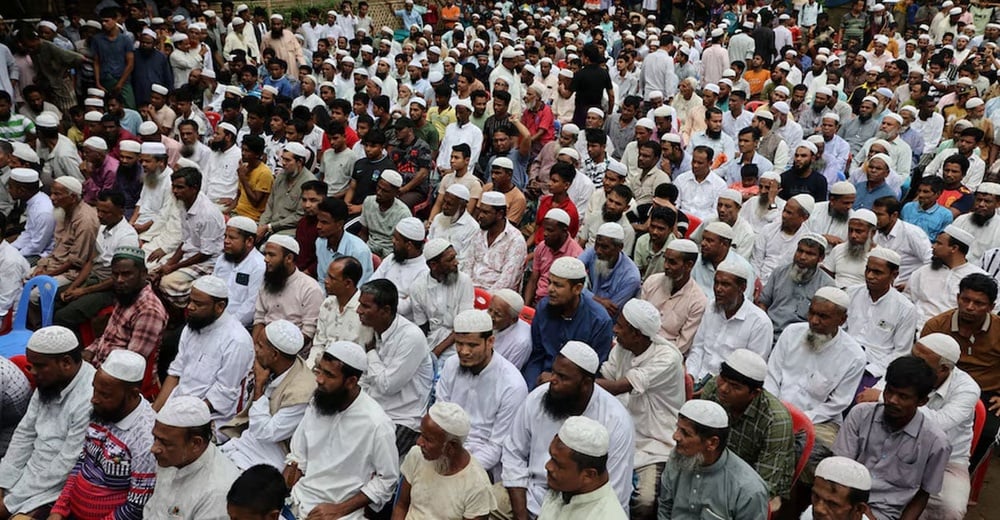

Click points to explore news by date. News sentiment ranges from -10 (very negative) to +10 (very positive) where 0 is neutral.
2026 © Helium Trades
Privacy Policy & Disclosure
* Disclaimer: Nothing on this website constitutes investment advice, performance data or any recommendation that any particular security, portfolio of securities, transaction or investment strategy is suitable for any specific person. Helium Trades is not responsible in any way for the accuracy
of any model predictions or price data. Any mention of a particular security and related prediction data is not a recommendation to buy or sell that security. Investments in securities involve the risk of loss. Past performance is no guarantee of future results. Helium Trades is not responsible for any of your investment decisions,
you should consult a financial expert before engaging in any transaction.
Helium Research Assistant

How can I help you today?
Ask any question about this page.