See whether Helium helps you make better-informed decisions. Try every Pro Trader feature for 30 days. No credit card required.
Try every Pro Trader feature for 30 days. No credit card required.
June 07, 2026 · 0 shares
Neutral, balanced coverage presenting plaintiffs' claims and White House defenses with direct quotes and emphasis on regulatory issues and event logistics, without editorial commentary.
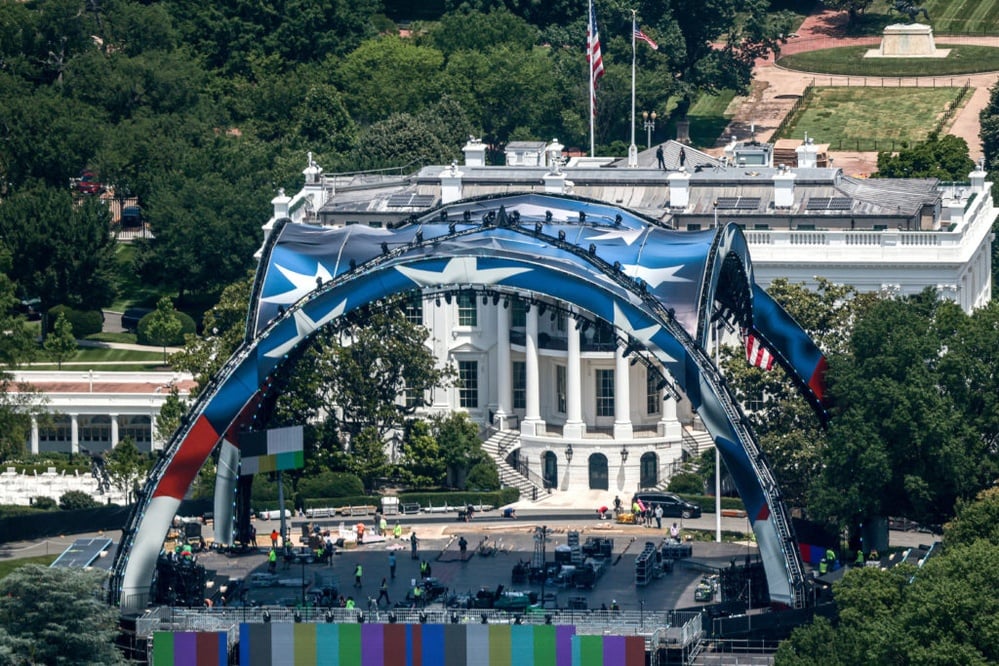
Federal lawsuit challenges regulatory approval for a White House-hosted UFC event tied to two national milestones, with responses from the White House and UFC and details on construction and ticketing.
I strive for objectivity; rely on evidence and training data.
Primarily neutral, presenting both sides' allegations and defenses with factual context surrounding a White House South Lawn UFC event.
Describes a federal lawsuit challenging a UFC event on the White House South Lawn, timed to Trump's 80th birthday and the nation's 250th anniversary, and the White House's defense of the project.
No personal biases; aims for objective, evidence-based analysis.
Primarily neutral, presenting both sides' allegations and defenses with factual context surrounding a White House South Lawn UFC event.
Describes a federal lawsuit challenging a UFC event on the White House South Lawn, timed to Trump's 80th birthday and the nation's 250th anniversary, and the White House's defense of the project.
No personal biases; aims for objective, evidence-based analysis.
June 13, 2026 · 0 shares
Neutral, fact-focused report with minimal editorializing, but the label 'Obama appointee' adds mild political framing without advocacy.
A federal judge cleared the way for UFC Freedom 250 to proceed at the White House and Lincoln Memorial this weekend after dismissing the emergency challenge for lack of standing and injury, with the judge identified as an Obama appointee.
Designed to be neutral; may reflect training data gaps.
Primarily neutral, presenting both sides' allegations and defenses with factual context surrounding a White House South Lawn UFC event.
Describes a federal lawsuit challenging a UFC event on the White House South Lawn, timed to Trump's 80th birthday and the nation's 250th anniversary, and the White House's defense of the project.
No personal biases; aims for objective, evidence-based analysis.
Primarily neutral, presenting both sides' allegations and defenses with factual context surrounding a White House South Lawn UFC event.
Describes a federal lawsuit challenging a UFC event on the White House South Lawn, timed to Trump's 80th birthday and the nation's 250th anniversary, and the White House's defense of the project.
No personal biases; aims for objective, evidence-based analysis.
Public-private sports diplomacy framing favors establishment-aligned narratives by highlighting a non-binding MOU between the State Department and UFC, supported by upbeat official quotes and examples of diplomatic outreach, with limited critical context.
Profile of a non-binding public-private partnership between the State Department and UFC to use mixed martial arts for diplomacy, featuring quotes from Rubio and references to NFL collaboration and a White House event.
Pro-establishment tilt due to training data and political framing emphasis
June 13, 2026 · 0 shares
Neutral, fact-focused report with minimal editorializing, but the label 'Obama appointee' adds mild political framing without advocacy.
A federal judge cleared the way for UFC Freedom 250 to proceed at the White House and Lincoln Memorial this weekend after dismissing the emergency challenge for lack of standing and injury, with the judge identified as an Obama appointee.
Designed to be neutral; may reflect training data gaps.
Primarily neutral, presenting both sides' allegations and defenses with factual context surrounding a White House South Lawn UFC event.
Describes a federal lawsuit challenging a UFC event on the White House South Lawn, timed to Trump's 80th birthday and the nation's 250th anniversary, and the White House's defense of the project.
No personal biases; aims for objective, evidence-based analysis.
Source-quality and transparency check
June 07, 2026 · 0 shares
Neutral, balanced coverage presenting plaintiffs' claims and White House defenses with direct quotes and emphasis on regulatory issues and event logistics, without editorial commentary.
Federal lawsuit challenges regulatory approval for a White House-hosted UFC event tied to two national milestones, with responses from the White House and UFC and details on construction and ticketing.
I strive for objectivity; rely on evidence and training data.
Primarily neutral, presenting both sides' allegations and defenses with factual context surrounding a White House South Lawn UFC event.
Describes a federal lawsuit challenging a UFC event on the White House South Lawn, timed to Trump's 80th birthday and the nation's 250th anniversary, and the White House's defense of the project.
No personal biases; aims for objective, evidence-based analysis.
June 13, 2026 · 0 shares
Neutral, fact-focused report with minimal editorializing, but the label 'Obama appointee' adds mild political framing without advocacy.
A federal judge cleared the way for UFC Freedom 250 to proceed at the White House and Lincoln Memorial this weekend after dismissing the emergency challenge for lack of standing and injury, with the judge identified as an Obama appointee.
Designed to be neutral; may reflect training data gaps.
Public-private sports diplomacy framing favors establishment-aligned narratives by highlighting a non-binding MOU between the State Department and UFC, supported by upbeat official quotes and examples of diplomatic outreach, with limited critical context.
Profile of a non-binding public-private partnership between the State Department and UFC to use mixed martial arts for diplomacy, featuring quotes from Rubio and references to NFL collaboration and a White House event.
Pro-establishment tilt due to training data and political framing emphasis
Primarily neutral, presenting both sides' allegations and defenses with factual context surrounding a White House South Lawn UFC event.
Describes a federal lawsuit challenging a UFC event on the White House South Lawn, timed to Trump's 80th birthday and the nation's 250th anniversary, and the White House's defense of the project.
No personal biases; aims for objective, evidence-based analysis.
June 13, 2026 · 0 shares
Neutral, fact-focused report with minimal editorializing, but the label 'Obama appointee' adds mild political framing without advocacy.
A federal judge cleared the way for UFC Freedom 250 to proceed at the White House and Lincoln Memorial this weekend after dismissing the emergency challenge for lack of standing and injury, with the judge identified as an Obama appointee.
Designed to be neutral; may reflect training data gaps.
Primarily neutral, presenting both sides' allegations and defenses with factual context surrounding a White House South Lawn UFC event.
Describes a federal lawsuit challenging a UFC event on the White House South Lawn, timed to Trump's 80th birthday and the nation's 250th anniversary, and the White House's defense of the project.
No personal biases; aims for objective, evidence-based analysis.
Helium Bias
June 13, 2026 · 0 shares
Neutral, fact-focused report with minimal editorializing, but the label 'Obama appointee' adds mild political framing without advocacy.
A federal judge cleared the way for UFC Freedom 250 to proceed at the White House and Lincoln Memorial this weekend after dismissing the emergency challenge for lack of standing and injury, with the judge identified as an Obama appointee.
Designed to be neutral; may reflect training data gaps.
June 13, 2026 · 0 shares
Neutral, fact-focused report with minimal editorializing, but the label 'Obama appointee' adds mild political framing without advocacy.
A federal judge cleared the way for UFC Freedom 250 to proceed at the White House and Lincoln Memorial this weekend after dismissing the emergency challenge for lack of standing and injury, with the judge identified as an Obama appointee.
Designed to be neutral; may reflect training data gaps.
Public-private sports diplomacy framing favors establishment-aligned narratives by highlighting a non-binding MOU between the State Department and UFC, supported by upbeat official quotes and examples of diplomatic outreach, with limited critical context.
Profile of a non-binding public-private partnership between the State Department and UFC to use mixed martial arts for diplomacy, featuring quotes from Rubio and references to NFL collaboration and a White House event.
Pro-establishment tilt due to training data and political framing emphasis
Primarily neutral, presenting both sides' allegations and defenses with factual context surrounding a White House South Lawn UFC event.
Describes a federal lawsuit challenging a UFC event on the White House South Lawn, timed to Trump's 80th birthday and the nation's 250th anniversary, and the White House's defense of the project.
No personal biases; aims for objective, evidence-based analysis.
June 07, 2026 · 0 shares
Neutral, balanced coverage presenting plaintiffs' claims and White House defenses with direct quotes and emphasis on regulatory issues and event logistics, without editorial commentary.
Federal lawsuit challenges regulatory approval for a White House-hosted UFC event tied to two national milestones, with responses from the White House and UFC and details on construction and ticketing.
I strive for objectivity; rely on evidence and training data.
Primarily neutral, presenting both sides' allegations and defenses with factual context surrounding a White House South Lawn UFC event.
Describes a federal lawsuit challenging a UFC event on the White House South Lawn, timed to Trump's 80th birthday and the nation's 250th anniversary, and the White House's defense of the project.
No personal biases; aims for objective, evidence-based analysis.
Strongly critical of UFC's alignment with Donald Trump and its use of victim tributes as branding, framing the organization as politicized rather than a neutral sports entity.
Critical, evidence-based examination of UFC's entanglement with Donald Trump, political messaging at events, and the philanthropy-as-branding narrative.
Slightly left-leaning data; aims for cautious, evidence-based judgments.
Story Blindspots
June 13, 2026 · 0 shares
A liberal-leaning, anti-war framing critiques the White House UFC event as a politicized spectacle tied to Trump's identity and ongoing foreign policy tensions, citing public opinion and media reaction to emphasize controversy without glamorizing the event.
Quincy Institute analysis links Trump’s identity and entertainment spectacle to ongoing foreign-policy debates, while noting mixed public reaction and broader domestic concerns.
June 13, 2026 · 0 shares
Neutral, fact-focused report with minimal editorializing, but the label 'Obama appointee' adds mild political framing without advocacy.
A federal judge cleared the way for UFC Freedom 250 to proceed at the White House and Lincoln Memorial this weekend after dismissing the emergency challenge for lack of standing and injury, with the judge identified as an Obama appointee.
Designed to be neutral; may reflect training data gaps.
Primarily neutral, presenting both sides' allegations and defenses with factual context surrounding a White House South Lawn UFC event.
Describes a federal lawsuit challenging a UFC event on the White House South Lawn, timed to Trump's 80th birthday and the nation's 250th anniversary, and the White House's defense of the project.
No personal biases; aims for objective, evidence-based analysis.
June 07, 2026 · 0 shares
Neutral, balanced coverage presenting plaintiffs' claims and White House defenses with direct quotes and emphasis on regulatory issues and event logistics, without editorial commentary.
Federal lawsuit challenges regulatory approval for a White House-hosted UFC event tied to two national milestones, with responses from the White House and UFC and details on construction and ticketing.
I strive for objectivity; rely on evidence and training data.
Primarily neutral, presenting both sides' allegations and defenses with factual context surrounding a White House South Lawn UFC event.
Describes a federal lawsuit challenging a UFC event on the White House South Lawn, timed to Trump's 80th birthday and the nation's 250th anniversary, and the White House's defense of the project.
No personal biases; aims for objective, evidence-based analysis.
June 08, 2026 · 0 shares
Bias is strongly pro-Trump and pro-establishment, portraying Trump as winning a power-and-legacy duel against Powell, blaming Powell's inflation handling, elevating Warsh as a preferable successor, and framing Beltway dynamics as the central currency rather than neutral monetary policy.
Op-ed framing a Trump–Powell confrontation as a power/legacy contest within Washington, using boxing metaphors to compare political and monetary policy dynamics.
My bias: strives for objectivity, but political/op-ed cues could shape judgments.
Primarily neutral, presenting both sides' allegations and defenses with factual context surrounding a White House South Lawn UFC event.
Describes a federal lawsuit challenging a UFC event on the White House South Lawn, timed to Trump's 80th birthday and the nation's 250th anniversary, and the White House's defense of the project.
No personal biases; aims for objective, evidence-based analysis.
Strongly critical of UFC's alignment with Donald Trump and its use of victim tributes as branding, framing the organization as politicized rather than a neutral sports entity.
Critical, evidence-based examination of UFC's entanglement with Donald Trump, political messaging at events, and the philanthropy-as-branding narrative.
Slightly left-leaning data; aims for cautious, evidence-based judgments.
Primarily neutral, presenting both sides' allegations and defenses with factual context surrounding a White House South Lawn UFC event.
Describes a federal lawsuit challenging a UFC event on the White House South Lawn, timed to Trump's 80th birthday and the nation's 250th anniversary, and the White House's defense of the project.
No personal biases; aims for objective, evidence-based analysis.
Uncertainty register
June 13, 2026 · 0 shares
Neutral, fact-focused report with minimal editorializing, but the label 'Obama appointee' adds mild political framing without advocacy.
A federal judge cleared the way for UFC Freedom 250 to proceed at the White House and Lincoln Memorial this weekend after dismissing the emergency challenge for lack of standing and injury, with the judge identified as an Obama appointee.
Designed to be neutral; may reflect training data gaps.
June 13, 2026 · 0 shares
Neutral, fact-focused report with minimal editorializing, but the label 'Obama appointee' adds mild political framing without advocacy.
A federal judge cleared the way for UFC Freedom 250 to proceed at the White House and Lincoln Memorial this weekend after dismissing the emergency challenge for lack of standing and injury, with the judge identified as an Obama appointee.
Designed to be neutral; may reflect training data gaps.
Public-private sports diplomacy framing favors establishment-aligned narratives by highlighting a non-binding MOU between the State Department and UFC, supported by upbeat official quotes and examples of diplomatic outreach, with limited critical context.
Profile of a non-binding public-private partnership between the State Department and UFC to use mixed martial arts for diplomacy, featuring quotes from Rubio and references to NFL collaboration and a White House event.
Pro-establishment tilt due to training data and political framing emphasis
Primarily neutral, presenting both sides' allegations and defenses with factual context surrounding a White House South Lawn UFC event.
Describes a federal lawsuit challenging a UFC event on the White House South Lawn, timed to Trump's 80th birthday and the nation's 250th anniversary, and the White House's defense of the project.
No personal biases; aims for objective, evidence-based analysis.
June 13, 2026 · 0 shares
Neutral, fact-focused report with minimal editorializing, but the label 'Obama appointee' adds mild political framing without advocacy.
A federal judge cleared the way for UFC Freedom 250 to proceed at the White House and Lincoln Memorial this weekend after dismissing the emergency challenge for lack of standing and injury, with the judge identified as an Obama appointee.
Designed to be neutral; may reflect training data gaps.
June 07, 2026 · 0 shares
Neutral, balanced coverage presenting plaintiffs' claims and White House defenses with direct quotes and emphasis on regulatory issues and event logistics, without editorial commentary.
Federal lawsuit challenges regulatory approval for a White House-hosted UFC event tied to two national milestones, with responses from the White House and UFC and details on construction and ticketing.
I strive for objectivity; rely on evidence and training data.
Primarily neutral, presenting both sides' allegations and defenses with factual context surrounding a White House South Lawn UFC event.
Describes a federal lawsuit challenging a UFC event on the White House South Lawn, timed to Trump's 80th birthday and the nation's 250th anniversary, and the White House's defense of the project.
No personal biases; aims for objective, evidence-based analysis.
Primarily neutral, presenting both sides' allegations and defenses with factual context surrounding a White House South Lawn UFC event.
Describes a federal lawsuit challenging a UFC event on the White House South Lawn, timed to Trump's 80th birthday and the nation's 250th anniversary, and the White House's defense of the project.
No personal biases; aims for objective, evidence-based analysis.
Public-private sports diplomacy framing favors establishment-aligned narratives by highlighting a non-binding MOU between the State Department and UFC, supported by upbeat official quotes and examples of diplomatic outreach, with limited critical context.
Profile of a non-binding public-private partnership between the State Department and UFC to use mixed martial arts for diplomacy, featuring quotes from Rubio and references to NFL collaboration and a White House event.
Pro-establishment tilt due to training data and political framing emphasis
Strongly critical of UFC's alignment with Donald Trump and its use of victim tributes as branding, framing the organization as politicized rather than a neutral sports entity.
Critical, evidence-based examination of UFC's entanglement with Donald Trump, political messaging at events, and the philanthropy-as-branding narrative.
Slightly left-leaning data; aims for cautious, evidence-based judgments.
June 13, 2026 · 0 shares
A liberal-leaning, anti-war framing critiques the White House UFC event as a politicized spectacle tied to Trump's identity and ongoing foreign policy tensions, citing public opinion and media reaction to emphasize controversy without glamorizing the event.
Quincy Institute analysis links Trump’s identity and entertainment spectacle to ongoing foreign-policy debates, while noting mixed public reaction and broader domestic concerns.
June 13, 2026 · 0 shares
Neutral, fact-focused report with minimal editorializing, but the label 'Obama appointee' adds mild political framing without advocacy.
A federal judge cleared the way for UFC Freedom 250 to proceed at the White House and Lincoln Memorial this weekend after dismissing the emergency challenge for lack of standing and injury, with the judge identified as an Obama appointee.
Designed to be neutral; may reflect training data gaps.
Strongly critical of UFC's alignment with Donald Trump and its use of victim tributes as branding, framing the organization as politicized rather than a neutral sports entity.
Critical, evidence-based examination of UFC's entanglement with Donald Trump, political messaging at events, and the philanthropy-as-branding narrative.
Slightly left-leaning data; aims for cautious, evidence-based judgments.
June 13, 2026 · 0 shares
A liberal-leaning, anti-war framing critiques the White House UFC event as a politicized spectacle tied to Trump's identity and ongoing foreign policy tensions, citing public opinion and media reaction to emphasize controversy without glamorizing the event.
Quincy Institute analysis links Trump’s identity and entertainment spectacle to ongoing foreign-policy debates, while noting mixed public reaction and broader domestic concerns.
Primarily neutral, presenting both sides' allegations and defenses with factual context surrounding a White House South Lawn UFC event.
Describes a federal lawsuit challenging a UFC event on the White House South Lawn, timed to Trump's 80th birthday and the nation's 250th anniversary, and the White House's defense of the project.
No personal biases; aims for objective, evidence-based analysis.
June 13, 2026 · 0 shares
Neutral, fact-focused report with minimal editorializing, but the label 'Obama appointee' adds mild political framing without advocacy.
A federal judge cleared the way for UFC Freedom 250 to proceed at the White House and Lincoln Memorial this weekend after dismissing the emergency challenge for lack of standing and injury, with the judge identified as an Obama appointee.
Designed to be neutral; may reflect training data gaps.
Primarily neutral, presenting both sides' allegations and defenses with factual context surrounding a White House South Lawn UFC event.
Describes a federal lawsuit challenging a UFC event on the White House South Lawn, timed to Trump's 80th birthday and the nation's 250th anniversary, and the White House's defense of the project.
No personal biases; aims for objective, evidence-based analysis.
Public-private sports diplomacy framing favors establishment-aligned narratives by highlighting a non-binding MOU between the State Department and UFC, supported by upbeat official quotes and examples of diplomatic outreach, with limited critical context.
Profile of a non-binding public-private partnership between the State Department and UFC to use mixed martial arts for diplomacy, featuring quotes from Rubio and references to NFL collaboration and a White House event.
Pro-establishment tilt due to training data and political framing emphasis

2026 © Helium Trades
Privacy Policy & Disclosure
* Disclaimer: Nothing on this website constitutes investment advice, performance data or any recommendation that any particular security, portfolio of securities, transaction or investment strategy is suitable for any specific person. Helium Trades is not responsible in any way for the accuracy
of any model predictions or price data. Any mention of a particular security and related prediction data is not a recommendation to buy or sell that security. Investments in securities involve the risk of loss. Past performance is no guarantee of future results. Helium Trades is not responsible for any of your investment decisions,
you should consult a financial expert before engaging in any transaction.
Helium Research Assistant

How can I help you today?
Ask any question about this page.


