See whether Helium helps you make better-informed decisions. Try every Pro Trader feature for 30 days. No credit card required.
Try every Pro Trader feature for 30 days. No credit card required.
August 08, 2026 · 0 shares
Frames a court-ordered halt to Trump's White House ballroom project as a major legal setback while emphasizing a dissenting judge's accusation of judicial overreach and downplaying the majority's reasoning.
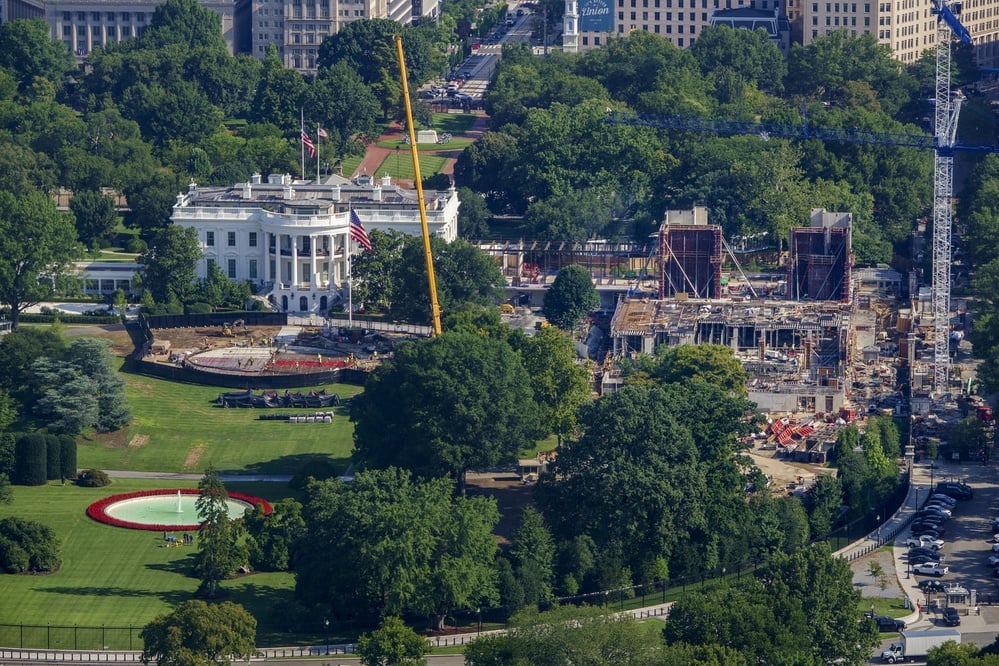
The White House East Wing was demolished last fall for the ballroom project; the National Trust for Historic Preservation challenged the plans; the ballroom is privately funded.
Automated analysis; not human reviewed.
Limitations: The article text includes extraneous headlines at the end that may be from other stories; only the main article content was analyzed.
·
14 of 53 available dimensions scored; omitted dimensions are not treated as neutral.
·
Verified supporting quotes for 11 of 14 scored dimensions.
Claim: The article frames the court ruling as a major setback for Trump and emphasizes the dissenting opinion, indicating a conservative-leaning perspective.
“President Donald Trump suffered a major legal setback Friday after a federal appeals court ordered most construction on his massive White House ballroom project to stop” · exact text match
“Rao argued that the federal judiciary was improperly interfering with the construction project and maintained that the National Trust for Historic Preservation, which challenged the ballroom plans, lacked standing to bring the lawsuit.” · exact text match
Why: The language of 'major legal setback' and the inclusion of the full dissenting argument without comparable context for the majority's view tilts the framing.
Claim: The article criticizes the National Trust and emphasizes private funding, reflecting a populist skepticism of elitist institutions.
“Trump has repeatedly criticized the National Trust for Historic Preservation over its challenge, arguing that the organization lacks legal standing to interfere with construction on White House grounds.” · exact text match
“The administration has also argued that Congress should not be able to block the project because construction is being financed through private donations rather than taxpayer money.” · exact text match
Why: The article reproduces Trump's anti-elite arguments without rebuttal.
Claim: The article uses subjective descriptors like 'massive', 'major setback', and 'enormous development'.
“his massive White House ballroom project” · exact text match
“major legal setback” · exact text match
“The enormous development” · exact text match
Why: These adjectives inject subjective evaluation into an otherwise factual report.
Claim: Headline and lead frame the event as 'Major Setback' and 'dramatically changes that situation', adding sensationalism.
“DC Court Halts Trump's White House Ballroom Construction in Major Setback” · exact text match
“The new ruling dramatically changes that situation by placing most of the project on hold” · exact text match
Why: The headline and use of 'dramatically' amplify the significance.
Claim: Story about a unique legal challenge to a president's private construction at the White House is inherently interesting.
“Trump demolished the White House East Wing last fall as part of preparations for the planned 90,000-square-foot ballroom.” · exact text match
“The ballroom is expected to cost hundreds of millions of dollars” · exact text match
Why: Unusual event of a president building a large private ballroom at the White House.
Claim: The article blends reporting with editorial language like 'massive', 'major setback', and 'enormous'.
“suffered a major legal setback” · exact text match
“his massive White House ballroom project” · exact text match
“The enormous development” · exact text match
Why: Descriptive language goes beyond neutral reporting.
Claim: The entire article centers on a political controversy involving Trump, courts, and Congress, with clear partisan stakes.
“President Donald Trump suffered a major legal setback” · exact text match
“The majority concluded that Congress retains authority” · exact text match
“dissented from the ruling” · exact text match
Why: High political content with explicit mention of political appointments.
Claim: By emphasizing the dissenting opinion and calling it a setback, the article subtly portrays Trump as a victim of judicial overreach.
“Rao argued that the federal judiciary was improperly interfering with the construction project” · exact text match
“President Donald Trump suffered a major legal setback” · exact text match
Why: The framing is not strong victimization but has elements of sympathy.
Claim: The article consistently supports Trump's position by highlighting opposition from judges appointed by Democrats and echoing his arguments.
“Millett was appointed by former President Barack Obama, while Garcia was appointed by former President Joe Biden.” · exact text match
“Rao argued that the federal judiciary was improperly interfering” · exact text match
“Trump has argued that the organization lacks legal standing” · not found in supplied text
Why: Pointing out the partisan appointments of majority judges and reproducing Trump's criticisms suggests ideological alignment.
Claim: The article is critical of the court and the National Trust, reflecting anti-establishment sentiment.
“Rao argued that the federal judiciary was improperly interfering” · exact text match
“Trump has repeatedly criticized the National Trust for Historic Preservation” · exact text match
Why: Portrays federal judiciary and historic preservation group as obstacles to Trump's plans.
Claim: The article cites specific judges, quotes, and provides context, enhancing credibility.
“The U.S. Court of Appeals for the D.C. Circuit issued the decision in a 2-1 ruling” · exact text match
““We are aware of no instance in American history in which a President unilaterally and using privately collected funds demolished substantial portions of the White House that Congress authorized to be built and American taxpayers paid for. Until now,” the majority wrote.” · exact text match
“U.S. Circuit Judges Patricia Millett and Brad Garcia formed the majority.” · exact text match
Why: Attribution to specific court, judges, and direct quotes support factual reporting.
Claim: Speculates about potential Supreme Court intervention.
“The administration now has a two-week window to seek emergency relief before the broader construction prohibition takes effect, potentially setting up another high-profile legal showdown” · exact text match
Why: Explicit speculation about future legal steps.
The article text includes extraneous headlines at the end that may be from other stories; only the main article content was analyzed.
August 07, 2026 · 0 shares
Neutral reporting of a legal dispute and a political statement.
Automated analysis; not human reviewed.
Limitations: Very short article limits bias assessment; only surface-level framing observable.
·
4 of 53 available dimensions scored; omitted dimensions are not treated as neutral.
·
Verified supporting quotes for 4 of 4 scored dimensions.
Claim: The article reports a statement and a court decision without subjective commentary.
“Trump says he'll appeal decision halting ballroom construction to the Supreme Court.” · exact text match
“A federal appeals court affirmed a federal judge’s ruling to block construction of the White House ballroom while allowing below-ground construction to move forward.” · exact text match
Why: The text is purely factual reporting with no evaluative language.
Claim: The article describes events without prescribing action.
“Trump says he'll appeal decision halting ballroom construction to the Supreme Court.” · exact text match
“A federal appeals court affirmed a federal judge’s ruling to block construction of the White House ballroom while allowing below-ground construction to move forward.” · exact text match
Why: No prescriptive language; purely descriptive.
Claim: The article covers a political figure and a court case, making it political content.
“Trump says he'll appeal decision halting ballroom construction to the Supreme Court.” · exact text match
“A federal appeals court affirmed a federal judge’s ruling to block construction of the White House ballroom” · exact text match
Why: Subject matter involves the President and a judicial decision, clearly political.
Claim: The article attributes statements and reports a court action transparently.
“Trump says he'll appeal decision halting ballroom construction to the Supreme Court.” · exact text match
“A federal appeals court affirmed a federal judge’s ruling to block construction of the White House ballroom” · exact text match
Why: Transparent attribution to named sources (Trump, court).
No visible errors or missing context, but brevity limits deeper credibility assessment.
Very short article limits bias assessment; only surface-level framing observable.
August 08, 2026 · 0 shares
Frames a court-ordered halt to Trump's White House ballroom project as a major legal setback while emphasizing a dissenting judge's accusation of judicial overreach and downplaying the majority's reasoning.
The White House East Wing was demolished last fall for the ballroom project; the National Trust for Historic Preservation challenged the plans; the ballroom is privately funded.
Automated analysis; not human reviewed.
Limitations: The article text includes extraneous headlines at the end that may be from other stories; only the main article content was analyzed.
·
14 of 53 available dimensions scored; omitted dimensions are not treated as neutral.
·
Verified supporting quotes for 11 of 14 scored dimensions.
Claim: The article frames the court ruling as a major setback for Trump and emphasizes the dissenting opinion, indicating a conservative-leaning perspective.
“President Donald Trump suffered a major legal setback Friday after a federal appeals court ordered most construction on his massive White House ballroom project to stop” · exact text match
“Rao argued that the federal judiciary was improperly interfering with the construction project and maintained that the National Trust for Historic Preservation, which challenged the ballroom plans, lacked standing to bring the lawsuit.” · exact text match
Why: The language of 'major legal setback' and the inclusion of the full dissenting argument without comparable context for the majority's view tilts the framing.
Claim: The article criticizes the National Trust and emphasizes private funding, reflecting a populist skepticism of elitist institutions.
“Trump has repeatedly criticized the National Trust for Historic Preservation over its challenge, arguing that the organization lacks legal standing to interfere with construction on White House grounds.” · exact text match
“The administration has also argued that Congress should not be able to block the project because construction is being financed through private donations rather than taxpayer money.” · exact text match
Why: The article reproduces Trump's anti-elite arguments without rebuttal.
Claim: The article uses subjective descriptors like 'massive', 'major setback', and 'enormous development'.
“his massive White House ballroom project” · exact text match
“major legal setback” · exact text match
“The enormous development” · exact text match
Why: These adjectives inject subjective evaluation into an otherwise factual report.
Claim: Headline and lead frame the event as 'Major Setback' and 'dramatically changes that situation', adding sensationalism.
“DC Court Halts Trump's White House Ballroom Construction in Major Setback” · exact text match
“The new ruling dramatically changes that situation by placing most of the project on hold” · exact text match
Why: The headline and use of 'dramatically' amplify the significance.
Claim: Story about a unique legal challenge to a president's private construction at the White House is inherently interesting.
“Trump demolished the White House East Wing last fall as part of preparations for the planned 90,000-square-foot ballroom.” · exact text match
“The ballroom is expected to cost hundreds of millions of dollars” · exact text match
Why: Unusual event of a president building a large private ballroom at the White House.
Claim: The article blends reporting with editorial language like 'massive', 'major setback', and 'enormous'.
“suffered a major legal setback” · exact text match
“his massive White House ballroom project” · exact text match
“The enormous development” · exact text match
Why: Descriptive language goes beyond neutral reporting.
Claim: The entire article centers on a political controversy involving Trump, courts, and Congress, with clear partisan stakes.
“President Donald Trump suffered a major legal setback” · exact text match
“The majority concluded that Congress retains authority” · exact text match
“dissented from the ruling” · exact text match
Why: High political content with explicit mention of political appointments.
Claim: By emphasizing the dissenting opinion and calling it a setback, the article subtly portrays Trump as a victim of judicial overreach.
“Rao argued that the federal judiciary was improperly interfering with the construction project” · exact text match
“President Donald Trump suffered a major legal setback” · exact text match
Why: The framing is not strong victimization but has elements of sympathy.
Claim: The article consistently supports Trump's position by highlighting opposition from judges appointed by Democrats and echoing his arguments.
“Millett was appointed by former President Barack Obama, while Garcia was appointed by former President Joe Biden.” · exact text match
“Rao argued that the federal judiciary was improperly interfering” · exact text match
“Trump has argued that the organization lacks legal standing” · not found in supplied text
Why: Pointing out the partisan appointments of majority judges and reproducing Trump's criticisms suggests ideological alignment.
Claim: The article is critical of the court and the National Trust, reflecting anti-establishment sentiment.
“Rao argued that the federal judiciary was improperly interfering” · exact text match
“Trump has repeatedly criticized the National Trust for Historic Preservation” · exact text match
Why: Portrays federal judiciary and historic preservation group as obstacles to Trump's plans.
Claim: The article cites specific judges, quotes, and provides context, enhancing credibility.
“The U.S. Court of Appeals for the D.C. Circuit issued the decision in a 2-1 ruling” · exact text match
““We are aware of no instance in American history in which a President unilaterally and using privately collected funds demolished substantial portions of the White House that Congress authorized to be built and American taxpayers paid for. Until now,” the majority wrote.” · exact text match
“U.S. Circuit Judges Patricia Millett and Brad Garcia formed the majority.” · exact text match
Why: Attribution to specific court, judges, and direct quotes support factual reporting.
Claim: Speculates about potential Supreme Court intervention.
“The administration now has a two-week window to seek emergency relief before the broader construction prohibition takes effect, potentially setting up another high-profile legal showdown” · exact text match
Why: Explicit speculation about future legal steps.
The article text includes extraneous headlines at the end that may be from other stories; only the main article content was analyzed.
August 07, 2026 · 0 shares
Reports a legal ruling against White House ballroom construction with balanced inclusion of court opinion and presidential reaction.
Automated analysis; not human reviewed.
·
5 of 53 available dimensions scored; omitted dimensions are not treated as neutral.
·
Verified supporting quotes for 1 of 5 scored dimensions.
Claim: The article presents balanced coverage of a political dispute, quoting both the court ruling and the president's reaction.
“"The ruling on Friday upholds the order blocking above-ground construction without congressional approval.
The appeals court delayed implementation of its ruling for 14 days to allow the Trump administration to appeal to the Supreme Court."”
· exact text match
“"Trump railed against the 'horrendous' and 'politically motivated' decision on social media, highlighting the dissenting judge's opinion that the order is 'a blatant abuse of discretion'."” · not found in supplied text
Why: The article includes both the court's stated reasoning and the president's opposition, showing no favoritism.
Claim: The article uses direct, attributed quotes and avoids editorial language.
“"Whether or not a massive ballroom should be constructed is for Congress to decide and is not a matter for Executive self-help," the panel's majority said.” · not found in supplied text
Why: The article relies on verbatim quotes from the court, the National Trust, and Trump, with no subjective commentary.
Claim: The article describes events and legal opinions without prescribing a course of action.
“"A federal appeals court dealt the latest setback to the controversial project on Friday, testing Trump's presidential authority."” · not found in supplied text
Why: The sentence is descriptive, reporting the setback and its implication without recommending what should be done.
Claim: The article covers a political conflict without taking a side.
“"The National Trust for Historic Preservation celebrated the ruling on Friday, noting that no above-ground construction can take place 'unless and until' Congress takes action."” · not found in supplied text
“"Trump said on Friday that construction includes bomb shelters, hospital and medical facilities and top secret military facilities."” · not found in supplied text
Why: Both the trust's and Trump's positions are reported neutrally, with no editorial favoritism.
Claim: The article shows strong sourcing, attribution, and transparency.
“"A federal appeals court dealt the latest setback to the controversial project on Friday, testing Trump's presidential authority.
He has vowed to appeal to the Supreme Court."”
· exact text match
“"The BBC has contacted the White House and Department of Justice for comment."” · exact text match
Why: The article attributes all claims to sources, indicates attempts to get comment, and quotes directly, supporting high credibility.
Reports a court-ordered halt to a presidential project with neutral framing, emphasizing the constitutional separation of powers and including the president's criticism.
Automated analysis; not human reviewed. Limitations: The article text was interspersed with promotional content and unrelated headlines; analysis was limited to the discernible news segment.
The article text was interspersed with promotional content and unrelated headlines; analysis was limited to the discernible news segment.
Reports a court-ordered halt to a presidential project with neutral framing, emphasizing the constitutional separation of powers and including the president's criticism.
Automated analysis; not human reviewed. Limitations: The article text was interspersed with promotional content and unrelated headlines; analysis was limited to the discernible news segment.
The article text was interspersed with promotional content and unrelated headlines; analysis was limited to the discernible news segment.
August 08, 2026 · 0 shares
Frames a court-ordered halt to Trump's White House ballroom project as a major legal setback while emphasizing a dissenting judge's accusation of judicial overreach and downplaying the majority's reasoning.
The White House East Wing was demolished last fall for the ballroom project; the National Trust for Historic Preservation challenged the plans; the ballroom is privately funded.
Automated analysis; not human reviewed.
Limitations: The article text includes extraneous headlines at the end that may be from other stories; only the main article content was analyzed.
·
14 of 53 available dimensions scored; omitted dimensions are not treated as neutral.
·
Verified supporting quotes for 11 of 14 scored dimensions.
Claim: The article frames the court ruling as a major setback for Trump and emphasizes the dissenting opinion, indicating a conservative-leaning perspective.
“President Donald Trump suffered a major legal setback Friday after a federal appeals court ordered most construction on his massive White House ballroom project to stop” · exact text match
“Rao argued that the federal judiciary was improperly interfering with the construction project and maintained that the National Trust for Historic Preservation, which challenged the ballroom plans, lacked standing to bring the lawsuit.” · exact text match
Why: The language of 'major legal setback' and the inclusion of the full dissenting argument without comparable context for the majority's view tilts the framing.
Claim: The article criticizes the National Trust and emphasizes private funding, reflecting a populist skepticism of elitist institutions.
“Trump has repeatedly criticized the National Trust for Historic Preservation over its challenge, arguing that the organization lacks legal standing to interfere with construction on White House grounds.” · exact text match
“The administration has also argued that Congress should not be able to block the project because construction is being financed through private donations rather than taxpayer money.” · exact text match
Why: The article reproduces Trump's anti-elite arguments without rebuttal.
Claim: The article uses subjective descriptors like 'massive', 'major setback', and 'enormous development'.
“his massive White House ballroom project” · exact text match
“major legal setback” · exact text match
“The enormous development” · exact text match
Why: These adjectives inject subjective evaluation into an otherwise factual report.
Claim: Headline and lead frame the event as 'Major Setback' and 'dramatically changes that situation', adding sensationalism.
“DC Court Halts Trump's White House Ballroom Construction in Major Setback” · exact text match
“The new ruling dramatically changes that situation by placing most of the project on hold” · exact text match
Why: The headline and use of 'dramatically' amplify the significance.
Claim: Story about a unique legal challenge to a president's private construction at the White House is inherently interesting.
“Trump demolished the White House East Wing last fall as part of preparations for the planned 90,000-square-foot ballroom.” · exact text match
“The ballroom is expected to cost hundreds of millions of dollars” · exact text match
Why: Unusual event of a president building a large private ballroom at the White House.
Claim: The article blends reporting with editorial language like 'massive', 'major setback', and 'enormous'.
“suffered a major legal setback” · exact text match
“his massive White House ballroom project” · exact text match
“The enormous development” · exact text match
Why: Descriptive language goes beyond neutral reporting.
Claim: The entire article centers on a political controversy involving Trump, courts, and Congress, with clear partisan stakes.
“President Donald Trump suffered a major legal setback” · exact text match
“The majority concluded that Congress retains authority” · exact text match
“dissented from the ruling” · exact text match
Why: High political content with explicit mention of political appointments.
Claim: By emphasizing the dissenting opinion and calling it a setback, the article subtly portrays Trump as a victim of judicial overreach.
“Rao argued that the federal judiciary was improperly interfering with the construction project” · exact text match
“President Donald Trump suffered a major legal setback” · exact text match
Why: The framing is not strong victimization but has elements of sympathy.
Claim: The article consistently supports Trump's position by highlighting opposition from judges appointed by Democrats and echoing his arguments.
“Millett was appointed by former President Barack Obama, while Garcia was appointed by former President Joe Biden.” · exact text match
“Rao argued that the federal judiciary was improperly interfering” · exact text match
“Trump has argued that the organization lacks legal standing” · not found in supplied text
Why: Pointing out the partisan appointments of majority judges and reproducing Trump's criticisms suggests ideological alignment.
Claim: The article is critical of the court and the National Trust, reflecting anti-establishment sentiment.
“Rao argued that the federal judiciary was improperly interfering” · exact text match
“Trump has repeatedly criticized the National Trust for Historic Preservation” · exact text match
Why: Portrays federal judiciary and historic preservation group as obstacles to Trump's plans.
Claim: The article cites specific judges, quotes, and provides context, enhancing credibility.
“The U.S. Court of Appeals for the D.C. Circuit issued the decision in a 2-1 ruling” · exact text match
““We are aware of no instance in American history in which a President unilaterally and using privately collected funds demolished substantial portions of the White House that Congress authorized to be built and American taxpayers paid for. Until now,” the majority wrote.” · exact text match
“U.S. Circuit Judges Patricia Millett and Brad Garcia formed the majority.” · exact text match
Why: Attribution to specific court, judges, and direct quotes support factual reporting.
Claim: Speculates about potential Supreme Court intervention.
“The administration now has a two-week window to seek emergency relief before the broader construction prohibition takes effect, potentially setting up another high-profile legal showdown” · exact text match
Why: Explicit speculation about future legal steps.
The article text includes extraneous headlines at the end that may be from other stories; only the main article content was analyzed.
Reports a court-ordered halt to a presidential project with neutral framing, emphasizing the constitutional separation of powers and including the president's criticism.
Automated analysis; not human reviewed. Limitations: The article text was interspersed with promotional content and unrelated headlines; analysis was limited to the discernible news segment.
The article text was interspersed with promotional content and unrelated headlines; analysis was limited to the discernible news segment.
August 07, 2026 · 0 shares
Neutral reporting of a federal court order halting White House ballroom construction and the president's appeal vow, with no detectable editorial slant.
Automated analysis; not human reviewed. Limitations: Article text is extremely brief and contains only a headline and a single sentence of reporting, limiting the ability to assess framing or bias.
Article text is extremely brief and contains only a headline and a single sentence of reporting, limiting the ability to assess framing or bias.
August 07, 2026 · 0 shares
Neutral reporting of a legal dispute and a political statement.
Automated analysis; not human reviewed. Limitations: Very short article limits bias assessment; only surface-level framing observable. · 4 of 53 available dimensions scored; omitted dimensions are not treated as neutral. · Verified supporting quotes for 4 of 4 scored dimensions.
Claim: The article reports a statement and a court decision without subjective commentary.
“Trump says he'll appeal decision halting ballroom construction to the Supreme Court.” · exact text match
“A federal appeals court affirmed a federal judge’s ruling to block construction of the White House ballroom while allowing below-ground construction to move forward.” · exact text match
Why: The text is purely factual reporting with no evaluative language.
Claim: The article describes events without prescribing action.
“Trump says he'll appeal decision halting ballroom construction to the Supreme Court.” · exact text match
“A federal appeals court affirmed a federal judge’s ruling to block construction of the White House ballroom while allowing below-ground construction to move forward.” · exact text match
Why: No prescriptive language; purely descriptive.
Claim: The article covers a political figure and a court case, making it political content.
“Trump says he'll appeal decision halting ballroom construction to the Supreme Court.” · exact text match
“A federal appeals court affirmed a federal judge’s ruling to block construction of the White House ballroom” · exact text match
Why: Subject matter involves the President and a judicial decision, clearly political.
Claim: The article attributes statements and reports a court action transparently.
“Trump says he'll appeal decision halting ballroom construction to the Supreme Court.” · exact text match
“A federal appeals court affirmed a federal judge’s ruling to block construction of the White House ballroom” · exact text match
Why: Transparent attribution to named sources (Trump, court). No visible errors or missing context, but brevity limits deeper credibility assessment.
Very short article limits bias assessment; only surface-level framing observable.
August 08, 2026 · 0 shares
Frames a court-ordered halt to Trump's White House ballroom project as a major legal setback while emphasizing a dissenting judge's accusation of judicial overreach and downplaying the majority's reasoning.
The White House East Wing was demolished last fall for the ballroom project; the National Trust for Historic Preservation challenged the plans; the ballroom is privately funded.
Automated analysis; not human reviewed. Limitations: The article text includes extraneous headlines at the end that may be from other stories; only the main article content was analyzed. · 14 of 53 available dimensions scored; omitted dimensions are not treated as neutral. · Verified supporting quotes for 11 of 14 scored dimensions.
Claim: The article frames the court ruling as a major setback for Trump and emphasizes the dissenting opinion, indicating a conservative-leaning perspective.
“President Donald Trump suffered a major legal setback Friday after a federal appeals court ordered most construction on his massive White House ballroom project to stop” · exact text match
“Rao argued that the federal judiciary was improperly interfering with the construction project and maintained that the National Trust for Historic Preservation, which challenged the ballroom plans, lacked standing to bring the lawsuit.” · exact text match
Why: The language of 'major legal setback' and the inclusion of the full dissenting argument without comparable context for the majority's view tilts the framing.
Claim: The article criticizes the National Trust and emphasizes private funding, reflecting a populist skepticism of elitist institutions.
“Trump has repeatedly criticized the National Trust for Historic Preservation over its challenge, arguing that the organization lacks legal standing to interfere with construction on White House grounds.” · exact text match
“The administration has also argued that Congress should not be able to block the project because construction is being financed through private donations rather than taxpayer money.” · exact text match
Why: The article reproduces Trump's anti-elite arguments without rebuttal.
Claim: The article uses subjective descriptors like 'massive', 'major setback', and 'enormous development'.
“his massive White House ballroom project” · exact text match
“major legal setback” · exact text match
“The enormous development” · exact text match
Why: These adjectives inject subjective evaluation into an otherwise factual report.
Claim: Headline and lead frame the event as 'Major Setback' and 'dramatically changes that situation', adding sensationalism.
“DC Court Halts Trump's White House Ballroom Construction in Major Setback” · exact text match
“The new ruling dramatically changes that situation by placing most of the project on hold” · exact text match
Why: The headline and use of 'dramatically' amplify the significance.
Claim: Story about a unique legal challenge to a president's private construction at the White House is inherently interesting.
“Trump demolished the White House East Wing last fall as part of preparations for the planned 90,000-square-foot ballroom.” · exact text match
“The ballroom is expected to cost hundreds of millions of dollars” · exact text match
Why: Unusual event of a president building a large private ballroom at the White House.
Claim: The article blends reporting with editorial language like 'massive', 'major setback', and 'enormous'.
“suffered a major legal setback” · exact text match
“his massive White House ballroom project” · exact text match
“The enormous development” · exact text match
Why: Descriptive language goes beyond neutral reporting.
Claim: The entire article centers on a political controversy involving Trump, courts, and Congress, with clear partisan stakes.
“President Donald Trump suffered a major legal setback” · exact text match
“The majority concluded that Congress retains authority” · exact text match
“dissented from the ruling” · exact text match
Why: High political content with explicit mention of political appointments.
Claim: By emphasizing the dissenting opinion and calling it a setback, the article subtly portrays Trump as a victim of judicial overreach.
“Rao argued that the federal judiciary was improperly interfering with the construction project” · exact text match
“President Donald Trump suffered a major legal setback” · exact text match
Why: The framing is not strong victimization but has elements of sympathy.
Claim: The article consistently supports Trump's position by highlighting opposition from judges appointed by Democrats and echoing his arguments.
“Millett was appointed by former President Barack Obama, while Garcia was appointed by former President Joe Biden.” · exact text match
“Rao argued that the federal judiciary was improperly interfering” · exact text match
“Trump has argued that the organization lacks legal standing” · not found in supplied text
Why: Pointing out the partisan appointments of majority judges and reproducing Trump's criticisms suggests ideological alignment.
Claim: The article is critical of the court and the National Trust, reflecting anti-establishment sentiment.
“Rao argued that the federal judiciary was improperly interfering” · exact text match
“Trump has repeatedly criticized the National Trust for Historic Preservation” · exact text match
Why: Portrays federal judiciary and historic preservation group as obstacles to Trump's plans.
Claim: The article cites specific judges, quotes, and provides context, enhancing credibility.
“The U.S. Court of Appeals for the D.C. Circuit issued the decision in a 2-1 ruling” · exact text match
““We are aware of no instance in American history in which a President unilaterally and using privately collected funds demolished substantial portions of the White House that Congress authorized to be built and American taxpayers paid for. Until now,” the majority wrote.” · exact text match
“U.S. Circuit Judges Patricia Millett and Brad Garcia formed the majority.” · exact text match
Why: Attribution to specific court, judges, and direct quotes support factual reporting.
Claim: Speculates about potential Supreme Court intervention.
“The administration now has a two-week window to seek emergency relief before the broader construction prohibition takes effect, potentially setting up another high-profile legal showdown” · exact text match
Why: Explicit speculation about future legal steps.
The article text includes extraneous headlines at the end that may be from other stories; only the main article content was analyzed.
August 07, 2026 · 0 shares
Frames the court ruling as a legitimate check on presidential authority while noting the president's strong objection.
Automated analysis; not human reviewed. Limitations: The article text included non-substantive subscription prompts and sponsored content that were ignored; the analysis reflects only the core news report. · 9 of 53 available dimensions scored; omitted dimensions are not treated as neutral. · Verified supporting quotes for 6 of 9 scored dimensions.
Claim: The article presents a court ruling and the president's reaction without taking sides.
“U.S. court orders halt to Trump ballroom construction.” · exact text match
Why: The headline and body state facts and quotes, no partisan leaning.
Claim: The article frames the court as upholding the rule of law.
“agreed with a lower court that such a massive White House overhaul required the explicit consent of Congress.” · exact text match
Why: The article presents the court's reasoning without criticism, implicitly supporting institutional authority.
Claim: The article reports objectively.
“An appeals court on Friday upheld an order halting work...” · not found in supplied text
“The U.S. Court of Appeals for the DC Circuit... agreed with a lower court” · not found in supplied text
Why: Factual reporting with attributed quotes.
Claim: Slightly sensational language.
“enraging the U.S. president” · exact text match
Why: The word 'enraging' is emotional but common in political reporting.
Claim: The article is about a political dispute.
“U.S. court orders halt to Trump ballroom construction.” · exact text match
Why: Covers a political controversy between court and president.
Claim: Relies on court authority.
“agreed with a lower court that such a massive White House overhaul required the explicit consent of Congress.” · exact text match
Why: The article uses the court's decision as the basis for the report.
Claim: The article does not express certainty beyond its evidence.
“The U.S. Court of Appeals for the DC Circuit... agreed with a lower court” · not found in supplied text
Why: Presents court ruling as fact but notes two-week stay for appeal.
Claim: Pro-establishment framing.
“U.S. court orders halt to Trump ballroom construction.” · exact text match
Why: Portrays the court ruling as a legitimate check.
Claim: The article appears trustworthy.
“The U.S. Court of Appeals for the DC Circuit... agreed with a lower court” · not found in supplied text
Why: Well-sourced, quotes the court and president, no obvious errors.
The article text included non-substantive subscription prompts and sponsored content that were ignored; the analysis reflects only the core news report.
Reports a court-ordered halt to a presidential project with neutral framing, emphasizing the constitutional separation of powers and including the president's criticism.
Automated analysis; not human reviewed. Limitations: The article text was interspersed with promotional content and unrelated headlines; analysis was limited to the discernible news segment.
The article text was interspersed with promotional content and unrelated headlines; analysis was limited to the discernible news segment.
August 07, 2026 · 0 shares
Reports a legal ruling against White House ballroom construction with balanced inclusion of court opinion and presidential reaction.
Automated analysis; not human reviewed. · 5 of 53 available dimensions scored; omitted dimensions are not treated as neutral. · Verified supporting quotes for 1 of 5 scored dimensions.
Claim: The article presents balanced coverage of a political dispute, quoting both the court ruling and the president's reaction.
“"The ruling on Friday upholds the order blocking above-ground construction without congressional approval. The appeals court delayed implementation of its ruling for 14 days to allow the Trump administration to appeal to the Supreme Court."” · exact text match
“"Trump railed against the 'horrendous' and 'politically motivated' decision on social media, highlighting the dissenting judge's opinion that the order is 'a blatant abuse of discretion'."” · not found in supplied text
Why: The article includes both the court's stated reasoning and the president's opposition, showing no favoritism.
Claim: The article uses direct, attributed quotes and avoids editorial language.
“"Whether or not a massive ballroom should be constructed is for Congress to decide and is not a matter for Executive self-help," the panel's majority said.” · not found in supplied text
Why: The article relies on verbatim quotes from the court, the National Trust, and Trump, with no subjective commentary.
Claim: The article describes events and legal opinions without prescribing a course of action.
“"A federal appeals court dealt the latest setback to the controversial project on Friday, testing Trump's presidential authority."” · not found in supplied text
Why: The sentence is descriptive, reporting the setback and its implication without recommending what should be done.
Claim: The article covers a political conflict without taking a side.
“"The National Trust for Historic Preservation celebrated the ruling on Friday, noting that no above-ground construction can take place 'unless and until' Congress takes action."” · not found in supplied text
“"Trump said on Friday that construction includes bomb shelters, hospital and medical facilities and top secret military facilities."” · not found in supplied text
Why: Both the trust's and Trump's positions are reported neutrally, with no editorial favoritism.
Claim: The article shows strong sourcing, attribution, and transparency.
“"A federal appeals court dealt the latest setback to the controversial project on Friday, testing Trump's presidential authority. He has vowed to appeal to the Supreme Court."” · exact text match
“"The BBC has contacted the White House and Department of Justice for comment."” · exact text match
Why: The article attributes all claims to sources, indicates attempts to get comment, and quotes directly, supporting high credibility.
August 07, 2026 · 0 shares
Neutral reporting of a legal dispute and a political statement.
Automated analysis; not human reviewed. Limitations: Very short article limits bias assessment; only surface-level framing observable. · 4 of 53 available dimensions scored; omitted dimensions are not treated as neutral. · Verified supporting quotes for 4 of 4 scored dimensions.
Claim: The article reports a statement and a court decision without subjective commentary.
“Trump says he'll appeal decision halting ballroom construction to the Supreme Court.” · exact text match
“A federal appeals court affirmed a federal judge’s ruling to block construction of the White House ballroom while allowing below-ground construction to move forward.” · exact text match
Why: The text is purely factual reporting with no evaluative language.
Claim: The article describes events without prescribing action.
“Trump says he'll appeal decision halting ballroom construction to the Supreme Court.” · exact text match
“A federal appeals court affirmed a federal judge’s ruling to block construction of the White House ballroom while allowing below-ground construction to move forward.” · exact text match
Why: No prescriptive language; purely descriptive.
Claim: The article covers a political figure and a court case, making it political content.
“Trump says he'll appeal decision halting ballroom construction to the Supreme Court.” · exact text match
“A federal appeals court affirmed a federal judge’s ruling to block construction of the White House ballroom” · exact text match
Why: Subject matter involves the President and a judicial decision, clearly political.
Claim: The article attributes statements and reports a court action transparently.
“Trump says he'll appeal decision halting ballroom construction to the Supreme Court.” · exact text match
“A federal appeals court affirmed a federal judge’s ruling to block construction of the White House ballroom” · exact text match
Why: Transparent attribution to named sources (Trump, court). No visible errors or missing context, but brevity limits deeper credibility assessment.
Very short article limits bias assessment; only surface-level framing observable.
August 07, 2026 · 0 shares
Reports a court ruling without evaluation, maintaining factual neutrality.
Automated analysis; not human reviewed. Limitations: Article content is extremely brief, limiting bias analysis; only clear dimensions are reported. · 4 of 53 available dimensions scored; omitted dimensions are not treated as neutral. · Verified supporting quotes for 4 of 4 scored dimensions.
Claim: The article reports facts without subjective language.
“A federal appeals court panel backed a lower court’s ruling, and made it likely that the Supreme Court will decide the case. But the decision does not mean construction will halt immediately.” · exact text match
Why: No evaluative adjectives or opinion words; purely descriptive reporting of a legal action.
Claim: The article describes events without prescribing actions or judgments.
“A federal appeals court panel backed a lower court’s ruling, and made it likely that the Supreme Court will decide the case. But the decision does not mean construction will halt immediately.” · exact text match
Why: No commands, recommendations, or value statements; entirely descriptive.
Claim: The article contains no opinion or editorial commentary.
“A federal appeals court panel backed a lower court’s ruling, and made it likely that the Supreme Court will decide the case.” · exact text match
Why: Only reported facts; no first-person pronouns, judgments, or persuasive language.
Claim: The article shows no partisan slant in reporting a development involving a Republican figure.
“A federal appeals court panel backed a lower court’s ruling, and made it likely that the Supreme Court will decide the case.” · exact text match
Why: Treatment is purely factual; no favorable or critical language toward Trump or the court.
Article content is extremely brief, limiting bias analysis; only clear dimensions are reported.
August 08, 2026 · 0 shares
Frames a court-ordered halt to Trump's White House ballroom project as a major legal setback while emphasizing a dissenting judge's accusation of judicial overreach and downplaying the majority's reasoning.
The White House East Wing was demolished last fall for the ballroom project; the National Trust for Historic Preservation challenged the plans; the ballroom is privately funded.
Automated analysis; not human reviewed. Limitations: The article text includes extraneous headlines at the end that may be from other stories; only the main article content was analyzed. · 14 of 53 available dimensions scored; omitted dimensions are not treated as neutral. · Verified supporting quotes for 11 of 14 scored dimensions.
Claim: The article frames the court ruling as a major setback for Trump and emphasizes the dissenting opinion, indicating a conservative-leaning perspective.
“President Donald Trump suffered a major legal setback Friday after a federal appeals court ordered most construction on his massive White House ballroom project to stop” · exact text match
“Rao argued that the federal judiciary was improperly interfering with the construction project and maintained that the National Trust for Historic Preservation, which challenged the ballroom plans, lacked standing to bring the lawsuit.” · exact text match
Why: The language of 'major legal setback' and the inclusion of the full dissenting argument without comparable context for the majority's view tilts the framing.
Claim: The article criticizes the National Trust and emphasizes private funding, reflecting a populist skepticism of elitist institutions.
“Trump has repeatedly criticized the National Trust for Historic Preservation over its challenge, arguing that the organization lacks legal standing to interfere with construction on White House grounds.” · exact text match
“The administration has also argued that Congress should not be able to block the project because construction is being financed through private donations rather than taxpayer money.” · exact text match
Why: The article reproduces Trump's anti-elite arguments without rebuttal.
Claim: The article uses subjective descriptors like 'massive', 'major setback', and 'enormous development'.
“his massive White House ballroom project” · exact text match
“major legal setback” · exact text match
“The enormous development” · exact text match
Why: These adjectives inject subjective evaluation into an otherwise factual report.
Claim: Headline and lead frame the event as 'Major Setback' and 'dramatically changes that situation', adding sensationalism.
“DC Court Halts Trump's White House Ballroom Construction in Major Setback” · exact text match
“The new ruling dramatically changes that situation by placing most of the project on hold” · exact text match
Why: The headline and use of 'dramatically' amplify the significance.
Claim: Story about a unique legal challenge to a president's private construction at the White House is inherently interesting.
“Trump demolished the White House East Wing last fall as part of preparations for the planned 90,000-square-foot ballroom.” · exact text match
“The ballroom is expected to cost hundreds of millions of dollars” · exact text match
Why: Unusual event of a president building a large private ballroom at the White House.
Claim: The article blends reporting with editorial language like 'massive', 'major setback', and 'enormous'.
“suffered a major legal setback” · exact text match
“his massive White House ballroom project” · exact text match
“The enormous development” · exact text match
Why: Descriptive language goes beyond neutral reporting.
Claim: The entire article centers on a political controversy involving Trump, courts, and Congress, with clear partisan stakes.
“President Donald Trump suffered a major legal setback” · exact text match
“The majority concluded that Congress retains authority” · exact text match
“dissented from the ruling” · exact text match
Why: High political content with explicit mention of political appointments.
Claim: By emphasizing the dissenting opinion and calling it a setback, the article subtly portrays Trump as a victim of judicial overreach.
“Rao argued that the federal judiciary was improperly interfering with the construction project” · exact text match
“President Donald Trump suffered a major legal setback” · exact text match
Why: The framing is not strong victimization but has elements of sympathy.
Claim: The article consistently supports Trump's position by highlighting opposition from judges appointed by Democrats and echoing his arguments.
“Millett was appointed by former President Barack Obama, while Garcia was appointed by former President Joe Biden.” · exact text match
“Rao argued that the federal judiciary was improperly interfering” · exact text match
“Trump has argued that the organization lacks legal standing” · not found in supplied text
Why: Pointing out the partisan appointments of majority judges and reproducing Trump's criticisms suggests ideological alignment.
Claim: The article is critical of the court and the National Trust, reflecting anti-establishment sentiment.
“Rao argued that the federal judiciary was improperly interfering” · exact text match
“Trump has repeatedly criticized the National Trust for Historic Preservation” · exact text match
Why: Portrays federal judiciary and historic preservation group as obstacles to Trump's plans.
Claim: The article cites specific judges, quotes, and provides context, enhancing credibility.
“The U.S. Court of Appeals for the D.C. Circuit issued the decision in a 2-1 ruling” · exact text match
““We are aware of no instance in American history in which a President unilaterally and using privately collected funds demolished substantial portions of the White House that Congress authorized to be built and American taxpayers paid for. Until now,” the majority wrote.” · exact text match
“U.S. Circuit Judges Patricia Millett and Brad Garcia formed the majority.” · exact text match
Why: Attribution to specific court, judges, and direct quotes support factual reporting.
Claim: Speculates about potential Supreme Court intervention.
“The administration now has a two-week window to seek emergency relief before the broader construction prohibition takes effect, potentially setting up another high-profile legal showdown” · exact text match
Why: Explicit speculation about future legal steps.
The article text includes extraneous headlines at the end that may be from other stories; only the main article content was analyzed.
Reports a court-ordered halt to a presidential project with neutral framing, emphasizing the constitutional separation of powers and including the president's criticism.
Automated analysis; not human reviewed. Limitations: The article text was interspersed with promotional content and unrelated headlines; analysis was limited to the discernible news segment.
The article text was interspersed with promotional content and unrelated headlines; analysis was limited to the discernible news segment.
August 07, 2026 · 0 shares
Reports a legal ruling against White House ballroom construction with balanced inclusion of court opinion and presidential reaction.
Automated analysis; not human reviewed. · 5 of 53 available dimensions scored; omitted dimensions are not treated as neutral. · Verified supporting quotes for 1 of 5 scored dimensions.
Claim: The article presents balanced coverage of a political dispute, quoting both the court ruling and the president's reaction.
“"The ruling on Friday upholds the order blocking above-ground construction without congressional approval. The appeals court delayed implementation of its ruling for 14 days to allow the Trump administration to appeal to the Supreme Court."” · exact text match
“"Trump railed against the 'horrendous' and 'politically motivated' decision on social media, highlighting the dissenting judge's opinion that the order is 'a blatant abuse of discretion'."” · not found in supplied text
Why: The article includes both the court's stated reasoning and the president's opposition, showing no favoritism.
Claim: The article uses direct, attributed quotes and avoids editorial language.
“"Whether or not a massive ballroom should be constructed is for Congress to decide and is not a matter for Executive self-help," the panel's majority said.” · not found in supplied text
Why: The article relies on verbatim quotes from the court, the National Trust, and Trump, with no subjective commentary.
Claim: The article describes events and legal opinions without prescribing a course of action.
“"A federal appeals court dealt the latest setback to the controversial project on Friday, testing Trump's presidential authority."” · not found in supplied text
Why: The sentence is descriptive, reporting the setback and its implication without recommending what should be done.
Claim: The article covers a political conflict without taking a side.
“"The National Trust for Historic Preservation celebrated the ruling on Friday, noting that no above-ground construction can take place 'unless and until' Congress takes action."” · not found in supplied text
“"Trump said on Friday that construction includes bomb shelters, hospital and medical facilities and top secret military facilities."” · not found in supplied text
Why: Both the trust's and Trump's positions are reported neutrally, with no editorial favoritism.
Claim: The article shows strong sourcing, attribution, and transparency.
“"A federal appeals court dealt the latest setback to the controversial project on Friday, testing Trump's presidential authority. He has vowed to appeal to the Supreme Court."” · exact text match
“"The BBC has contacted the White House and Department of Justice for comment."” · exact text match
Why: The article attributes all claims to sources, indicates attempts to get comment, and quotes directly, supporting high credibility.
August 07, 2026 · 0 shares
Neutral reporting of a federal court order halting White House ballroom construction and the president's appeal vow, with no detectable editorial slant.
Automated analysis; not human reviewed. Limitations: Article text is extremely brief and contains only a headline and a single sentence of reporting, limiting the ability to assess framing or bias.
Article text is extremely brief and contains only a headline and a single sentence of reporting, limiting the ability to assess framing or bias.
August 08, 2026 · 0 shares
Frames a court-ordered halt to Trump's White House ballroom project as a major legal setback while emphasizing a dissenting judge's accusation of judicial overreach and downplaying the majority's reasoning.
The White House East Wing was demolished last fall for the ballroom project; the National Trust for Historic Preservation challenged the plans; the ballroom is privately funded.
Automated analysis; not human reviewed. Limitations: The article text includes extraneous headlines at the end that may be from other stories; only the main article content was analyzed. · 14 of 53 available dimensions scored; omitted dimensions are not treated as neutral. · Verified supporting quotes for 11 of 14 scored dimensions.
Claim: The article frames the court ruling as a major setback for Trump and emphasizes the dissenting opinion, indicating a conservative-leaning perspective.
“President Donald Trump suffered a major legal setback Friday after a federal appeals court ordered most construction on his massive White House ballroom project to stop” · exact text match
“Rao argued that the federal judiciary was improperly interfering with the construction project and maintained that the National Trust for Historic Preservation, which challenged the ballroom plans, lacked standing to bring the lawsuit.” · exact text match
Why: The language of 'major legal setback' and the inclusion of the full dissenting argument without comparable context for the majority's view tilts the framing.
Claim: The article criticizes the National Trust and emphasizes private funding, reflecting a populist skepticism of elitist institutions.
“Trump has repeatedly criticized the National Trust for Historic Preservation over its challenge, arguing that the organization lacks legal standing to interfere with construction on White House grounds.” · exact text match
“The administration has also argued that Congress should not be able to block the project because construction is being financed through private donations rather than taxpayer money.” · exact text match
Why: The article reproduces Trump's anti-elite arguments without rebuttal.
Claim: The article uses subjective descriptors like 'massive', 'major setback', and 'enormous development'.
“his massive White House ballroom project” · exact text match
“major legal setback” · exact text match
“The enormous development” · exact text match
Why: These adjectives inject subjective evaluation into an otherwise factual report.
Claim: Headline and lead frame the event as 'Major Setback' and 'dramatically changes that situation', adding sensationalism.
“DC Court Halts Trump's White House Ballroom Construction in Major Setback” · exact text match
“The new ruling dramatically changes that situation by placing most of the project on hold” · exact text match
Why: The headline and use of 'dramatically' amplify the significance.
Claim: Story about a unique legal challenge to a president's private construction at the White House is inherently interesting.
“Trump demolished the White House East Wing last fall as part of preparations for the planned 90,000-square-foot ballroom.” · exact text match
“The ballroom is expected to cost hundreds of millions of dollars” · exact text match
Why: Unusual event of a president building a large private ballroom at the White House.
Claim: The article blends reporting with editorial language like 'massive', 'major setback', and 'enormous'.
“suffered a major legal setback” · exact text match
“his massive White House ballroom project” · exact text match
“The enormous development” · exact text match
Why: Descriptive language goes beyond neutral reporting.
Claim: The entire article centers on a political controversy involving Trump, courts, and Congress, with clear partisan stakes.
“President Donald Trump suffered a major legal setback” · exact text match
“The majority concluded that Congress retains authority” · exact text match
“dissented from the ruling” · exact text match
Why: High political content with explicit mention of political appointments.
Claim: By emphasizing the dissenting opinion and calling it a setback, the article subtly portrays Trump as a victim of judicial overreach.
“Rao argued that the federal judiciary was improperly interfering with the construction project” · exact text match
“President Donald Trump suffered a major legal setback” · exact text match
Why: The framing is not strong victimization but has elements of sympathy.
Claim: The article consistently supports Trump's position by highlighting opposition from judges appointed by Democrats and echoing his arguments.
“Millett was appointed by former President Barack Obama, while Garcia was appointed by former President Joe Biden.” · exact text match
“Rao argued that the federal judiciary was improperly interfering” · exact text match
“Trump has argued that the organization lacks legal standing” · not found in supplied text
Why: Pointing out the partisan appointments of majority judges and reproducing Trump's criticisms suggests ideological alignment.
Claim: The article is critical of the court and the National Trust, reflecting anti-establishment sentiment.
“Rao argued that the federal judiciary was improperly interfering” · exact text match
“Trump has repeatedly criticized the National Trust for Historic Preservation” · exact text match
Why: Portrays federal judiciary and historic preservation group as obstacles to Trump's plans.
Claim: The article cites specific judges, quotes, and provides context, enhancing credibility.
“The U.S. Court of Appeals for the D.C. Circuit issued the decision in a 2-1 ruling” · exact text match
““We are aware of no instance in American history in which a President unilaterally and using privately collected funds demolished substantial portions of the White House that Congress authorized to be built and American taxpayers paid for. Until now,” the majority wrote.” · exact text match
“U.S. Circuit Judges Patricia Millett and Brad Garcia formed the majority.” · exact text match
Why: Attribution to specific court, judges, and direct quotes support factual reporting.
Claim: Speculates about potential Supreme Court intervention.
“The administration now has a two-week window to seek emergency relief before the broader construction prohibition takes effect, potentially setting up another high-profile legal showdown” · exact text match
Why: Explicit speculation about future legal steps.
The article text includes extraneous headlines at the end that may be from other stories; only the main article content was analyzed.
Reports a court-ordered halt to a presidential project with neutral framing, emphasizing the constitutional separation of powers and including the president's criticism.
Automated analysis; not human reviewed. Limitations: The article text was interspersed with promotional content and unrelated headlines; analysis was limited to the discernible news segment.
The article text was interspersed with promotional content and unrelated headlines; analysis was limited to the discernible news segment.
Helium Bias
Story Blindspots
August 08, 2026 · 0 shares
Frames a court-ordered halt to Trump's White House ballroom project as a major legal setback while emphasizing a dissenting judge's accusation of judicial overreach and downplaying the majority's reasoning.
The White House East Wing was demolished last fall for the ballroom project; the National Trust for Historic Preservation challenged the plans; the ballroom is privately funded.
Automated analysis; not human reviewed. Limitations: The article text includes extraneous headlines at the end that may be from other stories; only the main article content was analyzed. · 14 of 53 available dimensions scored; omitted dimensions are not treated as neutral. · Verified supporting quotes for 11 of 14 scored dimensions.
Claim: The article frames the court ruling as a major setback for Trump and emphasizes the dissenting opinion, indicating a conservative-leaning perspective.
“President Donald Trump suffered a major legal setback Friday after a federal appeals court ordered most construction on his massive White House ballroom project to stop” · exact text match
“Rao argued that the federal judiciary was improperly interfering with the construction project and maintained that the National Trust for Historic Preservation, which challenged the ballroom plans, lacked standing to bring the lawsuit.” · exact text match
Why: The language of 'major legal setback' and the inclusion of the full dissenting argument without comparable context for the majority's view tilts the framing.
Claim: The article criticizes the National Trust and emphasizes private funding, reflecting a populist skepticism of elitist institutions.
“Trump has repeatedly criticized the National Trust for Historic Preservation over its challenge, arguing that the organization lacks legal standing to interfere with construction on White House grounds.” · exact text match
“The administration has also argued that Congress should not be able to block the project because construction is being financed through private donations rather than taxpayer money.” · exact text match
Why: The article reproduces Trump's anti-elite arguments without rebuttal.
Claim: The article uses subjective descriptors like 'massive', 'major setback', and 'enormous development'.
“his massive White House ballroom project” · exact text match
“major legal setback” · exact text match
“The enormous development” · exact text match
Why: These adjectives inject subjective evaluation into an otherwise factual report.
Claim: Headline and lead frame the event as 'Major Setback' and 'dramatically changes that situation', adding sensationalism.
“DC Court Halts Trump's White House Ballroom Construction in Major Setback” · exact text match
“The new ruling dramatically changes that situation by placing most of the project on hold” · exact text match
Why: The headline and use of 'dramatically' amplify the significance.
Claim: Story about a unique legal challenge to a president's private construction at the White House is inherently interesting.
“Trump demolished the White House East Wing last fall as part of preparations for the planned 90,000-square-foot ballroom.” · exact text match
“The ballroom is expected to cost hundreds of millions of dollars” · exact text match
Why: Unusual event of a president building a large private ballroom at the White House.
Claim: The article blends reporting with editorial language like 'massive', 'major setback', and 'enormous'.
“suffered a major legal setback” · exact text match
“his massive White House ballroom project” · exact text match
“The enormous development” · exact text match
Why: Descriptive language goes beyond neutral reporting.
Claim: The entire article centers on a political controversy involving Trump, courts, and Congress, with clear partisan stakes.
“President Donald Trump suffered a major legal setback” · exact text match
“The majority concluded that Congress retains authority” · exact text match
“dissented from the ruling” · exact text match
Why: High political content with explicit mention of political appointments.
Claim: By emphasizing the dissenting opinion and calling it a setback, the article subtly portrays Trump as a victim of judicial overreach.
“Rao argued that the federal judiciary was improperly interfering with the construction project” · exact text match
“President Donald Trump suffered a major legal setback” · exact text match
Why: The framing is not strong victimization but has elements of sympathy.
Claim: The article consistently supports Trump's position by highlighting opposition from judges appointed by Democrats and echoing his arguments.
“Millett was appointed by former President Barack Obama, while Garcia was appointed by former President Joe Biden.” · exact text match
“Rao argued that the federal judiciary was improperly interfering” · exact text match
“Trump has argued that the organization lacks legal standing” · not found in supplied text
Why: Pointing out the partisan appointments of majority judges and reproducing Trump's criticisms suggests ideological alignment.
Claim: The article is critical of the court and the National Trust, reflecting anti-establishment sentiment.
“Rao argued that the federal judiciary was improperly interfering” · exact text match
“Trump has repeatedly criticized the National Trust for Historic Preservation” · exact text match
Why: Portrays federal judiciary and historic preservation group as obstacles to Trump's plans.
Claim: The article cites specific judges, quotes, and provides context, enhancing credibility.
“The U.S. Court of Appeals for the D.C. Circuit issued the decision in a 2-1 ruling” · exact text match
““We are aware of no instance in American history in which a President unilaterally and using privately collected funds demolished substantial portions of the White House that Congress authorized to be built and American taxpayers paid for. Until now,” the majority wrote.” · exact text match
“U.S. Circuit Judges Patricia Millett and Brad Garcia formed the majority.” · exact text match
Why: Attribution to specific court, judges, and direct quotes support factual reporting.
Claim: Speculates about potential Supreme Court intervention.
“The administration now has a two-week window to seek emergency relief before the broader construction prohibition takes effect, potentially setting up another high-profile legal showdown” · exact text match
Why: Explicit speculation about future legal steps.
The article text includes extraneous headlines at the end that may be from other stories; only the main article content was analyzed.
Reports a court-ordered halt to a presidential project with neutral framing, emphasizing the constitutional separation of powers and including the president's criticism.
Automated analysis; not human reviewed. Limitations: The article text was interspersed with promotional content and unrelated headlines; analysis was limited to the discernible news segment.
The article text was interspersed with promotional content and unrelated headlines; analysis was limited to the discernible news segment.
August 07, 2026 · 0 shares
Reports a court ruling without evaluation, maintaining factual neutrality.
Automated analysis; not human reviewed. Limitations: Article content is extremely brief, limiting bias analysis; only clear dimensions are reported. · 4 of 53 available dimensions scored; omitted dimensions are not treated as neutral. · Verified supporting quotes for 4 of 4 scored dimensions.
Claim: The article reports facts without subjective language.
“A federal appeals court panel backed a lower court’s ruling, and made it likely that the Supreme Court will decide the case. But the decision does not mean construction will halt immediately.” · exact text match
Why: No evaluative adjectives or opinion words; purely descriptive reporting of a legal action.
Claim: The article describes events without prescribing actions or judgments.
“A federal appeals court panel backed a lower court’s ruling, and made it likely that the Supreme Court will decide the case. But the decision does not mean construction will halt immediately.” · exact text match
Why: No commands, recommendations, or value statements; entirely descriptive.
Claim: The article contains no opinion or editorial commentary.
“A federal appeals court panel backed a lower court’s ruling, and made it likely that the Supreme Court will decide the case.” · exact text match
Why: Only reported facts; no first-person pronouns, judgments, or persuasive language.
Claim: The article shows no partisan slant in reporting a development involving a Republican figure.
“A federal appeals court panel backed a lower court’s ruling, and made it likely that the Supreme Court will decide the case.” · exact text match
Why: Treatment is purely factual; no favorable or critical language toward Trump or the court.
Article content is extremely brief, limiting bias analysis; only clear dimensions are reported.
August 07, 2026 · 0 shares
Neutral reporting of a legal dispute and a political statement.
Automated analysis; not human reviewed. Limitations: Very short article limits bias assessment; only surface-level framing observable. · 4 of 53 available dimensions scored; omitted dimensions are not treated as neutral. · Verified supporting quotes for 4 of 4 scored dimensions.
Claim: The article reports a statement and a court decision without subjective commentary.
“Trump says he'll appeal decision halting ballroom construction to the Supreme Court.” · exact text match
“A federal appeals court affirmed a federal judge’s ruling to block construction of the White House ballroom while allowing below-ground construction to move forward.” · exact text match
Why: The text is purely factual reporting with no evaluative language.
Claim: The article describes events without prescribing action.
“Trump says he'll appeal decision halting ballroom construction to the Supreme Court.” · exact text match
“A federal appeals court affirmed a federal judge’s ruling to block construction of the White House ballroom while allowing below-ground construction to move forward.” · exact text match
Why: No prescriptive language; purely descriptive.
Claim: The article covers a political figure and a court case, making it political content.
“Trump says he'll appeal decision halting ballroom construction to the Supreme Court.” · exact text match
“A federal appeals court affirmed a federal judge’s ruling to block construction of the White House ballroom” · exact text match
Why: Subject matter involves the President and a judicial decision, clearly political.
Claim: The article attributes statements and reports a court action transparently.
“Trump says he'll appeal decision halting ballroom construction to the Supreme Court.” · exact text match
“A federal appeals court affirmed a federal judge’s ruling to block construction of the White House ballroom” · exact text match
Why: Transparent attribution to named sources (Trump, court). No visible errors or missing context, but brevity limits deeper credibility assessment.
Very short article limits bias assessment; only surface-level framing observable.
August 08, 2026 · 0 shares
Frames a court-ordered halt to Trump's White House ballroom project as a major legal setback while emphasizing a dissenting judge's accusation of judicial overreach and downplaying the majority's reasoning.
The White House East Wing was demolished last fall for the ballroom project; the National Trust for Historic Preservation challenged the plans; the ballroom is privately funded.
Automated analysis; not human reviewed. Limitations: The article text includes extraneous headlines at the end that may be from other stories; only the main article content was analyzed. · 14 of 53 available dimensions scored; omitted dimensions are not treated as neutral. · Verified supporting quotes for 11 of 14 scored dimensions.
Claim: The article frames the court ruling as a major setback for Trump and emphasizes the dissenting opinion, indicating a conservative-leaning perspective.
“President Donald Trump suffered a major legal setback Friday after a federal appeals court ordered most construction on his massive White House ballroom project to stop” · exact text match
“Rao argued that the federal judiciary was improperly interfering with the construction project and maintained that the National Trust for Historic Preservation, which challenged the ballroom plans, lacked standing to bring the lawsuit.” · exact text match
Why: The language of 'major legal setback' and the inclusion of the full dissenting argument without comparable context for the majority's view tilts the framing.
Claim: The article criticizes the National Trust and emphasizes private funding, reflecting a populist skepticism of elitist institutions.
“Trump has repeatedly criticized the National Trust for Historic Preservation over its challenge, arguing that the organization lacks legal standing to interfere with construction on White House grounds.” · exact text match
“The administration has also argued that Congress should not be able to block the project because construction is being financed through private donations rather than taxpayer money.” · exact text match
Why: The article reproduces Trump's anti-elite arguments without rebuttal.
Claim: The article uses subjective descriptors like 'massive', 'major setback', and 'enormous development'.
“his massive White House ballroom project” · exact text match
“major legal setback” · exact text match
“The enormous development” · exact text match
Why: These adjectives inject subjective evaluation into an otherwise factual report.
Claim: Headline and lead frame the event as 'Major Setback' and 'dramatically changes that situation', adding sensationalism.
“DC Court Halts Trump's White House Ballroom Construction in Major Setback” · exact text match
“The new ruling dramatically changes that situation by placing most of the project on hold” · exact text match
Why: The headline and use of 'dramatically' amplify the significance.
Claim: Story about a unique legal challenge to a president's private construction at the White House is inherently interesting.
“Trump demolished the White House East Wing last fall as part of preparations for the planned 90,000-square-foot ballroom.” · exact text match
“The ballroom is expected to cost hundreds of millions of dollars” · exact text match
Why: Unusual event of a president building a large private ballroom at the White House.
Claim: The article blends reporting with editorial language like 'massive', 'major setback', and 'enormous'.
“suffered a major legal setback” · exact text match
“his massive White House ballroom project” · exact text match
“The enormous development” · exact text match
Why: Descriptive language goes beyond neutral reporting.
Claim: The entire article centers on a political controversy involving Trump, courts, and Congress, with clear partisan stakes.
“President Donald Trump suffered a major legal setback” · exact text match
“The majority concluded that Congress retains authority” · exact text match
“dissented from the ruling” · exact text match
Why: High political content with explicit mention of political appointments.
Claim: By emphasizing the dissenting opinion and calling it a setback, the article subtly portrays Trump as a victim of judicial overreach.
“Rao argued that the federal judiciary was improperly interfering with the construction project” · exact text match
“President Donald Trump suffered a major legal setback” · exact text match
Why: The framing is not strong victimization but has elements of sympathy.
Claim: The article consistently supports Trump's position by highlighting opposition from judges appointed by Democrats and echoing his arguments.
“Millett was appointed by former President Barack Obama, while Garcia was appointed by former President Joe Biden.” · exact text match
“Rao argued that the federal judiciary was improperly interfering” · exact text match
“Trump has argued that the organization lacks legal standing” · not found in supplied text
Why: Pointing out the partisan appointments of majority judges and reproducing Trump's criticisms suggests ideological alignment.
Claim: The article is critical of the court and the National Trust, reflecting anti-establishment sentiment.
“Rao argued that the federal judiciary was improperly interfering” · exact text match
“Trump has repeatedly criticized the National Trust for Historic Preservation” · exact text match
Why: Portrays federal judiciary and historic preservation group as obstacles to Trump's plans.
Claim: The article cites specific judges, quotes, and provides context, enhancing credibility.
“The U.S. Court of Appeals for the D.C. Circuit issued the decision in a 2-1 ruling” · exact text match
““We are aware of no instance in American history in which a President unilaterally and using privately collected funds demolished substantial portions of the White House that Congress authorized to be built and American taxpayers paid for. Until now,” the majority wrote.” · exact text match
“U.S. Circuit Judges Patricia Millett and Brad Garcia formed the majority.” · exact text match
Why: Attribution to specific court, judges, and direct quotes support factual reporting.
Claim: Speculates about potential Supreme Court intervention.
“The administration now has a two-week window to seek emergency relief before the broader construction prohibition takes effect, potentially setting up another high-profile legal showdown” · exact text match
Why: Explicit speculation about future legal steps.
The article text includes extraneous headlines at the end that may be from other stories; only the main article content was analyzed.
August 07, 2026 · 0 shares
Reports a legal ruling against White House ballroom construction with balanced inclusion of court opinion and presidential reaction.
Automated analysis; not human reviewed. · 5 of 53 available dimensions scored; omitted dimensions are not treated as neutral. · Verified supporting quotes for 1 of 5 scored dimensions.
Claim: The article presents balanced coverage of a political dispute, quoting both the court ruling and the president's reaction.
“"The ruling on Friday upholds the order blocking above-ground construction without congressional approval. The appeals court delayed implementation of its ruling for 14 days to allow the Trump administration to appeal to the Supreme Court."” · exact text match
“"Trump railed against the 'horrendous' and 'politically motivated' decision on social media, highlighting the dissenting judge's opinion that the order is 'a blatant abuse of discretion'."” · not found in supplied text
Why: The article includes both the court's stated reasoning and the president's opposition, showing no favoritism.
Claim: The article uses direct, attributed quotes and avoids editorial language.
“"Whether or not a massive ballroom should be constructed is for Congress to decide and is not a matter for Executive self-help," the panel's majority said.” · not found in supplied text
Why: The article relies on verbatim quotes from the court, the National Trust, and Trump, with no subjective commentary.
Claim: The article describes events and legal opinions without prescribing a course of action.
“"A federal appeals court dealt the latest setback to the controversial project on Friday, testing Trump's presidential authority."” · not found in supplied text
Why: The sentence is descriptive, reporting the setback and its implication without recommending what should be done.
Claim: The article covers a political conflict without taking a side.
“"The National Trust for Historic Preservation celebrated the ruling on Friday, noting that no above-ground construction can take place 'unless and until' Congress takes action."” · not found in supplied text
“"Trump said on Friday that construction includes bomb shelters, hospital and medical facilities and top secret military facilities."” · not found in supplied text
Why: Both the trust's and Trump's positions are reported neutrally, with no editorial favoritism.
Claim: The article shows strong sourcing, attribution, and transparency.
“"A federal appeals court dealt the latest setback to the controversial project on Friday, testing Trump's presidential authority. He has vowed to appeal to the Supreme Court."” · exact text match
“"The BBC has contacted the White House and Department of Justice for comment."” · exact text match
Why: The article attributes all claims to sources, indicates attempts to get comment, and quotes directly, supporting high credibility.
August 08, 2026 · 0 shares
Frames a court-ordered halt to Trump's White House ballroom project as a major legal setback while emphasizing a dissenting judge's accusation of judicial overreach and downplaying the majority's reasoning.
The White House East Wing was demolished last fall for the ballroom project; the National Trust for Historic Preservation challenged the plans; the ballroom is privately funded.
Automated analysis; not human reviewed. Limitations: The article text includes extraneous headlines at the end that may be from other stories; only the main article content was analyzed. · 14 of 53 available dimensions scored; omitted dimensions are not treated as neutral. · Verified supporting quotes for 11 of 14 scored dimensions.
Claim: The article frames the court ruling as a major setback for Trump and emphasizes the dissenting opinion, indicating a conservative-leaning perspective.
“President Donald Trump suffered a major legal setback Friday after a federal appeals court ordered most construction on his massive White House ballroom project to stop” · exact text match
“Rao argued that the federal judiciary was improperly interfering with the construction project and maintained that the National Trust for Historic Preservation, which challenged the ballroom plans, lacked standing to bring the lawsuit.” · exact text match
Why: The language of 'major legal setback' and the inclusion of the full dissenting argument without comparable context for the majority's view tilts the framing.
Claim: The article criticizes the National Trust and emphasizes private funding, reflecting a populist skepticism of elitist institutions.
“Trump has repeatedly criticized the National Trust for Historic Preservation over its challenge, arguing that the organization lacks legal standing to interfere with construction on White House grounds.” · exact text match
“The administration has also argued that Congress should not be able to block the project because construction is being financed through private donations rather than taxpayer money.” · exact text match
Why: The article reproduces Trump's anti-elite arguments without rebuttal.
Claim: The article uses subjective descriptors like 'massive', 'major setback', and 'enormous development'.
“his massive White House ballroom project” · exact text match
“major legal setback” · exact text match
“The enormous development” · exact text match
Why: These adjectives inject subjective evaluation into an otherwise factual report.
Claim: Headline and lead frame the event as 'Major Setback' and 'dramatically changes that situation', adding sensationalism.
“DC Court Halts Trump's White House Ballroom Construction in Major Setback” · exact text match
“The new ruling dramatically changes that situation by placing most of the project on hold” · exact text match
Why: The headline and use of 'dramatically' amplify the significance.
Claim: Story about a unique legal challenge to a president's private construction at the White House is inherently interesting.
“Trump demolished the White House East Wing last fall as part of preparations for the planned 90,000-square-foot ballroom.” · exact text match
“The ballroom is expected to cost hundreds of millions of dollars” · exact text match
Why: Unusual event of a president building a large private ballroom at the White House.
Claim: The article blends reporting with editorial language like 'massive', 'major setback', and 'enormous'.
“suffered a major legal setback” · exact text match
“his massive White House ballroom project” · exact text match
“The enormous development” · exact text match
Why: Descriptive language goes beyond neutral reporting.
Claim: The entire article centers on a political controversy involving Trump, courts, and Congress, with clear partisan stakes.
“President Donald Trump suffered a major legal setback” · exact text match
“The majority concluded that Congress retains authority” · exact text match
“dissented from the ruling” · exact text match
Why: High political content with explicit mention of political appointments.
Claim: By emphasizing the dissenting opinion and calling it a setback, the article subtly portrays Trump as a victim of judicial overreach.
“Rao argued that the federal judiciary was improperly interfering with the construction project” · exact text match
“President Donald Trump suffered a major legal setback” · exact text match
Why: The framing is not strong victimization but has elements of sympathy.
Claim: The article consistently supports Trump's position by highlighting opposition from judges appointed by Democrats and echoing his arguments.
“Millett was appointed by former President Barack Obama, while Garcia was appointed by former President Joe Biden.” · exact text match
“Rao argued that the federal judiciary was improperly interfering” · exact text match
“Trump has argued that the organization lacks legal standing” · not found in supplied text
Why: Pointing out the partisan appointments of majority judges and reproducing Trump's criticisms suggests ideological alignment.
Claim: The article is critical of the court and the National Trust, reflecting anti-establishment sentiment.
“Rao argued that the federal judiciary was improperly interfering” · exact text match
“Trump has repeatedly criticized the National Trust for Historic Preservation” · exact text match
Why: Portrays federal judiciary and historic preservation group as obstacles to Trump's plans.
Claim: The article cites specific judges, quotes, and provides context, enhancing credibility.
“The U.S. Court of Appeals for the D.C. Circuit issued the decision in a 2-1 ruling” · exact text match
““We are aware of no instance in American history in which a President unilaterally and using privately collected funds demolished substantial portions of the White House that Congress authorized to be built and American taxpayers paid for. Until now,” the majority wrote.” · exact text match
“U.S. Circuit Judges Patricia Millett and Brad Garcia formed the majority.” · exact text match
Why: Attribution to specific court, judges, and direct quotes support factual reporting.
Claim: Speculates about potential Supreme Court intervention.
“The administration now has a two-week window to seek emergency relief before the broader construction prohibition takes effect, potentially setting up another high-profile legal showdown” · exact text match
Why: Explicit speculation about future legal steps.
The article text includes extraneous headlines at the end that may be from other stories; only the main article content was analyzed.
August 07, 2026 · 0 shares
Neutral reporting of a legal dispute and a political statement.
Automated analysis; not human reviewed. Limitations: Very short article limits bias assessment; only surface-level framing observable. · 4 of 53 available dimensions scored; omitted dimensions are not treated as neutral. · Verified supporting quotes for 4 of 4 scored dimensions.
Claim: The article reports a statement and a court decision without subjective commentary.
“Trump says he'll appeal decision halting ballroom construction to the Supreme Court.” · exact text match
“A federal appeals court affirmed a federal judge’s ruling to block construction of the White House ballroom while allowing below-ground construction to move forward.” · exact text match
Why: The text is purely factual reporting with no evaluative language.
Claim: The article describes events without prescribing action.
“Trump says he'll appeal decision halting ballroom construction to the Supreme Court.” · exact text match
“A federal appeals court affirmed a federal judge’s ruling to block construction of the White House ballroom while allowing below-ground construction to move forward.” · exact text match
Why: No prescriptive language; purely descriptive.
Claim: The article covers a political figure and a court case, making it political content.
“Trump says he'll appeal decision halting ballroom construction to the Supreme Court.” · exact text match
“A federal appeals court affirmed a federal judge’s ruling to block construction of the White House ballroom” · exact text match
Why: Subject matter involves the President and a judicial decision, clearly political.
Claim: The article attributes statements and reports a court action transparently.
“Trump says he'll appeal decision halting ballroom construction to the Supreme Court.” · exact text match
“A federal appeals court affirmed a federal judge’s ruling to block construction of the White House ballroom” · exact text match
Why: Transparent attribution to named sources (Trump, court). No visible errors or missing context, but brevity limits deeper credibility assessment.
Very short article limits bias assessment; only surface-level framing observable.
Reports a court-ordered halt to a presidential project with neutral framing, emphasizing the constitutional separation of powers and including the president's criticism.
Automated analysis; not human reviewed. Limitations: The article text was interspersed with promotional content and unrelated headlines; analysis was limited to the discernible news segment.
The article text was interspersed with promotional content and unrelated headlines; analysis was limited to the discernible news segment.
August 08, 2026 · 0 shares
Frames a court-ordered halt to Trump's White House ballroom project as a major legal setback while emphasizing a dissenting judge's accusation of judicial overreach and downplaying the majority's reasoning.
The White House East Wing was demolished last fall for the ballroom project; the National Trust for Historic Preservation challenged the plans; the ballroom is privately funded.
Automated analysis; not human reviewed. Limitations: The article text includes extraneous headlines at the end that may be from other stories; only the main article content was analyzed. · 14 of 53 available dimensions scored; omitted dimensions are not treated as neutral. · Verified supporting quotes for 11 of 14 scored dimensions.
Claim: The article frames the court ruling as a major setback for Trump and emphasizes the dissenting opinion, indicating a conservative-leaning perspective.
“President Donald Trump suffered a major legal setback Friday after a federal appeals court ordered most construction on his massive White House ballroom project to stop” · exact text match
“Rao argued that the federal judiciary was improperly interfering with the construction project and maintained that the National Trust for Historic Preservation, which challenged the ballroom plans, lacked standing to bring the lawsuit.” · exact text match
Why: The language of 'major legal setback' and the inclusion of the full dissenting argument without comparable context for the majority's view tilts the framing.
Claim: The article criticizes the National Trust and emphasizes private funding, reflecting a populist skepticism of elitist institutions.
“Trump has repeatedly criticized the National Trust for Historic Preservation over its challenge, arguing that the organization lacks legal standing to interfere with construction on White House grounds.” · exact text match
“The administration has also argued that Congress should not be able to block the project because construction is being financed through private donations rather than taxpayer money.” · exact text match
Why: The article reproduces Trump's anti-elite arguments without rebuttal.
Claim: The article uses subjective descriptors like 'massive', 'major setback', and 'enormous development'.
“his massive White House ballroom project” · exact text match
“major legal setback” · exact text match
“The enormous development” · exact text match
Why: These adjectives inject subjective evaluation into an otherwise factual report.
Claim: Headline and lead frame the event as 'Major Setback' and 'dramatically changes that situation', adding sensationalism.
“DC Court Halts Trump's White House Ballroom Construction in Major Setback” · exact text match
“The new ruling dramatically changes that situation by placing most of the project on hold” · exact text match
Why: The headline and use of 'dramatically' amplify the significance.
Claim: Story about a unique legal challenge to a president's private construction at the White House is inherently interesting.
“Trump demolished the White House East Wing last fall as part of preparations for the planned 90,000-square-foot ballroom.” · exact text match
“The ballroom is expected to cost hundreds of millions of dollars” · exact text match
Why: Unusual event of a president building a large private ballroom at the White House.
Claim: The article blends reporting with editorial language like 'massive', 'major setback', and 'enormous'.
“suffered a major legal setback” · exact text match
“his massive White House ballroom project” · exact text match
“The enormous development” · exact text match
Why: Descriptive language goes beyond neutral reporting.
Claim: The entire article centers on a political controversy involving Trump, courts, and Congress, with clear partisan stakes.
“President Donald Trump suffered a major legal setback” · exact text match
“The majority concluded that Congress retains authority” · exact text match
“dissented from the ruling” · exact text match
Why: High political content with explicit mention of political appointments.
Claim: By emphasizing the dissenting opinion and calling it a setback, the article subtly portrays Trump as a victim of judicial overreach.
“Rao argued that the federal judiciary was improperly interfering with the construction project” · exact text match
“President Donald Trump suffered a major legal setback” · exact text match
Why: The framing is not strong victimization but has elements of sympathy.
Claim: The article consistently supports Trump's position by highlighting opposition from judges appointed by Democrats and echoing his arguments.
“Millett was appointed by former President Barack Obama, while Garcia was appointed by former President Joe Biden.” · exact text match
“Rao argued that the federal judiciary was improperly interfering” · exact text match
“Trump has argued that the organization lacks legal standing” · not found in supplied text
Why: Pointing out the partisan appointments of majority judges and reproducing Trump's criticisms suggests ideological alignment.
Claim: The article is critical of the court and the National Trust, reflecting anti-establishment sentiment.
“Rao argued that the federal judiciary was improperly interfering” · exact text match
“Trump has repeatedly criticized the National Trust for Historic Preservation” · exact text match
Why: Portrays federal judiciary and historic preservation group as obstacles to Trump's plans.
Claim: The article cites specific judges, quotes, and provides context, enhancing credibility.
“The U.S. Court of Appeals for the D.C. Circuit issued the decision in a 2-1 ruling” · exact text match
““We are aware of no instance in American history in which a President unilaterally and using privately collected funds demolished substantial portions of the White House that Congress authorized to be built and American taxpayers paid for. Until now,” the majority wrote.” · exact text match
“U.S. Circuit Judges Patricia Millett and Brad Garcia formed the majority.” · exact text match
Why: Attribution to specific court, judges, and direct quotes support factual reporting.
Claim: Speculates about potential Supreme Court intervention.
“The administration now has a two-week window to seek emergency relief before the broader construction prohibition takes effect, potentially setting up another high-profile legal showdown” · exact text match
Why: Explicit speculation about future legal steps.
The article text includes extraneous headlines at the end that may be from other stories; only the main article content was analyzed.
Reports a court-ordered halt to a presidential project with neutral framing, emphasizing the constitutional separation of powers and including the president's criticism.
Automated analysis; not human reviewed. Limitations: The article text was interspersed with promotional content and unrelated headlines; analysis was limited to the discernible news segment.
The article text was interspersed with promotional content and unrelated headlines; analysis was limited to the discernible news segment.
August 07, 2026 · 0 shares
Reports a legal ruling against White House ballroom construction with balanced inclusion of court opinion and presidential reaction.
Automated analysis; not human reviewed. · 5 of 53 available dimensions scored; omitted dimensions are not treated as neutral. · Verified supporting quotes for 1 of 5 scored dimensions.
Claim: The article presents balanced coverage of a political dispute, quoting both the court ruling and the president's reaction.
“"The ruling on Friday upholds the order blocking above-ground construction without congressional approval. The appeals court delayed implementation of its ruling for 14 days to allow the Trump administration to appeal to the Supreme Court."” · exact text match
“"Trump railed against the 'horrendous' and 'politically motivated' decision on social media, highlighting the dissenting judge's opinion that the order is 'a blatant abuse of discretion'."” · not found in supplied text
Why: The article includes both the court's stated reasoning and the president's opposition, showing no favoritism.
Claim: The article uses direct, attributed quotes and avoids editorial language.
“"Whether or not a massive ballroom should be constructed is for Congress to decide and is not a matter for Executive self-help," the panel's majority said.” · not found in supplied text
Why: The article relies on verbatim quotes from the court, the National Trust, and Trump, with no subjective commentary.
Claim: The article describes events and legal opinions without prescribing a course of action.
“"A federal appeals court dealt the latest setback to the controversial project on Friday, testing Trump's presidential authority."” · not found in supplied text
Why: The sentence is descriptive, reporting the setback and its implication without recommending what should be done.
Claim: The article covers a political conflict without taking a side.
“"The National Trust for Historic Preservation celebrated the ruling on Friday, noting that no above-ground construction can take place 'unless and until' Congress takes action."” · not found in supplied text
“"Trump said on Friday that construction includes bomb shelters, hospital and medical facilities and top secret military facilities."” · not found in supplied text
Why: Both the trust's and Trump's positions are reported neutrally, with no editorial favoritism.
Claim: The article shows strong sourcing, attribution, and transparency.
“"A federal appeals court dealt the latest setback to the controversial project on Friday, testing Trump's presidential authority. He has vowed to appeal to the Supreme Court."” · exact text match
“"The BBC has contacted the White House and Department of Justice for comment."” · exact text match
Why: The article attributes all claims to sources, indicates attempts to get comment, and quotes directly, supporting high credibility.
August 07, 2026 · 0 shares
Reports a court ruling without evaluation, maintaining factual neutrality.
Automated analysis; not human reviewed. Limitations: Article content is extremely brief, limiting bias analysis; only clear dimensions are reported. · 4 of 53 available dimensions scored; omitted dimensions are not treated as neutral. · Verified supporting quotes for 4 of 4 scored dimensions.
Claim: The article reports facts without subjective language.
“A federal appeals court panel backed a lower court’s ruling, and made it likely that the Supreme Court will decide the case. But the decision does not mean construction will halt immediately.” · exact text match
Why: No evaluative adjectives or opinion words; purely descriptive reporting of a legal action.
Claim: The article describes events without prescribing actions or judgments.
“A federal appeals court panel backed a lower court’s ruling, and made it likely that the Supreme Court will decide the case. But the decision does not mean construction will halt immediately.” · exact text match
Why: No commands, recommendations, or value statements; entirely descriptive.
Claim: The article contains no opinion or editorial commentary.
“A federal appeals court panel backed a lower court’s ruling, and made it likely that the Supreme Court will decide the case.” · exact text match
Why: Only reported facts; no first-person pronouns, judgments, or persuasive language.
Claim: The article shows no partisan slant in reporting a development involving a Republican figure.
“A federal appeals court panel backed a lower court’s ruling, and made it likely that the Supreme Court will decide the case.” · exact text match
Why: Treatment is purely factual; no favorable or critical language toward Trump or the court.
Article content is extremely brief, limiting bias analysis; only clear dimensions are reported.
August 07, 2026 · 0 shares
Neutral reporting of a legal dispute and a political statement.
Automated analysis; not human reviewed. Limitations: Very short article limits bias assessment; only surface-level framing observable. · 4 of 53 available dimensions scored; omitted dimensions are not treated as neutral. · Verified supporting quotes for 4 of 4 scored dimensions.
Claim: The article reports a statement and a court decision without subjective commentary.
“Trump says he'll appeal decision halting ballroom construction to the Supreme Court.” · exact text match
“A federal appeals court affirmed a federal judge’s ruling to block construction of the White House ballroom while allowing below-ground construction to move forward.” · exact text match
Why: The text is purely factual reporting with no evaluative language.
Claim: The article describes events without prescribing action.
“Trump says he'll appeal decision halting ballroom construction to the Supreme Court.” · exact text match
“A federal appeals court affirmed a federal judge’s ruling to block construction of the White House ballroom while allowing below-ground construction to move forward.” · exact text match
Why: No prescriptive language; purely descriptive.
Claim: The article covers a political figure and a court case, making it political content.
“Trump says he'll appeal decision halting ballroom construction to the Supreme Court.” · exact text match
“A federal appeals court affirmed a federal judge’s ruling to block construction of the White House ballroom” · exact text match
Why: Subject matter involves the President and a judicial decision, clearly political.
Claim: The article attributes statements and reports a court action transparently.
“Trump says he'll appeal decision halting ballroom construction to the Supreme Court.” · exact text match
“A federal appeals court affirmed a federal judge’s ruling to block construction of the White House ballroom” · exact text match
Why: Transparent attribution to named sources (Trump, court). No visible errors or missing context, but brevity limits deeper credibility assessment.
Very short article limits bias assessment; only surface-level framing observable.
August 07, 2026 · 0 shares
Neutral reporting of a federal court order halting White House ballroom construction and the president's appeal vow, with no detectable editorial slant.
Automated analysis; not human reviewed. Limitations: Article text is extremely brief and contains only a headline and a single sentence of reporting, limiting the ability to assess framing or bias.
Article text is extremely brief and contains only a headline and a single sentence of reporting, limiting the ability to assess framing or bias.
August 08, 2026 · 0 shares
Frames a court-ordered halt to Trump's White House ballroom project as a major legal setback while emphasizing a dissenting judge's accusation of judicial overreach and downplaying the majority's reasoning.
The White House East Wing was demolished last fall for the ballroom project; the National Trust for Historic Preservation challenged the plans; the ballroom is privately funded.
Automated analysis; not human reviewed. Limitations: The article text includes extraneous headlines at the end that may be from other stories; only the main article content was analyzed. · 14 of 53 available dimensions scored; omitted dimensions are not treated as neutral. · Verified supporting quotes for 11 of 14 scored dimensions.
Claim: The article frames the court ruling as a major setback for Trump and emphasizes the dissenting opinion, indicating a conservative-leaning perspective.
“President Donald Trump suffered a major legal setback Friday after a federal appeals court ordered most construction on his massive White House ballroom project to stop” · exact text match
“Rao argued that the federal judiciary was improperly interfering with the construction project and maintained that the National Trust for Historic Preservation, which challenged the ballroom plans, lacked standing to bring the lawsuit.” · exact text match
Why: The language of 'major legal setback' and the inclusion of the full dissenting argument without comparable context for the majority's view tilts the framing.
Claim: The article criticizes the National Trust and emphasizes private funding, reflecting a populist skepticism of elitist institutions.
“Trump has repeatedly criticized the National Trust for Historic Preservation over its challenge, arguing that the organization lacks legal standing to interfere with construction on White House grounds.” · exact text match
“The administration has also argued that Congress should not be able to block the project because construction is being financed through private donations rather than taxpayer money.” · exact text match
Why: The article reproduces Trump's anti-elite arguments without rebuttal.
Claim: The article uses subjective descriptors like 'massive', 'major setback', and 'enormous development'.
“his massive White House ballroom project” · exact text match
“major legal setback” · exact text match
“The enormous development” · exact text match
Why: These adjectives inject subjective evaluation into an otherwise factual report.
Claim: Headline and lead frame the event as 'Major Setback' and 'dramatically changes that situation', adding sensationalism.
“DC Court Halts Trump's White House Ballroom Construction in Major Setback” · exact text match
“The new ruling dramatically changes that situation by placing most of the project on hold” · exact text match
Why: The headline and use of 'dramatically' amplify the significance.
Claim: Story about a unique legal challenge to a president's private construction at the White House is inherently interesting.
“Trump demolished the White House East Wing last fall as part of preparations for the planned 90,000-square-foot ballroom.” · exact text match
“The ballroom is expected to cost hundreds of millions of dollars” · exact text match
Why: Unusual event of a president building a large private ballroom at the White House.
Claim: The article blends reporting with editorial language like 'massive', 'major setback', and 'enormous'.
“suffered a major legal setback” · exact text match
“his massive White House ballroom project” · exact text match
“The enormous development” · exact text match
Why: Descriptive language goes beyond neutral reporting.
Claim: The entire article centers on a political controversy involving Trump, courts, and Congress, with clear partisan stakes.
“President Donald Trump suffered a major legal setback” · exact text match
“The majority concluded that Congress retains authority” · exact text match
“dissented from the ruling” · exact text match
Why: High political content with explicit mention of political appointments.
Claim: By emphasizing the dissenting opinion and calling it a setback, the article subtly portrays Trump as a victim of judicial overreach.
“Rao argued that the federal judiciary was improperly interfering with the construction project” · exact text match
“President Donald Trump suffered a major legal setback” · exact text match
Why: The framing is not strong victimization but has elements of sympathy.
Claim: The article consistently supports Trump's position by highlighting opposition from judges appointed by Democrats and echoing his arguments.
“Millett was appointed by former President Barack Obama, while Garcia was appointed by former President Joe Biden.” · exact text match
“Rao argued that the federal judiciary was improperly interfering” · exact text match
“Trump has argued that the organization lacks legal standing” · not found in supplied text
Why: Pointing out the partisan appointments of majority judges and reproducing Trump's criticisms suggests ideological alignment.
Claim: The article is critical of the court and the National Trust, reflecting anti-establishment sentiment.
“Rao argued that the federal judiciary was improperly interfering” · exact text match
“Trump has repeatedly criticized the National Trust for Historic Preservation” · exact text match
Why: Portrays federal judiciary and historic preservation group as obstacles to Trump's plans.
Claim: The article cites specific judges, quotes, and provides context, enhancing credibility.
“The U.S. Court of Appeals for the D.C. Circuit issued the decision in a 2-1 ruling” · exact text match
““We are aware of no instance in American history in which a President unilaterally and using privately collected funds demolished substantial portions of the White House that Congress authorized to be built and American taxpayers paid for. Until now,” the majority wrote.” · exact text match
“U.S. Circuit Judges Patricia Millett and Brad Garcia formed the majority.” · exact text match
Why: Attribution to specific court, judges, and direct quotes support factual reporting.
Claim: Speculates about potential Supreme Court intervention.
“The administration now has a two-week window to seek emergency relief before the broader construction prohibition takes effect, potentially setting up another high-profile legal showdown” · exact text match
Why: Explicit speculation about future legal steps.
The article text includes extraneous headlines at the end that may be from other stories; only the main article content was analyzed.
Reports a court-ordered halt to a presidential project with neutral framing, emphasizing the constitutional separation of powers and including the president's criticism.
Automated analysis; not human reviewed. Limitations: The article text was interspersed with promotional content and unrelated headlines; analysis was limited to the discernible news segment.
The article text was interspersed with promotional content and unrelated headlines; analysis was limited to the discernible news segment.
August 07, 2026 · 0 shares
Neutral reporting of a federal court order halting White House ballroom construction and the president's appeal vow, with no detectable editorial slant.
Automated analysis; not human reviewed. Limitations: Article text is extremely brief and contains only a headline and a single sentence of reporting, limiting the ability to assess framing or bias.
Article text is extremely brief and contains only a headline and a single sentence of reporting, limiting the ability to assess framing or bias.
August 07, 2026 · 0 shares
Neutral reporting of a legal dispute and a political statement.
Automated analysis; not human reviewed.
Limitations: Very short article limits bias assessment; only surface-level framing observable.
·
4 of 53 available dimensions scored; omitted dimensions are not treated as neutral.
·
Verified supporting quotes for 4 of 4 scored dimensions.
Claim: The article reports a statement and a court decision without subjective commentary.
“Trump says he'll appeal decision halting ballroom construction to the Supreme Court.” · exact text match
“A federal appeals court affirmed a federal judge’s ruling to block construction of the White House ballroom while allowing below-ground construction to move forward.” · exact text match
Why: The text is purely factual reporting with no evaluative language.
Claim: The article describes events without prescribing action.
“Trump says he'll appeal decision halting ballroom construction to the Supreme Court.” · exact text match
“A federal appeals court affirmed a federal judge’s ruling to block construction of the White House ballroom while allowing below-ground construction to move forward.” · exact text match
Why: No prescriptive language; purely descriptive.
Claim: The article covers a political figure and a court case, making it political content.
“Trump says he'll appeal decision halting ballroom construction to the Supreme Court.” · exact text match
“A federal appeals court affirmed a federal judge’s ruling to block construction of the White House ballroom” · exact text match
Why: Subject matter involves the President and a judicial decision, clearly political.
Claim: The article attributes statements and reports a court action transparently.
“Trump says he'll appeal decision halting ballroom construction to the Supreme Court.” · exact text match
“A federal appeals court affirmed a federal judge’s ruling to block construction of the White House ballroom” · exact text match
Why: Transparent attribution to named sources (Trump, court).
No visible errors or missing context, but brevity limits deeper credibility assessment.
Very short article limits bias assessment; only surface-level framing observable.
August 07, 2026 · 0 shares
Reports a court ruling without evaluation, maintaining factual neutrality.
Automated analysis; not human reviewed.
Limitations: Article content is extremely brief, limiting bias analysis; only clear dimensions are reported.
·
4 of 53 available dimensions scored; omitted dimensions are not treated as neutral.
·
Verified supporting quotes for 4 of 4 scored dimensions.
Claim: The article reports facts without subjective language.
“A federal appeals court panel backed a lower court’s ruling, and made it likely that the Supreme Court will decide the case.
But the decision does not mean construction will halt immediately.”
· exact text match
Why: No evaluative adjectives or opinion words; purely descriptive reporting of a legal action.
Claim: The article describes events without prescribing actions or judgments.
“A federal appeals court panel backed a lower court’s ruling, and made it likely that the Supreme Court will decide the case.
But the decision does not mean construction will halt immediately.”
· exact text match
Why: No commands, recommendations, or value statements; entirely descriptive.
Claim: The article contains no opinion or editorial commentary.
“A federal appeals court panel backed a lower court’s ruling, and made it likely that the Supreme Court will decide the case.” · exact text match
Why: Only reported facts; no first-person pronouns, judgments, or persuasive language.
Claim: The article shows no partisan slant in reporting a development involving a Republican figure.
“A federal appeals court panel backed a lower court’s ruling, and made it likely that the Supreme Court will decide the case.” · exact text match
Why: Treatment is purely factual; no favorable or critical language toward Trump or the court.
Article content is extremely brief, limiting bias analysis; only clear dimensions are reported.
August 07, 2026 · 0 shares
Frames the court ruling as a legitimate check on presidential authority while noting the president's strong objection.
Automated analysis; not human reviewed.
Limitations: The article text included non-substantive subscription prompts and sponsored content that were ignored; the analysis reflects only the core news report.
·
9 of 53 available dimensions scored; omitted dimensions are not treated as neutral.
·
Verified supporting quotes for 6 of 9 scored dimensions.
Claim: The article presents a court ruling and the president's reaction without taking sides.
“U.S. court orders halt to Trump ballroom construction.” · exact text match
Why: The headline and body state facts and quotes, no partisan leaning.
Claim: The article frames the court as upholding the rule of law.
“agreed with a lower court that such a massive White House overhaul required the explicit consent of Congress.” · exact text match
Why: The article presents the court's reasoning without criticism, implicitly supporting institutional authority.
Claim: The article reports objectively.
“An appeals court on Friday upheld an order halting work...” · not found in supplied text
“The U.S. Court of Appeals for the DC Circuit... agreed with a lower court” · not found in supplied text
Why: Factual reporting with attributed quotes.
Claim: Slightly sensational language.
“enraging the U.S. president” · exact text match
Why: The word 'enraging' is emotional but common in political reporting.
Claim: The article is about a political dispute.
“U.S. court orders halt to Trump ballroom construction.” · exact text match
Why: Covers a political controversy between court and president.
Claim: Relies on court authority.
“agreed with a lower court that such a massive White House overhaul required the explicit consent of Congress.” · exact text match
Why: The article uses the court's decision as the basis for the report.
Claim: The article does not express certainty beyond its evidence.
“The U.S. Court of Appeals for the DC Circuit... agreed with a lower court” · not found in supplied text
Why: Presents court ruling as fact but notes two-week stay for appeal.
Claim: Pro-establishment framing.
“U.S. court orders halt to Trump ballroom construction.” · exact text match
Why: Portrays the court ruling as a legitimate check.
Claim: The article appears trustworthy.
“The U.S. Court of Appeals for the DC Circuit... agreed with a lower court” · not found in supplied text
Why: Well-sourced, quotes the court and president, no obvious errors.
The article text included non-substantive subscription prompts and sponsored content that were ignored; the analysis reflects only the core news report.
Reports a court-ordered halt to a presidential project with neutral framing, emphasizing the constitutional separation of powers and including the president's criticism.
Automated analysis; not human reviewed. Limitations: The article text was interspersed with promotional content and unrelated headlines; analysis was limited to the discernible news segment.
The article text was interspersed with promotional content and unrelated headlines; analysis was limited to the discernible news segment.
August 07, 2026 · 0 shares
Reports a legal ruling against White House ballroom construction with balanced inclusion of court opinion and presidential reaction.
Automated analysis; not human reviewed.
·
5 of 53 available dimensions scored; omitted dimensions are not treated as neutral.
·
Verified supporting quotes for 1 of 5 scored dimensions.
Claim: The article presents balanced coverage of a political dispute, quoting both the court ruling and the president's reaction.
“"The ruling on Friday upholds the order blocking above-ground construction without congressional approval.
The appeals court delayed implementation of its ruling for 14 days to allow the Trump administration to appeal to the Supreme Court."”
· exact text match
“"Trump railed against the 'horrendous' and 'politically motivated' decision on social media, highlighting the dissenting judge's opinion that the order is 'a blatant abuse of discretion'."” · not found in supplied text
Why: The article includes both the court's stated reasoning and the president's opposition, showing no favoritism.
Claim: The article uses direct, attributed quotes and avoids editorial language.
“"Whether or not a massive ballroom should be constructed is for Congress to decide and is not a matter for Executive self-help," the panel's majority said.” · not found in supplied text
Why: The article relies on verbatim quotes from the court, the National Trust, and Trump, with no subjective commentary.
Claim: The article describes events and legal opinions without prescribing a course of action.
“"A federal appeals court dealt the latest setback to the controversial project on Friday, testing Trump's presidential authority."” · not found in supplied text
Why: The sentence is descriptive, reporting the setback and its implication without recommending what should be done.
Claim: The article covers a political conflict without taking a side.
“"The National Trust for Historic Preservation celebrated the ruling on Friday, noting that no above-ground construction can take place 'unless and until' Congress takes action."” · not found in supplied text
“"Trump said on Friday that construction includes bomb shelters, hospital and medical facilities and top secret military facilities."” · not found in supplied text
Why: Both the trust's and Trump's positions are reported neutrally, with no editorial favoritism.
Claim: The article shows strong sourcing, attribution, and transparency.
“"A federal appeals court dealt the latest setback to the controversial project on Friday, testing Trump's presidential authority.
He has vowed to appeal to the Supreme Court."”
· exact text match
“"The BBC has contacted the White House and Department of Justice for comment."” · exact text match
Why: The article attributes all claims to sources, indicates attempts to get comment, and quotes directly, supporting high credibility.
August 07, 2026 · 0 shares
A federal appeals court ruling halting the White House ballroom construction is attributed to a separation-of-powers rationale.
Automated analysis; not human reviewed.
Limitations: Very short snippet; analysis limited to headline-level framing.
·
2 of 53 available dimensions scored; omitted dimensions are not treated as neutral.
·
Verified supporting quotes for 0 of 2 scored dimensions.
Claim: The article reports the court ruling neutrally, without subjective or sensational language.
“A US appeals court ordered the Trump administration to halt construction of a $400 million White House ballroom, ruling the president lacks authority to reshape the historic building without congressional approval.” · not found in supplied text
Why: The article uses neutral phrasing such as 'ordered' and 'ruling' without value-laden adjectives or emotional appeal.
Claim: The article is purely descriptive, stating what the court ordered and the reasoning, without prescribing any action or opinion.
“A US appeals court ordered the Trump administration to halt construction of a $400 million White House ballroom, ruling the president lacks authority to reshape the historic building without congressional approval.” · not found in supplied text
Why: The sentence reports the event and the court's rationale without any directive or evaluative language.
Very short snippet; analysis limited to headline-level framing.
August 07, 2026 · 0 shares
Neutral reporting of a federal court order halting White House ballroom construction and the president's appeal vow, with no detectable editorial slant.
Automated analysis; not human reviewed. Limitations: Article text is extremely brief and contains only a headline and a single sentence of reporting, limiting the ability to assess framing or bias.
Article text is extremely brief and contains only a headline and a single sentence of reporting, limiting the ability to assess framing or bias.
August 07, 2026 · 0 shares
Frames the court ruling as a legitimate check on presidential authority while noting the president's strong objection.
Automated analysis; not human reviewed.
Limitations: The article text included non-substantive subscription prompts and sponsored content that were ignored; the analysis reflects only the core news report.
·
9 of 53 available dimensions scored; omitted dimensions are not treated as neutral.
·
Verified supporting quotes for 6 of 9 scored dimensions.
Claim: The article presents a court ruling and the president's reaction without taking sides.
“U.S. court orders halt to Trump ballroom construction.” · exact text match
Why: The headline and body state facts and quotes, no partisan leaning.
Claim: The article frames the court as upholding the rule of law.
“agreed with a lower court that such a massive White House overhaul required the explicit consent of Congress.” · exact text match
Why: The article presents the court's reasoning without criticism, implicitly supporting institutional authority.
Claim: The article reports objectively.
“An appeals court on Friday upheld an order halting work...” · not found in supplied text
“The U.S. Court of Appeals for the DC Circuit... agreed with a lower court” · not found in supplied text
Why: Factual reporting with attributed quotes.
Claim: Slightly sensational language.
“enraging the U.S. president” · exact text match
Why: The word 'enraging' is emotional but common in political reporting.
Claim: The article is about a political dispute.
“U.S. court orders halt to Trump ballroom construction.” · exact text match
Why: Covers a political controversy between court and president.
Claim: Relies on court authority.
“agreed with a lower court that such a massive White House overhaul required the explicit consent of Congress.” · exact text match
Why: The article uses the court's decision as the basis for the report.
Claim: The article does not express certainty beyond its evidence.
“The U.S. Court of Appeals for the DC Circuit... agreed with a lower court” · not found in supplied text
Why: Presents court ruling as fact but notes two-week stay for appeal.
Claim: Pro-establishment framing.
“U.S. court orders halt to Trump ballroom construction.” · exact text match
Why: Portrays the court ruling as a legitimate check.
Claim: The article appears trustworthy.
“The U.S. Court of Appeals for the DC Circuit... agreed with a lower court” · not found in supplied text
Why: Well-sourced, quotes the court and president, no obvious errors.
The article text included non-substantive subscription prompts and sponsored content that were ignored; the analysis reflects only the core news report.
Reports a court-ordered halt to a presidential project with neutral framing, emphasizing the constitutional separation of powers and including the president's criticism.
Automated analysis; not human reviewed. Limitations: The article text was interspersed with promotional content and unrelated headlines; analysis was limited to the discernible news segment.
The article text was interspersed with promotional content and unrelated headlines; analysis was limited to the discernible news segment.
August 07, 2026 · 0 shares
Reports a legal ruling against White House ballroom construction with balanced inclusion of court opinion and presidential reaction.
Automated analysis; not human reviewed.
·
5 of 53 available dimensions scored; omitted dimensions are not treated as neutral.
·
Verified supporting quotes for 1 of 5 scored dimensions.
Claim: The article presents balanced coverage of a political dispute, quoting both the court ruling and the president's reaction.
“"The ruling on Friday upholds the order blocking above-ground construction without congressional approval.
The appeals court delayed implementation of its ruling for 14 days to allow the Trump administration to appeal to the Supreme Court."”
· exact text match
“"Trump railed against the 'horrendous' and 'politically motivated' decision on social media, highlighting the dissenting judge's opinion that the order is 'a blatant abuse of discretion'."” · not found in supplied text
Why: The article includes both the court's stated reasoning and the president's opposition, showing no favoritism.
Claim: The article uses direct, attributed quotes and avoids editorial language.
“"Whether or not a massive ballroom should be constructed is for Congress to decide and is not a matter for Executive self-help," the panel's majority said.” · not found in supplied text
Why: The article relies on verbatim quotes from the court, the National Trust, and Trump, with no subjective commentary.
Claim: The article describes events and legal opinions without prescribing a course of action.
“"A federal appeals court dealt the latest setback to the controversial project on Friday, testing Trump's presidential authority."” · not found in supplied text
Why: The sentence is descriptive, reporting the setback and its implication without recommending what should be done.
Claim: The article covers a political conflict without taking a side.
“"The National Trust for Historic Preservation celebrated the ruling on Friday, noting that no above-ground construction can take place 'unless and until' Congress takes action."” · not found in supplied text
“"Trump said on Friday that construction includes bomb shelters, hospital and medical facilities and top secret military facilities."” · not found in supplied text
Why: Both the trust's and Trump's positions are reported neutrally, with no editorial favoritism.
Claim: The article shows strong sourcing, attribution, and transparency.
“"A federal appeals court dealt the latest setback to the controversial project on Friday, testing Trump's presidential authority.
He has vowed to appeal to the Supreme Court."”
· exact text match
“"The BBC has contacted the White House and Department of Justice for comment."” · exact text match
Why: The article attributes all claims to sources, indicates attempts to get comment, and quotes directly, supporting high credibility.
August 08, 2026 · 0 shares
Frames a court-ordered halt to Trump's White House ballroom project as a major legal setback while emphasizing a dissenting judge's accusation of judicial overreach and downplaying the majority's reasoning.
The White House East Wing was demolished last fall for the ballroom project; the National Trust for Historic Preservation challenged the plans; the ballroom is privately funded.
Automated analysis; not human reviewed.
Limitations: The article text includes extraneous headlines at the end that may be from other stories; only the main article content was analyzed.
·
14 of 53 available dimensions scored; omitted dimensions are not treated as neutral.
·
Verified supporting quotes for 11 of 14 scored dimensions.
Claim: The article frames the court ruling as a major setback for Trump and emphasizes the dissenting opinion, indicating a conservative-leaning perspective.
“President Donald Trump suffered a major legal setback Friday after a federal appeals court ordered most construction on his massive White House ballroom project to stop” · exact text match
“Rao argued that the federal judiciary was improperly interfering with the construction project and maintained that the National Trust for Historic Preservation, which challenged the ballroom plans, lacked standing to bring the lawsuit.” · exact text match
Why: The language of 'major legal setback' and the inclusion of the full dissenting argument without comparable context for the majority's view tilts the framing.
Claim: The article criticizes the National Trust and emphasizes private funding, reflecting a populist skepticism of elitist institutions.
“Trump has repeatedly criticized the National Trust for Historic Preservation over its challenge, arguing that the organization lacks legal standing to interfere with construction on White House grounds.” · exact text match
“The administration has also argued that Congress should not be able to block the project because construction is being financed through private donations rather than taxpayer money.” · exact text match
Why: The article reproduces Trump's anti-elite arguments without rebuttal.
Claim: The article uses subjective descriptors like 'massive', 'major setback', and 'enormous development'.
“his massive White House ballroom project” · exact text match
“major legal setback” · exact text match
“The enormous development” · exact text match
Why: These adjectives inject subjective evaluation into an otherwise factual report.
Claim: Headline and lead frame the event as 'Major Setback' and 'dramatically changes that situation', adding sensationalism.
“DC Court Halts Trump's White House Ballroom Construction in Major Setback” · exact text match
“The new ruling dramatically changes that situation by placing most of the project on hold” · exact text match
Why: The headline and use of 'dramatically' amplify the significance.
Claim: Story about a unique legal challenge to a president's private construction at the White House is inherently interesting.
“Trump demolished the White House East Wing last fall as part of preparations for the planned 90,000-square-foot ballroom.” · exact text match
“The ballroom is expected to cost hundreds of millions of dollars” · exact text match
Why: Unusual event of a president building a large private ballroom at the White House.
Claim: The article blends reporting with editorial language like 'massive', 'major setback', and 'enormous'.
“suffered a major legal setback” · exact text match
“his massive White House ballroom project” · exact text match
“The enormous development” · exact text match
Why: Descriptive language goes beyond neutral reporting.
Claim: The entire article centers on a political controversy involving Trump, courts, and Congress, with clear partisan stakes.
“President Donald Trump suffered a major legal setback” · exact text match
“The majority concluded that Congress retains authority” · exact text match
“dissented from the ruling” · exact text match
Why: High political content with explicit mention of political appointments.
Claim: By emphasizing the dissenting opinion and calling it a setback, the article subtly portrays Trump as a victim of judicial overreach.
“Rao argued that the federal judiciary was improperly interfering with the construction project” · exact text match
“President Donald Trump suffered a major legal setback” · exact text match
Why: The framing is not strong victimization but has elements of sympathy.
Claim: The article consistently supports Trump's position by highlighting opposition from judges appointed by Democrats and echoing his arguments.
“Millett was appointed by former President Barack Obama, while Garcia was appointed by former President Joe Biden.” · exact text match
“Rao argued that the federal judiciary was improperly interfering” · exact text match
“Trump has argued that the organization lacks legal standing” · not found in supplied text
Why: Pointing out the partisan appointments of majority judges and reproducing Trump's criticisms suggests ideological alignment.
Claim: The article is critical of the court and the National Trust, reflecting anti-establishment sentiment.
“Rao argued that the federal judiciary was improperly interfering” · exact text match
“Trump has repeatedly criticized the National Trust for Historic Preservation” · exact text match
Why: Portrays federal judiciary and historic preservation group as obstacles to Trump's plans.
Claim: The article cites specific judges, quotes, and provides context, enhancing credibility.
“The U.S. Court of Appeals for the D.C. Circuit issued the decision in a 2-1 ruling” · exact text match
““We are aware of no instance in American history in which a President unilaterally and using privately collected funds demolished substantial portions of the White House that Congress authorized to be built and American taxpayers paid for. Until now,” the majority wrote.” · exact text match
“U.S. Circuit Judges Patricia Millett and Brad Garcia formed the majority.” · exact text match
Why: Attribution to specific court, judges, and direct quotes support factual reporting.
Claim: Speculates about potential Supreme Court intervention.
“The administration now has a two-week window to seek emergency relief before the broader construction prohibition takes effect, potentially setting up another high-profile legal showdown” · exact text match
Why: Explicit speculation about future legal steps.
The article text includes extraneous headlines at the end that may be from other stories; only the main article content was analyzed.
August 08, 2026 · 0 shares
Frames a court-ordered halt to Trump's White House ballroom project as a major legal setback while emphasizing a dissenting judge's accusation of judicial overreach and downplaying the majority's reasoning.
The White House East Wing was demolished last fall for the ballroom project; the National Trust for Historic Preservation challenged the plans; the ballroom is privately funded.
Automated analysis; not human reviewed.
Limitations: The article text includes extraneous headlines at the end that may be from other stories; only the main article content was analyzed.
·
14 of 53 available dimensions scored; omitted dimensions are not treated as neutral.
·
Verified supporting quotes for 11 of 14 scored dimensions.
Claim: The article frames the court ruling as a major setback for Trump and emphasizes the dissenting opinion, indicating a conservative-leaning perspective.
“President Donald Trump suffered a major legal setback Friday after a federal appeals court ordered most construction on his massive White House ballroom project to stop” · exact text match
“Rao argued that the federal judiciary was improperly interfering with the construction project and maintained that the National Trust for Historic Preservation, which challenged the ballroom plans, lacked standing to bring the lawsuit.” · exact text match
Why: The language of 'major legal setback' and the inclusion of the full dissenting argument without comparable context for the majority's view tilts the framing.
Claim: The article criticizes the National Trust and emphasizes private funding, reflecting a populist skepticism of elitist institutions.
“Trump has repeatedly criticized the National Trust for Historic Preservation over its challenge, arguing that the organization lacks legal standing to interfere with construction on White House grounds.” · exact text match
“The administration has also argued that Congress should not be able to block the project because construction is being financed through private donations rather than taxpayer money.” · exact text match
Why: The article reproduces Trump's anti-elite arguments without rebuttal.
Claim: The article uses subjective descriptors like 'massive', 'major setback', and 'enormous development'.
“his massive White House ballroom project” · exact text match
“major legal setback” · exact text match
“The enormous development” · exact text match
Why: These adjectives inject subjective evaluation into an otherwise factual report.
Claim: Headline and lead frame the event as 'Major Setback' and 'dramatically changes that situation', adding sensationalism.
“DC Court Halts Trump's White House Ballroom Construction in Major Setback” · exact text match
“The new ruling dramatically changes that situation by placing most of the project on hold” · exact text match
Why: The headline and use of 'dramatically' amplify the significance.
Claim: Story about a unique legal challenge to a president's private construction at the White House is inherently interesting.
“Trump demolished the White House East Wing last fall as part of preparations for the planned 90,000-square-foot ballroom.” · exact text match
“The ballroom is expected to cost hundreds of millions of dollars” · exact text match
Why: Unusual event of a president building a large private ballroom at the White House.
Claim: The article blends reporting with editorial language like 'massive', 'major setback', and 'enormous'.
“suffered a major legal setback” · exact text match
“his massive White House ballroom project” · exact text match
“The enormous development” · exact text match
Why: Descriptive language goes beyond neutral reporting.
Claim: The entire article centers on a political controversy involving Trump, courts, and Congress, with clear partisan stakes.
“President Donald Trump suffered a major legal setback” · exact text match
“The majority concluded that Congress retains authority” · exact text match
“dissented from the ruling” · exact text match
Why: High political content with explicit mention of political appointments.
Claim: By emphasizing the dissenting opinion and calling it a setback, the article subtly portrays Trump as a victim of judicial overreach.
“Rao argued that the federal judiciary was improperly interfering with the construction project” · exact text match
“President Donald Trump suffered a major legal setback” · exact text match
Why: The framing is not strong victimization but has elements of sympathy.
Claim: The article consistently supports Trump's position by highlighting opposition from judges appointed by Democrats and echoing his arguments.
“Millett was appointed by former President Barack Obama, while Garcia was appointed by former President Joe Biden.” · exact text match
“Rao argued that the federal judiciary was improperly interfering” · exact text match
“Trump has argued that the organization lacks legal standing” · not found in supplied text
Why: Pointing out the partisan appointments of majority judges and reproducing Trump's criticisms suggests ideological alignment.
Claim: The article is critical of the court and the National Trust, reflecting anti-establishment sentiment.
“Rao argued that the federal judiciary was improperly interfering” · exact text match
“Trump has repeatedly criticized the National Trust for Historic Preservation” · exact text match
Why: Portrays federal judiciary and historic preservation group as obstacles to Trump's plans.
Claim: The article cites specific judges, quotes, and provides context, enhancing credibility.
“The U.S. Court of Appeals for the D.C. Circuit issued the decision in a 2-1 ruling” · exact text match
““We are aware of no instance in American history in which a President unilaterally and using privately collected funds demolished substantial portions of the White House that Congress authorized to be built and American taxpayers paid for. Until now,” the majority wrote.” · exact text match
“U.S. Circuit Judges Patricia Millett and Brad Garcia formed the majority.” · exact text match
Why: Attribution to specific court, judges, and direct quotes support factual reporting.
Claim: Speculates about potential Supreme Court intervention.
“The administration now has a two-week window to seek emergency relief before the broader construction prohibition takes effect, potentially setting up another high-profile legal showdown” · exact text match
Why: Explicit speculation about future legal steps.
The article text includes extraneous headlines at the end that may be from other stories; only the main article content was analyzed.
August 08, 2026 · 0 shares
Frames a court-ordered halt to Trump's White House ballroom project as a major legal setback while emphasizing a dissenting judge's accusation of judicial overreach and downplaying the majority's reasoning.
The White House East Wing was demolished last fall for the ballroom project; the National Trust for Historic Preservation challenged the plans; the ballroom is privately funded.
Automated analysis; not human reviewed.
Limitations: The article text includes extraneous headlines at the end that may be from other stories; only the main article content was analyzed.
·
14 of 53 available dimensions scored; omitted dimensions are not treated as neutral.
·
Verified supporting quotes for 11 of 14 scored dimensions.
Claim: The article frames the court ruling as a major setback for Trump and emphasizes the dissenting opinion, indicating a conservative-leaning perspective.
“President Donald Trump suffered a major legal setback Friday after a federal appeals court ordered most construction on his massive White House ballroom project to stop” · exact text match
“Rao argued that the federal judiciary was improperly interfering with the construction project and maintained that the National Trust for Historic Preservation, which challenged the ballroom plans, lacked standing to bring the lawsuit.” · exact text match
Why: The language of 'major legal setback' and the inclusion of the full dissenting argument without comparable context for the majority's view tilts the framing.
Claim: The article criticizes the National Trust and emphasizes private funding, reflecting a populist skepticism of elitist institutions.
“Trump has repeatedly criticized the National Trust for Historic Preservation over its challenge, arguing that the organization lacks legal standing to interfere with construction on White House grounds.” · exact text match
“The administration has also argued that Congress should not be able to block the project because construction is being financed through private donations rather than taxpayer money.” · exact text match
Why: The article reproduces Trump's anti-elite arguments without rebuttal.
Claim: The article uses subjective descriptors like 'massive', 'major setback', and 'enormous development'.
“his massive White House ballroom project” · exact text match
“major legal setback” · exact text match
“The enormous development” · exact text match
Why: These adjectives inject subjective evaluation into an otherwise factual report.
Claim: Headline and lead frame the event as 'Major Setback' and 'dramatically changes that situation', adding sensationalism.
“DC Court Halts Trump's White House Ballroom Construction in Major Setback” · exact text match
“The new ruling dramatically changes that situation by placing most of the project on hold” · exact text match
Why: The headline and use of 'dramatically' amplify the significance.
Claim: Story about a unique legal challenge to a president's private construction at the White House is inherently interesting.
“Trump demolished the White House East Wing last fall as part of preparations for the planned 90,000-square-foot ballroom.” · exact text match
“The ballroom is expected to cost hundreds of millions of dollars” · exact text match
Why: Unusual event of a president building a large private ballroom at the White House.
Claim: The article blends reporting with editorial language like 'massive', 'major setback', and 'enormous'.
“suffered a major legal setback” · exact text match
“his massive White House ballroom project” · exact text match
“The enormous development” · exact text match
Why: Descriptive language goes beyond neutral reporting.
Claim: The entire article centers on a political controversy involving Trump, courts, and Congress, with clear partisan stakes.
“President Donald Trump suffered a major legal setback” · exact text match
“The majority concluded that Congress retains authority” · exact text match
“dissented from the ruling” · exact text match
Why: High political content with explicit mention of political appointments.
Claim: By emphasizing the dissenting opinion and calling it a setback, the article subtly portrays Trump as a victim of judicial overreach.
“Rao argued that the federal judiciary was improperly interfering with the construction project” · exact text match
“President Donald Trump suffered a major legal setback” · exact text match
Why: The framing is not strong victimization but has elements of sympathy.
Claim: The article consistently supports Trump's position by highlighting opposition from judges appointed by Democrats and echoing his arguments.
“Millett was appointed by former President Barack Obama, while Garcia was appointed by former President Joe Biden.” · exact text match
“Rao argued that the federal judiciary was improperly interfering” · exact text match
“Trump has argued that the organization lacks legal standing” · not found in supplied text
Why: Pointing out the partisan appointments of majority judges and reproducing Trump's criticisms suggests ideological alignment.
Claim: The article is critical of the court and the National Trust, reflecting anti-establishment sentiment.
“Rao argued that the federal judiciary was improperly interfering” · exact text match
“Trump has repeatedly criticized the National Trust for Historic Preservation” · exact text match
Why: Portrays federal judiciary and historic preservation group as obstacles to Trump's plans.
Claim: The article cites specific judges, quotes, and provides context, enhancing credibility.
“The U.S. Court of Appeals for the D.C. Circuit issued the decision in a 2-1 ruling” · exact text match
““We are aware of no instance in American history in which a President unilaterally and using privately collected funds demolished substantial portions of the White House that Congress authorized to be built and American taxpayers paid for. Until now,” the majority wrote.” · exact text match
“U.S. Circuit Judges Patricia Millett and Brad Garcia formed the majority.” · exact text match
Why: Attribution to specific court, judges, and direct quotes support factual reporting.
Claim: Speculates about potential Supreme Court intervention.
“The administration now has a two-week window to seek emergency relief before the broader construction prohibition takes effect, potentially setting up another high-profile legal showdown” · exact text match
Why: Explicit speculation about future legal steps.
The article text includes extraneous headlines at the end that may be from other stories; only the main article content was analyzed.
August 07, 2026 · 0 shares
Reports a legal ruling against White House ballroom construction with balanced inclusion of court opinion and presidential reaction.
Automated analysis; not human reviewed.
·
5 of 53 available dimensions scored; omitted dimensions are not treated as neutral.
·
Verified supporting quotes for 1 of 5 scored dimensions.
Claim: The article presents balanced coverage of a political dispute, quoting both the court ruling and the president's reaction.
“"The ruling on Friday upholds the order blocking above-ground construction without congressional approval.
The appeals court delayed implementation of its ruling for 14 days to allow the Trump administration to appeal to the Supreme Court."”
· exact text match
“"Trump railed against the 'horrendous' and 'politically motivated' decision on social media, highlighting the dissenting judge's opinion that the order is 'a blatant abuse of discretion'."” · not found in supplied text
Why: The article includes both the court's stated reasoning and the president's opposition, showing no favoritism.
Claim: The article uses direct, attributed quotes and avoids editorial language.
“"Whether or not a massive ballroom should be constructed is for Congress to decide and is not a matter for Executive self-help," the panel's majority said.” · not found in supplied text
Why: The article relies on verbatim quotes from the court, the National Trust, and Trump, with no subjective commentary.
Claim: The article describes events and legal opinions without prescribing a course of action.
“"A federal appeals court dealt the latest setback to the controversial project on Friday, testing Trump's presidential authority."” · not found in supplied text
Why: The sentence is descriptive, reporting the setback and its implication without recommending what should be done.
Claim: The article covers a political conflict without taking a side.
“"The National Trust for Historic Preservation celebrated the ruling on Friday, noting that no above-ground construction can take place 'unless and until' Congress takes action."” · not found in supplied text
“"Trump said on Friday that construction includes bomb shelters, hospital and medical facilities and top secret military facilities."” · not found in supplied text
Why: Both the trust's and Trump's positions are reported neutrally, with no editorial favoritism.
Claim: The article shows strong sourcing, attribution, and transparency.
“"A federal appeals court dealt the latest setback to the controversial project on Friday, testing Trump's presidential authority.
He has vowed to appeal to the Supreme Court."”
· exact text match
“"The BBC has contacted the White House and Department of Justice for comment."” · exact text match
Why: The article attributes all claims to sources, indicates attempts to get comment, and quotes directly, supporting high credibility.
August 07, 2026 · 0 shares
Reports a legal ruling against White House ballroom construction with balanced inclusion of court opinion and presidential reaction.
Automated analysis; not human reviewed.
·
5 of 53 available dimensions scored; omitted dimensions are not treated as neutral.
·
Verified supporting quotes for 1 of 5 scored dimensions.
Claim: The article presents balanced coverage of a political dispute, quoting both the court ruling and the president's reaction.
“"The ruling on Friday upholds the order blocking above-ground construction without congressional approval.
The appeals court delayed implementation of its ruling for 14 days to allow the Trump administration to appeal to the Supreme Court."”
· exact text match
“"Trump railed against the 'horrendous' and 'politically motivated' decision on social media, highlighting the dissenting judge's opinion that the order is 'a blatant abuse of discretion'."” · not found in supplied text
Why: The article includes both the court's stated reasoning and the president's opposition, showing no favoritism.
Claim: The article uses direct, attributed quotes and avoids editorial language.
“"Whether or not a massive ballroom should be constructed is for Congress to decide and is not a matter for Executive self-help," the panel's majority said.” · not found in supplied text
Why: The article relies on verbatim quotes from the court, the National Trust, and Trump, with no subjective commentary.
Claim: The article describes events and legal opinions without prescribing a course of action.
“"A federal appeals court dealt the latest setback to the controversial project on Friday, testing Trump's presidential authority."” · not found in supplied text
Why: The sentence is descriptive, reporting the setback and its implication without recommending what should be done.
Claim: The article covers a political conflict without taking a side.
“"The National Trust for Historic Preservation celebrated the ruling on Friday, noting that no above-ground construction can take place 'unless and until' Congress takes action."” · not found in supplied text
“"Trump said on Friday that construction includes bomb shelters, hospital and medical facilities and top secret military facilities."” · not found in supplied text
Why: Both the trust's and Trump's positions are reported neutrally, with no editorial favoritism.
Claim: The article shows strong sourcing, attribution, and transparency.
“"A federal appeals court dealt the latest setback to the controversial project on Friday, testing Trump's presidential authority.
He has vowed to appeal to the Supreme Court."”
· exact text match
“"The BBC has contacted the White House and Department of Justice for comment."” · exact text match
Why: The article attributes all claims to sources, indicates attempts to get comment, and quotes directly, supporting high credibility.
August 07, 2026 · 0 shares
Reports a legal ruling against White House ballroom construction with balanced inclusion of court opinion and presidential reaction.
Automated analysis; not human reviewed.
·
5 of 53 available dimensions scored; omitted dimensions are not treated as neutral.
·
Verified supporting quotes for 1 of 5 scored dimensions.
Claim: The article presents balanced coverage of a political dispute, quoting both the court ruling and the president's reaction.
“"The ruling on Friday upholds the order blocking above-ground construction without congressional approval.
The appeals court delayed implementation of its ruling for 14 days to allow the Trump administration to appeal to the Supreme Court."”
· exact text match
“"Trump railed against the 'horrendous' and 'politically motivated' decision on social media, highlighting the dissenting judge's opinion that the order is 'a blatant abuse of discretion'."” · not found in supplied text
Why: The article includes both the court's stated reasoning and the president's opposition, showing no favoritism.
Claim: The article uses direct, attributed quotes and avoids editorial language.
“"Whether or not a massive ballroom should be constructed is for Congress to decide and is not a matter for Executive self-help," the panel's majority said.” · not found in supplied text
Why: The article relies on verbatim quotes from the court, the National Trust, and Trump, with no subjective commentary.
Claim: The article describes events and legal opinions without prescribing a course of action.
“"A federal appeals court dealt the latest setback to the controversial project on Friday, testing Trump's presidential authority."” · not found in supplied text
Why: The sentence is descriptive, reporting the setback and its implication without recommending what should be done.
Claim: The article covers a political conflict without taking a side.
“"The National Trust for Historic Preservation celebrated the ruling on Friday, noting that no above-ground construction can take place 'unless and until' Congress takes action."” · not found in supplied text
“"Trump said on Friday that construction includes bomb shelters, hospital and medical facilities and top secret military facilities."” · not found in supplied text
Why: Both the trust's and Trump's positions are reported neutrally, with no editorial favoritism.
Claim: The article shows strong sourcing, attribution, and transparency.
“"A federal appeals court dealt the latest setback to the controversial project on Friday, testing Trump's presidential authority.
He has vowed to appeal to the Supreme Court."”
· exact text match
“"The BBC has contacted the White House and Department of Justice for comment."” · exact text match
Why: The article attributes all claims to sources, indicates attempts to get comment, and quotes directly, supporting high credibility.
Reports a court-ordered halt to a presidential project with neutral framing, emphasizing the constitutional separation of powers and including the president's criticism.
Automated analysis; not human reviewed. Limitations: The article text was interspersed with promotional content and unrelated headlines; analysis was limited to the discernible news segment.
The article text was interspersed with promotional content and unrelated headlines; analysis was limited to the discernible news segment.
August 08, 2026 · 0 shares
Frames a court-ordered halt to Trump's White House ballroom project as a major legal setback while emphasizing a dissenting judge's accusation of judicial overreach and downplaying the majority's reasoning.
The White House East Wing was demolished last fall for the ballroom project; the National Trust for Historic Preservation challenged the plans; the ballroom is privately funded.
Automated analysis; not human reviewed.
Limitations: The article text includes extraneous headlines at the end that may be from other stories; only the main article content was analyzed.
·
14 of 53 available dimensions scored; omitted dimensions are not treated as neutral.
·
Verified supporting quotes for 11 of 14 scored dimensions.
Claim: The article frames the court ruling as a major setback for Trump and emphasizes the dissenting opinion, indicating a conservative-leaning perspective.
“President Donald Trump suffered a major legal setback Friday after a federal appeals court ordered most construction on his massive White House ballroom project to stop” · exact text match
“Rao argued that the federal judiciary was improperly interfering with the construction project and maintained that the National Trust for Historic Preservation, which challenged the ballroom plans, lacked standing to bring the lawsuit.” · exact text match
Why: The language of 'major legal setback' and the inclusion of the full dissenting argument without comparable context for the majority's view tilts the framing.
Claim: The article criticizes the National Trust and emphasizes private funding, reflecting a populist skepticism of elitist institutions.
“Trump has repeatedly criticized the National Trust for Historic Preservation over its challenge, arguing that the organization lacks legal standing to interfere with construction on White House grounds.” · exact text match
“The administration has also argued that Congress should not be able to block the project because construction is being financed through private donations rather than taxpayer money.” · exact text match
Why: The article reproduces Trump's anti-elite arguments without rebuttal.
Claim: The article uses subjective descriptors like 'massive', 'major setback', and 'enormous development'.
“his massive White House ballroom project” · exact text match
“major legal setback” · exact text match
“The enormous development” · exact text match
Why: These adjectives inject subjective evaluation into an otherwise factual report.
Claim: Headline and lead frame the event as 'Major Setback' and 'dramatically changes that situation', adding sensationalism.
“DC Court Halts Trump's White House Ballroom Construction in Major Setback” · exact text match
“The new ruling dramatically changes that situation by placing most of the project on hold” · exact text match
Why: The headline and use of 'dramatically' amplify the significance.
Claim: Story about a unique legal challenge to a president's private construction at the White House is inherently interesting.
“Trump demolished the White House East Wing last fall as part of preparations for the planned 90,000-square-foot ballroom.” · exact text match
“The ballroom is expected to cost hundreds of millions of dollars” · exact text match
Why: Unusual event of a president building a large private ballroom at the White House.
Claim: The article blends reporting with editorial language like 'massive', 'major setback', and 'enormous'.
“suffered a major legal setback” · exact text match
“his massive White House ballroom project” · exact text match
“The enormous development” · exact text match
Why: Descriptive language goes beyond neutral reporting.
Claim: The entire article centers on a political controversy involving Trump, courts, and Congress, with clear partisan stakes.
“President Donald Trump suffered a major legal setback” · exact text match
“The majority concluded that Congress retains authority” · exact text match
“dissented from the ruling” · exact text match
Why: High political content with explicit mention of political appointments.
Claim: By emphasizing the dissenting opinion and calling it a setback, the article subtly portrays Trump as a victim of judicial overreach.
“Rao argued that the federal judiciary was improperly interfering with the construction project” · exact text match
“President Donald Trump suffered a major legal setback” · exact text match
Why: The framing is not strong victimization but has elements of sympathy.
Claim: The article consistently supports Trump's position by highlighting opposition from judges appointed by Democrats and echoing his arguments.
“Millett was appointed by former President Barack Obama, while Garcia was appointed by former President Joe Biden.” · exact text match
“Rao argued that the federal judiciary was improperly interfering” · exact text match
“Trump has argued that the organization lacks legal standing” · not found in supplied text
Why: Pointing out the partisan appointments of majority judges and reproducing Trump's criticisms suggests ideological alignment.
Claim: The article is critical of the court and the National Trust, reflecting anti-establishment sentiment.
“Rao argued that the federal judiciary was improperly interfering” · exact text match
“Trump has repeatedly criticized the National Trust for Historic Preservation” · exact text match
Why: Portrays federal judiciary and historic preservation group as obstacles to Trump's plans.
Claim: The article cites specific judges, quotes, and provides context, enhancing credibility.
“The U.S. Court of Appeals for the D.C. Circuit issued the decision in a 2-1 ruling” · exact text match
““We are aware of no instance in American history in which a President unilaterally and using privately collected funds demolished substantial portions of the White House that Congress authorized to be built and American taxpayers paid for. Until now,” the majority wrote.” · exact text match
“U.S. Circuit Judges Patricia Millett and Brad Garcia formed the majority.” · exact text match
Why: Attribution to specific court, judges, and direct quotes support factual reporting.
Claim: Speculates about potential Supreme Court intervention.
“The administration now has a two-week window to seek emergency relief before the broader construction prohibition takes effect, potentially setting up another high-profile legal showdown” · exact text match
Why: Explicit speculation about future legal steps.
The article text includes extraneous headlines at the end that may be from other stories; only the main article content was analyzed.
August 07, 2026 · 0 shares
Neutral reporting of a federal court order halting White House ballroom construction and the president's appeal vow, with no detectable editorial slant.
Automated analysis; not human reviewed. Limitations: Article text is extremely brief and contains only a headline and a single sentence of reporting, limiting the ability to assess framing or bias.
Article text is extremely brief and contains only a headline and a single sentence of reporting, limiting the ability to assess framing or bias.
August 08, 2026 · 0 shares
Frames a court-ordered halt to Trump's White House ballroom project as a major legal setback while emphasizing a dissenting judge's accusation of judicial overreach and downplaying the majority's reasoning.
The White House East Wing was demolished last fall for the ballroom project; the National Trust for Historic Preservation challenged the plans; the ballroom is privately funded.
Automated analysis; not human reviewed.
Limitations: The article text includes extraneous headlines at the end that may be from other stories; only the main article content was analyzed.
·
14 of 53 available dimensions scored; omitted dimensions are not treated as neutral.
·
Verified supporting quotes for 11 of 14 scored dimensions.
Claim: The article frames the court ruling as a major setback for Trump and emphasizes the dissenting opinion, indicating a conservative-leaning perspective.
“President Donald Trump suffered a major legal setback Friday after a federal appeals court ordered most construction on his massive White House ballroom project to stop” · exact text match
“Rao argued that the federal judiciary was improperly interfering with the construction project and maintained that the National Trust for Historic Preservation, which challenged the ballroom plans, lacked standing to bring the lawsuit.” · exact text match
Why: The language of 'major legal setback' and the inclusion of the full dissenting argument without comparable context for the majority's view tilts the framing.
Claim: The article criticizes the National Trust and emphasizes private funding, reflecting a populist skepticism of elitist institutions.
“Trump has repeatedly criticized the National Trust for Historic Preservation over its challenge, arguing that the organization lacks legal standing to interfere with construction on White House grounds.” · exact text match
“The administration has also argued that Congress should not be able to block the project because construction is being financed through private donations rather than taxpayer money.” · exact text match
Why: The article reproduces Trump's anti-elite arguments without rebuttal.
Claim: The article uses subjective descriptors like 'massive', 'major setback', and 'enormous development'.
“his massive White House ballroom project” · exact text match
“major legal setback” · exact text match
“The enormous development” · exact text match
Why: These adjectives inject subjective evaluation into an otherwise factual report.
Claim: Headline and lead frame the event as 'Major Setback' and 'dramatically changes that situation', adding sensationalism.
“DC Court Halts Trump's White House Ballroom Construction in Major Setback” · exact text match
“The new ruling dramatically changes that situation by placing most of the project on hold” · exact text match
Why: The headline and use of 'dramatically' amplify the significance.
Claim: Story about a unique legal challenge to a president's private construction at the White House is inherently interesting.
“Trump demolished the White House East Wing last fall as part of preparations for the planned 90,000-square-foot ballroom.” · exact text match
“The ballroom is expected to cost hundreds of millions of dollars” · exact text match
Why: Unusual event of a president building a large private ballroom at the White House.
Claim: The article blends reporting with editorial language like 'massive', 'major setback', and 'enormous'.
“suffered a major legal setback” · exact text match
“his massive White House ballroom project” · exact text match
“The enormous development” · exact text match
Why: Descriptive language goes beyond neutral reporting.
Claim: The entire article centers on a political controversy involving Trump, courts, and Congress, with clear partisan stakes.
“President Donald Trump suffered a major legal setback” · exact text match
“The majority concluded that Congress retains authority” · exact text match
“dissented from the ruling” · exact text match
Why: High political content with explicit mention of political appointments.
Claim: By emphasizing the dissenting opinion and calling it a setback, the article subtly portrays Trump as a victim of judicial overreach.
“Rao argued that the federal judiciary was improperly interfering with the construction project” · exact text match
“President Donald Trump suffered a major legal setback” · exact text match
Why: The framing is not strong victimization but has elements of sympathy.
Claim: The article consistently supports Trump's position by highlighting opposition from judges appointed by Democrats and echoing his arguments.
“Millett was appointed by former President Barack Obama, while Garcia was appointed by former President Joe Biden.” · exact text match
“Rao argued that the federal judiciary was improperly interfering” · exact text match
“Trump has argued that the organization lacks legal standing” · not found in supplied text
Why: Pointing out the partisan appointments of majority judges and reproducing Trump's criticisms suggests ideological alignment.
Claim: The article is critical of the court and the National Trust, reflecting anti-establishment sentiment.
“Rao argued that the federal judiciary was improperly interfering” · exact text match
“Trump has repeatedly criticized the National Trust for Historic Preservation” · exact text match
Why: Portrays federal judiciary and historic preservation group as obstacles to Trump's plans.
Claim: The article cites specific judges, quotes, and provides context, enhancing credibility.
“The U.S. Court of Appeals for the D.C. Circuit issued the decision in a 2-1 ruling” · exact text match
““We are aware of no instance in American history in which a President unilaterally and using privately collected funds demolished substantial portions of the White House that Congress authorized to be built and American taxpayers paid for. Until now,” the majority wrote.” · exact text match
“U.S. Circuit Judges Patricia Millett and Brad Garcia formed the majority.” · exact text match
Why: Attribution to specific court, judges, and direct quotes support factual reporting.
Claim: Speculates about potential Supreme Court intervention.
“The administration now has a two-week window to seek emergency relief before the broader construction prohibition takes effect, potentially setting up another high-profile legal showdown” · exact text match
Why: Explicit speculation about future legal steps.
The article text includes extraneous headlines at the end that may be from other stories; only the main article content was analyzed.
Reports a court-ordered halt to a presidential project with neutral framing, emphasizing the constitutional separation of powers and including the president's criticism.
Automated analysis; not human reviewed. Limitations: The article text was interspersed with promotional content and unrelated headlines; analysis was limited to the discernible news segment.
The article text was interspersed with promotional content and unrelated headlines; analysis was limited to the discernible news segment.
August 08, 2026 · 0 shares
Frames a court-ordered halt to Trump's White House ballroom project as a major legal setback while emphasizing a dissenting judge's accusation of judicial overreach and downplaying the majority's reasoning.
The White House East Wing was demolished last fall for the ballroom project; the National Trust for Historic Preservation challenged the plans; the ballroom is privately funded.
Automated analysis; not human reviewed. Limitations: The article text includes extraneous headlines at the end that may be from other stories; only the main article content was analyzed. · 14 of 53 available dimensions scored; omitted dimensions are not treated as neutral. · Verified supporting quotes for 11 of 14 scored dimensions.
Claim: The article frames the court ruling as a major setback for Trump and emphasizes the dissenting opinion, indicating a conservative-leaning perspective.
“President Donald Trump suffered a major legal setback Friday after a federal appeals court ordered most construction on his massive White House ballroom project to stop” · exact text match
“Rao argued that the federal judiciary was improperly interfering with the construction project and maintained that the National Trust for Historic Preservation, which challenged the ballroom plans, lacked standing to bring the lawsuit.” · exact text match
Why: The language of 'major legal setback' and the inclusion of the full dissenting argument without comparable context for the majority's view tilts the framing.
Claim: The article criticizes the National Trust and emphasizes private funding, reflecting a populist skepticism of elitist institutions.
“Trump has repeatedly criticized the National Trust for Historic Preservation over its challenge, arguing that the organization lacks legal standing to interfere with construction on White House grounds.” · exact text match
“The administration has also argued that Congress should not be able to block the project because construction is being financed through private donations rather than taxpayer money.” · exact text match
Why: The article reproduces Trump's anti-elite arguments without rebuttal.
Claim: The article uses subjective descriptors like 'massive', 'major setback', and 'enormous development'.
“his massive White House ballroom project” · exact text match
“major legal setback” · exact text match
“The enormous development” · exact text match
Why: These adjectives inject subjective evaluation into an otherwise factual report.
Claim: Headline and lead frame the event as 'Major Setback' and 'dramatically changes that situation', adding sensationalism.
“DC Court Halts Trump's White House Ballroom Construction in Major Setback” · exact text match
“The new ruling dramatically changes that situation by placing most of the project on hold” · exact text match
Why: The headline and use of 'dramatically' amplify the significance.
Claim: Story about a unique legal challenge to a president's private construction at the White House is inherently interesting.
“Trump demolished the White House East Wing last fall as part of preparations for the planned 90,000-square-foot ballroom.” · exact text match
“The ballroom is expected to cost hundreds of millions of dollars” · exact text match
Why: Unusual event of a president building a large private ballroom at the White House.
Claim: The article blends reporting with editorial language like 'massive', 'major setback', and 'enormous'.
“suffered a major legal setback” · exact text match
“his massive White House ballroom project” · exact text match
“The enormous development” · exact text match
Why: Descriptive language goes beyond neutral reporting.
Claim: The entire article centers on a political controversy involving Trump, courts, and Congress, with clear partisan stakes.
“President Donald Trump suffered a major legal setback” · exact text match
“The majority concluded that Congress retains authority” · exact text match
“dissented from the ruling” · exact text match
Why: High political content with explicit mention of political appointments.
Claim: By emphasizing the dissenting opinion and calling it a setback, the article subtly portrays Trump as a victim of judicial overreach.
“Rao argued that the federal judiciary was improperly interfering with the construction project” · exact text match
“President Donald Trump suffered a major legal setback” · exact text match
Why: The framing is not strong victimization but has elements of sympathy.
Claim: The article consistently supports Trump's position by highlighting opposition from judges appointed by Democrats and echoing his arguments.
“Millett was appointed by former President Barack Obama, while Garcia was appointed by former President Joe Biden.” · exact text match
“Rao argued that the federal judiciary was improperly interfering” · exact text match
“Trump has argued that the organization lacks legal standing” · not found in supplied text
Why: Pointing out the partisan appointments of majority judges and reproducing Trump's criticisms suggests ideological alignment.
Claim: The article is critical of the court and the National Trust, reflecting anti-establishment sentiment.
“Rao argued that the federal judiciary was improperly interfering” · exact text match
“Trump has repeatedly criticized the National Trust for Historic Preservation” · exact text match
Why: Portrays federal judiciary and historic preservation group as obstacles to Trump's plans.
Claim: The article cites specific judges, quotes, and provides context, enhancing credibility.
“The U.S. Court of Appeals for the D.C. Circuit issued the decision in a 2-1 ruling” · exact text match
““We are aware of no instance in American history in which a President unilaterally and using privately collected funds demolished substantial portions of the White House that Congress authorized to be built and American taxpayers paid for. Until now,” the majority wrote.” · exact text match
“U.S. Circuit Judges Patricia Millett and Brad Garcia formed the majority.” · exact text match
Why: Attribution to specific court, judges, and direct quotes support factual reporting.
Claim: Speculates about potential Supreme Court intervention.
“The administration now has a two-week window to seek emergency relief before the broader construction prohibition takes effect, potentially setting up another high-profile legal showdown” · exact text match
Why: Explicit speculation about future legal steps.
The article text includes extraneous headlines at the end that may be from other stories; only the main article content was analyzed.
Reports a court-ordered halt to a presidential project with neutral framing, emphasizing the constitutional separation of powers and including the president's criticism.
Automated analysis; not human reviewed. Limitations: The article text was interspersed with promotional content and unrelated headlines; analysis was limited to the discernible news segment.
The article text was interspersed with promotional content and unrelated headlines; analysis was limited to the discernible news segment.


2026 © Helium Trades
Privacy Policy & Disclosure
* Disclaimer: Nothing on this website constitutes investment advice, performance data or any recommendation that any particular security, portfolio of securities, transaction or investment strategy is suitable for any specific person. Helium Trades is not responsible in any way for the accuracy
of any model predictions or price data. Any mention of a particular security and related prediction data is not a recommendation to buy or sell that security. Investments in securities involve the risk of loss. Past performance is no guarantee of future results. Helium Trades is not responsible for any of your investment decisions,
you should consult a financial expert before engaging in any transaction.
Helium Research Assistant

How can I help you today?
Ask any question about this page.


