See whether Helium helps you make better-informed decisions. Try every Pro Trader feature for 30 days. No credit card required.
Try every Pro Trader feature for 30 days. No credit card required.
November 04, 2026 · 0 shares
Factual, attribution-light election reporting states the measure’s partial vote count and likely defeat without editorial language.
California ballot initiatives are statewide measures decided directly by voters.
Automated analysis; not human reviewed.
Limitations: The excerpt is truncated and the source after 'according to' is missing or garbled; vote counts are partial.
·
15 of 55 available dimensions scored; omitted dimensions are not treated as neutral.
·
Verified supporting quotes for 15 of 15 scored dimensions.
Claim: The report does not take an ideological side on the redistributive tax proposal.
“a one-time 5% tax on billion-dollar fortunes to fund healthcare and education in the state” · exact text match
Why: The policy is described and its electoral status reported without ideological labels or advocacy.
Claim: The report does not adopt populist or elitist framing of the billionaire tax vote.
“56.5% of voters had voted against it” · exact text match
Why: It reports voter opposition without invoking a people-versus-elites frame.
Claim: The report does not advocate for or against state taxation or authority.
“Proposition 40, the California ballot initiative that would enact a one-time 5% tax on billion-dollar fortunes” · exact text match
Why: It neutrally describes the proposed tax and vote outcome.
Claim: The report is primarily objective, stating election figures and procedural status.
“56.5% of voters had voted against it” · exact text match
Why: The framing uses concrete numbers and avoids subjective commentary.
Claim: The language is measured rather than sensational.
“was losing as of Tuesday night” · exact text match
Why: The result is stated plainly with a timestamp, not hyperbolic language.
Claim: The report does not frame the outcome optimistically or pessimistically.
“56.5% of voters had voted against it” · exact text match
Why: It states the partial result without evaluative language.
Claim: The report describes the ballot measure and vote rather than prescribing a position.
“Proposition 40, the California ballot initiative that would enact a one-time 5% tax on billion-dollar fortunes to fund healthcare and education in the state” · exact text match
Why: It confines itself to what the measure would do and its current vote status.
Claim: The report is explicitly political in subject matter, covering a statewide ballot initiative and vote.
“Proposition 40, the California ballot initiative” · exact text match
Why: The core content is an election result on a policy measure.
Claim: There is no pro- or anti-establishment framing.
“Proposition 40, the California ballot initiative” · exact text match
Why: It reports the measure and vote without referencing establishment actors or populist appeals.
Claim: The wording is emotionally neutral about the measure’s defeat.
“was losing as of Tuesday night” · exact text match
Why: No positive or negative emotional language is used.
Claim: Credibility is supported by a precise partial count and an explicit incompleteness caveat.
“While only about half of the votes had been counted, 56.5% of voters had voted against it” · exact text match
Why: The specific figure and caveat are credible reporting signals, though the excerpt’s source attribution is incomplete.
Claim: The report relies on quantified partial vote data rather than emotional or illogical appeals.
“While only about half of the votes had been counted, 56.5% of voters had voted against it” · exact text match
Why: It presents a numeric result and caveat, supporting a rational classification.
Claim: The report discloses that vote counting is incomplete.
“only about half of the votes had been counted” · exact text match
Why: This caveat is an honesty and fairness signal that avoids overstating the final outcome.
The excerpt is truncated and the source after 'according to' is missing or garbled; vote counts are partial.
November 04, 2026 · 0 shares
Frames the billionaire-tax vote as a failed fairness fight against plutocratic ad spending, using loaded class-war language and one-sided causal claims about voter manipulation.
Automated analysis; not human reviewed.
Limitations: Article text is duplicated and mixes substantive reporting with newsletter/donation boilerplate; analysis relied on unique reporting and quoted passages.
·
21 of 55 available dimensions scored; omitted dimensions are not treated as neutral.
·
Verified supporting quotes for 21 of 21 scored dimensions.
Claim: The article consistently frames the wealth tax as a fairness issue and criticizes billionaire opposition through progressive economic language.
“make plutocrats pay their fare share” · exact text match
Why: The phrase adopts a redistributionist, progressive framing of the ballot measure.
Claim: The article adopts an anti-billionaire, pro-ordinary-voter populist stance.
“plutocrats pay their fare share” · exact text match
Why: It contrasts wealthy opponents with a popular fairness measure, aligning with the populist side.
Claim: The report embeds evaluative and moral language rather than maintaining neutral exposition.
“make plutocrats pay their fare share” · exact text match
Why: Plutocrats and fare share are evaluative, not neutral, descriptors.
Claim: The article uses dramatic, charged language about spending and ads.
“a deluge of anti-Prop 40 ads flooding the airwaves and internet” · exact text match
Why: Deluge and flooding are sensational metaphors that heighten the stakes.
Claim: The article moves beyond describing the vote to endorsing the tax as a matter of fairness.
“make plutocrats pay their fare share” · exact text match
Why: The phrase prescribes that billionaires should pay more, rather than merely reporting the proposal.
Claim: It emphasizes threats to social programs from political cuts.
“cuts resulting from President Donald Trump's attacks on Medicaid, Supplemental Nutrition Assistance Program, and other social safety net lifelines” · exact text match
Why: Attacks and cuts to safety net lifelines evoke fear and urgency about public services.
Claim: The article is heavily opinionated, blending reporting with advocacy.
“make plutocrats pay their fare share” · exact text match
Why: The phrase is an explicit normative judgment.
Claim: The article is centrally about a political ballot measure and campaign spending.
“Proposition 40, the California proposal for a one-time 5% tax on the state's billionaires” · exact text match
Why: The subject is a political tax proposal and campaign.
Claim: It attributes the measure's decline to a simple ad playbook.
“The playbook for defeating the tax was simple: Stoke economic fears and confuse Californians.” · exact text match
Why: The quoted explanation reduces complex voter behavior to a single ad strategy.
Claim: It frames public-service beneficiaries as harmed by funding pressures and political cuts.
“public education programs facing funding pressures” · exact text match
Why: The language casts public programs and their beneficiaries as victims of the funding situation.
Claim: The article states causal influence of the ad blitz with limited direct evidence.
“helped turn a potentially landmark effort to make plutocrats pay their fare share into one of the most expensive ballot fights” · exact text match
Why: Helped turn asserts causal impact without detailing vote-level evidence.
Claim: The article strongly channels progressive economic ideology.
“make plutocrats pay their fare share” · exact text match
Why: The language reflects a redistributionist ideological frame.
Claim: The article frames wealthy and business-backed opposition as the adverse establishment force.
“spending blitz exceeding $300 million by some of the state's wealthiest residents” · exact text match
Why: It aligns with an anti-establishment, anti-wealthy-power stance.
Claim: The article's tone is strongly negative toward wealthy opponents.
“staggering 250: 1 margin” · exact text match
Why: Staggering conveys outrage or negativity rather than neutral description.
Claim: It includes sourced vote figures with uncertainty about the final outcome, but frames them through advocacy.
“according to CalMatters and The Associated Press, which had not yet projected the final outcome due to the significant number of uncounted ballots” · exact text match
Why: Attribution and explicit uncertainty support basic credibility, while the overall framing limits it.
Claim: The article relies on simplified causal claims about advertising manipulating voters.
“If you spend enough on ads, you really can get people to vote against their own interests” · exact text match
Why: The quoted claim reduces voter behavior to a simple ad-spending effect.
Claim: The article is critical of business and billionaire spending in the campaign.
“billionaires and business interests spent $316.7 million on the campaign against Prop 40” · exact text match
Why: It centers business and billionaire spending as the adverse campaign force.
Claim: It promotes collective funding of public programs through a wealth tax.
“would generate tens of billions of dollars to help fund healthcare, food assistance, and public education programs” · exact text match
Why: The measure is framed around collective public provision.
Claim: It includes speculative claims about why voters turned against the measure.
“If you spend enough on ads, you really can get people to vote against their own interests” · exact text match
Why: The quoted claim speculates about voter psychology without direct evidence in the text.
Claim: The article uses loaded framing and a one-sided causal narrative about deceptive ads.
“The playbook for defeating the tax was simple: Stoke economic fears and confuse Californians.” · exact text match
Why: It presents opponents' messaging as manipulation without balancing substantive objections.
Claim: Billionaire spending is presented as the primary explanation for the measure's defeat.
“spending blitz exceeding $300 million by some of the state's wealthiest residents helped turn” · exact text match
Why: It assigns blame to wealthy opponents for the outcome.
Article text is duplicated and mixes substantive reporting with newsletter/donation boilerplate; analysis relied on unique reporting and quoted passages.
November 04, 2026 · 0 shares
Frames the likely defeat of a wealth tax chiefly through its effect on billionaire sports-team owners, while the body remains largely factual and data-driven.
Automated analysis; not human reviewed.
Limitations: The supplied text includes duplicated opening paragraphs and unrelated related-link fragments; analysis is limited to the substantive article body.
·
7 of 55 available dimensions scored; omitted dimensions are not treated as neutral.
·
Verified supporting quotes for 7 of 7 scored dimensions.
Claim: The report is predominantly factual and attribution-based, with limited evaluative language.
“The measure trailed 44.4% to 55.6% with 60% of ballots counted as of Wednesday morning.” · exact text match
“A Meta SEC filing last month said its founder and CEO Mark Zuckerberg told a board committee he was considering leaving the state to avoid the tax if it was passed.” · exact text match
Why: Exact vote totals and attributed filing-based disclosure show reliance on verifiable data rather than subjective characterization.
Claim: Despite a somewhat attention-grabbing headline, the body is mostly measured and factual.
“The measure trailed 44.4% to 55.6% with 60% of ballots counted as of Wednesday morning.” · exact text match
Counterevidence:
“California Billionaire Tax Heading for Defeat, Sparing Team Owners.” · exact text match
Why: The detailed vote count anchors the report objectively, though the headline’s 'Sparing Team Owners' phrasing adds a mild dramatic frame.
Claim: The article describes the ballot measure and its likely effects rather than prescribing a voting outcome or policy choice.
“Proposition 40 would have implemented a one-time 5% tax on residents in the three-comma club.” · exact text match
“The funds from Proposition 40 were to be allocated 90% toward healthcare services for the public, with the balance on education and food assistance.” · exact text match
Why: Both quotes explain the measure’s design and allocation in descriptive terms; no explicit recommendation appears.
Claim: The article is centrally about a state ballot proposition and electoral outcome.
“California voters so far have largely rejected the state’s controversial “billionaires tax” on the ballot Tuesday.” · exact text match
Why: The lead frames the story around a ballot vote and tax policy, making the subject explicitly political.
Claim: The report shows visible sourcing, quantitative detail, and some balance in presenting the measure’s purpose and opposition.
“A Meta SEC filing last month said its founder and CEO Mark Zuckerberg told a board committee he was considering leaving the state to avoid the tax if it was passed.” · exact text match
“The funds from Proposition 40 were to be allocated 90% toward healthcare services for the public, with the balance on education and food assistance.” · exact text match
Why: The text cites an SEC filing and includes the tax’s public-service allocation alongside opposition arguments, supporting credibility.
Claim: The reporting is largely evidence-based and quantitative rather than irrational or emotive.
“The measure trailed 44.4% to 55.6% with 60% of ballots counted as of Wednesday morning.” · exact text match
“California is home to more billionaires than any other state, including 83 of the Forbes 400 published in September.” · exact text match
Why: The article uses exact figures and attributed data to support its statements.
Claim: The article integrates vote counts, policy design, wealth data, and sports-ownership details into a coherent report.
“The measure trailed 44.4% to 55.6% with 60% of ballots counted as of Wednesday morning.” · exact text match
“Henry Samueli is the wealthiest team owner living in California, with Forbes estimating the Anaheim Ducks owner’s net worth at $31.7 billion.” · exact text match
Why: Precise vote data and sourced net-worth figures demonstrate substantive context rather than shallow assertion.
The supplied text includes duplicated opening paragraphs and unrelated related-link fragments; analysis is limited to the substantive article body.
November 04, 2026 · 0 shares
Presents the likely defeat as a neutral election result while framing it against a reported nationwide wave of anti-billionaire sentiment.
Automated analysis; not human reviewed.
Limitations: Related-link headlines at the end were excluded from the main article analysis; the byline affiliation is truncated.
·
11 of 55 available dimensions scored; omitted dimensions are not treated as neutral.
·
Verified supporting quotes for 9 of 11 scored dimensions.
Claim: The report balances progressive support with Democratic and other opposition without endorsing the wealth tax.
“The measure was also opposed by some Democrats, who argued it wouldn't work.” · exact text match
“The wealth tax had support from progressives like Sen. Bernie Sanders of Vermont and Rep. Ro Khanna of California” · exact text match
Why: Both progressive support and opposition from Democrats and others are included in largely descriptive terms.
Claim: The report gives modest weight to a populist anti-billionaire frame by describing election results as verdicts on wealth inequality and the ultrarich.
“voters in red and blue states delivered verdicts on wealth inequality and the influence of the ultrarich” · exact text match
Why: This framing interprets election outcomes through a populist wealth-and-elite lens, though the report does not explicitly endorse it.
Claim: The report describes a proposed wealth tax and an opposing measure without advocating either state action or its restriction.
“The referendum would amend California's constitution and impose a one-time 5% tax on California residents and trusts with assets over $1 billion on Jan. 1, 2026.” · exact text match
“Proposition 42 would prohibit taxes on personal savings, assets, and retirement holdings.” · exact text match
Why: Both the tax proposal and the anti-tax measure are described neutrally rather than prescriptively.
Claim: Contested claims are attributed to named outside reports.
“according to a New York Times report” · exact text match
“cited a report from the California Legislative Analyst's Office” · not found in supplied text
Why: Attribution to named reports reduces subjective framing.
Claim: Election status is reported with measured numbers and procedural caution.
“The latest results on Wednesday afternoon showed California's Proposition 40 down by over 11 percentage points, with 60% of votes counted but the race not yet formally called.” · exact text match
Why: Precise numbers and a procedural caveat indicate objective rather than sensational framing.
Claim: Policy terms are described without advocacy for passage or defeat.
“The referendum would amend California's constitution and impose a one-time 5% tax on California residents and trusts with assets over $1 billion on Jan. 1, 2026.” · exact text match
Why: The measure is explained in descriptive terms rather than prescriptive advocacy.
Claim: The report centers on electoral outcomes, ballot measures, and political actors.
“one of the final verdicts from voters in an election week that saw a wave of anti-billionaire sentiment elsewhere.” · exact text match
“At least seven DSA members will take seats in Congress next year, as well as the mayors' offices of Los Angeles and Washington, D.C.” · exact text match
Why: The report is centrally about elections, ballot propositions, and political actors.
Claim: The report provides precise counts, named estimates, and source attribution.
“The latest results on Wednesday afternoon showed California's Proposition 40 down by over 11 percentage points, with 60% of votes counted but the race not yet formally called.” · exact text match
“cited a report from the California Legislative Analyst's Office” · not found in supplied text
Why: Precise data and named sourcing support high credibility.
Claim: The report grounds its election status in precise partial results and a formal caveat.
“The latest results on Wednesday afternoon showed California's Proposition 40 down by over 11 percentage points, with 60% of votes counted but the race not yet formally called.” · exact text match
Why: Exact vote counts and a caveat about the race not being formally called indicate evidence-bound reporting.
Claim: The report discloses uncertainty and attributes contested claims.
“The latest results on Wednesday afternoon showed California's Proposition 40 down by over 11 percentage points, with 60% of votes counted but the race not yet formally called.” · exact text match
“according to a New York Times report” · exact text match
Why: Caveats and attribution show internally observable fairness and honesty signals.
Claim: The report explains the measure's structure, affected population, and broader electoral context.
“The measure was estimated to impact about 200 billionaires in the state.” · exact text match
“In Texas, where Elon Musk spent more than $200 million to keep the state's Senate seat in Republican hands, voters flipped the seat for Democrats” · exact text match
Why: It situates the ballot measure within fiscal estimates and national election context.
Related-link headlines at the end were excluded from the main article analysis; the byline affiliation is truncated.
November 03, 2026 · 0 shares
Framing is balanced and attribution-heavy, presenting the wealth-tax fight through competing quotes, polling, and campaign-finance figures rather than editorializing.
Automated analysis; not human reviewed.
Limitations: The supplied text includes unrelated repeated headline fragments at the end and omits a specific vote date, limiting the scope of the assessment.
·
9 of 55 available dimensions scored; omitted dimensions are not treated as neutral.
·
Verified supporting quotes for 9 of 9 scored dimensions.
Claim: Progressive and Democratic-establishment/business perspectives are presented in balanced proportion without endorsement.
“Vermont senator Bernie Sanders has framed the proposal as a monumental step toward reining in deep wealth inequality” · exact text match
“But Democratic Governor Gavin Newsom warns it would prompt the state's wealthiest to move out of California” · exact text match
Why: Balanced competing ideological and establishment voices indicate measured neutrality on the liberal-conservative axis.
Claim: Union-backed and billionaire/tech-opposition frames are both reported without adopting a populist or elitist stance.
“Backers of the proposed tax, led by the powerful union SEIU United Healthcare Workers West, say it is needed to help the state backfill the federal funding cuts.” · exact text match
“thanks in large part to tech moguls and venture capitalists” · exact text match
Why: Both populist union backing and elite/business opposition are stated neutrally.
Claim: Framing stays largely descriptive and attributional rather than subjective commentary.
“But Democratic Governor Gavin Newsom warns it would prompt the state's wealthiest to move out of California and take their tax money with them.” · exact text match
“The union estimates the state will lose $US100 billion in federal healthcare funding over five years.” · exact text match
Why: Positions are attributed to named actors and estimates rather than asserted as the publisher's own view.
Claim: The report avoids sensational language and grounds the contest in figures and attributed positions.
“Proposition 40 would impose a one-time five per cent tax on the wealth of Californians whose net worth exceeds $US1 billion” · exact text match
“Likely voters were slightly more likely to oppose the measure than support it in a poll conducted in mid-October by the Public Policy Institute of California” · exact text match
Why: Specific tax terms and poll figures dominate over emotive or sensational framing.
Claim: The text describes the measure and competing positions without prescribing a vote.
“Proposition 40 would impose a one-time five per cent tax on the wealth of Californians whose net worth exceeds $US1 billion” · exact text match
“Likely voters were slightly more likely to oppose the measure than support it in a poll conducted in mid-October by the Public Policy Institute of California” · exact text match
Why: The article reports mechanics, poll results, and arguments rather than urging a position.
Claim: The report is centrally about a ballot measure, political actors, and campaign spending.
“California voting on push to tax billionaires' wealth.” · exact text match
“under a ballot measure that has divided liberal leaders and triggered an expensive ballot fight” · exact text match
Why: The subject is explicitly electoral and policy-political.
Claim: Sourcing and attribution are visible: named officials, a union estimate, a poll, and campaign-finance figures.
“in a poll conducted in mid-October by the Public Policy Institute of California” · exact text match
“The union estimates the state will lose $US100 billion in federal healthcare funding over five years.” · exact text match
Why: Attributed polling and estimates provide visible sourcing and uncertainty signals.
Claim: The report relies on attributed estimates, polling, and fundraising figures rather than emotive reasoning.
“The union estimates the state will lose $US100 billion in federal healthcare funding over five years.” · exact text match
“Likely voters were slightly more likely to oppose the measure than support it in a poll conducted in mid-October by the Public Policy Institute of California” · exact text match
Why: Quantified estimates and polling support a rational, evidence-oriented classification.
Claim: The report gives competing sides, poll numbers, fundraising, and attributed estimates.
“The "no" side has raised roughly 10 times as much as the "yes" side” · exact text match
“Likely voters were slightly more likely to oppose the measure than support it in a poll conducted in mid-October by the Public Policy Institute of California” · exact text match
Why: Visible balance and sourcing indicate high internal fairness and honesty signals.
The supplied text includes unrelated repeated headline fragments at the end and omits a specific vote date, limiting the scope of the assessment.
November 04, 2026 · 0 shares
Frames the billionaire-tax vote as a failed fairness fight against plutocratic ad spending, using loaded class-war language and one-sided causal claims about voter manipulation.
Automated analysis; not human reviewed.
Limitations: Article text is duplicated and mixes substantive reporting with newsletter/donation boilerplate; analysis relied on unique reporting and quoted passages.
·
21 of 55 available dimensions scored; omitted dimensions are not treated as neutral.
·
Verified supporting quotes for 21 of 21 scored dimensions.
Claim: The article consistently frames the wealth tax as a fairness issue and criticizes billionaire opposition through progressive economic language.
“make plutocrats pay their fare share” · exact text match
Why: The phrase adopts a redistributionist, progressive framing of the ballot measure.
Claim: The article adopts an anti-billionaire, pro-ordinary-voter populist stance.
“plutocrats pay their fare share” · exact text match
Why: It contrasts wealthy opponents with a popular fairness measure, aligning with the populist side.
Claim: The report embeds evaluative and moral language rather than maintaining neutral exposition.
“make plutocrats pay their fare share” · exact text match
Why: Plutocrats and fare share are evaluative, not neutral, descriptors.
Claim: The article uses dramatic, charged language about spending and ads.
“a deluge of anti-Prop 40 ads flooding the airwaves and internet” · exact text match
Why: Deluge and flooding are sensational metaphors that heighten the stakes.
Claim: The article moves beyond describing the vote to endorsing the tax as a matter of fairness.
“make plutocrats pay their fare share” · exact text match
Why: The phrase prescribes that billionaires should pay more, rather than merely reporting the proposal.
Claim: It emphasizes threats to social programs from political cuts.
“cuts resulting from President Donald Trump's attacks on Medicaid, Supplemental Nutrition Assistance Program, and other social safety net lifelines” · exact text match
Why: Attacks and cuts to safety net lifelines evoke fear and urgency about public services.
Claim: The article is heavily opinionated, blending reporting with advocacy.
“make plutocrats pay their fare share” · exact text match
Why: The phrase is an explicit normative judgment.
Claim: The article is centrally about a political ballot measure and campaign spending.
“Proposition 40, the California proposal for a one-time 5% tax on the state's billionaires” · exact text match
Why: The subject is a political tax proposal and campaign.
Claim: It attributes the measure's decline to a simple ad playbook.
“The playbook for defeating the tax was simple: Stoke economic fears and confuse Californians.” · exact text match
Why: The quoted explanation reduces complex voter behavior to a single ad strategy.
Claim: It frames public-service beneficiaries as harmed by funding pressures and political cuts.
“public education programs facing funding pressures” · exact text match
Why: The language casts public programs and their beneficiaries as victims of the funding situation.
Claim: The article states causal influence of the ad blitz with limited direct evidence.
“helped turn a potentially landmark effort to make plutocrats pay their fare share into one of the most expensive ballot fights” · exact text match
Why: Helped turn asserts causal impact without detailing vote-level evidence.
Claim: The article strongly channels progressive economic ideology.
“make plutocrats pay their fare share” · exact text match
Why: The language reflects a redistributionist ideological frame.
Claim: The article frames wealthy and business-backed opposition as the adverse establishment force.
“spending blitz exceeding $300 million by some of the state's wealthiest residents” · exact text match
Why: It aligns with an anti-establishment, anti-wealthy-power stance.
Claim: The article's tone is strongly negative toward wealthy opponents.
“staggering 250: 1 margin” · exact text match
Why: Staggering conveys outrage or negativity rather than neutral description.
Claim: It includes sourced vote figures with uncertainty about the final outcome, but frames them through advocacy.
“according to CalMatters and The Associated Press, which had not yet projected the final outcome due to the significant number of uncounted ballots” · exact text match
Why: Attribution and explicit uncertainty support basic credibility, while the overall framing limits it.
Claim: The article relies on simplified causal claims about advertising manipulating voters.
“If you spend enough on ads, you really can get people to vote against their own interests” · exact text match
Why: The quoted claim reduces voter behavior to a simple ad-spending effect.
Claim: The article is critical of business and billionaire spending in the campaign.
“billionaires and business interests spent $316.7 million on the campaign against Prop 40” · exact text match
Why: It centers business and billionaire spending as the adverse campaign force.
Claim: It promotes collective funding of public programs through a wealth tax.
“would generate tens of billions of dollars to help fund healthcare, food assistance, and public education programs” · exact text match
Why: The measure is framed around collective public provision.
Claim: It includes speculative claims about why voters turned against the measure.
“If you spend enough on ads, you really can get people to vote against their own interests” · exact text match
Why: The quoted claim speculates about voter psychology without direct evidence in the text.
Claim: The article uses loaded framing and a one-sided causal narrative about deceptive ads.
“The playbook for defeating the tax was simple: Stoke economic fears and confuse Californians.” · exact text match
Why: It presents opponents' messaging as manipulation without balancing substantive objections.
Claim: Billionaire spending is presented as the primary explanation for the measure's defeat.
“spending blitz exceeding $300 million by some of the state's wealthiest residents helped turn” · exact text match
Why: It assigns blame to wealthy opponents for the outcome.
Article text is duplicated and mixes substantive reporting with newsletter/donation boilerplate; analysis relied on unique reporting and quoted passages.
Measured, attribution-heavy wire coverage balances advocates and critics and flags unverified or incomplete information rather than adopting an editorial stance.
Automated analysis; not human reviewed.
Limitations: The supplied text contains unrelated related-post links and a truncated opening, so the analysis relies on the remaining article body.
·
11 of 55 available dimensions scored; omitted dimensions are not treated as neutral.
·
Verified supporting quotes for 11 of 11 scored dimensions.
Claim: Coverage of transgender sports limits balances proponents' and critics' stated rationales without adopting either side.
“Proponents of the limits say they protect girls and women, while critics say they discriminate against transgender students.” · exact text match
Why: The quote gives symmetrical attributed rationales on a left-right flashpoint, supporting measured neutrality.
Claim: The report notes both broad popular support and elite opposition on the billionaire-tax measure without adopting a populist or elitist stance.
“Though taxing the ultrawealthy is broadly popular, especially among Democrats, the referendum has divided California Democrats.” · exact text match
“Governor Gavin Newsom, a potential 2028 presidential candidate, opposed the measure, warning it could drive successful tech companies to other states.” · exact text match
Why: Presenting popular support alongside elite opposition in attributed terms supports neutrality.
Claim: Coverage presents both restrictive and rights-expanding ballot measures without endorsing either liberty or authority.
“Voters approved Nebraska’s measure, which will codify its ban into the state constitution, making it more difficult for lawmakers to reverse.” · exact text match
“Idaho voters rejected an initiative to establish the right to abortion up to fetal viability” · exact text match
Why: Balanced reporting of restrictions and rights measures supports measured neutrality on the libertarian-authoritarian dimension.
Claim: The report attributes claims and avoids first-person evaluation or editorial judgment.
“Proponents of the limits say they protect girls and women, while critics say they discriminate against transgender students.” · exact text match
“Reuters has not verified the report.” · exact text match
Why: Attribution to advocates and an unverified-report caveat show objective rather than subjective framing.
Claim: Presentation is dry and results-focused, without dramatic or sensational language.
“Here are results of the most notable measures:” · exact text match
“appeared headed for defeat Wednesday morning.” · exact text match
Why: Straightforward results summary and measured verbs indicate non-sensational objectivity.
Claim: The piece describes ballot-measure outcomes rather than prescribing policy choices.
“Here are results of the most notable measures:” · exact text match
“Voters approved Nebraska’s measure, which will codify its ban into the state constitution, making it more difficult for lawmakers to reverse.” · exact text match
Why: Results-oriented language and descriptions of effects are descriptive, not prescriptive.
Claim: The article is centrally about electoral and policy conflicts.
“While the battle for Congress captured most of the attention in Tuesday’s US midterm elections, voters in more than three dozen states also decided around 150 ballot measures” · exact text match
Why: The content is explicitly about elections, ballot measures, and partisan redistricting, making it highly political.
Claim: Visible sourcing, attribution, and uncertainty markers make the report highly credible.
“Reuters has not verified the report.” · exact text match
“returns showed.” · exact text match
“Early results showed a majority of voters supporting the measure.” · exact text match
Why: The text names reporting attribution and qualifies incomplete results, supporting high credibility.
Claim: Report is evidence-bound and qualifies uncertain results rather than asserting them as certain.
“appeared likely to approve measures to bar transgender girls and women from playing for all-female sports teams, returns showed.” · exact text match
“Reuters has not verified the report.” · exact text match
Why: Qualified language and explicit verification caveat indicate rational, cautious epistemic practice.
Claim: The report transparently flags an unverified claim and distinguishes reported results from confirmed outcomes.
“Reuters has not verified the report.” · exact text match
“Early results showed a majority of voters supporting the measure.” · exact text match
Why: Explicit verification caveat and attribution of early results support high observable integrity.
Claim: The report organizes numerous ballot measures with context and caveats.
“While the battle for Congress captured most of the attention in Tuesday’s US midterm elections, voters in more than three dozen states also decided around 150 ballot measures” · exact text match
“Reuters has not verified the report.” · exact text match
Why: Synthesis of many measures with explicit caveats indicates a high level of article intelligence.
The supplied text contains unrelated related-post links and a truncated opening, so the analysis relies on the remaining article body.
November 04, 2026 · 0 shares
Frames the billionaire-tax vote as a failed fairness fight against plutocratic ad spending, using loaded class-war language and one-sided causal claims about voter manipulation.
Automated analysis; not human reviewed.
Limitations: Article text is duplicated and mixes substantive reporting with newsletter/donation boilerplate; analysis relied on unique reporting and quoted passages.
·
21 of 55 available dimensions scored; omitted dimensions are not treated as neutral.
·
Verified supporting quotes for 21 of 21 scored dimensions.
Claim: The article consistently frames the wealth tax as a fairness issue and criticizes billionaire opposition through progressive economic language.
“make plutocrats pay their fare share” · exact text match
Why: The phrase adopts a redistributionist, progressive framing of the ballot measure.
Claim: The article adopts an anti-billionaire, pro-ordinary-voter populist stance.
“plutocrats pay their fare share” · exact text match
Why: It contrasts wealthy opponents with a popular fairness measure, aligning with the populist side.
Claim: The report embeds evaluative and moral language rather than maintaining neutral exposition.
“make plutocrats pay their fare share” · exact text match
Why: Plutocrats and fare share are evaluative, not neutral, descriptors.
Claim: The article uses dramatic, charged language about spending and ads.
“a deluge of anti-Prop 40 ads flooding the airwaves and internet” · exact text match
Why: Deluge and flooding are sensational metaphors that heighten the stakes.
Claim: The article moves beyond describing the vote to endorsing the tax as a matter of fairness.
“make plutocrats pay their fare share” · exact text match
Why: The phrase prescribes that billionaires should pay more, rather than merely reporting the proposal.
Claim: It emphasizes threats to social programs from political cuts.
“cuts resulting from President Donald Trump's attacks on Medicaid, Supplemental Nutrition Assistance Program, and other social safety net lifelines” · exact text match
Why: Attacks and cuts to safety net lifelines evoke fear and urgency about public services.
Claim: The article is heavily opinionated, blending reporting with advocacy.
“make plutocrats pay their fare share” · exact text match
Why: The phrase is an explicit normative judgment.
Claim: The article is centrally about a political ballot measure and campaign spending.
“Proposition 40, the California proposal for a one-time 5% tax on the state's billionaires” · exact text match
Why: The subject is a political tax proposal and campaign.
Claim: It attributes the measure's decline to a simple ad playbook.
“The playbook for defeating the tax was simple: Stoke economic fears and confuse Californians.” · exact text match
Why: The quoted explanation reduces complex voter behavior to a single ad strategy.
Claim: It frames public-service beneficiaries as harmed by funding pressures and political cuts.
“public education programs facing funding pressures” · exact text match
Why: The language casts public programs and their beneficiaries as victims of the funding situation.
Claim: The article states causal influence of the ad blitz with limited direct evidence.
“helped turn a potentially landmark effort to make plutocrats pay their fare share into one of the most expensive ballot fights” · exact text match
Why: Helped turn asserts causal impact without detailing vote-level evidence.
Claim: The article strongly channels progressive economic ideology.
“make plutocrats pay their fare share” · exact text match
Why: The language reflects a redistributionist ideological frame.
Claim: The article frames wealthy and business-backed opposition as the adverse establishment force.
“spending blitz exceeding $300 million by some of the state's wealthiest residents” · exact text match
Why: It aligns with an anti-establishment, anti-wealthy-power stance.
Claim: The article's tone is strongly negative toward wealthy opponents.
“staggering 250: 1 margin” · exact text match
Why: Staggering conveys outrage or negativity rather than neutral description.
Claim: It includes sourced vote figures with uncertainty about the final outcome, but frames them through advocacy.
“according to CalMatters and The Associated Press, which had not yet projected the final outcome due to the significant number of uncounted ballots” · exact text match
Why: Attribution and explicit uncertainty support basic credibility, while the overall framing limits it.
Claim: The article relies on simplified causal claims about advertising manipulating voters.
“If you spend enough on ads, you really can get people to vote against their own interests” · exact text match
Why: The quoted claim reduces voter behavior to a simple ad-spending effect.
Claim: The article is critical of business and billionaire spending in the campaign.
“billionaires and business interests spent $316.7 million on the campaign against Prop 40” · exact text match
Why: It centers business and billionaire spending as the adverse campaign force.
Claim: It promotes collective funding of public programs through a wealth tax.
“would generate tens of billions of dollars to help fund healthcare, food assistance, and public education programs” · exact text match
Why: The measure is framed around collective public provision.
Claim: It includes speculative claims about why voters turned against the measure.
“If you spend enough on ads, you really can get people to vote against their own interests” · exact text match
Why: The quoted claim speculates about voter psychology without direct evidence in the text.
Claim: The article uses loaded framing and a one-sided causal narrative about deceptive ads.
“The playbook for defeating the tax was simple: Stoke economic fears and confuse Californians.” · exact text match
Why: It presents opponents' messaging as manipulation without balancing substantive objections.
Claim: Billionaire spending is presented as the primary explanation for the measure's defeat.
“spending blitz exceeding $300 million by some of the state's wealthiest residents helped turn” · exact text match
Why: It assigns blame to wealthy opponents for the outcome.
Article text is duplicated and mixes substantive reporting with newsletter/donation boilerplate; analysis relied on unique reporting and quoted passages.
November 04, 2026 · 0 shares
Presents the likely defeat as a neutral election result while framing it against a reported nationwide wave of anti-billionaire sentiment.
Automated analysis; not human reviewed.
Limitations: Related-link headlines at the end were excluded from the main article analysis; the byline affiliation is truncated.
·
11 of 55 available dimensions scored; omitted dimensions are not treated as neutral.
·
Verified supporting quotes for 9 of 11 scored dimensions.
Claim: The report balances progressive support with Democratic and other opposition without endorsing the wealth tax.
“The measure was also opposed by some Democrats, who argued it wouldn't work.” · exact text match
“The wealth tax had support from progressives like Sen. Bernie Sanders of Vermont and Rep. Ro Khanna of California” · exact text match
Why: Both progressive support and opposition from Democrats and others are included in largely descriptive terms.
Claim: The report gives modest weight to a populist anti-billionaire frame by describing election results as verdicts on wealth inequality and the ultrarich.
“voters in red and blue states delivered verdicts on wealth inequality and the influence of the ultrarich” · exact text match
Why: This framing interprets election outcomes through a populist wealth-and-elite lens, though the report does not explicitly endorse it.
Claim: The report describes a proposed wealth tax and an opposing measure without advocating either state action or its restriction.
“The referendum would amend California's constitution and impose a one-time 5% tax on California residents and trusts with assets over $1 billion on Jan. 1, 2026.” · exact text match
“Proposition 42 would prohibit taxes on personal savings, assets, and retirement holdings.” · exact text match
Why: Both the tax proposal and the anti-tax measure are described neutrally rather than prescriptively.
Claim: Contested claims are attributed to named outside reports.
“according to a New York Times report” · exact text match
“cited a report from the California Legislative Analyst's Office” · not found in supplied text
Why: Attribution to named reports reduces subjective framing.
Claim: Election status is reported with measured numbers and procedural caution.
“The latest results on Wednesday afternoon showed California's Proposition 40 down by over 11 percentage points, with 60% of votes counted but the race not yet formally called.” · exact text match
Why: Precise numbers and a procedural caveat indicate objective rather than sensational framing.
Claim: Policy terms are described without advocacy for passage or defeat.
“The referendum would amend California's constitution and impose a one-time 5% tax on California residents and trusts with assets over $1 billion on Jan. 1, 2026.” · exact text match
Why: The measure is explained in descriptive terms rather than prescriptive advocacy.
Claim: The report centers on electoral outcomes, ballot measures, and political actors.
“one of the final verdicts from voters in an election week that saw a wave of anti-billionaire sentiment elsewhere.” · exact text match
“At least seven DSA members will take seats in Congress next year, as well as the mayors' offices of Los Angeles and Washington, D.C.” · exact text match
Why: The report is centrally about elections, ballot propositions, and political actors.
Claim: The report provides precise counts, named estimates, and source attribution.
“The latest results on Wednesday afternoon showed California's Proposition 40 down by over 11 percentage points, with 60% of votes counted but the race not yet formally called.” · exact text match
“cited a report from the California Legislative Analyst's Office” · not found in supplied text
Why: Precise data and named sourcing support high credibility.
Claim: The report grounds its election status in precise partial results and a formal caveat.
“The latest results on Wednesday afternoon showed California's Proposition 40 down by over 11 percentage points, with 60% of votes counted but the race not yet formally called.” · exact text match
Why: Exact vote counts and a caveat about the race not being formally called indicate evidence-bound reporting.
Claim: The report discloses uncertainty and attributes contested claims.
“The latest results on Wednesday afternoon showed California's Proposition 40 down by over 11 percentage points, with 60% of votes counted but the race not yet formally called.” · exact text match
“according to a New York Times report” · exact text match
Why: Caveats and attribution show internally observable fairness and honesty signals.
Claim: The report explains the measure's structure, affected population, and broader electoral context.
“The measure was estimated to impact about 200 billionaires in the state.” · exact text match
“In Texas, where Elon Musk spent more than $200 million to keep the state's Senate seat in Republican hands, voters flipped the seat for Democrats” · exact text match
Why: It situates the ballot measure within fiscal estimates and national election context.
Related-link headlines at the end were excluded from the main article analysis; the byline affiliation is truncated.
November 04, 2026 · 0 shares
The report is framed as a balanced, attribution-heavy election story that foregrounds vote-count uncertainty and competing fiscal claims.
Automated analysis; not human reviewed.
Limitations: The supplied text lacks final vote totals and includes unrelated sidebar headlines, limiting assessment of the reported outcome.
·
9 of 55 available dimensions scored; omitted dimensions are not treated as neutral.
·
Verified supporting quotes for 9 of 9 scored dimensions.
Claim: The report presents opposing attributed arguments without endorsing either side.
“Newsom and other opponents argued that the tax would harm California’s innovation economy and the state’s budget by driving billionaires to move elsewhere.” · exact text match
“SEIU-United Healthcare Workers West, which proposed the measure, argued that California’s wealthiest residents should pay more to offset the Trump administration’s cuts to healthcare programs.” · exact text match
Why: Paired attributed arguments from opponents and supporters support measured ideological neutrality.
Claim: Unresolved vote counts and attributed expert estimates ground the report in observable facts rather than subjective commentary.
“The outcome, with many votes still uncounted, remained too close to call.” · exact text match
“But a recent study by economists at Stanford University’s Hoover Institution, a conservative think tank, estimated that Prop.
40 would collect only about $30 billion, while costing California $39 billion in lost income-tax revenue over time due to billionaire flight from the state.”
· exact text match
Why: Explicit uncertainty and named sourcing indicate objective reporting.
Claim: The report uses measured language and foregrounds uncertainty rather than sensational framing.
“The outcome, with many votes still uncounted, remained too close to call.” · exact text match
Why: The caveat about uncounted votes and neutral wording indicate low sensationalism.
Claim: The article reports competing claims and ballot mechanics without prescribing a policy choice.
“Newsom and other opponents argued that the tax would harm California’s innovation economy and the state’s budget by driving billionaires to move elsewhere.” · exact text match
Why: Attributed argument reporting is descriptive rather than prescriptive.
Claim: The central story is an electoral and partisan contest over a ballot proposition.
“Support for a proposed tax on California billionaires trailed significantly in initial results Tuesday night, as voters weighed in on an expensive fight that sharply divided Democrats in a deep-blue state.” · exact text match
Why: The lede frames the development as a political election fight.
Claim: Visible sourcing, caveats, and competing attributions support trustworthiness.
“The outcome, with many votes still uncounted, remained too close to call.” · exact text match
“But a recent study by economists at Stanford University’s Hoover Institution, a conservative think tank, estimated that Prop.
40 would collect only about $30 billion, while costing California $39 billion in lost income-tax revenue over time due to billionaire flight from the state.”
· exact text match
Why: Explicit uncertainty and named attributions support high credibility.
Claim: The report relies on quantified, attributed estimates and election data.
“But a recent study by economists at Stanford University’s Hoover Institution, a conservative think tank, estimated that Prop.
40 would collect only about $30 billion, while costing California $39 billion in lost income-tax revenue over time due to billionaire flight from the state.”
· exact text match
“The union projected that the tax would generate about $100 billion, which would be used largely to offset federal cuts.” · exact text match
Why: Use of opposing quantified estimates supports a rational/evidence-based classification.
Claim: The report discloses vote-count uncertainty and presents internal divisions and competing sides.
“The outcome, with many votes still uncounted, remained too close to call.” · exact text match
“While the California Democratic Party narrowly voted to endorse Prop.
40, the measure polarized Democrats.”
· exact text match
Why: Caveats and balanced attribution indicate fair, honest reporting.
Claim: The report explains the proposition’s interaction with countermeasures and competing fiscal estimates.
“But whether Prop.
40 becomes law also depends on the outcome of the two countermeasures, which were placed on the ballot by opponents and could nullify the tax if they receive more votes.”
· exact text match
Why: Contextual explanation of ballot mechanics and fiscal claims indicates above-average analytical detail.
The supplied text lacks final vote totals and includes unrelated sidebar headlines, limiting assessment of the reported outcome.
November 03, 2026 · 0 shares
Framing is balanced and attribution-heavy, presenting the wealth-tax fight through competing quotes, polling, and campaign-finance figures rather than editorializing.
Automated analysis; not human reviewed.
Limitations: The supplied text includes unrelated repeated headline fragments at the end and omits a specific vote date, limiting the scope of the assessment.
·
9 of 55 available dimensions scored; omitted dimensions are not treated as neutral.
·
Verified supporting quotes for 9 of 9 scored dimensions.
Claim: Progressive and Democratic-establishment/business perspectives are presented in balanced proportion without endorsement.
“Vermont senator Bernie Sanders has framed the proposal as a monumental step toward reining in deep wealth inequality” · exact text match
“But Democratic Governor Gavin Newsom warns it would prompt the state's wealthiest to move out of California” · exact text match
Why: Balanced competing ideological and establishment voices indicate measured neutrality on the liberal-conservative axis.
Claim: Union-backed and billionaire/tech-opposition frames are both reported without adopting a populist or elitist stance.
“Backers of the proposed tax, led by the powerful union SEIU United Healthcare Workers West, say it is needed to help the state backfill the federal funding cuts.” · exact text match
“thanks in large part to tech moguls and venture capitalists” · exact text match
Why: Both populist union backing and elite/business opposition are stated neutrally.
Claim: Framing stays largely descriptive and attributional rather than subjective commentary.
“But Democratic Governor Gavin Newsom warns it would prompt the state's wealthiest to move out of California and take their tax money with them.” · exact text match
“The union estimates the state will lose $US100 billion in federal healthcare funding over five years.” · exact text match
Why: Positions are attributed to named actors and estimates rather than asserted as the publisher's own view.
Claim: The report avoids sensational language and grounds the contest in figures and attributed positions.
“Proposition 40 would impose a one-time five per cent tax on the wealth of Californians whose net worth exceeds $US1 billion” · exact text match
“Likely voters were slightly more likely to oppose the measure than support it in a poll conducted in mid-October by the Public Policy Institute of California” · exact text match
Why: Specific tax terms and poll figures dominate over emotive or sensational framing.
Claim: The text describes the measure and competing positions without prescribing a vote.
“Proposition 40 would impose a one-time five per cent tax on the wealth of Californians whose net worth exceeds $US1 billion” · exact text match
“Likely voters were slightly more likely to oppose the measure than support it in a poll conducted in mid-October by the Public Policy Institute of California” · exact text match
Why: The article reports mechanics, poll results, and arguments rather than urging a position.
Claim: The report is centrally about a ballot measure, political actors, and campaign spending.
“California voting on push to tax billionaires' wealth.” · exact text match
“under a ballot measure that has divided liberal leaders and triggered an expensive ballot fight” · exact text match
Why: The subject is explicitly electoral and policy-political.
Claim: Sourcing and attribution are visible: named officials, a union estimate, a poll, and campaign-finance figures.
“in a poll conducted in mid-October by the Public Policy Institute of California” · exact text match
“The union estimates the state will lose $US100 billion in federal healthcare funding over five years.” · exact text match
Why: Attributed polling and estimates provide visible sourcing and uncertainty signals.
Claim: The report relies on attributed estimates, polling, and fundraising figures rather than emotive reasoning.
“The union estimates the state will lose $US100 billion in federal healthcare funding over five years.” · exact text match
“Likely voters were slightly more likely to oppose the measure than support it in a poll conducted in mid-October by the Public Policy Institute of California” · exact text match
Why: Quantified estimates and polling support a rational, evidence-oriented classification.
Claim: The report gives competing sides, poll numbers, fundraising, and attributed estimates.
“The "no" side has raised roughly 10 times as much as the "yes" side” · exact text match
“Likely voters were slightly more likely to oppose the measure than support it in a poll conducted in mid-October by the Public Policy Institute of California” · exact text match
Why: Visible balance and sourcing indicate high internal fairness and honesty signals.
The supplied text includes unrelated repeated headline fragments at the end and omits a specific vote date, limiting the scope of the assessment.
November 04, 2026 · 0 shares
Presents the likely defeat as a neutral election result while framing it against a reported nationwide wave of anti-billionaire sentiment.
Automated analysis; not human reviewed.
Limitations: Related-link headlines at the end were excluded from the main article analysis; the byline affiliation is truncated.
·
11 of 55 available dimensions scored; omitted dimensions are not treated as neutral.
·
Verified supporting quotes for 9 of 11 scored dimensions.
Claim: The report balances progressive support with Democratic and other opposition without endorsing the wealth tax.
“The measure was also opposed by some Democrats, who argued it wouldn't work.” · exact text match
“The wealth tax had support from progressives like Sen. Bernie Sanders of Vermont and Rep. Ro Khanna of California” · exact text match
Why: Both progressive support and opposition from Democrats and others are included in largely descriptive terms.
Claim: The report gives modest weight to a populist anti-billionaire frame by describing election results as verdicts on wealth inequality and the ultrarich.
“voters in red and blue states delivered verdicts on wealth inequality and the influence of the ultrarich” · exact text match
Why: This framing interprets election outcomes through a populist wealth-and-elite lens, though the report does not explicitly endorse it.
Claim: The report describes a proposed wealth tax and an opposing measure without advocating either state action or its restriction.
“The referendum would amend California's constitution and impose a one-time 5% tax on California residents and trusts with assets over $1 billion on Jan. 1, 2026.” · exact text match
“Proposition 42 would prohibit taxes on personal savings, assets, and retirement holdings.” · exact text match
Why: Both the tax proposal and the anti-tax measure are described neutrally rather than prescriptively.
Claim: Contested claims are attributed to named outside reports.
“according to a New York Times report” · exact text match
“cited a report from the California Legislative Analyst's Office” · not found in supplied text
Why: Attribution to named reports reduces subjective framing.
Claim: Election status is reported with measured numbers and procedural caution.
“The latest results on Wednesday afternoon showed California's Proposition 40 down by over 11 percentage points, with 60% of votes counted but the race not yet formally called.” · exact text match
Why: Precise numbers and a procedural caveat indicate objective rather than sensational framing.
Claim: Policy terms are described without advocacy for passage or defeat.
“The referendum would amend California's constitution and impose a one-time 5% tax on California residents and trusts with assets over $1 billion on Jan. 1, 2026.” · exact text match
Why: The measure is explained in descriptive terms rather than prescriptive advocacy.
Claim: The report centers on electoral outcomes, ballot measures, and political actors.
“one of the final verdicts from voters in an election week that saw a wave of anti-billionaire sentiment elsewhere.” · exact text match
“At least seven DSA members will take seats in Congress next year, as well as the mayors' offices of Los Angeles and Washington, D.C.” · exact text match
Why: The report is centrally about elections, ballot propositions, and political actors.
Claim: The report provides precise counts, named estimates, and source attribution.
“The latest results on Wednesday afternoon showed California's Proposition 40 down by over 11 percentage points, with 60% of votes counted but the race not yet formally called.” · exact text match
“cited a report from the California Legislative Analyst's Office” · not found in supplied text
Why: Precise data and named sourcing support high credibility.
Claim: The report grounds its election status in precise partial results and a formal caveat.
“The latest results on Wednesday afternoon showed California's Proposition 40 down by over 11 percentage points, with 60% of votes counted but the race not yet formally called.” · exact text match
Why: Exact vote counts and a caveat about the race not being formally called indicate evidence-bound reporting.
Claim: The report discloses uncertainty and attributes contested claims.
“The latest results on Wednesday afternoon showed California's Proposition 40 down by over 11 percentage points, with 60% of votes counted but the race not yet formally called.” · exact text match
“according to a New York Times report” · exact text match
Why: Caveats and attribution show internally observable fairness and honesty signals.
Claim: The report explains the measure's structure, affected population, and broader electoral context.
“The measure was estimated to impact about 200 billionaires in the state.” · exact text match
“In Texas, where Elon Musk spent more than $200 million to keep the state's Senate seat in Republican hands, voters flipped the seat for Democrats” · exact text match
Why: It situates the ballot measure within fiscal estimates and national election context.
Related-link headlines at the end were excluded from the main article analysis; the byline affiliation is truncated.
November 04, 2026 · 0 shares
The report is framed as a balanced, attribution-heavy election story that foregrounds vote-count uncertainty and competing fiscal claims.
Automated analysis; not human reviewed.
Limitations: The supplied text lacks final vote totals and includes unrelated sidebar headlines, limiting assessment of the reported outcome.
·
9 of 55 available dimensions scored; omitted dimensions are not treated as neutral.
·
Verified supporting quotes for 9 of 9 scored dimensions.
Claim: The report presents opposing attributed arguments without endorsing either side.
“Newsom and other opponents argued that the tax would harm California’s innovation economy and the state’s budget by driving billionaires to move elsewhere.” · exact text match
“SEIU-United Healthcare Workers West, which proposed the measure, argued that California’s wealthiest residents should pay more to offset the Trump administration’s cuts to healthcare programs.” · exact text match
Why: Paired attributed arguments from opponents and supporters support measured ideological neutrality.
Claim: Unresolved vote counts and attributed expert estimates ground the report in observable facts rather than subjective commentary.
“The outcome, with many votes still uncounted, remained too close to call.” · exact text match
“But a recent study by economists at Stanford University’s Hoover Institution, a conservative think tank, estimated that Prop.
40 would collect only about $30 billion, while costing California $39 billion in lost income-tax revenue over time due to billionaire flight from the state.”
· exact text match
Why: Explicit uncertainty and named sourcing indicate objective reporting.
Claim: The report uses measured language and foregrounds uncertainty rather than sensational framing.
“The outcome, with many votes still uncounted, remained too close to call.” · exact text match
Why: The caveat about uncounted votes and neutral wording indicate low sensationalism.
Claim: The article reports competing claims and ballot mechanics without prescribing a policy choice.
“Newsom and other opponents argued that the tax would harm California’s innovation economy and the state’s budget by driving billionaires to move elsewhere.” · exact text match
Why: Attributed argument reporting is descriptive rather than prescriptive.
Claim: The central story is an electoral and partisan contest over a ballot proposition.
“Support for a proposed tax on California billionaires trailed significantly in initial results Tuesday night, as voters weighed in on an expensive fight that sharply divided Democrats in a deep-blue state.” · exact text match
Why: The lede frames the development as a political election fight.
Claim: Visible sourcing, caveats, and competing attributions support trustworthiness.
“The outcome, with many votes still uncounted, remained too close to call.” · exact text match
“But a recent study by economists at Stanford University’s Hoover Institution, a conservative think tank, estimated that Prop.
40 would collect only about $30 billion, while costing California $39 billion in lost income-tax revenue over time due to billionaire flight from the state.”
· exact text match
Why: Explicit uncertainty and named attributions support high credibility.
Claim: The report relies on quantified, attributed estimates and election data.
“But a recent study by economists at Stanford University’s Hoover Institution, a conservative think tank, estimated that Prop.
40 would collect only about $30 billion, while costing California $39 billion in lost income-tax revenue over time due to billionaire flight from the state.”
· exact text match
“The union projected that the tax would generate about $100 billion, which would be used largely to offset federal cuts.” · exact text match
Why: Use of opposing quantified estimates supports a rational/evidence-based classification.
Claim: The report discloses vote-count uncertainty and presents internal divisions and competing sides.
“The outcome, with many votes still uncounted, remained too close to call.” · exact text match
“While the California Democratic Party narrowly voted to endorse Prop.
40, the measure polarized Democrats.”
· exact text match
Why: Caveats and balanced attribution indicate fair, honest reporting.
Claim: The report explains the proposition’s interaction with countermeasures and competing fiscal estimates.
“But whether Prop.
40 becomes law also depends on the outcome of the two countermeasures, which were placed on the ballot by opponents and could nullify the tax if they receive more votes.”
· exact text match
Why: Contextual explanation of ballot mechanics and fiscal claims indicates above-average analytical detail.
The supplied text lacks final vote totals and includes unrelated sidebar headlines, limiting assessment of the reported outcome.
November 04, 2026 · 0 shares
Presents the likely defeat as a neutral election result while framing it against a reported nationwide wave of anti-billionaire sentiment.
Automated analysis; not human reviewed.
Limitations: Related-link headlines at the end were excluded from the main article analysis; the byline affiliation is truncated.
·
11 of 55 available dimensions scored; omitted dimensions are not treated as neutral.
·
Verified supporting quotes for 9 of 11 scored dimensions.
Claim: The report balances progressive support with Democratic and other opposition without endorsing the wealth tax.
“The measure was also opposed by some Democrats, who argued it wouldn't work.” · exact text match
“The wealth tax had support from progressives like Sen. Bernie Sanders of Vermont and Rep. Ro Khanna of California” · exact text match
Why: Both progressive support and opposition from Democrats and others are included in largely descriptive terms.
Claim: The report gives modest weight to a populist anti-billionaire frame by describing election results as verdicts on wealth inequality and the ultrarich.
“voters in red and blue states delivered verdicts on wealth inequality and the influence of the ultrarich” · exact text match
Why: This framing interprets election outcomes through a populist wealth-and-elite lens, though the report does not explicitly endorse it.
Claim: The report describes a proposed wealth tax and an opposing measure without advocating either state action or its restriction.
“The referendum would amend California's constitution and impose a one-time 5% tax on California residents and trusts with assets over $1 billion on Jan. 1, 2026.” · exact text match
“Proposition 42 would prohibit taxes on personal savings, assets, and retirement holdings.” · exact text match
Why: Both the tax proposal and the anti-tax measure are described neutrally rather than prescriptively.
Claim: Contested claims are attributed to named outside reports.
“according to a New York Times report” · exact text match
“cited a report from the California Legislative Analyst's Office” · not found in supplied text
Why: Attribution to named reports reduces subjective framing.
Claim: Election status is reported with measured numbers and procedural caution.
“The latest results on Wednesday afternoon showed California's Proposition 40 down by over 11 percentage points, with 60% of votes counted but the race not yet formally called.” · exact text match
Why: Precise numbers and a procedural caveat indicate objective rather than sensational framing.
Claim: Policy terms are described without advocacy for passage or defeat.
“The referendum would amend California's constitution and impose a one-time 5% tax on California residents and trusts with assets over $1 billion on Jan. 1, 2026.” · exact text match
Why: The measure is explained in descriptive terms rather than prescriptive advocacy.
Claim: The report centers on electoral outcomes, ballot measures, and political actors.
“one of the final verdicts from voters in an election week that saw a wave of anti-billionaire sentiment elsewhere.” · exact text match
“At least seven DSA members will take seats in Congress next year, as well as the mayors' offices of Los Angeles and Washington, D.C.” · exact text match
Why: The report is centrally about elections, ballot propositions, and political actors.
Claim: The report provides precise counts, named estimates, and source attribution.
“The latest results on Wednesday afternoon showed California's Proposition 40 down by over 11 percentage points, with 60% of votes counted but the race not yet formally called.” · exact text match
“cited a report from the California Legislative Analyst's Office” · not found in supplied text
Why: Precise data and named sourcing support high credibility.
Claim: The report grounds its election status in precise partial results and a formal caveat.
“The latest results on Wednesday afternoon showed California's Proposition 40 down by over 11 percentage points, with 60% of votes counted but the race not yet formally called.” · exact text match
Why: Exact vote counts and a caveat about the race not being formally called indicate evidence-bound reporting.
Claim: The report discloses uncertainty and attributes contested claims.
“The latest results on Wednesday afternoon showed California's Proposition 40 down by over 11 percentage points, with 60% of votes counted but the race not yet formally called.” · exact text match
“according to a New York Times report” · exact text match
Why: Caveats and attribution show internally observable fairness and honesty signals.
Claim: The report explains the measure's structure, affected population, and broader electoral context.
“The measure was estimated to impact about 200 billionaires in the state.” · exact text match
“In Texas, where Elon Musk spent more than $200 million to keep the state's Senate seat in Republican hands, voters flipped the seat for Democrats” · exact text match
Why: It situates the ballot measure within fiscal estimates and national election context.
Related-link headlines at the end were excluded from the main article analysis; the byline affiliation is truncated.
The ballot-measure report is largely neutral and attribution-heavy, presenting mixed outcomes with specific figures and sourced election calls while only mildly editorializing that conservatives 'saw a glimmer of light' on voter ID.
Automated analysis; not human reviewed.
Limitations: The supplied text includes scraped formatting artifacts and unrelated headline links after the main ballot-measure report; analysis is limited to the identifiable substantive report.
·
10 of 55 available dimensions scored; omitted dimensions are not treated as neutral.
·
Verified supporting quotes for 8 of 10 scored dimensions.
Claim: The report presents abortion-rights and voter-ID outcomes in balanced, attributed terms, though one phrase mildly frames voter-ID wins as conservative relief.
“A mixed bag: Missouri voters rejected a bid to reinstate an abortion ban, Ohio and North Carolina locked voter ID into their constitutions, and voting on California's billionaire tax remains uncalled.” · exact text match
Counterevidence:
“Conservatives saw a glimmer of light as Ohio's Issue 3 passed, which enshrines voter ID into the state's constitution.” · exact text match
Why: Mixed outcomes and attributions indicate overall neutrality; the counterevidence is a limited editorial phrase.
Claim: The report is predominantly factual and attribution-based, with only limited interpretive phrasing.
“The results came as voters in 39 states decided 145 statewide measures on Tuesday.” · exact text match
“No result is available yet for California's Proposition 40” · exact text match
Counterevidence:
“Conservatives saw a glimmer of light as Ohio's Issue 3 passed” · exact text match
Why: Hard data and explicit uncertainty dominate; one subjective phrase qualifies the score.
Claim: The main ballot-measure report is factual and non-sensational, avoiding dramatic language or urgency.
“The results came as voters in 39 states decided 145 statewide measures on Tuesday.” · exact text match
Why: Neutral vote-count language supports an objective rating.
Claim: The article describes ballot outcomes, provisions, and vote counts without prescribing policy choices.
“The amendment raises the homestead exemption from non-school property taxes from $50,000 to $150,000 in 2027 and to $250,000 in 2028.” · exact text match
“According to the secretary of state's ballot language” · not found in supplied text
Why: Detailed descriptions and no advocacy support descriptive framing.
Claim: The content is explicitly political, centered on statewide ballot measures, election outcomes, and partisan framing.
“2026 ballot measure results: Voters decide on abortion, voter ID and tax questions across states.” · exact text match
Why: The subject is elections and policy measures.
Claim: The report calibrates uncertainty by labeling some races uncalled and citing projections.
“NBC News rated Arizona's Proposition 144, which pairs voter ID with citizenship verification, too early to call at the time of this writing.” · exact text match
“No result is available yet for California's Proposition 40” · exact text match
Why: Explicit uncertainty signals absence of overconfidence.
Claim: The report is credible in its visible sourcing, attribution, and handling of preliminary results.
“according to the Associated Press” · exact text match
“NBC News rated Arizona's Proposition 144, which pairs voter ID with citizenship verification, too early to call at the time of this writing.” · exact text match
Why: Multiple named sources and explicit uncertainty support credibility.
Claim: Election calls and ballot details are grounded in attributed sources and official language rather than emotional reasoning.
“according to the Associated Press” · exact text match
“According to the secretary of state's ballot language” · not found in supplied text
Why: Attribution and official ballot language show factual, reason-based reporting.
Claim: The report cites named sources and explicitly flags uncalled or unavailable results, indicating fair and transparent handling.
“NBC News rated Arizona's Proposition 144, which pairs voter ID with citizenship verification, too early to call at the time of this writing.” · exact text match
“No result is available yet for California's Proposition 40” · exact text match
Why: Sourcing and uncertainty disclosure support high integrity.
Claim: The article shows substantive detail and sourced election analysis, with specific ballot provisions and margins.
“The amendment raises the homestead exemption from non-school property taxes from $50,000 to $150,000 in 2027 and to $250,000 in 2028.” · exact text match
“Opponents held a large financial edge.
They raised more than $26 million in donations of $5,000 or more this year, compared with about $6.7 million for supporters.”
· exact text match
Why: Specific policy and campaign-finance details indicate above-average informational intelligence.
The supplied text includes scraped formatting artifacts and unrelated headline links after the main ballot-measure report; analysis is limited to the identifiable substantive report.
Measured, attribution-heavy wire coverage balances advocates and critics and flags unverified or incomplete information rather than adopting an editorial stance.
Automated analysis; not human reviewed.
Limitations: The supplied text contains unrelated related-post links and a truncated opening, so the analysis relies on the remaining article body.
·
11 of 55 available dimensions scored; omitted dimensions are not treated as neutral.
·
Verified supporting quotes for 11 of 11 scored dimensions.
Claim: Coverage of transgender sports limits balances proponents' and critics' stated rationales without adopting either side.
“Proponents of the limits say they protect girls and women, while critics say they discriminate against transgender students.” · exact text match
Why: The quote gives symmetrical attributed rationales on a left-right flashpoint, supporting measured neutrality.
Claim: The report notes both broad popular support and elite opposition on the billionaire-tax measure without adopting a populist or elitist stance.
“Though taxing the ultrawealthy is broadly popular, especially among Democrats, the referendum has divided California Democrats.” · exact text match
“Governor Gavin Newsom, a potential 2028 presidential candidate, opposed the measure, warning it could drive successful tech companies to other states.” · exact text match
Why: Presenting popular support alongside elite opposition in attributed terms supports neutrality.
Claim: Coverage presents both restrictive and rights-expanding ballot measures without endorsing either liberty or authority.
“Voters approved Nebraska’s measure, which will codify its ban into the state constitution, making it more difficult for lawmakers to reverse.” · exact text match
“Idaho voters rejected an initiative to establish the right to abortion up to fetal viability” · exact text match
Why: Balanced reporting of restrictions and rights measures supports measured neutrality on the libertarian-authoritarian dimension.
Claim: The report attributes claims and avoids first-person evaluation or editorial judgment.
“Proponents of the limits say they protect girls and women, while critics say they discriminate against transgender students.” · exact text match
“Reuters has not verified the report.” · exact text match
Why: Attribution to advocates and an unverified-report caveat show objective rather than subjective framing.
Claim: Presentation is dry and results-focused, without dramatic or sensational language.
“Here are results of the most notable measures:” · exact text match
“appeared headed for defeat Wednesday morning.” · exact text match
Why: Straightforward results summary and measured verbs indicate non-sensational objectivity.
Claim: The piece describes ballot-measure outcomes rather than prescribing policy choices.
“Here are results of the most notable measures:” · exact text match
“Voters approved Nebraska’s measure, which will codify its ban into the state constitution, making it more difficult for lawmakers to reverse.” · exact text match
Why: Results-oriented language and descriptions of effects are descriptive, not prescriptive.
Claim: The article is centrally about electoral and policy conflicts.
“While the battle for Congress captured most of the attention in Tuesday’s US midterm elections, voters in more than three dozen states also decided around 150 ballot measures” · exact text match
Why: The content is explicitly about elections, ballot measures, and partisan redistricting, making it highly political.
Claim: Visible sourcing, attribution, and uncertainty markers make the report highly credible.
“Reuters has not verified the report.” · exact text match
“returns showed.” · exact text match
“Early results showed a majority of voters supporting the measure.” · exact text match
Why: The text names reporting attribution and qualifies incomplete results, supporting high credibility.
Claim: Report is evidence-bound and qualifies uncertain results rather than asserting them as certain.
“appeared likely to approve measures to bar transgender girls and women from playing for all-female sports teams, returns showed.” · exact text match
“Reuters has not verified the report.” · exact text match
Why: Qualified language and explicit verification caveat indicate rational, cautious epistemic practice.
Claim: The report transparently flags an unverified claim and distinguishes reported results from confirmed outcomes.
“Reuters has not verified the report.” · exact text match
“Early results showed a majority of voters supporting the measure.” · exact text match
Why: Explicit verification caveat and attribution of early results support high observable integrity.
Claim: The report organizes numerous ballot measures with context and caveats.
“While the battle for Congress captured most of the attention in Tuesday’s US midterm elections, voters in more than three dozen states also decided around 150 ballot measures” · exact text match
“Reuters has not verified the report.” · exact text match
Why: Synthesis of many measures with explicit caveats indicates a high level of article intelligence.
The supplied text contains unrelated related-post links and a truncated opening, so the analysis relies on the remaining article body.
November 04, 2026 · 0 shares
Frames the likely defeat of a wealth tax chiefly through its effect on billionaire sports-team owners, while the body remains largely factual and data-driven.
Automated analysis; not human reviewed. Limitations: The supplied text includes duplicated opening paragraphs and unrelated related-link fragments; analysis is limited to the substantive article body. · 7 of 55 available dimensions scored; omitted dimensions are not treated as neutral. · Verified supporting quotes for 7 of 7 scored dimensions.
Claim: The report is predominantly factual and attribution-based, with limited evaluative language.
“The measure trailed 44.4% to 55.6% with 60% of ballots counted as of Wednesday morning.” · exact text match
“A Meta SEC filing last month said its founder and CEO Mark Zuckerberg told a board committee he was considering leaving the state to avoid the tax if it was passed.” · exact text match
Why: Exact vote totals and attributed filing-based disclosure show reliance on verifiable data rather than subjective characterization.
Claim: Despite a somewhat attention-grabbing headline, the body is mostly measured and factual.
“The measure trailed 44.4% to 55.6% with 60% of ballots counted as of Wednesday morning.” · exact text match
Counterevidence:
“California Billionaire Tax Heading for Defeat, Sparing Team Owners.” · exact text match
Why: The detailed vote count anchors the report objectively, though the headline’s 'Sparing Team Owners' phrasing adds a mild dramatic frame.
Claim: The article describes the ballot measure and its likely effects rather than prescribing a voting outcome or policy choice.
“Proposition 40 would have implemented a one-time 5% tax on residents in the three-comma club.” · exact text match
“The funds from Proposition 40 were to be allocated 90% toward healthcare services for the public, with the balance on education and food assistance.” · exact text match
Why: Both quotes explain the measure’s design and allocation in descriptive terms; no explicit recommendation appears.
Claim: The article is centrally about a state ballot proposition and electoral outcome.
“California voters so far have largely rejected the state’s controversial “billionaires tax” on the ballot Tuesday.” · exact text match
Why: The lead frames the story around a ballot vote and tax policy, making the subject explicitly political.
Claim: The report shows visible sourcing, quantitative detail, and some balance in presenting the measure’s purpose and opposition.
“A Meta SEC filing last month said its founder and CEO Mark Zuckerberg told a board committee he was considering leaving the state to avoid the tax if it was passed.” · exact text match
“The funds from Proposition 40 were to be allocated 90% toward healthcare services for the public, with the balance on education and food assistance.” · exact text match
Why: The text cites an SEC filing and includes the tax’s public-service allocation alongside opposition arguments, supporting credibility.
Claim: The reporting is largely evidence-based and quantitative rather than irrational or emotive.
“The measure trailed 44.4% to 55.6% with 60% of ballots counted as of Wednesday morning.” · exact text match
“California is home to more billionaires than any other state, including 83 of the Forbes 400 published in September.” · exact text match
Why: The article uses exact figures and attributed data to support its statements.
Claim: The article integrates vote counts, policy design, wealth data, and sports-ownership details into a coherent report.
“The measure trailed 44.4% to 55.6% with 60% of ballots counted as of Wednesday morning.” · exact text match
“Henry Samueli is the wealthiest team owner living in California, with Forbes estimating the Anaheim Ducks owner’s net worth at $31.7 billion.” · exact text match
Why: Precise vote data and sourced net-worth figures demonstrate substantive context rather than shallow assertion.
The supplied text includes duplicated opening paragraphs and unrelated related-link fragments; analysis is limited to the substantive article body.
November 04, 2026 · 0 shares
Presents the likely defeat as a neutral election result while framing it against a reported nationwide wave of anti-billionaire sentiment.
Automated analysis; not human reviewed. Limitations: Related-link headlines at the end were excluded from the main article analysis; the byline affiliation is truncated. · 11 of 55 available dimensions scored; omitted dimensions are not treated as neutral. · Verified supporting quotes for 9 of 11 scored dimensions.
Claim: The report balances progressive support with Democratic and other opposition without endorsing the wealth tax.
“The measure was also opposed by some Democrats, who argued it wouldn't work.” · exact text match
“The wealth tax had support from progressives like Sen. Bernie Sanders of Vermont and Rep. Ro Khanna of California” · exact text match
Why: Both progressive support and opposition from Democrats and others are included in largely descriptive terms.
Claim: The report gives modest weight to a populist anti-billionaire frame by describing election results as verdicts on wealth inequality and the ultrarich.
“voters in red and blue states delivered verdicts on wealth inequality and the influence of the ultrarich” · exact text match
Why: This framing interprets election outcomes through a populist wealth-and-elite lens, though the report does not explicitly endorse it.
Claim: The report describes a proposed wealth tax and an opposing measure without advocating either state action or its restriction.
“The referendum would amend California's constitution and impose a one-time 5% tax on California residents and trusts with assets over $1 billion on Jan. 1, 2026.” · exact text match
“Proposition 42 would prohibit taxes on personal savings, assets, and retirement holdings.” · exact text match
Why: Both the tax proposal and the anti-tax measure are described neutrally rather than prescriptively.
Claim: Contested claims are attributed to named outside reports.
“according to a New York Times report” · exact text match
“cited a report from the California Legislative Analyst's Office” · not found in supplied text
Why: Attribution to named reports reduces subjective framing.
Claim: Election status is reported with measured numbers and procedural caution.
“The latest results on Wednesday afternoon showed California's Proposition 40 down by over 11 percentage points, with 60% of votes counted but the race not yet formally called.” · exact text match
Why: Precise numbers and a procedural caveat indicate objective rather than sensational framing.
Claim: Policy terms are described without advocacy for passage or defeat.
“The referendum would amend California's constitution and impose a one-time 5% tax on California residents and trusts with assets over $1 billion on Jan. 1, 2026.” · exact text match
Why: The measure is explained in descriptive terms rather than prescriptive advocacy.
Claim: The report centers on electoral outcomes, ballot measures, and political actors.
“one of the final verdicts from voters in an election week that saw a wave of anti-billionaire sentiment elsewhere.” · exact text match
“At least seven DSA members will take seats in Congress next year, as well as the mayors' offices of Los Angeles and Washington, D.C.” · exact text match
Why: The report is centrally about elections, ballot propositions, and political actors.
Claim: The report provides precise counts, named estimates, and source attribution.
“The latest results on Wednesday afternoon showed California's Proposition 40 down by over 11 percentage points, with 60% of votes counted but the race not yet formally called.” · exact text match
“cited a report from the California Legislative Analyst's Office” · not found in supplied text
Why: Precise data and named sourcing support high credibility.
Claim: The report grounds its election status in precise partial results and a formal caveat.
“The latest results on Wednesday afternoon showed California's Proposition 40 down by over 11 percentage points, with 60% of votes counted but the race not yet formally called.” · exact text match
Why: Exact vote counts and a caveat about the race not being formally called indicate evidence-bound reporting.
Claim: The report discloses uncertainty and attributes contested claims.
“The latest results on Wednesday afternoon showed California's Proposition 40 down by over 11 percentage points, with 60% of votes counted but the race not yet formally called.” · exact text match
“according to a New York Times report” · exact text match
Why: Caveats and attribution show internally observable fairness and honesty signals.
Claim: The report explains the measure's structure, affected population, and broader electoral context.
“The measure was estimated to impact about 200 billionaires in the state.” · exact text match
“In Texas, where Elon Musk spent more than $200 million to keep the state's Senate seat in Republican hands, voters flipped the seat for Democrats” · exact text match
Why: It situates the ballot measure within fiscal estimates and national election context.
Related-link headlines at the end were excluded from the main article analysis; the byline affiliation is truncated.
November 04, 2026 · 0 shares
Frames the billionaire-tax vote as a failed fairness fight against plutocratic ad spending, using loaded class-war language and one-sided causal claims about voter manipulation.
Automated analysis; not human reviewed. Limitations: Article text is duplicated and mixes substantive reporting with newsletter/donation boilerplate; analysis relied on unique reporting and quoted passages. · 21 of 55 available dimensions scored; omitted dimensions are not treated as neutral. · Verified supporting quotes for 21 of 21 scored dimensions.
Claim: The article consistently frames the wealth tax as a fairness issue and criticizes billionaire opposition through progressive economic language.
“make plutocrats pay their fare share” · exact text match
Why: The phrase adopts a redistributionist, progressive framing of the ballot measure.
Claim: The article adopts an anti-billionaire, pro-ordinary-voter populist stance.
“plutocrats pay their fare share” · exact text match
Why: It contrasts wealthy opponents with a popular fairness measure, aligning with the populist side.
Claim: The report embeds evaluative and moral language rather than maintaining neutral exposition.
“make plutocrats pay their fare share” · exact text match
Why: Plutocrats and fare share are evaluative, not neutral, descriptors.
Claim: The article uses dramatic, charged language about spending and ads.
“a deluge of anti-Prop 40 ads flooding the airwaves and internet” · exact text match
Why: Deluge and flooding are sensational metaphors that heighten the stakes.
Claim: The article moves beyond describing the vote to endorsing the tax as a matter of fairness.
“make plutocrats pay their fare share” · exact text match
Why: The phrase prescribes that billionaires should pay more, rather than merely reporting the proposal.
Claim: It emphasizes threats to social programs from political cuts.
“cuts resulting from President Donald Trump's attacks on Medicaid, Supplemental Nutrition Assistance Program, and other social safety net lifelines” · exact text match
Why: Attacks and cuts to safety net lifelines evoke fear and urgency about public services.
Claim: The article is heavily opinionated, blending reporting with advocacy.
“make plutocrats pay their fare share” · exact text match
Why: The phrase is an explicit normative judgment.
Claim: The article is centrally about a political ballot measure and campaign spending.
“Proposition 40, the California proposal for a one-time 5% tax on the state's billionaires” · exact text match
Why: The subject is a political tax proposal and campaign.
Claim: It attributes the measure's decline to a simple ad playbook.
“The playbook for defeating the tax was simple: Stoke economic fears and confuse Californians.” · exact text match
Why: The quoted explanation reduces complex voter behavior to a single ad strategy.
Claim: It frames public-service beneficiaries as harmed by funding pressures and political cuts.
“public education programs facing funding pressures” · exact text match
Why: The language casts public programs and their beneficiaries as victims of the funding situation.
Claim: The article states causal influence of the ad blitz with limited direct evidence.
“helped turn a potentially landmark effort to make plutocrats pay their fare share into one of the most expensive ballot fights” · exact text match
Why: Helped turn asserts causal impact without detailing vote-level evidence.
Claim: The article strongly channels progressive economic ideology.
“make plutocrats pay their fare share” · exact text match
Why: The language reflects a redistributionist ideological frame.
Claim: The article frames wealthy and business-backed opposition as the adverse establishment force.
“spending blitz exceeding $300 million by some of the state's wealthiest residents” · exact text match
Why: It aligns with an anti-establishment, anti-wealthy-power stance.
Claim: The article's tone is strongly negative toward wealthy opponents.
“staggering 250: 1 margin” · exact text match
Why: Staggering conveys outrage or negativity rather than neutral description.
Claim: It includes sourced vote figures with uncertainty about the final outcome, but frames them through advocacy.
“according to CalMatters and The Associated Press, which had not yet projected the final outcome due to the significant number of uncounted ballots” · exact text match
Why: Attribution and explicit uncertainty support basic credibility, while the overall framing limits it.
Claim: The article relies on simplified causal claims about advertising manipulating voters.
“If you spend enough on ads, you really can get people to vote against their own interests” · exact text match
Why: The quoted claim reduces voter behavior to a simple ad-spending effect.
Claim: The article is critical of business and billionaire spending in the campaign.
“billionaires and business interests spent $316.7 million on the campaign against Prop 40” · exact text match
Why: It centers business and billionaire spending as the adverse campaign force.
Claim: It promotes collective funding of public programs through a wealth tax.
“would generate tens of billions of dollars to help fund healthcare, food assistance, and public education programs” · exact text match
Why: The measure is framed around collective public provision.
Claim: It includes speculative claims about why voters turned against the measure.
“If you spend enough on ads, you really can get people to vote against their own interests” · exact text match
Why: The quoted claim speculates about voter psychology without direct evidence in the text.
Claim: The article uses loaded framing and a one-sided causal narrative about deceptive ads.
“The playbook for defeating the tax was simple: Stoke economic fears and confuse Californians.” · exact text match
Why: It presents opponents' messaging as manipulation without balancing substantive objections.
Claim: Billionaire spending is presented as the primary explanation for the measure's defeat.
“spending blitz exceeding $300 million by some of the state's wealthiest residents helped turn” · exact text match
Why: It assigns blame to wealthy opponents for the outcome.
Article text is duplicated and mixes substantive reporting with newsletter/donation boilerplate; analysis relied on unique reporting and quoted passages.
November 04, 2026 · 0 shares
Presents the likely defeat as a neutral election result while framing it against a reported nationwide wave of anti-billionaire sentiment.
Automated analysis; not human reviewed. Limitations: Related-link headlines at the end were excluded from the main article analysis; the byline affiliation is truncated. · 11 of 55 available dimensions scored; omitted dimensions are not treated as neutral. · Verified supporting quotes for 9 of 11 scored dimensions.
Claim: The report balances progressive support with Democratic and other opposition without endorsing the wealth tax.
“The measure was also opposed by some Democrats, who argued it wouldn't work.” · exact text match
“The wealth tax had support from progressives like Sen. Bernie Sanders of Vermont and Rep. Ro Khanna of California” · exact text match
Why: Both progressive support and opposition from Democrats and others are included in largely descriptive terms.
Claim: The report gives modest weight to a populist anti-billionaire frame by describing election results as verdicts on wealth inequality and the ultrarich.
“voters in red and blue states delivered verdicts on wealth inequality and the influence of the ultrarich” · exact text match
Why: This framing interprets election outcomes through a populist wealth-and-elite lens, though the report does not explicitly endorse it.
Claim: The report describes a proposed wealth tax and an opposing measure without advocating either state action or its restriction.
“The referendum would amend California's constitution and impose a one-time 5% tax on California residents and trusts with assets over $1 billion on Jan. 1, 2026.” · exact text match
“Proposition 42 would prohibit taxes on personal savings, assets, and retirement holdings.” · exact text match
Why: Both the tax proposal and the anti-tax measure are described neutrally rather than prescriptively.
Claim: Contested claims are attributed to named outside reports.
“according to a New York Times report” · exact text match
“cited a report from the California Legislative Analyst's Office” · not found in supplied text
Why: Attribution to named reports reduces subjective framing.
Claim: Election status is reported with measured numbers and procedural caution.
“The latest results on Wednesday afternoon showed California's Proposition 40 down by over 11 percentage points, with 60% of votes counted but the race not yet formally called.” · exact text match
Why: Precise numbers and a procedural caveat indicate objective rather than sensational framing.
Claim: Policy terms are described without advocacy for passage or defeat.
“The referendum would amend California's constitution and impose a one-time 5% tax on California residents and trusts with assets over $1 billion on Jan. 1, 2026.” · exact text match
Why: The measure is explained in descriptive terms rather than prescriptive advocacy.
Claim: The report centers on electoral outcomes, ballot measures, and political actors.
“one of the final verdicts from voters in an election week that saw a wave of anti-billionaire sentiment elsewhere.” · exact text match
“At least seven DSA members will take seats in Congress next year, as well as the mayors' offices of Los Angeles and Washington, D.C.” · exact text match
Why: The report is centrally about elections, ballot propositions, and political actors.
Claim: The report provides precise counts, named estimates, and source attribution.
“The latest results on Wednesday afternoon showed California's Proposition 40 down by over 11 percentage points, with 60% of votes counted but the race not yet formally called.” · exact text match
“cited a report from the California Legislative Analyst's Office” · not found in supplied text
Why: Precise data and named sourcing support high credibility.
Claim: The report grounds its election status in precise partial results and a formal caveat.
“The latest results on Wednesday afternoon showed California's Proposition 40 down by over 11 percentage points, with 60% of votes counted but the race not yet formally called.” · exact text match
Why: Exact vote counts and a caveat about the race not being formally called indicate evidence-bound reporting.
Claim: The report discloses uncertainty and attributes contested claims.
“The latest results on Wednesday afternoon showed California's Proposition 40 down by over 11 percentage points, with 60% of votes counted but the race not yet formally called.” · exact text match
“according to a New York Times report” · exact text match
Why: Caveats and attribution show internally observable fairness and honesty signals.
Claim: The report explains the measure's structure, affected population, and broader electoral context.
“The measure was estimated to impact about 200 billionaires in the state.” · exact text match
“In Texas, where Elon Musk spent more than $200 million to keep the state's Senate seat in Republican hands, voters flipped the seat for Democrats” · exact text match
Why: It situates the ballot measure within fiscal estimates and national election context.
Related-link headlines at the end were excluded from the main article analysis; the byline affiliation is truncated.
November 04, 2026 · 0 shares
The report is framed as a balanced, attribution-heavy election story that foregrounds vote-count uncertainty and competing fiscal claims.
Automated analysis; not human reviewed. Limitations: The supplied text lacks final vote totals and includes unrelated sidebar headlines, limiting assessment of the reported outcome. · 9 of 55 available dimensions scored; omitted dimensions are not treated as neutral. · Verified supporting quotes for 9 of 9 scored dimensions.
Claim: The report presents opposing attributed arguments without endorsing either side.
“Newsom and other opponents argued that the tax would harm California’s innovation economy and the state’s budget by driving billionaires to move elsewhere.” · exact text match
“SEIU-United Healthcare Workers West, which proposed the measure, argued that California’s wealthiest residents should pay more to offset the Trump administration’s cuts to healthcare programs.” · exact text match
Why: Paired attributed arguments from opponents and supporters support measured ideological neutrality.
Claim: Unresolved vote counts and attributed expert estimates ground the report in observable facts rather than subjective commentary.
“The outcome, with many votes still uncounted, remained too close to call.” · exact text match
“But a recent study by economists at Stanford University’s Hoover Institution, a conservative think tank, estimated that Prop. 40 would collect only about $30 billion, while costing California $39 billion in lost income-tax revenue over time due to billionaire flight from the state.” · exact text match
Why: Explicit uncertainty and named sourcing indicate objective reporting.
Claim: The report uses measured language and foregrounds uncertainty rather than sensational framing.
“The outcome, with many votes still uncounted, remained too close to call.” · exact text match
Why: The caveat about uncounted votes and neutral wording indicate low sensationalism.
Claim: The article reports competing claims and ballot mechanics without prescribing a policy choice.
“Newsom and other opponents argued that the tax would harm California’s innovation economy and the state’s budget by driving billionaires to move elsewhere.” · exact text match
Why: Attributed argument reporting is descriptive rather than prescriptive.
Claim: The central story is an electoral and partisan contest over a ballot proposition.
“Support for a proposed tax on California billionaires trailed significantly in initial results Tuesday night, as voters weighed in on an expensive fight that sharply divided Democrats in a deep-blue state.” · exact text match
Why: The lede frames the development as a political election fight.
Claim: Visible sourcing, caveats, and competing attributions support trustworthiness.
“The outcome, with many votes still uncounted, remained too close to call.” · exact text match
“But a recent study by economists at Stanford University’s Hoover Institution, a conservative think tank, estimated that Prop. 40 would collect only about $30 billion, while costing California $39 billion in lost income-tax revenue over time due to billionaire flight from the state.” · exact text match
Why: Explicit uncertainty and named attributions support high credibility.
Claim: The report relies on quantified, attributed estimates and election data.
“But a recent study by economists at Stanford University’s Hoover Institution, a conservative think tank, estimated that Prop. 40 would collect only about $30 billion, while costing California $39 billion in lost income-tax revenue over time due to billionaire flight from the state.” · exact text match
“The union projected that the tax would generate about $100 billion, which would be used largely to offset federal cuts.” · exact text match
Why: Use of opposing quantified estimates supports a rational/evidence-based classification.
Claim: The report discloses vote-count uncertainty and presents internal divisions and competing sides.
“The outcome, with many votes still uncounted, remained too close to call.” · exact text match
“While the California Democratic Party narrowly voted to endorse Prop. 40, the measure polarized Democrats.” · exact text match
Why: Caveats and balanced attribution indicate fair, honest reporting.
Claim: The report explains the proposition’s interaction with countermeasures and competing fiscal estimates.
“But whether Prop. 40 becomes law also depends on the outcome of the two countermeasures, which were placed on the ballot by opponents and could nullify the tax if they receive more votes.” · exact text match
Why: Contextual explanation of ballot mechanics and fiscal claims indicates above-average analytical detail.
The supplied text lacks final vote totals and includes unrelated sidebar headlines, limiting assessment of the reported outcome.
November 03, 2026 · 0 shares
The commentary’s strongest framing is an anti-tax, pro-market argument that presents Proposition 40 as a fiscal failure likely to drive out wealth and burden middle-class residents.
Automated analysis; not human reviewed. Limitations: The supplied text is an opinion commentary; the revenue and legal claims are attributed but the underlying simulations and filings are not included for independent verification. · 25 of 55 available dimensions scored; omitted dimensions are not treated as neutral. · Verified supporting quotes for 25 of 25 scored dimensions.
Claim: The commentary frames the proposed billionaire wealth tax as a fiscal failure that will lead to further tax hikes and burden the middle class.
“the tax is a money-loser for the state” · exact text match
“the hikes will inevitably fall on the middle class” · exact text match
Why: Anti-tax, pro-market framing and emphasis on middle-class tax burden align with conservative fiscal messaging.
Claim: The commentary casts California politicians as imposing a harmful tax on ordinary residents while the wealthy can leave.
“A tax sold as making billionaires “pay their fair share” will end up costing the residents not wealthy enough to leave.” · exact text match
Why: It uses a politicians-versus-ordinary-residents populist frame.
Claim: The commentary opposes the wealth tax on constitutional-travel and excessive-fines grounds and emphasizes taxpayer exit.
“Locking people into paying whether they stay or leave, before voters have even approved the tax, burdens the constitutional right to travel.” · exact text match
Why: Anti-tax, individual-rights framing aligns with libertarian over authoritarian preferences.
Claim: The text is an evaluative commentary that asserts the tax is a money-loser and urges voters to draw a conclusion.
“the tax is a money-loser for the state” · exact text match
“Before Californians vote on Prop 40, they should understand how much the tax will realistically raise—and who will get stuck with the actual bill in the long run.” · exact text match
Why: Evaluative and prescriptive language makes the framing subjective.
Claim: The commentary uses vivid, charged metaphors and dramatic claims about wealth fleeing and a tax hunting season.
“Golden State politicians announced the upcoming opening day of hunting season on billionaires” · exact text match
“so much wealth fleeing the state that tax revenue is set to fall, not rise” · exact text match
Why: Metaphors and dramatic phrasing heighten emotional impact beyond neutral reporting.
Claim: The commentary is bearish on California tax revenue under Prop 40, predicting revenue will fall rather than rise.
“tax revenue is set to fall, not rise” · exact text match
“the net present value of the tax comes out to negative $38.9 billion” · exact text match
Why: The framing forecasts negative fiscal outcomes from the proposed tax.
Claim: The commentary presents a pessimistic fiscal outlook for California if Prop 40 passes.
“the tax is a money-loser for the state” · exact text match
“the state came out behind in 85% of them” · exact text match
Why: It emphasizes negative expected outcomes and losses.
Claim: The commentary moves from describing the tax to explicitly advising voters what they should understand before voting.
“Before Californians vote on Prop 40, they should understand how much the tax will realistically raise—and who will get stuck with the actual bill in the long run.” · exact text match
Why: The “should understand” language is prescriptive.
Claim: The commentary raises fear of middle-class tax hikes and damaged public services if the tax passes.
“the hikes will inevitably fall on the middle class” · exact text match
“It’s California’s public services, funded by their income, that will suffer.” · exact text match
Why: It emphasizes prospective harms to residents and services.
Claim: The text is explicitly argumentative commentary rather than straight news, repeatedly asserting the tax is a bad deal.
“In other words, the tax is a money-loser for the state.” · exact text match
“Ironically, the billionaires who flee suffer less than the average Californian.” · exact text match
Why: Evaluative conclusions and irony are opinionated framing.
Claim: The commentary is centrally about a California ballot measure, politicians, voters, and tax policy.
“At issue is California’s Proposition 40” · exact text match
“Before Californians vote on Prop 40” · exact text match
Why: The subject is explicitly political and electoral.
Claim: The commentary presents middle-class tax increases as the inevitable result of lost billionaire revenue.
“the hikes will inevitably fall on the middle class” · exact text match
Why: A complex fiscal tradeoff is reduced to an inevitable middle-class burden.
Claim: The commentary relies on named economists, Supreme Court precedent, and the Tax Foundation to support its claims.
“Supreme Court precedent bars retroactively imposing a “wholly new tax.”” · exact text match
“as the Tax Foundation notes” · exact text match
Why: It invokes legal and expert authorities as central support.
Claim: The commentary frames non-wealthy California residents as the eventual victims of the tax.
“will end up costing the residents not wealthy enough to leave” · exact text match
Why: It positions ordinary residents as bearing the harm.
Claim: The commentary uses certainty about future outcomes that are based on estimates and simulations.
“the hikes will inevitably fall on the middle class” · exact text match
“both are certain to keep coming” · exact text match
Why: Words like “inevitably” and “certain” assert high confidence beyond the supplied projections.
Claim: The commentary consistently applies an anti-tax, pro-market ideological frame to the wealth-tax proposal.
“A tax sold as making billionaires “pay their fair share” will end up costing the residents not wealthy enough to leave.” · exact text match
“These are the people creating business, funding startups, and employing thousands of Californians.” · exact text match
Why: The argument is structured around market-friendly and anti-tax ideological premises.
Claim: The commentary’s emotional tone is negative toward the tax and California politicians.
“Golden State politicians announced the upcoming opening day of hunting season on billionaires” · exact text match
“the tax is a money-loser for the state” · exact text match
Why: Charged metaphors and negative evaluations create a negative emotional valence.
Claim: The commentary has visible sourcing and attribution but is explicitly one-sided opinion.
“Stanford economists Joshua Rauh and Benjamin Jaros estimate the tax would bring in closer to $30 billion.” · exact text match
“The views and opinions expressed in this commentary are those of the author and do not reflect the official position of the Daily Caller News Foundation.” · exact text match
Why: Sourcing and disclosure support credibility; one-sided commentary limits it.
Claim: The argument is primarily supported by cited economic estimates, legal precedent, and simulations, though it uses evaluative language.
“economists ran 100,000 simulations with different revenue estimates and discount rates, and the state came out behind in 85% of them.” · exact text match
Why: Quantitative and legal reasoning dominate over pure emotive assertion.
Claim: The commentary favorably frames billionaires as business creators and employers whose departure harms the state.
“These are the people creating business, funding startups, and employing thousands of Californians.” · exact text match
Why: It defends corporate and wealth-creator interests against the tax.
Claim: The commentary prioritizes individual wealth-holder mobility and private job creation over collective state revenue.
“every billionaire who relocates takes his share with him permanently” · exact text match
“These are the people creating business, funding startups, and employing thousands of Californians.” · exact text match
Why: Individual mobility and private economic actors are central to the argument.
Claim: The commentary’s central conclusions depend on forecasts of billionaire departures, lost income-tax revenue, and net present value.
“Rauh and Jaros estimate California’s billionaires pay between $3.3 billion and $5.8 billion in state income tax annually” · exact text match
“economists ran 100,000 simulations with different revenue estimates and discount rates” · exact text match
Why: Estimates and simulations about future fiscal effects are central.
Claim: The commentary uses loaded metaphors and asymmetric certainty to frame the tax as a trap for ordinary residents.
“Golden State politicians announced the upcoming opening day of hunting season on billionaires” · exact text match
“the hikes will inevitably fall on the middle class” · exact text match
Why: Charged imagery and inevitability language are observable framing techniques.
Claim: The commentary discloses its opinion status and attributes key estimates to named economists and legal sources.
“Stanford economists Joshua Rauh and Benjamin Jaros estimate the tax would bring in closer to $30 billion.” · exact text match
“The views and opinions expressed in this commentary are those of the author and do not reflect the official position of the Daily Caller News Foundation.” · exact text match
Why: Attribution and commentary disclosure are visible integrity signals, though the piece remains one-sided.
Claim: The commentary is analytically developed, citing estimates, legal precedent, and simulations.
“Supreme Court precedent bars retroactively imposing a “wholly new tax.”” · exact text match
“economists ran 100,000 simulations with different revenue estimates and discount rates” · exact text match
Why: It uses structured economic and legal argumentation.
The supplied text is an opinion commentary; the revenue and legal claims are attributed but the underlying simulations and filings are not included for independent verification.
November 04, 2026 · 0 shares
The report is framed as a balanced, attribution-heavy election story that foregrounds vote-count uncertainty and competing fiscal claims.
Automated analysis; not human reviewed. Limitations: The supplied text lacks final vote totals and includes unrelated sidebar headlines, limiting assessment of the reported outcome. · 9 of 55 available dimensions scored; omitted dimensions are not treated as neutral. · Verified supporting quotes for 9 of 9 scored dimensions.
Claim: The report presents opposing attributed arguments without endorsing either side.
“Newsom and other opponents argued that the tax would harm California’s innovation economy and the state’s budget by driving billionaires to move elsewhere.” · exact text match
“SEIU-United Healthcare Workers West, which proposed the measure, argued that California’s wealthiest residents should pay more to offset the Trump administration’s cuts to healthcare programs.” · exact text match
Why: Paired attributed arguments from opponents and supporters support measured ideological neutrality.
Claim: Unresolved vote counts and attributed expert estimates ground the report in observable facts rather than subjective commentary.
“The outcome, with many votes still uncounted, remained too close to call.” · exact text match
“But a recent study by economists at Stanford University’s Hoover Institution, a conservative think tank, estimated that Prop. 40 would collect only about $30 billion, while costing California $39 billion in lost income-tax revenue over time due to billionaire flight from the state.” · exact text match
Why: Explicit uncertainty and named sourcing indicate objective reporting.
Claim: The report uses measured language and foregrounds uncertainty rather than sensational framing.
“The outcome, with many votes still uncounted, remained too close to call.” · exact text match
Why: The caveat about uncounted votes and neutral wording indicate low sensationalism.
Claim: The article reports competing claims and ballot mechanics without prescribing a policy choice.
“Newsom and other opponents argued that the tax would harm California’s innovation economy and the state’s budget by driving billionaires to move elsewhere.” · exact text match
Why: Attributed argument reporting is descriptive rather than prescriptive.
Claim: The central story is an electoral and partisan contest over a ballot proposition.
“Support for a proposed tax on California billionaires trailed significantly in initial results Tuesday night, as voters weighed in on an expensive fight that sharply divided Democrats in a deep-blue state.” · exact text match
Why: The lede frames the development as a political election fight.
Claim: Visible sourcing, caveats, and competing attributions support trustworthiness.
“The outcome, with many votes still uncounted, remained too close to call.” · exact text match
“But a recent study by economists at Stanford University’s Hoover Institution, a conservative think tank, estimated that Prop. 40 would collect only about $30 billion, while costing California $39 billion in lost income-tax revenue over time due to billionaire flight from the state.” · exact text match
Why: Explicit uncertainty and named attributions support high credibility.
Claim: The report relies on quantified, attributed estimates and election data.
“But a recent study by economists at Stanford University’s Hoover Institution, a conservative think tank, estimated that Prop. 40 would collect only about $30 billion, while costing California $39 billion in lost income-tax revenue over time due to billionaire flight from the state.” · exact text match
“The union projected that the tax would generate about $100 billion, which would be used largely to offset federal cuts.” · exact text match
Why: Use of opposing quantified estimates supports a rational/evidence-based classification.
Claim: The report discloses vote-count uncertainty and presents internal divisions and competing sides.
“The outcome, with many votes still uncounted, remained too close to call.” · exact text match
“While the California Democratic Party narrowly voted to endorse Prop. 40, the measure polarized Democrats.” · exact text match
Why: Caveats and balanced attribution indicate fair, honest reporting.
Claim: The report explains the proposition’s interaction with countermeasures and competing fiscal estimates.
“But whether Prop. 40 becomes law also depends on the outcome of the two countermeasures, which were placed on the ballot by opponents and could nullify the tax if they receive more votes.” · exact text match
Why: Contextual explanation of ballot mechanics and fiscal claims indicates above-average analytical detail.
The supplied text lacks final vote totals and includes unrelated sidebar headlines, limiting assessment of the reported outcome.
The ballot-measure report is largely neutral and attribution-heavy, presenting mixed outcomes with specific figures and sourced election calls while only mildly editorializing that conservatives 'saw a glimmer of light' on voter ID.
Automated analysis; not human reviewed. Limitations: The supplied text includes scraped formatting artifacts and unrelated headline links after the main ballot-measure report; analysis is limited to the identifiable substantive report. · 10 of 55 available dimensions scored; omitted dimensions are not treated as neutral. · Verified supporting quotes for 8 of 10 scored dimensions.
Claim: The report presents abortion-rights and voter-ID outcomes in balanced, attributed terms, though one phrase mildly frames voter-ID wins as conservative relief.
“A mixed bag: Missouri voters rejected a bid to reinstate an abortion ban, Ohio and North Carolina locked voter ID into their constitutions, and voting on California's billionaire tax remains uncalled.” · exact text match
Counterevidence:
“Conservatives saw a glimmer of light as Ohio's Issue 3 passed, which enshrines voter ID into the state's constitution.” · exact text match
Why: Mixed outcomes and attributions indicate overall neutrality; the counterevidence is a limited editorial phrase.
Claim: The report is predominantly factual and attribution-based, with only limited interpretive phrasing.
“The results came as voters in 39 states decided 145 statewide measures on Tuesday.” · exact text match
“No result is available yet for California's Proposition 40” · exact text match
Counterevidence:
“Conservatives saw a glimmer of light as Ohio's Issue 3 passed” · exact text match
Why: Hard data and explicit uncertainty dominate; one subjective phrase qualifies the score.
Claim: The main ballot-measure report is factual and non-sensational, avoiding dramatic language or urgency.
“The results came as voters in 39 states decided 145 statewide measures on Tuesday.” · exact text match
Why: Neutral vote-count language supports an objective rating.
Claim: The article describes ballot outcomes, provisions, and vote counts without prescribing policy choices.
“The amendment raises the homestead exemption from non-school property taxes from $50,000 to $150,000 in 2027 and to $250,000 in 2028.” · exact text match
“According to the secretary of state's ballot language” · not found in supplied text
Why: Detailed descriptions and no advocacy support descriptive framing.
Claim: The content is explicitly political, centered on statewide ballot measures, election outcomes, and partisan framing.
“2026 ballot measure results: Voters decide on abortion, voter ID and tax questions across states.” · exact text match
Why: The subject is elections and policy measures.
Claim: The report calibrates uncertainty by labeling some races uncalled and citing projections.
“NBC News rated Arizona's Proposition 144, which pairs voter ID with citizenship verification, too early to call at the time of this writing.” · exact text match
“No result is available yet for California's Proposition 40” · exact text match
Why: Explicit uncertainty signals absence of overconfidence.
Claim: The report is credible in its visible sourcing, attribution, and handling of preliminary results.
“according to the Associated Press” · exact text match
“NBC News rated Arizona's Proposition 144, which pairs voter ID with citizenship verification, too early to call at the time of this writing.” · exact text match
Why: Multiple named sources and explicit uncertainty support credibility.
Claim: Election calls and ballot details are grounded in attributed sources and official language rather than emotional reasoning.
“according to the Associated Press” · exact text match
“According to the secretary of state's ballot language” · not found in supplied text
Why: Attribution and official ballot language show factual, reason-based reporting.
Claim: The report cites named sources and explicitly flags uncalled or unavailable results, indicating fair and transparent handling.
“NBC News rated Arizona's Proposition 144, which pairs voter ID with citizenship verification, too early to call at the time of this writing.” · exact text match
“No result is available yet for California's Proposition 40” · exact text match
Why: Sourcing and uncertainty disclosure support high integrity.
Claim: The article shows substantive detail and sourced election analysis, with specific ballot provisions and margins.
“The amendment raises the homestead exemption from non-school property taxes from $50,000 to $150,000 in 2027 and to $250,000 in 2028.” · exact text match
“Opponents held a large financial edge. They raised more than $26 million in donations of $5,000 or more this year, compared with about $6.7 million for supporters.” · exact text match
Why: Specific policy and campaign-finance details indicate above-average informational intelligence.
The supplied text includes scraped formatting artifacts and unrelated headline links after the main ballot-measure report; analysis is limited to the identifiable substantive report.
Measured, attribution-heavy wire coverage balances advocates and critics and flags unverified or incomplete information rather than adopting an editorial stance.
Automated analysis; not human reviewed. Limitations: The supplied text contains unrelated related-post links and a truncated opening, so the analysis relies on the remaining article body. · 11 of 55 available dimensions scored; omitted dimensions are not treated as neutral. · Verified supporting quotes for 11 of 11 scored dimensions.
Claim: Coverage of transgender sports limits balances proponents' and critics' stated rationales without adopting either side.
“Proponents of the limits say they protect girls and women, while critics say they discriminate against transgender students.” · exact text match
Why: The quote gives symmetrical attributed rationales on a left-right flashpoint, supporting measured neutrality.
Claim: The report notes both broad popular support and elite opposition on the billionaire-tax measure without adopting a populist or elitist stance.
“Though taxing the ultrawealthy is broadly popular, especially among Democrats, the referendum has divided California Democrats.” · exact text match
“Governor Gavin Newsom, a potential 2028 presidential candidate, opposed the measure, warning it could drive successful tech companies to other states.” · exact text match
Why: Presenting popular support alongside elite opposition in attributed terms supports neutrality.
Claim: Coverage presents both restrictive and rights-expanding ballot measures without endorsing either liberty or authority.
“Voters approved Nebraska’s measure, which will codify its ban into the state constitution, making it more difficult for lawmakers to reverse.” · exact text match
“Idaho voters rejected an initiative to establish the right to abortion up to fetal viability” · exact text match
Why: Balanced reporting of restrictions and rights measures supports measured neutrality on the libertarian-authoritarian dimension.
Claim: The report attributes claims and avoids first-person evaluation or editorial judgment.
“Proponents of the limits say they protect girls and women, while critics say they discriminate against transgender students.” · exact text match
“Reuters has not verified the report.” · exact text match
Why: Attribution to advocates and an unverified-report caveat show objective rather than subjective framing.
Claim: Presentation is dry and results-focused, without dramatic or sensational language.
“Here are results of the most notable measures:” · exact text match
“appeared headed for defeat Wednesday morning.” · exact text match
Why: Straightforward results summary and measured verbs indicate non-sensational objectivity.
Claim: The piece describes ballot-measure outcomes rather than prescribing policy choices.
“Here are results of the most notable measures:” · exact text match
“Voters approved Nebraska’s measure, which will codify its ban into the state constitution, making it more difficult for lawmakers to reverse.” · exact text match
Why: Results-oriented language and descriptions of effects are descriptive, not prescriptive.
Claim: The article is centrally about electoral and policy conflicts.
“While the battle for Congress captured most of the attention in Tuesday’s US midterm elections, voters in more than three dozen states also decided around 150 ballot measures” · exact text match
Why: The content is explicitly about elections, ballot measures, and partisan redistricting, making it highly political.
Claim: Visible sourcing, attribution, and uncertainty markers make the report highly credible.
“Reuters has not verified the report.” · exact text match
“returns showed.” · exact text match
“Early results showed a majority of voters supporting the measure.” · exact text match
Why: The text names reporting attribution and qualifies incomplete results, supporting high credibility.
Claim: Report is evidence-bound and qualifies uncertain results rather than asserting them as certain.
“appeared likely to approve measures to bar transgender girls and women from playing for all-female sports teams, returns showed.” · exact text match
“Reuters has not verified the report.” · exact text match
Why: Qualified language and explicit verification caveat indicate rational, cautious epistemic practice.
Claim: The report transparently flags an unverified claim and distinguishes reported results from confirmed outcomes.
“Reuters has not verified the report.” · exact text match
“Early results showed a majority of voters supporting the measure.” · exact text match
Why: Explicit verification caveat and attribution of early results support high observable integrity.
Claim: The report organizes numerous ballot measures with context and caveats.
“While the battle for Congress captured most of the attention in Tuesday’s US midterm elections, voters in more than three dozen states also decided around 150 ballot measures” · exact text match
“Reuters has not verified the report.” · exact text match
Why: Synthesis of many measures with explicit caveats indicates a high level of article intelligence.
The supplied text contains unrelated related-post links and a truncated opening, so the analysis relies on the remaining article body.
Helium Bias
Story Blindspots
November 04, 2026 · 0 shares
Presents the likely defeat as a neutral election result while framing it against a reported nationwide wave of anti-billionaire sentiment.
Automated analysis; not human reviewed. Limitations: Related-link headlines at the end were excluded from the main article analysis; the byline affiliation is truncated. · 11 of 55 available dimensions scored; omitted dimensions are not treated as neutral. · Verified supporting quotes for 9 of 11 scored dimensions.
Claim: The report balances progressive support with Democratic and other opposition without endorsing the wealth tax.
“The measure was also opposed by some Democrats, who argued it wouldn't work.” · exact text match
“The wealth tax had support from progressives like Sen. Bernie Sanders of Vermont and Rep. Ro Khanna of California” · exact text match
Why: Both progressive support and opposition from Democrats and others are included in largely descriptive terms.
Claim: The report gives modest weight to a populist anti-billionaire frame by describing election results as verdicts on wealth inequality and the ultrarich.
“voters in red and blue states delivered verdicts on wealth inequality and the influence of the ultrarich” · exact text match
Why: This framing interprets election outcomes through a populist wealth-and-elite lens, though the report does not explicitly endorse it.
Claim: The report describes a proposed wealth tax and an opposing measure without advocating either state action or its restriction.
“The referendum would amend California's constitution and impose a one-time 5% tax on California residents and trusts with assets over $1 billion on Jan. 1, 2026.” · exact text match
“Proposition 42 would prohibit taxes on personal savings, assets, and retirement holdings.” · exact text match
Why: Both the tax proposal and the anti-tax measure are described neutrally rather than prescriptively.
Claim: Contested claims are attributed to named outside reports.
“according to a New York Times report” · exact text match
“cited a report from the California Legislative Analyst's Office” · not found in supplied text
Why: Attribution to named reports reduces subjective framing.
Claim: Election status is reported with measured numbers and procedural caution.
“The latest results on Wednesday afternoon showed California's Proposition 40 down by over 11 percentage points, with 60% of votes counted but the race not yet formally called.” · exact text match
Why: Precise numbers and a procedural caveat indicate objective rather than sensational framing.
Claim: Policy terms are described without advocacy for passage or defeat.
“The referendum would amend California's constitution and impose a one-time 5% tax on California residents and trusts with assets over $1 billion on Jan. 1, 2026.” · exact text match
Why: The measure is explained in descriptive terms rather than prescriptive advocacy.
Claim: The report centers on electoral outcomes, ballot measures, and political actors.
“one of the final verdicts from voters in an election week that saw a wave of anti-billionaire sentiment elsewhere.” · exact text match
“At least seven DSA members will take seats in Congress next year, as well as the mayors' offices of Los Angeles and Washington, D.C.” · exact text match
Why: The report is centrally about elections, ballot propositions, and political actors.
Claim: The report provides precise counts, named estimates, and source attribution.
“The latest results on Wednesday afternoon showed California's Proposition 40 down by over 11 percentage points, with 60% of votes counted but the race not yet formally called.” · exact text match
“cited a report from the California Legislative Analyst's Office” · not found in supplied text
Why: Precise data and named sourcing support high credibility.
Claim: The report grounds its election status in precise partial results and a formal caveat.
“The latest results on Wednesday afternoon showed California's Proposition 40 down by over 11 percentage points, with 60% of votes counted but the race not yet formally called.” · exact text match
Why: Exact vote counts and a caveat about the race not being formally called indicate evidence-bound reporting.
Claim: The report discloses uncertainty and attributes contested claims.
“The latest results on Wednesday afternoon showed California's Proposition 40 down by over 11 percentage points, with 60% of votes counted but the race not yet formally called.” · exact text match
“according to a New York Times report” · exact text match
Why: Caveats and attribution show internally observable fairness and honesty signals.
Claim: The report explains the measure's structure, affected population, and broader electoral context.
“The measure was estimated to impact about 200 billionaires in the state.” · exact text match
“In Texas, where Elon Musk spent more than $200 million to keep the state's Senate seat in Republican hands, voters flipped the seat for Democrats” · exact text match
Why: It situates the ballot measure within fiscal estimates and national election context.
Related-link headlines at the end were excluded from the main article analysis; the byline affiliation is truncated.
November 04, 2026 · 0 shares
Frames the likely defeat of a wealth tax chiefly through its effect on billionaire sports-team owners, while the body remains largely factual and data-driven.
Automated analysis; not human reviewed. Limitations: The supplied text includes duplicated opening paragraphs and unrelated related-link fragments; analysis is limited to the substantive article body. · 7 of 55 available dimensions scored; omitted dimensions are not treated as neutral. · Verified supporting quotes for 7 of 7 scored dimensions.
Claim: The report is predominantly factual and attribution-based, with limited evaluative language.
“The measure trailed 44.4% to 55.6% with 60% of ballots counted as of Wednesday morning.” · exact text match
“A Meta SEC filing last month said its founder and CEO Mark Zuckerberg told a board committee he was considering leaving the state to avoid the tax if it was passed.” · exact text match
Why: Exact vote totals and attributed filing-based disclosure show reliance on verifiable data rather than subjective characterization.
Claim: Despite a somewhat attention-grabbing headline, the body is mostly measured and factual.
“The measure trailed 44.4% to 55.6% with 60% of ballots counted as of Wednesday morning.” · exact text match
Counterevidence:
“California Billionaire Tax Heading for Defeat, Sparing Team Owners.” · exact text match
Why: The detailed vote count anchors the report objectively, though the headline’s 'Sparing Team Owners' phrasing adds a mild dramatic frame.
Claim: The article describes the ballot measure and its likely effects rather than prescribing a voting outcome or policy choice.
“Proposition 40 would have implemented a one-time 5% tax on residents in the three-comma club.” · exact text match
“The funds from Proposition 40 were to be allocated 90% toward healthcare services for the public, with the balance on education and food assistance.” · exact text match
Why: Both quotes explain the measure’s design and allocation in descriptive terms; no explicit recommendation appears.
Claim: The article is centrally about a state ballot proposition and electoral outcome.
“California voters so far have largely rejected the state’s controversial “billionaires tax” on the ballot Tuesday.” · exact text match
Why: The lead frames the story around a ballot vote and tax policy, making the subject explicitly political.
Claim: The report shows visible sourcing, quantitative detail, and some balance in presenting the measure’s purpose and opposition.
“A Meta SEC filing last month said its founder and CEO Mark Zuckerberg told a board committee he was considering leaving the state to avoid the tax if it was passed.” · exact text match
“The funds from Proposition 40 were to be allocated 90% toward healthcare services for the public, with the balance on education and food assistance.” · exact text match
Why: The text cites an SEC filing and includes the tax’s public-service allocation alongside opposition arguments, supporting credibility.
Claim: The reporting is largely evidence-based and quantitative rather than irrational or emotive.
“The measure trailed 44.4% to 55.6% with 60% of ballots counted as of Wednesday morning.” · exact text match
“California is home to more billionaires than any other state, including 83 of the Forbes 400 published in September.” · exact text match
Why: The article uses exact figures and attributed data to support its statements.
Claim: The article integrates vote counts, policy design, wealth data, and sports-ownership details into a coherent report.
“The measure trailed 44.4% to 55.6% with 60% of ballots counted as of Wednesday morning.” · exact text match
“Henry Samueli is the wealthiest team owner living in California, with Forbes estimating the Anaheim Ducks owner’s net worth at $31.7 billion.” · exact text match
Why: Precise vote data and sourced net-worth figures demonstrate substantive context rather than shallow assertion.
The supplied text includes duplicated opening paragraphs and unrelated related-link fragments; analysis is limited to the substantive article body.
November 03, 2026 · 0 shares
The commentary’s strongest framing is an anti-tax, pro-market argument that presents Proposition 40 as a fiscal failure likely to drive out wealth and burden middle-class residents.
Automated analysis; not human reviewed. Limitations: The supplied text is an opinion commentary; the revenue and legal claims are attributed but the underlying simulations and filings are not included for independent verification. · 25 of 55 available dimensions scored; omitted dimensions are not treated as neutral. · Verified supporting quotes for 25 of 25 scored dimensions.
Claim: The commentary frames the proposed billionaire wealth tax as a fiscal failure that will lead to further tax hikes and burden the middle class.
“the tax is a money-loser for the state” · exact text match
“the hikes will inevitably fall on the middle class” · exact text match
Why: Anti-tax, pro-market framing and emphasis on middle-class tax burden align with conservative fiscal messaging.
Claim: The commentary casts California politicians as imposing a harmful tax on ordinary residents while the wealthy can leave.
“A tax sold as making billionaires “pay their fair share” will end up costing the residents not wealthy enough to leave.” · exact text match
Why: It uses a politicians-versus-ordinary-residents populist frame.
Claim: The commentary opposes the wealth tax on constitutional-travel and excessive-fines grounds and emphasizes taxpayer exit.
“Locking people into paying whether they stay or leave, before voters have even approved the tax, burdens the constitutional right to travel.” · exact text match
Why: Anti-tax, individual-rights framing aligns with libertarian over authoritarian preferences.
Claim: The text is an evaluative commentary that asserts the tax is a money-loser and urges voters to draw a conclusion.
“the tax is a money-loser for the state” · exact text match
“Before Californians vote on Prop 40, they should understand how much the tax will realistically raise—and who will get stuck with the actual bill in the long run.” · exact text match
Why: Evaluative and prescriptive language makes the framing subjective.
Claim: The commentary uses vivid, charged metaphors and dramatic claims about wealth fleeing and a tax hunting season.
“Golden State politicians announced the upcoming opening day of hunting season on billionaires” · exact text match
“so much wealth fleeing the state that tax revenue is set to fall, not rise” · exact text match
Why: Metaphors and dramatic phrasing heighten emotional impact beyond neutral reporting.
Claim: The commentary is bearish on California tax revenue under Prop 40, predicting revenue will fall rather than rise.
“tax revenue is set to fall, not rise” · exact text match
“the net present value of the tax comes out to negative $38.9 billion” · exact text match
Why: The framing forecasts negative fiscal outcomes from the proposed tax.
Claim: The commentary presents a pessimistic fiscal outlook for California if Prop 40 passes.
“the tax is a money-loser for the state” · exact text match
“the state came out behind in 85% of them” · exact text match
Why: It emphasizes negative expected outcomes and losses.
Claim: The commentary moves from describing the tax to explicitly advising voters what they should understand before voting.
“Before Californians vote on Prop 40, they should understand how much the tax will realistically raise—and who will get stuck with the actual bill in the long run.” · exact text match
Why: The “should understand” language is prescriptive.
Claim: The commentary raises fear of middle-class tax hikes and damaged public services if the tax passes.
“the hikes will inevitably fall on the middle class” · exact text match
“It’s California’s public services, funded by their income, that will suffer.” · exact text match
Why: It emphasizes prospective harms to residents and services.
Claim: The text is explicitly argumentative commentary rather than straight news, repeatedly asserting the tax is a bad deal.
“In other words, the tax is a money-loser for the state.” · exact text match
“Ironically, the billionaires who flee suffer less than the average Californian.” · exact text match
Why: Evaluative conclusions and irony are opinionated framing.
Claim: The commentary is centrally about a California ballot measure, politicians, voters, and tax policy.
“At issue is California’s Proposition 40” · exact text match
“Before Californians vote on Prop 40” · exact text match
Why: The subject is explicitly political and electoral.
Claim: The commentary presents middle-class tax increases as the inevitable result of lost billionaire revenue.
“the hikes will inevitably fall on the middle class” · exact text match
Why: A complex fiscal tradeoff is reduced to an inevitable middle-class burden.
Claim: The commentary relies on named economists, Supreme Court precedent, and the Tax Foundation to support its claims.
“Supreme Court precedent bars retroactively imposing a “wholly new tax.”” · exact text match
“as the Tax Foundation notes” · exact text match
Why: It invokes legal and expert authorities as central support.
Claim: The commentary frames non-wealthy California residents as the eventual victims of the tax.
“will end up costing the residents not wealthy enough to leave” · exact text match
Why: It positions ordinary residents as bearing the harm.
Claim: The commentary uses certainty about future outcomes that are based on estimates and simulations.
“the hikes will inevitably fall on the middle class” · exact text match
“both are certain to keep coming” · exact text match
Why: Words like “inevitably” and “certain” assert high confidence beyond the supplied projections.
Claim: The commentary consistently applies an anti-tax, pro-market ideological frame to the wealth-tax proposal.
“A tax sold as making billionaires “pay their fair share” will end up costing the residents not wealthy enough to leave.” · exact text match
“These are the people creating business, funding startups, and employing thousands of Californians.” · exact text match
Why: The argument is structured around market-friendly and anti-tax ideological premises.
Claim: The commentary’s emotional tone is negative toward the tax and California politicians.
“Golden State politicians announced the upcoming opening day of hunting season on billionaires” · exact text match
“the tax is a money-loser for the state” · exact text match
Why: Charged metaphors and negative evaluations create a negative emotional valence.
Claim: The commentary has visible sourcing and attribution but is explicitly one-sided opinion.
“Stanford economists Joshua Rauh and Benjamin Jaros estimate the tax would bring in closer to $30 billion.” · exact text match
“The views and opinions expressed in this commentary are those of the author and do not reflect the official position of the Daily Caller News Foundation.” · exact text match
Why: Sourcing and disclosure support credibility; one-sided commentary limits it.
Claim: The argument is primarily supported by cited economic estimates, legal precedent, and simulations, though it uses evaluative language.
“economists ran 100,000 simulations with different revenue estimates and discount rates, and the state came out behind in 85% of them.” · exact text match
Why: Quantitative and legal reasoning dominate over pure emotive assertion.
Claim: The commentary favorably frames billionaires as business creators and employers whose departure harms the state.
“These are the people creating business, funding startups, and employing thousands of Californians.” · exact text match
Why: It defends corporate and wealth-creator interests against the tax.
Claim: The commentary prioritizes individual wealth-holder mobility and private job creation over collective state revenue.
“every billionaire who relocates takes his share with him permanently” · exact text match
“These are the people creating business, funding startups, and employing thousands of Californians.” · exact text match
Why: Individual mobility and private economic actors are central to the argument.
Claim: The commentary’s central conclusions depend on forecasts of billionaire departures, lost income-tax revenue, and net present value.
“Rauh and Jaros estimate California’s billionaires pay between $3.3 billion and $5.8 billion in state income tax annually” · exact text match
“economists ran 100,000 simulations with different revenue estimates and discount rates” · exact text match
Why: Estimates and simulations about future fiscal effects are central.
Claim: The commentary uses loaded metaphors and asymmetric certainty to frame the tax as a trap for ordinary residents.
“Golden State politicians announced the upcoming opening day of hunting season on billionaires” · exact text match
“the hikes will inevitably fall on the middle class” · exact text match
Why: Charged imagery and inevitability language are observable framing techniques.
Claim: The commentary discloses its opinion status and attributes key estimates to named economists and legal sources.
“Stanford economists Joshua Rauh and Benjamin Jaros estimate the tax would bring in closer to $30 billion.” · exact text match
“The views and opinions expressed in this commentary are those of the author and do not reflect the official position of the Daily Caller News Foundation.” · exact text match
Why: Attribution and commentary disclosure are visible integrity signals, though the piece remains one-sided.
Claim: The commentary is analytically developed, citing estimates, legal precedent, and simulations.
“Supreme Court precedent bars retroactively imposing a “wholly new tax.”” · exact text match
“economists ran 100,000 simulations with different revenue estimates and discount rates” · exact text match
Why: It uses structured economic and legal argumentation.
The supplied text is an opinion commentary; the revenue and legal claims are attributed but the underlying simulations and filings are not included for independent verification.
November 04, 2026 · 0 shares
Presents the likely defeat as a neutral election result while framing it against a reported nationwide wave of anti-billionaire sentiment.
Automated analysis; not human reviewed. Limitations: Related-link headlines at the end were excluded from the main article analysis; the byline affiliation is truncated. · 11 of 55 available dimensions scored; omitted dimensions are not treated as neutral. · Verified supporting quotes for 9 of 11 scored dimensions.
Claim: The report balances progressive support with Democratic and other opposition without endorsing the wealth tax.
“The measure was also opposed by some Democrats, who argued it wouldn't work.” · exact text match
“The wealth tax had support from progressives like Sen. Bernie Sanders of Vermont and Rep. Ro Khanna of California” · exact text match
Why: Both progressive support and opposition from Democrats and others are included in largely descriptive terms.
Claim: The report gives modest weight to a populist anti-billionaire frame by describing election results as verdicts on wealth inequality and the ultrarich.
“voters in red and blue states delivered verdicts on wealth inequality and the influence of the ultrarich” · exact text match
Why: This framing interprets election outcomes through a populist wealth-and-elite lens, though the report does not explicitly endorse it.
Claim: The report describes a proposed wealth tax and an opposing measure without advocating either state action or its restriction.
“The referendum would amend California's constitution and impose a one-time 5% tax on California residents and trusts with assets over $1 billion on Jan. 1, 2026.” · exact text match
“Proposition 42 would prohibit taxes on personal savings, assets, and retirement holdings.” · exact text match
Why: Both the tax proposal and the anti-tax measure are described neutrally rather than prescriptively.
Claim: Contested claims are attributed to named outside reports.
“according to a New York Times report” · exact text match
“cited a report from the California Legislative Analyst's Office” · not found in supplied text
Why: Attribution to named reports reduces subjective framing.
Claim: Election status is reported with measured numbers and procedural caution.
“The latest results on Wednesday afternoon showed California's Proposition 40 down by over 11 percentage points, with 60% of votes counted but the race not yet formally called.” · exact text match
Why: Precise numbers and a procedural caveat indicate objective rather than sensational framing.
Claim: Policy terms are described without advocacy for passage or defeat.
“The referendum would amend California's constitution and impose a one-time 5% tax on California residents and trusts with assets over $1 billion on Jan. 1, 2026.” · exact text match
Why: The measure is explained in descriptive terms rather than prescriptive advocacy.
Claim: The report centers on electoral outcomes, ballot measures, and political actors.
“one of the final verdicts from voters in an election week that saw a wave of anti-billionaire sentiment elsewhere.” · exact text match
“At least seven DSA members will take seats in Congress next year, as well as the mayors' offices of Los Angeles and Washington, D.C.” · exact text match
Why: The report is centrally about elections, ballot propositions, and political actors.
Claim: The report provides precise counts, named estimates, and source attribution.
“The latest results on Wednesday afternoon showed California's Proposition 40 down by over 11 percentage points, with 60% of votes counted but the race not yet formally called.” · exact text match
“cited a report from the California Legislative Analyst's Office” · not found in supplied text
Why: Precise data and named sourcing support high credibility.
Claim: The report grounds its election status in precise partial results and a formal caveat.
“The latest results on Wednesday afternoon showed California's Proposition 40 down by over 11 percentage points, with 60% of votes counted but the race not yet formally called.” · exact text match
Why: Exact vote counts and a caveat about the race not being formally called indicate evidence-bound reporting.
Claim: The report discloses uncertainty and attributes contested claims.
“The latest results on Wednesday afternoon showed California's Proposition 40 down by over 11 percentage points, with 60% of votes counted but the race not yet formally called.” · exact text match
“according to a New York Times report” · exact text match
Why: Caveats and attribution show internally observable fairness and honesty signals.
Claim: The report explains the measure's structure, affected population, and broader electoral context.
“The measure was estimated to impact about 200 billionaires in the state.” · exact text match
“In Texas, where Elon Musk spent more than $200 million to keep the state's Senate seat in Republican hands, voters flipped the seat for Democrats” · exact text match
Why: It situates the ballot measure within fiscal estimates and national election context.
Related-link headlines at the end were excluded from the main article analysis; the byline affiliation is truncated.
November 04, 2026 · 0 shares
Frames the billionaire-tax vote as a failed fairness fight against plutocratic ad spending, using loaded class-war language and one-sided causal claims about voter manipulation.
Automated analysis; not human reviewed. Limitations: Article text is duplicated and mixes substantive reporting with newsletter/donation boilerplate; analysis relied on unique reporting and quoted passages. · 21 of 55 available dimensions scored; omitted dimensions are not treated as neutral. · Verified supporting quotes for 21 of 21 scored dimensions.
Claim: The article consistently frames the wealth tax as a fairness issue and criticizes billionaire opposition through progressive economic language.
“make plutocrats pay their fare share” · exact text match
Why: The phrase adopts a redistributionist, progressive framing of the ballot measure.
Claim: The article adopts an anti-billionaire, pro-ordinary-voter populist stance.
“plutocrats pay their fare share” · exact text match
Why: It contrasts wealthy opponents with a popular fairness measure, aligning with the populist side.
Claim: The report embeds evaluative and moral language rather than maintaining neutral exposition.
“make plutocrats pay their fare share” · exact text match
Why: Plutocrats and fare share are evaluative, not neutral, descriptors.
Claim: The article uses dramatic, charged language about spending and ads.
“a deluge of anti-Prop 40 ads flooding the airwaves and internet” · exact text match
Why: Deluge and flooding are sensational metaphors that heighten the stakes.
Claim: The article moves beyond describing the vote to endorsing the tax as a matter of fairness.
“make plutocrats pay their fare share” · exact text match
Why: The phrase prescribes that billionaires should pay more, rather than merely reporting the proposal.
Claim: It emphasizes threats to social programs from political cuts.
“cuts resulting from President Donald Trump's attacks on Medicaid, Supplemental Nutrition Assistance Program, and other social safety net lifelines” · exact text match
Why: Attacks and cuts to safety net lifelines evoke fear and urgency about public services.
Claim: The article is heavily opinionated, blending reporting with advocacy.
“make plutocrats pay their fare share” · exact text match
Why: The phrase is an explicit normative judgment.
Claim: The article is centrally about a political ballot measure and campaign spending.
“Proposition 40, the California proposal for a one-time 5% tax on the state's billionaires” · exact text match
Why: The subject is a political tax proposal and campaign.
Claim: It attributes the measure's decline to a simple ad playbook.
“The playbook for defeating the tax was simple: Stoke economic fears and confuse Californians.” · exact text match
Why: The quoted explanation reduces complex voter behavior to a single ad strategy.
Claim: It frames public-service beneficiaries as harmed by funding pressures and political cuts.
“public education programs facing funding pressures” · exact text match
Why: The language casts public programs and their beneficiaries as victims of the funding situation.
Claim: The article states causal influence of the ad blitz with limited direct evidence.
“helped turn a potentially landmark effort to make plutocrats pay their fare share into one of the most expensive ballot fights” · exact text match
Why: Helped turn asserts causal impact without detailing vote-level evidence.
Claim: The article strongly channels progressive economic ideology.
“make plutocrats pay their fare share” · exact text match
Why: The language reflects a redistributionist ideological frame.
Claim: The article frames wealthy and business-backed opposition as the adverse establishment force.
“spending blitz exceeding $300 million by some of the state's wealthiest residents” · exact text match
Why: It aligns with an anti-establishment, anti-wealthy-power stance.
Claim: The article's tone is strongly negative toward wealthy opponents.
“staggering 250: 1 margin” · exact text match
Why: Staggering conveys outrage or negativity rather than neutral description.
Claim: It includes sourced vote figures with uncertainty about the final outcome, but frames them through advocacy.
“according to CalMatters and The Associated Press, which had not yet projected the final outcome due to the significant number of uncounted ballots” · exact text match
Why: Attribution and explicit uncertainty support basic credibility, while the overall framing limits it.
Claim: The article relies on simplified causal claims about advertising manipulating voters.
“If you spend enough on ads, you really can get people to vote against their own interests” · exact text match
Why: The quoted claim reduces voter behavior to a simple ad-spending effect.
Claim: The article is critical of business and billionaire spending in the campaign.
“billionaires and business interests spent $316.7 million on the campaign against Prop 40” · exact text match
Why: It centers business and billionaire spending as the adverse campaign force.
Claim: It promotes collective funding of public programs through a wealth tax.
“would generate tens of billions of dollars to help fund healthcare, food assistance, and public education programs” · exact text match
Why: The measure is framed around collective public provision.
Claim: It includes speculative claims about why voters turned against the measure.
“If you spend enough on ads, you really can get people to vote against their own interests” · exact text match
Why: The quoted claim speculates about voter psychology without direct evidence in the text.
Claim: The article uses loaded framing and a one-sided causal narrative about deceptive ads.
“The playbook for defeating the tax was simple: Stoke economic fears and confuse Californians.” · exact text match
Why: It presents opponents' messaging as manipulation without balancing substantive objections.
Claim: Billionaire spending is presented as the primary explanation for the measure's defeat.
“spending blitz exceeding $300 million by some of the state's wealthiest residents helped turn” · exact text match
Why: It assigns blame to wealthy opponents for the outcome.
Article text is duplicated and mixes substantive reporting with newsletter/donation boilerplate; analysis relied on unique reporting and quoted passages.
November 04, 2026 · 0 shares
Frames the likely defeat of a wealth tax chiefly through its effect on billionaire sports-team owners, while the body remains largely factual and data-driven.
Automated analysis; not human reviewed. Limitations: The supplied text includes duplicated opening paragraphs and unrelated related-link fragments; analysis is limited to the substantive article body. · 7 of 55 available dimensions scored; omitted dimensions are not treated as neutral. · Verified supporting quotes for 7 of 7 scored dimensions.
Claim: The report is predominantly factual and attribution-based, with limited evaluative language.
“The measure trailed 44.4% to 55.6% with 60% of ballots counted as of Wednesday morning.” · exact text match
“A Meta SEC filing last month said its founder and CEO Mark Zuckerberg told a board committee he was considering leaving the state to avoid the tax if it was passed.” · exact text match
Why: Exact vote totals and attributed filing-based disclosure show reliance on verifiable data rather than subjective characterization.
Claim: Despite a somewhat attention-grabbing headline, the body is mostly measured and factual.
“The measure trailed 44.4% to 55.6% with 60% of ballots counted as of Wednesday morning.” · exact text match
Counterevidence:
“California Billionaire Tax Heading for Defeat, Sparing Team Owners.” · exact text match
Why: The detailed vote count anchors the report objectively, though the headline’s 'Sparing Team Owners' phrasing adds a mild dramatic frame.
Claim: The article describes the ballot measure and its likely effects rather than prescribing a voting outcome or policy choice.
“Proposition 40 would have implemented a one-time 5% tax on residents in the three-comma club.” · exact text match
“The funds from Proposition 40 were to be allocated 90% toward healthcare services for the public, with the balance on education and food assistance.” · exact text match
Why: Both quotes explain the measure’s design and allocation in descriptive terms; no explicit recommendation appears.
Claim: The article is centrally about a state ballot proposition and electoral outcome.
“California voters so far have largely rejected the state’s controversial “billionaires tax” on the ballot Tuesday.” · exact text match
Why: The lead frames the story around a ballot vote and tax policy, making the subject explicitly political.
Claim: The report shows visible sourcing, quantitative detail, and some balance in presenting the measure’s purpose and opposition.
“A Meta SEC filing last month said its founder and CEO Mark Zuckerberg told a board committee he was considering leaving the state to avoid the tax if it was passed.” · exact text match
“The funds from Proposition 40 were to be allocated 90% toward healthcare services for the public, with the balance on education and food assistance.” · exact text match
Why: The text cites an SEC filing and includes the tax’s public-service allocation alongside opposition arguments, supporting credibility.
Claim: The reporting is largely evidence-based and quantitative rather than irrational or emotive.
“The measure trailed 44.4% to 55.6% with 60% of ballots counted as of Wednesday morning.” · exact text match
“California is home to more billionaires than any other state, including 83 of the Forbes 400 published in September.” · exact text match
Why: The article uses exact figures and attributed data to support its statements.
Claim: The article integrates vote counts, policy design, wealth data, and sports-ownership details into a coherent report.
“The measure trailed 44.4% to 55.6% with 60% of ballots counted as of Wednesday morning.” · exact text match
“Henry Samueli is the wealthiest team owner living in California, with Forbes estimating the Anaheim Ducks owner’s net worth at $31.7 billion.” · exact text match
Why: Precise vote data and sourced net-worth figures demonstrate substantive context rather than shallow assertion.
The supplied text includes duplicated opening paragraphs and unrelated related-link fragments; analysis is limited to the substantive article body.
November 03, 2026 · 0 shares
Framing is balanced and attribution-heavy, presenting the wealth-tax fight through competing quotes, polling, and campaign-finance figures rather than editorializing.
Automated analysis; not human reviewed. Limitations: The supplied text includes unrelated repeated headline fragments at the end and omits a specific vote date, limiting the scope of the assessment. · 9 of 55 available dimensions scored; omitted dimensions are not treated as neutral. · Verified supporting quotes for 9 of 9 scored dimensions.
Claim: Progressive and Democratic-establishment/business perspectives are presented in balanced proportion without endorsement.
“Vermont senator Bernie Sanders has framed the proposal as a monumental step toward reining in deep wealth inequality” · exact text match
“But Democratic Governor Gavin Newsom warns it would prompt the state's wealthiest to move out of California” · exact text match
Why: Balanced competing ideological and establishment voices indicate measured neutrality on the liberal-conservative axis.
Claim: Union-backed and billionaire/tech-opposition frames are both reported without adopting a populist or elitist stance.
“Backers of the proposed tax, led by the powerful union SEIU United Healthcare Workers West, say it is needed to help the state backfill the federal funding cuts.” · exact text match
“thanks in large part to tech moguls and venture capitalists” · exact text match
Why: Both populist union backing and elite/business opposition are stated neutrally.
Claim: Framing stays largely descriptive and attributional rather than subjective commentary.
“But Democratic Governor Gavin Newsom warns it would prompt the state's wealthiest to move out of California and take their tax money with them.” · exact text match
“The union estimates the state will lose $US100 billion in federal healthcare funding over five years.” · exact text match
Why: Positions are attributed to named actors and estimates rather than asserted as the publisher's own view.
Claim: The report avoids sensational language and grounds the contest in figures and attributed positions.
“Proposition 40 would impose a one-time five per cent tax on the wealth of Californians whose net worth exceeds $US1 billion” · exact text match
“Likely voters were slightly more likely to oppose the measure than support it in a poll conducted in mid-October by the Public Policy Institute of California” · exact text match
Why: Specific tax terms and poll figures dominate over emotive or sensational framing.
Claim: The text describes the measure and competing positions without prescribing a vote.
“Proposition 40 would impose a one-time five per cent tax on the wealth of Californians whose net worth exceeds $US1 billion” · exact text match
“Likely voters were slightly more likely to oppose the measure than support it in a poll conducted in mid-October by the Public Policy Institute of California” · exact text match
Why: The article reports mechanics, poll results, and arguments rather than urging a position.
Claim: The report is centrally about a ballot measure, political actors, and campaign spending.
“California voting on push to tax billionaires' wealth.” · exact text match
“under a ballot measure that has divided liberal leaders and triggered an expensive ballot fight” · exact text match
Why: The subject is explicitly electoral and policy-political.
Claim: Sourcing and attribution are visible: named officials, a union estimate, a poll, and campaign-finance figures.
“in a poll conducted in mid-October by the Public Policy Institute of California” · exact text match
“The union estimates the state will lose $US100 billion in federal healthcare funding over five years.” · exact text match
Why: Attributed polling and estimates provide visible sourcing and uncertainty signals.
Claim: The report relies on attributed estimates, polling, and fundraising figures rather than emotive reasoning.
“The union estimates the state will lose $US100 billion in federal healthcare funding over five years.” · exact text match
“Likely voters were slightly more likely to oppose the measure than support it in a poll conducted in mid-October by the Public Policy Institute of California” · exact text match
Why: Quantified estimates and polling support a rational, evidence-oriented classification.
Claim: The report gives competing sides, poll numbers, fundraising, and attributed estimates.
“The "no" side has raised roughly 10 times as much as the "yes" side” · exact text match
“Likely voters were slightly more likely to oppose the measure than support it in a poll conducted in mid-October by the Public Policy Institute of California” · exact text match
Why: Visible balance and sourcing indicate high internal fairness and honesty signals.
The supplied text includes unrelated repeated headline fragments at the end and omits a specific vote date, limiting the scope of the assessment.
November 04, 2026 · 0 shares
Frames the billionaire-tax vote as a failed fairness fight against plutocratic ad spending, using loaded class-war language and one-sided causal claims about voter manipulation.
Automated analysis; not human reviewed. Limitations: Article text is duplicated and mixes substantive reporting with newsletter/donation boilerplate; analysis relied on unique reporting and quoted passages. · 21 of 55 available dimensions scored; omitted dimensions are not treated as neutral. · Verified supporting quotes for 21 of 21 scored dimensions.
Claim: The article consistently frames the wealth tax as a fairness issue and criticizes billionaire opposition through progressive economic language.
“make plutocrats pay their fare share” · exact text match
Why: The phrase adopts a redistributionist, progressive framing of the ballot measure.
Claim: The article adopts an anti-billionaire, pro-ordinary-voter populist stance.
“plutocrats pay their fare share” · exact text match
Why: It contrasts wealthy opponents with a popular fairness measure, aligning with the populist side.
Claim: The report embeds evaluative and moral language rather than maintaining neutral exposition.
“make plutocrats pay their fare share” · exact text match
Why: Plutocrats and fare share are evaluative, not neutral, descriptors.
Claim: The article uses dramatic, charged language about spending and ads.
“a deluge of anti-Prop 40 ads flooding the airwaves and internet” · exact text match
Why: Deluge and flooding are sensational metaphors that heighten the stakes.
Claim: The article moves beyond describing the vote to endorsing the tax as a matter of fairness.
“make plutocrats pay their fare share” · exact text match
Why: The phrase prescribes that billionaires should pay more, rather than merely reporting the proposal.
Claim: It emphasizes threats to social programs from political cuts.
“cuts resulting from President Donald Trump's attacks on Medicaid, Supplemental Nutrition Assistance Program, and other social safety net lifelines” · exact text match
Why: Attacks and cuts to safety net lifelines evoke fear and urgency about public services.
Claim: The article is heavily opinionated, blending reporting with advocacy.
“make plutocrats pay their fare share” · exact text match
Why: The phrase is an explicit normative judgment.
Claim: The article is centrally about a political ballot measure and campaign spending.
“Proposition 40, the California proposal for a one-time 5% tax on the state's billionaires” · exact text match
Why: The subject is a political tax proposal and campaign.
Claim: It attributes the measure's decline to a simple ad playbook.
“The playbook for defeating the tax was simple: Stoke economic fears and confuse Californians.” · exact text match
Why: The quoted explanation reduces complex voter behavior to a single ad strategy.
Claim: It frames public-service beneficiaries as harmed by funding pressures and political cuts.
“public education programs facing funding pressures” · exact text match
Why: The language casts public programs and their beneficiaries as victims of the funding situation.
Claim: The article states causal influence of the ad blitz with limited direct evidence.
“helped turn a potentially landmark effort to make plutocrats pay their fare share into one of the most expensive ballot fights” · exact text match
Why: Helped turn asserts causal impact without detailing vote-level evidence.
Claim: The article strongly channels progressive economic ideology.
“make plutocrats pay their fare share” · exact text match
Why: The language reflects a redistributionist ideological frame.
Claim: The article frames wealthy and business-backed opposition as the adverse establishment force.
“spending blitz exceeding $300 million by some of the state's wealthiest residents” · exact text match
Why: It aligns with an anti-establishment, anti-wealthy-power stance.
Claim: The article's tone is strongly negative toward wealthy opponents.
“staggering 250: 1 margin” · exact text match
Why: Staggering conveys outrage or negativity rather than neutral description.
Claim: It includes sourced vote figures with uncertainty about the final outcome, but frames them through advocacy.
“according to CalMatters and The Associated Press, which had not yet projected the final outcome due to the significant number of uncounted ballots” · exact text match
Why: Attribution and explicit uncertainty support basic credibility, while the overall framing limits it.
Claim: The article relies on simplified causal claims about advertising manipulating voters.
“If you spend enough on ads, you really can get people to vote against their own interests” · exact text match
Why: The quoted claim reduces voter behavior to a simple ad-spending effect.
Claim: The article is critical of business and billionaire spending in the campaign.
“billionaires and business interests spent $316.7 million on the campaign against Prop 40” · exact text match
Why: It centers business and billionaire spending as the adverse campaign force.
Claim: It promotes collective funding of public programs through a wealth tax.
“would generate tens of billions of dollars to help fund healthcare, food assistance, and public education programs” · exact text match
Why: The measure is framed around collective public provision.
Claim: It includes speculative claims about why voters turned against the measure.
“If you spend enough on ads, you really can get people to vote against their own interests” · exact text match
Why: The quoted claim speculates about voter psychology without direct evidence in the text.
Claim: The article uses loaded framing and a one-sided causal narrative about deceptive ads.
“The playbook for defeating the tax was simple: Stoke economic fears and confuse Californians.” · exact text match
Why: It presents opponents' messaging as manipulation without balancing substantive objections.
Claim: Billionaire spending is presented as the primary explanation for the measure's defeat.
“spending blitz exceeding $300 million by some of the state's wealthiest residents helped turn” · exact text match
Why: It assigns blame to wealthy opponents for the outcome.
Article text is duplicated and mixes substantive reporting with newsletter/donation boilerplate; analysis relied on unique reporting and quoted passages.
November 04, 2026 · 0 shares
Presents the likely defeat as a neutral election result while framing it against a reported nationwide wave of anti-billionaire sentiment.
Automated analysis; not human reviewed. Limitations: Related-link headlines at the end were excluded from the main article analysis; the byline affiliation is truncated. · 11 of 55 available dimensions scored; omitted dimensions are not treated as neutral. · Verified supporting quotes for 9 of 11 scored dimensions.
Claim: The report balances progressive support with Democratic and other opposition without endorsing the wealth tax.
“The measure was also opposed by some Democrats, who argued it wouldn't work.” · exact text match
“The wealth tax had support from progressives like Sen. Bernie Sanders of Vermont and Rep. Ro Khanna of California” · exact text match
Why: Both progressive support and opposition from Democrats and others are included in largely descriptive terms.
Claim: The report gives modest weight to a populist anti-billionaire frame by describing election results as verdicts on wealth inequality and the ultrarich.
“voters in red and blue states delivered verdicts on wealth inequality and the influence of the ultrarich” · exact text match
Why: This framing interprets election outcomes through a populist wealth-and-elite lens, though the report does not explicitly endorse it.
Claim: The report describes a proposed wealth tax and an opposing measure without advocating either state action or its restriction.
“The referendum would amend California's constitution and impose a one-time 5% tax on California residents and trusts with assets over $1 billion on Jan. 1, 2026.” · exact text match
“Proposition 42 would prohibit taxes on personal savings, assets, and retirement holdings.” · exact text match
Why: Both the tax proposal and the anti-tax measure are described neutrally rather than prescriptively.
Claim: Contested claims are attributed to named outside reports.
“according to a New York Times report” · exact text match
“cited a report from the California Legislative Analyst's Office” · not found in supplied text
Why: Attribution to named reports reduces subjective framing.
Claim: Election status is reported with measured numbers and procedural caution.
“The latest results on Wednesday afternoon showed California's Proposition 40 down by over 11 percentage points, with 60% of votes counted but the race not yet formally called.” · exact text match
Why: Precise numbers and a procedural caveat indicate objective rather than sensational framing.
Claim: Policy terms are described without advocacy for passage or defeat.
“The referendum would amend California's constitution and impose a one-time 5% tax on California residents and trusts with assets over $1 billion on Jan. 1, 2026.” · exact text match
Why: The measure is explained in descriptive terms rather than prescriptive advocacy.
Claim: The report centers on electoral outcomes, ballot measures, and political actors.
“one of the final verdicts from voters in an election week that saw a wave of anti-billionaire sentiment elsewhere.” · exact text match
“At least seven DSA members will take seats in Congress next year, as well as the mayors' offices of Los Angeles and Washington, D.C.” · exact text match
Why: The report is centrally about elections, ballot propositions, and political actors.
Claim: The report provides precise counts, named estimates, and source attribution.
“The latest results on Wednesday afternoon showed California's Proposition 40 down by over 11 percentage points, with 60% of votes counted but the race not yet formally called.” · exact text match
“cited a report from the California Legislative Analyst's Office” · not found in supplied text
Why: Precise data and named sourcing support high credibility.
Claim: The report grounds its election status in precise partial results and a formal caveat.
“The latest results on Wednesday afternoon showed California's Proposition 40 down by over 11 percentage points, with 60% of votes counted but the race not yet formally called.” · exact text match
Why: Exact vote counts and a caveat about the race not being formally called indicate evidence-bound reporting.
Claim: The report discloses uncertainty and attributes contested claims.
“The latest results on Wednesday afternoon showed California's Proposition 40 down by over 11 percentage points, with 60% of votes counted but the race not yet formally called.” · exact text match
“according to a New York Times report” · exact text match
Why: Caveats and attribution show internally observable fairness and honesty signals.
Claim: The report explains the measure's structure, affected population, and broader electoral context.
“The measure was estimated to impact about 200 billionaires in the state.” · exact text match
“In Texas, where Elon Musk spent more than $200 million to keep the state's Senate seat in Republican hands, voters flipped the seat for Democrats” · exact text match
Why: It situates the ballot measure within fiscal estimates and national election context.
Related-link headlines at the end were excluded from the main article analysis; the byline affiliation is truncated.
November 04, 2026 · 0 shares
The report is framed as a balanced, attribution-heavy election story that foregrounds vote-count uncertainty and competing fiscal claims.
Automated analysis; not human reviewed. Limitations: The supplied text lacks final vote totals and includes unrelated sidebar headlines, limiting assessment of the reported outcome. · 9 of 55 available dimensions scored; omitted dimensions are not treated as neutral. · Verified supporting quotes for 9 of 9 scored dimensions.
Claim: The report presents opposing attributed arguments without endorsing either side.
“Newsom and other opponents argued that the tax would harm California’s innovation economy and the state’s budget by driving billionaires to move elsewhere.” · exact text match
“SEIU-United Healthcare Workers West, which proposed the measure, argued that California’s wealthiest residents should pay more to offset the Trump administration’s cuts to healthcare programs.” · exact text match
Why: Paired attributed arguments from opponents and supporters support measured ideological neutrality.
Claim: Unresolved vote counts and attributed expert estimates ground the report in observable facts rather than subjective commentary.
“The outcome, with many votes still uncounted, remained too close to call.” · exact text match
“But a recent study by economists at Stanford University’s Hoover Institution, a conservative think tank, estimated that Prop. 40 would collect only about $30 billion, while costing California $39 billion in lost income-tax revenue over time due to billionaire flight from the state.” · exact text match
Why: Explicit uncertainty and named sourcing indicate objective reporting.
Claim: The report uses measured language and foregrounds uncertainty rather than sensational framing.
“The outcome, with many votes still uncounted, remained too close to call.” · exact text match
Why: The caveat about uncounted votes and neutral wording indicate low sensationalism.
Claim: The article reports competing claims and ballot mechanics without prescribing a policy choice.
“Newsom and other opponents argued that the tax would harm California’s innovation economy and the state’s budget by driving billionaires to move elsewhere.” · exact text match
Why: Attributed argument reporting is descriptive rather than prescriptive.
Claim: The central story is an electoral and partisan contest over a ballot proposition.
“Support for a proposed tax on California billionaires trailed significantly in initial results Tuesday night, as voters weighed in on an expensive fight that sharply divided Democrats in a deep-blue state.” · exact text match
Why: The lede frames the development as a political election fight.
Claim: Visible sourcing, caveats, and competing attributions support trustworthiness.
“The outcome, with many votes still uncounted, remained too close to call.” · exact text match
“But a recent study by economists at Stanford University’s Hoover Institution, a conservative think tank, estimated that Prop. 40 would collect only about $30 billion, while costing California $39 billion in lost income-tax revenue over time due to billionaire flight from the state.” · exact text match
Why: Explicit uncertainty and named attributions support high credibility.
Claim: The report relies on quantified, attributed estimates and election data.
“But a recent study by economists at Stanford University’s Hoover Institution, a conservative think tank, estimated that Prop. 40 would collect only about $30 billion, while costing California $39 billion in lost income-tax revenue over time due to billionaire flight from the state.” · exact text match
“The union projected that the tax would generate about $100 billion, which would be used largely to offset federal cuts.” · exact text match
Why: Use of opposing quantified estimates supports a rational/evidence-based classification.
Claim: The report discloses vote-count uncertainty and presents internal divisions and competing sides.
“The outcome, with many votes still uncounted, remained too close to call.” · exact text match
“While the California Democratic Party narrowly voted to endorse Prop. 40, the measure polarized Democrats.” · exact text match
Why: Caveats and balanced attribution indicate fair, honest reporting.
Claim: The report explains the proposition’s interaction with countermeasures and competing fiscal estimates.
“But whether Prop. 40 becomes law also depends on the outcome of the two countermeasures, which were placed on the ballot by opponents and could nullify the tax if they receive more votes.” · exact text match
Why: Contextual explanation of ballot mechanics and fiscal claims indicates above-average analytical detail.
The supplied text lacks final vote totals and includes unrelated sidebar headlines, limiting assessment of the reported outcome.
November 04, 2026 · 0 shares
Presents the likely defeat as a neutral election result while framing it against a reported nationwide wave of anti-billionaire sentiment.
Automated analysis; not human reviewed. Limitations: Related-link headlines at the end were excluded from the main article analysis; the byline affiliation is truncated. · 11 of 55 available dimensions scored; omitted dimensions are not treated as neutral. · Verified supporting quotes for 9 of 11 scored dimensions.
Claim: The report balances progressive support with Democratic and other opposition without endorsing the wealth tax.
“The measure was also opposed by some Democrats, who argued it wouldn't work.” · exact text match
“The wealth tax had support from progressives like Sen. Bernie Sanders of Vermont and Rep. Ro Khanna of California” · exact text match
Why: Both progressive support and opposition from Democrats and others are included in largely descriptive terms.
Claim: The report gives modest weight to a populist anti-billionaire frame by describing election results as verdicts on wealth inequality and the ultrarich.
“voters in red and blue states delivered verdicts on wealth inequality and the influence of the ultrarich” · exact text match
Why: This framing interprets election outcomes through a populist wealth-and-elite lens, though the report does not explicitly endorse it.
Claim: The report describes a proposed wealth tax and an opposing measure without advocating either state action or its restriction.
“The referendum would amend California's constitution and impose a one-time 5% tax on California residents and trusts with assets over $1 billion on Jan. 1, 2026.” · exact text match
“Proposition 42 would prohibit taxes on personal savings, assets, and retirement holdings.” · exact text match
Why: Both the tax proposal and the anti-tax measure are described neutrally rather than prescriptively.
Claim: Contested claims are attributed to named outside reports.
“according to a New York Times report” · exact text match
“cited a report from the California Legislative Analyst's Office” · not found in supplied text
Why: Attribution to named reports reduces subjective framing.
Claim: Election status is reported with measured numbers and procedural caution.
“The latest results on Wednesday afternoon showed California's Proposition 40 down by over 11 percentage points, with 60% of votes counted but the race not yet formally called.” · exact text match
Why: Precise numbers and a procedural caveat indicate objective rather than sensational framing.
Claim: Policy terms are described without advocacy for passage or defeat.
“The referendum would amend California's constitution and impose a one-time 5% tax on California residents and trusts with assets over $1 billion on Jan. 1, 2026.” · exact text match
Why: The measure is explained in descriptive terms rather than prescriptive advocacy.
Claim: The report centers on electoral outcomes, ballot measures, and political actors.
“one of the final verdicts from voters in an election week that saw a wave of anti-billionaire sentiment elsewhere.” · exact text match
“At least seven DSA members will take seats in Congress next year, as well as the mayors' offices of Los Angeles and Washington, D.C.” · exact text match
Why: The report is centrally about elections, ballot propositions, and political actors.
Claim: The report provides precise counts, named estimates, and source attribution.
“The latest results on Wednesday afternoon showed California's Proposition 40 down by over 11 percentage points, with 60% of votes counted but the race not yet formally called.” · exact text match
“cited a report from the California Legislative Analyst's Office” · not found in supplied text
Why: Precise data and named sourcing support high credibility.
Claim: The report grounds its election status in precise partial results and a formal caveat.
“The latest results on Wednesday afternoon showed California's Proposition 40 down by over 11 percentage points, with 60% of votes counted but the race not yet formally called.” · exact text match
Why: Exact vote counts and a caveat about the race not being formally called indicate evidence-bound reporting.
Claim: The report discloses uncertainty and attributes contested claims.
“The latest results on Wednesday afternoon showed California's Proposition 40 down by over 11 percentage points, with 60% of votes counted but the race not yet formally called.” · exact text match
“according to a New York Times report” · exact text match
Why: Caveats and attribution show internally observable fairness and honesty signals.
Claim: The report explains the measure's structure, affected population, and broader electoral context.
“The measure was estimated to impact about 200 billionaires in the state.” · exact text match
“In Texas, where Elon Musk spent more than $200 million to keep the state's Senate seat in Republican hands, voters flipped the seat for Democrats” · exact text match
Why: It situates the ballot measure within fiscal estimates and national election context.
Related-link headlines at the end were excluded from the main article analysis; the byline affiliation is truncated.
November 04, 2026 · 0 shares
Frames the likely defeat of a wealth tax chiefly through its effect on billionaire sports-team owners, while the body remains largely factual and data-driven.
Automated analysis; not human reviewed. Limitations: The supplied text includes duplicated opening paragraphs and unrelated related-link fragments; analysis is limited to the substantive article body. · 7 of 55 available dimensions scored; omitted dimensions are not treated as neutral. · Verified supporting quotes for 7 of 7 scored dimensions.
Claim: The report is predominantly factual and attribution-based, with limited evaluative language.
“The measure trailed 44.4% to 55.6% with 60% of ballots counted as of Wednesday morning.” · exact text match
“A Meta SEC filing last month said its founder and CEO Mark Zuckerberg told a board committee he was considering leaving the state to avoid the tax if it was passed.” · exact text match
Why: Exact vote totals and attributed filing-based disclosure show reliance on verifiable data rather than subjective characterization.
Claim: Despite a somewhat attention-grabbing headline, the body is mostly measured and factual.
“The measure trailed 44.4% to 55.6% with 60% of ballots counted as of Wednesday morning.” · exact text match
Counterevidence:
“California Billionaire Tax Heading for Defeat, Sparing Team Owners.” · exact text match
Why: The detailed vote count anchors the report objectively, though the headline’s 'Sparing Team Owners' phrasing adds a mild dramatic frame.
Claim: The article describes the ballot measure and its likely effects rather than prescribing a voting outcome or policy choice.
“Proposition 40 would have implemented a one-time 5% tax on residents in the three-comma club.” · exact text match
“The funds from Proposition 40 were to be allocated 90% toward healthcare services for the public, with the balance on education and food assistance.” · exact text match
Why: Both quotes explain the measure’s design and allocation in descriptive terms; no explicit recommendation appears.
Claim: The article is centrally about a state ballot proposition and electoral outcome.
“California voters so far have largely rejected the state’s controversial “billionaires tax” on the ballot Tuesday.” · exact text match
Why: The lead frames the story around a ballot vote and tax policy, making the subject explicitly political.
Claim: The report shows visible sourcing, quantitative detail, and some balance in presenting the measure’s purpose and opposition.
“A Meta SEC filing last month said its founder and CEO Mark Zuckerberg told a board committee he was considering leaving the state to avoid the tax if it was passed.” · exact text match
“The funds from Proposition 40 were to be allocated 90% toward healthcare services for the public, with the balance on education and food assistance.” · exact text match
Why: The text cites an SEC filing and includes the tax’s public-service allocation alongside opposition arguments, supporting credibility.
Claim: The reporting is largely evidence-based and quantitative rather than irrational or emotive.
“The measure trailed 44.4% to 55.6% with 60% of ballots counted as of Wednesday morning.” · exact text match
“California is home to more billionaires than any other state, including 83 of the Forbes 400 published in September.” · exact text match
Why: The article uses exact figures and attributed data to support its statements.
Claim: The article integrates vote counts, policy design, wealth data, and sports-ownership details into a coherent report.
“The measure trailed 44.4% to 55.6% with 60% of ballots counted as of Wednesday morning.” · exact text match
“Henry Samueli is the wealthiest team owner living in California, with Forbes estimating the Anaheim Ducks owner’s net worth at $31.7 billion.” · exact text match
Why: Precise vote data and sourced net-worth figures demonstrate substantive context rather than shallow assertion.
The supplied text includes duplicated opening paragraphs and unrelated related-link fragments; analysis is limited to the substantive article body.
November 04, 2026 · 0 shares
Frames the billionaire-tax vote as a failed fairness fight against plutocratic ad spending, using loaded class-war language and one-sided causal claims about voter manipulation.
Automated analysis; not human reviewed. Limitations: Article text is duplicated and mixes substantive reporting with newsletter/donation boilerplate; analysis relied on unique reporting and quoted passages. · 21 of 55 available dimensions scored; omitted dimensions are not treated as neutral. · Verified supporting quotes for 21 of 21 scored dimensions.
Claim: The article consistently frames the wealth tax as a fairness issue and criticizes billionaire opposition through progressive economic language.
“make plutocrats pay their fare share” · exact text match
Why: The phrase adopts a redistributionist, progressive framing of the ballot measure.
Claim: The article adopts an anti-billionaire, pro-ordinary-voter populist stance.
“plutocrats pay their fare share” · exact text match
Why: It contrasts wealthy opponents with a popular fairness measure, aligning with the populist side.
Claim: The report embeds evaluative and moral language rather than maintaining neutral exposition.
“make plutocrats pay their fare share” · exact text match
Why: Plutocrats and fare share are evaluative, not neutral, descriptors.
Claim: The article uses dramatic, charged language about spending and ads.
“a deluge of anti-Prop 40 ads flooding the airwaves and internet” · exact text match
Why: Deluge and flooding are sensational metaphors that heighten the stakes.
Claim: The article moves beyond describing the vote to endorsing the tax as a matter of fairness.
“make plutocrats pay their fare share” · exact text match
Why: The phrase prescribes that billionaires should pay more, rather than merely reporting the proposal.
Claim: It emphasizes threats to social programs from political cuts.
“cuts resulting from President Donald Trump's attacks on Medicaid, Supplemental Nutrition Assistance Program, and other social safety net lifelines” · exact text match
Why: Attacks and cuts to safety net lifelines evoke fear and urgency about public services.
Claim: The article is heavily opinionated, blending reporting with advocacy.
“make plutocrats pay their fare share” · exact text match
Why: The phrase is an explicit normative judgment.
Claim: The article is centrally about a political ballot measure and campaign spending.
“Proposition 40, the California proposal for a one-time 5% tax on the state's billionaires” · exact text match
Why: The subject is a political tax proposal and campaign.
Claim: It attributes the measure's decline to a simple ad playbook.
“The playbook for defeating the tax was simple: Stoke economic fears and confuse Californians.” · exact text match
Why: The quoted explanation reduces complex voter behavior to a single ad strategy.
Claim: It frames public-service beneficiaries as harmed by funding pressures and political cuts.
“public education programs facing funding pressures” · exact text match
Why: The language casts public programs and their beneficiaries as victims of the funding situation.
Claim: The article states causal influence of the ad blitz with limited direct evidence.
“helped turn a potentially landmark effort to make plutocrats pay their fare share into one of the most expensive ballot fights” · exact text match
Why: Helped turn asserts causal impact without detailing vote-level evidence.
Claim: The article strongly channels progressive economic ideology.
“make plutocrats pay their fare share” · exact text match
Why: The language reflects a redistributionist ideological frame.
Claim: The article frames wealthy and business-backed opposition as the adverse establishment force.
“spending blitz exceeding $300 million by some of the state's wealthiest residents” · exact text match
Why: It aligns with an anti-establishment, anti-wealthy-power stance.
Claim: The article's tone is strongly negative toward wealthy opponents.
“staggering 250: 1 margin” · exact text match
Why: Staggering conveys outrage or negativity rather than neutral description.
Claim: It includes sourced vote figures with uncertainty about the final outcome, but frames them through advocacy.
“according to CalMatters and The Associated Press, which had not yet projected the final outcome due to the significant number of uncounted ballots” · exact text match
Why: Attribution and explicit uncertainty support basic credibility, while the overall framing limits it.
Claim: The article relies on simplified causal claims about advertising manipulating voters.
“If you spend enough on ads, you really can get people to vote against their own interests” · exact text match
Why: The quoted claim reduces voter behavior to a simple ad-spending effect.
Claim: The article is critical of business and billionaire spending in the campaign.
“billionaires and business interests spent $316.7 million on the campaign against Prop 40” · exact text match
Why: It centers business and billionaire spending as the adverse campaign force.
Claim: It promotes collective funding of public programs through a wealth tax.
“would generate tens of billions of dollars to help fund healthcare, food assistance, and public education programs” · exact text match
Why: The measure is framed around collective public provision.
Claim: It includes speculative claims about why voters turned against the measure.
“If you spend enough on ads, you really can get people to vote against their own interests” · exact text match
Why: The quoted claim speculates about voter psychology without direct evidence in the text.
Claim: The article uses loaded framing and a one-sided causal narrative about deceptive ads.
“The playbook for defeating the tax was simple: Stoke economic fears and confuse Californians.” · exact text match
Why: It presents opponents' messaging as manipulation without balancing substantive objections.
Claim: Billionaire spending is presented as the primary explanation for the measure's defeat.
“spending blitz exceeding $300 million by some of the state's wealthiest residents helped turn” · exact text match
Why: It assigns blame to wealthy opponents for the outcome.
Article text is duplicated and mixes substantive reporting with newsletter/donation boilerplate; analysis relied on unique reporting and quoted passages.
November 04, 2026 · 0 shares
The report is framed as a balanced, attribution-heavy election story that foregrounds vote-count uncertainty and competing fiscal claims.
Automated analysis; not human reviewed. Limitations: The supplied text lacks final vote totals and includes unrelated sidebar headlines, limiting assessment of the reported outcome. · 9 of 55 available dimensions scored; omitted dimensions are not treated as neutral. · Verified supporting quotes for 9 of 9 scored dimensions.
Claim: The report presents opposing attributed arguments without endorsing either side.
“Newsom and other opponents argued that the tax would harm California’s innovation economy and the state’s budget by driving billionaires to move elsewhere.” · exact text match
“SEIU-United Healthcare Workers West, which proposed the measure, argued that California’s wealthiest residents should pay more to offset the Trump administration’s cuts to healthcare programs.” · exact text match
Why: Paired attributed arguments from opponents and supporters support measured ideological neutrality.
Claim: Unresolved vote counts and attributed expert estimates ground the report in observable facts rather than subjective commentary.
“The outcome, with many votes still uncounted, remained too close to call.” · exact text match
“But a recent study by economists at Stanford University’s Hoover Institution, a conservative think tank, estimated that Prop. 40 would collect only about $30 billion, while costing California $39 billion in lost income-tax revenue over time due to billionaire flight from the state.” · exact text match
Why: Explicit uncertainty and named sourcing indicate objective reporting.
Claim: The report uses measured language and foregrounds uncertainty rather than sensational framing.
“The outcome, with many votes still uncounted, remained too close to call.” · exact text match
Why: The caveat about uncounted votes and neutral wording indicate low sensationalism.
Claim: The article reports competing claims and ballot mechanics without prescribing a policy choice.
“Newsom and other opponents argued that the tax would harm California’s innovation economy and the state’s budget by driving billionaires to move elsewhere.” · exact text match
Why: Attributed argument reporting is descriptive rather than prescriptive.
Claim: The central story is an electoral and partisan contest over a ballot proposition.
“Support for a proposed tax on California billionaires trailed significantly in initial results Tuesday night, as voters weighed in on an expensive fight that sharply divided Democrats in a deep-blue state.” · exact text match
Why: The lede frames the development as a political election fight.
Claim: Visible sourcing, caveats, and competing attributions support trustworthiness.
“The outcome, with many votes still uncounted, remained too close to call.” · exact text match
“But a recent study by economists at Stanford University’s Hoover Institution, a conservative think tank, estimated that Prop. 40 would collect only about $30 billion, while costing California $39 billion in lost income-tax revenue over time due to billionaire flight from the state.” · exact text match
Why: Explicit uncertainty and named attributions support high credibility.
Claim: The report relies on quantified, attributed estimates and election data.
“But a recent study by economists at Stanford University’s Hoover Institution, a conservative think tank, estimated that Prop. 40 would collect only about $30 billion, while costing California $39 billion in lost income-tax revenue over time due to billionaire flight from the state.” · exact text match
“The union projected that the tax would generate about $100 billion, which would be used largely to offset federal cuts.” · exact text match
Why: Use of opposing quantified estimates supports a rational/evidence-based classification.
Claim: The report discloses vote-count uncertainty and presents internal divisions and competing sides.
“The outcome, with many votes still uncounted, remained too close to call.” · exact text match
“While the California Democratic Party narrowly voted to endorse Prop. 40, the measure polarized Democrats.” · exact text match
Why: Caveats and balanced attribution indicate fair, honest reporting.
Claim: The report explains the proposition’s interaction with countermeasures and competing fiscal estimates.
“But whether Prop. 40 becomes law also depends on the outcome of the two countermeasures, which were placed on the ballot by opponents and could nullify the tax if they receive more votes.” · exact text match
Why: Contextual explanation of ballot mechanics and fiscal claims indicates above-average analytical detail.
The supplied text lacks final vote totals and includes unrelated sidebar headlines, limiting assessment of the reported outcome.
November 03, 2026 · 0 shares
The commentary’s strongest framing is an anti-tax, pro-market argument that presents Proposition 40 as a fiscal failure likely to drive out wealth and burden middle-class residents.
Automated analysis; not human reviewed. Limitations: The supplied text is an opinion commentary; the revenue and legal claims are attributed but the underlying simulations and filings are not included for independent verification. · 25 of 55 available dimensions scored; omitted dimensions are not treated as neutral. · Verified supporting quotes for 25 of 25 scored dimensions.
Claim: The commentary frames the proposed billionaire wealth tax as a fiscal failure that will lead to further tax hikes and burden the middle class.
“the tax is a money-loser for the state” · exact text match
“the hikes will inevitably fall on the middle class” · exact text match
Why: Anti-tax, pro-market framing and emphasis on middle-class tax burden align with conservative fiscal messaging.
Claim: The commentary casts California politicians as imposing a harmful tax on ordinary residents while the wealthy can leave.
“A tax sold as making billionaires “pay their fair share” will end up costing the residents not wealthy enough to leave.” · exact text match
Why: It uses a politicians-versus-ordinary-residents populist frame.
Claim: The commentary opposes the wealth tax on constitutional-travel and excessive-fines grounds and emphasizes taxpayer exit.
“Locking people into paying whether they stay or leave, before voters have even approved the tax, burdens the constitutional right to travel.” · exact text match
Why: Anti-tax, individual-rights framing aligns with libertarian over authoritarian preferences.
Claim: The text is an evaluative commentary that asserts the tax is a money-loser and urges voters to draw a conclusion.
“the tax is a money-loser for the state” · exact text match
“Before Californians vote on Prop 40, they should understand how much the tax will realistically raise—and who will get stuck with the actual bill in the long run.” · exact text match
Why: Evaluative and prescriptive language makes the framing subjective.
Claim: The commentary uses vivid, charged metaphors and dramatic claims about wealth fleeing and a tax hunting season.
“Golden State politicians announced the upcoming opening day of hunting season on billionaires” · exact text match
“so much wealth fleeing the state that tax revenue is set to fall, not rise” · exact text match
Why: Metaphors and dramatic phrasing heighten emotional impact beyond neutral reporting.
Claim: The commentary is bearish on California tax revenue under Prop 40, predicting revenue will fall rather than rise.
“tax revenue is set to fall, not rise” · exact text match
“the net present value of the tax comes out to negative $38.9 billion” · exact text match
Why: The framing forecasts negative fiscal outcomes from the proposed tax.
Claim: The commentary presents a pessimistic fiscal outlook for California if Prop 40 passes.
“the tax is a money-loser for the state” · exact text match
“the state came out behind in 85% of them” · exact text match
Why: It emphasizes negative expected outcomes and losses.
Claim: The commentary moves from describing the tax to explicitly advising voters what they should understand before voting.
“Before Californians vote on Prop 40, they should understand how much the tax will realistically raise—and who will get stuck with the actual bill in the long run.” · exact text match
Why: The “should understand” language is prescriptive.
Claim: The commentary raises fear of middle-class tax hikes and damaged public services if the tax passes.
“the hikes will inevitably fall on the middle class” · exact text match
“It’s California’s public services, funded by their income, that will suffer.” · exact text match
Why: It emphasizes prospective harms to residents and services.
Claim: The text is explicitly argumentative commentary rather than straight news, repeatedly asserting the tax is a bad deal.
“In other words, the tax is a money-loser for the state.” · exact text match
“Ironically, the billionaires who flee suffer less than the average Californian.” · exact text match
Why: Evaluative conclusions and irony are opinionated framing.
Claim: The commentary is centrally about a California ballot measure, politicians, voters, and tax policy.
“At issue is California’s Proposition 40” · exact text match
“Before Californians vote on Prop 40” · exact text match
Why: The subject is explicitly political and electoral.
Claim: The commentary presents middle-class tax increases as the inevitable result of lost billionaire revenue.
“the hikes will inevitably fall on the middle class” · exact text match
Why: A complex fiscal tradeoff is reduced to an inevitable middle-class burden.
Claim: The commentary relies on named economists, Supreme Court precedent, and the Tax Foundation to support its claims.
“Supreme Court precedent bars retroactively imposing a “wholly new tax.”” · exact text match
“as the Tax Foundation notes” · exact text match
Why: It invokes legal and expert authorities as central support.
Claim: The commentary frames non-wealthy California residents as the eventual victims of the tax.
“will end up costing the residents not wealthy enough to leave” · exact text match
Why: It positions ordinary residents as bearing the harm.
Claim: The commentary uses certainty about future outcomes that are based on estimates and simulations.
“the hikes will inevitably fall on the middle class” · exact text match
“both are certain to keep coming” · exact text match
Why: Words like “inevitably” and “certain” assert high confidence beyond the supplied projections.
Claim: The commentary consistently applies an anti-tax, pro-market ideological frame to the wealth-tax proposal.
“A tax sold as making billionaires “pay their fair share” will end up costing the residents not wealthy enough to leave.” · exact text match
“These are the people creating business, funding startups, and employing thousands of Californians.” · exact text match
Why: The argument is structured around market-friendly and anti-tax ideological premises.
Claim: The commentary’s emotional tone is negative toward the tax and California politicians.
“Golden State politicians announced the upcoming opening day of hunting season on billionaires” · exact text match
“the tax is a money-loser for the state” · exact text match
Why: Charged metaphors and negative evaluations create a negative emotional valence.
Claim: The commentary has visible sourcing and attribution but is explicitly one-sided opinion.
“Stanford economists Joshua Rauh and Benjamin Jaros estimate the tax would bring in closer to $30 billion.” · exact text match
“The views and opinions expressed in this commentary are those of the author and do not reflect the official position of the Daily Caller News Foundation.” · exact text match
Why: Sourcing and disclosure support credibility; one-sided commentary limits it.
Claim: The argument is primarily supported by cited economic estimates, legal precedent, and simulations, though it uses evaluative language.
“economists ran 100,000 simulations with different revenue estimates and discount rates, and the state came out behind in 85% of them.” · exact text match
Why: Quantitative and legal reasoning dominate over pure emotive assertion.
Claim: The commentary favorably frames billionaires as business creators and employers whose departure harms the state.
“These are the people creating business, funding startups, and employing thousands of Californians.” · exact text match
Why: It defends corporate and wealth-creator interests against the tax.
Claim: The commentary prioritizes individual wealth-holder mobility and private job creation over collective state revenue.
“every billionaire who relocates takes his share with him permanently” · exact text match
“These are the people creating business, funding startups, and employing thousands of Californians.” · exact text match
Why: Individual mobility and private economic actors are central to the argument.
Claim: The commentary’s central conclusions depend on forecasts of billionaire departures, lost income-tax revenue, and net present value.
“Rauh and Jaros estimate California’s billionaires pay between $3.3 billion and $5.8 billion in state income tax annually” · exact text match
“economists ran 100,000 simulations with different revenue estimates and discount rates” · exact text match
Why: Estimates and simulations about future fiscal effects are central.
Claim: The commentary uses loaded metaphors and asymmetric certainty to frame the tax as a trap for ordinary residents.
“Golden State politicians announced the upcoming opening day of hunting season on billionaires” · exact text match
“the hikes will inevitably fall on the middle class” · exact text match
Why: Charged imagery and inevitability language are observable framing techniques.
Claim: The commentary discloses its opinion status and attributes key estimates to named economists and legal sources.
“Stanford economists Joshua Rauh and Benjamin Jaros estimate the tax would bring in closer to $30 billion.” · exact text match
“The views and opinions expressed in this commentary are those of the author and do not reflect the official position of the Daily Caller News Foundation.” · exact text match
Why: Attribution and commentary disclosure are visible integrity signals, though the piece remains one-sided.
Claim: The commentary is analytically developed, citing estimates, legal precedent, and simulations.
“Supreme Court precedent bars retroactively imposing a “wholly new tax.”” · exact text match
“economists ran 100,000 simulations with different revenue estimates and discount rates” · exact text match
Why: It uses structured economic and legal argumentation.
The supplied text is an opinion commentary; the revenue and legal claims are attributed but the underlying simulations and filings are not included for independent verification.
November 04, 2026 · 0 shares
Presents the likely defeat as a neutral election result while framing it against a reported nationwide wave of anti-billionaire sentiment.
Automated analysis; not human reviewed. Limitations: Related-link headlines at the end were excluded from the main article analysis; the byline affiliation is truncated. · 11 of 55 available dimensions scored; omitted dimensions are not treated as neutral. · Verified supporting quotes for 9 of 11 scored dimensions.
Claim: The report balances progressive support with Democratic and other opposition without endorsing the wealth tax.
“The measure was also opposed by some Democrats, who argued it wouldn't work.” · exact text match
“The wealth tax had support from progressives like Sen. Bernie Sanders of Vermont and Rep. Ro Khanna of California” · exact text match
Why: Both progressive support and opposition from Democrats and others are included in largely descriptive terms.
Claim: The report gives modest weight to a populist anti-billionaire frame by describing election results as verdicts on wealth inequality and the ultrarich.
“voters in red and blue states delivered verdicts on wealth inequality and the influence of the ultrarich” · exact text match
Why: This framing interprets election outcomes through a populist wealth-and-elite lens, though the report does not explicitly endorse it.
Claim: The report describes a proposed wealth tax and an opposing measure without advocating either state action or its restriction.
“The referendum would amend California's constitution and impose a one-time 5% tax on California residents and trusts with assets over $1 billion on Jan. 1, 2026.” · exact text match
“Proposition 42 would prohibit taxes on personal savings, assets, and retirement holdings.” · exact text match
Why: Both the tax proposal and the anti-tax measure are described neutrally rather than prescriptively.
Claim: Contested claims are attributed to named outside reports.
“according to a New York Times report” · exact text match
“cited a report from the California Legislative Analyst's Office” · not found in supplied text
Why: Attribution to named reports reduces subjective framing.
Claim: Election status is reported with measured numbers and procedural caution.
“The latest results on Wednesday afternoon showed California's Proposition 40 down by over 11 percentage points, with 60% of votes counted but the race not yet formally called.” · exact text match
Why: Precise numbers and a procedural caveat indicate objective rather than sensational framing.
Claim: Policy terms are described without advocacy for passage or defeat.
“The referendum would amend California's constitution and impose a one-time 5% tax on California residents and trusts with assets over $1 billion on Jan. 1, 2026.” · exact text match
Why: The measure is explained in descriptive terms rather than prescriptive advocacy.
Claim: The report centers on electoral outcomes, ballot measures, and political actors.
“one of the final verdicts from voters in an election week that saw a wave of anti-billionaire sentiment elsewhere.” · exact text match
“At least seven DSA members will take seats in Congress next year, as well as the mayors' offices of Los Angeles and Washington, D.C.” · exact text match
Why: The report is centrally about elections, ballot propositions, and political actors.
Claim: The report provides precise counts, named estimates, and source attribution.
“The latest results on Wednesday afternoon showed California's Proposition 40 down by over 11 percentage points, with 60% of votes counted but the race not yet formally called.” · exact text match
“cited a report from the California Legislative Analyst's Office” · not found in supplied text
Why: Precise data and named sourcing support high credibility.
Claim: The report grounds its election status in precise partial results and a formal caveat.
“The latest results on Wednesday afternoon showed California's Proposition 40 down by over 11 percentage points, with 60% of votes counted but the race not yet formally called.” · exact text match
Why: Exact vote counts and a caveat about the race not being formally called indicate evidence-bound reporting.
Claim: The report discloses uncertainty and attributes contested claims.
“The latest results on Wednesday afternoon showed California's Proposition 40 down by over 11 percentage points, with 60% of votes counted but the race not yet formally called.” · exact text match
“according to a New York Times report” · exact text match
Why: Caveats and attribution show internally observable fairness and honesty signals.
Claim: The report explains the measure's structure, affected population, and broader electoral context.
“The measure was estimated to impact about 200 billionaires in the state.” · exact text match
“In Texas, where Elon Musk spent more than $200 million to keep the state's Senate seat in Republican hands, voters flipped the seat for Democrats” · exact text match
Why: It situates the ballot measure within fiscal estimates and national election context.
Related-link headlines at the end were excluded from the main article analysis; the byline affiliation is truncated.
November 04, 2026 · 0 shares
Frames the billionaire-tax vote as a failed fairness fight against plutocratic ad spending, using loaded class-war language and one-sided causal claims about voter manipulation.
Automated analysis; not human reviewed.
Limitations: Article text is duplicated and mixes substantive reporting with newsletter/donation boilerplate; analysis relied on unique reporting and quoted passages.
·
21 of 55 available dimensions scored; omitted dimensions are not treated as neutral.
·
Verified supporting quotes for 21 of 21 scored dimensions.
Claim: The article consistently frames the wealth tax as a fairness issue and criticizes billionaire opposition through progressive economic language.
“make plutocrats pay their fare share” · exact text match
Why: The phrase adopts a redistributionist, progressive framing of the ballot measure.
Claim: The article adopts an anti-billionaire, pro-ordinary-voter populist stance.
“plutocrats pay their fare share” · exact text match
Why: It contrasts wealthy opponents with a popular fairness measure, aligning with the populist side.
Claim: The report embeds evaluative and moral language rather than maintaining neutral exposition.
“make plutocrats pay their fare share” · exact text match
Why: Plutocrats and fare share are evaluative, not neutral, descriptors.
Claim: The article uses dramatic, charged language about spending and ads.
“a deluge of anti-Prop 40 ads flooding the airwaves and internet” · exact text match
Why: Deluge and flooding are sensational metaphors that heighten the stakes.
Claim: The article moves beyond describing the vote to endorsing the tax as a matter of fairness.
“make plutocrats pay their fare share” · exact text match
Why: The phrase prescribes that billionaires should pay more, rather than merely reporting the proposal.
Claim: It emphasizes threats to social programs from political cuts.
“cuts resulting from President Donald Trump's attacks on Medicaid, Supplemental Nutrition Assistance Program, and other social safety net lifelines” · exact text match
Why: Attacks and cuts to safety net lifelines evoke fear and urgency about public services.
Claim: The article is heavily opinionated, blending reporting with advocacy.
“make plutocrats pay their fare share” · exact text match
Why: The phrase is an explicit normative judgment.
Claim: The article is centrally about a political ballot measure and campaign spending.
“Proposition 40, the California proposal for a one-time 5% tax on the state's billionaires” · exact text match
Why: The subject is a political tax proposal and campaign.
Claim: It attributes the measure's decline to a simple ad playbook.
“The playbook for defeating the tax was simple: Stoke economic fears and confuse Californians.” · exact text match
Why: The quoted explanation reduces complex voter behavior to a single ad strategy.
Claim: It frames public-service beneficiaries as harmed by funding pressures and political cuts.
“public education programs facing funding pressures” · exact text match
Why: The language casts public programs and their beneficiaries as victims of the funding situation.
Claim: The article states causal influence of the ad blitz with limited direct evidence.
“helped turn a potentially landmark effort to make plutocrats pay their fare share into one of the most expensive ballot fights” · exact text match
Why: Helped turn asserts causal impact without detailing vote-level evidence.
Claim: The article strongly channels progressive economic ideology.
“make plutocrats pay their fare share” · exact text match
Why: The language reflects a redistributionist ideological frame.
Claim: The article frames wealthy and business-backed opposition as the adverse establishment force.
“spending blitz exceeding $300 million by some of the state's wealthiest residents” · exact text match
Why: It aligns with an anti-establishment, anti-wealthy-power stance.
Claim: The article's tone is strongly negative toward wealthy opponents.
“staggering 250: 1 margin” · exact text match
Why: Staggering conveys outrage or negativity rather than neutral description.
Claim: It includes sourced vote figures with uncertainty about the final outcome, but frames them through advocacy.
“according to CalMatters and The Associated Press, which had not yet projected the final outcome due to the significant number of uncounted ballots” · exact text match
Why: Attribution and explicit uncertainty support basic credibility, while the overall framing limits it.
Claim: The article relies on simplified causal claims about advertising manipulating voters.
“If you spend enough on ads, you really can get people to vote against their own interests” · exact text match
Why: The quoted claim reduces voter behavior to a simple ad-spending effect.
Claim: The article is critical of business and billionaire spending in the campaign.
“billionaires and business interests spent $316.7 million on the campaign against Prop 40” · exact text match
Why: It centers business and billionaire spending as the adverse campaign force.
Claim: It promotes collective funding of public programs through a wealth tax.
“would generate tens of billions of dollars to help fund healthcare, food assistance, and public education programs” · exact text match
Why: The measure is framed around collective public provision.
Claim: It includes speculative claims about why voters turned against the measure.
“If you spend enough on ads, you really can get people to vote against their own interests” · exact text match
Why: The quoted claim speculates about voter psychology without direct evidence in the text.
Claim: The article uses loaded framing and a one-sided causal narrative about deceptive ads.
“The playbook for defeating the tax was simple: Stoke economic fears and confuse Californians.” · exact text match
Why: It presents opponents' messaging as manipulation without balancing substantive objections.
Claim: Billionaire spending is presented as the primary explanation for the measure's defeat.
“spending blitz exceeding $300 million by some of the state's wealthiest residents helped turn” · exact text match
Why: It assigns blame to wealthy opponents for the outcome.
Article text is duplicated and mixes substantive reporting with newsletter/donation boilerplate; analysis relied on unique reporting and quoted passages.
November 03, 2026 · 0 shares
The commentary’s strongest framing is an anti-tax, pro-market argument that presents Proposition 40 as a fiscal failure likely to drive out wealth and burden middle-class residents.
Automated analysis; not human reviewed.
Limitations: The supplied text is an opinion commentary; the revenue and legal claims are attributed but the underlying simulations and filings are not included for independent verification.
·
25 of 55 available dimensions scored; omitted dimensions are not treated as neutral.
·
Verified supporting quotes for 25 of 25 scored dimensions.
Claim: The commentary frames the proposed billionaire wealth tax as a fiscal failure that will lead to further tax hikes and burden the middle class.
“the tax is a money-loser for the state” · exact text match
“the hikes will inevitably fall on the middle class” · exact text match
Why: Anti-tax, pro-market framing and emphasis on middle-class tax burden align with conservative fiscal messaging.
Claim: The commentary casts California politicians as imposing a harmful tax on ordinary residents while the wealthy can leave.
“A tax sold as making billionaires “pay their fair share” will end up costing the residents not wealthy enough to leave.” · exact text match
Why: It uses a politicians-versus-ordinary-residents populist frame.
Claim: The commentary opposes the wealth tax on constitutional-travel and excessive-fines grounds and emphasizes taxpayer exit.
“Locking people into paying whether they stay or leave, before voters have even approved the tax, burdens the constitutional right to travel.” · exact text match
Why: Anti-tax, individual-rights framing aligns with libertarian over authoritarian preferences.
Claim: The text is an evaluative commentary that asserts the tax is a money-loser and urges voters to draw a conclusion.
“the tax is a money-loser for the state” · exact text match
“Before Californians vote on Prop 40, they should understand how much the tax will realistically raise—and who will get stuck with the actual bill in the long run.” · exact text match
Why: Evaluative and prescriptive language makes the framing subjective.
Claim: The commentary uses vivid, charged metaphors and dramatic claims about wealth fleeing and a tax hunting season.
“Golden State politicians announced the upcoming opening day of hunting season on billionaires” · exact text match
“so much wealth fleeing the state that tax revenue is set to fall, not rise” · exact text match
Why: Metaphors and dramatic phrasing heighten emotional impact beyond neutral reporting.
Claim: The commentary is bearish on California tax revenue under Prop 40, predicting revenue will fall rather than rise.
“tax revenue is set to fall, not rise” · exact text match
“the net present value of the tax comes out to negative $38.9 billion” · exact text match
Why: The framing forecasts negative fiscal outcomes from the proposed tax.
Claim: The commentary presents a pessimistic fiscal outlook for California if Prop 40 passes.
“the tax is a money-loser for the state” · exact text match
“the state came out behind in 85% of them” · exact text match
Why: It emphasizes negative expected outcomes and losses.
Claim: The commentary moves from describing the tax to explicitly advising voters what they should understand before voting.
“Before Californians vote on Prop 40, they should understand how much the tax will realistically raise—and who will get stuck with the actual bill in the long run.” · exact text match
Why: The “should understand” language is prescriptive.
Claim: The commentary raises fear of middle-class tax hikes and damaged public services if the tax passes.
“the hikes will inevitably fall on the middle class” · exact text match
“It’s California’s public services, funded by their income, that will suffer.” · exact text match
Why: It emphasizes prospective harms to residents and services.
Claim: The text is explicitly argumentative commentary rather than straight news, repeatedly asserting the tax is a bad deal.
“In other words, the tax is a money-loser for the state.” · exact text match
“Ironically, the billionaires who flee suffer less than the average Californian.” · exact text match
Why: Evaluative conclusions and irony are opinionated framing.
Claim: The commentary is centrally about a California ballot measure, politicians, voters, and tax policy.
“At issue is California’s Proposition 40” · exact text match
“Before Californians vote on Prop 40” · exact text match
Why: The subject is explicitly political and electoral.
Claim: The commentary presents middle-class tax increases as the inevitable result of lost billionaire revenue.
“the hikes will inevitably fall on the middle class” · exact text match
Why: A complex fiscal tradeoff is reduced to an inevitable middle-class burden.
Claim: The commentary relies on named economists, Supreme Court precedent, and the Tax Foundation to support its claims.
“Supreme Court precedent bars retroactively imposing a “wholly new tax.”” · exact text match
“as the Tax Foundation notes” · exact text match
Why: It invokes legal and expert authorities as central support.
Claim: The commentary frames non-wealthy California residents as the eventual victims of the tax.
“will end up costing the residents not wealthy enough to leave” · exact text match
Why: It positions ordinary residents as bearing the harm.
Claim: The commentary uses certainty about future outcomes that are based on estimates and simulations.
“the hikes will inevitably fall on the middle class” · exact text match
“both are certain to keep coming” · exact text match
Why: Words like “inevitably” and “certain” assert high confidence beyond the supplied projections.
Claim: The commentary consistently applies an anti-tax, pro-market ideological frame to the wealth-tax proposal.
“A tax sold as making billionaires “pay their fair share” will end up costing the residents not wealthy enough to leave.” · exact text match
“These are the people creating business, funding startups, and employing thousands of Californians.” · exact text match
Why: The argument is structured around market-friendly and anti-tax ideological premises.
Claim: The commentary’s emotional tone is negative toward the tax and California politicians.
“Golden State politicians announced the upcoming opening day of hunting season on billionaires” · exact text match
“the tax is a money-loser for the state” · exact text match
Why: Charged metaphors and negative evaluations create a negative emotional valence.
Claim: The commentary has visible sourcing and attribution but is explicitly one-sided opinion.
“Stanford economists Joshua Rauh and Benjamin Jaros estimate the tax would bring in closer to $30 billion.” · exact text match
“The views and opinions expressed in this commentary are those of the author and do not reflect the official position of the Daily Caller News Foundation.” · exact text match
Why: Sourcing and disclosure support credibility; one-sided commentary limits it.
Claim: The argument is primarily supported by cited economic estimates, legal precedent, and simulations, though it uses evaluative language.
“economists ran 100,000 simulations with different revenue estimates and discount rates, and the state came out behind in 85% of them.” · exact text match
Why: Quantitative and legal reasoning dominate over pure emotive assertion.
Claim: The commentary favorably frames billionaires as business creators and employers whose departure harms the state.
“These are the people creating business, funding startups, and employing thousands of Californians.” · exact text match
Why: It defends corporate and wealth-creator interests against the tax.
Claim: The commentary prioritizes individual wealth-holder mobility and private job creation over collective state revenue.
“every billionaire who relocates takes his share with him permanently” · exact text match
“These are the people creating business, funding startups, and employing thousands of Californians.” · exact text match
Why: Individual mobility and private economic actors are central to the argument.
Claim: The commentary’s central conclusions depend on forecasts of billionaire departures, lost income-tax revenue, and net present value.
“Rauh and Jaros estimate California’s billionaires pay between $3.3 billion and $5.8 billion in state income tax annually” · exact text match
“economists ran 100,000 simulations with different revenue estimates and discount rates” · exact text match
Why: Estimates and simulations about future fiscal effects are central.
Claim: The commentary uses loaded metaphors and asymmetric certainty to frame the tax as a trap for ordinary residents.
“Golden State politicians announced the upcoming opening day of hunting season on billionaires” · exact text match
“the hikes will inevitably fall on the middle class” · exact text match
Why: Charged imagery and inevitability language are observable framing techniques.
Claim: The commentary discloses its opinion status and attributes key estimates to named economists and legal sources.
“Stanford economists Joshua Rauh and Benjamin Jaros estimate the tax would bring in closer to $30 billion.” · exact text match
“The views and opinions expressed in this commentary are those of the author and do not reflect the official position of the Daily Caller News Foundation.” · exact text match
Why: Attribution and commentary disclosure are visible integrity signals, though the piece remains one-sided.
Claim: The commentary is analytically developed, citing estimates, legal precedent, and simulations.
“Supreme Court precedent bars retroactively imposing a “wholly new tax.”” · exact text match
“economists ran 100,000 simulations with different revenue estimates and discount rates” · exact text match
Why: It uses structured economic and legal argumentation.
The supplied text is an opinion commentary; the revenue and legal claims are attributed but the underlying simulations and filings are not included for independent verification.
Proposition 40 is framed as a “confiscatory” wealth tax that will inevitably expand into a socialist assault on the upper middle class, with alarmist historical analogies and confident forecasts.
Automated analysis; not human reviewed.
Limitations: The supplied text contains duplicated passages and a truncated sentence, so some claims are repeated or incomplete.
·
19 of 55 available dimensions scored; omitted dimensions are not treated as neutral.
·
Verified supporting quotes for 19 of 19 scored dimensions.
Claim: The article frames redistributive wealth taxation through a socialist-confiscation lens.
“The billionaires are just the first easy targets; the socialists will be coming for the equivalent of Stalin’s kulaks next.” · exact text match
Why: This is a strongly conservative/right-coded framing of redistributive taxation as socialist confiscation.
Claim: The article opposes expanded wealth taxation as a coercive threat to private property.
“if California’s ever-expanding welfare state is to be funded, wealth taxes could enable the government to raid savings, property, and stocks held by a large and expanding upper middle class.” · exact text match
Why: Frames welfare-state taxation as government raiding private savings and property, indicating libertarian lean.
Claim: The article is strongly evaluative rather than neutral in presentation.
“The most important decision in the upcoming midterms involves not candidates, but an idea that could change the very nature of America: California’s Proposition 40, which would impose a “one-time” tax on billionaires’ assets.” · exact text match
Why: The language of “most important” and “change the very nature of America” is subjective judgment.
Claim: The article uses alarmist historical analogy and charged language.
“The billionaires are just the first easy targets; the socialists will be coming for the equivalent of Stalin’s kulaks next.” · exact text match
Why: The Stalin reference is highly sensational and alarmist.
Claim: The article is bearish on the AI boom and related state revenues.
“But what happens when the music stops? This is not a theoretical question.
The absurd valuations of tech firms are already making some analysts nervous.”
· exact text match
Why: Warns of a potential tech/AI downturn and fiscal vulnerability, indicating bearish framing.
Claim: The article emphasizes fiscal danger and potential devastation from a downturn.
“Any serious slowdown in the AI boom could prove devastating to New York and California.
Neither can afford a revenue drop.”
· exact text match
Why: Strong pessimistic framing about state finances and market dependence.
Claim: The article moves from diagnosis to explicit policy prescriptions.
“The best solution lies in a tax program that seeks not class vengeance, but instead funds projects that increase jobs and create opportunities.” · exact text match
Why: Direct prescriptive recommendation, not merely description.
Claim: The article uses fear-inducing language about a socialist cascade and historical victimization.
“The billionaires are just the first easy targets; the socialists will be coming for the equivalent of Stalin’s kulaks next.” · exact text match
Why: Evokes Stalinist persecution to heighten fear.
Claim: The article is highly opinionated and prescriptive.
“Ultimately, the solution lies somewhere between the socialist war on success and the libertarian “let-them-eat-cake” approach” · exact text match
Why: Explicit value judgments and prescriptive commentary.
Claim: The article is centrally about electoral and partisan policy conflict.
“The most important decision in the upcoming midterms involves not candidates, but an idea that could change the very nature of America” · exact text match
Why: Frames a state ballot measure as a defining midterm and national political battle.
Claim: The article makes confident forecasts about Democratic victories and national wealth taxes.
“When the Democrats retake the US Congress this year, and perhaps the White House in 2028, wealth taxes will become a part of their agenda.” · exact text match
Why: States far-reaching political and policy forecasts as near-certain.
Claim: The article is structured around a strong free-market/anti-socialist ideology.
“Ultimately, the solution lies somewhere between the socialist war on success and the libertarian “let-them-eat-cake” approach” · exact text match
Why: Although it claims a middle ground, the argument is heavily organized by ideological categories.
Claim: The article’s emotional valence is strongly negative toward the wealth tax and its supporters.
“The billionaires are just the first easy targets; the socialists will be coming for the equivalent of Stalin’s kulaks next.” · exact text match
Why: Alarmist and hostile language indicates negative emotional framing.
Claim: The article cites named institutions and officials while presenting a one-sided opinion argument.
“According to the state’s Legislative Analyst’s Office, the top 1% of its taxpayers generate about 40% of the Golden State’s personal-income-tax revenue.” · exact text match
Why: Visible sourcing and specific data support credibility, though the piece remains opinionated.
Claim: The article combines data with a hyperbolic slippery-slope historical analogy.
“The billionaires are just the first easy targets; the socialists will be coming for the equivalent of Stalin’s kulaks next.” · exact text match
Why: The Stalin analogy asserts an extreme inevitable consequence beyond the supplied evidence, indicating some irrational framing.
Claim: The article treats wealth accumulation as a core ethos and redistribution as a threat.
“All this threatens a state and country whose ethos has always, on both sides of the aisle, been the accumulation of wealth.” · exact text match
Why: Privileges individual wealth accumulation over collectivist redistribution.
Claim: The article relies heavily on forecasts about future politics, markets, and fiscal conditions.
“When the Democrats retake the US Congress this year, and perhaps the White House in 2028, wealth taxes will become a part of their agenda.” · exact text match
Why: Future political outcomes are asserted speculatively.
Claim: The article uses loaded historical analogy and a slippery-slope claim.
“The billionaires are just the first easy targets; the socialists will be coming for the equivalent of Stalin’s kulaks next.” · exact text match
Why: Loaded analogy and unproven inevitability are observable framing techniques.
Claim: The article synthesizes official data, retrospective comparisons, and policy alternatives.
“In the dotcom crash at the turn of the millennium, the state’s income-tax revenue plummeted, and capital-gains revenue fell to $5 billion in 2003, down from $17 billion in 2000.” · exact text match
Why: Uses concrete historical fiscal data within a structured argument.
The supplied text contains duplicated passages and a truncated sentence, so some claims are repeated or incomplete.
The ballot-measure report is largely neutral and attribution-heavy, presenting mixed outcomes with specific figures and sourced election calls while only mildly editorializing that conservatives 'saw a glimmer of light' on voter ID.
Automated analysis; not human reviewed.
Limitations: The supplied text includes scraped formatting artifacts and unrelated headline links after the main ballot-measure report; analysis is limited to the identifiable substantive report.
·
10 of 55 available dimensions scored; omitted dimensions are not treated as neutral.
·
Verified supporting quotes for 8 of 10 scored dimensions.
Claim: The report presents abortion-rights and voter-ID outcomes in balanced, attributed terms, though one phrase mildly frames voter-ID wins as conservative relief.
“A mixed bag: Missouri voters rejected a bid to reinstate an abortion ban, Ohio and North Carolina locked voter ID into their constitutions, and voting on California's billionaire tax remains uncalled.” · exact text match
Counterevidence:
“Conservatives saw a glimmer of light as Ohio's Issue 3 passed, which enshrines voter ID into the state's constitution.” · exact text match
Why: Mixed outcomes and attributions indicate overall neutrality; the counterevidence is a limited editorial phrase.
Claim: The report is predominantly factual and attribution-based, with only limited interpretive phrasing.
“The results came as voters in 39 states decided 145 statewide measures on Tuesday.” · exact text match
“No result is available yet for California's Proposition 40” · exact text match
Counterevidence:
“Conservatives saw a glimmer of light as Ohio's Issue 3 passed” · exact text match
Why: Hard data and explicit uncertainty dominate; one subjective phrase qualifies the score.
Claim: The main ballot-measure report is factual and non-sensational, avoiding dramatic language or urgency.
“The results came as voters in 39 states decided 145 statewide measures on Tuesday.” · exact text match
Why: Neutral vote-count language supports an objective rating.
Claim: The article describes ballot outcomes, provisions, and vote counts without prescribing policy choices.
“The amendment raises the homestead exemption from non-school property taxes from $50,000 to $150,000 in 2027 and to $250,000 in 2028.” · exact text match
“According to the secretary of state's ballot language” · not found in supplied text
Why: Detailed descriptions and no advocacy support descriptive framing.
Claim: The content is explicitly political, centered on statewide ballot measures, election outcomes, and partisan framing.
“2026 ballot measure results: Voters decide on abortion, voter ID and tax questions across states.” · exact text match
Why: The subject is elections and policy measures.
Claim: The report calibrates uncertainty by labeling some races uncalled and citing projections.
“NBC News rated Arizona's Proposition 144, which pairs voter ID with citizenship verification, too early to call at the time of this writing.” · exact text match
“No result is available yet for California's Proposition 40” · exact text match
Why: Explicit uncertainty signals absence of overconfidence.
Claim: The report is credible in its visible sourcing, attribution, and handling of preliminary results.
“according to the Associated Press” · exact text match
“NBC News rated Arizona's Proposition 144, which pairs voter ID with citizenship verification, too early to call at the time of this writing.” · exact text match
Why: Multiple named sources and explicit uncertainty support credibility.
Claim: Election calls and ballot details are grounded in attributed sources and official language rather than emotional reasoning.
“according to the Associated Press” · exact text match
“According to the secretary of state's ballot language” · not found in supplied text
Why: Attribution and official ballot language show factual, reason-based reporting.
Claim: The report cites named sources and explicitly flags uncalled or unavailable results, indicating fair and transparent handling.
“NBC News rated Arizona's Proposition 144, which pairs voter ID with citizenship verification, too early to call at the time of this writing.” · exact text match
“No result is available yet for California's Proposition 40” · exact text match
Why: Sourcing and uncertainty disclosure support high integrity.
Claim: The article shows substantive detail and sourced election analysis, with specific ballot provisions and margins.
“The amendment raises the homestead exemption from non-school property taxes from $50,000 to $150,000 in 2027 and to $250,000 in 2028.” · exact text match
“Opponents held a large financial edge.
They raised more than $26 million in donations of $5,000 or more this year, compared with about $6.7 million for supporters.”
· exact text match
Why: Specific policy and campaign-finance details indicate above-average informational intelligence.
The supplied text includes scraped formatting artifacts and unrelated headline links after the main ballot-measure report; analysis is limited to the identifiable substantive report.
Measured, attribution-heavy wire coverage balances advocates and critics and flags unverified or incomplete information rather than adopting an editorial stance.
Automated analysis; not human reviewed.
Limitations: The supplied text contains unrelated related-post links and a truncated opening, so the analysis relies on the remaining article body.
·
11 of 55 available dimensions scored; omitted dimensions are not treated as neutral.
·
Verified supporting quotes for 11 of 11 scored dimensions.
Claim: Coverage of transgender sports limits balances proponents' and critics' stated rationales without adopting either side.
“Proponents of the limits say they protect girls and women, while critics say they discriminate against transgender students.” · exact text match
Why: The quote gives symmetrical attributed rationales on a left-right flashpoint, supporting measured neutrality.
Claim: The report notes both broad popular support and elite opposition on the billionaire-tax measure without adopting a populist or elitist stance.
“Though taxing the ultrawealthy is broadly popular, especially among Democrats, the referendum has divided California Democrats.” · exact text match
“Governor Gavin Newsom, a potential 2028 presidential candidate, opposed the measure, warning it could drive successful tech companies to other states.” · exact text match
Why: Presenting popular support alongside elite opposition in attributed terms supports neutrality.
Claim: Coverage presents both restrictive and rights-expanding ballot measures without endorsing either liberty or authority.
“Voters approved Nebraska’s measure, which will codify its ban into the state constitution, making it more difficult for lawmakers to reverse.” · exact text match
“Idaho voters rejected an initiative to establish the right to abortion up to fetal viability” · exact text match
Why: Balanced reporting of restrictions and rights measures supports measured neutrality on the libertarian-authoritarian dimension.
Claim: The report attributes claims and avoids first-person evaluation or editorial judgment.
“Proponents of the limits say they protect girls and women, while critics say they discriminate against transgender students.” · exact text match
“Reuters has not verified the report.” · exact text match
Why: Attribution to advocates and an unverified-report caveat show objective rather than subjective framing.
Claim: Presentation is dry and results-focused, without dramatic or sensational language.
“Here are results of the most notable measures:” · exact text match
“appeared headed for defeat Wednesday morning.” · exact text match
Why: Straightforward results summary and measured verbs indicate non-sensational objectivity.
Claim: The piece describes ballot-measure outcomes rather than prescribing policy choices.
“Here are results of the most notable measures:” · exact text match
“Voters approved Nebraska’s measure, which will codify its ban into the state constitution, making it more difficult for lawmakers to reverse.” · exact text match
Why: Results-oriented language and descriptions of effects are descriptive, not prescriptive.
Claim: The article is centrally about electoral and policy conflicts.
“While the battle for Congress captured most of the attention in Tuesday’s US midterm elections, voters in more than three dozen states also decided around 150 ballot measures” · exact text match
Why: The content is explicitly about elections, ballot measures, and partisan redistricting, making it highly political.
Claim: Visible sourcing, attribution, and uncertainty markers make the report highly credible.
“Reuters has not verified the report.” · exact text match
“returns showed.” · exact text match
“Early results showed a majority of voters supporting the measure.” · exact text match
Why: The text names reporting attribution and qualifies incomplete results, supporting high credibility.
Claim: Report is evidence-bound and qualifies uncertain results rather than asserting them as certain.
“appeared likely to approve measures to bar transgender girls and women from playing for all-female sports teams, returns showed.” · exact text match
“Reuters has not verified the report.” · exact text match
Why: Qualified language and explicit verification caveat indicate rational, cautious epistemic practice.
Claim: The report transparently flags an unverified claim and distinguishes reported results from confirmed outcomes.
“Reuters has not verified the report.” · exact text match
“Early results showed a majority of voters supporting the measure.” · exact text match
Why: Explicit verification caveat and attribution of early results support high observable integrity.
Claim: The report organizes numerous ballot measures with context and caveats.
“While the battle for Congress captured most of the attention in Tuesday’s US midterm elections, voters in more than three dozen states also decided around 150 ballot measures” · exact text match
“Reuters has not verified the report.” · exact text match
Why: Synthesis of many measures with explicit caveats indicates a high level of article intelligence.
The supplied text contains unrelated related-post links and a truncated opening, so the analysis relies on the remaining article body.
November 04, 2026 · 0 shares
The report is framed as a balanced, attribution-heavy election story that foregrounds vote-count uncertainty and competing fiscal claims.
Automated analysis; not human reviewed.
Limitations: The supplied text lacks final vote totals and includes unrelated sidebar headlines, limiting assessment of the reported outcome.
·
9 of 55 available dimensions scored; omitted dimensions are not treated as neutral.
·
Verified supporting quotes for 9 of 9 scored dimensions.
Claim: The report presents opposing attributed arguments without endorsing either side.
“Newsom and other opponents argued that the tax would harm California’s innovation economy and the state’s budget by driving billionaires to move elsewhere.” · exact text match
“SEIU-United Healthcare Workers West, which proposed the measure, argued that California’s wealthiest residents should pay more to offset the Trump administration’s cuts to healthcare programs.” · exact text match
Why: Paired attributed arguments from opponents and supporters support measured ideological neutrality.
Claim: Unresolved vote counts and attributed expert estimates ground the report in observable facts rather than subjective commentary.
“The outcome, with many votes still uncounted, remained too close to call.” · exact text match
“But a recent study by economists at Stanford University’s Hoover Institution, a conservative think tank, estimated that Prop.
40 would collect only about $30 billion, while costing California $39 billion in lost income-tax revenue over time due to billionaire flight from the state.”
· exact text match
Why: Explicit uncertainty and named sourcing indicate objective reporting.
Claim: The report uses measured language and foregrounds uncertainty rather than sensational framing.
“The outcome, with many votes still uncounted, remained too close to call.” · exact text match
Why: The caveat about uncounted votes and neutral wording indicate low sensationalism.
Claim: The article reports competing claims and ballot mechanics without prescribing a policy choice.
“Newsom and other opponents argued that the tax would harm California’s innovation economy and the state’s budget by driving billionaires to move elsewhere.” · exact text match
Why: Attributed argument reporting is descriptive rather than prescriptive.
Claim: The central story is an electoral and partisan contest over a ballot proposition.
“Support for a proposed tax on California billionaires trailed significantly in initial results Tuesday night, as voters weighed in on an expensive fight that sharply divided Democrats in a deep-blue state.” · exact text match
Why: The lede frames the development as a political election fight.
Claim: Visible sourcing, caveats, and competing attributions support trustworthiness.
“The outcome, with many votes still uncounted, remained too close to call.” · exact text match
“But a recent study by economists at Stanford University’s Hoover Institution, a conservative think tank, estimated that Prop.
40 would collect only about $30 billion, while costing California $39 billion in lost income-tax revenue over time due to billionaire flight from the state.”
· exact text match
Why: Explicit uncertainty and named attributions support high credibility.
Claim: The report relies on quantified, attributed estimates and election data.
“But a recent study by economists at Stanford University’s Hoover Institution, a conservative think tank, estimated that Prop.
40 would collect only about $30 billion, while costing California $39 billion in lost income-tax revenue over time due to billionaire flight from the state.”
· exact text match
“The union projected that the tax would generate about $100 billion, which would be used largely to offset federal cuts.” · exact text match
Why: Use of opposing quantified estimates supports a rational/evidence-based classification.
Claim: The report discloses vote-count uncertainty and presents internal divisions and competing sides.
“The outcome, with many votes still uncounted, remained too close to call.” · exact text match
“While the California Democratic Party narrowly voted to endorse Prop.
40, the measure polarized Democrats.”
· exact text match
Why: Caveats and balanced attribution indicate fair, honest reporting.
Claim: The report explains the proposition’s interaction with countermeasures and competing fiscal estimates.
“But whether Prop.
40 becomes law also depends on the outcome of the two countermeasures, which were placed on the ballot by opponents and could nullify the tax if they receive more votes.”
· exact text match
Why: Contextual explanation of ballot mechanics and fiscal claims indicates above-average analytical detail.
The supplied text lacks final vote totals and includes unrelated sidebar headlines, limiting assessment of the reported outcome.
November 04, 2026 · 0 shares
Frames the likely defeat of a wealth tax chiefly through its effect on billionaire sports-team owners, while the body remains largely factual and data-driven.
Automated analysis; not human reviewed.
Limitations: The supplied text includes duplicated opening paragraphs and unrelated related-link fragments; analysis is limited to the substantive article body.
·
7 of 55 available dimensions scored; omitted dimensions are not treated as neutral.
·
Verified supporting quotes for 7 of 7 scored dimensions.
Claim: The report is predominantly factual and attribution-based, with limited evaluative language.
“The measure trailed 44.4% to 55.6% with 60% of ballots counted as of Wednesday morning.” · exact text match
“A Meta SEC filing last month said its founder and CEO Mark Zuckerberg told a board committee he was considering leaving the state to avoid the tax if it was passed.” · exact text match
Why: Exact vote totals and attributed filing-based disclosure show reliance on verifiable data rather than subjective characterization.
Claim: Despite a somewhat attention-grabbing headline, the body is mostly measured and factual.
“The measure trailed 44.4% to 55.6% with 60% of ballots counted as of Wednesday morning.” · exact text match
Counterevidence:
“California Billionaire Tax Heading for Defeat, Sparing Team Owners.” · exact text match
Why: The detailed vote count anchors the report objectively, though the headline’s 'Sparing Team Owners' phrasing adds a mild dramatic frame.
Claim: The article describes the ballot measure and its likely effects rather than prescribing a voting outcome or policy choice.
“Proposition 40 would have implemented a one-time 5% tax on residents in the three-comma club.” · exact text match
“The funds from Proposition 40 were to be allocated 90% toward healthcare services for the public, with the balance on education and food assistance.” · exact text match
Why: Both quotes explain the measure’s design and allocation in descriptive terms; no explicit recommendation appears.
Claim: The article is centrally about a state ballot proposition and electoral outcome.
“California voters so far have largely rejected the state’s controversial “billionaires tax” on the ballot Tuesday.” · exact text match
Why: The lead frames the story around a ballot vote and tax policy, making the subject explicitly political.
Claim: The report shows visible sourcing, quantitative detail, and some balance in presenting the measure’s purpose and opposition.
“A Meta SEC filing last month said its founder and CEO Mark Zuckerberg told a board committee he was considering leaving the state to avoid the tax if it was passed.” · exact text match
“The funds from Proposition 40 were to be allocated 90% toward healthcare services for the public, with the balance on education and food assistance.” · exact text match
Why: The text cites an SEC filing and includes the tax’s public-service allocation alongside opposition arguments, supporting credibility.
Claim: The reporting is largely evidence-based and quantitative rather than irrational or emotive.
“The measure trailed 44.4% to 55.6% with 60% of ballots counted as of Wednesday morning.” · exact text match
“California is home to more billionaires than any other state, including 83 of the Forbes 400 published in September.” · exact text match
Why: The article uses exact figures and attributed data to support its statements.
Claim: The article integrates vote counts, policy design, wealth data, and sports-ownership details into a coherent report.
“The measure trailed 44.4% to 55.6% with 60% of ballots counted as of Wednesday morning.” · exact text match
“Henry Samueli is the wealthiest team owner living in California, with Forbes estimating the Anaheim Ducks owner’s net worth at $31.7 billion.” · exact text match
Why: Precise vote data and sourced net-worth figures demonstrate substantive context rather than shallow assertion.
The supplied text includes duplicated opening paragraphs and unrelated related-link fragments; analysis is limited to the substantive article body.
November 04, 2026 · 0 shares
Factual, attribution-light election reporting states the measure’s partial vote count and likely defeat without editorial language.
California ballot initiatives are statewide measures decided directly by voters.
Automated analysis; not human reviewed.
Limitations: The excerpt is truncated and the source after 'according to' is missing or garbled; vote counts are partial.
·
15 of 55 available dimensions scored; omitted dimensions are not treated as neutral.
·
Verified supporting quotes for 15 of 15 scored dimensions.
Claim: The report does not take an ideological side on the redistributive tax proposal.
“a one-time 5% tax on billion-dollar fortunes to fund healthcare and education in the state” · exact text match
Why: The policy is described and its electoral status reported without ideological labels or advocacy.
Claim: The report does not adopt populist or elitist framing of the billionaire tax vote.
“56.5% of voters had voted against it” · exact text match
Why: It reports voter opposition without invoking a people-versus-elites frame.
Claim: The report does not advocate for or against state taxation or authority.
“Proposition 40, the California ballot initiative that would enact a one-time 5% tax on billion-dollar fortunes” · exact text match
Why: It neutrally describes the proposed tax and vote outcome.
Claim: The report is primarily objective, stating election figures and procedural status.
“56.5% of voters had voted against it” · exact text match
Why: The framing uses concrete numbers and avoids subjective commentary.
Claim: The language is measured rather than sensational.
“was losing as of Tuesday night” · exact text match
Why: The result is stated plainly with a timestamp, not hyperbolic language.
Claim: The report does not frame the outcome optimistically or pessimistically.
“56.5% of voters had voted against it” · exact text match
Why: It states the partial result without evaluative language.
Claim: The report describes the ballot measure and vote rather than prescribing a position.
“Proposition 40, the California ballot initiative that would enact a one-time 5% tax on billion-dollar fortunes to fund healthcare and education in the state” · exact text match
Why: It confines itself to what the measure would do and its current vote status.
Claim: The report is explicitly political in subject matter, covering a statewide ballot initiative and vote.
“Proposition 40, the California ballot initiative” · exact text match
Why: The core content is an election result on a policy measure.
Claim: There is no pro- or anti-establishment framing.
“Proposition 40, the California ballot initiative” · exact text match
Why: It reports the measure and vote without referencing establishment actors or populist appeals.
Claim: The wording is emotionally neutral about the measure’s defeat.
“was losing as of Tuesday night” · exact text match
Why: No positive or negative emotional language is used.
Claim: Credibility is supported by a precise partial count and an explicit incompleteness caveat.
“While only about half of the votes had been counted, 56.5% of voters had voted against it” · exact text match
Why: The specific figure and caveat are credible reporting signals, though the excerpt’s source attribution is incomplete.
Claim: The report relies on quantified partial vote data rather than emotional or illogical appeals.
“While only about half of the votes had been counted, 56.5% of voters had voted against it” · exact text match
Why: It presents a numeric result and caveat, supporting a rational classification.
Claim: The report discloses that vote counting is incomplete.
“only about half of the votes had been counted” · exact text match
Why: This caveat is an honesty and fairness signal that avoids overstating the final outcome.
The excerpt is truncated and the source after 'according to' is missing or garbled; vote counts are partial.
November 03, 2026 · 0 shares
Framing is balanced and attribution-heavy, presenting the wealth-tax fight through competing quotes, polling, and campaign-finance figures rather than editorializing.
Automated analysis; not human reviewed.
Limitations: The supplied text includes unrelated repeated headline fragments at the end and omits a specific vote date, limiting the scope of the assessment.
·
9 of 55 available dimensions scored; omitted dimensions are not treated as neutral.
·
Verified supporting quotes for 9 of 9 scored dimensions.
Claim: Progressive and Democratic-establishment/business perspectives are presented in balanced proportion without endorsement.
“Vermont senator Bernie Sanders has framed the proposal as a monumental step toward reining in deep wealth inequality” · exact text match
“But Democratic Governor Gavin Newsom warns it would prompt the state's wealthiest to move out of California” · exact text match
Why: Balanced competing ideological and establishment voices indicate measured neutrality on the liberal-conservative axis.
Claim: Union-backed and billionaire/tech-opposition frames are both reported without adopting a populist or elitist stance.
“Backers of the proposed tax, led by the powerful union SEIU United Healthcare Workers West, say it is needed to help the state backfill the federal funding cuts.” · exact text match
“thanks in large part to tech moguls and venture capitalists” · exact text match
Why: Both populist union backing and elite/business opposition are stated neutrally.
Claim: Framing stays largely descriptive and attributional rather than subjective commentary.
“But Democratic Governor Gavin Newsom warns it would prompt the state's wealthiest to move out of California and take their tax money with them.” · exact text match
“The union estimates the state will lose $US100 billion in federal healthcare funding over five years.” · exact text match
Why: Positions are attributed to named actors and estimates rather than asserted as the publisher's own view.
Claim: The report avoids sensational language and grounds the contest in figures and attributed positions.
“Proposition 40 would impose a one-time five per cent tax on the wealth of Californians whose net worth exceeds $US1 billion” · exact text match
“Likely voters were slightly more likely to oppose the measure than support it in a poll conducted in mid-October by the Public Policy Institute of California” · exact text match
Why: Specific tax terms and poll figures dominate over emotive or sensational framing.
Claim: The text describes the measure and competing positions without prescribing a vote.
“Proposition 40 would impose a one-time five per cent tax on the wealth of Californians whose net worth exceeds $US1 billion” · exact text match
“Likely voters were slightly more likely to oppose the measure than support it in a poll conducted in mid-October by the Public Policy Institute of California” · exact text match
Why: The article reports mechanics, poll results, and arguments rather than urging a position.
Claim: The report is centrally about a ballot measure, political actors, and campaign spending.
“California voting on push to tax billionaires' wealth.” · exact text match
“under a ballot measure that has divided liberal leaders and triggered an expensive ballot fight” · exact text match
Why: The subject is explicitly electoral and policy-political.
Claim: Sourcing and attribution are visible: named officials, a union estimate, a poll, and campaign-finance figures.
“in a poll conducted in mid-October by the Public Policy Institute of California” · exact text match
“The union estimates the state will lose $US100 billion in federal healthcare funding over five years.” · exact text match
Why: Attributed polling and estimates provide visible sourcing and uncertainty signals.
Claim: The report relies on attributed estimates, polling, and fundraising figures rather than emotive reasoning.
“The union estimates the state will lose $US100 billion in federal healthcare funding over five years.” · exact text match
“Likely voters were slightly more likely to oppose the measure than support it in a poll conducted in mid-October by the Public Policy Institute of California” · exact text match
Why: Quantified estimates and polling support a rational, evidence-oriented classification.
Claim: The report gives competing sides, poll numbers, fundraising, and attributed estimates.
“The "no" side has raised roughly 10 times as much as the "yes" side” · exact text match
“Likely voters were slightly more likely to oppose the measure than support it in a poll conducted in mid-October by the Public Policy Institute of California” · exact text match
Why: Visible balance and sourcing indicate high internal fairness and honesty signals.
The supplied text includes unrelated repeated headline fragments at the end and omits a specific vote date, limiting the scope of the assessment.


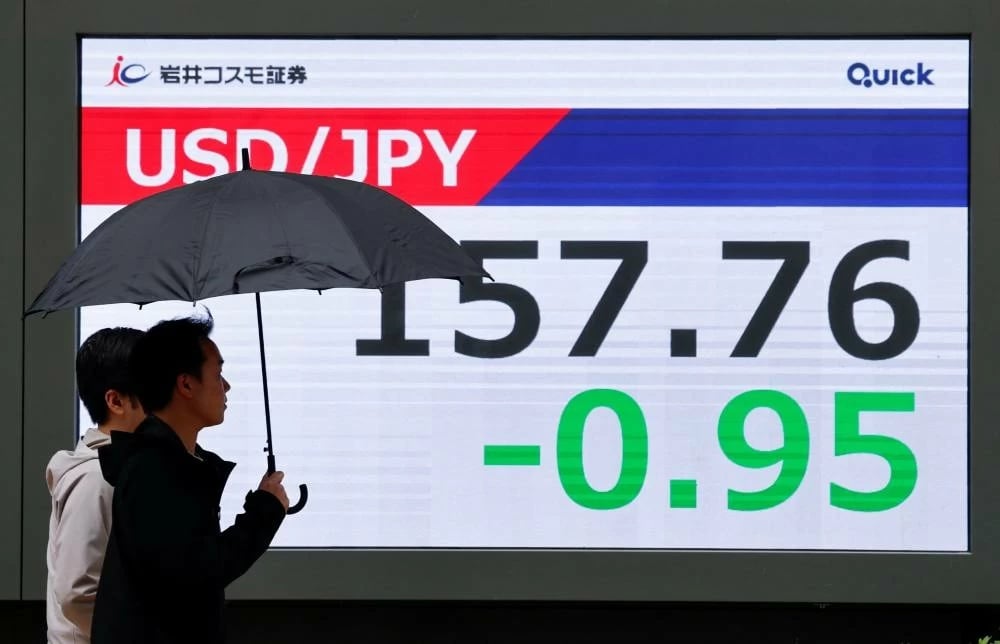
2026 © Helium Trades
Privacy Policy & Disclosure
* Disclaimer: Nothing on this website constitutes investment advice, performance data or any recommendation that any particular security, portfolio of securities, transaction or investment strategy is suitable for any specific person. Helium Trades is not responsible in any way for the accuracy
of any model predictions or price data. Any mention of a particular security and related prediction data is not a recommendation to buy or sell that security. Investments in securities involve the risk of loss. Past performance is no guarantee of future results. Helium Trades is not responsible for any of your investment decisions,
you should consult a financial expert before engaging in any transaction.
Helium Research Assistant

How can I help you today?
Ask any question about this page.


