See whether Helium helps you make better-informed decisions. Try every Pro Trader feature for 30 days. No credit card required.
Try every Pro Trader feature for 30 days. No credit card required.
October 04, 2026 · 0 shares
The framing treats the failed lethal injection as a botched, torturous event and gives substantial weight to clemency arguments, producing a mildly anti-death-penalty account.
Automated analysis; not human reviewed.
Limitations: The supplied text includes a truncated substantive article amid unrelated page artifacts; classification relies only on the visible journalistic paragraphs.
·
4 of 55 available dimensions scored; omitted dimensions are not treated as neutral.
·
Verified supporting quotes for 1 of 4 scored dimensions.
Claim: The report's language and selection skew toward a critical, anti-death-penalty perspective by calling the execution botched and highlighting clemency arguments.
“The woman who survived a botched execution attempt in a US prison...” · not found in supplied text
“Pike's lawyers sought clemency citing her age, childhood sexual abuse and mental health problems, including post-traumatic stress disorder.” · exact text match
Why: Although the article includes an official defense, its framing and emphasis on the failed procedure and mitigating circumstances align with a liberal critique of capital punishment.
Claim: The article mostly reports facts with attribution but uses the loaded label 'botched' and quotes emotional allegations, placing it slightly toward the objective side of an otherwise neutral news report.
“The woman who survived a botched execution attempt in a US prison...” · not found in supplied text
“it is clear that she has endured a torturous attempt at executing her.” · exact text match
Why: The term 'botched' is an evaluative descriptor, and the article prominently includes an emotional quote, though the rest is sourced reporting.
Claim: The article supports its account with named sources, direct quotes, and specific institutional detail.
“Pike's attorney Stephen Ferrell said on CNN” · not found in supplied text
“Media witnesses listened to Pike snoring for about an hour after she was given the injections” · exact text match
Why: Every substantive claim is attributed to a named person or witness, and the article includes the state's response alongside criticism.
Claim: The article includes the official defense and the governor's halt, giving a balanced account rather than a one-sided polemic.
“In his resignation statement, Tennessee Department of Correction Commissioner Frank Strada insisted "the Department carried out its responsibilities in accordance with the established protocol."” · exact text match
“And Lee, who previously denied Pike clemency, has halted further executions through the rest of the year pending a third-party review.” · exact text match
Why: The inclusion of the official statement and the governor's independent review tempers the criticism from Pike's lawyer and adds fairness signals.
The supplied text includes a truncated substantive article amid unrelated page artifacts; classification relies only on the visible journalistic paragraphs.
October 04, 2026 · 0 shares
The report frames the resignation as an accountability step in response to a second procedural failure in Tennessee's lethal-injection process, relying on official statements and attributed expert accounts.
Automated analysis; not human reviewed.
Limitations: The supplied text is a brief unattributed dispatch; framing analysis is limited to the headline and short body, without full RT context or earlier coverage.
·
3 of 55 available dimensions scored; omitted dimensions are not treated as neutral.
·
Verified supporting quotes for 3 of 3 scored dimensions.
Claim: The report is largely objective, presenting attributed events and quotes without overt editorializing.
“Lee announced the resignation of Tennessee Department of Correction Commissioner Frank Strada after ordering an independent review of the botched execution.” · exact text match
Why: The sentence reports an announcement and a related action without subjective evaluation, indicating a factual rather than opinion-driven presentation.
Claim: The report describes events and attributed accounts rather than prescribing a policy or action.
“Pike, who was sentenced to death in 1996 for the 1995 torture and murder of 19-year-old Colleen Slemmer, remains unconscious and on a ventilator after surviving a failed lethal injection with two doses of pentobarbital on September 30, according to her lawyers.” · exact text match
Why: The passage supplies background and status details in a neutral expository manner, with no recommendation or judgment from the publisher.
Claim: The report attributes key facts to named officials, lawyers, and outside experts, supporting its credibility as a summary.
“The New York Times, citing outside medical experts, said Pike had probably survived the procedure because the lethal drug leaked into tissue around the insertion sites instead of entering her bloodstream.” · exact text match
Why: The article identifies its sources for the central explanatory claim, providing visible attribution rather than asserting the cause as established fact.
The supplied text is a brief unattributed dispatch; framing analysis is limited to the headline and short body, without full RT context or earlier coverage.
October 07, 2026 · 0 shares
Framing treats a failed lethal injection as an unprecedented medical and procedural event while using attributed expert and lawyer statements rather than direct editorializing.
Automated analysis; not human reviewed.
Limitations: No external verification of the article's medical, legal, or statistical claims was possible; assessment is based on a single supplied text.
·
7 of 55 available dimensions scored; omitted dimensions are not treated as neutral.
·
Verified supporting quotes for 7 of 7 scored dimensions.
Claim: The article is written in an objective, attributed-reporting style rather than subjective or impressionistic.
“her attorneys said in a statement on Tuesday” · exact text match
“Deborah Denno, a criminologist and professor at Fordham Law School, said she was "absolutely astonished" that Pike was conscious and speaking.” · exact text match
Why: Claims are repeatedly attributed to named lawyers, experts, and officials, with no direct editorial evaluation inserted.
Claim: The article is factful and neutral rather than opinionated.
“her attorneys said in a statement on Tuesday” · exact text match
“Authorities have not yet said whether they will try again to execute Pike.” · exact text match
Why: It reports statements and unanswered official questions without offering editorial judgments or prescriptions.
Claim: The article presents complexity and context rather than reducing the event to a simple conclusion.
“But there remains a lot of uncertainty and many unknowns, he said, including how much of the pentobarbital got into her system, what her blood levels were after the injection and what her recovery will look like.” · exact text match
“For lethal injections, such incidents have typically occurred due to difficulty obtaining reliable IV access to the veins, though the underlying reason differs from person to person.” · exact text match
Why: It acknowledges multiple possible causes, unresolved variables, and context from prior cases.
Claim: The article avoids certainty beyond the supplied support.
“Her lawyers said her prognosis remained unclear” · exact text match
“"I would not, in any way, say at this point that all the big risks are behind her," he noted.” · exact text match
Why: The publisher includes explicit hedges and quotes a clinician warning that major risks remain.
Claim: The report demonstrates credible sourcing and epistemic restraint.
“according to the Death Penalty Information Center, which tracks information about such cases.” · exact text match
“But there remains a lot of uncertainty and many unknowns, he said, including how much of the pentobarbital got into her system, what her blood levels were after the injection and what her recovery will look like.” · exact text match
Why: It names experts and institutions, attributes statements, and openly identifies unresolved medical and procedural questions.
Claim: The article's reasoning is epistemically cautious and evidence-attributing rather than irrational.
“But there remains a lot of uncertainty and many unknowns, he said, including how much of the pentobarbital got into her system, what her blood levels were after the injection and what her recovery will look like.” · exact text match
Why: The publisher repeatedly flags uncertainty and relies on named experts and attributed statements.
Claim: The article signals honesty through transparent attribution and by flagging unresolved official questions.
“Authorities have not yet said whether they will try again to execute Pike.” · exact text match
“Her lawyers said her prognosis remained unclear, "at a minimum, we expect a long recovery".” · exact text match
Why: It states what is unknown and attributes contested or uncertain claims rather than asserting them as settled facts.
No external verification of the article's medical, legal, or statistical claims was possible; assessment is based on a single supplied text.
October 07, 2026 · 0 shares
Framing treats a failed lethal injection as an unprecedented medical and procedural event while using attributed expert and lawyer statements rather than direct editorializing.
Automated analysis; not human reviewed.
Limitations: No external verification of the article's medical, legal, or statistical claims was possible; assessment is based on a single supplied text.
·
7 of 55 available dimensions scored; omitted dimensions are not treated as neutral.
·
Verified supporting quotes for 7 of 7 scored dimensions.
Claim: The article is written in an objective, attributed-reporting style rather than subjective or impressionistic.
“her attorneys said in a statement on Tuesday” · exact text match
“Deborah Denno, a criminologist and professor at Fordham Law School, said she was "absolutely astonished" that Pike was conscious and speaking.” · exact text match
Why: Claims are repeatedly attributed to named lawyers, experts, and officials, with no direct editorial evaluation inserted.
Claim: The article is factful and neutral rather than opinionated.
“her attorneys said in a statement on Tuesday” · exact text match
“Authorities have not yet said whether they will try again to execute Pike.” · exact text match
Why: It reports statements and unanswered official questions without offering editorial judgments or prescriptions.
Claim: The article presents complexity and context rather than reducing the event to a simple conclusion.
“But there remains a lot of uncertainty and many unknowns, he said, including how much of the pentobarbital got into her system, what her blood levels were after the injection and what her recovery will look like.” · exact text match
“For lethal injections, such incidents have typically occurred due to difficulty obtaining reliable IV access to the veins, though the underlying reason differs from person to person.” · exact text match
Why: It acknowledges multiple possible causes, unresolved variables, and context from prior cases.
Claim: The article avoids certainty beyond the supplied support.
“Her lawyers said her prognosis remained unclear” · exact text match
“"I would not, in any way, say at this point that all the big risks are behind her," he noted.” · exact text match
Why: The publisher includes explicit hedges and quotes a clinician warning that major risks remain.
Claim: The report demonstrates credible sourcing and epistemic restraint.
“according to the Death Penalty Information Center, which tracks information about such cases.” · exact text match
“But there remains a lot of uncertainty and many unknowns, he said, including how much of the pentobarbital got into her system, what her blood levels were after the injection and what her recovery will look like.” · exact text match
Why: It names experts and institutions, attributes statements, and openly identifies unresolved medical and procedural questions.
Claim: The article's reasoning is epistemically cautious and evidence-attributing rather than irrational.
“But there remains a lot of uncertainty and many unknowns, he said, including how much of the pentobarbital got into her system, what her blood levels were after the injection and what her recovery will look like.” · exact text match
Why: The publisher repeatedly flags uncertainty and relies on named experts and attributed statements.
Claim: The article signals honesty through transparent attribution and by flagging unresolved official questions.
“Authorities have not yet said whether they will try again to execute Pike.” · exact text match
“Her lawyers said her prognosis remained unclear, "at a minimum, we expect a long recovery".” · exact text match
Why: It states what is unknown and attributes contested or uncertain claims rather than asserting them as settled facts.
No external verification of the article's medical, legal, or statistical claims was possible; assessment is based on a single supplied text.
October 07, 2026 · 0 shares
Framing treats a failed lethal injection as an unprecedented medical and procedural event while using attributed expert and lawyer statements rather than direct editorializing.
Automated analysis; not human reviewed.
Limitations: No external verification of the article's medical, legal, or statistical claims was possible; assessment is based on a single supplied text.
·
7 of 55 available dimensions scored; omitted dimensions are not treated as neutral.
·
Verified supporting quotes for 7 of 7 scored dimensions.
Claim: The article is written in an objective, attributed-reporting style rather than subjective or impressionistic.
“her attorneys said in a statement on Tuesday” · exact text match
“Deborah Denno, a criminologist and professor at Fordham Law School, said she was "absolutely astonished" that Pike was conscious and speaking.” · exact text match
Why: Claims are repeatedly attributed to named lawyers, experts, and officials, with no direct editorial evaluation inserted.
Claim: The article is factful and neutral rather than opinionated.
“her attorneys said in a statement on Tuesday” · exact text match
“Authorities have not yet said whether they will try again to execute Pike.” · exact text match
Why: It reports statements and unanswered official questions without offering editorial judgments or prescriptions.
Claim: The article presents complexity and context rather than reducing the event to a simple conclusion.
“But there remains a lot of uncertainty and many unknowns, he said, including how much of the pentobarbital got into her system, what her blood levels were after the injection and what her recovery will look like.” · exact text match
“For lethal injections, such incidents have typically occurred due to difficulty obtaining reliable IV access to the veins, though the underlying reason differs from person to person.” · exact text match
Why: It acknowledges multiple possible causes, unresolved variables, and context from prior cases.
Claim: The article avoids certainty beyond the supplied support.
“Her lawyers said her prognosis remained unclear” · exact text match
“"I would not, in any way, say at this point that all the big risks are behind her," he noted.” · exact text match
Why: The publisher includes explicit hedges and quotes a clinician warning that major risks remain.
Claim: The report demonstrates credible sourcing and epistemic restraint.
“according to the Death Penalty Information Center, which tracks information about such cases.” · exact text match
“But there remains a lot of uncertainty and many unknowns, he said, including how much of the pentobarbital got into her system, what her blood levels were after the injection and what her recovery will look like.” · exact text match
Why: It names experts and institutions, attributes statements, and openly identifies unresolved medical and procedural questions.
Claim: The article's reasoning is epistemically cautious and evidence-attributing rather than irrational.
“But there remains a lot of uncertainty and many unknowns, he said, including how much of the pentobarbital got into her system, what her blood levels were after the injection and what her recovery will look like.” · exact text match
Why: The publisher repeatedly flags uncertainty and relies on named experts and attributed statements.
Claim: The article signals honesty through transparent attribution and by flagging unresolved official questions.
“Authorities have not yet said whether they will try again to execute Pike.” · exact text match
“Her lawyers said her prognosis remained unclear, "at a minimum, we expect a long recovery".” · exact text match
Why: It states what is unknown and attributes contested or uncertain claims rather than asserting them as settled facts.
No external verification of the article's medical, legal, or statistical claims was possible; assessment is based on a single supplied text.
October 04, 2026 · 0 shares
The report frames the resignation as an accountability step in response to a second procedural failure in Tennessee's lethal-injection process, relying on official statements and attributed expert accounts.
Automated analysis; not human reviewed.
Limitations: The supplied text is a brief unattributed dispatch; framing analysis is limited to the headline and short body, without full RT context or earlier coverage.
·
3 of 55 available dimensions scored; omitted dimensions are not treated as neutral.
·
Verified supporting quotes for 3 of 3 scored dimensions.
Claim: The report is largely objective, presenting attributed events and quotes without overt editorializing.
“Lee announced the resignation of Tennessee Department of Correction Commissioner Frank Strada after ordering an independent review of the botched execution.” · exact text match
Why: The sentence reports an announcement and a related action without subjective evaluation, indicating a factual rather than opinion-driven presentation.
Claim: The report describes events and attributed accounts rather than prescribing a policy or action.
“Pike, who was sentenced to death in 1996 for the 1995 torture and murder of 19-year-old Colleen Slemmer, remains unconscious and on a ventilator after surviving a failed lethal injection with two doses of pentobarbital on September 30, according to her lawyers.” · exact text match
Why: The passage supplies background and status details in a neutral expository manner, with no recommendation or judgment from the publisher.
Claim: The report attributes key facts to named officials, lawyers, and outside experts, supporting its credibility as a summary.
“The New York Times, citing outside medical experts, said Pike had probably survived the procedure because the lethal drug leaked into tissue around the insertion sites instead of entering her bloodstream.” · exact text match
Why: The article identifies its sources for the central explanatory claim, providing visible attribution rather than asserting the cause as established fact.
The supplied text is a brief unattributed dispatch; framing analysis is limited to the headline and short body, without full RT context or earlier coverage.
October 04, 2026 · 0 shares
The framing treats the failed lethal injection as a botched, torturous event and gives substantial weight to clemency arguments, producing a mildly anti-death-penalty account.
Automated analysis; not human reviewed.
Limitations: The supplied text includes a truncated substantive article amid unrelated page artifacts; classification relies only on the visible journalistic paragraphs.
·
4 of 55 available dimensions scored; omitted dimensions are not treated as neutral.
·
Verified supporting quotes for 1 of 4 scored dimensions.
Claim: The report's language and selection skew toward a critical, anti-death-penalty perspective by calling the execution botched and highlighting clemency arguments.
“The woman who survived a botched execution attempt in a US prison...” · not found in supplied text
“Pike's lawyers sought clemency citing her age, childhood sexual abuse and mental health problems, including post-traumatic stress disorder.” · exact text match
Why: Although the article includes an official defense, its framing and emphasis on the failed procedure and mitigating circumstances align with a liberal critique of capital punishment.
Claim: The article mostly reports facts with attribution but uses the loaded label 'botched' and quotes emotional allegations, placing it slightly toward the objective side of an otherwise neutral news report.
“The woman who survived a botched execution attempt in a US prison...” · not found in supplied text
“it is clear that she has endured a torturous attempt at executing her.” · exact text match
Why: The term 'botched' is an evaluative descriptor, and the article prominently includes an emotional quote, though the rest is sourced reporting.
Claim: The article supports its account with named sources, direct quotes, and specific institutional detail.
“Pike's attorney Stephen Ferrell said on CNN” · not found in supplied text
“Media witnesses listened to Pike snoring for about an hour after she was given the injections” · exact text match
Why: Every substantive claim is attributed to a named person or witness, and the article includes the state's response alongside criticism.
Claim: The article includes the official defense and the governor's halt, giving a balanced account rather than a one-sided polemic.
“In his resignation statement, Tennessee Department of Correction Commissioner Frank Strada insisted "the Department carried out its responsibilities in accordance with the established protocol."” · exact text match
“And Lee, who previously denied Pike clemency, has halted further executions through the rest of the year pending a third-party review.” · exact text match
Why: The inclusion of the official statement and the governor's independent review tempers the criticism from Pike's lawyer and adds fairness signals.
The supplied text includes a truncated substantive article amid unrelated page artifacts; classification relies only on the visible journalistic paragraphs.
October 03, 2026 · 0 shares
Framing is factual and restrained, presenting the resignation and the independent review as institutional responses to a critically failed lethal injection without editorial commentary.
Automated analysis; not human reviewed.
Limitations: Only a headline/subheadline was provided; body text, publication date, and source attribution were unavailable, limiting framing analysis to this brief excerpt.
·
2 of 55 available dimensions scored; omitted dimensions are not treated as neutral.
·
Verified supporting quotes for 2 of 2 scored dimensions.
Claim: Publisher framing is mostly objective, reporting events and institutional actions without substantial editorializing.
“Tennessee prison chief resigns after failed Christa Pike execution” · exact text match
“Frank Strada steps down as state launches independent review into botched lethal injection that left Pike critically ill” · exact text match
Why: The text reports concrete events and official actions; 'botched' and 'failed' characterize the procedure's outcome but do not express political or emotional opinion.
Claim: Publisher framing is non-sensational, using restrained institutional language rather than graphic or inflammatory wording.
“Frank Strada steps down as state launches independent review into botched lethal injection that left Pike critically ill” · exact text match
Why: The headline avoids lurid detail, emotional adjectives, or outrage framing; 'critically ill' is a clinical status report and the focus is on official actions.
Only a headline/subheadline was provided; body text, publication date, and source attribution were unavailable, limiting framing analysis to this brief excerpt.
October 06, 2026 · 0 shares
The reporting frames the botched lethal injection as a procedural problem for Tennessee officials, foregrounding Republican proposals to broaden execution methods rather than treating capital punishment's legitimacy as the open question.
Automated analysis; not human reviewed.
Limitations: The supplied text intermixes the main Tennessee execution story with many unrelated syndicated headlines; analysis was limited to the initial Tennessee report.
·
4 of 55 available dimensions scored; omitted dimensions are not treated as neutral.
·
Verified supporting quotes for 4 of 4 scored dimensions.
Claim: The report is dispassionate and attribute-heavy.
“Blackburn told The Associated Press.” · exact text match
“according to the Death Penalty Information Center.” · exact text match
Why: The article attributes statements and national-context data to named sources rather than presenting them as the reporter's own conclusions.
Claim: The main report is not sensationalized; its vivid details are attributed and its tone remains factual.
“Tennessee’s execution procedures have been in the national spotlight since Wednesday, when prison officials gave Pike two doses of a barbiturate that were supposed to be lethal but didn't ultimately kill her.” · verified after text normalization
Why: The prose uses conventional news language and attributes the graphic aftermath to lawyers; the focus remains on policy and procedure rather than emotional spectacle.
Claim: The report is centered on partisan actors and a legislative response to the execution.
“Tennessee Republicans weigh execution options after failed lethal injection.” · exact text match
“US Senator Marsha Blackburn, the state’s Republican candidate for governor, said Pike’s unsuccessful execution last week “should not be grounds to halt carrying out the death penalty.”” · exact text match
Why: The headline and lede frame the event around Republican officeholders and their stated intention to continue executions.
Claim: The report maintains strong visible sourcing and attribution.
“according to the Death Penalty Information Center.” · exact text match
“Pike has remained hospitalised under guard, left unconscious and on a ventilator with blisters and burns on her arms from the drug, her lawyers have said.” · exact text match
Why: Legal and national-context claims are attributed to an identified research center, and the prisoner's medical condition is attributed to her lawyers; no anonymous assertions are used.
The supplied text intermixes the main Tennessee execution story with many unrelated syndicated headlines; analysis was limited to the initial Tennessee report.
Framing treats the failed lethal injection as a procedural problem to be solved by adding execution methods, with Republican lawmakers as the responding agents.
Automated analysis; not human reviewed.
Limitations: Only a headline was supplied; body sourcing, balance, and corroborating detail are unavailable.
·
4 of 55 available dimensions scored; omitted dimensions are not treated as neutral.
·
Verified supporting quotes for 4 of 4 scored dimensions.
Claim: The headline is worded objectively, reporting an action and an outcome without evaluating them.
“Tennessee Republicans Consider More Execution Options After Christa Pike Lethal Injection Fails” · exact text match
Why: It uses declarative, non-emotive verbs ('Consider', 'Fails') and contains no judgmental modifiers.
Claim: The headline is non-sensational and contains no dramatic or emotive elaboration.
“Tennessee Republicans Consider More Execution Options After Christa Pike Lethal Injection Fails” · exact text match
Why: It states the event plainly, with no hyperbole, loaded language, or graphic detail.
Claim: The headline describes a policy deliberation rather than instructing what should be done.
“Tennessee Republicans Consider More Execution Options” · exact text match
Why: The main verb 'Consider' frames the content as an ongoing deliberative action, not as a recommendation or demand.
Claim: The headline frames the story around partisan lawmakers and a state execution-policy decision.
“Tennessee Republicans Consider More Execution Options” · exact text match
Why: It names a political party as the active subject and concerns state policy on executions.
Only a headline was supplied; body sourcing, balance, and corroborating detail are unavailable.
October 08, 2026 · 0 shares
The report maintains a largely neutral, wire-service style, attributing contested claims to attorneys and officials while detailing the mechanics of the execution and the failed Pike injection without advocacy.
In 2002 the U.S. Supreme Court barred the execution of intellectually disabled people but gave states discretion in determining such disabilities.
Tennessee Governor Bill Lee has halted his state's one remaining scheduled execution this year.
Automated analysis; not human reviewed.
Limitations: Some substantive details (Howard's exact post-execution process, Swartout's family statements) are only indirectly reported; wire-style attribution limits independent verification of contested claims.
·
54 of 55 available dimensions scored; omitted dimensions are not treated as neutral.
·
Verified supporting quotes for 11 of 54 scored dimensions.
Claim: The report relies almost entirely on attributed facts from officials, court records, and lawyers, with minimal evaluative language.
“he was convicted of killing of Vickie Swartout, 42, in a 2000 store robbery caught on surveillance video.” · not found in supplied text
“The court denied that request and a second filing involving the drugs without comment.” · exact text match
Why: Factual sequence and court outcome are stated without interpretive framing.
Claim: Execution details are reported in clinical, procedural terms rather than with dramatization or sensational emphasis.
“was pronounced dead at 8.03 p.m. on Wednesday (October 7, 2026) after receiving a fatal dose of pentobarbital” · exact text match
Why: The method and time are given as factual details, not sensationalized.
Claim: The article describes the execution and surrounding legal process without prescribing a policy position on capital punishment.
“Texas has executed six people so far in 2026 and plans two more executions scheduled this year.” · exact text match
Why: Status reporting on execution counts and schedules reflects descriptive rather than prescriptive framing.
Claim: The execution is a politicized state action, but the article mostly reports procedural facts rather than political advocacy.
“Tennessee's Republican Gov. Bill Lee has halted the one remaining execution that was scheduled to be carried out in his state this year.” · exact text match
Why: A partisan figure is mentioned only as context for an execution halt.
Claim: Some context on the intellectual disability standard is compressed but not materially misleading.
“But it has given states some discretion in how they determine such disabilities.” · exact text match
Why: Complex legal standard is briefly summarized.
Claim: The report repeatedly grounds statements in official sources and court rulings.
“The Supreme Court in 2002 had barred the execution of intellectually disabled people.” · exact text match
Why: Authority citations are used to establish context, though appropriately attributed.
Claim: The article relies on official state and court statements without challenging their framing.
“said Amanda Hernandez, a spokesperson for the Texas Department of Criminal Justice” · exact text match
“The state told the court” · exact text match
Why: Official accounts are given prominence; no adversarial framing toward authorities.
Claim: The report uses precise times, locations, attributed spokespeople, and court outcomes, supporting trustworthiness.
“was pronounced dead at 8.03 p.m. on Wednesday (October 7, 2026)” · exact text match
Why: Specific verifiable details improve credibility.
Claim: The report thoroughly grounds contested claims in court filings and official statements, not speculation.
“His attorneys also argued unsuccessfully to the US Supreme Court that Howard's execution should be halted because he was intellectually disabled.” · exact text match
“The state told the court that Howard's lawyers did not present evidence that would show he meets the requirements for a claim of intellectual disability.” · exact text match
Why: Both sides of the contested disability claim are attributed to court filings, reflecting rational evidence-bound framing.
Claim: The report has no strong AI-authorship markers and contains specific, sourced reporting typical of wire journalism.
“said Amanda Hernandez, a spokesperson for the Texas Department of Criminal Justice.” · exact text match
Why: Specific attributions and date-stamped details are weak signals at most; no strong AI indicators.
Claim: The report attributes contested legal and medical claims to their sources and notes outcomes including denials.
“The high court late Wednesday declined to intervene, without comment, clearing the way for the execution.” · exact text match
Why: Straight attribution of court actions supports internal fairness and honesty.
Claim: The report synthesizes legal, medical, and procedural context coherently.
“Earlier Wednesday (October 7, 2026), Howard's attorneys unsuccessfully sought to block the execution by arguing that he was intellectual disabled and that he faced the same risks similar to those in Pike's case because both states use pentobarbital for lethal injections.” · exact text match
Why: Multifaceted legal and procedural details are clearly organized.
Some substantive details (Howard's exact post-execution process, Swartout's family statements) are only indirectly reported; wire-style attribution limits independent verification of contested claims.
The coverage is largely neutral and procedural, relying on official corrections statements and court records while presenting contested execution-drug and intellectual-disability claims with clear attribution.
The U.S. Supreme Court in 2002 barred the execution of intellectually disabled people but gave states some discretion in determining such disabilities.
Automated analysis; not human reviewed.
Limitations: None material; the supplied text is a straightforward news report with no clear publisher framing.
·
51 of 55 available dimensions scored; omitted dimensions are not treated as neutral.
·
Verified supporting quotes for 13 of 51 scored dimensions.
Claim: The article treats state execution authority as routine and procedural.
“Texas carries out nation’s first execution since Christa Pike’s failed lethal injection in Tennessee” · exact text match
Why: The framing presents state-administered capital punishment as a normal event rather than contesting its legitimacy.
Claim: The account is predominantly factual and procedurally descriptive.
“Jamaal Howard, 46, was pronounced dead at 8:03 p.m. after receiving a fatal dose of pentobarbital at the state prison in Huntsville.” · exact text match
Why: The core reporting consists of verified procedural facts with minimal subjective interpretation.
Claim: The article avoids sensationalizing the execution despite vivid details.
“Within about 30 seconds, all movement stopped.” · exact text match
Why: Execution details are stated clinically rather than dramatically.
Claim: The article describes events without advocating a policy position.
“Texas has executed six people so far in 2026 and plans two more executions later this year.” · exact text match
Why: The reporting states facts and plans without recommending action.
Claim: Coverage is neutral on the death penalty as a policy, reporting execution without endorsing or condemning it.
“A Texas man who fatally shot a convenience store clerk was put to death Wednesday evening” · exact text match
Why: The framing neither glorifies nor criticizes the execution.
Claim: The article cites official and legal authorities for key procedural claims.
“The Supreme Court in 2002 had barred the execution of intellectually disabled people, though it gave states some discretion in determining such disabilities.” · exact text match
Why: Authority is used to establish legal context, not to substitute for evidence.
Claim: The article relies heavily on official corrections and court accounts.
“said Amanda Hernandez, a spokesperson for the Texas Department of Criminal Justice.” · exact text match
Why: Official sources are prominent but balanced by defense attorney claims.
Claim: The tone is largely restrained despite an emotionally charged event.
“He then began making snoring sounds, coughed and resumed the snoring sounds, each time the sound becoming quieter.” · exact text match
Why: The description is clinical and non-emotional.
Claim: The report is credible, with attribution to court records, officials, and attorneys.
“according to court records” · exact text match
Why: Multiple sourced attributions and procedural details support credibility.
Claim: The article relies on medical and pharmacological terminology without endorsing superstition.
“fatal dose of pentobarbital” · exact text match
Why: The description uses accepted medical terms for the execution method.
Claim: The article shows few strong AI-authorship indicators.
“said Amanda Hernandez, a spokesperson for the Texas Department of Criminal Justice.” · exact text match
Why: The style is consistent with standard human news writing; no multiple independent AI indicators are present.
Claim: The article attributes contested claims and distinguishes official statements from legal arguments.
“Her lawyers said she was unconscious at a hospital after the attempt but was awake and speaking by Tuesday.” · exact text match
Why: Attribution is consistently provided for contested or secondhand information.
Claim: The article is truth-seeking, reporting verifiable facts and attributed claims.
“Evidence presented at trial included surveillance video showing Howard shooting Swartout.” · exact text match
Why: Claims are tied to concrete evidence such as video and court records.
None material; the supplied text is a straightforward news report with no clear publisher framing.
October 08, 2026 · 0 shares
The report maintains a largely neutral, wire-service style, attributing contested claims to attorneys and officials while detailing the mechanics of the execution and the failed Pike injection without advocacy.
In 2002 the U.S. Supreme Court barred the execution of intellectually disabled people but gave states discretion in determining such disabilities.
Tennessee Governor Bill Lee has halted his state's one remaining scheduled execution this year.
Automated analysis; not human reviewed.
Limitations: Some substantive details (Howard's exact post-execution process, Swartout's family statements) are only indirectly reported; wire-style attribution limits independent verification of contested claims.
·
54 of 55 available dimensions scored; omitted dimensions are not treated as neutral.
·
Verified supporting quotes for 11 of 54 scored dimensions.
Claim: The report relies almost entirely on attributed facts from officials, court records, and lawyers, with minimal evaluative language.
“he was convicted of killing of Vickie Swartout, 42, in a 2000 store robbery caught on surveillance video.” · not found in supplied text
“The court denied that request and a second filing involving the drugs without comment.” · exact text match
Why: Factual sequence and court outcome are stated without interpretive framing.
Claim: Execution details are reported in clinical, procedural terms rather than with dramatization or sensational emphasis.
“was pronounced dead at 8.03 p.m. on Wednesday (October 7, 2026) after receiving a fatal dose of pentobarbital” · exact text match
Why: The method and time are given as factual details, not sensationalized.
Claim: The article describes the execution and surrounding legal process without prescribing a policy position on capital punishment.
“Texas has executed six people so far in 2026 and plans two more executions scheduled this year.” · exact text match
Why: Status reporting on execution counts and schedules reflects descriptive rather than prescriptive framing.
Claim: The execution is a politicized state action, but the article mostly reports procedural facts rather than political advocacy.
“Tennessee's Republican Gov. Bill Lee has halted the one remaining execution that was scheduled to be carried out in his state this year.” · exact text match
Why: A partisan figure is mentioned only as context for an execution halt.
Claim: Some context on the intellectual disability standard is compressed but not materially misleading.
“But it has given states some discretion in how they determine such disabilities.” · exact text match
Why: Complex legal standard is briefly summarized.
Claim: The report repeatedly grounds statements in official sources and court rulings.
“The Supreme Court in 2002 had barred the execution of intellectually disabled people.” · exact text match
Why: Authority citations are used to establish context, though appropriately attributed.
Claim: The article relies on official state and court statements without challenging their framing.
“said Amanda Hernandez, a spokesperson for the Texas Department of Criminal Justice” · exact text match
“The state told the court” · exact text match
Why: Official accounts are given prominence; no adversarial framing toward authorities.
Claim: The report uses precise times, locations, attributed spokespeople, and court outcomes, supporting trustworthiness.
“was pronounced dead at 8.03 p.m. on Wednesday (October 7, 2026)” · exact text match
Why: Specific verifiable details improve credibility.
Claim: The report thoroughly grounds contested claims in court filings and official statements, not speculation.
“His attorneys also argued unsuccessfully to the US Supreme Court that Howard's execution should be halted because he was intellectually disabled.” · exact text match
“The state told the court that Howard's lawyers did not present evidence that would show he meets the requirements for a claim of intellectual disability.” · exact text match
Why: Both sides of the contested disability claim are attributed to court filings, reflecting rational evidence-bound framing.
Claim: The report has no strong AI-authorship markers and contains specific, sourced reporting typical of wire journalism.
“said Amanda Hernandez, a spokesperson for the Texas Department of Criminal Justice.” · exact text match
Why: Specific attributions and date-stamped details are weak signals at most; no strong AI indicators.
Claim: The report attributes contested legal and medical claims to their sources and notes outcomes including denials.
“The high court late Wednesday declined to intervene, without comment, clearing the way for the execution.” · exact text match
Why: Straight attribution of court actions supports internal fairness and honesty.
Claim: The report synthesizes legal, medical, and procedural context coherently.
“Earlier Wednesday (October 7, 2026), Howard's attorneys unsuccessfully sought to block the execution by arguing that he was intellectual disabled and that he faced the same risks similar to those in Pike's case because both states use pentobarbital for lethal injections.” · exact text match
Why: Multifaceted legal and procedural details are clearly organized.
Some substantive details (Howard's exact post-execution process, Swartout's family statements) are only indirectly reported; wire-style attribution limits independent verification of contested claims.
October 06, 2026 · 0 shares
Framing emphasizes the condemned inmate’s suffering and state incompetence, casting the failed execution as cruel and inhumane.
Automated analysis; not human reviewed.
Limitations: Only the supplied excerpt was analyzed; it includes repeated headlines and no direct state response beyond the resignation, so classification rests on the publisher’s selected framing.
·
8 of 55 available dimensions scored; omitted dimensions are not treated as neutral.
·
Verified supporting quotes for 7 of 8 scored dimensions.
Claim: The publisher frames the failed execution through criticism of the state and sympathy for the inmate, a liberal-leaning stance on capital punishment.
“Christa Pike’s lawyer pushes for death row inmate’s life to be spared after botched execution” · exact text match
“Last night was not just inefficient, it was cruel, and it was torturous.
It was also predictable.”
· not found in supplied text
Why: The headline foregrounds the lawyer’s bid to spare the inmate, and the selected quote condemns the state’s conduct, but the story still identifies Pike as a convicted murderer and does not explicitly advocate abolition.
Claim: The article uses graphic and dramatic language about the image and the execution.
“Gruesome image leaks after murderer’s botched execution” · exact text match
“fears she may never recover from the ordeal” · exact text match
Why: The headline’s “gruesome” and “botched” plus the unqualified “fears she may never recover” push toward sensational framing.
Claim: The story centers on an unusual, high-stakes event involving a leaked gruesome image and a botched execution.
“An image has leaked online of convicted murderer Christa Pike after she survived execution by lethal injection.” · exact text match
Why: The convergence of a botched execution, leaked photograph, resignation, and legal fight makes the subject inherently striking.
Claim: The article uses frightening outcomes and gruesome imagery to engage readers.
“Gruesome image leaks after murderer’s botched execution” · exact text match
“fears she may never recover from the ordeal” · exact text match
Why: The language is designed to evoke dread, though the underlying event is genuinely severe.
Claim: The article inserts evaluative language rather than staying strictly factual.
“But what was supposed to be a painless passing for the convicted murderer turned into an hours-long ordeal that she survived.” · exact text match
Why: This sentence editorializes about what should have happened and characterizes the ordeal, going beyond neutral reporting.
Claim: The story’s framing is critical of the Tennessee government’s execution process.
“Correction Department head Frank Strada resigned over the bungled execution” · exact text match
“Randy Spivey lambasted the Tennessee government a day after the execution, saying the state was “not capable of carrying out an execution consistent with basic human dignity”” · exact text match
Why: It highlights official failure and quotes harsh criticism of state capacity, but much of the criticism is attributed to the inmate’s lawyers rather than stated by the publisher.
Claim: The overall tone is strongly negative, emphasizing pain, cruelty, and trauma.
“swollen, burned, and blistered” · exact text match
“fears she may never recover” · exact text match
“cruel, and it was torturous” · exact text match
Why: The selected details highlight the inmate’s suffering and the state’s cruelty, producing a negative emotional charge.
Claim: The article shows visible sourcing and attribution practices that support trustworthiness.
“Her lawyers have claimed the execution team failed at injecting her with a lethal dose of pentobarbital not once, but twice.” · exact text match
“Assistant Federal Defender and Pike’s lawyer Stephen Ferrell told CNN’s State Of The Union: “Not that I am aware of.”” · exact text match
Why: It attributes claims to named lawyers, uses “reportedly” for the leaked image, and quotes a named source, indicating routine journalistic sourcing.
Only the supplied excerpt was analyzed; it includes repeated headlines and no direct state response beyond the resignation, so classification rests on the publisher’s selected framing.
October 07, 2026 · 0 shares
Framing treats a failed lethal injection as an unprecedented medical and procedural event while using attributed expert and lawyer statements rather than direct editorializing.
Automated analysis; not human reviewed. Limitations: No external verification of the article's medical, legal, or statistical claims was possible; assessment is based on a single supplied text. · 7 of 55 available dimensions scored; omitted dimensions are not treated as neutral. · Verified supporting quotes for 7 of 7 scored dimensions.
Claim: The article is written in an objective, attributed-reporting style rather than subjective or impressionistic.
“her attorneys said in a statement on Tuesday” · exact text match
“Deborah Denno, a criminologist and professor at Fordham Law School, said she was "absolutely astonished" that Pike was conscious and speaking.” · exact text match
Why: Claims are repeatedly attributed to named lawyers, experts, and officials, with no direct editorial evaluation inserted.
Claim: The article is factful and neutral rather than opinionated.
“her attorneys said in a statement on Tuesday” · exact text match
“Authorities have not yet said whether they will try again to execute Pike.” · exact text match
Why: It reports statements and unanswered official questions without offering editorial judgments or prescriptions.
Claim: The article presents complexity and context rather than reducing the event to a simple conclusion.
“But there remains a lot of uncertainty and many unknowns, he said, including how much of the pentobarbital got into her system, what her blood levels were after the injection and what her recovery will look like.” · exact text match
“For lethal injections, such incidents have typically occurred due to difficulty obtaining reliable IV access to the veins, though the underlying reason differs from person to person.” · exact text match
Why: It acknowledges multiple possible causes, unresolved variables, and context from prior cases.
Claim: The article avoids certainty beyond the supplied support.
“Her lawyers said her prognosis remained unclear” · exact text match
“"I would not, in any way, say at this point that all the big risks are behind her," he noted.” · exact text match
Why: The publisher includes explicit hedges and quotes a clinician warning that major risks remain.
Claim: The report demonstrates credible sourcing and epistemic restraint.
“according to the Death Penalty Information Center, which tracks information about such cases.” · exact text match
“But there remains a lot of uncertainty and many unknowns, he said, including how much of the pentobarbital got into her system, what her blood levels were after the injection and what her recovery will look like.” · exact text match
Why: It names experts and institutions, attributes statements, and openly identifies unresolved medical and procedural questions.
Claim: The article's reasoning is epistemically cautious and evidence-attributing rather than irrational.
“But there remains a lot of uncertainty and many unknowns, he said, including how much of the pentobarbital got into her system, what her blood levels were after the injection and what her recovery will look like.” · exact text match
Why: The publisher repeatedly flags uncertainty and relies on named experts and attributed statements.
Claim: The article signals honesty through transparent attribution and by flagging unresolved official questions.
“Authorities have not yet said whether they will try again to execute Pike.” · exact text match
“Her lawyers said her prognosis remained unclear, "at a minimum, we expect a long recovery".” · exact text match
Why: It states what is unknown and attributes contested or uncertain claims rather than asserting them as settled facts.
No external verification of the article's medical, legal, or statistical claims was possible; assessment is based on a single supplied text.
October 04, 2026 · 0 shares
The framing treats the failed lethal injection as a botched, torturous event and gives substantial weight to clemency arguments, producing a mildly anti-death-penalty account.
Automated analysis; not human reviewed. Limitations: The supplied text includes a truncated substantive article amid unrelated page artifacts; classification relies only on the visible journalistic paragraphs. · 4 of 55 available dimensions scored; omitted dimensions are not treated as neutral. · Verified supporting quotes for 1 of 4 scored dimensions.
Claim: The report's language and selection skew toward a critical, anti-death-penalty perspective by calling the execution botched and highlighting clemency arguments.
“The woman who survived a botched execution attempt in a US prison...” · not found in supplied text
“Pike's lawyers sought clemency citing her age, childhood sexual abuse and mental health problems, including post-traumatic stress disorder.” · exact text match
Why: Although the article includes an official defense, its framing and emphasis on the failed procedure and mitigating circumstances align with a liberal critique of capital punishment.
Claim: The article mostly reports facts with attribution but uses the loaded label 'botched' and quotes emotional allegations, placing it slightly toward the objective side of an otherwise neutral news report.
“The woman who survived a botched execution attempt in a US prison...” · not found in supplied text
“it is clear that she has endured a torturous attempt at executing her.” · exact text match
Why: The term 'botched' is an evaluative descriptor, and the article prominently includes an emotional quote, though the rest is sourced reporting.
Claim: The article supports its account with named sources, direct quotes, and specific institutional detail.
“Pike's attorney Stephen Ferrell said on CNN” · not found in supplied text
“Media witnesses listened to Pike snoring for about an hour after she was given the injections” · exact text match
Why: Every substantive claim is attributed to a named person or witness, and the article includes the state's response alongside criticism.
Claim: The article includes the official defense and the governor's halt, giving a balanced account rather than a one-sided polemic.
“In his resignation statement, Tennessee Department of Correction Commissioner Frank Strada insisted "the Department carried out its responsibilities in accordance with the established protocol."” · exact text match
“And Lee, who previously denied Pike clemency, has halted further executions through the rest of the year pending a third-party review.” · exact text match
Why: The inclusion of the official statement and the governor's independent review tempers the criticism from Pike's lawyer and adds fairness signals.
The supplied text includes a truncated substantive article amid unrelated page artifacts; classification relies only on the visible journalistic paragraphs.
October 04, 2026 · 0 shares
The framing treats the failed lethal injection as a botched, torturous event and gives substantial weight to clemency arguments, producing a mildly anti-death-penalty account.
Automated analysis; not human reviewed. Limitations: The supplied text includes a truncated substantive article amid unrelated page artifacts; classification relies only on the visible journalistic paragraphs. · 4 of 55 available dimensions scored; omitted dimensions are not treated as neutral. · Verified supporting quotes for 1 of 4 scored dimensions.
Claim: The report's language and selection skew toward a critical, anti-death-penalty perspective by calling the execution botched and highlighting clemency arguments.
“The woman who survived a botched execution attempt in a US prison...” · not found in supplied text
“Pike's lawyers sought clemency citing her age, childhood sexual abuse and mental health problems, including post-traumatic stress disorder.” · exact text match
Why: Although the article includes an official defense, its framing and emphasis on the failed procedure and mitigating circumstances align with a liberal critique of capital punishment.
Claim: The article mostly reports facts with attribution but uses the loaded label 'botched' and quotes emotional allegations, placing it slightly toward the objective side of an otherwise neutral news report.
“The woman who survived a botched execution attempt in a US prison...” · not found in supplied text
“it is clear that she has endured a torturous attempt at executing her.” · exact text match
Why: The term 'botched' is an evaluative descriptor, and the article prominently includes an emotional quote, though the rest is sourced reporting.
Claim: The article supports its account with named sources, direct quotes, and specific institutional detail.
“Pike's attorney Stephen Ferrell said on CNN” · not found in supplied text
“Media witnesses listened to Pike snoring for about an hour after she was given the injections” · exact text match
Why: Every substantive claim is attributed to a named person or witness, and the article includes the state's response alongside criticism.
Claim: The article includes the official defense and the governor's halt, giving a balanced account rather than a one-sided polemic.
“In his resignation statement, Tennessee Department of Correction Commissioner Frank Strada insisted "the Department carried out its responsibilities in accordance with the established protocol."” · exact text match
“And Lee, who previously denied Pike clemency, has halted further executions through the rest of the year pending a third-party review.” · exact text match
Why: The inclusion of the official statement and the governor's independent review tempers the criticism from Pike's lawyer and adds fairness signals.
The supplied text includes a truncated substantive article amid unrelated page artifacts; classification relies only on the visible journalistic paragraphs.
October 04, 2026 · 0 shares
The report frames the resignation as an accountability step in response to a second procedural failure in Tennessee's lethal-injection process, relying on official statements and attributed expert accounts.
Automated analysis; not human reviewed. Limitations: The supplied text is a brief unattributed dispatch; framing analysis is limited to the headline and short body, without full RT context or earlier coverage. · 3 of 55 available dimensions scored; omitted dimensions are not treated as neutral. · Verified supporting quotes for 3 of 3 scored dimensions.
Claim: The report is largely objective, presenting attributed events and quotes without overt editorializing.
“Lee announced the resignation of Tennessee Department of Correction Commissioner Frank Strada after ordering an independent review of the botched execution.” · exact text match
Why: The sentence reports an announcement and a related action without subjective evaluation, indicating a factual rather than opinion-driven presentation.
Claim: The report describes events and attributed accounts rather than prescribing a policy or action.
“Pike, who was sentenced to death in 1996 for the 1995 torture and murder of 19-year-old Colleen Slemmer, remains unconscious and on a ventilator after surviving a failed lethal injection with two doses of pentobarbital on September 30, according to her lawyers.” · exact text match
Why: The passage supplies background and status details in a neutral expository manner, with no recommendation or judgment from the publisher.
Claim: The report attributes key facts to named officials, lawyers, and outside experts, supporting its credibility as a summary.
“The New York Times, citing outside medical experts, said Pike had probably survived the procedure because the lethal drug leaked into tissue around the insertion sites instead of entering her bloodstream.” · exact text match
Why: The article identifies its sources for the central explanatory claim, providing visible attribution rather than asserting the cause as established fact.
The supplied text is a brief unattributed dispatch; framing analysis is limited to the headline and short body, without full RT context or earlier coverage.
October 06, 2026 · 0 shares
The reporting frames the botched lethal injection as a procedural problem for Tennessee officials, foregrounding Republican proposals to broaden execution methods rather than treating capital punishment's legitimacy as the open question.
Automated analysis; not human reviewed. Limitations: The supplied text intermixes the main Tennessee execution story with many unrelated syndicated headlines; analysis was limited to the initial Tennessee report. · 4 of 55 available dimensions scored; omitted dimensions are not treated as neutral. · Verified supporting quotes for 4 of 4 scored dimensions.
Claim: The report is dispassionate and attribute-heavy.
“Blackburn told The Associated Press.” · exact text match
“according to the Death Penalty Information Center.” · exact text match
Why: The article attributes statements and national-context data to named sources rather than presenting them as the reporter's own conclusions.
Claim: The main report is not sensationalized; its vivid details are attributed and its tone remains factual.
“Tennessee’s execution procedures have been in the national spotlight since Wednesday, when prison officials gave Pike two doses of a barbiturate that were supposed to be lethal but didn't ultimately kill her.” · verified after text normalization
Why: The prose uses conventional news language and attributes the graphic aftermath to lawyers; the focus remains on policy and procedure rather than emotional spectacle.
Claim: The report is centered on partisan actors and a legislative response to the execution.
“Tennessee Republicans weigh execution options after failed lethal injection.” · exact text match
“US Senator Marsha Blackburn, the state’s Republican candidate for governor, said Pike’s unsuccessful execution last week “should not be grounds to halt carrying out the death penalty.”” · exact text match
Why: The headline and lede frame the event around Republican officeholders and their stated intention to continue executions.
Claim: The report maintains strong visible sourcing and attribution.
“according to the Death Penalty Information Center.” · exact text match
“Pike has remained hospitalised under guard, left unconscious and on a ventilator with blisters and burns on her arms from the drug, her lawyers have said.” · exact text match
Why: Legal and national-context claims are attributed to an identified research center, and the prisoner's medical condition is attributed to her lawyers; no anonymous assertions are used.
The supplied text intermixes the main Tennessee execution story with many unrelated syndicated headlines; analysis was limited to the initial Tennessee report.
Framing treats the failed lethal injection as a procedural problem to be solved by adding execution methods, with Republican lawmakers as the responding agents.
Automated analysis; not human reviewed. Limitations: Only a headline was supplied; body sourcing, balance, and corroborating detail are unavailable. · 4 of 55 available dimensions scored; omitted dimensions are not treated as neutral. · Verified supporting quotes for 4 of 4 scored dimensions.
Claim: The headline is worded objectively, reporting an action and an outcome without evaluating them.
“Tennessee Republicans Consider More Execution Options After Christa Pike Lethal Injection Fails” · exact text match
Why: It uses declarative, non-emotive verbs ('Consider', 'Fails') and contains no judgmental modifiers.
Claim: The headline is non-sensational and contains no dramatic or emotive elaboration.
“Tennessee Republicans Consider More Execution Options After Christa Pike Lethal Injection Fails” · exact text match
Why: It states the event plainly, with no hyperbole, loaded language, or graphic detail.
Claim: The headline describes a policy deliberation rather than instructing what should be done.
“Tennessee Republicans Consider More Execution Options” · exact text match
Why: The main verb 'Consider' frames the content as an ongoing deliberative action, not as a recommendation or demand.
Claim: The headline frames the story around partisan lawmakers and a state execution-policy decision.
“Tennessee Republicans Consider More Execution Options” · exact text match
Why: It names a political party as the active subject and concerns state policy on executions.
Only a headline was supplied; body sourcing, balance, and corroborating detail are unavailable.
October 08, 2026 · 0 shares
The report maintains a largely neutral, wire-service style, attributing contested claims to attorneys and officials while detailing the mechanics of the execution and the failed Pike injection without advocacy.
In 2002 the U.S. Supreme Court barred the execution of intellectually disabled people but gave states discretion in determining such disabilities. Tennessee Governor Bill Lee has halted his state's one remaining scheduled execution this year.
Automated analysis; not human reviewed. Limitations: Some substantive details (Howard's exact post-execution process, Swartout's family statements) are only indirectly reported; wire-style attribution limits independent verification of contested claims. · 54 of 55 available dimensions scored; omitted dimensions are not treated as neutral. · Verified supporting quotes for 11 of 54 scored dimensions.
Claim: The report relies almost entirely on attributed facts from officials, court records, and lawyers, with minimal evaluative language.
“he was convicted of killing of Vickie Swartout, 42, in a 2000 store robbery caught on surveillance video.” · not found in supplied text
“The court denied that request and a second filing involving the drugs without comment.” · exact text match
Why: Factual sequence and court outcome are stated without interpretive framing.
Claim: Execution details are reported in clinical, procedural terms rather than with dramatization or sensational emphasis.
“was pronounced dead at 8.03 p.m. on Wednesday (October 7, 2026) after receiving a fatal dose of pentobarbital” · exact text match
Why: The method and time are given as factual details, not sensationalized.
Claim: The article describes the execution and surrounding legal process without prescribing a policy position on capital punishment.
“Texas has executed six people so far in 2026 and plans two more executions scheduled this year.” · exact text match
Why: Status reporting on execution counts and schedules reflects descriptive rather than prescriptive framing.
Claim: The execution is a politicized state action, but the article mostly reports procedural facts rather than political advocacy.
“Tennessee's Republican Gov. Bill Lee has halted the one remaining execution that was scheduled to be carried out in his state this year.” · exact text match
Why: A partisan figure is mentioned only as context for an execution halt.
Claim: Some context on the intellectual disability standard is compressed but not materially misleading.
“But it has given states some discretion in how they determine such disabilities.” · exact text match
Why: Complex legal standard is briefly summarized.
Claim: The report repeatedly grounds statements in official sources and court rulings.
“The Supreme Court in 2002 had barred the execution of intellectually disabled people.” · exact text match
Why: Authority citations are used to establish context, though appropriately attributed.
Claim: The article relies on official state and court statements without challenging their framing.
“said Amanda Hernandez, a spokesperson for the Texas Department of Criminal Justice” · exact text match
“The state told the court” · exact text match
Why: Official accounts are given prominence; no adversarial framing toward authorities.
Claim: The report uses precise times, locations, attributed spokespeople, and court outcomes, supporting trustworthiness.
“was pronounced dead at 8.03 p.m. on Wednesday (October 7, 2026)” · exact text match
Why: Specific verifiable details improve credibility.
Claim: The report thoroughly grounds contested claims in court filings and official statements, not speculation.
“His attorneys also argued unsuccessfully to the US Supreme Court that Howard's execution should be halted because he was intellectually disabled.” · exact text match
“The state told the court that Howard's lawyers did not present evidence that would show he meets the requirements for a claim of intellectual disability.” · exact text match
Why: Both sides of the contested disability claim are attributed to court filings, reflecting rational evidence-bound framing.
Claim: The report has no strong AI-authorship markers and contains specific, sourced reporting typical of wire journalism.
“said Amanda Hernandez, a spokesperson for the Texas Department of Criminal Justice.” · exact text match
Why: Specific attributions and date-stamped details are weak signals at most; no strong AI indicators.
Claim: The report attributes contested legal and medical claims to their sources and notes outcomes including denials.
“The high court late Wednesday declined to intervene, without comment, clearing the way for the execution.” · exact text match
Why: Straight attribution of court actions supports internal fairness and honesty.
Claim: The report synthesizes legal, medical, and procedural context coherently.
“Earlier Wednesday (October 7, 2026), Howard's attorneys unsuccessfully sought to block the execution by arguing that he was intellectual disabled and that he faced the same risks similar to those in Pike's case because both states use pentobarbital for lethal injections.” · exact text match
Why: Multifaceted legal and procedural details are clearly organized.
Some substantive details (Howard's exact post-execution process, Swartout's family statements) are only indirectly reported; wire-style attribution limits independent verification of contested claims.
The coverage is largely neutral and procedural, relying on official corrections statements and court records while presenting contested execution-drug and intellectual-disability claims with clear attribution.
The U.S. Supreme Court in 2002 barred the execution of intellectually disabled people but gave states some discretion in determining such disabilities.
Automated analysis; not human reviewed. Limitations: None material; the supplied text is a straightforward news report with no clear publisher framing. · 51 of 55 available dimensions scored; omitted dimensions are not treated as neutral. · Verified supporting quotes for 13 of 51 scored dimensions.
Claim: The article treats state execution authority as routine and procedural.
“Texas carries out nation’s first execution since Christa Pike’s failed lethal injection in Tennessee” · exact text match
Why: The framing presents state-administered capital punishment as a normal event rather than contesting its legitimacy.
Claim: The account is predominantly factual and procedurally descriptive.
“Jamaal Howard, 46, was pronounced dead at 8:03 p.m. after receiving a fatal dose of pentobarbital at the state prison in Huntsville.” · exact text match
Why: The core reporting consists of verified procedural facts with minimal subjective interpretation.
Claim: The article avoids sensationalizing the execution despite vivid details.
“Within about 30 seconds, all movement stopped.” · exact text match
Why: Execution details are stated clinically rather than dramatically.
Claim: The article describes events without advocating a policy position.
“Texas has executed six people so far in 2026 and plans two more executions later this year.” · exact text match
Why: The reporting states facts and plans without recommending action.
Claim: Coverage is neutral on the death penalty as a policy, reporting execution without endorsing or condemning it.
“A Texas man who fatally shot a convenience store clerk was put to death Wednesday evening” · exact text match
Why: The framing neither glorifies nor criticizes the execution.
Claim: The article cites official and legal authorities for key procedural claims.
“The Supreme Court in 2002 had barred the execution of intellectually disabled people, though it gave states some discretion in determining such disabilities.” · exact text match
Why: Authority is used to establish legal context, not to substitute for evidence.
Claim: The article relies heavily on official corrections and court accounts.
“said Amanda Hernandez, a spokesperson for the Texas Department of Criminal Justice.” · exact text match
Why: Official sources are prominent but balanced by defense attorney claims.
Claim: The tone is largely restrained despite an emotionally charged event.
“He then began making snoring sounds, coughed and resumed the snoring sounds, each time the sound becoming quieter.” · exact text match
Why: The description is clinical and non-emotional.
Claim: The report is credible, with attribution to court records, officials, and attorneys.
“according to court records” · exact text match
Why: Multiple sourced attributions and procedural details support credibility.
Claim: The article relies on medical and pharmacological terminology without endorsing superstition.
“fatal dose of pentobarbital” · exact text match
Why: The description uses accepted medical terms for the execution method.
Claim: The article shows few strong AI-authorship indicators.
“said Amanda Hernandez, a spokesperson for the Texas Department of Criminal Justice.” · exact text match
Why: The style is consistent with standard human news writing; no multiple independent AI indicators are present.
Claim: The article attributes contested claims and distinguishes official statements from legal arguments.
“Her lawyers said she was unconscious at a hospital after the attempt but was awake and speaking by Tuesday.” · exact text match
Why: Attribution is consistently provided for contested or secondhand information.
Claim: The article is truth-seeking, reporting verifiable facts and attributed claims.
“Evidence presented at trial included surveillance video showing Howard shooting Swartout.” · exact text match
Why: Claims are tied to concrete evidence such as video and court records.
None material; the supplied text is a straightforward news report with no clear publisher framing.
October 08, 2026 · 0 shares
The report maintains a largely neutral, wire-service style, attributing contested claims to attorneys and officials while detailing the mechanics of the execution and the failed Pike injection without advocacy.
In 2002 the U.S. Supreme Court barred the execution of intellectually disabled people but gave states discretion in determining such disabilities. Tennessee Governor Bill Lee has halted his state's one remaining scheduled execution this year.
Automated analysis; not human reviewed. Limitations: Some substantive details (Howard's exact post-execution process, Swartout's family statements) are only indirectly reported; wire-style attribution limits independent verification of contested claims. · 54 of 55 available dimensions scored; omitted dimensions are not treated as neutral. · Verified supporting quotes for 11 of 54 scored dimensions.
Claim: The report relies almost entirely on attributed facts from officials, court records, and lawyers, with minimal evaluative language.
“he was convicted of killing of Vickie Swartout, 42, in a 2000 store robbery caught on surveillance video.” · not found in supplied text
“The court denied that request and a second filing involving the drugs without comment.” · exact text match
Why: Factual sequence and court outcome are stated without interpretive framing.
Claim: Execution details are reported in clinical, procedural terms rather than with dramatization or sensational emphasis.
“was pronounced dead at 8.03 p.m. on Wednesday (October 7, 2026) after receiving a fatal dose of pentobarbital” · exact text match
Why: The method and time are given as factual details, not sensationalized.
Claim: The article describes the execution and surrounding legal process without prescribing a policy position on capital punishment.
“Texas has executed six people so far in 2026 and plans two more executions scheduled this year.” · exact text match
Why: Status reporting on execution counts and schedules reflects descriptive rather than prescriptive framing.
Claim: The execution is a politicized state action, but the article mostly reports procedural facts rather than political advocacy.
“Tennessee's Republican Gov. Bill Lee has halted the one remaining execution that was scheduled to be carried out in his state this year.” · exact text match
Why: A partisan figure is mentioned only as context for an execution halt.
Claim: Some context on the intellectual disability standard is compressed but not materially misleading.
“But it has given states some discretion in how they determine such disabilities.” · exact text match
Why: Complex legal standard is briefly summarized.
Claim: The report repeatedly grounds statements in official sources and court rulings.
“The Supreme Court in 2002 had barred the execution of intellectually disabled people.” · exact text match
Why: Authority citations are used to establish context, though appropriately attributed.
Claim: The article relies on official state and court statements without challenging their framing.
“said Amanda Hernandez, a spokesperson for the Texas Department of Criminal Justice” · exact text match
“The state told the court” · exact text match
Why: Official accounts are given prominence; no adversarial framing toward authorities.
Claim: The report uses precise times, locations, attributed spokespeople, and court outcomes, supporting trustworthiness.
“was pronounced dead at 8.03 p.m. on Wednesday (October 7, 2026)” · exact text match
Why: Specific verifiable details improve credibility.
Claim: The report thoroughly grounds contested claims in court filings and official statements, not speculation.
“His attorneys also argued unsuccessfully to the US Supreme Court that Howard's execution should be halted because he was intellectually disabled.” · exact text match
“The state told the court that Howard's lawyers did not present evidence that would show he meets the requirements for a claim of intellectual disability.” · exact text match
Why: Both sides of the contested disability claim are attributed to court filings, reflecting rational evidence-bound framing.
Claim: The report has no strong AI-authorship markers and contains specific, sourced reporting typical of wire journalism.
“said Amanda Hernandez, a spokesperson for the Texas Department of Criminal Justice.” · exact text match
Why: Specific attributions and date-stamped details are weak signals at most; no strong AI indicators.
Claim: The report attributes contested legal and medical claims to their sources and notes outcomes including denials.
“The high court late Wednesday declined to intervene, without comment, clearing the way for the execution.” · exact text match
Why: Straight attribution of court actions supports internal fairness and honesty.
Claim: The report synthesizes legal, medical, and procedural context coherently.
“Earlier Wednesday (October 7, 2026), Howard's attorneys unsuccessfully sought to block the execution by arguing that he was intellectual disabled and that he faced the same risks similar to those in Pike's case because both states use pentobarbital for lethal injections.” · exact text match
Why: Multifaceted legal and procedural details are clearly organized.
Some substantive details (Howard's exact post-execution process, Swartout's family statements) are only indirectly reported; wire-style attribution limits independent verification of contested claims.
Anti-Death Penalty / Clemency Advocates
October 04, 2026 · 0 shares
The framing treats the failed lethal injection as a botched, torturous event and gives substantial weight to clemency arguments, producing a mildly anti-death-penalty account.
Automated analysis; not human reviewed. Limitations: The supplied text includes a truncated substantive article amid unrelated page artifacts; classification relies only on the visible journalistic paragraphs. · 4 of 55 available dimensions scored; omitted dimensions are not treated as neutral. · Verified supporting quotes for 1 of 4 scored dimensions.
Claim: The report's language and selection skew toward a critical, anti-death-penalty perspective by calling the execution botched and highlighting clemency arguments.
“The woman who survived a botched execution attempt in a US prison...” · not found in supplied text
“Pike's lawyers sought clemency citing her age, childhood sexual abuse and mental health problems, including post-traumatic stress disorder.” · exact text match
Why: Although the article includes an official defense, its framing and emphasis on the failed procedure and mitigating circumstances align with a liberal critique of capital punishment.
Claim: The article mostly reports facts with attribution but uses the loaded label 'botched' and quotes emotional allegations, placing it slightly toward the objective side of an otherwise neutral news report.
“The woman who survived a botched execution attempt in a US prison...” · not found in supplied text
“it is clear that she has endured a torturous attempt at executing her.” · exact text match
Why: The term 'botched' is an evaluative descriptor, and the article prominently includes an emotional quote, though the rest is sourced reporting.
Claim: The article supports its account with named sources, direct quotes, and specific institutional detail.
“Pike's attorney Stephen Ferrell said on CNN” · not found in supplied text
“Media witnesses listened to Pike snoring for about an hour after she was given the injections” · exact text match
Why: Every substantive claim is attributed to a named person or witness, and the article includes the state's response alongside criticism.
Claim: The article includes the official defense and the governor's halt, giving a balanced account rather than a one-sided polemic.
“In his resignation statement, Tennessee Department of Correction Commissioner Frank Strada insisted "the Department carried out its responsibilities in accordance with the established protocol."” · exact text match
“And Lee, who previously denied Pike clemency, has halted further executions through the rest of the year pending a third-party review.” · exact text match
Why: The inclusion of the official statement and the governor's independent review tempers the criticism from Pike's lawyer and adds fairness signals.
The supplied text includes a truncated substantive article amid unrelated page artifacts; classification relies only on the visible journalistic paragraphs.
October 06, 2026 · 0 shares
Framing emphasizes the condemned inmate’s suffering and state incompetence, casting the failed execution as cruel and inhumane.
Automated analysis; not human reviewed. Limitations: Only the supplied excerpt was analyzed; it includes repeated headlines and no direct state response beyond the resignation, so classification rests on the publisher’s selected framing. · 8 of 55 available dimensions scored; omitted dimensions are not treated as neutral. · Verified supporting quotes for 7 of 8 scored dimensions.
Claim: The publisher frames the failed execution through criticism of the state and sympathy for the inmate, a liberal-leaning stance on capital punishment.
“Christa Pike’s lawyer pushes for death row inmate’s life to be spared after botched execution” · exact text match
“Last night was not just inefficient, it was cruel, and it was torturous. It was also predictable.” · not found in supplied text
Why: The headline foregrounds the lawyer’s bid to spare the inmate, and the selected quote condemns the state’s conduct, but the story still identifies Pike as a convicted murderer and does not explicitly advocate abolition.
Claim: The article uses graphic and dramatic language about the image and the execution.
“Gruesome image leaks after murderer’s botched execution” · exact text match
“fears she may never recover from the ordeal” · exact text match
Why: The headline’s “gruesome” and “botched” plus the unqualified “fears she may never recover” push toward sensational framing.
Claim: The story centers on an unusual, high-stakes event involving a leaked gruesome image and a botched execution.
“An image has leaked online of convicted murderer Christa Pike after she survived execution by lethal injection.” · exact text match
Why: The convergence of a botched execution, leaked photograph, resignation, and legal fight makes the subject inherently striking.
Claim: The article uses frightening outcomes and gruesome imagery to engage readers.
“Gruesome image leaks after murderer’s botched execution” · exact text match
“fears she may never recover from the ordeal” · exact text match
Why: The language is designed to evoke dread, though the underlying event is genuinely severe.
Claim: The article inserts evaluative language rather than staying strictly factual.
“But what was supposed to be a painless passing for the convicted murderer turned into an hours-long ordeal that she survived.” · exact text match
Why: This sentence editorializes about what should have happened and characterizes the ordeal, going beyond neutral reporting.
Claim: The story’s framing is critical of the Tennessee government’s execution process.
“Correction Department head Frank Strada resigned over the bungled execution” · exact text match
“Randy Spivey lambasted the Tennessee government a day after the execution, saying the state was “not capable of carrying out an execution consistent with basic human dignity”” · exact text match
Why: It highlights official failure and quotes harsh criticism of state capacity, but much of the criticism is attributed to the inmate’s lawyers rather than stated by the publisher.
Claim: The overall tone is strongly negative, emphasizing pain, cruelty, and trauma.
“swollen, burned, and blistered” · exact text match
“fears she may never recover” · exact text match
“cruel, and it was torturous” · exact text match
Why: The selected details highlight the inmate’s suffering and the state’s cruelty, producing a negative emotional charge.
Claim: The article shows visible sourcing and attribution practices that support trustworthiness.
“Her lawyers have claimed the execution team failed at injecting her with a lethal dose of pentobarbital not once, but twice.” · exact text match
“Assistant Federal Defender and Pike’s lawyer Stephen Ferrell told CNN’s State Of The Union: “Not that I am aware of.”” · exact text match
Why: It attributes claims to named lawyers, uses “reportedly” for the leaked image, and quotes a named source, indicating routine journalistic sourcing.
Only the supplied excerpt was analyzed; it includes repeated headlines and no direct state response beyond the resignation, so classification rests on the publisher’s selected framing.
October 06, 2026 · 0 shares
Framing emphasizes the condemned inmate’s suffering and state incompetence, casting the failed execution as cruel and inhumane.
Automated analysis; not human reviewed. Limitations: Only the supplied excerpt was analyzed; it includes repeated headlines and no direct state response beyond the resignation, so classification rests on the publisher’s selected framing. · 8 of 55 available dimensions scored; omitted dimensions are not treated as neutral. · Verified supporting quotes for 7 of 8 scored dimensions.
Claim: The publisher frames the failed execution through criticism of the state and sympathy for the inmate, a liberal-leaning stance on capital punishment.
“Christa Pike’s lawyer pushes for death row inmate’s life to be spared after botched execution” · exact text match
“Last night was not just inefficient, it was cruel, and it was torturous. It was also predictable.” · not found in supplied text
Why: The headline foregrounds the lawyer’s bid to spare the inmate, and the selected quote condemns the state’s conduct, but the story still identifies Pike as a convicted murderer and does not explicitly advocate abolition.
Claim: The article uses graphic and dramatic language about the image and the execution.
“Gruesome image leaks after murderer’s botched execution” · exact text match
“fears she may never recover from the ordeal” · exact text match
Why: The headline’s “gruesome” and “botched” plus the unqualified “fears she may never recover” push toward sensational framing.
Claim: The story centers on an unusual, high-stakes event involving a leaked gruesome image and a botched execution.
“An image has leaked online of convicted murderer Christa Pike after she survived execution by lethal injection.” · exact text match
Why: The convergence of a botched execution, leaked photograph, resignation, and legal fight makes the subject inherently striking.
Claim: The article uses frightening outcomes and gruesome imagery to engage readers.
“Gruesome image leaks after murderer’s botched execution” · exact text match
“fears she may never recover from the ordeal” · exact text match
Why: The language is designed to evoke dread, though the underlying event is genuinely severe.
Claim: The article inserts evaluative language rather than staying strictly factual.
“But what was supposed to be a painless passing for the convicted murderer turned into an hours-long ordeal that she survived.” · exact text match
Why: This sentence editorializes about what should have happened and characterizes the ordeal, going beyond neutral reporting.
Claim: The story’s framing is critical of the Tennessee government’s execution process.
“Correction Department head Frank Strada resigned over the bungled execution” · exact text match
“Randy Spivey lambasted the Tennessee government a day after the execution, saying the state was “not capable of carrying out an execution consistent with basic human dignity”” · exact text match
Why: It highlights official failure and quotes harsh criticism of state capacity, but much of the criticism is attributed to the inmate’s lawyers rather than stated by the publisher.
Claim: The overall tone is strongly negative, emphasizing pain, cruelty, and trauma.
“swollen, burned, and blistered” · exact text match
“fears she may never recover” · exact text match
“cruel, and it was torturous” · exact text match
Why: The selected details highlight the inmate’s suffering and the state’s cruelty, producing a negative emotional charge.
Claim: The article shows visible sourcing and attribution practices that support trustworthiness.
“Her lawyers have claimed the execution team failed at injecting her with a lethal dose of pentobarbital not once, but twice.” · exact text match
“Assistant Federal Defender and Pike’s lawyer Stephen Ferrell told CNN’s State Of The Union: “Not that I am aware of.”” · exact text match
Why: It attributes claims to named lawyers, uses “reportedly” for the leaked image, and quotes a named source, indicating routine journalistic sourcing.
Only the supplied excerpt was analyzed; it includes repeated headlines and no direct state response beyond the resignation, so classification rests on the publisher’s selected framing.
October 04, 2026 · 0 shares
The framing treats the failed lethal injection as a botched, torturous event and gives substantial weight to clemency arguments, producing a mildly anti-death-penalty account.
Automated analysis; not human reviewed. Limitations: The supplied text includes a truncated substantive article amid unrelated page artifacts; classification relies only on the visible journalistic paragraphs. · 4 of 55 available dimensions scored; omitted dimensions are not treated as neutral. · Verified supporting quotes for 1 of 4 scored dimensions.
Claim: The report's language and selection skew toward a critical, anti-death-penalty perspective by calling the execution botched and highlighting clemency arguments.
“The woman who survived a botched execution attempt in a US prison...” · not found in supplied text
“Pike's lawyers sought clemency citing her age, childhood sexual abuse and mental health problems, including post-traumatic stress disorder.” · exact text match
Why: Although the article includes an official defense, its framing and emphasis on the failed procedure and mitigating circumstances align with a liberal critique of capital punishment.
Claim: The article mostly reports facts with attribution but uses the loaded label 'botched' and quotes emotional allegations, placing it slightly toward the objective side of an otherwise neutral news report.
“The woman who survived a botched execution attempt in a US prison...” · not found in supplied text
“it is clear that she has endured a torturous attempt at executing her.” · exact text match
Why: The term 'botched' is an evaluative descriptor, and the article prominently includes an emotional quote, though the rest is sourced reporting.
Claim: The article supports its account with named sources, direct quotes, and specific institutional detail.
“Pike's attorney Stephen Ferrell said on CNN” · not found in supplied text
“Media witnesses listened to Pike snoring for about an hour after she was given the injections” · exact text match
Why: Every substantive claim is attributed to a named person or witness, and the article includes the state's response alongside criticism.
Claim: The article includes the official defense and the governor's halt, giving a balanced account rather than a one-sided polemic.
“In his resignation statement, Tennessee Department of Correction Commissioner Frank Strada insisted "the Department carried out its responsibilities in accordance with the established protocol."” · exact text match
“And Lee, who previously denied Pike clemency, has halted further executions through the rest of the year pending a third-party review.” · exact text match
Why: The inclusion of the official statement and the governor's independent review tempers the criticism from Pike's lawyer and adds fairness signals.
The supplied text includes a truncated substantive article amid unrelated page artifacts; classification relies only on the visible journalistic paragraphs.
October 07, 2026 · 0 shares
Framing treats a failed lethal injection as an unprecedented medical and procedural event while using attributed expert and lawyer statements rather than direct editorializing.
Automated analysis; not human reviewed. Limitations: No external verification of the article's medical, legal, or statistical claims was possible; assessment is based on a single supplied text. · 7 of 55 available dimensions scored; omitted dimensions are not treated as neutral. · Verified supporting quotes for 7 of 7 scored dimensions.
Claim: The article is written in an objective, attributed-reporting style rather than subjective or impressionistic.
“her attorneys said in a statement on Tuesday” · exact text match
“Deborah Denno, a criminologist and professor at Fordham Law School, said she was "absolutely astonished" that Pike was conscious and speaking.” · exact text match
Why: Claims are repeatedly attributed to named lawyers, experts, and officials, with no direct editorial evaluation inserted.
Claim: The article is factful and neutral rather than opinionated.
“her attorneys said in a statement on Tuesday” · exact text match
“Authorities have not yet said whether they will try again to execute Pike.” · exact text match
Why: It reports statements and unanswered official questions without offering editorial judgments or prescriptions.
Claim: The article presents complexity and context rather than reducing the event to a simple conclusion.
“But there remains a lot of uncertainty and many unknowns, he said, including how much of the pentobarbital got into her system, what her blood levels were after the injection and what her recovery will look like.” · exact text match
“For lethal injections, such incidents have typically occurred due to difficulty obtaining reliable IV access to the veins, though the underlying reason differs from person to person.” · exact text match
Why: It acknowledges multiple possible causes, unresolved variables, and context from prior cases.
Claim: The article avoids certainty beyond the supplied support.
“Her lawyers said her prognosis remained unclear” · exact text match
“"I would not, in any way, say at this point that all the big risks are behind her," he noted.” · exact text match
Why: The publisher includes explicit hedges and quotes a clinician warning that major risks remain.
Claim: The report demonstrates credible sourcing and epistemic restraint.
“according to the Death Penalty Information Center, which tracks information about such cases.” · exact text match
“But there remains a lot of uncertainty and many unknowns, he said, including how much of the pentobarbital got into her system, what her blood levels were after the injection and what her recovery will look like.” · exact text match
Why: It names experts and institutions, attributes statements, and openly identifies unresolved medical and procedural questions.
Claim: The article's reasoning is epistemically cautious and evidence-attributing rather than irrational.
“But there remains a lot of uncertainty and many unknowns, he said, including how much of the pentobarbital got into her system, what her blood levels were after the injection and what her recovery will look like.” · exact text match
Why: The publisher repeatedly flags uncertainty and relies on named experts and attributed statements.
Claim: The article signals honesty through transparent attribution and by flagging unresolved official questions.
“Authorities have not yet said whether they will try again to execute Pike.” · exact text match
“Her lawyers said her prognosis remained unclear, "at a minimum, we expect a long recovery".” · exact text match
Why: It states what is unknown and attributes contested or uncertain claims rather than asserting them as settled facts.
No external verification of the article's medical, legal, or statistical claims was possible; assessment is based on a single supplied text.
Law-and-Order / Pro-Execution Conservative
October 06, 2026 · 0 shares
The reporting frames the botched lethal injection as a procedural problem for Tennessee officials, foregrounding Republican proposals to broaden execution methods rather than treating capital punishment's legitimacy as the open question.
Automated analysis; not human reviewed. Limitations: The supplied text intermixes the main Tennessee execution story with many unrelated syndicated headlines; analysis was limited to the initial Tennessee report. · 4 of 55 available dimensions scored; omitted dimensions are not treated as neutral. · Verified supporting quotes for 4 of 4 scored dimensions.
Claim: The report is dispassionate and attribute-heavy.
“Blackburn told The Associated Press.” · exact text match
“according to the Death Penalty Information Center.” · exact text match
Why: The article attributes statements and national-context data to named sources rather than presenting them as the reporter's own conclusions.
Claim: The main report is not sensationalized; its vivid details are attributed and its tone remains factual.
“Tennessee’s execution procedures have been in the national spotlight since Wednesday, when prison officials gave Pike two doses of a barbiturate that were supposed to be lethal but didn't ultimately kill her.” · verified after text normalization
Why: The prose uses conventional news language and attributes the graphic aftermath to lawyers; the focus remains on policy and procedure rather than emotional spectacle.
Claim: The report is centered on partisan actors and a legislative response to the execution.
“Tennessee Republicans weigh execution options after failed lethal injection.” · exact text match
“US Senator Marsha Blackburn, the state’s Republican candidate for governor, said Pike’s unsuccessful execution last week “should not be grounds to halt carrying out the death penalty.”” · exact text match
Why: The headline and lede frame the event around Republican officeholders and their stated intention to continue executions.
Claim: The report maintains strong visible sourcing and attribution.
“according to the Death Penalty Information Center.” · exact text match
“Pike has remained hospitalised under guard, left unconscious and on a ventilator with blisters and burns on her arms from the drug, her lawyers have said.” · exact text match
Why: Legal and national-context claims are attributed to an identified research center, and the prisoner's medical condition is attributed to her lawyers; no anonymous assertions are used.
The supplied text intermixes the main Tennessee execution story with many unrelated syndicated headlines; analysis was limited to the initial Tennessee report.
October 06, 2026 · 0 shares
The reporting frames the botched lethal injection as a procedural problem for Tennessee officials, foregrounding Republican proposals to broaden execution methods rather than treating capital punishment's legitimacy as the open question.
Automated analysis; not human reviewed. Limitations: The supplied text intermixes the main Tennessee execution story with many unrelated syndicated headlines; analysis was limited to the initial Tennessee report. · 4 of 55 available dimensions scored; omitted dimensions are not treated as neutral. · Verified supporting quotes for 4 of 4 scored dimensions.
Claim: The report is dispassionate and attribute-heavy.
“Blackburn told The Associated Press.” · exact text match
“according to the Death Penalty Information Center.” · exact text match
Why: The article attributes statements and national-context data to named sources rather than presenting them as the reporter's own conclusions.
Claim: The main report is not sensationalized; its vivid details are attributed and its tone remains factual.
“Tennessee’s execution procedures have been in the national spotlight since Wednesday, when prison officials gave Pike two doses of a barbiturate that were supposed to be lethal but didn't ultimately kill her.” · verified after text normalization
Why: The prose uses conventional news language and attributes the graphic aftermath to lawyers; the focus remains on policy and procedure rather than emotional spectacle.
Claim: The report is centered on partisan actors and a legislative response to the execution.
“Tennessee Republicans weigh execution options after failed lethal injection.” · exact text match
“US Senator Marsha Blackburn, the state’s Republican candidate for governor, said Pike’s unsuccessful execution last week “should not be grounds to halt carrying out the death penalty.”” · exact text match
Why: The headline and lede frame the event around Republican officeholders and their stated intention to continue executions.
Claim: The report maintains strong visible sourcing and attribution.
“according to the Death Penalty Information Center.” · exact text match
“Pike has remained hospitalised under guard, left unconscious and on a ventilator with blisters and burns on her arms from the drug, her lawyers have said.” · exact text match
Why: Legal and national-context claims are attributed to an identified research center, and the prisoner's medical condition is attributed to her lawyers; no anonymous assertions are used.
The supplied text intermixes the main Tennessee execution story with many unrelated syndicated headlines; analysis was limited to the initial Tennessee report.
October 06, 2026 · 0 shares
The reporting frames the botched lethal injection as a procedural problem for Tennessee officials, foregrounding Republican proposals to broaden execution methods rather than treating capital punishment's legitimacy as the open question.
Automated analysis; not human reviewed. Limitations: The supplied text intermixes the main Tennessee execution story with many unrelated syndicated headlines; analysis was limited to the initial Tennessee report. · 4 of 55 available dimensions scored; omitted dimensions are not treated as neutral. · Verified supporting quotes for 4 of 4 scored dimensions.
Claim: The report is dispassionate and attribute-heavy.
“Blackburn told The Associated Press.” · exact text match
“according to the Death Penalty Information Center.” · exact text match
Why: The article attributes statements and national-context data to named sources rather than presenting them as the reporter's own conclusions.
Claim: The main report is not sensationalized; its vivid details are attributed and its tone remains factual.
“Tennessee’s execution procedures have been in the national spotlight since Wednesday, when prison officials gave Pike two doses of a barbiturate that were supposed to be lethal but didn't ultimately kill her.” · verified after text normalization
Why: The prose uses conventional news language and attributes the graphic aftermath to lawyers; the focus remains on policy and procedure rather than emotional spectacle.
Claim: The report is centered on partisan actors and a legislative response to the execution.
“Tennessee Republicans weigh execution options after failed lethal injection.” · exact text match
“US Senator Marsha Blackburn, the state’s Republican candidate for governor, said Pike’s unsuccessful execution last week “should not be grounds to halt carrying out the death penalty.”” · exact text match
Why: The headline and lede frame the event around Republican officeholders and their stated intention to continue executions.
Claim: The report maintains strong visible sourcing and attribution.
“according to the Death Penalty Information Center.” · exact text match
“Pike has remained hospitalised under guard, left unconscious and on a ventilator with blisters and burns on her arms from the drug, her lawyers have said.” · exact text match
Why: Legal and national-context claims are attributed to an identified research center, and the prisoner's medical condition is attributed to her lawyers; no anonymous assertions are used.
The supplied text intermixes the main Tennessee execution story with many unrelated syndicated headlines; analysis was limited to the initial Tennessee report.
Institutional Accountability / Neutral Wire Framing
October 08, 2026 · 0 shares
The report maintains a largely neutral, wire-service style, attributing contested claims to attorneys and officials while detailing the mechanics of the execution and the failed Pike injection without advocacy.
In 2002 the U.S. Supreme Court barred the execution of intellectually disabled people but gave states discretion in determining such disabilities. Tennessee Governor Bill Lee has halted his state's one remaining scheduled execution this year.
Automated analysis; not human reviewed. Limitations: Some substantive details (Howard's exact post-execution process, Swartout's family statements) are only indirectly reported; wire-style attribution limits independent verification of contested claims. · 54 of 55 available dimensions scored; omitted dimensions are not treated as neutral. · Verified supporting quotes for 11 of 54 scored dimensions.
Claim: The report relies almost entirely on attributed facts from officials, court records, and lawyers, with minimal evaluative language.
“he was convicted of killing of Vickie Swartout, 42, in a 2000 store robbery caught on surveillance video.” · not found in supplied text
“The court denied that request and a second filing involving the drugs without comment.” · exact text match
Why: Factual sequence and court outcome are stated without interpretive framing.
Claim: Execution details are reported in clinical, procedural terms rather than with dramatization or sensational emphasis.
“was pronounced dead at 8.03 p.m. on Wednesday (October 7, 2026) after receiving a fatal dose of pentobarbital” · exact text match
Why: The method and time are given as factual details, not sensationalized.
Claim: The article describes the execution and surrounding legal process without prescribing a policy position on capital punishment.
“Texas has executed six people so far in 2026 and plans two more executions scheduled this year.” · exact text match
Why: Status reporting on execution counts and schedules reflects descriptive rather than prescriptive framing.
Claim: The execution is a politicized state action, but the article mostly reports procedural facts rather than political advocacy.
“Tennessee's Republican Gov. Bill Lee has halted the one remaining execution that was scheduled to be carried out in his state this year.” · exact text match
Why: A partisan figure is mentioned only as context for an execution halt.
Claim: Some context on the intellectual disability standard is compressed but not materially misleading.
“But it has given states some discretion in how they determine such disabilities.” · exact text match
Why: Complex legal standard is briefly summarized.
Claim: The report repeatedly grounds statements in official sources and court rulings.
“The Supreme Court in 2002 had barred the execution of intellectually disabled people.” · exact text match
Why: Authority citations are used to establish context, though appropriately attributed.
Claim: The article relies on official state and court statements without challenging their framing.
“said Amanda Hernandez, a spokesperson for the Texas Department of Criminal Justice” · exact text match
“The state told the court” · exact text match
Why: Official accounts are given prominence; no adversarial framing toward authorities.
Claim: The report uses precise times, locations, attributed spokespeople, and court outcomes, supporting trustworthiness.
“was pronounced dead at 8.03 p.m. on Wednesday (October 7, 2026)” · exact text match
Why: Specific verifiable details improve credibility.
Claim: The report thoroughly grounds contested claims in court filings and official statements, not speculation.
“His attorneys also argued unsuccessfully to the US Supreme Court that Howard's execution should be halted because he was intellectually disabled.” · exact text match
“The state told the court that Howard's lawyers did not present evidence that would show he meets the requirements for a claim of intellectual disability.” · exact text match
Why: Both sides of the contested disability claim are attributed to court filings, reflecting rational evidence-bound framing.
Claim: The report has no strong AI-authorship markers and contains specific, sourced reporting typical of wire journalism.
“said Amanda Hernandez, a spokesperson for the Texas Department of Criminal Justice.” · exact text match
Why: Specific attributions and date-stamped details are weak signals at most; no strong AI indicators.
Claim: The report attributes contested legal and medical claims to their sources and notes outcomes including denials.
“The high court late Wednesday declined to intervene, without comment, clearing the way for the execution.” · exact text match
Why: Straight attribution of court actions supports internal fairness and honesty.
Claim: The report synthesizes legal, medical, and procedural context coherently.
“Earlier Wednesday (October 7, 2026), Howard's attorneys unsuccessfully sought to block the execution by arguing that he was intellectual disabled and that he faced the same risks similar to those in Pike's case because both states use pentobarbital for lethal injections.” · exact text match
Why: Multifaceted legal and procedural details are clearly organized.
Some substantive details (Howard's exact post-execution process, Swartout's family statements) are only indirectly reported; wire-style attribution limits independent verification of contested claims.
The coverage is largely neutral and procedural, relying on official corrections statements and court records while presenting contested execution-drug and intellectual-disability claims with clear attribution.
The U.S. Supreme Court in 2002 barred the execution of intellectually disabled people but gave states some discretion in determining such disabilities.
Automated analysis; not human reviewed. Limitations: None material; the supplied text is a straightforward news report with no clear publisher framing. · 51 of 55 available dimensions scored; omitted dimensions are not treated as neutral. · Verified supporting quotes for 13 of 51 scored dimensions.
Claim: The article treats state execution authority as routine and procedural.
“Texas carries out nation’s first execution since Christa Pike’s failed lethal injection in Tennessee” · exact text match
Why: The framing presents state-administered capital punishment as a normal event rather than contesting its legitimacy.
Claim: The account is predominantly factual and procedurally descriptive.
“Jamaal Howard, 46, was pronounced dead at 8:03 p.m. after receiving a fatal dose of pentobarbital at the state prison in Huntsville.” · exact text match
Why: The core reporting consists of verified procedural facts with minimal subjective interpretation.
Claim: The article avoids sensationalizing the execution despite vivid details.
“Within about 30 seconds, all movement stopped.” · exact text match
Why: Execution details are stated clinically rather than dramatically.
Claim: The article describes events without advocating a policy position.
“Texas has executed six people so far in 2026 and plans two more executions later this year.” · exact text match
Why: The reporting states facts and plans without recommending action.
Claim: Coverage is neutral on the death penalty as a policy, reporting execution without endorsing or condemning it.
“A Texas man who fatally shot a convenience store clerk was put to death Wednesday evening” · exact text match
Why: The framing neither glorifies nor criticizes the execution.
Claim: The article cites official and legal authorities for key procedural claims.
“The Supreme Court in 2002 had barred the execution of intellectually disabled people, though it gave states some discretion in determining such disabilities.” · exact text match
Why: Authority is used to establish legal context, not to substitute for evidence.
Claim: The article relies heavily on official corrections and court accounts.
“said Amanda Hernandez, a spokesperson for the Texas Department of Criminal Justice.” · exact text match
Why: Official sources are prominent but balanced by defense attorney claims.
Claim: The tone is largely restrained despite an emotionally charged event.
“He then began making snoring sounds, coughed and resumed the snoring sounds, each time the sound becoming quieter.” · exact text match
Why: The description is clinical and non-emotional.
Claim: The report is credible, with attribution to court records, officials, and attorneys.
“according to court records” · exact text match
Why: Multiple sourced attributions and procedural details support credibility.
Claim: The article relies on medical and pharmacological terminology without endorsing superstition.
“fatal dose of pentobarbital” · exact text match
Why: The description uses accepted medical terms for the execution method.
Claim: The article shows few strong AI-authorship indicators.
“said Amanda Hernandez, a spokesperson for the Texas Department of Criminal Justice.” · exact text match
Why: The style is consistent with standard human news writing; no multiple independent AI indicators are present.
Claim: The article attributes contested claims and distinguishes official statements from legal arguments.
“Her lawyers said she was unconscious at a hospital after the attempt but was awake and speaking by Tuesday.” · exact text match
Why: Attribution is consistently provided for contested or secondhand information.
Claim: The article is truth-seeking, reporting verifiable facts and attributed claims.
“Evidence presented at trial included surveillance video showing Howard shooting Swartout.” · exact text match
Why: Claims are tied to concrete evidence such as video and court records.
None material; the supplied text is a straightforward news report with no clear publisher framing.
October 08, 2026 · 0 shares
The report maintains a largely neutral, wire-service style, attributing contested claims to attorneys and officials while detailing the mechanics of the execution and the failed Pike injection without advocacy.
In 2002 the U.S. Supreme Court barred the execution of intellectually disabled people but gave states discretion in determining such disabilities. Tennessee Governor Bill Lee has halted his state's one remaining scheduled execution this year.
Automated analysis; not human reviewed. Limitations: Some substantive details (Howard's exact post-execution process, Swartout's family statements) are only indirectly reported; wire-style attribution limits independent verification of contested claims. · 54 of 55 available dimensions scored; omitted dimensions are not treated as neutral. · Verified supporting quotes for 11 of 54 scored dimensions.
Claim: The report relies almost entirely on attributed facts from officials, court records, and lawyers, with minimal evaluative language.
“he was convicted of killing of Vickie Swartout, 42, in a 2000 store robbery caught on surveillance video.” · not found in supplied text
“The court denied that request and a second filing involving the drugs without comment.” · exact text match
Why: Factual sequence and court outcome are stated without interpretive framing.
Claim: Execution details are reported in clinical, procedural terms rather than with dramatization or sensational emphasis.
“was pronounced dead at 8.03 p.m. on Wednesday (October 7, 2026) after receiving a fatal dose of pentobarbital” · exact text match
Why: The method and time are given as factual details, not sensationalized.
Claim: The article describes the execution and surrounding legal process without prescribing a policy position on capital punishment.
“Texas has executed six people so far in 2026 and plans two more executions scheduled this year.” · exact text match
Why: Status reporting on execution counts and schedules reflects descriptive rather than prescriptive framing.
Claim: The execution is a politicized state action, but the article mostly reports procedural facts rather than political advocacy.
“Tennessee's Republican Gov. Bill Lee has halted the one remaining execution that was scheduled to be carried out in his state this year.” · exact text match
Why: A partisan figure is mentioned only as context for an execution halt.
Claim: Some context on the intellectual disability standard is compressed but not materially misleading.
“But it has given states some discretion in how they determine such disabilities.” · exact text match
Why: Complex legal standard is briefly summarized.
Claim: The report repeatedly grounds statements in official sources and court rulings.
“The Supreme Court in 2002 had barred the execution of intellectually disabled people.” · exact text match
Why: Authority citations are used to establish context, though appropriately attributed.
Claim: The article relies on official state and court statements without challenging their framing.
“said Amanda Hernandez, a spokesperson for the Texas Department of Criminal Justice” · exact text match
“The state told the court” · exact text match
Why: Official accounts are given prominence; no adversarial framing toward authorities.
Claim: The report uses precise times, locations, attributed spokespeople, and court outcomes, supporting trustworthiness.
“was pronounced dead at 8.03 p.m. on Wednesday (October 7, 2026)” · exact text match
Why: Specific verifiable details improve credibility.
Claim: The report thoroughly grounds contested claims in court filings and official statements, not speculation.
“His attorneys also argued unsuccessfully to the US Supreme Court that Howard's execution should be halted because he was intellectually disabled.” · exact text match
“The state told the court that Howard's lawyers did not present evidence that would show he meets the requirements for a claim of intellectual disability.” · exact text match
Why: Both sides of the contested disability claim are attributed to court filings, reflecting rational evidence-bound framing.
Claim: The report has no strong AI-authorship markers and contains specific, sourced reporting typical of wire journalism.
“said Amanda Hernandez, a spokesperson for the Texas Department of Criminal Justice.” · exact text match
Why: Specific attributions and date-stamped details are weak signals at most; no strong AI indicators.
Claim: The report attributes contested legal and medical claims to their sources and notes outcomes including denials.
“The high court late Wednesday declined to intervene, without comment, clearing the way for the execution.” · exact text match
Why: Straight attribution of court actions supports internal fairness and honesty.
Claim: The report synthesizes legal, medical, and procedural context coherently.
“Earlier Wednesday (October 7, 2026), Howard's attorneys unsuccessfully sought to block the execution by arguing that he was intellectual disabled and that he faced the same risks similar to those in Pike's case because both states use pentobarbital for lethal injections.” · exact text match
Why: Multifaceted legal and procedural details are clearly organized.
Some substantive details (Howard's exact post-execution process, Swartout's family statements) are only indirectly reported; wire-style attribution limits independent verification of contested claims.
October 08, 2026 · 0 shares
Execution is reported in flat, factual terms with no explicit ideological or emotional framing.
Automated analysis; not human reviewed. Limitations: The article is a very short news brief without named sources, author, or exact date; limited text constrains assessment of many bias dimensions. · 4 of 55 available dimensions scored; omitted dimensions are not treated as neutral. · Verified supporting quotes for 4 of 4 scored dimensions.
Claim: The article reports the execution in neutral, factual language without subjective commentary.
“A Texas man who fatally shot a convenience store clerk was put to death Wednesday evening” · exact text match
Why: The sentence states facts and figures without evaluative adjectives or personal perspective.
Claim: The report uses flat, factual language rather than sensationalized description.
“A Texas man who fatally shot a convenience store clerk was put to death Wednesday evening” · exact text match
Why: No graphic detail, dramatic wording, or emotional intensifiers are used to describe the execution.
Claim: The text is purely descriptive and offers no prescription or moral judgment.
“A Texas man who fatally shot a convenience store clerk was put to death Wednesday evening” · exact text match
Why: It recounts the execution and associated facts without recommending any action or policy.
Claim: The tone remains neutral and unemotional despite the subject matter.
“A Texas man who fatally shot a convenience store clerk was put to death Wednesday evening” · exact text match
Why: The article presents the event as a factual occurrence without emotional language or appeals.
The article is a very short news brief without named sources, author, or exact date; limited text constrains assessment of many bias dimensions.
The coverage is largely neutral and procedural, relying on official corrections statements and court records while presenting contested execution-drug and intellectual-disability claims with clear attribution.
The U.S. Supreme Court in 2002 barred the execution of intellectually disabled people but gave states some discretion in determining such disabilities.
Automated analysis; not human reviewed. Limitations: None material; the supplied text is a straightforward news report with no clear publisher framing. · 51 of 55 available dimensions scored; omitted dimensions are not treated as neutral. · Verified supporting quotes for 13 of 51 scored dimensions.
Claim: The article treats state execution authority as routine and procedural.
“Texas carries out nation’s first execution since Christa Pike’s failed lethal injection in Tennessee” · exact text match
Why: The framing presents state-administered capital punishment as a normal event rather than contesting its legitimacy.
Claim: The account is predominantly factual and procedurally descriptive.
“Jamaal Howard, 46, was pronounced dead at 8:03 p.m. after receiving a fatal dose of pentobarbital at the state prison in Huntsville.” · exact text match
Why: The core reporting consists of verified procedural facts with minimal subjective interpretation.
Claim: The article avoids sensationalizing the execution despite vivid details.
“Within about 30 seconds, all movement stopped.” · exact text match
Why: Execution details are stated clinically rather than dramatically.
Claim: The article describes events without advocating a policy position.
“Texas has executed six people so far in 2026 and plans two more executions later this year.” · exact text match
Why: The reporting states facts and plans without recommending action.
Claim: Coverage is neutral on the death penalty as a policy, reporting execution without endorsing or condemning it.
“A Texas man who fatally shot a convenience store clerk was put to death Wednesday evening” · exact text match
Why: The framing neither glorifies nor criticizes the execution.
Claim: The article cites official and legal authorities for key procedural claims.
“The Supreme Court in 2002 had barred the execution of intellectually disabled people, though it gave states some discretion in determining such disabilities.” · exact text match
Why: Authority is used to establish legal context, not to substitute for evidence.
Claim: The article relies heavily on official corrections and court accounts.
“said Amanda Hernandez, a spokesperson for the Texas Department of Criminal Justice.” · exact text match
Why: Official sources are prominent but balanced by defense attorney claims.
Claim: The tone is largely restrained despite an emotionally charged event.
“He then began making snoring sounds, coughed and resumed the snoring sounds, each time the sound becoming quieter.” · exact text match
Why: The description is clinical and non-emotional.
Claim: The report is credible, with attribution to court records, officials, and attorneys.
“according to court records” · exact text match
Why: Multiple sourced attributions and procedural details support credibility.
Claim: The article relies on medical and pharmacological terminology without endorsing superstition.
“fatal dose of pentobarbital” · exact text match
Why: The description uses accepted medical terms for the execution method.
Claim: The article shows few strong AI-authorship indicators.
“said Amanda Hernandez, a spokesperson for the Texas Department of Criminal Justice.” · exact text match
Why: The style is consistent with standard human news writing; no multiple independent AI indicators are present.
Claim: The article attributes contested claims and distinguishes official statements from legal arguments.
“Her lawyers said she was unconscious at a hospital after the attempt but was awake and speaking by Tuesday.” · exact text match
Why: Attribution is consistently provided for contested or secondhand information.
Claim: The article is truth-seeking, reporting verifiable facts and attributed claims.
“Evidence presented at trial included surveillance video showing Howard shooting Swartout.” · exact text match
Why: Claims are tied to concrete evidence such as video and court records.
None material; the supplied text is a straightforward news report with no clear publisher framing.
October 08, 2026 · 0 shares
The report maintains a largely neutral, wire-service style, attributing contested claims to attorneys and officials while detailing the mechanics of the execution and the failed Pike injection without advocacy.
In 2002 the U.S. Supreme Court barred the execution of intellectually disabled people but gave states discretion in determining such disabilities. Tennessee Governor Bill Lee has halted his state's one remaining scheduled execution this year.
Automated analysis; not human reviewed. Limitations: Some substantive details (Howard's exact post-execution process, Swartout's family statements) are only indirectly reported; wire-style attribution limits independent verification of contested claims. · 54 of 55 available dimensions scored; omitted dimensions are not treated as neutral. · Verified supporting quotes for 11 of 54 scored dimensions.
Claim: The report relies almost entirely on attributed facts from officials, court records, and lawyers, with minimal evaluative language.
“he was convicted of killing of Vickie Swartout, 42, in a 2000 store robbery caught on surveillance video.” · not found in supplied text
“The court denied that request and a second filing involving the drugs without comment.” · exact text match
Why: Factual sequence and court outcome are stated without interpretive framing.
Claim: Execution details are reported in clinical, procedural terms rather than with dramatization or sensational emphasis.
“was pronounced dead at 8.03 p.m. on Wednesday (October 7, 2026) after receiving a fatal dose of pentobarbital” · exact text match
Why: The method and time are given as factual details, not sensationalized.
Claim: The article describes the execution and surrounding legal process without prescribing a policy position on capital punishment.
“Texas has executed six people so far in 2026 and plans two more executions scheduled this year.” · exact text match
Why: Status reporting on execution counts and schedules reflects descriptive rather than prescriptive framing.
Claim: The execution is a politicized state action, but the article mostly reports procedural facts rather than political advocacy.
“Tennessee's Republican Gov. Bill Lee has halted the one remaining execution that was scheduled to be carried out in his state this year.” · exact text match
Why: A partisan figure is mentioned only as context for an execution halt.
Claim: Some context on the intellectual disability standard is compressed but not materially misleading.
“But it has given states some discretion in how they determine such disabilities.” · exact text match
Why: Complex legal standard is briefly summarized.
Claim: The report repeatedly grounds statements in official sources and court rulings.
“The Supreme Court in 2002 had barred the execution of intellectually disabled people.” · exact text match
Why: Authority citations are used to establish context, though appropriately attributed.
Claim: The article relies on official state and court statements without challenging their framing.
“said Amanda Hernandez, a spokesperson for the Texas Department of Criminal Justice” · exact text match
“The state told the court” · exact text match
Why: Official accounts are given prominence; no adversarial framing toward authorities.
Claim: The report uses precise times, locations, attributed spokespeople, and court outcomes, supporting trustworthiness.
“was pronounced dead at 8.03 p.m. on Wednesday (October 7, 2026)” · exact text match
Why: Specific verifiable details improve credibility.
Claim: The report thoroughly grounds contested claims in court filings and official statements, not speculation.
“His attorneys also argued unsuccessfully to the US Supreme Court that Howard's execution should be halted because he was intellectually disabled.” · exact text match
“The state told the court that Howard's lawyers did not present evidence that would show he meets the requirements for a claim of intellectual disability.” · exact text match
Why: Both sides of the contested disability claim are attributed to court filings, reflecting rational evidence-bound framing.
Claim: The report has no strong AI-authorship markers and contains specific, sourced reporting typical of wire journalism.
“said Amanda Hernandez, a spokesperson for the Texas Department of Criminal Justice.” · exact text match
Why: Specific attributions and date-stamped details are weak signals at most; no strong AI indicators.
Claim: The report attributes contested legal and medical claims to their sources and notes outcomes including denials.
“The high court late Wednesday declined to intervene, without comment, clearing the way for the execution.” · exact text match
Why: Straight attribution of court actions supports internal fairness and honesty.
Claim: The report synthesizes legal, medical, and procedural context coherently.
“Earlier Wednesday (October 7, 2026), Howard's attorneys unsuccessfully sought to block the execution by arguing that he was intellectual disabled and that he faced the same risks similar to those in Pike's case because both states use pentobarbital for lethal injections.” · exact text match
Why: Multifaceted legal and procedural details are clearly organized.
Some substantive details (Howard's exact post-execution process, Swartout's family statements) are only indirectly reported; wire-style attribution limits independent verification of contested claims.
October 04, 2026 · 0 shares
The report frames the resignation as an accountability step in response to a second procedural failure in Tennessee's lethal-injection process, relying on official statements and attributed expert accounts.
Automated analysis; not human reviewed. Limitations: The supplied text is a brief unattributed dispatch; framing analysis is limited to the headline and short body, without full RT context or earlier coverage. · 3 of 55 available dimensions scored; omitted dimensions are not treated as neutral. · Verified supporting quotes for 3 of 3 scored dimensions.
Claim: The report is largely objective, presenting attributed events and quotes without overt editorializing.
“Lee announced the resignation of Tennessee Department of Correction Commissioner Frank Strada after ordering an independent review of the botched execution.” · exact text match
Why: The sentence reports an announcement and a related action without subjective evaluation, indicating a factual rather than opinion-driven presentation.
Claim: The report describes events and attributed accounts rather than prescribing a policy or action.
“Pike, who was sentenced to death in 1996 for the 1995 torture and murder of 19-year-old Colleen Slemmer, remains unconscious and on a ventilator after surviving a failed lethal injection with two doses of pentobarbital on September 30, according to her lawyers.” · exact text match
Why: The passage supplies background and status details in a neutral expository manner, with no recommendation or judgment from the publisher.
Claim: The report attributes key facts to named officials, lawyers, and outside experts, supporting its credibility as a summary.
“The New York Times, citing outside medical experts, said Pike had probably survived the procedure because the lethal drug leaked into tissue around the insertion sites instead of entering her bloodstream.” · exact text match
Why: The article identifies its sources for the central explanatory claim, providing visible attribution rather than asserting the cause as established fact.
The supplied text is a brief unattributed dispatch; framing analysis is limited to the headline and short body, without full RT context or earlier coverage.
October 04, 2026 · 0 shares
The framing treats the failed lethal injection as a botched, torturous event and gives substantial weight to clemency arguments, producing a mildly anti-death-penalty account.
Automated analysis; not human reviewed. Limitations: The supplied text includes a truncated substantive article amid unrelated page artifacts; classification relies only on the visible journalistic paragraphs. · 4 of 55 available dimensions scored; omitted dimensions are not treated as neutral. · Verified supporting quotes for 1 of 4 scored dimensions.
Claim: The report's language and selection skew toward a critical, anti-death-penalty perspective by calling the execution botched and highlighting clemency arguments.
“The woman who survived a botched execution attempt in a US prison...” · not found in supplied text
“Pike's lawyers sought clemency citing her age, childhood sexual abuse and mental health problems, including post-traumatic stress disorder.” · exact text match
Why: Although the article includes an official defense, its framing and emphasis on the failed procedure and mitigating circumstances align with a liberal critique of capital punishment.
Claim: The article mostly reports facts with attribution but uses the loaded label 'botched' and quotes emotional allegations, placing it slightly toward the objective side of an otherwise neutral news report.
“The woman who survived a botched execution attempt in a US prison...” · not found in supplied text
“it is clear that she has endured a torturous attempt at executing her.” · exact text match
Why: The term 'botched' is an evaluative descriptor, and the article prominently includes an emotional quote, though the rest is sourced reporting.
Claim: The article supports its account with named sources, direct quotes, and specific institutional detail.
“Pike's attorney Stephen Ferrell said on CNN” · not found in supplied text
“Media witnesses listened to Pike snoring for about an hour after she was given the injections” · exact text match
Why: Every substantive claim is attributed to a named person or witness, and the article includes the state's response alongside criticism.
Claim: The article includes the official defense and the governor's halt, giving a balanced account rather than a one-sided polemic.
“In his resignation statement, Tennessee Department of Correction Commissioner Frank Strada insisted "the Department carried out its responsibilities in accordance with the established protocol."” · exact text match
“And Lee, who previously denied Pike clemency, has halted further executions through the rest of the year pending a third-party review.” · exact text match
Why: The inclusion of the official statement and the governor's independent review tempers the criticism from Pike's lawyer and adds fairness signals.
The supplied text includes a truncated substantive article amid unrelated page artifacts; classification relies only on the visible journalistic paragraphs.
October 04, 2026 · 0 shares
The report frames the resignation as an accountability step in response to a second procedural failure in Tennessee's lethal-injection process, relying on official statements and attributed expert accounts.
Automated analysis; not human reviewed. Limitations: The supplied text is a brief unattributed dispatch; framing analysis is limited to the headline and short body, without full RT context or earlier coverage. · 3 of 55 available dimensions scored; omitted dimensions are not treated as neutral. · Verified supporting quotes for 3 of 3 scored dimensions.
Claim: The report is largely objective, presenting attributed events and quotes without overt editorializing.
“Lee announced the resignation of Tennessee Department of Correction Commissioner Frank Strada after ordering an independent review of the botched execution.” · exact text match
Why: The sentence reports an announcement and a related action without subjective evaluation, indicating a factual rather than opinion-driven presentation.
Claim: The report describes events and attributed accounts rather than prescribing a policy or action.
“Pike, who was sentenced to death in 1996 for the 1995 torture and murder of 19-year-old Colleen Slemmer, remains unconscious and on a ventilator after surviving a failed lethal injection with two doses of pentobarbital on September 30, according to her lawyers.” · exact text match
Why: The passage supplies background and status details in a neutral expository manner, with no recommendation or judgment from the publisher.
Claim: The report attributes key facts to named officials, lawyers, and outside experts, supporting its credibility as a summary.
“The New York Times, citing outside medical experts, said Pike had probably survived the procedure because the lethal drug leaked into tissue around the insertion sites instead of entering her bloodstream.” · exact text match
Why: The article identifies its sources for the central explanatory claim, providing visible attribution rather than asserting the cause as established fact.
The supplied text is a brief unattributed dispatch; framing analysis is limited to the headline and short body, without full RT context or earlier coverage.
October 03, 2026 · 0 shares
Framing is factual and restrained, presenting the resignation and the independent review as institutional responses to a critically failed lethal injection without editorial commentary.
Automated analysis; not human reviewed. Limitations: Only a headline/subheadline was provided; body text, publication date, and source attribution were unavailable, limiting framing analysis to this brief excerpt. · 2 of 55 available dimensions scored; omitted dimensions are not treated as neutral. · Verified supporting quotes for 2 of 2 scored dimensions.
Claim: Publisher framing is mostly objective, reporting events and institutional actions without substantial editorializing.
“Tennessee prison chief resigns after failed Christa Pike execution” · exact text match
“Frank Strada steps down as state launches independent review into botched lethal injection that left Pike critically ill” · exact text match
Why: The text reports concrete events and official actions; 'botched' and 'failed' characterize the procedure's outcome but do not express political or emotional opinion.
Claim: Publisher framing is non-sensational, using restrained institutional language rather than graphic or inflammatory wording.
“Frank Strada steps down as state launches independent review into botched lethal injection that left Pike critically ill” · exact text match
Why: The headline avoids lurid detail, emotional adjectives, or outrage framing; 'critically ill' is a clinical status report and the focus is on official actions.
Only a headline/subheadline was provided; body text, publication date, and source attribution were unavailable, limiting framing analysis to this brief excerpt.
Helium Bias
Story Blindspots
October 04, 2026 · 0 shares
The framing treats the failed lethal injection as a botched, torturous event and gives substantial weight to clemency arguments, producing a mildly anti-death-penalty account.
Automated analysis; not human reviewed. Limitations: The supplied text includes a truncated substantive article amid unrelated page artifacts; classification relies only on the visible journalistic paragraphs. · 4 of 55 available dimensions scored; omitted dimensions are not treated as neutral. · Verified supporting quotes for 1 of 4 scored dimensions.
Claim: The report's language and selection skew toward a critical, anti-death-penalty perspective by calling the execution botched and highlighting clemency arguments.
“The woman who survived a botched execution attempt in a US prison...” · not found in supplied text
“Pike's lawyers sought clemency citing her age, childhood sexual abuse and mental health problems, including post-traumatic stress disorder.” · exact text match
Why: Although the article includes an official defense, its framing and emphasis on the failed procedure and mitigating circumstances align with a liberal critique of capital punishment.
Claim: The article mostly reports facts with attribution but uses the loaded label 'botched' and quotes emotional allegations, placing it slightly toward the objective side of an otherwise neutral news report.
“The woman who survived a botched execution attempt in a US prison...” · not found in supplied text
“it is clear that she has endured a torturous attempt at executing her.” · exact text match
Why: The term 'botched' is an evaluative descriptor, and the article prominently includes an emotional quote, though the rest is sourced reporting.
Claim: The article supports its account with named sources, direct quotes, and specific institutional detail.
“Pike's attorney Stephen Ferrell said on CNN” · not found in supplied text
“Media witnesses listened to Pike snoring for about an hour after she was given the injections” · exact text match
Why: Every substantive claim is attributed to a named person or witness, and the article includes the state's response alongside criticism.
Claim: The article includes the official defense and the governor's halt, giving a balanced account rather than a one-sided polemic.
“In his resignation statement, Tennessee Department of Correction Commissioner Frank Strada insisted "the Department carried out its responsibilities in accordance with the established protocol."” · exact text match
“And Lee, who previously denied Pike clemency, has halted further executions through the rest of the year pending a third-party review.” · exact text match
Why: The inclusion of the official statement and the governor's independent review tempers the criticism from Pike's lawyer and adds fairness signals.
The supplied text includes a truncated substantive article amid unrelated page artifacts; classification relies only on the visible journalistic paragraphs.
October 03, 2026 · 0 shares
Framing is factual and restrained, presenting the resignation and the independent review as institutional responses to a critically failed lethal injection without editorial commentary.
Automated analysis; not human reviewed. Limitations: Only a headline/subheadline was provided; body text, publication date, and source attribution were unavailable, limiting framing analysis to this brief excerpt. · 2 of 55 available dimensions scored; omitted dimensions are not treated as neutral. · Verified supporting quotes for 2 of 2 scored dimensions.
Claim: Publisher framing is mostly objective, reporting events and institutional actions without substantial editorializing.
“Tennessee prison chief resigns after failed Christa Pike execution” · exact text match
“Frank Strada steps down as state launches independent review into botched lethal injection that left Pike critically ill” · exact text match
Why: The text reports concrete events and official actions; 'botched' and 'failed' characterize the procedure's outcome but do not express political or emotional opinion.
Claim: Publisher framing is non-sensational, using restrained institutional language rather than graphic or inflammatory wording.
“Frank Strada steps down as state launches independent review into botched lethal injection that left Pike critically ill” · exact text match
Why: The headline avoids lurid detail, emotional adjectives, or outrage framing; 'critically ill' is a clinical status report and the focus is on official actions.
Only a headline/subheadline was provided; body text, publication date, and source attribution were unavailable, limiting framing analysis to this brief excerpt.
October 04, 2026 · 0 shares
The framing treats the failed lethal injection as a botched, torturous event and gives substantial weight to clemency arguments, producing a mildly anti-death-penalty account.
Automated analysis; not human reviewed. Limitations: The supplied text includes a truncated substantive article amid unrelated page artifacts; classification relies only on the visible journalistic paragraphs. · 4 of 55 available dimensions scored; omitted dimensions are not treated as neutral. · Verified supporting quotes for 1 of 4 scored dimensions.
Claim: The report's language and selection skew toward a critical, anti-death-penalty perspective by calling the execution botched and highlighting clemency arguments.
“The woman who survived a botched execution attempt in a US prison...” · not found in supplied text
“Pike's lawyers sought clemency citing her age, childhood sexual abuse and mental health problems, including post-traumatic stress disorder.” · exact text match
Why: Although the article includes an official defense, its framing and emphasis on the failed procedure and mitigating circumstances align with a liberal critique of capital punishment.
Claim: The article mostly reports facts with attribution but uses the loaded label 'botched' and quotes emotional allegations, placing it slightly toward the objective side of an otherwise neutral news report.
“The woman who survived a botched execution attempt in a US prison...” · not found in supplied text
“it is clear that she has endured a torturous attempt at executing her.” · exact text match
Why: The term 'botched' is an evaluative descriptor, and the article prominently includes an emotional quote, though the rest is sourced reporting.
Claim: The article supports its account with named sources, direct quotes, and specific institutional detail.
“Pike's attorney Stephen Ferrell said on CNN” · not found in supplied text
“Media witnesses listened to Pike snoring for about an hour after she was given the injections” · exact text match
Why: Every substantive claim is attributed to a named person or witness, and the article includes the state's response alongside criticism.
Claim: The article includes the official defense and the governor's halt, giving a balanced account rather than a one-sided polemic.
“In his resignation statement, Tennessee Department of Correction Commissioner Frank Strada insisted "the Department carried out its responsibilities in accordance with the established protocol."” · exact text match
“And Lee, who previously denied Pike clemency, has halted further executions through the rest of the year pending a third-party review.” · exact text match
Why: The inclusion of the official statement and the governor's independent review tempers the criticism from Pike's lawyer and adds fairness signals.
The supplied text includes a truncated substantive article amid unrelated page artifacts; classification relies only on the visible journalistic paragraphs.
October 06, 2026 · 0 shares
Framing emphasizes the condemned inmate’s suffering and state incompetence, casting the failed execution as cruel and inhumane.
Automated analysis; not human reviewed. Limitations: Only the supplied excerpt was analyzed; it includes repeated headlines and no direct state response beyond the resignation, so classification rests on the publisher’s selected framing. · 8 of 55 available dimensions scored; omitted dimensions are not treated as neutral. · Verified supporting quotes for 7 of 8 scored dimensions.
Claim: The publisher frames the failed execution through criticism of the state and sympathy for the inmate, a liberal-leaning stance on capital punishment.
“Christa Pike’s lawyer pushes for death row inmate’s life to be spared after botched execution” · exact text match
“Last night was not just inefficient, it was cruel, and it was torturous. It was also predictable.” · not found in supplied text
Why: The headline foregrounds the lawyer’s bid to spare the inmate, and the selected quote condemns the state’s conduct, but the story still identifies Pike as a convicted murderer and does not explicitly advocate abolition.
Claim: The article uses graphic and dramatic language about the image and the execution.
“Gruesome image leaks after murderer’s botched execution” · exact text match
“fears she may never recover from the ordeal” · exact text match
Why: The headline’s “gruesome” and “botched” plus the unqualified “fears she may never recover” push toward sensational framing.
Claim: The story centers on an unusual, high-stakes event involving a leaked gruesome image and a botched execution.
“An image has leaked online of convicted murderer Christa Pike after she survived execution by lethal injection.” · exact text match
Why: The convergence of a botched execution, leaked photograph, resignation, and legal fight makes the subject inherently striking.
Claim: The article uses frightening outcomes and gruesome imagery to engage readers.
“Gruesome image leaks after murderer’s botched execution” · exact text match
“fears she may never recover from the ordeal” · exact text match
Why: The language is designed to evoke dread, though the underlying event is genuinely severe.
Claim: The article inserts evaluative language rather than staying strictly factual.
“But what was supposed to be a painless passing for the convicted murderer turned into an hours-long ordeal that she survived.” · exact text match
Why: This sentence editorializes about what should have happened and characterizes the ordeal, going beyond neutral reporting.
Claim: The story’s framing is critical of the Tennessee government’s execution process.
“Correction Department head Frank Strada resigned over the bungled execution” · exact text match
“Randy Spivey lambasted the Tennessee government a day after the execution, saying the state was “not capable of carrying out an execution consistent with basic human dignity”” · exact text match
Why: It highlights official failure and quotes harsh criticism of state capacity, but much of the criticism is attributed to the inmate’s lawyers rather than stated by the publisher.
Claim: The overall tone is strongly negative, emphasizing pain, cruelty, and trauma.
“swollen, burned, and blistered” · exact text match
“fears she may never recover” · exact text match
“cruel, and it was torturous” · exact text match
Why: The selected details highlight the inmate’s suffering and the state’s cruelty, producing a negative emotional charge.
Claim: The article shows visible sourcing and attribution practices that support trustworthiness.
“Her lawyers have claimed the execution team failed at injecting her with a lethal dose of pentobarbital not once, but twice.” · exact text match
“Assistant Federal Defender and Pike’s lawyer Stephen Ferrell told CNN’s State Of The Union: “Not that I am aware of.”” · exact text match
Why: It attributes claims to named lawyers, uses “reportedly” for the leaked image, and quotes a named source, indicating routine journalistic sourcing.
Only the supplied excerpt was analyzed; it includes repeated headlines and no direct state response beyond the resignation, so classification rests on the publisher’s selected framing.
October 04, 2026 · 0 shares
The report frames the resignation as an accountability step in response to a second procedural failure in Tennessee's lethal-injection process, relying on official statements and attributed expert accounts.
Automated analysis; not human reviewed. Limitations: The supplied text is a brief unattributed dispatch; framing analysis is limited to the headline and short body, without full RT context or earlier coverage. · 3 of 55 available dimensions scored; omitted dimensions are not treated as neutral. · Verified supporting quotes for 3 of 3 scored dimensions.
Claim: The report is largely objective, presenting attributed events and quotes without overt editorializing.
“Lee announced the resignation of Tennessee Department of Correction Commissioner Frank Strada after ordering an independent review of the botched execution.” · exact text match
Why: The sentence reports an announcement and a related action without subjective evaluation, indicating a factual rather than opinion-driven presentation.
Claim: The report describes events and attributed accounts rather than prescribing a policy or action.
“Pike, who was sentenced to death in 1996 for the 1995 torture and murder of 19-year-old Colleen Slemmer, remains unconscious and on a ventilator after surviving a failed lethal injection with two doses of pentobarbital on September 30, according to her lawyers.” · exact text match
Why: The passage supplies background and status details in a neutral expository manner, with no recommendation or judgment from the publisher.
Claim: The report attributes key facts to named officials, lawyers, and outside experts, supporting its credibility as a summary.
“The New York Times, citing outside medical experts, said Pike had probably survived the procedure because the lethal drug leaked into tissue around the insertion sites instead of entering her bloodstream.” · exact text match
Why: The article identifies its sources for the central explanatory claim, providing visible attribution rather than asserting the cause as established fact.
The supplied text is a brief unattributed dispatch; framing analysis is limited to the headline and short body, without full RT context or earlier coverage.
October 08, 2026 · 0 shares
The report maintains a largely neutral, wire-service style, attributing contested claims to attorneys and officials while detailing the mechanics of the execution and the failed Pike injection without advocacy.
In 2002 the U.S. Supreme Court barred the execution of intellectually disabled people but gave states discretion in determining such disabilities. Tennessee Governor Bill Lee has halted his state's one remaining scheduled execution this year.
Automated analysis; not human reviewed. Limitations: Some substantive details (Howard's exact post-execution process, Swartout's family statements) are only indirectly reported; wire-style attribution limits independent verification of contested claims. · 54 of 55 available dimensions scored; omitted dimensions are not treated as neutral. · Verified supporting quotes for 11 of 54 scored dimensions.
Claim: The report relies almost entirely on attributed facts from officials, court records, and lawyers, with minimal evaluative language.
“he was convicted of killing of Vickie Swartout, 42, in a 2000 store robbery caught on surveillance video.” · not found in supplied text
“The court denied that request and a second filing involving the drugs without comment.” · exact text match
Why: Factual sequence and court outcome are stated without interpretive framing.
Claim: Execution details are reported in clinical, procedural terms rather than with dramatization or sensational emphasis.
“was pronounced dead at 8.03 p.m. on Wednesday (October 7, 2026) after receiving a fatal dose of pentobarbital” · exact text match
Why: The method and time are given as factual details, not sensationalized.
Claim: The article describes the execution and surrounding legal process without prescribing a policy position on capital punishment.
“Texas has executed six people so far in 2026 and plans two more executions scheduled this year.” · exact text match
Why: Status reporting on execution counts and schedules reflects descriptive rather than prescriptive framing.
Claim: The execution is a politicized state action, but the article mostly reports procedural facts rather than political advocacy.
“Tennessee's Republican Gov. Bill Lee has halted the one remaining execution that was scheduled to be carried out in his state this year.” · exact text match
Why: A partisan figure is mentioned only as context for an execution halt.
Claim: Some context on the intellectual disability standard is compressed but not materially misleading.
“But it has given states some discretion in how they determine such disabilities.” · exact text match
Why: Complex legal standard is briefly summarized.
Claim: The report repeatedly grounds statements in official sources and court rulings.
“The Supreme Court in 2002 had barred the execution of intellectually disabled people.” · exact text match
Why: Authority citations are used to establish context, though appropriately attributed.
Claim: The article relies on official state and court statements without challenging their framing.
“said Amanda Hernandez, a spokesperson for the Texas Department of Criminal Justice” · exact text match
“The state told the court” · exact text match
Why: Official accounts are given prominence; no adversarial framing toward authorities.
Claim: The report uses precise times, locations, attributed spokespeople, and court outcomes, supporting trustworthiness.
“was pronounced dead at 8.03 p.m. on Wednesday (October 7, 2026)” · exact text match
Why: Specific verifiable details improve credibility.
Claim: The report thoroughly grounds contested claims in court filings and official statements, not speculation.
“His attorneys also argued unsuccessfully to the US Supreme Court that Howard's execution should be halted because he was intellectually disabled.” · exact text match
“The state told the court that Howard's lawyers did not present evidence that would show he meets the requirements for a claim of intellectual disability.” · exact text match
Why: Both sides of the contested disability claim are attributed to court filings, reflecting rational evidence-bound framing.
Claim: The report has no strong AI-authorship markers and contains specific, sourced reporting typical of wire journalism.
“said Amanda Hernandez, a spokesperson for the Texas Department of Criminal Justice.” · exact text match
Why: Specific attributions and date-stamped details are weak signals at most; no strong AI indicators.
Claim: The report attributes contested legal and medical claims to their sources and notes outcomes including denials.
“The high court late Wednesday declined to intervene, without comment, clearing the way for the execution.” · exact text match
Why: Straight attribution of court actions supports internal fairness and honesty.
Claim: The report synthesizes legal, medical, and procedural context coherently.
“Earlier Wednesday (October 7, 2026), Howard's attorneys unsuccessfully sought to block the execution by arguing that he was intellectual disabled and that he faced the same risks similar to those in Pike's case because both states use pentobarbital for lethal injections.” · exact text match
Why: Multifaceted legal and procedural details are clearly organized.
Some substantive details (Howard's exact post-execution process, Swartout's family statements) are only indirectly reported; wire-style attribution limits independent verification of contested claims.
The coverage is largely neutral and procedural, relying on official corrections statements and court records while presenting contested execution-drug and intellectual-disability claims with clear attribution.
The U.S. Supreme Court in 2002 barred the execution of intellectually disabled people but gave states some discretion in determining such disabilities.
Automated analysis; not human reviewed. Limitations: None material; the supplied text is a straightforward news report with no clear publisher framing. · 51 of 55 available dimensions scored; omitted dimensions are not treated as neutral. · Verified supporting quotes for 13 of 51 scored dimensions.
Claim: The article treats state execution authority as routine and procedural.
“Texas carries out nation’s first execution since Christa Pike’s failed lethal injection in Tennessee” · exact text match
Why: The framing presents state-administered capital punishment as a normal event rather than contesting its legitimacy.
Claim: The account is predominantly factual and procedurally descriptive.
“Jamaal Howard, 46, was pronounced dead at 8:03 p.m. after receiving a fatal dose of pentobarbital at the state prison in Huntsville.” · exact text match
Why: The core reporting consists of verified procedural facts with minimal subjective interpretation.
Claim: The article avoids sensationalizing the execution despite vivid details.
“Within about 30 seconds, all movement stopped.” · exact text match
Why: Execution details are stated clinically rather than dramatically.
Claim: The article describes events without advocating a policy position.
“Texas has executed six people so far in 2026 and plans two more executions later this year.” · exact text match
Why: The reporting states facts and plans without recommending action.
Claim: Coverage is neutral on the death penalty as a policy, reporting execution without endorsing or condemning it.
“A Texas man who fatally shot a convenience store clerk was put to death Wednesday evening” · exact text match
Why: The framing neither glorifies nor criticizes the execution.
Claim: The article cites official and legal authorities for key procedural claims.
“The Supreme Court in 2002 had barred the execution of intellectually disabled people, though it gave states some discretion in determining such disabilities.” · exact text match
Why: Authority is used to establish legal context, not to substitute for evidence.
Claim: The article relies heavily on official corrections and court accounts.
“said Amanda Hernandez, a spokesperson for the Texas Department of Criminal Justice.” · exact text match
Why: Official sources are prominent but balanced by defense attorney claims.
Claim: The tone is largely restrained despite an emotionally charged event.
“He then began making snoring sounds, coughed and resumed the snoring sounds, each time the sound becoming quieter.” · exact text match
Why: The description is clinical and non-emotional.
Claim: The report is credible, with attribution to court records, officials, and attorneys.
“according to court records” · exact text match
Why: Multiple sourced attributions and procedural details support credibility.
Claim: The article relies on medical and pharmacological terminology without endorsing superstition.
“fatal dose of pentobarbital” · exact text match
Why: The description uses accepted medical terms for the execution method.
Claim: The article shows few strong AI-authorship indicators.
“said Amanda Hernandez, a spokesperson for the Texas Department of Criminal Justice.” · exact text match
Why: The style is consistent with standard human news writing; no multiple independent AI indicators are present.
Claim: The article attributes contested claims and distinguishes official statements from legal arguments.
“Her lawyers said she was unconscious at a hospital after the attempt but was awake and speaking by Tuesday.” · exact text match
Why: Attribution is consistently provided for contested or secondhand information.
Claim: The article is truth-seeking, reporting verifiable facts and attributed claims.
“Evidence presented at trial included surveillance video showing Howard shooting Swartout.” · exact text match
Why: Claims are tied to concrete evidence such as video and court records.
None material; the supplied text is a straightforward news report with no clear publisher framing.
October 04, 2026 · 0 shares
The report frames the resignation as an accountability step in response to a second procedural failure in Tennessee's lethal-injection process, relying on official statements and attributed expert accounts.
Automated analysis; not human reviewed. Limitations: The supplied text is a brief unattributed dispatch; framing analysis is limited to the headline and short body, without full RT context or earlier coverage. · 3 of 55 available dimensions scored; omitted dimensions are not treated as neutral. · Verified supporting quotes for 3 of 3 scored dimensions.
Claim: The report is largely objective, presenting attributed events and quotes without overt editorializing.
“Lee announced the resignation of Tennessee Department of Correction Commissioner Frank Strada after ordering an independent review of the botched execution.” · exact text match
Why: The sentence reports an announcement and a related action without subjective evaluation, indicating a factual rather than opinion-driven presentation.
Claim: The report describes events and attributed accounts rather than prescribing a policy or action.
“Pike, who was sentenced to death in 1996 for the 1995 torture and murder of 19-year-old Colleen Slemmer, remains unconscious and on a ventilator after surviving a failed lethal injection with two doses of pentobarbital on September 30, according to her lawyers.” · exact text match
Why: The passage supplies background and status details in a neutral expository manner, with no recommendation or judgment from the publisher.
Claim: The report attributes key facts to named officials, lawyers, and outside experts, supporting its credibility as a summary.
“The New York Times, citing outside medical experts, said Pike had probably survived the procedure because the lethal drug leaked into tissue around the insertion sites instead of entering her bloodstream.” · exact text match
Why: The article identifies its sources for the central explanatory claim, providing visible attribution rather than asserting the cause as established fact.
The supplied text is a brief unattributed dispatch; framing analysis is limited to the headline and short body, without full RT context or earlier coverage.
October 07, 2026 · 0 shares
Framing treats a failed lethal injection as an unprecedented medical and procedural event while using attributed expert and lawyer statements rather than direct editorializing.
Automated analysis; not human reviewed. Limitations: No external verification of the article's medical, legal, or statistical claims was possible; assessment is based on a single supplied text. · 7 of 55 available dimensions scored; omitted dimensions are not treated as neutral. · Verified supporting quotes for 7 of 7 scored dimensions.
Claim: The article is written in an objective, attributed-reporting style rather than subjective or impressionistic.
“her attorneys said in a statement on Tuesday” · exact text match
“Deborah Denno, a criminologist and professor at Fordham Law School, said she was "absolutely astonished" that Pike was conscious and speaking.” · exact text match
Why: Claims are repeatedly attributed to named lawyers, experts, and officials, with no direct editorial evaluation inserted.
Claim: The article is factful and neutral rather than opinionated.
“her attorneys said in a statement on Tuesday” · exact text match
“Authorities have not yet said whether they will try again to execute Pike.” · exact text match
Why: It reports statements and unanswered official questions without offering editorial judgments or prescriptions.
Claim: The article presents complexity and context rather than reducing the event to a simple conclusion.
“But there remains a lot of uncertainty and many unknowns, he said, including how much of the pentobarbital got into her system, what her blood levels were after the injection and what her recovery will look like.” · exact text match
“For lethal injections, such incidents have typically occurred due to difficulty obtaining reliable IV access to the veins, though the underlying reason differs from person to person.” · exact text match
Why: It acknowledges multiple possible causes, unresolved variables, and context from prior cases.
Claim: The article avoids certainty beyond the supplied support.
“Her lawyers said her prognosis remained unclear” · exact text match
“"I would not, in any way, say at this point that all the big risks are behind her," he noted.” · exact text match
Why: The publisher includes explicit hedges and quotes a clinician warning that major risks remain.
Claim: The report demonstrates credible sourcing and epistemic restraint.
“according to the Death Penalty Information Center, which tracks information about such cases.” · exact text match
“But there remains a lot of uncertainty and many unknowns, he said, including how much of the pentobarbital got into her system, what her blood levels were after the injection and what her recovery will look like.” · exact text match
Why: It names experts and institutions, attributes statements, and openly identifies unresolved medical and procedural questions.
Claim: The article's reasoning is epistemically cautious and evidence-attributing rather than irrational.
“But there remains a lot of uncertainty and many unknowns, he said, including how much of the pentobarbital got into her system, what her blood levels were after the injection and what her recovery will look like.” · exact text match
Why: The publisher repeatedly flags uncertainty and relies on named experts and attributed statements.
Claim: The article signals honesty through transparent attribution and by flagging unresolved official questions.
“Authorities have not yet said whether they will try again to execute Pike.” · exact text match
“Her lawyers said her prognosis remained unclear, "at a minimum, we expect a long recovery".” · exact text match
Why: It states what is unknown and attributes contested or uncertain claims rather than asserting them as settled facts.
No external verification of the article's medical, legal, or statistical claims was possible; assessment is based on a single supplied text.
October 04, 2026 · 0 shares
The framing treats the failed lethal injection as a botched, torturous event and gives substantial weight to clemency arguments, producing a mildly anti-death-penalty account.
Automated analysis; not human reviewed. Limitations: The supplied text includes a truncated substantive article amid unrelated page artifacts; classification relies only on the visible journalistic paragraphs. · 4 of 55 available dimensions scored; omitted dimensions are not treated as neutral. · Verified supporting quotes for 1 of 4 scored dimensions.
Claim: The report's language and selection skew toward a critical, anti-death-penalty perspective by calling the execution botched and highlighting clemency arguments.
“The woman who survived a botched execution attempt in a US prison...” · not found in supplied text
“Pike's lawyers sought clemency citing her age, childhood sexual abuse and mental health problems, including post-traumatic stress disorder.” · exact text match
Why: Although the article includes an official defense, its framing and emphasis on the failed procedure and mitigating circumstances align with a liberal critique of capital punishment.
Claim: The article mostly reports facts with attribution but uses the loaded label 'botched' and quotes emotional allegations, placing it slightly toward the objective side of an otherwise neutral news report.
“The woman who survived a botched execution attempt in a US prison...” · not found in supplied text
“it is clear that she has endured a torturous attempt at executing her.” · exact text match
Why: The term 'botched' is an evaluative descriptor, and the article prominently includes an emotional quote, though the rest is sourced reporting.
Claim: The article supports its account with named sources, direct quotes, and specific institutional detail.
“Pike's attorney Stephen Ferrell said on CNN” · not found in supplied text
“Media witnesses listened to Pike snoring for about an hour after she was given the injections” · exact text match
Why: Every substantive claim is attributed to a named person or witness, and the article includes the state's response alongside criticism.
Claim: The article includes the official defense and the governor's halt, giving a balanced account rather than a one-sided polemic.
“In his resignation statement, Tennessee Department of Correction Commissioner Frank Strada insisted "the Department carried out its responsibilities in accordance with the established protocol."” · exact text match
“And Lee, who previously denied Pike clemency, has halted further executions through the rest of the year pending a third-party review.” · exact text match
Why: The inclusion of the official statement and the governor's independent review tempers the criticism from Pike's lawyer and adds fairness signals.
The supplied text includes a truncated substantive article amid unrelated page artifacts; classification relies only on the visible journalistic paragraphs.
October 04, 2026 · 0 shares
The report frames the resignation as an accountability step in response to a second procedural failure in Tennessee's lethal-injection process, relying on official statements and attributed expert accounts.
Automated analysis; not human reviewed. Limitations: The supplied text is a brief unattributed dispatch; framing analysis is limited to the headline and short body, without full RT context or earlier coverage. · 3 of 55 available dimensions scored; omitted dimensions are not treated as neutral. · Verified supporting quotes for 3 of 3 scored dimensions.
Claim: The report is largely objective, presenting attributed events and quotes without overt editorializing.
“Lee announced the resignation of Tennessee Department of Correction Commissioner Frank Strada after ordering an independent review of the botched execution.” · exact text match
Why: The sentence reports an announcement and a related action without subjective evaluation, indicating a factual rather than opinion-driven presentation.
Claim: The report describes events and attributed accounts rather than prescribing a policy or action.
“Pike, who was sentenced to death in 1996 for the 1995 torture and murder of 19-year-old Colleen Slemmer, remains unconscious and on a ventilator after surviving a failed lethal injection with two doses of pentobarbital on September 30, according to her lawyers.” · exact text match
Why: The passage supplies background and status details in a neutral expository manner, with no recommendation or judgment from the publisher.
Claim: The report attributes key facts to named officials, lawyers, and outside experts, supporting its credibility as a summary.
“The New York Times, citing outside medical experts, said Pike had probably survived the procedure because the lethal drug leaked into tissue around the insertion sites instead of entering her bloodstream.” · exact text match
Why: The article identifies its sources for the central explanatory claim, providing visible attribution rather than asserting the cause as established fact.
The supplied text is a brief unattributed dispatch; framing analysis is limited to the headline and short body, without full RT context or earlier coverage.
October 03, 2026 · 0 shares
Framing is factual and restrained, presenting the resignation and the independent review as institutional responses to a critically failed lethal injection without editorial commentary.
Automated analysis; not human reviewed. Limitations: Only a headline/subheadline was provided; body text, publication date, and source attribution were unavailable, limiting framing analysis to this brief excerpt. · 2 of 55 available dimensions scored; omitted dimensions are not treated as neutral. · Verified supporting quotes for 2 of 2 scored dimensions.
Claim: Publisher framing is mostly objective, reporting events and institutional actions without substantial editorializing.
“Tennessee prison chief resigns after failed Christa Pike execution” · exact text match
“Frank Strada steps down as state launches independent review into botched lethal injection that left Pike critically ill” · exact text match
Why: The text reports concrete events and official actions; 'botched' and 'failed' characterize the procedure's outcome but do not express political or emotional opinion.
Claim: Publisher framing is non-sensational, using restrained institutional language rather than graphic or inflammatory wording.
“Frank Strada steps down as state launches independent review into botched lethal injection that left Pike critically ill” · exact text match
Why: The headline avoids lurid detail, emotional adjectives, or outrage framing; 'critically ill' is a clinical status report and the focus is on official actions.
Only a headline/subheadline was provided; body text, publication date, and source attribution were unavailable, limiting framing analysis to this brief excerpt.
October 04, 2026 · 0 shares
The framing treats the failed lethal injection as a botched, torturous event and gives substantial weight to clemency arguments, producing a mildly anti-death-penalty account.
Automated analysis; not human reviewed. Limitations: The supplied text includes a truncated substantive article amid unrelated page artifacts; classification relies only on the visible journalistic paragraphs. · 4 of 55 available dimensions scored; omitted dimensions are not treated as neutral. · Verified supporting quotes for 1 of 4 scored dimensions.
Claim: The report's language and selection skew toward a critical, anti-death-penalty perspective by calling the execution botched and highlighting clemency arguments.
“The woman who survived a botched execution attempt in a US prison...” · not found in supplied text
“Pike's lawyers sought clemency citing her age, childhood sexual abuse and mental health problems, including post-traumatic stress disorder.” · exact text match
Why: Although the article includes an official defense, its framing and emphasis on the failed procedure and mitigating circumstances align with a liberal critique of capital punishment.
Claim: The article mostly reports facts with attribution but uses the loaded label 'botched' and quotes emotional allegations, placing it slightly toward the objective side of an otherwise neutral news report.
“The woman who survived a botched execution attempt in a US prison...” · not found in supplied text
“it is clear that she has endured a torturous attempt at executing her.” · exact text match
Why: The term 'botched' is an evaluative descriptor, and the article prominently includes an emotional quote, though the rest is sourced reporting.
Claim: The article supports its account with named sources, direct quotes, and specific institutional detail.
“Pike's attorney Stephen Ferrell said on CNN” · not found in supplied text
“Media witnesses listened to Pike snoring for about an hour after she was given the injections” · exact text match
Why: Every substantive claim is attributed to a named person or witness, and the article includes the state's response alongside criticism.
Claim: The article includes the official defense and the governor's halt, giving a balanced account rather than a one-sided polemic.
“In his resignation statement, Tennessee Department of Correction Commissioner Frank Strada insisted "the Department carried out its responsibilities in accordance with the established protocol."” · exact text match
“And Lee, who previously denied Pike clemency, has halted further executions through the rest of the year pending a third-party review.” · exact text match
Why: The inclusion of the official statement and the governor's independent review tempers the criticism from Pike's lawyer and adds fairness signals.
The supplied text includes a truncated substantive article amid unrelated page artifacts; classification relies only on the visible journalistic paragraphs.
October 06, 2026 · 0 shares
The reporting frames the botched lethal injection as a procedural problem for Tennessee officials, foregrounding Republican proposals to broaden execution methods rather than treating capital punishment's legitimacy as the open question.
Automated analysis; not human reviewed. Limitations: The supplied text intermixes the main Tennessee execution story with many unrelated syndicated headlines; analysis was limited to the initial Tennessee report. · 4 of 55 available dimensions scored; omitted dimensions are not treated as neutral. · Verified supporting quotes for 4 of 4 scored dimensions.
Claim: The report is dispassionate and attribute-heavy.
“Blackburn told The Associated Press.” · exact text match
“according to the Death Penalty Information Center.” · exact text match
Why: The article attributes statements and national-context data to named sources rather than presenting them as the reporter's own conclusions.
Claim: The main report is not sensationalized; its vivid details are attributed and its tone remains factual.
“Tennessee’s execution procedures have been in the national spotlight since Wednesday, when prison officials gave Pike two doses of a barbiturate that were supposed to be lethal but didn't ultimately kill her.” · verified after text normalization
Why: The prose uses conventional news language and attributes the graphic aftermath to lawyers; the focus remains on policy and procedure rather than emotional spectacle.
Claim: The report is centered on partisan actors and a legislative response to the execution.
“Tennessee Republicans weigh execution options after failed lethal injection.” · exact text match
“US Senator Marsha Blackburn, the state’s Republican candidate for governor, said Pike’s unsuccessful execution last week “should not be grounds to halt carrying out the death penalty.”” · exact text match
Why: The headline and lede frame the event around Republican officeholders and their stated intention to continue executions.
Claim: The report maintains strong visible sourcing and attribution.
“according to the Death Penalty Information Center.” · exact text match
“Pike has remained hospitalised under guard, left unconscious and on a ventilator with blisters and burns on her arms from the drug, her lawyers have said.” · exact text match
Why: Legal and national-context claims are attributed to an identified research center, and the prisoner's medical condition is attributed to her lawyers; no anonymous assertions are used.
The supplied text intermixes the main Tennessee execution story with many unrelated syndicated headlines; analysis was limited to the initial Tennessee report.
October 04, 2026 · 0 shares
The report frames the resignation as an accountability step in response to a second procedural failure in Tennessee's lethal-injection process, relying on official statements and attributed expert accounts.
Automated analysis; not human reviewed. Limitations: The supplied text is a brief unattributed dispatch; framing analysis is limited to the headline and short body, without full RT context or earlier coverage. · 3 of 55 available dimensions scored; omitted dimensions are not treated as neutral. · Verified supporting quotes for 3 of 3 scored dimensions.
Claim: The report is largely objective, presenting attributed events and quotes without overt editorializing.
“Lee announced the resignation of Tennessee Department of Correction Commissioner Frank Strada after ordering an independent review of the botched execution.” · exact text match
Why: The sentence reports an announcement and a related action without subjective evaluation, indicating a factual rather than opinion-driven presentation.
Claim: The report describes events and attributed accounts rather than prescribing a policy or action.
“Pike, who was sentenced to death in 1996 for the 1995 torture and murder of 19-year-old Colleen Slemmer, remains unconscious and on a ventilator after surviving a failed lethal injection with two doses of pentobarbital on September 30, according to her lawyers.” · exact text match
Why: The passage supplies background and status details in a neutral expository manner, with no recommendation or judgment from the publisher.
Claim: The report attributes key facts to named officials, lawyers, and outside experts, supporting its credibility as a summary.
“The New York Times, citing outside medical experts, said Pike had probably survived the procedure because the lethal drug leaked into tissue around the insertion sites instead of entering her bloodstream.” · exact text match
Why: The article identifies its sources for the central explanatory claim, providing visible attribution rather than asserting the cause as established fact.
The supplied text is a brief unattributed dispatch; framing analysis is limited to the headline and short body, without full RT context or earlier coverage.
October 07, 2026 · 0 shares
Framing treats a failed lethal injection as an unprecedented medical and procedural event while using attributed expert and lawyer statements rather than direct editorializing.
Automated analysis; not human reviewed. Limitations: No external verification of the article's medical, legal, or statistical claims was possible; assessment is based on a single supplied text. · 7 of 55 available dimensions scored; omitted dimensions are not treated as neutral. · Verified supporting quotes for 7 of 7 scored dimensions.
Claim: The article is written in an objective, attributed-reporting style rather than subjective or impressionistic.
“her attorneys said in a statement on Tuesday” · exact text match
“Deborah Denno, a criminologist and professor at Fordham Law School, said she was "absolutely astonished" that Pike was conscious and speaking.” · exact text match
Why: Claims are repeatedly attributed to named lawyers, experts, and officials, with no direct editorial evaluation inserted.
Claim: The article is factful and neutral rather than opinionated.
“her attorneys said in a statement on Tuesday” · exact text match
“Authorities have not yet said whether they will try again to execute Pike.” · exact text match
Why: It reports statements and unanswered official questions without offering editorial judgments or prescriptions.
Claim: The article presents complexity and context rather than reducing the event to a simple conclusion.
“But there remains a lot of uncertainty and many unknowns, he said, including how much of the pentobarbital got into her system, what her blood levels were after the injection and what her recovery will look like.” · exact text match
“For lethal injections, such incidents have typically occurred due to difficulty obtaining reliable IV access to the veins, though the underlying reason differs from person to person.” · exact text match
Why: It acknowledges multiple possible causes, unresolved variables, and context from prior cases.
Claim: The article avoids certainty beyond the supplied support.
“Her lawyers said her prognosis remained unclear” · exact text match
“"I would not, in any way, say at this point that all the big risks are behind her," he noted.” · exact text match
Why: The publisher includes explicit hedges and quotes a clinician warning that major risks remain.
Claim: The report demonstrates credible sourcing and epistemic restraint.
“according to the Death Penalty Information Center, which tracks information about such cases.” · exact text match
“But there remains a lot of uncertainty and many unknowns, he said, including how much of the pentobarbital got into her system, what her blood levels were after the injection and what her recovery will look like.” · exact text match
Why: It names experts and institutions, attributes statements, and openly identifies unresolved medical and procedural questions.
Claim: The article's reasoning is epistemically cautious and evidence-attributing rather than irrational.
“But there remains a lot of uncertainty and many unknowns, he said, including how much of the pentobarbital got into her system, what her blood levels were after the injection and what her recovery will look like.” · exact text match
Why: The publisher repeatedly flags uncertainty and relies on named experts and attributed statements.
Claim: The article signals honesty through transparent attribution and by flagging unresolved official questions.
“Authorities have not yet said whether they will try again to execute Pike.” · exact text match
“Her lawyers said her prognosis remained unclear, "at a minimum, we expect a long recovery".” · exact text match
Why: It states what is unknown and attributes contested or uncertain claims rather than asserting them as settled facts.
No external verification of the article's medical, legal, or statistical claims was possible; assessment is based on a single supplied text.
October 06, 2026 · 0 shares
The reporting frames the botched lethal injection as a procedural problem for Tennessee officials, foregrounding Republican proposals to broaden execution methods rather than treating capital punishment's legitimacy as the open question.
Automated analysis; not human reviewed. Limitations: The supplied text intermixes the main Tennessee execution story with many unrelated syndicated headlines; analysis was limited to the initial Tennessee report. · 4 of 55 available dimensions scored; omitted dimensions are not treated as neutral. · Verified supporting quotes for 4 of 4 scored dimensions.
Claim: The report is dispassionate and attribute-heavy.
“Blackburn told The Associated Press.” · exact text match
“according to the Death Penalty Information Center.” · exact text match
Why: The article attributes statements and national-context data to named sources rather than presenting them as the reporter's own conclusions.
Claim: The main report is not sensationalized; its vivid details are attributed and its tone remains factual.
“Tennessee’s execution procedures have been in the national spotlight since Wednesday, when prison officials gave Pike two doses of a barbiturate that were supposed to be lethal but didn't ultimately kill her.” · verified after text normalization
Why: The prose uses conventional news language and attributes the graphic aftermath to lawyers; the focus remains on policy and procedure rather than emotional spectacle.
Claim: The report is centered on partisan actors and a legislative response to the execution.
“Tennessee Republicans weigh execution options after failed lethal injection.” · exact text match
“US Senator Marsha Blackburn, the state’s Republican candidate for governor, said Pike’s unsuccessful execution last week “should not be grounds to halt carrying out the death penalty.”” · exact text match
Why: The headline and lede frame the event around Republican officeholders and their stated intention to continue executions.
Claim: The report maintains strong visible sourcing and attribution.
“according to the Death Penalty Information Center.” · exact text match
“Pike has remained hospitalised under guard, left unconscious and on a ventilator with blisters and burns on her arms from the drug, her lawyers have said.” · exact text match
Why: Legal and national-context claims are attributed to an identified research center, and the prisoner's medical condition is attributed to her lawyers; no anonymous assertions are used.
The supplied text intermixes the main Tennessee execution story with many unrelated syndicated headlines; analysis was limited to the initial Tennessee report.
Framing treats the failed lethal injection as a procedural problem to be solved by adding execution methods, with Republican lawmakers as the responding agents.
Automated analysis; not human reviewed. Limitations: Only a headline was supplied; body sourcing, balance, and corroborating detail are unavailable. · 4 of 55 available dimensions scored; omitted dimensions are not treated as neutral. · Verified supporting quotes for 4 of 4 scored dimensions.
Claim: The headline is worded objectively, reporting an action and an outcome without evaluating them.
“Tennessee Republicans Consider More Execution Options After Christa Pike Lethal Injection Fails” · exact text match
Why: It uses declarative, non-emotive verbs ('Consider', 'Fails') and contains no judgmental modifiers.
Claim: The headline is non-sensational and contains no dramatic or emotive elaboration.
“Tennessee Republicans Consider More Execution Options After Christa Pike Lethal Injection Fails” · exact text match
Why: It states the event plainly, with no hyperbole, loaded language, or graphic detail.
Claim: The headline describes a policy deliberation rather than instructing what should be done.
“Tennessee Republicans Consider More Execution Options” · exact text match
Why: The main verb 'Consider' frames the content as an ongoing deliberative action, not as a recommendation or demand.
Claim: The headline frames the story around partisan lawmakers and a state execution-policy decision.
“Tennessee Republicans Consider More Execution Options” · exact text match
Why: It names a political party as the active subject and concerns state policy on executions.
Only a headline was supplied; body sourcing, balance, and corroborating detail are unavailable.
Framing treats the failed lethal injection as a procedural problem to be solved by adding execution methods, with Republican lawmakers as the responding agents.
Automated analysis; not human reviewed.
Limitations: Only a headline was supplied; body sourcing, balance, and corroborating detail are unavailable.
·
4 of 55 available dimensions scored; omitted dimensions are not treated as neutral.
·
Verified supporting quotes for 4 of 4 scored dimensions.
Claim: The headline is worded objectively, reporting an action and an outcome without evaluating them.
“Tennessee Republicans Consider More Execution Options After Christa Pike Lethal Injection Fails” · exact text match
Why: It uses declarative, non-emotive verbs ('Consider', 'Fails') and contains no judgmental modifiers.
Claim: The headline is non-sensational and contains no dramatic or emotive elaboration.
“Tennessee Republicans Consider More Execution Options After Christa Pike Lethal Injection Fails” · exact text match
Why: It states the event plainly, with no hyperbole, loaded language, or graphic detail.
Claim: The headline describes a policy deliberation rather than instructing what should be done.
“Tennessee Republicans Consider More Execution Options” · exact text match
Why: The main verb 'Consider' frames the content as an ongoing deliberative action, not as a recommendation or demand.
Claim: The headline frames the story around partisan lawmakers and a state execution-policy decision.
“Tennessee Republicans Consider More Execution Options” · exact text match
Why: It names a political party as the active subject and concerns state policy on executions.
Only a headline was supplied; body sourcing, balance, and corroborating detail are unavailable.
October 06, 2026 · 0 shares
Framing emphasizes the condemned inmate’s suffering and state incompetence, casting the failed execution as cruel and inhumane.
Automated analysis; not human reviewed.
Limitations: Only the supplied excerpt was analyzed; it includes repeated headlines and no direct state response beyond the resignation, so classification rests on the publisher’s selected framing.
·
8 of 55 available dimensions scored; omitted dimensions are not treated as neutral.
·
Verified supporting quotes for 7 of 8 scored dimensions.
Claim: The publisher frames the failed execution through criticism of the state and sympathy for the inmate, a liberal-leaning stance on capital punishment.
“Christa Pike’s lawyer pushes for death row inmate’s life to be spared after botched execution” · exact text match
“Last night was not just inefficient, it was cruel, and it was torturous.
It was also predictable.”
· not found in supplied text
Why: The headline foregrounds the lawyer’s bid to spare the inmate, and the selected quote condemns the state’s conduct, but the story still identifies Pike as a convicted murderer and does not explicitly advocate abolition.
Claim: The article uses graphic and dramatic language about the image and the execution.
“Gruesome image leaks after murderer’s botched execution” · exact text match
“fears she may never recover from the ordeal” · exact text match
Why: The headline’s “gruesome” and “botched” plus the unqualified “fears she may never recover” push toward sensational framing.
Claim: The story centers on an unusual, high-stakes event involving a leaked gruesome image and a botched execution.
“An image has leaked online of convicted murderer Christa Pike after she survived execution by lethal injection.” · exact text match
Why: The convergence of a botched execution, leaked photograph, resignation, and legal fight makes the subject inherently striking.
Claim: The article uses frightening outcomes and gruesome imagery to engage readers.
“Gruesome image leaks after murderer’s botched execution” · exact text match
“fears she may never recover from the ordeal” · exact text match
Why: The language is designed to evoke dread, though the underlying event is genuinely severe.
Claim: The article inserts evaluative language rather than staying strictly factual.
“But what was supposed to be a painless passing for the convicted murderer turned into an hours-long ordeal that she survived.” · exact text match
Why: This sentence editorializes about what should have happened and characterizes the ordeal, going beyond neutral reporting.
Claim: The story’s framing is critical of the Tennessee government’s execution process.
“Correction Department head Frank Strada resigned over the bungled execution” · exact text match
“Randy Spivey lambasted the Tennessee government a day after the execution, saying the state was “not capable of carrying out an execution consistent with basic human dignity”” · exact text match
Why: It highlights official failure and quotes harsh criticism of state capacity, but much of the criticism is attributed to the inmate’s lawyers rather than stated by the publisher.
Claim: The overall tone is strongly negative, emphasizing pain, cruelty, and trauma.
“swollen, burned, and blistered” · exact text match
“fears she may never recover” · exact text match
“cruel, and it was torturous” · exact text match
Why: The selected details highlight the inmate’s suffering and the state’s cruelty, producing a negative emotional charge.
Claim: The article shows visible sourcing and attribution practices that support trustworthiness.
“Her lawyers have claimed the execution team failed at injecting her with a lethal dose of pentobarbital not once, but twice.” · exact text match
“Assistant Federal Defender and Pike’s lawyer Stephen Ferrell told CNN’s State Of The Union: “Not that I am aware of.”” · exact text match
Why: It attributes claims to named lawyers, uses “reportedly” for the leaked image, and quotes a named source, indicating routine journalistic sourcing.
Only the supplied excerpt was analyzed; it includes repeated headlines and no direct state response beyond the resignation, so classification rests on the publisher’s selected framing.
October 07, 2026 · 0 shares
Framing treats a failed lethal injection as an unprecedented medical and procedural event while using attributed expert and lawyer statements rather than direct editorializing.
Automated analysis; not human reviewed.
Limitations: No external verification of the article's medical, legal, or statistical claims was possible; assessment is based on a single supplied text.
·
7 of 55 available dimensions scored; omitted dimensions are not treated as neutral.
·
Verified supporting quotes for 7 of 7 scored dimensions.
Claim: The article is written in an objective, attributed-reporting style rather than subjective or impressionistic.
“her attorneys said in a statement on Tuesday” · exact text match
“Deborah Denno, a criminologist and professor at Fordham Law School, said she was "absolutely astonished" that Pike was conscious and speaking.” · exact text match
Why: Claims are repeatedly attributed to named lawyers, experts, and officials, with no direct editorial evaluation inserted.
Claim: The article is factful and neutral rather than opinionated.
“her attorneys said in a statement on Tuesday” · exact text match
“Authorities have not yet said whether they will try again to execute Pike.” · exact text match
Why: It reports statements and unanswered official questions without offering editorial judgments or prescriptions.
Claim: The article presents complexity and context rather than reducing the event to a simple conclusion.
“But there remains a lot of uncertainty and many unknowns, he said, including how much of the pentobarbital got into her system, what her blood levels were after the injection and what her recovery will look like.” · exact text match
“For lethal injections, such incidents have typically occurred due to difficulty obtaining reliable IV access to the veins, though the underlying reason differs from person to person.” · exact text match
Why: It acknowledges multiple possible causes, unresolved variables, and context from prior cases.
Claim: The article avoids certainty beyond the supplied support.
“Her lawyers said her prognosis remained unclear” · exact text match
“"I would not, in any way, say at this point that all the big risks are behind her," he noted.” · exact text match
Why: The publisher includes explicit hedges and quotes a clinician warning that major risks remain.
Claim: The report demonstrates credible sourcing and epistemic restraint.
“according to the Death Penalty Information Center, which tracks information about such cases.” · exact text match
“But there remains a lot of uncertainty and many unknowns, he said, including how much of the pentobarbital got into her system, what her blood levels were after the injection and what her recovery will look like.” · exact text match
Why: It names experts and institutions, attributes statements, and openly identifies unresolved medical and procedural questions.
Claim: The article's reasoning is epistemically cautious and evidence-attributing rather than irrational.
“But there remains a lot of uncertainty and many unknowns, he said, including how much of the pentobarbital got into her system, what her blood levels were after the injection and what her recovery will look like.” · exact text match
Why: The publisher repeatedly flags uncertainty and relies on named experts and attributed statements.
Claim: The article signals honesty through transparent attribution and by flagging unresolved official questions.
“Authorities have not yet said whether they will try again to execute Pike.” · exact text match
“Her lawyers said her prognosis remained unclear, "at a minimum, we expect a long recovery".” · exact text match
Why: It states what is unknown and attributes contested or uncertain claims rather than asserting them as settled facts.
No external verification of the article's medical, legal, or statistical claims was possible; assessment is based on a single supplied text.
October 04, 2026 · 0 shares
The framing treats the failed lethal injection as a botched, torturous event and gives substantial weight to clemency arguments, producing a mildly anti-death-penalty account.
Automated analysis; not human reviewed.
Limitations: The supplied text includes a truncated substantive article amid unrelated page artifacts; classification relies only on the visible journalistic paragraphs.
·
4 of 55 available dimensions scored; omitted dimensions are not treated as neutral.
·
Verified supporting quotes for 1 of 4 scored dimensions.
Claim: The report's language and selection skew toward a critical, anti-death-penalty perspective by calling the execution botched and highlighting clemency arguments.
“The woman who survived a botched execution attempt in a US prison...” · not found in supplied text
“Pike's lawyers sought clemency citing her age, childhood sexual abuse and mental health problems, including post-traumatic stress disorder.” · exact text match
Why: Although the article includes an official defense, its framing and emphasis on the failed procedure and mitigating circumstances align with a liberal critique of capital punishment.
Claim: The article mostly reports facts with attribution but uses the loaded label 'botched' and quotes emotional allegations, placing it slightly toward the objective side of an otherwise neutral news report.
“The woman who survived a botched execution attempt in a US prison...” · not found in supplied text
“it is clear that she has endured a torturous attempt at executing her.” · exact text match
Why: The term 'botched' is an evaluative descriptor, and the article prominently includes an emotional quote, though the rest is sourced reporting.
Claim: The article supports its account with named sources, direct quotes, and specific institutional detail.
“Pike's attorney Stephen Ferrell said on CNN” · not found in supplied text
“Media witnesses listened to Pike snoring for about an hour after she was given the injections” · exact text match
Why: Every substantive claim is attributed to a named person or witness, and the article includes the state's response alongside criticism.
Claim: The article includes the official defense and the governor's halt, giving a balanced account rather than a one-sided polemic.
“In his resignation statement, Tennessee Department of Correction Commissioner Frank Strada insisted "the Department carried out its responsibilities in accordance with the established protocol."” · exact text match
“And Lee, who previously denied Pike clemency, has halted further executions through the rest of the year pending a third-party review.” · exact text match
Why: The inclusion of the official statement and the governor's independent review tempers the criticism from Pike's lawyer and adds fairness signals.
The supplied text includes a truncated substantive article amid unrelated page artifacts; classification relies only on the visible journalistic paragraphs.
October 06, 2026 · 0 shares
Framing emphasizes the condemned inmate’s suffering and state incompetence, casting the failed execution as cruel and inhumane.
Automated analysis; not human reviewed.
Limitations: Only the supplied excerpt was analyzed; it includes repeated headlines and no direct state response beyond the resignation, so classification rests on the publisher’s selected framing.
·
8 of 55 available dimensions scored; omitted dimensions are not treated as neutral.
·
Verified supporting quotes for 7 of 8 scored dimensions.
Claim: The publisher frames the failed execution through criticism of the state and sympathy for the inmate, a liberal-leaning stance on capital punishment.
“Christa Pike’s lawyer pushes for death row inmate’s life to be spared after botched execution” · exact text match
“Last night was not just inefficient, it was cruel, and it was torturous.
It was also predictable.”
· not found in supplied text
Why: The headline foregrounds the lawyer’s bid to spare the inmate, and the selected quote condemns the state’s conduct, but the story still identifies Pike as a convicted murderer and does not explicitly advocate abolition.
Claim: The article uses graphic and dramatic language about the image and the execution.
“Gruesome image leaks after murderer’s botched execution” · exact text match
“fears she may never recover from the ordeal” · exact text match
Why: The headline’s “gruesome” and “botched” plus the unqualified “fears she may never recover” push toward sensational framing.
Claim: The story centers on an unusual, high-stakes event involving a leaked gruesome image and a botched execution.
“An image has leaked online of convicted murderer Christa Pike after she survived execution by lethal injection.” · exact text match
Why: The convergence of a botched execution, leaked photograph, resignation, and legal fight makes the subject inherently striking.
Claim: The article uses frightening outcomes and gruesome imagery to engage readers.
“Gruesome image leaks after murderer’s botched execution” · exact text match
“fears she may never recover from the ordeal” · exact text match
Why: The language is designed to evoke dread, though the underlying event is genuinely severe.
Claim: The article inserts evaluative language rather than staying strictly factual.
“But what was supposed to be a painless passing for the convicted murderer turned into an hours-long ordeal that she survived.” · exact text match
Why: This sentence editorializes about what should have happened and characterizes the ordeal, going beyond neutral reporting.
Claim: The story’s framing is critical of the Tennessee government’s execution process.
“Correction Department head Frank Strada resigned over the bungled execution” · exact text match
“Randy Spivey lambasted the Tennessee government a day after the execution, saying the state was “not capable of carrying out an execution consistent with basic human dignity”” · exact text match
Why: It highlights official failure and quotes harsh criticism of state capacity, but much of the criticism is attributed to the inmate’s lawyers rather than stated by the publisher.
Claim: The overall tone is strongly negative, emphasizing pain, cruelty, and trauma.
“swollen, burned, and blistered” · exact text match
“fears she may never recover” · exact text match
“cruel, and it was torturous” · exact text match
Why: The selected details highlight the inmate’s suffering and the state’s cruelty, producing a negative emotional charge.
Claim: The article shows visible sourcing and attribution practices that support trustworthiness.
“Her lawyers have claimed the execution team failed at injecting her with a lethal dose of pentobarbital not once, but twice.” · exact text match
“Assistant Federal Defender and Pike’s lawyer Stephen Ferrell told CNN’s State Of The Union: “Not that I am aware of.”” · exact text match
Why: It attributes claims to named lawyers, uses “reportedly” for the leaked image, and quotes a named source, indicating routine journalistic sourcing.
Only the supplied excerpt was analyzed; it includes repeated headlines and no direct state response beyond the resignation, so classification rests on the publisher’s selected framing.
October 08, 2026 · 0 shares
Execution is reported in flat, factual terms with no explicit ideological or emotional framing.
Automated analysis; not human reviewed.
Limitations: The article is a very short news brief without named sources, author, or exact date; limited text constrains assessment of many bias dimensions.
·
4 of 55 available dimensions scored; omitted dimensions are not treated as neutral.
·
Verified supporting quotes for 4 of 4 scored dimensions.
Claim: The article reports the execution in neutral, factual language without subjective commentary.
“A Texas man who fatally shot a convenience store clerk was put to death Wednesday evening” · exact text match
Why: The sentence states facts and figures without evaluative adjectives or personal perspective.
Claim: The report uses flat, factual language rather than sensationalized description.
“A Texas man who fatally shot a convenience store clerk was put to death Wednesday evening” · exact text match
Why: No graphic detail, dramatic wording, or emotional intensifiers are used to describe the execution.
Claim: The text is purely descriptive and offers no prescription or moral judgment.
“A Texas man who fatally shot a convenience store clerk was put to death Wednesday evening” · exact text match
Why: It recounts the execution and associated facts without recommending any action or policy.
Claim: The tone remains neutral and unemotional despite the subject matter.
“A Texas man who fatally shot a convenience store clerk was put to death Wednesday evening” · exact text match
Why: The article presents the event as a factual occurrence without emotional language or appeals.
The article is a very short news brief without named sources, author, or exact date; limited text constrains assessment of many bias dimensions.
October 04, 2026 · 0 shares
The report frames the resignation as an accountability step in response to a second procedural failure in Tennessee's lethal-injection process, relying on official statements and attributed expert accounts.
Automated analysis; not human reviewed.
Limitations: The supplied text is a brief unattributed dispatch; framing analysis is limited to the headline and short body, without full RT context or earlier coverage.
·
3 of 55 available dimensions scored; omitted dimensions are not treated as neutral.
·
Verified supporting quotes for 3 of 3 scored dimensions.
Claim: The report is largely objective, presenting attributed events and quotes without overt editorializing.
“Lee announced the resignation of Tennessee Department of Correction Commissioner Frank Strada after ordering an independent review of the botched execution.” · exact text match
Why: The sentence reports an announcement and a related action without subjective evaluation, indicating a factual rather than opinion-driven presentation.
Claim: The report describes events and attributed accounts rather than prescribing a policy or action.
“Pike, who was sentenced to death in 1996 for the 1995 torture and murder of 19-year-old Colleen Slemmer, remains unconscious and on a ventilator after surviving a failed lethal injection with two doses of pentobarbital on September 30, according to her lawyers.” · exact text match
Why: The passage supplies background and status details in a neutral expository manner, with no recommendation or judgment from the publisher.
Claim: The report attributes key facts to named officials, lawyers, and outside experts, supporting its credibility as a summary.
“The New York Times, citing outside medical experts, said Pike had probably survived the procedure because the lethal drug leaked into tissue around the insertion sites instead of entering her bloodstream.” · exact text match
Why: The article identifies its sources for the central explanatory claim, providing visible attribution rather than asserting the cause as established fact.
The supplied text is a brief unattributed dispatch; framing analysis is limited to the headline and short body, without full RT context or earlier coverage.
October 03, 2026 · 0 shares
Framing is factual and restrained, presenting the resignation and the independent review as institutional responses to a critically failed lethal injection without editorial commentary.
Automated analysis; not human reviewed.
Limitations: Only a headline/subheadline was provided; body text, publication date, and source attribution were unavailable, limiting framing analysis to this brief excerpt.
·
2 of 55 available dimensions scored; omitted dimensions are not treated as neutral.
·
Verified supporting quotes for 2 of 2 scored dimensions.
Claim: Publisher framing is mostly objective, reporting events and institutional actions without substantial editorializing.
“Tennessee prison chief resigns after failed Christa Pike execution” · exact text match
“Frank Strada steps down as state launches independent review into botched lethal injection that left Pike critically ill” · exact text match
Why: The text reports concrete events and official actions; 'botched' and 'failed' characterize the procedure's outcome but do not express political or emotional opinion.
Claim: Publisher framing is non-sensational, using restrained institutional language rather than graphic or inflammatory wording.
“Frank Strada steps down as state launches independent review into botched lethal injection that left Pike critically ill” · exact text match
Why: The headline avoids lurid detail, emotional adjectives, or outrage framing; 'critically ill' is a clinical status report and the focus is on official actions.
Only a headline/subheadline was provided; body text, publication date, and source attribution were unavailable, limiting framing analysis to this brief excerpt.
October 08, 2026 · 0 shares
The report maintains a largely neutral, wire-service style, attributing contested claims to attorneys and officials while detailing the mechanics of the execution and the failed Pike injection without advocacy.
In 2002 the U.S. Supreme Court barred the execution of intellectually disabled people but gave states discretion in determining such disabilities.
Tennessee Governor Bill Lee has halted his state's one remaining scheduled execution this year.
Automated analysis; not human reviewed.
Limitations: Some substantive details (Howard's exact post-execution process, Swartout's family statements) are only indirectly reported; wire-style attribution limits independent verification of contested claims.
·
54 of 55 available dimensions scored; omitted dimensions are not treated as neutral.
·
Verified supporting quotes for 11 of 54 scored dimensions.
Claim: The report relies almost entirely on attributed facts from officials, court records, and lawyers, with minimal evaluative language.
“he was convicted of killing of Vickie Swartout, 42, in a 2000 store robbery caught on surveillance video.” · not found in supplied text
“The court denied that request and a second filing involving the drugs without comment.” · exact text match
Why: Factual sequence and court outcome are stated without interpretive framing.
Claim: Execution details are reported in clinical, procedural terms rather than with dramatization or sensational emphasis.
“was pronounced dead at 8.03 p.m. on Wednesday (October 7, 2026) after receiving a fatal dose of pentobarbital” · exact text match
Why: The method and time are given as factual details, not sensationalized.
Claim: The article describes the execution and surrounding legal process without prescribing a policy position on capital punishment.
“Texas has executed six people so far in 2026 and plans two more executions scheduled this year.” · exact text match
Why: Status reporting on execution counts and schedules reflects descriptive rather than prescriptive framing.
Claim: The execution is a politicized state action, but the article mostly reports procedural facts rather than political advocacy.
“Tennessee's Republican Gov. Bill Lee has halted the one remaining execution that was scheduled to be carried out in his state this year.” · exact text match
Why: A partisan figure is mentioned only as context for an execution halt.
Claim: Some context on the intellectual disability standard is compressed but not materially misleading.
“But it has given states some discretion in how they determine such disabilities.” · exact text match
Why: Complex legal standard is briefly summarized.
Claim: The report repeatedly grounds statements in official sources and court rulings.
“The Supreme Court in 2002 had barred the execution of intellectually disabled people.” · exact text match
Why: Authority citations are used to establish context, though appropriately attributed.
Claim: The article relies on official state and court statements without challenging their framing.
“said Amanda Hernandez, a spokesperson for the Texas Department of Criminal Justice” · exact text match
“The state told the court” · exact text match
Why: Official accounts are given prominence; no adversarial framing toward authorities.
Claim: The report uses precise times, locations, attributed spokespeople, and court outcomes, supporting trustworthiness.
“was pronounced dead at 8.03 p.m. on Wednesday (October 7, 2026)” · exact text match
Why: Specific verifiable details improve credibility.
Claim: The report thoroughly grounds contested claims in court filings and official statements, not speculation.
“His attorneys also argued unsuccessfully to the US Supreme Court that Howard's execution should be halted because he was intellectually disabled.” · exact text match
“The state told the court that Howard's lawyers did not present evidence that would show he meets the requirements for a claim of intellectual disability.” · exact text match
Why: Both sides of the contested disability claim are attributed to court filings, reflecting rational evidence-bound framing.
Claim: The report has no strong AI-authorship markers and contains specific, sourced reporting typical of wire journalism.
“said Amanda Hernandez, a spokesperson for the Texas Department of Criminal Justice.” · exact text match
Why: Specific attributions and date-stamped details are weak signals at most; no strong AI indicators.
Claim: The report attributes contested legal and medical claims to their sources and notes outcomes including denials.
“The high court late Wednesday declined to intervene, without comment, clearing the way for the execution.” · exact text match
Why: Straight attribution of court actions supports internal fairness and honesty.
Claim: The report synthesizes legal, medical, and procedural context coherently.
“Earlier Wednesday (October 7, 2026), Howard's attorneys unsuccessfully sought to block the execution by arguing that he was intellectual disabled and that he faced the same risks similar to those in Pike's case because both states use pentobarbital for lethal injections.” · exact text match
Why: Multifaceted legal and procedural details are clearly organized.
Some substantive details (Howard's exact post-execution process, Swartout's family statements) are only indirectly reported; wire-style attribution limits independent verification of contested claims.
The coverage is largely neutral and procedural, relying on official corrections statements and court records while presenting contested execution-drug and intellectual-disability claims with clear attribution.
The U.S. Supreme Court in 2002 barred the execution of intellectually disabled people but gave states some discretion in determining such disabilities.
Automated analysis; not human reviewed.
Limitations: None material; the supplied text is a straightforward news report with no clear publisher framing.
·
51 of 55 available dimensions scored; omitted dimensions are not treated as neutral.
·
Verified supporting quotes for 13 of 51 scored dimensions.
Claim: The article treats state execution authority as routine and procedural.
“Texas carries out nation’s first execution since Christa Pike’s failed lethal injection in Tennessee” · exact text match
Why: The framing presents state-administered capital punishment as a normal event rather than contesting its legitimacy.
Claim: The account is predominantly factual and procedurally descriptive.
“Jamaal Howard, 46, was pronounced dead at 8:03 p.m. after receiving a fatal dose of pentobarbital at the state prison in Huntsville.” · exact text match
Why: The core reporting consists of verified procedural facts with minimal subjective interpretation.
Claim: The article avoids sensationalizing the execution despite vivid details.
“Within about 30 seconds, all movement stopped.” · exact text match
Why: Execution details are stated clinically rather than dramatically.
Claim: The article describes events without advocating a policy position.
“Texas has executed six people so far in 2026 and plans two more executions later this year.” · exact text match
Why: The reporting states facts and plans without recommending action.
Claim: Coverage is neutral on the death penalty as a policy, reporting execution without endorsing or condemning it.
“A Texas man who fatally shot a convenience store clerk was put to death Wednesday evening” · exact text match
Why: The framing neither glorifies nor criticizes the execution.
Claim: The article cites official and legal authorities for key procedural claims.
“The Supreme Court in 2002 had barred the execution of intellectually disabled people, though it gave states some discretion in determining such disabilities.” · exact text match
Why: Authority is used to establish legal context, not to substitute for evidence.
Claim: The article relies heavily on official corrections and court accounts.
“said Amanda Hernandez, a spokesperson for the Texas Department of Criminal Justice.” · exact text match
Why: Official sources are prominent but balanced by defense attorney claims.
Claim: The tone is largely restrained despite an emotionally charged event.
“He then began making snoring sounds, coughed and resumed the snoring sounds, each time the sound becoming quieter.” · exact text match
Why: The description is clinical and non-emotional.
Claim: The report is credible, with attribution to court records, officials, and attorneys.
“according to court records” · exact text match
Why: Multiple sourced attributions and procedural details support credibility.
Claim: The article relies on medical and pharmacological terminology without endorsing superstition.
“fatal dose of pentobarbital” · exact text match
Why: The description uses accepted medical terms for the execution method.
Claim: The article shows few strong AI-authorship indicators.
“said Amanda Hernandez, a spokesperson for the Texas Department of Criminal Justice.” · exact text match
Why: The style is consistent with standard human news writing; no multiple independent AI indicators are present.
Claim: The article attributes contested claims and distinguishes official statements from legal arguments.
“Her lawyers said she was unconscious at a hospital after the attempt but was awake and speaking by Tuesday.” · exact text match
Why: Attribution is consistently provided for contested or secondhand information.
Claim: The article is truth-seeking, reporting verifiable facts and attributed claims.
“Evidence presented at trial included surveillance video showing Howard shooting Swartout.” · exact text match
Why: Claims are tied to concrete evidence such as video and court records.
None material; the supplied text is a straightforward news report with no clear publisher framing.
Framing treats the failed lethal injection as a procedural problem to be solved by adding execution methods, with Republican lawmakers as the responding agents.
Automated analysis; not human reviewed.
Limitations: Only a headline was supplied; body sourcing, balance, and corroborating detail are unavailable.
·
4 of 55 available dimensions scored; omitted dimensions are not treated as neutral.
·
Verified supporting quotes for 4 of 4 scored dimensions.
Claim: The headline is worded objectively, reporting an action and an outcome without evaluating them.
“Tennessee Republicans Consider More Execution Options After Christa Pike Lethal Injection Fails” · exact text match
Why: It uses declarative, non-emotive verbs ('Consider', 'Fails') and contains no judgmental modifiers.
Claim: The headline is non-sensational and contains no dramatic or emotive elaboration.
“Tennessee Republicans Consider More Execution Options After Christa Pike Lethal Injection Fails” · exact text match
Why: It states the event plainly, with no hyperbole, loaded language, or graphic detail.
Claim: The headline describes a policy deliberation rather than instructing what should be done.
“Tennessee Republicans Consider More Execution Options” · exact text match
Why: The main verb 'Consider' frames the content as an ongoing deliberative action, not as a recommendation or demand.
Claim: The headline frames the story around partisan lawmakers and a state execution-policy decision.
“Tennessee Republicans Consider More Execution Options” · exact text match
Why: It names a political party as the active subject and concerns state policy on executions.
Only a headline was supplied; body sourcing, balance, and corroborating detail are unavailable.
October 06, 2026 · 0 shares
The reporting frames the botched lethal injection as a procedural problem for Tennessee officials, foregrounding Republican proposals to broaden execution methods rather than treating capital punishment's legitimacy as the open question.
Automated analysis; not human reviewed.
Limitations: The supplied text intermixes the main Tennessee execution story with many unrelated syndicated headlines; analysis was limited to the initial Tennessee report.
·
4 of 55 available dimensions scored; omitted dimensions are not treated as neutral.
·
Verified supporting quotes for 4 of 4 scored dimensions.
Claim: The report is dispassionate and attribute-heavy.
“Blackburn told The Associated Press.” · exact text match
“according to the Death Penalty Information Center.” · exact text match
Why: The article attributes statements and national-context data to named sources rather than presenting them as the reporter's own conclusions.
Claim: The main report is not sensationalized; its vivid details are attributed and its tone remains factual.
“Tennessee’s execution procedures have been in the national spotlight since Wednesday, when prison officials gave Pike two doses of a barbiturate that were supposed to be lethal but didn't ultimately kill her.” · verified after text normalization
Why: The prose uses conventional news language and attributes the graphic aftermath to lawyers; the focus remains on policy and procedure rather than emotional spectacle.
Claim: The report is centered on partisan actors and a legislative response to the execution.
“Tennessee Republicans weigh execution options after failed lethal injection.” · exact text match
“US Senator Marsha Blackburn, the state’s Republican candidate for governor, said Pike’s unsuccessful execution last week “should not be grounds to halt carrying out the death penalty.”” · exact text match
Why: The headline and lede frame the event around Republican officeholders and their stated intention to continue executions.
Claim: The report maintains strong visible sourcing and attribution.
“according to the Death Penalty Information Center.” · exact text match
“Pike has remained hospitalised under guard, left unconscious and on a ventilator with blisters and burns on her arms from the drug, her lawyers have said.” · exact text match
Why: Legal and national-context claims are attributed to an identified research center, and the prisoner's medical condition is attributed to her lawyers; no anonymous assertions are used.
The supplied text intermixes the main Tennessee execution story with many unrelated syndicated headlines; analysis was limited to the initial Tennessee report.
October 04, 2026 · 0 shares
The report frames the resignation as an accountability step in response to a second procedural failure in Tennessee's lethal-injection process, relying on official statements and attributed expert accounts.
Automated analysis; not human reviewed.
Limitations: The supplied text is a brief unattributed dispatch; framing analysis is limited to the headline and short body, without full RT context or earlier coverage.
·
3 of 55 available dimensions scored; omitted dimensions are not treated as neutral.
·
Verified supporting quotes for 3 of 3 scored dimensions.
Claim: The report is largely objective, presenting attributed events and quotes without overt editorializing.
“Lee announced the resignation of Tennessee Department of Correction Commissioner Frank Strada after ordering an independent review of the botched execution.” · exact text match
Why: The sentence reports an announcement and a related action without subjective evaluation, indicating a factual rather than opinion-driven presentation.
Claim: The report describes events and attributed accounts rather than prescribing a policy or action.
“Pike, who was sentenced to death in 1996 for the 1995 torture and murder of 19-year-old Colleen Slemmer, remains unconscious and on a ventilator after surviving a failed lethal injection with two doses of pentobarbital on September 30, according to her lawyers.” · exact text match
Why: The passage supplies background and status details in a neutral expository manner, with no recommendation or judgment from the publisher.
Claim: The report attributes key facts to named officials, lawyers, and outside experts, supporting its credibility as a summary.
“The New York Times, citing outside medical experts, said Pike had probably survived the procedure because the lethal drug leaked into tissue around the insertion sites instead of entering her bloodstream.” · exact text match
Why: The article identifies its sources for the central explanatory claim, providing visible attribution rather than asserting the cause as established fact.
The supplied text is a brief unattributed dispatch; framing analysis is limited to the headline and short body, without full RT context or earlier coverage.
October 08, 2026 · 0 shares
The report maintains a largely neutral, wire-service style, attributing contested claims to attorneys and officials while detailing the mechanics of the execution and the failed Pike injection without advocacy.
In 2002 the U.S. Supreme Court barred the execution of intellectually disabled people but gave states discretion in determining such disabilities.
Tennessee Governor Bill Lee has halted his state's one remaining scheduled execution this year.
Automated analysis; not human reviewed.
Limitations: Some substantive details (Howard's exact post-execution process, Swartout's family statements) are only indirectly reported; wire-style attribution limits independent verification of contested claims.
·
54 of 55 available dimensions scored; omitted dimensions are not treated as neutral.
·
Verified supporting quotes for 11 of 54 scored dimensions.
Claim: The report relies almost entirely on attributed facts from officials, court records, and lawyers, with minimal evaluative language.
“he was convicted of killing of Vickie Swartout, 42, in a 2000 store robbery caught on surveillance video.” · not found in supplied text
“The court denied that request and a second filing involving the drugs without comment.” · exact text match
Why: Factual sequence and court outcome are stated without interpretive framing.
Claim: Execution details are reported in clinical, procedural terms rather than with dramatization or sensational emphasis.
“was pronounced dead at 8.03 p.m. on Wednesday (October 7, 2026) after receiving a fatal dose of pentobarbital” · exact text match
Why: The method and time are given as factual details, not sensationalized.
Claim: The article describes the execution and surrounding legal process without prescribing a policy position on capital punishment.
“Texas has executed six people so far in 2026 and plans two more executions scheduled this year.” · exact text match
Why: Status reporting on execution counts and schedules reflects descriptive rather than prescriptive framing.
Claim: The execution is a politicized state action, but the article mostly reports procedural facts rather than political advocacy.
“Tennessee's Republican Gov. Bill Lee has halted the one remaining execution that was scheduled to be carried out in his state this year.” · exact text match
Why: A partisan figure is mentioned only as context for an execution halt.
Claim: Some context on the intellectual disability standard is compressed but not materially misleading.
“But it has given states some discretion in how they determine such disabilities.” · exact text match
Why: Complex legal standard is briefly summarized.
Claim: The report repeatedly grounds statements in official sources and court rulings.
“The Supreme Court in 2002 had barred the execution of intellectually disabled people.” · exact text match
Why: Authority citations are used to establish context, though appropriately attributed.
Claim: The article relies on official state and court statements without challenging their framing.
“said Amanda Hernandez, a spokesperson for the Texas Department of Criminal Justice” · exact text match
“The state told the court” · exact text match
Why: Official accounts are given prominence; no adversarial framing toward authorities.
Claim: The report uses precise times, locations, attributed spokespeople, and court outcomes, supporting trustworthiness.
“was pronounced dead at 8.03 p.m. on Wednesday (October 7, 2026)” · exact text match
Why: Specific verifiable details improve credibility.
Claim: The report thoroughly grounds contested claims in court filings and official statements, not speculation.
“His attorneys also argued unsuccessfully to the US Supreme Court that Howard's execution should be halted because he was intellectually disabled.” · exact text match
“The state told the court that Howard's lawyers did not present evidence that would show he meets the requirements for a claim of intellectual disability.” · exact text match
Why: Both sides of the contested disability claim are attributed to court filings, reflecting rational evidence-bound framing.
Claim: The report has no strong AI-authorship markers and contains specific, sourced reporting typical of wire journalism.
“said Amanda Hernandez, a spokesperson for the Texas Department of Criminal Justice.” · exact text match
Why: Specific attributions and date-stamped details are weak signals at most; no strong AI indicators.
Claim: The report attributes contested legal and medical claims to their sources and notes outcomes including denials.
“The high court late Wednesday declined to intervene, without comment, clearing the way for the execution.” · exact text match
Why: Straight attribution of court actions supports internal fairness and honesty.
Claim: The report synthesizes legal, medical, and procedural context coherently.
“Earlier Wednesday (October 7, 2026), Howard's attorneys unsuccessfully sought to block the execution by arguing that he was intellectual disabled and that he faced the same risks similar to those in Pike's case because both states use pentobarbital for lethal injections.” · exact text match
Why: Multifaceted legal and procedural details are clearly organized.
Some substantive details (Howard's exact post-execution process, Swartout's family statements) are only indirectly reported; wire-style attribution limits independent verification of contested claims.
The coverage is largely neutral and procedural, relying on official corrections statements and court records while presenting contested execution-drug and intellectual-disability claims with clear attribution.
The U.S. Supreme Court in 2002 barred the execution of intellectually disabled people but gave states some discretion in determining such disabilities.
Automated analysis; not human reviewed.
Limitations: None material; the supplied text is a straightforward news report with no clear publisher framing.
·
51 of 55 available dimensions scored; omitted dimensions are not treated as neutral.
·
Verified supporting quotes for 13 of 51 scored dimensions.
Claim: The article treats state execution authority as routine and procedural.
“Texas carries out nation’s first execution since Christa Pike’s failed lethal injection in Tennessee” · exact text match
Why: The framing presents state-administered capital punishment as a normal event rather than contesting its legitimacy.
Claim: The account is predominantly factual and procedurally descriptive.
“Jamaal Howard, 46, was pronounced dead at 8:03 p.m. after receiving a fatal dose of pentobarbital at the state prison in Huntsville.” · exact text match
Why: The core reporting consists of verified procedural facts with minimal subjective interpretation.
Claim: The article avoids sensationalizing the execution despite vivid details.
“Within about 30 seconds, all movement stopped.” · exact text match
Why: Execution details are stated clinically rather than dramatically.
Claim: The article describes events without advocating a policy position.
“Texas has executed six people so far in 2026 and plans two more executions later this year.” · exact text match
Why: The reporting states facts and plans without recommending action.
Claim: Coverage is neutral on the death penalty as a policy, reporting execution without endorsing or condemning it.
“A Texas man who fatally shot a convenience store clerk was put to death Wednesday evening” · exact text match
Why: The framing neither glorifies nor criticizes the execution.
Claim: The article cites official and legal authorities for key procedural claims.
“The Supreme Court in 2002 had barred the execution of intellectually disabled people, though it gave states some discretion in determining such disabilities.” · exact text match
Why: Authority is used to establish legal context, not to substitute for evidence.
Claim: The article relies heavily on official corrections and court accounts.
“said Amanda Hernandez, a spokesperson for the Texas Department of Criminal Justice.” · exact text match
Why: Official sources are prominent but balanced by defense attorney claims.
Claim: The tone is largely restrained despite an emotionally charged event.
“He then began making snoring sounds, coughed and resumed the snoring sounds, each time the sound becoming quieter.” · exact text match
Why: The description is clinical and non-emotional.
Claim: The report is credible, with attribution to court records, officials, and attorneys.
“according to court records” · exact text match
Why: Multiple sourced attributions and procedural details support credibility.
Claim: The article relies on medical and pharmacological terminology without endorsing superstition.
“fatal dose of pentobarbital” · exact text match
Why: The description uses accepted medical terms for the execution method.
Claim: The article shows few strong AI-authorship indicators.
“said Amanda Hernandez, a spokesperson for the Texas Department of Criminal Justice.” · exact text match
Why: The style is consistent with standard human news writing; no multiple independent AI indicators are present.
Claim: The article attributes contested claims and distinguishes official statements from legal arguments.
“Her lawyers said she was unconscious at a hospital after the attempt but was awake and speaking by Tuesday.” · exact text match
Why: Attribution is consistently provided for contested or secondhand information.
Claim: The article is truth-seeking, reporting verifiable facts and attributed claims.
“Evidence presented at trial included surveillance video showing Howard shooting Swartout.” · exact text match
Why: Claims are tied to concrete evidence such as video and court records.
None material; the supplied text is a straightforward news report with no clear publisher framing.
October 06, 2026 · 0 shares
Framing emphasizes the condemned inmate’s suffering and state incompetence, casting the failed execution as cruel and inhumane.
Automated analysis; not human reviewed.
Limitations: Only the supplied excerpt was analyzed; it includes repeated headlines and no direct state response beyond the resignation, so classification rests on the publisher’s selected framing.
·
8 of 55 available dimensions scored; omitted dimensions are not treated as neutral.
·
Verified supporting quotes for 7 of 8 scored dimensions.
Claim: The publisher frames the failed execution through criticism of the state and sympathy for the inmate, a liberal-leaning stance on capital punishment.
“Christa Pike’s lawyer pushes for death row inmate’s life to be spared after botched execution” · exact text match
“Last night was not just inefficient, it was cruel, and it was torturous.
It was also predictable.”
· not found in supplied text
Why: The headline foregrounds the lawyer’s bid to spare the inmate, and the selected quote condemns the state’s conduct, but the story still identifies Pike as a convicted murderer and does not explicitly advocate abolition.
Claim: The article uses graphic and dramatic language about the image and the execution.
“Gruesome image leaks after murderer’s botched execution” · exact text match
“fears she may never recover from the ordeal” · exact text match
Why: The headline’s “gruesome” and “botched” plus the unqualified “fears she may never recover” push toward sensational framing.
Claim: The story centers on an unusual, high-stakes event involving a leaked gruesome image and a botched execution.
“An image has leaked online of convicted murderer Christa Pike after she survived execution by lethal injection.” · exact text match
Why: The convergence of a botched execution, leaked photograph, resignation, and legal fight makes the subject inherently striking.
Claim: The article uses frightening outcomes and gruesome imagery to engage readers.
“Gruesome image leaks after murderer’s botched execution” · exact text match
“fears she may never recover from the ordeal” · exact text match
Why: The language is designed to evoke dread, though the underlying event is genuinely severe.
Claim: The article inserts evaluative language rather than staying strictly factual.
“But what was supposed to be a painless passing for the convicted murderer turned into an hours-long ordeal that she survived.” · exact text match
Why: This sentence editorializes about what should have happened and characterizes the ordeal, going beyond neutral reporting.
Claim: The story’s framing is critical of the Tennessee government’s execution process.
“Correction Department head Frank Strada resigned over the bungled execution” · exact text match
“Randy Spivey lambasted the Tennessee government a day after the execution, saying the state was “not capable of carrying out an execution consistent with basic human dignity”” · exact text match
Why: It highlights official failure and quotes harsh criticism of state capacity, but much of the criticism is attributed to the inmate’s lawyers rather than stated by the publisher.
Claim: The overall tone is strongly negative, emphasizing pain, cruelty, and trauma.
“swollen, burned, and blistered” · exact text match
“fears she may never recover” · exact text match
“cruel, and it was torturous” · exact text match
Why: The selected details highlight the inmate’s suffering and the state’s cruelty, producing a negative emotional charge.
Claim: The article shows visible sourcing and attribution practices that support trustworthiness.
“Her lawyers have claimed the execution team failed at injecting her with a lethal dose of pentobarbital not once, but twice.” · exact text match
“Assistant Federal Defender and Pike’s lawyer Stephen Ferrell told CNN’s State Of The Union: “Not that I am aware of.”” · exact text match
Why: It attributes claims to named lawyers, uses “reportedly” for the leaked image, and quotes a named source, indicating routine journalistic sourcing.
Only the supplied excerpt was analyzed; it includes repeated headlines and no direct state response beyond the resignation, so classification rests on the publisher’s selected framing.
October 04, 2026 · 0 shares
The report frames the resignation as an accountability step in response to a second procedural failure in Tennessee's lethal-injection process, relying on official statements and attributed expert accounts.
Automated analysis; not human reviewed. Limitations: The supplied text is a brief unattributed dispatch; framing analysis is limited to the headline and short body, without full RT context or earlier coverage. · 3 of 55 available dimensions scored; omitted dimensions are not treated as neutral. · Verified supporting quotes for 3 of 3 scored dimensions.
Claim: The report is largely objective, presenting attributed events and quotes without overt editorializing.
“Lee announced the resignation of Tennessee Department of Correction Commissioner Frank Strada after ordering an independent review of the botched execution.” · exact text match
Why: The sentence reports an announcement and a related action without subjective evaluation, indicating a factual rather than opinion-driven presentation.
Claim: The report describes events and attributed accounts rather than prescribing a policy or action.
“Pike, who was sentenced to death in 1996 for the 1995 torture and murder of 19-year-old Colleen Slemmer, remains unconscious and on a ventilator after surviving a failed lethal injection with two doses of pentobarbital on September 30, according to her lawyers.” · exact text match
Why: The passage supplies background and status details in a neutral expository manner, with no recommendation or judgment from the publisher.
Claim: The report attributes key facts to named officials, lawyers, and outside experts, supporting its credibility as a summary.
“The New York Times, citing outside medical experts, said Pike had probably survived the procedure because the lethal drug leaked into tissue around the insertion sites instead of entering her bloodstream.” · exact text match
Why: The article identifies its sources for the central explanatory claim, providing visible attribution rather than asserting the cause as established fact.
The supplied text is a brief unattributed dispatch; framing analysis is limited to the headline and short body, without full RT context or earlier coverage.
October 07, 2026 · 0 shares
Framing treats a failed lethal injection as an unprecedented medical and procedural event while using attributed expert and lawyer statements rather than direct editorializing.
Automated analysis; not human reviewed. Limitations: No external verification of the article's medical, legal, or statistical claims was possible; assessment is based on a single supplied text. · 7 of 55 available dimensions scored; omitted dimensions are not treated as neutral. · Verified supporting quotes for 7 of 7 scored dimensions.
Claim: The article is written in an objective, attributed-reporting style rather than subjective or impressionistic.
“her attorneys said in a statement on Tuesday” · exact text match
“Deborah Denno, a criminologist and professor at Fordham Law School, said she was "absolutely astonished" that Pike was conscious and speaking.” · exact text match
Why: Claims are repeatedly attributed to named lawyers, experts, and officials, with no direct editorial evaluation inserted.
Claim: The article is factful and neutral rather than opinionated.
“her attorneys said in a statement on Tuesday” · exact text match
“Authorities have not yet said whether they will try again to execute Pike.” · exact text match
Why: It reports statements and unanswered official questions without offering editorial judgments or prescriptions.
Claim: The article presents complexity and context rather than reducing the event to a simple conclusion.
“But there remains a lot of uncertainty and many unknowns, he said, including how much of the pentobarbital got into her system, what her blood levels were after the injection and what her recovery will look like.” · exact text match
“For lethal injections, such incidents have typically occurred due to difficulty obtaining reliable IV access to the veins, though the underlying reason differs from person to person.” · exact text match
Why: It acknowledges multiple possible causes, unresolved variables, and context from prior cases.
Claim: The article avoids certainty beyond the supplied support.
“Her lawyers said her prognosis remained unclear” · exact text match
“"I would not, in any way, say at this point that all the big risks are behind her," he noted.” · exact text match
Why: The publisher includes explicit hedges and quotes a clinician warning that major risks remain.
Claim: The report demonstrates credible sourcing and epistemic restraint.
“according to the Death Penalty Information Center, which tracks information about such cases.” · exact text match
“But there remains a lot of uncertainty and many unknowns, he said, including how much of the pentobarbital got into her system, what her blood levels were after the injection and what her recovery will look like.” · exact text match
Why: It names experts and institutions, attributes statements, and openly identifies unresolved medical and procedural questions.
Claim: The article's reasoning is epistemically cautious and evidence-attributing rather than irrational.
“But there remains a lot of uncertainty and many unknowns, he said, including how much of the pentobarbital got into her system, what her blood levels were after the injection and what her recovery will look like.” · exact text match
Why: The publisher repeatedly flags uncertainty and relies on named experts and attributed statements.
Claim: The article signals honesty through transparent attribution and by flagging unresolved official questions.
“Authorities have not yet said whether they will try again to execute Pike.” · exact text match
“Her lawyers said her prognosis remained unclear, "at a minimum, we expect a long recovery".” · exact text match
Why: It states what is unknown and attributes contested or uncertain claims rather than asserting them as settled facts.
No external verification of the article's medical, legal, or statistical claims was possible; assessment is based on a single supplied text.
October 06, 2026 · 0 shares
The reporting frames the botched lethal injection as a procedural problem for Tennessee officials, foregrounding Republican proposals to broaden execution methods rather than treating capital punishment's legitimacy as the open question.
Automated analysis; not human reviewed. Limitations: The supplied text intermixes the main Tennessee execution story with many unrelated syndicated headlines; analysis was limited to the initial Tennessee report. · 4 of 55 available dimensions scored; omitted dimensions are not treated as neutral. · Verified supporting quotes for 4 of 4 scored dimensions.
Claim: The report is dispassionate and attribute-heavy.
“Blackburn told The Associated Press.” · exact text match
“according to the Death Penalty Information Center.” · exact text match
Why: The article attributes statements and national-context data to named sources rather than presenting them as the reporter's own conclusions.
Claim: The main report is not sensationalized; its vivid details are attributed and its tone remains factual.
“Tennessee’s execution procedures have been in the national spotlight since Wednesday, when prison officials gave Pike two doses of a barbiturate that were supposed to be lethal but didn't ultimately kill her.” · verified after text normalization
Why: The prose uses conventional news language and attributes the graphic aftermath to lawyers; the focus remains on policy and procedure rather than emotional spectacle.
Claim: The report is centered on partisan actors and a legislative response to the execution.
“Tennessee Republicans weigh execution options after failed lethal injection.” · exact text match
“US Senator Marsha Blackburn, the state’s Republican candidate for governor, said Pike’s unsuccessful execution last week “should not be grounds to halt carrying out the death penalty.”” · exact text match
Why: The headline and lede frame the event around Republican officeholders and their stated intention to continue executions.
Claim: The report maintains strong visible sourcing and attribution.
“according to the Death Penalty Information Center.” · exact text match
“Pike has remained hospitalised under guard, left unconscious and on a ventilator with blisters and burns on her arms from the drug, her lawyers have said.” · exact text match
Why: Legal and national-context claims are attributed to an identified research center, and the prisoner's medical condition is attributed to her lawyers; no anonymous assertions are used.
The supplied text intermixes the main Tennessee execution story with many unrelated syndicated headlines; analysis was limited to the initial Tennessee report.
October 06, 2026 · 0 shares
Framing emphasizes the condemned inmate’s suffering and state incompetence, casting the failed execution as cruel and inhumane.
Automated analysis; not human reviewed. Limitations: Only the supplied excerpt was analyzed; it includes repeated headlines and no direct state response beyond the resignation, so classification rests on the publisher’s selected framing. · 8 of 55 available dimensions scored; omitted dimensions are not treated as neutral. · Verified supporting quotes for 7 of 8 scored dimensions.
Claim: The publisher frames the failed execution through criticism of the state and sympathy for the inmate, a liberal-leaning stance on capital punishment.
“Christa Pike’s lawyer pushes for death row inmate’s life to be spared after botched execution” · exact text match
“Last night was not just inefficient, it was cruel, and it was torturous. It was also predictable.” · not found in supplied text
Why: The headline foregrounds the lawyer’s bid to spare the inmate, and the selected quote condemns the state’s conduct, but the story still identifies Pike as a convicted murderer and does not explicitly advocate abolition.
Claim: The article uses graphic and dramatic language about the image and the execution.
“Gruesome image leaks after murderer’s botched execution” · exact text match
“fears she may never recover from the ordeal” · exact text match
Why: The headline’s “gruesome” and “botched” plus the unqualified “fears she may never recover” push toward sensational framing.
Claim: The story centers on an unusual, high-stakes event involving a leaked gruesome image and a botched execution.
“An image has leaked online of convicted murderer Christa Pike after she survived execution by lethal injection.” · exact text match
Why: The convergence of a botched execution, leaked photograph, resignation, and legal fight makes the subject inherently striking.
Claim: The article uses frightening outcomes and gruesome imagery to engage readers.
“Gruesome image leaks after murderer’s botched execution” · exact text match
“fears she may never recover from the ordeal” · exact text match
Why: The language is designed to evoke dread, though the underlying event is genuinely severe.
Claim: The article inserts evaluative language rather than staying strictly factual.
“But what was supposed to be a painless passing for the convicted murderer turned into an hours-long ordeal that she survived.” · exact text match
Why: This sentence editorializes about what should have happened and characterizes the ordeal, going beyond neutral reporting.
Claim: The story’s framing is critical of the Tennessee government’s execution process.
“Correction Department head Frank Strada resigned over the bungled execution” · exact text match
“Randy Spivey lambasted the Tennessee government a day after the execution, saying the state was “not capable of carrying out an execution consistent with basic human dignity”” · exact text match
Why: It highlights official failure and quotes harsh criticism of state capacity, but much of the criticism is attributed to the inmate’s lawyers rather than stated by the publisher.
Claim: The overall tone is strongly negative, emphasizing pain, cruelty, and trauma.
“swollen, burned, and blistered” · exact text match
“fears she may never recover” · exact text match
“cruel, and it was torturous” · exact text match
Why: The selected details highlight the inmate’s suffering and the state’s cruelty, producing a negative emotional charge.
Claim: The article shows visible sourcing and attribution practices that support trustworthiness.
“Her lawyers have claimed the execution team failed at injecting her with a lethal dose of pentobarbital not once, but twice.” · exact text match
“Assistant Federal Defender and Pike’s lawyer Stephen Ferrell told CNN’s State Of The Union: “Not that I am aware of.”” · exact text match
Why: It attributes claims to named lawyers, uses “reportedly” for the leaked image, and quotes a named source, indicating routine journalistic sourcing.
Only the supplied excerpt was analyzed; it includes repeated headlines and no direct state response beyond the resignation, so classification rests on the publisher’s selected framing.
October 08, 2026 · 0 shares
The report maintains a largely neutral, wire-service style, attributing contested claims to attorneys and officials while detailing the mechanics of the execution and the failed Pike injection without advocacy.
In 2002 the U.S. Supreme Court barred the execution of intellectually disabled people but gave states discretion in determining such disabilities. Tennessee Governor Bill Lee has halted his state's one remaining scheduled execution this year.
Automated analysis; not human reviewed. Limitations: Some substantive details (Howard's exact post-execution process, Swartout's family statements) are only indirectly reported; wire-style attribution limits independent verification of contested claims. · 54 of 55 available dimensions scored; omitted dimensions are not treated as neutral. · Verified supporting quotes for 11 of 54 scored dimensions.
Claim: The report relies almost entirely on attributed facts from officials, court records, and lawyers, with minimal evaluative language.
“he was convicted of killing of Vickie Swartout, 42, in a 2000 store robbery caught on surveillance video.” · not found in supplied text
“The court denied that request and a second filing involving the drugs without comment.” · exact text match
Why: Factual sequence and court outcome are stated without interpretive framing.
Claim: Execution details are reported in clinical, procedural terms rather than with dramatization or sensational emphasis.
“was pronounced dead at 8.03 p.m. on Wednesday (October 7, 2026) after receiving a fatal dose of pentobarbital” · exact text match
Why: The method and time are given as factual details, not sensationalized.
Claim: The article describes the execution and surrounding legal process without prescribing a policy position on capital punishment.
“Texas has executed six people so far in 2026 and plans two more executions scheduled this year.” · exact text match
Why: Status reporting on execution counts and schedules reflects descriptive rather than prescriptive framing.
Claim: The execution is a politicized state action, but the article mostly reports procedural facts rather than political advocacy.
“Tennessee's Republican Gov. Bill Lee has halted the one remaining execution that was scheduled to be carried out in his state this year.” · exact text match
Why: A partisan figure is mentioned only as context for an execution halt.
Claim: Some context on the intellectual disability standard is compressed but not materially misleading.
“But it has given states some discretion in how they determine such disabilities.” · exact text match
Why: Complex legal standard is briefly summarized.
Claim: The report repeatedly grounds statements in official sources and court rulings.
“The Supreme Court in 2002 had barred the execution of intellectually disabled people.” · exact text match
Why: Authority citations are used to establish context, though appropriately attributed.
Claim: The article relies on official state and court statements without challenging their framing.
“said Amanda Hernandez, a spokesperson for the Texas Department of Criminal Justice” · exact text match
“The state told the court” · exact text match
Why: Official accounts are given prominence; no adversarial framing toward authorities.
Claim: The report uses precise times, locations, attributed spokespeople, and court outcomes, supporting trustworthiness.
“was pronounced dead at 8.03 p.m. on Wednesday (October 7, 2026)” · exact text match
Why: Specific verifiable details improve credibility.
Claim: The report thoroughly grounds contested claims in court filings and official statements, not speculation.
“His attorneys also argued unsuccessfully to the US Supreme Court that Howard's execution should be halted because he was intellectually disabled.” · exact text match
“The state told the court that Howard's lawyers did not present evidence that would show he meets the requirements for a claim of intellectual disability.” · exact text match
Why: Both sides of the contested disability claim are attributed to court filings, reflecting rational evidence-bound framing.
Claim: The report has no strong AI-authorship markers and contains specific, sourced reporting typical of wire journalism.
“said Amanda Hernandez, a spokesperson for the Texas Department of Criminal Justice.” · exact text match
Why: Specific attributions and date-stamped details are weak signals at most; no strong AI indicators.
Claim: The report attributes contested legal and medical claims to their sources and notes outcomes including denials.
“The high court late Wednesday declined to intervene, without comment, clearing the way for the execution.” · exact text match
Why: Straight attribution of court actions supports internal fairness and honesty.
Claim: The report synthesizes legal, medical, and procedural context coherently.
“Earlier Wednesday (October 7, 2026), Howard's attorneys unsuccessfully sought to block the execution by arguing that he was intellectual disabled and that he faced the same risks similar to those in Pike's case because both states use pentobarbital for lethal injections.” · exact text match
Why: Multifaceted legal and procedural details are clearly organized.
Some substantive details (Howard's exact post-execution process, Swartout's family statements) are only indirectly reported; wire-style attribution limits independent verification of contested claims.
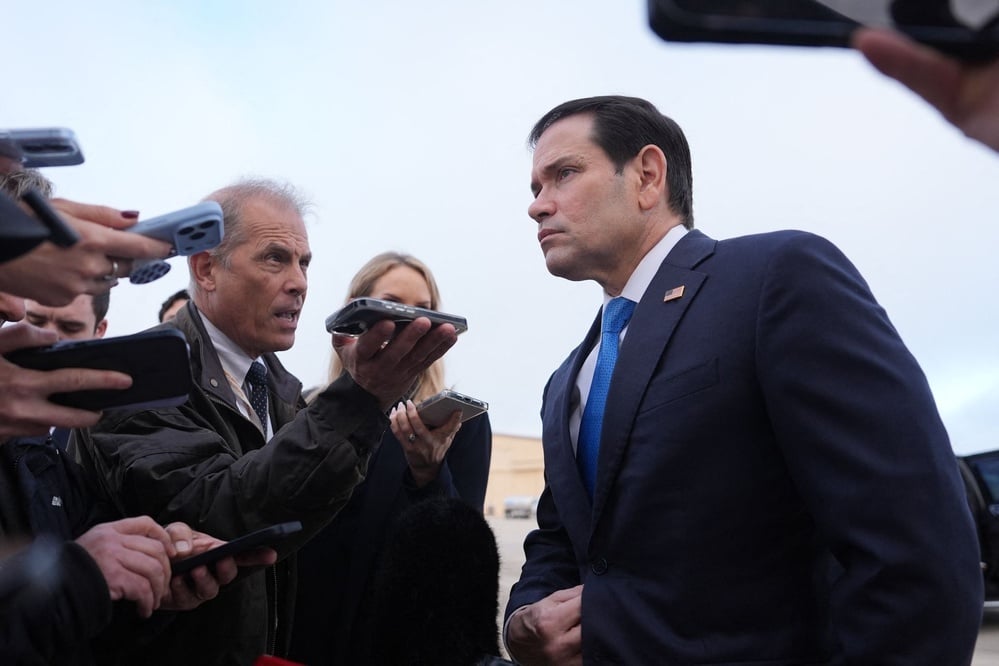


2026 © Helium Trades
Privacy Policy & Disclosure
* Disclaimer: Nothing on this website constitutes investment advice, performance data or any recommendation that any particular security, portfolio of securities, transaction or investment strategy is suitable for any specific person. Helium Trades is not responsible in any way for the accuracy
of any model predictions or price data. Any mention of a particular security and related prediction data is not a recommendation to buy or sell that security. Investments in securities involve the risk of loss. Past performance is no guarantee of future results. Helium Trades is not responsible for any of your investment decisions,
you should consult a financial expert before engaging in any transaction.
Helium Research Assistant

How can I help you today?
Ask any question about this page.


