See whether Helium helps you make better-informed decisions. Try every Pro Trader feature for 30 days. No credit card required.
Try every Pro Trader feature for 30 days. No credit card required.
July 23, 2026 · 0 shares
Reuters frames the central Delhi internet outage as a government security measure within a broader political crisis, relying on hedged language and multiple sources to balance official actions, protest dynamics, and opposition responses.
The report covers a government internet-block in central Delhi amid student protests over exam leaks and a wider political crisis during Modi's third term.
Automated analysis; not human reviewed. Limitations: Concise, case-specific limitations and plausible alternative interpretations.
Case-specific: relies on Reuters; may miss other viewpoints or local context.
July 23, 2026 · 0 shares
RT frames Modi's pledge to set up fast-track courts as a decisive response to widespread student protests, foregrounding protest support and government security measures while portraying ministerial accountability as a contested political issue.
RT's report describes Modi's response to the NEET paper-leaks scandal, accompanying student protests, parliamentary dynamics, and security measures in Delhi and other cities.
Automated analysis; not human reviewed. Limitations: Based solely on the given RT article excerpt; may not capture broader editorial stance or later developments.
Ambiguity; limited excerpt; potential RT framing.
July 21, 2026 · 0 shares
Coverage is largely descriptive and neutral in tone, detailing protests and police actions, but promotional boilerplate and a pejorative label for a protest group may color reader perception.
Descriptive report on Delhi student protests against the Modi government, focusing on police response and near-Parliament demonstrations.
Automated analysis; not human reviewed.
Limitations: Article excerpt includes promotional boilerplate; limited sourcing; does not show external validation for event claims.
·
1 of 52 available dimensions scored; omitted dimensions are not treated as neutral.
·
Verified supporting quotes for 1 of 1 scored dimensions.
Claim: Explicit sponsorship and promotional content present, suggesting advertising framing in parts of the text.
“Sponsored contents planned and edited by JT Media Enterprise Division.” · exact text match
“In a time of both misinformation and too much information, quality journalism is more crucial than ever.By subscribing, you can help us get the story right.” · exact text match
“Your subscription plan doesn't allow commenting.
To learn more see our FAQ”
· exact text match
Counterevidence:
“Television footage and social media posts showed police using tear gas and batons against protesters.” · exact text match
Why: Presence of sponsorship and promotional lines indicates potential advertising framing alongside event reporting.
Cockroach Janta Party label and ads may tilt perception; evidence limited.
July 23, 2026 · 0 shares
Reuters frames the central Delhi internet outage as a government security measure within a broader political crisis, relying on hedged language and multiple sources to balance official actions, protest dynamics, and opposition responses.
The report covers a government internet-block in central Delhi amid student protests over exam leaks and a wider political crisis during Modi's third term.
Automated analysis; not human reviewed. Limitations: Concise, case-specific limitations and plausible alternative interpretations.
Case-specific: relies on Reuters; may miss other viewpoints or local context.
July 21, 2026 · 0 shares
Coverage is largely descriptive and neutral in tone, detailing protests and police actions, but promotional boilerplate and a pejorative label for a protest group may color reader perception.
Descriptive report on Delhi student protests against the Modi government, focusing on police response and near-Parliament demonstrations.
Automated analysis; not human reviewed.
Limitations: Article excerpt includes promotional boilerplate; limited sourcing; does not show external validation for event claims.
·
1 of 52 available dimensions scored; omitted dimensions are not treated as neutral.
·
Verified supporting quotes for 1 of 1 scored dimensions.
Claim: Explicit sponsorship and promotional content present, suggesting advertising framing in parts of the text.
“Sponsored contents planned and edited by JT Media Enterprise Division.” · exact text match
“In a time of both misinformation and too much information, quality journalism is more crucial than ever.By subscribing, you can help us get the story right.” · exact text match
“Your subscription plan doesn't allow commenting.
To learn more see our FAQ”
· exact text match
Counterevidence:
“Television footage and social media posts showed police using tear gas and batons against protesters.” · exact text match
Why: Presence of sponsorship and promotional lines indicates potential advertising framing alongside event reporting.
Cockroach Janta Party label and ads may tilt perception; evidence limited.
July 23, 2026 · 0 shares
Framing centers on alleged police pellet-gun use against Indian student protesters with video-supported injury claims, while dehumanizing language toward protesters appears among a list of unrelated headlines, indicating a mix of critical reporting and sensational framing.
Report about alleged pellet gun use by Indian police against student protesters in New Delhi, citing videos and injuries, surrounded by a list of headlines including international events.
Automated analysis; not human reviewed.
·
1 of 52 available dimensions scored; omitted dimensions are not treated as neutral.
·
Verified supporting quotes for 1 of 1 scored dimensions.
Claim: The piece shows subjective framing through loaded descriptors and a dehumanizing label toward protesters.
“"Police accused of using pellet guns in crackdown on India’s Cockroach protesters"” · exact text match
“"Videos emerge showing police using increasingly violent methods to stop India’s student protest movement in the capital New Delhi.
More than 100 students have reportedly been injured, amid claims some were hit by pellet guns."”
· exact text match
Why: Presence of dehumanizing language and adjectives like 'increasingly violent' suggests subjective framing beyond neutral reporting.
Al Jazeera frames the Delhi student protests as a pivotal democratic challenge to Modi’s government, foregrounding police crackdown, mass turnout, and nationwide spillover while portraying the government as resistant to accountability.
Protests began over education reforms at Jantar Mantar and expanded into broader political demands against Modi’s government, including resignations and accountability; the piece documents police crackdowns and a nationwide mobilization.
Automated analysis; not human reviewed.
·
18 of 52 available dimensions scored; omitted dimensions are not treated as neutral.
·
Verified supporting quotes for 6 of 18 scored dimensions.
Claim: The article frames Modi's government as illegitimate and crisis-prone, signaling a liberal approach to reporting.
“Modi has presided over a scam-tainted government that has lost its legitimacy.” · not found in supplied text
“This is the biggest crisis of his tenure as prime minister – and of his entire political career.” · exact text match
“What began as a dispute over education has morphed into a broader moment of resistance.” · exact text match
Counterevidence:
“Modi announced fast-track courts to deal with exam-leak cases.” · not found in supplied text
“The government has offered no apology for the police crackdown on protesters or indicated that officers accused of using excessive force will be investigated.” · not found in supplied text
Why: Quoted lines explicitly cast Modi's government in a highly negative light; counterquotes reflect government actions and accountability discourse.
Claim: The article portrays protesters as a mass national movement supported by ordinary people against an elite establishment.
“More than 100,000 “cockroaches” streamed into central New Delhi, paying no heed to warnings from the Delhi Police or government decisions to close 16 metro stations leading to Jantar Mantar, barricade roads, jam the internet and bring in plainclothes goons.” · exact text match
“What began as a dispute over education has morphed into a broader moment of resistance.” · exact text match
“A month ago, a small community of students was camped out in New Delhi.
Today, the entire nation stands with them.”
· exact text match
Counterevidence:
“The government’s crackdown is framed as maintaining order, suggesting a state-centered perspective.”” · not found in supplied text
Why: Mass turnout and national solidarity language support a populist framing; government-focused counters temper it.
Claim: The article highlights state power expansion and civil-liberties concerns, implying libertarian-leaning readings of government action.
“The Ministry of Home Affairs has expanded police powers to arrest protesters by treating demonstrations as a “national security threat”.” · exact text match
“The court is indulging the conspiracy theory that the protests are foreign-funded.” · exact text match
Counterevidence:
“Modi is still in power and still refusing to meet the protesters, apologise or sack the education minister.” · exact text match
Why: State-power expansion and conspiracy-laden framing align with libertarian critique of authority; counterpoints show ongoing government actions.
Claim: The article relies on subjective judgments and evaluative language rather than purely objective reporting.
“This is the biggest crisis of his tenure as prime minister – and of his entire political career.” · exact text match
“He has never faced an opposition as united, diverse, young and angry as this one.” · exact text match
“The march alone is rightly being billed by the organisers as a historic moment for India.” · exact text match
Counterevidence:
“The piece contains many concrete events and quotes that ground the narrative.” · not found in supplied text
Why: Frequent normative statements and evaluative descriptors indicate subjective framing.
Claim: The piece uses sensational language and striking counts to evoke emotion and attention.
“Central New Delhi became a tinderbox, and students stood their ground, facing pellet guns and batons through heavy overnight rain and clouds of tear gas.” · exact text match
“More than 100,000 “cockroaches” streamed into central New Delhi, paying no heed to warnings from the Delhi Police or government decisions to close 16 metro stations leading to Jantar Mantar, barricade roads, jam the internet and bring in plainclothes goons.” · exact text match
Counterevidence:
“The article also includes specific dates, names, and numbers that provide factual grounding.” · not found in supplied text
Why: Vivid imagery and dramatic counts indicate sensational framing.
Claim: The reporting emphasizes fear and the emotional dimension of protests, signaling fear-based framing.
“But for the first time since 2014, fear has switched sides.” · exact text match
Counterevidence:
“The piece also catalogs events (counts, actions) that provide empirical grounding beyond fear imagery.” · not found in supplied text
Why: Explicit reference to a fear-switch and fear-laden framing; counterpoints present factual detail.
Claim: The article positions itself with strong normative judgments and advocacy on civil liberties and accountability.
“This is the biggest crisis of his tenure as prime minister – and of his entire political career.” · exact text match
“The march alone is rightly being billed by the organisers as a historic moment for India.” · exact text match
“The protests that followed echoed the present moment, but they were cut short by the COVID-19 pandemic.” · exact text match
Counterevidence:
“Some sentences provide context and quotes from participants.” · not found in supplied text
Why: Normative judgments and advocacy language permeate the text.
Claim: The piece frames the protests in a political light, highlighting government accountability and opposition responses.
“What began as a dispute over education has morphed into a broader moment of resistance.” · exact text match
“The Delhi Police assault acted as a force multiplier with India’s opposition parties staging their own protest.” · not found in supplied text
Counterevidence:
“It includes some statements of neutral context (e.g., 'The views expressed... do not reflect Al Jazeera’s editorial stance.')” · not found in supplied text
Why: Protest framing around governance, accountability, and opposition is a political-bias signal.
Claim: The article condenses complex political dynamics into a crisis narrative and binary judgments of actors.
“Voter manipulation alone makes even the Emergency era when democratic rights were suspended under Indira Gandhi from 1975 to 1977 look decent by comparison.” · exact text match
“This is the biggest crisis of his tenure...” · not found in supplied text
Counterevidence:
“The article includes a range of specific events and actors.” · not found in supplied text
Why: Crisis framing and binary judgments simplify broader political dynamics.
Claim: The piece expresses high certainty about conclusions and future consequences.
“This is the biggest crisis of his tenure as prime minister – and of his entire political career.” · exact text match
“Modi has never faced an opposition as united, diverse, young and angry as this one.” · not found in supplied text
Counterevidence:
“The article notes evolving developments and quotes counterbalance.” · not found in supplied text
Why: Definitive claims about crisis and opposition strength imply overconfidence given textual support.
Claim: The piece critiques established political leadership and institutions, indicating anti-establishment framing.
“Modi has presided over a scam-tainted government that has lost its legitimacy.” · not found in supplied text
“This is the biggest crisis of his tenure as prime minister – and of his entire political career.” · exact text match
“The education minister refuses to resign.” · exact text match
Counterevidence:
“The government announces measures (fast-track courts) and asserts policy positions.” · not found in supplied text
Why: Explicit critique of government legitimacy signals anti-establishment framing; policy actions provide counterpoints.
Claim: The reporting relies on emotive framing and dramatic metaphors, suggesting an irrational or sensational approach rather than neutral analysis.
“But for the first time since 2014, fear has switched sides.” · exact text match
“the protests spread across India, like a stubborn oil stain, from Patna and Mumbai to Goa.” · not found in supplied text
“Central New Delhi became a tinderbox, and students stood their ground, facing pellet guns and batons through heavy overnight rain and clouds of tear gas.” · exact text match
Counterevidence:
“The article provides enumerated facts (numbers, dates, quotes) anchoring the narrative.” · not found in supplied text
Why: Emphasis on fear, oil-stain imagery, and tinderbox language signals sensational framing, though factual details are interwoven.
Counts/claims rely on a single piece; some assertions unverified; framing may be partisan.
July 23, 2026 · 0 shares
RT frames Modi's pledge to set up fast-track courts as a decisive response to widespread student protests, foregrounding protest support and government security measures while portraying ministerial accountability as a contested political issue.
RT's report describes Modi's response to the NEET paper-leaks scandal, accompanying student protests, parliamentary dynamics, and security measures in Delhi and other cities.
Automated analysis; not human reviewed. Limitations: Based solely on the given RT article excerpt; may not capture broader editorial stance or later developments.
Ambiguity; limited excerpt; potential RT framing.
July 24, 2026 · 0 shares
Publisher framing centers on student protesters achieving partial concessions from the Modi government, highlighting compensation for exam-leak victims and ongoing calls for the education minister's resignation.
Automated analysis; not human reviewed. Limitations: Concise, case-specific limitations and plausible alternative interpretations.
Ambiguity due to brief text; long-term impact unknown.
July 23, 2026 · 0 shares
Publisher frames the hunger-strike ending as a result of talks with government ministers and juxtaposes it with ongoing student protests over leaked exam papers, employing neutral, event-focused wording with limited analysis.
An Indian activist's hunger strike ends following government talks as student protests persist over the leak of a medical entrance exam.
Automated analysis; not human reviewed. Limitations: Concise, case-specific limitations and plausible alternative interpretations.
July 23, 2026 · 0 shares
Reuters frames the central Delhi internet outage as a government security measure within a broader political crisis, relying on hedged language and multiple sources to balance official actions, protest dynamics, and opposition responses.
The report covers a government internet-block in central Delhi amid student protests over exam leaks and a wider political crisis during Modi's third term.
Automated analysis; not human reviewed. Limitations: Concise, case-specific limitations and plausible alternative interpretations.
Case-specific: relies on Reuters; may miss other viewpoints or local context.
July 23, 2026 · 0 shares
RT frames Modi's pledge to set up fast-track courts as a decisive response to widespread student protests, foregrounding protest support and government security measures while portraying ministerial accountability as a contested political issue.
RT's report describes Modi's response to the NEET paper-leaks scandal, accompanying student protests, parliamentary dynamics, and security measures in Delhi and other cities.
Automated analysis; not human reviewed. Limitations: Based solely on the given RT article excerpt; may not capture broader editorial stance or later developments.
Ambiguity; limited excerpt; potential RT framing.
July 23, 2026 · 0 shares
Reuters frames the central Delhi internet outage as a government security measure within a broader political crisis, relying on hedged language and multiple sources to balance official actions, protest dynamics, and opposition responses.
The report covers a government internet-block in central Delhi amid student protests over exam leaks and a wider political crisis during Modi's third term.
Automated analysis; not human reviewed. Limitations: Concise, case-specific limitations and plausible alternative interpretations.
Case-specific: relies on Reuters; may miss other viewpoints or local context.
Al Jazeera frames the Delhi student protests as a pivotal democratic challenge to Modi’s government, foregrounding police crackdown, mass turnout, and nationwide spillover while portraying the government as resistant to accountability.
Protests began over education reforms at Jantar Mantar and expanded into broader political demands against Modi’s government, including resignations and accountability; the piece documents police crackdowns and a nationwide mobilization.
Automated analysis; not human reviewed. · 18 of 52 available dimensions scored; omitted dimensions are not treated as neutral. · Verified supporting quotes for 6 of 18 scored dimensions.
Claim: The article frames Modi's government as illegitimate and crisis-prone, signaling a liberal approach to reporting.
“Modi has presided over a scam-tainted government that has lost its legitimacy.” · not found in supplied text
“This is the biggest crisis of his tenure as prime minister – and of his entire political career.” · exact text match
“What began as a dispute over education has morphed into a broader moment of resistance.” · exact text match
Counterevidence:
“Modi announced fast-track courts to deal with exam-leak cases.” · not found in supplied text
“The government has offered no apology for the police crackdown on protesters or indicated that officers accused of using excessive force will be investigated.” · not found in supplied text
Why: Quoted lines explicitly cast Modi's government in a highly negative light; counterquotes reflect government actions and accountability discourse.
Claim: The article portrays protesters as a mass national movement supported by ordinary people against an elite establishment.
“More than 100,000 “cockroaches” streamed into central New Delhi, paying no heed to warnings from the Delhi Police or government decisions to close 16 metro stations leading to Jantar Mantar, barricade roads, jam the internet and bring in plainclothes goons.” · exact text match
“What began as a dispute over education has morphed into a broader moment of resistance.” · exact text match
“A month ago, a small community of students was camped out in New Delhi. Today, the entire nation stands with them.” · exact text match
Counterevidence:
“The government’s crackdown is framed as maintaining order, suggesting a state-centered perspective.”” · not found in supplied text
Why: Mass turnout and national solidarity language support a populist framing; government-focused counters temper it.
Claim: The article highlights state power expansion and civil-liberties concerns, implying libertarian-leaning readings of government action.
“The Ministry of Home Affairs has expanded police powers to arrest protesters by treating demonstrations as a “national security threat”.” · exact text match
“The court is indulging the conspiracy theory that the protests are foreign-funded.” · exact text match
Counterevidence:
“Modi is still in power and still refusing to meet the protesters, apologise or sack the education minister.” · exact text match
Why: State-power expansion and conspiracy-laden framing align with libertarian critique of authority; counterpoints show ongoing government actions.
Claim: The article relies on subjective judgments and evaluative language rather than purely objective reporting.
“This is the biggest crisis of his tenure as prime minister – and of his entire political career.” · exact text match
“He has never faced an opposition as united, diverse, young and angry as this one.” · exact text match
“The march alone is rightly being billed by the organisers as a historic moment for India.” · exact text match
Counterevidence:
“The piece contains many concrete events and quotes that ground the narrative.” · not found in supplied text
Why: Frequent normative statements and evaluative descriptors indicate subjective framing.
Claim: The piece uses sensational language and striking counts to evoke emotion and attention.
“Central New Delhi became a tinderbox, and students stood their ground, facing pellet guns and batons through heavy overnight rain and clouds of tear gas.” · exact text match
“More than 100,000 “cockroaches” streamed into central New Delhi, paying no heed to warnings from the Delhi Police or government decisions to close 16 metro stations leading to Jantar Mantar, barricade roads, jam the internet and bring in plainclothes goons.” · exact text match
Counterevidence:
“The article also includes specific dates, names, and numbers that provide factual grounding.” · not found in supplied text
Why: Vivid imagery and dramatic counts indicate sensational framing.
Claim: The reporting emphasizes fear and the emotional dimension of protests, signaling fear-based framing.
“But for the first time since 2014, fear has switched sides.” · exact text match
Counterevidence:
“The piece also catalogs events (counts, actions) that provide empirical grounding beyond fear imagery.” · not found in supplied text
Why: Explicit reference to a fear-switch and fear-laden framing; counterpoints present factual detail.
Claim: The article positions itself with strong normative judgments and advocacy on civil liberties and accountability.
“This is the biggest crisis of his tenure as prime minister – and of his entire political career.” · exact text match
“The march alone is rightly being billed by the organisers as a historic moment for India.” · exact text match
“The protests that followed echoed the present moment, but they were cut short by the COVID-19 pandemic.” · exact text match
Counterevidence:
“Some sentences provide context and quotes from participants.” · not found in supplied text
Why: Normative judgments and advocacy language permeate the text.
Claim: The piece frames the protests in a political light, highlighting government accountability and opposition responses.
“What began as a dispute over education has morphed into a broader moment of resistance.” · exact text match
“The Delhi Police assault acted as a force multiplier with India’s opposition parties staging their own protest.” · not found in supplied text
Counterevidence:
“It includes some statements of neutral context (e.g., 'The views expressed... do not reflect Al Jazeera’s editorial stance.')” · not found in supplied text
Why: Protest framing around governance, accountability, and opposition is a political-bias signal.
Claim: The article condenses complex political dynamics into a crisis narrative and binary judgments of actors.
“Voter manipulation alone makes even the Emergency era when democratic rights were suspended under Indira Gandhi from 1975 to 1977 look decent by comparison.” · exact text match
“This is the biggest crisis of his tenure...” · not found in supplied text
Counterevidence:
“The article includes a range of specific events and actors.” · not found in supplied text
Why: Crisis framing and binary judgments simplify broader political dynamics.
Claim: The piece expresses high certainty about conclusions and future consequences.
“This is the biggest crisis of his tenure as prime minister – and of his entire political career.” · exact text match
“Modi has never faced an opposition as united, diverse, young and angry as this one.” · not found in supplied text
Counterevidence:
“The article notes evolving developments and quotes counterbalance.” · not found in supplied text
Why: Definitive claims about crisis and opposition strength imply overconfidence given textual support.
Claim: The piece critiques established political leadership and institutions, indicating anti-establishment framing.
“Modi has presided over a scam-tainted government that has lost its legitimacy.” · not found in supplied text
“This is the biggest crisis of his tenure as prime minister – and of his entire political career.” · exact text match
“The education minister refuses to resign.” · exact text match
Counterevidence:
“The government announces measures (fast-track courts) and asserts policy positions.” · not found in supplied text
Why: Explicit critique of government legitimacy signals anti-establishment framing; policy actions provide counterpoints.
Claim: The reporting relies on emotive framing and dramatic metaphors, suggesting an irrational or sensational approach rather than neutral analysis.
“But for the first time since 2014, fear has switched sides.” · exact text match
“the protests spread across India, like a stubborn oil stain, from Patna and Mumbai to Goa.” · not found in supplied text
“Central New Delhi became a tinderbox, and students stood their ground, facing pellet guns and batons through heavy overnight rain and clouds of tear gas.” · exact text match
Counterevidence:
“The article provides enumerated facts (numbers, dates, quotes) anchoring the narrative.” · not found in supplied text
Why: Emphasis on fear, oil-stain imagery, and tinderbox language signals sensational framing, though factual details are interwoven.
Counts/claims rely on a single piece; some assertions unverified; framing may be partisan.
July 23, 2026 · 0 shares
Reuters frames the central Delhi internet outage as a government security measure within a broader political crisis, relying on hedged language and multiple sources to balance official actions, protest dynamics, and opposition responses.
The report covers a government internet-block in central Delhi amid student protests over exam leaks and a wider political crisis during Modi's third term.
Automated analysis; not human reviewed. Limitations: Concise, case-specific limitations and plausible alternative interpretations.
Case-specific: relies on Reuters; may miss other viewpoints or local context.
July 21, 2026 · 0 shares
Coverage is largely descriptive and neutral in tone, detailing protests and police actions, but promotional boilerplate and a pejorative label for a protest group may color reader perception.
Descriptive report on Delhi student protests against the Modi government, focusing on police response and near-Parliament demonstrations.
Automated analysis; not human reviewed. Limitations: Article excerpt includes promotional boilerplate; limited sourcing; does not show external validation for event claims. · 1 of 52 available dimensions scored; omitted dimensions are not treated as neutral. · Verified supporting quotes for 1 of 1 scored dimensions.
Claim: Explicit sponsorship and promotional content present, suggesting advertising framing in parts of the text.
“Sponsored contents planned and edited by JT Media Enterprise Division.” · exact text match
“In a time of both misinformation and too much information, quality journalism is more crucial than ever.By subscribing, you can help us get the story right.” · exact text match
“Your subscription plan doesn't allow commenting. To learn more see our FAQ” · exact text match
Counterevidence:
“Television footage and social media posts showed police using tear gas and batons against protesters.” · exact text match
Why: Presence of sponsorship and promotional lines indicates potential advertising framing alongside event reporting.
Cockroach Janta Party label and ads may tilt perception; evidence limited.
July 23, 2026 · 0 shares
Framing centers on alleged police pellet-gun use against Indian student protesters with video-supported injury claims, while dehumanizing language toward protesters appears among a list of unrelated headlines, indicating a mix of critical reporting and sensational framing.
Report about alleged pellet gun use by Indian police against student protesters in New Delhi, citing videos and injuries, surrounded by a list of headlines including international events.
Automated analysis; not human reviewed. · 1 of 52 available dimensions scored; omitted dimensions are not treated as neutral. · Verified supporting quotes for 1 of 1 scored dimensions.
Claim: The piece shows subjective framing through loaded descriptors and a dehumanizing label toward protesters.
“"Police accused of using pellet guns in crackdown on India’s Cockroach protesters"” · exact text match
“"Videos emerge showing police using increasingly violent methods to stop India’s student protest movement in the capital New Delhi. More than 100 students have reportedly been injured, amid claims some were hit by pellet guns."” · exact text match
Why: Presence of dehumanizing language and adjectives like 'increasingly violent' suggests subjective framing beyond neutral reporting.
July 23, 2026 · 0 shares
RT frames Modi's pledge to set up fast-track courts as a decisive response to widespread student protests, foregrounding protest support and government security measures while portraying ministerial accountability as a contested political issue.
RT's report describes Modi's response to the NEET paper-leaks scandal, accompanying student protests, parliamentary dynamics, and security measures in Delhi and other cities.
Automated analysis; not human reviewed. Limitations: Based solely on the given RT article excerpt; may not capture broader editorial stance or later developments.
Ambiguity; limited excerpt; potential RT framing.
July 24, 2026 · 0 shares
Publisher framing centers on student protesters achieving partial concessions from the Modi government, highlighting compensation for exam-leak victims and ongoing calls for the education minister's resignation.
Automated analysis; not human reviewed. Limitations: Concise, case-specific limitations and plausible alternative interpretations.
Ambiguity due to brief text; long-term impact unknown.
July 23, 2026 · 0 shares
Publisher frames the hunger-strike ending as a result of talks with government ministers and juxtaposes it with ongoing student protests over leaked exam papers, employing neutral, event-focused wording with limited analysis.
An Indian activist's hunger strike ends following government talks as student protests persist over the leak of a medical entrance exam.
Automated analysis; not human reviewed. Limitations: Concise, case-specific limitations and plausible alternative interpretations.
Students and Families
July 23, 2026 · 0 shares
Reuters frames the central Delhi internet outage as a government security measure within a broader political crisis, relying on hedged language and multiple sources to balance official actions, protest dynamics, and opposition responses.
The report covers a government internet-block in central Delhi amid student protests over exam leaks and a wider political crisis during Modi's third term.
Automated analysis; not human reviewed. Limitations: Concise, case-specific limitations and plausible alternative interpretations.
Case-specific: relies on Reuters; may miss other viewpoints or local context.
July 23, 2026 · 0 shares
RT frames Modi's pledge to set up fast-track courts as a decisive response to widespread student protests, foregrounding protest support and government security measures while portraying ministerial accountability as a contested political issue.
RT's report describes Modi's response to the NEET paper-leaks scandal, accompanying student protests, parliamentary dynamics, and security measures in Delhi and other cities.
Automated analysis; not human reviewed. Limitations: Based solely on the given RT article excerpt; may not capture broader editorial stance or later developments.
Ambiguity; limited excerpt; potential RT framing.
July 23, 2026 · 0 shares
RT frames Modi's pledge to set up fast-track courts as a decisive response to widespread student protests, foregrounding protest support and government security measures while portraying ministerial accountability as a contested political issue.
RT's report describes Modi's response to the NEET paper-leaks scandal, accompanying student protests, parliamentary dynamics, and security measures in Delhi and other cities.
Automated analysis; not human reviewed. Limitations: Based solely on the given RT article excerpt; may not capture broader editorial stance or later developments.
Ambiguity; limited excerpt; potential RT framing.
July 24, 2026 · 0 shares
Publisher framing centers on student protesters achieving partial concessions from the Modi government, highlighting compensation for exam-leak victims and ongoing calls for the education minister's resignation.
Automated analysis; not human reviewed. Limitations: Concise, case-specific limitations and plausible alternative interpretations.
Ambiguity due to brief text; long-term impact unknown.
Al Jazeera frames the Delhi student protests as a pivotal democratic challenge to Modi’s government, foregrounding police crackdown, mass turnout, and nationwide spillover while portraying the government as resistant to accountability.
Protests began over education reforms at Jantar Mantar and expanded into broader political demands against Modi’s government, including resignations and accountability; the piece documents police crackdowns and a nationwide mobilization.
Automated analysis; not human reviewed. · 18 of 52 available dimensions scored; omitted dimensions are not treated as neutral. · Verified supporting quotes for 6 of 18 scored dimensions.
Claim: The article frames Modi's government as illegitimate and crisis-prone, signaling a liberal approach to reporting.
“Modi has presided over a scam-tainted government that has lost its legitimacy.” · not found in supplied text
“This is the biggest crisis of his tenure as prime minister – and of his entire political career.” · exact text match
“What began as a dispute over education has morphed into a broader moment of resistance.” · exact text match
Counterevidence:
“Modi announced fast-track courts to deal with exam-leak cases.” · not found in supplied text
“The government has offered no apology for the police crackdown on protesters or indicated that officers accused of using excessive force will be investigated.” · not found in supplied text
Why: Quoted lines explicitly cast Modi's government in a highly negative light; counterquotes reflect government actions and accountability discourse.
Claim: The article portrays protesters as a mass national movement supported by ordinary people against an elite establishment.
“More than 100,000 “cockroaches” streamed into central New Delhi, paying no heed to warnings from the Delhi Police or government decisions to close 16 metro stations leading to Jantar Mantar, barricade roads, jam the internet and bring in plainclothes goons.” · exact text match
“What began as a dispute over education has morphed into a broader moment of resistance.” · exact text match
“A month ago, a small community of students was camped out in New Delhi. Today, the entire nation stands with them.” · exact text match
Counterevidence:
“The government’s crackdown is framed as maintaining order, suggesting a state-centered perspective.”” · not found in supplied text
Why: Mass turnout and national solidarity language support a populist framing; government-focused counters temper it.
Claim: The article highlights state power expansion and civil-liberties concerns, implying libertarian-leaning readings of government action.
“The Ministry of Home Affairs has expanded police powers to arrest protesters by treating demonstrations as a “national security threat”.” · exact text match
“The court is indulging the conspiracy theory that the protests are foreign-funded.” · exact text match
Counterevidence:
“Modi is still in power and still refusing to meet the protesters, apologise or sack the education minister.” · exact text match
Why: State-power expansion and conspiracy-laden framing align with libertarian critique of authority; counterpoints show ongoing government actions.
Claim: The article relies on subjective judgments and evaluative language rather than purely objective reporting.
“This is the biggest crisis of his tenure as prime minister – and of his entire political career.” · exact text match
“He has never faced an opposition as united, diverse, young and angry as this one.” · exact text match
“The march alone is rightly being billed by the organisers as a historic moment for India.” · exact text match
Counterevidence:
“The piece contains many concrete events and quotes that ground the narrative.” · not found in supplied text
Why: Frequent normative statements and evaluative descriptors indicate subjective framing.
Claim: The piece uses sensational language and striking counts to evoke emotion and attention.
“Central New Delhi became a tinderbox, and students stood their ground, facing pellet guns and batons through heavy overnight rain and clouds of tear gas.” · exact text match
“More than 100,000 “cockroaches” streamed into central New Delhi, paying no heed to warnings from the Delhi Police or government decisions to close 16 metro stations leading to Jantar Mantar, barricade roads, jam the internet and bring in plainclothes goons.” · exact text match
Counterevidence:
“The article also includes specific dates, names, and numbers that provide factual grounding.” · not found in supplied text
Why: Vivid imagery and dramatic counts indicate sensational framing.
Claim: The reporting emphasizes fear and the emotional dimension of protests, signaling fear-based framing.
“But for the first time since 2014, fear has switched sides.” · exact text match
Counterevidence:
“The piece also catalogs events (counts, actions) that provide empirical grounding beyond fear imagery.” · not found in supplied text
Why: Explicit reference to a fear-switch and fear-laden framing; counterpoints present factual detail.
Claim: The article positions itself with strong normative judgments and advocacy on civil liberties and accountability.
“This is the biggest crisis of his tenure as prime minister – and of his entire political career.” · exact text match
“The march alone is rightly being billed by the organisers as a historic moment for India.” · exact text match
“The protests that followed echoed the present moment, but they were cut short by the COVID-19 pandemic.” · exact text match
Counterevidence:
“Some sentences provide context and quotes from participants.” · not found in supplied text
Why: Normative judgments and advocacy language permeate the text.
Claim: The piece frames the protests in a political light, highlighting government accountability and opposition responses.
“What began as a dispute over education has morphed into a broader moment of resistance.” · exact text match
“The Delhi Police assault acted as a force multiplier with India’s opposition parties staging their own protest.” · not found in supplied text
Counterevidence:
“It includes some statements of neutral context (e.g., 'The views expressed... do not reflect Al Jazeera’s editorial stance.')” · not found in supplied text
Why: Protest framing around governance, accountability, and opposition is a political-bias signal.
Claim: The article condenses complex political dynamics into a crisis narrative and binary judgments of actors.
“Voter manipulation alone makes even the Emergency era when democratic rights were suspended under Indira Gandhi from 1975 to 1977 look decent by comparison.” · exact text match
“This is the biggest crisis of his tenure...” · not found in supplied text
Counterevidence:
“The article includes a range of specific events and actors.” · not found in supplied text
Why: Crisis framing and binary judgments simplify broader political dynamics.
Claim: The piece expresses high certainty about conclusions and future consequences.
“This is the biggest crisis of his tenure as prime minister – and of his entire political career.” · exact text match
“Modi has never faced an opposition as united, diverse, young and angry as this one.” · not found in supplied text
Counterevidence:
“The article notes evolving developments and quotes counterbalance.” · not found in supplied text
Why: Definitive claims about crisis and opposition strength imply overconfidence given textual support.
Claim: The piece critiques established political leadership and institutions, indicating anti-establishment framing.
“Modi has presided over a scam-tainted government that has lost its legitimacy.” · not found in supplied text
“This is the biggest crisis of his tenure as prime minister – and of his entire political career.” · exact text match
“The education minister refuses to resign.” · exact text match
Counterevidence:
“The government announces measures (fast-track courts) and asserts policy positions.” · not found in supplied text
Why: Explicit critique of government legitimacy signals anti-establishment framing; policy actions provide counterpoints.
Claim: The reporting relies on emotive framing and dramatic metaphors, suggesting an irrational or sensational approach rather than neutral analysis.
“But for the first time since 2014, fear has switched sides.” · exact text match
“the protests spread across India, like a stubborn oil stain, from Patna and Mumbai to Goa.” · not found in supplied text
“Central New Delhi became a tinderbox, and students stood their ground, facing pellet guns and batons through heavy overnight rain and clouds of tear gas.” · exact text match
Counterevidence:
“The article provides enumerated facts (numbers, dates, quotes) anchoring the narrative.” · not found in supplied text
Why: Emphasis on fear, oil-stain imagery, and tinderbox language signals sensational framing, though factual details are interwoven.
Counts/claims rely on a single piece; some assertions unverified; framing may be partisan.
Government and Ruling Coalition
July 23, 2026 · 0 shares
RT frames Modi's pledge to set up fast-track courts as a decisive response to widespread student protests, foregrounding protest support and government security measures while portraying ministerial accountability as a contested political issue.
RT's report describes Modi's response to the NEET paper-leaks scandal, accompanying student protests, parliamentary dynamics, and security measures in Delhi and other cities.
Automated analysis; not human reviewed. Limitations: Based solely on the given RT article excerpt; may not capture broader editorial stance or later developments.
Ambiguity; limited excerpt; potential RT framing.
July 24, 2026 · 0 shares
Publisher framing centers on student protesters achieving partial concessions from the Modi government, highlighting compensation for exam-leak victims and ongoing calls for the education minister's resignation.
Automated analysis; not human reviewed. Limitations: Concise, case-specific limitations and plausible alternative interpretations.
Ambiguity due to brief text; long-term impact unknown.
July 23, 2026 · 0 shares
Reuters frames the central Delhi internet outage as a government security measure within a broader political crisis, relying on hedged language and multiple sources to balance official actions, protest dynamics, and opposition responses.
The report covers a government internet-block in central Delhi amid student protests over exam leaks and a wider political crisis during Modi's third term.
Automated analysis; not human reviewed. Limitations: Concise, case-specific limitations and plausible alternative interpretations.
Case-specific: relies on Reuters; may miss other viewpoints or local context.
July 24, 2026 · 0 shares
Publisher framing centers Modi as under pressure to quell student anger over exam leaks, highlighting swelling protests and the late-night address as insufficient.
Context: Indian student protests over exam leaks; government response via a late-night address by Prime Minister Modi.
Automated analysis; not human reviewed. Limitations: Analysis based on a headline; lacks full article context; may misinterpret framing without body text.
Headline-level framing; no full article context to judge deeper biases.
July 23, 2026 · 0 shares
Reuters frames the central Delhi internet outage as a government security measure within a broader political crisis, relying on hedged language and multiple sources to balance official actions, protest dynamics, and opposition responses.
The report covers a government internet-block in central Delhi amid student protests over exam leaks and a wider political crisis during Modi's third term.
Automated analysis; not human reviewed. Limitations: Concise, case-specific limitations and plausible alternative interpretations.
Case-specific: relies on Reuters; may miss other viewpoints or local context.
Helium Bias
July 23, 2026 · 0 shares
Reuters frames the central Delhi internet outage as a government security measure within a broader political crisis, relying on hedged language and multiple sources to balance official actions, protest dynamics, and opposition responses.
The report covers a government internet-block in central Delhi amid student protests over exam leaks and a wider political crisis during Modi's third term.
Automated analysis; not human reviewed. Limitations: Concise, case-specific limitations and plausible alternative interpretations.
Case-specific: relies on Reuters; may miss other viewpoints or local context.
Story Blindspots
July 23, 2026 · 0 shares
RT frames Modi's pledge to set up fast-track courts as a decisive response to widespread student protests, foregrounding protest support and government security measures while portraying ministerial accountability as a contested political issue.
RT's report describes Modi's response to the NEET paper-leaks scandal, accompanying student protests, parliamentary dynamics, and security measures in Delhi and other cities.
Automated analysis; not human reviewed. Limitations: Based solely on the given RT article excerpt; may not capture broader editorial stance or later developments.
Ambiguity; limited excerpt; potential RT framing.
July 23, 2026 · 0 shares
Framing centers on alleged police pellet-gun use against Indian student protesters with video-supported injury claims, while dehumanizing language toward protesters appears among a list of unrelated headlines, indicating a mix of critical reporting and sensational framing.
Report about alleged pellet gun use by Indian police against student protesters in New Delhi, citing videos and injuries, surrounded by a list of headlines including international events.
Automated analysis; not human reviewed. · 1 of 52 available dimensions scored; omitted dimensions are not treated as neutral. · Verified supporting quotes for 1 of 1 scored dimensions.
Claim: The piece shows subjective framing through loaded descriptors and a dehumanizing label toward protesters.
“"Police accused of using pellet guns in crackdown on India’s Cockroach protesters"” · exact text match
“"Videos emerge showing police using increasingly violent methods to stop India’s student protest movement in the capital New Delhi. More than 100 students have reportedly been injured, amid claims some were hit by pellet guns."” · exact text match
Why: Presence of dehumanizing language and adjectives like 'increasingly violent' suggests subjective framing beyond neutral reporting.
Al Jazeera frames the Delhi student protests as a pivotal democratic challenge to Modi’s government, foregrounding police crackdown, mass turnout, and nationwide spillover while portraying the government as resistant to accountability.
Protests began over education reforms at Jantar Mantar and expanded into broader political demands against Modi’s government, including resignations and accountability; the piece documents police crackdowns and a nationwide mobilization.
Automated analysis; not human reviewed. · 18 of 52 available dimensions scored; omitted dimensions are not treated as neutral. · Verified supporting quotes for 6 of 18 scored dimensions.
Claim: The article frames Modi's government as illegitimate and crisis-prone, signaling a liberal approach to reporting.
“Modi has presided over a scam-tainted government that has lost its legitimacy.” · not found in supplied text
“This is the biggest crisis of his tenure as prime minister – and of his entire political career.” · exact text match
“What began as a dispute over education has morphed into a broader moment of resistance.” · exact text match
Counterevidence:
“Modi announced fast-track courts to deal with exam-leak cases.” · not found in supplied text
“The government has offered no apology for the police crackdown on protesters or indicated that officers accused of using excessive force will be investigated.” · not found in supplied text
Why: Quoted lines explicitly cast Modi's government in a highly negative light; counterquotes reflect government actions and accountability discourse.
Claim: The article portrays protesters as a mass national movement supported by ordinary people against an elite establishment.
“More than 100,000 “cockroaches” streamed into central New Delhi, paying no heed to warnings from the Delhi Police or government decisions to close 16 metro stations leading to Jantar Mantar, barricade roads, jam the internet and bring in plainclothes goons.” · exact text match
“What began as a dispute over education has morphed into a broader moment of resistance.” · exact text match
“A month ago, a small community of students was camped out in New Delhi. Today, the entire nation stands with them.” · exact text match
Counterevidence:
“The government’s crackdown is framed as maintaining order, suggesting a state-centered perspective.”” · not found in supplied text
Why: Mass turnout and national solidarity language support a populist framing; government-focused counters temper it.
Claim: The article highlights state power expansion and civil-liberties concerns, implying libertarian-leaning readings of government action.
“The Ministry of Home Affairs has expanded police powers to arrest protesters by treating demonstrations as a “national security threat”.” · exact text match
“The court is indulging the conspiracy theory that the protests are foreign-funded.” · exact text match
Counterevidence:
“Modi is still in power and still refusing to meet the protesters, apologise or sack the education minister.” · exact text match
Why: State-power expansion and conspiracy-laden framing align with libertarian critique of authority; counterpoints show ongoing government actions.
Claim: The article relies on subjective judgments and evaluative language rather than purely objective reporting.
“This is the biggest crisis of his tenure as prime minister – and of his entire political career.” · exact text match
“He has never faced an opposition as united, diverse, young and angry as this one.” · exact text match
“The march alone is rightly being billed by the organisers as a historic moment for India.” · exact text match
Counterevidence:
“The piece contains many concrete events and quotes that ground the narrative.” · not found in supplied text
Why: Frequent normative statements and evaluative descriptors indicate subjective framing.
Claim: The piece uses sensational language and striking counts to evoke emotion and attention.
“Central New Delhi became a tinderbox, and students stood their ground, facing pellet guns and batons through heavy overnight rain and clouds of tear gas.” · exact text match
“More than 100,000 “cockroaches” streamed into central New Delhi, paying no heed to warnings from the Delhi Police or government decisions to close 16 metro stations leading to Jantar Mantar, barricade roads, jam the internet and bring in plainclothes goons.” · exact text match
Counterevidence:
“The article also includes specific dates, names, and numbers that provide factual grounding.” · not found in supplied text
Why: Vivid imagery and dramatic counts indicate sensational framing.
Claim: The reporting emphasizes fear and the emotional dimension of protests, signaling fear-based framing.
“But for the first time since 2014, fear has switched sides.” · exact text match
Counterevidence:
“The piece also catalogs events (counts, actions) that provide empirical grounding beyond fear imagery.” · not found in supplied text
Why: Explicit reference to a fear-switch and fear-laden framing; counterpoints present factual detail.
Claim: The article positions itself with strong normative judgments and advocacy on civil liberties and accountability.
“This is the biggest crisis of his tenure as prime minister – and of his entire political career.” · exact text match
“The march alone is rightly being billed by the organisers as a historic moment for India.” · exact text match
“The protests that followed echoed the present moment, but they were cut short by the COVID-19 pandemic.” · exact text match
Counterevidence:
“Some sentences provide context and quotes from participants.” · not found in supplied text
Why: Normative judgments and advocacy language permeate the text.
Claim: The piece frames the protests in a political light, highlighting government accountability and opposition responses.
“What began as a dispute over education has morphed into a broader moment of resistance.” · exact text match
“The Delhi Police assault acted as a force multiplier with India’s opposition parties staging their own protest.” · not found in supplied text
Counterevidence:
“It includes some statements of neutral context (e.g., 'The views expressed... do not reflect Al Jazeera’s editorial stance.')” · not found in supplied text
Why: Protest framing around governance, accountability, and opposition is a political-bias signal.
Claim: The article condenses complex political dynamics into a crisis narrative and binary judgments of actors.
“Voter manipulation alone makes even the Emergency era when democratic rights were suspended under Indira Gandhi from 1975 to 1977 look decent by comparison.” · exact text match
“This is the biggest crisis of his tenure...” · not found in supplied text
Counterevidence:
“The article includes a range of specific events and actors.” · not found in supplied text
Why: Crisis framing and binary judgments simplify broader political dynamics.
Claim: The piece expresses high certainty about conclusions and future consequences.
“This is the biggest crisis of his tenure as prime minister – and of his entire political career.” · exact text match
“Modi has never faced an opposition as united, diverse, young and angry as this one.” · not found in supplied text
Counterevidence:
“The article notes evolving developments and quotes counterbalance.” · not found in supplied text
Why: Definitive claims about crisis and opposition strength imply overconfidence given textual support.
Claim: The piece critiques established political leadership and institutions, indicating anti-establishment framing.
“Modi has presided over a scam-tainted government that has lost its legitimacy.” · not found in supplied text
“This is the biggest crisis of his tenure as prime minister – and of his entire political career.” · exact text match
“The education minister refuses to resign.” · exact text match
Counterevidence:
“The government announces measures (fast-track courts) and asserts policy positions.” · not found in supplied text
Why: Explicit critique of government legitimacy signals anti-establishment framing; policy actions provide counterpoints.
Claim: The reporting relies on emotive framing and dramatic metaphors, suggesting an irrational or sensational approach rather than neutral analysis.
“But for the first time since 2014, fear has switched sides.” · exact text match
“the protests spread across India, like a stubborn oil stain, from Patna and Mumbai to Goa.” · not found in supplied text
“Central New Delhi became a tinderbox, and students stood their ground, facing pellet guns and batons through heavy overnight rain and clouds of tear gas.” · exact text match
Counterevidence:
“The article provides enumerated facts (numbers, dates, quotes) anchoring the narrative.” · not found in supplied text
Why: Emphasis on fear, oil-stain imagery, and tinderbox language signals sensational framing, though factual details are interwoven.
Counts/claims rely on a single piece; some assertions unverified; framing may be partisan.
July 23, 2026 · 0 shares
RT frames Modi's pledge to set up fast-track courts as a decisive response to widespread student protests, foregrounding protest support and government security measures while portraying ministerial accountability as a contested political issue.
RT's report describes Modi's response to the NEET paper-leaks scandal, accompanying student protests, parliamentary dynamics, and security measures in Delhi and other cities.
Automated analysis; not human reviewed. Limitations: Based solely on the given RT article excerpt; may not capture broader editorial stance or later developments.
Ambiguity; limited excerpt; potential RT framing.
July 23, 2026 · 0 shares
Reuters frames the central Delhi internet outage as a government security measure within a broader political crisis, relying on hedged language and multiple sources to balance official actions, protest dynamics, and opposition responses.
The report covers a government internet-block in central Delhi amid student protests over exam leaks and a wider political crisis during Modi's third term.
Automated analysis; not human reviewed. Limitations: Concise, case-specific limitations and plausible alternative interpretations.
Case-specific: relies on Reuters; may miss other viewpoints or local context.
July 23, 2026 · 0 shares
RT frames Modi's pledge to set up fast-track courts as a decisive response to widespread student protests, foregrounding protest support and government security measures while portraying ministerial accountability as a contested political issue.
RT's report describes Modi's response to the NEET paper-leaks scandal, accompanying student protests, parliamentary dynamics, and security measures in Delhi and other cities.
Automated analysis; not human reviewed. Limitations: Based solely on the given RT article excerpt; may not capture broader editorial stance or later developments.
Ambiguity; limited excerpt; potential RT framing.
July 24, 2026 · 0 shares
Publisher framing centers on student protesters achieving partial concessions from the Modi government, highlighting compensation for exam-leak victims and ongoing calls for the education minister's resignation.
Automated analysis; not human reviewed. Limitations: Concise, case-specific limitations and plausible alternative interpretations.
Ambiguity due to brief text; long-term impact unknown.
Al Jazeera frames the Delhi student protests as a pivotal democratic challenge to Modi’s government, foregrounding police crackdown, mass turnout, and nationwide spillover while portraying the government as resistant to accountability.
Protests began over education reforms at Jantar Mantar and expanded into broader political demands against Modi’s government, including resignations and accountability; the piece documents police crackdowns and a nationwide mobilization.
Automated analysis; not human reviewed. · 18 of 52 available dimensions scored; omitted dimensions are not treated as neutral. · Verified supporting quotes for 6 of 18 scored dimensions.
Claim: The article frames Modi's government as illegitimate and crisis-prone, signaling a liberal approach to reporting.
“Modi has presided over a scam-tainted government that has lost its legitimacy.” · not found in supplied text
“This is the biggest crisis of his tenure as prime minister – and of his entire political career.” · exact text match
“What began as a dispute over education has morphed into a broader moment of resistance.” · exact text match
Counterevidence:
“Modi announced fast-track courts to deal with exam-leak cases.” · not found in supplied text
“The government has offered no apology for the police crackdown on protesters or indicated that officers accused of using excessive force will be investigated.” · not found in supplied text
Why: Quoted lines explicitly cast Modi's government in a highly negative light; counterquotes reflect government actions and accountability discourse.
Claim: The article portrays protesters as a mass national movement supported by ordinary people against an elite establishment.
“More than 100,000 “cockroaches” streamed into central New Delhi, paying no heed to warnings from the Delhi Police or government decisions to close 16 metro stations leading to Jantar Mantar, barricade roads, jam the internet and bring in plainclothes goons.” · exact text match
“What began as a dispute over education has morphed into a broader moment of resistance.” · exact text match
“A month ago, a small community of students was camped out in New Delhi. Today, the entire nation stands with them.” · exact text match
Counterevidence:
“The government’s crackdown is framed as maintaining order, suggesting a state-centered perspective.”” · not found in supplied text
Why: Mass turnout and national solidarity language support a populist framing; government-focused counters temper it.
Claim: The article highlights state power expansion and civil-liberties concerns, implying libertarian-leaning readings of government action.
“The Ministry of Home Affairs has expanded police powers to arrest protesters by treating demonstrations as a “national security threat”.” · exact text match
“The court is indulging the conspiracy theory that the protests are foreign-funded.” · exact text match
Counterevidence:
“Modi is still in power and still refusing to meet the protesters, apologise or sack the education minister.” · exact text match
Why: State-power expansion and conspiracy-laden framing align with libertarian critique of authority; counterpoints show ongoing government actions.
Claim: The article relies on subjective judgments and evaluative language rather than purely objective reporting.
“This is the biggest crisis of his tenure as prime minister – and of his entire political career.” · exact text match
“He has never faced an opposition as united, diverse, young and angry as this one.” · exact text match
“The march alone is rightly being billed by the organisers as a historic moment for India.” · exact text match
Counterevidence:
“The piece contains many concrete events and quotes that ground the narrative.” · not found in supplied text
Why: Frequent normative statements and evaluative descriptors indicate subjective framing.
Claim: The piece uses sensational language and striking counts to evoke emotion and attention.
“Central New Delhi became a tinderbox, and students stood their ground, facing pellet guns and batons through heavy overnight rain and clouds of tear gas.” · exact text match
“More than 100,000 “cockroaches” streamed into central New Delhi, paying no heed to warnings from the Delhi Police or government decisions to close 16 metro stations leading to Jantar Mantar, barricade roads, jam the internet and bring in plainclothes goons.” · exact text match
Counterevidence:
“The article also includes specific dates, names, and numbers that provide factual grounding.” · not found in supplied text
Why: Vivid imagery and dramatic counts indicate sensational framing.
Claim: The reporting emphasizes fear and the emotional dimension of protests, signaling fear-based framing.
“But for the first time since 2014, fear has switched sides.” · exact text match
Counterevidence:
“The piece also catalogs events (counts, actions) that provide empirical grounding beyond fear imagery.” · not found in supplied text
Why: Explicit reference to a fear-switch and fear-laden framing; counterpoints present factual detail.
Claim: The article positions itself with strong normative judgments and advocacy on civil liberties and accountability.
“This is the biggest crisis of his tenure as prime minister – and of his entire political career.” · exact text match
“The march alone is rightly being billed by the organisers as a historic moment for India.” · exact text match
“The protests that followed echoed the present moment, but they were cut short by the COVID-19 pandemic.” · exact text match
Counterevidence:
“Some sentences provide context and quotes from participants.” · not found in supplied text
Why: Normative judgments and advocacy language permeate the text.
Claim: The piece frames the protests in a political light, highlighting government accountability and opposition responses.
“What began as a dispute over education has morphed into a broader moment of resistance.” · exact text match
“The Delhi Police assault acted as a force multiplier with India’s opposition parties staging their own protest.” · not found in supplied text
Counterevidence:
“It includes some statements of neutral context (e.g., 'The views expressed... do not reflect Al Jazeera’s editorial stance.')” · not found in supplied text
Why: Protest framing around governance, accountability, and opposition is a political-bias signal.
Claim: The article condenses complex political dynamics into a crisis narrative and binary judgments of actors.
“Voter manipulation alone makes even the Emergency era when democratic rights were suspended under Indira Gandhi from 1975 to 1977 look decent by comparison.” · exact text match
“This is the biggest crisis of his tenure...” · not found in supplied text
Counterevidence:
“The article includes a range of specific events and actors.” · not found in supplied text
Why: Crisis framing and binary judgments simplify broader political dynamics.
Claim: The piece expresses high certainty about conclusions and future consequences.
“This is the biggest crisis of his tenure as prime minister – and of his entire political career.” · exact text match
“Modi has never faced an opposition as united, diverse, young and angry as this one.” · not found in supplied text
Counterevidence:
“The article notes evolving developments and quotes counterbalance.” · not found in supplied text
Why: Definitive claims about crisis and opposition strength imply overconfidence given textual support.
Claim: The piece critiques established political leadership and institutions, indicating anti-establishment framing.
“Modi has presided over a scam-tainted government that has lost its legitimacy.” · not found in supplied text
“This is the biggest crisis of his tenure as prime minister – and of his entire political career.” · exact text match
“The education minister refuses to resign.” · exact text match
Counterevidence:
“The government announces measures (fast-track courts) and asserts policy positions.” · not found in supplied text
Why: Explicit critique of government legitimacy signals anti-establishment framing; policy actions provide counterpoints.
Claim: The reporting relies on emotive framing and dramatic metaphors, suggesting an irrational or sensational approach rather than neutral analysis.
“But for the first time since 2014, fear has switched sides.” · exact text match
“the protests spread across India, like a stubborn oil stain, from Patna and Mumbai to Goa.” · not found in supplied text
“Central New Delhi became a tinderbox, and students stood their ground, facing pellet guns and batons through heavy overnight rain and clouds of tear gas.” · exact text match
Counterevidence:
“The article provides enumerated facts (numbers, dates, quotes) anchoring the narrative.” · not found in supplied text
Why: Emphasis on fear, oil-stain imagery, and tinderbox language signals sensational framing, though factual details are interwoven.
Counts/claims rely on a single piece; some assertions unverified; framing may be partisan.
July 23, 2026 · 0 shares
Reuters frames the central Delhi internet outage as a government security measure within a broader political crisis, relying on hedged language and multiple sources to balance official actions, protest dynamics, and opposition responses.
The report covers a government internet-block in central Delhi amid student protests over exam leaks and a wider political crisis during Modi's third term.
Automated analysis; not human reviewed. Limitations: Concise, case-specific limitations and plausible alternative interpretations.
Case-specific: relies on Reuters; may miss other viewpoints or local context.
July 21, 2026 · 0 shares
Coverage is largely descriptive and neutral in tone, detailing protests and police actions, but promotional boilerplate and a pejorative label for a protest group may color reader perception.
Descriptive report on Delhi student protests against the Modi government, focusing on police response and near-Parliament demonstrations.
Automated analysis; not human reviewed. Limitations: Article excerpt includes promotional boilerplate; limited sourcing; does not show external validation for event claims. · 1 of 52 available dimensions scored; omitted dimensions are not treated as neutral. · Verified supporting quotes for 1 of 1 scored dimensions.
Claim: Explicit sponsorship and promotional content present, suggesting advertising framing in parts of the text.
“Sponsored contents planned and edited by JT Media Enterprise Division.” · exact text match
“In a time of both misinformation and too much information, quality journalism is more crucial than ever.By subscribing, you can help us get the story right.” · exact text match
“Your subscription plan doesn't allow commenting. To learn more see our FAQ” · exact text match
Counterevidence:
“Television footage and social media posts showed police using tear gas and batons against protesters.” · exact text match
Why: Presence of sponsorship and promotional lines indicates potential advertising framing alongside event reporting.
Cockroach Janta Party label and ads may tilt perception; evidence limited.
July 21, 2026 · 0 shares
Coverage is largely descriptive and neutral in tone, detailing protests and police actions, but promotional boilerplate and a pejorative label for a protest group may color reader perception.
Descriptive report on Delhi student protests against the Modi government, focusing on police response and near-Parliament demonstrations.
Automated analysis; not human reviewed. Limitations: Article excerpt includes promotional boilerplate; limited sourcing; does not show external validation for event claims. · 1 of 52 available dimensions scored; omitted dimensions are not treated as neutral. · Verified supporting quotes for 1 of 1 scored dimensions.
Claim: Explicit sponsorship and promotional content present, suggesting advertising framing in parts of the text.
“Sponsored contents planned and edited by JT Media Enterprise Division.” · exact text match
“In a time of both misinformation and too much information, quality journalism is more crucial than ever.By subscribing, you can help us get the story right.” · exact text match
“Your subscription plan doesn't allow commenting. To learn more see our FAQ” · exact text match
Counterevidence:
“Television footage and social media posts showed police using tear gas and batons against protesters.” · exact text match
Why: Presence of sponsorship and promotional lines indicates potential advertising framing alongside event reporting.
Cockroach Janta Party label and ads may tilt perception; evidence limited.
July 23, 2026 · 0 shares
Reuters frames the central Delhi internet outage as a government security measure within a broader political crisis, relying on hedged language and multiple sources to balance official actions, protest dynamics, and opposition responses.
The report covers a government internet-block in central Delhi amid student protests over exam leaks and a wider political crisis during Modi's third term.
Automated analysis; not human reviewed. Limitations: Concise, case-specific limitations and plausible alternative interpretations.
Case-specific: relies on Reuters; may miss other viewpoints or local context.
Al Jazeera frames the Delhi student protests as a pivotal democratic challenge to Modi’s government, foregrounding police crackdown, mass turnout, and nationwide spillover while portraying the government as resistant to accountability.
Protests began over education reforms at Jantar Mantar and expanded into broader political demands against Modi’s government, including resignations and accountability; the piece documents police crackdowns and a nationwide mobilization.
Automated analysis; not human reviewed. · 18 of 52 available dimensions scored; omitted dimensions are not treated as neutral. · Verified supporting quotes for 6 of 18 scored dimensions.
Claim: The article frames Modi's government as illegitimate and crisis-prone, signaling a liberal approach to reporting.
“Modi has presided over a scam-tainted government that has lost its legitimacy.” · not found in supplied text
“This is the biggest crisis of his tenure as prime minister – and of his entire political career.” · exact text match
“What began as a dispute over education has morphed into a broader moment of resistance.” · exact text match
Counterevidence:
“Modi announced fast-track courts to deal with exam-leak cases.” · not found in supplied text
“The government has offered no apology for the police crackdown on protesters or indicated that officers accused of using excessive force will be investigated.” · not found in supplied text
Why: Quoted lines explicitly cast Modi's government in a highly negative light; counterquotes reflect government actions and accountability discourse.
Claim: The article portrays protesters as a mass national movement supported by ordinary people against an elite establishment.
“More than 100,000 “cockroaches” streamed into central New Delhi, paying no heed to warnings from the Delhi Police or government decisions to close 16 metro stations leading to Jantar Mantar, barricade roads, jam the internet and bring in plainclothes goons.” · exact text match
“What began as a dispute over education has morphed into a broader moment of resistance.” · exact text match
“A month ago, a small community of students was camped out in New Delhi. Today, the entire nation stands with them.” · exact text match
Counterevidence:
“The government’s crackdown is framed as maintaining order, suggesting a state-centered perspective.”” · not found in supplied text
Why: Mass turnout and national solidarity language support a populist framing; government-focused counters temper it.
Claim: The article highlights state power expansion and civil-liberties concerns, implying libertarian-leaning readings of government action.
“The Ministry of Home Affairs has expanded police powers to arrest protesters by treating demonstrations as a “national security threat”.” · exact text match
“The court is indulging the conspiracy theory that the protests are foreign-funded.” · exact text match
Counterevidence:
“Modi is still in power and still refusing to meet the protesters, apologise or sack the education minister.” · exact text match
Why: State-power expansion and conspiracy-laden framing align with libertarian critique of authority; counterpoints show ongoing government actions.
Claim: The article relies on subjective judgments and evaluative language rather than purely objective reporting.
“This is the biggest crisis of his tenure as prime minister – and of his entire political career.” · exact text match
“He has never faced an opposition as united, diverse, young and angry as this one.” · exact text match
“The march alone is rightly being billed by the organisers as a historic moment for India.” · exact text match
Counterevidence:
“The piece contains many concrete events and quotes that ground the narrative.” · not found in supplied text
Why: Frequent normative statements and evaluative descriptors indicate subjective framing.
Claim: The piece uses sensational language and striking counts to evoke emotion and attention.
“Central New Delhi became a tinderbox, and students stood their ground, facing pellet guns and batons through heavy overnight rain and clouds of tear gas.” · exact text match
“More than 100,000 “cockroaches” streamed into central New Delhi, paying no heed to warnings from the Delhi Police or government decisions to close 16 metro stations leading to Jantar Mantar, barricade roads, jam the internet and bring in plainclothes goons.” · exact text match
Counterevidence:
“The article also includes specific dates, names, and numbers that provide factual grounding.” · not found in supplied text
Why: Vivid imagery and dramatic counts indicate sensational framing.
Claim: The reporting emphasizes fear and the emotional dimension of protests, signaling fear-based framing.
“But for the first time since 2014, fear has switched sides.” · exact text match
Counterevidence:
“The piece also catalogs events (counts, actions) that provide empirical grounding beyond fear imagery.” · not found in supplied text
Why: Explicit reference to a fear-switch and fear-laden framing; counterpoints present factual detail.
Claim: The article positions itself with strong normative judgments and advocacy on civil liberties and accountability.
“This is the biggest crisis of his tenure as prime minister – and of his entire political career.” · exact text match
“The march alone is rightly being billed by the organisers as a historic moment for India.” · exact text match
“The protests that followed echoed the present moment, but they were cut short by the COVID-19 pandemic.” · exact text match
Counterevidence:
“Some sentences provide context and quotes from participants.” · not found in supplied text
Why: Normative judgments and advocacy language permeate the text.
Claim: The piece frames the protests in a political light, highlighting government accountability and opposition responses.
“What began as a dispute over education has morphed into a broader moment of resistance.” · exact text match
“The Delhi Police assault acted as a force multiplier with India’s opposition parties staging their own protest.” · not found in supplied text
Counterevidence:
“It includes some statements of neutral context (e.g., 'The views expressed... do not reflect Al Jazeera’s editorial stance.')” · not found in supplied text
Why: Protest framing around governance, accountability, and opposition is a political-bias signal.
Claim: The article condenses complex political dynamics into a crisis narrative and binary judgments of actors.
“Voter manipulation alone makes even the Emergency era when democratic rights were suspended under Indira Gandhi from 1975 to 1977 look decent by comparison.” · exact text match
“This is the biggest crisis of his tenure...” · not found in supplied text
Counterevidence:
“The article includes a range of specific events and actors.” · not found in supplied text
Why: Crisis framing and binary judgments simplify broader political dynamics.
Claim: The piece expresses high certainty about conclusions and future consequences.
“This is the biggest crisis of his tenure as prime minister – and of his entire political career.” · exact text match
“Modi has never faced an opposition as united, diverse, young and angry as this one.” · not found in supplied text
Counterevidence:
“The article notes evolving developments and quotes counterbalance.” · not found in supplied text
Why: Definitive claims about crisis and opposition strength imply overconfidence given textual support.
Claim: The piece critiques established political leadership and institutions, indicating anti-establishment framing.
“Modi has presided over a scam-tainted government that has lost its legitimacy.” · not found in supplied text
“This is the biggest crisis of his tenure as prime minister – and of his entire political career.” · exact text match
“The education minister refuses to resign.” · exact text match
Counterevidence:
“The government announces measures (fast-track courts) and asserts policy positions.” · not found in supplied text
Why: Explicit critique of government legitimacy signals anti-establishment framing; policy actions provide counterpoints.
Claim: The reporting relies on emotive framing and dramatic metaphors, suggesting an irrational or sensational approach rather than neutral analysis.
“But for the first time since 2014, fear has switched sides.” · exact text match
“the protests spread across India, like a stubborn oil stain, from Patna and Mumbai to Goa.” · not found in supplied text
“Central New Delhi became a tinderbox, and students stood their ground, facing pellet guns and batons through heavy overnight rain and clouds of tear gas.” · exact text match
Counterevidence:
“The article provides enumerated facts (numbers, dates, quotes) anchoring the narrative.” · not found in supplied text
Why: Emphasis on fear, oil-stain imagery, and tinderbox language signals sensational framing, though factual details are interwoven.
Counts/claims rely on a single piece; some assertions unverified; framing may be partisan.
July 23, 2026 · 0 shares
Framing centers on alleged police pellet-gun use against Indian student protesters with video-supported injury claims, while dehumanizing language toward protesters appears among a list of unrelated headlines, indicating a mix of critical reporting and sensational framing.
Report about alleged pellet gun use by Indian police against student protesters in New Delhi, citing videos and injuries, surrounded by a list of headlines including international events.
Automated analysis; not human reviewed. · 1 of 52 available dimensions scored; omitted dimensions are not treated as neutral. · Verified supporting quotes for 1 of 1 scored dimensions.
Claim: The piece shows subjective framing through loaded descriptors and a dehumanizing label toward protesters.
“"Police accused of using pellet guns in crackdown on India’s Cockroach protesters"” · exact text match
“"Videos emerge showing police using increasingly violent methods to stop India’s student protest movement in the capital New Delhi. More than 100 students have reportedly been injured, amid claims some were hit by pellet guns."” · exact text match
Why: Presence of dehumanizing language and adjectives like 'increasingly violent' suggests subjective framing beyond neutral reporting.
Al Jazeera frames the Delhi student protests as a pivotal democratic challenge to Modi’s government, foregrounding police crackdown, mass turnout, and nationwide spillover while portraying the government as resistant to accountability.
Protests began over education reforms at Jantar Mantar and expanded into broader political demands against Modi’s government, including resignations and accountability; the piece documents police crackdowns and a nationwide mobilization.
Automated analysis; not human reviewed. · 18 of 52 available dimensions scored; omitted dimensions are not treated as neutral. · Verified supporting quotes for 6 of 18 scored dimensions.
Claim: The article frames Modi's government as illegitimate and crisis-prone, signaling a liberal approach to reporting.
“Modi has presided over a scam-tainted government that has lost its legitimacy.” · not found in supplied text
“This is the biggest crisis of his tenure as prime minister – and of his entire political career.” · exact text match
“What began as a dispute over education has morphed into a broader moment of resistance.” · exact text match
Counterevidence:
“Modi announced fast-track courts to deal with exam-leak cases.” · not found in supplied text
“The government has offered no apology for the police crackdown on protesters or indicated that officers accused of using excessive force will be investigated.” · not found in supplied text
Why: Quoted lines explicitly cast Modi's government in a highly negative light; counterquotes reflect government actions and accountability discourse.
Claim: The article portrays protesters as a mass national movement supported by ordinary people against an elite establishment.
“More than 100,000 “cockroaches” streamed into central New Delhi, paying no heed to warnings from the Delhi Police or government decisions to close 16 metro stations leading to Jantar Mantar, barricade roads, jam the internet and bring in plainclothes goons.” · exact text match
“What began as a dispute over education has morphed into a broader moment of resistance.” · exact text match
“A month ago, a small community of students was camped out in New Delhi. Today, the entire nation stands with them.” · exact text match
Counterevidence:
“The government’s crackdown is framed as maintaining order, suggesting a state-centered perspective.”” · not found in supplied text
Why: Mass turnout and national solidarity language support a populist framing; government-focused counters temper it.
Claim: The article highlights state power expansion and civil-liberties concerns, implying libertarian-leaning readings of government action.
“The Ministry of Home Affairs has expanded police powers to arrest protesters by treating demonstrations as a “national security threat”.” · exact text match
“The court is indulging the conspiracy theory that the protests are foreign-funded.” · exact text match
Counterevidence:
“Modi is still in power and still refusing to meet the protesters, apologise or sack the education minister.” · exact text match
Why: State-power expansion and conspiracy-laden framing align with libertarian critique of authority; counterpoints show ongoing government actions.
Claim: The article relies on subjective judgments and evaluative language rather than purely objective reporting.
“This is the biggest crisis of his tenure as prime minister – and of his entire political career.” · exact text match
“He has never faced an opposition as united, diverse, young and angry as this one.” · exact text match
“The march alone is rightly being billed by the organisers as a historic moment for India.” · exact text match
Counterevidence:
“The piece contains many concrete events and quotes that ground the narrative.” · not found in supplied text
Why: Frequent normative statements and evaluative descriptors indicate subjective framing.
Claim: The piece uses sensational language and striking counts to evoke emotion and attention.
“Central New Delhi became a tinderbox, and students stood their ground, facing pellet guns and batons through heavy overnight rain and clouds of tear gas.” · exact text match
“More than 100,000 “cockroaches” streamed into central New Delhi, paying no heed to warnings from the Delhi Police or government decisions to close 16 metro stations leading to Jantar Mantar, barricade roads, jam the internet and bring in plainclothes goons.” · exact text match
Counterevidence:
“The article also includes specific dates, names, and numbers that provide factual grounding.” · not found in supplied text
Why: Vivid imagery and dramatic counts indicate sensational framing.
Claim: The reporting emphasizes fear and the emotional dimension of protests, signaling fear-based framing.
“But for the first time since 2014, fear has switched sides.” · exact text match
Counterevidence:
“The piece also catalogs events (counts, actions) that provide empirical grounding beyond fear imagery.” · not found in supplied text
Why: Explicit reference to a fear-switch and fear-laden framing; counterpoints present factual detail.
Claim: The article positions itself with strong normative judgments and advocacy on civil liberties and accountability.
“This is the biggest crisis of his tenure as prime minister – and of his entire political career.” · exact text match
“The march alone is rightly being billed by the organisers as a historic moment for India.” · exact text match
“The protests that followed echoed the present moment, but they were cut short by the COVID-19 pandemic.” · exact text match
Counterevidence:
“Some sentences provide context and quotes from participants.” · not found in supplied text
Why: Normative judgments and advocacy language permeate the text.
Claim: The piece frames the protests in a political light, highlighting government accountability and opposition responses.
“What began as a dispute over education has morphed into a broader moment of resistance.” · exact text match
“The Delhi Police assault acted as a force multiplier with India’s opposition parties staging their own protest.” · not found in supplied text
Counterevidence:
“It includes some statements of neutral context (e.g., 'The views expressed... do not reflect Al Jazeera’s editorial stance.')” · not found in supplied text
Why: Protest framing around governance, accountability, and opposition is a political-bias signal.
Claim: The article condenses complex political dynamics into a crisis narrative and binary judgments of actors.
“Voter manipulation alone makes even the Emergency era when democratic rights were suspended under Indira Gandhi from 1975 to 1977 look decent by comparison.” · exact text match
“This is the biggest crisis of his tenure...” · not found in supplied text
Counterevidence:
“The article includes a range of specific events and actors.” · not found in supplied text
Why: Crisis framing and binary judgments simplify broader political dynamics.
Claim: The piece expresses high certainty about conclusions and future consequences.
“This is the biggest crisis of his tenure as prime minister – and of his entire political career.” · exact text match
“Modi has never faced an opposition as united, diverse, young and angry as this one.” · not found in supplied text
Counterevidence:
“The article notes evolving developments and quotes counterbalance.” · not found in supplied text
Why: Definitive claims about crisis and opposition strength imply overconfidence given textual support.
Claim: The piece critiques established political leadership and institutions, indicating anti-establishment framing.
“Modi has presided over a scam-tainted government that has lost its legitimacy.” · not found in supplied text
“This is the biggest crisis of his tenure as prime minister – and of his entire political career.” · exact text match
“The education minister refuses to resign.” · exact text match
Counterevidence:
“The government announces measures (fast-track courts) and asserts policy positions.” · not found in supplied text
Why: Explicit critique of government legitimacy signals anti-establishment framing; policy actions provide counterpoints.
Claim: The reporting relies on emotive framing and dramatic metaphors, suggesting an irrational or sensational approach rather than neutral analysis.
“But for the first time since 2014, fear has switched sides.” · exact text match
“the protests spread across India, like a stubborn oil stain, from Patna and Mumbai to Goa.” · not found in supplied text
“Central New Delhi became a tinderbox, and students stood their ground, facing pellet guns and batons through heavy overnight rain and clouds of tear gas.” · exact text match
Counterevidence:
“The article provides enumerated facts (numbers, dates, quotes) anchoring the narrative.” · not found in supplied text
Why: Emphasis on fear, oil-stain imagery, and tinderbox language signals sensational framing, though factual details are interwoven.
Counts/claims rely on a single piece; some assertions unverified; framing may be partisan.
July 23, 2026 · 0 shares
Reuters frames the central Delhi internet outage as a government security measure within a broader political crisis, relying on hedged language and multiple sources to balance official actions, protest dynamics, and opposition responses.
The report covers a government internet-block in central Delhi amid student protests over exam leaks and a wider political crisis during Modi's third term.
Automated analysis; not human reviewed. Limitations: Concise, case-specific limitations and plausible alternative interpretations.
Case-specific: relies on Reuters; may miss other viewpoints or local context.
July 24, 2026 · 0 shares
Publisher framing centers Modi as under pressure to quell student anger over exam leaks, highlighting swelling protests and the late-night address as insufficient.
Context: Indian student protests over exam leaks; government response via a late-night address by Prime Minister Modi.
Automated analysis; not human reviewed. Limitations: Analysis based on a headline; lacks full article context; may misinterpret framing without body text.
Headline-level framing; no full article context to judge deeper biases.
Al Jazeera frames the Delhi student protests as a pivotal democratic challenge to Modi’s government, foregrounding police crackdown, mass turnout, and nationwide spillover while portraying the government as resistant to accountability.
Protests began over education reforms at Jantar Mantar and expanded into broader political demands against Modi’s government, including resignations and accountability; the piece documents police crackdowns and a nationwide mobilization.
Automated analysis; not human reviewed.
·
18 of 52 available dimensions scored; omitted dimensions are not treated as neutral.
·
Verified supporting quotes for 6 of 18 scored dimensions.
Claim: The article frames Modi's government as illegitimate and crisis-prone, signaling a liberal approach to reporting.
“Modi has presided over a scam-tainted government that has lost its legitimacy.” · not found in supplied text
“This is the biggest crisis of his tenure as prime minister – and of his entire political career.” · exact text match
“What began as a dispute over education has morphed into a broader moment of resistance.” · exact text match
Counterevidence:
“Modi announced fast-track courts to deal with exam-leak cases.” · not found in supplied text
“The government has offered no apology for the police crackdown on protesters or indicated that officers accused of using excessive force will be investigated.” · not found in supplied text
Why: Quoted lines explicitly cast Modi's government in a highly negative light; counterquotes reflect government actions and accountability discourse.
Claim: The article portrays protesters as a mass national movement supported by ordinary people against an elite establishment.
“More than 100,000 “cockroaches” streamed into central New Delhi, paying no heed to warnings from the Delhi Police or government decisions to close 16 metro stations leading to Jantar Mantar, barricade roads, jam the internet and bring in plainclothes goons.” · exact text match
“What began as a dispute over education has morphed into a broader moment of resistance.” · exact text match
“A month ago, a small community of students was camped out in New Delhi.
Today, the entire nation stands with them.”
· exact text match
Counterevidence:
“The government’s crackdown is framed as maintaining order, suggesting a state-centered perspective.”” · not found in supplied text
Why: Mass turnout and national solidarity language support a populist framing; government-focused counters temper it.
Claim: The article highlights state power expansion and civil-liberties concerns, implying libertarian-leaning readings of government action.
“The Ministry of Home Affairs has expanded police powers to arrest protesters by treating demonstrations as a “national security threat”.” · exact text match
“The court is indulging the conspiracy theory that the protests are foreign-funded.” · exact text match
Counterevidence:
“Modi is still in power and still refusing to meet the protesters, apologise or sack the education minister.” · exact text match
Why: State-power expansion and conspiracy-laden framing align with libertarian critique of authority; counterpoints show ongoing government actions.
Claim: The article relies on subjective judgments and evaluative language rather than purely objective reporting.
“This is the biggest crisis of his tenure as prime minister – and of his entire political career.” · exact text match
“He has never faced an opposition as united, diverse, young and angry as this one.” · exact text match
“The march alone is rightly being billed by the organisers as a historic moment for India.” · exact text match
Counterevidence:
“The piece contains many concrete events and quotes that ground the narrative.” · not found in supplied text
Why: Frequent normative statements and evaluative descriptors indicate subjective framing.
Claim: The piece uses sensational language and striking counts to evoke emotion and attention.
“Central New Delhi became a tinderbox, and students stood their ground, facing pellet guns and batons through heavy overnight rain and clouds of tear gas.” · exact text match
“More than 100,000 “cockroaches” streamed into central New Delhi, paying no heed to warnings from the Delhi Police or government decisions to close 16 metro stations leading to Jantar Mantar, barricade roads, jam the internet and bring in plainclothes goons.” · exact text match
Counterevidence:
“The article also includes specific dates, names, and numbers that provide factual grounding.” · not found in supplied text
Why: Vivid imagery and dramatic counts indicate sensational framing.
Claim: The reporting emphasizes fear and the emotional dimension of protests, signaling fear-based framing.
“But for the first time since 2014, fear has switched sides.” · exact text match
Counterevidence:
“The piece also catalogs events (counts, actions) that provide empirical grounding beyond fear imagery.” · not found in supplied text
Why: Explicit reference to a fear-switch and fear-laden framing; counterpoints present factual detail.
Claim: The article positions itself with strong normative judgments and advocacy on civil liberties and accountability.
“This is the biggest crisis of his tenure as prime minister – and of his entire political career.” · exact text match
“The march alone is rightly being billed by the organisers as a historic moment for India.” · exact text match
“The protests that followed echoed the present moment, but they were cut short by the COVID-19 pandemic.” · exact text match
Counterevidence:
“Some sentences provide context and quotes from participants.” · not found in supplied text
Why: Normative judgments and advocacy language permeate the text.
Claim: The piece frames the protests in a political light, highlighting government accountability and opposition responses.
“What began as a dispute over education has morphed into a broader moment of resistance.” · exact text match
“The Delhi Police assault acted as a force multiplier with India’s opposition parties staging their own protest.” · not found in supplied text
Counterevidence:
“It includes some statements of neutral context (e.g., 'The views expressed... do not reflect Al Jazeera’s editorial stance.')” · not found in supplied text
Why: Protest framing around governance, accountability, and opposition is a political-bias signal.
Claim: The article condenses complex political dynamics into a crisis narrative and binary judgments of actors.
“Voter manipulation alone makes even the Emergency era when democratic rights were suspended under Indira Gandhi from 1975 to 1977 look decent by comparison.” · exact text match
“This is the biggest crisis of his tenure...” · not found in supplied text
Counterevidence:
“The article includes a range of specific events and actors.” · not found in supplied text
Why: Crisis framing and binary judgments simplify broader political dynamics.
Claim: The piece expresses high certainty about conclusions and future consequences.
“This is the biggest crisis of his tenure as prime minister – and of his entire political career.” · exact text match
“Modi has never faced an opposition as united, diverse, young and angry as this one.” · not found in supplied text
Counterevidence:
“The article notes evolving developments and quotes counterbalance.” · not found in supplied text
Why: Definitive claims about crisis and opposition strength imply overconfidence given textual support.
Claim: The piece critiques established political leadership and institutions, indicating anti-establishment framing.
“Modi has presided over a scam-tainted government that has lost its legitimacy.” · not found in supplied text
“This is the biggest crisis of his tenure as prime minister – and of his entire political career.” · exact text match
“The education minister refuses to resign.” · exact text match
Counterevidence:
“The government announces measures (fast-track courts) and asserts policy positions.” · not found in supplied text
Why: Explicit critique of government legitimacy signals anti-establishment framing; policy actions provide counterpoints.
Claim: The reporting relies on emotive framing and dramatic metaphors, suggesting an irrational or sensational approach rather than neutral analysis.
“But for the first time since 2014, fear has switched sides.” · exact text match
“the protests spread across India, like a stubborn oil stain, from Patna and Mumbai to Goa.” · not found in supplied text
“Central New Delhi became a tinderbox, and students stood their ground, facing pellet guns and batons through heavy overnight rain and clouds of tear gas.” · exact text match
Counterevidence:
“The article provides enumerated facts (numbers, dates, quotes) anchoring the narrative.” · not found in supplied text
Why: Emphasis on fear, oil-stain imagery, and tinderbox language signals sensational framing, though factual details are interwoven.
Counts/claims rely on a single piece; some assertions unverified; framing may be partisan.
July 23, 2026 · 0 shares
Framing centers on alleged police pellet-gun use against Indian student protesters with video-supported injury claims, while dehumanizing language toward protesters appears among a list of unrelated headlines, indicating a mix of critical reporting and sensational framing.
Report about alleged pellet gun use by Indian police against student protesters in New Delhi, citing videos and injuries, surrounded by a list of headlines including international events.
Automated analysis; not human reviewed.
·
1 of 52 available dimensions scored; omitted dimensions are not treated as neutral.
·
Verified supporting quotes for 1 of 1 scored dimensions.
Claim: The piece shows subjective framing through loaded descriptors and a dehumanizing label toward protesters.
“"Police accused of using pellet guns in crackdown on India’s Cockroach protesters"” · exact text match
“"Videos emerge showing police using increasingly violent methods to stop India’s student protest movement in the capital New Delhi.
More than 100 students have reportedly been injured, amid claims some were hit by pellet guns."”
· exact text match
Why: Presence of dehumanizing language and adjectives like 'increasingly violent' suggests subjective framing beyond neutral reporting.
July 23, 2026 · 0 shares
RT frames Modi's pledge to set up fast-track courts as a decisive response to widespread student protests, foregrounding protest support and government security measures while portraying ministerial accountability as a contested political issue.
RT's report describes Modi's response to the NEET paper-leaks scandal, accompanying student protests, parliamentary dynamics, and security measures in Delhi and other cities.
Automated analysis; not human reviewed. Limitations: Based solely on the given RT article excerpt; may not capture broader editorial stance or later developments.
Ambiguity; limited excerpt; potential RT framing.
July 24, 2026 · 0 shares
Publisher framing centers on student protesters achieving partial concessions from the Modi government, highlighting compensation for exam-leak victims and ongoing calls for the education minister's resignation.
Automated analysis; not human reviewed. Limitations: Concise, case-specific limitations and plausible alternative interpretations.
Ambiguity due to brief text; long-term impact unknown.
July 23, 2026 · 0 shares
Publisher frames the hunger-strike ending as a result of talks with government ministers and juxtaposes it with ongoing student protests over leaked exam papers, employing neutral, event-focused wording with limited analysis.
An Indian activist's hunger strike ends following government talks as student protests persist over the leak of a medical entrance exam.
Automated analysis; not human reviewed. Limitations: Concise, case-specific limitations and plausible alternative interpretations.
July 21, 2026 · 0 shares
Coverage is largely descriptive and neutral in tone, detailing protests and police actions, but promotional boilerplate and a pejorative label for a protest group may color reader perception.
Descriptive report on Delhi student protests against the Modi government, focusing on police response and near-Parliament demonstrations.
Automated analysis; not human reviewed.
Limitations: Article excerpt includes promotional boilerplate; limited sourcing; does not show external validation for event claims.
·
1 of 52 available dimensions scored; omitted dimensions are not treated as neutral.
·
Verified supporting quotes for 1 of 1 scored dimensions.
Claim: Explicit sponsorship and promotional content present, suggesting advertising framing in parts of the text.
“Sponsored contents planned and edited by JT Media Enterprise Division.” · exact text match
“In a time of both misinformation and too much information, quality journalism is more crucial than ever.By subscribing, you can help us get the story right.” · exact text match
“Your subscription plan doesn't allow commenting.
To learn more see our FAQ”
· exact text match
Counterevidence:
“Television footage and social media posts showed police using tear gas and batons against protesters.” · exact text match
Why: Presence of sponsorship and promotional lines indicates potential advertising framing alongside event reporting.
Cockroach Janta Party label and ads may tilt perception; evidence limited.
July 23, 2026 · 0 shares
RT frames Modi's pledge to set up fast-track courts as a decisive response to widespread student protests, foregrounding protest support and government security measures while portraying ministerial accountability as a contested political issue.
RT's report describes Modi's response to the NEET paper-leaks scandal, accompanying student protests, parliamentary dynamics, and security measures in Delhi and other cities.
Automated analysis; not human reviewed. Limitations: Based solely on the given RT article excerpt; may not capture broader editorial stance or later developments.
Ambiguity; limited excerpt; potential RT framing.
July 23, 2026 · 0 shares
Reuters frames the central Delhi internet outage as a government security measure within a broader political crisis, relying on hedged language and multiple sources to balance official actions, protest dynamics, and opposition responses.
The report covers a government internet-block in central Delhi amid student protests over exam leaks and a wider political crisis during Modi's third term.
Automated analysis; not human reviewed. Limitations: Concise, case-specific limitations and plausible alternative interpretations.
Case-specific: relies on Reuters; may miss other viewpoints or local context.
July 21, 2026 · 0 shares
Coverage is largely descriptive and neutral in tone, detailing protests and police actions, but promotional boilerplate and a pejorative label for a protest group may color reader perception.
Descriptive report on Delhi student protests against the Modi government, focusing on police response and near-Parliament demonstrations.
Automated analysis; not human reviewed.
Limitations: Article excerpt includes promotional boilerplate; limited sourcing; does not show external validation for event claims.
·
1 of 52 available dimensions scored; omitted dimensions are not treated as neutral.
·
Verified supporting quotes for 1 of 1 scored dimensions.
Claim: Explicit sponsorship and promotional content present, suggesting advertising framing in parts of the text.
“Sponsored contents planned and edited by JT Media Enterprise Division.” · exact text match
“In a time of both misinformation and too much information, quality journalism is more crucial than ever.By subscribing, you can help us get the story right.” · exact text match
“Your subscription plan doesn't allow commenting.
To learn more see our FAQ”
· exact text match
Counterevidence:
“Television footage and social media posts showed police using tear gas and batons against protesters.” · exact text match
Why: Presence of sponsorship and promotional lines indicates potential advertising framing alongside event reporting.
Cockroach Janta Party label and ads may tilt perception; evidence limited.
The publisher frames FIU's punishment as a grave First Amendment violation, foregrounding Wasserman Schultz's critique and civil-rights framing while portraying FIU's defense as disingenuous and aimed at chilling free expression.
Rep.
Wasserman Schultz urged FIU to rescind charges against seven students who protested indoors during a fireside chat about immigration policy, with FIU defending its policy as necessary to prevent disruptions and FIRE offering support.
Automated analysis; not human reviewed.
·
47 of 52 available dimensions scored; omitted dimensions are not treated as neutral.
·
Verified supporting quotes for 0 of 47 scored dimensions.
Date/context gaps; quotes may reveal framing; limited excerpt.
July 24, 2026 · 0 shares
Publisher framing differentiates India's student protests from other protests and links them to Trump's pharmaceutical tariffs, signaling selective framing through topic juxtaposition.
The excerpt comprises a headline asserting differences in India's student protests and a newsletter blurb about Trump's pharma tariffs, with no substantive detail.
Automated analysis; not human reviewed. Limitations: Concise, case-specific limitations and plausible alternative interpretations.
Headline-only data; interpretive risk from lack of detail.
July 23, 2026 · 0 shares
RT frames Modi's pledge to set up fast-track courts as a decisive response to widespread student protests, foregrounding protest support and government security measures while portraying ministerial accountability as a contested political issue.
RT's report describes Modi's response to the NEET paper-leaks scandal, accompanying student protests, parliamentary dynamics, and security measures in Delhi and other cities.
Automated analysis; not human reviewed. Limitations: Based solely on the given RT article excerpt; may not capture broader editorial stance or later developments.
Ambiguity; limited excerpt; potential RT framing.
July 24, 2026 · 0 shares
Publisher framing centers on student protesters achieving partial concessions from the Modi government, highlighting compensation for exam-leak victims and ongoing calls for the education minister's resignation.
Automated analysis; not human reviewed. Limitations: Concise, case-specific limitations and plausible alternative interpretations.
Ambiguity due to brief text; long-term impact unknown.
July 23, 2026 · 0 shares
Framing centers on alleged police pellet-gun use against Indian student protesters with video-supported injury claims, while dehumanizing language toward protesters appears among a list of unrelated headlines, indicating a mix of critical reporting and sensational framing.
Report about alleged pellet gun use by Indian police against student protesters in New Delhi, citing videos and injuries, surrounded by a list of headlines including international events.
Automated analysis; not human reviewed. · 1 of 52 available dimensions scored; omitted dimensions are not treated as neutral. · Verified supporting quotes for 1 of 1 scored dimensions.
Claim: The piece shows subjective framing through loaded descriptors and a dehumanizing label toward protesters.
“"Police accused of using pellet guns in crackdown on India’s Cockroach protesters"” · exact text match
“"Videos emerge showing police using increasingly violent methods to stop India’s student protest movement in the capital New Delhi. More than 100 students have reportedly been injured, amid claims some were hit by pellet guns."” · exact text match
Why: Presence of dehumanizing language and adjectives like 'increasingly violent' suggests subjective framing beyond neutral reporting.
July 23, 2026 · 0 shares
Reuters frames the central Delhi internet outage as a government security measure within a broader political crisis, relying on hedged language and multiple sources to balance official actions, protest dynamics, and opposition responses.
The report covers a government internet-block in central Delhi amid student protests over exam leaks and a wider political crisis during Modi's third term.
Automated analysis; not human reviewed. Limitations: Concise, case-specific limitations and plausible alternative interpretations.
Case-specific: relies on Reuters; may miss other viewpoints or local context.

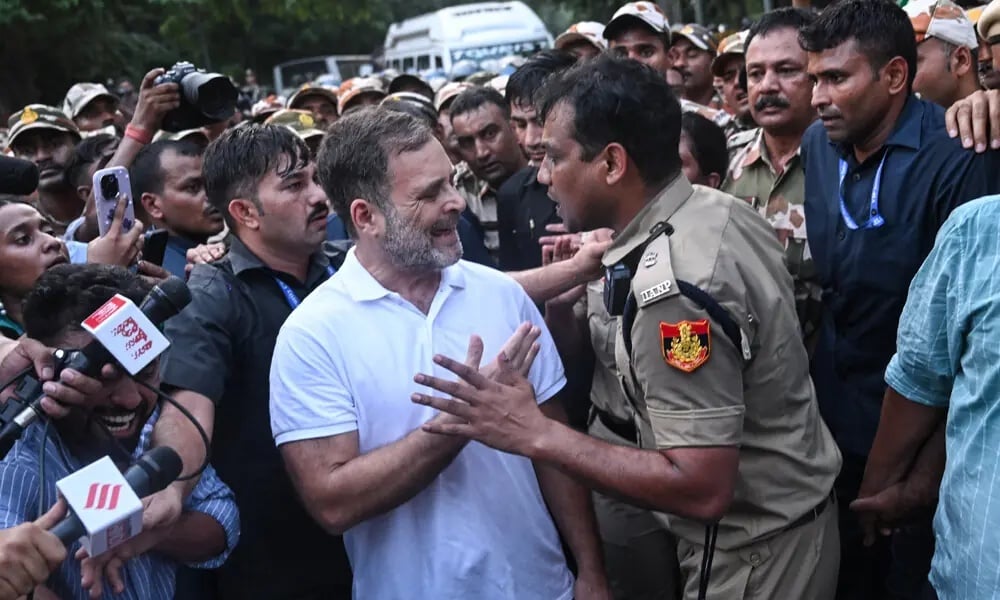
2026 © Helium Trades
Privacy Policy & Disclosure
* Disclaimer: Nothing on this website constitutes investment advice, performance data or any recommendation that any particular security, portfolio of securities, transaction or investment strategy is suitable for any specific person. Helium Trades is not responsible in any way for the accuracy
of any model predictions or price data. Any mention of a particular security and related prediction data is not a recommendation to buy or sell that security. Investments in securities involve the risk of loss. Past performance is no guarantee of future results. Helium Trades is not responsible for any of your investment decisions,
you should consult a financial expert before engaging in any transaction.
Helium Research Assistant

How can I help you today?
Ask any question about this page.


