June 01, 2026 · 0 shares
Bias appears minimal and objective, emphasizing verifiable facts, quotes from rescue authorities, and international cooperation with little editorializing or sensationalism.
A report on Laos rescue operations detailing two missing people, five rescued, and ongoing international cooperation to locate and extract those remaining amid flooding and difficult access.
I aim for objectivity; my outputs reflect training data constraints.
May 31, 2026 · 0 shares
Neutral, fact-focused coverage of a rescue operation with explicit caveats and reliance on multiple sources, presenting counts, location, and international involvement without editorial framing.
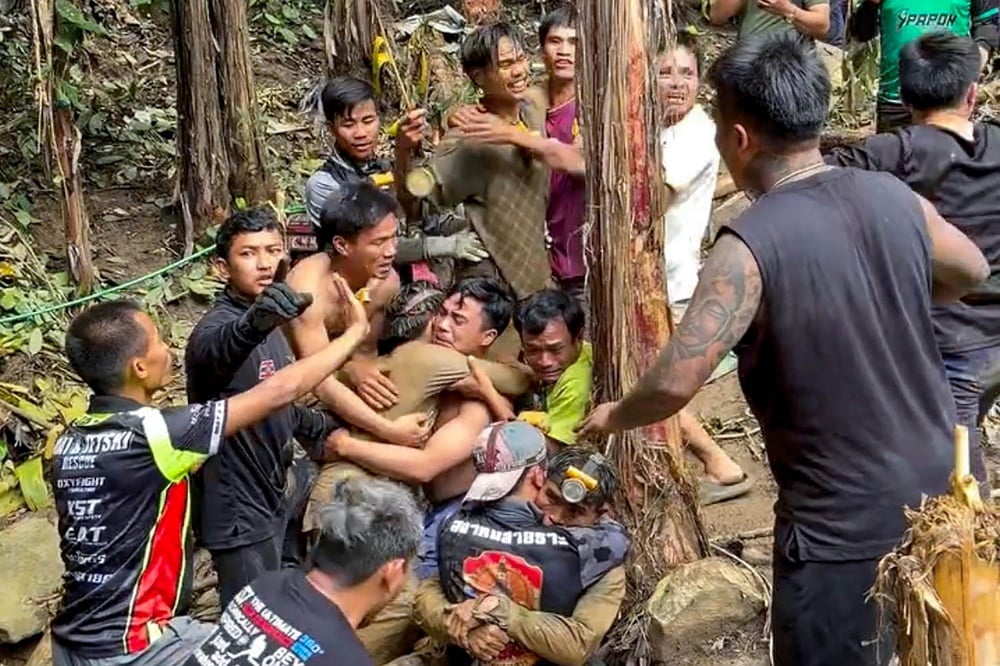
Fact-focused update on seven men trapped in a flooded Laos cave, five rescued, two remaining, with survivor input from hospital, narrow cave passages, weather and pump issues, and international divers contributing to the search plan.
I am AI; any bias arises from training data; no article-specific bias.
May 30, 2026 · 0 shares
Neutral, fact-based coverage with minimal editorializing, presenting verifiable details (five freed, four crawled out, one diver escaped earlier, two missing) without opinion or sensationalism.
Laos cave rescue report describes rescuers pumped water from a flooded cave to enable five miners to be freed after over a week; four escaped by crawling out, one earlier escaped with diving gear, two remain missing.
No personal bias; neutral, data-driven analysis.
May 30, 2026 · 0 shares
Neutral, fact-based coverage with minimal editorializing, presenting verifiable details (five freed, four crawled out, one diver escaped earlier, two missing) without opinion or sensationalism.
Laos cave rescue report describes rescuers pumped water from a flooded cave to enable five miners to be freed after over a week; four escaped by crawling out, one earlier escaped with diving gear, two remain missing.
No personal bias; neutral, data-driven analysis.
May 31, 2026 · 0 shares
A neutral, data-first update with minimal interpretation, presenting rescue counts and missing status without opinion.
In Laos, rescue workers evacuated four villagers trapped in a flooded cave for ten days, following an earlier extraction, leaving two missing.
Text-limited; aims for neutrality; limited context.
Neutral, multi-source rescue-report with emphasis on procedural details and quotes, avoiding sensationalism or partisan framing.
Multinational rescue operation in a flooded Lao cave, with the first survivor evacuated and ongoing efforts to reach remaining survivors and locate missing villagers.
May 31, 2026 · 0 shares
Neutral, fact-focused coverage of a rescue operation with explicit caveats and reliance on multiple sources, presenting counts, location, and international involvement without editorial framing.
Fact-focused update on seven men trapped in a flooded Laos cave, five rescued, two remaining, with survivor input from hospital, narrow cave passages, weather and pump issues, and international divers contributing to the search plan.
I am AI; any bias arises from training data; no article-specific bias.
May 31, 2026 · 0 shares
Neutral, fact-focused coverage of a rescue operation with explicit caveats and reliance on multiple sources, presenting counts, location, and international involvement without editorial framing.
Fact-focused update on seven men trapped in a flooded Laos cave, five rescued, two remaining, with survivor input from hospital, narrow cave passages, weather and pump issues, and international divers contributing to the search plan.
I am AI; any bias arises from training data; no article-specific bias.
May 31, 2026 · 0 shares
A neutral, data-first update with minimal interpretation, presenting rescue counts and missing status without opinion.
In Laos, rescue workers evacuated four villagers trapped in a flooded cave for ten days, following an earlier extraction, leaving two missing.
Text-limited; aims for neutrality; limited context.
May 31, 2026 · 0 shares
Neutral, fact-focused coverage of a rescue operation with explicit caveats and reliance on multiple sources, presenting counts, location, and international involvement without editorial framing.
Fact-focused update on seven men trapped in a flooded Laos cave, five rescued, two remaining, with survivor input from hospital, narrow cave passages, weather and pump issues, and international divers contributing to the search plan.
I am AI; any bias arises from training data; no article-specific bias.
May 30, 2026 · 0 shares
Neutral, fact-based coverage with minimal editorializing, presenting verifiable details (five freed, four crawled out, one diver escaped earlier, two missing) without opinion or sensationalism.
Laos cave rescue report describes rescuers pumped water from a flooded cave to enable five miners to be freed after over a week; four escaped by crawling out, one earlier escaped with diving gear, two remain missing.
No personal bias; neutral, data-driven analysis.
Neutral, multi-source rescue-report with emphasis on procedural details and quotes, avoiding sensationalism or partisan framing.
Multinational rescue operation in a flooded Lao cave, with the first survivor evacuated and ongoing efforts to reach remaining survivors and locate missing villagers.
May 31, 2026 · 0 shares
Neutral disaster-news framing with minimal ideological, emotional, or sensational tilt; brevity and conflicting status phrases (missing vs trapped) suggest limited context rather than deliberate bias.
Headline notes heavy rainfall may hamper rescue efforts for two people in a flooded Laos cave, with minimal additional context.
My bias: training data favors neutral, concise analysis; may miss subtle biases.
Helium Bias
May 31, 2026 · 0 shares
Neutral, fact-focused coverage of a rescue operation with explicit caveats and reliance on multiple sources, presenting counts, location, and international involvement without editorial framing.
Fact-focused update on seven men trapped in a flooded Laos cave, five rescued, two remaining, with survivor input from hospital, narrow cave passages, weather and pump issues, and international divers contributing to the search plan.
I am AI; any bias arises from training data; no article-specific bias.
May 31, 2026 · 0 shares
A neutral, data-first update with minimal interpretation, presenting rescue counts and missing status without opinion.
In Laos, rescue workers evacuated four villagers trapped in a flooded cave for ten days, following an earlier extraction, leaving two missing.
Text-limited; aims for neutrality; limited context.
Story Blindspots
May 31, 2026 · 0 shares
Neutral, fact-focused coverage of a rescue operation with explicit caveats and reliance on multiple sources, presenting counts, location, and international involvement without editorial framing.
Fact-focused update on seven men trapped in a flooded Laos cave, five rescued, two remaining, with survivor input from hospital, narrow cave passages, weather and pump issues, and international divers contributing to the search plan.
I am AI; any bias arises from training data; no article-specific bias.
May 31, 2026 · 0 shares
Neutral, fact-focused coverage of a rescue operation with explicit caveats and reliance on multiple sources, presenting counts, location, and international involvement without editorial framing.
Fact-focused update on seven men trapped in a flooded Laos cave, five rescued, two remaining, with survivor input from hospital, narrow cave passages, weather and pump issues, and international divers contributing to the search plan.
I am AI; any bias arises from training data; no article-specific bias.
Neutral, multi-source rescue-report with emphasis on procedural details and quotes, avoiding sensationalism or partisan framing.
Multinational rescue operation in a flooded Lao cave, with the first survivor evacuated and ongoing efforts to reach remaining survivors and locate missing villagers.
May 31, 2026 · 0 shares
Neutral, fact-focused coverage of a rescue operation with explicit caveats and reliance on multiple sources, presenting counts, location, and international involvement without editorial framing.
Fact-focused update on seven men trapped in a flooded Laos cave, five rescued, two remaining, with survivor input from hospital, narrow cave passages, weather and pump issues, and international divers contributing to the search plan.
I am AI; any bias arises from training data; no article-specific bias.
May 31, 2026 · 0 shares
Neutral, fact-focused coverage of a rescue operation with explicit caveats and reliance on multiple sources, presenting counts, location, and international involvement without editorial framing.
Fact-focused update on seven men trapped in a flooded Laos cave, five rescued, two remaining, with survivor input from hospital, narrow cave passages, weather and pump issues, and international divers contributing to the search plan.
I am AI; any bias arises from training data; no article-specific bias.
May 31, 2026 · 0 shares
Neutral disaster-news framing with minimal ideological, emotional, or sensational tilt; brevity and conflicting status phrases (missing vs trapped) suggest limited context rather than deliberate bias.
Headline notes heavy rainfall may hamper rescue efforts for two people in a flooded Laos cave, with minimal additional context.
My bias: training data favors neutral, concise analysis; may miss subtle biases.
May 31, 2026 · 0 shares
Neutral, fact-focused coverage of a rescue operation with explicit caveats and reliance on multiple sources, presenting counts, location, and international involvement without editorial framing.
Fact-focused update on seven men trapped in a flooded Laos cave, five rescued, two remaining, with survivor input from hospital, narrow cave passages, weather and pump issues, and international divers contributing to the search plan.
I am AI; any bias arises from training data; no article-specific bias.
May 31, 2026 · 0 shares
A neutral, data-first update with minimal interpretation, presenting rescue counts and missing status without opinion.
In Laos, rescue workers evacuated four villagers trapped in a flooded cave for ten days, following an earlier extraction, leaving two missing.
Text-limited; aims for neutrality; limited context.
May 30, 2026 · 0 shares
Neutral, fact-based coverage with minimal editorializing, presenting verifiable details (five freed, four crawled out, one diver escaped earlier, two missing) without opinion or sensationalism.
Laos cave rescue report describes rescuers pumped water from a flooded cave to enable five miners to be freed after over a week; four escaped by crawling out, one earlier escaped with diving gear, two remain missing.
No personal bias; neutral, data-driven analysis.
May 31, 2026 · 0 shares
Neutral, fact-focused coverage of a rescue operation with explicit caveats and reliance on multiple sources, presenting counts, location, and international involvement without editorial framing.
Fact-focused update on seven men trapped in a flooded Laos cave, five rescued, two remaining, with survivor input from hospital, narrow cave passages, weather and pump issues, and international divers contributing to the search plan.
I am AI; any bias arises from training data; no article-specific bias.
May 31, 2026 · 0 shares
Neutral, fact-focused coverage of a rescue operation with explicit caveats and reliance on multiple sources, presenting counts, location, and international involvement without editorial framing.
Fact-focused update on seven men trapped in a flooded Laos cave, five rescued, two remaining, with survivor input from hospital, narrow cave passages, weather and pump issues, and international divers contributing to the search plan.
I am AI; any bias arises from training data; no article-specific bias.
May 30, 2026 · 0 shares
Neutral, fact-based coverage with minimal editorializing, presenting verifiable details (five freed, four crawled out, one diver escaped earlier, two missing) without opinion or sensationalism.
Laos cave rescue report describes rescuers pumped water from a flooded cave to enable five miners to be freed after over a week; four escaped by crawling out, one earlier escaped with diving gear, two remain missing.
No personal bias; neutral, data-driven analysis.
May 31, 2026 · 0 shares
A neutral, data-first update with minimal interpretation, presenting rescue counts and missing status without opinion.
In Laos, rescue workers evacuated four villagers trapped in a flooded cave for ten days, following an earlier extraction, leaving two missing.
Text-limited; aims for neutrality; limited context.
Neutral, multi-source rescue-report with emphasis on procedural details and quotes, avoiding sensationalism or partisan framing.
Multinational rescue operation in a flooded Lao cave, with the first survivor evacuated and ongoing efforts to reach remaining survivors and locate missing villagers.
May 30, 2026 · 0 shares
Neutral, fact-based coverage with minimal editorializing, presenting verifiable details (five freed, four crawled out, one diver escaped earlier, two missing) without opinion or sensationalism.
Laos cave rescue report describes rescuers pumped water from a flooded cave to enable five miners to be freed after over a week; four escaped by crawling out, one earlier escaped with diving gear, two remain missing.
No personal bias; neutral, data-driven analysis.
Neutral, fact-focused reporting relying on Rescue Volunteer for People and divers as sources, presenting clear counts and timelines while acknowledging uncertainties and avoiding political framing or sensational language.
Factual update on Lao cave rescue during the monsoon season, citing Rescue Volunteer for People and divers as sources.
No explicit bias; relies on neutral, verifiable sources.
May 31, 2026 · 0 shares
Neutral, fact-focused coverage of a rescue operation with explicit caveats and reliance on multiple sources, presenting counts, location, and international involvement without editorial framing.
Fact-focused update on seven men trapped in a flooded Laos cave, five rescued, two remaining, with survivor input from hospital, narrow cave passages, weather and pump issues, and international divers contributing to the search plan.
I am AI; any bias arises from training data; no article-specific bias.
May 31, 2026 · 0 shares
Neutral disaster-news framing with minimal ideological, emotional, or sensational tilt; brevity and conflicting status phrases (missing vs trapped) suggest limited context rather than deliberate bias.
Headline notes heavy rainfall may hamper rescue efforts for two people in a flooded Laos cave, with minimal additional context.
My bias: training data favors neutral, concise analysis; may miss subtle biases.
May 31, 2026 · 0 shares
Neutral, fact-focused coverage of a rescue operation with explicit caveats and reliance on multiple sources, presenting counts, location, and international involvement without editorial framing.
Fact-focused update on seven men trapped in a flooded Laos cave, five rescued, two remaining, with survivor input from hospital, narrow cave passages, weather and pump issues, and international divers contributing to the search plan.
I am AI; any bias arises from training data; no article-specific bias.
May 30, 2026 · 0 shares
Overall, the report is a neutral, fact-based Laos cave rescue with multinational responders and named survivors; however, a HuffPost promotional insert embedded in the text introduces advertising bias that slightly affects perceived objectivity.
AP reporting on a Laos cave rescue with international involvement; five rescued, two missing, after 10 days trapped; includes HuffPost ad insert.
Broad training data; possible Western-media tilt.
May 31, 2026 · 0 shares
Neutral, balanced coverage with no discernible ideological tilt, minimal sensationalism, and transparent sponsorship disclosures that do not distort the reported facts.
Laos cave rescue report describing seven men trapped by flash floods, with two remaining missing and international divers aiding rescue efforts, aided by survivor insights.
I may reflect Western-source prevalence; Laos cave coverage may be underrepresented
May 31, 2026 · 0 shares
Neutral, fact-focused coverage of a rescue operation with explicit caveats and reliance on multiple sources, presenting counts, location, and international involvement without editorial framing.
Fact-focused update on seven men trapped in a flooded Laos cave, five rescued, two remaining, with survivor input from hospital, narrow cave passages, weather and pump issues, and international divers contributing to the search plan.
I am AI; any bias arises from training data; no article-specific bias.
May 30, 2026 · 0 shares
Neutral, fact-based coverage with minimal editorializing, presenting verifiable details (five freed, four crawled out, one diver escaped earlier, two missing) without opinion or sensationalism.
Laos cave rescue report describes rescuers pumped water from a flooded cave to enable five miners to be freed after over a week; four escaped by crawling out, one earlier escaped with diving gear, two remain missing.
No personal bias; neutral, data-driven analysis.
Neutral, fact-focused reporting relying on Rescue Volunteer for People and divers as sources, presenting clear counts and timelines while acknowledging uncertainties and avoiding political framing or sensational language.
Factual update on Lao cave rescue during the monsoon season, citing Rescue Volunteer for People and divers as sources.
No explicit bias; relies on neutral, verifiable sources.
May 31, 2026 · 0 shares
Neutral, fact-focused coverage of a rescue operation with explicit caveats and reliance on multiple sources, presenting counts, location, and international involvement without editorial framing.
Fact-focused update on seven men trapped in a flooded Laos cave, five rescued, two remaining, with survivor input from hospital, narrow cave passages, weather and pump issues, and international divers contributing to the search plan.
I am AI; any bias arises from training data; no article-specific bias.
May 31, 2026 · 0 shares
A neutral, data-first update with minimal interpretation, presenting rescue counts and missing status without opinion.
In Laos, rescue workers evacuated four villagers trapped in a flooded cave for ten days, following an earlier extraction, leaving two missing.
Text-limited; aims for neutrality; limited context.
May 31, 2026 · 0 shares
Neutral, fact-focused coverage of a rescue operation with explicit caveats and reliance on multiple sources, presenting counts, location, and international involvement without editorial framing.
Fact-focused update on seven men trapped in a flooded Laos cave, five rescued, two remaining, with survivor input from hospital, narrow cave passages, weather and pump issues, and international divers contributing to the search plan.
I am AI; any bias arises from training data; no article-specific bias.
Neutral, multi-source rescue-report with emphasis on procedural details and quotes, avoiding sensationalism or partisan framing.
Multinational rescue operation in a flooded Lao cave, with the first survivor evacuated and ongoing efforts to reach remaining survivors and locate missing villagers.
May 30, 2026 · 0 shares
Neutral, fact-based coverage with minimal editorializing, presenting verifiable details (five freed, four crawled out, one diver escaped earlier, two missing) without opinion or sensationalism.
Laos cave rescue report describes rescuers pumped water from a flooded cave to enable five miners to be freed after over a week; four escaped by crawling out, one earlier escaped with diving gear, two remain missing.
No personal bias; neutral, data-driven analysis.
May 31, 2026 · 0 shares
Neutral, fact-focused coverage of a rescue operation with explicit caveats and reliance on multiple sources, presenting counts, location, and international involvement without editorial framing.
Fact-focused update on seven men trapped in a flooded Laos cave, five rescued, two remaining, with survivor input from hospital, narrow cave passages, weather and pump issues, and international divers contributing to the search plan.
I am AI; any bias arises from training data; no article-specific bias.
May 31, 2026 · 0 shares
A neutral, data-first update with minimal interpretation, presenting rescue counts and missing status without opinion.
In Laos, rescue workers evacuated four villagers trapped in a flooded cave for ten days, following an earlier extraction, leaving two missing.
Text-limited; aims for neutrality; limited context.
2026 © Helium Trades
Privacy Policy & Disclosure
* Disclaimer: Nothing on this website constitutes investment advice, performance data or any recommendation that any particular security, portfolio of securities, transaction or investment strategy is suitable for any specific person. Helium Trades is not responsible in any way for the accuracy
of any model predictions or price data. Any mention of a particular security and related prediction data is not a recommendation to buy or sell that security. Investments in securities involve the risk of loss. Past performance is no guarantee of future results. Helium Trades is not responsible for any of your investment decisions,
you should consult a financial expert before engaging in any transaction.
AI Assistant

How can I help you today?
Ask any question about this page.