See whether Helium helps you make better-informed decisions. Try every Pro Trader feature for 30 days. No credit card required.
Try every Pro Trader feature for 30 days. No credit card required.
November 05, 2026 · 0 shares
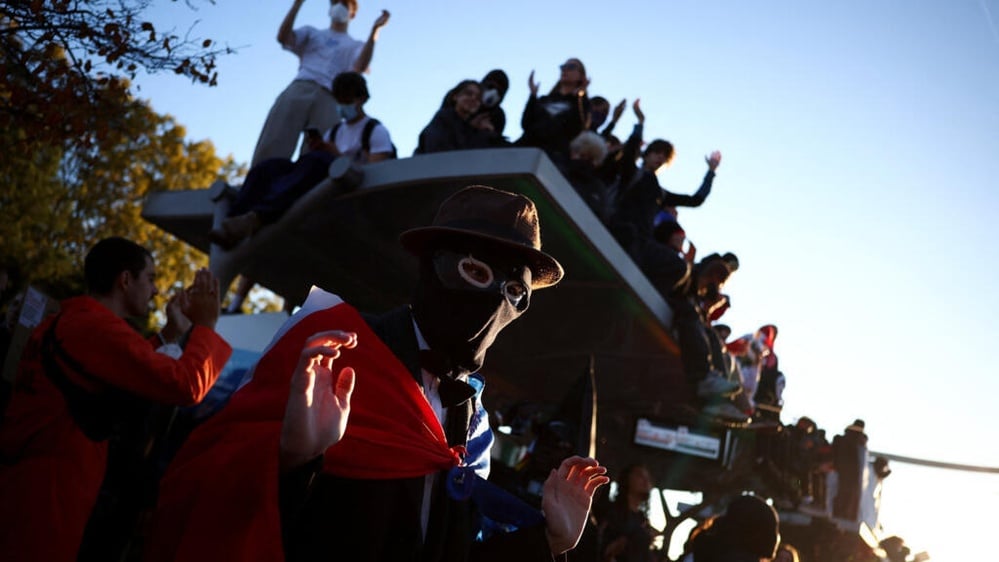
The headline and visual-teaser framing foreground 'chaos' and confrontation, while the body otherwise reports strike demands, security deployment, and disruption in largely descriptive terms.
Automated analysis; not human reviewed.
Limitations: The supplied text is a short broadcast-style transcript with no byline, no precise date, and limited direct sourcing, which constrains assessment of several dimensions.
·
5 of 55 available dimensions scored; omitted dimensions are not treated as neutral.
·
Verified supporting quotes for 5 of 5 scored dimensions.
Claim: The report presents labor protest demands and official security responses without clear left-right ideological advocacy.
“workers, students and pensioners took to the streets over wages, pensions, living costs and public services” · exact text match
“Authorities deployed 70,000 police officers nationwide as President Emmanuel Macron convened a security meeting” · exact text match
Why: Both protest grievances and state security actions are reported without partisan framing or explicit ideological endorsement.
Claim: Dramatic headline and visual descriptors add subjective color to an otherwise descriptive report.
“ON CAMERA: France Protest Chaos, Tear Gas Fired As Workers And Students Take To Streets.” · exact text match
“Black-clad demonstrators wearing face coverings were seen shouting anti-police slogans” · exact text match
Why: Words such as 'Chaos' and 'Black-clad' supply loaded imagery beyond neutral description.
Claim: The headline uses dramatic language to emphasize chaos and confrontation.
“ON CAMERA: France Protest Chaos, Tear Gas Fired As Workers And Students Take To Streets.” · exact text match
Counterevidence:
“French intelligence services estimated that between 500,000 and 700,000 people could join demonstrations outside Paris alone.” · exact text match
Why: Foregrounding 'Chaos' and 'Tear Gas Fired' heightens the story's dramatic impact.
Claim: The framing highlights disorder and potential riots or looting, though not to an extreme degree.
“ON CAMERA: France Protest Chaos, Tear Gas Fired As Workers And Students Take To Streets.” · exact text match
“amid concerns about a repeat of the October 17 riots and looting” · exact text match
Why: References to chaos, tear gas, riots, and looting emphasize security threat and disruption.
Claim: The article is centrally about a nationwide political and social protest, union action, and government response.
“France witnessed massive nationwide strike action on Thursday, with demonstrations planned across 260 towns and cities” · exact text match
“Authorities deployed 70,000 police officers nationwide as President Emmanuel Macron convened a security meeting” · exact text match
Why: The reported event is explicitly a nationwide strike involving unions, workers, students, pensioners, police deployment, and the president's security response.
The supplied text is a short broadcast-style transcript with no byline, no precise date, and limited direct sourcing, which constrains assessment of several dimensions.
November 05, 2026 · 0 shares
The brief is a neutral, wire-style report that describes union-led strike mobilization and its purchasing-power demand without evaluative or partisan language.
Automated analysis; not human reviewed.
Limitations: Very brief excerpt with limited sourcing and no named individuals; bias assessments have low-to-moderate evidentiary support.
·
9 of 55 available dimensions scored; omitted dimensions are not treated as neutral.
·
Verified supporting quotes for 4 of 9 scored dimensions.
Claim: The framing does not use partisan or ideological language in reporting the labor action.
“A group of major trade unions have called for nationwide strikes and demonstrations on Thursday.” · not found in supplied text
Why: The sentence reports the actor and event without left-right evaluative framing, supporting a neutral score.
Claim: The report lists broad occupational groups without populist or elitist framing.
“private sector employees, civil servants and retirees” · exact text match
Why: The participants are described categorically, with no anti-elite or pro-elite language.
Claim: The article's language is descriptive rather than evaluative.
“The day of action in favour of more purchasing power will, for the first time since September, bring together private sector employees, civil servants and retirees.” · exact text match
Why: The statement reports demand and participants without subjective commentary.
Claim: The report avoids sensational wording or dramatic emphasis.
“A group of major trade unions have called for nationwide strikes and demonstrations on Thursday.” · not found in supplied text
Why: The language is plain and announcement-style, with no sensational detail.
Claim: The text describes planned action and demands without prescribing an outcome.
“The day of action in favour of more purchasing power will, for the first time since September, bring together private sector employees, civil servants and retirees.” · exact text match
Why: It reports the purpose and participants but does not advocate for or against the strike.
Claim: The supplied text consists of factual reporting rather than stated opinion.
“A group of major trade unions have called for nationwide strikes and demonstrations on Thursday.” · not found in supplied text
Why: No first-person or evaluative opinion language is present.
Claim: The report concerns a political/labor mobilization and a policy-related demand.
“A group of major trade unions have called for nationwide strikes and demonstrations on Thursday.” · not found in supplied text
“The day of action in favour of more purchasing power” · exact text match
Why: Strikes, demonstrations, and purchasing-power demands are public political-economic issues, making the topic substantially political.
Claim: The tone is neutral rather than emotionally charged.
“adding to the pressure already initiated by high school and university students” · exact text match
Why: The phrase 'pressure' is used in a conventional news sense without emotive amplification.
Claim: The report presents the strike call as a straightforward factual development.
“A group of major trade unions have called for nationwide strikes and demonstrations on Thursday.” · not found in supplied text
Why: No emotional appeals or logical fallacies are visible; the prose is factual and restrained.
Very brief excerpt with limited sourcing and no named individuals; bias assessments have low-to-moderate evidentiary support.
November 05, 2026 · 0 shares
Largely neutral, attribution-heavy coverage balances protest grievances with government security warnings and avoids partisan endorsement.
Automated analysis; not human reviewed.
Limitations: No byline or publication timestamp is present; some turnout and security details rely on BFM TV and an anonymous official close to Macron.
·
10 of 55 available dimensions scored; omitted dimensions are not treated as neutral.
·
Verified supporting quotes for 10 of 10 scored dimensions.
Claim: The report cites both left-wing union mobilization and government security concerns without endorsing either side.
“called by trade unions including the left-wing CGT and backed by student groups” · exact text match
“The government has defended police tactics, while saying allegations of misconduct would be investigated.” · exact text match
Why: Balanced sourcing and lack of partisan characterization support measured neutrality.
Claim: The report uses attributed official statements and statistics rather than first-person opinion.
“The Education Ministry said 17.5 percent of public primary school teachers were expected to strike” · exact text match
“The domestic intelligence service expects between 500,000 and 700,000 people to demonstrate outside Paris, according to the broadcaster.” · exact text match
Why: Attribution and statistical reporting make the account predominantly objective.
Claim: The account frames demonstrations with measured language, noting they were largely peaceful despite clashes.
“Nationwide demonstrations last Saturday were largely peaceful, although some clashes occurred on the fringes.” · exact text match
Why: Balanced description of peaceful demonstrations and isolated clashes is not sensational.
Claim: The report describes planned protests, strike participation, and official preparations without advocating a course of action.
“Authorities plan to deploy 70,000 police officers as unions, students and public-sector workers prepare to take to the streets over living costs, public services and education.” · exact text match
Why: The language is descriptive of expected events, not prescriptive.
Claim: The article is centrally framed around a political challenge to President Macron and the coming presidential election.
“a fresh challenge to President Emmanuel Macron's government” · exact text match
“ahead of the presidential election” · exact text match
Why: The reported events are explicitly tied to national politics and electoral positioning.
Claim: The report maintains a neutral emotional register, balancing unrest with largely peaceful demonstrations.
“Nationwide demonstrations last Saturday were largely peaceful, although some clashes occurred on the fringes.” · exact text match
Why: Balanced description avoids emotionally charged language.
Claim: Key figures and claims are attributed to named institutions or broadcasters, with estimates clearly marked.
“BFM TV reported” · exact text match
“The Education Ministry said 17.5 percent of public primary school teachers were expected to strike” · exact text match
Why: Specific attribution and separation of estimates support credibility.
Claim: Turnout and security figures are attributed to specific sources rather than asserted without attribution.
“French authorities are deploying around 70,000 police officers nationwide, BFM TV reported.” · exact text match
“The domestic intelligence service expects between 500,000 and 700,000 people to demonstrate outside Paris, according to the broadcaster.” · exact text match
Why: Explicit attribution of estimates supports rational, evidence-bound reporting.
Claim: The report attributes figures and includes allegations against police alongside the government's response.
“French authorities are deploying around 70,000 police officers nationwide, BFM TV reported.” · exact text match
“The government has defended police tactics, while saying allegations of misconduct would be investigated.” · exact text match
Why: Named sourcing and inclusion of contested allegations support high integrity.
Claim: The report incorporates multiple actors and contextualizes the protests with security, education, and political dimensions.
“The government has defended police tactics, while saying allegations of misconduct would be investigated.” · exact text match
“Political tensions remain high as candidates position themselves ahead of the election and opposition parties seek to capitalise on public frustration over living standards and government policy.” · exact text match
Why: Nuanced multi-actor framing supports high article intelligence.
No byline or publication timestamp is present; some turnout and security details rely on BFM TV and an anonymous official close to Macron.
November 05, 2026 · 0 shares
The headline and visual-teaser framing foreground 'chaos' and confrontation, while the body otherwise reports strike demands, security deployment, and disruption in largely descriptive terms.
Automated analysis; not human reviewed.
Limitations: The supplied text is a short broadcast-style transcript with no byline, no precise date, and limited direct sourcing, which constrains assessment of several dimensions.
·
5 of 55 available dimensions scored; omitted dimensions are not treated as neutral.
·
Verified supporting quotes for 5 of 5 scored dimensions.
Claim: The report presents labor protest demands and official security responses without clear left-right ideological advocacy.
“workers, students and pensioners took to the streets over wages, pensions, living costs and public services” · exact text match
“Authorities deployed 70,000 police officers nationwide as President Emmanuel Macron convened a security meeting” · exact text match
Why: Both protest grievances and state security actions are reported without partisan framing or explicit ideological endorsement.
Claim: Dramatic headline and visual descriptors add subjective color to an otherwise descriptive report.
“ON CAMERA: France Protest Chaos, Tear Gas Fired As Workers And Students Take To Streets.” · exact text match
“Black-clad demonstrators wearing face coverings were seen shouting anti-police slogans” · exact text match
Why: Words such as 'Chaos' and 'Black-clad' supply loaded imagery beyond neutral description.
Claim: The headline uses dramatic language to emphasize chaos and confrontation.
“ON CAMERA: France Protest Chaos, Tear Gas Fired As Workers And Students Take To Streets.” · exact text match
Counterevidence:
“French intelligence services estimated that between 500,000 and 700,000 people could join demonstrations outside Paris alone.” · exact text match
Why: Foregrounding 'Chaos' and 'Tear Gas Fired' heightens the story's dramatic impact.
Claim: The framing highlights disorder and potential riots or looting, though not to an extreme degree.
“ON CAMERA: France Protest Chaos, Tear Gas Fired As Workers And Students Take To Streets.” · exact text match
“amid concerns about a repeat of the October 17 riots and looting” · exact text match
Why: References to chaos, tear gas, riots, and looting emphasize security threat and disruption.
Claim: The article is centrally about a nationwide political and social protest, union action, and government response.
“France witnessed massive nationwide strike action on Thursday, with demonstrations planned across 260 towns and cities” · exact text match
“Authorities deployed 70,000 police officers nationwide as President Emmanuel Macron convened a security meeting” · exact text match
Why: The reported event is explicitly a nationwide strike involving unions, workers, students, pensioners, police deployment, and the president's security response.
The supplied text is a short broadcast-style transcript with no byline, no precise date, and limited direct sourcing, which constrains assessment of several dimensions.
November 05, 2026 · 0 shares
Wire-style coverage relies on attributed official and union statements, maintaining mostly neutral wording while occasionally repeating loaded official terms such as 'hardcore protesters' and 'criminal behavior'.
Automated analysis; not human reviewed.
Limitations: Official incident descriptions, crowd-size estimates, and the claim of Macron's unpopularity are not independently verified in the supplied text; scores assess framing only.
·
12 of 55 available dimensions scored; omitted dimensions are not treated as neutral.
·
Verified supporting quotes for 12 of 12 scored dimensions.
Claim: Coverage does not endorse a left-right political agenda; it reports government, union, and protest perspectives with attribution.
“The French government has defended police tactics while saying any abuses would be investigated.” · exact text match
“The nationwide protests and a strike by public workers, called by trade unions and backed by student groups” · exact text match
Why: Balanced attribution of official and protest-side claims supports measured neutrality on the liberal-conservative axis.
Claim: Framing does not consistently favor populist protest movements or governing elites; it reports both ministry claims and union mobilization.
“The Interior Ministry said police in Lyon had been confronted by several hundred hardcore protesters” · exact text match
“The nationwide protests and a strike by public workers, called by trade unions and backed by student groups” · exact text match
Why: Both official and union/protest claims are included without adopting either as the governing frame.
Claim: The report presents both protest activity and police deployment without endorsing either a liberty-based or authority-based interpretation.
“Around 70,000 police were on duty nationwide, a comparable figure to recent weekends.” · exact text match
“The nationwide protests and a strike by public workers, called by trade unions and backed by student groups” · exact text match
Why: Balanced description of security deployment and protest mobilization supports measured neutrality.
Claim: Publisher framing is predominantly objective, with facts and claims tied to named institutions, officials, or union leaders.
“The Education Ministry said just over 15% of French teaching staff had joined the strike.” · exact text match
“Sophie Binet, head of the CGT trade union, told reporters.” · exact text match
Why: Named attribution and factual reporting reduce subjective framing.
Claim: Clashes and disruption are described in factual, attributed terms rather than sensationalized language.
“French riot police fired tear gas and charged a group of protesters in the French city of Lyon” · exact text match
“no major problems were reported on the transport network.” · exact text match
Why: Straight description of police action and an explicit absence-of-major-disruption detail supports low sensationalism.
Claim: The report is mainly descriptive, recounting events and statements without prescribing a policy or political outcome.
“The Eiffel Tower was shut on Thursday because of the strike.” · exact text match
“The nationwide protests and a strike by public workers, called by trade unions and backed by student groups” · exact text match
Why: Event-focused detail and source attribution rather than recommendations support descriptive framing.
Claim: The subject matter is explicitly political, centered on nationwide protests, a public-worker strike, and electoral context.
“The unrest comes only five months before a presidential election which could pit far-right candidate Marine Le Pen against hard-left rival Jean-Luc Melenchon in a second-round run-off.” · exact text match
Why: Direct election and protest context makes the report highly political in content.
Claim: The report neither consistently defends nor attacks establishment actors, giving ministry statements alongside protest-side grievances.
“The Interior Ministry said police in Lyon had been confronted by several hundred hardcore protesters” · exact text match
“The government tried to block the demonstrations.” · exact text match
Why: Juxtaposition of official police claims and a union leader's criticism indicates no consistent establishment alignment.
Claim: Sourcing is attributed to named institutions and individuals, with estimates and official claims clearly identified.
“The Interior Ministry said police in Lyon had been confronted by several hundred hardcore protesters” · exact text match
“Sophie Binet, head of the CGT trade union, told reporters.” · exact text match
Why: Visible attribution and explicit estimation support high credibility within the supplied text.
Claim: The report uses attributed statements and concrete details rather than emotional or speculative reasoning.
“The Interior Ministry said people throwing fireworks had caused a fire at a high school near the city of Toulouse in the southwest on Thursday morning” · exact text match
“She estimated that some 250,000 people were demonstrating across France.” · exact text match
Why: Attribution and explicit estimation indicate rational, evidence-bounded reporting.
Claim: The report attributes contested claims, labels estimates, and includes official defenses and context.
“She estimated that some 250,000 people were demonstrating across France.” · exact text match
“The French government has defended police tactics while saying any abuses would be investigated.” · exact text match
Why: Clear attribution and inclusion of official response indicate high internal fairness and honesty signals.
Claim: The report coherently synthesizes scattered events, official statements, union estimates, and contextual facts.
“The strike contributed to a reduction in France's nuclear output early on Thursday.
However, no major problems were reported on the transport network.”
· exact text match
Why: Concise integration of multiple factual threads indicates above-average article intelligence.
Official incident descriptions, crowd-size estimates, and the claim of Macron's unpopularity are not independently verified in the supplied text; scores assess framing only.
November 05, 2026 · 0 shares
The headline and visual-teaser framing foreground 'chaos' and confrontation, while the body otherwise reports strike demands, security deployment, and disruption in largely descriptive terms.
Automated analysis; not human reviewed.
Limitations: The supplied text is a short broadcast-style transcript with no byline, no precise date, and limited direct sourcing, which constrains assessment of several dimensions.
·
5 of 55 available dimensions scored; omitted dimensions are not treated as neutral.
·
Verified supporting quotes for 5 of 5 scored dimensions.
Claim: The report presents labor protest demands and official security responses without clear left-right ideological advocacy.
“workers, students and pensioners took to the streets over wages, pensions, living costs and public services” · exact text match
“Authorities deployed 70,000 police officers nationwide as President Emmanuel Macron convened a security meeting” · exact text match
Why: Both protest grievances and state security actions are reported without partisan framing or explicit ideological endorsement.
Claim: Dramatic headline and visual descriptors add subjective color to an otherwise descriptive report.
“ON CAMERA: France Protest Chaos, Tear Gas Fired As Workers And Students Take To Streets.” · exact text match
“Black-clad demonstrators wearing face coverings were seen shouting anti-police slogans” · exact text match
Why: Words such as 'Chaos' and 'Black-clad' supply loaded imagery beyond neutral description.
Claim: The headline uses dramatic language to emphasize chaos and confrontation.
“ON CAMERA: France Protest Chaos, Tear Gas Fired As Workers And Students Take To Streets.” · exact text match
Counterevidence:
“French intelligence services estimated that between 500,000 and 700,000 people could join demonstrations outside Paris alone.” · exact text match
Why: Foregrounding 'Chaos' and 'Tear Gas Fired' heightens the story's dramatic impact.
Claim: The framing highlights disorder and potential riots or looting, though not to an extreme degree.
“ON CAMERA: France Protest Chaos, Tear Gas Fired As Workers And Students Take To Streets.” · exact text match
“amid concerns about a repeat of the October 17 riots and looting” · exact text match
Why: References to chaos, tear gas, riots, and looting emphasize security threat and disruption.
Claim: The article is centrally about a nationwide political and social protest, union action, and government response.
“France witnessed massive nationwide strike action on Thursday, with demonstrations planned across 260 towns and cities” · exact text match
“Authorities deployed 70,000 police officers nationwide as President Emmanuel Macron convened a security meeting” · exact text match
Why: The reported event is explicitly a nationwide strike involving unions, workers, students, pensioners, police deployment, and the president's security response.
The supplied text is a short broadcast-style transcript with no byline, no precise date, and limited direct sourcing, which constrains assessment of several dimensions.
November 02, 2026 · 0 shares
The report is largely neutral and attribution-driven, presenting government warnings and protester grievances alongside conflicting official and union counts.
French lycées are secondary schools whose final-year students sit the baccalauréat, a national qualification used for university admission.
Automated analysis; not human reviewed.
Limitations: No author byline is present, and the supplied text repeats headline/standfirst fragments; assessment relies on the substantive body.
·
12 of 55 available dimensions scored; omitted dimensions are not treated as neutral.
·
Verified supporting quotes for 12 of 12 scored dimensions.
Claim: Reports protest demands and official warnings without a clear left-right editorial frame.
“schoolchildren must keep going in their “battle of strength” with the government to push for more funding, better access to higher education and repairs to decrepit schools.” · exact text match
“Geffray said the school blockades were “illegal” and his priority was for children to return to class.” · exact text match
Why: Quotes both student protesters and the education minister, supporting a neutral score.
Claim: Gives space to both grassroots student protest and senior government responses.
“schoolchildren must keep going in their “battle of strength” with the government to push for more funding, better access to higher education and repairs to decrepit schools.” · exact text match
“The prime minister, Sébastien Lecornu, said he would meet school students’ unions again next week.” · exact text match
Why: Balances a populist protest voice with an elite government actor.
Claim: Reports both official authority claims and civil-liberty criticism without endorsing either.
“Geffray said the school blockades were “illegal” and his priority was for children to return to class.” · exact text match
“In Montpellier, the Socialist senator Hussein Bourgi accused the government of “misconduct” and “provocation” after video footage showed a 53-year-old school nurse saying something to police near a school barricade before being forced face-down to the ground, handcuffed and taken into police custody.” · exact text match
Why: Juxtaposes state authority with criticism of police action.
Claim: Frames events through attributed statements, named actors, and disputed counts rather than subjective commentary.
“The education ministry said 41 high schools were blocked across France – around 1% of the nationwide total.
Students’ unions put the figure at 150.”
· exact text match
Why: Attribution and competing data support an objective classification.
Claim: Uses measured, precise language and sourced figures rather than hyperbolic or sensational phrasing.
“The education ministry said 41 high schools were blocked across France – around 1% of the nationwide total.” · exact text match
Why: A precise sourced count reflects low sensationalism.
Claim: Reports planned actions and demands descriptively rather than prescribing a policy or outcome.
“Trade unions have called for a large-scale strike on Thursday, with rail workers, teachers and private-sector employees planning to join demonstrations in cities across France to support schoolchildren’s demands for better conditions and protest against the rising cost of living and low salaries.” · exact text match
Why: The sentence reports planned collective action without editorial prescription.
Claim: Centers on political protest, union action, government response, and public policy.
“Trade unions have called for a large-scale strike on Thursday, with rail workers, teachers and private-sector employees planning to join demonstrations in cities across France to support schoolchildren’s demands for better conditions and protest against the rising cost of living and low salaries.” · exact text match
“The prime minister, Sébastien Lecornu, said he would meet school students’ unions again next week.” · exact text match
Why: The report's substance is highly political.
Claim: Balances official government warnings with protester and opposition criticism.
“Geffray said the school blockades were “illegal” and his priority was for children to return to class.” · exact text match
“In Montpellier, the Socialist senator Hussein Bourgi accused the government of “misconduct” and “provocation” after video footage showed a 53-year-old school nurse saying something to police near a school barricade before being forced face-down to the ground, handcuffed and taken into police custody.” · exact text match
Why: Includes both establishment and anti-establishment perspectives.
Claim: Relies on named sources, direct attribution, and acknowledgment of disputed figures.
“The education ministry said 41 high schools were blocked across France – around 1% of the nationwide total.
Students’ unions put the figure at 150.”
· exact text match
“Nicolas Bonnet, of the headteachers’ union SNPDEN-UNSA, said: “It’s time for us to return to our job: teaching and supporting pupils.”” · exact text match
Why: Named sourcing and conflicting counts support high credibility.
Claim: Uses attributed, quantified claims and acknowledges disputed figures rather than asserting a single narrative.
“The education ministry said 41 high schools were blocked across France – around 1% of the nationwide total.
Students’ unions put the figure at 150.”
· exact text match
Why: Competing sourced figures indicate rational, evidence-bound reporting.
Claim: Shows fair internal practice by including conflicting figures and official responses to allegations.
“The education ministry said 41 high schools were blocked across France – around 1% of the nationwide total.
Students’ unions put the figure at 150.”
· exact text match
“The local prefect, in charge of police operations, defended the arrest, saying the woman had insulted officers and resisted police.” · exact text match
Why: Presents disputed data and a response to the arrest allegation, supporting high integrity.
Claim: Provides context, multiple stakeholder perspectives, and conflicting figures.
“The education ministry said 41 high schools were blocked across France – around 1% of the nationwide total.
Students’ unions put the figure at 150.”
· exact text match
Why: Demonstrates nuanced reporting beyond a single perspective.
No author byline is present, and the supplied text repeats headline/standfirst fragments; assessment relies on the substantive body.
November 03, 2026 · 0 shares
Descriptive, neutral wire-service framing reports protest actions and strike preparations without evaluative or partisan language.
Automated analysis; not human reviewed.
Limitations: The supplied article is only a two-sentence news snippet, limiting assessment of sourcing, context, and framing.
·
9 of 55 available dimensions scored; omitted dimensions are not treated as neutral.
·
Verified supporting quotes for 9 of 9 scored dimensions.
Claim: The text contains no discernible liberal or conservative ideological framing.
“Students blockaded dozens of high schools across France on Tuesday to maintain pressure on the government over education reforms” · exact text match
Why: The report describes a protest and strike without partisan or ideological language.
Claim: The text does not frame the dispute in populist-versus-elite terms.
“pressure on the government over education reforms” · exact text match
Why: Government and unions are named as actors but neither is cast as a populist or elitist side.
Claim: The text neither endorses nor condemns the protest or state authority.
“Students blockaded dozens of high schools across France on Tuesday” · exact text match
Why: It reports a blockade and planned strike without taking a liberty or authority position.
Claim: The report uses neutral, factual language to describe protest actions and planned strikes.
“Students blockaded dozens of high schools across France on Tuesday” · exact text match
Why: The wording reports actors, place, timing, and stated purpose without evaluative adjectives.
Claim: The text avoids sensational or dramatic language.
“Students blockaded dozens of high schools across France on Tuesday” · exact text match
Why: The sentence is plain and informational, with no alarmist framing.
Claim: The text describes events without prescribing action or policy.
“to maintain pressure on the government over education reforms” · exact text match
Why: It explains the stated motive but does not advocate for students, unions, or the government.
Claim: The report concerns government policy and organized labor action, making the subject political, though framing is neutral.
“pressure on the government over education reforms” · exact text match
Why: Education reform and a nationwide union strike are political matters, but no partisan stance is taken.
Claim: The wording is unemotional and does not amplify fear or outrage.
“Students blockaded dozens of high schools across France on Tuesday” · exact text match
Why: The report states the event without emotional descriptors or charged rhetoric.
Claim: The report is factual and orderly, with no irrational or emotive reasoning.
“Students blockaded dozens of high schools across France on Tuesday” · exact text match
Why: The sentence states actions and timing plainly rather than arguing from emotion or fallacy.
The supplied article is only a two-sentence news snippet, limiting assessment of sourcing, context, and framing.
November 03, 2026 · 0 shares
Neutral, attribution-based news brief with sparse detail and no evaluative or partisan framing.
Automated analysis; not human reviewed.
Limitations: The supplied text is a very short news brief; it lacks a specific date, details of the reforms, and a quantified baseline for 'smaller scale.'
·
13 of 55 available dimensions scored; omitted dimensions are not treated as neutral.
·
Verified supporting quotes for 13 of 13 scored dimensions.
Claim: The brief uses no partisan or ideological labels in describing student blockades and union strike preparations.
“Students blockaded dozens of high schools across France on Tuesday to maintain pressure on the government over education reforms as trade unions prepared for a nationwide strike later this week.” · exact text match
Why: The sentence reports actors and actions without left-right framing.
Claim: The report does not frame the dispute as a populist struggle against elites or as an elite-driven policy.
“Students blockaded dozens of high schools across France on Tuesday to maintain pressure on the government over education reforms as trade unions prepared for a nationwide strike later this week.” · exact text match
Why: It names students, government, and unions neutrally without populist or elitist cues.
Claim: The report is limited to observable facts and attributed reporting rather than subjective commentary.
“Students blockaded dozens of high schools across France on Tuesday to maintain pressure on the government over education reforms as trade unions prepared for a nationwide strike later this week.” · exact text match
Why: The wording is factual and avoids evaluative adjectives or personal perspective.
Claim: No dramatic or sensational language is used to describe the protests.
“Students blockaded dozens of high schools across France on Tuesday to maintain pressure on the government over education reforms” · exact text match
Why: The report states the action plainly and does not heighten emotion or conflict.
Claim: The text describes protest actions and preparations without prescribing policy or outcomes.
“Students blockaded dozens of high schools across France on Tuesday to maintain pressure on the government over education reforms” · exact text match
Why: It reports what occurred and omits recommendations or advocacy.
Claim: No evaluative opinion is expressed about the blockades, reforms, or strike.
“Students blockaded dozens of high schools across France on Tuesday to maintain pressure on the government over education reforms” · exact text match
Why: The sentence is a factual summary with no stated judgment.
Claim: The report centers on a government education-reform protest and union strike.
“to maintain pressure on the government over education reforms as trade unions prepared for a nationwide strike later this week” · exact text match
Why: The subject matter is explicitly political and involves government policy and organized labor.
Claim: The report avoids precise certainty beyond broad counts and scheduled plans.
“Students blockaded dozens of high schools across France on Tuesday” · exact text match
Why: The vague quantity 'dozens' and brief sourcing keep claims limited.
Claim: The report neither defends nor attacks the government or unions in framing the dispute.
“Students blockaded dozens of high schools across France on Tuesday to maintain pressure on the government over education reforms as trade unions prepared for a nationwide strike later this week.” · exact text match
Why: It reports pressure on the government without adopting a pro- or anti-establishment stance.
Claim: The report uses neutral, unemotional language.
“Students blockaded dozens of high schools across France on Tuesday to maintain pressure on the government over education reforms” · exact text match
Why: No emotional appeals or affective adjectives appear.
Claim: The short report provides named reporting attribution and avoids unsupported detail.
“FRANCE 24's Claire Paccalin reports from the ground.” · exact text match
Why: The visible sourcing and sparse claims support moderate credibility, though details are limited.
Claim: The brief includes a named correspondent and avoids unsupported detail.
“FRANCE 24's Claire Paccalin reports from the ground.” · exact text match
Why: Attribution to a named reporter is a visible fairness and sourcing signal.
The supplied text is a very short news brief; it lacks a specific date, details of the reforms, and a quantified baseline for 'smaller scale.'
November 05, 2026 · 0 shares
The report frames European unrest as a broad revolt against inequality and austerity while foregrounding police security measures and union denunciations in dramatic language.
Automated analysis; not human reviewed.
Limitations: Some causal claims are attributed only to unnamed analysts or French media, limiting independent verification.
·
13 of 55 available dimensions scored; omitted dimensions are not treated as neutral.
·
Verified supporting quotes for 11 of 13 scored dimensions.
Claim: The article minimizes immigration or political explanations and emphasizes economic inequality and public-service grievances as the shared driver of European unrest.
“Although politicians have largely blamed localized issues such as immigration or political factions, analysts point to shared grievances across Europe, including soaring living costs, stagnant wages, unaffordable housing, and deteriorating public services.” · exact text match
Why: This framing aligns with a left-leaning economic grievance narrative.
Claim: The article frames the protests as a mass challenge to political power and gives prominence to union accusations against authorities.
“Protesters had planned to march from Place de la Bastille to Place de la Concorde, saying they wanted to “head towards the centers of political power.”” · exact text match
“Union leaders denounced the ban as a “disgrace,” accusing authorities of undermining the right to demonstrate.” · exact text match
Why: The framing centers protesters and unions against official authority.
Claim: The headline and framing use emotional, value-laden language rather than neutral description.
“Anger on the streets of Europe: Paris police lock down parliament.” · exact text match
“snowballed into a nationwide revolt over inequality, soaring living costs, and public-service cuts.” · exact text match
Why: Emotive and dramatic wording signals subjective framing.
Claim: Coverage stresses dramatic confrontation and security threats through alarm-raising wording.
“Anger on the streets of Europe: Paris police lock down parliament.” · exact text match
“Violence peaked on October 17, when hundreds of thousands took to Paris streets amid widespread looting, arson, and clashes with riot police.” · exact text match
Why: Sensational headline and vivid violence description heighten drama.
Claim: The article emphasizes negative developments—violence warnings, austerity, and spreading strikes—over positive or stabilizing trends.
“A November 3 intelligence report warned of a possible “new threshold” in violence, particularly in city centers” · exact text match
Why: The selection foregrounds threats and worsening unrest.
Claim: The article uses fear-laden language about violence and security threats.
“citing fears of renewed violence after weeks of nationwide unrest” · exact text match
“warned of a possible “new threshold” in violence” · exact text match
Why: Repeated violence warnings create a fearful frame.
Claim: The article uses evaluative labels such as “controversial” for contested policies.
“The Senate late last month approved the controversial “Rioters Pay” bill” · exact text match
Why: “Controversial” is an evaluative characterization rather than a neutral description.
Claim: The content is centrally about political protest, government restrictions, legislation, and elections.
“French authorities have banned a key Paris protest route as up to 700,000 people prepare to join a nationwide strike” · exact text match
Why: The report’s subject is inherently political and policy-focused.
Claim: The article presents government security restrictions and austerity demands as facing broad popular opposition, giving space to anti-government union grievances.
“The government, however, has refused to meet the unions’ financial demands, insisting it must first pass the austerity budget aimed at trimming spending to address mounting public debt ahead of April’s presidential election.” · exact text match
Why: This emphasizes government refusal against popular labor demands.
Claim: The article adopts a negative emotional register through anger, violence, and revolt language.
“Anger on the streets of Europe: Paris police lock down parliament.” · exact text match
“snowballed into a nationwide revolt over inequality, soaring living costs, and public-service cuts.” · exact text match
Why: The language conveys strong negative emotion around unrest.
Claim: The report provides attributable official decisions, court findings, and quantified expectations, supporting visible credibility.
“the Ile-de-France union group subsequently challenged the ban in court, but it upheld the alternative route late Wednesday” · not found in supplied text
“Authorities expected 500,000 to 700,000 people to join Thursday’s nationwide strike and demonstrations” · exact text match
Why: Attribution to legal and official sources strengthens visible sourcing.
Claim: The report foregrounds forecasts and warnings about future turnout, violence, and strikes.
“Authorities expected 500,000 to 700,000 people to join Thursday’s nationwide strike and demonstrations” · exact text match
“Further regional and sectoral strikes are expected amid tougher government penalties for disruptive demonstrations.” · exact text match
Why: The article relies substantially on expected and forecasted future developments.
Claim: The article includes the court’s adverse ruling, government security rationale, and multiple attributed perspectives, showing internal fairness signals.
“the Ile-de-France union group subsequently challenged the ban in court, but it upheld the alternative route late Wednesday, ruling it was “neither inappropriate nor disproportionate” and did not unlawfully infringe fundamental freedoms.” · not found in supplied text
Why: Including the court ruling that undercuts the union challenge supports visible fairness.
Some causal claims are attributed only to unnamed analysts or French media, limiting independent verification.
November 02, 2026 · 0 shares
The report is largely neutral and attribution-driven, presenting government warnings and protester grievances alongside conflicting official and union counts.
French lycées are secondary schools whose final-year students sit the baccalauréat, a national qualification used for university admission.
Automated analysis; not human reviewed.
Limitations: No author byline is present, and the supplied text repeats headline/standfirst fragments; assessment relies on the substantive body.
·
12 of 55 available dimensions scored; omitted dimensions are not treated as neutral.
·
Verified supporting quotes for 12 of 12 scored dimensions.
Claim: Reports protest demands and official warnings without a clear left-right editorial frame.
“schoolchildren must keep going in their “battle of strength” with the government to push for more funding, better access to higher education and repairs to decrepit schools.” · exact text match
“Geffray said the school blockades were “illegal” and his priority was for children to return to class.” · exact text match
Why: Quotes both student protesters and the education minister, supporting a neutral score.
Claim: Gives space to both grassroots student protest and senior government responses.
“schoolchildren must keep going in their “battle of strength” with the government to push for more funding, better access to higher education and repairs to decrepit schools.” · exact text match
“The prime minister, Sébastien Lecornu, said he would meet school students’ unions again next week.” · exact text match
Why: Balances a populist protest voice with an elite government actor.
Claim: Reports both official authority claims and civil-liberty criticism without endorsing either.
“Geffray said the school blockades were “illegal” and his priority was for children to return to class.” · exact text match
“In Montpellier, the Socialist senator Hussein Bourgi accused the government of “misconduct” and “provocation” after video footage showed a 53-year-old school nurse saying something to police near a school barricade before being forced face-down to the ground, handcuffed and taken into police custody.” · exact text match
Why: Juxtaposes state authority with criticism of police action.
Claim: Frames events through attributed statements, named actors, and disputed counts rather than subjective commentary.
“The education ministry said 41 high schools were blocked across France – around 1% of the nationwide total.
Students’ unions put the figure at 150.”
· exact text match
Why: Attribution and competing data support an objective classification.
Claim: Uses measured, precise language and sourced figures rather than hyperbolic or sensational phrasing.
“The education ministry said 41 high schools were blocked across France – around 1% of the nationwide total.” · exact text match
Why: A precise sourced count reflects low sensationalism.
Claim: Reports planned actions and demands descriptively rather than prescribing a policy or outcome.
“Trade unions have called for a large-scale strike on Thursday, with rail workers, teachers and private-sector employees planning to join demonstrations in cities across France to support schoolchildren’s demands for better conditions and protest against the rising cost of living and low salaries.” · exact text match
Why: The sentence reports planned collective action without editorial prescription.
Claim: Centers on political protest, union action, government response, and public policy.
“Trade unions have called for a large-scale strike on Thursday, with rail workers, teachers and private-sector employees planning to join demonstrations in cities across France to support schoolchildren’s demands for better conditions and protest against the rising cost of living and low salaries.” · exact text match
“The prime minister, Sébastien Lecornu, said he would meet school students’ unions again next week.” · exact text match
Why: The report's substance is highly political.
Claim: Balances official government warnings with protester and opposition criticism.
“Geffray said the school blockades were “illegal” and his priority was for children to return to class.” · exact text match
“In Montpellier, the Socialist senator Hussein Bourgi accused the government of “misconduct” and “provocation” after video footage showed a 53-year-old school nurse saying something to police near a school barricade before being forced face-down to the ground, handcuffed and taken into police custody.” · exact text match
Why: Includes both establishment and anti-establishment perspectives.
Claim: Relies on named sources, direct attribution, and acknowledgment of disputed figures.
“The education ministry said 41 high schools were blocked across France – around 1% of the nationwide total.
Students’ unions put the figure at 150.”
· exact text match
“Nicolas Bonnet, of the headteachers’ union SNPDEN-UNSA, said: “It’s time for us to return to our job: teaching and supporting pupils.”” · exact text match
Why: Named sourcing and conflicting counts support high credibility.
Claim: Uses attributed, quantified claims and acknowledges disputed figures rather than asserting a single narrative.
“The education ministry said 41 high schools were blocked across France – around 1% of the nationwide total.
Students’ unions put the figure at 150.”
· exact text match
Why: Competing sourced figures indicate rational, evidence-bound reporting.
Claim: Shows fair internal practice by including conflicting figures and official responses to allegations.
“The education ministry said 41 high schools were blocked across France – around 1% of the nationwide total.
Students’ unions put the figure at 150.”
· exact text match
“The local prefect, in charge of police operations, defended the arrest, saying the woman had insulted officers and resisted police.” · exact text match
Why: Presents disputed data and a response to the arrest allegation, supporting high integrity.
Claim: Provides context, multiple stakeholder perspectives, and conflicting figures.
“The education ministry said 41 high schools were blocked across France – around 1% of the nationwide total.
Students’ unions put the figure at 150.”
· exact text match
Why: Demonstrates nuanced reporting beyond a single perspective.
No author byline is present, and the supplied text repeats headline/standfirst fragments; assessment relies on the substantive body.
November 05, 2026 · 0 shares
Wire-style coverage relies on attributed official and union statements, maintaining mostly neutral wording while occasionally repeating loaded official terms such as 'hardcore protesters' and 'criminal behavior'.
Automated analysis; not human reviewed.
Limitations: Official incident descriptions, crowd-size estimates, and the claim of Macron's unpopularity are not independently verified in the supplied text; scores assess framing only.
·
12 of 55 available dimensions scored; omitted dimensions are not treated as neutral.
·
Verified supporting quotes for 12 of 12 scored dimensions.
Claim: Coverage does not endorse a left-right political agenda; it reports government, union, and protest perspectives with attribution.
“The French government has defended police tactics while saying any abuses would be investigated.” · exact text match
“The nationwide protests and a strike by public workers, called by trade unions and backed by student groups” · exact text match
Why: Balanced attribution of official and protest-side claims supports measured neutrality on the liberal-conservative axis.
Claim: Framing does not consistently favor populist protest movements or governing elites; it reports both ministry claims and union mobilization.
“The Interior Ministry said police in Lyon had been confronted by several hundred hardcore protesters” · exact text match
“The nationwide protests and a strike by public workers, called by trade unions and backed by student groups” · exact text match
Why: Both official and union/protest claims are included without adopting either as the governing frame.
Claim: The report presents both protest activity and police deployment without endorsing either a liberty-based or authority-based interpretation.
“Around 70,000 police were on duty nationwide, a comparable figure to recent weekends.” · exact text match
“The nationwide protests and a strike by public workers, called by trade unions and backed by student groups” · exact text match
Why: Balanced description of security deployment and protest mobilization supports measured neutrality.
Claim: Publisher framing is predominantly objective, with facts and claims tied to named institutions, officials, or union leaders.
“The Education Ministry said just over 15% of French teaching staff had joined the strike.” · exact text match
“Sophie Binet, head of the CGT trade union, told reporters.” · exact text match
Why: Named attribution and factual reporting reduce subjective framing.
Claim: Clashes and disruption are described in factual, attributed terms rather than sensationalized language.
“French riot police fired tear gas and charged a group of protesters in the French city of Lyon” · exact text match
“no major problems were reported on the transport network.” · exact text match
Why: Straight description of police action and an explicit absence-of-major-disruption detail supports low sensationalism.
Claim: The report is mainly descriptive, recounting events and statements without prescribing a policy or political outcome.
“The Eiffel Tower was shut on Thursday because of the strike.” · exact text match
“The nationwide protests and a strike by public workers, called by trade unions and backed by student groups” · exact text match
Why: Event-focused detail and source attribution rather than recommendations support descriptive framing.
Claim: The subject matter is explicitly political, centered on nationwide protests, a public-worker strike, and electoral context.
“The unrest comes only five months before a presidential election which could pit far-right candidate Marine Le Pen against hard-left rival Jean-Luc Melenchon in a second-round run-off.” · exact text match
Why: Direct election and protest context makes the report highly political in content.
Claim: The report neither consistently defends nor attacks establishment actors, giving ministry statements alongside protest-side grievances.
“The Interior Ministry said police in Lyon had been confronted by several hundred hardcore protesters” · exact text match
“The government tried to block the demonstrations.” · exact text match
Why: Juxtaposition of official police claims and a union leader's criticism indicates no consistent establishment alignment.
Claim: Sourcing is attributed to named institutions and individuals, with estimates and official claims clearly identified.
“The Interior Ministry said police in Lyon had been confronted by several hundred hardcore protesters” · exact text match
“Sophie Binet, head of the CGT trade union, told reporters.” · exact text match
Why: Visible attribution and explicit estimation support high credibility within the supplied text.
Claim: The report uses attributed statements and concrete details rather than emotional or speculative reasoning.
“The Interior Ministry said people throwing fireworks had caused a fire at a high school near the city of Toulouse in the southwest on Thursday morning” · exact text match
“She estimated that some 250,000 people were demonstrating across France.” · exact text match
Why: Attribution and explicit estimation indicate rational, evidence-bounded reporting.
Claim: The report attributes contested claims, labels estimates, and includes official defenses and context.
“She estimated that some 250,000 people were demonstrating across France.” · exact text match
“The French government has defended police tactics while saying any abuses would be investigated.” · exact text match
Why: Clear attribution and inclusion of official response indicate high internal fairness and honesty signals.
Claim: The report coherently synthesizes scattered events, official statements, union estimates, and contextual facts.
“The strike contributed to a reduction in France's nuclear output early on Thursday.
However, no major problems were reported on the transport network.”
· exact text match
Why: Concise integration of multiple factual threads indicates above-average article intelligence.
Official incident descriptions, crowd-size estimates, and the claim of Macron's unpopularity are not independently verified in the supplied text; scores assess framing only.
November 05, 2026 · 0 shares
Presents an upcoming nationwide strike through sensational, all-caps 'Riots' and 'Mounting Revolt' framing while otherwise relaying the event in largely descriptive, politically focused terms.
Automated analysis; not human reviewed.
Limitations: Only a brief, duplicated article excerpt is available; it lacks an author, publication date, and verifiable details for source [1], so scores rely on limited text.
·
11 of 55 available dimensions scored; omitted dimensions are not treated as neutral.
·
Verified supporting quotes for 11 of 11 scored dimensions.
Claim: The report highlights left-wing union and student grievances without presenting a conservative or government counter-perspective.
“public workers, trade unions, and student groups launch a massive nationwide strike” · exact text match
“living costs, public service cuts, and deteriorating school conditions” · exact text match
Why: Selection and wording foreground social-spending and labor grievances, a slight liberal-leaning emphasis, though the tone is mostly descriptive.
Claim: The headline and lead frame the strike as a mass revolt against President Macron.
“Macron Faces Mounting Revolt” · exact text match
“posing a critical test for President Emmanuel Macron” · exact text match
Why: Emphasizes mass mobilization against the sitting government, a populist-leaning framing.
Claim: Loaded descriptors such as 'Riots' and 'Mounting Revolt' add subjective framing.
“UNCUT Paris Riots” · exact text match
“Macron Faces Mounting Revolt” · exact text match
Why: These terms evaluate and dramatize events beyond neutral description.
Claim: The headline uses all-caps and dramatic conflict terms.
“UNCUT Paris Riots” · exact text match
“100,000s MARCH ACROSS FRANCE” · exact text match
Why: Capitalization and dramatic wording make the presentation highly sensational.
Claim: The report is primarily descriptive and does not prescribe policies or outcomes.
“Hundreds of thousands of protesters have flooded the streets of French cities on Thursday” · exact text match
“In Paris, high school students erect garbage bin barricades and march under banners declaring "General Strike,"” · exact text match
Why: It recounts events and demands rather than advocating a course of action.
Claim: The article invokes riots and confrontation with police in a way that heightens alarm.
“UNCUT Paris Riots: Students Block Streets And Confront Police In Nationwide Strike” · exact text match
“Macron Faces Mounting Revolt” · exact text match
Why: Conflict-oriented headline language cues fear and instability.
Claim: Some analytical evaluation appears in the lead, such as calling the strike a critical test.
“posing a critical test for President Emmanuel Macron just five months ahead of the presidential election” · exact text match
Why: This is an evaluative characterization amid mostly factual reporting.
Claim: The report is centered on electoral politics and government pressure.
“President Emmanuel Macron just five months ahead of the presidential election” · exact text match
“called by major unions including the left-wing CGT” · exact text match
Why: It explicitly frames the event around the presidency, an election, and political unions.
Claim: The article condenses complex unrest into a brief highlights format and vague citation.
“KEY HIGHLIGHTS & TAKEAWAYS” · exact text match
“following demonstrations over living costs, public service cuts, and deteriorating school conditions [1]” · exact text match
Why: Bullet-point compression and an unspecified source simplify context.
Claim: The framing is emotionally negative, stressing unrest and government crisis.
“weeks of unrest that have rattled the French government” · exact text match
“Macron Faces Mounting Revolt” · exact text match
Why: Negative verbs and crisis language give the report a downbeat emotional valence.
Claim: Dramatic capitalization and loaded revolt/riot language amplify the story's impact.
“UNCUT Paris Riots” · exact text match
“100,000s MARCH ACROSS FRANCE” · exact text match
Why: These observable headline techniques heighten urgency and conflict.
Only a brief, duplicated article excerpt is available; it lacks an author, publication date, and verifiable details for source [1], so scores rely on limited text.
November 05, 2026 · 0 shares
A cautionary, official-source-driven travel-warning frame uses mild headline sensationalism ('Chaos Looms') and an explicit AI-assistant production disclosure, while otherwise grounding claims in dated, attributed union and security details.
Automated analysis; not human reviewed.
Limitations: The supplied text has missing publication-name artifacts in several sentences and no author byline; the only authorship disclosure is that reporters and editors used an AI assistant.
·
16 of 55 available dimensions scored; omitted dimensions are not treated as neutral.
·
Verified supporting quotes for 14 of 16 scored dimensions.
Claim: The report presents the French labor-budget dispute without left-right ideological labeling or advocacy.
“The action is part of a broader dispute over wages, public services, employment and the French government's budget plans.” · exact text match
Why: It frames the conflict as a policy and labor dispute rather than adopting liberal or conservative ideological language.
Claim: The report balances official embassy warnings with organized-labor demands without a populist or elitist editorial frame.
“The U.S. Embassy in Paris has issued a security warning to Americans in France ahead of a nationwide strike expected to disrupt trains, public transportation, flights and public services on Thursday.” · exact text match
“According to the French General Confederation of Labour (CGT), unions are demanding higher wages and pensions” · exact text match
Why: It gives space to both institutional security warnings and union demands as attributed facts.
Claim: The report maintains an objective stance with attributed sourcing and no first-person commentary.
“The Gendarmerie Nationale, the French military-status police force, reported that while most October 31 demonstrations were peaceful, violence erupted at Porte de Charenton in Paris.” · exact text match
“The U.S. Embassy in Paris said that during the recent demonstrations, French police responded with "less-than-lethal crowd control methods,"” · exact text match
Why: Claims are attributed to named institutions rather than presented as the publisher's subjective opinion.
Claim: The headline uses mildly sensational wording ('Chaos Looms'), though the body largely qualifies the warning.
“US Embassy Issues France Travel Warning as Nationwide Strike Chaos Looms.” · exact text match
Counterevidence:
“Despite the disruption, the U.S. hasn't imposed a "travel ban" on France, and the embassy isn't telling Americans not to travel there.” · not found in supplied text
Why: The headline heightens drama, but the article clarifies the advisory level and absence of a travel ban.
Claim: The framing is mildly pessimistic, emphasizing threatened disruption and recent violence rather than positive outcomes.
“A nationwide strike threatens travel across France as the U.S. Embassy warns Americans to avoid protests and expect disruption.” · exact text match
“The warnings follow violence during recent demonstrations.” · exact text match
Why: The warning-oriented focus and violence references give the report a mildly negative, cautious tone.
Claim: The report is moderately interesting because it includes specific transit closures, security mobilizations, and violent incidents.
“RATP, the capital's public transport operator, says numerous metro stations will close on Thursday morning, at the police's request for security reasons.” · exact text match
“The Gendarmerie Nationale, the French military-status police force, reported that while most October 31 demonstrations were peaceful, violence erupted at Porte de Charenton in Paris.” · exact text match
Why: Concrete operational and security details add interest beyond a generic travel warning.
Claim: The report uses fear-oriented framing through 'Chaos Looms' and warnings of violence and disruption.
“US Embassy Issues France Travel Warning as Nationwide Strike Chaos Looms.” · exact text match
“The warnings follow violence during recent demonstrations.” · exact text match
Why: Chaos and violence language raises alarm, though much of it is attributed and qualified.
Claim: The report is substantially political, centering on a labor dispute over wages, public services, employment, and government budget plans.
“The action is part of a broader dispute over wages, public services, employment and the French government's budget plans.” · exact text match
Why: The central conflict concerns public policy, labor unions, and government budgets.
Claim: The report relies heavily on official authorities and union organizations for factual claims.
“According to the French General Confederation of Labour (CGT), unions are demanding higher wages and pensions” · exact text match
“According to the French Ministry of the Interior, groups of people attacked government-related sites, looted businesses and violently confronted police during demonstrations on October 17.” · exact text match
Why: Major factual assertions are anchored in named institutional authorities rather than independent observation.
Claim: The tone is mildly negative and cautionary, driven by travel warnings and recent violence.
“A nationwide strike threatens travel across France as the U.S. Embassy warns Americans to avoid protests and expect disruption.” · exact text match
“The warnings follow violence during recent demonstrations.” · exact text match
Why: The article's emphasis on threat and violence produces a mildly negative emotional valence.
Claim: Credibility is strong because the report names sources, gives specific dates, and clarifies advisory levels.
“The alert, issued on November 4, said a "nationwide multi-sector strike" is due to take place on November 5” · exact text match
“The country currently carries a Level 2 "Exercise Increased Caution" advisory from the U.S. Department of State, issued October 21 because of "terrorism and unrest."” · exact text match
Why: Specific, attributable details and explicit qualifications support trustworthiness.
Claim: The report is highly rational, using dated, attributed official and union sources rather than emotive assertions.
“The alert, issued on November 4, said a "nationwide multi-sector strike" is due to take place on November 5” · exact text match
“According to the French General Confederation of Labour (CGT), unions are demanding higher wages and pensions” · exact text match
Why: Specific dates, source attribution, and factual detail support a rational rather than irrational framing.
Claim: The report includes limited forecasting about expected disruptions and continuing demonstrations.
“Demonstrations are also expected nationwide and could continue through the weekend.” · exact text match
“Air travel and roads might also be affected, and schools, hospitals, banks and government offices could close or provide reduced services.” · exact text match
Why: Future-oriented claims are qualified with 'expected' and 'could,' indicating moderate speculation.
Claim: The article explicitly discloses that an AI assistant, Martyn, was used to produce the story.
“'s reporters and editors used Martyn, our AI assistant, to produce this story.
Learn more about Martyn here.”
· exact text match
Why: The disclosure directly indicates AI-assisted production rather than solely human authorship.
Claim: The report shows high integrity by clarifying that no travel ban exists and distinguishing advisory levels.
“Despite the disruption, the U.S. hasn't imposed a "travel ban" on France, and the embassy isn't telling Americans not to travel there.” · not found in supplied text
“The country currently carries a Level 2 "Exercise Increased Caution" advisory from the U.S. Department of State, issued October 21 because of "terrorism and unrest."” · exact text match
Why: It avoids alarmist misreading by specifying what the advisory does and does not mean.
Claim: The report is coherent and reasonably intelligent, organizing dated warnings, source attributions, and advisory-level distinctions.
“The alert, issued on November 4, said a "nationwide multi-sector strike" is due to take place on November 5” · exact text match
“Despite the disruption, the U.S. hasn't imposed a "travel ban" on France, and the embassy isn't telling Americans not to travel there.” · not found in supplied text
Why: Clear chronology and contextual qualifications indicate competent organization.
The supplied text has missing publication-name artifacts in several sentences and no author byline; the only authorship disclosure is that reporters and editors used an AI assistant.
November 05, 2026 · 0 shares
The headline and visual-teaser framing foreground 'chaos' and confrontation, while the body otherwise reports strike demands, security deployment, and disruption in largely descriptive terms.
Automated analysis; not human reviewed. Limitations: The supplied text is a short broadcast-style transcript with no byline, no precise date, and limited direct sourcing, which constrains assessment of several dimensions. · 5 of 55 available dimensions scored; omitted dimensions are not treated as neutral. · Verified supporting quotes for 5 of 5 scored dimensions.
Claim: The report presents labor protest demands and official security responses without clear left-right ideological advocacy.
“workers, students and pensioners took to the streets over wages, pensions, living costs and public services” · exact text match
“Authorities deployed 70,000 police officers nationwide as President Emmanuel Macron convened a security meeting” · exact text match
Why: Both protest grievances and state security actions are reported without partisan framing or explicit ideological endorsement.
Claim: Dramatic headline and visual descriptors add subjective color to an otherwise descriptive report.
“ON CAMERA: France Protest Chaos, Tear Gas Fired As Workers And Students Take To Streets.” · exact text match
“Black-clad demonstrators wearing face coverings were seen shouting anti-police slogans” · exact text match
Why: Words such as 'Chaos' and 'Black-clad' supply loaded imagery beyond neutral description.
Claim: The headline uses dramatic language to emphasize chaos and confrontation.
“ON CAMERA: France Protest Chaos, Tear Gas Fired As Workers And Students Take To Streets.” · exact text match
Counterevidence:
“French intelligence services estimated that between 500,000 and 700,000 people could join demonstrations outside Paris alone.” · exact text match
Why: Foregrounding 'Chaos' and 'Tear Gas Fired' heightens the story's dramatic impact.
Claim: The framing highlights disorder and potential riots or looting, though not to an extreme degree.
“ON CAMERA: France Protest Chaos, Tear Gas Fired As Workers And Students Take To Streets.” · exact text match
“amid concerns about a repeat of the October 17 riots and looting” · exact text match
Why: References to chaos, tear gas, riots, and looting emphasize security threat and disruption.
Claim: The article is centrally about a nationwide political and social protest, union action, and government response.
“France witnessed massive nationwide strike action on Thursday, with demonstrations planned across 260 towns and cities” · exact text match
“Authorities deployed 70,000 police officers nationwide as President Emmanuel Macron convened a security meeting” · exact text match
Why: The reported event is explicitly a nationwide strike involving unions, workers, students, pensioners, police deployment, and the president's security response.
The supplied text is a short broadcast-style transcript with no byline, no precise date, and limited direct sourcing, which constrains assessment of several dimensions.
November 05, 2026 · 0 shares
Largely neutral, attribution-heavy coverage balances protest grievances with government security warnings and avoids partisan endorsement.
Automated analysis; not human reviewed. Limitations: No byline or publication timestamp is present; some turnout and security details rely on BFM TV and an anonymous official close to Macron. · 10 of 55 available dimensions scored; omitted dimensions are not treated as neutral. · Verified supporting quotes for 10 of 10 scored dimensions.
Claim: The report cites both left-wing union mobilization and government security concerns without endorsing either side.
“called by trade unions including the left-wing CGT and backed by student groups” · exact text match
“The government has defended police tactics, while saying allegations of misconduct would be investigated.” · exact text match
Why: Balanced sourcing and lack of partisan characterization support measured neutrality.
Claim: The report uses attributed official statements and statistics rather than first-person opinion.
“The Education Ministry said 17.5 percent of public primary school teachers were expected to strike” · exact text match
“The domestic intelligence service expects between 500,000 and 700,000 people to demonstrate outside Paris, according to the broadcaster.” · exact text match
Why: Attribution and statistical reporting make the account predominantly objective.
Claim: The account frames demonstrations with measured language, noting they were largely peaceful despite clashes.
“Nationwide demonstrations last Saturday were largely peaceful, although some clashes occurred on the fringes.” · exact text match
Why: Balanced description of peaceful demonstrations and isolated clashes is not sensational.
Claim: The report describes planned protests, strike participation, and official preparations without advocating a course of action.
“Authorities plan to deploy 70,000 police officers as unions, students and public-sector workers prepare to take to the streets over living costs, public services and education.” · exact text match
Why: The language is descriptive of expected events, not prescriptive.
Claim: The article is centrally framed around a political challenge to President Macron and the coming presidential election.
“a fresh challenge to President Emmanuel Macron's government” · exact text match
“ahead of the presidential election” · exact text match
Why: The reported events are explicitly tied to national politics and electoral positioning.
Claim: The report maintains a neutral emotional register, balancing unrest with largely peaceful demonstrations.
“Nationwide demonstrations last Saturday were largely peaceful, although some clashes occurred on the fringes.” · exact text match
Why: Balanced description avoids emotionally charged language.
Claim: Key figures and claims are attributed to named institutions or broadcasters, with estimates clearly marked.
“BFM TV reported” · exact text match
“The Education Ministry said 17.5 percent of public primary school teachers were expected to strike” · exact text match
Why: Specific attribution and separation of estimates support credibility.
Claim: Turnout and security figures are attributed to specific sources rather than asserted without attribution.
“French authorities are deploying around 70,000 police officers nationwide, BFM TV reported.” · exact text match
“The domestic intelligence service expects between 500,000 and 700,000 people to demonstrate outside Paris, according to the broadcaster.” · exact text match
Why: Explicit attribution of estimates supports rational, evidence-bound reporting.
Claim: The report attributes figures and includes allegations against police alongside the government's response.
“French authorities are deploying around 70,000 police officers nationwide, BFM TV reported.” · exact text match
“The government has defended police tactics, while saying allegations of misconduct would be investigated.” · exact text match
Why: Named sourcing and inclusion of contested allegations support high integrity.
Claim: The report incorporates multiple actors and contextualizes the protests with security, education, and political dimensions.
“The government has defended police tactics, while saying allegations of misconduct would be investigated.” · exact text match
“Political tensions remain high as candidates position themselves ahead of the election and opposition parties seek to capitalise on public frustration over living standards and government policy.” · exact text match
Why: Nuanced multi-actor framing supports high article intelligence.
No byline or publication timestamp is present; some turnout and security details rely on BFM TV and an anonymous official close to Macron.
November 05, 2026 · 0 shares
Wire-style coverage relies on attributed official and union statements, maintaining mostly neutral wording while occasionally repeating loaded official terms such as 'hardcore protesters' and 'criminal behavior'.
Automated analysis; not human reviewed. Limitations: Official incident descriptions, crowd-size estimates, and the claim of Macron's unpopularity are not independently verified in the supplied text; scores assess framing only. · 12 of 55 available dimensions scored; omitted dimensions are not treated as neutral. · Verified supporting quotes for 12 of 12 scored dimensions.
Claim: Coverage does not endorse a left-right political agenda; it reports government, union, and protest perspectives with attribution.
“The French government has defended police tactics while saying any abuses would be investigated.” · exact text match
“The nationwide protests and a strike by public workers, called by trade unions and backed by student groups” · exact text match
Why: Balanced attribution of official and protest-side claims supports measured neutrality on the liberal-conservative axis.
Claim: Framing does not consistently favor populist protest movements or governing elites; it reports both ministry claims and union mobilization.
“The Interior Ministry said police in Lyon had been confronted by several hundred hardcore protesters” · exact text match
“The nationwide protests and a strike by public workers, called by trade unions and backed by student groups” · exact text match
Why: Both official and union/protest claims are included without adopting either as the governing frame.
Claim: The report presents both protest activity and police deployment without endorsing either a liberty-based or authority-based interpretation.
“Around 70,000 police were on duty nationwide, a comparable figure to recent weekends.” · exact text match
“The nationwide protests and a strike by public workers, called by trade unions and backed by student groups” · exact text match
Why: Balanced description of security deployment and protest mobilization supports measured neutrality.
Claim: Publisher framing is predominantly objective, with facts and claims tied to named institutions, officials, or union leaders.
“The Education Ministry said just over 15% of French teaching staff had joined the strike.” · exact text match
“Sophie Binet, head of the CGT trade union, told reporters.” · exact text match
Why: Named attribution and factual reporting reduce subjective framing.
Claim: Clashes and disruption are described in factual, attributed terms rather than sensationalized language.
“French riot police fired tear gas and charged a group of protesters in the French city of Lyon” · exact text match
“no major problems were reported on the transport network.” · exact text match
Why: Straight description of police action and an explicit absence-of-major-disruption detail supports low sensationalism.
Claim: The report is mainly descriptive, recounting events and statements without prescribing a policy or political outcome.
“The Eiffel Tower was shut on Thursday because of the strike.” · exact text match
“The nationwide protests and a strike by public workers, called by trade unions and backed by student groups” · exact text match
Why: Event-focused detail and source attribution rather than recommendations support descriptive framing.
Claim: The subject matter is explicitly political, centered on nationwide protests, a public-worker strike, and electoral context.
“The unrest comes only five months before a presidential election which could pit far-right candidate Marine Le Pen against hard-left rival Jean-Luc Melenchon in a second-round run-off.” · exact text match
Why: Direct election and protest context makes the report highly political in content.
Claim: The report neither consistently defends nor attacks establishment actors, giving ministry statements alongside protest-side grievances.
“The Interior Ministry said police in Lyon had been confronted by several hundred hardcore protesters” · exact text match
“The government tried to block the demonstrations.” · exact text match
Why: Juxtaposition of official police claims and a union leader's criticism indicates no consistent establishment alignment.
Claim: Sourcing is attributed to named institutions and individuals, with estimates and official claims clearly identified.
“The Interior Ministry said police in Lyon had been confronted by several hundred hardcore protesters” · exact text match
“Sophie Binet, head of the CGT trade union, told reporters.” · exact text match
Why: Visible attribution and explicit estimation support high credibility within the supplied text.
Claim: The report uses attributed statements and concrete details rather than emotional or speculative reasoning.
“The Interior Ministry said people throwing fireworks had caused a fire at a high school near the city of Toulouse in the southwest on Thursday morning” · exact text match
“She estimated that some 250,000 people were demonstrating across France.” · exact text match
Why: Attribution and explicit estimation indicate rational, evidence-bounded reporting.
Claim: The report attributes contested claims, labels estimates, and includes official defenses and context.
“She estimated that some 250,000 people were demonstrating across France.” · exact text match
“The French government has defended police tactics while saying any abuses would be investigated.” · exact text match
Why: Clear attribution and inclusion of official response indicate high internal fairness and honesty signals.
Claim: The report coherently synthesizes scattered events, official statements, union estimates, and contextual facts.
“The strike contributed to a reduction in France's nuclear output early on Thursday. However, no major problems were reported on the transport network.” · exact text match
Why: Concise integration of multiple factual threads indicates above-average article intelligence.
Official incident descriptions, crowd-size estimates, and the claim of Macron's unpopularity are not independently verified in the supplied text; scores assess framing only.
November 05, 2026 · 0 shares
A cautionary, official-source-driven travel-warning frame uses mild headline sensationalism ('Chaos Looms') and an explicit AI-assistant production disclosure, while otherwise grounding claims in dated, attributed union and security details.
Automated analysis; not human reviewed. Limitations: The supplied text has missing publication-name artifacts in several sentences and no author byline; the only authorship disclosure is that reporters and editors used an AI assistant. · 16 of 55 available dimensions scored; omitted dimensions are not treated as neutral. · Verified supporting quotes for 14 of 16 scored dimensions.
Claim: The report presents the French labor-budget dispute without left-right ideological labeling or advocacy.
“The action is part of a broader dispute over wages, public services, employment and the French government's budget plans.” · exact text match
Why: It frames the conflict as a policy and labor dispute rather than adopting liberal or conservative ideological language.
Claim: The report balances official embassy warnings with organized-labor demands without a populist or elitist editorial frame.
“The U.S. Embassy in Paris has issued a security warning to Americans in France ahead of a nationwide strike expected to disrupt trains, public transportation, flights and public services on Thursday.” · exact text match
“According to the French General Confederation of Labour (CGT), unions are demanding higher wages and pensions” · exact text match
Why: It gives space to both institutional security warnings and union demands as attributed facts.
Claim: The report maintains an objective stance with attributed sourcing and no first-person commentary.
“The Gendarmerie Nationale, the French military-status police force, reported that while most October 31 demonstrations were peaceful, violence erupted at Porte de Charenton in Paris.” · exact text match
“The U.S. Embassy in Paris said that during the recent demonstrations, French police responded with "less-than-lethal crowd control methods,"” · exact text match
Why: Claims are attributed to named institutions rather than presented as the publisher's subjective opinion.
Claim: The headline uses mildly sensational wording ('Chaos Looms'), though the body largely qualifies the warning.
“US Embassy Issues France Travel Warning as Nationwide Strike Chaos Looms.” · exact text match
Counterevidence:
“Despite the disruption, the U.S. hasn't imposed a "travel ban" on France, and the embassy isn't telling Americans not to travel there.” · not found in supplied text
Why: The headline heightens drama, but the article clarifies the advisory level and absence of a travel ban.
Claim: The framing is mildly pessimistic, emphasizing threatened disruption and recent violence rather than positive outcomes.
“A nationwide strike threatens travel across France as the U.S. Embassy warns Americans to avoid protests and expect disruption.” · exact text match
“The warnings follow violence during recent demonstrations.” · exact text match
Why: The warning-oriented focus and violence references give the report a mildly negative, cautious tone.
Claim: The report is moderately interesting because it includes specific transit closures, security mobilizations, and violent incidents.
“RATP, the capital's public transport operator, says numerous metro stations will close on Thursday morning, at the police's request for security reasons.” · exact text match
“The Gendarmerie Nationale, the French military-status police force, reported that while most October 31 demonstrations were peaceful, violence erupted at Porte de Charenton in Paris.” · exact text match
Why: Concrete operational and security details add interest beyond a generic travel warning.
Claim: The report uses fear-oriented framing through 'Chaos Looms' and warnings of violence and disruption.
“US Embassy Issues France Travel Warning as Nationwide Strike Chaos Looms.” · exact text match
“The warnings follow violence during recent demonstrations.” · exact text match
Why: Chaos and violence language raises alarm, though much of it is attributed and qualified.
Claim: The report is substantially political, centering on a labor dispute over wages, public services, employment, and government budget plans.
“The action is part of a broader dispute over wages, public services, employment and the French government's budget plans.” · exact text match
Why: The central conflict concerns public policy, labor unions, and government budgets.
Claim: The report relies heavily on official authorities and union organizations for factual claims.
“According to the French General Confederation of Labour (CGT), unions are demanding higher wages and pensions” · exact text match
“According to the French Ministry of the Interior, groups of people attacked government-related sites, looted businesses and violently confronted police during demonstrations on October 17.” · exact text match
Why: Major factual assertions are anchored in named institutional authorities rather than independent observation.
Claim: The tone is mildly negative and cautionary, driven by travel warnings and recent violence.
“A nationwide strike threatens travel across France as the U.S. Embassy warns Americans to avoid protests and expect disruption.” · exact text match
“The warnings follow violence during recent demonstrations.” · exact text match
Why: The article's emphasis on threat and violence produces a mildly negative emotional valence.
Claim: Credibility is strong because the report names sources, gives specific dates, and clarifies advisory levels.
“The alert, issued on November 4, said a "nationwide multi-sector strike" is due to take place on November 5” · exact text match
“The country currently carries a Level 2 "Exercise Increased Caution" advisory from the U.S. Department of State, issued October 21 because of "terrorism and unrest."” · exact text match
Why: Specific, attributable details and explicit qualifications support trustworthiness.
Claim: The report is highly rational, using dated, attributed official and union sources rather than emotive assertions.
“The alert, issued on November 4, said a "nationwide multi-sector strike" is due to take place on November 5” · exact text match
“According to the French General Confederation of Labour (CGT), unions are demanding higher wages and pensions” · exact text match
Why: Specific dates, source attribution, and factual detail support a rational rather than irrational framing.
Claim: The report includes limited forecasting about expected disruptions and continuing demonstrations.
“Demonstrations are also expected nationwide and could continue through the weekend.” · exact text match
“Air travel and roads might also be affected, and schools, hospitals, banks and government offices could close or provide reduced services.” · exact text match
Why: Future-oriented claims are qualified with 'expected' and 'could,' indicating moderate speculation.
Claim: The article explicitly discloses that an AI assistant, Martyn, was used to produce the story.
“'s reporters and editors used Martyn, our AI assistant, to produce this story. Learn more about Martyn here.” · exact text match
Why: The disclosure directly indicates AI-assisted production rather than solely human authorship.
Claim: The report shows high integrity by clarifying that no travel ban exists and distinguishing advisory levels.
“Despite the disruption, the U.S. hasn't imposed a "travel ban" on France, and the embassy isn't telling Americans not to travel there.” · not found in supplied text
“The country currently carries a Level 2 "Exercise Increased Caution" advisory from the U.S. Department of State, issued October 21 because of "terrorism and unrest."” · exact text match
Why: It avoids alarmist misreading by specifying what the advisory does and does not mean.
Claim: The report is coherent and reasonably intelligent, organizing dated warnings, source attributions, and advisory-level distinctions.
“The alert, issued on November 4, said a "nationwide multi-sector strike" is due to take place on November 5” · exact text match
“Despite the disruption, the U.S. hasn't imposed a "travel ban" on France, and the embassy isn't telling Americans not to travel there.” · not found in supplied text
Why: Clear chronology and contextual qualifications indicate competent organization.
The supplied text has missing publication-name artifacts in several sentences and no author byline; the only authorship disclosure is that reporters and editors used an AI assistant.
November 02, 2026 · 0 shares
The report is largely neutral and attribution-driven, presenting government warnings and protester grievances alongside conflicting official and union counts.
French lycées are secondary schools whose final-year students sit the baccalauréat, a national qualification used for university admission.
Automated analysis; not human reviewed. Limitations: No author byline is present, and the supplied text repeats headline/standfirst fragments; assessment relies on the substantive body. · 12 of 55 available dimensions scored; omitted dimensions are not treated as neutral. · Verified supporting quotes for 12 of 12 scored dimensions.
Claim: Reports protest demands and official warnings without a clear left-right editorial frame.
“schoolchildren must keep going in their “battle of strength” with the government to push for more funding, better access to higher education and repairs to decrepit schools.” · exact text match
“Geffray said the school blockades were “illegal” and his priority was for children to return to class.” · exact text match
Why: Quotes both student protesters and the education minister, supporting a neutral score.
Claim: Gives space to both grassroots student protest and senior government responses.
“schoolchildren must keep going in their “battle of strength” with the government to push for more funding, better access to higher education and repairs to decrepit schools.” · exact text match
“The prime minister, Sébastien Lecornu, said he would meet school students’ unions again next week.” · exact text match
Why: Balances a populist protest voice with an elite government actor.
Claim: Reports both official authority claims and civil-liberty criticism without endorsing either.
“Geffray said the school blockades were “illegal” and his priority was for children to return to class.” · exact text match
“In Montpellier, the Socialist senator Hussein Bourgi accused the government of “misconduct” and “provocation” after video footage showed a 53-year-old school nurse saying something to police near a school barricade before being forced face-down to the ground, handcuffed and taken into police custody.” · exact text match
Why: Juxtaposes state authority with criticism of police action.
Claim: Frames events through attributed statements, named actors, and disputed counts rather than subjective commentary.
“The education ministry said 41 high schools were blocked across France – around 1% of the nationwide total. Students’ unions put the figure at 150.” · exact text match
Why: Attribution and competing data support an objective classification.
Claim: Uses measured, precise language and sourced figures rather than hyperbolic or sensational phrasing.
“The education ministry said 41 high schools were blocked across France – around 1% of the nationwide total.” · exact text match
Why: A precise sourced count reflects low sensationalism.
Claim: Reports planned actions and demands descriptively rather than prescribing a policy or outcome.
“Trade unions have called for a large-scale strike on Thursday, with rail workers, teachers and private-sector employees planning to join demonstrations in cities across France to support schoolchildren’s demands for better conditions and protest against the rising cost of living and low salaries.” · exact text match
Why: The sentence reports planned collective action without editorial prescription.
Claim: Centers on political protest, union action, government response, and public policy.
“Trade unions have called for a large-scale strike on Thursday, with rail workers, teachers and private-sector employees planning to join demonstrations in cities across France to support schoolchildren’s demands for better conditions and protest against the rising cost of living and low salaries.” · exact text match
“The prime minister, Sébastien Lecornu, said he would meet school students’ unions again next week.” · exact text match
Why: The report's substance is highly political.
Claim: Balances official government warnings with protester and opposition criticism.
“Geffray said the school blockades were “illegal” and his priority was for children to return to class.” · exact text match
“In Montpellier, the Socialist senator Hussein Bourgi accused the government of “misconduct” and “provocation” after video footage showed a 53-year-old school nurse saying something to police near a school barricade before being forced face-down to the ground, handcuffed and taken into police custody.” · exact text match
Why: Includes both establishment and anti-establishment perspectives.
Claim: Relies on named sources, direct attribution, and acknowledgment of disputed figures.
“The education ministry said 41 high schools were blocked across France – around 1% of the nationwide total. Students’ unions put the figure at 150.” · exact text match
“Nicolas Bonnet, of the headteachers’ union SNPDEN-UNSA, said: “It’s time for us to return to our job: teaching and supporting pupils.”” · exact text match
Why: Named sourcing and conflicting counts support high credibility.
Claim: Uses attributed, quantified claims and acknowledges disputed figures rather than asserting a single narrative.
“The education ministry said 41 high schools were blocked across France – around 1% of the nationwide total. Students’ unions put the figure at 150.” · exact text match
Why: Competing sourced figures indicate rational, evidence-bound reporting.
Claim: Shows fair internal practice by including conflicting figures and official responses to allegations.
“The education ministry said 41 high schools were blocked across France – around 1% of the nationwide total. Students’ unions put the figure at 150.” · exact text match
“The local prefect, in charge of police operations, defended the arrest, saying the woman had insulted officers and resisted police.” · exact text match
Why: Presents disputed data and a response to the arrest allegation, supporting high integrity.
Claim: Provides context, multiple stakeholder perspectives, and conflicting figures.
“The education ministry said 41 high schools were blocked across France – around 1% of the nationwide total. Students’ unions put the figure at 150.” · exact text match
Why: Demonstrates nuanced reporting beyond a single perspective.
No author byline is present, and the supplied text repeats headline/standfirst fragments; assessment relies on the substantive body.
November 03, 2026 · 0 shares
Neutral, attribution-based news brief with sparse detail and no evaluative or partisan framing.
Automated analysis; not human reviewed. Limitations: The supplied text is a very short news brief; it lacks a specific date, details of the reforms, and a quantified baseline for 'smaller scale.' · 13 of 55 available dimensions scored; omitted dimensions are not treated as neutral. · Verified supporting quotes for 13 of 13 scored dimensions.
Claim: The brief uses no partisan or ideological labels in describing student blockades and union strike preparations.
“Students blockaded dozens of high schools across France on Tuesday to maintain pressure on the government over education reforms as trade unions prepared for a nationwide strike later this week.” · exact text match
Why: The sentence reports actors and actions without left-right framing.
Claim: The report does not frame the dispute as a populist struggle against elites or as an elite-driven policy.
“Students blockaded dozens of high schools across France on Tuesday to maintain pressure on the government over education reforms as trade unions prepared for a nationwide strike later this week.” · exact text match
Why: It names students, government, and unions neutrally without populist or elitist cues.
Claim: The report is limited to observable facts and attributed reporting rather than subjective commentary.
“Students blockaded dozens of high schools across France on Tuesday to maintain pressure on the government over education reforms as trade unions prepared for a nationwide strike later this week.” · exact text match
Why: The wording is factual and avoids evaluative adjectives or personal perspective.
Claim: No dramatic or sensational language is used to describe the protests.
“Students blockaded dozens of high schools across France on Tuesday to maintain pressure on the government over education reforms” · exact text match
Why: The report states the action plainly and does not heighten emotion or conflict.
Claim: The text describes protest actions and preparations without prescribing policy or outcomes.
“Students blockaded dozens of high schools across France on Tuesday to maintain pressure on the government over education reforms” · exact text match
Why: It reports what occurred and omits recommendations or advocacy.
Claim: No evaluative opinion is expressed about the blockades, reforms, or strike.
“Students blockaded dozens of high schools across France on Tuesday to maintain pressure on the government over education reforms” · exact text match
Why: The sentence is a factual summary with no stated judgment.
Claim: The report centers on a government education-reform protest and union strike.
“to maintain pressure on the government over education reforms as trade unions prepared for a nationwide strike later this week” · exact text match
Why: The subject matter is explicitly political and involves government policy and organized labor.
Claim: The report avoids precise certainty beyond broad counts and scheduled plans.
“Students blockaded dozens of high schools across France on Tuesday” · exact text match
Why: The vague quantity 'dozens' and brief sourcing keep claims limited.
Claim: The report neither defends nor attacks the government or unions in framing the dispute.
“Students blockaded dozens of high schools across France on Tuesday to maintain pressure on the government over education reforms as trade unions prepared for a nationwide strike later this week.” · exact text match
Why: It reports pressure on the government without adopting a pro- or anti-establishment stance.
Claim: The report uses neutral, unemotional language.
“Students blockaded dozens of high schools across France on Tuesday to maintain pressure on the government over education reforms” · exact text match
Why: No emotional appeals or affective adjectives appear.
Claim: The short report provides named reporting attribution and avoids unsupported detail.
“FRANCE 24's Claire Paccalin reports from the ground.” · exact text match
Why: The visible sourcing and sparse claims support moderate credibility, though details are limited.
Claim: The brief includes a named correspondent and avoids unsupported detail.
“FRANCE 24's Claire Paccalin reports from the ground.” · exact text match
Why: Attribution to a named reporter is a visible fairness and sourcing signal.
The supplied text is a very short news brief; it lacks a specific date, details of the reforms, and a quantified baseline for 'smaller scale.'
November 03, 2026 · 0 shares
Descriptive, neutral wire-service framing reports protest actions and strike preparations without evaluative or partisan language.
Automated analysis; not human reviewed. Limitations: The supplied article is only a two-sentence news snippet, limiting assessment of sourcing, context, and framing. · 9 of 55 available dimensions scored; omitted dimensions are not treated as neutral. · Verified supporting quotes for 9 of 9 scored dimensions.
Claim: The text contains no discernible liberal or conservative ideological framing.
“Students blockaded dozens of high schools across France on Tuesday to maintain pressure on the government over education reforms” · exact text match
Why: The report describes a protest and strike without partisan or ideological language.
Claim: The text does not frame the dispute in populist-versus-elite terms.
“pressure on the government over education reforms” · exact text match
Why: Government and unions are named as actors but neither is cast as a populist or elitist side.
Claim: The text neither endorses nor condemns the protest or state authority.
“Students blockaded dozens of high schools across France on Tuesday” · exact text match
Why: It reports a blockade and planned strike without taking a liberty or authority position.
Claim: The report uses neutral, factual language to describe protest actions and planned strikes.
“Students blockaded dozens of high schools across France on Tuesday” · exact text match
Why: The wording reports actors, place, timing, and stated purpose without evaluative adjectives.
Claim: The text avoids sensational or dramatic language.
“Students blockaded dozens of high schools across France on Tuesday” · exact text match
Why: The sentence is plain and informational, with no alarmist framing.
Claim: The text describes events without prescribing action or policy.
“to maintain pressure on the government over education reforms” · exact text match
Why: It explains the stated motive but does not advocate for students, unions, or the government.
Claim: The report concerns government policy and organized labor action, making the subject political, though framing is neutral.
“pressure on the government over education reforms” · exact text match
Why: Education reform and a nationwide union strike are political matters, but no partisan stance is taken.
Claim: The wording is unemotional and does not amplify fear or outrage.
“Students blockaded dozens of high schools across France on Tuesday” · exact text match
Why: The report states the event without emotional descriptors or charged rhetoric.
Claim: The report is factual and orderly, with no irrational or emotive reasoning.
“Students blockaded dozens of high schools across France on Tuesday” · exact text match
Why: The sentence states actions and timing plainly rather than arguing from emotion or fallacy.
The supplied article is only a two-sentence news snippet, limiting assessment of sourcing, context, and framing.
November 05, 2026 · 0 shares
The report frames European unrest as a broad revolt against inequality and austerity while foregrounding police security measures and union denunciations in dramatic language.
Automated analysis; not human reviewed. Limitations: Some causal claims are attributed only to unnamed analysts or French media, limiting independent verification. · 13 of 55 available dimensions scored; omitted dimensions are not treated as neutral. · Verified supporting quotes for 11 of 13 scored dimensions.
Claim: The article minimizes immigration or political explanations and emphasizes economic inequality and public-service grievances as the shared driver of European unrest.
“Although politicians have largely blamed localized issues such as immigration or political factions, analysts point to shared grievances across Europe, including soaring living costs, stagnant wages, unaffordable housing, and deteriorating public services.” · exact text match
Why: This framing aligns with a left-leaning economic grievance narrative.
Claim: The article frames the protests as a mass challenge to political power and gives prominence to union accusations against authorities.
“Protesters had planned to march from Place de la Bastille to Place de la Concorde, saying they wanted to “head towards the centers of political power.”” · exact text match
“Union leaders denounced the ban as a “disgrace,” accusing authorities of undermining the right to demonstrate.” · exact text match
Why: The framing centers protesters and unions against official authority.
Claim: The headline and framing use emotional, value-laden language rather than neutral description.
“Anger on the streets of Europe: Paris police lock down parliament.” · exact text match
“snowballed into a nationwide revolt over inequality, soaring living costs, and public-service cuts.” · exact text match
Why: Emotive and dramatic wording signals subjective framing.
Claim: Coverage stresses dramatic confrontation and security threats through alarm-raising wording.
“Anger on the streets of Europe: Paris police lock down parliament.” · exact text match
“Violence peaked on October 17, when hundreds of thousands took to Paris streets amid widespread looting, arson, and clashes with riot police.” · exact text match
Why: Sensational headline and vivid violence description heighten drama.
Claim: The article emphasizes negative developments—violence warnings, austerity, and spreading strikes—over positive or stabilizing trends.
“A November 3 intelligence report warned of a possible “new threshold” in violence, particularly in city centers” · exact text match
Why: The selection foregrounds threats and worsening unrest.
Claim: The article uses fear-laden language about violence and security threats.
“citing fears of renewed violence after weeks of nationwide unrest” · exact text match
“warned of a possible “new threshold” in violence” · exact text match
Why: Repeated violence warnings create a fearful frame.
Claim: The article uses evaluative labels such as “controversial” for contested policies.
“The Senate late last month approved the controversial “Rioters Pay” bill” · exact text match
Why: “Controversial” is an evaluative characterization rather than a neutral description.
Claim: The content is centrally about political protest, government restrictions, legislation, and elections.
“French authorities have banned a key Paris protest route as up to 700,000 people prepare to join a nationwide strike” · exact text match
Why: The report’s subject is inherently political and policy-focused.
Claim: The article presents government security restrictions and austerity demands as facing broad popular opposition, giving space to anti-government union grievances.
“The government, however, has refused to meet the unions’ financial demands, insisting it must first pass the austerity budget aimed at trimming spending to address mounting public debt ahead of April’s presidential election.” · exact text match
Why: This emphasizes government refusal against popular labor demands.
Claim: The article adopts a negative emotional register through anger, violence, and revolt language.
“Anger on the streets of Europe: Paris police lock down parliament.” · exact text match
“snowballed into a nationwide revolt over inequality, soaring living costs, and public-service cuts.” · exact text match
Why: The language conveys strong negative emotion around unrest.
Claim: The report provides attributable official decisions, court findings, and quantified expectations, supporting visible credibility.
“the Ile-de-France union group subsequently challenged the ban in court, but it upheld the alternative route late Wednesday” · not found in supplied text
“Authorities expected 500,000 to 700,000 people to join Thursday’s nationwide strike and demonstrations” · exact text match
Why: Attribution to legal and official sources strengthens visible sourcing.
Claim: The report foregrounds forecasts and warnings about future turnout, violence, and strikes.
“Authorities expected 500,000 to 700,000 people to join Thursday’s nationwide strike and demonstrations” · exact text match
“Further regional and sectoral strikes are expected amid tougher government penalties for disruptive demonstrations.” · exact text match
Why: The article relies substantially on expected and forecasted future developments.
Claim: The article includes the court’s adverse ruling, government security rationale, and multiple attributed perspectives, showing internal fairness signals.
“the Ile-de-France union group subsequently challenged the ban in court, but it upheld the alternative route late Wednesday, ruling it was “neither inappropriate nor disproportionate” and did not unlawfully infringe fundamental freedoms.” · not found in supplied text
Why: Including the court ruling that undercuts the union challenge supports visible fairness.
Some causal claims are attributed only to unnamed analysts or French media, limiting independent verification.
November 05, 2026 · 0 shares
A cautionary, official-source-driven travel-warning frame uses mild headline sensationalism ('Chaos Looms') and an explicit AI-assistant production disclosure, while otherwise grounding claims in dated, attributed union and security details.
Automated analysis; not human reviewed. Limitations: The supplied text has missing publication-name artifacts in several sentences and no author byline; the only authorship disclosure is that reporters and editors used an AI assistant. · 16 of 55 available dimensions scored; omitted dimensions are not treated as neutral. · Verified supporting quotes for 14 of 16 scored dimensions.
Claim: The report presents the French labor-budget dispute without left-right ideological labeling or advocacy.
“The action is part of a broader dispute over wages, public services, employment and the French government's budget plans.” · exact text match
Why: It frames the conflict as a policy and labor dispute rather than adopting liberal or conservative ideological language.
Claim: The report balances official embassy warnings with organized-labor demands without a populist or elitist editorial frame.
“The U.S. Embassy in Paris has issued a security warning to Americans in France ahead of a nationwide strike expected to disrupt trains, public transportation, flights and public services on Thursday.” · exact text match
“According to the French General Confederation of Labour (CGT), unions are demanding higher wages and pensions” · exact text match
Why: It gives space to both institutional security warnings and union demands as attributed facts.
Claim: The report maintains an objective stance with attributed sourcing and no first-person commentary.
“The Gendarmerie Nationale, the French military-status police force, reported that while most October 31 demonstrations were peaceful, violence erupted at Porte de Charenton in Paris.” · exact text match
“The U.S. Embassy in Paris said that during the recent demonstrations, French police responded with "less-than-lethal crowd control methods,"” · exact text match
Why: Claims are attributed to named institutions rather than presented as the publisher's subjective opinion.
Claim: The headline uses mildly sensational wording ('Chaos Looms'), though the body largely qualifies the warning.
“US Embassy Issues France Travel Warning as Nationwide Strike Chaos Looms.” · exact text match
Counterevidence:
“Despite the disruption, the U.S. hasn't imposed a "travel ban" on France, and the embassy isn't telling Americans not to travel there.” · not found in supplied text
Why: The headline heightens drama, but the article clarifies the advisory level and absence of a travel ban.
Claim: The framing is mildly pessimistic, emphasizing threatened disruption and recent violence rather than positive outcomes.
“A nationwide strike threatens travel across France as the U.S. Embassy warns Americans to avoid protests and expect disruption.” · exact text match
“The warnings follow violence during recent demonstrations.” · exact text match
Why: The warning-oriented focus and violence references give the report a mildly negative, cautious tone.
Claim: The report is moderately interesting because it includes specific transit closures, security mobilizations, and violent incidents.
“RATP, the capital's public transport operator, says numerous metro stations will close on Thursday morning, at the police's request for security reasons.” · exact text match
“The Gendarmerie Nationale, the French military-status police force, reported that while most October 31 demonstrations were peaceful, violence erupted at Porte de Charenton in Paris.” · exact text match
Why: Concrete operational and security details add interest beyond a generic travel warning.
Claim: The report uses fear-oriented framing through 'Chaos Looms' and warnings of violence and disruption.
“US Embassy Issues France Travel Warning as Nationwide Strike Chaos Looms.” · exact text match
“The warnings follow violence during recent demonstrations.” · exact text match
Why: Chaos and violence language raises alarm, though much of it is attributed and qualified.
Claim: The report is substantially political, centering on a labor dispute over wages, public services, employment, and government budget plans.
“The action is part of a broader dispute over wages, public services, employment and the French government's budget plans.” · exact text match
Why: The central conflict concerns public policy, labor unions, and government budgets.
Claim: The report relies heavily on official authorities and union organizations for factual claims.
“According to the French General Confederation of Labour (CGT), unions are demanding higher wages and pensions” · exact text match
“According to the French Ministry of the Interior, groups of people attacked government-related sites, looted businesses and violently confronted police during demonstrations on October 17.” · exact text match
Why: Major factual assertions are anchored in named institutional authorities rather than independent observation.
Claim: The tone is mildly negative and cautionary, driven by travel warnings and recent violence.
“A nationwide strike threatens travel across France as the U.S. Embassy warns Americans to avoid protests and expect disruption.” · exact text match
“The warnings follow violence during recent demonstrations.” · exact text match
Why: The article's emphasis on threat and violence produces a mildly negative emotional valence.
Claim: Credibility is strong because the report names sources, gives specific dates, and clarifies advisory levels.
“The alert, issued on November 4, said a "nationwide multi-sector strike" is due to take place on November 5” · exact text match
“The country currently carries a Level 2 "Exercise Increased Caution" advisory from the U.S. Department of State, issued October 21 because of "terrorism and unrest."” · exact text match
Why: Specific, attributable details and explicit qualifications support trustworthiness.
Claim: The report is highly rational, using dated, attributed official and union sources rather than emotive assertions.
“The alert, issued on November 4, said a "nationwide multi-sector strike" is due to take place on November 5” · exact text match
“According to the French General Confederation of Labour (CGT), unions are demanding higher wages and pensions” · exact text match
Why: Specific dates, source attribution, and factual detail support a rational rather than irrational framing.
Claim: The report includes limited forecasting about expected disruptions and continuing demonstrations.
“Demonstrations are also expected nationwide and could continue through the weekend.” · exact text match
“Air travel and roads might also be affected, and schools, hospitals, banks and government offices could close or provide reduced services.” · exact text match
Why: Future-oriented claims are qualified with 'expected' and 'could,' indicating moderate speculation.
Claim: The article explicitly discloses that an AI assistant, Martyn, was used to produce the story.
“'s reporters and editors used Martyn, our AI assistant, to produce this story. Learn more about Martyn here.” · exact text match
Why: The disclosure directly indicates AI-assisted production rather than solely human authorship.
Claim: The report shows high integrity by clarifying that no travel ban exists and distinguishing advisory levels.
“Despite the disruption, the U.S. hasn't imposed a "travel ban" on France, and the embassy isn't telling Americans not to travel there.” · not found in supplied text
“The country currently carries a Level 2 "Exercise Increased Caution" advisory from the U.S. Department of State, issued October 21 because of "terrorism and unrest."” · exact text match
Why: It avoids alarmist misreading by specifying what the advisory does and does not mean.
Claim: The report is coherent and reasonably intelligent, organizing dated warnings, source attributions, and advisory-level distinctions.
“The alert, issued on November 4, said a "nationwide multi-sector strike" is due to take place on November 5” · exact text match
“Despite the disruption, the U.S. hasn't imposed a "travel ban" on France, and the embassy isn't telling Americans not to travel there.” · not found in supplied text
Why: Clear chronology and contextual qualifications indicate competent organization.
The supplied text has missing publication-name artifacts in several sentences and no author byline; the only authorship disclosure is that reporters and editors used an AI assistant.
November 05, 2026 · 0 shares
Presents an upcoming nationwide strike through sensational, all-caps 'Riots' and 'Mounting Revolt' framing while otherwise relaying the event in largely descriptive, politically focused terms.
Automated analysis; not human reviewed. Limitations: Only a brief, duplicated article excerpt is available; it lacks an author, publication date, and verifiable details for source [1], so scores rely on limited text. · 11 of 55 available dimensions scored; omitted dimensions are not treated as neutral. · Verified supporting quotes for 11 of 11 scored dimensions.
Claim: The report highlights left-wing union and student grievances without presenting a conservative or government counter-perspective.
“public workers, trade unions, and student groups launch a massive nationwide strike” · exact text match
“living costs, public service cuts, and deteriorating school conditions” · exact text match
Why: Selection and wording foreground social-spending and labor grievances, a slight liberal-leaning emphasis, though the tone is mostly descriptive.
Claim: The headline and lead frame the strike as a mass revolt against President Macron.
“Macron Faces Mounting Revolt” · exact text match
“posing a critical test for President Emmanuel Macron” · exact text match
Why: Emphasizes mass mobilization against the sitting government, a populist-leaning framing.
Claim: Loaded descriptors such as 'Riots' and 'Mounting Revolt' add subjective framing.
“UNCUT Paris Riots” · exact text match
“Macron Faces Mounting Revolt” · exact text match
Why: These terms evaluate and dramatize events beyond neutral description.
Claim: The headline uses all-caps and dramatic conflict terms.
“UNCUT Paris Riots” · exact text match
“100,000s MARCH ACROSS FRANCE” · exact text match
Why: Capitalization and dramatic wording make the presentation highly sensational.
Claim: The report is primarily descriptive and does not prescribe policies or outcomes.
“Hundreds of thousands of protesters have flooded the streets of French cities on Thursday” · exact text match
“In Paris, high school students erect garbage bin barricades and march under banners declaring "General Strike,"” · exact text match
Why: It recounts events and demands rather than advocating a course of action.
Claim: The article invokes riots and confrontation with police in a way that heightens alarm.
“UNCUT Paris Riots: Students Block Streets And Confront Police In Nationwide Strike” · exact text match
“Macron Faces Mounting Revolt” · exact text match
Why: Conflict-oriented headline language cues fear and instability.
Claim: Some analytical evaluation appears in the lead, such as calling the strike a critical test.
“posing a critical test for President Emmanuel Macron just five months ahead of the presidential election” · exact text match
Why: This is an evaluative characterization amid mostly factual reporting.
Claim: The report is centered on electoral politics and government pressure.
“President Emmanuel Macron just five months ahead of the presidential election” · exact text match
“called by major unions including the left-wing CGT” · exact text match
Why: It explicitly frames the event around the presidency, an election, and political unions.
Claim: The article condenses complex unrest into a brief highlights format and vague citation.
“KEY HIGHLIGHTS & TAKEAWAYS” · exact text match
“following demonstrations over living costs, public service cuts, and deteriorating school conditions [1]” · exact text match
Why: Bullet-point compression and an unspecified source simplify context.
Claim: The framing is emotionally negative, stressing unrest and government crisis.
“weeks of unrest that have rattled the French government” · exact text match
“Macron Faces Mounting Revolt” · exact text match
Why: Negative verbs and crisis language give the report a downbeat emotional valence.
Claim: Dramatic capitalization and loaded revolt/riot language amplify the story's impact.
“UNCUT Paris Riots” · exact text match
“100,000s MARCH ACROSS FRANCE” · exact text match
Why: These observable headline techniques heighten urgency and conflict.
Only a brief, duplicated article excerpt is available; it lacks an author, publication date, and verifiable details for source [1], so scores rely on limited text.
November 05, 2026 · 0 shares
Wire-style coverage relies on attributed official and union statements, maintaining mostly neutral wording while occasionally repeating loaded official terms such as 'hardcore protesters' and 'criminal behavior'.
Automated analysis; not human reviewed. Limitations: Official incident descriptions, crowd-size estimates, and the claim of Macron's unpopularity are not independently verified in the supplied text; scores assess framing only. · 12 of 55 available dimensions scored; omitted dimensions are not treated as neutral. · Verified supporting quotes for 12 of 12 scored dimensions.
Claim: Coverage does not endorse a left-right political agenda; it reports government, union, and protest perspectives with attribution.
“The French government has defended police tactics while saying any abuses would be investigated.” · exact text match
“The nationwide protests and a strike by public workers, called by trade unions and backed by student groups” · exact text match
Why: Balanced attribution of official and protest-side claims supports measured neutrality on the liberal-conservative axis.
Claim: Framing does not consistently favor populist protest movements or governing elites; it reports both ministry claims and union mobilization.
“The Interior Ministry said police in Lyon had been confronted by several hundred hardcore protesters” · exact text match
“The nationwide protests and a strike by public workers, called by trade unions and backed by student groups” · exact text match
Why: Both official and union/protest claims are included without adopting either as the governing frame.
Claim: The report presents both protest activity and police deployment without endorsing either a liberty-based or authority-based interpretation.
“Around 70,000 police were on duty nationwide, a comparable figure to recent weekends.” · exact text match
“The nationwide protests and a strike by public workers, called by trade unions and backed by student groups” · exact text match
Why: Balanced description of security deployment and protest mobilization supports measured neutrality.
Claim: Publisher framing is predominantly objective, with facts and claims tied to named institutions, officials, or union leaders.
“The Education Ministry said just over 15% of French teaching staff had joined the strike.” · exact text match
“Sophie Binet, head of the CGT trade union, told reporters.” · exact text match
Why: Named attribution and factual reporting reduce subjective framing.
Claim: Clashes and disruption are described in factual, attributed terms rather than sensationalized language.
“French riot police fired tear gas and charged a group of protesters in the French city of Lyon” · exact text match
“no major problems were reported on the transport network.” · exact text match
Why: Straight description of police action and an explicit absence-of-major-disruption detail supports low sensationalism.
Claim: The report is mainly descriptive, recounting events and statements without prescribing a policy or political outcome.
“The Eiffel Tower was shut on Thursday because of the strike.” · exact text match
“The nationwide protests and a strike by public workers, called by trade unions and backed by student groups” · exact text match
Why: Event-focused detail and source attribution rather than recommendations support descriptive framing.
Claim: The subject matter is explicitly political, centered on nationwide protests, a public-worker strike, and electoral context.
“The unrest comes only five months before a presidential election which could pit far-right candidate Marine Le Pen against hard-left rival Jean-Luc Melenchon in a second-round run-off.” · exact text match
Why: Direct election and protest context makes the report highly political in content.
Claim: The report neither consistently defends nor attacks establishment actors, giving ministry statements alongside protest-side grievances.
“The Interior Ministry said police in Lyon had been confronted by several hundred hardcore protesters” · exact text match
“The government tried to block the demonstrations.” · exact text match
Why: Juxtaposition of official police claims and a union leader's criticism indicates no consistent establishment alignment.
Claim: Sourcing is attributed to named institutions and individuals, with estimates and official claims clearly identified.
“The Interior Ministry said police in Lyon had been confronted by several hundred hardcore protesters” · exact text match
“Sophie Binet, head of the CGT trade union, told reporters.” · exact text match
Why: Visible attribution and explicit estimation support high credibility within the supplied text.
Claim: The report uses attributed statements and concrete details rather than emotional or speculative reasoning.
“The Interior Ministry said people throwing fireworks had caused a fire at a high school near the city of Toulouse in the southwest on Thursday morning” · exact text match
“She estimated that some 250,000 people were demonstrating across France.” · exact text match
Why: Attribution and explicit estimation indicate rational, evidence-bounded reporting.
Claim: The report attributes contested claims, labels estimates, and includes official defenses and context.
“She estimated that some 250,000 people were demonstrating across France.” · exact text match
“The French government has defended police tactics while saying any abuses would be investigated.” · exact text match
Why: Clear attribution and inclusion of official response indicate high internal fairness and honesty signals.
Claim: The report coherently synthesizes scattered events, official statements, union estimates, and contextual facts.
“The strike contributed to a reduction in France's nuclear output early on Thursday. However, no major problems were reported on the transport network.” · exact text match
Why: Concise integration of multiple factual threads indicates above-average article intelligence.
Official incident descriptions, crowd-size estimates, and the claim of Macron's unpopularity are not independently verified in the supplied text; scores assess framing only.
Helium Bias
November 05, 2026 · 0 shares
Largely neutral, attribution-heavy coverage balances protest grievances with government security warnings and avoids partisan endorsement.
Automated analysis; not human reviewed. Limitations: No byline or publication timestamp is present; some turnout and security details rely on BFM TV and an anonymous official close to Macron. · 10 of 55 available dimensions scored; omitted dimensions are not treated as neutral. · Verified supporting quotes for 10 of 10 scored dimensions.
Claim: The report cites both left-wing union mobilization and government security concerns without endorsing either side.
“called by trade unions including the left-wing CGT and backed by student groups” · exact text match
“The government has defended police tactics, while saying allegations of misconduct would be investigated.” · exact text match
Why: Balanced sourcing and lack of partisan characterization support measured neutrality.
Claim: The report uses attributed official statements and statistics rather than first-person opinion.
“The Education Ministry said 17.5 percent of public primary school teachers were expected to strike” · exact text match
“The domestic intelligence service expects between 500,000 and 700,000 people to demonstrate outside Paris, according to the broadcaster.” · exact text match
Why: Attribution and statistical reporting make the account predominantly objective.
Claim: The account frames demonstrations with measured language, noting they were largely peaceful despite clashes.
“Nationwide demonstrations last Saturday were largely peaceful, although some clashes occurred on the fringes.” · exact text match
Why: Balanced description of peaceful demonstrations and isolated clashes is not sensational.
Claim: The report describes planned protests, strike participation, and official preparations without advocating a course of action.
“Authorities plan to deploy 70,000 police officers as unions, students and public-sector workers prepare to take to the streets over living costs, public services and education.” · exact text match
Why: The language is descriptive of expected events, not prescriptive.
Claim: The article is centrally framed around a political challenge to President Macron and the coming presidential election.
“a fresh challenge to President Emmanuel Macron's government” · exact text match
“ahead of the presidential election” · exact text match
Why: The reported events are explicitly tied to national politics and electoral positioning.
Claim: The report maintains a neutral emotional register, balancing unrest with largely peaceful demonstrations.
“Nationwide demonstrations last Saturday were largely peaceful, although some clashes occurred on the fringes.” · exact text match
Why: Balanced description avoids emotionally charged language.
Claim: Key figures and claims are attributed to named institutions or broadcasters, with estimates clearly marked.
“BFM TV reported” · exact text match
“The Education Ministry said 17.5 percent of public primary school teachers were expected to strike” · exact text match
Why: Specific attribution and separation of estimates support credibility.
Claim: Turnout and security figures are attributed to specific sources rather than asserted without attribution.
“French authorities are deploying around 70,000 police officers nationwide, BFM TV reported.” · exact text match
“The domestic intelligence service expects between 500,000 and 700,000 people to demonstrate outside Paris, according to the broadcaster.” · exact text match
Why: Explicit attribution of estimates supports rational, evidence-bound reporting.
Claim: The report attributes figures and includes allegations against police alongside the government's response.
“French authorities are deploying around 70,000 police officers nationwide, BFM TV reported.” · exact text match
“The government has defended police tactics, while saying allegations of misconduct would be investigated.” · exact text match
Why: Named sourcing and inclusion of contested allegations support high integrity.
Claim: The report incorporates multiple actors and contextualizes the protests with security, education, and political dimensions.
“The government has defended police tactics, while saying allegations of misconduct would be investigated.” · exact text match
“Political tensions remain high as candidates position themselves ahead of the election and opposition parties seek to capitalise on public frustration over living standards and government policy.” · exact text match
Why: Nuanced multi-actor framing supports high article intelligence.
No byline or publication timestamp is present; some turnout and security details rely on BFM TV and an anonymous official close to Macron.
November 05, 2026 · 0 shares
The report frames European unrest as a broad revolt against inequality and austerity while foregrounding police security measures and union denunciations in dramatic language.
Automated analysis; not human reviewed. Limitations: Some causal claims are attributed only to unnamed analysts or French media, limiting independent verification. · 13 of 55 available dimensions scored; omitted dimensions are not treated as neutral. · Verified supporting quotes for 11 of 13 scored dimensions.
Claim: The article minimizes immigration or political explanations and emphasizes economic inequality and public-service grievances as the shared driver of European unrest.
“Although politicians have largely blamed localized issues such as immigration or political factions, analysts point to shared grievances across Europe, including soaring living costs, stagnant wages, unaffordable housing, and deteriorating public services.” · exact text match
Why: This framing aligns with a left-leaning economic grievance narrative.
Claim: The article frames the protests as a mass challenge to political power and gives prominence to union accusations against authorities.
“Protesters had planned to march from Place de la Bastille to Place de la Concorde, saying they wanted to “head towards the centers of political power.”” · exact text match
“Union leaders denounced the ban as a “disgrace,” accusing authorities of undermining the right to demonstrate.” · exact text match
Why: The framing centers protesters and unions against official authority.
Claim: The headline and framing use emotional, value-laden language rather than neutral description.
“Anger on the streets of Europe: Paris police lock down parliament.” · exact text match
“snowballed into a nationwide revolt over inequality, soaring living costs, and public-service cuts.” · exact text match
Why: Emotive and dramatic wording signals subjective framing.
Claim: Coverage stresses dramatic confrontation and security threats through alarm-raising wording.
“Anger on the streets of Europe: Paris police lock down parliament.” · exact text match
“Violence peaked on October 17, when hundreds of thousands took to Paris streets amid widespread looting, arson, and clashes with riot police.” · exact text match
Why: Sensational headline and vivid violence description heighten drama.
Claim: The article emphasizes negative developments—violence warnings, austerity, and spreading strikes—over positive or stabilizing trends.
“A November 3 intelligence report warned of a possible “new threshold” in violence, particularly in city centers” · exact text match
Why: The selection foregrounds threats and worsening unrest.
Claim: The article uses fear-laden language about violence and security threats.
“citing fears of renewed violence after weeks of nationwide unrest” · exact text match
“warned of a possible “new threshold” in violence” · exact text match
Why: Repeated violence warnings create a fearful frame.
Claim: The article uses evaluative labels such as “controversial” for contested policies.
“The Senate late last month approved the controversial “Rioters Pay” bill” · exact text match
Why: “Controversial” is an evaluative characterization rather than a neutral description.
Claim: The content is centrally about political protest, government restrictions, legislation, and elections.
“French authorities have banned a key Paris protest route as up to 700,000 people prepare to join a nationwide strike” · exact text match
Why: The report’s subject is inherently political and policy-focused.
Claim: The article presents government security restrictions and austerity demands as facing broad popular opposition, giving space to anti-government union grievances.
“The government, however, has refused to meet the unions’ financial demands, insisting it must first pass the austerity budget aimed at trimming spending to address mounting public debt ahead of April’s presidential election.” · exact text match
Why: This emphasizes government refusal against popular labor demands.
Claim: The article adopts a negative emotional register through anger, violence, and revolt language.
“Anger on the streets of Europe: Paris police lock down parliament.” · exact text match
“snowballed into a nationwide revolt over inequality, soaring living costs, and public-service cuts.” · exact text match
Why: The language conveys strong negative emotion around unrest.
Claim: The report provides attributable official decisions, court findings, and quantified expectations, supporting visible credibility.
“the Ile-de-France union group subsequently challenged the ban in court, but it upheld the alternative route late Wednesday” · not found in supplied text
“Authorities expected 500,000 to 700,000 people to join Thursday’s nationwide strike and demonstrations” · exact text match
Why: Attribution to legal and official sources strengthens visible sourcing.
Claim: The report foregrounds forecasts and warnings about future turnout, violence, and strikes.
“Authorities expected 500,000 to 700,000 people to join Thursday’s nationwide strike and demonstrations” · exact text match
“Further regional and sectoral strikes are expected amid tougher government penalties for disruptive demonstrations.” · exact text match
Why: The article relies substantially on expected and forecasted future developments.
Claim: The article includes the court’s adverse ruling, government security rationale, and multiple attributed perspectives, showing internal fairness signals.
“the Ile-de-France union group subsequently challenged the ban in court, but it upheld the alternative route late Wednesday, ruling it was “neither inappropriate nor disproportionate” and did not unlawfully infringe fundamental freedoms.” · not found in supplied text
Why: Including the court ruling that undercuts the union challenge supports visible fairness.
Some causal claims are attributed only to unnamed analysts or French media, limiting independent verification.
November 05, 2026 · 0 shares
The headline and visual-teaser framing foreground 'chaos' and confrontation, while the body otherwise reports strike demands, security deployment, and disruption in largely descriptive terms.
Automated analysis; not human reviewed. Limitations: The supplied text is a short broadcast-style transcript with no byline, no precise date, and limited direct sourcing, which constrains assessment of several dimensions. · 5 of 55 available dimensions scored; omitted dimensions are not treated as neutral. · Verified supporting quotes for 5 of 5 scored dimensions.
Claim: The report presents labor protest demands and official security responses without clear left-right ideological advocacy.
“workers, students and pensioners took to the streets over wages, pensions, living costs and public services” · exact text match
“Authorities deployed 70,000 police officers nationwide as President Emmanuel Macron convened a security meeting” · exact text match
Why: Both protest grievances and state security actions are reported without partisan framing or explicit ideological endorsement.
Claim: Dramatic headline and visual descriptors add subjective color to an otherwise descriptive report.
“ON CAMERA: France Protest Chaos, Tear Gas Fired As Workers And Students Take To Streets.” · exact text match
“Black-clad demonstrators wearing face coverings were seen shouting anti-police slogans” · exact text match
Why: Words such as 'Chaos' and 'Black-clad' supply loaded imagery beyond neutral description.
Claim: The headline uses dramatic language to emphasize chaos and confrontation.
“ON CAMERA: France Protest Chaos, Tear Gas Fired As Workers And Students Take To Streets.” · exact text match
Counterevidence:
“French intelligence services estimated that between 500,000 and 700,000 people could join demonstrations outside Paris alone.” · exact text match
Why: Foregrounding 'Chaos' and 'Tear Gas Fired' heightens the story's dramatic impact.
Claim: The framing highlights disorder and potential riots or looting, though not to an extreme degree.
“ON CAMERA: France Protest Chaos, Tear Gas Fired As Workers And Students Take To Streets.” · exact text match
“amid concerns about a repeat of the October 17 riots and looting” · exact text match
Why: References to chaos, tear gas, riots, and looting emphasize security threat and disruption.
Claim: The article is centrally about a nationwide political and social protest, union action, and government response.
“France witnessed massive nationwide strike action on Thursday, with demonstrations planned across 260 towns and cities” · exact text match
“Authorities deployed 70,000 police officers nationwide as President Emmanuel Macron convened a security meeting” · exact text match
Why: The reported event is explicitly a nationwide strike involving unions, workers, students, pensioners, police deployment, and the president's security response.
The supplied text is a short broadcast-style transcript with no byline, no precise date, and limited direct sourcing, which constrains assessment of several dimensions.
November 05, 2026 · 0 shares
Presents an upcoming nationwide strike through sensational, all-caps 'Riots' and 'Mounting Revolt' framing while otherwise relaying the event in largely descriptive, politically focused terms.
Automated analysis; not human reviewed. Limitations: Only a brief, duplicated article excerpt is available; it lacks an author, publication date, and verifiable details for source [1], so scores rely on limited text. · 11 of 55 available dimensions scored; omitted dimensions are not treated as neutral. · Verified supporting quotes for 11 of 11 scored dimensions.
Claim: The report highlights left-wing union and student grievances without presenting a conservative or government counter-perspective.
“public workers, trade unions, and student groups launch a massive nationwide strike” · exact text match
“living costs, public service cuts, and deteriorating school conditions” · exact text match
Why: Selection and wording foreground social-spending and labor grievances, a slight liberal-leaning emphasis, though the tone is mostly descriptive.
Claim: The headline and lead frame the strike as a mass revolt against President Macron.
“Macron Faces Mounting Revolt” · exact text match
“posing a critical test for President Emmanuel Macron” · exact text match
Why: Emphasizes mass mobilization against the sitting government, a populist-leaning framing.
Claim: Loaded descriptors such as 'Riots' and 'Mounting Revolt' add subjective framing.
“UNCUT Paris Riots” · exact text match
“Macron Faces Mounting Revolt” · exact text match
Why: These terms evaluate and dramatize events beyond neutral description.
Claim: The headline uses all-caps and dramatic conflict terms.
“UNCUT Paris Riots” · exact text match
“100,000s MARCH ACROSS FRANCE” · exact text match
Why: Capitalization and dramatic wording make the presentation highly sensational.
Claim: The report is primarily descriptive and does not prescribe policies or outcomes.
“Hundreds of thousands of protesters have flooded the streets of French cities on Thursday” · exact text match
“In Paris, high school students erect garbage bin barricades and march under banners declaring "General Strike,"” · exact text match
Why: It recounts events and demands rather than advocating a course of action.
Claim: The article invokes riots and confrontation with police in a way that heightens alarm.
“UNCUT Paris Riots: Students Block Streets And Confront Police In Nationwide Strike” · exact text match
“Macron Faces Mounting Revolt” · exact text match
Why: Conflict-oriented headline language cues fear and instability.
Claim: Some analytical evaluation appears in the lead, such as calling the strike a critical test.
“posing a critical test for President Emmanuel Macron just five months ahead of the presidential election” · exact text match
Why: This is an evaluative characterization amid mostly factual reporting.
Claim: The report is centered on electoral politics and government pressure.
“President Emmanuel Macron just five months ahead of the presidential election” · exact text match
“called by major unions including the left-wing CGT” · exact text match
Why: It explicitly frames the event around the presidency, an election, and political unions.
Claim: The article condenses complex unrest into a brief highlights format and vague citation.
“KEY HIGHLIGHTS & TAKEAWAYS” · exact text match
“following demonstrations over living costs, public service cuts, and deteriorating school conditions [1]” · exact text match
Why: Bullet-point compression and an unspecified source simplify context.
Claim: The framing is emotionally negative, stressing unrest and government crisis.
“weeks of unrest that have rattled the French government” · exact text match
“Macron Faces Mounting Revolt” · exact text match
Why: Negative verbs and crisis language give the report a downbeat emotional valence.
Claim: Dramatic capitalization and loaded revolt/riot language amplify the story's impact.
“UNCUT Paris Riots” · exact text match
“100,000s MARCH ACROSS FRANCE” · exact text match
Why: These observable headline techniques heighten urgency and conflict.
Only a brief, duplicated article excerpt is available; it lacks an author, publication date, and verifiable details for source [1], so scores rely on limited text.
Story Blindspots
November 05, 2026 · 0 shares
Largely neutral, attribution-heavy coverage balances protest grievances with government security warnings and avoids partisan endorsement.
Automated analysis; not human reviewed. Limitations: No byline or publication timestamp is present; some turnout and security details rely on BFM TV and an anonymous official close to Macron. · 10 of 55 available dimensions scored; omitted dimensions are not treated as neutral. · Verified supporting quotes for 10 of 10 scored dimensions.
Claim: The report cites both left-wing union mobilization and government security concerns without endorsing either side.
“called by trade unions including the left-wing CGT and backed by student groups” · exact text match
“The government has defended police tactics, while saying allegations of misconduct would be investigated.” · exact text match
Why: Balanced sourcing and lack of partisan characterization support measured neutrality.
Claim: The report uses attributed official statements and statistics rather than first-person opinion.
“The Education Ministry said 17.5 percent of public primary school teachers were expected to strike” · exact text match
“The domestic intelligence service expects between 500,000 and 700,000 people to demonstrate outside Paris, according to the broadcaster.” · exact text match
Why: Attribution and statistical reporting make the account predominantly objective.
Claim: The account frames demonstrations with measured language, noting they were largely peaceful despite clashes.
“Nationwide demonstrations last Saturday were largely peaceful, although some clashes occurred on the fringes.” · exact text match
Why: Balanced description of peaceful demonstrations and isolated clashes is not sensational.
Claim: The report describes planned protests, strike participation, and official preparations without advocating a course of action.
“Authorities plan to deploy 70,000 police officers as unions, students and public-sector workers prepare to take to the streets over living costs, public services and education.” · exact text match
Why: The language is descriptive of expected events, not prescriptive.
Claim: The article is centrally framed around a political challenge to President Macron and the coming presidential election.
“a fresh challenge to President Emmanuel Macron's government” · exact text match
“ahead of the presidential election” · exact text match
Why: The reported events are explicitly tied to national politics and electoral positioning.
Claim: The report maintains a neutral emotional register, balancing unrest with largely peaceful demonstrations.
“Nationwide demonstrations last Saturday were largely peaceful, although some clashes occurred on the fringes.” · exact text match
Why: Balanced description avoids emotionally charged language.
Claim: Key figures and claims are attributed to named institutions or broadcasters, with estimates clearly marked.
“BFM TV reported” · exact text match
“The Education Ministry said 17.5 percent of public primary school teachers were expected to strike” · exact text match
Why: Specific attribution and separation of estimates support credibility.
Claim: Turnout and security figures are attributed to specific sources rather than asserted without attribution.
“French authorities are deploying around 70,000 police officers nationwide, BFM TV reported.” · exact text match
“The domestic intelligence service expects between 500,000 and 700,000 people to demonstrate outside Paris, according to the broadcaster.” · exact text match
Why: Explicit attribution of estimates supports rational, evidence-bound reporting.
Claim: The report attributes figures and includes allegations against police alongside the government's response.
“French authorities are deploying around 70,000 police officers nationwide, BFM TV reported.” · exact text match
“The government has defended police tactics, while saying allegations of misconduct would be investigated.” · exact text match
Why: Named sourcing and inclusion of contested allegations support high integrity.
Claim: The report incorporates multiple actors and contextualizes the protests with security, education, and political dimensions.
“The government has defended police tactics, while saying allegations of misconduct would be investigated.” · exact text match
“Political tensions remain high as candidates position themselves ahead of the election and opposition parties seek to capitalise on public frustration over living standards and government policy.” · exact text match
Why: Nuanced multi-actor framing supports high article intelligence.
No byline or publication timestamp is present; some turnout and security details rely on BFM TV and an anonymous official close to Macron.
November 05, 2026 · 0 shares
The headline and visual-teaser framing foreground 'chaos' and confrontation, while the body otherwise reports strike demands, security deployment, and disruption in largely descriptive terms.
Automated analysis; not human reviewed. Limitations: The supplied text is a short broadcast-style transcript with no byline, no precise date, and limited direct sourcing, which constrains assessment of several dimensions. · 5 of 55 available dimensions scored; omitted dimensions are not treated as neutral. · Verified supporting quotes for 5 of 5 scored dimensions.
Claim: The report presents labor protest demands and official security responses without clear left-right ideological advocacy.
“workers, students and pensioners took to the streets over wages, pensions, living costs and public services” · exact text match
“Authorities deployed 70,000 police officers nationwide as President Emmanuel Macron convened a security meeting” · exact text match
Why: Both protest grievances and state security actions are reported without partisan framing or explicit ideological endorsement.
Claim: Dramatic headline and visual descriptors add subjective color to an otherwise descriptive report.
“ON CAMERA: France Protest Chaos, Tear Gas Fired As Workers And Students Take To Streets.” · exact text match
“Black-clad demonstrators wearing face coverings were seen shouting anti-police slogans” · exact text match
Why: Words such as 'Chaos' and 'Black-clad' supply loaded imagery beyond neutral description.
Claim: The headline uses dramatic language to emphasize chaos and confrontation.
“ON CAMERA: France Protest Chaos, Tear Gas Fired As Workers And Students Take To Streets.” · exact text match
Counterevidence:
“French intelligence services estimated that between 500,000 and 700,000 people could join demonstrations outside Paris alone.” · exact text match
Why: Foregrounding 'Chaos' and 'Tear Gas Fired' heightens the story's dramatic impact.
Claim: The framing highlights disorder and potential riots or looting, though not to an extreme degree.
“ON CAMERA: France Protest Chaos, Tear Gas Fired As Workers And Students Take To Streets.” · exact text match
“amid concerns about a repeat of the October 17 riots and looting” · exact text match
Why: References to chaos, tear gas, riots, and looting emphasize security threat and disruption.
Claim: The article is centrally about a nationwide political and social protest, union action, and government response.
“France witnessed massive nationwide strike action on Thursday, with demonstrations planned across 260 towns and cities” · exact text match
“Authorities deployed 70,000 police officers nationwide as President Emmanuel Macron convened a security meeting” · exact text match
Why: The reported event is explicitly a nationwide strike involving unions, workers, students, pensioners, police deployment, and the president's security response.
The supplied text is a short broadcast-style transcript with no byline, no precise date, and limited direct sourcing, which constrains assessment of several dimensions.
November 05, 2026 · 0 shares
Wire-style coverage relies on attributed official and union statements, maintaining mostly neutral wording while occasionally repeating loaded official terms such as 'hardcore protesters' and 'criminal behavior'.
Automated analysis; not human reviewed. Limitations: Official incident descriptions, crowd-size estimates, and the claim of Macron's unpopularity are not independently verified in the supplied text; scores assess framing only. · 12 of 55 available dimensions scored; omitted dimensions are not treated as neutral. · Verified supporting quotes for 12 of 12 scored dimensions.
Claim: Coverage does not endorse a left-right political agenda; it reports government, union, and protest perspectives with attribution.
“The French government has defended police tactics while saying any abuses would be investigated.” · exact text match
“The nationwide protests and a strike by public workers, called by trade unions and backed by student groups” · exact text match
Why: Balanced attribution of official and protest-side claims supports measured neutrality on the liberal-conservative axis.
Claim: Framing does not consistently favor populist protest movements or governing elites; it reports both ministry claims and union mobilization.
“The Interior Ministry said police in Lyon had been confronted by several hundred hardcore protesters” · exact text match
“The nationwide protests and a strike by public workers, called by trade unions and backed by student groups” · exact text match
Why: Both official and union/protest claims are included without adopting either as the governing frame.
Claim: The report presents both protest activity and police deployment without endorsing either a liberty-based or authority-based interpretation.
“Around 70,000 police were on duty nationwide, a comparable figure to recent weekends.” · exact text match
“The nationwide protests and a strike by public workers, called by trade unions and backed by student groups” · exact text match
Why: Balanced description of security deployment and protest mobilization supports measured neutrality.
Claim: Publisher framing is predominantly objective, with facts and claims tied to named institutions, officials, or union leaders.
“The Education Ministry said just over 15% of French teaching staff had joined the strike.” · exact text match
“Sophie Binet, head of the CGT trade union, told reporters.” · exact text match
Why: Named attribution and factual reporting reduce subjective framing.
Claim: Clashes and disruption are described in factual, attributed terms rather than sensationalized language.
“French riot police fired tear gas and charged a group of protesters in the French city of Lyon” · exact text match
“no major problems were reported on the transport network.” · exact text match
Why: Straight description of police action and an explicit absence-of-major-disruption detail supports low sensationalism.
Claim: The report is mainly descriptive, recounting events and statements without prescribing a policy or political outcome.
“The Eiffel Tower was shut on Thursday because of the strike.” · exact text match
“The nationwide protests and a strike by public workers, called by trade unions and backed by student groups” · exact text match
Why: Event-focused detail and source attribution rather than recommendations support descriptive framing.
Claim: The subject matter is explicitly political, centered on nationwide protests, a public-worker strike, and electoral context.
“The unrest comes only five months before a presidential election which could pit far-right candidate Marine Le Pen against hard-left rival Jean-Luc Melenchon in a second-round run-off.” · exact text match
Why: Direct election and protest context makes the report highly political in content.
Claim: The report neither consistently defends nor attacks establishment actors, giving ministry statements alongside protest-side grievances.
“The Interior Ministry said police in Lyon had been confronted by several hundred hardcore protesters” · exact text match
“The government tried to block the demonstrations.” · exact text match
Why: Juxtaposition of official police claims and a union leader's criticism indicates no consistent establishment alignment.
Claim: Sourcing is attributed to named institutions and individuals, with estimates and official claims clearly identified.
“The Interior Ministry said police in Lyon had been confronted by several hundred hardcore protesters” · exact text match
“Sophie Binet, head of the CGT trade union, told reporters.” · exact text match
Why: Visible attribution and explicit estimation support high credibility within the supplied text.
Claim: The report uses attributed statements and concrete details rather than emotional or speculative reasoning.
“The Interior Ministry said people throwing fireworks had caused a fire at a high school near the city of Toulouse in the southwest on Thursday morning” · exact text match
“She estimated that some 250,000 people were demonstrating across France.” · exact text match
Why: Attribution and explicit estimation indicate rational, evidence-bounded reporting.
Claim: The report attributes contested claims, labels estimates, and includes official defenses and context.
“She estimated that some 250,000 people were demonstrating across France.” · exact text match
“The French government has defended police tactics while saying any abuses would be investigated.” · exact text match
Why: Clear attribution and inclusion of official response indicate high internal fairness and honesty signals.
Claim: The report coherently synthesizes scattered events, official statements, union estimates, and contextual facts.
“The strike contributed to a reduction in France's nuclear output early on Thursday. However, no major problems were reported on the transport network.” · exact text match
Why: Concise integration of multiple factual threads indicates above-average article intelligence.
Official incident descriptions, crowd-size estimates, and the claim of Macron's unpopularity are not independently verified in the supplied text; scores assess framing only.
November 05, 2026 · 0 shares
The report frames European unrest as a broad revolt against inequality and austerity while foregrounding police security measures and union denunciations in dramatic language.
Automated analysis; not human reviewed. Limitations: Some causal claims are attributed only to unnamed analysts or French media, limiting independent verification. · 13 of 55 available dimensions scored; omitted dimensions are not treated as neutral. · Verified supporting quotes for 11 of 13 scored dimensions.
Claim: The article minimizes immigration or political explanations and emphasizes economic inequality and public-service grievances as the shared driver of European unrest.
“Although politicians have largely blamed localized issues such as immigration or political factions, analysts point to shared grievances across Europe, including soaring living costs, stagnant wages, unaffordable housing, and deteriorating public services.” · exact text match
Why: This framing aligns with a left-leaning economic grievance narrative.
Claim: The article frames the protests as a mass challenge to political power and gives prominence to union accusations against authorities.
“Protesters had planned to march from Place de la Bastille to Place de la Concorde, saying they wanted to “head towards the centers of political power.”” · exact text match
“Union leaders denounced the ban as a “disgrace,” accusing authorities of undermining the right to demonstrate.” · exact text match
Why: The framing centers protesters and unions against official authority.
Claim: The headline and framing use emotional, value-laden language rather than neutral description.
“Anger on the streets of Europe: Paris police lock down parliament.” · exact text match
“snowballed into a nationwide revolt over inequality, soaring living costs, and public-service cuts.” · exact text match
Why: Emotive and dramatic wording signals subjective framing.
Claim: Coverage stresses dramatic confrontation and security threats through alarm-raising wording.
“Anger on the streets of Europe: Paris police lock down parliament.” · exact text match
“Violence peaked on October 17, when hundreds of thousands took to Paris streets amid widespread looting, arson, and clashes with riot police.” · exact text match
Why: Sensational headline and vivid violence description heighten drama.
Claim: The article emphasizes negative developments—violence warnings, austerity, and spreading strikes—over positive or stabilizing trends.
“A November 3 intelligence report warned of a possible “new threshold” in violence, particularly in city centers” · exact text match
Why: The selection foregrounds threats and worsening unrest.
Claim: The article uses fear-laden language about violence and security threats.
“citing fears of renewed violence after weeks of nationwide unrest” · exact text match
“warned of a possible “new threshold” in violence” · exact text match
Why: Repeated violence warnings create a fearful frame.
Claim: The article uses evaluative labels such as “controversial” for contested policies.
“The Senate late last month approved the controversial “Rioters Pay” bill” · exact text match
Why: “Controversial” is an evaluative characterization rather than a neutral description.
Claim: The content is centrally about political protest, government restrictions, legislation, and elections.
“French authorities have banned a key Paris protest route as up to 700,000 people prepare to join a nationwide strike” · exact text match
Why: The report’s subject is inherently political and policy-focused.
Claim: The article presents government security restrictions and austerity demands as facing broad popular opposition, giving space to anti-government union grievances.
“The government, however, has refused to meet the unions’ financial demands, insisting it must first pass the austerity budget aimed at trimming spending to address mounting public debt ahead of April’s presidential election.” · exact text match
Why: This emphasizes government refusal against popular labor demands.
Claim: The article adopts a negative emotional register through anger, violence, and revolt language.
“Anger on the streets of Europe: Paris police lock down parliament.” · exact text match
“snowballed into a nationwide revolt over inequality, soaring living costs, and public-service cuts.” · exact text match
Why: The language conveys strong negative emotion around unrest.
Claim: The report provides attributable official decisions, court findings, and quantified expectations, supporting visible credibility.
“the Ile-de-France union group subsequently challenged the ban in court, but it upheld the alternative route late Wednesday” · not found in supplied text
“Authorities expected 500,000 to 700,000 people to join Thursday’s nationwide strike and demonstrations” · exact text match
Why: Attribution to legal and official sources strengthens visible sourcing.
Claim: The report foregrounds forecasts and warnings about future turnout, violence, and strikes.
“Authorities expected 500,000 to 700,000 people to join Thursday’s nationwide strike and demonstrations” · exact text match
“Further regional and sectoral strikes are expected amid tougher government penalties for disruptive demonstrations.” · exact text match
Why: The article relies substantially on expected and forecasted future developments.
Claim: The article includes the court’s adverse ruling, government security rationale, and multiple attributed perspectives, showing internal fairness signals.
“the Ile-de-France union group subsequently challenged the ban in court, but it upheld the alternative route late Wednesday, ruling it was “neither inappropriate nor disproportionate” and did not unlawfully infringe fundamental freedoms.” · not found in supplied text
Why: Including the court ruling that undercuts the union challenge supports visible fairness.
Some causal claims are attributed only to unnamed analysts or French media, limiting independent verification.
November 02, 2026 · 0 shares
The report is largely neutral and attribution-driven, presenting government warnings and protester grievances alongside conflicting official and union counts.
French lycées are secondary schools whose final-year students sit the baccalauréat, a national qualification used for university admission.
Automated analysis; not human reviewed. Limitations: No author byline is present, and the supplied text repeats headline/standfirst fragments; assessment relies on the substantive body. · 12 of 55 available dimensions scored; omitted dimensions are not treated as neutral. · Verified supporting quotes for 12 of 12 scored dimensions.
Claim: Reports protest demands and official warnings without a clear left-right editorial frame.
“schoolchildren must keep going in their “battle of strength” with the government to push for more funding, better access to higher education and repairs to decrepit schools.” · exact text match
“Geffray said the school blockades were “illegal” and his priority was for children to return to class.” · exact text match
Why: Quotes both student protesters and the education minister, supporting a neutral score.
Claim: Gives space to both grassroots student protest and senior government responses.
“schoolchildren must keep going in their “battle of strength” with the government to push for more funding, better access to higher education and repairs to decrepit schools.” · exact text match
“The prime minister, Sébastien Lecornu, said he would meet school students’ unions again next week.” · exact text match
Why: Balances a populist protest voice with an elite government actor.
Claim: Reports both official authority claims and civil-liberty criticism without endorsing either.
“Geffray said the school blockades were “illegal” and his priority was for children to return to class.” · exact text match
“In Montpellier, the Socialist senator Hussein Bourgi accused the government of “misconduct” and “provocation” after video footage showed a 53-year-old school nurse saying something to police near a school barricade before being forced face-down to the ground, handcuffed and taken into police custody.” · exact text match
Why: Juxtaposes state authority with criticism of police action.
Claim: Frames events through attributed statements, named actors, and disputed counts rather than subjective commentary.
“The education ministry said 41 high schools were blocked across France – around 1% of the nationwide total. Students’ unions put the figure at 150.” · exact text match
Why: Attribution and competing data support an objective classification.
Claim: Uses measured, precise language and sourced figures rather than hyperbolic or sensational phrasing.
“The education ministry said 41 high schools were blocked across France – around 1% of the nationwide total.” · exact text match
Why: A precise sourced count reflects low sensationalism.
Claim: Reports planned actions and demands descriptively rather than prescribing a policy or outcome.
“Trade unions have called for a large-scale strike on Thursday, with rail workers, teachers and private-sector employees planning to join demonstrations in cities across France to support schoolchildren’s demands for better conditions and protest against the rising cost of living and low salaries.” · exact text match
Why: The sentence reports planned collective action without editorial prescription.
Claim: Centers on political protest, union action, government response, and public policy.
“Trade unions have called for a large-scale strike on Thursday, with rail workers, teachers and private-sector employees planning to join demonstrations in cities across France to support schoolchildren’s demands for better conditions and protest against the rising cost of living and low salaries.” · exact text match
“The prime minister, Sébastien Lecornu, said he would meet school students’ unions again next week.” · exact text match
Why: The report's substance is highly political.
Claim: Balances official government warnings with protester and opposition criticism.
“Geffray said the school blockades were “illegal” and his priority was for children to return to class.” · exact text match
“In Montpellier, the Socialist senator Hussein Bourgi accused the government of “misconduct” and “provocation” after video footage showed a 53-year-old school nurse saying something to police near a school barricade before being forced face-down to the ground, handcuffed and taken into police custody.” · exact text match
Why: Includes both establishment and anti-establishment perspectives.
Claim: Relies on named sources, direct attribution, and acknowledgment of disputed figures.
“The education ministry said 41 high schools were blocked across France – around 1% of the nationwide total. Students’ unions put the figure at 150.” · exact text match
“Nicolas Bonnet, of the headteachers’ union SNPDEN-UNSA, said: “It’s time for us to return to our job: teaching and supporting pupils.”” · exact text match
Why: Named sourcing and conflicting counts support high credibility.
Claim: Uses attributed, quantified claims and acknowledges disputed figures rather than asserting a single narrative.
“The education ministry said 41 high schools were blocked across France – around 1% of the nationwide total. Students’ unions put the figure at 150.” · exact text match
Why: Competing sourced figures indicate rational, evidence-bound reporting.
Claim: Shows fair internal practice by including conflicting figures and official responses to allegations.
“The education ministry said 41 high schools were blocked across France – around 1% of the nationwide total. Students’ unions put the figure at 150.” · exact text match
“The local prefect, in charge of police operations, defended the arrest, saying the woman had insulted officers and resisted police.” · exact text match
Why: Presents disputed data and a response to the arrest allegation, supporting high integrity.
Claim: Provides context, multiple stakeholder perspectives, and conflicting figures.
“The education ministry said 41 high schools were blocked across France – around 1% of the nationwide total. Students’ unions put the figure at 150.” · exact text match
Why: Demonstrates nuanced reporting beyond a single perspective.
No author byline is present, and the supplied text repeats headline/standfirst fragments; assessment relies on the substantive body.
November 02, 2026 · 0 shares
The report is largely neutral and attribution-heavy, though its lede adopts the union’s 'failure to approve' framing while also giving the Judicial Service’s response.
Automated analysis; not human reviewed. Limitations: The supplied text is a truncated aggregation with duplicated paragraphs and a trailing unrelated headline, so extraction is limited to the visible strike report. · 10 of 55 available dimensions scored; omitted dimensions are not treated as neutral. · Verified supporting quotes for 8 of 10 scored dimensions.
Claim: The report attributes contested claims to named actors and presents procedural facts rather than first-person evaluation.
“JUSAG said the decision followed months of unsuccessful attempts to secure approval for the salary review” · exact text match
“The Service, in a public notice, said it is fully aware of the anxiety the industrial action may cause to persons with matters pending before the courts.” · exact text match
Why: Both sides’ claims are explicitly attributed, supporting an objective rather than subjective framing.
Claim: Coverage uses procedural, non-sensational language about the strike and its effects.
“The strike, announced in a statement dated October 30 and signed by the Association’s General Secretary, Abdulai Yakubu, will remain in force until the government approves the revised salaries” · exact text match
Why: The wording is factual and administrative rather than dramatic or emotionally charged.
Claim: The article reports the dispute’s chronology and demands without prescribing a resolution.
“The Association said it had notified the National Labour Commission (NLC) of its intention to embark on an indefinite strike on October 23” · exact text match
Why: The report describes actions and positions rather than advocating a policy outcome.
Claim: The report is mostly factual, with a mildly evaluative lede phrase about government failure.
“over the government’s failure to approve the proposed 2026 salary review” · exact text match
Why: The lede uses an evaluative term, but most subsequent claims are attributed to actors.
Claim: The report concerns a public-sector labor dispute involving government approval, the presidency, and ministries.
“over the government’s failure to approve the proposed 2026 salary review” · exact text match
“The Association further faulted the Ministry of Finance over a proposal to pay the salary arrears in three instalments without specifying clear timelines.” · exact text match
Why: The dispute is framed around government decisions and public institutions, making it political in subject matter.
Claim: The report lays out a chronological, procedural account of notices, meetings, and legal bases.
“The Association said it had notified the National Labour Commission (NLC) of its intention to embark on an indefinite strike on October 23, giving government and other relevant stakeholders advance notice of the impending action.” · exact text match
Why: The account is structured around procedural steps and stated reasons rather than emotional appeals.
Claim: The report includes both JUSAG’s demands and the Judicial Service’s response, with attributed claims.
“Meanwhile, the Judicial Service has appealed to members of JUSAG to return to work while negotiations continue” · exact text match
“JUSAG said the decision followed months of unsuccessful attempts to secure approval for the salary review” · exact text match
Why: Including both parties’ positions and attributing them supports a high-integrity presentation.
Claim: The report includes specific dates, legal citations, and multiple actor positions.
“which it maintains is required under Article 149 of the 1992 Constitution and Regulation 25 of the Judicial Service (Terms and Conditions of Service) Regulations, 2026 (C.I. 141).” · exact text match
“The Association said it submitted proposals for the 2026 salary review to the Judicial Council in December 2025.” · exact text match
Why: Detailed legal and chronological references indicate a relatively intelligent, informative report.
The supplied text is a truncated aggregation with duplicated paragraphs and a trailing unrelated headline, so extraction is limited to the visible strike report.
The brief uses largely factual language but foregrounds a popular nationwide strike and television disruption against the government's public-media funding reform while omitting the government's rationale.
Automated analysis; not human reviewed. Limitations: Only a very short headline/snippet is available, with no full article, sourcing, or government rationale; bias scores are constrained by the limited text. · 5 of 55 available dimensions scored; omitted dimensions are not treated as neutral. · Verified supporting quotes for 5 of 5 scored dimensions.
Claim: The headline foregrounds popular mobilization against government policy.
“Czechs take to the streets over public media.” · exact text match
Why: Frames the event as a mass public action against government plans, a mild populist cue.
Claim: The report is mostly factual and lacks subjective evaluation.
“Presenters on Czech television are dressed in black.” · exact text match
Why: Descriptive statements without evaluative language support low subjectivity.
Claim: The language is factual rather than sensational.
“Programming has been disrupted and thousands of people are preparing to take to the streets” · exact text match
Why: No dramatic adjectives or alarmist language; reports concrete disruptions and preparations.
Claim: The report centers on a political conflict over government media-funding policy.
“nationwide strike protests the government's plans to reform public media funding” · exact text match
Why: Government policy and a nationwide strike are explicitly political subject matter.
Claim: The report uses neutral, non-emotional language.
“Presenters on Czech television are dressed in black.” · exact text match
Why: Factual description without positive or negative emotional coloring.
Only a very short headline/snippet is available, with no full article, sourcing, or government rationale; bias scores are constrained by the limited text.
November 05, 2026 · 0 shares
The report frames European unrest as a broad revolt against inequality and austerity while foregrounding police security measures and union denunciations in dramatic language.
Automated analysis; not human reviewed. Limitations: Some causal claims are attributed only to unnamed analysts or French media, limiting independent verification. · 13 of 55 available dimensions scored; omitted dimensions are not treated as neutral. · Verified supporting quotes for 11 of 13 scored dimensions.
Claim: The article minimizes immigration or political explanations and emphasizes economic inequality and public-service grievances as the shared driver of European unrest.
“Although politicians have largely blamed localized issues such as immigration or political factions, analysts point to shared grievances across Europe, including soaring living costs, stagnant wages, unaffordable housing, and deteriorating public services.” · exact text match
Why: This framing aligns with a left-leaning economic grievance narrative.
Claim: The article frames the protests as a mass challenge to political power and gives prominence to union accusations against authorities.
“Protesters had planned to march from Place de la Bastille to Place de la Concorde, saying they wanted to “head towards the centers of political power.”” · exact text match
“Union leaders denounced the ban as a “disgrace,” accusing authorities of undermining the right to demonstrate.” · exact text match
Why: The framing centers protesters and unions against official authority.
Claim: The headline and framing use emotional, value-laden language rather than neutral description.
“Anger on the streets of Europe: Paris police lock down parliament.” · exact text match
“snowballed into a nationwide revolt over inequality, soaring living costs, and public-service cuts.” · exact text match
Why: Emotive and dramatic wording signals subjective framing.
Claim: Coverage stresses dramatic confrontation and security threats through alarm-raising wording.
“Anger on the streets of Europe: Paris police lock down parliament.” · exact text match
“Violence peaked on October 17, when hundreds of thousands took to Paris streets amid widespread looting, arson, and clashes with riot police.” · exact text match
Why: Sensational headline and vivid violence description heighten drama.
Claim: The article emphasizes negative developments—violence warnings, austerity, and spreading strikes—over positive or stabilizing trends.
“A November 3 intelligence report warned of a possible “new threshold” in violence, particularly in city centers” · exact text match
Why: The selection foregrounds threats and worsening unrest.
Claim: The article uses fear-laden language about violence and security threats.
“citing fears of renewed violence after weeks of nationwide unrest” · exact text match
“warned of a possible “new threshold” in violence” · exact text match
Why: Repeated violence warnings create a fearful frame.
Claim: The article uses evaluative labels such as “controversial” for contested policies.
“The Senate late last month approved the controversial “Rioters Pay” bill” · exact text match
Why: “Controversial” is an evaluative characterization rather than a neutral description.
Claim: The content is centrally about political protest, government restrictions, legislation, and elections.
“French authorities have banned a key Paris protest route as up to 700,000 people prepare to join a nationwide strike” · exact text match
Why: The report’s subject is inherently political and policy-focused.
Claim: The article presents government security restrictions and austerity demands as facing broad popular opposition, giving space to anti-government union grievances.
“The government, however, has refused to meet the unions’ financial demands, insisting it must first pass the austerity budget aimed at trimming spending to address mounting public debt ahead of April’s presidential election.” · exact text match
Why: This emphasizes government refusal against popular labor demands.
Claim: The article adopts a negative emotional register through anger, violence, and revolt language.
“Anger on the streets of Europe: Paris police lock down parliament.” · exact text match
“snowballed into a nationwide revolt over inequality, soaring living costs, and public-service cuts.” · exact text match
Why: The language conveys strong negative emotion around unrest.
Claim: The report provides attributable official decisions, court findings, and quantified expectations, supporting visible credibility.
“the Ile-de-France union group subsequently challenged the ban in court, but it upheld the alternative route late Wednesday” · not found in supplied text
“Authorities expected 500,000 to 700,000 people to join Thursday’s nationwide strike and demonstrations” · exact text match
Why: Attribution to legal and official sources strengthens visible sourcing.
Claim: The report foregrounds forecasts and warnings about future turnout, violence, and strikes.
“Authorities expected 500,000 to 700,000 people to join Thursday’s nationwide strike and demonstrations” · exact text match
“Further regional and sectoral strikes are expected amid tougher government penalties for disruptive demonstrations.” · exact text match
Why: The article relies substantially on expected and forecasted future developments.
Claim: The article includes the court’s adverse ruling, government security rationale, and multiple attributed perspectives, showing internal fairness signals.
“the Ile-de-France union group subsequently challenged the ban in court, but it upheld the alternative route late Wednesday, ruling it was “neither inappropriate nor disproportionate” and did not unlawfully infringe fundamental freedoms.” · not found in supplied text
Why: Including the court ruling that undercuts the union challenge supports visible fairness.
Some causal claims are attributed only to unnamed analysts or French media, limiting independent verification.
November 05, 2026 · 0 shares
Largely neutral, attribution-heavy coverage balances protest grievances with government security warnings and avoids partisan endorsement.
Automated analysis; not human reviewed. Limitations: No byline or publication timestamp is present; some turnout and security details rely on BFM TV and an anonymous official close to Macron. · 10 of 55 available dimensions scored; omitted dimensions are not treated as neutral. · Verified supporting quotes for 10 of 10 scored dimensions.
Claim: The report cites both left-wing union mobilization and government security concerns without endorsing either side.
“called by trade unions including the left-wing CGT and backed by student groups” · exact text match
“The government has defended police tactics, while saying allegations of misconduct would be investigated.” · exact text match
Why: Balanced sourcing and lack of partisan characterization support measured neutrality.
Claim: The report uses attributed official statements and statistics rather than first-person opinion.
“The Education Ministry said 17.5 percent of public primary school teachers were expected to strike” · exact text match
“The domestic intelligence service expects between 500,000 and 700,000 people to demonstrate outside Paris, according to the broadcaster.” · exact text match
Why: Attribution and statistical reporting make the account predominantly objective.
Claim: The account frames demonstrations with measured language, noting they were largely peaceful despite clashes.
“Nationwide demonstrations last Saturday were largely peaceful, although some clashes occurred on the fringes.” · exact text match
Why: Balanced description of peaceful demonstrations and isolated clashes is not sensational.
Claim: The report describes planned protests, strike participation, and official preparations without advocating a course of action.
“Authorities plan to deploy 70,000 police officers as unions, students and public-sector workers prepare to take to the streets over living costs, public services and education.” · exact text match
Why: The language is descriptive of expected events, not prescriptive.
Claim: The article is centrally framed around a political challenge to President Macron and the coming presidential election.
“a fresh challenge to President Emmanuel Macron's government” · exact text match
“ahead of the presidential election” · exact text match
Why: The reported events are explicitly tied to national politics and electoral positioning.
Claim: The report maintains a neutral emotional register, balancing unrest with largely peaceful demonstrations.
“Nationwide demonstrations last Saturday were largely peaceful, although some clashes occurred on the fringes.” · exact text match
Why: Balanced description avoids emotionally charged language.
Claim: Key figures and claims are attributed to named institutions or broadcasters, with estimates clearly marked.
“BFM TV reported” · exact text match
“The Education Ministry said 17.5 percent of public primary school teachers were expected to strike” · exact text match
Why: Specific attribution and separation of estimates support credibility.
Claim: Turnout and security figures are attributed to specific sources rather than asserted without attribution.
“French authorities are deploying around 70,000 police officers nationwide, BFM TV reported.” · exact text match
“The domestic intelligence service expects between 500,000 and 700,000 people to demonstrate outside Paris, according to the broadcaster.” · exact text match
Why: Explicit attribution of estimates supports rational, evidence-bound reporting.
Claim: The report attributes figures and includes allegations against police alongside the government's response.
“French authorities are deploying around 70,000 police officers nationwide, BFM TV reported.” · exact text match
“The government has defended police tactics, while saying allegations of misconduct would be investigated.” · exact text match
Why: Named sourcing and inclusion of contested allegations support high integrity.
Claim: The report incorporates multiple actors and contextualizes the protests with security, education, and political dimensions.
“The government has defended police tactics, while saying allegations of misconduct would be investigated.” · exact text match
“Political tensions remain high as candidates position themselves ahead of the election and opposition parties seek to capitalise on public frustration over living standards and government policy.” · exact text match
Why: Nuanced multi-actor framing supports high article intelligence.
No byline or publication timestamp is present; some turnout and security details rely on BFM TV and an anonymous official close to Macron.
November 05, 2026 · 0 shares
The headline and visual-teaser framing foreground 'chaos' and confrontation, while the body otherwise reports strike demands, security deployment, and disruption in largely descriptive terms.
Automated analysis; not human reviewed. Limitations: The supplied text is a short broadcast-style transcript with no byline, no precise date, and limited direct sourcing, which constrains assessment of several dimensions. · 5 of 55 available dimensions scored; omitted dimensions are not treated as neutral. · Verified supporting quotes for 5 of 5 scored dimensions.
Claim: The report presents labor protest demands and official security responses without clear left-right ideological advocacy.
“workers, students and pensioners took to the streets over wages, pensions, living costs and public services” · exact text match
“Authorities deployed 70,000 police officers nationwide as President Emmanuel Macron convened a security meeting” · exact text match
Why: Both protest grievances and state security actions are reported without partisan framing or explicit ideological endorsement.
Claim: Dramatic headline and visual descriptors add subjective color to an otherwise descriptive report.
“ON CAMERA: France Protest Chaos, Tear Gas Fired As Workers And Students Take To Streets.” · exact text match
“Black-clad demonstrators wearing face coverings were seen shouting anti-police slogans” · exact text match
Why: Words such as 'Chaos' and 'Black-clad' supply loaded imagery beyond neutral description.
Claim: The headline uses dramatic language to emphasize chaos and confrontation.
“ON CAMERA: France Protest Chaos, Tear Gas Fired As Workers And Students Take To Streets.” · exact text match
Counterevidence:
“French intelligence services estimated that between 500,000 and 700,000 people could join demonstrations outside Paris alone.” · exact text match
Why: Foregrounding 'Chaos' and 'Tear Gas Fired' heightens the story's dramatic impact.
Claim: The framing highlights disorder and potential riots or looting, though not to an extreme degree.
“ON CAMERA: France Protest Chaos, Tear Gas Fired As Workers And Students Take To Streets.” · exact text match
“amid concerns about a repeat of the October 17 riots and looting” · exact text match
Why: References to chaos, tear gas, riots, and looting emphasize security threat and disruption.
Claim: The article is centrally about a nationwide political and social protest, union action, and government response.
“France witnessed massive nationwide strike action on Thursday, with demonstrations planned across 260 towns and cities” · exact text match
“Authorities deployed 70,000 police officers nationwide as President Emmanuel Macron convened a security meeting” · exact text match
Why: The reported event is explicitly a nationwide strike involving unions, workers, students, pensioners, police deployment, and the president's security response.
The supplied text is a short broadcast-style transcript with no byline, no precise date, and limited direct sourcing, which constrains assessment of several dimensions.
November 05, 2026 · 0 shares
Wire-style coverage relies on attributed official and union statements, maintaining mostly neutral wording while occasionally repeating loaded official terms such as 'hardcore protesters' and 'criminal behavior'.
Automated analysis; not human reviewed. Limitations: Official incident descriptions, crowd-size estimates, and the claim of Macron's unpopularity are not independently verified in the supplied text; scores assess framing only. · 12 of 55 available dimensions scored; omitted dimensions are not treated as neutral. · Verified supporting quotes for 12 of 12 scored dimensions.
Claim: Coverage does not endorse a left-right political agenda; it reports government, union, and protest perspectives with attribution.
“The French government has defended police tactics while saying any abuses would be investigated.” · exact text match
“The nationwide protests and a strike by public workers, called by trade unions and backed by student groups” · exact text match
Why: Balanced attribution of official and protest-side claims supports measured neutrality on the liberal-conservative axis.
Claim: Framing does not consistently favor populist protest movements or governing elites; it reports both ministry claims and union mobilization.
“The Interior Ministry said police in Lyon had been confronted by several hundred hardcore protesters” · exact text match
“The nationwide protests and a strike by public workers, called by trade unions and backed by student groups” · exact text match
Why: Both official and union/protest claims are included without adopting either as the governing frame.
Claim: The report presents both protest activity and police deployment without endorsing either a liberty-based or authority-based interpretation.
“Around 70,000 police were on duty nationwide, a comparable figure to recent weekends.” · exact text match
“The nationwide protests and a strike by public workers, called by trade unions and backed by student groups” · exact text match
Why: Balanced description of security deployment and protest mobilization supports measured neutrality.
Claim: Publisher framing is predominantly objective, with facts and claims tied to named institutions, officials, or union leaders.
“The Education Ministry said just over 15% of French teaching staff had joined the strike.” · exact text match
“Sophie Binet, head of the CGT trade union, told reporters.” · exact text match
Why: Named attribution and factual reporting reduce subjective framing.
Claim: Clashes and disruption are described in factual, attributed terms rather than sensationalized language.
“French riot police fired tear gas and charged a group of protesters in the French city of Lyon” · exact text match
“no major problems were reported on the transport network.” · exact text match
Why: Straight description of police action and an explicit absence-of-major-disruption detail supports low sensationalism.
Claim: The report is mainly descriptive, recounting events and statements without prescribing a policy or political outcome.
“The Eiffel Tower was shut on Thursday because of the strike.” · exact text match
“The nationwide protests and a strike by public workers, called by trade unions and backed by student groups” · exact text match
Why: Event-focused detail and source attribution rather than recommendations support descriptive framing.
Claim: The subject matter is explicitly political, centered on nationwide protests, a public-worker strike, and electoral context.
“The unrest comes only five months before a presidential election which could pit far-right candidate Marine Le Pen against hard-left rival Jean-Luc Melenchon in a second-round run-off.” · exact text match
Why: Direct election and protest context makes the report highly political in content.
Claim: The report neither consistently defends nor attacks establishment actors, giving ministry statements alongside protest-side grievances.
“The Interior Ministry said police in Lyon had been confronted by several hundred hardcore protesters” · exact text match
“The government tried to block the demonstrations.” · exact text match
Why: Juxtaposition of official police claims and a union leader's criticism indicates no consistent establishment alignment.
Claim: Sourcing is attributed to named institutions and individuals, with estimates and official claims clearly identified.
“The Interior Ministry said police in Lyon had been confronted by several hundred hardcore protesters” · exact text match
“Sophie Binet, head of the CGT trade union, told reporters.” · exact text match
Why: Visible attribution and explicit estimation support high credibility within the supplied text.
Claim: The report uses attributed statements and concrete details rather than emotional or speculative reasoning.
“The Interior Ministry said people throwing fireworks had caused a fire at a high school near the city of Toulouse in the southwest on Thursday morning” · exact text match
“She estimated that some 250,000 people were demonstrating across France.” · exact text match
Why: Attribution and explicit estimation indicate rational, evidence-bounded reporting.
Claim: The report attributes contested claims, labels estimates, and includes official defenses and context.
“She estimated that some 250,000 people were demonstrating across France.” · exact text match
“The French government has defended police tactics while saying any abuses would be investigated.” · exact text match
Why: Clear attribution and inclusion of official response indicate high internal fairness and honesty signals.
Claim: The report coherently synthesizes scattered events, official statements, union estimates, and contextual facts.
“The strike contributed to a reduction in France's nuclear output early on Thursday. However, no major problems were reported on the transport network.” · exact text match
Why: Concise integration of multiple factual threads indicates above-average article intelligence.
Official incident descriptions, crowd-size estimates, and the claim of Macron's unpopularity are not independently verified in the supplied text; scores assess framing only.
November 05, 2026 · 0 shares
Wire-style coverage relies on attributed official and union statements, maintaining mostly neutral wording while occasionally repeating loaded official terms such as 'hardcore protesters' and 'criminal behavior'.
Automated analysis; not human reviewed. Limitations: Official incident descriptions, crowd-size estimates, and the claim of Macron's unpopularity are not independently verified in the supplied text; scores assess framing only. · 12 of 55 available dimensions scored; omitted dimensions are not treated as neutral. · Verified supporting quotes for 12 of 12 scored dimensions.
Claim: Coverage does not endorse a left-right political agenda; it reports government, union, and protest perspectives with attribution.
“The French government has defended police tactics while saying any abuses would be investigated.” · exact text match
“The nationwide protests and a strike by public workers, called by trade unions and backed by student groups” · exact text match
Why: Balanced attribution of official and protest-side claims supports measured neutrality on the liberal-conservative axis.
Claim: Framing does not consistently favor populist protest movements or governing elites; it reports both ministry claims and union mobilization.
“The Interior Ministry said police in Lyon had been confronted by several hundred hardcore protesters” · exact text match
“The nationwide protests and a strike by public workers, called by trade unions and backed by student groups” · exact text match
Why: Both official and union/protest claims are included without adopting either as the governing frame.
Claim: The report presents both protest activity and police deployment without endorsing either a liberty-based or authority-based interpretation.
“Around 70,000 police were on duty nationwide, a comparable figure to recent weekends.” · exact text match
“The nationwide protests and a strike by public workers, called by trade unions and backed by student groups” · exact text match
Why: Balanced description of security deployment and protest mobilization supports measured neutrality.
Claim: Publisher framing is predominantly objective, with facts and claims tied to named institutions, officials, or union leaders.
“The Education Ministry said just over 15% of French teaching staff had joined the strike.” · exact text match
“Sophie Binet, head of the CGT trade union, told reporters.” · exact text match
Why: Named attribution and factual reporting reduce subjective framing.
Claim: Clashes and disruption are described in factual, attributed terms rather than sensationalized language.
“French riot police fired tear gas and charged a group of protesters in the French city of Lyon” · exact text match
“no major problems were reported on the transport network.” · exact text match
Why: Straight description of police action and an explicit absence-of-major-disruption detail supports low sensationalism.
Claim: The report is mainly descriptive, recounting events and statements without prescribing a policy or political outcome.
“The Eiffel Tower was shut on Thursday because of the strike.” · exact text match
“The nationwide protests and a strike by public workers, called by trade unions and backed by student groups” · exact text match
Why: Event-focused detail and source attribution rather than recommendations support descriptive framing.
Claim: The subject matter is explicitly political, centered on nationwide protests, a public-worker strike, and electoral context.
“The unrest comes only five months before a presidential election which could pit far-right candidate Marine Le Pen against hard-left rival Jean-Luc Melenchon in a second-round run-off.” · exact text match
Why: Direct election and protest context makes the report highly political in content.
Claim: The report neither consistently defends nor attacks establishment actors, giving ministry statements alongside protest-side grievances.
“The Interior Ministry said police in Lyon had been confronted by several hundred hardcore protesters” · exact text match
“The government tried to block the demonstrations.” · exact text match
Why: Juxtaposition of official police claims and a union leader's criticism indicates no consistent establishment alignment.
Claim: Sourcing is attributed to named institutions and individuals, with estimates and official claims clearly identified.
“The Interior Ministry said police in Lyon had been confronted by several hundred hardcore protesters” · exact text match
“Sophie Binet, head of the CGT trade union, told reporters.” · exact text match
Why: Visible attribution and explicit estimation support high credibility within the supplied text.
Claim: The report uses attributed statements and concrete details rather than emotional or speculative reasoning.
“The Interior Ministry said people throwing fireworks had caused a fire at a high school near the city of Toulouse in the southwest on Thursday morning” · exact text match
“She estimated that some 250,000 people were demonstrating across France.” · exact text match
Why: Attribution and explicit estimation indicate rational, evidence-bounded reporting.
Claim: The report attributes contested claims, labels estimates, and includes official defenses and context.
“She estimated that some 250,000 people were demonstrating across France.” · exact text match
“The French government has defended police tactics while saying any abuses would be investigated.” · exact text match
Why: Clear attribution and inclusion of official response indicate high internal fairness and honesty signals.
Claim: The report coherently synthesizes scattered events, official statements, union estimates, and contextual facts.
“The strike contributed to a reduction in France's nuclear output early on Thursday. However, no major problems were reported on the transport network.” · exact text match
Why: Concise integration of multiple factual threads indicates above-average article intelligence.
Official incident descriptions, crowd-size estimates, and the claim of Macron's unpopularity are not independently verified in the supplied text; scores assess framing only.
November 05, 2026 · 0 shares
The headline and visual-teaser framing foreground 'chaos' and confrontation, while the body otherwise reports strike demands, security deployment, and disruption in largely descriptive terms.
Automated analysis; not human reviewed. Limitations: The supplied text is a short broadcast-style transcript with no byline, no precise date, and limited direct sourcing, which constrains assessment of several dimensions. · 5 of 55 available dimensions scored; omitted dimensions are not treated as neutral. · Verified supporting quotes for 5 of 5 scored dimensions.
Claim: The report presents labor protest demands and official security responses without clear left-right ideological advocacy.
“workers, students and pensioners took to the streets over wages, pensions, living costs and public services” · exact text match
“Authorities deployed 70,000 police officers nationwide as President Emmanuel Macron convened a security meeting” · exact text match
Why: Both protest grievances and state security actions are reported without partisan framing or explicit ideological endorsement.
Claim: Dramatic headline and visual descriptors add subjective color to an otherwise descriptive report.
“ON CAMERA: France Protest Chaos, Tear Gas Fired As Workers And Students Take To Streets.” · exact text match
“Black-clad demonstrators wearing face coverings were seen shouting anti-police slogans” · exact text match
Why: Words such as 'Chaos' and 'Black-clad' supply loaded imagery beyond neutral description.
Claim: The headline uses dramatic language to emphasize chaos and confrontation.
“ON CAMERA: France Protest Chaos, Tear Gas Fired As Workers And Students Take To Streets.” · exact text match
Counterevidence:
“French intelligence services estimated that between 500,000 and 700,000 people could join demonstrations outside Paris alone.” · exact text match
Why: Foregrounding 'Chaos' and 'Tear Gas Fired' heightens the story's dramatic impact.
Claim: The framing highlights disorder and potential riots or looting, though not to an extreme degree.
“ON CAMERA: France Protest Chaos, Tear Gas Fired As Workers And Students Take To Streets.” · exact text match
“amid concerns about a repeat of the October 17 riots and looting” · exact text match
Why: References to chaos, tear gas, riots, and looting emphasize security threat and disruption.
Claim: The article is centrally about a nationwide political and social protest, union action, and government response.
“France witnessed massive nationwide strike action on Thursday, with demonstrations planned across 260 towns and cities” · exact text match
“Authorities deployed 70,000 police officers nationwide as President Emmanuel Macron convened a security meeting” · exact text match
Why: The reported event is explicitly a nationwide strike involving unions, workers, students, pensioners, police deployment, and the president's security response.
The supplied text is a short broadcast-style transcript with no byline, no precise date, and limited direct sourcing, which constrains assessment of several dimensions.
November 02, 2026 · 0 shares
The report is largely neutral and attribution-driven, presenting government warnings and protester grievances alongside conflicting official and union counts.
French lycées are secondary schools whose final-year students sit the baccalauréat, a national qualification used for university admission.
Automated analysis; not human reviewed. Limitations: No author byline is present, and the supplied text repeats headline/standfirst fragments; assessment relies on the substantive body. · 12 of 55 available dimensions scored; omitted dimensions are not treated as neutral. · Verified supporting quotes for 12 of 12 scored dimensions.
Claim: Reports protest demands and official warnings without a clear left-right editorial frame.
“schoolchildren must keep going in their “battle of strength” with the government to push for more funding, better access to higher education and repairs to decrepit schools.” · exact text match
“Geffray said the school blockades were “illegal” and his priority was for children to return to class.” · exact text match
Why: Quotes both student protesters and the education minister, supporting a neutral score.
Claim: Gives space to both grassroots student protest and senior government responses.
“schoolchildren must keep going in their “battle of strength” with the government to push for more funding, better access to higher education and repairs to decrepit schools.” · exact text match
“The prime minister, Sébastien Lecornu, said he would meet school students’ unions again next week.” · exact text match
Why: Balances a populist protest voice with an elite government actor.
Claim: Reports both official authority claims and civil-liberty criticism without endorsing either.
“Geffray said the school blockades were “illegal” and his priority was for children to return to class.” · exact text match
“In Montpellier, the Socialist senator Hussein Bourgi accused the government of “misconduct” and “provocation” after video footage showed a 53-year-old school nurse saying something to police near a school barricade before being forced face-down to the ground, handcuffed and taken into police custody.” · exact text match
Why: Juxtaposes state authority with criticism of police action.
Claim: Frames events through attributed statements, named actors, and disputed counts rather than subjective commentary.
“The education ministry said 41 high schools were blocked across France – around 1% of the nationwide total. Students’ unions put the figure at 150.” · exact text match
Why: Attribution and competing data support an objective classification.
Claim: Uses measured, precise language and sourced figures rather than hyperbolic or sensational phrasing.
“The education ministry said 41 high schools were blocked across France – around 1% of the nationwide total.” · exact text match
Why: A precise sourced count reflects low sensationalism.
Claim: Reports planned actions and demands descriptively rather than prescribing a policy or outcome.
“Trade unions have called for a large-scale strike on Thursday, with rail workers, teachers and private-sector employees planning to join demonstrations in cities across France to support schoolchildren’s demands for better conditions and protest against the rising cost of living and low salaries.” · exact text match
Why: The sentence reports planned collective action without editorial prescription.
Claim: Centers on political protest, union action, government response, and public policy.
“Trade unions have called for a large-scale strike on Thursday, with rail workers, teachers and private-sector employees planning to join demonstrations in cities across France to support schoolchildren’s demands for better conditions and protest against the rising cost of living and low salaries.” · exact text match
“The prime minister, Sébastien Lecornu, said he would meet school students’ unions again next week.” · exact text match
Why: The report's substance is highly political.
Claim: Balances official government warnings with protester and opposition criticism.
“Geffray said the school blockades were “illegal” and his priority was for children to return to class.” · exact text match
“In Montpellier, the Socialist senator Hussein Bourgi accused the government of “misconduct” and “provocation” after video footage showed a 53-year-old school nurse saying something to police near a school barricade before being forced face-down to the ground, handcuffed and taken into police custody.” · exact text match
Why: Includes both establishment and anti-establishment perspectives.
Claim: Relies on named sources, direct attribution, and acknowledgment of disputed figures.
“The education ministry said 41 high schools were blocked across France – around 1% of the nationwide total. Students’ unions put the figure at 150.” · exact text match
“Nicolas Bonnet, of the headteachers’ union SNPDEN-UNSA, said: “It’s time for us to return to our job: teaching and supporting pupils.”” · exact text match
Why: Named sourcing and conflicting counts support high credibility.
Claim: Uses attributed, quantified claims and acknowledges disputed figures rather than asserting a single narrative.
“The education ministry said 41 high schools were blocked across France – around 1% of the nationwide total. Students’ unions put the figure at 150.” · exact text match
Why: Competing sourced figures indicate rational, evidence-bound reporting.
Claim: Shows fair internal practice by including conflicting figures and official responses to allegations.
“The education ministry said 41 high schools were blocked across France – around 1% of the nationwide total. Students’ unions put the figure at 150.” · exact text match
“The local prefect, in charge of police operations, defended the arrest, saying the woman had insulted officers and resisted police.” · exact text match
Why: Presents disputed data and a response to the arrest allegation, supporting high integrity.
Claim: Provides context, multiple stakeholder perspectives, and conflicting figures.
“The education ministry said 41 high schools were blocked across France – around 1% of the nationwide total. Students’ unions put the figure at 150.” · exact text match
Why: Demonstrates nuanced reporting beyond a single perspective.
No author byline is present, and the supplied text repeats headline/standfirst fragments; assessment relies on the substantive body.
November 03, 2026 · 0 shares
Neutral, attribution-based news brief with sparse detail and no evaluative or partisan framing.
Automated analysis; not human reviewed. Limitations: The supplied text is a very short news brief; it lacks a specific date, details of the reforms, and a quantified baseline for 'smaller scale.' · 13 of 55 available dimensions scored; omitted dimensions are not treated as neutral. · Verified supporting quotes for 13 of 13 scored dimensions.
Claim: The brief uses no partisan or ideological labels in describing student blockades and union strike preparations.
“Students blockaded dozens of high schools across France on Tuesday to maintain pressure on the government over education reforms as trade unions prepared for a nationwide strike later this week.” · exact text match
Why: The sentence reports actors and actions without left-right framing.
Claim: The report does not frame the dispute as a populist struggle against elites or as an elite-driven policy.
“Students blockaded dozens of high schools across France on Tuesday to maintain pressure on the government over education reforms as trade unions prepared for a nationwide strike later this week.” · exact text match
Why: It names students, government, and unions neutrally without populist or elitist cues.
Claim: The report is limited to observable facts and attributed reporting rather than subjective commentary.
“Students blockaded dozens of high schools across France on Tuesday to maintain pressure on the government over education reforms as trade unions prepared for a nationwide strike later this week.” · exact text match
Why: The wording is factual and avoids evaluative adjectives or personal perspective.
Claim: No dramatic or sensational language is used to describe the protests.
“Students blockaded dozens of high schools across France on Tuesday to maintain pressure on the government over education reforms” · exact text match
Why: The report states the action plainly and does not heighten emotion or conflict.
Claim: The text describes protest actions and preparations without prescribing policy or outcomes.
“Students blockaded dozens of high schools across France on Tuesday to maintain pressure on the government over education reforms” · exact text match
Why: It reports what occurred and omits recommendations or advocacy.
Claim: No evaluative opinion is expressed about the blockades, reforms, or strike.
“Students blockaded dozens of high schools across France on Tuesday to maintain pressure on the government over education reforms” · exact text match
Why: The sentence is a factual summary with no stated judgment.
Claim: The report centers on a government education-reform protest and union strike.
“to maintain pressure on the government over education reforms as trade unions prepared for a nationwide strike later this week” · exact text match
Why: The subject matter is explicitly political and involves government policy and organized labor.
Claim: The report avoids precise certainty beyond broad counts and scheduled plans.
“Students blockaded dozens of high schools across France on Tuesday” · exact text match
Why: The vague quantity 'dozens' and brief sourcing keep claims limited.
Claim: The report neither defends nor attacks the government or unions in framing the dispute.
“Students blockaded dozens of high schools across France on Tuesday to maintain pressure on the government over education reforms as trade unions prepared for a nationwide strike later this week.” · exact text match
Why: It reports pressure on the government without adopting a pro- or anti-establishment stance.
Claim: The report uses neutral, unemotional language.
“Students blockaded dozens of high schools across France on Tuesday to maintain pressure on the government over education reforms” · exact text match
Why: No emotional appeals or affective adjectives appear.
Claim: The short report provides named reporting attribution and avoids unsupported detail.
“FRANCE 24's Claire Paccalin reports from the ground.” · exact text match
Why: The visible sourcing and sparse claims support moderate credibility, though details are limited.
Claim: The brief includes a named correspondent and avoids unsupported detail.
“FRANCE 24's Claire Paccalin reports from the ground.” · exact text match
Why: Attribution to a named reporter is a visible fairness and sourcing signal.
The supplied text is a very short news brief; it lacks a specific date, details of the reforms, and a quantified baseline for 'smaller scale.'
November 02, 2026 · 0 shares
The report is largely neutral and attribution-driven, presenting government warnings and protester grievances alongside conflicting official and union counts.
French lycées are secondary schools whose final-year students sit the baccalauréat, a national qualification used for university admission.
Automated analysis; not human reviewed. Limitations: No author byline is present, and the supplied text repeats headline/standfirst fragments; assessment relies on the substantive body. · 12 of 55 available dimensions scored; omitted dimensions are not treated as neutral. · Verified supporting quotes for 12 of 12 scored dimensions.
Claim: Reports protest demands and official warnings without a clear left-right editorial frame.
“schoolchildren must keep going in their “battle of strength” with the government to push for more funding, better access to higher education and repairs to decrepit schools.” · exact text match
“Geffray said the school blockades were “illegal” and his priority was for children to return to class.” · exact text match
Why: Quotes both student protesters and the education minister, supporting a neutral score.
Claim: Gives space to both grassroots student protest and senior government responses.
“schoolchildren must keep going in their “battle of strength” with the government to push for more funding, better access to higher education and repairs to decrepit schools.” · exact text match
“The prime minister, Sébastien Lecornu, said he would meet school students’ unions again next week.” · exact text match
Why: Balances a populist protest voice with an elite government actor.
Claim: Reports both official authority claims and civil-liberty criticism without endorsing either.
“Geffray said the school blockades were “illegal” and his priority was for children to return to class.” · exact text match
“In Montpellier, the Socialist senator Hussein Bourgi accused the government of “misconduct” and “provocation” after video footage showed a 53-year-old school nurse saying something to police near a school barricade before being forced face-down to the ground, handcuffed and taken into police custody.” · exact text match
Why: Juxtaposes state authority with criticism of police action.
Claim: Frames events through attributed statements, named actors, and disputed counts rather than subjective commentary.
“The education ministry said 41 high schools were blocked across France – around 1% of the nationwide total. Students’ unions put the figure at 150.” · exact text match
Why: Attribution and competing data support an objective classification.
Claim: Uses measured, precise language and sourced figures rather than hyperbolic or sensational phrasing.
“The education ministry said 41 high schools were blocked across France – around 1% of the nationwide total.” · exact text match
Why: A precise sourced count reflects low sensationalism.
Claim: Reports planned actions and demands descriptively rather than prescribing a policy or outcome.
“Trade unions have called for a large-scale strike on Thursday, with rail workers, teachers and private-sector employees planning to join demonstrations in cities across France to support schoolchildren’s demands for better conditions and protest against the rising cost of living and low salaries.” · exact text match
Why: The sentence reports planned collective action without editorial prescription.
Claim: Centers on political protest, union action, government response, and public policy.
“Trade unions have called for a large-scale strike on Thursday, with rail workers, teachers and private-sector employees planning to join demonstrations in cities across France to support schoolchildren’s demands for better conditions and protest against the rising cost of living and low salaries.” · exact text match
“The prime minister, Sébastien Lecornu, said he would meet school students’ unions again next week.” · exact text match
Why: The report's substance is highly political.
Claim: Balances official government warnings with protester and opposition criticism.
“Geffray said the school blockades were “illegal” and his priority was for children to return to class.” · exact text match
“In Montpellier, the Socialist senator Hussein Bourgi accused the government of “misconduct” and “provocation” after video footage showed a 53-year-old school nurse saying something to police near a school barricade before being forced face-down to the ground, handcuffed and taken into police custody.” · exact text match
Why: Includes both establishment and anti-establishment perspectives.
Claim: Relies on named sources, direct attribution, and acknowledgment of disputed figures.
“The education ministry said 41 high schools were blocked across France – around 1% of the nationwide total. Students’ unions put the figure at 150.” · exact text match
“Nicolas Bonnet, of the headteachers’ union SNPDEN-UNSA, said: “It’s time for us to return to our job: teaching and supporting pupils.”” · exact text match
Why: Named sourcing and conflicting counts support high credibility.
Claim: Uses attributed, quantified claims and acknowledges disputed figures rather than asserting a single narrative.
“The education ministry said 41 high schools were blocked across France – around 1% of the nationwide total. Students’ unions put the figure at 150.” · exact text match
Why: Competing sourced figures indicate rational, evidence-bound reporting.
Claim: Shows fair internal practice by including conflicting figures and official responses to allegations.
“The education ministry said 41 high schools were blocked across France – around 1% of the nationwide total. Students’ unions put the figure at 150.” · exact text match
“The local prefect, in charge of police operations, defended the arrest, saying the woman had insulted officers and resisted police.” · exact text match
Why: Presents disputed data and a response to the arrest allegation, supporting high integrity.
Claim: Provides context, multiple stakeholder perspectives, and conflicting figures.
“The education ministry said 41 high schools were blocked across France – around 1% of the nationwide total. Students’ unions put the figure at 150.” · exact text match
Why: Demonstrates nuanced reporting beyond a single perspective.
No author byline is present, and the supplied text repeats headline/standfirst fragments; assessment relies on the substantive body.
November 05, 2026 · 0 shares
The report frames European unrest as a broad revolt against inequality and austerity while foregrounding police security measures and union denunciations in dramatic language.
Automated analysis; not human reviewed. Limitations: Some causal claims are attributed only to unnamed analysts or French media, limiting independent verification. · 13 of 55 available dimensions scored; omitted dimensions are not treated as neutral. · Verified supporting quotes for 11 of 13 scored dimensions.
Claim: The article minimizes immigration or political explanations and emphasizes economic inequality and public-service grievances as the shared driver of European unrest.
“Although politicians have largely blamed localized issues such as immigration or political factions, analysts point to shared grievances across Europe, including soaring living costs, stagnant wages, unaffordable housing, and deteriorating public services.” · exact text match
Why: This framing aligns with a left-leaning economic grievance narrative.
Claim: The article frames the protests as a mass challenge to political power and gives prominence to union accusations against authorities.
“Protesters had planned to march from Place de la Bastille to Place de la Concorde, saying they wanted to “head towards the centers of political power.”” · exact text match
“Union leaders denounced the ban as a “disgrace,” accusing authorities of undermining the right to demonstrate.” · exact text match
Why: The framing centers protesters and unions against official authority.
Claim: The headline and framing use emotional, value-laden language rather than neutral description.
“Anger on the streets of Europe: Paris police lock down parliament.” · exact text match
“snowballed into a nationwide revolt over inequality, soaring living costs, and public-service cuts.” · exact text match
Why: Emotive and dramatic wording signals subjective framing.
Claim: Coverage stresses dramatic confrontation and security threats through alarm-raising wording.
“Anger on the streets of Europe: Paris police lock down parliament.” · exact text match
“Violence peaked on October 17, when hundreds of thousands took to Paris streets amid widespread looting, arson, and clashes with riot police.” · exact text match
Why: Sensational headline and vivid violence description heighten drama.
Claim: The article emphasizes negative developments—violence warnings, austerity, and spreading strikes—over positive or stabilizing trends.
“A November 3 intelligence report warned of a possible “new threshold” in violence, particularly in city centers” · exact text match
Why: The selection foregrounds threats and worsening unrest.
Claim: The article uses fear-laden language about violence and security threats.
“citing fears of renewed violence after weeks of nationwide unrest” · exact text match
“warned of a possible “new threshold” in violence” · exact text match
Why: Repeated violence warnings create a fearful frame.
Claim: The article uses evaluative labels such as “controversial” for contested policies.
“The Senate late last month approved the controversial “Rioters Pay” bill” · exact text match
Why: “Controversial” is an evaluative characterization rather than a neutral description.
Claim: The content is centrally about political protest, government restrictions, legislation, and elections.
“French authorities have banned a key Paris protest route as up to 700,000 people prepare to join a nationwide strike” · exact text match
Why: The report’s subject is inherently political and policy-focused.
Claim: The article presents government security restrictions and austerity demands as facing broad popular opposition, giving space to anti-government union grievances.
“The government, however, has refused to meet the unions’ financial demands, insisting it must first pass the austerity budget aimed at trimming spending to address mounting public debt ahead of April’s presidential election.” · exact text match
Why: This emphasizes government refusal against popular labor demands.
Claim: The article adopts a negative emotional register through anger, violence, and revolt language.
“Anger on the streets of Europe: Paris police lock down parliament.” · exact text match
“snowballed into a nationwide revolt over inequality, soaring living costs, and public-service cuts.” · exact text match
Why: The language conveys strong negative emotion around unrest.
Claim: The report provides attributable official decisions, court findings, and quantified expectations, supporting visible credibility.
“the Ile-de-France union group subsequently challenged the ban in court, but it upheld the alternative route late Wednesday” · not found in supplied text
“Authorities expected 500,000 to 700,000 people to join Thursday’s nationwide strike and demonstrations” · exact text match
Why: Attribution to legal and official sources strengthens visible sourcing.
Claim: The report foregrounds forecasts and warnings about future turnout, violence, and strikes.
“Authorities expected 500,000 to 700,000 people to join Thursday’s nationwide strike and demonstrations” · exact text match
“Further regional and sectoral strikes are expected amid tougher government penalties for disruptive demonstrations.” · exact text match
Why: The article relies substantially on expected and forecasted future developments.
Claim: The article includes the court’s adverse ruling, government security rationale, and multiple attributed perspectives, showing internal fairness signals.
“the Ile-de-France union group subsequently challenged the ban in court, but it upheld the alternative route late Wednesday, ruling it was “neither inappropriate nor disproportionate” and did not unlawfully infringe fundamental freedoms.” · not found in supplied text
Why: Including the court ruling that undercuts the union challenge supports visible fairness.
Some causal claims are attributed only to unnamed analysts or French media, limiting independent verification.
November 02, 2026 · 0 shares
The report is largely neutral and attribution-driven, presenting government warnings and protester grievances alongside conflicting official and union counts.
French lycées are secondary schools whose final-year students sit the baccalauréat, a national qualification used for university admission.
Automated analysis; not human reviewed. Limitations: No author byline is present, and the supplied text repeats headline/standfirst fragments; assessment relies on the substantive body. · 12 of 55 available dimensions scored; omitted dimensions are not treated as neutral. · Verified supporting quotes for 12 of 12 scored dimensions.
Claim: Reports protest demands and official warnings without a clear left-right editorial frame.
“schoolchildren must keep going in their “battle of strength” with the government to push for more funding, better access to higher education and repairs to decrepit schools.” · exact text match
“Geffray said the school blockades were “illegal” and his priority was for children to return to class.” · exact text match
Why: Quotes both student protesters and the education minister, supporting a neutral score.
Claim: Gives space to both grassroots student protest and senior government responses.
“schoolchildren must keep going in their “battle of strength” with the government to push for more funding, better access to higher education and repairs to decrepit schools.” · exact text match
“The prime minister, Sébastien Lecornu, said he would meet school students’ unions again next week.” · exact text match
Why: Balances a populist protest voice with an elite government actor.
Claim: Reports both official authority claims and civil-liberty criticism without endorsing either.
“Geffray said the school blockades were “illegal” and his priority was for children to return to class.” · exact text match
“In Montpellier, the Socialist senator Hussein Bourgi accused the government of “misconduct” and “provocation” after video footage showed a 53-year-old school nurse saying something to police near a school barricade before being forced face-down to the ground, handcuffed and taken into police custody.” · exact text match
Why: Juxtaposes state authority with criticism of police action.
Claim: Frames events through attributed statements, named actors, and disputed counts rather than subjective commentary.
“The education ministry said 41 high schools were blocked across France – around 1% of the nationwide total. Students’ unions put the figure at 150.” · exact text match
Why: Attribution and competing data support an objective classification.
Claim: Uses measured, precise language and sourced figures rather than hyperbolic or sensational phrasing.
“The education ministry said 41 high schools were blocked across France – around 1% of the nationwide total.” · exact text match
Why: A precise sourced count reflects low sensationalism.
Claim: Reports planned actions and demands descriptively rather than prescribing a policy or outcome.
“Trade unions have called for a large-scale strike on Thursday, with rail workers, teachers and private-sector employees planning to join demonstrations in cities across France to support schoolchildren’s demands for better conditions and protest against the rising cost of living and low salaries.” · exact text match
Why: The sentence reports planned collective action without editorial prescription.
Claim: Centers on political protest, union action, government response, and public policy.
“Trade unions have called for a large-scale strike on Thursday, with rail workers, teachers and private-sector employees planning to join demonstrations in cities across France to support schoolchildren’s demands for better conditions and protest against the rising cost of living and low salaries.” · exact text match
“The prime minister, Sébastien Lecornu, said he would meet school students’ unions again next week.” · exact text match
Why: The report's substance is highly political.
Claim: Balances official government warnings with protester and opposition criticism.
“Geffray said the school blockades were “illegal” and his priority was for children to return to class.” · exact text match
“In Montpellier, the Socialist senator Hussein Bourgi accused the government of “misconduct” and “provocation” after video footage showed a 53-year-old school nurse saying something to police near a school barricade before being forced face-down to the ground, handcuffed and taken into police custody.” · exact text match
Why: Includes both establishment and anti-establishment perspectives.
Claim: Relies on named sources, direct attribution, and acknowledgment of disputed figures.
“The education ministry said 41 high schools were blocked across France – around 1% of the nationwide total. Students’ unions put the figure at 150.” · exact text match
“Nicolas Bonnet, of the headteachers’ union SNPDEN-UNSA, said: “It’s time for us to return to our job: teaching and supporting pupils.”” · exact text match
Why: Named sourcing and conflicting counts support high credibility.
Claim: Uses attributed, quantified claims and acknowledges disputed figures rather than asserting a single narrative.
“The education ministry said 41 high schools were blocked across France – around 1% of the nationwide total. Students’ unions put the figure at 150.” · exact text match
Why: Competing sourced figures indicate rational, evidence-bound reporting.
Claim: Shows fair internal practice by including conflicting figures and official responses to allegations.
“The education ministry said 41 high schools were blocked across France – around 1% of the nationwide total. Students’ unions put the figure at 150.” · exact text match
“The local prefect, in charge of police operations, defended the arrest, saying the woman had insulted officers and resisted police.” · exact text match
Why: Presents disputed data and a response to the arrest allegation, supporting high integrity.
Claim: Provides context, multiple stakeholder perspectives, and conflicting figures.
“The education ministry said 41 high schools were blocked across France – around 1% of the nationwide total. Students’ unions put the figure at 150.” · exact text match
Why: Demonstrates nuanced reporting beyond a single perspective.
No author byline is present, and the supplied text repeats headline/standfirst fragments; assessment relies on the substantive body.
November 05, 2026 · 0 shares
A cautionary, official-source-driven travel-warning frame uses mild headline sensationalism ('Chaos Looms') and an explicit AI-assistant production disclosure, while otherwise grounding claims in dated, attributed union and security details.
Automated analysis; not human reviewed. Limitations: The supplied text has missing publication-name artifacts in several sentences and no author byline; the only authorship disclosure is that reporters and editors used an AI assistant. · 16 of 55 available dimensions scored; omitted dimensions are not treated as neutral. · Verified supporting quotes for 14 of 16 scored dimensions.
Claim: The report presents the French labor-budget dispute without left-right ideological labeling or advocacy.
“The action is part of a broader dispute over wages, public services, employment and the French government's budget plans.” · exact text match
Why: It frames the conflict as a policy and labor dispute rather than adopting liberal or conservative ideological language.
Claim: The report balances official embassy warnings with organized-labor demands without a populist or elitist editorial frame.
“The U.S. Embassy in Paris has issued a security warning to Americans in France ahead of a nationwide strike expected to disrupt trains, public transportation, flights and public services on Thursday.” · exact text match
“According to the French General Confederation of Labour (CGT), unions are demanding higher wages and pensions” · exact text match
Why: It gives space to both institutional security warnings and union demands as attributed facts.
Claim: The report maintains an objective stance with attributed sourcing and no first-person commentary.
“The Gendarmerie Nationale, the French military-status police force, reported that while most October 31 demonstrations were peaceful, violence erupted at Porte de Charenton in Paris.” · exact text match
“The U.S. Embassy in Paris said that during the recent demonstrations, French police responded with "less-than-lethal crowd control methods,"” · exact text match
Why: Claims are attributed to named institutions rather than presented as the publisher's subjective opinion.
Claim: The headline uses mildly sensational wording ('Chaos Looms'), though the body largely qualifies the warning.
“US Embassy Issues France Travel Warning as Nationwide Strike Chaos Looms.” · exact text match
Counterevidence:
“Despite the disruption, the U.S. hasn't imposed a "travel ban" on France, and the embassy isn't telling Americans not to travel there.” · not found in supplied text
Why: The headline heightens drama, but the article clarifies the advisory level and absence of a travel ban.
Claim: The framing is mildly pessimistic, emphasizing threatened disruption and recent violence rather than positive outcomes.
“A nationwide strike threatens travel across France as the U.S. Embassy warns Americans to avoid protests and expect disruption.” · exact text match
“The warnings follow violence during recent demonstrations.” · exact text match
Why: The warning-oriented focus and violence references give the report a mildly negative, cautious tone.
Claim: The report is moderately interesting because it includes specific transit closures, security mobilizations, and violent incidents.
“RATP, the capital's public transport operator, says numerous metro stations will close on Thursday morning, at the police's request for security reasons.” · exact text match
“The Gendarmerie Nationale, the French military-status police force, reported that while most October 31 demonstrations were peaceful, violence erupted at Porte de Charenton in Paris.” · exact text match
Why: Concrete operational and security details add interest beyond a generic travel warning.
Claim: The report uses fear-oriented framing through 'Chaos Looms' and warnings of violence and disruption.
“US Embassy Issues France Travel Warning as Nationwide Strike Chaos Looms.” · exact text match
“The warnings follow violence during recent demonstrations.” · exact text match
Why: Chaos and violence language raises alarm, though much of it is attributed and qualified.
Claim: The report is substantially political, centering on a labor dispute over wages, public services, employment, and government budget plans.
“The action is part of a broader dispute over wages, public services, employment and the French government's budget plans.” · exact text match
Why: The central conflict concerns public policy, labor unions, and government budgets.
Claim: The report relies heavily on official authorities and union organizations for factual claims.
“According to the French General Confederation of Labour (CGT), unions are demanding higher wages and pensions” · exact text match
“According to the French Ministry of the Interior, groups of people attacked government-related sites, looted businesses and violently confronted police during demonstrations on October 17.” · exact text match
Why: Major factual assertions are anchored in named institutional authorities rather than independent observation.
Claim: The tone is mildly negative and cautionary, driven by travel warnings and recent violence.
“A nationwide strike threatens travel across France as the U.S. Embassy warns Americans to avoid protests and expect disruption.” · exact text match
“The warnings follow violence during recent demonstrations.” · exact text match
Why: The article's emphasis on threat and violence produces a mildly negative emotional valence.
Claim: Credibility is strong because the report names sources, gives specific dates, and clarifies advisory levels.
“The alert, issued on November 4, said a "nationwide multi-sector strike" is due to take place on November 5” · exact text match
“The country currently carries a Level 2 "Exercise Increased Caution" advisory from the U.S. Department of State, issued October 21 because of "terrorism and unrest."” · exact text match
Why: Specific, attributable details and explicit qualifications support trustworthiness.
Claim: The report is highly rational, using dated, attributed official and union sources rather than emotive assertions.
“The alert, issued on November 4, said a "nationwide multi-sector strike" is due to take place on November 5” · exact text match
“According to the French General Confederation of Labour (CGT), unions are demanding higher wages and pensions” · exact text match
Why: Specific dates, source attribution, and factual detail support a rational rather than irrational framing.
Claim: The report includes limited forecasting about expected disruptions and continuing demonstrations.
“Demonstrations are also expected nationwide and could continue through the weekend.” · exact text match
“Air travel and roads might also be affected, and schools, hospitals, banks and government offices could close or provide reduced services.” · exact text match
Why: Future-oriented claims are qualified with 'expected' and 'could,' indicating moderate speculation.
Claim: The article explicitly discloses that an AI assistant, Martyn, was used to produce the story.
“'s reporters and editors used Martyn, our AI assistant, to produce this story. Learn more about Martyn here.” · exact text match
Why: The disclosure directly indicates AI-assisted production rather than solely human authorship.
Claim: The report shows high integrity by clarifying that no travel ban exists and distinguishing advisory levels.
“Despite the disruption, the U.S. hasn't imposed a "travel ban" on France, and the embassy isn't telling Americans not to travel there.” · not found in supplied text
“The country currently carries a Level 2 "Exercise Increased Caution" advisory from the U.S. Department of State, issued October 21 because of "terrorism and unrest."” · exact text match
Why: It avoids alarmist misreading by specifying what the advisory does and does not mean.
Claim: The report is coherent and reasonably intelligent, organizing dated warnings, source attributions, and advisory-level distinctions.
“The alert, issued on November 4, said a "nationwide multi-sector strike" is due to take place on November 5” · exact text match
“Despite the disruption, the U.S. hasn't imposed a "travel ban" on France, and the embassy isn't telling Americans not to travel there.” · not found in supplied text
Why: Clear chronology and contextual qualifications indicate competent organization.
The supplied text has missing publication-name artifacts in several sentences and no author byline; the only authorship disclosure is that reporters and editors used an AI assistant.
November 05, 2026 · 0 shares
Presents an upcoming nationwide strike through sensational, all-caps 'Riots' and 'Mounting Revolt' framing while otherwise relaying the event in largely descriptive, politically focused terms.
Automated analysis; not human reviewed. Limitations: Only a brief, duplicated article excerpt is available; it lacks an author, publication date, and verifiable details for source [1], so scores rely on limited text. · 11 of 55 available dimensions scored; omitted dimensions are not treated as neutral. · Verified supporting quotes for 11 of 11 scored dimensions.
Claim: The report highlights left-wing union and student grievances without presenting a conservative or government counter-perspective.
“public workers, trade unions, and student groups launch a massive nationwide strike” · exact text match
“living costs, public service cuts, and deteriorating school conditions” · exact text match
Why: Selection and wording foreground social-spending and labor grievances, a slight liberal-leaning emphasis, though the tone is mostly descriptive.
Claim: The headline and lead frame the strike as a mass revolt against President Macron.
“Macron Faces Mounting Revolt” · exact text match
“posing a critical test for President Emmanuel Macron” · exact text match
Why: Emphasizes mass mobilization against the sitting government, a populist-leaning framing.
Claim: Loaded descriptors such as 'Riots' and 'Mounting Revolt' add subjective framing.
“UNCUT Paris Riots” · exact text match
“Macron Faces Mounting Revolt” · exact text match
Why: These terms evaluate and dramatize events beyond neutral description.
Claim: The headline uses all-caps and dramatic conflict terms.
“UNCUT Paris Riots” · exact text match
“100,000s MARCH ACROSS FRANCE” · exact text match
Why: Capitalization and dramatic wording make the presentation highly sensational.
Claim: The report is primarily descriptive and does not prescribe policies or outcomes.
“Hundreds of thousands of protesters have flooded the streets of French cities on Thursday” · exact text match
“In Paris, high school students erect garbage bin barricades and march under banners declaring "General Strike,"” · exact text match
Why: It recounts events and demands rather than advocating a course of action.
Claim: The article invokes riots and confrontation with police in a way that heightens alarm.
“UNCUT Paris Riots: Students Block Streets And Confront Police In Nationwide Strike” · exact text match
“Macron Faces Mounting Revolt” · exact text match
Why: Conflict-oriented headline language cues fear and instability.
Claim: Some analytical evaluation appears in the lead, such as calling the strike a critical test.
“posing a critical test for President Emmanuel Macron just five months ahead of the presidential election” · exact text match
Why: This is an evaluative characterization amid mostly factual reporting.
Claim: The report is centered on electoral politics and government pressure.
“President Emmanuel Macron just five months ahead of the presidential election” · exact text match
“called by major unions including the left-wing CGT” · exact text match
Why: It explicitly frames the event around the presidency, an election, and political unions.
Claim: The article condenses complex unrest into a brief highlights format and vague citation.
“KEY HIGHLIGHTS & TAKEAWAYS” · exact text match
“following demonstrations over living costs, public service cuts, and deteriorating school conditions [1]” · exact text match
Why: Bullet-point compression and an unspecified source simplify context.
Claim: The framing is emotionally negative, stressing unrest and government crisis.
“weeks of unrest that have rattled the French government” · exact text match
“Macron Faces Mounting Revolt” · exact text match
Why: Negative verbs and crisis language give the report a downbeat emotional valence.
Claim: Dramatic capitalization and loaded revolt/riot language amplify the story's impact.
“UNCUT Paris Riots” · exact text match
“100,000s MARCH ACROSS FRANCE” · exact text match
Why: These observable headline techniques heighten urgency and conflict.
Only a brief, duplicated article excerpt is available; it lacks an author, publication date, and verifiable details for source [1], so scores rely on limited text.
November 05, 2026 · 0 shares
Wire-style coverage relies on attributed official and union statements, maintaining mostly neutral wording while occasionally repeating loaded official terms such as 'hardcore protesters' and 'criminal behavior'.
Automated analysis; not human reviewed. Limitations: Official incident descriptions, crowd-size estimates, and the claim of Macron's unpopularity are not independently verified in the supplied text; scores assess framing only. · 12 of 55 available dimensions scored; omitted dimensions are not treated as neutral. · Verified supporting quotes for 12 of 12 scored dimensions.
Claim: Coverage does not endorse a left-right political agenda; it reports government, union, and protest perspectives with attribution.
“The French government has defended police tactics while saying any abuses would be investigated.” · exact text match
“The nationwide protests and a strike by public workers, called by trade unions and backed by student groups” · exact text match
Why: Balanced attribution of official and protest-side claims supports measured neutrality on the liberal-conservative axis.
Claim: Framing does not consistently favor populist protest movements or governing elites; it reports both ministry claims and union mobilization.
“The Interior Ministry said police in Lyon had been confronted by several hundred hardcore protesters” · exact text match
“The nationwide protests and a strike by public workers, called by trade unions and backed by student groups” · exact text match
Why: Both official and union/protest claims are included without adopting either as the governing frame.
Claim: The report presents both protest activity and police deployment without endorsing either a liberty-based or authority-based interpretation.
“Around 70,000 police were on duty nationwide, a comparable figure to recent weekends.” · exact text match
“The nationwide protests and a strike by public workers, called by trade unions and backed by student groups” · exact text match
Why: Balanced description of security deployment and protest mobilization supports measured neutrality.
Claim: Publisher framing is predominantly objective, with facts and claims tied to named institutions, officials, or union leaders.
“The Education Ministry said just over 15% of French teaching staff had joined the strike.” · exact text match
“Sophie Binet, head of the CGT trade union, told reporters.” · exact text match
Why: Named attribution and factual reporting reduce subjective framing.
Claim: Clashes and disruption are described in factual, attributed terms rather than sensationalized language.
“French riot police fired tear gas and charged a group of protesters in the French city of Lyon” · exact text match
“no major problems were reported on the transport network.” · exact text match
Why: Straight description of police action and an explicit absence-of-major-disruption detail supports low sensationalism.
Claim: The report is mainly descriptive, recounting events and statements without prescribing a policy or political outcome.
“The Eiffel Tower was shut on Thursday because of the strike.” · exact text match
“The nationwide protests and a strike by public workers, called by trade unions and backed by student groups” · exact text match
Why: Event-focused detail and source attribution rather than recommendations support descriptive framing.
Claim: The subject matter is explicitly political, centered on nationwide protests, a public-worker strike, and electoral context.
“The unrest comes only five months before a presidential election which could pit far-right candidate Marine Le Pen against hard-left rival Jean-Luc Melenchon in a second-round run-off.” · exact text match
Why: Direct election and protest context makes the report highly political in content.
Claim: The report neither consistently defends nor attacks establishment actors, giving ministry statements alongside protest-side grievances.
“The Interior Ministry said police in Lyon had been confronted by several hundred hardcore protesters” · exact text match
“The government tried to block the demonstrations.” · exact text match
Why: Juxtaposition of official police claims and a union leader's criticism indicates no consistent establishment alignment.
Claim: Sourcing is attributed to named institutions and individuals, with estimates and official claims clearly identified.
“The Interior Ministry said police in Lyon had been confronted by several hundred hardcore protesters” · exact text match
“Sophie Binet, head of the CGT trade union, told reporters.” · exact text match
Why: Visible attribution and explicit estimation support high credibility within the supplied text.
Claim: The report uses attributed statements and concrete details rather than emotional or speculative reasoning.
“The Interior Ministry said people throwing fireworks had caused a fire at a high school near the city of Toulouse in the southwest on Thursday morning” · exact text match
“She estimated that some 250,000 people were demonstrating across France.” · exact text match
Why: Attribution and explicit estimation indicate rational, evidence-bounded reporting.
Claim: The report attributes contested claims, labels estimates, and includes official defenses and context.
“She estimated that some 250,000 people were demonstrating across France.” · exact text match
“The French government has defended police tactics while saying any abuses would be investigated.” · exact text match
Why: Clear attribution and inclusion of official response indicate high internal fairness and honesty signals.
Claim: The report coherently synthesizes scattered events, official statements, union estimates, and contextual facts.
“The strike contributed to a reduction in France's nuclear output early on Thursday. However, no major problems were reported on the transport network.” · exact text match
Why: Concise integration of multiple factual threads indicates above-average article intelligence.
Official incident descriptions, crowd-size estimates, and the claim of Macron's unpopularity are not independently verified in the supplied text; scores assess framing only.
November 05, 2026 · 0 shares
The report frames European unrest as a broad revolt against inequality and austerity while foregrounding police security measures and union denunciations in dramatic language.
Automated analysis; not human reviewed. Limitations: Some causal claims are attributed only to unnamed analysts or French media, limiting independent verification. · 13 of 55 available dimensions scored; omitted dimensions are not treated as neutral. · Verified supporting quotes for 11 of 13 scored dimensions.
Claim: The article minimizes immigration or political explanations and emphasizes economic inequality and public-service grievances as the shared driver of European unrest.
“Although politicians have largely blamed localized issues such as immigration or political factions, analysts point to shared grievances across Europe, including soaring living costs, stagnant wages, unaffordable housing, and deteriorating public services.” · exact text match
Why: This framing aligns with a left-leaning economic grievance narrative.
Claim: The article frames the protests as a mass challenge to political power and gives prominence to union accusations against authorities.
“Protesters had planned to march from Place de la Bastille to Place de la Concorde, saying they wanted to “head towards the centers of political power.”” · exact text match
“Union leaders denounced the ban as a “disgrace,” accusing authorities of undermining the right to demonstrate.” · exact text match
Why: The framing centers protesters and unions against official authority.
Claim: The headline and framing use emotional, value-laden language rather than neutral description.
“Anger on the streets of Europe: Paris police lock down parliament.” · exact text match
“snowballed into a nationwide revolt over inequality, soaring living costs, and public-service cuts.” · exact text match
Why: Emotive and dramatic wording signals subjective framing.
Claim: Coverage stresses dramatic confrontation and security threats through alarm-raising wording.
“Anger on the streets of Europe: Paris police lock down parliament.” · exact text match
“Violence peaked on October 17, when hundreds of thousands took to Paris streets amid widespread looting, arson, and clashes with riot police.” · exact text match
Why: Sensational headline and vivid violence description heighten drama.
Claim: The article emphasizes negative developments—violence warnings, austerity, and spreading strikes—over positive or stabilizing trends.
“A November 3 intelligence report warned of a possible “new threshold” in violence, particularly in city centers” · exact text match
Why: The selection foregrounds threats and worsening unrest.
Claim: The article uses fear-laden language about violence and security threats.
“citing fears of renewed violence after weeks of nationwide unrest” · exact text match
“warned of a possible “new threshold” in violence” · exact text match
Why: Repeated violence warnings create a fearful frame.
Claim: The article uses evaluative labels such as “controversial” for contested policies.
“The Senate late last month approved the controversial “Rioters Pay” bill” · exact text match
Why: “Controversial” is an evaluative characterization rather than a neutral description.
Claim: The content is centrally about political protest, government restrictions, legislation, and elections.
“French authorities have banned a key Paris protest route as up to 700,000 people prepare to join a nationwide strike” · exact text match
Why: The report’s subject is inherently political and policy-focused.
Claim: The article presents government security restrictions and austerity demands as facing broad popular opposition, giving space to anti-government union grievances.
“The government, however, has refused to meet the unions’ financial demands, insisting it must first pass the austerity budget aimed at trimming spending to address mounting public debt ahead of April’s presidential election.” · exact text match
Why: This emphasizes government refusal against popular labor demands.
Claim: The article adopts a negative emotional register through anger, violence, and revolt language.
“Anger on the streets of Europe: Paris police lock down parliament.” · exact text match
“snowballed into a nationwide revolt over inequality, soaring living costs, and public-service cuts.” · exact text match
Why: The language conveys strong negative emotion around unrest.
Claim: The report provides attributable official decisions, court findings, and quantified expectations, supporting visible credibility.
“the Ile-de-France union group subsequently challenged the ban in court, but it upheld the alternative route late Wednesday” · not found in supplied text
“Authorities expected 500,000 to 700,000 people to join Thursday’s nationwide strike and demonstrations” · exact text match
Why: Attribution to legal and official sources strengthens visible sourcing.
Claim: The report foregrounds forecasts and warnings about future turnout, violence, and strikes.
“Authorities expected 500,000 to 700,000 people to join Thursday’s nationwide strike and demonstrations” · exact text match
“Further regional and sectoral strikes are expected amid tougher government penalties for disruptive demonstrations.” · exact text match
Why: The article relies substantially on expected and forecasted future developments.
Claim: The article includes the court’s adverse ruling, government security rationale, and multiple attributed perspectives, showing internal fairness signals.
“the Ile-de-France union group subsequently challenged the ban in court, but it upheld the alternative route late Wednesday, ruling it was “neither inappropriate nor disproportionate” and did not unlawfully infringe fundamental freedoms.” · not found in supplied text
Why: Including the court ruling that undercuts the union challenge supports visible fairness.
Some causal claims are attributed only to unnamed analysts or French media, limiting independent verification.
November 01, 2026 · 0 shares
The snippet reports protest demands in a largely factual, headline-driven manner with mild sensational wording ('sweep') and no sourcing or context.
Automated analysis; not human reviewed. Limitations: Only a one-sentence Reddit snippet is available; no full article, sourcing, or context. · 4 of 55 available dimensions scored; omitted dimensions are not treated as neutral. · Verified supporting quotes for 4 of 4 scored dimensions.
Claim: The snippet presents the protest as a factual event with attributed demands rather than as commentary.
“Tens of thousands of people, mostly students and workers” · exact text match
Why: The wording is descriptive and attributes the action to protesters rather than offering publisher opinion.
Claim: The headline uses a vivid verb ('sweep') but the body remains factual.
“Mass protests sweep Italy during nationwide strike.” · exact text match
Why: 'Sweep' adds mild dramatic color, while the remaining sentence is straightforward reporting.
Claim: The snippet describes protest demands without prescribing policy.
“protest against the rising cost of living and oppose increased military spending.” · exact text match
Why: It reports what protesters demanded and opposed rather than advocating a course of action.
Claim: The report concerns a political protest and policy demands.
“Mass protests sweep Italy during nationwide strike.” · exact text match
Why: The subject is a nationwide strike and protest over wages, public services, living costs, and military spending.
Only a one-sentence Reddit snippet is available; no full article, sourcing, or context.
November 02, 2026 · 0 shares
The report is largely neutral and attribution-heavy, though its lede adopts the union’s 'failure to approve' framing while also giving the Judicial Service’s response.
Automated analysis; not human reviewed. Limitations: The supplied text is a truncated aggregation with duplicated paragraphs and a trailing unrelated headline, so extraction is limited to the visible strike report. · 10 of 55 available dimensions scored; omitted dimensions are not treated as neutral. · Verified supporting quotes for 8 of 10 scored dimensions.
Claim: The report attributes contested claims to named actors and presents procedural facts rather than first-person evaluation.
“JUSAG said the decision followed months of unsuccessful attempts to secure approval for the salary review” · exact text match
“The Service, in a public notice, said it is fully aware of the anxiety the industrial action may cause to persons with matters pending before the courts.” · exact text match
Why: Both sides’ claims are explicitly attributed, supporting an objective rather than subjective framing.
Claim: Coverage uses procedural, non-sensational language about the strike and its effects.
“The strike, announced in a statement dated October 30 and signed by the Association’s General Secretary, Abdulai Yakubu, will remain in force until the government approves the revised salaries” · exact text match
Why: The wording is factual and administrative rather than dramatic or emotionally charged.
Claim: The article reports the dispute’s chronology and demands without prescribing a resolution.
“The Association said it had notified the National Labour Commission (NLC) of its intention to embark on an indefinite strike on October 23” · exact text match
Why: The report describes actions and positions rather than advocating a policy outcome.
Claim: The report is mostly factual, with a mildly evaluative lede phrase about government failure.
“over the government’s failure to approve the proposed 2026 salary review” · exact text match
Why: The lede uses an evaluative term, but most subsequent claims are attributed to actors.
Claim: The report concerns a public-sector labor dispute involving government approval, the presidency, and ministries.
“over the government’s failure to approve the proposed 2026 salary review” · exact text match
“The Association further faulted the Ministry of Finance over a proposal to pay the salary arrears in three instalments without specifying clear timelines.” · exact text match
Why: The dispute is framed around government decisions and public institutions, making it political in subject matter.
Claim: The report lays out a chronological, procedural account of notices, meetings, and legal bases.
“The Association said it had notified the National Labour Commission (NLC) of its intention to embark on an indefinite strike on October 23, giving government and other relevant stakeholders advance notice of the impending action.” · exact text match
Why: The account is structured around procedural steps and stated reasons rather than emotional appeals.
Claim: The report includes both JUSAG’s demands and the Judicial Service’s response, with attributed claims.
“Meanwhile, the Judicial Service has appealed to members of JUSAG to return to work while negotiations continue” · exact text match
“JUSAG said the decision followed months of unsuccessful attempts to secure approval for the salary review” · exact text match
Why: Including both parties’ positions and attributing them supports a high-integrity presentation.
Claim: The report includes specific dates, legal citations, and multiple actor positions.
“which it maintains is required under Article 149 of the 1992 Constitution and Regulation 25 of the Judicial Service (Terms and Conditions of Service) Regulations, 2026 (C.I. 141).” · exact text match
“The Association said it submitted proposals for the 2026 salary review to the Judicial Council in December 2025.” · exact text match
Why: Detailed legal and chronological references indicate a relatively intelligent, informative report.
The supplied text is a truncated aggregation with duplicated paragraphs and a trailing unrelated headline, so extraction is limited to the visible strike report.
November 02, 2026 · 0 shares
Union grievances are reported through attributed statements and a signed notice, with measured wording and no evident ideological, sensational, or prescriptive framing.
Automated analysis; not human reviewed. Limitations: Article text appears partially duplicated and includes unrelated “READ ALSO” promotional links; bias assessment is limited to the core strike report. · 9 of 55 available dimensions scored; omitted dimensions are not treated as neutral. · Verified supporting quotes for 8 of 9 scored dimensions.
Claim: The report attributes grievances to the unions and cites a signed notice rather than asserting them in its own voice.
“The announcement was made in a notice dated November 1 and signed by the leadership of the Ghana Private Road Transport Union (GPRTU) of TUC, Commercial Transport Operators of Ghana, True Drivers Union, Ghana Committed Drivers Association and Concerned Drivers Association of Ghana.” · exact text match
Why: The publisher grounds the report in an identified document and attributed statements, supporting an objective classification.
Claim: The strike is reported in measured, non-sensational terms.
“Commercial transport operators in Ghana have announced plans to withdraw their services on Wednesday, November 4, 2026, over what they describe as the government's failure to enforce regulations against trading at bus stops and on pedestrian walkways.” · exact text match
Why: The language is plain and descriptive rather than emotive or dramatized.
Claim: The report describes the planned action and union notice rather than prescribing a policy response.
“The transport groups apologised to commuters for the inconvenience but said they had been left with no option.” · exact text match
Why: The publisher reports what the unions said and planned without advocating a course of action.
Claim: Publisher largely attributes grievances to unions rather than asserting them in its own voice.
“According to the groups, no commercial vehicle will operate on Wednesday as part of the planned action.” · exact text match
Why: The attribution phrase keeps the claim at reported opinion rather than publisher assertion.
Claim: The report centers on a labor action against government enforcement, a public-policy dispute.
“The unions accused the government and the Ghana Police Service of failing to enforce regulations against trading at bus stops and on pedestrian walkways.” · not found in supplied text
Why: The subject is a government-enforcement and labor dispute, giving it a political dimension.
Claim: Union assertions are attributed rather than treated as confirmed outcomes.
“According to the groups, no commercial vehicle will operate on Wednesday as part of the planned action.” · exact text match
Why: The use of “According to the groups” avoids presenting the planned outcome as independently confirmed.
Claim: Coverage stays emotionally neutral while noting commuter inconvenience.
“The transport groups apologised to commuters for the inconvenience but said they had been left with no option.” · exact text match
Why: The wording is neutral and does not amplify emotion in either direction.
Claim: The report identifies the signed notice, named unions, date, and attributed grievances.
“The announcement was made in a notice dated November 1 and signed by the leadership of the Ghana Private Road Transport Union (GPRTU) of TUC, Commercial Transport Operators of Ghana, True Drivers Union, Ghana Committed Drivers Association and Concerned Drivers Association of Ghana.” · exact text match
Why: Specific sourcing and attribution support a high credibility classification.
Claim: The report includes the unions' apology to commuters and the impact of the planned action, showing fair representation.
“The transport groups apologised to commuters for the inconvenience but said they had been left with no option.” · exact text match
Why: Including the apology and commuter disruption signals fair, internally honest presentation.
Article text appears partially duplicated and includes unrelated “READ ALSO” promotional links; bias assessment is limited to the core strike report.
The brief uses largely factual language but foregrounds a popular nationwide strike and television disruption against the government's public-media funding reform while omitting the government's rationale.
Automated analysis; not human reviewed. Limitations: Only a very short headline/snippet is available, with no full article, sourcing, or government rationale; bias scores are constrained by the limited text. · 5 of 55 available dimensions scored; omitted dimensions are not treated as neutral. · Verified supporting quotes for 5 of 5 scored dimensions.
Claim: The headline foregrounds popular mobilization against government policy.
“Czechs take to the streets over public media.” · exact text match
Why: Frames the event as a mass public action against government plans, a mild populist cue.
Claim: The report is mostly factual and lacks subjective evaluation.
“Presenters on Czech television are dressed in black.” · exact text match
Why: Descriptive statements without evaluative language support low subjectivity.
Claim: The language is factual rather than sensational.
“Programming has been disrupted and thousands of people are preparing to take to the streets” · exact text match
Why: No dramatic adjectives or alarmist language; reports concrete disruptions and preparations.
Claim: The report centers on a political conflict over government media-funding policy.
“nationwide strike protests the government's plans to reform public media funding” · exact text match
Why: Government policy and a nationwide strike are explicitly political subject matter.
Claim: The report uses neutral, non-emotional language.
“Presenters on Czech television are dressed in black.” · exact text match
Why: Factual description without positive or negative emotional coloring.
Only a very short headline/snippet is available, with no full article, sourcing, or government rationale; bias scores are constrained by the limited text.
November 05, 2026 · 0 shares
The report frames European unrest as a broad revolt against inequality and austerity while foregrounding police security measures and union denunciations in dramatic language.
Automated analysis; not human reviewed. Limitations: Some causal claims are attributed only to unnamed analysts or French media, limiting independent verification. · 13 of 55 available dimensions scored; omitted dimensions are not treated as neutral. · Verified supporting quotes for 11 of 13 scored dimensions.
Claim: The article minimizes immigration or political explanations and emphasizes economic inequality and public-service grievances as the shared driver of European unrest.
“Although politicians have largely blamed localized issues such as immigration or political factions, analysts point to shared grievances across Europe, including soaring living costs, stagnant wages, unaffordable housing, and deteriorating public services.” · exact text match
Why: This framing aligns with a left-leaning economic grievance narrative.
Claim: The article frames the protests as a mass challenge to political power and gives prominence to union accusations against authorities.
“Protesters had planned to march from Place de la Bastille to Place de la Concorde, saying they wanted to “head towards the centers of political power.”” · exact text match
“Union leaders denounced the ban as a “disgrace,” accusing authorities of undermining the right to demonstrate.” · exact text match
Why: The framing centers protesters and unions against official authority.
Claim: The headline and framing use emotional, value-laden language rather than neutral description.
“Anger on the streets of Europe: Paris police lock down parliament.” · exact text match
“snowballed into a nationwide revolt over inequality, soaring living costs, and public-service cuts.” · exact text match
Why: Emotive and dramatic wording signals subjective framing.
Claim: Coverage stresses dramatic confrontation and security threats through alarm-raising wording.
“Anger on the streets of Europe: Paris police lock down parliament.” · exact text match
“Violence peaked on October 17, when hundreds of thousands took to Paris streets amid widespread looting, arson, and clashes with riot police.” · exact text match
Why: Sensational headline and vivid violence description heighten drama.
Claim: The article emphasizes negative developments—violence warnings, austerity, and spreading strikes—over positive or stabilizing trends.
“A November 3 intelligence report warned of a possible “new threshold” in violence, particularly in city centers” · exact text match
Why: The selection foregrounds threats and worsening unrest.
Claim: The article uses fear-laden language about violence and security threats.
“citing fears of renewed violence after weeks of nationwide unrest” · exact text match
“warned of a possible “new threshold” in violence” · exact text match
Why: Repeated violence warnings create a fearful frame.
Claim: The article uses evaluative labels such as “controversial” for contested policies.
“The Senate late last month approved the controversial “Rioters Pay” bill” · exact text match
Why: “Controversial” is an evaluative characterization rather than a neutral description.
Claim: The content is centrally about political protest, government restrictions, legislation, and elections.
“French authorities have banned a key Paris protest route as up to 700,000 people prepare to join a nationwide strike” · exact text match
Why: The report’s subject is inherently political and policy-focused.
Claim: The article presents government security restrictions and austerity demands as facing broad popular opposition, giving space to anti-government union grievances.
“The government, however, has refused to meet the unions’ financial demands, insisting it must first pass the austerity budget aimed at trimming spending to address mounting public debt ahead of April’s presidential election.” · exact text match
Why: This emphasizes government refusal against popular labor demands.
Claim: The article adopts a negative emotional register through anger, violence, and revolt language.
“Anger on the streets of Europe: Paris police lock down parliament.” · exact text match
“snowballed into a nationwide revolt over inequality, soaring living costs, and public-service cuts.” · exact text match
Why: The language conveys strong negative emotion around unrest.
Claim: The report provides attributable official decisions, court findings, and quantified expectations, supporting visible credibility.
“the Ile-de-France union group subsequently challenged the ban in court, but it upheld the alternative route late Wednesday” · not found in supplied text
“Authorities expected 500,000 to 700,000 people to join Thursday’s nationwide strike and demonstrations” · exact text match
Why: Attribution to legal and official sources strengthens visible sourcing.
Claim: The report foregrounds forecasts and warnings about future turnout, violence, and strikes.
“Authorities expected 500,000 to 700,000 people to join Thursday’s nationwide strike and demonstrations” · exact text match
“Further regional and sectoral strikes are expected amid tougher government penalties for disruptive demonstrations.” · exact text match
Why: The article relies substantially on expected and forecasted future developments.
Claim: The article includes the court’s adverse ruling, government security rationale, and multiple attributed perspectives, showing internal fairness signals.
“the Ile-de-France union group subsequently challenged the ban in court, but it upheld the alternative route late Wednesday, ruling it was “neither inappropriate nor disproportionate” and did not unlawfully infringe fundamental freedoms.” · not found in supplied text
Why: Including the court ruling that undercuts the union challenge supports visible fairness.
Some causal claims are attributed only to unnamed analysts or French media, limiting independent verification.
November 02, 2026 · 0 shares
The report is largely neutral and attribution-driven, presenting government warnings and protester grievances alongside conflicting official and union counts.
French lycées are secondary schools whose final-year students sit the baccalauréat, a national qualification used for university admission.
Automated analysis; not human reviewed.
Limitations: No author byline is present, and the supplied text repeats headline/standfirst fragments; assessment relies on the substantive body.
·
12 of 55 available dimensions scored; omitted dimensions are not treated as neutral.
·
Verified supporting quotes for 12 of 12 scored dimensions.
Claim: Reports protest demands and official warnings without a clear left-right editorial frame.
“schoolchildren must keep going in their “battle of strength” with the government to push for more funding, better access to higher education and repairs to decrepit schools.” · exact text match
“Geffray said the school blockades were “illegal” and his priority was for children to return to class.” · exact text match
Why: Quotes both student protesters and the education minister, supporting a neutral score.
Claim: Gives space to both grassroots student protest and senior government responses.
“schoolchildren must keep going in their “battle of strength” with the government to push for more funding, better access to higher education and repairs to decrepit schools.” · exact text match
“The prime minister, Sébastien Lecornu, said he would meet school students’ unions again next week.” · exact text match
Why: Balances a populist protest voice with an elite government actor.
Claim: Reports both official authority claims and civil-liberty criticism without endorsing either.
“Geffray said the school blockades were “illegal” and his priority was for children to return to class.” · exact text match
“In Montpellier, the Socialist senator Hussein Bourgi accused the government of “misconduct” and “provocation” after video footage showed a 53-year-old school nurse saying something to police near a school barricade before being forced face-down to the ground, handcuffed and taken into police custody.” · exact text match
Why: Juxtaposes state authority with criticism of police action.
Claim: Frames events through attributed statements, named actors, and disputed counts rather than subjective commentary.
“The education ministry said 41 high schools were blocked across France – around 1% of the nationwide total.
Students’ unions put the figure at 150.”
· exact text match
Why: Attribution and competing data support an objective classification.
Claim: Uses measured, precise language and sourced figures rather than hyperbolic or sensational phrasing.
“The education ministry said 41 high schools were blocked across France – around 1% of the nationwide total.” · exact text match
Why: A precise sourced count reflects low sensationalism.
Claim: Reports planned actions and demands descriptively rather than prescribing a policy or outcome.
“Trade unions have called for a large-scale strike on Thursday, with rail workers, teachers and private-sector employees planning to join demonstrations in cities across France to support schoolchildren’s demands for better conditions and protest against the rising cost of living and low salaries.” · exact text match
Why: The sentence reports planned collective action without editorial prescription.
Claim: Centers on political protest, union action, government response, and public policy.
“Trade unions have called for a large-scale strike on Thursday, with rail workers, teachers and private-sector employees planning to join demonstrations in cities across France to support schoolchildren’s demands for better conditions and protest against the rising cost of living and low salaries.” · exact text match
“The prime minister, Sébastien Lecornu, said he would meet school students’ unions again next week.” · exact text match
Why: The report's substance is highly political.
Claim: Balances official government warnings with protester and opposition criticism.
“Geffray said the school blockades were “illegal” and his priority was for children to return to class.” · exact text match
“In Montpellier, the Socialist senator Hussein Bourgi accused the government of “misconduct” and “provocation” after video footage showed a 53-year-old school nurse saying something to police near a school barricade before being forced face-down to the ground, handcuffed and taken into police custody.” · exact text match
Why: Includes both establishment and anti-establishment perspectives.
Claim: Relies on named sources, direct attribution, and acknowledgment of disputed figures.
“The education ministry said 41 high schools were blocked across France – around 1% of the nationwide total.
Students’ unions put the figure at 150.”
· exact text match
“Nicolas Bonnet, of the headteachers’ union SNPDEN-UNSA, said: “It’s time for us to return to our job: teaching and supporting pupils.”” · exact text match
Why: Named sourcing and conflicting counts support high credibility.
Claim: Uses attributed, quantified claims and acknowledges disputed figures rather than asserting a single narrative.
“The education ministry said 41 high schools were blocked across France – around 1% of the nationwide total.
Students’ unions put the figure at 150.”
· exact text match
Why: Competing sourced figures indicate rational, evidence-bound reporting.
Claim: Shows fair internal practice by including conflicting figures and official responses to allegations.
“The education ministry said 41 high schools were blocked across France – around 1% of the nationwide total.
Students’ unions put the figure at 150.”
· exact text match
“The local prefect, in charge of police operations, defended the arrest, saying the woman had insulted officers and resisted police.” · exact text match
Why: Presents disputed data and a response to the arrest allegation, supporting high integrity.
Claim: Provides context, multiple stakeholder perspectives, and conflicting figures.
“The education ministry said 41 high schools were blocked across France – around 1% of the nationwide total.
Students’ unions put the figure at 150.”
· exact text match
Why: Demonstrates nuanced reporting beyond a single perspective.
No author byline is present, and the supplied text repeats headline/standfirst fragments; assessment relies on the substantive body.
November 03, 2026 · 0 shares
Descriptive, neutral wire-service framing reports protest actions and strike preparations without evaluative or partisan language.
Automated analysis; not human reviewed.
Limitations: The supplied article is only a two-sentence news snippet, limiting assessment of sourcing, context, and framing.
·
9 of 55 available dimensions scored; omitted dimensions are not treated as neutral.
·
Verified supporting quotes for 9 of 9 scored dimensions.
Claim: The text contains no discernible liberal or conservative ideological framing.
“Students blockaded dozens of high schools across France on Tuesday to maintain pressure on the government over education reforms” · exact text match
Why: The report describes a protest and strike without partisan or ideological language.
Claim: The text does not frame the dispute in populist-versus-elite terms.
“pressure on the government over education reforms” · exact text match
Why: Government and unions are named as actors but neither is cast as a populist or elitist side.
Claim: The text neither endorses nor condemns the protest or state authority.
“Students blockaded dozens of high schools across France on Tuesday” · exact text match
Why: It reports a blockade and planned strike without taking a liberty or authority position.
Claim: The report uses neutral, factual language to describe protest actions and planned strikes.
“Students blockaded dozens of high schools across France on Tuesday” · exact text match
Why: The wording reports actors, place, timing, and stated purpose without evaluative adjectives.
Claim: The text avoids sensational or dramatic language.
“Students blockaded dozens of high schools across France on Tuesday” · exact text match
Why: The sentence is plain and informational, with no alarmist framing.
Claim: The text describes events without prescribing action or policy.
“to maintain pressure on the government over education reforms” · exact text match
Why: It explains the stated motive but does not advocate for students, unions, or the government.
Claim: The report concerns government policy and organized labor action, making the subject political, though framing is neutral.
“pressure on the government over education reforms” · exact text match
Why: Education reform and a nationwide union strike are political matters, but no partisan stance is taken.
Claim: The wording is unemotional and does not amplify fear or outrage.
“Students blockaded dozens of high schools across France on Tuesday” · exact text match
Why: The report states the event without emotional descriptors or charged rhetoric.
Claim: The report is factual and orderly, with no irrational or emotive reasoning.
“Students blockaded dozens of high schools across France on Tuesday” · exact text match
Why: The sentence states actions and timing plainly rather than arguing from emotion or fallacy.
The supplied article is only a two-sentence news snippet, limiting assessment of sourcing, context, and framing.
November 05, 2026 · 0 shares
Wire-style coverage relies on attributed official and union statements, maintaining mostly neutral wording while occasionally repeating loaded official terms such as 'hardcore protesters' and 'criminal behavior'.
Automated analysis; not human reviewed.
Limitations: Official incident descriptions, crowd-size estimates, and the claim of Macron's unpopularity are not independently verified in the supplied text; scores assess framing only.
·
12 of 55 available dimensions scored; omitted dimensions are not treated as neutral.
·
Verified supporting quotes for 12 of 12 scored dimensions.
Claim: Coverage does not endorse a left-right political agenda; it reports government, union, and protest perspectives with attribution.
“The French government has defended police tactics while saying any abuses would be investigated.” · exact text match
“The nationwide protests and a strike by public workers, called by trade unions and backed by student groups” · exact text match
Why: Balanced attribution of official and protest-side claims supports measured neutrality on the liberal-conservative axis.
Claim: Framing does not consistently favor populist protest movements or governing elites; it reports both ministry claims and union mobilization.
“The Interior Ministry said police in Lyon had been confronted by several hundred hardcore protesters” · exact text match
“The nationwide protests and a strike by public workers, called by trade unions and backed by student groups” · exact text match
Why: Both official and union/protest claims are included without adopting either as the governing frame.
Claim: The report presents both protest activity and police deployment without endorsing either a liberty-based or authority-based interpretation.
“Around 70,000 police were on duty nationwide, a comparable figure to recent weekends.” · exact text match
“The nationwide protests and a strike by public workers, called by trade unions and backed by student groups” · exact text match
Why: Balanced description of security deployment and protest mobilization supports measured neutrality.
Claim: Publisher framing is predominantly objective, with facts and claims tied to named institutions, officials, or union leaders.
“The Education Ministry said just over 15% of French teaching staff had joined the strike.” · exact text match
“Sophie Binet, head of the CGT trade union, told reporters.” · exact text match
Why: Named attribution and factual reporting reduce subjective framing.
Claim: Clashes and disruption are described in factual, attributed terms rather than sensationalized language.
“French riot police fired tear gas and charged a group of protesters in the French city of Lyon” · exact text match
“no major problems were reported on the transport network.” · exact text match
Why: Straight description of police action and an explicit absence-of-major-disruption detail supports low sensationalism.
Claim: The report is mainly descriptive, recounting events and statements without prescribing a policy or political outcome.
“The Eiffel Tower was shut on Thursday because of the strike.” · exact text match
“The nationwide protests and a strike by public workers, called by trade unions and backed by student groups” · exact text match
Why: Event-focused detail and source attribution rather than recommendations support descriptive framing.
Claim: The subject matter is explicitly political, centered on nationwide protests, a public-worker strike, and electoral context.
“The unrest comes only five months before a presidential election which could pit far-right candidate Marine Le Pen against hard-left rival Jean-Luc Melenchon in a second-round run-off.” · exact text match
Why: Direct election and protest context makes the report highly political in content.
Claim: The report neither consistently defends nor attacks establishment actors, giving ministry statements alongside protest-side grievances.
“The Interior Ministry said police in Lyon had been confronted by several hundred hardcore protesters” · exact text match
“The government tried to block the demonstrations.” · exact text match
Why: Juxtaposition of official police claims and a union leader's criticism indicates no consistent establishment alignment.
Claim: Sourcing is attributed to named institutions and individuals, with estimates and official claims clearly identified.
“The Interior Ministry said police in Lyon had been confronted by several hundred hardcore protesters” · exact text match
“Sophie Binet, head of the CGT trade union, told reporters.” · exact text match
Why: Visible attribution and explicit estimation support high credibility within the supplied text.
Claim: The report uses attributed statements and concrete details rather than emotional or speculative reasoning.
“The Interior Ministry said people throwing fireworks had caused a fire at a high school near the city of Toulouse in the southwest on Thursday morning” · exact text match
“She estimated that some 250,000 people were demonstrating across France.” · exact text match
Why: Attribution and explicit estimation indicate rational, evidence-bounded reporting.
Claim: The report attributes contested claims, labels estimates, and includes official defenses and context.
“She estimated that some 250,000 people were demonstrating across France.” · exact text match
“The French government has defended police tactics while saying any abuses would be investigated.” · exact text match
Why: Clear attribution and inclusion of official response indicate high internal fairness and honesty signals.
Claim: The report coherently synthesizes scattered events, official statements, union estimates, and contextual facts.
“The strike contributed to a reduction in France's nuclear output early on Thursday.
However, no major problems were reported on the transport network.”
· exact text match
Why: Concise integration of multiple factual threads indicates above-average article intelligence.
Official incident descriptions, crowd-size estimates, and the claim of Macron's unpopularity are not independently verified in the supplied text; scores assess framing only.
November 05, 2026 · 0 shares
A cautionary, official-source-driven travel-warning frame uses mild headline sensationalism ('Chaos Looms') and an explicit AI-assistant production disclosure, while otherwise grounding claims in dated, attributed union and security details.
Automated analysis; not human reviewed.
Limitations: The supplied text has missing publication-name artifacts in several sentences and no author byline; the only authorship disclosure is that reporters and editors used an AI assistant.
·
16 of 55 available dimensions scored; omitted dimensions are not treated as neutral.
·
Verified supporting quotes for 14 of 16 scored dimensions.
Claim: The report presents the French labor-budget dispute without left-right ideological labeling or advocacy.
“The action is part of a broader dispute over wages, public services, employment and the French government's budget plans.” · exact text match
Why: It frames the conflict as a policy and labor dispute rather than adopting liberal or conservative ideological language.
Claim: The report balances official embassy warnings with organized-labor demands without a populist or elitist editorial frame.
“The U.S. Embassy in Paris has issued a security warning to Americans in France ahead of a nationwide strike expected to disrupt trains, public transportation, flights and public services on Thursday.” · exact text match
“According to the French General Confederation of Labour (CGT), unions are demanding higher wages and pensions” · exact text match
Why: It gives space to both institutional security warnings and union demands as attributed facts.
Claim: The report maintains an objective stance with attributed sourcing and no first-person commentary.
“The Gendarmerie Nationale, the French military-status police force, reported that while most October 31 demonstrations were peaceful, violence erupted at Porte de Charenton in Paris.” · exact text match
“The U.S. Embassy in Paris said that during the recent demonstrations, French police responded with "less-than-lethal crowd control methods,"” · exact text match
Why: Claims are attributed to named institutions rather than presented as the publisher's subjective opinion.
Claim: The headline uses mildly sensational wording ('Chaos Looms'), though the body largely qualifies the warning.
“US Embassy Issues France Travel Warning as Nationwide Strike Chaos Looms.” · exact text match
Counterevidence:
“Despite the disruption, the U.S. hasn't imposed a "travel ban" on France, and the embassy isn't telling Americans not to travel there.” · not found in supplied text
Why: The headline heightens drama, but the article clarifies the advisory level and absence of a travel ban.
Claim: The framing is mildly pessimistic, emphasizing threatened disruption and recent violence rather than positive outcomes.
“A nationwide strike threatens travel across France as the U.S. Embassy warns Americans to avoid protests and expect disruption.” · exact text match
“The warnings follow violence during recent demonstrations.” · exact text match
Why: The warning-oriented focus and violence references give the report a mildly negative, cautious tone.
Claim: The report is moderately interesting because it includes specific transit closures, security mobilizations, and violent incidents.
“RATP, the capital's public transport operator, says numerous metro stations will close on Thursday morning, at the police's request for security reasons.” · exact text match
“The Gendarmerie Nationale, the French military-status police force, reported that while most October 31 demonstrations were peaceful, violence erupted at Porte de Charenton in Paris.” · exact text match
Why: Concrete operational and security details add interest beyond a generic travel warning.
Claim: The report uses fear-oriented framing through 'Chaos Looms' and warnings of violence and disruption.
“US Embassy Issues France Travel Warning as Nationwide Strike Chaos Looms.” · exact text match
“The warnings follow violence during recent demonstrations.” · exact text match
Why: Chaos and violence language raises alarm, though much of it is attributed and qualified.
Claim: The report is substantially political, centering on a labor dispute over wages, public services, employment, and government budget plans.
“The action is part of a broader dispute over wages, public services, employment and the French government's budget plans.” · exact text match
Why: The central conflict concerns public policy, labor unions, and government budgets.
Claim: The report relies heavily on official authorities and union organizations for factual claims.
“According to the French General Confederation of Labour (CGT), unions are demanding higher wages and pensions” · exact text match
“According to the French Ministry of the Interior, groups of people attacked government-related sites, looted businesses and violently confronted police during demonstrations on October 17.” · exact text match
Why: Major factual assertions are anchored in named institutional authorities rather than independent observation.
Claim: The tone is mildly negative and cautionary, driven by travel warnings and recent violence.
“A nationwide strike threatens travel across France as the U.S. Embassy warns Americans to avoid protests and expect disruption.” · exact text match
“The warnings follow violence during recent demonstrations.” · exact text match
Why: The article's emphasis on threat and violence produces a mildly negative emotional valence.
Claim: Credibility is strong because the report names sources, gives specific dates, and clarifies advisory levels.
“The alert, issued on November 4, said a "nationwide multi-sector strike" is due to take place on November 5” · exact text match
“The country currently carries a Level 2 "Exercise Increased Caution" advisory from the U.S. Department of State, issued October 21 because of "terrorism and unrest."” · exact text match
Why: Specific, attributable details and explicit qualifications support trustworthiness.
Claim: The report is highly rational, using dated, attributed official and union sources rather than emotive assertions.
“The alert, issued on November 4, said a "nationwide multi-sector strike" is due to take place on November 5” · exact text match
“According to the French General Confederation of Labour (CGT), unions are demanding higher wages and pensions” · exact text match
Why: Specific dates, source attribution, and factual detail support a rational rather than irrational framing.
Claim: The report includes limited forecasting about expected disruptions and continuing demonstrations.
“Demonstrations are also expected nationwide and could continue through the weekend.” · exact text match
“Air travel and roads might also be affected, and schools, hospitals, banks and government offices could close or provide reduced services.” · exact text match
Why: Future-oriented claims are qualified with 'expected' and 'could,' indicating moderate speculation.
Claim: The article explicitly discloses that an AI assistant, Martyn, was used to produce the story.
“'s reporters and editors used Martyn, our AI assistant, to produce this story.
Learn more about Martyn here.”
· exact text match
Why: The disclosure directly indicates AI-assisted production rather than solely human authorship.
Claim: The report shows high integrity by clarifying that no travel ban exists and distinguishing advisory levels.
“Despite the disruption, the U.S. hasn't imposed a "travel ban" on France, and the embassy isn't telling Americans not to travel there.” · not found in supplied text
“The country currently carries a Level 2 "Exercise Increased Caution" advisory from the U.S. Department of State, issued October 21 because of "terrorism and unrest."” · exact text match
Why: It avoids alarmist misreading by specifying what the advisory does and does not mean.
Claim: The report is coherent and reasonably intelligent, organizing dated warnings, source attributions, and advisory-level distinctions.
“The alert, issued on November 4, said a "nationwide multi-sector strike" is due to take place on November 5” · exact text match
“Despite the disruption, the U.S. hasn't imposed a "travel ban" on France, and the embassy isn't telling Americans not to travel there.” · not found in supplied text
Why: Clear chronology and contextual qualifications indicate competent organization.
The supplied text has missing publication-name artifacts in several sentences and no author byline; the only authorship disclosure is that reporters and editors used an AI assistant.
November 05, 2026 · 0 shares
The report frames European unrest as a broad revolt against inequality and austerity while foregrounding police security measures and union denunciations in dramatic language.
Automated analysis; not human reviewed.
Limitations: Some causal claims are attributed only to unnamed analysts or French media, limiting independent verification.
·
13 of 55 available dimensions scored; omitted dimensions are not treated as neutral.
·
Verified supporting quotes for 11 of 13 scored dimensions.
Claim: The article minimizes immigration or political explanations and emphasizes economic inequality and public-service grievances as the shared driver of European unrest.
“Although politicians have largely blamed localized issues such as immigration or political factions, analysts point to shared grievances across Europe, including soaring living costs, stagnant wages, unaffordable housing, and deteriorating public services.” · exact text match
Why: This framing aligns with a left-leaning economic grievance narrative.
Claim: The article frames the protests as a mass challenge to political power and gives prominence to union accusations against authorities.
“Protesters had planned to march from Place de la Bastille to Place de la Concorde, saying they wanted to “head towards the centers of political power.”” · exact text match
“Union leaders denounced the ban as a “disgrace,” accusing authorities of undermining the right to demonstrate.” · exact text match
Why: The framing centers protesters and unions against official authority.
Claim: The headline and framing use emotional, value-laden language rather than neutral description.
“Anger on the streets of Europe: Paris police lock down parliament.” · exact text match
“snowballed into a nationwide revolt over inequality, soaring living costs, and public-service cuts.” · exact text match
Why: Emotive and dramatic wording signals subjective framing.
Claim: Coverage stresses dramatic confrontation and security threats through alarm-raising wording.
“Anger on the streets of Europe: Paris police lock down parliament.” · exact text match
“Violence peaked on October 17, when hundreds of thousands took to Paris streets amid widespread looting, arson, and clashes with riot police.” · exact text match
Why: Sensational headline and vivid violence description heighten drama.
Claim: The article emphasizes negative developments—violence warnings, austerity, and spreading strikes—over positive or stabilizing trends.
“A November 3 intelligence report warned of a possible “new threshold” in violence, particularly in city centers” · exact text match
Why: The selection foregrounds threats and worsening unrest.
Claim: The article uses fear-laden language about violence and security threats.
“citing fears of renewed violence after weeks of nationwide unrest” · exact text match
“warned of a possible “new threshold” in violence” · exact text match
Why: Repeated violence warnings create a fearful frame.
Claim: The article uses evaluative labels such as “controversial” for contested policies.
“The Senate late last month approved the controversial “Rioters Pay” bill” · exact text match
Why: “Controversial” is an evaluative characterization rather than a neutral description.
Claim: The content is centrally about political protest, government restrictions, legislation, and elections.
“French authorities have banned a key Paris protest route as up to 700,000 people prepare to join a nationwide strike” · exact text match
Why: The report’s subject is inherently political and policy-focused.
Claim: The article presents government security restrictions and austerity demands as facing broad popular opposition, giving space to anti-government union grievances.
“The government, however, has refused to meet the unions’ financial demands, insisting it must first pass the austerity budget aimed at trimming spending to address mounting public debt ahead of April’s presidential election.” · exact text match
Why: This emphasizes government refusal against popular labor demands.
Claim: The article adopts a negative emotional register through anger, violence, and revolt language.
“Anger on the streets of Europe: Paris police lock down parliament.” · exact text match
“snowballed into a nationwide revolt over inequality, soaring living costs, and public-service cuts.” · exact text match
Why: The language conveys strong negative emotion around unrest.
Claim: The report provides attributable official decisions, court findings, and quantified expectations, supporting visible credibility.
“the Ile-de-France union group subsequently challenged the ban in court, but it upheld the alternative route late Wednesday” · not found in supplied text
“Authorities expected 500,000 to 700,000 people to join Thursday’s nationwide strike and demonstrations” · exact text match
Why: Attribution to legal and official sources strengthens visible sourcing.
Claim: The report foregrounds forecasts and warnings about future turnout, violence, and strikes.
“Authorities expected 500,000 to 700,000 people to join Thursday’s nationwide strike and demonstrations” · exact text match
“Further regional and sectoral strikes are expected amid tougher government penalties for disruptive demonstrations.” · exact text match
Why: The article relies substantially on expected and forecasted future developments.
Claim: The article includes the court’s adverse ruling, government security rationale, and multiple attributed perspectives, showing internal fairness signals.
“the Ile-de-France union group subsequently challenged the ban in court, but it upheld the alternative route late Wednesday, ruling it was “neither inappropriate nor disproportionate” and did not unlawfully infringe fundamental freedoms.” · not found in supplied text
Why: Including the court ruling that undercuts the union challenge supports visible fairness.
Some causal claims are attributed only to unnamed analysts or French media, limiting independent verification.
November 05, 2026 · 0 shares
The headline and visual-teaser framing foreground 'chaos' and confrontation, while the body otherwise reports strike demands, security deployment, and disruption in largely descriptive terms.
Automated analysis; not human reviewed.
Limitations: The supplied text is a short broadcast-style transcript with no byline, no precise date, and limited direct sourcing, which constrains assessment of several dimensions.
·
5 of 55 available dimensions scored; omitted dimensions are not treated as neutral.
·
Verified supporting quotes for 5 of 5 scored dimensions.
Claim: The report presents labor protest demands and official security responses without clear left-right ideological advocacy.
“workers, students and pensioners took to the streets over wages, pensions, living costs and public services” · exact text match
“Authorities deployed 70,000 police officers nationwide as President Emmanuel Macron convened a security meeting” · exact text match
Why: Both protest grievances and state security actions are reported without partisan framing or explicit ideological endorsement.
Claim: Dramatic headline and visual descriptors add subjective color to an otherwise descriptive report.
“ON CAMERA: France Protest Chaos, Tear Gas Fired As Workers And Students Take To Streets.” · exact text match
“Black-clad demonstrators wearing face coverings were seen shouting anti-police slogans” · exact text match
Why: Words such as 'Chaos' and 'Black-clad' supply loaded imagery beyond neutral description.
Claim: The headline uses dramatic language to emphasize chaos and confrontation.
“ON CAMERA: France Protest Chaos, Tear Gas Fired As Workers And Students Take To Streets.” · exact text match
Counterevidence:
“French intelligence services estimated that between 500,000 and 700,000 people could join demonstrations outside Paris alone.” · exact text match
Why: Foregrounding 'Chaos' and 'Tear Gas Fired' heightens the story's dramatic impact.
Claim: The framing highlights disorder and potential riots or looting, though not to an extreme degree.
“ON CAMERA: France Protest Chaos, Tear Gas Fired As Workers And Students Take To Streets.” · exact text match
“amid concerns about a repeat of the October 17 riots and looting” · exact text match
Why: References to chaos, tear gas, riots, and looting emphasize security threat and disruption.
Claim: The article is centrally about a nationwide political and social protest, union action, and government response.
“France witnessed massive nationwide strike action on Thursday, with demonstrations planned across 260 towns and cities” · exact text match
“Authorities deployed 70,000 police officers nationwide as President Emmanuel Macron convened a security meeting” · exact text match
Why: The reported event is explicitly a nationwide strike involving unions, workers, students, pensioners, police deployment, and the president's security response.
The supplied text is a short broadcast-style transcript with no byline, no precise date, and limited direct sourcing, which constrains assessment of several dimensions.
November 05, 2026 · 0 shares
Presents an upcoming nationwide strike through sensational, all-caps 'Riots' and 'Mounting Revolt' framing while otherwise relaying the event in largely descriptive, politically focused terms.
Automated analysis; not human reviewed.
Limitations: Only a brief, duplicated article excerpt is available; it lacks an author, publication date, and verifiable details for source [1], so scores rely on limited text.
·
11 of 55 available dimensions scored; omitted dimensions are not treated as neutral.
·
Verified supporting quotes for 11 of 11 scored dimensions.
Claim: The report highlights left-wing union and student grievances without presenting a conservative or government counter-perspective.
“public workers, trade unions, and student groups launch a massive nationwide strike” · exact text match
“living costs, public service cuts, and deteriorating school conditions” · exact text match
Why: Selection and wording foreground social-spending and labor grievances, a slight liberal-leaning emphasis, though the tone is mostly descriptive.
Claim: The headline and lead frame the strike as a mass revolt against President Macron.
“Macron Faces Mounting Revolt” · exact text match
“posing a critical test for President Emmanuel Macron” · exact text match
Why: Emphasizes mass mobilization against the sitting government, a populist-leaning framing.
Claim: Loaded descriptors such as 'Riots' and 'Mounting Revolt' add subjective framing.
“UNCUT Paris Riots” · exact text match
“Macron Faces Mounting Revolt” · exact text match
Why: These terms evaluate and dramatize events beyond neutral description.
Claim: The headline uses all-caps and dramatic conflict terms.
“UNCUT Paris Riots” · exact text match
“100,000s MARCH ACROSS FRANCE” · exact text match
Why: Capitalization and dramatic wording make the presentation highly sensational.
Claim: The report is primarily descriptive and does not prescribe policies or outcomes.
“Hundreds of thousands of protesters have flooded the streets of French cities on Thursday” · exact text match
“In Paris, high school students erect garbage bin barricades and march under banners declaring "General Strike,"” · exact text match
Why: It recounts events and demands rather than advocating a course of action.
Claim: The article invokes riots and confrontation with police in a way that heightens alarm.
“UNCUT Paris Riots: Students Block Streets And Confront Police In Nationwide Strike” · exact text match
“Macron Faces Mounting Revolt” · exact text match
Why: Conflict-oriented headline language cues fear and instability.
Claim: Some analytical evaluation appears in the lead, such as calling the strike a critical test.
“posing a critical test for President Emmanuel Macron just five months ahead of the presidential election” · exact text match
Why: This is an evaluative characterization amid mostly factual reporting.
Claim: The report is centered on electoral politics and government pressure.
“President Emmanuel Macron just five months ahead of the presidential election” · exact text match
“called by major unions including the left-wing CGT” · exact text match
Why: It explicitly frames the event around the presidency, an election, and political unions.
Claim: The article condenses complex unrest into a brief highlights format and vague citation.
“KEY HIGHLIGHTS & TAKEAWAYS” · exact text match
“following demonstrations over living costs, public service cuts, and deteriorating school conditions [1]” · exact text match
Why: Bullet-point compression and an unspecified source simplify context.
Claim: The framing is emotionally negative, stressing unrest and government crisis.
“weeks of unrest that have rattled the French government” · exact text match
“Macron Faces Mounting Revolt” · exact text match
Why: Negative verbs and crisis language give the report a downbeat emotional valence.
Claim: Dramatic capitalization and loaded revolt/riot language amplify the story's impact.
“UNCUT Paris Riots” · exact text match
“100,000s MARCH ACROSS FRANCE” · exact text match
Why: These observable headline techniques heighten urgency and conflict.
Only a brief, duplicated article excerpt is available; it lacks an author, publication date, and verifiable details for source [1], so scores rely on limited text.
November 05, 2026 · 0 shares
The report frames European unrest as a broad revolt against inequality and austerity while foregrounding police security measures and union denunciations in dramatic language.
Automated analysis; not human reviewed.
Limitations: Some causal claims are attributed only to unnamed analysts or French media, limiting independent verification.
·
13 of 55 available dimensions scored; omitted dimensions are not treated as neutral.
·
Verified supporting quotes for 11 of 13 scored dimensions.
Claim: The article minimizes immigration or political explanations and emphasizes economic inequality and public-service grievances as the shared driver of European unrest.
“Although politicians have largely blamed localized issues such as immigration or political factions, analysts point to shared grievances across Europe, including soaring living costs, stagnant wages, unaffordable housing, and deteriorating public services.” · exact text match
Why: This framing aligns with a left-leaning economic grievance narrative.
Claim: The article frames the protests as a mass challenge to political power and gives prominence to union accusations against authorities.
“Protesters had planned to march from Place de la Bastille to Place de la Concorde, saying they wanted to “head towards the centers of political power.”” · exact text match
“Union leaders denounced the ban as a “disgrace,” accusing authorities of undermining the right to demonstrate.” · exact text match
Why: The framing centers protesters and unions against official authority.
Claim: The headline and framing use emotional, value-laden language rather than neutral description.
“Anger on the streets of Europe: Paris police lock down parliament.” · exact text match
“snowballed into a nationwide revolt over inequality, soaring living costs, and public-service cuts.” · exact text match
Why: Emotive and dramatic wording signals subjective framing.
Claim: Coverage stresses dramatic confrontation and security threats through alarm-raising wording.
“Anger on the streets of Europe: Paris police lock down parliament.” · exact text match
“Violence peaked on October 17, when hundreds of thousands took to Paris streets amid widespread looting, arson, and clashes with riot police.” · exact text match
Why: Sensational headline and vivid violence description heighten drama.
Claim: The article emphasizes negative developments—violence warnings, austerity, and spreading strikes—over positive or stabilizing trends.
“A November 3 intelligence report warned of a possible “new threshold” in violence, particularly in city centers” · exact text match
Why: The selection foregrounds threats and worsening unrest.
Claim: The article uses fear-laden language about violence and security threats.
“citing fears of renewed violence after weeks of nationwide unrest” · exact text match
“warned of a possible “new threshold” in violence” · exact text match
Why: Repeated violence warnings create a fearful frame.
Claim: The article uses evaluative labels such as “controversial” for contested policies.
“The Senate late last month approved the controversial “Rioters Pay” bill” · exact text match
Why: “Controversial” is an evaluative characterization rather than a neutral description.
Claim: The content is centrally about political protest, government restrictions, legislation, and elections.
“French authorities have banned a key Paris protest route as up to 700,000 people prepare to join a nationwide strike” · exact text match
Why: The report’s subject is inherently political and policy-focused.
Claim: The article presents government security restrictions and austerity demands as facing broad popular opposition, giving space to anti-government union grievances.
“The government, however, has refused to meet the unions’ financial demands, insisting it must first pass the austerity budget aimed at trimming spending to address mounting public debt ahead of April’s presidential election.” · exact text match
Why: This emphasizes government refusal against popular labor demands.
Claim: The article adopts a negative emotional register through anger, violence, and revolt language.
“Anger on the streets of Europe: Paris police lock down parliament.” · exact text match
“snowballed into a nationwide revolt over inequality, soaring living costs, and public-service cuts.” · exact text match
Why: The language conveys strong negative emotion around unrest.
Claim: The report provides attributable official decisions, court findings, and quantified expectations, supporting visible credibility.
“the Ile-de-France union group subsequently challenged the ban in court, but it upheld the alternative route late Wednesday” · not found in supplied text
“Authorities expected 500,000 to 700,000 people to join Thursday’s nationwide strike and demonstrations” · exact text match
Why: Attribution to legal and official sources strengthens visible sourcing.
Claim: The report foregrounds forecasts and warnings about future turnout, violence, and strikes.
“Authorities expected 500,000 to 700,000 people to join Thursday’s nationwide strike and demonstrations” · exact text match
“Further regional and sectoral strikes are expected amid tougher government penalties for disruptive demonstrations.” · exact text match
Why: The article relies substantially on expected and forecasted future developments.
Claim: The article includes the court’s adverse ruling, government security rationale, and multiple attributed perspectives, showing internal fairness signals.
“the Ile-de-France union group subsequently challenged the ban in court, but it upheld the alternative route late Wednesday, ruling it was “neither inappropriate nor disproportionate” and did not unlawfully infringe fundamental freedoms.” · not found in supplied text
Why: Including the court ruling that undercuts the union challenge supports visible fairness.
Some causal claims are attributed only to unnamed analysts or French media, limiting independent verification.
November 05, 2026 · 0 shares
Wire-style coverage relies on attributed official and union statements, maintaining mostly neutral wording while occasionally repeating loaded official terms such as 'hardcore protesters' and 'criminal behavior'.
Automated analysis; not human reviewed.
Limitations: Official incident descriptions, crowd-size estimates, and the claim of Macron's unpopularity are not independently verified in the supplied text; scores assess framing only.
·
12 of 55 available dimensions scored; omitted dimensions are not treated as neutral.
·
Verified supporting quotes for 12 of 12 scored dimensions.
Claim: Coverage does not endorse a left-right political agenda; it reports government, union, and protest perspectives with attribution.
“The French government has defended police tactics while saying any abuses would be investigated.” · exact text match
“The nationwide protests and a strike by public workers, called by trade unions and backed by student groups” · exact text match
Why: Balanced attribution of official and protest-side claims supports measured neutrality on the liberal-conservative axis.
Claim: Framing does not consistently favor populist protest movements or governing elites; it reports both ministry claims and union mobilization.
“The Interior Ministry said police in Lyon had been confronted by several hundred hardcore protesters” · exact text match
“The nationwide protests and a strike by public workers, called by trade unions and backed by student groups” · exact text match
Why: Both official and union/protest claims are included without adopting either as the governing frame.
Claim: The report presents both protest activity and police deployment without endorsing either a liberty-based or authority-based interpretation.
“Around 70,000 police were on duty nationwide, a comparable figure to recent weekends.” · exact text match
“The nationwide protests and a strike by public workers, called by trade unions and backed by student groups” · exact text match
Why: Balanced description of security deployment and protest mobilization supports measured neutrality.
Claim: Publisher framing is predominantly objective, with facts and claims tied to named institutions, officials, or union leaders.
“The Education Ministry said just over 15% of French teaching staff had joined the strike.” · exact text match
“Sophie Binet, head of the CGT trade union, told reporters.” · exact text match
Why: Named attribution and factual reporting reduce subjective framing.
Claim: Clashes and disruption are described in factual, attributed terms rather than sensationalized language.
“French riot police fired tear gas and charged a group of protesters in the French city of Lyon” · exact text match
“no major problems were reported on the transport network.” · exact text match
Why: Straight description of police action and an explicit absence-of-major-disruption detail supports low sensationalism.
Claim: The report is mainly descriptive, recounting events and statements without prescribing a policy or political outcome.
“The Eiffel Tower was shut on Thursday because of the strike.” · exact text match
“The nationwide protests and a strike by public workers, called by trade unions and backed by student groups” · exact text match
Why: Event-focused detail and source attribution rather than recommendations support descriptive framing.
Claim: The subject matter is explicitly political, centered on nationwide protests, a public-worker strike, and electoral context.
“The unrest comes only five months before a presidential election which could pit far-right candidate Marine Le Pen against hard-left rival Jean-Luc Melenchon in a second-round run-off.” · exact text match
Why: Direct election and protest context makes the report highly political in content.
Claim: The report neither consistently defends nor attacks establishment actors, giving ministry statements alongside protest-side grievances.
“The Interior Ministry said police in Lyon had been confronted by several hundred hardcore protesters” · exact text match
“The government tried to block the demonstrations.” · exact text match
Why: Juxtaposition of official police claims and a union leader's criticism indicates no consistent establishment alignment.
Claim: Sourcing is attributed to named institutions and individuals, with estimates and official claims clearly identified.
“The Interior Ministry said police in Lyon had been confronted by several hundred hardcore protesters” · exact text match
“Sophie Binet, head of the CGT trade union, told reporters.” · exact text match
Why: Visible attribution and explicit estimation support high credibility within the supplied text.
Claim: The report uses attributed statements and concrete details rather than emotional or speculative reasoning.
“The Interior Ministry said people throwing fireworks had caused a fire at a high school near the city of Toulouse in the southwest on Thursday morning” · exact text match
“She estimated that some 250,000 people were demonstrating across France.” · exact text match
Why: Attribution and explicit estimation indicate rational, evidence-bounded reporting.
Claim: The report attributes contested claims, labels estimates, and includes official defenses and context.
“She estimated that some 250,000 people were demonstrating across France.” · exact text match
“The French government has defended police tactics while saying any abuses would be investigated.” · exact text match
Why: Clear attribution and inclusion of official response indicate high internal fairness and honesty signals.
Claim: The report coherently synthesizes scattered events, official statements, union estimates, and contextual facts.
“The strike contributed to a reduction in France's nuclear output early on Thursday.
However, no major problems were reported on the transport network.”
· exact text match
Why: Concise integration of multiple factual threads indicates above-average article intelligence.
Official incident descriptions, crowd-size estimates, and the claim of Macron's unpopularity are not independently verified in the supplied text; scores assess framing only.
November 05, 2026 · 0 shares
A cautionary, official-source-driven travel-warning frame uses mild headline sensationalism ('Chaos Looms') and an explicit AI-assistant production disclosure, while otherwise grounding claims in dated, attributed union and security details.
Automated analysis; not human reviewed.
Limitations: The supplied text has missing publication-name artifacts in several sentences and no author byline; the only authorship disclosure is that reporters and editors used an AI assistant.
·
16 of 55 available dimensions scored; omitted dimensions are not treated as neutral.
·
Verified supporting quotes for 14 of 16 scored dimensions.
Claim: The report presents the French labor-budget dispute without left-right ideological labeling or advocacy.
“The action is part of a broader dispute over wages, public services, employment and the French government's budget plans.” · exact text match
Why: It frames the conflict as a policy and labor dispute rather than adopting liberal or conservative ideological language.
Claim: The report balances official embassy warnings with organized-labor demands without a populist or elitist editorial frame.
“The U.S. Embassy in Paris has issued a security warning to Americans in France ahead of a nationwide strike expected to disrupt trains, public transportation, flights and public services on Thursday.” · exact text match
“According to the French General Confederation of Labour (CGT), unions are demanding higher wages and pensions” · exact text match
Why: It gives space to both institutional security warnings and union demands as attributed facts.
Claim: The report maintains an objective stance with attributed sourcing and no first-person commentary.
“The Gendarmerie Nationale, the French military-status police force, reported that while most October 31 demonstrations were peaceful, violence erupted at Porte de Charenton in Paris.” · exact text match
“The U.S. Embassy in Paris said that during the recent demonstrations, French police responded with "less-than-lethal crowd control methods,"” · exact text match
Why: Claims are attributed to named institutions rather than presented as the publisher's subjective opinion.
Claim: The headline uses mildly sensational wording ('Chaos Looms'), though the body largely qualifies the warning.
“US Embassy Issues France Travel Warning as Nationwide Strike Chaos Looms.” · exact text match
Counterevidence:
“Despite the disruption, the U.S. hasn't imposed a "travel ban" on France, and the embassy isn't telling Americans not to travel there.” · not found in supplied text
Why: The headline heightens drama, but the article clarifies the advisory level and absence of a travel ban.
Claim: The framing is mildly pessimistic, emphasizing threatened disruption and recent violence rather than positive outcomes.
“A nationwide strike threatens travel across France as the U.S. Embassy warns Americans to avoid protests and expect disruption.” · exact text match
“The warnings follow violence during recent demonstrations.” · exact text match
Why: The warning-oriented focus and violence references give the report a mildly negative, cautious tone.
Claim: The report is moderately interesting because it includes specific transit closures, security mobilizations, and violent incidents.
“RATP, the capital's public transport operator, says numerous metro stations will close on Thursday morning, at the police's request for security reasons.” · exact text match
“The Gendarmerie Nationale, the French military-status police force, reported that while most October 31 demonstrations were peaceful, violence erupted at Porte de Charenton in Paris.” · exact text match
Why: Concrete operational and security details add interest beyond a generic travel warning.
Claim: The report uses fear-oriented framing through 'Chaos Looms' and warnings of violence and disruption.
“US Embassy Issues France Travel Warning as Nationwide Strike Chaos Looms.” · exact text match
“The warnings follow violence during recent demonstrations.” · exact text match
Why: Chaos and violence language raises alarm, though much of it is attributed and qualified.
Claim: The report is substantially political, centering on a labor dispute over wages, public services, employment, and government budget plans.
“The action is part of a broader dispute over wages, public services, employment and the French government's budget plans.” · exact text match
Why: The central conflict concerns public policy, labor unions, and government budgets.
Claim: The report relies heavily on official authorities and union organizations for factual claims.
“According to the French General Confederation of Labour (CGT), unions are demanding higher wages and pensions” · exact text match
“According to the French Ministry of the Interior, groups of people attacked government-related sites, looted businesses and violently confronted police during demonstrations on October 17.” · exact text match
Why: Major factual assertions are anchored in named institutional authorities rather than independent observation.
Claim: The tone is mildly negative and cautionary, driven by travel warnings and recent violence.
“A nationwide strike threatens travel across France as the U.S. Embassy warns Americans to avoid protests and expect disruption.” · exact text match
“The warnings follow violence during recent demonstrations.” · exact text match
Why: The article's emphasis on threat and violence produces a mildly negative emotional valence.
Claim: Credibility is strong because the report names sources, gives specific dates, and clarifies advisory levels.
“The alert, issued on November 4, said a "nationwide multi-sector strike" is due to take place on November 5” · exact text match
“The country currently carries a Level 2 "Exercise Increased Caution" advisory from the U.S. Department of State, issued October 21 because of "terrorism and unrest."” · exact text match
Why: Specific, attributable details and explicit qualifications support trustworthiness.
Claim: The report is highly rational, using dated, attributed official and union sources rather than emotive assertions.
“The alert, issued on November 4, said a "nationwide multi-sector strike" is due to take place on November 5” · exact text match
“According to the French General Confederation of Labour (CGT), unions are demanding higher wages and pensions” · exact text match
Why: Specific dates, source attribution, and factual detail support a rational rather than irrational framing.
Claim: The report includes limited forecasting about expected disruptions and continuing demonstrations.
“Demonstrations are also expected nationwide and could continue through the weekend.” · exact text match
“Air travel and roads might also be affected, and schools, hospitals, banks and government offices could close or provide reduced services.” · exact text match
Why: Future-oriented claims are qualified with 'expected' and 'could,' indicating moderate speculation.
Claim: The article explicitly discloses that an AI assistant, Martyn, was used to produce the story.
“'s reporters and editors used Martyn, our AI assistant, to produce this story.
Learn more about Martyn here.”
· exact text match
Why: The disclosure directly indicates AI-assisted production rather than solely human authorship.
Claim: The report shows high integrity by clarifying that no travel ban exists and distinguishing advisory levels.
“Despite the disruption, the U.S. hasn't imposed a "travel ban" on France, and the embassy isn't telling Americans not to travel there.” · not found in supplied text
“The country currently carries a Level 2 "Exercise Increased Caution" advisory from the U.S. Department of State, issued October 21 because of "terrorism and unrest."” · exact text match
Why: It avoids alarmist misreading by specifying what the advisory does and does not mean.
Claim: The report is coherent and reasonably intelligent, organizing dated warnings, source attributions, and advisory-level distinctions.
“The alert, issued on November 4, said a "nationwide multi-sector strike" is due to take place on November 5” · exact text match
“Despite the disruption, the U.S. hasn't imposed a "travel ban" on France, and the embassy isn't telling Americans not to travel there.” · not found in supplied text
Why: Clear chronology and contextual qualifications indicate competent organization.
The supplied text has missing publication-name artifacts in several sentences and no author byline; the only authorship disclosure is that reporters and editors used an AI assistant.
November 05, 2026 · 0 shares
Wire-style coverage relies on attributed official and union statements, maintaining mostly neutral wording while occasionally repeating loaded official terms such as 'hardcore protesters' and 'criminal behavior'.
Automated analysis; not human reviewed.
Limitations: Official incident descriptions, crowd-size estimates, and the claim of Macron's unpopularity are not independently verified in the supplied text; scores assess framing only.
·
12 of 55 available dimensions scored; omitted dimensions are not treated as neutral.
·
Verified supporting quotes for 12 of 12 scored dimensions.
Claim: Coverage does not endorse a left-right political agenda; it reports government, union, and protest perspectives with attribution.
“The French government has defended police tactics while saying any abuses would be investigated.” · exact text match
“The nationwide protests and a strike by public workers, called by trade unions and backed by student groups” · exact text match
Why: Balanced attribution of official and protest-side claims supports measured neutrality on the liberal-conservative axis.
Claim: Framing does not consistently favor populist protest movements or governing elites; it reports both ministry claims and union mobilization.
“The Interior Ministry said police in Lyon had been confronted by several hundred hardcore protesters” · exact text match
“The nationwide protests and a strike by public workers, called by trade unions and backed by student groups” · exact text match
Why: Both official and union/protest claims are included without adopting either as the governing frame.
Claim: The report presents both protest activity and police deployment without endorsing either a liberty-based or authority-based interpretation.
“Around 70,000 police were on duty nationwide, a comparable figure to recent weekends.” · exact text match
“The nationwide protests and a strike by public workers, called by trade unions and backed by student groups” · exact text match
Why: Balanced description of security deployment and protest mobilization supports measured neutrality.
Claim: Publisher framing is predominantly objective, with facts and claims tied to named institutions, officials, or union leaders.
“The Education Ministry said just over 15% of French teaching staff had joined the strike.” · exact text match
“Sophie Binet, head of the CGT trade union, told reporters.” · exact text match
Why: Named attribution and factual reporting reduce subjective framing.
Claim: Clashes and disruption are described in factual, attributed terms rather than sensationalized language.
“French riot police fired tear gas and charged a group of protesters in the French city of Lyon” · exact text match
“no major problems were reported on the transport network.” · exact text match
Why: Straight description of police action and an explicit absence-of-major-disruption detail supports low sensationalism.
Claim: The report is mainly descriptive, recounting events and statements without prescribing a policy or political outcome.
“The Eiffel Tower was shut on Thursday because of the strike.” · exact text match
“The nationwide protests and a strike by public workers, called by trade unions and backed by student groups” · exact text match
Why: Event-focused detail and source attribution rather than recommendations support descriptive framing.
Claim: The subject matter is explicitly political, centered on nationwide protests, a public-worker strike, and electoral context.
“The unrest comes only five months before a presidential election which could pit far-right candidate Marine Le Pen against hard-left rival Jean-Luc Melenchon in a second-round run-off.” · exact text match
Why: Direct election and protest context makes the report highly political in content.
Claim: The report neither consistently defends nor attacks establishment actors, giving ministry statements alongside protest-side grievances.
“The Interior Ministry said police in Lyon had been confronted by several hundred hardcore protesters” · exact text match
“The government tried to block the demonstrations.” · exact text match
Why: Juxtaposition of official police claims and a union leader's criticism indicates no consistent establishment alignment.
Claim: Sourcing is attributed to named institutions and individuals, with estimates and official claims clearly identified.
“The Interior Ministry said police in Lyon had been confronted by several hundred hardcore protesters” · exact text match
“Sophie Binet, head of the CGT trade union, told reporters.” · exact text match
Why: Visible attribution and explicit estimation support high credibility within the supplied text.
Claim: The report uses attributed statements and concrete details rather than emotional or speculative reasoning.
“The Interior Ministry said people throwing fireworks had caused a fire at a high school near the city of Toulouse in the southwest on Thursday morning” · exact text match
“She estimated that some 250,000 people were demonstrating across France.” · exact text match
Why: Attribution and explicit estimation indicate rational, evidence-bounded reporting.
Claim: The report attributes contested claims, labels estimates, and includes official defenses and context.
“She estimated that some 250,000 people were demonstrating across France.” · exact text match
“The French government has defended police tactics while saying any abuses would be investigated.” · exact text match
Why: Clear attribution and inclusion of official response indicate high internal fairness and honesty signals.
Claim: The report coherently synthesizes scattered events, official statements, union estimates, and contextual facts.
“The strike contributed to a reduction in France's nuclear output early on Thursday.
However, no major problems were reported on the transport network.”
· exact text match
Why: Concise integration of multiple factual threads indicates above-average article intelligence.
Official incident descriptions, crowd-size estimates, and the claim of Macron's unpopularity are not independently verified in the supplied text; scores assess framing only.
November 05, 2026 · 0 shares
The report frames European unrest as a broad revolt against inequality and austerity while foregrounding police security measures and union denunciations in dramatic language.
Automated analysis; not human reviewed.
Limitations: Some causal claims are attributed only to unnamed analysts or French media, limiting independent verification.
·
13 of 55 available dimensions scored; omitted dimensions are not treated as neutral.
·
Verified supporting quotes for 11 of 13 scored dimensions.
Claim: The article minimizes immigration or political explanations and emphasizes economic inequality and public-service grievances as the shared driver of European unrest.
“Although politicians have largely blamed localized issues such as immigration or political factions, analysts point to shared grievances across Europe, including soaring living costs, stagnant wages, unaffordable housing, and deteriorating public services.” · exact text match
Why: This framing aligns with a left-leaning economic grievance narrative.
Claim: The article frames the protests as a mass challenge to political power and gives prominence to union accusations against authorities.
“Protesters had planned to march from Place de la Bastille to Place de la Concorde, saying they wanted to “head towards the centers of political power.”” · exact text match
“Union leaders denounced the ban as a “disgrace,” accusing authorities of undermining the right to demonstrate.” · exact text match
Why: The framing centers protesters and unions against official authority.
Claim: The headline and framing use emotional, value-laden language rather than neutral description.
“Anger on the streets of Europe: Paris police lock down parliament.” · exact text match
“snowballed into a nationwide revolt over inequality, soaring living costs, and public-service cuts.” · exact text match
Why: Emotive and dramatic wording signals subjective framing.
Claim: Coverage stresses dramatic confrontation and security threats through alarm-raising wording.
“Anger on the streets of Europe: Paris police lock down parliament.” · exact text match
“Violence peaked on October 17, when hundreds of thousands took to Paris streets amid widespread looting, arson, and clashes with riot police.” · exact text match
Why: Sensational headline and vivid violence description heighten drama.
Claim: The article emphasizes negative developments—violence warnings, austerity, and spreading strikes—over positive or stabilizing trends.
“A November 3 intelligence report warned of a possible “new threshold” in violence, particularly in city centers” · exact text match
Why: The selection foregrounds threats and worsening unrest.
Claim: The article uses fear-laden language about violence and security threats.
“citing fears of renewed violence after weeks of nationwide unrest” · exact text match
“warned of a possible “new threshold” in violence” · exact text match
Why: Repeated violence warnings create a fearful frame.
Claim: The article uses evaluative labels such as “controversial” for contested policies.
“The Senate late last month approved the controversial “Rioters Pay” bill” · exact text match
Why: “Controversial” is an evaluative characterization rather than a neutral description.
Claim: The content is centrally about political protest, government restrictions, legislation, and elections.
“French authorities have banned a key Paris protest route as up to 700,000 people prepare to join a nationwide strike” · exact text match
Why: The report’s subject is inherently political and policy-focused.
Claim: The article presents government security restrictions and austerity demands as facing broad popular opposition, giving space to anti-government union grievances.
“The government, however, has refused to meet the unions’ financial demands, insisting it must first pass the austerity budget aimed at trimming spending to address mounting public debt ahead of April’s presidential election.” · exact text match
Why: This emphasizes government refusal against popular labor demands.
Claim: The article adopts a negative emotional register through anger, violence, and revolt language.
“Anger on the streets of Europe: Paris police lock down parliament.” · exact text match
“snowballed into a nationwide revolt over inequality, soaring living costs, and public-service cuts.” · exact text match
Why: The language conveys strong negative emotion around unrest.
Claim: The report provides attributable official decisions, court findings, and quantified expectations, supporting visible credibility.
“the Ile-de-France union group subsequently challenged the ban in court, but it upheld the alternative route late Wednesday” · not found in supplied text
“Authorities expected 500,000 to 700,000 people to join Thursday’s nationwide strike and demonstrations” · exact text match
Why: Attribution to legal and official sources strengthens visible sourcing.
Claim: The report foregrounds forecasts and warnings about future turnout, violence, and strikes.
“Authorities expected 500,000 to 700,000 people to join Thursday’s nationwide strike and demonstrations” · exact text match
“Further regional and sectoral strikes are expected amid tougher government penalties for disruptive demonstrations.” · exact text match
Why: The article relies substantially on expected and forecasted future developments.
Claim: The article includes the court’s adverse ruling, government security rationale, and multiple attributed perspectives, showing internal fairness signals.
“the Ile-de-France union group subsequently challenged the ban in court, but it upheld the alternative route late Wednesday, ruling it was “neither inappropriate nor disproportionate” and did not unlawfully infringe fundamental freedoms.” · not found in supplied text
Why: Including the court ruling that undercuts the union challenge supports visible fairness.
Some causal claims are attributed only to unnamed analysts or French media, limiting independent verification.
November 02, 2026 · 0 shares
The report is largely neutral and attribution-driven, presenting government warnings and protester grievances alongside conflicting official and union counts.
French lycées are secondary schools whose final-year students sit the baccalauréat, a national qualification used for university admission.
Automated analysis; not human reviewed.
Limitations: No author byline is present, and the supplied text repeats headline/standfirst fragments; assessment relies on the substantive body.
·
12 of 55 available dimensions scored; omitted dimensions are not treated as neutral.
·
Verified supporting quotes for 12 of 12 scored dimensions.
Claim: Reports protest demands and official warnings without a clear left-right editorial frame.
“schoolchildren must keep going in their “battle of strength” with the government to push for more funding, better access to higher education and repairs to decrepit schools.” · exact text match
“Geffray said the school blockades were “illegal” and his priority was for children to return to class.” · exact text match
Why: Quotes both student protesters and the education minister, supporting a neutral score.
Claim: Gives space to both grassroots student protest and senior government responses.
“schoolchildren must keep going in their “battle of strength” with the government to push for more funding, better access to higher education and repairs to decrepit schools.” · exact text match
“The prime minister, Sébastien Lecornu, said he would meet school students’ unions again next week.” · exact text match
Why: Balances a populist protest voice with an elite government actor.
Claim: Reports both official authority claims and civil-liberty criticism without endorsing either.
“Geffray said the school blockades were “illegal” and his priority was for children to return to class.” · exact text match
“In Montpellier, the Socialist senator Hussein Bourgi accused the government of “misconduct” and “provocation” after video footage showed a 53-year-old school nurse saying something to police near a school barricade before being forced face-down to the ground, handcuffed and taken into police custody.” · exact text match
Why: Juxtaposes state authority with criticism of police action.
Claim: Frames events through attributed statements, named actors, and disputed counts rather than subjective commentary.
“The education ministry said 41 high schools were blocked across France – around 1% of the nationwide total.
Students’ unions put the figure at 150.”
· exact text match
Why: Attribution and competing data support an objective classification.
Claim: Uses measured, precise language and sourced figures rather than hyperbolic or sensational phrasing.
“The education ministry said 41 high schools were blocked across France – around 1% of the nationwide total.” · exact text match
Why: A precise sourced count reflects low sensationalism.
Claim: Reports planned actions and demands descriptively rather than prescribing a policy or outcome.
“Trade unions have called for a large-scale strike on Thursday, with rail workers, teachers and private-sector employees planning to join demonstrations in cities across France to support schoolchildren’s demands for better conditions and protest against the rising cost of living and low salaries.” · exact text match
Why: The sentence reports planned collective action without editorial prescription.
Claim: Centers on political protest, union action, government response, and public policy.
“Trade unions have called for a large-scale strike on Thursday, with rail workers, teachers and private-sector employees planning to join demonstrations in cities across France to support schoolchildren’s demands for better conditions and protest against the rising cost of living and low salaries.” · exact text match
“The prime minister, Sébastien Lecornu, said he would meet school students’ unions again next week.” · exact text match
Why: The report's substance is highly political.
Claim: Balances official government warnings with protester and opposition criticism.
“Geffray said the school blockades were “illegal” and his priority was for children to return to class.” · exact text match
“In Montpellier, the Socialist senator Hussein Bourgi accused the government of “misconduct” and “provocation” after video footage showed a 53-year-old school nurse saying something to police near a school barricade before being forced face-down to the ground, handcuffed and taken into police custody.” · exact text match
Why: Includes both establishment and anti-establishment perspectives.
Claim: Relies on named sources, direct attribution, and acknowledgment of disputed figures.
“The education ministry said 41 high schools were blocked across France – around 1% of the nationwide total.
Students’ unions put the figure at 150.”
· exact text match
“Nicolas Bonnet, of the headteachers’ union SNPDEN-UNSA, said: “It’s time for us to return to our job: teaching and supporting pupils.”” · exact text match
Why: Named sourcing and conflicting counts support high credibility.
Claim: Uses attributed, quantified claims and acknowledges disputed figures rather than asserting a single narrative.
“The education ministry said 41 high schools were blocked across France – around 1% of the nationwide total.
Students’ unions put the figure at 150.”
· exact text match
Why: Competing sourced figures indicate rational, evidence-bound reporting.
Claim: Shows fair internal practice by including conflicting figures and official responses to allegations.
“The education ministry said 41 high schools were blocked across France – around 1% of the nationwide total.
Students’ unions put the figure at 150.”
· exact text match
“The local prefect, in charge of police operations, defended the arrest, saying the woman had insulted officers and resisted police.” · exact text match
Why: Presents disputed data and a response to the arrest allegation, supporting high integrity.
Claim: Provides context, multiple stakeholder perspectives, and conflicting figures.
“The education ministry said 41 high schools were blocked across France – around 1% of the nationwide total.
Students’ unions put the figure at 150.”
· exact text match
Why: Demonstrates nuanced reporting beyond a single perspective.
No author byline is present, and the supplied text repeats headline/standfirst fragments; assessment relies on the substantive body.
November 02, 2026 · 0 shares
The report is largely neutral and attribution-driven, presenting government warnings and protester grievances alongside conflicting official and union counts.
French lycées are secondary schools whose final-year students sit the baccalauréat, a national qualification used for university admission.
Automated analysis; not human reviewed. Limitations: No author byline is present, and the supplied text repeats headline/standfirst fragments; assessment relies on the substantive body. · 12 of 55 available dimensions scored; omitted dimensions are not treated as neutral. · Verified supporting quotes for 12 of 12 scored dimensions.
Claim: Reports protest demands and official warnings without a clear left-right editorial frame.
“schoolchildren must keep going in their “battle of strength” with the government to push for more funding, better access to higher education and repairs to decrepit schools.” · exact text match
“Geffray said the school blockades were “illegal” and his priority was for children to return to class.” · exact text match
Why: Quotes both student protesters and the education minister, supporting a neutral score.
Claim: Gives space to both grassroots student protest and senior government responses.
“schoolchildren must keep going in their “battle of strength” with the government to push for more funding, better access to higher education and repairs to decrepit schools.” · exact text match
“The prime minister, Sébastien Lecornu, said he would meet school students’ unions again next week.” · exact text match
Why: Balances a populist protest voice with an elite government actor.
Claim: Reports both official authority claims and civil-liberty criticism without endorsing either.
“Geffray said the school blockades were “illegal” and his priority was for children to return to class.” · exact text match
“In Montpellier, the Socialist senator Hussein Bourgi accused the government of “misconduct” and “provocation” after video footage showed a 53-year-old school nurse saying something to police near a school barricade before being forced face-down to the ground, handcuffed and taken into police custody.” · exact text match
Why: Juxtaposes state authority with criticism of police action.
Claim: Frames events through attributed statements, named actors, and disputed counts rather than subjective commentary.
“The education ministry said 41 high schools were blocked across France – around 1% of the nationwide total. Students’ unions put the figure at 150.” · exact text match
Why: Attribution and competing data support an objective classification.
Claim: Uses measured, precise language and sourced figures rather than hyperbolic or sensational phrasing.
“The education ministry said 41 high schools were blocked across France – around 1% of the nationwide total.” · exact text match
Why: A precise sourced count reflects low sensationalism.
Claim: Reports planned actions and demands descriptively rather than prescribing a policy or outcome.
“Trade unions have called for a large-scale strike on Thursday, with rail workers, teachers and private-sector employees planning to join demonstrations in cities across France to support schoolchildren’s demands for better conditions and protest against the rising cost of living and low salaries.” · exact text match
Why: The sentence reports planned collective action without editorial prescription.
Claim: Centers on political protest, union action, government response, and public policy.
“Trade unions have called for a large-scale strike on Thursday, with rail workers, teachers and private-sector employees planning to join demonstrations in cities across France to support schoolchildren’s demands for better conditions and protest against the rising cost of living and low salaries.” · exact text match
“The prime minister, Sébastien Lecornu, said he would meet school students’ unions again next week.” · exact text match
Why: The report's substance is highly political.
Claim: Balances official government warnings with protester and opposition criticism.
“Geffray said the school blockades were “illegal” and his priority was for children to return to class.” · exact text match
“In Montpellier, the Socialist senator Hussein Bourgi accused the government of “misconduct” and “provocation” after video footage showed a 53-year-old school nurse saying something to police near a school barricade before being forced face-down to the ground, handcuffed and taken into police custody.” · exact text match
Why: Includes both establishment and anti-establishment perspectives.
Claim: Relies on named sources, direct attribution, and acknowledgment of disputed figures.
“The education ministry said 41 high schools were blocked across France – around 1% of the nationwide total. Students’ unions put the figure at 150.” · exact text match
“Nicolas Bonnet, of the headteachers’ union SNPDEN-UNSA, said: “It’s time for us to return to our job: teaching and supporting pupils.”” · exact text match
Why: Named sourcing and conflicting counts support high credibility.
Claim: Uses attributed, quantified claims and acknowledges disputed figures rather than asserting a single narrative.
“The education ministry said 41 high schools were blocked across France – around 1% of the nationwide total. Students’ unions put the figure at 150.” · exact text match
Why: Competing sourced figures indicate rational, evidence-bound reporting.
Claim: Shows fair internal practice by including conflicting figures and official responses to allegations.
“The education ministry said 41 high schools were blocked across France – around 1% of the nationwide total. Students’ unions put the figure at 150.” · exact text match
“The local prefect, in charge of police operations, defended the arrest, saying the woman had insulted officers and resisted police.” · exact text match
Why: Presents disputed data and a response to the arrest allegation, supporting high integrity.
Claim: Provides context, multiple stakeholder perspectives, and conflicting figures.
“The education ministry said 41 high schools were blocked across France – around 1% of the nationwide total. Students’ unions put the figure at 150.” · exact text match
Why: Demonstrates nuanced reporting beyond a single perspective.
No author byline is present, and the supplied text repeats headline/standfirst fragments; assessment relies on the substantive body.
November 05, 2026 · 0 shares
The brief is a neutral, wire-style report that describes union-led strike mobilization and its purchasing-power demand without evaluative or partisan language.
Automated analysis; not human reviewed. Limitations: Very brief excerpt with limited sourcing and no named individuals; bias assessments have low-to-moderate evidentiary support. · 9 of 55 available dimensions scored; omitted dimensions are not treated as neutral. · Verified supporting quotes for 4 of 9 scored dimensions.
Claim: The framing does not use partisan or ideological language in reporting the labor action.
“A group of major trade unions have called for nationwide strikes and demonstrations on Thursday.” · not found in supplied text
Why: The sentence reports the actor and event without left-right evaluative framing, supporting a neutral score.
Claim: The report lists broad occupational groups without populist or elitist framing.
“private sector employees, civil servants and retirees” · exact text match
Why: The participants are described categorically, with no anti-elite or pro-elite language.
Claim: The article's language is descriptive rather than evaluative.
“The day of action in favour of more purchasing power will, for the first time since September, bring together private sector employees, civil servants and retirees.” · exact text match
Why: The statement reports demand and participants without subjective commentary.
Claim: The report avoids sensational wording or dramatic emphasis.
“A group of major trade unions have called for nationwide strikes and demonstrations on Thursday.” · not found in supplied text
Why: The language is plain and announcement-style, with no sensational detail.
Claim: The text describes planned action and demands without prescribing an outcome.
“The day of action in favour of more purchasing power will, for the first time since September, bring together private sector employees, civil servants and retirees.” · exact text match
Why: It reports the purpose and participants but does not advocate for or against the strike.
Claim: The supplied text consists of factual reporting rather than stated opinion.
“A group of major trade unions have called for nationwide strikes and demonstrations on Thursday.” · not found in supplied text
Why: No first-person or evaluative opinion language is present.
Claim: The report concerns a political/labor mobilization and a policy-related demand.
“A group of major trade unions have called for nationwide strikes and demonstrations on Thursday.” · not found in supplied text
“The day of action in favour of more purchasing power” · exact text match
Why: Strikes, demonstrations, and purchasing-power demands are public political-economic issues, making the topic substantially political.
Claim: The tone is neutral rather than emotionally charged.
“adding to the pressure already initiated by high school and university students” · exact text match
Why: The phrase 'pressure' is used in a conventional news sense without emotive amplification.
Claim: The report presents the strike call as a straightforward factual development.
“A group of major trade unions have called for nationwide strikes and demonstrations on Thursday.” · not found in supplied text
Why: No emotional appeals or logical fallacies are visible; the prose is factual and restrained.
Very brief excerpt with limited sourcing and no named individuals; bias assessments have low-to-moderate evidentiary support.
November 05, 2026 · 0 shares
The report frames European unrest as a broad revolt against inequality and austerity while foregrounding police security measures and union denunciations in dramatic language.
Automated analysis; not human reviewed. Limitations: Some causal claims are attributed only to unnamed analysts or French media, limiting independent verification. · 13 of 55 available dimensions scored; omitted dimensions are not treated as neutral. · Verified supporting quotes for 11 of 13 scored dimensions.
Claim: The article minimizes immigration or political explanations and emphasizes economic inequality and public-service grievances as the shared driver of European unrest.
“Although politicians have largely blamed localized issues such as immigration or political factions, analysts point to shared grievances across Europe, including soaring living costs, stagnant wages, unaffordable housing, and deteriorating public services.” · exact text match
Why: This framing aligns with a left-leaning economic grievance narrative.
Claim: The article frames the protests as a mass challenge to political power and gives prominence to union accusations against authorities.
“Protesters had planned to march from Place de la Bastille to Place de la Concorde, saying they wanted to “head towards the centers of political power.”” · exact text match
“Union leaders denounced the ban as a “disgrace,” accusing authorities of undermining the right to demonstrate.” · exact text match
Why: The framing centers protesters and unions against official authority.
Claim: The headline and framing use emotional, value-laden language rather than neutral description.
“Anger on the streets of Europe: Paris police lock down parliament.” · exact text match
“snowballed into a nationwide revolt over inequality, soaring living costs, and public-service cuts.” · exact text match
Why: Emotive and dramatic wording signals subjective framing.
Claim: Coverage stresses dramatic confrontation and security threats through alarm-raising wording.
“Anger on the streets of Europe: Paris police lock down parliament.” · exact text match
“Violence peaked on October 17, when hundreds of thousands took to Paris streets amid widespread looting, arson, and clashes with riot police.” · exact text match
Why: Sensational headline and vivid violence description heighten drama.
Claim: The article emphasizes negative developments—violence warnings, austerity, and spreading strikes—over positive or stabilizing trends.
“A November 3 intelligence report warned of a possible “new threshold” in violence, particularly in city centers” · exact text match
Why: The selection foregrounds threats and worsening unrest.
Claim: The article uses fear-laden language about violence and security threats.
“citing fears of renewed violence after weeks of nationwide unrest” · exact text match
“warned of a possible “new threshold” in violence” · exact text match
Why: Repeated violence warnings create a fearful frame.
Claim: The article uses evaluative labels such as “controversial” for contested policies.
“The Senate late last month approved the controversial “Rioters Pay” bill” · exact text match
Why: “Controversial” is an evaluative characterization rather than a neutral description.
Claim: The content is centrally about political protest, government restrictions, legislation, and elections.
“French authorities have banned a key Paris protest route as up to 700,000 people prepare to join a nationwide strike” · exact text match
Why: The report’s subject is inherently political and policy-focused.
Claim: The article presents government security restrictions and austerity demands as facing broad popular opposition, giving space to anti-government union grievances.
“The government, however, has refused to meet the unions’ financial demands, insisting it must first pass the austerity budget aimed at trimming spending to address mounting public debt ahead of April’s presidential election.” · exact text match
Why: This emphasizes government refusal against popular labor demands.
Claim: The article adopts a negative emotional register through anger, violence, and revolt language.
“Anger on the streets of Europe: Paris police lock down parliament.” · exact text match
“snowballed into a nationwide revolt over inequality, soaring living costs, and public-service cuts.” · exact text match
Why: The language conveys strong negative emotion around unrest.
Claim: The report provides attributable official decisions, court findings, and quantified expectations, supporting visible credibility.
“the Ile-de-France union group subsequently challenged the ban in court, but it upheld the alternative route late Wednesday” · not found in supplied text
“Authorities expected 500,000 to 700,000 people to join Thursday’s nationwide strike and demonstrations” · exact text match
Why: Attribution to legal and official sources strengthens visible sourcing.
Claim: The report foregrounds forecasts and warnings about future turnout, violence, and strikes.
“Authorities expected 500,000 to 700,000 people to join Thursday’s nationwide strike and demonstrations” · exact text match
“Further regional and sectoral strikes are expected amid tougher government penalties for disruptive demonstrations.” · exact text match
Why: The article relies substantially on expected and forecasted future developments.
Claim: The article includes the court’s adverse ruling, government security rationale, and multiple attributed perspectives, showing internal fairness signals.
“the Ile-de-France union group subsequently challenged the ban in court, but it upheld the alternative route late Wednesday, ruling it was “neither inappropriate nor disproportionate” and did not unlawfully infringe fundamental freedoms.” · not found in supplied text
Why: Including the court ruling that undercuts the union challenge supports visible fairness.
Some causal claims are attributed only to unnamed analysts or French media, limiting independent verification.
November 05, 2026 · 0 shares
Wire-style coverage relies on attributed official and union statements, maintaining mostly neutral wording while occasionally repeating loaded official terms such as 'hardcore protesters' and 'criminal behavior'.
Automated analysis; not human reviewed. Limitations: Official incident descriptions, crowd-size estimates, and the claim of Macron's unpopularity are not independently verified in the supplied text; scores assess framing only. · 12 of 55 available dimensions scored; omitted dimensions are not treated as neutral. · Verified supporting quotes for 12 of 12 scored dimensions.
Claim: Coverage does not endorse a left-right political agenda; it reports government, union, and protest perspectives with attribution.
“The French government has defended police tactics while saying any abuses would be investigated.” · exact text match
“The nationwide protests and a strike by public workers, called by trade unions and backed by student groups” · exact text match
Why: Balanced attribution of official and protest-side claims supports measured neutrality on the liberal-conservative axis.
Claim: Framing does not consistently favor populist protest movements or governing elites; it reports both ministry claims and union mobilization.
“The Interior Ministry said police in Lyon had been confronted by several hundred hardcore protesters” · exact text match
“The nationwide protests and a strike by public workers, called by trade unions and backed by student groups” · exact text match
Why: Both official and union/protest claims are included without adopting either as the governing frame.
Claim: The report presents both protest activity and police deployment without endorsing either a liberty-based or authority-based interpretation.
“Around 70,000 police were on duty nationwide, a comparable figure to recent weekends.” · exact text match
“The nationwide protests and a strike by public workers, called by trade unions and backed by student groups” · exact text match
Why: Balanced description of security deployment and protest mobilization supports measured neutrality.
Claim: Publisher framing is predominantly objective, with facts and claims tied to named institutions, officials, or union leaders.
“The Education Ministry said just over 15% of French teaching staff had joined the strike.” · exact text match
“Sophie Binet, head of the CGT trade union, told reporters.” · exact text match
Why: Named attribution and factual reporting reduce subjective framing.
Claim: Clashes and disruption are described in factual, attributed terms rather than sensationalized language.
“French riot police fired tear gas and charged a group of protesters in the French city of Lyon” · exact text match
“no major problems were reported on the transport network.” · exact text match
Why: Straight description of police action and an explicit absence-of-major-disruption detail supports low sensationalism.
Claim: The report is mainly descriptive, recounting events and statements without prescribing a policy or political outcome.
“The Eiffel Tower was shut on Thursday because of the strike.” · exact text match
“The nationwide protests and a strike by public workers, called by trade unions and backed by student groups” · exact text match
Why: Event-focused detail and source attribution rather than recommendations support descriptive framing.
Claim: The subject matter is explicitly political, centered on nationwide protests, a public-worker strike, and electoral context.
“The unrest comes only five months before a presidential election which could pit far-right candidate Marine Le Pen against hard-left rival Jean-Luc Melenchon in a second-round run-off.” · exact text match
Why: Direct election and protest context makes the report highly political in content.
Claim: The report neither consistently defends nor attacks establishment actors, giving ministry statements alongside protest-side grievances.
“The Interior Ministry said police in Lyon had been confronted by several hundred hardcore protesters” · exact text match
“The government tried to block the demonstrations.” · exact text match
Why: Juxtaposition of official police claims and a union leader's criticism indicates no consistent establishment alignment.
Claim: Sourcing is attributed to named institutions and individuals, with estimates and official claims clearly identified.
“The Interior Ministry said police in Lyon had been confronted by several hundred hardcore protesters” · exact text match
“Sophie Binet, head of the CGT trade union, told reporters.” · exact text match
Why: Visible attribution and explicit estimation support high credibility within the supplied text.
Claim: The report uses attributed statements and concrete details rather than emotional or speculative reasoning.
“The Interior Ministry said people throwing fireworks had caused a fire at a high school near the city of Toulouse in the southwest on Thursday morning” · exact text match
“She estimated that some 250,000 people were demonstrating across France.” · exact text match
Why: Attribution and explicit estimation indicate rational, evidence-bounded reporting.
Claim: The report attributes contested claims, labels estimates, and includes official defenses and context.
“She estimated that some 250,000 people were demonstrating across France.” · exact text match
“The French government has defended police tactics while saying any abuses would be investigated.” · exact text match
Why: Clear attribution and inclusion of official response indicate high internal fairness and honesty signals.
Claim: The report coherently synthesizes scattered events, official statements, union estimates, and contextual facts.
“The strike contributed to a reduction in France's nuclear output early on Thursday. However, no major problems were reported on the transport network.” · exact text match
Why: Concise integration of multiple factual threads indicates above-average article intelligence.
Official incident descriptions, crowd-size estimates, and the claim of Macron's unpopularity are not independently verified in the supplied text; scores assess framing only.
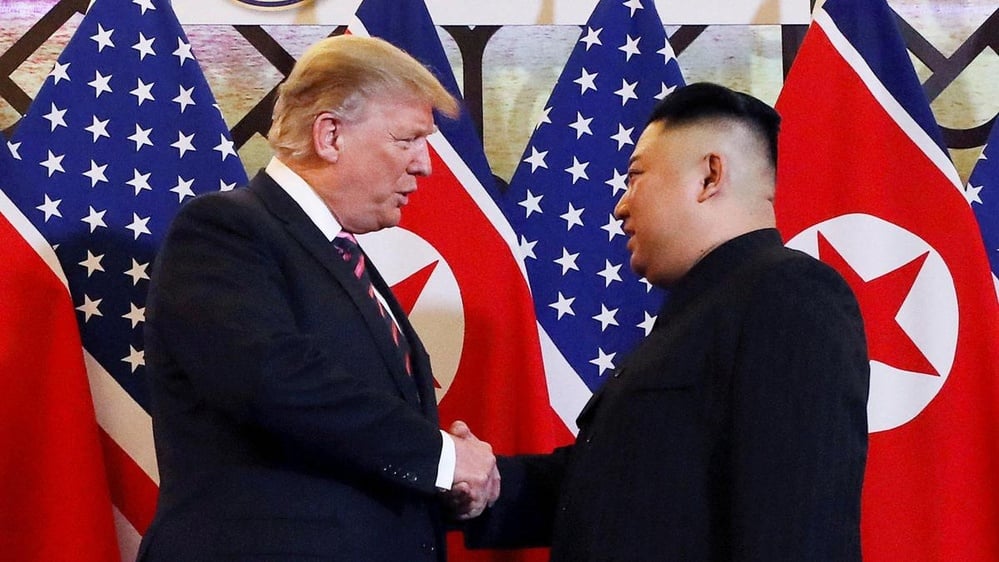

2026 © Helium Trades
Privacy Policy & Disclosure
* Disclaimer: Nothing on this website constitutes investment advice, performance data or any recommendation that any particular security, portfolio of securities, transaction or investment strategy is suitable for any specific person. Helium Trades is not responsible in any way for the accuracy
of any model predictions or price data. Any mention of a particular security and related prediction data is not a recommendation to buy or sell that security. Investments in securities involve the risk of loss. Past performance is no guarantee of future results. Helium Trades is not responsible for any of your investment decisions,
you should consult a financial expert before engaging in any transaction.
Helium Research Assistant

How can I help you today?
Ask any question about this page.


