See whether Helium helps you make better-informed decisions. Try every Pro Trader feature for 30 days. No credit card required.
Try every Pro Trader feature for 30 days. No credit card required.
November 21, 2026 · 0 shares
The report is a restrained, attribution-heavy news account that distinguishes confirmed details from preliminary expectations and explicitly notes the cause remains unknown.
Helium Analysis
Limitations: The supplied text includes unrelated headline fragments and subscription text after the main report; analysis was limited to the main Basra fire report.
·
8 of 56 available dimensions scored; omitted dimensions are not treated as neutral.
·
Verified supporting quotes for 8 of 8 scored dimensions.
Claim: The report separates attributed claims from unknown facts and avoids subjective characterization.
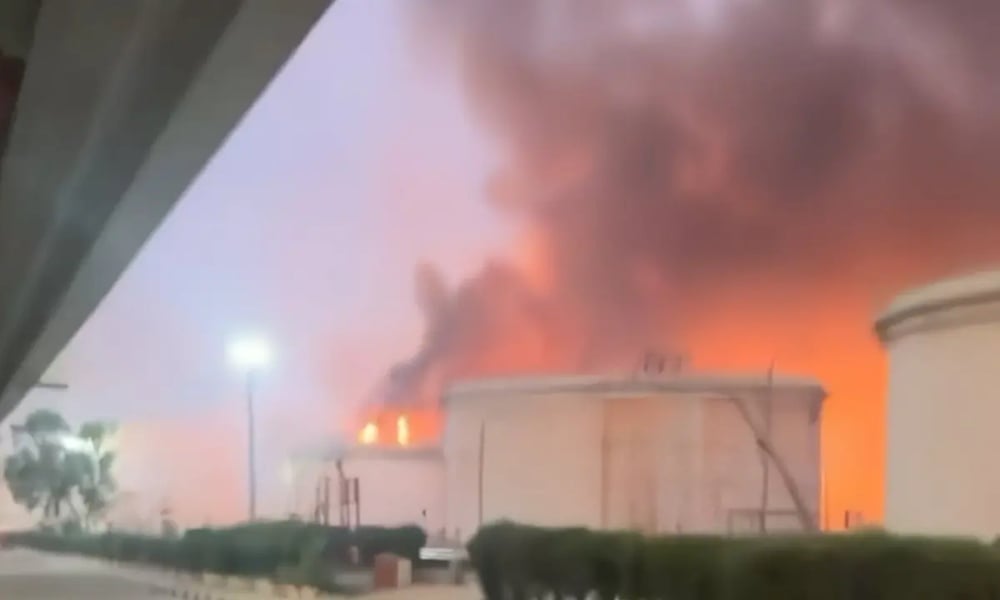
“At least 4 people were killed and 30 injured in a fire at a power station in southern Iraq on Saturday, with the toll expected to rise, security officials said.” · exact text match
Why: The account attributes casualty figures to security officials and does not interpose subjective language.
Claim: Casualties and disruption are reported in flat, factual terms without sensational language.
“At least 4 people were killed and 30 injured in a fire at a power station in southern Iraq on Saturday, with the toll expected to rise, security officials said.” · exact text match
Why: The sentence states the toll and attribution directly, with no emotive or dramatic embellishment.
Claim: The article describes the incident and background without recommending actions or policies.
“Iraq’s electricity infrastructure has long struggled with decades of underinvestment, inadequate maintenance, and an inability to meet peak demand, particularly during the extremely hot summer months.” · exact text match
Why: The context is explanatory and descriptive, with no prescriptive policy or action language.
Claim: The report uses neutral, unemotional language despite reporting casualties.
“At least 4 people were killed and 30 injured in a fire at a power station in southern Iraq on Saturday, with the toll expected to rise, security officials said.” · exact text match
Why: The casualty information is stated factually without emotive adjectives or sentiment.
Claim: The article uses official attribution, repeated sourcing, and explicit uncertainty about unknown details.
“Civil defence teams brought the fire at the Hartha power station north of Basra under control after firefighters responded to the incident, Iraq’s state news agency, INA, reported.” · exact text match
“There was no immediate official information on the cause of the fire or the extent of the damage, INA reported.” · exact text match
Why: Named agencies, clear attribution, and caveats support visible credibility in the supplied text.
Claim: The article provides sourced operational details and acknowledges missing information rather than speculating.
“There was no immediate official information on the cause of the fire or the extent of the damage, INA reported.” · exact text match
Why: Explicitly noting the absence of official cause and damage information demonstrates restraint and rational uncertainty handling.
Claim: The report attributes preliminary details to officials and flags the absence of official cause and damage information.
“At least 4 people were killed and 30 injured in a fire at a power station in southern Iraq on Saturday, with the toll expected to rise, security officials said.” · exact text match
“There was no immediate official information on the cause of the fire or the extent of the damage, INA reported.” · exact text match
Why: Consistent sourcing and explicit caveats indicate fair and honest internal reporting practices.
Claim: The report includes relevant capacity, operational status, and historical infrastructure context.
“The Hartha station has an installed generating capacity of 800 megawatts but had been operating at around 400 megawatts before the fire, they said.” · exact text match
Why: Specific capacity and operating figures add substantive context beyond the immediate casualty report.
The supplied text includes unrelated headline fragments and subscription text after the main report; analysis was limited to the main Basra fire report.
November 21, 2026 · 0 shares
The report is predominantly factual and attribution-bound, using Iraqi state media and civil-defence statements while adding brief contextual background about Iraq's electricity infrastructure.
Helium Analysis
Limitations: The supplied text includes unrelated related-link headlines after the main report; only the substantive Iraq fire article was analyzed.
·
8 of 56 available dimensions scored; omitted dimensions are not treated as neutral.
·
Verified supporting quotes for 7 of 8 scored dimensions.
Claim: The report attributes central casualty and response information to named official sources and avoids evaluative first-person framing.
“according to the Iraqi state media” · exact text match
“The Iraqi News Agency (INA) reported on Saturday” · exact text match
Why: Explicit sourcing and factual phrasing support an objective rather than subjective presentation.
Claim: The deadly fire is reported with factual casualty and operational details rather than sensational language.
“killing at least four people and injuring 35” · exact text match
“were forced to stop after the blaze” · exact text match
Why: Restrained casualty and outage wording supports objective rather than sensational framing.
Claim: The text describes the event and background without prescribing policies or actions.
“Operations at the power station, which has a generating capacity of 800 megawatts, were forced to stop after the blaze.” · exact text match
“Fires and technical failures at substations and power facilities have previously disrupted electricity supplies” · not found in supplied text
Why: Straight descriptive reporting supports a strongly descriptive score.
Claim: The report remains emotionally neutral while conveying casualties.
“A fire has broken out at a power station in southern Iraq, killing at least four people and injuring 35” · exact text match
Why: Factual casualty wording without emotive adjectives supports measured neutrality.
Claim: The report uses named institutional attribution for central claims and avoids unsupported certainty.
“according to the Iraqi state media” · exact text match
“The Iraqi News Agency (INA) reported on Saturday that the Civil Defence Directorate had brought the fire under control” · exact text match
Why: Attribution supports credibility, though reliance on state media and limited independent verification moderate the score.
Claim: The report relies on contextual explanation and source attribution rather than emotive or speculative reasoning.
“decades of underinvestment, inadequate maintenance and an inability to meet peak demand” · exact text match
“according to the Iraqi state media” · exact text match
Why: The contextual background and attribution indicate rational framing.
Claim: The report transparently attributes casualty and containment claims to Iraqi state media and the Civil Defence Directorate.
“according to the Iraqi state media” · exact text match
“The Iraqi News Agency (INA) reported on Saturday that the Civil Defence Directorate had brought the fire under control” · exact text match
Why: Visible attribution and no obvious distortion support a high-integrity classification within the supplied text.
Claim: The brief report combines direct event facts with relevant infrastructure context and clear sourcing.
“decades of underinvestment, inadequate maintenance and an inability to meet peak demand” · exact text match
“according to the Iraqi state media” · exact text match
Why: Context and sourcing indicate above-average informational intelligence for a short news report.
The supplied text includes unrelated related-link headlines after the main report; only the substantive Iraq fire article was analyzed.
November 21, 2026 · 0 shares
The report is a straight, attribution-heavy news brief that presents official casualty figures and infrastructure details without partisan or sensational framing, while explicitly noting that the cause and full damage were not immediately known.
Helium Analysis
Limitations: Short wire brief based on initial official statements; no byline or independent verification details are supplied, limiting assessment of some dimensions.
·
8 of 56 available dimensions scored; omitted dimensions are not treated as neutral.
·
Verified supporting quotes for 8 of 8 scored dimensions.
Claim: The report is constructed from attributed official statements and explicitly flags unknown cause and damage rather than offering subjective interpretation.
“There was no immediate official information on what caused the incident or the full extent of the damage.” · exact text match
Why: Explicitly stating unknown cause and damage shows an objective epistemic stance.
Claim: The report presents the deadly fire with factual casualty figures and attribution, avoiding sensational language or emotional escalation.
“At least four people were killed and 35 injured in a fire at a power station in southern Iraq on Nov 21, with the toll expected to rise, security officials said.” · exact text match
Why: The casualty report is attributed and measured, not lurid or alarmist.
Claim: The text describes the incident, emergency response, and investigation without prescribing policy or advocating action.
“Civil defence teams brought the fire at the Hartha power station north of Basra under control after firefighters responded to the incident, Iraq’s state news agency, INA, reported.” · exact text match
Why: Reporting response actions descriptively, without recommendations, indicates a descriptive stance.
Claim: The report is fact-based and attributed, with no authorial opinion or evaluative commentary.
“Iraq’s Electricity Ministry said the incident involved a gas pipeline supplying the power station.” · exact text match
Why: The sentence is a neutral attributed fact rather than opinion.
Claim: The report is highly sourced, attributes figures to named authorities, and openly notes missing official information.
“At least four people were killed and 35 injured in a fire at a power station in southern Iraq on Nov 21, with the toll expected to rise, security officials said.” · exact text match
“There was no immediate official information on what caused the incident or the full extent of the damage.” · exact text match
Why: Attribution plus explicit uncertainty is a strong observable credibility signal.
Claim: The report relies on factual attribution and caveats instead of emotive or irrational reasoning.
“There was no immediate official information on what caused the incident or the full extent of the damage.” · exact text match
Why: Acknowledging missing information supports a rational, evidence-bound presentation.
Claim: The report avoids assigning blame or inventing causes and acknowledges unresolved details.
“Prime Minister Ali al-Zaidi ordered an urgent investigation into the explosion at the station to determine its causes and establish responsibility, his office said.” · exact text match
“There was no immediate official information on what caused the incident or the full extent of the damage.” · exact text match
Why: Reporting an investigation and unknown cause without prejudging responsibility indicates fair, honest framing.
Claim: The report supplies relevant infrastructure context and source attribution in a concise, coherent manner.
“Iraq’s electricity infrastructure has long struggled with decades of underinvestment, inadequate maintenance and an inability to meet peak demand, particularly during the extremely hot summer months.” · exact text match
Why: Concise contextual explanation supports a relatively high intelligence rating.
Short wire brief based on initial official statements; no byline or independent verification details are supplied, limiting assessment of some dimensions.
November 22, 2026 · 0 shares
Presents a terse, attribution-based casualty and infrastructure update that cites official statements and avoids asserting an unconfirmed cause.
Helium Analysis
Limitations: The supplied text is a short, partially duplicated excerpt with unrelated sidebar links, limiting assessment of the full original article.
·
6 of 56 available dimensions scored; omitted dimensions are not treated as neutral.
·
Verified supporting quotes for 6 of 6 scored dimensions.
Claim: The report confines itself mainly to attributed event facts and official statements rather than subjective commentary.
“The Iraqi Ministry of Electricity mentioned that an explosion in a gas pipeline servicing the power plant was the cause of the fire.” · exact text match
“According to reports, investigations are ongoing to determine the cause of the pipeline explosion.” · exact text match
Why: Attribution to the ministry and an explicit reference to ongoing investigation mark the framing as factual and non-subjective.
Claim: Casualty and damage details are reported in restrained, non-sensational language.
“At least four people were killed and 35 others injured on Saturday following a massive gas pipeline explosion and fire at the al-Hartha thermal power station in southern Iraq.” · exact text match
Why: The lead gives direct casualty figures and location without emotive amplification; 'massive' is descriptive but standard.
Claim: The text is overwhelmingly descriptive of the incident and official responses rather than prescriptive advocacy.
“The explosion took place around 6:00 a.m. local time at the Hartha power station, located north of the Basra province.” · exact text match
Why: Specific event chronology and location are presented without the publisher recommending a course of action.
Claim: Credibility is supported by named official sources, exact figures, and explicit uncertainty about the cause.
“The Iraqi Ministry of Electricity mentioned that an explosion in a gas pipeline servicing the power plant was the cause of the fire.” · exact text match
“According to reports, investigations are ongoing to determine the cause of the pipeline explosion.” · exact text match
Why: Official attribution and an explicit statement that investigations continue reduce unsupported certainty.
Claim: The report acknowledges unresolved causation instead of asserting an established cause.
“According to reports, investigations are ongoing to determine the cause of the pipeline explosion.” · exact text match
Why: Explicitly noting an ongoing investigation supports a rational, evidence-cautious framing.
Claim: The report attributes official claims, notes provisional casualty risks, and avoids presenting the cause as final.
“The Iraqi Ministry of Electricity mentioned that an explosion in a gas pipeline servicing the power plant was the cause of the fire.” · exact text match
“Locals with burns and smoke inhalation make up the majority of the 35 injured, with officials warning that that the death toll may increase.” · exact text match
Why: Clear attribution and an official warning that figures may worsen are observable fairness and honesty signals.
The supplied text is a short, partially duplicated excerpt with unrelated sidebar links, limiting assessment of the full original article.
November 21, 2026 · 0 shares
The report is neutral and attribution-driven, explicitly sourcing casualty claims and disclosing a higher death toll from security officials.
Helium Analysis
Limitations: The supplied text is truncated and includes unrelated site boilerplate, so some article details or original formatting may be missing.
·
6 of 56 available dimensions scored; omitted dimensions are not treated as neutral.
·
Verified supporting quotes for 6 of 6 scored dimensions.
Claim: The report uses attributed factual statements rather than subjective interpretation.
“according to the Basra Health Department” · exact text match
“The Reuters news agency, citing security officials, reported a higher death toll of four.” · exact text match
Why: Named attributions and concrete casualty details dominate, with no evaluative language.
Claim: The report's language is matter-of-fact rather than sensational.
“A fire has broken out at a power station in southern Iraq, killing at least two people and injuring 28, according to the Basra Health Department.” · exact text match
Why: The casualty statement is plain and attributed, without emotive or dramatic wording.
Claim: The report describes the event and outcome without prescribing policy or action.
“Operations at the power station, which has a generating capacity of 800 megawatts, were forced to stop after the blaze.” · exact text match
Why: It reports an operational consequence rather than recommending a response.
Claim: The supplied text shows credible sourcing and uncertainty handling.
“according to the Basra Health Department” · exact text match
“The Reuters news agency, citing security officials, reported a higher death toll of four.” · exact text match
Why: Named institutions and an explicit alternative toll support source transparency.
Claim: The report follows a rational, sourced account of official response and impact.
“The Iraqi News Agency (INA) reported on Saturday that the Civil Defence Directorate had brought the fire under control at the Hartha power station and in neighbouring houses.” · exact text match
Why: It cites a named agency and describes a concrete official action without logical leaps.
Claim: The report discloses a conflicting higher casualty figure rather than presenting only one count.
“The Reuters news agency, citing security officials, reported a higher death toll of four.” · exact text match
Why: Including an alternative death toll improves transparency and fairness in the supplied text.
The supplied text is truncated and includes unrelated site boilerplate, so some article details or original formatting may be missing.
November 21, 2026 · 0 shares
The report is a straight, attribution-heavy news brief that presents official casualty figures and infrastructure details without partisan or sensational framing, while explicitly noting that the cause and full damage were not immediately known.
Helium Analysis
Limitations: Short wire brief based on initial official statements; no byline or independent verification details are supplied, limiting assessment of some dimensions.
·
8 of 56 available dimensions scored; omitted dimensions are not treated as neutral.
·
Verified supporting quotes for 8 of 8 scored dimensions.
Claim: The report is constructed from attributed official statements and explicitly flags unknown cause and damage rather than offering subjective interpretation.
“There was no immediate official information on what caused the incident or the full extent of the damage.” · exact text match
Why: Explicitly stating unknown cause and damage shows an objective epistemic stance.
Claim: The report presents the deadly fire with factual casualty figures and attribution, avoiding sensational language or emotional escalation.
“At least four people were killed and 35 injured in a fire at a power station in southern Iraq on Nov 21, with the toll expected to rise, security officials said.” · exact text match
Why: The casualty report is attributed and measured, not lurid or alarmist.
Claim: The text describes the incident, emergency response, and investigation without prescribing policy or advocating action.
“Civil defence teams brought the fire at the Hartha power station north of Basra under control after firefighters responded to the incident, Iraq’s state news agency, INA, reported.” · exact text match
Why: Reporting response actions descriptively, without recommendations, indicates a descriptive stance.
Claim: The report is fact-based and attributed, with no authorial opinion or evaluative commentary.
“Iraq’s Electricity Ministry said the incident involved a gas pipeline supplying the power station.” · exact text match
Why: The sentence is a neutral attributed fact rather than opinion.
Claim: The report is highly sourced, attributes figures to named authorities, and openly notes missing official information.
“At least four people were killed and 35 injured in a fire at a power station in southern Iraq on Nov 21, with the toll expected to rise, security officials said.” · exact text match
“There was no immediate official information on what caused the incident or the full extent of the damage.” · exact text match
Why: Attribution plus explicit uncertainty is a strong observable credibility signal.
Claim: The report relies on factual attribution and caveats instead of emotive or irrational reasoning.
“There was no immediate official information on what caused the incident or the full extent of the damage.” · exact text match
Why: Acknowledging missing information supports a rational, evidence-bound presentation.
Claim: The report avoids assigning blame or inventing causes and acknowledges unresolved details.
“Prime Minister Ali al-Zaidi ordered an urgent investigation into the explosion at the station to determine its causes and establish responsibility, his office said.” · exact text match
“There was no immediate official information on what caused the incident or the full extent of the damage.” · exact text match
Why: Reporting an investigation and unknown cause without prejudging responsibility indicates fair, honest framing.
Claim: The report supplies relevant infrastructure context and source attribution in a concise, coherent manner.
“Iraq’s electricity infrastructure has long struggled with decades of underinvestment, inadequate maintenance and an inability to meet peak demand, particularly during the extremely hot summer months.” · exact text match
Why: Concise contextual explanation supports a relatively high intelligence rating.
Short wire brief based on initial official statements; no byline or independent verification details are supplied, limiting assessment of some dimensions.
November 22, 2026 · 0 shares
Presents a terse, attribution-based casualty and infrastructure update that cites official statements and avoids asserting an unconfirmed cause.
Helium Analysis
Limitations: The supplied text is a short, partially duplicated excerpt with unrelated sidebar links, limiting assessment of the full original article.
·
6 of 56 available dimensions scored; omitted dimensions are not treated as neutral.
·
Verified supporting quotes for 6 of 6 scored dimensions.
Claim: The report confines itself mainly to attributed event facts and official statements rather than subjective commentary.
“The Iraqi Ministry of Electricity mentioned that an explosion in a gas pipeline servicing the power plant was the cause of the fire.” · exact text match
“According to reports, investigations are ongoing to determine the cause of the pipeline explosion.” · exact text match
Why: Attribution to the ministry and an explicit reference to ongoing investigation mark the framing as factual and non-subjective.
Claim: Casualty and damage details are reported in restrained, non-sensational language.
“At least four people were killed and 35 others injured on Saturday following a massive gas pipeline explosion and fire at the al-Hartha thermal power station in southern Iraq.” · exact text match
Why: The lead gives direct casualty figures and location without emotive amplification; 'massive' is descriptive but standard.
Claim: The text is overwhelmingly descriptive of the incident and official responses rather than prescriptive advocacy.
“The explosion took place around 6:00 a.m. local time at the Hartha power station, located north of the Basra province.” · exact text match
Why: Specific event chronology and location are presented without the publisher recommending a course of action.
Claim: Credibility is supported by named official sources, exact figures, and explicit uncertainty about the cause.
“The Iraqi Ministry of Electricity mentioned that an explosion in a gas pipeline servicing the power plant was the cause of the fire.” · exact text match
“According to reports, investigations are ongoing to determine the cause of the pipeline explosion.” · exact text match
Why: Official attribution and an explicit statement that investigations continue reduce unsupported certainty.
Claim: The report acknowledges unresolved causation instead of asserting an established cause.
“According to reports, investigations are ongoing to determine the cause of the pipeline explosion.” · exact text match
Why: Explicitly noting an ongoing investigation supports a rational, evidence-cautious framing.
Claim: The report attributes official claims, notes provisional casualty risks, and avoids presenting the cause as final.
“The Iraqi Ministry of Electricity mentioned that an explosion in a gas pipeline servicing the power plant was the cause of the fire.” · exact text match
“Locals with burns and smoke inhalation make up the majority of the 35 injured, with officials warning that that the death toll may increase.” · exact text match
Why: Clear attribution and an official warning that figures may worsen are observable fairness and honesty signals.
The supplied text is a short, partially duplicated excerpt with unrelated sidebar links, limiting assessment of the full original article.
November 21, 2026 · 0 shares
The report is predominantly factual and attribution-bound, using Iraqi state media and civil-defence statements while adding brief contextual background about Iraq's electricity infrastructure.
Helium Analysis
Limitations: The supplied text includes unrelated related-link headlines after the main report; only the substantive Iraq fire article was analyzed.
·
8 of 56 available dimensions scored; omitted dimensions are not treated as neutral.
·
Verified supporting quotes for 7 of 8 scored dimensions.
Claim: The report attributes central casualty and response information to named official sources and avoids evaluative first-person framing.
“according to the Iraqi state media” · exact text match
“The Iraqi News Agency (INA) reported on Saturday” · exact text match
Why: Explicit sourcing and factual phrasing support an objective rather than subjective presentation.
Claim: The deadly fire is reported with factual casualty and operational details rather than sensational language.
“killing at least four people and injuring 35” · exact text match
“were forced to stop after the blaze” · exact text match
Why: Restrained casualty and outage wording supports objective rather than sensational framing.
Claim: The text describes the event and background without prescribing policies or actions.
“Operations at the power station, which has a generating capacity of 800 megawatts, were forced to stop after the blaze.” · exact text match
“Fires and technical failures at substations and power facilities have previously disrupted electricity supplies” · not found in supplied text
Why: Straight descriptive reporting supports a strongly descriptive score.
Claim: The report remains emotionally neutral while conveying casualties.
“A fire has broken out at a power station in southern Iraq, killing at least four people and injuring 35” · exact text match
Why: Factual casualty wording without emotive adjectives supports measured neutrality.
Claim: The report uses named institutional attribution for central claims and avoids unsupported certainty.
“according to the Iraqi state media” · exact text match
“The Iraqi News Agency (INA) reported on Saturday that the Civil Defence Directorate had brought the fire under control” · exact text match
Why: Attribution supports credibility, though reliance on state media and limited independent verification moderate the score.
Claim: The report relies on contextual explanation and source attribution rather than emotive or speculative reasoning.
“decades of underinvestment, inadequate maintenance and an inability to meet peak demand” · exact text match
“according to the Iraqi state media” · exact text match
Why: The contextual background and attribution indicate rational framing.
Claim: The report transparently attributes casualty and containment claims to Iraqi state media and the Civil Defence Directorate.
“according to the Iraqi state media” · exact text match
“The Iraqi News Agency (INA) reported on Saturday that the Civil Defence Directorate had brought the fire under control” · exact text match
Why: Visible attribution and no obvious distortion support a high-integrity classification within the supplied text.
Claim: The brief report combines direct event facts with relevant infrastructure context and clear sourcing.
“decades of underinvestment, inadequate maintenance and an inability to meet peak demand” · exact text match
“according to the Iraqi state media” · exact text match
Why: Context and sourcing indicate above-average informational intelligence for a short news report.
The supplied text includes unrelated related-link headlines after the main report; only the substantive Iraq fire article was analyzed.
November 21, 2026 · 0 shares
The report is a brief, attributed factual account that notes provisional casualties and explicitly acknowledges unknown cause and damage.
Helium Analysis
Limitations: The supplied text is a very short news snippet with limited detail, constraining nuanced bias assessment.
·
4 of 56 available dimensions scored; omitted dimensions are not treated as neutral.
·
Verified supporting quotes for 4 of 4 scored dimensions.
Claim: The report uses attributed, factual language rather than subjective commentary.
“At least four people were killed and 30 injured in a fire at a power station in southern Iraq on Saturday, with the toll expected to rise, security officials said.” · exact text match
Why: Straight factual reporting with attribution and no subjective framing supports an objective classification.
Claim: The report presents procedural emergency-response details in dry, non-sensational wording.
“Civil defence teams brought the fire at the Hartha power station north of Basra under control after firefighters responded to the incident.” · exact text match
Why: The procedural, matter-of-fact description lacks sensational or dramatic language.
Claim: The report attributes casualty information and acknowledges unresolved facts.
“security officials said” · exact text match
“There was no immediate official information on the cause of the fire or the extent of the damage.” · exact text match
Why: Attribution plus explicit uncertainty about cause and damage supports a credible presentation.
Claim: The report explicitly discloses the absence of official information on cause and damage.
“There was no immediate official information on the cause of the fire or the extent of the damage.” · exact text match
Why: Openly noting missing information is a transparency signal supporting high integrity.
The supplied text is a very short news snippet with limited detail, constraining nuanced bias assessment.
November 21, 2026 · 0 shares
The report is a restrained, attribution-heavy news account that distinguishes confirmed details from preliminary expectations and explicitly notes the cause remains unknown.
Helium Analysis
Limitations: The supplied text includes unrelated headline fragments and subscription text after the main report; analysis was limited to the main Basra fire report.
·
8 of 56 available dimensions scored; omitted dimensions are not treated as neutral.
·
Verified supporting quotes for 8 of 8 scored dimensions.
Claim: The report separates attributed claims from unknown facts and avoids subjective characterization.
“At least 4 people were killed and 30 injured in a fire at a power station in southern Iraq on Saturday, with the toll expected to rise, security officials said.” · exact text match
Why: The account attributes casualty figures to security officials and does not interpose subjective language.
Claim: Casualties and disruption are reported in flat, factual terms without sensational language.
“At least 4 people were killed and 30 injured in a fire at a power station in southern Iraq on Saturday, with the toll expected to rise, security officials said.” · exact text match
Why: The sentence states the toll and attribution directly, with no emotive or dramatic embellishment.
Claim: The article describes the incident and background without recommending actions or policies.
“Iraq’s electricity infrastructure has long struggled with decades of underinvestment, inadequate maintenance, and an inability to meet peak demand, particularly during the extremely hot summer months.” · exact text match
Why: The context is explanatory and descriptive, with no prescriptive policy or action language.
Claim: The report uses neutral, unemotional language despite reporting casualties.
“At least 4 people were killed and 30 injured in a fire at a power station in southern Iraq on Saturday, with the toll expected to rise, security officials said.” · exact text match
Why: The casualty information is stated factually without emotive adjectives or sentiment.
Claim: The article uses official attribution, repeated sourcing, and explicit uncertainty about unknown details.
“Civil defence teams brought the fire at the Hartha power station north of Basra under control after firefighters responded to the incident, Iraq’s state news agency, INA, reported.” · exact text match
“There was no immediate official information on the cause of the fire or the extent of the damage, INA reported.” · exact text match
Why: Named agencies, clear attribution, and caveats support visible credibility in the supplied text.
Claim: The article provides sourced operational details and acknowledges missing information rather than speculating.
“There was no immediate official information on the cause of the fire or the extent of the damage, INA reported.” · exact text match
Why: Explicitly noting the absence of official cause and damage information demonstrates restraint and rational uncertainty handling.
Claim: The report attributes preliminary details to officials and flags the absence of official cause and damage information.
“At least 4 people were killed and 30 injured in a fire at a power station in southern Iraq on Saturday, with the toll expected to rise, security officials said.” · exact text match
“There was no immediate official information on the cause of the fire or the extent of the damage, INA reported.” · exact text match
Why: Consistent sourcing and explicit caveats indicate fair and honest internal reporting practices.
Claim: The report includes relevant capacity, operational status, and historical infrastructure context.
“The Hartha station has an installed generating capacity of 800 megawatts but had been operating at around 400 megawatts before the fire, they said.” · exact text match
Why: Specific capacity and operating figures add substantive context beyond the immediate casualty report.
The supplied text includes unrelated headline fragments and subscription text after the main report; analysis was limited to the main Basra fire report.
November 21, 2026 · 0 shares
The report is a straight, attribution-heavy news brief that presents official casualty figures and infrastructure details without partisan or sensational framing, while explicitly noting that the cause and full damage were not immediately known.
Helium Analysis
Limitations: Short wire brief based on initial official statements; no byline or independent verification details are supplied, limiting assessment of some dimensions.
·
8 of 56 available dimensions scored; omitted dimensions are not treated as neutral.
·
Verified supporting quotes for 8 of 8 scored dimensions.
Claim: The report is constructed from attributed official statements and explicitly flags unknown cause and damage rather than offering subjective interpretation.
“There was no immediate official information on what caused the incident or the full extent of the damage.” · exact text match
Why: Explicitly stating unknown cause and damage shows an objective epistemic stance.
Claim: The report presents the deadly fire with factual casualty figures and attribution, avoiding sensational language or emotional escalation.
“At least four people were killed and 35 injured in a fire at a power station in southern Iraq on Nov 21, with the toll expected to rise, security officials said.” · exact text match
Why: The casualty report is attributed and measured, not lurid or alarmist.
Claim: The text describes the incident, emergency response, and investigation without prescribing policy or advocating action.
“Civil defence teams brought the fire at the Hartha power station north of Basra under control after firefighters responded to the incident, Iraq’s state news agency, INA, reported.” · exact text match
Why: Reporting response actions descriptively, without recommendations, indicates a descriptive stance.
Claim: The report is fact-based and attributed, with no authorial opinion or evaluative commentary.
“Iraq’s Electricity Ministry said the incident involved a gas pipeline supplying the power station.” · exact text match
Why: The sentence is a neutral attributed fact rather than opinion.
Claim: The report is highly sourced, attributes figures to named authorities, and openly notes missing official information.
“At least four people were killed and 35 injured in a fire at a power station in southern Iraq on Nov 21, with the toll expected to rise, security officials said.” · exact text match
“There was no immediate official information on what caused the incident or the full extent of the damage.” · exact text match
Why: Attribution plus explicit uncertainty is a strong observable credibility signal.
Claim: The report relies on factual attribution and caveats instead of emotive or irrational reasoning.
“There was no immediate official information on what caused the incident or the full extent of the damage.” · exact text match
Why: Acknowledging missing information supports a rational, evidence-bound presentation.
Claim: The report avoids assigning blame or inventing causes and acknowledges unresolved details.
“Prime Minister Ali al-Zaidi ordered an urgent investigation into the explosion at the station to determine its causes and establish responsibility, his office said.” · exact text match
“There was no immediate official information on what caused the incident or the full extent of the damage.” · exact text match
Why: Reporting an investigation and unknown cause without prejudging responsibility indicates fair, honest framing.
Claim: The report supplies relevant infrastructure context and source attribution in a concise, coherent manner.
“Iraq’s electricity infrastructure has long struggled with decades of underinvestment, inadequate maintenance and an inability to meet peak demand, particularly during the extremely hot summer months.” · exact text match
Why: Concise contextual explanation supports a relatively high intelligence rating.
Short wire brief based on initial official statements; no byline or independent verification details are supplied, limiting assessment of some dimensions.
November 21, 2026 · 0 shares
The report is measured and attributive, presenting casualty, damage and investigation details through officials while explicitly flagging unresolved cause and impact.
Helium Analysis
Limitations: Unrelated related-link headlines at the end were excluded from analysis; no other substantive article content was supplied.
·
9 of 56 available dimensions scored; omitted dimensions are not treated as neutral.
·
Verified supporting quotes for 9 of 9 scored dimensions.
Claim: The report is predominantly factual and attributed rather than subjective commentary.
“Provincial officials said dozens of homes and vehicles in surrounding neighbourhoods were damaged by the fire.” · exact text match
Why: Damage information is attributed to officials and presented as reported facts, with no evaluative commentary.
Claim: The report is factual rather than sensational in describing the emergency response.
“Civil defence teams battled the blaze for several hours before bringing it under control.” · exact text match
Why: The language describes the response soberly without emotive or alarmist framing.
Claim: The report describes the event and official response without prescribing policy or behavior.
“An investigation has been launched into the cause of the pipeline rupture, officials said.” · exact text match
Why: The article reports an official action rather than advocating a course of action.
Claim: The report avoids editorial opinion and relies on factual and quoted material.
“The extent of the injuries "vary in terms of severity", it added.” · exact text match
Why: The statement is attributed to the health department rather than presented as the publisher's opinion.
Claim: The report is framed as an accident and emergency response rather than a political dispute.
“An investigation has been launched into the cause of the pipeline rupture, officials said.” · exact text match
Why: The focus is on the explosion, casualties and investigation rather than political actors or ideology.
Claim: The report avoids overcertainty by stating that the explosion's cause was not immediately clear.
“the exact cause of the explosion was not immediately clear.” · exact text match
Why: It explicitly flags uncertainty instead of claiming a definitive cause.
Claim: The report has visible sourcing, attribution and uncertainty signals in the supplied text.
“Provincial officials said dozens of homes and vehicles in surrounding neighbourhoods were damaged by the fire.” · exact text match
“the exact cause of the explosion was not immediately clear.” · exact text match
Why: It attributes claims to named authorities and explicitly notes unresolved facts.
Claim: The report relies on attributed official information and explicitly acknowledges uncertainty about the cause.
“The fire spread from a gas transmission pipeline supplying the station, although the exact cause of the explosion was not immediately clear.” · exact text match
“An investigation has been launched into the cause of the pipeline rupture, officials said.” · exact text match
Why: It separates known details from unresolved questions and attributes the investigation to officials.
Claim: The report shows fair and honest epistemic signals by acknowledging unknown cause and unannounced damage impact.
“the exact cause of the explosion was not immediately clear.” · exact text match
“Authorities have not yet announced the extent of damage to the plant's generating units or the effect on electricity supplies.” · exact text match
Why: It does not assert certainty where officials have not provided it.
Unrelated related-link headlines at the end were excluded from analysis; no other substantive article content was supplied.
November 21, 2026 · 0 shares
The report is a straight, attribution-heavy news brief that presents official casualty figures and infrastructure details without partisan or sensational framing, while explicitly noting that the cause and full damage were not immediately known.
Helium Analysis
Limitations: Short wire brief based on initial official statements; no byline or independent verification details are supplied, limiting assessment of some dimensions.
·
8 of 56 available dimensions scored; omitted dimensions are not treated as neutral.
·
Verified supporting quotes for 8 of 8 scored dimensions.
Claim: The report is constructed from attributed official statements and explicitly flags unknown cause and damage rather than offering subjective interpretation.
“There was no immediate official information on what caused the incident or the full extent of the damage.” · exact text match
Why: Explicitly stating unknown cause and damage shows an objective epistemic stance.
Claim: The report presents the deadly fire with factual casualty figures and attribution, avoiding sensational language or emotional escalation.
“At least four people were killed and 35 injured in a fire at a power station in southern Iraq on Nov 21, with the toll expected to rise, security officials said.” · exact text match
Why: The casualty report is attributed and measured, not lurid or alarmist.
Claim: The text describes the incident, emergency response, and investigation without prescribing policy or advocating action.
“Civil defence teams brought the fire at the Hartha power station north of Basra under control after firefighters responded to the incident, Iraq’s state news agency, INA, reported.” · exact text match
Why: Reporting response actions descriptively, without recommendations, indicates a descriptive stance.
Claim: The report is fact-based and attributed, with no authorial opinion or evaluative commentary.
“Iraq’s Electricity Ministry said the incident involved a gas pipeline supplying the power station.” · exact text match
Why: The sentence is a neutral attributed fact rather than opinion.
Claim: The report is highly sourced, attributes figures to named authorities, and openly notes missing official information.
“At least four people were killed and 35 injured in a fire at a power station in southern Iraq on Nov 21, with the toll expected to rise, security officials said.” · exact text match
“There was no immediate official information on what caused the incident or the full extent of the damage.” · exact text match
Why: Attribution plus explicit uncertainty is a strong observable credibility signal.
Claim: The report relies on factual attribution and caveats instead of emotive or irrational reasoning.
“There was no immediate official information on what caused the incident or the full extent of the damage.” · exact text match
Why: Acknowledging missing information supports a rational, evidence-bound presentation.
Claim: The report avoids assigning blame or inventing causes and acknowledges unresolved details.
“Prime Minister Ali al-Zaidi ordered an urgent investigation into the explosion at the station to determine its causes and establish responsibility, his office said.” · exact text match
“There was no immediate official information on what caused the incident or the full extent of the damage.” · exact text match
Why: Reporting an investigation and unknown cause without prejudging responsibility indicates fair, honest framing.
Claim: The report supplies relevant infrastructure context and source attribution in a concise, coherent manner.
“Iraq’s electricity infrastructure has long struggled with decades of underinvestment, inadequate maintenance and an inability to meet peak demand, particularly during the extremely hot summer months.” · exact text match
Why: Concise contextual explanation supports a relatively high intelligence rating.
Short wire brief based on initial official statements; no byline or independent verification details are supplied, limiting assessment of some dimensions.
November 22, 2026 · 0 shares
Presents a terse, attribution-based casualty and infrastructure update that cites official statements and avoids asserting an unconfirmed cause.
Helium Analysis
Limitations: The supplied text is a short, partially duplicated excerpt with unrelated sidebar links, limiting assessment of the full original article.
·
6 of 56 available dimensions scored; omitted dimensions are not treated as neutral.
·
Verified supporting quotes for 6 of 6 scored dimensions.
Claim: The report confines itself mainly to attributed event facts and official statements rather than subjective commentary.
“The Iraqi Ministry of Electricity mentioned that an explosion in a gas pipeline servicing the power plant was the cause of the fire.” · exact text match
“According to reports, investigations are ongoing to determine the cause of the pipeline explosion.” · exact text match
Why: Attribution to the ministry and an explicit reference to ongoing investigation mark the framing as factual and non-subjective.
Claim: Casualty and damage details are reported in restrained, non-sensational language.
“At least four people were killed and 35 others injured on Saturday following a massive gas pipeline explosion and fire at the al-Hartha thermal power station in southern Iraq.” · exact text match
Why: The lead gives direct casualty figures and location without emotive amplification; 'massive' is descriptive but standard.
Claim: The text is overwhelmingly descriptive of the incident and official responses rather than prescriptive advocacy.
“The explosion took place around 6:00 a.m. local time at the Hartha power station, located north of the Basra province.” · exact text match
Why: Specific event chronology and location are presented without the publisher recommending a course of action.
Claim: Credibility is supported by named official sources, exact figures, and explicit uncertainty about the cause.
“The Iraqi Ministry of Electricity mentioned that an explosion in a gas pipeline servicing the power plant was the cause of the fire.” · exact text match
“According to reports, investigations are ongoing to determine the cause of the pipeline explosion.” · exact text match
Why: Official attribution and an explicit statement that investigations continue reduce unsupported certainty.
Claim: The report acknowledges unresolved causation instead of asserting an established cause.
“According to reports, investigations are ongoing to determine the cause of the pipeline explosion.” · exact text match
Why: Explicitly noting an ongoing investigation supports a rational, evidence-cautious framing.
Claim: The report attributes official claims, notes provisional casualty risks, and avoids presenting the cause as final.
“The Iraqi Ministry of Electricity mentioned that an explosion in a gas pipeline servicing the power plant was the cause of the fire.” · exact text match
“Locals with burns and smoke inhalation make up the majority of the 35 injured, with officials warning that that the death toll may increase.” · exact text match
Why: Clear attribution and an official warning that figures may worsen are observable fairness and honesty signals.
The supplied text is a short, partially duplicated excerpt with unrelated sidebar links, limiting assessment of the full original article.
November 21, 2026 · 0 shares
Critical, mildly sensational local-news framing casts GPL as evasive and supplicant through loaded verbs while still carrying its safety rationale and apology.
Helium Analysis
Limitations: The supplied text is a short, partially truncated article with related-link and subscription boilerplate; analysis is limited to the visible main article.
·
9 of 56 available dimensions scored; omitted dimensions are not treated as neutral.
·
Verified supporting quotes for 9 of 9 scored dimensions.
Claim: Subjective verbs characterize GPL's conduct rather than simply reporting its statements.
“GPL begs East Berbice consumers for more time to restore power.” · exact text match
“GPL shied away from giving a specific restoration time or period in its latest update at 12:58 p.m.” · exact text match
Why: The loaded verbs 'begs' and 'shied away' add evaluative characterization beyond neutral reporting.
Claim: The headline uses a dramatic verb to heighten the delay and utility's request.
“GPL begs East Berbice consumers for more time to restore power.” · exact text match
Why: 'Begs' is a dramatized framing of the utility's request for more time.
Claim: The report is primarily descriptive, recounting repair and testing status rather than advocating a policy.
“GPL told customers in East Berbice that repairs to the grounding transformer panel at the Canefield substation have been completed.” · exact text match
Why: The article reports events and statements without an explicit prescriptive agenda.
Claim: The headline and lead insert evaluative framing about GPL's conduct.
“the power company begged for more time to conduct tests.” · exact text match
“GPL shied away from giving a specific restoration time or period in its latest update at 12:58 p.m.” · exact text match
Why: These characterizations go beyond factual updates to suggest evasiveness and supplication.
Claim: The tone toward GPL is mildly negative through dismissive wording.
“GPL begs East Berbice consumers for more time to restore power.” · exact text match
“GPL shied away from giving a specific restoration time or period in its latest update at 12:58 p.m.” · exact text match
Why: The wording conveys mild frustration or disapproval rather than a strictly neutral tone.
Claim: The report provides named utility attribution, precise timing, and direct quotes.
“GPL told customers in East Berbice that repairs to the grounding transformer panel at the Canefield substation have been completed.” · exact text match
“Our technical teams are now conducting final testing to ensure the facility can be safely returned to service.” · exact text match
Why: Specific attribution, timing, and direct statements support moderate credibility despite loaded headline wording.
Claim: Loaded verbs in the headline and lead frame the utility as evasive, shaping perception beyond neutral reporting.
“GPL begs East Berbice consumers for more time to restore power.” · exact text match
“GPL shied away from giving a specific restoration time or period in its latest update at 12:58 p.m.” · exact text match
Why: The framing uses observable loaded language that may steer readers toward viewing GPL negatively.
Claim: The report includes GPL's safety rationale and apology, but the headline uses loaded framing.
“Due to damage to its panel, the grounding transformer could not have been safely placed in service.” · exact text match
“GPL begs East Berbice consumers for more time to restore power.” · exact text match
Why: Safety context and attribution improve fairness, while the headline's wording keeps it from being fully neutral.
Claim: The report gives a technically coherent explanation of the grounding transformer's role and restoration constraints.
“The power company said the grounding transformer is a key piece of safety equipment which allows the substation’s protection systems to detect faults and isolate them quickly.” · exact text match
Why: The technical explanation is clear and suitably informative for a local service-outage report.
The supplied text is a short, partially truncated article with related-link and subscription boilerplate; analysis is limited to the visible main article.
November 23, 2026 · 0 shares
Framing is largely straight-news and descriptive, with a mildly negative impact phrase ('blow') applied to the government decision.
Helium Analysis
Limitations: The supplied text is a very short news brief plus boilerplate, limiting assessment of sourcing and broader publisher framing.
·
5 of 56 available dimensions scored; omitted dimensions are not treated as neutral.
·
Verified supporting quotes for 5 of 5 scored dimensions.
Claim: The report is predominantly factual and descriptive, with only a mild evaluative phrase.
“The UK government has removed Uniper’s proposed Connah’s Quay Low Carbon Power project from the list of schemes negotiating to join the HyNet carbon capture network.” · exact text match
Counterevidence:
“The decision is a blow to one of the largest planned energy investments in North Wales.” · exact text match
Why: The main sentence reports an action with attributed entities; the 'blow' characterization introduces limited subjectivity.
Claim: The headline and lead use plain, non-sensational language.
“UK drops CCS power station from HyNet cluster project.” · exact text match
Why: The wording is factual and restrained, with no dramatic or alarmist language.
Claim: The text describes a government decision without advocating a policy prescription.
“The UK government has removed Uniper’s proposed Connah’s Quay Low Carbon Power project from the list of schemes negotiating to join the HyNet carbon capture network.” · exact text match
Why: It reports an action but does not call for a policy outcome.
Claim: The report is mostly fact-based, with a limited evaluative characterization of the decision.
“The decision is a blow to one of the largest planned energy investments in North Wales.” · exact text match
Why: 'Blow' is an evaluative label, but it occurs in an otherwise brief factual report.
Claim: The story involves a government policy decision but does not frame it in partisan or ideological terms.
“The UK government has removed Uniper’s proposed Connah’s Quay Low Carbon Power project from the list of schemes negotiating to join the HyNet carbon capture network.” · exact text match
Why: Government action makes the topic political, but the language remains administrative and non-partisan.
The supplied text is a very short news brief plus boilerplate, limiting assessment of sourcing and broader publisher framing.
Environmental-advocacy framing presents the proposed data-centre boom as a material climate and power-cost risk, relying on commissioned analysis and a prescriptive call for renewable-matching requirements.
Helium Analysis
Limitations: The supplied text is a fragmentary, duplicated excerpt that includes sidebar headlines, so the full article's structure and authorship cannot be fully assessed.
·
17 of 56 available dimensions scored; omitted dimensions are not treated as neutral.
·
Verified supporting quotes for 17 of 17 scored dimensions.
Claim: Advocates renewable-energy requirements for data centres as the preferred policy response.
“If data centres are required to bring new renewables and storage to match their demand as soon as possible” · exact text match
Why: This environmental-regulation prescription aligns with a progressive/liberal orientation in the supplied text.
Claim: Supports a regulatory requirement for data centres to procure new renewables and storage.
“If data centres are required to bring new renewables and storage to match their demand as soon as possible” · exact text match
Why: A mandate on private infrastructure operators is a regulatory, non-libertarian policy prescription.
Claim: Uses evaluative 'derail' framing alongside factual reporting.
“Australia's clean energy switch is accelerating, but a huge data centre boom could derail it.” · exact text match
Why: The metaphor adds subjective interpretation beyond neutral description.
Claim: Uses a dramatic comparison to Australia's dirtiest coal stations in the headline.
“Nine proposed data centres could produce as much pollution as Australia's three dirtiest coal power stations” · exact text match
Why: The superlative/equivalence framing is attention-grabbing relative to neutral projection reporting.
Claim: Moves from describing projected emissions to prescribing a renewable-matching requirement.
“If data centres are required to bring new renewables and storage to match their demand as soon as possible” · exact text match
Why: The clause specifies a policy requirement, indicating prescriptive framing.
Claim: Frames data-centre growth as a significant risk to clean energy, power bills, and climate pollution.
“The risks for our clean energy switch, power bills and climate pollution are significant.” · exact text match
Why: Explicit risk language heightens concern, though tied to an attributed analysis.
Claim: Includes an evaluative assertion that the projected outcome is avoidable and should be addressed.
“None of this is inevitable.” · exact text match
Why: The sentence is a normative/prescriptive opinion rather than a neutral fact.
Claim: Proposes a government-style requirement for data-centre renewable procurement.
“If data centres are required to bring new renewables and storage to match their demand as soon as possible” · exact text match
Why: This is a political/regulatory remedy, making the framing policy-oriented.
Claim: Advances a pro-renewables environmental policy remedy as the preferred response.
“If data centres are required to bring new renewables and storage to match their demand as soon as possible” · exact text match
Why: The conclusion follows a coherent environmentalist policy frame.
Claim: Names the analysis source and presents the central estimate as conditional.
“New analysis from Climate Council and the Carbon Zero Initiative shows the largest proposed data centres could add 39.7 million tonnes of climate pollution a year by 2035 — unless they bring new renewables and storage online to match their demand.” · exact text match
Why: Visible attribution and conditions support credibility in the supplied excerpt.
Claim: Attributes the core projection to named analysis and states it conditionally.
“New analysis from Climate Council and the Carbon Zero Initiative shows the largest proposed data centres could add 39.7 million tonnes of climate pollution a year by 2035 — unless they bring new renewables and storage online to match their demand.” · exact text match
Why: Conditional, sourced reasoning supports a rational/empirical classification.
Claim: Uses quantitative climate-pollution estimates and grid data rather than non-empirical claims.
“could add 39.7 million tonnes of climate pollution a year by 2035” · exact text match
Why: The article's evidence base is scientific and quantitative, placing it toward the scientific pole.
Claim: Frames the solution as a collective grid obligation for data centres.
“If data centres are required to bring new renewables and storage to match their demand as soon as possible” · exact text match
Why: The proposed requirement emphasizes shared infrastructure obligations over purely individual choice.
Claim: Relies on a 2035 projection about future emissions from proposed data centres.
“could add 39.7 million tonnes of climate pollution a year by 2035” · exact text match
Why: The core quantitative claim is a forecast or scenario, clearly attributed but still speculative.
Claim: Uses a dramatic coal-equivalence headline and negatively loaded 'or worse' framing for gas.
“Nine proposed data centres could produce as much pollution as Australia's three dirtiest coal power stations” · exact text match
“or worse, build dedicated gas generation instead of renewables” · exact text match
Why: These are observable loaded framing techniques that heighten risk, though the underlying estimate is attributed.
Claim: Labels the source of the emissions estimate and states the condition under which it applies.
“New analysis from Climate Council and the Carbon Zero Initiative shows the largest proposed data centres could add 39.7 million tonnes of climate pollution a year by 2035 — unless they bring new renewables and storage online to match their demand.” · exact text match
Why: Transparent sourcing and conditional language indicate internal fairness and honesty.
Claim: Combines quantitative forecasts with policy analysis.
“the Australian Energy Market Operator (AEMO) forecasts this industry could use as much electricity as nearly all the homes in New South Wales and Victoria combined” · exact text match
Why: Use of grid-demand projections and conditional emissions estimates indicates above-average analytical content.
The supplied text is a fragmentary, duplicated excerpt that includes sidebar headlines, so the full article's structure and authorship cannot be fully assessed.
November 21, 2026 · 0 shares
The report is a restrained, attribution-heavy news account that distinguishes confirmed details from preliminary expectations and explicitly notes the cause remains unknown.
Helium Analysis Limitations: The supplied text includes unrelated headline fragments and subscription text after the main report; analysis was limited to the main Basra fire report. · 8 of 56 available dimensions scored; omitted dimensions are not treated as neutral. · Verified supporting quotes for 8 of 8 scored dimensions.
Claim: The report separates attributed claims from unknown facts and avoids subjective characterization.
“At least 4 people were killed and 30 injured in a fire at a power station in southern Iraq on Saturday, with the toll expected to rise, security officials said.” · exact text match
Why: The account attributes casualty figures to security officials and does not interpose subjective language.
Claim: Casualties and disruption are reported in flat, factual terms without sensational language.
“At least 4 people were killed and 30 injured in a fire at a power station in southern Iraq on Saturday, with the toll expected to rise, security officials said.” · exact text match
Why: The sentence states the toll and attribution directly, with no emotive or dramatic embellishment.
Claim: The article describes the incident and background without recommending actions or policies.
“Iraq’s electricity infrastructure has long struggled with decades of underinvestment, inadequate maintenance, and an inability to meet peak demand, particularly during the extremely hot summer months.” · exact text match
Why: The context is explanatory and descriptive, with no prescriptive policy or action language.
Claim: The report uses neutral, unemotional language despite reporting casualties.
“At least 4 people were killed and 30 injured in a fire at a power station in southern Iraq on Saturday, with the toll expected to rise, security officials said.” · exact text match
Why: The casualty information is stated factually without emotive adjectives or sentiment.
Claim: The article uses official attribution, repeated sourcing, and explicit uncertainty about unknown details.
“Civil defence teams brought the fire at the Hartha power station north of Basra under control after firefighters responded to the incident, Iraq’s state news agency, INA, reported.” · exact text match
“There was no immediate official information on the cause of the fire or the extent of the damage, INA reported.” · exact text match
Why: Named agencies, clear attribution, and caveats support visible credibility in the supplied text.
Claim: The article provides sourced operational details and acknowledges missing information rather than speculating.
“There was no immediate official information on the cause of the fire or the extent of the damage, INA reported.” · exact text match
Why: Explicitly noting the absence of official cause and damage information demonstrates restraint and rational uncertainty handling.
Claim: The report attributes preliminary details to officials and flags the absence of official cause and damage information.
“At least 4 people were killed and 30 injured in a fire at a power station in southern Iraq on Saturday, with the toll expected to rise, security officials said.” · exact text match
“There was no immediate official information on the cause of the fire or the extent of the damage, INA reported.” · exact text match
Why: Consistent sourcing and explicit caveats indicate fair and honest internal reporting practices.
Claim: The report includes relevant capacity, operational status, and historical infrastructure context.
“The Hartha station has an installed generating capacity of 800 megawatts but had been operating at around 400 megawatts before the fire, they said.” · exact text match
Why: Specific capacity and operating figures add substantive context beyond the immediate casualty report.
The supplied text includes unrelated headline fragments and subscription text after the main report; analysis was limited to the main Basra fire report.
November 21, 2026 · 0 shares
The report is a straight, attribution-heavy news brief that presents official casualty figures and infrastructure details without partisan or sensational framing, while explicitly noting that the cause and full damage were not immediately known.
Helium Analysis Limitations: Short wire brief based on initial official statements; no byline or independent verification details are supplied, limiting assessment of some dimensions. · 8 of 56 available dimensions scored; omitted dimensions are not treated as neutral. · Verified supporting quotes for 8 of 8 scored dimensions.
Claim: The report is constructed from attributed official statements and explicitly flags unknown cause and damage rather than offering subjective interpretation.
“There was no immediate official information on what caused the incident or the full extent of the damage.” · exact text match
Why: Explicitly stating unknown cause and damage shows an objective epistemic stance.
Claim: The report presents the deadly fire with factual casualty figures and attribution, avoiding sensational language or emotional escalation.
“At least four people were killed and 35 injured in a fire at a power station in southern Iraq on Nov 21, with the toll expected to rise, security officials said.” · exact text match
Why: The casualty report is attributed and measured, not lurid or alarmist.
Claim: The text describes the incident, emergency response, and investigation without prescribing policy or advocating action.
“Civil defence teams brought the fire at the Hartha power station north of Basra under control after firefighters responded to the incident, Iraq’s state news agency, INA, reported.” · exact text match
Why: Reporting response actions descriptively, without recommendations, indicates a descriptive stance.
Claim: The report is fact-based and attributed, with no authorial opinion or evaluative commentary.
“Iraq’s Electricity Ministry said the incident involved a gas pipeline supplying the power station.” · exact text match
Why: The sentence is a neutral attributed fact rather than opinion.
Claim: The report is highly sourced, attributes figures to named authorities, and openly notes missing official information.
“At least four people were killed and 35 injured in a fire at a power station in southern Iraq on Nov 21, with the toll expected to rise, security officials said.” · exact text match
“There was no immediate official information on what caused the incident or the full extent of the damage.” · exact text match
Why: Attribution plus explicit uncertainty is a strong observable credibility signal.
Claim: The report relies on factual attribution and caveats instead of emotive or irrational reasoning.
“There was no immediate official information on what caused the incident or the full extent of the damage.” · exact text match
Why: Acknowledging missing information supports a rational, evidence-bound presentation.
Claim: The report avoids assigning blame or inventing causes and acknowledges unresolved details.
“Prime Minister Ali al-Zaidi ordered an urgent investigation into the explosion at the station to determine its causes and establish responsibility, his office said.” · exact text match
“There was no immediate official information on what caused the incident or the full extent of the damage.” · exact text match
Why: Reporting an investigation and unknown cause without prejudging responsibility indicates fair, honest framing.
Claim: The report supplies relevant infrastructure context and source attribution in a concise, coherent manner.
“Iraq’s electricity infrastructure has long struggled with decades of underinvestment, inadequate maintenance and an inability to meet peak demand, particularly during the extremely hot summer months.” · exact text match
Why: Concise contextual explanation supports a relatively high intelligence rating.
Short wire brief based on initial official statements; no byline or independent verification details are supplied, limiting assessment of some dimensions.
November 22, 2026 · 0 shares
Presents a terse, attribution-based casualty and infrastructure update that cites official statements and avoids asserting an unconfirmed cause.
Helium Analysis Limitations: The supplied text is a short, partially duplicated excerpt with unrelated sidebar links, limiting assessment of the full original article. · 6 of 56 available dimensions scored; omitted dimensions are not treated as neutral. · Verified supporting quotes for 6 of 6 scored dimensions.
Claim: The report confines itself mainly to attributed event facts and official statements rather than subjective commentary.
“The Iraqi Ministry of Electricity mentioned that an explosion in a gas pipeline servicing the power plant was the cause of the fire.” · exact text match
“According to reports, investigations are ongoing to determine the cause of the pipeline explosion.” · exact text match
Why: Attribution to the ministry and an explicit reference to ongoing investigation mark the framing as factual and non-subjective.
Claim: Casualty and damage details are reported in restrained, non-sensational language.
“At least four people were killed and 35 others injured on Saturday following a massive gas pipeline explosion and fire at the al-Hartha thermal power station in southern Iraq.” · exact text match
Why: The lead gives direct casualty figures and location without emotive amplification; 'massive' is descriptive but standard.
Claim: The text is overwhelmingly descriptive of the incident and official responses rather than prescriptive advocacy.
“The explosion took place around 6:00 a.m. local time at the Hartha power station, located north of the Basra province.” · exact text match
Why: Specific event chronology and location are presented without the publisher recommending a course of action.
Claim: Credibility is supported by named official sources, exact figures, and explicit uncertainty about the cause.
“The Iraqi Ministry of Electricity mentioned that an explosion in a gas pipeline servicing the power plant was the cause of the fire.” · exact text match
“According to reports, investigations are ongoing to determine the cause of the pipeline explosion.” · exact text match
Why: Official attribution and an explicit statement that investigations continue reduce unsupported certainty.
Claim: The report acknowledges unresolved causation instead of asserting an established cause.
“According to reports, investigations are ongoing to determine the cause of the pipeline explosion.” · exact text match
Why: Explicitly noting an ongoing investigation supports a rational, evidence-cautious framing.
Claim: The report attributes official claims, notes provisional casualty risks, and avoids presenting the cause as final.
“The Iraqi Ministry of Electricity mentioned that an explosion in a gas pipeline servicing the power plant was the cause of the fire.” · exact text match
“Locals with burns and smoke inhalation make up the majority of the 35 injured, with officials warning that that the death toll may increase.” · exact text match
Why: Clear attribution and an official warning that figures may worsen are observable fairness and honesty signals.
The supplied text is a short, partially duplicated excerpt with unrelated sidebar links, limiting assessment of the full original article.
November 21, 2026 · 0 shares
The report is measured and attributive, presenting casualty, damage and investigation details through officials while explicitly flagging unresolved cause and impact.
Helium Analysis Limitations: Unrelated related-link headlines at the end were excluded from analysis; no other substantive article content was supplied. · 9 of 56 available dimensions scored; omitted dimensions are not treated as neutral. · Verified supporting quotes for 9 of 9 scored dimensions.
Claim: The report is predominantly factual and attributed rather than subjective commentary.
“Provincial officials said dozens of homes and vehicles in surrounding neighbourhoods were damaged by the fire.” · exact text match
Why: Damage information is attributed to officials and presented as reported facts, with no evaluative commentary.
Claim: The report is factual rather than sensational in describing the emergency response.
“Civil defence teams battled the blaze for several hours before bringing it under control.” · exact text match
Why: The language describes the response soberly without emotive or alarmist framing.
Claim: The report describes the event and official response without prescribing policy or behavior.
“An investigation has been launched into the cause of the pipeline rupture, officials said.” · exact text match
Why: The article reports an official action rather than advocating a course of action.
Claim: The report avoids editorial opinion and relies on factual and quoted material.
“The extent of the injuries "vary in terms of severity", it added.” · exact text match
Why: The statement is attributed to the health department rather than presented as the publisher's opinion.
Claim: The report is framed as an accident and emergency response rather than a political dispute.
“An investigation has been launched into the cause of the pipeline rupture, officials said.” · exact text match
Why: The focus is on the explosion, casualties and investigation rather than political actors or ideology.
Claim: The report avoids overcertainty by stating that the explosion's cause was not immediately clear.
“the exact cause of the explosion was not immediately clear.” · exact text match
Why: It explicitly flags uncertainty instead of claiming a definitive cause.
Claim: The report has visible sourcing, attribution and uncertainty signals in the supplied text.
“Provincial officials said dozens of homes and vehicles in surrounding neighbourhoods were damaged by the fire.” · exact text match
“the exact cause of the explosion was not immediately clear.” · exact text match
Why: It attributes claims to named authorities and explicitly notes unresolved facts.
Claim: The report relies on attributed official information and explicitly acknowledges uncertainty about the cause.
“The fire spread from a gas transmission pipeline supplying the station, although the exact cause of the explosion was not immediately clear.” · exact text match
“An investigation has been launched into the cause of the pipeline rupture, officials said.” · exact text match
Why: It separates known details from unresolved questions and attributes the investigation to officials.
Claim: The report shows fair and honest epistemic signals by acknowledging unknown cause and unannounced damage impact.
“the exact cause of the explosion was not immediately clear.” · exact text match
“Authorities have not yet announced the extent of damage to the plant's generating units or the effect on electricity supplies.” · exact text match
Why: It does not assert certainty where officials have not provided it.
Unrelated related-link headlines at the end were excluded from analysis; no other substantive article content was supplied.
November 21, 2026 · 0 shares
Critical, mildly sensational local-news framing casts GPL as evasive and supplicant through loaded verbs while still carrying its safety rationale and apology.
Helium Analysis Limitations: The supplied text is a short, partially truncated article with related-link and subscription boilerplate; analysis is limited to the visible main article. · 9 of 56 available dimensions scored; omitted dimensions are not treated as neutral. · Verified supporting quotes for 9 of 9 scored dimensions.
Claim: Subjective verbs characterize GPL's conduct rather than simply reporting its statements.
“GPL begs East Berbice consumers for more time to restore power.” · exact text match
“GPL shied away from giving a specific restoration time or period in its latest update at 12:58 p.m.” · exact text match
Why: The loaded verbs 'begs' and 'shied away' add evaluative characterization beyond neutral reporting.
Claim: The headline uses a dramatic verb to heighten the delay and utility's request.
“GPL begs East Berbice consumers for more time to restore power.” · exact text match
Why: 'Begs' is a dramatized framing of the utility's request for more time.
Claim: The report is primarily descriptive, recounting repair and testing status rather than advocating a policy.
“GPL told customers in East Berbice that repairs to the grounding transformer panel at the Canefield substation have been completed.” · exact text match
Why: The article reports events and statements without an explicit prescriptive agenda.
Claim: The headline and lead insert evaluative framing about GPL's conduct.
“the power company begged for more time to conduct tests.” · exact text match
“GPL shied away from giving a specific restoration time or period in its latest update at 12:58 p.m.” · exact text match
Why: These characterizations go beyond factual updates to suggest evasiveness and supplication.
Claim: The tone toward GPL is mildly negative through dismissive wording.
“GPL begs East Berbice consumers for more time to restore power.” · exact text match
“GPL shied away from giving a specific restoration time or period in its latest update at 12:58 p.m.” · exact text match
Why: The wording conveys mild frustration or disapproval rather than a strictly neutral tone.
Claim: The report provides named utility attribution, precise timing, and direct quotes.
“GPL told customers in East Berbice that repairs to the grounding transformer panel at the Canefield substation have been completed.” · exact text match
“Our technical teams are now conducting final testing to ensure the facility can be safely returned to service.” · exact text match
Why: Specific attribution, timing, and direct statements support moderate credibility despite loaded headline wording.
Claim: Loaded verbs in the headline and lead frame the utility as evasive, shaping perception beyond neutral reporting.
“GPL begs East Berbice consumers for more time to restore power.” · exact text match
“GPL shied away from giving a specific restoration time or period in its latest update at 12:58 p.m.” · exact text match
Why: The framing uses observable loaded language that may steer readers toward viewing GPL negatively.
Claim: The report includes GPL's safety rationale and apology, but the headline uses loaded framing.
“Due to damage to its panel, the grounding transformer could not have been safely placed in service.” · exact text match
“GPL begs East Berbice consumers for more time to restore power.” · exact text match
Why: Safety context and attribution improve fairness, while the headline's wording keeps it from being fully neutral.
Claim: The report gives a technically coherent explanation of the grounding transformer's role and restoration constraints.
“The power company said the grounding transformer is a key piece of safety equipment which allows the substation’s protection systems to detect faults and isolate them quickly.” · exact text match
Why: The technical explanation is clear and suitably informative for a local service-outage report.
The supplied text is a short, partially truncated article with related-link and subscription boilerplate; analysis is limited to the visible main article.
November 23, 2026 · 0 shares
Framing is largely straight-news and descriptive, with a mildly negative impact phrase ('blow') applied to the government decision.
Helium Analysis Limitations: The supplied text is a very short news brief plus boilerplate, limiting assessment of sourcing and broader publisher framing. · 5 of 56 available dimensions scored; omitted dimensions are not treated as neutral. · Verified supporting quotes for 5 of 5 scored dimensions.
Claim: The report is predominantly factual and descriptive, with only a mild evaluative phrase.
“The UK government has removed Uniper’s proposed Connah’s Quay Low Carbon Power project from the list of schemes negotiating to join the HyNet carbon capture network.” · exact text match
Counterevidence:
“The decision is a blow to one of the largest planned energy investments in North Wales.” · exact text match
Why: The main sentence reports an action with attributed entities; the 'blow' characterization introduces limited subjectivity.
Claim: The headline and lead use plain, non-sensational language.
“UK drops CCS power station from HyNet cluster project.” · exact text match
Why: The wording is factual and restrained, with no dramatic or alarmist language.
Claim: The text describes a government decision without advocating a policy prescription.
“The UK government has removed Uniper’s proposed Connah’s Quay Low Carbon Power project from the list of schemes negotiating to join the HyNet carbon capture network.” · exact text match
Why: It reports an action but does not call for a policy outcome.
Claim: The report is mostly fact-based, with a limited evaluative characterization of the decision.
“The decision is a blow to one of the largest planned energy investments in North Wales.” · exact text match
Why: 'Blow' is an evaluative label, but it occurs in an otherwise brief factual report.
Claim: The story involves a government policy decision but does not frame it in partisan or ideological terms.
“The UK government has removed Uniper’s proposed Connah’s Quay Low Carbon Power project from the list of schemes negotiating to join the HyNet carbon capture network.” · exact text match
Why: Government action makes the topic political, but the language remains administrative and non-partisan.
The supplied text is a very short news brief plus boilerplate, limiting assessment of sourcing and broader publisher framing.
Environmental-advocacy framing presents the proposed data-centre boom as a material climate and power-cost risk, relying on commissioned analysis and a prescriptive call for renewable-matching requirements.
Helium Analysis Limitations: The supplied text is a fragmentary, duplicated excerpt that includes sidebar headlines, so the full article's structure and authorship cannot be fully assessed. · 17 of 56 available dimensions scored; omitted dimensions are not treated as neutral. · Verified supporting quotes for 17 of 17 scored dimensions.
Claim: Advocates renewable-energy requirements for data centres as the preferred policy response.
“If data centres are required to bring new renewables and storage to match their demand as soon as possible” · exact text match
Why: This environmental-regulation prescription aligns with a progressive/liberal orientation in the supplied text.
Claim: Supports a regulatory requirement for data centres to procure new renewables and storage.
“If data centres are required to bring new renewables and storage to match their demand as soon as possible” · exact text match
Why: A mandate on private infrastructure operators is a regulatory, non-libertarian policy prescription.
Claim: Uses evaluative 'derail' framing alongside factual reporting.
“Australia's clean energy switch is accelerating, but a huge data centre boom could derail it.” · exact text match
Why: The metaphor adds subjective interpretation beyond neutral description.
Claim: Uses a dramatic comparison to Australia's dirtiest coal stations in the headline.
“Nine proposed data centres could produce as much pollution as Australia's three dirtiest coal power stations” · exact text match
Why: The superlative/equivalence framing is attention-grabbing relative to neutral projection reporting.
Claim: Moves from describing projected emissions to prescribing a renewable-matching requirement.
“If data centres are required to bring new renewables and storage to match their demand as soon as possible” · exact text match
Why: The clause specifies a policy requirement, indicating prescriptive framing.
Claim: Frames data-centre growth as a significant risk to clean energy, power bills, and climate pollution.
“The risks for our clean energy switch, power bills and climate pollution are significant.” · exact text match
Why: Explicit risk language heightens concern, though tied to an attributed analysis.
Claim: Includes an evaluative assertion that the projected outcome is avoidable and should be addressed.
“None of this is inevitable.” · exact text match
Why: The sentence is a normative/prescriptive opinion rather than a neutral fact.
Claim: Proposes a government-style requirement for data-centre renewable procurement.
“If data centres are required to bring new renewables and storage to match their demand as soon as possible” · exact text match
Why: This is a political/regulatory remedy, making the framing policy-oriented.
Claim: Advances a pro-renewables environmental policy remedy as the preferred response.
“If data centres are required to bring new renewables and storage to match their demand as soon as possible” · exact text match
Why: The conclusion follows a coherent environmentalist policy frame.
Claim: Names the analysis source and presents the central estimate as conditional.
“New analysis from Climate Council and the Carbon Zero Initiative shows the largest proposed data centres could add 39.7 million tonnes of climate pollution a year by 2035 — unless they bring new renewables and storage online to match their demand.” · exact text match
Why: Visible attribution and conditions support credibility in the supplied excerpt.
Claim: Attributes the core projection to named analysis and states it conditionally.
“New analysis from Climate Council and the Carbon Zero Initiative shows the largest proposed data centres could add 39.7 million tonnes of climate pollution a year by 2035 — unless they bring new renewables and storage online to match their demand.” · exact text match
Why: Conditional, sourced reasoning supports a rational/empirical classification.
Claim: Uses quantitative climate-pollution estimates and grid data rather than non-empirical claims.
“could add 39.7 million tonnes of climate pollution a year by 2035” · exact text match
Why: The article's evidence base is scientific and quantitative, placing it toward the scientific pole.
Claim: Frames the solution as a collective grid obligation for data centres.
“If data centres are required to bring new renewables and storage to match their demand as soon as possible” · exact text match
Why: The proposed requirement emphasizes shared infrastructure obligations over purely individual choice.
Claim: Relies on a 2035 projection about future emissions from proposed data centres.
“could add 39.7 million tonnes of climate pollution a year by 2035” · exact text match
Why: The core quantitative claim is a forecast or scenario, clearly attributed but still speculative.
Claim: Uses a dramatic coal-equivalence headline and negatively loaded 'or worse' framing for gas.
“Nine proposed data centres could produce as much pollution as Australia's three dirtiest coal power stations” · exact text match
“or worse, build dedicated gas generation instead of renewables” · exact text match
Why: These are observable loaded framing techniques that heighten risk, though the underlying estimate is attributed.
Claim: Labels the source of the emissions estimate and states the condition under which it applies.
“New analysis from Climate Council and the Carbon Zero Initiative shows the largest proposed data centres could add 39.7 million tonnes of climate pollution a year by 2035 — unless they bring new renewables and storage online to match their demand.” · exact text match
Why: Transparent sourcing and conditional language indicate internal fairness and honesty.
Claim: Combines quantitative forecasts with policy analysis.
“the Australian Energy Market Operator (AEMO) forecasts this industry could use as much electricity as nearly all the homes in New South Wales and Victoria combined” · exact text match
Why: Use of grid-demand projections and conditional emissions estimates indicates above-average analytical content.
The supplied text is a fragmentary, duplicated excerpt that includes sidebar headlines, so the full article's structure and authorship cannot be fully assessed.
Energy-Security Skeptic / Conservative Critique
November 23, 2026 · 0 shares
Framing is largely straight-news and descriptive, with a mildly negative impact phrase ('blow') applied to the government decision.
Helium Analysis Limitations: The supplied text is a very short news brief plus boilerplate, limiting assessment of sourcing and broader publisher framing. · 5 of 56 available dimensions scored; omitted dimensions are not treated as neutral. · Verified supporting quotes for 5 of 5 scored dimensions.
Claim: The report is predominantly factual and descriptive, with only a mild evaluative phrase.
“The UK government has removed Uniper’s proposed Connah’s Quay Low Carbon Power project from the list of schemes negotiating to join the HyNet carbon capture network.” · exact text match
Counterevidence:
“The decision is a blow to one of the largest planned energy investments in North Wales.” · exact text match
Why: The main sentence reports an action with attributed entities; the 'blow' characterization introduces limited subjectivity.
Claim: The headline and lead use plain, non-sensational language.
“UK drops CCS power station from HyNet cluster project.” · exact text match
Why: The wording is factual and restrained, with no dramatic or alarmist language.
Claim: The text describes a government decision without advocating a policy prescription.
“The UK government has removed Uniper’s proposed Connah’s Quay Low Carbon Power project from the list of schemes negotiating to join the HyNet carbon capture network.” · exact text match
Why: It reports an action but does not call for a policy outcome.
Claim: The report is mostly fact-based, with a limited evaluative characterization of the decision.
“The decision is a blow to one of the largest planned energy investments in North Wales.” · exact text match
Why: 'Blow' is an evaluative label, but it occurs in an otherwise brief factual report.
Claim: The story involves a government policy decision but does not frame it in partisan or ideological terms.
“The UK government has removed Uniper’s proposed Connah’s Quay Low Carbon Power project from the list of schemes negotiating to join the HyNet carbon capture network.” · exact text match
Why: Government action makes the topic political, but the language remains administrative and non-partisan.
The supplied text is a very short news brief plus boilerplate, limiting assessment of sourcing and broader publisher framing.
Environmental-advocacy framing presents the proposed data-centre boom as a material climate and power-cost risk, relying on commissioned analysis and a prescriptive call for renewable-matching requirements.
Helium Analysis Limitations: The supplied text is a fragmentary, duplicated excerpt that includes sidebar headlines, so the full article's structure and authorship cannot be fully assessed. · 17 of 56 available dimensions scored; omitted dimensions are not treated as neutral. · Verified supporting quotes for 17 of 17 scored dimensions.
Claim: Advocates renewable-energy requirements for data centres as the preferred policy response.
“If data centres are required to bring new renewables and storage to match their demand as soon as possible” · exact text match
Why: This environmental-regulation prescription aligns with a progressive/liberal orientation in the supplied text.
Claim: Supports a regulatory requirement for data centres to procure new renewables and storage.
“If data centres are required to bring new renewables and storage to match their demand as soon as possible” · exact text match
Why: A mandate on private infrastructure operators is a regulatory, non-libertarian policy prescription.
Claim: Uses evaluative 'derail' framing alongside factual reporting.
“Australia's clean energy switch is accelerating, but a huge data centre boom could derail it.” · exact text match
Why: The metaphor adds subjective interpretation beyond neutral description.
Claim: Uses a dramatic comparison to Australia's dirtiest coal stations in the headline.
“Nine proposed data centres could produce as much pollution as Australia's three dirtiest coal power stations” · exact text match
Why: The superlative/equivalence framing is attention-grabbing relative to neutral projection reporting.
Claim: Moves from describing projected emissions to prescribing a renewable-matching requirement.
“If data centres are required to bring new renewables and storage to match their demand as soon as possible” · exact text match
Why: The clause specifies a policy requirement, indicating prescriptive framing.
Claim: Frames data-centre growth as a significant risk to clean energy, power bills, and climate pollution.
“The risks for our clean energy switch, power bills and climate pollution are significant.” · exact text match
Why: Explicit risk language heightens concern, though tied to an attributed analysis.
Claim: Includes an evaluative assertion that the projected outcome is avoidable and should be addressed.
“None of this is inevitable.” · exact text match
Why: The sentence is a normative/prescriptive opinion rather than a neutral fact.
Claim: Proposes a government-style requirement for data-centre renewable procurement.
“If data centres are required to bring new renewables and storage to match their demand as soon as possible” · exact text match
Why: This is a political/regulatory remedy, making the framing policy-oriented.
Claim: Advances a pro-renewables environmental policy remedy as the preferred response.
“If data centres are required to bring new renewables and storage to match their demand as soon as possible” · exact text match
Why: The conclusion follows a coherent environmentalist policy frame.
Claim: Names the analysis source and presents the central estimate as conditional.
“New analysis from Climate Council and the Carbon Zero Initiative shows the largest proposed data centres could add 39.7 million tonnes of climate pollution a year by 2035 — unless they bring new renewables and storage online to match their demand.” · exact text match
Why: Visible attribution and conditions support credibility in the supplied excerpt.
Claim: Attributes the core projection to named analysis and states it conditionally.
“New analysis from Climate Council and the Carbon Zero Initiative shows the largest proposed data centres could add 39.7 million tonnes of climate pollution a year by 2035 — unless they bring new renewables and storage online to match their demand.” · exact text match
Why: Conditional, sourced reasoning supports a rational/empirical classification.
Claim: Uses quantitative climate-pollution estimates and grid data rather than non-empirical claims.
“could add 39.7 million tonnes of climate pollution a year by 2035” · exact text match
Why: The article's evidence base is scientific and quantitative, placing it toward the scientific pole.
Claim: Frames the solution as a collective grid obligation for data centres.
“If data centres are required to bring new renewables and storage to match their demand as soon as possible” · exact text match
Why: The proposed requirement emphasizes shared infrastructure obligations over purely individual choice.
Claim: Relies on a 2035 projection about future emissions from proposed data centres.
“could add 39.7 million tonnes of climate pollution a year by 2035” · exact text match
Why: The core quantitative claim is a forecast or scenario, clearly attributed but still speculative.
Claim: Uses a dramatic coal-equivalence headline and negatively loaded 'or worse' framing for gas.
“Nine proposed data centres could produce as much pollution as Australia's three dirtiest coal power stations” · exact text match
“or worse, build dedicated gas generation instead of renewables” · exact text match
Why: These are observable loaded framing techniques that heighten risk, though the underlying estimate is attributed.
Claim: Labels the source of the emissions estimate and states the condition under which it applies.
“New analysis from Climate Council and the Carbon Zero Initiative shows the largest proposed data centres could add 39.7 million tonnes of climate pollution a year by 2035 — unless they bring new renewables and storage online to match their demand.” · exact text match
Why: Transparent sourcing and conditional language indicate internal fairness and honesty.
Claim: Combines quantitative forecasts with policy analysis.
“the Australian Energy Market Operator (AEMO) forecasts this industry could use as much electricity as nearly all the homes in New South Wales and Victoria combined” · exact text match
Why: Use of grid-demand projections and conditional emissions estimates indicates above-average analytical content.
The supplied text is a fragmentary, duplicated excerpt that includes sidebar headlines, so the full article's structure and authorship cannot be fully assessed.
Helium Bias
November 22, 2026 · 0 shares
Presents a terse, attribution-based casualty and infrastructure update that cites official statements and avoids asserting an unconfirmed cause.
Helium Analysis Limitations: The supplied text is a short, partially duplicated excerpt with unrelated sidebar links, limiting assessment of the full original article. · 6 of 56 available dimensions scored; omitted dimensions are not treated as neutral. · Verified supporting quotes for 6 of 6 scored dimensions.
Claim: The report confines itself mainly to attributed event facts and official statements rather than subjective commentary.
“The Iraqi Ministry of Electricity mentioned that an explosion in a gas pipeline servicing the power plant was the cause of the fire.” · exact text match
“According to reports, investigations are ongoing to determine the cause of the pipeline explosion.” · exact text match
Why: Attribution to the ministry and an explicit reference to ongoing investigation mark the framing as factual and non-subjective.
Claim: Casualty and damage details are reported in restrained, non-sensational language.
“At least four people were killed and 35 others injured on Saturday following a massive gas pipeline explosion and fire at the al-Hartha thermal power station in southern Iraq.” · exact text match
Why: The lead gives direct casualty figures and location without emotive amplification; 'massive' is descriptive but standard.
Claim: The text is overwhelmingly descriptive of the incident and official responses rather than prescriptive advocacy.
“The explosion took place around 6:00 a.m. local time at the Hartha power station, located north of the Basra province.” · exact text match
Why: Specific event chronology and location are presented without the publisher recommending a course of action.
Claim: Credibility is supported by named official sources, exact figures, and explicit uncertainty about the cause.
“The Iraqi Ministry of Electricity mentioned that an explosion in a gas pipeline servicing the power plant was the cause of the fire.” · exact text match
“According to reports, investigations are ongoing to determine the cause of the pipeline explosion.” · exact text match
Why: Official attribution and an explicit statement that investigations continue reduce unsupported certainty.
Claim: The report acknowledges unresolved causation instead of asserting an established cause.
“According to reports, investigations are ongoing to determine the cause of the pipeline explosion.” · exact text match
Why: Explicitly noting an ongoing investigation supports a rational, evidence-cautious framing.
Claim: The report attributes official claims, notes provisional casualty risks, and avoids presenting the cause as final.
“The Iraqi Ministry of Electricity mentioned that an explosion in a gas pipeline servicing the power plant was the cause of the fire.” · exact text match
“Locals with burns and smoke inhalation make up the majority of the 35 injured, with officials warning that that the death toll may increase.” · exact text match
Why: Clear attribution and an official warning that figures may worsen are observable fairness and honesty signals.
The supplied text is a short, partially duplicated excerpt with unrelated sidebar links, limiting assessment of the full original article.
November 21, 2026 · 0 shares
The report is measured and attributive, presenting casualty, damage and investigation details through officials while explicitly flagging unresolved cause and impact.
Helium Analysis Limitations: Unrelated related-link headlines at the end were excluded from analysis; no other substantive article content was supplied. · 9 of 56 available dimensions scored; omitted dimensions are not treated as neutral. · Verified supporting quotes for 9 of 9 scored dimensions.
Claim: The report is predominantly factual and attributed rather than subjective commentary.
“Provincial officials said dozens of homes and vehicles in surrounding neighbourhoods were damaged by the fire.” · exact text match
Why: Damage information is attributed to officials and presented as reported facts, with no evaluative commentary.
Claim: The report is factual rather than sensational in describing the emergency response.
“Civil defence teams battled the blaze for several hours before bringing it under control.” · exact text match
Why: The language describes the response soberly without emotive or alarmist framing.
Claim: The report describes the event and official response without prescribing policy or behavior.
“An investigation has been launched into the cause of the pipeline rupture, officials said.” · exact text match
Why: The article reports an official action rather than advocating a course of action.
Claim: The report avoids editorial opinion and relies on factual and quoted material.
“The extent of the injuries "vary in terms of severity", it added.” · exact text match
Why: The statement is attributed to the health department rather than presented as the publisher's opinion.
Claim: The report is framed as an accident and emergency response rather than a political dispute.
“An investigation has been launched into the cause of the pipeline rupture, officials said.” · exact text match
Why: The focus is on the explosion, casualties and investigation rather than political actors or ideology.
Claim: The report avoids overcertainty by stating that the explosion's cause was not immediately clear.
“the exact cause of the explosion was not immediately clear.” · exact text match
Why: It explicitly flags uncertainty instead of claiming a definitive cause.
Claim: The report has visible sourcing, attribution and uncertainty signals in the supplied text.
“Provincial officials said dozens of homes and vehicles in surrounding neighbourhoods were damaged by the fire.” · exact text match
“the exact cause of the explosion was not immediately clear.” · exact text match
Why: It attributes claims to named authorities and explicitly notes unresolved facts.
Claim: The report relies on attributed official information and explicitly acknowledges uncertainty about the cause.
“The fire spread from a gas transmission pipeline supplying the station, although the exact cause of the explosion was not immediately clear.” · exact text match
“An investigation has been launched into the cause of the pipeline rupture, officials said.” · exact text match
Why: It separates known details from unresolved questions and attributes the investigation to officials.
Claim: The report shows fair and honest epistemic signals by acknowledging unknown cause and unannounced damage impact.
“the exact cause of the explosion was not immediately clear.” · exact text match
“Authorities have not yet announced the extent of damage to the plant's generating units or the effect on electricity supplies.” · exact text match
Why: It does not assert certainty where officials have not provided it.
Unrelated related-link headlines at the end were excluded from analysis; no other substantive article content was supplied.
Story Blindspots
November 22, 2026 · 0 shares
Presents a terse, attribution-based casualty and infrastructure update that cites official statements and avoids asserting an unconfirmed cause.
Helium Analysis Limitations: The supplied text is a short, partially duplicated excerpt with unrelated sidebar links, limiting assessment of the full original article. · 6 of 56 available dimensions scored; omitted dimensions are not treated as neutral. · Verified supporting quotes for 6 of 6 scored dimensions.
Claim: The report confines itself mainly to attributed event facts and official statements rather than subjective commentary.
“The Iraqi Ministry of Electricity mentioned that an explosion in a gas pipeline servicing the power plant was the cause of the fire.” · exact text match
“According to reports, investigations are ongoing to determine the cause of the pipeline explosion.” · exact text match
Why: Attribution to the ministry and an explicit reference to ongoing investigation mark the framing as factual and non-subjective.
Claim: Casualty and damage details are reported in restrained, non-sensational language.
“At least four people were killed and 35 others injured on Saturday following a massive gas pipeline explosion and fire at the al-Hartha thermal power station in southern Iraq.” · exact text match
Why: The lead gives direct casualty figures and location without emotive amplification; 'massive' is descriptive but standard.
Claim: The text is overwhelmingly descriptive of the incident and official responses rather than prescriptive advocacy.
“The explosion took place around 6:00 a.m. local time at the Hartha power station, located north of the Basra province.” · exact text match
Why: Specific event chronology and location are presented without the publisher recommending a course of action.
Claim: Credibility is supported by named official sources, exact figures, and explicit uncertainty about the cause.
“The Iraqi Ministry of Electricity mentioned that an explosion in a gas pipeline servicing the power plant was the cause of the fire.” · exact text match
“According to reports, investigations are ongoing to determine the cause of the pipeline explosion.” · exact text match
Why: Official attribution and an explicit statement that investigations continue reduce unsupported certainty.
Claim: The report acknowledges unresolved causation instead of asserting an established cause.
“According to reports, investigations are ongoing to determine the cause of the pipeline explosion.” · exact text match
Why: Explicitly noting an ongoing investigation supports a rational, evidence-cautious framing.
Claim: The report attributes official claims, notes provisional casualty risks, and avoids presenting the cause as final.
“The Iraqi Ministry of Electricity mentioned that an explosion in a gas pipeline servicing the power plant was the cause of the fire.” · exact text match
“Locals with burns and smoke inhalation make up the majority of the 35 injured, with officials warning that that the death toll may increase.” · exact text match
Why: Clear attribution and an official warning that figures may worsen are observable fairness and honesty signals.
The supplied text is a short, partially duplicated excerpt with unrelated sidebar links, limiting assessment of the full original article.
November 21, 2026 · 0 shares
The report is measured and attributive, presenting casualty, damage and investigation details through officials while explicitly flagging unresolved cause and impact.
Helium Analysis Limitations: Unrelated related-link headlines at the end were excluded from analysis; no other substantive article content was supplied. · 9 of 56 available dimensions scored; omitted dimensions are not treated as neutral. · Verified supporting quotes for 9 of 9 scored dimensions.
Claim: The report is predominantly factual and attributed rather than subjective commentary.
“Provincial officials said dozens of homes and vehicles in surrounding neighbourhoods were damaged by the fire.” · exact text match
Why: Damage information is attributed to officials and presented as reported facts, with no evaluative commentary.
Claim: The report is factual rather than sensational in describing the emergency response.
“Civil defence teams battled the blaze for several hours before bringing it under control.” · exact text match
Why: The language describes the response soberly without emotive or alarmist framing.
Claim: The report describes the event and official response without prescribing policy or behavior.
“An investigation has been launched into the cause of the pipeline rupture, officials said.” · exact text match
Why: The article reports an official action rather than advocating a course of action.
Claim: The report avoids editorial opinion and relies on factual and quoted material.
“The extent of the injuries "vary in terms of severity", it added.” · exact text match
Why: The statement is attributed to the health department rather than presented as the publisher's opinion.
Claim: The report is framed as an accident and emergency response rather than a political dispute.
“An investigation has been launched into the cause of the pipeline rupture, officials said.” · exact text match
Why: The focus is on the explosion, casualties and investigation rather than political actors or ideology.
Claim: The report avoids overcertainty by stating that the explosion's cause was not immediately clear.
“the exact cause of the explosion was not immediately clear.” · exact text match
Why: It explicitly flags uncertainty instead of claiming a definitive cause.
Claim: The report has visible sourcing, attribution and uncertainty signals in the supplied text.
“Provincial officials said dozens of homes and vehicles in surrounding neighbourhoods were damaged by the fire.” · exact text match
“the exact cause of the explosion was not immediately clear.” · exact text match
Why: It attributes claims to named authorities and explicitly notes unresolved facts.
Claim: The report relies on attributed official information and explicitly acknowledges uncertainty about the cause.
“The fire spread from a gas transmission pipeline supplying the station, although the exact cause of the explosion was not immediately clear.” · exact text match
“An investigation has been launched into the cause of the pipeline rupture, officials said.” · exact text match
Why: It separates known details from unresolved questions and attributes the investigation to officials.
Claim: The report shows fair and honest epistemic signals by acknowledging unknown cause and unannounced damage impact.
“the exact cause of the explosion was not immediately clear.” · exact text match
“Authorities have not yet announced the extent of damage to the plant's generating units or the effect on electricity supplies.” · exact text match
Why: It does not assert certainty where officials have not provided it.
Unrelated related-link headlines at the end were excluded from analysis; no other substantive article content was supplied.
November 21, 2026 · 0 shares
The report is a restrained, attribution-heavy news account that distinguishes confirmed details from preliminary expectations and explicitly notes the cause remains unknown.
Helium Analysis Limitations: The supplied text includes unrelated headline fragments and subscription text after the main report; analysis was limited to the main Basra fire report. · 8 of 56 available dimensions scored; omitted dimensions are not treated as neutral. · Verified supporting quotes for 8 of 8 scored dimensions.
Claim: The report separates attributed claims from unknown facts and avoids subjective characterization.
“At least 4 people were killed and 30 injured in a fire at a power station in southern Iraq on Saturday, with the toll expected to rise, security officials said.” · exact text match
Why: The account attributes casualty figures to security officials and does not interpose subjective language.
Claim: Casualties and disruption are reported in flat, factual terms without sensational language.
“At least 4 people were killed and 30 injured in a fire at a power station in southern Iraq on Saturday, with the toll expected to rise, security officials said.” · exact text match
Why: The sentence states the toll and attribution directly, with no emotive or dramatic embellishment.
Claim: The article describes the incident and background without recommending actions or policies.
“Iraq’s electricity infrastructure has long struggled with decades of underinvestment, inadequate maintenance, and an inability to meet peak demand, particularly during the extremely hot summer months.” · exact text match
Why: The context is explanatory and descriptive, with no prescriptive policy or action language.
Claim: The report uses neutral, unemotional language despite reporting casualties.
“At least 4 people were killed and 30 injured in a fire at a power station in southern Iraq on Saturday, with the toll expected to rise, security officials said.” · exact text match
Why: The casualty information is stated factually without emotive adjectives or sentiment.
Claim: The article uses official attribution, repeated sourcing, and explicit uncertainty about unknown details.
“Civil defence teams brought the fire at the Hartha power station north of Basra under control after firefighters responded to the incident, Iraq’s state news agency, INA, reported.” · exact text match
“There was no immediate official information on the cause of the fire or the extent of the damage, INA reported.” · exact text match
Why: Named agencies, clear attribution, and caveats support visible credibility in the supplied text.
Claim: The article provides sourced operational details and acknowledges missing information rather than speculating.
“There was no immediate official information on the cause of the fire or the extent of the damage, INA reported.” · exact text match
Why: Explicitly noting the absence of official cause and damage information demonstrates restraint and rational uncertainty handling.
Claim: The report attributes preliminary details to officials and flags the absence of official cause and damage information.
“At least 4 people were killed and 30 injured in a fire at a power station in southern Iraq on Saturday, with the toll expected to rise, security officials said.” · exact text match
“There was no immediate official information on the cause of the fire or the extent of the damage, INA reported.” · exact text match
Why: Consistent sourcing and explicit caveats indicate fair and honest internal reporting practices.
Claim: The report includes relevant capacity, operational status, and historical infrastructure context.
“The Hartha station has an installed generating capacity of 800 megawatts but had been operating at around 400 megawatts before the fire, they said.” · exact text match
Why: Specific capacity and operating figures add substantive context beyond the immediate casualty report.
The supplied text includes unrelated headline fragments and subscription text after the main report; analysis was limited to the main Basra fire report.
November 21, 2026 · 0 shares
The report is a straight, attribution-heavy news brief that presents official casualty figures and infrastructure details without partisan or sensational framing, while explicitly noting that the cause and full damage were not immediately known.
Helium Analysis Limitations: Short wire brief based on initial official statements; no byline or independent verification details are supplied, limiting assessment of some dimensions. · 8 of 56 available dimensions scored; omitted dimensions are not treated as neutral. · Verified supporting quotes for 8 of 8 scored dimensions.
Claim: The report is constructed from attributed official statements and explicitly flags unknown cause and damage rather than offering subjective interpretation.
“There was no immediate official information on what caused the incident or the full extent of the damage.” · exact text match
Why: Explicitly stating unknown cause and damage shows an objective epistemic stance.
Claim: The report presents the deadly fire with factual casualty figures and attribution, avoiding sensational language or emotional escalation.
“At least four people were killed and 35 injured in a fire at a power station in southern Iraq on Nov 21, with the toll expected to rise, security officials said.” · exact text match
Why: The casualty report is attributed and measured, not lurid or alarmist.
Claim: The text describes the incident, emergency response, and investigation without prescribing policy or advocating action.
“Civil defence teams brought the fire at the Hartha power station north of Basra under control after firefighters responded to the incident, Iraq’s state news agency, INA, reported.” · exact text match
Why: Reporting response actions descriptively, without recommendations, indicates a descriptive stance.
Claim: The report is fact-based and attributed, with no authorial opinion or evaluative commentary.
“Iraq’s Electricity Ministry said the incident involved a gas pipeline supplying the power station.” · exact text match
Why: The sentence is a neutral attributed fact rather than opinion.
Claim: The report is highly sourced, attributes figures to named authorities, and openly notes missing official information.
“At least four people were killed and 35 injured in a fire at a power station in southern Iraq on Nov 21, with the toll expected to rise, security officials said.” · exact text match
“There was no immediate official information on what caused the incident or the full extent of the damage.” · exact text match
Why: Attribution plus explicit uncertainty is a strong observable credibility signal.
Claim: The report relies on factual attribution and caveats instead of emotive or irrational reasoning.
“There was no immediate official information on what caused the incident or the full extent of the damage.” · exact text match
Why: Acknowledging missing information supports a rational, evidence-bound presentation.
Claim: The report avoids assigning blame or inventing causes and acknowledges unresolved details.
“Prime Minister Ali al-Zaidi ordered an urgent investigation into the explosion at the station to determine its causes and establish responsibility, his office said.” · exact text match
“There was no immediate official information on what caused the incident or the full extent of the damage.” · exact text match
Why: Reporting an investigation and unknown cause without prejudging responsibility indicates fair, honest framing.
Claim: The report supplies relevant infrastructure context and source attribution in a concise, coherent manner.
“Iraq’s electricity infrastructure has long struggled with decades of underinvestment, inadequate maintenance and an inability to meet peak demand, particularly during the extremely hot summer months.” · exact text match
Why: Concise contextual explanation supports a relatively high intelligence rating.
Short wire brief based on initial official statements; no byline or independent verification details are supplied, limiting assessment of some dimensions.
November 22, 2026 · 0 shares
Presents a terse, attribution-based casualty and infrastructure update that cites official statements and avoids asserting an unconfirmed cause.
Helium Analysis Limitations: The supplied text is a short, partially duplicated excerpt with unrelated sidebar links, limiting assessment of the full original article. · 6 of 56 available dimensions scored; omitted dimensions are not treated as neutral. · Verified supporting quotes for 6 of 6 scored dimensions.
Claim: The report confines itself mainly to attributed event facts and official statements rather than subjective commentary.
“The Iraqi Ministry of Electricity mentioned that an explosion in a gas pipeline servicing the power plant was the cause of the fire.” · exact text match
“According to reports, investigations are ongoing to determine the cause of the pipeline explosion.” · exact text match
Why: Attribution to the ministry and an explicit reference to ongoing investigation mark the framing as factual and non-subjective.
Claim: Casualty and damage details are reported in restrained, non-sensational language.
“At least four people were killed and 35 others injured on Saturday following a massive gas pipeline explosion and fire at the al-Hartha thermal power station in southern Iraq.” · exact text match
Why: The lead gives direct casualty figures and location without emotive amplification; 'massive' is descriptive but standard.
Claim: The text is overwhelmingly descriptive of the incident and official responses rather than prescriptive advocacy.
“The explosion took place around 6:00 a.m. local time at the Hartha power station, located north of the Basra province.” · exact text match
Why: Specific event chronology and location are presented without the publisher recommending a course of action.
Claim: Credibility is supported by named official sources, exact figures, and explicit uncertainty about the cause.
“The Iraqi Ministry of Electricity mentioned that an explosion in a gas pipeline servicing the power plant was the cause of the fire.” · exact text match
“According to reports, investigations are ongoing to determine the cause of the pipeline explosion.” · exact text match
Why: Official attribution and an explicit statement that investigations continue reduce unsupported certainty.
Claim: The report acknowledges unresolved causation instead of asserting an established cause.
“According to reports, investigations are ongoing to determine the cause of the pipeline explosion.” · exact text match
Why: Explicitly noting an ongoing investigation supports a rational, evidence-cautious framing.
Claim: The report attributes official claims, notes provisional casualty risks, and avoids presenting the cause as final.
“The Iraqi Ministry of Electricity mentioned that an explosion in a gas pipeline servicing the power plant was the cause of the fire.” · exact text match
“Locals with burns and smoke inhalation make up the majority of the 35 injured, with officials warning that that the death toll may increase.” · exact text match
Why: Clear attribution and an official warning that figures may worsen are observable fairness and honesty signals.
The supplied text is a short, partially duplicated excerpt with unrelated sidebar links, limiting assessment of the full original article.
November 21, 2026 · 0 shares
The report is measured and attributive, presenting casualty, damage and investigation details through officials while explicitly flagging unresolved cause and impact.
Helium Analysis Limitations: Unrelated related-link headlines at the end were excluded from analysis; no other substantive article content was supplied. · 9 of 56 available dimensions scored; omitted dimensions are not treated as neutral. · Verified supporting quotes for 9 of 9 scored dimensions.
Claim: The report is predominantly factual and attributed rather than subjective commentary.
“Provincial officials said dozens of homes and vehicles in surrounding neighbourhoods were damaged by the fire.” · exact text match
Why: Damage information is attributed to officials and presented as reported facts, with no evaluative commentary.
Claim: The report is factual rather than sensational in describing the emergency response.
“Civil defence teams battled the blaze for several hours before bringing it under control.” · exact text match
Why: The language describes the response soberly without emotive or alarmist framing.
Claim: The report describes the event and official response without prescribing policy or behavior.
“An investigation has been launched into the cause of the pipeline rupture, officials said.” · exact text match
Why: The article reports an official action rather than advocating a course of action.
Claim: The report avoids editorial opinion and relies on factual and quoted material.
“The extent of the injuries "vary in terms of severity", it added.” · exact text match
Why: The statement is attributed to the health department rather than presented as the publisher's opinion.
Claim: The report is framed as an accident and emergency response rather than a political dispute.
“An investigation has been launched into the cause of the pipeline rupture, officials said.” · exact text match
Why: The focus is on the explosion, casualties and investigation rather than political actors or ideology.
Claim: The report avoids overcertainty by stating that the explosion's cause was not immediately clear.
“the exact cause of the explosion was not immediately clear.” · exact text match
Why: It explicitly flags uncertainty instead of claiming a definitive cause.
Claim: The report has visible sourcing, attribution and uncertainty signals in the supplied text.
“Provincial officials said dozens of homes and vehicles in surrounding neighbourhoods were damaged by the fire.” · exact text match
“the exact cause of the explosion was not immediately clear.” · exact text match
Why: It attributes claims to named authorities and explicitly notes unresolved facts.
Claim: The report relies on attributed official information and explicitly acknowledges uncertainty about the cause.
“The fire spread from a gas transmission pipeline supplying the station, although the exact cause of the explosion was not immediately clear.” · exact text match
“An investigation has been launched into the cause of the pipeline rupture, officials said.” · exact text match
Why: It separates known details from unresolved questions and attributes the investigation to officials.
Claim: The report shows fair and honest epistemic signals by acknowledging unknown cause and unannounced damage impact.
“the exact cause of the explosion was not immediately clear.” · exact text match
“Authorities have not yet announced the extent of damage to the plant's generating units or the effect on electricity supplies.” · exact text match
Why: It does not assert certainty where officials have not provided it.
Unrelated related-link headlines at the end were excluded from analysis; no other substantive article content was supplied.
November 21, 2026 · 0 shares
The report is a restrained, attribution-heavy news account that distinguishes confirmed details from preliminary expectations and explicitly notes the cause remains unknown.
Helium Analysis Limitations: The supplied text includes unrelated headline fragments and subscription text after the main report; analysis was limited to the main Basra fire report. · 8 of 56 available dimensions scored; omitted dimensions are not treated as neutral. · Verified supporting quotes for 8 of 8 scored dimensions.
Claim: The report separates attributed claims from unknown facts and avoids subjective characterization.
“At least 4 people were killed and 30 injured in a fire at a power station in southern Iraq on Saturday, with the toll expected to rise, security officials said.” · exact text match
Why: The account attributes casualty figures to security officials and does not interpose subjective language.
Claim: Casualties and disruption are reported in flat, factual terms without sensational language.
“At least 4 people were killed and 30 injured in a fire at a power station in southern Iraq on Saturday, with the toll expected to rise, security officials said.” · exact text match
Why: The sentence states the toll and attribution directly, with no emotive or dramatic embellishment.
Claim: The article describes the incident and background without recommending actions or policies.
“Iraq’s electricity infrastructure has long struggled with decades of underinvestment, inadequate maintenance, and an inability to meet peak demand, particularly during the extremely hot summer months.” · exact text match
Why: The context is explanatory and descriptive, with no prescriptive policy or action language.
Claim: The report uses neutral, unemotional language despite reporting casualties.
“At least 4 people were killed and 30 injured in a fire at a power station in southern Iraq on Saturday, with the toll expected to rise, security officials said.” · exact text match
Why: The casualty information is stated factually without emotive adjectives or sentiment.
Claim: The article uses official attribution, repeated sourcing, and explicit uncertainty about unknown details.
“Civil defence teams brought the fire at the Hartha power station north of Basra under control after firefighters responded to the incident, Iraq’s state news agency, INA, reported.” · exact text match
“There was no immediate official information on the cause of the fire or the extent of the damage, INA reported.” · exact text match
Why: Named agencies, clear attribution, and caveats support visible credibility in the supplied text.
Claim: The article provides sourced operational details and acknowledges missing information rather than speculating.
“There was no immediate official information on the cause of the fire or the extent of the damage, INA reported.” · exact text match
Why: Explicitly noting the absence of official cause and damage information demonstrates restraint and rational uncertainty handling.
Claim: The report attributes preliminary details to officials and flags the absence of official cause and damage information.
“At least 4 people were killed and 30 injured in a fire at a power station in southern Iraq on Saturday, with the toll expected to rise, security officials said.” · exact text match
“There was no immediate official information on the cause of the fire or the extent of the damage, INA reported.” · exact text match
Why: Consistent sourcing and explicit caveats indicate fair and honest internal reporting practices.
Claim: The report includes relevant capacity, operational status, and historical infrastructure context.
“The Hartha station has an installed generating capacity of 800 megawatts but had been operating at around 400 megawatts before the fire, they said.” · exact text match
Why: Specific capacity and operating figures add substantive context beyond the immediate casualty report.
The supplied text includes unrelated headline fragments and subscription text after the main report; analysis was limited to the main Basra fire report.
November 21, 2026 · 0 shares
The report is predominantly factual and attribution-bound, using Iraqi state media and civil-defence statements while adding brief contextual background about Iraq's electricity infrastructure.
Helium Analysis Limitations: The supplied text includes unrelated related-link headlines after the main report; only the substantive Iraq fire article was analyzed. · 8 of 56 available dimensions scored; omitted dimensions are not treated as neutral. · Verified supporting quotes for 7 of 8 scored dimensions.
Claim: The report attributes central casualty and response information to named official sources and avoids evaluative first-person framing.
“according to the Iraqi state media” · exact text match
“The Iraqi News Agency (INA) reported on Saturday” · exact text match
Why: Explicit sourcing and factual phrasing support an objective rather than subjective presentation.
Claim: The deadly fire is reported with factual casualty and operational details rather than sensational language.
“killing at least four people and injuring 35” · exact text match
“were forced to stop after the blaze” · exact text match
Why: Restrained casualty and outage wording supports objective rather than sensational framing.
Claim: The text describes the event and background without prescribing policies or actions.
“Operations at the power station, which has a generating capacity of 800 megawatts, were forced to stop after the blaze.” · exact text match
“Fires and technical failures at substations and power facilities have previously disrupted electricity supplies” · not found in supplied text
Why: Straight descriptive reporting supports a strongly descriptive score.
Claim: The report remains emotionally neutral while conveying casualties.
“A fire has broken out at a power station in southern Iraq, killing at least four people and injuring 35” · exact text match
Why: Factual casualty wording without emotive adjectives supports measured neutrality.
Claim: The report uses named institutional attribution for central claims and avoids unsupported certainty.
“according to the Iraqi state media” · exact text match
“The Iraqi News Agency (INA) reported on Saturday that the Civil Defence Directorate had brought the fire under control” · exact text match
Why: Attribution supports credibility, though reliance on state media and limited independent verification moderate the score.
Claim: The report relies on contextual explanation and source attribution rather than emotive or speculative reasoning.
“decades of underinvestment, inadequate maintenance and an inability to meet peak demand” · exact text match
“according to the Iraqi state media” · exact text match
Why: The contextual background and attribution indicate rational framing.
Claim: The report transparently attributes casualty and containment claims to Iraqi state media and the Civil Defence Directorate.
“according to the Iraqi state media” · exact text match
“The Iraqi News Agency (INA) reported on Saturday that the Civil Defence Directorate had brought the fire under control” · exact text match
Why: Visible attribution and no obvious distortion support a high-integrity classification within the supplied text.
Claim: The brief report combines direct event facts with relevant infrastructure context and clear sourcing.
“decades of underinvestment, inadequate maintenance and an inability to meet peak demand” · exact text match
“according to the Iraqi state media” · exact text match
Why: Context and sourcing indicate above-average informational intelligence for a short news report.
The supplied text includes unrelated related-link headlines after the main report; only the substantive Iraq fire article was analyzed.
November 21, 2026 · 0 shares
The report is a straight, attribution-heavy news brief that presents official casualty figures and infrastructure details without partisan or sensational framing, while explicitly noting that the cause and full damage were not immediately known.
Helium Analysis Limitations: Short wire brief based on initial official statements; no byline or independent verification details are supplied, limiting assessment of some dimensions. · 8 of 56 available dimensions scored; omitted dimensions are not treated as neutral. · Verified supporting quotes for 8 of 8 scored dimensions.
Claim: The report is constructed from attributed official statements and explicitly flags unknown cause and damage rather than offering subjective interpretation.
“There was no immediate official information on what caused the incident or the full extent of the damage.” · exact text match
Why: Explicitly stating unknown cause and damage shows an objective epistemic stance.
Claim: The report presents the deadly fire with factual casualty figures and attribution, avoiding sensational language or emotional escalation.
“At least four people were killed and 35 injured in a fire at a power station in southern Iraq on Nov 21, with the toll expected to rise, security officials said.” · exact text match
Why: The casualty report is attributed and measured, not lurid or alarmist.
Claim: The text describes the incident, emergency response, and investigation without prescribing policy or advocating action.
“Civil defence teams brought the fire at the Hartha power station north of Basra under control after firefighters responded to the incident, Iraq’s state news agency, INA, reported.” · exact text match
Why: Reporting response actions descriptively, without recommendations, indicates a descriptive stance.
Claim: The report is fact-based and attributed, with no authorial opinion or evaluative commentary.
“Iraq’s Electricity Ministry said the incident involved a gas pipeline supplying the power station.” · exact text match
Why: The sentence is a neutral attributed fact rather than opinion.
Claim: The report is highly sourced, attributes figures to named authorities, and openly notes missing official information.
“At least four people were killed and 35 injured in a fire at a power station in southern Iraq on Nov 21, with the toll expected to rise, security officials said.” · exact text match
“There was no immediate official information on what caused the incident or the full extent of the damage.” · exact text match
Why: Attribution plus explicit uncertainty is a strong observable credibility signal.
Claim: The report relies on factual attribution and caveats instead of emotive or irrational reasoning.
“There was no immediate official information on what caused the incident or the full extent of the damage.” · exact text match
Why: Acknowledging missing information supports a rational, evidence-bound presentation.
Claim: The report avoids assigning blame or inventing causes and acknowledges unresolved details.
“Prime Minister Ali al-Zaidi ordered an urgent investigation into the explosion at the station to determine its causes and establish responsibility, his office said.” · exact text match
“There was no immediate official information on what caused the incident or the full extent of the damage.” · exact text match
Why: Reporting an investigation and unknown cause without prejudging responsibility indicates fair, honest framing.
Claim: The report supplies relevant infrastructure context and source attribution in a concise, coherent manner.
“Iraq’s electricity infrastructure has long struggled with decades of underinvestment, inadequate maintenance and an inability to meet peak demand, particularly during the extremely hot summer months.” · exact text match
Why: Concise contextual explanation supports a relatively high intelligence rating.
Short wire brief based on initial official statements; no byline or independent verification details are supplied, limiting assessment of some dimensions.
November 22, 2026 · 0 shares
Presents a terse, attribution-based casualty and infrastructure update that cites official statements and avoids asserting an unconfirmed cause.
Helium Analysis Limitations: The supplied text is a short, partially duplicated excerpt with unrelated sidebar links, limiting assessment of the full original article. · 6 of 56 available dimensions scored; omitted dimensions are not treated as neutral. · Verified supporting quotes for 6 of 6 scored dimensions.
Claim: The report confines itself mainly to attributed event facts and official statements rather than subjective commentary.
“The Iraqi Ministry of Electricity mentioned that an explosion in a gas pipeline servicing the power plant was the cause of the fire.” · exact text match
“According to reports, investigations are ongoing to determine the cause of the pipeline explosion.” · exact text match
Why: Attribution to the ministry and an explicit reference to ongoing investigation mark the framing as factual and non-subjective.
Claim: Casualty and damage details are reported in restrained, non-sensational language.
“At least four people were killed and 35 others injured on Saturday following a massive gas pipeline explosion and fire at the al-Hartha thermal power station in southern Iraq.” · exact text match
Why: The lead gives direct casualty figures and location without emotive amplification; 'massive' is descriptive but standard.
Claim: The text is overwhelmingly descriptive of the incident and official responses rather than prescriptive advocacy.
“The explosion took place around 6:00 a.m. local time at the Hartha power station, located north of the Basra province.” · exact text match
Why: Specific event chronology and location are presented without the publisher recommending a course of action.
Claim: Credibility is supported by named official sources, exact figures, and explicit uncertainty about the cause.
“The Iraqi Ministry of Electricity mentioned that an explosion in a gas pipeline servicing the power plant was the cause of the fire.” · exact text match
“According to reports, investigations are ongoing to determine the cause of the pipeline explosion.” · exact text match
Why: Official attribution and an explicit statement that investigations continue reduce unsupported certainty.
Claim: The report acknowledges unresolved causation instead of asserting an established cause.
“According to reports, investigations are ongoing to determine the cause of the pipeline explosion.” · exact text match
Why: Explicitly noting an ongoing investigation supports a rational, evidence-cautious framing.
Claim: The report attributes official claims, notes provisional casualty risks, and avoids presenting the cause as final.
“The Iraqi Ministry of Electricity mentioned that an explosion in a gas pipeline servicing the power plant was the cause of the fire.” · exact text match
“Locals with burns and smoke inhalation make up the majority of the 35 injured, with officials warning that that the death toll may increase.” · exact text match
Why: Clear attribution and an official warning that figures may worsen are observable fairness and honesty signals.
The supplied text is a short, partially duplicated excerpt with unrelated sidebar links, limiting assessment of the full original article.
November 21, 2026 · 0 shares
The report is neutral and attribution-driven, explicitly sourcing casualty claims and disclosing a higher death toll from security officials.
Helium Analysis Limitations: The supplied text is truncated and includes unrelated site boilerplate, so some article details or original formatting may be missing. · 6 of 56 available dimensions scored; omitted dimensions are not treated as neutral. · Verified supporting quotes for 6 of 6 scored dimensions.
Claim: The report uses attributed factual statements rather than subjective interpretation.
“according to the Basra Health Department” · exact text match
“The Reuters news agency, citing security officials, reported a higher death toll of four.” · exact text match
Why: Named attributions and concrete casualty details dominate, with no evaluative language.
Claim: The report's language is matter-of-fact rather than sensational.
“A fire has broken out at a power station in southern Iraq, killing at least two people and injuring 28, according to the Basra Health Department.” · exact text match
Why: The casualty statement is plain and attributed, without emotive or dramatic wording.
Claim: The report describes the event and outcome without prescribing policy or action.
“Operations at the power station, which has a generating capacity of 800 megawatts, were forced to stop after the blaze.” · exact text match
Why: It reports an operational consequence rather than recommending a response.
Claim: The supplied text shows credible sourcing and uncertainty handling.
“according to the Basra Health Department” · exact text match
“The Reuters news agency, citing security officials, reported a higher death toll of four.” · exact text match
Why: Named institutions and an explicit alternative toll support source transparency.
Claim: The report follows a rational, sourced account of official response and impact.
“The Iraqi News Agency (INA) reported on Saturday that the Civil Defence Directorate had brought the fire under control at the Hartha power station and in neighbouring houses.” · exact text match
Why: It cites a named agency and describes a concrete official action without logical leaps.
Claim: The report discloses a conflicting higher casualty figure rather than presenting only one count.
“The Reuters news agency, citing security officials, reported a higher death toll of four.” · exact text match
Why: Including an alternative death toll improves transparency and fairness in the supplied text.
The supplied text is truncated and includes unrelated site boilerplate, so some article details or original formatting may be missing.
November 21, 2026 · 0 shares
Straightforward breaking-news framing relies on unnamed security officials and hedged casualty figures, with minimal description and no evident ideological angle.
Helium Analysis Limitations: The supplied text is a very short news snippet with unnamed security officials and no author or outlet context; bias assessment is limited to observable wording and epistemic signals. · 4 of 56 available dimensions scored; omitted dimensions are not treated as neutral. · Verified supporting quotes for 4 of 4 scored dimensions.
Claim: Concrete event outcomes are stated without subjective commentary.
“The fire spread to neighboring homes and halted operations at the station.” · exact text match
Why: The sentence reports observable effects without evaluative language.
Claim: The report recounts the event and casualties without proposing any response.
“A massive fireball erupted at the Hartha power station in southern Iraq killing at least four people and injuring 35” · exact text match
Why: The account is limited to events and impacts; no prescriptive language appears.
Claim: Casualty claims are attributed and hedged as provisional.
“with the toll expected to rise, according to security officials” · exact text match
Why: Official attribution and uncertainty language are visible credibility signals, though the source is unnamed.
Claim: The report uses attribution and explicit uncertainty rather than unsupported inference.
“with the toll expected to rise, according to security officials” · exact text match
Why: The attribution and hedged toll indicate measured, non-fallacious reporting.
The supplied text is a very short news snippet with unnamed security officials and no author or outlet context; bias assessment is limited to observable wording and epistemic signals.
November 21, 2026 · 0 shares
The report is a straight, attribution-heavy news brief that presents official casualty figures and infrastructure details without partisan or sensational framing, while explicitly noting that the cause and full damage were not immediately known.
Helium Analysis Limitations: Short wire brief based on initial official statements; no byline or independent verification details are supplied, limiting assessment of some dimensions. · 8 of 56 available dimensions scored; omitted dimensions are not treated as neutral. · Verified supporting quotes for 8 of 8 scored dimensions.
Claim: The report is constructed from attributed official statements and explicitly flags unknown cause and damage rather than offering subjective interpretation.
“There was no immediate official information on what caused the incident or the full extent of the damage.” · exact text match
Why: Explicitly stating unknown cause and damage shows an objective epistemic stance.
Claim: The report presents the deadly fire with factual casualty figures and attribution, avoiding sensational language or emotional escalation.
“At least four people were killed and 35 injured in a fire at a power station in southern Iraq on Nov 21, with the toll expected to rise, security officials said.” · exact text match
Why: The casualty report is attributed and measured, not lurid or alarmist.
Claim: The text describes the incident, emergency response, and investigation without prescribing policy or advocating action.
“Civil defence teams brought the fire at the Hartha power station north of Basra under control after firefighters responded to the incident, Iraq’s state news agency, INA, reported.” · exact text match
Why: Reporting response actions descriptively, without recommendations, indicates a descriptive stance.
Claim: The report is fact-based and attributed, with no authorial opinion or evaluative commentary.
“Iraq’s Electricity Ministry said the incident involved a gas pipeline supplying the power station.” · exact text match
Why: The sentence is a neutral attributed fact rather than opinion.
Claim: The report is highly sourced, attributes figures to named authorities, and openly notes missing official information.
“At least four people were killed and 35 injured in a fire at a power station in southern Iraq on Nov 21, with the toll expected to rise, security officials said.” · exact text match
“There was no immediate official information on what caused the incident or the full extent of the damage.” · exact text match
Why: Attribution plus explicit uncertainty is a strong observable credibility signal.
Claim: The report relies on factual attribution and caveats instead of emotive or irrational reasoning.
“There was no immediate official information on what caused the incident or the full extent of the damage.” · exact text match
Why: Acknowledging missing information supports a rational, evidence-bound presentation.
Claim: The report avoids assigning blame or inventing causes and acknowledges unresolved details.
“Prime Minister Ali al-Zaidi ordered an urgent investigation into the explosion at the station to determine its causes and establish responsibility, his office said.” · exact text match
“There was no immediate official information on what caused the incident or the full extent of the damage.” · exact text match
Why: Reporting an investigation and unknown cause without prejudging responsibility indicates fair, honest framing.
Claim: The report supplies relevant infrastructure context and source attribution in a concise, coherent manner.
“Iraq’s electricity infrastructure has long struggled with decades of underinvestment, inadequate maintenance and an inability to meet peak demand, particularly during the extremely hot summer months.” · exact text match
Why: Concise contextual explanation supports a relatively high intelligence rating.
Short wire brief based on initial official statements; no byline or independent verification details are supplied, limiting assessment of some dimensions.
November 21, 2026 · 0 shares
The report is a restrained, attribution-heavy news account that distinguishes confirmed details from preliminary expectations and explicitly notes the cause remains unknown.
Helium Analysis Limitations: The supplied text includes unrelated headline fragments and subscription text after the main report; analysis was limited to the main Basra fire report. · 8 of 56 available dimensions scored; omitted dimensions are not treated as neutral. · Verified supporting quotes for 8 of 8 scored dimensions.
Claim: The report separates attributed claims from unknown facts and avoids subjective characterization.
“At least 4 people were killed and 30 injured in a fire at a power station in southern Iraq on Saturday, with the toll expected to rise, security officials said.” · exact text match
Why: The account attributes casualty figures to security officials and does not interpose subjective language.
Claim: Casualties and disruption are reported in flat, factual terms without sensational language.
“At least 4 people were killed and 30 injured in a fire at a power station in southern Iraq on Saturday, with the toll expected to rise, security officials said.” · exact text match
Why: The sentence states the toll and attribution directly, with no emotive or dramatic embellishment.
Claim: The article describes the incident and background without recommending actions or policies.
“Iraq’s electricity infrastructure has long struggled with decades of underinvestment, inadequate maintenance, and an inability to meet peak demand, particularly during the extremely hot summer months.” · exact text match
Why: The context is explanatory and descriptive, with no prescriptive policy or action language.
Claim: The report uses neutral, unemotional language despite reporting casualties.
“At least 4 people were killed and 30 injured in a fire at a power station in southern Iraq on Saturday, with the toll expected to rise, security officials said.” · exact text match
Why: The casualty information is stated factually without emotive adjectives or sentiment.
Claim: The article uses official attribution, repeated sourcing, and explicit uncertainty about unknown details.
“Civil defence teams brought the fire at the Hartha power station north of Basra under control after firefighters responded to the incident, Iraq’s state news agency, INA, reported.” · exact text match
“There was no immediate official information on the cause of the fire or the extent of the damage, INA reported.” · exact text match
Why: Named agencies, clear attribution, and caveats support visible credibility in the supplied text.
Claim: The article provides sourced operational details and acknowledges missing information rather than speculating.
“There was no immediate official information on the cause of the fire or the extent of the damage, INA reported.” · exact text match
Why: Explicitly noting the absence of official cause and damage information demonstrates restraint and rational uncertainty handling.
Claim: The report attributes preliminary details to officials and flags the absence of official cause and damage information.
“At least 4 people were killed and 30 injured in a fire at a power station in southern Iraq on Saturday, with the toll expected to rise, security officials said.” · exact text match
“There was no immediate official information on the cause of the fire or the extent of the damage, INA reported.” · exact text match
Why: Consistent sourcing and explicit caveats indicate fair and honest internal reporting practices.
Claim: The report includes relevant capacity, operational status, and historical infrastructure context.
“The Hartha station has an installed generating capacity of 800 megawatts but had been operating at around 400 megawatts before the fire, they said.” · exact text match
Why: Specific capacity and operating figures add substantive context beyond the immediate casualty report.
The supplied text includes unrelated headline fragments and subscription text after the main report; analysis was limited to the main Basra fire report.
November 22, 2026 · 0 shares
Presents a terse, attribution-based casualty and infrastructure update that cites official statements and avoids asserting an unconfirmed cause.
Helium Analysis Limitations: The supplied text is a short, partially duplicated excerpt with unrelated sidebar links, limiting assessment of the full original article. · 6 of 56 available dimensions scored; omitted dimensions are not treated as neutral. · Verified supporting quotes for 6 of 6 scored dimensions.
Claim: The report confines itself mainly to attributed event facts and official statements rather than subjective commentary.
“The Iraqi Ministry of Electricity mentioned that an explosion in a gas pipeline servicing the power plant was the cause of the fire.” · exact text match
“According to reports, investigations are ongoing to determine the cause of the pipeline explosion.” · exact text match
Why: Attribution to the ministry and an explicit reference to ongoing investigation mark the framing as factual and non-subjective.
Claim: Casualty and damage details are reported in restrained, non-sensational language.
“At least four people were killed and 35 others injured on Saturday following a massive gas pipeline explosion and fire at the al-Hartha thermal power station in southern Iraq.” · exact text match
Why: The lead gives direct casualty figures and location without emotive amplification; 'massive' is descriptive but standard.
Claim: The text is overwhelmingly descriptive of the incident and official responses rather than prescriptive advocacy.
“The explosion took place around 6:00 a.m. local time at the Hartha power station, located north of the Basra province.” · exact text match
Why: Specific event chronology and location are presented without the publisher recommending a course of action.
Claim: Credibility is supported by named official sources, exact figures, and explicit uncertainty about the cause.
“The Iraqi Ministry of Electricity mentioned that an explosion in a gas pipeline servicing the power plant was the cause of the fire.” · exact text match
“According to reports, investigations are ongoing to determine the cause of the pipeline explosion.” · exact text match
Why: Official attribution and an explicit statement that investigations continue reduce unsupported certainty.
Claim: The report acknowledges unresolved causation instead of asserting an established cause.
“According to reports, investigations are ongoing to determine the cause of the pipeline explosion.” · exact text match
Why: Explicitly noting an ongoing investigation supports a rational, evidence-cautious framing.
Claim: The report attributes official claims, notes provisional casualty risks, and avoids presenting the cause as final.
“The Iraqi Ministry of Electricity mentioned that an explosion in a gas pipeline servicing the power plant was the cause of the fire.” · exact text match
“Locals with burns and smoke inhalation make up the majority of the 35 injured, with officials warning that that the death toll may increase.” · exact text match
Why: Clear attribution and an official warning that figures may worsen are observable fairness and honesty signals.
The supplied text is a short, partially duplicated excerpt with unrelated sidebar links, limiting assessment of the full original article.
November 21, 2026 · 0 shares
The report is measured and attributive, presenting casualty, damage and investigation details through officials while explicitly flagging unresolved cause and impact.
Helium Analysis Limitations: Unrelated related-link headlines at the end were excluded from analysis; no other substantive article content was supplied. · 9 of 56 available dimensions scored; omitted dimensions are not treated as neutral. · Verified supporting quotes for 9 of 9 scored dimensions.
Claim: The report is predominantly factual and attributed rather than subjective commentary.
“Provincial officials said dozens of homes and vehicles in surrounding neighbourhoods were damaged by the fire.” · exact text match
Why: Damage information is attributed to officials and presented as reported facts, with no evaluative commentary.
Claim: The report is factual rather than sensational in describing the emergency response.
“Civil defence teams battled the blaze for several hours before bringing it under control.” · exact text match
Why: The language describes the response soberly without emotive or alarmist framing.
Claim: The report describes the event and official response without prescribing policy or behavior.
“An investigation has been launched into the cause of the pipeline rupture, officials said.” · exact text match
Why: The article reports an official action rather than advocating a course of action.
Claim: The report avoids editorial opinion and relies on factual and quoted material.
“The extent of the injuries "vary in terms of severity", it added.” · exact text match
Why: The statement is attributed to the health department rather than presented as the publisher's opinion.
Claim: The report is framed as an accident and emergency response rather than a political dispute.
“An investigation has been launched into the cause of the pipeline rupture, officials said.” · exact text match
Why: The focus is on the explosion, casualties and investigation rather than political actors or ideology.
Claim: The report avoids overcertainty by stating that the explosion's cause was not immediately clear.
“the exact cause of the explosion was not immediately clear.” · exact text match
Why: It explicitly flags uncertainty instead of claiming a definitive cause.
Claim: The report has visible sourcing, attribution and uncertainty signals in the supplied text.
“Provincial officials said dozens of homes and vehicles in surrounding neighbourhoods were damaged by the fire.” · exact text match
“the exact cause of the explosion was not immediately clear.” · exact text match
Why: It attributes claims to named authorities and explicitly notes unresolved facts.
Claim: The report relies on attributed official information and explicitly acknowledges uncertainty about the cause.
“The fire spread from a gas transmission pipeline supplying the station, although the exact cause of the explosion was not immediately clear.” · exact text match
“An investigation has been launched into the cause of the pipeline rupture, officials said.” · exact text match
Why: It separates known details from unresolved questions and attributes the investigation to officials.
Claim: The report shows fair and honest epistemic signals by acknowledging unknown cause and unannounced damage impact.
“the exact cause of the explosion was not immediately clear.” · exact text match
“Authorities have not yet announced the extent of damage to the plant's generating units or the effect on electricity supplies.” · exact text match
Why: It does not assert certainty where officials have not provided it.
Unrelated related-link headlines at the end were excluded from analysis; no other substantive article content was supplied.
November 21, 2026 · 0 shares
The report is predominantly factual and attribution-bound, using Iraqi state media and civil-defence statements while adding brief contextual background about Iraq's electricity infrastructure.
Helium Analysis
Limitations: The supplied text includes unrelated related-link headlines after the main report; only the substantive Iraq fire article was analyzed.
·
8 of 56 available dimensions scored; omitted dimensions are not treated as neutral.
·
Verified supporting quotes for 7 of 8 scored dimensions.
Claim: The report attributes central casualty and response information to named official sources and avoids evaluative first-person framing.
“according to the Iraqi state media” · exact text match
“The Iraqi News Agency (INA) reported on Saturday” · exact text match
Why: Explicit sourcing and factual phrasing support an objective rather than subjective presentation.
Claim: The deadly fire is reported with factual casualty and operational details rather than sensational language.
“killing at least four people and injuring 35” · exact text match
“were forced to stop after the blaze” · exact text match
Why: Restrained casualty and outage wording supports objective rather than sensational framing.
Claim: The text describes the event and background without prescribing policies or actions.
“Operations at the power station, which has a generating capacity of 800 megawatts, were forced to stop after the blaze.” · exact text match
“Fires and technical failures at substations and power facilities have previously disrupted electricity supplies” · not found in supplied text
Why: Straight descriptive reporting supports a strongly descriptive score.
Claim: The report remains emotionally neutral while conveying casualties.
“A fire has broken out at a power station in southern Iraq, killing at least four people and injuring 35” · exact text match
Why: Factual casualty wording without emotive adjectives supports measured neutrality.
Claim: The report uses named institutional attribution for central claims and avoids unsupported certainty.
“according to the Iraqi state media” · exact text match
“The Iraqi News Agency (INA) reported on Saturday that the Civil Defence Directorate had brought the fire under control” · exact text match
Why: Attribution supports credibility, though reliance on state media and limited independent verification moderate the score.
Claim: The report relies on contextual explanation and source attribution rather than emotive or speculative reasoning.
“decades of underinvestment, inadequate maintenance and an inability to meet peak demand” · exact text match
“according to the Iraqi state media” · exact text match
Why: The contextual background and attribution indicate rational framing.
Claim: The report transparently attributes casualty and containment claims to Iraqi state media and the Civil Defence Directorate.
“according to the Iraqi state media” · exact text match
“The Iraqi News Agency (INA) reported on Saturday that the Civil Defence Directorate had brought the fire under control” · exact text match
Why: Visible attribution and no obvious distortion support a high-integrity classification within the supplied text.
Claim: The brief report combines direct event facts with relevant infrastructure context and clear sourcing.
“decades of underinvestment, inadequate maintenance and an inability to meet peak demand” · exact text match
“according to the Iraqi state media” · exact text match
Why: Context and sourcing indicate above-average informational intelligence for a short news report.
The supplied text includes unrelated related-link headlines after the main report; only the substantive Iraq fire article was analyzed.
November 21, 2026 · 0 shares
The report is a restrained, attribution-heavy news account that distinguishes confirmed details from preliminary expectations and explicitly notes the cause remains unknown.
Helium Analysis
Limitations: The supplied text includes unrelated headline fragments and subscription text after the main report; analysis was limited to the main Basra fire report.
·
8 of 56 available dimensions scored; omitted dimensions are not treated as neutral.
·
Verified supporting quotes for 8 of 8 scored dimensions.
Claim: The report separates attributed claims from unknown facts and avoids subjective characterization.
“At least 4 people were killed and 30 injured in a fire at a power station in southern Iraq on Saturday, with the toll expected to rise, security officials said.” · exact text match
Why: The account attributes casualty figures to security officials and does not interpose subjective language.
Claim: Casualties and disruption are reported in flat, factual terms without sensational language.
“At least 4 people were killed and 30 injured in a fire at a power station in southern Iraq on Saturday, with the toll expected to rise, security officials said.” · exact text match
Why: The sentence states the toll and attribution directly, with no emotive or dramatic embellishment.
Claim: The article describes the incident and background without recommending actions or policies.
“Iraq’s electricity infrastructure has long struggled with decades of underinvestment, inadequate maintenance, and an inability to meet peak demand, particularly during the extremely hot summer months.” · exact text match
Why: The context is explanatory and descriptive, with no prescriptive policy or action language.
Claim: The report uses neutral, unemotional language despite reporting casualties.
“At least 4 people were killed and 30 injured in a fire at a power station in southern Iraq on Saturday, with the toll expected to rise, security officials said.” · exact text match
Why: The casualty information is stated factually without emotive adjectives or sentiment.
Claim: The article uses official attribution, repeated sourcing, and explicit uncertainty about unknown details.
“Civil defence teams brought the fire at the Hartha power station north of Basra under control after firefighters responded to the incident, Iraq’s state news agency, INA, reported.” · exact text match
“There was no immediate official information on the cause of the fire or the extent of the damage, INA reported.” · exact text match
Why: Named agencies, clear attribution, and caveats support visible credibility in the supplied text.
Claim: The article provides sourced operational details and acknowledges missing information rather than speculating.
“There was no immediate official information on the cause of the fire or the extent of the damage, INA reported.” · exact text match
Why: Explicitly noting the absence of official cause and damage information demonstrates restraint and rational uncertainty handling.
Claim: The report attributes preliminary details to officials and flags the absence of official cause and damage information.
“At least 4 people were killed and 30 injured in a fire at a power station in southern Iraq on Saturday, with the toll expected to rise, security officials said.” · exact text match
“There was no immediate official information on the cause of the fire or the extent of the damage, INA reported.” · exact text match
Why: Consistent sourcing and explicit caveats indicate fair and honest internal reporting practices.
Claim: The report includes relevant capacity, operational status, and historical infrastructure context.
“The Hartha station has an installed generating capacity of 800 megawatts but had been operating at around 400 megawatts before the fire, they said.” · exact text match
Why: Specific capacity and operating figures add substantive context beyond the immediate casualty report.
The supplied text includes unrelated headline fragments and subscription text after the main report; analysis was limited to the main Basra fire report.
November 21, 2026 · 0 shares
The report is a brief, attributed factual account that notes provisional casualties and explicitly acknowledges unknown cause and damage.
Helium Analysis
Limitations: The supplied text is a very short news snippet with limited detail, constraining nuanced bias assessment.
·
4 of 56 available dimensions scored; omitted dimensions are not treated as neutral.
·
Verified supporting quotes for 4 of 4 scored dimensions.
Claim: The report uses attributed, factual language rather than subjective commentary.
“At least four people were killed and 30 injured in a fire at a power station in southern Iraq on Saturday, with the toll expected to rise, security officials said.” · exact text match
Why: Straight factual reporting with attribution and no subjective framing supports an objective classification.
Claim: The report presents procedural emergency-response details in dry, non-sensational wording.
“Civil defence teams brought the fire at the Hartha power station north of Basra under control after firefighters responded to the incident.” · exact text match
Why: The procedural, matter-of-fact description lacks sensational or dramatic language.
Claim: The report attributes casualty information and acknowledges unresolved facts.
“security officials said” · exact text match
“There was no immediate official information on the cause of the fire or the extent of the damage.” · exact text match
Why: Attribution plus explicit uncertainty about cause and damage supports a credible presentation.
Claim: The report explicitly discloses the absence of official information on cause and damage.
“There was no immediate official information on the cause of the fire or the extent of the damage.” · exact text match
Why: Openly noting missing information is a transparency signal supporting high integrity.
The supplied text is a very short news snippet with limited detail, constraining nuanced bias assessment.
November 21, 2026 · 0 shares
The report is a restrained, attribution-heavy news account that distinguishes confirmed details from preliminary expectations and explicitly notes the cause remains unknown.
Helium Analysis
Limitations: The supplied text includes unrelated headline fragments and subscription text after the main report; analysis was limited to the main Basra fire report.
·
8 of 56 available dimensions scored; omitted dimensions are not treated as neutral.
·
Verified supporting quotes for 8 of 8 scored dimensions.
Claim: The report separates attributed claims from unknown facts and avoids subjective characterization.
“At least 4 people were killed and 30 injured in a fire at a power station in southern Iraq on Saturday, with the toll expected to rise, security officials said.” · exact text match
Why: The account attributes casualty figures to security officials and does not interpose subjective language.
Claim: Casualties and disruption are reported in flat, factual terms without sensational language.
“At least 4 people were killed and 30 injured in a fire at a power station in southern Iraq on Saturday, with the toll expected to rise, security officials said.” · exact text match
Why: The sentence states the toll and attribution directly, with no emotive or dramatic embellishment.
Claim: The article describes the incident and background without recommending actions or policies.
“Iraq’s electricity infrastructure has long struggled with decades of underinvestment, inadequate maintenance, and an inability to meet peak demand, particularly during the extremely hot summer months.” · exact text match
Why: The context is explanatory and descriptive, with no prescriptive policy or action language.
Claim: The report uses neutral, unemotional language despite reporting casualties.
“At least 4 people were killed and 30 injured in a fire at a power station in southern Iraq on Saturday, with the toll expected to rise, security officials said.” · exact text match
Why: The casualty information is stated factually without emotive adjectives or sentiment.
Claim: The article uses official attribution, repeated sourcing, and explicit uncertainty about unknown details.
“Civil defence teams brought the fire at the Hartha power station north of Basra under control after firefighters responded to the incident, Iraq’s state news agency, INA, reported.” · exact text match
“There was no immediate official information on the cause of the fire or the extent of the damage, INA reported.” · exact text match
Why: Named agencies, clear attribution, and caveats support visible credibility in the supplied text.
Claim: The article provides sourced operational details and acknowledges missing information rather than speculating.
“There was no immediate official information on the cause of the fire or the extent of the damage, INA reported.” · exact text match
Why: Explicitly noting the absence of official cause and damage information demonstrates restraint and rational uncertainty handling.
Claim: The report attributes preliminary details to officials and flags the absence of official cause and damage information.
“At least 4 people were killed and 30 injured in a fire at a power station in southern Iraq on Saturday, with the toll expected to rise, security officials said.” · exact text match
“There was no immediate official information on the cause of the fire or the extent of the damage, INA reported.” · exact text match
Why: Consistent sourcing and explicit caveats indicate fair and honest internal reporting practices.
Claim: The report includes relevant capacity, operational status, and historical infrastructure context.
“The Hartha station has an installed generating capacity of 800 megawatts but had been operating at around 400 megawatts before the fire, they said.” · exact text match
Why: Specific capacity and operating figures add substantive context beyond the immediate casualty report.
The supplied text includes unrelated headline fragments and subscription text after the main report; analysis was limited to the main Basra fire report.
November 21, 2026 · 0 shares
The report is neutral and attribution-driven, explicitly sourcing casualty claims and disclosing a higher death toll from security officials.
Helium Analysis
Limitations: The supplied text is truncated and includes unrelated site boilerplate, so some article details or original formatting may be missing.
·
6 of 56 available dimensions scored; omitted dimensions are not treated as neutral.
·
Verified supporting quotes for 6 of 6 scored dimensions.
Claim: The report uses attributed factual statements rather than subjective interpretation.
“according to the Basra Health Department” · exact text match
“The Reuters news agency, citing security officials, reported a higher death toll of four.” · exact text match
Why: Named attributions and concrete casualty details dominate, with no evaluative language.
Claim: The report's language is matter-of-fact rather than sensational.
“A fire has broken out at a power station in southern Iraq, killing at least two people and injuring 28, according to the Basra Health Department.” · exact text match
Why: The casualty statement is plain and attributed, without emotive or dramatic wording.
Claim: The report describes the event and outcome without prescribing policy or action.
“Operations at the power station, which has a generating capacity of 800 megawatts, were forced to stop after the blaze.” · exact text match
Why: It reports an operational consequence rather than recommending a response.
Claim: The supplied text shows credible sourcing and uncertainty handling.
“according to the Basra Health Department” · exact text match
“The Reuters news agency, citing security officials, reported a higher death toll of four.” · exact text match
Why: Named institutions and an explicit alternative toll support source transparency.
Claim: The report follows a rational, sourced account of official response and impact.
“The Iraqi News Agency (INA) reported on Saturday that the Civil Defence Directorate had brought the fire under control at the Hartha power station and in neighbouring houses.” · exact text match
Why: It cites a named agency and describes a concrete official action without logical leaps.
Claim: The report discloses a conflicting higher casualty figure rather than presenting only one count.
“The Reuters news agency, citing security officials, reported a higher death toll of four.” · exact text match
Why: Including an alternative death toll improves transparency and fairness in the supplied text.
The supplied text is truncated and includes unrelated site boilerplate, so some article details or original formatting may be missing.
November 21, 2026 · 0 shares
Straightforward breaking-news framing relies on unnamed security officials and hedged casualty figures, with minimal description and no evident ideological angle.
Helium Analysis
Limitations: The supplied text is a very short news snippet with unnamed security officials and no author or outlet context; bias assessment is limited to observable wording and epistemic signals.
·
4 of 56 available dimensions scored; omitted dimensions are not treated as neutral.
·
Verified supporting quotes for 4 of 4 scored dimensions.
Claim: Concrete event outcomes are stated without subjective commentary.
“The fire spread to neighboring homes and halted operations at the station.” · exact text match
Why: The sentence reports observable effects without evaluative language.
Claim: The report recounts the event and casualties without proposing any response.
“A massive fireball erupted at the Hartha power station in southern Iraq killing at least four people and injuring 35” · exact text match
Why: The account is limited to events and impacts; no prescriptive language appears.
Claim: Casualty claims are attributed and hedged as provisional.
“with the toll expected to rise, according to security officials” · exact text match
Why: Official attribution and uncertainty language are visible credibility signals, though the source is unnamed.
Claim: The report uses attribution and explicit uncertainty rather than unsupported inference.
“with the toll expected to rise, according to security officials” · exact text match
Why: The attribution and hedged toll indicate measured, non-fallacious reporting.
The supplied text is a very short news snippet with unnamed security officials and no author or outlet context; bias assessment is limited to observable wording and epistemic signals.
November 21, 2026 · 0 shares
The report is measured and attributive, presenting casualty, damage and investigation details through officials while explicitly flagging unresolved cause and impact.
Helium Analysis
Limitations: Unrelated related-link headlines at the end were excluded from analysis; no other substantive article content was supplied.
·
9 of 56 available dimensions scored; omitted dimensions are not treated as neutral.
·
Verified supporting quotes for 9 of 9 scored dimensions.
Claim: The report is predominantly factual and attributed rather than subjective commentary.
“Provincial officials said dozens of homes and vehicles in surrounding neighbourhoods were damaged by the fire.” · exact text match
Why: Damage information is attributed to officials and presented as reported facts, with no evaluative commentary.
Claim: The report is factual rather than sensational in describing the emergency response.
“Civil defence teams battled the blaze for several hours before bringing it under control.” · exact text match
Why: The language describes the response soberly without emotive or alarmist framing.
Claim: The report describes the event and official response without prescribing policy or behavior.
“An investigation has been launched into the cause of the pipeline rupture, officials said.” · exact text match
Why: The article reports an official action rather than advocating a course of action.
Claim: The report avoids editorial opinion and relies on factual and quoted material.
“The extent of the injuries "vary in terms of severity", it added.” · exact text match
Why: The statement is attributed to the health department rather than presented as the publisher's opinion.
Claim: The report is framed as an accident and emergency response rather than a political dispute.
“An investigation has been launched into the cause of the pipeline rupture, officials said.” · exact text match
Why: The focus is on the explosion, casualties and investigation rather than political actors or ideology.
Claim: The report avoids overcertainty by stating that the explosion's cause was not immediately clear.
“the exact cause of the explosion was not immediately clear.” · exact text match
Why: It explicitly flags uncertainty instead of claiming a definitive cause.
Claim: The report has visible sourcing, attribution and uncertainty signals in the supplied text.
“Provincial officials said dozens of homes and vehicles in surrounding neighbourhoods were damaged by the fire.” · exact text match
“the exact cause of the explosion was not immediately clear.” · exact text match
Why: It attributes claims to named authorities and explicitly notes unresolved facts.
Claim: The report relies on attributed official information and explicitly acknowledges uncertainty about the cause.
“The fire spread from a gas transmission pipeline supplying the station, although the exact cause of the explosion was not immediately clear.” · exact text match
“An investigation has been launched into the cause of the pipeline rupture, officials said.” · exact text match
Why: It separates known details from unresolved questions and attributes the investigation to officials.
Claim: The report shows fair and honest epistemic signals by acknowledging unknown cause and unannounced damage impact.
“the exact cause of the explosion was not immediately clear.” · exact text match
“Authorities have not yet announced the extent of damage to the plant's generating units or the effect on electricity supplies.” · exact text match
Why: It does not assert certainty where officials have not provided it.
Unrelated related-link headlines at the end were excluded from analysis; no other substantive article content was supplied.
November 22, 2026 · 0 shares
Presents a terse, attribution-based casualty and infrastructure update that cites official statements and avoids asserting an unconfirmed cause.
Helium Analysis
Limitations: The supplied text is a short, partially duplicated excerpt with unrelated sidebar links, limiting assessment of the full original article.
·
6 of 56 available dimensions scored; omitted dimensions are not treated as neutral.
·
Verified supporting quotes for 6 of 6 scored dimensions.
Claim: The report confines itself mainly to attributed event facts and official statements rather than subjective commentary.
“The Iraqi Ministry of Electricity mentioned that an explosion in a gas pipeline servicing the power plant was the cause of the fire.” · exact text match
“According to reports, investigations are ongoing to determine the cause of the pipeline explosion.” · exact text match
Why: Attribution to the ministry and an explicit reference to ongoing investigation mark the framing as factual and non-subjective.
Claim: Casualty and damage details are reported in restrained, non-sensational language.
“At least four people were killed and 35 others injured on Saturday following a massive gas pipeline explosion and fire at the al-Hartha thermal power station in southern Iraq.” · exact text match
Why: The lead gives direct casualty figures and location without emotive amplification; 'massive' is descriptive but standard.
Claim: The text is overwhelmingly descriptive of the incident and official responses rather than prescriptive advocacy.
“The explosion took place around 6:00 a.m. local time at the Hartha power station, located north of the Basra province.” · exact text match
Why: Specific event chronology and location are presented without the publisher recommending a course of action.
Claim: Credibility is supported by named official sources, exact figures, and explicit uncertainty about the cause.
“The Iraqi Ministry of Electricity mentioned that an explosion in a gas pipeline servicing the power plant was the cause of the fire.” · exact text match
“According to reports, investigations are ongoing to determine the cause of the pipeline explosion.” · exact text match
Why: Official attribution and an explicit statement that investigations continue reduce unsupported certainty.
Claim: The report acknowledges unresolved causation instead of asserting an established cause.
“According to reports, investigations are ongoing to determine the cause of the pipeline explosion.” · exact text match
Why: Explicitly noting an ongoing investigation supports a rational, evidence-cautious framing.
Claim: The report attributes official claims, notes provisional casualty risks, and avoids presenting the cause as final.
“The Iraqi Ministry of Electricity mentioned that an explosion in a gas pipeline servicing the power plant was the cause of the fire.” · exact text match
“Locals with burns and smoke inhalation make up the majority of the 35 injured, with officials warning that that the death toll may increase.” · exact text match
Why: Clear attribution and an official warning that figures may worsen are observable fairness and honesty signals.
The supplied text is a short, partially duplicated excerpt with unrelated sidebar links, limiting assessment of the full original article.
November 21, 2026 · 0 shares
The report is a straight, attribution-based news account that flags unknown cause and damage while avoiding ideological or sensational framing.
Helium Analysis
Limitations: The supplied text contains unrelated trailing headlines and a malformed embedded list; analysis is limited to the identifiable Basra fire report.
·
9 of 56 available dimensions scored; omitted dimensions are not treated as neutral.
·
Verified supporting quotes for 9 of 9 scored dimensions.
Claim: The report's infrastructure context is non-ideological and does not advance a left-right agenda.
“Iraq's electricity infrastructure has long struggled with decades of underinvestment, inadequate maintenance and an inability to meet peak demand” · exact text match
Why: Infrastructure context is stated neutrally without partisan prescriptions.
Claim: The report is predominantly factual and attributed rather than subjective.
“At least four people have been killed and 30 injured in a fire at a power station in southern Iraq, with the toll expected to rise.” · exact text match
“There was no immediate official information on the cause of the fire or the extent of the damage, INA reported.” · exact text match
Why: Attributed casualty figures and caveats support factual reporting over opinion.
Claim: The report avoids sensational or dramatized language.
“Civil defence teams brought the fire at the Hartha power station north of Basra under control” · exact text match
“There was no immediate official information on the cause of the fire or the extent of the damage, INA reported.” · exact text match
Why: The incident is reported in measured terms without emotive exaggeration.
Claim: The report describes events without advocating a policy response.
“The fire spread to neighbouring houses and forced operations at the power station to stop.” · exact text match
Why: No prescription or recommendation is offered.
Claim: The tone is neutral rather than emotionally charged.
“At least four people have been killed and 30 injured in a fire at a power station in southern Iraq, with the toll expected to rise.” · exact text match
Why: Casualties are stated factually without emotive adjectives.
Claim: The report is sourced and caveated, supporting credibility.
“Civil defence teams brought the fire at the Hartha power station north of Basra under control after firefighters responded to the incident, Iraq's state news agency, INA, reported.” · exact text match
“There was no immediate official information on the cause of the fire or the extent of the damage, INA reported.” · exact text match
Why: Named agency sourcing and explicit uncertainty support trustworthiness.
Claim: The report handles uncertainty rationally by attributing information and noting unknown cause and damage.
“There was no immediate official information on the cause of the fire or the extent of the damage, INA reported.” · exact text match
Why: Explicit uncertainty avoids asserting unverified cause or damage.
Claim: The report includes a minor forward-looking expectation about the casualty toll.
“with the toll expected to rise” · exact text match
Why: A single expectation is stated, while the report otherwise avoids forecasting.
Claim: The report discloses sourcing and uncertainty.
“INA reported” · exact text match
“There was no immediate official information on the cause of the fire or the extent of the damage, INA reported.” · exact text match
Why: Named agency attribution and explicit caveats are visible integrity signals.
The supplied text contains unrelated trailing headlines and a malformed embedded list; analysis is limited to the identifiable Basra fire report.
November 21, 2026 · 0 shares
The report is a straight, attribution-heavy news brief that presents official casualty figures and infrastructure details without partisan or sensational framing, while explicitly noting that the cause and full damage were not immediately known.
Helium Analysis
Limitations: Short wire brief based on initial official statements; no byline or independent verification details are supplied, limiting assessment of some dimensions.
·
8 of 56 available dimensions scored; omitted dimensions are not treated as neutral.
·
Verified supporting quotes for 8 of 8 scored dimensions.
Claim: The report is constructed from attributed official statements and explicitly flags unknown cause and damage rather than offering subjective interpretation.
“There was no immediate official information on what caused the incident or the full extent of the damage.” · exact text match
Why: Explicitly stating unknown cause and damage shows an objective epistemic stance.
Claim: The report presents the deadly fire with factual casualty figures and attribution, avoiding sensational language or emotional escalation.
“At least four people were killed and 35 injured in a fire at a power station in southern Iraq on Nov 21, with the toll expected to rise, security officials said.” · exact text match
Why: The casualty report is attributed and measured, not lurid or alarmist.
Claim: The text describes the incident, emergency response, and investigation without prescribing policy or advocating action.
“Civil defence teams brought the fire at the Hartha power station north of Basra under control after firefighters responded to the incident, Iraq’s state news agency, INA, reported.” · exact text match
Why: Reporting response actions descriptively, without recommendations, indicates a descriptive stance.
Claim: The report is fact-based and attributed, with no authorial opinion or evaluative commentary.
“Iraq’s Electricity Ministry said the incident involved a gas pipeline supplying the power station.” · exact text match
Why: The sentence is a neutral attributed fact rather than opinion.
Claim: The report is highly sourced, attributes figures to named authorities, and openly notes missing official information.
“At least four people were killed and 35 injured in a fire at a power station in southern Iraq on Nov 21, with the toll expected to rise, security officials said.” · exact text match
“There was no immediate official information on what caused the incident or the full extent of the damage.” · exact text match
Why: Attribution plus explicit uncertainty is a strong observable credibility signal.
Claim: The report relies on factual attribution and caveats instead of emotive or irrational reasoning.
“There was no immediate official information on what caused the incident or the full extent of the damage.” · exact text match
Why: Acknowledging missing information supports a rational, evidence-bound presentation.
Claim: The report avoids assigning blame or inventing causes and acknowledges unresolved details.
“Prime Minister Ali al-Zaidi ordered an urgent investigation into the explosion at the station to determine its causes and establish responsibility, his office said.” · exact text match
“There was no immediate official information on what caused the incident or the full extent of the damage.” · exact text match
Why: Reporting an investigation and unknown cause without prejudging responsibility indicates fair, honest framing.
Claim: The report supplies relevant infrastructure context and source attribution in a concise, coherent manner.
“Iraq’s electricity infrastructure has long struggled with decades of underinvestment, inadequate maintenance and an inability to meet peak demand, particularly during the extremely hot summer months.” · exact text match
Why: Concise contextual explanation supports a relatively high intelligence rating.
Short wire brief based on initial official statements; no byline or independent verification details are supplied, limiting assessment of some dimensions.
November 21, 2026 · 0 shares
Critical, mildly sensational local-news framing casts GPL as evasive and supplicant through loaded verbs while still carrying its safety rationale and apology.
Helium Analysis
Limitations: The supplied text is a short, partially truncated article with related-link and subscription boilerplate; analysis is limited to the visible main article.
·
9 of 56 available dimensions scored; omitted dimensions are not treated as neutral.
·
Verified supporting quotes for 9 of 9 scored dimensions.
Claim: Subjective verbs characterize GPL's conduct rather than simply reporting its statements.
“GPL begs East Berbice consumers for more time to restore power.” · exact text match
“GPL shied away from giving a specific restoration time or period in its latest update at 12:58 p.m.” · exact text match
Why: The loaded verbs 'begs' and 'shied away' add evaluative characterization beyond neutral reporting.
Claim: The headline uses a dramatic verb to heighten the delay and utility's request.
“GPL begs East Berbice consumers for more time to restore power.” · exact text match
Why: 'Begs' is a dramatized framing of the utility's request for more time.
Claim: The report is primarily descriptive, recounting repair and testing status rather than advocating a policy.
“GPL told customers in East Berbice that repairs to the grounding transformer panel at the Canefield substation have been completed.” · exact text match
Why: The article reports events and statements without an explicit prescriptive agenda.
Claim: The headline and lead insert evaluative framing about GPL's conduct.
“the power company begged for more time to conduct tests.” · exact text match
“GPL shied away from giving a specific restoration time or period in its latest update at 12:58 p.m.” · exact text match
Why: These characterizations go beyond factual updates to suggest evasiveness and supplication.
Claim: The tone toward GPL is mildly negative through dismissive wording.
“GPL begs East Berbice consumers for more time to restore power.” · exact text match
“GPL shied away from giving a specific restoration time or period in its latest update at 12:58 p.m.” · exact text match
Why: The wording conveys mild frustration or disapproval rather than a strictly neutral tone.
Claim: The report provides named utility attribution, precise timing, and direct quotes.
“GPL told customers in East Berbice that repairs to the grounding transformer panel at the Canefield substation have been completed.” · exact text match
“Our technical teams are now conducting final testing to ensure the facility can be safely returned to service.” · exact text match
Why: Specific attribution, timing, and direct statements support moderate credibility despite loaded headline wording.
Claim: Loaded verbs in the headline and lead frame the utility as evasive, shaping perception beyond neutral reporting.
“GPL begs East Berbice consumers for more time to restore power.” · exact text match
“GPL shied away from giving a specific restoration time or period in its latest update at 12:58 p.m.” · exact text match
Why: The framing uses observable loaded language that may steer readers toward viewing GPL negatively.
Claim: The report includes GPL's safety rationale and apology, but the headline uses loaded framing.
“Due to damage to its panel, the grounding transformer could not have been safely placed in service.” · exact text match
“GPL begs East Berbice consumers for more time to restore power.” · exact text match
Why: Safety context and attribution improve fairness, while the headline's wording keeps it from being fully neutral.
Claim: The report gives a technically coherent explanation of the grounding transformer's role and restoration constraints.
“The power company said the grounding transformer is a key piece of safety equipment which allows the substation’s protection systems to detect faults and isolate them quickly.” · exact text match
Why: The technical explanation is clear and suitably informative for a local service-outage report.
The supplied text is a short, partially truncated article with related-link and subscription boilerplate; analysis is limited to the visible main article.
November 23, 2026 · 0 shares
Framing is largely straight-news and descriptive, with a mildly negative impact phrase ('blow') applied to the government decision.
Helium Analysis
Limitations: The supplied text is a very short news brief plus boilerplate, limiting assessment of sourcing and broader publisher framing.
·
5 of 56 available dimensions scored; omitted dimensions are not treated as neutral.
·
Verified supporting quotes for 5 of 5 scored dimensions.
Claim: The report is predominantly factual and descriptive, with only a mild evaluative phrase.
“The UK government has removed Uniper’s proposed Connah’s Quay Low Carbon Power project from the list of schemes negotiating to join the HyNet carbon capture network.” · exact text match
Counterevidence:
“The decision is a blow to one of the largest planned energy investments in North Wales.” · exact text match
Why: The main sentence reports an action with attributed entities; the 'blow' characterization introduces limited subjectivity.
Claim: The headline and lead use plain, non-sensational language.
“UK drops CCS power station from HyNet cluster project.” · exact text match
Why: The wording is factual and restrained, with no dramatic or alarmist language.
Claim: The text describes a government decision without advocating a policy prescription.
“The UK government has removed Uniper’s proposed Connah’s Quay Low Carbon Power project from the list of schemes negotiating to join the HyNet carbon capture network.” · exact text match
Why: It reports an action but does not call for a policy outcome.
Claim: The report is mostly fact-based, with a limited evaluative characterization of the decision.
“The decision is a blow to one of the largest planned energy investments in North Wales.” · exact text match
Why: 'Blow' is an evaluative label, but it occurs in an otherwise brief factual report.
Claim: The story involves a government policy decision but does not frame it in partisan or ideological terms.
“The UK government has removed Uniper’s proposed Connah’s Quay Low Carbon Power project from the list of schemes negotiating to join the HyNet carbon capture network.” · exact text match
Why: Government action makes the topic political, but the language remains administrative and non-partisan.
The supplied text is a very short news brief plus boilerplate, limiting assessment of sourcing and broader publisher framing.
Environmental-advocacy framing presents the proposed data-centre boom as a material climate and power-cost risk, relying on commissioned analysis and a prescriptive call for renewable-matching requirements.
Helium Analysis
Limitations: The supplied text is a fragmentary, duplicated excerpt that includes sidebar headlines, so the full article's structure and authorship cannot be fully assessed.
·
17 of 56 available dimensions scored; omitted dimensions are not treated as neutral.
·
Verified supporting quotes for 17 of 17 scored dimensions.
Claim: Advocates renewable-energy requirements for data centres as the preferred policy response.
“If data centres are required to bring new renewables and storage to match their demand as soon as possible” · exact text match
Why: This environmental-regulation prescription aligns with a progressive/liberal orientation in the supplied text.
Claim: Supports a regulatory requirement for data centres to procure new renewables and storage.
“If data centres are required to bring new renewables and storage to match their demand as soon as possible” · exact text match
Why: A mandate on private infrastructure operators is a regulatory, non-libertarian policy prescription.
Claim: Uses evaluative 'derail' framing alongside factual reporting.
“Australia's clean energy switch is accelerating, but a huge data centre boom could derail it.” · exact text match
Why: The metaphor adds subjective interpretation beyond neutral description.
Claim: Uses a dramatic comparison to Australia's dirtiest coal stations in the headline.
“Nine proposed data centres could produce as much pollution as Australia's three dirtiest coal power stations” · exact text match
Why: The superlative/equivalence framing is attention-grabbing relative to neutral projection reporting.
Claim: Moves from describing projected emissions to prescribing a renewable-matching requirement.
“If data centres are required to bring new renewables and storage to match their demand as soon as possible” · exact text match
Why: The clause specifies a policy requirement, indicating prescriptive framing.
Claim: Frames data-centre growth as a significant risk to clean energy, power bills, and climate pollution.
“The risks for our clean energy switch, power bills and climate pollution are significant.” · exact text match
Why: Explicit risk language heightens concern, though tied to an attributed analysis.
Claim: Includes an evaluative assertion that the projected outcome is avoidable and should be addressed.
“None of this is inevitable.” · exact text match
Why: The sentence is a normative/prescriptive opinion rather than a neutral fact.
Claim: Proposes a government-style requirement for data-centre renewable procurement.
“If data centres are required to bring new renewables and storage to match their demand as soon as possible” · exact text match
Why: This is a political/regulatory remedy, making the framing policy-oriented.
Claim: Advances a pro-renewables environmental policy remedy as the preferred response.
“If data centres are required to bring new renewables and storage to match their demand as soon as possible” · exact text match
Why: The conclusion follows a coherent environmentalist policy frame.
Claim: Names the analysis source and presents the central estimate as conditional.
“New analysis from Climate Council and the Carbon Zero Initiative shows the largest proposed data centres could add 39.7 million tonnes of climate pollution a year by 2035 — unless they bring new renewables and storage online to match their demand.” · exact text match
Why: Visible attribution and conditions support credibility in the supplied excerpt.
Claim: Attributes the core projection to named analysis and states it conditionally.
“New analysis from Climate Council and the Carbon Zero Initiative shows the largest proposed data centres could add 39.7 million tonnes of climate pollution a year by 2035 — unless they bring new renewables and storage online to match their demand.” · exact text match
Why: Conditional, sourced reasoning supports a rational/empirical classification.
Claim: Uses quantitative climate-pollution estimates and grid data rather than non-empirical claims.
“could add 39.7 million tonnes of climate pollution a year by 2035” · exact text match
Why: The article's evidence base is scientific and quantitative, placing it toward the scientific pole.
Claim: Frames the solution as a collective grid obligation for data centres.
“If data centres are required to bring new renewables and storage to match their demand as soon as possible” · exact text match
Why: The proposed requirement emphasizes shared infrastructure obligations over purely individual choice.
Claim: Relies on a 2035 projection about future emissions from proposed data centres.
“could add 39.7 million tonnes of climate pollution a year by 2035” · exact text match
Why: The core quantitative claim is a forecast or scenario, clearly attributed but still speculative.
Claim: Uses a dramatic coal-equivalence headline and negatively loaded 'or worse' framing for gas.
“Nine proposed data centres could produce as much pollution as Australia's three dirtiest coal power stations” · exact text match
“or worse, build dedicated gas generation instead of renewables” · exact text match
Why: These are observable loaded framing techniques that heighten risk, though the underlying estimate is attributed.
Claim: Labels the source of the emissions estimate and states the condition under which it applies.
“New analysis from Climate Council and the Carbon Zero Initiative shows the largest proposed data centres could add 39.7 million tonnes of climate pollution a year by 2035 — unless they bring new renewables and storage online to match their demand.” · exact text match
Why: Transparent sourcing and conditional language indicate internal fairness and honesty.
Claim: Combines quantitative forecasts with policy analysis.
“the Australian Energy Market Operator (AEMO) forecasts this industry could use as much electricity as nearly all the homes in New South Wales and Victoria combined” · exact text match
Why: Use of grid-demand projections and conditional emissions estimates indicates above-average analytical content.
The supplied text is a fragmentary, duplicated excerpt that includes sidebar headlines, so the full article's structure and authorship cannot be fully assessed.

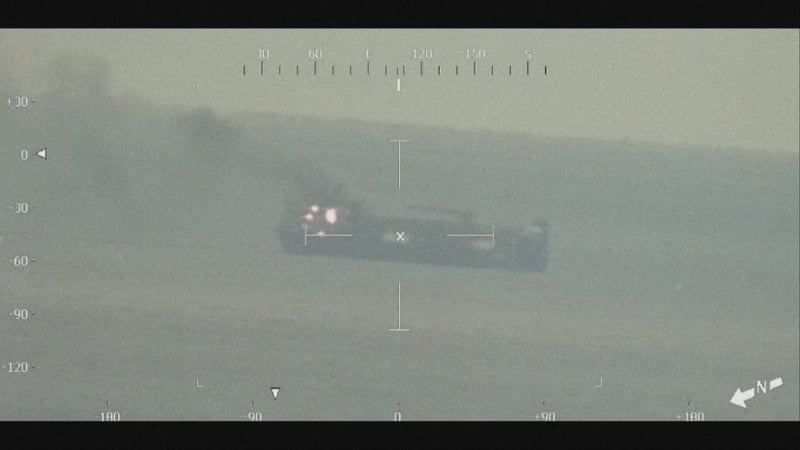

Click points to explore news by date. News sentiment ranges from -10 (very negative) to +10 (very positive) where 0 is neutral.
2026 © Helium Trades
Privacy Policy & Disclosure
* Disclaimer: Nothing on this website constitutes investment advice, performance data or any recommendation that any particular security, portfolio of securities, transaction or investment strategy is suitable for any specific person. Helium Trades is not responsible in any way for the accuracy
of any model predictions or price data. Any mention of a particular security and related prediction data is not a recommendation to buy or sell that security. Investments in securities involve the risk of loss. Past performance is no guarantee of future results. Helium Trades is not responsible for any of your investment decisions,
you should consult a financial expert before engaging in any transaction.
Helium Research Assistant

How can I help you today?
Ask any question about this page.


